window.__IS_SSR__=true
window.__INITIAL_STATE__={
"attachmentsReducer": {
"audio_0": {
"type": "attachments",
"id": "audio_0",
"imgSizes": {
"kqedFullSize": {
"file": "https://ww2.kqed.org/news/wp-content/themes/KQED-unified/img/audio_bgs/background0.jpg"
}
}
},
"audio_1": {
"type": "attachments",
"id": "audio_1",
"imgSizes": {
"kqedFullSize": {
"file": "https://ww2.kqed.org/news/wp-content/themes/KQED-unified/img/audio_bgs/background1.jpg"
}
}
},
"audio_2": {
"type": "attachments",
"id": "audio_2",
"imgSizes": {
"kqedFullSize": {
"file": "https://ww2.kqed.org/news/wp-content/themes/KQED-unified/img/audio_bgs/background2.jpg"
}
}
},
"audio_3": {
"type": "attachments",
"id": "audio_3",
"imgSizes": {
"kqedFullSize": {
"file": "https://ww2.kqed.org/news/wp-content/themes/KQED-unified/img/audio_bgs/background3.jpg"
}
}
},
"audio_4": {
"type": "attachments",
"id": "audio_4",
"imgSizes": {
"kqedFullSize": {
"file": "https://ww2.kqed.org/news/wp-content/themes/KQED-unified/img/audio_bgs/background4.jpg"
}
}
},
"placeholder": {
"type": "attachments",
"id": "placeholder",
"imgSizes": {
"thumbnail": {
"file": "https://cdn.kqed.org/wp-content/uploads/2024/12/KQED-Default-Image-816638274-2000x1333-1-160x107.jpg",
"width": 160,
"height": 107,
"mimeType": "image/jpeg"
},
"medium": {
"file": "https://cdn.kqed.org/wp-content/uploads/2024/12/KQED-Default-Image-816638274-2000x1333-1-800x533.jpg",
"width": 800,
"height": 533,
"mimeType": "image/jpeg"
},
"medium_large": {
"file": "https://cdn.kqed.org/wp-content/uploads/2024/12/KQED-Default-Image-816638274-2000x1333-1-768x512.jpg",
"width": 768,
"height": 512,
"mimeType": "image/jpeg"
},
"large": {
"file": "https://cdn.kqed.org/wp-content/uploads/2024/12/KQED-Default-Image-816638274-2000x1333-1-1020x680.jpg",
"width": 1020,
"height": 680,
"mimeType": "image/jpeg"
},
"1536x1536": {
"file": "https://cdn.kqed.org/wp-content/uploads/2024/12/KQED-Default-Image-816638274-2000x1333-1-1536x1024.jpg",
"width": 1536,
"height": 1024,
"mimeType": "image/jpeg"
},
"fd-lrg": {
"file": "https://cdn.kqed.org/wp-content/uploads/2024/12/KQED-Default-Image-816638274-2000x1333-1-1536x1024.jpg",
"width": 1536,
"height": 1024,
"mimeType": "image/jpeg"
},
"fd-med": {
"file": "https://cdn.kqed.org/wp-content/uploads/2024/12/KQED-Default-Image-816638274-2000x1333-1-1020x680.jpg",
"width": 1020,
"height": 680,
"mimeType": "image/jpeg"
},
"fd-sm": {
"file": "https://cdn.kqed.org/wp-content/uploads/2024/12/KQED-Default-Image-816638274-2000x1333-1-800x533.jpg",
"width": 800,
"height": 533,
"mimeType": "image/jpeg"
},
"post-thumbnail": {
"file": "https://cdn.kqed.org/wp-content/uploads/2024/12/KQED-Default-Image-816638274-2000x1333-1-672x372.jpg",
"width": 672,
"height": 372,
"mimeType": "image/jpeg"
},
"twentyfourteen-full-width": {
"file": "https://cdn.kqed.org/wp-content/uploads/2024/12/KQED-Default-Image-816638274-2000x1333-1-1038x576.jpg",
"width": 1038,
"height": 576,
"mimeType": "image/jpeg"
},
"xxsmall": {
"file": "https://cdn.kqed.org/wp-content/uploads/2024/12/KQED-Default-Image-816638274-2000x1333-1-160x107.jpg",
"width": 160,
"height": 107,
"mimeType": "image/jpeg"
},
"xsmall": {
"file": "https://cdn.kqed.org/wp-content/uploads/2024/12/KQED-Default-Image-816638274-2000x1333-1-672x372.jpg",
"width": 672,
"height": 372,
"mimeType": "image/jpeg"
},
"small": {
"file": "https://cdn.kqed.org/wp-content/uploads/2024/12/KQED-Default-Image-816638274-2000x1333-1-672x372.jpg",
"width": 672,
"height": 372,
"mimeType": "image/jpeg"
},
"xlarge": {
"file": "https://cdn.kqed.org/wp-content/uploads/2024/12/KQED-Default-Image-816638274-2000x1333-1-1020x680.jpg",
"width": 1020,
"height": 680,
"mimeType": "image/jpeg"
},
"full-width": {
"file": "https://cdn.kqed.org/wp-content/uploads/2024/12/KQED-Default-Image-816638274-2000x1333-1-1920x1280.jpg",
"width": 1920,
"height": 1280,
"mimeType": "image/jpeg"
},
"guest-author-32": {
"file": "https://cdn.kqed.org/wp-content/uploads/2025/01/KQED-Default-Image-816638274-1333x1333-1-160x160.jpg",
"width": 32,
"height": 32,
"mimeType": "image/jpeg"
},
"guest-author-50": {
"file": "https://cdn.kqed.org/wp-content/uploads/2025/01/KQED-Default-Image-816638274-1333x1333-1-160x160.jpg",
"width": 50,
"height": 50,
"mimeType": "image/jpeg"
},
"guest-author-64": {
"file": "https://cdn.kqed.org/wp-content/uploads/2025/01/KQED-Default-Image-816638274-1333x1333-1-160x160.jpg",
"width": 64,
"height": 64,
"mimeType": "image/jpeg"
},
"guest-author-96": {
"file": "https://cdn.kqed.org/wp-content/uploads/2025/01/KQED-Default-Image-816638274-1333x1333-1-160x160.jpg",
"width": 96,
"height": 96,
"mimeType": "image/jpeg"
},
"guest-author-128": {
"file": "https://cdn.kqed.org/wp-content/uploads/2025/01/KQED-Default-Image-816638274-1333x1333-1-160x160.jpg",
"width": 128,
"height": 128,
"mimeType": "image/jpeg"
},
"detail": {
"file": "https://cdn.kqed.org/wp-content/uploads/2025/01/KQED-Default-Image-816638274-1333x1333-1-160x160.jpg",
"width": 160,
"height": 160,
"mimeType": "image/jpeg"
},
"kqedFullSize": {
"file": "https://cdn.kqed.org/wp-content/uploads/2024/12/KQED-Default-Image-816638274-2000x1333-1.jpg",
"width": 2000,
"height": 1333
}
}
},
"news_12094582": {
"type": "attachments",
"id": "news_12094582",
"meta": {
"index": "attachments_1716263798",
"site": "news",
"id": "12094582",
"found": true
},
"title": "New Eel-Russian Facility rendering-KQED",
"publishDate": 1786388289,
"status": "inherit",
"parent": 0,
"modified": 1786646734,
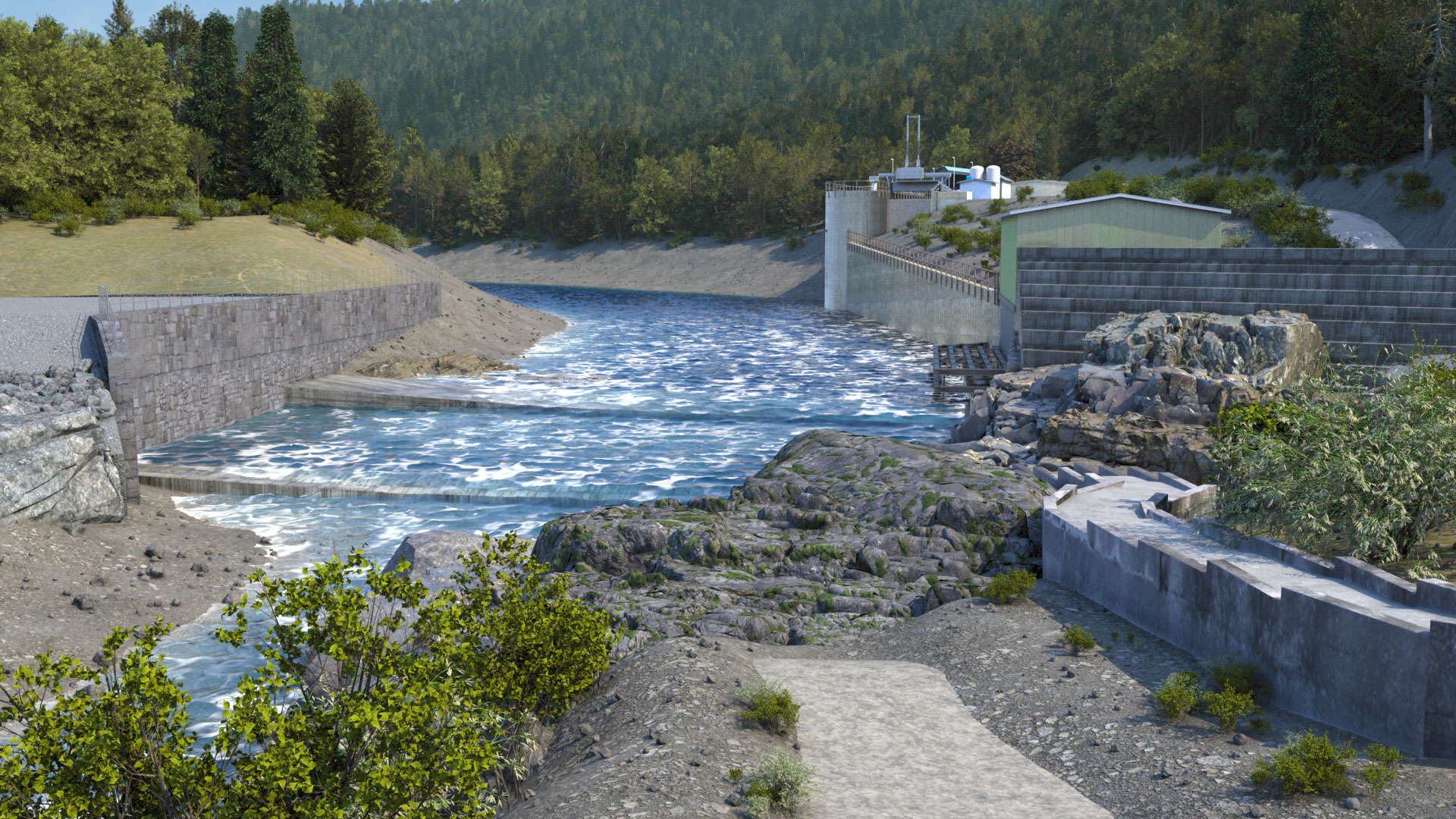
"caption": "A computer-generated rendering of what the Eel River may look like if the Cape Horn dam in Mendocino is removed. ",
"credit": "Courtesy of the Eel-Russian Project Authority",
"altTag": null,
"description": null,
"imgSizes": {
"thumbnail": {
"file": "https://cdn.kqed.org/wp-content/uploads/sites/10/2026/08/New-Eel-Russian-Facility-rendering-KQED-160x90.jpg",
"width": 160,
"height": 90,
"mimeType": "image/jpeg"
},
"1536x1536": {
"file": "https://cdn.kqed.org/wp-content/uploads/sites/10/2026/08/New-Eel-Russian-Facility-rendering-KQED-1536x864.jpg",
"width": 1536,
"height": 864,
"mimeType": "image/jpeg"
},
"post-thumbnail": {
"file": "https://cdn.kqed.org/wp-content/uploads/sites/10/2026/08/New-Eel-Russian-Facility-rendering-KQED-672x372.jpg",
"width": 672,
"height": 372,
"mimeType": "image/jpeg"
},
"twentyfourteen-full-width": {
"file": "https://cdn.kqed.org/wp-content/uploads/sites/10/2026/08/New-Eel-Russian-Facility-rendering-KQED-1038x576.jpg",
"width": 1038,
"height": 576,
"mimeType": "image/jpeg"
},
"npr-cds-wide": {
"file": "https://cdn.kqed.org/wp-content/uploads/sites/10/2026/08/New-Eel-Russian-Facility-rendering-KQED-1200x675.jpg",
"width": 1200,
"height": 675,
"mimeType": "image/jpeg"
},
"npr-cds-square": {
"file": "https://cdn.kqed.org/wp-content/uploads/sites/10/2026/08/New-Eel-Russian-Facility-rendering-KQED-600x600.jpg",
"width": 600,
"height": 600,
"mimeType": "image/jpeg"
},
"kqedFullSize": {
"file": "https://cdn.kqed.org/wp-content/uploads/sites/10/2026/08/New-Eel-Russian-Facility-rendering-KQED.jpg",
"width": 1920,
"height": 1080
}
},
"isLoading": false,
"fetchFailed": false
},
"news_12048239": {
"type": "attachments",
"id": "news_12048239",
"meta": {
"index": "attachments_1716263798",
"site": "news",
"id": "12048239",
"found": true
},
"title": "Climate Dam Removal Kayaking Journey",
"publishDate": 1752621147,
"status": "inherit",
"parent": 12048228,
"modified": 1752624065,
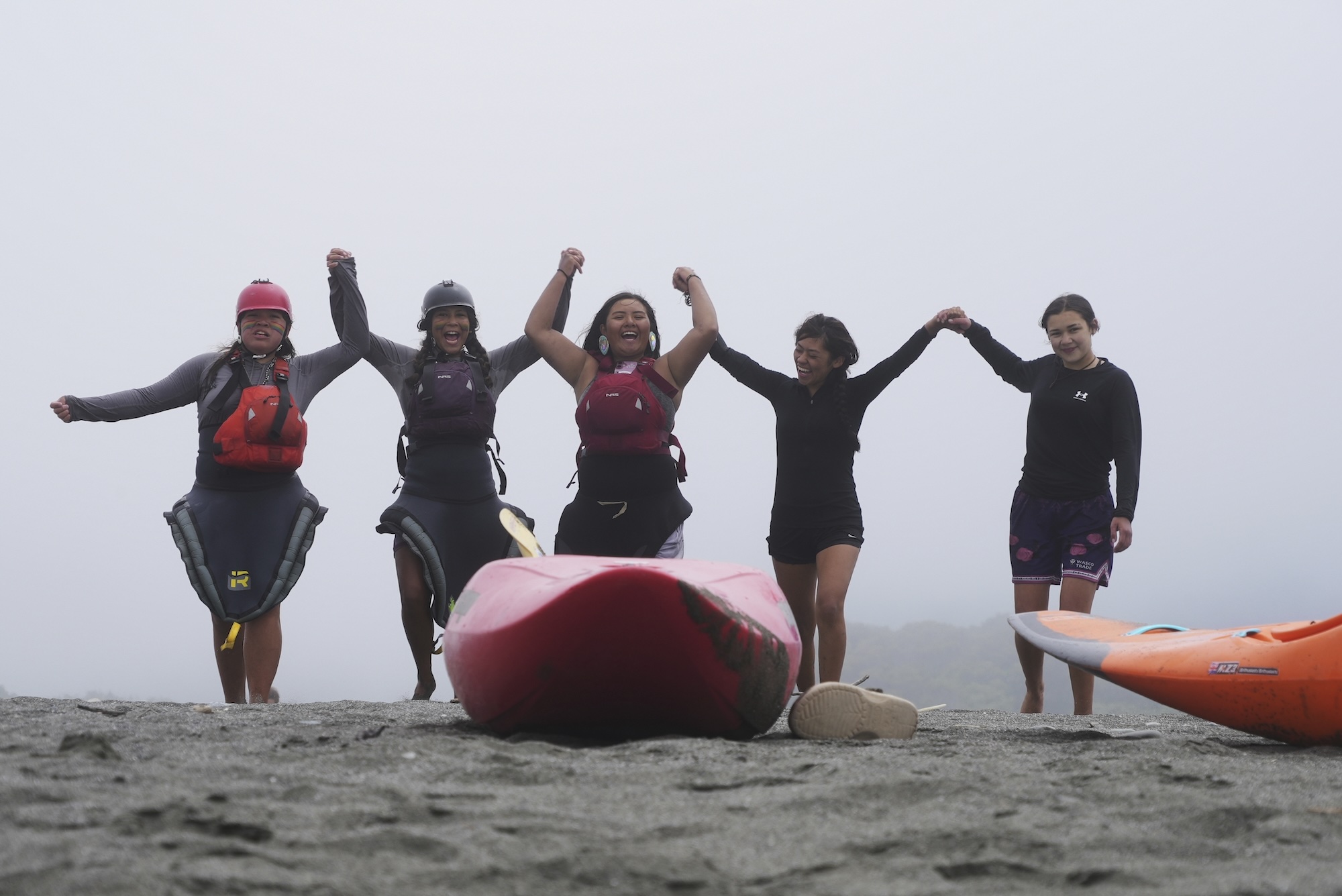
"caption": "Young native paddlers hold hands and cheer as they walk across a sandy stretch that separates the Klamath River from the Pacific Ocean on Friday July 11, 2025, in Klamath, California.",
"credit": "Brittany Peterson/AP Photo",
"altTag": null,
"description": null,
"imgSizes": {
"thumbnail": {
"file": "https://cdn.kqed.org/wp-content/uploads/sites/10/2025/07/AP25196086091137-160x107.jpeg",
"width": 160,
"height": 107,
"mimeType": "image/jpeg"
},
"1536x1536": {
"file": "https://cdn.kqed.org/wp-content/uploads/sites/10/2025/07/AP25196086091137-1536x1026.jpeg",
"width": 1536,
"height": 1026,
"mimeType": "image/jpeg"
},
"post-thumbnail": {
"file": "https://cdn.kqed.org/wp-content/uploads/sites/10/2025/07/AP25196086091137-672x372.jpeg",
"width": 672,
"height": 372,
"mimeType": "image/jpeg"
},
"twentyfourteen-full-width": {
"file": "https://cdn.kqed.org/wp-content/uploads/sites/10/2025/07/AP25196086091137-1038x576.jpeg",
"width": 1038,
"height": 576,
"mimeType": "image/jpeg"
},
"kqedFullSize": {
"file": "https://cdn.kqed.org/wp-content/uploads/sites/10/2025/07/AP25196086091137.jpeg",
"width": 2000,
"height": 1336
}
},
"isLoading": false,
"fetchFailed": false
},
"news_12034262": {
"type": "attachments",
"id": "news_12034262",
"meta": {
"index": "attachments_1716263798",
"site": "news",
"id": "12034262",
"found": true
},
"title": "20250321_Balclutha_DMB_00038",
"publishDate": 1743620991,
"status": "inherit",
"parent": 0,
"modified": 1744219688,
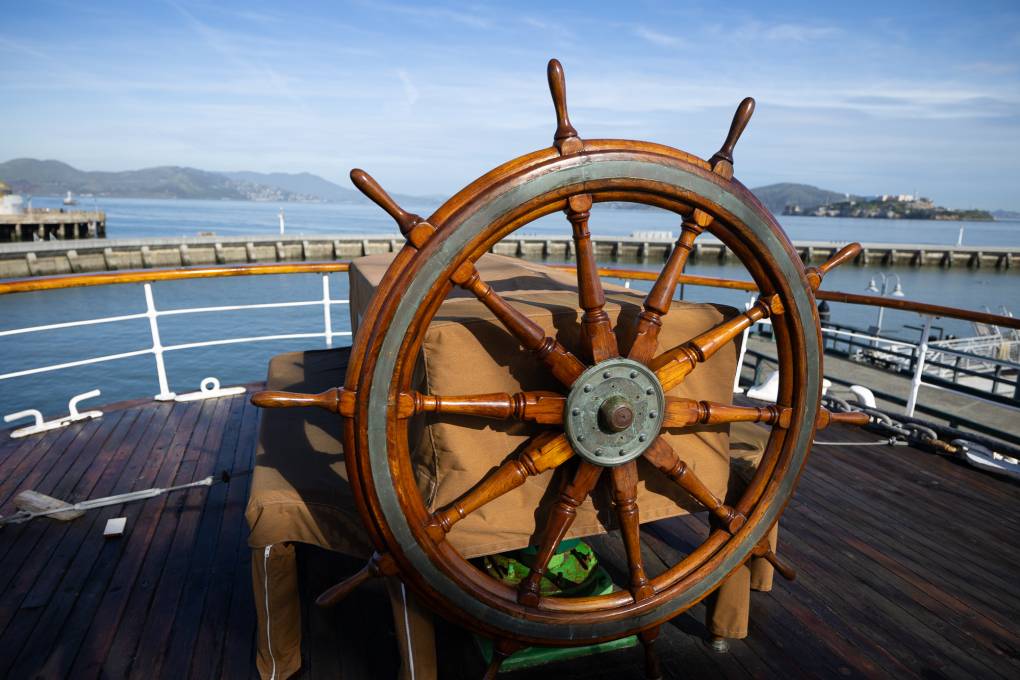
"caption": "The Balclutha/Star of Alaska, a cargo ship built in the 1880s, in the San Francisco port on March 21, 2025. In the early days of the Alaska salmon canning industry, most of the laborers, fisherman, goods and supplies were shipped from San Francisco each year.",
"credit": "David M. Barreda/KQED",
"altTag": null,
"description": null,
"imgSizes": {
"medium": {
"file": "https://cdn.kqed.org/wp-content/uploads/sites/10/2025/04/20250321_Balclutha_DMB_00038-800x533.jpg",
"width": 800,
"height": 533,
"mimeType": "image/jpeg"
},
"large": {
"file": "https://cdn.kqed.org/wp-content/uploads/sites/10/2025/04/20250321_Balclutha_DMB_00038-1020x680.jpg",
"width": 1020,
"height": 680,
"mimeType": "image/jpeg"
},
"thumbnail": {
"file": "https://cdn.kqed.org/wp-content/uploads/sites/10/2025/04/20250321_Balclutha_DMB_00038-160x107.jpg",
"width": 160,
"height": 107,
"mimeType": "image/jpeg"
},
"1536x1536": {
"file": "https://cdn.kqed.org/wp-content/uploads/sites/10/2025/04/20250321_Balclutha_DMB_00038-1536x1024.jpg",
"width": 1536,
"height": 1024,
"mimeType": "image/jpeg"
},
"post-thumbnail": {
"file": "https://cdn.kqed.org/wp-content/uploads/sites/10/2025/04/20250321_Balclutha_DMB_00038-672x372.jpg",
"width": 672,
"height": 372,
"mimeType": "image/jpeg"
},
"twentyfourteen-full-width": {
"file": "https://cdn.kqed.org/wp-content/uploads/sites/10/2025/04/20250321_Balclutha_DMB_00038-1038x576.jpg",
"width": 1038,
"height": 576,
"mimeType": "image/jpeg"
},
"full-width": {
"file": "https://cdn.kqed.org/wp-content/uploads/sites/10/2025/04/20250321_Balclutha_DMB_00038-1920x1280.jpg",
"width": 1920,
"height": 1280,
"mimeType": "image/jpeg"
},
"kqedFullSize": {
"file": "https://cdn.kqed.org/wp-content/uploads/sites/10/2025/04/20250321_Balclutha_DMB_00038.jpg",
"width": 2000,
"height": 1333
}
},
"isLoading": false,
"fetchFailed": false
},
"news_12018569": {
"type": "attachments",
"id": "news_12018569",
"meta": {
"index": "attachments_1716263798",
"site": "news",
"id": "12018569",
"found": true
},
"title": "01_121124-Chinook-Salmon-American-River-DWR-CM-02",
"publishDate": 1734395691,
"status": "inherit",
"parent": 12018557,
"modified": 1734395752,
"caption": "Adult fall-run Chinook salmon congregate near the Nimbus Hatchery Fish Ladder on the American River in Sacramento County, on Oct. 15, 2012.",
"credit": "Carl Costas/California Department of Water Resources",
"altTag": "Salmon seen from under water with some hills and trees in the background.",
"description": null,
"imgSizes": {
"medium": {
"file": "https://cdn.kqed.org/wp-content/uploads/sites/10/2024/12/01_121124-Chinook-Salmon-American-River-DWR-CM-02-800x528.jpg",
"width": 800,
"height": 528,
"mimeType": "image/jpeg"
},
"large": {
"file": "https://cdn.kqed.org/wp-content/uploads/sites/10/2024/12/01_121124-Chinook-Salmon-American-River-DWR-CM-02-1020x673.jpg",
"width": 1020,
"height": 673,
"mimeType": "image/jpeg"
},
"thumbnail": {
"file": "https://cdn.kqed.org/wp-content/uploads/sites/10/2024/12/01_121124-Chinook-Salmon-American-River-DWR-CM-02-160x106.jpg",
"width": 160,
"height": 106,
"mimeType": "image/jpeg"
},
"1536x1536": {
"file": "https://cdn.kqed.org/wp-content/uploads/sites/10/2024/12/01_121124-Chinook-Salmon-American-River-DWR-CM-02-1536x1014.jpg",
"width": 1536,
"height": 1014,
"mimeType": "image/jpeg"
},
"post-thumbnail": {
"file": "https://cdn.kqed.org/wp-content/uploads/sites/10/2024/12/01_121124-Chinook-Salmon-American-River-DWR-CM-02-672x372.jpg",
"width": 672,
"height": 372,
"mimeType": "image/jpeg"
},
"twentyfourteen-full-width": {
"file": "https://cdn.kqed.org/wp-content/uploads/sites/10/2024/12/01_121124-Chinook-Salmon-American-River-DWR-CM-02-1038x576.jpg",
"width": 1038,
"height": 576,
"mimeType": "image/jpeg"
},
"full-width": {
"file": "https://cdn.kqed.org/wp-content/uploads/sites/10/2024/12/01_121124-Chinook-Salmon-American-River-DWR-CM-02-1920x1267.jpg",
"width": 1920,
"height": 1267,
"mimeType": "image/jpeg"
},
"kqedFullSize": {
"file": "https://cdn.kqed.org/wp-content/uploads/sites/10/2024/12/01_121124-Chinook-Salmon-American-River-DWR-CM-02.jpg",
"width": 2000,
"height": 1320
}
},
"isLoading": false,
"fetchFailed": false
},
"news_11911586": {
"type": "attachments",
"id": "news_11911586",
"meta": {
"index": "attachments_1716263798",
"site": "news",
"id": "11911586",
"found": true
},
"parent": 11911582,
"imgSizes": {
"twentyfourteen-full-width": {
"file": "https://ww2.kqed.org/app/uploads/sites/10/2022/04/GettyImages-1237212007-1038x576.jpg",
"width": 1038,
"mimeType": "image/jpeg",
"height": 576
},
"thumbnail": {
"file": "https://ww2.kqed.org/app/uploads/sites/10/2022/04/GettyImages-1237212007-160x107.jpg",
"width": 160,
"mimeType": "image/jpeg",
"height": 107
},
"post-thumbnail": {
"file": "https://ww2.kqed.org/app/uploads/sites/10/2022/04/GettyImages-1237212007-672x372.jpg",
"width": 672,
"mimeType": "image/jpeg",
"height": 372
},
"kqedFullSize": {
"file": "https://ww2.kqed.org/app/uploads/sites/10/2022/04/GettyImages-1237212007-scaled.jpg",
"width": 2560,
"height": 1705
},
"2048x2048": {
"file": "https://ww2.kqed.org/app/uploads/sites/10/2022/04/GettyImages-1237212007-2048x1364.jpg",
"width": 2048,
"mimeType": "image/jpeg",
"height": 1364
},
"large": {
"file": "https://ww2.kqed.org/app/uploads/sites/10/2022/04/GettyImages-1237212007-1020x679.jpg",
"width": 1020,
"mimeType": "image/jpeg",
"height": 679
},
"1536x1536": {
"file": "https://ww2.kqed.org/app/uploads/sites/10/2022/04/GettyImages-1237212007-1536x1023.jpg",
"width": 1536,
"mimeType": "image/jpeg",
"height": 1023
},
"full-width": {
"file": "https://ww2.kqed.org/app/uploads/sites/10/2022/04/GettyImages-1237212007-1920x1279.jpg",
"width": 1920,
"mimeType": "image/jpeg",
"height": 1279
},
"medium": {
"file": "https://ww2.kqed.org/app/uploads/sites/10/2022/04/GettyImages-1237212007-800x533.jpg",
"width": 800,
"mimeType": "image/jpeg",
"height": 533
}
},
"publishDate": 1650409292,
"modified": 1650479454,
"caption": "The confluence of the San Joaquin River (left) and Tuolumne River (right) along the Dos Rios Ranch in 2021 in Modesto. The 2,100-acre Dos Rios Ranch Preserve is California's largest floodplain restoration project, designed to give the rivers room to breathe and restore traditional riparian habitats.",
"description": "The confluence of the San Joaquin River (left) and Tuolumne River (right) along the Dos Rios Ranch in 2021 in Modesto, CA. The 2,100-acre Do Rios Ranch Preserve is California's largest floodplain restoration project, designed to give the rivers room to breath and restore traditional riparian habitats. ",
"title": "rain climate change",
"credit": "Brian van der Brug/Los Angeles Times via Getty Images",
"status": "inherit",
"altTag": "An aerial view of two rivers snaking from the left and the right through a landscape of brown scrub and dark green trees. Where the rivers meet, they move off to the left of the photo.",
"isLoading": false,
"fetchFailed": false
},
"news_11961523": {
"type": "attachments",
"id": "news_11961523",
"meta": {
"index": "attachments_1716263798",
"site": "news",
"id": "11961523",
"found": true
},
"title": "California State Capital",
"publishDate": 1694885522,
"status": "inherit",
"parent": 11961519,
"modified": 1694885652,
"caption": "The California State Capitol in Sacramento.",
"credit": "iStock/Getty Images Plus",
"altTag": "The California state flag with the Capitol cupola in Sacramento behind it.",
"description": null,
"imgSizes": {
"medium": {
"file": "https://cdn.kqed.org/wp-content/uploads/sites/10/2023/09/GettyImages-186653928-800x533.jpg",
"width": 800,
"height": 533,
"mimeType": "image/jpeg"
},
"large": {
"file": "https://cdn.kqed.org/wp-content/uploads/sites/10/2023/09/GettyImages-186653928-1020x680.jpg",
"width": 1020,
"height": 680,
"mimeType": "image/jpeg"
},
"thumbnail": {
"file": "https://cdn.kqed.org/wp-content/uploads/sites/10/2023/09/GettyImages-186653928-160x107.jpg",
"width": 160,
"height": 107,
"mimeType": "image/jpeg"
},
"1536x1536": {
"file": "https://cdn.kqed.org/wp-content/uploads/sites/10/2023/09/GettyImages-186653928-1536x1024.jpg",
"width": 1536,
"height": 1024,
"mimeType": "image/jpeg"
},
"2048x2048": {
"file": "https://cdn.kqed.org/wp-content/uploads/sites/10/2023/09/GettyImages-186653928-2048x1365.jpg",
"width": 2048,
"height": 1365,
"mimeType": "image/jpeg"
},
"post-thumbnail": {
"file": "https://cdn.kqed.org/wp-content/uploads/sites/10/2023/09/GettyImages-186653928-672x372.jpg",
"width": 672,
"height": 372,
"mimeType": "image/jpeg"
},
"twentyfourteen-full-width": {
"file": "https://cdn.kqed.org/wp-content/uploads/sites/10/2023/09/GettyImages-186653928-1038x576.jpg",
"width": 1038,
"height": 576,
"mimeType": "image/jpeg"
},
"full-width": {
"file": "https://cdn.kqed.org/wp-content/uploads/sites/10/2023/09/GettyImages-186653928-1920x1280.jpg",
"width": 1920,
"height": 1280,
"mimeType": "image/jpeg"
},
"kqedFullSize": {
"file": "https://cdn.kqed.org/wp-content/uploads/sites/10/2023/09/GettyImages-186653928-e1737496719981.jpg",
"width": 2000,
"height": 1333
}
},
"isLoading": false,
"fetchFailed": false
},
"news_12002233": {
"type": "attachments",
"id": "news_12002233",
"meta": {
"index": "attachments_1716263798",
"site": "news",
"id": "12002233",
"found": true
},
"title": "Klamath Dams Removal Continues",
"publishDate": 1724883681,
"status": "inherit",
"parent": 12002229,
"modified": 1724886300,
"caption": "The Klamath River flows where Iron Gate Reservoir once was as work continues, removing the Iron Gate and Copco Dams on the Klamath River near Hornbook on Thursday, July 25, 2024. The Klamath River will soon run in its natural state after removing four 100-year-old dams. ",
"credit": "Carlos Avila Gonzalez/San Francisco Chronicle via Getty Images",
"altTag": "An aerial view of a river and mountains.",
"description": null,
"imgSizes": {
"medium": {
"file": "https://cdn.kqed.org/wp-content/uploads/sites/10/2024/08/GettyImages-2168115814-800x520.jpg",
"width": 800,
"height": 520,
"mimeType": "image/jpeg"
},
"large": {
"file": "https://cdn.kqed.org/wp-content/uploads/sites/10/2024/08/GettyImages-2168115814-1020x663.jpg",
"width": 1020,
"height": 663,
"mimeType": "image/jpeg"
},
"thumbnail": {
"file": "https://cdn.kqed.org/wp-content/uploads/sites/10/2024/08/GettyImages-2168115814-160x104.jpg",
"width": 160,
"height": 104,
"mimeType": "image/jpeg"
},
"post-thumbnail": {
"file": "https://cdn.kqed.org/wp-content/uploads/sites/10/2024/08/GettyImages-2168115814-672x372.jpg",
"width": 672,
"height": 372,
"mimeType": "image/jpeg"
},
"twentyfourteen-full-width": {
"file": "https://cdn.kqed.org/wp-content/uploads/sites/10/2024/08/GettyImages-2168115814-1024x576.jpg",
"width": 1024,
"height": 576,
"mimeType": "image/jpeg"
},
"kqedFullSize": {
"file": "https://cdn.kqed.org/wp-content/uploads/sites/10/2024/08/GettyImages-2168115814.jpg",
"width": 1024,
"height": 666
}
},
"isLoading": false,
"fetchFailed": false
},
"news_11998225": {
"type": "attachments",
"id": "news_11998225",
"meta": {
"index": "attachments_1716263798",
"site": "news",
"id": "11998225",
"found": true
},
"title": "072924-Park-FIre-AP-NC-CM-01 copy",
"publishDate": 1722455389,
"status": "inherit",
"parent": 11998224,
"modified": 1722455415,
"caption": "A firefighter monitors a burn operation on Highway 32 to combat the Park Fire near Forest Ranch on July 28, 2024. \n",
"credit": "Nic Coury/AP Photo",
"altTag": null,
"description": null,
"imgSizes": {
"medium": {
"file": "https://cdn.kqed.org/wp-content/uploads/sites/10/2024/07/072924-Park-FIre-AP-NC-CM-01-copy-800x533.jpg",
"width": 800,
"height": 533,
"mimeType": "image/jpeg"
},
"large": {
"file": "https://cdn.kqed.org/wp-content/uploads/sites/10/2024/07/072924-Park-FIre-AP-NC-CM-01-copy-1020x680.jpg",
"width": 1020,
"height": 680,
"mimeType": "image/jpeg"
},
"thumbnail": {
"file": "https://cdn.kqed.org/wp-content/uploads/sites/10/2024/07/072924-Park-FIre-AP-NC-CM-01-copy-160x107.jpg",
"width": 160,
"height": 107,
"mimeType": "image/jpeg"
},
"1536x1536": {
"file": "https://cdn.kqed.org/wp-content/uploads/sites/10/2024/07/072924-Park-FIre-AP-NC-CM-01-copy-1536x1024.jpg",
"width": 1536,
"height": 1024,
"mimeType": "image/jpeg"
},
"post-thumbnail": {
"file": "https://cdn.kqed.org/wp-content/uploads/sites/10/2024/07/072924-Park-FIre-AP-NC-CM-01-copy-672x372.jpg",
"width": 672,
"height": 372,
"mimeType": "image/jpeg"
},
"twentyfourteen-full-width": {
"file": "https://cdn.kqed.org/wp-content/uploads/sites/10/2024/07/072924-Park-FIre-AP-NC-CM-01-copy-1038x576.jpg",
"width": 1038,
"height": 576,
"mimeType": "image/jpeg"
},
"full-width": {
"file": "https://cdn.kqed.org/wp-content/uploads/sites/10/2024/07/072924-Park-FIre-AP-NC-CM-01-copy-1920x1280.jpg",
"width": 1920,
"height": 1280,
"mimeType": "image/jpeg"
},
"kqedFullSize": {
"file": "https://cdn.kqed.org/wp-content/uploads/sites/10/2024/07/072924-Park-FIre-AP-NC-CM-01-copy.jpg",
"width": 2000,
"height": 1333
}
},
"isLoading": false,
"fetchFailed": false
},
"news_11184522": {
"type": "attachments",
"id": "news_11184522",
"meta": {
"index": "attachments_1716263798",
"site": "news",
"id": "11184522",
"found": true
},
"parent": 11156846,
"imgSizes": {
"small": {
"file": "https://ww2.kqed.org/app/uploads/sites/10/2016/11/RS22166_P7170153-520x390.jpg",
"width": 520,
"mimeType": "image/jpeg",
"height": 390
},
"twentyfourteen-full-width": {
"file": "https://ww2.kqed.org/app/uploads/sites/10/2016/11/RS22166_P7170153-1038x576.jpg",
"width": 1038,
"mimeType": "image/jpeg",
"height": 576
},
"thumbnail": {
"file": "https://ww2.kqed.org/app/uploads/sites/10/2016/11/RS22166_P7170153-160x120.jpg",
"width": 160,
"mimeType": "image/jpeg",
"height": 120
},
"fd-sm": {
"file": "https://ww2.kqed.org/app/uploads/sites/10/2016/11/RS22166_P7170153-960x720.jpg",
"width": 960,
"mimeType": "image/jpeg",
"height": 720
},
"post-thumbnail": {
"file": "https://ww2.kqed.org/app/uploads/sites/10/2016/11/RS22166_P7170153-672x372.jpg",
"width": 672,
"mimeType": "image/jpeg",
"height": 372
},
"xsmall": {
"file": "https://ww2.kqed.org/app/uploads/sites/10/2016/11/RS22166_P7170153-375x281.jpg",
"width": 375,
"mimeType": "image/jpeg",
"height": 281
},
"kqedFullSize": {
"file": "https://ww2.kqed.org/app/uploads/sites/10/2016/11/RS22166_P7170153.jpg",
"width": 3968,
"height": 2976
},
"large": {
"file": "https://ww2.kqed.org/app/uploads/sites/10/2016/11/RS22166_P7170153-1020x765.jpg",
"width": 1020,
"mimeType": "image/jpeg",
"height": 765
},
"xlarge": {
"file": "https://ww2.kqed.org/app/uploads/sites/10/2016/11/RS22166_P7170153-1180x885.jpg",
"width": 1180,
"mimeType": "image/jpeg",
"height": 885
},
"guest-author-50": {
"file": "https://ww2.kqed.org/app/uploads/sites/10/2016/11/RS22166_P7170153-50x50.jpg",
"width": 50,
"mimeType": "image/jpeg",
"height": 50
},
"guest-author-96": {
"file": "https://ww2.kqed.org/app/uploads/sites/10/2016/11/RS22166_P7170153-96x96.jpg",
"width": 96,
"mimeType": "image/jpeg",
"height": 96
},
"medium": {
"file": "https://ww2.kqed.org/app/uploads/sites/10/2016/11/RS22166_P7170153-800x600.jpg",
"width": 800,
"mimeType": "image/jpeg",
"height": 600
},
"guest-author-64": {
"file": "https://ww2.kqed.org/app/uploads/sites/10/2016/11/RS22166_P7170153-64x64.jpg",
"width": 64,
"mimeType": "image/jpeg",
"height": 64
},
"guest-author-32": {
"file": "https://ww2.kqed.org/app/uploads/sites/10/2016/11/RS22166_P7170153-32x32.jpg",
"width": 32,
"mimeType": "image/jpeg",
"height": 32
},
"jmtc-small-thumb": {
"file": "https://ww2.kqed.org/app/uploads/sites/10/2016/11/RS22166_P7170153-280x150.jpg",
"width": 280,
"mimeType": "image/jpeg",
"height": 150
},
"fd-lrg": {
"file": "https://ww2.kqed.org/app/uploads/sites/10/2016/11/RS22166_P7170153-1920x1440.jpg",
"width": 1920,
"mimeType": "image/jpeg",
"height": 1440
},
"fd-med": {
"file": "https://ww2.kqed.org/app/uploads/sites/10/2016/11/RS22166_P7170153-1180x885.jpg",
"width": 1180,
"mimeType": "image/jpeg",
"height": 885
},
"full-width": {
"file": "https://ww2.kqed.org/app/uploads/sites/10/2016/11/RS22166_P7170153-1920x1440.jpg",
"width": 1920,
"mimeType": "image/jpeg",
"height": 1440
},
"detail": {
"file": "https://ww2.kqed.org/app/uploads/sites/10/2016/11/RS22166_P7170153-150x150.jpg",
"width": 150,
"mimeType": "image/jpeg",
"height": 150
},
"guest-author-128": {
"file": "https://ww2.kqed.org/app/uploads/sites/10/2016/11/RS22166_P7170153-128x128.jpg",
"width": 128,
"mimeType": "image/jpeg",
"height": 128
},
"xxsmall": {
"file": "https://ww2.kqed.org/app/uploads/sites/10/2016/11/RS22166_P7170153-240x180.jpg",
"width": 240,
"mimeType": "image/jpeg",
"height": 180
}
},
"publishDate": 1479768905,
"modified": 1627406059,
"caption": "The Klamath River is prime habitat for coho salmon, like these juveniles, but that fish has been listed as threatened under the Endangered Species Act.",
"description": "The Klamath River is prime habitat for coho salmon, like these juveniles, but that fish has been listed as threatened under the Endangered Species Act.",
"title": "OLYMPUS DIGITAL CAMERA",
"credit": "Jimmy Peterson and Will Harling/Mid Klamath Watershed Council",
"status": "inherit",
"altTag": "The Klamath River is prime habitat for coho salmon, like these juveniles, but that fish has been listed as threatened under the Endangered Species Act.",
"isLoading": false,
"fetchFailed": false
},
"news_11979040": {
"type": "attachments",
"id": "news_11979040",
"meta": {
"index": "attachments_1716263798",
"site": "news",
"id": "11979040",
"found": true
},
"parent": 11979008,
"imgSizes": {
"twentyfourteen-full-width": {
"file": "https://cdn.kqed.org/wp-content/uploads/sites/10/2024/03/110723-Yreka-And-Klamath-Falls-LV_CM_14-ezgif.com-webp-to-jpg-converter-1038x576.jpg",
"width": 1038,
"mimeType": "image/jpeg",
"height": 576
},
"thumbnail": {
"file": "https://cdn.kqed.org/wp-content/uploads/sites/10/2024/03/110723-Yreka-And-Klamath-Falls-LV_CM_14-ezgif.com-webp-to-jpg-converter-160x107.jpg",
"width": 160,
"mimeType": "image/jpeg",
"height": 107
},
"post-thumbnail": {
"file": "https://cdn.kqed.org/wp-content/uploads/sites/10/2024/03/110723-Yreka-And-Klamath-Falls-LV_CM_14-ezgif.com-webp-to-jpg-converter-672x372.jpg",
"width": 672,
"mimeType": "image/jpeg",
"height": 372
},
"kqedFullSize": {
"file": "https://cdn.kqed.org/wp-content/uploads/sites/10/2024/03/110723-Yreka-And-Klamath-Falls-LV_CM_14-ezgif.com-webp-to-jpg-converter.jpg",
"width": 2000,
"height": 1333
},
"large": {
"file": "https://cdn.kqed.org/wp-content/uploads/sites/10/2024/03/110723-Yreka-And-Klamath-Falls-LV_CM_14-ezgif.com-webp-to-jpg-converter-1020x680.jpg",
"width": 1020,
"mimeType": "image/jpeg",
"height": 680
},
"1536x1536": {
"file": "https://cdn.kqed.org/wp-content/uploads/sites/10/2024/03/110723-Yreka-And-Klamath-Falls-LV_CM_14-ezgif.com-webp-to-jpg-converter-1536x1024.jpg",
"width": 1536,
"mimeType": "image/jpeg",
"height": 1024
},
"full-width": {
"file": "https://cdn.kqed.org/wp-content/uploads/sites/10/2024/03/110723-Yreka-And-Klamath-Falls-LV_CM_14-ezgif.com-webp-to-jpg-converter-1920x1280.jpg",
"width": 1920,
"mimeType": "image/jpeg",
"height": 1280
},
"medium": {
"file": "https://cdn.kqed.org/wp-content/uploads/sites/10/2024/03/110723-Yreka-And-Klamath-Falls-LV_CM_14-ezgif.com-webp-to-jpg-converter-800x533.jpg",
"width": 800,
"mimeType": "image/jpeg",
"height": 533
}
},
"publishDate": 1710204061,
"modified": 1710265101,
"caption": "Chinook Salmon swimming along the Scott River on Oct. 30, 2023. \n",
"description": null,
"title": "110723-Yreka-And-Klamath-Falls-LV_CM_14-ezgif.com-webp-to-jpg-converter",
"credit": "Larry Valenzuela, CalMatters/CatchLight Local",
"status": "inherit",
"altTag": "Fish swimming in a river.",
"isLoading": false,
"fetchFailed": false
},
"news_11974964": {
"type": "attachments",
"id": "news_11974964",
"meta": {
"index": "attachments_1716263798",
"site": "news",
"id": "11974964",
"found": true
},
"parent": 11974963,
"imgSizes": {
"twentyfourteen-full-width": {
"file": "https://cdn.kqed.org/wp-content/uploads/sites/10/2024/02/072023_Yurok-Salmon-Counting_SN_CM_12-copy-1038x576.jpg",
"width": 1038,
"mimeType": "image/jpeg",
"height": 576
},
"thumbnail": {
"file": "https://cdn.kqed.org/wp-content/uploads/sites/10/2024/02/072023_Yurok-Salmon-Counting_SN_CM_12-copy-160x107.jpg",
"width": 160,
"mimeType": "image/jpeg",
"height": 107
},
"post-thumbnail": {
"file": "https://cdn.kqed.org/wp-content/uploads/sites/10/2024/02/072023_Yurok-Salmon-Counting_SN_CM_12-copy-672x372.jpg",
"width": 672,
"mimeType": "image/jpeg",
"height": 372
},
"kqedFullSize": {
"file": "https://cdn.kqed.org/wp-content/uploads/sites/10/2024/02/072023_Yurok-Salmon-Counting_SN_CM_12-copy.jpg",
"width": 2000,
"height": 1333
},
"large": {
"file": "https://cdn.kqed.org/wp-content/uploads/sites/10/2024/02/072023_Yurok-Salmon-Counting_SN_CM_12-copy-1020x680.jpg",
"width": 1020,
"mimeType": "image/jpeg",
"height": 680
},
"1536x1536": {
"file": "https://cdn.kqed.org/wp-content/uploads/sites/10/2024/02/072023_Yurok-Salmon-Counting_SN_CM_12-copy-1536x1024.jpg",
"width": 1536,
"mimeType": "image/jpeg",
"height": 1024
},
"full-width": {
"file": "https://cdn.kqed.org/wp-content/uploads/sites/10/2024/02/072023_Yurok-Salmon-Counting_SN_CM_12-copy-1920x1280.jpg",
"width": 1920,
"mimeType": "image/jpeg",
"height": 1280
},
"medium": {
"file": "https://cdn.kqed.org/wp-content/uploads/sites/10/2024/02/072023_Yurok-Salmon-Counting_SN_CM_12-copy-800x533.jpg",
"width": 800,
"mimeType": "image/jpeg",
"height": 533
}
},
"publishDate": 1707330735,
"modified": 1707330823,
"caption": "Juvenile chinook salmon collected for lab testing on the Klamath River near Weitchpec on July 20, 2023.",
"description": null,
"title": "072023_Yurok-Salmon-Counting_SN_CM_12 copy",
"credit": "Semantha Norris/CalMatters",
"status": "inherit",
"altTag": "Two hands and some baby fish laid out beneath them.",
"isLoading": false,
"fetchFailed": false
},
"news_11974217": {
"type": "attachments",
"id": "news_11974217",
"meta": {
"index": "attachments_1716263798",
"site": "news",
"id": "11974217",
"found": true
},
"parent": 11974205,
"imgSizes": {
"twentyfourteen-full-width": {
"file": "https://cdn.kqed.org/wp-content/uploads/sites/10/2024/01/AP24030145842661-1038x576.jpg",
"width": 1038,
"mimeType": "image/jpeg",
"height": 576
},
"thumbnail": {
"file": "https://cdn.kqed.org/wp-content/uploads/sites/10/2024/01/AP24030145842661-160x107.jpg",
"width": 160,
"mimeType": "image/jpeg",
"height": 107
},
"post-thumbnail": {
"file": "https://cdn.kqed.org/wp-content/uploads/sites/10/2024/01/AP24030145842661-672x372.jpg",
"width": 672,
"mimeType": "image/jpeg",
"height": 372
},
"kqedFullSize": {
"file": "https://cdn.kqed.org/wp-content/uploads/sites/10/2024/01/AP24030145842661-scaled.jpg",
"width": 2560,
"height": 1707
},
"2048x2048": {
"file": "https://cdn.kqed.org/wp-content/uploads/sites/10/2024/01/AP24030145842661-2048x1365.jpg",
"width": 2048,
"mimeType": "image/jpeg",
"height": 1365
},
"large": {
"file": "https://cdn.kqed.org/wp-content/uploads/sites/10/2024/01/AP24030145842661-1020x680.jpg",
"width": 1020,
"mimeType": "image/jpeg",
"height": 680
},
"1536x1536": {
"file": "https://cdn.kqed.org/wp-content/uploads/sites/10/2024/01/AP24030145842661-1536x1024.jpg",
"width": 1536,
"mimeType": "image/jpeg",
"height": 1024
},
"full-width": {
"file": "https://cdn.kqed.org/wp-content/uploads/sites/10/2024/01/AP24030145842661-1920x1280.jpg",
"width": 1920,
"mimeType": "image/jpeg",
"height": 1280
},
"medium": {
"file": "https://cdn.kqed.org/wp-content/uploads/sites/10/2024/01/AP24030145842661-800x533.jpg",
"width": 800,
"mimeType": "image/jpeg",
"height": 533
}
},
"publishDate": 1706639309,
"modified": 1706639524,
"caption": "Gov. Gavin Newsom and various officials look at young salmon captured for research at Prairie Creek in Redwoods National Park on Monday, Jan. 29, 2024. ",
"description": null,
"title": "California Governor Salmon",
"credit": "Terry Chea/The Associated Press",
"status": "inherit",
"altTag": "A group of people standing outside in a forest look at a fish in a container.",
"isLoading": false,
"fetchFailed": false
}
},
"audioPlayerReducer": {
"postId": "stream_live",
"isPaused": true,
"isPlaying": false,
"pfsActive": false,
"pledgeModalIsOpen": true,
"playerDrawerIsOpen": false,
"liveAudioPlayStartedAt": 0,
"liveAudioPlayContext": ""
},
"authorsReducer": {
"byline_news_12094970": {
"type": "authors",
"id": "byline_news_12094970",
"meta": {
"override": true
},
"slug": "byline_news_12094970",
"name": "Sam Anderson",
"isLoading": false
},
"byline_news_12048228": {
"type": "authors",
"id": "byline_news_12048228",
"meta": {
"override": true
},
"slug": "byline_news_12048228",
"name": "Brittany Peterson, The Associated Press",
"isLoading": false
},
"byline_news_12018557": {
"type": "authors",
"id": "byline_news_12018557",
"meta": {
"override": true
},
"slug": "byline_news_12018557",
"name": "Alastair Bland \u003cbr> CalMatters",
"isLoading": false
},
"byline_news_12002229": {
"type": "authors",
"id": "byline_news_12002229",
"meta": {
"override": true
},
"slug": "byline_news_12002229",
"name": "\u003ca href=\"https://newsroom.ap.org/home/search?query=byline:%22HALLIE%20GOLDEN%22&mediaType=text&st=keyword&sortOrder=newest\">Hallie Golden, \u003c/a>Associated Press",
"isLoading": false
},
"byline_news_11998224": {
"type": "authors",
"id": "byline_news_11998224",
"meta": {
"override": true
},
"slug": "byline_news_11998224",
"name": "\u003ca href=\"https://calmatters.org/author/rachel-becker/\">Rachel Becker\u003c/a>, CalMatters",
"isLoading": false
},
"byline_news_11979008": {
"type": "authors",
"id": "byline_news_11979008",
"meta": {
"override": true
},
"slug": "byline_news_11979008",
"name": "\u003ca href=\"https://calmatters.org/author/rachel-becker/\">Rachel Becker\u003c/a>",
"isLoading": false
},
"byline_news_11974963": {
"type": "authors",
"id": "byline_news_11974963",
"meta": {
"override": true
},
"slug": "byline_news_11974963",
"name": "\u003ca href=\"https://calmatters.org/author/rachel-becker/\">Rachel Becker\u003c/a>",
"isLoading": false
},
"byline_news_11974205": {
"type": "authors",
"id": "byline_news_11974205",
"meta": {
"override": true
},
"slug": "byline_news_11974205",
"name": "Adam Beam\u003cbr>The Associated Press\u003c/br>",
"isLoading": false
},
"katrinaschwartz": {
"type": "authors",
"id": "234",
"meta": {
"index": "authors_1716337520",
"id": "234",
"found": true
},
"name": "Katrina Schwartz",
"firstName": "Katrina",
"lastName": "Schwartz",
"slug": "katrinaschwartz",
"email": "kschwartz@kqed.org",
"display_author_email": false,
"staff_mastheads": [
"news"
],
"title": "Producer",
"bio": "Katrina Schwartz is a journalist based in San Francisco. She's worked at KPCC public radio in LA and has reported on air and online for KQED since 2010. She covered how teaching and learning is changing for MindShift between 2012 and 2020. She is the co-host of the MindShift podcast and now produces KQED's Bay Curious podcast.",
"avatar": "https://secure.gravatar.com/avatar/edb4ee79070447a018538c9aae6eeecf28786515b8a0c30e43b6b7dce5aa44c8?s=600&d=blank&r=g",
"twitter": "kschwart",
"bluesky": null,
"facebook": null,
"instagram": null,
"linkedin": null,
"sites": [
{
"site": "",
"roles": [
"editor"
]
},
{
"site": "news",
"roles": [
"editor"
]
},
{
"site": "mindshift",
"roles": [
"administrator"
]
},
{
"site": "stateofhealth",
"roles": [
"author"
]
},
{
"site": "science",
"roles": [
"editor"
]
}
],
"headData": {
"title": "Katrina Schwartz | KQED",
"description": "Producer",
"ogImgSrc": "https://secure.gravatar.com/avatar/edb4ee79070447a018538c9aae6eeecf28786515b8a0c30e43b6b7dce5aa44c8?s=600&d=blank&r=g",
"twImgSrc": "https://secure.gravatar.com/avatar/edb4ee79070447a018538c9aae6eeecf28786515b8a0c30e43b6b7dce5aa44c8?s=600&d=blank&r=g"
},
"isLoading": false,
"link": "/author/katrinaschwartz"
},
"dcronin": {
"type": "authors",
"id": "11362",
"meta": {
"index": "authors_1716337520",
"id": "11362",
"found": true
},
"name": "Dana Cronin",
"firstName": "Dana",
"lastName": "Cronin",
"slug": "dcronin",
"email": "dcronin@KQED.org",
"display_author_email": true,
"staff_mastheads": [],
"title": "KQED Contributor",
"bio": "Dana Cronin is a reporter for KQED News. She loves writing stories about climate change, environmental issues, food and agriculture. She's reported across the country, from Colorado to Washington D.C. to Illinois, and has won numerous awards for her coverage. Her work is regularly featured on national broadcasts, including NPR’s Morning Edition, All Things Considered, PBS Newshour and Science Friday. She lives in Oakland and has an avocado tree in her back yard.",
"avatar": "https://secure.gravatar.com/avatar/b242755225e2f85f37c259df1f4cdfa36dc82f17dcf79e697fb392d658d1750b?s=600&d=blank&r=g",
"twitter": "DanaHCronin",
"bluesky": null,
"facebook": null,
"instagram": null,
"linkedin": null,
"sites": [
{
"site": "arts",
"roles": [
"author"
]
},
{
"site": "news",
"roles": [
"editor"
]
},
{
"site": "science",
"roles": [
"author"
]
},
{
"site": "liveblog",
"roles": [
"author"
]
}
],
"headData": {
"title": "Dana Cronin | KQED",
"description": "KQED Contributor",
"ogImgSrc": "https://secure.gravatar.com/avatar/b242755225e2f85f37c259df1f4cdfa36dc82f17dcf79e697fb392d658d1750b?s=600&d=blank&r=g",
"twImgSrc": "https://secure.gravatar.com/avatar/b242755225e2f85f37c259df1f4cdfa36dc82f17dcf79e697fb392d658d1750b?s=600&d=blank&r=g"
},
"isLoading": false,
"link": "/author/dcronin"
},
"amontecillo": {
"type": "authors",
"id": "11649",
"meta": {
"index": "authors_1716337520",
"id": "11649",
"found": true
},
"name": "Alan Montecillo",
"firstName": "Alan",
"lastName": "Montecillo",
"slug": "amontecillo",
"email": "amontecillo@kqed.org",
"display_author_email": false,
"staff_mastheads": [
"news"
],
"title": "KQED Contributor",
"bio": "Alan Montecillo is the senior editor of \u003cem>\u003ca href=\"http://kqed.org/thebay\">The Bay\u003c/a>, \u003c/em> KQED's local news podcast. Before moving to the Bay Area, he worked as a senior talk show producer for WILL in Champaign-Urbana, Illinois and at Oregon Public Broadcasting in Portland, Oregon. He has won journalism awards from the Society of Professional Journalists Northern California, the Public Media Journalists Association, The Signal Awards, and has also received a regional Edward R. Murrow award. Alan is a Filipino American from Hong Kong and a graduate of Reed College.",
"avatar": "https://secure.gravatar.com/avatar/268f53a2066899ea9efdd8a5900218b17c822d9862cbc9326cccec53ef41d349?s=600&d=blank&r=g",
"twitter": "alanmontecillo",
"bluesky": null,
"facebook": null,
"instagram": null,
"linkedin": null,
"sites": [
{
"site": "",
"roles": [
"editor"
]
},
{
"site": "news",
"roles": [
"editor",
"manage_categories"
]
}
],
"headData": {
"title": "Alan Montecillo | KQED",
"description": "KQED Contributor",
"ogImgSrc": "https://secure.gravatar.com/avatar/268f53a2066899ea9efdd8a5900218b17c822d9862cbc9326cccec53ef41d349?s=600&d=blank&r=g",
"twImgSrc": "https://secure.gravatar.com/avatar/268f53a2066899ea9efdd8a5900218b17c822d9862cbc9326cccec53ef41d349?s=600&d=blank&r=g"
},
"isLoading": false,
"link": "/author/amontecillo"
},
"kmizuguchi": {
"type": "authors",
"id": "11739",
"meta": {
"index": "authors_1716337520",
"id": "11739",
"found": true
},
"name": "Keith Mizuguchi",
"firstName": "Keith",
"lastName": "Mizuguchi",
"slug": "kmizuguchi",
"email": "kmizuguchi@kqed.org",
"display_author_email": false,
"staff_mastheads": [],
"title": "KQED Contributor",
"bio": null,
"avatar": "https://secure.gravatar.com/avatar/64d8a7de0723d4099b9fe4e915136103febcc20809abce228ee4415bcb237023?s=600&d=blank&r=g",
"twitter": null,
"bluesky": null,
"facebook": null,
"instagram": null,
"linkedin": null,
"sites": [
{
"site": "news",
"roles": [
"editor"
]
},
{
"site": "science",
"roles": [
"editor"
]
}
],
"headData": {
"title": "Keith Mizuguchi | KQED",
"description": "KQED Contributor",
"ogImgSrc": "https://secure.gravatar.com/avatar/64d8a7de0723d4099b9fe4e915136103febcc20809abce228ee4415bcb237023?s=600&d=blank&r=g",
"twImgSrc": "https://secure.gravatar.com/avatar/64d8a7de0723d4099b9fe4e915136103febcc20809abce228ee4415bcb237023?s=600&d=blank&r=g"
},
"isLoading": false,
"link": "/author/kmizuguchi"
},
"eromero": {
"type": "authors",
"id": "11746",
"meta": {
"index": "authors_1716337520",
"id": "11746",
"found": true
},
"name": "Ezra David Romero",
"firstName": "Ezra David",
"lastName": "Romero",
"slug": "eromero",
"email": "eromero@kqed.org",
"display_author_email": true,
"staff_mastheads": [
"news",
"science"
],
"title": "Climate Reporter",
"bio": "Ezra David Romero is a climate reporter for KQED News. He covers the absence and excess of water in the Bay Area — think sea level rise, flooding and drought. For nearly a decade he’s covered how warming temperatures are altering the lives of Californians. He’s reported on farmers worried their pistachio trees aren’t getting enough sleep, families desperate for water, scientists studying dying giant sequoias, and alongside firefighters containing wildfires. His work has appeared on local stations across California and nationally on public radio shows like Morning Edition, Here and Now, All Things Considered and Science Friday. ",
"avatar": "https://secure.gravatar.com/avatar/c76404d287c10ed40224227551ac36e24352c7306f106632caf6fead76f8801f?s=600&d=blank&r=g",
"twitter": "ezraromero",
"bluesky": null,
"facebook": null,
"instagram": null,
"linkedin": null,
"sites": [
{
"site": "arts",
"roles": [
"editor"
]
},
{
"site": "news",
"roles": [
"editor"
]
},
{
"site": "science",
"roles": [
"editor"
]
},
{
"site": "liveblog",
"roles": [
"author"
]
}
],
"headData": {
"title": "Ezra David Romero | KQED",
"description": "Climate Reporter",
"ogImgSrc": "https://secure.gravatar.com/avatar/c76404d287c10ed40224227551ac36e24352c7306f106632caf6fead76f8801f?s=600&d=blank&r=g",
"twImgSrc": "https://secure.gravatar.com/avatar/c76404d287c10ed40224227551ac36e24352c7306f106632caf6fead76f8801f?s=600&d=blank&r=g"
},
"isLoading": false,
"link": "/author/eromero"
},
"mesquinca": {
"type": "authors",
"id": "11802",
"meta": {
"index": "authors_1716337520",
"id": "11802",
"found": true
},
"name": "Maria Esquinca",
"firstName": "Maria",
"lastName": "Esquinca",
"slug": "mesquinca",
"email": "mesquinca@kqed.org",
"display_author_email": false,
"staff_mastheads": [],
"title": "Producer, The Bay",
"bio": "María Esquinca is a producer of The Bay. Before that, she was a New York Women’s Foundation IGNITE Fellow at Latino USA. She worked at Radio Bilingue where she covered the San Joaquin Valley. Maria has interned at WLRN, News 21, The New York Times Student Journalism Institute and at Crain’s Detroit Business as a Dow Jones News Fund Business Reporting Intern. She is an MFA graduate from the University of Miami. In 2017, she graduated from the Walter Cronkite School of Journalism and Mass Communication with a Master of Mass Communication. A fronteriza, she was born in Ciudad Juárez, Chihuahua, Mexico and grew up in El Paso, Texas.",
"avatar": "https://secure.gravatar.com/avatar/77cedba18aae91da775038ba06dcd8d0?s=600&d=blank&r=g",
"twitter": "@m_esquinca",
"facebook": null,
"instagram": null,
"linkedin": null,
"sites": [
{
"site": "news",
"roles": []
}
],
"headData": {
"title": "Maria Esquinca | KQED",
"description": "Producer, The Bay",
"ogImgSrc": "https://secure.gravatar.com/avatar/77cedba18aae91da775038ba06dcd8d0?s=600&d=blank&r=g",
"twImgSrc": "https://secure.gravatar.com/avatar/77cedba18aae91da775038ba06dcd8d0?s=600&d=blank&r=g"
},
"isLoading": false,
"link": "/author/mesquinca"
},
"eprickettmorgan": {
"type": "authors",
"id": "11898",
"meta": {
"index": "authors_1716337520",
"id": "11898",
"found": true
},
"name": "Ellie Prickett-Morgan",
"firstName": "Ellie",
"lastName": "Prickett-Morgan",
"slug": "eprickettmorgan",
"email": "eprickettmorgan@kqed.org",
"display_author_email": false,
"staff_mastheads": [],
"title": "KQED Contributor",
"bio": null,
"avatar": "https://secure.gravatar.com/avatar/fb236cba85704b1a64dc213889cd2886?s=600&d=blank&r=g",
"twitter": null,
"facebook": null,
"instagram": null,
"linkedin": null,
"sites": [
{
"site": "news",
"roles": []
}
],
"headData": {
"title": "Ellie Prickett-Morgan | KQED",
"description": "KQED Contributor",
"ogImgSrc": "https://secure.gravatar.com/avatar/fb236cba85704b1a64dc213889cd2886?s=600&d=blank&r=g",
"twImgSrc": "https://secure.gravatar.com/avatar/fb236cba85704b1a64dc213889cd2886?s=600&d=blank&r=g"
},
"isLoading": false,
"link": "/author/eprickettmorgan"
}
},
"pagesReducer": {
"news_tag_salmon": {
"type": "terms",
"id": "news_3531",
"meta": {
"index": "terms_1716263798",
"site": "news",
"id": "3531",
"score": 8.941159
},
"featImg": null,
"name": "salmon",
"description": null,
"taxonomy": "tag",
"headData": {
"twImgId": null,
"twTitle": null,
"ogTitle": null,
"ogImgId": null,
"twDescription": null,
"description": null,
"title": "salmon Archives | KQED News",
"ogDescription": null
},
"ttid": 3549,
"slug": "salmon",
"isLoading": false,
"title": "salmon",
"pageMeta": {
"site": "news",
"WpPageTemplate": "page-topic-editorial",
"currentPage": 1
},
"blocks": [
{
"blockName": "kqed/post-list",
"attrs": {
"layout": "cardArticle2",
"query": "posts/news?tag=salmon",
"seeMore": false,
"paginated": true,
"page": 1
}
},
{
"blockName": "kqed/ad"
}
]
}
},
"pfsSessionReducer": {},
"postsReducer": {
"stream_live": {
"type": "live",
"id": "stream_live",
"audioUrl": "https://hls.kqed.org/hls/kqed_app/playlist.m3u8",
"title": "Live Stream",
"excerpt": "Live Stream information currently unavailable.",
"link": "/radio",
"featImg": "",
"label": {
"name": "KQED Live",
"link": "/"
}
},
"stream_kqedNewscast": {
"type": "posts",
"id": "stream_kqedNewscast",
"audioUrl": "https://www.kqed.org/.stream/anon/radio/RDnews/newscast.mp3?_=1",
"title": "KQED Newscast",
"featImg": "",
"label": {
"name": "88.5 FM",
"link": "/"
}
},
"news_12094970": {
"type": "posts",
"id": "news_12094970",
"meta": {
"index": "posts_1716263798",
"site": "news",
"id": "12094970",
"score": null,
"sort": [
1786716000000
]
},
"guestAuthors": [],
"slug": "mendocinos-tribes-farmers-environmentalists-agree-take-down-eel-rivers-dams",
"title": "Mendocino’s Tribes, Farmers, Environmentalists Agree: Take Down Eel River’s Dams",
"publishDate": 1786716000,
"format": "standard",
"headTitle": "Mendocino’s Tribes, Farmers, Environmentalists Agree: Take Down Eel River’s Dams | KQED",
"labelTerm": {},
"content": "\u003cp>During the throes of the COVID-19 pandemic, PG&E was conducting a routine inspection of a hydroelectric dam on Northern Mendocino’s \u003ca href=\"https://www.kqed.org/news/12009555/the-great-redwood-trail\">Eel River \u003c/a>— when it discovered a problem.\u003c/p>\n\n\n\n\u003cp>A key component in their power generation system needed a pricey fix — one that could cost the utility up to $15 million. \u003c/p>\n\n\n\n\u003cp>The power company already knew that the Potter Valley Project, which included two dams on the Eel River, didn’t balance economically. It barely powered 750 homes and was expensive to operate. So when no buyers came forward to offload the 100-year-old hydroelectric system, PG&E submitted an application to the federal government to decommission the project — in other words, take down the dams for good.\u003c/p>\n\n\n\n\u003cp>“ PG&E likes dams, right? I mean, we are a hydro generating company,” said Janet Walther, director of hydro licensing and compliance for the company. “However, there are times, as Potter Valley is one of those, where a dam may no longer make sense.” \u003c/p>\n\n\n\n\u003cfigure class=\"wp-block-image size-full\">\u003cimg loading=\"lazy\" decoding=\"async\" width=\"2000\" height=\"1498\" src=\"https://cdn.kqed.org/wp-content/uploads/sites/10/2026/08/241014-GREAT-REDWOOD-TRAIL-AW-01.jpg\" alt=\"\" class=\"wp-image-12094561\" srcset=\"https://cdn.kqed.org/wp-content/uploads/sites/10/2026/08/241014-GREAT-REDWOOD-TRAIL-AW-01.jpg 2000w, https://cdn.kqed.org/wp-content/uploads/sites/10/2026/08/241014-GREAT-REDWOOD-TRAIL-AW-01-160x120.jpg 160w, https://cdn.kqed.org/wp-content/uploads/sites/10/2026/08/241014-GREAT-REDWOOD-TRAIL-AW-01-1536x1150.jpg 1536w\" sizes=\"auto, (max-width: 2000px) 100vw, 2000px\">\u003cfigcaption class=\"wp-element-caption\">The Eel River snakes along in Trinity County. (Courtesy of Anthony Wells)\u003c/figcaption>\u003c/figure>\n\n\n\n\u003cp>The reasons for the proposed dam removals may seem mundane and practical, but the change would be existential for the local industry, wildlife and people. If the dam removals do happen, the Eel River would be transformed into the longest free-flowing river in California. But the planned removals, which wouldn’t take place until the 2030s, are vulnerable to political whims and bureaucratic obstacles.\u003c/p>\n\n\n\n\u003cp>[ad fullwidth]\u003c/p>\n\u003cp>“We need our free-flowing water,” said Nicole Whipple, member of the Round Valley Indian Tribes based in Covelo, a remote section of Northern Mendocino County. She said that for centuries, her people were “very wealthy in their food and resources” because of the Eel River, which provided them with salmon, Pacific lamprey, freshwater clams, steelhead and trout. \u003c/p>\n\n\n\n\u003cp>But when settlers came, the damming of the river cut off her community’s ability to provide food for themselves. The prospect of taking the dams down means being able to reclaim their ancestral relationship to the land. \u003c/p>\n\n\n\n\u003cp>“It’s really important for our indigenous people to be connected to our culture. And so for us to be well and to be supported, we need our culture back,” Whipple said.\u003c/p>\n\n\n\n\u003ch2 class=\"wp-block-heading\">The origin of the Eel River dams\u003c/h2>\n\n\n\n\u003cp>The Eel River stretches nearly 200 miles north, from its headwaters in the rugged forests of Mendocino National Forest to Humboldt Bay, where it empties into the Pacific Ocean. \u003c/p>\n\n\n\n\n\n\u003cp>Two dams near its headwaters restrict the flow, forming Lake Pillsbury and the Van Arsdale Reservoir. For over 100 years, these dams have generated electricity via the Potter Valley Project. \u003c/p>\n\n\n\n\u003cp>After PG&E announced they would not be renewing their license to operate the Potter Valley Project, a multi-year debate ensued, with government agencies, county water boards, environmental organizations and Native American Tribes vying for a seat at the table to decide what would happen next.\u003c/p>\n\n\n\n\u003cp>Conservation groups like \u003ca href=\"https://caltrout.org\">California Trout \u003c/a>and \u003ca href=\"https://eelriver.org\">Friends of the Eel River\u003c/a> pushed for unobstructed flows to benefit local fish like native Coho, Chinook salmon and Steelhead trout.\u003c/p>\n\n\n\n\u003cp>Salmon populations on the Eel have declined 95% from pre-Gold Rush levels, where annual salmon runs once numbered in the millions. \u003c/p>\n\n\n\n\u003ch2 class=\"wp-block-heading\">The ‘two-basin solution’\u003c/h2>\n\n\n\n\u003cp>After more than five years of debate about the prospect of removing the dams, a collection of government agencies, environmental groups, tribes and the power company PG&E reached a compromise: the Two Basin Solution. \u003c/p>\n\n\n\n\u003cp>Under this agreement, the dams would come down, local fish would gain access to hundreds of miles of new habitat in the headwaters, and some water diversions would continue. A new management agency was created: \u003ca href=\"https://www.eelrussianauthority.org\">The Eel Russian Project Authority (ERPA)\u003c/a>. \u003c/p>\n\n\n\n\u003cfigure class=\"wp-block-image size-full\">\u003cimg loading=\"lazy\" decoding=\"async\" width=\"2000\" height=\"1500\" src=\"https://cdn.kqed.org/wp-content/uploads/sites/10/2026/08/241014-GREAT-REDWOOD-TRAIL-SA-06.jpg\" alt=\"\" class=\"wp-image-12094569\" srcset=\"https://cdn.kqed.org/wp-content/uploads/sites/10/2026/08/241014-GREAT-REDWOOD-TRAIL-SA-06.jpg 2000w, https://cdn.kqed.org/wp-content/uploads/sites/10/2026/08/241014-GREAT-REDWOOD-TRAIL-SA-06-160x120.jpg 160w, https://cdn.kqed.org/wp-content/uploads/sites/10/2026/08/241014-GREAT-REDWOOD-TRAIL-SA-06-1536x1152.jpg 1536w\" sizes=\"auto, (max-width: 2000px) 100vw, 2000px\">\u003cfigcaption class=\"wp-element-caption\">A view of the Eel River from Route 162, on the way to the Round Valley Reservation where Nicole Whipple lives. (Sam Anderson for KQED)\u003c/figcaption>\u003c/figure>\n\n\n\n\u003cp>Alicia Hamann, Friends of the Eel River’s executive director, called the agreement a “really big deal” because so many different interests settled on it, and because an undammed river would increase native fish habitat by hundreds of miles. \u003c/p>\n\n\n\n\u003cp>Round Valley Indian Tribes have a seat on ERPA’s five-member board, alongside Sonoma Water, the County of Sonoma and the Mendocino County Inland Water and Power Commission.\u003c/p>\n\n\n\n\u003cp>“We finally get to play the lead role on our land, the place where our ancestors came from,” Round Valley Tribal President Joseph Parker said, adding that they have been advocating for dam removal since the 1970s. \u003c/p>\n\n\n\n\u003cp>Under the plan, the local industry’s needs are also taken into consideration. South of the Eel River basin in Sonoma County, local winegrowers and farmers have long relied on water diversions from the Eel River into the Russian River in order to water their crops. \u003c/p>\n\n\n\n\u003cfigure class=\"wp-block-image size-full\">\u003cimg decoding=\"async\" src=\"https://cdn.kqed.org/wp-content/uploads/sites/10/2026/08/Potter-Valley-Powerhouse-aerial-1.jpg\" alt=\"\" class=\"wp-image-12096005\">\u003cfigcaption class=\"wp-element-caption\">The power station for the Potter Valley Project was placed offline due to a failed inspection in 2021.\u003c/figcaption>\u003c/figure>\n\n\n\n\u003cp>As part of the new agreement, ERPA would lease a portion of the river water from the Round Valley Indian Tribes, who would receive a fee for continued water diversions into the Russian River. A new pump station would be built to facilitate the new diversions. ERPA would determine the amount of water diverted from the Eel to the Russian based on seasonal water levels and state and federal laws. \u003c/p>\n\n\n\n\u003cp>Round Valley Indian Tribes’ attorney Erica Costa said that the tribes already hold federal water rights to the Eel River. What’s changing is that state-based water rights currently controlled by PG&E would transfer back to them.\u003c/p>\n\n\n\n\u003cp>“For over a century, this water has left the Eel River basin and gone somewhere else at the expense of the tribes,” Costa said. “So one of the main goals for the tribe and the water diversion agreement is switching that paradigm.”\u003c/p>\n\n\n\n\u003ch2 class=\"wp-block-heading\">Returning to a free river\u003c/h2>\n\n\n\n\u003cp>When the \u003ca href=\"https://www.pottervalleywater.org/history.html\">Potter Valley Project\u003c/a> was constructed in the early 1900s, its hydroelectric power supply was needed for the growing nearby city of Ukiah, the county seat of Mendocino. \u003c/p>\n\n\n\n\u003cp>Even though the power plant was taken offline in 2021, the physical dam removal is still a long way off, remaining vulnerable to political whims.\u003c/p>\n\n\n\n\u003cfigure class=\"wp-block-image size-full\">\u003cimg loading=\"lazy\" decoding=\"async\" width=\"2000\" height=\"1500\" src=\"https://cdn.kqed.org/wp-content/uploads/sites/10/2026/08/241014-GREAT-REDWOOD-TRAIL-SA-01.jpg\" alt=\"\" class=\"wp-image-12094564\" srcset=\"https://cdn.kqed.org/wp-content/uploads/sites/10/2026/08/241014-GREAT-REDWOOD-TRAIL-SA-01.jpg 2000w, https://cdn.kqed.org/wp-content/uploads/sites/10/2026/08/241014-GREAT-REDWOOD-TRAIL-SA-01-160x120.jpg 160w, https://cdn.kqed.org/wp-content/uploads/sites/10/2026/08/241014-GREAT-REDWOOD-TRAIL-SA-01-1536x1152.jpg 1536w\" sizes=\"auto, (max-width: 2000px) 100vw, 2000px\">\u003cfigcaption class=\"wp-element-caption\">A view overlooking the main stem of the Eel River. (Sam Anderson for KQED)\u003c/figcaption>\u003c/figure>\n\n\n\n\u003cp>In April 2026, the President Trump-appointed Secretary of Agriculture, Brooke Rollins, announced a plan that would have derailed the dam removal, saying that a Southern California water district wanted to buy the Potter Valley Project. But the plan was ultimately rejected by federal regulators.\u003c/p>\n\n\n\n\u003cp>In the summer of 2025, PG&E submitted its \u003ca href=\"https://www.ferc.gov/potter-valley-hydroelectric-project\">application to surrender and decommission the Potter Valley Project \u003c/a>to the Federal Energy Regulatory Commission. That application is currently under review, a process that will take several years. According to PG&E, there is currently an open National Environmental Policy Act comment period, which ends on Sept. 18, 2026 (comments can be \u003ca href=\"https://www.ferc.gov/how-file-ecomment\">submitted online\u003c/a>). \u003c/p>\n\n\n\n\u003cp>[ad floatright]\u003c/p>\n\u003cp>If the physical dam removals on the Eel River go according to plan, California’s Eel River will be among the U.S.’s longest free-flowing rivers.\u003c/p>\n\n",
"blocks": [
{
"blockName": "core/paragraph",
"attrs": {
"dropCap": false
},
"innerHTML": "\n\u003cp>During the throes of the COVID-19 pandemic, PG&E was conducting a routine inspection of a hydroelectric dam on Northern Mendocino’s \u003ca href=\"https://www.kqed.org/news/12009555/the-great-redwood-trail\">Eel River \u003c/a>— when it discovered a problem.\u003c/p>\n",
"innerContent": [
"\n\u003cp>During the throes of the COVID-19 pandemic, PG&E was conducting a routine inspection of a hydroelectric dam on Northern Mendocino’s \u003ca href=\"https://www.kqed.org/news/12009555/the-great-redwood-trail\">Eel River \u003c/a>— when it discovered a problem.\u003c/p>\n"
],
"innerBlocks": []
},
{
"blockName": "core/paragraph",
"attrs": {
"dropCap": false
},
"innerHTML": "\n\u003cp>A key component in their power generation system needed a pricey fix — one that could cost the utility up to $15 million. \u003c/p>\n",
"innerContent": [
"\n\u003cp>A key component in their power generation system needed a pricey fix — one that could cost the utility up to $15 million. \u003c/p>\n"
],
"innerBlocks": []
},
{
"blockName": "core/paragraph",
"attrs": {
"dropCap": false
},
"innerHTML": "\n\u003cp>The power company already knew that the Potter Valley Project, which included two dams on the Eel River, didn’t balance economically. It barely powered 750 homes and was expensive to operate. So when no buyers came forward to offload the 100-year-old hydroelectric system, PG&E submitted an application to the federal government to decommission the project — in other words, take down the dams for good.\u003c/p>\n",
"innerContent": [
"\n\u003cp>The power company already knew that the Potter Valley Project, which included two dams on the Eel River, didn’t balance economically. It barely powered 750 homes and was expensive to operate. So when no buyers came forward to offload the 100-year-old hydroelectric system, PG&E submitted an application to the federal government to decommission the project — in other words, take down the dams for good.\u003c/p>\n"
],
"innerBlocks": []
},
{
"blockName": "core/paragraph",
"attrs": {
"dropCap": false
},
"innerHTML": "\n\u003cp>“ PG&E likes dams, right? I mean, we are a hydro generating company,” said Janet Walther, director of hydro licensing and compliance for the company. “However, there are times, as Potter Valley is one of those, where a dam may no longer make sense.” \u003c/p>\n",
"innerContent": [
"\n\u003cp>“ PG&E likes dams, right? I mean, we are a hydro generating company,” said Janet Walther, director of hydro licensing and compliance for the company. “However, there are times, as Potter Valley is one of those, where a dam may no longer make sense.” \u003c/p>\n"
],
"innerBlocks": []
},
{
"blockName": "core/image",
"attrs": {
"id": 12094561,
"sizeSlug": "full",
"linkDestination": "none",
"imageCredit": "Courtesy of Anthony Wells",
"srcset": "https://cdn.kqed.org/wp-content/uploads/sites/10/2026/08/241014-GREAT-REDWOOD-TRAIL-AW-01.jpg 2000w, https://cdn.kqed.org/wp-content/uploads/sites/10/2026/08/241014-GREAT-REDWOOD-TRAIL-AW-01-160x120.jpg 160w, https://cdn.kqed.org/wp-content/uploads/sites/10/2026/08/241014-GREAT-REDWOOD-TRAIL-AW-01-1536x1150.jpg 1536w",
"sizes": "(min-width: 992px) min(100vw, 1536px), (min-width: 768px) min(100vw, 1280px), min(100vw, 1020px)",
"alt": ""
},
"innerHTML": "\n\u003cfigure class=\"wp-block-image size-full\">\u003cimg src=\"https://cdn.kqed.org/wp-content/uploads/sites/10/2026/08/241014-GREAT-REDWOOD-TRAIL-AW-01.jpg\" alt=\"\" class=\"wp-image-12094561\" srcset=\"https://cdn.kqed.org/wp-content/uploads/sites/10/2026/08/241014-GREAT-REDWOOD-TRAIL-AW-01.jpg 2000w, https://cdn.kqed.org/wp-content/uploads/sites/10/2026/08/241014-GREAT-REDWOOD-TRAIL-AW-01-160x120.jpg 160w, https://cdn.kqed.org/wp-content/uploads/sites/10/2026/08/241014-GREAT-REDWOOD-TRAIL-AW-01-1536x1150.jpg 1536w\" sizes=\"(min-width: 992px) min(100vw, 1536px), (min-width: 768px) min(100vw, 1280px), min(100vw, 1020px)\" />\u003cfigcaption class=\"wp-element-caption\">The Eel River snakes along in Trinity County.\u003c/figcaption>\u003c/figure>\n",
"innerContent": [
"\n\u003cfigure class=\"wp-block-image size-full\">\u003cimg src=\"https://cdn.kqed.org/wp-content/uploads/sites/10/2026/08/241014-GREAT-REDWOOD-TRAIL-AW-01.jpg\" alt=\"\" class=\"wp-image-12094561\" />\u003cfigcaption class=\"wp-element-caption\">The Eel River snakes along in Trinity County.\u003c/figcaption>\u003c/figure>\n"
],
"innerBlocks": []
},
{
"blockName": "core/paragraph",
"attrs": {
"dropCap": false
},
"innerHTML": "\n\u003cp>The reasons for the proposed dam removals may seem mundane and practical, but the change would be existential for the local industry, wildlife and people. If the dam removals do happen, the Eel River would be transformed into the longest free-flowing river in California. But the planned removals, which wouldn’t take place until the 2030s, are vulnerable to political whims and bureaucratic obstacles.\u003c/p>\n",
"innerContent": [
"\n\u003cp>The reasons for the proposed dam removals may seem mundane and practical, but the change would be existential for the local industry, wildlife and people. If the dam removals do happen, the Eel River would be transformed into the longest free-flowing river in California. But the planned removals, which wouldn’t take place until the 2030s, are vulnerable to political whims and bureaucratic obstacles.\u003c/p>\n"
],
"innerBlocks": []
},
{
"blockName": "kqed/ad",
"attrs": {
"format": "fullwidth"
},
"innerBlocks": [],
"innerHTML": "",
"innerContent": []
},
{
"blockName": "core/paragraph",
"attrs": {
"dropCap": false
},
"innerHTML": "\n\u003cp>“We need our free-flowing water,” said Nicole Whipple, member of the Round Valley Indian Tribes based in Covelo, a remote section of Northern Mendocino County. She said that for centuries, her people were “very wealthy in their food and resources” because of the Eel River, which provided them with salmon, Pacific lamprey, freshwater clams, steelhead and trout. \u003c/p>\n",
"innerContent": [
"\n\u003cp>“We need our free-flowing water,” said Nicole Whipple, member of the Round Valley Indian Tribes based in Covelo, a remote section of Northern Mendocino County. She said that for centuries, her people were “very wealthy in their food and resources” because of the Eel River, which provided them with salmon, Pacific lamprey, freshwater clams, steelhead and trout. \u003c/p>\n"
],
"innerBlocks": []
},
{
"blockName": "core/paragraph",
"attrs": {
"dropCap": false
},
"innerHTML": "\n\u003cp>But when settlers came, the damming of the river cut off her community’s ability to provide food for themselves. The prospect of taking the dams down means being able to reclaim their ancestral relationship to the land. \u003c/p>\n",
"innerContent": [
"\n\u003cp>But when settlers came, the damming of the river cut off her community’s ability to provide food for themselves. The prospect of taking the dams down means being able to reclaim their ancestral relationship to the land. \u003c/p>\n"
],
"innerBlocks": []
},
{
"blockName": "core/paragraph",
"attrs": {
"dropCap": false
},
"innerHTML": "\n\u003cp>“It’s really important for our indigenous people to be connected to our culture. And so for us to be well and to be supported, we need our culture back,” Whipple said.\u003c/p>\n",
"innerContent": [
"\n\u003cp>“It’s really important for our indigenous people to be connected to our culture. And so for us to be well and to be supported, we need our culture back,” Whipple said.\u003c/p>\n"
],
"innerBlocks": []
},
{
"blockName": "core/heading",
"attrs": {
"text": "The origin of the Eel River dams",
"level": 2
},
"innerHTML": "\n\u003ch2 class=\"wp-block-heading\">The origin of the Eel River dams\u003c/h2>\n",
"innerContent": [
"\n\u003ch2 class=\"wp-block-heading\">The origin of the Eel River dams\u003c/h2>\n"
],
"innerBlocks": []
},
{
"blockName": "core/paragraph",
"attrs": {
"dropCap": false
},
"innerHTML": "\n\u003cp>The Eel River stretches nearly 200 miles north, from its headwaters in the rugged forests of Mendocino National Forest to Humboldt Bay, where it empties into the Pacific Ocean. \u003c/p>\n",
"innerContent": [
"\n\u003cp>The Eel River stretches nearly 200 miles north, from its headwaters in the rugged forests of Mendocino National Forest to Humboldt Bay, where it empties into the Pacific Ocean. \u003c/p>\n"
],
"innerBlocks": []
},
{
"blockName": "kqed-v2/related-articles",
"attrs": {
"postIds": [
"news_12094522"
],
"label": "Related Articles",
"maxPosts": 1,
"showImages": false,
"heroImage": "https://cdn.kqed.org/wp-content/uploads/sites/10/2024/11/KingTidesSFGetty.jpg",
"query": "",
"labelWasCleared": false,
"heroImageAlt": "",
"heroImageLink": "",
"labelLink": "",
"alignment": "right",
"target": "_self",
"manualLinks": [],
"posts": []
},
"innerHTML": "",
"innerContent": [],
"innerBlocks": []
},
{
"blockName": "core/paragraph",
"attrs": {
"dropCap": false
},
"innerHTML": "\n\u003cp>Two dams near its headwaters restrict the flow, forming Lake Pillsbury and the Van Arsdale Reservoir. For over 100 years, these dams have generated electricity via the Potter Valley Project. \u003c/p>\n",
"innerContent": [
"\n\u003cp>Two dams near its headwaters restrict the flow, forming Lake Pillsbury and the Van Arsdale Reservoir. For over 100 years, these dams have generated electricity via the Potter Valley Project. \u003c/p>\n"
],
"innerBlocks": []
},
{
"blockName": "core/paragraph",
"attrs": {
"dropCap": false
},
"innerHTML": "\n\u003cp>After PG&E announced they would not be renewing their license to operate the Potter Valley Project, a multi-year debate ensued, with government agencies, county water boards, environmental organizations and Native American Tribes vying for a seat at the table to decide what would happen next.\u003c/p>\n",
"innerContent": [
"\n\u003cp>After PG&E announced they would not be renewing their license to operate the Potter Valley Project, a multi-year debate ensued, with government agencies, county water boards, environmental organizations and Native American Tribes vying for a seat at the table to decide what would happen next.\u003c/p>\n"
],
"innerBlocks": []
},
{
"blockName": "core/paragraph",
"attrs": {
"dropCap": false
},
"innerHTML": "\n\u003cp>Conservation groups like \u003ca href=\"https://caltrout.org\">California Trout \u003c/a>and \u003ca href=\"https://eelriver.org\">Friends of the Eel River\u003c/a> pushed for unobstructed flows to benefit local fish like native Coho, Chinook salmon and Steelhead trout.\u003c/p>\n",
"innerContent": [
"\n\u003cp>Conservation groups like \u003ca href=\"https://caltrout.org\">California Trout \u003c/a>and \u003ca href=\"https://eelriver.org\">Friends of the Eel River\u003c/a> pushed for unobstructed flows to benefit local fish like native Coho, Chinook salmon and Steelhead trout.\u003c/p>\n"
],
"innerBlocks": []
},
{
"blockName": "core/paragraph",
"attrs": {
"dropCap": false
},
"innerHTML": "\n\u003cp>Salmon populations on the Eel have declined 95% from pre-Gold Rush levels, where annual salmon runs once numbered in the millions. \u003c/p>\n",
"innerContent": [
"\n\u003cp>Salmon populations on the Eel have declined 95% from pre-Gold Rush levels, where annual salmon runs once numbered in the millions. \u003c/p>\n"
],
"innerBlocks": []
},
{
"blockName": "core/heading",
"attrs": {
"text": "The ‘two-basin solution’",
"level": 2
},
"innerHTML": "\n\u003ch2 class=\"wp-block-heading\">The ‘two-basin solution’\u003c/h2>\n",
"innerContent": [
"\n\u003ch2 class=\"wp-block-heading\">The ‘two-basin solution’\u003c/h2>\n"
],
"innerBlocks": []
},
{
"blockName": "core/paragraph",
"attrs": {
"dropCap": false
},
"innerHTML": "\n\u003cp>After more than five years of debate about the prospect of removing the dams, a collection of government agencies, environmental groups, tribes and the power company PG&E reached a compromise: the Two Basin Solution. \u003c/p>\n",
"innerContent": [
"\n\u003cp>After more than five years of debate about the prospect of removing the dams, a collection of government agencies, environmental groups, tribes and the power company PG&E reached a compromise: the Two Basin Solution. \u003c/p>\n"
],
"innerBlocks": []
},
{
"blockName": "core/paragraph",
"attrs": {
"dropCap": false
},
"innerHTML": "\n\u003cp>Under this agreement, the dams would come down, local fish would gain access to hundreds of miles of new habitat in the headwaters, and some water diversions would continue. A new management agency was created: \u003ca href=\"https://www.eelrussianauthority.org\">The Eel Russian Project Authority (ERPA)\u003c/a>. \u003c/p>\n",
"innerContent": [
"\n\u003cp>Under this agreement, the dams would come down, local fish would gain access to hundreds of miles of new habitat in the headwaters, and some water diversions would continue. A new management agency was created: \u003ca href=\"https://www.eelrussianauthority.org\">The Eel Russian Project Authority (ERPA)\u003c/a>. \u003c/p>\n"
],
"innerBlocks": []
},
{
"blockName": "core/image",
"attrs": {
"id": 12094569,
"sizeSlug": "full",
"linkDestination": "none",
"imageCredit": "Sam Anderson for KQED",
"srcset": "https://cdn.kqed.org/wp-content/uploads/sites/10/2026/08/241014-GREAT-REDWOOD-TRAIL-SA-06.jpg 2000w, https://cdn.kqed.org/wp-content/uploads/sites/10/2026/08/241014-GREAT-REDWOOD-TRAIL-SA-06-160x120.jpg 160w, https://cdn.kqed.org/wp-content/uploads/sites/10/2026/08/241014-GREAT-REDWOOD-TRAIL-SA-06-1536x1152.jpg 1536w",
"sizes": "(min-width: 992px) min(100vw, 1536px), (min-width: 768px) min(100vw, 1280px), min(100vw, 1020px)",
"alt": ""
},
"innerHTML": "\n\u003cfigure class=\"wp-block-image size-full\">\u003cimg src=\"https://cdn.kqed.org/wp-content/uploads/sites/10/2026/08/241014-GREAT-REDWOOD-TRAIL-SA-06.jpg\" alt=\"\" class=\"wp-image-12094569\" srcset=\"https://cdn.kqed.org/wp-content/uploads/sites/10/2026/08/241014-GREAT-REDWOOD-TRAIL-SA-06.jpg 2000w, https://cdn.kqed.org/wp-content/uploads/sites/10/2026/08/241014-GREAT-REDWOOD-TRAIL-SA-06-160x120.jpg 160w, https://cdn.kqed.org/wp-content/uploads/sites/10/2026/08/241014-GREAT-REDWOOD-TRAIL-SA-06-1536x1152.jpg 1536w\" sizes=\"(min-width: 992px) min(100vw, 1536px), (min-width: 768px) min(100vw, 1280px), min(100vw, 1020px)\" />\u003cfigcaption class=\"wp-element-caption\">A view of the Eel River from Route 162, on the way to the Round Valley Reservation where Nicole Whipple lives.\u003c/figcaption>\u003c/figure>\n",
"innerContent": [
"\n\u003cfigure class=\"wp-block-image size-full\">\u003cimg src=\"https://cdn.kqed.org/wp-content/uploads/sites/10/2026/08/241014-GREAT-REDWOOD-TRAIL-SA-06.jpg\" alt=\"\" class=\"wp-image-12094569\" />\u003cfigcaption class=\"wp-element-caption\">A view of the Eel River from Route 162, on the way to the Round Valley Reservation where Nicole Whipple lives.\u003c/figcaption>\u003c/figure>\n"
],
"innerBlocks": []
},
{
"blockName": "core/paragraph",
"attrs": {
"dropCap": false
},
"innerHTML": "\n\u003cp>Alicia Hamann, Friends of the Eel River’s executive director, called the agreement a “really big deal” because so many different interests settled on it, and because an undammed river would increase native fish habitat by hundreds of miles. \u003c/p>\n",
"innerContent": [
"\n\u003cp>Alicia Hamann, Friends of the Eel River’s executive director, called the agreement a “really big deal” because so many different interests settled on it, and because an undammed river would increase native fish habitat by hundreds of miles. \u003c/p>\n"
],
"innerBlocks": []
},
{
"blockName": "core/paragraph",
"attrs": {
"dropCap": false
},
"innerHTML": "\n\u003cp>Round Valley Indian Tribes have a seat on ERPA’s five-member board, alongside Sonoma Water, the County of Sonoma and the Mendocino County Inland Water and Power Commission.\u003c/p>\n",
"innerContent": [
"\n\u003cp>Round Valley Indian Tribes have a seat on ERPA’s five-member board, alongside Sonoma Water, the County of Sonoma and the Mendocino County Inland Water and Power Commission.\u003c/p>\n"
],
"innerBlocks": []
},
{
"blockName": "core/paragraph",
"attrs": {
"dropCap": false
},
"innerHTML": "\n\u003cp>“We finally get to play the lead role on our land, the place where our ancestors came from,” Round Valley Tribal President Joseph Parker said, adding that they have been advocating for dam removal since the 1970s. \u003c/p>\n",
"innerContent": [
"\n\u003cp>“We finally get to play the lead role on our land, the place where our ancestors came from,” Round Valley Tribal President Joseph Parker said, adding that they have been advocating for dam removal since the 1970s. \u003c/p>\n"
],
"innerBlocks": []
},
{
"blockName": "core/paragraph",
"attrs": {
"dropCap": false
},
"innerHTML": "\n\u003cp>Under the plan, the local industry’s needs are also taken into consideration. South of the Eel River basin in Sonoma County, local winegrowers and farmers have long relied on water diversions from the Eel River into the Russian River in order to water their crops. \u003c/p>\n",
"innerContent": [
"\n\u003cp>Under the plan, the local industry’s needs are also taken into consideration. South of the Eel River basin in Sonoma County, local winegrowers and farmers have long relied on water diversions from the Eel River into the Russian River in order to water their crops. \u003c/p>\n"
],
"innerBlocks": []
},
{
"blockName": "core/image",
"attrs": {
"id": 12096005,
"sizeSlug": "full",
"linkDestination": "none",
"alt": ""
},
"innerHTML": "\n\u003cfigure class=\"wp-block-image size-full\">\u003cimg src=\"https://cdn.kqed.org/wp-content/uploads/sites/10/2026/08/Potter-Valley-Powerhouse-aerial-1.jpg\" alt=\"\" class=\"wp-image-12096005\" />\u003cfigcaption class=\"wp-element-caption\">The power station for the Potter Valley Project was placed offline due to a failed inspection in 2021.\u003c/figcaption>\u003c/figure>\n",
"innerContent": [
"\n\u003cfigure class=\"wp-block-image size-full\">\u003cimg src=\"https://cdn.kqed.org/wp-content/uploads/sites/10/2026/08/Potter-Valley-Powerhouse-aerial-1.jpg\" alt=\"\" class=\"wp-image-12096005\" />\u003cfigcaption class=\"wp-element-caption\">The power station for the Potter Valley Project was placed offline due to a failed inspection in 2021.\u003c/figcaption>\u003c/figure>\n"
],
"innerBlocks": []
},
{
"blockName": "core/paragraph",
"attrs": {
"dropCap": false
},
"innerHTML": "\n\u003cp>As part of the new agreement, ERPA would lease a portion of the river water from the Round Valley Indian Tribes, who would receive a fee for continued water diversions into the Russian River. A new pump station would be built to facilitate the new diversions. ERPA would determine the amount of water diverted from the Eel to the Russian based on seasonal water levels and state and federal laws. \u003c/p>\n",
"innerContent": [
"\n\u003cp>As part of the new agreement, ERPA would lease a portion of the river water from the Round Valley Indian Tribes, who would receive a fee for continued water diversions into the Russian River. A new pump station would be built to facilitate the new diversions. ERPA would determine the amount of water diverted from the Eel to the Russian based on seasonal water levels and state and federal laws. \u003c/p>\n"
],
"innerBlocks": []
},
{
"blockName": "core/paragraph",
"attrs": {
"dropCap": false
},
"innerHTML": "\n\u003cp>Round Valley Indian Tribes’ attorney Erica Costa said that the tribes already hold federal water rights to the Eel River. What’s changing is that state-based water rights currently controlled by PG&E would transfer back to them.\u003c/p>\n",
"innerContent": [
"\n\u003cp>Round Valley Indian Tribes’ attorney Erica Costa said that the tribes already hold federal water rights to the Eel River. What’s changing is that state-based water rights currently controlled by PG&E would transfer back to them.\u003c/p>\n"
],
"innerBlocks": []
},
{
"blockName": "core/paragraph",
"attrs": {
"dropCap": false
},
"innerHTML": "\n\u003cp>“For over a century, this water has left the Eel River basin and gone somewhere else at the expense of the tribes,” Costa said. “So one of the main goals for the tribe and the water diversion agreement is switching that paradigm.”\u003c/p>\n",
"innerContent": [
"\n\u003cp>“For over a century, this water has left the Eel River basin and gone somewhere else at the expense of the tribes,” Costa said. “So one of the main goals for the tribe and the water diversion agreement is switching that paradigm.”\u003c/p>\n"
],
"innerBlocks": []
},
{
"blockName": "core/heading",
"attrs": {
"text": "Returning to a free river",
"level": 2
},
"innerHTML": "\n\u003ch2 class=\"wp-block-heading\">Returning to a free river\u003c/h2>\n",
"innerContent": [
"\n\u003ch2 class=\"wp-block-heading\">Returning to a free river\u003c/h2>\n"
],
"innerBlocks": []
},
{
"blockName": "core/paragraph",
"attrs": {
"dropCap": false
},
"innerHTML": "\n\u003cp>When the \u003ca href=\"https://www.pottervalleywater.org/history.html\">Potter Valley Project\u003c/a> was constructed in the early 1900s, its hydroelectric power supply was needed for the growing nearby city of Ukiah, the county seat of Mendocino. \u003c/p>\n",
"innerContent": [
"\n\u003cp>When the \u003ca href=\"https://www.pottervalleywater.org/history.html\">Potter Valley Project\u003c/a> was constructed in the early 1900s, its hydroelectric power supply was needed for the growing nearby city of Ukiah, the county seat of Mendocino. \u003c/p>\n"
],
"innerBlocks": []
},
{
"blockName": "core/paragraph",
"attrs": {
"dropCap": false
},
"innerHTML": "\n\u003cp>Even though the power plant was taken offline in 2021, the physical dam removal is still a long way off, remaining vulnerable to political whims.\u003c/p>\n",
"innerContent": [
"\n\u003cp>Even though the power plant was taken offline in 2021, the physical dam removal is still a long way off, remaining vulnerable to political whims.\u003c/p>\n"
],
"innerBlocks": []
},
{
"blockName": "core/image",
"attrs": {
"id": 12094564,
"sizeSlug": "full",
"linkDestination": "none",
"imageCredit": "Sam Anderson for KQED",
"srcset": "https://cdn.kqed.org/wp-content/uploads/sites/10/2026/08/241014-GREAT-REDWOOD-TRAIL-SA-01.jpg 2000w, https://cdn.kqed.org/wp-content/uploads/sites/10/2026/08/241014-GREAT-REDWOOD-TRAIL-SA-01-160x120.jpg 160w, https://cdn.kqed.org/wp-content/uploads/sites/10/2026/08/241014-GREAT-REDWOOD-TRAIL-SA-01-1536x1152.jpg 1536w",
"sizes": "(min-width: 992px) min(100vw, 1536px), (min-width: 768px) min(100vw, 1280px), min(100vw, 1020px)",
"alt": ""
},
"innerHTML": "\n\u003cfigure class=\"wp-block-image size-full\">\u003cimg src=\"https://cdn.kqed.org/wp-content/uploads/sites/10/2026/08/241014-GREAT-REDWOOD-TRAIL-SA-01.jpg\" alt=\"\" class=\"wp-image-12094564\" srcset=\"https://cdn.kqed.org/wp-content/uploads/sites/10/2026/08/241014-GREAT-REDWOOD-TRAIL-SA-01.jpg 2000w, https://cdn.kqed.org/wp-content/uploads/sites/10/2026/08/241014-GREAT-REDWOOD-TRAIL-SA-01-160x120.jpg 160w, https://cdn.kqed.org/wp-content/uploads/sites/10/2026/08/241014-GREAT-REDWOOD-TRAIL-SA-01-1536x1152.jpg 1536w\" sizes=\"(min-width: 992px) min(100vw, 1536px), (min-width: 768px) min(100vw, 1280px), min(100vw, 1020px)\" />\u003cfigcaption class=\"wp-element-caption\">A view overlooking the main stem of the Eel River.\u003c/figcaption>\u003c/figure>\n",
"innerContent": [
"\n\u003cfigure class=\"wp-block-image size-full\">\u003cimg src=\"https://cdn.kqed.org/wp-content/uploads/sites/10/2026/08/241014-GREAT-REDWOOD-TRAIL-SA-01.jpg\" alt=\"\" class=\"wp-image-12094564\" />\u003cfigcaption class=\"wp-element-caption\">A view overlooking the main stem of the Eel River.\u003c/figcaption>\u003c/figure>\n"
],
"innerBlocks": []
},
{
"blockName": "core/paragraph",
"attrs": {
"dropCap": false
},
"innerHTML": "\n\u003cp>In April 2026, the President Trump-appointed Secretary of Agriculture, Brooke Rollins, announced a plan that would have derailed the dam removal, saying that a Southern California water district wanted to buy the Potter Valley Project. But the plan was ultimately rejected by federal regulators.\u003c/p>\n",
"innerContent": [
"\n\u003cp>In April 2026, the President Trump-appointed Secretary of Agriculture, Brooke Rollins, announced a plan that would have derailed the dam removal, saying that a Southern California water district wanted to buy the Potter Valley Project. But the plan was ultimately rejected by federal regulators.\u003c/p>\n"
],
"innerBlocks": []
},
{
"blockName": "core/paragraph",
"attrs": {
"dropCap": false
},
"innerHTML": "\n\u003cp>In the summer of 2025, PG&E submitted its \u003ca href=\"https://www.ferc.gov/potter-valley-hydroelectric-project\">application to surrender and decommission the Potter Valley Project \u003c/a>to the Federal Energy Regulatory Commission. That application is currently under review, a process that will take several years. According to PG&E, there is currently an open National Environmental Policy Act comment period, which ends on Sept. 18, 2026 (comments can be \u003ca href=\"https://www.ferc.gov/how-file-ecomment\">submitted online\u003c/a>). \u003c/p>\n",
"innerContent": [
"\n\u003cp>In the summer of 2025, PG&E submitted its \u003ca href=\"https://www.ferc.gov/potter-valley-hydroelectric-project\">application to surrender and decommission the Potter Valley Project \u003c/a>to the Federal Energy Regulatory Commission. That application is currently under review, a process that will take several years. According to PG&E, there is currently an open National Environmental Policy Act comment period, which ends on Sept. 18, 2026 (comments can be \u003ca href=\"https://www.ferc.gov/how-file-ecomment\">submitted online\u003c/a>). \u003c/p>\n"
],
"innerBlocks": []
},
{
"blockName": "kqed/ad",
"attrs": {
"format": "floatright"
},
"innerBlocks": [],
"innerHTML": "",
"innerContent": []
},
{
"blockName": "core/paragraph",
"attrs": {
"dropCap": false
},
"innerHTML": "\n\u003cp>If the physical dam removals on the Eel River go according to plan, California’s Eel River will be among the U.S.’s longest free-flowing rivers.\u003c/p>\n",
"innerContent": [
"\n\u003cp>If the physical dam removals on the Eel River go according to plan, California’s Eel River will be among the U.S.’s longest free-flowing rivers.\u003c/p>\n"
],
"innerBlocks": []
}
],
"excerpt": "If the dam removal goes as planned, the Northern California waterway will be one of the longest free-flowing rivers in the U.S.\n",
"status": "publish",
"parent": 0,
"modified": 1787180341,
"stats": {
"hasAudio": false,
"hasVideo": false,
"hasChartOrMap": false,
"iframeSrcs": [],
"hasGoogleForm": false,
"hasGallery": false,
"hasHearkenModule": false,
"hasPolis": false,
"paragraphCount": 29,
"wordCount": 1228
},
"headData": {
"title": "Mendocino’s Tribes, Farmers, Environmentalists Agree: Take Down Eel River’s Dams | KQED",
"description": "If the dam removal goes as planned, the Northern California waterway will be one of the longest free-flowing rivers in the U.S.\n",
"ogTitle": "",
"ogDescription": "",
"ogImgId": "",
"twTitle": "",
"twDescription": "",
"twImgId": "",
"schema": {
"@context": "https://schema.org",
"@type": "NewsArticle",
"headline": "Mendocino’s Tribes, Farmers, Environmentalists Agree: Take Down Eel River’s Dams",
"datePublished": "2026-08-14T07:00:00-07:00",
"dateModified": "2026-08-19T15:59:01-07:00",
"image": "https://cdn.kqed.org/wp-content/uploads/2020/02/KQED-OG-Image@1x.png",
"isAccessibleForFree": "True",
"publisher": {
"@type": "NewsMediaOrganization",
"@id": "https://www.kqed.org/#organization",
"name": "KQED",
"logo": "https://cdn.kqed.org/wp-content/uploads/2020/02/KQED-OG-Image@1x.png",
"url": "https://www.kqed.org",
"sameAs": [
"https://www.facebook.com/KQED",
"https://twitter.com/KQED",
"https://www.instagram.com/kqed/",
"https://www.tiktok.com/@kqedofficial",
"https://www.linkedin.com/company/kqed",
"https://www.youtube.com/channel/UCeC0IOo7i1P_61zVUWbJ4nw"
]
}
}
},
"primaryCategory": {
"termId": 19906,
"slug": "environment",
"name": "Environment"
},
"source": "The California Report Magazine",
"sourceUrl": "https://www.kqed.org/californiareportmagazine",
"audioUrl": "https://traffic.omny.fm/d/clips/0af137ef-751e-4b19-a055-aaef00d2d578/ffca7e9f-6831-41c5-bcaf-aaef00f5a073/39a28a99-a27d-413e-8597-b4a50134e277/audio.mp3",
"sticky": false,
"nprByline": "Sam Anderson",
"nprStoryId": "kqed-12094970",
"templateType": "standard",
"featuredImageType": "standard",
"excludeFromSiteSearch": "Include",
"showOnAuthorArchivePages": "No",
"articleAge": "0",
"path": "/news/12094970/mendocinos-tribes-farmers-environmentalists-agree-take-down-eel-rivers-dams",
"audioTrackLength": null,
"parsedContent": [
{
"type": "contentString",
"content": "\u003cdiv class=\"post-body\">\u003cp>\u003cp>During the throes of the COVID-19 pandemic, PG&E was conducting a routine inspection of a hydroelectric dam on Northern Mendocino’s \u003ca href=\"https://www.kqed.org/news/12009555/the-great-redwood-trail\">Eel River \u003c/a>— when it discovered a problem.\u003c/p>\n\n\n\n\u003cp>A key component in their power generation system needed a pricey fix — one that could cost the utility up to $15 million. \u003c/p>\n\n\n\n\u003cp>The power company already knew that the Potter Valley Project, which included two dams on the Eel River, didn’t balance economically. It barely powered 750 homes and was expensive to operate. So when no buyers came forward to offload the 100-year-old hydroelectric system, PG&E submitted an application to the federal government to decommission the project — in other words, take down the dams for good.\u003c/p>\n\n\n\n\u003cp>“ PG&E likes dams, right? I mean, we are a hydro generating company,” said Janet Walther, director of hydro licensing and compliance for the company. “However, there are times, as Potter Valley is one of those, where a dam may no longer make sense.” \u003c/p>\n\n\n\n\u003cfigure class=\"wp-block-image size-full\">\u003cimg loading=\"lazy\" decoding=\"async\" width=\"2000\" height=\"1498\" src=\"https://cdn.kqed.org/wp-content/uploads/sites/10/2026/08/241014-GREAT-REDWOOD-TRAIL-AW-01.jpg\" alt=\"\" class=\"wp-image-12094561\" srcset=\"https://cdn.kqed.org/wp-content/uploads/sites/10/2026/08/241014-GREAT-REDWOOD-TRAIL-AW-01.jpg 2000w, https://cdn.kqed.org/wp-content/uploads/sites/10/2026/08/241014-GREAT-REDWOOD-TRAIL-AW-01-160x120.jpg 160w, https://cdn.kqed.org/wp-content/uploads/sites/10/2026/08/241014-GREAT-REDWOOD-TRAIL-AW-01-1536x1150.jpg 1536w\" sizes=\"auto, (max-width: 2000px) 100vw, 2000px\">\u003cfigcaption class=\"wp-element-caption\">The Eel River snakes along in Trinity County. (Courtesy of Anthony Wells)\u003c/figcaption>\u003c/figure>\n\n\n\n\u003cp>The reasons for the proposed dam removals may seem mundane and practical, but the change would be existential for the local industry, wildlife and people. If the dam removals do happen, the Eel River would be transformed into the longest free-flowing river in California. But the planned removals, which wouldn’t take place until the 2030s, are vulnerable to political whims and bureaucratic obstacles.\u003c/p>\n\n\n\n\u003cp>\u003c/p>\u003c/div>",
"attributes": {
"named": {},
"numeric": []
}
},
{
"type": "component",
"content": "",
"name": "ad",
"attributes": {
"named": {
"label": "fullwidth"
},
"numeric": [
"fullwidth"
]
}
},
{
"type": "contentString",
"content": "\u003cdiv class=\"post-body\">\u003cp>\u003c/p>\n\u003cp>“We need our free-flowing water,” said Nicole Whipple, member of the Round Valley Indian Tribes based in Covelo, a remote section of Northern Mendocino County. She said that for centuries, her people were “very wealthy in their food and resources” because of the Eel River, which provided them with salmon, Pacific lamprey, freshwater clams, steelhead and trout. \u003c/p>\n\n\n\n\u003cp>But when settlers came, the damming of the river cut off her community’s ability to provide food for themselves. The prospect of taking the dams down means being able to reclaim their ancestral relationship to the land. \u003c/p>\n\n\n\n\u003cp>“It’s really important for our indigenous people to be connected to our culture. And so for us to be well and to be supported, we need our culture back,” Whipple said.\u003c/p>\n\n\n\n\u003ch2 class=\"wp-block-heading\">The origin of the Eel River dams\u003c/h2>\n\n\n\n\u003cp>The Eel River stretches nearly 200 miles north, from its headwaters in the rugged forests of Mendocino National Forest to Humboldt Bay, where it empties into the Pacific Ocean. \u003c/p>\n\n\n\n\n\n\u003cp>Two dams near its headwaters restrict the flow, forming Lake Pillsbury and the Van Arsdale Reservoir. For over 100 years, these dams have generated electricity via the Potter Valley Project. \u003c/p>\n\n\n\n\u003cp>After PG&E announced they would not be renewing their license to operate the Potter Valley Project, a multi-year debate ensued, with government agencies, county water boards, environmental organizations and Native American Tribes vying for a seat at the table to decide what would happen next.\u003c/p>\n\n\n\n\u003cp>Conservation groups like \u003ca href=\"https://caltrout.org\">California Trout \u003c/a>and \u003ca href=\"https://eelriver.org\">Friends of the Eel River\u003c/a> pushed for unobstructed flows to benefit local fish like native Coho, Chinook salmon and Steelhead trout.\u003c/p>\n\n\n\n\u003cp>Salmon populations on the Eel have declined 95% from pre-Gold Rush levels, where annual salmon runs once numbered in the millions. \u003c/p>\n\n\n\n\u003ch2 class=\"wp-block-heading\">The ‘two-basin solution’\u003c/h2>\n\n\n\n\u003cp>After more than five years of debate about the prospect of removing the dams, a collection of government agencies, environmental groups, tribes and the power company PG&E reached a compromise: the Two Basin Solution. \u003c/p>\n\n\n\n\u003cp>Under this agreement, the dams would come down, local fish would gain access to hundreds of miles of new habitat in the headwaters, and some water diversions would continue. A new management agency was created: \u003ca href=\"https://www.eelrussianauthority.org\">The Eel Russian Project Authority (ERPA)\u003c/a>. \u003c/p>\n\n\n\n\u003cfigure class=\"wp-block-image size-full\">\u003cimg loading=\"lazy\" decoding=\"async\" width=\"2000\" height=\"1500\" src=\"https://cdn.kqed.org/wp-content/uploads/sites/10/2026/08/241014-GREAT-REDWOOD-TRAIL-SA-06.jpg\" alt=\"\" class=\"wp-image-12094569\" srcset=\"https://cdn.kqed.org/wp-content/uploads/sites/10/2026/08/241014-GREAT-REDWOOD-TRAIL-SA-06.jpg 2000w, https://cdn.kqed.org/wp-content/uploads/sites/10/2026/08/241014-GREAT-REDWOOD-TRAIL-SA-06-160x120.jpg 160w, https://cdn.kqed.org/wp-content/uploads/sites/10/2026/08/241014-GREAT-REDWOOD-TRAIL-SA-06-1536x1152.jpg 1536w\" sizes=\"auto, (max-width: 2000px) 100vw, 2000px\">\u003cfigcaption class=\"wp-element-caption\">A view of the Eel River from Route 162, on the way to the Round Valley Reservation where Nicole Whipple lives. (Sam Anderson for KQED)\u003c/figcaption>\u003c/figure>\n\n\n\n\u003cp>Alicia Hamann, Friends of the Eel River’s executive director, called the agreement a “really big deal” because so many different interests settled on it, and because an undammed river would increase native fish habitat by hundreds of miles. \u003c/p>\n\n\n\n\u003cp>Round Valley Indian Tribes have a seat on ERPA’s five-member board, alongside Sonoma Water, the County of Sonoma and the Mendocino County Inland Water and Power Commission.\u003c/p>\n\n\n\n\u003cp>“We finally get to play the lead role on our land, the place where our ancestors came from,” Round Valley Tribal President Joseph Parker said, adding that they have been advocating for dam removal since the 1970s. \u003c/p>\n\n\n\n\u003cp>Under the plan, the local industry’s needs are also taken into consideration. South of the Eel River basin in Sonoma County, local winegrowers and farmers have long relied on water diversions from the Eel River into the Russian River in order to water their crops. \u003c/p>\n\n\n\n\u003cfigure class=\"wp-block-image size-full\">\u003cimg decoding=\"async\" src=\"https://cdn.kqed.org/wp-content/uploads/sites/10/2026/08/Potter-Valley-Powerhouse-aerial-1.jpg\" alt=\"\" class=\"wp-image-12096005\">\u003cfigcaption class=\"wp-element-caption\">The power station for the Potter Valley Project was placed offline due to a failed inspection in 2021.\u003c/figcaption>\u003c/figure>\n\n\n\n\u003cp>As part of the new agreement, ERPA would lease a portion of the river water from the Round Valley Indian Tribes, who would receive a fee for continued water diversions into the Russian River. A new pump station would be built to facilitate the new diversions. ERPA would determine the amount of water diverted from the Eel to the Russian based on seasonal water levels and state and federal laws. \u003c/p>\n\n\n\n\u003cp>Round Valley Indian Tribes’ attorney Erica Costa said that the tribes already hold federal water rights to the Eel River. What’s changing is that state-based water rights currently controlled by PG&E would transfer back to them.\u003c/p>\n\n\n\n\u003cp>“For over a century, this water has left the Eel River basin and gone somewhere else at the expense of the tribes,” Costa said. “So one of the main goals for the tribe and the water diversion agreement is switching that paradigm.”\u003c/p>\n\n\n\n\u003ch2 class=\"wp-block-heading\">Returning to a free river\u003c/h2>\n\n\n\n\u003cp>When the \u003ca href=\"https://www.pottervalleywater.org/history.html\">Potter Valley Project\u003c/a> was constructed in the early 1900s, its hydroelectric power supply was needed for the growing nearby city of Ukiah, the county seat of Mendocino. \u003c/p>\n\n\n\n\u003cp>Even though the power plant was taken offline in 2021, the physical dam removal is still a long way off, remaining vulnerable to political whims.\u003c/p>\n\n\n\n\u003cfigure class=\"wp-block-image size-full\">\u003cimg loading=\"lazy\" decoding=\"async\" width=\"2000\" height=\"1500\" src=\"https://cdn.kqed.org/wp-content/uploads/sites/10/2026/08/241014-GREAT-REDWOOD-TRAIL-SA-01.jpg\" alt=\"\" class=\"wp-image-12094564\" srcset=\"https://cdn.kqed.org/wp-content/uploads/sites/10/2026/08/241014-GREAT-REDWOOD-TRAIL-SA-01.jpg 2000w, https://cdn.kqed.org/wp-content/uploads/sites/10/2026/08/241014-GREAT-REDWOOD-TRAIL-SA-01-160x120.jpg 160w, https://cdn.kqed.org/wp-content/uploads/sites/10/2026/08/241014-GREAT-REDWOOD-TRAIL-SA-01-1536x1152.jpg 1536w\" sizes=\"auto, (max-width: 2000px) 100vw, 2000px\">\u003cfigcaption class=\"wp-element-caption\">A view overlooking the main stem of the Eel River. (Sam Anderson for KQED)\u003c/figcaption>\u003c/figure>\n\n\n\n\u003cp>In April 2026, the President Trump-appointed Secretary of Agriculture, Brooke Rollins, announced a plan that would have derailed the dam removal, saying that a Southern California water district wanted to buy the Potter Valley Project. But the plan was ultimately rejected by federal regulators.\u003c/p>\n\n\n\n\u003cp>In the summer of 2025, PG&E submitted its \u003ca href=\"https://www.ferc.gov/potter-valley-hydroelectric-project\">application to surrender and decommission the Potter Valley Project \u003c/a>to the Federal Energy Regulatory Commission. That application is currently under review, a process that will take several years. According to PG&E, there is currently an open National Environmental Policy Act comment period, which ends on Sept. 18, 2026 (comments can be \u003ca href=\"https://www.ferc.gov/how-file-ecomment\">submitted online\u003c/a>). \u003c/p>\n\n\n\n\u003cp>\u003c/p>\u003c/div>",
"attributes": {
"named": {},
"numeric": []
}
},
{
"type": "component",
"content": "",
"name": "ad",
"attributes": {
"named": {
"label": "floatright"
},
"numeric": [
"floatright"
]
}
},
{
"type": "contentString",
"content": "\u003cdiv class=\"post-body\">\u003cp>\u003c/p>\n\u003cp>If the physical dam removals on the Eel River go according to plan, California’s Eel River will be among the U.S.’s longest free-flowing rivers.\u003c/p>\n\n\u003c/div>\u003c/p>",
"attributes": {
"named": {},
"numeric": []
}
}
],
"link": "/news/12094970/mendocinos-tribes-farmers-environmentalists-agree-take-down-eel-rivers-dams",
"authors": [
"byline_news_12094970"
],
"programs": [
"news_26731",
"news_72"
],
"categories": [
"news_31795",
"news_19906",
"news_8"
],
"tags": [
"news_34612",
"news_20023",
"news_27626",
"news_2062",
"news_3531",
"news_20851",
"news_30162"
],
"featImg": "news_12094582",
"label": "source_news_12094970"
},
"news_12048228": {
"type": "posts",
"id": "news_12048228",
"meta": {
"index": "posts_1716263798",
"site": "news",
"id": "12048228",
"score": null,
"sort": [
1752688843000
]
},
"guestAuthors": [],
"slug": "native-american-teens-kayak-major-us-river-to-celebrate-removal-of-dams-and-return-of-salmon",
"title": "Native American Teens Kayak Major US River to Celebrate Removal of Dams and Return of Salmon",
"publishDate": 1752688843,
"format": "standard",
"headTitle": "Native American Teens Kayak Major US River to Celebrate Removal of Dams and Return of Salmon | KQED",
"labelTerm": {
"site": "news"
},
"content": "\u003cp id=\"p_summary\">As bright-colored kayaks push through a thick wall of fog, voices and the beats of drums build as kayakers approach a crowd that has formed on the beach. Applause erupts as the boats land on the sandy spit that partially separates the \u003ca href=\"https://www.kqed.org/news/12046844/klamath-river-bounces-back-following-dam-removal\">Klamath River\u003c/a> from the Pacific Ocean in northern California.\u003c/p>\n\u003cdiv id=\"P_body\" class=\"story-block\">\n\u003cp>Native American teenagers from tribes across the river basin push themselves up and out of the kayaks and begin to cross the sand, some breaking into a sprint. They kick playfully at the cold waves of the ocean they’ve been paddling toward over the last month — the ocean that’s seen fewer and fewer salmon return to it over the last century as four hydropower dams blocked their ideal spawning grounds upstream.\u003c/p>\n\u003cp>“I think our ancestors would be proud because this is what they’ve been fighting for,” said Tasia Linwood, a 15-year-old member of the Karuk Tribe, on Thursday night, ahead of the group’s final push to the end on Friday.\u003c/p>\n\u003cp>[ad fullwidth]\u003c/p>\n\u003cp>The Klamath River is newly navigable after a decades-long effort to remove its four hydropower dams to help restore the salmon run — an \u003ca href=\"https://www.kqed.org/news/11622280/fish-blood-in-their-veins-but-few-salmon-in-their-river\">ancient source of life, food and culture\u003c/a> for these paddlers’ tribes who have lived alongside the river for millennia. Youth primarily from the Yurok, Klamath, Hoopa Valley, Karuk, Quartz Valley and Warm Springs tribes paddled 310 miles (499 kilometers) over a month from the headwaters of the Wood River, a tributary to the Klamath that some tribes consider sacred, to the Pacific Ocean.\u003c/p>\n\u003cp>The teens spent several years learning to navigate white water through Paddle Tribal Waters, a program set up by the nonprofit Rios to Rivers, to prepare local Native youth for the day this would be possible.\u003c/p>\n\u003cp>During their last days on the water, the group of several dozen swelled to more than 100, joined by some family members and Indigenous people from Bolivia, Chile and New Zealand who face similar challenges on their home rivers.\u003c/p>\n\u003ch2>Dams built decades ago for electricity\u003c/h2>\n\u003cp>Starting in the early 1900s, power company PacifiCorp built \u003ca href=\"https://apnews.com/article/klamath-dam-california-removal-restoration-473a570024584c2e02837434e05693da\">the dams\u003c/a> over several decades to generate electricity. But the structures, which provided 2% of the utility’s power, halted the natural flow of a waterway that was once known as the third-largest salmon-producing river on the West Coast.\u003c/p>\n\u003cp>With the dams in place, tribes lost access to a reliable source of food. The dams blocked the path to hundreds of miles of cool freshwater streams, ideal for salmon returning from the ocean to lay their eggs. Salmon numbers declined dramatically along with the water quality.\u003c/p>\n\u003cfigure id=\"attachment_12048241\" class=\"wp-caption aligncenter\" style=\"max-width: 2000px\">\u003cimg loading=\"lazy\" decoding=\"async\" class=\"size-full wp-image-12048241\" src=\"https://cdn.kqed.org/wp-content/uploads/sites/10/2025/07/AP25196086091044.jpeg\" alt=\"\" width=\"2000\" height=\"1336\" srcset=\"https://cdn.kqed.org/wp-content/uploads/sites/10/2025/07/AP25196086091044.jpeg 2000w, https://cdn.kqed.org/wp-content/uploads/sites/10/2025/07/AP25196086091044-160x107.jpeg 160w, https://cdn.kqed.org/wp-content/uploads/sites/10/2025/07/AP25196086091044-1536x1026.jpeg 1536w\" sizes=\"auto, (max-width: 2000px) 100vw, 2000px\">\u003cfigcaption class=\"wp-caption-text\">Kayakers pause before paddling the last couple of miles of the Klamath River to reach the Pacific Ocean on Friday, July 11, 2025, in Klamath, California. \u003ccite>(Brittany Peterson/AP Photo)\u003c/cite>\u003c/figcaption>\u003c/figure>\n\u003cp>In 2002, a bacterial outbreak caused by low water and warm temperatures killed more than 34,000 fish, mostly Chinook salmon. That galvanized decades of advocacy by tribes and environmental groups, culminating in 2022 when federal regulators \u003ca href=\"https://apnews.com/article/business-california-native-americans-dams-salmon-311ea96fda0fe1b0052ab8cef9ae36a9\">approved a plan\u003c/a> to remove the dams.\u003c/p>\n\u003cp>Through protests, testimony and lawsuits, the tribes showcased the environmental devastation caused by the dams, especially to salmon. From 2023 to 2024, the four dams were dynamited and removed, freeing hundreds of miles of the Klamath.\u003c/p>\n\u003cp>The renewable electricity lost by removing the hydropower dams was enough to power the equivalent of 70,000 homes, although PacifiCorp has since expanded its renewable sources through wind and solar projects.\u003c/p>\n\u003cp>Two dams used for irrigation and flood control remain on the upper stretch of the river. They have “ladders” that allow some fish to pass through, although their efficacy for adult salmon is questionable. On the journey, the paddlers got out of the river and carried their kayaks around the dams.\u003c/p>\n\u003ch2>For teens, a month of paddling and making memories\u003c/h2>\n\u003cp>The journey began June 12 with ceremonial blessings and kayaks gathered in a circle above a natural pool of springs where fresh water bubbles to the surface at the headwater of the Wood River, just upstream of the Klamath River.\u003c/p>\n\u003cp>The youth camped in tents as they made their way across Upper Klamath Lake and down the Klamath River, jumping in the water or doing flips in their kayaks to cool down in the summer heat. A few kayakers came down with swimmers’ ear, but overall, everybody on the trip remained healthy.\u003c/p>\n\u003cfigure id=\"attachment_12048242\" class=\"wp-caption aligncenter\" style=\"max-width: 2000px\">\u003cimg loading=\"lazy\" decoding=\"async\" class=\"size-full wp-image-12048242\" src=\"https://cdn.kqed.org/wp-content/uploads/sites/10/2025/07/AP25196086147030.jpeg\" alt=\"\" width=\"2000\" height=\"1333\" srcset=\"https://cdn.kqed.org/wp-content/uploads/sites/10/2025/07/AP25196086147030.jpeg 2000w, https://cdn.kqed.org/wp-content/uploads/sites/10/2025/07/AP25196086147030-160x107.jpeg 160w, https://cdn.kqed.org/wp-content/uploads/sites/10/2025/07/AP25196086147030-1536x1024.jpeg 1536w\" sizes=\"auto, (max-width: 2000px) 100vw, 2000px\">\u003cfigcaption class=\"wp-caption-text\">A kayaker begins the final day of paddling the Klamath River to reach the Pacific Ocean on Friday, July 11, 2025, in Klamath, California. \u003ccite>(Brittany Peterson/AP Photo)\u003c/cite>\u003c/figcaption>\u003c/figure>\n\u003cp>Nearly everyone had a story to share of a family’s fishing cabin or a favorite swimming hole while passing through ancestral territory of the Klamath, Modoc, Shasta, Karuk and Yurok.\u003c/p>\n\u003cp>More than 2,200 dams were removed from rivers in the United States from 1912 through 2024, most in the last couple of decades as momentum grows to restore the natural flow of rivers and the wildlife they support, according to the conservation group American Rivers.\u003c/p>\n\u003cp>“I believe that it was kind of symbolic of a bigger issue,” said John Acuna, member of the Hoopa Valley Tribe and a leader on the trip.\u003c/p>\n\u003ch2 class=\"mceTemp\">\u003cspan style=\"font-size: 24px;\">Removal of dams represents end of long fight with federal government\u003c/span>\u003c/h2>\n\u003cp>The federal government signed treaties with these tribes outlining their right to govern themselves, which is violated when they can’t rely on their traditional food from the river.\u003c/p>\n\u003cp>Acuna said these violations are familiar to many tribal communities, and included when his great-grandmother was sent to boarding school as part of a national strategy to strip culture and language from Native Americans.\u003c/p>\n\u003cfigure id=\"attachment_12048245\" class=\"wp-caption aligncenter\" style=\"max-width: 2000px\">\u003cimg loading=\"lazy\" decoding=\"async\" class=\"size-full wp-image-12048245\" src=\"https://cdn.kqed.org/wp-content/uploads/sites/10/2025/07/AP25196086067646.jpeg\" alt=\"\" width=\"2000\" height=\"1334\" srcset=\"https://cdn.kqed.org/wp-content/uploads/sites/10/2025/07/AP25196086067646.jpeg 2000w, https://cdn.kqed.org/wp-content/uploads/sites/10/2025/07/AP25196086067646-160x107.jpeg 160w, https://cdn.kqed.org/wp-content/uploads/sites/10/2025/07/AP25196086067646-1536x1025.jpeg 1536w\" sizes=\"auto, (max-width: 2000px) 100vw, 2000px\">\u003cfigcaption class=\"wp-caption-text\">Native youth with ties to the Klamath River arrive at its mouth where it empties into the Pacific Ocean on Friday, July 11, 2025, in Klamath, California. \u003ccite>(Brittany Peterson/AP Photo)\u003c/cite>\u003c/figcaption>\u003c/figure>\n\u003cp>That history “comes with generational trauma,” he said.\u003c/p>\n\u003cp>Their treaty-enshrined right to fish was also blatantly disregarded by regional authorities in the 1970s but later upheld by \u003ca href=\"https://www.waterboards.ca.gov/waterrights/water_issues/programs/bay_delta/california_waterfix/exhibits/docs/PCFFA&IGFR/part2/pcffa_94.pdf\">various court decisions\u003c/a>, said Yurok council member Phillip Williams.[aside postID=news_12046844 hero='https://cdn.kqed.org/wp-content/uploads/sites/10/2025/07/GettyImages-2168371101-2000x1332.jpg']Standing on a fog-shrouded boat ramp in the town of Requa awaiting the arrival of the youth, Williams recounted the time when it was illegal to fish here using the tribes’ traditional nets. As a child, his elders were arrested and even killed for daring to defy authorities and fish in broad daylight.\u003c/p>\n\u003cp>Fifty years later, with the hydropower dams now gone, large numbers of salmon are beginning to return and youth are paddling the length of the Klamath.\u003c/p>\n\u003cp>“If there’s a heaviness that I feel it’s because there’s a lot of people that lived all in these places, all these little houses here that are no longer here no more,” said Williams. “They don’t get to see what’s happening today. And that’s a heavy, heavy, feeling.”\u003c/p>\n\u003cp>Even as a teen, Linwood says she feels both the pleasure of a month-long river trip with her friends and the weight of the past.\u003c/p>\n\u003cp>“I kind of feel guilty, like I haven’t done enough to be fighting,” she said. “I gotta remember that’s what our ancestors fought for. They fought for that — so that we could feel this joy with the river.”\u003c/p>\n\u003c/div>\n\u003cp>[ad floatright]\u003c/p>\n",
"blocks": [],
"excerpt": "Indigenous youth recently emerged victorious after a month-long journey paddling the Klamath River, which is newly navigable after a decades-long fight to restore the salmon run. ",
"status": "publish",
"parent": 0,
"modified": 1752624421,
"stats": {
"hasAudio": false,
"hasVideo": false,
"hasChartOrMap": false,
"iframeSrcs": [],
"hasGoogleForm": false,
"hasGallery": false,
"hasHearkenModule": false,
"hasPolis": false,
"paragraphCount": 26,
"wordCount": 1267
},
"headData": {
"title": "Native American Teens Kayak Major US River to Celebrate Removal of Dams and Return of Salmon | KQED",
"description": "Indigenous youth recently emerged victorious after a month-long journey paddling the Klamath River, which is newly navigable after a decades-long fight to restore the salmon run. ",
"ogTitle": "",
"ogDescription": "",
"ogImgId": "",
"twTitle": "",
"twDescription": "",
"twImgId": "",
"schema": {
"@context": "https://schema.org",
"@type": "NewsArticle",
"headline": "Native American Teens Kayak Major US River to Celebrate Removal of Dams and Return of Salmon",
"datePublished": "2025-07-16T11:00:43-07:00",
"dateModified": "2025-07-15T17:07:01-07:00",
"image": "https://cdn.kqed.org/wp-content/uploads/2020/02/KQED-OG-Image@1x.png",
"isAccessibleForFree": "True",
"publisher": {
"@type": "NewsMediaOrganization",
"@id": "https://www.kqed.org/#organization",
"name": "KQED",
"logo": "https://cdn.kqed.org/wp-content/uploads/2020/02/KQED-OG-Image@1x.png",
"url": "https://www.kqed.org",
"sameAs": [
"https://www.facebook.com/KQED",
"https://twitter.com/KQED",
"https://www.instagram.com/kqed/",
"https://www.tiktok.com/@kqedofficial",
"https://www.linkedin.com/company/kqed",
"https://www.youtube.com/channel/UCeC0IOo7i1P_61zVUWbJ4nw"
]
}
}
},
"sticky": false,
"nprByline": "Brittany Peterson, The Associated Press",
"templateType": "standard",
"featuredImageType": "standard",
"excludeFromSiteSearch": "Include",
"showOnAuthorArchivePages": "No",
"articleAge": "0",
"path": "/news/12048228/native-american-teens-kayak-major-us-river-to-celebrate-removal-of-dams-and-return-of-salmon",
"audioTrackLength": null,
"parsedContent": [
{
"type": "contentString",
"content": "\u003cdiv class=\"post-body\">\u003cp>\u003cp id=\"p_summary\">As bright-colored kayaks push through a thick wall of fog, voices and the beats of drums build as kayakers approach a crowd that has formed on the beach. Applause erupts as the boats land on the sandy spit that partially separates the \u003ca href=\"https://www.kqed.org/news/12046844/klamath-river-bounces-back-following-dam-removal\">Klamath River\u003c/a> from the Pacific Ocean in northern California.\u003c/p>\n\u003cdiv id=\"P_body\" class=\"story-block\">\n\u003cp>Native American teenagers from tribes across the river basin push themselves up and out of the kayaks and begin to cross the sand, some breaking into a sprint. They kick playfully at the cold waves of the ocean they’ve been paddling toward over the last month — the ocean that’s seen fewer and fewer salmon return to it over the last century as four hydropower dams blocked their ideal spawning grounds upstream.\u003c/p>\n\u003cp>“I think our ancestors would be proud because this is what they’ve been fighting for,” said Tasia Linwood, a 15-year-old member of the Karuk Tribe, on Thursday night, ahead of the group’s final push to the end on Friday.\u003c/p>\n\u003cp>\u003c/p>\u003c/div>",
"attributes": {
"named": {},
"numeric": []
}
},
{
"type": "component",
"content": "",
"name": "ad",
"attributes": {
"named": {
"label": "fullwidth"
},
"numeric": [
"fullwidth"
]
}
},
{
"type": "contentString",
"content": "\u003cdiv class=\"post-body\">\u003cp>\u003c/p>\n\u003cp>The Klamath River is newly navigable after a decades-long effort to remove its four hydropower dams to help restore the salmon run — an \u003ca href=\"https://www.kqed.org/news/11622280/fish-blood-in-their-veins-but-few-salmon-in-their-river\">ancient source of life, food and culture\u003c/a> for these paddlers’ tribes who have lived alongside the river for millennia. Youth primarily from the Yurok, Klamath, Hoopa Valley, Karuk, Quartz Valley and Warm Springs tribes paddled 310 miles (499 kilometers) over a month from the headwaters of the Wood River, a tributary to the Klamath that some tribes consider sacred, to the Pacific Ocean.\u003c/p>\n\u003cp>The teens spent several years learning to navigate white water through Paddle Tribal Waters, a program set up by the nonprofit Rios to Rivers, to prepare local Native youth for the day this would be possible.\u003c/p>\n\u003cp>During their last days on the water, the group of several dozen swelled to more than 100, joined by some family members and Indigenous people from Bolivia, Chile and New Zealand who face similar challenges on their home rivers.\u003c/p>\n\u003ch2>Dams built decades ago for electricity\u003c/h2>\n\u003cp>Starting in the early 1900s, power company PacifiCorp built \u003ca href=\"https://apnews.com/article/klamath-dam-california-removal-restoration-473a570024584c2e02837434e05693da\">the dams\u003c/a> over several decades to generate electricity. But the structures, which provided 2% of the utility’s power, halted the natural flow of a waterway that was once known as the third-largest salmon-producing river on the West Coast.\u003c/p>\n\u003cp>With the dams in place, tribes lost access to a reliable source of food. The dams blocked the path to hundreds of miles of cool freshwater streams, ideal for salmon returning from the ocean to lay their eggs. Salmon numbers declined dramatically along with the water quality.\u003c/p>\n\u003cfigure id=\"attachment_12048241\" class=\"wp-caption aligncenter\" style=\"max-width: 2000px\">\u003cimg loading=\"lazy\" decoding=\"async\" class=\"size-full wp-image-12048241\" src=\"https://cdn.kqed.org/wp-content/uploads/sites/10/2025/07/AP25196086091044.jpeg\" alt=\"\" width=\"2000\" height=\"1336\" srcset=\"https://cdn.kqed.org/wp-content/uploads/sites/10/2025/07/AP25196086091044.jpeg 2000w, https://cdn.kqed.org/wp-content/uploads/sites/10/2025/07/AP25196086091044-160x107.jpeg 160w, https://cdn.kqed.org/wp-content/uploads/sites/10/2025/07/AP25196086091044-1536x1026.jpeg 1536w\" sizes=\"auto, (max-width: 2000px) 100vw, 2000px\">\u003cfigcaption class=\"wp-caption-text\">Kayakers pause before paddling the last couple of miles of the Klamath River to reach the Pacific Ocean on Friday, July 11, 2025, in Klamath, California. \u003ccite>(Brittany Peterson/AP Photo)\u003c/cite>\u003c/figcaption>\u003c/figure>\n\u003cp>In 2002, a bacterial outbreak caused by low water and warm temperatures killed more than 34,000 fish, mostly Chinook salmon. That galvanized decades of advocacy by tribes and environmental groups, culminating in 2022 when federal regulators \u003ca href=\"https://apnews.com/article/business-california-native-americans-dams-salmon-311ea96fda0fe1b0052ab8cef9ae36a9\">approved a plan\u003c/a> to remove the dams.\u003c/p>\n\u003cp>Through protests, testimony and lawsuits, the tribes showcased the environmental devastation caused by the dams, especially to salmon. From 2023 to 2024, the four dams were dynamited and removed, freeing hundreds of miles of the Klamath.\u003c/p>\n\u003cp>The renewable electricity lost by removing the hydropower dams was enough to power the equivalent of 70,000 homes, although PacifiCorp has since expanded its renewable sources through wind and solar projects.\u003c/p>\n\u003cp>Two dams used for irrigation and flood control remain on the upper stretch of the river. They have “ladders” that allow some fish to pass through, although their efficacy for adult salmon is questionable. On the journey, the paddlers got out of the river and carried their kayaks around the dams.\u003c/p>\n\u003ch2>For teens, a month of paddling and making memories\u003c/h2>\n\u003cp>The journey began June 12 with ceremonial blessings and kayaks gathered in a circle above a natural pool of springs where fresh water bubbles to the surface at the headwater of the Wood River, just upstream of the Klamath River.\u003c/p>\n\u003cp>The youth camped in tents as they made their way across Upper Klamath Lake and down the Klamath River, jumping in the water or doing flips in their kayaks to cool down in the summer heat. A few kayakers came down with swimmers’ ear, but overall, everybody on the trip remained healthy.\u003c/p>\n\u003cfigure id=\"attachment_12048242\" class=\"wp-caption aligncenter\" style=\"max-width: 2000px\">\u003cimg loading=\"lazy\" decoding=\"async\" class=\"size-full wp-image-12048242\" src=\"https://cdn.kqed.org/wp-content/uploads/sites/10/2025/07/AP25196086147030.jpeg\" alt=\"\" width=\"2000\" height=\"1333\" srcset=\"https://cdn.kqed.org/wp-content/uploads/sites/10/2025/07/AP25196086147030.jpeg 2000w, https://cdn.kqed.org/wp-content/uploads/sites/10/2025/07/AP25196086147030-160x107.jpeg 160w, https://cdn.kqed.org/wp-content/uploads/sites/10/2025/07/AP25196086147030-1536x1024.jpeg 1536w\" sizes=\"auto, (max-width: 2000px) 100vw, 2000px\">\u003cfigcaption class=\"wp-caption-text\">A kayaker begins the final day of paddling the Klamath River to reach the Pacific Ocean on Friday, July 11, 2025, in Klamath, California. \u003ccite>(Brittany Peterson/AP Photo)\u003c/cite>\u003c/figcaption>\u003c/figure>\n\u003cp>Nearly everyone had a story to share of a family’s fishing cabin or a favorite swimming hole while passing through ancestral territory of the Klamath, Modoc, Shasta, Karuk and Yurok.\u003c/p>\n\u003cp>More than 2,200 dams were removed from rivers in the United States from 1912 through 2024, most in the last couple of decades as momentum grows to restore the natural flow of rivers and the wildlife they support, according to the conservation group American Rivers.\u003c/p>\n\u003cp>“I believe that it was kind of symbolic of a bigger issue,” said John Acuna, member of the Hoopa Valley Tribe and a leader on the trip.\u003c/p>\n\u003ch2 class=\"mceTemp\">\u003cspan style=\"font-size: 24px;\">Removal of dams represents end of long fight with federal government\u003c/span>\u003c/h2>\n\u003cp>The federal government signed treaties with these tribes outlining their right to govern themselves, which is violated when they can’t rely on their traditional food from the river.\u003c/p>\n\u003cp>Acuna said these violations are familiar to many tribal communities, and included when his great-grandmother was sent to boarding school as part of a national strategy to strip culture and language from Native Americans.\u003c/p>\n\u003cfigure id=\"attachment_12048245\" class=\"wp-caption aligncenter\" style=\"max-width: 2000px\">\u003cimg loading=\"lazy\" decoding=\"async\" class=\"size-full wp-image-12048245\" src=\"https://cdn.kqed.org/wp-content/uploads/sites/10/2025/07/AP25196086067646.jpeg\" alt=\"\" width=\"2000\" height=\"1334\" srcset=\"https://cdn.kqed.org/wp-content/uploads/sites/10/2025/07/AP25196086067646.jpeg 2000w, https://cdn.kqed.org/wp-content/uploads/sites/10/2025/07/AP25196086067646-160x107.jpeg 160w, https://cdn.kqed.org/wp-content/uploads/sites/10/2025/07/AP25196086067646-1536x1025.jpeg 1536w\" sizes=\"auto, (max-width: 2000px) 100vw, 2000px\">\u003cfigcaption class=\"wp-caption-text\">Native youth with ties to the Klamath River arrive at its mouth where it empties into the Pacific Ocean on Friday, July 11, 2025, in Klamath, California. \u003ccite>(Brittany Peterson/AP Photo)\u003c/cite>\u003c/figcaption>\u003c/figure>\n\u003cp>That history “comes with generational trauma,” he said.\u003c/p>\n\u003cp>Their treaty-enshrined right to fish was also blatantly disregarded by regional authorities in the 1970s but later upheld by \u003ca href=\"https://www.waterboards.ca.gov/waterrights/water_issues/programs/bay_delta/california_waterfix/exhibits/docs/PCFFA&IGFR/part2/pcffa_94.pdf\">various court decisions\u003c/a>, said Yurok council member Phillip Williams.\u003c/p>\u003c/div>",
"attributes": {
"named": {},
"numeric": []
}
},
{
"type": "component",
"content": "",
"name": "aside",
"attributes": {
"named": {
"postid": "news_12046844",
"hero": "https://cdn.kqed.org/wp-content/uploads/sites/10/2025/07/GettyImages-2168371101-2000x1332.jpg",
"label": ""
},
"numeric": []
}
},
{
"type": "contentString",
"content": "\u003cdiv class=\"post-body\">\u003cp>Standing on a fog-shrouded boat ramp in the town of Requa awaiting the arrival of the youth, Williams recounted the time when it was illegal to fish here using the tribes’ traditional nets. As a child, his elders were arrested and even killed for daring to defy authorities and fish in broad daylight.\u003c/p>\n\u003cp>Fifty years later, with the hydropower dams now gone, large numbers of salmon are beginning to return and youth are paddling the length of the Klamath.\u003c/p>\n\u003cp>“If there’s a heaviness that I feel it’s because there’s a lot of people that lived all in these places, all these little houses here that are no longer here no more,” said Williams. “They don’t get to see what’s happening today. And that’s a heavy, heavy, feeling.”\u003c/p>\n\u003cp>Even as a teen, Linwood says she feels both the pleasure of a month-long river trip with her friends and the weight of the past.\u003c/p>\n\u003cp>“I kind of feel guilty, like I haven’t done enough to be fighting,” she said. “I gotta remember that’s what our ancestors fought for. They fought for that — so that we could feel this joy with the river.”\u003c/p>\n\u003c/div>\n\u003cp>\u003c/p>\u003c/div>",
"attributes": {
"named": {},
"numeric": []
}
},
{
"type": "component",
"content": "",
"name": "ad",
"attributes": {
"named": {
"label": "floatright"
},
"numeric": [
"floatright"
]
}
},
{
"type": "contentString",
"content": "\u003cdiv class=\"post-body\">\u003cp>\u003c/p>\n\u003c/div>\u003c/p>",
"attributes": {
"named": {},
"numeric": []
}
}
],
"link": "/news/12048228/native-american-teens-kayak-major-us-river-to-celebrate-removal-of-dams-and-return-of-salmon",
"authors": [
"byline_news_12048228"
],
"categories": [
"news_8"
],
"tags": [
"news_18538",
"news_19204",
"news_255",
"news_27966",
"news_6801",
"news_21512",
"news_1262",
"news_3531",
"news_98"
],
"featImg": "news_12048239",
"label": "news"
},
"news_12034966": {
"type": "posts",
"id": "news_12034966",
"meta": {
"index": "posts_1716263798",
"site": "news",
"id": "12034966",
"score": null,
"sort": [
1744279215000
]
},
"guestAuthors": [],
"slug": "inside-the-sailing-ships-that-carried-thousands-of-san-francisco-workers-to-alaska",
"title": "How Canned Salmon Became Big Business in Gold Rush San Francisco",
"publishDate": 1744279215,
"format": "standard",
"headTitle": "How Canned Salmon Became Big Business in Gold Rush San Francisco | KQED",
"labelTerm": {
"term": 33523,
"site": "news"
},
"content": "\u003cp>\u003ci>\u003ca href=\"#A\">View the full episode transcript.\u003c/a>\u003c/i>\u003c/p>\n\u003cp>Walk along San Francisco Bay near Ghirardelli Square, and it’s hard not to be intrigued by the three masts jutting into the sky at Hyde Street Pier. It looks like a pirate ship straight out of \u003cem>Pirates of the Caribbean\u003c/em>. But the 301-foot-long square-sailed ship isn’t a Hollywood prop, it’s a piece of history from a time when San Francisco was the largest and most consequential seaport on the West Coast.\u003c/p>\n\u003cp>[baycuriousbug]\u003c/p>\n\u003cp>Known as the \u003cem>Balclutha/Star of Alaska\u003c/em>, the ship is part of the \u003ca href=\"https://www.nps.gov/safr/index.htm\">San Francisco Maritime National Historical Park, \u003c/a>and it’s one of the best physical reminders of a once-booming San Francisco industry — salmon canning. In the early 20th century, the \u003cem>Star of Alaska\u003c/em> was part of the Alaska Packers’ Association fleet. It was the salmon canning industry’s largest and most influential company, and their headquarters were in San Francisco.\u003c/p>\n\u003cp>Every summer, ships like the \u003cem>Star of Alaska\u003c/em> sailed to remote, wild southeastern Alaska, full of all the gear, material, food and people required to run a salmon cannery.\u003c/p>\n\u003cp>[ad fullwidth]\u003c/p>\n\u003ch2>\u003cstrong>The start of fish canning in California\u003c/strong>\u003c/h2>\n\u003cp>Two brothers, William and George Hume, moved out to California in the 1850s to seek their Gold Rush fortunes. They were from a fishing family in Maine and put those skills to good use when they arrived in the Golden State. They caught salmon in the Sacramento River. This was before widespread access to electric refrigeration, so the brothers sold the salmon either fresh or preserved in salt.\u003c/p>\n\u003cfigure id=\"attachment_12034261\" class=\"wp-caption alignright\" style=\"max-width: 800px\">\u003cimg loading=\"lazy\" decoding=\"async\" class=\"size-medium wp-image-12034261\" src=\"https://cdn.kqed.org/wp-content/uploads/sites/10/2025/04/20250321_Balclutha_DMB_00013-800x1200.jpg\" alt=\"\" width=\"800\" height=\"1200\" srcset=\"https://cdn.kqed.org/wp-content/uploads/sites/10/2025/04/20250321_Balclutha_DMB_00013-800x1200.jpg 800w, https://cdn.kqed.org/wp-content/uploads/sites/10/2025/04/20250321_Balclutha_DMB_00013-1020x1530.jpg 1020w, https://cdn.kqed.org/wp-content/uploads/sites/10/2025/04/20250321_Balclutha_DMB_00013-160x240.jpg 160w, https://cdn.kqed.org/wp-content/uploads/sites/10/2025/04/20250321_Balclutha_DMB_00013-1024x1536.jpg 1024w, https://cdn.kqed.org/wp-content/uploads/sites/10/2025/04/20250321_Balclutha_DMB_00013.jpg 1333w\" sizes=\"auto, (max-width: 800px) 100vw, 800px\">\u003cfigcaption class=\"wp-caption-text\">The Balclutha/Star of Alaska in the San Francisco port on March 21, 2025. \u003ccite>(David M. Barreda/KQED)\u003c/cite>\u003c/figcaption>\u003c/figure>\n\u003cp>Their friend, Andrew Hapgood, was a tinsmith and had experimented with canning oysters back in Maine. When he followed the Humes out to California, the three men joined forces to open the \u003ca href=\"https://www.nps.gov/subjects/nationalhistoriclandmarks/first-pacific-coast-salmon-cannery-site.htm\">first West Coast salmon cannery\u003c/a> in 1864.\u003c/p>\n\u003cp>“After two years, they decided to move the cannery north to the Columbia River,” said James Chiao, an amateur historian who has spent years researching the \u003ca href=\"https://chinesecannerylaborers.home.blog/\">history of salmon canning\u003c/a>. Originally from Taiwan, Chiao worked in the Alaska canneries in the 1970s to earn money to pay his college tuition.\u003c/p>\n\u003cp>Chiao said that back in the 1860s, the fishing was good in Oregon. Each of the three business partners soon opened his own cannery along the Columbia. In 1970, George Hume, who was white, hired 12 Chinese laborers to work in his cannery.\u003c/p>\n\u003cp>“[Hume] found their work satisfactory, better than his other workers,” Chiao said. “It became the success formula. If you want to be successful, you need to have the capital. You need to have the technology — how to make the cans. And number three, you need Chinese workers.”\u003c/p>\n\u003cp>By 1874, there were 13 canneries along the Columbia River and 95% of the cannery workers were Chinese, Chiao said.\u003c/p>\n\u003cp>But the rapid growth of the salmon canning industry was hard on the salmon populations in Oregon. Soon, the cannery operators had their sights set on \u003ca href=\"https://www.nps.gov/articles/alaska-cannery-cultural-landscapes.htm\">even bigger fishing grounds — Alaska\u003c/a>. *The Humes and several other big canning companies banded together to form the Alaska Packers’ Association, which operated out of San Francisco.\u003c/p>\n\u003cfigure id=\"attachment_12035022\" class=\"wp-caption aligncenter\" style=\"max-width: 1300px\">\u003cimg loading=\"lazy\" decoding=\"async\" class=\"size-full wp-image-12035022\" src=\"https://cdn.kqed.org/wp-content/uploads/sites/10/2025/04/Cannery-Project-map.jpg\" alt=\"\" width=\"1300\" height=\"814\" srcset=\"https://cdn.kqed.org/wp-content/uploads/sites/10/2025/04/Cannery-Project-map.jpg 1300w, https://cdn.kqed.org/wp-content/uploads/sites/10/2025/04/Cannery-Project-map-800x501.jpg 800w, https://cdn.kqed.org/wp-content/uploads/sites/10/2025/04/Cannery-Project-map-1020x639.jpg 1020w, https://cdn.kqed.org/wp-content/uploads/sites/10/2025/04/Cannery-Project-map-160x100.jpg 160w\" sizes=\"auto, (max-width: 1300px) 100vw, 1300px\">\u003cfigcaption class=\"wp-caption-text\">General locations of past and present canneries, based on descriptions provided in ‘Alaska Salmon Cannery Chronology, 1878 to 1950’ by Lewis MacDonald. \u003ccite>(National Park Service)\u003c/cite>\u003c/figcaption>\u003c/figure>\n\u003ch2>\u003cstrong>Immigrant workforce suffers poor conditions\u003c/strong>\u003c/h2>\n\u003cp>The salmon canning industry exploded once it moved to Alaska. \u003ca href=\"https://alaskahistoricalsociety.org/history-in-a-can-2/\">According to the Alaska Historic Society\u003c/a>, Alaskan canneries shipped 36,000 cases of canned salmon in 1883. Just eight years later, that number had increased to 789,347 cases. It was one of the largest industries in Alaska at the time and had a huge economic and political impact on the region.\u003c/p>\n\u003cp>To produce that much salmon, the companies had to ship thousands of workers to Alaska and haul all the tin, machinery, food and other goods required to sustain a workforce in a remote location for several months. San Francisco was the first big shipping hub for the industry and later, Portland and Seattle would also become important departure points.\u003c/p>\n\u003cp>The \u003cem>Star of Alaska\u003c/em>, the sailing ship anchored in San Francisco Bay, is set up as a museum to showcase what the conditions would have been like for cannery workers traveling to the salmon fields. The boat was strictly divided based on class and occupation. The captain’s quarters were at the back of the ship to limit the rock and sway. His quarters had sumptuous furnishings designed specifically for a ship, made of exotic woods and decked out with plush cushions. He had his own kitchen pantry, bedroom, bathroom and sitting room.\u003c/p>\n\u003cfigure id=\"attachment_12034996\" class=\"wp-caption aligncenter\" style=\"max-width: 2500px\">\u003cimg loading=\"lazy\" decoding=\"async\" class=\"size-full wp-image-12034996\" src=\"https://cdn.kqed.org/wp-content/uploads/sites/10/2025/04/Copy-of-KQED-side-by-side-downpage-image-4.jpg\" alt=\"\" width=\"2500\" height=\"833\" srcset=\"https://cdn.kqed.org/wp-content/uploads/sites/10/2025/04/Copy-of-KQED-side-by-side-downpage-image-4.jpg 2500w, https://cdn.kqed.org/wp-content/uploads/sites/10/2025/04/Copy-of-KQED-side-by-side-downpage-image-4-800x267.jpg 800w, https://cdn.kqed.org/wp-content/uploads/sites/10/2025/04/Copy-of-KQED-side-by-side-downpage-image-4-1020x340.jpg 1020w, https://cdn.kqed.org/wp-content/uploads/sites/10/2025/04/Copy-of-KQED-side-by-side-downpage-image-4-160x53.jpg 160w, https://cdn.kqed.org/wp-content/uploads/sites/10/2025/04/Copy-of-KQED-side-by-side-downpage-image-4-1536x512.jpg 1536w, https://cdn.kqed.org/wp-content/uploads/sites/10/2025/04/Copy-of-KQED-side-by-side-downpage-image-4-2048x682.jpg 2048w, https://cdn.kqed.org/wp-content/uploads/sites/10/2025/04/Copy-of-KQED-side-by-side-downpage-image-4-1920x640.jpg 1920w\" sizes=\"auto, (max-width: 2500px) 100vw, 2500px\">\u003cfigcaption class=\"wp-caption-text\">Left: Decorative woodwork in the captain’s quarters on board the Balclutha/Star of Alaska. Right: A portrait of Inda Francis Durkee, the daughter of a captain of the Balclutha/Star of Alaska, who was born aboard the ship in 1899 on a voyage from India to San Francisco. \u003ccite>(David M. Barreda/KQED)\u003c/cite>\u003c/figcaption>\u003c/figure>\n\u003cp>On the same level, but closer to the middle of the ship, were the sleeping quarters of the fishermen. The space is fairly large, with portholes that let in light and air along the sides.\u003c/p>\n\u003cp>“The fishermen for \u003cem>Star of Alaska\u003c/em> would have mostly been Italian or Scandinavian men living and working in the Bay Area,” said Sabrina Oliveros, a park ranger at the San Francisco Maritime National Historic Park.\u003c/p>\n\u003cp>She said there were about 80 of them, and they were unionized workers employed directly by the Alaska Packers Association. They also doubled as sailors on the ship for the voyage.\u003c/p>\n\u003cp>Down below, on the tween deck and accessible by a narrow ladder, were the sleeping quarters for the cannery workers, commonly known as the “Chinese Gang” because in the early days of the industry, almost all the workers were Chinese.\u003c/p>\n\u003cp>“There would have been anywhere from 100 to 300 cannery workers who were transported on ships like this going up to Alaska,” Oliveros said. “And they came back down on the same ship.”\u003c/p>\n\u003cfigure id=\"attachment_12034271\" class=\"wp-caption aligncenter\" style=\"max-width: 2000px\">\u003cimg loading=\"lazy\" decoding=\"async\" class=\"size-full wp-image-12034271\" src=\"https://cdn.kqed.org/wp-content/uploads/sites/10/2025/04/20250321_Balclutha_DMB_00175.jpg\" alt=\"\" width=\"2000\" height=\"1334\" srcset=\"https://cdn.kqed.org/wp-content/uploads/sites/10/2025/04/20250321_Balclutha_DMB_00175.jpg 2000w, https://cdn.kqed.org/wp-content/uploads/sites/10/2025/04/20250321_Balclutha_DMB_00175-800x534.jpg 800w, https://cdn.kqed.org/wp-content/uploads/sites/10/2025/04/20250321_Balclutha_DMB_00175-1020x680.jpg 1020w, https://cdn.kqed.org/wp-content/uploads/sites/10/2025/04/20250321_Balclutha_DMB_00175-160x107.jpg 160w, https://cdn.kqed.org/wp-content/uploads/sites/10/2025/04/20250321_Balclutha_DMB_00175-1536x1025.jpg 1536w, https://cdn.kqed.org/wp-content/uploads/sites/10/2025/04/20250321_Balclutha_DMB_00175-1920x1281.jpg 1920w\" sizes=\"auto, (max-width: 2000px) 100vw, 2000px\">\u003cfigcaption class=\"wp-caption-text\">National Park Service ranger Sabrina Oliveros poses for a portrait on board the Balclutha/Star of Alaska. \u003ccite>(David M. Barreda/KQED)\u003c/cite>\u003c/figcaption>\u003c/figure>\n\u003cfigure id=\"attachment_12034985\" class=\"wp-caption aligncenter\" style=\"max-width: 2500px\">\u003cimg loading=\"lazy\" decoding=\"async\" class=\"size-full wp-image-12034985\" src=\"https://cdn.kqed.org/wp-content/uploads/sites/10/2025/04/Copy-of-KQED-side-by-side-downpage-image-3.jpg\" alt=\"\" width=\"2500\" height=\"833\" srcset=\"https://cdn.kqed.org/wp-content/uploads/sites/10/2025/04/Copy-of-KQED-side-by-side-downpage-image-3.jpg 2500w, https://cdn.kqed.org/wp-content/uploads/sites/10/2025/04/Copy-of-KQED-side-by-side-downpage-image-3-800x267.jpg 800w, https://cdn.kqed.org/wp-content/uploads/sites/10/2025/04/Copy-of-KQED-side-by-side-downpage-image-3-1020x340.jpg 1020w, https://cdn.kqed.org/wp-content/uploads/sites/10/2025/04/Copy-of-KQED-side-by-side-downpage-image-3-160x53.jpg 160w, https://cdn.kqed.org/wp-content/uploads/sites/10/2025/04/Copy-of-KQED-side-by-side-downpage-image-3-1536x512.jpg 1536w, https://cdn.kqed.org/wp-content/uploads/sites/10/2025/04/Copy-of-KQED-side-by-side-downpage-image-3-2048x682.jpg 2048w, https://cdn.kqed.org/wp-content/uploads/sites/10/2025/04/Copy-of-KQED-side-by-side-downpage-image-3-1920x640.jpg 1920w\" sizes=\"auto, (max-width: 2500px) 100vw, 2500px\">\u003cfigcaption class=\"wp-caption-text\">Part of the ‘Big Cargo’ exhibition on board the Balclutha/Star of Alaska. \u003ccite>(David M. Barreda/KQED)\u003c/cite>\u003c/figcaption>\u003c/figure>\n\u003cp>Their quarters were small and cramped. Bunks were stacked three high, each without enough room to sit up. There was no natural light or fresh air. Men would smoke and gamble by lamplight.\u003c/p>\n\u003cp>“I was sweating from the heat of my companions, I was seasick, I was vermin-covered, and I must admit, I was downright homesick,” wrote Max Stern in a serialized account of going undercover as a cannery worker in 1922.\u003c/p>\n\u003cp>Stern was a white newspaper reporter who had heard of the squalid conditions for cannery workers and set out to shine a light on them. He describes buying himself a job by promising to purchase a prescribed set of exorbitantly priced goods from an outfitter, most of which were subpar or nonexistent. His account is riddled with the many ways that labor contractors and cannery owners took advantage of the cannery workers.\u003c/p>\n\u003cfigure id=\"attachment_12034267\" class=\"wp-caption aligncenter\" style=\"max-width: 2000px\">\u003cimg loading=\"lazy\" decoding=\"async\" class=\"size-full wp-image-12034267\" src=\"https://cdn.kqed.org/wp-content/uploads/sites/10/2025/04/20250321_Balclutha_DMB_00128.jpg\" alt=\"\" width=\"2000\" height=\"1334\" srcset=\"https://cdn.kqed.org/wp-content/uploads/sites/10/2025/04/20250321_Balclutha_DMB_00128.jpg 2000w, https://cdn.kqed.org/wp-content/uploads/sites/10/2025/04/20250321_Balclutha_DMB_00128-800x534.jpg 800w, https://cdn.kqed.org/wp-content/uploads/sites/10/2025/04/20250321_Balclutha_DMB_00128-1020x680.jpg 1020w, https://cdn.kqed.org/wp-content/uploads/sites/10/2025/04/20250321_Balclutha_DMB_00128-160x107.jpg 160w, https://cdn.kqed.org/wp-content/uploads/sites/10/2025/04/20250321_Balclutha_DMB_00128-1536x1025.jpg 1536w, https://cdn.kqed.org/wp-content/uploads/sites/10/2025/04/20250321_Balclutha_DMB_00128-1920x1281.jpg 1920w\" sizes=\"auto, (max-width: 2000px) 100vw, 2000px\">\u003cfigcaption class=\"wp-caption-text\">An illustration of life for Chinese workers from the 19th Century on board the Balclutha/Star of Alaska. \u003ccite>(David M. Barreda/KQED)\u003c/cite>\u003c/figcaption>\u003c/figure>\n\u003cfigure id=\"attachment_12034268\" class=\"wp-caption aligncenter\" style=\"max-width: 2000px\">\u003cimg loading=\"lazy\" decoding=\"async\" class=\"size-full wp-image-12034268\" src=\"https://cdn.kqed.org/wp-content/uploads/sites/10/2025/04/20250321_Balclutha_DMB_00130.jpg\" alt=\"\" width=\"2000\" height=\"1333\" srcset=\"https://cdn.kqed.org/wp-content/uploads/sites/10/2025/04/20250321_Balclutha_DMB_00130.jpg 2000w, https://cdn.kqed.org/wp-content/uploads/sites/10/2025/04/20250321_Balclutha_DMB_00130-800x533.jpg 800w, https://cdn.kqed.org/wp-content/uploads/sites/10/2025/04/20250321_Balclutha_DMB_00130-1020x680.jpg 1020w, https://cdn.kqed.org/wp-content/uploads/sites/10/2025/04/20250321_Balclutha_DMB_00130-160x107.jpg 160w, https://cdn.kqed.org/wp-content/uploads/sites/10/2025/04/20250321_Balclutha_DMB_00130-1536x1024.jpg 1536w, https://cdn.kqed.org/wp-content/uploads/sites/10/2025/04/20250321_Balclutha_DMB_00130-1920x1280.jpg 1920w\" sizes=\"auto, (max-width: 2000px) 100vw, 2000px\">\u003cfigcaption class=\"wp-caption-text\">James Chiao, of Fremont, poses for a portrait on board the Balclutha/Star of Alaska. Chiao, originally from Taiwan, worked in a salmon cannery in the 1970s. \u003ccite>(David M. Barreda/KQED)\u003c/cite>\u003c/figcaption>\u003c/figure>\n\u003cp>When the \u003cem>Star of Alaska\u003c/em> was sailing, it was not uncommon for the journey north to take close to 40 days. And when they arrived, Stern writes the conditions on land weren’t much better than those he experienced on the ship. He describes bunkhouses with walls so thin that an icy wind whipped through the boards while water lapped the floor.\u003c/p>\n\u003cp>He and the rest of the cannery workers first made the wooden crates and tin cans that the fish would be stored in. Then, when the fishermen started bringing in large quantities of fish, they worked long hours butchering, cleaning, chopping and canning the salmon.\u003c/p>\n\u003cp>For the first 40 years of the industry, all this work was done manually and the Chinese workers gained a reputation for their fast and skilled butchering. The best could clean and butcher three fish per minute. But in 1903, things started to change.\u003c/p>\n\u003cfigure id=\"attachment_12035023\" class=\"wp-caption aligncenter\" style=\"max-width: 1111px\">\u003cimg loading=\"lazy\" decoding=\"async\" class=\"size-full wp-image-12035023\" src=\"https://cdn.kqed.org/wp-content/uploads/sites/10/2025/04/Butchering_salmon_cropped.png\" alt=\"\" width=\"1111\" height=\"818\" srcset=\"https://cdn.kqed.org/wp-content/uploads/sites/10/2025/04/Butchering_salmon_cropped.png 1111w, https://cdn.kqed.org/wp-content/uploads/sites/10/2025/04/Butchering_salmon_cropped-800x589.png 800w, https://cdn.kqed.org/wp-content/uploads/sites/10/2025/04/Butchering_salmon_cropped-1020x751.png 1020w, https://cdn.kqed.org/wp-content/uploads/sites/10/2025/04/Butchering_salmon_cropped-160x118.png 160w\" sizes=\"auto, (max-width: 1111px) 100vw, 1111px\">\u003cfigcaption class=\"wp-caption-text\">Butchering salmon in a canning establishment in Astoria, Oregon. \u003ccite>(Robert N. Dennis collection via Wikipedia)\u003c/cite>\u003c/figcaption>\u003c/figure>\n\u003cfigure id=\"attachment_12035024\" class=\"wp-caption aligncenter\" style=\"max-width: 2500px\">\u003cimg loading=\"lazy\" decoding=\"async\" class=\"size-full wp-image-12035024\" src=\"https://cdn.kqed.org/wp-content/uploads/sites/10/2025/04/Copy-of-KQED-side-by-side-downpage-image-5.jpg\" alt=\"\" width=\"2500\" height=\"833\" srcset=\"https://cdn.kqed.org/wp-content/uploads/sites/10/2025/04/Copy-of-KQED-side-by-side-downpage-image-5.jpg 2500w, https://cdn.kqed.org/wp-content/uploads/sites/10/2025/04/Copy-of-KQED-side-by-side-downpage-image-5-800x267.jpg 800w, https://cdn.kqed.org/wp-content/uploads/sites/10/2025/04/Copy-of-KQED-side-by-side-downpage-image-5-1020x340.jpg 1020w, https://cdn.kqed.org/wp-content/uploads/sites/10/2025/04/Copy-of-KQED-side-by-side-downpage-image-5-160x53.jpg 160w, https://cdn.kqed.org/wp-content/uploads/sites/10/2025/04/Copy-of-KQED-side-by-side-downpage-image-5-1536x512.jpg 1536w, https://cdn.kqed.org/wp-content/uploads/sites/10/2025/04/Copy-of-KQED-side-by-side-downpage-image-5-2048x682.jpg 2048w, https://cdn.kqed.org/wp-content/uploads/sites/10/2025/04/Copy-of-KQED-side-by-side-downpage-image-5-1920x640.jpg 1920w\" sizes=\"auto, (max-width: 2500px) 100vw, 2500px\">\u003cfigcaption class=\"wp-caption-text\">Left: Salmon catch on the floor of an unidentified cannery, Alaska. Right: Sailing vessel ‘Star of Greenland’ at the dock of the Alaska Packers’ Association cannery, Wrangell, Alaska, in August 1918. \u003ccite>(John Nathan Cobb via Wikipedia)\u003c/cite>\u003c/figcaption>\u003c/figure>\n\u003cp>“This machine is a central artifact of this exhibit,” Park Ranger Oliveros said while gesturing at an\u003ca href=\"https://mohai.org/collections-and-research/collections-search/?primaryKey=1970.4992&moduleName=collections&recordId=1226\"> 8-foot-tall iron contraption\u003c/a> on board the \u003cem>Star of Alaska\u003c/em>. “It was designed to start replacing human labor. The earliest versions of the salmon butchering machine could have done like 50, 60 fish in a minute.”\u003c/p>\n\u003cp>The advent of mechanization coincided with a shortage of Chinese workers due to the \u003ca href=\"https://history.state.gov/milestones/1866-1898/chinese-immigration\">Chinese Exclusion Act, which was passed in 1882\u003c/a>. Already, \u003ca href=\"https://www.nps.gov/safr/learn/historyculture/asiancanneryworkers.htm\">canneries had been hiring more Japanese and Filipino workers\u003c/a>, but the salmon butchering machine signaled the end of a majority-Chinese cannery workforce. By the 1920s and ’30s, there were very few left.\u003c/p>\n\u003ch2>\u003cstrong>Decline of the salmon canning industry\u003c/strong>\u003c/h2>\n\u003cp>Cannery workers fought for and won the right to unionize in the 1930s. With unionization, there were fewer opportunities for labor contractors and other middlemen to take advantage of workers. Wages and conditions improved, but decades of overfishing meant salmon populations were on the decline. The peak of the Alaska salmon canning industry was in 1936.\u003c/p>\n\u003cp>Canned salmon was an important provision for soldiers during World War II, but after the war, consumer tastes started to shift towards canned tuna and frozen fish. \u003ca href=\"https://www.conservationgateway.org/ConservationByGeography/NorthAmerica/UnitedStates/alaska/seak/era/cfm/Documents/9.5_SalmonIndustry.pdf\" target=\"_blank\" rel=\"noopener noreferrer\">Native Alaskans were fighting for more sovereignty and better fishery protections (PDF)\u003c/a>, making it more difficult for canneries to operate with impunity as they had done for much of the industry’s early history.\u003c/p>\n\u003cp>Canneries still exist in Alaska today, and much of the salmon we eat is still caught in Alaskan waters. However, it’s far more common now for the fish to be flash-frozen and shipped around the world to be eaten fresh.\u003c/p>\n\u003cp>The cannery workers who pioneered the salmon canning industry have been largely forgotten, but historians like James Chiao and park rangers like Sabrina Oliveros at the San Francisco Maritime National Historical Park are working to preserve their legacy.\u003c/p>\n\u003cfigure id=\"attachment_12034263\" class=\"wp-caption aligncenter\" style=\"max-width: 2000px\">\u003cimg loading=\"lazy\" decoding=\"async\" class=\"size-full wp-image-12034263\" src=\"https://cdn.kqed.org/wp-content/uploads/sites/10/2025/04/20250321_Balclutha_DMB_00039.jpg\" alt=\"\" width=\"2000\" height=\"1334\" srcset=\"https://cdn.kqed.org/wp-content/uploads/sites/10/2025/04/20250321_Balclutha_DMB_00039.jpg 2000w, https://cdn.kqed.org/wp-content/uploads/sites/10/2025/04/20250321_Balclutha_DMB_00039-800x534.jpg 800w, https://cdn.kqed.org/wp-content/uploads/sites/10/2025/04/20250321_Balclutha_DMB_00039-1020x680.jpg 1020w, https://cdn.kqed.org/wp-content/uploads/sites/10/2025/04/20250321_Balclutha_DMB_00039-160x107.jpg 160w, https://cdn.kqed.org/wp-content/uploads/sites/10/2025/04/20250321_Balclutha_DMB_00039-1536x1025.jpg 1536w, https://cdn.kqed.org/wp-content/uploads/sites/10/2025/04/20250321_Balclutha_DMB_00039-1920x1281.jpg 1920w\" sizes=\"auto, (max-width: 2000px) 100vw, 2000px\">\u003cfigcaption class=\"wp-caption-text\">Downtown San Francisco, seen from on board the Balclutha/Star of Alaska. \u003ccite>(David M. Barreda/KQED)\u003c/cite>\u003c/figcaption>\u003c/figure>\n\u003cp>\u003cem>*A prior version of this story stated that Andrew Hapgood was part of forming the Alaska Packers Association. He was not. We regret this error.\u003c/em>\u003c/p>\n\u003cp>[baycuriousquestion]\u003c/p>\n\u003ch2>Episode Transcript\u003c/h2>\n\u003cp>\u003ci>\u003ca id=\"A\">\u003c/a>This is a computer-generated transcript. While our team has reviewed it, there may be errors.\u003c/i>\u003c/p>\n\u003cp>\u003cstrong>Olivia Allen-Price: \u003c/strong>I’m Olivia Allen-Price. And you’re listening to Bay Curious. Nowadays, if you’re eating fish out of a can, it’s likely tuna. But in the early 20th century, canned salmon was far more popular.\u003c/p>\n\u003cp>\u003cstrong>Advertisement Sound: \u003c/strong>Whitneys the quality canned salmon from Alaska’s world famous waters. Serve Whitney’s salmon in baked seafood salad, salmon loaf, or molded salmon ring.\u003c/p>\n\u003cp>\u003cstrong>Olivia Allen-Price: \u003c/strong>This advertisement for Alaskan canned salmon is from the 1950s, but the salmon canning industry has roots in California, starting in the mid-1800s.\u003c/p>\n\u003cp>\u003cstrong>Advertisement Sound:\u003c/strong> Whitneys, whitneys, whitneys … For a tasty dish with zing, a can of whitneys is the thing.\u003c/p>\n\u003cp>\u003cstrong>Olivia Allen-Price: \u003c/strong>The biggest canning companies were headquartered in San Francisco. And seasonal workers boarded ships in San Francisco to get to those Alaskan waters. There’s even a piece of this history still floating out in the San Francisco Bay!\u003c/p>\n\u003cp>\u003cstrong>Sabrina Oliveras:\u003c/strong> It’s not exactly a pirate ship, but if you let us tell you the story, there were some pretty nefarious things going on.\u003c/p>\n\u003cp>\u003cstrong>Olivia Allen-Price: \u003c/strong>Today on Bay Curious, we trace the salmon connections between San Francisco and Alaska … and learn about the early workers who made the industry possible. Batten down the hatches; there are rough seas ahead! Stay with us.\u003c/p>\n\u003cp>Sponsor message\u003c/p>\n\u003cp>\u003cstrong>Olivia Allen-Price: \u003c/strong>Starting in the mid-1800s, Salmon canneries were big business along the West Coast, stretching all the way up to Alaska. San Francisco played an outsized role in the industry — and especially in providing the workers who did the tough, dirty, low-paid work in the canneries. Bay Curious editor and producer Katrina Schwartz starts us off in Bristol Bay, Alaska, in the 1970s.\u003c/p>\n\u003cp>\u003cstrong>Katrina Schwartz:\u003c/strong> Imagine a stretch of marshy ground in an isolated bay. A nondescript factory built on a pier hunkers near the shore surrounded by a few low bunkhouses and a smattering of cabins. Patches of melting snow dot the ground. It’s austere. Lonely. Beautiful.\u003c/p>\n\u003cp>\u003cstrong>James Chiao: \u003c/strong>Such a remote place. No radio. No newspaper, no TV. So you’re totally cut off from the outside world. My name is James Chiao, and I am an immigrant. I was born in Taiwan.\u003c/p>\n\u003cp>\u003cstrong>Katrina Schwartz:\u003c/strong> James and his brother Philip worked at the salmon canneries in Alaska in the 1970s for several summers during college. James stood next to a machine that gutted and cleaned the salmon. A more seasoned co-worker stood next to him, pulling the eggs out of the fish. James took care of any that slipped by.\u003c/p>\n\u003cp>\u003cstrong>James Chiao: T\u003c/strong>he salmon, the fish would come in on a conveyor belt passing, I’d say maybe 60 to 80 fish per minute. So they were flying by.\u003c/p>\n\u003cp>\u003cstrong>Katrina Schwartz:\u003c/strong> James would stand there clad in tall rubber boots and full rain gear, water flushing the fish carcasses down a conveyor belt, sometimes working a 16- or 18-hour shift.\u003c/p>\n\u003cp>\u003cstrong>James Chiao: \u003c/strong>It was noisy. There’s water and blood everywhere.\u003c/p>\n\u003cp>\u003cstrong>Katrina Schwartz:\u003c/strong> He says it was mind-numbing, repetitive work, but he didn’t mind. It was a nice change of pace from studying. The scenery in Alaska was fantastic. And the money was good.\u003c/p>\n\u003cp>\u003cstrong>James Chiao: \u003c/strong>When I was attending University of Washington, the tuition was probably over $1,000 a year. And I was able to make in two months enough money to pay my tuition.\u003c/p>\n\u003cp>\u003cstrong>Katrina Schwartz:\u003c/strong> James remembers that time fondly. It was a unique experience, but not his real life. He went on to become an electrical engineer. And when he retired a few years ago, he began reflecting on his life, thinking back to those summers in Alaska in the ’70s. And he started to do a little research about the salmon canning industry, which dates back to the 1860s. He was interested to learn he wasn’t the only immigrant to find themselves canning salmon in Alaska. Far from it.\u003c/p>\n\u003cp>\u003cem>Music\u003c/em>\u003c/p>\n\u003cp>\u003cstrong>James Chiao: \u003c/strong>I think we should go back, you know, to the Hume brothers.\u003c/p>\n\u003cp>\u003cstrong>Katrina Schwartz:\u003c/strong> Brothers William and George Hume were fishermen originally from Maine. They moved to California, like so many others, to seek their fortune. When they arrived, they started catching and selling salmon. Now, these were the days before electric refrigeration was widely available … so they sold the salmon either fresh caught or preserved in salt. So when their buddy from Maine, Andrew Hapgood, moved out to California and brought materials to can and preserve fish with him, they knew they had a good business idea.\u003c/p>\n\u003cp>\u003cstrong>James Chiao: \u003c/strong>In 1864, they founded the first salmon cannery in on the Sacramento River.\u003c/p>\n\u003cp>\u003cstrong>Katrina Schwartz:\u003c/strong> It didn’t take them long to realize runoff from mining was killing the salmon. So they moved their operations to the Columbia River in Oregon. The Humes, who were white, hired 12 Chinese workers to do the canning.\u003c/p>\n\u003cp>\u003cstrong>James Chiao: \u003c/strong>He found their work satisfactory. Better than his other workers.\u003c/p>\n\u003cp>\u003cstrong>Katrina Schwartz:\u003c/strong> The Transcontinental Railroad was almost complete, and Chinese laborers who had immigrated to the U.S. were looking for more work. The Hume brothers hired them through the same contractors who found workers for the railroads and paid them a similarly low wage. Other salmon cannery owners along the Columbia copied the Humes business model.\u003c/p>\n\u003cp>\u003cstrong>James Chiao:\u003c/strong> Almost like it become the success formula. Look, if you want to be successful, you need to have the capital. You need to have the technology. How to make the cans. And number three, you need Chinese workers.\u003c/p>\n\u003cp>\u003cstrong>Katrina Schwartz:\u003c/strong> James says by 1874, there were 13 canneries along the Columbia River and 95% of the cannery workers were Chinese. Pretty soon, the Humes, and most of the other cannery owners, moved their operations to Alaska, where the really big salmon runs were. San Francisco was the biggest city on the West Coast. Everything flowed in and out of its seaport.\u003c/p>\n\u003cp>\u003cstrong>James Chiao:\u003c/strong> The components are all in San Francisco.\u003c/p>\n\u003cp>\u003cstrong>Katrina Schwartz:\u003c/strong> The fishermen and cannery workers. All the supplies and provisions needed for the trip. And, of course, the vessels that carried it all to Alaskan waters. The Hume brothers’ company joined up with several other big canneries to form the largest salmon canning company, the Alaska Packers Association. It was headquartered in San Francisco and shipped canned salmon all over the world.\u003c/p>\n\u003cp>\u003cem>Sound of creaking of ship\u003c/em>\u003c/p>\n\u003cp>\u003cstrong>Sabrina Oliveras:\u003c/strong> We are we are right now around the main deck of the \u003cem>Balclutha/Star of Alaska\u003c/em>, right under the main mast. My name is Sabrina Oliveras, my title is Park Ranger Interpretation Exhibits and I work at San Francisco Maritime National Historical Park.\u003c/p>\n\u003cp>\u003cstrong>Katrina Schwartz:\u003c/strong> James and I meet Sabrina on board the Balclutha … a sailing ship built in 1886 … and known as the \u003cem>Star of Alaska\u003c/em> when it sailed as a cannery vessel. It’s one of the best physical reminders of the salmon canning trade still floating in the Bay. It was on a ship like this that salmon cannery workers would begin their long journeys. The \u003cem>Star of Alaska\u003c/em> was strictly divided based on social class and occupation.\u003c/p>\n\u003cp>\u003cstrong>Sabrina Oliveras (giving tour): \u003c/strong>So right now, we are where we call the Captain’s Saloon.\u003c/p>\n\u003cp>\u003cstrong>Katrina Schwartz:\u003c/strong> The captain’s quarters are at the far back of the ship, where the rock and sway of the ocean is less noticeable. He would have had a private bedroom, bathroom, pantry and sitting room.\u003c/p>\n\u003cp>\u003cstrong>Sabrina Oliveras: \u003c/strong>This also was where a captain would hold office while in port. So you know he’d have to like entertain other merchants or captains or ship owners and all that, which is why it’s nice, and it has a skylight, detailed glasswork.\u003c/p>\n\u003cp>\u003cstrong>Katrina Schwartz:\u003c/strong> Beautiful hardwood floors, plush seats.\u003c/p>\n\u003cp>\u003cstrong>Sabrina Oliveras: \u003c/strong>Yeah, plush seats.\u003c/p>\n\u003cp>\u003cstrong>Katrina Schwartz:\u003c/strong> Towards the middle of the ship, but still on the same level, were the fisherman’s quarters.\u003c/p>\n\u003cp>\u003cstrong>Sabrina Oliveras: \u003c/strong>The fishermen for \u003cem>Star of Alaska\u003c/em> would have mostly been Italian or Scandinavian men, you know, living and working in the Bay Area.\u003c/p>\n\u003cp>\u003cstrong>Katrina Schwartz:\u003c/strong> There were about 80 of them, and they were unionized workers for the Alaska Packers’ Association. They also acted as the sailors on the month-long journey up to Alaska.\u003c/p>\n\u003cp>\u003cstrong>Sabrina Oliveras: \u003c/strong>There’s probably like over 10 portholes that you can open.\u003c/p>\n\u003cp>\u003cstrong>Katrina Schwartz:\u003c/strong> Portholes mean there was sunlight and fresh air. Once the ship arrived in Alaska, the fishermen would be in charge of catching the salmon. But the canneries also needed people to butcher, chop and can the fish.\u003c/p>\n\u003cp>\u003cstrong>Sabrina Oliveras: \u003c/strong>There would have been anywhere from 100 to 300 cannery workers who were transported on ships like this going up to Alaska, and they came back down on the same ship. They would have lived below decks in the area. We now call the tween deck\u003c/p>\n\u003cp>\u003cem>Walking downstairs\u003c/em>\u003c/p>\n\u003cp>\u003cstrong>Katrina Schwartz:\u003c/strong> To get there, we take the stairs, thoughtfully installed by the park for visitors. Back in the day, the cannery workers would have used a ladder only about a foot-and-a-half wide.\u003c/p>\n\u003cp>\u003cstrong>Sabrina Oliveras: \u003c/strong>We are looking into an area where on either side of us, there are three levels of bunks. This is a representation of what they called at the time the Oriental Quarters or in some sources they call it Chinatown.\u003c/p>\n\u003cp>\u003cstrong>Katrina Schwartz:\u003c/strong> The space is cramped. The bunks short, with not even enough room to sit up.\u003c/p>\n\u003cp>\u003cstrong>James Chiao:\u003c/strong> To me, this is amazing. I’ve never thought of someone stay here in this kind of condition for over four weeks, right? Takes about 30 days, 33 days to travel from San Francisco to Bristol Bay.\u003c/p>\n\u003cp>\u003cstrong>Katrina Schwartz:\u003c/strong> James says when he went to work in the Alaska canneries, he could travel there in one day.\u003c/p>\n\u003cp>\u003cstrong>James Chiao: \u003c/strong>This place is so hot. And also, there’s no ventilation. And there’s no electricity. OK, we have a light here. So it was lit by candles or lamps. It’s just totally, you know, it’s not a very good experience.\u003c/p>\n\u003cp>\u003cstrong>Katrina Schwartz:\u003c/strong> Unlike the fishermen, who were mostly white, the cannery workers were not employed directly by the Alaska Packers Association. Instead, they were hired by independent labor contractors.\u003c/p>\n\u003cp>\u003cstrong>Sabrina Oliveras: \u003c/strong>The APA really just let the labor contractors do what they want, essentially, which is why they had so much power and there was so much opportunity to exploit. Because the APA would just say, you set the terms, we just want so-and-so amount of crates delivered at the end of it all.\u003c/p>\n\u003cp>\u003cstrong>Katrina Schwartz:\u003c/strong> At least two primary sources describe being forced to pay for passage on the ship, for specific clothes that often weren’t necessary, and for bedding as a condition of employment.\u003c/p>\n\u003cp>\u003cstrong>James Chiao: \u003c/strong>A lot of them were, you know, they spent so much money on their clothing, on outfit, and then there’s also gambling, and also they have to pay some of the canned food. So, usually, by the time they come back to San Francisco, all those money were subtracted off of their wages. So they have very little left.\u003c/p>\n\u003cp>\u003cstrong>Katrina Schwartz:\u003c/strong> Sometimes, workers would end the season in debt to the labor contractor, ensuring they’d come back for the following year.\u003c/p>\n\u003cp>\u003cem>Music \u003c/em>\u003c/p>\n\u003cp>\u003cstrong>Katrina Schwartz:\u003c/strong> And so these ships, laden with men and supplies, would sail out from San Francisco and make their way to remote, wild southwestern Alaska every summer. One of the most detailed first-person narratives comes from Max Stern, a white newspaperman who went undercover on assignment as part of the so-called “Chinese Gang” in 1922. It didn’t take long for him to feel the pain of being in the lowest social class on the ship.\u003c/p>\n\u003cp>\u003cstrong>Voice reading the writings of Max Stern:\u003c/strong> I was sweating from the heat of my companions, I was seasick, I was vermin-covered, and I must admit, I was downright homesick.\u003c/p>\n\u003cp>\u003cstrong>Katrina Schwartz:\u003c/strong> After arriving in Bristol Bay, the first task in the cannery was to turn the metal they brought with them into cans.\u003c/p>\n\u003cp>\u003cstrong>Voice reading the writings of Max Stern: \u003c/strong>My job was testing cans. I would stand over a little tank of hot water, place a finished can into the basket, and with a foot lever immerse it. If there were any leaks, bubbles would appear.\u003c/p>\n\u003cp>\u003cstrong>Katrina Schwartz:\u003c/strong> In the late 1800s, decades before Stern was on his undercover mission, skilled Chinese butchers would spend long hours butchering, cleaning, cutting and processing the fish. Sabrina says a skilled worker could remove the fins, head, tail and entrails of three fish per minute. But around 1903, times were beginning to change.\u003c/p>\n\u003cp>\u003cem>Music\u003c/em>\u003c/p>\n\u003cp>\u003cstrong>Sabrina Oliveras: \u003c/strong>This machine, it is a central artifact of this exhibit.\u003c/p>\n\u003cp>\u003cstrong>Katrina Schwartz:\u003c/strong> Back on the \u003cem>Star of Alaska\u003c/em>, Park Ranger Sabrina shows us an\u003ca href=\"https://www.loc.gov/resource/hhh.ak0330.sheet/?sp=5\"> 8-foot tall\u003c/a>, massive \u003ca href=\"https://mohai.org/collections-and-research/collections-search/?primaryKey=1970.4992&moduleName=collections&recordId=1226&searchQuery=Alaska&Stevens&Lumber_Co_&Puget_Sound_Navigation_Co_&modules%5B0%5D=item&modules%5B1%5D=collections&modules%5B2%5D=library&pageNum=5\">iron contraption\u003c/a>. Now called a “salmon butchering machine,” it was known by a more racist name when it was invented.\u003c/p>\n\u003cp>\u003cstrong>Sabrina Oliveras: \u003c/strong>It was designed to start replacing human labor. The earliest versions of the salmon butchering machine could have done like 50, 60 fish in a minute. So as you can imagine, like this machine was welcomed by the industry for a variety of reasons, one of which was, you know, he needed to keep producing more and more.\u003c/p>\n\u003cp>\u003cstrong>Katrina Schwartz:\u003c/strong> Cannery owners were eager to replace the workers who had made the industry possible. James Chiao again.\u003c/p>\n\u003cp>\u003cstrong>Jim Chiao\u003c/strong>: Even in their advertisements, they said they wanted to replace all the Chinese Butchers. And by the 1920s and ’30s, it did.\u003c/p>\n\u003cp>\u003cem>Music ends\u003c/em>\u003c/p>\n\u003cp>\u003cstrong>Katrina Schwartz:\u003c/strong> By this time, the industry was feeling the effects of the Chinese Exclusion Act. Chinese labor was harder to find, and many roles were replaced by other Asian immigrants. First, Japanese … and later Filipino folks. Farmworkers in California would finish up the spring harvest and head to San Francisco to hop on a salmon boat bound for Alaska. When the summer fishing season was over, they’d return to California for the fall harvest.\u003c/p>\n\u003cp>\u003cstrong>Sabrina Oliveras: \u003c/strong>Which is why eventually, in the 1930s, when they started unionizing, it wasn’t just a cannery workers union; it was a canary workers and farm laborers union.\u003c/p>\n\u003cp>\u003cstrong>Katrina Schwartz (during interview): \u003c/strong>Wow, because it was the same folks.\u003c/p>\n\u003cp>\u003cstrong>Katrina Schwartz:\u003c/strong> Once the union came in, there was less opportunity for labor contractors to exploit workers, and conditions at the canneries improved. James Chiao says he benefited from those changes by the time he arrived in Alaska in the ’70s.\u003c/p>\n\u003cp>\u003cstrong>James Chiao:\u003c/strong> In general, I thought it was it was okay. It was decent.\u003c/p>\n\u003cp>\u003cem>Music\u003c/em>\u003c/p>\n\u003cp>\u003cstrong>Katrina Schwartz:\u003c/strong> Much of the salmon we eat is still caught in Alaska, but canning isn’t the big business it used to be. The Alaska Packers Association eventually became part of the Del Monte conglomerate, which sold its last canneries in the early 1980s.\u003c/p>\n\u003cp>\u003cstrong>James Chiao:\u003c/strong> Oh yeah, there’s a huge change in how they process the salmon, how they just freeze the salmon and ship it to the supermarkets directly. So now, the canned salmon is no longer really something that we are familiar or used to. That’s a big change.\u003c/p>\n\u003cp>\u003cstrong>Katrina Schwartz:\u003c/strong> James says even in the ’70s, when he was working in Alaska, cannery workers rarely tried the product.\u003c/p>\n\u003cp>\u003cstrong>James Chiao: \u003c/strong>In the mess hall, we never got to eat salmon. So, many years later, I went to the grocery store and tried canned salmon. My goodness, it was no good! (laughs)\u003c/p>\n\u003cp>\u003cstrong>Katrina Schwartz:\u003c/strong> These days — few signs remain of the once booming salmon canning industry in San Francisco. Most of the companies have been sold off or moved elsewhere. But for James and the National Park Staff overseeing the \u003cem>Star of Alaska\u003c/em> — the hard work and sacrifice of the workers who once kept them running hasn’t been forgotten.\u003c/p>\n\u003cp>\u003cem>Music end\u003c/em>\u003c/p>\n\u003cp>\u003cstrong>Olivia Allen-Price: \u003c/strong>That was Bay Curious editor and producer Katrina Schwartz. Head to BayCurious.org to see photos from our trip to the \u003cem>Star of Alaska\u003c/em>, plus archival photos from San Francisco’s salmon canning history. We’ll drop a link in our show notes, too.\u003c/p>\n\u003cp>I love episodes like this one … they open my eyes to something about the Bay Area that … frankly, I had no idea about. That’s one of our big goals here at Bay Curious, actually. And if you think we’re the mark, please consider leaving us a rating or a review on Apple Podcasts, Spotify, or wherever else you might listen. Kind words keep us going and help other potential listeners find our program. It only takes moment, and we really appreciate it. Thanks!\u003c/p>\n\u003cp>Bay Curious is made in San Francisco at member-supported KQED. Our show is produced by Katrina Schwartz, Christopher Beale and me, Olivia Allen-Price. Extra support from Katie Sprenger, Maha Sanad, Alana Walker, Jen Chien, Holly Kernan and the whole KQED Family.\u003c/p>\n\u003cp>Some members of the KQED podcast team are represented by The Screen Actors Guild, American Federation of Television and Radio Artists. San Francisco Northern California Local.\u003c/p>\n\u003cp>I hope you have a wonderful week.\u003c/p>\n\u003cp>[ad floatright]\u003c/p>\n",
"blocks": [],
"excerpt": "Salmon canning was big business in San Francisco for a long time. In the early 20th century, sailing ships would head for Alaska each summer, carrying all the men, supplies and machinery needed for several months of remote work.",
"status": "publish",
"parent": 0,
"modified": 1745261734,
"stats": {
"hasAudio": false,
"hasVideo": false,
"hasChartOrMap": false,
"iframeSrcs": [],
"hasGoogleForm": false,
"hasGallery": false,
"hasHearkenModule": true,
"hasPolis": false,
"paragraphCount": 122,
"wordCount": 4781
},
"headData": {
"title": "How Canned Salmon Became Big Business in Gold Rush San Francisco | KQED",
"description": "Salmon canning was big business in San Francisco for a long time. In the early 20th century, sailing ships would head for Alaska each summer, carrying all the men, supplies and machinery needed for several months of remote work.",
"ogTitle": "",
"ogDescription": "",
"ogImgId": "",
"twTitle": "",
"twDescription": "",
"twImgId": "",
"schema": {
"@context": "https://schema.org",
"@type": "NewsArticle",
"headline": "How Canned Salmon Became Big Business in Gold Rush San Francisco",
"datePublished": "2025-04-10T03:00:15-07:00",
"dateModified": "2025-04-21T11:55:34-07:00",
"image": "https://cdn.kqed.org/wp-content/uploads/2020/02/KQED-OG-Image@1x.png",
"isAccessibleForFree": "True",
"publisher": {
"@type": "NewsMediaOrganization",
"@id": "https://www.kqed.org/#organization",
"name": "KQED",
"logo": "https://cdn.kqed.org/wp-content/uploads/2020/02/KQED-OG-Image@1x.png",
"url": "https://www.kqed.org",
"sameAs": [
"https://www.facebook.com/KQED",
"https://twitter.com/KQED",
"https://www.instagram.com/kqed/",
"https://www.tiktok.com/@kqedofficial",
"https://www.linkedin.com/company/kqed",
"https://www.youtube.com/channel/UCeC0IOo7i1P_61zVUWbJ4nw"
]
}
}
},
"audioUrl": "https://www.podtrac.com/pts/redirect.mp3/pdst.fm/e/chrt.fm/track/G6C7C3/traffic.megaphone.fm/KQINC9469980541.mp3?updated=1744232300",
"sticky": false,
"nprStoryId": "kqed-12034966",
"templateType": "standard",
"featuredImageType": "standard",
"excludeFromSiteSearch": "Include",
"articleAge": "0",
"path": "/news/12034966/inside-the-sailing-ships-that-carried-thousands-of-san-francisco-workers-to-alaska",
"audioTrackLength": null,
"parsedContent": [
{
"type": "contentString",
"content": "\u003cdiv class=\"post-body\">\u003cp>\u003cp>\u003ci>\u003ca href=\"#A\">View the full episode transcript.\u003c/a>\u003c/i>\u003c/p>\n\u003cp>Walk along San Francisco Bay near Ghirardelli Square, and it’s hard not to be intrigued by the three masts jutting into the sky at Hyde Street Pier. It looks like a pirate ship straight out of \u003cem>Pirates of the Caribbean\u003c/em>. But the 301-foot-long square-sailed ship isn’t a Hollywood prop, it’s a piece of history from a time when San Francisco was the largest and most consequential seaport on the West Coast.\u003c/p>\n\u003cp>\u003c/p>\u003cp>\u003caside class=\"alignleft utils-parseShortcode-shortcodes-__bayCuriousPodcastShortcode__bayCurious\">\u003cimg src=https://cdn.kqed.org/wp-content/uploads/2023/02/bayCuriousLogo.png alt=\"Bay Curious Podcast\" loading=\"lazy\" />\n What do you wonder about the Bay Area, its culture or people that you want KQED to investigate?\n \u003ca href=\"/news/series/baycurious\">Ask Bay Curious.\u003c/a>\u003c/aside>\u003c/p>\u003cp>\u003c/p>\n\u003cp>Known as the \u003cem>Balclutha/Star of Alaska\u003c/em>, the ship is part of the \u003ca href=\"https://www.nps.gov/safr/index.htm\">San Francisco Maritime National Historical Park, \u003c/a>and it’s one of the best physical reminders of a once-booming San Francisco industry — salmon canning. In the early 20th century, the \u003cem>Star of Alaska\u003c/em> was part of the Alaska Packers’ Association fleet. It was the salmon canning industry’s largest and most influential company, and their headquarters were in San Francisco.\u003c/p>\n\u003cp>Every summer, ships like the \u003cem>Star of Alaska\u003c/em> sailed to remote, wild southeastern Alaska, full of all the gear, material, food and people required to run a salmon cannery.\u003c/p>\n\u003cp>\u003c/p>\u003c/div>",
"attributes": {
"named": {},
"numeric": []
}
},
{
"type": "component",
"content": "",
"name": "ad",
"attributes": {
"named": {
"label": "fullwidth"
},
"numeric": [
"fullwidth"
]
}
},
{
"type": "contentString",
"content": "\u003cdiv class=\"post-body\">\u003cp>\u003c/p>\n\u003ch2>\u003cstrong>The start of fish canning in California\u003c/strong>\u003c/h2>\n\u003cp>Two brothers, William and George Hume, moved out to California in the 1850s to seek their Gold Rush fortunes. They were from a fishing family in Maine and put those skills to good use when they arrived in the Golden State. They caught salmon in the Sacramento River. This was before widespread access to electric refrigeration, so the brothers sold the salmon either fresh or preserved in salt.\u003c/p>\n\u003cfigure id=\"attachment_12034261\" class=\"wp-caption alignright\" style=\"max-width: 800px\">\u003cimg loading=\"lazy\" decoding=\"async\" class=\"size-medium wp-image-12034261\" src=\"https://cdn.kqed.org/wp-content/uploads/sites/10/2025/04/20250321_Balclutha_DMB_00013-800x1200.jpg\" alt=\"\" width=\"800\" height=\"1200\" srcset=\"https://cdn.kqed.org/wp-content/uploads/sites/10/2025/04/20250321_Balclutha_DMB_00013-800x1200.jpg 800w, https://cdn.kqed.org/wp-content/uploads/sites/10/2025/04/20250321_Balclutha_DMB_00013-1020x1530.jpg 1020w, https://cdn.kqed.org/wp-content/uploads/sites/10/2025/04/20250321_Balclutha_DMB_00013-160x240.jpg 160w, https://cdn.kqed.org/wp-content/uploads/sites/10/2025/04/20250321_Balclutha_DMB_00013-1024x1536.jpg 1024w, https://cdn.kqed.org/wp-content/uploads/sites/10/2025/04/20250321_Balclutha_DMB_00013.jpg 1333w\" sizes=\"auto, (max-width: 800px) 100vw, 800px\">\u003cfigcaption class=\"wp-caption-text\">The Balclutha/Star of Alaska in the San Francisco port on March 21, 2025. \u003ccite>(David M. Barreda/KQED)\u003c/cite>\u003c/figcaption>\u003c/figure>\n\u003cp>Their friend, Andrew Hapgood, was a tinsmith and had experimented with canning oysters back in Maine. When he followed the Humes out to California, the three men joined forces to open the \u003ca href=\"https://www.nps.gov/subjects/nationalhistoriclandmarks/first-pacific-coast-salmon-cannery-site.htm\">first West Coast salmon cannery\u003c/a> in 1864.\u003c/p>\n\u003cp>“After two years, they decided to move the cannery north to the Columbia River,” said James Chiao, an amateur historian who has spent years researching the \u003ca href=\"https://chinesecannerylaborers.home.blog/\">history of salmon canning\u003c/a>. Originally from Taiwan, Chiao worked in the Alaska canneries in the 1970s to earn money to pay his college tuition.\u003c/p>\n\u003cp>Chiao said that back in the 1860s, the fishing was good in Oregon. Each of the three business partners soon opened his own cannery along the Columbia. In 1970, George Hume, who was white, hired 12 Chinese laborers to work in his cannery.\u003c/p>\n\u003cp>“[Hume] found their work satisfactory, better than his other workers,” Chiao said. “It became the success formula. If you want to be successful, you need to have the capital. You need to have the technology — how to make the cans. And number three, you need Chinese workers.”\u003c/p>\n\u003cp>By 1874, there were 13 canneries along the Columbia River and 95% of the cannery workers were Chinese, Chiao said.\u003c/p>\n\u003cp>But the rapid growth of the salmon canning industry was hard on the salmon populations in Oregon. Soon, the cannery operators had their sights set on \u003ca href=\"https://www.nps.gov/articles/alaska-cannery-cultural-landscapes.htm\">even bigger fishing grounds — Alaska\u003c/a>. *The Humes and several other big canning companies banded together to form the Alaska Packers’ Association, which operated out of San Francisco.\u003c/p>\n\u003cfigure id=\"attachment_12035022\" class=\"wp-caption aligncenter\" style=\"max-width: 1300px\">\u003cimg loading=\"lazy\" decoding=\"async\" class=\"size-full wp-image-12035022\" src=\"https://cdn.kqed.org/wp-content/uploads/sites/10/2025/04/Cannery-Project-map.jpg\" alt=\"\" width=\"1300\" height=\"814\" srcset=\"https://cdn.kqed.org/wp-content/uploads/sites/10/2025/04/Cannery-Project-map.jpg 1300w, https://cdn.kqed.org/wp-content/uploads/sites/10/2025/04/Cannery-Project-map-800x501.jpg 800w, https://cdn.kqed.org/wp-content/uploads/sites/10/2025/04/Cannery-Project-map-1020x639.jpg 1020w, https://cdn.kqed.org/wp-content/uploads/sites/10/2025/04/Cannery-Project-map-160x100.jpg 160w\" sizes=\"auto, (max-width: 1300px) 100vw, 1300px\">\u003cfigcaption class=\"wp-caption-text\">General locations of past and present canneries, based on descriptions provided in ‘Alaska Salmon Cannery Chronology, 1878 to 1950’ by Lewis MacDonald. \u003ccite>(National Park Service)\u003c/cite>\u003c/figcaption>\u003c/figure>\n\u003ch2>\u003cstrong>Immigrant workforce suffers poor conditions\u003c/strong>\u003c/h2>\n\u003cp>The salmon canning industry exploded once it moved to Alaska. \u003ca href=\"https://alaskahistoricalsociety.org/history-in-a-can-2/\">According to the Alaska Historic Society\u003c/a>, Alaskan canneries shipped 36,000 cases of canned salmon in 1883. Just eight years later, that number had increased to 789,347 cases. It was one of the largest industries in Alaska at the time and had a huge economic and political impact on the region.\u003c/p>\n\u003cp>To produce that much salmon, the companies had to ship thousands of workers to Alaska and haul all the tin, machinery, food and other goods required to sustain a workforce in a remote location for several months. San Francisco was the first big shipping hub for the industry and later, Portland and Seattle would also become important departure points.\u003c/p>\n\u003cp>The \u003cem>Star of Alaska\u003c/em>, the sailing ship anchored in San Francisco Bay, is set up as a museum to showcase what the conditions would have been like for cannery workers traveling to the salmon fields. The boat was strictly divided based on class and occupation. The captain’s quarters were at the back of the ship to limit the rock and sway. His quarters had sumptuous furnishings designed specifically for a ship, made of exotic woods and decked out with plush cushions. He had his own kitchen pantry, bedroom, bathroom and sitting room.\u003c/p>\n\u003cfigure id=\"attachment_12034996\" class=\"wp-caption aligncenter\" style=\"max-width: 2500px\">\u003cimg loading=\"lazy\" decoding=\"async\" class=\"size-full wp-image-12034996\" src=\"https://cdn.kqed.org/wp-content/uploads/sites/10/2025/04/Copy-of-KQED-side-by-side-downpage-image-4.jpg\" alt=\"\" width=\"2500\" height=\"833\" srcset=\"https://cdn.kqed.org/wp-content/uploads/sites/10/2025/04/Copy-of-KQED-side-by-side-downpage-image-4.jpg 2500w, https://cdn.kqed.org/wp-content/uploads/sites/10/2025/04/Copy-of-KQED-side-by-side-downpage-image-4-800x267.jpg 800w, https://cdn.kqed.org/wp-content/uploads/sites/10/2025/04/Copy-of-KQED-side-by-side-downpage-image-4-1020x340.jpg 1020w, https://cdn.kqed.org/wp-content/uploads/sites/10/2025/04/Copy-of-KQED-side-by-side-downpage-image-4-160x53.jpg 160w, https://cdn.kqed.org/wp-content/uploads/sites/10/2025/04/Copy-of-KQED-side-by-side-downpage-image-4-1536x512.jpg 1536w, https://cdn.kqed.org/wp-content/uploads/sites/10/2025/04/Copy-of-KQED-side-by-side-downpage-image-4-2048x682.jpg 2048w, https://cdn.kqed.org/wp-content/uploads/sites/10/2025/04/Copy-of-KQED-side-by-side-downpage-image-4-1920x640.jpg 1920w\" sizes=\"auto, (max-width: 2500px) 100vw, 2500px\">\u003cfigcaption class=\"wp-caption-text\">Left: Decorative woodwork in the captain’s quarters on board the Balclutha/Star of Alaska. Right: A portrait of Inda Francis Durkee, the daughter of a captain of the Balclutha/Star of Alaska, who was born aboard the ship in 1899 on a voyage from India to San Francisco. \u003ccite>(David M. Barreda/KQED)\u003c/cite>\u003c/figcaption>\u003c/figure>\n\u003cp>On the same level, but closer to the middle of the ship, were the sleeping quarters of the fishermen. The space is fairly large, with portholes that let in light and air along the sides.\u003c/p>\n\u003cp>“The fishermen for \u003cem>Star of Alaska\u003c/em> would have mostly been Italian or Scandinavian men living and working in the Bay Area,” said Sabrina Oliveros, a park ranger at the San Francisco Maritime National Historic Park.\u003c/p>\n\u003cp>She said there were about 80 of them, and they were unionized workers employed directly by the Alaska Packers Association. They also doubled as sailors on the ship for the voyage.\u003c/p>\n\u003cp>Down below, on the tween deck and accessible by a narrow ladder, were the sleeping quarters for the cannery workers, commonly known as the “Chinese Gang” because in the early days of the industry, almost all the workers were Chinese.\u003c/p>\n\u003cp>“There would have been anywhere from 100 to 300 cannery workers who were transported on ships like this going up to Alaska,” Oliveros said. “And they came back down on the same ship.”\u003c/p>\n\u003cfigure id=\"attachment_12034271\" class=\"wp-caption aligncenter\" style=\"max-width: 2000px\">\u003cimg loading=\"lazy\" decoding=\"async\" class=\"size-full wp-image-12034271\" src=\"https://cdn.kqed.org/wp-content/uploads/sites/10/2025/04/20250321_Balclutha_DMB_00175.jpg\" alt=\"\" width=\"2000\" height=\"1334\" srcset=\"https://cdn.kqed.org/wp-content/uploads/sites/10/2025/04/20250321_Balclutha_DMB_00175.jpg 2000w, https://cdn.kqed.org/wp-content/uploads/sites/10/2025/04/20250321_Balclutha_DMB_00175-800x534.jpg 800w, https://cdn.kqed.org/wp-content/uploads/sites/10/2025/04/20250321_Balclutha_DMB_00175-1020x680.jpg 1020w, https://cdn.kqed.org/wp-content/uploads/sites/10/2025/04/20250321_Balclutha_DMB_00175-160x107.jpg 160w, https://cdn.kqed.org/wp-content/uploads/sites/10/2025/04/20250321_Balclutha_DMB_00175-1536x1025.jpg 1536w, https://cdn.kqed.org/wp-content/uploads/sites/10/2025/04/20250321_Balclutha_DMB_00175-1920x1281.jpg 1920w\" sizes=\"auto, (max-width: 2000px) 100vw, 2000px\">\u003cfigcaption class=\"wp-caption-text\">National Park Service ranger Sabrina Oliveros poses for a portrait on board the Balclutha/Star of Alaska. \u003ccite>(David M. Barreda/KQED)\u003c/cite>\u003c/figcaption>\u003c/figure>\n\u003cfigure id=\"attachment_12034985\" class=\"wp-caption aligncenter\" style=\"max-width: 2500px\">\u003cimg loading=\"lazy\" decoding=\"async\" class=\"size-full wp-image-12034985\" src=\"https://cdn.kqed.org/wp-content/uploads/sites/10/2025/04/Copy-of-KQED-side-by-side-downpage-image-3.jpg\" alt=\"\" width=\"2500\" height=\"833\" srcset=\"https://cdn.kqed.org/wp-content/uploads/sites/10/2025/04/Copy-of-KQED-side-by-side-downpage-image-3.jpg 2500w, https://cdn.kqed.org/wp-content/uploads/sites/10/2025/04/Copy-of-KQED-side-by-side-downpage-image-3-800x267.jpg 800w, https://cdn.kqed.org/wp-content/uploads/sites/10/2025/04/Copy-of-KQED-side-by-side-downpage-image-3-1020x340.jpg 1020w, https://cdn.kqed.org/wp-content/uploads/sites/10/2025/04/Copy-of-KQED-side-by-side-downpage-image-3-160x53.jpg 160w, https://cdn.kqed.org/wp-content/uploads/sites/10/2025/04/Copy-of-KQED-side-by-side-downpage-image-3-1536x512.jpg 1536w, https://cdn.kqed.org/wp-content/uploads/sites/10/2025/04/Copy-of-KQED-side-by-side-downpage-image-3-2048x682.jpg 2048w, https://cdn.kqed.org/wp-content/uploads/sites/10/2025/04/Copy-of-KQED-side-by-side-downpage-image-3-1920x640.jpg 1920w\" sizes=\"auto, (max-width: 2500px) 100vw, 2500px\">\u003cfigcaption class=\"wp-caption-text\">Part of the ‘Big Cargo’ exhibition on board the Balclutha/Star of Alaska. \u003ccite>(David M. Barreda/KQED)\u003c/cite>\u003c/figcaption>\u003c/figure>\n\u003cp>Their quarters were small and cramped. Bunks were stacked three high, each without enough room to sit up. There was no natural light or fresh air. Men would smoke and gamble by lamplight.\u003c/p>\n\u003cp>“I was sweating from the heat of my companions, I was seasick, I was vermin-covered, and I must admit, I was downright homesick,” wrote Max Stern in a serialized account of going undercover as a cannery worker in 1922.\u003c/p>\n\u003cp>Stern was a white newspaper reporter who had heard of the squalid conditions for cannery workers and set out to shine a light on them. He describes buying himself a job by promising to purchase a prescribed set of exorbitantly priced goods from an outfitter, most of which were subpar or nonexistent. His account is riddled with the many ways that labor contractors and cannery owners took advantage of the cannery workers.\u003c/p>\n\u003cfigure id=\"attachment_12034267\" class=\"wp-caption aligncenter\" style=\"max-width: 2000px\">\u003cimg loading=\"lazy\" decoding=\"async\" class=\"size-full wp-image-12034267\" src=\"https://cdn.kqed.org/wp-content/uploads/sites/10/2025/04/20250321_Balclutha_DMB_00128.jpg\" alt=\"\" width=\"2000\" height=\"1334\" srcset=\"https://cdn.kqed.org/wp-content/uploads/sites/10/2025/04/20250321_Balclutha_DMB_00128.jpg 2000w, https://cdn.kqed.org/wp-content/uploads/sites/10/2025/04/20250321_Balclutha_DMB_00128-800x534.jpg 800w, https://cdn.kqed.org/wp-content/uploads/sites/10/2025/04/20250321_Balclutha_DMB_00128-1020x680.jpg 1020w, https://cdn.kqed.org/wp-content/uploads/sites/10/2025/04/20250321_Balclutha_DMB_00128-160x107.jpg 160w, https://cdn.kqed.org/wp-content/uploads/sites/10/2025/04/20250321_Balclutha_DMB_00128-1536x1025.jpg 1536w, https://cdn.kqed.org/wp-content/uploads/sites/10/2025/04/20250321_Balclutha_DMB_00128-1920x1281.jpg 1920w\" sizes=\"auto, (max-width: 2000px) 100vw, 2000px\">\u003cfigcaption class=\"wp-caption-text\">An illustration of life for Chinese workers from the 19th Century on board the Balclutha/Star of Alaska. \u003ccite>(David M. Barreda/KQED)\u003c/cite>\u003c/figcaption>\u003c/figure>\n\u003cfigure id=\"attachment_12034268\" class=\"wp-caption aligncenter\" style=\"max-width: 2000px\">\u003cimg loading=\"lazy\" decoding=\"async\" class=\"size-full wp-image-12034268\" src=\"https://cdn.kqed.org/wp-content/uploads/sites/10/2025/04/20250321_Balclutha_DMB_00130.jpg\" alt=\"\" width=\"2000\" height=\"1333\" srcset=\"https://cdn.kqed.org/wp-content/uploads/sites/10/2025/04/20250321_Balclutha_DMB_00130.jpg 2000w, https://cdn.kqed.org/wp-content/uploads/sites/10/2025/04/20250321_Balclutha_DMB_00130-800x533.jpg 800w, https://cdn.kqed.org/wp-content/uploads/sites/10/2025/04/20250321_Balclutha_DMB_00130-1020x680.jpg 1020w, https://cdn.kqed.org/wp-content/uploads/sites/10/2025/04/20250321_Balclutha_DMB_00130-160x107.jpg 160w, https://cdn.kqed.org/wp-content/uploads/sites/10/2025/04/20250321_Balclutha_DMB_00130-1536x1024.jpg 1536w, https://cdn.kqed.org/wp-content/uploads/sites/10/2025/04/20250321_Balclutha_DMB_00130-1920x1280.jpg 1920w\" sizes=\"auto, (max-width: 2000px) 100vw, 2000px\">\u003cfigcaption class=\"wp-caption-text\">James Chiao, of Fremont, poses for a portrait on board the Balclutha/Star of Alaska. Chiao, originally from Taiwan, worked in a salmon cannery in the 1970s. \u003ccite>(David M. Barreda/KQED)\u003c/cite>\u003c/figcaption>\u003c/figure>\n\u003cp>When the \u003cem>Star of Alaska\u003c/em> was sailing, it was not uncommon for the journey north to take close to 40 days. And when they arrived, Stern writes the conditions on land weren’t much better than those he experienced on the ship. He describes bunkhouses with walls so thin that an icy wind whipped through the boards while water lapped the floor.\u003c/p>\n\u003cp>He and the rest of the cannery workers first made the wooden crates and tin cans that the fish would be stored in. Then, when the fishermen started bringing in large quantities of fish, they worked long hours butchering, cleaning, chopping and canning the salmon.\u003c/p>\n\u003cp>For the first 40 years of the industry, all this work was done manually and the Chinese workers gained a reputation for their fast and skilled butchering. The best could clean and butcher three fish per minute. But in 1903, things started to change.\u003c/p>\n\u003cfigure id=\"attachment_12035023\" class=\"wp-caption aligncenter\" style=\"max-width: 1111px\">\u003cimg loading=\"lazy\" decoding=\"async\" class=\"size-full wp-image-12035023\" src=\"https://cdn.kqed.org/wp-content/uploads/sites/10/2025/04/Butchering_salmon_cropped.png\" alt=\"\" width=\"1111\" height=\"818\" srcset=\"https://cdn.kqed.org/wp-content/uploads/sites/10/2025/04/Butchering_salmon_cropped.png 1111w, https://cdn.kqed.org/wp-content/uploads/sites/10/2025/04/Butchering_salmon_cropped-800x589.png 800w, https://cdn.kqed.org/wp-content/uploads/sites/10/2025/04/Butchering_salmon_cropped-1020x751.png 1020w, https://cdn.kqed.org/wp-content/uploads/sites/10/2025/04/Butchering_salmon_cropped-160x118.png 160w\" sizes=\"auto, (max-width: 1111px) 100vw, 1111px\">\u003cfigcaption class=\"wp-caption-text\">Butchering salmon in a canning establishment in Astoria, Oregon. \u003ccite>(Robert N. Dennis collection via Wikipedia)\u003c/cite>\u003c/figcaption>\u003c/figure>\n\u003cfigure id=\"attachment_12035024\" class=\"wp-caption aligncenter\" style=\"max-width: 2500px\">\u003cimg loading=\"lazy\" decoding=\"async\" class=\"size-full wp-image-12035024\" src=\"https://cdn.kqed.org/wp-content/uploads/sites/10/2025/04/Copy-of-KQED-side-by-side-downpage-image-5.jpg\" alt=\"\" width=\"2500\" height=\"833\" srcset=\"https://cdn.kqed.org/wp-content/uploads/sites/10/2025/04/Copy-of-KQED-side-by-side-downpage-image-5.jpg 2500w, https://cdn.kqed.org/wp-content/uploads/sites/10/2025/04/Copy-of-KQED-side-by-side-downpage-image-5-800x267.jpg 800w, https://cdn.kqed.org/wp-content/uploads/sites/10/2025/04/Copy-of-KQED-side-by-side-downpage-image-5-1020x340.jpg 1020w, https://cdn.kqed.org/wp-content/uploads/sites/10/2025/04/Copy-of-KQED-side-by-side-downpage-image-5-160x53.jpg 160w, https://cdn.kqed.org/wp-content/uploads/sites/10/2025/04/Copy-of-KQED-side-by-side-downpage-image-5-1536x512.jpg 1536w, https://cdn.kqed.org/wp-content/uploads/sites/10/2025/04/Copy-of-KQED-side-by-side-downpage-image-5-2048x682.jpg 2048w, https://cdn.kqed.org/wp-content/uploads/sites/10/2025/04/Copy-of-KQED-side-by-side-downpage-image-5-1920x640.jpg 1920w\" sizes=\"auto, (max-width: 2500px) 100vw, 2500px\">\u003cfigcaption class=\"wp-caption-text\">Left: Salmon catch on the floor of an unidentified cannery, Alaska. Right: Sailing vessel ‘Star of Greenland’ at the dock of the Alaska Packers’ Association cannery, Wrangell, Alaska, in August 1918. \u003ccite>(John Nathan Cobb via Wikipedia)\u003c/cite>\u003c/figcaption>\u003c/figure>\n\u003cp>“This machine is a central artifact of this exhibit,” Park Ranger Oliveros said while gesturing at an\u003ca href=\"https://mohai.org/collections-and-research/collections-search/?primaryKey=1970.4992&moduleName=collections&recordId=1226\"> 8-foot-tall iron contraption\u003c/a> on board the \u003cem>Star of Alaska\u003c/em>. “It was designed to start replacing human labor. The earliest versions of the salmon butchering machine could have done like 50, 60 fish in a minute.”\u003c/p>\n\u003cp>The advent of mechanization coincided with a shortage of Chinese workers due to the \u003ca href=\"https://history.state.gov/milestones/1866-1898/chinese-immigration\">Chinese Exclusion Act, which was passed in 1882\u003c/a>. Already, \u003ca href=\"https://www.nps.gov/safr/learn/historyculture/asiancanneryworkers.htm\">canneries had been hiring more Japanese and Filipino workers\u003c/a>, but the salmon butchering machine signaled the end of a majority-Chinese cannery workforce. By the 1920s and ’30s, there were very few left.\u003c/p>\n\u003ch2>\u003cstrong>Decline of the salmon canning industry\u003c/strong>\u003c/h2>\n\u003cp>Cannery workers fought for and won the right to unionize in the 1930s. With unionization, there were fewer opportunities for labor contractors and other middlemen to take advantage of workers. Wages and conditions improved, but decades of overfishing meant salmon populations were on the decline. The peak of the Alaska salmon canning industry was in 1936.\u003c/p>\n\u003cp>Canned salmon was an important provision for soldiers during World War II, but after the war, consumer tastes started to shift towards canned tuna and frozen fish. \u003ca href=\"https://www.conservationgateway.org/ConservationByGeography/NorthAmerica/UnitedStates/alaska/seak/era/cfm/Documents/9.5_SalmonIndustry.pdf\" target=\"_blank\" rel=\"noopener noreferrer\">Native Alaskans were fighting for more sovereignty and better fishery protections (PDF)\u003c/a>, making it more difficult for canneries to operate with impunity as they had done for much of the industry’s early history.\u003c/p>\n\u003cp>Canneries still exist in Alaska today, and much of the salmon we eat is still caught in Alaskan waters. However, it’s far more common now for the fish to be flash-frozen and shipped around the world to be eaten fresh.\u003c/p>\n\u003cp>The cannery workers who pioneered the salmon canning industry have been largely forgotten, but historians like James Chiao and park rangers like Sabrina Oliveros at the San Francisco Maritime National Historical Park are working to preserve their legacy.\u003c/p>\n\u003cfigure id=\"attachment_12034263\" class=\"wp-caption aligncenter\" style=\"max-width: 2000px\">\u003cimg loading=\"lazy\" decoding=\"async\" class=\"size-full wp-image-12034263\" src=\"https://cdn.kqed.org/wp-content/uploads/sites/10/2025/04/20250321_Balclutha_DMB_00039.jpg\" alt=\"\" width=\"2000\" height=\"1334\" srcset=\"https://cdn.kqed.org/wp-content/uploads/sites/10/2025/04/20250321_Balclutha_DMB_00039.jpg 2000w, https://cdn.kqed.org/wp-content/uploads/sites/10/2025/04/20250321_Balclutha_DMB_00039-800x534.jpg 800w, https://cdn.kqed.org/wp-content/uploads/sites/10/2025/04/20250321_Balclutha_DMB_00039-1020x680.jpg 1020w, https://cdn.kqed.org/wp-content/uploads/sites/10/2025/04/20250321_Balclutha_DMB_00039-160x107.jpg 160w, https://cdn.kqed.org/wp-content/uploads/sites/10/2025/04/20250321_Balclutha_DMB_00039-1536x1025.jpg 1536w, https://cdn.kqed.org/wp-content/uploads/sites/10/2025/04/20250321_Balclutha_DMB_00039-1920x1281.jpg 1920w\" sizes=\"auto, (max-width: 2000px) 100vw, 2000px\">\u003cfigcaption class=\"wp-caption-text\">Downtown San Francisco, seen from on board the Balclutha/Star of Alaska. \u003ccite>(David M. Barreda/KQED)\u003c/cite>\u003c/figcaption>\u003c/figure>\n\u003cp>\u003cem>*A prior version of this story stated that Andrew Hapgood was part of forming the Alaska Packers Association. He was not. We regret this error.\u003c/em>\u003c/p>\n\u003cp>\u003c/p>\u003c/div>",
"attributes": {
"named": {},
"numeric": []
}
},
{
"type": "component",
"content": "",
"name": "baycuriousquestion",
"attributes": {
"named": {
"label": ""
},
"numeric": []
}
},
{
"type": "contentString",
"content": "\u003cdiv class=\"post-body\">\u003cp>\u003c/p>\n\u003ch2>Episode Transcript\u003c/h2>\n\u003cp>\u003ci>\u003ca id=\"A\">\u003c/a>This is a computer-generated transcript. While our team has reviewed it, there may be errors.\u003c/i>\u003c/p>\n\u003cp>\u003cstrong>Olivia Allen-Price: \u003c/strong>I’m Olivia Allen-Price. And you’re listening to Bay Curious. Nowadays, if you’re eating fish out of a can, it’s likely tuna. But in the early 20th century, canned salmon was far more popular.\u003c/p>\n\u003cp>\u003cstrong>Advertisement Sound: \u003c/strong>Whitneys the quality canned salmon from Alaska’s world famous waters. Serve Whitney’s salmon in baked seafood salad, salmon loaf, or molded salmon ring.\u003c/p>\n\u003cp>\u003cstrong>Olivia Allen-Price: \u003c/strong>This advertisement for Alaskan canned salmon is from the 1950s, but the salmon canning industry has roots in California, starting in the mid-1800s.\u003c/p>\n\u003cp>\u003cstrong>Advertisement Sound:\u003c/strong> Whitneys, whitneys, whitneys … For a tasty dish with zing, a can of whitneys is the thing.\u003c/p>\n\u003cp>\u003cstrong>Olivia Allen-Price: \u003c/strong>The biggest canning companies were headquartered in San Francisco. And seasonal workers boarded ships in San Francisco to get to those Alaskan waters. There’s even a piece of this history still floating out in the San Francisco Bay!\u003c/p>\n\u003cp>\u003cstrong>Sabrina Oliveras:\u003c/strong> It’s not exactly a pirate ship, but if you let us tell you the story, there were some pretty nefarious things going on.\u003c/p>\n\u003cp>\u003cstrong>Olivia Allen-Price: \u003c/strong>Today on Bay Curious, we trace the salmon connections between San Francisco and Alaska … and learn about the early workers who made the industry possible. Batten down the hatches; there are rough seas ahead! Stay with us.\u003c/p>\n\u003cp>Sponsor message\u003c/p>\n\u003cp>\u003cstrong>Olivia Allen-Price: \u003c/strong>Starting in the mid-1800s, Salmon canneries were big business along the West Coast, stretching all the way up to Alaska. San Francisco played an outsized role in the industry — and especially in providing the workers who did the tough, dirty, low-paid work in the canneries. Bay Curious editor and producer Katrina Schwartz starts us off in Bristol Bay, Alaska, in the 1970s.\u003c/p>\n\u003cp>\u003cstrong>Katrina Schwartz:\u003c/strong> Imagine a stretch of marshy ground in an isolated bay. A nondescript factory built on a pier hunkers near the shore surrounded by a few low bunkhouses and a smattering of cabins. Patches of melting snow dot the ground. It’s austere. Lonely. Beautiful.\u003c/p>\n\u003cp>\u003cstrong>James Chiao: \u003c/strong>Such a remote place. No radio. No newspaper, no TV. So you’re totally cut off from the outside world. My name is James Chiao, and I am an immigrant. I was born in Taiwan.\u003c/p>\n\u003cp>\u003cstrong>Katrina Schwartz:\u003c/strong> James and his brother Philip worked at the salmon canneries in Alaska in the 1970s for several summers during college. James stood next to a machine that gutted and cleaned the salmon. A more seasoned co-worker stood next to him, pulling the eggs out of the fish. James took care of any that slipped by.\u003c/p>\n\u003cp>\u003cstrong>James Chiao: T\u003c/strong>he salmon, the fish would come in on a conveyor belt passing, I’d say maybe 60 to 80 fish per minute. So they were flying by.\u003c/p>\n\u003cp>\u003cstrong>Katrina Schwartz:\u003c/strong> James would stand there clad in tall rubber boots and full rain gear, water flushing the fish carcasses down a conveyor belt, sometimes working a 16- or 18-hour shift.\u003c/p>\n\u003cp>\u003cstrong>James Chiao: \u003c/strong>It was noisy. There’s water and blood everywhere.\u003c/p>\n\u003cp>\u003cstrong>Katrina Schwartz:\u003c/strong> He says it was mind-numbing, repetitive work, but he didn’t mind. It was a nice change of pace from studying. The scenery in Alaska was fantastic. And the money was good.\u003c/p>\n\u003cp>\u003cstrong>James Chiao: \u003c/strong>When I was attending University of Washington, the tuition was probably over $1,000 a year. And I was able to make in two months enough money to pay my tuition.\u003c/p>\n\u003cp>\u003cstrong>Katrina Schwartz:\u003c/strong> James remembers that time fondly. It was a unique experience, but not his real life. He went on to become an electrical engineer. And when he retired a few years ago, he began reflecting on his life, thinking back to those summers in Alaska in the ’70s. And he started to do a little research about the salmon canning industry, which dates back to the 1860s. He was interested to learn he wasn’t the only immigrant to find themselves canning salmon in Alaska. Far from it.\u003c/p>\n\u003cp>\u003cem>Music\u003c/em>\u003c/p>\n\u003cp>\u003cstrong>James Chiao: \u003c/strong>I think we should go back, you know, to the Hume brothers.\u003c/p>\n\u003cp>\u003cstrong>Katrina Schwartz:\u003c/strong> Brothers William and George Hume were fishermen originally from Maine. They moved to California, like so many others, to seek their fortune. When they arrived, they started catching and selling salmon. Now, these were the days before electric refrigeration was widely available … so they sold the salmon either fresh caught or preserved in salt. So when their buddy from Maine, Andrew Hapgood, moved out to California and brought materials to can and preserve fish with him, they knew they had a good business idea.\u003c/p>\n\u003cp>\u003cstrong>James Chiao: \u003c/strong>In 1864, they founded the first salmon cannery in on the Sacramento River.\u003c/p>\n\u003cp>\u003cstrong>Katrina Schwartz:\u003c/strong> It didn’t take them long to realize runoff from mining was killing the salmon. So they moved their operations to the Columbia River in Oregon. The Humes, who were white, hired 12 Chinese workers to do the canning.\u003c/p>\n\u003cp>\u003cstrong>James Chiao: \u003c/strong>He found their work satisfactory. Better than his other workers.\u003c/p>\n\u003cp>\u003cstrong>Katrina Schwartz:\u003c/strong> The Transcontinental Railroad was almost complete, and Chinese laborers who had immigrated to the U.S. were looking for more work. The Hume brothers hired them through the same contractors who found workers for the railroads and paid them a similarly low wage. Other salmon cannery owners along the Columbia copied the Humes business model.\u003c/p>\n\u003cp>\u003cstrong>James Chiao:\u003c/strong> Almost like it become the success formula. Look, if you want to be successful, you need to have the capital. You need to have the technology. How to make the cans. And number three, you need Chinese workers.\u003c/p>\n\u003cp>\u003cstrong>Katrina Schwartz:\u003c/strong> James says by 1874, there were 13 canneries along the Columbia River and 95% of the cannery workers were Chinese. Pretty soon, the Humes, and most of the other cannery owners, moved their operations to Alaska, where the really big salmon runs were. San Francisco was the biggest city on the West Coast. Everything flowed in and out of its seaport.\u003c/p>\n\u003cp>\u003cstrong>James Chiao:\u003c/strong> The components are all in San Francisco.\u003c/p>\n\u003cp>\u003cstrong>Katrina Schwartz:\u003c/strong> The fishermen and cannery workers. All the supplies and provisions needed for the trip. And, of course, the vessels that carried it all to Alaskan waters. The Hume brothers’ company joined up with several other big canneries to form the largest salmon canning company, the Alaska Packers Association. It was headquartered in San Francisco and shipped canned salmon all over the world.\u003c/p>\n\u003cp>\u003cem>Sound of creaking of ship\u003c/em>\u003c/p>\n\u003cp>\u003cstrong>Sabrina Oliveras:\u003c/strong> We are we are right now around the main deck of the \u003cem>Balclutha/Star of Alaska\u003c/em>, right under the main mast. My name is Sabrina Oliveras, my title is Park Ranger Interpretation Exhibits and I work at San Francisco Maritime National Historical Park.\u003c/p>\n\u003cp>\u003cstrong>Katrina Schwartz:\u003c/strong> James and I meet Sabrina on board the Balclutha … a sailing ship built in 1886 … and known as the \u003cem>Star of Alaska\u003c/em> when it sailed as a cannery vessel. It’s one of the best physical reminders of the salmon canning trade still floating in the Bay. It was on a ship like this that salmon cannery workers would begin their long journeys. The \u003cem>Star of Alaska\u003c/em> was strictly divided based on social class and occupation.\u003c/p>\n\u003cp>\u003cstrong>Sabrina Oliveras (giving tour): \u003c/strong>So right now, we are where we call the Captain’s Saloon.\u003c/p>\n\u003cp>\u003cstrong>Katrina Schwartz:\u003c/strong> The captain’s quarters are at the far back of the ship, where the rock and sway of the ocean is less noticeable. He would have had a private bedroom, bathroom, pantry and sitting room.\u003c/p>\n\u003cp>\u003cstrong>Sabrina Oliveras: \u003c/strong>This also was where a captain would hold office while in port. So you know he’d have to like entertain other merchants or captains or ship owners and all that, which is why it’s nice, and it has a skylight, detailed glasswork.\u003c/p>\n\u003cp>\u003cstrong>Katrina Schwartz:\u003c/strong> Beautiful hardwood floors, plush seats.\u003c/p>\n\u003cp>\u003cstrong>Sabrina Oliveras: \u003c/strong>Yeah, plush seats.\u003c/p>\n\u003cp>\u003cstrong>Katrina Schwartz:\u003c/strong> Towards the middle of the ship, but still on the same level, were the fisherman’s quarters.\u003c/p>\n\u003cp>\u003cstrong>Sabrina Oliveras: \u003c/strong>The fishermen for \u003cem>Star of Alaska\u003c/em> would have mostly been Italian or Scandinavian men, you know, living and working in the Bay Area.\u003c/p>\n\u003cp>\u003cstrong>Katrina Schwartz:\u003c/strong> There were about 80 of them, and they were unionized workers for the Alaska Packers’ Association. They also acted as the sailors on the month-long journey up to Alaska.\u003c/p>\n\u003cp>\u003cstrong>Sabrina Oliveras: \u003c/strong>There’s probably like over 10 portholes that you can open.\u003c/p>\n\u003cp>\u003cstrong>Katrina Schwartz:\u003c/strong> Portholes mean there was sunlight and fresh air. Once the ship arrived in Alaska, the fishermen would be in charge of catching the salmon. But the canneries also needed people to butcher, chop and can the fish.\u003c/p>\n\u003cp>\u003cstrong>Sabrina Oliveras: \u003c/strong>There would have been anywhere from 100 to 300 cannery workers who were transported on ships like this going up to Alaska, and they came back down on the same ship. They would have lived below decks in the area. We now call the tween deck\u003c/p>\n\u003cp>\u003cem>Walking downstairs\u003c/em>\u003c/p>\n\u003cp>\u003cstrong>Katrina Schwartz:\u003c/strong> To get there, we take the stairs, thoughtfully installed by the park for visitors. Back in the day, the cannery workers would have used a ladder only about a foot-and-a-half wide.\u003c/p>\n\u003cp>\u003cstrong>Sabrina Oliveras: \u003c/strong>We are looking into an area where on either side of us, there are three levels of bunks. This is a representation of what they called at the time the Oriental Quarters or in some sources they call it Chinatown.\u003c/p>\n\u003cp>\u003cstrong>Katrina Schwartz:\u003c/strong> The space is cramped. The bunks short, with not even enough room to sit up.\u003c/p>\n\u003cp>\u003cstrong>James Chiao:\u003c/strong> To me, this is amazing. I’ve never thought of someone stay here in this kind of condition for over four weeks, right? Takes about 30 days, 33 days to travel from San Francisco to Bristol Bay.\u003c/p>\n\u003cp>\u003cstrong>Katrina Schwartz:\u003c/strong> James says when he went to work in the Alaska canneries, he could travel there in one day.\u003c/p>\n\u003cp>\u003cstrong>James Chiao: \u003c/strong>This place is so hot. And also, there’s no ventilation. And there’s no electricity. OK, we have a light here. So it was lit by candles or lamps. It’s just totally, you know, it’s not a very good experience.\u003c/p>\n\u003cp>\u003cstrong>Katrina Schwartz:\u003c/strong> Unlike the fishermen, who were mostly white, the cannery workers were not employed directly by the Alaska Packers Association. Instead, they were hired by independent labor contractors.\u003c/p>\n\u003cp>\u003cstrong>Sabrina Oliveras: \u003c/strong>The APA really just let the labor contractors do what they want, essentially, which is why they had so much power and there was so much opportunity to exploit. Because the APA would just say, you set the terms, we just want so-and-so amount of crates delivered at the end of it all.\u003c/p>\n\u003cp>\u003cstrong>Katrina Schwartz:\u003c/strong> At least two primary sources describe being forced to pay for passage on the ship, for specific clothes that often weren’t necessary, and for bedding as a condition of employment.\u003c/p>\n\u003cp>\u003cstrong>James Chiao: \u003c/strong>A lot of them were, you know, they spent so much money on their clothing, on outfit, and then there’s also gambling, and also they have to pay some of the canned food. So, usually, by the time they come back to San Francisco, all those money were subtracted off of their wages. So they have very little left.\u003c/p>\n\u003cp>\u003cstrong>Katrina Schwartz:\u003c/strong> Sometimes, workers would end the season in debt to the labor contractor, ensuring they’d come back for the following year.\u003c/p>\n\u003cp>\u003cem>Music \u003c/em>\u003c/p>\n\u003cp>\u003cstrong>Katrina Schwartz:\u003c/strong> And so these ships, laden with men and supplies, would sail out from San Francisco and make their way to remote, wild southwestern Alaska every summer. One of the most detailed first-person narratives comes from Max Stern, a white newspaperman who went undercover on assignment as part of the so-called “Chinese Gang” in 1922. It didn’t take long for him to feel the pain of being in the lowest social class on the ship.\u003c/p>\n\u003cp>\u003cstrong>Voice reading the writings of Max Stern:\u003c/strong> I was sweating from the heat of my companions, I was seasick, I was vermin-covered, and I must admit, I was downright homesick.\u003c/p>\n\u003cp>\u003cstrong>Katrina Schwartz:\u003c/strong> After arriving in Bristol Bay, the first task in the cannery was to turn the metal they brought with them into cans.\u003c/p>\n\u003cp>\u003cstrong>Voice reading the writings of Max Stern: \u003c/strong>My job was testing cans. I would stand over a little tank of hot water, place a finished can into the basket, and with a foot lever immerse it. If there were any leaks, bubbles would appear.\u003c/p>\n\u003cp>\u003cstrong>Katrina Schwartz:\u003c/strong> In the late 1800s, decades before Stern was on his undercover mission, skilled Chinese butchers would spend long hours butchering, cleaning, cutting and processing the fish. Sabrina says a skilled worker could remove the fins, head, tail and entrails of three fish per minute. But around 1903, times were beginning to change.\u003c/p>\n\u003cp>\u003cem>Music\u003c/em>\u003c/p>\n\u003cp>\u003cstrong>Sabrina Oliveras: \u003c/strong>This machine, it is a central artifact of this exhibit.\u003c/p>\n\u003cp>\u003cstrong>Katrina Schwartz:\u003c/strong> Back on the \u003cem>Star of Alaska\u003c/em>, Park Ranger Sabrina shows us an\u003ca href=\"https://www.loc.gov/resource/hhh.ak0330.sheet/?sp=5\"> 8-foot tall\u003c/a>, massive \u003ca href=\"https://mohai.org/collections-and-research/collections-search/?primaryKey=1970.4992&moduleName=collections&recordId=1226&searchQuery=Alaska&Stevens&Lumber_Co_&Puget_Sound_Navigation_Co_&modules%5B0%5D=item&modules%5B1%5D=collections&modules%5B2%5D=library&pageNum=5\">iron contraption\u003c/a>. Now called a “salmon butchering machine,” it was known by a more racist name when it was invented.\u003c/p>\n\u003cp>\u003cstrong>Sabrina Oliveras: \u003c/strong>It was designed to start replacing human labor. The earliest versions of the salmon butchering machine could have done like 50, 60 fish in a minute. So as you can imagine, like this machine was welcomed by the industry for a variety of reasons, one of which was, you know, he needed to keep producing more and more.\u003c/p>\n\u003cp>\u003cstrong>Katrina Schwartz:\u003c/strong> Cannery owners were eager to replace the workers who had made the industry possible. James Chiao again.\u003c/p>\n\u003cp>\u003cstrong>Jim Chiao\u003c/strong>: Even in their advertisements, they said they wanted to replace all the Chinese Butchers. And by the 1920s and ’30s, it did.\u003c/p>\n\u003cp>\u003cem>Music ends\u003c/em>\u003c/p>\n\u003cp>\u003cstrong>Katrina Schwartz:\u003c/strong> By this time, the industry was feeling the effects of the Chinese Exclusion Act. Chinese labor was harder to find, and many roles were replaced by other Asian immigrants. First, Japanese … and later Filipino folks. Farmworkers in California would finish up the spring harvest and head to San Francisco to hop on a salmon boat bound for Alaska. When the summer fishing season was over, they’d return to California for the fall harvest.\u003c/p>\n\u003cp>\u003cstrong>Sabrina Oliveras: \u003c/strong>Which is why eventually, in the 1930s, when they started unionizing, it wasn’t just a cannery workers union; it was a canary workers and farm laborers union.\u003c/p>\n\u003cp>\u003cstrong>Katrina Schwartz (during interview): \u003c/strong>Wow, because it was the same folks.\u003c/p>\n\u003cp>\u003cstrong>Katrina Schwartz:\u003c/strong> Once the union came in, there was less opportunity for labor contractors to exploit workers, and conditions at the canneries improved. James Chiao says he benefited from those changes by the time he arrived in Alaska in the ’70s.\u003c/p>\n\u003cp>\u003cstrong>James Chiao:\u003c/strong> In general, I thought it was it was okay. It was decent.\u003c/p>\n\u003cp>\u003cem>Music\u003c/em>\u003c/p>\n\u003cp>\u003cstrong>Katrina Schwartz:\u003c/strong> Much of the salmon we eat is still caught in Alaska, but canning isn’t the big business it used to be. The Alaska Packers Association eventually became part of the Del Monte conglomerate, which sold its last canneries in the early 1980s.\u003c/p>\n\u003cp>\u003cstrong>James Chiao:\u003c/strong> Oh yeah, there’s a huge change in how they process the salmon, how they just freeze the salmon and ship it to the supermarkets directly. So now, the canned salmon is no longer really something that we are familiar or used to. That’s a big change.\u003c/p>\n\u003cp>\u003cstrong>Katrina Schwartz:\u003c/strong> James says even in the ’70s, when he was working in Alaska, cannery workers rarely tried the product.\u003c/p>\n\u003cp>\u003cstrong>James Chiao: \u003c/strong>In the mess hall, we never got to eat salmon. So, many years later, I went to the grocery store and tried canned salmon. My goodness, it was no good! (laughs)\u003c/p>\n\u003cp>\u003cstrong>Katrina Schwartz:\u003c/strong> These days — few signs remain of the once booming salmon canning industry in San Francisco. Most of the companies have been sold off or moved elsewhere. But for James and the National Park Staff overseeing the \u003cem>Star of Alaska\u003c/em> — the hard work and sacrifice of the workers who once kept them running hasn’t been forgotten.\u003c/p>\n\u003cp>\u003cem>Music end\u003c/em>\u003c/p>\n\u003cp>\u003cstrong>Olivia Allen-Price: \u003c/strong>That was Bay Curious editor and producer Katrina Schwartz. Head to BayCurious.org to see photos from our trip to the \u003cem>Star of Alaska\u003c/em>, plus archival photos from San Francisco’s salmon canning history. We’ll drop a link in our show notes, too.\u003c/p>\n\u003cp>I love episodes like this one … they open my eyes to something about the Bay Area that … frankly, I had no idea about. That’s one of our big goals here at Bay Curious, actually. And if you think we’re the mark, please consider leaving us a rating or a review on Apple Podcasts, Spotify, or wherever else you might listen. Kind words keep us going and help other potential listeners find our program. It only takes moment, and we really appreciate it. Thanks!\u003c/p>\n\u003cp>Bay Curious is made in San Francisco at member-supported KQED. Our show is produced by Katrina Schwartz, Christopher Beale and me, Olivia Allen-Price. Extra support from Katie Sprenger, Maha Sanad, Alana Walker, Jen Chien, Holly Kernan and the whole KQED Family.\u003c/p>\n\u003cp>Some members of the KQED podcast team are represented by The Screen Actors Guild, American Federation of Television and Radio Artists. San Francisco Northern California Local.\u003c/p>\n\u003cp>I hope you have a wonderful week.\u003c/p>\n\u003cp>\u003c/p>\u003c/div>",
"attributes": {
"named": {},
"numeric": []
}
},
{
"type": "component",
"content": "",
"name": "ad",
"attributes": {
"named": {
"label": "floatright"
},
"numeric": [
"floatright"
]
}
},
{
"type": "contentString",
"content": "\u003cdiv class=\"post-body\">\u003cp>\u003c/p>\n\u003c/div>\u003c/p>",
"attributes": {
"named": {},
"numeric": []
}
}
],
"link": "/news/12034966/inside-the-sailing-ships-that-carried-thousands-of-san-francisco-workers-to-alaska",
"authors": [
"234"
],
"programs": [
"news_33523"
],
"series": [
"news_17986"
],
"categories": [
"news_223",
"news_8"
],
"tags": [
"news_18426",
"news_160",
"news_3531",
"news_38",
"news_6627"
],
"featImg": "news_12034262",
"label": "news_33523"
},
"news_12018557": {
"type": "posts",
"id": "news_12018557",
"meta": {
"index": "posts_1716263798",
"site": "news",
"id": "12018557",
"score": null,
"sort": [
1734454858000
]
},
"guestAuthors": [],
"slug": "will-californias-new-plan-for-water-rules-save-salmon-from-extinction",
"title": "Will California's New Plan for Water Rules Save Salmon from Extinction?",
"publishDate": 1734454858,
"format": "standard",
"headTitle": "Will California’s New Plan for Water Rules Save Salmon from Extinction? | KQED",
"labelTerm": {},
"content": "\u003cp>The Newsom administration is refining a contentious set of proposed rules, \u003ca href=\"https://calmatters.org/environment/water/2023/09/california-delta-bay-plan/\">years in the making\u003c/a>, that would reshape how farms and cities draw water from the Central Valley’s Delta and its rivers. Backed by more than $1 billion in state funds, the rules, if adopted, would require water users to help restore rivers and rebuild depleted Chinook salmon runs.\u003c/p>\n\u003cp>The administration touts its proposed rules as the starting point of a long-term effort to double Central Valley Chinook populations from historical levels, reaching \u003ca href=\"https://nrm.dfg.ca.gov/FileHandler.ashx?DocumentID=84381\">numbers\u003c/a> not seen in at least 75 years. But environmental groups have almost unanimously rejected it, saying it promises environmental gains that will never materialize and jeopardizes the existence of California’s iconic salmon and other fish.\u003c/p>\n\u003cp>“There is no way the assets they’ve put on the table, water and habitat combined, are going to achieve the doubling goal — no way, not possible,” said Jon Rosenfield, science director with San Francisco Baykeeper.\u003c/p>\n\u003cp>Dubbed \u003ca href=\"https://resources.ca.gov/Initiatives/Voluntary-Agreements-Page\">Healthy Rivers and Landscapes\u003c/a> but better known as “\u003ca href=\"https://resources.ca.gov/Newsroom/Page-Content/News-List/Agreement-with-Local-Water-Suppliers-to-Improve-the-Health-of-Rivers-and-Landscapes\">the voluntary agreements,\u003c/a>” the proposal is one of two pathways for state officials as they update a keystone regulatory document called the \u003ca href=\"https://www.waterboards.ca.gov/waterrights/water_issues/programs/bay_delta/\">Bay-Delta Water Quality Control Plan\u003c/a>, which was last overhauled in 1995.\u003c/p>\n\u003cp>With the ecosystem of the Bay-Delta in the throes of collapse, the set of rules is critical to determining how much water flows through the Delta for salmon and other species and how much is available for growers and cities in the Central Valley and Southern California.\u003c/p>\n\u003cp>Once vital to indigenous cultures and the coastal ecosystem, Chinook salmon and other native fish have declined for decades due to dam operations, water diversions, increased water temperatures and marine food web issues. Numbers of spawning adult Chinook have dropped so low that all commercial and recreational salmon fishing has been banned for two years in a row, and \u003ca href=\"https://calmatters.org/environment/water/2024/10/salmon-fishing-california/\">preliminary numbers this year\u003c/a> show no signs of recovery.\u003c/p>\n\u003cp>State officials from multiple agencies have lauded the Healthy Rivers program — which would meter out flows for fish while mandating restoration of floodplains and other river features — as their preferred option for updating the plan.\u003c/p>\n\u003cp>California’s most influential water districts, serving tens of millions of people and most of the Central Valley’s farmland, have rallied behind the state’s preferred option, which has taken center stage during public workshops since November.\u003c/p>\n\u003cp>Newsom administration officials have worked on these rules for years during negotiations with the San Joaquin Valley’s \u003ca href=\"https://wwd.ca.gov/\">Westlands Water District\u003c/a>, the nation’s largest agricultural water provider, the giant Metropolitan Water District of Southern California and other water users.\u003c/p>\n\u003cp>California Resources Secretary Wade Crowfoot described the proposal as “a new and strengthened approach” that will protect both the environment and the water supply.\u003c/p>\n\u003cp>Crowfoot told the water board that the proposed rules would do “a good job working to balance all of (Californians’) needs, and ultimately help the environment to recover in ways that’s workable for communities across our state.”\u003c/p>\n\u003cp>Such a balance has long eluded state officials.\u003c/p>\n\u003cp>“This is progress,” Chuck Bonham, director of the California Department of Fish and Wildlife, said at a November water board workshop. “It’s gone on so long. It’s time.”\u003c/p>\n\u003cp>Back in 2020, Gov. Gavin Newsom \u003ca href=\"https://calmatters.org/commentary/2020/02/gavin-newsom-sacramento-san-joaquin-bay-delta/\">endorsed the “voluntary agreement”\u003c/a> approach. “Today, I am committing to achieving a doubling of California’s salmon population by 2050. These agreements will be foundational to meeting that goal,” he wrote in a CalMatters opinion piece.\u003c/p>\n\u003cp>Nina Hawk, the Bay-Delta Initiatives group manager with the Metropolitan Water District — which provides water that serves 19 million Southern Californians — said the Newsom proposal would create an equitable pathway to meeting human and environmental water demands.\u003c/p>\n\u003cp>“It is important that we try to balance what the state board defines as beneficial uses … both for the environment and for farms, in a way that looks at the integrity of the water system and also for the state of California’s natural resources and its economy,” Hawk said.\u003c/p>\n\u003cp>Kevin Padway of the Zone 7 Water Agency, which serves 270,000 East Bay residents, encouraged the water board to adopt the rules, commending them as an “immediately implementable” route to balancing water demands for people and environmental uses.\u003c/p>\n\u003cfigure id=\"attachment_12018570\" class=\"wp-caption alignnone\" style=\"max-width: 2000px\">\u003cimg loading=\"lazy\" decoding=\"async\" class=\"size-full wp-image-12018570\" src=\"https://cdn.kqed.org/wp-content/uploads/sites/10/2024/12/02_012023_Drone_Banks_Pumping_Plant_Aqueduct_CM.jpg\" alt=\"A wide drone shot from above an aqueduct with green grass and a water tower.\" width=\"2000\" height=\"1333\" srcset=\"https://cdn.kqed.org/wp-content/uploads/sites/10/2024/12/02_012023_Drone_Banks_Pumping_Plant_Aqueduct_CM.jpg 2000w, https://cdn.kqed.org/wp-content/uploads/sites/10/2024/12/02_012023_Drone_Banks_Pumping_Plant_Aqueduct_CM-800x533.jpg 800w, https://cdn.kqed.org/wp-content/uploads/sites/10/2024/12/02_012023_Drone_Banks_Pumping_Plant_Aqueduct_CM-1020x680.jpg 1020w, https://cdn.kqed.org/wp-content/uploads/sites/10/2024/12/02_012023_Drone_Banks_Pumping_Plant_Aqueduct_CM-160x107.jpg 160w, https://cdn.kqed.org/wp-content/uploads/sites/10/2024/12/02_012023_Drone_Banks_Pumping_Plant_Aqueduct_CM-1536x1024.jpg 1536w, https://cdn.kqed.org/wp-content/uploads/sites/10/2024/12/02_012023_Drone_Banks_Pumping_Plant_Aqueduct_CM-1920x1280.jpg 1920w\" sizes=\"auto, (max-width: 2000px) 100vw, 2000px\">\u003cfigcaption class=\"wp-caption-text\">A drone provides a view of water pumped from the Harvey O. Banks Delta Pumping Plant into the California Aqueduct at 9,790 cubic feet per second after January storms. The facility located in Alameda County and lifts water into the California Aqueduct. Jan. 20, 2023. \u003ccite>(Ken James/California Department of Water Resources)\u003c/cite>\u003c/figcaption>\u003c/figure>\n\u003cp>But environmentalists aren’t sold. Some have even refused to call it by its formal name, saying it’s a euphemism with no bearing on “healthy rivers.” They say the rules would favor water users, allowing cities and farms to draw so much water from the Delta and its tributary rivers that salmon will continue their long decline. They say the proposed rules simply don’t offer fish the water they need, let alone support the state’s salmon rebuilding mandate.\u003c/p>\n\u003cp>“If you’re diverting more than half of a river’s flow, you are guaranteeing negative population growth” of salmon, said Gary Bobker, Friends of the River’s program director.\u003c/p>\n\u003cp>The complex flow rules could even allow growers to entirely drain some rivers in critically dry years, according to Barry Nelson, a water policy analyst with the Golden State Salmon Association who spoke at a recent board workshop.\u003c/p>\n\u003cp>“Dewatering rivers during droughts would be completely consistent with the Bay-Delta Plan,” he said.\u003c/p>\n\u003cp>The State Water Resources Control Board is the agency with the authority to approve the rules. A public hearing and vote could come in 2025.\u003c/p>\n\u003cp>The water board’s other option would require strict minimum flows in rivers. Water users say those rules would have unacceptable impacts on farms, hydropower and communities — including planned housing projects — while environmentalists and tribes laud it as more protective of fish. It would ensure that rivers contain an average of 55% of the total water available in the watershed at a given time — a measure called unimpaired flow.\u003c/p>\n\u003cp>While momentum has built behind the state’s Healthy Rivers plan, the state water board could still go either way with their vote. It is even possible that officials adopt both options, with the unimpaired flow pathway reserved as a regulatory backstop, should the Newsom proposal fail, or as concurrent rules applied to waters users who opt out of the voluntary agreements.\u003c/p>\n\u003ch3>Doubling Chinook runs — is it a stream dream?\u003c/h3>\n\u003cp>A longstanding mandate requires fishery and water managers to double the Central Valley’s population of naturally reproducing Chinook salmon from levels observed between 1967 and 1991. This would translate into an average of \u003ca href=\"https://deltacouncil.ca.gov/pdf/delta-plan/2019-11-21-preliminary-draft-datasheet-salmon-doubling.pdf\">990,000 spawning Chinook\u003c/a> each year, almost 10 times recent averages.\u003c/p>\n\u003cp>State officials say their Healthy Rivers plan would help to realize this goal. Around year-eight — when the program could be extended — officials hope to be about 25% of the way to the doubling goal, said Louise Conrad, lead scientist with the state Department of Water Resources.\u003c/p>\n\u003cp>Officials with the National Marine Fisheries Service, in a January letter to the state, said the eight-year timeframe “is concerning, given the dire status of native fish species within the Sacramento River Basin and Delta.”\u003c/p>\n\u003cp>The U.S. Environmental Protection Agency, in comments emailed to the Water Board in January, noted the light water allowances in critically dry years.\u003c/p>\n\u003cp>“EPA is concerned that the total volume and timing of Delta inflow and outflow provided under the proposed VA (voluntary agreement) alternative relative to baseline is not large enough to adequately restore and protect aquatic ecosystems,” the agency wrote.\u003c/p>\n\u003cfigure id=\"attachment_12018571\" class=\"wp-caption alignnone\" style=\"max-width: 2000px\">\u003cimg loading=\"lazy\" decoding=\"async\" class=\"size-full wp-image-12018571\" src=\"https://cdn.kqed.org/wp-content/uploads/sites/10/2024/12/03_121124-Fall-Run-Salmon-XM-DWR-01-CM.jpg\" alt=\"A salmon under water with rocks. \" width=\"2000\" height=\"1333\" srcset=\"https://cdn.kqed.org/wp-content/uploads/sites/10/2024/12/03_121124-Fall-Run-Salmon-XM-DWR-01-CM.jpg 2000w, https://cdn.kqed.org/wp-content/uploads/sites/10/2024/12/03_121124-Fall-Run-Salmon-XM-DWR-01-CM-800x533.jpg 800w, https://cdn.kqed.org/wp-content/uploads/sites/10/2024/12/03_121124-Fall-Run-Salmon-XM-DWR-01-CM-1020x680.jpg 1020w, https://cdn.kqed.org/wp-content/uploads/sites/10/2024/12/03_121124-Fall-Run-Salmon-XM-DWR-01-CM-160x107.jpg 160w, https://cdn.kqed.org/wp-content/uploads/sites/10/2024/12/03_121124-Fall-Run-Salmon-XM-DWR-01-CM-1536x1024.jpg 1536w, https://cdn.kqed.org/wp-content/uploads/sites/10/2024/12/03_121124-Fall-Run-Salmon-XM-DWR-01-CM-1920x1280.jpg 1920w\" sizes=\"auto, (max-width: 2000px) 100vw, 2000px\">\u003cfigcaption class=\"wp-caption-text\">Fall-run Chinook salmon migrate and spawn in the Feather River near the California Department of Water Resources infrastructure and the Feather River Fish Hatchery in Oroville, Butte County, on Nov. 15, 2024. \u003ccite>(Xavier Mascareñas/California Department of Water Resources)\u003c/cite>\u003c/figcaption>\u003c/figure>\n\u003cp>This target of doubling Chinook is nothing new. The almost legendary “doubling goal” has been on the books since the early 1990s, when federal law \u003ca href=\"https://www.usbr.gov/mp/cvpia/docs-reports/meetings/2013/cvpia-pub-mtg-progress-revisioning-1-17-13.pdf\">set the deadline for 2002 (PDF)\u003c/a>.\u003c/p>\n\u003cp>Now the state’s proposed rules would punt it to 2050 — what salmon advocates say is much too far away for a species already on the brink and a vanishing fishing industry.\u003c/p>\n\u003cp>“Salmon runs could potentially be extinct by then with the flow assets they’re putting forward,” said Ashley Overhouse, Defenders of Wildlife’s water policy advisor.\u003c/p>\n\u003cp>Representatives of California tribes, who historically relied on Chinook as a dietary mainstay, say they were excluded from planning discussions.\u003c/p>\n\u003cp>“The only people that have been at the table talking about the voluntary agreements are water agencies, water contractors, irrigation districts, and private companies,” said Gary Mulcahy, government liaison for the Winnemem Wintu Tribe. “They (state officials) have excluded tribes, disadvantaged communities, environmental justice communities for nine years.”\u003c/p>\n\u003cp>But the flow rules environmentalists and tribes prefer would cut deep into urban and agricultural water supplies, causing “impacts far and wide” on water exports from the Delta, storage in upstream reservoirs and hydropower production, said Jennifer Pierre, general manager of the State Water Contractors, which represents 27 water agencies that serve 750,000 acres of farmland and 27 million people.\u003c/p>\n\u003cp>Farmers, she said, would experience substantial permanent economic losses, forcing widespread fallowing of their crops. San Joaquin Valley growers would lose more than a quarter of their water in dry years, and 13% on average for all years, according to the \u003ca href=\"https://www.waterboards.ca.gov/waterrights/water_issues/programs/bay_delta/docs/2023/staff-report/ch06-waterchngs.pdf\">draft rules (PDF)\u003c/a>.\u003c/p>\n\u003cp>Thaddeus Bettner, executive director of the Sacramento River Settlement Contractors — a group of farmers who largely grow rice — said it would force as much as 30% of his district’s 450,000 irrigated acres out of production, with harder impacts on growers with little groundwater to fall back on.\u003c/p>\n\u003cp>Rice farmer Jon Munger, with 13,000 acres on the east side of the Sacramento Valley, said, in some years, the unimpaired flow approach favored by environmentalists could strip him of virtually all of his water in summer months. His groundwater supply is very limited.\u003c/p>\n\u003cp>“We wouldn’t have any water to grow rice,” he said.\u003c/p>\n\u003cp>That option would also squeeze residential water use. The Placer County Water Agency, which serves about a quarter-million residents northeast of Sacramento, would lose almost half its supply, threatening initiatives to accommodate a growing population, said General Manager Andrew Fecko.\u003c/p>\n\u003cp>It would cost Southern California a big chunk of its municipal water, too.\u003c/p>\n\u003cp>“We wouldn’t have sufficient water supply,” said Hawk at the Metropolitan Water District. “It would be a decline at the taps, it would be a decline for businesses.”\u003c/p>\n\u003ch3>Billions of dollars in new salmon habitat\u003c/h3>\n\u003cp>The program proposes restoring \u003ca href=\"https://resources.ca.gov/Initiatives/Voluntary-Agreements-Page\">45,000 acres\u003c/a> of structural habitat, like floodplains, tidal marshes, in-river piles of woody debris and gravel spawning beds over the next eight years.\u003c/p>\n\u003cp>Thousands of acres are already completed or underway. This, according to Overhouse at Defenders of Wildlife, leaves roughly 30,000 planned acres that would be brand new additions to the ecosystem — which she and others say would mute the promised benefits of the program.\u003c/p>\n\u003cp>All of this will cost money, and to date \u003ca href=\"https://resources.ca.gov/-/media/CNRA-Website/Files/Initiatives/Voluntary-Watershed-Agreements/Draft_FundingPlanDescription.pdf\">$2.4 billion in public funds (PDF)\u003c/a> have been secured to support the flow measures and the habitat restoration. Another $500 million may be needed.\u003c/p>\n\u003cp>The state’s proposed rules would allocate to the Sacramento River system between 100,000 and 700,000 acre-feet of water per year, depending on how much precipitation has fallen. But environmentalists say this isn’t nearly enough. They also worry that regulatory loopholes would allow future water projects — such as the \u003ca href=\"https://calmatters.org/environment/2023/02/california-sites-reservoir/\">Sites Reservoir\u003c/a>, for which Newsom advocated at a public appearance last week — to divert water that would be protected if the state adopted unimpaired flow rules.\u003c/p>\n\u003cp>“It is not an accident that they haven’t solved this problem,” Nelson, with the Salmon Association, said. “The VAs (voluntary agreements) and the Delta tunnel and Sites are a package.”\u003c/p>\n\u003cp>Some conservationists are optimistic about the state’s proposal.\u003c/p>\n\u003cp>Rene Henery, California science director with Trout Unlimited, thinks more habitat and water — especially in dry years — will be needed to protect salmon. But he also thinks the rules could succeed, as long as it’s just the first step of many in a flexible and collaborative restoration process — something he and a team of colleagues are trying to initiate with a state-funded project called \u003ca href=\"https://csamp.baydeltalive.com/recovery/reorienting-to-recovery\">Reorienting to Recovery\u003c/a>.\u003c/p>\n\u003cp>UC Davis fish biologist Carson Jeffres, who has studied floodplain restoration projects, also said the salmon doubling objective is achievable through the Newsom proposal as long as state officials “have the courage to be nimble and adjust and adapt if it looks like things aren’t going as planned.”\u003c/p>\n\u003cp>Tribal water rights advocate Regina Chichizola, executive director of Save California Salmon, rejected the Newsom administration’s notion that the state balances competing needs and demands.[aside tag=\"water, salmon\" label=\"More Related Stories\"]\u003c/p>\n\u003cp>“We’ve compromised so much that we’re facing an extinction crisis, that tribes don’t have fish for ceremonies,” she told the board in an emotional public comment last week.\u003c/p>\n\u003cp>“Of course I want to make sure that all of the cities have access to water, but in the end agriculture is going to have to use less water,” she said. “The job of the water board is not to make everyone happy, it’s to protect beneficial uses and clean water, and if the salmon go extinct on your watch, that’s something that you’re going to have to tell your grandkids about.”\u003c/p>\n\u003cp>[ad fullwidth]\u003c/p>\n\u003cp>[ad floatright]\u003c/p>\n",
"blocks": [],
"excerpt": "Growers and cities support the Newsom administration proposal, saying it strikes a balance for uses of Delta water. But environmentalists say the 'healthy rivers' rules would actually harm California’s iconic salmon.",
"status": "publish",
"parent": 0,
"modified": 1734413092,
"stats": {
"hasAudio": false,
"hasVideo": false,
"hasChartOrMap": false,
"iframeSrcs": [],
"hasGoogleForm": false,
"hasGallery": false,
"hasHearkenModule": false,
"hasPolis": false,
"paragraphCount": 55,
"wordCount": 2380
},
"headData": {
"title": "Will California's New Plan for Water Rules Save Salmon from Extinction? | KQED",
"description": "Growers and cities support the Newsom administration proposal, saying it strikes a balance for uses of Delta water. But environmentalists say the 'healthy rivers' rules would actually harm California’s iconic salmon.",
"ogTitle": "",
"ogDescription": "",
"ogImgId": "",
"twTitle": "",
"twDescription": "",
"twImgId": "",
"schema": {
"@context": "https://schema.org",
"@type": "NewsArticle",
"headline": "Will California's New Plan for Water Rules Save Salmon from Extinction?",
"datePublished": "2024-12-17T09:00:58-08:00",
"dateModified": "2024-12-16T21:24:52-08:00",
"image": "https://cdn.kqed.org/wp-content/uploads/2020/02/KQED-OG-Image@1x.png",
"isAccessibleForFree": "True",
"publisher": {
"@type": "NewsMediaOrganization",
"@id": "https://www.kqed.org/#organization",
"name": "KQED",
"logo": "https://cdn.kqed.org/wp-content/uploads/2020/02/KQED-OG-Image@1x.png",
"url": "https://www.kqed.org",
"sameAs": [
"https://www.facebook.com/KQED",
"https://twitter.com/KQED",
"https://www.instagram.com/kqed/",
"https://www.tiktok.com/@kqedofficial",
"https://www.linkedin.com/company/kqed",
"https://www.youtube.com/channel/UCeC0IOo7i1P_61zVUWbJ4nw"
]
}
}
},
"source": "Calmatters",
"sourceUrl": "https://calmatters.org/",
"sticky": false,
"nprByline": "Alastair Bland \u003cbr> CalMatters",
"excludeFromSiteSearch": "Include",
"showOnAuthorArchivePages": "No",
"articleAge": "0",
"path": "/news/12018557/will-californias-new-plan-for-water-rules-save-salmon-from-extinction",
"audioTrackLength": null,
"parsedContent": [
{
"type": "contentString",
"content": "\u003cdiv class=\"post-body\">\u003cp>\u003cp>The Newsom administration is refining a contentious set of proposed rules, \u003ca href=\"https://calmatters.org/environment/water/2023/09/california-delta-bay-plan/\">years in the making\u003c/a>, that would reshape how farms and cities draw water from the Central Valley’s Delta and its rivers. Backed by more than $1 billion in state funds, the rules, if adopted, would require water users to help restore rivers and rebuild depleted Chinook salmon runs.\u003c/p>\n\u003cp>The administration touts its proposed rules as the starting point of a long-term effort to double Central Valley Chinook populations from historical levels, reaching \u003ca href=\"https://nrm.dfg.ca.gov/FileHandler.ashx?DocumentID=84381\">numbers\u003c/a> not seen in at least 75 years. But environmental groups have almost unanimously rejected it, saying it promises environmental gains that will never materialize and jeopardizes the existence of California’s iconic salmon and other fish.\u003c/p>\n\u003cp>“There is no way the assets they’ve put on the table, water and habitat combined, are going to achieve the doubling goal — no way, not possible,” said Jon Rosenfield, science director with San Francisco Baykeeper.\u003c/p>\n\u003cp>Dubbed \u003ca href=\"https://resources.ca.gov/Initiatives/Voluntary-Agreements-Page\">Healthy Rivers and Landscapes\u003c/a> but better known as “\u003ca href=\"https://resources.ca.gov/Newsroom/Page-Content/News-List/Agreement-with-Local-Water-Suppliers-to-Improve-the-Health-of-Rivers-and-Landscapes\">the voluntary agreements,\u003c/a>” the proposal is one of two pathways for state officials as they update a keystone regulatory document called the \u003ca href=\"https://www.waterboards.ca.gov/waterrights/water_issues/programs/bay_delta/\">Bay-Delta Water Quality Control Plan\u003c/a>, which was last overhauled in 1995.\u003c/p>\n\u003cp>With the ecosystem of the Bay-Delta in the throes of collapse, the set of rules is critical to determining how much water flows through the Delta for salmon and other species and how much is available for growers and cities in the Central Valley and Southern California.\u003c/p>\n\u003cp>Once vital to indigenous cultures and the coastal ecosystem, Chinook salmon and other native fish have declined for decades due to dam operations, water diversions, increased water temperatures and marine food web issues. Numbers of spawning adult Chinook have dropped so low that all commercial and recreational salmon fishing has been banned for two years in a row, and \u003ca href=\"https://calmatters.org/environment/water/2024/10/salmon-fishing-california/\">preliminary numbers this year\u003c/a> show no signs of recovery.\u003c/p>\n\u003cp>State officials from multiple agencies have lauded the Healthy Rivers program — which would meter out flows for fish while mandating restoration of floodplains and other river features — as their preferred option for updating the plan.\u003c/p>\n\u003cp>California’s most influential water districts, serving tens of millions of people and most of the Central Valley’s farmland, have rallied behind the state’s preferred option, which has taken center stage during public workshops since November.\u003c/p>\n\u003cp>Newsom administration officials have worked on these rules for years during negotiations with the San Joaquin Valley’s \u003ca href=\"https://wwd.ca.gov/\">Westlands Water District\u003c/a>, the nation’s largest agricultural water provider, the giant Metropolitan Water District of Southern California and other water users.\u003c/p>\n\u003cp>California Resources Secretary Wade Crowfoot described the proposal as “a new and strengthened approach” that will protect both the environment and the water supply.\u003c/p>\n\u003cp>Crowfoot told the water board that the proposed rules would do “a good job working to balance all of (Californians’) needs, and ultimately help the environment to recover in ways that’s workable for communities across our state.”\u003c/p>\n\u003cp>Such a balance has long eluded state officials.\u003c/p>\n\u003cp>“This is progress,” Chuck Bonham, director of the California Department of Fish and Wildlife, said at a November water board workshop. “It’s gone on so long. It’s time.”\u003c/p>\n\u003cp>Back in 2020, Gov. Gavin Newsom \u003ca href=\"https://calmatters.org/commentary/2020/02/gavin-newsom-sacramento-san-joaquin-bay-delta/\">endorsed the “voluntary agreement”\u003c/a> approach. “Today, I am committing to achieving a doubling of California’s salmon population by 2050. These agreements will be foundational to meeting that goal,” he wrote in a CalMatters opinion piece.\u003c/p>\n\u003cp>Nina Hawk, the Bay-Delta Initiatives group manager with the Metropolitan Water District — which provides water that serves 19 million Southern Californians — said the Newsom proposal would create an equitable pathway to meeting human and environmental water demands.\u003c/p>\n\u003cp>“It is important that we try to balance what the state board defines as beneficial uses … both for the environment and for farms, in a way that looks at the integrity of the water system and also for the state of California’s natural resources and its economy,” Hawk said.\u003c/p>\n\u003cp>Kevin Padway of the Zone 7 Water Agency, which serves 270,000 East Bay residents, encouraged the water board to adopt the rules, commending them as an “immediately implementable” route to balancing water demands for people and environmental uses.\u003c/p>\n\u003cfigure id=\"attachment_12018570\" class=\"wp-caption alignnone\" style=\"max-width: 2000px\">\u003cimg loading=\"lazy\" decoding=\"async\" class=\"size-full wp-image-12018570\" src=\"https://cdn.kqed.org/wp-content/uploads/sites/10/2024/12/02_012023_Drone_Banks_Pumping_Plant_Aqueduct_CM.jpg\" alt=\"A wide drone shot from above an aqueduct with green grass and a water tower.\" width=\"2000\" height=\"1333\" srcset=\"https://cdn.kqed.org/wp-content/uploads/sites/10/2024/12/02_012023_Drone_Banks_Pumping_Plant_Aqueduct_CM.jpg 2000w, https://cdn.kqed.org/wp-content/uploads/sites/10/2024/12/02_012023_Drone_Banks_Pumping_Plant_Aqueduct_CM-800x533.jpg 800w, https://cdn.kqed.org/wp-content/uploads/sites/10/2024/12/02_012023_Drone_Banks_Pumping_Plant_Aqueduct_CM-1020x680.jpg 1020w, https://cdn.kqed.org/wp-content/uploads/sites/10/2024/12/02_012023_Drone_Banks_Pumping_Plant_Aqueduct_CM-160x107.jpg 160w, https://cdn.kqed.org/wp-content/uploads/sites/10/2024/12/02_012023_Drone_Banks_Pumping_Plant_Aqueduct_CM-1536x1024.jpg 1536w, https://cdn.kqed.org/wp-content/uploads/sites/10/2024/12/02_012023_Drone_Banks_Pumping_Plant_Aqueduct_CM-1920x1280.jpg 1920w\" sizes=\"auto, (max-width: 2000px) 100vw, 2000px\">\u003cfigcaption class=\"wp-caption-text\">A drone provides a view of water pumped from the Harvey O. Banks Delta Pumping Plant into the California Aqueduct at 9,790 cubic feet per second after January storms. The facility located in Alameda County and lifts water into the California Aqueduct. Jan. 20, 2023. \u003ccite>(Ken James/California Department of Water Resources)\u003c/cite>\u003c/figcaption>\u003c/figure>\n\u003cp>But environmentalists aren’t sold. Some have even refused to call it by its formal name, saying it’s a euphemism with no bearing on “healthy rivers.” They say the rules would favor water users, allowing cities and farms to draw so much water from the Delta and its tributary rivers that salmon will continue their long decline. They say the proposed rules simply don’t offer fish the water they need, let alone support the state’s salmon rebuilding mandate.\u003c/p>\n\u003cp>“If you’re diverting more than half of a river’s flow, you are guaranteeing negative population growth” of salmon, said Gary Bobker, Friends of the River’s program director.\u003c/p>\n\u003cp>The complex flow rules could even allow growers to entirely drain some rivers in critically dry years, according to Barry Nelson, a water policy analyst with the Golden State Salmon Association who spoke at a recent board workshop.\u003c/p>\n\u003cp>“Dewatering rivers during droughts would be completely consistent with the Bay-Delta Plan,” he said.\u003c/p>\n\u003cp>The State Water Resources Control Board is the agency with the authority to approve the rules. A public hearing and vote could come in 2025.\u003c/p>\n\u003cp>The water board’s other option would require strict minimum flows in rivers. Water users say those rules would have unacceptable impacts on farms, hydropower and communities — including planned housing projects — while environmentalists and tribes laud it as more protective of fish. It would ensure that rivers contain an average of 55% of the total water available in the watershed at a given time — a measure called unimpaired flow.\u003c/p>\n\u003cp>While momentum has built behind the state’s Healthy Rivers plan, the state water board could still go either way with their vote. It is even possible that officials adopt both options, with the unimpaired flow pathway reserved as a regulatory backstop, should the Newsom proposal fail, or as concurrent rules applied to waters users who opt out of the voluntary agreements.\u003c/p>\n\u003ch3>Doubling Chinook runs — is it a stream dream?\u003c/h3>\n\u003cp>A longstanding mandate requires fishery and water managers to double the Central Valley’s population of naturally reproducing Chinook salmon from levels observed between 1967 and 1991. This would translate into an average of \u003ca href=\"https://deltacouncil.ca.gov/pdf/delta-plan/2019-11-21-preliminary-draft-datasheet-salmon-doubling.pdf\">990,000 spawning Chinook\u003c/a> each year, almost 10 times recent averages.\u003c/p>\n\u003cp>State officials say their Healthy Rivers plan would help to realize this goal. Around year-eight — when the program could be extended — officials hope to be about 25% of the way to the doubling goal, said Louise Conrad, lead scientist with the state Department of Water Resources.\u003c/p>\n\u003cp>Officials with the National Marine Fisheries Service, in a January letter to the state, said the eight-year timeframe “is concerning, given the dire status of native fish species within the Sacramento River Basin and Delta.”\u003c/p>\n\u003cp>The U.S. Environmental Protection Agency, in comments emailed to the Water Board in January, noted the light water allowances in critically dry years.\u003c/p>\n\u003cp>“EPA is concerned that the total volume and timing of Delta inflow and outflow provided under the proposed VA (voluntary agreement) alternative relative to baseline is not large enough to adequately restore and protect aquatic ecosystems,” the agency wrote.\u003c/p>\n\u003cfigure id=\"attachment_12018571\" class=\"wp-caption alignnone\" style=\"max-width: 2000px\">\u003cimg loading=\"lazy\" decoding=\"async\" class=\"size-full wp-image-12018571\" src=\"https://cdn.kqed.org/wp-content/uploads/sites/10/2024/12/03_121124-Fall-Run-Salmon-XM-DWR-01-CM.jpg\" alt=\"A salmon under water with rocks. \" width=\"2000\" height=\"1333\" srcset=\"https://cdn.kqed.org/wp-content/uploads/sites/10/2024/12/03_121124-Fall-Run-Salmon-XM-DWR-01-CM.jpg 2000w, https://cdn.kqed.org/wp-content/uploads/sites/10/2024/12/03_121124-Fall-Run-Salmon-XM-DWR-01-CM-800x533.jpg 800w, https://cdn.kqed.org/wp-content/uploads/sites/10/2024/12/03_121124-Fall-Run-Salmon-XM-DWR-01-CM-1020x680.jpg 1020w, https://cdn.kqed.org/wp-content/uploads/sites/10/2024/12/03_121124-Fall-Run-Salmon-XM-DWR-01-CM-160x107.jpg 160w, https://cdn.kqed.org/wp-content/uploads/sites/10/2024/12/03_121124-Fall-Run-Salmon-XM-DWR-01-CM-1536x1024.jpg 1536w, https://cdn.kqed.org/wp-content/uploads/sites/10/2024/12/03_121124-Fall-Run-Salmon-XM-DWR-01-CM-1920x1280.jpg 1920w\" sizes=\"auto, (max-width: 2000px) 100vw, 2000px\">\u003cfigcaption class=\"wp-caption-text\">Fall-run Chinook salmon migrate and spawn in the Feather River near the California Department of Water Resources infrastructure and the Feather River Fish Hatchery in Oroville, Butte County, on Nov. 15, 2024. \u003ccite>(Xavier Mascareñas/California Department of Water Resources)\u003c/cite>\u003c/figcaption>\u003c/figure>\n\u003cp>This target of doubling Chinook is nothing new. The almost legendary “doubling goal” has been on the books since the early 1990s, when federal law \u003ca href=\"https://www.usbr.gov/mp/cvpia/docs-reports/meetings/2013/cvpia-pub-mtg-progress-revisioning-1-17-13.pdf\">set the deadline for 2002 (PDF)\u003c/a>.\u003c/p>\n\u003cp>Now the state’s proposed rules would punt it to 2050 — what salmon advocates say is much too far away for a species already on the brink and a vanishing fishing industry.\u003c/p>\n\u003cp>“Salmon runs could potentially be extinct by then with the flow assets they’re putting forward,” said Ashley Overhouse, Defenders of Wildlife’s water policy advisor.\u003c/p>\n\u003cp>Representatives of California tribes, who historically relied on Chinook as a dietary mainstay, say they were excluded from planning discussions.\u003c/p>\n\u003cp>“The only people that have been at the table talking about the voluntary agreements are water agencies, water contractors, irrigation districts, and private companies,” said Gary Mulcahy, government liaison for the Winnemem Wintu Tribe. “They (state officials) have excluded tribes, disadvantaged communities, environmental justice communities for nine years.”\u003c/p>\n\u003cp>But the flow rules environmentalists and tribes prefer would cut deep into urban and agricultural water supplies, causing “impacts far and wide” on water exports from the Delta, storage in upstream reservoirs and hydropower production, said Jennifer Pierre, general manager of the State Water Contractors, which represents 27 water agencies that serve 750,000 acres of farmland and 27 million people.\u003c/p>\n\u003cp>Farmers, she said, would experience substantial permanent economic losses, forcing widespread fallowing of their crops. San Joaquin Valley growers would lose more than a quarter of their water in dry years, and 13% on average for all years, according to the \u003ca href=\"https://www.waterboards.ca.gov/waterrights/water_issues/programs/bay_delta/docs/2023/staff-report/ch06-waterchngs.pdf\">draft rules (PDF)\u003c/a>.\u003c/p>\n\u003cp>Thaddeus Bettner, executive director of the Sacramento River Settlement Contractors — a group of farmers who largely grow rice — said it would force as much as 30% of his district’s 450,000 irrigated acres out of production, with harder impacts on growers with little groundwater to fall back on.\u003c/p>\n\u003cp>Rice farmer Jon Munger, with 13,000 acres on the east side of the Sacramento Valley, said, in some years, the unimpaired flow approach favored by environmentalists could strip him of virtually all of his water in summer months. His groundwater supply is very limited.\u003c/p>\n\u003cp>“We wouldn’t have any water to grow rice,” he said.\u003c/p>\n\u003cp>That option would also squeeze residential water use. The Placer County Water Agency, which serves about a quarter-million residents northeast of Sacramento, would lose almost half its supply, threatening initiatives to accommodate a growing population, said General Manager Andrew Fecko.\u003c/p>\n\u003cp>It would cost Southern California a big chunk of its municipal water, too.\u003c/p>\n\u003cp>“We wouldn’t have sufficient water supply,” said Hawk at the Metropolitan Water District. “It would be a decline at the taps, it would be a decline for businesses.”\u003c/p>\n\u003ch3>Billions of dollars in new salmon habitat\u003c/h3>\n\u003cp>The program proposes restoring \u003ca href=\"https://resources.ca.gov/Initiatives/Voluntary-Agreements-Page\">45,000 acres\u003c/a> of structural habitat, like floodplains, tidal marshes, in-river piles of woody debris and gravel spawning beds over the next eight years.\u003c/p>\n\u003cp>Thousands of acres are already completed or underway. This, according to Overhouse at Defenders of Wildlife, leaves roughly 30,000 planned acres that would be brand new additions to the ecosystem — which she and others say would mute the promised benefits of the program.\u003c/p>\n\u003cp>All of this will cost money, and to date \u003ca href=\"https://resources.ca.gov/-/media/CNRA-Website/Files/Initiatives/Voluntary-Watershed-Agreements/Draft_FundingPlanDescription.pdf\">$2.4 billion in public funds (PDF)\u003c/a> have been secured to support the flow measures and the habitat restoration. Another $500 million may be needed.\u003c/p>\n\u003cp>The state’s proposed rules would allocate to the Sacramento River system between 100,000 and 700,000 acre-feet of water per year, depending on how much precipitation has fallen. But environmentalists say this isn’t nearly enough. They also worry that regulatory loopholes would allow future water projects — such as the \u003ca href=\"https://calmatters.org/environment/2023/02/california-sites-reservoir/\">Sites Reservoir\u003c/a>, for which Newsom advocated at a public appearance last week — to divert water that would be protected if the state adopted unimpaired flow rules.\u003c/p>\n\u003cp>“It is not an accident that they haven’t solved this problem,” Nelson, with the Salmon Association, said. “The VAs (voluntary agreements) and the Delta tunnel and Sites are a package.”\u003c/p>\n\u003cp>Some conservationists are optimistic about the state’s proposal.\u003c/p>\n\u003cp>Rene Henery, California science director with Trout Unlimited, thinks more habitat and water — especially in dry years — will be needed to protect salmon. But he also thinks the rules could succeed, as long as it’s just the first step of many in a flexible and collaborative restoration process — something he and a team of colleagues are trying to initiate with a state-funded project called \u003ca href=\"https://csamp.baydeltalive.com/recovery/reorienting-to-recovery\">Reorienting to Recovery\u003c/a>.\u003c/p>\n\u003cp>UC Davis fish biologist Carson Jeffres, who has studied floodplain restoration projects, also said the salmon doubling objective is achievable through the Newsom proposal as long as state officials “have the courage to be nimble and adjust and adapt if it looks like things aren’t going as planned.”\u003c/p>\n\u003cp>Tribal water rights advocate Regina Chichizola, executive director of Save California Salmon, rejected the Newsom administration’s notion that the state balances competing needs and demands.\u003c/p>\u003c/div>",
"attributes": {
"named": {},
"numeric": []
}
},
{
"type": "component",
"content": "",
"name": "aside",
"attributes": {
"named": {
"tag": "water, salmon",
"label": "More Related Stories "
},
"numeric": []
}
},
{
"type": "contentString",
"content": "\u003cdiv class=\"post-body\">\u003cp>\u003c/p>\n\u003cp>“We’ve compromised so much that we’re facing an extinction crisis, that tribes don’t have fish for ceremonies,” she told the board in an emotional public comment last week.\u003c/p>\n\u003cp>“Of course I want to make sure that all of the cities have access to water, but in the end agriculture is going to have to use less water,” she said. “The job of the water board is not to make everyone happy, it’s to protect beneficial uses and clean water, and if the salmon go extinct on your watch, that’s something that you’re going to have to tell your grandkids about.”\u003c/p>\n\u003cp>\u003c/p>\u003c/div>",
"attributes": {
"named": {},
"numeric": []
}
},
{
"type": "component",
"content": "",
"name": "ad",
"attributes": {
"named": {
"label": "fullwidth"
},
"numeric": [
"fullwidth"
]
}
},
{
"type": "contentString",
"content": "\u003cdiv class=\"post-body\">\u003cp>\u003c/p>\n\u003cp>\u003c/p>\u003c/div>",
"attributes": {
"named": {},
"numeric": []
}
},
{
"type": "component",
"content": "",
"name": "ad",
"attributes": {
"named": {
"label": "floatright"
},
"numeric": [
"floatright"
]
}
},
{
"type": "contentString",
"content": "\u003cdiv class=\"post-body\">\u003cp>\u003c/p>\n\u003c/div>\u003c/p>",
"attributes": {
"named": {},
"numeric": []
}
}
],
"link": "/news/12018557/will-californias-new-plan-for-water-rules-save-salmon-from-extinction",
"authors": [
"byline_news_12018557"
],
"categories": [
"news_31795",
"news_34165",
"news_19906",
"news_8"
],
"tags": [
"news_31711",
"news_5428",
"news_32571",
"news_3531"
],
"featImg": "news_12018569",
"label": "source_news_12018557"
},
"news_12015907": {
"type": "posts",
"id": "news_12015907",
"meta": {
"index": "posts_1716263798",
"site": "news",
"id": "12015907",
"score": null,
"sort": [
1732649894000
]
},
"guestAuthors": [],
"slug": "salmon-restoration-taking-shape-in-tuolumne-river",
"title": "Salmon Restoration Taking Shape In Tuolumne River",
"publishDate": 1732649894,
"format": "audio",
"headTitle": "Salmon Restoration Taking Shape In Tuolumne River | KQED",
"labelTerm": {},
"content": "\u003cp>\u003cb>Here are the morning’s top stories on Tuesday, November 26, 2024…\u003c/b>\u003c/p>\n\u003cul>\n\u003cli style=\"font-weight: 400\">\u003cspan style=\"font-weight: 400\">Environmental groups and irrigation districts are working \u003c/span>\u003ca href=\"https://www.tuolumne.org/river-news/salmon-the-key-to-a-healthy-river\">\u003cspan style=\"font-weight: 400\">to bring more salmon back to the Tuolumne River\u003c/span>\u003c/a>\u003cspan style=\"font-weight: 400\"> near Modesto. Salmon used to thrive in California, but decades of environmental degradation have reduced their population to about 1% of historical levels. Now people are trying to help them recover by rebuilding their habitat, but environmentalists argue that what’s really needed is just more water.\u003c/span>\u003c/li>\n\u003cli>Governor Gavin Newsom is \u003ca href=\"https://www.gov.ca.gov/2024/11/25/in-kern-county-governor-newsom-continues-california-jobs-first-tour-at-low-emissions-cement-plant/\">continuing his tour of the Central Valley\u003c/a>, highlighting his plans to create new jobs as the state transitions to a green economy.\u003c/li>\n\u003c/ul>\n\u003ch2>\u003cb>Salmon Seen As Key To Healthy Tuolumne River\u003c/b>\u003c/h2>\n\u003cp>\u003cspan style=\"font-weight: 400\">Work is underway on salmon habitat restoration sites on the Tuolumne River. Salmon were once plentiful in California. But then came the Gold Rush and dredging machines started plowing deep channels and ponds, sorting the rocks on the river bottoms for bits of gold and other metals.\u003c/span>\u003c/p>\n\u003cp>\u003ca href=\"https://www.tuolumne.org/river-news/salmon-the-key-to-a-healthy-river\">\u003cspan style=\"font-weight: 400\">The Tuolumne River Trust\u003c/span>\u003c/a>\u003cspan style=\"font-weight: 400\"> is among the groups looking to restore the salmon habitat on the river. But there are other challenges. Striped bass from the East Coast were introduced in the late 1800s for sport fishing. It turns out, they eat baby salmon. But they like deep water. So rebuilding shallow floodplains is a way to give those baby salmon a chance. \u003c/span>\u003c/p>\n\u003cp>\u003cspan style=\"font-weight: 400\">There’s another major factor stacked against the salmon. And that’s dams. Nann Fangue is a professor at UC Davis who studies endangered native fish in California. “If you are short on cold water, you see fewer fish make it. Higher mortality.” Fangue said. Dams have separated the salmon on the Central Valley floor from the cold water they need to survive – upstream in the Sierra foothills.\u003c/span>\u003c/p>\n\u003ch2>\u003cstrong>Newsom Continues Jobs First Tour\u003c/strong>\u003c/h2>\n\u003cp>\u003cspan style=\"font-weight: 400\">Governor Gavin Newsom says California’s Central Valley will not get left behind as the state develops a green economy. It’s the second region in the state to submit a 20-year economic development plan, with a goal of boosting jobs in agriculture, industry and manufacturing. \u003c/span>\u003c/p>\n\u003cp>[ad fullwidth]\u003c/p>\n\u003cp>\u003cspan style=\"font-weight: 400\">“A state’s commitment is only realized at the local level. It is about bottom up, not top down. You can’t sell down a vision. That vision is realized region by region,” Newsom said at \u003ca href=\"https://www.gov.ca.gov/2024/11/25/in-kern-county-governor-newsom-continues-california-jobs-first-tour-at-low-emissions-cement-plant/\">a news conference Monday.\u003c/a>\u003c/span>\u003c/p>\n\u003cp>\u003c/p>\n\u003cp>\u003cspan style=\"font-weight: 400\">The event was part of the governor’s initiative to invest in economic and workforce development across 13 regions. The goal is to create jobs beyond traditional Bay Area and Los Angeles job centers. \u003c/span>\u003c/p>\n\n",
"blocks": [],
"excerpt": "Habitat are being restored, but some say the river needs more water for the fish to thrive. ",
"status": "publish",
"parent": 0,
"modified": 1732649894,
"stats": {
"hasAudio": false,
"hasVideo": false,
"hasChartOrMap": false,
"iframeSrcs": [],
"hasGoogleForm": false,
"hasGallery": false,
"hasHearkenModule": false,
"hasPolis": false,
"paragraphCount": 9,
"wordCount": 432
},
"headData": {
"title": "Salmon Restoration Taking Shape In Tuolumne River | KQED",
"description": "Habitat are being restored, but some say the river needs more water for the fish to thrive. ",
"ogTitle": "",
"ogDescription": "",
"ogImgId": "",
"twTitle": "",
"twDescription": "",
"twImgId": "",
"schema": {
"@context": "https://schema.org",
"@type": "NewsArticle",
"headline": "Salmon Restoration Taking Shape In Tuolumne River",
"datePublished": "2024-11-26T11:38:14-08:00",
"dateModified": "2024-11-26T11:38:14-08:00",
"image": "https://cdn.kqed.org/wp-content/uploads/2020/02/KQED-OG-Image@1x.png",
"isAccessibleForFree": "True",
"publisher": {
"@type": "NewsMediaOrganization",
"@id": "https://www.kqed.org/#organization",
"name": "KQED",
"logo": "https://cdn.kqed.org/wp-content/uploads/2020/02/KQED-OG-Image@1x.png",
"url": "https://www.kqed.org",
"sameAs": [
"https://www.facebook.com/KQED",
"https://twitter.com/KQED",
"https://www.instagram.com/kqed/",
"https://www.tiktok.com/@kqedofficial",
"https://www.linkedin.com/company/kqed",
"https://www.youtube.com/channel/UCeC0IOo7i1P_61zVUWbJ4nw"
]
}
}
},
"source": "The California Report",
"sourceUrl": "https://www.kqed.org/news/tag/tcrarchive/",
"audioUrl": "https://www.podtrac.com/pts/redirect.mp3/chrt.fm/track/G6C7C3/traffic.megaphone.fm/KQINC3097725835.mp3?updated=1732633731",
"sticky": false,
"nprStoryId": "kqed-12015907",
"excludeFromSiteSearch": "Include",
"articleAge": "0",
"path": "/news/12015907/salmon-restoration-taking-shape-in-tuolumne-river",
"audioTrackLength": null,
"parsedContent": [
{
"type": "contentString",
"content": "\u003cdiv class=\"post-body\">\u003cp>\u003cp>\u003cb>Here are the morning’s top stories on Tuesday, November 26, 2024…\u003c/b>\u003c/p>\n\u003cul>\n\u003cli style=\"font-weight: 400\">\u003cspan style=\"font-weight: 400\">Environmental groups and irrigation districts are working \u003c/span>\u003ca href=\"https://www.tuolumne.org/river-news/salmon-the-key-to-a-healthy-river\">\u003cspan style=\"font-weight: 400\">to bring more salmon back to the Tuolumne River\u003c/span>\u003c/a>\u003cspan style=\"font-weight: 400\"> near Modesto. Salmon used to thrive in California, but decades of environmental degradation have reduced their population to about 1% of historical levels. Now people are trying to help them recover by rebuilding their habitat, but environmentalists argue that what’s really needed is just more water.\u003c/span>\u003c/li>\n\u003cli>Governor Gavin Newsom is \u003ca href=\"https://www.gov.ca.gov/2024/11/25/in-kern-county-governor-newsom-continues-california-jobs-first-tour-at-low-emissions-cement-plant/\">continuing his tour of the Central Valley\u003c/a>, highlighting his plans to create new jobs as the state transitions to a green economy.\u003c/li>\n\u003c/ul>\n\u003ch2>\u003cb>Salmon Seen As Key To Healthy Tuolumne River\u003c/b>\u003c/h2>\n\u003cp>\u003cspan style=\"font-weight: 400\">Work is underway on salmon habitat restoration sites on the Tuolumne River. Salmon were once plentiful in California. But then came the Gold Rush and dredging machines started plowing deep channels and ponds, sorting the rocks on the river bottoms for bits of gold and other metals.\u003c/span>\u003c/p>\n\u003cp>\u003ca href=\"https://www.tuolumne.org/river-news/salmon-the-key-to-a-healthy-river\">\u003cspan style=\"font-weight: 400\">The Tuolumne River Trust\u003c/span>\u003c/a>\u003cspan style=\"font-weight: 400\"> is among the groups looking to restore the salmon habitat on the river. But there are other challenges. Striped bass from the East Coast were introduced in the late 1800s for sport fishing. It turns out, they eat baby salmon. But they like deep water. So rebuilding shallow floodplains is a way to give those baby salmon a chance. \u003c/span>\u003c/p>\n\u003cp>\u003cspan style=\"font-weight: 400\">There’s another major factor stacked against the salmon. And that’s dams. Nann Fangue is a professor at UC Davis who studies endangered native fish in California. “If you are short on cold water, you see fewer fish make it. Higher mortality.” Fangue said. Dams have separated the salmon on the Central Valley floor from the cold water they need to survive – upstream in the Sierra foothills.\u003c/span>\u003c/p>\n\u003ch2>\u003cstrong>Newsom Continues Jobs First Tour\u003c/strong>\u003c/h2>\n\u003cp>\u003cspan style=\"font-weight: 400\">Governor Gavin Newsom says California’s Central Valley will not get left behind as the state develops a green economy. It’s the second region in the state to submit a 20-year economic development plan, with a goal of boosting jobs in agriculture, industry and manufacturing. \u003c/span>\u003c/p>\n\u003cp>\u003c/p>\u003c/div>",
"attributes": {
"named": {},
"numeric": []
}
},
{
"type": "component",
"content": "",
"name": "ad",
"attributes": {
"named": {
"label": "fullwidth"
},
"numeric": [
"fullwidth"
]
}
},
{
"type": "contentString",
"content": "\u003cdiv class=\"post-body\">\u003cp>\u003c/p>\n\u003cp>\u003cspan style=\"font-weight: 400\">“A state’s commitment is only realized at the local level. It is about bottom up, not top down. You can’t sell down a vision. That vision is realized region by region,” Newsom said at \u003ca href=\"https://www.gov.ca.gov/2024/11/25/in-kern-county-governor-newsom-continues-california-jobs-first-tour-at-low-emissions-cement-plant/\">a news conference Monday.\u003c/a>\u003c/span>\u003c/p>\n\u003cp>\u003c/p>\n\u003cp>\u003cspan style=\"font-weight: 400\">The event was part of the governor’s initiative to invest in economic and workforce development across 13 regions. The goal is to create jobs beyond traditional Bay Area and Los Angeles job centers. \u003c/span>\u003c/p>\n\n\u003c/div>\u003c/p>",
"attributes": {
"named": {},
"numeric": []
}
}
],
"link": "/news/12015907/salmon-restoration-taking-shape-in-tuolumne-river",
"authors": [
"11739"
],
"programs": [
"news_72"
],
"categories": [
"news_33520",
"news_34018"
],
"tags": [
"news_20320",
"news_3531",
"news_21998",
"news_21268"
],
"featImg": "news_11911586",
"label": "source_news_12015907"
},
"news_12002300": {
"type": "posts",
"id": "news_12002300",
"meta": {
"index": "posts_1716263798",
"site": "news",
"id": "12002300",
"score": null,
"sort": [
1724953694000
]
},
"guestAuthors": [],
"slug": "democrats-accuse-newsom-administration-of-inflating-cost-of-failed-bills",
"title": "Democrats Accuse Newsom Administration Of Inflating Cost Of Failed Bills",
"publishDate": 1724953694,
"format": "standard",
"headTitle": "Democrats Accuse Newsom Administration Of Inflating Cost Of Failed Bills | KQED",
"labelTerm": {},
"content": "\u003cp>\u003cb>Here are the morning’s top stories on Thursday, August 29, 2024…\u003c/b>\u003c/p>\n\u003cul>\n\u003cli style=\"font-weight: 400\">\u003cspan style=\"font-weight: 400\">When California is dealing with a big budget deficit, it’s harder to get bills with big price tags approved. But now, \u003c/span>\u003ca href=\"https://calmatters.org/digital-democracy/2024/08/newsom-healthcare-costs-inflated-estimates/\">\u003cspan style=\"font-weight: 400\">a handful of lawmakers\u003c/span>\u003c/a>\u003cspan style=\"font-weight: 400\"> say they think the Newsom administration purposely overestimated how much their bills would cost to help ensure they wouldn’t advance in the legislature. \u003c/span>\u003c/li>\n\u003cli style=\"font-weight: 400\">\u003cspan style=\"font-weight: 400\">A milestone in the largest dam removal in U.S. history \u003c/span>\u003ca href=\"https://www.ijpr.org/environment-energy-and-transportation/2024-08-28/klamath-river-flows-in-historic-channel-for-the-first-time-in-a-century\">\u003cspan style=\"font-weight: 400\">happened early Wednesday.\u003c/span>\u003c/a>\u003cspan style=\"font-weight: 400\"> Two temporary dams were breached, directing the Klamath River back into its historic channel for the first time in more than a century. \u003c/span>\u003c/li>\n\u003cli>Immigration advocates \u003ca href=\"https://www.kqed.org/news/12002260/protesters-decry-conditions-at-ice-detention-centers-as-aclu-report-detail-alleged-abuses\">this week \u003c/a>rallied outside the San Francisco Immigrations and Customs Enforcement field office in support of detainees who say they’re being mistreated. Dozens of people resumed a hunger and labor strike at two detention facilities near Bakersfield, after ICE ended free legal phone calls there earlier this month.\u003c/li>\n\u003c/ul>\n\u003ch2>\u003ca href=\"https://calmatters.org/digital-democracy/2024/08/newsom-healthcare-costs-inflated-estimates/\">\u003cb>Lawmakers Say Newsom Staff ‘Inflated’ Cost Of Failed Health Care Bills\u003c/b>\u003c/a>\u003c/h2>\n\u003cp>\u003cspan style=\"font-weight: 400\">Lawmakers and advocates say Gov. Gavin Newsom’s administration is making inflated estimates about the cost of legislation, with some suggesting his subordinates have been trying to kill the bills without making the governor politically accountable for the outcome.\u003c/span>\u003c/p>\n\u003cp>\u003cspan style=\"font-weight: 400\">“While people are dying on the streets from a lack of access to behavioral health care treatment, state agencies continue to fabricate exorbitant cost estimates,” Sen. \u003c/span>\u003ca href=\"https://digitaldemocracy.calmatters.org/legislators/dave-cortese-164699\">\u003cspan style=\"font-weight: 400\">Dave Cortese\u003c/span>\u003c/a>\u003cspan style=\"font-weight: 400\">, a Democrat from Campbell, told CalMatters after one of his mental health proposals died recently in the Assembly Appropriations Committee.\u003c/span>\u003c/p>\n\u003cp>\u003cspan style=\"font-weight: 400\">Sen. \u003c/span>\u003ca href=\"https://digitaldemocracy.calmatters.org/legislators/scott-wiener-100936\">\u003cspan style=\"font-weight: 400\">Scott Wiener\u003c/span>\u003c/a>\u003cspan style=\"font-weight: 400\">, a Democrat from San Francisco who authored another mental health bill that died recently, \u003c/span>\u003ca href=\"https://digitaldemocracy.calmatters.org/hearings/258192?t=295&f=a2f15a64e9e6ef40221b60296d414495\">\u003cspan style=\"font-weight: 400\">said in a public hearing last month\u003c/span>\u003c/a>\u003cspan style=\"font-weight: 400\"> that the administration’s cost estimate of his bill was “extreme and outrageous.”\u003c/span>\u003c/p>\n\u003cp>\u003cspan style=\"font-weight: 400\">The pointed accusations from Democratic lawmakers and health care advocates who tend to be friendly with the Democratic governor are extraordinary because such criticism is rarely made in public. The examples also stand out because they challenge the administration’s response on one of the governor’s top priorities, \u003c/span>\u003ca href=\"https://calmatters.org/tag/mental-health/\">\u003cspan style=\"font-weight: 400\">mental health\u003c/span>\u003c/a>\u003cspan style=\"font-weight: 400\">. The administration did not accept an interview request with CalMatters and would not provide more detail – to CalMatters or to lawmakers – to explain the cost estimates. By email, however, a spokesperson insisted the costs were accurate and rejected the idea that they were intentionally inflated.\u003c/span>\u003c/p>\n\u003ch2>\u003cstrong>\u003ca href=\"https://www.ijpr.org/environment-energy-and-transportation/2024-08-28/klamath-river-flows-in-historic-channel-for-the-first-time-in-a-century\">Klamath River Flows In Historic Channel For The First Time In A Century\u003c/a>\u003c/strong>\u003c/h2>\n\u003cp>\u003cspan style=\"font-weight: 400\">Now that two temporary cofferdams—one at Iron Gate dam; one at Copco 1—have been breached, \u003c/span>\u003ca href=\"https://www.gov.ca.gov/2024/08/28/fish-are-swimming-the-klamath-river-freely-for-the-first-time-in-more-than-a-century/#:~:text=In%20June%2C%20Governor%20Gavin%20Newsom,salmon%20and%20steelhead%2C%20when%20completed.\">\u003cspan style=\"font-weight: 400\">the Klamath River is running freely\u003c/span>\u003c/a>\u003cspan style=\"font-weight: 400\">, and salmon will be able to access 420 miles of habitat that had been blocked by the dams.\u003c/span>\u003c/p>\n\u003cp>[ad fullwidth]\u003c/p>\n\u003cp>\u003cspan style=\"font-weight: 400\">The massive earthen barrier that was Iron Gate dam is gone. Only the gate tower remains. On Wednesday morning, crews dug out a notch in the temporary earthen structure that was holding the river back from its historic channel.\u003c/span>\u003c/p>\n\u003cp>\u003cspan style=\"font-weight: 400\">Sisters and Yurok Tribal members Amy Cordalis and Ashley Bowers were among those who had gathered to witness history. “What’s remarkable to me observing the river, is [that] it knows what to do,” said Cordalis. “It’s just been waiting all these years to be set free, and finally the humans have done the right thing and facilitated its freedom.”\u003c/span>\u003c/p>\n\u003cp>\u003cspan style=\"font-weight: 400\">The Klamath \u003c/span>\u003ca href=\"https://apnews.com/article/klamath-dam-removal-oregon-california-salmon-7fb51916375df492049670c6b2a61760\">\u003cspan style=\"font-weight: 400\">was once known as the third-largest salmon-producing river on the West Coast. \u003c/span>\u003c/a>\u003cspan style=\"font-weight: 400\">But after power company PacifiCorp built the dams to generate electricity between 1918 and 1962, the structures halted the natural flow of the river and disrupted the lifecycle of the region’s salmon, which spend most of their life in the Pacific Ocean but return up their natal rivers to spawn.\u003c/span>\u003c/p>\n\u003ch2>\u003ca href=\"https://www.kqed.org/news/12002260/protesters-decry-conditions-at-ice-detention-centers-as-aclu-report-detail-alleged-abuses\">\u003cb>Protesters Decry Conditions At ICE Detention Centers As ACLU Report Detail Alleged Abuses\u003c/b>\u003c/a>\u003c/h2>\n\u003cp>\u003cspan style=\"font-weight: 400\">Advocates are escalating their condemnation of federal immigration authorities and a private prison company that operates ICE detention facilities in California, where dozens of detained men have waged months-long protests over what they say are sub-standard and abusive conditions.\u003c/span>\u003c/p>\n\u003cp>\u003cspan style=\"font-weight: 400\">At a protest in San Francisco Wednesday outside the office of the U.S. Immigration and Customs Enforcement agency, several dozen activists called on the agency’s field director to meet with detainees who are waging hunger and labor strikes inside two Kern County facilities: Mesa Verde ICE Processing Center and Golden State Annex. \u003c/span>\u003c/p>\n\u003cp>\u003c/p>\n\u003cp>\u003cspan style=\"font-weight: 400\">After ICE \u003c/span>\u003ca href=\"https://www.kqed.org/news/11998413/ice-cuts-off-free-calls-to-lawyers-for-immigrant-detainees-in-california\">\u003cspan style=\"font-weight: 400\">ended free phone calls earlier this month\u003c/span>\u003c/a>\u003cspan style=\"font-weight: 400\">, dozens of people resumed a hunger and labor strike they have waged intermittently for more than two years. The detainees began by protesting $1/day pay for cleaning dormitories and bathrooms and then used the strikes to call attention to what they say are sexually abusive pat-downs, retaliatory use of solitary confinement and substandard care and conditions. Advocates say eight people are still refusing food.\u003c/span>\u003c/p>\n\n",
"blocks": [],
"excerpt": null,
"status": "publish",
"parent": 0,
"modified": 1724953694,
"stats": {
"hasAudio": false,
"hasVideo": false,
"hasChartOrMap": false,
"iframeSrcs": [],
"hasGoogleForm": false,
"hasGallery": false,
"hasHearkenModule": false,
"hasPolis": false,
"paragraphCount": 14,
"wordCount": 817
},
"headData": {
"title": "Democrats Accuse Newsom Administration Of Inflating Cost Of Failed Bills | KQED",
"description": "Here are the morning's top stories on Thursday, August 29, 2024… When California is dealing with a big budget deficit, it's harder to get bills with big price tags approved. But now, a handful of lawmakers say they think the Newsom administration purposely overestimated how much their bills would cost to help ensure they wouldn't advance in the legislature. A milestone in the largest dam removal in U.S. history happened early Wednesday. Two temporary dams were breached, directing the Klamath River back into its historic channel for the first time in more than a century. Immigration advocates this week rallied",
"ogTitle": "",
"ogDescription": "",
"ogImgId": "",
"twTitle": "",
"twDescription": "",
"twImgId": "",
"schema": {
"@context": "https://schema.org",
"@type": "NewsArticle",
"headline": "Democrats Accuse Newsom Administration Of Inflating Cost Of Failed Bills",
"datePublished": "2024-08-29T10:48:14-07:00",
"dateModified": "2024-08-29T10:48:14-07:00",
"image": "https://cdn.kqed.org/wp-content/uploads/2020/02/KQED-OG-Image@1x.png",
"isAccessibleForFree": "True",
"publisher": {
"@type": "NewsMediaOrganization",
"@id": "https://www.kqed.org/#organization",
"name": "KQED",
"logo": "https://cdn.kqed.org/wp-content/uploads/2020/02/KQED-OG-Image@1x.png",
"url": "https://www.kqed.org",
"sameAs": [
"https://www.facebook.com/KQED",
"https://twitter.com/KQED",
"https://www.instagram.com/kqed/",
"https://www.tiktok.com/@kqedofficial",
"https://www.linkedin.com/company/kqed",
"https://www.youtube.com/channel/UCeC0IOo7i1P_61zVUWbJ4nw"
]
}
}
},
"source": "The California Report",
"sourceUrl": "https://www.kqed.org/news/tag/tcrarchive/",
"audioUrl": "https://www.podtrac.com/pts/redirect.mp3/chrt.fm/track/G6C7C3/traffic.megaphone.fm/KQINC1300900733.mp3?updated=1724940519",
"sticky": false,
"nprStoryId": "kqed-12002300",
"excludeFromSiteSearch": "Include",
"articleAge": "0",
"path": "/news/12002300/democrats-accuse-newsom-administration-of-inflating-cost-of-failed-bills",
"audioTrackLength": null,
"parsedContent": [
{
"type": "contentString",
"content": "\u003cdiv class=\"post-body\">\u003cp>\u003cp>\u003cb>Here are the morning’s top stories on Thursday, August 29, 2024…\u003c/b>\u003c/p>\n\u003cul>\n\u003cli style=\"font-weight: 400\">\u003cspan style=\"font-weight: 400\">When California is dealing with a big budget deficit, it’s harder to get bills with big price tags approved. But now, \u003c/span>\u003ca href=\"https://calmatters.org/digital-democracy/2024/08/newsom-healthcare-costs-inflated-estimates/\">\u003cspan style=\"font-weight: 400\">a handful of lawmakers\u003c/span>\u003c/a>\u003cspan style=\"font-weight: 400\"> say they think the Newsom administration purposely overestimated how much their bills would cost to help ensure they wouldn’t advance in the legislature. \u003c/span>\u003c/li>\n\u003cli style=\"font-weight: 400\">\u003cspan style=\"font-weight: 400\">A milestone in the largest dam removal in U.S. history \u003c/span>\u003ca href=\"https://www.ijpr.org/environment-energy-and-transportation/2024-08-28/klamath-river-flows-in-historic-channel-for-the-first-time-in-a-century\">\u003cspan style=\"font-weight: 400\">happened early Wednesday.\u003c/span>\u003c/a>\u003cspan style=\"font-weight: 400\"> Two temporary dams were breached, directing the Klamath River back into its historic channel for the first time in more than a century. \u003c/span>\u003c/li>\n\u003cli>Immigration advocates \u003ca href=\"https://www.kqed.org/news/12002260/protesters-decry-conditions-at-ice-detention-centers-as-aclu-report-detail-alleged-abuses\">this week \u003c/a>rallied outside the San Francisco Immigrations and Customs Enforcement field office in support of detainees who say they’re being mistreated. Dozens of people resumed a hunger and labor strike at two detention facilities near Bakersfield, after ICE ended free legal phone calls there earlier this month.\u003c/li>\n\u003c/ul>\n\u003ch2>\u003ca href=\"https://calmatters.org/digital-democracy/2024/08/newsom-healthcare-costs-inflated-estimates/\">\u003cb>Lawmakers Say Newsom Staff ‘Inflated’ Cost Of Failed Health Care Bills\u003c/b>\u003c/a>\u003c/h2>\n\u003cp>\u003cspan style=\"font-weight: 400\">Lawmakers and advocates say Gov. Gavin Newsom’s administration is making inflated estimates about the cost of legislation, with some suggesting his subordinates have been trying to kill the bills without making the governor politically accountable for the outcome.\u003c/span>\u003c/p>\n\u003cp>\u003cspan style=\"font-weight: 400\">“While people are dying on the streets from a lack of access to behavioral health care treatment, state agencies continue to fabricate exorbitant cost estimates,” Sen. \u003c/span>\u003ca href=\"https://digitaldemocracy.calmatters.org/legislators/dave-cortese-164699\">\u003cspan style=\"font-weight: 400\">Dave Cortese\u003c/span>\u003c/a>\u003cspan style=\"font-weight: 400\">, a Democrat from Campbell, told CalMatters after one of his mental health proposals died recently in the Assembly Appropriations Committee.\u003c/span>\u003c/p>\n\u003cp>\u003cspan style=\"font-weight: 400\">Sen. \u003c/span>\u003ca href=\"https://digitaldemocracy.calmatters.org/legislators/scott-wiener-100936\">\u003cspan style=\"font-weight: 400\">Scott Wiener\u003c/span>\u003c/a>\u003cspan style=\"font-weight: 400\">, a Democrat from San Francisco who authored another mental health bill that died recently, \u003c/span>\u003ca href=\"https://digitaldemocracy.calmatters.org/hearings/258192?t=295&f=a2f15a64e9e6ef40221b60296d414495\">\u003cspan style=\"font-weight: 400\">said in a public hearing last month\u003c/span>\u003c/a>\u003cspan style=\"font-weight: 400\"> that the administration’s cost estimate of his bill was “extreme and outrageous.”\u003c/span>\u003c/p>\n\u003cp>\u003cspan style=\"font-weight: 400\">The pointed accusations from Democratic lawmakers and health care advocates who tend to be friendly with the Democratic governor are extraordinary because such criticism is rarely made in public. The examples also stand out because they challenge the administration’s response on one of the governor’s top priorities, \u003c/span>\u003ca href=\"https://calmatters.org/tag/mental-health/\">\u003cspan style=\"font-weight: 400\">mental health\u003c/span>\u003c/a>\u003cspan style=\"font-weight: 400\">. The administration did not accept an interview request with CalMatters and would not provide more detail – to CalMatters or to lawmakers – to explain the cost estimates. By email, however, a spokesperson insisted the costs were accurate and rejected the idea that they were intentionally inflated.\u003c/span>\u003c/p>\n\u003ch2>\u003cstrong>\u003ca href=\"https://www.ijpr.org/environment-energy-and-transportation/2024-08-28/klamath-river-flows-in-historic-channel-for-the-first-time-in-a-century\">Klamath River Flows In Historic Channel For The First Time In A Century\u003c/a>\u003c/strong>\u003c/h2>\n\u003cp>\u003cspan style=\"font-weight: 400\">Now that two temporary cofferdams—one at Iron Gate dam; one at Copco 1—have been breached, \u003c/span>\u003ca href=\"https://www.gov.ca.gov/2024/08/28/fish-are-swimming-the-klamath-river-freely-for-the-first-time-in-more-than-a-century/#:~:text=In%20June%2C%20Governor%20Gavin%20Newsom,salmon%20and%20steelhead%2C%20when%20completed.\">\u003cspan style=\"font-weight: 400\">the Klamath River is running freely\u003c/span>\u003c/a>\u003cspan style=\"font-weight: 400\">, and salmon will be able to access 420 miles of habitat that had been blocked by the dams.\u003c/span>\u003c/p>\n\u003cp>\u003c/p>\u003c/div>",
"attributes": {
"named": {},
"numeric": []
}
},
{
"type": "component",
"content": "",
"name": "ad",
"attributes": {
"named": {
"label": "fullwidth"
},
"numeric": [
"fullwidth"
]
}
},
{
"type": "contentString",
"content": "\u003cdiv class=\"post-body\">\u003cp>\u003c/p>\n\u003cp>\u003cspan style=\"font-weight: 400\">The massive earthen barrier that was Iron Gate dam is gone. Only the gate tower remains. On Wednesday morning, crews dug out a notch in the temporary earthen structure that was holding the river back from its historic channel.\u003c/span>\u003c/p>\n\u003cp>\u003cspan style=\"font-weight: 400\">Sisters and Yurok Tribal members Amy Cordalis and Ashley Bowers were among those who had gathered to witness history. “What’s remarkable to me observing the river, is [that] it knows what to do,” said Cordalis. “It’s just been waiting all these years to be set free, and finally the humans have done the right thing and facilitated its freedom.”\u003c/span>\u003c/p>\n\u003cp>\u003cspan style=\"font-weight: 400\">The Klamath \u003c/span>\u003ca href=\"https://apnews.com/article/klamath-dam-removal-oregon-california-salmon-7fb51916375df492049670c6b2a61760\">\u003cspan style=\"font-weight: 400\">was once known as the third-largest salmon-producing river on the West Coast. \u003c/span>\u003c/a>\u003cspan style=\"font-weight: 400\">But after power company PacifiCorp built the dams to generate electricity between 1918 and 1962, the structures halted the natural flow of the river and disrupted the lifecycle of the region’s salmon, which spend most of their life in the Pacific Ocean but return up their natal rivers to spawn.\u003c/span>\u003c/p>\n\u003ch2>\u003ca href=\"https://www.kqed.org/news/12002260/protesters-decry-conditions-at-ice-detention-centers-as-aclu-report-detail-alleged-abuses\">\u003cb>Protesters Decry Conditions At ICE Detention Centers As ACLU Report Detail Alleged Abuses\u003c/b>\u003c/a>\u003c/h2>\n\u003cp>\u003cspan style=\"font-weight: 400\">Advocates are escalating their condemnation of federal immigration authorities and a private prison company that operates ICE detention facilities in California, where dozens of detained men have waged months-long protests over what they say are sub-standard and abusive conditions.\u003c/span>\u003c/p>\n\u003cp>\u003cspan style=\"font-weight: 400\">At a protest in San Francisco Wednesday outside the office of the U.S. Immigration and Customs Enforcement agency, several dozen activists called on the agency’s field director to meet with detainees who are waging hunger and labor strikes inside two Kern County facilities: Mesa Verde ICE Processing Center and Golden State Annex. \u003c/span>\u003c/p>\n\u003cp>\u003c/p>\n\u003cp>\u003cspan style=\"font-weight: 400\">After ICE \u003c/span>\u003ca href=\"https://www.kqed.org/news/11998413/ice-cuts-off-free-calls-to-lawyers-for-immigrant-detainees-in-california\">\u003cspan style=\"font-weight: 400\">ended free phone calls earlier this month\u003c/span>\u003c/a>\u003cspan style=\"font-weight: 400\">, dozens of people resumed a hunger and labor strike they have waged intermittently for more than two years. The detainees began by protesting $1/day pay for cleaning dormitories and bathrooms and then used the strikes to call attention to what they say are sexually abusive pat-downs, retaliatory use of solitary confinement and substandard care and conditions. Advocates say eight people are still refusing food.\u003c/span>\u003c/p>\n\n\u003c/div>\u003c/p>",
"attributes": {
"named": {},
"numeric": []
}
}
],
"link": "/news/12002300/democrats-accuse-newsom-administration-of-inflating-cost-of-failed-bills",
"authors": [
"11739"
],
"programs": [
"news_72"
],
"categories": [
"news_34018"
],
"tags": [
"news_34473",
"news_1759",
"news_27240",
"news_34474",
"news_21027",
"news_6801",
"news_3531",
"news_21998",
"news_21268"
],
"featImg": "news_11961523",
"label": "source_news_12002300"
},
"news_12002229": {
"type": "posts",
"id": "news_12002229",
"meta": {
"index": "posts_1716263798",
"site": "news",
"id": "12002229",
"score": null,
"sort": [
1724884605000
]
},
"guestAuthors": [],
"slug": "salmon-will-swim-freely-as-nations-largest-dam-removal-project-nears-end",
"title": "Salmon Will Swim Freely as Nation's Largest Dam Removal Project Nears End",
"publishDate": 1724884605,
"format": "standard",
"headTitle": "Salmon Will Swim Freely as Nation’s Largest Dam Removal Project Nears End | KQED",
"labelTerm": {
"site": "news"
},
"content": "\u003cp>Workers breached the final dams on a key section of the Klamath River on Wednesday, clearing the way for salmon to swim freely through a major watershed near the California-Oregon border for the first time in more than a century as the \u003ca href=\"https://apnews.com/article/klamath-dams-removal-tribes-restoration-seeds-1bffbd1c351992f0f164d81d92a81b47\">largest dam removal project \u003c/a>in U.S. history nears completion.\u003c/p>\n\u003cp>Crews used excavators to remove rock dams that had been diverting water upstream of two \u003ca href=\"https://apnews.com/article/klamath-dam-california-removal-restoration-473a570024584c2e02837434e05693da\">dams\u003c/a>, Iron Gate and Copco No. 1, both of which were already almost completely removed. With each scoop, more and more river water could flow through the historic channel. The work has given salmon a passageway to key swaths of habitat just in time for the fall Chinook, or king salmon, spawning season.\u003c/p>\n\u003cp>“Another wall fell today. The dams that have divided the basin are now gone and the river is free,” Frankie Myers, vice chairman for the Yurok Tribe, who has spent decades fighting to remove the dams and restore the river, said in a statement. “Our sacred duty to our children, our ancestors, and for ourselves is to take care of the river, and today’s events represent a fulfillment of that obligation.”\u003c/p>\n\u003cfigure id=\"attachment_12002232\" class=\"wp-caption aligncenter\" style=\"max-width: 2560px\">\u003ca href=\"https://cdn.kqed.org/wp-content/uploads/sites/10/2024/08/AP24240704749334-scaled.jpg\">\u003cimg loading=\"lazy\" decoding=\"async\" class=\"size-full wp-image-12002232\" src=\"https://cdn.kqed.org/wp-content/uploads/sites/10/2024/08/AP24240704749334-scaled.jpg\" alt=\"Two people are interacting with a bucket and storage container outside with a car in the background. The person on the right is holding a small fish in one hand and a tray of fish in the other. The person on the left holds a gray storage container.\" width=\"2560\" height=\"1708\" srcset=\"https://cdn.kqed.org/wp-content/uploads/sites/10/2024/08/AP24240704749334-scaled.jpg 2560w, https://cdn.kqed.org/wp-content/uploads/sites/10/2024/08/AP24240704749334-800x534.jpg 800w, https://cdn.kqed.org/wp-content/uploads/sites/10/2024/08/AP24240704749334-1020x680.jpg 1020w, https://cdn.kqed.org/wp-content/uploads/sites/10/2024/08/AP24240704749334-160x107.jpg 160w, https://cdn.kqed.org/wp-content/uploads/sites/10/2024/08/AP24240704749334-1536x1025.jpg 1536w, https://cdn.kqed.org/wp-content/uploads/sites/10/2024/08/AP24240704749334-2048x1366.jpg 2048w, https://cdn.kqed.org/wp-content/uploads/sites/10/2024/08/AP24240704749334-1920x1281.jpg 1920w\" sizes=\"(max-width: 2560px) 100vw, 2560px\">\u003c/a>\u003cfigcaption class=\"wp-caption-text\">Jamie Holt, lead fisheries technician for the Yurok Tribe, right, and Gilbert Myers count dead chinook salmon pulled from a trap in the lower Klamath River on June 8, 2021, in Weitchpec. \u003ccite>(Nathan Howard/Associated Press)\u003c/cite>\u003c/figcaption>\u003c/figure>\n\u003cp>The demolition comes about a month before the removal of four towering dams on the Klamath, which was set to be completed \u003ca href=\"https://apnews.com/article/columbia-snake-river-dams-tribes-58f5c6737df3c3e141cbc8e1cd4926ca\">as part of a national movement\u003c/a> to let rivers return to their natural flow and to restore ecosystems for fish and other wildlife.\u003c/p>\n\u003cp>As of February, more than 2,000 dams had been removed in the U.S., the majority in the last 25 years, according to the advocacy group American Rivers. Among them were dams on Washington state’s Elwha River, which flows out of Olympic National Park into the Strait of Juan de Fuca, and Condit Dam on the White Salmon River, a tributary of the Columbia.\u003c/p>\n\u003cp>[ad fullwidth]\u003c/p>\n\u003cp>“I am excited to move into the restoration phase of the Klamath River,” Russell ‘Buster’ Attebery, chairman of the Karuk Tribe, said in a statement. “Restoring hundreds of miles of spawning grounds and improving water quality will help support the return of our salmon, a healthy, sustainable food source for several Tribal Nations.”\u003c/p>\n\u003cp>Salmon are culturally and spiritually significant to the tribe, along with others in the region.\u003c/p>\n\u003cp>The Klamath was once known as the third-largest salmon-producing river on the West Coast. But after power company PacifiCorp built the dams to generate electricity between 1918 and 1962, the structures halted the natural flow of the river and disrupted the lifecycle of the region’s salmon, which spend most of their life in the Pacific Ocean but return up their natal rivers to spawn.\u003c/p>\n\u003cp>The fish population then dwindled dramatically. In 2002, a bacterial outbreak caused by low water and warm temperatures killed more than 34,000 fish, mostly Chinook salmon. That jumpstarted decades of advocacy from tribes and environmental groups, culminating in 2022 when federal regulators \u003ca href=\"https://apnews.com/article/business-california-native-americans-dams-salmon-311ea96fda0fe1b0052ab8cef9ae36a9\">approved a plan to remove the dams\u003c/a>.\u003c/p>\n\u003cp>Since then, the smallest of the four dams, known as Copco No. 2, has been removed. Crews also drained the reservoirs of the other three dams and started removing those structures in March.[aside tag=\"salmon\" label=\"Related Stories\"]\u003c/p>\n\u003cp>Along the Klamath, the dam removals won’t be a major hit to the power supply. At full capacity, they produced less than 2% of PacifiCorp’s energy — enough to power about 70,000 homes. Hydroelectric power produced by dams is considered a clean, renewable source of energy, but many larger dams in the U.S. West have become a target for environmental groups and tribes because of the harm they cause to fish and river ecosystems.\u003c/p>\n\u003cp>The project was expected to cost about $500 million, which was paid for by taxpayers and PacifiCorps ratepayers.\u003c/p>\n\u003cp>Oregon state Sen. Dennis Linthicum, a Republican, has argued against the dam removal project, saying the project removes important sites for water storage, flood control and fire prevention.\u003c/p>\n\u003cp>“We have fisheries, hatcheries that have been in place and salmon have been going to for years, and somehow that’s ‘not good enough,'” he said. “The salmon have to continue up past the dam, past J.C. Boyle, to make history,” noting a dam upstream.\u003c/p>\n\u003cfigure id=\"attachment_12002231\" class=\"wp-caption aligncenter\" style=\"max-width: 2560px\">\u003ca href=\"https://cdn.kqed.org/wp-content/uploads/sites/10/2024/08/AP24240704731912-scaled.jpg\">\u003cimg loading=\"lazy\" decoding=\"async\" class=\"size-full wp-image-12002231\" src=\"https://cdn.kqed.org/wp-content/uploads/sites/10/2024/08/AP24240704731912-scaled.jpg\" alt=\"An aerial view of a river, trees and mountains. \" width=\"2560\" height=\"1706\" srcset=\"https://cdn.kqed.org/wp-content/uploads/sites/10/2024/08/AP24240704731912-scaled.jpg 2560w, https://cdn.kqed.org/wp-content/uploads/sites/10/2024/08/AP24240704731912-800x533.jpg 800w, https://cdn.kqed.org/wp-content/uploads/sites/10/2024/08/AP24240704731912-1020x680.jpg 1020w, https://cdn.kqed.org/wp-content/uploads/sites/10/2024/08/AP24240704731912-160x107.jpg 160w, https://cdn.kqed.org/wp-content/uploads/sites/10/2024/08/AP24240704731912-1536x1023.jpg 1536w, https://cdn.kqed.org/wp-content/uploads/sites/10/2024/08/AP24240704731912-2048x1365.jpg 2048w, https://cdn.kqed.org/wp-content/uploads/sites/10/2024/08/AP24240704731912-1920x1279.jpg 1920w\" sizes=\"(max-width: 2560px) 100vw, 2560px\">\u003c/a>\u003cfigcaption class=\"wp-caption-text\">The Klamath River winds run along Highway 96 on June 7, 2021, near Happy Camp. \u003ccite>(Nathan Howard/Associated Press)\u003c/cite>\u003c/figcaption>\u003c/figure>\n\u003cp>It’s unclear how quickly salmon will return to their historical habitats and how the river will heal. There have already been reports of salmon at the mouth of the river, starting their river journey. Michael Belchik, senior water policy analyst for the Yurok Tribe, said he is hopeful they’ll get past the Iron Gate dam soon.\u003c/p>\n\u003cp>“I think we’re going to have some early successes,” he said. “I’m pretty confident we’ll see some fish going above the dam. If not this year, then for sure next year.”\u003c/p>\n\u003cp>There are two other Klamath dams farther upstream, but they are smaller and allow salmon to pass via fish ladders — a series of pools that fish can leap through to get past a dam.\u003c/p>\n\u003cp>Mark Bransom, chief executive of the Klamath River Renewal Corporation, the nonprofit entity created to oversee the project, noted that it took about a decade for the Lower Elwha Klallam Tribe to start fishing again after removing the Elwha dams.\u003c/p>\n\u003cp>\u003c/p>\n\u003cp>“I don’t know if anybody knows with any certainty what it means for the return of fish,” he said. “It’ll take some time. You can’t undo 100 years’ worth of damage and impacts to a river system overnight.”\u003c/p>\n\n",
"blocks": [],
"excerpt": "Workers are breaching the final dams on a key section of the Klamath River, clearing the way for salmon to swim freely through a major watershed near the California-Oregon border for the first time in more than 100 years.",
"status": "publish",
"parent": 0,
"modified": 1724887342,
"stats": {
"hasAudio": false,
"hasVideo": false,
"hasChartOrMap": false,
"iframeSrcs": [],
"hasGoogleForm": false,
"hasGallery": false,
"hasHearkenModule": false,
"hasPolis": false,
"paragraphCount": 21,
"wordCount": 1001
},
"headData": {
"title": "Salmon Will Swim Freely as Nation's Largest Dam Removal Project Nears End | KQED",
"description": "Workers are breaching the final dams on a key section of the Klamath River, clearing the way for salmon to swim freely through a major watershed near the California-Oregon border for the first time in more than 100 years.",
"ogTitle": "",
"ogDescription": "",
"ogImgId": "",
"twTitle": "",
"twDescription": "",
"twImgId": "",
"schema": {
"@context": "https://schema.org",
"@type": "NewsArticle",
"headline": "Salmon Will Swim Freely as Nation's Largest Dam Removal Project Nears End",
"datePublished": "2024-08-28T15:36:45-07:00",
"dateModified": "2024-08-28T16:22:22-07:00",
"image": "https://cdn.kqed.org/wp-content/uploads/2020/02/KQED-OG-Image@1x.png",
"isAccessibleForFree": "True",
"publisher": {
"@type": "NewsMediaOrganization",
"@id": "https://www.kqed.org/#organization",
"name": "KQED",
"logo": "https://cdn.kqed.org/wp-content/uploads/2020/02/KQED-OG-Image@1x.png",
"url": "https://www.kqed.org",
"sameAs": [
"https://www.facebook.com/KQED",
"https://twitter.com/KQED",
"https://www.instagram.com/kqed/",
"https://www.tiktok.com/@kqedofficial",
"https://www.linkedin.com/company/kqed",
"https://www.youtube.com/channel/UCeC0IOo7i1P_61zVUWbJ4nw"
]
}
}
},
"sticky": false,
"nprByline": "\u003ca href=\"https://newsroom.ap.org/home/search?query=byline:%22HALLIE%20GOLDEN%22&mediaType=text&st=keyword&sortOrder=newest\">Hallie Golden, \u003c/a>Associated Press",
"nprStoryId": "kqed-12002229",
"excludeFromSiteSearch": "Include",
"showOnAuthorArchivePages": "No",
"articleAge": "0",
"path": "/news/12002229/salmon-will-swim-freely-as-nations-largest-dam-removal-project-nears-end",
"audioTrackLength": null,
"parsedContent": [
{
"type": "contentString",
"content": "\u003cdiv class=\"post-body\">\u003cp>\u003cp>Workers breached the final dams on a key section of the Klamath River on Wednesday, clearing the way for salmon to swim freely through a major watershed near the California-Oregon border for the first time in more than a century as the \u003ca href=\"https://apnews.com/article/klamath-dams-removal-tribes-restoration-seeds-1bffbd1c351992f0f164d81d92a81b47\">largest dam removal project \u003c/a>in U.S. history nears completion.\u003c/p>\n\u003cp>Crews used excavators to remove rock dams that had been diverting water upstream of two \u003ca href=\"https://apnews.com/article/klamath-dam-california-removal-restoration-473a570024584c2e02837434e05693da\">dams\u003c/a>, Iron Gate and Copco No. 1, both of which were already almost completely removed. With each scoop, more and more river water could flow through the historic channel. The work has given salmon a passageway to key swaths of habitat just in time for the fall Chinook, or king salmon, spawning season.\u003c/p>\n\u003cp>“Another wall fell today. The dams that have divided the basin are now gone and the river is free,” Frankie Myers, vice chairman for the Yurok Tribe, who has spent decades fighting to remove the dams and restore the river, said in a statement. “Our sacred duty to our children, our ancestors, and for ourselves is to take care of the river, and today’s events represent a fulfillment of that obligation.”\u003c/p>\n\u003cfigure id=\"attachment_12002232\" class=\"wp-caption aligncenter\" style=\"max-width: 2560px\">\u003ca href=\"https://cdn.kqed.org/wp-content/uploads/sites/10/2024/08/AP24240704749334-scaled.jpg\">\u003cimg loading=\"lazy\" decoding=\"async\" class=\"size-full wp-image-12002232\" src=\"https://cdn.kqed.org/wp-content/uploads/sites/10/2024/08/AP24240704749334-scaled.jpg\" alt=\"Two people are interacting with a bucket and storage container outside with a car in the background. The person on the right is holding a small fish in one hand and a tray of fish in the other. The person on the left holds a gray storage container.\" width=\"2560\" height=\"1708\" srcset=\"https://cdn.kqed.org/wp-content/uploads/sites/10/2024/08/AP24240704749334-scaled.jpg 2560w, https://cdn.kqed.org/wp-content/uploads/sites/10/2024/08/AP24240704749334-800x534.jpg 800w, https://cdn.kqed.org/wp-content/uploads/sites/10/2024/08/AP24240704749334-1020x680.jpg 1020w, https://cdn.kqed.org/wp-content/uploads/sites/10/2024/08/AP24240704749334-160x107.jpg 160w, https://cdn.kqed.org/wp-content/uploads/sites/10/2024/08/AP24240704749334-1536x1025.jpg 1536w, https://cdn.kqed.org/wp-content/uploads/sites/10/2024/08/AP24240704749334-2048x1366.jpg 2048w, https://cdn.kqed.org/wp-content/uploads/sites/10/2024/08/AP24240704749334-1920x1281.jpg 1920w\" sizes=\"(max-width: 2560px) 100vw, 2560px\">\u003c/a>\u003cfigcaption class=\"wp-caption-text\">Jamie Holt, lead fisheries technician for the Yurok Tribe, right, and Gilbert Myers count dead chinook salmon pulled from a trap in the lower Klamath River on June 8, 2021, in Weitchpec. \u003ccite>(Nathan Howard/Associated Press)\u003c/cite>\u003c/figcaption>\u003c/figure>\n\u003cp>The demolition comes about a month before the removal of four towering dams on the Klamath, which was set to be completed \u003ca href=\"https://apnews.com/article/columbia-snake-river-dams-tribes-58f5c6737df3c3e141cbc8e1cd4926ca\">as part of a national movement\u003c/a> to let rivers return to their natural flow and to restore ecosystems for fish and other wildlife.\u003c/p>\n\u003cp>As of February, more than 2,000 dams had been removed in the U.S., the majority in the last 25 years, according to the advocacy group American Rivers. Among them were dams on Washington state’s Elwha River, which flows out of Olympic National Park into the Strait of Juan de Fuca, and Condit Dam on the White Salmon River, a tributary of the Columbia.\u003c/p>\n\u003cp>\u003c/p>\u003c/div>",
"attributes": {
"named": {},
"numeric": []
}
},
{
"type": "component",
"content": "",
"name": "ad",
"attributes": {
"named": {
"label": "fullwidth"
},
"numeric": [
"fullwidth"
]
}
},
{
"type": "contentString",
"content": "\u003cdiv class=\"post-body\">\u003cp>\u003c/p>\n\u003cp>“I am excited to move into the restoration phase of the Klamath River,” Russell ‘Buster’ Attebery, chairman of the Karuk Tribe, said in a statement. “Restoring hundreds of miles of spawning grounds and improving water quality will help support the return of our salmon, a healthy, sustainable food source for several Tribal Nations.”\u003c/p>\n\u003cp>Salmon are culturally and spiritually significant to the tribe, along with others in the region.\u003c/p>\n\u003cp>The Klamath was once known as the third-largest salmon-producing river on the West Coast. But after power company PacifiCorp built the dams to generate electricity between 1918 and 1962, the structures halted the natural flow of the river and disrupted the lifecycle of the region’s salmon, which spend most of their life in the Pacific Ocean but return up their natal rivers to spawn.\u003c/p>\n\u003cp>The fish population then dwindled dramatically. In 2002, a bacterial outbreak caused by low water and warm temperatures killed more than 34,000 fish, mostly Chinook salmon. That jumpstarted decades of advocacy from tribes and environmental groups, culminating in 2022 when federal regulators \u003ca href=\"https://apnews.com/article/business-california-native-americans-dams-salmon-311ea96fda0fe1b0052ab8cef9ae36a9\">approved a plan to remove the dams\u003c/a>.\u003c/p>\n\u003cp>Since then, the smallest of the four dams, known as Copco No. 2, has been removed. Crews also drained the reservoirs of the other three dams and started removing those structures in March.\u003c/p>\u003c/div>",
"attributes": {
"named": {},
"numeric": []
}
},
{
"type": "component",
"content": "",
"name": "aside",
"attributes": {
"named": {
"tag": "salmon",
"label": "Related Stories "
},
"numeric": []
}
},
{
"type": "contentString",
"content": "\u003cdiv class=\"post-body\">\u003cp>\u003c/p>\n\u003cp>Along the Klamath, the dam removals won’t be a major hit to the power supply. At full capacity, they produced less than 2% of PacifiCorp’s energy — enough to power about 70,000 homes. Hydroelectric power produced by dams is considered a clean, renewable source of energy, but many larger dams in the U.S. West have become a target for environmental groups and tribes because of the harm they cause to fish and river ecosystems.\u003c/p>\n\u003cp>The project was expected to cost about $500 million, which was paid for by taxpayers and PacifiCorps ratepayers.\u003c/p>\n\u003cp>Oregon state Sen. Dennis Linthicum, a Republican, has argued against the dam removal project, saying the project removes important sites for water storage, flood control and fire prevention.\u003c/p>\n\u003cp>“We have fisheries, hatcheries that have been in place and salmon have been going to for years, and somehow that’s ‘not good enough,'” he said. “The salmon have to continue up past the dam, past J.C. Boyle, to make history,” noting a dam upstream.\u003c/p>\n\u003cfigure id=\"attachment_12002231\" class=\"wp-caption aligncenter\" style=\"max-width: 2560px\">\u003ca href=\"https://cdn.kqed.org/wp-content/uploads/sites/10/2024/08/AP24240704731912-scaled.jpg\">\u003cimg loading=\"lazy\" decoding=\"async\" class=\"size-full wp-image-12002231\" src=\"https://cdn.kqed.org/wp-content/uploads/sites/10/2024/08/AP24240704731912-scaled.jpg\" alt=\"An aerial view of a river, trees and mountains. \" width=\"2560\" height=\"1706\" srcset=\"https://cdn.kqed.org/wp-content/uploads/sites/10/2024/08/AP24240704731912-scaled.jpg 2560w, https://cdn.kqed.org/wp-content/uploads/sites/10/2024/08/AP24240704731912-800x533.jpg 800w, https://cdn.kqed.org/wp-content/uploads/sites/10/2024/08/AP24240704731912-1020x680.jpg 1020w, https://cdn.kqed.org/wp-content/uploads/sites/10/2024/08/AP24240704731912-160x107.jpg 160w, https://cdn.kqed.org/wp-content/uploads/sites/10/2024/08/AP24240704731912-1536x1023.jpg 1536w, https://cdn.kqed.org/wp-content/uploads/sites/10/2024/08/AP24240704731912-2048x1365.jpg 2048w, https://cdn.kqed.org/wp-content/uploads/sites/10/2024/08/AP24240704731912-1920x1279.jpg 1920w\" sizes=\"(max-width: 2560px) 100vw, 2560px\">\u003c/a>\u003cfigcaption class=\"wp-caption-text\">The Klamath River winds run along Highway 96 on June 7, 2021, near Happy Camp. \u003ccite>(Nathan Howard/Associated Press)\u003c/cite>\u003c/figcaption>\u003c/figure>\n\u003cp>It’s unclear how quickly salmon will return to their historical habitats and how the river will heal. There have already been reports of salmon at the mouth of the river, starting their river journey. Michael Belchik, senior water policy analyst for the Yurok Tribe, said he is hopeful they’ll get past the Iron Gate dam soon.\u003c/p>\n\u003cp>“I think we’re going to have some early successes,” he said. “I’m pretty confident we’ll see some fish going above the dam. If not this year, then for sure next year.”\u003c/p>\n\u003cp>There are two other Klamath dams farther upstream, but they are smaller and allow salmon to pass via fish ladders — a series of pools that fish can leap through to get past a dam.\u003c/p>\n\u003cp>Mark Bransom, chief executive of the Klamath River Renewal Corporation, the nonprofit entity created to oversee the project, noted that it took about a decade for the Lower Elwha Klallam Tribe to start fishing again after removing the Elwha dams.\u003c/p>\n\u003cp>\u003c/p>\n\u003cp>“I don’t know if anybody knows with any certainty what it means for the return of fish,” he said. “It’ll take some time. You can’t undo 100 years’ worth of damage and impacts to a river system overnight.”\u003c/p>\n\n\u003c/div>\u003c/p>",
"attributes": {
"named": {},
"numeric": []
}
}
],
"link": "/news/12002229/salmon-will-swim-freely-as-nations-largest-dam-removal-project-nears-end",
"authors": [
"byline_news_12002229"
],
"categories": [
"news_8"
],
"tags": [
"news_20023",
"news_18008",
"news_6801",
"news_3531"
],
"featImg": "news_12002233",
"label": "news"
},
"news_11998224": {
"type": "posts",
"id": "news_11998224",
"meta": {
"index": "posts_1716263798",
"site": "news",
"id": "11998224",
"score": null,
"sort": [
1722517258000
]
},
"guestAuthors": [],
"slug": "park-fire-jeopardizes-californias-iconic-spring-run-chinook-salmon",
"title": "Park Fire Could Deal 'Final Death Blow' to California's Endangered Spring-Run Chinook Salmon",
"publishDate": 1722517258,
"format": "standard",
"headTitle": "Park Fire Could Deal ‘Final Death Blow’ to California’s Endangered Spring-Run Chinook Salmon | KQED",
"labelTerm": {
"term": 18481,
"site": "news"
},
"content": "\u003cp>California’s \u003ca href=\"https://34c031f8-c9fd-4018-8c5a-4159cdff6b0d-cdn-endpoint.azureedge.net/-/media/calfire-website/our-impact/fire-statistics/top-20-largest-ca-wildfires.pdf?rev=396e3fe5db424fc39487bfa4d219cf81&hash=8529C4E1F1BC3073E31AD0337E875199\">fifth-largest wildfire\u003c/a> is encroaching on some of the last strongholds for imperiled salmon, potentially devastating a species already on the brink.\u003c/p>\n\u003cp>The explosive \u003ca href=\"https://calmatters.org/california-wildfire-map-tracker/?gad_source=1&gbraid=0AAAAADM7b5fnW3mGXtExwmDCEiUAs79MF&gclid=CjwKCAjwnqK1BhBvEiwAi7o0X5DbAkFK6qHOxZ4XVHXMv4B_ZnIYhxYUJf5o0jmOChQNE1AKz38MYhoCpUIQAvD_BwE\">Park Fire\u003c/a> has spread into the \u003ca href=\"https://wildlife.ca.gov/Drought/Projects/Mill-Creek\">Mill\u003c/a> and \u003ca href=\"https://wildlife.ca.gov/Drought/Projects/Deer-Creek\">Deer Creek watersheds\u003c/a> in Tehama County, which are two of the three remaining creeks where wild, independent populations of spring-run Chinook, a threatened species, still spawn in the Central Valley.\u003c/p>\n\u003cp>If the Park Fire climbs to higher altitudes, federal and state officials said it could strike the final death blow to the region’s spring-run salmon, which are already at risk of extinction.\u003c/p>\n\u003cp>“It’s really concerning. It’s really sad. Spring-run Chinook populations have taken such a hit over the past few years, and they’re just at a critically low point,” said Howard Brown, senior policy adviser with the Central Valley office of the National Oceanic and Atmospheric Administration’s West Coast fisheries region. “The emotional toll of seeing a fire like this hit such an important place, with (critically at-risk) populations that are suffering so bad, it just feels like the cards are stacked up deeply.”\u003c/p>\n\u003cp>[ad fullwidth]\u003c/p>\n\u003cp>Experts are anxiously awaiting the wildfire’s next move, hoping that it doesn’t spread farther into higher elevations. That’s where adult salmon wait in cool pools for water temperatures to drop and flows to rise so they can spawn and where year-old juveniles gain strength before migrating to the ocean.\u003c/p>\n\u003cp>“We’re kind of at the mercy of the weather and wind to see if these fires creep along doing beneficial to less-severe things, or if we see a big run that really cooks the watershed,” said Matt Johnson, a senior environmental scientist with the California Department of Fish and Wildlife Northern Region Anadromous Fisheries Program.\u003c/p>\n\u003cp>“The species is at real risk of extirpation or blinking out. We hope that doesn’t happen,” he said.\u003c/p>\n\u003cp>Flames are not the primary, immediate threat. The spring-fed streams are moving so fast that ash in the water will quickly wash away, according to wildlife officials. Instead, firefighting efforts could pose a direct threat to the waterways, including the use of fire retardant, \u003ca href=\"https://www.fs.usda.gov/rm/fire/wfcs/documents/2021%20EcoRA-Retardants-Nov2021-final.pdf#page=%5B13%5D\">which is toxic to fish\u003c/a>, though experts say it’s a necessary tradeoff.\u003c/p>\n\u003cp>“The important thing right now is to just try to stop it on the head, so it doesn’t burn up these really precious watersheds,” Brown said.\u003cem> “\u003c/em>The next few days will be pretty telling.”\u003c/p>\n\u003cp>The most severe damage could come later this year — if \u003ca href=\"https://calmatters.org/environment/2020/10/california-wildfires-unsafe-drinking-water/\">heavy rains wash ash, chemicals and sediment from the burn scar into the creeks\u003c/a>. Too much sediment can smother the eggs and baby fish or spark a microbial bloom that sucks oxygen from the water. Larger debris flows also could scour the waterways and fill in holding pools.\u003c/p>\n\u003cp>“It’s like liquid cement coming down the river channel,” said Steve Lindley, director of fisheries ecology at the National Oceanic and Atmospheric Administration’s Southwest Fisheries Science Center lab. “It just scours the river down to the bedrock, and everything in it is crushed and ground up.”\u003c/p>\n\u003cp>Two years ago, flash floods sent debris from Siskiyou County’s \u003ca href=\"https://www.fire.ca.gov/incidents/2022/7/29/mckinney-fire\">McKinney Fire\u003c/a> into the Klamath River, where the Karuk Tribe reported a devastating fish kill.\u003c/p>\n\u003cp>Protected by the \u003ca href=\"https://www.fisheries.noaa.gov/west-coast/endangered-species-conservation/central-valley-spring-run-chinook-salmon#:~:text=The%20Central%20Valley%20spring%2Drun,under%20the%20Endangered%20Species%20Act.\">nation’s Endangered Species Act since 1999\u003c/a>, Central Valley spring-run Chinook have already \u003ca href=\"https://www.waterboards.ca.gov/waterrights/water_issues/programs/bay_delta/docs/2024/2024.04.16-revised-cdfw-ltr.pdf\">experienced catastrophic declines\u003c/a>, reaching record lows last year with only \u003ca href=\"https://nrm.dfg.ca.gov/FileHandler.ashx?DocumentID=84381&inline\">16 adults returning to spawn in Deer Creek and 34 to Mill Creek\u003c/a>. These populations, the California Department of Fish and Wildlife \u003ca href=\"https://www.waterboards.ca.gov/waterrights/water_issues/programs/bay_delta/docs/2024/2024.04.16-revised-cdfw-ltr.pdf\">warned earlier this year,\u003c/a> “are now at high risk of extinction.”\u003c/p>\n\u003cp>“To see really big, hot fires like this move into what used to be their strongholds — it’s really a tough thing to witness,” Brown said. “Right now, it feels like the frontlines of climate change.”\u003c/p>\n\u003ch2 id=\"h-salmon-are-really-struggling\" class=\"wp-block-heading\">Salmon ‘are really struggling’\u003c/h2>\n\u003cp>Spring-run Chinook salmon were once the cornerstone of California’s commercial fishery, with \u003ca href=\"https://afspubs.onlinelibrary.wiley.com/doi/full/10.1577/1548-8675%281998%29018%3C0487%3AHAADOC%3E2.0.CO%3B2\">more than half a million fish caught in 1883 alone\u003c/a>.\u003c/p>\n\u003cp>But California’s big dam era in the 20th century also sparked \u003ca href=\"https://calmatters.org/environment/2024/01/california-salmon-newsom-plan/\">a massive decline of spring-run Chinook\u003c/a>, one of the four runs of salmon named for the season when they return to freshwater to spawn. The dams cut off \u003ca href=\"https://calmatters.org/environment/water/2024/03/california-salmon-restrictions-ban-2024/\">critical upstream spawning habitat, shifted the timing of flows\u003c/a> and degraded downstream waterways.\u003c/p>\n\u003cp>Now, nearly all of the Central Valley’s spring-run populations are gone. The remaining ones are largely confined to the northern Sacramento Valley, where Mill and Deer Creeks provide some of the last high-quality, high-elevation habitat for the species, as well as for \u003ca href=\"https://www.fisheries.noaa.gov/west-coast/endangered-species-conservation/california-central-valley-steelhead\">threatened Central Valley steelhead\u003c/a>.\u003c/p>\n\u003cp>Both are \u003ca href=\"https://www.fisheries.noaa.gov/west-coast/about-us/sacramento-river-basin-california\">tributaries to the Sacramento River\u003c/a>. Born in Lassen Volcanic National Park, Mill Creek flows through forests and meadows before dropping through a steep rock canyon into the Sacramento Valley, where it meets the Sacramento River. Deer Creek emerges near the summit of Butt Mountain, flowing 60 miles before it reaches the valley floor and stretches another 11 miles to join the Sacramento River near Vina.\u003c/p>\n\u003cp>“Deer and Mill Creeks have always represented this exceptional habitat piece for salmon,” Johnson said. “Unfortunately, despite that great habitat, the fish populations are really struggling.”\u003c/p>\n\u003cp>Last year, \u003cspan style=\"margin: 0px;padding: 0px\">the number of returning adults was so low that scientists described it as \u003ca href=\"https://wildlife.ca.gov/News/Archive/state-and-federal-fish-agencies-take-urgent-actions-to-save-spring-run-chinook-salmon\" target=\"_blank\" rel=\"noopener\">a cohort collapse\u003c/a>—\u003c/span>meaning there were too few to successfully produce a new generation. The catastrophic declines prompted state and federal wildlife agencies to begin \u003ca href=\"https://www.ucdavis.edu/news/uc-davis-safeguard-spring-run-chinook-salmon-broodstock\">a conservation hatchery program at UC Davis\u003c/a>.\u003c/p>\n\u003cp>The program was in response to the “threat that this species could blink out because nothing would return in subsequent years. So the captive brood population is like a little insurance plan or bank account of genetic material,” Johnson said.\u003c/p>\n\u003cp>With so few returning adults, a hit to the next generation from the Park Fire could be catastrophic. Johnson said \u003ca href=\"https://www.fire.ca.gov/incidents/2021/7/13/dixie-fire/updates/697a2a02-5e2a-4454-af9d-2107e4e08f7a\">after the Dixie Fire in 2021\u003c/a>, he saw the first rains of the season turn \u003ca href=\"https://www.nps.gov/lavo/planyourvisit/visit-after-dixie-fire.htm\">Mill Creek black with runoff\u003c/a>.\u003c/p>\n\u003cp>“The adults returning this year are from that Dixie Fire cohort, and we’re looking at preliminary very low returns,” Johnson said. Though he doesn’t have the evidence yet to back it up, the fire “could be a contributing factor.”\u003c/p>\n\u003cp>State wildlife officials warned water regulators in February that fish \u003ca href=\"https://www.waterboards.ca.gov/waterrights/water_issues/programs/bay_delta/docs/2024/2024.04.16-revised-cdfw-ltr.pdf\">have been in steep decline since 2015 (PDF)\u003c/a> — in part \u003ca href=\"https://wildlife.ca.gov/Drought/Projects/Deer-Creek\">because agricultural water diversions\u003c/a> from the lower rivers frequently drain the creeks. They urged the State Water Resources Control Board to set minimum water levels that must flow through the creeks to protect fish.\u003c/p>\n\u003cp>“Historical water diversion and water use practices have long been out of balance with ecological needs on these critical watersheds,” Tina Bartlett, regional manager of the northern region, wrote to the water board. In recent years, climate change and frequent droughts have amplified the problem.\u003c/p>\n\u003cp>Water board staff are \u003ca href=\"https://www.waterboards.ca.gov/waterrights/water_issues/programs/bay_delta/mill-deer-antelope-creeks.html#:~:text=Mill%2C%20Deer%2C%20and%20Antelope%20Creeks%20are%20tributaries%20to%20the%20Sacramento,%2C%20Steelhead%2C%20and%20Pacific%20Lamprey.\">reviewing the recommendations\u003c/a>, according to spokesperson Ailene Voisin.\u003c/p>\n\u003ch2 id=\"h-eggs-and-young-fish-could-be-smothered\" class=\"wp-block-heading\">Eggs and young fish could be smothered\u003c/h2>\n\u003cp>Because of the fire, state wildlife officials cannot survey the number of adult salmon that returned this year, Johnson said. However, preliminary estimates for this year remain very low, prompting alarm from scientists.\u003c/p>\n\u003cp>“We had a really bad year last year. We had a really bad year this year,” said Andrew Rypel, director of the Center for Watershed Sciences at UC Davis. “Say we wipe out this cohort. Salmon are on a three-year lifecycle. That’s starting to look like the anatomy of an extinction.”\u003c/p>\n\u003cp>The \u003ca href=\"https://calmatters.org/category/environment/wildfires/\">wildfire\u003c/a> is not an imminent threat to adults who are in the creeks right now, Johnson said. The creeks have abundant cool water, and as of Monday, the fire was not affecting flow or temperatures.\u003c/p>\n\u003cp>“What this fire represents, if it were to consume the habitat in the upper watersheds, is a degradation of that habitat. It’s just another hit to the species that’s already struggling,” Johnson said.\u003c/p>\n\u003cp>In these fire-prone landscapes, low-intensity fires can be beneficial. Some sediment in the water can help hide juveniles from predators. Downed trees in the stream can create fish habitats.\u003c/p>\n\u003cp>However, Johnson and others are concerned about the heat and intensity of the fire. If the first rain events send mud and ash flooding into the creeks, the eggs or juveniles could be smothered by the sediment or suffocate if oxygen levels plummet. Chemicals could degrade the water quality.\u003c/p>\n\u003cp>Brown said that these hot fires could reshape this wild, remote landscape. Recent studies show that the one-two punch of climate change and severe fires can change \u003ca href=\"https://www.pnas.org/doi/full/10.1073/pnas.2208120120\">which plants return\u003c/a> to a fire-scoured region.\u003cstrong> \u003c/strong>Denuded slopes are primed for erosion, and the loss of tree cover could allow these vital, cool stretches of river to warm in the summer.\u003c/p>\n\u003cp>“At this point, my greatest concern is the fire moving any further up Mill and Deer Creek. A hot fire blowup could have devastating ecological consequences for the watershed health of these streams,” he said. “The watersheds and the salmon are irreplaceable resources in the state of California, and they are almost gone. This hurts.”\u003c/p>\n\u003cp>[ad floatright]\u003c/p>\n",
"blocks": [],
"excerpt": "The fire is moving into areas where salmon are waiting to spawn. Already in dire shape, experts worry that the Park Fire could push these fish to extinction.",
"status": "publish",
"parent": 0,
"modified": 1722638046,
"stats": {
"hasAudio": false,
"hasVideo": false,
"hasChartOrMap": false,
"iframeSrcs": [],
"hasGoogleForm": false,
"hasGallery": false,
"hasHearkenModule": false,
"hasPolis": false,
"paragraphCount": 36,
"wordCount": 1616
},
"headData": {
"title": "Park Fire Could Deal 'Final Death Blow' to California's Endangered Spring-Run Chinook Salmon | KQED",
"description": "The fire is moving into areas where salmon are waiting to spawn. Already in dire shape, experts worry that the Park Fire could push these fish to extinction.",
"ogTitle": "",
"ogDescription": "",
"ogImgId": "",
"twTitle": "",
"twDescription": "",
"twImgId": "",
"schema": {
"@context": "https://schema.org",
"@type": "NewsArticle",
"headline": "Park Fire Could Deal 'Final Death Blow' to California's Endangered Spring-Run Chinook Salmon",
"datePublished": "2024-08-01T06:00:58-07:00",
"dateModified": "2024-08-02T15:34:06-07:00",
"image": "https://cdn.kqed.org/wp-content/uploads/2020/02/KQED-OG-Image@1x.png",
"isAccessibleForFree": "True",
"publisher": {
"@type": "NewsMediaOrganization",
"@id": "https://www.kqed.org/#organization",
"name": "KQED",
"logo": "https://cdn.kqed.org/wp-content/uploads/2020/02/KQED-OG-Image@1x.png",
"url": "https://www.kqed.org",
"sameAs": [
"https://www.facebook.com/KQED",
"https://twitter.com/KQED",
"https://www.instagram.com/kqed/",
"https://www.tiktok.com/@kqedofficial",
"https://www.linkedin.com/company/kqed",
"https://www.youtube.com/channel/UCeC0IOo7i1P_61zVUWbJ4nw"
]
}
}
},
"sticky": false,
"nprByline": "\u003ca href=\"https://calmatters.org/author/rachel-becker/\">Rachel Becker\u003c/a>, CalMatters",
"nprStoryId": "kqed-11998224",
"excludeFromSiteSearch": "Include",
"showOnAuthorArchivePages": "No",
"articleAge": "0",
"path": "/news/11998224/park-fire-jeopardizes-californias-iconic-spring-run-chinook-salmon",
"audioTrackLength": null,
"parsedContent": [
{
"type": "contentString",
"content": "\u003cdiv class=\"post-body\">\u003cp>\u003cp>California’s \u003ca href=\"https://34c031f8-c9fd-4018-8c5a-4159cdff6b0d-cdn-endpoint.azureedge.net/-/media/calfire-website/our-impact/fire-statistics/top-20-largest-ca-wildfires.pdf?rev=396e3fe5db424fc39487bfa4d219cf81&hash=8529C4E1F1BC3073E31AD0337E875199\">fifth-largest wildfire\u003c/a> is encroaching on some of the last strongholds for imperiled salmon, potentially devastating a species already on the brink.\u003c/p>\n\u003cp>The explosive \u003ca href=\"https://calmatters.org/california-wildfire-map-tracker/?gad_source=1&gbraid=0AAAAADM7b5fnW3mGXtExwmDCEiUAs79MF&gclid=CjwKCAjwnqK1BhBvEiwAi7o0X5DbAkFK6qHOxZ4XVHXMv4B_ZnIYhxYUJf5o0jmOChQNE1AKz38MYhoCpUIQAvD_BwE\">Park Fire\u003c/a> has spread into the \u003ca href=\"https://wildlife.ca.gov/Drought/Projects/Mill-Creek\">Mill\u003c/a> and \u003ca href=\"https://wildlife.ca.gov/Drought/Projects/Deer-Creek\">Deer Creek watersheds\u003c/a> in Tehama County, which are two of the three remaining creeks where wild, independent populations of spring-run Chinook, a threatened species, still spawn in the Central Valley.\u003c/p>\n\u003cp>If the Park Fire climbs to higher altitudes, federal and state officials said it could strike the final death blow to the region’s spring-run salmon, which are already at risk of extinction.\u003c/p>\n\u003cp>“It’s really concerning. It’s really sad. Spring-run Chinook populations have taken such a hit over the past few years, and they’re just at a critically low point,” said Howard Brown, senior policy adviser with the Central Valley office of the National Oceanic and Atmospheric Administration’s West Coast fisheries region. “The emotional toll of seeing a fire like this hit such an important place, with (critically at-risk) populations that are suffering so bad, it just feels like the cards are stacked up deeply.”\u003c/p>\n\u003cp>\u003c/p>\u003c/div>",
"attributes": {
"named": {},
"numeric": []
}
},
{
"type": "component",
"content": "",
"name": "ad",
"attributes": {
"named": {
"label": "fullwidth"
},
"numeric": [
"fullwidth"
]
}
},
{
"type": "contentString",
"content": "\u003cdiv class=\"post-body\">\u003cp>\u003c/p>\n\u003cp>Experts are anxiously awaiting the wildfire’s next move, hoping that it doesn’t spread farther into higher elevations. That’s where adult salmon wait in cool pools for water temperatures to drop and flows to rise so they can spawn and where year-old juveniles gain strength before migrating to the ocean.\u003c/p>\n\u003cp>“We’re kind of at the mercy of the weather and wind to see if these fires creep along doing beneficial to less-severe things, or if we see a big run that really cooks the watershed,” said Matt Johnson, a senior environmental scientist with the California Department of Fish and Wildlife Northern Region Anadromous Fisheries Program.\u003c/p>\n\u003cp>“The species is at real risk of extirpation or blinking out. We hope that doesn’t happen,” he said.\u003c/p>\n\u003cp>Flames are not the primary, immediate threat. The spring-fed streams are moving so fast that ash in the water will quickly wash away, according to wildlife officials. Instead, firefighting efforts could pose a direct threat to the waterways, including the use of fire retardant, \u003ca href=\"https://www.fs.usda.gov/rm/fire/wfcs/documents/2021%20EcoRA-Retardants-Nov2021-final.pdf#page=%5B13%5D\">which is toxic to fish\u003c/a>, though experts say it’s a necessary tradeoff.\u003c/p>\n\u003cp>“The important thing right now is to just try to stop it on the head, so it doesn’t burn up these really precious watersheds,” Brown said.\u003cem> “\u003c/em>The next few days will be pretty telling.”\u003c/p>\n\u003cp>The most severe damage could come later this year — if \u003ca href=\"https://calmatters.org/environment/2020/10/california-wildfires-unsafe-drinking-water/\">heavy rains wash ash, chemicals and sediment from the burn scar into the creeks\u003c/a>. Too much sediment can smother the eggs and baby fish or spark a microbial bloom that sucks oxygen from the water. Larger debris flows also could scour the waterways and fill in holding pools.\u003c/p>\n\u003cp>“It’s like liquid cement coming down the river channel,” said Steve Lindley, director of fisheries ecology at the National Oceanic and Atmospheric Administration’s Southwest Fisheries Science Center lab. “It just scours the river down to the bedrock, and everything in it is crushed and ground up.”\u003c/p>\n\u003cp>Two years ago, flash floods sent debris from Siskiyou County’s \u003ca href=\"https://www.fire.ca.gov/incidents/2022/7/29/mckinney-fire\">McKinney Fire\u003c/a> into the Klamath River, where the Karuk Tribe reported a devastating fish kill.\u003c/p>\n\u003cp>Protected by the \u003ca href=\"https://www.fisheries.noaa.gov/west-coast/endangered-species-conservation/central-valley-spring-run-chinook-salmon#:~:text=The%20Central%20Valley%20spring%2Drun,under%20the%20Endangered%20Species%20Act.\">nation’s Endangered Species Act since 1999\u003c/a>, Central Valley spring-run Chinook have already \u003ca href=\"https://www.waterboards.ca.gov/waterrights/water_issues/programs/bay_delta/docs/2024/2024.04.16-revised-cdfw-ltr.pdf\">experienced catastrophic declines\u003c/a>, reaching record lows last year with only \u003ca href=\"https://nrm.dfg.ca.gov/FileHandler.ashx?DocumentID=84381&inline\">16 adults returning to spawn in Deer Creek and 34 to Mill Creek\u003c/a>. These populations, the California Department of Fish and Wildlife \u003ca href=\"https://www.waterboards.ca.gov/waterrights/water_issues/programs/bay_delta/docs/2024/2024.04.16-revised-cdfw-ltr.pdf\">warned earlier this year,\u003c/a> “are now at high risk of extinction.”\u003c/p>\n\u003cp>“To see really big, hot fires like this move into what used to be their strongholds — it’s really a tough thing to witness,” Brown said. “Right now, it feels like the frontlines of climate change.”\u003c/p>\n\u003ch2 id=\"h-salmon-are-really-struggling\" class=\"wp-block-heading\">Salmon ‘are really struggling’\u003c/h2>\n\u003cp>Spring-run Chinook salmon were once the cornerstone of California’s commercial fishery, with \u003ca href=\"https://afspubs.onlinelibrary.wiley.com/doi/full/10.1577/1548-8675%281998%29018%3C0487%3AHAADOC%3E2.0.CO%3B2\">more than half a million fish caught in 1883 alone\u003c/a>.\u003c/p>\n\u003cp>But California’s big dam era in the 20th century also sparked \u003ca href=\"https://calmatters.org/environment/2024/01/california-salmon-newsom-plan/\">a massive decline of spring-run Chinook\u003c/a>, one of the four runs of salmon named for the season when they return to freshwater to spawn. The dams cut off \u003ca href=\"https://calmatters.org/environment/water/2024/03/california-salmon-restrictions-ban-2024/\">critical upstream spawning habitat, shifted the timing of flows\u003c/a> and degraded downstream waterways.\u003c/p>\n\u003cp>Now, nearly all of the Central Valley’s spring-run populations are gone. The remaining ones are largely confined to the northern Sacramento Valley, where Mill and Deer Creeks provide some of the last high-quality, high-elevation habitat for the species, as well as for \u003ca href=\"https://www.fisheries.noaa.gov/west-coast/endangered-species-conservation/california-central-valley-steelhead\">threatened Central Valley steelhead\u003c/a>.\u003c/p>\n\u003cp>Both are \u003ca href=\"https://www.fisheries.noaa.gov/west-coast/about-us/sacramento-river-basin-california\">tributaries to the Sacramento River\u003c/a>. Born in Lassen Volcanic National Park, Mill Creek flows through forests and meadows before dropping through a steep rock canyon into the Sacramento Valley, where it meets the Sacramento River. Deer Creek emerges near the summit of Butt Mountain, flowing 60 miles before it reaches the valley floor and stretches another 11 miles to join the Sacramento River near Vina.\u003c/p>\n\u003cp>“Deer and Mill Creeks have always represented this exceptional habitat piece for salmon,” Johnson said. “Unfortunately, despite that great habitat, the fish populations are really struggling.”\u003c/p>\n\u003cp>Last year, \u003cspan style=\"margin: 0px;padding: 0px\">the number of returning adults was so low that scientists described it as \u003ca href=\"https://wildlife.ca.gov/News/Archive/state-and-federal-fish-agencies-take-urgent-actions-to-save-spring-run-chinook-salmon\" target=\"_blank\" rel=\"noopener\">a cohort collapse\u003c/a>—\u003c/span>meaning there were too few to successfully produce a new generation. The catastrophic declines prompted state and federal wildlife agencies to begin \u003ca href=\"https://www.ucdavis.edu/news/uc-davis-safeguard-spring-run-chinook-salmon-broodstock\">a conservation hatchery program at UC Davis\u003c/a>.\u003c/p>\n\u003cp>The program was in response to the “threat that this species could blink out because nothing would return in subsequent years. So the captive brood population is like a little insurance plan or bank account of genetic material,” Johnson said.\u003c/p>\n\u003cp>With so few returning adults, a hit to the next generation from the Park Fire could be catastrophic. Johnson said \u003ca href=\"https://www.fire.ca.gov/incidents/2021/7/13/dixie-fire/updates/697a2a02-5e2a-4454-af9d-2107e4e08f7a\">after the Dixie Fire in 2021\u003c/a>, he saw the first rains of the season turn \u003ca href=\"https://www.nps.gov/lavo/planyourvisit/visit-after-dixie-fire.htm\">Mill Creek black with runoff\u003c/a>.\u003c/p>\n\u003cp>“The adults returning this year are from that Dixie Fire cohort, and we’re looking at preliminary very low returns,” Johnson said. Though he doesn’t have the evidence yet to back it up, the fire “could be a contributing factor.”\u003c/p>\n\u003cp>State wildlife officials warned water regulators in February that fish \u003ca href=\"https://www.waterboards.ca.gov/waterrights/water_issues/programs/bay_delta/docs/2024/2024.04.16-revised-cdfw-ltr.pdf\">have been in steep decline since 2015 (PDF)\u003c/a> — in part \u003ca href=\"https://wildlife.ca.gov/Drought/Projects/Deer-Creek\">because agricultural water diversions\u003c/a> from the lower rivers frequently drain the creeks. They urged the State Water Resources Control Board to set minimum water levels that must flow through the creeks to protect fish.\u003c/p>\n\u003cp>“Historical water diversion and water use practices have long been out of balance with ecological needs on these critical watersheds,” Tina Bartlett, regional manager of the northern region, wrote to the water board. In recent years, climate change and frequent droughts have amplified the problem.\u003c/p>\n\u003cp>Water board staff are \u003ca href=\"https://www.waterboards.ca.gov/waterrights/water_issues/programs/bay_delta/mill-deer-antelope-creeks.html#:~:text=Mill%2C%20Deer%2C%20and%20Antelope%20Creeks%20are%20tributaries%20to%20the%20Sacramento,%2C%20Steelhead%2C%20and%20Pacific%20Lamprey.\">reviewing the recommendations\u003c/a>, according to spokesperson Ailene Voisin.\u003c/p>\n\u003ch2 id=\"h-eggs-and-young-fish-could-be-smothered\" class=\"wp-block-heading\">Eggs and young fish could be smothered\u003c/h2>\n\u003cp>Because of the fire, state wildlife officials cannot survey the number of adult salmon that returned this year, Johnson said. However, preliminary estimates for this year remain very low, prompting alarm from scientists.\u003c/p>\n\u003cp>“We had a really bad year last year. We had a really bad year this year,” said Andrew Rypel, director of the Center for Watershed Sciences at UC Davis. “Say we wipe out this cohort. Salmon are on a three-year lifecycle. That’s starting to look like the anatomy of an extinction.”\u003c/p>\n\u003cp>The \u003ca href=\"https://calmatters.org/category/environment/wildfires/\">wildfire\u003c/a> is not an imminent threat to adults who are in the creeks right now, Johnson said. The creeks have abundant cool water, and as of Monday, the fire was not affecting flow or temperatures.\u003c/p>\n\u003cp>“What this fire represents, if it were to consume the habitat in the upper watersheds, is a degradation of that habitat. It’s just another hit to the species that’s already struggling,” Johnson said.\u003c/p>\n\u003cp>In these fire-prone landscapes, low-intensity fires can be beneficial. Some sediment in the water can help hide juveniles from predators. Downed trees in the stream can create fish habitats.\u003c/p>\n\u003cp>However, Johnson and others are concerned about the heat and intensity of the fire. If the first rain events send mud and ash flooding into the creeks, the eggs or juveniles could be smothered by the sediment or suffocate if oxygen levels plummet. Chemicals could degrade the water quality.\u003c/p>\n\u003cp>Brown said that these hot fires could reshape this wild, remote landscape. Recent studies show that the one-two punch of climate change and severe fires can change \u003ca href=\"https://www.pnas.org/doi/full/10.1073/pnas.2208120120\">which plants return\u003c/a> to a fire-scoured region.\u003cstrong> \u003c/strong>Denuded slopes are primed for erosion, and the loss of tree cover could allow these vital, cool stretches of river to warm in the summer.\u003c/p>\n\u003cp>“At this point, my greatest concern is the fire moving any further up Mill and Deer Creek. A hot fire blowup could have devastating ecological consequences for the watershed health of these streams,” he said. “The watersheds and the salmon are irreplaceable resources in the state of California, and they are almost gone. This hurts.”\u003c/p>\n\u003cp>\u003c/p>\u003c/div>",
"attributes": {
"named": {},
"numeric": []
}
},
{
"type": "component",
"content": "",
"name": "ad",
"attributes": {
"named": {
"label": "floatright"
},
"numeric": [
"floatright"
]
}
},
{
"type": "contentString",
"content": "\u003cdiv class=\"post-body\">\u003cp>\u003c/p>\n\u003c/div>\u003c/p>",
"attributes": {
"named": {},
"numeric": []
}
}
],
"link": "/news/11998224/park-fire-jeopardizes-californias-iconic-spring-run-chinook-salmon",
"authors": [
"byline_news_11998224"
],
"categories": [
"news_31795",
"news_34165",
"news_19906",
"news_8",
"news_356"
],
"tags": [
"news_34332",
"news_3531",
"news_4463",
"news_1421"
],
"affiliates": [
"news_18481"
],
"featImg": "news_11998225",
"label": "news_18481"
},
"news_11981642": {
"type": "posts",
"id": "news_11981642",
"meta": {
"index": "posts_1716263798",
"site": "news",
"id": "11981642",
"score": null,
"sort": [
1712138436000
]
},
"guestAuthors": [],
"slug": "a-toxic-dust-threatens-salmon-can-we-do-something-about-it",
"title": "A Toxic Dust Threatens Salmon. Can We Do Something About It?",
"publishDate": 1712138436,
"format": "audio",
"headTitle": "A Toxic Dust Threatens Salmon. Can We Do Something About It? | KQED",
"labelTerm": {},
"content": "\u003cp class=\"p1\">\u003ca href=\"#episode-transcript\">\u003ci>View the full episode transcript.\u003c/i>\u003c/a>\u003c/p>\n\u003cp>\u003cspan style=\"font-weight: 400\">California’s salmon are still in decline — so much so that fishery managers may cancel the state’s salmon season for the second straight year. \u003c/span>\u003c/p>\n\u003cp>\u003cspan style=\"font-weight: 400\">Lawmakers, environmental groups and tribes have identified one part of the problem: toxic dust that comes from our tires. KQED’s Ezra David Romero tells us how we can fix this problem.\u003c/span>\u003c/p>\n\u003cp>\u003cb>Links:\u003c/b>\u003c/p>\n\u003cul>\n\u003cli style=\"font-weight: 400\">\u003ca href=\"https://www.kqed.org/science/1992122/toxic-dust-threatens-california-salmon-population-lawmaker-seeks-solution\" target=\"_blank\" rel=\"noopener\">\u003cspan style=\"font-weight: 400\">Toxic Dust Threatens California Salmon Population, Lawmaker Seeks Solution\u003c/span>\u003c/a>\u003c/li>\n\u003c/ul>\n\u003cp>\u003c!-- iframe plugin v.4.3 wordpress.org/plugins/iframe/ -->\u003cbr>\n\u003ciframe loading=\"lazy\" frameborder=\"0\" height=\"200\" scrolling=\"no\" src=\"https://playlist.megaphone.fm/?e=KQINC3045338206&light=true\" width=\"100%\" class=\"iframe-class\">\u003c/iframe>\u003c/p>\n\u003ch2 id=\"episode-transcript\">Episode Transcript\u003c/h2>\n\u003cp>\u003ci>This is a computer-generated transcript. While our team has reviewed it, there may be errors.\u003c/i>\u003c/p>\n\u003cp>[ad fullwidth]\u003c/p>\n\u003cp>\u003cstrong>Alan Montecillo: \u003c/strong> I’m Alan Monticello in for Ericka Cruz Guevarra. And welcome to the Bay. Local news to keep you rooted. California’s salmon are still in big trouble. So much so that fishery managers might cancel salmon season for the second straight year. That would have a big impact on the fishers and tribes who rely on salmon for their livelihoods. Now, salmon are dying in large part because of how we manage our water system. But lawmakers and advocates have also identified another issue. A toxic chemical that’s used in our everyday life.\u003c/p>\n\u003cp>\u003cstrong>Ezra David Romero: \u003c/strong>I think that was like a moment that flabbergasted me that like, my actions are doing this. And I think that’s what separates this story from, say, other salmon stories today.\u003c/p>\n\u003cp>\u003cstrong>Alan Montecillo: \u003c/strong>My colleague Ezra David Romero introduces us to one fisher who’s worried about this salmon season and tells us about an effort to do something about this problem.\u003c/p>\n\u003cp>\u003cstrong>Ezra David Romero: \u003c/strong>Dick Ogg is the salmon fisherman who lives in bodega Bay.\u003c/p>\n\u003cp>\u003cstrong>Dick Ogg: \u003c/strong>My name is Dick Ogg. I own and operate the fishing vessel Karine Jean.\u003c/p>\n\u003cp>\u003cstrong>Ezra David Romero: \u003c/strong>He’s 71, and he’s been fishing there for something like 51 years.\u003c/p>\n\u003cp>\u003cstrong>Dick Ogg: \u003c/strong>I’m very passionate about maintaining and supporting the commercial and fishing industry in general.\u003c/p>\n\u003cp>\u003cstrong>Ezra David Romero: \u003c/strong>He’s sort of that, like, grandpa type of person who’s funny and who’s going to put you in your place and has a lot of information. And he knows salmon really well.\u003c/p>\n\u003cp>\u003cstrong>Dick Ogg: \u003c/strong>I’m 71 now, so, you know, I mean, I’ve been doing this for a while.\u003c/p>\n\u003cp>\u003cstrong>Ezra David Romero: \u003c/strong>He has this like almost spiritual view of the fish that they’re the strong intellectual creature, you know, that like, makes these long journeys from the deep oceans up through watersheds or rivers and lay their eggs up there.\u003c/p>\n\u003cp>\u003cstrong>Dick Ogg: \u003c/strong>And all the fish that I can think of this salmon is probably has one of the greatest spirits of them all. I mean, when they come up, they can take a look and bend it straight so that they can get away. And if you try to do that with your own fingers, you couldn’t do it. You just couldn’t do it.\u003c/p>\n\u003cp>\u003cstrong>Ezra David Romero: \u003c/strong>And when I asked him about, like, if these fish are getting away or there’s not enough, he’s like, I think that’s actually okay. Like the more fish that can go up the river and spawn, the better. He kind of like honors the life cycle of these fish.\u003c/p>\n\u003cp>\u003cstrong>Alan Montecillo: \u003c/strong>What if the past few salmon season’s been like for him, including this one?\u003c/p>\n\u003cp>\u003cstrong>Ezra David Romero: \u003c/strong>The past couple of years have been really tough for Dick, because last year they canceled the salmon season altogether, and their fishery managers are warning they might do that again this year because there’s just so few salmon in the ocean off the California coast, and that number has been decreasing over time. And he said the last really great year he had was back in 2011. So he hasn’t had many good years since then.\u003c/p>\n\u003cp>\u003cstrong>Dick Ogg: \u003c/strong>I think you need to be patient right now. It’s difficult.\u003c/p>\n\u003cp>\u003cstrong>Alan Montecillo: \u003c/strong>How will a lack of salmon affect him?\u003c/p>\n\u003cp>\u003cstrong>Ezra David Romero: \u003c/strong>I think it’s a bummer for him in two ways. First of all, you know, his livelihood depends partly on salmon. He does fish other things. But if the salmon go away and people love the salmon and serve, you know, it’s a high dollar fish. You know, that part of his livelihood, it’s essentially gone. Yes, I figure something else out. And second of all, I think just spiritually like the fish are something that he has this connection with over time.\u003c/p>\n\u003cp>\u003cstrong>Dick Ogg: \u003c/strong>I don’t know anyone in on the commercial in that at this point wants to go try to to fish for the minimal potential that we were offering. They would much rather the week and have a reasonable season, maybe next year.\u003c/p>\n\u003cp>\u003cstrong>Alan Montecillo: \u003c/strong>So Ezra, we are talking about this now because California might cancel its salmon season again. What are the chances that could happen?\u003c/p>\n\u003cp>\u003cstrong>Ezra David Romero: \u003c/strong>It seems like they’re pretty high. I mean, we won’t know for like a month or two if that actually goes down. But all the Fisher people I talked to for this story are saying this is what they’re hearing is going to happen, so they’re preparing for that. The perils against salmon are many. They’re dying because we’ve cut off the waterways or rivers or streams from the ocean.\u003c/p>\n\u003cp>\u003cstrong>Ezra David Romero: \u003c/strong>We put dams up and reservoirs that collect all of this water that cut them off from their spawning habitats that are often way up streams, right, like up a creek in an area with a small amount of water. We also have droughts that decrease water flows in the rivers that also warm up water when we have all these hot days. And that’s a an effect of human caused climate change, which is as a result of warming water as well. There’s also overfishing. There’s also people’s love for salmon.\u003c/p>\n\u003cp>\u003cstrong>Ezra David Romero: \u003c/strong>So we’re eating a lot more salmon than ever. So all of those things combined create a dire scenario for the salmon that Dick Ogg: loves. On top of all those factors like droughts and reservoirs, there’s something that everybody uses that’s affecting these fish. It’s a chemical in tires called 6PPD. Environmentalists are worried about it. Lawmakers are worried about it. Tribes are worried about it. And even the tire manufacturing industry is thinking about it.\u003c/p>\n\u003cp>\u003cstrong>Alan Montecillo: \u003c/strong>So let’s get into this chemical, which I had not heard of before. This story is called 6PPD. What is it?\u003c/p>\n\u003cp>\u003cstrong>Ezra David Romero: \u003c/strong>It’s this chemical that tire manufacturers put in the slurry that makes tires. It basically preserves them so they don’t wear out as fast. And it’s in every tire. As you drive your car around town or anywhere. Little pieces of your tire break off, right? They wear out. And in those pieces of tire that chemical exists, those little pieces that are on the roads. So we have these really big storms or really any storm in California which we know are intensifying because of human caused climate change.\u003c/p>\n\u003cp>\u003cstrong>Ezra David Romero: \u003c/strong>Those chemicals get into water, and then they flow out to the ocean, or they flow out into a river or stream. And when dissolved in that water, fish breathe that in. And then it kills them within two hours. The idea is that it thickens their blood. And fish have this brain barrier that separates their blood from their brain. But this chemical. Where’s that out? And blood floods their brain, essentially, like frying their brains.\u003c/p>\n\u003cp>\u003cstrong>Alan Montecillo: \u003c/strong>What do we know about how big of a problem 6PPD is for salmon?\u003c/p>\n\u003cp>\u003cstrong>Ezra David Romero: \u003c/strong>It’s harder to estimate, like exactly how many fish have died in California. But when we look at studies from Washington, where they’ve studied this extensively. In some of these creeks and rivers, they found that just in one waterway, up to 90% of salmon died from this. And so it can have like a huge effect. Another study showed that even if the contaminant 6PPD is diluted by like 95% of water, right, it can still kill fish. They also found this chemical in San Francisco waterways and also in Los Angeles.\u003c/p>\n\u003cp>\u003cstrong>Alan Montecillo: \u003c/strong>Coming up. What federal and state authorities are trying to do about six PPD. Stay with us.\u003c/p>\n\u003cp>\u003cstrong>Alan Montecillo: \u003c/strong>Are there efforts to ban this? Since so many people are concerned about its effects on fish and the environment?\u003c/p>\n\u003cp>\u003cstrong>Ezra David Romero: \u003c/strong>Yeah. Last summer, tribes from across the West Coast primarily petitioned the US EPA to, you know, have tire manufacturers stop using this chemical. And that sort of resulted in the California Department of Toxic Substances Control. That’s the agency that regulates, you know, hazardous substances across the state.\u003c/p>\n\u003cp>\u003cstrong>Ezra David Romero: \u003c/strong>They required the tire industry to provide them a list of alternatives. And that was due, I believe, last Friday on the 30th of March. And now that agency has about two months to think about. Is there an alternative for using this in tires that maybe won’t harm other fish or kill these fish as well?\u003c/p>\n\u003cp>\u003cstrong>Alan Montecillo: \u003c/strong>What do tire manufacturers think of this idea? If you know, the government is saying, hey, we might ban a chemical that you use to make your products.\u003c/p>\n\u003cp>\u003cstrong>Ezra David Romero: \u003c/strong>I’m sure at first they weren’t really excited that they’re going to have to change their ingredient list. It’s something that’s been on market for like 50 plus years. But when I talk to the tire industry, you know, they seem very compliant, like they want they’re going to work on this and they’re seeing the effects happening. The fish seems like they’re willing to change their ingredient list, but time will tell. And to even change that would take years, maybe decades.\u003c/p>\n\u003cp>\u003cstrong>Alan Montecillo: \u003c/strong>Right. Because even if this chemical were banned tomorrow, there are all these tires out there with this chemical already. So what else is being done to reduce the potential harm now?\u003c/p>\n\u003cp>\u003cstrong>Ezra David Romero: \u003c/strong>Well, this assemblymember from San Mateo named Dianne Patterson, introduced a bill in March to do something about this. Her idea is to rid these waterways of six PPD, and how she wants to do this is by requiring Caltrans. That’s the state’s leading transportation agency, to create five pilot projects in different ecosystems across the state, three of which are in the Bay area in San Mateo County, Sonoma and Contra Costa.\u003c/p>\n\u003cp>\u003cstrong>Ezra David Romero: \u003c/strong>And what they want to do is go to five areas where a highway, say, goes over a river or creek, and they want to put in these culverts, you know, which are just little canals, and then put all that water and say, like a big holding pond. And the idea is that plants and soil will clean the water of this chemical, and after the water is treated, it can go flow into the river and not kill fish.\u003c/p>\n\u003cp>\u003cstrong>Alan Montecillo: \u003c/strong>Could this effort be expanded beyond these five pilot projects?\u003c/p>\n\u003cp>Yeah. The lawmaker also is asking Caltrans to create a map of areas where salmon are in the most at risk. As part of this. So they’ll do these five projects and then they’ll get an idea of like, where else can we do this across the state to target the most at risk populations of salmon.\u003c/p>\n\u003cp>\u003cstrong>Alan Montecillo: \u003c/strong>So we have these kind of two ideas in tandem, right. You could ban six PPD from being used in tires, which would take a very long time. And then you also have this creative kind of green infrastructure type solution. What’s the ideal scenario here?\u003c/p>\n\u003cp>\u003cstrong>Ezra David Romero: \u003c/strong>I think the idea is plainly to like have salmon not die because of this chemical. Right? So that means in the near term, treating the water and in the long term banning the 6PPD use.\u003c/p>\n\u003cp>\u003cstrong>Alan Montecillo: \u003c/strong>I mean, based on what you’re saying. Is it fair to say there is hope to get rid of this dangerous chemical that poses such a threat to our salmon?\u003c/p>\n\u003cp>\u003cstrong>Ezra David Romero: \u003c/strong>All the evidence and interviews I did point to that, that this chemical could be removed. Tribes alerted the federal government, and now tire manufacturers are paying attention to it and are responsible to the state of California to do something about this. So I think there is positive momentum, but at the same time, I think it’s a really big feat. There are millions of cars on California roads, like I have a car. I don’t really want to put new tires on, I just did. But like if the tires are killing all these fish, maybe we should. So I think there’s a really big feet ahead.\u003c/p>\n\u003cp>\u003cstrong>Alan Montecillo: \u003c/strong>What did you learn in this story that you didn’t know before about the challenges facing Sam in our climate and our water systems?\u003c/p>\n\u003cp>\u003cstrong>Ezra David Romero: \u003c/strong>I quite simply didn’t know that this chemical was killing fish from my Prius tires. I drive in the mountains all the time. I go to Sonoma, I like go hiking, and I park next to creeks all the time in the tire dust from my car is killing, potentially killing the fish in that. I think that was the moment that flabbergasted me that my actions are doing this. And I think that’s what separates this story from, say, other salmon stories that are about how our water infrastructure is set up or like how we’ve built our waterways in California, or like what water managers are doing to like, decrease water flows. This is about something that we all do.\u003c/p>\n\u003cp>\u003cstrong>Alan Montecillo: \u003c/strong>And it also seems like, at least in this case, there could be a clear path forward to reducing or even eliminating this problem.\u003c/p>\n\u003cp>\u003cstrong>Ezra David Romero: \u003c/strong>Definitely. Perhaps a solution is nigh or coming up close. There’s positive momentum here, and you don’t often hear that with salmon stories.\u003c/p>\n\u003cp>\u003cstrong>Alan Montecillo: \u003c/strong>Ezra, thank you so much.\u003c/p>\n\u003cp>\u003cstrong>Ezra David Romero: \u003c/strong>Thanks for having me.\u003c/p>\n\u003cp>\u003cstrong>Alan Montecillo: \u003c/strong>That was Ezra David Romero, a climate reporter for KQED. This conversation was cut down by Ellie Prickett-Morgan. Dana Cronin scored this episode and added the tape. Additional production support from myself and Maria Esquinca. Music courtesy of Audio Network and Universal Production Music. The Bay is a production of member supported KQED in San Francisco. I’m Alan Montecillo in for Ericka Cruz Guevarra. Thanks for listening. What’s your favorite Beyonce album?\u003c/p>\n\u003cp>[ad floatright]\u003c/p>\n\u003cp>\u003cstrong>Ezra David Romero: \u003c/strong>I think Renaissance, my favorite Beyoncé song is Freakum Dress. It’s a good one. Everyone forgets about it, but, you know, we all have that dress or outfit that you wear to the club.\u003c/p>\n\n",
"blocks": [],
"excerpt": "Toxic dust that comes from our tires is contributing to the declining in salmon. KQED’s Ezra David Romero tells us how we can fix this problem.\r\n",
"status": "publish",
"parent": 0,
"modified": 1726000568,
"stats": {
"hasAudio": true,
"hasVideo": false,
"hasChartOrMap": false,
"iframeSrcs": [],
"hasGoogleForm": false,
"hasGallery": false,
"hasHearkenModule": false,
"hasPolis": false,
"paragraphCount": 57,
"wordCount": 2605
},
"headData": {
"title": "A Toxic Dust Threatens Salmon. Can We Do Something About It? | KQED",
"description": "Toxic dust that comes from our tires is contributing to the declining in salmon. KQED’s Ezra David Romero tells us how we can fix this problem.\r\n",
"ogTitle": "",
"ogDescription": "",
"ogImgId": "",
"twTitle": "",
"twDescription": "",
"twImgId": "",
"schema": {
"@context": "https://schema.org",
"@type": "NewsArticle",
"headline": "A Toxic Dust Threatens Salmon. Can We Do Something About It?",
"datePublished": "2024-04-03T03:00:36-07:00",
"dateModified": "2024-09-10T13:36:08-07:00",
"image": "https://cdn.kqed.org/wp-content/uploads/2020/02/KQED-OG-Image@1x.png",
"isAccessibleForFree": "True",
"publisher": {
"@type": "NewsMediaOrganization",
"@id": "https://www.kqed.org/#organization",
"name": "KQED",
"logo": "https://cdn.kqed.org/wp-content/uploads/2020/02/KQED-OG-Image@1x.png",
"url": "https://www.kqed.org",
"sameAs": [
"https://www.facebook.com/KQED",
"https://twitter.com/KQED",
"https://www.instagram.com/kqed/",
"https://www.tiktok.com/@kqedofficial",
"https://www.linkedin.com/company/kqed",
"https://www.youtube.com/channel/UCeC0IOo7i1P_61zVUWbJ4nw"
]
}
}
},
"source": "The Bay",
"sourceUrl": "https://www.kqed.org/podcasts/thebay",
"audioUrl": "https://www.podtrac.com/pts/redirect.mp3/chrt.fm/track/G6C7C3/traffic.megaphone.fm/KQINC3045338206.mp3?updated=1712089756",
"sticky": false,
"templateType": "standard",
"featuredImageType": "standard",
"adSlotOverride": "300x250_inHouse",
"excludeFromSiteSearch": "Include",
"articleAge": "0",
"path": "/news/11981642/a-toxic-dust-threatens-salmon-can-we-do-something-about-it",
"audioTrackLength": null,
"parsedContent": [
{
"type": "contentString",
"content": "\u003cdiv class=\"post-body\">\u003cp>\u003cp class=\"p1\">\u003ca href=\"#episode-transcript\">\u003ci>View the full episode transcript.\u003c/i>\u003c/a>\u003c/p>\n\u003cp>\u003cspan style=\"font-weight: 400\">California’s salmon are still in decline — so much so that fishery managers may cancel the state’s salmon season for the second straight year. \u003c/span>\u003c/p>\n\u003cp>\u003cspan style=\"font-weight: 400\">Lawmakers, environmental groups and tribes have identified one part of the problem: toxic dust that comes from our tires. KQED’s Ezra David Romero tells us how we can fix this problem.\u003c/span>\u003c/p>\n\u003cp>\u003cb>Links:\u003c/b>\u003c/p>\n\u003cul>\n\u003cli style=\"font-weight: 400\">\u003ca href=\"https://www.kqed.org/science/1992122/toxic-dust-threatens-california-salmon-population-lawmaker-seeks-solution\" target=\"_blank\" rel=\"noopener\">\u003cspan style=\"font-weight: 400\">Toxic Dust Threatens California Salmon Population, Lawmaker Seeks Solution\u003c/span>\u003c/a>\u003c/li>\n\u003c/ul>\n\u003cp>\u003c!-- iframe plugin v.4.3 wordpress.org/plugins/iframe/ -->\u003cbr>\n\u003ciframe loading=\"lazy\" frameborder=\"0\" height=\"200\" scrolling=\"no\" src=\"https://playlist.megaphone.fm/?e=KQINC3045338206&light=true\" width=\"100%\" class=\"iframe-class\">\u003c/iframe>\u003c/div>",
"attributes": {
"named": {},
"numeric": []
}
},
{
"type": "contentString",
"content": "\u003cdiv class=\"post-content post-body\">\u003ch2 id=\"episode-transcript\">Episode Transcript\u003c/h2>\n\u003cp>\u003ci>This is a computer-generated transcript. While our team has reviewed it, there may be errors.\u003c/i>\u003c/p>\n\u003cp>\u003c/p>\n\u003cp>\u003cstrong>Alan Montecillo: \u003c/strong> I’m Alan Monticello in for Ericka Cruz Guevarra. And welcome to the Bay. Local news to keep you rooted. California’s salmon are still in big trouble. So much so that fishery managers might cancel salmon season for the second straight year. That would have a big impact on the fishers and tribes who rely on salmon for their livelihoods. Now, salmon are dying in large part because of how we manage our water system. But lawmakers and advocates have also identified another issue. A toxic chemical that’s used in our everyday life.\u003c/p>\n\u003cp>\u003cstrong>Ezra David Romero: \u003c/strong>I think that was like a moment that flabbergasted me that like, my actions are doing this. And I think that’s what separates this story from, say, other salmon stories today.\u003c/p>\n\u003cp>\u003cstrong>Alan Montecillo: \u003c/strong>My colleague Ezra David Romero introduces us to one fisher who’s worried about this salmon season and tells us about an effort to do something about this problem.\u003c/p>\n\u003cp>\u003cstrong>Ezra David Romero: \u003c/strong>Dick Ogg is the salmon fisherman who lives in bodega Bay.\u003c/p>\n\u003cp>\u003cstrong>Dick Ogg: \u003c/strong>My name is Dick Ogg. I own and operate the fishing vessel Karine Jean.\u003c/p>\n\u003cp>\u003cstrong>Ezra David Romero: \u003c/strong>He’s 71, and he’s been fishing there for something like 51 years.\u003c/p>\n\u003cp>\u003cstrong>Dick Ogg: \u003c/strong>I’m very passionate about maintaining and supporting the commercial and fishing industry in general.\u003c/p>\n\u003cp>\u003cstrong>Ezra David Romero: \u003c/strong>He’s sort of that, like, grandpa type of person who’s funny and who’s going to put you in your place and has a lot of information. And he knows salmon really well.\u003c/p>\n\u003cp>\u003cstrong>Dick Ogg: \u003c/strong>I’m 71 now, so, you know, I mean, I’ve been doing this for a while.\u003c/p>\n\u003cp>\u003cstrong>Ezra David Romero: \u003c/strong>He has this like almost spiritual view of the fish that they’re the strong intellectual creature, you know, that like, makes these long journeys from the deep oceans up through watersheds or rivers and lay their eggs up there.\u003c/p>\n\u003cp>\u003cstrong>Dick Ogg: \u003c/strong>And all the fish that I can think of this salmon is probably has one of the greatest spirits of them all. I mean, when they come up, they can take a look and bend it straight so that they can get away. And if you try to do that with your own fingers, you couldn’t do it. You just couldn’t do it.\u003c/p>\n\u003cp>\u003cstrong>Ezra David Romero: \u003c/strong>And when I asked him about, like, if these fish are getting away or there’s not enough, he’s like, I think that’s actually okay. Like the more fish that can go up the river and spawn, the better. He kind of like honors the life cycle of these fish.\u003c/p>\n\u003cp>\u003cstrong>Alan Montecillo: \u003c/strong>What if the past few salmon season’s been like for him, including this one?\u003c/p>\n\u003cp>\u003cstrong>Ezra David Romero: \u003c/strong>The past couple of years have been really tough for Dick, because last year they canceled the salmon season altogether, and their fishery managers are warning they might do that again this year because there’s just so few salmon in the ocean off the California coast, and that number has been decreasing over time. And he said the last really great year he had was back in 2011. So he hasn’t had many good years since then.\u003c/p>\n\u003cp>\u003cstrong>Dick Ogg: \u003c/strong>I think you need to be patient right now. It’s difficult.\u003c/p>\n\u003cp>\u003cstrong>Alan Montecillo: \u003c/strong>How will a lack of salmon affect him?\u003c/p>\n\u003cp>\u003cstrong>Ezra David Romero: \u003c/strong>I think it’s a bummer for him in two ways. First of all, you know, his livelihood depends partly on salmon. He does fish other things. But if the salmon go away and people love the salmon and serve, you know, it’s a high dollar fish. You know, that part of his livelihood, it’s essentially gone. Yes, I figure something else out. And second of all, I think just spiritually like the fish are something that he has this connection with over time.\u003c/p>\n\u003cp>\u003cstrong>Dick Ogg: \u003c/strong>I don’t know anyone in on the commercial in that at this point wants to go try to to fish for the minimal potential that we were offering. They would much rather the week and have a reasonable season, maybe next year.\u003c/p>\n\u003cp>\u003cstrong>Alan Montecillo: \u003c/strong>So Ezra, we are talking about this now because California might cancel its salmon season again. What are the chances that could happen?\u003c/p>\n\u003cp>\u003cstrong>Ezra David Romero: \u003c/strong>It seems like they’re pretty high. I mean, we won’t know for like a month or two if that actually goes down. But all the Fisher people I talked to for this story are saying this is what they’re hearing is going to happen, so they’re preparing for that. The perils against salmon are many. They’re dying because we’ve cut off the waterways or rivers or streams from the ocean.\u003c/p>\n\u003cp>\u003cstrong>Ezra David Romero: \u003c/strong>We put dams up and reservoirs that collect all of this water that cut them off from their spawning habitats that are often way up streams, right, like up a creek in an area with a small amount of water. We also have droughts that decrease water flows in the rivers that also warm up water when we have all these hot days. And that’s a an effect of human caused climate change, which is as a result of warming water as well. There’s also overfishing. There’s also people’s love for salmon.\u003c/p>\n\u003cp>\u003cstrong>Ezra David Romero: \u003c/strong>So we’re eating a lot more salmon than ever. So all of those things combined create a dire scenario for the salmon that Dick Ogg: loves. On top of all those factors like droughts and reservoirs, there’s something that everybody uses that’s affecting these fish. It’s a chemical in tires called 6PPD. Environmentalists are worried about it. Lawmakers are worried about it. Tribes are worried about it. And even the tire manufacturing industry is thinking about it.\u003c/p>\n\u003cp>\u003cstrong>Alan Montecillo: \u003c/strong>So let’s get into this chemical, which I had not heard of before. This story is called 6PPD. What is it?\u003c/p>\n\u003cp>\u003cstrong>Ezra David Romero: \u003c/strong>It’s this chemical that tire manufacturers put in the slurry that makes tires. It basically preserves them so they don’t wear out as fast. And it’s in every tire. As you drive your car around town or anywhere. Little pieces of your tire break off, right? They wear out. And in those pieces of tire that chemical exists, those little pieces that are on the roads. So we have these really big storms or really any storm in California which we know are intensifying because of human caused climate change.\u003c/p>\n\u003cp>\u003cstrong>Ezra David Romero: \u003c/strong>Those chemicals get into water, and then they flow out to the ocean, or they flow out into a river or stream. And when dissolved in that water, fish breathe that in. And then it kills them within two hours. The idea is that it thickens their blood. And fish have this brain barrier that separates their blood from their brain. But this chemical. Where’s that out? And blood floods their brain, essentially, like frying their brains.\u003c/p>\n\u003cp>\u003cstrong>Alan Montecillo: \u003c/strong>What do we know about how big of a problem 6PPD is for salmon?\u003c/p>\n\u003cp>\u003cstrong>Ezra David Romero: \u003c/strong>It’s harder to estimate, like exactly how many fish have died in California. But when we look at studies from Washington, where they’ve studied this extensively. In some of these creeks and rivers, they found that just in one waterway, up to 90% of salmon died from this. And so it can have like a huge effect. Another study showed that even if the contaminant 6PPD is diluted by like 95% of water, right, it can still kill fish. They also found this chemical in San Francisco waterways and also in Los Angeles.\u003c/p>\n\u003cp>\u003cstrong>Alan Montecillo: \u003c/strong>Coming up. What federal and state authorities are trying to do about six PPD. Stay with us.\u003c/p>\n\u003cp>\u003cstrong>Alan Montecillo: \u003c/strong>Are there efforts to ban this? Since so many people are concerned about its effects on fish and the environment?\u003c/p>\n\u003cp>\u003cstrong>Ezra David Romero: \u003c/strong>Yeah. Last summer, tribes from across the West Coast primarily petitioned the US EPA to, you know, have tire manufacturers stop using this chemical. And that sort of resulted in the California Department of Toxic Substances Control. That’s the agency that regulates, you know, hazardous substances across the state.\u003c/p>\n\u003cp>\u003cstrong>Ezra David Romero: \u003c/strong>They required the tire industry to provide them a list of alternatives. And that was due, I believe, last Friday on the 30th of March. And now that agency has about two months to think about. Is there an alternative for using this in tires that maybe won’t harm other fish or kill these fish as well?\u003c/p>\n\u003cp>\u003cstrong>Alan Montecillo: \u003c/strong>What do tire manufacturers think of this idea? If you know, the government is saying, hey, we might ban a chemical that you use to make your products.\u003c/p>\n\u003cp>\u003cstrong>Ezra David Romero: \u003c/strong>I’m sure at first they weren’t really excited that they’re going to have to change their ingredient list. It’s something that’s been on market for like 50 plus years. But when I talk to the tire industry, you know, they seem very compliant, like they want they’re going to work on this and they’re seeing the effects happening. The fish seems like they’re willing to change their ingredient list, but time will tell. And to even change that would take years, maybe decades.\u003c/p>\n\u003cp>\u003cstrong>Alan Montecillo: \u003c/strong>Right. Because even if this chemical were banned tomorrow, there are all these tires out there with this chemical already. So what else is being done to reduce the potential harm now?\u003c/p>\n\u003cp>\u003cstrong>Ezra David Romero: \u003c/strong>Well, this assemblymember from San Mateo named Dianne Patterson, introduced a bill in March to do something about this. Her idea is to rid these waterways of six PPD, and how she wants to do this is by requiring Caltrans. That’s the state’s leading transportation agency, to create five pilot projects in different ecosystems across the state, three of which are in the Bay area in San Mateo County, Sonoma and Contra Costa.\u003c/p>\n\u003cp>\u003cstrong>Ezra David Romero: \u003c/strong>And what they want to do is go to five areas where a highway, say, goes over a river or creek, and they want to put in these culverts, you know, which are just little canals, and then put all that water and say, like a big holding pond. And the idea is that plants and soil will clean the water of this chemical, and after the water is treated, it can go flow into the river and not kill fish.\u003c/p>\n\u003cp>\u003cstrong>Alan Montecillo: \u003c/strong>Could this effort be expanded beyond these five pilot projects?\u003c/p>\n\u003cp>Yeah. The lawmaker also is asking Caltrans to create a map of areas where salmon are in the most at risk. As part of this. So they’ll do these five projects and then they’ll get an idea of like, where else can we do this across the state to target the most at risk populations of salmon.\u003c/p>\n\u003cp>\u003cstrong>Alan Montecillo: \u003c/strong>So we have these kind of two ideas in tandem, right. You could ban six PPD from being used in tires, which would take a very long time. And then you also have this creative kind of green infrastructure type solution. What’s the ideal scenario here?\u003c/p>\n\u003cp>\u003cstrong>Ezra David Romero: \u003c/strong>I think the idea is plainly to like have salmon not die because of this chemical. Right? So that means in the near term, treating the water and in the long term banning the 6PPD use.\u003c/p>\n\u003cp>\u003cstrong>Alan Montecillo: \u003c/strong>I mean, based on what you’re saying. Is it fair to say there is hope to get rid of this dangerous chemical that poses such a threat to our salmon?\u003c/p>\n\u003cp>\u003cstrong>Ezra David Romero: \u003c/strong>All the evidence and interviews I did point to that, that this chemical could be removed. Tribes alerted the federal government, and now tire manufacturers are paying attention to it and are responsible to the state of California to do something about this. So I think there is positive momentum, but at the same time, I think it’s a really big feat. There are millions of cars on California roads, like I have a car. I don’t really want to put new tires on, I just did. But like if the tires are killing all these fish, maybe we should. So I think there’s a really big feet ahead.\u003c/p>\n\u003cp>\u003cstrong>Alan Montecillo: \u003c/strong>What did you learn in this story that you didn’t know before about the challenges facing Sam in our climate and our water systems?\u003c/p>\n\u003cp>\u003cstrong>Ezra David Romero: \u003c/strong>I quite simply didn’t know that this chemical was killing fish from my Prius tires. I drive in the mountains all the time. I go to Sonoma, I like go hiking, and I park next to creeks all the time in the tire dust from my car is killing, potentially killing the fish in that. I think that was the moment that flabbergasted me that my actions are doing this. And I think that’s what separates this story from, say, other salmon stories that are about how our water infrastructure is set up or like how we’ve built our waterways in California, or like what water managers are doing to like, decrease water flows. This is about something that we all do.\u003c/p>\n\u003cp>\u003cstrong>Alan Montecillo: \u003c/strong>And it also seems like, at least in this case, there could be a clear path forward to reducing or even eliminating this problem.\u003c/p>\n\u003cp>\u003cstrong>Ezra David Romero: \u003c/strong>Definitely. Perhaps a solution is nigh or coming up close. There’s positive momentum here, and you don’t often hear that with salmon stories.\u003c/p>\n\u003cp>\u003cstrong>Alan Montecillo: \u003c/strong>Ezra, thank you so much.\u003c/p>\n\u003cp>\u003cstrong>Ezra David Romero: \u003c/strong>Thanks for having me.\u003c/p>\n\u003cp>\u003cstrong>Alan Montecillo: \u003c/strong>That was Ezra David Romero, a climate reporter for KQED. This conversation was cut down by Ellie Prickett-Morgan. Dana Cronin scored this episode and added the tape. Additional production support from myself and Maria Esquinca. Music courtesy of Audio Network and Universal Production Music. The Bay is a production of member supported KQED in San Francisco. I’m Alan Montecillo in for Ericka Cruz Guevarra. Thanks for listening. What’s your favorite Beyonce album?\u003c/p>\n\u003cp>\u003c/p>\n\u003cp>\u003cstrong>Ezra David Romero: \u003c/strong>I think Renaissance, my favorite Beyoncé song is Freakum Dress. It’s a good one. Everyone forgets about it, but, you know, we all have that dress or outfit that you wear to the club.\u003c/p>\n\n\u003c/div>"
}
],
"link": "/news/11981642/a-toxic-dust-threatens-salmon-can-we-do-something-about-it",
"authors": [
"11649",
"11746",
"11802",
"11362",
"11898"
],
"categories": [
"news_34165",
"news_8"
],
"tags": [
"news_255",
"news_3531",
"news_22598"
],
"featImg": "news_11184522",
"label": "source_news_11981642"
},
"news_11979008": {
"type": "posts",
"id": "news_11979008",
"meta": {
"index": "posts_1716263798",
"site": "news",
"id": "11979008",
"score": null,
"sort": [
1710253846000
]
},
"guestAuthors": [],
"slug": "simply-catastrophic-california-salmon-season-to-be-restricted-or-shut-down-again",
"title": "'Simply Catastrophic': California Salmon Season to Be Restricted or Shut Down — Again",
"publishDate": 1710253846,
"format": "standard",
"headTitle": "‘Simply Catastrophic’: California Salmon Season to Be Restricted or Shut Down — Again | KQED",
"labelTerm": {
"term": 18481,
"site": "news"
},
"content": "\u003cp>California’s fishing industry is bracing for another bad year as federal managers announced Monday plans to heavily restrict or prohibit salmon fishing again after \u003ca href=\"https://calmatters.org/environment/water/2023/03/california-salmon-fishery-shut-down/\">canceling the entire season last year\u003c/a>.\u003c/p>\n\u003cp>The Pacific Fishery Management Council on Monday released \u003ca href=\"https://www.pcouncil.org/documents/2024/03/agenda-item-c-9-a-supplemental-stt-report-1-salmon-technical-team-report-collation-of-preliminary-salmon-management-alternatives-for-2024-ocean-fisheries.pdf/\">a series of options\u003c/a> that are under consideration, all of which either ban commercial and recreational salmon fishing in the ocean off California or shorten the season and set strict catch limits. The council’s decision is expected next month; the commercial season \u003ca href=\"https://www.federalregister.gov/documents/2022/05/16/2022-10430/fisheries-off-west-coast-states-west-coast-salmon-fisheries-2022-specifications-and-management\">typically begins in May and ends in October\u003c/a>.\u003c/p>\n\u003cp>While more Chinook salmon returned from the ocean to spawn last year than in 2022, fishery managers said the population is expected to be so small that they must be protected this year to avoid overfishing.\u003c/p>\n\u003cp>Fall-run Chinook salmon are a mainstay of commercial and recreational fishing and tribal food supplies. But their populations are \u003ca href=\"https://www.researchgate.net/publication/233103975_Historical_Abundance_and_Decline_of_Chinook_Salmon_in_the_Central_Valley_Region_of_California\">now a fraction of what they once were\u003c/a> — dams have blocked vital habitat, while droughts and water diversions have driven down flows and increased temperatures, killing large numbers of salmon eggs and young fish.\u003c/p>\n\u003cp>The plan is a devastating blow for an industry still reeling from last year’s closure. State officials estimate that last year’s \u003ca href=\"https://www.gov.ca.gov/wp-content/uploads/2023/04/California-Salmon-Disaster-Request-Letter-04.06.23.pdf?emrc=872969\">closure\u003c/a> \u003ca href=\"https://news.caloes.ca.gov/federal-assistance-for-california-salmon-fisheries-available-in-31-counties/\">cost about $45 million\u003c/a> — which the fishing industry says vastly underestimates the actual toll.\u003c/p>\n\u003cp>[ad fullwidth]\u003c/p>\n\u003cp>“There’s no way to sugarcoat it, as it’s simply catastrophic,” said Scott Artis, executive director of the \u003ca href=\"https://goldenstatesalmon.org/mission-2/\">Golden State Salmon Association\u003c/a>, which represents the commercial and recreational fishing industry, other businesses, restaurants and environmentalists.\u003c/p>\n\u003cp>“The fishing industry and many thousands of salmon families and businesses eagerly waiting to get back to work are potentially facing another year in the harbor instead of putting food on the table.”\u003c/p>\n\u003cp>The options are likely to evolve as the Pacific Fishery Management Council continues to analyze them over the next month. Two call for significantly shortened seasons and harvest limits for both commercial and sport fishing off California this year. The third would cancel the season for the second year in a row.[pullquote size='medium' align='right' citation=\"Scott Artis, executive director, Golden State Salmon Association\"]‘The fishing industry and many thousands of salmon families and businesses eagerly waiting to get back to work are potentially facing another year in the harbor instead of putting food on the table.’[/pullquote]“In response to poor river and ocean conditions, California stocks are forecast to have 2024 abundance levels that are well below average,” \u003ca href=\"https://fisheries.legislature.ca.gov/sites/fisheries.legislature.ca.gov/files/u8/9%20Marci%20Yaremko%20Biography.pdf\">Marci Yaremko\u003c/a>, the California Department of Fish and Wildlife’s appointee to the Pacific council, said Monday. “The options that have been developed that do authorize some fishing are very precautionary.”\u003c/p>\n\u003cp>Harvest limits and other restrictions on the number of fish caught per trip are new concepts for managing ocean salmon fisheries, Yaremko said.\u003c/p>\n\u003cp>“Even the best option that they give us there is crumbs compared to a regular salmon season,” said Jared Davis, captain of the Salty Lady, a charter fishing boat.\u003cstrong> \u003c/strong>\u003c/p>\n\u003cp>Still, of all the options, he said, he’d prefer complete closure. The shortened seasons don’t offer enough days to sustain his business, and the potential repercussions aren’t worth it.\u003c/p>\n\u003cp>“I think fishing on low abundance, such as we have this year, is reckless and irresponsible,” he said. “It’s really playing with fire for us to take any fish out of there.”\u003c/p>\n\u003cp>\u003ca href=\"https://calmatters.org/commentary/2023/04/close-california-salmon-season-fisherman/\">Sarah Bates\u003c/a>, who owns a commercial fishing boat berthed at Fisherman’s Wharf in San Francisco, called the decision “tragic.”\u003c/p>\n\u003cp>“We’re looking at numbers of fish that don’t even make it worthwhile to untie the boat,” she said. “It’s not enough fish to pay for the maintenance and preparation.”\u003c/p>\n\u003cfigure id=\"attachment_11979039\" class=\"wp-caption aligncenter\" style=\"max-width: 1568px\">\u003cimg loading=\"lazy\" decoding=\"async\" class=\"size-full wp-image-11979039\" src=\"https://cdn.kqed.org/wp-content/uploads/sites/10/2024/03/030823-JARED-DAVIS-MHN-CM-16-ezgif.com-webp-to-jpg-converter.jpg\" alt=\"\" width=\"1568\" height=\"1045\" srcset=\"https://cdn.kqed.org/wp-content/uploads/sites/10/2024/03/030823-JARED-DAVIS-MHN-CM-16-ezgif.com-webp-to-jpg-converter.jpg 1568w, https://cdn.kqed.org/wp-content/uploads/sites/10/2024/03/030823-JARED-DAVIS-MHN-CM-16-ezgif.com-webp-to-jpg-converter-800x533.jpg 800w, https://cdn.kqed.org/wp-content/uploads/sites/10/2024/03/030823-JARED-DAVIS-MHN-CM-16-ezgif.com-webp-to-jpg-converter-1020x680.jpg 1020w, https://cdn.kqed.org/wp-content/uploads/sites/10/2024/03/030823-JARED-DAVIS-MHN-CM-16-ezgif.com-webp-to-jpg-converter-160x107.jpg 160w, https://cdn.kqed.org/wp-content/uploads/sites/10/2024/03/030823-JARED-DAVIS-MHN-CM-16-ezgif.com-webp-to-jpg-converter-1536x1024.jpg 1536w\" sizes=\"(max-width: 1568px) 100vw, 1568px\">\u003cfigcaption class=\"wp-caption-text\">Jared Davis stands aboard his charter fishing boat, the Salty Lady, in Richmond on March 8, 2023. The end of the salmon season has left him struggling to make a living. \u003ccite>(Martin do Nascimento/CalMatters)\u003c/cite>\u003c/figcaption>\u003c/figure>\n\u003ch2>A financial nightmare — some may never fish again\u003c/h2>\n\u003cp>RJ Waldron, 48, put his sports fishing boat, the Sundance, up for sale in January\u003cem>.\u003c/em> When the salmon season closed last year, an estimated 85% of his business dried up. Few clients took him up on his offer to switch to halibut, striped bass or rockfish.\u003c/p>\n\u003cp>Buying the boat eight years ago to run a charter fishing business out of the East Bay had been a dream come true for Waldron, a long-time fishing and hunting guide. [pullquote size='medium' align='right' citation=\"RJ Waldron\"]‘Basically, this last year, I’ve just been blowing through my cash, blowing through the savings, just trying to stay afloat. I put everything I had into this fishing business, into the salmon. And it’s totally out of my control. I can’t resurrect it.’[/pullquote]\u003c/p>\n\u003cp>“Basically, this last year, I’ve just been blowing through my cash, blowing through the savings, just trying to stay afloat,” Waldron said. “I put everything I had into this fishing business, into the salmon. And it’s totally out of my control. I can’t resurrect it.”\u003c/p>\n\u003cp>California’s commercial fleet and recreational anglers still await federal disaster aid for last year’s losses. The federal government allocated only \u003ca href=\"https://www.noaa.gov/news-release/us-department-of-commerce-allocates-over-206m-in-fishery-disaster-funding\">$20.6 million in disaster funding\u003c/a>, and a year later, none of the salmon fishers CalMatters interviewed received a check.\u003c/p>\n\u003cp>Waldron called the lack of disaster aid a “big slap in the face.”\u003c/p>\n\u003cp>Davis said he tried to weather the storm by arranging trips for halibut, striped bass, rockfish and lingcod. Still, he estimates that his business was down 80% from a normal year.\u003c/p>\n\u003cp>Seeing the season restricted this year “breaks my heart,” he said. “It’s what I love, and it’s a passion. It’s something I’ve been doing my whole life, and I know that there’s a lot of others in the industry that it’s the same for.”\u003c/p>\n\u003cfigure id=\"attachment_11979038\" class=\"wp-caption aligncenter\" style=\"max-width: 1568px\">\u003cimg loading=\"lazy\" decoding=\"async\" class=\"size-full wp-image-11979038\" src=\"https://cdn.kqed.org/wp-content/uploads/sites/10/2024/03/030823-JARED-DAVIS-MHN-CM-13-ezgif.com-webp-to-jpg-converter.jpg\" alt=\"\" width=\"1568\" height=\"1045\" srcset=\"https://cdn.kqed.org/wp-content/uploads/sites/10/2024/03/030823-JARED-DAVIS-MHN-CM-13-ezgif.com-webp-to-jpg-converter.jpg 1568w, https://cdn.kqed.org/wp-content/uploads/sites/10/2024/03/030823-JARED-DAVIS-MHN-CM-13-ezgif.com-webp-to-jpg-converter-800x533.jpg 800w, https://cdn.kqed.org/wp-content/uploads/sites/10/2024/03/030823-JARED-DAVIS-MHN-CM-13-ezgif.com-webp-to-jpg-converter-1020x680.jpg 1020w, https://cdn.kqed.org/wp-content/uploads/sites/10/2024/03/030823-JARED-DAVIS-MHN-CM-13-ezgif.com-webp-to-jpg-converter-160x107.jpg 160w, https://cdn.kqed.org/wp-content/uploads/sites/10/2024/03/030823-JARED-DAVIS-MHN-CM-13-ezgif.com-webp-to-jpg-converter-1536x1024.jpg 1536w\" sizes=\"(max-width: 1568px) 100vw, 1568px\">\u003cfigcaption class=\"wp-caption-text\">Fishing boats at a dry dock in Richmond on March 8, 2023. Many recreational and commercial salmon fishing ventures have shut down. \u003ccite>(Martin do Nascimento/CalMatters)\u003c/cite>\u003c/figcaption>\u003c/figure>\n\u003cp>Salmon fishers fear the closure will drive yet more boats permanently from the fleet — already down to \u003ca href=\"https://www.pcouncil.org/documents/2024/02/review-of-2023-ocean-salmon-fisheries.pdf/\">464 vessels\u003c/a> in 2022 from \u003ca href=\"https://www.pcouncil.org/documents/2024/02/review-of-2023-ocean-salmon-fisheries.pdf/#page=356\">nearly 5,000 in the early ‘80s\u003c/a>. Recreational salmon fishing trips plummeted from nearly \u003ca href=\"https://www.pcouncil.org/documents/2024/02/review-of-2023-ocean-salmon-fisheries.pdf/\">99,000 in 2022 to zero\u003c/a> last year.\u003c/p>\n\u003cp>Bates estimates that about half of the fleet took shore jobs. And some, she said, probably won’t return.[aside postID=\"news_11974963,news_11954645,news_11974205\" label=\"Related Coverage\"]“Some people, I’m sure, will not go fishing again,” she said. “They got a job that will hold them through and their momentum will shift, and I’m sure we’re going to lose members of our fleet.”\u003c/p>\n\u003cp>To make ends meet last year, Bates picked up bookkeeping work. But she doesn’t know yet what she’ll do this year. Bates’ boat is called the Bounty, a cruel irony now. Still, she said the boat has seen bad seasons before — and it’s bad luck to change a boat’s name, she said.\u003c/p>\n\u003cp>Tommy “TF” Graham also will keep working on land. A commercial fisherman based in Bodega Bay, he got a Class A driver’s license so he could drive a truck and stay afloat through the closures. Now, when he’s not crab fishing, Graham wakes up at 3 a.m. to drive frozen and farmed salmon and other fish from around the world into San Francisco.\u003c/p>\n\u003cp>“A guy has got to get up and put his boots on and go to work every day,” Graham said. Still, he said, “I used to be a provider; now I’m a consumer. It feels like shit, to tell you the truth.”\u003c/p>\n\u003ch2>Drought and water diversions kill salmon\u003c/h2>\n\u003cp>Monday’s decision follows \u003ca href=\"https://www.pcouncil.org/documents/2024/03/agenda-item-c-5-b-supplemental-nmfs-report-1-nmfs-guidance-letter.pdf/\">the release of population numbers\u003c/a> for \u003ca href=\"https://www.fisheries.noaa.gov/s3/2024-02/D2-FisheryStructurepresentation-for-WG-01302024.pdf\">Sacramento River fall-run Chinook\u003c/a>, which make up the greatest proportion of California and Oregon ocean salmon fisheries. Their numbers are down from an average of more than 200,000 fish that returned to spawn in the mid-2000s. And those numbers are a fraction \u003ca href=\"https://www.researchgate.net/publication/233103975_Historical_Abundance_and_Decline_of_Chinook_Salmon_in_the_Central_Valley_Region_of_California\">of the historical counts\u003c/a> of between one and two million fall and spring-run salmon returning to the Central Valley every year.\u003c/p>\n\u003cp>\u003c!-- iframe plugin v.4.3 wordpress.org/plugins/iframe/ -->\u003cbr>\n\u003ciframe loading=\"lazy\" src=\"https://datawrapper.dwcdn.net/91bCe/4/\" scrolling=\"no\" frameborder=\"0\" style=\"border: none;\" width=\"1000\" height=\"650\" data-external=\"1\" class=\"iframe-class\">\u003c/iframe>\u003c/p>\n\u003cp>Last year, fewer than \u003ca href=\"https://www.pcouncil.org/documents/2024/03/agenda-item-c-5-b-supplemental-nmfs-report-1-nmfs-guidance-letter.pdf/\">134,000 returned to\u003c/a> the Sacramento River. That’s more than double the fish that returned in 2022, which was \u003ca href=\"https://calmatters.org/environment/water/2023/03/california-salmon-fishery-shut-down/\">the third-lowest count on record\u003c/a>. But it barely cleared the federal government’s minimum conservation target of 122,000 fish and fell 19% short of the number that had been projected to return — despite the cancellation of all salmon fishing.\u003c/p>\n\u003cp>Now, scientists estimate that 213,606 Sacramento River fall-run salmon are swimming off the coast. It’s more than last year — more even than the upper limit of the fishery’s conservation target. However, it is still the second lowest projection in a decade, \u003ca href=\"https://www.pcouncil.org/documents/2024/03/agenda-item-c-5-b-supplemental-nmfs-report-1-nmfs-guidance-letter.pdf/\">according to a guidance letter from the National Marine Fisheries Service\u003c/a>. “Caution is warranted to reduce the chances that the stock becomes overfished again.”\u003c/p>\n\u003cp>Federal officials \u003ca href=\"https://www.pcouncil.org/documents/2024/03/agenda-item-c-5-b-supplemental-nmfs-report-1-nmfs-guidance-letter.pdf/\">attributed the struggling populations in part to low flows and high temperatures\u003c/a> on the Sacramento River during California’s drought in 2021, when the fish \u003ca href=\"https://www.pcouncil.org/documents/2024/03/agenda-item-c-5-b-supplemental-nmfs-report-1-nmfs-guidance-letter.pdf/\">returning this year\u003c/a> were spawned.\u003c/p>\n\u003cp>However, the salmon industry also points to state and federal management of the Sacramento River and operations of the vast Central Valley Project, which funnels water south from Northern California’s rivers to irrigate \u003ca href=\"https://www.usbr.gov/projects/index.php?id=506\">a third of the state’s agricultural land and supply a million households\u003c/a>.\u003c/p>\n\u003cp>In 2021, almost all of the endangered winter-run Chinook eggs in the Sacramento River were wiped out — \u003ca href=\"https://www.fisheries.noaa.gov/west-coast/climate/river-temperatures-and-survival-endangered-california-winter-run-chinook-salmon\">cooked in dangerously hot water\u003c/a>. The Pacific Fishery Management Council told state and federal water managers in 2022 that \u003ca href=\"https://www.pcouncil.org/documents/2022/09/september-2022-letter-to-nmfs-bor-and-ca-state-water-resources-control-board.pdf/\">the conditions\u003c/a> also could harm eggs of spring-run and fall-run Chinook salmon. Expressing their “grave concerns,” they said “a major factor” was the “high river temperatures that were under (the U.S. Bureau of) Reclamation’s control.”\u003c/p>\n\u003cp>\u003c!-- iframe plugin v.4.3 wordpress.org/plugins/iframe/ -->\u003cbr>\n\u003ciframe loading=\"lazy\" src=\"https://datawrapper.dwcdn.net/aemJd/2/\" scrolling=\"no\" frameborder=\"0\" style=\"border: none;\" width=\"1000\" height=\"650\" data-external=\"1\" class=\"iframe-class\">\u003c/iframe>\u003c/p>\n\u003cp>The \u003ca href=\"https://calmatters.org/environment/2024/01/california-salmon-newsom-plan/\">Newsom administration has come under fire\u003c/a> from conservationists and the fishing industry for actions that could jeopardize salmon. These include \u003ca href=\"https://calmatters.org/environment/2023/02/water-board-waives-environmental-rules-delta-water/\">waiving water quality requirements in the Delta\u003c/a> and backing a controversial pact with \u003ca href=\"https://calmatters.org/environment/water/2023/09/california-delta-bay-plan/\">major water suppliers related to diversions from the Bay-Delta watershed\u003c/a>.\u003c/p>\n\u003cp>“It’s really hard for me to swallow that we export all this water and have little to no regulation on the farming,” Waldron said. “We’re taking away from a resource to give to another resource. And I don’t understand how we can let that happen, especially (since) the salmon are a natural resource.”\u003c/p>\n\u003cp>The Newsom administration \u003ca href=\"https://calmatters.org/environment/2024/01/california-salmon-newsom-plan/\">unveiled a plan\u003c/a> in January aimed at protecting and restoring salmon “amidst hotter and drier weather exacerbated by climate change.”\u003c/p>\n\u003ch2>‘Perpetual situation’ for the Yurok Tribe\u003c/h2>\n\u003cp>The Yurok Tribe in far Northern California is expecting restrictions this year as well, based on the Pacific Fishery Management Council’s Klamath Tribal allocation of \u003ca href=\"https://www.pcouncil.org/documents/2024/03/agenda-item-c-9-a-supplemental-stt-report-1-salmon-technical-team-report-collation-of-preliminary-salmon-management-alternatives-for-2024-ocean-fisheries.pdf/#page=5\">roughly 6,300 to 6,600 fish\u003c/a>.\u003c/p>\n\u003cp>“A commercial fishery is completely out of the question,” Barry McCovey Jr., who directs the \u003ca href=\"https://www.yuroktribe.org/fisheries\">fisheries program\u003c/a> for the Yurok, the largest tribe in California with a reservation spanning \u003ca href=\"https://media.fisheries.noaa.gov/dam-migration/yurok_klamath_doi_2011.pdf\">a 45-mile stretch of the lower Klamath River\u003c/a>.\u003c/p>\n\u003cp>“What we’re looking at now — that’s not enough for one fish for every tribal member. It’s less than that. And a typical family could maybe use 30 or 40, or maybe even 50 fish a year.”[pullquote size='medium' align='right' citation=\"Barry McCovey Jr., biologist, Yurok Tribe fisheries program \"]‘We’re salmon people. That’s who we are. To have that opportunity not be there was very, very devastating on so many levels. It’s not just about food. It’s about culture.’[/pullquote]Collapsing salmon populations on the Klamath have forced the Yurok Tribe to cancel its commercial fishery every year since 2015 but one. Last year, the tribe also closed down subsistence fishing and served no Klamath River salmon at its annual salmon festival.\u003c/p>\n\u003cp>“We’re salmon people. That’s who we are,” McCovey said. “To have that opportunity not be there was very, very devastating on so many levels. It’s not just about food. It’s about culture.\u003c/p>\n\u003cp>“This has been going on for a long time,” he added. “It’s starting to be a perpetual situation that we’re in here.”\u003c/p>\n\u003cp>He said salmon are on life support, although more returned last year than since 2018, which McCovey said might be due to the canceled fisheries. He hopes that the salmon will eventually recover with the demolition of hydroelectric dams and the tribe’s restoration efforts.\u003c/p>\n\u003cp>[ad floatright]\u003c/p>\n\u003cp>“Eventually, this is going to end. We’re going to come out of this. We’re too hard-headed to give up,” he said.\u003c/p>\n\n",
"blocks": [],
"excerpt": "Chinook counts are less dire than last year, but fishery managers are still opting to heavily reduce or ban commercial and recreational fishing this year because 'caution is warranted.' The salmon industry is devastated.",
"status": "publish",
"parent": 0,
"modified": 1721117729,
"stats": {
"hasAudio": false,
"hasVideo": false,
"hasChartOrMap": true,
"iframeSrcs": [
"https://datawrapper.dwcdn.net/91bCe/4/",
"https://datawrapper.dwcdn.net/aemJd/2/"
],
"hasGoogleForm": false,
"hasGallery": false,
"hasHearkenModule": false,
"hasPolis": false,
"paragraphCount": 46,
"wordCount": 2299
},
"headData": {
"title": "'Simply Catastrophic': California Salmon Season to Be Restricted or Shut Down — Again | KQED",
"description": "Chinook counts are less dire than last year, but fishery managers are still opting to heavily reduce or ban commercial and recreational fishing this year because 'caution is warranted.' The salmon industry is devastated.",
"ogTitle": "",
"ogDescription": "",
"ogImgId": "",
"twTitle": "",
"twDescription": "",
"twImgId": "",
"schema": {
"@context": "https://schema.org",
"@type": "NewsArticle",
"headline": "'Simply Catastrophic': California Salmon Season to Be Restricted or Shut Down — Again",
"datePublished": "2024-03-12T07:30:46-07:00",
"dateModified": "2024-07-16T01:15:29-07:00",
"image": "https://cdn.kqed.org/wp-content/uploads/2020/02/KQED-OG-Image@1x.png",
"isAccessibleForFree": "True",
"publisher": {
"@type": "NewsMediaOrganization",
"@id": "https://www.kqed.org/#organization",
"name": "KQED",
"logo": "https://cdn.kqed.org/wp-content/uploads/2020/02/KQED-OG-Image@1x.png",
"url": "https://www.kqed.org",
"sameAs": [
"https://www.facebook.com/KQED",
"https://twitter.com/KQED",
"https://www.instagram.com/kqed/",
"https://www.tiktok.com/@kqedofficial",
"https://www.linkedin.com/company/kqed",
"https://www.youtube.com/channel/UCeC0IOo7i1P_61zVUWbJ4nw"
]
}
}
},
"sticky": false,
"nprByline": "\u003ca href=\"https://calmatters.org/author/rachel-becker/\">Rachel Becker\u003c/a>",
"excludeFromSiteSearch": "Include",
"showOnAuthorArchivePages": "No",
"articleAge": "0",
"path": "/news/11979008/simply-catastrophic-california-salmon-season-to-be-restricted-or-shut-down-again",
"audioTrackLength": null,
"parsedContent": [
{
"type": "contentString",
"content": "\u003cdiv class=\"post-body\">\u003cp>\u003cp>California’s fishing industry is bracing for another bad year as federal managers announced Monday plans to heavily restrict or prohibit salmon fishing again after \u003ca href=\"https://calmatters.org/environment/water/2023/03/california-salmon-fishery-shut-down/\">canceling the entire season last year\u003c/a>.\u003c/p>\n\u003cp>The Pacific Fishery Management Council on Monday released \u003ca href=\"https://www.pcouncil.org/documents/2024/03/agenda-item-c-9-a-supplemental-stt-report-1-salmon-technical-team-report-collation-of-preliminary-salmon-management-alternatives-for-2024-ocean-fisheries.pdf/\">a series of options\u003c/a> that are under consideration, all of which either ban commercial and recreational salmon fishing in the ocean off California or shorten the season and set strict catch limits. The council’s decision is expected next month; the commercial season \u003ca href=\"https://www.federalregister.gov/documents/2022/05/16/2022-10430/fisheries-off-west-coast-states-west-coast-salmon-fisheries-2022-specifications-and-management\">typically begins in May and ends in October\u003c/a>.\u003c/p>\n\u003cp>While more Chinook salmon returned from the ocean to spawn last year than in 2022, fishery managers said the population is expected to be so small that they must be protected this year to avoid overfishing.\u003c/p>\n\u003cp>Fall-run Chinook salmon are a mainstay of commercial and recreational fishing and tribal food supplies. But their populations are \u003ca href=\"https://www.researchgate.net/publication/233103975_Historical_Abundance_and_Decline_of_Chinook_Salmon_in_the_Central_Valley_Region_of_California\">now a fraction of what they once were\u003c/a> — dams have blocked vital habitat, while droughts and water diversions have driven down flows and increased temperatures, killing large numbers of salmon eggs and young fish.\u003c/p>\n\u003cp>The plan is a devastating blow for an industry still reeling from last year’s closure. State officials estimate that last year’s \u003ca href=\"https://www.gov.ca.gov/wp-content/uploads/2023/04/California-Salmon-Disaster-Request-Letter-04.06.23.pdf?emrc=872969\">closure\u003c/a> \u003ca href=\"https://news.caloes.ca.gov/federal-assistance-for-california-salmon-fisheries-available-in-31-counties/\">cost about $45 million\u003c/a> — which the fishing industry says vastly underestimates the actual toll.\u003c/p>\n\u003cp>\u003c/p>\u003c/div>",
"attributes": {
"named": {},
"numeric": []
}
},
{
"type": "component",
"content": "",
"name": "ad",
"attributes": {
"named": {
"label": "fullwidth"
},
"numeric": [
"fullwidth"
]
}
},
{
"type": "contentString",
"content": "\u003cdiv class=\"post-body\">\u003cp>\u003c/p>\n\u003cp>“There’s no way to sugarcoat it, as it’s simply catastrophic,” said Scott Artis, executive director of the \u003ca href=\"https://goldenstatesalmon.org/mission-2/\">Golden State Salmon Association\u003c/a>, which represents the commercial and recreational fishing industry, other businesses, restaurants and environmentalists.\u003c/p>\n\u003cp>“The fishing industry and many thousands of salmon families and businesses eagerly waiting to get back to work are potentially facing another year in the harbor instead of putting food on the table.”\u003c/p>\n\u003cp>The options are likely to evolve as the Pacific Fishery Management Council continues to analyze them over the next month. Two call for significantly shortened seasons and harvest limits for both commercial and sport fishing off California this year. The third would cancel the season for the second year in a row.\u003c/p>\u003c/div>",
"attributes": {
"named": {},
"numeric": []
}
},
{
"type": "component",
"content": "‘The fishing industry and many thousands of salmon families and businesses eagerly waiting to get back to work are potentially facing another year in the harbor instead of putting food on the table.’",
"name": "pullquote",
"attributes": {
"named": {
"size": "medium",
"align": "right",
"citation": "Scott Artis, executive director, Golden State Salmon Association",
"label": ""
},
"numeric": []
}
},
{
"type": "contentString",
"content": "\u003cdiv class=\"post-body\">\u003cp>“In response to poor river and ocean conditions, California stocks are forecast to have 2024 abundance levels that are well below average,” \u003ca href=\"https://fisheries.legislature.ca.gov/sites/fisheries.legislature.ca.gov/files/u8/9%20Marci%20Yaremko%20Biography.pdf\">Marci Yaremko\u003c/a>, the California Department of Fish and Wildlife’s appointee to the Pacific council, said Monday. “The options that have been developed that do authorize some fishing are very precautionary.”\u003c/p>\n\u003cp>Harvest limits and other restrictions on the number of fish caught per trip are new concepts for managing ocean salmon fisheries, Yaremko said.\u003c/p>\n\u003cp>“Even the best option that they give us there is crumbs compared to a regular salmon season,” said Jared Davis, captain of the Salty Lady, a charter fishing boat.\u003cstrong> \u003c/strong>\u003c/p>\n\u003cp>Still, of all the options, he said, he’d prefer complete closure. The shortened seasons don’t offer enough days to sustain his business, and the potential repercussions aren’t worth it.\u003c/p>\n\u003cp>“I think fishing on low abundance, such as we have this year, is reckless and irresponsible,” he said. “It’s really playing with fire for us to take any fish out of there.”\u003c/p>\n\u003cp>\u003ca href=\"https://calmatters.org/commentary/2023/04/close-california-salmon-season-fisherman/\">Sarah Bates\u003c/a>, who owns a commercial fishing boat berthed at Fisherman’s Wharf in San Francisco, called the decision “tragic.”\u003c/p>\n\u003cp>“We’re looking at numbers of fish that don’t even make it worthwhile to untie the boat,” she said. “It’s not enough fish to pay for the maintenance and preparation.”\u003c/p>\n\u003cfigure id=\"attachment_11979039\" class=\"wp-caption aligncenter\" style=\"max-width: 1568px\">\u003cimg loading=\"lazy\" decoding=\"async\" class=\"size-full wp-image-11979039\" src=\"https://cdn.kqed.org/wp-content/uploads/sites/10/2024/03/030823-JARED-DAVIS-MHN-CM-16-ezgif.com-webp-to-jpg-converter.jpg\" alt=\"\" width=\"1568\" height=\"1045\" srcset=\"https://cdn.kqed.org/wp-content/uploads/sites/10/2024/03/030823-JARED-DAVIS-MHN-CM-16-ezgif.com-webp-to-jpg-converter.jpg 1568w, https://cdn.kqed.org/wp-content/uploads/sites/10/2024/03/030823-JARED-DAVIS-MHN-CM-16-ezgif.com-webp-to-jpg-converter-800x533.jpg 800w, https://cdn.kqed.org/wp-content/uploads/sites/10/2024/03/030823-JARED-DAVIS-MHN-CM-16-ezgif.com-webp-to-jpg-converter-1020x680.jpg 1020w, https://cdn.kqed.org/wp-content/uploads/sites/10/2024/03/030823-JARED-DAVIS-MHN-CM-16-ezgif.com-webp-to-jpg-converter-160x107.jpg 160w, https://cdn.kqed.org/wp-content/uploads/sites/10/2024/03/030823-JARED-DAVIS-MHN-CM-16-ezgif.com-webp-to-jpg-converter-1536x1024.jpg 1536w\" sizes=\"(max-width: 1568px) 100vw, 1568px\">\u003cfigcaption class=\"wp-caption-text\">Jared Davis stands aboard his charter fishing boat, the Salty Lady, in Richmond on March 8, 2023. The end of the salmon season has left him struggling to make a living. \u003ccite>(Martin do Nascimento/CalMatters)\u003c/cite>\u003c/figcaption>\u003c/figure>\n\u003ch2>A financial nightmare — some may never fish again\u003c/h2>\n\u003cp>RJ Waldron, 48, put his sports fishing boat, the Sundance, up for sale in January\u003cem>.\u003c/em> When the salmon season closed last year, an estimated 85% of his business dried up. Few clients took him up on his offer to switch to halibut, striped bass or rockfish.\u003c/p>\n\u003cp>Buying the boat eight years ago to run a charter fishing business out of the East Bay had been a dream come true for Waldron, a long-time fishing and hunting guide. \u003c/p>\u003c/div>",
"attributes": {
"named": {},
"numeric": []
}
},
{
"type": "component",
"content": "‘Basically, this last year, I’ve just been blowing through my cash, blowing through the savings, just trying to stay afloat. I put everything I had into this fishing business, into the salmon. And it’s totally out of my control. I can’t resurrect it.’",
"name": "pullquote",
"attributes": {
"named": {
"size": "medium",
"align": "right",
"citation": "RJ Waldron",
"label": ""
},
"numeric": []
}
},
{
"type": "contentString",
"content": "\u003cdiv class=\"post-body\">\u003cp>\u003c/p>\n\u003cp>“Basically, this last year, I’ve just been blowing through my cash, blowing through the savings, just trying to stay afloat,” Waldron said. “I put everything I had into this fishing business, into the salmon. And it’s totally out of my control. I can’t resurrect it.”\u003c/p>\n\u003cp>California’s commercial fleet and recreational anglers still await federal disaster aid for last year’s losses. The federal government allocated only \u003ca href=\"https://www.noaa.gov/news-release/us-department-of-commerce-allocates-over-206m-in-fishery-disaster-funding\">$20.6 million in disaster funding\u003c/a>, and a year later, none of the salmon fishers CalMatters interviewed received a check.\u003c/p>\n\u003cp>Waldron called the lack of disaster aid a “big slap in the face.”\u003c/p>\n\u003cp>Davis said he tried to weather the storm by arranging trips for halibut, striped bass, rockfish and lingcod. Still, he estimates that his business was down 80% from a normal year.\u003c/p>\n\u003cp>Seeing the season restricted this year “breaks my heart,” he said. “It’s what I love, and it’s a passion. It’s something I’ve been doing my whole life, and I know that there’s a lot of others in the industry that it’s the same for.”\u003c/p>\n\u003cfigure id=\"attachment_11979038\" class=\"wp-caption aligncenter\" style=\"max-width: 1568px\">\u003cimg loading=\"lazy\" decoding=\"async\" class=\"size-full wp-image-11979038\" src=\"https://cdn.kqed.org/wp-content/uploads/sites/10/2024/03/030823-JARED-DAVIS-MHN-CM-13-ezgif.com-webp-to-jpg-converter.jpg\" alt=\"\" width=\"1568\" height=\"1045\" srcset=\"https://cdn.kqed.org/wp-content/uploads/sites/10/2024/03/030823-JARED-DAVIS-MHN-CM-13-ezgif.com-webp-to-jpg-converter.jpg 1568w, https://cdn.kqed.org/wp-content/uploads/sites/10/2024/03/030823-JARED-DAVIS-MHN-CM-13-ezgif.com-webp-to-jpg-converter-800x533.jpg 800w, https://cdn.kqed.org/wp-content/uploads/sites/10/2024/03/030823-JARED-DAVIS-MHN-CM-13-ezgif.com-webp-to-jpg-converter-1020x680.jpg 1020w, https://cdn.kqed.org/wp-content/uploads/sites/10/2024/03/030823-JARED-DAVIS-MHN-CM-13-ezgif.com-webp-to-jpg-converter-160x107.jpg 160w, https://cdn.kqed.org/wp-content/uploads/sites/10/2024/03/030823-JARED-DAVIS-MHN-CM-13-ezgif.com-webp-to-jpg-converter-1536x1024.jpg 1536w\" sizes=\"(max-width: 1568px) 100vw, 1568px\">\u003cfigcaption class=\"wp-caption-text\">Fishing boats at a dry dock in Richmond on March 8, 2023. Many recreational and commercial salmon fishing ventures have shut down. \u003ccite>(Martin do Nascimento/CalMatters)\u003c/cite>\u003c/figcaption>\u003c/figure>\n\u003cp>Salmon fishers fear the closure will drive yet more boats permanently from the fleet — already down to \u003ca href=\"https://www.pcouncil.org/documents/2024/02/review-of-2023-ocean-salmon-fisheries.pdf/\">464 vessels\u003c/a> in 2022 from \u003ca href=\"https://www.pcouncil.org/documents/2024/02/review-of-2023-ocean-salmon-fisheries.pdf/#page=356\">nearly 5,000 in the early ‘80s\u003c/a>. Recreational salmon fishing trips plummeted from nearly \u003ca href=\"https://www.pcouncil.org/documents/2024/02/review-of-2023-ocean-salmon-fisheries.pdf/\">99,000 in 2022 to zero\u003c/a> last year.\u003c/p>\n\u003cp>Bates estimates that about half of the fleet took shore jobs. And some, she said, probably won’t return.\u003c/p>\u003c/div>",
"attributes": {
"named": {},
"numeric": []
}
},
{
"type": "component",
"content": "",
"name": "aside",
"attributes": {
"named": {
"postid": "news_11974963,news_11954645,news_11974205",
"label": "Related Coverage "
},
"numeric": []
}
},
{
"type": "contentString",
"content": "\u003cdiv class=\"post-body\">\u003cp>“Some people, I’m sure, will not go fishing again,” she said. “They got a job that will hold them through and their momentum will shift, and I’m sure we’re going to lose members of our fleet.”\u003c/p>\n\u003cp>To make ends meet last year, Bates picked up bookkeeping work. But she doesn’t know yet what she’ll do this year. Bates’ boat is called the Bounty, a cruel irony now. Still, she said the boat has seen bad seasons before — and it’s bad luck to change a boat’s name, she said.\u003c/p>\n\u003cp>Tommy “TF” Graham also will keep working on land. A commercial fisherman based in Bodega Bay, he got a Class A driver’s license so he could drive a truck and stay afloat through the closures. Now, when he’s not crab fishing, Graham wakes up at 3 a.m. to drive frozen and farmed salmon and other fish from around the world into San Francisco.\u003c/p>\n\u003cp>“A guy has got to get up and put his boots on and go to work every day,” Graham said. Still, he said, “I used to be a provider; now I’m a consumer. It feels like shit, to tell you the truth.”\u003c/p>\n\u003ch2>Drought and water diversions kill salmon\u003c/h2>\n\u003cp>Monday’s decision follows \u003ca href=\"https://www.pcouncil.org/documents/2024/03/agenda-item-c-5-b-supplemental-nmfs-report-1-nmfs-guidance-letter.pdf/\">the release of population numbers\u003c/a> for \u003ca href=\"https://www.fisheries.noaa.gov/s3/2024-02/D2-FisheryStructurepresentation-for-WG-01302024.pdf\">Sacramento River fall-run Chinook\u003c/a>, which make up the greatest proportion of California and Oregon ocean salmon fisheries. Their numbers are down from an average of more than 200,000 fish that returned to spawn in the mid-2000s. And those numbers are a fraction \u003ca href=\"https://www.researchgate.net/publication/233103975_Historical_Abundance_and_Decline_of_Chinook_Salmon_in_the_Central_Valley_Region_of_California\">of the historical counts\u003c/a> of between one and two million fall and spring-run salmon returning to the Central Valley every year.\u003c/p>\n\u003cp>\u003c!-- iframe plugin v.4.3 wordpress.org/plugins/iframe/ -->\u003cbr>\n\u003ciframe loading=\"lazy\" src=\"https://datawrapper.dwcdn.net/91bCe/4/\" scrolling=\"no\" frameborder=\"0\" style=\"border: none;\" width=\"1000\" height=\"650\" data-external=\"1\" class=\"iframe-class\">\u003c/iframe>\u003c/p>\n\u003cp>Last year, fewer than \u003ca href=\"https://www.pcouncil.org/documents/2024/03/agenda-item-c-5-b-supplemental-nmfs-report-1-nmfs-guidance-letter.pdf/\">134,000 returned to\u003c/a> the Sacramento River. That’s more than double the fish that returned in 2022, which was \u003ca href=\"https://calmatters.org/environment/water/2023/03/california-salmon-fishery-shut-down/\">the third-lowest count on record\u003c/a>. But it barely cleared the federal government’s minimum conservation target of 122,000 fish and fell 19% short of the number that had been projected to return — despite the cancellation of all salmon fishing.\u003c/p>\n\u003cp>Now, scientists estimate that 213,606 Sacramento River fall-run salmon are swimming off the coast. It’s more than last year — more even than the upper limit of the fishery’s conservation target. However, it is still the second lowest projection in a decade, \u003ca href=\"https://www.pcouncil.org/documents/2024/03/agenda-item-c-5-b-supplemental-nmfs-report-1-nmfs-guidance-letter.pdf/\">according to a guidance letter from the National Marine Fisheries Service\u003c/a>. “Caution is warranted to reduce the chances that the stock becomes overfished again.”\u003c/p>\n\u003cp>Federal officials \u003ca href=\"https://www.pcouncil.org/documents/2024/03/agenda-item-c-5-b-supplemental-nmfs-report-1-nmfs-guidance-letter.pdf/\">attributed the struggling populations in part to low flows and high temperatures\u003c/a> on the Sacramento River during California’s drought in 2021, when the fish \u003ca href=\"https://www.pcouncil.org/documents/2024/03/agenda-item-c-5-b-supplemental-nmfs-report-1-nmfs-guidance-letter.pdf/\">returning this year\u003c/a> were spawned.\u003c/p>\n\u003cp>However, the salmon industry also points to state and federal management of the Sacramento River and operations of the vast Central Valley Project, which funnels water south from Northern California’s rivers to irrigate \u003ca href=\"https://www.usbr.gov/projects/index.php?id=506\">a third of the state’s agricultural land and supply a million households\u003c/a>.\u003c/p>\n\u003cp>In 2021, almost all of the endangered winter-run Chinook eggs in the Sacramento River were wiped out — \u003ca href=\"https://www.fisheries.noaa.gov/west-coast/climate/river-temperatures-and-survival-endangered-california-winter-run-chinook-salmon\">cooked in dangerously hot water\u003c/a>. The Pacific Fishery Management Council told state and federal water managers in 2022 that \u003ca href=\"https://www.pcouncil.org/documents/2022/09/september-2022-letter-to-nmfs-bor-and-ca-state-water-resources-control-board.pdf/\">the conditions\u003c/a> also could harm eggs of spring-run and fall-run Chinook salmon. Expressing their “grave concerns,” they said “a major factor” was the “high river temperatures that were under (the U.S. Bureau of) Reclamation’s control.”\u003c/p>\n\u003cp>\u003c!-- iframe plugin v.4.3 wordpress.org/plugins/iframe/ -->\u003cbr>\n\u003ciframe loading=\"lazy\" src=\"https://datawrapper.dwcdn.net/aemJd/2/\" scrolling=\"no\" frameborder=\"0\" style=\"border: none;\" width=\"1000\" height=\"650\" data-external=\"1\" class=\"iframe-class\">\u003c/iframe>\u003c/p>\n\u003cp>The \u003ca href=\"https://calmatters.org/environment/2024/01/california-salmon-newsom-plan/\">Newsom administration has come under fire\u003c/a> from conservationists and the fishing industry for actions that could jeopardize salmon. These include \u003ca href=\"https://calmatters.org/environment/2023/02/water-board-waives-environmental-rules-delta-water/\">waiving water quality requirements in the Delta\u003c/a> and backing a controversial pact with \u003ca href=\"https://calmatters.org/environment/water/2023/09/california-delta-bay-plan/\">major water suppliers related to diversions from the Bay-Delta watershed\u003c/a>.\u003c/p>\n\u003cp>“It’s really hard for me to swallow that we export all this water and have little to no regulation on the farming,” Waldron said. “We’re taking away from a resource to give to another resource. And I don’t understand how we can let that happen, especially (since) the salmon are a natural resource.”\u003c/p>\n\u003cp>The Newsom administration \u003ca href=\"https://calmatters.org/environment/2024/01/california-salmon-newsom-plan/\">unveiled a plan\u003c/a> in January aimed at protecting and restoring salmon “amidst hotter and drier weather exacerbated by climate change.”\u003c/p>\n\u003ch2>‘Perpetual situation’ for the Yurok Tribe\u003c/h2>\n\u003cp>The Yurok Tribe in far Northern California is expecting restrictions this year as well, based on the Pacific Fishery Management Council’s Klamath Tribal allocation of \u003ca href=\"https://www.pcouncil.org/documents/2024/03/agenda-item-c-9-a-supplemental-stt-report-1-salmon-technical-team-report-collation-of-preliminary-salmon-management-alternatives-for-2024-ocean-fisheries.pdf/#page=5\">roughly 6,300 to 6,600 fish\u003c/a>.\u003c/p>\n\u003cp>“A commercial fishery is completely out of the question,” Barry McCovey Jr., who directs the \u003ca href=\"https://www.yuroktribe.org/fisheries\">fisheries program\u003c/a> for the Yurok, the largest tribe in California with a reservation spanning \u003ca href=\"https://media.fisheries.noaa.gov/dam-migration/yurok_klamath_doi_2011.pdf\">a 45-mile stretch of the lower Klamath River\u003c/a>.\u003c/p>\n\u003cp>“What we’re looking at now — that’s not enough for one fish for every tribal member. It’s less than that. And a typical family could maybe use 30 or 40, or maybe even 50 fish a year.”\u003c/p>\u003c/div>",
"attributes": {
"named": {},
"numeric": []
}
},
{
"type": "component",
"content": "‘We’re salmon people. That’s who we are. To have that opportunity not be there was very, very devastating on so many levels. It’s not just about food. It’s about culture.’",
"name": "pullquote",
"attributes": {
"named": {
"size": "medium",
"align": "right",
"citation": "Barry McCovey Jr., biologist, Yurok Tribe fisheries program ",
"label": ""
},
"numeric": []
}
},
{
"type": "contentString",
"content": "\u003cdiv class=\"post-body\">\u003cp>Collapsing salmon populations on the Klamath have forced the Yurok Tribe to cancel its commercial fishery every year since 2015 but one. Last year, the tribe also closed down subsistence fishing and served no Klamath River salmon at its annual salmon festival.\u003c/p>\n\u003cp>“We’re salmon people. That’s who we are,” McCovey said. “To have that opportunity not be there was very, very devastating on so many levels. It’s not just about food. It’s about culture.\u003c/p>\n\u003cp>“This has been going on for a long time,” he added. “It’s starting to be a perpetual situation that we’re in here.”\u003c/p>\n\u003cp>He said salmon are on life support, although more returned last year than since 2018, which McCovey said might be due to the canceled fisheries. He hopes that the salmon will eventually recover with the demolition of hydroelectric dams and the tribe’s restoration efforts.\u003c/p>\n\u003cp>\u003c/p>\u003c/div>",
"attributes": {
"named": {},
"numeric": []
}
},
{
"type": "component",
"content": "",
"name": "ad",
"attributes": {
"named": {
"label": "floatright"
},
"numeric": [
"floatright"
]
}
},
{
"type": "contentString",
"content": "\u003cdiv class=\"post-body\">\u003cp>\u003c/p>\n\u003cp>“Eventually, this is going to end. We’re going to come out of this. We’re too hard-headed to give up,” he said.\u003c/p>\n\n\u003c/div>\u003c/p>",
"attributes": {
"named": {},
"numeric": []
}
}
],
"link": "/news/11979008/simply-catastrophic-california-salmon-season-to-be-restricted-or-shut-down-again",
"authors": [
"byline_news_11979008"
],
"categories": [
"news_19906",
"news_8",
"news_356"
],
"tags": [
"news_2345",
"news_20023",
"news_3531"
],
"affiliates": [
"news_18481"
],
"featImg": "news_11979040",
"label": "news_18481"
},
"news_11974963": {
"type": "posts",
"id": "news_11974963",
"meta": {
"index": "posts_1716263798",
"site": "news",
"id": "11974963",
"score": null,
"sort": [
1707422403000
]
},
"parent": 0,
"labelTerm": {
"site": "news",
"term": 18481
},
"blocks": [],
"publishDate": 1707422403,
"format": "standard",
"title": "Saving Salmon: Newsom Unveils Blueprint for Ending Decades-Long Decline",
"headTitle": "Saving Salmon: Newsom Unveils Blueprint for Ending Decades-Long Decline | KQED",
"content": "\u003cp>With salmon populations throughout California declining for decades and \u003ca href=\"https://caltrout.org/wp-content/uploads/2017/05/SOS-II-Fish-in-Hot-Water-Report.pdf\">facing the threat of extinction (PDF)\u003c/a>, Gov. Gavin Newsom on Tuesday \u003ca href=\"https://www.gov.ca.gov/wp-content/uploads/2024/01/Salmon-Strategy-for-a-Hotter-Drier-Future.pdf\">unveiled a state strategy (PDF)\u003c/a> aimed at protecting and restoring the iconic species “amidst hotter and drier weather exacerbated by climate change.”\u003c/p>\n\u003cp>The blueprint calls for tearing down dams and improving passages for migrating salmon, restoring flows in key waterways, modernizing hatcheries to raise fish and taking other steps to help chinook, coho, steelhead and other migrating fish.\u003c/p>\n\u003cp>“We’re doubling down to make sure this species not only adapts in the face of extreme weather but remains a fixture of California’s natural beauty and ecosystems for generations to come,” Newsom said in \u003ca href=\"http://:%20https//www.gov.ca.gov/2024/01/30/governor-newsom-launches-californias-salmon-strategy-for-a-hotter-drier-future/\">a statement\u003c/a>.\u003c/p>\n\u003cp>\u003c!-- iframe plugin v.4.3 wordpress.org/plugins/iframe/ -->\u003cbr>\n\u003ciframe loading=\"lazy\" src=\"https://datawrapper.dwcdn.net/91bCe/4/\" width=\"800\" height=\"600\" scrolling=\"yes\" class=\"iframe-class\" frameborder=\"0\">\u003c/iframe>\u003c/p>\n\u003cp>Fewer than \u003ca href=\"https://nrm.dfg.ca.gov/FileHandler.ashx?DocumentID=84381&inline\">80,000 Central Valley fall-run chinook salmon\u003c/a> — a mainstay of the state’s salmon fishery — returned to spawn in 2022, according to the California Department of Fish and Wildlife. It’s a decline of nearly 40% from the previous year and the lowest since 2009. Last year, all salmon fishing was canceled in California and much of Oregon due to low numbers projected to return from the Pacific.\u003c/p>\n\u003cp>The threats to California’s salmon are many — dams that block migration, diversions that drain rivers, ocean conditions and climate change. And the effects of the decline are wide-ranging: loss of fishery jobs, impacts on tribes’ food security and cultures, no local supplies for restaurants and consumers, and more.\u003c/p>\n\u003cp>[pullquote align=\"right\" size=\"medium\" citation=\"Gov. Gavin Newsom\"]‘We’re doubling down to make sure this species not only adapts in the face of extreme weather but remains a fixture of California’s natural beauty and ecosystems for generations to come.’[/pullquote]Many of the projects and solutions outlined in Newsom’s report are already underway, or under the direction of the federal government, tribes and conservation groups. Included are the \u003ca href=\"https://calmatters.org/environment/2023/08/klamath-river-dams-demolition/\">historic demolition of four aging hydroelectric dams on the Klamath River\u003c/a> and reintroduction of \u003ca href=\"https://calmatters.org/environment/2022/12/chinook-salmon-california-mccloud-river/\">endangered Sacramento River winter-run chinook eggs\u003c/a> to the McCloud River upstream of Lake Shasta.\u003c/p>\n\u003cp>Regulatory efforts include establishing minimum flows on the \u003ca href=\"https://calmatters.org/environment/2023/12/klamath-basin-tribes-ranchers-water-salmon/\">fiercely contested Scott and Shasta Rivers\u003c/a> and the long-delayed and \u003ca href=\"https://calmatters.org/environment/water/2023/09/california-delta-bay-plan/\">controversial management plan for the Bay-Delta\u003c/a>, the heart of the state’s water supply.\u003c/p>\n\u003cp>Some environmental groups called the plan a ploy to burnish Newsom’s image after taking other steps that jeopardized salmon: his waiver of \u003ca href=\"https://calmatters.org/environment/2023/02/water-board-waives-environmental-rules-delta-water/\">water quality requirements in the Delta\u003c/a> that protect salmon, his support of a controversial pact with \u003ca href=\"https://calmatters.org/environment/water/2023/09/california-delta-bay-plan/\">major water suppliers\u003c/a>, and his backing \u003ca href=\"https://calmatters.org/environment/2022/06/california-water-delta-tunnel/\">of the Delta tunnel project\u003c/a>, which the state’s environmental assessment warned \u003ca href=\"https://calmatters.org/environment/2022/07/delta-tunnel-water-report/\">could put salmon at risk\u003c/a>.\u003c/p>\n\u003cp>Scott Artis, executive director of the Golden State Salmon Association, said in a statement that the plan is “packed full of good stuff that we have been fighting to get for years,” but said, “It conflicts with what the Newsom administration has been doing for years to devastate California’s most important salmon runs.”\u003c/p>\n\u003cp>“What it potentially boils down to is conveniently timed smoke and mirrors,” he added.\u003c/p>\n\u003cfigure id=\"attachment_11974965\" class=\"wp-caption alignnone\" style=\"max-width: 1568px\">\u003cimg loading=\"lazy\" decoding=\"async\" class=\"size-full wp-image-11974965\" src=\"https://cdn.kqed.org/wp-content/uploads/sites/10/2024/02/082217-Salmon-Fishing-CM-01-copy.jpg\" alt=\"Three fish freshly caught.\" width=\"1568\" height=\"1046\" srcset=\"https://cdn.kqed.org/wp-content/uploads/sites/10/2024/02/082217-Salmon-Fishing-CM-01-copy.jpg 1568w, https://cdn.kqed.org/wp-content/uploads/sites/10/2024/02/082217-Salmon-Fishing-CM-01-copy-800x534.jpg 800w, https://cdn.kqed.org/wp-content/uploads/sites/10/2024/02/082217-Salmon-Fishing-CM-01-copy-1020x680.jpg 1020w, https://cdn.kqed.org/wp-content/uploads/sites/10/2024/02/082217-Salmon-Fishing-CM-01-copy-160x107.jpg 160w, https://cdn.kqed.org/wp-content/uploads/sites/10/2024/02/082217-Salmon-Fishing-CM-01-copy-1536x1025.jpg 1536w\" sizes=\"(max-width: 1568px) 100vw, 1568px\">\u003cfigcaption class=\"wp-caption-text\">Freshly caught salmon from the San Francisco Bay Area on Aug. 22, 2017. \u003ccite>(Courtesy of Andrew Bland)\u003c/cite>\u003c/figcaption>\u003c/figure>\n\u003cp>The plan “is a repackaging of victories by tribes and environmental and fishing organizations across the state, which were hard-fought and which happened to fall on Governor Newsom’s watch,” said Jon Rosenfield, science director of San Francisco Baykeeper.\u003c/p>\n\u003cp>“The governor has spent his entire administration resisting new protections for salmon, waiving existing protections, making sure his water board didn’t adopt new regulatory safeguards that everyone agrees are necessary,” he said. “And now, in the sixth year of his administration, he’s got a plan, which doesn’t include any of the fixes that the best available science says are necessary.”\u003c/p>\n\u003cp>For instance, he said the state should stop promoting major water diversions like \u003ca href=\"https://calmatters.org/environment/2022/06/california-water-delta-tunnel/\">the Delta tunnel\u003c/a> and \u003ca href=\"https://calmatters.org/environment/2023/02/california-sites-reservoir/\">Sites Reservoir\u003c/a> and instead reduce demand for water, particularly among growers. He also raised concerns that the administration has backed voluntary agreements with major water suppliers related to Bay-Delta flows that could undermine and supplant science-based, mandatory standards developed by the state.\u003c/p>\n\u003cp>[aside label=\"Related Stories\" postID=\"news_11954645,news_11957340,news_11974205\"]Though Newsom’s strategy pledges to complete these long-awaited standards for the Bay-Delta by the end of 2025, it also says they “could include potential Voluntary Agreements.”\u003c/p>\n\u003cp>The U.S. Environmental Protection Agency \u003ca href=\"https://www.epa.gov/system/files/documents/2024-01/epa-comments-on-sept-2023-ca-swrcb-sac-delta-draft-staff-report-2024-01-19.pdf\">has said these agreements (PDF)\u003c/a> “do not provide flow to ensure year-round protection or protection in critical dry years” and that the flows are “not large enough to adequately restore and protect aquatic ecosystems.”\u003c/p>\n\u003cp>California Trout, a conservation organization, welcomed Newsom’s support for habitat restoration and demolishing barriers \u003ca href=\"https://caltrout.org/campaigns/eel-river-dams\">like the Scott and Cape Horn dams,\u003c/a> which block fish migration on the Eel River. PG&E released its \u003ca href=\"https://www.pottervalleysurrenderproceeding.com/\">preliminary plans for removing these dams in November\u003c/a>.\u003c/p>\n\u003cp>“These actions are critical and urgent in light of climate change,” Darren Mierau, CalTrout program director in the North Coast region, said in a statement.\u003c/p>\n\u003cp>\u003ca href=\"https://caltrout.org/wp-content/uploads/2017/05/SOS-II-Fish-in-Hot-Water-Report.pdf\">California Trout and UC Davis scientists predict that the state (PDF)\u003c/a> will lose nearly \u003ca href=\"https://caltrout.org/sos/native-species\">half of its native salmon and trout species\u003c/a> in the next 50 years if conditions continue unchanged.\u003c/p>\n\u003cp>“After 10 years of rapidly intensifying drought with episodic bouts of rain and snow events, salmon are not doing well,” Newsom’s salmon plan says.\u003c/p>\n\u003cp>Newsom’s strategy document comes with the heavy caveat that “it will require time, effort, and funding” and that the pace “will depend upon the feasibility and availability of resources and competing priorities.”\u003c/p>\n\u003cp>\u003c!-- iframe plugin v.4.3 wordpress.org/plugins/iframe/ -->\u003cbr>\n\u003ciframe loading=\"lazy\" src=\"https://calmatters-salmon-habitat-lost-dams.netlify.app/?initialWidth=780&childId=pymTarget&parentTitle=Newsom%20unveils%20blueprint%20for%20ending%20decades-long%20salmon%20decline-%20CalMatters&parentUrl=https%3A%2F%2Fcalmatters.org%2Fenvironment%2F2024%2F01%2Fcalifornia-salmon-newsom-plan%2F\" width=\"800\" height=\"850\" scrolling=\"yes\" class=\"iframe-class\" frameborder=\"0\">\u003c/iframe>\u003c/p>\n\u003cp>The strategy takes aim at the many dams, large and small, that choke off nearly 90% of spawning and rearing habitat in cool mountain streams. It lists efforts underway to demolish dams on the Eel River that impound water in Lake and Mendocino counties and impede Southern California steelhead, an endangered species, in Los Angeles and Ventura counties. Several projects would remove or reduce barriers on the Feather River, including upgrades to parts of the Oroville-Thermalito complex.\u003c/p>\n\u003cp>\u003ca href=\"https://calmatters.org/environment/2022/12/chinook-salmon-california-mccloud-river/\">Also included are projects to reintroduce salmon in rivers across the state, such as an effort already begun on the McCloud River, where chinook salmon haven’t spawned for over 80 years.\u003c/a>\u003c/p>\n\u003cp>The wide-ranging strategy also calls for improving hatcheries that raise fish to introduce into the wild and updating data collection about stream flows, temperature and salmon migration.\u003c/p>\n\u003cp>“The future of California salmon is up to us all,” the plan concludes.\u003c/p>\n\u003cp>[ad fullwidth]\u003c/p>\n\u003cp>[ad floatright]\u003c/p>\n",
"stats": {
"hasVideo": false,
"hasChartOrMap": true,
"hasAudio": false,
"hasPolis": false,
"wordCount": 1163,
"hasGoogleForm": false,
"hasGallery": false,
"hasHearkenModule": false,
"iframeSrcs": [
"https://datawrapper.dwcdn.net/91bCe/4/",
"https://calmatters-salmon-habitat-lost-dams.netlify.app/"
],
"paragraphCount": 28
},
"modified": 1707347837,
"excerpt": "Newsom’s plan includes dam removals and restoring river flows to save chinook and other salmon runs that are collapsing, but conservation groups call it too little, too late.",
"headData": {
"twImgId": "",
"twTitle": "",
"ogTitle": "",
"ogImgId": "",
"twDescription": "",
"description": "Newsom’s plan includes dam removals and restoring river flows to save chinook and other salmon runs that are collapsing, but conservation groups call it too little, too late.",
"title": "Saving Salmon: Newsom Unveils Blueprint for Ending Decades-Long Decline | KQED",
"ogDescription": "",
"schema": {
"@context": "https://schema.org",
"@type": "NewsArticle",
"headline": "Saving Salmon: Newsom Unveils Blueprint for Ending Decades-Long Decline",
"datePublished": "2024-02-08T12:00:03-08:00",
"dateModified": "2024-02-07T15:17:17-08:00",
"image": "https://cdn.kqed.org/wp-content/uploads/2020/02/KQED-OG-Image@1x.png",
"isAccessibleForFree": "True",
"publisher": {
"@type": "NewsMediaOrganization",
"@id": "https://www.kqed.org/#organization",
"name": "KQED",
"logo": "https://cdn.kqed.org/wp-content/uploads/2020/02/KQED-OG-Image@1x.png",
"url": "https://www.kqed.org",
"sameAs": [
"https://www.facebook.com/KQED",
"https://twitter.com/KQED",
"https://www.instagram.com/kqed/",
"https://www.tiktok.com/@kqedofficial",
"https://www.linkedin.com/company/kqed",
"https://www.youtube.com/channel/UCeC0IOo7i1P_61zVUWbJ4nw"
]
}
}
},
"guestAuthors": [],
"slug": "saving-salmon-newsom-unveils-blueprint-for-ending-decades-long-decline",
"status": "publish",
"nprByline": "\u003ca href=\"https://calmatters.org/author/rachel-becker/\">Rachel Becker\u003c/a>",
"excludeFromSiteSearch": "Include",
"sticky": false,
"showOnAuthorArchivePages": "No",
"articleAge": "0",
"path": "/news/11974963/saving-salmon-newsom-unveils-blueprint-for-ending-decades-long-decline",
"audioTrackLength": null,
"parsedContent": [
{
"type": "contentString",
"content": "\u003cdiv class=\"post-body\">\u003cp>\u003cp>With salmon populations throughout California declining for decades and \u003ca href=\"https://caltrout.org/wp-content/uploads/2017/05/SOS-II-Fish-in-Hot-Water-Report.pdf\">facing the threat of extinction (PDF)\u003c/a>, Gov. Gavin Newsom on Tuesday \u003ca href=\"https://www.gov.ca.gov/wp-content/uploads/2024/01/Salmon-Strategy-for-a-Hotter-Drier-Future.pdf\">unveiled a state strategy (PDF)\u003c/a> aimed at protecting and restoring the iconic species “amidst hotter and drier weather exacerbated by climate change.”\u003c/p>\n\u003cp>The blueprint calls for tearing down dams and improving passages for migrating salmon, restoring flows in key waterways, modernizing hatcheries to raise fish and taking other steps to help chinook, coho, steelhead and other migrating fish.\u003c/p>\n\u003cp>“We’re doubling down to make sure this species not only adapts in the face of extreme weather but remains a fixture of California’s natural beauty and ecosystems for generations to come,” Newsom said in \u003ca href=\"http://:%20https//www.gov.ca.gov/2024/01/30/governor-newsom-launches-californias-salmon-strategy-for-a-hotter-drier-future/\">a statement\u003c/a>.\u003c/p>\n\u003cp>\u003c!-- iframe plugin v.4.3 wordpress.org/plugins/iframe/ -->\u003cbr>\n\u003ciframe loading=\"lazy\" src=\"https://datawrapper.dwcdn.net/91bCe/4/\" width=\"800\" height=\"600\" scrolling=\"yes\" class=\"iframe-class\" frameborder=\"0\">\u003c/iframe>\u003c/p>\n\u003cp>Fewer than \u003ca href=\"https://nrm.dfg.ca.gov/FileHandler.ashx?DocumentID=84381&inline\">80,000 Central Valley fall-run chinook salmon\u003c/a> — a mainstay of the state’s salmon fishery — returned to spawn in 2022, according to the California Department of Fish and Wildlife. It’s a decline of nearly 40% from the previous year and the lowest since 2009. Last year, all salmon fishing was canceled in California and much of Oregon due to low numbers projected to return from the Pacific.\u003c/p>\n\u003cp>The threats to California’s salmon are many — dams that block migration, diversions that drain rivers, ocean conditions and climate change. And the effects of the decline are wide-ranging: loss of fishery jobs, impacts on tribes’ food security and cultures, no local supplies for restaurants and consumers, and more.\u003c/p>\n\u003cp>\u003c/p>\u003c/div>",
"attributes": {
"named": {},
"numeric": []
}
},
{
"type": "component",
"content": "‘We’re doubling down to make sure this species not only adapts in the face of extreme weather but remains a fixture of California’s natural beauty and ecosystems for generations to come.’",
"name": "pullquote",
"attributes": {
"named": {
"align": "right",
"size": "medium",
"citation": "Gov. Gavin Newsom",
"label": ""
},
"numeric": []
}
},
{
"type": "contentString",
"content": "\u003cdiv class=\"post-body\">\u003cp>Many of the projects and solutions outlined in Newsom’s report are already underway, or under the direction of the federal government, tribes and conservation groups. Included are the \u003ca href=\"https://calmatters.org/environment/2023/08/klamath-river-dams-demolition/\">historic demolition of four aging hydroelectric dams on the Klamath River\u003c/a> and reintroduction of \u003ca href=\"https://calmatters.org/environment/2022/12/chinook-salmon-california-mccloud-river/\">endangered Sacramento River winter-run chinook eggs\u003c/a> to the McCloud River upstream of Lake Shasta.\u003c/p>\n\u003cp>Regulatory efforts include establishing minimum flows on the \u003ca href=\"https://calmatters.org/environment/2023/12/klamath-basin-tribes-ranchers-water-salmon/\">fiercely contested Scott and Shasta Rivers\u003c/a> and the long-delayed and \u003ca href=\"https://calmatters.org/environment/water/2023/09/california-delta-bay-plan/\">controversial management plan for the Bay-Delta\u003c/a>, the heart of the state’s water supply.\u003c/p>\n\u003cp>Some environmental groups called the plan a ploy to burnish Newsom’s image after taking other steps that jeopardized salmon: his waiver of \u003ca href=\"https://calmatters.org/environment/2023/02/water-board-waives-environmental-rules-delta-water/\">water quality requirements in the Delta\u003c/a> that protect salmon, his support of a controversial pact with \u003ca href=\"https://calmatters.org/environment/water/2023/09/california-delta-bay-plan/\">major water suppliers\u003c/a>, and his backing \u003ca href=\"https://calmatters.org/environment/2022/06/california-water-delta-tunnel/\">of the Delta tunnel project\u003c/a>, which the state’s environmental assessment warned \u003ca href=\"https://calmatters.org/environment/2022/07/delta-tunnel-water-report/\">could put salmon at risk\u003c/a>.\u003c/p>\n\u003cp>Scott Artis, executive director of the Golden State Salmon Association, said in a statement that the plan is “packed full of good stuff that we have been fighting to get for years,” but said, “It conflicts with what the Newsom administration has been doing for years to devastate California’s most important salmon runs.”\u003c/p>\n\u003cp>“What it potentially boils down to is conveniently timed smoke and mirrors,” he added.\u003c/p>\n\u003cfigure id=\"attachment_11974965\" class=\"wp-caption alignnone\" style=\"max-width: 1568px\">\u003cimg loading=\"lazy\" decoding=\"async\" class=\"size-full wp-image-11974965\" src=\"https://cdn.kqed.org/wp-content/uploads/sites/10/2024/02/082217-Salmon-Fishing-CM-01-copy.jpg\" alt=\"Three fish freshly caught.\" width=\"1568\" height=\"1046\" srcset=\"https://cdn.kqed.org/wp-content/uploads/sites/10/2024/02/082217-Salmon-Fishing-CM-01-copy.jpg 1568w, https://cdn.kqed.org/wp-content/uploads/sites/10/2024/02/082217-Salmon-Fishing-CM-01-copy-800x534.jpg 800w, https://cdn.kqed.org/wp-content/uploads/sites/10/2024/02/082217-Salmon-Fishing-CM-01-copy-1020x680.jpg 1020w, https://cdn.kqed.org/wp-content/uploads/sites/10/2024/02/082217-Salmon-Fishing-CM-01-copy-160x107.jpg 160w, https://cdn.kqed.org/wp-content/uploads/sites/10/2024/02/082217-Salmon-Fishing-CM-01-copy-1536x1025.jpg 1536w\" sizes=\"(max-width: 1568px) 100vw, 1568px\">\u003cfigcaption class=\"wp-caption-text\">Freshly caught salmon from the San Francisco Bay Area on Aug. 22, 2017. \u003ccite>(Courtesy of Andrew Bland)\u003c/cite>\u003c/figcaption>\u003c/figure>\n\u003cp>The plan “is a repackaging of victories by tribes and environmental and fishing organizations across the state, which were hard-fought and which happened to fall on Governor Newsom’s watch,” said Jon Rosenfield, science director of San Francisco Baykeeper.\u003c/p>\n\u003cp>“The governor has spent his entire administration resisting new protections for salmon, waiving existing protections, making sure his water board didn’t adopt new regulatory safeguards that everyone agrees are necessary,” he said. “And now, in the sixth year of his administration, he’s got a plan, which doesn’t include any of the fixes that the best available science says are necessary.”\u003c/p>\n\u003cp>For instance, he said the state should stop promoting major water diversions like \u003ca href=\"https://calmatters.org/environment/2022/06/california-water-delta-tunnel/\">the Delta tunnel\u003c/a> and \u003ca href=\"https://calmatters.org/environment/2023/02/california-sites-reservoir/\">Sites Reservoir\u003c/a> and instead reduce demand for water, particularly among growers. He also raised concerns that the administration has backed voluntary agreements with major water suppliers related to Bay-Delta flows that could undermine and supplant science-based, mandatory standards developed by the state.\u003c/p>\n\u003cp>\u003c/p>\u003c/div>",
"attributes": {
"named": {},
"numeric": []
}
},
{
"type": "component",
"content": "",
"name": "aside",
"attributes": {
"named": {
"label": "Related Stories ",
"postid": "news_11954645,news_11957340,news_11974205"
},
"numeric": []
}
},
{
"type": "contentString",
"content": "\u003cdiv class=\"post-body\">\u003cp>Though Newsom’s strategy pledges to complete these long-awaited standards for the Bay-Delta by the end of 2025, it also says they “could include potential Voluntary Agreements.”\u003c/p>\n\u003cp>The U.S. Environmental Protection Agency \u003ca href=\"https://www.epa.gov/system/files/documents/2024-01/epa-comments-on-sept-2023-ca-swrcb-sac-delta-draft-staff-report-2024-01-19.pdf\">has said these agreements (PDF)\u003c/a> “do not provide flow to ensure year-round protection or protection in critical dry years” and that the flows are “not large enough to adequately restore and protect aquatic ecosystems.”\u003c/p>\n\u003cp>California Trout, a conservation organization, welcomed Newsom’s support for habitat restoration and demolishing barriers \u003ca href=\"https://caltrout.org/campaigns/eel-river-dams\">like the Scott and Cape Horn dams,\u003c/a> which block fish migration on the Eel River. PG&E released its \u003ca href=\"https://www.pottervalleysurrenderproceeding.com/\">preliminary plans for removing these dams in November\u003c/a>.\u003c/p>\n\u003cp>“These actions are critical and urgent in light of climate change,” Darren Mierau, CalTrout program director in the North Coast region, said in a statement.\u003c/p>\n\u003cp>\u003ca href=\"https://caltrout.org/wp-content/uploads/2017/05/SOS-II-Fish-in-Hot-Water-Report.pdf\">California Trout and UC Davis scientists predict that the state (PDF)\u003c/a> will lose nearly \u003ca href=\"https://caltrout.org/sos/native-species\">half of its native salmon and trout species\u003c/a> in the next 50 years if conditions continue unchanged.\u003c/p>\n\u003cp>“After 10 years of rapidly intensifying drought with episodic bouts of rain and snow events, salmon are not doing well,” Newsom’s salmon plan says.\u003c/p>\n\u003cp>Newsom’s strategy document comes with the heavy caveat that “it will require time, effort, and funding” and that the pace “will depend upon the feasibility and availability of resources and competing priorities.”\u003c/p>\n\u003cp>\u003c!-- iframe plugin v.4.3 wordpress.org/plugins/iframe/ -->\u003cbr>\n\u003ciframe loading=\"lazy\" src=\"https://calmatters-salmon-habitat-lost-dams.netlify.app/?initialWidth=780&childId=pymTarget&parentTitle=Newsom%20unveils%20blueprint%20for%20ending%20decades-long%20salmon%20decline-%20CalMatters&parentUrl=https%3A%2F%2Fcalmatters.org%2Fenvironment%2F2024%2F01%2Fcalifornia-salmon-newsom-plan%2F\" width=\"800\" height=\"850\" scrolling=\"yes\" class=\"iframe-class\" frameborder=\"0\">\u003c/iframe>\u003c/p>\n\u003cp>The strategy takes aim at the many dams, large and small, that choke off nearly 90% of spawning and rearing habitat in cool mountain streams. It lists efforts underway to demolish dams on the Eel River that impound water in Lake and Mendocino counties and impede Southern California steelhead, an endangered species, in Los Angeles and Ventura counties. Several projects would remove or reduce barriers on the Feather River, including upgrades to parts of the Oroville-Thermalito complex.\u003c/p>\n\u003cp>\u003ca href=\"https://calmatters.org/environment/2022/12/chinook-salmon-california-mccloud-river/\">Also included are projects to reintroduce salmon in rivers across the state, such as an effort already begun on the McCloud River, where chinook salmon haven’t spawned for over 80 years.\u003c/a>\u003c/p>\n\u003cp>The wide-ranging strategy also calls for improving hatcheries that raise fish to introduce into the wild and updating data collection about stream flows, temperature and salmon migration.\u003c/p>\n\u003cp>“The future of California salmon is up to us all,” the plan concludes.\u003c/p>\n\u003cp>\u003c/p>\u003c/div>",
"attributes": {
"named": {},
"numeric": []
}
},
{
"type": "component",
"content": "",
"name": "ad",
"attributes": {
"named": {
"label": "fullwidth"
},
"numeric": [
"fullwidth"
]
}
},
{
"type": "contentString",
"content": "\u003cdiv class=\"post-body\">\u003cp>\u003c/p>\n\u003cp>\u003c/p>\u003c/div>",
"attributes": {
"named": {},
"numeric": []
}
},
{
"type": "component",
"content": "",
"name": "ad",
"attributes": {
"named": {
"label": "floatright"
},
"numeric": [
"floatright"
]
}
},
{
"type": "contentString",
"content": "\u003cdiv class=\"post-body\">\u003cp>\u003c/p>\n\u003c/div>\u003c/p>",
"attributes": {
"named": {},
"numeric": []
}
}
],
"link": "/news/11974963/saving-salmon-newsom-unveils-blueprint-for-ending-decades-long-decline",
"authors": [
"byline_news_11974963"
],
"categories": [
"news_8",
"news_356"
],
"tags": [
"news_18538",
"news_21074",
"news_27626",
"news_32571",
"news_3531"
],
"affiliates": [
"news_18481"
],
"featImg": "news_11974964",
"label": "news_18481"
},
"news_11974205": {
"type": "posts",
"id": "news_11974205",
"meta": {
"index": "posts_1716263798",
"site": "news",
"id": "11974205",
"score": null,
"sort": [
1706644814000
]
},
"guestAuthors": [],
"slug": "newsom-backs-dam-removal-projects-to-protect-salmon-in-california-rivers",
"title": "Newsom Backs Dam Removal Projects to Protect Salmon in California Rivers",
"publishDate": 1706644814,
"format": "standard",
"headTitle": "Newsom Backs Dam Removal Projects to Protect Salmon in California Rivers | KQED",
"labelTerm": {
"site": "news"
},
"content": "\u003cp>California Gov. Gavin Newsom is pledging to fast-track more than half a dozen projects by the end of his term to remove or bypass dams that have blocked salmon from returning to the state’s chilly mountain streams and acting as the keystone of a complex ecosystem that sustains both economies and spiritual beliefs for tribes.\u003c/p>\n\u003cp>Newsom — now in his second term and seen as a potential Democratic presidential candidate beyond 2024 — has worked hard to stake a claim as the nation’s most environmentally-conscious governor. But his record has been dogged by \u003ca href=\"https://apnews.com/article/politics-gavin-newsom-california-business-climate-and-environment-2863facfcd6d308f8eb178ec55aaa8dc\">criticism from environmental groups\u003c/a> who say his water policies benefit big agriculture at the expense of salmon and other species of fish in danger of becoming extinct.\u003c/p>\n\u003cp>[pullquote size=\"medium\" align=\"right\" citation=\"Jon Rosenfield, science director, San Francisco Baykeeper\"]‘Without the essential ingredient of a river, which is the flow of water, fish … are not going to survive.’[/pullquote]Millions of salmon once filled California’s rivers and streams each year, bringing with them key nutrients from the ocean that gave the state an abundance of natural resources that were so important to indigenous peoples that they formed the foundation of creation stories central to tribes’ way of life.\u003c/p>\n\u003cp>But last year, so few salmon were in the state’s rivers that the officials \u003ca href=\"https://apnews.com/article/salmon-fishing-ban-chinook-west-coast-fd818fb1489834d5f8f9371818178b11\">closed the commercial fishing season\u003c/a>.\u003c/p>\n\u003cp>Frustrated by the criticism leveled against him and his administration, Newsom on Tuesday released a plan outlining his strategy to protect salmon — a plan that includes a heavy helping of projects that would remove or bypass aging dams that prevent them from returning to the streams of their birth to lay eggs.\u003c/p>\n\u003cp>[ad fullwidth]\u003c/p>\n\u003cp>“These are tangible. And so much of the work we do is, you know, you can’t see it, you can’t feel it,” Newsom told\u003cem> The Associated Press\u003c/em> in an interview near the banks of the Elk River in Eureka near a recently completed project that returned some agricultural land to a flood plain habitat for salmon. “But when you see a dam being removed and you come back a few months later — a year or two, five years later — and you see real progress.”\u003c/p>\n\u003cp>[aside postID=\"news_11969648,news_11954645,science_1983312\" label=\"Related Stories\"]Newsom’s salmon strategy includes a promise to complete an agreement by the end of the year to remove the Scott Dam and replace the Cape Horn Dam along the Eel River that have blocked salmon access to 288 miles of habitat. Once completed, the Eel would be the longest free-flowing river in the state, flowing north through the Coast Ranges before emptying into the Pacific Ocean near the town of Fortuna.\u003c/p>\n\u003cp>By next summer, Newsom said he would complete plans to remove the nearly 100-year-old Rindge Dam along Malibu Creek in western Los Angeles County that would give steelhead another 15 miles of spawning and rearing habitat. And by 2026 — the last year of Newsom’s term — he promised to complete the infrastructure necessary to remove the Matilija Dam in Ventura County along a tributary of the Ventura River.\u003c/p>\n\u003cp>These projects have already been announced and are in the early stages of development. Newsom’s plan, however, puts on record his goal to either complete them or have them approved by state regulatory bodies before he leaves office.\u003c/p>\n\u003cp>“I got three more years. And I want to put it all out there,” Newsom said.\u003c/p>\n\u003cp>Newsom’s embrace of some dam demolitions comes as the \u003ca href=\"https://apnews.com/article/klamath-dam-california-removal-restoration-473a570024584c2e02837434e05693da\">largest dam removal project in U.S. history\u003c/a> got underway in earnest last week when crews blew a hole in the bottom of the Copco No. 1 dam along the Klamath River near the California-Oregon border. It’s one of four dams set to be removed along the Klamath.\u003c/p>\n\u003cp>In addition to demolishing dams, Newsom is trying to bring attention to some of the $800 million he has signed off on in recent years for projects that return some creeks and streams to their natural state so that salmon can live there.\u003c/p>\n\u003cp>Monday, Newsom trudged through thick mud to visit a project along Prairie Creek in Redwoods National Park. The creek had been converted to a ditch, with steep rock walls preventing the water from spilling into a flood plain where baby salmon could eat and grow before heading out to the ocean. The goal is to get the baby fish to stay longer in this creek so they can grow larger before heading out to the ocean — making it more likely they will return.\u003c/p>\n\u003cp>Newsom watched as Kate Stonecypher, a graduate student at Cal Poly Humboldt, pulled juvenile coho salmon and steelhead trout from the river that had been tagged with a tracking device. Researchers are still studying the results. But early indications have been positive. Fish from the creek were later found to travel 50 miles to Humboldt Bay.\u003c/p>\n\u003cp>But the biggest criticism of Newsom’s environmental policies has not been a lack of restoration projects but a lack of water in the rivers. Newsom’s salmon strategy includes a controversial proposal to seek \u003ca href=\"https://apnews.com/article/business-environment-california-sacramento-north-america-d11f6781a9f664b0049db953b8d2a005\">voluntary agreements\u003c/a> with major farmers over how much water they can take out of the rivers and streams. Some environmental groups, including the San Francisco Baykeeper, have called this plan “astonishingly weak.”\u003c/p>\n\u003cp>San Francisco Baykeeper Science Director Jon Rosenfield said California has already done lots of habitat restoration projects but has failed to boost salmon populations significantly.\u003c/p>\n\u003cp>“Without the essential ingredient of a river, which is the flow of water, fish … are not going to survive,” he said. “The governor is out there promising actions that are not adequate to restore the population.”\u003c/p>\n\u003cp>He also pledged to continue to work with native tribes, who often refer to the rivers where salmon live as their church. Newsom \u003ca href=\"https://apnews.com/article/california-native-americans-982b507a846a4ad6bc184b3e7f99ec70\">formally apologized\u003c/a> to Native American tribes four years ago for how the state had treated them historically. And he has committed to partnering with them to conduct much of the work around salmon habitat.\u003c/p>\n\u003cp>Monday, Frankie Myers, vice chair of the Yurok Tribe, told Newsom the tribe’s work on Prairie Creek had changed the community by restoring the tribe’s purpose.\u003c/p>\n\u003cp>[ad floatright]\u003c/p>\n\u003cp>“This goes beyond that apology. This is about restoration,” he said.\u003c/p>\n\n",
"blocks": [],
"excerpt": "The governor backed proposals to remove or bypass seven barriers to salmon in the state's rivers. The plan comes as the largest dam removal project in U.S. history is underway along the California and Oregon border.",
"status": "publish",
"parent": 0,
"modified": 1721152300,
"stats": {
"hasAudio": false,
"hasVideo": false,
"hasChartOrMap": false,
"iframeSrcs": [],
"hasGoogleForm": false,
"hasGallery": false,
"hasHearkenModule": false,
"hasPolis": false,
"paragraphCount": 22,
"wordCount": 1081
},
"headData": {
"title": "Newsom Backs Dam Removal Projects to Protect Salmon in California Rivers | KQED",
"description": "The governor backed proposals to remove or bypass seven barriers to salmon in the state's rivers. The plan comes as the largest dam removal project in U.S. history is underway along the California and Oregon border.",
"ogTitle": "",
"ogDescription": "",
"ogImgId": "",
"twTitle": "",
"twDescription": "",
"twImgId": "",
"schema": {
"@context": "https://schema.org",
"@type": "NewsArticle",
"headline": "Newsom Backs Dam Removal Projects to Protect Salmon in California Rivers",
"datePublished": "2024-01-30T12:00:14-08:00",
"dateModified": "2024-07-16T10:51:40-07:00",
"image": "https://cdn.kqed.org/wp-content/uploads/2020/02/KQED-OG-Image@1x.png",
"isAccessibleForFree": "True",
"publisher": {
"@type": "NewsMediaOrganization",
"@id": "https://www.kqed.org/#organization",
"name": "KQED",
"logo": "https://cdn.kqed.org/wp-content/uploads/2020/02/KQED-OG-Image@1x.png",
"url": "https://www.kqed.org",
"sameAs": [
"https://www.facebook.com/KQED",
"https://twitter.com/KQED",
"https://www.instagram.com/kqed/",
"https://www.tiktok.com/@kqedofficial",
"https://www.linkedin.com/company/kqed",
"https://www.youtube.com/channel/UCeC0IOo7i1P_61zVUWbJ4nw"
]
}
}
},
"sticky": false,
"nprByline": "Adam Beam\u003cbr>The Associated Press\u003c/br>",
"excludeFromSiteSearch": "Include",
"showOnAuthorArchivePages": "No",
"articleAge": "0",
"path": "/news/11974205/newsom-backs-dam-removal-projects-to-protect-salmon-in-california-rivers",
"audioTrackLength": null,
"parsedContent": [
{
"type": "contentString",
"content": "\u003cdiv class=\"post-body\">\u003cp>\u003cp>California Gov. Gavin Newsom is pledging to fast-track more than half a dozen projects by the end of his term to remove or bypass dams that have blocked salmon from returning to the state’s chilly mountain streams and acting as the keystone of a complex ecosystem that sustains both economies and spiritual beliefs for tribes.\u003c/p>\n\u003cp>Newsom — now in his second term and seen as a potential Democratic presidential candidate beyond 2024 — has worked hard to stake a claim as the nation’s most environmentally-conscious governor. But his record has been dogged by \u003ca href=\"https://apnews.com/article/politics-gavin-newsom-california-business-climate-and-environment-2863facfcd6d308f8eb178ec55aaa8dc\">criticism from environmental groups\u003c/a> who say his water policies benefit big agriculture at the expense of salmon and other species of fish in danger of becoming extinct.\u003c/p>\n\u003cp>\u003c/p>\u003c/div>",
"attributes": {
"named": {},
"numeric": []
}
},
{
"type": "component",
"content": "‘Without the essential ingredient of a river, which is the flow of water, fish … are not going to survive.’",
"name": "pullquote",
"attributes": {
"named": {
"size": "medium",
"align": "right",
"citation": "Jon Rosenfield, science director, San Francisco Baykeeper",
"label": ""
},
"numeric": []
}
},
{
"type": "contentString",
"content": "\u003cdiv class=\"post-body\">\u003cp>Millions of salmon once filled California’s rivers and streams each year, bringing with them key nutrients from the ocean that gave the state an abundance of natural resources that were so important to indigenous peoples that they formed the foundation of creation stories central to tribes’ way of life.\u003c/p>\n\u003cp>But last year, so few salmon were in the state’s rivers that the officials \u003ca href=\"https://apnews.com/article/salmon-fishing-ban-chinook-west-coast-fd818fb1489834d5f8f9371818178b11\">closed the commercial fishing season\u003c/a>.\u003c/p>\n\u003cp>Frustrated by the criticism leveled against him and his administration, Newsom on Tuesday released a plan outlining his strategy to protect salmon — a plan that includes a heavy helping of projects that would remove or bypass aging dams that prevent them from returning to the streams of their birth to lay eggs.\u003c/p>\n\u003cp>\u003c/p>\u003c/div>",
"attributes": {
"named": {},
"numeric": []
}
},
{
"type": "component",
"content": "",
"name": "ad",
"attributes": {
"named": {
"label": "fullwidth"
},
"numeric": [
"fullwidth"
]
}
},
{
"type": "contentString",
"content": "\u003cdiv class=\"post-body\">\u003cp>\u003c/p>\n\u003cp>“These are tangible. And so much of the work we do is, you know, you can’t see it, you can’t feel it,” Newsom told\u003cem> The Associated Press\u003c/em> in an interview near the banks of the Elk River in Eureka near a recently completed project that returned some agricultural land to a flood plain habitat for salmon. “But when you see a dam being removed and you come back a few months later — a year or two, five years later — and you see real progress.”\u003c/p>\n\u003cp>\u003c/p>\u003c/div>",
"attributes": {
"named": {},
"numeric": []
}
},
{
"type": "component",
"content": "",
"name": "aside",
"attributes": {
"named": {
"postid": "news_11969648,news_11954645,science_1983312",
"label": "Related Stories "
},
"numeric": []
}
},
{
"type": "contentString",
"content": "\u003cdiv class=\"post-body\">\u003cp>Newsom’s salmon strategy includes a promise to complete an agreement by the end of the year to remove the Scott Dam and replace the Cape Horn Dam along the Eel River that have blocked salmon access to 288 miles of habitat. Once completed, the Eel would be the longest free-flowing river in the state, flowing north through the Coast Ranges before emptying into the Pacific Ocean near the town of Fortuna.\u003c/p>\n\u003cp>By next summer, Newsom said he would complete plans to remove the nearly 100-year-old Rindge Dam along Malibu Creek in western Los Angeles County that would give steelhead another 15 miles of spawning and rearing habitat. And by 2026 — the last year of Newsom’s term — he promised to complete the infrastructure necessary to remove the Matilija Dam in Ventura County along a tributary of the Ventura River.\u003c/p>\n\u003cp>These projects have already been announced and are in the early stages of development. Newsom’s plan, however, puts on record his goal to either complete them or have them approved by state regulatory bodies before he leaves office.\u003c/p>\n\u003cp>“I got three more years. And I want to put it all out there,” Newsom said.\u003c/p>\n\u003cp>Newsom’s embrace of some dam demolitions comes as the \u003ca href=\"https://apnews.com/article/klamath-dam-california-removal-restoration-473a570024584c2e02837434e05693da\">largest dam removal project in U.S. history\u003c/a> got underway in earnest last week when crews blew a hole in the bottom of the Copco No. 1 dam along the Klamath River near the California-Oregon border. It’s one of four dams set to be removed along the Klamath.\u003c/p>\n\u003cp>In addition to demolishing dams, Newsom is trying to bring attention to some of the $800 million he has signed off on in recent years for projects that return some creeks and streams to their natural state so that salmon can live there.\u003c/p>\n\u003cp>Monday, Newsom trudged through thick mud to visit a project along Prairie Creek in Redwoods National Park. The creek had been converted to a ditch, with steep rock walls preventing the water from spilling into a flood plain where baby salmon could eat and grow before heading out to the ocean. The goal is to get the baby fish to stay longer in this creek so they can grow larger before heading out to the ocean — making it more likely they will return.\u003c/p>\n\u003cp>Newsom watched as Kate Stonecypher, a graduate student at Cal Poly Humboldt, pulled juvenile coho salmon and steelhead trout from the river that had been tagged with a tracking device. Researchers are still studying the results. But early indications have been positive. Fish from the creek were later found to travel 50 miles to Humboldt Bay.\u003c/p>\n\u003cp>But the biggest criticism of Newsom’s environmental policies has not been a lack of restoration projects but a lack of water in the rivers. Newsom’s salmon strategy includes a controversial proposal to seek \u003ca href=\"https://apnews.com/article/business-environment-california-sacramento-north-america-d11f6781a9f664b0049db953b8d2a005\">voluntary agreements\u003c/a> with major farmers over how much water they can take out of the rivers and streams. Some environmental groups, including the San Francisco Baykeeper, have called this plan “astonishingly weak.”\u003c/p>\n\u003cp>San Francisco Baykeeper Science Director Jon Rosenfield said California has already done lots of habitat restoration projects but has failed to boost salmon populations significantly.\u003c/p>\n\u003cp>“Without the essential ingredient of a river, which is the flow of water, fish … are not going to survive,” he said. “The governor is out there promising actions that are not adequate to restore the population.”\u003c/p>\n\u003cp>He also pledged to continue to work with native tribes, who often refer to the rivers where salmon live as their church. Newsom \u003ca href=\"https://apnews.com/article/california-native-americans-982b507a846a4ad6bc184b3e7f99ec70\">formally apologized\u003c/a> to Native American tribes four years ago for how the state had treated them historically. And he has committed to partnering with them to conduct much of the work around salmon habitat.\u003c/p>\n\u003cp>Monday, Frankie Myers, vice chair of the Yurok Tribe, told Newsom the tribe’s work on Prairie Creek had changed the community by restoring the tribe’s purpose.\u003c/p>\n\u003cp>\u003c/p>\u003c/div>",
"attributes": {
"named": {},
"numeric": []
}
},
{
"type": "component",
"content": "",
"name": "ad",
"attributes": {
"named": {
"label": "floatright"
},
"numeric": [
"floatright"
]
}
},
{
"type": "contentString",
"content": "\u003cdiv class=\"post-body\">\u003cp>\u003c/p>\n\u003cp>“This goes beyond that apology. This is about restoration,” he said.\u003c/p>\n\n\u003c/div>\u003c/p>",
"attributes": {
"named": {},
"numeric": []
}
}
],
"link": "/news/11974205/newsom-backs-dam-removal-projects-to-protect-salmon-in-california-rivers",
"authors": [
"byline_news_11974205"
],
"categories": [
"news_19906",
"news_8",
"news_356"
],
"tags": [
"news_3531"
],
"featImg": "news_11974217",
"label": "news"
}
},
"podcastsReducer": {
"isFetching": false,
"fetchFailed": false,
"hasFetched": false,
"podcasts": {}
},
"radioProgramsReducer": {
"isFetching": false,
"fetchFailed": false,
"hasFetched": false,
"radioPrograms": {}
},
"radioSearchSegmentsReducer": {},
"programsReducer": {
"all-things-considered": {
"id": "all-things-considered",
"title": "All Things Considered",
"info": "Every weekday, \u003cem>All Things Considered\u003c/em> hosts Robert Siegel, Audie Cornish, Ari Shapiro, and Kelly McEvers present the program's trademark mix of news, interviews, commentaries, reviews, and offbeat features. Michel Martin hosts on the weekends.",
"airtime": "MON-FRI 1pm-2pm, 4:30pm-6:30pm\u003cbr />SAT-SUN 5pm-6pm",
"imageSrc": "https://cdn.kqed.org/wp-content/uploads/2024/04/All-Things-Considered-Podcast-Tile-360x360-1.jpg",
"officialWebsiteLink": "https://www.npr.org/programs/all-things-considered/",
"meta": {
"site": "news",
"source": "npr"
},
"link": "/radio/program/all-things-considered"
},
"american-suburb-podcast": {
"id": "american-suburb-podcast",
"title": "American Suburb: The Podcast",
"tagline": "The flip side of gentrification, told through one town",
"info": "Gentrification is changing cities across America, forcing people from neighborhoods they have long called home. Call them the displaced. Now those priced out of the Bay Area are looking for a better life in an unlikely place. American Suburb follows this migration to one California town along the Delta, 45 miles from San Francisco. But is this once sleepy suburb ready for them?",
"imageSrc": "https://cdn.kqed.org/wp-content/uploads/2024/04/American-Suburb-Podcast-Tile-703x703-1.jpg",
"officialWebsiteLink": "/news/series/american-suburb-podcast",
"meta": {
"site": "news",
"source": "kqed",
"order": 19
},
"link": "/news/series/american-suburb-podcast/",
"subscribe": {
"npr": "https://rpb3r.app.goo.gl/RBrW",
"apple": "https://itunes.apple.com/WebObjects/MZStore.woa/wa/viewPodcast?mt=2&id=1287748328",
"tuneIn": "https://tunein.com/radio/American-Suburb-p1086805/",
"rss": "https://ww2.kqed.org/news/series/american-suburb-podcast/feed/podcast",
"google": "https://podcasts.google.com/feed/aHR0cHM6Ly9mZWVkcy5tZWdhcGhvbmUuZm0vS1FJTkMzMDExODgxNjA5"
}
},
"baycurious": {
"id": "baycurious",
"title": "Bay Curious",
"tagline": "Exploring the Bay Area, one question at a time",
"info": "KQED’s new podcast, Bay Curious, gets to the bottom of the mysteries — both profound and peculiar — that give the Bay Area its unique identity. And we’ll do it with your help! You ask the questions. You decide what Bay Curious investigates. And you join us on the journey to find the answers.",
"imageSrc": "https://cdn.kqed.org/wp-content/uploads/2024/04/Bay-Curious-Podcast-Tile-703x703-1.jpg",
"imageAlt": "KQED Bay Curious",
"officialWebsiteLink": "/news/series/baycurious",
"meta": {
"site": "news",
"source": "kqed",
"order": 3
},
"link": "/podcasts/baycurious",
"subscribe": {
"apple": "https://podcasts.apple.com/us/podcast/bay-curious/id1172473406",
"npr": "https://www.npr.org/podcasts/500557090/bay-curious",
"rss": "https://ww2.kqed.org/news/category/bay-curious-podcast/feed/podcast",
"amazon": "https://music.amazon.com/podcasts/9a90d476-aa04-455d-9a4c-0871ed6216d4/bay-curious",
"stitcher": "https://www.stitcher.com/podcast/kqed/bay-curious",
"spotify": "https://open.spotify.com/show/6O76IdmhixfijmhTZLIJ8k"
}
},
"bbc-world-service": {
"id": "bbc-world-service",
"title": "BBC World Service",
"info": "The day's top stories from BBC News compiled twice daily in the week, once at weekends.",
"airtime": "MON-FRI 9pm-10pm, TUE-FRI 1am-2am",
"imageSrc": "https://cdn.kqed.org/wp-content/uploads/2024/04/BBC-World-Service-Podcast-Tile-360x360-1.jpg",
"officialWebsiteLink": "https://www.bbc.co.uk/sounds/play/live:bbc_world_service",
"meta": {
"site": "news",
"source": "BBC World Service"
},
"link": "/radio/program/bbc-world-service",
"subscribe": {
"apple": "https://itunes.apple.com/us/podcast/global-news-podcast/id135067274?mt=2",
"tuneIn": "https://tunein.com/radio/BBC-World-Service-p455581/",
"rss": "https://podcasts.files.bbci.co.uk/p02nq0gn.rss"
}
},
"californiareport": {
"id": "californiareport",
"title": "The California Report",
"tagline": "California, day by day",
"info": "KQED’s statewide radio news program providing daily coverage of issues, trends and public policy decisions.",
"imageSrc": "https://cdn.kqed.org/wp-content/uploads/2024/04/The-California-Report-Podcast-Tile-703x703-1.jpg",
"imageAlt": "KQED The California Report",
"officialWebsiteLink": "/californiareport",
"meta": {
"site": "news",
"source": "kqed",
"order": 8
},
"link": "/californiareport",
"subscribe": {
"apple": "https://podcasts.apple.com/us/podcast/kqeds-the-california-report/id79681292",
"amazon": "https://music.amazon.com/podcasts/26099305-72af-4542-9dde-ac1807fe36d5/kqed-s-the-california-report",
"npr": "https://www.npr.org/podcasts/432285393/the-california-report",
"stitcher": "https://www.stitcher.com/podcast/kqedfm-kqeds-the-california-report-podcast-8838",
"rss": "https://ww2.kqed.org/news/tag/tcram/feed/podcast"
}
},
"californiareportmagazine": {
"id": "californiareportmagazine",
"title": "The California Report Magazine",
"tagline": "Your state, your stories",
"info": "Every week, The California Report Magazine takes you on a road trip for the ears: to visit the places and meet the people who make California unique. The in-depth storytelling podcast from the California Report.",
"airtime": "FRI 4:30pm-5pm, 6:30pm-7pm, 11pm-11:30pm",
"imageSrc": "https://cdn.kqed.org/wp-content/uploads/2024/04/The-California-Report-Magazine-Podcast-Tile-703x703-1.jpg",
"imageAlt": "KQED The California Report Magazine",
"officialWebsiteLink": "/californiareportmagazine",
"meta": {
"site": "news",
"source": "kqed",
"order": 10
},
"link": "/californiareportmagazine",
"subscribe": {
"apple": "https://podcasts.apple.com/us/podcast/the-california-report-magazine/id1314750545",
"google": "https://podcasts.google.com/feed/aHR0cHM6Ly9mZWVkcy5tZWdhcGhvbmUuZm0vS1FJTkM3NjkwNjk1OTAz",
"npr": "https://www.npr.org/podcasts/564733126/the-california-report-magazine",
"stitcher": "https://www.stitcher.com/podcast/kqed/the-california-report-magazine",
"rss": "https://ww2.kqed.org/news/tag/tcrmag/feed/podcast"
}
},
"city-arts": {
"id": "city-arts",
"title": "City Arts & Lectures",
"info": "A one-hour radio program to hear celebrated writers, artists and thinkers address contemporary ideas and values, often discussing the creative process. Please note: tapes or transcripts are not available",
"imageSrc": "https://ww2.kqed.org/radio/wp-content/uploads/sites/50/2018/05/cityartsandlecture-300x300.jpg",
"officialWebsiteLink": "https://www.cityarts.net/",
"airtime": "SUN 1pm-2pm, TUE 10pm, WED 1am",
"meta": {
"site": "news",
"source": "City Arts & Lectures"
},
"link": "https://www.cityarts.net",
"subscribe": {
"tuneIn": "https://tunein.com/radio/City-Arts-and-Lectures-p692/",
"rss": "https://www.cityarts.net/feed/"
}
},
"closealltabs": {
"id": "closealltabs",
"title": "Close All Tabs",
"tagline": "Your irreverent guide to the trends redefining our world",
"info": "Close All Tabs breaks down how digital culture shapes our world through thoughtful insights and irreverent humor.",
"imageSrc": "https://cdn.kqed.org/wp-content/uploads/2025/02/CAT_2_Tile-scaled.jpg",
"imageAlt": "KQED Close All Tabs",
"officialWebsiteLink": "/podcasts/closealltabs",
"meta": {
"site": "news",
"source": "kqed",
"order": 1
},
"link": "/podcasts/closealltabs",
"subscribe": {
"apple": "https://podcasts.apple.com/us/podcast/close-all-tabs/id214663465",
"rss": "https://feeds.megaphone.fm/KQINC6993880386",
"amazon": "https://music.amazon.com/podcasts/92d9d4ac-67a3-4eed-b10a-fb45d45b1ef2/close-all-tabs",
"spotify": "https://open.spotify.com/show/6LAJFHnGK1pYXYzv6SIol6?si=deb0cae19813417c"
}
},
"code-switch-life-kit": {
"id": "code-switch-life-kit",
"title": "Code Switch / Life Kit",
"info": "\u003cem>Code Switch\u003c/em>, which listeners will hear in the first part of the hour, has fearless and much-needed conversations about race. Hosted by journalists of color, the show tackles the subject of race head-on, exploring how it impacts every part of society — from politics and pop culture to history, sports and more.\u003cbr />\u003cbr />\u003cem>Life Kit\u003c/em>, which will be in the second part of the hour, guides you through spaces and feelings no one prepares you for — from finances to mental health, from workplace microaggressions to imposter syndrome, from relationships to parenting. The show features experts with real world experience and shares their knowledge. Because everyone needs a little help being human.\u003cbr />\u003cbr />\u003ca href=\"https://www.npr.org/podcasts/510312/codeswitch\">\u003cem>Code Switch\u003c/em> offical site and podcast\u003c/a>\u003cbr />\u003ca href=\"https://www.npr.org/lifekit\">\u003cem>Life Kit\u003c/em> offical site and podcast\u003c/a>\u003cbr />",
"airtime": "SUN 9pm-10pm",
"imageSrc": "https://cdn.kqed.org/wp-content/uploads/2024/04/Code-Switch-Life-Kit-Podcast-Tile-360x360-1.jpg",
"meta": {
"site": "radio",
"source": "npr"
},
"link": "/radio/program/code-switch-life-kit",
"subscribe": {
"apple": "https://podcasts.apple.com/podcast/1112190608?mt=2&at=11l79Y&ct=nprdirectory",
"google": "https://podcasts.google.com/feed/aHR0cHM6Ly93d3cubnByLm9yZy9yc3MvcG9kY2FzdC5waHA_aWQ9NTEwMzEy",
"spotify": "https://open.spotify.com/show/3bExJ9JQpkwNhoHvaIIuyV",
"rss": "https://feeds.npr.org/510312/podcast.xml"
}
},
"commonwealth-club": {
"id": "commonwealth-club",
"title": "Commonwealth Club of California Podcast",
"info": "The Commonwealth Club of California is the nation's oldest and largest public affairs forum. As a non-partisan forum, The Club brings to the public airwaves diverse viewpoints on important topics. The Club's weekly radio broadcast - the oldest in the U.S., dating back to 1924 - is carried across the nation on public radio stations and is now podcasting. Our website archive features audio of our recent programs, as well as selected speeches from our long and distinguished history. This podcast feed is usually updated twice a week and is always un-edited.",
"airtime": "THU 10pm, FRI 1am",
"imageSrc": "https://cdn.kqed.org/wp-content/uploads/2024/04/Commonwealth-Club-Podcast-Tile-360x360-1.jpg",
"officialWebsiteLink": "https://www.commonwealthclub.org/podcasts",
"meta": {
"site": "news",
"source": "Commonwealth Club of California"
},
"link": "/radio/program/commonwealth-club",
"subscribe": {
"apple": "https://itunes.apple.com/us/podcast/commonwealth-club-of-california-podcast/id976334034?mt=2",
"google": "https://podcasts.google.com/feed/aHR0cDovL3d3dy5jb21tb253ZWFsdGhjbHViLm9yZy9hdWRpby9wb2RjYXN0L3dlZWtseS54bWw",
"tuneIn": "https://tunein.com/radio/Commonwealth-Club-of-California-p1060/"
}
},
"forum": {
"id": "forum",
"title": "Forum",
"tagline": "The conversation starts here",
"info": "KQED’s live call-in program discussing local, state, national and international issues, as well as in-depth interviews.",
"airtime": "MON-FRI 9am-11am, 10pm-11pm",
"imageSrc": "https://cdn.kqed.org/wp-content/uploads/2024/04/Forum-Podcast-Tile-703x703-1.jpg",
"imageAlt": "KQED Forum with Mina Kim and Alexis Madrigal",
"officialWebsiteLink": "/forum",
"meta": {
"site": "news",
"source": "kqed",
"order": 9
},
"link": "/forum",
"subscribe": {
"apple": "https://podcasts.apple.com/us/podcast/kqeds-forum/id73329719",
"google": "https://podcasts.google.com/feed/aHR0cHM6Ly9mZWVkcy5tZWdhcGhvbmUuZm0vS1FJTkM5NTU3MzgxNjMz",
"npr": "https://www.npr.org/podcasts/432307980/forum",
"stitcher": "https://www.stitcher.com/podcast/kqedfm-kqeds-forum-podcast",
"rss": "https://feeds.megaphone.fm/KQINC9557381633"
}
},
"freakonomics-radio": {
"id": "freakonomics-radio",
"title": "Freakonomics Radio",
"info": "Freakonomics Radio is a one-hour award-winning podcast and public-radio project hosted by Stephen Dubner, with co-author Steve Levitt as a regular guest. It is produced in partnership with WNYC.",
"imageSrc": "https://ww2.kqed.org/news/wp-content/uploads/sites/10/2018/05/freakonomicsRadio.png",
"officialWebsiteLink": "http://freakonomics.com/",
"airtime": "SUN 1am-2am, SAT 3pm-4pm",
"meta": {
"site": "radio",
"source": "WNYC"
},
"link": "/radio/program/freakonomics-radio",
"subscribe": {
"npr": "https://rpb3r.app.goo.gl/4s8b",
"apple": "https://itunes.apple.com/us/podcast/freakonomics-radio/id354668519",
"tuneIn": "https://tunein.com/podcasts/WNYC-Podcasts/Freakonomics-Radio-p272293/",
"rss": "https://feeds.feedburner.com/freakonomicsradio"
}
},
"fresh-air": {
"id": "fresh-air",
"title": "Fresh Air",
"info": "Hosted by Terry Gross, \u003cem>Fresh Air from WHYY\u003c/em> is the Peabody Award-winning weekday magazine of contemporary arts and issues. One of public radio's most popular programs, Fresh Air features intimate conversations with today's biggest luminaries.",
"airtime": "MON-FRI 7pm-8pm",
"imageSrc": "https://cdn.kqed.org/wp-content/uploads/2024/04/Fresh-Air-Podcast-Tile-360x360-1.jpg",
"officialWebsiteLink": "https://www.npr.org/programs/fresh-air/",
"meta": {
"site": "radio",
"source": "npr"
},
"link": "/radio/program/fresh-air",
"subscribe": {
"npr": "https://rpb3r.app.goo.gl/4s8b",
"apple": "https://itunes.apple.com/WebObjects/MZStore.woa/wa/viewPodcast?s=143441&mt=2&id=214089682&at=11l79Y&ct=nprdirectory",
"tuneIn": "https://tunein.com/radio/Fresh-Air-p17/",
"rss": "https://feeds.npr.org/381444908/podcast.xml"
}
},
"here-and-now": {
"id": "here-and-now",
"title": "Here & Now",
"info": "A live production of NPR and WBUR Boston, in collaboration with stations across the country, Here & Now reflects the fluid world of news as it's happening in the middle of the day, with timely, in-depth news, interviews and conversation. Hosted by Robin Young, Jeremy Hobson and Tonya Mosley.",
"airtime": "MON-THU 11am-12pm",
"imageSrc": "https://cdn.kqed.org/wp-content/uploads/2024/04/Here-And-Now-Podcast-Tile-360x360-1.jpg",
"officialWebsiteLink": "http://www.wbur.org/hereandnow",
"meta": {
"site": "news",
"source": "npr"
},
"link": "/radio/program/here-and-now",
"subsdcribe": {
"apple": "https://itunes.apple.com/WebObjects/MZStore.woa/wa/viewPodcast?mt=2&id=426698661",
"tuneIn": "https://tunein.com/radio/Here--Now-p211/",
"rss": "https://feeds.npr.org/510051/podcast.xml"
}
},
"hidden-brain": {
"id": "hidden-brain",
"title": "Hidden Brain",
"info": "Shankar Vedantam uses science and storytelling to reveal the unconscious patterns that drive human behavior, shape our choices and direct our relationships.",
"imageSrc": "https://ww2.kqed.org/radio/wp-content/uploads/sites/50/2018/05/hiddenbrain.jpg",
"officialWebsiteLink": "https://www.npr.org/series/423302056/hidden-brain",
"airtime": "SUN 7pm-8pm",
"meta": {
"site": "news",
"source": "NPR"
},
"link": "/radio/program/hidden-brain",
"subscribe": {
"apple": "https://itunes.apple.com/us/podcast/hidden-brain/id1028908750?mt=2",
"tuneIn": "https://tunein.com/podcasts/Science-Podcasts/Hidden-Brain-p787503/",
"rss": "https://feeds.npr.org/510308/podcast.xml"
}
},
"how-i-built-this": {
"id": "how-i-built-this",
"title": "How I Built This with Guy Raz",
"info": "Guy Raz dives into the stories behind some of the world's best known companies. How I Built This weaves a narrative journey about innovators, entrepreneurs and idealists—and the movements they built.",
"imageSrc": "https://ww2.kqed.org/news/wp-content/uploads/sites/10/2018/05/howIBuiltThis.png",
"officialWebsiteLink": "https://www.npr.org/podcasts/510313/how-i-built-this",
"airtime": "SUN 7:30pm-8pm",
"meta": {
"site": "news",
"source": "npr"
},
"link": "/radio/program/how-i-built-this",
"subscribe": {
"npr": "https://rpb3r.app.goo.gl/3zxy",
"apple": "https://itunes.apple.com/us/podcast/how-i-built-this-with-guy-raz/id1150510297?mt=2",
"tuneIn": "https://tunein.com/podcasts/Arts--Culture-Podcasts/How-I-Built-This-p910896/",
"rss": "https://feeds.npr.org/510313/podcast.xml"
}
},
"hyphenacion": {
"id": "hyphenacion",
"title": "Hyphenación",
"tagline": "Where conversation and cultura meet",
"info": "What kind of no sabo word is Hyphenación? For us, it’s about living within a hyphenation. Like being a third-gen Mexican-American from the Texas border now living that Bay Area Chicano life. Like Xorje! Each week we bring together a couple of hyphenated Latinos to talk all about personal life choices: family, careers, relationships, belonging … everything is on the table. ",
"imageSrc": "https://cdn.kqed.org/wp-content/uploads/2025/03/Hyphenacion_FinalAssets_PodcastTile.png",
"imageAlt": "KQED Hyphenación",
"officialWebsiteLink": "/podcasts/hyphenacion",
"meta": {
"site": "news",
"source": "kqed",
"order": 15
},
"link": "/podcasts/hyphenacion",
"subscribe": {
"apple": "https://podcasts.apple.com/us/podcast/hyphenaci%C3%B3n/id1191591838",
"spotify": "https://open.spotify.com/show/2p3Fifq96nw9BPcmFdIq0o?si=39209f7b25774f38",
"youtube": "https://www.youtube.com/c/kqedarts",
"amazon": "https://music.amazon.com/podcasts/6c3dd23c-93fb-4aab-97ba-1725fa6315f1/hyphenaci%C3%B3n",
"rss": "https://feeds.megaphone.fm/KQINC2275451163"
}
},
"jerrybrown": {
"id": "jerrybrown",
"title": "The Political Mind of Jerry Brown",
"tagline": "Lessons from a lifetime in politics",
"info": "The Political Mind of Jerry Brown brings listeners the wisdom of the former Governor, Mayor, and presidential candidate. Scott Shafer interviewed Brown for more than 40 hours, covering the former governor's life and half-century in the political game – and Brown has some lessons he'd like to share. ",
"imageSrc": "https://cdn.kqed.org/wp-content/uploads/2024/04/The-Political-Mind-of-Jerry-Brown-Podcast-Tile-703x703-1.jpg",
"imageAlt": "KQED The Political Mind of Jerry Brown",
"officialWebsiteLink": "/podcasts/jerrybrown",
"meta": {
"site": "news",
"source": "kqed",
"order": 18
},
"link": "/podcasts/jerrybrown",
"subscribe": {
"npr": "https://www.npr.org/podcasts/790253322/the-political-mind-of-jerry-brown",
"apple": "https://itunes.apple.com/us/podcast/id1492194549",
"rss": "https://ww2.kqed.org/news/series/jerrybrown/feed/podcast/",
"tuneIn": "http://tun.in/pjGcK",
"stitcher": "https://www.stitcher.com/podcast/kqed/the-political-mind-of-jerry-brown",
"spotify": "https://open.spotify.com/show/54C1dmuyFyKMFttY6X2j6r?si=K8SgRCoISNK6ZbjpXrX5-w",
"amazon": "https://music.amazon.com/podcasts/44420f75-3b0e-4301-ab3b-16da6b09e543/the-political-mind-of-jerry-brown"
}
},
"latino-usa": {
"id": "latino-usa",
"title": "Latino USA",
"airtime": "MON 1am-2am, SUN 6pm-7pm",
"info": "Latino USA, the radio journal of news and culture, is the only national, English-language radio program produced from a Latino perspective.",
"imageSrc": "https://ww2.kqed.org/radio/wp-content/uploads/sites/50/2018/04/latinoUsa.jpg",
"officialWebsiteLink": "http://latinousa.org/",
"meta": {
"site": "news",
"source": "npr"
},
"link": "/radio/program/latino-usa",
"subscribe": {
"npr": "https://rpb3r.app.goo.gl/xtTd",
"apple": "https://itunes.apple.com/WebObjects/MZStore.woa/wa/viewPodcast?s=143441&mt=2&id=79681317&at=11l79Y&ct=nprdirectory",
"tuneIn": "https://tunein.com/radio/Latino-USA-p621/",
"rss": "https://feeds.npr.org/510016/podcast.xml"
}
},
"marketplace": {
"id": "marketplace",
"title": "Marketplace",
"info": "Our flagship program, helmed by Kai Ryssdal, examines what the day in money delivered, through stories, conversations, newsworthy numbers and more. Updated Monday through Friday at about 3:30 p.m. PT.",
"airtime": "MON-FRI 4pm-4:30pm, MON-WED 6:30pm-7pm",
"imageSrc": "https://cdn.kqed.org/wp-content/uploads/2024/04/Marketplace-Podcast-Tile-360x360-1.jpg",
"officialWebsiteLink": "https://www.marketplace.org/",
"meta": {
"site": "news",
"source": "American Public Media"
},
"link": "/radio/program/marketplace",
"subscribe": {
"apple": "https://itunes.apple.com/WebObjects/MZStore.woa/wa/viewPodcast?s=143441&mt=2&id=201853034&at=11l79Y&ct=nprdirectory",
"tuneIn": "https://tunein.com/radio/APM-Marketplace-p88/",
"rss": "https://feeds.publicradio.org/public_feeds/marketplace-pm/rss/rss"
}
},
"masters-of-scale": {
"id": "masters-of-scale",
"title": "Masters of Scale",
"info": "Masters of Scale is an original podcast in which LinkedIn co-founder and Greylock Partner Reid Hoffman sets out to describe and prove theories that explain how great entrepreneurs take their companies from zero to a gazillion in ingenious fashion.",
"airtime": "Every other Wednesday June 12 through October 16 at 8pm (repeats Thursdays at 2am)",
"imageSrc": "https://cdn.kqed.org/wp-content/uploads/2024/04/Masters-of-Scale-Podcast-Tile-360x360-1.jpg",
"officialWebsiteLink": "https://mastersofscale.com/",
"meta": {
"site": "radio",
"source": "WaitWhat"
},
"link": "/radio/program/masters-of-scale",
"subscribe": {
"apple": "http://mastersofscale.app.link/",
"rss": "https://rss.art19.com/masters-of-scale"
}
},
"mindshift": {
"id": "mindshift",
"title": "MindShift",
"tagline": "A podcast about the future of learning and how we raise our kids",
"info": "The MindShift podcast explores the innovations in education that are shaping how kids learn. Hosts Ki Sung and Katrina Schwartz introduce listeners to educators, researchers, parents and students who are developing effective ways to improve how kids learn. We cover topics like how fed-up administrators are developing surprising tactics to deal with classroom disruptions; how listening to podcasts are helping kids develop reading skills; the consequences of overparenting; and why interdisciplinary learning can engage students on all ends of the traditional achievement spectrum. This podcast is part of the MindShift education site, a division of KQED News. KQED is an NPR/PBS member station based in San Francisco. You can also visit the MindShift website for episodes and supplemental blog posts or tweet us \u003ca href=\"https://twitter.com/MindShiftKQED\">@MindShiftKQED\u003c/a> or visit us at \u003ca href=\"/mindshift\">MindShift.KQED.org\u003c/a>",
"imageSrc": "https://cdn.kqed.org/wp-content/uploads/2024/04/Mindshift-Podcast-Tile-703x703-1.jpg",
"imageAlt": "KQED MindShift: How We Will Learn",
"officialWebsiteLink": "/mindshift/",
"meta": {
"site": "news",
"source": "kqed",
"order": 12
},
"link": "/podcasts/mindshift",
"subscribe": {
"apple": "https://podcasts.apple.com/us/podcast/mindshift-podcast/id1078765985",
"google": "https://podcasts.google.com/feed/aHR0cHM6Ly9mZWVkcy5tZWdhcGhvbmUuZm0vS1FJTkM1NzY0NjAwNDI5",
"npr": "https://www.npr.org/podcasts/464615685/mind-shift-podcast",
"stitcher": "https://www.stitcher.com/podcast/kqed/stories-teachers-share",
"spotify": "https://open.spotify.com/show/0MxSpNYZKNprFLCl7eEtyx"
}
},
"morning-edition": {
"id": "morning-edition",
"title": "Morning Edition",
"info": "\u003cem>Morning Edition\u003c/em> takes listeners around the country and the world with multi-faceted stories and commentaries every weekday. Hosts Steve Inskeep, David Greene and Rachel Martin bring you the latest breaking news and features to prepare you for the day.",
"airtime": "MON-FRI 3am-9am",
"imageSrc": "https://cdn.kqed.org/wp-content/uploads/2024/04/Morning-Edition-Podcast-Tile-360x360-1.jpg",
"officialWebsiteLink": "https://www.npr.org/programs/morning-edition/",
"meta": {
"site": "news",
"source": "npr"
},
"link": "/radio/program/morning-edition"
},
"onourwatch": {
"id": "onourwatch",
"title": "On Our Watch",
"tagline": "Deeply-reported investigative journalism",
"info": "For decades, the process for how police police themselves has been inconsistent – if not opaque. In some states, like California, these proceedings were completely hidden. After a new police transparency law unsealed scores of internal affairs files, our reporters set out to examine these cases and the shadow world of police discipline. On Our Watch brings listeners into the rooms where officers are questioned and witnesses are interrogated to find out who this system is really protecting. Is it the officers, or the public they've sworn to serve?",
"imageSrc": "https://cdn.kqed.org/wp-content/uploads/2024/04/On-Our-Watch-Podcast-Tile-703x703-1.jpg",
"imageAlt": "On Our Watch from NPR and KQED",
"officialWebsiteLink": "/podcasts/onourwatch",
"meta": {
"site": "news",
"source": "kqed",
"order": 11
},
"link": "/podcasts/onourwatch",
"subscribe": {
"apple": "https://podcasts.apple.com/podcast/id1567098962",
"google": "https://podcasts.google.com/feed/aHR0cHM6Ly9mZWVkcy5ucHIub3JnLzUxMDM2MC9wb2RjYXN0LnhtbD9zYz1nb29nbGVwb2RjYXN0cw",
"npr": "https://rpb3r.app.goo.gl/onourwatch",
"spotify": "https://open.spotify.com/show/0OLWoyizopu6tY1XiuX70x",
"tuneIn": "https://tunein.com/radio/On-Our-Watch-p1436229/",
"stitcher": "https://www.stitcher.com/show/on-our-watch",
"rss": "https://feeds.npr.org/510360/podcast.xml"
}
},
"on-the-media": {
"id": "on-the-media",
"title": "On The Media",
"info": "Our weekly podcast explores how the media 'sausage' is made, casts an incisive eye on fluctuations in the marketplace of ideas, and examines threats to the freedom of information and expression in America and abroad. For one hour a week, the show tries to lift the veil from the process of \"making media,\" especially news media, because it's through that lens that we see the world and the world sees us",
"airtime": "SUN 2pm-3pm, MON 12am-1am",
"imageSrc": "https://ww2.kqed.org/radio/wp-content/uploads/sites/50/2018/04/onTheMedia.png",
"officialWebsiteLink": "https://www.wnycstudios.org/shows/otm",
"meta": {
"site": "news",
"source": "wnyc"
},
"link": "/radio/program/on-the-media",
"subscribe": {
"apple": "https://itunes.apple.com/us/podcast/on-the-media/id73330715?mt=2",
"tuneIn": "https://tunein.com/radio/On-the-Media-p69/",
"rss": "http://feeds.wnyc.org/onthemedia"
}
},
"pbs-newshour": {
"id": "pbs-newshour",
"title": "PBS NewsHour",
"info": "Analysis, background reports and updates from the PBS NewsHour putting today's news in context.",
"airtime": "MON-FRI 3pm-4pm",
"imageSrc": "https://cdn.kqed.org/wp-content/uploads/2024/04/PBS-News-Hour-Podcast-Tile-360x360-1.jpg",
"officialWebsiteLink": "https://www.pbs.org/newshour/",
"meta": {
"site": "news",
"source": "pbs"
},
"link": "/radio/program/pbs-newshour",
"subscribe": {
"apple": "https://itunes.apple.com/us/podcast/pbs-newshour-full-show/id394432287?mt=2",
"tuneIn": "https://tunein.com/radio/PBS-NewsHour---Full-Show-p425698/",
"rss": "https://www.pbs.org/newshour/feeds/rss/podcasts/show"
}
},
"perspectives": {
"id": "perspectives",
"title": "Perspectives",
"tagline": "KQED's series of daily listener commentaries since 1991",
"info": "KQED's series of daily listener commentaries since 1991.",
"imageSrc": "https://cdn.kqed.org/wp-content/uploads/2025/01/Perspectives_Tile_Final.jpg",
"imageAlt": "KQED Perspectives",
"officialWebsiteLink": "/perspectives/",
"meta": {
"site": "radio",
"source": "kqed",
"order": 14
},
"link": "/perspectives",
"subscribe": {
"apple": "https://podcasts.apple.com/us/podcast/id73801135",
"npr": "https://www.npr.org/podcasts/432309616/perspectives",
"rss": "https://ww2.kqed.org/perspectives/category/perspectives/feed/",
"google": "https://podcasts.google.com/feed/aHR0cHM6Ly93dzIua3FlZC5vcmcvcGVyc3BlY3RpdmVzL2NhdGVnb3J5L3BlcnNwZWN0aXZlcy9mZWVkLw"
}
},
"planet-money": {
"id": "planet-money",
"title": "Planet Money",
"info": "The economy explained. Imagine you could call up a friend and say, Meet me at the bar and tell me what's going on with the economy. Now imagine that's actually a fun evening.",
"airtime": "SUN 3pm-4pm",
"imageSrc": "https://ww2.kqed.org/radio/wp-content/uploads/sites/50/2018/04/planetmoney.jpg",
"officialWebsiteLink": "https://www.npr.org/sections/money/",
"meta": {
"site": "news",
"source": "npr"
},
"link": "/radio/program/planet-money",
"subscribe": {
"npr": "https://rpb3r.app.goo.gl/M4f5",
"apple": "https://itunes.apple.com/us/podcast/planet-money/id290783428?mt=2",
"tuneIn": "https://tunein.com/podcasts/Business--Economics-Podcasts/Planet-Money-p164680/",
"rss": "https://feeds.npr.org/510289/podcast.xml"
}
},
"politicalbreakdown": {
"id": "politicalbreakdown",
"title": "Political Breakdown",
"tagline": "Politics from a personal perspective",
"info": "Political Breakdown is a new series that explores the political intersection of California and the nation. Each week hosts Scott Shafer and Marisa Lagos are joined with a new special guest to unpack politics -- with personality — and offer an insider’s glimpse at how politics happens.",
"airtime": "THU 6:30pm-7pm",
"imageSrc": "https://cdn.kqed.org/wp-content/uploads/2024/04/Political-Breakdown-2024-Podcast-Tile-703x703-1.jpg",
"imageAlt": "KQED Political Breakdown",
"officialWebsiteLink": "/podcasts/politicalbreakdown",
"meta": {
"site": "radio",
"source": "kqed",
"order": 5
},
"link": "/podcasts/politicalbreakdown",
"subscribe": {
"apple": "https://podcasts.apple.com/us/podcast/political-breakdown/id1327641087",
"amazon": "https://music.amazon.com/podcasts/e0c2d153-ad36-4c8d-901d-f1da6a724824/political-breakdown",
"npr": "https://www.npr.org/podcasts/572155894/political-breakdown",
"stitcher": "https://www.stitcher.com/podcast/kqed/political-breakdown",
"spotify": "https://open.spotify.com/show/07RVyIjIdk2WDuVehvBMoN",
"rss": "https://ww2.kqed.org/news/tag/political-breakdown/feed/podcast"
}
},
"possible": {
"id": "possible",
"title": "Possible",
"info": "Possible is hosted by entrepreneur Reid Hoffman and writer Aria Finger. Together in Possible, Hoffman and Finger lead enlightening discussions about building a brighter collective future. The show features interviews with visionary guests like Trevor Noah, Sam Altman and Janette Sadik-Khan. Possible paints an optimistic portrait of the world we can create through science, policy, business, art and our shared humanity. It asks: What if everything goes right for once? How can we get there? Each episode also includes a short fiction story generated by advanced AI GPT-4, serving as a thought-provoking springboard to speculate how humanity could leverage technology for good.",
"airtime": "SUN 2pm",
"imageSrc": "https://cdn.kqed.org/wp-content/uploads/2024/04/Possible-Podcast-Tile-360x360-1.jpg",
"officialWebsiteLink": "https://www.possible.fm/",
"meta": {
"site": "news",
"source": "Possible"
},
"link": "/radio/program/possible",
"subscribe": {
"apple": "https://podcasts.apple.com/us/podcast/possible/id1677184070",
"spotify": "https://open.spotify.com/show/730YpdUSNlMyPQwNnyjp4k"
}
},
"pri-the-world": {
"id": "pri-the-world",
"title": "PRI's The World: Latest Edition",
"info": "Each weekday, host Marco Werman and his team of producers bring you the world's most interesting stories in an hour of radio that reminds us just how small our planet really is.",
"airtime": "MON-FRI 2pm-3pm",
"imageSrc": "https://cdn.kqed.org/wp-content/uploads/2024/04/The-World-Podcast-Tile-360x360-1.jpg",
"officialWebsiteLink": "https://www.pri.org/programs/the-world",
"meta": {
"site": "news",
"source": "PRI"
},
"link": "/radio/program/pri-the-world",
"subscribe": {
"apple": "https://itunes.apple.com/us/podcast/pris-the-world-latest-edition/id278196007?mt=2",
"tuneIn": "https://tunein.com/podcasts/News--Politics-Podcasts/PRIs-The-World-p24/",
"rss": "http://feeds.feedburner.com/pri/theworld"
}
},
"radiolab": {
"id": "radiolab",
"title": "Radiolab",
"info": "A two-time Peabody Award-winner, Radiolab is an investigation told through sounds and stories, and centered around one big idea. In the Radiolab world, information sounds like music and science and culture collide. Hosted by Jad Abumrad and Robert Krulwich, the show is designed for listeners who demand skepticism, but appreciate wonder. WNYC Studios is the producer of other leading podcasts including Freakonomics Radio, Death, Sex & Money, On the Media and many more.",
"airtime": "SUN 12am-1am, SAT 2pm-3pm",
"imageSrc": "https://ww2.kqed.org/radio/wp-content/uploads/sites/50/2018/04/radiolab1400.png",
"officialWebsiteLink": "https://www.wnycstudios.org/shows/radiolab/",
"meta": {
"site": "science",
"source": "WNYC"
},
"link": "/radio/program/radiolab",
"subscribe": {
"apple": "https://itunes.apple.com/us/podcast/radiolab/id152249110?mt=2",
"tuneIn": "https://tunein.com/radio/RadioLab-p68032/",
"rss": "https://feeds.wnyc.org/radiolab"
}
},
"reveal": {
"id": "reveal",
"title": "Reveal",
"info": "Created by The Center for Investigative Reporting and PRX, Reveal is public radios first one-hour weekly radio show and podcast dedicated to investigative reporting. Credible, fact based and without a partisan agenda, Reveal combines the power and artistry of driveway moment storytelling with data-rich reporting on critically important issues. The result is stories that inform and inspire, arming our listeners with information to right injustices, hold the powerful accountable and improve lives.Reveal is hosted by Al Letson and showcases the award-winning work of CIR and newsrooms large and small across the nation. In a radio and podcast market crowded with choices, Reveal focuses on important and often surprising stories that illuminate the world for our listeners.",
"airtime": "SAT 4pm-5pm",
"imageSrc": "https://ww2.kqed.org/radio/wp-content/uploads/sites/50/2018/04/reveal300px.png",
"officialWebsiteLink": "https://www.revealnews.org/episodes/",
"meta": {
"site": "news",
"source": "npr"
},
"link": "/radio/program/reveal",
"subscribe": {
"apple": "https://itunes.apple.com/us/podcast/reveal/id886009669",
"tuneIn": "https://tunein.com/radio/Reveal-p679597/",
"rss": "http://feeds.revealradio.org/revealpodcast"
}
},
"rightnowish": {
"id": "rightnowish",
"title": "Rightnowish",
"tagline": "Art is where you find it",
"info": "Rightnowish digs into life in the Bay Area right now… ish. Journalist Pendarvis Harshaw takes us to galleries painted on the sides of liquor stores in West Oakland. We'll dance in warehouses in the Bayview, make smoothies with kids in South Berkeley, and listen to classical music in a 1984 Cutlass Supreme in Richmond. Every week, Pen talks to movers and shakers about how the Bay Area shapes what they create, and how they shape the place we call home.",
"imageSrc": "https://cdn.kqed.org/wp-content/uploads/2024/04/Rightnowish-Podcast-Tile-500x500-1.jpg",
"imageAlt": "KQED Rightnowish with Pendarvis Harshaw",
"officialWebsiteLink": "/podcasts/rightnowish",
"meta": {
"site": "arts",
"source": "kqed",
"order": 16
},
"link": "/podcasts/rightnowish",
"subscribe": {
"npr": "https://www.npr.org/podcasts/721590300/rightnowish",
"rss": "https://ww2.kqed.org/arts/programs/rightnowish/feed/podcast",
"apple": "https://podcasts.apple.com/us/podcast/rightnowish/id1482187648",
"stitcher": "https://www.stitcher.com/podcast/kqed/rightnowish",
"google": "https://podcasts.google.com/feed/aHR0cHM6Ly9mZWVkcy5tZWdhcGhvbmUuZm0vS1FJTkMxMjU5MTY3NDc4",
"spotify": "https://open.spotify.com/show/7kEJuafTzTVan7B78ttz1I"
}
},
"science-friday": {
"id": "science-friday",
"title": "Science Friday",
"info": "Science Friday is a weekly science talk show, broadcast live over public radio stations nationwide. Each week, the show focuses on science topics that are in the news and tries to bring an educated, balanced discussion to bear on the scientific issues at hand. Panels of expert guests join host Ira Flatow, a veteran science journalist, to discuss science and to take questions from listeners during the call-in portion of the program.",
"airtime": "FRI 11am-1pm",
"imageSrc": "https://cdn.kqed.org/wp-content/uploads/2024/04/Science-Friday-Podcast-Tile-360x360-1.jpg",
"officialWebsiteLink": "https://www.wnycstudios.org/shows/science-friday",
"meta": {
"site": "news",
"source": "npr"
},
"link": "/radio/program/science-friday",
"subscribe": {
"apple": "https://itunes.apple.com/WebObjects/MZStore.woa/wa/viewPodcast?s=143441&mt=2&id=73329284&at=11l79Y&ct=nprdirectory",
"tuneIn": "https://tunein.com/radio/Science-Friday-p394/",
"rss": "http://feeds.wnyc.org/science-friday"
}
},
"snap-judgment": {
"id": "snap-judgment",
"title": "Snap Judgment",
"tagline": "Real stories with killer beats",
"info": "The Snap Judgment radio show and podcast mixes real stories with killer beats to produce cinematic, dramatic radio. Snap's musical brand of storytelling dares listeners to see the world through the eyes of another. This is storytelling... with a BEAT!! Snap first aired on public radio stations nationwide in July 2010. Today, Snap Judgment airs on over 450 public radio stations and is brought to the airwaves by KQED & PRX.",
"airtime": "SAT 1pm-2pm, 9pm-10pm",
"imageSrc": "https://cdn.kqed.org/wp-content/uploads/2024/05/Snap-Judgment-Podcast-Tile-703x703-1.jpg",
"imageAlt": "KQED Snap Judgment",
"officialWebsiteLink": "https://snapjudgment.org",
"meta": {
"site": "arts",
"source": "kqed",
"order": 4
},
"link": "https://snapjudgment.org",
"subscribe": {
"apple": "https://podcasts.apple.com/us/podcast/snap-judgment/id283657561",
"npr": "https://www.npr.org/podcasts/449018144/snap-judgment",
"stitcher": "https://www.pandora.com/podcast/snap-judgment/PC:241?source=stitcher-sunset",
"spotify": "https://open.spotify.com/show/3Cct7ZWmxHNAtLgBTqjC5v",
"rss": "https://snap.feed.snapjudgment.org/"
}
},
"soldout": {
"id": "soldout",
"title": "SOLD OUT: Rethinking Housing in America",
"tagline": "A new future for housing",
"info": "Sold Out: Rethinking Housing in America",
"imageSrc": "https://cdn.kqed.org/wp-content/uploads/2024/04/Sold-Out-Podcast-Tile-703x703-1.jpg",
"imageAlt": "KQED Sold Out: Rethinking Housing in America",
"officialWebsiteLink": "/podcasts/soldout",
"meta": {
"site": "news",
"source": "kqed",
"order": 13
},
"link": "/podcasts/soldout",
"subscribe": {
"npr": "https://www.npr.org/podcasts/911586047/s-o-l-d-o-u-t-a-new-future-for-housing",
"apple": "https://podcasts.apple.com/us/podcast/introducing-sold-out-rethinking-housing-in-america/id1531354937",
"rss": "https://feeds.megaphone.fm/soldout",
"spotify": "https://open.spotify.com/show/38dTBSk2ISFoPiyYNoKn1X",
"stitcher": "https://www.stitcher.com/podcast/kqed/sold-out-rethinking-housing-in-america",
"tunein": "https://tunein.com/radio/SOLD-OUT-Rethinking-Housing-in-America-p1365871/"
}
},
"spooked": {
"id": "spooked",
"title": "Spooked",
"tagline": "True-life supernatural stories",
"info": "",
"imageSrc": "https://cdn.kqed.org/wp-content/uploads/2024/10/Spooked-Podcast-Tile-703x703-1.jpg",
"imageAlt": "KQED Spooked",
"officialWebsiteLink": "https://spookedpodcast.org/",
"meta": {
"site": "news",
"source": "kqed",
"order": 7
},
"link": "https://spookedpodcast.org/",
"subscribe": {
"apple": "https://podcasts.apple.com/us/podcast/spooked/id1279361017",
"npr": "https://www.npr.org/podcasts/549547848/snap-judgment-presents-spooked",
"spotify": "https://open.spotify.com/show/76571Rfl3m7PLJQZKQIGCT",
"rss": "https://feeds.simplecast.com/TBotaapn"
}
},
"tech-nation": {
"id": "tech-nation",
"title": "Tech Nation Radio Podcast",
"info": "Tech Nation is a weekly public radio program, hosted by Dr. Moira Gunn. Founded in 1993, it has grown from a simple interview show to a multi-faceted production, featuring conversations with noted technology and science leaders, and a weekly science and technology-related commentary.",
"airtime": "FRI 10pm",
"imageSrc": "https://cdn.kqed.org/wp-content/uploads/2024/04/Tech-Nation-Radio-Podcast-Tile-360x360-1.jpg",
"officialWebsiteLink": "http://technation.podomatic.com/",
"meta": {
"site": "science",
"source": "Tech Nation Media"
},
"link": "/radio/program/tech-nation",
"subscribe": {
"rss": "https://technation.podomatic.com/rss2.xml"
}
},
"ted-radio-hour": {
"id": "ted-radio-hour",
"title": "TED Radio Hour",
"info": "The TED Radio Hour is a journey through fascinating ideas, astonishing inventions, fresh approaches to old problems, and new ways to think and create.",
"airtime": "SUN 3pm-4pm, SAT 10pm-11pm",
"imageSrc": "https://ww2.kqed.org/radio/wp-content/uploads/sites/50/2018/04/tedRadioHour.jpg",
"officialWebsiteLink": "https://www.npr.org/programs/ted-radio-hour/?showDate=2018-06-22",
"meta": {
"site": "news",
"source": "npr"
},
"link": "/radio/program/ted-radio-hour",
"subscribe": {
"npr": "https://rpb3r.app.goo.gl/8vsS",
"apple": "https://itunes.apple.com/WebObjects/MZStore.woa/wa/viewPodcast?s=143441&mt=2&id=523121474&at=11l79Y&ct=nprdirectory",
"tuneIn": "https://tunein.com/radio/TED-Radio-Hour-p418021/",
"rss": "https://feeds.npr.org/510298/podcast.xml"
}
},
"thebay": {
"id": "thebay",
"title": "The Bay",
"tagline": "Local news to keep you rooted",
"info": "Host Devin Katayama walks you through the biggest story of the day with reporters and newsmakers.",
"imageSrc": "https://cdn.kqed.org/wp-content/uploads/2024/04/The-Bay-Podcast-Tile-703x703-1.jpg",
"imageAlt": "KQED The Bay",
"officialWebsiteLink": "/podcasts/thebay",
"meta": {
"site": "radio",
"source": "kqed",
"order": 2
},
"link": "/podcasts/thebay",
"subscribe": {
"apple": "https://podcasts.apple.com/us/podcast/the-bay/id1350043452",
"amazon": "https://music.amazon.com/podcasts/d800ea4c-7a2c-42f2-b861-edaf78a5db0b/the-bay",
"npr": "https://www.npr.org/podcasts/586725995/the-bay",
"stitcher": "https://www.stitcher.com/podcast/kqed/the-bay",
"spotify": "https://open.spotify.com/show/4BIKBKIujizLHlIlBNaAqQ",
"rss": "https://feeds.megaphone.fm/KQINC8259786327"
}
},
"thelatest": {
"id": "thelatest",
"title": "The Latest",
"tagline": "Trusted local news in real time",
"info": "",
"imageSrc": "https://cdn.kqed.org/wp-content/uploads/2025/05/The-Latest-2025-Podcast-Tile-703x703-1.jpg",
"imageAlt": "KQED The Latest",
"officialWebsiteLink": "/thelatest",
"meta": {
"site": "news",
"source": "kqed",
"order": 6
},
"link": "/thelatest",
"subscribe": {
"apple": "https://podcasts.apple.com/us/podcast/the-latest-from-kqed/id1197721799",
"npr": "https://www.npr.org/podcasts/1257949365/the-latest-from-k-q-e-d",
"spotify": "https://open.spotify.com/show/5KIIXMgM9GTi5AepwOYvIZ?si=bd3053fec7244dba",
"rss": "https://feeds.megaphone.fm/KQINC9137121918"
}
},
"theleap": {
"id": "theleap",
"title": "The Leap",
"tagline": "What if you closed your eyes, and jumped?",
"info": "Stories about people making dramatic, risky changes, told by award-winning public radio reporter Judy Campbell.",
"imageSrc": "https://cdn.kqed.org/wp-content/uploads/2024/04/The-Leap-Podcast-Tile-703x703-1.jpg",
"imageAlt": "KQED The Leap",
"officialWebsiteLink": "/podcasts/theleap",
"meta": {
"site": "news",
"source": "kqed",
"order": 17
},
"link": "/podcasts/theleap",
"subscribe": {
"apple": "https://podcasts.apple.com/us/podcast/the-leap/id1046668171",
"npr": "https://www.npr.org/podcasts/447248267/the-leap",
"stitcher": "https://www.stitcher.com/podcast/kqed/the-leap",
"spotify": "https://open.spotify.com/show/3sSlVHHzU0ytLwuGs1SD1U",
"rss": "https://ww2.kqed.org/news/programs/the-leap/feed/podcast"
}
},
"the-moth-radio-hour": {
"id": "the-moth-radio-hour",
"title": "The Moth Radio Hour",
"info": "Since its launch in 1997, The Moth has presented thousands of true stories, told live and without notes, to standing-room-only crowds worldwide. Moth storytellers stand alone, under a spotlight, with only a microphone and a roomful of strangers. The storyteller and the audience embark on a high-wire act of shared experience which is both terrifying and exhilarating. Since 2008, The Moth podcast has featured many of our favorite stories told live on Moth stages around the country. For information on all of our programs and live events, visit themoth.org.",
"airtime": "SAT 8pm-9pm and SUN 11am-12pm",
"imageSrc": "https://ww2.kqed.org/radio/wp-content/uploads/sites/50/2018/04/theMoth.jpg",
"officialWebsiteLink": "https://themoth.org/",
"meta": {
"site": "arts",
"source": "prx"
},
"link": "/radio/program/the-moth-radio-hour",
"subscribe": {
"apple": "https://itunes.apple.com/us/podcast/the-moth-podcast/id275699983?mt=2",
"tuneIn": "https://tunein.com/radio/The-Moth-p273888/",
"rss": "http://feeds.themoth.org/themothpodcast"
}
},
"the-new-yorker-radio-hour": {
"id": "the-new-yorker-radio-hour",
"title": "The New Yorker Radio Hour",
"info": "The New Yorker Radio Hour is a weekly program presented by the magazine's editor, David Remnick, and produced by WNYC Studios and The New Yorker. Each episode features a diverse mix of interviews, profiles, storytelling, and an occasional burst of humor inspired by the magazine, and shaped by its writers, artists, and editors. This isn't a radio version of a magazine, but something all its own, reflecting the rich possibilities of audio storytelling and conversation. Theme music for the show was composed and performed by Merrill Garbus of tUnE-YArDs.",
"airtime": "SAT 10am-11am",
"imageSrc": "https://cdn.kqed.org/wp-content/uploads/2024/04/The-New-Yorker-Podcast-Tile-360x360-1.jpg",
"officialWebsiteLink": "https://www.wnycstudios.org/shows/tnyradiohour",
"meta": {
"site": "arts",
"source": "WNYC"
},
"link": "/radio/program/the-new-yorker-radio-hour",
"subscribe": {
"apple": "https://itunes.apple.com/us/podcast/id1050430296",
"tuneIn": "https://tunein.com/podcasts/WNYC-Podcasts/New-Yorker-Radio-Hour-p803804/",
"rss": "https://feeds.feedburner.com/newyorkerradiohour"
}
},
"the-sam-sanders-show": {
"id": "the-sam-sanders-show",
"title": "The Sam Sanders Show",
"info": "One of public radio's most dynamic voices, Sam Sanders helped launch The NPR Politics Podcast and hosted NPR's hit show It's Been A Minute. Now, the award-winning host returns with something brand new, The Sam Sanders Show. Every week, Sam Sanders and friends dig into the culture that shapes our lives: what's driving the biggest trends, how artists really think, and even the memes you can't stop scrolling past. Sam is beloved for his way of unpacking the world and bringing you up close to fresh currents and engaging conversations. The Sam Sanders Show is smart, funny and always a good time.",
"airtime": "FRI 12-1pm AND SAT 11am-12pm",
"imageSrc": "https://cdn.kqed.org/wp-content/uploads/2025/11/The-Sam-Sanders-Show-Podcast-Tile-400x400-1.jpg",
"officialWebsiteLink": "https://www.kcrw.com/shows/the-sam-sanders-show/latest",
"meta": {
"site": "arts",
"source": "KCRW"
},
"link": "https://www.kcrw.com/shows/the-sam-sanders-show/latest",
"subscribe": {
"rss": "https://feed.cdnstream1.com/zjb/feed/download/ac/28/59/ac28594c-e1d0-4231-8728-61865cdc80e8.xml"
}
},
"the-splendid-table": {
"id": "the-splendid-table",
"title": "The Splendid Table",
"info": "\u003cem>The Splendid Table\u003c/em> hosts our nation's conversations about cooking, sustainability and food culture.",
"imageSrc": "https://cdn.kqed.org/wp-content/uploads/2024/04/The-Splendid-Table-Podcast-Tile-360x360-1.jpg",
"officialWebsiteLink": "https://www.splendidtable.org/",
"airtime": "SUN 10-11 pm",
"meta": {
"site": "radio",
"source": "npr"
},
"link": "/radio/program/the-splendid-table"
},
"this-american-life": {
"id": "this-american-life",
"title": "This American Life",
"info": "This American Life is a weekly public radio show, heard by 2.2 million people on more than 500 stations. Another 2.5 million people download the weekly podcast. It is hosted by Ira Glass, produced in collaboration with Chicago Public Media, delivered to stations by PRX The Public Radio Exchange, and has won all of the major broadcasting awards.",
"airtime": "SAT 12pm-1pm, 7pm-8pm",
"imageSrc": "https://ww2.kqed.org/radio/wp-content/uploads/sites/50/2018/04/thisAmericanLife.png",
"officialWebsiteLink": "https://www.thisamericanlife.org/",
"meta": {
"site": "news",
"source": "wbez"
},
"link": "/radio/program/this-american-life",
"subscribe": {
"apple": "https://itunes.apple.com/WebObjects/MZStore.woa/wa/viewPodcast?s=143441&mt=2&id=201671138&at=11l79Y&ct=nprdirectory",
"rss": "https://www.thisamericanlife.org/podcast/rss.xml"
}
},
"tinydeskradio": {
"id": "tinydeskradio",
"title": "Tiny Desk Radio",
"info": "We're bringing the best of Tiny Desk to the airwaves, only on public radio.",
"airtime": "SUN 8pm and SAT 9pm",
"imageSrc": "https://cdn.kqed.org/wp-content/uploads/2025/04/300x300-For-Member-Station-Logo-Tiny-Desk-Radio-@2x.png",
"officialWebsiteLink": "https://www.npr.org/series/g-s1-52030/tiny-desk-radio",
"meta": {
"site": "news",
"source": "npr"
},
"link": "/radio/program/tinydeskradio",
"subscribe": {
"rss": "https://feeds.npr.org/g-s1-52030/rss.xml"
}
},
"wait-wait-dont-tell-me": {
"id": "wait-wait-dont-tell-me",
"title": "Wait Wait... Don't Tell Me!",
"info": "Peter Sagal and Bill Kurtis host the weekly NPR News quiz show alongside some of the best and brightest news and entertainment personalities.",
"airtime": "SUN 10am-11am, SAT 11am-12pm, SAT 6pm-7pm",
"imageSrc": "https://cdn.kqed.org/wp-content/uploads/2024/04/Wait-Wait-Podcast-Tile-300x300-1.jpg",
"officialWebsiteLink": "https://www.npr.org/programs/wait-wait-dont-tell-me/",
"meta": {
"site": "news",
"source": "npr"
},
"link": "/radio/program/wait-wait-dont-tell-me",
"subscribe": {
"npr": "https://rpb3r.app.goo.gl/Xogv",
"apple": "https://itunes.apple.com/WebObjects/MZStore.woa/wa/viewPodcast?s=143441&mt=2&id=121493804&at=11l79Y&ct=nprdirectory",
"tuneIn": "https://tunein.com/radio/Wait-Wait-Dont-Tell-Me-p46/",
"rss": "https://feeds.npr.org/344098539/podcast.xml"
}
},
"weekend-edition-saturday": {
"id": "weekend-edition-saturday",
"title": "Weekend Edition Saturday",
"info": "Weekend Edition Saturday wraps up the week's news and offers a mix of analysis and features on a wide range of topics, including arts, sports, entertainment, and human interest stories. The two-hour program is hosted by NPR's Peabody Award-winning Scott Simon.",
"airtime": "SAT 5am-10am",
"imageSrc": "https://cdn.kqed.org/wp-content/uploads/2024/04/Weekend-Edition-Podcast-Tile-360x360-1.jpg",
"officialWebsiteLink": "https://www.npr.org/programs/weekend-edition-saturday/",
"meta": {
"site": "news",
"source": "npr"
},
"link": "/radio/program/weekend-edition-saturday"
},
"weekend-edition-sunday": {
"id": "weekend-edition-sunday",
"title": "Weekend Edition Sunday",
"info": "Weekend Edition Sunday features interviews with newsmakers, artists, scientists, politicians, musicians, writers, theologians and historians. The program has covered news events from Nelson Mandela's 1990 release from a South African prison to the capture of Saddam Hussein.",
"airtime": "SUN 5am-10am",
"imageSrc": "https://cdn.kqed.org/wp-content/uploads/2024/04/Weekend-Edition-Podcast-Tile-360x360-1.jpg",
"officialWebsiteLink": "https://www.npr.org/programs/weekend-edition-sunday/",
"meta": {
"site": "news",
"source": "npr"
},
"link": "/radio/program/weekend-edition-sunday"
}
},
"racesReducer": {},
"racesGenElectionReducer": {},
"racesGenElection2026Reducer": {},
"racesGeneralEl2026Reducer": {},
"radioSchedulesReducer": {},
"listsReducer": {
"posts/news?tag=salmon": {
"isFetching": false,
"latestQuery": {
"from": 0,
"size": 12
},
"vitalsOnly": false,
"totalRequested": 12,
"isLoading": false,
"isLoadingMore": true,
"total": {
"value": 56,
"relation": "eq"
},
"items": [
"news_12094970",
"news_12048228",
"news_12034966",
"news_12018557",
"news_12015907",
"news_12002300",
"news_12002229",
"news_11998224",
"news_11981642",
"news_11979008",
"news_11974963",
"news_11974205"
],
"complete": true
}
},
"recallGuideReducer": {
"intros": {},
"policy": {},
"candidates": {}
},
"savedArticleReducer": {
"articles": [],
"status": {}
},
"newslettersReducer": {
"isFetching": false,
"fetchFailed": false,
"hasFetched": false,
"newsletters": {},
"isSubscribing": false,
"isUnsubscribing": false,
"subscribedNewsletters": {}
},
"termsReducer": {
"about": {
"name": "About",
"type": "terms",
"id": "about",
"slug": "about",
"link": "/about",
"taxonomy": "site"
},
"arts": {
"name": "Arts & Culture",
"grouping": [
"arts",
"pop",
"trulyca"
],
"description": "KQED Arts provides daily in-depth coverage of the Bay Area's music, art, film, performing arts, literature and arts news, as well as cultural commentary and criticism.",
"type": "terms",
"id": "arts",
"slug": "arts",
"link": "/arts",
"taxonomy": "site"
},
"artschool": {
"name": "Art School",
"parent": "arts",
"type": "terms",
"id": "artschool",
"slug": "artschool",
"link": "/artschool",
"taxonomy": "site"
},
"bayareabites": {
"name": "KQED food",
"grouping": [
"food",
"bayareabites",
"checkplease"
],
"parent": "food",
"type": "terms",
"id": "bayareabites",
"slug": "bayareabites",
"link": "/food",
"taxonomy": "site"
},
"bayareahiphop": {
"name": "Bay Area Hiphop",
"type": "terms",
"id": "bayareahiphop",
"slug": "bayareahiphop",
"link": "/bayareahiphop",
"taxonomy": "site"
},
"campaign21": {
"name": "Campaign 21",
"type": "terms",
"id": "campaign21",
"slug": "campaign21",
"link": "/campaign21",
"taxonomy": "site"
},
"careers": {
"name": "Careers",
"type": "terms",
"id": "careers",
"slug": "careers",
"link": "/careers",
"taxonomy": "site"
},
"checkplease": {
"name": "KQED food",
"grouping": [
"food",
"bayareabites",
"checkplease"
],
"parent": "food",
"type": "terms",
"id": "checkplease",
"slug": "checkplease",
"link": "/food",
"taxonomy": "site"
},
"education": {
"name": "Education",
"grouping": [
"education"
],
"type": "terms",
"id": "education",
"slug": "education",
"link": "/education",
"taxonomy": "site"
},
"elections": {
"name": "Elections",
"type": "terms",
"id": "elections",
"slug": "elections",
"link": "/elections",
"taxonomy": "site"
},
"events": {
"name": "Events",
"type": "terms",
"id": "events",
"slug": "events",
"link": "/events",
"taxonomy": "site"
},
"event": {
"name": "Event",
"alias": "events",
"type": "terms",
"id": "event",
"slug": "event",
"link": "/event",
"taxonomy": "site"
},
"filmschoolshorts": {
"name": "Film School Shorts",
"type": "terms",
"id": "filmschoolshorts",
"slug": "filmschoolshorts",
"link": "/filmschoolshorts",
"taxonomy": "site"
},
"food": {
"name": "KQED food",
"grouping": [
"food",
"bayareabites",
"checkplease"
],
"type": "terms",
"id": "food",
"slug": "food",
"link": "/food",
"taxonomy": "site"
},
"forum": {
"name": "Forum",
"relatedContentQuery": "posts/forum?",
"parent": "news",
"type": "terms",
"id": "forum",
"slug": "forum",
"link": "/forum",
"taxonomy": "site"
},
"futureofyou": {
"name": "Future of You",
"grouping": [
"science",
"futureofyou"
],
"parent": "science",
"type": "terms",
"id": "futureofyou",
"slug": "futureofyou",
"link": "/futureofyou",
"taxonomy": "site"
},
"jpepinheart": {
"name": "KQED food",
"relatedContentQuery": "posts/food,bayareabites,checkplease",
"parent": "food",
"type": "terms",
"id": "jpepinheart",
"slug": "jpepinheart",
"link": "/food",
"taxonomy": "site"
},
"liveblog": {
"name": "Live Blog",
"type": "terms",
"id": "liveblog",
"slug": "liveblog",
"link": "/liveblog",
"taxonomy": "site"
},
"livetv": {
"name": "Live TV",
"parent": "tv",
"type": "terms",
"id": "livetv",
"slug": "livetv",
"link": "/livetv",
"taxonomy": "site"
},
"lowdown": {
"name": "The Lowdown",
"relatedContentQuery": "posts/lowdown?",
"parent": "news",
"type": "terms",
"id": "lowdown",
"slug": "lowdown",
"link": "/lowdown",
"taxonomy": "site"
},
"mindshift": {
"name": "Mindshift",
"parent": "news",
"description": "MindShift explores the future of education by highlighting the innovative – and sometimes counterintuitive – ways educators and parents are helping all children succeed.",
"type": "terms",
"id": "mindshift",
"slug": "mindshift",
"link": "/mindshift",
"taxonomy": "site"
},
"news": {
"name": "News",
"grouping": [
"news",
"forum"
],
"type": "terms",
"id": "news",
"slug": "news",
"link": "/news",
"taxonomy": "site"
},
"newsletters": {
"name": "newsletters",
"type": "terms",
"id": "newsletters",
"slug": "newsletters",
"link": "/newsletters",
"taxonomy": "site"
},
"perspectives": {
"name": "Perspectives",
"parent": "radio",
"type": "terms",
"id": "perspectives",
"slug": "perspectives",
"link": "/perspectives",
"taxonomy": "site"
},
"podcasts": {
"name": "Podcasts",
"type": "terms",
"id": "podcasts",
"slug": "podcasts",
"link": "/podcasts",
"taxonomy": "site"
},
"pop": {
"name": "Pop",
"parent": "arts",
"type": "terms",
"id": "pop",
"slug": "pop",
"link": "/pop",
"taxonomy": "site"
},
"pressroom": {
"name": "Pressroom",
"type": "terms",
"id": "pressroom",
"slug": "pressroom",
"link": "/pressroom",
"taxonomy": "site"
},
"quest": {
"name": "Quest",
"parent": "science",
"type": "terms",
"id": "quest",
"slug": "quest",
"link": "/quest",
"taxonomy": "site"
},
"radio": {
"name": "Radio",
"grouping": [
"forum",
"perspectives"
],
"description": "Listen to KQED Public Radio – home of Forum and The California Report – on 88.5 FM in San Francisco, 89.3 FM in Sacramento, 88.3 FM in Santa Rosa and 88.1 FM in Martinez.",
"type": "terms",
"id": "radio",
"slug": "radio",
"link": "/radio",
"taxonomy": "site"
},
"root": {
"name": "KQED",
"image": "https://ww2.kqed.org/app/uploads/2020/02/KQED-OG-Image@1x.png",
"imageWidth": 1200,
"imageHeight": 630,
"headData": {
"title": "KQED | News, Radio, Podcasts, TV | Public Media for Northern California",
"description": "KQED provides public radio, television, and independent reporting on issues that matter to the Bay Area. We’re the NPR and PBS member station for Northern California."
},
"type": "terms",
"id": "root",
"slug": "root",
"link": "/root",
"taxonomy": "site"
},
"science": {
"name": "Science",
"grouping": [
"science",
"futureofyou"
],
"description": "KQED Science brings you award-winning science and environment coverage from the Bay Area and beyond.",
"type": "terms",
"id": "science",
"slug": "science",
"link": "/science",
"taxonomy": "site"
},
"stateofhealth": {
"name": "State of Health",
"parent": "science",
"type": "terms",
"id": "stateofhealth",
"slug": "stateofhealth",
"link": "/stateofhealth",
"taxonomy": "site"
},
"support": {
"name": "Support",
"type": "terms",
"id": "support",
"slug": "support",
"link": "/support",
"taxonomy": "site"
},
"thedolist": {
"name": "The Do List",
"parent": "arts",
"type": "terms",
"id": "thedolist",
"slug": "thedolist",
"link": "/thedolist",
"taxonomy": "site"
},
"trulyca": {
"name": "Truly CA",
"grouping": [
"arts",
"pop",
"trulyca"
],
"parent": "arts",
"type": "terms",
"id": "trulyca",
"slug": "trulyca",
"link": "/trulyca",
"taxonomy": "site"
},
"tv": {
"name": "TV",
"type": "terms",
"id": "tv",
"slug": "tv",
"link": "/tv",
"taxonomy": "site"
},
"voterguide": {
"name": "Voter Guide",
"parent": "elections",
"alias": "elections",
"type": "terms",
"id": "voterguide",
"slug": "voterguide",
"link": "/voterguide",
"taxonomy": "site"
},
"guiaelectoral": {
"name": "Guia Electoral",
"parent": "elections",
"alias": "elections",
"type": "terms",
"id": "guiaelectoral",
"slug": "guiaelectoral",
"link": "/guiaelectoral",
"taxonomy": "site"
},
"news_tag_salmon": {
"isLoading": true
},
"news_3531": {
"type": "terms",
"id": "news_3531",
"meta": {
"index": "terms_1716263798",
"site": "news",
"id": "3531",
"found": true
},
"relationships": {},
"featImg": null,
"name": "salmon",
"description": null,
"taxonomy": "tag",
"headData": {
"twImgId": null,
"twTitle": null,
"ogTitle": null,
"ogImgId": null,
"twDescription": null,
"description": null,
"title": "salmon Archives | KQED News",
"ogDescription": null
},
"ttid": 3549,
"slug": "salmon",
"isLoading": false,
"link": "/news/tag/salmon"
},
"source_news_12094970": {
"type": "terms",
"id": "source_news_12094970",
"meta": {
"override": true
},
"name": "The California Report Magazine",
"link": "https://www.kqed.org/californiareportmagazine",
"isLoading": false
},
"source_news_12018557": {
"type": "terms",
"id": "source_news_12018557",
"meta": {
"override": true
},
"name": "Calmatters",
"link": "https://calmatters.org/",
"isLoading": false
},
"source_news_12015907": {
"type": "terms",
"id": "source_news_12015907",
"meta": {
"override": true
},
"name": "The California Report",
"link": "https://www.kqed.org/news/tag/tcrarchive/",
"isLoading": false
},
"source_news_12002300": {
"type": "terms",
"id": "source_news_12002300",
"meta": {
"override": true
},
"name": "The California Report",
"link": "https://www.kqed.org/news/tag/tcrarchive/",
"isLoading": false
},
"source_news_11981642": {
"type": "terms",
"id": "source_news_11981642",
"meta": {
"override": true
},
"name": "The Bay",
"link": "https://www.kqed.org/podcasts/thebay",
"isLoading": false
},
"news_26731": {
"type": "terms",
"id": "news_26731",
"meta": {
"index": "terms_1716263798",
"site": "news",
"id": "26731",
"found": true
},
"relationships": {},
"featImg": null,
"name": "The California Report Magazine",
"description": null,
"taxonomy": "program",
"headData": {
"twImgId": null,
"twTitle": null,
"ogTitle": null,
"ogImgId": null,
"twDescription": null,
"description": null,
"title": "The California Report Magazine Archives | KQED News",
"ogDescription": null
},
"ttid": 26748,
"slug": "the-california-report-magazine",
"isLoading": false,
"link": "/news/program/the-california-report-magazine"
},
"news_72": {
"type": "terms",
"id": "news_72",
"meta": {
"index": "terms_1716263798",
"site": "news",
"id": "72",
"found": true
},
"relationships": {},
"featImg": "https://ww2.kqed.org/app/uploads/sites/10/2014/10/TCR-2-Logo-Web-Banners-03.png",
"name": "The California Report",
"description": null,
"taxonomy": "program",
"headData": {
"twImgId": null,
"twTitle": null,
"ogTitle": null,
"ogImgId": null,
"twDescription": null,
"description": null,
"title": "The California Report Archives | KQED News",
"ogDescription": null
},
"ttid": 6969,
"slug": "the-california-report",
"isLoading": false,
"link": "/news/program/the-california-report"
},
"news_31795": {
"type": "terms",
"id": "news_31795",
"meta": {
"index": "terms_1716263798",
"site": "news",
"id": "31795",
"found": true
},
"relationships": {},
"featImg": null,
"name": "California",
"description": null,
"taxonomy": "category",
"headData": {
"twImgId": null,
"twTitle": null,
"ogTitle": null,
"ogImgId": null,
"twDescription": null,
"description": null,
"title": "California Archives | KQED News",
"ogDescription": null
},
"ttid": 31812,
"slug": "california",
"isLoading": false,
"link": "/news/category/california"
},
"news_19906": {
"type": "terms",
"id": "news_19906",
"meta": {
"index": "terms_1716263798",
"site": "news",
"id": "19906",
"found": true
},
"relationships": {},
"featImg": null,
"name": "Environment",
"description": null,
"taxonomy": "category",
"headData": {
"twImgId": null,
"twTitle": null,
"ogTitle": null,
"ogImgId": null,
"twDescription": null,
"description": null,
"title": "Environment Archives | KQED News",
"ogDescription": null
},
"ttid": 19923,
"slug": "environment",
"isLoading": false,
"link": "/news/category/environment"
},
"news_8": {
"type": "terms",
"id": "news_8",
"meta": {
"index": "terms_1716263798",
"site": "news",
"id": "8",
"found": true
},
"relationships": {},
"featImg": null,
"name": "News",
"description": null,
"taxonomy": "category",
"headData": {
"twImgId": null,
"twTitle": null,
"ogTitle": null,
"ogImgId": null,
"twDescription": null,
"description": null,
"title": "News Archives | KQED News",
"ogDescription": null
},
"ttid": 8,
"slug": "news",
"isLoading": false,
"link": "/news/category/news"
},
"news_34612": {
"type": "terms",
"id": "news_34612",
"meta": {
"index": "terms_1716263798",
"site": "news",
"id": "34612",
"found": true
},
"relationships": {},
"name": "dam removal",
"slug": "dam-removal",
"taxonomy": "tag",
"description": null,
"featImg": null,
"headData": {
"title": "dam removal | KQED News",
"description": null,
"ogTitle": null,
"ogDescription": null,
"ogImgId": null,
"twTitle": null,
"twDescription": null,
"twImgId": null,
"metaRobotsNoIndex": "noindex"
},
"ttid": 34629,
"isLoading": false,
"link": "/news/tag/dam-removal"
},
"news_20023": {
"type": "terms",
"id": "news_20023",
"meta": {
"index": "terms_1716263798",
"site": "news",
"id": "20023",
"found": true
},
"relationships": {},
"featImg": null,
"name": "environment",
"description": null,
"taxonomy": "tag",
"headData": {
"twImgId": null,
"twTitle": null,
"ogTitle": null,
"ogImgId": null,
"twDescription": null,
"description": null,
"title": "environment Archives | KQED News",
"ogDescription": null
},
"ttid": 20040,
"slug": "environment",
"isLoading": false,
"link": "/news/tag/environment"
},
"news_27626": {
"type": "terms",
"id": "news_27626",
"meta": {
"index": "terms_1716263798",
"site": "news",
"id": "27626",
"found": true
},
"relationships": {},
"featImg": null,
"name": "featured-news",
"description": null,
"taxonomy": "tag",
"headData": {
"twImgId": null,
"twTitle": null,
"ogTitle": null,
"ogImgId": null,
"twDescription": null,
"description": null,
"title": "featured-news Archives | KQED News",
"ogDescription": null
},
"ttid": 27643,
"slug": "featured-news",
"isLoading": false,
"link": "/news/tag/featured-news"
},
"news_2062": {
"type": "terms",
"id": "news_2062",
"meta": {
"index": "terms_1716263798",
"site": "news",
"id": "2062",
"found": true
},
"relationships": {},
"featImg": null,
"name": "Mendocino",
"description": null,
"taxonomy": "tag",
"headData": {
"twImgId": null,
"twTitle": null,
"ogTitle": null,
"ogImgId": null,
"twDescription": null,
"description": null,
"title": "Mendocino Archives | KQED News",
"ogDescription": null
},
"ttid": 2077,
"slug": "mendocino",
"isLoading": false,
"link": "/news/tag/mendocino"
},
"news_20851": {
"type": "terms",
"id": "news_20851",
"meta": {
"index": "terms_1716263798",
"site": "news",
"id": "20851",
"found": true
},
"relationships": {},
"featImg": null,
"name": "The California Report",
"description": null,
"taxonomy": "tag",
"headData": {
"twImgId": null,
"twTitle": null,
"ogTitle": null,
"ogImgId": null,
"twDescription": null,
"description": null,
"title": "The California Report Archives | KQED News",
"ogDescription": null
},
"ttid": 20868,
"slug": "the-california-report",
"isLoading": false,
"link": "/news/tag/the-california-report"
},
"news_30162": {
"type": "terms",
"id": "news_30162",
"meta": {
"index": "terms_1716263798",
"site": "news",
"id": "30162",
"found": true
},
"relationships": {},
"featImg": null,
"name": "The California Report Magazine",
"description": null,
"taxonomy": "tag",
"headData": {
"twImgId": null,
"twTitle": null,
"ogTitle": null,
"ogImgId": null,
"twDescription": null,
"description": null,
"title": "The California Report Magazine Archives | KQED News",
"ogDescription": null
},
"ttid": 30179,
"slug": "the-california-report-magazine",
"isLoading": false,
"link": "/news/tag/the-california-report-magazine"
},
"news_33738": {
"type": "terms",
"id": "news_33738",
"meta": {
"index": "terms_1716263798",
"site": "news",
"id": "33738",
"found": true
},
"relationships": {},
"featImg": null,
"name": "California",
"description": null,
"taxonomy": "interest",
"headData": {
"twImgId": null,
"twTitle": null,
"ogTitle": null,
"ogImgId": null,
"twDescription": null,
"description": null,
"title": "California Archives | KQED News",
"ogDescription": null
},
"ttid": 33755,
"slug": "california",
"isLoading": false,
"link": "/news/interest/california"
},
"news_33750": {
"type": "terms",
"id": "news_33750",
"meta": {
"index": "terms_1716263798",
"site": "news",
"id": "33750",
"found": true
},
"relationships": {},
"featImg": null,
"name": "Climate",
"description": null,
"taxonomy": "interest",
"headData": {
"twImgId": null,
"twTitle": null,
"ogTitle": null,
"ogImgId": null,
"twDescription": null,
"description": null,
"title": "Climate Archives | KQED News",
"ogDescription": null
},
"ttid": 33767,
"slug": "climate",
"isLoading": false,
"link": "/news/interest/climate"
},
"news_33733": {
"type": "terms",
"id": "news_33733",
"meta": {
"index": "terms_1716263798",
"site": "news",
"id": "33733",
"found": true
},
"relationships": {},
"featImg": null,
"name": "News",
"description": null,
"taxonomy": "interest",
"headData": {
"twImgId": null,
"twTitle": null,
"ogTitle": null,
"ogImgId": null,
"twDescription": null,
"description": null,
"title": "News Archives | KQED News",
"ogDescription": null
},
"ttid": 33750,
"slug": "news",
"isLoading": false,
"link": "/news/interest/news"
},
"news_18538": {
"type": "terms",
"id": "news_18538",
"meta": {
"index": "terms_1716263798",
"site": "news",
"id": "18538",
"found": true
},
"relationships": {},
"featImg": null,
"name": "California",
"description": null,
"taxonomy": "tag",
"headData": {
"twImgId": null,
"twTitle": null,
"ogTitle": null,
"ogImgId": null,
"twDescription": null,
"description": null,
"title": "California Archives | KQED News",
"ogDescription": null
},
"ttid": 31,
"slug": "california",
"isLoading": false,
"link": "/news/tag/california"
},
"news_19204": {
"type": "terms",
"id": "news_19204",
"meta": {
"index": "terms_1716263798",
"site": "news",
"id": "19204",
"found": true
},
"relationships": {},
"featImg": null,
"name": "climate",
"description": null,
"taxonomy": "tag",
"headData": {
"twImgId": null,
"twTitle": null,
"ogTitle": null,
"ogImgId": null,
"twDescription": null,
"description": null,
"title": "climate Archives | KQED News",
"ogDescription": null
},
"ttid": 19221,
"slug": "climate",
"isLoading": false,
"link": "/news/tag/climate"
},
"news_255": {
"type": "terms",
"id": "news_255",
"meta": {
"index": "terms_1716263798",
"site": "news",
"id": "255",
"found": true
},
"relationships": {},
"featImg": null,
"name": "climate change",
"description": null,
"taxonomy": "tag",
"headData": {
"twImgId": null,
"twTitle": null,
"ogTitle": null,
"ogImgId": null,
"twDescription": null,
"description": null,
"title": "climate change Archives | KQED News",
"ogDescription": null
},
"ttid": 263,
"slug": "climate-change",
"isLoading": false,
"link": "/news/tag/climate-change"
},
"news_27966": {
"type": "terms",
"id": "news_27966",
"meta": {
"index": "terms_1716263798",
"site": "news",
"id": "27966",
"found": true
},
"relationships": {},
"featImg": null,
"name": "indigenous",
"description": null,
"taxonomy": "tag",
"headData": {
"twImgId": null,
"twTitle": null,
"ogTitle": null,
"ogImgId": null,
"twDescription": null,
"description": null,
"title": "indigenous Archives | KQED News",
"ogDescription": null
},
"ttid": 27983,
"slug": "indigenous",
"isLoading": false,
"link": "/news/tag/indigenous"
},
"news_6801": {
"type": "terms",
"id": "news_6801",
"meta": {
"index": "terms_1716263798",
"site": "news",
"id": "6801",
"found": true
},
"relationships": {},
"featImg": null,
"name": "Klamath River",
"description": null,
"taxonomy": "tag",
"headData": {
"twImgId": null,
"twTitle": null,
"ogTitle": null,
"ogImgId": null,
"twDescription": null,
"description": null,
"title": "Klamath River Archives | KQED News",
"ogDescription": null
},
"ttid": 6825,
"slug": "klamath-river",
"isLoading": false,
"link": "/news/tag/klamath-river"
},
"news_21512": {
"type": "terms",
"id": "news_21512",
"meta": {
"index": "terms_1716263798",
"site": "news",
"id": "21512",
"found": true
},
"relationships": {},
"featImg": null,
"name": "Native American",
"description": null,
"taxonomy": "tag",
"headData": {
"twImgId": null,
"twTitle": null,
"ogTitle": null,
"ogImgId": null,
"twDescription": null,
"description": null,
"title": "Native American Archives | KQED News",
"ogDescription": null
},
"ttid": 21529,
"slug": "native-american",
"isLoading": false,
"link": "/news/tag/native-american"
},
"news_1262": {
"type": "terms",
"id": "news_1262",
"meta": {
"index": "terms_1716263798",
"site": "news",
"id": "1262",
"found": true
},
"relationships": {},
"featImg": null,
"name": "native americans",
"description": null,
"taxonomy": "tag",
"headData": {
"twImgId": null,
"twTitle": null,
"ogTitle": null,
"ogImgId": null,
"twDescription": null,
"description": null,
"title": "native americans Archives | KQED News",
"ogDescription": null
},
"ttid": 1274,
"slug": "native-americans",
"isLoading": false,
"link": "/news/tag/native-americans"
},
"news_98": {
"type": "terms",
"id": "news_98",
"meta": {
"index": "terms_1716263798",
"site": "news",
"id": "98",
"found": true
},
"relationships": {},
"featImg": null,
"name": "Youth",
"description": null,
"taxonomy": "tag",
"headData": {
"twImgId": null,
"twTitle": null,
"ogTitle": null,
"ogImgId": null,
"twDescription": null,
"description": null,
"title": "Youth Archives | KQED News",
"ogDescription": null
},
"ttid": 101,
"slug": "youth",
"isLoading": false,
"link": "/news/tag/youth"
},
"news_33523": {
"type": "terms",
"id": "news_33523",
"meta": {
"index": "terms_1716263798",
"site": "news",
"id": "33523",
"found": true
},
"relationships": {},
"featImg": null,
"name": "Bay Curious",
"description": null,
"taxonomy": "program",
"headData": {
"twImgId": null,
"twTitle": null,
"ogTitle": null,
"ogImgId": null,
"twDescription": null,
"description": null,
"title": "Bay Curious Archives | KQED News",
"ogDescription": null
},
"ttid": 33540,
"slug": "bay-curious",
"isLoading": false,
"link": "/news/program/bay-curious"
},
"news_17986": {
"type": "terms",
"id": "news_17986",
"meta": {
"index": "terms_1716263798",
"site": "news",
"id": "17986",
"found": true
},
"relationships": {},
"featImg": "https://ww2.kqed.org/app/uploads/sites/10/2016/11/BayCuriousLogoFinal01-e1493662037229.png",
"name": "Bay Curious",
"description": "\u003ch2>A podcast exploring the Bay Area one question at a time\u003c/h2>\r\n\r\n\u003caside>\r\n\u003cdiv style=\"width: 100%; padding-right: 20px;\">\r\n\r\nKQED’s \u003cstrong>Bay Curious\u003c/strong> gets to the bottom of the mysteries — both profound and peculiar — that give the Bay Area its unique identity. And we’ll do it with your help! You ask the questions. You decide what Bay Curious investigates. And you join us on the journey to find the answers.\r\n\u003cbr />\r\n\u003cspan class=\"alignleft\">\u003ca href=\"https://itunes.apple.com/us/podcast/id1172473406\">\u003cimg width=\"75px\" src=\"https://ww2.kqed.org/news/wp-content/uploads/sites/10/2016/11/DownloadOniTunes_100x100.png\">\u003c/a> \u003ca href=\"https://goo.gl/app/playmusic?ibi=com.google.PlayMusic&isi=691797987&ius=googleplaymusic&link=https://play.google.com/music/m/Ipi2mc5aqfen4nr2daayiziiyuy?t%3DBay_Curious\">\u003cimg width=\"75px\" src=\"https://ww2.kqed.org/news/wp-content/uploads/sites/10/2016/11/Google_Play_100x100.png\">\u003c/a>\u003c/span>\u003c/div>\r\n\u003c/aside> \r\n\u003ch2>What's your question?\u003c/h2>\r\n\u003cdiv id=\"huxq6\" class=\"curiosity-module\" data-pym-src=\"//modules.wearehearken.com/kqed/curiosity_modules/133\">\u003c/div>\r\n\u003cscript src=\"//assets.wearehearken.com/production/thirdparty/p.m.js\">\u003c/script>\r\n\u003ch2>Bay Curious monthly newsletter\u003c/h2>\r\nWe're launching it soon! \u003ca href=\"https://docs.google.com/forms/d/e/1FAIpQLSdEtzbyNbSQkRHCCAkKhoGiAl3Bd0zWxhk0ZseJ1KH_o_ZDjQ/viewform\" target=\"_blank\">Sign up\u003c/a> so you don't miss it when it drops.\r\n",
"taxonomy": "series",
"headData": {
"twImgId": null,
"twTitle": null,
"ogTitle": null,
"ogImgId": null,
"twDescription": null,
"description": "A podcast exploring the Bay Area one question at a time KQED’s Bay Curious gets to the bottom of the mysteries — both profound and peculiar — that give the Bay Area its unique identity. And we’ll do it with your help! You ask the questions. You decide what Bay Curious investigates. And you join us on the journey to find the answers. What's your question? Bay Curious monthly newsletter We're launching it soon! Sign up so you don't miss it when it drops.",
"title": "Bay Curious Archives | KQED News",
"ogDescription": null
},
"ttid": 18020,
"slug": "baycurious",
"isLoading": false,
"link": "/news/series/baycurious"
},
"news_223": {
"type": "terms",
"id": "news_223",
"meta": {
"index": "terms_1716263798",
"site": "news",
"id": "223",
"found": true
},
"relationships": {},
"featImg": null,
"name": "Arts and Culture",
"description": null,
"taxonomy": "category",
"headData": {
"twImgId": null,
"twTitle": null,
"ogTitle": null,
"ogImgId": null,
"twDescription": null,
"description": null,
"title": "Arts and Culture Archives | KQED News",
"ogDescription": null
},
"ttid": 231,
"slug": "arts-and-culture",
"isLoading": false,
"link": "/news/category/arts-and-culture"
},
"news_18426": {
"type": "terms",
"id": "news_18426",
"meta": {
"index": "terms_1716263798",
"site": "news",
"id": "18426",
"found": true
},
"relationships": {},
"featImg": null,
"name": "Bay Curious",
"description": null,
"taxonomy": "tag",
"headData": {
"twImgId": null,
"twTitle": null,
"ogTitle": null,
"ogImgId": null,
"twDescription": null,
"description": null,
"title": "Bay Curious Archives | KQED News",
"ogDescription": null
},
"ttid": 18460,
"slug": "bay-curious",
"isLoading": false,
"link": "/news/tag/bay-curious"
},
"news_160": {
"type": "terms",
"id": "news_160",
"meta": {
"index": "terms_1716263798",
"site": "news",
"id": "160",
"found": true
},
"relationships": {},
"featImg": null,
"name": "history",
"description": null,
"taxonomy": "tag",
"headData": {
"twImgId": null,
"twTitle": null,
"ogTitle": null,
"ogImgId": null,
"twDescription": null,
"description": null,
"title": "history Archives | KQED News",
"ogDescription": null
},
"ttid": 167,
"slug": "history",
"isLoading": false,
"link": "/news/tag/history"
},
"news_38": {
"type": "terms",
"id": "news_38",
"meta": {
"index": "terms_1716263798",
"site": "news",
"id": "38",
"found": true
},
"relationships": {},
"featImg": null,
"name": "San Francisco",
"description": null,
"taxonomy": "tag",
"headData": {
"twImgId": null,
"twTitle": null,
"ogTitle": null,
"ogImgId": null,
"twDescription": null,
"description": null,
"title": "San Francisco Archives | KQED News",
"ogDescription": null
},
"ttid": 58,
"slug": "san-francisco",
"isLoading": false,
"link": "/news/tag/san-francisco"
},
"news_6627": {
"type": "terms",
"id": "news_6627",
"meta": {
"index": "terms_1716263798",
"site": "news",
"id": "6627",
"found": true
},
"relationships": {},
"featImg": null,
"name": "San Francisco history",
"description": null,
"taxonomy": "tag",
"headData": {
"twImgId": null,
"twTitle": null,
"ogTitle": null,
"ogImgId": null,
"twDescription": null,
"description": null,
"title": "San Francisco history Archives | KQED News",
"ogDescription": null
},
"ttid": 6651,
"slug": "san-francisco-history",
"isLoading": false,
"link": "/news/tag/san-francisco-history"
},
"news_33736": {
"type": "terms",
"id": "news_33736",
"meta": {
"index": "terms_1716263798",
"site": "news",
"id": "33736",
"found": true
},
"relationships": {},
"featImg": null,
"name": "Arts and Culture",
"description": null,
"taxonomy": "interest",
"headData": {
"twImgId": null,
"twTitle": null,
"ogTitle": null,
"ogImgId": null,
"twDescription": null,
"description": null,
"title": "Arts and Culture Archives | KQED News",
"ogDescription": null
},
"ttid": 33753,
"slug": "arts-and-culture",
"isLoading": false,
"link": "/news/interest/arts-and-culture"
},
"news_33729": {
"type": "terms",
"id": "news_33729",
"meta": {
"index": "terms_1716263798",
"site": "news",
"id": "33729",
"found": true
},
"relationships": {},
"featImg": null,
"name": "San Francisco",
"description": null,
"taxonomy": "interest",
"headData": {
"twImgId": null,
"twTitle": null,
"ogTitle": null,
"ogImgId": null,
"twDescription": null,
"description": null,
"title": "San Francisco Archives | KQED News",
"ogDescription": null
},
"ttid": 33746,
"slug": "san-francisco",
"isLoading": false,
"link": "/news/interest/san-francisco"
},
"news_34165": {
"type": "terms",
"id": "news_34165",
"meta": {
"index": "terms_1716263798",
"site": "news",
"id": "34165",
"found": true
},
"relationships": {},
"name": "Climate",
"slug": "climate",
"taxonomy": "category",
"description": null,
"featImg": null,
"headData": {
"title": "Climate Archives | KQED News",
"description": null,
"ogTitle": null,
"ogDescription": null,
"ogImgId": null,
"twTitle": null,
"twDescription": null,
"twImgId": null
},
"ttid": 34182,
"isLoading": false,
"link": "/news/category/climate"
},
"news_31711": {
"type": "terms",
"id": "news_31711",
"meta": {
"index": "terms_1716263798",
"site": "news",
"id": "31711",
"found": true
},
"relationships": {},
"name": "#water",
"slug": "water",
"taxonomy": "tag",
"description": null,
"featImg": null,
"headData": {
"title": "#water | KQED News",
"description": null,
"ogTitle": null,
"ogDescription": null,
"ogImgId": null,
"twTitle": null,
"twDescription": null,
"twImgId": null
},
"ttid": 31728,
"isLoading": false,
"link": "/news/tag/water"
},
"news_5428": {
"type": "terms",
"id": "news_5428",
"meta": {
"index": "terms_1716263798",
"site": "news",
"id": "5428",
"found": true
},
"relationships": {},
"featImg": null,
"name": "Department of Water Resources",
"description": null,
"taxonomy": "tag",
"headData": {
"twImgId": null,
"twTitle": null,
"ogTitle": null,
"ogImgId": null,
"twDescription": null,
"description": null,
"title": "Department of Water Resources Archives | KQED News",
"ogDescription": null
},
"ttid": 5451,
"slug": "department-of-water-resources",
"isLoading": false,
"link": "/news/tag/department-of-water-resources"
},
"news_32571": {
"type": "terms",
"id": "news_32571",
"meta": {
"index": "terms_1716263798",
"site": "news",
"id": "32571",
"found": true
},
"relationships": {},
"featImg": null,
"name": "fish",
"description": null,
"taxonomy": "tag",
"headData": {
"twImgId": null,
"twTitle": null,
"ogTitle": null,
"ogImgId": null,
"twDescription": null,
"description": null,
"title": "fish Archives | KQED News",
"ogDescription": null
},
"ttid": 32588,
"slug": "fish",
"isLoading": false,
"link": "/news/tag/fish"
},
"news_33737": {
"type": "terms",
"id": "news_33737",
"meta": {
"index": "terms_1716263798",
"site": "news",
"id": "33737",
"found": true
},
"relationships": {},
"featImg": null,
"name": "Science",
"description": null,
"taxonomy": "interest",
"headData": {
"twImgId": null,
"twTitle": null,
"ogTitle": null,
"ogImgId": null,
"twDescription": null,
"description": null,
"title": "Science Archives | KQED News",
"ogDescription": null
},
"ttid": 33754,
"slug": "science",
"isLoading": false,
"link": "/news/interest/science"
},
"news_33520": {
"type": "terms",
"id": "news_33520",
"meta": {
"index": "terms_1716263798",
"site": "news",
"id": "33520",
"found": true
},
"relationships": {},
"featImg": null,
"name": "Podcast",
"description": null,
"taxonomy": "category",
"headData": {
"twImgId": null,
"twTitle": null,
"ogTitle": null,
"ogImgId": null,
"twDescription": null,
"description": null,
"title": "Podcast Archives | KQED News",
"ogDescription": null
},
"ttid": 33537,
"slug": "podcast",
"isLoading": false,
"link": "/news/category/podcast"
},
"news_34018": {
"type": "terms",
"id": "news_34018",
"meta": {
"index": "terms_1716263798",
"site": "news",
"id": "34018",
"found": true
},
"relationships": {},
"featImg": null,
"name": "tcr",
"description": null,
"taxonomy": "category",
"headData": {
"twImgId": null,
"twTitle": null,
"ogTitle": null,
"ogImgId": null,
"twDescription": null,
"description": null,
"title": "tcr Archives | KQED News",
"ogDescription": null
},
"ttid": 34035,
"slug": "tcr",
"isLoading": false,
"link": "/news/category/tcr"
},
"news_20320": {
"type": "terms",
"id": "news_20320",
"meta": {
"index": "terms_1716263798",
"site": "news",
"id": "20320",
"found": true
},
"relationships": {},
"featImg": null,
"name": "kern county",
"description": null,
"taxonomy": "tag",
"headData": {
"twImgId": null,
"twTitle": null,
"ogTitle": null,
"ogImgId": null,
"twDescription": null,
"description": null,
"title": "kern county Archives | KQED News",
"ogDescription": null
},
"ttid": 20337,
"slug": "kern-county",
"isLoading": false,
"link": "/news/tag/kern-county"
},
"news_21998": {
"type": "terms",
"id": "news_21998",
"meta": {
"index": "terms_1716263798",
"site": "news",
"id": "21998",
"found": true
},
"relationships": {},
"featImg": null,
"name": "TCRAM",
"description": null,
"taxonomy": "tag",
"headData": {
"twImgId": null,
"twTitle": null,
"ogTitle": null,
"ogImgId": null,
"twDescription": null,
"description": null,
"title": "TCRAM Archives | KQED News",
"ogDescription": null
},
"ttid": 22015,
"slug": "tcram",
"isLoading": false,
"link": "/news/tag/tcram"
},
"news_21268": {
"type": "terms",
"id": "news_21268",
"meta": {
"index": "terms_1716263798",
"site": "news",
"id": "21268",
"found": true
},
"relationships": {},
"featImg": null,
"name": "tcrarchive",
"description": null,
"taxonomy": "tag",
"headData": {
"twImgId": null,
"twTitle": null,
"ogTitle": null,
"ogImgId": null,
"twDescription": null,
"description": null,
"title": "tcrarchive Archives | KQED News",
"ogDescription": null
},
"ttid": 21285,
"slug": "tcrarchive",
"isLoading": false,
"link": "/news/tag/tcrarchive"
},
"news_34473": {
"type": "terms",
"id": "news_34473",
"meta": {
"index": "terms_1716263798",
"site": "news",
"id": "34473",
"found": true
},
"relationships": {},
"name": "bills",
"slug": "bills",
"taxonomy": "tag",
"description": null,
"featImg": null,
"headData": {
"title": "bills | KQED News",
"description": null,
"ogTitle": null,
"ogDescription": null,
"ogImgId": null,
"twTitle": null,
"twDescription": null,
"twImgId": null
},
"ttid": 34490,
"isLoading": false,
"link": "/news/tag/bills"
},
"news_1759": {
"type": "terms",
"id": "news_1759",
"meta": {
"index": "terms_1716263798",
"site": "news",
"id": "1759",
"found": true
},
"relationships": {},
"featImg": null,
"name": "budget",
"description": null,
"taxonomy": "tag",
"headData": {
"twImgId": null,
"twTitle": null,
"ogTitle": null,
"ogImgId": null,
"twDescription": null,
"description": null,
"title": "budget Archives | KQED News",
"ogDescription": null
},
"ttid": 1772,
"slug": "budget",
"isLoading": false,
"link": "/news/tag/budget"
},
"news_27240": {
"type": "terms",
"id": "news_27240",
"meta": {
"index": "terms_1716263798",
"site": "news",
"id": "27240",
"found": true
},
"relationships": {},
"featImg": null,
"name": "detention centers",
"description": null,
"taxonomy": "tag",
"headData": {
"twImgId": null,
"twTitle": null,
"ogTitle": null,
"ogImgId": null,
"twDescription": null,
"description": null,
"title": "detention centers Archives | KQED News",
"ogDescription": null
},
"ttid": 27257,
"slug": "detention-centers",
"isLoading": false,
"link": "/news/tag/detention-centers"
},
"news_34474": {
"type": "terms",
"id": "news_34474",
"meta": {
"index": "terms_1716263798",
"site": "news",
"id": "34474",
"found": true
},
"relationships": {},
"name": "Governor Newsom",
"slug": "governor-newsom",
"taxonomy": "tag",
"description": null,
"featImg": null,
"headData": {
"title": "Governor Newsom | KQED News",
"description": null,
"ogTitle": null,
"ogDescription": null,
"ogImgId": null,
"twTitle": null,
"twDescription": null,
"twImgId": null
},
"ttid": 34491,
"isLoading": false,
"link": "/news/tag/governor-newsom"
},
"news_21027": {
"type": "terms",
"id": "news_21027",
"meta": {
"index": "terms_1716263798",
"site": "news",
"id": "21027",
"found": true
},
"relationships": {},
"featImg": null,
"name": "ICE",
"description": null,
"taxonomy": "tag",
"headData": {
"twImgId": null,
"twTitle": null,
"ogTitle": null,
"ogImgId": null,
"twDescription": null,
"description": null,
"title": "ICE Archives | KQED News",
"ogDescription": null
},
"ttid": 21044,
"slug": "ice",
"isLoading": false,
"link": "/news/tag/ice"
},
"news_18008": {
"type": "terms",
"id": "news_18008",
"meta": {
"index": "terms_1716263798",
"site": "news",
"id": "18008",
"found": true
},
"relationships": {},
"featImg": null,
"name": "fishing",
"description": null,
"taxonomy": "tag",
"headData": {
"twImgId": null,
"twTitle": null,
"ogTitle": null,
"ogImgId": null,
"twDescription": null,
"description": null,
"title": "fishing Archives | KQED News",
"ogDescription": null
},
"ttid": 18042,
"slug": "fishing",
"isLoading": false,
"link": "/news/tag/fishing"
},
"news_356": {
"type": "terms",
"id": "news_356",
"meta": {
"index": "terms_1716263798",
"site": "news",
"id": "356",
"found": true
},
"relationships": {},
"featImg": null,
"name": "Science",
"description": null,
"taxonomy": "category",
"headData": {
"twImgId": null,
"twTitle": null,
"ogTitle": null,
"ogImgId": null,
"twDescription": null,
"description": null,
"title": "Science Archives | KQED News",
"ogDescription": null
},
"ttid": 364,
"slug": "science",
"isLoading": false,
"link": "/news/category/science"
},
"news_34332": {
"type": "terms",
"id": "news_34332",
"meta": {
"index": "terms_1716263798",
"site": "news",
"id": "34332",
"found": true
},
"relationships": {},
"name": "Park Fire",
"slug": "park-fire",
"taxonomy": "tag",
"description": null,
"featImg": null,
"headData": {
"title": "Park Fire Archives | KQED News",
"description": null,
"ogTitle": null,
"ogDescription": null,
"ogImgId": null,
"twTitle": null,
"twDescription": null,
"twImgId": null
},
"ttid": 34349,
"isLoading": false,
"link": "/news/tag/park-fire"
},
"news_4463": {
"type": "terms",
"id": "news_4463",
"meta": {
"index": "terms_1716263798",
"site": "news",
"id": "4463",
"found": true
},
"relationships": {},
"featImg": null,
"name": "wildfires",
"description": null,
"taxonomy": "tag",
"headData": {
"twImgId": null,
"twTitle": null,
"ogTitle": null,
"ogImgId": null,
"twDescription": null,
"description": null,
"title": "wildfires Archives | KQED News",
"ogDescription": null
},
"ttid": 4482,
"slug": "wildfires",
"isLoading": false,
"link": "/news/tag/wildfires"
},
"news_1421": {
"type": "terms",
"id": "news_1421",
"meta": {
"index": "terms_1716263798",
"site": "news",
"id": "1421",
"found": true
},
"relationships": {},
"featImg": null,
"name": "wildlife",
"description": null,
"taxonomy": "tag",
"headData": {
"twImgId": null,
"twTitle": null,
"ogTitle": null,
"ogImgId": null,
"twDescription": null,
"description": null,
"title": "wildlife Archives | KQED News",
"ogDescription": null
},
"ttid": 1433,
"slug": "wildlife",
"isLoading": false,
"link": "/news/tag/wildlife"
},
"news_18481": {
"type": "terms",
"id": "news_18481",
"meta": {
"index": "terms_1716263798",
"site": "news",
"id": "18481",
"found": true
},
"relationships": {},
"featImg": null,
"name": "CALmatters",
"description": null,
"taxonomy": "affiliate",
"headData": {
"twImgId": null,
"twTitle": null,
"ogTitle": null,
"ogImgId": null,
"twDescription": null,
"description": null,
"title": "CALmatters Archives | KQED Arts",
"ogDescription": null
},
"ttid": 18515,
"slug": "calmatters",
"isLoading": false,
"link": "/news/affiliate/calmatters"
},
"news_22598": {
"type": "terms",
"id": "news_22598",
"meta": {
"index": "terms_1716263798",
"site": "news",
"id": "22598",
"found": true
},
"relationships": {},
"featImg": null,
"name": "The Bay",
"description": "\u003cimg class=\"alignnone size-medium wp-image-11638190\" src=\"https://ww2.kqed.org/news/wp-content/uploads/sites/10/2018/02/TheBay_1200x6301.png\" alt=\"\" />\r\n\u003cbr/>\r\n\r\nEvery good story starts local. So that’s where we start. \u003ci>The Bay\u003c/i> is storytelling for daily news. KQED host Devin Katayama talks with reporters to help us make sense of what’s happening in the Bay Area. One story. One conversation. One idea.\r\n\r\n\u003cstrong>Subscribe to The Bay:\u003c/strong>\r\n\r\n\u003ca href=\"https://itunes.apple.com/us/podcast/the-bay/id1350043452?mt=2\">\u003cimg src=\"https://ww2.kqed.org/news/wp-content/uploads/sites/10/2018/01/Listen_on_Apple_Podcasts_sRGB_US-e1515635079510.png\" />\u003c/a>",
"taxonomy": "tag",
"headData": {
"twImgId": null,
"twTitle": null,
"ogTitle": null,
"ogImgId": null,
"twDescription": null,
"description": "Every good story starts local. So that’s where we start. The Bay is storytelling for daily news. KQED host Devin Katayama talks with reporters to help us make sense of what’s happening in the Bay Area. One story. One conversation. One idea. Subscribe to The Bay:",
"title": "The Bay Archives | KQED News",
"ogDescription": null
},
"ttid": 22615,
"slug": "the-bay",
"isLoading": false,
"link": "/news/tag/the-bay"
},
"news_2345": {
"type": "terms",
"id": "news_2345",
"meta": {
"index": "terms_1716263798",
"site": "news",
"id": "2345",
"found": true
},
"relationships": {},
"name": "California Fish and Game Commission",
"slug": "california-fish-and-game-commission",
"taxonomy": "tag",
"description": null,
"featImg": null,
"headData": {
"title": "California Fish and Game Commission | KQED News",
"description": null,
"ogTitle": null,
"ogDescription": null,
"ogImgId": null,
"twTitle": null,
"twDescription": null,
"twImgId": null,
"metaRobotsNoIndex": "noindex"
},
"ttid": 2360,
"isLoading": false,
"link": "/news/tag/california-fish-and-game-commission"
},
"news_21074": {
"type": "terms",
"id": "news_21074",
"meta": {
"index": "terms_1716263798",
"site": "news",
"id": "21074",
"found": true
},
"relationships": {},
"featImg": null,
"name": "Conservation",
"description": null,
"taxonomy": "tag",
"headData": {
"twImgId": null,
"twTitle": null,
"ogTitle": null,
"ogImgId": null,
"twDescription": null,
"description": null,
"title": "Conservation Archives | KQED News",
"ogDescription": null
},
"ttid": 21091,
"slug": "conservation",
"isLoading": false,
"link": "/news/tag/conservation"
}
},
"userPermissionsReducer": {
"wpLoggedIn": false
},
"eventsReducer": {},
"fssReducer": {},
"tvDailyScheduleReducer": {},
"tvWeeklyScheduleReducer": {},
"tvPrimetimeScheduleReducer": {},
"tvMonthlyScheduleReducer": {},
"userAccountReducer": {
"user": {
"email": null,
"emailStatus": "EMAIL_UNVALIDATED",
"loggedStatus": "LOGGED_OUT",
"loggingChecked": false,
"articles": [],
"firstName": null,
"lastName": null,
"phoneNumber": null,
"fetchingMembership": false,
"membershipError": false,
"memberships": [
{
"id": null,
"startDate": null,
"firstName": null,
"lastName": null,
"familyNumber": null,
"memberNumber": null,
"memberSince": null,
"expirationDate": null,
"pfsEligible": false,
"isSustaining": false,
"membershipLevel": "Prospect",
"membershipStatus": "Non Member",
"lastGiftDate": null,
"renewalDate": null,
"lastDonationAmount": null
}
]
},
"authModal": {
"isOpen": false,
"view": "LANDING_VIEW"
},
"error": null
},
"youthMediaReducer": {},
"checkPleaseReducer": {
"filterData": {
"region": {
"key": "Restaurant Region",
"filters": [
"Any Region"
]
},
"cuisine": {
"key": "Restaurant Cuisine",
"filters": [
"Any Cuisine"
]
}
},
"restaurantDataById": {},
"restaurantIdsSorted": [],
"error": null
},
"userAgentReducer": {
"userAgent": "Mozilla/5.0 AppleWebKit/537.36 (KHTML, like Gecko; compatible; ClaudeBot/1.0; +claudebot@anthropic.com)",
"isBot": true
},
"requestOutcomesReducer": {
"notFound": []
},
"navPromosReducer": {
"isFetching": false,
"fetchFailed": false,
"hasFetched": true,
"promos": {
"news": {},
"podcasts-radio": {},
"video-tv": {},
"events": {},
"support": {}
}
}
}