window.__IS_SSR__=true
window.__INITIAL_STATE__={
"attachmentsReducer": {
"audio_0": {
"type": "attachments",
"id": "audio_0",
"imgSizes": {
"kqedFullSize": {
"file": "https://ww2.kqed.org/news/wp-content/themes/KQED-unified/img/audio_bgs/background0.jpg"
}
}
},
"audio_1": {
"type": "attachments",
"id": "audio_1",
"imgSizes": {
"kqedFullSize": {
"file": "https://ww2.kqed.org/news/wp-content/themes/KQED-unified/img/audio_bgs/background1.jpg"
}
}
},
"audio_2": {
"type": "attachments",
"id": "audio_2",
"imgSizes": {
"kqedFullSize": {
"file": "https://ww2.kqed.org/news/wp-content/themes/KQED-unified/img/audio_bgs/background2.jpg"
}
}
},
"audio_3": {
"type": "attachments",
"id": "audio_3",
"imgSizes": {
"kqedFullSize": {
"file": "https://ww2.kqed.org/news/wp-content/themes/KQED-unified/img/audio_bgs/background3.jpg"
}
}
},
"audio_4": {
"type": "attachments",
"id": "audio_4",
"imgSizes": {
"kqedFullSize": {
"file": "https://ww2.kqed.org/news/wp-content/themes/KQED-unified/img/audio_bgs/background4.jpg"
}
}
},
"placeholder": {
"type": "attachments",
"id": "placeholder",
"imgSizes": {
"thumbnail": {
"file": "https://cdn.kqed.org/wp-content/uploads/2024/12/KQED-Default-Image-816638274-2000x1333-1-160x107.jpg",
"width": 160,
"height": 107,
"mimeType": "image/jpeg"
},
"medium": {
"file": "https://cdn.kqed.org/wp-content/uploads/2024/12/KQED-Default-Image-816638274-2000x1333-1-800x533.jpg",
"width": 800,
"height": 533,
"mimeType": "image/jpeg"
},
"medium_large": {
"file": "https://cdn.kqed.org/wp-content/uploads/2024/12/KQED-Default-Image-816638274-2000x1333-1-768x512.jpg",
"width": 768,
"height": 512,
"mimeType": "image/jpeg"
},
"large": {
"file": "https://cdn.kqed.org/wp-content/uploads/2024/12/KQED-Default-Image-816638274-2000x1333-1-1020x680.jpg",
"width": 1020,
"height": 680,
"mimeType": "image/jpeg"
},
"1536x1536": {
"file": "https://cdn.kqed.org/wp-content/uploads/2024/12/KQED-Default-Image-816638274-2000x1333-1-1536x1024.jpg",
"width": 1536,
"height": 1024,
"mimeType": "image/jpeg"
},
"fd-lrg": {
"file": "https://cdn.kqed.org/wp-content/uploads/2024/12/KQED-Default-Image-816638274-2000x1333-1-1536x1024.jpg",
"width": 1536,
"height": 1024,
"mimeType": "image/jpeg"
},
"fd-med": {
"file": "https://cdn.kqed.org/wp-content/uploads/2024/12/KQED-Default-Image-816638274-2000x1333-1-1020x680.jpg",
"width": 1020,
"height": 680,
"mimeType": "image/jpeg"
},
"fd-sm": {
"file": "https://cdn.kqed.org/wp-content/uploads/2024/12/KQED-Default-Image-816638274-2000x1333-1-800x533.jpg",
"width": 800,
"height": 533,
"mimeType": "image/jpeg"
},
"post-thumbnail": {
"file": "https://cdn.kqed.org/wp-content/uploads/2024/12/KQED-Default-Image-816638274-2000x1333-1-672x372.jpg",
"width": 672,
"height": 372,
"mimeType": "image/jpeg"
},
"twentyfourteen-full-width": {
"file": "https://cdn.kqed.org/wp-content/uploads/2024/12/KQED-Default-Image-816638274-2000x1333-1-1038x576.jpg",
"width": 1038,
"height": 576,
"mimeType": "image/jpeg"
},
"xxsmall": {
"file": "https://cdn.kqed.org/wp-content/uploads/2024/12/KQED-Default-Image-816638274-2000x1333-1-160x107.jpg",
"width": 160,
"height": 107,
"mimeType": "image/jpeg"
},
"xsmall": {
"file": "https://cdn.kqed.org/wp-content/uploads/2024/12/KQED-Default-Image-816638274-2000x1333-1-672x372.jpg",
"width": 672,
"height": 372,
"mimeType": "image/jpeg"
},
"small": {
"file": "https://cdn.kqed.org/wp-content/uploads/2024/12/KQED-Default-Image-816638274-2000x1333-1-672x372.jpg",
"width": 672,
"height": 372,
"mimeType": "image/jpeg"
},
"xlarge": {
"file": "https://cdn.kqed.org/wp-content/uploads/2024/12/KQED-Default-Image-816638274-2000x1333-1-1020x680.jpg",
"width": 1020,
"height": 680,
"mimeType": "image/jpeg"
},
"full-width": {
"file": "https://cdn.kqed.org/wp-content/uploads/2024/12/KQED-Default-Image-816638274-2000x1333-1-1920x1280.jpg",
"width": 1920,
"height": 1280,
"mimeType": "image/jpeg"
},
"guest-author-32": {
"file": "https://cdn.kqed.org/wp-content/uploads/2025/01/KQED-Default-Image-816638274-1333x1333-1-160x160.jpg",
"width": 32,
"height": 32,
"mimeType": "image/jpeg"
},
"guest-author-50": {
"file": "https://cdn.kqed.org/wp-content/uploads/2025/01/KQED-Default-Image-816638274-1333x1333-1-160x160.jpg",
"width": 50,
"height": 50,
"mimeType": "image/jpeg"
},
"guest-author-64": {
"file": "https://cdn.kqed.org/wp-content/uploads/2025/01/KQED-Default-Image-816638274-1333x1333-1-160x160.jpg",
"width": 64,
"height": 64,
"mimeType": "image/jpeg"
},
"guest-author-96": {
"file": "https://cdn.kqed.org/wp-content/uploads/2025/01/KQED-Default-Image-816638274-1333x1333-1-160x160.jpg",
"width": 96,
"height": 96,
"mimeType": "image/jpeg"
},
"guest-author-128": {
"file": "https://cdn.kqed.org/wp-content/uploads/2025/01/KQED-Default-Image-816638274-1333x1333-1-160x160.jpg",
"width": 128,
"height": 128,
"mimeType": "image/jpeg"
},
"detail": {
"file": "https://cdn.kqed.org/wp-content/uploads/2025/01/KQED-Default-Image-816638274-1333x1333-1-160x160.jpg",
"width": 160,
"height": 160,
"mimeType": "image/jpeg"
},
"kqedFullSize": {
"file": "https://cdn.kqed.org/wp-content/uploads/2024/12/KQED-Default-Image-816638274-2000x1333-1.jpg",
"width": 2000,
"height": 1333
}
}
},
"news_130669": {
"type": "attachments",
"id": "news_130669",
"meta": {
"index": "attachments_1716263798",
"site": "news",
"id": "130669",
"found": true
},
"parent": 130668,
"imgSizes": {
"kqedFullSize": {
"file": "https://ww2.kqed.org/app/uploads/sites/10/2014/03/13427334473_28593d8bb4_o.jpg",
"width": 1601,
"height": 982
}
},
"publishDate": 1395942571,
"modified": 1395942571,
"caption": "Juvenile Sacramento River fall-run chinook salmon are released into a net pen in Rio Vista after being trucked from the Coleman National Fish Hatchery, near Red Bluff. (Dan Brekke/KQED)",
"description": "Juvenile Sacramento River fall-run chinook salmon are released into a net pen in Rio Vista after being trucked from the Coleman National Fish Hatchery, near Red Bluff. (Dan Brekke/KQED)",
"title": "Drought-Salmon Trucking",
"credit": null,
"status": "inherit",
"isLoading": false,
"fetchFailed": false
},
"news_130130": {
"type": "attachments",
"id": "news_130130",
"meta": {
"index": "attachments_1716263798",
"site": "news",
"id": "130130",
"found": true
},
"parent": 130123,
"imgSizes": {
"kqedFullSize": {
"file": "https://ww2.kqed.org/app/uploads/sites/10/2014/03/6821006088_79416592ca_o.jpg",
"width": 1130,
"height": 1153
}
},
"publishDate": 1395442596,
"modified": 1515802729,
"caption": "Spawning chinook salmon arriving at the Feather River hatchery in Oroville. ",
"description": "Spawning chinook salmon arriving at the Feather River hatchery in Oroville. (KQED/Dan Brekke)",
"title": "Salmon-Oroville",
"credit": "KQED/Dan Brekke",
"status": "inherit",
"isLoading": false,
"fetchFailed": false
},
"science_14564": {
"type": "attachments",
"id": "science_14564",
"meta": {
"index": "attachments_1716263798",
"site": "science",
"id": "14564",
"found": true
},
"parent": 14542,
"imgSizes": {
"kqedFullSize": {
"file": "https://ww2.kqed.org/app/uploads/sites/35/2014/02/salmon-e1393031638347.jpg",
"width": 640,
"height": 360
}
},
"publishDate": 1393031625,
"modified": 1393031625,
"caption": null,
"description": null,
"title": "salmon",
"credit": null,
"status": "inherit",
"isLoading": false,
"fetchFailed": false
},
"news_127089": {
"type": "attachments",
"id": "news_127089",
"meta": {
"index": "attachments_1716263798",
"site": "news",
"id": "127089",
"found": true
},
"parent": 127029,
"imgSizes": {
"kqedFullSize": {
"file": "https://ww2.kqed.org/app/uploads/sites/10/2014/02/12527233845_4dfc14b9e2_k.jpg",
"width": 1531,
"height": 1027
}
},
"publishDate": 1392942399,
"modified": 1392942399,
"caption": "(Dan Brekke/KQED)",
"description": "A female coho salmon, dead after spawning on Marin County's Lagunitas Creek. (Dan Brekke/KQED)",
"title": "Coho Salmon-Lagunitas Creek",
"credit": null,
"status": "inherit",
"isLoading": false,
"fetchFailed": false
},
"news_91776": {
"type": "attachments",
"id": "news_91776",
"meta": {
"index": "attachments_1716263798",
"site": "news",
"id": "91776",
"found": true
},
"parent": 91773,
"imgSizes": {
"kqedFullSize": {
"file": "https://ww2.kqed.org/app/uploads/sites/10/2013/03/Tuolumne_Modesto_NWS.jpg",
"width": 550,
"height": 413
}
},
"publishDate": 1363731660,
"modified": 1363731660,
"caption": "The state is deciding how much freshwater should flow into the Delta from tributaries like the Tuolumne River.(Photo: NWS)",
"description": null,
"title": "Tuolumne_Modesto_NWS",
"credit": null,
"status": "inherit",
"isLoading": false,
"fetchFailed": false
}
},
"audioPlayerReducer": {
"postId": "stream_live",
"isPaused": true,
"isPlaying": false,
"pfsActive": false,
"pledgeModalIsOpen": true,
"playerDrawerIsOpen": false,
"liveAudioPlayStartedAt": 0,
"liveAudioPlayContext": ""
},
"authorsReducer": {
"danbrekke": {
"type": "authors",
"id": "222",
"meta": {
"index": "authors_1716337520",
"id": "222",
"found": true
},
"name": "Dan Brekke",
"firstName": "Dan",
"lastName": "Brekke",
"slug": "danbrekke",
"email": "dbrekke@kqed.org",
"display_author_email": true,
"staff_mastheads": [
"news",
"science"
],
"title": "KQED Editor and Reporter",
"bio": "Dan Brekke is a reporter and editor for KQED News, responsible for coverage of topics ranging from California water issues to the Bay Area's transportation challenges. In a newsroom career that began in Chicago in 1972, Dan has worked for \u003cem>The San Francisco Examiner,\u003c/em> Wired and TechTV and has been published in The New York Times, The New York Times Magazine, Business 2.0, Salon and elsewhere.\r\n\r\nSince joining KQED in 2007, Dan has reported, edited and produced both radio and online features and breaking news pieces. He has shared as both editor and reporter in four Society of Professional Journalists Norcal Excellence in Journalism awards and one Edward R. Murrow regional award. He was chosen for a spring 2017 residency at the Mesa Refuge to advance his research on California salmon.\r\n\r\nEmail Dan at: \u003ca href=\"mailto:dbrekke@kqed.org\">dbrekke@kqed.org\u003c/a>\r\n\r\n\u003cstrong>Twitter:\u003c/strong> \u003ca href=\"https://twitter.com/danbrekke\" rel=\"noopener noreferrer\">twitter.com/danbrekke\u003c/a>\r\n\u003cstrong>Facebook:\u003c/strong> \u003ca href=\"https://www.facebook.com/danbrekke\" rel=\"noopener noreferrer\">www.facebook.com/danbrekke\u003c/a>\r\n\u003cstrong>LinkedIn:\u003c/strong> \u003ca href=\"https://www.linkedin.com/in/danbrekke\" rel=\"noopener noreferrer\">www.linkedin.com/in/danbrekke\u003c/a>",
"avatar": "https://secure.gravatar.com/avatar/8f1f0d2a978fb3b23426c922c7e2af558fa36905b49c4ce76a97dc3c72d27226?s=600&d=mm&r=g",
"twitter": "danbrekke",
"bluesky": null,
"facebook": null,
"instagram": "https://www.instagram.com/dan.brekke/",
"linkedin": "https://www.linkedin.com/in/danbrekke/",
"sites": [
{
"site": "news",
"roles": [
"administrator",
"create_posts"
]
},
{
"site": "stateofhealth",
"roles": [
"editor"
]
},
{
"site": "science",
"roles": [
"editor"
]
},
{
"site": "quest",
"roles": [
"contributor"
]
},
{
"site": "food",
"roles": [
"contributor"
]
},
{
"site": "forum",
"roles": [
"contributor"
]
},
{
"site": "elections",
"roles": [
"editor"
]
},
{
"site": "liveblog",
"roles": [
"editor"
]
}
],
"headData": {
"title": "Dan Brekke | KQED",
"description": "KQED Editor and Reporter",
"ogImgSrc": "https://secure.gravatar.com/avatar/8f1f0d2a978fb3b23426c922c7e2af558fa36905b49c4ce76a97dc3c72d27226?s=600&d=mm&r=g",
"twImgSrc": "https://secure.gravatar.com/avatar/8f1f0d2a978fb3b23426c922c7e2af558fa36905b49c4ce76a97dc3c72d27226?s=600&d=mm&r=g"
},
"isLoading": false,
"link": "/author/danbrekke"
},
"laurensommer": {
"type": "authors",
"id": "239",
"meta": {
"index": "authors_1716337520",
"id": "239",
"found": true
},
"name": "Lauren Sommer",
"firstName": "Lauren",
"lastName": "Sommer",
"slug": "laurensommer",
"email": "lsommer@kqed.org",
"display_author_email": false,
"staff_mastheads": [],
"title": "KQED Contributor",
"bio": "Lauren is a radio reporter formerly covering environment, water, and energy for KQED Science. As part of her day job, she has scaled Sierra Nevada peaks, run from charging elephant seals, and desperately tried to get her sea legs - all in pursuit of good radio. Her work has appeared on Marketplace, Living on Earth, Science Friday and NPR's Morning Edition and All Things Considered. You can find her on Twitter at \u003ca href=\"https://twitter.com/lesommer\">@lesommer\u003c/a>.",
"avatar": "https://secure.gravatar.com/avatar/33aa3772bb86c6ad45b8aca6a238bbdf?s=600&d=blank&r=g",
"twitter": null,
"facebook": null,
"instagram": null,
"linkedin": null,
"sites": [
{
"site": "news",
"roles": [
"author"
]
},
{
"site": "science",
"roles": [
"editor",
"manage_content_types",
"manage_taxonomies"
]
},
{
"site": "quest",
"roles": [
"editor"
]
}
],
"headData": {
"title": "Lauren Sommer | KQED",
"description": "KQED Contributor",
"ogImgSrc": "https://secure.gravatar.com/avatar/33aa3772bb86c6ad45b8aca6a238bbdf?s=600&d=blank&r=g",
"twImgSrc": "https://secure.gravatar.com/avatar/33aa3772bb86c6ad45b8aca6a238bbdf?s=600&d=blank&r=g"
},
"isLoading": false,
"link": "/author/laurensommer"
},
"lairdharrison": {
"type": "authors",
"id": "1367",
"meta": {
"index": "authors_1716337520",
"id": "1367",
"found": true
},
"name": "Laird Harrison",
"firstName": "Laird",
"lastName": "Harrison",
"slug": "lairdharrison",
"email": "laird_harrison@yahoo.com",
"display_author_email": false,
"staff_mastheads": [],
"title": null,
"bio": null,
"avatar": "https://secure.gravatar.com/avatar/cd1a94b071427a71ecfcbc115c6b0efe?s=600&d=blank&r=g",
"twitter": null,
"facebook": null,
"instagram": null,
"linkedin": null,
"sites": [
{
"site": "news",
"roles": [
"subscriber"
]
}
],
"headData": {
"title": "Laird Harrison | KQED",
"description": null,
"ogImgSrc": "https://secure.gravatar.com/avatar/cd1a94b071427a71ecfcbc115c6b0efe?s=600&d=blank&r=g",
"twImgSrc": "https://secure.gravatar.com/avatar/cd1a94b071427a71ecfcbc115c6b0efe?s=600&d=blank&r=g"
},
"isLoading": false,
"link": "/author/lairdharrison"
}
},
"pagesReducer": {
"news_tag_salmon": {
"type": "terms",
"id": "news_3531",
"meta": {
"index": "terms_1716263798",
"site": "news",
"id": "3531",
"score": 8.941178
},
"featImg": null,
"name": "salmon",
"description": null,
"taxonomy": "tag",
"headData": {
"twImgId": null,
"twTitle": null,
"ogTitle": null,
"ogImgId": null,
"twDescription": null,
"description": null,
"title": "salmon Archives | KQED News",
"ogDescription": null
},
"ttid": 3549,
"slug": "salmon",
"isLoading": false,
"title": "salmon",
"pageMeta": {
"site": "news",
"WpPageTemplate": "page-topic-editorial",
"currentPage": 5
},
"blocks": [
{
"blockName": "kqed/post-list",
"attrs": {
"layout": "cardArticle2",
"query": "posts/news?tag=salmon",
"seeMore": false,
"paginated": true,
"page": 5
}
},
{
"blockName": "kqed/ad"
}
]
}
},
"pfsSessionReducer": {},
"postsReducer": {
"stream_live": {
"type": "live",
"id": "stream_live",
"audioUrl": "https://hls.kqed.org/hls/kqed_app/playlist.m3u8",
"title": "Live Stream",
"excerpt": "Live Stream information currently unavailable.",
"link": "/radio",
"featImg": "",
"label": {
"name": "KQED Live",
"link": "/"
}
},
"stream_kqedNewscast": {
"type": "posts",
"id": "stream_kqedNewscast",
"audioUrl": "https://www.kqed.org/.stream/anon/radio/RDnews/newscast.mp3?_=1",
"title": "KQED Newscast",
"featImg": "",
"label": {
"name": "88.5 FM",
"link": "/"
}
},
"news_130668": {
"type": "posts",
"id": "news_130668",
"meta": {
"index": "posts_1716263798",
"site": "news",
"id": "130668",
"score": null,
"sort": [
1395948812000
]
},
"parent": 0,
"labelTerm": {
"site": "news",
"term": 6944
},
"blocks": [],
"publishDate": 1395948812,
"format": "aside",
"disqusTitle": "Video: Drought Peril Prompts a Massive Trucking Operation for Baby Salmon ",
"title": "Video: Drought Peril Prompts a Massive Trucking Operation for Baby Salmon ",
"headTitle": "News Fix | KQED News",
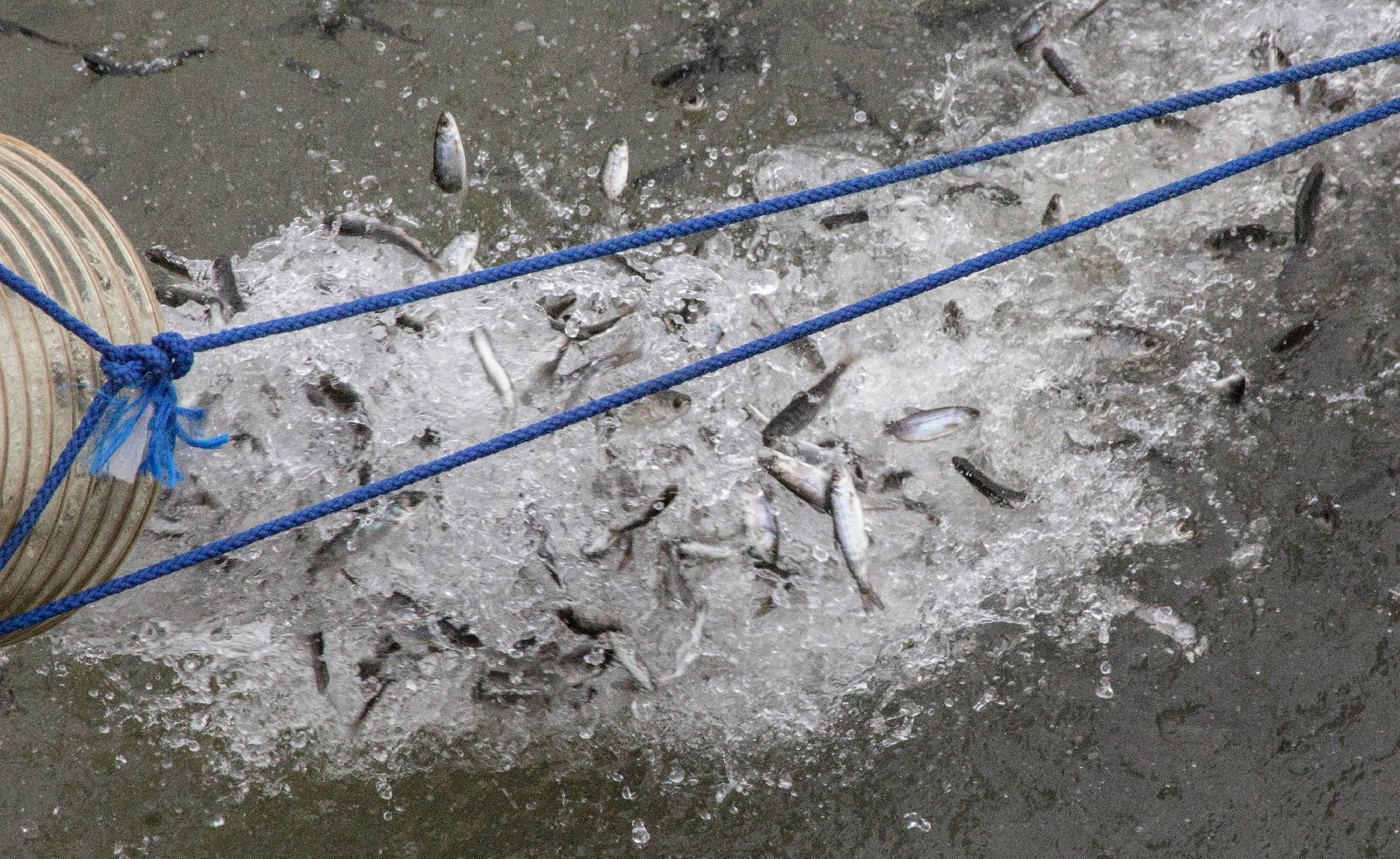
"content": "\u003cdiv class=\"single-video\">\u003ciframe src=\"//player.vimeo.com/video/90240146\" frameborder=\"0\" width=\"640\" height=\"360\">\u003c/iframe>\u003ca href=\"http://vimeo.com/90240146\">Baby Salmon at Rio Vista, California\u003c/a> from \u003ca href=\"http://vimeo.com/user8628241\">Dan Brekke\u003c/a> on \u003ca href=\"https://vimeo.com\">Vimeo\u003c/a>.\u003c/div>\n\u003cp>All this week, the people at Coleman National Fish Hatchery, in the northern reaches of the Sacramento Valley, are working 16 hours a day or more on a massive salmon lift. Starting Monday and continuing through Friday, they're trucking about 400,000 or 500,000 juvenile fall-run chinook each day — more than 2 million this week if everything goes right. And that's just the beginning of an operation that will eventually end up moving all 12 million of the fall-run fish the hatchery has been raising since last year.\u003c/p>\n\u003cp>[contextly_sidebar id=\"ee614adc6a51ec010ef9878a5d2a1394\"]\u003c/p>\n\u003cp>These young fish — they've been raised to \"60 to a pound\" size, are about 4 or 5 inches long and are physically ready to begin the transition from fresh- to saltwater — normally ride surges of spring runoff down the Sacramento River something like 350 miles to the Golden Gate. But not this year. The severity of this year's drought has reduced river flows to the point where wildlife officials say they believe 100 percent of the fish produced at Coleman would die before they reach the Golden Gate. The causes: fish getting lost and trapped in the Delta because of the way water is being managed there this year, predators and high water temperatures.\u003c/p>\n\u003cp>So, the U.S. Fish and Wildlife Service is working the California Department of Fish and Game to truck all 12 million of the juvenile Sacramento River fall-run from Coleman. The state, which normally trucks most of the young fall-run chinook it raises in four state hatcheries, will truck \u003cem>all\u003c/em> 18 million or so fish it's raising now. By the beginning of summer, 30 million baby salmon will have gotten a ride past hostile river channels to the Delta and Bay. That's more than 240 truck loads, at an additional cost of nearly $1 million.\u003c/p>\n\u003cp>The potential downside to trucking all these fish: It could further undermine the complicated effort to establish salmon populations that are healthy and sustainable over the long term. That's because the trucked fish don't have the opportunity to imprint on their natal streams; when they return as adult fish in the next two to four years, they will be far more likely to stray to other rivers, mix with other populations of chinook, including the tenuous populations of fall-run fish that reproduce outside the hatcheries. Research suggests that hatchery fish are less hardy and adaptable than wild fish; their dominance in the Central Valley thus may pose a danger of weakening the salmon population.\u003c/p>\n\u003cp>[ad fullwidth]\u003c/p>\n\u003cp>\u003c/p>\n\u003cp>John McManus, executive director of the Golden Gate Salmon Association, says trucking the salmon this year will give the state's commercial and sports fishers a chance for a decent season in 2016. The big fear for those who earn a piece of their living from salmon is a repeat of the fishery disaster from 2008-2010, when the number of fish returning to spawn in the Central Valley crashed and ocean fishing was shut down or severely curtailed for three full seasons.\u003c/p>\n\n",
"disqusIdentifier": "130668 http://ww2.kqed.org/news/?p=130668",
"disqusUrl": "https://ww2.kqed.org/news/2014/03/27/video-drought-perils-prompts-a-massive-trucking-operation-for-baby-salmon/",
"stats": {
"hasVideo": true,
"hasChartOrMap": false,
"hasAudio": false,
"hasPolis": false,
"wordCount": 527,
"hasGoogleForm": false,
"hasGallery": false,
"hasHearkenModule": false,
"iframeSrcs": [],
"paragraphCount": 8
},
"modified": 1395951039,
"excerpt": "Wildlife officials say trucking is the only way to make sure hatchery salmon reach the Pacific. ",
"headData": {
"twImgId": "",
"twTitle": "",
"ogTitle": "",
"ogImgId": "",
"twDescription": "",
"description": "Wildlife officials say trucking is the only way to make sure hatchery salmon reach the Pacific. ",
"title": "Video: Drought Peril Prompts a Massive Trucking Operation for Baby Salmon | KQED",
"ogDescription": "",
"schema": {
"@context": "https://schema.org",
"@type": "NewsArticle",
"headline": "Video: Drought Peril Prompts a Massive Trucking Operation for Baby Salmon ",
"datePublished": "2014-03-27T12:33:32-07:00",
"dateModified": "2014-03-27T13:10:39-07:00",
"image": "https://cdn.kqed.org/wp-content/uploads/2020/02/KQED-OG-Image@1x.png",
"isAccessibleForFree": "True",
"publisher": {
"@type": "NewsMediaOrganization",
"@id": "https://www.kqed.org/#organization",
"name": "KQED",
"logo": "https://cdn.kqed.org/wp-content/uploads/2020/02/KQED-OG-Image@1x.png",
"url": "https://www.kqed.org",
"sameAs": [
"https://www.facebook.com/KQED",
"https://twitter.com/KQED",
"https://www.instagram.com/kqed/",
"https://www.tiktok.com/@kqedofficial",
"https://www.linkedin.com/company/kqed",
"https://www.youtube.com/channel/UCeC0IOo7i1P_61zVUWbJ4nw"
]
}
}
},
"guestAuthors": [],
"slug": "video-drought-perils-prompts-a-massive-trucking-operation-for-baby-salmon",
"status": "publish",
"customPermalink": "2014/03/27/video-baby-salmon-trucked-to-delta/",
"path": "/news/130668/video-drought-perils-prompts-a-massive-trucking-operation-for-baby-salmon",
"audioTrackLength": null,
"parsedContent": [
{
"type": "contentString",
"content": "\u003cdiv class=\"post-body\">\u003cp>\u003cdiv class=\"single-video\">\u003ciframe src=\"//player.vimeo.com/video/90240146\" frameborder=\"0\" width=\"640\" height=\"360\">\u003c/iframe>\u003ca href=\"http://vimeo.com/90240146\">Baby Salmon at Rio Vista, California\u003c/a> from \u003ca href=\"http://vimeo.com/user8628241\">Dan Brekke\u003c/a> on \u003ca href=\"https://vimeo.com\">Vimeo\u003c/a>.\u003c/div>\n\u003cp>All this week, the people at Coleman National Fish Hatchery, in the northern reaches of the Sacramento Valley, are working 16 hours a day or more on a massive salmon lift. Starting Monday and continuing through Friday, they're trucking about 400,000 or 500,000 juvenile fall-run chinook each day — more than 2 million this week if everything goes right. And that's just the beginning of an operation that will eventually end up moving all 12 million of the fall-run fish the hatchery has been raising since last year.\u003c/p>\n\u003cp>\u003c/p>\u003cp>\u003c/p>\u003cp>\u003c/p>\n\u003cp>These young fish — they've been raised to \"60 to a pound\" size, are about 4 or 5 inches long and are physically ready to begin the transition from fresh- to saltwater — normally ride surges of spring runoff down the Sacramento River something like 350 miles to the Golden Gate. But not this year. The severity of this year's drought has reduced river flows to the point where wildlife officials say they believe 100 percent of the fish produced at Coleman would die before they reach the Golden Gate. The causes: fish getting lost and trapped in the Delta because of the way water is being managed there this year, predators and high water temperatures.\u003c/p>\n\u003cp>So, the U.S. Fish and Wildlife Service is working the California Department of Fish and Game to truck all 12 million of the juvenile Sacramento River fall-run from Coleman. The state, which normally trucks most of the young fall-run chinook it raises in four state hatcheries, will truck \u003cem>all\u003c/em> 18 million or so fish it's raising now. By the beginning of summer, 30 million baby salmon will have gotten a ride past hostile river channels to the Delta and Bay. That's more than 240 truck loads, at an additional cost of nearly $1 million.\u003c/p>\n\u003cp>The potential downside to trucking all these fish: It could further undermine the complicated effort to establish salmon populations that are healthy and sustainable over the long term. That's because the trucked fish don't have the opportunity to imprint on their natal streams; when they return as adult fish in the next two to four years, they will be far more likely to stray to other rivers, mix with other populations of chinook, including the tenuous populations of fall-run fish that reproduce outside the hatcheries. Research suggests that hatchery fish are less hardy and adaptable than wild fish; their dominance in the Central Valley thus may pose a danger of weakening the salmon population.\u003c/p>\n\u003cp>\u003c/p>\u003c/div>",
"attributes": {
"named": {},
"numeric": []
}
},
{
"type": "component",
"content": "",
"name": "ad",
"attributes": {
"named": {
"label": "fullwidth"
},
"numeric": [
"fullwidth"
]
}
},
{
"type": "contentString",
"content": "\u003cdiv class=\"post-body\">\u003cp>\u003c/p>\n\u003cp>\u003c/p>\n\u003cp>John McManus, executive director of the Golden Gate Salmon Association, says trucking the salmon this year will give the state's commercial and sports fishers a chance for a decent season in 2016. The big fear for those who earn a piece of their living from salmon is a repeat of the fishery disaster from 2008-2010, when the number of fish returning to spawn in the Central Valley crashed and ocean fishing was shut down or severely curtailed for three full seasons.\u003c/p>\n\n\u003c/div>\u003c/p>",
"attributes": {
"named": {},
"numeric": []
}
}
],
"link": "/news/130668/video-drought-perils-prompts-a-massive-trucking-operation-for-baby-salmon",
"authors": [
"222"
],
"programs": [
"news_6944"
],
"categories": [
"news_19906",
"news_356"
],
"tags": [
"news_17601",
"news_5888",
"news_3531"
],
"featImg": "news_130669",
"label": "news_6944"
},
"news_130123": {
"type": "posts",
"id": "news_130123",
"meta": {
"index": "posts_1716263798",
"site": "news",
"id": "130123",
"score": null,
"sort": [
1395448109000
]
},
"parent": 0,
"labelTerm": {
"site": "news",
"term": 6944
},
"blocks": [],
"publishDate": 1395448109,
"format": "aside",
"disqusTitle": "Baby Salmon to Get a Lift on Their Way to the Ocean",
"title": "Baby Salmon to Get a Lift on Their Way to the Ocean",
"headTitle": "News Fix | KQED News",
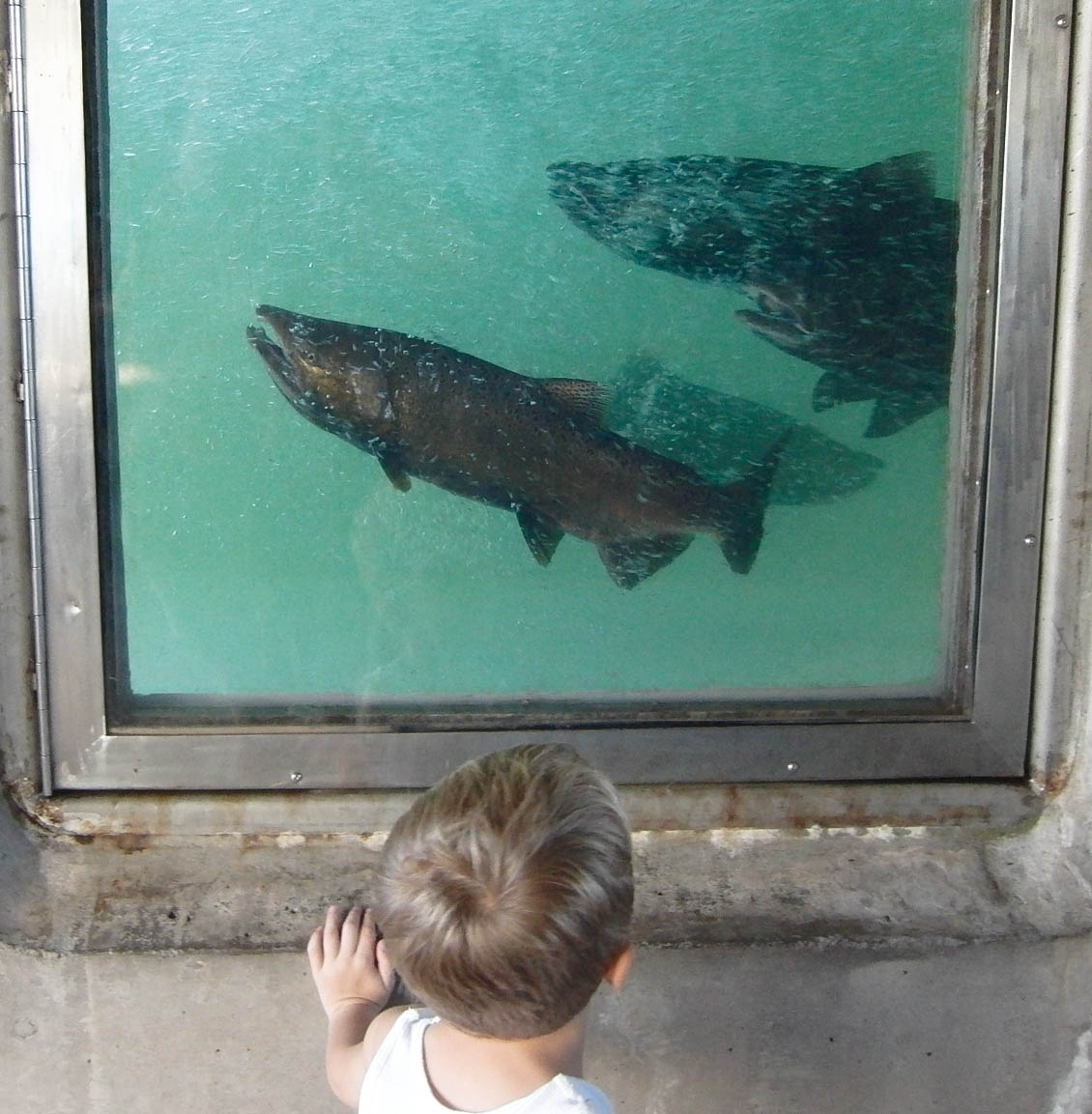
"content": "\u003cfigure id=\"attachment_130130\" class=\"wp-caption aligncenter\" style=\"max-width: 627px\">\u003ca href=\"http://ww2.kqed.org/news/wp-content/uploads/sites/10/2014/03/6821006088_79416592ca_o.jpg\">\u003cimg class=\"size-medium wp-image-130130\" src=\"http://ww2.kqed.org/news/wp-content/uploads/sites/10/2014/03/6821006088_79416592ca_o-627x640.jpg\" alt=\"Spawning chinook salmon arriving at the Feather River hatchery in Oroville. (KQED/Dan Brekke)\" width=\"627\" height=\"640\">\u003c/a>\u003cfigcaption class=\"wp-caption-text\">Spawning chinook salmon arriving at the Feather River hatchery in Oroville. (KQED/Dan Brekke) \u003ccite>(KQED/Dan Brekke)\u003c/cite>\u003c/figcaption>\u003c/figure>\n\u003cp>Because of the drought, millions of baby salmon from Northern California are about to get a truck ride to the Sacramento-San Joaquin Delta.\u003c/p>\n\u003cp>The fish, juvenile fall-run chinook salmon, would normally ride the Sacramento River for 200 miles from the Coleman National Fish Hatchery to the Delta, then swim to San Francisco Bay and through the Golden Gate. But because of this year's critical lack of precipitation, the Sacramento is running low, slow and clear — all conditions that threaten the survival of out-migrating salmon.\u003c/p>\n\u003cp>The conditions have prompted the U.S. Fish and Wildlife Service to follow through on a provisional plan announced earlier this month to start trucking the salmon from Coleman to the Delta. The service announced today that the first load of this year's production of 12 million fish will leave the hatchery at 4 a.m. Tuesday and be driven to a holding pen at Rio Vista. \u003c/p>\n\u003caside class=\"pullquote alignleft\">'There has been fear on the docks about what awaits us out on the horizon as a result of the drought. People are afraid for their livelihoods.'\u003ccite>— John McManus\u003cbr>\nGolden Gate Salmon Association\u003c/cite>\u003c/aside>\n\u003cp>Bob Clarke, regional fisheries program supervisor for the Fish and Wildlife Service, says conditions along the Sacramento would likely be fatal to all the juvenile fall-run salmon that Coleman hatchery would usually release directly into the river. \"It could literally be lethal to all the fish released, and none of them would make it out to the ocean,\" Clarke said in a recent interview. \"That would do nobody any good to release fish at Coleman and have them all perish.\"\u003c/p>\n\u003cp>The outmigrating hatchery fish face a range of hazards in this drought year. The river is clearer than normal because of low flows, and that makes it easier for predators to find the fish. The lack of fresh rainfall and snow melt moving downstream has resulted in higher and potentially deadly water temperatures in the lower Sacramento. And in the Delta, fish can get lost because a channel that's normally blocked at this time of year to keep young salmon on course has been left open to allow fresh water to circulate more freely.\u003c/p>\n\u003cp>[ad fullwidth]\u003c/p>\n\u003cp>California fishing groups are happy with the decision to truck the fish past all those dangers. John McManus, executive director of the Golden Gate Salmon Association, says giving the baby salmon a fighting chance of getting to the ocean will help the thousands of Californians who rely on salmon for part of their living.\u003c/p>\n\u003cp>\"This means a lot of families whose major wage earner is in the salmon industry might have a decent year in 2016,\" when they return to spawn. \"There has been fear on the docks about what awaits us out on the horizon as a result of the drought. People are afraid for their livelihoods.\"\u003c/p>\n\u003cp>A combination of circumstances, including poor river conditions and scarce food for salmon in the Pacific, led to a steep decline in the Sacramento River fall-run chinook fishery. So few fish returned to spawn that commercial fishing off California was shut down entirely in 2008 and 2009 and severely curtailed in 2010. McManus says trucking offers hope of avoiding a repeat of that disaster.\u003c/p>\n\u003cp>\"All of a sudden, it looks a little brighter,\" McManus said, \"because the federal government moving these fish in a truck means survival numbers will go way up and we'll see more fish in the ocean two years from now.\"\u003c/p>\n\u003cp>California hatcheries have trucked fish before — in fact, it has become nearly routine for state-run hatcheries like those on the Feather, American and Mokelumne rivers. But as Bob Clarke of the Fish and Wildlife Service points out, biologists see a downside to giving the fish a lift.\u003c/p>\n\u003cp>He says trucking disrupts the juvenile salmon's ability to \"imprint\" on its natal stream, part of the process that's believed to be vital in guiding the fish back to spawn at the end of their lives.\u003c/p>\n\u003cp>\"So when they come back, because their imprinting process was disrupted, they stray to all the different rivers in the Central Valley,\" Clarke said. And that's a problem because of the potential impact of hatchery-raised fish on the valley's dwindling stocks of wild chinook salmon.\u003c/p>\n\u003cp>\u003c/p>\n\u003cp>\"One of the obligations the Coleman hatchery has is to minimize the impact on wild stocks,\" Clarke says. \"We have to try to get our hatchery fish to come back to the hatchery and not mix with wild stocks, crowd them out on spawning grounds, spawn with them. When we truck them, they stray at a much, much higher rate than when we don't truck them.\"\u003c/p>\n\n",
"disqusIdentifier": "130123 http://ww2.kqed.org/news/?p=130123",
"disqusUrl": "https://ww2.kqed.org/news/2014/03/21/baby-salmon-to-get-a-lift-on-their-way-to-the-ocean/",
"stats": {
"hasVideo": false,
"hasChartOrMap": false,
"hasAudio": false,
"hasPolis": false,
"wordCount": 802,
"hasGoogleForm": false,
"hasGallery": false,
"hasHearkenModule": false,
"iframeSrcs": [],
"paragraphCount": 15
},
"modified": 1395450389,
"excerpt": "Due to the drought, fishery officials will truck fish from northern Sacramento Valley to the Delta. ",
"headData": {
"twImgId": "",
"twTitle": "",
"ogTitle": "",
"ogImgId": "",
"twDescription": "",
"description": "Due to the drought, fishery officials will truck fish from northern Sacramento Valley to the Delta. ",
"title": "Baby Salmon to Get a Lift on Their Way to the Ocean | KQED",
"ogDescription": "",
"schema": {
"@context": "https://schema.org",
"@type": "NewsArticle",
"headline": "Baby Salmon to Get a Lift on Their Way to the Ocean",
"datePublished": "2014-03-21T17:28:29-07:00",
"dateModified": "2014-03-21T18:06:29-07:00",
"image": "https://cdn.kqed.org/wp-content/uploads/2020/02/KQED-OG-Image@1x.png",
"isAccessibleForFree": "True",
"publisher": {
"@type": "NewsMediaOrganization",
"@id": "https://www.kqed.org/#organization",
"name": "KQED",
"logo": "https://cdn.kqed.org/wp-content/uploads/2020/02/KQED-OG-Image@1x.png",
"url": "https://www.kqed.org",
"sameAs": [
"https://www.facebook.com/KQED",
"https://twitter.com/KQED",
"https://www.instagram.com/kqed/",
"https://www.tiktok.com/@kqedofficial",
"https://www.linkedin.com/company/kqed",
"https://www.youtube.com/channel/UCeC0IOo7i1P_61zVUWbJ4nw"
]
}
}
},
"guestAuthors": [],
"slug": "baby-salmon-to-get-a-lift-on-their-way-to-the-ocean",
"status": "publish",
"customPermalink": "2014/03/21/fish-and-wildlife-service-to-truck-salmon-to-delta/",
"path": "/news/130123/baby-salmon-to-get-a-lift-on-their-way-to-the-ocean",
"audioTrackLength": null,
"parsedContent": [
{
"type": "contentString",
"content": "\u003cdiv class=\"post-body\">\u003cp>\u003cfigure id=\"attachment_130130\" class=\"wp-caption aligncenter\" style=\"max-width: 627px\">\u003ca href=\"http://ww2.kqed.org/news/wp-content/uploads/sites/10/2014/03/6821006088_79416592ca_o.jpg\">\u003cimg class=\"size-medium wp-image-130130\" src=\"http://ww2.kqed.org/news/wp-content/uploads/sites/10/2014/03/6821006088_79416592ca_o-627x640.jpg\" alt=\"Spawning chinook salmon arriving at the Feather River hatchery in Oroville. (KQED/Dan Brekke)\" width=\"627\" height=\"640\">\u003c/a>\u003cfigcaption class=\"wp-caption-text\">Spawning chinook salmon arriving at the Feather River hatchery in Oroville. (KQED/Dan Brekke) \u003ccite>(KQED/Dan Brekke)\u003c/cite>\u003c/figcaption>\u003c/figure>\n\u003cp>Because of the drought, millions of baby salmon from Northern California are about to get a truck ride to the Sacramento-San Joaquin Delta.\u003c/p>\n\u003cp>The fish, juvenile fall-run chinook salmon, would normally ride the Sacramento River for 200 miles from the Coleman National Fish Hatchery to the Delta, then swim to San Francisco Bay and through the Golden Gate. But because of this year's critical lack of precipitation, the Sacramento is running low, slow and clear — all conditions that threaten the survival of out-migrating salmon.\u003c/p>\n\u003cp>The conditions have prompted the U.S. Fish and Wildlife Service to follow through on a provisional plan announced earlier this month to start trucking the salmon from Coleman to the Delta. The service announced today that the first load of this year's production of 12 million fish will leave the hatchery at 4 a.m. Tuesday and be driven to a holding pen at Rio Vista. \u003c/p>\n\u003caside class=\"pullquote alignleft\">'There has been fear on the docks about what awaits us out on the horizon as a result of the drought. People are afraid for their livelihoods.'\u003ccite>— John McManus\u003cbr>\nGolden Gate Salmon Association\u003c/cite>\u003c/aside>\n\u003cp>Bob Clarke, regional fisheries program supervisor for the Fish and Wildlife Service, says conditions along the Sacramento would likely be fatal to all the juvenile fall-run salmon that Coleman hatchery would usually release directly into the river. \"It could literally be lethal to all the fish released, and none of them would make it out to the ocean,\" Clarke said in a recent interview. \"That would do nobody any good to release fish at Coleman and have them all perish.\"\u003c/p>\n\u003cp>The outmigrating hatchery fish face a range of hazards in this drought year. The river is clearer than normal because of low flows, and that makes it easier for predators to find the fish. The lack of fresh rainfall and snow melt moving downstream has resulted in higher and potentially deadly water temperatures in the lower Sacramento. And in the Delta, fish can get lost because a channel that's normally blocked at this time of year to keep young salmon on course has been left open to allow fresh water to circulate more freely.\u003c/p>\n\u003cp>\u003c/p>\u003c/div>",
"attributes": {
"named": {},
"numeric": []
}
},
{
"type": "component",
"content": "",
"name": "ad",
"attributes": {
"named": {
"label": "fullwidth"
},
"numeric": [
"fullwidth"
]
}
},
{
"type": "contentString",
"content": "\u003cdiv class=\"post-body\">\u003cp>\u003c/p>\n\u003cp>California fishing groups are happy with the decision to truck the fish past all those dangers. John McManus, executive director of the Golden Gate Salmon Association, says giving the baby salmon a fighting chance of getting to the ocean will help the thousands of Californians who rely on salmon for part of their living.\u003c/p>\n\u003cp>\"This means a lot of families whose major wage earner is in the salmon industry might have a decent year in 2016,\" when they return to spawn. \"There has been fear on the docks about what awaits us out on the horizon as a result of the drought. People are afraid for their livelihoods.\"\u003c/p>\n\u003cp>A combination of circumstances, including poor river conditions and scarce food for salmon in the Pacific, led to a steep decline in the Sacramento River fall-run chinook fishery. So few fish returned to spawn that commercial fishing off California was shut down entirely in 2008 and 2009 and severely curtailed in 2010. McManus says trucking offers hope of avoiding a repeat of that disaster.\u003c/p>\n\u003cp>\"All of a sudden, it looks a little brighter,\" McManus said, \"because the federal government moving these fish in a truck means survival numbers will go way up and we'll see more fish in the ocean two years from now.\"\u003c/p>\n\u003cp>California hatcheries have trucked fish before — in fact, it has become nearly routine for state-run hatcheries like those on the Feather, American and Mokelumne rivers. But as Bob Clarke of the Fish and Wildlife Service points out, biologists see a downside to giving the fish a lift.\u003c/p>\n\u003cp>He says trucking disrupts the juvenile salmon's ability to \"imprint\" on its natal stream, part of the process that's believed to be vital in guiding the fish back to spawn at the end of their lives.\u003c/p>\n\u003cp>\"So when they come back, because their imprinting process was disrupted, they stray to all the different rivers in the Central Valley,\" Clarke said. And that's a problem because of the potential impact of hatchery-raised fish on the valley's dwindling stocks of wild chinook salmon.\u003c/p>\n\u003cp>\u003c/p>\n\u003cp>\"One of the obligations the Coleman hatchery has is to minimize the impact on wild stocks,\" Clarke says. \"We have to try to get our hatchery fish to come back to the hatchery and not mix with wild stocks, crowd them out on spawning grounds, spawn with them. When we truck them, they stray at a much, much higher rate than when we don't truck them.\"\u003c/p>\n\n\u003c/div>\u003c/p>",
"attributes": {
"named": {},
"numeric": []
}
}
],
"link": "/news/130123/baby-salmon-to-get-a-lift-on-their-way-to-the-ocean",
"authors": [
"222"
],
"programs": [
"news_6944"
],
"categories": [
"news_19906",
"news_356"
],
"tags": [
"news_17601",
"news_5888",
"news_3531"
],
"featImg": "news_130130",
"label": "news_6944"
},
"science_14542": {
"type": "posts",
"id": "science_14542",
"meta": {
"index": "posts_1716263798",
"site": "science",
"id": "14542",
"score": null,
"sort": [
1393252235000
]
},
"parent": 0,
"labelTerm": {
"site": "science",
"term": 1151
},
"blocks": [],
"publishDate": 1393252235,
"format": "aside",
"title": "California Drought One More Setback for River That Runs Dry",
"headTitle": "California Drought One More Setback for River That Runs Dry | KQED",
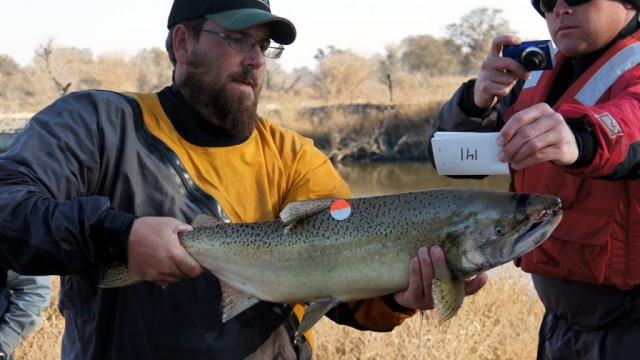
"content": "\u003cdiv class=\"audio-wrap\">\n\u003ch2>Listen:\u003c/h2>\n\u003cp>http://www.kqed.org/.stream/anon/radio/science/2014/02/20140224science.mp3\u003c/p>\n\u003c/div>\n\u003cfigure id=\"attachment_14545\" class=\"wp-caption alignleft\" style=\"max-width: 640px\">\u003ca href=\"http://ww2.kqed.org/science/wp-content/uploads/sites/35/2014/02/DSC01081-1024x576.jpg\">\u003cimg loading=\"lazy\" decoding=\"async\" class=\"size-large wp-image-14545\" src=\"http://ww2.kqed.org/science/wp-content/uploads/sites/35/2014/02/DSC01081-1024x576.jpg\" alt=\"Charles Hueth holds up a tagged Chinook salmon for a photograph before it's released into the San Joaquin River. (Lauren Sommer/KQED)\" width=\"640\" height=\"360\">\u003c/a>\u003cfigcaption class=\"wp-caption-text\">Charles Hueth holds up a tagged Chinook salmon for a photo before releasing it into the San Joaquin River. (Lauren Sommer/KQED)\u003c/figcaption>\u003c/figure>\n\u003cp>California’s historic drought means tight water supplies for everyone this year. It’s putting environmental restoration projects in the spotlight, especially the effort to bring salmon back to the state’s second longest river, the San Joaquin River.\u003c/p>\n\u003cp>Republican House Speaker John Boehner singled out the project when he visited California last month. The House \u003ca href=\"http://ww2.kqed.org/news/2014/02/03/brown-blasts-gop-drought-bill-as-divisive\">recently passed a bill\u003c/a> that would end the restoration.\u003c/p>\n\u003cp>“How you can favor fish over people is something people in my part of the world would never understand,” Boehner said.\u003c/p>\n\u003cp>\u003cstrong>River That Runs Dry\u003c/strong>\u003c/p>\n\u003cp>“What you’re looking at is the main channel of the river and there’s no water in it,” said Monty Schmitt of the Natural Resources Defense Council, looking at a dusty riverbed outside of Los Banos in the Central Valley. The drought is one reason this stretch isn’t full of water, but it’s not the only reason.\u003c/p>\n\u003cp>[ad fullwidth]\u003c/p>\n\u003cp>“This is a highly altered river,” said Schmitt. “The federal government built Friant Dam and for 60 years, dried up the river.”\u003c/p>\n\u003cp>The San Joaquin River runs from the west slope of the Sierra Nevada down to San Francisco Bay. In the 1940s, a new dam near Fresno corralled the river to irrigate a million acres of Central Valley farmland.\u003c/p>\n\u003cfigure id=\"attachment_14543\" class=\"wp-caption alignright\" style=\"max-width: 640px\">\u003ca href=\"http://ww2.kqed.org/science/wp-content/uploads/sites/35/2014/02/Drought_JoshC-4290-1024x576.jpg\">\u003cimg loading=\"lazy\" decoding=\"async\" class=\"size-large wp-image-14543\" src=\"http://ww2.kqed.org/science/wp-content/uploads/sites/35/2014/02/Drought_JoshC-4290-1024x576.jpg\" alt=\"In many years, this channel connecting the San Joaquin River outside of Los Banos runs dry. (Josh Cassidy/KQED)\" width=\"640\" height=\"360\">\u003c/a>\u003cfigcaption class=\"wp-caption-text\">In many years, this channel connecting the San Joaquin River outside of Los Banos runs dry. (Josh Cassidy/KQED)\u003c/figcaption>\u003c/figure>\n\u003cp>“Just that change alone had a huge impact on the river,” Schmitt said. “Obviously all the salmon were wiped out.”\u003c/p>\n\u003cp>Friant Dam diverted so much water that large sections of the river – up to 60 miles – went completely dry in most years. It was the end of the state’s second-largest salmon run, at least until recently. NRDC sued the federal government and in 2006, signed a settlement agreement with farmers and the federal government that launched the return of Chinook salmon to the river.\u003c/p>\n\u003cp>\u003cstrong>Salmon Return to the River\u003c/strong>\u003c/p>\n\u003cp>In December, a state and federal restoration team pulled a Chinook salmon out of a net they had stretched across the lower San Joaquin, where downstream tributaries get the river flowing again.\u003c/p>\n\u003cp>“We take measurements on the length of the fish and we check them to see the ripeness for the males and females,” said Matt Bigelow of California’s Department of Fish and Wildlife, examining a large female Chinook with a smattering of black spots.\u003c/p>\n\u003cp>Ripeness – meaning eggs and sperm. These salmon were trying to get upstream to reproduce and were getting some help from a kind of salmon shuttle service. Bigelow and his team loaded them in a tanker truck that would haul them upstream, past the dry part of the river, and release them near Friant Dam.\u003c/p>\n\u003cfigure id=\"attachment_14546\" class=\"wp-caption alignright\" style=\"max-width: 640px\">\u003ca href=\"http://ww2.kqed.org/science/wp-content/uploads/sites/35/2014/02/DSC01101-1024x576.jpg\">\u003cimg loading=\"lazy\" decoding=\"async\" class=\"size-large wp-image-14546\" src=\"http://ww2.kqed.org/science/wp-content/uploads/sites/35/2014/02/DSC01101-1024x576.jpg\" alt=\"A restoration team brings in a Chinook salmon caught in the lower reaches of the river. (Lauren Sommer/KQED)\" width=\"640\" height=\"360\">\u003c/a>\u003cfigcaption class=\"wp-caption-text\">A restoration team brings in a Chinook salmon caught in the lower reaches of the river. (Lauren Sommer/KQED)\u003c/figcaption>\u003c/figure>\n\u003cp>“Obviously what we’re doing right here, this is quite a bit of intervention to get fish up into suitable spawning habitat,” said Gerald Hatler, the restoration program manager with California’s Department of Fish and Wildlife.\u003c/p>\n\u003cp>Returning salmon to the San Joaquin River means moving them fish-by-fish right now, because the river isn’t quite ready for water to start flowing.\u003c/p>\n\u003cp>“There’s still a lot of things that need to happen,” said Hatler. “There’s still substantial physical barriers to the fish moving upstream.”\u003c/p>\n\u003cp>[contextly_sidebar id=”3493ef1327062e0a6024ff7b5915e9b3″]\u003c/p>\n\u003cp>Crews need to screen off water pipes and intakes and put in drains to prevent farmland from flooding. Under the restoration plan, the river won’t start flowing again until more of those projects are done, and they’re behind schedule.\u003c/p>\n\u003cp>More than 300 adult salmon were moved upstream during the winter and their young recently hatched. Without river flows, the young won’t be able to reach the ocean on their own, at least not without a miracle.\u003c/p>\n\u003cp>“If Mother Nature gives us a lot of water in the spring of 2014, we may see a large number of those juveniles make their way out,” Hatler said in December.\u003c/p>\n\u003cp>The chances of that happening are slim to none at this point, so the restoration team is \u003ca href=\"http://www.usbr.gov/mp/nepa/nepa_projdetails.cfm?Project_ID=16361\">planning to move the young salmon\u003c/a> downstream in trucks, just like their parents.\u003c/p>\n\u003cfigure id=\"attachment_14547\" class=\"wp-caption alignright\" style=\"max-width: 640px\">\u003ca href=\"http://ww2.kqed.org/science/wp-content/uploads/sites/35/2014/02/Drought_JoshC-4217-1024x576.jpg\">\u003cimg loading=\"lazy\" decoding=\"async\" class=\"size-large wp-image-14547\" src=\"http://ww2.kqed.org/science/wp-content/uploads/sites/35/2014/02/Drought_JoshC-4217-1024x576.jpg\" alt=\"An old stretch of the San Joaqun river runs through some of Cannon Michael's 10,000 acres. (Josh Cassidy/KQED)\" width=\"640\" height=\"360\">\u003c/a>\u003cfigcaption class=\"wp-caption-text\">An old stretch of the San Joaquin river runs through some of Cannon Michael’s 10,000 acres. (Josh Cassidy/KQED)\u003c/figcaption>\u003c/figure>\n\u003cp>\u003cstrong>Political Heat\u003c/strong>\u003c/p>\n\u003cp>“The reality is it’s not going according to plan,” said Cannon Michael of Bowles Farming Company. He farms 10,000 acres just outside Los Banos and an old fork of the San Joaquin runs right through it. It’s choked with dry vegetation, but it’s on the list for restoration.\u003c/p>\n\u003cp>“With the progress they’re making in terms of physical projects, this is way down the road,” he said.\u003c/p>\n\u003cp>Michael says there’s been a lot of frustration. Farmers agreed to give up about 18 percent of their water under the restoration, in exchange for new water supply projects and barriers to keep the river from encroaching onto their land.\u003c/p>\n\u003cp>“Don’t just put back fish and spend a lot of money trucking them around the river,” Michael said. “Don’t you want to get the river fixed to the point where you can have them go up the river instead of trucking them?”\u003c/p>\n\u003cp>The first phase of the project is expected to cost $500 million, with the bulk of it coming from Congress. But with the economic downturn, appropriations have been slow. Still, after eight years of work, Michael doesn’t want to see the project in the political cross hairs.\u003c/p>\n\u003cfigure id=\"attachment_14544\" class=\"wp-caption alignright\" style=\"max-width: 640px\">\u003ca href=\"http://ww2.kqed.org/science/wp-content/uploads/sites/35/2014/02/Drought_JoshC-4362-1024x576.jpg\">\u003cimg loading=\"lazy\" decoding=\"async\" class=\"size-large wp-image-14544\" src=\"http://ww2.kqed.org/science/wp-content/uploads/sites/35/2014/02/Drought_JoshC-4362-1024x576.jpg\" alt=\"Monty Schmitt of the Natural Resources Defense Council stands near a stretch of river that's been cut off for decades. (Josh Cassidy/KQED)\" width=\"640\" height=\"360\">\u003c/a>\u003cfigcaption class=\"wp-caption-text\">Monty Schmitt of the Natural Resources Defense Council stands near a stretch of river that’s been cut off for decades. (Josh Cassidy/KQED)\u003c/figcaption>\u003c/figure>\n\u003cp>“Let’s find a way to get people back on board with it instead of it being a divisive thing where the GOP maybe is using it as a tool,” Michael said.\u003c/p>\n\u003cp>Monty Schmitt of the Natural Resources Defense Council agrees.\u003c/p>\n\u003cp>“The old model is to sit in court, fighting each other,” Schmitt said. “Instead we all sat down and we worked something out that we all could live with and support.”\u003c/p>\n\u003cp>[ad floatright]\u003c/p>\n\u003cp>Schmitt said he’s looking at a \u003ca href=\"https://soundcloud.com/kqed/sen-dianne-feinstein-on\">drought bill from Senator Dianne Feinstein\u003c/a> that could help some of the restoration projects get rolling. Even if that happens, the river wouldn’t start flowing this year. Federal officials have said the flows will be cut because of the extreme drought.\u003c/p>\n\n",
"stats": {
"hasVideo": false,
"hasChartOrMap": false,
"hasAudio": true,
"hasPolis": false,
"wordCount": 1182,
"hasGoogleForm": false,
"hasGallery": false,
"hasHearkenModule": false,
"iframeSrcs": [],
"paragraphCount": 33
},
"modified": 1704934128,
"excerpt": "Just as salmon are being returned to the San Joaquin River, the extreme drought is bringing political heat to one of the most ambitious environmental restoration efforts in the state.",
"headData": {
"twImgId": "",
"twTitle": "",
"ogTitle": "",
"ogImgId": "",
"twDescription": "",
"description": "Just as salmon are being returned to the San Joaquin River, the extreme drought is bringing political heat to one of the most ambitious environmental restoration efforts in the state.",
"title": "California Drought One More Setback for River That Runs Dry | KQED",
"ogDescription": "",
"schema": {
"@context": "https://schema.org",
"@type": "Article",
"headline": "California Drought One More Setback for River That Runs Dry",
"datePublished": "2014-02-24T06:30:35-08:00",
"dateModified": "2024-01-10T16:48:48-08:00",
"image": "https://cdn.kqed.org/wp-content/uploads/2020/02/KQED-OG-Image@1x.png"
}
},
"guestAuthors": [],
"slug": "california-drought-one-more-setback-for-river-that-runs-dry",
"status": "publish",
"audioUrl": "http://www.kqed.org/.stream/anon/radio/science/2014/02/20140224science.mp3",
"sticky": false,
"path": "/science/14542/california-drought-one-more-setback-for-river-that-runs-dry",
"audioTrackLength": null,
"parsedContent": [
{
"type": "contentString",
"content": "\u003cdiv class=\"post-body\">\u003cp>\u003cdiv class=\"audio-wrap\">\n\u003ch2>Listen:\u003c/h2>\u003c/p>\u003c/div>",
"attributes": {
"named": {},
"numeric": []
}
},
{
"type": "component",
"content": "",
"name": "audioLink",
"attributes": {
"named": {
"src": "http://www.kqed.org/.stream/anon/radio/science/2014/02/20140224science.mp3"
},
"numeric": []
}
},
{
"type": "contentString",
"content": "\u003cdiv class=\"post-body\">\u003cp>\u003c/div>\n\u003cfigure id=\"attachment_14545\" class=\"wp-caption alignleft\" style=\"max-width: 640px\">\u003ca href=\"http://ww2.kqed.org/science/wp-content/uploads/sites/35/2014/02/DSC01081-1024x576.jpg\">\u003cimg loading=\"lazy\" decoding=\"async\" class=\"size-large wp-image-14545\" src=\"http://ww2.kqed.org/science/wp-content/uploads/sites/35/2014/02/DSC01081-1024x576.jpg\" alt=\"Charles Hueth holds up a tagged Chinook salmon for a photograph before it's released into the San Joaquin River. (Lauren Sommer/KQED)\" width=\"640\" height=\"360\">\u003c/a>\u003cfigcaption class=\"wp-caption-text\">Charles Hueth holds up a tagged Chinook salmon for a photo before releasing it into the San Joaquin River. (Lauren Sommer/KQED)\u003c/figcaption>\u003c/figure>\n\u003cp>California’s historic drought means tight water supplies for everyone this year. It’s putting environmental restoration projects in the spotlight, especially the effort to bring salmon back to the state’s second longest river, the San Joaquin River.\u003c/p>\n\u003cp>Republican House Speaker John Boehner singled out the project when he visited California last month. The House \u003ca href=\"http://ww2.kqed.org/news/2014/02/03/brown-blasts-gop-drought-bill-as-divisive\">recently passed a bill\u003c/a> that would end the restoration.\u003c/p>\n\u003cp>“How you can favor fish over people is something people in my part of the world would never understand,” Boehner said.\u003c/p>\n\u003cp>\u003cstrong>River That Runs Dry\u003c/strong>\u003c/p>\n\u003cp>“What you’re looking at is the main channel of the river and there’s no water in it,” said Monty Schmitt of the Natural Resources Defense Council, looking at a dusty riverbed outside of Los Banos in the Central Valley. The drought is one reason this stretch isn’t full of water, but it’s not the only reason.\u003c/p>\n\u003cp>\u003c/p>\u003c/div>",
"attributes": {
"named": {},
"numeric": []
}
},
{
"type": "component",
"content": "",
"name": "ad",
"attributes": {
"named": {
"label": "fullwidth"
},
"numeric": [
"fullwidth"
]
}
},
{
"type": "contentString",
"content": "\u003cdiv class=\"post-body\">\u003cp>\u003c/p>\n\u003cp>“This is a highly altered river,” said Schmitt. “The federal government built Friant Dam and for 60 years, dried up the river.”\u003c/p>\n\u003cp>The San Joaquin River runs from the west slope of the Sierra Nevada down to San Francisco Bay. In the 1940s, a new dam near Fresno corralled the river to irrigate a million acres of Central Valley farmland.\u003c/p>\n\u003cfigure id=\"attachment_14543\" class=\"wp-caption alignright\" style=\"max-width: 640px\">\u003ca href=\"http://ww2.kqed.org/science/wp-content/uploads/sites/35/2014/02/Drought_JoshC-4290-1024x576.jpg\">\u003cimg loading=\"lazy\" decoding=\"async\" class=\"size-large wp-image-14543\" src=\"http://ww2.kqed.org/science/wp-content/uploads/sites/35/2014/02/Drought_JoshC-4290-1024x576.jpg\" alt=\"In many years, this channel connecting the San Joaquin River outside of Los Banos runs dry. (Josh Cassidy/KQED)\" width=\"640\" height=\"360\">\u003c/a>\u003cfigcaption class=\"wp-caption-text\">In many years, this channel connecting the San Joaquin River outside of Los Banos runs dry. (Josh Cassidy/KQED)\u003c/figcaption>\u003c/figure>\n\u003cp>“Just that change alone had a huge impact on the river,” Schmitt said. “Obviously all the salmon were wiped out.”\u003c/p>\n\u003cp>Friant Dam diverted so much water that large sections of the river – up to 60 miles – went completely dry in most years. It was the end of the state’s second-largest salmon run, at least until recently. NRDC sued the federal government and in 2006, signed a settlement agreement with farmers and the federal government that launched the return of Chinook salmon to the river.\u003c/p>\n\u003cp>\u003cstrong>Salmon Return to the River\u003c/strong>\u003c/p>\n\u003cp>In December, a state and federal restoration team pulled a Chinook salmon out of a net they had stretched across the lower San Joaquin, where downstream tributaries get the river flowing again.\u003c/p>\n\u003cp>“We take measurements on the length of the fish and we check them to see the ripeness for the males and females,” said Matt Bigelow of California’s Department of Fish and Wildlife, examining a large female Chinook with a smattering of black spots.\u003c/p>\n\u003cp>Ripeness – meaning eggs and sperm. These salmon were trying to get upstream to reproduce and were getting some help from a kind of salmon shuttle service. Bigelow and his team loaded them in a tanker truck that would haul them upstream, past the dry part of the river, and release them near Friant Dam.\u003c/p>\n\u003cfigure id=\"attachment_14546\" class=\"wp-caption alignright\" style=\"max-width: 640px\">\u003ca href=\"http://ww2.kqed.org/science/wp-content/uploads/sites/35/2014/02/DSC01101-1024x576.jpg\">\u003cimg loading=\"lazy\" decoding=\"async\" class=\"size-large wp-image-14546\" src=\"http://ww2.kqed.org/science/wp-content/uploads/sites/35/2014/02/DSC01101-1024x576.jpg\" alt=\"A restoration team brings in a Chinook salmon caught in the lower reaches of the river. (Lauren Sommer/KQED)\" width=\"640\" height=\"360\">\u003c/a>\u003cfigcaption class=\"wp-caption-text\">A restoration team brings in a Chinook salmon caught in the lower reaches of the river. (Lauren Sommer/KQED)\u003c/figcaption>\u003c/figure>\n\u003cp>“Obviously what we’re doing right here, this is quite a bit of intervention to get fish up into suitable spawning habitat,” said Gerald Hatler, the restoration program manager with California’s Department of Fish and Wildlife.\u003c/p>\n\u003cp>Returning salmon to the San Joaquin River means moving them fish-by-fish right now, because the river isn’t quite ready for water to start flowing.\u003c/p>\n\u003cp>“There’s still a lot of things that need to happen,” said Hatler. “There’s still substantial physical barriers to the fish moving upstream.”\u003c/p>\n\u003cp>\u003c/p>\u003cp>\u003c/p>\u003cp>\u003c/p>\n\u003cp>Crews need to screen off water pipes and intakes and put in drains to prevent farmland from flooding. Under the restoration plan, the river won’t start flowing again until more of those projects are done, and they’re behind schedule.\u003c/p>\n\u003cp>More than 300 adult salmon were moved upstream during the winter and their young recently hatched. Without river flows, the young won’t be able to reach the ocean on their own, at least not without a miracle.\u003c/p>\n\u003cp>“If Mother Nature gives us a lot of water in the spring of 2014, we may see a large number of those juveniles make their way out,” Hatler said in December.\u003c/p>\n\u003cp>The chances of that happening are slim to none at this point, so the restoration team is \u003ca href=\"http://www.usbr.gov/mp/nepa/nepa_projdetails.cfm?Project_ID=16361\">planning to move the young salmon\u003c/a> downstream in trucks, just like their parents.\u003c/p>\n\u003cfigure id=\"attachment_14547\" class=\"wp-caption alignright\" style=\"max-width: 640px\">\u003ca href=\"http://ww2.kqed.org/science/wp-content/uploads/sites/35/2014/02/Drought_JoshC-4217-1024x576.jpg\">\u003cimg loading=\"lazy\" decoding=\"async\" class=\"size-large wp-image-14547\" src=\"http://ww2.kqed.org/science/wp-content/uploads/sites/35/2014/02/Drought_JoshC-4217-1024x576.jpg\" alt=\"An old stretch of the San Joaqun river runs through some of Cannon Michael's 10,000 acres. (Josh Cassidy/KQED)\" width=\"640\" height=\"360\">\u003c/a>\u003cfigcaption class=\"wp-caption-text\">An old stretch of the San Joaquin river runs through some of Cannon Michael’s 10,000 acres. (Josh Cassidy/KQED)\u003c/figcaption>\u003c/figure>\n\u003cp>\u003cstrong>Political Heat\u003c/strong>\u003c/p>\n\u003cp>“The reality is it’s not going according to plan,” said Cannon Michael of Bowles Farming Company. He farms 10,000 acres just outside Los Banos and an old fork of the San Joaquin runs right through it. It’s choked with dry vegetation, but it’s on the list for restoration.\u003c/p>\n\u003cp>“With the progress they’re making in terms of physical projects, this is way down the road,” he said.\u003c/p>\n\u003cp>Michael says there’s been a lot of frustration. Farmers agreed to give up about 18 percent of their water under the restoration, in exchange for new water supply projects and barriers to keep the river from encroaching onto their land.\u003c/p>\n\u003cp>“Don’t just put back fish and spend a lot of money trucking them around the river,” Michael said. “Don’t you want to get the river fixed to the point where you can have them go up the river instead of trucking them?”\u003c/p>\n\u003cp>The first phase of the project is expected to cost $500 million, with the bulk of it coming from Congress. But with the economic downturn, appropriations have been slow. Still, after eight years of work, Michael doesn’t want to see the project in the political cross hairs.\u003c/p>\n\u003cfigure id=\"attachment_14544\" class=\"wp-caption alignright\" style=\"max-width: 640px\">\u003ca href=\"http://ww2.kqed.org/science/wp-content/uploads/sites/35/2014/02/Drought_JoshC-4362-1024x576.jpg\">\u003cimg loading=\"lazy\" decoding=\"async\" class=\"size-large wp-image-14544\" src=\"http://ww2.kqed.org/science/wp-content/uploads/sites/35/2014/02/Drought_JoshC-4362-1024x576.jpg\" alt=\"Monty Schmitt of the Natural Resources Defense Council stands near a stretch of river that's been cut off for decades. (Josh Cassidy/KQED)\" width=\"640\" height=\"360\">\u003c/a>\u003cfigcaption class=\"wp-caption-text\">Monty Schmitt of the Natural Resources Defense Council stands near a stretch of river that’s been cut off for decades. (Josh Cassidy/KQED)\u003c/figcaption>\u003c/figure>\n\u003cp>“Let’s find a way to get people back on board with it instead of it being a divisive thing where the GOP maybe is using it as a tool,” Michael said.\u003c/p>\n\u003cp>Monty Schmitt of the Natural Resources Defense Council agrees.\u003c/p>\n\u003cp>“The old model is to sit in court, fighting each other,” Schmitt said. “Instead we all sat down and we worked something out that we all could live with and support.”\u003c/p>\n\u003cp>\u003c/p>\u003c/div>",
"attributes": {
"named": {},
"numeric": []
}
},
{
"type": "component",
"content": "",
"name": "ad",
"attributes": {
"named": {
"label": "floatright"
},
"numeric": [
"floatright"
]
}
},
{
"type": "contentString",
"content": "\u003cdiv class=\"post-body\">\u003cp>\u003c/p>\n\u003cp>Schmitt said he’s looking at a \u003ca href=\"https://soundcloud.com/kqed/sen-dianne-feinstein-on\">drought bill from Senator Dianne Feinstein\u003c/a> that could help some of the restoration projects get rolling. Even if that happens, the river wouldn’t start flowing this year. Federal officials have said the flows will be cut because of the extreme drought.\u003c/p>\n\n\u003c/div>\u003c/p>",
"attributes": {
"named": {},
"numeric": []
}
}
],
"link": "/science/14542/california-drought-one-more-setback-for-river-that-runs-dry",
"authors": [
"239"
],
"series": [
"science_1151"
],
"categories": [
"science_46",
"science_89",
"science_35",
"science_40",
"science_43",
"science_98"
],
"tags": [
"science_1195",
"science_572",
"science_64",
"science_670",
"science_247",
"science_201",
"science_804"
],
"featImg": "science_14564",
"label": "science_1151"
},
"news_127029": {
"type": "posts",
"id": "news_127029",
"meta": {
"index": "posts_1716263798",
"site": "news",
"id": "127029",
"score": null,
"sort": [
1393010918000
]
},
"parent": 0,
"labelTerm": {
"site": "news",
"term": 6944
},
"blocks": [],
"publishDate": 1393010918,
"format": "aside",
"disqusTitle": "Marin's Salmon, the Drought, and Us ",
"title": "Marin's Salmon, the Drought, and Us ",
"headTitle": "News Fix | KQED News",
"content": "\u003cp>\u003c!-- iframe plugin v.4.3 wordpress.org/plugins/iframe/ -->\u003cbr>\n\u003ciframe src=\"//www.youtube.com/embed/3HpL_2pcX2U?list=UU0FISFbEaHFc5ccrIgkZ3mg\" frameborder=\"0\" width=\"640\" height=\"360\" scrolling=\"yes\" class=\"iframe-class\">\u003c/iframe>\u003c/p>\n\u003cp> \u003cbr>\n\u003cspan style=\"font-size: 4.6875em;float: left;line-height: 0.733em;padding: 0.05em 0.1em 0 0;font-family: times, serif, georgia\">I\u003c/span>t's natural for us humans to think of the current California drought as a human crisis. Yes, it affects all 38 million of us who have staked a claim on this desirable real estate. And yes, people across the United States and beyond who consume our state's bounty of farm products, from almonds to salad greens, could feel the effects, too, as our long, unpitying stretch of dry weather squeezes water supplies.\u003c/p>\n\u003cp>But if you think we have it bad, consider for a moment the coho salmon who came back to our coast to spawn last fall. That was the subject of a piece we did last week for \"KQED Newsroom\" — see the video above — and it's a story that combines the potentially lethal reality of the drought with the story of a species that by its very nature must fight hard to survive.\u003c/p>\n\u003caside class=\"pullquote alignleft\">Coho salmon waited for weeks, then months, for a signal that was alarmingly slow in coming.\u003c/aside>\n\u003cp>Coho, or \u003ca href=\"http://www.nmfs.noaa.gov/pr/species/fish/cohosalmon.htm\" target=\"_blank\">Oncorhynchus kisutch\u003c/a>, is listed as endangered along a 300-mile stretch of coast from \u003ca href=\"http://mapcarta.com/23474264\" target=\"_blank\">Punta Gorda\u003c/a>, in southern Humboldt County, down to Santa Cruz. In the argot of the federal Endangered Species Act, that status means these \"Central California coast\" coho are at risk of extinction. Here's what that looks like in hard numbers: Researchers say that just half a century ago, 56,000 adult coho spawned along that stretch of coast. That number fell to 18,000 in the 1980s, to 6,000 in the early '90s, and to just 500 in 2009. The population has bounced back some since that low point, and there might have been several thousand fish coming back to the coast last fall to spawn.\u003c/p>\n\u003cp>These fish, like most salmonids, are \u003ca href=\"http://www.nefsc.noaa.gov/faq/fishfaq1a.html\" target=\"_blank\">anadromous\u003c/a>, meaning they're born in fresh water, live their adult lives at sea, then return to fresh water to spawn. Not only do spawning fish need a place to lay eggs, but their young need a wild refuge where they can grow and mature for more than a year before heading out to salt water. Coho here face extinction because the shady, cool, clean, unimpaired waters they need have been disappearing, too. Streams have been dammed, channeled and diverted, forests on the banks have been clear cut, watersheds have been intensively developed, and waterways have been polluted, filled with sediment, and polluted again.\u003c/p>\n\u003cp>[ad fullwidth]\u003c/p>\n\u003cp>\u003cstrong>A local stronghold\u003c/strong>\u003c/p>\n\u003cp>But an intensive effort to help the fish recover is under way, and coho have a few strongholds left on this part of the coast. One of the places they've managed to hang on is at the edge of the crowded, traffic-choked Bay Area. Several hundred adult salmon swim home to the Lagunitas watershed in western Marin County every year. The watershed includes Lagunitas Creek, which flows down the northwestern flank of Mount Tamalpais and out to Tomales Bay, and many tributaries, the biggest of which is San Geronimo Creek.\u003c/p>\n\u003cp>Coho gather near the mouths of their home streams in the fall. In some places, sandbars block the fish from ascending creeks. In others, like Lagunitas Creek, there's nothing physical to stop them from making their upstream run.\u003c/p>\n\u003cp>But, facing sandbars or not, the coho wait for a signal. The first big rain of the season will trigger a surge of water down rivers and streams, breaking through the bars and telling fish it's time to get going.\u003c/p>\n\u003cfigure id=\"attachment_127089\" class=\"wp-caption alignright\" style=\"max-width: 480px\">\u003ca href=\"http://ww2.kqed.org/news/wp-content/uploads/sites/10/2014/02/12527233845_4dfc14b9e2_k.jpg\">\u003cimg class=\"size-medium wp-image-127089\" src=\"http://ww2.kqed.org/news/wp-content/uploads/sites/10/2014/02/12527233845_4dfc14b9e2_k-640x429.jpg\" alt=\"A female coho salmon, dead after spawning on Lagunitas Creek. (Dan Brekke/KQED)\" width=\"480\" height=\"322\">\u003c/a>\u003cfigcaption class=\"wp-caption-text\">A female coho salmon, dead after spawning on Lagunitas Creek. (Dan Brekke/KQED)\u003c/figcaption>\u003c/figure>\n\u003cp>This season, of course, the signal did not come. Some early rains on the north coast were enough to allow a few coho to enter streams and spawn. But the meager, infrequent rains that fell here did nothing to coax fish toward their spawning grounds.\u003c/p>\n\u003cp>For those rooting for salmon to beat the odds, or at least for me, it was a dreadful, depressing season. The biologists who follow the ups and downs of the Lagunitas salmon as part of trying to help them recover had reason to expect a large number of coho to surge into the watershed this year. But with day after relentless day of dry, sunny weather during the peak spawning period, from mid-December to mid-January, only a handful of fish ventured upstream, and those few couldn't get close to some of the prime nesting areas. By the beginning of February, even biologists who have watched Lagunitas Creek for years were figuring it was too late to see a spawning run this year — any fish that had been waiting in Tomales Bay had probably died or succumbed to predators, like seals. To make matters worse, the very low flows in the watershed meant that many fish born last year and waiting to migrate to the Pacific this spring might not have a way to get out to sea.\u003c/p>\n\u003cp>\u003cstrong>A deluge, and a late spawning run\u003c/strong>\u003c/p>\n\u003cp>And then we got our storm, and the coho got their cue.\u003c/p>\n\u003cp>The week before last, a deluge fell on West Marin. And with the sudden flush of water from Lagunitas Creek, as many as 200 coho (along with their threatened cousins, steelhead trout) ran up streams throughout the Lagunitas watershed. When we went out to see for ourselves what was up with the salmon, Marin Municipal Water District biologist Gregory Andrew said he'd never seen such a late spawning run in his 17 years monitoring Lagunitas Creek.\u003c/p>\n\u003cp>I went back out to the creek a couple days later with another coho salmon enthusiast in my household. Somehow, I couldn't quite believe the fish would still be there. Lots of people were coming to see them — families with young kids, adults with elderly parents, folks from all over the Bay Area, it seemed.\u003c/p>\n\u003cp>What drew them, exactly? Well, I was determined to be off the clock that second day I went out to the creek, so while I did record a few people spontaneously reacting to what they were seeing — take a listen to the short audio snippet below — I didn't canvass the crowd. But let me make an educated guess or two about what attracts so many people to these fish.\u003c/p>\n\u003cp>\u003cstrong>A heroic journey and an unseverable connection\u003c/strong>\u003c/p>\n\u003cp>We tend to anthropomorphize this world we live in, so on one level, I think we see salmon in all their wild forms as heroic, capable of amazing physical feats on their upstream journey to spawn, an adventure that's only complete when the fish die and surrender their bodies to nourish the streams and forests where they were born.\u003c/p>\n\u003cp>On a deeper level, we tend to stand in awe when we glimpse the complexity of nature's workings. The return of the salmon — the instincts and physical cues that bring them back to their natal streams, the physical changes they undergo as they return, how particular and precise they are about choosing their nesting sites — all provide plenty of mystery for us to ponder.\u003c/p>\n\u003cp>On the deepest level of all, I think many of us sense an unseverable connection between ourselves, these endangered fish and other threatened plants and animals. We're excited when we first catch sight of a pair of coho facing into the current, getting ready to spawn. Contemplating that scene, I think we also sense the salmon and their plight are telling us something about our own fate and about the world we're bequeathing our children.\u003c/p>\n\u003cp>That's the long view. In the short term, I'd say we need more rain.\u003c/p>\n\u003cp>[soundcloud url=\"https://api.soundcloud.com/tracks/135942897\"]\u003c/p>\n\u003cp>[ad floatright]\u003c/p>\n\u003cp>\u003cem>Reporting on California land policy, planning and conservation is supported by a grant from the S.D. Bechtel Jr. Foundation.\u003c/em>\u003c/p>\n\n",
"disqusIdentifier": "127029 http://ww2.kqed.org/news/?p=127029",
"disqusUrl": "https://ww2.kqed.org/news/2014/02/21/marins-coho-salmon-the-drought-and-us/",
"stats": {
"hasVideo": true,
"hasChartOrMap": false,
"hasAudio": false,
"hasPolis": false,
"wordCount": 1299,
"hasGoogleForm": false,
"hasGallery": false,
"hasHearkenModule": false,
"iframeSrcs": [],
"paragraphCount": 24
},
"modified": 1419295417,
"excerpt": "Our February rain prompted a late spawning run and a glimpse of a mystery that we're part of. ",
"headData": {
"twImgId": "",
"twTitle": "",
"ogTitle": "",
"ogImgId": "",
"twDescription": "",
"description": "Our February rain prompted a late spawning run and a glimpse of a mystery that we're part of. ",
"title": "Marin's Salmon, the Drought, and Us | KQED",
"ogDescription": "",
"schema": {
"@context": "https://schema.org",
"@type": "NewsArticle",
"headline": "Marin's Salmon, the Drought, and Us ",
"datePublished": "2014-02-21T11:28:38-08:00",
"dateModified": "2014-12-22T16:43:37-08:00",
"image": "https://cdn.kqed.org/wp-content/uploads/2020/02/KQED-OG-Image@1x.png",
"isAccessibleForFree": "True",
"publisher": {
"@type": "NewsMediaOrganization",
"@id": "https://www.kqed.org/#organization",
"name": "KQED",
"logo": "https://cdn.kqed.org/wp-content/uploads/2020/02/KQED-OG-Image@1x.png",
"url": "https://www.kqed.org",
"sameAs": [
"https://www.facebook.com/KQED",
"https://twitter.com/KQED",
"https://www.instagram.com/kqed/",
"https://www.tiktok.com/@kqedofficial",
"https://www.linkedin.com/company/kqed",
"https://www.youtube.com/channel/UCeC0IOo7i1P_61zVUWbJ4nw"
]
}
}
},
"guestAuthors": [],
"slug": "marins-coho-salmon-the-drought-and-us",
"status": "publish",
"customPermalink": "2014/02/20/marin-county-coho-salmon-drought-endangered-species/",
"path": "/news/127029/marins-coho-salmon-the-drought-and-us",
"audioTrackLength": null,
"parsedContent": [
{
"type": "contentString",
"content": "\u003cdiv class=\"post-body\">\u003cp>\u003cp>\u003c!-- iframe plugin v.4.3 wordpress.org/plugins/iframe/ -->\u003cbr>\n\u003ciframe src=\"//www.youtube.com/embed/3HpL_2pcX2U?list=UU0FISFbEaHFc5ccrIgkZ3mg\" frameborder=\"0\" width=\"640\" height=\"360\" scrolling=\"yes\" class=\"iframe-class\">\u003c/iframe>\u003c/p>\n\u003cp> \u003cbr>\n\u003cspan style=\"font-size: 4.6875em;float: left;line-height: 0.733em;padding: 0.05em 0.1em 0 0;font-family: times, serif, georgia\">I\u003c/span>t's natural for us humans to think of the current California drought as a human crisis. Yes, it affects all 38 million of us who have staked a claim on this desirable real estate. And yes, people across the United States and beyond who consume our state's bounty of farm products, from almonds to salad greens, could feel the effects, too, as our long, unpitying stretch of dry weather squeezes water supplies.\u003c/p>\n\u003cp>But if you think we have it bad, consider for a moment the coho salmon who came back to our coast to spawn last fall. That was the subject of a piece we did last week for \"KQED Newsroom\" — see the video above — and it's a story that combines the potentially lethal reality of the drought with the story of a species that by its very nature must fight hard to survive.\u003c/p>\n\u003caside class=\"pullquote alignleft\">Coho salmon waited for weeks, then months, for a signal that was alarmingly slow in coming.\u003c/aside>\n\u003cp>Coho, or \u003ca href=\"http://www.nmfs.noaa.gov/pr/species/fish/cohosalmon.htm\" target=\"_blank\">Oncorhynchus kisutch\u003c/a>, is listed as endangered along a 300-mile stretch of coast from \u003ca href=\"http://mapcarta.com/23474264\" target=\"_blank\">Punta Gorda\u003c/a>, in southern Humboldt County, down to Santa Cruz. In the argot of the federal Endangered Species Act, that status means these \"Central California coast\" coho are at risk of extinction. Here's what that looks like in hard numbers: Researchers say that just half a century ago, 56,000 adult coho spawned along that stretch of coast. That number fell to 18,000 in the 1980s, to 6,000 in the early '90s, and to just 500 in 2009. The population has bounced back some since that low point, and there might have been several thousand fish coming back to the coast last fall to spawn.\u003c/p>\n\u003cp>These fish, like most salmonids, are \u003ca href=\"http://www.nefsc.noaa.gov/faq/fishfaq1a.html\" target=\"_blank\">anadromous\u003c/a>, meaning they're born in fresh water, live their adult lives at sea, then return to fresh water to spawn. Not only do spawning fish need a place to lay eggs, but their young need a wild refuge where they can grow and mature for more than a year before heading out to salt water. Coho here face extinction because the shady, cool, clean, unimpaired waters they need have been disappearing, too. Streams have been dammed, channeled and diverted, forests on the banks have been clear cut, watersheds have been intensively developed, and waterways have been polluted, filled with sediment, and polluted again.\u003c/p>\n\u003cp>\u003c/p>\u003c/div>",
"attributes": {
"named": {},
"numeric": []
}
},
{
"type": "component",
"content": "",
"name": "ad",
"attributes": {
"named": {
"label": "fullwidth"
},
"numeric": [
"fullwidth"
]
}
},
{
"type": "contentString",
"content": "\u003cdiv class=\"post-body\">\u003cp>\u003c/p>\n\u003cp>\u003cstrong>A local stronghold\u003c/strong>\u003c/p>\n\u003cp>But an intensive effort to help the fish recover is under way, and coho have a few strongholds left on this part of the coast. One of the places they've managed to hang on is at the edge of the crowded, traffic-choked Bay Area. Several hundred adult salmon swim home to the Lagunitas watershed in western Marin County every year. The watershed includes Lagunitas Creek, which flows down the northwestern flank of Mount Tamalpais and out to Tomales Bay, and many tributaries, the biggest of which is San Geronimo Creek.\u003c/p>\n\u003cp>Coho gather near the mouths of their home streams in the fall. In some places, sandbars block the fish from ascending creeks. In others, like Lagunitas Creek, there's nothing physical to stop them from making their upstream run.\u003c/p>\n\u003cp>But, facing sandbars or not, the coho wait for a signal. The first big rain of the season will trigger a surge of water down rivers and streams, breaking through the bars and telling fish it's time to get going.\u003c/p>\n\u003cfigure id=\"attachment_127089\" class=\"wp-caption alignright\" style=\"max-width: 480px\">\u003ca href=\"http://ww2.kqed.org/news/wp-content/uploads/sites/10/2014/02/12527233845_4dfc14b9e2_k.jpg\">\u003cimg class=\"size-medium wp-image-127089\" src=\"http://ww2.kqed.org/news/wp-content/uploads/sites/10/2014/02/12527233845_4dfc14b9e2_k-640x429.jpg\" alt=\"A female coho salmon, dead after spawning on Lagunitas Creek. (Dan Brekke/KQED)\" width=\"480\" height=\"322\">\u003c/a>\u003cfigcaption class=\"wp-caption-text\">A female coho salmon, dead after spawning on Lagunitas Creek. (Dan Brekke/KQED)\u003c/figcaption>\u003c/figure>\n\u003cp>This season, of course, the signal did not come. Some early rains on the north coast were enough to allow a few coho to enter streams and spawn. But the meager, infrequent rains that fell here did nothing to coax fish toward their spawning grounds.\u003c/p>\n\u003cp>For those rooting for salmon to beat the odds, or at least for me, it was a dreadful, depressing season. The biologists who follow the ups and downs of the Lagunitas salmon as part of trying to help them recover had reason to expect a large number of coho to surge into the watershed this year. But with day after relentless day of dry, sunny weather during the peak spawning period, from mid-December to mid-January, only a handful of fish ventured upstream, and those few couldn't get close to some of the prime nesting areas. By the beginning of February, even biologists who have watched Lagunitas Creek for years were figuring it was too late to see a spawning run this year — any fish that had been waiting in Tomales Bay had probably died or succumbed to predators, like seals. To make matters worse, the very low flows in the watershed meant that many fish born last year and waiting to migrate to the Pacific this spring might not have a way to get out to sea.\u003c/p>\n\u003cp>\u003cstrong>A deluge, and a late spawning run\u003c/strong>\u003c/p>\n\u003cp>And then we got our storm, and the coho got their cue.\u003c/p>\n\u003cp>The week before last, a deluge fell on West Marin. And with the sudden flush of water from Lagunitas Creek, as many as 200 coho (along with their threatened cousins, steelhead trout) ran up streams throughout the Lagunitas watershed. When we went out to see for ourselves what was up with the salmon, Marin Municipal Water District biologist Gregory Andrew said he'd never seen such a late spawning run in his 17 years monitoring Lagunitas Creek.\u003c/p>\n\u003cp>I went back out to the creek a couple days later with another coho salmon enthusiast in my household. Somehow, I couldn't quite believe the fish would still be there. Lots of people were coming to see them — families with young kids, adults with elderly parents, folks from all over the Bay Area, it seemed.\u003c/p>\n\u003cp>What drew them, exactly? Well, I was determined to be off the clock that second day I went out to the creek, so while I did record a few people spontaneously reacting to what they were seeing — take a listen to the short audio snippet below — I didn't canvass the crowd. But let me make an educated guess or two about what attracts so many people to these fish.\u003c/p>\n\u003cp>\u003cstrong>A heroic journey and an unseverable connection\u003c/strong>\u003c/p>\n\u003cp>We tend to anthropomorphize this world we live in, so on one level, I think we see salmon in all their wild forms as heroic, capable of amazing physical feats on their upstream journey to spawn, an adventure that's only complete when the fish die and surrender their bodies to nourish the streams and forests where they were born.\u003c/p>\n\u003cp>On a deeper level, we tend to stand in awe when we glimpse the complexity of nature's workings. The return of the salmon — the instincts and physical cues that bring them back to their natal streams, the physical changes they undergo as they return, how particular and precise they are about choosing their nesting sites — all provide plenty of mystery for us to ponder.\u003c/p>\n\u003cp>On the deepest level of all, I think many of us sense an unseverable connection between ourselves, these endangered fish and other threatened plants and animals. We're excited when we first catch sight of a pair of coho facing into the current, getting ready to spawn. Contemplating that scene, I think we also sense the salmon and their plight are telling us something about our own fate and about the world we're bequeathing our children.\u003c/p>\n\u003cp>That's the long view. In the short term, I'd say we need more rain.\u003c/p>\n\u003cp>\u003c/p>\u003cp>\u003cdiv class='utils-parseShortcode-shortcodes-__shortcodes__shortcodeWrapper'>\n \u003ciframe width='undefined' height='undefined'\n scrolling='no' frameborder='no'\n src='https://w.soundcloud.com/player/?url=https://api.soundcloud.com/tracks/135942897&visual=true&undefined'\n title='https://api.soundcloud.com/tracks/135942897'>\n \u003c/iframe>\n \u003c/div>\u003c/p>\u003cp>\u003c/p>\n\u003cp>\u003c/p>\u003c/div>",
"attributes": {
"named": {},
"numeric": []
}
},
{
"type": "component",
"content": "",
"name": "ad",
"attributes": {
"named": {
"label": "floatright"
},
"numeric": [
"floatright"
]
}
},
{
"type": "contentString",
"content": "\u003cdiv class=\"post-body\">\u003cp>\u003c/p>\n\u003cp>\u003cem>Reporting on California land policy, planning and conservation is supported by a grant from the S.D. Bechtel Jr. Foundation.\u003c/em>\u003c/p>\n\n\u003c/div>\u003c/p>",
"attributes": {
"named": {},
"numeric": []
}
}
],
"link": "/news/127029/marins-coho-salmon-the-drought-and-us",
"authors": [
"222"
],
"programs": [
"news_6944"
],
"categories": [
"news_19906",
"news_356"
],
"tags": [
"news_17601",
"news_3531"
],
"featImg": "news_127089",
"label": "news_6944"
},
"news_98296": {
"type": "posts",
"id": "news_98296",
"meta": {
"index": "posts_1716263798",
"site": "news",
"id": "98296",
"score": null,
"sort": [
1370456784000
]
},
"guestAuthors": [],
"slug": "draft-marin-salmon-monitoring-group-says-its-equipment-was-vandalized",
"title": "In Marin County, a Battle Between Salmon Survival and Property Rights",
"publishDate": 1370456784,
"format": "aside",
"headTitle": "In Marin County, a Battle Between Salmon Survival and Property Rights | KQED",
"labelTerm": {
"term": 6944,
"site": "news"
},
"content": "\u003cfigure id=\"attachment_98803\" class=\"wp-caption alignright\" style=\"max-width: 300px\">\u003ca href=\"http://ww2.kqed.org/news/coho-salmon-ordinance-in-marin-county/4311923836_80ee57768b_o/\" rel=\"attachment wp-att-98803\">\u003cimg loading=\"lazy\" decoding=\"async\" class=\"size-medium wp-image-98803\" src=\"http://ww2.kqed.org/news/wp-content/uploads/sites/10/2013/06/4311923836_80ee57768b_o-300x225.jpg\" alt=\"Marin County's Lagunitas Creek, home to a run of wild coho salmon. (Dan Brekke/KQED)\" width=\"300\" height=\"225\">\u003c/a>\u003cfigcaption class=\"wp-caption-text\">Marin County’s Lagunitas Creek, home to a run of wild coho salmon. (Dan Brekke/KQED)\u003c/figcaption>\u003c/figure>\n\u003cp>The Lagunitas Creek watershed in Marin County has been the scene of a low-key drama over the past couple of decades.\u003c/p>\n\u003cp>The network of creeks draining toward Tomales Bay from Mount Tamalpais is home to one of the last viable wild populations of coho salmon on our part of the California coast. Coho are an endangered species — listed by both the state and federal governments — and are getting all sorts of help to save them from extinction.\u003c/p>\n\u003cp>Volunteers have transported fish from drying pools to running streams. They have ripped out nonnative blackberry and ivy to plant \u003ca href=\"http://www.mostlynatives.com/plant-characteristics/riparian\" target=\"_blank\" rel=\"noopener\">natives\u003c/a>, like big leaf maple or strawberry tree, along creeks. Those efforts, and the return of the big fish to the little creeks with the autumn rains, have provided a feel-good story for Bay Area TV news crews and nature lovers alike.\u003c/p>\n\u003cp>But the latest effort to help the coho goes further and has angered some of the people who own property along the creeks. A proposed \u003ca href=\"http://www.co.marin.ca.us/depts/CD/main/comdev/advance/Documents/Draft_SCA_Ordinance_PC%20Revisions_05172013.pdf\">ordinance\u003c/a> would restrict development within 100 feet of streams. Property owners say the ordinance will make their land less valuable; environmentalists say that the law doesn’t go far enough.\u003c/p>\n\u003cp>The county Planning Commission unanimously passed the ordinance and it goes before the Board of Supervisors on June 18. As the vote approaches, the two sides have stepped up their campaigning.\u003c/p>\n\u003cp>[ad fullwidth]\u003c/p>\n\u003cp>In a possible sign of the tension around the issue — or maybe a simple act of vandalism — someone arrived on the banks of San Geronimo Creek last month and ripped out salmon-monitoring equipment used by \u003ca href=\"http://www.spawnusa.org/index.html\" target=\"_blank\" rel=\"noopener\">Salmon Protection and Watershed Network\u003c/a>, the group that has led the campaign to save the coho that still come back to the local creeks to spawn every year. The group — yes, it goes by the moniker SPAWN — uploaded this video, showing someone ripping the monitoring station out of the creek:\u003cbr>\n\u003ciframe loading=\"lazy\" src=\"http://www.youtube.com/embed/jAJGJm9Ht4g?rel=0\" frameborder=\"0\" width=\"560\" height=\"315\">\u003c/iframe>\u003c/p>\n\u003cp>The fate of coho salmon in the Marin streams could have ramifications far beyond the North Bay.\u003c!--more--> What happens to coho salmon there could affect the species throughout North America, said Eric Ettlinger, an aquatic ecologist at the Marin Municipal Water District.\u003c/p>\n\u003cp>“It’s the southernmost stable population in North America,” he said. “It’s very important for California because our fish likely have adaptations to live where the water is warmer than it is farther north.”\u003c/p>\n\u003cp>As the climate gets warmer, the Marin fish might share these adaptations with coho farther north, providing a measure of protection for the species.\u003c/p>\n\u003cp>But the Marin coho have gone through a tough time in recent decades. Though biologists did not keep a close count until the 1990s, they estimate that thousands spawned each year in the Lagunitas watershed until half a century ago.\u003c/p>\n\u003cp>From the winter of 1995-1996, biologists have estimated the population at about 500 adults. Then in 2008, the number dropped to about 50 adults, low enough that the population might start inbreeding. “A population that stays at that level has a severe risk of extinction,” said Ettlinger.\u003c/p>\n\u003cp>Dams that provide much of the water for Marin County cut off about half of the salmon’s habitat, Ettlinger said. But he added that the construction of buildings and roads, the introduction of nonnative plants and the removal of wood from streambeds also played a role.\u003c/p>\n\u003cp>Environmentalists want a buffer along the streams to protect plants that shade the water, provide food for the salmon, prevent erosion and runoff, and slow currents that can harm baby salmon.\u003c/p>\n\u003cp>In its current draft, the ordinance doesn’t go far enough, said SPAWN Executive Director Todd Steiner. “The ordinance creates a 100-foot streamside buffer but has exemptions that allow anyone to develop within it,” he said.\u003c/p>\n\u003cp>For example, it exempts ephemeral streams — those that dry up in the summer — unless they have vegetation of the type that lives on streams. And it exempts additions to buildings if the additions are 500 square feet or less.\u003c/p>\n\u003cp>On May 23, SPAWN released a \u003ca href=\"http://ww2.kqed.org/news/2013/05/30/98296/letter-3/\" rel=\"attachment wp-att-98753\">letter\u003c/a> from 140 scientists calling for a more restrictive ordinance.\u003c/p>\n\u003cp>On the other side of the debate, the \u003ca href=\"http://sgvstewards.org/news/articles/may2013_petition.html\">San Geronimo Valley Stewards\u003c/a>, a group of property owners, said the ordinance goes too far.\u003c/p>\n\u003cp>Niz Brown, the group’s treasurer, says she owns three pieces of property on which development would not be possible under the ordinance because it is so restrictive.\u003c/p>\n\u003cp>It makes sense to exempt ephemeral streams because they don’t have fish in them, she said. “They’re really not streams, they’re ditches,” said Brown.\u003c/p>\n\u003cp>She said salmon populations are rebounding, so the protections aren’t necessary. She pointed out that the Marin coho population has come back since 2009.\u003c/p>\n\u003cfigure id=\"attachment_98732\" class=\"wp-caption alignleft\" style=\"max-width: 300px\">\u003ca href=\"http://ww2.kqed.org/news/2013/05/30/98296/salmon-redd-counts/\" rel=\"attachment wp-att-98732\">\u003cimg loading=\"lazy\" decoding=\"async\" class=\"size-medium wp-image-98732\" src=\"http://ww2.kqed.org/news/wp-content/uploads/sites/10/2013/06/salmon-redd-counts-300x201.png\" alt=\"Scientists estimate the number of adult salmon by doubling the number of redds, or nests. (Courtesy of the Marin Municipal Water District)\" width=\"300\" height=\"201\">\u003c/a>\u003cfigcaption class=\"wp-caption-text\">Scientists estimate the number of adult salmon by doubling the number of redds, or nests. (Courtesy of the Marin Municipal Water District)\u003c/figcaption>\u003c/figure>\n\u003cp>In the winter of 2012-2013, biologists estimated there were about 486 adults. Ettlinger said changes in ocean conditions seem to have played an important part in the recent fall and rise.\u003c/p>\n\u003cp>But the latest count still falls well short of the 1,300 that would be required to change the fish’s status from “endangered” to “threatened,” and is a small fraction of the 2,600 that would classify them as “recovered,” said Charlotte Ambrose, recovery coordinator for the National Marine Fisheries Service in Santa Rosa.\u003c/p>\n\u003cp>And Ettlinger said ephemeral streams really \u003cem>are\u003c/em> important to salmon. Unlike artificial ditches, ephemeral streams flow into larger streams, affecting the water quality. Even when they appear dry, Steiner said, water flows beneath the surface.\u003c/p>\n\u003cp>That brings us back to the banks of a creek you can see flowing all year round, San Geronimo, the scene of last month’s vandalism.\u003c/p>\n\u003cp>The person shown on the 31-second SPAWN video — you can’t see much about who it is, though the individual appears to be Caucasian, barefoot and have jeans rolled up—destroys a monitoring station consisting of a net that funnels the fish into a box where researchers count and examine them before releasing them back into the water.\u003c/p>\n\u003cp>SPAWN’s Todd Steiner said some of the equipment belonged to the California Department of Fish and Wildlife and some to his group.\u003c/p>\n\u003cp>SPAWN is offering $500 for information leading to the conviction of the culprit. The organization requested that anyone with useful information contact Andy Harris at andy@tirn.net or call the SPAWN office at (415) 663-8590.\u003c/p>\n\u003cp>[ad floatright]\u003c/p>\n\u003cp>In the meantime, SPAWN has repaired the equipment, and plans to continue monitoring the rise and fall of the rare fish.\u003c/p>\n\n",
"blocks": [],
"excerpt": null,
"status": "publish",
"parent": 0,
"modified": 1721105044,
"stats": {
"hasAudio": false,
"hasVideo": true,
"hasChartOrMap": false,
"iframeSrcs": [],
"hasGoogleForm": false,
"hasGallery": false,
"hasHearkenModule": false,
"hasPolis": false,
"paragraphCount": 30,
"wordCount": 1146
},
"headData": {
"title": "Salmon Monitoring Group Claims Vandalism",
"description": "A vandal destroyed equipment used to monitor coho salmon in San Geronimo Creek, the Salmon Protection and Watershed Network said.",
"ogTitle": "",
"ogDescription": "",
"ogImgId": "",
"twTitle": "",
"twDescription": "",
"twImgId": "",
"socialTitle": "Salmon Monitoring Group Claims Vandalism",
"socialDescription": "A vandal destroyed equipment used to monitor coho salmon in San Geronimo Creek, the Salmon Protection and Watershed Network said.",
"schema": {
"@context": "https://schema.org",
"@type": "NewsArticle",
"headline": "In Marin County, a Battle Between Salmon Survival and Property Rights",
"datePublished": "2013-06-05T11:26:24-07:00",
"dateModified": "2024-07-15T21:44:04-07:00",
"image": "https://cdn.kqed.org/wp-content/uploads/2020/02/KQED-OG-Image@1x.png",
"isAccessibleForFree": "True",
"publisher": {
"@type": "NewsMediaOrganization",
"@id": "https://www.kqed.org/#organization",
"name": "KQED",
"logo": "https://cdn.kqed.org/wp-content/uploads/2020/02/KQED-OG-Image@1x.png",
"url": "https://www.kqed.org",
"sameAs": [
"https://www.facebook.com/KQED",
"https://twitter.com/KQED",
"https://www.instagram.com/kqed/",
"https://www.tiktok.com/@kqedofficial",
"https://www.linkedin.com/company/kqed",
"https://www.youtube.com/channel/UCeC0IOo7i1P_61zVUWbJ4nw"
]
}
}
},
"sticky": false,
"customPermalink": "coho-salmon-ordinance-in-marin-county/",
"path": "/news/98296/draft-marin-salmon-monitoring-group-says-its-equipment-was-vandalized",
"audioTrackLength": null,
"parsedContent": [
{
"type": "contentString",
"content": "\u003cdiv class=\"post-body\">\u003cp>\u003cfigure id=\"attachment_98803\" class=\"wp-caption alignright\" style=\"max-width: 300px\">\u003ca href=\"http://ww2.kqed.org/news/coho-salmon-ordinance-in-marin-county/4311923836_80ee57768b_o/\" rel=\"attachment wp-att-98803\">\u003cimg loading=\"lazy\" decoding=\"async\" class=\"size-medium wp-image-98803\" src=\"http://ww2.kqed.org/news/wp-content/uploads/sites/10/2013/06/4311923836_80ee57768b_o-300x225.jpg\" alt=\"Marin County's Lagunitas Creek, home to a run of wild coho salmon. (Dan Brekke/KQED)\" width=\"300\" height=\"225\">\u003c/a>\u003cfigcaption class=\"wp-caption-text\">Marin County’s Lagunitas Creek, home to a run of wild coho salmon. (Dan Brekke/KQED)\u003c/figcaption>\u003c/figure>\n\u003cp>The Lagunitas Creek watershed in Marin County has been the scene of a low-key drama over the past couple of decades.\u003c/p>\n\u003cp>The network of creeks draining toward Tomales Bay from Mount Tamalpais is home to one of the last viable wild populations of coho salmon on our part of the California coast. Coho are an endangered species — listed by both the state and federal governments — and are getting all sorts of help to save them from extinction.\u003c/p>\n\u003cp>Volunteers have transported fish from drying pools to running streams. They have ripped out nonnative blackberry and ivy to plant \u003ca href=\"http://www.mostlynatives.com/plant-characteristics/riparian\" target=\"_blank\" rel=\"noopener\">natives\u003c/a>, like big leaf maple or strawberry tree, along creeks. Those efforts, and the return of the big fish to the little creeks with the autumn rains, have provided a feel-good story for Bay Area TV news crews and nature lovers alike.\u003c/p>\n\u003cp>But the latest effort to help the coho goes further and has angered some of the people who own property along the creeks. A proposed \u003ca href=\"http://www.co.marin.ca.us/depts/CD/main/comdev/advance/Documents/Draft_SCA_Ordinance_PC%20Revisions_05172013.pdf\">ordinance\u003c/a> would restrict development within 100 feet of streams. Property owners say the ordinance will make their land less valuable; environmentalists say that the law doesn’t go far enough.\u003c/p>\n\u003cp>The county Planning Commission unanimously passed the ordinance and it goes before the Board of Supervisors on June 18. As the vote approaches, the two sides have stepped up their campaigning.\u003c/p>\n\u003cp>\u003c/p>\u003c/div>",
"attributes": {
"named": {},
"numeric": []
}
},
{
"type": "component",
"content": "",
"name": "ad",
"attributes": {
"named": {
"label": "fullwidth"
},
"numeric": [
"fullwidth"
]
}
},
{
"type": "contentString",
"content": "\u003cdiv class=\"post-body\">\u003cp>\u003c/p>\n\u003cp>In a possible sign of the tension around the issue — or maybe a simple act of vandalism — someone arrived on the banks of San Geronimo Creek last month and ripped out salmon-monitoring equipment used by \u003ca href=\"http://www.spawnusa.org/index.html\" target=\"_blank\" rel=\"noopener\">Salmon Protection and Watershed Network\u003c/a>, the group that has led the campaign to save the coho that still come back to the local creeks to spawn every year. The group — yes, it goes by the moniker SPAWN — uploaded this video, showing someone ripping the monitoring station out of the creek:\u003cbr>\n\u003ciframe loading=\"lazy\" src=\"http://www.youtube.com/embed/jAJGJm9Ht4g?rel=0\" frameborder=\"0\" width=\"560\" height=\"315\">\u003c/iframe>\u003c/p>\n\u003cp>The fate of coho salmon in the Marin streams could have ramifications far beyond the North Bay.\u003c!--more--> What happens to coho salmon there could affect the species throughout North America, said Eric Ettlinger, an aquatic ecologist at the Marin Municipal Water District.\u003c/p>\n\u003cp>“It’s the southernmost stable population in North America,” he said. “It’s very important for California because our fish likely have adaptations to live where the water is warmer than it is farther north.”\u003c/p>\n\u003cp>As the climate gets warmer, the Marin fish might share these adaptations with coho farther north, providing a measure of protection for the species.\u003c/p>\n\u003cp>But the Marin coho have gone through a tough time in recent decades. Though biologists did not keep a close count until the 1990s, they estimate that thousands spawned each year in the Lagunitas watershed until half a century ago.\u003c/p>\n\u003cp>From the winter of 1995-1996, biologists have estimated the population at about 500 adults. Then in 2008, the number dropped to about 50 adults, low enough that the population might start inbreeding. “A population that stays at that level has a severe risk of extinction,” said Ettlinger.\u003c/p>\n\u003cp>Dams that provide much of the water for Marin County cut off about half of the salmon’s habitat, Ettlinger said. But he added that the construction of buildings and roads, the introduction of nonnative plants and the removal of wood from streambeds also played a role.\u003c/p>\n\u003cp>Environmentalists want a buffer along the streams to protect plants that shade the water, provide food for the salmon, prevent erosion and runoff, and slow currents that can harm baby salmon.\u003c/p>\n\u003cp>In its current draft, the ordinance doesn’t go far enough, said SPAWN Executive Director Todd Steiner. “The ordinance creates a 100-foot streamside buffer but has exemptions that allow anyone to develop within it,” he said.\u003c/p>\n\u003cp>For example, it exempts ephemeral streams — those that dry up in the summer — unless they have vegetation of the type that lives on streams. And it exempts additions to buildings if the additions are 500 square feet or less.\u003c/p>\n\u003cp>On May 23, SPAWN released a \u003ca href=\"http://ww2.kqed.org/news/2013/05/30/98296/letter-3/\" rel=\"attachment wp-att-98753\">letter\u003c/a> from 140 scientists calling for a more restrictive ordinance.\u003c/p>\n\u003cp>On the other side of the debate, the \u003ca href=\"http://sgvstewards.org/news/articles/may2013_petition.html\">San Geronimo Valley Stewards\u003c/a>, a group of property owners, said the ordinance goes too far.\u003c/p>\n\u003cp>Niz Brown, the group’s treasurer, says she owns three pieces of property on which development would not be possible under the ordinance because it is so restrictive.\u003c/p>\n\u003cp>It makes sense to exempt ephemeral streams because they don’t have fish in them, she said. “They’re really not streams, they’re ditches,” said Brown.\u003c/p>\n\u003cp>She said salmon populations are rebounding, so the protections aren’t necessary. She pointed out that the Marin coho population has come back since 2009.\u003c/p>\n\u003cfigure id=\"attachment_98732\" class=\"wp-caption alignleft\" style=\"max-width: 300px\">\u003ca href=\"http://ww2.kqed.org/news/2013/05/30/98296/salmon-redd-counts/\" rel=\"attachment wp-att-98732\">\u003cimg loading=\"lazy\" decoding=\"async\" class=\"size-medium wp-image-98732\" src=\"http://ww2.kqed.org/news/wp-content/uploads/sites/10/2013/06/salmon-redd-counts-300x201.png\" alt=\"Scientists estimate the number of adult salmon by doubling the number of redds, or nests. (Courtesy of the Marin Municipal Water District)\" width=\"300\" height=\"201\">\u003c/a>\u003cfigcaption class=\"wp-caption-text\">Scientists estimate the number of adult salmon by doubling the number of redds, or nests. (Courtesy of the Marin Municipal Water District)\u003c/figcaption>\u003c/figure>\n\u003cp>In the winter of 2012-2013, biologists estimated there were about 486 adults. Ettlinger said changes in ocean conditions seem to have played an important part in the recent fall and rise.\u003c/p>\n\u003cp>But the latest count still falls well short of the 1,300 that would be required to change the fish’s status from “endangered” to “threatened,” and is a small fraction of the 2,600 that would classify them as “recovered,” said Charlotte Ambrose, recovery coordinator for the National Marine Fisheries Service in Santa Rosa.\u003c/p>\n\u003cp>And Ettlinger said ephemeral streams really \u003cem>are\u003c/em> important to salmon. Unlike artificial ditches, ephemeral streams flow into larger streams, affecting the water quality. Even when they appear dry, Steiner said, water flows beneath the surface.\u003c/p>\n\u003cp>That brings us back to the banks of a creek you can see flowing all year round, San Geronimo, the scene of last month’s vandalism.\u003c/p>\n\u003cp>The person shown on the 31-second SPAWN video — you can’t see much about who it is, though the individual appears to be Caucasian, barefoot and have jeans rolled up—destroys a monitoring station consisting of a net that funnels the fish into a box where researchers count and examine them before releasing them back into the water.\u003c/p>\n\u003cp>SPAWN’s Todd Steiner said some of the equipment belonged to the California Department of Fish and Wildlife and some to his group.\u003c/p>\n\u003cp>SPAWN is offering $500 for information leading to the conviction of the culprit. The organization requested that anyone with useful information contact Andy Harris at andy@tirn.net or call the SPAWN office at (415) 663-8590.\u003c/p>\n\u003cp>\u003c/p>\u003c/div>",
"attributes": {
"named": {},
"numeric": []
}
},
{
"type": "component",
"content": "",
"name": "ad",
"attributes": {
"named": {
"label": "floatright"
},
"numeric": [
"floatright"
]
}
},
{
"type": "contentString",
"content": "\u003cdiv class=\"post-body\">\u003cp>\u003c/p>\n\u003cp>In the meantime, SPAWN has repaired the equipment, and plans to continue monitoring the rise and fall of the rare fish.\u003c/p>\n\n\u003c/div>\u003c/p>",
"attributes": {
"named": {},
"numeric": []
}
}
],
"link": "/news/98296/draft-marin-salmon-monitoring-group-says-its-equipment-was-vandalized",
"authors": [
"1367"
],
"programs": [
"news_6944"
],
"categories": [
"news_19906",
"news_6266"
],
"tags": [
"news_3729",
"news_3531",
"news_4459",
"news_4456"
],
"label": "news_6944"
},
"news_92498": {
"type": "posts",
"id": "news_92498",
"meta": {
"index": "posts_1716263798",
"site": "news",
"id": "92498",
"score": null,
"sort": [
1364338410000
]
},
"parent": 0,
"labelTerm": {
"site": "news",
"term": 6944
},
"blocks": [],
"publishDate": 1364338410,
"format": "aside",
"disqusTitle": "Key State Report to Show How Water Tunnels Will Impact Endangered Fish",
"title": "Key State Report to Show How Water Tunnels Will Impact Endangered Fish",
"headTitle": "News Fix | KQED News",
"content": "\u003cfigure id=\"attachment_92504\" class=\"wp-caption alignright\" style=\"max-width: 300px\">\u003ca href=\"http://ww2.kqed.org/news/2013/03/26/key-state-report-to-show-how-water-tunnels-will-impact-endangered-fish/deltasmelt-2/\" rel=\"attachment wp-att-92504\">\u003cimg class=\"size-medium wp-image-92504\" src=\"http://ww2.kqed.org/news/wp-content/uploads/sites/10/2013/03/DeltaSmelt-300x253.jpg\" alt=\"How much freshwater does the Delta smelt need? State officials say they'll decide later. (Photo: Lauren Sommer/KQED)\" width=\"300\" height=\"253\">\u003c/a>\u003cfigcaption class=\"wp-caption-text\">How much freshwater does the Delta smelt need? State officials say they'll decide later. (Photo: Lauren Sommer/KQED)\u003c/figcaption>\u003c/figure>\n\u003cp>This month, new details have emerged about Gov. Jerry Brown’s $23 billion plan to build new plumbing in the \u003ca href=\"http://science.kqed.org/quest/video/what-is-california%E2%80%99s-delta/\">Sacramento-San Joaquin Delta\u003c/a>. It could be the state’s largest water project in a generation, consisting of two massive, 40-foot-wide tunnels and thousands of acres of habitat restoration.\u003c/p>\n\u003cp>On Wednesday, state water officials will release new studies with environmental details that could determine its fate.\u003c/p>\n\u003cp>The analysis is part of a massive document that spells out Brown's Delta plan. Known as the \u003ca href=\"http://baydeltaconservationplan.com/Home.aspx\">Bay Delta Conservation Plan\u003c/a> (BDCP), it is being released in parts during March and April. The sections released Wednesday outline the Brown administration's predictions about how salmon, smelt and other endangered fish and wildlife in the Delta would be affected if the two massive tunnels are built.\u003c!--more-->\u003c/p>\n\u003cp>The new infrastructure is needed, state officials say, because in the current system, water pumping must be slowed down to protect the Delta's wildlife, affecting the water supply for millions of Californians from the Bay Area to San Diego and for millions of acres of Central Valley farmland, based on the impact on endangered fish.\u003c/p>\n\u003cp>A year ago, the administration’s first draft of the Bay Delta Conservation Plan was in trouble, after it showed the tunnels might harm populations of fish. “It did not get a good reception,” said Leo Winternitz of the Nature Conservancy.\u003c/p>\n\u003cp>[ad fullwidth]\u003c/p>\n\u003cp>Federal and state wildlife agencies \u003ca href=\"http://ww2.kqed.org/news/2012/07/23/water-wars-set-to-reignite-as-governor-moves-ahead-with-massive-water-plan/\">pointed to harmful impacts\u003c/a> the project would have on endangered Chinook salmon and Delta smelt. Those agencies – \u003ca href=\"http://www.dfg.ca.gov/\">California’s Department of Fish and Wildlife\u003c/a>, the \u003ca href=\"http://www.fws.gov/\">US Fish and Wildlife Service\u003c/a> and the \u003ca href=\"National%20Marine%20Fisheries%20Service\">National Marine Fisheries Service\u003c/a> – are responsible for permitting the plan. In a document known as the “\u003ca href=\"http://baydeltaconservationplan.com/Files/Effects_Analysis_-_Fish_Agency_Red_Flag_Comments_and_Responses_4-25-12.pdf\">Red Flag Comments\u003c/a>,” they spelled out the problems that could have led to a veto.\u003c/p>\n\u003cp>Unless the Brown administration can show that the tunnels would help restore the crashing fish populations, the project is very likely doomed.\u003c/p>\n\u003cp>“We need to be able to make a finding that the project as a whole is going to contribute to the recovery of the species,” said Carl Wilcox of the Department of Fish and Wildlife at the time. “If the analysis says, well, they’re going to do worse under the plan, we’re not going to be able to permit it.”\u003c/p>\n\u003cp>Since then, officials at the Department of Water Resources say they’ve been working hand in hand with wildlife agencies about the concerns.\u003c/p>\n\u003cp>“We’ve got a plan here that we believe will enjoy a lot of consensus from all of the agencies that worked on it,” said Mark Cowin, director of the \u003ca href=\"http://www.water.ca.gov/\">Department of Water Resources\u003c/a>, at the release of the first four chapters of the plan in early March. “It was very difficult to come by and frankly we’re pretty proud of it.”\u003c/p>\n\u003cp>In a first step, Gov. Jerry Brown announced last summer that the size of the proposed tunnels would shrink. The 35-mile tunnels would withdraw water at the north end of the Delta and deliver it south, where it feeds into hundreds of miles of canals that carry water to Southern California, the Central Valley and the Bay Area.\u003c/p>\n\u003caside class=\"pullquote alignleft\">“We’ve got a plan here that we believe will enjoy a lot of consensus from all of the agencies that worked on it.\" - Mark Cowin, director of the Department of Water Resources\u003c/aside>\n\u003cp>The original tunnels had the capacity to carry 10 billion gallons of water over a 24-hour period and had five intake points. The new proposal would have three intakes and could hold close to six billion gallons a day.\u003c/p>\n\u003cp>But as much as the size of the tunnels has been debated, the amount of water that they’ll carry has been the focus of the environmental community and the water contractors who will pay the construction costs.\u003c/p>\n\u003cp>\u003cstrong>It’s All about Freshwater\u003c/strong>\u003c/p>\n\u003cp>In some years, more that 50 percent of the Delta’s water is pumped out before it reaches San Francisco Bay, diverted for use in cities and on farms. Many scientists say this has been a major factor causing the decline of Delta smelt.\u003c/p>\n\u003cp>In 2008, federal wildlife agencies put new rules in place to protect the three-inch fish, found only in the Sacramento-San Joaquin Delta. Those rules were quickly the topic of a lawsuit from water agencies.\u003c/p>\n\u003cp>Delta smelt prefer low-salinity water, the mixing zone between freshwater from the rivers and brackish water of San Francisco Bay. \u003ca href=\"http://baydelta.wordpress.com/2011/09/13/opportunity-to-enhance-delta-smelt-science-scrapped-by-wanger-compromise-part-1/\">This zone, known as X2\u003c/a>, shifts back and forth depending on tides, runoff and water diversions. The more freshwater flowing out of the Delta, the farther this zone is pushed toward the bay. Federal scientists specified that in wet years, the low-salinity zone should be closer to Suisun Bay to create as much habitat as possible for young Delta smelt.\u003c/p>\n\u003cp>Another imperiled fish, longfin smelt, also depends on freshwater flows in the spring. “There’s a relationship and it’s a long-established relationship between outflow and longfin smelt abundance,” said Carl Wilcox.\u003c/p>\n\u003cp>Wildlife agencies pointed out the first BDCP draft didn’t include these freshwater flow protections. In the plan’s own analysis, smelt species either showed no improvement or even showed a decline.\u003c/p>\n\u003cp>\u003cstrong>The Decision Tree\u003c/strong>\u003c/p>\n\u003cp>The new proposal now includes freshwater flow requirements in the spring and fall for fish, but they’re part of what’s being called “the decision tree.”\u003c/p>\n\u003cp>Officials say that 30,000 acres of tidal marsh habitat will be restored before the new tunnels begin operation – an unprecedented amount for the Delta. “30,000 is a big number,” says Winternitz. “But look at it in context. It used to be 700,000 acres of tidal marsh. We’ve lost 90 percent of that, so 30,000 is a drop in the bucket.”\u003c/p>\n\u003cp>That habitat restoration could help Delta smelt and other fish populations come back, something that would be considered in a decade or so as part of the decision tree. If they show substantial improvement, spring and fall flow rules may not be required. If not, they’d be put into place.\u003c/p>\n\u003cp>“This postpones the final decision until theoretically we know more about those actions,” said Carl Wilcox, “keeping in mind that for Fall X2, it’s only happened once and there’s an ongoing research program to look at the benefits.”\u003c/p>\n\u003cp>State officials say this will allow them to adaptively manage the ecosystem, while others worry that they’re punting on unpopular decisions.\u003c/p>\n\u003cp>“The current proposal for outflow isn’t necessarily woeful deficient, but it’s very deficient,” said Doug Obegi, staff attorney with the \u003ca href=\"http://www.nrdc.org/\">Natural Resources Defense Council\u003c/a>. “On spring outflow, the current proposal looks at everything from things being a lot worse than they are today to some relatively minor improvements. It’s really far below what’s needed to restore native fish populations.”\u003c/p>\n\u003cp>“I don't have any confusion,” said Chuck Bonham, director of the Department of Fish and Wildlife. “Fish need enough water of the right quality at the right time of year, period. And I think this plan reflects that concept. Where there’s still remaining discussion: just precisely how much and when.”\u003c/p>\n\u003cp>The decision tree will ultimately affect how much water is delivered to users around the state. Early numbers show that between 4.8 million and 5.6 million acre-feet of water would be exported, close the average for the last 20 years.\u003c/p>\n\u003cp>“The low end of the range would be the status quo and the high end of the range would dramatically higher exports than today,” says Obegi. “So they’re not even contemplating meaningful reductions in exports that would allow for greater flows into San Francisco Bay.”\u003c/p>\n\u003cp>[ad floatright]\u003c/p>\n\u003cp>The state will release the final chapters of the draft plan in April, which will include the estimated costs. Another full public draft will be released in the summer.\u003c/p>\n\n",
"disqusIdentifier": "92498 http://ww2.kqed.org/news/?p=92498",
"disqusUrl": "https://ww2.kqed.org/news/2013/03/26/key-state-report-to-show-how-water-tunnels-will-impact-endangered-fish/",
"stats": {
"hasVideo": false,
"hasChartOrMap": false,
"hasAudio": false,
"hasPolis": false,
"wordCount": 1406,
"hasGoogleForm": false,
"hasGallery": false,
"hasHearkenModule": false,
"iframeSrcs": [],
"paragraphCount": 32
},
"modified": 1364419912,
"excerpt": null,
"headData": {
"twImgId": "",
"twTitle": "",
"ogTitle": "",
"ogImgId": "",
"twDescription": "",
"description": "This month, new details have emerged about Gov. Jerry Brown’s $23 billion plan to build new plumbing in the Sacramento-San Joaquin Delta. It could be the state’s largest water project in a generation, consisting of two massive, 40-foot-wide tunnels and thousands of acres of habitat restoration. On Wednesday, state water officials will release new studies",
"title": "Key State Report to Show How Water Tunnels Will Impact Endangered Fish | KQED",
"ogDescription": "",
"schema": {
"@context": "https://schema.org",
"@type": "NewsArticle",
"headline": "Key State Report to Show How Water Tunnels Will Impact Endangered Fish",
"datePublished": "2013-03-26T15:53:30-07:00",
"dateModified": "2013-03-27T14:31:52-07:00",
"image": "https://cdn.kqed.org/wp-content/uploads/2020/02/KQED-OG-Image@1x.png",
"isAccessibleForFree": "True",
"publisher": {
"@type": "NewsMediaOrganization",
"@id": "https://www.kqed.org/#organization",
"name": "KQED",
"logo": "https://cdn.kqed.org/wp-content/uploads/2020/02/KQED-OG-Image@1x.png",
"url": "https://www.kqed.org",
"sameAs": [
"https://www.facebook.com/KQED",
"https://twitter.com/KQED",
"https://www.instagram.com/kqed/",
"https://www.tiktok.com/@kqedofficial",
"https://www.linkedin.com/company/kqed",
"https://www.youtube.com/channel/UCeC0IOo7i1P_61zVUWbJ4nw"
]
}
}
},
"guestAuthors": [],
"slug": "key-state-report-to-show-how-water-tunnels-will-impact-endangered-fish",
"status": "publish",
"path": "/news/92498/key-state-report-to-show-how-water-tunnels-will-impact-endangered-fish",
"audioTrackLength": null,
"parsedContent": [
{
"type": "contentString",
"content": "\u003cdiv class=\"post-body\">\u003cp>\u003cfigure id=\"attachment_92504\" class=\"wp-caption alignright\" style=\"max-width: 300px\">\u003ca href=\"http://ww2.kqed.org/news/2013/03/26/key-state-report-to-show-how-water-tunnels-will-impact-endangered-fish/deltasmelt-2/\" rel=\"attachment wp-att-92504\">\u003cimg class=\"size-medium wp-image-92504\" src=\"http://ww2.kqed.org/news/wp-content/uploads/sites/10/2013/03/DeltaSmelt-300x253.jpg\" alt=\"How much freshwater does the Delta smelt need? State officials say they'll decide later. (Photo: Lauren Sommer/KQED)\" width=\"300\" height=\"253\">\u003c/a>\u003cfigcaption class=\"wp-caption-text\">How much freshwater does the Delta smelt need? State officials say they'll decide later. (Photo: Lauren Sommer/KQED)\u003c/figcaption>\u003c/figure>\n\u003cp>This month, new details have emerged about Gov. Jerry Brown’s $23 billion plan to build new plumbing in the \u003ca href=\"http://science.kqed.org/quest/video/what-is-california%E2%80%99s-delta/\">Sacramento-San Joaquin Delta\u003c/a>. It could be the state’s largest water project in a generation, consisting of two massive, 40-foot-wide tunnels and thousands of acres of habitat restoration.\u003c/p>\n\u003cp>On Wednesday, state water officials will release new studies with environmental details that could determine its fate.\u003c/p>\n\u003cp>The analysis is part of a massive document that spells out Brown's Delta plan. Known as the \u003ca href=\"http://baydeltaconservationplan.com/Home.aspx\">Bay Delta Conservation Plan\u003c/a> (BDCP), it is being released in parts during March and April. The sections released Wednesday outline the Brown administration's predictions about how salmon, smelt and other endangered fish and wildlife in the Delta would be affected if the two massive tunnels are built.\u003c!--more-->\u003c/p>\n\u003cp>The new infrastructure is needed, state officials say, because in the current system, water pumping must be slowed down to protect the Delta's wildlife, affecting the water supply for millions of Californians from the Bay Area to San Diego and for millions of acres of Central Valley farmland, based on the impact on endangered fish.\u003c/p>\n\u003cp>A year ago, the administration’s first draft of the Bay Delta Conservation Plan was in trouble, after it showed the tunnels might harm populations of fish. “It did not get a good reception,” said Leo Winternitz of the Nature Conservancy.\u003c/p>\n\u003cp>\u003c/p>\u003c/div>",
"attributes": {
"named": {},
"numeric": []
}
},
{
"type": "component",
"content": "",
"name": "ad",
"attributes": {
"named": {
"label": "fullwidth"
},
"numeric": [
"fullwidth"
]
}
},
{
"type": "contentString",
"content": "\u003cdiv class=\"post-body\">\u003cp>\u003c/p>\n\u003cp>Federal and state wildlife agencies \u003ca href=\"http://ww2.kqed.org/news/2012/07/23/water-wars-set-to-reignite-as-governor-moves-ahead-with-massive-water-plan/\">pointed to harmful impacts\u003c/a> the project would have on endangered Chinook salmon and Delta smelt. Those agencies – \u003ca href=\"http://www.dfg.ca.gov/\">California’s Department of Fish and Wildlife\u003c/a>, the \u003ca href=\"http://www.fws.gov/\">US Fish and Wildlife Service\u003c/a> and the \u003ca href=\"National%20Marine%20Fisheries%20Service\">National Marine Fisheries Service\u003c/a> – are responsible for permitting the plan. In a document known as the “\u003ca href=\"http://baydeltaconservationplan.com/Files/Effects_Analysis_-_Fish_Agency_Red_Flag_Comments_and_Responses_4-25-12.pdf\">Red Flag Comments\u003c/a>,” they spelled out the problems that could have led to a veto.\u003c/p>\n\u003cp>Unless the Brown administration can show that the tunnels would help restore the crashing fish populations, the project is very likely doomed.\u003c/p>\n\u003cp>“We need to be able to make a finding that the project as a whole is going to contribute to the recovery of the species,” said Carl Wilcox of the Department of Fish and Wildlife at the time. “If the analysis says, well, they’re going to do worse under the plan, we’re not going to be able to permit it.”\u003c/p>\n\u003cp>Since then, officials at the Department of Water Resources say they’ve been working hand in hand with wildlife agencies about the concerns.\u003c/p>\n\u003cp>“We’ve got a plan here that we believe will enjoy a lot of consensus from all of the agencies that worked on it,” said Mark Cowin, director of the \u003ca href=\"http://www.water.ca.gov/\">Department of Water Resources\u003c/a>, at the release of the first four chapters of the plan in early March. “It was very difficult to come by and frankly we’re pretty proud of it.”\u003c/p>\n\u003cp>In a first step, Gov. Jerry Brown announced last summer that the size of the proposed tunnels would shrink. The 35-mile tunnels would withdraw water at the north end of the Delta and deliver it south, where it feeds into hundreds of miles of canals that carry water to Southern California, the Central Valley and the Bay Area.\u003c/p>\n\u003caside class=\"pullquote alignleft\">“We’ve got a plan here that we believe will enjoy a lot of consensus from all of the agencies that worked on it.\" - Mark Cowin, director of the Department of Water Resources\u003c/aside>\n\u003cp>The original tunnels had the capacity to carry 10 billion gallons of water over a 24-hour period and had five intake points. The new proposal would have three intakes and could hold close to six billion gallons a day.\u003c/p>\n\u003cp>But as much as the size of the tunnels has been debated, the amount of water that they’ll carry has been the focus of the environmental community and the water contractors who will pay the construction costs.\u003c/p>\n\u003cp>\u003cstrong>It’s All about Freshwater\u003c/strong>\u003c/p>\n\u003cp>In some years, more that 50 percent of the Delta’s water is pumped out before it reaches San Francisco Bay, diverted for use in cities and on farms. Many scientists say this has been a major factor causing the decline of Delta smelt.\u003c/p>\n\u003cp>In 2008, federal wildlife agencies put new rules in place to protect the three-inch fish, found only in the Sacramento-San Joaquin Delta. Those rules were quickly the topic of a lawsuit from water agencies.\u003c/p>\n\u003cp>Delta smelt prefer low-salinity water, the mixing zone between freshwater from the rivers and brackish water of San Francisco Bay. \u003ca href=\"http://baydelta.wordpress.com/2011/09/13/opportunity-to-enhance-delta-smelt-science-scrapped-by-wanger-compromise-part-1/\">This zone, known as X2\u003c/a>, shifts back and forth depending on tides, runoff and water diversions. The more freshwater flowing out of the Delta, the farther this zone is pushed toward the bay. Federal scientists specified that in wet years, the low-salinity zone should be closer to Suisun Bay to create as much habitat as possible for young Delta smelt.\u003c/p>\n\u003cp>Another imperiled fish, longfin smelt, also depends on freshwater flows in the spring. “There’s a relationship and it’s a long-established relationship between outflow and longfin smelt abundance,” said Carl Wilcox.\u003c/p>\n\u003cp>Wildlife agencies pointed out the first BDCP draft didn’t include these freshwater flow protections. In the plan’s own analysis, smelt species either showed no improvement or even showed a decline.\u003c/p>\n\u003cp>\u003cstrong>The Decision Tree\u003c/strong>\u003c/p>\n\u003cp>The new proposal now includes freshwater flow requirements in the spring and fall for fish, but they’re part of what’s being called “the decision tree.”\u003c/p>\n\u003cp>Officials say that 30,000 acres of tidal marsh habitat will be restored before the new tunnels begin operation – an unprecedented amount for the Delta. “30,000 is a big number,” says Winternitz. “But look at it in context. It used to be 700,000 acres of tidal marsh. We’ve lost 90 percent of that, so 30,000 is a drop in the bucket.”\u003c/p>\n\u003cp>That habitat restoration could help Delta smelt and other fish populations come back, something that would be considered in a decade or so as part of the decision tree. If they show substantial improvement, spring and fall flow rules may not be required. If not, they’d be put into place.\u003c/p>\n\u003cp>“This postpones the final decision until theoretically we know more about those actions,” said Carl Wilcox, “keeping in mind that for Fall X2, it’s only happened once and there’s an ongoing research program to look at the benefits.”\u003c/p>\n\u003cp>State officials say this will allow them to adaptively manage the ecosystem, while others worry that they’re punting on unpopular decisions.\u003c/p>\n\u003cp>“The current proposal for outflow isn’t necessarily woeful deficient, but it’s very deficient,” said Doug Obegi, staff attorney with the \u003ca href=\"http://www.nrdc.org/\">Natural Resources Defense Council\u003c/a>. “On spring outflow, the current proposal looks at everything from things being a lot worse than they are today to some relatively minor improvements. It’s really far below what’s needed to restore native fish populations.”\u003c/p>\n\u003cp>“I don't have any confusion,” said Chuck Bonham, director of the Department of Fish and Wildlife. “Fish need enough water of the right quality at the right time of year, period. And I think this plan reflects that concept. Where there’s still remaining discussion: just precisely how much and when.”\u003c/p>\n\u003cp>The decision tree will ultimately affect how much water is delivered to users around the state. Early numbers show that between 4.8 million and 5.6 million acre-feet of water would be exported, close the average for the last 20 years.\u003c/p>\n\u003cp>“The low end of the range would be the status quo and the high end of the range would dramatically higher exports than today,” says Obegi. “So they’re not even contemplating meaningful reductions in exports that would allow for greater flows into San Francisco Bay.”\u003c/p>\n\u003cp>\u003c/p>\u003c/div>",
"attributes": {
"named": {},
"numeric": []
}
},
{
"type": "component",
"content": "",
"name": "ad",
"attributes": {
"named": {
"label": "floatright"
},
"numeric": [
"floatright"
]
}
},
{
"type": "contentString",
"content": "\u003cdiv class=\"post-body\">\u003cp>\u003c/p>\n\u003cp>The state will release the final chapters of the draft plan in April, which will include the estimated costs. Another full public draft will be released in the summer.\u003c/p>\n\n\u003c/div>\u003c/p>",
"attributes": {
"named": {},
"numeric": []
}
}
],
"link": "/news/92498/key-state-report-to-show-how-water-tunnels-will-impact-endangered-fish",
"authors": [
"239"
],
"programs": [
"news_6944"
],
"categories": [
"news_19906"
],
"tags": [
"news_2513",
"news_3531",
"news_483"
],
"label": "news_6944"
},
"news_91773": {
"type": "posts",
"id": "news_91773",
"meta": {
"index": "posts_1716263798",
"site": "news",
"id": "91773",
"score": null,
"sort": [
1363738064000
]
},
"parent": 0,
"labelTerm": {
"site": "news",
"term": 6944
},
"blocks": [],
"publishDate": 1363738064,
"format": "aside",
"disqusTitle": "Tunnel Vision: Who Really Determines California's Water Flow",
"title": "Tunnel Vision: Who Really Determines California's Water Flow",
"headTitle": "News Fix | KQED News",
"content": "\u003cfigure id=\"attachment_91776\" class=\"wp-caption alignright\" style=\"max-width: 300px\">\u003ca href=\"http://ww2.kqed.org/news/2013/03/19/where-californias-water-future-is-really-being-decided-hint-its-not-about-tunnels/tuolumne_modesto_nws/\" rel=\"attachment wp-att-91776\">\u003cimg class=\"size-medium wp-image-91776\" src=\"http://ww2.kqed.org/news/wp-content/uploads/sites/10/2013/03/Tuolumne_Modesto_NWS-300x225.jpg\" alt=\"The state is deciding how much freshwater should flow into the Delta from tributaries like the Tuolumne River. (Photo: NWS)\" width=\"300\" height=\"225\">\u003c/a>\u003cfigcaption class=\"wp-caption-text\">The state is deciding how much freshwater should flow into the Delta from tributaries like the Tuolumne River. (Photo: National Weather Service)\u003c/figcaption>\u003c/figure>\n\u003cp>This year, all eyes are on Governor Jerry Brown’s \u003ca href=\"http://science.kqed.org/quest/2013/03/15/controversial-california-water-plan-takes-shape/\">$23 billion water plan\u003c/a> – what he’s calling a solution to California’s long-standing battles in the Sacramento-San Joaquin Delta. Two massive, 35-mile water tunnels would ensure the water supply for 25 million Californians. More than 100,000 acres of habitat restoration would bring back imperiled fish.\u003c/p>\n\u003cp>At the same time, a different state agency is quietly taking on a planning process that could have a much larger impact on the state’s water supply and wildlife.\u003c/p>\n\u003cp>The \u003ca href=\"http://www.swrcb.ca.gov/waterrights/water_issues/programs/bay_delta/bay_delta_plan/water_quality_control_planning/2012_sed/\">State Water Board is making a controversial determination\u003c/a>: is too much water being taken out of the Delta? Over the past 50 years, the Delta has been tapped to meet the needs of a rapidly growing state. Today it supplies cities from Sacramento to the Bay Area and Southern California, as well as millions of acres of farmland in the Central Valley.\u003c/p>\n\u003cp>If the State Water Board finds that too little water is being left in the Delta for endangered salmon and other wildlife, the agency has the power to get that water by amending what’s long been considered sacrosanct in the state: water rights.\u003c/p>\n\u003cp>While many say the Governor’s plan, known as the \u003ca href=\"http://baydeltaconservationplan.com/Home.aspx\">Bay Delta Conservation Plan\u003c/a> (BDCP), will address key environmental factors like the powerful water pumps in the south Delta that harm fish, the plan won’t address the overall balance of water use.\u003c/p>\n\u003cp>[ad fullwidth]\u003c/p>\n\u003cp>“The water board process is the number one, two and three most important things that could lead to restoration of the Delta,” says Jon Rosenfield of the Bay Institute. “BDCP is a distant fourth or fifth.” \u003c!--more-->\u003c/p>\n\u003cp>\u003cstrong>Natural River Flows\u003c/strong>\u003c/p>\n\u003cp>The central debate is over the freshwater needed to support fish populations that have declined in recent years, like Chinook salmon. Biologists say the natural river flows they depend on have been dramatically altered by dams and water pumping.\u003c/p>\n\u003cp>On Wednesday, the State Water Board is \u003ca href=\"http://www.swrcb.ca.gov/board_info/calendar/index.shtml\">holding a public hearing\u003c/a> looking at the flows of the San Joaquin River, one of two major rivers that meet in the Delta. In December, the agency released a preliminary draft recommending that at least 35 percent of the river be allowed to flow from February to June.\u003c/p>\n\u003cp>\u003ciframe src=\"https://www.google.com/fusiontables/embedviz?viz=GVIZ&t=LINE&gco_vAxes=%5B%7B%22title%22%3Anull%2C+%22minValue%22%3Anull%2C+%22maxValue%22%3Anull%2C+%22useFormatFromData%22%3Atrue%2C+%22viewWindow%22%3A%7B%22max%22%3Anull%2C+%22min%22%3Anull%7D%7D%2C%7B%22useFormatFromData%22%3Atrue%2C+%22viewWindow%22%3A%7B%22max%22%3Anull%2C+%22min%22%3Anull%7D%2C+%22minValue%22%3Anull%2C+%22maxValue%22%3Anull%7D%5D&gco_curveType=&gco_booleanRole=certainty&gco_lineWidth=2&gco_hAxis=%7B%22useFormatFromData%22%3Atrue%2C+%22minValue%22%3Anull%2C+%22maxValue%22%3Anull%2C+%22viewWindow%22%3Anull%2C+%22viewWindowMode%22%3Anull%7D&gco_legend=right&gco_title=San+Joaquin+River+Flows+(Cubic+Feet+per+Second)&gco_series=%7B%220%22%3A%7B%22lineWidth%22%3A4%7D%2C+%221%22%3A%7B%22lineWidth%22%3A4%2C+%22color%22%3A%22%23ff9900%22%7D%2C+%222%22%3A%7B%22color%22%3A%22%23ff0000%22%2C+%22lineWidth%22%3A4%7D%7D&containerId=gviz_canvas&isXyPlot=true&q=select+col0%2C+col1%2C+col2%2C+col3+from+163JYJuFSybHi98niaYT9mJu_85zk00gJtQyKZ1o&qrs=+where+col0+%3E%3D+&qre=+and+col0+%3C%3D+&qe=+order+by+col0+asc+limit+45&width=650&height=400\" frameborder=\"no\" scrolling=\"no\" width=\"650\" height=\"400\">\u003c/iframe>\u003c/p>\n\u003cp>“It’s closer to natural flow than the current flow regime,” said Les Grober of the State Water Board. “The current regime is: store as much water as possible during the spring months and keep it in storage for release in the summer for agriculture and hydropower.”\u003c/p>\n\u003cp>Typically, the San Joaquin runs with only about 30 percent of its natural flow, though it varies from year to year. The new requirements would largely affect two of the tributaries that feed the San Joaquin, the Merced and Tuolumne rivers, which currently have spring flows of about 20 percent.\u003c/p>\n\u003cp>In 2010, the State Water Board released a report recommending that at least 60 percent of the river be allowed to flow, looking solely at wildlife protection. The agency arrived at the current recommendation of 35 percent by including the needs of water users and agriculture.\u003c/p>\n\u003cp>“Our role is to develop water quality objectives that provide for the reasonable protection, not the absolute protection [of fish],” said Grober. “Reasonable means you have to look at the water supply costs of providing some level of protection to fish. We talk about balancing the competing uses of water.”\u003c/p>\n\u003cp>The Board will set flow levels for the rest of the Delta, including the Sacramento River, in the next phase of the process. After staff recommendations are made, board members will look at the water rights to determine where the extra water will come from.\u003c/p>\n\u003cp>\u003cstrong>Criticism from Both Sides\u003c/strong>\u003c/p>\n\u003cp>The State Water Board’s proposal is getting heat from both sides of the debate – wildlife groups and farming communities.\u003c/p>\n\u003caside class=\"pullquote alignleft\">“Obviously a third of a river is not a whole river, or even half a river.\"\u003c/aside>\n\u003cp>“What it means is very little change from the status quo,” said Rosenfield of the Bay Institute. “Obviously a third of a river is not a whole river, or even half a river. It means that less water is making it to the Delta than needs to.”\u003c/p>\n\u003cp>Rosenfield and other environmentalists argue that spring flows are crucial to the Delta’s ecosystem. “Juvenile Chinook salmon are migrating out of the rivers and into the Delta and so freshwater flows are helping them do that,” said Rosenfield. “In the Delta itself, Delta smelt and longfin smelt are spawning.”\u003c/p>\n\u003cp>“You’re going to lose a lot of land to fallowing,” said Allen Short of the San Joaquin Tributaries Authority, a group representing major water districts that use the San Joaquin River. “The economy is going to spiral downwards because you’re going to lose jobs and you’re going to lose the agricultural base.” The State Water Board estimates a 7 percent reduction in irrigated acreage.\u003c/p>\n\u003cp>The water districts argue that the invasive species that prey on young salmon, like striped bass and largemouth bass, are a larger threat. “We don’t believe additional flows are going to make a difference in increasing the fish population,” said Short. “You need to fix the other stressors in the Delta and the San Joaquin before you require additional flows to go down the river.”\u003c/p>\n\u003cp>Short would like to see programs that encourage more bass fishing. “Instead of catch and release, catch and eat,” he said. “The idea is to drive the population down so our fish have a better chance of coming back.”\u003c/p>\n\u003cp>Rosenfield says some of the economic costs will be offset. “I think the cries that ‘the sky is falling’ is hyperbole in the extreme,” he said. “We have a river that used to be one of great Chinook salmon rivers in the world and if it was even marginally restored, it could support another 100,000 salmon per year. That could be a great boon to our fishing economy up the coast all the way to Oregon.”\u003c/p>\n\u003cp>\u003cstrong>Battles to Come\u003c/strong>\u003c/p>\n\u003cp>Many expect a bitter fight even before the State Water Board begins looking at water rights. Major water districts, including the Modesto and Turlock Irrigation Districts, have pledged to fight any increases in river flow. Even San Francisco could be involved, since the city depends on water from the Tuolumne River. “If additional flows are required, San Francisco does have skin in the game at that point,” says Short.\u003c/p>\n\u003cp>State Water Board staffers say they’ll be working closely with the state agencies developing the Governor’s water plan. Ultimately, that plan won’t move ahead without approval from the Water Board. In the meantime, the board will continue the contentious process of dividing up California’s water.\u003c/p>\n\u003cp>[ad floatright]\u003c/p>\n\u003cp>“It’s the crux of what’s important to all people in the state of California: how we value water and how do we think water should be used?” Grober said.\u003c/p>\n\n",
"disqusIdentifier": "91773 http://ww2.kqed.org/news/?p=91773",
"disqusUrl": "https://ww2.kqed.org/news/2013/03/19/where-californias-water-future-is-really-being-decided-hint-its-not-about-tunnels/",
"stats": {
"hasVideo": false,
"hasChartOrMap": false,
"hasAudio": false,
"hasPolis": false,
"wordCount": 1240,
"hasGoogleForm": false,
"hasGallery": false,
"hasHearkenModule": false,
"iframeSrcs": [],
"paragraphCount": 29
},
"modified": 1363794721,
"excerpt": "Governor Jerry Brown's plan for two massive tunnels in the Delta is getting a lot of attention, but a different state agency is making the tough water decisions.",
"headData": {
"twImgId": "",
"twTitle": "",
"ogTitle": "",
"ogImgId": "",
"twDescription": "",
"description": "Governor Jerry Brown's plan for two massive tunnels in the Delta is getting a lot of attention, but a different state agency is making the tough water decisions.",
"title": "Tunnel Vision: Who Really Determines California's Water Flow | KQED",
"ogDescription": "",
"schema": {
"@context": "https://schema.org",
"@type": "NewsArticle",
"headline": "Tunnel Vision: Who Really Determines California's Water Flow",
"datePublished": "2013-03-19T17:07:44-07:00",
"dateModified": "2013-03-20T08:52:01-07:00",
"image": "https://cdn.kqed.org/wp-content/uploads/2020/02/KQED-OG-Image@1x.png",
"isAccessibleForFree": "True",
"publisher": {
"@type": "NewsMediaOrganization",
"@id": "https://www.kqed.org/#organization",
"name": "KQED",
"logo": "https://cdn.kqed.org/wp-content/uploads/2020/02/KQED-OG-Image@1x.png",
"url": "https://www.kqed.org",
"sameAs": [
"https://www.facebook.com/KQED",
"https://twitter.com/KQED",
"https://www.instagram.com/kqed/",
"https://www.tiktok.com/@kqedofficial",
"https://www.linkedin.com/company/kqed",
"https://www.youtube.com/channel/UCeC0IOo7i1P_61zVUWbJ4nw"
]
}
}
},
"guestAuthors": [],
"slug": "where-californias-water-future-is-really-being-decided-hint-its-not-about-tunnels",
"status": "publish",
"path": "/news/91773/where-californias-water-future-is-really-being-decided-hint-its-not-about-tunnels",
"audioTrackLength": null,
"parsedContent": [
{
"type": "contentString",
"content": "\u003cdiv class=\"post-body\">\u003cp>\u003cfigure id=\"attachment_91776\" class=\"wp-caption alignright\" style=\"max-width: 300px\">\u003ca href=\"http://ww2.kqed.org/news/2013/03/19/where-californias-water-future-is-really-being-decided-hint-its-not-about-tunnels/tuolumne_modesto_nws/\" rel=\"attachment wp-att-91776\">\u003cimg class=\"size-medium wp-image-91776\" src=\"http://ww2.kqed.org/news/wp-content/uploads/sites/10/2013/03/Tuolumne_Modesto_NWS-300x225.jpg\" alt=\"The state is deciding how much freshwater should flow into the Delta from tributaries like the Tuolumne River. (Photo: NWS)\" width=\"300\" height=\"225\">\u003c/a>\u003cfigcaption class=\"wp-caption-text\">The state is deciding how much freshwater should flow into the Delta from tributaries like the Tuolumne River. (Photo: National Weather Service)\u003c/figcaption>\u003c/figure>\n\u003cp>This year, all eyes are on Governor Jerry Brown’s \u003ca href=\"http://science.kqed.org/quest/2013/03/15/controversial-california-water-plan-takes-shape/\">$23 billion water plan\u003c/a> – what he’s calling a solution to California’s long-standing battles in the Sacramento-San Joaquin Delta. Two massive, 35-mile water tunnels would ensure the water supply for 25 million Californians. More than 100,000 acres of habitat restoration would bring back imperiled fish.\u003c/p>\n\u003cp>At the same time, a different state agency is quietly taking on a planning process that could have a much larger impact on the state’s water supply and wildlife.\u003c/p>\n\u003cp>The \u003ca href=\"http://www.swrcb.ca.gov/waterrights/water_issues/programs/bay_delta/bay_delta_plan/water_quality_control_planning/2012_sed/\">State Water Board is making a controversial determination\u003c/a>: is too much water being taken out of the Delta? Over the past 50 years, the Delta has been tapped to meet the needs of a rapidly growing state. Today it supplies cities from Sacramento to the Bay Area and Southern California, as well as millions of acres of farmland in the Central Valley.\u003c/p>\n\u003cp>If the State Water Board finds that too little water is being left in the Delta for endangered salmon and other wildlife, the agency has the power to get that water by amending what’s long been considered sacrosanct in the state: water rights.\u003c/p>\n\u003cp>While many say the Governor’s plan, known as the \u003ca href=\"http://baydeltaconservationplan.com/Home.aspx\">Bay Delta Conservation Plan\u003c/a> (BDCP), will address key environmental factors like the powerful water pumps in the south Delta that harm fish, the plan won’t address the overall balance of water use.\u003c/p>\n\u003cp>\u003c/p>\u003c/div>",
"attributes": {
"named": {},
"numeric": []
}
},
{
"type": "component",
"content": "",
"name": "ad",
"attributes": {
"named": {
"label": "fullwidth"
},
"numeric": [
"fullwidth"
]
}
},
{
"type": "contentString",
"content": "\u003cdiv class=\"post-body\">\u003cp>\u003c/p>\n\u003cp>“The water board process is the number one, two and three most important things that could lead to restoration of the Delta,” says Jon Rosenfield of the Bay Institute. “BDCP is a distant fourth or fifth.” \u003c!--more-->\u003c/p>\n\u003cp>\u003cstrong>Natural River Flows\u003c/strong>\u003c/p>\n\u003cp>The central debate is over the freshwater needed to support fish populations that have declined in recent years, like Chinook salmon. Biologists say the natural river flows they depend on have been dramatically altered by dams and water pumping.\u003c/p>\n\u003cp>On Wednesday, the State Water Board is \u003ca href=\"http://www.swrcb.ca.gov/board_info/calendar/index.shtml\">holding a public hearing\u003c/a> looking at the flows of the San Joaquin River, one of two major rivers that meet in the Delta. In December, the agency released a preliminary draft recommending that at least 35 percent of the river be allowed to flow from February to June.\u003c/p>\n\u003cp>\u003ciframe src=\"https://www.google.com/fusiontables/embedviz?viz=GVIZ&t=LINE&gco_vAxes=%5B%7B%22title%22%3Anull%2C+%22minValue%22%3Anull%2C+%22maxValue%22%3Anull%2C+%22useFormatFromData%22%3Atrue%2C+%22viewWindow%22%3A%7B%22max%22%3Anull%2C+%22min%22%3Anull%7D%7D%2C%7B%22useFormatFromData%22%3Atrue%2C+%22viewWindow%22%3A%7B%22max%22%3Anull%2C+%22min%22%3Anull%7D%2C+%22minValue%22%3Anull%2C+%22maxValue%22%3Anull%7D%5D&gco_curveType=&gco_booleanRole=certainty&gco_lineWidth=2&gco_hAxis=%7B%22useFormatFromData%22%3Atrue%2C+%22minValue%22%3Anull%2C+%22maxValue%22%3Anull%2C+%22viewWindow%22%3Anull%2C+%22viewWindowMode%22%3Anull%7D&gco_legend=right&gco_title=San+Joaquin+River+Flows+(Cubic+Feet+per+Second)&gco_series=%7B%220%22%3A%7B%22lineWidth%22%3A4%7D%2C+%221%22%3A%7B%22lineWidth%22%3A4%2C+%22color%22%3A%22%23ff9900%22%7D%2C+%222%22%3A%7B%22color%22%3A%22%23ff0000%22%2C+%22lineWidth%22%3A4%7D%7D&containerId=gviz_canvas&isXyPlot=true&q=select+col0%2C+col1%2C+col2%2C+col3+from+163JYJuFSybHi98niaYT9mJu_85zk00gJtQyKZ1o&qrs=+where+col0+%3E%3D+&qre=+and+col0+%3C%3D+&qe=+order+by+col0+asc+limit+45&width=650&height=400\" frameborder=\"no\" scrolling=\"no\" width=\"650\" height=\"400\">\u003c/iframe>\u003c/p>\n\u003cp>“It’s closer to natural flow than the current flow regime,” said Les Grober of the State Water Board. “The current regime is: store as much water as possible during the spring months and keep it in storage for release in the summer for agriculture and hydropower.”\u003c/p>\n\u003cp>Typically, the San Joaquin runs with only about 30 percent of its natural flow, though it varies from year to year. The new requirements would largely affect two of the tributaries that feed the San Joaquin, the Merced and Tuolumne rivers, which currently have spring flows of about 20 percent.\u003c/p>\n\u003cp>In 2010, the State Water Board released a report recommending that at least 60 percent of the river be allowed to flow, looking solely at wildlife protection. The agency arrived at the current recommendation of 35 percent by including the needs of water users and agriculture.\u003c/p>\n\u003cp>“Our role is to develop water quality objectives that provide for the reasonable protection, not the absolute protection [of fish],” said Grober. “Reasonable means you have to look at the water supply costs of providing some level of protection to fish. We talk about balancing the competing uses of water.”\u003c/p>\n\u003cp>The Board will set flow levels for the rest of the Delta, including the Sacramento River, in the next phase of the process. After staff recommendations are made, board members will look at the water rights to determine where the extra water will come from.\u003c/p>\n\u003cp>\u003cstrong>Criticism from Both Sides\u003c/strong>\u003c/p>\n\u003cp>The State Water Board’s proposal is getting heat from both sides of the debate – wildlife groups and farming communities.\u003c/p>\n\u003caside class=\"pullquote alignleft\">“Obviously a third of a river is not a whole river, or even half a river.\"\u003c/aside>\n\u003cp>“What it means is very little change from the status quo,” said Rosenfield of the Bay Institute. “Obviously a third of a river is not a whole river, or even half a river. It means that less water is making it to the Delta than needs to.”\u003c/p>\n\u003cp>Rosenfield and other environmentalists argue that spring flows are crucial to the Delta’s ecosystem. “Juvenile Chinook salmon are migrating out of the rivers and into the Delta and so freshwater flows are helping them do that,” said Rosenfield. “In the Delta itself, Delta smelt and longfin smelt are spawning.”\u003c/p>\n\u003cp>“You’re going to lose a lot of land to fallowing,” said Allen Short of the San Joaquin Tributaries Authority, a group representing major water districts that use the San Joaquin River. “The economy is going to spiral downwards because you’re going to lose jobs and you’re going to lose the agricultural base.” The State Water Board estimates a 7 percent reduction in irrigated acreage.\u003c/p>\n\u003cp>The water districts argue that the invasive species that prey on young salmon, like striped bass and largemouth bass, are a larger threat. “We don’t believe additional flows are going to make a difference in increasing the fish population,” said Short. “You need to fix the other stressors in the Delta and the San Joaquin before you require additional flows to go down the river.”\u003c/p>\n\u003cp>Short would like to see programs that encourage more bass fishing. “Instead of catch and release, catch and eat,” he said. “The idea is to drive the population down so our fish have a better chance of coming back.”\u003c/p>\n\u003cp>Rosenfield says some of the economic costs will be offset. “I think the cries that ‘the sky is falling’ is hyperbole in the extreme,” he said. “We have a river that used to be one of great Chinook salmon rivers in the world and if it was even marginally restored, it could support another 100,000 salmon per year. That could be a great boon to our fishing economy up the coast all the way to Oregon.”\u003c/p>\n\u003cp>\u003cstrong>Battles to Come\u003c/strong>\u003c/p>\n\u003cp>Many expect a bitter fight even before the State Water Board begins looking at water rights. Major water districts, including the Modesto and Turlock Irrigation Districts, have pledged to fight any increases in river flow. Even San Francisco could be involved, since the city depends on water from the Tuolumne River. “If additional flows are required, San Francisco does have skin in the game at that point,” says Short.\u003c/p>\n\u003cp>State Water Board staffers say they’ll be working closely with the state agencies developing the Governor’s water plan. Ultimately, that plan won’t move ahead without approval from the Water Board. In the meantime, the board will continue the contentious process of dividing up California’s water.\u003c/p>\n\u003cp>\u003c/p>\u003c/div>",
"attributes": {
"named": {},
"numeric": []
}
},
{
"type": "component",
"content": "",
"name": "ad",
"attributes": {
"named": {
"label": "floatright"
},
"numeric": [
"floatright"
]
}
},
{
"type": "contentString",
"content": "\u003cdiv class=\"post-body\">\u003cp>\u003c/p>\n\u003cp>“It’s the crux of what’s important to all people in the state of California: how we value water and how do we think water should be used?” Grober said.\u003c/p>\n\n\u003c/div>\u003c/p>",
"attributes": {
"named": {},
"numeric": []
}
}
],
"link": "/news/91773/where-californias-water-future-is-really-being-decided-hint-its-not-about-tunnels",
"authors": [
"239"
],
"programs": [
"news_6944"
],
"categories": [
"news_19906",
"news_8"
],
"tags": [
"news_4092",
"news_2513",
"news_3531",
"news_483"
],
"featImg": "news_91776",
"label": "news_6944"
},
"news_81401": {
"type": "posts",
"id": "news_81401",
"meta": {
"index": "posts_1716263798",
"site": "news",
"id": "81401",
"score": null,
"sort": [
1354205572000
]
},
"parent": 0,
"labelTerm": {
"site": "news",
"term": 6944
},
"blocks": [],
"publishDate": 1354205572,
"format": "aside",
"disqusTitle": "A.M. Splash: Jobless Benefits Threatened; Salmon Return to S. Joaquin; Big Rain Still in Forecast; MTC Building Price Soars ",
"title": "A.M. Splash: Jobless Benefits Threatened; Salmon Return to S. Joaquin; Big Rain Still in Forecast; MTC Building Price Soars ",
"headTitle": "News Fix | KQED News",
"content": "\u003cul>\n\u003cli>\u003ca href=\"http://www.sfgate.com/business/networth/article/Federal-jobless-benefits-could-vanish-4075669.php\">Federal jobless benefits could vanish\u003c/a> (SF Chronicle)\u003cbr>\n\u003cblockquote>\u003cp> Talk about a hard landing: About 2 million Americans, including 400,000 in California, will abruptly lose their unemployment benefits after December unless Congress votes to continue federal funding for extended benefits. This part of the \"fiscal cliff\" has received less attention than tax increases and other spending cuts scheduled to take effect Jan. 1, but it's well known to people like Suzanne Schellenberg of San Francisco. The 53-year-old graphic artist has been cycling between contract and freelance jobs and unemployment benefits for almost four years. \u003c/p>\u003c/blockquote>\n\u003c/li>\n\u003cli>\u003ca href=\"http://www.sfgate.com/science/article/Healthy-salmon-mark-San-Joaquin-revival-4075671.php\">Healthy salmon mark San Joaquin revival\u003c/a> (SF Chronicle)\u003cbr>\n\u003cblockquote>\u003cp> Two big, thrashing chinook salmon were released Wednesday into the once-mighty San Joaquin River, a small but pivotal act in the boldest plan ever devised to restore a depleted California waterway and bring back native fish that vanished decades ago... It is the first time in 62 years that chinook have been seen swimming the upper reaches of the San Joaquin to spawn, the culmination of a decades-long fight to restore the river, which was sucked dry when the 319-foot dam was built... The fish are among 80 chinook that have been trapped, trucked up the river and released since early November. Another 50 have been moved from a Merced River hatchery. The idea is for the salmon to find a place to lay eggs somewhere in the 20 miles leading up to the dam.\u003c/p>\u003c/blockquote>\n\u003c/li>\n\u003cli>\u003ca href=\"http://www.sfgate.com/bayarea/article/Oakland-s-Gibson-McElhaney-has-tax-liens-4075636.php\">Oakland's Gibson McElhaney has tax liens\u003c/a> (SF Chronicle)\u003cbr>\n\u003cblockquote>\u003cp> Lynette Gibson McElhaney, a newly elected Oakland City Council member, and her husband face tax liens for failing to pay state and federal taxes, she said Wednesday, adding that she is on a repayment plan and hopes to resolve the debt before her swearing-in in January. Gibson McElhaney called the liens \"embarrassing\" and attributed the unpaid taxes to a series of personal tragedies in succession - grief over several close family members' deaths and the loss of her husband's job.\u003c/p>\u003c/blockquote>\n\u003c/li>\n\u003cli>\u003ca href=\"http://www.insidebayarea.com/breaking-news/ci_22085201\">Season's first big storm turned out to be a piddling puddle; but just you wait\u003c/a> (Bay Area News Group)\u003cbr>\n\u003cblockquote>\u003cp>It was the fizzled drizzle. The little storm that couldn't. Or wouldn't. A howling storm that forecasters said would drop up to an inch of much-needed rain on the South Bay actually delivered more wind than wet when it slithered out of town by midday Wednesday, leaving a cotton patch of clouds and little hint of the gully-washer to come. Now we turn our faces to the skies and await Friday morning, when another storm could bring up to an inch of rain to San Jose. No fooling this time, according to meteorologist Jan Null of Golden Gate Weather Services. \u003c/p>\u003c/blockquote>\n\u003c/li>\n\u003cli>\u003ca href=\"http://www.sfgate.com/bayarea/article/MTC-building-price-soars-218-million-4075637.php\">MTC building price soars $218 million\u003c/a> (SF Chronicle)\u003cbr>\n\u003cblockquote>\u003cp>Things are looking up for the Metropolitan Transportation Commission's controversial plan to transform the old tank factory and postal facility at 390 Main St. into a suitable place for regional agencies to cohabit - particularly the price tag. The estimated cost now stands at $218 million, which is $38 million higher than the original estimate from July 2011 but $51 million more than the most recent estimate, adopted in November 2011. (The projected cost fell after the agency bought the building at a lower price.)\u003c/p>\u003c/blockquote>\n\u003c/li>\n\u003cli>\u003ca href=\"http://www.mercurynews.com/traffic/ci_22082567/vta-light-rail-extension-los-gatos-175-million\">VTA light-rail extension to Los Gatos: $175 million for 200 new riders\u003c/a> (SJ Mercury News)\u003cbr>\n\u003cblockquote>\u003cp>Just how many new riders would jump on a train to one of Silicon Valley's most desired destinations? About 200, it turns out -- and it would cost taxpayers up to $175 million to build the rail line to Los Gatos. The new projections come from the Valley Transportation Authority's updated forecast for a long-envisioned light-rail extension. Still years from reality, the Los Gatos line would be one of the least-used light-rail extensions planned in the nation -- and would reduce South Bay vehicle traffic by a mere 0.01 percent.\n\u003c/p>\u003c/blockquote>\n\u003c/li>\n\u003cli>\u003ca href=\"http://www.insidebayarea.com/breaking-news/ci_22084604\">Exclusive: Apple's rapid expansion moves tech behemoth to third city\u003c/a> (Oakland Tribune)\u003cbr>\n\u003cblockquote>\u003cp>Apple is planting its flag in Santa Clara in a big way for the first time as the technology giant continues its shopping spree for new offices, agreeing to occupy a site where Apple could locate 1,200 or more workers. Cupertino-based Apple has struck a deal with developer Peery Arrillaga for a custom-tailored two-building campus that is under construction on the north side of Stevens Creek Boulevard in Santa Clara a short distance from the Cupertino city limits.\u003c/p>\u003c/blockquote>\n\u003c/li>\n\u003cli>\u003ca href=\"http://www.insidebayarea.com/oakland-tribune/ci_22082023\">Mystery surrounds shooting deaths of teen girls in East Oakland\u003c/a> (Oakland Tribune)\u003cbr>\n\u003cblockquote>\u003cp> The two teen girls had been friends since they were 8 years old and their bond was unbreakable. So, when one wanted to leave a relative's East Oakland mobile home at 5 a.m. Sunday, the other followed her out into the cold, dark night. No one really knows what happened after that, but the girls, Bobbie Sartain, 16, and Raquel Gerstel, 15, were found shot to death about an hour later near Brookdale Park, about a mile from the mobile home park. Their killers remain at large.\u003c/p>\u003c/blockquote>\n\u003c/li>\n\u003cli>\u003ca href=\"http://www.insidebayarea.com/oakland-tribune/ci_22086714\">Movie chronicling final hours of Oscar Grant's life chosen for Sundance Film Festival\u003c/a> (Contra Costa Times)\u003cbr>\n\u003cblockquote>\u003cp>The saga of the shooting of Oscar Grant lives on, and come January, moviegoers will be able to watch the drama unfold on screen at the annual Sundance Film Festival in Utah. \"Fruitvale,\" which stars a bevy of Hollywood heavyweights including Oscar-winner Octavia Spencer, details Grant's final hours before he was shot and killed by BART police officer Johannes Mehserle on New Year's Eve 2009. On Wednesday, Sundance Institute announced films in competition for dramatic and documentary prizes at the 2013 festival -- and \"Fruitvale\" was listed in the dramatic category.\u003c/p>\u003c/blockquote>\n\u003c/li>\n\u003cli>\u003ca href=\"http://www.insidebayarea.com/breaking-news/ci_22084978\">Fremont's California School for the Deaf football team finishes second in Sports Illustrated contest\u003c/a> (Fremont Argus)\u003c/li>\n\u003cblockquote>\u003cp>The California School for the Deaf varsity football team got some good news and some bad news this week. Tuesday, the Fremont high school finished second in the voting for a Sports Illustrated contest, losing out on the chance to receive a $25,000 grant and a trip to Sports Illustrated's Sportsman of the Year ceremony in New York City. The contest's winner is Ishpeming High School in Michigan, whose place-kicker, Eric Dompierre, has Down syndrome.\u003c/p>\u003c/blockquote>\n\u003cli>\n\u003c/ul>\n\u003cp>[ad fullwidth]\u003c/p>\u003cp>[ad floatright]\u003c/p>\n",
"disqusIdentifier": "81401 http://ww2.kqed.org/news/?p=81401",
"disqusUrl": "https://ww2.kqed.org/news/2012/11/29/a-m-splash-246/",
"stats": {
"hasVideo": false,
"hasChartOrMap": false,
"hasAudio": false,
"hasPolis": false,
"wordCount": 1065,
"hasGoogleForm": false,
"hasGallery": false,
"hasHearkenModule": false,
"iframeSrcs": [],
"paragraphCount": 12
},
"modified": 1354208704,
"excerpt": null,
"headData": {
"twImgId": "",
"twTitle": "",
"ogTitle": "",
"ogImgId": "",
"twDescription": "",
"description": "Federal jobless benefits could vanish (SF Chronicle) Talk about a hard landing: About 2 million Americans, including 400,000 in California, will abruptly lose their unemployment benefits after December unless Congress votes to continue federal funding for extended benefits. This part of the "fiscal cliff" has received less attention than tax increases and other spending cuts",
"title": "A.M. Splash: Jobless Benefits Threatened; Salmon Return to S. Joaquin; Big Rain Still in Forecast; MTC Building Price Soars | KQED",
"ogDescription": "",
"schema": {
"@context": "https://schema.org",
"@type": "NewsArticle",
"headline": "A.M. Splash: Jobless Benefits Threatened; Salmon Return to S. Joaquin; Big Rain Still in Forecast; MTC Building Price Soars ",
"datePublished": "2012-11-29T08:12:52-08:00",
"dateModified": "2012-11-29T09:05:04-08:00",
"image": "https://cdn.kqed.org/wp-content/uploads/2020/02/KQED-OG-Image@1x.png",
"isAccessibleForFree": "True",
"publisher": {
"@type": "NewsMediaOrganization",
"@id": "https://www.kqed.org/#organization",
"name": "KQED",
"logo": "https://cdn.kqed.org/wp-content/uploads/2020/02/KQED-OG-Image@1x.png",
"url": "https://www.kqed.org",
"sameAs": [
"https://www.facebook.com/KQED",
"https://twitter.com/KQED",
"https://www.instagram.com/kqed/",
"https://www.tiktok.com/@kqedofficial",
"https://www.linkedin.com/company/kqed",
"https://www.youtube.com/channel/UCeC0IOo7i1P_61zVUWbJ4nw"
]
}
}
},
"guestAuthors": [],
"slug": "a-m-splash-246",
"status": "publish",
"path": "/news/81401/a-m-splash-246",
"audioTrackLength": null,
"parsedContent": [
{
"type": "contentString",
"content": "\u003cdiv class=\"post-body\">\u003cp>\u003cul>\n\u003cli>\u003ca href=\"http://www.sfgate.com/business/networth/article/Federal-jobless-benefits-could-vanish-4075669.php\">Federal jobless benefits could vanish\u003c/a> (SF Chronicle)\u003cbr>\n\u003cblockquote>\u003cp> Talk about a hard landing: About 2 million Americans, including 400,000 in California, will abruptly lose their unemployment benefits after December unless Congress votes to continue federal funding for extended benefits. This part of the \"fiscal cliff\" has received less attention than tax increases and other spending cuts scheduled to take effect Jan. 1, but it's well known to people like Suzanne Schellenberg of San Francisco. The 53-year-old graphic artist has been cycling between contract and freelance jobs and unemployment benefits for almost four years. \u003c/p>\u003c/blockquote>\n\u003c/li>\n\u003cli>\u003ca href=\"http://www.sfgate.com/science/article/Healthy-salmon-mark-San-Joaquin-revival-4075671.php\">Healthy salmon mark San Joaquin revival\u003c/a> (SF Chronicle)\u003cbr>\n\u003cblockquote>\u003cp> Two big, thrashing chinook salmon were released Wednesday into the once-mighty San Joaquin River, a small but pivotal act in the boldest plan ever devised to restore a depleted California waterway and bring back native fish that vanished decades ago... It is the first time in 62 years that chinook have been seen swimming the upper reaches of the San Joaquin to spawn, the culmination of a decades-long fight to restore the river, which was sucked dry when the 319-foot dam was built... The fish are among 80 chinook that have been trapped, trucked up the river and released since early November. Another 50 have been moved from a Merced River hatchery. The idea is for the salmon to find a place to lay eggs somewhere in the 20 miles leading up to the dam.\u003c/p>\u003c/blockquote>\n\u003c/li>\n\u003cli>\u003ca href=\"http://www.sfgate.com/bayarea/article/Oakland-s-Gibson-McElhaney-has-tax-liens-4075636.php\">Oakland's Gibson McElhaney has tax liens\u003c/a> (SF Chronicle)\u003cbr>\n\u003cblockquote>\u003cp> Lynette Gibson McElhaney, a newly elected Oakland City Council member, and her husband face tax liens for failing to pay state and federal taxes, she said Wednesday, adding that she is on a repayment plan and hopes to resolve the debt before her swearing-in in January. Gibson McElhaney called the liens \"embarrassing\" and attributed the unpaid taxes to a series of personal tragedies in succession - grief over several close family members' deaths and the loss of her husband's job.\u003c/p>\u003c/blockquote>\n\u003c/li>\n\u003cli>\u003ca href=\"http://www.insidebayarea.com/breaking-news/ci_22085201\">Season's first big storm turned out to be a piddling puddle; but just you wait\u003c/a> (Bay Area News Group)\u003cbr>\n\u003cblockquote>\u003cp>It was the fizzled drizzle. The little storm that couldn't. Or wouldn't. A howling storm that forecasters said would drop up to an inch of much-needed rain on the South Bay actually delivered more wind than wet when it slithered out of town by midday Wednesday, leaving a cotton patch of clouds and little hint of the gully-washer to come. Now we turn our faces to the skies and await Friday morning, when another storm could bring up to an inch of rain to San Jose. No fooling this time, according to meteorologist Jan Null of Golden Gate Weather Services. \u003c/p>\u003c/blockquote>\n\u003c/li>\n\u003cli>\u003ca href=\"http://www.sfgate.com/bayarea/article/MTC-building-price-soars-218-million-4075637.php\">MTC building price soars $218 million\u003c/a> (SF Chronicle)\u003cbr>\n\u003cblockquote>\u003cp>Things are looking up for the Metropolitan Transportation Commission's controversial plan to transform the old tank factory and postal facility at 390 Main St. into a suitable place for regional agencies to cohabit - particularly the price tag. The estimated cost now stands at $218 million, which is $38 million higher than the original estimate from July 2011 but $51 million more than the most recent estimate, adopted in November 2011. (The projected cost fell after the agency bought the building at a lower price.)\u003c/p>\u003c/blockquote>\n\u003c/li>\n\u003cli>\u003ca href=\"http://www.mercurynews.com/traffic/ci_22082567/vta-light-rail-extension-los-gatos-175-million\">VTA light-rail extension to Los Gatos: $175 million for 200 new riders\u003c/a> (SJ Mercury News)\u003cbr>\n\u003cblockquote>\u003cp>Just how many new riders would jump on a train to one of Silicon Valley's most desired destinations? About 200, it turns out -- and it would cost taxpayers up to $175 million to build the rail line to Los Gatos. The new projections come from the Valley Transportation Authority's updated forecast for a long-envisioned light-rail extension. Still years from reality, the Los Gatos line would be one of the least-used light-rail extensions planned in the nation -- and would reduce South Bay vehicle traffic by a mere 0.01 percent.\n\u003c/p>\u003c/blockquote>\n\u003c/li>\n\u003cli>\u003ca href=\"http://www.insidebayarea.com/breaking-news/ci_22084604\">Exclusive: Apple's rapid expansion moves tech behemoth to third city\u003c/a> (Oakland Tribune)\u003cbr>\n\u003cblockquote>\u003cp>Apple is planting its flag in Santa Clara in a big way for the first time as the technology giant continues its shopping spree for new offices, agreeing to occupy a site where Apple could locate 1,200 or more workers. Cupertino-based Apple has struck a deal with developer Peery Arrillaga for a custom-tailored two-building campus that is under construction on the north side of Stevens Creek Boulevard in Santa Clara a short distance from the Cupertino city limits.\u003c/p>\u003c/blockquote>\n\u003c/li>\n\u003cli>\u003ca href=\"http://www.insidebayarea.com/oakland-tribune/ci_22082023\">Mystery surrounds shooting deaths of teen girls in East Oakland\u003c/a> (Oakland Tribune)\u003cbr>\n\u003cblockquote>\u003cp> The two teen girls had been friends since they were 8 years old and their bond was unbreakable. So, when one wanted to leave a relative's East Oakland mobile home at 5 a.m. Sunday, the other followed her out into the cold, dark night. No one really knows what happened after that, but the girls, Bobbie Sartain, 16, and Raquel Gerstel, 15, were found shot to death about an hour later near Brookdale Park, about a mile from the mobile home park. Their killers remain at large.\u003c/p>\u003c/blockquote>\n\u003c/li>\n\u003cli>\u003ca href=\"http://www.insidebayarea.com/oakland-tribune/ci_22086714\">Movie chronicling final hours of Oscar Grant's life chosen for Sundance Film Festival\u003c/a> (Contra Costa Times)\u003cbr>\n\u003cblockquote>\u003cp>The saga of the shooting of Oscar Grant lives on, and come January, moviegoers will be able to watch the drama unfold on screen at the annual Sundance Film Festival in Utah. \"Fruitvale,\" which stars a bevy of Hollywood heavyweights including Oscar-winner Octavia Spencer, details Grant's final hours before he was shot and killed by BART police officer Johannes Mehserle on New Year's Eve 2009. On Wednesday, Sundance Institute announced films in competition for dramatic and documentary prizes at the 2013 festival -- and \"Fruitvale\" was listed in the dramatic category.\u003c/p>\u003c/blockquote>\n\u003c/li>\n\u003cli>\u003ca href=\"http://www.insidebayarea.com/breaking-news/ci_22084978\">Fremont's California School for the Deaf football team finishes second in Sports Illustrated contest\u003c/a> (Fremont Argus)\u003c/li>\n\u003cblockquote>\u003cp>The California School for the Deaf varsity football team got some good news and some bad news this week. Tuesday, the Fremont high school finished second in the voting for a Sports Illustrated contest, losing out on the chance to receive a $25,000 grant and a trip to Sports Illustrated's Sportsman of the Year ceremony in New York City. The contest's winner is Ishpeming High School in Michigan, whose place-kicker, Eric Dompierre, has Down syndrome.\u003c/p>\u003c/blockquote>\n\u003cli>\n\u003c/ul>\n\u003cp>\u003c/p>\u003c/div>",
"attributes": {
"named": {},
"numeric": []
}
},
{
"type": "component",
"content": "",
"name": "ad",
"attributes": {
"named": {
"label": "fullwidth"
},
"numeric": [
"fullwidth"
]
}
},
{
"type": "contentString",
"content": "\u003cdiv class=\"post-body\">\u003cp>\u003c/p>\u003cp>\u003c/p>\u003c/div>",
"attributes": {
"named": {},
"numeric": []
}
},
{
"type": "component",
"content": "",
"name": "ad",
"attributes": {
"named": {
"label": "floatright"
},
"numeric": [
"floatright"
]
}
},
{
"type": "contentString",
"content": "\u003cdiv class=\"post-body\">\u003cp>\u003c/p>\n\u003c/div>\u003c/p>",
"attributes": {
"named": {},
"numeric": []
}
}
],
"link": "/news/81401/a-m-splash-246",
"authors": [
"1367"
],
"programs": [
"news_6944"
],
"categories": [
"news_8"
],
"tags": [
"news_3530",
"news_3532",
"news_3531",
"news_3125",
"news_631"
],
"label": "news_6944"
}
},
"podcastsReducer": {
"isFetching": false,
"fetchFailed": false,
"hasFetched": false,
"podcasts": {}
},
"radioProgramsReducer": {
"isFetching": false,
"fetchFailed": false,
"hasFetched": false,
"radioPrograms": {}
},
"radioSearchSegmentsReducer": {},
"programsReducer": {
"all-things-considered": {
"id": "all-things-considered",
"title": "All Things Considered",
"info": "Every weekday, \u003cem>All Things Considered\u003c/em> hosts Robert Siegel, Audie Cornish, Ari Shapiro, and Kelly McEvers present the program's trademark mix of news, interviews, commentaries, reviews, and offbeat features. Michel Martin hosts on the weekends.",
"airtime": "MON-FRI 1pm-2pm, 4:30pm-6:30pm\u003cbr />SAT-SUN 5pm-6pm",
"imageSrc": "https://cdn.kqed.org/wp-content/uploads/2024/04/All-Things-Considered-Podcast-Tile-360x360-1.jpg",
"officialWebsiteLink": "https://www.npr.org/programs/all-things-considered/",
"meta": {
"site": "news",
"source": "npr"
},
"link": "/radio/program/all-things-considered"
},
"american-suburb-podcast": {
"id": "american-suburb-podcast",
"title": "American Suburb: The Podcast",
"tagline": "The flip side of gentrification, told through one town",
"info": "Gentrification is changing cities across America, forcing people from neighborhoods they have long called home. Call them the displaced. Now those priced out of the Bay Area are looking for a better life in an unlikely place. American Suburb follows this migration to one California town along the Delta, 45 miles from San Francisco. But is this once sleepy suburb ready for them?",
"imageSrc": "https://cdn.kqed.org/wp-content/uploads/2024/04/American-Suburb-Podcast-Tile-703x703-1.jpg",
"officialWebsiteLink": "/news/series/american-suburb-podcast",
"meta": {
"site": "news",
"source": "kqed",
"order": 19
},
"link": "/news/series/american-suburb-podcast/",
"subscribe": {
"npr": "https://rpb3r.app.goo.gl/RBrW",
"apple": "https://itunes.apple.com/WebObjects/MZStore.woa/wa/viewPodcast?mt=2&id=1287748328",
"tuneIn": "https://tunein.com/radio/American-Suburb-p1086805/",
"rss": "https://ww2.kqed.org/news/series/american-suburb-podcast/feed/podcast",
"google": "https://podcasts.google.com/feed/aHR0cHM6Ly9mZWVkcy5tZWdhcGhvbmUuZm0vS1FJTkMzMDExODgxNjA5"
}
},
"baycurious": {
"id": "baycurious",
"title": "Bay Curious",
"tagline": "Exploring the Bay Area, one question at a time",
"info": "KQED’s new podcast, Bay Curious, gets to the bottom of the mysteries — both profound and peculiar — that give the Bay Area its unique identity. And we’ll do it with your help! You ask the questions. You decide what Bay Curious investigates. And you join us on the journey to find the answers.",
"imageSrc": "https://cdn.kqed.org/wp-content/uploads/2024/04/Bay-Curious-Podcast-Tile-703x703-1.jpg",
"imageAlt": "KQED Bay Curious",
"officialWebsiteLink": "/news/series/baycurious",
"meta": {
"site": "news",
"source": "kqed",
"order": 3
},
"link": "/podcasts/baycurious",
"subscribe": {
"apple": "https://podcasts.apple.com/us/podcast/bay-curious/id1172473406",
"npr": "https://www.npr.org/podcasts/500557090/bay-curious",
"rss": "https://ww2.kqed.org/news/category/bay-curious-podcast/feed/podcast",
"amazon": "https://music.amazon.com/podcasts/9a90d476-aa04-455d-9a4c-0871ed6216d4/bay-curious",
"stitcher": "https://www.stitcher.com/podcast/kqed/bay-curious",
"spotify": "https://open.spotify.com/show/6O76IdmhixfijmhTZLIJ8k"
}
},
"bbc-world-service": {
"id": "bbc-world-service",
"title": "BBC World Service",
"info": "The day's top stories from BBC News compiled twice daily in the week, once at weekends.",
"airtime": "MON-FRI 9pm-10pm, TUE-FRI 1am-2am",
"imageSrc": "https://cdn.kqed.org/wp-content/uploads/2024/04/BBC-World-Service-Podcast-Tile-360x360-1.jpg",
"officialWebsiteLink": "https://www.bbc.co.uk/sounds/play/live:bbc_world_service",
"meta": {
"site": "news",
"source": "BBC World Service"
},
"link": "/radio/program/bbc-world-service",
"subscribe": {
"apple": "https://itunes.apple.com/us/podcast/global-news-podcast/id135067274?mt=2",
"tuneIn": "https://tunein.com/radio/BBC-World-Service-p455581/",
"rss": "https://podcasts.files.bbci.co.uk/p02nq0gn.rss"
}
},
"californiareport": {
"id": "californiareport",
"title": "The California Report",
"tagline": "California, day by day",
"info": "KQED’s statewide radio news program providing daily coverage of issues, trends and public policy decisions.",
"imageSrc": "https://cdn.kqed.org/wp-content/uploads/2024/04/The-California-Report-Podcast-Tile-703x703-1.jpg",
"imageAlt": "KQED The California Report",
"officialWebsiteLink": "/californiareport",
"meta": {
"site": "news",
"source": "kqed",
"order": 8
},
"link": "/californiareport",
"subscribe": {
"apple": "https://podcasts.apple.com/us/podcast/kqeds-the-california-report/id79681292",
"amazon": "https://music.amazon.com/podcasts/26099305-72af-4542-9dde-ac1807fe36d5/kqed-s-the-california-report",
"npr": "https://www.npr.org/podcasts/432285393/the-california-report",
"stitcher": "https://www.stitcher.com/podcast/kqedfm-kqeds-the-california-report-podcast-8838",
"rss": "https://ww2.kqed.org/news/tag/tcram/feed/podcast"
}
},
"californiareportmagazine": {
"id": "californiareportmagazine",
"title": "The California Report Magazine",
"tagline": "Your state, your stories",
"info": "Every week, The California Report Magazine takes you on a road trip for the ears: to visit the places and meet the people who make California unique. The in-depth storytelling podcast from the California Report.",
"airtime": "FRI 4:30pm-5pm, 6:30pm-7pm, 11pm-11:30pm",
"imageSrc": "https://cdn.kqed.org/wp-content/uploads/2024/04/The-California-Report-Magazine-Podcast-Tile-703x703-1.jpg",
"imageAlt": "KQED The California Report Magazine",
"officialWebsiteLink": "/californiareportmagazine",
"meta": {
"site": "news",
"source": "kqed",
"order": 10
},
"link": "/californiareportmagazine",
"subscribe": {
"apple": "https://podcasts.apple.com/us/podcast/the-california-report-magazine/id1314750545",
"google": "https://podcasts.google.com/feed/aHR0cHM6Ly9mZWVkcy5tZWdhcGhvbmUuZm0vS1FJTkM3NjkwNjk1OTAz",
"npr": "https://www.npr.org/podcasts/564733126/the-california-report-magazine",
"stitcher": "https://www.stitcher.com/podcast/kqed/the-california-report-magazine",
"rss": "https://ww2.kqed.org/news/tag/tcrmag/feed/podcast"
}
},
"city-arts": {
"id": "city-arts",
"title": "City Arts & Lectures",
"info": "A one-hour radio program to hear celebrated writers, artists and thinkers address contemporary ideas and values, often discussing the creative process. Please note: tapes or transcripts are not available",
"imageSrc": "https://ww2.kqed.org/radio/wp-content/uploads/sites/50/2018/05/cityartsandlecture-300x300.jpg",
"officialWebsiteLink": "https://www.cityarts.net/",
"airtime": "SUN 1pm-2pm, TUE 10pm, WED 1am",
"meta": {
"site": "news",
"source": "City Arts & Lectures"
},
"link": "https://www.cityarts.net",
"subscribe": {
"tuneIn": "https://tunein.com/radio/City-Arts-and-Lectures-p692/",
"rss": "https://www.cityarts.net/feed/"
}
},
"closealltabs": {
"id": "closealltabs",
"title": "Close All Tabs",
"tagline": "Your irreverent guide to the trends redefining our world",
"info": "Close All Tabs breaks down how digital culture shapes our world through thoughtful insights and irreverent humor.",
"imageSrc": "https://cdn.kqed.org/wp-content/uploads/2025/02/CAT_2_Tile-scaled.jpg",
"imageAlt": "KQED Close All Tabs",
"officialWebsiteLink": "/podcasts/closealltabs",
"meta": {
"site": "news",
"source": "kqed",
"order": 1
},
"link": "/podcasts/closealltabs",
"subscribe": {
"apple": "https://podcasts.apple.com/us/podcast/close-all-tabs/id214663465",
"rss": "https://feeds.megaphone.fm/KQINC6993880386",
"amazon": "https://music.amazon.com/podcasts/92d9d4ac-67a3-4eed-b10a-fb45d45b1ef2/close-all-tabs",
"spotify": "https://open.spotify.com/show/6LAJFHnGK1pYXYzv6SIol6?si=deb0cae19813417c"
}
},
"code-switch-life-kit": {
"id": "code-switch-life-kit",
"title": "Code Switch / Life Kit",
"info": "\u003cem>Code Switch\u003c/em>, which listeners will hear in the first part of the hour, has fearless and much-needed conversations about race. Hosted by journalists of color, the show tackles the subject of race head-on, exploring how it impacts every part of society — from politics and pop culture to history, sports and more.\u003cbr />\u003cbr />\u003cem>Life Kit\u003c/em>, which will be in the second part of the hour, guides you through spaces and feelings no one prepares you for — from finances to mental health, from workplace microaggressions to imposter syndrome, from relationships to parenting. The show features experts with real world experience and shares their knowledge. Because everyone needs a little help being human.\u003cbr />\u003cbr />\u003ca href=\"https://www.npr.org/podcasts/510312/codeswitch\">\u003cem>Code Switch\u003c/em> offical site and podcast\u003c/a>\u003cbr />\u003ca href=\"https://www.npr.org/lifekit\">\u003cem>Life Kit\u003c/em> offical site and podcast\u003c/a>\u003cbr />",
"airtime": "SUN 9pm-10pm",
"imageSrc": "https://cdn.kqed.org/wp-content/uploads/2024/04/Code-Switch-Life-Kit-Podcast-Tile-360x360-1.jpg",
"meta": {
"site": "radio",
"source": "npr"
},
"link": "/radio/program/code-switch-life-kit",
"subscribe": {
"apple": "https://podcasts.apple.com/podcast/1112190608?mt=2&at=11l79Y&ct=nprdirectory",
"google": "https://podcasts.google.com/feed/aHR0cHM6Ly93d3cubnByLm9yZy9yc3MvcG9kY2FzdC5waHA_aWQ9NTEwMzEy",
"spotify": "https://open.spotify.com/show/3bExJ9JQpkwNhoHvaIIuyV",
"rss": "https://feeds.npr.org/510312/podcast.xml"
}
},
"commonwealth-club": {
"id": "commonwealth-club",
"title": "Commonwealth Club of California Podcast",
"info": "The Commonwealth Club of California is the nation's oldest and largest public affairs forum. As a non-partisan forum, The Club brings to the public airwaves diverse viewpoints on important topics. The Club's weekly radio broadcast - the oldest in the U.S., dating back to 1924 - is carried across the nation on public radio stations and is now podcasting. Our website archive features audio of our recent programs, as well as selected speeches from our long and distinguished history. This podcast feed is usually updated twice a week and is always un-edited.",
"airtime": "THU 10pm, FRI 1am",
"imageSrc": "https://cdn.kqed.org/wp-content/uploads/2024/04/Commonwealth-Club-Podcast-Tile-360x360-1.jpg",
"officialWebsiteLink": "https://www.commonwealthclub.org/podcasts",
"meta": {
"site": "news",
"source": "Commonwealth Club of California"
},
"link": "/radio/program/commonwealth-club",
"subscribe": {
"apple": "https://itunes.apple.com/us/podcast/commonwealth-club-of-california-podcast/id976334034?mt=2",
"google": "https://podcasts.google.com/feed/aHR0cDovL3d3dy5jb21tb253ZWFsdGhjbHViLm9yZy9hdWRpby9wb2RjYXN0L3dlZWtseS54bWw",
"tuneIn": "https://tunein.com/radio/Commonwealth-Club-of-California-p1060/"
}
},
"forum": {
"id": "forum",
"title": "Forum",
"tagline": "The conversation starts here",
"info": "KQED’s live call-in program discussing local, state, national and international issues, as well as in-depth interviews.",
"airtime": "MON-FRI 9am-11am, 10pm-11pm",
"imageSrc": "https://cdn.kqed.org/wp-content/uploads/2024/04/Forum-Podcast-Tile-703x703-1.jpg",
"imageAlt": "KQED Forum with Mina Kim and Alexis Madrigal",
"officialWebsiteLink": "/forum",
"meta": {
"site": "news",
"source": "kqed",
"order": 9
},
"link": "/forum",
"subscribe": {
"apple": "https://podcasts.apple.com/us/podcast/kqeds-forum/id73329719",
"google": "https://podcasts.google.com/feed/aHR0cHM6Ly9mZWVkcy5tZWdhcGhvbmUuZm0vS1FJTkM5NTU3MzgxNjMz",
"npr": "https://www.npr.org/podcasts/432307980/forum",
"stitcher": "https://www.stitcher.com/podcast/kqedfm-kqeds-forum-podcast",
"rss": "https://feeds.megaphone.fm/KQINC9557381633"
}
},
"freakonomics-radio": {
"id": "freakonomics-radio",
"title": "Freakonomics Radio",
"info": "Freakonomics Radio is a one-hour award-winning podcast and public-radio project hosted by Stephen Dubner, with co-author Steve Levitt as a regular guest. It is produced in partnership with WNYC.",
"imageSrc": "https://ww2.kqed.org/news/wp-content/uploads/sites/10/2018/05/freakonomicsRadio.png",
"officialWebsiteLink": "http://freakonomics.com/",
"airtime": "SUN 1am-2am, SAT 3pm-4pm",
"meta": {
"site": "radio",
"source": "WNYC"
},
"link": "/radio/program/freakonomics-radio",
"subscribe": {
"npr": "https://rpb3r.app.goo.gl/4s8b",
"apple": "https://itunes.apple.com/us/podcast/freakonomics-radio/id354668519",
"tuneIn": "https://tunein.com/podcasts/WNYC-Podcasts/Freakonomics-Radio-p272293/",
"rss": "https://feeds.feedburner.com/freakonomicsradio"
}
},
"fresh-air": {
"id": "fresh-air",
"title": "Fresh Air",
"info": "Hosted by Terry Gross, \u003cem>Fresh Air from WHYY\u003c/em> is the Peabody Award-winning weekday magazine of contemporary arts and issues. One of public radio's most popular programs, Fresh Air features intimate conversations with today's biggest luminaries.",
"airtime": "MON-FRI 7pm-8pm",
"imageSrc": "https://cdn.kqed.org/wp-content/uploads/2024/04/Fresh-Air-Podcast-Tile-360x360-1.jpg",
"officialWebsiteLink": "https://www.npr.org/programs/fresh-air/",
"meta": {
"site": "radio",
"source": "npr"
},
"link": "/radio/program/fresh-air",
"subscribe": {
"npr": "https://rpb3r.app.goo.gl/4s8b",
"apple": "https://itunes.apple.com/WebObjects/MZStore.woa/wa/viewPodcast?s=143441&mt=2&id=214089682&at=11l79Y&ct=nprdirectory",
"tuneIn": "https://tunein.com/radio/Fresh-Air-p17/",
"rss": "https://feeds.npr.org/381444908/podcast.xml"
}
},
"here-and-now": {
"id": "here-and-now",
"title": "Here & Now",
"info": "A live production of NPR and WBUR Boston, in collaboration with stations across the country, Here & Now reflects the fluid world of news as it's happening in the middle of the day, with timely, in-depth news, interviews and conversation. Hosted by Robin Young, Jeremy Hobson and Tonya Mosley.",
"airtime": "MON-THU 11am-12pm",
"imageSrc": "https://cdn.kqed.org/wp-content/uploads/2024/04/Here-And-Now-Podcast-Tile-360x360-1.jpg",
"officialWebsiteLink": "http://www.wbur.org/hereandnow",
"meta": {
"site": "news",
"source": "npr"
},
"link": "/radio/program/here-and-now",
"subsdcribe": {
"apple": "https://itunes.apple.com/WebObjects/MZStore.woa/wa/viewPodcast?mt=2&id=426698661",
"tuneIn": "https://tunein.com/radio/Here--Now-p211/",
"rss": "https://feeds.npr.org/510051/podcast.xml"
}
},
"hidden-brain": {
"id": "hidden-brain",
"title": "Hidden Brain",
"info": "Shankar Vedantam uses science and storytelling to reveal the unconscious patterns that drive human behavior, shape our choices and direct our relationships.",
"imageSrc": "https://ww2.kqed.org/radio/wp-content/uploads/sites/50/2018/05/hiddenbrain.jpg",
"officialWebsiteLink": "https://www.npr.org/series/423302056/hidden-brain",
"airtime": "SUN 7pm-8pm",
"meta": {
"site": "news",
"source": "NPR"
},
"link": "/radio/program/hidden-brain",
"subscribe": {
"apple": "https://itunes.apple.com/us/podcast/hidden-brain/id1028908750?mt=2",
"tuneIn": "https://tunein.com/podcasts/Science-Podcasts/Hidden-Brain-p787503/",
"rss": "https://feeds.npr.org/510308/podcast.xml"
}
},
"how-i-built-this": {
"id": "how-i-built-this",
"title": "How I Built This with Guy Raz",
"info": "Guy Raz dives into the stories behind some of the world's best known companies. How I Built This weaves a narrative journey about innovators, entrepreneurs and idealists—and the movements they built.",
"imageSrc": "https://ww2.kqed.org/news/wp-content/uploads/sites/10/2018/05/howIBuiltThis.png",
"officialWebsiteLink": "https://www.npr.org/podcasts/510313/how-i-built-this",
"airtime": "SUN 7:30pm-8pm",
"meta": {
"site": "news",
"source": "npr"
},
"link": "/radio/program/how-i-built-this",
"subscribe": {
"npr": "https://rpb3r.app.goo.gl/3zxy",
"apple": "https://itunes.apple.com/us/podcast/how-i-built-this-with-guy-raz/id1150510297?mt=2",
"tuneIn": "https://tunein.com/podcasts/Arts--Culture-Podcasts/How-I-Built-This-p910896/",
"rss": "https://feeds.npr.org/510313/podcast.xml"
}
},
"hyphenacion": {
"id": "hyphenacion",
"title": "Hyphenación",
"tagline": "Where conversation and cultura meet",
"info": "What kind of no sabo word is Hyphenación? For us, it’s about living within a hyphenation. Like being a third-gen Mexican-American from the Texas border now living that Bay Area Chicano life. Like Xorje! Each week we bring together a couple of hyphenated Latinos to talk all about personal life choices: family, careers, relationships, belonging … everything is on the table. ",
"imageSrc": "https://cdn.kqed.org/wp-content/uploads/2025/03/Hyphenacion_FinalAssets_PodcastTile.png",
"imageAlt": "KQED Hyphenación",
"officialWebsiteLink": "/podcasts/hyphenacion",
"meta": {
"site": "news",
"source": "kqed",
"order": 15
},
"link": "/podcasts/hyphenacion",
"subscribe": {
"apple": "https://podcasts.apple.com/us/podcast/hyphenaci%C3%B3n/id1191591838",
"spotify": "https://open.spotify.com/show/2p3Fifq96nw9BPcmFdIq0o?si=39209f7b25774f38",
"youtube": "https://www.youtube.com/c/kqedarts",
"amazon": "https://music.amazon.com/podcasts/6c3dd23c-93fb-4aab-97ba-1725fa6315f1/hyphenaci%C3%B3n",
"rss": "https://feeds.megaphone.fm/KQINC2275451163"
}
},
"jerrybrown": {
"id": "jerrybrown",
"title": "The Political Mind of Jerry Brown",
"tagline": "Lessons from a lifetime in politics",
"info": "The Political Mind of Jerry Brown brings listeners the wisdom of the former Governor, Mayor, and presidential candidate. Scott Shafer interviewed Brown for more than 40 hours, covering the former governor's life and half-century in the political game – and Brown has some lessons he'd like to share. ",
"imageSrc": "https://cdn.kqed.org/wp-content/uploads/2024/04/The-Political-Mind-of-Jerry-Brown-Podcast-Tile-703x703-1.jpg",
"imageAlt": "KQED The Political Mind of Jerry Brown",
"officialWebsiteLink": "/podcasts/jerrybrown",
"meta": {
"site": "news",
"source": "kqed",
"order": 18
},
"link": "/podcasts/jerrybrown",
"subscribe": {
"npr": "https://www.npr.org/podcasts/790253322/the-political-mind-of-jerry-brown",
"apple": "https://itunes.apple.com/us/podcast/id1492194549",
"rss": "https://ww2.kqed.org/news/series/jerrybrown/feed/podcast/",
"tuneIn": "http://tun.in/pjGcK",
"stitcher": "https://www.stitcher.com/podcast/kqed/the-political-mind-of-jerry-brown",
"spotify": "https://open.spotify.com/show/54C1dmuyFyKMFttY6X2j6r?si=K8SgRCoISNK6ZbjpXrX5-w",
"amazon": "https://music.amazon.com/podcasts/44420f75-3b0e-4301-ab3b-16da6b09e543/the-political-mind-of-jerry-brown"
}
},
"latino-usa": {
"id": "latino-usa",
"title": "Latino USA",
"airtime": "MON 1am-2am, SUN 6pm-7pm",
"info": "Latino USA, the radio journal of news and culture, is the only national, English-language radio program produced from a Latino perspective.",
"imageSrc": "https://ww2.kqed.org/radio/wp-content/uploads/sites/50/2018/04/latinoUsa.jpg",
"officialWebsiteLink": "http://latinousa.org/",
"meta": {
"site": "news",
"source": "npr"
},
"link": "/radio/program/latino-usa",
"subscribe": {
"npr": "https://rpb3r.app.goo.gl/xtTd",
"apple": "https://itunes.apple.com/WebObjects/MZStore.woa/wa/viewPodcast?s=143441&mt=2&id=79681317&at=11l79Y&ct=nprdirectory",
"tuneIn": "https://tunein.com/radio/Latino-USA-p621/",
"rss": "https://feeds.npr.org/510016/podcast.xml"
}
},
"marketplace": {
"id": "marketplace",
"title": "Marketplace",
"info": "Our flagship program, helmed by Kai Ryssdal, examines what the day in money delivered, through stories, conversations, newsworthy numbers and more. Updated Monday through Friday at about 3:30 p.m. PT.",
"airtime": "MON-FRI 4pm-4:30pm, MON-WED 6:30pm-7pm",
"imageSrc": "https://cdn.kqed.org/wp-content/uploads/2024/04/Marketplace-Podcast-Tile-360x360-1.jpg",
"officialWebsiteLink": "https://www.marketplace.org/",
"meta": {
"site": "news",
"source": "American Public Media"
},
"link": "/radio/program/marketplace",
"subscribe": {
"apple": "https://itunes.apple.com/WebObjects/MZStore.woa/wa/viewPodcast?s=143441&mt=2&id=201853034&at=11l79Y&ct=nprdirectory",
"tuneIn": "https://tunein.com/radio/APM-Marketplace-p88/",
"rss": "https://feeds.publicradio.org/public_feeds/marketplace-pm/rss/rss"
}
},
"masters-of-scale": {
"id": "masters-of-scale",
"title": "Masters of Scale",
"info": "Masters of Scale is an original podcast in which LinkedIn co-founder and Greylock Partner Reid Hoffman sets out to describe and prove theories that explain how great entrepreneurs take their companies from zero to a gazillion in ingenious fashion.",
"airtime": "Every other Wednesday June 12 through October 16 at 8pm (repeats Thursdays at 2am)",
"imageSrc": "https://cdn.kqed.org/wp-content/uploads/2024/04/Masters-of-Scale-Podcast-Tile-360x360-1.jpg",
"officialWebsiteLink": "https://mastersofscale.com/",
"meta": {
"site": "radio",
"source": "WaitWhat"
},
"link": "/radio/program/masters-of-scale",
"subscribe": {
"apple": "http://mastersofscale.app.link/",
"rss": "https://rss.art19.com/masters-of-scale"
}
},
"mindshift": {
"id": "mindshift",
"title": "MindShift",
"tagline": "A podcast about the future of learning and how we raise our kids",
"info": "The MindShift podcast explores the innovations in education that are shaping how kids learn. Hosts Ki Sung and Katrina Schwartz introduce listeners to educators, researchers, parents and students who are developing effective ways to improve how kids learn. We cover topics like how fed-up administrators are developing surprising tactics to deal with classroom disruptions; how listening to podcasts are helping kids develop reading skills; the consequences of overparenting; and why interdisciplinary learning can engage students on all ends of the traditional achievement spectrum. This podcast is part of the MindShift education site, a division of KQED News. KQED is an NPR/PBS member station based in San Francisco. You can also visit the MindShift website for episodes and supplemental blog posts or tweet us \u003ca href=\"https://twitter.com/MindShiftKQED\">@MindShiftKQED\u003c/a> or visit us at \u003ca href=\"/mindshift\">MindShift.KQED.org\u003c/a>",
"imageSrc": "https://cdn.kqed.org/wp-content/uploads/2024/04/Mindshift-Podcast-Tile-703x703-1.jpg",
"imageAlt": "KQED MindShift: How We Will Learn",
"officialWebsiteLink": "/mindshift/",
"meta": {
"site": "news",
"source": "kqed",
"order": 12
},
"link": "/podcasts/mindshift",
"subscribe": {
"apple": "https://podcasts.apple.com/us/podcast/mindshift-podcast/id1078765985",
"google": "https://podcasts.google.com/feed/aHR0cHM6Ly9mZWVkcy5tZWdhcGhvbmUuZm0vS1FJTkM1NzY0NjAwNDI5",
"npr": "https://www.npr.org/podcasts/464615685/mind-shift-podcast",
"stitcher": "https://www.stitcher.com/podcast/kqed/stories-teachers-share",
"spotify": "https://open.spotify.com/show/0MxSpNYZKNprFLCl7eEtyx"
}
},
"morning-edition": {
"id": "morning-edition",
"title": "Morning Edition",
"info": "\u003cem>Morning Edition\u003c/em> takes listeners around the country and the world with multi-faceted stories and commentaries every weekday. Hosts Steve Inskeep, David Greene and Rachel Martin bring you the latest breaking news and features to prepare you for the day.",
"airtime": "MON-FRI 3am-9am",
"imageSrc": "https://cdn.kqed.org/wp-content/uploads/2024/04/Morning-Edition-Podcast-Tile-360x360-1.jpg",
"officialWebsiteLink": "https://www.npr.org/programs/morning-edition/",
"meta": {
"site": "news",
"source": "npr"
},
"link": "/radio/program/morning-edition"
},
"onourwatch": {
"id": "onourwatch",
"title": "On Our Watch",
"tagline": "Deeply-reported investigative journalism",
"info": "For decades, the process for how police police themselves has been inconsistent – if not opaque. In some states, like California, these proceedings were completely hidden. After a new police transparency law unsealed scores of internal affairs files, our reporters set out to examine these cases and the shadow world of police discipline. On Our Watch brings listeners into the rooms where officers are questioned and witnesses are interrogated to find out who this system is really protecting. Is it the officers, or the public they've sworn to serve?",
"imageSrc": "https://cdn.kqed.org/wp-content/uploads/2024/04/On-Our-Watch-Podcast-Tile-703x703-1.jpg",
"imageAlt": "On Our Watch from NPR and KQED",
"officialWebsiteLink": "/podcasts/onourwatch",
"meta": {
"site": "news",
"source": "kqed",
"order": 11
},
"link": "/podcasts/onourwatch",
"subscribe": {
"apple": "https://podcasts.apple.com/podcast/id1567098962",
"google": "https://podcasts.google.com/feed/aHR0cHM6Ly9mZWVkcy5ucHIub3JnLzUxMDM2MC9wb2RjYXN0LnhtbD9zYz1nb29nbGVwb2RjYXN0cw",
"npr": "https://rpb3r.app.goo.gl/onourwatch",
"spotify": "https://open.spotify.com/show/0OLWoyizopu6tY1XiuX70x",
"tuneIn": "https://tunein.com/radio/On-Our-Watch-p1436229/",
"stitcher": "https://www.stitcher.com/show/on-our-watch",
"rss": "https://feeds.npr.org/510360/podcast.xml"
}
},
"on-the-media": {
"id": "on-the-media",
"title": "On The Media",
"info": "Our weekly podcast explores how the media 'sausage' is made, casts an incisive eye on fluctuations in the marketplace of ideas, and examines threats to the freedom of information and expression in America and abroad. For one hour a week, the show tries to lift the veil from the process of \"making media,\" especially news media, because it's through that lens that we see the world and the world sees us",
"airtime": "SUN 2pm-3pm, MON 12am-1am",
"imageSrc": "https://ww2.kqed.org/radio/wp-content/uploads/sites/50/2018/04/onTheMedia.png",
"officialWebsiteLink": "https://www.wnycstudios.org/shows/otm",
"meta": {
"site": "news",
"source": "wnyc"
},
"link": "/radio/program/on-the-media",
"subscribe": {
"apple": "https://itunes.apple.com/us/podcast/on-the-media/id73330715?mt=2",
"tuneIn": "https://tunein.com/radio/On-the-Media-p69/",
"rss": "http://feeds.wnyc.org/onthemedia"
}
},
"pbs-newshour": {
"id": "pbs-newshour",
"title": "PBS NewsHour",
"info": "Analysis, background reports and updates from the PBS NewsHour putting today's news in context.",
"airtime": "MON-FRI 3pm-4pm",
"imageSrc": "https://cdn.kqed.org/wp-content/uploads/2024/04/PBS-News-Hour-Podcast-Tile-360x360-1.jpg",
"officialWebsiteLink": "https://www.pbs.org/newshour/",
"meta": {
"site": "news",
"source": "pbs"
},
"link": "/radio/program/pbs-newshour",
"subscribe": {
"apple": "https://itunes.apple.com/us/podcast/pbs-newshour-full-show/id394432287?mt=2",
"tuneIn": "https://tunein.com/radio/PBS-NewsHour---Full-Show-p425698/",
"rss": "https://www.pbs.org/newshour/feeds/rss/podcasts/show"
}
},
"perspectives": {
"id": "perspectives",
"title": "Perspectives",
"tagline": "KQED's series of daily listener commentaries since 1991",
"info": "KQED's series of daily listener commentaries since 1991.",
"imageSrc": "https://cdn.kqed.org/wp-content/uploads/2025/01/Perspectives_Tile_Final.jpg",
"imageAlt": "KQED Perspectives",
"officialWebsiteLink": "/perspectives/",
"meta": {
"site": "radio",
"source": "kqed",
"order": 14
},
"link": "/perspectives",
"subscribe": {
"apple": "https://podcasts.apple.com/us/podcast/id73801135",
"npr": "https://www.npr.org/podcasts/432309616/perspectives",
"rss": "https://ww2.kqed.org/perspectives/category/perspectives/feed/",
"google": "https://podcasts.google.com/feed/aHR0cHM6Ly93dzIua3FlZC5vcmcvcGVyc3BlY3RpdmVzL2NhdGVnb3J5L3BlcnNwZWN0aXZlcy9mZWVkLw"
}
},
"planet-money": {
"id": "planet-money",
"title": "Planet Money",
"info": "The economy explained. Imagine you could call up a friend and say, Meet me at the bar and tell me what's going on with the economy. Now imagine that's actually a fun evening.",
"airtime": "SUN 3pm-4pm",
"imageSrc": "https://ww2.kqed.org/radio/wp-content/uploads/sites/50/2018/04/planetmoney.jpg",
"officialWebsiteLink": "https://www.npr.org/sections/money/",
"meta": {
"site": "news",
"source": "npr"
},
"link": "/radio/program/planet-money",
"subscribe": {
"npr": "https://rpb3r.app.goo.gl/M4f5",
"apple": "https://itunes.apple.com/us/podcast/planet-money/id290783428?mt=2",
"tuneIn": "https://tunein.com/podcasts/Business--Economics-Podcasts/Planet-Money-p164680/",
"rss": "https://feeds.npr.org/510289/podcast.xml"
}
},
"politicalbreakdown": {
"id": "politicalbreakdown",
"title": "Political Breakdown",
"tagline": "Politics from a personal perspective",
"info": "Political Breakdown is a new series that explores the political intersection of California and the nation. Each week hosts Scott Shafer and Marisa Lagos are joined with a new special guest to unpack politics -- with personality — and offer an insider’s glimpse at how politics happens.",
"airtime": "THU 6:30pm-7pm",
"imageSrc": "https://cdn.kqed.org/wp-content/uploads/2024/04/Political-Breakdown-2024-Podcast-Tile-703x703-1.jpg",
"imageAlt": "KQED Political Breakdown",
"officialWebsiteLink": "/podcasts/politicalbreakdown",
"meta": {
"site": "radio",
"source": "kqed",
"order": 5
},
"link": "/podcasts/politicalbreakdown",
"subscribe": {
"apple": "https://podcasts.apple.com/us/podcast/political-breakdown/id1327641087",
"amazon": "https://music.amazon.com/podcasts/e0c2d153-ad36-4c8d-901d-f1da6a724824/political-breakdown",
"npr": "https://www.npr.org/podcasts/572155894/political-breakdown",
"stitcher": "https://www.stitcher.com/podcast/kqed/political-breakdown",
"spotify": "https://open.spotify.com/show/07RVyIjIdk2WDuVehvBMoN",
"rss": "https://ww2.kqed.org/news/tag/political-breakdown/feed/podcast"
}
},
"possible": {
"id": "possible",
"title": "Possible",
"info": "Possible is hosted by entrepreneur Reid Hoffman and writer Aria Finger. Together in Possible, Hoffman and Finger lead enlightening discussions about building a brighter collective future. The show features interviews with visionary guests like Trevor Noah, Sam Altman and Janette Sadik-Khan. Possible paints an optimistic portrait of the world we can create through science, policy, business, art and our shared humanity. It asks: What if everything goes right for once? How can we get there? Each episode also includes a short fiction story generated by advanced AI GPT-4, serving as a thought-provoking springboard to speculate how humanity could leverage technology for good.",
"airtime": "SUN 2pm",
"imageSrc": "https://cdn.kqed.org/wp-content/uploads/2024/04/Possible-Podcast-Tile-360x360-1.jpg",
"officialWebsiteLink": "https://www.possible.fm/",
"meta": {
"site": "news",
"source": "Possible"
},
"link": "/radio/program/possible",
"subscribe": {
"apple": "https://podcasts.apple.com/us/podcast/possible/id1677184070",
"spotify": "https://open.spotify.com/show/730YpdUSNlMyPQwNnyjp4k"
}
},
"pri-the-world": {
"id": "pri-the-world",
"title": "PRI's The World: Latest Edition",
"info": "Each weekday, host Marco Werman and his team of producers bring you the world's most interesting stories in an hour of radio that reminds us just how small our planet really is.",
"airtime": "MON-FRI 2pm-3pm",
"imageSrc": "https://cdn.kqed.org/wp-content/uploads/2024/04/The-World-Podcast-Tile-360x360-1.jpg",
"officialWebsiteLink": "https://www.pri.org/programs/the-world",
"meta": {
"site": "news",
"source": "PRI"
},
"link": "/radio/program/pri-the-world",
"subscribe": {
"apple": "https://itunes.apple.com/us/podcast/pris-the-world-latest-edition/id278196007?mt=2",
"tuneIn": "https://tunein.com/podcasts/News--Politics-Podcasts/PRIs-The-World-p24/",
"rss": "http://feeds.feedburner.com/pri/theworld"
}
},
"radiolab": {
"id": "radiolab",
"title": "Radiolab",
"info": "A two-time Peabody Award-winner, Radiolab is an investigation told through sounds and stories, and centered around one big idea. In the Radiolab world, information sounds like music and science and culture collide. Hosted by Jad Abumrad and Robert Krulwich, the show is designed for listeners who demand skepticism, but appreciate wonder. WNYC Studios is the producer of other leading podcasts including Freakonomics Radio, Death, Sex & Money, On the Media and many more.",
"airtime": "SUN 12am-1am, SAT 2pm-3pm",
"imageSrc": "https://ww2.kqed.org/radio/wp-content/uploads/sites/50/2018/04/radiolab1400.png",
"officialWebsiteLink": "https://www.wnycstudios.org/shows/radiolab/",
"meta": {
"site": "science",
"source": "WNYC"
},
"link": "/radio/program/radiolab",
"subscribe": {
"apple": "https://itunes.apple.com/us/podcast/radiolab/id152249110?mt=2",
"tuneIn": "https://tunein.com/radio/RadioLab-p68032/",
"rss": "https://feeds.wnyc.org/radiolab"
}
},
"reveal": {
"id": "reveal",
"title": "Reveal",
"info": "Created by The Center for Investigative Reporting and PRX, Reveal is public radios first one-hour weekly radio show and podcast dedicated to investigative reporting. Credible, fact based and without a partisan agenda, Reveal combines the power and artistry of driveway moment storytelling with data-rich reporting on critically important issues. The result is stories that inform and inspire, arming our listeners with information to right injustices, hold the powerful accountable and improve lives.Reveal is hosted by Al Letson and showcases the award-winning work of CIR and newsrooms large and small across the nation. In a radio and podcast market crowded with choices, Reveal focuses on important and often surprising stories that illuminate the world for our listeners.",
"airtime": "SAT 4pm-5pm",
"imageSrc": "https://ww2.kqed.org/radio/wp-content/uploads/sites/50/2018/04/reveal300px.png",
"officialWebsiteLink": "https://www.revealnews.org/episodes/",
"meta": {
"site": "news",
"source": "npr"
},
"link": "/radio/program/reveal",
"subscribe": {
"apple": "https://itunes.apple.com/us/podcast/reveal/id886009669",
"tuneIn": "https://tunein.com/radio/Reveal-p679597/",
"rss": "http://feeds.revealradio.org/revealpodcast"
}
},
"rightnowish": {
"id": "rightnowish",
"title": "Rightnowish",
"tagline": "Art is where you find it",
"info": "Rightnowish digs into life in the Bay Area right now… ish. Journalist Pendarvis Harshaw takes us to galleries painted on the sides of liquor stores in West Oakland. We'll dance in warehouses in the Bayview, make smoothies with kids in South Berkeley, and listen to classical music in a 1984 Cutlass Supreme in Richmond. Every week, Pen talks to movers and shakers about how the Bay Area shapes what they create, and how they shape the place we call home.",
"imageSrc": "https://cdn.kqed.org/wp-content/uploads/2024/04/Rightnowish-Podcast-Tile-500x500-1.jpg",
"imageAlt": "KQED Rightnowish with Pendarvis Harshaw",
"officialWebsiteLink": "/podcasts/rightnowish",
"meta": {
"site": "arts",
"source": "kqed",
"order": 16
},
"link": "/podcasts/rightnowish",
"subscribe": {
"npr": "https://www.npr.org/podcasts/721590300/rightnowish",
"rss": "https://ww2.kqed.org/arts/programs/rightnowish/feed/podcast",
"apple": "https://podcasts.apple.com/us/podcast/rightnowish/id1482187648",
"stitcher": "https://www.stitcher.com/podcast/kqed/rightnowish",
"google": "https://podcasts.google.com/feed/aHR0cHM6Ly9mZWVkcy5tZWdhcGhvbmUuZm0vS1FJTkMxMjU5MTY3NDc4",
"spotify": "https://open.spotify.com/show/7kEJuafTzTVan7B78ttz1I"
}
},
"science-friday": {
"id": "science-friday",
"title": "Science Friday",
"info": "Science Friday is a weekly science talk show, broadcast live over public radio stations nationwide. Each week, the show focuses on science topics that are in the news and tries to bring an educated, balanced discussion to bear on the scientific issues at hand. Panels of expert guests join host Ira Flatow, a veteran science journalist, to discuss science and to take questions from listeners during the call-in portion of the program.",
"airtime": "FRI 11am-1pm",
"imageSrc": "https://cdn.kqed.org/wp-content/uploads/2024/04/Science-Friday-Podcast-Tile-360x360-1.jpg",
"officialWebsiteLink": "https://www.wnycstudios.org/shows/science-friday",
"meta": {
"site": "news",
"source": "npr"
},
"link": "/radio/program/science-friday",
"subscribe": {
"apple": "https://itunes.apple.com/WebObjects/MZStore.woa/wa/viewPodcast?s=143441&mt=2&id=73329284&at=11l79Y&ct=nprdirectory",
"tuneIn": "https://tunein.com/radio/Science-Friday-p394/",
"rss": "http://feeds.wnyc.org/science-friday"
}
},
"snap-judgment": {
"id": "snap-judgment",
"title": "Snap Judgment",
"tagline": "Real stories with killer beats",
"info": "The Snap Judgment radio show and podcast mixes real stories with killer beats to produce cinematic, dramatic radio. Snap's musical brand of storytelling dares listeners to see the world through the eyes of another. This is storytelling... with a BEAT!! Snap first aired on public radio stations nationwide in July 2010. Today, Snap Judgment airs on over 450 public radio stations and is brought to the airwaves by KQED & PRX.",
"airtime": "SAT 1pm-2pm, 9pm-10pm",
"imageSrc": "https://cdn.kqed.org/wp-content/uploads/2024/05/Snap-Judgment-Podcast-Tile-703x703-1.jpg",
"imageAlt": "KQED Snap Judgment",
"officialWebsiteLink": "https://snapjudgment.org",
"meta": {
"site": "arts",
"source": "kqed",
"order": 4
},
"link": "https://snapjudgment.org",
"subscribe": {
"apple": "https://podcasts.apple.com/us/podcast/snap-judgment/id283657561",
"npr": "https://www.npr.org/podcasts/449018144/snap-judgment",
"stitcher": "https://www.pandora.com/podcast/snap-judgment/PC:241?source=stitcher-sunset",
"spotify": "https://open.spotify.com/show/3Cct7ZWmxHNAtLgBTqjC5v",
"rss": "https://snap.feed.snapjudgment.org/"
}
},
"soldout": {
"id": "soldout",
"title": "SOLD OUT: Rethinking Housing in America",
"tagline": "A new future for housing",
"info": "Sold Out: Rethinking Housing in America",
"imageSrc": "https://cdn.kqed.org/wp-content/uploads/2024/04/Sold-Out-Podcast-Tile-703x703-1.jpg",
"imageAlt": "KQED Sold Out: Rethinking Housing in America",
"officialWebsiteLink": "/podcasts/soldout",
"meta": {
"site": "news",
"source": "kqed",
"order": 13
},
"link": "/podcasts/soldout",
"subscribe": {
"npr": "https://www.npr.org/podcasts/911586047/s-o-l-d-o-u-t-a-new-future-for-housing",
"apple": "https://podcasts.apple.com/us/podcast/introducing-sold-out-rethinking-housing-in-america/id1531354937",
"rss": "https://feeds.megaphone.fm/soldout",
"spotify": "https://open.spotify.com/show/38dTBSk2ISFoPiyYNoKn1X",
"stitcher": "https://www.stitcher.com/podcast/kqed/sold-out-rethinking-housing-in-america",
"tunein": "https://tunein.com/radio/SOLD-OUT-Rethinking-Housing-in-America-p1365871/"
}
},
"spooked": {
"id": "spooked",
"title": "Spooked",
"tagline": "True-life supernatural stories",
"info": "",
"imageSrc": "https://cdn.kqed.org/wp-content/uploads/2024/10/Spooked-Podcast-Tile-703x703-1.jpg",
"imageAlt": "KQED Spooked",
"officialWebsiteLink": "https://spookedpodcast.org/",
"meta": {
"site": "news",
"source": "kqed",
"order": 7
},
"link": "https://spookedpodcast.org/",
"subscribe": {
"apple": "https://podcasts.apple.com/us/podcast/spooked/id1279361017",
"npr": "https://www.npr.org/podcasts/549547848/snap-judgment-presents-spooked",
"spotify": "https://open.spotify.com/show/76571Rfl3m7PLJQZKQIGCT",
"rss": "https://feeds.simplecast.com/TBotaapn"
}
},
"tech-nation": {
"id": "tech-nation",
"title": "Tech Nation Radio Podcast",
"info": "Tech Nation is a weekly public radio program, hosted by Dr. Moira Gunn. Founded in 1993, it has grown from a simple interview show to a multi-faceted production, featuring conversations with noted technology and science leaders, and a weekly science and technology-related commentary.",
"airtime": "FRI 10pm",
"imageSrc": "https://cdn.kqed.org/wp-content/uploads/2024/04/Tech-Nation-Radio-Podcast-Tile-360x360-1.jpg",
"officialWebsiteLink": "http://technation.podomatic.com/",
"meta": {
"site": "science",
"source": "Tech Nation Media"
},
"link": "/radio/program/tech-nation",
"subscribe": {
"rss": "https://technation.podomatic.com/rss2.xml"
}
},
"ted-radio-hour": {
"id": "ted-radio-hour",
"title": "TED Radio Hour",
"info": "The TED Radio Hour is a journey through fascinating ideas, astonishing inventions, fresh approaches to old problems, and new ways to think and create.",
"airtime": "SUN 3pm-4pm, SAT 10pm-11pm",
"imageSrc": "https://ww2.kqed.org/radio/wp-content/uploads/sites/50/2018/04/tedRadioHour.jpg",
"officialWebsiteLink": "https://www.npr.org/programs/ted-radio-hour/?showDate=2018-06-22",
"meta": {
"site": "news",
"source": "npr"
},
"link": "/radio/program/ted-radio-hour",
"subscribe": {
"npr": "https://rpb3r.app.goo.gl/8vsS",
"apple": "https://itunes.apple.com/WebObjects/MZStore.woa/wa/viewPodcast?s=143441&mt=2&id=523121474&at=11l79Y&ct=nprdirectory",
"tuneIn": "https://tunein.com/radio/TED-Radio-Hour-p418021/",
"rss": "https://feeds.npr.org/510298/podcast.xml"
}
},
"thebay": {
"id": "thebay",
"title": "The Bay",
"tagline": "Local news to keep you rooted",
"info": "Host Devin Katayama walks you through the biggest story of the day with reporters and newsmakers.",
"imageSrc": "https://cdn.kqed.org/wp-content/uploads/2024/04/The-Bay-Podcast-Tile-703x703-1.jpg",
"imageAlt": "KQED The Bay",
"officialWebsiteLink": "/podcasts/thebay",
"meta": {
"site": "radio",
"source": "kqed",
"order": 2
},
"link": "/podcasts/thebay",
"subscribe": {
"apple": "https://podcasts.apple.com/us/podcast/the-bay/id1350043452",
"amazon": "https://music.amazon.com/podcasts/d800ea4c-7a2c-42f2-b861-edaf78a5db0b/the-bay",
"npr": "https://www.npr.org/podcasts/586725995/the-bay",
"stitcher": "https://www.stitcher.com/podcast/kqed/the-bay",
"spotify": "https://open.spotify.com/show/4BIKBKIujizLHlIlBNaAqQ",
"rss": "https://feeds.megaphone.fm/KQINC8259786327"
}
},
"thelatest": {
"id": "thelatest",
"title": "The Latest",
"tagline": "Trusted local news in real time",
"info": "",
"imageSrc": "https://cdn.kqed.org/wp-content/uploads/2025/05/The-Latest-2025-Podcast-Tile-703x703-1.jpg",
"imageAlt": "KQED The Latest",
"officialWebsiteLink": "/thelatest",
"meta": {
"site": "news",
"source": "kqed",
"order": 6
},
"link": "/thelatest",
"subscribe": {
"apple": "https://podcasts.apple.com/us/podcast/the-latest-from-kqed/id1197721799",
"npr": "https://www.npr.org/podcasts/1257949365/the-latest-from-k-q-e-d",
"spotify": "https://open.spotify.com/show/5KIIXMgM9GTi5AepwOYvIZ?si=bd3053fec7244dba",
"rss": "https://feeds.megaphone.fm/KQINC9137121918"
}
},
"theleap": {
"id": "theleap",
"title": "The Leap",
"tagline": "What if you closed your eyes, and jumped?",
"info": "Stories about people making dramatic, risky changes, told by award-winning public radio reporter Judy Campbell.",
"imageSrc": "https://cdn.kqed.org/wp-content/uploads/2024/04/The-Leap-Podcast-Tile-703x703-1.jpg",
"imageAlt": "KQED The Leap",
"officialWebsiteLink": "/podcasts/theleap",
"meta": {
"site": "news",
"source": "kqed",
"order": 17
},
"link": "/podcasts/theleap",
"subscribe": {
"apple": "https://podcasts.apple.com/us/podcast/the-leap/id1046668171",
"npr": "https://www.npr.org/podcasts/447248267/the-leap",
"stitcher": "https://www.stitcher.com/podcast/kqed/the-leap",
"spotify": "https://open.spotify.com/show/3sSlVHHzU0ytLwuGs1SD1U",
"rss": "https://ww2.kqed.org/news/programs/the-leap/feed/podcast"
}
},
"the-moth-radio-hour": {
"id": "the-moth-radio-hour",
"title": "The Moth Radio Hour",
"info": "Since its launch in 1997, The Moth has presented thousands of true stories, told live and without notes, to standing-room-only crowds worldwide. Moth storytellers stand alone, under a spotlight, with only a microphone and a roomful of strangers. The storyteller and the audience embark on a high-wire act of shared experience which is both terrifying and exhilarating. Since 2008, The Moth podcast has featured many of our favorite stories told live on Moth stages around the country. For information on all of our programs and live events, visit themoth.org.",
"airtime": "SAT 8pm-9pm and SUN 11am-12pm",
"imageSrc": "https://ww2.kqed.org/radio/wp-content/uploads/sites/50/2018/04/theMoth.jpg",
"officialWebsiteLink": "https://themoth.org/",
"meta": {
"site": "arts",
"source": "prx"
},
"link": "/radio/program/the-moth-radio-hour",
"subscribe": {
"apple": "https://itunes.apple.com/us/podcast/the-moth-podcast/id275699983?mt=2",
"tuneIn": "https://tunein.com/radio/The-Moth-p273888/",
"rss": "http://feeds.themoth.org/themothpodcast"
}
},
"the-new-yorker-radio-hour": {
"id": "the-new-yorker-radio-hour",
"title": "The New Yorker Radio Hour",
"info": "The New Yorker Radio Hour is a weekly program presented by the magazine's editor, David Remnick, and produced by WNYC Studios and The New Yorker. Each episode features a diverse mix of interviews, profiles, storytelling, and an occasional burst of humor inspired by the magazine, and shaped by its writers, artists, and editors. This isn't a radio version of a magazine, but something all its own, reflecting the rich possibilities of audio storytelling and conversation. Theme music for the show was composed and performed by Merrill Garbus of tUnE-YArDs.",
"airtime": "SAT 10am-11am",
"imageSrc": "https://cdn.kqed.org/wp-content/uploads/2024/04/The-New-Yorker-Podcast-Tile-360x360-1.jpg",
"officialWebsiteLink": "https://www.wnycstudios.org/shows/tnyradiohour",
"meta": {
"site": "arts",
"source": "WNYC"
},
"link": "/radio/program/the-new-yorker-radio-hour",
"subscribe": {
"apple": "https://itunes.apple.com/us/podcast/id1050430296",
"tuneIn": "https://tunein.com/podcasts/WNYC-Podcasts/New-Yorker-Radio-Hour-p803804/",
"rss": "https://feeds.feedburner.com/newyorkerradiohour"
}
},
"the-sam-sanders-show": {
"id": "the-sam-sanders-show",
"title": "The Sam Sanders Show",
"info": "One of public radio's most dynamic voices, Sam Sanders helped launch The NPR Politics Podcast and hosted NPR's hit show It's Been A Minute. Now, the award-winning host returns with something brand new, The Sam Sanders Show. Every week, Sam Sanders and friends dig into the culture that shapes our lives: what's driving the biggest trends, how artists really think, and even the memes you can't stop scrolling past. Sam is beloved for his way of unpacking the world and bringing you up close to fresh currents and engaging conversations. The Sam Sanders Show is smart, funny and always a good time.",
"airtime": "FRI 12-1pm AND SAT 11am-12pm",
"imageSrc": "https://cdn.kqed.org/wp-content/uploads/2025/11/The-Sam-Sanders-Show-Podcast-Tile-400x400-1.jpg",
"officialWebsiteLink": "https://www.kcrw.com/shows/the-sam-sanders-show/latest",
"meta": {
"site": "arts",
"source": "KCRW"
},
"link": "https://www.kcrw.com/shows/the-sam-sanders-show/latest",
"subscribe": {
"rss": "https://feed.cdnstream1.com/zjb/feed/download/ac/28/59/ac28594c-e1d0-4231-8728-61865cdc80e8.xml"
}
},
"the-splendid-table": {
"id": "the-splendid-table",
"title": "The Splendid Table",
"info": "\u003cem>The Splendid Table\u003c/em> hosts our nation's conversations about cooking, sustainability and food culture.",
"imageSrc": "https://cdn.kqed.org/wp-content/uploads/2024/04/The-Splendid-Table-Podcast-Tile-360x360-1.jpg",
"officialWebsiteLink": "https://www.splendidtable.org/",
"airtime": "SUN 10-11 pm",
"meta": {
"site": "radio",
"source": "npr"
},
"link": "/radio/program/the-splendid-table"
},
"this-american-life": {
"id": "this-american-life",
"title": "This American Life",
"info": "This American Life is a weekly public radio show, heard by 2.2 million people on more than 500 stations. Another 2.5 million people download the weekly podcast. It is hosted by Ira Glass, produced in collaboration with Chicago Public Media, delivered to stations by PRX The Public Radio Exchange, and has won all of the major broadcasting awards.",
"airtime": "SAT 12pm-1pm, 7pm-8pm",
"imageSrc": "https://ww2.kqed.org/radio/wp-content/uploads/sites/50/2018/04/thisAmericanLife.png",
"officialWebsiteLink": "https://www.thisamericanlife.org/",
"meta": {
"site": "news",
"source": "wbez"
},
"link": "/radio/program/this-american-life",
"subscribe": {
"apple": "https://itunes.apple.com/WebObjects/MZStore.woa/wa/viewPodcast?s=143441&mt=2&id=201671138&at=11l79Y&ct=nprdirectory",
"rss": "https://www.thisamericanlife.org/podcast/rss.xml"
}
},
"tinydeskradio": {
"id": "tinydeskradio",
"title": "Tiny Desk Radio",
"info": "We're bringing the best of Tiny Desk to the airwaves, only on public radio.",
"airtime": "SUN 8pm and SAT 9pm",
"imageSrc": "https://cdn.kqed.org/wp-content/uploads/2025/04/300x300-For-Member-Station-Logo-Tiny-Desk-Radio-@2x.png",
"officialWebsiteLink": "https://www.npr.org/series/g-s1-52030/tiny-desk-radio",
"meta": {
"site": "news",
"source": "npr"
},
"link": "/radio/program/tinydeskradio",
"subscribe": {
"rss": "https://feeds.npr.org/g-s1-52030/rss.xml"
}
},
"wait-wait-dont-tell-me": {
"id": "wait-wait-dont-tell-me",
"title": "Wait Wait... Don't Tell Me!",
"info": "Peter Sagal and Bill Kurtis host the weekly NPR News quiz show alongside some of the best and brightest news and entertainment personalities.",
"airtime": "SUN 10am-11am, SAT 11am-12pm, SAT 6pm-7pm",
"imageSrc": "https://cdn.kqed.org/wp-content/uploads/2024/04/Wait-Wait-Podcast-Tile-300x300-1.jpg",
"officialWebsiteLink": "https://www.npr.org/programs/wait-wait-dont-tell-me/",
"meta": {
"site": "news",
"source": "npr"
},
"link": "/radio/program/wait-wait-dont-tell-me",
"subscribe": {
"npr": "https://rpb3r.app.goo.gl/Xogv",
"apple": "https://itunes.apple.com/WebObjects/MZStore.woa/wa/viewPodcast?s=143441&mt=2&id=121493804&at=11l79Y&ct=nprdirectory",
"tuneIn": "https://tunein.com/radio/Wait-Wait-Dont-Tell-Me-p46/",
"rss": "https://feeds.npr.org/344098539/podcast.xml"
}
},
"weekend-edition-saturday": {
"id": "weekend-edition-saturday",
"title": "Weekend Edition Saturday",
"info": "Weekend Edition Saturday wraps up the week's news and offers a mix of analysis and features on a wide range of topics, including arts, sports, entertainment, and human interest stories. The two-hour program is hosted by NPR's Peabody Award-winning Scott Simon.",
"airtime": "SAT 5am-10am",
"imageSrc": "https://cdn.kqed.org/wp-content/uploads/2024/04/Weekend-Edition-Podcast-Tile-360x360-1.jpg",
"officialWebsiteLink": "https://www.npr.org/programs/weekend-edition-saturday/",
"meta": {
"site": "news",
"source": "npr"
},
"link": "/radio/program/weekend-edition-saturday"
},
"weekend-edition-sunday": {
"id": "weekend-edition-sunday",
"title": "Weekend Edition Sunday",
"info": "Weekend Edition Sunday features interviews with newsmakers, artists, scientists, politicians, musicians, writers, theologians and historians. The program has covered news events from Nelson Mandela's 1990 release from a South African prison to the capture of Saddam Hussein.",
"airtime": "SUN 5am-10am",
"imageSrc": "https://cdn.kqed.org/wp-content/uploads/2024/04/Weekend-Edition-Podcast-Tile-360x360-1.jpg",
"officialWebsiteLink": "https://www.npr.org/programs/weekend-edition-sunday/",
"meta": {
"site": "news",
"source": "npr"
},
"link": "/radio/program/weekend-edition-sunday"
}
},
"racesReducer": {},
"racesGenElectionReducer": {},
"racesGenElection2026Reducer": {},
"racesGeneralEl2026Reducer": {},
"radioSchedulesReducer": {},
"listsReducer": {
"posts/news?tag=salmon": {
"isFetching": false,
"latestQuery": {
"from": 48,
"size": 12
},
"vitalsOnly": false,
"totalRequested": 8,
"isLoading": false,
"isLoadingMore": true,
"total": {
"value": 56,
"relation": "eq"
},
"items": [
"news_130668",
"news_130123",
"science_14542",
"news_127029",
"news_98296",
"news_92498",
"news_91773",
"news_81401"
],
"complete": true
}
},
"recallGuideReducer": {
"intros": {},
"policy": {},
"candidates": {}
},
"savedArticleReducer": {
"articles": [],
"status": {}
},
"newslettersReducer": {
"isFetching": false,
"fetchFailed": false,
"hasFetched": false,
"newsletters": {},
"isSubscribing": false,
"isUnsubscribing": false,
"subscribedNewsletters": {}
},
"termsReducer": {
"about": {
"name": "About",
"type": "terms",
"id": "about",
"slug": "about",
"link": "/about",
"taxonomy": "site"
},
"arts": {
"name": "Arts & Culture",
"grouping": [
"arts",
"pop",
"trulyca"
],
"description": "KQED Arts provides daily in-depth coverage of the Bay Area's music, art, film, performing arts, literature and arts news, as well as cultural commentary and criticism.",
"type": "terms",
"id": "arts",
"slug": "arts",
"link": "/arts",
"taxonomy": "site"
},
"artschool": {
"name": "Art School",
"parent": "arts",
"type": "terms",
"id": "artschool",
"slug": "artschool",
"link": "/artschool",
"taxonomy": "site"
},
"bayareabites": {
"name": "KQED food",
"grouping": [
"food",
"bayareabites",
"checkplease"
],
"parent": "food",
"type": "terms",
"id": "bayareabites",
"slug": "bayareabites",
"link": "/food",
"taxonomy": "site"
},
"bayareahiphop": {
"name": "Bay Area Hiphop",
"type": "terms",
"id": "bayareahiphop",
"slug": "bayareahiphop",
"link": "/bayareahiphop",
"taxonomy": "site"
},
"campaign21": {
"name": "Campaign 21",
"type": "terms",
"id": "campaign21",
"slug": "campaign21",
"link": "/campaign21",
"taxonomy": "site"
},
"careers": {
"name": "Careers",
"type": "terms",
"id": "careers",
"slug": "careers",
"link": "/careers",
"taxonomy": "site"
},
"checkplease": {
"name": "KQED food",
"grouping": [
"food",
"bayareabites",
"checkplease"
],
"parent": "food",
"type": "terms",
"id": "checkplease",
"slug": "checkplease",
"link": "/food",
"taxonomy": "site"
},
"education": {
"name": "Education",
"grouping": [
"education"
],
"type": "terms",
"id": "education",
"slug": "education",
"link": "/education",
"taxonomy": "site"
},
"elections": {
"name": "Elections",
"type": "terms",
"id": "elections",
"slug": "elections",
"link": "/elections",
"taxonomy": "site"
},
"events": {
"name": "Events",
"type": "terms",
"id": "events",
"slug": "events",
"link": "/events",
"taxonomy": "site"
},
"event": {
"name": "Event",
"alias": "events",
"type": "terms",
"id": "event",
"slug": "event",
"link": "/event",
"taxonomy": "site"
},
"filmschoolshorts": {
"name": "Film School Shorts",
"type": "terms",
"id": "filmschoolshorts",
"slug": "filmschoolshorts",
"link": "/filmschoolshorts",
"taxonomy": "site"
},
"food": {
"name": "KQED food",
"grouping": [
"food",
"bayareabites",
"checkplease"
],
"type": "terms",
"id": "food",
"slug": "food",
"link": "/food",
"taxonomy": "site"
},
"forum": {
"name": "Forum",
"relatedContentQuery": "posts/forum?",
"parent": "news",
"type": "terms",
"id": "forum",
"slug": "forum",
"link": "/forum",
"taxonomy": "site"
},
"futureofyou": {
"name": "Future of You",
"grouping": [
"science",
"futureofyou"
],
"parent": "science",
"type": "terms",
"id": "futureofyou",
"slug": "futureofyou",
"link": "/futureofyou",
"taxonomy": "site"
},
"jpepinheart": {
"name": "KQED food",
"relatedContentQuery": "posts/food,bayareabites,checkplease",
"parent": "food",
"type": "terms",
"id": "jpepinheart",
"slug": "jpepinheart",
"link": "/food",
"taxonomy": "site"
},
"liveblog": {
"name": "Live Blog",
"type": "terms",
"id": "liveblog",
"slug": "liveblog",
"link": "/liveblog",
"taxonomy": "site"
},
"livetv": {
"name": "Live TV",
"parent": "tv",
"type": "terms",
"id": "livetv",
"slug": "livetv",
"link": "/livetv",
"taxonomy": "site"
},
"lowdown": {
"name": "The Lowdown",
"relatedContentQuery": "posts/lowdown?",
"parent": "news",
"type": "terms",
"id": "lowdown",
"slug": "lowdown",
"link": "/lowdown",
"taxonomy": "site"
},
"mindshift": {
"name": "Mindshift",
"parent": "news",
"description": "MindShift explores the future of education by highlighting the innovative – and sometimes counterintuitive – ways educators and parents are helping all children succeed.",
"type": "terms",
"id": "mindshift",
"slug": "mindshift",
"link": "/mindshift",
"taxonomy": "site"
},
"news": {
"name": "News",
"grouping": [
"news",
"forum"
],
"type": "terms",
"id": "news",
"slug": "news",
"link": "/news",
"taxonomy": "site"
},
"newsletters": {
"name": "newsletters",
"type": "terms",
"id": "newsletters",
"slug": "newsletters",
"link": "/newsletters",
"taxonomy": "site"
},
"perspectives": {
"name": "Perspectives",
"parent": "radio",
"type": "terms",
"id": "perspectives",
"slug": "perspectives",
"link": "/perspectives",
"taxonomy": "site"
},
"podcasts": {
"name": "Podcasts",
"type": "terms",
"id": "podcasts",
"slug": "podcasts",
"link": "/podcasts",
"taxonomy": "site"
},
"pop": {
"name": "Pop",
"parent": "arts",
"type": "terms",
"id": "pop",
"slug": "pop",
"link": "/pop",
"taxonomy": "site"
},
"pressroom": {
"name": "Pressroom",
"type": "terms",
"id": "pressroom",
"slug": "pressroom",
"link": "/pressroom",
"taxonomy": "site"
},
"quest": {
"name": "Quest",
"parent": "science",
"type": "terms",
"id": "quest",
"slug": "quest",
"link": "/quest",
"taxonomy": "site"
},
"radio": {
"name": "Radio",
"grouping": [
"forum",
"perspectives"
],
"description": "Listen to KQED Public Radio – home of Forum and The California Report – on 88.5 FM in San Francisco, 89.3 FM in Sacramento, 88.3 FM in Santa Rosa and 88.1 FM in Martinez.",
"type": "terms",
"id": "radio",
"slug": "radio",
"link": "/radio",
"taxonomy": "site"
},
"root": {
"name": "KQED",
"image": "https://ww2.kqed.org/app/uploads/2020/02/KQED-OG-Image@1x.png",
"imageWidth": 1200,
"imageHeight": 630,
"headData": {
"title": "KQED | News, Radio, Podcasts, TV | Public Media for Northern California",
"description": "KQED provides public radio, television, and independent reporting on issues that matter to the Bay Area. We’re the NPR and PBS member station for Northern California."
},
"type": "terms",
"id": "root",
"slug": "root",
"link": "/root",
"taxonomy": "site"
},
"science": {
"name": "Science",
"grouping": [
"science",
"futureofyou"
],
"description": "KQED Science brings you award-winning science and environment coverage from the Bay Area and beyond.",
"type": "terms",
"id": "science",
"slug": "science",
"link": "/science",
"taxonomy": "site"
},
"stateofhealth": {
"name": "State of Health",
"parent": "science",
"type": "terms",
"id": "stateofhealth",
"slug": "stateofhealth",
"link": "/stateofhealth",
"taxonomy": "site"
},
"support": {
"name": "Support",
"type": "terms",
"id": "support",
"slug": "support",
"link": "/support",
"taxonomy": "site"
},
"thedolist": {
"name": "The Do List",
"parent": "arts",
"type": "terms",
"id": "thedolist",
"slug": "thedolist",
"link": "/thedolist",
"taxonomy": "site"
},
"trulyca": {
"name": "Truly CA",
"grouping": [
"arts",
"pop",
"trulyca"
],
"parent": "arts",
"type": "terms",
"id": "trulyca",
"slug": "trulyca",
"link": "/trulyca",
"taxonomy": "site"
},
"tv": {
"name": "TV",
"type": "terms",
"id": "tv",
"slug": "tv",
"link": "/tv",
"taxonomy": "site"
},
"voterguide": {
"name": "Voter Guide",
"parent": "elections",
"alias": "elections",
"type": "terms",
"id": "voterguide",
"slug": "voterguide",
"link": "/voterguide",
"taxonomy": "site"
},
"guiaelectoral": {
"name": "Guia Electoral",
"parent": "elections",
"alias": "elections",
"type": "terms",
"id": "guiaelectoral",
"slug": "guiaelectoral",
"link": "/guiaelectoral",
"taxonomy": "site"
},
"news_tag_salmon": {
"isLoading": true
},
"news_3531": {
"type": "terms",
"id": "news_3531",
"meta": {
"index": "terms_1716263798",
"site": "news",
"id": "3531",
"found": true
},
"relationships": {},
"featImg": null,
"name": "salmon",
"description": null,
"taxonomy": "tag",
"headData": {
"twImgId": null,
"twTitle": null,
"ogTitle": null,
"ogImgId": null,
"twDescription": null,
"description": null,
"title": "salmon Archives | KQED News",
"ogDescription": null
},
"ttid": 3549,
"slug": "salmon",
"isLoading": false,
"link": "/news/tag/salmon"
},
"news_6944": {
"type": "terms",
"id": "news_6944",
"meta": {
"index": "terms_1716263798",
"site": "news",
"id": "6944",
"found": true
},
"relationships": {},
"featImg": "https://ww2.kqed.org/app/uploads/sites/10/2014/10/News-Fix-Logo-Web-Banners-04.png",
"name": "News Fix",
"description": null,
"taxonomy": "program",
"headData": {
"twImgId": null,
"twTitle": null,
"ogTitle": null,
"ogImgId": null,
"twDescription": null,
"description": "The News Fix is a daily news podcast from KQED that breaks down the latest headlines and provides in-depth analysis of the stories that matter to the Bay Area.",
"title": "News Fix - Daily Dose of Bay Area News | KQED",
"ogDescription": null
},
"ttid": 6968,
"slug": "news-fix",
"isLoading": false,
"link": "/news/program/news-fix"
},
"news_19906": {
"type": "terms",
"id": "news_19906",
"meta": {
"index": "terms_1716263798",
"site": "news",
"id": "19906",
"found": true
},
"relationships": {},
"featImg": null,
"name": "Environment",
"description": null,
"taxonomy": "category",
"headData": {
"twImgId": null,
"twTitle": null,
"ogTitle": null,
"ogImgId": null,
"twDescription": null,
"description": null,
"title": "Environment Archives | KQED News",
"ogDescription": null
},
"ttid": 19923,
"slug": "environment",
"isLoading": false,
"link": "/news/category/environment"
},
"news_356": {
"type": "terms",
"id": "news_356",
"meta": {
"index": "terms_1716263798",
"site": "news",
"id": "356",
"found": true
},
"relationships": {},
"featImg": null,
"name": "Science",
"description": null,
"taxonomy": "category",
"headData": {
"twImgId": null,
"twTitle": null,
"ogTitle": null,
"ogImgId": null,
"twDescription": null,
"description": null,
"title": "Science Archives | KQED News",
"ogDescription": null
},
"ttid": 364,
"slug": "science",
"isLoading": false,
"link": "/news/category/science"
},
"news_17601": {
"type": "terms",
"id": "news_17601",
"meta": {
"index": "terms_1716263798",
"site": "news",
"id": "17601",
"found": true
},
"relationships": {},
"featImg": null,
"name": "Drought",
"description": null,
"taxonomy": "tag",
"headData": {
"twImgId": null,
"twTitle": null,
"ogTitle": null,
"ogImgId": null,
"twDescription": null,
"description": null,
"title": "Drought Archives | KQED News",
"ogDescription": null
},
"ttid": 17635,
"slug": "drought",
"isLoading": false,
"link": "/news/tag/drought"
},
"news_5888": {
"type": "terms",
"id": "news_5888",
"meta": {
"index": "terms_1716263798",
"site": "news",
"id": "5888",
"found": true
},
"relationships": {},
"featImg": null,
"name": "Sacramento River",
"description": null,
"taxonomy": "tag",
"headData": {
"twImgId": null,
"twTitle": null,
"ogTitle": null,
"ogImgId": null,
"twDescription": null,
"description": null,
"title": "Sacramento River Archives | KQED News",
"ogDescription": null
},
"ttid": 5912,
"slug": "sacramento-river",
"isLoading": false,
"link": "/news/tag/sacramento-river"
},
"science_1151": {
"type": "terms",
"id": "science_1151",
"meta": {
"index": "terms_1716263798",
"site": "science",
"id": "1151",
"found": true
},
"relationships": {},
"featImg": null,
"name": "Drought Watch",
"description": "\u003cem>What California's reservoirs look like right now (From KQED's \u003ca href=\"http://ww2.kqed.org/lowdown/\">The Lowdown\u003c/a>)\u003c/em>\r\n\r\n[iframe src=\"http://kroodsma.com/KQED/water-supply-master/public/map.html\" width=\"640\" height=\"720\" frameborder=\"0\" scrolling=\"no\"]\r\n\r\n\u003cem>We’re collecting all of our California drought coverage here, starting with the current state of the drought, then providing the \u003ca href=\"#background\">background\u003c/a> and rounding up \u003ca href=\"#river\">all the stories\u003c/a> we’ve produced.\u003c/em>\r\n\r\n\u003cstrong>Relief at Last\r\n\u003c/strong>\r\n\r\nIn early April, after more than five years of the most withering drought on record, California Governor Jerry Brown finally lifted the emergency drought order he issued in January of 2014. By that time, the record-setting winter of 2016-17 had removed all doubt that the drought was over, though concerns over depleted groundwater levels still remain. According to the \u003ca href=\"http://droughtmonitor.unl.edu/\" target=\"_blank\">U.S. Drought Monitor\u003c/a>, less than 10 percent of California remains in “moderate drought” — compared to nearly 100 percent of the state a year ago.\r\n\r\n[http_redir]",
"taxonomy": "series",
"headData": {
"twImgId": null,
"twTitle": null,
"ogTitle": null,
"ogImgId": null,
"twDescription": null,
"description": "What California's reservoirs look like right now (From KQED's The Lowdown) [iframe src=\"http://kroodsma.com/KQED/water-supply-master/public/map.html\" width=\"640\" height=\"720\" frameborder=\"0\" scrolling=\"no\"] We’re collecting all of our California drought coverage here, starting with the current state of the drought, then providing the background and rounding up all the stories we’ve produced. Relief at Last In early April, after more than five years of the most withering drought on record, California Governor Jerry Brown finally lifted the emergency drought order he issued in January of 2014. By that time, the record-setting winter of 2016-17 had removed all doubt that the drought was over, though concerns over depleted groundwater levels still remain. According to the U.S. Drought Monitor, less than 10 percent of California remains in “moderate drought” — compared to nearly 100 percent of the state a year ago. [http_redir]",
"title": "Drought Watch Archives | KQED Science",
"ogDescription": null
},
"ttid": 1160,
"slug": "california-drought-watch",
"isLoading": false,
"link": "/science/series/california-drought-watch"
},
"science_46": {
"type": "terms",
"id": "science_46",
"meta": {
"index": "terms_1716263798",
"site": "science",
"id": "46",
"found": true
},
"relationships": {},
"featImg": null,
"name": "Audio",
"description": null,
"taxonomy": "category",
"headData": {
"twImgId": null,
"twTitle": null,
"ogTitle": null,
"ogImgId": null,
"twDescription": null,
"description": null,
"title": "Audio Archives | KQED Science",
"ogDescription": null
},
"ttid": 48,
"slug": "audio",
"isLoading": false,
"link": "/science/category/audio"
},
"science_89": {
"type": "terms",
"id": "science_89",
"meta": {
"index": "terms_1716263798",
"site": "science",
"id": "89",
"found": true
},
"relationships": {},
"featImg": null,
"name": "Engineering",
"description": null,
"taxonomy": "category",
"headData": {
"twImgId": null,
"twTitle": null,
"ogTitle": null,
"ogImgId": null,
"twDescription": null,
"description": null,
"title": "Engineering Archives | KQED Science",
"ogDescription": null
},
"ttid": 92,
"slug": "engineering",
"isLoading": false,
"link": "/science/category/engineering"
},
"science_35": {
"type": "terms",
"id": "science_35",
"meta": {
"index": "terms_1716263798",
"site": "science",
"id": "35",
"found": true
},
"relationships": {},
"featImg": null,
"name": "Environment",
"description": null,
"taxonomy": "category",
"headData": {
"twImgId": null,
"twTitle": null,
"ogTitle": null,
"ogImgId": null,
"twDescription": null,
"description": null,
"title": "Environment Archives | KQED Science",
"ogDescription": null
},
"ttid": 37,
"slug": "environment",
"isLoading": false,
"link": "/science/category/environment"
},
"science_40": {
"type": "terms",
"id": "science_40",
"meta": {
"index": "terms_1716263798",
"site": "science",
"id": "40",
"found": true
},
"relationships": {},
"featImg": null,
"name": "News",
"description": null,
"taxonomy": "category",
"headData": {
"twImgId": null,
"twTitle": null,
"ogTitle": null,
"ogImgId": null,
"twDescription": null,
"description": null,
"title": "News Archives | KQED Science",
"ogDescription": null
},
"ttid": 42,
"slug": "news",
"isLoading": false,
"link": "/science/category/news"
},
"science_43": {
"type": "terms",
"id": "science_43",
"meta": {
"index": "terms_1716263798",
"site": "science",
"id": "43",
"found": true
},
"relationships": {},
"featImg": null,
"name": "Radio",
"description": null,
"taxonomy": "category",
"headData": {
"twImgId": null,
"twTitle": null,
"ogTitle": null,
"ogImgId": null,
"twDescription": null,
"description": null,
"title": "Radio Archives | KQED Science",
"ogDescription": null
},
"ttid": 45,
"slug": "radio",
"isLoading": false,
"link": "/science/category/radio"
},
"science_98": {
"type": "terms",
"id": "science_98",
"meta": {
"index": "terms_1716263798",
"site": "science",
"id": "98",
"found": true
},
"relationships": {},
"featImg": null,
"name": "Water",
"description": null,
"taxonomy": "category",
"headData": {
"twImgId": null,
"twTitle": null,
"ogTitle": null,
"ogImgId": null,
"twDescription": null,
"description": null,
"title": "Water Archives | KQED Science",
"ogDescription": null
},
"ttid": 102,
"slug": "water",
"isLoading": false,
"link": "/science/category/water"
},
"science_1195": {
"type": "terms",
"id": "science_1195",
"meta": {
"index": "terms_1716263798",
"site": "science",
"id": "1195",
"found": true
},
"relationships": {},
"featImg": null,
"name": "dams",
"description": null,
"taxonomy": "tag",
"headData": {
"twImgId": null,
"twTitle": null,
"ogTitle": null,
"ogImgId": null,
"twDescription": null,
"description": null,
"title": "dams Archives | KQED Science",
"ogDescription": null
},
"ttid": 1204,
"slug": "dams",
"isLoading": false,
"link": "/science/tag/dams"
},
"science_572": {
"type": "terms",
"id": "science_572",
"meta": {
"index": "terms_1716263798",
"site": "science",
"id": "572",
"found": true
},
"relationships": {},
"featImg": null,
"name": "drought",
"description": null,
"taxonomy": "tag",
"headData": {
"twImgId": null,
"twTitle": null,
"ogTitle": null,
"ogImgId": null,
"twDescription": null,
"description": null,
"title": "drought Archives | KQED Science",
"ogDescription": null
},
"ttid": 578,
"slug": "drought",
"isLoading": false,
"link": "/science/tag/drought"
},
"science_64": {
"type": "terms",
"id": "science_64",
"meta": {
"index": "terms_1716263798",
"site": "science",
"id": "64",
"found": true
},
"relationships": {},
"featImg": null,
"name": "full-image",
"description": null,
"taxonomy": "tag",
"headData": {
"twImgId": null,
"twTitle": null,
"ogTitle": null,
"ogImgId": null,
"twDescription": null,
"description": null,
"title": "full-image Archives | KQED Science",
"ogDescription": null
},
"ttid": 67,
"slug": "full-image",
"isLoading": false,
"link": "/science/tag/full-image"
},
"science_670": {
"type": "terms",
"id": "science_670",
"meta": {
"index": "terms_1716263798",
"site": "science",
"id": "670",
"found": true
},
"relationships": {},
"featImg": null,
"name": "restoration",
"description": null,
"taxonomy": "tag",
"headData": {
"twImgId": null,
"twTitle": null,
"ogTitle": null,
"ogImgId": null,
"twDescription": null,
"description": null,
"title": "restoration Archives | KQED Science",
"ogDescription": null
},
"ttid": 676,
"slug": "restoration",
"isLoading": false,
"link": "/science/tag/restoration"
},
"science_247": {
"type": "terms",
"id": "science_247",
"meta": {
"index": "terms_1716263798",
"site": "science",
"id": "247",
"found": true
},
"relationships": {},
"featImg": null,
"name": "salmon",
"description": null,
"taxonomy": "tag",
"headData": {
"twImgId": null,
"twTitle": null,
"ogTitle": null,
"ogImgId": null,
"twDescription": null,
"description": null,
"title": "salmon Archives | KQED Science",
"ogDescription": null
},
"ttid": 251,
"slug": "salmon",
"isLoading": false,
"link": "/science/tag/salmon"
},
"science_201": {
"type": "terms",
"id": "science_201",
"meta": {
"index": "terms_1716263798",
"site": "science",
"id": "201",
"found": true
},
"relationships": {},
"featImg": null,
"name": "water",
"description": null,
"taxonomy": "tag",
"headData": {
"twImgId": null,
"twTitle": null,
"ogTitle": null,
"ogImgId": null,
"twDescription": null,
"description": null,
"title": "water Archives | KQED Science",
"ogDescription": null
},
"ttid": 205,
"slug": "water-2",
"isLoading": false,
"link": "/science/tag/water-2"
},
"science_804": {
"type": "terms",
"id": "science_804",
"meta": {
"index": "terms_1716263798",
"site": "science",
"id": "804",
"found": true
},
"relationships": {},
"featImg": null,
"name": "wildlife",
"description": null,
"taxonomy": "tag",
"headData": {
"twImgId": null,
"twTitle": null,
"ogTitle": null,
"ogImgId": null,
"twDescription": null,
"description": null,
"title": "wildlife Archives | KQED Science",
"ogDescription": null
},
"ttid": 811,
"slug": "wildlife",
"isLoading": false,
"link": "/science/tag/wildlife"
},
"news_6266": {
"type": "terms",
"id": "news_6266",
"meta": {
"index": "terms_1716263798",
"site": "news",
"id": "6266",
"found": true
},
"relationships": {},
"featImg": null,
"name": "Housing",
"description": null,
"taxonomy": "category",
"headData": {
"twImgId": null,
"twTitle": null,
"ogTitle": null,
"ogImgId": null,
"twDescription": null,
"description": null,
"title": "Housing Archives | KQED News",
"ogDescription": null
},
"ttid": 6290,
"slug": "housing",
"isLoading": false,
"link": "/news/category/housing"
},
"news_3729": {
"type": "terms",
"id": "news_3729",
"meta": {
"index": "terms_1716263798",
"site": "news",
"id": "3729",
"found": true
},
"relationships": {},
"featImg": null,
"name": "Marin County",
"description": null,
"taxonomy": "tag",
"headData": {
"twImgId": null,
"twTitle": null,
"ogTitle": null,
"ogImgId": null,
"twDescription": null,
"description": null,
"title": "Marin County Archives | KQED News",
"ogDescription": null
},
"ttid": 3747,
"slug": "marin-county",
"isLoading": false,
"link": "/news/tag/marin-county"
},
"news_4459": {
"type": "terms",
"id": "news_4459",
"meta": {
"index": "terms_1716263798",
"site": "news",
"id": "4459",
"found": true
},
"relationships": {},
"name": "San Geronimo Valley Stewards",
"slug": "san-geronimo-valley-stewards",
"taxonomy": "tag",
"description": null,
"featImg": null,
"headData": {
"title": "San Geronimo Valley Stewards | KQED News",
"description": null,
"ogTitle": null,
"ogDescription": null,
"ogImgId": null,
"twTitle": null,
"twDescription": null,
"twImgId": null,
"metaRobotsNoIndex": "noindex"
},
"ttid": 4478,
"isLoading": false,
"link": "/news/tag/san-geronimo-valley-stewards"
},
"news_4456": {
"type": "terms",
"id": "news_4456",
"meta": {
"index": "terms_1716263798",
"site": "news",
"id": "4456",
"found": true
},
"relationships": {},
"name": "stream ordinance",
"slug": "stream-ordinance",
"taxonomy": "tag",
"description": null,
"featImg": null,
"headData": {
"title": "stream ordinance | KQED News",
"description": null,
"ogTitle": null,
"ogDescription": null,
"ogImgId": null,
"twTitle": null,
"twDescription": null,
"twImgId": null,
"metaRobotsNoIndex": "noindex"
},
"ttid": 4475,
"isLoading": false,
"link": "/news/tag/stream-ordinance"
},
"news_2513": {
"type": "terms",
"id": "news_2513",
"meta": {
"index": "terms_1716263798",
"site": "news",
"id": "2513",
"found": true
},
"relationships": {},
"featImg": null,
"name": "Sacramento-San Joaquin Delta",
"description": null,
"taxonomy": "tag",
"headData": {
"twImgId": null,
"twTitle": null,
"ogTitle": null,
"ogImgId": null,
"twDescription": null,
"description": null,
"title": "Sacramento-San Joaquin Delta Archives | KQED News",
"ogDescription": null
},
"ttid": 2528,
"slug": "sacramento-san-joaquin-delta",
"isLoading": false,
"link": "/news/tag/sacramento-san-joaquin-delta"
},
"news_483": {
"type": "terms",
"id": "news_483",
"meta": {
"index": "terms_1716263798",
"site": "news",
"id": "483",
"found": true
},
"relationships": {},
"featImg": null,
"name": "water",
"description": null,
"taxonomy": "tag",
"headData": {
"twImgId": null,
"twTitle": null,
"ogTitle": null,
"ogImgId": null,
"twDescription": null,
"description": null,
"title": "water Archives | KQED News",
"ogDescription": null
},
"ttid": 492,
"slug": "water-2",
"isLoading": false,
"link": "/news/tag/water-2"
},
"news_8": {
"type": "terms",
"id": "news_8",
"meta": {
"index": "terms_1716263798",
"site": "news",
"id": "8",
"found": true
},
"relationships": {},
"featImg": null,
"name": "News",
"description": null,
"taxonomy": "category",
"headData": {
"twImgId": null,
"twTitle": null,
"ogTitle": null,
"ogImgId": null,
"twDescription": null,
"description": null,
"title": "News Archives | KQED News",
"ogDescription": null
},
"ttid": 8,
"slug": "news",
"isLoading": false,
"link": "/news/category/news"
},
"news_4092": {
"type": "terms",
"id": "news_4092",
"meta": {
"index": "terms_1716263798",
"site": "news",
"id": "4092",
"found": true
},
"relationships": {},
"featImg": null,
"name": "agriculture",
"description": null,
"taxonomy": "tag",
"headData": {
"twImgId": null,
"twTitle": null,
"ogTitle": null,
"ogImgId": null,
"twDescription": null,
"description": null,
"title": "agriculture Archives | KQED News",
"ogDescription": null
},
"ttid": 4111,
"slug": "agriculture-2",
"isLoading": false,
"link": "/news/tag/agriculture-2"
},
"news_3530": {
"type": "terms",
"id": "news_3530",
"meta": {
"index": "terms_1716263798",
"site": "news",
"id": "3530",
"found": true
},
"relationships": {},
"featImg": null,
"name": "jobless benefits",
"description": null,
"taxonomy": "tag",
"headData": {
"twImgId": null,
"twTitle": null,
"ogTitle": null,
"ogImgId": null,
"twDescription": null,
"description": null,
"title": "jobless benefits Archives | KQED News",
"ogDescription": null
},
"ttid": 3548,
"slug": "jobless-benefits",
"isLoading": false,
"link": "/news/tag/jobless-benefits"
},
"news_3532": {
"type": "terms",
"id": "news_3532",
"meta": {
"index": "terms_1716263798",
"site": "news",
"id": "3532",
"found": true
},
"relationships": {},
"featImg": null,
"name": "MTC",
"description": null,
"taxonomy": "tag",
"headData": {
"twImgId": null,
"twTitle": null,
"ogTitle": null,
"ogImgId": null,
"twDescription": null,
"description": null,
"title": "MTC Archives | KQED News",
"ogDescription": null
},
"ttid": 3550,
"slug": "mtc",
"isLoading": false,
"link": "/news/tag/mtc"
},
"news_3125": {
"type": "terms",
"id": "news_3125",
"meta": {
"index": "terms_1716263798",
"site": "news",
"id": "3125",
"found": true
},
"relationships": {},
"name": "San Joaquin",
"slug": "san-joaquin",
"taxonomy": "tag",
"description": null,
"featImg": null,
"headData": {
"title": "San Joaquin | KQED News",
"description": null,
"ogTitle": null,
"ogDescription": null,
"ogImgId": null,
"twTitle": null,
"twDescription": null,
"twImgId": null,
"metaRobotsNoIndex": "noindex"
},
"ttid": 3143,
"isLoading": false,
"link": "/news/tag/san-joaquin"
},
"news_631": {
"type": "terms",
"id": "news_631",
"meta": {
"index": "terms_1716263798",
"site": "news",
"id": "631",
"found": true
},
"relationships": {},
"featImg": null,
"name": "unemployment",
"description": null,
"taxonomy": "tag",
"headData": {
"twImgId": null,
"twTitle": null,
"ogTitle": null,
"ogImgId": null,
"twDescription": null,
"description": null,
"title": "unemployment Archives | KQED News",
"ogDescription": null
},
"ttid": 640,
"slug": "unemployment",
"isLoading": false,
"link": "/news/tag/unemployment"
}
},
"userPermissionsReducer": {
"wpLoggedIn": false
},
"eventsReducer": {},
"fssReducer": {},
"tvDailyScheduleReducer": {},
"tvWeeklyScheduleReducer": {},
"tvPrimetimeScheduleReducer": {},
"tvMonthlyScheduleReducer": {},
"userAccountReducer": {
"user": {
"email": null,
"emailStatus": "EMAIL_UNVALIDATED",
"loggedStatus": "LOGGED_OUT",
"loggingChecked": false,
"articles": [],
"firstName": null,
"lastName": null,
"phoneNumber": null,
"fetchingMembership": false,
"membershipError": false,
"memberships": [
{
"id": null,
"startDate": null,
"firstName": null,
"lastName": null,
"familyNumber": null,
"memberNumber": null,
"memberSince": null,
"expirationDate": null,
"pfsEligible": false,
"isSustaining": false,
"membershipLevel": "Prospect",
"membershipStatus": "Non Member",
"lastGiftDate": null,
"renewalDate": null,
"lastDonationAmount": null
}
]
},
"authModal": {
"isOpen": false,
"view": "LANDING_VIEW"
},
"error": null
},
"youthMediaReducer": {},
"checkPleaseReducer": {
"filterData": {
"region": {
"key": "Restaurant Region",
"filters": [
"Any Region"
]
},
"cuisine": {
"key": "Restaurant Cuisine",
"filters": [
"Any Cuisine"
]
}
},
"restaurantDataById": {},
"restaurantIdsSorted": [],
"error": null
},
"userAgentReducer": {
"userAgent": "Mozilla/5.0 AppleWebKit/537.36 (KHTML, like Gecko; compatible; ClaudeBot/1.0; +claudebot@anthropic.com)",
"isBot": true
},
"requestOutcomesReducer": {
"notFound": []
},
"navPromosReducer": {
"isFetching": false,
"fetchFailed": false,
"hasFetched": true,
"promos": {
"news": {},
"podcasts-radio": {},
"video-tv": {},
"events": {},
"support": {}
}
}
}