window.__IS_SSR__=true
window.__INITIAL_STATE__={
"attachmentsReducer": {
"audio_0": {
"type": "attachments",
"id": "audio_0",
"imgSizes": {
"kqedFullSize": {
"file": "https://ww2.kqed.org/news/wp-content/themes/KQED-unified/img/audio_bgs/background0.jpg"
}
}
},
"audio_1": {
"type": "attachments",
"id": "audio_1",
"imgSizes": {
"kqedFullSize": {
"file": "https://ww2.kqed.org/news/wp-content/themes/KQED-unified/img/audio_bgs/background1.jpg"
}
}
},
"audio_2": {
"type": "attachments",
"id": "audio_2",
"imgSizes": {
"kqedFullSize": {
"file": "https://ww2.kqed.org/news/wp-content/themes/KQED-unified/img/audio_bgs/background2.jpg"
}
}
},
"audio_3": {
"type": "attachments",
"id": "audio_3",
"imgSizes": {
"kqedFullSize": {
"file": "https://ww2.kqed.org/news/wp-content/themes/KQED-unified/img/audio_bgs/background3.jpg"
}
}
},
"audio_4": {
"type": "attachments",
"id": "audio_4",
"imgSizes": {
"kqedFullSize": {
"file": "https://ww2.kqed.org/news/wp-content/themes/KQED-unified/img/audio_bgs/background4.jpg"
}
}
},
"placeholder": {
"type": "attachments",
"id": "placeholder",
"imgSizes": {
"thumbnail": {
"file": "https://cdn.kqed.org/wp-content/uploads/2024/12/KQED-Default-Image-816638274-2000x1333-1-160x107.jpg",
"width": 160,
"height": 107,
"mimeType": "image/jpeg"
},
"medium": {
"file": "https://cdn.kqed.org/wp-content/uploads/2024/12/KQED-Default-Image-816638274-2000x1333-1-800x533.jpg",
"width": 800,
"height": 533,
"mimeType": "image/jpeg"
},
"medium_large": {
"file": "https://cdn.kqed.org/wp-content/uploads/2024/12/KQED-Default-Image-816638274-2000x1333-1-768x512.jpg",
"width": 768,
"height": 512,
"mimeType": "image/jpeg"
},
"large": {
"file": "https://cdn.kqed.org/wp-content/uploads/2024/12/KQED-Default-Image-816638274-2000x1333-1-1020x680.jpg",
"width": 1020,
"height": 680,
"mimeType": "image/jpeg"
},
"1536x1536": {
"file": "https://cdn.kqed.org/wp-content/uploads/2024/12/KQED-Default-Image-816638274-2000x1333-1-1536x1024.jpg",
"width": 1536,
"height": 1024,
"mimeType": "image/jpeg"
},
"fd-lrg": {
"file": "https://cdn.kqed.org/wp-content/uploads/2024/12/KQED-Default-Image-816638274-2000x1333-1-1536x1024.jpg",
"width": 1536,
"height": 1024,
"mimeType": "image/jpeg"
},
"fd-med": {
"file": "https://cdn.kqed.org/wp-content/uploads/2024/12/KQED-Default-Image-816638274-2000x1333-1-1020x680.jpg",
"width": 1020,
"height": 680,
"mimeType": "image/jpeg"
},
"fd-sm": {
"file": "https://cdn.kqed.org/wp-content/uploads/2024/12/KQED-Default-Image-816638274-2000x1333-1-800x533.jpg",
"width": 800,
"height": 533,
"mimeType": "image/jpeg"
},
"post-thumbnail": {
"file": "https://cdn.kqed.org/wp-content/uploads/2024/12/KQED-Default-Image-816638274-2000x1333-1-672x372.jpg",
"width": 672,
"height": 372,
"mimeType": "image/jpeg"
},
"twentyfourteen-full-width": {
"file": "https://cdn.kqed.org/wp-content/uploads/2024/12/KQED-Default-Image-816638274-2000x1333-1-1038x576.jpg",
"width": 1038,
"height": 576,
"mimeType": "image/jpeg"
},
"xxsmall": {
"file": "https://cdn.kqed.org/wp-content/uploads/2024/12/KQED-Default-Image-816638274-2000x1333-1-160x107.jpg",
"width": 160,
"height": 107,
"mimeType": "image/jpeg"
},
"xsmall": {
"file": "https://cdn.kqed.org/wp-content/uploads/2024/12/KQED-Default-Image-816638274-2000x1333-1-672x372.jpg",
"width": 672,
"height": 372,
"mimeType": "image/jpeg"
},
"small": {
"file": "https://cdn.kqed.org/wp-content/uploads/2024/12/KQED-Default-Image-816638274-2000x1333-1-672x372.jpg",
"width": 672,
"height": 372,
"mimeType": "image/jpeg"
},
"xlarge": {
"file": "https://cdn.kqed.org/wp-content/uploads/2024/12/KQED-Default-Image-816638274-2000x1333-1-1020x680.jpg",
"width": 1020,
"height": 680,
"mimeType": "image/jpeg"
},
"full-width": {
"file": "https://cdn.kqed.org/wp-content/uploads/2024/12/KQED-Default-Image-816638274-2000x1333-1-1920x1280.jpg",
"width": 1920,
"height": 1280,
"mimeType": "image/jpeg"
},
"guest-author-32": {
"file": "https://cdn.kqed.org/wp-content/uploads/2025/01/KQED-Default-Image-816638274-1333x1333-1-160x160.jpg",
"width": 32,
"height": 32,
"mimeType": "image/jpeg"
},
"guest-author-50": {
"file": "https://cdn.kqed.org/wp-content/uploads/2025/01/KQED-Default-Image-816638274-1333x1333-1-160x160.jpg",
"width": 50,
"height": 50,
"mimeType": "image/jpeg"
},
"guest-author-64": {
"file": "https://cdn.kqed.org/wp-content/uploads/2025/01/KQED-Default-Image-816638274-1333x1333-1-160x160.jpg",
"width": 64,
"height": 64,
"mimeType": "image/jpeg"
},
"guest-author-96": {
"file": "https://cdn.kqed.org/wp-content/uploads/2025/01/KQED-Default-Image-816638274-1333x1333-1-160x160.jpg",
"width": 96,
"height": 96,
"mimeType": "image/jpeg"
},
"guest-author-128": {
"file": "https://cdn.kqed.org/wp-content/uploads/2025/01/KQED-Default-Image-816638274-1333x1333-1-160x160.jpg",
"width": 128,
"height": 128,
"mimeType": "image/jpeg"
},
"detail": {
"file": "https://cdn.kqed.org/wp-content/uploads/2025/01/KQED-Default-Image-816638274-1333x1333-1-160x160.jpg",
"width": 160,
"height": 160,
"mimeType": "image/jpeg"
},
"kqedFullSize": {
"file": "https://cdn.kqed.org/wp-content/uploads/2024/12/KQED-Default-Image-816638274-2000x1333-1.jpg",
"width": 2000,
"height": 1333
}
}
},
"news_11927575": {
"type": "attachments",
"id": "news_11927575",
"meta": {
"index": "attachments_1716263798",
"site": "news",
"id": "11927575",
"found": true
},
"parent": 11927574,
"imgSizes": {
"twentyfourteen-full-width": {
"file": "https://ww2.kqed.org/app/uploads/sites/10/2022/10/gettyimages-1243619362-6ae432863e31a47e31a7776d0a2534138c05571f-847x576.jpg",
"width": 847,
"mimeType": "image/jpeg",
"height": 576
},
"thumbnail": {
"file": "https://ww2.kqed.org/app/uploads/sites/10/2022/10/gettyimages-1243619362-6ae432863e31a47e31a7776d0a2534138c05571f-160x120.jpg",
"width": 160,
"mimeType": "image/jpeg",
"height": 120
},
"post-thumbnail": {
"file": "https://ww2.kqed.org/app/uploads/sites/10/2022/10/gettyimages-1243619362-6ae432863e31a47e31a7776d0a2534138c05571f-672x372.jpg",
"width": 672,
"mimeType": "image/jpeg",
"height": 372
},
"kqedFullSize": {
"file": "https://ww2.kqed.org/app/uploads/sites/10/2022/10/gettyimages-1243619362-6ae432863e31a47e31a7776d0a2534138c05571f.jpg",
"width": 847,
"height": 635
},
"medium": {
"file": "https://ww2.kqed.org/app/uploads/sites/10/2022/10/gettyimages-1243619362-6ae432863e31a47e31a7776d0a2534138c05571f-800x600.jpg",
"width": 800,
"mimeType": "image/jpeg",
"height": 600
}
},
"publishDate": 1664833942,
"modified": 1664836246,
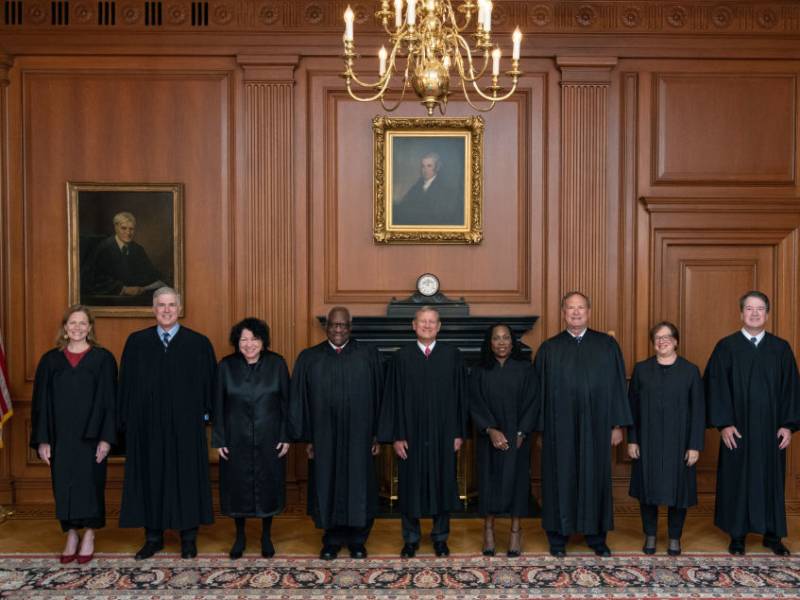
"caption": "Members of the U.D. Supreme Court (L-R): Associate Justices Amy Coney Barrett, Neil M. Gorsuch, Sonia Sotomayor and Clarence Thomas; Chief Justice John G. Roberts, Jr., and Associate Justices Ketanji Brown Jackson, Samuel A. Alito, Jr., Elena Kagan, and Brett M. Kavanaugh pose in the Justices Conference Room prior to the formal investiture ceremony of Associate Justice Ketanji Brown Jackson on Sept. 30, 2022.",
"description": "WASHINGTON, DC - SEPTEMBER 30: (EDITORIAL USE ONLY) In this handout provided by the Collection of the Supreme Court of the United States, Members of the Supreme Court (L-R) Associate Justices Amy Coney Barrett, Neil M. Gorsuch, Sonia Sotomayor, and Clarence Thomas, Chief Justice John G. Roberts, Jr., and Associate Justices Ketanji Brown Jackson, Samuel A. Alito, Jr., Elena Kagan, and Brett M. Kavanaugh pose in the Justices Conference Room prior to the formal investiture ceremony of Associate Justice Ketanji Brown Jackson September 30, 2022 in Washington, DC. President Joseph R. Biden, Jr., First Lady Dr. Jill Biden, Vice President Kamala Harris, and Second Gentleman Douglas Emhoff attended as guests of the Court. On June 30, 2022, Justice Jackson took the oaths of office to become the 104th Associate Justice of the Supreme Court of the United States. (Photo by Collection of the Supreme Court of the United States via Getty Images)",
"title": "The justices of the U.S. Supreme Court",
"credit": "Collection of the Supreme Court of the United States via Getty Images",
"status": "inherit",
"altTag": null,
"isLoading": false,
"fetchFailed": false
},
"news_11912471": {
"type": "attachments",
"id": "news_11912471",
"meta": {
"index": "attachments_1716263798",
"site": "news",
"id": "11912471",
"found": true
},
"parent": 11912468,
"imgSizes": {
"twentyfourteen-full-width": {
"file": "https://ww2.kqed.org/app/uploads/sites/10/2022/04/RS55373_20220414_Garamendi-2-qut-1-1038x576.jpg",
"width": 1038,
"mimeType": "image/jpeg",
"height": 576
},
"thumbnail": {
"file": "https://ww2.kqed.org/app/uploads/sites/10/2022/04/RS55373_20220414_Garamendi-2-qut-1-160x107.jpg",
"width": 160,
"mimeType": "image/jpeg",
"height": 107
},
"post-thumbnail": {
"file": "https://ww2.kqed.org/app/uploads/sites/10/2022/04/RS55373_20220414_Garamendi-2-qut-1-672x372.jpg",
"width": 672,
"mimeType": "image/jpeg",
"height": 372
},
"kqedFullSize": {
"file": "https://ww2.kqed.org/app/uploads/sites/10/2022/04/RS55373_20220414_Garamendi-2-qut-1.jpg",
"width": 1920,
"height": 1280
},
"large": {
"file": "https://ww2.kqed.org/app/uploads/sites/10/2022/04/RS55373_20220414_Garamendi-2-qut-1-1020x680.jpg",
"width": 1020,
"mimeType": "image/jpeg",
"height": 680
},
"1536x1536": {
"file": "https://ww2.kqed.org/app/uploads/sites/10/2022/04/RS55373_20220414_Garamendi-2-qut-1-1536x1024.jpg",
"width": 1536,
"mimeType": "image/jpeg",
"height": 1024
},
"medium": {
"file": "https://ww2.kqed.org/app/uploads/sites/10/2022/04/RS55373_20220414_Garamendi-2-qut-1-800x533.jpg",
"width": 800,
"mimeType": "image/jpeg",
"height": 533
}
},
"publishDate": 1651172918,
"modified": 1651530463,
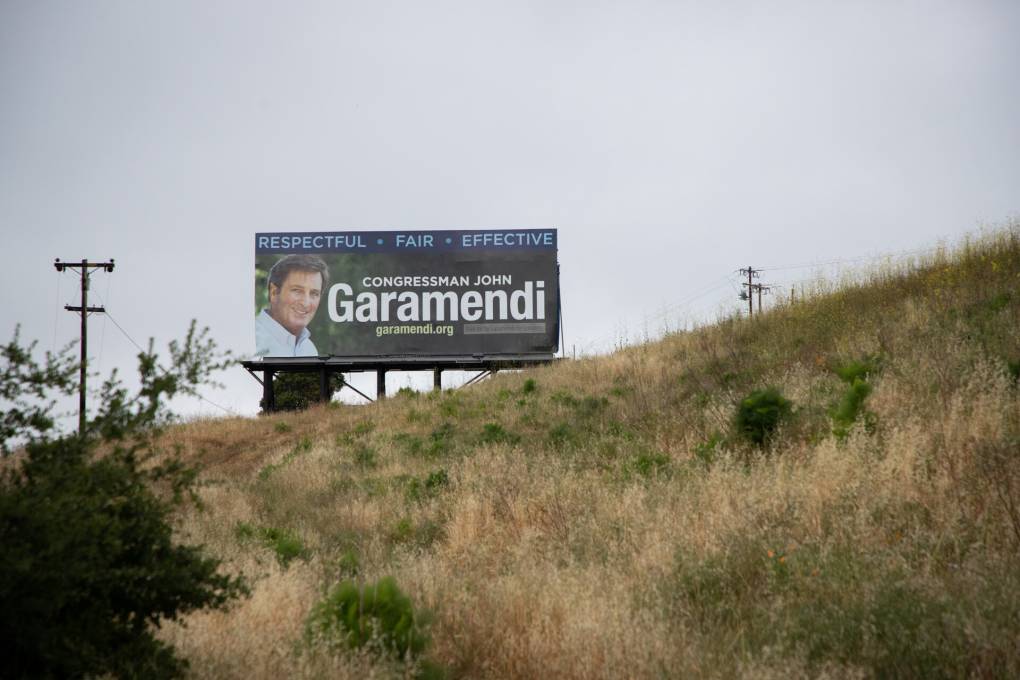
"caption": "A campaign billboard for U.S. Democratic Rep. John Garamendi, along Interstate 80, near the Carquinez Bridge, on April 14, 2022.",
"description": null,
"title": "RS55373_20220414_Garamendi-2-qut",
"credit": "Amaya Edwards/KQED",
"status": "inherit",
"altTag": "A billboard alongside a highway that says \"Respectful. Fair. Effective. Congressman John Garamendi\"",
"isLoading": false,
"fetchFailed": false
},
"news_11911158": {
"type": "attachments",
"id": "news_11911158",
"meta": {
"index": "attachments_1716263798",
"site": "news",
"id": "11911158",
"found": true
},
"parent": 11911155,
"imgSizes": {
"twentyfourteen-full-width": {
"file": "https://ww2.kqed.org/app/uploads/sites/10/2022/04/Screen-Shot-2022-04-14-at-2.51.55-PM-1038x576.png",
"width": 1038,
"mimeType": "image/png",
"height": 576
},
"thumbnail": {
"file": "https://ww2.kqed.org/app/uploads/sites/10/2022/04/Screen-Shot-2022-04-14-at-2.51.55-PM-160x110.png",
"width": 160,
"mimeType": "image/png",
"height": 110
},
"post-thumbnail": {
"file": "https://ww2.kqed.org/app/uploads/sites/10/2022/04/Screen-Shot-2022-04-14-at-2.51.55-PM-672x372.png",
"width": 672,
"mimeType": "image/png",
"height": 372
},
"kqedFullSize": {
"file": "https://ww2.kqed.org/app/uploads/sites/10/2022/04/Screen-Shot-2022-04-14-at-2.51.55-PM.png",
"width": 1150,
"height": 793
},
"large": {
"file": "https://ww2.kqed.org/app/uploads/sites/10/2022/04/Screen-Shot-2022-04-14-at-2.51.55-PM-1020x703.png",
"width": 1020,
"mimeType": "image/png",
"height": 703
},
"medium": {
"file": "https://ww2.kqed.org/app/uploads/sites/10/2022/04/Screen-Shot-2022-04-14-at-2.51.55-PM-800x552.png",
"width": 800,
"mimeType": "image/png",
"height": 552
}
},
"publishDate": 1649973197,
"modified": 1649973250,
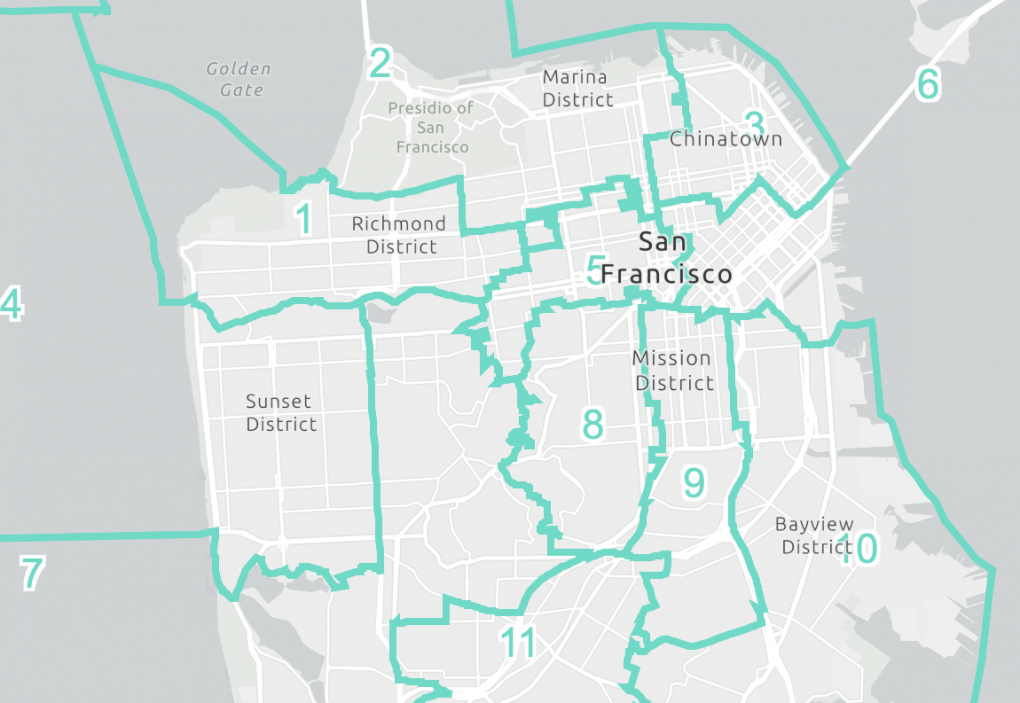
"caption": "A redistricting draft map on Apr. 13, 2022. San Francisco's Redistricting Task Force has not submitted a final map in time for its legal deadline of April 15.",
"description": null,
"title": "Screen Shot 2022-04-14 at 2.51.55 PM",
"credit": null,
"status": "inherit",
"altTag": null,
"isLoading": false,
"fetchFailed": false
},
"news_11911175": {
"type": "attachments",
"id": "news_11911175",
"meta": {
"index": "attachments_1716263798",
"site": "news",
"id": "11911175",
"found": true
},
"parent": 11911052,
"imgSizes": {
"twentyfourteen-full-width": {
"file": "https://ww2.kqed.org/app/uploads/sites/10/2022/04/RS54883_017_KQED_TenderloinRedistricting_03302022-qut-1038x576.jpg",
"width": 1038,
"mimeType": "image/jpeg",
"height": 576
},
"thumbnail": {
"file": "https://ww2.kqed.org/app/uploads/sites/10/2022/04/RS54883_017_KQED_TenderloinRedistricting_03302022-qut-160x107.jpg",
"width": 160,
"mimeType": "image/jpeg",
"height": 107
},
"post-thumbnail": {
"file": "https://ww2.kqed.org/app/uploads/sites/10/2022/04/RS54883_017_KQED_TenderloinRedistricting_03302022-qut-672x372.jpg",
"width": 672,
"mimeType": "image/jpeg",
"height": 372
},
"kqedFullSize": {
"file": "https://ww2.kqed.org/app/uploads/sites/10/2022/04/RS54883_017_KQED_TenderloinRedistricting_03302022-qut.jpg",
"width": 1920,
"height": 1280
},
"large": {
"file": "https://ww2.kqed.org/app/uploads/sites/10/2022/04/RS54883_017_KQED_TenderloinRedistricting_03302022-qut-1020x680.jpg",
"width": 1020,
"mimeType": "image/jpeg",
"height": 680
},
"1536x1536": {
"file": "https://ww2.kqed.org/app/uploads/sites/10/2022/04/RS54883_017_KQED_TenderloinRedistricting_03302022-qut-1536x1024.jpg",
"width": 1536,
"mimeType": "image/jpeg",
"height": 1024
},
"medium": {
"file": "https://ww2.kqed.org/app/uploads/sites/10/2022/04/RS54883_017_KQED_TenderloinRedistricting_03302022-qut-800x533.jpg",
"width": 800,
"mimeType": "image/jpeg",
"height": 533
}
},
"publishDate": 1649975534,
"modified": 1649980205,
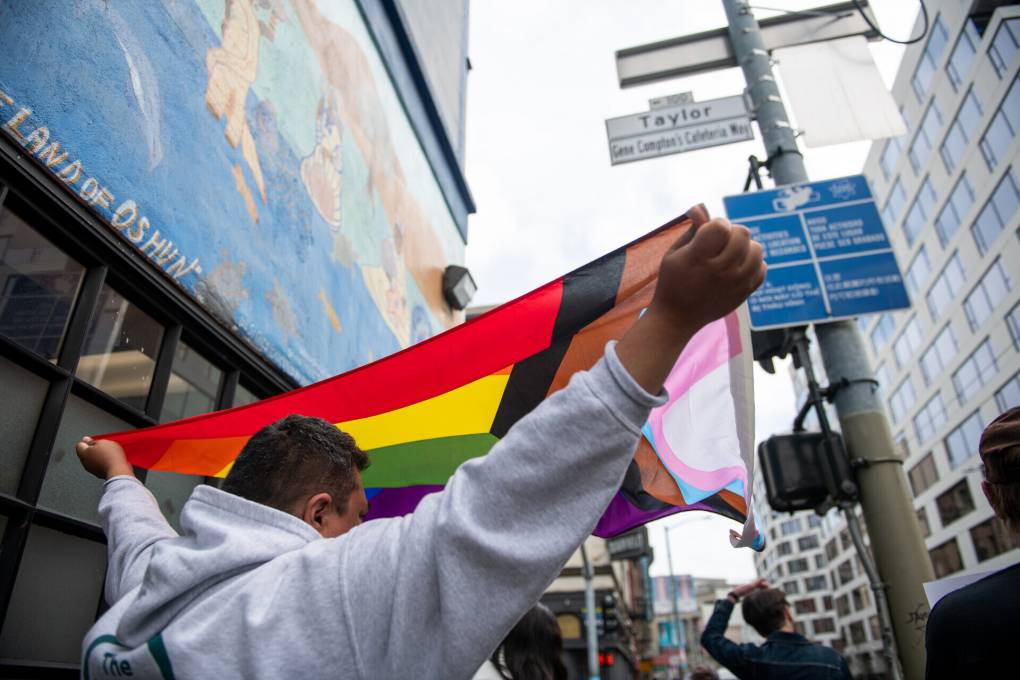
"caption": "A protester holds a flag in San Francisco's Tenderloin neighborhood on March 30, 2022, during a demonstration calling for the Transgender and Leather districts to remain within District 6.",
"description": null,
"title": "RS54883_017_KQED_TenderloinRedistricting_03302022-qut",
"credit": "Beth LaBerge/KQED",
"status": "inherit",
"altTag": "A man on the street hold a multi-colored flag above his head.",
"isLoading": false,
"fetchFailed": false
},
"news_11909940": {
"type": "attachments",
"id": "news_11909940",
"meta": {
"index": "attachments_1716263798",
"site": "news",
"id": "11909940",
"found": true
},
"parent": 11909827,
"imgSizes": {
"twentyfourteen-full-width": {
"file": "https://ww2.kqed.org/app/uploads/sites/10/2022/03/RS54877_009_KQED_TenderloinRedistricting_03302022-qut-1038x576.jpg",
"width": 1038,
"mimeType": "image/jpeg",
"height": 576
},
"thumbnail": {
"file": "https://ww2.kqed.org/app/uploads/sites/10/2022/03/RS54877_009_KQED_TenderloinRedistricting_03302022-qut-160x107.jpg",
"width": 160,
"mimeType": "image/jpeg",
"height": 107
},
"post-thumbnail": {
"file": "https://ww2.kqed.org/app/uploads/sites/10/2022/03/RS54877_009_KQED_TenderloinRedistricting_03302022-qut-672x372.jpg",
"width": 672,
"mimeType": "image/jpeg",
"height": 372
},
"kqedFullSize": {
"file": "https://ww2.kqed.org/app/uploads/sites/10/2022/03/RS54877_009_KQED_TenderloinRedistricting_03302022-qut.jpg",
"width": 1920,
"height": 1280
},
"large": {
"file": "https://ww2.kqed.org/app/uploads/sites/10/2022/03/RS54877_009_KQED_TenderloinRedistricting_03302022-qut-1020x680.jpg",
"width": 1020,
"mimeType": "image/jpeg",
"height": 680
},
"1536x1536": {
"file": "https://ww2.kqed.org/app/uploads/sites/10/2022/03/RS54877_009_KQED_TenderloinRedistricting_03302022-qut-1536x1024.jpg",
"width": 1536,
"mimeType": "image/jpeg",
"height": 1024
},
"medium": {
"file": "https://ww2.kqed.org/app/uploads/sites/10/2022/03/RS54877_009_KQED_TenderloinRedistricting_03302022-qut-800x533.jpg",
"width": 800,
"mimeType": "image/jpeg",
"height": 533
}
},
"publishDate": 1648759172,
"modified": 1648773408,
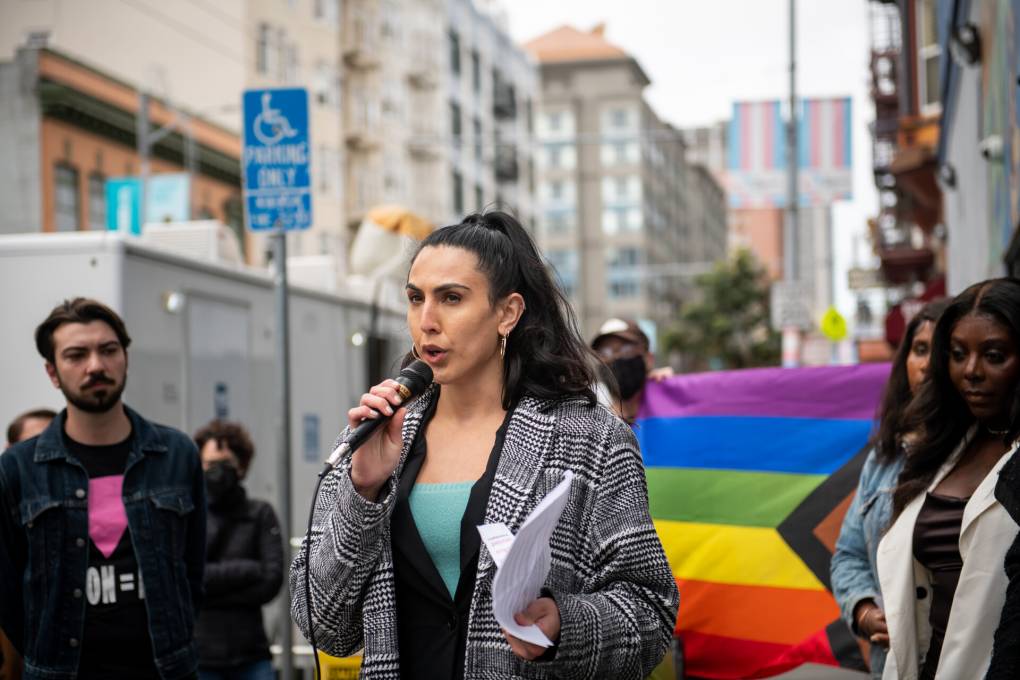
"caption": "Transgender District Director of Social Justice and Empowerment Initiatives Jupiter Peraza speaks outside the site of the Compton's Cafeteria riot in San Francisco on March 30, 2022, calling for the Transgender and Leather and LGBTQ districts in the Tenderloin and Western SOMA to remain in District 6.",
"description": null,
"title": "RS54877_009_KQED_TenderloinRedistricting_03302022-qut",
"credit": "Beth LaBerge/KQED",
"status": "inherit",
"altTag": "A person stands outside holding a microphone with other people standing around and holding a rainbow colored flag.",
"isLoading": false,
"fetchFailed": false
},
"news_11900107": {
"type": "attachments",
"id": "news_11900107",
"meta": {
"index": "attachments_1716263798",
"site": "news",
"id": "11900107",
"found": true
},
"parent": 11900094,
"imgSizes": {
"twentyfourteen-full-width": {
"file": "https://ww2.kqed.org/app/uploads/sites/10/2021/12/GettyImages-1235253068-1024x576.jpg",
"width": 1024,
"mimeType": "image/jpeg",
"height": 576
},
"thumbnail": {
"file": "https://ww2.kqed.org/app/uploads/sites/10/2021/12/GettyImages-1235253068-160x98.jpg",
"width": 160,
"mimeType": "image/jpeg",
"height": 98
},
"post-thumbnail": {
"file": "https://ww2.kqed.org/app/uploads/sites/10/2021/12/GettyImages-1235253068-672x372.jpg",
"width": 672,
"mimeType": "image/jpeg",
"height": 372
},
"kqedFullSize": {
"file": "https://ww2.kqed.org/app/uploads/sites/10/2021/12/GettyImages-1235253068.jpg",
"width": 1024,
"height": 625
},
"large": {
"file": "https://ww2.kqed.org/app/uploads/sites/10/2021/12/GettyImages-1235253068-1020x623.jpg",
"width": 1020,
"mimeType": "image/jpeg",
"height": 623
},
"medium": {
"file": "https://ww2.kqed.org/app/uploads/sites/10/2021/12/GettyImages-1235253068-800x488.jpg",
"width": 800,
"mimeType": "image/jpeg",
"height": 488
}
},
"publishDate": 1640217004,
"modified": 1640217127,
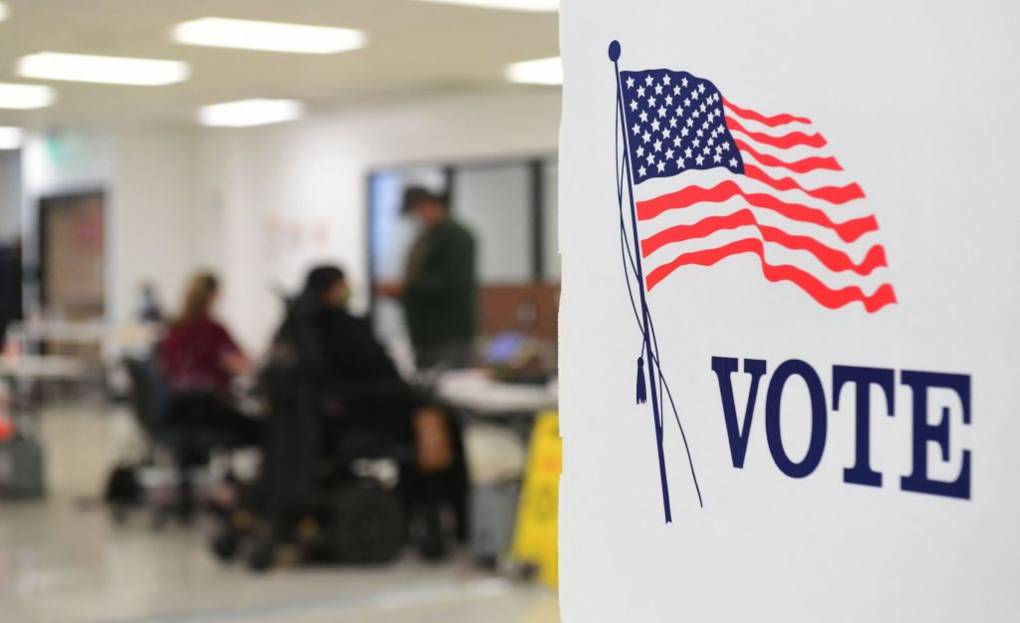
"caption": "People check in before casting their vote at the Los Angeles County Registrar's Office in Norwalk, California on Sept. 14, 2021 in the recall election of California Governor Gavin Newsom. ",
"description": null,
"title": "US-POLITICS-CALIFORNIA-RECALL",
"credit": "Frederic J. Brown/AFP via Getty Images)",
"status": "inherit",
"altTag": "A sign on a booth with an American flag has the word \"Vote\" written on the side. There are two people sitting and one person standing in the blurred background.",
"isLoading": false,
"fetchFailed": false
},
"news_11898524": {
"type": "attachments",
"id": "news_11898524",
"meta": {
"index": "attachments_1716263798",
"site": "news",
"id": "11898524",
"found": true
},
"parent": 11898480,
"imgSizes": {
"twentyfourteen-full-width": {
"file": "https://ww2.kqed.org/app/uploads/sites/10/2021/12/RS10656_179063219-1038x576.jpg",
"width": 1038,
"mimeType": "image/jpeg",
"height": 576
},
"thumbnail": {
"file": "https://ww2.kqed.org/app/uploads/sites/10/2021/12/RS10656_179063219-160x106.jpg",
"width": 160,
"mimeType": "image/jpeg",
"height": 106
},
"post-thumbnail": {
"file": "https://ww2.kqed.org/app/uploads/sites/10/2021/12/RS10656_179063219-672x372.jpg",
"width": 672,
"mimeType": "image/jpeg",
"height": 372
},
"kqedFullSize": {
"file": "https://ww2.kqed.org/app/uploads/sites/10/2021/12/RS10656_179063219-scaled-e1639011573588.jpg",
"width": 1920,
"height": 1277
},
"2048x2048": {
"file": "https://ww2.kqed.org/app/uploads/sites/10/2021/12/RS10656_179063219-2048x1362.jpg",
"width": 2048,
"mimeType": "image/jpeg",
"height": 1362
},
"large": {
"file": "https://ww2.kqed.org/app/uploads/sites/10/2021/12/RS10656_179063219-1020x678.jpg",
"width": 1020,
"mimeType": "image/jpeg",
"height": 678
},
"1536x1536": {
"file": "https://ww2.kqed.org/app/uploads/sites/10/2021/12/RS10656_179063219-1536x1021.jpg",
"width": 1536,
"mimeType": "image/jpeg",
"height": 1021
},
"full-width": {
"file": "https://ww2.kqed.org/app/uploads/sites/10/2021/12/RS10656_179063219-1920x1277.jpg",
"width": 1920,
"mimeType": "image/jpeg",
"height": 1277
},
"medium": {
"file": "https://ww2.kqed.org/app/uploads/sites/10/2021/12/RS10656_179063219-800x532.jpg",
"width": 800,
"mimeType": "image/jpeg",
"height": 532
}
},
"publishDate": 1639011552,
"modified": 1639087069,
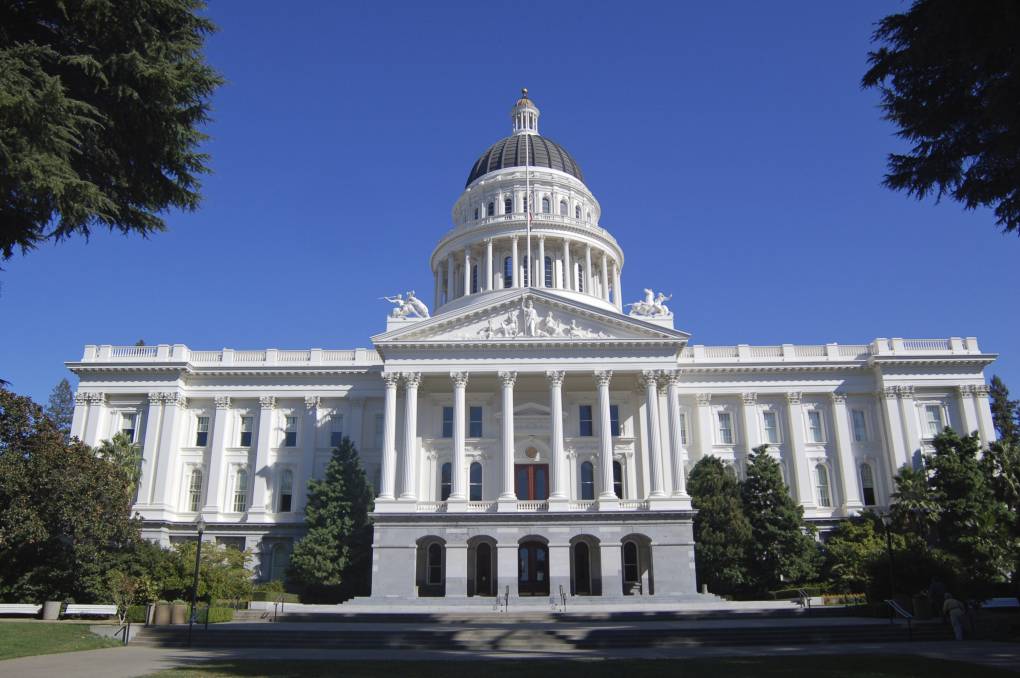
"caption": "California's capitol building on June 14, 2005.",
"description": null,
"title": "RS10656_179063219",
"credit": "Lisa Aliferis/Getty Images",
"status": "inherit",
"altTag": "A white government building surrounded by trees on both sides.",
"isLoading": false,
"fetchFailed": false
},
"news_11887047": {
"type": "attachments",
"id": "news_11887047",
"meta": {
"index": "attachments_1716263798",
"site": "news",
"id": "11887047",
"found": true
},
"parent": 11887042,
"imgSizes": {
"twentyfourteen-full-width": {
"file": "https://ww2.kqed.org/app/uploads/sites/10/2021/08/ballot-being-placed-in-red-ballot-box-1038x576.jpg",
"width": 1038,
"mimeType": "image/jpeg",
"height": 576
},
"thumbnail": {
"file": "https://ww2.kqed.org/app/uploads/sites/10/2021/08/ballot-being-placed-in-red-ballot-box-160x107.jpg",
"width": 160,
"mimeType": "image/jpeg",
"height": 107
},
"post-thumbnail": {
"file": "https://ww2.kqed.org/app/uploads/sites/10/2021/08/ballot-being-placed-in-red-ballot-box-672x372.jpg",
"width": 672,
"mimeType": "image/jpeg",
"height": 372
},
"kqedFullSize": {
"file": "https://ww2.kqed.org/app/uploads/sites/10/2021/08/ballot-being-placed-in-red-ballot-box.jpg",
"width": 1536,
"height": 1024
},
"large": {
"file": "https://ww2.kqed.org/app/uploads/sites/10/2021/08/ballot-being-placed-in-red-ballot-box-1020x680.jpg",
"width": 1020,
"mimeType": "image/jpeg",
"height": 680
},
"medium": {
"file": "https://ww2.kqed.org/app/uploads/sites/10/2021/08/ballot-being-placed-in-red-ballot-box-800x533.jpg",
"width": 800,
"mimeType": "image/jpeg",
"height": 533
}
},
"publishDate": 1630445158,
"modified": 1638993388,
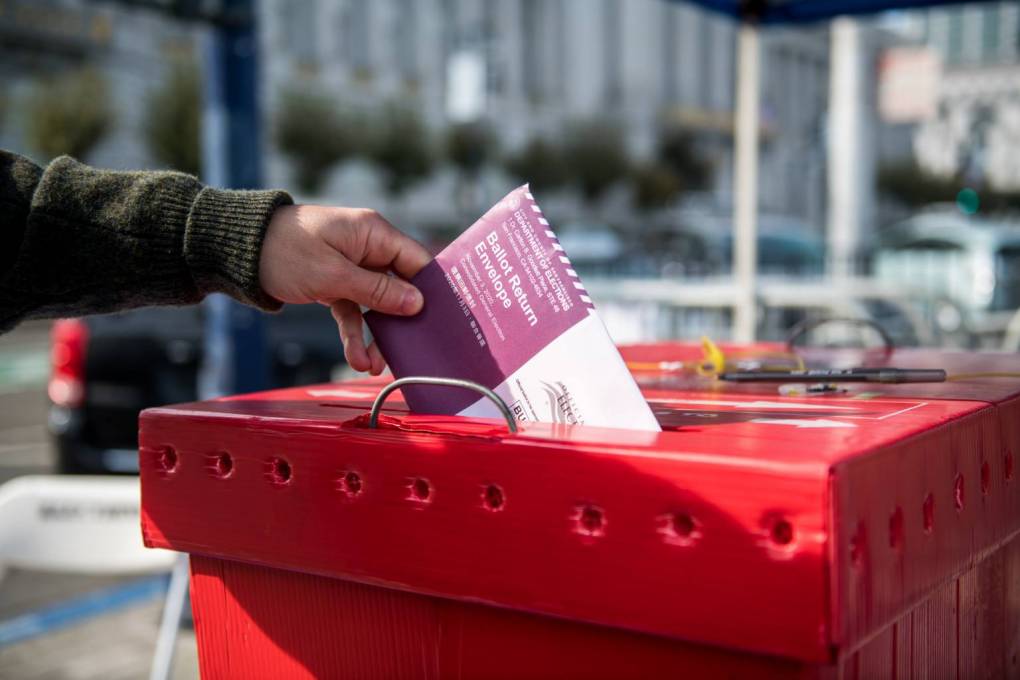
"caption": "Redistricting could lead to a tilt in the party affiliations of elected officials in districts across California.",
"description": null,
"title": "ballot being placed in red ballot box",
"credit": "Beth LaBerge/KQED",
"status": "inherit",
"altTag": "A ballot is placed in a red ballot box.",
"isLoading": false,
"fetchFailed": false
},
"news_11896030": {
"type": "attachments",
"id": "news_11896030",
"meta": {
"index": "attachments_1716263798",
"site": "news",
"id": "11896030",
"found": true
},
"parent": 11895983,
"imgSizes": {
"twentyfourteen-full-width": {
"file": "https://ww2.kqed.org/app/uploads/sites/10/2021/11/image-2-1038x576.png",
"width": 1038,
"mimeType": "image/png",
"height": 576
},
"thumbnail": {
"file": "https://ww2.kqed.org/app/uploads/sites/10/2021/11/image-2-160x107.png",
"width": 160,
"mimeType": "image/png",
"height": 107
},
"post-thumbnail": {
"file": "https://ww2.kqed.org/app/uploads/sites/10/2021/11/image-2-672x372.png",
"width": 672,
"mimeType": "image/png",
"height": 372
},
"kqedFullSize": {
"file": "https://ww2.kqed.org/app/uploads/sites/10/2021/11/image-2.png",
"width": 1617,
"height": 1077
},
"large": {
"file": "https://ww2.kqed.org/app/uploads/sites/10/2021/11/image-2-1020x679.png",
"width": 1020,
"mimeType": "image/png",
"height": 679
},
"1536x1536": {
"file": "https://ww2.kqed.org/app/uploads/sites/10/2021/11/image-2-1536x1023.png",
"width": 1536,
"mimeType": "image/png",
"height": 1023
},
"medium": {
"file": "https://ww2.kqed.org/app/uploads/sites/10/2021/11/image-2-800x533.png",
"width": 800,
"mimeType": "image/png",
"height": 533
}
},
"publishDate": 1636685367,
"modified": 1636755293,
"caption": "The draft map released by the California Citizens Redistricting Commission on November 10, 2021 includes a Congressional district (shown in blue) covering cities currently represented by Democrats Congressmembers Mike Thompson and John Garamendi.",
"description": "The draft map released by the California Citizens Redistricting Commission on Nov. 10, 2021, includes a congressional district (shown in blue) covering cities currently represented by Democratic Reps. Mike Thompson and John Garamendi.",
"title": "image (2)",
"credit": "Citizens Redistricting Commission",
"status": "inherit",
"altTag": "A section of one of the draft redistricting maps that includes the North Bay and far north counties.",
"isLoading": false,
"fetchFailed": false
},
"news_11895908": {
"type": "attachments",
"id": "news_11895908",
"meta": {
"index": "attachments_1716263798",
"site": "news",
"id": "11895908",
"found": true
},
"parent": 11895797,
"imgSizes": {
"twentyfourteen-full-width": {
"file": "https://ww2.kqed.org/app/uploads/sites/10/2021/11/110521-Redistricting-Election-MG-CM-01-1038x576.jpg",
"width": 1038,
"mimeType": "image/jpeg",
"height": 576
},
"thumbnail": {
"file": "https://ww2.kqed.org/app/uploads/sites/10/2021/11/110521-Redistricting-Election-MG-CM-01-160x120.jpg",
"width": 160,
"mimeType": "image/jpeg",
"height": 120
},
"post-thumbnail": {
"file": "https://ww2.kqed.org/app/uploads/sites/10/2021/11/110521-Redistricting-Election-MG-CM-01-672x372.jpg",
"width": 672,
"mimeType": "image/jpeg",
"height": 372
},
"kqedFullSize": {
"file": "https://ww2.kqed.org/app/uploads/sites/10/2021/11/110521-Redistricting-Election-MG-CM-01.jpg",
"width": 1665,
"height": 1249
},
"large": {
"file": "https://ww2.kqed.org/app/uploads/sites/10/2021/11/110521-Redistricting-Election-MG-CM-01-1020x765.jpg",
"width": 1020,
"mimeType": "image/jpeg",
"height": 765
},
"1536x1536": {
"file": "https://ww2.kqed.org/app/uploads/sites/10/2021/11/110521-Redistricting-Election-MG-CM-01-1536x1152.jpg",
"width": 1536,
"mimeType": "image/jpeg",
"height": 1152
},
"medium": {
"file": "https://ww2.kqed.org/app/uploads/sites/10/2021/11/110521-Redistricting-Election-MG-CM-01-800x600.jpg",
"width": 800,
"mimeType": "image/jpeg",
"height": 600
}
},
"publishDate": 1636589938,
"modified": 1636590116,
"caption": "The main responsibility of the Citizens Redistricting Commission is to ensure every district in the state — 52 for Congress, 80 for state Assembly and 40 for state Senate — has about the same number of people. That’s about 761,000 Californians in each congressional district, about 988,000 in state Senate districts and 494,000 in Assembly districts.",
"description": "The main responsibility of the Citizens Redistricting Commission is to ensure every district in the state — 52 for Congress, 80 for state Assembly and 40 for state Senate — has about the same number of people.",
"title": "110521-Redistricting-Election-MG-CM-01",
"credit": "Illustration by Miguel Gutierrez Jr., CalMatters; iStock",
"status": "inherit",
"altTag": "A drawing of an electoral box next to a geographic map that has had superimposed electoral district lines.",
"isLoading": false,
"fetchFailed": false
},
"news_11895433": {
"type": "attachments",
"id": "news_11895433",
"meta": {
"index": "attachments_1716263798",
"site": "news",
"id": "11895433",
"found": true
},
"parent": 11895368,
"imgSizes": {
"thumbnail": {
"file": "https://ww2.kqed.org/app/uploads/sites/10/2021/11/RS52162_IMG_3608-qut-160x109.jpg",
"width": 160,
"mimeType": "image/jpeg",
"height": 109
},
"post-thumbnail": {
"file": "https://ww2.kqed.org/app/uploads/sites/10/2021/11/RS52162_IMG_3608-qut-672x372.jpg",
"width": 672,
"mimeType": "image/jpeg",
"height": 372
},
"kqedFullSize": {
"file": "https://ww2.kqed.org/app/uploads/sites/10/2021/11/RS52162_IMG_3608-qut.jpg",
"width": 807,
"height": 552
},
"medium": {
"file": "https://ww2.kqed.org/app/uploads/sites/10/2021/11/RS52162_IMG_3608-qut-800x547.jpg",
"width": 800,
"mimeType": "image/jpeg",
"height": 547
}
},
"publishDate": 1636164661,
"modified": 1636164671,
"caption": "The Citizens Redistricting Commission's proposed visualization of congressional maps released on Oct. 26, 2021. The nonpartisan commission has said it will release a formal draft of the state's district maps on Nov. 10.",
"description": null,
"title": "RS52162_IMG_3608-qut",
"credit": null,
"status": "inherit",
"altTag": null,
"isLoading": false,
"fetchFailed": false
},
"news_11894361": {
"type": "attachments",
"id": "news_11894361",
"meta": {
"index": "attachments_1716263798",
"site": "news",
"id": "11894361",
"found": true
},
"parent": 11894003,
"imgSizes": {
"twentyfourteen-full-width": {
"file": "https://ww2.kqed.org/app/uploads/sites/10/2021/10/Bay_Area_by_Sentinel-2_2019-03-11_small_version-1038x576.jpeg",
"width": 1038,
"mimeType": "image/jpeg",
"height": 576
},
"thumbnail": {
"file": "https://ww2.kqed.org/app/uploads/sites/10/2021/10/Bay_Area_by_Sentinel-2_2019-03-11_small_version-160x113.jpeg",
"width": 160,
"mimeType": "image/jpeg",
"height": 113
},
"post-thumbnail": {
"file": "https://ww2.kqed.org/app/uploads/sites/10/2021/10/Bay_Area_by_Sentinel-2_2019-03-11_small_version-672x372.jpeg",
"width": 672,
"mimeType": "image/jpeg",
"height": 372
},
"kqedFullSize": {
"file": "https://ww2.kqed.org/app/uploads/sites/10/2021/10/Bay_Area_by_Sentinel-2_2019-03-11_small_version.jpeg",
"width": 1920,
"height": 1355
},
"large": {
"file": "https://ww2.kqed.org/app/uploads/sites/10/2021/10/Bay_Area_by_Sentinel-2_2019-03-11_small_version-1020x720.jpeg",
"width": 1020,
"mimeType": "image/jpeg",
"height": 720
},
"1536x1536": {
"file": "https://ww2.kqed.org/app/uploads/sites/10/2021/10/Bay_Area_by_Sentinel-2_2019-03-11_small_version-1536x1084.jpeg",
"width": 1536,
"mimeType": "image/jpeg",
"height": 1084
},
"medium": {
"file": "https://ww2.kqed.org/app/uploads/sites/10/2021/10/Bay_Area_by_Sentinel-2_2019-03-11_small_version-800x565.jpeg",
"width": 800,
"mimeType": "image/jpeg",
"height": 565
}
},
"publishDate": 1635532610,
"modified": 1635532965,
"caption": "A 2019 satellite image of the Bay Area. Changing demographics could significantly alter how the region is redistricted.",
"description": null,
"title": "Bay_Area_by_Sentinel-2,_2019-03-11_(small_version)",
"credit": "Courtesy of \u003ca href=\"https://scihub.copernicus.eu/dhus/#/home\">Copernicus\u003c/a>",
"status": "inherit",
"altTag": null,
"isLoading": false,
"fetchFailed": false
}
},
"audioPlayerReducer": {
"postId": "stream_live",
"isPaused": true,
"isPlaying": false,
"pfsActive": false,
"pledgeModalIsOpen": true,
"playerDrawerIsOpen": false,
"liveAudioPlayStartedAt": 0,
"liveAudioPlayContext": ""
},
"authorsReducer": {
"byline_news_11927574": {
"type": "authors",
"id": "byline_news_11927574",
"meta": {
"override": true
},
"slug": "byline_news_11927574",
"name": "Nina Totenberg",
"isLoading": false
},
"byline_news_11900094": {
"type": "authors",
"id": "byline_news_11900094",
"meta": {
"override": true
},
"slug": "byline_news_11900094",
"name": "Michael R. Blood\u003cbr>The Associated Press",
"isLoading": false
},
"byline_news_11898480": {
"type": "authors",
"id": "byline_news_11898480",
"meta": {
"override": true
},
"slug": "byline_news_11898480",
"name": "\u003ca href=\"https://calmatters.org/author/sameea-kamal\">Sameea Kamal\u003c/a>",
"isLoading": false
},
"byline_news_11898329": {
"type": "authors",
"id": "byline_news_11898329",
"meta": {
"override": true
},
"slug": "byline_news_11898329",
"name": "Sameea Kamal and Jeremia Kimelman",
"isLoading": false
},
"byline_news_11895797": {
"type": "authors",
"id": "byline_news_11895797",
"meta": {
"override": true
},
"slug": "byline_news_11895797",
"name": "\u003ca href=\"https://calmatters.org/author/sameea-kamal/\">Sameea Kamal\u003c/a>",
"isLoading": false
},
"gmarzorati": {
"type": "authors",
"id": "227",
"meta": {
"index": "authors_1716337520",
"id": "227",
"found": true
},
"name": "Guy Marzorati",
"firstName": "Guy",
"lastName": "Marzorati",
"slug": "gmarzorati",
"email": "gmarzorati@KQED.org",
"display_author_email": true,
"staff_mastheads": [
"news"
],
"title": "Correspondent",
"bio": "Guy Marzorati is a correspondent on KQED's California Politics and Government Desk, based in San Jose. A graduate of Santa Clara University, Guy joined KQED in 2013. He reports on state and local politics and produces KQED's digital voter guide.",
"avatar": "https://secure.gravatar.com/avatar/e7038b8dbfd55b104369b76b1cd0b9de?s=600&d=blank&r=g",
"twitter": "guymarzorati",
"facebook": null,
"instagram": null,
"linkedin": null,
"sites": [
{
"site": "",
"roles": [
"editor"
]
},
{
"site": "news",
"roles": [
"editor"
]
},
{
"site": "science",
"roles": [
"editor"
]
},
{
"site": "forum",
"roles": [
"editor"
]
},
{
"site": "elections",
"roles": [
"editor"
]
},
{
"site": "liveblog",
"roles": [
"editor"
]
}
],
"headData": {
"title": "Guy Marzorati | KQED",
"description": "Correspondent",
"ogImgSrc": "https://secure.gravatar.com/avatar/e7038b8dbfd55b104369b76b1cd0b9de?s=600&d=blank&r=g",
"twImgSrc": "https://secure.gravatar.com/avatar/e7038b8dbfd55b104369b76b1cd0b9de?s=600&d=blank&r=g"
},
"isLoading": false,
"link": "/author/gmarzorati"
},
"kqed": {
"type": "authors",
"id": "236",
"meta": {
"index": "authors_1716337520",
"id": "236",
"found": true
},
"name": "KQED News Staff",
"firstName": "KQED News Staff",
"lastName": null,
"slug": "kqed",
"email": "faq@kqed.org",
"display_author_email": false,
"staff_mastheads": [],
"title": null,
"bio": null,
"avatar": "https://secure.gravatar.com/avatar/ef0e801a68c4c54afa9180db14084167?s=600&d=blank&r=g",
"twitter": null,
"facebook": null,
"instagram": null,
"linkedin": null,
"sites": [
{
"site": "arts",
"roles": [
"contributor"
]
},
{
"site": "news",
"roles": [
"editor"
]
},
{
"site": "futureofyou",
"roles": [
"author"
]
}
],
"headData": {
"title": "KQED News Staff | KQED",
"description": null,
"ogImgSrc": "https://secure.gravatar.com/avatar/ef0e801a68c4c54afa9180db14084167?s=600&d=blank&r=g",
"twImgSrc": "https://secure.gravatar.com/avatar/ef0e801a68c4c54afa9180db14084167?s=600&d=blank&r=g"
},
"isLoading": false,
"link": "/author/kqed"
},
"ecruzguevarra": {
"type": "authors",
"id": "8654",
"meta": {
"index": "authors_1716337520",
"id": "8654",
"found": true
},
"name": "Ericka Cruz Guevarra",
"firstName": "Ericka",
"lastName": "Cruz Guevarra",
"slug": "ecruzguevarra",
"email": "ecruzguevarra@kqed.org",
"display_author_email": true,
"staff_mastheads": [
"news"
],
"title": "Producer, The Bay Podcast",
"bio": "Ericka Cruz Guevarra is host of \u003ca href=\"https://www.kqed.org/podcasts/thebay\">\u003cem>The Bay\u003c/em>\u003c/a> podcast at KQED. Before host, she was the show’s producer. Her work in that capacity includes a three-part reported series on policing in Vallejo, which won a 2020 excellence in journalism award from the Society of Professional Journalists. Ericka has worked as a breaking news reporter at Oregon Public Broadcasting, helped produce the Code Switch podcast, and was KQED’s inaugural Raul Ramirez Diversity Fund intern. She’s also an alumna of NPR’s Next Generation Radio program. Send her an email if you have strong feelings about whether Fairfield and Suisun City are the Bay. Ericka is represented by SAG-AFTRA.",
"avatar": "https://secure.gravatar.com/avatar/accefc1de4bafc7e234b69bcb9b6f6536c130fd84709bc3069ef11a78787e1bb?s=600&d=blank&r=g",
"twitter": "NotoriousECG",
"bluesky": null,
"facebook": null,
"instagram": null,
"linkedin": null,
"sites": [
{
"site": "arts",
"roles": [
"subscriber"
]
},
{
"site": "news",
"roles": [
"editor",
"manage_categories"
]
},
{
"site": "futureofyou",
"roles": [
"subscriber"
]
},
{
"site": "stateofhealth",
"roles": [
"subscriber"
]
},
{
"site": "science",
"roles": [
"editor"
]
},
{
"site": "forum",
"roles": [
"subscriber"
]
}
],
"headData": {
"title": "Ericka Cruz Guevarra | KQED",
"description": "Producer, The Bay Podcast",
"ogImgSrc": "https://secure.gravatar.com/avatar/accefc1de4bafc7e234b69bcb9b6f6536c130fd84709bc3069ef11a78787e1bb?s=600&d=blank&r=g",
"twImgSrc": "https://secure.gravatar.com/avatar/accefc1de4bafc7e234b69bcb9b6f6536c130fd84709bc3069ef11a78787e1bb?s=600&d=blank&r=g"
},
"isLoading": false,
"link": "/author/ecruzguevarra"
},
"mfharvin": {
"type": "authors",
"id": "11583",
"meta": {
"index": "authors_1716337520",
"id": "11583",
"found": true
},
"name": "Mary Franklin Harvin",
"firstName": "Mary Franklin",
"lastName": "Harvin",
"slug": "mfharvin",
"email": "mfharvin@KQED.org",
"display_author_email": false,
"staff_mastheads": [
"news"
],
"title": "KQED Contributor",
"bio": null,
"avatar": "https://secure.gravatar.com/avatar/0e53510a7d48cfbdebfc9b11357d845f?s=600&d=blank&r=g",
"twitter": "EmEffHarvin",
"facebook": null,
"instagram": null,
"linkedin": null,
"sites": [
{
"site": "news",
"roles": [
"author",
"edit_others_posts"
]
},
{
"site": "science",
"roles": [
"editor"
]
}
],
"headData": {
"title": "Mary Franklin Harvin | KQED",
"description": "KQED Contributor",
"ogImgSrc": "https://secure.gravatar.com/avatar/0e53510a7d48cfbdebfc9b11357d845f?s=600&d=blank&r=g",
"twImgSrc": "https://secure.gravatar.com/avatar/0e53510a7d48cfbdebfc9b11357d845f?s=600&d=blank&r=g"
},
"isLoading": false,
"link": "/author/mfharvin"
},
"amontecillo": {
"type": "authors",
"id": "11649",
"meta": {
"index": "authors_1716337520",
"id": "11649",
"found": true
},
"name": "Alan Montecillo",
"firstName": "Alan",
"lastName": "Montecillo",
"slug": "amontecillo",
"email": "amontecillo@kqed.org",
"display_author_email": false,
"staff_mastheads": [
"news"
],
"title": "KQED Contributor",
"bio": "Alan Montecillo is the senior editor of \u003cem>\u003ca href=\"http://kqed.org/thebay\">The Bay\u003c/a>, \u003c/em> KQED's local news podcast. Before moving to the Bay Area, he worked as a senior talk show producer for WILL in Champaign-Urbana, Illinois and at Oregon Public Broadcasting in Portland, Oregon. He has won journalism awards from the Society of Professional Journalists Northern California, the Public Media Journalists Association, The Signal Awards, and has also received a regional Edward R. Murrow award. Alan is a Filipino American from Hong Kong and a graduate of Reed College.",
"avatar": "https://secure.gravatar.com/avatar/268f53a2066899ea9efdd8a5900218b17c822d9862cbc9326cccec53ef41d349?s=600&d=blank&r=g",
"twitter": "alanmontecillo",
"bluesky": null,
"facebook": null,
"instagram": null,
"linkedin": null,
"sites": [
{
"site": "",
"roles": [
"editor"
]
},
{
"site": "news",
"roles": [
"editor",
"manage_categories"
]
}
],
"headData": {
"title": "Alan Montecillo | KQED",
"description": "KQED Contributor",
"ogImgSrc": "https://secure.gravatar.com/avatar/268f53a2066899ea9efdd8a5900218b17c822d9862cbc9326cccec53ef41d349?s=600&d=blank&r=g",
"twImgSrc": "https://secure.gravatar.com/avatar/268f53a2066899ea9efdd8a5900218b17c822d9862cbc9326cccec53ef41d349?s=600&d=blank&r=g"
},
"isLoading": false,
"link": "/author/amontecillo"
},
"jrodriguez": {
"type": "authors",
"id": "11690",
"meta": {
"index": "authors_1716337520",
"id": "11690",
"found": true
},
"name": "Joe Fitzgerald Rodriguez",
"firstName": "Joe",
"lastName": "Fitzgerald Rodriguez",
"slug": "jrodriguez",
"email": "jrodriguez@kqed.org",
"display_author_email": true,
"staff_mastheads": [
"news"
],
"title": "Reporter and Producer",
"bio": "Joe Fitzgerald Rodriguez is a reporter and digital producer for KQED covering politics. Joe most recently wrote for the \u003cem>San Francisco Examiner\u003c/em> as a political columnist covering The City. He was raised in San Francisco and has spent his reporting career in his beloved, foggy, city by the bay. Joe was 12-years-old when he conducted his first interview in journalism, grilling former San Francisco Mayor Willie Brown for the Marina Middle School newspaper, \u003cem>The Penguin Press, \u003c/em>and he continues to report on the San Francisco Bay Area to this day.",
"avatar": "https://secure.gravatar.com/avatar/2247beb0564c1e9c62228d5649d2edac?s=600&d=blank&r=g",
"twitter": "FitztheReporter",
"facebook": null,
"instagram": "https://www.instagram.com/fitzthereporter/",
"linkedin": null,
"sites": [
{
"site": "",
"roles": [
"editor"
]
},
{
"site": "arts",
"roles": [
"editor"
]
},
{
"site": "news",
"roles": [
"editor"
]
},
{
"site": "science",
"roles": [
"editor"
]
},
{
"site": "elections",
"roles": [
"editor"
]
},
{
"site": "liveblog",
"roles": [
"editor"
]
}
],
"headData": {
"title": "Joe Fitzgerald Rodriguez | KQED",
"description": "Reporter and Producer",
"ogImgSrc": "https://secure.gravatar.com/avatar/2247beb0564c1e9c62228d5649d2edac?s=600&d=blank&r=g",
"twImgSrc": "https://secure.gravatar.com/avatar/2247beb0564c1e9c62228d5649d2edac?s=600&d=blank&r=g"
},
"isLoading": false,
"link": "/author/jrodriguez"
},
"mesquinca": {
"type": "authors",
"id": "11802",
"meta": {
"index": "authors_1716337520",
"id": "11802",
"found": true
},
"name": "Maria Esquinca",
"firstName": "Maria",
"lastName": "Esquinca",
"slug": "mesquinca",
"email": "mesquinca@kqed.org",
"display_author_email": false,
"staff_mastheads": [],
"title": "Producer, The Bay",
"bio": "María Esquinca is a producer of The Bay. Before that, she was a New York Women’s Foundation IGNITE Fellow at Latino USA. She worked at Radio Bilingue where she covered the San Joaquin Valley. Maria has interned at WLRN, News 21, The New York Times Student Journalism Institute and at Crain’s Detroit Business as a Dow Jones News Fund Business Reporting Intern. She is an MFA graduate from the University of Miami. In 2017, she graduated from the Walter Cronkite School of Journalism and Mass Communication with a Master of Mass Communication. A fronteriza, she was born in Ciudad Juárez, Chihuahua, Mexico and grew up in El Paso, Texas.",
"avatar": "https://secure.gravatar.com/avatar/77cedba18aae91da775038ba06dcd8d0?s=600&d=blank&r=g",
"twitter": "@m_esquinca",
"facebook": null,
"instagram": null,
"linkedin": null,
"sites": [
{
"site": "news",
"roles": []
}
],
"headData": {
"title": "Maria Esquinca | KQED",
"description": "Producer, The Bay",
"ogImgSrc": "https://secure.gravatar.com/avatar/77cedba18aae91da775038ba06dcd8d0?s=600&d=blank&r=g",
"twImgSrc": "https://secure.gravatar.com/avatar/77cedba18aae91da775038ba06dcd8d0?s=600&d=blank&r=g"
},
"isLoading": false,
"link": "/author/mesquinca"
}
},
"pagesReducer": {
"news_tag_redistricting": {
"type": "terms",
"id": "news_282",
"meta": {
"index": "terms_1716263798",
"site": "news",
"id": "282",
"score": 9.304576
},
"featImg": null,
"name": "redistricting",
"description": null,
"taxonomy": "tag",
"headData": {
"twImgId": null,
"twTitle": null,
"ogTitle": null,
"ogImgId": null,
"twDescription": null,
"description": null,
"title": "redistricting Archives | KQED News",
"ogDescription": null
},
"ttid": 290,
"slug": "redistricting",
"isLoading": false,
"title": "redistricting",
"pageMeta": {
"site": "news",
"WpPageTemplate": "page-topic-editorial",
"currentPage": 6
},
"blocks": [
{
"blockName": "kqed/post-list",
"attrs": {
"layout": "cardArticle2",
"query": "posts/news?tag=redistricting",
"seeMore": false,
"paginated": true,
"page": 6
}
},
{
"blockName": "kqed/ad"
}
]
}
},
"pfsSessionReducer": {},
"postsReducer": {
"stream_live": {
"type": "live",
"id": "stream_live",
"audioUrl": "https://streams.kqed.org/kqedradio",
"title": "Live Stream",
"excerpt": "Live Stream information currently unavailable.",
"link": "/radio",
"featImg": "",
"label": {
"name": "KQED Live",
"link": "/"
}
},
"stream_kqedNewscast": {
"type": "posts",
"id": "stream_kqedNewscast",
"audioUrl": "https://www.kqed.org/.stream/anon/radio/RDnews/newscast.mp3?_=1",
"title": "KQED Newscast",
"featImg": "",
"label": {
"name": "88.5 FM",
"link": "/"
}
},
"news_11927574": {
"type": "posts",
"id": "news_11927574",
"meta": {
"index": "posts_1716263798",
"site": "news",
"id": "11927574",
"score": null,
"sort": [
1664837058000
]
},
"guestAuthors": [],
"slug": "the-supreme-court-will-begin-a-new-term-with-more-contentious-cases-on-its-docket",
"title": "The Supreme Court Will Begin a New Term With More Contentious Cases on Its Docket",
"publishDate": 1664837058,
"format": "standard",
"headTitle": "The Supreme Court Will Begin a New Term With More Contentious Cases on Its Docket | KQED",
"labelTerm": {
"term": 253,
"site": "news"
},
"content": "\u003cp>After a tumultuous term that ended in June, the U.S. Supreme Court returns Monday to officially open a second potentially stormy term.\u003c/p>\n\u003cp>It may be hard to beat last term’s sustained and dramatic turn to the right, which included most prominently the overturning of a half century of precedents that had guaranteed women the right to terminate most pregnancies. But the court may well rock the boat again, despite the fact that it finds its approval ratings plummeting to historic lows.\u003c/p>\n\u003cp>So much so that Chief Justice John Roberts sought to defend the court’s legitimacy while speaking to a conference of judges and lawyers in Colorado.\u003c/p>\n\u003cp>“Decisions have always been subject to intense criticism, and that is entirely appropriate,” he said, “but lately, the criticism is phrased in terms of … the legitimacy of the court.” That, he said is “a mistake.”\u003c/p>\n\u003cp>It is the job of the court to say what the law is, he said, “and that role doesn’t change simply because people disagree with this opinion or that opinion.” After all, he said, “You don’t want the political branches telling you what the law is, and you don’t want public opinion to be the guide of what the appropriate decision is.”\u003c/p>\n\u003ch3>A dissenting view from Justice Kagan\u003c/h3>\n\u003cp>But Justice Elena Kagan pointedly disagreed with some of what Roberts said, noting in three separate appearances that in her view a court’s legitimacy has to be earned.\u003c/p>\n\u003cp>[ad fullwidth]\u003c/p>\n\u003cp>[aside label=\"Related Stories\" postID=\"news_11917776,news_11917650,news_11910550\"]Precedent should only be reversed in the rarest of cases, she said at Northwestern’s Pritzker School of Law. Precedent, she said, is a “foundation stone of law,” a doctrine of stability that “tells people they can rely on the law.” But if, “all of a sudden everything is up for grabs, all of a sudden very fundamental principles of law are being overthrown … then people have a right to say, ‘You know, what’s going on there? That doesn’t seem very law-like.'”\u003c/p>\n\u003cp>Or as she put it at Salve Regina University in Rhode Island: “The court shouldn’t be wandering around just inserting itself into every hot-button issue in America, and it especially shouldn’t be doing that in a way that reflects one set of political views over another.”\u003c/p>\n\u003cp>Kagan can see, probably better than the rest of us, that there may well be more dramatic right turns again this year on everything from affirmative action to voting rights, clean water regulations and an asserted First Amendment right to discriminate against same-sex couples in public accommodations. Indeed, the conservative court’s appetite for hot-button issues appears unabated.\u003c/p>\n\u003ch2>More hot-button issues\u003c/h2>\n\u003cp>The question of precedent will rear its head again this term in a case challenging the affirmative action programs at Harvard and the University of North Carolina. For more than four decades, the court has ruled that race may be one of many factors considered in college admissions. But the issue is back this term before a very different court. The starkest question is whether the previous decisions were grievously wrong, the same rationale the court majority used last term in overturning Roe v. Wade.\u003c/p>\n\u003cp>In the affirmative action case, the challengers’ case rests heavily on the Supreme Court’s 1954 decision outlawing segregation in public schools. In other words, affirmative action, they say, is a form of discrimination.\u003c/p>\n\u003cp>Race is also at the heart of a new challenge to a provision of the Voting Rights Act. Since 2013, the court has struck down or neutered key provisions of the landmark 1965 law. And it appears poised to do it again in a case that involves allegations that Alabama engaged in racial gerrymandering to limit the influence of African American voters.\u003c/p>\n\u003cp>Race is also central in a challenge to the 1978 Indian Child Welfare Act. Texas and a group of white adoptive parents are challenging the law because it mandates that where at all possible, Indian children are to be adopted or fostered in Indian homes.\u003c/p>\n\u003cp>There are two other huge cases before the court that will garner lots of attention. One is a test of civil rights laws that exist in most states requiring that when a commercial entity offers products or services to the public, the business may not discriminate based on race, religion, national origin or gender.\u003c/p>\n\u003cp>Challenging these laws is Lorie Smith, a web designer in Colorado who doesn’t want to make designs for same-sex couples because she asserts that would violate her religious principles. But the Supreme Court is not hearing the challenge on the basis of Smith’s claim to the free exercise of religion. Instead, the court has limited the case to Smith’s claim that the law violates her right to free expression.\u003c/p>\n\u003cp>As Georgetown University’s Kelsi Corkran puts it, “if Smith is correct that there’s a free speech right to selectively choose her customers based on the messages she wants to endorse,” the law would also permit a white supremacist to deny services to people of color because that, too, “would be a message of endorsement.”\u003c/p>\n\u003ch2>The fate of elections\u003c/h2>\n\u003cp>Last but certainly not least, the court will hear a major election law case involving the so-called independent state legislature theory.\u003c/p>\n\u003cp>In the current case, the North Carolina Supreme Court struck down a congressional redistricting plan on the grounds that it was an unconstitutional partisan gerrymander barred by the state constitution. The Republican leaders of the state Legislature challenged the state court decision. They contend it violates Article I of the U.S. Constitution, which states that “the times, places, and manner” of congressional elections “shall be prescribed in each state by the [state] legislature.”\u003c/p>\n\u003cp>That argument, in its most extreme form, would mean that no state court and no state agency could interfere with the state legislature’s version of election rules, regardless of the rules set down in the state constitution.\u003c/p>\n\u003cp>Opponents contend that would mean that state legislatures would be free to do almost anything they want, without any supervision by state courts, and without being able to delegate to local officials rules on how to run elections.\u003c/p>\n\u003cp>[ad floatright]\u003c/p>\n\u003cp>While state judges across the country frequently disagree, in this case the national Conference of Chief Justices, representing all the chief legal officers in the 50 states, has filed a brief opposing much of North Carolina’s argument. State judges, the group says, do have the power under the U.S. Constitution to review state election laws.\u003c/p>\n\u003cdiv class=\"fullattribution\">\u003cem>Copyright 2022 NPR. To see more, visit https://www.npr.org.\u003cimg decoding=\"async\" src=\"https://www.google-analytics.com/__utm.gif?utmac=UA-5828686-4&utmdt=The+Supreme+Court+will+begin+a+new+term+with+more+contentious+cases+on+its+docket&utme=8(APIKey)9(MDAxOTAwOTE4MDEyMTkxMDAzNjczZDljZA004)\">\u003c/em>\u003c/div>\n\n",
"blocks": [],
"excerpt": "The fate of affirmative action programs in college admissions, redistricting and elections are in the hands of the justices as the U.S. Supreme Court begins its new term.",
"status": "publish",
"parent": 0,
"modified": 1721109881,
"stats": {
"hasAudio": false,
"hasVideo": false,
"hasChartOrMap": false,
"iframeSrcs": [],
"hasGoogleForm": false,
"hasGallery": false,
"hasHearkenModule": false,
"hasPolis": false,
"paragraphCount": 23,
"wordCount": 1157
},
"headData": {
"title": "The Supreme Court Will Begin a New Term With More Contentious Cases on Its Docket | KQED",
"description": "The fate of affirmative action programs in college admissions, redistricting and elections are in the hands of the justices as the U.S. Supreme Court begins its new term.",
"ogTitle": "",
"ogDescription": "",
"ogImgId": "",
"twTitle": "",
"twDescription": "",
"twImgId": "",
"schema": {
"@context": "https://schema.org",
"@type": "NewsArticle",
"headline": "The Supreme Court Will Begin a New Term With More Contentious Cases on Its Docket",
"datePublished": "2022-10-03T15:44:18-07:00",
"dateModified": "2024-07-15T23:04:41-07:00",
"image": "https://cdn.kqed.org/wp-content/uploads/2020/02/KQED-OG-Image@1x.png",
"isAccessibleForFree": "True",
"publisher": {
"@type": "NewsMediaOrganization",
"@id": "https://www.kqed.org/#organization",
"name": "KQED",
"logo": "https://cdn.kqed.org/wp-content/uploads/2020/02/KQED-OG-Image@1x.png",
"url": "https://www.kqed.org",
"sameAs": [
"https://www.facebook.com/KQED",
"https://twitter.com/KQED",
"https://www.instagram.com/kqed/",
"https://www.tiktok.com/@kqedofficial",
"https://www.linkedin.com/company/kqed",
"https://www.youtube.com/channel/UCeC0IOo7i1P_61zVUWbJ4nw"
]
}
}
},
"sticky": false,
"nprImageCredit": "Collection of the Supreme Court of the United States",
"nprByline": "Nina Totenberg",
"nprImageAgency": "Getty Images",
"nprStoryId": "1126041958",
"nprApiLink": "http://api.npr.org/query?id=1126041958&apiKey=MDAxOTAwOTE4MDEyMTkxMDAzNjczZDljZA004",
"nprHtmlLink": "https://www.npr.org/2022/10/03/1126041958/supreme-court-new-term?ft=nprml&f=1126041958",
"nprRetrievedStory": "1",
"nprPubDate": "Mon, 03 Oct 2022 17:19:00 -0400",
"nprStoryDate": "Mon, 03 Oct 2022 05:00:08 -0400",
"nprLastModifiedDate": "Mon, 03 Oct 2022 17:19:18 -0400",
"nprAudio": "https://ondemand.npr.org/anon.npr-mp3/npr/me/2022/10/20221003_me_the_supreme_court_will_begin_a_new_term_with_more_contentious_cases_on_its_docket.mp3?orgId=1&topicId=1070&d=416&p=3&story=1126041958&ft=nprml&f=1126041958",
"nprAudioM3u": "http://api.npr.org/m3u/11126519007-2149e2.m3u?orgId=1&topicId=1070&d=416&p=3&story=1126041958&ft=nprml&f=1126041958",
"excludeFromSiteSearch": "Include",
"showOnAuthorArchivePages": "No",
"path": "/news/11927574/the-supreme-court-will-begin-a-new-term-with-more-contentious-cases-on-its-docket",
"audioUrl": "https://ondemand.npr.org/anon.npr-mp3/npr/me/2022/10/20221003_me_the_supreme_court_will_begin_a_new_term_with_more_contentious_cases_on_its_docket.mp3?orgId=1&topicId=1070&d=416&p=3&story=1126041958&ft=nprml&f=1126041958",
"audioTrackLength": null,
"parsedContent": [
{
"type": "contentString",
"content": "\u003cdiv class=\"post-body\">\u003cp>\u003cp>After a tumultuous term that ended in June, the U.S. Supreme Court returns Monday to officially open a second potentially stormy term.\u003c/p>\n\u003cp>It may be hard to beat last term’s sustained and dramatic turn to the right, which included most prominently the overturning of a half century of precedents that had guaranteed women the right to terminate most pregnancies. But the court may well rock the boat again, despite the fact that it finds its approval ratings plummeting to historic lows.\u003c/p>\n\u003cp>So much so that Chief Justice John Roberts sought to defend the court’s legitimacy while speaking to a conference of judges and lawyers in Colorado.\u003c/p>\n\u003cp>“Decisions have always been subject to intense criticism, and that is entirely appropriate,” he said, “but lately, the criticism is phrased in terms of … the legitimacy of the court.” That, he said is “a mistake.”\u003c/p>\n\u003cp>It is the job of the court to say what the law is, he said, “and that role doesn’t change simply because people disagree with this opinion or that opinion.” After all, he said, “You don’t want the political branches telling you what the law is, and you don’t want public opinion to be the guide of what the appropriate decision is.”\u003c/p>\n\u003ch3>A dissenting view from Justice Kagan\u003c/h3>\n\u003cp>But Justice Elena Kagan pointedly disagreed with some of what Roberts said, noting in three separate appearances that in her view a court’s legitimacy has to be earned.\u003c/p>\n\u003cp>\u003c/p>\u003c/div>",
"attributes": {
"named": {},
"numeric": []
}
},
{
"type": "component",
"content": "",
"name": "ad",
"attributes": {
"named": {
"label": "fullwidth"
},
"numeric": [
"fullwidth"
]
}
},
{
"type": "contentString",
"content": "\u003cdiv class=\"post-body\">\u003cp>\u003c/p>\n\u003cp>\u003c/p>\u003c/div>",
"attributes": {
"named": {},
"numeric": []
}
},
{
"type": "component",
"content": "",
"name": "aside",
"attributes": {
"named": {
"label": "Related Stories ",
"postid": "news_11917776,news_11917650,news_11910550"
},
"numeric": []
}
},
{
"type": "contentString",
"content": "\u003cdiv class=\"post-body\">\u003cp>Precedent should only be reversed in the rarest of cases, she said at Northwestern’s Pritzker School of Law. Precedent, she said, is a “foundation stone of law,” a doctrine of stability that “tells people they can rely on the law.” But if, “all of a sudden everything is up for grabs, all of a sudden very fundamental principles of law are being overthrown … then people have a right to say, ‘You know, what’s going on there? That doesn’t seem very law-like.'”\u003c/p>\n\u003cp>Or as she put it at Salve Regina University in Rhode Island: “The court shouldn’t be wandering around just inserting itself into every hot-button issue in America, and it especially shouldn’t be doing that in a way that reflects one set of political views over another.”\u003c/p>\n\u003cp>Kagan can see, probably better than the rest of us, that there may well be more dramatic right turns again this year on everything from affirmative action to voting rights, clean water regulations and an asserted First Amendment right to discriminate against same-sex couples in public accommodations. Indeed, the conservative court’s appetite for hot-button issues appears unabated.\u003c/p>\n\u003ch2>More hot-button issues\u003c/h2>\n\u003cp>The question of precedent will rear its head again this term in a case challenging the affirmative action programs at Harvard and the University of North Carolina. For more than four decades, the court has ruled that race may be one of many factors considered in college admissions. But the issue is back this term before a very different court. The starkest question is whether the previous decisions were grievously wrong, the same rationale the court majority used last term in overturning Roe v. Wade.\u003c/p>\n\u003cp>In the affirmative action case, the challengers’ case rests heavily on the Supreme Court’s 1954 decision outlawing segregation in public schools. In other words, affirmative action, they say, is a form of discrimination.\u003c/p>\n\u003cp>Race is also at the heart of a new challenge to a provision of the Voting Rights Act. Since 2013, the court has struck down or neutered key provisions of the landmark 1965 law. And it appears poised to do it again in a case that involves allegations that Alabama engaged in racial gerrymandering to limit the influence of African American voters.\u003c/p>\n\u003cp>Race is also central in a challenge to the 1978 Indian Child Welfare Act. Texas and a group of white adoptive parents are challenging the law because it mandates that where at all possible, Indian children are to be adopted or fostered in Indian homes.\u003c/p>\n\u003cp>There are two other huge cases before the court that will garner lots of attention. One is a test of civil rights laws that exist in most states requiring that when a commercial entity offers products or services to the public, the business may not discriminate based on race, religion, national origin or gender.\u003c/p>\n\u003cp>Challenging these laws is Lorie Smith, a web designer in Colorado who doesn’t want to make designs for same-sex couples because she asserts that would violate her religious principles. But the Supreme Court is not hearing the challenge on the basis of Smith’s claim to the free exercise of religion. Instead, the court has limited the case to Smith’s claim that the law violates her right to free expression.\u003c/p>\n\u003cp>As Georgetown University’s Kelsi Corkran puts it, “if Smith is correct that there’s a free speech right to selectively choose her customers based on the messages she wants to endorse,” the law would also permit a white supremacist to deny services to people of color because that, too, “would be a message of endorsement.”\u003c/p>\n\u003ch2>The fate of elections\u003c/h2>\n\u003cp>Last but certainly not least, the court will hear a major election law case involving the so-called independent state legislature theory.\u003c/p>\n\u003cp>In the current case, the North Carolina Supreme Court struck down a congressional redistricting plan on the grounds that it was an unconstitutional partisan gerrymander barred by the state constitution. The Republican leaders of the state Legislature challenged the state court decision. They contend it violates Article I of the U.S. Constitution, which states that “the times, places, and manner” of congressional elections “shall be prescribed in each state by the [state] legislature.”\u003c/p>\n\u003cp>That argument, in its most extreme form, would mean that no state court and no state agency could interfere with the state legislature’s version of election rules, regardless of the rules set down in the state constitution.\u003c/p>\n\u003cp>Opponents contend that would mean that state legislatures would be free to do almost anything they want, without any supervision by state courts, and without being able to delegate to local officials rules on how to run elections.\u003c/p>\n\u003cp>\u003c/p>\u003c/div>",
"attributes": {
"named": {},
"numeric": []
}
},
{
"type": "component",
"content": "",
"name": "ad",
"attributes": {
"named": {
"label": "floatright"
},
"numeric": [
"floatright"
]
}
},
{
"type": "contentString",
"content": "\u003cdiv class=\"post-body\">\u003cp>\u003c/p>\n\u003cp>While state judges across the country frequently disagree, in this case the national Conference of Chief Justices, representing all the chief legal officers in the 50 states, has filed a brief opposing much of North Carolina’s argument. State judges, the group says, do have the power under the U.S. Constitution to review state election laws.\u003c/p>\n\u003cdiv class=\"fullattribution\">\u003cem>Copyright 2022 NPR. To see more, visit https://www.npr.org.\u003cimg decoding=\"async\" src=\"https://www.google-analytics.com/__utm.gif?utmac=UA-5828686-4&utmdt=The+Supreme+Court+will+begin+a+new+term+with+more+contentious+cases+on+its+docket&utme=8(APIKey)9(MDAxOTAwOTE4MDEyMTkxMDAzNjczZDljZA004)\">\u003c/em>\u003c/div>\n\n\u003c/div>\u003c/p>",
"attributes": {
"named": {},
"numeric": []
}
}
],
"link": "/news/11927574/the-supreme-court-will-begin-a-new-term-with-more-contentious-cases-on-its-docket",
"authors": [
"byline_news_11927574"
],
"categories": [
"news_6188",
"news_8"
],
"tags": [
"news_23960",
"news_17968",
"news_282",
"news_201",
"news_1172"
],
"affiliates": [
"news_253"
],
"featImg": "news_11927575",
"label": "news_253"
},
"news_11912468": {
"type": "posts",
"id": "news_11912468",
"meta": {
"index": "posts_1716263798",
"site": "news",
"id": "11912468",
"score": null,
"sort": [
1651492844000
]
},
"parent": 0,
"labelTerm": {
"site": "news"
},
"blocks": [],
"publishDate": 1651492844,
"format": "standard",
"disqusTitle": "Activists Helped Create the Bay Area's Most Diverse Congressional District. Now They're Probably Getting John Garamendi",
"title": "Activists Helped Create the Bay Area's Most Diverse Congressional District. Now They're Probably Getting John Garamendi",
"headTitle": "KQED News",
"content": "\u003cp>Taylor Sims, vice president of Pittsburg Unified School District’s board of trustees, stood on a stage at Pittsburg High School earlier this month for more than an hour, greeting a procession of students who were being awarded for academic achievement.\u003c/p>\n\u003cp>“That’s a lot of handshakes,” quipped an onlooking teacher, as pockets of cheers broke out from students reacting to the announcement of names.\u003c/p>\n\u003cp>The students who streamed across the stage reflect the growing Black, Latino and Asian population in the outer reaches of the Bay Area, marking a decades-long trend of gentrification pushing families from cities like San Francisco and Oakland to suburbs like Pittsburg and Antioch.[pullquote align=\"right\" size=\"medium\" citation=\"Taylor Sims, vice president, Pittsburg Unified School District Board of Trustees\"]'I think it's a great opportunity for a person of color who's from the community to run and actually be the voice of the community.'[/pullquote]Sitting on the southern shore of Suisun Bay, Pittsburg was anchored for generations by a U.S. Steel mill that’s set to close next year. According to figures from the U.S. Census Bureau, the vast majority of city residents are people of color. “It’s a very diverse but very much a bubble community,” said Sims, who is Black. “Everybody knows everyone.”\u003c/p>\n\u003cp>But Sims said the issues Pittsburg faces aren’t limited to that community: Residents across the industrial suburbs and cities of Contra Costa and Solano counties struggle to find affordable housing, good jobs and clean air.\u003c/p>\n\u003cp>“In Richmond, the refineries, the pollution, the debris, it blows this way to Pittsburg, and so we actually have a really high asthma rate for our students,” she said.\u003c/p>\n\u003cp>In a bid to get representation in Washington that would be acutely attuned to these challenges, Sims and other local activists pushed the \u003ca href=\"https://www.wedrawthelinesca.org/\">California Citizens Redistricting Commission\u003c/a> last year to \u003ca href=\"https://www.kqed.org/news/11895983/the-redistricting-draft-maps-are-here-this-is-how-they-could-change-politics-in-the-bay-area\" target=\"_blank\" rel=\"noopener noreferrer\">draw a new congressional district enveloping the region\u003c/a> — a move that would concentrate the voting power of these diverse communities into one seat.\u003c/p>\n\u003cp>The commission agreed, and \u003ca href=\"https://www.kqed.org/news/11899971/following-a-tumultuous-redistricting-process-california-unveils-new-electoral-maps\" target=\"_blank\" rel=\"noopener noreferrer\">the state’s new congressional map, approved in December\u003c/a>, grouped cities, including Vallejo, Fairfield, Richmond, Pittsburg and part of Antioch — many of which have been located in separate districts — into the new 8th Congressional District. It's the most racially and ethnically diverse district both in the Bay Area and statewide.\u003c/p>\n\u003cfigure id=\"attachment_11912528\" class=\"wp-caption aligncenter\" style=\"max-width: 800px\">\u003cimg class=\"size-medium wp-image-11912528\" src=\"https://ww2.kqed.org/app/uploads/sites/10/2022/04/CD8-copy-800x671.jpg\" alt=\"A map of Congressional District 8\" width=\"800\" height=\"671\" srcset=\"https://ww2.kqed.org/app/uploads/sites/10/2022/04/CD8-copy-800x671.jpg 800w, https://ww2.kqed.org/app/uploads/sites/10/2022/04/CD8-copy-160x134.jpg 160w, https://ww2.kqed.org/app/uploads/sites/10/2022/04/CD8-copy.jpg 1015w\" sizes=\"(max-width: 800px) 100vw, 800px\">\u003cfigcaption class=\"wp-caption-text\">A map of the newly drawn Congressional District 8, which includes parts of Contra Costa and Solano counties. \u003ccite>(Courtesy of the California Citizens Redistricting Commission)\u003c/cite>\u003c/figcaption>\u003c/figure>\n\u003cp>The new congressional district is the only one in California in which white, Latino, Black and Asian residents each account for at least 15% of the citizen voting-age population, according to data from the 2019 American Community Survey.\u003cstrong> \u003c/strong>\u003c/p>\n\u003cp>“I was ecstatic — it was something that we really, really fought for,” said Sims, who worked with the civic engagement coalition Lift Up Contra Costa to advocate for the new district. “I think it’s a great opportunity for a person of color who’s from the community to run and actually be the voice of the community.”\u003c/p>\n\u003cp>But this shining example of the redistricting commission’s ability to uplift community input has been followed by a textbook case of political machinations. The day the commission approved the new 8th District, John Garamendi, a 77-year-old white congressmember who lives in the Sacramento County town of Walnut Grove, outside the district, announced he would run for the seat.\u003c/p>\n\u003cp>Garamendi's previous district had been divided into multiple seats, and unlike in the state Legislature, members of Congress are not required to live in the districts they represent.\u003c/p>\n\u003cp>\"Immediately you see that juxtaposition of, like, 'Oh, yeah, we have this diverse area, but look who's running,'\" said Kimi Lee, executive director of Bay Rising, another civic engagement group.\u003c/p>\n\u003cp>Lee said the development in the 8th District is a manifestation of the long-term underrepresentation of residents of color in local government, resulting from the high costs of running for office and a lack of leadership training.\u003c/p>\n\u003cp>A 2020 collaborative study by Bay Rising and PolicyLink, a research institute focused on advancing economic and social equity, found that while 60% of Bay Area residents are people of color, they only account for \u003ca href=\"https://bayrising.org/2021/09/22/everyone-wins-when-our-elected-officials-reflect-the-diversity-of-the-region/\">34% of the region's top elected officials\u003c/a>.\u003c/p>\n\u003cp>Without a diverse pool of candidates in local government, \"you’re not going to have a diverse pool at the congressional level,” said Lee. “Even though we have this opportunity now with a more diverse district, it will take years to actually get people in the pipeline to be able then to run.”\u003c/p>\n\u003cp>A lack of local competition is playing to the advantage of Garamendi, who enters the June primary with an enormous edge over his opponents in name recognition, endorsements and cash.\u003c/p>\n\u003cp>“The problem is just the fact that John Garamendi doesn’t live in this district,” said Danny Espinoza, campaign director for Lift Up Contra Costa. “I think in order to build trust with your constituents, to build trust with your community, they want you to feel like you’re part of that community.”\u003c/p>\n\u003cp>Garamendi countered that his decades of experience in Congress and state government will give the district’s needs instant priority in the nation’s Capitol — regardless of where he makes his home.\u003c/p>\n\u003cp>“Living in it is not important,” said Garamendi, who is seeking to extend his nearly 50-year career in public service. “Knowing it and knowing how to represent it — in the district as well as here in Washington — is what’s critical.”\u003c/p>\n\u003cfigure id=\"attachment_11912360\" class=\"wp-caption alignnone\" style=\"max-width: 800px\">\u003cimg class=\"wp-image-11912360 size-medium\" src=\"https://ww2.kqed.org/app/uploads/sites/10/2022/04/RS55588_IMG_4070-qut-800x600.jpg\" alt=\"A smiling woman standing in a large room.\" width=\"800\" height=\"600\" srcset=\"https://ww2.kqed.org/app/uploads/sites/10/2022/04/RS55588_IMG_4070-qut-800x600.jpg 800w, https://ww2.kqed.org/app/uploads/sites/10/2022/04/RS55588_IMG_4070-qut-1020x765.jpg 1020w, https://ww2.kqed.org/app/uploads/sites/10/2022/04/RS55588_IMG_4070-qut-160x120.jpg 160w, https://ww2.kqed.org/app/uploads/sites/10/2022/04/RS55588_IMG_4070-qut-1536x1152.jpg 1536w, https://ww2.kqed.org/app/uploads/sites/10/2022/04/RS55588_IMG_4070-qut.jpg 1920w\" sizes=\"(max-width: 800px) 100vw, 800px\">\u003cfigcaption class=\"wp-caption-text\">Taylor Sims, vice president of Pittsburg Unified School District’s board of trustees, said the new district offers 'a great opportunity for a person of color who’s from the community to run.' \u003ccite>(Guy Marzorati/KQED)\u003c/cite>\u003c/figcaption>\u003c/figure>\n\u003cp>For the last decade, the cities of the new 8th District were placed in House districts with whiter and wealthier communities.\u003c/p>\n\u003cp>Vallejo, Benicia and Martinez currently sit in a district with Wine Country communities represented by Congressmember Mike Thompson from Napa. Richmond and San Pablo, meanwhile, are paired with the suburbs of Lamorinda and the Tri-Valley in a seat held by Congressmember Mark DeSaulnier of Concord. Fairfield and Suisun City currently are represented by Garamendi, in a district that stretches north to rural Glenn and Yuba counties.\u003c/p>\n\u003cp>“The communities that are in Antioch, Pittsburg, Vallejo, Fairfield, Suisun [City], Richmond, they all look similar,” said Espinoza. “And they all have similar — I’d say vibes — but really they have similar sets of struggles as far as public transportation, lack of quality jobs in those specific cities, access to affordable housing.”\u003c/p>\n\u003cp>Espinoza points to the region’s five oil refineries, all of which will be included in the new district. The facilities and their operations have large impacts on the local economy and public health, but can seem a world away from the tasting rooms of Sonoma or the corporate headquarters of San Ramon.[aside label=\"related coverage\" tag=\"redistricting\"]“Part of our thinking was pairing these communities that all share more similar policy issues that one elected could really try to address,” said Kristin Nimmers, who organized community involvement in the line-drawing process with the California Black Census and Redistricting Hub.\u003c/p>\n\u003cp>The \u003ca href=\"https://www.kqed.org/news/11895368/drawing-new-political-maps-for-the-bay\" target=\"_blank\" rel=\"noopener noreferrer\">first step toward shaping the district\u003c/a> was establishing a “community of interest” among the various cities. Groups like Black Women Organized for Political Action (BWOPA) scoured census data and business records and heard resident testimony to find where Black, Latino and Filipino residents were living, shopping and worshiping.\u003c/p>\n\u003cp>“Folks in Richmond would come to Vallejo to go to church. There's a fish shop here in Vallejo — you see people from Richmond coming to purchase fish here,” said Latressa Wilson Alford, vice president of BWOPA’s Solano-Napa chapter. “Then also you see people from Vallejo going to Pittsburg, taking their kids to participate in events in Pittsburg.”\u003c/p>\n\u003cp>“We looked at all that information and we began to see that, well, this is the community,” she added.\u003c/p>\n\u003cp>The findings and recommended district lines then were presented to the state’s redistricting commission, \u003ca href=\"https://www.kqed.org/news/11894003/booming-asian-population-could-gain-bigger-influence-in-new-bay-area-voter-maps\" target=\"_blank\" rel=\"noopener noreferrer\">which met last year to draw the new districts\u003c/a> that will be in place for the coming decade.\u003c/p>\n\u003cp>In most states, political maps are approved by the state Legislature, which allows the ruling party to draw districts to the advantage of incumbents. But in California, starting with the 2011 redistricting process, an independent group is tasked with drawing the lines irrespective of current representatives or political parties.\u003c/p>\n\u003cp>While most of the Bay Area’s congressional map will remain similar to the version approved 10 years ago, the 8th District is markedly different: By grouping together pieces of different districts, the seat drawn by the commission was left with no clear incumbent.\u003c/p>\n\u003cp>But on Dec. 20, as the commission gave final sign-off to the maps, Garamendi \u003ca href=\"https://www.garamendi.org/news/congressman-garamendi-announces-re-election-campaign\">\u003cspan style=\"font-weight: 400;\">announced that he would be “running for re-election”\u003c/span>\u003c/a> in the 8th District.\u003c/p>\n\u003cfigure id=\"attachment_11912361\" class=\"wp-caption alignnone\" style=\"max-width: 800px\">\u003cimg class=\"wp-image-11912361 size-medium\" src=\"https://ww2.kqed.org/app/uploads/sites/10/2022/04/RS55589_IMG_4063-qut-800x600.jpg\" alt=\"A young man with a goatee smiles as he stands outside.\" width=\"800\" height=\"600\" srcset=\"https://ww2.kqed.org/app/uploads/sites/10/2022/04/RS55589_IMG_4063-qut-800x600.jpg 800w, https://ww2.kqed.org/app/uploads/sites/10/2022/04/RS55589_IMG_4063-qut-1020x765.jpg 1020w, https://ww2.kqed.org/app/uploads/sites/10/2022/04/RS55589_IMG_4063-qut-160x120.jpg 160w, https://ww2.kqed.org/app/uploads/sites/10/2022/04/RS55589_IMG_4063-qut-1536x1152.jpg 1536w, https://ww2.kqed.org/app/uploads/sites/10/2022/04/RS55589_IMG_4063-qut.jpg 1920w\" sizes=\"(max-width: 800px) 100vw, 800px\">\u003cfigcaption class=\"wp-caption-text\">Danny Espinoza, a campaign director for Lift Up Contra Costa, believes it's problematic that Garamendi lives outside the district he's likely to represent. \u003ccite>(Guy Marzorati/KQED)\u003c/cite>\u003c/figcaption>\u003c/figure>\n\u003cp>A similar political shake-up on the heels of redistricting helped launch Garamendi's own political career in 1974. New political lines for that year's election convinced the assemblymember representing Garamendi’s home county of Calaveras to run in a new district — leaving a seat up for grabs.\u003c/p>\n\u003cp>“It was open territory, it had no incumbent,” remembered Pat Johnston, Garamendi’s first campaign manager, in a 2002 interview for the California Oral History Program.\u003c/p>\n\u003cp>In that election, Douglas Carter, a sitting assemblymember from San Joaquin County, was “district shopping” and made a run for the seat. But Garamendi prevailed, appealing to rural voters with his rancher roots, \u003ca href=\"https://www.youtube.com/watch?v=0bJq3lTLxEE\">which he would tout throughout his career\u003c/a>.\u003c/p>\n\u003cp>“The brochure when you opened it had a picture of John on a cattle ranch and it said, ‘Born on a cattle ranch, schooled at Harvard,’” Johnson recalled. “The yin and the yang. The smart cowboy, not too big for his britches but a lot bigger talent than you might expect to send to Sacramento.”\u003c/p>\n\u003cp>The victory set in motion a career that has included 16 years in the state Legislature, stints as lieutenant governor and insurance commissioner (twice), and more than a decade in Congress.[pullquote align=\"right\" size=\"medium\" citation=\"Danny Espinoza, campaign director, Lift Up Contra Costa\"]'The communities that are in Antioch, Pittsburg, Vallejo, Fairfield, Suisun [City], Richmond, they all look similar. And they all have similar — I'd say vibes — but really they have similar sets of struggles.'[/pullquote]Garamendi first won election to the House in a 2009 special election in a district that stretched from Livermore to just outside his home in the Sacramento Delta.\u003c/p>\n\u003cp>When district lines change, Garamendi said he finds ways to use his experience and seniority on behalf of a new set of constituents.\u003c/p>\n\u003cp>“In the last redistricting [in 2011], I was sent up the river, sent to one of the largest agricultural districts in the entire nation,” he said. “So what do you do? You reach out to the community, you understand the issues of the community you work [in], in that case with agriculture, individual farmers and organizations.”\u003c/p>\n\u003cp>“And we’ll do the same [now] … and then my job is to represent those and to make sure to address the issues in the community,” he added, pointing to the tens of millions of dollars for Bay Area schools and roads in the American Rescue Plan and the Infrastructure Investment and Jobs Act, both of which he voted for last year.\u003c/p>\n\u003cp>Asked about his agenda for the new district, Garamendi said he already has a plan to bring jobs to Vallejo by making the former Mare Island Naval Shipyard a hub for the repair of U.S. Navy combat vessels. Garamendi \u003ca href=\"https://napavalleyregister.com/news/state-and-regional/john-garamendi-announces-13-million-investment-at-mare-island-dry-dock/article_dab94aaf-47b0-54b1-94e6-7a44e3983925.html\">traveled there last month\u003c/a> to tout the private investments in the shipyard.\u003c/p>\n\u003cp>“That’s about 2,000 jobs if that comes together, and there’s every reason that it would come together because as chairman of the [House Armed Services] Readiness Subcommittee, I know that the U.S. Navy does not have adequate shipyards on the West Coast to take care of its fleets of ships,” he said.\u003c/p>\n\u003cp>The mayors of Antioch, Fairfield and Vallejo, along with dozens of local elected officials across the district, have endorsed Garamendi, who enters the primary with $1.4 million in his campaign account.\u003c/p>\n\u003cp>Garamendi also will have the backing of the state's Democratic Party, which granted him a fast-tracked endorsement as an incumbent, despite the fact that just 20% of registered voters in the new district are Garamendi’s current constituents.\u003c/p>\n\u003cp>“John Garamendi is an incumbent candidate for Congress. Just like Josh Harder,” said Shery Yang, party communications director, in an email, pointing to another Democrat running as an incumbent in a district with mostly new voters.\u003c/p>\n\u003cfigure id=\"attachment_11912362\" class=\"wp-caption alignnone\" style=\"max-width: 800px\">\u003cimg class=\"wp-image-11912362 size-medium\" src=\"https://ww2.kqed.org/app/uploads/sites/10/2022/04/RS55590_IMG_4071-qut-800x600.jpg\" alt=\"A woman in a headscarf sits at an outdoor cafe.\" width=\"800\" height=\"600\" srcset=\"https://ww2.kqed.org/app/uploads/sites/10/2022/04/RS55590_IMG_4071-qut-800x600.jpg 800w, https://ww2.kqed.org/app/uploads/sites/10/2022/04/RS55590_IMG_4071-qut-1020x765.jpg 1020w, https://ww2.kqed.org/app/uploads/sites/10/2022/04/RS55590_IMG_4071-qut-160x120.jpg 160w, https://ww2.kqed.org/app/uploads/sites/10/2022/04/RS55590_IMG_4071-qut-1536x1152.jpg 1536w, https://ww2.kqed.org/app/uploads/sites/10/2022/04/RS55590_IMG_4071-qut.jpg 1920w\" sizes=\"(max-width: 800px) 100vw, 800px\">\u003cfigcaption class=\"wp-caption-text\">Cheryl Sudduth of El Sobrante, a member of the West County Wastewater District Board of Directors, is one of five District 8 candidates on the June primary ballot. \u003ccite>(Guy Marzorati/KQED)\u003c/cite>\u003c/figcaption>\u003c/figure>\n\u003cp>For some, the anticipated marriage of the 8th District’s newly empowered communities and Garamendi’s Capitol connections is a union worth celebrating, at least for now.\u003c/p>\n\u003cp>“When you see the diversity and the breakup [of the new district], I am thrilled for the people that advocated and did the hard work,” said K. Patrice Williams, a Fairfield resident and CEO of the community outreach firm Empower Solano.\u003c/p>\n\u003cp>She called this moment “a pause” for candidates of color in the district “to get ready.”\u003c/p>\n\u003cp>“Who is ready to run an effective campaign where they can be elected?” asked Williams. “I think that happens in a moment in time. And it will probably be soon, but I don’t think that it’s this term. This term I am very satisfied with John Garamendi being in that seat and representing all of us.”\u003c/p>\n\u003cp>But Jovanka Beckles, an Alameda-Contra Costa Transit District board director, said Garamendi’s early announcement to run deterred the entry of high-profile candidates that an open seat in the Bay Area, particularly one with no term limits, typically invites.\u003c/p>\n\u003cp>“I think people are intimidated by the fact that, you know, he’s claiming to be an incumbent,” said Beckles, a former Richmond City Council member. “We know that it is a lot more challenging running against an incumbent as opposed to running in an open seat.”\u003c/p>\n\u003cp>Garamendi’s strongest challenge was expected to come from Richmond City Councilmember Demnlus Johnson who, at 25, finished as the top vote-getter in the 2018 citywide race. In February, Johnson launched a campaign for the House seat \u003ca href=\"https://www.youtube.com/watch?v=IfdMzxd1HRU&t=3s\">with a splashy video\u003c/a> and the hashtag #IAmDistrict8. But election officials in Contra Costa and Solano counties said Johnson failed to submit the 40 voter signatures that are required for his name to appear on the ballot.\u003c/p>\n\u003cp>That leaves Democrats Christopher Riley, a high school math teacher in the East Bay; \u003ca href=\"https://www.kqed.org/news/11663957/east-bay-assembly-candidate-asks-who-gets-to-define-experience\">Cheryl Sudduth\u003c/a>, a director at the West County Wastewater District; Edwin Rutsch, the founder of \u003ca href=\"https://www.kqed.org/news/11660708/assembly-candidates-get-radical-in-empathy-workshop\">Center for Building a Culture of Empathy\u003c/a>; and Rudy Recile, a Republican small business owner, on the June primary ballot with Garamendi. The top two finishers regardless of party will face off in the November election.\u003c/p>\n\u003cp>The candidates facing Garamendi — none of whom has anywhere near the resources or name recognition he has — are likely to convey a similar message: that his years of experience in Congress can’t match their lived experience in the district.\u003c/p>\n\u003cp>“When that Chevron refinery goes off, I shelter in place, too. When I talk about needing a hospital in West County, it’s because I live there,” said Sudduth, who lives in El Sobrante. “You mean to tell me that out of 760,000 people in this district that no one is capable of representing us?”\u003cbr>\n[ad fullwidth]\u003c/p>\n\u003cp>[ad floatright]\u003c/p>\n",
"disqusIdentifier": "11912468 https://ww2.kqed.org/news/?p=11912468",
"disqusUrl": "https://ww2.kqed.org/news/2022/05/02/activists-helped-create-the-bay-areas-most-diverse-congressional-district-now-theyre-probably-getting-john-garamendi/",
"stats": {
"hasVideo": false,
"hasChartOrMap": false,
"hasAudio": false,
"hasPolis": false,
"wordCount": 2780,
"hasGoogleForm": false,
"hasGallery": false,
"hasHearkenModule": false,
"iframeSrcs": [],
"paragraphCount": 54
},
"modified": 1652117350,
"excerpt": "The newly redrawn 8th Congressional District in California groups a number of economically and racially diverse cities, including Vallejo, Fairfield, Richmond, Pittsburg and parts of Antioch. But the person most likely to represent it is a white, 77-year-old political insider who doesn't actually live there.",
"headData": {
"twImgId": "",
"twTitle": "",
"ogTitle": "",
"ogImgId": "",
"twDescription": "",
"description": "The newly redrawn 8th Congressional District in California groups a number of economically and racially diverse cities, including Vallejo, Fairfield, Richmond, Pittsburg and parts of Antioch. But the person most likely to represent it is a white, 77-year-old political insider who doesn't actually live there.",
"title": "Activists Helped Create the Bay Area's Most Diverse Congressional District. Now They're Probably Getting John Garamendi | KQED",
"ogDescription": "",
"schema": {
"@context": "https://schema.org",
"@type": "NewsArticle",
"headline": "Activists Helped Create the Bay Area's Most Diverse Congressional District. Now They're Probably Getting John Garamendi",
"datePublished": "2022-05-02T05:00:44-07:00",
"dateModified": "2022-05-09T10:29:10-07:00",
"image": "https://cdn.kqed.org/wp-content/uploads/2020/02/KQED-OG-Image@1x.png",
"isAccessibleForFree": "True",
"publisher": {
"@type": "NewsMediaOrganization",
"@id": "https://www.kqed.org/#organization",
"name": "KQED",
"logo": "https://cdn.kqed.org/wp-content/uploads/2020/02/KQED-OG-Image@1x.png",
"url": "https://www.kqed.org",
"sameAs": [
"https://www.facebook.com/KQED",
"https://twitter.com/KQED",
"https://www.instagram.com/kqed/",
"https://www.tiktok.com/@kqedofficial",
"https://www.linkedin.com/company/kqed",
"https://www.youtube.com/channel/UCeC0IOo7i1P_61zVUWbJ4nw"
]
}
}
},
"guestAuthors": [],
"slug": "activists-helped-create-the-bay-areas-most-diverse-congressional-district-now-theyre-probably-getting-john-garamendi",
"status": "publish",
"audioUrl": "https://omny.fm/shows/kqed-segmented-audio/residents-of-new-8th-congressional-district-are-ha.mp3",
"excludeFromSiteSearch": "Include",
"path": "/news/11912468/activists-helped-create-the-bay-areas-most-diverse-congressional-district-now-theyre-probably-getting-john-garamendi",
"audioTrackLength": null,
"parsedContent": [
{
"type": "contentString",
"content": "\u003cdiv class=\"post-body\">\u003cp>\u003cp>Taylor Sims, vice president of Pittsburg Unified School District’s board of trustees, stood on a stage at Pittsburg High School earlier this month for more than an hour, greeting a procession of students who were being awarded for academic achievement.\u003c/p>\n\u003cp>“That’s a lot of handshakes,” quipped an onlooking teacher, as pockets of cheers broke out from students reacting to the announcement of names.\u003c/p>\n\u003cp>The students who streamed across the stage reflect the growing Black, Latino and Asian population in the outer reaches of the Bay Area, marking a decades-long trend of gentrification pushing families from cities like San Francisco and Oakland to suburbs like Pittsburg and Antioch.\u003c/p>\u003c/div>",
"attributes": {
"named": {},
"numeric": []
}
},
{
"type": "component",
"content": "'I think it's a great opportunity for a person of color who's from the community to run and actually be the voice of the community.'",
"name": "pullquote",
"attributes": {
"named": {
"align": "right",
"size": "medium",
"citation": "Taylor Sims, vice president, Pittsburg Unified School District Board of Trustees",
"label": ""
},
"numeric": []
}
},
{
"type": "contentString",
"content": "\u003cdiv class=\"post-body\">\u003cp>Sitting on the southern shore of Suisun Bay, Pittsburg was anchored for generations by a U.S. Steel mill that’s set to close next year. According to figures from the U.S. Census Bureau, the vast majority of city residents are people of color. “It’s a very diverse but very much a bubble community,” said Sims, who is Black. “Everybody knows everyone.”\u003c/p>\n\u003cp>But Sims said the issues Pittsburg faces aren’t limited to that community: Residents across the industrial suburbs and cities of Contra Costa and Solano counties struggle to find affordable housing, good jobs and clean air.\u003c/p>\n\u003cp>“In Richmond, the refineries, the pollution, the debris, it blows this way to Pittsburg, and so we actually have a really high asthma rate for our students,” she said.\u003c/p>\n\u003cp>In a bid to get representation in Washington that would be acutely attuned to these challenges, Sims and other local activists pushed the \u003ca href=\"https://www.wedrawthelinesca.org/\">California Citizens Redistricting Commission\u003c/a> last year to \u003ca href=\"https://www.kqed.org/news/11895983/the-redistricting-draft-maps-are-here-this-is-how-they-could-change-politics-in-the-bay-area\" target=\"_blank\" rel=\"noopener noreferrer\">draw a new congressional district enveloping the region\u003c/a> — a move that would concentrate the voting power of these diverse communities into one seat.\u003c/p>\n\u003cp>The commission agreed, and \u003ca href=\"https://www.kqed.org/news/11899971/following-a-tumultuous-redistricting-process-california-unveils-new-electoral-maps\" target=\"_blank\" rel=\"noopener noreferrer\">the state’s new congressional map, approved in December\u003c/a>, grouped cities, including Vallejo, Fairfield, Richmond, Pittsburg and part of Antioch — many of which have been located in separate districts — into the new 8th Congressional District. It's the most racially and ethnically diverse district both in the Bay Area and statewide.\u003c/p>\n\u003cfigure id=\"attachment_11912528\" class=\"wp-caption aligncenter\" style=\"max-width: 800px\">\u003cimg class=\"size-medium wp-image-11912528\" src=\"https://ww2.kqed.org/app/uploads/sites/10/2022/04/CD8-copy-800x671.jpg\" alt=\"A map of Congressional District 8\" width=\"800\" height=\"671\" srcset=\"https://ww2.kqed.org/app/uploads/sites/10/2022/04/CD8-copy-800x671.jpg 800w, https://ww2.kqed.org/app/uploads/sites/10/2022/04/CD8-copy-160x134.jpg 160w, https://ww2.kqed.org/app/uploads/sites/10/2022/04/CD8-copy.jpg 1015w\" sizes=\"(max-width: 800px) 100vw, 800px\">\u003cfigcaption class=\"wp-caption-text\">A map of the newly drawn Congressional District 8, which includes parts of Contra Costa and Solano counties. \u003ccite>(Courtesy of the California Citizens Redistricting Commission)\u003c/cite>\u003c/figcaption>\u003c/figure>\n\u003cp>The new congressional district is the only one in California in which white, Latino, Black and Asian residents each account for at least 15% of the citizen voting-age population, according to data from the 2019 American Community Survey.\u003cstrong> \u003c/strong>\u003c/p>\n\u003cp>“I was ecstatic — it was something that we really, really fought for,” said Sims, who worked with the civic engagement coalition Lift Up Contra Costa to advocate for the new district. “I think it’s a great opportunity for a person of color who’s from the community to run and actually be the voice of the community.”\u003c/p>\n\u003cp>But this shining example of the redistricting commission’s ability to uplift community input has been followed by a textbook case of political machinations. The day the commission approved the new 8th District, John Garamendi, a 77-year-old white congressmember who lives in the Sacramento County town of Walnut Grove, outside the district, announced he would run for the seat.\u003c/p>\n\u003cp>Garamendi's previous district had been divided into multiple seats, and unlike in the state Legislature, members of Congress are not required to live in the districts they represent.\u003c/p>\n\u003cp>\"Immediately you see that juxtaposition of, like, 'Oh, yeah, we have this diverse area, but look who's running,'\" said Kimi Lee, executive director of Bay Rising, another civic engagement group.\u003c/p>\n\u003cp>Lee said the development in the 8th District is a manifestation of the long-term underrepresentation of residents of color in local government, resulting from the high costs of running for office and a lack of leadership training.\u003c/p>\n\u003cp>A 2020 collaborative study by Bay Rising and PolicyLink, a research institute focused on advancing economic and social equity, found that while 60% of Bay Area residents are people of color, they only account for \u003ca href=\"https://bayrising.org/2021/09/22/everyone-wins-when-our-elected-officials-reflect-the-diversity-of-the-region/\">34% of the region's top elected officials\u003c/a>.\u003c/p>\n\u003cp>Without a diverse pool of candidates in local government, \"you’re not going to have a diverse pool at the congressional level,” said Lee. “Even though we have this opportunity now with a more diverse district, it will take years to actually get people in the pipeline to be able then to run.”\u003c/p>\n\u003cp>A lack of local competition is playing to the advantage of Garamendi, who enters the June primary with an enormous edge over his opponents in name recognition, endorsements and cash.\u003c/p>\n\u003cp>“The problem is just the fact that John Garamendi doesn’t live in this district,” said Danny Espinoza, campaign director for Lift Up Contra Costa. “I think in order to build trust with your constituents, to build trust with your community, they want you to feel like you’re part of that community.”\u003c/p>\n\u003cp>Garamendi countered that his decades of experience in Congress and state government will give the district’s needs instant priority in the nation’s Capitol — regardless of where he makes his home.\u003c/p>\n\u003cp>“Living in it is not important,” said Garamendi, who is seeking to extend his nearly 50-year career in public service. “Knowing it and knowing how to represent it — in the district as well as here in Washington — is what’s critical.”\u003c/p>\n\u003cfigure id=\"attachment_11912360\" class=\"wp-caption alignnone\" style=\"max-width: 800px\">\u003cimg class=\"wp-image-11912360 size-medium\" src=\"https://ww2.kqed.org/app/uploads/sites/10/2022/04/RS55588_IMG_4070-qut-800x600.jpg\" alt=\"A smiling woman standing in a large room.\" width=\"800\" height=\"600\" srcset=\"https://ww2.kqed.org/app/uploads/sites/10/2022/04/RS55588_IMG_4070-qut-800x600.jpg 800w, https://ww2.kqed.org/app/uploads/sites/10/2022/04/RS55588_IMG_4070-qut-1020x765.jpg 1020w, https://ww2.kqed.org/app/uploads/sites/10/2022/04/RS55588_IMG_4070-qut-160x120.jpg 160w, https://ww2.kqed.org/app/uploads/sites/10/2022/04/RS55588_IMG_4070-qut-1536x1152.jpg 1536w, https://ww2.kqed.org/app/uploads/sites/10/2022/04/RS55588_IMG_4070-qut.jpg 1920w\" sizes=\"(max-width: 800px) 100vw, 800px\">\u003cfigcaption class=\"wp-caption-text\">Taylor Sims, vice president of Pittsburg Unified School District’s board of trustees, said the new district offers 'a great opportunity for a person of color who’s from the community to run.' \u003ccite>(Guy Marzorati/KQED)\u003c/cite>\u003c/figcaption>\u003c/figure>\n\u003cp>For the last decade, the cities of the new 8th District were placed in House districts with whiter and wealthier communities.\u003c/p>\n\u003cp>Vallejo, Benicia and Martinez currently sit in a district with Wine Country communities represented by Congressmember Mike Thompson from Napa. Richmond and San Pablo, meanwhile, are paired with the suburbs of Lamorinda and the Tri-Valley in a seat held by Congressmember Mark DeSaulnier of Concord. Fairfield and Suisun City currently are represented by Garamendi, in a district that stretches north to rural Glenn and Yuba counties.\u003c/p>\n\u003cp>“The communities that are in Antioch, Pittsburg, Vallejo, Fairfield, Suisun [City], Richmond, they all look similar,” said Espinoza. “And they all have similar — I’d say vibes — but really they have similar sets of struggles as far as public transportation, lack of quality jobs in those specific cities, access to affordable housing.”\u003c/p>\n\u003cp>Espinoza points to the region’s five oil refineries, all of which will be included in the new district. The facilities and their operations have large impacts on the local economy and public health, but can seem a world away from the tasting rooms of Sonoma or the corporate headquarters of San Ramon.\u003c/p>\u003c/div>",
"attributes": {
"named": {},
"numeric": []
}
},
{
"type": "component",
"content": "",
"name": "aside",
"attributes": {
"named": {
"label": "related coverage ",
"tag": "redistricting"
},
"numeric": []
}
},
{
"type": "contentString",
"content": "\u003cdiv class=\"post-body\">\u003cp>“Part of our thinking was pairing these communities that all share more similar policy issues that one elected could really try to address,” said Kristin Nimmers, who organized community involvement in the line-drawing process with the California Black Census and Redistricting Hub.\u003c/p>\n\u003cp>The \u003ca href=\"https://www.kqed.org/news/11895368/drawing-new-political-maps-for-the-bay\" target=\"_blank\" rel=\"noopener noreferrer\">first step toward shaping the district\u003c/a> was establishing a “community of interest” among the various cities. Groups like Black Women Organized for Political Action (BWOPA) scoured census data and business records and heard resident testimony to find where Black, Latino and Filipino residents were living, shopping and worshiping.\u003c/p>\n\u003cp>“Folks in Richmond would come to Vallejo to go to church. There's a fish shop here in Vallejo — you see people from Richmond coming to purchase fish here,” said Latressa Wilson Alford, vice president of BWOPA’s Solano-Napa chapter. “Then also you see people from Vallejo going to Pittsburg, taking their kids to participate in events in Pittsburg.”\u003c/p>\n\u003cp>“We looked at all that information and we began to see that, well, this is the community,” she added.\u003c/p>\n\u003cp>The findings and recommended district lines then were presented to the state’s redistricting commission, \u003ca href=\"https://www.kqed.org/news/11894003/booming-asian-population-could-gain-bigger-influence-in-new-bay-area-voter-maps\" target=\"_blank\" rel=\"noopener noreferrer\">which met last year to draw the new districts\u003c/a> that will be in place for the coming decade.\u003c/p>\n\u003cp>In most states, political maps are approved by the state Legislature, which allows the ruling party to draw districts to the advantage of incumbents. But in California, starting with the 2011 redistricting process, an independent group is tasked with drawing the lines irrespective of current representatives or political parties.\u003c/p>\n\u003cp>While most of the Bay Area’s congressional map will remain similar to the version approved 10 years ago, the 8th District is markedly different: By grouping together pieces of different districts, the seat drawn by the commission was left with no clear incumbent.\u003c/p>\n\u003cp>But on Dec. 20, as the commission gave final sign-off to the maps, Garamendi \u003ca href=\"https://www.garamendi.org/news/congressman-garamendi-announces-re-election-campaign\">\u003cspan style=\"font-weight: 400;\">announced that he would be “running for re-election”\u003c/span>\u003c/a> in the 8th District.\u003c/p>\n\u003cfigure id=\"attachment_11912361\" class=\"wp-caption alignnone\" style=\"max-width: 800px\">\u003cimg class=\"wp-image-11912361 size-medium\" src=\"https://ww2.kqed.org/app/uploads/sites/10/2022/04/RS55589_IMG_4063-qut-800x600.jpg\" alt=\"A young man with a goatee smiles as he stands outside.\" width=\"800\" height=\"600\" srcset=\"https://ww2.kqed.org/app/uploads/sites/10/2022/04/RS55589_IMG_4063-qut-800x600.jpg 800w, https://ww2.kqed.org/app/uploads/sites/10/2022/04/RS55589_IMG_4063-qut-1020x765.jpg 1020w, https://ww2.kqed.org/app/uploads/sites/10/2022/04/RS55589_IMG_4063-qut-160x120.jpg 160w, https://ww2.kqed.org/app/uploads/sites/10/2022/04/RS55589_IMG_4063-qut-1536x1152.jpg 1536w, https://ww2.kqed.org/app/uploads/sites/10/2022/04/RS55589_IMG_4063-qut.jpg 1920w\" sizes=\"(max-width: 800px) 100vw, 800px\">\u003cfigcaption class=\"wp-caption-text\">Danny Espinoza, a campaign director for Lift Up Contra Costa, believes it's problematic that Garamendi lives outside the district he's likely to represent. \u003ccite>(Guy Marzorati/KQED)\u003c/cite>\u003c/figcaption>\u003c/figure>\n\u003cp>A similar political shake-up on the heels of redistricting helped launch Garamendi's own political career in 1974. New political lines for that year's election convinced the assemblymember representing Garamendi’s home county of Calaveras to run in a new district — leaving a seat up for grabs.\u003c/p>\n\u003cp>“It was open territory, it had no incumbent,” remembered Pat Johnston, Garamendi’s first campaign manager, in a 2002 interview for the California Oral History Program.\u003c/p>\n\u003cp>In that election, Douglas Carter, a sitting assemblymember from San Joaquin County, was “district shopping” and made a run for the seat. But Garamendi prevailed, appealing to rural voters with his rancher roots, \u003ca href=\"https://www.youtube.com/watch?v=0bJq3lTLxEE\">which he would tout throughout his career\u003c/a>.\u003c/p>\n\u003cp>“The brochure when you opened it had a picture of John on a cattle ranch and it said, ‘Born on a cattle ranch, schooled at Harvard,’” Johnson recalled. “The yin and the yang. The smart cowboy, not too big for his britches but a lot bigger talent than you might expect to send to Sacramento.”\u003c/p>\n\u003cp>The victory set in motion a career that has included 16 years in the state Legislature, stints as lieutenant governor and insurance commissioner (twice), and more than a decade in Congress.\u003c/p>\u003c/div>",
"attributes": {
"named": {},
"numeric": []
}
},
{
"type": "component",
"content": "'The communities that are in Antioch, Pittsburg, Vallejo, Fairfield, Suisun [City], Richmond, they all look similar. And they all have similar — I'd say vibes — but really they have similar sets of struggles.'",
"name": "pullquote",
"attributes": {
"named": {
"align": "right",
"size": "medium",
"citation": "Danny Espinoza, campaign director, Lift Up Contra Costa",
"label": ""
},
"numeric": []
}
},
{
"type": "contentString",
"content": "\u003cdiv class=\"post-body\">\u003cp>Garamendi first won election to the House in a 2009 special election in a district that stretched from Livermore to just outside his home in the Sacramento Delta.\u003c/p>\n\u003cp>When district lines change, Garamendi said he finds ways to use his experience and seniority on behalf of a new set of constituents.\u003c/p>\n\u003cp>“In the last redistricting [in 2011], I was sent up the river, sent to one of the largest agricultural districts in the entire nation,” he said. “So what do you do? You reach out to the community, you understand the issues of the community you work [in], in that case with agriculture, individual farmers and organizations.”\u003c/p>\n\u003cp>“And we’ll do the same [now] … and then my job is to represent those and to make sure to address the issues in the community,” he added, pointing to the tens of millions of dollars for Bay Area schools and roads in the American Rescue Plan and the Infrastructure Investment and Jobs Act, both of which he voted for last year.\u003c/p>\n\u003cp>Asked about his agenda for the new district, Garamendi said he already has a plan to bring jobs to Vallejo by making the former Mare Island Naval Shipyard a hub for the repair of U.S. Navy combat vessels. Garamendi \u003ca href=\"https://napavalleyregister.com/news/state-and-regional/john-garamendi-announces-13-million-investment-at-mare-island-dry-dock/article_dab94aaf-47b0-54b1-94e6-7a44e3983925.html\">traveled there last month\u003c/a> to tout the private investments in the shipyard.\u003c/p>\n\u003cp>“That’s about 2,000 jobs if that comes together, and there’s every reason that it would come together because as chairman of the [House Armed Services] Readiness Subcommittee, I know that the U.S. Navy does not have adequate shipyards on the West Coast to take care of its fleets of ships,” he said.\u003c/p>\n\u003cp>The mayors of Antioch, Fairfield and Vallejo, along with dozens of local elected officials across the district, have endorsed Garamendi, who enters the primary with $1.4 million in his campaign account.\u003c/p>\n\u003cp>Garamendi also will have the backing of the state's Democratic Party, which granted him a fast-tracked endorsement as an incumbent, despite the fact that just 20% of registered voters in the new district are Garamendi’s current constituents.\u003c/p>\n\u003cp>“John Garamendi is an incumbent candidate for Congress. Just like Josh Harder,” said Shery Yang, party communications director, in an email, pointing to another Democrat running as an incumbent in a district with mostly new voters.\u003c/p>\n\u003cfigure id=\"attachment_11912362\" class=\"wp-caption alignnone\" style=\"max-width: 800px\">\u003cimg class=\"wp-image-11912362 size-medium\" src=\"https://ww2.kqed.org/app/uploads/sites/10/2022/04/RS55590_IMG_4071-qut-800x600.jpg\" alt=\"A woman in a headscarf sits at an outdoor cafe.\" width=\"800\" height=\"600\" srcset=\"https://ww2.kqed.org/app/uploads/sites/10/2022/04/RS55590_IMG_4071-qut-800x600.jpg 800w, https://ww2.kqed.org/app/uploads/sites/10/2022/04/RS55590_IMG_4071-qut-1020x765.jpg 1020w, https://ww2.kqed.org/app/uploads/sites/10/2022/04/RS55590_IMG_4071-qut-160x120.jpg 160w, https://ww2.kqed.org/app/uploads/sites/10/2022/04/RS55590_IMG_4071-qut-1536x1152.jpg 1536w, https://ww2.kqed.org/app/uploads/sites/10/2022/04/RS55590_IMG_4071-qut.jpg 1920w\" sizes=\"(max-width: 800px) 100vw, 800px\">\u003cfigcaption class=\"wp-caption-text\">Cheryl Sudduth of El Sobrante, a member of the West County Wastewater District Board of Directors, is one of five District 8 candidates on the June primary ballot. \u003ccite>(Guy Marzorati/KQED)\u003c/cite>\u003c/figcaption>\u003c/figure>\n\u003cp>For some, the anticipated marriage of the 8th District’s newly empowered communities and Garamendi’s Capitol connections is a union worth celebrating, at least for now.\u003c/p>\n\u003cp>“When you see the diversity and the breakup [of the new district], I am thrilled for the people that advocated and did the hard work,” said K. Patrice Williams, a Fairfield resident and CEO of the community outreach firm Empower Solano.\u003c/p>\n\u003cp>She called this moment “a pause” for candidates of color in the district “to get ready.”\u003c/p>\n\u003cp>“Who is ready to run an effective campaign where they can be elected?” asked Williams. “I think that happens in a moment in time. And it will probably be soon, but I don’t think that it’s this term. This term I am very satisfied with John Garamendi being in that seat and representing all of us.”\u003c/p>\n\u003cp>But Jovanka Beckles, an Alameda-Contra Costa Transit District board director, said Garamendi’s early announcement to run deterred the entry of high-profile candidates that an open seat in the Bay Area, particularly one with no term limits, typically invites.\u003c/p>\n\u003cp>“I think people are intimidated by the fact that, you know, he’s claiming to be an incumbent,” said Beckles, a former Richmond City Council member. “We know that it is a lot more challenging running against an incumbent as opposed to running in an open seat.”\u003c/p>\n\u003cp>Garamendi’s strongest challenge was expected to come from Richmond City Councilmember Demnlus Johnson who, at 25, finished as the top vote-getter in the 2018 citywide race. In February, Johnson launched a campaign for the House seat \u003ca href=\"https://www.youtube.com/watch?v=IfdMzxd1HRU&t=3s\">with a splashy video\u003c/a> and the hashtag #IAmDistrict8. But election officials in Contra Costa and Solano counties said Johnson failed to submit the 40 voter signatures that are required for his name to appear on the ballot.\u003c/p>\n\u003cp>That leaves Democrats Christopher Riley, a high school math teacher in the East Bay; \u003ca href=\"https://www.kqed.org/news/11663957/east-bay-assembly-candidate-asks-who-gets-to-define-experience\">Cheryl Sudduth\u003c/a>, a director at the West County Wastewater District; Edwin Rutsch, the founder of \u003ca href=\"https://www.kqed.org/news/11660708/assembly-candidates-get-radical-in-empathy-workshop\">Center for Building a Culture of Empathy\u003c/a>; and Rudy Recile, a Republican small business owner, on the June primary ballot with Garamendi. The top two finishers regardless of party will face off in the November election.\u003c/p>\n\u003cp>The candidates facing Garamendi — none of whom has anywhere near the resources or name recognition he has — are likely to convey a similar message: that his years of experience in Congress can’t match their lived experience in the district.\u003c/p>\n\u003cp>“When that Chevron refinery goes off, I shelter in place, too. When I talk about needing a hospital in West County, it’s because I live there,” said Sudduth, who lives in El Sobrante. “You mean to tell me that out of 760,000 people in this district that no one is capable of representing us?”\u003cbr>\n\u003c/p>\u003c/div>",
"attributes": {
"named": {},
"numeric": []
}
},
{
"type": "component",
"content": "",
"name": "ad",
"attributes": {
"named": {
"label": "fullwidth"
},
"numeric": [
"fullwidth"
]
}
},
{
"type": "contentString",
"content": "\u003cdiv class=\"post-body\">\u003cp>\u003c/p>\n\u003cp>\u003c/p>\u003c/div>",
"attributes": {
"named": {},
"numeric": []
}
},
{
"type": "component",
"content": "",
"name": "ad",
"attributes": {
"named": {
"label": "floatright"
},
"numeric": [
"floatright"
]
}
},
{
"type": "contentString",
"content": "\u003cdiv class=\"post-body\">\u003cp>\u003c/p>\n\u003c/div>\u003c/p>",
"attributes": {
"named": {},
"numeric": []
}
}
],
"link": "/news/11912468/activists-helped-create-the-bay-areas-most-diverse-congressional-district-now-theyre-probably-getting-john-garamendi",
"authors": [
"227"
],
"categories": [
"news_8"
],
"tags": [
"news_30879",
"news_1537",
"news_17968",
"news_282"
],
"featImg": "news_11912471",
"label": "news"
},
"news_11911155": {
"type": "posts",
"id": "news_11911155",
"meta": {
"index": "posts_1716263798",
"site": "news",
"id": "11911155",
"score": null,
"sort": [
1650016813000
]
},
"parent": 0,
"labelTerm": {},
"blocks": [],
"publishDate": 1650016813,
"format": "audio",
"title": "San Francisco’s Redistricting Disaster",
"headTitle": "San Francisco’s Redistricting Disaster | KQED",
"content": "\u003cp>\u003cspan style=\"font-weight: 400\">Redistricting is a once-in-a-decade opportunity to redraw a city’s political map. It’s an important yet arcane process that should ultimately lead to fair, equitable representation in local government — and it’s really hard to do. \u003c/span>\u003c/p>\n\u003cp>\u003cspan style=\"font-weight: 400\">In San Francisco, the process hasn’t just been hard; it’s been chaotic, confusing, heated — and as Mission Local columnist Joe Eskenazi writes, “indefensible.”\u003c/span>\u003cspan style=\"font-weight: 400\"> Ultimately, the commission did not meet its legal deadline of April 15 to complete its maps, leaving the future of the city’s district lines up in the air.\u003c/span>\u003c/p>\n\u003cp>\u003cb>Guest: \u003c/b>\u003ca href=\"https://twitter.com/EskSF\">\u003cspan style=\"font-weight: 400\">Joe Eskenazi\u003c/span>\u003c/a>\u003cspan style=\"font-weight: 400\">, Mission Local editor and columnist\u003c/span>\u003c/p>\n\u003cdiv class=\"card card--enclosed grey\">\n\u003cp id=\"embed-code\" class=\"inconsolata\">\n\u003c!-- iframe plugin v.4.3 wordpress.org/plugins/iframe/ -->\u003cbr>\n\u003ciframe loading=\"lazy\" frameborder=\"0\" height=\"200\" scrolling=\"no\" src=\"https://playlist.megaphone.fm?e=KQINC4902301340&light=true\" width=\"100%\" class=\"iframe-class\">\u003c/iframe>\n\u003c/p>\n\u003cp>\u003ca href=\"https://bit.ly/3EneTp4\">Episode transcript\u003c/a>\u003c/p>\n\u003c/div>\n\u003cp>\u003cstrong>Recommended reading:\u003c/strong>\u003c/p>\n\u003cul>\n\u003cli style=\"font-weight: 400\">\u003ca href=\"https://missionlocal.org/2022/04/task-force-rejects-its-final-map-will-work-past-legal-april-15-deadline/\">\u003cb>Task force rejects its final map, will work past legal April 15 deadline\u003c/b>\u003c/a>, Mission Local\u003c/li>\n\u003cli style=\"font-weight: 400\">\u003ca href=\"https://missionlocal.org/2022/04/chair-of-redistricting-task-force-told-others-he-felt-mayors-pressure-in-voting-on-maps/\">\u003cb>Chair of Redistricting Task Force told others he felt mayor’s pressure in voting on maps\u003c/b>\u003c/a>, Mission Local\u003c/li>\n\u003cli class=\"entry-title \">\u003ca href=\"https://missionlocal.org/2022/04/redistricting-has-been-a-debacle-and-a-disgrace-and-we-arent-nearly-done/\">\u003cstrong>Redistricting has been a debacle — and we aren’t nearly done\u003c/strong>\u003c/a>, Mission Local\u003c/li>\n\u003c/ul>\n\u003cdiv class=\"entry-subhead\">\n\u003cdiv class=\"entry-meta\">\u003c/div>\n\u003c/div>\n\u003cp>[ad fullwidth]\u003c/p>\u003cp>\u003c/p>\n",
"stats": {
"hasVideo": false,
"hasChartOrMap": false,
"hasAudio": true,
"hasPolis": false,
"wordCount": 171,
"hasGoogleForm": false,
"hasGallery": false,
"hasHearkenModule": false,
"iframeSrcs": [],
"paragraphCount": 7
},
"modified": 1700690655,
"excerpt": null,
"headData": {
"twImgId": "",
"twTitle": "",
"ogTitle": "",
"ogImgId": "",
"twDescription": "",
"description": "Redistricting is a once-in-a-decade opportunity to redraw a city’s political map. It’s an important yet arcane process that should ultimately lead to fair, equitable representation in local government — and it’s really hard to do. In San Francisco, the process hasn’t just been hard; it's been chaotic, confusing, heated — and as Mission Local columnist",
"title": "San Francisco’s Redistricting Disaster | KQED",
"ogDescription": "",
"schema": {
"@context": "https://schema.org",
"@type": "NewsArticle",
"headline": "San Francisco’s Redistricting Disaster",
"datePublished": "2022-04-15T03:00:13-07:00",
"dateModified": "2023-11-22T14:04:15-08:00",
"image": "https://cdn.kqed.org/wp-content/uploads/2020/02/KQED-OG-Image@1x.png",
"isAccessibleForFree": "True",
"publisher": {
"@type": "NewsMediaOrganization",
"@id": "https://www.kqed.org/#organization",
"name": "KQED",
"logo": "https://cdn.kqed.org/wp-content/uploads/2020/02/KQED-OG-Image@1x.png",
"url": "https://www.kqed.org",
"sameAs": [
"https://www.facebook.com/KQED",
"https://twitter.com/KQED",
"https://www.instagram.com/kqed/",
"https://www.tiktok.com/@kqedofficial",
"https://www.linkedin.com/company/kqed",
"https://www.youtube.com/channel/UCeC0IOo7i1P_61zVUWbJ4nw"
]
}
}
},
"guestAuthors": [],
"slug": "san-franciscos-redistricting-disaster",
"status": "publish",
"sourceUrl": "https://www.kqed.org/podcasts/thebay",
"audioUrl": "https://www.podtrac.com/pts/redirect.mp3/traffic.megaphone.fm/KQINC4902301340.mp3",
"excludeFromSiteSearch": "Include",
"source": "The Bay",
"path": "/news/11911155/san-franciscos-redistricting-disaster",
"audioTrackLength": null,
"parsedContent": [
{
"type": "contentString",
"content": "\u003cdiv class=\"post-body\">\u003cp>\u003cp>\u003cspan style=\"font-weight: 400\">Redistricting is a once-in-a-decade opportunity to redraw a city’s political map. It’s an important yet arcane process that should ultimately lead to fair, equitable representation in local government — and it’s really hard to do. \u003c/span>\u003c/p>\n\u003cp>\u003cspan style=\"font-weight: 400\">In San Francisco, the process hasn’t just been hard; it’s been chaotic, confusing, heated — and as Mission Local columnist Joe Eskenazi writes, “indefensible.”\u003c/span>\u003cspan style=\"font-weight: 400\"> Ultimately, the commission did not meet its legal deadline of April 15 to complete its maps, leaving the future of the city’s district lines up in the air.\u003c/span>\u003c/p>\n\u003cp>\u003cb>Guest: \u003c/b>\u003ca href=\"https://twitter.com/EskSF\">\u003cspan style=\"font-weight: 400\">Joe Eskenazi\u003c/span>\u003c/a>\u003cspan style=\"font-weight: 400\">, Mission Local editor and columnist\u003c/span>\u003c/p>\n\u003cdiv class=\"card card--enclosed grey\">\n\u003cp id=\"embed-code\" class=\"inconsolata\">\n\u003c!-- iframe plugin v.4.3 wordpress.org/plugins/iframe/ -->\u003cbr>\n\u003ciframe loading=\"lazy\" frameborder=\"0\" height=\"200\" scrolling=\"no\" src=\"https://playlist.megaphone.fm?e=KQINC4902301340&light=true\" width=\"100%\" class=\"iframe-class\">\u003c/iframe>\n\u003c/p>\n\u003cp>\u003ca href=\"https://bit.ly/3EneTp4\">Episode transcript\u003c/a>\u003c/p>\n\u003c/div>\n\u003cp>\u003cstrong>Recommended reading:\u003c/strong>\u003c/p>\n\u003cul>\n\u003cli style=\"font-weight: 400\">\u003ca href=\"https://missionlocal.org/2022/04/task-force-rejects-its-final-map-will-work-past-legal-april-15-deadline/\">\u003cb>Task force rejects its final map, will work past legal April 15 deadline\u003c/b>\u003c/a>, Mission Local\u003c/li>\n\u003cli style=\"font-weight: 400\">\u003ca href=\"https://missionlocal.org/2022/04/chair-of-redistricting-task-force-told-others-he-felt-mayors-pressure-in-voting-on-maps/\">\u003cb>Chair of Redistricting Task Force told others he felt mayor’s pressure in voting on maps\u003c/b>\u003c/a>, Mission Local\u003c/li>\n\u003cli class=\"entry-title \">\u003ca href=\"https://missionlocal.org/2022/04/redistricting-has-been-a-debacle-and-a-disgrace-and-we-arent-nearly-done/\">\u003cstrong>Redistricting has been a debacle — and we aren’t nearly done\u003c/strong>\u003c/a>, Mission Local\u003c/li>\n\u003c/ul>\n\u003cdiv class=\"entry-subhead\">\n\u003cdiv class=\"entry-meta\">\u003c/div>\n\u003c/div>\n\u003cp>\u003c/p>\u003c/div>",
"attributes": {
"named": {},
"numeric": []
}
},
{
"type": "component",
"content": "",
"name": "ad",
"attributes": {
"named": {
"label": "fullwidth"
},
"numeric": [
"fullwidth"
]
}
},
{
"type": "contentString",
"content": "\u003cdiv class=\"post-body\">\u003cp>\u003c/p>\u003cp>\u003c/p>\n\u003c/div>\u003c/p>",
"attributes": {
"named": {},
"numeric": []
}
}
],
"link": "/news/11911155/san-franciscos-redistricting-disaster",
"authors": [
"8654",
"11802",
"11649"
],
"programs": [
"news_28779"
],
"categories": [
"news_8",
"news_33520"
],
"tags": [
"news_282",
"news_38",
"news_22598"
],
"featImg": "news_11911158",
"label": "source_news_11911155"
},
"news_11911052": {
"type": "posts",
"id": "news_11911052",
"meta": {
"index": "posts_1716263798",
"site": "news",
"id": "11911052",
"score": null,
"sort": [
1649978732000
]
},
"guestAuthors": [],
"slug": "sf-redistricting-task-force-rejects-map-on-cusp-of-deadline-risking-legal-challenge",
"title": "SF Redistricting Task Force Rejects Final Draft Map, Missing Deadline and Risking Legal Challenge",
"publishDate": 1649978732,
"format": "standard",
"headTitle": "SF Redistricting Task Force Rejects Final Draft Map, Missing Deadline and Risking Legal Challenge | KQED",
"labelTerm": {
"site": "news"
},
"content": "\u003cp>Thousands of public comments. Hours of heated testimony. Accusations of political interference. \u003ca href=\"https://twitter.com/cynyurita/status/1514350979881132042\">Sexually tinged insults\u003c/a> exchanged by redistricting officials.\u003c/p>\n\u003cp>The drawn-out decennial effort to redraw the map determining district boundaries in San Francisco, and who gets to vote for which seat on the Board of Supervisors, has certainly not lacked for drama.\u003c/p>\n\u003cp>Of course, it isn’t simply acrimony for acrimony’s sake. The changes enshrined by this task force will take away, or solidify, voting power for communities across the city for the next decade.[pullquote align=\"right\" size=\"medium\" citation=\"Chema Hernández Gil, member, SF Redistricting Task Force\"]‘This final draft map diminishes the ability of communities of interest, made up of some of our most vulnerable populations, that should be included in a single district for purposes of their fair and effective representation.’[/pullquote]But after a nearly 10-hour meeting, including public comment from some 150 concerned residents, the \u003ca href=\"https://sf.gov/public-body/2020-census-redistricting-task-force\">San Francisco Redistricting Task Force\u003c/a> late Wednesday night narrowly rejected what was supposed to be its final version of the map, amid lingering equity issues and accusations that it unfairly advantaged the city’s Democratic moderates, to the detriment of progressives.\u003c/p>\n\u003cp>“This final draft map diminishes the ability of communities of interest, made up of some of our most vulnerable populations, that should be included in a single district for purposes of their fair and effective representation,” task force member Chema Hernández Gil said during the \u003cspan style=\"font-weight: 400\">hybrid in-person/virtual meeting.\u003c/span>\u003c/p>\n\u003cp>The 5-4 vote to scrap the draft means the commission will fail to meet the city’s binding Thursday deadline to submit a final version, and could now face legal action.\u003c/p>\n\u003cp>[ad fullwidth]\u003c/p>\n\u003cp>The task force plans to hold a series of meetings in the coming weeks to tweak the draft map in an attempt to bring it more in line with the demands of residents.\u003c/p>\n\u003cfigure id=\"attachment_11911174\" class=\"wp-caption aligncenter\" style=\"max-width: 1200px\">\u003ca href=\"https://ww2.kqed.org/app/uploads/sites/10/2022/04/DraftFinalMap.jpg\">\u003cimg loading=\"lazy\" decoding=\"async\" class=\"size-full wp-image-11911174\" src=\"https://ww2.kqed.org/app/uploads/sites/10/2022/04/DraftFinalMap.jpg\" alt=\"A voting district map of San Francisco.\" width=\"1200\" height=\"844\" srcset=\"https://cdn.kqed.org/wp-content/uploads/sites/10/2022/04/DraftFinalMap.jpg 1200w, https://cdn.kqed.org/wp-content/uploads/sites/10/2022/04/DraftFinalMap-800x563.jpg 800w, https://cdn.kqed.org/wp-content/uploads/sites/10/2022/04/DraftFinalMap-1020x717.jpg 1020w, https://cdn.kqed.org/wp-content/uploads/sites/10/2022/04/DraftFinalMap-160x113.jpg 160w\" sizes=\"(max-width: 1200px) 100vw, 1200px\">\u003c/a>\u003cfigcaption class=\"wp-caption-text\">A draft final map of new voting districts in San Francisco that members of the Redistricting Task Force rejected on April 13. \u003ccite>(SF Redistricting Task Force)\u003c/cite>\u003c/figcaption>\u003c/figure>\n\u003cp>Throughout the night, some task force members warned that not approving a map by the deadline would set up the possibility of a legal challenge and the prospect that a judge could ultimately be appointed to produce the final version.\u003c/p>\n\u003cp>“I feel like it’s almost torture to go on at the pace we’ve been going on,” Ditka Reiner, the vice chair of the task force, said. “I’d like to finish this map and meet the deadline. I’m not worried about litigation. I think we did the right things.”\u003c/p>\n\u003cp>But task force member J. Michelle Pierce said she welcomed such an outcome.\u003c/p>\n\u003cp>“This process has for the last month and a half been overtly racist to me,” she said, arguing that the current draft would split up Black communities in the city’s southeast neighborhoods. “The tinge of extremely anti-Black racism that I have been feeling the last week and a half has finally reached my breaking point.”\u003c/p>\n\u003cp>She added, “It could not be any more biased than what I’m looking at here. It looks like a KKK member’s dog ate this map, and threw it up, and that’s what we got.”\u003c/p>\n\u003cp>[aside label=\"related coverage\" tag=\"redistricting\"]Some dissenters also argued that if the draft map had been approved Wednesday, the task force would face a legal challenge anyway on allegations of voter disenfranchisement.\u003c/p>\n\u003cp>Notably, the five members who voted down the map were appointed by the Board of Supervisors and the Elections Commission, with one swing vote from the body’s chair, Rev. Arnold Townsend, who was appointed by Mayor London Breed and \u003ca href=\"https://missionlocal.org/2022/04/chair-of-redistricting-task-force-told-others-he-felt-mayors-pressure-in-voting-on-maps/\">has been accused of being swayed by her\u003c/a>. Two of the four yes votes came from members appointed by Breed, who have faced similar accusations.\u003c/p>\n\u003cp>While on paper the task force has the seemingly apolitical job of redrawing voter lines that reflect population changes detailed in the 2020 census, the impact of those decisions has an outsize effect on the balance of political power in San Francisco.\u003c/p>\n\u003cp>The Chinese communities in Chinatown and the city’s southeast, the Filipino community in South of Market, the Black community in the Bayview, the transgender community in the Tenderloin, the gay community in the Castro, the Latino community in the Mission and Excelsior — all of these groups and more are pushing the redistricting task force to keep them grouped to preserve the collective power of their vote and allow them to effectively advocate for their needs.\u003c/p>\n\u003cp>The most recent draft of the map, those groups argue, would have splintered their communities, weakening their political influence and representation. For instance, bringing the wealthy Sea Cliff neighborhood into the Richmond’s voting lines could make that district more conservative and potentially diminish the influence of Asian voices, while moving a slice of Potrero Hill out of District 10 would split up Black communities.\u003c/p>\n\u003cp>https://twitter.com/TheLeagueSF/status/1513959705047023616\u003c/p>\n\u003cp>During Wednesday’s lengthy public-comment period, Karen Pierce, who identified herself as a native San Franciscan, urged the task force to reject the map before them.\u003c/p>\n\u003cp>“We have a history now that the current District 10 provides an opportunity for the Black community voice to be heard in this city,” she said. “Switching this up, it doesn’t matter who or what ethnic group is put in here to dilute her voice. The bottom line is, our voice is diluted.”\u003c/p>\n\u003cp>The tense map-drawing process has gone on for months, but reached fever pitch at the previous Saturday meeting when task force members Pierce, Gil, Raynell Cooper and Jeremy Lee \u003ca href=\"https://missionlocal.org/2022/04/commissioners-walk-out-as-final-redistricting-meeting-descends-into-chaos-controversial-map-adopted-regardless/\">walked out in protest at 2 a.m.\u003c/a>, claiming the process was too rushed and inevitably would disenfranchise underserved communities in the city.\u003c/p>\n\u003cp>But task force member Chasel Lee, who voted on Wednesday to approve the map, pushed back on that idea.\u003c/p>\n\u003cp>“I would humbly submit that the map did not foster the divisions. The divisions were always there. They had always existed. And perhaps it’s because we didn’t know about them, or we chose not to see them,” he said at Wednesday’s meeting.\u003c/p>\n\u003cp>Townsend, the task force’s chair, asked his fellow board members on Wednesday to push themselves a little further, despite the sometimes-grueling length of the meetings.\u003c/p>\n\u003cp>[ad floatright]\u003c/p>\n\u003cp>“I know the level of exhaustion, of stress,” said Townsend. “There’s just more work I think needs to be done.”\u003c/p>\n\n",
"blocks": [],
"excerpt": "Despite Thursday's deadline, the San Francisco Redistricting Task Force narrowly voted to reject its final draft map amid concerns it would split and disenfranchise various communities in the city. It plans to hold additional meetings in the coming weeks to further tweak the map.",
"status": "publish",
"parent": 0,
"modified": 1721132969,
"stats": {
"hasAudio": false,
"hasVideo": false,
"hasChartOrMap": false,
"iframeSrcs": [],
"hasGoogleForm": false,
"hasGallery": false,
"hasHearkenModule": false,
"hasPolis": false,
"paragraphCount": 25,
"wordCount": 1123
},
"headData": {
"title": "SF Redistricting Task Force Rejects Final Draft Map, Missing Deadline and Risking Legal Challenge | KQED",
"description": "Despite Thursday's deadline, the San Francisco Redistricting Task Force narrowly voted to reject its final draft map amid concerns it would split and disenfranchise various communities in the city. It plans to hold additional meetings in the coming weeks to further tweak the map.",
"ogTitle": "",
"ogDescription": "",
"ogImgId": "",
"twTitle": "",
"twDescription": "",
"twImgId": "",
"schema": {
"@context": "https://schema.org",
"@type": "NewsArticle",
"headline": "SF Redistricting Task Force Rejects Final Draft Map, Missing Deadline and Risking Legal Challenge",
"datePublished": "2022-04-14T16:25:32-07:00",
"dateModified": "2024-07-16T05:29:29-07:00",
"image": "https://cdn.kqed.org/wp-content/uploads/2020/02/KQED-OG-Image@1x.png",
"isAccessibleForFree": "True",
"publisher": {
"@type": "NewsMediaOrganization",
"@id": "https://www.kqed.org/#organization",
"name": "KQED",
"logo": "https://cdn.kqed.org/wp-content/uploads/2020/02/KQED-OG-Image@1x.png",
"url": "https://www.kqed.org",
"sameAs": [
"https://www.facebook.com/KQED",
"https://twitter.com/KQED",
"https://www.instagram.com/kqed/",
"https://www.tiktok.com/@kqedofficial",
"https://www.linkedin.com/company/kqed",
"https://www.youtube.com/channel/UCeC0IOo7i1P_61zVUWbJ4nw"
]
}
}
},
"sticky": false,
"excludeFromSiteSearch": "Include",
"path": "/news/11911052/sf-redistricting-task-force-rejects-map-on-cusp-of-deadline-risking-legal-challenge",
"audioTrackLength": null,
"parsedContent": [
{
"type": "contentString",
"content": "\u003cdiv class=\"post-body\">\u003cp>\u003cp>Thousands of public comments. Hours of heated testimony. Accusations of political interference. \u003ca href=\"https://twitter.com/cynyurita/status/1514350979881132042\">Sexually tinged insults\u003c/a> exchanged by redistricting officials.\u003c/p>\n\u003cp>The drawn-out decennial effort to redraw the map determining district boundaries in San Francisco, and who gets to vote for which seat on the Board of Supervisors, has certainly not lacked for drama.\u003c/p>\n\u003cp>Of course, it isn’t simply acrimony for acrimony’s sake. The changes enshrined by this task force will take away, or solidify, voting power for communities across the city for the next decade.\u003c/p>\u003c/div>",
"attributes": {
"named": {},
"numeric": []
}
},
{
"type": "component",
"content": "‘This final draft map diminishes the ability of communities of interest, made up of some of our most vulnerable populations, that should be included in a single district for purposes of their fair and effective representation.’",
"name": "pullquote",
"attributes": {
"named": {
"align": "right",
"size": "medium",
"citation": "Chema Hernández Gil, member, SF Redistricting Task Force",
"label": ""
},
"numeric": []
}
},
{
"type": "contentString",
"content": "\u003cdiv class=\"post-body\">\u003cp>But after a nearly 10-hour meeting, including public comment from some 150 concerned residents, the \u003ca href=\"https://sf.gov/public-body/2020-census-redistricting-task-force\">San Francisco Redistricting Task Force\u003c/a> late Wednesday night narrowly rejected what was supposed to be its final version of the map, amid lingering equity issues and accusations that it unfairly advantaged the city’s Democratic moderates, to the detriment of progressives.\u003c/p>\n\u003cp>“This final draft map diminishes the ability of communities of interest, made up of some of our most vulnerable populations, that should be included in a single district for purposes of their fair and effective representation,” task force member Chema Hernández Gil said during the \u003cspan style=\"font-weight: 400\">hybrid in-person/virtual meeting.\u003c/span>\u003c/p>\n\u003cp>The 5-4 vote to scrap the draft means the commission will fail to meet the city’s binding Thursday deadline to submit a final version, and could now face legal action.\u003c/p>\n\u003cp>\u003c/p>\u003c/div>",
"attributes": {
"named": {},
"numeric": []
}
},
{
"type": "component",
"content": "",
"name": "ad",
"attributes": {
"named": {
"label": "fullwidth"
},
"numeric": [
"fullwidth"
]
}
},
{
"type": "contentString",
"content": "\u003cdiv class=\"post-body\">\u003cp>\u003c/p>\n\u003cp>The task force plans to hold a series of meetings in the coming weeks to tweak the draft map in an attempt to bring it more in line with the demands of residents.\u003c/p>\n\u003cfigure id=\"attachment_11911174\" class=\"wp-caption aligncenter\" style=\"max-width: 1200px\">\u003ca href=\"https://ww2.kqed.org/app/uploads/sites/10/2022/04/DraftFinalMap.jpg\">\u003cimg loading=\"lazy\" decoding=\"async\" class=\"size-full wp-image-11911174\" src=\"https://ww2.kqed.org/app/uploads/sites/10/2022/04/DraftFinalMap.jpg\" alt=\"A voting district map of San Francisco.\" width=\"1200\" height=\"844\" srcset=\"https://cdn.kqed.org/wp-content/uploads/sites/10/2022/04/DraftFinalMap.jpg 1200w, https://cdn.kqed.org/wp-content/uploads/sites/10/2022/04/DraftFinalMap-800x563.jpg 800w, https://cdn.kqed.org/wp-content/uploads/sites/10/2022/04/DraftFinalMap-1020x717.jpg 1020w, https://cdn.kqed.org/wp-content/uploads/sites/10/2022/04/DraftFinalMap-160x113.jpg 160w\" sizes=\"(max-width: 1200px) 100vw, 1200px\">\u003c/a>\u003cfigcaption class=\"wp-caption-text\">A draft final map of new voting districts in San Francisco that members of the Redistricting Task Force rejected on April 13. \u003ccite>(SF Redistricting Task Force)\u003c/cite>\u003c/figcaption>\u003c/figure>\n\u003cp>Throughout the night, some task force members warned that not approving a map by the deadline would set up the possibility of a legal challenge and the prospect that a judge could ultimately be appointed to produce the final version.\u003c/p>\n\u003cp>“I feel like it’s almost torture to go on at the pace we’ve been going on,” Ditka Reiner, the vice chair of the task force, said. “I’d like to finish this map and meet the deadline. I’m not worried about litigation. I think we did the right things.”\u003c/p>\n\u003cp>But task force member J. Michelle Pierce said she welcomed such an outcome.\u003c/p>\n\u003cp>“This process has for the last month and a half been overtly racist to me,” she said, arguing that the current draft would split up Black communities in the city’s southeast neighborhoods. “The tinge of extremely anti-Black racism that I have been feeling the last week and a half has finally reached my breaking point.”\u003c/p>\n\u003cp>She added, “It could not be any more biased than what I’m looking at here. It looks like a KKK member’s dog ate this map, and threw it up, and that’s what we got.”\u003c/p>\n\u003cp>\u003c/p>\u003c/div>",
"attributes": {
"named": {},
"numeric": []
}
},
{
"type": "component",
"content": "",
"name": "aside",
"attributes": {
"named": {
"label": "related coverage ",
"tag": "redistricting"
},
"numeric": []
}
},
{
"type": "contentString",
"content": "\u003cdiv class=\"post-body\">\u003cp>Some dissenters also argued that if the draft map had been approved Wednesday, the task force would face a legal challenge anyway on allegations of voter disenfranchisement.\u003c/p>\n\u003cp>Notably, the five members who voted down the map were appointed by the Board of Supervisors and the Elections Commission, with one swing vote from the body’s chair, Rev. Arnold Townsend, who was appointed by Mayor London Breed and \u003ca href=\"https://missionlocal.org/2022/04/chair-of-redistricting-task-force-told-others-he-felt-mayors-pressure-in-voting-on-maps/\">has been accused of being swayed by her\u003c/a>. Two of the four yes votes came from members appointed by Breed, who have faced similar accusations.\u003c/p>\n\u003cp>While on paper the task force has the seemingly apolitical job of redrawing voter lines that reflect population changes detailed in the 2020 census, the impact of those decisions has an outsize effect on the balance of political power in San Francisco.\u003c/p>\n\u003cp>The Chinese communities in Chinatown and the city’s southeast, the Filipino community in South of Market, the Black community in the Bayview, the transgender community in the Tenderloin, the gay community in the Castro, the Latino community in the Mission and Excelsior — all of these groups and more are pushing the redistricting task force to keep them grouped to preserve the collective power of their vote and allow them to effectively advocate for their needs.\u003c/p>\n\u003cp>The most recent draft of the map, those groups argue, would have splintered their communities, weakening their political influence and representation. For instance, bringing the wealthy Sea Cliff neighborhood into the Richmond’s voting lines could make that district more conservative and potentially diminish the influence of Asian voices, while moving a slice of Potrero Hill out of District 10 would split up Black communities.\u003c/p>\u003c/p>\u003c/div>",
"attributes": {
"named": {},
"numeric": []
}
},
{
"type": "component",
"content": "",
"name": "singleTwitterStatus",
"attributes": {
"named": {
"id": "1513959705047023616"
},
"numeric": []
}
},
{
"type": "contentString",
"content": "\u003cdiv class=\"post-body\">\u003cp>\n\u003cp>During Wednesday’s lengthy public-comment period, Karen Pierce, who identified herself as a native San Franciscan, urged the task force to reject the map before them.\u003c/p>\n\u003cp>“We have a history now that the current District 10 provides an opportunity for the Black community voice to be heard in this city,” she said. “Switching this up, it doesn’t matter who or what ethnic group is put in here to dilute her voice. The bottom line is, our voice is diluted.”\u003c/p>\n\u003cp>The tense map-drawing process has gone on for months, but reached fever pitch at the previous Saturday meeting when task force members Pierce, Gil, Raynell Cooper and Jeremy Lee \u003ca href=\"https://missionlocal.org/2022/04/commissioners-walk-out-as-final-redistricting-meeting-descends-into-chaos-controversial-map-adopted-regardless/\">walked out in protest at 2 a.m.\u003c/a>, claiming the process was too rushed and inevitably would disenfranchise underserved communities in the city.\u003c/p>\n\u003cp>But task force member Chasel Lee, who voted on Wednesday to approve the map, pushed back on that idea.\u003c/p>\n\u003cp>“I would humbly submit that the map did not foster the divisions. The divisions were always there. They had always existed. And perhaps it’s because we didn’t know about them, or we chose not to see them,” he said at Wednesday’s meeting.\u003c/p>\n\u003cp>Townsend, the task force’s chair, asked his fellow board members on Wednesday to push themselves a little further, despite the sometimes-grueling length of the meetings.\u003c/p>\n\u003cp>\u003c/p>\u003c/div>",
"attributes": {
"named": {},
"numeric": []
}
},
{
"type": "component",
"content": "",
"name": "ad",
"attributes": {
"named": {
"label": "floatright"
},
"numeric": [
"floatright"
]
}
},
{
"type": "contentString",
"content": "\u003cdiv class=\"post-body\">\u003cp>\u003c/p>\n\u003cp>“I know the level of exhaustion, of stress,” said Townsend. “There’s just more work I think needs to be done.”\u003c/p>\n\n\u003c/div>\u003c/p>",
"attributes": {
"named": {},
"numeric": []
}
}
],
"link": "/news/11911052/sf-redistricting-task-force-rejects-map-on-cusp-of-deadline-risking-legal-challenge",
"authors": [
"11690"
],
"categories": [
"news_8",
"news_13"
],
"tags": [
"news_21405",
"news_282",
"news_38",
"news_20147",
"news_2027"
],
"featImg": "news_11911175",
"label": "news"
},
"news_11909827": {
"type": "posts",
"id": "news_11909827",
"meta": {
"index": "posts_1716263798",
"site": "news",
"id": "11909827",
"score": null,
"sort": [
1648771020000
]
},
"guestAuthors": [],
"slug": "it-seeks-to-diminish-us-san-francisco-lgbtq-groups-protest-citys-redistricting-plans",
"title": "'It Seeks to Diminish Us': San Francisco LGBTQ Groups Protest City's Redistricting Plans",
"publishDate": 1648771020,
"format": "standard",
"headTitle": "‘It Seeks to Diminish Us’: San Francisco LGBTQ Groups Protest City’s Redistricting Plans | KQED",
"labelTerm": {
"site": "news"
},
"content": "\u003cp>A coalition of San Francisco LGBTQ organizations rallied Wednesday to protest the city’s current redistricting plans, which they say will sever neighborhood ties between longstanding transgender and queer communities and dilute those communities’ political power.\u003c/p>\n\u003cp>Recently, the city’s nine-member Redistricting Task Force approved moving forward with a \u003ca href=\"https://sfgov.maps.arcgis.com/apps/webappviewer/index.html?id=57159538a9a3422a9d22ef75d66565b6\">draft map\u003c/a> that would move the Tenderloin from District 6 to a newly redrawn District 5, separating the Tenderloin from the South of Market area and enjoining it with the Western Addition neighborhood. The task force is set to approve the new district map in mid-April.\u003c/p>\n\u003cp>Opponents of the proposed map say the move could displace some of the city’s most marginalized residents, split the political power of LGBTQ residents in those areas, and disconnect the Transgender District — the world’s first and only transgender cultural district — from the Leather and LGBTQ Cultural District in nearby SoMa.\u003c/p>\n\u003cp>[pullquote size=\"medium\" align=\"right\" citation=\"Jupiter Peraza, director of social justice and empowerment initiatives, Transgender District\"]‘Without proper representation, we run the risk of being overlooked in the decision-making process that molds the future of our communities.’[/pullquote]The coalition — including leaders from the Transgender District, the Leather and LGBTQ Cultural District, the Harvey Milk LGBTQ Democratic Club, the Alice B. Toklas LGBTQ Democratic Club and the Tenderloin People’s Congress — called for the Tenderloin neighborhood and SOMA to be kept together in the same district.\u003c/p>\n\u003cp>“The redistricting task force continues to ignore overwhelming testimony from community members to keep the Tenderloin and SOMA together in District 6,” said Jupiter Peraza, director of social justice and empowerment initiatives at the Transgender District, at Wednesday’s press conference.\u003c/p>\n\u003cp>“We need comprehensive district boundaries to ensure vulnerable communities are represented adequately. Without proper representation, we run the risk of being overlooked in the decision-making process that molds the future of our communities.”\u003c/p>\n\u003cp>[ad fullwidth]\u003c/p>\n\u003cp>Edward Wright, president of the Harvey Milk LGBTQ Democratic Club, said the task force must listen to queer and trans residents.\u003c/p>\n\u003cp>“We are here today because we have not been heard, and it’s critical that the task force knows as they move forward in this process that they cannot divide the LGBTQ community,” Wright said at Wednesday’s event.\u003c/p>\n\u003cp>“That potential separation would furthermore divide the Transgender District, which is again the first recognized transgender cultural district anywhere in the world, from the Leather and LGBTQ Cultural District, which is also the first of it’s kind recognized anywhere in the world.”\u003c/p>\n\u003cfigure id=\"attachment_11909996\" class=\"wp-caption aligncenter\" style=\"max-width: 1920px\">\u003cimg loading=\"lazy\" decoding=\"async\" class=\"size-full wp-image-11909996\" src=\"https://ww2.kqed.org/app/uploads/sites/10/2022/03/RS54871_006_KQED_TenderloinRedistricting_03302022-qut.jpg\" alt=\"Black and brown people stand listening with stern faces as a pride flag is held in the background\" width=\"1920\" height=\"1280\" srcset=\"https://cdn.kqed.org/wp-content/uploads/sites/10/2022/03/RS54871_006_KQED_TenderloinRedistricting_03302022-qut.jpg 1920w, https://cdn.kqed.org/wp-content/uploads/sites/10/2022/03/RS54871_006_KQED_TenderloinRedistricting_03302022-qut-800x533.jpg 800w, https://cdn.kqed.org/wp-content/uploads/sites/10/2022/03/RS54871_006_KQED_TenderloinRedistricting_03302022-qut-1020x680.jpg 1020w, https://cdn.kqed.org/wp-content/uploads/sites/10/2022/03/RS54871_006_KQED_TenderloinRedistricting_03302022-qut-160x107.jpg 160w, https://cdn.kqed.org/wp-content/uploads/sites/10/2022/03/RS54871_006_KQED_TenderloinRedistricting_03302022-qut-1536x1024.jpg 1536w\" sizes=\"auto, (max-width: 1920px) 100vw, 1920px\">\u003cfigcaption class=\"wp-caption-text\">Staff members of the Transgender District listen to speakers outside the site of the Compton’s Cafeteria riot, San Francisco, March 30, 2022, during a press conference calling for the Transgender and Leather and LGBTQ districts in the Tenderloin and Western SOMA to remain in District 6. \u003ccite>(Beth LaBerge/KQED)\u003c/cite>\u003c/figcaption>\u003c/figure>\n\u003cp>The press event took place at the site of the \u003ca href=\"https://www.kqed.org/arts/11838357/in-66-on-one-hot-august-night-trans-women-fought-for-their-rights\">Compton’s Cafeteria riot\u003c/a>, a historic area for queer history and the LGBTQ civil rights movement.\u003c/p>\n\u003cp>Compton’s Cafeteria served as a meeting place for drag queens, trans women, sex workers and other marginalized individuals in the 1960s. In August 1966, a riot occurred in response to police harassment against the trans community. After the riot, local LGBTQ advocacy gained a stronger foothold, and more support services for the community were established.\u003c/p>\n\u003cp>[aside postID=arts_11838357 hero='https://ww2.kqed.org/app/uploads/sites/2/2016/07/Drag-demonstrationCOVER-1180x664.jpg']“The Tenderloin represents one of the last vestiges of housing affordability, socioeconomic and racial diversity, trans and queer cultural heritage, and a dense concentration of legacy businesses that have been long-lasting community centers for all of San Francisco,” said Peraza in a statement.\u003c/p>\n\u003cp>“Keeping the Tenderloin and SoMa together in District 6 is an urgent and imperative matter — one that if not defended, could displace vulnerable communities that are already fleeing San Francisco at alarming rates.”\u003c/p>\n\u003cp>[aside postID=\"news_11899971,news_11898480,news_11898329\" label=\"Related Posts\"]“The redistricting task force was knowingly drawing an imaginary line through the middle of our community, dividing us in half,” said Curtis Bradford, co-chair of the Tenderloin People’s Congress during Wednesday’s press conference. “It seeks to diminish us, it seeks to do harm to our community, it seeks to silence our voices. We can’t let the city break up our community, diminish our voice at a time like now when we need it so much.”\u003c/p>\n\u003cp>Organizers invited their supporters to attend the next task force meeting this Saturday morning. The final plan is due April 15.\u003c/p>\n\u003cp>\u003cem>This story includes reporting from KQED’s Juan Carlos Lara and Spencer Whitney, and from Bay City News.\u003c/em>\u003c/p>\n\u003cp>\u003c/p>\n",
"blocks": [],
"excerpt": "A coalition of LGBTQ organizations jointly condemned efforts by the San Francisco Redistricting Task Force to redraw district lines in ways that would sever long-standing transgender and queer communities and cultural districts.",
"status": "publish",
"parent": 0,
"modified": 1738777339,
"stats": {
"hasAudio": false,
"hasVideo": false,
"hasChartOrMap": false,
"iframeSrcs": [],
"hasGoogleForm": false,
"hasGallery": false,
"hasHearkenModule": false,
"hasPolis": false,
"paragraphCount": 18,
"wordCount": 810
},
"headData": {
"title": "'It Seeks to Diminish Us': San Francisco LGBTQ Groups Protest City's Redistricting Plans | KQED",
"description": "A coalition of LGBTQ organizations jointly condemned efforts by the San Francisco Redistricting Task Force to redraw district lines in ways that would sever long-standing transgender and queer communities and cultural districts.",
"ogTitle": "",
"ogDescription": "",
"ogImgId": "",
"twTitle": "",
"twDescription": "",
"twImgId": "",
"schema": {
"@context": "https://schema.org",
"@type": "NewsArticle",
"headline": "'It Seeks to Diminish Us': San Francisco LGBTQ Groups Protest City's Redistricting Plans",
"datePublished": "2022-03-31T16:57:00-07:00",
"dateModified": "2025-02-05T09:42:19-08:00",
"image": "https://cdn.kqed.org/wp-content/uploads/2020/02/KQED-OG-Image@1x.png",
"isAccessibleForFree": "True",
"publisher": {
"@type": "NewsMediaOrganization",
"@id": "https://www.kqed.org/#organization",
"name": "KQED",
"logo": "https://cdn.kqed.org/wp-content/uploads/2020/02/KQED-OG-Image@1x.png",
"url": "https://www.kqed.org",
"sameAs": [
"https://www.facebook.com/KQED",
"https://twitter.com/KQED",
"https://www.instagram.com/kqed/",
"https://www.tiktok.com/@kqedofficial",
"https://www.linkedin.com/company/kqed",
"https://www.youtube.com/channel/UCeC0IOo7i1P_61zVUWbJ4nw"
]
}
}
},
"sticky": false,
"excludeFromSiteSearch": "Include",
"path": "/news/11909827/it-seeks-to-diminish-us-san-francisco-lgbtq-groups-protest-citys-redistricting-plans",
"audioTrackLength": null,
"parsedContent": [
{
"type": "contentString",
"content": "\u003cdiv class=\"post-body\">\u003cp>\u003cp>A coalition of San Francisco LGBTQ organizations rallied Wednesday to protest the city’s current redistricting plans, which they say will sever neighborhood ties between longstanding transgender and queer communities and dilute those communities’ political power.\u003c/p>\n\u003cp>Recently, the city’s nine-member Redistricting Task Force approved moving forward with a \u003ca href=\"https://sfgov.maps.arcgis.com/apps/webappviewer/index.html?id=57159538a9a3422a9d22ef75d66565b6\">draft map\u003c/a> that would move the Tenderloin from District 6 to a newly redrawn District 5, separating the Tenderloin from the South of Market area and enjoining it with the Western Addition neighborhood. The task force is set to approve the new district map in mid-April.\u003c/p>\n\u003cp>Opponents of the proposed map say the move could displace some of the city’s most marginalized residents, split the political power of LGBTQ residents in those areas, and disconnect the Transgender District — the world’s first and only transgender cultural district — from the Leather and LGBTQ Cultural District in nearby SoMa.\u003c/p>\n\u003cp>\u003c/p>\u003c/div>",
"attributes": {
"named": {},
"numeric": []
}
},
{
"type": "component",
"content": "‘Without proper representation, we run the risk of being overlooked in the decision-making process that molds the future of our communities.’",
"name": "pullquote",
"attributes": {
"named": {
"size": "medium",
"align": "right",
"citation": "Jupiter Peraza, director of social justice and empowerment initiatives, Transgender District",
"label": ""
},
"numeric": []
}
},
{
"type": "contentString",
"content": "\u003cdiv class=\"post-body\">\u003cp>The coalition — including leaders from the Transgender District, the Leather and LGBTQ Cultural District, the Harvey Milk LGBTQ Democratic Club, the Alice B. Toklas LGBTQ Democratic Club and the Tenderloin People’s Congress — called for the Tenderloin neighborhood and SOMA to be kept together in the same district.\u003c/p>\n\u003cp>“The redistricting task force continues to ignore overwhelming testimony from community members to keep the Tenderloin and SOMA together in District 6,” said Jupiter Peraza, director of social justice and empowerment initiatives at the Transgender District, at Wednesday’s press conference.\u003c/p>\n\u003cp>“We need comprehensive district boundaries to ensure vulnerable communities are represented adequately. Without proper representation, we run the risk of being overlooked in the decision-making process that molds the future of our communities.”\u003c/p>\n\u003cp>\u003c/p>\u003c/div>",
"attributes": {
"named": {},
"numeric": []
}
},
{
"type": "component",
"content": "",
"name": "ad",
"attributes": {
"named": {
"label": "fullwidth"
},
"numeric": [
"fullwidth"
]
}
},
{
"type": "contentString",
"content": "\u003cdiv class=\"post-body\">\u003cp>\u003c/p>\n\u003cp>Edward Wright, president of the Harvey Milk LGBTQ Democratic Club, said the task force must listen to queer and trans residents.\u003c/p>\n\u003cp>“We are here today because we have not been heard, and it’s critical that the task force knows as they move forward in this process that they cannot divide the LGBTQ community,” Wright said at Wednesday’s event.\u003c/p>\n\u003cp>“That potential separation would furthermore divide the Transgender District, which is again the first recognized transgender cultural district anywhere in the world, from the Leather and LGBTQ Cultural District, which is also the first of it’s kind recognized anywhere in the world.”\u003c/p>\n\u003cfigure id=\"attachment_11909996\" class=\"wp-caption aligncenter\" style=\"max-width: 1920px\">\u003cimg loading=\"lazy\" decoding=\"async\" class=\"size-full wp-image-11909996\" src=\"https://ww2.kqed.org/app/uploads/sites/10/2022/03/RS54871_006_KQED_TenderloinRedistricting_03302022-qut.jpg\" alt=\"Black and brown people stand listening with stern faces as a pride flag is held in the background\" width=\"1920\" height=\"1280\" srcset=\"https://cdn.kqed.org/wp-content/uploads/sites/10/2022/03/RS54871_006_KQED_TenderloinRedistricting_03302022-qut.jpg 1920w, https://cdn.kqed.org/wp-content/uploads/sites/10/2022/03/RS54871_006_KQED_TenderloinRedistricting_03302022-qut-800x533.jpg 800w, https://cdn.kqed.org/wp-content/uploads/sites/10/2022/03/RS54871_006_KQED_TenderloinRedistricting_03302022-qut-1020x680.jpg 1020w, https://cdn.kqed.org/wp-content/uploads/sites/10/2022/03/RS54871_006_KQED_TenderloinRedistricting_03302022-qut-160x107.jpg 160w, https://cdn.kqed.org/wp-content/uploads/sites/10/2022/03/RS54871_006_KQED_TenderloinRedistricting_03302022-qut-1536x1024.jpg 1536w\" sizes=\"auto, (max-width: 1920px) 100vw, 1920px\">\u003cfigcaption class=\"wp-caption-text\">Staff members of the Transgender District listen to speakers outside the site of the Compton’s Cafeteria riot, San Francisco, March 30, 2022, during a press conference calling for the Transgender and Leather and LGBTQ districts in the Tenderloin and Western SOMA to remain in District 6. \u003ccite>(Beth LaBerge/KQED)\u003c/cite>\u003c/figcaption>\u003c/figure>\n\u003cp>The press event took place at the site of the \u003ca href=\"https://www.kqed.org/arts/11838357/in-66-on-one-hot-august-night-trans-women-fought-for-their-rights\">Compton’s Cafeteria riot\u003c/a>, a historic area for queer history and the LGBTQ civil rights movement.\u003c/p>\n\u003cp>Compton’s Cafeteria served as a meeting place for drag queens, trans women, sex workers and other marginalized individuals in the 1960s. In August 1966, a riot occurred in response to police harassment against the trans community. After the riot, local LGBTQ advocacy gained a stronger foothold, and more support services for the community were established.\u003c/p>\n\u003cp>\u003c/p>\u003c/div>",
"attributes": {
"named": {},
"numeric": []
}
},
{
"type": "component",
"content": "",
"name": "aside",
"attributes": {
"named": {
"postid": "arts_11838357",
"hero": "https://ww2.kqed.org/app/uploads/sites/2/2016/07/Drag-demonstrationCOVER-1180x664.jpg",
"label": ""
},
"numeric": []
}
},
{
"type": "contentString",
"content": "\u003cdiv class=\"post-body\">\u003cp>“The Tenderloin represents one of the last vestiges of housing affordability, socioeconomic and racial diversity, trans and queer cultural heritage, and a dense concentration of legacy businesses that have been long-lasting community centers for all of San Francisco,” said Peraza in a statement.\u003c/p>\n\u003cp>“Keeping the Tenderloin and SoMa together in District 6 is an urgent and imperative matter — one that if not defended, could displace vulnerable communities that are already fleeing San Francisco at alarming rates.”\u003c/p>\n\u003cp>\u003c/p>\u003c/div>",
"attributes": {
"named": {},
"numeric": []
}
},
{
"type": "component",
"content": "",
"name": "aside",
"attributes": {
"named": {
"postid": "news_11899971,news_11898480,news_11898329",
"label": "Related Posts "
},
"numeric": []
}
},
{
"type": "contentString",
"content": "\u003cdiv class=\"post-body\">\u003cp>“The redistricting task force was knowingly drawing an imaginary line through the middle of our community, dividing us in half,” said Curtis Bradford, co-chair of the Tenderloin People’s Congress during Wednesday’s press conference. “It seeks to diminish us, it seeks to do harm to our community, it seeks to silence our voices. We can’t let the city break up our community, diminish our voice at a time like now when we need it so much.”\u003c/p>\n\u003cp>Organizers invited their supporters to attend the next task force meeting this Saturday morning. The final plan is due April 15.\u003c/p>\n\u003cp>\u003cem>This story includes reporting from KQED’s Juan Carlos Lara and Spencer Whitney, and from Bay City News.\u003c/em>\u003c/p>\n\u003cp>\u003c/p>\n\u003c/div>\u003c/p>",
"attributes": {
"named": {},
"numeric": []
}
}
],
"link": "/news/11909827/it-seeks-to-diminish-us-san-francisco-lgbtq-groups-protest-citys-redistricting-plans",
"authors": [
"236"
],
"categories": [
"news_28250",
"news_8",
"news_13"
],
"tags": [
"news_20003",
"news_17968",
"news_282",
"news_3181",
"news_2486"
],
"featImg": "news_11909940",
"label": "news"
},
"news_11900094": {
"type": "posts",
"id": "news_11900094",
"meta": {
"index": "posts_1716263798",
"site": "news",
"id": "11900094",
"score": null,
"sort": [
1640218291000
]
},
"parent": 0,
"labelTerm": {
"site": "news"
},
"blocks": [],
"publishDate": 1640218291,
"format": "standard",
"disqusTitle": "Democrats Appear to Gain the Upper Hand in Recasting of California House Districts",
"title": "Democrats Appear to Gain the Upper Hand in Recasting of California House Districts",
"headTitle": "KQED News",
"content": "\u003cp>California Democrats appear to have come away with the advantage in a recasting of the state’s congressional districts, with boundaries that could strengthen their hold on the delegation and play into the fight for U.S. House control next year.\u003c/p>\n\u003cp>Still, the new maps left a string of competitive seats that make California something of an outlier in a nation of deeply divided politics: Even though it’s a Democratic stronghold, the new maps suggest Republicans might pull off surprises.\u003c/p>\n\u003cp>Democrats are defending a fragile eight-seat House majority in a midterm election, when the party that controls the White House typically loses seats in Congress and President Joe Biden’s approval ratings have been shaky.\u003c/p>\n\u003cp>Redistricting fights have been playing out across the country, as Democrats and Republicans look for an edge in future elections. The Justice Department recently sued Texas over its new redistricting maps, saying the plans discriminate against Latinos and other minority voters.[pullquote size=\"medium\" align=\"right\" citation=\"Hallie Balch, a Republican National Committee spokeswoman\"]'California’s redistricting committee has entirely lost track of the people who reside in the districts they have drawn.’[/pullquote]\u003c/p>\n\u003cp>While California is losing one seat for the first time in its history because the population in other states is growing faster, Texas, Florida, Colorado and North Carolina are among the states gaining seats.\u003c/p>\n\u003cp>An analysis by Sacramento research firm Redistricting Partners found that 44 of the new California House districts would have been carried by Democratic Gov. Gavin Newsom in his 2018 election, and 45 of the districts tilted to then-candidate Biden in the 2020 presidential race.\u003c/p>\n\u003cp>That’s an encouraging sign for Democrats, who hope to gain ground in California in 2022 after surrendering four House seats to Republicans in 2020. Democrats hold 42 of the state’s 53-seat House delegation — the largest delegation by far in Congress.\u003c/p>\n\u003cp>The revised lines were endorsed Monday by the California Citizens Redistricting Commission, which was tasked with drawing new districts to account for shifts in population, a requirement that happens once a decade. Each district must represent 760,000 people.\u003c/p>\n\u003cp>Republican National Committee spokeswoman Hallie Balch said the panel had created “cakewalk districts” for most Democrats.\u003c/p>\n\u003cp>“California’s redistricting committee has entirely lost track of the people who reside in the districts they have drawn,” Balch said in a statement. “These lines are a disappointing end to a long-fought battle for representation.”\u003c/p>\n\u003cp>Rep. Mike Garcia, a Republican who saw his district north of Los Angeles stripped of the Republican-rich community of Simi Valley, said, “The commission has shown they were not acting independently when they drew all the Democratic incumbents into safer seats while making five out of the 11 Republican districts more vulnerable.”\u003c/p>\n\u003cp>“I know we will win in this new district regardless,” Garcia wrote on Twitter.\u003c/p>\n\u003cp>First-term Democratic Rep. Sara Jacobs announced Tuesday that she will seek re-election in the new 51st District next year, while Rep. Darrell Issa, a Republican, said he’ll seek election in the new 48th District.[aside postID=\"news_11899971,news_11898480,news_11898329\" label=\"Related Posts\"]\u003c/p>\n\u003cp>The 51st District in San Diego County includes portions of both representatives’ current districts.\u003c/p>\n\u003cp>The shuffling of the district borders already has resulted in changes in the delegation.\u003c/p>\n\u003cp>Long-serving California Rep. Lucille Roybal-Allard, the first Mexican-American woman elected to Congress, announced Monday she will not seek reelection in her Los Angeles-area district. The decision by the 80-year-old Democratic congresswoman came as her district was largely dismantled by the commission.\u003c/p>\n\u003cp>Shifting district boundary lines appear to have played a role in other House departures. Among them: Republican Rep. Devin Nunes, who was one of former President Donald Trump’s most ardent loyalists in Congress, is leaving the House at the end of this year to join Trump’s fledgling media company, and Democratic Rep. Alan Lowenthal, who represents a district anchored in Long Beach, south of Los Angeles, announced he would retire at the end of his term.\u003c/p>\n\u003cp>The ripple effects continue, and some candidates in key races could shift to nearby districts in search of a more favorable political climate. Republican U.S. Reps. Young Kim and Michelle Steel, who captured Democratic seats all or partly in Orange County in 2020, have yet to announce their plans.\u003c/p>\n\u003cp>However, the shifting lines had little effect on the state’s marquee names in the House. House Speaker Nancy Pelosi’s overwhelmingly Democratic district anchored in San Francisco remained overwhelmingly Democratic. House Republican leader Kevin McCarthy’s district, anchored in Bakersfield, became more solidly Republican in the new maps.\u003c/p>\n\u003cp>While most attention has focused on California’s loss of a congressional seat, analysts said the legislative maps drawn for 40 state senators and 80 state Assembly members mark big wins for Democrats.\u003c/p>\n\u003cp>The maps essentially lock in Democratic supermajorities for the next 10 years, said Rob Pyers, research director of the nonpartisan California Target Book, which closely tracks redistricting.\u003c/p>\n\u003cp>Republicans have been teetering on the brink of irrelevance in the heavily Democratic state for years, and Democrats control every statewide office and dominate the Legislature and congressional delegations. Republicans make up less than a quarter of registered voters, and have lost support in what used to be Republican-leaning suburbs, said Mitchell, of Redistricting Partners.\u003c/p>\n\u003cp>The new lines will have a “chilling effect” on Republican hopes of gaining ground in the Legislature, Mitchell said.\u003c/p>\n\u003cp>The new lines also recognize the state’s increasing diversity.\u003c/p>\n\u003cp>Mitchell said Latinos, the largest racial or ethnic group in California, now represent majorities in 16 House districts. Three districts group together areas with large Asian populations, and two do the same for communities with large numbers of Black residents.\u003c/p>\n\u003cp>The borders of Fresno area districts represented by Democratic Rep. Jim Costa and Republican Reps. David Valadao and Devin Nunes shifted significantly. Costa on Tuesday announced he would run in the new 21st District, anchored in the Central Valley.\u003c/p>\n\u003cp>\u003cem>Associated Press Writer Don Thompson in Sacramento contributed to this report.\u003c/em>\u003c/p>\n\u003cp>[ad fullwidth]\u003c/p>\n\u003cp>\u003c/p>\n",
"disqusIdentifier": "11900094 https://ww2.kqed.org/news/?p=11900094",
"disqusUrl": "https://ww2.kqed.org/news/2021/12/22/democrats-appear-to-gain-the-upper-hand-in-recasting-of-california-house-districts/",
"stats": {
"hasVideo": false,
"hasChartOrMap": false,
"hasAudio": false,
"hasPolis": false,
"wordCount": 1036,
"hasGoogleForm": false,
"hasGallery": false,
"hasHearkenModule": false,
"iframeSrcs": [],
"paragraphCount": 29
},
"modified": 1640222504,
"excerpt": "California Democrats seemingly have the advantage in a recasting of the state’s congressional districts, with boundaries that could strengthen their hold on the delegation and play into the fight for U.S. House control next year.",
"headData": {
"twImgId": "",
"twTitle": "",
"ogTitle": "",
"ogImgId": "",
"twDescription": "",
"description": "California Democrats seemingly have the advantage in a recasting of the state’s congressional districts, with boundaries that could strengthen their hold on the delegation and play into the fight for U.S. House control next year.",
"title": "Democrats Appear to Gain the Upper Hand in Recasting of California House Districts | KQED",
"ogDescription": "",
"schema": {
"@context": "https://schema.org",
"@type": "NewsArticle",
"headline": "Democrats Appear to Gain the Upper Hand in Recasting of California House Districts",
"datePublished": "2021-12-22T16:11:31-08:00",
"dateModified": "2021-12-22T17:21:44-08:00",
"image": "https://cdn.kqed.org/wp-content/uploads/2020/02/KQED-OG-Image@1x.png",
"isAccessibleForFree": "True",
"publisher": {
"@type": "NewsMediaOrganization",
"@id": "https://www.kqed.org/#organization",
"name": "KQED",
"logo": "https://cdn.kqed.org/wp-content/uploads/2020/02/KQED-OG-Image@1x.png",
"url": "https://www.kqed.org",
"sameAs": [
"https://www.facebook.com/KQED",
"https://twitter.com/KQED",
"https://www.instagram.com/kqed/",
"https://www.tiktok.com/@kqedofficial",
"https://www.linkedin.com/company/kqed",
"https://www.youtube.com/channel/UCeC0IOo7i1P_61zVUWbJ4nw"
]
}
}
},
"guestAuthors": [],
"slug": "democrats-appear-to-gain-the-upper-hand-in-recasting-of-california-house-districts",
"status": "publish",
"nprByline": "Michael R. Blood\u003cbr>The Associated Press",
"excludeFromSiteSearch": "Include",
"showOnAuthorArchivePages": "No",
"path": "/news/11900094/democrats-appear-to-gain-the-upper-hand-in-recasting-of-california-house-districts",
"audioTrackLength": null,
"parsedContent": [
{
"type": "contentString",
"content": "\u003cdiv class=\"post-body\">\u003cp>\u003cp>California Democrats appear to have come away with the advantage in a recasting of the state’s congressional districts, with boundaries that could strengthen their hold on the delegation and play into the fight for U.S. House control next year.\u003c/p>\n\u003cp>Still, the new maps left a string of competitive seats that make California something of an outlier in a nation of deeply divided politics: Even though it’s a Democratic stronghold, the new maps suggest Republicans might pull off surprises.\u003c/p>\n\u003cp>Democrats are defending a fragile eight-seat House majority in a midterm election, when the party that controls the White House typically loses seats in Congress and President Joe Biden’s approval ratings have been shaky.\u003c/p>\n\u003cp>Redistricting fights have been playing out across the country, as Democrats and Republicans look for an edge in future elections. The Justice Department recently sued Texas over its new redistricting maps, saying the plans discriminate against Latinos and other minority voters.\u003c/p>\u003c/div>",
"attributes": {
"named": {},
"numeric": []
}
},
{
"type": "component",
"content": "'California’s redistricting committee has entirely lost track of the people who reside in the districts they have drawn.’",
"name": "pullquote",
"attributes": {
"named": {
"size": "medium",
"align": "right",
"citation": "Hallie Balch, a Republican National Committee spokeswoman",
"label": ""
},
"numeric": []
}
},
{
"type": "contentString",
"content": "\u003cdiv class=\"post-body\">\u003cp>\u003c/p>\n\u003cp>While California is losing one seat for the first time in its history because the population in other states is growing faster, Texas, Florida, Colorado and North Carolina are among the states gaining seats.\u003c/p>\n\u003cp>An analysis by Sacramento research firm Redistricting Partners found that 44 of the new California House districts would have been carried by Democratic Gov. Gavin Newsom in his 2018 election, and 45 of the districts tilted to then-candidate Biden in the 2020 presidential race.\u003c/p>\n\u003cp>That’s an encouraging sign for Democrats, who hope to gain ground in California in 2022 after surrendering four House seats to Republicans in 2020. Democrats hold 42 of the state’s 53-seat House delegation — the largest delegation by far in Congress.\u003c/p>\n\u003cp>The revised lines were endorsed Monday by the California Citizens Redistricting Commission, which was tasked with drawing new districts to account for shifts in population, a requirement that happens once a decade. Each district must represent 760,000 people.\u003c/p>\n\u003cp>Republican National Committee spokeswoman Hallie Balch said the panel had created “cakewalk districts” for most Democrats.\u003c/p>\n\u003cp>“California’s redistricting committee has entirely lost track of the people who reside in the districts they have drawn,” Balch said in a statement. “These lines are a disappointing end to a long-fought battle for representation.”\u003c/p>\n\u003cp>Rep. Mike Garcia, a Republican who saw his district north of Los Angeles stripped of the Republican-rich community of Simi Valley, said, “The commission has shown they were not acting independently when they drew all the Democratic incumbents into safer seats while making five out of the 11 Republican districts more vulnerable.”\u003c/p>\n\u003cp>“I know we will win in this new district regardless,” Garcia wrote on Twitter.\u003c/p>\n\u003cp>First-term Democratic Rep. Sara Jacobs announced Tuesday that she will seek re-election in the new 51st District next year, while Rep. Darrell Issa, a Republican, said he’ll seek election in the new 48th District.\u003c/p>\u003c/div>",
"attributes": {
"named": {},
"numeric": []
}
},
{
"type": "component",
"content": "",
"name": "aside",
"attributes": {
"named": {
"postid": "news_11899971,news_11898480,news_11898329",
"label": "Related Posts "
},
"numeric": []
}
},
{
"type": "contentString",
"content": "\u003cdiv class=\"post-body\">\u003cp>\u003c/p>\n\u003cp>The 51st District in San Diego County includes portions of both representatives’ current districts.\u003c/p>\n\u003cp>The shuffling of the district borders already has resulted in changes in the delegation.\u003c/p>\n\u003cp>Long-serving California Rep. Lucille Roybal-Allard, the first Mexican-American woman elected to Congress, announced Monday she will not seek reelection in her Los Angeles-area district. The decision by the 80-year-old Democratic congresswoman came as her district was largely dismantled by the commission.\u003c/p>\n\u003cp>Shifting district boundary lines appear to have played a role in other House departures. Among them: Republican Rep. Devin Nunes, who was one of former President Donald Trump’s most ardent loyalists in Congress, is leaving the House at the end of this year to join Trump’s fledgling media company, and Democratic Rep. Alan Lowenthal, who represents a district anchored in Long Beach, south of Los Angeles, announced he would retire at the end of his term.\u003c/p>\n\u003cp>The ripple effects continue, and some candidates in key races could shift to nearby districts in search of a more favorable political climate. Republican U.S. Reps. Young Kim and Michelle Steel, who captured Democratic seats all or partly in Orange County in 2020, have yet to announce their plans.\u003c/p>\n\u003cp>However, the shifting lines had little effect on the state’s marquee names in the House. House Speaker Nancy Pelosi’s overwhelmingly Democratic district anchored in San Francisco remained overwhelmingly Democratic. House Republican leader Kevin McCarthy’s district, anchored in Bakersfield, became more solidly Republican in the new maps.\u003c/p>\n\u003cp>While most attention has focused on California’s loss of a congressional seat, analysts said the legislative maps drawn for 40 state senators and 80 state Assembly members mark big wins for Democrats.\u003c/p>\n\u003cp>The maps essentially lock in Democratic supermajorities for the next 10 years, said Rob Pyers, research director of the nonpartisan California Target Book, which closely tracks redistricting.\u003c/p>\n\u003cp>Republicans have been teetering on the brink of irrelevance in the heavily Democratic state for years, and Democrats control every statewide office and dominate the Legislature and congressional delegations. Republicans make up less than a quarter of registered voters, and have lost support in what used to be Republican-leaning suburbs, said Mitchell, of Redistricting Partners.\u003c/p>\n\u003cp>The new lines will have a “chilling effect” on Republican hopes of gaining ground in the Legislature, Mitchell said.\u003c/p>\n\u003cp>The new lines also recognize the state’s increasing diversity.\u003c/p>\n\u003cp>Mitchell said Latinos, the largest racial or ethnic group in California, now represent majorities in 16 House districts. Three districts group together areas with large Asian populations, and two do the same for communities with large numbers of Black residents.\u003c/p>\n\u003cp>The borders of Fresno area districts represented by Democratic Rep. Jim Costa and Republican Reps. David Valadao and Devin Nunes shifted significantly. Costa on Tuesday announced he would run in the new 21st District, anchored in the Central Valley.\u003c/p>\n\u003cp>\u003cem>Associated Press Writer Don Thompson in Sacramento contributed to this report.\u003c/em>\u003c/p>\n\u003cp>\u003c/p>\u003c/div>",
"attributes": {
"named": {},
"numeric": []
}
},
{
"type": "component",
"content": "",
"name": "ad",
"attributes": {
"named": {
"label": "fullwidth"
},
"numeric": [
"fullwidth"
]
}
},
{
"type": "contentString",
"content": "\u003cdiv class=\"post-body\">\u003cp>\u003c/p>\n\u003cp>\u003c/p>\n\u003c/div>\u003c/p>",
"attributes": {
"named": {},
"numeric": []
}
}
],
"link": "/news/11900094/democrats-appear-to-gain-the-upper-hand-in-recasting-of-california-house-districts",
"authors": [
"byline_news_11900094"
],
"categories": [
"news_8",
"news_13"
],
"tags": [
"news_29954",
"news_176",
"news_30428",
"news_24474",
"news_282",
"news_386"
],
"featImg": "news_11900107",
"label": "news"
},
"news_11898480": {
"type": "posts",
"id": "news_11898480",
"meta": {
"index": "posts_1716263798",
"site": "news",
"id": "11898480",
"score": null,
"sort": [
1639058455000
]
},
"parent": 0,
"labelTerm": {},
"blocks": [],
"publishDate": 1639058455,
"format": "standard",
"disqusTitle": "Why Is California's Redistricting Commission Under Increasing Scrutiny?",
"title": "Why Is California's Redistricting Commission Under Increasing Scrutiny?",
"headTitle": "KQED News",
"content": "\u003cp>\u003ci>\u003cspan style=\"font-weight: 400\">This report contains a correction.\u003c/span>\u003c/i>\u003c/p>\n\u003cp>California’s independent redistricting commission is taking a lot of heat for the congressional and legislative maps it’s drawing to beat a Dec. 27 deadline.\u003c/p>\n\u003cp>But it’s not just the at-times confusing product that’s under the microscope. It’s also the commission’s messy process — with accusations of secrecy, complaints about public input and now questions about whether taxpayers are getting their money’s worth.\u003c/p>\n\u003cp>The state is funding the commission with $20.3 million — about twice as much as the previous independent commission received.[pullquote size=\"medium\" align=\"right\" citation=\"Steven Maviglio, Sacramento-based Democratic consultant\"]'Everyone understands that redistricting is an ugly process no matter who does it, but what I'm seeing here is amateur sausage-making.'[/pullquote]\u003c/p>\n\u003cp>Steven Maviglio — a Sacramento-based Democratic consultant who has been one of the commission’s most outspoken critics and opposed its creation to begin with — said it has been plagued with “\u003ca href=\"https://www.capoliticalreview.com/capoliticalnewsandviews/is-the-california-citizens-redistricting-commission-spending-out-of-control/\">cost overrun after overrun\u003c/a>.”\u003c/p>\n\u003cp>“Everyone understands that redistricting is an ugly process no matter who does it, but what I’m seeing here is amateur sausage-making,” he told CalMatters.\u003c/p>\n\u003cp>Jane Andersen, chair of the commission this week, said that the panel has demonstrated a commitment to an open process with extensive public outreach — one that took place under “extraordinary circumstances,” including the pandemic and an unprecedented delay in the 2020 census data.\u003c/p>\n\u003cp>One reason for the current commission’s bigger budget is that it started four months earlier than the previous commission, and its work has been extended by the census delay. Having to conduct public outreach virtually over the summer due to COVID-19 also drove up costs — audio and video, translation, captions and interpretation, said Fredy Ceja, director of communications for the commission.\u003c/p>\n\u003cp>“The people of California entrusted the redistricting process to a group of their peers without a blueprint for how to do so,” \u003ca href=\"https://www.wedrawthelinesca.org/jane_andersen\">Andersen, a Republican from Berkeley\u003c/a> who is a civil engineer, said in a statement issued Tuesday night. “The Commission created and executed a robust community input process, which may not be perfect, but was led with integrity and transparency in hopes that it will result in fairer maps for the people of California.”\u003c/p>\n\u003ch3>\u003cstrong>Rising costs for redistricting\u003c/strong>\u003c/h3>\n\u003cp>When voters approved the 2008 ballot measure that created the commission and took once-a-decade redistricting away from the Legislature,\u003cstrong> \u003c/strong>the initiative stated that\u003cstrong> \u003c/strong>\u003ca href=\"https://repository.uchastings.edu/cgi/viewcontent.cgi?article=2304&context=ca_ballot_props#page=21\">the cost would be set\u003c/a> at the amount of the prior redistricting, plus inflation.\u003cstrong> \u003c/strong>After the 2000 census, that was about $3 million.\u003c/p>\n\u003cp>In reality, the first independent commission that drew districts after the 2010 census \u003ca href=\"https://wedrawthelines.ca.gov/wp-content/uploads/sites/64/2012/06/handouts_20120605_crc_costreport.pdf\">spent $10.4 million in state money\u003c/a>, plus $3.3 million donated by a private foundation for public outreach.\u003c/p>\n\u003cp>Of the $20 million state appropriation for the current commission, it had received $8.4 million as of July 1, according to budget documents provided to CalMatters. The commission wasn’t able to give an updated spending total.\u003c/p>\n\u003cp>The money goes to pay staff, rent venues, produce audio and video and provide translations. There are also costs for public outreach: printing marketing materials, purchasing ads online and other costs to educate the public about redistricting and seek its involvement.[aside postID=\"news_11898329,news_11895797,news_11892339,news_11895983\" label=\"Related Posts\"]\u003c/p>\n\u003cp>The budget also includes $1.2 million for its \u003ca href=\"https://d3n8a8pro7vhmx.cloudfront.net/ccrc/pages/371/attachments/original/1636997766/SW_Lit_Contract_10_27_2021tt_AVP.pdf?1636997766\">legal counsel\u003c/a>. \u003ca href=\"https://d3n8a8pro7vhmx.cloudfront.net/ccrc/pages/371/attachments/original/1636997766/SW_Lit_Contract_10_27_2021tt_AVP.pdf?1636997766\">Under the contract \u003c/a>with Strumwasser and Woocher LLC, the senior counsel and partners are paid $575 an hour and associates $375 an hour.\u003c/p>\n\u003cp>And the commission has budgeted $1.6 million for its mapping consultants: \u003ca href=\"https://www.wedrawthelinesca.org/commission_announces_line_drawing_contract\">HaystaqDNA and Q2 Data & Research\u003c/a> LLC. The previous commission paid $592,000 to Q2 for line drawing.\u003c/p>\n\u003cp>The Legislature allocated money separately to the \u003ca href=\"https://www.statewidedatabase.org/redistricting2021/\">Statewide Database\u003c/a> to create a mapping tool. And the state auditor’s office received a $5.2 million appropriation to select and empanel the commission.\u003c/p>\n\u003cp>Commissioners, themselves, get a stipend — $378 per day when attending meetings or doing commission work. The commission voted to allow those commissioners who wanted to meet in person to do so, and their travel is reimbursed. The others participate via Zoom.\u003c/p>\n\u003cp>Though some commissioners have been noticeably absent from meetings, there are no attendance requirements. Republican political strategist Matt Rexroad said that while he understands that the commission members might be juggling multiple jobs, they need to hear public input to make decisions.\u003c/p>\n\u003cp>“If you value the public input, you show up to listen to it,” he said via email.\u003c/p>\n\u003ch3>\u003cstrong>\u003ca href=\"https://calmatters.org/politics/2021/11/california-redistricting-four-key-questions/\">California redistricting: Four key questions\u003c/a>\u003c/strong>\u003c/h3>\n\u003cp>The commission reaches a key milestone when it releases its preliminary congressional and legislative maps for public comment. But many changes are likely before final districts are adopted in late December for the 2022 election.\u003c/p>\n\u003cp>The commission has been meeting six days a week most weeks since mid-November and plans to \u003ca href=\"https://d3n8a8pro7vhmx.cloudfront.net/ccrc/pages/374/attachments/original/1638211311/Schedule_Rv_2%2811-28-21%29.pdf?1638211311\">continue on that schedule until adopting final maps\u003c/a> late this month.\u003c/p>\n\u003cp>It \u003ca href=\"https://calmatters.org/politics/2021/11/california-redistricting-four-key-questions/\">approved preliminary maps Nov. 10\u003c/a>, but it’s already blowing some of them up. It wrapped up new versions of state Assembly maps, but not until about 12:40 a.m. Tuesday.\u003c/p>\n\u003cp>To balance the various criteria the commission has to weigh, some of the districts ended up oddly shaped. There were long “necks” within districts, for example, in San Pedro to separate the ports, as requested by community input.\u003c/p>\n\u003cp>Commissioners, who started reviewing congressional districts Tuesday, asserted that there isn’t a great way to evaluate one community of interest’s input over another.\u003c/p>\n\u003cp>But\u003cstrong> \u003c/strong>\u003ca href=\"https://twitter.com/LorenaSGonzalez/status/1468277079271612418\">Assemblymember Lorena Gonzalez\u003c/a>, a San Diego Democrat, called the line drawing “a mess.”\u003c/p>\n\u003cp>“Why? The lack of foresight to start with previous maps also drawn by an independent commission,” she \u003ca href=\"https://twitter.com/LorenaSGonzalez/status/1468277079271612418\">tweeted Tuesday\u003c/a>. She’s so fed up that she says legislators, who know their districts, should have a bigger say in the process — although voters approved the commission in 2008 precisely to decrease legislator influence.\u003c/p>\n\u003cp>That initiative should be revisited, Gonzalez says: “There should be a better way to avoid political gerrymandering, while giving a true voice to the community and its representatives.”\u003c/p>\n\u003cp>Jonathan Mehta Stein, executive director of California Common Cause, a government reform group that pushed for independent redistricting, said the messiness is better than the alternative.\u003c/p>\n\u003cp>“Democracy done in public is going to be messy. These are 14 folks with the best interests of California in mind, trying to draw a huge number of districts on a public livestream,” he told CalMatters via email. “They can’t take things into a back room for a couple weeks to work on it, make some mistakes, and then bring back a more polished product. We’re seeing everything — and that includes the good and the bad.”\u003c/p>\n\u003ch3>\u003cstrong>Efficiency and transparency\u003c/strong>\u003c/h3>\n\u003cp>\u003ca href=\"https://twitter.com/sarasadhwani/status/1468248307692707847?s=20\">Commissioner Sara Sadhwani defended\u003c/a> the new Assembly map, which she said was “based on compromise and consensus.” But in a Tuesday tweet, she acknowledged that “not everybody will be happy.”\u003c/p>\n\u003cp>For some, it’s more than unhappiness with the maps themselves.\u003c/p>\n\u003cp>On Nov. 30, five Republican voters filed \u003ca href=\"https://6f45g2d4rjnipqbg27qcdg1a-wpengine.netdna-ssl.com/wp-content/uploads/2021/12/20211130_Writ_Petition_Final_FILED.pdf\">an emergency petition\u003c/a> with California’s Supreme Court to order the commission to disclose its analysis on past racially polarized voting, which it uses to draw districts to comply with the Voting Rights Act.\u003c/p>\n\u003cp>The petition, filed by Harmeet Dhillon, a Republican National Committee member, also \u003ca href=\"https://www.latimes.com/california/story/2021-12-02/legal-challenge-to-california-redistricting-effort-seeks-document-disclosure-new-advisers\">says that any private conversations between commissioners and interest groups\u003c/a> should be made public. Finally, the complaint urges that the commission’s legal counsel be fired because it has also worked for legislative leaders and the campaigns of former President Barack Obama.[pullquote size=\"medium\" align=\"right\" citation=\"Jonathan Mehta Stein, executive director of California Common Cause\"]'Democracy done in public is going to be messy. ... We're seeing everything — and that includes the good and the bad.'[/pullquote]\u003c/p>\n\u003cp>In its response, filed with the court Tuesday, the commission \u003ca href=\"https://d3n8a8pro7vhmx.cloudfront.net/ccrc/pages/378/attachments/original/1638913667/211207_Preliminary_Opposition_Final_%281%29.pdf?1638913667\">categorically denied the allegations and gave no indication\u003c/a> it will comply with any of the demands in the petition. The commission’s lawyers said it had posted maps showing the results of the racial voting analysis, and said commissioners have not been holding any secret or illegal meetings.\u003c/p>\n\u003cp>The petition is lacking in merit and, at worst, “represents a politically motivated attempt to obstruct the Commission’s efforts by denying it the advice of its chosen counsel in these final crucial days of the redistricting process,” added the response filed by the commission’s counsel.\u003c/p>\n\u003cp>The commission is already expecting to be dragged into court again, even after it submits its final maps to the secretary of state. Its budget includes $4.3 million for litigation following redistricting.\u003c/p>\n\u003cp>The previous commission \u003ca href=\"https://wedrawthelines.ca.gov/wp-content/uploads/sites/64/2012/06/handouts_20120605_crc_costreport.pdf\">spent about $2 million on legal costs\u003c/a> after the 2011 redistricting.\u003cstrong> \u003c/strong>The congressional and state Senate plans were challenged in state and federal court, and the composition of the commission itself was challenged in state court, according to \u003ca href=\"https://redistricting.lls.edu/state/california/?cycle=2020&level=Congress&startdate=\">research from Loyola Law School\u003c/a>. None of the challenges was successful.\u003c/p>\n\u003cp>Aside from the GOP voter petition, redistricting experts and close observers have complained about the public comment process, including a lack of clarity on specific timing, \u003ca href=\"https://twitter.com/CATargetBook/status/1468139031611392001?s=20\">files not posted early enough\u003c/a> for the public to review and comment, or \u003ca href=\"https://twitter.com/rpyers/status/1467644501078380548?s=20\">file formats that were hard to read\u003c/a>.\u003c/p>\n\u003cp>While the process hasn’t been perfect, James Woodson, policy director for the California Black Census and Redistricting Hub, said the independent commission does more to serve voters than self-interested politicians.\u003c/p>\n\u003cp>“This process has given Californians like the ones our coalition engages — Black immigrants, refugees, formerly incarcerated people, houseless folks who are traditionally left out of processes like this — the opportunity to engage the commission and have their voices heard,” he said. “We would not trade this process for another.”\u003c/p>\n\u003cp>Still, Woodson noted some ways the process could be improved, including more time for commissioners to be trained on California’s laws and diverse makeup. That could also include engaging more with the prior commission.\u003c/p>\n\u003cp>Some voters also\u003cstrong> \u003c/strong>commended the commissioners for their labor on a compressed timeline.\u003c/p>\n\u003cp>“This is not easy work and very time-consuming,” said \u003ca href=\"https://www.wedrawthelinesca.org/data\">one caller from Bakersfield\u003c/a>. “Thank you for what you have done.”\u003c/p>\n\u003cp>\u003cem>An earlier version of this story misstated what Assemblymember Lorena Gonzalez said about the role that legislators should be allowed in the redistricting process. The error has been corrected,\u003c/em>\u003c/p>\n\u003cp>[ad fullwidth]\u003c/p>\n\u003cp>[ad floatright]\u003c/p>\n",
"disqusIdentifier": "11898480 https://ww2.kqed.org/news/?p=11898480",
"disqusUrl": "https://ww2.kqed.org/news/2021/12/09/why-is-californias-redistricting-commission-under-increasing-scrutiny/",
"stats": {
"hasVideo": false,
"hasChartOrMap": false,
"hasAudio": false,
"hasPolis": false,
"wordCount": 1803,
"hasGoogleForm": false,
"hasGallery": false,
"hasHearkenModule": false,
"iframeSrcs": [],
"paragraphCount": 46
},
"modified": 1639087073,
"excerpt": "California's independent redistricting commission is facing criticism for the legislative districts it's drawing as well as questions over its spending and budget. It's in court over alleged secret meetings and studies.",
"headData": {
"twImgId": "",
"twTitle": "",
"ogTitle": "",
"ogImgId": "",
"twDescription": "",
"description": "California's independent redistricting commission is facing criticism for the legislative districts it's drawing as well as questions over its spending and budget. It's in court over alleged secret meetings and studies.",
"title": "Why Is California's Redistricting Commission Under Increasing Scrutiny? | KQED",
"ogDescription": "",
"schema": {
"@context": "https://schema.org",
"@type": "NewsArticle",
"headline": "Why Is California's Redistricting Commission Under Increasing Scrutiny?",
"datePublished": "2021-12-09T06:00:55-08:00",
"dateModified": "2021-12-09T13:57:53-08:00",
"image": "https://cdn.kqed.org/wp-content/uploads/2020/02/KQED-OG-Image@1x.png",
"isAccessibleForFree": "True",
"publisher": {
"@type": "NewsMediaOrganization",
"@id": "https://www.kqed.org/#organization",
"name": "KQED",
"logo": "https://cdn.kqed.org/wp-content/uploads/2020/02/KQED-OG-Image@1x.png",
"url": "https://www.kqed.org",
"sameAs": [
"https://www.facebook.com/KQED",
"https://twitter.com/KQED",
"https://www.instagram.com/kqed/",
"https://www.tiktok.com/@kqedofficial",
"https://www.linkedin.com/company/kqed",
"https://www.youtube.com/channel/UCeC0IOo7i1P_61zVUWbJ4nw"
]
}
}
},
"guestAuthors": [],
"slug": "why-is-californias-redistricting-commission-under-increasing-scrutiny",
"status": "publish",
"sourceUrl": "https://calmatters.org/",
"nprByline": "\u003ca href=\"https://calmatters.org/author/sameea-kamal\">Sameea Kamal\u003c/a>",
"excludeFromSiteSearch": "Include",
"source": "CalMatters",
"showOnAuthorArchivePages": "No",
"path": "/news/11898480/why-is-californias-redistricting-commission-under-increasing-scrutiny",
"audioTrackLength": null,
"parsedContent": [
{
"type": "contentString",
"content": "\u003cdiv class=\"post-body\">\u003cp>\u003cp>\u003ci>\u003cspan style=\"font-weight: 400\">This report contains a correction.\u003c/span>\u003c/i>\u003c/p>\n\u003cp>California’s independent redistricting commission is taking a lot of heat for the congressional and legislative maps it’s drawing to beat a Dec. 27 deadline.\u003c/p>\n\u003cp>But it’s not just the at-times confusing product that’s under the microscope. It’s also the commission’s messy process — with accusations of secrecy, complaints about public input and now questions about whether taxpayers are getting their money’s worth.\u003c/p>\n\u003cp>The state is funding the commission with $20.3 million — about twice as much as the previous independent commission received.\u003c/p>\u003c/div>",
"attributes": {
"named": {},
"numeric": []
}
},
{
"type": "component",
"content": "'Everyone understands that redistricting is an ugly process no matter who does it, but what I'm seeing here is amateur sausage-making.'",
"name": "pullquote",
"attributes": {
"named": {
"size": "medium",
"align": "right",
"citation": "Steven Maviglio, Sacramento-based Democratic consultant",
"label": ""
},
"numeric": []
}
},
{
"type": "contentString",
"content": "\u003cdiv class=\"post-body\">\u003cp>\u003c/p>\n\u003cp>Steven Maviglio — a Sacramento-based Democratic consultant who has been one of the commission’s most outspoken critics and opposed its creation to begin with — said it has been plagued with “\u003ca href=\"https://www.capoliticalreview.com/capoliticalnewsandviews/is-the-california-citizens-redistricting-commission-spending-out-of-control/\">cost overrun after overrun\u003c/a>.”\u003c/p>\n\u003cp>“Everyone understands that redistricting is an ugly process no matter who does it, but what I’m seeing here is amateur sausage-making,” he told CalMatters.\u003c/p>\n\u003cp>Jane Andersen, chair of the commission this week, said that the panel has demonstrated a commitment to an open process with extensive public outreach — one that took place under “extraordinary circumstances,” including the pandemic and an unprecedented delay in the 2020 census data.\u003c/p>\n\u003cp>One reason for the current commission’s bigger budget is that it started four months earlier than the previous commission, and its work has been extended by the census delay. Having to conduct public outreach virtually over the summer due to COVID-19 also drove up costs — audio and video, translation, captions and interpretation, said Fredy Ceja, director of communications for the commission.\u003c/p>\n\u003cp>“The people of California entrusted the redistricting process to a group of their peers without a blueprint for how to do so,” \u003ca href=\"https://www.wedrawthelinesca.org/jane_andersen\">Andersen, a Republican from Berkeley\u003c/a> who is a civil engineer, said in a statement issued Tuesday night. “The Commission created and executed a robust community input process, which may not be perfect, but was led with integrity and transparency in hopes that it will result in fairer maps for the people of California.”\u003c/p>\n\u003ch3>\u003cstrong>Rising costs for redistricting\u003c/strong>\u003c/h3>\n\u003cp>When voters approved the 2008 ballot measure that created the commission and took once-a-decade redistricting away from the Legislature,\u003cstrong> \u003c/strong>the initiative stated that\u003cstrong> \u003c/strong>\u003ca href=\"https://repository.uchastings.edu/cgi/viewcontent.cgi?article=2304&context=ca_ballot_props#page=21\">the cost would be set\u003c/a> at the amount of the prior redistricting, plus inflation.\u003cstrong> \u003c/strong>After the 2000 census, that was about $3 million.\u003c/p>\n\u003cp>In reality, the first independent commission that drew districts after the 2010 census \u003ca href=\"https://wedrawthelines.ca.gov/wp-content/uploads/sites/64/2012/06/handouts_20120605_crc_costreport.pdf\">spent $10.4 million in state money\u003c/a>, plus $3.3 million donated by a private foundation for public outreach.\u003c/p>\n\u003cp>Of the $20 million state appropriation for the current commission, it had received $8.4 million as of July 1, according to budget documents provided to CalMatters. The commission wasn’t able to give an updated spending total.\u003c/p>\n\u003cp>The money goes to pay staff, rent venues, produce audio and video and provide translations. There are also costs for public outreach: printing marketing materials, purchasing ads online and other costs to educate the public about redistricting and seek its involvement.\u003c/p>\u003c/div>",
"attributes": {
"named": {},
"numeric": []
}
},
{
"type": "component",
"content": "",
"name": "aside",
"attributes": {
"named": {
"postid": "news_11898329,news_11895797,news_11892339,news_11895983",
"label": "Related Posts "
},
"numeric": []
}
},
{
"type": "contentString",
"content": "\u003cdiv class=\"post-body\">\u003cp>\u003c/p>\n\u003cp>The budget also includes $1.2 million for its \u003ca href=\"https://d3n8a8pro7vhmx.cloudfront.net/ccrc/pages/371/attachments/original/1636997766/SW_Lit_Contract_10_27_2021tt_AVP.pdf?1636997766\">legal counsel\u003c/a>. \u003ca href=\"https://d3n8a8pro7vhmx.cloudfront.net/ccrc/pages/371/attachments/original/1636997766/SW_Lit_Contract_10_27_2021tt_AVP.pdf?1636997766\">Under the contract \u003c/a>with Strumwasser and Woocher LLC, the senior counsel and partners are paid $575 an hour and associates $375 an hour.\u003c/p>\n\u003cp>And the commission has budgeted $1.6 million for its mapping consultants: \u003ca href=\"https://www.wedrawthelinesca.org/commission_announces_line_drawing_contract\">HaystaqDNA and Q2 Data & Research\u003c/a> LLC. The previous commission paid $592,000 to Q2 for line drawing.\u003c/p>\n\u003cp>The Legislature allocated money separately to the \u003ca href=\"https://www.statewidedatabase.org/redistricting2021/\">Statewide Database\u003c/a> to create a mapping tool. And the state auditor’s office received a $5.2 million appropriation to select and empanel the commission.\u003c/p>\n\u003cp>Commissioners, themselves, get a stipend — $378 per day when attending meetings or doing commission work. The commission voted to allow those commissioners who wanted to meet in person to do so, and their travel is reimbursed. The others participate via Zoom.\u003c/p>\n\u003cp>Though some commissioners have been noticeably absent from meetings, there are no attendance requirements. Republican political strategist Matt Rexroad said that while he understands that the commission members might be juggling multiple jobs, they need to hear public input to make decisions.\u003c/p>\n\u003cp>“If you value the public input, you show up to listen to it,” he said via email.\u003c/p>\n\u003ch3>\u003cstrong>\u003ca href=\"https://calmatters.org/politics/2021/11/california-redistricting-four-key-questions/\">California redistricting: Four key questions\u003c/a>\u003c/strong>\u003c/h3>\n\u003cp>The commission reaches a key milestone when it releases its preliminary congressional and legislative maps for public comment. But many changes are likely before final districts are adopted in late December for the 2022 election.\u003c/p>\n\u003cp>The commission has been meeting six days a week most weeks since mid-November and plans to \u003ca href=\"https://d3n8a8pro7vhmx.cloudfront.net/ccrc/pages/374/attachments/original/1638211311/Schedule_Rv_2%2811-28-21%29.pdf?1638211311\">continue on that schedule until adopting final maps\u003c/a> late this month.\u003c/p>\n\u003cp>It \u003ca href=\"https://calmatters.org/politics/2021/11/california-redistricting-four-key-questions/\">approved preliminary maps Nov. 10\u003c/a>, but it’s already blowing some of them up. It wrapped up new versions of state Assembly maps, but not until about 12:40 a.m. Tuesday.\u003c/p>\n\u003cp>To balance the various criteria the commission has to weigh, some of the districts ended up oddly shaped. There were long “necks” within districts, for example, in San Pedro to separate the ports, as requested by community input.\u003c/p>\n\u003cp>Commissioners, who started reviewing congressional districts Tuesday, asserted that there isn’t a great way to evaluate one community of interest’s input over another.\u003c/p>\n\u003cp>But\u003cstrong> \u003c/strong>\u003ca href=\"https://twitter.com/LorenaSGonzalez/status/1468277079271612418\">Assemblymember Lorena Gonzalez\u003c/a>, a San Diego Democrat, called the line drawing “a mess.”\u003c/p>\n\u003cp>“Why? The lack of foresight to start with previous maps also drawn by an independent commission,” she \u003ca href=\"https://twitter.com/LorenaSGonzalez/status/1468277079271612418\">tweeted Tuesday\u003c/a>. She’s so fed up that she says legislators, who know their districts, should have a bigger say in the process — although voters approved the commission in 2008 precisely to decrease legislator influence.\u003c/p>\n\u003cp>That initiative should be revisited, Gonzalez says: “There should be a better way to avoid political gerrymandering, while giving a true voice to the community and its representatives.”\u003c/p>\n\u003cp>Jonathan Mehta Stein, executive director of California Common Cause, a government reform group that pushed for independent redistricting, said the messiness is better than the alternative.\u003c/p>\n\u003cp>“Democracy done in public is going to be messy. These are 14 folks with the best interests of California in mind, trying to draw a huge number of districts on a public livestream,” he told CalMatters via email. “They can’t take things into a back room for a couple weeks to work on it, make some mistakes, and then bring back a more polished product. We’re seeing everything — and that includes the good and the bad.”\u003c/p>\n\u003ch3>\u003cstrong>Efficiency and transparency\u003c/strong>\u003c/h3>\n\u003cp>\u003ca href=\"https://twitter.com/sarasadhwani/status/1468248307692707847?s=20\">Commissioner Sara Sadhwani defended\u003c/a> the new Assembly map, which she said was “based on compromise and consensus.” But in a Tuesday tweet, she acknowledged that “not everybody will be happy.”\u003c/p>\n\u003cp>For some, it’s more than unhappiness with the maps themselves.\u003c/p>\n\u003cp>On Nov. 30, five Republican voters filed \u003ca href=\"https://6f45g2d4rjnipqbg27qcdg1a-wpengine.netdna-ssl.com/wp-content/uploads/2021/12/20211130_Writ_Petition_Final_FILED.pdf\">an emergency petition\u003c/a> with California’s Supreme Court to order the commission to disclose its analysis on past racially polarized voting, which it uses to draw districts to comply with the Voting Rights Act.\u003c/p>\n\u003cp>The petition, filed by Harmeet Dhillon, a Republican National Committee member, also \u003ca href=\"https://www.latimes.com/california/story/2021-12-02/legal-challenge-to-california-redistricting-effort-seeks-document-disclosure-new-advisers\">says that any private conversations between commissioners and interest groups\u003c/a> should be made public. Finally, the complaint urges that the commission’s legal counsel be fired because it has also worked for legislative leaders and the campaigns of former President Barack Obama.\u003c/p>\u003c/div>",
"attributes": {
"named": {},
"numeric": []
}
},
{
"type": "component",
"content": "'Democracy done in public is going to be messy. ... We're seeing everything — and that includes the good and the bad.'",
"name": "pullquote",
"attributes": {
"named": {
"size": "medium",
"align": "right",
"citation": "Jonathan Mehta Stein, executive director of California Common Cause",
"label": ""
},
"numeric": []
}
},
{
"type": "contentString",
"content": "\u003cdiv class=\"post-body\">\u003cp>\u003c/p>\n\u003cp>In its response, filed with the court Tuesday, the commission \u003ca href=\"https://d3n8a8pro7vhmx.cloudfront.net/ccrc/pages/378/attachments/original/1638913667/211207_Preliminary_Opposition_Final_%281%29.pdf?1638913667\">categorically denied the allegations and gave no indication\u003c/a> it will comply with any of the demands in the petition. The commission’s lawyers said it had posted maps showing the results of the racial voting analysis, and said commissioners have not been holding any secret or illegal meetings.\u003c/p>\n\u003cp>The petition is lacking in merit and, at worst, “represents a politically motivated attempt to obstruct the Commission’s efforts by denying it the advice of its chosen counsel in these final crucial days of the redistricting process,” added the response filed by the commission’s counsel.\u003c/p>\n\u003cp>The commission is already expecting to be dragged into court again, even after it submits its final maps to the secretary of state. Its budget includes $4.3 million for litigation following redistricting.\u003c/p>\n\u003cp>The previous commission \u003ca href=\"https://wedrawthelines.ca.gov/wp-content/uploads/sites/64/2012/06/handouts_20120605_crc_costreport.pdf\">spent about $2 million on legal costs\u003c/a> after the 2011 redistricting.\u003cstrong> \u003c/strong>The congressional and state Senate plans were challenged in state and federal court, and the composition of the commission itself was challenged in state court, according to \u003ca href=\"https://redistricting.lls.edu/state/california/?cycle=2020&level=Congress&startdate=\">research from Loyola Law School\u003c/a>. None of the challenges was successful.\u003c/p>\n\u003cp>Aside from the GOP voter petition, redistricting experts and close observers have complained about the public comment process, including a lack of clarity on specific timing, \u003ca href=\"https://twitter.com/CATargetBook/status/1468139031611392001?s=20\">files not posted early enough\u003c/a> for the public to review and comment, or \u003ca href=\"https://twitter.com/rpyers/status/1467644501078380548?s=20\">file formats that were hard to read\u003c/a>.\u003c/p>\n\u003cp>While the process hasn’t been perfect, James Woodson, policy director for the California Black Census and Redistricting Hub, said the independent commission does more to serve voters than self-interested politicians.\u003c/p>\n\u003cp>“This process has given Californians like the ones our coalition engages — Black immigrants, refugees, formerly incarcerated people, houseless folks who are traditionally left out of processes like this — the opportunity to engage the commission and have their voices heard,” he said. “We would not trade this process for another.”\u003c/p>\n\u003cp>Still, Woodson noted some ways the process could be improved, including more time for commissioners to be trained on California’s laws and diverse makeup. That could also include engaging more with the prior commission.\u003c/p>\n\u003cp>Some voters also\u003cstrong> \u003c/strong>commended the commissioners for their labor on a compressed timeline.\u003c/p>\n\u003cp>“This is not easy work and very time-consuming,” said \u003ca href=\"https://www.wedrawthelinesca.org/data\">one caller from Bakersfield\u003c/a>. “Thank you for what you have done.”\u003c/p>\n\u003cp>\u003cem>An earlier version of this story misstated what Assemblymember Lorena Gonzalez said about the role that legislators should be allowed in the redistricting process. The error has been corrected,\u003c/em>\u003c/p>\n\u003cp>\u003c/p>\u003c/div>",
"attributes": {
"named": {},
"numeric": []
}
},
{
"type": "component",
"content": "",
"name": "ad",
"attributes": {
"named": {
"label": "fullwidth"
},
"numeric": [
"fullwidth"
]
}
},
{
"type": "contentString",
"content": "\u003cdiv class=\"post-body\">\u003cp>\u003c/p>\n\u003cp>\u003c/p>\u003c/div>",
"attributes": {
"named": {},
"numeric": []
}
},
{
"type": "component",
"content": "",
"name": "ad",
"attributes": {
"named": {
"label": "floatright"
},
"numeric": [
"floatright"
]
}
},
{
"type": "contentString",
"content": "\u003cdiv class=\"post-body\">\u003cp>\u003c/p>\n\u003c/div>\u003c/p>",
"attributes": {
"named": {},
"numeric": []
}
}
],
"link": "/news/11898480/why-is-californias-redistricting-commission-under-increasing-scrutiny",
"authors": [
"byline_news_11898480"
],
"categories": [
"news_8",
"news_13"
],
"tags": [
"news_30352",
"news_282",
"news_30350",
"news_30351",
"news_2027"
],
"featImg": "news_11898524",
"label": "source_news_11898480"
},
"news_11898329": {
"type": "posts",
"id": "news_11898329",
"meta": {
"index": "posts_1716263798",
"site": "news",
"id": "11898329",
"score": null,
"sort": [
1638919978000
]
},
"guestAuthors": [],
"slug": "how-much-will-california-redistricting-shift-political-power",
"title": "How Much Will Redistricting Shift Political Power in California?",
"publishDate": 1638919978,
"format": "standard",
"headTitle": "How Much Will Redistricting Shift Political Power in California? | KQED",
"labelTerm": {},
"content": "\u003cp>\u003cem>\u003ca href=\"https://calmatters.org/calmatters-en-espanol/2021/12/cuanto-cambiara-el-poder-politico-con-la-redistribucion-de-distritos-en-california/\">Leer en español.\u003c/a>\u003c/em>\u003c/p>\n\u003cp>Redistricting won’t change that California is a blue state. But it could decide just how blue it is.\u003c/p>\n\u003cp>For the second time, the once-in-a-decade process of drawing the state’s new congressional and legislative districts is in the hands of an independent commission, officially without concern about the impact on the partisan balance of power.\u003c/p>\n\u003cp>But in reality, party politics shadows the entire process — and the California Citizens Redistricting Commission is getting plenty of outside pressure as it \u003ca href=\"https://d3n8a8pro7vhmx.cloudfront.net/ccrc/pages/10/attachments/original/1637532173/Agenda_11.30.21_-_12.4.21_and_12.6.21_%28DRAFT_-5%29.pdf?1637532173\">meets this week to cull through public comment\u003c/a> on its preliminary maps and consider changes.\u003c/p>\n\u003cp>And how the commission draws the final districts will nonetheless affect partisan dynamics, including \u003ca href=\"https://thehill.com/homenews/state-watch/416351-dems-gain-veto-proof-supermajority-in-california-state-senate-after\">whether Democrats are able to keep the supermajority in the Legislature they won in 2018\u003c/a> and retained in 2020.\u003c/p>\n\u003cp>[ad fullwidth]\u003c/p>\n\u003cp>Heading into the 2022 elections, Democrats have a stranglehold on power in California: \u003ca href=\"https://www.assembly.ca.gov/assemblymembers\">fifty-nine of 80 seats in the state Assembly\u003c/a> and \u003ca href=\"https://www.senate.ca.gov/senators\">31 of 40 in the state Senate\u003c/a>, plus 42 of 53 in the U.S. House.\u003c/p>\n\u003cp>While slightly more competitive, the \u003ca href=\"https://www.ppic.org/blog/race-and-partisan-leanings-in-californias-draft-redistricting-maps/\">preliminary districts aren’t likely to change\u003c/a> those numbers much, according to one study. Democrats are likely to keep 40 of 52 House seats, 62 Assembly seats and 31 Senate seats, says the Public Policy Institute of California, or PPIC, analysis.\u003c/p>\n\u003cp>But those party breakdowns could shift in the final districts that the \u003ca href=\"https://d3n8a8pro7vhmx.cloudfront.net/ccrc/pages/374/attachments/original/1638211311/Schedule_Rv_2%2811-28-21%29.pdf?1638211311\">commission will be working on the next several weeks\u003c/a> before adopting them just before Christmas.\u003c/p>\n\u003cp>Fredy Ceja, communications director for the commission, said that when seeking public comment, the commission didn’t ask for political affiliation. And he noted that the state constitution says that “districts may not be drawn for the purpose of favoring or discriminating against an incumbent, political candidate, or political party.”\u003c/p>\n\u003ch3>State Senate and Assembly\u003c/h3>\n\u003cp>Democrats have a supermajority in the state Legislature, and, under the draft maps, that doesn’t appear likely to change.\u003c/p>\n\u003cp>\u003c!-- iframe plugin v.4.3 wordpress.org/plugins/iframe/ -->\u003cbr>\n\u003ciframe loading=\"lazy\" src=\"https://calmatters-redistricting-in-progress-2020-cd-map.netlify.app/partisan-comparison.html?chamber=assembly&initialWidth=780&childId=partisan-comparison-assembly&parentTitle=California%20redistricting%3A%20How%20much%20will%20party%20power%20shift%3F-%20CalMatters&parentUrl=https%3A%2F%2Fcalmatters.org%2Fpolitics%2F2021%2F12%2Fcalifornia-redistricting-party-politics%2F\" width=\"800\" height=\"600\" scrolling=\"yes\" class=\"iframe-class\" frameborder=\"0\">\u003c/iframe>\u003c/p>\n\u003cp>According to the PPIC analysis, which uses data from the nonpartisan \u003ca href=\"https://planscore.campaignlegal.org/#!2020-statehouse\">PlanScore site\u003c/a>, 14 Assembly seats and 11 Senate seats are likely to change party control at least once in the next decade — a slight increase from 12 and 9 with the current districts.\u003c/p>\n\u003cp>The commission — which is \u003ca href=\"https://d3n8a8pro7vhmx.cloudfront.net/ccrc/pages/374/attachments/original/1638211311/Schedule_Rv_2%2811-28-21%29.pdf?1638211311\">discussing Assembly maps this week\u003c/a> and state Senate districts the week of Dec. 14 — does not take into account the current district lines, or where incumbents live. That’s why the draft maps place as many as 29 state Assembly members and 14 state senators \u003ca href=\"https://calmatters.org/politics/2021/11/california-redistricting-incumbents/\">in a district with another incumbent\u003c/a>.\u003c/p>\n\u003cp>Legislators would have to move to another district to avoid running against a fellow lawmaker, though enforcement of the law has been weakened. The final lines also will determine who can challenge incumbents and \u003ca href=\"https://twitter.com/rpyers/status/1465806246573797380?s=20\">run for open seats\u003c/a>.\u003c/p>\n\u003cp>\u003c!-- iframe plugin v.4.3 wordpress.org/plugins/iframe/ -->\u003cbr>\n\u003ciframe loading=\"lazy\" src=\"https://calmatters-redistricting-in-progress-2020-cd-map.netlify.app/partisan-comparison.html?chamber=senate&initialWidth=780&childId=partisan-comparison-senate&parentTitle=California%20redistricting%3A%20How%20much%20will%20party%20power%20shift%3F-%20CalMatters&parentUrl=https%3A%2F%2Fcalmatters.org%2Fpolitics%2F2021%2F12%2Fcalifornia-redistricting-party-politics%2F\" width=\"800\" height=\"600\" scrolling=\"yes\" class=\"iframe-class\" frameborder=\"0\">\u003c/iframe>\u003c/p>\n\u003cp>One factor that is already influencing the potential partisan breakdown: legislators who are leaving voluntarily. Democratic Assemblymember Ed Chau of Monterey Park in Los Angeles County, for example, was appointed Monday by Gov. Gavin Newsom to a judgeship. Chau represents the only Asian-majority legislative district not just in California, but the continental U.S., according to redistricting expert \u003ca href=\"https://twitter.com/paulmitche11/status/1465442490207518722\">Paul Mitchell\u003c/a>.\u003c/p>\n\u003cp>Also, Democratic Assemblymembers \u003ca href=\"https://twitter.com/kevinmullin/status/1463196997511352322?s=20\">Kevin Mullin of San Mateo County\u003c/a>, \u003ca href=\"https://calmatters.org/newsletters/whatmatters/2021/10/school-walkout-2021-california/?utm_source=CalMatters+Newsletters&utm_campaign=b8c718bc04-WHATMATTERS&utm_medium=email&utm_term=0_faa7be558d-b8c718bc04-150256405&mc_cid=b8c718bc04&mc_eid=498adde128#h-other-stories-you-should-know\">Rudy Salas of Bakersfield\u003c/a> and state Sen. \u003ca href=\"https://twitter.com/rpyers/status/1465459497367859201?s=20\">Sydney Kamlager of Los Angeles\u003c/a> all are eyeing U.S. House seats. Assemblymember Marc Levine of Marin County is running for insurance commissioner, and fellow Democratic Assemblymember Richard Bloom of Santa Monica is running for Los Angeles County supervisor, while \u003ca href=\"https://twitter.com/AsmFrazier/status/1466143183503380488?s=20\">Assemblymember Jim Frazier, a Fairfield Democrat\u003c/a>, announced Dec. 1 that he’s stepping down Dec. 31 to seek a transportation job.\u003c/p>\n\u003cp>Even with some departures, however, Republicans have no realistic hope of winning a majority in the Legislature. But getting rid of the Democratic two-thirds supermajority — which \u003ca href=\"https://calbudgetcenter.org/resources/californias-supermajority-what-the-legislature-can-do/\">allows Democrats to pass tax increases\u003c/a> or put constitutional amendments on the ballot without any Republican votes — is conceivably within reach.[aside tag=\"redistricting\" label=\"More on CA redistricting\"]\u003c/p>\n\u003cp>If Republicans were able to \u003ca href=\"https://calbudgetcenter.org/resources/californias-supermajority-what-the-legislature-can-do/\">flip at least seven seats in the Assembly and five in the state Senate\u003c/a>, they would have more influence over taxes and policy choices.\u003c/p>\n\u003cp>Democratic leaders shied away from commenting on the potential impact of the new districts while the commission is still at work.\u003c/p>\n\u003cp>“In keeping with the distinct roles established by voters for the Legislature and the Citizens Redistricting Commission, we will not be able to provide comment on the draft maps,” state Senate President Pro Tem Toni Atkins of San Diego and Assembly Speaker Anthony Rendon of Lakewood said in a joint statement provided Tuesday to CalMatters by a spokesperson. “While the Citizens Redistricting Commission does its job, the Legislature will continue to do ours — building upon the historic and transformative accomplishments that we have made in this legislative session.”\u003c/p>\n\u003ch3 id=\"h-u-s-house\">U.S. House\u003c/h3>\n\u003cp>In comparison, the competition and the stakes for California’s congressional seats could be a little higher.\u003c/p>\n\u003cp>According to the PPIC analysis of the preliminary maps, 13 U.S. House seats are likely to change party control at least once in the next decade, compared to 10 within the existing districts.\u003c/p>\n\u003cp>\u003c!-- iframe plugin v.4.3 wordpress.org/plugins/iframe/ -->\u003cbr>\n\u003ciframe loading=\"lazy\" src=\"https://calmatters-redistricting-in-progress-2020-cd-map.netlify.app/partisan-comparison.html?chamber=congress&initialWidth=780&childId=partisan-comparison-congress&parentTitle=California%20redistricting%3A%20How%20much%20will%20party%20power%20shift%3F-%20CalMatters&parentUrl=https%3A%2F%2Fcalmatters.org%2Fpolitics%2F2021%2F12%2Fcalifornia-redistricting-party-politics%2F\" width=\"800\" height=\"600\" scrolling=\"yes\" class=\"iframe-class\" frameborder=\"0\">\u003c/iframe>\u003c/p>\n\u003cp>Nationwide, \u003ca href=\"https://pressgallery.house.gov/member-data/party-breakdown\">Republicans only need to flip five seats in 2022\u003c/a> to take control of the U.S. House of Representatives. And they’re well on their way, just from the GOP-controlled redistricting already completed, according to analyses of new congressional districts by \u003ca href=\"https://www.politico.com/interactives/2022/congressional-redistricting-maps-by-state-and-district/\">Politico\u003c/a> and \u003ca href=\"https://projects.fivethirtyeight.com/redistricting-2022-maps/\">FiveThirtyEight\u003c/a>.\u003c/p>\n\u003cp>That’s not by accident: In most other states, redistricting is done by state legislatures, most of which \u003ca href=\"https://ballotpedia.org/Partisan_composition_of_state_legislatures\">are under Republican control\u003c/a>. That includes states that gained congressional seats after the 2020 census, including \u003ca href=\"https://www.theatlantic.com/ideas/archive/2021/11/republicans-gerrymandering-north-carolina-supreme-court/620625/\">North Carolina\u003c/a> and \u003ca href=\"https://www.politico.com/interactives/2022/congressional-redistricting-maps-by-state-and-district/texas/\">Texas\u003c/a>.\u003cstrong> \u003c/strong>(California \u003ca href=\"https://calmatters.org/politics/2021/04/california-congress-census/\">lost a seat for the first time ever\u003c/a>, complicating the redistricting process.)\u003c/p>\n\u003cp>In states where legislators drew the lines, nearly 90% of congressional races over the last decade were easy wins for one party or the other, \u003ca href=\"https://www.politico.com/news/2021/11/18/redistricting-house-congressional-maps-522862\">Politico reports\u003c/a>.\u003c/p>\n\u003cp>\u003c/p>\n\u003cp>Jonathan Mehta Stein, executive director of California Common Cause, which has led the charge for independent redistricting commissions statewide and on the local level, \u003ca href=\"https://twitter.com/_jonathanstein/status/1465353046234329094?s=20\">noted\u003c/a> that while the process has been “disruptive,” the alternative as seen in other states is a lot \u003ca href=\"https://www.nbcnews.com/politics/elections/aggressive-gerrymandering-may-make-elections-far-less-competitive-experts-say-n1284179\">more gerrymandering and less competition\u003c/a>.\u003c/p>\n\n",
"blocks": [],
"excerpt": "An independent redistricting process in California could tilt some districts more red or blue, potentially affecting Democrats' supermajority in the California Legislature.",
"status": "publish",
"parent": 0,
"modified": 1721131557,
"stats": {
"hasAudio": false,
"hasVideo": false,
"hasChartOrMap": true,
"iframeSrcs": [
"https://calmatters-redistricting-in-progress-2020-cd-map.netlify.app/partisan-comparison.html"
],
"hasGoogleForm": false,
"hasGallery": false,
"hasHearkenModule": false,
"hasPolis": false,
"paragraphCount": 30,
"wordCount": 1074
},
"headData": {
"title": "How Much Will Redistricting Shift Political Power in California? | KQED",
"description": "An independent redistricting process in California could tilt some districts more red or blue, potentially affecting Democrats' supermajority in the California Legislature.",
"ogTitle": "",
"ogDescription": "",
"ogImgId": "",
"twTitle": "",
"twDescription": "",
"twImgId": "",
"schema": {
"@context": "https://schema.org",
"@type": "NewsArticle",
"headline": "How Much Will Redistricting Shift Political Power in California?",
"datePublished": "2021-12-07T15:32:58-08:00",
"dateModified": "2024-07-16T05:05:57-07:00",
"image": "https://cdn.kqed.org/wp-content/uploads/2020/02/KQED-OG-Image@1x.png",
"isAccessibleForFree": "True",
"publisher": {
"@type": "NewsMediaOrganization",
"@id": "https://www.kqed.org/#organization",
"name": "KQED",
"logo": "https://cdn.kqed.org/wp-content/uploads/2020/02/KQED-OG-Image@1x.png",
"url": "https://www.kqed.org",
"sameAs": [
"https://www.facebook.com/KQED",
"https://twitter.com/KQED",
"https://www.instagram.com/kqed/",
"https://www.tiktok.com/@kqedofficial",
"https://www.linkedin.com/company/kqed",
"https://www.youtube.com/channel/UCeC0IOo7i1P_61zVUWbJ4nw"
]
}
}
},
"source": "CalMatters",
"sourceUrl": "www.calmatters.org",
"sticky": false,
"nprByline": "Sameea Kamal and Jeremia Kimelman",
"excludeFromSiteSearch": "Include",
"showOnAuthorArchivePages": "No",
"path": "/news/11898329/how-much-will-california-redistricting-shift-political-power",
"audioTrackLength": null,
"parsedContent": [
{
"type": "contentString",
"content": "\u003cdiv class=\"post-body\">\u003cp>\u003cp>\u003cem>\u003ca href=\"https://calmatters.org/calmatters-en-espanol/2021/12/cuanto-cambiara-el-poder-politico-con-la-redistribucion-de-distritos-en-california/\">Leer en español.\u003c/a>\u003c/em>\u003c/p>\n\u003cp>Redistricting won’t change that California is a blue state. But it could decide just how blue it is.\u003c/p>\n\u003cp>For the second time, the once-in-a-decade process of drawing the state’s new congressional and legislative districts is in the hands of an independent commission, officially without concern about the impact on the partisan balance of power.\u003c/p>\n\u003cp>But in reality, party politics shadows the entire process — and the California Citizens Redistricting Commission is getting plenty of outside pressure as it \u003ca href=\"https://d3n8a8pro7vhmx.cloudfront.net/ccrc/pages/10/attachments/original/1637532173/Agenda_11.30.21_-_12.4.21_and_12.6.21_%28DRAFT_-5%29.pdf?1637532173\">meets this week to cull through public comment\u003c/a> on its preliminary maps and consider changes.\u003c/p>\n\u003cp>And how the commission draws the final districts will nonetheless affect partisan dynamics, including \u003ca href=\"https://thehill.com/homenews/state-watch/416351-dems-gain-veto-proof-supermajority-in-california-state-senate-after\">whether Democrats are able to keep the supermajority in the Legislature they won in 2018\u003c/a> and retained in 2020.\u003c/p>\n\u003cp>\u003c/p>\u003c/div>",
"attributes": {
"named": {},
"numeric": []
}
},
{
"type": "component",
"content": "",
"name": "ad",
"attributes": {
"named": {
"label": "fullwidth"
},
"numeric": [
"fullwidth"
]
}
},
{
"type": "contentString",
"content": "\u003cdiv class=\"post-body\">\u003cp>\u003c/p>\n\u003cp>Heading into the 2022 elections, Democrats have a stranglehold on power in California: \u003ca href=\"https://www.assembly.ca.gov/assemblymembers\">fifty-nine of 80 seats in the state Assembly\u003c/a> and \u003ca href=\"https://www.senate.ca.gov/senators\">31 of 40 in the state Senate\u003c/a>, plus 42 of 53 in the U.S. House.\u003c/p>\n\u003cp>While slightly more competitive, the \u003ca href=\"https://www.ppic.org/blog/race-and-partisan-leanings-in-californias-draft-redistricting-maps/\">preliminary districts aren’t likely to change\u003c/a> those numbers much, according to one study. Democrats are likely to keep 40 of 52 House seats, 62 Assembly seats and 31 Senate seats, says the Public Policy Institute of California, or PPIC, analysis.\u003c/p>\n\u003cp>But those party breakdowns could shift in the final districts that the \u003ca href=\"https://d3n8a8pro7vhmx.cloudfront.net/ccrc/pages/374/attachments/original/1638211311/Schedule_Rv_2%2811-28-21%29.pdf?1638211311\">commission will be working on the next several weeks\u003c/a> before adopting them just before Christmas.\u003c/p>\n\u003cp>Fredy Ceja, communications director for the commission, said that when seeking public comment, the commission didn’t ask for political affiliation. And he noted that the state constitution says that “districts may not be drawn for the purpose of favoring or discriminating against an incumbent, political candidate, or political party.”\u003c/p>\n\u003ch3>State Senate and Assembly\u003c/h3>\n\u003cp>Democrats have a supermajority in the state Legislature, and, under the draft maps, that doesn’t appear likely to change.\u003c/p>\n\u003cp>\u003c!-- iframe plugin v.4.3 wordpress.org/plugins/iframe/ -->\u003cbr>\n\u003ciframe loading=\"lazy\" src=\"https://calmatters-redistricting-in-progress-2020-cd-map.netlify.app/partisan-comparison.html?chamber=assembly&initialWidth=780&childId=partisan-comparison-assembly&parentTitle=California%20redistricting%3A%20How%20much%20will%20party%20power%20shift%3F-%20CalMatters&parentUrl=https%3A%2F%2Fcalmatters.org%2Fpolitics%2F2021%2F12%2Fcalifornia-redistricting-party-politics%2F\" width=\"800\" height=\"600\" scrolling=\"yes\" class=\"iframe-class\" frameborder=\"0\">\u003c/iframe>\u003c/p>\n\u003cp>According to the PPIC analysis, which uses data from the nonpartisan \u003ca href=\"https://planscore.campaignlegal.org/#!2020-statehouse\">PlanScore site\u003c/a>, 14 Assembly seats and 11 Senate seats are likely to change party control at least once in the next decade — a slight increase from 12 and 9 with the current districts.\u003c/p>\n\u003cp>The commission — which is \u003ca href=\"https://d3n8a8pro7vhmx.cloudfront.net/ccrc/pages/374/attachments/original/1638211311/Schedule_Rv_2%2811-28-21%29.pdf?1638211311\">discussing Assembly maps this week\u003c/a> and state Senate districts the week of Dec. 14 — does not take into account the current district lines, or where incumbents live. That’s why the draft maps place as many as 29 state Assembly members and 14 state senators \u003ca href=\"https://calmatters.org/politics/2021/11/california-redistricting-incumbents/\">in a district with another incumbent\u003c/a>.\u003c/p>\n\u003cp>Legislators would have to move to another district to avoid running against a fellow lawmaker, though enforcement of the law has been weakened. The final lines also will determine who can challenge incumbents and \u003ca href=\"https://twitter.com/rpyers/status/1465806246573797380?s=20\">run for open seats\u003c/a>.\u003c/p>\n\u003cp>\u003c!-- iframe plugin v.4.3 wordpress.org/plugins/iframe/ -->\u003cbr>\n\u003ciframe loading=\"lazy\" src=\"https://calmatters-redistricting-in-progress-2020-cd-map.netlify.app/partisan-comparison.html?chamber=senate&initialWidth=780&childId=partisan-comparison-senate&parentTitle=California%20redistricting%3A%20How%20much%20will%20party%20power%20shift%3F-%20CalMatters&parentUrl=https%3A%2F%2Fcalmatters.org%2Fpolitics%2F2021%2F12%2Fcalifornia-redistricting-party-politics%2F\" width=\"800\" height=\"600\" scrolling=\"yes\" class=\"iframe-class\" frameborder=\"0\">\u003c/iframe>\u003c/p>\n\u003cp>One factor that is already influencing the potential partisan breakdown: legislators who are leaving voluntarily. Democratic Assemblymember Ed Chau of Monterey Park in Los Angeles County, for example, was appointed Monday by Gov. Gavin Newsom to a judgeship. Chau represents the only Asian-majority legislative district not just in California, but the continental U.S., according to redistricting expert \u003ca href=\"https://twitter.com/paulmitche11/status/1465442490207518722\">Paul Mitchell\u003c/a>.\u003c/p>\n\u003cp>Also, Democratic Assemblymembers \u003ca href=\"https://twitter.com/kevinmullin/status/1463196997511352322?s=20\">Kevin Mullin of San Mateo County\u003c/a>, \u003ca href=\"https://calmatters.org/newsletters/whatmatters/2021/10/school-walkout-2021-california/?utm_source=CalMatters+Newsletters&utm_campaign=b8c718bc04-WHATMATTERS&utm_medium=email&utm_term=0_faa7be558d-b8c718bc04-150256405&mc_cid=b8c718bc04&mc_eid=498adde128#h-other-stories-you-should-know\">Rudy Salas of Bakersfield\u003c/a> and state Sen. \u003ca href=\"https://twitter.com/rpyers/status/1465459497367859201?s=20\">Sydney Kamlager of Los Angeles\u003c/a> all are eyeing U.S. House seats. Assemblymember Marc Levine of Marin County is running for insurance commissioner, and fellow Democratic Assemblymember Richard Bloom of Santa Monica is running for Los Angeles County supervisor, while \u003ca href=\"https://twitter.com/AsmFrazier/status/1466143183503380488?s=20\">Assemblymember Jim Frazier, a Fairfield Democrat\u003c/a>, announced Dec. 1 that he’s stepping down Dec. 31 to seek a transportation job.\u003c/p>\n\u003cp>Even with some departures, however, Republicans have no realistic hope of winning a majority in the Legislature. But getting rid of the Democratic two-thirds supermajority — which \u003ca href=\"https://calbudgetcenter.org/resources/californias-supermajority-what-the-legislature-can-do/\">allows Democrats to pass tax increases\u003c/a> or put constitutional amendments on the ballot without any Republican votes — is conceivably within reach.\u003c/p>\u003c/div>",
"attributes": {
"named": {},
"numeric": []
}
},
{
"type": "component",
"content": "",
"name": "aside",
"attributes": {
"named": {
"tag": "redistricting",
"label": "More on CA redistricting "
},
"numeric": []
}
},
{
"type": "contentString",
"content": "\u003cdiv class=\"post-body\">\u003cp>\u003c/p>\n\u003cp>If Republicans were able to \u003ca href=\"https://calbudgetcenter.org/resources/californias-supermajority-what-the-legislature-can-do/\">flip at least seven seats in the Assembly and five in the state Senate\u003c/a>, they would have more influence over taxes and policy choices.\u003c/p>\n\u003cp>Democratic leaders shied away from commenting on the potential impact of the new districts while the commission is still at work.\u003c/p>\n\u003cp>“In keeping with the distinct roles established by voters for the Legislature and the Citizens Redistricting Commission, we will not be able to provide comment on the draft maps,” state Senate President Pro Tem Toni Atkins of San Diego and Assembly Speaker Anthony Rendon of Lakewood said in a joint statement provided Tuesday to CalMatters by a spokesperson. “While the Citizens Redistricting Commission does its job, the Legislature will continue to do ours — building upon the historic and transformative accomplishments that we have made in this legislative session.”\u003c/p>\n\u003ch3 id=\"h-u-s-house\">U.S. House\u003c/h3>\n\u003cp>In comparison, the competition and the stakes for California’s congressional seats could be a little higher.\u003c/p>\n\u003cp>According to the PPIC analysis of the preliminary maps, 13 U.S. House seats are likely to change party control at least once in the next decade, compared to 10 within the existing districts.\u003c/p>\n\u003cp>\u003c!-- iframe plugin v.4.3 wordpress.org/plugins/iframe/ -->\u003cbr>\n\u003ciframe loading=\"lazy\" src=\"https://calmatters-redistricting-in-progress-2020-cd-map.netlify.app/partisan-comparison.html?chamber=congress&initialWidth=780&childId=partisan-comparison-congress&parentTitle=California%20redistricting%3A%20How%20much%20will%20party%20power%20shift%3F-%20CalMatters&parentUrl=https%3A%2F%2Fcalmatters.org%2Fpolitics%2F2021%2F12%2Fcalifornia-redistricting-party-politics%2F\" width=\"800\" height=\"600\" scrolling=\"yes\" class=\"iframe-class\" frameborder=\"0\">\u003c/iframe>\u003c/p>\n\u003cp>Nationwide, \u003ca href=\"https://pressgallery.house.gov/member-data/party-breakdown\">Republicans only need to flip five seats in 2022\u003c/a> to take control of the U.S. House of Representatives. And they’re well on their way, just from the GOP-controlled redistricting already completed, according to analyses of new congressional districts by \u003ca href=\"https://www.politico.com/interactives/2022/congressional-redistricting-maps-by-state-and-district/\">Politico\u003c/a> and \u003ca href=\"https://projects.fivethirtyeight.com/redistricting-2022-maps/\">FiveThirtyEight\u003c/a>.\u003c/p>\n\u003cp>That’s not by accident: In most other states, redistricting is done by state legislatures, most of which \u003ca href=\"https://ballotpedia.org/Partisan_composition_of_state_legislatures\">are under Republican control\u003c/a>. That includes states that gained congressional seats after the 2020 census, including \u003ca href=\"https://www.theatlantic.com/ideas/archive/2021/11/republicans-gerrymandering-north-carolina-supreme-court/620625/\">North Carolina\u003c/a> and \u003ca href=\"https://www.politico.com/interactives/2022/congressional-redistricting-maps-by-state-and-district/texas/\">Texas\u003c/a>.\u003cstrong> \u003c/strong>(California \u003ca href=\"https://calmatters.org/politics/2021/04/california-congress-census/\">lost a seat for the first time ever\u003c/a>, complicating the redistricting process.)\u003c/p>\n\u003cp>In states where legislators drew the lines, nearly 90% of congressional races over the last decade were easy wins for one party or the other, \u003ca href=\"https://www.politico.com/news/2021/11/18/redistricting-house-congressional-maps-522862\">Politico reports\u003c/a>.\u003c/p>\n\u003cp>\u003c/p>\n\u003cp>Jonathan Mehta Stein, executive director of California Common Cause, which has led the charge for independent redistricting commissions statewide and on the local level, \u003ca href=\"https://twitter.com/_jonathanstein/status/1465353046234329094?s=20\">noted\u003c/a> that while the process has been “disruptive,” the alternative as seen in other states is a lot \u003ca href=\"https://www.nbcnews.com/politics/elections/aggressive-gerrymandering-may-make-elections-far-less-competitive-experts-say-n1284179\">more gerrymandering and less competition\u003c/a>.\u003c/p>\n\n\u003c/div>\u003c/p>",
"attributes": {
"named": {},
"numeric": []
}
}
],
"link": "/news/11898329/how-much-will-california-redistricting-shift-political-power",
"authors": [
"byline_news_11898329"
],
"categories": [
"news_8",
"news_13"
],
"tags": [
"news_20149",
"news_17968",
"news_282",
"news_20252",
"news_3883"
],
"featImg": "news_11887047",
"label": "source_news_11898329"
},
"news_11895983": {
"type": "posts",
"id": "news_11895983",
"meta": {
"index": "posts_1716263798",
"site": "news",
"id": "11895983",
"score": null,
"sort": [
1636707641000
]
},
"parent": 0,
"labelTerm": {
"site": "news"
},
"blocks": [],
"publishDate": 1636707641,
"format": "standard",
"disqusTitle": "The Redistricting Draft Maps Are Here. This Is How They Could Change Politics in the Bay Area",
"title": "The Redistricting Draft Maps Are Here. This Is How They Could Change Politics in the Bay Area",
"headTitle": "KQED News",
"content": "\u003cp>The California Citizens Redistricting Commission took a key step Wednesday night toward setting the state's future political lines, approving a first draft of maps for state Senate, Assembly and U.S. House districts after three days of marathon meetings that came after months of public deliberation.\u003c/p>\n\u003cp>Now, the panel will take at least two weeks of public comment on their plans before making any changes. Final maps, which set in place district boundaries for the next decade, will need to be approved by Dec. 27.\u003c/p>\n\u003cp>Here are some takeaways on how the commission's lines could affect the political representation of Bay Area residents.\u003c/p>\n\u003cp>https://twitter.com/WeDrawTheLines/status/1458651754443120641\u003c/p>\n\u003ch3>\u003cstrong>Congressional musical chairs \u003c/strong>\u003c/h3>\n\u003cp>The volunteer commissioners are responsible for drawing district lines that contain equal populations, protect the political voice of communities of color and language minorities and take into account \"communities of interest,\" such as cities, neighborhoods, demographic groups\u003cstrong> \u003c/strong>or clusters of industry.\u003c/p>\n\u003cp>[aside postID=\"news_11895797\" hero=\"https://ww2.kqed.org/app/uploads/sites/10/2021/11/110521-Redistricting-Election-MG-CM-01-1020x765.jpg\"]They do \u003cem>not\u003c/em> consider the current location (or feelings) of incumbent politicians. That's why the proposed lines fracture some current districts — like the one with the seat currently held by Democratic Rep. John Garamendi.\u003c/p>\n\u003cp>Solano County cities currently represented by Garamendi like Vacaville and Dixon are now joined in a district with Napa and Sonoma county cities represented by fellow Democrat Mike Thompson. That could lead Garamendi to run against Thompson or shift to a different district.\u003c/p>\n\u003cp>But keep in mind, a lot could change to avoid an incumbent-vs.-incumbent clash. For one, congressmembers don't have to live in the district they serve, so an incumbent could theoretically run in a more favorable district. And if any member of the Bay Area congressional delegation were to retire, another safe Democratic seat would open for the taking.\u003c/p>\n\u003cfigure id=\"attachment_11896025\" class=\"wp-caption alignnone\" style=\"max-width: 1479px\">\u003cimg class=\"wp-image-11896025 size-full\" src=\"https://ww2.kqed.org/app/uploads/sites/10/2021/11/52495_transform.jpeg\" alt=\"\" width=\"1479\" height=\"828\" srcset=\"https://ww2.kqed.org/app/uploads/sites/10/2021/11/52495_transform.jpeg 1479w, https://ww2.kqed.org/app/uploads/sites/10/2021/11/52495_transform-800x448.jpeg 800w, https://ww2.kqed.org/app/uploads/sites/10/2021/11/52495_transform-1020x571.jpeg 1020w, https://ww2.kqed.org/app/uploads/sites/10/2021/11/52495_transform-160x90.jpeg 160w\" sizes=\"(max-width: 1479px) 100vw, 1479px\">\u003cfigcaption class=\"wp-caption-text\">The draft redistricting maps no longer split San Francisco's Assembly district into clean east-west lines. \u003ccite>(Citizens Redistricting Commission)\u003c/cite>\u003c/figcaption>\u003c/figure>\n\u003ch3>\u003cstrong>San Francisco Assembly split\u003c/strong>\u003c/h3>\n\u003cp>The maps split San Francisco into two Assembly districts, but instead of a straight east-west split, the western district forms a \"v\" shape, from the Richmond District south to Daly City and back north into the Bayview.\u003c/p>\n\u003cp>[aside postID=\"news_11894003\" hero=\"https://ww2.kqed.org/app/uploads/sites/10/2021/10/Bay_Area_by_Sentinel-2_2019-03-11_small_version-1020x720.jpeg\"]These lines were informed by testimony to the commission that uniting Chinese communities in the Richmond, Sunset, Visitacion Valley and Bayview with Filipino neighborhoods in Daly City \u003ca href=\"https://www.kqed.org/news/11894003/booming-asian-population-could-gain-bigger-influence-in-new-bay-area-voter-maps\" target=\"_blank\" rel=\"noopener noreferrer\">would result in a strong voice for working-class communities and their shared needs\u003c/a>, such as culturally specific social services.\u003c/p>\n\u003cp>But critics of the maps said the \u003ca href=\"https://www.kqed.org/news/11895368/drawing-new-political-maps-for-the-bay\" target=\"_blank\" rel=\"noopener noreferrer\">consolidation of those diverse Asian communities is to the detriment\u003c/a> of Asian, Black and Latino residents in San Francisco's other Assembly district.\u003cstrong> \u003c/strong>In that east SF seat, the white citizens-of-voting-age population would jump from 39% under the current lines to 56% in the draft map, according to data provided by the Chinese American Voters Education Committee.\u003c/p>\n\u003ch3>\u003cstrong>Tri-Valley splintered \u003c/strong>\u003c/h3>\n\u003cp>The commission has struggled with how to group the Tri-Valley, a handful of towns and cities spanning eastern Contra Costa and Alameda counties. Some early map ideas even paired the region with cities in the Central Valley like Tracy.\u003c/p>\n\u003cp>Despite the \u003ca href=\"https://www.pleasantonweekly.com/news/2021/11/02/tri-valley-mayors-highlight-regional-collaboration-during-annual-summit\" target=\"_blank\" rel=\"noopener noreferrer\">wishes of the region's five mayors to remain in one district\u003c/a>, the draft maps put Pleasanton and Livermore in a separate Assembly and Congressional district from Danville, San Ramon and parts of Dublin.\u003c/p>\n\u003cp>And it's not just Tri-Valley advocates pushing for a change here: A representative with the group Bay Rising, which works to build political power for communities of color, asked the commission on Wednesday to separate the city of Hayward from the \"much richer, much whiter\" Tri-Valley.\u003c/p>\n\u003cfigure id=\"attachment_11896022\" class=\"wp-caption alignnone\" style=\"max-width: 1285px\">\u003cimg class=\"wp-image-11896022 size-full\" src=\"https://ww2.kqed.org/app/uploads/sites/10/2021/11/RS52493_IMG_3650-qut.jpg\" alt=\"\" width=\"1285\" height=\"828\" srcset=\"https://ww2.kqed.org/app/uploads/sites/10/2021/11/RS52493_IMG_3650-qut.jpg 1285w, https://ww2.kqed.org/app/uploads/sites/10/2021/11/RS52493_IMG_3650-qut-800x515.jpg 800w, https://ww2.kqed.org/app/uploads/sites/10/2021/11/RS52493_IMG_3650-qut-1020x657.jpg 1020w, https://ww2.kqed.org/app/uploads/sites/10/2021/11/RS52493_IMG_3650-qut-160x103.jpg 160w\" sizes=\"(max-width: 1285px) 100vw, 1285px\">\u003cfigcaption class=\"wp-caption-text\">A proposed state Assembly district stretches north from Napa to more conservative counties. \u003ccite>(Citizens Redistricting Commission)\u003c/cite>\u003c/figcaption>\u003c/figure>\n\u003ch3>\u003cstrong>Any chance for Republicans to represent the Bay Area?\u003c/strong>\u003c/h3>\n\u003cp>No Republican has represented a piece of the Bay Area in Congress or the state legislature since 2018, when Tri-Valley Assemblymember Catharine Baker lost her bid for a third term.\u003c/p>\n\u003cp>If there's any hope for Republicans in these new draft maps, it's in a proposed Assembly district which stretches more than 150 miles north from American Canyon, in southern Napa County, to conservative Tehama County.\u003c/p>\n\u003cp>The lack of population growth in the northern regions of the state forced the commission to pull district lines far south in order to loop in the required population. Despite this district's inclusion of red counties like Tehama, Colusa and Glenn, Democrats would still have a 16% voter registration advantage thanks to more liberal voters in Yolo and Napa counties being included, according to an analysis by the California Target Book.\u003c/p>\n\u003ch3>\u003cstrong>More community input 'really critical' \u003c/strong>\u003c/h3>\n\u003cp>As they neared their deadline to complete these draft maps, redistricting commissioners admitted they simply ran out of time to enact some changes they had been mulling over.\u003c/p>\n\u003cp>On Tuesday, commissioners labored to combine Vallejo and Richmond into a state Assembly district (as they had done in the congressional maps) — citing a desire to unite historically Black communities and workers who commute daily up or down I-80, giving them a stronger say in a single district.\u003c/p>\n\u003cp>But after a lengthy debate, the commissioners couldn't draw a district within the required population limits, and decided to table the idea.\u003c/p>\n\u003cp>It could be an idea the commission revisits after hearing public feedback, which starts next week.\u003c/p>\n\u003cp>\"By approving these maps and going forward, it gives us 14 days to get community input from communities before we hit the holidays and I think that's really critical,\" said Commissioner Pedro Toledo.\u003cbr>\n[ad fullwidth]\u003c/p>\n\u003cp>\u003c/p>\n",
"disqusIdentifier": "11895983 https://ww2.kqed.org/news/?p=11895983",
"disqusUrl": "https://ww2.kqed.org/news/2021/11/12/the-redistricting-draft-maps-are-here-this-is-how-they-could-change-politics-in-the-bay-area/",
"stats": {
"hasVideo": false,
"hasChartOrMap": false,
"hasAudio": false,
"hasPolis": false,
"wordCount": 970,
"hasGoogleForm": false,
"hasGallery": false,
"hasHearkenModule": false,
"iframeSrcs": [],
"paragraphCount": 22
},
"modified": 1636759096,
"excerpt": "Five takeaways from the draft maps published by the California Citizens Redistricting Commission this week.",
"headData": {
"twImgId": "",
"twTitle": "",
"ogTitle": "",
"ogImgId": "",
"twDescription": "",
"description": "Five takeaways from the draft maps published by the California Citizens Redistricting Commission this week.",
"title": "The Redistricting Draft Maps Are Here. This Is How They Could Change Politics in the Bay Area | KQED",
"ogDescription": "",
"schema": {
"@context": "https://schema.org",
"@type": "NewsArticle",
"headline": "The Redistricting Draft Maps Are Here. This Is How They Could Change Politics in the Bay Area",
"datePublished": "2021-11-12T01:00:41-08:00",
"dateModified": "2021-11-12T15:18:16-08:00",
"image": "https://cdn.kqed.org/wp-content/uploads/2020/02/KQED-OG-Image@1x.png",
"isAccessibleForFree": "True",
"publisher": {
"@type": "NewsMediaOrganization",
"@id": "https://www.kqed.org/#organization",
"name": "KQED",
"logo": "https://cdn.kqed.org/wp-content/uploads/2020/02/KQED-OG-Image@1x.png",
"url": "https://www.kqed.org",
"sameAs": [
"https://www.facebook.com/KQED",
"https://twitter.com/KQED",
"https://www.instagram.com/kqed/",
"https://www.tiktok.com/@kqedofficial",
"https://www.linkedin.com/company/kqed",
"https://www.youtube.com/channel/UCeC0IOo7i1P_61zVUWbJ4nw"
]
}
}
},
"guestAuthors": [],
"slug": "the-redistricting-draft-maps-are-here-this-is-how-they-could-change-politics-in-the-bay-area",
"status": "publish",
"audioUrl": "https://www.kqed.org/.stream/anon/radio/RDnews/2021/11/SilerMarzoratiNewPoliticalMaps2Way.mp3",
"excludeFromSiteSearch": "Include",
"path": "/news/11895983/the-redistricting-draft-maps-are-here-this-is-how-they-could-change-politics-in-the-bay-area",
"audioTrackLength": null,
"parsedContent": [
{
"type": "contentString",
"content": "\u003cdiv class=\"post-body\">\u003cp>\u003cp>The California Citizens Redistricting Commission took a key step Wednesday night toward setting the state's future political lines, approving a first draft of maps for state Senate, Assembly and U.S. House districts after three days of marathon meetings that came after months of public deliberation.\u003c/p>\n\u003cp>Now, the panel will take at least two weeks of public comment on their plans before making any changes. Final maps, which set in place district boundaries for the next decade, will need to be approved by Dec. 27.\u003c/p>\n\u003cp>Here are some takeaways on how the commission's lines could affect the political representation of Bay Area residents.\u003c/p>\u003c/p>\u003c/div>",
"attributes": {
"named": {},
"numeric": []
}
},
{
"type": "component",
"content": "",
"name": "singleTwitterStatus",
"attributes": {
"named": {
"id": "1458651754443120641"
},
"numeric": []
}
},
{
"type": "contentString",
"content": "\u003cdiv class=\"post-body\">\u003cp>\n\u003ch3>\u003cstrong>Congressional musical chairs \u003c/strong>\u003c/h3>\n\u003cp>The volunteer commissioners are responsible for drawing district lines that contain equal populations, protect the political voice of communities of color and language minorities and take into account \"communities of interest,\" such as cities, neighborhoods, demographic groups\u003cstrong> \u003c/strong>or clusters of industry.\u003c/p>\n\u003cp>\u003c/p>\u003c/div>",
"attributes": {
"named": {},
"numeric": []
}
},
{
"type": "component",
"content": "",
"name": "aside",
"attributes": {
"named": {
"postid": "news_11895797",
"hero": "https://ww2.kqed.org/app/uploads/sites/10/2021/11/110521-Redistricting-Election-MG-CM-01-1020x765.jpg",
"label": ""
},
"numeric": []
}
},
{
"type": "contentString",
"content": "\u003cdiv class=\"post-body\">\u003cp>They do \u003cem>not\u003c/em> consider the current location (or feelings) of incumbent politicians. That's why the proposed lines fracture some current districts — like the one with the seat currently held by Democratic Rep. John Garamendi.\u003c/p>\n\u003cp>Solano County cities currently represented by Garamendi like Vacaville and Dixon are now joined in a district with Napa and Sonoma county cities represented by fellow Democrat Mike Thompson. That could lead Garamendi to run against Thompson or shift to a different district.\u003c/p>\n\u003cp>But keep in mind, a lot could change to avoid an incumbent-vs.-incumbent clash. For one, congressmembers don't have to live in the district they serve, so an incumbent could theoretically run in a more favorable district. And if any member of the Bay Area congressional delegation were to retire, another safe Democratic seat would open for the taking.\u003c/p>\n\u003cfigure id=\"attachment_11896025\" class=\"wp-caption alignnone\" style=\"max-width: 1479px\">\u003cimg class=\"wp-image-11896025 size-full\" src=\"https://ww2.kqed.org/app/uploads/sites/10/2021/11/52495_transform.jpeg\" alt=\"\" width=\"1479\" height=\"828\" srcset=\"https://ww2.kqed.org/app/uploads/sites/10/2021/11/52495_transform.jpeg 1479w, https://ww2.kqed.org/app/uploads/sites/10/2021/11/52495_transform-800x448.jpeg 800w, https://ww2.kqed.org/app/uploads/sites/10/2021/11/52495_transform-1020x571.jpeg 1020w, https://ww2.kqed.org/app/uploads/sites/10/2021/11/52495_transform-160x90.jpeg 160w\" sizes=\"(max-width: 1479px) 100vw, 1479px\">\u003cfigcaption class=\"wp-caption-text\">The draft redistricting maps no longer split San Francisco's Assembly district into clean east-west lines. \u003ccite>(Citizens Redistricting Commission)\u003c/cite>\u003c/figcaption>\u003c/figure>\n\u003ch3>\u003cstrong>San Francisco Assembly split\u003c/strong>\u003c/h3>\n\u003cp>The maps split San Francisco into two Assembly districts, but instead of a straight east-west split, the western district forms a \"v\" shape, from the Richmond District south to Daly City and back north into the Bayview.\u003c/p>\n\u003cp>\u003c/p>\u003c/div>",
"attributes": {
"named": {},
"numeric": []
}
},
{
"type": "component",
"content": "",
"name": "aside",
"attributes": {
"named": {
"postid": "news_11894003",
"hero": "https://ww2.kqed.org/app/uploads/sites/10/2021/10/Bay_Area_by_Sentinel-2_2019-03-11_small_version-1020x720.jpeg",
"label": ""
},
"numeric": []
}
},
{
"type": "contentString",
"content": "\u003cdiv class=\"post-body\">\u003cp>These lines were informed by testimony to the commission that uniting Chinese communities in the Richmond, Sunset, Visitacion Valley and Bayview with Filipino neighborhoods in Daly City \u003ca href=\"https://www.kqed.org/news/11894003/booming-asian-population-could-gain-bigger-influence-in-new-bay-area-voter-maps\" target=\"_blank\" rel=\"noopener noreferrer\">would result in a strong voice for working-class communities and their shared needs\u003c/a>, such as culturally specific social services.\u003c/p>\n\u003cp>But critics of the maps said the \u003ca href=\"https://www.kqed.org/news/11895368/drawing-new-political-maps-for-the-bay\" target=\"_blank\" rel=\"noopener noreferrer\">consolidation of those diverse Asian communities is to the detriment\u003c/a> of Asian, Black and Latino residents in San Francisco's other Assembly district.\u003cstrong> \u003c/strong>In that east SF seat, the white citizens-of-voting-age population would jump from 39% under the current lines to 56% in the draft map, according to data provided by the Chinese American Voters Education Committee.\u003c/p>\n\u003ch3>\u003cstrong>Tri-Valley splintered \u003c/strong>\u003c/h3>\n\u003cp>The commission has struggled with how to group the Tri-Valley, a handful of towns and cities spanning eastern Contra Costa and Alameda counties. Some early map ideas even paired the region with cities in the Central Valley like Tracy.\u003c/p>\n\u003cp>Despite the \u003ca href=\"https://www.pleasantonweekly.com/news/2021/11/02/tri-valley-mayors-highlight-regional-collaboration-during-annual-summit\" target=\"_blank\" rel=\"noopener noreferrer\">wishes of the region's five mayors to remain in one district\u003c/a>, the draft maps put Pleasanton and Livermore in a separate Assembly and Congressional district from Danville, San Ramon and parts of Dublin.\u003c/p>\n\u003cp>And it's not just Tri-Valley advocates pushing for a change here: A representative with the group Bay Rising, which works to build political power for communities of color, asked the commission on Wednesday to separate the city of Hayward from the \"much richer, much whiter\" Tri-Valley.\u003c/p>\n\u003cfigure id=\"attachment_11896022\" class=\"wp-caption alignnone\" style=\"max-width: 1285px\">\u003cimg class=\"wp-image-11896022 size-full\" src=\"https://ww2.kqed.org/app/uploads/sites/10/2021/11/RS52493_IMG_3650-qut.jpg\" alt=\"\" width=\"1285\" height=\"828\" srcset=\"https://ww2.kqed.org/app/uploads/sites/10/2021/11/RS52493_IMG_3650-qut.jpg 1285w, https://ww2.kqed.org/app/uploads/sites/10/2021/11/RS52493_IMG_3650-qut-800x515.jpg 800w, https://ww2.kqed.org/app/uploads/sites/10/2021/11/RS52493_IMG_3650-qut-1020x657.jpg 1020w, https://ww2.kqed.org/app/uploads/sites/10/2021/11/RS52493_IMG_3650-qut-160x103.jpg 160w\" sizes=\"(max-width: 1285px) 100vw, 1285px\">\u003cfigcaption class=\"wp-caption-text\">A proposed state Assembly district stretches north from Napa to more conservative counties. \u003ccite>(Citizens Redistricting Commission)\u003c/cite>\u003c/figcaption>\u003c/figure>\n\u003ch3>\u003cstrong>Any chance for Republicans to represent the Bay Area?\u003c/strong>\u003c/h3>\n\u003cp>No Republican has represented a piece of the Bay Area in Congress or the state legislature since 2018, when Tri-Valley Assemblymember Catharine Baker lost her bid for a third term.\u003c/p>\n\u003cp>If there's any hope for Republicans in these new draft maps, it's in a proposed Assembly district which stretches more than 150 miles north from American Canyon, in southern Napa County, to conservative Tehama County.\u003c/p>\n\u003cp>The lack of population growth in the northern regions of the state forced the commission to pull district lines far south in order to loop in the required population. Despite this district's inclusion of red counties like Tehama, Colusa and Glenn, Democrats would still have a 16% voter registration advantage thanks to more liberal voters in Yolo and Napa counties being included, according to an analysis by the California Target Book.\u003c/p>\n\u003ch3>\u003cstrong>More community input 'really critical' \u003c/strong>\u003c/h3>\n\u003cp>As they neared their deadline to complete these draft maps, redistricting commissioners admitted they simply ran out of time to enact some changes they had been mulling over.\u003c/p>\n\u003cp>On Tuesday, commissioners labored to combine Vallejo and Richmond into a state Assembly district (as they had done in the congressional maps) — citing a desire to unite historically Black communities and workers who commute daily up or down I-80, giving them a stronger say in a single district.\u003c/p>\n\u003cp>But after a lengthy debate, the commissioners couldn't draw a district within the required population limits, and decided to table the idea.\u003c/p>\n\u003cp>It could be an idea the commission revisits after hearing public feedback, which starts next week.\u003c/p>\n\u003cp>\"By approving these maps and going forward, it gives us 14 days to get community input from communities before we hit the holidays and I think that's really critical,\" said Commissioner Pedro Toledo.\u003cbr>\n\u003c/p>\u003c/div>",
"attributes": {
"named": {},
"numeric": []
}
},
{
"type": "component",
"content": "",
"name": "ad",
"attributes": {
"named": {
"label": "fullwidth"
},
"numeric": [
"fullwidth"
]
}
},
{
"type": "contentString",
"content": "\u003cdiv class=\"post-body\">\u003cp>\u003c/p>\n\u003cp>\u003c/p>\n\u003c/div>\u003c/p>",
"attributes": {
"named": {},
"numeric": []
}
}
],
"link": "/news/11895983/the-redistricting-draft-maps-are-here-this-is-how-they-could-change-politics-in-the-bay-area",
"authors": [
"227"
],
"categories": [
"news_28250",
"news_8",
"news_13"
],
"tags": [
"news_29954",
"news_332",
"news_1537",
"news_24484",
"news_17968",
"news_282"
],
"featImg": "news_11896030",
"label": "news"
},
"news_11895797": {
"type": "posts",
"id": "news_11895797",
"meta": {
"index": "posts_1716263798",
"site": "news",
"id": "11895797",
"score": null,
"sort": [
1636590603000
]
},
"guestAuthors": [],
"slug": "californias-redistricting-commission-performs-a-tricky-balancing-act-in-redrawing-states-political-lines",
"title": "California's Redistricting Commission Performs a Tricky Balancing Act in Redrawing State's Political Lines",
"publishDate": 1636590603,
"format": "standard",
"headTitle": "California’s Redistricting Commission Performs a Tricky Balancing Act in Redrawing State’s Political Lines | KQED",
"labelTerm": {
"term": 18481,
"site": "news"
},
"content": "\u003cp>A congressional map that splits Long Beach into two. The city of Fresno divided into three congressional districts. A state Assembly district in the Central Valley that could reduce the power of Latino voters.\u003c/p>\n\u003cp>These are only a few of the potential flash points as California’s independent redistricting commission slogs through its third week of working on early drafts of new legislative and congressional districts for the 2022 election and beyond — and as it prepares to release its official preliminary maps today.\u003c/p>\n\u003cp>[aside postID=\"news_11894003\" hero=\"https://ww2.kqed.org/app/uploads/sites/10/2021/10/Bay_Area_by_Sentinel-2_2019-03-11_small_version-1020x720.jpeg\"]But redrawing lines in response to public comments, advocacy groups’ pleas and commissioners’ own concerns can require cascading changes elsewhere, or could even mean blowing up entire statewide maps. And the pressure is on because commissioners face a compressed timeline.\u003c/p>\n\u003cp>Their foremost duty is to ensure every district in the state — 52 for Congress, 80 for state Assembly and 40 for state Senate — has about the same number of people. That’s about 761,000 Californians in each congressional district, about 988,000 in state Senate districts and 494,000 in Assembly districts. That can get complicated fast while trying to meet other requirements, such as not diluting any ethnic group’s vote and keeping districts geographically compact.\u003c/p>\n\u003cp>It’s even more complex this year because California is losing a congressional seat for the first time ever — and much of the tension centers on those maps. A series of marathon and at-times confusing meetings isn’t helping matters, either.\u003c/p>\n\u003cp>The commissioners have been discussing rounds of regional “visualizations” — \u003ca href=\"https://www.wedrawthelinesca.org/11_7_9_21\">hypothetical scenarios based on their direction to the line-drawers\u003c/a> — while trying to incorporate some of the public input they’ve been receiving along the way, and in some cases going back to the drawing board.\u003c/p>\n\u003cp>In the first round of visualizations, for example, two longtime Black members of Congress were put in the same district in Los Angeles. That was fixed in the second round, but had ripple effects.\u003c/p>\n\u003cp>The panel is reviewing \u003ca href=\"https://d3n8a8pro7vhmx.cloudfront.net/ccrc/pages/10/attachments/original/1636074960/Agenda_-_Line_Drawing_Meetings_11.7-11.9.21_Final.pdf?1636074960\">the fourth set of these visualizations\u003c/a>, and worked late into Tuesday night. But there were apparently so many issues with \u003ca href=\"https://drive.google.com/file/d/1mQLTaP34jpKCHNLrR1rIcLur0WAB3Tja/view\">the third set of congressional districts\u003c/a> — where the biggest changes from existing districts are expected — that after a closed session Sunday, \u003ca href=\"https://twitter.com/CATargetBook/status/1457470063573749761?s=20\">the commission removed them from its website\u003c/a> until Monday.\u003cbr>\n[pullquote size='large' align='right']Redrawing lines in response to public comments, advocacy groups’ pleas and commissioners’ own concerns can require cascading changes elsewhere.[/pullquote]\u003cbr>\n“Basically what we’re saying is, ‘The map is a hot mess.’ Is that correct?” Commissioner Sara Sadhwani said at Monday’s meeting, referring to congressional districts in San Diego.\u003c/p>\n\u003cp>Nonetheless, the commission still plans to release its \u003ca href=\"https://twitter.com/WeDrawTheLines/status/1458227353285324804?s=20\">official preliminary maps on Wednesday\u003c/a>, ahead of a \u003ca href=\"https://d3n8a8pro7vhmx.cloudfront.net/ccrc/pages/10/attachments/original/1635536062/Agenda_11.15.21_%28DRAFT_-1%29_%281%29.pdf?1635536062\">November 15 deadline\u003c/a>. After that, \u003ca href=\"https://www.wedrawthelinesca.org/meetings\">no changes can be made for two weeks as public comment meetings start November 17\u003c/a>.\u003c/p>\n\u003cp>Then, there could still be significant changes between the preliminary maps and the final maps, which are due to the secretary of state’s office by a court-ordered deadline of December 27.\u003c/p>\n\u003cp>https://twitter.com/WeDrawTheLines/status/1456381250441134089\u003c/p>\n\u003cp>Especially given the condensed timeline, the preliminary maps won’t be perfect, said Fredy Ceja, communications director for the commission. The \u003ca href=\"https://twitter.com/CATargetBook/status/1458206538867175425?s=20\">commission is already acknowledging\u003c/a> that some districts still need a lot of work and that it will be doing \u003ca href=\"https://www.wedrawthelinesca.org/meetings\">a lot of line-drawing next month\u003c/a>.\u003c/p>\n\u003cp>[pullquote align=\"right\" size=\"medium\" citation=\"Fredy Ceja, communications director, California Citizens Redistricting Commission\"]‘You get instances where there’s conflicting public opinion or comment, where members of a community say they want to either go northeast, south or west.’[/pullquote]“The commissioners have been very, very responsive to the community. So if the community has said, ‘Hey, we want to stay lumped together with this community,’ they try to make that a possibility,” he told CalMatters.\u003c/p>\n\u003cp>“And of course, you get instances where there’s conflicting public opinion or comment, where members of a community say they want to either go northeast, south or west. They’re trying to weigh those conflicting opinions. But they’ve done it with a smile on their face nonetheless. I think they’re pretty excited to be at this juncture.”\u003c/p>\n\u003cp>Others aren’t as thrilled — either by the potential districts or \u003ca href=\"https://twitter.com/CATargetBook/status/1457580057010978822?s=20\">the convoluted deliberations so far\u003c/a>.\u003c/p>\n\u003cp>[ad fullwidth]\u003c/p>\n\u003ch3>Partisan jockeying\u003c/h3>\n\u003cp>Despite the mapping being done by an independent commission with a mix of Republicans, Democrats and independent members, the changes in districts still have ramifications for both parties — and \u003ca href=\"https://calmatters.org/politics/2021/09/california-congressional-districts-hidden-partisanship/\">hidden partisanship that continues to creep in\u003c/a>.\u003c/p>\n\u003cp>[aside postID=\"news_11895368\" hero=\"https://ww2.kqed.org/app/uploads/sites/10/2021/11/RS52162_IMG_3608-qut.jpg\"]And with control of Congress up for grabs, a lot of attention in California and across the country is focused on any built-in advantages for Democrats or Republicans in the new U.S. House districts heading into the 2022 election. That focus heightened after Republican wins in the Nov. 2 elections, including Glenn Youngkin flipping the Virginia governor seat.\u003c/p>\n\u003cp>California Democratic Party chair \u003ca href=\"https://twitter.com/rustyhicks/status/1456335589779943438?s=20\">Rusty Hicks warned that Republicans could take the House\u003c/a> by flipping only \u003ca href=\"https://pressgallery.house.gov/member-data/party-breakdown\">five seats nationally\u003c/a>, which they could achieve through gerrymandering, and said \u003ca href=\"https://twitter.com/rustyhicks/status/1457835888197529601?s=20\">some of the most competitive races are in the state\u003c/a>.\u003c/p>\n\u003cp>Rep. Kevin McCarthy — a Bakersfield Republican who hopes to replace Rep. Nancy Pelosi of San Francisco as House speaker — \u003ca href=\"https://www.sacbee.com/news/politics-government/capitol-alert/article255545466.html\">claimed that any Democrat who won in 2020 by 16 percentage points or less would have to fight for their seat next year\u003c/a>. That would include six California House Democrats. But McCarthy, himself, could have a mostly new district, based on the latest draft maps.\u003c/p>\n\u003cp>Currently, \u003ca href=\"https://ballotpedia.org/List_of_United_States_Representatives_from_California\">Republicans hold 11 of California’s 53 U.S. House seats\u003c/a>. The second round of maps suggested nine seats with an advantage for Republicans, according to an analysis by California Target Book, a political data firm.\u003c/p>\n\u003cp>The third set of lines showed nine districts where incumbents — some Republicans including Rep. Devin Nunes, as well as Democrats including Rep. Mike Levin — \u003ca href=\"https://elections.cdn.sos.ca.gov/ror/15day-recall-2021/congressional.pdf\">could face more competitive races, based on voter registration\u003c/a>.\u003c/p>\n\u003cfigure id=\"attachment_11872220\" class=\"wp-caption alignnone\" style=\"max-width: 1920px\">\u003cimg loading=\"lazy\" decoding=\"async\" class=\"size-full wp-image-11872220\" src=\"https://ww2.kqed.org/app/uploads/sites/10/2021/05/RS45480_028_KQED_Oakland_RegistrarofVoters_10272020-qut.jpg\" alt=\"\" width=\"1920\" height=\"1280\" srcset=\"https://cdn.kqed.org/wp-content/uploads/sites/10/2021/05/RS45480_028_KQED_Oakland_RegistrarofVoters_10272020-qut.jpg 1920w, https://cdn.kqed.org/wp-content/uploads/sites/10/2021/05/RS45480_028_KQED_Oakland_RegistrarofVoters_10272020-qut-800x533.jpg 800w, https://cdn.kqed.org/wp-content/uploads/sites/10/2021/05/RS45480_028_KQED_Oakland_RegistrarofVoters_10272020-qut-1020x680.jpg 1020w, https://cdn.kqed.org/wp-content/uploads/sites/10/2021/05/RS45480_028_KQED_Oakland_RegistrarofVoters_10272020-qut-160x107.jpg 160w, https://cdn.kqed.org/wp-content/uploads/sites/10/2021/05/RS45480_028_KQED_Oakland_RegistrarofVoters_10272020-qut-1536x1024.jpg 1536w\" sizes=\"(max-width: 1920px) 100vw, 1920px\">\u003cfigcaption class=\"wp-caption-text\">A voter check-in tent at the Alameda County Registrar of Voters on Oct. 27, 2020. \u003ccite>(Beth LaBerge/KQED)\u003c/cite>\u003c/figcaption>\u003c/figure>\n\u003ch3>Diluting voting power?\u003c/h3>\n\u003cp>Of the many challenges that the census data delay caused, the Voting Rights Act data analysis may have been one of the most consequential.\u003c/p>\n\u003cp>After population numbers, the second highest criteria is that the district lines must comply with the federal Voting Rights Act — specifically, ensuring that people of color have equal access to electing representatives of their choice.\u003c/p>\n\u003cp>In the initial scenarios, observers quickly flagged that longtime Reps. Karen Bass and Maxine Waters — both prominent Black Democrats — ended up in the same Los Angeles district. While that potential conflict was lessened because Bass is already running for Los Angeles mayor, the draft map resulted in only one L.A. district with at least 30% African American voters and likely to elect a Black representative.\u003c/p>\n\u003cp>That criticism was resolved in \u003ca href=\"https://twitter.com/myBlackCounts/status/1455699739651969027?s=20\">the second round of visualizations\u003c/a> released and debated last week, which included two LA districts with at least 30% Black voter registration. The latest maps keep those lines.\u003c/p>\n\u003cp>But James Woodson, policy director for the California Black Census and Redistricting Hub, said concerns remain about congressional districts that split Black communities throughout the Bay Area, particularly in Pittsburg and Antioch.\u003c/p>\n\u003cp>“It’s important that Black communities are kept together in this area,” Woodson said, pointing to the lack of resources for lower-income residents.\u003c/p>\n\u003cp>Woodson said the Hub also remains concerned about the “packing” of Black voters in Los Angeles into fewer Assembly districts and limiting their “political voice.”\u003c/p>\n\u003cp>After releasing draft maps for the Central Valley, the commission was inundated with calls from residents of both Kern and Fresno counties, who were strongly opposed to being grouped together in a congressional district.\u003c/p>\n\u003cp>Kern County residents spoke of concerns about competing water interests, as well as health equity, while residents from Fresno raised issues with the dilution of Latino votes by combining them with Kern County. But in the latest maps, they’re still together.\u003c/p>\n\u003cp>Fresno County residents also called in with their opposition to the city of Fresno being split into three different congressional districts.\u003c/p>\n\u003ch3>Defining community\u003c/h3>\n\u003cp>One of the cascading effects of preserving two Los Angeles congressional districts with sizable Black populations was breaking up Long Beach.\u003c/p>\n\u003cp>Commissioners noted the community input they heard from a broad swath of people in Long Beach, including the \u003ca href=\"https://twitter.com/eqca/status/1457461426159697920?s=20\">LGBTQ+\u003c/a> and \u003ca href=\"https://smallpdf.com/file#s=0c5a5a4e-768b-45d2-91b3-d69c04149535\">Latinx communities\u003c/a>, asking to unite the city in one congressional district. Now, Democrats Alan Lowenthal and Nanette Diaz Barragán represent parts of Long Beach.\u003c/p>\n\u003cp>In this week’s maps, Long Beach was split into two congressional districts. While commissioners acknowledged that wasn’t ideal, they said they wanted to be fair to other cities that were divided, including Irvine and other smaller cities.\u003c/p>\n\u003cp>If commissioners want to preserve the districts in Los Angeles and keep Long Beach together, however, they may need to cross county lines, something they initially tried to avoid.\u003c/p>\n\u003cp>Any changes to Long Beach could have a domino effect on the Vietnamese community in Orange County, which, despite residents’ calls to be grouped together as a community of interest, is primarily in a congressional district that divides Westminster and Garden Grove.\u003c/p>\n\u003cp>Another flash point is San Diego, where commissioners on Monday tried to create more Voting Rights Act districts with at least 50% voting-age populations of people of color, \u003ca href=\"https://www.sandiegouniontribune.com/news/politics/story/2021-11-07/state-redistricting\">including one to preserve a Latino voting bloc in the southern part of the county\u003c/a>.\u003c/p>\n\u003cp>[aside label ='Related Coverage' tag='politics']This week’s discussions did yield wins for some groups. The commission was able to keep the Hmong community in Central California together. Across congressional and legislative maps, most Native American tribes also were kept together.\u003c/p>\n\u003cp>And while the lines could change, \u003ca href=\"https://twitter.com/eqca/status/1457401281274777601?s=20\">Equality California, the largest LGBTQ+ civil rights group, hailed the congressional districts in San Francisco\u003c/a> for keeping the community together.\u003c/p>\n\u003cp>“This is a good draft for reactions,” commission Chair Trena Turner said Monday night after completing the latest round of congressional maps. “We feel better about the reactions.”\u003cbr>\n[ad fullwidth]\u003c/p>\n\u003cp>[ad floatright]\u003c/p>\n",
"blocks": [],
"excerpt": "The Citizens Redistricting Commission, California's independent redistricting commission, walks a fine line in balancing the interests and demands of multiple groups across the state as it drafts new legislative and congressional districts.",
"status": "publish",
"parent": 0,
"modified": 1728425564,
"stats": {
"hasAudio": false,
"hasVideo": false,
"hasChartOrMap": false,
"iframeSrcs": [],
"hasGoogleForm": false,
"hasGallery": false,
"hasHearkenModule": false,
"hasPolis": false,
"paragraphCount": 41,
"wordCount": 1763
},
"headData": {
"title": "California's Redistricting Commission Performs a Tricky Balancing Act in Redrawing State's Political Lines | KQED",
"description": "The Citizens Redistricting Commission, California's independent redistricting commission, walks a fine line in balancing the interests and demands of multiple groups across the state as it drafts new legislative and congressional districts.",
"ogTitle": "",
"ogDescription": "",
"ogImgId": "",
"twTitle": "",
"twDescription": "",
"twImgId": "",
"schema": {
"@context": "https://schema.org",
"@type": "NewsArticle",
"headline": "California's Redistricting Commission Performs a Tricky Balancing Act in Redrawing State's Political Lines",
"datePublished": "2021-11-10T16:30:03-08:00",
"dateModified": "2024-10-08T15:12:44-07:00",
"image": "https://cdn.kqed.org/wp-content/uploads/2020/02/KQED-OG-Image@1x.png",
"isAccessibleForFree": "True",
"publisher": {
"@type": "NewsMediaOrganization",
"@id": "https://www.kqed.org/#organization",
"name": "KQED",
"logo": "https://cdn.kqed.org/wp-content/uploads/2020/02/KQED-OG-Image@1x.png",
"url": "https://www.kqed.org",
"sameAs": [
"https://www.facebook.com/KQED",
"https://twitter.com/KQED",
"https://www.instagram.com/kqed/",
"https://www.tiktok.com/@kqedofficial",
"https://www.linkedin.com/company/kqed",
"https://www.youtube.com/channel/UCeC0IOo7i1P_61zVUWbJ4nw"
]
}
}
},
"sticky": false,
"nprByline": "\u003ca href=\"https://calmatters.org/author/sameea-kamal/\">Sameea Kamal\u003c/a>",
"excludeFromSiteSearch": "Include",
"path": "/news/11895797/californias-redistricting-commission-performs-a-tricky-balancing-act-in-redrawing-states-political-lines",
"audioTrackLength": null,
"parsedContent": [
{
"type": "contentString",
"content": "\u003cdiv class=\"post-body\">\u003cp>\u003cp>A congressional map that splits Long Beach into two. The city of Fresno divided into three congressional districts. A state Assembly district in the Central Valley that could reduce the power of Latino voters.\u003c/p>\n\u003cp>These are only a few of the potential flash points as California’s independent redistricting commission slogs through its third week of working on early drafts of new legislative and congressional districts for the 2022 election and beyond — and as it prepares to release its official preliminary maps today.\u003c/p>\n\u003cp>\u003c/p>\u003c/div>",
"attributes": {
"named": {},
"numeric": []
}
},
{
"type": "component",
"content": "",
"name": "aside",
"attributes": {
"named": {
"postid": "news_11894003",
"hero": "https://ww2.kqed.org/app/uploads/sites/10/2021/10/Bay_Area_by_Sentinel-2_2019-03-11_small_version-1020x720.jpeg",
"label": ""
},
"numeric": []
}
},
{
"type": "contentString",
"content": "\u003cdiv class=\"post-body\">\u003cp>But redrawing lines in response to public comments, advocacy groups’ pleas and commissioners’ own concerns can require cascading changes elsewhere, or could even mean blowing up entire statewide maps. And the pressure is on because commissioners face a compressed timeline.\u003c/p>\n\u003cp>Their foremost duty is to ensure every district in the state — 52 for Congress, 80 for state Assembly and 40 for state Senate — has about the same number of people. That’s about 761,000 Californians in each congressional district, about 988,000 in state Senate districts and 494,000 in Assembly districts. That can get complicated fast while trying to meet other requirements, such as not diluting any ethnic group’s vote and keeping districts geographically compact.\u003c/p>\n\u003cp>It’s even more complex this year because California is losing a congressional seat for the first time ever — and much of the tension centers on those maps. A series of marathon and at-times confusing meetings isn’t helping matters, either.\u003c/p>\n\u003cp>The commissioners have been discussing rounds of regional “visualizations” — \u003ca href=\"https://www.wedrawthelinesca.org/11_7_9_21\">hypothetical scenarios based on their direction to the line-drawers\u003c/a> — while trying to incorporate some of the public input they’ve been receiving along the way, and in some cases going back to the drawing board.\u003c/p>\n\u003cp>In the first round of visualizations, for example, two longtime Black members of Congress were put in the same district in Los Angeles. That was fixed in the second round, but had ripple effects.\u003c/p>\n\u003cp>The panel is reviewing \u003ca href=\"https://d3n8a8pro7vhmx.cloudfront.net/ccrc/pages/10/attachments/original/1636074960/Agenda_-_Line_Drawing_Meetings_11.7-11.9.21_Final.pdf?1636074960\">the fourth set of these visualizations\u003c/a>, and worked late into Tuesday night. But there were apparently so many issues with \u003ca href=\"https://drive.google.com/file/d/1mQLTaP34jpKCHNLrR1rIcLur0WAB3Tja/view\">the third set of congressional districts\u003c/a> — where the biggest changes from existing districts are expected — that after a closed session Sunday, \u003ca href=\"https://twitter.com/CATargetBook/status/1457470063573749761?s=20\">the commission removed them from its website\u003c/a> until Monday.\u003cbr>\n\u003c/p>\u003c/div>",
"attributes": {
"named": {},
"numeric": []
}
},
{
"type": "component",
"content": "Redrawing lines in response to public comments, advocacy groups’ pleas and commissioners’ own concerns can require cascading changes elsewhere.",
"name": "pullquote",
"attributes": {
"named": {
"size": "large",
"align": "right",
"label": ""
},
"numeric": []
}
},
{
"type": "contentString",
"content": "\u003cdiv class=\"post-body\">\u003cp>\u003cbr>\n“Basically what we’re saying is, ‘The map is a hot mess.’ Is that correct?” Commissioner Sara Sadhwani said at Monday’s meeting, referring to congressional districts in San Diego.\u003c/p>\n\u003cp>Nonetheless, the commission still plans to release its \u003ca href=\"https://twitter.com/WeDrawTheLines/status/1458227353285324804?s=20\">official preliminary maps on Wednesday\u003c/a>, ahead of a \u003ca href=\"https://d3n8a8pro7vhmx.cloudfront.net/ccrc/pages/10/attachments/original/1635536062/Agenda_11.15.21_%28DRAFT_-1%29_%281%29.pdf?1635536062\">November 15 deadline\u003c/a>. After that, \u003ca href=\"https://www.wedrawthelinesca.org/meetings\">no changes can be made for two weeks as public comment meetings start November 17\u003c/a>.\u003c/p>\n\u003cp>Then, there could still be significant changes between the preliminary maps and the final maps, which are due to the secretary of state’s office by a court-ordered deadline of December 27.\u003c/p>\u003c/p>\u003c/div>",
"attributes": {
"named": {},
"numeric": []
}
},
{
"type": "component",
"content": "",
"name": "singleTwitterStatus",
"attributes": {
"named": {
"id": "1456381250441134089"
},
"numeric": []
}
},
{
"type": "contentString",
"content": "\u003cdiv class=\"post-body\">\u003cp>\n\u003cp>Especially given the condensed timeline, the preliminary maps won’t be perfect, said Fredy Ceja, communications director for the commission. The \u003ca href=\"https://twitter.com/CATargetBook/status/1458206538867175425?s=20\">commission is already acknowledging\u003c/a> that some districts still need a lot of work and that it will be doing \u003ca href=\"https://www.wedrawthelinesca.org/meetings\">a lot of line-drawing next month\u003c/a>.\u003c/p>\n\u003cp>\u003c/p>\u003c/div>",
"attributes": {
"named": {},
"numeric": []
}
},
{
"type": "component",
"content": "‘You get instances where there’s conflicting public opinion or comment, where members of a community say they want to either go northeast, south or west.’",
"name": "pullquote",
"attributes": {
"named": {
"align": "right",
"size": "medium",
"citation": "Fredy Ceja, communications director, California Citizens Redistricting Commission",
"label": ""
},
"numeric": []
}
},
{
"type": "contentString",
"content": "\u003cdiv class=\"post-body\">\u003cp>“The commissioners have been very, very responsive to the community. So if the community has said, ‘Hey, we want to stay lumped together with this community,’ they try to make that a possibility,” he told CalMatters.\u003c/p>\n\u003cp>“And of course, you get instances where there’s conflicting public opinion or comment, where members of a community say they want to either go northeast, south or west. They’re trying to weigh those conflicting opinions. But they’ve done it with a smile on their face nonetheless. I think they’re pretty excited to be at this juncture.”\u003c/p>\n\u003cp>Others aren’t as thrilled — either by the potential districts or \u003ca href=\"https://twitter.com/CATargetBook/status/1457580057010978822?s=20\">the convoluted deliberations so far\u003c/a>.\u003c/p>\n\u003cp>\u003c/p>\u003c/div>",
"attributes": {
"named": {},
"numeric": []
}
},
{
"type": "component",
"content": "",
"name": "ad",
"attributes": {
"named": {
"label": "fullwidth"
},
"numeric": [
"fullwidth"
]
}
},
{
"type": "contentString",
"content": "\u003cdiv class=\"post-body\">\u003cp>\u003c/p>\n\u003ch3>Partisan jockeying\u003c/h3>\n\u003cp>Despite the mapping being done by an independent commission with a mix of Republicans, Democrats and independent members, the changes in districts still have ramifications for both parties — and \u003ca href=\"https://calmatters.org/politics/2021/09/california-congressional-districts-hidden-partisanship/\">hidden partisanship that continues to creep in\u003c/a>.\u003c/p>\n\u003cp>\u003c/p>\u003c/div>",
"attributes": {
"named": {},
"numeric": []
}
},
{
"type": "component",
"content": "",
"name": "aside",
"attributes": {
"named": {
"postid": "news_11895368",
"hero": "https://ww2.kqed.org/app/uploads/sites/10/2021/11/RS52162_IMG_3608-qut.jpg",
"label": ""
},
"numeric": []
}
},
{
"type": "contentString",
"content": "\u003cdiv class=\"post-body\">\u003cp>And with control of Congress up for grabs, a lot of attention in California and across the country is focused on any built-in advantages for Democrats or Republicans in the new U.S. House districts heading into the 2022 election. That focus heightened after Republican wins in the Nov. 2 elections, including Glenn Youngkin flipping the Virginia governor seat.\u003c/p>\n\u003cp>California Democratic Party chair \u003ca href=\"https://twitter.com/rustyhicks/status/1456335589779943438?s=20\">Rusty Hicks warned that Republicans could take the House\u003c/a> by flipping only \u003ca href=\"https://pressgallery.house.gov/member-data/party-breakdown\">five seats nationally\u003c/a>, which they could achieve through gerrymandering, and said \u003ca href=\"https://twitter.com/rustyhicks/status/1457835888197529601?s=20\">some of the most competitive races are in the state\u003c/a>.\u003c/p>\n\u003cp>Rep. Kevin McCarthy — a Bakersfield Republican who hopes to replace Rep. Nancy Pelosi of San Francisco as House speaker — \u003ca href=\"https://www.sacbee.com/news/politics-government/capitol-alert/article255545466.html\">claimed that any Democrat who won in 2020 by 16 percentage points or less would have to fight for their seat next year\u003c/a>. That would include six California House Democrats. But McCarthy, himself, could have a mostly new district, based on the latest draft maps.\u003c/p>\n\u003cp>Currently, \u003ca href=\"https://ballotpedia.org/List_of_United_States_Representatives_from_California\">Republicans hold 11 of California’s 53 U.S. House seats\u003c/a>. The second round of maps suggested nine seats with an advantage for Republicans, according to an analysis by California Target Book, a political data firm.\u003c/p>\n\u003cp>The third set of lines showed nine districts where incumbents — some Republicans including Rep. Devin Nunes, as well as Democrats including Rep. Mike Levin — \u003ca href=\"https://elections.cdn.sos.ca.gov/ror/15day-recall-2021/congressional.pdf\">could face more competitive races, based on voter registration\u003c/a>.\u003c/p>\n\u003cfigure id=\"attachment_11872220\" class=\"wp-caption alignnone\" style=\"max-width: 1920px\">\u003cimg loading=\"lazy\" decoding=\"async\" class=\"size-full wp-image-11872220\" src=\"https://ww2.kqed.org/app/uploads/sites/10/2021/05/RS45480_028_KQED_Oakland_RegistrarofVoters_10272020-qut.jpg\" alt=\"\" width=\"1920\" height=\"1280\" srcset=\"https://cdn.kqed.org/wp-content/uploads/sites/10/2021/05/RS45480_028_KQED_Oakland_RegistrarofVoters_10272020-qut.jpg 1920w, https://cdn.kqed.org/wp-content/uploads/sites/10/2021/05/RS45480_028_KQED_Oakland_RegistrarofVoters_10272020-qut-800x533.jpg 800w, https://cdn.kqed.org/wp-content/uploads/sites/10/2021/05/RS45480_028_KQED_Oakland_RegistrarofVoters_10272020-qut-1020x680.jpg 1020w, https://cdn.kqed.org/wp-content/uploads/sites/10/2021/05/RS45480_028_KQED_Oakland_RegistrarofVoters_10272020-qut-160x107.jpg 160w, https://cdn.kqed.org/wp-content/uploads/sites/10/2021/05/RS45480_028_KQED_Oakland_RegistrarofVoters_10272020-qut-1536x1024.jpg 1536w\" sizes=\"(max-width: 1920px) 100vw, 1920px\">\u003cfigcaption class=\"wp-caption-text\">A voter check-in tent at the Alameda County Registrar of Voters on Oct. 27, 2020. \u003ccite>(Beth LaBerge/KQED)\u003c/cite>\u003c/figcaption>\u003c/figure>\n\u003ch3>Diluting voting power?\u003c/h3>\n\u003cp>Of the many challenges that the census data delay caused, the Voting Rights Act data analysis may have been one of the most consequential.\u003c/p>\n\u003cp>After population numbers, the second highest criteria is that the district lines must comply with the federal Voting Rights Act — specifically, ensuring that people of color have equal access to electing representatives of their choice.\u003c/p>\n\u003cp>In the initial scenarios, observers quickly flagged that longtime Reps. Karen Bass and Maxine Waters — both prominent Black Democrats — ended up in the same Los Angeles district. While that potential conflict was lessened because Bass is already running for Los Angeles mayor, the draft map resulted in only one L.A. district with at least 30% African American voters and likely to elect a Black representative.\u003c/p>\n\u003cp>That criticism was resolved in \u003ca href=\"https://twitter.com/myBlackCounts/status/1455699739651969027?s=20\">the second round of visualizations\u003c/a> released and debated last week, which included two LA districts with at least 30% Black voter registration. The latest maps keep those lines.\u003c/p>\n\u003cp>But James Woodson, policy director for the California Black Census and Redistricting Hub, said concerns remain about congressional districts that split Black communities throughout the Bay Area, particularly in Pittsburg and Antioch.\u003c/p>\n\u003cp>“It’s important that Black communities are kept together in this area,” Woodson said, pointing to the lack of resources for lower-income residents.\u003c/p>\n\u003cp>Woodson said the Hub also remains concerned about the “packing” of Black voters in Los Angeles into fewer Assembly districts and limiting their “political voice.”\u003c/p>\n\u003cp>After releasing draft maps for the Central Valley, the commission was inundated with calls from residents of both Kern and Fresno counties, who were strongly opposed to being grouped together in a congressional district.\u003c/p>\n\u003cp>Kern County residents spoke of concerns about competing water interests, as well as health equity, while residents from Fresno raised issues with the dilution of Latino votes by combining them with Kern County. But in the latest maps, they’re still together.\u003c/p>\n\u003cp>Fresno County residents also called in with their opposition to the city of Fresno being split into three different congressional districts.\u003c/p>\n\u003ch3>Defining community\u003c/h3>\n\u003cp>One of the cascading effects of preserving two Los Angeles congressional districts with sizable Black populations was breaking up Long Beach.\u003c/p>\n\u003cp>Commissioners noted the community input they heard from a broad swath of people in Long Beach, including the \u003ca href=\"https://twitter.com/eqca/status/1457461426159697920?s=20\">LGBTQ+\u003c/a> and \u003ca href=\"https://smallpdf.com/file#s=0c5a5a4e-768b-45d2-91b3-d69c04149535\">Latinx communities\u003c/a>, asking to unite the city in one congressional district. Now, Democrats Alan Lowenthal and Nanette Diaz Barragán represent parts of Long Beach.\u003c/p>\n\u003cp>In this week’s maps, Long Beach was split into two congressional districts. While commissioners acknowledged that wasn’t ideal, they said they wanted to be fair to other cities that were divided, including Irvine and other smaller cities.\u003c/p>\n\u003cp>If commissioners want to preserve the districts in Los Angeles and keep Long Beach together, however, they may need to cross county lines, something they initially tried to avoid.\u003c/p>\n\u003cp>Any changes to Long Beach could have a domino effect on the Vietnamese community in Orange County, which, despite residents’ calls to be grouped together as a community of interest, is primarily in a congressional district that divides Westminster and Garden Grove.\u003c/p>\n\u003cp>Another flash point is San Diego, where commissioners on Monday tried to create more Voting Rights Act districts with at least 50% voting-age populations of people of color, \u003ca href=\"https://www.sandiegouniontribune.com/news/politics/story/2021-11-07/state-redistricting\">including one to preserve a Latino voting bloc in the southern part of the county\u003c/a>.\u003c/p>\n\u003cp>\u003c/p>\u003c/div>",
"attributes": {
"named": {},
"numeric": []
}
},
{
"type": "component",
"content": "",
"name": "aside",
"attributes": {
"named": {
"label": "Related Coverage ",
"tag": "politics"
},
"numeric": []
}
},
{
"type": "contentString",
"content": "\u003cdiv class=\"post-body\">\u003cp>This week’s discussions did yield wins for some groups. The commission was able to keep the Hmong community in Central California together. Across congressional and legislative maps, most Native American tribes also were kept together.\u003c/p>\n\u003cp>And while the lines could change, \u003ca href=\"https://twitter.com/eqca/status/1457401281274777601?s=20\">Equality California, the largest LGBTQ+ civil rights group, hailed the congressional districts in San Francisco\u003c/a> for keeping the community together.\u003c/p>\n\u003cp>“This is a good draft for reactions,” commission Chair Trena Turner said Monday night after completing the latest round of congressional maps. “We feel better about the reactions.”\u003cbr>\n\u003c/p>\u003c/div>",
"attributes": {
"named": {},
"numeric": []
}
},
{
"type": "component",
"content": "",
"name": "ad",
"attributes": {
"named": {
"label": "fullwidth"
},
"numeric": [
"fullwidth"
]
}
},
{
"type": "contentString",
"content": "\u003cdiv class=\"post-body\">\u003cp>\u003c/p>\n\u003cp>\u003c/p>\u003c/div>",
"attributes": {
"named": {},
"numeric": []
}
},
{
"type": "component",
"content": "",
"name": "ad",
"attributes": {
"named": {
"label": "floatright"
},
"numeric": [
"floatright"
]
}
},
{
"type": "contentString",
"content": "\u003cdiv class=\"post-body\">\u003cp>\u003c/p>\n\u003c/div>\u003c/p>",
"attributes": {
"named": {},
"numeric": []
}
}
],
"link": "/news/11895797/californias-redistricting-commission-performs-a-tricky-balancing-act-in-redrawing-states-political-lines",
"authors": [
"byline_news_11895797"
],
"categories": [
"news_8"
],
"tags": [
"news_26244",
"news_18538",
"news_29954",
"news_332",
"news_21405",
"news_1891",
"news_4",
"news_17968",
"news_282"
],
"affiliates": [
"news_18481"
],
"featImg": "news_11895908",
"label": "news_18481"
},
"news_11895368": {
"type": "posts",
"id": "news_11895368",
"meta": {
"index": "posts_1716263798",
"site": "news",
"id": "11895368",
"score": null,
"sort": [
1636369216000
]
},
"parent": 0,
"labelTerm": {},
"blocks": [],
"publishDate": 1636369216,
"format": "audio",
"title": "Drawing the Bay Area's New Political Maps",
"headTitle": "Drawing the Bay Area’s New Political Maps | KQED",
"content": "\u003cp>What if parts of the Bay and parts of the Central Valley were represented by the same person in the U.S. House of Representatives? What about Filipino voters in Daly City and Chinese voters in the western part San Francisco? Or South Asians living in Santa Clara County?\u003c/p>\n\u003cp>These are just a few of the thorny questions being debated right now during California’s redistricting process. Soon, California will have a new political map that will decide how we’re all represented — in the state legislature and in the U.S. House — for the next decade. And unlike most states where politicians are in charge of redistricting, California \u003ca href=\"https://www.wedrawthelinesca.org/\">has a public process\u003c/a> where residents can make their voices heard.\u003c/p>\n\u003cp>\u003cb>Guest: \u003c/b>\u003ca href=\"https://twitter.com/GuyMarzorati\">Guy Marzorati\u003c/a>, KQED politics and government reporter and producer of the Political Breakdown podcast\u003c/p>\n\u003cp id=\"embed-code\" class=\"inconsolata\">\n\u003c!-- iframe plugin v.4.3 wordpress.org/plugins/iframe/ -->\u003cbr>\n\u003ciframe loading=\"lazy\" frameborder=\"0\" height=\"200\" scrolling=\"no\" src=\"https://playlist.megaphone.fm?e=KQINC5925575860&light=true\" width=\"100%\" class=\"iframe-class\">\u003c/iframe>\n\u003c/p>\n\u003cp>\u003ci>Follow \u003c/i>\u003ca href=\"https://www.kqed.org/news/tag/the-bay\">\u003ci>The Bay\u003c/i>\u003c/a>\u003ci> to hear more local Bay Area stories like this one. New episodes are released Monday, Wednesday and Friday at 3 a.m. Find The Bay on \u003c/i>\u003ca href=\"https://podcasts.apple.com/us/podcast/the-bay/id1350043452?mt=2\">\u003ci>Apple Podcasts\u003c/i>\u003c/a>\u003ci>, \u003c/i>\u003ca href=\"https://open.spotify.com/show/4BIKBKIujizLHlIlBNaAqQ\">\u003ci>Spotify\u003c/i>\u003c/a>\u003ci>, \u003c/i>\u003ca href=\"https://www.stitcher.com/podcast/kqed/the-bay\">\u003ci>Stitcher\u003c/i>\u003c/a>\u003ci>, NPR One or via \u003c/i>\u003ca href=\"https://www.amazon.com/KQED-The-Bay-Flash-Briefing/dp/B07H6YYV23\">\u003ci>Alexa\u003c/i>\u003c/a>.\u003c/p>\n\u003cp>[ad fullwidth]\u003c/p>\u003cp>\u003c/p>\n",
"stats": {
"hasVideo": false,
"hasChartOrMap": false,
"hasAudio": true,
"hasPolis": false,
"wordCount": 179,
"hasGoogleForm": false,
"hasGallery": false,
"hasHearkenModule": false,
"iframeSrcs": [],
"paragraphCount": 6
},
"modified": 1700691027,
"excerpt": null,
"headData": {
"twImgId": "",
"twTitle": "",
"ogTitle": "",
"ogImgId": "",
"twDescription": "",
"description": "What if parts of the Bay and parts of the Central Valley were represented by the same person in the U.S. House of Representatives? What about Filipino voters in Daly City and Chinese voters in the western part San Francisco? Or South Asians living in Santa Clara County? These are just a few of the",
"title": "Drawing the Bay Area's New Political Maps | KQED",
"ogDescription": "",
"schema": {
"@context": "https://schema.org",
"@type": "NewsArticle",
"headline": "Drawing the Bay Area's New Political Maps",
"datePublished": "2021-11-08T03:00:16-08:00",
"dateModified": "2023-11-22T14:10:27-08:00",
"image": "https://cdn.kqed.org/wp-content/uploads/2020/02/KQED-OG-Image@1x.png",
"isAccessibleForFree": "True",
"publisher": {
"@type": "NewsMediaOrganization",
"@id": "https://www.kqed.org/#organization",
"name": "KQED",
"logo": "https://cdn.kqed.org/wp-content/uploads/2020/02/KQED-OG-Image@1x.png",
"url": "https://www.kqed.org",
"sameAs": [
"https://www.facebook.com/KQED",
"https://twitter.com/KQED",
"https://www.instagram.com/kqed/",
"https://www.tiktok.com/@kqedofficial",
"https://www.linkedin.com/company/kqed",
"https://www.youtube.com/channel/UCeC0IOo7i1P_61zVUWbJ4nw"
]
}
}
},
"guestAuthors": [],
"slug": "drawing-new-political-maps-for-the-bay",
"status": "publish",
"sourceUrl": "https://www.kqed.org/podcasts/thebay",
"audioUrl": "https://www.podtrac.com/pts/redirect.mp3/traffic.megaphone.fm/KQINC5925575860.mp3?updated=1636164095",
"excludeFromSiteSearch": "Include",
"source": "The Bay",
"path": "/news/11895368/drawing-new-political-maps-for-the-bay",
"audioTrackLength": null,
"parsedContent": [
{
"type": "contentString",
"content": "\u003cdiv class=\"post-body\">\u003cp>\u003cp>What if parts of the Bay and parts of the Central Valley were represented by the same person in the U.S. House of Representatives? What about Filipino voters in Daly City and Chinese voters in the western part San Francisco? Or South Asians living in Santa Clara County?\u003c/p>\n\u003cp>These are just a few of the thorny questions being debated right now during California’s redistricting process. Soon, California will have a new political map that will decide how we’re all represented — in the state legislature and in the U.S. House — for the next decade. And unlike most states where politicians are in charge of redistricting, California \u003ca href=\"https://www.wedrawthelinesca.org/\">has a public process\u003c/a> where residents can make their voices heard.\u003c/p>\n\u003cp>\u003cb>Guest: \u003c/b>\u003ca href=\"https://twitter.com/GuyMarzorati\">Guy Marzorati\u003c/a>, KQED politics and government reporter and producer of the Political Breakdown podcast\u003c/p>\n\u003cp id=\"embed-code\" class=\"inconsolata\">\n\u003c!-- iframe plugin v.4.3 wordpress.org/plugins/iframe/ -->\u003cbr>\n\u003ciframe loading=\"lazy\" frameborder=\"0\" height=\"200\" scrolling=\"no\" src=\"https://playlist.megaphone.fm?e=KQINC5925575860&light=true\" width=\"100%\" class=\"iframe-class\">\u003c/iframe>\n\u003c/p>\n\u003cp>\u003ci>Follow \u003c/i>\u003ca href=\"https://www.kqed.org/news/tag/the-bay\">\u003ci>The Bay\u003c/i>\u003c/a>\u003ci> to hear more local Bay Area stories like this one. New episodes are released Monday, Wednesday and Friday at 3 a.m. Find The Bay on \u003c/i>\u003ca href=\"https://podcasts.apple.com/us/podcast/the-bay/id1350043452?mt=2\">\u003ci>Apple Podcasts\u003c/i>\u003c/a>\u003ci>, \u003c/i>\u003ca href=\"https://open.spotify.com/show/4BIKBKIujizLHlIlBNaAqQ\">\u003ci>Spotify\u003c/i>\u003c/a>\u003ci>, \u003c/i>\u003ca href=\"https://www.stitcher.com/podcast/kqed/the-bay\">\u003ci>Stitcher\u003c/i>\u003c/a>\u003ci>, NPR One or via \u003c/i>\u003ca href=\"https://www.amazon.com/KQED-The-Bay-Flash-Briefing/dp/B07H6YYV23\">\u003ci>Alexa\u003c/i>\u003c/a>.\u003c/p>\n\u003cp>\u003c/p>\u003c/div>",
"attributes": {
"named": {},
"numeric": []
}
},
{
"type": "component",
"content": "",
"name": "ad",
"attributes": {
"named": {
"label": "fullwidth"
},
"numeric": [
"fullwidth"
]
}
},
{
"type": "contentString",
"content": "\u003cdiv class=\"post-body\">\u003cp>\u003c/p>\u003cp>\u003c/p>\n\u003c/div>\u003c/p>",
"attributes": {
"named": {},
"numeric": []
}
}
],
"link": "/news/11895368/drawing-new-political-maps-for-the-bay",
"authors": [
"8654",
"227",
"11583",
"11649"
],
"programs": [
"news_28779"
],
"categories": [
"news_8",
"news_33520"
],
"tags": [
"news_17968",
"news_282",
"news_22598"
],
"featImg": "news_11895433",
"label": "source_news_11895368"
},
"news_11894003": {
"type": "posts",
"id": "news_11894003",
"meta": {
"index": "posts_1716263798",
"site": "news",
"id": "11894003",
"score": null,
"sort": [
1635466688000
]
},
"guestAuthors": [],
"slug": "booming-asian-population-could-gain-bigger-influence-in-new-bay-area-voter-maps",
"title": "Booming Asian Population Could Gain Bigger Influence in New Bay Area Voter Maps",
"publishDate": 1635466688,
"format": "standard",
"headTitle": "Booming Asian Population Could Gain Bigger Influence in New Bay Area Voter Maps | KQED",
"labelTerm": {
"site": "news"
},
"content": "\u003cp>California’s future political lines are being drawn and debated in a once-in-a-decade process that could strengthen political representation for the Bay Area’s growing Asian populations.\u003c/p>\n\u003cp>The redistricting is being carried out by a citizen panel whose decisions are rooted in the population changes reflected in the 2020 Census. In the last decade, California’s population that identifies as “Asian alone” grew by 1.2 million (25%) including an increase from 1.6 million to 2.4 million in the nine-county Bay Area (29%). In addition, California saw a 37.9% jump in people who identified as “Asian in combination” with another race.\u003c/p>\n\u003cp>In percentage terms, the state’s Native American population saw the largest growth (74%) of any group in California.\u003c/p>\n\u003cp>Those trends could result in more districts where Asian voters are either a majority or a powerful voting bloc. That, in turn, would require candidates to prioritize the issues that unite the region’s diverse Asian communities, such as culturally specific social services and protection against anti-Asian violence — or directly lead to the election of more Asian representatives, said Lee.\u003c/p>\n\u003cp>But political line drawing comes with trade-offs, and the commission is sure to draw fire for the communities they chose to group and split in a series of draft maps released this week.\u003c/p>\n\u003cp>“Redistricting is more art than science,” said David Lee, executive director of the Chinese American Voters Education Committee.\u003c/p>\n\u003cfigure id=\"attachment_11894356\" class=\"wp-caption aligncenter\" style=\"max-width: 850px\">\u003ca href=\"https://ww2.kqed.org/app/uploads/sites/10/2021/10/SFmap.jpg\">\u003cimg loading=\"lazy\" decoding=\"async\" class=\"wp-image-11894356 size-full\" src=\"https://ww2.kqed.org/app/uploads/sites/10/2021/10/SFmap.jpg\" alt=\"\" width=\"850\" height=\"551\" srcset=\"https://cdn.kqed.org/wp-content/uploads/sites/10/2021/10/SFmap.jpg 850w, https://cdn.kqed.org/wp-content/uploads/sites/10/2021/10/SFmap-800x519.jpg 800w, https://cdn.kqed.org/wp-content/uploads/sites/10/2021/10/SFmap-160x104.jpg 160w\" sizes=\"(max-width: 850px) 100vw, 850px\">\u003c/a>\u003cfigcaption class=\"wp-caption-text\">A proposed draft map from the California Citizens Redistricting Commission, released on Oct. 26, 2021, that unites Asian communities in San Francisco and Daly City. \u003ccite>(California Citizens Redistricting Commission)\u003c/cite>\u003c/figcaption>\u003c/figure>\n\u003cp>“Anybody can sit here and numerically move blocks along until you get a balanced district, but the art comes in terms of understanding the political implications of these moves,” said Lee. “What race or ethnicity might have a leg up if you draw the district one way or another?”\u003c/p>\n\u003cp>A clear goal of drawing political lines in the new maps, said Lee, is to give an expanded political voice to growing communities.\u003c/p>\n\u003cp>That political tapestry is in the hands of the California Citizens Redistricting Commission, a body of 14 residents created when voters passed Proposition 11 in 2008, taking the line-drawing powers away from the state Legislature.\u003c/p>\n\u003cp>The commission’s first priority is to draw maps of roughly equal size: roughly 1 million residents per state Senate district, 800,000 for congressional seats and 500,000 in each state Assembly district.\u003c/p>\n\u003cp>After that, said Commissioner Isra Ahmad, the maps must comply with the federal Voting Rights Act, which ensures that people of color have a fair shot at electing representatives of their choice.\u003c/p>\n\u003cp>“This really is to ensure that [people of color] have an equal opportunity, and it is tied to the historical exclusion of [these] groups in their power of voting,” said Ahmad, a Santa Clara County researcher.\u003c/p>\n\u003cp>The commission also tries to keep cities, counties and self-described “communities of interest” together, and to draw the districts in compact shapes.\u003c/p>\n\u003cp>When the state Legislature ran the district-drawing process in 2001, they prioritized the protection of their own incumbent lawmakers over uniting neighborhoods like Berryessa, a predominately Asian community in north San José.\u003c/p>\n\u003cp>“That particular neighborhood got chopped up so that it was then put into four different state Assembly districts and two different state Senate districts,” remembers Richard Konda, executive director of the San José-based Asian Law Alliance.\u003c/p>\n\u003cp>Berryessa residents and businesses were such a small voice in each of the districts that their concerns were easily overlooked by local representatives, said Konda.\u003c/p>\n\u003cp>In 2011, members of the community brought their concerns to the new citizens’ commission, and new lines reunified Berryessa in the most heavily Asian populated Assembly, Senate and congressional districts in California.\u003c/p>\n\u003cp>Ten years later, census results could push line-makers to draw more districts with a sizable share of Asian voters.\u003c/p>\n\u003cp>“When I’m thinking about the dynamics of the Bay Area, the main thing in my mind is what’s going to happen with [representation of people of color] — in particular, how is this growth in the Asian American community going to emerge?” said Eric McGhee, senior fellow at the Public Policy Institute of California.\u003c/p>\n\u003cfigure id=\"attachment_11894106\" class=\"wp-caption aligncenter\" style=\"max-width: 800px\">\u003ca href=\"https://ww2.kqed.org/app/uploads/sites/10/2021/10/RS52162_IMG_3608-qut.jpg\">\u003cimg loading=\"lazy\" decoding=\"async\" class=\"wp-image-11894106 size-medium\" src=\"https://ww2.kqed.org/app/uploads/sites/10/2021/10/RS52162_IMG_3608-qut-800x917.jpg\" alt=\"\" width=\"800\" height=\"917\" srcset=\"https://cdn.kqed.org/wp-content/uploads/sites/10/2021/10/RS52162_IMG_3608-qut-800x917.jpg 800w, https://cdn.kqed.org/wp-content/uploads/sites/10/2021/10/RS52162_IMG_3608-qut-160x183.jpg 160w, https://cdn.kqed.org/wp-content/uploads/sites/10/2021/10/RS52162_IMG_3608-qut.jpg 807w\" sizes=\"(max-width: 800px) 100vw, 800px\">\u003c/a>\u003cfigcaption class=\"wp-caption-text\">The Citizens Redistricting Commission’s draft of congressional maps released on Oct. 26, 2021, splits Fremont from cities currently in the 17th Congressional District.\u003c/figcaption>\u003c/figure>\n\u003cp>As the redistricting process got underway, delayed by the late release of census data, a network of Asian American, Pacific Islander, Arab, Middle Eastern, Muslim and South Asian advocacy groups formed the AAPI & AMEMSA State Redistricting Collaborative.\u003c/p>\n\u003cp>The group held local workshops for residents and drew its own series of district proposals, presenting the commission with maps that already had community input baked in.\u003c/p>\n\u003cp>“We got a lot of really great, rich information and tried to make sure folks were sharing that with the commission,” said Julia Marks, an attorney with Asian Americans Advancing Justice – Asian Law Caucus. “But fitting all these communities and data and legal requirements together to create an actual map proposal is a big puzzle.” [aside tag=\"politics\" label=\"More political coverage\"]\u003c/p>\n\u003cp>Some of the group’s ideas have been picked up by the redistricting commission, such as drawing a San Francisco Assembly district that combines the city’s Chinese communities — from the west side to Visitacion Valley and Bayview in the east — with Filipino neighborhoods in Daly City.\u003c/p>\n\u003cp>While those communities have unique identities, Marks said residents’ common “policy concerns and voting habits” justify their inclusion in a single district, “because that helps them have a stronger political voice and influence the outcome of both elections and policy conversations.”\u003c/p>\n\u003cp>In many cases, the commission must decide whether to draw districts with a majority of potential Asian voters or instead place slightly smaller shares of Asian residents into multiple districts.\u003c/p>\n\u003cp>Take the 17th Congressional District, represented by Democrat Ro Khanna. The South Bay seat currently includes Cupertino, Sunnyvale, Santa Clara, north San José, Milpitas and Fremont; almost half of the citizen voting-age population (CVAP) is Asian.\u003c/p>\n\u003cp>Despite opposition from the AAPI & AMEMSA State Redistricting Collaborative, draft maps released this week separate the city of Fremont from the rest of the cities currently in the 17th Congressional District, resulting in two districts where the Asian CVAP is 43% and 37%.\u003c/p>\n\u003cp>Using that approach, said McGhee, “might actually get more influence overall for that group than if you put them all in one district.”\u003c/p>\n\u003cfigure id=\"attachment_11894107\" class=\"wp-caption aligncenter\" style=\"max-width: 800px\">\u003ca href=\"https://ww2.kqed.org/app/uploads/sites/10/2021/10/RS52163_IMG_3610-qut.jpg\">\u003cimg loading=\"lazy\" decoding=\"async\" class=\"wp-image-11894107 size-medium\" src=\"https://ww2.kqed.org/app/uploads/sites/10/2021/10/RS52163_IMG_3610-qut-800x1122.jpg\" alt=\"\" width=\"800\" height=\"1122\" srcset=\"https://cdn.kqed.org/wp-content/uploads/sites/10/2021/10/RS52163_IMG_3610-qut-800x1122.jpg 800w, https://cdn.kqed.org/wp-content/uploads/sites/10/2021/10/RS52163_IMG_3610-qut-160x224.jpg 160w, https://cdn.kqed.org/wp-content/uploads/sites/10/2021/10/RS52163_IMG_3610-qut.jpg 810w\" sizes=\"(max-width: 800px) 100vw, 800px\">\u003c/a>\u003cfigcaption class=\"wp-caption-text\">A draft map released by the Citizens Redistricting Commission on Oct, 26, 2021, combines cities from Gilroy to Tracy into a congressional district.\u003c/figcaption>\u003c/figure>\n\u003cp>The growth of the South Bay’s Asian population, combined with the commission’s focus on grouping Latino communities in the state’s agricultural regions, also creates some interesting implications for the balance of power in Congress.\u003c/p>\n\u003cp>In the latest maps, spillover population from Morgan Hill and Gilroy is grouped in a district that captures the Alameda County cities of Livermore and Sunol and then jumps across the Altamont Pass to Tracy.\u003c/p>\n\u003cp>Remove the liberal city of Tracy from the area currently represented by Democrat Rep. Josh Harder and that region becomes a lot harder for Democrats to win.\u003c/p>\n\u003cp>Time is running short for the commission to turn feedback into lines. The panel needs to release their final draft of maps by Nov. 15, and incorporate a last round of comments into the final maps due on Dec. 27.[ad fullwidth]\u003c/p>\n\u003cp>[ad floatright]\u003c/p>\n",
"blocks": [],
"excerpt": "The 29% increase in the region's Asian population will have ripple effects in the redistricting of congressional, Senate and Assembly seats. ",
"status": "publish",
"parent": 0,
"modified": 1721129430,
"stats": {
"hasAudio": false,
"hasVideo": false,
"hasChartOrMap": false,
"iframeSrcs": [],
"hasGoogleForm": false,
"hasGallery": false,
"hasHearkenModule": false,
"hasPolis": false,
"paragraphCount": 33,
"wordCount": 1295
},
"headData": {
"title": "Booming Asian Population Could Gain Bigger Influence in New Bay Area Voter Maps | KQED",
"description": "The 29% increase in the region's Asian population will have ripple effects in the redistricting of congressional, Senate and Assembly seats. ",
"ogTitle": "",
"ogDescription": "",
"ogImgId": "",
"twTitle": "",
"twDescription": "",
"twImgId": "",
"schema": {
"@context": "https://schema.org",
"@type": "NewsArticle",
"headline": "Booming Asian Population Could Gain Bigger Influence in New Bay Area Voter Maps",
"datePublished": "2021-10-28T17:18:08-07:00",
"dateModified": "2024-07-16T04:30:30-07:00",
"image": "https://cdn.kqed.org/wp-content/uploads/2020/02/KQED-OG-Image@1x.png",
"isAccessibleForFree": "True",
"publisher": {
"@type": "NewsMediaOrganization",
"@id": "https://www.kqed.org/#organization",
"name": "KQED",
"logo": "https://cdn.kqed.org/wp-content/uploads/2020/02/KQED-OG-Image@1x.png",
"url": "https://www.kqed.org",
"sameAs": [
"https://www.facebook.com/KQED",
"https://twitter.com/KQED",
"https://www.instagram.com/kqed/",
"https://www.tiktok.com/@kqedofficial",
"https://www.linkedin.com/company/kqed",
"https://www.youtube.com/channel/UCeC0IOo7i1P_61zVUWbJ4nw"
]
}
}
},
"sticky": false,
"excludeFromSiteSearch": "Include",
"path": "/news/11894003/booming-asian-population-could-gain-bigger-influence-in-new-bay-area-voter-maps",
"audioTrackLength": null,
"parsedContent": [
{
"type": "contentString",
"content": "\u003cdiv class=\"post-body\">\u003cp>\u003cp>California’s future political lines are being drawn and debated in a once-in-a-decade process that could strengthen political representation for the Bay Area’s growing Asian populations.\u003c/p>\n\u003cp>The redistricting is being carried out by a citizen panel whose decisions are rooted in the population changes reflected in the 2020 Census. In the last decade, California’s population that identifies as “Asian alone” grew by 1.2 million (25%) including an increase from 1.6 million to 2.4 million in the nine-county Bay Area (29%). In addition, California saw a 37.9% jump in people who identified as “Asian in combination” with another race.\u003c/p>\n\u003cp>In percentage terms, the state’s Native American population saw the largest growth (74%) of any group in California.\u003c/p>\n\u003cp>Those trends could result in more districts where Asian voters are either a majority or a powerful voting bloc. That, in turn, would require candidates to prioritize the issues that unite the region’s diverse Asian communities, such as culturally specific social services and protection against anti-Asian violence — or directly lead to the election of more Asian representatives, said Lee.\u003c/p>\n\u003cp>But political line drawing comes with trade-offs, and the commission is sure to draw fire for the communities they chose to group and split in a series of draft maps released this week.\u003c/p>\n\u003cp>“Redistricting is more art than science,” said David Lee, executive director of the Chinese American Voters Education Committee.\u003c/p>\n\u003cfigure id=\"attachment_11894356\" class=\"wp-caption aligncenter\" style=\"max-width: 850px\">\u003ca href=\"https://ww2.kqed.org/app/uploads/sites/10/2021/10/SFmap.jpg\">\u003cimg loading=\"lazy\" decoding=\"async\" class=\"wp-image-11894356 size-full\" src=\"https://ww2.kqed.org/app/uploads/sites/10/2021/10/SFmap.jpg\" alt=\"\" width=\"850\" height=\"551\" srcset=\"https://cdn.kqed.org/wp-content/uploads/sites/10/2021/10/SFmap.jpg 850w, https://cdn.kqed.org/wp-content/uploads/sites/10/2021/10/SFmap-800x519.jpg 800w, https://cdn.kqed.org/wp-content/uploads/sites/10/2021/10/SFmap-160x104.jpg 160w\" sizes=\"(max-width: 850px) 100vw, 850px\">\u003c/a>\u003cfigcaption class=\"wp-caption-text\">A proposed draft map from the California Citizens Redistricting Commission, released on Oct. 26, 2021, that unites Asian communities in San Francisco and Daly City. \u003ccite>(California Citizens Redistricting Commission)\u003c/cite>\u003c/figcaption>\u003c/figure>\n\u003cp>“Anybody can sit here and numerically move blocks along until you get a balanced district, but the art comes in terms of understanding the political implications of these moves,” said Lee. “What race or ethnicity might have a leg up if you draw the district one way or another?”\u003c/p>\n\u003cp>A clear goal of drawing political lines in the new maps, said Lee, is to give an expanded political voice to growing communities.\u003c/p>\n\u003cp>That political tapestry is in the hands of the California Citizens Redistricting Commission, a body of 14 residents created when voters passed Proposition 11 in 2008, taking the line-drawing powers away from the state Legislature.\u003c/p>\n\u003cp>The commission’s first priority is to draw maps of roughly equal size: roughly 1 million residents per state Senate district, 800,000 for congressional seats and 500,000 in each state Assembly district.\u003c/p>\n\u003cp>After that, said Commissioner Isra Ahmad, the maps must comply with the federal Voting Rights Act, which ensures that people of color have a fair shot at electing representatives of their choice.\u003c/p>\n\u003cp>“This really is to ensure that [people of color] have an equal opportunity, and it is tied to the historical exclusion of [these] groups in their power of voting,” said Ahmad, a Santa Clara County researcher.\u003c/p>\n\u003cp>The commission also tries to keep cities, counties and self-described “communities of interest” together, and to draw the districts in compact shapes.\u003c/p>\n\u003cp>When the state Legislature ran the district-drawing process in 2001, they prioritized the protection of their own incumbent lawmakers over uniting neighborhoods like Berryessa, a predominately Asian community in north San José.\u003c/p>\n\u003cp>“That particular neighborhood got chopped up so that it was then put into four different state Assembly districts and two different state Senate districts,” remembers Richard Konda, executive director of the San José-based Asian Law Alliance.\u003c/p>\n\u003cp>Berryessa residents and businesses were such a small voice in each of the districts that their concerns were easily overlooked by local representatives, said Konda.\u003c/p>\n\u003cp>In 2011, members of the community brought their concerns to the new citizens’ commission, and new lines reunified Berryessa in the most heavily Asian populated Assembly, Senate and congressional districts in California.\u003c/p>\n\u003cp>Ten years later, census results could push line-makers to draw more districts with a sizable share of Asian voters.\u003c/p>\n\u003cp>“When I’m thinking about the dynamics of the Bay Area, the main thing in my mind is what’s going to happen with [representation of people of color] — in particular, how is this growth in the Asian American community going to emerge?” said Eric McGhee, senior fellow at the Public Policy Institute of California.\u003c/p>\n\u003cfigure id=\"attachment_11894106\" class=\"wp-caption aligncenter\" style=\"max-width: 800px\">\u003ca href=\"https://ww2.kqed.org/app/uploads/sites/10/2021/10/RS52162_IMG_3608-qut.jpg\">\u003cimg loading=\"lazy\" decoding=\"async\" class=\"wp-image-11894106 size-medium\" src=\"https://ww2.kqed.org/app/uploads/sites/10/2021/10/RS52162_IMG_3608-qut-800x917.jpg\" alt=\"\" width=\"800\" height=\"917\" srcset=\"https://cdn.kqed.org/wp-content/uploads/sites/10/2021/10/RS52162_IMG_3608-qut-800x917.jpg 800w, https://cdn.kqed.org/wp-content/uploads/sites/10/2021/10/RS52162_IMG_3608-qut-160x183.jpg 160w, https://cdn.kqed.org/wp-content/uploads/sites/10/2021/10/RS52162_IMG_3608-qut.jpg 807w\" sizes=\"(max-width: 800px) 100vw, 800px\">\u003c/a>\u003cfigcaption class=\"wp-caption-text\">The Citizens Redistricting Commission’s draft of congressional maps released on Oct. 26, 2021, splits Fremont from cities currently in the 17th Congressional District.\u003c/figcaption>\u003c/figure>\n\u003cp>As the redistricting process got underway, delayed by the late release of census data, a network of Asian American, Pacific Islander, Arab, Middle Eastern, Muslim and South Asian advocacy groups formed the AAPI & AMEMSA State Redistricting Collaborative.\u003c/p>\n\u003cp>The group held local workshops for residents and drew its own series of district proposals, presenting the commission with maps that already had community input baked in.\u003c/p>\n\u003cp>“We got a lot of really great, rich information and tried to make sure folks were sharing that with the commission,” said Julia Marks, an attorney with Asian Americans Advancing Justice – Asian Law Caucus. “But fitting all these communities and data and legal requirements together to create an actual map proposal is a big puzzle.” \u003c/p>\u003c/div>",
"attributes": {
"named": {},
"numeric": []
}
},
{
"type": "component",
"content": "",
"name": "aside",
"attributes": {
"named": {
"tag": "politics",
"label": "More political coverage "
},
"numeric": []
}
},
{
"type": "contentString",
"content": "\u003cdiv class=\"post-body\">\u003cp>\u003c/p>\n\u003cp>Some of the group’s ideas have been picked up by the redistricting commission, such as drawing a San Francisco Assembly district that combines the city’s Chinese communities — from the west side to Visitacion Valley and Bayview in the east — with Filipino neighborhoods in Daly City.\u003c/p>\n\u003cp>While those communities have unique identities, Marks said residents’ common “policy concerns and voting habits” justify their inclusion in a single district, “because that helps them have a stronger political voice and influence the outcome of both elections and policy conversations.”\u003c/p>\n\u003cp>In many cases, the commission must decide whether to draw districts with a majority of potential Asian voters or instead place slightly smaller shares of Asian residents into multiple districts.\u003c/p>\n\u003cp>Take the 17th Congressional District, represented by Democrat Ro Khanna. The South Bay seat currently includes Cupertino, Sunnyvale, Santa Clara, north San José, Milpitas and Fremont; almost half of the citizen voting-age population (CVAP) is Asian.\u003c/p>\n\u003cp>Despite opposition from the AAPI & AMEMSA State Redistricting Collaborative, draft maps released this week separate the city of Fremont from the rest of the cities currently in the 17th Congressional District, resulting in two districts where the Asian CVAP is 43% and 37%.\u003c/p>\n\u003cp>Using that approach, said McGhee, “might actually get more influence overall for that group than if you put them all in one district.”\u003c/p>\n\u003cfigure id=\"attachment_11894107\" class=\"wp-caption aligncenter\" style=\"max-width: 800px\">\u003ca href=\"https://ww2.kqed.org/app/uploads/sites/10/2021/10/RS52163_IMG_3610-qut.jpg\">\u003cimg loading=\"lazy\" decoding=\"async\" class=\"wp-image-11894107 size-medium\" src=\"https://ww2.kqed.org/app/uploads/sites/10/2021/10/RS52163_IMG_3610-qut-800x1122.jpg\" alt=\"\" width=\"800\" height=\"1122\" srcset=\"https://cdn.kqed.org/wp-content/uploads/sites/10/2021/10/RS52163_IMG_3610-qut-800x1122.jpg 800w, https://cdn.kqed.org/wp-content/uploads/sites/10/2021/10/RS52163_IMG_3610-qut-160x224.jpg 160w, https://cdn.kqed.org/wp-content/uploads/sites/10/2021/10/RS52163_IMG_3610-qut.jpg 810w\" sizes=\"(max-width: 800px) 100vw, 800px\">\u003c/a>\u003cfigcaption class=\"wp-caption-text\">A draft map released by the Citizens Redistricting Commission on Oct, 26, 2021, combines cities from Gilroy to Tracy into a congressional district.\u003c/figcaption>\u003c/figure>\n\u003cp>The growth of the South Bay’s Asian population, combined with the commission’s focus on grouping Latino communities in the state’s agricultural regions, also creates some interesting implications for the balance of power in Congress.\u003c/p>\n\u003cp>In the latest maps, spillover population from Morgan Hill and Gilroy is grouped in a district that captures the Alameda County cities of Livermore and Sunol and then jumps across the Altamont Pass to Tracy.\u003c/p>\n\u003cp>Remove the liberal city of Tracy from the area currently represented by Democrat Rep. Josh Harder and that region becomes a lot harder for Democrats to win.\u003c/p>\n\u003cp>Time is running short for the commission to turn feedback into lines. The panel needs to release their final draft of maps by Nov. 15, and incorporate a last round of comments into the final maps due on Dec. 27.\u003c/p>\u003c/div>",
"attributes": {
"named": {},
"numeric": []
}
},
{
"type": "component",
"content": "",
"name": "ad",
"attributes": {
"named": {
"label": "fullwidth"
},
"numeric": [
"fullwidth"
]
}
},
{
"type": "contentString",
"content": "\u003cdiv class=\"post-body\">\u003cp>\u003c/p>\n\u003cp>\u003c/p>\u003c/div>",
"attributes": {
"named": {},
"numeric": []
}
},
{
"type": "component",
"content": "",
"name": "ad",
"attributes": {
"named": {
"label": "floatright"
},
"numeric": [
"floatright"
]
}
},
{
"type": "contentString",
"content": "\u003cdiv class=\"post-body\">\u003cp>\u003c/p>\n\u003c/div>\u003c/p>",
"attributes": {
"named": {},
"numeric": []
}
}
],
"link": "/news/11894003/booming-asian-population-could-gain-bigger-influence-in-new-bay-area-voter-maps",
"authors": [
"227"
],
"categories": [
"news_8",
"news_13"
],
"tags": [
"news_29954",
"news_27626",
"news_17968",
"news_282"
],
"featImg": "news_11894361",
"label": "news"
}
},
"podcastsReducer": {
"isFetching": false,
"fetchFailed": false,
"hasFetched": false,
"podcasts": {}
},
"radioProgramsReducer": {
"isFetching": false,
"fetchFailed": false,
"hasFetched": false,
"radioPrograms": {}
},
"radioSearchSegmentsReducer": {},
"programsReducer": {
"all-things-considered": {
"id": "all-things-considered",
"title": "All Things Considered",
"info": "Every weekday, \u003cem>All Things Considered\u003c/em> hosts Robert Siegel, Audie Cornish, Ari Shapiro, and Kelly McEvers present the program's trademark mix of news, interviews, commentaries, reviews, and offbeat features. Michel Martin hosts on the weekends.",
"airtime": "MON-FRI 1pm-2pm, 4:30pm-6:30pm\u003cbr />SAT-SUN 5pm-6pm",
"imageSrc": "https://cdn.kqed.org/wp-content/uploads/2024/04/All-Things-Considered-Podcast-Tile-360x360-1.jpg",
"officialWebsiteLink": "https://www.npr.org/programs/all-things-considered/",
"meta": {
"site": "news",
"source": "npr"
},
"link": "/radio/program/all-things-considered"
},
"american-suburb-podcast": {
"id": "american-suburb-podcast",
"title": "American Suburb: The Podcast",
"tagline": "The flip side of gentrification, told through one town",
"info": "Gentrification is changing cities across America, forcing people from neighborhoods they have long called home. Call them the displaced. Now those priced out of the Bay Area are looking for a better life in an unlikely place. American Suburb follows this migration to one California town along the Delta, 45 miles from San Francisco. But is this once sleepy suburb ready for them?",
"imageSrc": "https://cdn.kqed.org/wp-content/uploads/2024/04/American-Suburb-Podcast-Tile-703x703-1.jpg",
"officialWebsiteLink": "/news/series/american-suburb-podcast",
"meta": {
"site": "news",
"source": "kqed",
"order": 19
},
"link": "/news/series/american-suburb-podcast/",
"subscribe": {
"npr": "https://rpb3r.app.goo.gl/RBrW",
"apple": "https://itunes.apple.com/WebObjects/MZStore.woa/wa/viewPodcast?mt=2&id=1287748328",
"tuneIn": "https://tunein.com/radio/American-Suburb-p1086805/",
"rss": "https://ww2.kqed.org/news/series/american-suburb-podcast/feed/podcast",
"google": "https://podcasts.google.com/feed/aHR0cHM6Ly9mZWVkcy5tZWdhcGhvbmUuZm0vS1FJTkMzMDExODgxNjA5"
}
},
"baycurious": {
"id": "baycurious",
"title": "Bay Curious",
"tagline": "Exploring the Bay Area, one question at a time",
"info": "KQED’s new podcast, Bay Curious, gets to the bottom of the mysteries — both profound and peculiar — that give the Bay Area its unique identity. And we’ll do it with your help! You ask the questions. You decide what Bay Curious investigates. And you join us on the journey to find the answers.",
"imageSrc": "https://cdn.kqed.org/wp-content/uploads/2024/04/Bay-Curious-Podcast-Tile-703x703-1.jpg",
"imageAlt": "KQED Bay Curious",
"officialWebsiteLink": "/news/series/baycurious",
"meta": {
"site": "news",
"source": "kqed",
"order": 3
},
"link": "/podcasts/baycurious",
"subscribe": {
"apple": "https://podcasts.apple.com/us/podcast/bay-curious/id1172473406",
"npr": "https://www.npr.org/podcasts/500557090/bay-curious",
"rss": "https://ww2.kqed.org/news/category/bay-curious-podcast/feed/podcast",
"amazon": "https://music.amazon.com/podcasts/9a90d476-aa04-455d-9a4c-0871ed6216d4/bay-curious",
"stitcher": "https://www.stitcher.com/podcast/kqed/bay-curious",
"spotify": "https://open.spotify.com/show/6O76IdmhixfijmhTZLIJ8k"
}
},
"bbc-world-service": {
"id": "bbc-world-service",
"title": "BBC World Service",
"info": "The day's top stories from BBC News compiled twice daily in the week, once at weekends.",
"airtime": "MON-FRI 9pm-10pm, TUE-FRI 1am-2am",
"imageSrc": "https://cdn.kqed.org/wp-content/uploads/2024/04/BBC-World-Service-Podcast-Tile-360x360-1.jpg",
"officialWebsiteLink": "https://www.bbc.co.uk/sounds/play/live:bbc_world_service",
"meta": {
"site": "news",
"source": "BBC World Service"
},
"link": "/radio/program/bbc-world-service",
"subscribe": {
"apple": "https://itunes.apple.com/us/podcast/global-news-podcast/id135067274?mt=2",
"tuneIn": "https://tunein.com/radio/BBC-World-Service-p455581/",
"rss": "https://podcasts.files.bbci.co.uk/p02nq0gn.rss"
}
},
"californiareport": {
"id": "californiareport",
"title": "The California Report",
"tagline": "California, day by day",
"info": "KQED’s statewide radio news program providing daily coverage of issues, trends and public policy decisions.",
"imageSrc": "https://cdn.kqed.org/wp-content/uploads/2024/04/The-California-Report-Podcast-Tile-703x703-1.jpg",
"imageAlt": "KQED The California Report",
"officialWebsiteLink": "/californiareport",
"meta": {
"site": "news",
"source": "kqed",
"order": 8
},
"link": "/californiareport",
"subscribe": {
"apple": "https://podcasts.apple.com/us/podcast/kqeds-the-california-report/id79681292",
"amazon": "https://music.amazon.com/podcasts/26099305-72af-4542-9dde-ac1807fe36d5/kqed-s-the-california-report",
"npr": "https://www.npr.org/podcasts/432285393/the-california-report",
"stitcher": "https://www.stitcher.com/podcast/kqedfm-kqeds-the-california-report-podcast-8838",
"rss": "https://ww2.kqed.org/news/tag/tcram/feed/podcast"
}
},
"californiareportmagazine": {
"id": "californiareportmagazine",
"title": "The California Report Magazine",
"tagline": "Your state, your stories",
"info": "Every week, The California Report Magazine takes you on a road trip for the ears: to visit the places and meet the people who make California unique. The in-depth storytelling podcast from the California Report.",
"airtime": "FRI 4:30pm-5pm, 6:30pm-7pm, 11pm-11:30pm",
"imageSrc": "https://cdn.kqed.org/wp-content/uploads/2024/04/The-California-Report-Magazine-Podcast-Tile-703x703-1.jpg",
"imageAlt": "KQED The California Report Magazine",
"officialWebsiteLink": "/californiareportmagazine",
"meta": {
"site": "news",
"source": "kqed",
"order": 10
},
"link": "/californiareportmagazine",
"subscribe": {
"apple": "https://podcasts.apple.com/us/podcast/the-california-report-magazine/id1314750545",
"google": "https://podcasts.google.com/feed/aHR0cHM6Ly9mZWVkcy5tZWdhcGhvbmUuZm0vS1FJTkM3NjkwNjk1OTAz",
"npr": "https://www.npr.org/podcasts/564733126/the-california-report-magazine",
"stitcher": "https://www.stitcher.com/podcast/kqed/the-california-report-magazine",
"rss": "https://ww2.kqed.org/news/tag/tcrmag/feed/podcast"
}
},
"city-arts": {
"id": "city-arts",
"title": "City Arts & Lectures",
"info": "A one-hour radio program to hear celebrated writers, artists and thinkers address contemporary ideas and values, often discussing the creative process. Please note: tapes or transcripts are not available",
"imageSrc": "https://ww2.kqed.org/radio/wp-content/uploads/sites/50/2018/05/cityartsandlecture-300x300.jpg",
"officialWebsiteLink": "https://www.cityarts.net/",
"airtime": "SUN 1pm-2pm, TUE 10pm, WED 1am",
"meta": {
"site": "news",
"source": "City Arts & Lectures"
},
"link": "https://www.cityarts.net",
"subscribe": {
"tuneIn": "https://tunein.com/radio/City-Arts-and-Lectures-p692/",
"rss": "https://www.cityarts.net/feed/"
}
},
"closealltabs": {
"id": "closealltabs",
"title": "Close All Tabs",
"tagline": "Your irreverent guide to the trends redefining our world",
"info": "Close All Tabs breaks down how digital culture shapes our world through thoughtful insights and irreverent humor.",
"imageSrc": "https://cdn.kqed.org/wp-content/uploads/2025/02/CAT_2_Tile-scaled.jpg",
"imageAlt": "KQED Close All Tabs",
"officialWebsiteLink": "/podcasts/closealltabs",
"meta": {
"site": "news",
"source": "kqed",
"order": 1
},
"link": "/podcasts/closealltabs",
"subscribe": {
"apple": "https://podcasts.apple.com/us/podcast/close-all-tabs/id214663465",
"rss": "https://feeds.megaphone.fm/KQINC6993880386",
"amazon": "https://music.amazon.com/podcasts/92d9d4ac-67a3-4eed-b10a-fb45d45b1ef2/close-all-tabs",
"spotify": "https://open.spotify.com/show/6LAJFHnGK1pYXYzv6SIol6?si=deb0cae19813417c"
}
},
"code-switch-life-kit": {
"id": "code-switch-life-kit",
"title": "Code Switch / Life Kit",
"info": "\u003cem>Code Switch\u003c/em>, which listeners will hear in the first part of the hour, has fearless and much-needed conversations about race. Hosted by journalists of color, the show tackles the subject of race head-on, exploring how it impacts every part of society — from politics and pop culture to history, sports and more.\u003cbr />\u003cbr />\u003cem>Life Kit\u003c/em>, which will be in the second part of the hour, guides you through spaces and feelings no one prepares you for — from finances to mental health, from workplace microaggressions to imposter syndrome, from relationships to parenting. The show features experts with real world experience and shares their knowledge. Because everyone needs a little help being human.\u003cbr />\u003cbr />\u003ca href=\"https://www.npr.org/podcasts/510312/codeswitch\">\u003cem>Code Switch\u003c/em> offical site and podcast\u003c/a>\u003cbr />\u003ca href=\"https://www.npr.org/lifekit\">\u003cem>Life Kit\u003c/em> offical site and podcast\u003c/a>\u003cbr />",
"airtime": "SUN 9pm-10pm",
"imageSrc": "https://cdn.kqed.org/wp-content/uploads/2024/04/Code-Switch-Life-Kit-Podcast-Tile-360x360-1.jpg",
"meta": {
"site": "radio",
"source": "npr"
},
"link": "/radio/program/code-switch-life-kit",
"subscribe": {
"apple": "https://podcasts.apple.com/podcast/1112190608?mt=2&at=11l79Y&ct=nprdirectory",
"google": "https://podcasts.google.com/feed/aHR0cHM6Ly93d3cubnByLm9yZy9yc3MvcG9kY2FzdC5waHA_aWQ9NTEwMzEy",
"spotify": "https://open.spotify.com/show/3bExJ9JQpkwNhoHvaIIuyV",
"rss": "https://feeds.npr.org/510312/podcast.xml"
}
},
"commonwealth-club": {
"id": "commonwealth-club",
"title": "Commonwealth Club of California Podcast",
"info": "The Commonwealth Club of California is the nation's oldest and largest public affairs forum. As a non-partisan forum, The Club brings to the public airwaves diverse viewpoints on important topics. The Club's weekly radio broadcast - the oldest in the U.S., dating back to 1924 - is carried across the nation on public radio stations and is now podcasting. Our website archive features audio of our recent programs, as well as selected speeches from our long and distinguished history. This podcast feed is usually updated twice a week and is always un-edited.",
"airtime": "THU 10pm, FRI 1am",
"imageSrc": "https://cdn.kqed.org/wp-content/uploads/2024/04/Commonwealth-Club-Podcast-Tile-360x360-1.jpg",
"officialWebsiteLink": "https://www.commonwealthclub.org/podcasts",
"meta": {
"site": "news",
"source": "Commonwealth Club of California"
},
"link": "/radio/program/commonwealth-club",
"subscribe": {
"apple": "https://itunes.apple.com/us/podcast/commonwealth-club-of-california-podcast/id976334034?mt=2",
"google": "https://podcasts.google.com/feed/aHR0cDovL3d3dy5jb21tb253ZWFsdGhjbHViLm9yZy9hdWRpby9wb2RjYXN0L3dlZWtseS54bWw",
"tuneIn": "https://tunein.com/radio/Commonwealth-Club-of-California-p1060/"
}
},
"forum": {
"id": "forum",
"title": "Forum",
"tagline": "The conversation starts here",
"info": "KQED’s live call-in program discussing local, state, national and international issues, as well as in-depth interviews.",
"airtime": "MON-FRI 9am-11am, 10pm-11pm",
"imageSrc": "https://cdn.kqed.org/wp-content/uploads/2024/04/Forum-Podcast-Tile-703x703-1.jpg",
"imageAlt": "KQED Forum with Mina Kim and Alexis Madrigal",
"officialWebsiteLink": "/forum",
"meta": {
"site": "news",
"source": "kqed",
"order": 9
},
"link": "/forum",
"subscribe": {
"apple": "https://podcasts.apple.com/us/podcast/kqeds-forum/id73329719",
"google": "https://podcasts.google.com/feed/aHR0cHM6Ly9mZWVkcy5tZWdhcGhvbmUuZm0vS1FJTkM5NTU3MzgxNjMz",
"npr": "https://www.npr.org/podcasts/432307980/forum",
"stitcher": "https://www.stitcher.com/podcast/kqedfm-kqeds-forum-podcast",
"rss": "https://feeds.megaphone.fm/KQINC9557381633"
}
},
"freakonomics-radio": {
"id": "freakonomics-radio",
"title": "Freakonomics Radio",
"info": "Freakonomics Radio is a one-hour award-winning podcast and public-radio project hosted by Stephen Dubner, with co-author Steve Levitt as a regular guest. It is produced in partnership with WNYC.",
"imageSrc": "https://ww2.kqed.org/news/wp-content/uploads/sites/10/2018/05/freakonomicsRadio.png",
"officialWebsiteLink": "http://freakonomics.com/",
"airtime": "SUN 1am-2am, SAT 3pm-4pm",
"meta": {
"site": "radio",
"source": "WNYC"
},
"link": "/radio/program/freakonomics-radio",
"subscribe": {
"npr": "https://rpb3r.app.goo.gl/4s8b",
"apple": "https://itunes.apple.com/us/podcast/freakonomics-radio/id354668519",
"tuneIn": "https://tunein.com/podcasts/WNYC-Podcasts/Freakonomics-Radio-p272293/",
"rss": "https://feeds.feedburner.com/freakonomicsradio"
}
},
"fresh-air": {
"id": "fresh-air",
"title": "Fresh Air",
"info": "Hosted by Terry Gross, \u003cem>Fresh Air from WHYY\u003c/em> is the Peabody Award-winning weekday magazine of contemporary arts and issues. One of public radio's most popular programs, Fresh Air features intimate conversations with today's biggest luminaries.",
"airtime": "MON-FRI 7pm-8pm",
"imageSrc": "https://cdn.kqed.org/wp-content/uploads/2024/04/Fresh-Air-Podcast-Tile-360x360-1.jpg",
"officialWebsiteLink": "https://www.npr.org/programs/fresh-air/",
"meta": {
"site": "radio",
"source": "npr"
},
"link": "/radio/program/fresh-air",
"subscribe": {
"npr": "https://rpb3r.app.goo.gl/4s8b",
"apple": "https://itunes.apple.com/WebObjects/MZStore.woa/wa/viewPodcast?s=143441&mt=2&id=214089682&at=11l79Y&ct=nprdirectory",
"tuneIn": "https://tunein.com/radio/Fresh-Air-p17/",
"rss": "https://feeds.npr.org/381444908/podcast.xml"
}
},
"here-and-now": {
"id": "here-and-now",
"title": "Here & Now",
"info": "A live production of NPR and WBUR Boston, in collaboration with stations across the country, Here & Now reflects the fluid world of news as it's happening in the middle of the day, with timely, in-depth news, interviews and conversation. Hosted by Robin Young, Jeremy Hobson and Tonya Mosley.",
"airtime": "MON-THU 11am-12pm",
"imageSrc": "https://cdn.kqed.org/wp-content/uploads/2024/04/Here-And-Now-Podcast-Tile-360x360-1.jpg",
"officialWebsiteLink": "http://www.wbur.org/hereandnow",
"meta": {
"site": "news",
"source": "npr"
},
"link": "/radio/program/here-and-now",
"subsdcribe": {
"apple": "https://itunes.apple.com/WebObjects/MZStore.woa/wa/viewPodcast?mt=2&id=426698661",
"tuneIn": "https://tunein.com/radio/Here--Now-p211/",
"rss": "https://feeds.npr.org/510051/podcast.xml"
}
},
"hidden-brain": {
"id": "hidden-brain",
"title": "Hidden Brain",
"info": "Shankar Vedantam uses science and storytelling to reveal the unconscious patterns that drive human behavior, shape our choices and direct our relationships.",
"imageSrc": "https://ww2.kqed.org/radio/wp-content/uploads/sites/50/2018/05/hiddenbrain.jpg",
"officialWebsiteLink": "https://www.npr.org/series/423302056/hidden-brain",
"airtime": "SUN 7pm-8pm",
"meta": {
"site": "news",
"source": "NPR"
},
"link": "/radio/program/hidden-brain",
"subscribe": {
"apple": "https://itunes.apple.com/us/podcast/hidden-brain/id1028908750?mt=2",
"tuneIn": "https://tunein.com/podcasts/Science-Podcasts/Hidden-Brain-p787503/",
"rss": "https://feeds.npr.org/510308/podcast.xml"
}
},
"how-i-built-this": {
"id": "how-i-built-this",
"title": "How I Built This with Guy Raz",
"info": "Guy Raz dives into the stories behind some of the world's best known companies. How I Built This weaves a narrative journey about innovators, entrepreneurs and idealists—and the movements they built.",
"imageSrc": "https://ww2.kqed.org/news/wp-content/uploads/sites/10/2018/05/howIBuiltThis.png",
"officialWebsiteLink": "https://www.npr.org/podcasts/510313/how-i-built-this",
"airtime": "SUN 7:30pm-8pm",
"meta": {
"site": "news",
"source": "npr"
},
"link": "/radio/program/how-i-built-this",
"subscribe": {
"npr": "https://rpb3r.app.goo.gl/3zxy",
"apple": "https://itunes.apple.com/us/podcast/how-i-built-this-with-guy-raz/id1150510297?mt=2",
"tuneIn": "https://tunein.com/podcasts/Arts--Culture-Podcasts/How-I-Built-This-p910896/",
"rss": "https://feeds.npr.org/510313/podcast.xml"
}
},
"hyphenacion": {
"id": "hyphenacion",
"title": "Hyphenación",
"tagline": "Where conversation and cultura meet",
"info": "What kind of no sabo word is Hyphenación? For us, it’s about living within a hyphenation. Like being a third-gen Mexican-American from the Texas border now living that Bay Area Chicano life. Like Xorje! Each week we bring together a couple of hyphenated Latinos to talk all about personal life choices: family, careers, relationships, belonging … everything is on the table. ",
"imageSrc": "https://cdn.kqed.org/wp-content/uploads/2025/03/Hyphenacion_FinalAssets_PodcastTile.png",
"imageAlt": "KQED Hyphenación",
"officialWebsiteLink": "/podcasts/hyphenacion",
"meta": {
"site": "news",
"source": "kqed",
"order": 15
},
"link": "/podcasts/hyphenacion",
"subscribe": {
"apple": "https://podcasts.apple.com/us/podcast/hyphenaci%C3%B3n/id1191591838",
"spotify": "https://open.spotify.com/show/2p3Fifq96nw9BPcmFdIq0o?si=39209f7b25774f38",
"youtube": "https://www.youtube.com/c/kqedarts",
"amazon": "https://music.amazon.com/podcasts/6c3dd23c-93fb-4aab-97ba-1725fa6315f1/hyphenaci%C3%B3n",
"rss": "https://feeds.megaphone.fm/KQINC2275451163"
}
},
"jerrybrown": {
"id": "jerrybrown",
"title": "The Political Mind of Jerry Brown",
"tagline": "Lessons from a lifetime in politics",
"info": "The Political Mind of Jerry Brown brings listeners the wisdom of the former Governor, Mayor, and presidential candidate. Scott Shafer interviewed Brown for more than 40 hours, covering the former governor's life and half-century in the political game – and Brown has some lessons he'd like to share. ",
"imageSrc": "https://cdn.kqed.org/wp-content/uploads/2024/04/The-Political-Mind-of-Jerry-Brown-Podcast-Tile-703x703-1.jpg",
"imageAlt": "KQED The Political Mind of Jerry Brown",
"officialWebsiteLink": "/podcasts/jerrybrown",
"meta": {
"site": "news",
"source": "kqed",
"order": 18
},
"link": "/podcasts/jerrybrown",
"subscribe": {
"npr": "https://www.npr.org/podcasts/790253322/the-political-mind-of-jerry-brown",
"apple": "https://itunes.apple.com/us/podcast/id1492194549",
"rss": "https://ww2.kqed.org/news/series/jerrybrown/feed/podcast/",
"tuneIn": "http://tun.in/pjGcK",
"stitcher": "https://www.stitcher.com/podcast/kqed/the-political-mind-of-jerry-brown",
"spotify": "https://open.spotify.com/show/54C1dmuyFyKMFttY6X2j6r?si=K8SgRCoISNK6ZbjpXrX5-w",
"amazon": "https://music.amazon.com/podcasts/44420f75-3b0e-4301-ab3b-16da6b09e543/the-political-mind-of-jerry-brown"
}
},
"latino-usa": {
"id": "latino-usa",
"title": "Latino USA",
"airtime": "MON 1am-2am, SUN 6pm-7pm",
"info": "Latino USA, the radio journal of news and culture, is the only national, English-language radio program produced from a Latino perspective.",
"imageSrc": "https://ww2.kqed.org/radio/wp-content/uploads/sites/50/2018/04/latinoUsa.jpg",
"officialWebsiteLink": "http://latinousa.org/",
"meta": {
"site": "news",
"source": "npr"
},
"link": "/radio/program/latino-usa",
"subscribe": {
"npr": "https://rpb3r.app.goo.gl/xtTd",
"apple": "https://itunes.apple.com/WebObjects/MZStore.woa/wa/viewPodcast?s=143441&mt=2&id=79681317&at=11l79Y&ct=nprdirectory",
"tuneIn": "https://tunein.com/radio/Latino-USA-p621/",
"rss": "https://feeds.npr.org/510016/podcast.xml"
}
},
"marketplace": {
"id": "marketplace",
"title": "Marketplace",
"info": "Our flagship program, helmed by Kai Ryssdal, examines what the day in money delivered, through stories, conversations, newsworthy numbers and more. Updated Monday through Friday at about 3:30 p.m. PT.",
"airtime": "MON-FRI 4pm-4:30pm, MON-WED 6:30pm-7pm",
"imageSrc": "https://cdn.kqed.org/wp-content/uploads/2024/04/Marketplace-Podcast-Tile-360x360-1.jpg",
"officialWebsiteLink": "https://www.marketplace.org/",
"meta": {
"site": "news",
"source": "American Public Media"
},
"link": "/radio/program/marketplace",
"subscribe": {
"apple": "https://itunes.apple.com/WebObjects/MZStore.woa/wa/viewPodcast?s=143441&mt=2&id=201853034&at=11l79Y&ct=nprdirectory",
"tuneIn": "https://tunein.com/radio/APM-Marketplace-p88/",
"rss": "https://feeds.publicradio.org/public_feeds/marketplace-pm/rss/rss"
}
},
"masters-of-scale": {
"id": "masters-of-scale",
"title": "Masters of Scale",
"info": "Masters of Scale is an original podcast in which LinkedIn co-founder and Greylock Partner Reid Hoffman sets out to describe and prove theories that explain how great entrepreneurs take their companies from zero to a gazillion in ingenious fashion.",
"airtime": "Every other Wednesday June 12 through October 16 at 8pm (repeats Thursdays at 2am)",
"imageSrc": "https://cdn.kqed.org/wp-content/uploads/2024/04/Masters-of-Scale-Podcast-Tile-360x360-1.jpg",
"officialWebsiteLink": "https://mastersofscale.com/",
"meta": {
"site": "radio",
"source": "WaitWhat"
},
"link": "/radio/program/masters-of-scale",
"subscribe": {
"apple": "http://mastersofscale.app.link/",
"rss": "https://rss.art19.com/masters-of-scale"
}
},
"mindshift": {
"id": "mindshift",
"title": "MindShift",
"tagline": "A podcast about the future of learning and how we raise our kids",
"info": "The MindShift podcast explores the innovations in education that are shaping how kids learn. Hosts Ki Sung and Katrina Schwartz introduce listeners to educators, researchers, parents and students who are developing effective ways to improve how kids learn. We cover topics like how fed-up administrators are developing surprising tactics to deal with classroom disruptions; how listening to podcasts are helping kids develop reading skills; the consequences of overparenting; and why interdisciplinary learning can engage students on all ends of the traditional achievement spectrum. This podcast is part of the MindShift education site, a division of KQED News. KQED is an NPR/PBS member station based in San Francisco. You can also visit the MindShift website for episodes and supplemental blog posts or tweet us \u003ca href=\"https://twitter.com/MindShiftKQED\">@MindShiftKQED\u003c/a> or visit us at \u003ca href=\"/mindshift\">MindShift.KQED.org\u003c/a>",
"imageSrc": "https://cdn.kqed.org/wp-content/uploads/2024/04/Mindshift-Podcast-Tile-703x703-1.jpg",
"imageAlt": "KQED MindShift: How We Will Learn",
"officialWebsiteLink": "/mindshift/",
"meta": {
"site": "news",
"source": "kqed",
"order": 12
},
"link": "/podcasts/mindshift",
"subscribe": {
"apple": "https://podcasts.apple.com/us/podcast/mindshift-podcast/id1078765985",
"google": "https://podcasts.google.com/feed/aHR0cHM6Ly9mZWVkcy5tZWdhcGhvbmUuZm0vS1FJTkM1NzY0NjAwNDI5",
"npr": "https://www.npr.org/podcasts/464615685/mind-shift-podcast",
"stitcher": "https://www.stitcher.com/podcast/kqed/stories-teachers-share",
"spotify": "https://open.spotify.com/show/0MxSpNYZKNprFLCl7eEtyx"
}
},
"morning-edition": {
"id": "morning-edition",
"title": "Morning Edition",
"info": "\u003cem>Morning Edition\u003c/em> takes listeners around the country and the world with multi-faceted stories and commentaries every weekday. Hosts Steve Inskeep, David Greene and Rachel Martin bring you the latest breaking news and features to prepare you for the day.",
"airtime": "MON-FRI 3am-9am",
"imageSrc": "https://cdn.kqed.org/wp-content/uploads/2024/04/Morning-Edition-Podcast-Tile-360x360-1.jpg",
"officialWebsiteLink": "https://www.npr.org/programs/morning-edition/",
"meta": {
"site": "news",
"source": "npr"
},
"link": "/radio/program/morning-edition"
},
"onourwatch": {
"id": "onourwatch",
"title": "On Our Watch",
"tagline": "Deeply-reported investigative journalism",
"info": "For decades, the process for how police police themselves has been inconsistent – if not opaque. In some states, like California, these proceedings were completely hidden. After a new police transparency law unsealed scores of internal affairs files, our reporters set out to examine these cases and the shadow world of police discipline. On Our Watch brings listeners into the rooms where officers are questioned and witnesses are interrogated to find out who this system is really protecting. Is it the officers, or the public they've sworn to serve?",
"imageSrc": "https://cdn.kqed.org/wp-content/uploads/2024/04/On-Our-Watch-Podcast-Tile-703x703-1.jpg",
"imageAlt": "On Our Watch from NPR and KQED",
"officialWebsiteLink": "/podcasts/onourwatch",
"meta": {
"site": "news",
"source": "kqed",
"order": 11
},
"link": "/podcasts/onourwatch",
"subscribe": {
"apple": "https://podcasts.apple.com/podcast/id1567098962",
"google": "https://podcasts.google.com/feed/aHR0cHM6Ly9mZWVkcy5ucHIub3JnLzUxMDM2MC9wb2RjYXN0LnhtbD9zYz1nb29nbGVwb2RjYXN0cw",
"npr": "https://rpb3r.app.goo.gl/onourwatch",
"spotify": "https://open.spotify.com/show/0OLWoyizopu6tY1XiuX70x",
"tuneIn": "https://tunein.com/radio/On-Our-Watch-p1436229/",
"stitcher": "https://www.stitcher.com/show/on-our-watch",
"rss": "https://feeds.npr.org/510360/podcast.xml"
}
},
"on-the-media": {
"id": "on-the-media",
"title": "On The Media",
"info": "Our weekly podcast explores how the media 'sausage' is made, casts an incisive eye on fluctuations in the marketplace of ideas, and examines threats to the freedom of information and expression in America and abroad. For one hour a week, the show tries to lift the veil from the process of \"making media,\" especially news media, because it's through that lens that we see the world and the world sees us",
"airtime": "SUN 2pm-3pm, MON 12am-1am",
"imageSrc": "https://ww2.kqed.org/radio/wp-content/uploads/sites/50/2018/04/onTheMedia.png",
"officialWebsiteLink": "https://www.wnycstudios.org/shows/otm",
"meta": {
"site": "news",
"source": "wnyc"
},
"link": "/radio/program/on-the-media",
"subscribe": {
"apple": "https://itunes.apple.com/us/podcast/on-the-media/id73330715?mt=2",
"tuneIn": "https://tunein.com/radio/On-the-Media-p69/",
"rss": "http://feeds.wnyc.org/onthemedia"
}
},
"pbs-newshour": {
"id": "pbs-newshour",
"title": "PBS NewsHour",
"info": "Analysis, background reports and updates from the PBS NewsHour putting today's news in context.",
"airtime": "MON-FRI 3pm-4pm",
"imageSrc": "https://cdn.kqed.org/wp-content/uploads/2024/04/PBS-News-Hour-Podcast-Tile-360x360-1.jpg",
"officialWebsiteLink": "https://www.pbs.org/newshour/",
"meta": {
"site": "news",
"source": "pbs"
},
"link": "/radio/program/pbs-newshour",
"subscribe": {
"apple": "https://itunes.apple.com/us/podcast/pbs-newshour-full-show/id394432287?mt=2",
"tuneIn": "https://tunein.com/radio/PBS-NewsHour---Full-Show-p425698/",
"rss": "https://www.pbs.org/newshour/feeds/rss/podcasts/show"
}
},
"perspectives": {
"id": "perspectives",
"title": "Perspectives",
"tagline": "KQED's series of daily listener commentaries since 1991",
"info": "KQED's series of daily listener commentaries since 1991.",
"imageSrc": "https://cdn.kqed.org/wp-content/uploads/2025/01/Perspectives_Tile_Final.jpg",
"imageAlt": "KQED Perspectives",
"officialWebsiteLink": "/perspectives/",
"meta": {
"site": "radio",
"source": "kqed",
"order": 14
},
"link": "/perspectives",
"subscribe": {
"apple": "https://podcasts.apple.com/us/podcast/id73801135",
"npr": "https://www.npr.org/podcasts/432309616/perspectives",
"rss": "https://ww2.kqed.org/perspectives/category/perspectives/feed/",
"google": "https://podcasts.google.com/feed/aHR0cHM6Ly93dzIua3FlZC5vcmcvcGVyc3BlY3RpdmVzL2NhdGVnb3J5L3BlcnNwZWN0aXZlcy9mZWVkLw"
}
},
"planet-money": {
"id": "planet-money",
"title": "Planet Money",
"info": "The economy explained. Imagine you could call up a friend and say, Meet me at the bar and tell me what's going on with the economy. Now imagine that's actually a fun evening.",
"airtime": "SUN 3pm-4pm",
"imageSrc": "https://ww2.kqed.org/radio/wp-content/uploads/sites/50/2018/04/planetmoney.jpg",
"officialWebsiteLink": "https://www.npr.org/sections/money/",
"meta": {
"site": "news",
"source": "npr"
},
"link": "/radio/program/planet-money",
"subscribe": {
"npr": "https://rpb3r.app.goo.gl/M4f5",
"apple": "https://itunes.apple.com/us/podcast/planet-money/id290783428?mt=2",
"tuneIn": "https://tunein.com/podcasts/Business--Economics-Podcasts/Planet-Money-p164680/",
"rss": "https://feeds.npr.org/510289/podcast.xml"
}
},
"politicalbreakdown": {
"id": "politicalbreakdown",
"title": "Political Breakdown",
"tagline": "Politics from a personal perspective",
"info": "Political Breakdown is a new series that explores the political intersection of California and the nation. Each week hosts Scott Shafer and Marisa Lagos are joined with a new special guest to unpack politics -- with personality — and offer an insider’s glimpse at how politics happens.",
"airtime": "THU 6:30pm-7pm",
"imageSrc": "https://cdn.kqed.org/wp-content/uploads/2024/04/Political-Breakdown-2024-Podcast-Tile-703x703-1.jpg",
"imageAlt": "KQED Political Breakdown",
"officialWebsiteLink": "/podcasts/politicalbreakdown",
"meta": {
"site": "radio",
"source": "kqed",
"order": 5
},
"link": "/podcasts/politicalbreakdown",
"subscribe": {
"apple": "https://podcasts.apple.com/us/podcast/political-breakdown/id1327641087",
"amazon": "https://music.amazon.com/podcasts/e0c2d153-ad36-4c8d-901d-f1da6a724824/political-breakdown",
"npr": "https://www.npr.org/podcasts/572155894/political-breakdown",
"stitcher": "https://www.stitcher.com/podcast/kqed/political-breakdown",
"spotify": "https://open.spotify.com/show/07RVyIjIdk2WDuVehvBMoN",
"rss": "https://ww2.kqed.org/news/tag/political-breakdown/feed/podcast"
}
},
"possible": {
"id": "possible",
"title": "Possible",
"info": "Possible is hosted by entrepreneur Reid Hoffman and writer Aria Finger. Together in Possible, Hoffman and Finger lead enlightening discussions about building a brighter collective future. The show features interviews with visionary guests like Trevor Noah, Sam Altman and Janette Sadik-Khan. Possible paints an optimistic portrait of the world we can create through science, policy, business, art and our shared humanity. It asks: What if everything goes right for once? How can we get there? Each episode also includes a short fiction story generated by advanced AI GPT-4, serving as a thought-provoking springboard to speculate how humanity could leverage technology for good.",
"airtime": "SUN 2pm",
"imageSrc": "https://cdn.kqed.org/wp-content/uploads/2024/04/Possible-Podcast-Tile-360x360-1.jpg",
"officialWebsiteLink": "https://www.possible.fm/",
"meta": {
"site": "news",
"source": "Possible"
},
"link": "/radio/program/possible",
"subscribe": {
"apple": "https://podcasts.apple.com/us/podcast/possible/id1677184070",
"spotify": "https://open.spotify.com/show/730YpdUSNlMyPQwNnyjp4k"
}
},
"pri-the-world": {
"id": "pri-the-world",
"title": "PRI's The World: Latest Edition",
"info": "Each weekday, host Marco Werman and his team of producers bring you the world's most interesting stories in an hour of radio that reminds us just how small our planet really is.",
"airtime": "MON-FRI 2pm-3pm",
"imageSrc": "https://cdn.kqed.org/wp-content/uploads/2024/04/The-World-Podcast-Tile-360x360-1.jpg",
"officialWebsiteLink": "https://www.pri.org/programs/the-world",
"meta": {
"site": "news",
"source": "PRI"
},
"link": "/radio/program/pri-the-world",
"subscribe": {
"apple": "https://itunes.apple.com/us/podcast/pris-the-world-latest-edition/id278196007?mt=2",
"tuneIn": "https://tunein.com/podcasts/News--Politics-Podcasts/PRIs-The-World-p24/",
"rss": "http://feeds.feedburner.com/pri/theworld"
}
},
"radiolab": {
"id": "radiolab",
"title": "Radiolab",
"info": "A two-time Peabody Award-winner, Radiolab is an investigation told through sounds and stories, and centered around one big idea. In the Radiolab world, information sounds like music and science and culture collide. Hosted by Jad Abumrad and Robert Krulwich, the show is designed for listeners who demand skepticism, but appreciate wonder. WNYC Studios is the producer of other leading podcasts including Freakonomics Radio, Death, Sex & Money, On the Media and many more.",
"airtime": "SUN 12am-1am, SAT 2pm-3pm",
"imageSrc": "https://ww2.kqed.org/radio/wp-content/uploads/sites/50/2018/04/radiolab1400.png",
"officialWebsiteLink": "https://www.wnycstudios.org/shows/radiolab/",
"meta": {
"site": "science",
"source": "WNYC"
},
"link": "/radio/program/radiolab",
"subscribe": {
"apple": "https://itunes.apple.com/us/podcast/radiolab/id152249110?mt=2",
"tuneIn": "https://tunein.com/radio/RadioLab-p68032/",
"rss": "https://feeds.wnyc.org/radiolab"
}
},
"reveal": {
"id": "reveal",
"title": "Reveal",
"info": "Created by The Center for Investigative Reporting and PRX, Reveal is public radios first one-hour weekly radio show and podcast dedicated to investigative reporting. Credible, fact based and without a partisan agenda, Reveal combines the power and artistry of driveway moment storytelling with data-rich reporting on critically important issues. The result is stories that inform and inspire, arming our listeners with information to right injustices, hold the powerful accountable and improve lives.Reveal is hosted by Al Letson and showcases the award-winning work of CIR and newsrooms large and small across the nation. In a radio and podcast market crowded with choices, Reveal focuses on important and often surprising stories that illuminate the world for our listeners.",
"airtime": "SAT 4pm-5pm",
"imageSrc": "https://ww2.kqed.org/radio/wp-content/uploads/sites/50/2018/04/reveal300px.png",
"officialWebsiteLink": "https://www.revealnews.org/episodes/",
"meta": {
"site": "news",
"source": "npr"
},
"link": "/radio/program/reveal",
"subscribe": {
"apple": "https://itunes.apple.com/us/podcast/reveal/id886009669",
"tuneIn": "https://tunein.com/radio/Reveal-p679597/",
"rss": "http://feeds.revealradio.org/revealpodcast"
}
},
"rightnowish": {
"id": "rightnowish",
"title": "Rightnowish",
"tagline": "Art is where you find it",
"info": "Rightnowish digs into life in the Bay Area right now… ish. Journalist Pendarvis Harshaw takes us to galleries painted on the sides of liquor stores in West Oakland. We'll dance in warehouses in the Bayview, make smoothies with kids in South Berkeley, and listen to classical music in a 1984 Cutlass Supreme in Richmond. Every week, Pen talks to movers and shakers about how the Bay Area shapes what they create, and how they shape the place we call home.",
"imageSrc": "https://cdn.kqed.org/wp-content/uploads/2024/04/Rightnowish-Podcast-Tile-500x500-1.jpg",
"imageAlt": "KQED Rightnowish with Pendarvis Harshaw",
"officialWebsiteLink": "/podcasts/rightnowish",
"meta": {
"site": "arts",
"source": "kqed",
"order": 16
},
"link": "/podcasts/rightnowish",
"subscribe": {
"npr": "https://www.npr.org/podcasts/721590300/rightnowish",
"rss": "https://ww2.kqed.org/arts/programs/rightnowish/feed/podcast",
"apple": "https://podcasts.apple.com/us/podcast/rightnowish/id1482187648",
"stitcher": "https://www.stitcher.com/podcast/kqed/rightnowish",
"google": "https://podcasts.google.com/feed/aHR0cHM6Ly9mZWVkcy5tZWdhcGhvbmUuZm0vS1FJTkMxMjU5MTY3NDc4",
"spotify": "https://open.spotify.com/show/7kEJuafTzTVan7B78ttz1I"
}
},
"science-friday": {
"id": "science-friday",
"title": "Science Friday",
"info": "Science Friday is a weekly science talk show, broadcast live over public radio stations nationwide. Each week, the show focuses on science topics that are in the news and tries to bring an educated, balanced discussion to bear on the scientific issues at hand. Panels of expert guests join host Ira Flatow, a veteran science journalist, to discuss science and to take questions from listeners during the call-in portion of the program.",
"airtime": "FRI 11am-1pm",
"imageSrc": "https://cdn.kqed.org/wp-content/uploads/2024/04/Science-Friday-Podcast-Tile-360x360-1.jpg",
"officialWebsiteLink": "https://www.wnycstudios.org/shows/science-friday",
"meta": {
"site": "news",
"source": "npr"
},
"link": "/radio/program/science-friday",
"subscribe": {
"apple": "https://itunes.apple.com/WebObjects/MZStore.woa/wa/viewPodcast?s=143441&mt=2&id=73329284&at=11l79Y&ct=nprdirectory",
"tuneIn": "https://tunein.com/radio/Science-Friday-p394/",
"rss": "http://feeds.wnyc.org/science-friday"
}
},
"snap-judgment": {
"id": "snap-judgment",
"title": "Snap Judgment",
"tagline": "Real stories with killer beats",
"info": "The Snap Judgment radio show and podcast mixes real stories with killer beats to produce cinematic, dramatic radio. Snap's musical brand of storytelling dares listeners to see the world through the eyes of another. This is storytelling... with a BEAT!! Snap first aired on public radio stations nationwide in July 2010. Today, Snap Judgment airs on over 450 public radio stations and is brought to the airwaves by KQED & PRX.",
"airtime": "SAT 1pm-2pm, 9pm-10pm",
"imageSrc": "https://cdn.kqed.org/wp-content/uploads/2024/05/Snap-Judgment-Podcast-Tile-703x703-1.jpg",
"imageAlt": "KQED Snap Judgment",
"officialWebsiteLink": "https://snapjudgment.org",
"meta": {
"site": "arts",
"source": "kqed",
"order": 4
},
"link": "https://snapjudgment.org",
"subscribe": {
"apple": "https://podcasts.apple.com/us/podcast/snap-judgment/id283657561",
"npr": "https://www.npr.org/podcasts/449018144/snap-judgment",
"stitcher": "https://www.pandora.com/podcast/snap-judgment/PC:241?source=stitcher-sunset",
"spotify": "https://open.spotify.com/show/3Cct7ZWmxHNAtLgBTqjC5v",
"rss": "https://snap.feed.snapjudgment.org/"
}
},
"soldout": {
"id": "soldout",
"title": "SOLD OUT: Rethinking Housing in America",
"tagline": "A new future for housing",
"info": "Sold Out: Rethinking Housing in America",
"imageSrc": "https://cdn.kqed.org/wp-content/uploads/2024/04/Sold-Out-Podcast-Tile-703x703-1.jpg",
"imageAlt": "KQED Sold Out: Rethinking Housing in America",
"officialWebsiteLink": "/podcasts/soldout",
"meta": {
"site": "news",
"source": "kqed",
"order": 13
},
"link": "/podcasts/soldout",
"subscribe": {
"npr": "https://www.npr.org/podcasts/911586047/s-o-l-d-o-u-t-a-new-future-for-housing",
"apple": "https://podcasts.apple.com/us/podcast/introducing-sold-out-rethinking-housing-in-america/id1531354937",
"rss": "https://feeds.megaphone.fm/soldout",
"spotify": "https://open.spotify.com/show/38dTBSk2ISFoPiyYNoKn1X",
"stitcher": "https://www.stitcher.com/podcast/kqed/sold-out-rethinking-housing-in-america",
"tunein": "https://tunein.com/radio/SOLD-OUT-Rethinking-Housing-in-America-p1365871/"
}
},
"spooked": {
"id": "spooked",
"title": "Spooked",
"tagline": "True-life supernatural stories",
"info": "",
"imageSrc": "https://cdn.kqed.org/wp-content/uploads/2024/10/Spooked-Podcast-Tile-703x703-1.jpg",
"imageAlt": "KQED Spooked",
"officialWebsiteLink": "https://spookedpodcast.org/",
"meta": {
"site": "news",
"source": "kqed",
"order": 7
},
"link": "https://spookedpodcast.org/",
"subscribe": {
"apple": "https://podcasts.apple.com/us/podcast/spooked/id1279361017",
"npr": "https://www.npr.org/podcasts/549547848/snap-judgment-presents-spooked",
"spotify": "https://open.spotify.com/show/76571Rfl3m7PLJQZKQIGCT",
"rss": "https://feeds.simplecast.com/TBotaapn"
}
},
"tech-nation": {
"id": "tech-nation",
"title": "Tech Nation Radio Podcast",
"info": "Tech Nation is a weekly public radio program, hosted by Dr. Moira Gunn. Founded in 1993, it has grown from a simple interview show to a multi-faceted production, featuring conversations with noted technology and science leaders, and a weekly science and technology-related commentary.",
"airtime": "FRI 10pm",
"imageSrc": "https://cdn.kqed.org/wp-content/uploads/2024/04/Tech-Nation-Radio-Podcast-Tile-360x360-1.jpg",
"officialWebsiteLink": "http://technation.podomatic.com/",
"meta": {
"site": "science",
"source": "Tech Nation Media"
},
"link": "/radio/program/tech-nation",
"subscribe": {
"rss": "https://technation.podomatic.com/rss2.xml"
}
},
"ted-radio-hour": {
"id": "ted-radio-hour",
"title": "TED Radio Hour",
"info": "The TED Radio Hour is a journey through fascinating ideas, astonishing inventions, fresh approaches to old problems, and new ways to think and create.",
"airtime": "SUN 3pm-4pm, SAT 10pm-11pm",
"imageSrc": "https://ww2.kqed.org/radio/wp-content/uploads/sites/50/2018/04/tedRadioHour.jpg",
"officialWebsiteLink": "https://www.npr.org/programs/ted-radio-hour/?showDate=2018-06-22",
"meta": {
"site": "news",
"source": "npr"
},
"link": "/radio/program/ted-radio-hour",
"subscribe": {
"npr": "https://rpb3r.app.goo.gl/8vsS",
"apple": "https://itunes.apple.com/WebObjects/MZStore.woa/wa/viewPodcast?s=143441&mt=2&id=523121474&at=11l79Y&ct=nprdirectory",
"tuneIn": "https://tunein.com/radio/TED-Radio-Hour-p418021/",
"rss": "https://feeds.npr.org/510298/podcast.xml"
}
},
"thebay": {
"id": "thebay",
"title": "The Bay",
"tagline": "Local news to keep you rooted",
"info": "Host Devin Katayama walks you through the biggest story of the day with reporters and newsmakers.",
"imageSrc": "https://cdn.kqed.org/wp-content/uploads/2024/04/The-Bay-Podcast-Tile-703x703-1.jpg",
"imageAlt": "KQED The Bay",
"officialWebsiteLink": "/podcasts/thebay",
"meta": {
"site": "radio",
"source": "kqed",
"order": 2
},
"link": "/podcasts/thebay",
"subscribe": {
"apple": "https://podcasts.apple.com/us/podcast/the-bay/id1350043452",
"amazon": "https://music.amazon.com/podcasts/d800ea4c-7a2c-42f2-b861-edaf78a5db0b/the-bay",
"npr": "https://www.npr.org/podcasts/586725995/the-bay",
"stitcher": "https://www.stitcher.com/podcast/kqed/the-bay",
"spotify": "https://open.spotify.com/show/4BIKBKIujizLHlIlBNaAqQ",
"rss": "https://feeds.megaphone.fm/KQINC8259786327"
}
},
"thelatest": {
"id": "thelatest",
"title": "The Latest",
"tagline": "Trusted local news in real time",
"info": "",
"imageSrc": "https://cdn.kqed.org/wp-content/uploads/2025/05/The-Latest-2025-Podcast-Tile-703x703-1.jpg",
"imageAlt": "KQED The Latest",
"officialWebsiteLink": "/thelatest",
"meta": {
"site": "news",
"source": "kqed",
"order": 6
},
"link": "/thelatest",
"subscribe": {
"apple": "https://podcasts.apple.com/us/podcast/the-latest-from-kqed/id1197721799",
"npr": "https://www.npr.org/podcasts/1257949365/the-latest-from-k-q-e-d",
"spotify": "https://open.spotify.com/show/5KIIXMgM9GTi5AepwOYvIZ?si=bd3053fec7244dba",
"rss": "https://feeds.megaphone.fm/KQINC9137121918"
}
},
"theleap": {
"id": "theleap",
"title": "The Leap",
"tagline": "What if you closed your eyes, and jumped?",
"info": "Stories about people making dramatic, risky changes, told by award-winning public radio reporter Judy Campbell.",
"imageSrc": "https://cdn.kqed.org/wp-content/uploads/2024/04/The-Leap-Podcast-Tile-703x703-1.jpg",
"imageAlt": "KQED The Leap",
"officialWebsiteLink": "/podcasts/theleap",
"meta": {
"site": "news",
"source": "kqed",
"order": 17
},
"link": "/podcasts/theleap",
"subscribe": {
"apple": "https://podcasts.apple.com/us/podcast/the-leap/id1046668171",
"npr": "https://www.npr.org/podcasts/447248267/the-leap",
"stitcher": "https://www.stitcher.com/podcast/kqed/the-leap",
"spotify": "https://open.spotify.com/show/3sSlVHHzU0ytLwuGs1SD1U",
"rss": "https://ww2.kqed.org/news/programs/the-leap/feed/podcast"
}
},
"the-moth-radio-hour": {
"id": "the-moth-radio-hour",
"title": "The Moth Radio Hour",
"info": "Since its launch in 1997, The Moth has presented thousands of true stories, told live and without notes, to standing-room-only crowds worldwide. Moth storytellers stand alone, under a spotlight, with only a microphone and a roomful of strangers. The storyteller and the audience embark on a high-wire act of shared experience which is both terrifying and exhilarating. Since 2008, The Moth podcast has featured many of our favorite stories told live on Moth stages around the country. For information on all of our programs and live events, visit themoth.org.",
"airtime": "SAT 8pm-9pm and SUN 11am-12pm",
"imageSrc": "https://ww2.kqed.org/radio/wp-content/uploads/sites/50/2018/04/theMoth.jpg",
"officialWebsiteLink": "https://themoth.org/",
"meta": {
"site": "arts",
"source": "prx"
},
"link": "/radio/program/the-moth-radio-hour",
"subscribe": {
"apple": "https://itunes.apple.com/us/podcast/the-moth-podcast/id275699983?mt=2",
"tuneIn": "https://tunein.com/radio/The-Moth-p273888/",
"rss": "http://feeds.themoth.org/themothpodcast"
}
},
"the-new-yorker-radio-hour": {
"id": "the-new-yorker-radio-hour",
"title": "The New Yorker Radio Hour",
"info": "The New Yorker Radio Hour is a weekly program presented by the magazine's editor, David Remnick, and produced by WNYC Studios and The New Yorker. Each episode features a diverse mix of interviews, profiles, storytelling, and an occasional burst of humor inspired by the magazine, and shaped by its writers, artists, and editors. This isn't a radio version of a magazine, but something all its own, reflecting the rich possibilities of audio storytelling and conversation. Theme music for the show was composed and performed by Merrill Garbus of tUnE-YArDs.",
"airtime": "SAT 10am-11am",
"imageSrc": "https://cdn.kqed.org/wp-content/uploads/2024/04/The-New-Yorker-Podcast-Tile-360x360-1.jpg",
"officialWebsiteLink": "https://www.wnycstudios.org/shows/tnyradiohour",
"meta": {
"site": "arts",
"source": "WNYC"
},
"link": "/radio/program/the-new-yorker-radio-hour",
"subscribe": {
"apple": "https://itunes.apple.com/us/podcast/id1050430296",
"tuneIn": "https://tunein.com/podcasts/WNYC-Podcasts/New-Yorker-Radio-Hour-p803804/",
"rss": "https://feeds.feedburner.com/newyorkerradiohour"
}
},
"the-sam-sanders-show": {
"id": "the-sam-sanders-show",
"title": "The Sam Sanders Show",
"info": "One of public radio's most dynamic voices, Sam Sanders helped launch The NPR Politics Podcast and hosted NPR's hit show It's Been A Minute. Now, the award-winning host returns with something brand new, The Sam Sanders Show. Every week, Sam Sanders and friends dig into the culture that shapes our lives: what's driving the biggest trends, how artists really think, and even the memes you can't stop scrolling past. Sam is beloved for his way of unpacking the world and bringing you up close to fresh currents and engaging conversations. The Sam Sanders Show is smart, funny and always a good time.",
"airtime": "FRI 12-1pm AND SAT 11am-12pm",
"imageSrc": "https://cdn.kqed.org/wp-content/uploads/2025/11/The-Sam-Sanders-Show-Podcast-Tile-400x400-1.jpg",
"officialWebsiteLink": "https://www.kcrw.com/shows/the-sam-sanders-show/latest",
"meta": {
"site": "arts",
"source": "KCRW"
},
"link": "https://www.kcrw.com/shows/the-sam-sanders-show/latest",
"subscribe": {
"rss": "https://feed.cdnstream1.com/zjb/feed/download/ac/28/59/ac28594c-e1d0-4231-8728-61865cdc80e8.xml"
}
},
"the-splendid-table": {
"id": "the-splendid-table",
"title": "The Splendid Table",
"info": "\u003cem>The Splendid Table\u003c/em> hosts our nation's conversations about cooking, sustainability and food culture.",
"imageSrc": "https://cdn.kqed.org/wp-content/uploads/2024/04/The-Splendid-Table-Podcast-Tile-360x360-1.jpg",
"officialWebsiteLink": "https://www.splendidtable.org/",
"airtime": "SUN 10-11 pm",
"meta": {
"site": "radio",
"source": "npr"
},
"link": "/radio/program/the-splendid-table"
},
"this-american-life": {
"id": "this-american-life",
"title": "This American Life",
"info": "This American Life is a weekly public radio show, heard by 2.2 million people on more than 500 stations. Another 2.5 million people download the weekly podcast. It is hosted by Ira Glass, produced in collaboration with Chicago Public Media, delivered to stations by PRX The Public Radio Exchange, and has won all of the major broadcasting awards.",
"airtime": "SAT 12pm-1pm, 7pm-8pm",
"imageSrc": "https://ww2.kqed.org/radio/wp-content/uploads/sites/50/2018/04/thisAmericanLife.png",
"officialWebsiteLink": "https://www.thisamericanlife.org/",
"meta": {
"site": "news",
"source": "wbez"
},
"link": "/radio/program/this-american-life",
"subscribe": {
"apple": "https://itunes.apple.com/WebObjects/MZStore.woa/wa/viewPodcast?s=143441&mt=2&id=201671138&at=11l79Y&ct=nprdirectory",
"rss": "https://www.thisamericanlife.org/podcast/rss.xml"
}
},
"tinydeskradio": {
"id": "tinydeskradio",
"title": "Tiny Desk Radio",
"info": "We're bringing the best of Tiny Desk to the airwaves, only on public radio.",
"airtime": "SUN 8pm and SAT 9pm",
"imageSrc": "https://cdn.kqed.org/wp-content/uploads/2025/04/300x300-For-Member-Station-Logo-Tiny-Desk-Radio-@2x.png",
"officialWebsiteLink": "https://www.npr.org/series/g-s1-52030/tiny-desk-radio",
"meta": {
"site": "news",
"source": "npr"
},
"link": "/radio/program/tinydeskradio",
"subscribe": {
"rss": "https://feeds.npr.org/g-s1-52030/rss.xml"
}
},
"wait-wait-dont-tell-me": {
"id": "wait-wait-dont-tell-me",
"title": "Wait Wait... Don't Tell Me!",
"info": "Peter Sagal and Bill Kurtis host the weekly NPR News quiz show alongside some of the best and brightest news and entertainment personalities.",
"airtime": "SUN 10am-11am, SAT 11am-12pm, SAT 6pm-7pm",
"imageSrc": "https://cdn.kqed.org/wp-content/uploads/2024/04/Wait-Wait-Podcast-Tile-300x300-1.jpg",
"officialWebsiteLink": "https://www.npr.org/programs/wait-wait-dont-tell-me/",
"meta": {
"site": "news",
"source": "npr"
},
"link": "/radio/program/wait-wait-dont-tell-me",
"subscribe": {
"npr": "https://rpb3r.app.goo.gl/Xogv",
"apple": "https://itunes.apple.com/WebObjects/MZStore.woa/wa/viewPodcast?s=143441&mt=2&id=121493804&at=11l79Y&ct=nprdirectory",
"tuneIn": "https://tunein.com/radio/Wait-Wait-Dont-Tell-Me-p46/",
"rss": "https://feeds.npr.org/344098539/podcast.xml"
}
},
"weekend-edition-saturday": {
"id": "weekend-edition-saturday",
"title": "Weekend Edition Saturday",
"info": "Weekend Edition Saturday wraps up the week's news and offers a mix of analysis and features on a wide range of topics, including arts, sports, entertainment, and human interest stories. The two-hour program is hosted by NPR's Peabody Award-winning Scott Simon.",
"airtime": "SAT 5am-10am",
"imageSrc": "https://cdn.kqed.org/wp-content/uploads/2024/04/Weekend-Edition-Podcast-Tile-360x360-1.jpg",
"officialWebsiteLink": "https://www.npr.org/programs/weekend-edition-saturday/",
"meta": {
"site": "news",
"source": "npr"
},
"link": "/radio/program/weekend-edition-saturday"
},
"weekend-edition-sunday": {
"id": "weekend-edition-sunday",
"title": "Weekend Edition Sunday",
"info": "Weekend Edition Sunday features interviews with newsmakers, artists, scientists, politicians, musicians, writers, theologians and historians. The program has covered news events from Nelson Mandela's 1990 release from a South African prison to the capture of Saddam Hussein.",
"airtime": "SUN 5am-10am",
"imageSrc": "https://cdn.kqed.org/wp-content/uploads/2024/04/Weekend-Edition-Podcast-Tile-360x360-1.jpg",
"officialWebsiteLink": "https://www.npr.org/programs/weekend-edition-sunday/",
"meta": {
"site": "news",
"source": "npr"
},
"link": "/radio/program/weekend-edition-sunday"
}
},
"racesReducer": {},
"racesGenElectionReducer": {},
"racesGenElection2026Reducer": {},
"radioSchedulesReducer": {},
"listsReducer": {
"posts/news?tag=redistricting": {
"isFetching": false,
"latestQuery": {
"from": 60,
"size": 12
},
"vitalsOnly": false,
"totalRequested": 12,
"isLoading": false,
"isLoadingMore": true,
"total": {
"value": 88,
"relation": "eq"
},
"items": [
"news_11927574",
"news_11912468",
"news_11911155",
"news_11911052",
"news_11909827",
"news_11900094",
"news_11898480",
"news_11898329",
"news_11895983",
"news_11895797",
"news_11895368",
"news_11894003"
],
"complete": true
}
},
"recallGuideReducer": {
"intros": {},
"policy": {},
"candidates": {}
},
"savedArticleReducer": {
"articles": [],
"status": {}
},
"newslettersReducer": {
"isFetching": false,
"fetchFailed": false,
"hasFetched": false,
"newsletters": {},
"isSubscribing": false,
"isUnsubscribing": false,
"subscribedNewsletters": {}
},
"termsReducer": {
"about": {
"name": "About",
"type": "terms",
"id": "about",
"slug": "about",
"link": "/about",
"taxonomy": "site"
},
"arts": {
"name": "Arts & Culture",
"grouping": [
"arts",
"pop",
"trulyca"
],
"description": "KQED Arts provides daily in-depth coverage of the Bay Area's music, art, film, performing arts, literature and arts news, as well as cultural commentary and criticism.",
"type": "terms",
"id": "arts",
"slug": "arts",
"link": "/arts",
"taxonomy": "site"
},
"artschool": {
"name": "Art School",
"parent": "arts",
"type": "terms",
"id": "artschool",
"slug": "artschool",
"link": "/artschool",
"taxonomy": "site"
},
"bayareabites": {
"name": "KQED food",
"grouping": [
"food",
"bayareabites",
"checkplease"
],
"parent": "food",
"type": "terms",
"id": "bayareabites",
"slug": "bayareabites",
"link": "/food",
"taxonomy": "site"
},
"bayareahiphop": {
"name": "Bay Area Hiphop",
"type": "terms",
"id": "bayareahiphop",
"slug": "bayareahiphop",
"link": "/bayareahiphop",
"taxonomy": "site"
},
"campaign21": {
"name": "Campaign 21",
"type": "terms",
"id": "campaign21",
"slug": "campaign21",
"link": "/campaign21",
"taxonomy": "site"
},
"careers": {
"name": "Careers",
"type": "terms",
"id": "careers",
"slug": "careers",
"link": "/careers",
"taxonomy": "site"
},
"checkplease": {
"name": "KQED food",
"grouping": [
"food",
"bayareabites",
"checkplease"
],
"parent": "food",
"type": "terms",
"id": "checkplease",
"slug": "checkplease",
"link": "/food",
"taxonomy": "site"
},
"education": {
"name": "Education",
"grouping": [
"education"
],
"type": "terms",
"id": "education",
"slug": "education",
"link": "/education",
"taxonomy": "site"
},
"elections": {
"name": "Elections",
"type": "terms",
"id": "elections",
"slug": "elections",
"link": "/elections",
"taxonomy": "site"
},
"events": {
"name": "Events",
"type": "terms",
"id": "events",
"slug": "events",
"link": "/events",
"taxonomy": "site"
},
"event": {
"name": "Event",
"alias": "events",
"type": "terms",
"id": "event",
"slug": "event",
"link": "/event",
"taxonomy": "site"
},
"filmschoolshorts": {
"name": "Film School Shorts",
"type": "terms",
"id": "filmschoolshorts",
"slug": "filmschoolshorts",
"link": "/filmschoolshorts",
"taxonomy": "site"
},
"food": {
"name": "KQED food",
"grouping": [
"food",
"bayareabites",
"checkplease"
],
"type": "terms",
"id": "food",
"slug": "food",
"link": "/food",
"taxonomy": "site"
},
"forum": {
"name": "Forum",
"relatedContentQuery": "posts/forum?",
"parent": "news",
"type": "terms",
"id": "forum",
"slug": "forum",
"link": "/forum",
"taxonomy": "site"
},
"futureofyou": {
"name": "Future of You",
"grouping": [
"science",
"futureofyou"
],
"parent": "science",
"type": "terms",
"id": "futureofyou",
"slug": "futureofyou",
"link": "/futureofyou",
"taxonomy": "site"
},
"jpepinheart": {
"name": "KQED food",
"relatedContentQuery": "posts/food,bayareabites,checkplease",
"parent": "food",
"type": "terms",
"id": "jpepinheart",
"slug": "jpepinheart",
"link": "/food",
"taxonomy": "site"
},
"liveblog": {
"name": "Live Blog",
"type": "terms",
"id": "liveblog",
"slug": "liveblog",
"link": "/liveblog",
"taxonomy": "site"
},
"livetv": {
"name": "Live TV",
"parent": "tv",
"type": "terms",
"id": "livetv",
"slug": "livetv",
"link": "/livetv",
"taxonomy": "site"
},
"lowdown": {
"name": "The Lowdown",
"relatedContentQuery": "posts/lowdown?",
"parent": "news",
"type": "terms",
"id": "lowdown",
"slug": "lowdown",
"link": "/lowdown",
"taxonomy": "site"
},
"mindshift": {
"name": "Mindshift",
"parent": "news",
"description": "MindShift explores the future of education by highlighting the innovative – and sometimes counterintuitive – ways educators and parents are helping all children succeed.",
"type": "terms",
"id": "mindshift",
"slug": "mindshift",
"link": "/mindshift",
"taxonomy": "site"
},
"news": {
"name": "News",
"grouping": [
"news",
"forum"
],
"type": "terms",
"id": "news",
"slug": "news",
"link": "/news",
"taxonomy": "site"
},
"newsletters": {
"name": "newsletters",
"type": "terms",
"id": "newsletters",
"slug": "newsletters",
"link": "/newsletters",
"taxonomy": "site"
},
"perspectives": {
"name": "Perspectives",
"parent": "radio",
"type": "terms",
"id": "perspectives",
"slug": "perspectives",
"link": "/perspectives",
"taxonomy": "site"
},
"podcasts": {
"name": "Podcasts",
"type": "terms",
"id": "podcasts",
"slug": "podcasts",
"link": "/podcasts",
"taxonomy": "site"
},
"pop": {
"name": "Pop",
"parent": "arts",
"type": "terms",
"id": "pop",
"slug": "pop",
"link": "/pop",
"taxonomy": "site"
},
"pressroom": {
"name": "Pressroom",
"type": "terms",
"id": "pressroom",
"slug": "pressroom",
"link": "/pressroom",
"taxonomy": "site"
},
"quest": {
"name": "Quest",
"parent": "science",
"type": "terms",
"id": "quest",
"slug": "quest",
"link": "/quest",
"taxonomy": "site"
},
"radio": {
"name": "Radio",
"grouping": [
"forum",
"perspectives"
],
"description": "Listen to KQED Public Radio – home of Forum and The California Report – on 88.5 FM in San Francisco, 89.3 FM in Sacramento, 88.3 FM in Santa Rosa and 88.1 FM in Martinez.",
"type": "terms",
"id": "radio",
"slug": "radio",
"link": "/radio",
"taxonomy": "site"
},
"root": {
"name": "KQED",
"image": "https://ww2.kqed.org/app/uploads/2020/02/KQED-OG-Image@1x.png",
"imageWidth": 1200,
"imageHeight": 630,
"headData": {
"title": "KQED | News, Radio, Podcasts, TV | Public Media for Northern California",
"description": "KQED provides public radio, television, and independent reporting on issues that matter to the Bay Area. We’re the NPR and PBS member station for Northern California."
},
"type": "terms",
"id": "root",
"slug": "root",
"link": "/root",
"taxonomy": "site"
},
"science": {
"name": "Science",
"grouping": [
"science",
"futureofyou"
],
"description": "KQED Science brings you award-winning science and environment coverage from the Bay Area and beyond.",
"type": "terms",
"id": "science",
"slug": "science",
"link": "/science",
"taxonomy": "site"
},
"stateofhealth": {
"name": "State of Health",
"parent": "science",
"type": "terms",
"id": "stateofhealth",
"slug": "stateofhealth",
"link": "/stateofhealth",
"taxonomy": "site"
},
"support": {
"name": "Support",
"type": "terms",
"id": "support",
"slug": "support",
"link": "/support",
"taxonomy": "site"
},
"thedolist": {
"name": "The Do List",
"parent": "arts",
"type": "terms",
"id": "thedolist",
"slug": "thedolist",
"link": "/thedolist",
"taxonomy": "site"
},
"trulyca": {
"name": "Truly CA",
"grouping": [
"arts",
"pop",
"trulyca"
],
"parent": "arts",
"type": "terms",
"id": "trulyca",
"slug": "trulyca",
"link": "/trulyca",
"taxonomy": "site"
},
"tv": {
"name": "TV",
"type": "terms",
"id": "tv",
"slug": "tv",
"link": "/tv",
"taxonomy": "site"
},
"voterguide": {
"name": "Voter Guide",
"parent": "elections",
"alias": "elections",
"type": "terms",
"id": "voterguide",
"slug": "voterguide",
"link": "/voterguide",
"taxonomy": "site"
},
"guiaelectoral": {
"name": "Guia Electoral",
"parent": "elections",
"alias": "elections",
"type": "terms",
"id": "guiaelectoral",
"slug": "guiaelectoral",
"link": "/guiaelectoral",
"taxonomy": "site"
},
"news_tag_redistricting": {
"isLoading": true
},
"news_282": {
"type": "terms",
"id": "news_282",
"meta": {
"index": "terms_1716263798",
"site": "news",
"id": "282",
"found": true
},
"relationships": {},
"featImg": null,
"name": "redistricting",
"description": null,
"taxonomy": "tag",
"headData": {
"twImgId": null,
"twTitle": null,
"ogTitle": null,
"ogImgId": null,
"twDescription": null,
"description": null,
"title": "redistricting Archives | KQED News",
"ogDescription": null
},
"ttid": 290,
"slug": "redistricting",
"isLoading": false,
"link": "/news/tag/redistricting"
},
"source_news_11911155": {
"type": "terms",
"id": "source_news_11911155",
"meta": {
"override": true
},
"name": "The Bay",
"link": "https://www.kqed.org/podcasts/thebay",
"isLoading": false
},
"source_news_11898480": {
"type": "terms",
"id": "source_news_11898480",
"meta": {
"override": true
},
"name": "CalMatters",
"link": "https://calmatters.org/",
"isLoading": false
},
"source_news_11898329": {
"type": "terms",
"id": "source_news_11898329",
"meta": {
"override": true
},
"name": "CalMatters",
"link": "www.calmatters.org",
"isLoading": false
},
"source_news_11895368": {
"type": "terms",
"id": "source_news_11895368",
"meta": {
"override": true
},
"name": "The Bay",
"link": "https://www.kqed.org/podcasts/thebay",
"isLoading": false
},
"news_6188": {
"type": "terms",
"id": "news_6188",
"meta": {
"index": "terms_1716263798",
"site": "news",
"id": "6188",
"found": true
},
"relationships": {},
"featImg": null,
"name": "Law and Justice",
"description": null,
"taxonomy": "category",
"headData": {
"twImgId": null,
"twTitle": null,
"ogTitle": null,
"ogImgId": null,
"twDescription": null,
"description": null,
"title": "Law and Justice Archives | KQED News",
"ogDescription": null
},
"ttid": 6212,
"slug": "law-and-justice",
"isLoading": false,
"link": "/news/category/law-and-justice"
},
"news_8": {
"type": "terms",
"id": "news_8",
"meta": {
"index": "terms_1716263798",
"site": "news",
"id": "8",
"found": true
},
"relationships": {},
"featImg": null,
"name": "News",
"description": null,
"taxonomy": "category",
"headData": {
"twImgId": null,
"twTitle": null,
"ogTitle": null,
"ogImgId": null,
"twDescription": null,
"description": null,
"title": "News Archives | KQED News",
"ogDescription": null
},
"ttid": 8,
"slug": "news",
"isLoading": false,
"link": "/news/category/news"
},
"news_23960": {
"type": "terms",
"id": "news_23960",
"meta": {
"index": "terms_1716263798",
"site": "news",
"id": "23960",
"found": true
},
"relationships": {},
"featImg": null,
"name": "First Amendment",
"description": null,
"taxonomy": "tag",
"headData": {
"twImgId": null,
"twTitle": null,
"ogTitle": null,
"ogImgId": null,
"twDescription": null,
"description": null,
"title": "First Amendment Archives | KQED News",
"ogDescription": null
},
"ttid": 23977,
"slug": "first-amendment",
"isLoading": false,
"link": "/news/tag/first-amendment"
},
"news_17968": {
"type": "terms",
"id": "news_17968",
"meta": {
"index": "terms_1716263798",
"site": "news",
"id": "17968",
"found": true
},
"relationships": {},
"name": "Politics",
"slug": "politics",
"taxonomy": "tag",
"description": null,
"featImg": null,
"headData": {
"title": "Politics | KQED News",
"description": null,
"ogTitle": null,
"ogDescription": null,
"ogImgId": null,
"twTitle": null,
"twDescription": null,
"twImgId": null
},
"ttid": 18002,
"isLoading": false,
"link": "/news/tag/politics"
},
"news_201": {
"type": "terms",
"id": "news_201",
"meta": {
"index": "terms_1716263798",
"site": "news",
"id": "201",
"found": true
},
"relationships": {},
"featImg": null,
"name": "SCOTUS",
"description": null,
"taxonomy": "tag",
"headData": {
"twImgId": null,
"twTitle": null,
"ogTitle": null,
"ogImgId": null,
"twDescription": null,
"description": null,
"title": "SCOTUS Archives | KQED News",
"ogDescription": null
},
"ttid": 209,
"slug": "scotus",
"isLoading": false,
"link": "/news/tag/scotus"
},
"news_1172": {
"type": "terms",
"id": "news_1172",
"meta": {
"index": "terms_1716263798",
"site": "news",
"id": "1172",
"found": true
},
"relationships": {},
"featImg": null,
"name": "U.S. Supreme Court",
"description": null,
"taxonomy": "tag",
"headData": {
"twImgId": null,
"twTitle": null,
"ogTitle": null,
"ogImgId": null,
"twDescription": null,
"description": null,
"title": "U.S. Supreme Court Archives | KQED News",
"ogDescription": null
},
"ttid": 1183,
"slug": "u-s-supreme-court",
"isLoading": false,
"link": "/news/tag/u-s-supreme-court"
},
"news_253": {
"type": "terms",
"id": "news_253",
"meta": {
"index": "terms_1716263798",
"site": "news",
"id": "253",
"found": true
},
"relationships": {},
"featImg": null,
"name": "NPR",
"description": null,
"taxonomy": "affiliate",
"headData": {
"twImgId": null,
"twTitle": null,
"ogTitle": null,
"ogImgId": null,
"twDescription": null,
"description": "KQED is the NPR station for the Bay Area, providing award-winning news, programming, and community engagement.",
"title": "NPR Archives - Get the Latest News and Reports from California | KQED",
"ogDescription": null
},
"ttid": 7083,
"slug": "npr",
"isLoading": false,
"link": "/news/affiliate/npr"
},
"news_30879": {
"type": "terms",
"id": "news_30879",
"meta": {
"index": "terms_1716263798",
"site": "news",
"id": "30879",
"found": true
},
"relationships": {},
"name": "Election 2022",
"slug": "election-2022",
"taxonomy": "tag",
"description": null,
"featImg": null,
"headData": {
"title": "Election 2022 | KQED News",
"description": null,
"ogTitle": null,
"ogDescription": null,
"ogImgId": null,
"twTitle": null,
"twDescription": null,
"twImgId": null
},
"ttid": 30896,
"isLoading": false,
"link": "/news/tag/election-2022"
},
"news_1537": {
"type": "terms",
"id": "news_1537",
"meta": {
"index": "terms_1716263798",
"site": "news",
"id": "1537",
"found": true
},
"relationships": {},
"featImg": null,
"name": "John Garamendi",
"description": null,
"taxonomy": "tag",
"headData": {
"twImgId": null,
"twTitle": null,
"ogTitle": null,
"ogImgId": null,
"twDescription": null,
"description": null,
"title": "John Garamendi Archives | KQED News",
"ogDescription": null
},
"ttid": 1549,
"slug": "john-garamendi",
"isLoading": false,
"link": "/news/tag/john-garamendi"
},
"news_28779": {
"type": "terms",
"id": "news_28779",
"meta": {
"index": "terms_1716263798",
"site": "news",
"id": "28779",
"found": true
},
"relationships": {},
"featImg": null,
"name": "The Bay",
"description": null,
"taxonomy": "program",
"headData": {
"twImgId": null,
"twTitle": null,
"ogTitle": null,
"ogImgId": null,
"twDescription": null,
"description": "The Bay is a daily news and culture program from KQED that covers the latest headlines, trends, and stories that matter to the Bay Area.",
"title": "The Bay Area Archives | KQED",
"ogDescription": null
},
"ttid": 28796,
"slug": "the-bay",
"isLoading": false,
"link": "/news/program/the-bay"
},
"news_33520": {
"type": "terms",
"id": "news_33520",
"meta": {
"index": "terms_1716263798",
"site": "news",
"id": "33520",
"found": true
},
"relationships": {},
"featImg": null,
"name": "Podcast",
"description": null,
"taxonomy": "category",
"headData": {
"twImgId": null,
"twTitle": null,
"ogTitle": null,
"ogImgId": null,
"twDescription": null,
"description": null,
"title": "Podcast Archives | KQED News",
"ogDescription": null
},
"ttid": 33537,
"slug": "podcast",
"isLoading": false,
"link": "/news/category/podcast"
},
"news_38": {
"type": "terms",
"id": "news_38",
"meta": {
"index": "terms_1716263798",
"site": "news",
"id": "38",
"found": true
},
"relationships": {},
"featImg": null,
"name": "San Francisco",
"description": null,
"taxonomy": "tag",
"headData": {
"twImgId": null,
"twTitle": null,
"ogTitle": null,
"ogImgId": null,
"twDescription": null,
"description": null,
"title": "San Francisco Archives | KQED News",
"ogDescription": null
},
"ttid": 58,
"slug": "san-francisco",
"isLoading": false,
"link": "/news/tag/san-francisco"
},
"news_22598": {
"type": "terms",
"id": "news_22598",
"meta": {
"index": "terms_1716263798",
"site": "news",
"id": "22598",
"found": true
},
"relationships": {},
"featImg": null,
"name": "The Bay",
"description": "\u003cimg class=\"alignnone size-medium wp-image-11638190\" src=\"https://ww2.kqed.org/news/wp-content/uploads/sites/10/2018/02/TheBay_1200x6301.png\" alt=\"\" />\r\n\u003cbr/>\r\n\r\nEvery good story starts local. So that’s where we start. \u003ci>The Bay\u003c/i> is storytelling for daily news. KQED host Devin Katayama talks with reporters to help us make sense of what’s happening in the Bay Area. One story. One conversation. One idea.\r\n\r\n\u003cstrong>Subscribe to The Bay:\u003c/strong>\r\n\r\n\u003ca href=\"https://itunes.apple.com/us/podcast/the-bay/id1350043452?mt=2\">\u003cimg src=\"https://ww2.kqed.org/news/wp-content/uploads/sites/10/2018/01/Listen_on_Apple_Podcasts_sRGB_US-e1515635079510.png\" />\u003c/a>",
"taxonomy": "tag",
"headData": {
"twImgId": null,
"twTitle": null,
"ogTitle": null,
"ogImgId": null,
"twDescription": null,
"description": "Every good story starts local. So that’s where we start. The Bay is storytelling for daily news. KQED host Devin Katayama talks with reporters to help us make sense of what’s happening in the Bay Area. One story. One conversation. One idea. Subscribe to The Bay:",
"title": "The Bay Archives | KQED News",
"ogDescription": null
},
"ttid": 22615,
"slug": "the-bay",
"isLoading": false,
"link": "/news/tag/the-bay"
},
"news_13": {
"type": "terms",
"id": "news_13",
"meta": {
"index": "terms_1716263798",
"site": "news",
"id": "13",
"found": true
},
"relationships": {},
"name": "Politics",
"slug": "politics",
"taxonomy": "category",
"description": null,
"featImg": null,
"headData": {
"title": "Politics | KQED News",
"description": null,
"ogTitle": null,
"ogDescription": null,
"ogImgId": null,
"twTitle": null,
"twDescription": null,
"twImgId": null
},
"ttid": 13,
"isLoading": false,
"link": "/news/category/politics"
},
"news_21405": {
"type": "terms",
"id": "news_21405",
"meta": {
"index": "terms_1716263798",
"site": "news",
"id": "21405",
"found": true
},
"relationships": {},
"featImg": null,
"name": "equity",
"description": null,
"taxonomy": "tag",
"headData": {
"twImgId": null,
"twTitle": null,
"ogTitle": null,
"ogImgId": null,
"twDescription": null,
"description": null,
"title": "equity Archives | KQED News",
"ogDescription": null
},
"ttid": 21422,
"slug": "equity",
"isLoading": false,
"link": "/news/tag/equity"
},
"news_20147": {
"type": "terms",
"id": "news_20147",
"meta": {
"index": "terms_1716263798",
"site": "news",
"id": "20147",
"found": true
},
"relationships": {},
"featImg": null,
"name": "voters",
"description": null,
"taxonomy": "tag",
"headData": {
"twImgId": null,
"twTitle": null,
"ogTitle": null,
"ogImgId": null,
"twDescription": null,
"description": null,
"title": "voters Archives | KQED News",
"ogDescription": null
},
"ttid": 20164,
"slug": "voters",
"isLoading": false,
"link": "/news/tag/voters"
},
"news_2027": {
"type": "terms",
"id": "news_2027",
"meta": {
"index": "terms_1716263798",
"site": "news",
"id": "2027",
"found": true
},
"relationships": {},
"featImg": null,
"name": "voting",
"description": null,
"taxonomy": "tag",
"headData": {
"twImgId": null,
"twTitle": null,
"ogTitle": null,
"ogImgId": null,
"twDescription": null,
"description": null,
"title": "voting Archives | KQED News",
"ogDescription": null
},
"ttid": 2042,
"slug": "voting",
"isLoading": false,
"link": "/news/tag/voting"
},
"news_28250": {
"type": "terms",
"id": "news_28250",
"meta": {
"index": "terms_1716263798",
"site": "news",
"id": "28250",
"found": true
},
"relationships": {},
"featImg": null,
"name": "Local",
"description": null,
"taxonomy": "category",
"headData": {
"twImgId": null,
"twTitle": null,
"ogTitle": null,
"ogImgId": null,
"twDescription": null,
"description": null,
"title": "Local Archives | KQED News",
"ogDescription": null
},
"ttid": 28267,
"slug": "local",
"isLoading": false,
"link": "/news/category/local"
},
"news_20003": {
"type": "terms",
"id": "news_20003",
"meta": {
"index": "terms_1716263798",
"site": "news",
"id": "20003",
"found": true
},
"relationships": {},
"featImg": null,
"name": "LGBTQ community",
"description": null,
"taxonomy": "tag",
"headData": {
"twImgId": null,
"twTitle": null,
"ogTitle": null,
"ogImgId": null,
"twDescription": null,
"description": null,
"title": "LGBTQ community Archives | KQED News",
"ogDescription": null
},
"ttid": 20020,
"slug": "lgbtq-community",
"isLoading": false,
"link": "/news/tag/lgbtq-community"
},
"news_3181": {
"type": "terms",
"id": "news_3181",
"meta": {
"index": "terms_1716263798",
"site": "news",
"id": "3181",
"found": true
},
"relationships": {},
"featImg": null,
"name": "Tenderloin",
"description": null,
"taxonomy": "tag",
"headData": {
"twImgId": null,
"twTitle": null,
"ogTitle": null,
"ogImgId": null,
"twDescription": null,
"description": null,
"title": "Tenderloin Archives | KQED News",
"ogDescription": null
},
"ttid": 3199,
"slug": "tenderloin",
"isLoading": false,
"link": "/news/tag/tenderloin"
},
"news_2486": {
"type": "terms",
"id": "news_2486",
"meta": {
"index": "terms_1716263798",
"site": "news",
"id": "2486",
"found": true
},
"relationships": {},
"featImg": null,
"name": "transgender",
"description": null,
"taxonomy": "tag",
"headData": {
"twImgId": null,
"twTitle": null,
"ogTitle": null,
"ogImgId": null,
"twDescription": null,
"description": null,
"title": "transgender Archives | KQED News",
"ogDescription": null
},
"ttid": 2501,
"slug": "transgender",
"isLoading": false,
"link": "/news/tag/transgender"
},
"news_29954": {
"type": "terms",
"id": "news_29954",
"meta": {
"index": "terms_1716263798",
"site": "news",
"id": "29954",
"found": true
},
"relationships": {},
"featImg": null,
"name": "California Citizens Redistricting Commission",
"description": null,
"taxonomy": "tag",
"headData": {
"twImgId": null,
"twTitle": null,
"ogTitle": null,
"ogImgId": null,
"twDescription": null,
"description": null,
"title": "California Citizens Redistricting Commission Archives | KQED News",
"ogDescription": null
},
"ttid": 29971,
"slug": "california-citizens-redistricting-commission",
"isLoading": false,
"link": "/news/tag/california-citizens-redistricting-commission"
},
"news_176": {
"type": "terms",
"id": "news_176",
"meta": {
"index": "terms_1716263798",
"site": "news",
"id": "176",
"found": true
},
"relationships": {},
"featImg": null,
"name": "Democrats",
"description": null,
"taxonomy": "tag",
"headData": {
"twImgId": null,
"twTitle": null,
"ogTitle": null,
"ogImgId": null,
"twDescription": null,
"description": null,
"title": "Democrats Archives | KQED News",
"ogDescription": null
},
"ttid": 183,
"slug": "democrats",
"isLoading": false,
"link": "/news/tag/democrats"
},
"news_24474": {
"type": "terms",
"id": "news_24474",
"meta": {
"index": "terms_1716263798",
"site": "news",
"id": "24474",
"found": true
},
"relationships": {},
"featImg": null,
"name": "midterm election",
"description": null,
"taxonomy": "tag",
"headData": {
"twImgId": null,
"twTitle": null,
"ogTitle": null,
"ogImgId": null,
"twDescription": null,
"description": null,
"title": "midterm election Archives | KQED News",
"ogDescription": null
},
"ttid": 24491,
"slug": "midterm-election",
"isLoading": false,
"link": "/news/tag/midterm-election"
},
"news_386": {
"type": "terms",
"id": "news_386",
"meta": {
"index": "terms_1716263798",
"site": "news",
"id": "386",
"found": true
},
"relationships": {},
"featImg": null,
"name": "Republicans",
"description": null,
"taxonomy": "tag",
"headData": {
"twImgId": null,
"twTitle": null,
"ogTitle": null,
"ogImgId": null,
"twDescription": null,
"description": null,
"title": "Republicans Archives | KQED News",
"ogDescription": null
},
"ttid": 394,
"slug": "republicans",
"isLoading": false,
"link": "/news/tag/republicans"
},
"news_20149": {
"type": "terms",
"id": "news_20149",
"meta": {
"index": "terms_1716263798",
"site": "news",
"id": "20149",
"found": true
},
"relationships": {},
"featImg": null,
"name": "Congress",
"description": null,
"taxonomy": "tag",
"headData": {
"twImgId": null,
"twTitle": null,
"ogTitle": null,
"ogImgId": null,
"twDescription": null,
"description": null,
"title": "Congress Archives | KQED News",
"ogDescription": null
},
"ttid": 20166,
"slug": "congress",
"isLoading": false,
"link": "/news/tag/congress"
},
"news_20252": {
"type": "terms",
"id": "news_20252",
"meta": {
"index": "terms_1716263798",
"site": "news",
"id": "20252",
"found": true
},
"relationships": {},
"featImg": null,
"name": "State Assembly",
"description": null,
"taxonomy": "tag",
"headData": {
"twImgId": null,
"twTitle": null,
"ogTitle": null,
"ogImgId": null,
"twDescription": null,
"description": null,
"title": "State Assembly Archives | KQED News",
"ogDescription": null
},
"ttid": 20269,
"slug": "state-assembly",
"isLoading": false,
"link": "/news/tag/state-assembly"
},
"news_3883": {
"type": "terms",
"id": "news_3883",
"meta": {
"index": "terms_1716263798",
"site": "news",
"id": "3883",
"found": true
},
"relationships": {},
"featImg": null,
"name": "State Senate",
"description": null,
"taxonomy": "tag",
"headData": {
"twImgId": null,
"twTitle": null,
"ogTitle": null,
"ogImgId": null,
"twDescription": null,
"description": null,
"title": "State Senate Archives | KQED News",
"ogDescription": null
},
"ttid": 3902,
"slug": "state-senate",
"isLoading": false,
"link": "/news/tag/state-senate"
},
"news_332": {
"type": "terms",
"id": "news_332",
"meta": {
"index": "terms_1716263798",
"site": "news",
"id": "332",
"found": true
},
"relationships": {},
"featImg": null,
"name": "Citizens Redistricting Commission",
"description": null,
"taxonomy": "tag",
"headData": {
"twImgId": null,
"twTitle": null,
"ogTitle": null,
"ogImgId": null,
"twDescription": null,
"description": null,
"title": "Citizens Redistricting Commission Archives | KQED News",
"ogDescription": null
},
"ttid": 340,
"slug": "citizens-redistricting-commission",
"isLoading": false,
"link": "/news/tag/citizens-redistricting-commission"
},
"news_24484": {
"type": "terms",
"id": "news_24484",
"meta": {
"index": "terms_1716263798",
"site": "news",
"id": "24484",
"found": true
},
"relationships": {},
"featImg": null,
"name": "mike thompson",
"description": null,
"taxonomy": "tag",
"headData": {
"twImgId": null,
"twTitle": null,
"ogTitle": null,
"ogImgId": null,
"twDescription": null,
"description": null,
"title": "mike thompson Archives | KQED News",
"ogDescription": null
},
"ttid": 24501,
"slug": "mike-thompson",
"isLoading": false,
"link": "/news/tag/mike-thompson"
},
"news_26244": {
"type": "terms",
"id": "news_26244",
"meta": {
"index": "terms_1716263798",
"site": "news",
"id": "26244",
"found": true
},
"relationships": {},
"name": "2020 census",
"slug": "2020-census",
"taxonomy": "tag",
"description": null,
"featImg": null,
"headData": {
"title": "2020 census | KQED News",
"description": null,
"ogTitle": null,
"ogDescription": null,
"ogImgId": null,
"twTitle": null,
"twDescription": null,
"twImgId": null,
"metaRobotsNoIndex": "noindex"
},
"ttid": 26261,
"isLoading": false,
"link": "/news/tag/2020-census"
},
"news_18538": {
"type": "terms",
"id": "news_18538",
"meta": {
"index": "terms_1716263798",
"site": "news",
"id": "18538",
"found": true
},
"relationships": {},
"featImg": null,
"name": "California",
"description": null,
"taxonomy": "tag",
"headData": {
"twImgId": null,
"twTitle": null,
"ogTitle": null,
"ogImgId": null,
"twDescription": null,
"description": null,
"title": "California Archives | KQED News",
"ogDescription": null
},
"ttid": 31,
"slug": "california",
"isLoading": false,
"link": "/news/tag/california"
},
"news_1891": {
"type": "terms",
"id": "news_1891",
"meta": {
"index": "terms_1716263798",
"site": "news",
"id": "1891",
"found": true
},
"relationships": {},
"featImg": null,
"name": "Kevin McCarthy",
"description": null,
"taxonomy": "tag",
"headData": {
"twImgId": null,
"twTitle": null,
"ogTitle": null,
"ogImgId": null,
"twDescription": null,
"description": null,
"title": "Kevin McCarthy Archives | KQED News",
"ogDescription": null
},
"ttid": 1906,
"slug": "kevin-mccarthy",
"isLoading": false,
"link": "/news/tag/kevin-mccarthy"
},
"news_4": {
"type": "terms",
"id": "news_4",
"meta": {
"index": "terms_1716263798",
"site": "news",
"id": "4",
"found": true
},
"relationships": {},
"featImg": null,
"name": "los angeles",
"description": null,
"taxonomy": "tag",
"headData": {
"twImgId": null,
"twTitle": null,
"ogTitle": null,
"ogImgId": null,
"twDescription": null,
"description": null,
"title": "los angeles Archives | KQED News",
"ogDescription": null
},
"ttid": 4,
"slug": "los-angeles",
"isLoading": false,
"link": "/news/tag/los-angeles"
},
"news_18481": {
"type": "terms",
"id": "news_18481",
"meta": {
"index": "terms_1716263798",
"site": "news",
"id": "18481",
"found": true
},
"relationships": {},
"featImg": null,
"name": "CALmatters",
"description": null,
"taxonomy": "affiliate",
"headData": {
"twImgId": null,
"twTitle": null,
"ogTitle": null,
"ogImgId": null,
"twDescription": null,
"description": null,
"title": "CALmatters Archives | KQED Arts",
"ogDescription": null
},
"ttid": 18515,
"slug": "calmatters",
"isLoading": false,
"link": "/news/affiliate/calmatters"
},
"news_27626": {
"type": "terms",
"id": "news_27626",
"meta": {
"index": "terms_1716263798",
"site": "news",
"id": "27626",
"found": true
},
"relationships": {},
"featImg": null,
"name": "featured-news",
"description": null,
"taxonomy": "tag",
"headData": {
"twImgId": null,
"twTitle": null,
"ogTitle": null,
"ogImgId": null,
"twDescription": null,
"description": null,
"title": "featured-news Archives | KQED News",
"ogDescription": null
},
"ttid": 27643,
"slug": "featured-news",
"isLoading": false,
"link": "/news/tag/featured-news"
}
},
"userPermissionsReducer": {
"wpLoggedIn": false
},
"eventsReducer": {},
"fssReducer": {},
"tvDailyScheduleReducer": {},
"tvWeeklyScheduleReducer": {},
"tvPrimetimeScheduleReducer": {},
"tvMonthlyScheduleReducer": {},
"userAccountReducer": {
"user": {
"email": null,
"emailStatus": "EMAIL_UNVALIDATED",
"loggedStatus": "LOGGED_OUT",
"loggingChecked": false,
"articles": [],
"firstName": null,
"lastName": null,
"phoneNumber": null,
"fetchingMembership": false,
"membershipError": false,
"memberships": [
{
"id": null,
"startDate": null,
"firstName": null,
"lastName": null,
"familyNumber": null,
"memberNumber": null,
"memberSince": null,
"expirationDate": null,
"pfsEligible": false,
"isSustaining": false,
"membershipLevel": "Prospect",
"membershipStatus": "Non Member",
"lastGiftDate": null,
"renewalDate": null,
"lastDonationAmount": null
}
]
},
"authModal": {
"isOpen": false,
"view": "LANDING_VIEW"
},
"error": null
},
"youthMediaReducer": {},
"checkPleaseReducer": {
"filterData": {
"region": {
"key": "Restaurant Region",
"filters": [
"Any Region"
]
},
"cuisine": {
"key": "Restaurant Cuisine",
"filters": [
"Any Cuisine"
]
}
},
"restaurantDataById": {},
"restaurantIdsSorted": [],
"error": null
},
"userAgentReducer": {
"userAgent": "Mozilla/5.0 AppleWebKit/537.36 (KHTML, like Gecko; compatible; ClaudeBot/1.0; +claudebot@anthropic.com)",
"isBot": true
},
"requestOutcomesReducer": {
"notFound": []
}
}