window.__IS_SSR__=true
window.__INITIAL_STATE__={
"attachmentsReducer": {
"audio_0": {
"type": "attachments",
"id": "audio_0",
"imgSizes": {
"kqedFullSize": {
"file": "https://ww2.kqed.org/news/wp-content/themes/KQED-unified/img/audio_bgs/background0.jpg"
}
}
},
"audio_1": {
"type": "attachments",
"id": "audio_1",
"imgSizes": {
"kqedFullSize": {
"file": "https://ww2.kqed.org/news/wp-content/themes/KQED-unified/img/audio_bgs/background1.jpg"
}
}
},
"audio_2": {
"type": "attachments",
"id": "audio_2",
"imgSizes": {
"kqedFullSize": {
"file": "https://ww2.kqed.org/news/wp-content/themes/KQED-unified/img/audio_bgs/background2.jpg"
}
}
},
"audio_3": {
"type": "attachments",
"id": "audio_3",
"imgSizes": {
"kqedFullSize": {
"file": "https://ww2.kqed.org/news/wp-content/themes/KQED-unified/img/audio_bgs/background3.jpg"
}
}
},
"audio_4": {
"type": "attachments",
"id": "audio_4",
"imgSizes": {
"kqedFullSize": {
"file": "https://ww2.kqed.org/news/wp-content/themes/KQED-unified/img/audio_bgs/background4.jpg"
}
}
},
"placeholder": {
"type": "attachments",
"id": "placeholder",
"imgSizes": {
"thumbnail": {
"file": "https://cdn.kqed.org/wp-content/uploads/2024/12/KQED-Default-Image-816638274-2000x1333-1-160x107.jpg",
"width": 160,
"height": 107,
"mimeType": "image/jpeg"
},
"medium": {
"file": "https://cdn.kqed.org/wp-content/uploads/2024/12/KQED-Default-Image-816638274-2000x1333-1-800x533.jpg",
"width": 800,
"height": 533,
"mimeType": "image/jpeg"
},
"medium_large": {
"file": "https://cdn.kqed.org/wp-content/uploads/2024/12/KQED-Default-Image-816638274-2000x1333-1-768x512.jpg",
"width": 768,
"height": 512,
"mimeType": "image/jpeg"
},
"large": {
"file": "https://cdn.kqed.org/wp-content/uploads/2024/12/KQED-Default-Image-816638274-2000x1333-1-1020x680.jpg",
"width": 1020,
"height": 680,
"mimeType": "image/jpeg"
},
"1536x1536": {
"file": "https://cdn.kqed.org/wp-content/uploads/2024/12/KQED-Default-Image-816638274-2000x1333-1-1536x1024.jpg",
"width": 1536,
"height": 1024,
"mimeType": "image/jpeg"
},
"fd-lrg": {
"file": "https://cdn.kqed.org/wp-content/uploads/2024/12/KQED-Default-Image-816638274-2000x1333-1-1536x1024.jpg",
"width": 1536,
"height": 1024,
"mimeType": "image/jpeg"
},
"fd-med": {
"file": "https://cdn.kqed.org/wp-content/uploads/2024/12/KQED-Default-Image-816638274-2000x1333-1-1020x680.jpg",
"width": 1020,
"height": 680,
"mimeType": "image/jpeg"
},
"fd-sm": {
"file": "https://cdn.kqed.org/wp-content/uploads/2024/12/KQED-Default-Image-816638274-2000x1333-1-800x533.jpg",
"width": 800,
"height": 533,
"mimeType": "image/jpeg"
},
"post-thumbnail": {
"file": "https://cdn.kqed.org/wp-content/uploads/2024/12/KQED-Default-Image-816638274-2000x1333-1-672x372.jpg",
"width": 672,
"height": 372,
"mimeType": "image/jpeg"
},
"twentyfourteen-full-width": {
"file": "https://cdn.kqed.org/wp-content/uploads/2024/12/KQED-Default-Image-816638274-2000x1333-1-1038x576.jpg",
"width": 1038,
"height": 576,
"mimeType": "image/jpeg"
},
"xxsmall": {
"file": "https://cdn.kqed.org/wp-content/uploads/2024/12/KQED-Default-Image-816638274-2000x1333-1-160x107.jpg",
"width": 160,
"height": 107,
"mimeType": "image/jpeg"
},
"xsmall": {
"file": "https://cdn.kqed.org/wp-content/uploads/2024/12/KQED-Default-Image-816638274-2000x1333-1-672x372.jpg",
"width": 672,
"height": 372,
"mimeType": "image/jpeg"
},
"small": {
"file": "https://cdn.kqed.org/wp-content/uploads/2024/12/KQED-Default-Image-816638274-2000x1333-1-672x372.jpg",
"width": 672,
"height": 372,
"mimeType": "image/jpeg"
},
"xlarge": {
"file": "https://cdn.kqed.org/wp-content/uploads/2024/12/KQED-Default-Image-816638274-2000x1333-1-1020x680.jpg",
"width": 1020,
"height": 680,
"mimeType": "image/jpeg"
},
"full-width": {
"file": "https://cdn.kqed.org/wp-content/uploads/2024/12/KQED-Default-Image-816638274-2000x1333-1-1920x1280.jpg",
"width": 1920,
"height": 1280,
"mimeType": "image/jpeg"
},
"guest-author-32": {
"file": "https://cdn.kqed.org/wp-content/uploads/2025/01/KQED-Default-Image-816638274-1333x1333-1-160x160.jpg",
"width": 32,
"height": 32,
"mimeType": "image/jpeg"
},
"guest-author-50": {
"file": "https://cdn.kqed.org/wp-content/uploads/2025/01/KQED-Default-Image-816638274-1333x1333-1-160x160.jpg",
"width": 50,
"height": 50,
"mimeType": "image/jpeg"
},
"guest-author-64": {
"file": "https://cdn.kqed.org/wp-content/uploads/2025/01/KQED-Default-Image-816638274-1333x1333-1-160x160.jpg",
"width": 64,
"height": 64,
"mimeType": "image/jpeg"
},
"guest-author-96": {
"file": "https://cdn.kqed.org/wp-content/uploads/2025/01/KQED-Default-Image-816638274-1333x1333-1-160x160.jpg",
"width": 96,
"height": 96,
"mimeType": "image/jpeg"
},
"guest-author-128": {
"file": "https://cdn.kqed.org/wp-content/uploads/2025/01/KQED-Default-Image-816638274-1333x1333-1-160x160.jpg",
"width": 128,
"height": 128,
"mimeType": "image/jpeg"
},
"detail": {
"file": "https://cdn.kqed.org/wp-content/uploads/2025/01/KQED-Default-Image-816638274-1333x1333-1-160x160.jpg",
"width": 160,
"height": 160,
"mimeType": "image/jpeg"
},
"kqedFullSize": {
"file": "https://cdn.kqed.org/wp-content/uploads/2024/12/KQED-Default-Image-816638274-2000x1333-1.jpg",
"width": 2000,
"height": 1333
}
}
},
"news_11892344": {
"type": "attachments",
"id": "news_11892344",
"meta": {
"index": "attachments_1716263798",
"site": "news",
"id": "11892344",
"found": true
},
"parent": 11892339,
"imgSizes": {
"twentyfourteen-full-width": {
"file": "https://ww2.kqed.org/app/uploads/sites/10/2021/10/CalMatters_ElectionDistricts-1038x576.jpg",
"width": 1038,
"mimeType": "image/jpeg",
"height": 576
},
"thumbnail": {
"file": "https://ww2.kqed.org/app/uploads/sites/10/2021/10/CalMatters_ElectionDistricts-160x106.jpg",
"width": 160,
"mimeType": "image/jpeg",
"height": 106
},
"post-thumbnail": {
"file": "https://ww2.kqed.org/app/uploads/sites/10/2021/10/CalMatters_ElectionDistricts-672x372.jpg",
"width": 672,
"mimeType": "image/jpeg",
"height": 372
},
"kqedFullSize": {
"file": "https://ww2.kqed.org/app/uploads/sites/10/2021/10/CalMatters_ElectionDistricts.jpg",
"width": 1200,
"height": 793
},
"large": {
"file": "https://ww2.kqed.org/app/uploads/sites/10/2021/10/CalMatters_ElectionDistricts-1020x674.jpg",
"width": 1020,
"mimeType": "image/jpeg",
"height": 674
},
"medium": {
"file": "https://ww2.kqed.org/app/uploads/sites/10/2021/10/CalMatters_ElectionDistricts-800x529.jpg",
"width": 800,
"mimeType": "image/jpeg",
"height": 529
}
},
"publishDate": 1634249927,
"modified": 1634249971,
"caption": "A group of people pose in front of Phước Lộc Thọ in the Little Saigon neighborhood in Westminster on Oct. 12, 2021.",
"description": "A group of people pose in front of Phước Lộc Thọ in the Little Saigon neighborhood in Westminster on Oct. 12, 2021.",
"title": "CalMatters_ElectionDistricts",
"credit": "Deric Mendes/CalMatters",
"status": "inherit",
"altTag": "A group of people pose in front of an ornate building.",
"isLoading": false,
"fetchFailed": false
},
"news_11890311": {
"type": "attachments",
"id": "news_11890311",
"meta": {
"index": "attachments_1716263798",
"site": "news",
"id": "11890311",
"found": true
},
"parent": 11890272,
"imgSizes": {
"twentyfourteen-full-width": {
"file": "https://ww2.kqed.org/app/uploads/sites/10/2021/09/iStock_redistricting_01-1038x576.jpeg",
"width": 1038,
"mimeType": "image/jpeg",
"height": 576
},
"thumbnail": {
"file": "https://ww2.kqed.org/app/uploads/sites/10/2021/09/iStock_redistricting_01-160x106.jpeg",
"width": 160,
"mimeType": "image/jpeg",
"height": 106
},
"post-thumbnail": {
"file": "https://ww2.kqed.org/app/uploads/sites/10/2021/09/iStock_redistricting_01-672x372.jpeg",
"width": 672,
"mimeType": "image/jpeg",
"height": 372
},
"kqedFullSize": {
"file": "https://ww2.kqed.org/app/uploads/sites/10/2021/09/iStock_redistricting_01-e1632869084929.jpeg",
"width": 1920,
"height": 1277
},
"large": {
"file": "https://ww2.kqed.org/app/uploads/sites/10/2021/09/iStock_redistricting_01-1020x678.jpeg",
"width": 1020,
"mimeType": "image/jpeg",
"height": 678
},
"1536x1536": {
"file": "https://ww2.kqed.org/app/uploads/sites/10/2021/09/iStock_redistricting_01-1536x1021.jpeg",
"width": 1536,
"mimeType": "image/jpeg",
"height": 1021
},
"full-width": {
"file": "https://ww2.kqed.org/app/uploads/sites/10/2021/09/iStock_redistricting_01-1920x1277.jpeg",
"width": 1920,
"mimeType": "image/jpeg",
"height": 1277
},
"medium": {
"file": "https://ww2.kqed.org/app/uploads/sites/10/2021/09/iStock_redistricting_01-800x532.jpeg",
"width": 800,
"mimeType": "image/jpeg",
"height": 532
}
},
"publishDate": 1632869068,
"modified": 1632878537,
"caption": "During public hearings, party officials and candidates are making recommendations to California's independent citizens commission tasked with redistricting. And they're failing to mention their political affiliations or any potential conflicts of interest. ",
"description": null,
"title": "iStock_redistricting_01",
"credit": "Image via iStock",
"status": "inherit",
"altTag": "An illustration of two people facing each other but holding up masks.",
"isLoading": false,
"fetchFailed": false
},
"news_11803798": {
"type": "attachments",
"id": "news_11803798",
"meta": {
"index": "attachments_1716263798",
"site": "news",
"id": "11803798",
"found": true
},
"parent": 11803793,
"imgSizes": {
"apple_news_ca_landscape_5_5": {
"file": "https://ww2.kqed.org/app/uploads/sites/10/2020/02/RS41425_027_KQED_RegistrarofVoters_SantaClara_02192020_9074-qut-1044x783.jpg",
"width": 1044,
"mimeType": "image/jpeg",
"height": 783
},
"apple_news_ca_square_4_0": {
"file": "https://ww2.kqed.org/app/uploads/sites/10/2020/02/RS41425_027_KQED_RegistrarofVoters_SantaClara_02192020_9074-qut-470x470.jpg",
"width": 470,
"mimeType": "image/jpeg",
"height": 470
},
"twentyfourteen-full-width": {
"file": "https://ww2.kqed.org/app/uploads/sites/10/2020/02/RS41425_027_KQED_RegistrarofVoters_SantaClara_02192020_9074-qut-1038x576.jpg",
"width": 1038,
"mimeType": "image/jpeg",
"height": 576
},
"thumbnail": {
"file": "https://ww2.kqed.org/app/uploads/sites/10/2020/02/RS41425_027_KQED_RegistrarofVoters_SantaClara_02192020_9074-qut-160x107.jpg",
"width": 160,
"mimeType": "image/jpeg",
"height": 107
},
"post-thumbnail": {
"file": "https://ww2.kqed.org/app/uploads/sites/10/2020/02/RS41425_027_KQED_RegistrarofVoters_SantaClara_02192020_9074-qut-672x372.jpg",
"width": 672,
"mimeType": "image/jpeg",
"height": 372
},
"kqedFullSize": {
"file": "https://ww2.kqed.org/app/uploads/sites/10/2020/02/RS41425_027_KQED_RegistrarofVoters_SantaClara_02192020_9074-qut.jpg",
"width": 1920,
"height": 1278
},
"apple_news_ca_landscape_4_7": {
"file": "https://ww2.kqed.org/app/uploads/sites/10/2020/02/RS41425_027_KQED_RegistrarofVoters_SantaClara_02192020_9074-qut-632x474.jpg",
"width": 632,
"mimeType": "image/jpeg",
"height": 474
},
"large": {
"file": "https://ww2.kqed.org/app/uploads/sites/10/2020/02/RS41425_027_KQED_RegistrarofVoters_SantaClara_02192020_9074-qut-1020x679.jpg",
"width": 1020,
"mimeType": "image/jpeg",
"height": 679
},
"apple_news_ca_landscape_4_0": {
"file": "https://ww2.kqed.org/app/uploads/sites/10/2020/02/RS41425_027_KQED_RegistrarofVoters_SantaClara_02192020_9074-qut-536x402.jpg",
"width": 536,
"mimeType": "image/jpeg",
"height": 402
},
"apple_news_ca_portrait_12_9": {
"file": "https://ww2.kqed.org/app/uploads/sites/10/2020/02/RS41425_027_KQED_RegistrarofVoters_SantaClara_02192020_9074-qut-1122x1278.jpg",
"width": 1122,
"mimeType": "image/jpeg",
"height": 1278
},
"medium": {
"file": "https://ww2.kqed.org/app/uploads/sites/10/2020/02/RS41425_027_KQED_RegistrarofVoters_SantaClara_02192020_9074-qut-800x533.jpg",
"width": 800,
"mimeType": "image/jpeg",
"height": 533
},
"apple_news_ca_portrait_4_0": {
"file": "https://ww2.kqed.org/app/uploads/sites/10/2020/02/RS41425_027_KQED_RegistrarofVoters_SantaClara_02192020_9074-qut-354x472.jpg",
"width": 354,
"mimeType": "image/jpeg",
"height": 472
},
"apple_news_ca_portrait_9_7": {
"file": "https://ww2.kqed.org/app/uploads/sites/10/2020/02/RS41425_027_KQED_RegistrarofVoters_SantaClara_02192020_9074-qut-840x1120.jpg",
"width": 840,
"mimeType": "image/jpeg",
"height": 1120
},
"apple_news_ca_landscape_12_9": {
"file": "https://ww2.kqed.org/app/uploads/sites/10/2020/02/RS41425_027_KQED_RegistrarofVoters_SantaClara_02192020_9074-qut-1832x1278.jpg",
"width": 1832,
"mimeType": "image/jpeg",
"height": 1278
},
"apple_news_ca_square_9_7": {
"file": "https://ww2.kqed.org/app/uploads/sites/10/2020/02/RS41425_027_KQED_RegistrarofVoters_SantaClara_02192020_9074-qut-1104x1104.jpg",
"width": 1104,
"mimeType": "image/jpeg",
"height": 1104
},
"apple_news_ca_portrait_4_7": {
"file": "https://ww2.kqed.org/app/uploads/sites/10/2020/02/RS41425_027_KQED_RegistrarofVoters_SantaClara_02192020_9074-qut-414x552.jpg",
"width": 414,
"mimeType": "image/jpeg",
"height": 552
},
"apple_news_ca_square_12_9": {
"file": "https://ww2.kqed.org/app/uploads/sites/10/2020/02/RS41425_027_KQED_RegistrarofVoters_SantaClara_02192020_9074-qut-1472x1278.jpg",
"width": 1472,
"mimeType": "image/jpeg",
"height": 1278
},
"apple_news_ca_portrait_5_5": {
"file": "https://ww2.kqed.org/app/uploads/sites/10/2020/02/RS41425_027_KQED_RegistrarofVoters_SantaClara_02192020_9074-qut-687x916.jpg",
"width": 687,
"mimeType": "image/jpeg",
"height": 916
},
"full-width": {
"file": "https://ww2.kqed.org/app/uploads/sites/10/2020/02/RS41425_027_KQED_RegistrarofVoters_SantaClara_02192020_9074-qut-1920x1278.jpg",
"width": 1920,
"mimeType": "image/jpeg",
"height": 1278
},
"apple_news_ca_square_4_7": {
"file": "https://ww2.kqed.org/app/uploads/sites/10/2020/02/RS41425_027_KQED_RegistrarofVoters_SantaClara_02192020_9074-qut-550x550.jpg",
"width": 550,
"mimeType": "image/jpeg",
"height": 550
},
"apple_news_ca_landscape_9_7": {
"file": "https://ww2.kqed.org/app/uploads/sites/10/2020/02/RS41425_027_KQED_RegistrarofVoters_SantaClara_02192020_9074-qut-1376x1032.jpg",
"width": 1376,
"mimeType": "image/jpeg",
"height": 1032
},
"apple_news_ca_square_5_5": {
"file": "https://ww2.kqed.org/app/uploads/sites/10/2020/02/RS41425_027_KQED_RegistrarofVoters_SantaClara_02192020_9074-qut-912x912.jpg",
"width": 912,
"mimeType": "image/jpeg",
"height": 912
}
},
"publishDate": 1582774066,
"modified": 1582842365,
"caption": "The city of Santa Clara is weighing a vote which would split the city into three districts, instead of six. It's becoming one of the most expensive races in the Bay Area. ",
"description": "The city of Santa Clara is weighing a vote which would split the city into three districts, instead of six. It's becoming one of the most expensive races in the Bay. ",
"title": "RS41425_027_KQED_RegistrarofVoters_SantaClara_02192020_9074-qut",
"credit": "Beth LaBerge/KQED",
"status": "inherit",
"isLoading": false,
"fetchFailed": false
},
"news_11778139": {
"type": "attachments",
"id": "news_11778139",
"meta": {
"index": "attachments_1716263798",
"site": "news",
"id": "11778139",
"found": true
},
"parent": 11778135,
"imgSizes": {
"apple_news_ca_landscape_5_5": {
"file": "https://ww2.kqed.org/app/uploads/sites/10/2019/10/REDISTRICTING-COMMISSION-PHOTO-1-1-1044x783.jpg",
"width": 1044,
"mimeType": "image/jpeg",
"height": 783
},
"apple_news_ca_square_4_0": {
"file": "https://ww2.kqed.org/app/uploads/sites/10/2019/10/REDISTRICTING-COMMISSION-PHOTO-1-1-470x470.jpg",
"width": 470,
"mimeType": "image/jpeg",
"height": 470
},
"twentyfourteen-full-width": {
"file": "https://ww2.kqed.org/app/uploads/sites/10/2019/10/REDISTRICTING-COMMISSION-PHOTO-1-1-1038x576.jpg",
"width": 1038,
"mimeType": "image/jpeg",
"height": 576
},
"thumbnail": {
"file": "https://ww2.kqed.org/app/uploads/sites/10/2019/10/REDISTRICTING-COMMISSION-PHOTO-1-1-160x107.jpg",
"width": 160,
"mimeType": "image/jpeg",
"height": 107
},
"post-thumbnail": {
"file": "https://ww2.kqed.org/app/uploads/sites/10/2019/10/REDISTRICTING-COMMISSION-PHOTO-1-1-672x372.jpg",
"width": 672,
"mimeType": "image/jpeg",
"height": 372
},
"kqedFullSize": {
"file": "https://ww2.kqed.org/app/uploads/sites/10/2019/10/REDISTRICTING-COMMISSION-PHOTO-1-1.jpg",
"width": 1920,
"height": 1280
},
"apple_news_ca_landscape_4_7": {
"file": "https://ww2.kqed.org/app/uploads/sites/10/2019/10/REDISTRICTING-COMMISSION-PHOTO-1-1-632x474.jpg",
"width": 632,
"mimeType": "image/jpeg",
"height": 474
},
"large": {
"file": "https://ww2.kqed.org/app/uploads/sites/10/2019/10/REDISTRICTING-COMMISSION-PHOTO-1-1-1020x680.jpg",
"width": 1020,
"mimeType": "image/jpeg",
"height": 680
},
"complete_open_graph": {
"file": "https://ww2.kqed.org/app/uploads/sites/10/2019/10/REDISTRICTING-COMMISSION-PHOTO-1-1-1200x800.jpg",
"width": 1200,
"mimeType": "image/jpeg",
"height": 800
},
"apple_news_ca_landscape_4_0": {
"file": "https://ww2.kqed.org/app/uploads/sites/10/2019/10/REDISTRICTING-COMMISSION-PHOTO-1-1-536x402.jpg",
"width": 536,
"mimeType": "image/jpeg",
"height": 402
},
"apple_news_ca_portrait_12_9": {
"file": "https://ww2.kqed.org/app/uploads/sites/10/2019/10/REDISTRICTING-COMMISSION-PHOTO-1-1-1122x1280.jpg",
"width": 1122,
"mimeType": "image/jpeg",
"height": 1280
},
"medium": {
"file": "https://ww2.kqed.org/app/uploads/sites/10/2019/10/REDISTRICTING-COMMISSION-PHOTO-1-1-800x533.jpg",
"width": 800,
"mimeType": "image/jpeg",
"height": 533
},
"apple_news_ca_portrait_4_0": {
"file": "https://ww2.kqed.org/app/uploads/sites/10/2019/10/REDISTRICTING-COMMISSION-PHOTO-1-1-354x472.jpg",
"width": 354,
"mimeType": "image/jpeg",
"height": 472
},
"apple_news_ca_portrait_9_7": {
"file": "https://ww2.kqed.org/app/uploads/sites/10/2019/10/REDISTRICTING-COMMISSION-PHOTO-1-1-840x1120.jpg",
"width": 840,
"mimeType": "image/jpeg",
"height": 1120
},
"apple_news_ca_landscape_12_9": {
"file": "https://ww2.kqed.org/app/uploads/sites/10/2019/10/REDISTRICTING-COMMISSION-PHOTO-1-1-1832x1280.jpg",
"width": 1832,
"mimeType": "image/jpeg",
"height": 1280
},
"apple_news_ca_square_9_7": {
"file": "https://ww2.kqed.org/app/uploads/sites/10/2019/10/REDISTRICTING-COMMISSION-PHOTO-1-1-1104x1104.jpg",
"width": 1104,
"mimeType": "image/jpeg",
"height": 1104
},
"apple_news_ca_portrait_4_7": {
"file": "https://ww2.kqed.org/app/uploads/sites/10/2019/10/REDISTRICTING-COMMISSION-PHOTO-1-1-414x552.jpg",
"width": 414,
"mimeType": "image/jpeg",
"height": 552
},
"apple_news_ca_square_12_9": {
"file": "https://ww2.kqed.org/app/uploads/sites/10/2019/10/REDISTRICTING-COMMISSION-PHOTO-1-1-1472x1280.jpg",
"width": 1472,
"mimeType": "image/jpeg",
"height": 1280
},
"apple_news_ca_portrait_5_5": {
"file": "https://ww2.kqed.org/app/uploads/sites/10/2019/10/REDISTRICTING-COMMISSION-PHOTO-1-1-687x916.jpg",
"width": 687,
"mimeType": "image/jpeg",
"height": 916
},
"full-width": {
"file": "https://ww2.kqed.org/app/uploads/sites/10/2019/10/REDISTRICTING-COMMISSION-PHOTO-1-1-1920x1280.jpg",
"width": 1920,
"mimeType": "image/jpeg",
"height": 1280
},
"apple_news_ca_square_4_7": {
"file": "https://ww2.kqed.org/app/uploads/sites/10/2019/10/REDISTRICTING-COMMISSION-PHOTO-1-1-550x550.jpg",
"width": 550,
"mimeType": "image/jpeg",
"height": 550
},
"apple_news_ca_landscape_9_7": {
"file": "https://ww2.kqed.org/app/uploads/sites/10/2019/10/REDISTRICTING-COMMISSION-PHOTO-1-1-1376x1032.jpg",
"width": 1376,
"mimeType": "image/jpeg",
"height": 1032
},
"apple_news_ca_square_5_5": {
"file": "https://ww2.kqed.org/app/uploads/sites/10/2019/10/REDISTRICTING-COMMISSION-PHOTO-1-1-912x912.jpg",
"width": 912,
"mimeType": "image/jpeg",
"height": 912
}
},
"publishDate": 1570206161,
"modified": 1570206242,
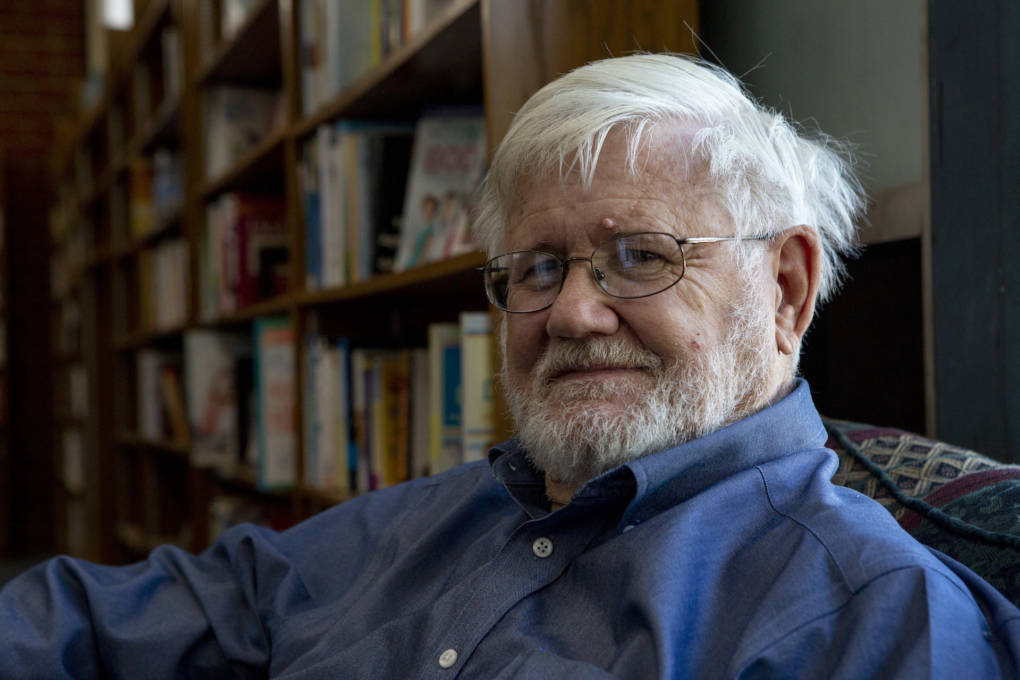
"caption": "Stan Forbes, who helped draw California's political districts after the 2010 census as part of the state's citizen redistricting commission, in his Sacramento bookstore.",
"description": null,
"title": "REDISTRICTING COMMISSION PHOTO",
"credit": "Anne Wernikoff/CalMatters",
"status": "inherit",
"isLoading": false,
"fetchFailed": false
},
"news_11652001": {
"type": "attachments",
"id": "news_11652001",
"meta": {
"index": "attachments_1716263798",
"site": "news",
"id": "11652001",
"found": true
},
"parent": 11651992,
"imgSizes": {
"small": {
"file": "https://ww2.kqed.org/app/uploads/sites/10/2018/02/RS3198_voters200403-520x348.jpg",
"width": 520,
"mimeType": "image/jpeg",
"height": 348
},
"twentyfourteen-full-width": {
"file": "https://ww2.kqed.org/app/uploads/sites/10/2018/02/RS3198_voters200403-1038x576.jpg",
"width": 1038,
"mimeType": "image/jpeg",
"height": 576
},
"thumbnail": {
"file": "https://ww2.kqed.org/app/uploads/sites/10/2018/02/RS3198_voters200403-160x107.jpg",
"width": 160,
"mimeType": "image/jpeg",
"height": 107
},
"fd-sm": {
"file": "https://ww2.kqed.org/app/uploads/sites/10/2018/02/RS3198_voters200403-960x642.jpg",
"width": 960,
"mimeType": "image/jpeg",
"height": 642
},
"post-thumbnail": {
"file": "https://ww2.kqed.org/app/uploads/sites/10/2018/02/RS3198_voters200403-672x372.jpg",
"width": 672,
"mimeType": "image/jpeg",
"height": 372
},
"xsmall": {
"file": "https://ww2.kqed.org/app/uploads/sites/10/2018/02/RS3198_voters200403-375x251.jpg",
"width": 375,
"mimeType": "image/jpeg",
"height": 251
},
"kqedFullSize": {
"file": "https://ww2.kqed.org/app/uploads/sites/10/2018/02/RS3198_voters200403-e1519507129892.jpg",
"width": 1920,
"height": 1284
},
"large": {
"file": "https://ww2.kqed.org/app/uploads/sites/10/2018/02/RS3198_voters200403-1020x682.jpg",
"width": 1020,
"mimeType": "image/jpeg",
"height": 682
},
"xlarge": {
"file": "https://ww2.kqed.org/app/uploads/sites/10/2018/02/RS3198_voters200403-1180x789.jpg",
"width": 1180,
"mimeType": "image/jpeg",
"height": 789
},
"guest-author-50": {
"file": "https://ww2.kqed.org/app/uploads/sites/10/2018/02/RS3198_voters200403-50x50.jpg",
"width": 50,
"mimeType": "image/jpeg",
"height": 50
},
"guest-author-96": {
"file": "https://ww2.kqed.org/app/uploads/sites/10/2018/02/RS3198_voters200403-96x96.jpg",
"width": 96,
"mimeType": "image/jpeg",
"height": 96
},
"medium": {
"file": "https://ww2.kqed.org/app/uploads/sites/10/2018/02/RS3198_voters200403-800x535.jpg",
"width": 800,
"mimeType": "image/jpeg",
"height": 535
},
"guest-author-64": {
"file": "https://ww2.kqed.org/app/uploads/sites/10/2018/02/RS3198_voters200403-64x64.jpg",
"width": 64,
"mimeType": "image/jpeg",
"height": 64
},
"guest-author-32": {
"file": "https://ww2.kqed.org/app/uploads/sites/10/2018/02/RS3198_voters200403-32x32.jpg",
"width": 32,
"mimeType": "image/jpeg",
"height": 32
},
"fd-lrg": {
"file": "https://ww2.kqed.org/app/uploads/sites/10/2018/02/RS3198_voters200403-1920x1284.jpg",
"width": 1920,
"mimeType": "image/jpeg",
"height": 1284
},
"fd-med": {
"file": "https://ww2.kqed.org/app/uploads/sites/10/2018/02/RS3198_voters200403-1180x789.jpg",
"width": 1180,
"mimeType": "image/jpeg",
"height": 789
},
"full-width": {
"file": "https://ww2.kqed.org/app/uploads/sites/10/2018/02/RS3198_voters200403-1920x1284.jpg",
"width": 1920,
"mimeType": "image/jpeg",
"height": 1284
},
"detail": {
"file": "https://ww2.kqed.org/app/uploads/sites/10/2018/02/RS3198_voters200403-150x150.jpg",
"width": 150,
"mimeType": "image/jpeg",
"height": 150
},
"guest-author-128": {
"file": "https://ww2.kqed.org/app/uploads/sites/10/2018/02/RS3198_voters200403-128x128.jpg",
"width": 128,
"mimeType": "image/jpeg",
"height": 128
},
"xxsmall": {
"file": "https://ww2.kqed.org/app/uploads/sites/10/2018/02/RS3198_voters200403-240x160.jpg",
"width": 240,
"mimeType": "image/jpeg",
"height": 160
}
},
"publishDate": 1519507081,
"modified": 1519507123,
"caption": "U.S. District Judge Dale Drozd ruled on Friday, Feb. 23, 2018 that election districts in Kern County illegally dilute the voting power of Latinos and deprive them of an opportunity to elect candidates of their choice.",
"description": "U.S. District Judge Dale Drozd ruled on Friday, Feb. 23, 2018 that election districts in Kern County illegally dilute the voting power of Latinos and deprive them of an opportunity to elect candidates of their choice.",
"title": "People vote at a polling station 02 Marc",
"credit": "ROBYN BECK/AFP/Getty Images",
"status": "inherit",
"isLoading": false,
"fetchFailed": false
},
"news_11620232": {
"type": "attachments",
"id": "news_11620232",
"meta": {
"index": "attachments_1716263798",
"site": "news",
"id": "11620232",
"found": true
},
"parent": 11619749,
"imgSizes": {
"small": {
"file": "https://ww2.kqed.org/app/uploads/sites/10/2017/09/SCOTUSbldg-520x328.jpg",
"width": 520,
"mimeType": "image/jpeg",
"height": 328
},
"twentyfourteen-full-width": {
"file": "https://ww2.kqed.org/app/uploads/sites/10/2017/09/SCOTUSbldg-1038x576.jpg",
"width": 1038,
"mimeType": "image/jpeg",
"height": 576
},
"thumbnail": {
"file": "https://ww2.kqed.org/app/uploads/sites/10/2017/09/SCOTUSbldg-160x101.jpg",
"width": 160,
"mimeType": "image/jpeg",
"height": 101
},
"fd-sm": {
"file": "https://ww2.kqed.org/app/uploads/sites/10/2017/09/SCOTUSbldg-960x606.jpg",
"width": 960,
"mimeType": "image/jpeg",
"height": 606
},
"post-thumbnail": {
"file": "https://ww2.kqed.org/app/uploads/sites/10/2017/09/SCOTUSbldg-672x372.jpg",
"width": 672,
"mimeType": "image/jpeg",
"height": 372
},
"xsmall": {
"file": "https://ww2.kqed.org/app/uploads/sites/10/2017/09/SCOTUSbldg-375x237.jpg",
"width": 375,
"mimeType": "image/jpeg",
"height": 237
},
"kqedFullSize": {
"file": "https://ww2.kqed.org/app/uploads/sites/10/2017/09/SCOTUSbldg.jpg",
"width": 1920,
"height": 1212
},
"large": {
"file": "https://ww2.kqed.org/app/uploads/sites/10/2017/09/SCOTUSbldg-1020x644.jpg",
"width": 1020,
"mimeType": "image/jpeg",
"height": 644
},
"xlarge": {
"file": "https://ww2.kqed.org/app/uploads/sites/10/2017/09/SCOTUSbldg-1180x745.jpg",
"width": 1180,
"mimeType": "image/jpeg",
"height": 745
},
"guest-author-50": {
"file": "https://ww2.kqed.org/app/uploads/sites/10/2017/09/SCOTUSbldg-50x50.jpg",
"width": 50,
"mimeType": "image/jpeg",
"height": 50
},
"guest-author-96": {
"file": "https://ww2.kqed.org/app/uploads/sites/10/2017/09/SCOTUSbldg-96x96.jpg",
"width": 96,
"mimeType": "image/jpeg",
"height": 96
},
"medium": {
"file": "https://ww2.kqed.org/app/uploads/sites/10/2017/09/SCOTUSbldg-800x505.jpg",
"width": 800,
"mimeType": "image/jpeg",
"height": 505
},
"guest-author-64": {
"file": "https://ww2.kqed.org/app/uploads/sites/10/2017/09/SCOTUSbldg-64x64.jpg",
"width": 64,
"mimeType": "image/jpeg",
"height": 64
},
"guest-author-32": {
"file": "https://ww2.kqed.org/app/uploads/sites/10/2017/09/SCOTUSbldg-32x32.jpg",
"width": 32,
"mimeType": "image/jpeg",
"height": 32
},
"fd-lrg": {
"file": "https://ww2.kqed.org/app/uploads/sites/10/2017/09/SCOTUSbldg-1920x1212.jpg",
"width": 1920,
"mimeType": "image/jpeg",
"height": 1212
},
"fd-med": {
"file": "https://ww2.kqed.org/app/uploads/sites/10/2017/09/SCOTUSbldg-1180x745.jpg",
"width": 1180,
"mimeType": "image/jpeg",
"height": 745
},
"full-width": {
"file": "https://ww2.kqed.org/app/uploads/sites/10/2017/09/SCOTUSbldg-1920x1212.jpg",
"width": 1920,
"mimeType": "image/jpeg",
"height": 1212
},
"detail": {
"file": "https://ww2.kqed.org/app/uploads/sites/10/2017/09/SCOTUSbldg-150x150.jpg",
"width": 150,
"mimeType": "image/jpeg",
"height": 150
},
"guest-author-128": {
"file": "https://ww2.kqed.org/app/uploads/sites/10/2017/09/SCOTUSbldg-128x128.jpg",
"width": 128,
"mimeType": "image/jpeg",
"height": 128
},
"xxsmall": {
"file": "https://ww2.kqed.org/app/uploads/sites/10/2017/09/SCOTUSbldg-240x152.jpg",
"width": 240,
"mimeType": "image/jpeg",
"height": 152
}
},
"publishDate": 1506736633,
"modified": 1506983470,
"caption": "The U.S. Supreme Court will issue a decision by the end of June — just a few months before next year’s congressional elections. The outcome could affect which party controls Congress.",
"description": "The U.S. Supreme Court will issue a decision by the end of June — just a few months before next year’s Congressional elections. The outcome could affect which party controls Congress.",
"title": "SCOTUSbldg",
"credit": "ZACH GIBSON/AFP/Getty Images",
"status": "inherit",
"isLoading": false,
"fetchFailed": false
},
"news_10919535": {
"type": "attachments",
"id": "news_10919535",
"meta": {
"index": "attachments_1716263798",
"site": "news",
"id": "10919535",
"found": true
},
"parent": 10919534,
"imgSizes": {
"twentyfourteen-full-width": {
"file": "https://ww2.kqed.org/app/uploads/sites/10/2016/04/gettyimages-518005448_wide-2f4bb10b1369f4943eddbaef7ec5fe96f686829b-1038x576.jpg",
"width": 1038,
"mimeType": "image/jpeg",
"height": 576
},
"thumbnail": {
"file": "https://ww2.kqed.org/app/uploads/sites/10/2016/04/gettyimages-518005448_wide-2f4bb10b1369f4943eddbaef7ec5fe96f686829b-400x225.jpg",
"width": 400,
"mimeType": "image/jpeg",
"height": 225
},
"fd-sm": {
"file": "https://ww2.kqed.org/app/uploads/sites/10/2016/04/gettyimages-518005448_wide-2f4bb10b1369f4943eddbaef7ec5fe96f686829b-960x540.jpg",
"width": 960,
"mimeType": "image/jpeg",
"height": 540
},
"post-thumbnail": {
"file": "https://ww2.kqed.org/app/uploads/sites/10/2016/04/gettyimages-518005448_wide-2f4bb10b1369f4943eddbaef7ec5fe96f686829b-672x372.jpg",
"width": 672,
"mimeType": "image/jpeg",
"height": 372
},
"kqedFullSize": {
"file": "https://ww2.kqed.org/app/uploads/sites/10/2016/04/gettyimages-518005448_wide-2f4bb10b1369f4943eddbaef7ec5fe96f686829b-e1466694113885.jpg",
"width": 1920,
"height": 1080
},
"large": {
"file": "https://ww2.kqed.org/app/uploads/sites/10/2016/04/gettyimages-518005448_wide-2f4bb10b1369f4943eddbaef7ec5fe96f686829b-1920x1080.jpg",
"width": 1920,
"mimeType": "image/jpeg",
"height": 1080
},
"guest-author-96": {
"file": "https://ww2.kqed.org/app/uploads/sites/10/2016/04/gettyimages-518005448_wide-2f4bb10b1369f4943eddbaef7ec5fe96f686829b-96x96.jpg",
"width": 96,
"mimeType": "image/jpeg",
"height": 96
},
"medium": {
"file": "https://ww2.kqed.org/app/uploads/sites/10/2016/04/gettyimages-518005448_wide-2f4bb10b1369f4943eddbaef7ec5fe96f686829b-800x450.jpg",
"width": 800,
"mimeType": "image/jpeg",
"height": 450
},
"guest-author-64": {
"file": "https://ww2.kqed.org/app/uploads/sites/10/2016/04/gettyimages-518005448_wide-2f4bb10b1369f4943eddbaef7ec5fe96f686829b-64x64.jpg",
"width": 64,
"mimeType": "image/jpeg",
"height": 64
},
"guest-author-32": {
"file": "https://ww2.kqed.org/app/uploads/sites/10/2016/04/gettyimages-518005448_wide-2f4bb10b1369f4943eddbaef7ec5fe96f686829b-32x32.jpg",
"width": 32,
"mimeType": "image/jpeg",
"height": 32
},
"jmtc-small-thumb": {
"file": "https://ww2.kqed.org/app/uploads/sites/10/2016/04/gettyimages-518005448_wide-2f4bb10b1369f4943eddbaef7ec5fe96f686829b-280x150.jpg",
"width": 280,
"mimeType": "image/jpeg",
"height": 150
},
"fd-lrg": {
"file": "https://ww2.kqed.org/app/uploads/sites/10/2016/04/gettyimages-518005448_wide-2f4bb10b1369f4943eddbaef7ec5fe96f686829b-1920x1080.jpg",
"width": 1920,
"mimeType": "image/jpeg",
"height": 1080
},
"fd-med": {
"file": "https://ww2.kqed.org/app/uploads/sites/10/2016/04/gettyimages-518005448_wide-2f4bb10b1369f4943eddbaef7ec5fe96f686829b-1180x664.jpg",
"width": 1180,
"mimeType": "image/jpeg",
"height": 664
},
"detail": {
"file": "https://ww2.kqed.org/app/uploads/sites/10/2016/04/gettyimages-518005448_wide-2f4bb10b1369f4943eddbaef7ec5fe96f686829b-75x75.jpg",
"width": 75,
"mimeType": "image/jpeg",
"height": 75
},
"guest-author-128": {
"file": "https://ww2.kqed.org/app/uploads/sites/10/2016/04/gettyimages-518005448_wide-2f4bb10b1369f4943eddbaef7ec5fe96f686829b-128x128.jpg",
"width": 128,
"mimeType": "image/jpeg",
"height": 128
}
},
"publishDate": 1459796093,
"modified": 1466727033,
"caption": "The U.S. Supreme Court's 4-4 vote on the constitutionality of President Obama's executive actions on undocumented immigrants means a lower court injunction blocking the program will stand. ",
"description": "The U.S. Supreme Court ruled Monday that the total population as defined by the Census Bureau should be used when counting people for political purposes.",
"title": "U.S. Supreme Court building",
"credit": "Win McNamee/Getty Images",
"status": "inherit",
"isLoading": false,
"fetchFailed": false
},
"news_10787027": {
"type": "attachments",
"id": "news_10787027",
"meta": {
"index": "attachments_1716263798",
"site": "news",
"id": "10787027",
"found": true
},
"parent": 10787026,
"imgSizes": {
"twentyfourteen-full-width": {
"file": "https://ww2.kqed.org/app/uploads/sites/10/2015/12/ap_748787470938_wide-24fff1123cf61d2b7cf02ef80d4d30bacfd7e96c-1038x576.jpg",
"width": 1038,
"mimeType": "image/jpeg",
"height": 576
},
"thumbnail": {
"file": "https://ww2.kqed.org/app/uploads/sites/10/2015/12/ap_748787470938_wide-24fff1123cf61d2b7cf02ef80d4d30bacfd7e96c-400x225.jpg",
"width": 400,
"mimeType": "image/jpeg",
"height": 225
},
"fd-sm": {
"file": "https://ww2.kqed.org/app/uploads/sites/10/2015/12/ap_748787470938_wide-24fff1123cf61d2b7cf02ef80d4d30bacfd7e96c-960x540.jpg",
"width": 960,
"mimeType": "image/jpeg",
"height": 540
},
"post-thumbnail": {
"file": "https://ww2.kqed.org/app/uploads/sites/10/2015/12/ap_748787470938_wide-24fff1123cf61d2b7cf02ef80d4d30bacfd7e96c-672x372.jpg",
"width": 672,
"mimeType": "image/jpeg",
"height": 372
},
"kqedFullSize": {
"file": "https://ww2.kqed.org/app/uploads/sites/10/2015/12/ap_748787470938_wide-24fff1123cf61d2b7cf02ef80d4d30bacfd7e96c.jpg",
"width": 2748,
"height": 1545
},
"large": {
"file": "https://ww2.kqed.org/app/uploads/sites/10/2015/12/ap_748787470938_wide-24fff1123cf61d2b7cf02ef80d4d30bacfd7e96c-1440x810.jpg",
"width": 1440,
"mimeType": "image/jpeg",
"height": 810
},
"guest-author-96": {
"file": "https://ww2.kqed.org/app/uploads/sites/10/2015/12/ap_748787470938_wide-24fff1123cf61d2b7cf02ef80d4d30bacfd7e96c-96x96.jpg",
"width": 96,
"mimeType": "image/jpeg",
"height": 96
},
"medium": {
"file": "https://ww2.kqed.org/app/uploads/sites/10/2015/12/ap_748787470938_wide-24fff1123cf61d2b7cf02ef80d4d30bacfd7e96c-800x450.jpg",
"width": 800,
"mimeType": "image/jpeg",
"height": 450
},
"guest-author-64": {
"file": "https://ww2.kqed.org/app/uploads/sites/10/2015/12/ap_748787470938_wide-24fff1123cf61d2b7cf02ef80d4d30bacfd7e96c-64x64.jpg",
"width": 64,
"mimeType": "image/jpeg",
"height": 64
},
"guest-author-32": {
"file": "https://ww2.kqed.org/app/uploads/sites/10/2015/12/ap_748787470938_wide-24fff1123cf61d2b7cf02ef80d4d30bacfd7e96c-32x32.jpg",
"width": 32,
"mimeType": "image/jpeg",
"height": 32
},
"jmtc-small-thumb": {
"file": "https://ww2.kqed.org/app/uploads/sites/10/2015/12/ap_748787470938_wide-24fff1123cf61d2b7cf02ef80d4d30bacfd7e96c-280x150.jpg",
"width": 280,
"mimeType": "image/jpeg",
"height": 150
},
"fd-lrg": {
"file": "https://ww2.kqed.org/app/uploads/sites/10/2015/12/ap_748787470938_wide-24fff1123cf61d2b7cf02ef80d4d30bacfd7e96c-1920x1079.jpg",
"width": 1920,
"mimeType": "image/jpeg",
"height": 1079
},
"fd-med": {
"file": "https://ww2.kqed.org/app/uploads/sites/10/2015/12/ap_748787470938_wide-24fff1123cf61d2b7cf02ef80d4d30bacfd7e96c-1180x663.jpg",
"width": 1180,
"mimeType": "image/jpeg",
"height": 663
},
"detail": {
"file": "https://ww2.kqed.org/app/uploads/sites/10/2015/12/ap_748787470938_wide-24fff1123cf61d2b7cf02ef80d4d30bacfd7e96c-75x75.jpg",
"width": 75,
"mimeType": "image/jpeg",
"height": 75
},
"guest-author-128": {
"file": "https://ww2.kqed.org/app/uploads/sites/10/2015/12/ap_748787470938_wide-24fff1123cf61d2b7cf02ef80d4d30bacfd7e96c-128x128.jpg",
"width": 128,
"mimeType": "image/jpeg",
"height": 128
}
},
"publishDate": 1449594413,
"modified": 1449594413,
"caption": null,
"description": "Two Texas voters are challenging the 2010 Texas reapportionment as unconstitutional. They say the correct constitutional metric should be eligible voters, not total population.",
"title": "Two Texas voters are challenging the 2010 Texas reapportionment as unconstitutional. They say the correct constitutional metric should be eligible voters, not total population.",
"credit": null,
"status": "inherit",
"isLoading": false,
"fetchFailed": false
},
"news_10508407": {
"type": "attachments",
"id": "news_10508407",
"meta": {
"index": "attachments_1716263798",
"site": "news",
"id": "10508407",
"found": true
},
"parent": 10508403,
"imgSizes": {
"twentyfourteen-full-width": {
"file": "https://ww2.kqed.org/app/uploads/sites/10/2015/05/IMG_3008-1038x576.jpg",
"width": 1038,
"mimeType": "image/jpeg",
"height": 576
},
"thumbnail": {
"file": "https://ww2.kqed.org/app/uploads/sites/10/2015/05/IMG_3008-400x300.jpg",
"width": 400,
"mimeType": "image/jpeg",
"height": 300
},
"fd-sm": {
"file": "https://ww2.kqed.org/app/uploads/sites/10/2015/05/IMG_3008-960x720.jpg",
"width": 960,
"mimeType": "image/jpeg",
"height": 720
},
"post-thumbnail": {
"file": "https://ww2.kqed.org/app/uploads/sites/10/2015/05/IMG_3008-672x372.jpg",
"width": 672,
"mimeType": "image/jpeg",
"height": 372
},
"kqedFullSize": {
"file": "https://ww2.kqed.org/app/uploads/sites/10/2015/05/IMG_3008-e1430439102550.jpg",
"width": 1920,
"height": 1440
},
"large": {
"file": "https://ww2.kqed.org/app/uploads/sites/10/2015/05/IMG_3008-1440x1080.jpg",
"width": 1440,
"mimeType": "image/jpeg",
"height": 1080
},
"guest-author-96": {
"file": "https://ww2.kqed.org/app/uploads/sites/10/2015/05/IMG_3008-96x96.jpg",
"width": 96,
"mimeType": "image/jpeg",
"height": 96
},
"medium": {
"file": "https://ww2.kqed.org/app/uploads/sites/10/2015/05/IMG_3008-800x600.jpg",
"width": 800,
"mimeType": "image/jpeg",
"height": 600
},
"guest-author-64": {
"file": "https://ww2.kqed.org/app/uploads/sites/10/2015/05/IMG_3008-64x64.jpg",
"width": 64,
"mimeType": "image/jpeg",
"height": 64
},
"guest-author-32": {
"file": "https://ww2.kqed.org/app/uploads/sites/10/2015/05/IMG_3008-32x32.jpg",
"width": 32,
"mimeType": "image/jpeg",
"height": 32
},
"fd-med": {
"file": "https://ww2.kqed.org/app/uploads/sites/10/2015/05/IMG_3008-1180x885.jpg",
"width": 1180,
"mimeType": "image/jpeg",
"height": 885
},
"detail": {
"file": "https://ww2.kqed.org/app/uploads/sites/10/2015/05/IMG_3008-75x75.jpg",
"width": 75,
"mimeType": "image/jpeg",
"height": 75
},
"guest-author-128": {
"file": "https://ww2.kqed.org/app/uploads/sites/10/2015/05/IMG_3008-128x128.jpg",
"width": 128,
"mimeType": "image/jpeg",
"height": 128
}
},
"publishDate": 1430439005,
"modified": 1434149993,
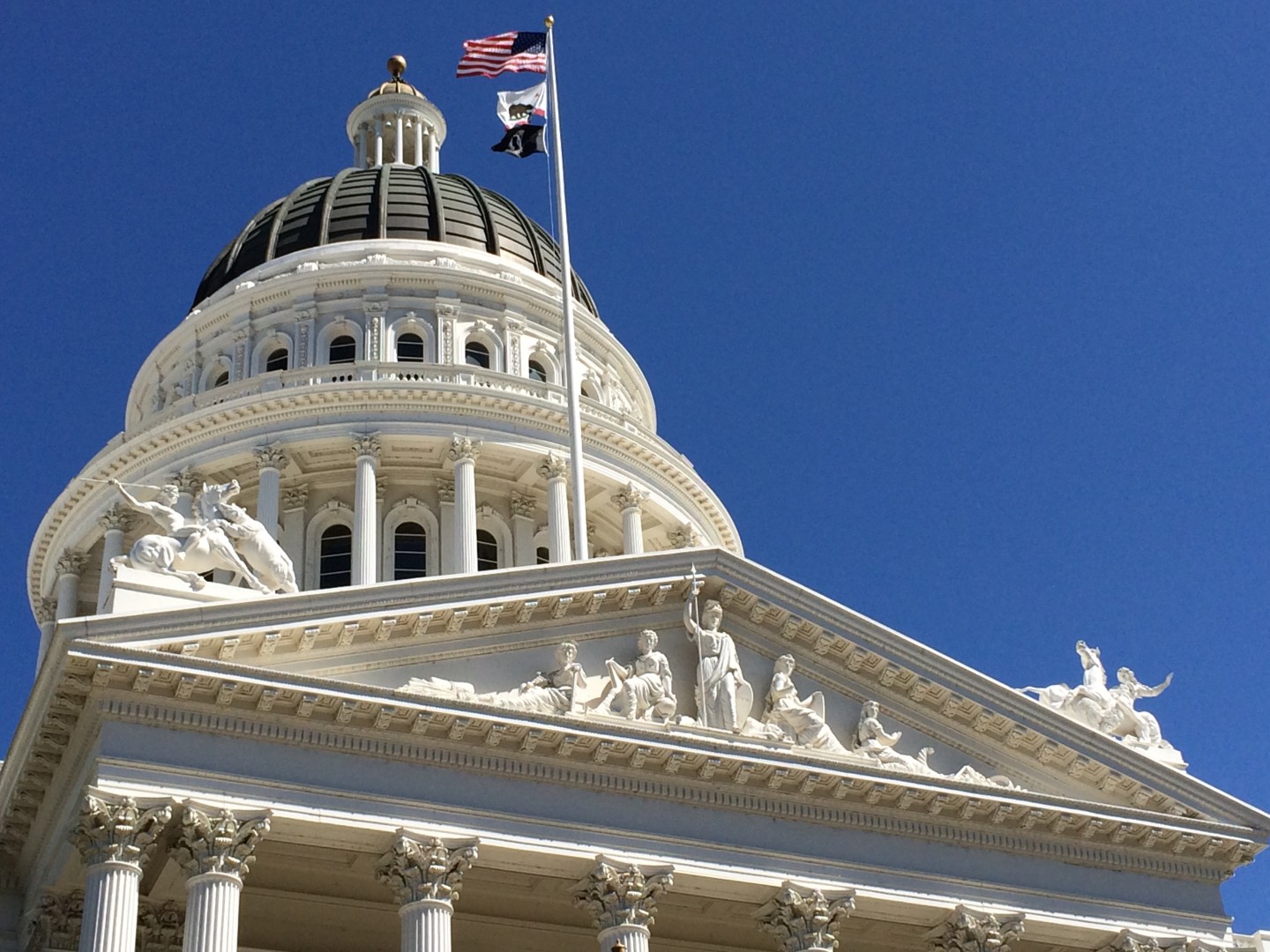
"caption": "State Capitol",
"description": "State Capitol",
"title": "IMG_3008",
"credit": "John Myers/KQED",
"status": "inherit",
"isLoading": false,
"fetchFailed": false
},
"news_10581740": {
"type": "attachments",
"id": "news_10581740",
"meta": {
"index": "attachments_1716263798",
"site": "news",
"id": "10581740",
"found": true
},
"parent": 10581630,
"imgSizes": {
"twentyfourteen-full-width": {
"file": "https://ww2.kqed.org/app/uploads/sites/10/2015/06/Screen-Shot-2015-06-29-at-9.22.14-AM-1038x576.png",
"width": 1038,
"mimeType": "image/png",
"height": 576
},
"thumbnail": {
"file": "https://ww2.kqed.org/app/uploads/sites/10/2015/06/Screen-Shot-2015-06-29-at-9.22.14-AM-400x204.png",
"width": 400,
"mimeType": "image/png",
"height": 204
},
"fd-sm": {
"file": "https://ww2.kqed.org/app/uploads/sites/10/2015/06/Screen-Shot-2015-06-29-at-9.22.14-AM-960x489.png",
"width": 960,
"mimeType": "image/png",
"height": 489
},
"post-thumbnail": {
"file": "https://ww2.kqed.org/app/uploads/sites/10/2015/06/Screen-Shot-2015-06-29-at-9.22.14-AM-672x372.png",
"width": 672,
"mimeType": "image/png",
"height": 372
},
"kqedFullSize": {
"file": "https://ww2.kqed.org/app/uploads/sites/10/2015/06/Screen-Shot-2015-06-29-at-9.22.14-AM.png",
"width": 1560,
"height": 794
},
"large": {
"file": "https://ww2.kqed.org/app/uploads/sites/10/2015/06/Screen-Shot-2015-06-29-at-9.22.14-AM-1440x733.png",
"width": 1440,
"mimeType": "image/png",
"height": 733
},
"guest-author-96": {
"file": "https://ww2.kqed.org/app/uploads/sites/10/2015/06/Screen-Shot-2015-06-29-at-9.22.14-AM-96x96.png",
"width": 96,
"mimeType": "image/png",
"height": 96
},
"medium": {
"file": "https://ww2.kqed.org/app/uploads/sites/10/2015/06/Screen-Shot-2015-06-29-at-9.22.14-AM-800x407.png",
"width": 800,
"mimeType": "image/png",
"height": 407
},
"guest-author-64": {
"file": "https://ww2.kqed.org/app/uploads/sites/10/2015/06/Screen-Shot-2015-06-29-at-9.22.14-AM-64x64.png",
"width": 64,
"mimeType": "image/png",
"height": 64
},
"guest-author-32": {
"file": "https://ww2.kqed.org/app/uploads/sites/10/2015/06/Screen-Shot-2015-06-29-at-9.22.14-AM-32x32.png",
"width": 32,
"mimeType": "image/png",
"height": 32
},
"jmtc-small-thumb": {
"file": "https://ww2.kqed.org/app/uploads/sites/10/2015/06/Screen-Shot-2015-06-29-at-9.22.14-AM-280x150.png",
"width": 280,
"mimeType": "image/png",
"height": 150
},
"fd-med": {
"file": "https://ww2.kqed.org/app/uploads/sites/10/2015/06/Screen-Shot-2015-06-29-at-9.22.14-AM-1180x601.png",
"width": 1180,
"mimeType": "image/png",
"height": 601
},
"detail": {
"file": "https://ww2.kqed.org/app/uploads/sites/10/2015/06/Screen-Shot-2015-06-29-at-9.22.14-AM-75x75.png",
"width": 75,
"mimeType": "image/png",
"height": 75
},
"guest-author-128": {
"file": "https://ww2.kqed.org/app/uploads/sites/10/2015/06/Screen-Shot-2015-06-29-at-9.22.14-AM-128x128.png",
"width": 128,
"mimeType": "image/png",
"height": 128
}
},
"publishDate": 1435594967,
"modified": 1435595052,
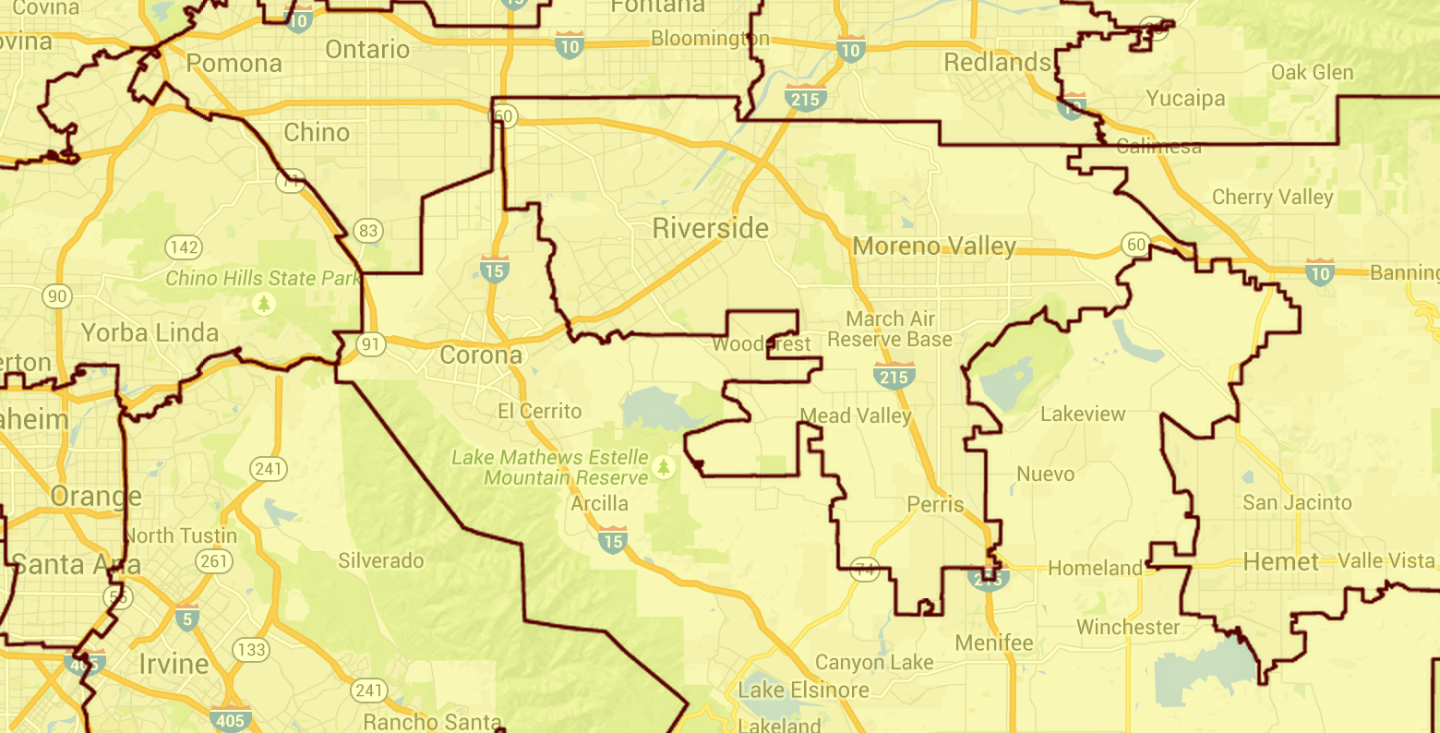
"caption": "Congressional district lines in Southern California, lines that will remain in place until the 2022 elections.",
"description": null,
"title": "Screen Shot 2015-06-29 at 9.22.14 AM",
"credit": "Citizens Redistricting Commission",
"status": "inherit",
"isLoading": false,
"fetchFailed": false
},
"news_10392141": {
"type": "attachments",
"id": "news_10392141",
"meta": {
"index": "attachments_1716263798",
"site": "news",
"id": "10392141",
"found": true
},
"parent": 10392127,
"imgSizes": {
"twentyfourteen-full-width": {
"file": "https://ww2.kqed.org/app/uploads/sites/10/2014/12/RS13247_20141124_tuitionhike_jt_0111-qut-1038x576.jpg",
"width": 1038,
"mimeType": "image/jpeg",
"height": 576
},
"thumbnail": {
"file": "https://ww2.kqed.org/app/uploads/sites/10/2014/12/RS13247_20141124_tuitionhike_jt_0111-qut-400x266.jpg",
"width": 400,
"mimeType": "image/jpeg",
"height": 266
},
"post-thumbnail": {
"file": "https://ww2.kqed.org/app/uploads/sites/10/2014/12/RS13247_20141124_tuitionhike_jt_0111-qut-672x372.jpg",
"width": 672,
"mimeType": "image/jpeg",
"height": 372
},
"kqedFullSize": {
"file": "https://ww2.kqed.org/app/uploads/sites/10/2014/12/RS13247_20141124_tuitionhike_jt_0111-qut.jpg",
"width": 1440,
"height": 960
},
"guest-author-96": {
"file": "https://ww2.kqed.org/app/uploads/sites/10/2014/12/RS13247_20141124_tuitionhike_jt_0111-qut-96x96.jpg",
"width": 96,
"mimeType": "image/jpeg",
"height": 96
},
"medium": {
"file": "https://ww2.kqed.org/app/uploads/sites/10/2014/12/RS13247_20141124_tuitionhike_jt_0111-qut-800x533.jpg",
"width": 800,
"mimeType": "image/jpeg",
"height": 533
},
"guest-author-64": {
"file": "https://ww2.kqed.org/app/uploads/sites/10/2014/12/RS13247_20141124_tuitionhike_jt_0111-qut-64x64.jpg",
"width": 64,
"mimeType": "image/jpeg",
"height": 64
},
"detail": {
"file": "https://ww2.kqed.org/app/uploads/sites/10/2014/12/RS13247_20141124_tuitionhike_jt_0111-qut-75x75.jpg",
"width": 75,
"mimeType": "image/jpeg",
"height": 75
},
"guest-author-32": {
"file": "https://ww2.kqed.org/app/uploads/sites/10/2014/12/RS13247_20141124_tuitionhike_jt_0111-qut-32x32.jpg",
"width": 32,
"mimeType": "image/jpeg",
"height": 32
},
"guest-author-128": {
"file": "https://ww2.kqed.org/app/uploads/sites/10/2014/12/RS13247_20141124_tuitionhike_jt_0111-qut-128x128.jpg",
"width": 128,
"mimeType": "image/jpeg",
"height": 128
}
},
"publishDate": 1419879909,
"modified": 1425602359,
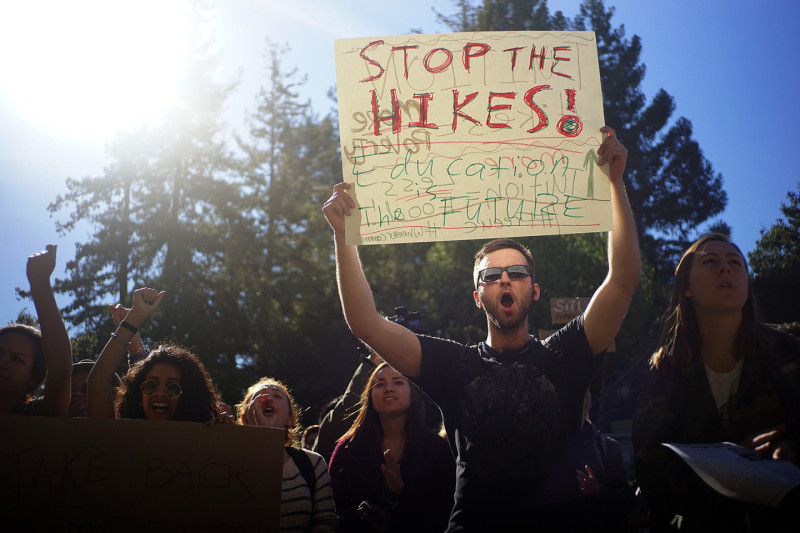
"caption": "The fight over UC funding is perhaps the biggest one of all at the state Capitol in 2015. Here, a protester at an event in 2014.",
"description": "Cameron Morgan shouts during a protest at UC Berkeley in Berkeley, Calif. on Monday, Nov. 24, 2014. Morgan says if more people take out students loans it will lead to more poverty. Students and others opposed to the tuition hikes put into place by the UC Regents gathered at Berkeley to express their discontent. (James Tensuan/KQED)",
"title": "RS13247_20141124_tuitionhike_jt_011[1]-qut",
"credit": "James Tensuan/KQED",
"status": "inherit",
"isLoading": false,
"fetchFailed": false
}
},
"audioPlayerReducer": {
"postId": "stream_live",
"isPaused": true,
"isPlaying": false,
"pfsActive": false,
"pledgeModalIsOpen": true,
"playerDrawerIsOpen": false,
"liveAudioPlayStartedAt": 0,
"liveAudioPlayContext": ""
},
"authorsReducer": {
"byline_news_11892339": {
"type": "authors",
"id": "byline_news_11892339",
"meta": {
"override": true
},
"slug": "byline_news_11892339",
"name": "Sameea Kamal",
"isLoading": false
},
"byline_news_11890272": {
"type": "authors",
"id": "byline_news_11890272",
"meta": {
"override": true
},
"slug": "byline_news_11890272",
"name": "Ben Christopher and Sameea Kamal",
"isLoading": false
},
"byline_news_11778135": {
"type": "authors",
"id": "byline_news_11778135",
"meta": {
"override": true
},
"slug": "byline_news_11778135",
"name": "\u003ca href=\"https://calmatters.org/author/elizabeth-castillo/\">Elizabeth Castillo\u003c/a>\u003cbr>\u003cstrong>CALmatters\u003c/strong>",
"isLoading": false
},
"byline_news_11651992": {
"type": "authors",
"id": "byline_news_11651992",
"meta": {
"override": true
},
"slug": "byline_news_11651992",
"name": "\u003cstrong>Sudhin Thanawala\u003c/strong>\u003c/br>Associated Press",
"isLoading": false
},
"byline_news_10919534": {
"type": "authors",
"id": "byline_news_10919534",
"meta": {
"override": true
},
"slug": "byline_news_10919534",
"name": "\u003cstrong>\u003ca href=\"http://www.npr.org/people/1930203/ron-elving\">Ron Elving\u003c/a>\u003cbr>NPR\u003c/strong>",
"isLoading": false
},
"byline_news_10787026": {
"type": "authors",
"id": "byline_news_10787026",
"meta": {
"override": true
},
"slug": "byline_news_10787026",
"name": "Nina Totenberg",
"isLoading": false
},
"jmyers": {
"type": "authors",
"id": "232",
"meta": {
"index": "authors_1716337520",
"id": "232",
"found": true
},
"name": "John Myers",
"firstName": "John",
"lastName": "Myers",
"slug": "jmyers",
"email": "jmyers@kqed.org",
"display_author_email": false,
"staff_mastheads": [],
"title": null,
"bio": "John Myers is Senior Editor of KQED's new California Politics and Government Desk. A veteran of almost two decades of political coverage, he was KQED's longest serving statehouse bureau chief and recently was political editor for Sacramento's ABC affiliate, News10 (KXTV). John was moderator of the only 2014 gubernatorial debate, and was named by \u003cem>The Washington Post\u003c/em> to two \"Best Of\" lists: the 2015 list of top state politics reporters and 2014's list of America's most influential statehouse reporters.",
"avatar": "https://secure.gravatar.com/avatar/c0ac98482caf0b8229a792662b38722a?s=600&d=blank&r=g",
"twitter": "johnmyers",
"facebook": null,
"instagram": null,
"linkedin": null,
"sites": [
{
"site": "news",
"roles": [
"subscriber"
]
}
],
"headData": {
"title": "John Myers | KQED",
"description": null,
"ogImgSrc": "https://secure.gravatar.com/avatar/c0ac98482caf0b8229a792662b38722a?s=600&d=blank&r=g",
"twImgSrc": "https://secure.gravatar.com/avatar/c0ac98482caf0b8229a792662b38722a?s=600&d=blank&r=g"
},
"isLoading": false,
"link": "/author/jmyers"
},
"kqed": {
"type": "authors",
"id": "236",
"meta": {
"index": "authors_1716337520",
"id": "236",
"found": true
},
"name": "KQED News Staff",
"firstName": "KQED News Staff",
"lastName": null,
"slug": "kqed",
"email": "faq@kqed.org",
"display_author_email": false,
"staff_mastheads": [],
"title": null,
"bio": null,
"avatar": "https://secure.gravatar.com/avatar/ef0e801a68c4c54afa9180db14084167?s=600&d=blank&r=g",
"twitter": null,
"facebook": null,
"instagram": null,
"linkedin": null,
"sites": [
{
"site": "arts",
"roles": [
"contributor"
]
},
{
"site": "news",
"roles": [
"editor"
]
},
{
"site": "futureofyou",
"roles": [
"author"
]
}
],
"headData": {
"title": "KQED News Staff | KQED",
"description": null,
"ogImgSrc": "https://secure.gravatar.com/avatar/ef0e801a68c4c54afa9180db14084167?s=600&d=blank&r=g",
"twImgSrc": "https://secure.gravatar.com/avatar/ef0e801a68c4c54afa9180db14084167?s=600&d=blank&r=g"
},
"isLoading": false,
"link": "/author/kqed"
},
"scottshafer": {
"type": "authors",
"id": "255",
"meta": {
"index": "authors_1716337520",
"id": "255",
"found": true
},
"name": "Scott Shafer",
"firstName": "Scott",
"lastName": "Shafer",
"slug": "scottshafer",
"email": "sshafer@kqed.org",
"display_author_email": false,
"staff_mastheads": [
"news"
],
"title": "KQED Contributor",
"bio": "Scott Shafer is a senior editor with the KQED Politics and Government desk. He is co-host of Political Breakdown, the award-winning radio show and podcast with a personal take on the world of politics. Scott came to KQED in 1998 to host the statewide\u003cem> California Report\u003c/em>. Prior to that he had extended stints in politics and government\u003cem>.\u003c/em> He uses that inside experience at KQED in his, reporting, hosting and analysis for the politics desk. Scott collaborated \u003cem>Political Breakdown a\u003c/em>nd on \u003cem>The Political Mind of Jerry Brown, \u003c/em>an eight-part series about the life and extraordinary political career of the former governor. For fun, he plays water polo with the San Francisco Tsunami.",
"avatar": "https://secure.gravatar.com/avatar/a62ebae45b79d7aed1a39a0e3bf68104?s=600&d=blank&r=g",
"twitter": "scottshafer",
"bluesky": null,
"facebook": null,
"instagram": null,
"linkedin": null,
"sites": [
{
"site": "news",
"roles": [
"editor"
]
},
{
"site": "stateofhealth",
"roles": [
"author"
]
},
{
"site": "science",
"roles": [
"author"
]
},
{
"site": "forum",
"roles": [
"subscriber"
]
},
{
"site": "liveblog",
"roles": [
"author"
]
}
],
"headData": {
"title": "Scott Shafer | KQED",
"description": "KQED Contributor",
"ogImgSrc": "https://secure.gravatar.com/avatar/a62ebae45b79d7aed1a39a0e3bf68104?s=600&d=blank&r=g",
"twImgSrc": "https://secure.gravatar.com/avatar/a62ebae45b79d7aed1a39a0e3bf68104?s=600&d=blank&r=g"
},
"isLoading": false,
"link": "/author/scottshafer"
},
"abandlamudi": {
"type": "authors",
"id": "11672",
"meta": {
"index": "authors_1716337520",
"id": "11672",
"found": true
},
"name": "Adhiti Bandlamudi",
"firstName": "Adhiti",
"lastName": "Bandlamudi",
"slug": "abandlamudi",
"email": "abandlamudi@kqed.org",
"display_author_email": false,
"staff_mastheads": [
"news"
],
"title": "KQED Housing Reporter",
"bio": "Adhiti Bandlamudi reports for KQED's Housing desk. She focuses on how housing gets built across the Bay Area. Before joining KQED in 2020, she reported for WUNC in Durham, North Carolina, WABE in Atlanta, Georgia and Capital Public Radio in Sacramento. In 2017, she was awarded a Kroc Fellowship at NPR where she reported on everything from sprinkles to the Golden State Killer's arrest. When she's not reporting, she's baking new recipes in her kitchen or watching movies with friends and family. She's originally from Georgia and has strong opinions about Great British Bake Off.",
"avatar": "https://secure.gravatar.com/avatar/868129c8b257bb99a3500e2c86a65400?s=600&d=mm&r=g",
"twitter": "oddity_adhiti",
"facebook": null,
"instagram": null,
"linkedin": null,
"sites": [
{
"site": "arts",
"roles": [
"author"
]
},
{
"site": "news",
"roles": [
"editor"
]
},
{
"site": "liveblog",
"roles": [
"author"
]
}
],
"headData": {
"title": "Adhiti Bandlamudi | KQED",
"description": "KQED Housing Reporter",
"ogImgSrc": "https://secure.gravatar.com/avatar/868129c8b257bb99a3500e2c86a65400?s=600&d=mm&r=g",
"twImgSrc": "https://secure.gravatar.com/avatar/868129c8b257bb99a3500e2c86a65400?s=600&d=mm&r=g"
},
"isLoading": false,
"link": "/author/abandlamudi"
}
},
"pagesReducer": {
"news_tag_redistricting": {
"type": "terms",
"id": "news_282",
"meta": {
"index": "terms_1716263798",
"site": "news",
"id": "282",
"score": 9.304576
},
"featImg": null,
"name": "redistricting",
"description": null,
"taxonomy": "tag",
"headData": {
"twImgId": null,
"twTitle": null,
"ogTitle": null,
"ogImgId": null,
"twDescription": null,
"description": null,
"title": "redistricting Archives | KQED News",
"ogDescription": null
},
"ttid": 290,
"slug": "redistricting",
"isLoading": false,
"title": "redistricting",
"pageMeta": {
"site": "news",
"WpPageTemplate": "page-topic-editorial",
"currentPage": 7
},
"blocks": [
{
"blockName": "kqed/post-list",
"attrs": {
"layout": "cardArticle2",
"query": "posts/news?tag=redistricting",
"seeMore": false,
"paginated": true,
"page": 7
}
},
{
"blockName": "kqed/ad"
}
]
}
},
"pfsSessionReducer": {},
"postsReducer": {
"stream_live": {
"type": "live",
"id": "stream_live",
"audioUrl": "https://streams.kqed.org/kqedradio",
"title": "Live Stream",
"excerpt": "Live Stream information currently unavailable.",
"link": "/radio",
"featImg": "",
"label": {
"name": "KQED Live",
"link": "/"
}
},
"stream_kqedNewscast": {
"type": "posts",
"id": "stream_kqedNewscast",
"audioUrl": "https://www.kqed.org/.stream/anon/radio/RDnews/newscast.mp3?_=1",
"title": "KQED Newscast",
"featImg": "",
"label": {
"name": "88.5 FM",
"link": "/"
}
},
"news_11892339": {
"type": "posts",
"id": "news_11892339",
"meta": {
"index": "posts_1716263798",
"site": "news",
"id": "11892339",
"score": null,
"sort": [
1634253320000
]
},
"parent": 0,
"labelTerm": {},
"blocks": [],
"publishDate": 1634253320,
"format": "standard",
"disqusTitle": "Local Communities Push State Redistricting Commission to Keep 'Ethnic Enclaves' Together",
"title": "Local Communities Push State Redistricting Commission to Keep 'Ethnic Enclaves' Together",
"headTitle": "KQED News",
"content": "\u003cp>Redistricting — the redrawing of maps for congressional, legislative and local seats — happens every 10 years after the census. Its goal? To make sure everyone is represented equally.\u003c/p>\n\u003cp>In 2008, California voters took redistricting for state offices away from the Legislature — which often drew maps to the advantage of elected officials or one political party — and gave the power to an independent commission. In 2010, voters added congressional maps to the commission’s duties. One of the cardinal rules that voters set: Consider diversity, including abiding by the Voting Rights Act.\u003c/p>\n\u003cp>The track record of the Citizens Redistricting Commission is mixed on that score. Statewide, Latinos make up 30% of the voting age population, but \u003ca href=\"https://www.ppic.org/blog/redistricting-opens-new-opportunities-for-communities-of-color/?utm_source=ppic&utm_medium=email&utm_campaign=blog_subscriber\">are a majority in just 19% of the 173 congressional and legislative districts\u003c/a>, according to an analysis released Wednesday by the Public Policy Institute of California. And that’s only a slight increase from the 15% under the old maps. Asian Americans are nearly 15% of the population, but a majority in just one district, while there is still no district where African Americans are the majority.\u003c/p>\n\u003cp>Still, between 2012 and 2020, the commission’s new districts largely succeeded in helping to \u003ca href=\"http://schwarzeneggerinstitute.com/images/files/FINALRELEASE_USC_Schwarzenegger_Redistricting_Commission_Diversity_Report.pdf\">add elected officials of color\u003c/a> in California, according to a study by the USC Schwarzenegger Institute for State and Global Policy: The number of Latinos and Asian Americans elected to Congress doubled, and the numbers of Latino, Black and Asian American legislators also increased, compared to election results from the maps drawn by the Legislature after the 2000 census.[pullquote size=\"medium\" align=\"right\" citation=\"Ariana Marmolejo, communications associate, Communities for a New California Education Fund\"]'When communities are divided, they can't advocate for the things they need and for themselves.'[/pullquote]\u003c/p>\n\u003cp>This round of redistricting is the first under a new state law that prioritizes keeping “communities of interest,” including ethnic enclaves, together. The 2019 FAIR MAPS Act \u003ca href=\"https://www.sos.ca.gov/elections/helpful-resources/redistricting\">also requires public input\u003c/a> at every step of the process, so across California, local advocacy groups are banding together to propose maps.\u003c/p>\n\u003cp>But even these advocates say it’s impossible to take partisanship out of the process entirely. And this time around, the priority on diverse representation — and the fight for political power — is being complicated by several factors:\u003c/p>\n\u003cul>\n\u003cli>For the first time ever, \u003ca href=\"https://calmatters.org/politics/2021/04/california-congress-census/\">California is losing a congressional seat\u003c/a>. Experts say it will likely be carved out of Los Angeles County, where the population grew more slowly than the rest of the state. And that could set up a conflict between Latino and African American advocacy groups.\u003c/li>\n\u003cli>The challenges of conducting the 2020 census during the pandemic, and \u003ca href=\"https://www.npr.org/2020/09/18/911960963/how-trump-officials-cut-the-2020-census-short-amid-the-pandemic\">decisions made by the Trump administration\u003c/a>, may have resulted in \u003ca href=\"https://www.washingtonpost.com/dc-md-va/2021/10/13/2020-census-black-undercount/?utm_campaign=wp_main&utm_medium=social&utm_source=twitter\">undercounting African Americans at significantly higher rates than usual\u003c/a>. Facing delays, the Census Bureau has \u003ca href=\"https://www.npr.org/2021/10/08/1043506293/2020-census-results-accuracy-undercount-populations-post-enumeration-survey\">extended into early next year a follow-up door-to-door survey\u003c/a> to check possible undercounts, NPR reports.\u003c/li>\n\u003cli>And a sped-up redistricting timeline due to the delay of census data means less time for all involved to come up with proposed maps and to state their case.\u003c/li>\n\u003c/ul>\n\u003cp>The commission is \u003ca href=\"https://www.wedrawthelinesca.org/meetings\">holding a series of public hearings\u003c/a>, including today and Friday. It \u003ca href=\"https://www.wedrawthelinesca.org/10_4_21_handouts\">plans to release preliminary maps\u003c/a> for 52 U.S. House districts and 120 state Assembly and Senate districts by Nov. 15 and has until Dec. 27 to submit its final districts so they can be used for the June 2022 primaries. Here’s a look at some key community movements to shape the districts:\u003cbr>\n[ad fullwidth]\u003c/p>\n\u003ch3 id=\"h-los-angeles-county\">Los Angeles County\u003c/h3>\n\u003cp>The People’s Bloc — an alliance of 34 groups working to ensure that ethnic communities in Los Angeles County aren’t divided — was born with the 2020 census.\u003c/p>\n\u003cp>The bloc includes the Community Coalition of Los Angeles, founded by U.S. Rep. Karen Bass in 1990 to address substance addiction, poverty and crime in South Los Angeles. With a federal grant, Bass organized against \u003ca href=\"https://www.washingtonpost.com/politics/rep-karen-bass-fought-for-blacks-and-latinos-in-south-los-angeles-now-shes-on-bidens-vp-shortlist/2020/07/31/6d224a58-d1d3-11ea-8c55-61e7fa5e82ab_story.html\">a surplus of liquor stores\u003c/a> and for better land-use policies, school funding and foster care.\u003c/p>\n\u003cfigure class=\"wp-block-image size-large\">\n\u003cfigure id=\"attachment_211483\" class=\"wp-caption alignnone\" style=\"max-width: 780px\">\u003cimg class=\"wp-image-211483\" src=\"https://calmatters.network/wp-content/uploads/2021/10/101221_Rep_Karen_Bass_AP_CM_01.jpg\" alt='A woman with short hair, glasses, and a blue blazer, sitting behind a podium with a \"Ms. Bass\" nameplate, speaks before two American flags. ' width=\"780\" height=\"515\" data-recalc-dims=\"1\">\u003cfigcaption class=\"wp-caption-text\">U.S. Rep. Karen Bass of Los Angeles speaks during a House Judiciary Committee hearing in Washington. D.C., on June 10, 2020. (Erin Schaff/The New York Times via AP)\u003c/figcaption>\u003c/figure>\n\u003c/figure>\n\u003cp>The six-term representative and former Congressional Black Caucus chairperson \u003ca href=\"https://www.npr.org/2021/09/27/1040906831/rep-karen-bass-launches-campaign-to-be-the-next-mayor-of-los-angeles\">announced Sept. 27 that she’s running for L.A. mayor\u003c/a> this year. That has fueled speculation that, given the need to drop a district, the 37th District she represents could be redrawn in a way that dilutes the power of Black voters. The district includes the Los Angeles neighborhoods of Crenshaw, Baldwin Hills, Pico-Robertson and South Los Angeles, among others, as well as Culver City and the unincorporated communities of View Park and Ladera Heights.\u003c/p>\n\u003cp>Now, 29% of the district’s voting-age population is African American, 27% is Latino and 11% is Asian, according to the new PPIC analysis. The neighboring 43rd District, represented by Maxine Waters, is 28% Black, and the 44th District, represented by Nanette Barragán, is 22% Black.\u003c/p>\n\u003cp>During a redistricting commission meeting Wednesday, a consultant said that Black people often vote in concert with Latinos so they would be adequately represented in a coalition district. But several commissioners said based on public input, they would consider a Black majority congressional district in Los Angeles County. There are also maps that \u003ca href=\"https://twitter.com/CATargetBook/status/1448472822209155073?s=20\">would create as many as five Latino majority districts\u003c/a> in the county.\u003c/p>\n\u003cp>\u003cimg class=\"alignnone size-full wp-image-11892353\" src=\"https://ww2.kqed.org/app/uploads/sites/10/2021/10/Screen-Shot-2021-10-14-at-3.19.27-PM.png\" alt=\"A map of congressional districts in LA county with shading of representative ethnic populations who vote. \" width=\"1622\" height=\"1550\" srcset=\"https://ww2.kqed.org/app/uploads/sites/10/2021/10/Screen-Shot-2021-10-14-at-3.19.27-PM.png 1622w, https://ww2.kqed.org/app/uploads/sites/10/2021/10/Screen-Shot-2021-10-14-at-3.19.27-PM-800x764.png 800w, https://ww2.kqed.org/app/uploads/sites/10/2021/10/Screen-Shot-2021-10-14-at-3.19.27-PM-1020x975.png 1020w, https://ww2.kqed.org/app/uploads/sites/10/2021/10/Screen-Shot-2021-10-14-at-3.19.27-PM-160x153.png 160w, https://ww2.kqed.org/app/uploads/sites/10/2021/10/Screen-Shot-2021-10-14-at-3.19.27-PM-1536x1468.png 1536w\" sizes=\"(max-width: 1622px) 100vw, 1622px\">\u003c/p>\n\u003cp>Advocates say the need to keep Black communities together became clear during the 2003 flooding of Watts: In 2001, the neighborhood was divided into three different congressional and legislative districts, \u003ca href=\"https://www.commoncause.org/california/wp-content/uploads/sites/29/2021/01/Kathay-Redistricting-101.pdf\">confusing residents as to which representatives to turn to for help\u003c/a>, according to Common Cause, a government watchdog group. In the 2011 redistricting, the neighborhood was brought together into one district, the 44th.\u003c/p>\n\u003cp>In addition to that history, the need for the People’s Bloc became clear during the efforts last year to get people to fill out the census forms, said Kirk Samuels, director of civic engagement with the Community Coalition. The Trump administration’s move to add a citizenship question on the form deterred people from filling it out, as did COVID-19. The protests after the May 2020 police killing of George Floyd were another factor.\u003c/p>\n\u003cp>The new alliance is involved not only in the congressional map, but new city council districts \u003ca href=\"https://laccrc2021.org/\">being drawn by a local commission\u003c/a> appointed by council members and the mayor.\u003c/p>\n\u003cp>“We wanted to make sure that the Black community was protected throughout this redistricting process, that they are included in the process by having representatives that reflect their interests and their communities,” Samuels said.\u003c/p>\n\u003cp>Fair representation will help Black neighborhoods have access to funding and resources, he said: “We want to make sure that when these lines are drawn that they’re drawn in a way that brings assets back to these communities, that brings investment back to these communities.”\u003c/p>\n\u003ch3>Fresno County\u003c/h3>\n\u003cp>Fresno County isn’t the same county it was 20 years ago, or even 10 years ago. Its total population grew from 930,450 in 2010 to more than 1 million in the last decade, and its Hispanic/Latino population grew to 53.6% from 50.3%.\u003c/p>\n\u003cp>Both sides in the unsuccessful effort to recall Gov. Gavin Newsom \u003ca href=\"https://calmatters.org/projects/newsom-recall-latino-voters/\">focused on Latino voters\u003c/a>, who comprise California’s largest ethnic group, at 39% of the statewide population, and an increasing share of registered voters, at 28%.\u003c/p>\n\u003cp>With the changing population, it’s no surprise there was backlash to comments by some Fresno County supervisors, who \u003ca href=\"https://www.co.fresno.ca.us/home/showpublisheddocument/59806\">adopt the board districts\u003c/a>, about their intent to keep them largely the same.\u003c/p>\n\u003cp>[pullquote size=\"medium\" align=\"right\" citation=\"Kirk Samuels, director of civic engagement, Community Coalition of Los Angeles\"]'We wanted to make sure that the Black community was protected throughout this redistricting process.'[/pullquote]\u003c/p>\n\u003cp>After the ACLU sent a letter to supervisors on Sept. 16 warning that they would be violating the law, two \u003ca href=\"https://www.fresnobee.com/news/politics-government/article254619397.html#storylink=cpy\">told The Fresno Bee\u003c/a> that they would follow the law.\u003c/p>\n\u003cp>But activists are still wary.\u003c/p>\n\u003cp>“Twenty years ago they put a rubber stamp, and now they’re just fiddling around the edges,” said Pablo Rodriguez, founding executive director of Communities for a New California Education Fund, a group focused on civic engagement.\u003c/p>\n\u003cp>That can result in gerrymandering, either through “packing” — concentrating blocs of voters to limit their power to one district — or “cracking” — spreading voters out so that their influence is diluted.\u003c/p>\n\u003cp>Ariana Marmolejo, communications associate with the fund, said in the current proposed supervisor maps, every community of interest in the coalition is split. “When communities are divided, they can’t advocate for the things they need and for themselves,” Marmolejo said.\u003c/p>\n\u003cp>In Fresno County, that means being part of decisions on public health, public works projects and, in the bigger picture, the region’s growing inequality. Census data from 2019 showed that about 1 in every 5 residents was living in extreme poverty. And a history of exclusionary housing policies means that extreme poverty is concentrated into certain areas at \u003ca href=\"https://www.fresnobee.com/news/local/article209826869.html\">one of the highest rates in the nation\u003c/a>.\u003c/p>\n\u003cp>Without significant changes in supervisor districts, that cycle is likely to continue, Marmolejo said.\u003c/p>\n\u003cp>“Neighborhoods are going to change, kids are going to grow old. And then you’ve entirely disenfranchised a new generation of people,” Marmolejo said. “This has shaped Fresno. This is why we are where we are today.” [aside tag=\"politics\" label=\"More political reporting\"]\u003c/p>\n\u003cp>And while many of these community groups have long been organizing for representation, Marmolejo said the FAIR MAPS Act gives them support and legal protection. Another thing that helps: technology that lets groups share proposed maps and coordinate within the alliance, or even with other groups in the state.\u003c/p>\n\u003cp>“Even at the state level, because we lost a congressional district, everything in California is going to look different,” said Rodriguez. “There’s going to be a lot of tension … There are incredible ramifications. And we have to balance federal law with making sure we keep communities of interest whole.”\u003c/p>\n\u003ch3>Orange and San Diego counties\u003c/h3>\n\u003cp>While this year’s redistricting process fosters a more grassroots approach, it has its obstacles. Sometimes a single map can’t meet all the desires of every community. There are also limitations of the census data itself.\u003c/p>\n\u003cp>Orange County is home to “Little Arabia,” where there is a large Arab population, including immigrants and refugees. But according to census data, Arab Americans are counted as white. That means Arab American communities don’t always see the resources they need, said Rashad Al-Dabbagh, founder and executive director of the Arab American Civic Council in Anaheim.\u003c/p>\n\u003cfigure class=\"wp-block-image size-large\">\n\u003cfigure id=\"attachment_211591\" class=\"wp-caption alignnone\" style=\"max-width: 780px\">\u003cimg class=\"wp-image-211591\" src=\"https://calmatters.network/wp-content/uploads/2021/10/101321_Redistricting-LA_Little-Arabia_DM_CM_-03.jpg\" alt=\"Flags fly and hang from the roof tiles of a one-story shopping center, with sun rising on a tiered cement fountain in the parking lot.\" width=\"780\" height=\"515\" data-recalc-dims=\"1\">\u003cfigcaption class=\"wp-caption-text\">A parking plaza in the Little Arabia neighborhood of Anaheim is adorned with various flags from countries in the Middle East on Oct. 13, 2021. (Photo by Deric Mendes for CalMatters)\u003c/figcaption>\u003c/figure>\n\u003c/figure>\n\u003cp>As in the Central Valley, the demographics in Orange County have changed over the last 20 years, and the maps should reflect that, Al-Dabbagh said.\u003c/p>\n\u003cp>“That is the whole point of the census and redistricting — to ensure that communities have a say in this process,” he said. “We’re not a rich, white county like people assume, or how it used to be. We’re very diverse.”\u003c/p>\n\u003cp>The council is one of the 16 groups that make up the People’s Redistricting Alliance, which, like the other coalitions in the state, aims to make sure redistricting isn’t driven by partisanship or solely by race, but instead leads to representation of struggles of community members.\u003c/p>\n\u003cp>These include people who are struggling to pay rent, or who need services from a community center. “Those are the experiences that we wanted to be able to uplift, which are the experiences that are often erased from the process,” said Jonathan Paik, executive director of the Orange County Civic Engagement Table, which spearheaded the formation of the alliance.\u003c/p>\n\u003cp>In San Diego County, how residents’ different experiences should be considered in redistricting is up for debate. There has been a push for wealthier coastal cities to be grouped together, separate from inland communities, as well as a push to keep the military communities close to Camp Pendleton together.\u003c/p>\n\u003cp>And while the process is meant to be free of partisanship, \u003ca href=\"https://calmatters.org/politics/2021/09/california-congressional-districts-hidden-partisanship/\">it can still creep into public hearings\u003c/a>.\u003c/p>\n\u003cp>“It makes sense to me that people would be calling to ensure that there are districts that are drawn that will ensure their interests in farming, or equestrian desires, or parks or waterways or fire concerns,” said Citizens Redistricting Commissioner Trena Turner. “All of that makes sense — that you want a district drawn where an elected official will become one that understands your issues. “\u003c/p>\n\u003cp>The public comments that give Turner pause, though, are ones with threads of racism or prejudice.\u003c/p>\n\u003cp>“For me it’s one of those eyebrow-raising comments. Does that have to do anything with the issues you want to protect? Or are you making a judgment call about the people in that area?”\u003cimg id=\"republication-tracker-tool-source\" style=\"width: 1px;height: 1px\" src=\"https://calmatters.network/?republication-pixel=true&post=163557&ga=UA-59722930-8\"> she said.\u003c/p>\n\u003cp>[ad floatright]\u003c/p>\n",
"disqusIdentifier": "11892339 https://ww2.kqed.org/news/?p=11892339",
"disqusUrl": "https://ww2.kqed.org/news/2021/10/14/local-communities-push-state-redistricting-commission-to-keep-ethnic-enclaves-together/",
"stats": {
"hasVideo": false,
"hasChartOrMap": false,
"hasAudio": false,
"hasPolis": false,
"wordCount": 2232,
"hasGoogleForm": false,
"hasGallery": false,
"hasHearkenModule": false,
"iframeSrcs": [],
"paragraphCount": 44
},
"modified": 1634258185,
"excerpt": "Communities are pushing to recognize communities of color in redistricting of congressional, legislative and local seats after a wave of challenges, including the Trump administration's efforts to count fewer Black Americans, Indigenous people and people of color in the U.S. census.",
"headData": {
"twImgId": "",
"twTitle": "",
"ogTitle": "",
"ogImgId": "",
"twDescription": "",
"description": "Communities are pushing to recognize communities of color in redistricting of congressional, legislative and local seats after a wave of challenges, including the Trump administration's efforts to count fewer Black Americans, Indigenous people and people of color in the U.S. census.",
"title": "Local Communities Push State Redistricting Commission to Keep 'Ethnic Enclaves' Together | KQED",
"ogDescription": "",
"schema": {
"@context": "https://schema.org",
"@type": "NewsArticle",
"headline": "Local Communities Push State Redistricting Commission to Keep 'Ethnic Enclaves' Together",
"datePublished": "2021-10-14T16:15:20-07:00",
"dateModified": "2021-10-14T17:36:25-07:00",
"image": "https://cdn.kqed.org/wp-content/uploads/2020/02/KQED-OG-Image@1x.png",
"isAccessibleForFree": "True",
"publisher": {
"@type": "NewsMediaOrganization",
"@id": "https://www.kqed.org/#organization",
"name": "KQED",
"logo": "https://cdn.kqed.org/wp-content/uploads/2020/02/KQED-OG-Image@1x.png",
"url": "https://www.kqed.org",
"sameAs": [
"https://www.facebook.com/KQED",
"https://twitter.com/KQED",
"https://www.instagram.com/kqed/",
"https://www.tiktok.com/@kqedofficial",
"https://www.linkedin.com/company/kqed",
"https://www.youtube.com/channel/UCeC0IOo7i1P_61zVUWbJ4nw"
]
}
}
},
"guestAuthors": [],
"slug": "local-communities-push-state-redistricting-commission-to-keep-ethnic-enclaves-together",
"status": "publish",
"nprByline": "Sameea Kamal",
"source": "\u003ca href=\"https://calmatters.org/\">CalMatters\u003c/a>",
"path": "/news/11892339/local-communities-push-state-redistricting-commission-to-keep-ethnic-enclaves-together",
"audioTrackLength": null,
"parsedContent": [
{
"type": "contentString",
"content": "\u003cdiv class=\"post-body\">\u003cp>\u003cp>Redistricting — the redrawing of maps for congressional, legislative and local seats — happens every 10 years after the census. Its goal? To make sure everyone is represented equally.\u003c/p>\n\u003cp>In 2008, California voters took redistricting for state offices away from the Legislature — which often drew maps to the advantage of elected officials or one political party — and gave the power to an independent commission. In 2010, voters added congressional maps to the commission’s duties. One of the cardinal rules that voters set: Consider diversity, including abiding by the Voting Rights Act.\u003c/p>\n\u003cp>The track record of the Citizens Redistricting Commission is mixed on that score. Statewide, Latinos make up 30% of the voting age population, but \u003ca href=\"https://www.ppic.org/blog/redistricting-opens-new-opportunities-for-communities-of-color/?utm_source=ppic&utm_medium=email&utm_campaign=blog_subscriber\">are a majority in just 19% of the 173 congressional and legislative districts\u003c/a>, according to an analysis released Wednesday by the Public Policy Institute of California. And that’s only a slight increase from the 15% under the old maps. Asian Americans are nearly 15% of the population, but a majority in just one district, while there is still no district where African Americans are the majority.\u003c/p>\n\u003cp>Still, between 2012 and 2020, the commission’s new districts largely succeeded in helping to \u003ca href=\"http://schwarzeneggerinstitute.com/images/files/FINALRELEASE_USC_Schwarzenegger_Redistricting_Commission_Diversity_Report.pdf\">add elected officials of color\u003c/a> in California, according to a study by the USC Schwarzenegger Institute for State and Global Policy: The number of Latinos and Asian Americans elected to Congress doubled, and the numbers of Latino, Black and Asian American legislators also increased, compared to election results from the maps drawn by the Legislature after the 2000 census.\u003c/p>\u003c/div>",
"attributes": {
"named": {},
"numeric": []
}
},
{
"type": "component",
"content": "'When communities are divided, they can't advocate for the things they need and for themselves.'",
"name": "pullquote",
"attributes": {
"named": {
"size": "medium",
"align": "right",
"citation": "Ariana Marmolejo, communications associate, Communities for a New California Education Fund",
"label": ""
},
"numeric": []
}
},
{
"type": "contentString",
"content": "\u003cdiv class=\"post-body\">\u003cp>\u003c/p>\n\u003cp>This round of redistricting is the first under a new state law that prioritizes keeping “communities of interest,” including ethnic enclaves, together. The 2019 FAIR MAPS Act \u003ca href=\"https://www.sos.ca.gov/elections/helpful-resources/redistricting\">also requires public input\u003c/a> at every step of the process, so across California, local advocacy groups are banding together to propose maps.\u003c/p>\n\u003cp>But even these advocates say it’s impossible to take partisanship out of the process entirely. And this time around, the priority on diverse representation — and the fight for political power — is being complicated by several factors:\u003c/p>\n\u003cul>\n\u003cli>For the first time ever, \u003ca href=\"https://calmatters.org/politics/2021/04/california-congress-census/\">California is losing a congressional seat\u003c/a>. Experts say it will likely be carved out of Los Angeles County, where the population grew more slowly than the rest of the state. And that could set up a conflict between Latino and African American advocacy groups.\u003c/li>\n\u003cli>The challenges of conducting the 2020 census during the pandemic, and \u003ca href=\"https://www.npr.org/2020/09/18/911960963/how-trump-officials-cut-the-2020-census-short-amid-the-pandemic\">decisions made by the Trump administration\u003c/a>, may have resulted in \u003ca href=\"https://www.washingtonpost.com/dc-md-va/2021/10/13/2020-census-black-undercount/?utm_campaign=wp_main&utm_medium=social&utm_source=twitter\">undercounting African Americans at significantly higher rates than usual\u003c/a>. Facing delays, the Census Bureau has \u003ca href=\"https://www.npr.org/2021/10/08/1043506293/2020-census-results-accuracy-undercount-populations-post-enumeration-survey\">extended into early next year a follow-up door-to-door survey\u003c/a> to check possible undercounts, NPR reports.\u003c/li>\n\u003cli>And a sped-up redistricting timeline due to the delay of census data means less time for all involved to come up with proposed maps and to state their case.\u003c/li>\n\u003c/ul>\n\u003cp>The commission is \u003ca href=\"https://www.wedrawthelinesca.org/meetings\">holding a series of public hearings\u003c/a>, including today and Friday. It \u003ca href=\"https://www.wedrawthelinesca.org/10_4_21_handouts\">plans to release preliminary maps\u003c/a> for 52 U.S. House districts and 120 state Assembly and Senate districts by Nov. 15 and has until Dec. 27 to submit its final districts so they can be used for the June 2022 primaries. Here’s a look at some key community movements to shape the districts:\u003cbr>\n\u003c/p>\u003c/div>",
"attributes": {
"named": {},
"numeric": []
}
},
{
"type": "component",
"content": "",
"name": "ad",
"attributes": {
"named": {
"label": "fullwidth"
},
"numeric": [
"fullwidth"
]
}
},
{
"type": "contentString",
"content": "\u003cdiv class=\"post-body\">\u003cp>\u003c/p>\n\u003ch3 id=\"h-los-angeles-county\">Los Angeles County\u003c/h3>\n\u003cp>The People’s Bloc — an alliance of 34 groups working to ensure that ethnic communities in Los Angeles County aren’t divided — was born with the 2020 census.\u003c/p>\n\u003cp>The bloc includes the Community Coalition of Los Angeles, founded by U.S. Rep. Karen Bass in 1990 to address substance addiction, poverty and crime in South Los Angeles. With a federal grant, Bass organized against \u003ca href=\"https://www.washingtonpost.com/politics/rep-karen-bass-fought-for-blacks-and-latinos-in-south-los-angeles-now-shes-on-bidens-vp-shortlist/2020/07/31/6d224a58-d1d3-11ea-8c55-61e7fa5e82ab_story.html\">a surplus of liquor stores\u003c/a> and for better land-use policies, school funding and foster care.\u003c/p>\n\u003cfigure class=\"wp-block-image size-large\">\n\u003cfigure id=\"attachment_211483\" class=\"wp-caption alignnone\" style=\"max-width: 780px\">\u003cimg class=\"wp-image-211483\" src=\"https://calmatters.network/wp-content/uploads/2021/10/101221_Rep_Karen_Bass_AP_CM_01.jpg\" alt='A woman with short hair, glasses, and a blue blazer, sitting behind a podium with a \"Ms. Bass\" nameplate, speaks before two American flags. ' width=\"780\" height=\"515\" data-recalc-dims=\"1\">\u003cfigcaption class=\"wp-caption-text\">U.S. Rep. Karen Bass of Los Angeles speaks during a House Judiciary Committee hearing in Washington. D.C., on June 10, 2020. (Erin Schaff/The New York Times via AP)\u003c/figcaption>\u003c/figure>\n\u003c/figure>\n\u003cp>The six-term representative and former Congressional Black Caucus chairperson \u003ca href=\"https://www.npr.org/2021/09/27/1040906831/rep-karen-bass-launches-campaign-to-be-the-next-mayor-of-los-angeles\">announced Sept. 27 that she’s running for L.A. mayor\u003c/a> this year. That has fueled speculation that, given the need to drop a district, the 37th District she represents could be redrawn in a way that dilutes the power of Black voters. The district includes the Los Angeles neighborhoods of Crenshaw, Baldwin Hills, Pico-Robertson and South Los Angeles, among others, as well as Culver City and the unincorporated communities of View Park and Ladera Heights.\u003c/p>\n\u003cp>Now, 29% of the district’s voting-age population is African American, 27% is Latino and 11% is Asian, according to the new PPIC analysis. The neighboring 43rd District, represented by Maxine Waters, is 28% Black, and the 44th District, represented by Nanette Barragán, is 22% Black.\u003c/p>\n\u003cp>During a redistricting commission meeting Wednesday, a consultant said that Black people often vote in concert with Latinos so they would be adequately represented in a coalition district. But several commissioners said based on public input, they would consider a Black majority congressional district in Los Angeles County. There are also maps that \u003ca href=\"https://twitter.com/CATargetBook/status/1448472822209155073?s=20\">would create as many as five Latino majority districts\u003c/a> in the county.\u003c/p>\n\u003cp>\u003cimg class=\"alignnone size-full wp-image-11892353\" src=\"https://ww2.kqed.org/app/uploads/sites/10/2021/10/Screen-Shot-2021-10-14-at-3.19.27-PM.png\" alt=\"A map of congressional districts in LA county with shading of representative ethnic populations who vote. \" width=\"1622\" height=\"1550\" srcset=\"https://ww2.kqed.org/app/uploads/sites/10/2021/10/Screen-Shot-2021-10-14-at-3.19.27-PM.png 1622w, https://ww2.kqed.org/app/uploads/sites/10/2021/10/Screen-Shot-2021-10-14-at-3.19.27-PM-800x764.png 800w, https://ww2.kqed.org/app/uploads/sites/10/2021/10/Screen-Shot-2021-10-14-at-3.19.27-PM-1020x975.png 1020w, https://ww2.kqed.org/app/uploads/sites/10/2021/10/Screen-Shot-2021-10-14-at-3.19.27-PM-160x153.png 160w, https://ww2.kqed.org/app/uploads/sites/10/2021/10/Screen-Shot-2021-10-14-at-3.19.27-PM-1536x1468.png 1536w\" sizes=\"(max-width: 1622px) 100vw, 1622px\">\u003c/p>\n\u003cp>Advocates say the need to keep Black communities together became clear during the 2003 flooding of Watts: In 2001, the neighborhood was divided into three different congressional and legislative districts, \u003ca href=\"https://www.commoncause.org/california/wp-content/uploads/sites/29/2021/01/Kathay-Redistricting-101.pdf\">confusing residents as to which representatives to turn to for help\u003c/a>, according to Common Cause, a government watchdog group. In the 2011 redistricting, the neighborhood was brought together into one district, the 44th.\u003c/p>\n\u003cp>In addition to that history, the need for the People’s Bloc became clear during the efforts last year to get people to fill out the census forms, said Kirk Samuels, director of civic engagement with the Community Coalition. The Trump administration’s move to add a citizenship question on the form deterred people from filling it out, as did COVID-19. The protests after the May 2020 police killing of George Floyd were another factor.\u003c/p>\n\u003cp>The new alliance is involved not only in the congressional map, but new city council districts \u003ca href=\"https://laccrc2021.org/\">being drawn by a local commission\u003c/a> appointed by council members and the mayor.\u003c/p>\n\u003cp>“We wanted to make sure that the Black community was protected throughout this redistricting process, that they are included in the process by having representatives that reflect their interests and their communities,” Samuels said.\u003c/p>\n\u003cp>Fair representation will help Black neighborhoods have access to funding and resources, he said: “We want to make sure that when these lines are drawn that they’re drawn in a way that brings assets back to these communities, that brings investment back to these communities.”\u003c/p>\n\u003ch3>Fresno County\u003c/h3>\n\u003cp>Fresno County isn’t the same county it was 20 years ago, or even 10 years ago. Its total population grew from 930,450 in 2010 to more than 1 million in the last decade, and its Hispanic/Latino population grew to 53.6% from 50.3%.\u003c/p>\n\u003cp>Both sides in the unsuccessful effort to recall Gov. Gavin Newsom \u003ca href=\"https://calmatters.org/projects/newsom-recall-latino-voters/\">focused on Latino voters\u003c/a>, who comprise California’s largest ethnic group, at 39% of the statewide population, and an increasing share of registered voters, at 28%.\u003c/p>\n\u003cp>With the changing population, it’s no surprise there was backlash to comments by some Fresno County supervisors, who \u003ca href=\"https://www.co.fresno.ca.us/home/showpublisheddocument/59806\">adopt the board districts\u003c/a>, about their intent to keep them largely the same.\u003c/p>\n\u003cp>\u003c/p>\u003c/div>",
"attributes": {
"named": {},
"numeric": []
}
},
{
"type": "component",
"content": "'We wanted to make sure that the Black community was protected throughout this redistricting process.'",
"name": "pullquote",
"attributes": {
"named": {
"size": "medium",
"align": "right",
"citation": "Kirk Samuels, director of civic engagement, Community Coalition of Los Angeles",
"label": ""
},
"numeric": []
}
},
{
"type": "contentString",
"content": "\u003cdiv class=\"post-body\">\u003cp>\u003c/p>\n\u003cp>After the ACLU sent a letter to supervisors on Sept. 16 warning that they would be violating the law, two \u003ca href=\"https://www.fresnobee.com/news/politics-government/article254619397.html#storylink=cpy\">told The Fresno Bee\u003c/a> that they would follow the law.\u003c/p>\n\u003cp>But activists are still wary.\u003c/p>\n\u003cp>“Twenty years ago they put a rubber stamp, and now they’re just fiddling around the edges,” said Pablo Rodriguez, founding executive director of Communities for a New California Education Fund, a group focused on civic engagement.\u003c/p>\n\u003cp>That can result in gerrymandering, either through “packing” — concentrating blocs of voters to limit their power to one district — or “cracking” — spreading voters out so that their influence is diluted.\u003c/p>\n\u003cp>Ariana Marmolejo, communications associate with the fund, said in the current proposed supervisor maps, every community of interest in the coalition is split. “When communities are divided, they can’t advocate for the things they need and for themselves,” Marmolejo said.\u003c/p>\n\u003cp>In Fresno County, that means being part of decisions on public health, public works projects and, in the bigger picture, the region’s growing inequality. Census data from 2019 showed that about 1 in every 5 residents was living in extreme poverty. And a history of exclusionary housing policies means that extreme poverty is concentrated into certain areas at \u003ca href=\"https://www.fresnobee.com/news/local/article209826869.html\">one of the highest rates in the nation\u003c/a>.\u003c/p>\n\u003cp>Without significant changes in supervisor districts, that cycle is likely to continue, Marmolejo said.\u003c/p>\n\u003cp>“Neighborhoods are going to change, kids are going to grow old. And then you’ve entirely disenfranchised a new generation of people,” Marmolejo said. “This has shaped Fresno. This is why we are where we are today.” \u003c/p>\u003c/div>",
"attributes": {
"named": {},
"numeric": []
}
},
{
"type": "component",
"content": "",
"name": "aside",
"attributes": {
"named": {
"tag": "politics",
"label": "More political reporting "
},
"numeric": []
}
},
{
"type": "contentString",
"content": "\u003cdiv class=\"post-body\">\u003cp>\u003c/p>\n\u003cp>And while many of these community groups have long been organizing for representation, Marmolejo said the FAIR MAPS Act gives them support and legal protection. Another thing that helps: technology that lets groups share proposed maps and coordinate within the alliance, or even with other groups in the state.\u003c/p>\n\u003cp>“Even at the state level, because we lost a congressional district, everything in California is going to look different,” said Rodriguez. “There’s going to be a lot of tension … There are incredible ramifications. And we have to balance federal law with making sure we keep communities of interest whole.”\u003c/p>\n\u003ch3>Orange and San Diego counties\u003c/h3>\n\u003cp>While this year’s redistricting process fosters a more grassroots approach, it has its obstacles. Sometimes a single map can’t meet all the desires of every community. There are also limitations of the census data itself.\u003c/p>\n\u003cp>Orange County is home to “Little Arabia,” where there is a large Arab population, including immigrants and refugees. But according to census data, Arab Americans are counted as white. That means Arab American communities don’t always see the resources they need, said Rashad Al-Dabbagh, founder and executive director of the Arab American Civic Council in Anaheim.\u003c/p>\n\u003cfigure class=\"wp-block-image size-large\">\n\u003cfigure id=\"attachment_211591\" class=\"wp-caption alignnone\" style=\"max-width: 780px\">\u003cimg class=\"wp-image-211591\" src=\"https://calmatters.network/wp-content/uploads/2021/10/101321_Redistricting-LA_Little-Arabia_DM_CM_-03.jpg\" alt=\"Flags fly and hang from the roof tiles of a one-story shopping center, with sun rising on a tiered cement fountain in the parking lot.\" width=\"780\" height=\"515\" data-recalc-dims=\"1\">\u003cfigcaption class=\"wp-caption-text\">A parking plaza in the Little Arabia neighborhood of Anaheim is adorned with various flags from countries in the Middle East on Oct. 13, 2021. (Photo by Deric Mendes for CalMatters)\u003c/figcaption>\u003c/figure>\n\u003c/figure>\n\u003cp>As in the Central Valley, the demographics in Orange County have changed over the last 20 years, and the maps should reflect that, Al-Dabbagh said.\u003c/p>\n\u003cp>“That is the whole point of the census and redistricting — to ensure that communities have a say in this process,” he said. “We’re not a rich, white county like people assume, or how it used to be. We’re very diverse.”\u003c/p>\n\u003cp>The council is one of the 16 groups that make up the People’s Redistricting Alliance, which, like the other coalitions in the state, aims to make sure redistricting isn’t driven by partisanship or solely by race, but instead leads to representation of struggles of community members.\u003c/p>\n\u003cp>These include people who are struggling to pay rent, or who need services from a community center. “Those are the experiences that we wanted to be able to uplift, which are the experiences that are often erased from the process,” said Jonathan Paik, executive director of the Orange County Civic Engagement Table, which spearheaded the formation of the alliance.\u003c/p>\n\u003cp>In San Diego County, how residents’ different experiences should be considered in redistricting is up for debate. There has been a push for wealthier coastal cities to be grouped together, separate from inland communities, as well as a push to keep the military communities close to Camp Pendleton together.\u003c/p>\n\u003cp>And while the process is meant to be free of partisanship, \u003ca href=\"https://calmatters.org/politics/2021/09/california-congressional-districts-hidden-partisanship/\">it can still creep into public hearings\u003c/a>.\u003c/p>\n\u003cp>“It makes sense to me that people would be calling to ensure that there are districts that are drawn that will ensure their interests in farming, or equestrian desires, or parks or waterways or fire concerns,” said Citizens Redistricting Commissioner Trena Turner. “All of that makes sense — that you want a district drawn where an elected official will become one that understands your issues. “\u003c/p>\n\u003cp>The public comments that give Turner pause, though, are ones with threads of racism or prejudice.\u003c/p>\n\u003cp>“For me it’s one of those eyebrow-raising comments. Does that have to do anything with the issues you want to protect? Or are you making a judgment call about the people in that area?”\u003cimg id=\"republication-tracker-tool-source\" style=\"width: 1px;height: 1px\" src=\"https://calmatters.network/?republication-pixel=true&post=163557&ga=UA-59722930-8\"> she said.\u003c/p>\n\u003cp>\u003c/p>\u003c/div>",
"attributes": {
"named": {},
"numeric": []
}
},
{
"type": "component",
"content": "",
"name": "ad",
"attributes": {
"named": {
"label": "floatright"
},
"numeric": [
"floatright"
]
}
},
{
"type": "contentString",
"content": "\u003cdiv class=\"post-body\">\u003cp>\u003c/p>\n\u003c/div>\u003c/p>",
"attributes": {
"named": {},
"numeric": []
}
}
],
"link": "/news/11892339/local-communities-push-state-redistricting-commission-to-keep-ethnic-enclaves-together",
"authors": [
"byline_news_11892339"
],
"categories": [
"news_8",
"news_13"
],
"tags": [
"news_4",
"news_282"
],
"featImg": "news_11892344",
"label": "source_news_11892339"
},
"news_11890272": {
"type": "posts",
"id": "news_11890272",
"meta": {
"index": "posts_1716263798",
"site": "news",
"id": "11890272",
"score": null,
"sort": [
1632875381000
]
},
"parent": 0,
"labelTerm": {},
"blocks": [],
"publishDate": 1632875381,
"format": "standard",
"disqusTitle": "Between the Lines: Hidden Partisans Try to Influence California's Independent Redistricting",
"title": "Between the Lines: Hidden Partisans Try to Influence California's Independent Redistricting",
"headTitle": "KQED News",
"content": "\u003cp>In August, Christopher Rodriguez phoned into an online meeting of the California Citizens Redistricting Commission, the 14 volunteers who will draw new congressional and legislative maps that will be used for the next decade.\u003c/p>\n\u003cp>Rodriguez argued that no matter how \u003ca href=\"https://www.wedrawthelinesca.org/\">the commission determines the state’s 52 congressional districts\u003c/a>, Camp Pendleton, the sprawling Marine Corps base in north San Diego County, should be grouped together with the nearby cities of Fallbrook and Oceanside to keep “our military population together.\"\u003c/p>\n\u003cp>If necessary, he argued, the commission should jettison cities farther down the coast, including Del Mar and Encinitas, which are “just completely foreign to us here in North County. They don’t come up here, we don’t go down there.”\u003c/p>\n\u003cp>Rodriguez introduced himself as a “small business owner,” a “Marine Corps combat veteran,” and “a father of seven.”\u003c/p>\n\u003cp>[ad fullwidth]\u003c/p>\n\u003cp>He neglected to mention that he’s also an Oceanside city council member — and a Republican running for Congress in 2022 whose prospects could be buoyed by a district that is anchored around the Marine base and his hometown and that \u003ca href=\"https://www.ppic.org/publication/californias-political-geography/\">excludes the Democratic areas to the south\u003c/a>. The current 49th District, represented by Democrat Mike Levin, is 36% Democratic and 33% Republican by voter registration, but \u003ca href=\"https://elections.cdn.sos.ca.gov/ror/15day-recall-2021/congressional.pdf\">the San Diego County portion is about 38% Democratic\u003c/a>.\u003c/p>\n\u003cp>Rodriguez said that his motivation was to advocate for the shared interests of the military communities, and that he was “absolutely” not factoring in his campaign prospects. “Running for office, and being a public servant as a city council member, is completely irrelevant,” he said.\u003c/p>\n\u003ch3>A tight timeline\u003c/h3>\n\u003cp>Since March, the \u003ca href=\"https://www.wedrawthelinesca.org/public_input\">commission has been hearing public testimony\u003c/a> on which “communities of interest” to unite in legislative or congressional districts — and which to partition into political irrelevance. It requires arbitrating the competing demands of myriad ethnic, economic and political interests across the nation’s most diverse state.\u003c/p>\n\u003cp>[pullquote size='medium' align='right' citation=\"Jessica Levinson, Loyola Law School professor and former member of the Los Angeles Ethics Commission\"]'It’s good to hear from the parties about how the lines would benefit and harm them, but we kind of want to know who is speaking to us. Knowing who the messenger is allows us to evaluate the message.'[/pullquote]\u003c/p>\n\u003cp>The full \u003ca href=\"https://d3n8a8pro7vhmx.cloudfront.net/ccrc/pages/10/attachments/original/1631663784/Agenda_9.28-29.21.pdf?1631663784\">commission meets Tuesday and Wednesday\u003c/a> in Sacramento. It has until Dec. 27 to submit the final congressional and legislative maps to the secretary of state, the \u003ca href=\"https://twitter.com/TiffanyStecker/status/1440793441395306497?s=20\">state Supreme Court ruled\u003c/a> on Sept. 22. The panel had asked for an extension until Jan. 14, due to the delays in getting the required data from the U.S. Census. But the \u003ca href=\"https://appellatecases.courtinfo.ca.gov/search/case/dockets.cfm?dist=0&doc_id=2319759&doc_no=S262530&request_token=NiIwLSEmTkw3W1BRSCM9VEJIQFw0UDxTJSI%2BUzlTMCAgCg%3D%3D\">court-ordered schedule\u003c/a> keeps the June 2022 primary on track, as does \u003ca href=\"https://leginfo.legislature.ca.gov/faces/billTextClient.xhtml?bill_id=202120220SB594\">a scheduling bill signed Monday\u003c/a> by Gov. Gavin Newsom.\u003c/p>\n\u003cp>The stakes are especially high in the northern San Joaquin Valley, the northern Los Angeles suburbs and Orange and north San Diego counties — the sites of California’s most hotly contested congressional races.\u003c/p>\n\u003cp>Though the commission is prohibited from considering the electoral interests of elected officials, candidates or political parties, there’s nothing that bars any of those players from trying to influence the decisions, nor any laws or rules requiring public commenters to list potential conflicts of interest.\u003c/p>\n\u003cp>But not disclosing a personal stake may cross an ethical line, said Jessica Levinson, a former member of the Los Angeles City Ethics Commission and now a Loyola Law School professor.\u003c/p>\n\u003cp>“It’s good to hear from the parties about how the lines would benefit and harm them, but we kind of want to know who is speaking to us,” she said. “Knowing who the messenger is allows us to evaluate the message.”\u003c/p>\n\u003cp>[pullquote size='medium' align='right' citation=\"Sara Sadhwani, California Citizens Redistricting Commission chair\"]'We very much take our commitment to the process seriously, to ensure whoever wants to call in can. And we recognize that some of those might be candidates or people representing those candidates, even if they don’t acknowledge their connection.'[/pullquote]\u003c/p>\n\u003cp>\u003ca href=\"https://www.wedrawthelinesca.org/sara_sadhwani\">Sara Sadhwani\u003c/a>, chair of the California Citizens Redistricting Commission, said that while more disclosure could be helpful, rules set by voters in the ballot measure that created the panel don’t require speakers to detail any partisan affiliations.\u003c/p>\n\u003cp>“We very much take our commitment to the process seriously, to ensure whoever wants to call in can,” she told CalMatters. “And we recognize that some of those might be candidates or people representing those candidates, even if they don’t acknowledge their connection. At the end of the day, the key piece for us is ensuring all Californians have a chance to weigh in.”\u003c/p>\n\u003cp>Sadhwani said the commission does receive input that appears coordinated — all basically repeating the same point — but said she and other commissioners don’t give those arguments any more weight than those from lone callers.\u003c/p>\n\u003cp>“We’re keeping our eyes open for some of those smaller voices that might otherwise get drowned out by these louder, coordinated efforts,” she said.\u003c/p>\n\u003ch3>Hiding true identities?\u003c/h3>\n\u003cp>There have already been numerous examples of citizens failing to mention their partisan affiliations while making recommendations to the redistricting commission couched in nonpartisan language.\u003c/p>\n\u003cp>On Sept. 18, Ada Briceño, who called herself a “labor organizer” from Stanton, urged the commission to put the “very different communities” of north and south coastal Orange County into different districts.\u003c/p>\n\u003cp>“North Orange County, where I live, is the home to immigrants from around the world,” she said. “South Orange County reflects more of the wealthy, large beachfront homes that most people see on TV.”\u003c/p>\n\u003cp>Only especially politically plugged-in listeners — or those with the spare time to play detective — would know that Briceño is chair of the Orange County Democratic Party.\u003c/p>\n\u003cp>Asked why she didn’t disclose that, Briceño said her party role isn’t relevant. What is relevant, she said, is her 25 years as a leader with Unite Here 11 and as an organizer in Anaheim’s redistricting in 2015 and 2016, as the city transitioned from at-large to district elections.\u003c/p>\n\u003cp>“I feel like those are hats that I hold that are really ingrained and very cemented,” she said. “I just felt that it was critical that if I have a little bit of time to speak, I feel that it is crucial to highlight those issues.”\u003c/p>\n\u003cp>Also in the Sept. 18 hearing, two callers who only gave their first names took the opposite position from Briceño.\u003c/p>\n\u003cp>[aside label=\"Related Stories\" tag=\"redistricting\"]\u003c/p>\n\u003cp>“The environmental issues facing the beaches of Orange County are unique enough to Orange County to warrant being brought under the control of a single congressional district,” said Austin, who described herself as a Dana Point mother of two with a background in geomorphology.\u003c/p>\n\u003cp>Unified representation of the coast would be “helpful as we consider climate change and rising sea levels,” added David, a resident of Leisure World Seal Beach.\u003c/p>\n\u003cp>Both the phone number fragment and the biographical description listed “Austin” match those of Austin Eisner, whose husband Alexander Eisner is a law partner of Shawn Steel, the former chair of the California Republican Party. Steel is married to U.S. Rep. Michelle Steel, who \u003ca href=\"https://www.latimes.com/california/story/2020-11-15/korean-american-women-in-congress\">narrowly ousted Democratic incumbent Harley Rouda in November 2020 to represent coastal Orange County\u003c/a>. \u003ca href=\"https://www.rollcall.com/2021/09/15/democrats-tout-california-recall-result-ahead-of-2022-midterms/\">Rouda is running again in 2022\u003c/a>, trying to retake his seat in the 48th District, which is currently 33% Democratic and 38% Republican by registration.\u003c/p>\n\u003cp>Eisner did not respond to requests for comment.\u003c/p>\n\u003cp>The information provided by “David” suggests that he is David Harlow, chair of the Leisure World Republican Club. Harlow confirmed to CalMatters that he had called in, but said it was not on behalf of the Republican Club. “Leisure World is kind of a closed community and everything that we do is how it would affect our community,’” he said.\u003c/p>\n\u003cp>He said that in hindsight, “maybe I should have said something” about his Republican affiliation. “But I don’t think I’m that important for it to mean anything,” he added.\u003c/p>\n\u003ch3>Taking partisanship out\u003c/h3>\n\u003cp>In 2008, California voters passed Proposition 11, handing the once-in-a-decade task of drawing 40 state Senate and 80 Assembly districts to the independent commission. Two years later, voters added the state’s 53 congressional districts to the commission’s duties.\u003c/p>\n\u003cp>Its task is more difficult this year because, for the first time ever, \u003ca href=\"https://calmatters.org/politics/2021/04/california-congress-census/\">California lost a U.S. House seat\u003c/a> after the 2020 census. Its work may also be more consequential: \u003ca href=\"https://pressgallery.house.gov/member-data/party-breakdown\">Democrats hold a slim 220-212 majority\u003c/a> in the U.S. House, while \u003ca href=\"https://www.politico.com/interactives/2021/us-census-congress-reapportionment-redistricting-2022-by-state/\">Republican-leaning states are gaining seats\u003c/a> after the census.\u003c/p>\n\u003cp>And with \u003ca href=\"https://www.motherjones.com/politics/2021/07/gop-could-retake-the-house-in-2022-just-by-gerrymandering-four-southern-states/\">Republicans expected to draw districts to their advantage\u003c/a> in states they control, in the 2022 election, it’s crucial for Democrats to hold on to all 42 of their congressional seats in California, and \u003ca href=\"https://www.rollcall.com/2021/09/15/democrats-tout-california-recall-result-ahead-of-2022-midterms/\">maybe flip four GOP-held seats\u003c/a> they are targeting, to have much hope of keeping control of the House and Nancy Pelosi of San Francisco as speaker.\u003c/p>\n\u003cdiv class=\"wp-block-image is-style-default\">\n\u003cfigure class=\"aligncenter size-full\">\n\u003cfigure id=\"attachment_65864\" class=\"wp-caption alignnone\" style=\"max-width: 780px\">\u003cimg class=\"wp-image-65864\" src=\"https://calmatters.network/wp-content/uploads/2021/09/RP_Inauguration_Pelosi.jpg\" alt=\"Nancy Pelosi, in a blue dress, stands at a podium with the seal of California, smiling and gesturing with both hands.\" width=\"780\" height=\"550\" data-recalc-dims=\"1\">\u003cfigcaption class=\"wp-caption-text\">House Speaker Nancy Pelosi speaks before Eleni Kounalakis is sworn in as lieutenant governor at the Tsakopoulos Library Galleria in Sacramento on Jan. 7, 2019. Whether Pelosi remains speaker is up in the air in the 2022 election. (Photo for CalMatters by Randy Pench)\u003c/figcaption>\u003c/figure>\n\u003c/figure>\n\u003c/div>\n\u003cp>\u003ca href=\"https://www.wedrawthelinesca.org/about_us\">The California redistricting commission’s members are pulled\u003c/a> from applicants winnowed by the state auditor. Current and former elected officials and their staffers, lobbyists, big donors or family members are disqualified. The first eight are randomly selected, and they pick the final six. The panel is split with five Democrats, five Republicans and four members with no party affiliation.\u003c/p>\n\u003cp>The commission was designed to strip elected officials of the power to draw their own districts, a process full of backroom deals and shrouded in partisanship and secrecy. A \u003ca href=\"https://www.ncsl.org/research/redistricting/redistricting-commissions-congressional-plans.aspx\">growing number of states\u003c/a> have adopted this more transparent, more independent process to prevent gerrymandering, though \u003ca href=\"https://apnews.com/article/elections-ohio-virginia-redistricting-voting-districts-b27ebd5a7dd99ad613ac896ed16ffcde\">some new commissions have already split\u003c/a> into partisan camps.\u003c/p>\n\u003cp>As early as the California Citizens Redistricting Commission's first redistricting following the 2010 census, it became clear how difficult it is to completely remove politics from the process. As detailed by ProPublica, \u003ca href=\"https://www.propublica.org/article/how-democrats-fooled-californias-redistricting-commission\">California Democrats organized a statewide campaign, disguised as grassroots activism\u003c/a>, by drafting a small army of advocates, elected leaders and innocuously named nonprofits to lobby for districts to favor the party.\u003c/p>\n\u003cp>In response, the \u003ca href=\"https://wedrawthelines.ca.gov/wp-content/uploads/sites/64/2016/07/20160713_crc_handbook_final.pdf\">commission issued a 2016 report\u003c/a> that acknowledged the lobbying, but said it carefully analyzed and evaluated all contributions, and “maintained its absolute independence as citizen representatives for all of California.”\u003c/p>\n\u003cp>The report said the commission debated having some kind of eligibility criteria, but that proved “largely unnecessary.” It did, however, urge future commissions to discuss potential manipulation of public input.\u003c/p>\n\u003cp>“This suggestion is not meant to discourage commentary or the mobilization of speakers but simply to point out that it is possible to ‘stack’ testimony or mislead the Commission,” the report says.\u003c/p>\n\u003cp>[pullquote size='medium' align='right' citation=\"Paul Mitchell, Political Data vice president\"]'It’s a thousand times better than a dude like me going in to meet with the state's top elected leaders smoking cigars and drawing lines.'[/pullquote]\u003c/p>\n\u003cp>Commission chair Sadhwani, a Los Angeles County Democrat who is an assistant professor of politics at Pomona College, said some of the safeguards in the process include that all conversations about redistricting must be open to the public, and that all comments are available in a public database. She also said the commission will post each proposal weekly so the public can see the maps.\u003c/p>\n\u003cp>Despite the potential pitfalls, public participation is a key selling point for the commission.\u003c/p>\n\u003cp>“It’s a thousand times better than a dude like me going in to meet with the state’s top elected leaders smoking cigars and drawing lines,” said Paul Mitchell, vice president of Political Data, which provides voter tracking services to both Democratic and Republican campaigns.\u003c/p>\n\u003cp>“The most important thing is for the commission to have a clear set of standards and values,” he added. “If you have good footing as to what you want to achieve in the redistricting process and what kind of values you have, it’s hard for someone to trick you into drawing bad maps.”\u003c/p>\n\u003cp>[ad floatright]\u003c/p>\n",
"disqusIdentifier": "11890272 https://ww2.kqed.org/news/?p=11890272",
"disqusUrl": "https://ww2.kqed.org/news/2021/09/28/between-the-lines-hidden-partisans-try-to-influence-californias-independent-redistricting/",
"stats": {
"hasVideo": false,
"hasChartOrMap": false,
"hasAudio": false,
"hasPolis": false,
"wordCount": 2133,
"hasGoogleForm": false,
"hasGallery": false,
"hasHearkenModule": false,
"iframeSrcs": [],
"paragraphCount": 48
},
"modified": 1632878540,
"excerpt": "California congressional districts are drawn by an independent citizens commission, but it’s hearing from candidates and party officials who don’t disclose their partisan affiliations.",
"headData": {
"twImgId": "",
"twTitle": "",
"ogTitle": "",
"ogImgId": "",
"twDescription": "",
"description": "California congressional districts are drawn by an independent citizens commission, but it’s hearing from candidates and party officials who don’t disclose their partisan affiliations.",
"title": "Between the Lines: Hidden Partisans Try to Influence California's Independent Redistricting | KQED",
"ogDescription": "",
"schema": {
"@context": "https://schema.org",
"@type": "NewsArticle",
"headline": "Between the Lines: Hidden Partisans Try to Influence California's Independent Redistricting",
"datePublished": "2021-09-28T17:29:41-07:00",
"dateModified": "2021-09-28T18:22:20-07:00",
"image": "https://cdn.kqed.org/wp-content/uploads/2020/02/KQED-OG-Image@1x.png",
"isAccessibleForFree": "True",
"publisher": {
"@type": "NewsMediaOrganization",
"@id": "https://www.kqed.org/#organization",
"name": "KQED",
"logo": "https://cdn.kqed.org/wp-content/uploads/2020/02/KQED-OG-Image@1x.png",
"url": "https://www.kqed.org",
"sameAs": [
"https://www.facebook.com/KQED",
"https://twitter.com/KQED",
"https://www.instagram.com/kqed/",
"https://www.tiktok.com/@kqedofficial",
"https://www.linkedin.com/company/kqed",
"https://www.youtube.com/channel/UCeC0IOo7i1P_61zVUWbJ4nw"
]
}
}
},
"guestAuthors": [],
"slug": "between-the-lines-hidden-partisans-try-to-influence-californias-independent-redistricting",
"status": "publish",
"sourceUrl": "https://calmatters.org/politics/2021/09/california-congressional-districts-hidden-partisanship/?mc_cid=0ef88bd688&mc_eid=633e1e4d0c",
"nprByline": "Ben Christopher and Sameea Kamal",
"source": "CalMatters",
"path": "/news/11890272/between-the-lines-hidden-partisans-try-to-influence-californias-independent-redistricting",
"audioTrackLength": null,
"parsedContent": [
{
"type": "contentString",
"content": "\u003cdiv class=\"post-body\">\u003cp>\u003cp>In August, Christopher Rodriguez phoned into an online meeting of the California Citizens Redistricting Commission, the 14 volunteers who will draw new congressional and legislative maps that will be used for the next decade.\u003c/p>\n\u003cp>Rodriguez argued that no matter how \u003ca href=\"https://www.wedrawthelinesca.org/\">the commission determines the state’s 52 congressional districts\u003c/a>, Camp Pendleton, the sprawling Marine Corps base in north San Diego County, should be grouped together with the nearby cities of Fallbrook and Oceanside to keep “our military population together.\"\u003c/p>\n\u003cp>If necessary, he argued, the commission should jettison cities farther down the coast, including Del Mar and Encinitas, which are “just completely foreign to us here in North County. They don’t come up here, we don’t go down there.”\u003c/p>\n\u003cp>Rodriguez introduced himself as a “small business owner,” a “Marine Corps combat veteran,” and “a father of seven.”\u003c/p>\n\u003cp>\u003c/p>\u003c/div>",
"attributes": {
"named": {},
"numeric": []
}
},
{
"type": "component",
"content": "",
"name": "ad",
"attributes": {
"named": {
"label": "fullwidth"
},
"numeric": [
"fullwidth"
]
}
},
{
"type": "contentString",
"content": "\u003cdiv class=\"post-body\">\u003cp>\u003c/p>\n\u003cp>He neglected to mention that he’s also an Oceanside city council member — and a Republican running for Congress in 2022 whose prospects could be buoyed by a district that is anchored around the Marine base and his hometown and that \u003ca href=\"https://www.ppic.org/publication/californias-political-geography/\">excludes the Democratic areas to the south\u003c/a>. The current 49th District, represented by Democrat Mike Levin, is 36% Democratic and 33% Republican by voter registration, but \u003ca href=\"https://elections.cdn.sos.ca.gov/ror/15day-recall-2021/congressional.pdf\">the San Diego County portion is about 38% Democratic\u003c/a>.\u003c/p>\n\u003cp>Rodriguez said that his motivation was to advocate for the shared interests of the military communities, and that he was “absolutely” not factoring in his campaign prospects. “Running for office, and being a public servant as a city council member, is completely irrelevant,” he said.\u003c/p>\n\u003ch3>A tight timeline\u003c/h3>\n\u003cp>Since March, the \u003ca href=\"https://www.wedrawthelinesca.org/public_input\">commission has been hearing public testimony\u003c/a> on which “communities of interest” to unite in legislative or congressional districts — and which to partition into political irrelevance. It requires arbitrating the competing demands of myriad ethnic, economic and political interests across the nation’s most diverse state.\u003c/p>\n\u003cp>\u003c/p>\u003c/div>",
"attributes": {
"named": {},
"numeric": []
}
},
{
"type": "component",
"content": "'It’s good to hear from the parties about how the lines would benefit and harm them, but we kind of want to know who is speaking to us. Knowing who the messenger is allows us to evaluate the message.'",
"name": "pullquote",
"attributes": {
"named": {
"size": "medium",
"align": "right",
"citation": "Jessica Levinson, Loyola Law School professor and former member of the Los Angeles Ethics Commission",
"label": ""
},
"numeric": []
}
},
{
"type": "contentString",
"content": "\u003cdiv class=\"post-body\">\u003cp>\u003c/p>\n\u003cp>The full \u003ca href=\"https://d3n8a8pro7vhmx.cloudfront.net/ccrc/pages/10/attachments/original/1631663784/Agenda_9.28-29.21.pdf?1631663784\">commission meets Tuesday and Wednesday\u003c/a> in Sacramento. It has until Dec. 27 to submit the final congressional and legislative maps to the secretary of state, the \u003ca href=\"https://twitter.com/TiffanyStecker/status/1440793441395306497?s=20\">state Supreme Court ruled\u003c/a> on Sept. 22. The panel had asked for an extension until Jan. 14, due to the delays in getting the required data from the U.S. Census. But the \u003ca href=\"https://appellatecases.courtinfo.ca.gov/search/case/dockets.cfm?dist=0&doc_id=2319759&doc_no=S262530&request_token=NiIwLSEmTkw3W1BRSCM9VEJIQFw0UDxTJSI%2BUzlTMCAgCg%3D%3D\">court-ordered schedule\u003c/a> keeps the June 2022 primary on track, as does \u003ca href=\"https://leginfo.legislature.ca.gov/faces/billTextClient.xhtml?bill_id=202120220SB594\">a scheduling bill signed Monday\u003c/a> by Gov. Gavin Newsom.\u003c/p>\n\u003cp>The stakes are especially high in the northern San Joaquin Valley, the northern Los Angeles suburbs and Orange and north San Diego counties — the sites of California’s most hotly contested congressional races.\u003c/p>\n\u003cp>Though the commission is prohibited from considering the electoral interests of elected officials, candidates or political parties, there’s nothing that bars any of those players from trying to influence the decisions, nor any laws or rules requiring public commenters to list potential conflicts of interest.\u003c/p>\n\u003cp>But not disclosing a personal stake may cross an ethical line, said Jessica Levinson, a former member of the Los Angeles City Ethics Commission and now a Loyola Law School professor.\u003c/p>\n\u003cp>“It’s good to hear from the parties about how the lines would benefit and harm them, but we kind of want to know who is speaking to us,” she said. “Knowing who the messenger is allows us to evaluate the message.”\u003c/p>\n\u003cp>\u003c/p>\u003c/div>",
"attributes": {
"named": {},
"numeric": []
}
},
{
"type": "component",
"content": "'We very much take our commitment to the process seriously, to ensure whoever wants to call in can. And we recognize that some of those might be candidates or people representing those candidates, even if they don’t acknowledge their connection.'",
"name": "pullquote",
"attributes": {
"named": {
"size": "medium",
"align": "right",
"citation": "Sara Sadhwani, California Citizens Redistricting Commission chair",
"label": ""
},
"numeric": []
}
},
{
"type": "contentString",
"content": "\u003cdiv class=\"post-body\">\u003cp>\u003c/p>\n\u003cp>\u003ca href=\"https://www.wedrawthelinesca.org/sara_sadhwani\">Sara Sadhwani\u003c/a>, chair of the California Citizens Redistricting Commission, said that while more disclosure could be helpful, rules set by voters in the ballot measure that created the panel don’t require speakers to detail any partisan affiliations.\u003c/p>\n\u003cp>“We very much take our commitment to the process seriously, to ensure whoever wants to call in can,” she told CalMatters. “And we recognize that some of those might be candidates or people representing those candidates, even if they don’t acknowledge their connection. At the end of the day, the key piece for us is ensuring all Californians have a chance to weigh in.”\u003c/p>\n\u003cp>Sadhwani said the commission does receive input that appears coordinated — all basically repeating the same point — but said she and other commissioners don’t give those arguments any more weight than those from lone callers.\u003c/p>\n\u003cp>“We’re keeping our eyes open for some of those smaller voices that might otherwise get drowned out by these louder, coordinated efforts,” she said.\u003c/p>\n\u003ch3>Hiding true identities?\u003c/h3>\n\u003cp>There have already been numerous examples of citizens failing to mention their partisan affiliations while making recommendations to the redistricting commission couched in nonpartisan language.\u003c/p>\n\u003cp>On Sept. 18, Ada Briceño, who called herself a “labor organizer” from Stanton, urged the commission to put the “very different communities” of north and south coastal Orange County into different districts.\u003c/p>\n\u003cp>“North Orange County, where I live, is the home to immigrants from around the world,” she said. “South Orange County reflects more of the wealthy, large beachfront homes that most people see on TV.”\u003c/p>\n\u003cp>Only especially politically plugged-in listeners — or those with the spare time to play detective — would know that Briceño is chair of the Orange County Democratic Party.\u003c/p>\n\u003cp>Asked why she didn’t disclose that, Briceño said her party role isn’t relevant. What is relevant, she said, is her 25 years as a leader with Unite Here 11 and as an organizer in Anaheim’s redistricting in 2015 and 2016, as the city transitioned from at-large to district elections.\u003c/p>\n\u003cp>“I feel like those are hats that I hold that are really ingrained and very cemented,” she said. “I just felt that it was critical that if I have a little bit of time to speak, I feel that it is crucial to highlight those issues.”\u003c/p>\n\u003cp>Also in the Sept. 18 hearing, two callers who only gave their first names took the opposite position from Briceño.\u003c/p>\n\u003cp>\u003c/p>\u003c/div>",
"attributes": {
"named": {},
"numeric": []
}
},
{
"type": "component",
"content": "",
"name": "aside",
"attributes": {
"named": {
"label": "Related Stories ",
"tag": "redistricting"
},
"numeric": []
}
},
{
"type": "contentString",
"content": "\u003cdiv class=\"post-body\">\u003cp>\u003c/p>\n\u003cp>“The environmental issues facing the beaches of Orange County are unique enough to Orange County to warrant being brought under the control of a single congressional district,” said Austin, who described herself as a Dana Point mother of two with a background in geomorphology.\u003c/p>\n\u003cp>Unified representation of the coast would be “helpful as we consider climate change and rising sea levels,” added David, a resident of Leisure World Seal Beach.\u003c/p>\n\u003cp>Both the phone number fragment and the biographical description listed “Austin” match those of Austin Eisner, whose husband Alexander Eisner is a law partner of Shawn Steel, the former chair of the California Republican Party. Steel is married to U.S. Rep. Michelle Steel, who \u003ca href=\"https://www.latimes.com/california/story/2020-11-15/korean-american-women-in-congress\">narrowly ousted Democratic incumbent Harley Rouda in November 2020 to represent coastal Orange County\u003c/a>. \u003ca href=\"https://www.rollcall.com/2021/09/15/democrats-tout-california-recall-result-ahead-of-2022-midterms/\">Rouda is running again in 2022\u003c/a>, trying to retake his seat in the 48th District, which is currently 33% Democratic and 38% Republican by registration.\u003c/p>\n\u003cp>Eisner did not respond to requests for comment.\u003c/p>\n\u003cp>The information provided by “David” suggests that he is David Harlow, chair of the Leisure World Republican Club. Harlow confirmed to CalMatters that he had called in, but said it was not on behalf of the Republican Club. “Leisure World is kind of a closed community and everything that we do is how it would affect our community,’” he said.\u003c/p>\n\u003cp>He said that in hindsight, “maybe I should have said something” about his Republican affiliation. “But I don’t think I’m that important for it to mean anything,” he added.\u003c/p>\n\u003ch3>Taking partisanship out\u003c/h3>\n\u003cp>In 2008, California voters passed Proposition 11, handing the once-in-a-decade task of drawing 40 state Senate and 80 Assembly districts to the independent commission. Two years later, voters added the state’s 53 congressional districts to the commission’s duties.\u003c/p>\n\u003cp>Its task is more difficult this year because, for the first time ever, \u003ca href=\"https://calmatters.org/politics/2021/04/california-congress-census/\">California lost a U.S. House seat\u003c/a> after the 2020 census. Its work may also be more consequential: \u003ca href=\"https://pressgallery.house.gov/member-data/party-breakdown\">Democrats hold a slim 220-212 majority\u003c/a> in the U.S. House, while \u003ca href=\"https://www.politico.com/interactives/2021/us-census-congress-reapportionment-redistricting-2022-by-state/\">Republican-leaning states are gaining seats\u003c/a> after the census.\u003c/p>\n\u003cp>And with \u003ca href=\"https://www.motherjones.com/politics/2021/07/gop-could-retake-the-house-in-2022-just-by-gerrymandering-four-southern-states/\">Republicans expected to draw districts to their advantage\u003c/a> in states they control, in the 2022 election, it’s crucial for Democrats to hold on to all 42 of their congressional seats in California, and \u003ca href=\"https://www.rollcall.com/2021/09/15/democrats-tout-california-recall-result-ahead-of-2022-midterms/\">maybe flip four GOP-held seats\u003c/a> they are targeting, to have much hope of keeping control of the House and Nancy Pelosi of San Francisco as speaker.\u003c/p>\n\u003cdiv class=\"wp-block-image is-style-default\">\n\u003cfigure class=\"aligncenter size-full\">\n\u003cfigure id=\"attachment_65864\" class=\"wp-caption alignnone\" style=\"max-width: 780px\">\u003cimg class=\"wp-image-65864\" src=\"https://calmatters.network/wp-content/uploads/2021/09/RP_Inauguration_Pelosi.jpg\" alt=\"Nancy Pelosi, in a blue dress, stands at a podium with the seal of California, smiling and gesturing with both hands.\" width=\"780\" height=\"550\" data-recalc-dims=\"1\">\u003cfigcaption class=\"wp-caption-text\">House Speaker Nancy Pelosi speaks before Eleni Kounalakis is sworn in as lieutenant governor at the Tsakopoulos Library Galleria in Sacramento on Jan. 7, 2019. Whether Pelosi remains speaker is up in the air in the 2022 election. (Photo for CalMatters by Randy Pench)\u003c/figcaption>\u003c/figure>\n\u003c/figure>\n\u003c/div>\n\u003cp>\u003ca href=\"https://www.wedrawthelinesca.org/about_us\">The California redistricting commission’s members are pulled\u003c/a> from applicants winnowed by the state auditor. Current and former elected officials and their staffers, lobbyists, big donors or family members are disqualified. The first eight are randomly selected, and they pick the final six. The panel is split with five Democrats, five Republicans and four members with no party affiliation.\u003c/p>\n\u003cp>The commission was designed to strip elected officials of the power to draw their own districts, a process full of backroom deals and shrouded in partisanship and secrecy. A \u003ca href=\"https://www.ncsl.org/research/redistricting/redistricting-commissions-congressional-plans.aspx\">growing number of states\u003c/a> have adopted this more transparent, more independent process to prevent gerrymandering, though \u003ca href=\"https://apnews.com/article/elections-ohio-virginia-redistricting-voting-districts-b27ebd5a7dd99ad613ac896ed16ffcde\">some new commissions have already split\u003c/a> into partisan camps.\u003c/p>\n\u003cp>As early as the California Citizens Redistricting Commission's first redistricting following the 2010 census, it became clear how difficult it is to completely remove politics from the process. As detailed by ProPublica, \u003ca href=\"https://www.propublica.org/article/how-democrats-fooled-californias-redistricting-commission\">California Democrats organized a statewide campaign, disguised as grassroots activism\u003c/a>, by drafting a small army of advocates, elected leaders and innocuously named nonprofits to lobby for districts to favor the party.\u003c/p>\n\u003cp>In response, the \u003ca href=\"https://wedrawthelines.ca.gov/wp-content/uploads/sites/64/2016/07/20160713_crc_handbook_final.pdf\">commission issued a 2016 report\u003c/a> that acknowledged the lobbying, but said it carefully analyzed and evaluated all contributions, and “maintained its absolute independence as citizen representatives for all of California.”\u003c/p>\n\u003cp>The report said the commission debated having some kind of eligibility criteria, but that proved “largely unnecessary.” It did, however, urge future commissions to discuss potential manipulation of public input.\u003c/p>\n\u003cp>“This suggestion is not meant to discourage commentary or the mobilization of speakers but simply to point out that it is possible to ‘stack’ testimony or mislead the Commission,” the report says.\u003c/p>\n\u003cp>\u003c/p>\u003c/div>",
"attributes": {
"named": {},
"numeric": []
}
},
{
"type": "component",
"content": "'It’s a thousand times better than a dude like me going in to meet with the state's top elected leaders smoking cigars and drawing lines.'",
"name": "pullquote",
"attributes": {
"named": {
"size": "medium",
"align": "right",
"citation": "Paul Mitchell, Political Data vice president",
"label": ""
},
"numeric": []
}
},
{
"type": "contentString",
"content": "\u003cdiv class=\"post-body\">\u003cp>\u003c/p>\n\u003cp>Commission chair Sadhwani, a Los Angeles County Democrat who is an assistant professor of politics at Pomona College, said some of the safeguards in the process include that all conversations about redistricting must be open to the public, and that all comments are available in a public database. She also said the commission will post each proposal weekly so the public can see the maps.\u003c/p>\n\u003cp>Despite the potential pitfalls, public participation is a key selling point for the commission.\u003c/p>\n\u003cp>“It’s a thousand times better than a dude like me going in to meet with the state’s top elected leaders smoking cigars and drawing lines,” said Paul Mitchell, vice president of Political Data, which provides voter tracking services to both Democratic and Republican campaigns.\u003c/p>\n\u003cp>“The most important thing is for the commission to have a clear set of standards and values,” he added. “If you have good footing as to what you want to achieve in the redistricting process and what kind of values you have, it’s hard for someone to trick you into drawing bad maps.”\u003c/p>\n\u003cp>\u003c/p>\u003c/div>",
"attributes": {
"named": {},
"numeric": []
}
},
{
"type": "component",
"content": "",
"name": "ad",
"attributes": {
"named": {
"label": "floatright"
},
"numeric": [
"floatright"
]
}
},
{
"type": "contentString",
"content": "\u003cdiv class=\"post-body\">\u003cp>\u003c/p>\n\u003c/div>\u003c/p>",
"attributes": {
"named": {},
"numeric": []
}
}
],
"link": "/news/11890272/between-the-lines-hidden-partisans-try-to-influence-californias-independent-redistricting",
"authors": [
"byline_news_11890272"
],
"categories": [
"news_8",
"news_13"
],
"tags": [
"news_29954",
"news_282"
],
"featImg": "news_11890311",
"label": "source_news_11890272"
},
"news_11803793": {
"type": "posts",
"id": "news_11803793",
"meta": {
"index": "posts_1716263798",
"site": "news",
"id": "11803793",
"score": null,
"sort": [
1582842378000
]
},
"guestAuthors": [],
"slug": "santa-claras-measure-c-a-fight-over-dark-money-and-district-lines",
"title": "Santa Clara's Measure C: A Fight Over Dark Money and District Lines",
"publishDate": 1582842378,
"format": "audio",
"headTitle": "Santa Clara’s Measure C: A Fight Over Dark Money and District Lines | KQED",
"labelTerm": {},
"content": "\u003cp>Santa Clara voters are renewing debate over the city’s council district lines. \u003c/p>\n\u003cp>On March 3, residents will choose between voting for council members in six districts or three districts. \u003ca href=\"https://www.santaclaraca.gov/our-city/departments-a-f/city-clerk-s-office/election-information/march-3-2020-special-election/ballot-measure\" target=\"_blank\" rel=\"noopener noreferrer\">Measure C\u003c/a> has divided city leaders and caught the attention of the city’s most famous occupant — the 49ers.\u003c/p>\n\u003ch3>First Asian American Elected on the Santa Clara City Council\u003c/h3>\n\u003cp>Historically, Santa Clara has chosen its City Council through an “at-large” system, in which voters picked six council members to represent the whole city. In recent years, Santa Clara’s minority population (especially from \u003ca href=\"https://www.nytimes.com/2011/03/13/us/13bcwriter.html\" target=\"_blank\" rel=\"noopener noreferrer\">Asian American\u003c/a> communities) has grown, but its City Council has remained predominantly white.\u003c/p>\n\u003cp>That changed in 2018, after a \u003ca href=\"https://www.kqed.org/news/11437363/santa-clara-considers-changing-local-elections\" target=\"_blank\" rel=\"noopener noreferrer\">legal complaint\u003c/a> was filed against the city for its voting system, one of\u003ca href=\"https://laist.com/2019/01/02/the_massive_election_change_in_california_youve_likely_never_heard_of.php\" target=\"_blank\" rel=\"noopener noreferrer\"> dozens of challenges\u003c/a> to at-large elections across the state.\u003c/p>\n\u003cp>Santa Clara County Superior Court Judge Thomas E. Kuhnle found that the city’s at-large voting system diluted Asian votes and therefore violated the California Voting Rights Act. In a court order, he ruled the city must be divided into six districts, where each City Council member would represent an individual district. In November 2018, Raj Chahal won the District 2 seat.\u003c/p>\n\u003cp>“I think I’m the first Asian American, Indian Sikh on the council ever,” Chahal said.\u003c/p>\n\u003cfigure id=\"attachment_11803894\" class=\"wp-caption alignnone\" style=\"max-width: 800px\">\u003cimg loading=\"lazy\" decoding=\"async\" class=\"size-medium wp-image-11803894\" src=\"https://ww2.kqed.org/app/uploads/sites/10/2020/02/RS41642_IMG_7785-qut-800x600.jpg\" alt=\"\" width=\"800\" height=\"600\" srcset=\"https://cdn.kqed.org/wp-content/uploads/sites/10/2020/02/RS41642_IMG_7785-qut-800x600.jpg 800w, https://cdn.kqed.org/wp-content/uploads/sites/10/2020/02/RS41642_IMG_7785-qut-160x120.jpg 160w, https://cdn.kqed.org/wp-content/uploads/sites/10/2020/02/RS41642_IMG_7785-qut-1020x765.jpg 1020w, https://cdn.kqed.org/wp-content/uploads/sites/10/2020/02/RS41642_IMG_7785-qut.jpg 1920w, https://cdn.kqed.org/wp-content/uploads/sites/10/2020/02/RS41642_IMG_7785-qut-1832x1374.jpg 1832w, https://cdn.kqed.org/wp-content/uploads/sites/10/2020/02/RS41642_IMG_7785-qut-1376x1032.jpg 1376w, https://cdn.kqed.org/wp-content/uploads/sites/10/2020/02/RS41642_IMG_7785-qut-1044x783.jpg 1044w, https://cdn.kqed.org/wp-content/uploads/sites/10/2020/02/RS41642_IMG_7785-qut-632x474.jpg 632w, https://cdn.kqed.org/wp-content/uploads/sites/10/2020/02/RS41642_IMG_7785-qut-536x402.jpg 536w\" sizes=\"(max-width: 800px) 100vw, 800px\">\u003cfigcaption class=\"wp-caption-text\">Councilman Raj Chahal speaks at a press conference, hosted by the Asian Law Alliance, against Measure C. Chahal is the first Asian American to serve on the Santa Clara City Council. \u003ccite>(Adhiti Bandlamudi/KQED)\u003c/cite>\u003c/figcaption>\u003c/figure>\n\u003cp>Chahal believes splitting the city into six districts allowed him to campaign effectively in his smaller district, versus having to spend money on a campaign that would have to cover the entire city. He was able to walk throughout his district to talk to voters.\u003c/p>\n\u003cp>“I went to areas where nobody has ever seen any people coming to that area,” Chahal said. “I was able to converse with people and I was able to chat with them.”\u003c/p>\n\u003cp>He believes that a six-district voting system allows people who come from outside of politics to represent their district and fight for change from a grassroots level.\u003c/p>\n\u003ch3>What Measure C Does\u003c/h3>\n\u003cp>Judge Kuhnle’s court order technically only pertains to elections in 2018 and 2020. So, what does that mean for elections in the future?\u003c/p>\n\u003cp>Enter Measure C. In future years, the measure would shrink the number of districts from six to three, with two council members in each. It would also require council candidates to live in the districts they’re representing, for at least 30 days.\u003c/p>\n\u003cp>Council member Teresa O’Neill supports the measure because having two council members per district could be good for voter representation.\u003c/p>\n\u003cp>“If you only had one person to go to, and if they weren’t available for whatever reason, you might feel unrepresented,” O’Neill said. “But at least, if you had two people that you knew came from your section of the city, that would give you, once again, another chance to have more direct representation from the council.”\u003c/p>\n\u003cp>It’s an idea that voters have rejected before. In the 2018 primary, before Judge Kuhnle released his final decision, the City Council proposed \u003ca href=\"https://www.mercurynews.com/2018/06/05/santa-clara-voters-approve-measure-a-switch-to-district-elections/\" target=\"_blank\" rel=\"noopener noreferrer\">Measure A\u003c/a> which would split the city into two districts: north and south. Each district would have multiple representatives. It was rejected by 52% of voters.\u003c/p>\n\u003cp>But now, O’Neill believes Measure C is a good compromise. If it passes, the council members would be up for election every two years, which means people could vote on a City Council member during gubernatorial or presidential cycles.\u003c/p>\n\u003cp>Because different groups of people vote in gubernatorial versus presidential elections, “you might get better representation or a more distributed representation in that methodology rather than having six districts with just one person,” she said.\u003c/p>\n\u003ch3>The 49ers Owner Joins the Fight Against Measure C\u003c/h3>\n\u003cp>[pullquote size=\"medium\" align=\"right\" citation=\"Teresa O’Neill, Santa Clara City Council member\"]“I find it somewhat disingenuous that [the 49ers] say they’re doing this because of civil rights. I would ask the people of Santa Clara to consider other things that have happened between the 49ers and the City of Santa Clara.”[/pullquote]\u003c/p>\n\u003cp>This fight over the city’s district lines has become one of the most expensive campaigns in the Bay Area, thanks to the San Francisco 49ers. The football team plays in Santa Clara and the 49ers owner, \u003ca href=\"https://www.documentcloud.org/documents/6788983-Filing-497.html\" target=\"_blank\" rel=\"noopener noreferrer\">Jed York, has spent more than $330,000 to defeat Measure C\u003c/a>.\u003c/p>\n\u003cp>Councilwoman O’Neill thinks the donations are motivated by the team’s \u003ca href=\"https://www.mercurynews.com/2020/02/12/santa-clara-now-wants-to-strip-49ers-management-of-levis-entirely-including-football/\" target=\"_blank\" rel=\"noopener noreferrer\">rocky relationship\u003c/a> with the City Council over the management of Levi’s Stadium.\u003c/p>\n\u003cp>“I find it somewhat disingenuous that [the 49ers] say they’re doing this because of civil rights,” she said. “I would ask the people of Santa Clara to consider other things that have happened between the 49ers and the City of Santa Clara.”\u003c/p>\n\u003cp>Councilman Chahal disagrees. He says the 49ers are standing for a real cause.\u003c/p>\n\u003cp>“If they’re doing anything illegal, then yes, hold them responsible. I’m all for it,” Chahal said. “But if they’re doing the legal thing, I don’t know. It’s up to the residents and the voters to decide what’s wrong and what’s right in that.”\u003c/p>\n\u003ch3>Dark Money Concerns\u003c/h3>\n\u003cp>Like other city leaders, Santa Clara City Clerk Hosam Haggag is also skeptical of the 49ers support of the fight against Measure C and fears that they may have engaged in dark money practices.\u003c/p>\n\u003cp>[pullquote size=\"medium\" align=\"right\" citation=\"Hosam Haggag, Santa Clara city clerk\"]“Had I not sent that letter, nobody would have known where that political activity was coming from and who was behind it, which is the definition of dark money and is potentially a violation of our ordinance.”[/pullquote]\u003c/p>\n\u003cp>“Residents received an anonymous push poll trying to influence them against Measure C back in December,” Haggag said. “Based on a tip I received, I sent warning letters to the 49ers and their political consultants for failure to disclose their political activity and informing them of a potential violation of the dark money ordinance.”\u003c/p>\n\u003cp>In 2018, the city of Santa Clara \u003ca href=\"https://www.santaclaraca.gov/Home/Components/News/News/39901/3171\" target=\"_blank\" rel=\"noopener noreferrer\">passed\u003c/a> a \u003ca href=\"https://www.codepublishing.com/CA/SantaClara/#!/SantaClara02/SantaClara02130.html#2.130.340\" target=\"_blank\" rel=\"noopener noreferrer\">“dark money ordinance”\u003c/a>, which requires contributions of $100 from any organization to be reported as campaign contributions. Shortly after receiving Haggag’s warning letter, the 49ers filed paperwork for their campaign committee.\u003c/p>\n\u003cp>“Had I not sent that letter, nobody would have known where that political activity was coming from and who was behind it, which is the definition of dark money and is potentially a violation of our ordinance,” Haggag said.\u003c/p>\n\u003ch3>An Ongoing Lawsuit\u003c/h3>\n\u003cp>Judge Kuhnle’s ruling in the 2018 case was appealed by the city and is still making its way through the appellate court. That decision won’t be made until after the March 3 elections.\u003c/p>\n\u003cp>“If Measure C doesn’t pass, there’s uncertainty as to how we elect our council members after the 2020 election,” Haggag said. “Because the court’s ruling is under appeal, if the appellate court overturns the ruling, the city would default back to at-large voting.”\u003c/p>\n\u003cp>[aside postID=\"news_11803534\" label=\"Related Coverage\"]\u003c/p>\n\u003cp>Robert Rubin, a civil rights attorney, filed the initial complaint against Santa Clara in 2011 arguing the voting system was discriminatory. He doesn’t agree with Haggag on that sequence of events.\u003c/p>\n\u003cp>“That’s just folly,” he said. “A no-vote is not going to reinstate an at-large system because the court that we’re in front of already found that system to be illegal.”\u003c/p>\n\u003cp>[ad fullwidth]\u003c/p>\n\u003cp>[ad floatright]\u003c/p>\n",
"blocks": [],
"excerpt": "Measure C would reduce the number of council districts from six to three. The 49ers owner has spent more than $330,000 to defeat it.",
"status": "publish",
"parent": 0,
"modified": 1728430867,
"stats": {
"hasAudio": false,
"hasVideo": false,
"hasChartOrMap": false,
"iframeSrcs": [],
"hasGoogleForm": false,
"hasGallery": false,
"hasHearkenModule": false,
"hasPolis": false,
"paragraphCount": 34,
"wordCount": 1336
},
"headData": {
"title": "Santa Clara's Measure C: A Fight Over Dark Money and District Lines | KQED",
"description": "Measure C would reduce the number of council districts from six to three. The 49ers owner has spent more than $330,000 to defeat it.",
"ogTitle": "",
"ogDescription": "",
"ogImgId": "",
"twTitle": "",
"twDescription": "",
"twImgId": "",
"schema": {
"@context": "https://schema.org",
"@type": "NewsArticle",
"headline": "Santa Clara's Measure C: A Fight Over Dark Money and District Lines",
"datePublished": "2020-02-27T14:26:18-08:00",
"dateModified": "2024-10-08T16:41:07-07:00",
"image": "https://cdn.kqed.org/wp-content/uploads/2020/02/KQED-OG-Image@1x.png",
"isAccessibleForFree": "True",
"publisher": {
"@type": "NewsMediaOrganization",
"@id": "https://www.kqed.org/#organization",
"name": "KQED",
"logo": "https://cdn.kqed.org/wp-content/uploads/2020/02/KQED-OG-Image@1x.png",
"url": "https://www.kqed.org",
"sameAs": [
"https://www.facebook.com/KQED",
"https://twitter.com/KQED",
"https://www.instagram.com/kqed/",
"https://www.tiktok.com/@kqedofficial",
"https://www.linkedin.com/company/kqed",
"https://www.youtube.com/channel/UCeC0IOo7i1P_61zVUWbJ4nw"
]
}
}
},
"source": "Election 2020",
"sourceUrl": "https://www.kqed.org/elections",
"audioUrl": "https://traffic.omny.fm/d/clips/0af137ef-751e-4b19-a055-aaef00d2d578/ffca7e9f-6831-41c5-bcaf-aaef00f5a073/41767e2f-d8d9-4956-9dcd-ab6e012ee016/audio.mp3",
"sticky": false,
"path": "/news/11803793/santa-claras-measure-c-a-fight-over-dark-money-and-district-lines",
"audioDuration": 177000,
"audioTrackLength": null,
"parsedContent": [
{
"type": "contentString",
"content": "\u003cdiv class=\"post-body\">\u003cp>\u003cp>Santa Clara voters are renewing debate over the city’s council district lines. \u003c/p>\n\u003cp>On March 3, residents will choose between voting for council members in six districts or three districts. \u003ca href=\"https://www.santaclaraca.gov/our-city/departments-a-f/city-clerk-s-office/election-information/march-3-2020-special-election/ballot-measure\" target=\"_blank\" rel=\"noopener noreferrer\">Measure C\u003c/a> has divided city leaders and caught the attention of the city’s most famous occupant — the 49ers.\u003c/p>\n\u003ch3>First Asian American Elected on the Santa Clara City Council\u003c/h3>\n\u003cp>Historically, Santa Clara has chosen its City Council through an “at-large” system, in which voters picked six council members to represent the whole city. In recent years, Santa Clara’s minority population (especially from \u003ca href=\"https://www.nytimes.com/2011/03/13/us/13bcwriter.html\" target=\"_blank\" rel=\"noopener noreferrer\">Asian American\u003c/a> communities) has grown, but its City Council has remained predominantly white.\u003c/p>\n\u003cp>That changed in 2018, after a \u003ca href=\"https://www.kqed.org/news/11437363/santa-clara-considers-changing-local-elections\" target=\"_blank\" rel=\"noopener noreferrer\">legal complaint\u003c/a> was filed against the city for its voting system, one of\u003ca href=\"https://laist.com/2019/01/02/the_massive_election_change_in_california_youve_likely_never_heard_of.php\" target=\"_blank\" rel=\"noopener noreferrer\"> dozens of challenges\u003c/a> to at-large elections across the state.\u003c/p>\n\u003cp>Santa Clara County Superior Court Judge Thomas E. Kuhnle found that the city’s at-large voting system diluted Asian votes and therefore violated the California Voting Rights Act. In a court order, he ruled the city must be divided into six districts, where each City Council member would represent an individual district. In November 2018, Raj Chahal won the District 2 seat.\u003c/p>\n\u003cp>“I think I’m the first Asian American, Indian Sikh on the council ever,” Chahal said.\u003c/p>\n\u003cfigure id=\"attachment_11803894\" class=\"wp-caption alignnone\" style=\"max-width: 800px\">\u003cimg loading=\"lazy\" decoding=\"async\" class=\"size-medium wp-image-11803894\" src=\"https://ww2.kqed.org/app/uploads/sites/10/2020/02/RS41642_IMG_7785-qut-800x600.jpg\" alt=\"\" width=\"800\" height=\"600\" srcset=\"https://cdn.kqed.org/wp-content/uploads/sites/10/2020/02/RS41642_IMG_7785-qut-800x600.jpg 800w, https://cdn.kqed.org/wp-content/uploads/sites/10/2020/02/RS41642_IMG_7785-qut-160x120.jpg 160w, https://cdn.kqed.org/wp-content/uploads/sites/10/2020/02/RS41642_IMG_7785-qut-1020x765.jpg 1020w, https://cdn.kqed.org/wp-content/uploads/sites/10/2020/02/RS41642_IMG_7785-qut.jpg 1920w, https://cdn.kqed.org/wp-content/uploads/sites/10/2020/02/RS41642_IMG_7785-qut-1832x1374.jpg 1832w, https://cdn.kqed.org/wp-content/uploads/sites/10/2020/02/RS41642_IMG_7785-qut-1376x1032.jpg 1376w, https://cdn.kqed.org/wp-content/uploads/sites/10/2020/02/RS41642_IMG_7785-qut-1044x783.jpg 1044w, https://cdn.kqed.org/wp-content/uploads/sites/10/2020/02/RS41642_IMG_7785-qut-632x474.jpg 632w, https://cdn.kqed.org/wp-content/uploads/sites/10/2020/02/RS41642_IMG_7785-qut-536x402.jpg 536w\" sizes=\"(max-width: 800px) 100vw, 800px\">\u003cfigcaption class=\"wp-caption-text\">Councilman Raj Chahal speaks at a press conference, hosted by the Asian Law Alliance, against Measure C. Chahal is the first Asian American to serve on the Santa Clara City Council. \u003ccite>(Adhiti Bandlamudi/KQED)\u003c/cite>\u003c/figcaption>\u003c/figure>\n\u003cp>Chahal believes splitting the city into six districts allowed him to campaign effectively in his smaller district, versus having to spend money on a campaign that would have to cover the entire city. He was able to walk throughout his district to talk to voters.\u003c/p>\n\u003cp>“I went to areas where nobody has ever seen any people coming to that area,” Chahal said. “I was able to converse with people and I was able to chat with them.”\u003c/p>\n\u003cp>He believes that a six-district voting system allows people who come from outside of politics to represent their district and fight for change from a grassroots level.\u003c/p>\n\u003ch3>What Measure C Does\u003c/h3>\n\u003cp>Judge Kuhnle’s court order technically only pertains to elections in 2018 and 2020. So, what does that mean for elections in the future?\u003c/p>\n\u003cp>Enter Measure C. In future years, the measure would shrink the number of districts from six to three, with two council members in each. It would also require council candidates to live in the districts they’re representing, for at least 30 days.\u003c/p>\n\u003cp>Council member Teresa O’Neill supports the measure because having two council members per district could be good for voter representation.\u003c/p>\n\u003cp>“If you only had one person to go to, and if they weren’t available for whatever reason, you might feel unrepresented,” O’Neill said. “But at least, if you had two people that you knew came from your section of the city, that would give you, once again, another chance to have more direct representation from the council.”\u003c/p>\n\u003cp>It’s an idea that voters have rejected before. In the 2018 primary, before Judge Kuhnle released his final decision, the City Council proposed \u003ca href=\"https://www.mercurynews.com/2018/06/05/santa-clara-voters-approve-measure-a-switch-to-district-elections/\" target=\"_blank\" rel=\"noopener noreferrer\">Measure A\u003c/a> which would split the city into two districts: north and south. Each district would have multiple representatives. It was rejected by 52% of voters.\u003c/p>\n\u003cp>But now, O’Neill believes Measure C is a good compromise. If it passes, the council members would be up for election every two years, which means people could vote on a City Council member during gubernatorial or presidential cycles.\u003c/p>\n\u003cp>Because different groups of people vote in gubernatorial versus presidential elections, “you might get better representation or a more distributed representation in that methodology rather than having six districts with just one person,” she said.\u003c/p>\n\u003ch3>The 49ers Owner Joins the Fight Against Measure C\u003c/h3>\n\u003cp>\u003c/p>\u003c/div>",
"attributes": {
"named": {},
"numeric": []
}
},
{
"type": "component",
"content": "“I find it somewhat disingenuous that [the 49ers] say they’re doing this because of civil rights. I would ask the people of Santa Clara to consider other things that have happened between the 49ers and the City of Santa Clara.”",
"name": "pullquote",
"attributes": {
"named": {
"size": "medium",
"align": "right",
"citation": "Teresa O’Neill, Santa Clara City Council member",
"label": ""
},
"numeric": []
}
},
{
"type": "contentString",
"content": "\u003cdiv class=\"post-body\">\u003cp>\u003c/p>\n\u003cp>This fight over the city’s district lines has become one of the most expensive campaigns in the Bay Area, thanks to the San Francisco 49ers. The football team plays in Santa Clara and the 49ers owner, \u003ca href=\"https://www.documentcloud.org/documents/6788983-Filing-497.html\" target=\"_blank\" rel=\"noopener noreferrer\">Jed York, has spent more than $330,000 to defeat Measure C\u003c/a>.\u003c/p>\n\u003cp>Councilwoman O’Neill thinks the donations are motivated by the team’s \u003ca href=\"https://www.mercurynews.com/2020/02/12/santa-clara-now-wants-to-strip-49ers-management-of-levis-entirely-including-football/\" target=\"_blank\" rel=\"noopener noreferrer\">rocky relationship\u003c/a> with the City Council over the management of Levi’s Stadium.\u003c/p>\n\u003cp>“I find it somewhat disingenuous that [the 49ers] say they’re doing this because of civil rights,” she said. “I would ask the people of Santa Clara to consider other things that have happened between the 49ers and the City of Santa Clara.”\u003c/p>\n\u003cp>Councilman Chahal disagrees. He says the 49ers are standing for a real cause.\u003c/p>\n\u003cp>“If they’re doing anything illegal, then yes, hold them responsible. I’m all for it,” Chahal said. “But if they’re doing the legal thing, I don’t know. It’s up to the residents and the voters to decide what’s wrong and what’s right in that.”\u003c/p>\n\u003ch3>Dark Money Concerns\u003c/h3>\n\u003cp>Like other city leaders, Santa Clara City Clerk Hosam Haggag is also skeptical of the 49ers support of the fight against Measure C and fears that they may have engaged in dark money practices.\u003c/p>\n\u003cp>\u003c/p>\u003c/div>",
"attributes": {
"named": {},
"numeric": []
}
},
{
"type": "component",
"content": "“Had I not sent that letter, nobody would have known where that political activity was coming from and who was behind it, which is the definition of dark money and is potentially a violation of our ordinance.”",
"name": "pullquote",
"attributes": {
"named": {
"size": "medium",
"align": "right",
"citation": "Hosam Haggag, Santa Clara city clerk",
"label": ""
},
"numeric": []
}
},
{
"type": "contentString",
"content": "\u003cdiv class=\"post-body\">\u003cp>\u003c/p>\n\u003cp>“Residents received an anonymous push poll trying to influence them against Measure C back in December,” Haggag said. “Based on a tip I received, I sent warning letters to the 49ers and their political consultants for failure to disclose their political activity and informing them of a potential violation of the dark money ordinance.”\u003c/p>\n\u003cp>In 2018, the city of Santa Clara \u003ca href=\"https://www.santaclaraca.gov/Home/Components/News/News/39901/3171\" target=\"_blank\" rel=\"noopener noreferrer\">passed\u003c/a> a \u003ca href=\"https://www.codepublishing.com/CA/SantaClara/#!/SantaClara02/SantaClara02130.html#2.130.340\" target=\"_blank\" rel=\"noopener noreferrer\">“dark money ordinance”\u003c/a>, which requires contributions of $100 from any organization to be reported as campaign contributions. Shortly after receiving Haggag’s warning letter, the 49ers filed paperwork for their campaign committee.\u003c/p>\n\u003cp>“Had I not sent that letter, nobody would have known where that political activity was coming from and who was behind it, which is the definition of dark money and is potentially a violation of our ordinance,” Haggag said.\u003c/p>\n\u003ch3>An Ongoing Lawsuit\u003c/h3>\n\u003cp>Judge Kuhnle’s ruling in the 2018 case was appealed by the city and is still making its way through the appellate court. That decision won’t be made until after the March 3 elections.\u003c/p>\n\u003cp>“If Measure C doesn’t pass, there’s uncertainty as to how we elect our council members after the 2020 election,” Haggag said. “Because the court’s ruling is under appeal, if the appellate court overturns the ruling, the city would default back to at-large voting.”\u003c/p>\n\u003cp>\u003c/p>\u003c/div>",
"attributes": {
"named": {},
"numeric": []
}
},
{
"type": "component",
"content": "",
"name": "aside",
"attributes": {
"named": {
"postid": "news_11803534",
"label": "Related Coverage "
},
"numeric": []
}
},
{
"type": "contentString",
"content": "\u003cdiv class=\"post-body\">\u003cp>\u003c/p>\n\u003cp>Robert Rubin, a civil rights attorney, filed the initial complaint against Santa Clara in 2011 arguing the voting system was discriminatory. He doesn’t agree with Haggag on that sequence of events.\u003c/p>\n\u003cp>“That’s just folly,” he said. “A no-vote is not going to reinstate an at-large system because the court that we’re in front of already found that system to be illegal.”\u003c/p>\n\u003cp>\u003c/p>\u003c/div>",
"attributes": {
"named": {},
"numeric": []
}
},
{
"type": "component",
"content": "",
"name": "ad",
"attributes": {
"named": {
"label": "fullwidth"
},
"numeric": [
"fullwidth"
]
}
},
{
"type": "contentString",
"content": "\u003cdiv class=\"post-body\">\u003cp>\u003c/p>\n\u003cp>\u003c/p>\u003c/div>",
"attributes": {
"named": {},
"numeric": []
}
},
{
"type": "component",
"content": "",
"name": "ad",
"attributes": {
"named": {
"label": "floatright"
},
"numeric": [
"floatright"
]
}
},
{
"type": "contentString",
"content": "\u003cdiv class=\"post-body\">\u003cp>\u003c/p>\n\u003c/div>\u003c/p>",
"attributes": {
"named": {},
"numeric": []
}
}
],
"link": "/news/11803793/santa-claras-measure-c-a-fight-over-dark-money-and-district-lines",
"authors": [
"11672"
],
"categories": [
"news_8",
"news_13"
],
"tags": [
"news_17681",
"news_24788",
"news_18862",
"news_28756",
"news_23314",
"news_17968",
"news_282",
"news_505",
"news_1749",
"news_2027",
"news_4711"
],
"featImg": "news_11803798",
"label": "source_news_11803793"
},
"news_11778135": {
"type": "posts",
"id": "news_11778135",
"meta": {
"index": "posts_1716263798",
"site": "news",
"id": "11778135",
"score": null,
"sort": [
1570207434000
]
},
"guestAuthors": [],
"slug": "california-models-how-to-banish-gerrymandering-and-why-thats-so-hard",
"title": "California Models How to Banish Gerrymandering — And Why That’s So Hard",
"publishDate": 1570207434,
"format": "standard",
"headTitle": "California Models How to Banish Gerrymandering — And Why That’s So Hard | KQED",
"labelTerm": {},
"content": "\u003cp>Ask Cynthia Dai what she’s been up to in her spare time, and she’ll say “saving democracy.”\u003c/p>\n\u003cp>Nearly a decade ago, she discovered that applications were about to close for citizens willing to serve on a new California commission that would redraw new congressional and legislative districts. The stakes were enormous. The state’s politicians previously drew lines to protect their jobs and maximize their party’s seats — one late Democrat called the resulting maps \u003ca href=\"https://www.latimes.com/archives/la-xpm-2005-oct-02-oe-rarick2-story.html\">“my contribution to modern art.”\u003c/a> But by 2010, the state was creating a citizen’s commission to do the job more fairly.\u003c/p>\n\u003cp>Dai held degrees in electrical engineering, computer science and an MBA from Stanford. She decided to go for it. Why, when it required her to conquer an application process that she likened to applying for grad school?\u003c/p>\n\u003cp>“Gerrymandering is evil!” she said.\u003c/p>\n\u003cp>She regards her work on the 2010 commission as one of the most meaningful things she’s done in her life.\u003c/p>\n\u003cp>[ad fullwidth]\u003c/p>\n\u003cp>“Gerrymandering has led to extreme partisanship, which we are seeing all over the country right now, and it means that government can’t get the work of the people done. I feel that we played our part in fixing that, in California at least.”\u003c/p>\n\u003cp>[aside label=\"Understanding Gerrymandering\" hero=\"http://ww2.kqed.org/lowdown/wp-content/uploads/sites/26/2012/06/assem2011mapfinal.gif\" link1=\"https://www.kqed.org/lowdown/26074/redistricting-how-the-maps-of-power-are-drawn-with-lesson-plan,The Strange Geometry of Gerrymandering\" link2=\"https://ww2.kqed.org/education/2017/05/17/what-should-we-do-about-gerrymandering/,What Should We Do About Gerrymandering?\" link3=\"https://www.kqed.org/lowdown/2296/redistricting-california-style-attempting-reform,Redistricting California Style\"]Today she’s often on the road to other states evangelizing the value of independent redistricting commissions. Her last stop was Pennsylvania, a state so plagued by gerrymandering that the contours of one district earned the nickname “\u003ca href=\"https://www.washingtonpost.com/blogs/the-fix/post/name-that-district-contest-winner-goofy-kicking-donald-duck/2011/12/29/gIQA2Fa2OP_blog.html\">Goofy kicking Donald Duck\u003c/a>.” (The state’s congressional map has since been redrawn by the Pennsylvania Supreme Court.)\u003c/p>\n\u003cp>But even while California touts its commission approach as insurance against partisan shenanigans, the state’s \u003ca href=\"https://calmatters.org/commentary/fair-elections/\">second crack\u003c/a> at trying to field a panel of anti-gerrymandering gurus hasn’t been so easy. The \u003ca href=\"https://calmatters.org/politics/2019/08/california-citizen-redistricting-commission-diversity-problems/\">shrunken pool of applicants \u003c/a>for the next panel, which will draw lines after the 2020 census, skews more white and male than the state. Latinos are particularly underrepresented.\u003c/p>\n\u003cp>In pursuit of a diverse, qualified pool, the state extended the first deadline. Then it extended the second deadline.\u003c/p>\n\u003cp>“We act like ‘Oh my gosh, the problem is the deadline. The problem is people didn’t know’,” said Mike Madrid, a GOP consultant. “We should not fool ourselves into believing that that’s going to solve the problem because it’s not.”\u003c/p>\n\u003cp>Madrid called the extensions a patchwork solution to a larger problem: Latinos aren’t civically engaged because they tend to have limited access to economic mobility. It’s not surprising, he said, that an ethnic group that typically loses in California’s political system would not be engaged. If the system does nothing for them, why participate at all?\u003c/p>\n\u003cp>“They’ll extend the deadline and they’ll do outreach and they’ll throw some money at trying to cover up the glaring problem and you know they’ll stumble towards getting something representative,” he said.\u003c/p>\n\u003cp>More than 17,000 Californians were considered tentatively eligible to be a part of the 2020 anti-gerrymandering squad. That means as long as their info was accurate once double-checked by the auditor’s office, they’ve reached the next level: a step that includes several essay questions and three letters of recommendation. The deadline has been extended to Oct. 13.\u003c/p>\n\u003cp>But here, things get dicey. So far more than 700 applicants have turned in their supplemental questions. But completed applications, which includes the letters of recommendation, have dropped to less than 400.\u003c/p>\n\u003cp>[pullquote align=\"left\" citation=\"Stan Forbes\"]“You can’t just let the politicians draw their own lines.”[/pullquote]From the final applicant pool culled by a panel of auditors, State Auditor Elaine Howle will randomly select eight commissioners by July 5, 2020. Then those eight choose six more.\u003c/p>\n\u003cp>Margarita Fernandez, a spokesperson for the State Auditor’s office said she expects a surge in applicants the final week before the deadline. The office has led online workshops to help applicants through the process. She said hundreds of viewers have tuned in to navigate the next step.\u003c/p>\n\u003cp>Political consultant Paul Michell of Political Data Inc. acknowledged that the process can be daunting. Nonetheless, he likes it better than the alternatives in other states.\u003c/p>\n\u003cp>“The process does make it hard to game the system. It would be nearly impossible for you to get any kind of significant number of commissioners in there that just happen to be the brother-in-law of the Speaker of the Assembly, or the sister-in-law of the president of the Senate or the cousin of the fundraiser for the governor,” said Mitchell. “That’s the kind of thing we see in commissions around the country. The way the process works and the independence of it from our politicians in California is kind of the greatest feature within this process.”\u003c/p>\n\u003cp>To Mitchell, the drop in applicants was to be expected, especially as the novelty of a brand new, shiny commission wears off. And the state’s extension of the first deadline, he said, triggered a domino effect that made an extension necessary for the second phase.\u003c/p>\n\u003cp>People now know what they’re getting into, said Stan Forbes, a Sacramento bookstore owner and member of the 2010 commission.\u003c/p>\n\u003cp>“If you have a paper due in college, how many people turned it in early? Nobody,” he said. “So when it gets to be two days before the deadline, then I might get more nervous. But at this point it’s just human nature.”\u003c/p>\n\u003cp>Forbes said his own cynicism about politics motivated him to serve on the commission, despite the fact that his day job forces him to work long hours seven days a week.\u003c/p>\n\u003cp>“You just can’t let politicians draw their own lines. There’s too much self-interest,” he said. “They’re simply incapable of not exercising that self-interest.”\u003c/p>\n\u003cp>[pullquote align=\"left\" citation=\"Paul Mitchell\"]“The process does make it hard to game the system. It would be nearly impossible for you to get any kind of significant number of commissioners in there that just happen to be the brother-in-law of the Speaker of the Assembly…”[/pullquote]He said he doesn’t have a party preference but that working with other commissioners from political parties members wasn’t a problem.\u003c/p>\n\u003cp>“It was fabulous,” he said. “You had a group of really like-minded individuals. They just wanted the system to work and they wanted the public to have a meaningful vote.”\u003c/p>\n\u003cp>Which was the goal all along. One of the biggest supporters of the commission is former Republican Gov. Arnold Schwarzenegger. He pushed for a commission before California voters approved a 2008 ballot measure creating one. And he continues to preach its value. Last year, while filming for his recurring role as a T-800 cyborg, Schwarzenegger made time to share what he truly wants to terminate: gerrymandering.\u003c/p>\n\u003cp>“We all know this is not the sexiest subject in town,” he said in an\u003ca href=\"https://www.theatlantic.com/politics/archive/2018/10/schwarzenegger-campaigning-redistricting-michigan/572959/\"> interview\u003c/a> with The Atlantic last year. “It’s always about showing your passion and fighting for it. The worst thing you can do is sit on your couch.”\u003c/p>\n\u003cp>While taking a break from filming a new Terminator movie last year, he visited Colorado and Michigan to campaign for ballot measures creating independent commissions there. In both states, the measures passed.\u003c/p>\n\u003cp>As independent commissions become more popular, there is evidence that they are having the desired effect. Christian Grose, the academic director of the USC Schwarzenegger Institute for State and Global Policy, has conducted\u003ca href=\"https://issuu.com/robquigley/docs/the_worst_gerrymanders_of_2018_us_state_legislatur\"> research\u003c/a> showing that states with independent commissions tend to be fairer and more representative.\u003c/p>\n\u003cp>[aside postID=\"news_11363995\"]In California, “the statewide votes matched the outcomes somewhat more proportionally than we see in these other extreme gerrymandering states so in that sense the commission had an impact,” Grose said. “Similarly, Arizona has an independent commission that’s like California and they also had some fairly proportional vote and seat outcomes.”\u003c/p>\n\u003cp>Eligible applicants for California’s commission must be registered to vote since 2015 and not have changed their party preference since then. They also must answer “no” to questions designed to ensure they lack any conflict of interest, such as whether they’ve worked for a political party or campaign in the last 10 years.\u003c/p>\n\u003cp>Phase two \u003ca href=\"https://shapecaliforniasfuture.auditor.ca.gov/example-applications/examples/supplemental.html\" target=\"_blank\" rel=\"noreferrer noopener\">includes\u003c/a> four essay questions:\u003c/p>\n\u003cul>\n\u003cli>Why they want to serve and think the commission is important\u003c/li>\n\u003cli>What it means to be impartial\u003c/li>\n\u003cli>Their appreciation for California’s diversity\u003c/li>\n\u003cli>Any relevant analytical skills they possess\u003c/li>\n\u003c/ul>\n\u003cp>Once selected, commissioners receive a $300 stipend for each day they conduct commission business, plus expenses related to their duties.\u003c/p>\n\u003cp>Applicant Caroline Farrell, a Green party member who lives in Bakersfield, has no complaints about the vetting process. As a Green Party member from a conservative part of the state, she feels she would be a fair representative of the Central Valley.\u003c/p>\n\u003cp>“The idea is to find people who can put partisan ideas to the side and think more about what districts make sense for the state,” she said. “Personally, I think it would be really interesting to learn more about the different regions in California, the different issues, the different communities, the different ways people identify themselves with the place that they live.”\u003c/p>\n\u003cp>Learn more about California’s anti-gerrymandering squad \u003ca href=\"https://shapecaliforniasfuture.auditor.ca.gov/\">here\u003c/a> and take a look at the 2010 crew \u003ca href=\"https://wedrawthelines.ca.gov/bios/\">here\u003c/a>.\u003c/p>\n\u003cp>[ad floatright]\u003c/p>\n\u003cp>\u003cem>\u003ca href=\"https://calmatters.org\" rel=\"noopener\" target=\"_blank\">CALmatters\u003c/a> a nonprofit, nonpartisan media venture explaining California policies and politics.\u003c/em>\u003c/p>\n\n",
"blocks": [],
"excerpt": "California urges other states to go its way: Let citizens, not politicians, draw district maps. But the state's having a bit of trouble attracting a diverse, qualified pool of citizens willing to do the job.",
"status": "publish",
"parent": 0,
"modified": 1721109886,
"stats": {
"hasAudio": false,
"hasVideo": false,
"hasChartOrMap": false,
"iframeSrcs": [],
"hasGoogleForm": false,
"hasGallery": false,
"hasHearkenModule": false,
"hasPolis": false,
"paragraphCount": 39,
"wordCount": 1753
},
"headData": {
"title": "California Models How to Banish Gerrymandering — And Why That’s So Hard | KQED",
"description": "California urges other states to go its way: Let citizens, not politicians, draw district maps. But the state's having a bit of trouble attracting a diverse, qualified pool of citizens willing to do the job.",
"ogTitle": "",
"ogDescription": "",
"ogImgId": "",
"twTitle": "",
"twDescription": "",
"twImgId": "",
"schema": {
"@context": "https://schema.org",
"@type": "NewsArticle",
"headline": "California Models How to Banish Gerrymandering — And Why That’s So Hard",
"datePublished": "2019-10-04T09:43:54-07:00",
"dateModified": "2024-07-15T23:04:46-07:00",
"image": "https://cdn.kqed.org/wp-content/uploads/2020/02/KQED-OG-Image@1x.png",
"isAccessibleForFree": "True",
"publisher": {
"@type": "NewsMediaOrganization",
"@id": "https://www.kqed.org/#organization",
"name": "KQED",
"logo": "https://cdn.kqed.org/wp-content/uploads/2020/02/KQED-OG-Image@1x.png",
"url": "https://www.kqed.org",
"sameAs": [
"https://www.facebook.com/KQED",
"https://twitter.com/KQED",
"https://www.instagram.com/kqed/",
"https://www.tiktok.com/@kqedofficial",
"https://www.linkedin.com/company/kqed",
"https://www.youtube.com/channel/UCeC0IOo7i1P_61zVUWbJ4nw"
]
}
}
},
"source": "CALmatters",
"sourceUrl": "https://calmatters.org/politics/2019/10/california-trouble-filling-citizen-redistricting-commission-gerrymandering/",
"sticky": false,
"nprByline": "\u003ca href=\"https://calmatters.org/author/elizabeth-castillo/\">Elizabeth Castillo\u003c/a>\u003cbr>\u003cstrong>CALmatters\u003c/strong>",
"path": "/news/11778135/california-models-how-to-banish-gerrymandering-and-why-thats-so-hard",
"audioTrackLength": null,
"parsedContent": [
{
"type": "contentString",
"content": "\u003cdiv class=\"post-body\">\u003cp>\u003cp>Ask Cynthia Dai what she’s been up to in her spare time, and she’ll say “saving democracy.”\u003c/p>\n\u003cp>Nearly a decade ago, she discovered that applications were about to close for citizens willing to serve on a new California commission that would redraw new congressional and legislative districts. The stakes were enormous. The state’s politicians previously drew lines to protect their jobs and maximize their party’s seats — one late Democrat called the resulting maps \u003ca href=\"https://www.latimes.com/archives/la-xpm-2005-oct-02-oe-rarick2-story.html\">“my contribution to modern art.”\u003c/a> But by 2010, the state was creating a citizen’s commission to do the job more fairly.\u003c/p>\n\u003cp>Dai held degrees in electrical engineering, computer science and an MBA from Stanford. She decided to go for it. Why, when it required her to conquer an application process that she likened to applying for grad school?\u003c/p>\n\u003cp>“Gerrymandering is evil!” she said.\u003c/p>\n\u003cp>She regards her work on the 2010 commission as one of the most meaningful things she’s done in her life.\u003c/p>\n\u003cp>\u003c/p>\u003c/div>",
"attributes": {
"named": {},
"numeric": []
}
},
{
"type": "component",
"content": "",
"name": "ad",
"attributes": {
"named": {
"label": "fullwidth"
},
"numeric": [
"fullwidth"
]
}
},
{
"type": "contentString",
"content": "\u003cdiv class=\"post-body\">\u003cp>\u003c/p>\n\u003cp>“Gerrymandering has led to extreme partisanship, which we are seeing all over the country right now, and it means that government can’t get the work of the people done. I feel that we played our part in fixing that, in California at least.”\u003c/p>\n\u003cp>\u003c/p>\u003c/div>",
"attributes": {
"named": {},
"numeric": []
}
},
{
"type": "component",
"content": "",
"name": "aside",
"attributes": {
"named": {
"label": "Understanding Gerrymandering ",
"hero": "http://ww2.kqed.org/lowdown/wp-content/uploads/sites/26/2012/06/assem2011mapfinal.gif",
"link1": "https://www.kqed.org/lowdown/26074/redistricting-how-the-maps-of-power-are-drawn-with-lesson-plan,The Strange Geometry of Gerrymandering",
"link2": "https://ww2.kqed.org/education/2017/05/17/what-should-we-do-about-gerrymandering/,What Should We Do About Gerrymandering?",
"link3": "https://www.kqed.org/lowdown/2296/redistricting-california-style-attempting-reform,Redistricting California Style"
},
"numeric": []
}
},
{
"type": "contentString",
"content": "\u003cdiv class=\"post-body\">\u003cp>Today she’s often on the road to other states evangelizing the value of independent redistricting commissions. Her last stop was Pennsylvania, a state so plagued by gerrymandering that the contours of one district earned the nickname “\u003ca href=\"https://www.washingtonpost.com/blogs/the-fix/post/name-that-district-contest-winner-goofy-kicking-donald-duck/2011/12/29/gIQA2Fa2OP_blog.html\">Goofy kicking Donald Duck\u003c/a>.” (The state’s congressional map has since been redrawn by the Pennsylvania Supreme Court.)\u003c/p>\n\u003cp>But even while California touts its commission approach as insurance against partisan shenanigans, the state’s \u003ca href=\"https://calmatters.org/commentary/fair-elections/\">second crack\u003c/a> at trying to field a panel of anti-gerrymandering gurus hasn’t been so easy. The \u003ca href=\"https://calmatters.org/politics/2019/08/california-citizen-redistricting-commission-diversity-problems/\">shrunken pool of applicants \u003c/a>for the next panel, which will draw lines after the 2020 census, skews more white and male than the state. Latinos are particularly underrepresented.\u003c/p>\n\u003cp>In pursuit of a diverse, qualified pool, the state extended the first deadline. Then it extended the second deadline.\u003c/p>\n\u003cp>“We act like ‘Oh my gosh, the problem is the deadline. The problem is people didn’t know’,” said Mike Madrid, a GOP consultant. “We should not fool ourselves into believing that that’s going to solve the problem because it’s not.”\u003c/p>\n\u003cp>Madrid called the extensions a patchwork solution to a larger problem: Latinos aren’t civically engaged because they tend to have limited access to economic mobility. It’s not surprising, he said, that an ethnic group that typically loses in California’s political system would not be engaged. If the system does nothing for them, why participate at all?\u003c/p>\n\u003cp>“They’ll extend the deadline and they’ll do outreach and they’ll throw some money at trying to cover up the glaring problem and you know they’ll stumble towards getting something representative,” he said.\u003c/p>\n\u003cp>More than 17,000 Californians were considered tentatively eligible to be a part of the 2020 anti-gerrymandering squad. That means as long as their info was accurate once double-checked by the auditor’s office, they’ve reached the next level: a step that includes several essay questions and three letters of recommendation. The deadline has been extended to Oct. 13.\u003c/p>\n\u003cp>But here, things get dicey. So far more than 700 applicants have turned in their supplemental questions. But completed applications, which includes the letters of recommendation, have dropped to less than 400.\u003c/p>\n\u003cp>\u003c/p>\u003c/div>",
"attributes": {
"named": {},
"numeric": []
}
},
{
"type": "component",
"content": "“You can’t just let the politicians draw their own lines.”",
"name": "pullquote",
"attributes": {
"named": {
"align": "left",
"citation": "Stan Forbes",
"label": ""
},
"numeric": []
}
},
{
"type": "contentString",
"content": "\u003cdiv class=\"post-body\">\u003cp>From the final applicant pool culled by a panel of auditors, State Auditor Elaine Howle will randomly select eight commissioners by July 5, 2020. Then those eight choose six more.\u003c/p>\n\u003cp>Margarita Fernandez, a spokesperson for the State Auditor’s office said she expects a surge in applicants the final week before the deadline. The office has led online workshops to help applicants through the process. She said hundreds of viewers have tuned in to navigate the next step.\u003c/p>\n\u003cp>Political consultant Paul Michell of Political Data Inc. acknowledged that the process can be daunting. Nonetheless, he likes it better than the alternatives in other states.\u003c/p>\n\u003cp>“The process does make it hard to game the system. It would be nearly impossible for you to get any kind of significant number of commissioners in there that just happen to be the brother-in-law of the Speaker of the Assembly, or the sister-in-law of the president of the Senate or the cousin of the fundraiser for the governor,” said Mitchell. “That’s the kind of thing we see in commissions around the country. The way the process works and the independence of it from our politicians in California is kind of the greatest feature within this process.”\u003c/p>\n\u003cp>To Mitchell, the drop in applicants was to be expected, especially as the novelty of a brand new, shiny commission wears off. And the state’s extension of the first deadline, he said, triggered a domino effect that made an extension necessary for the second phase.\u003c/p>\n\u003cp>People now know what they’re getting into, said Stan Forbes, a Sacramento bookstore owner and member of the 2010 commission.\u003c/p>\n\u003cp>“If you have a paper due in college, how many people turned it in early? Nobody,” he said. “So when it gets to be two days before the deadline, then I might get more nervous. But at this point it’s just human nature.”\u003c/p>\n\u003cp>Forbes said his own cynicism about politics motivated him to serve on the commission, despite the fact that his day job forces him to work long hours seven days a week.\u003c/p>\n\u003cp>“You just can’t let politicians draw their own lines. There’s too much self-interest,” he said. “They’re simply incapable of not exercising that self-interest.”\u003c/p>\n\u003cp>\u003c/p>\u003c/div>",
"attributes": {
"named": {},
"numeric": []
}
},
{
"type": "component",
"content": "“The process does make it hard to game the system. It would be nearly impossible for you to get any kind of significant number of commissioners in there that just happen to be the brother-in-law of the Speaker of the Assembly…”",
"name": "pullquote",
"attributes": {
"named": {
"align": "left",
"citation": "Paul Mitchell",
"label": ""
},
"numeric": []
}
},
{
"type": "contentString",
"content": "\u003cdiv class=\"post-body\">\u003cp>He said he doesn’t have a party preference but that working with other commissioners from political parties members wasn’t a problem.\u003c/p>\n\u003cp>“It was fabulous,” he said. “You had a group of really like-minded individuals. They just wanted the system to work and they wanted the public to have a meaningful vote.”\u003c/p>\n\u003cp>Which was the goal all along. One of the biggest supporters of the commission is former Republican Gov. Arnold Schwarzenegger. He pushed for a commission before California voters approved a 2008 ballot measure creating one. And he continues to preach its value. Last year, while filming for his recurring role as a T-800 cyborg, Schwarzenegger made time to share what he truly wants to terminate: gerrymandering.\u003c/p>\n\u003cp>“We all know this is not the sexiest subject in town,” he said in an\u003ca href=\"https://www.theatlantic.com/politics/archive/2018/10/schwarzenegger-campaigning-redistricting-michigan/572959/\"> interview\u003c/a> with The Atlantic last year. “It’s always about showing your passion and fighting for it. The worst thing you can do is sit on your couch.”\u003c/p>\n\u003cp>While taking a break from filming a new Terminator movie last year, he visited Colorado and Michigan to campaign for ballot measures creating independent commissions there. In both states, the measures passed.\u003c/p>\n\u003cp>As independent commissions become more popular, there is evidence that they are having the desired effect. Christian Grose, the academic director of the USC Schwarzenegger Institute for State and Global Policy, has conducted\u003ca href=\"https://issuu.com/robquigley/docs/the_worst_gerrymanders_of_2018_us_state_legislatur\"> research\u003c/a> showing that states with independent commissions tend to be fairer and more representative.\u003c/p>\n\u003cp>\u003c/p>\u003c/div>",
"attributes": {
"named": {},
"numeric": []
}
},
{
"type": "component",
"content": "",
"name": "aside",
"attributes": {
"named": {
"postid": "news_11363995",
"label": ""
},
"numeric": []
}
},
{
"type": "contentString",
"content": "\u003cdiv class=\"post-body\">\u003cp>In California, “the statewide votes matched the outcomes somewhat more proportionally than we see in these other extreme gerrymandering states so in that sense the commission had an impact,” Grose said. “Similarly, Arizona has an independent commission that’s like California and they also had some fairly proportional vote and seat outcomes.”\u003c/p>\n\u003cp>Eligible applicants for California’s commission must be registered to vote since 2015 and not have changed their party preference since then. They also must answer “no” to questions designed to ensure they lack any conflict of interest, such as whether they’ve worked for a political party or campaign in the last 10 years.\u003c/p>\n\u003cp>Phase two \u003ca href=\"https://shapecaliforniasfuture.auditor.ca.gov/example-applications/examples/supplemental.html\" target=\"_blank\" rel=\"noreferrer noopener\">includes\u003c/a> four essay questions:\u003c/p>\n\u003cul>\n\u003cli>Why they want to serve and think the commission is important\u003c/li>\n\u003cli>What it means to be impartial\u003c/li>\n\u003cli>Their appreciation for California’s diversity\u003c/li>\n\u003cli>Any relevant analytical skills they possess\u003c/li>\n\u003c/ul>\n\u003cp>Once selected, commissioners receive a $300 stipend for each day they conduct commission business, plus expenses related to their duties.\u003c/p>\n\u003cp>Applicant Caroline Farrell, a Green party member who lives in Bakersfield, has no complaints about the vetting process. As a Green Party member from a conservative part of the state, she feels she would be a fair representative of the Central Valley.\u003c/p>\n\u003cp>“The idea is to find people who can put partisan ideas to the side and think more about what districts make sense for the state,” she said. “Personally, I think it would be really interesting to learn more about the different regions in California, the different issues, the different communities, the different ways people identify themselves with the place that they live.”\u003c/p>\n\u003cp>Learn more about California’s anti-gerrymandering squad \u003ca href=\"https://shapecaliforniasfuture.auditor.ca.gov/\">here\u003c/a> and take a look at the 2010 crew \u003ca href=\"https://wedrawthelines.ca.gov/bios/\">here\u003c/a>.\u003c/p>\n\u003cp>\u003c/p>\u003c/div>",
"attributes": {
"named": {},
"numeric": []
}
},
{
"type": "component",
"content": "",
"name": "ad",
"attributes": {
"named": {
"label": "floatright"
},
"numeric": [
"floatright"
]
}
},
{
"type": "contentString",
"content": "\u003cdiv class=\"post-body\">\u003cp>\u003c/p>\n\u003cp>\u003cem>\u003ca href=\"https://calmatters.org\" rel=\"noopener\" target=\"_blank\">CALmatters\u003c/a> a nonprofit, nonpartisan media venture explaining California policies and politics.\u003c/em>\u003c/p>\n\n\u003c/div>\u003c/p>",
"attributes": {
"named": {},
"numeric": []
}
}
],
"link": "/news/11778135/california-models-how-to-banish-gerrymandering-and-why-thats-so-hard",
"authors": [
"byline_news_11778135"
],
"programs": [
"news_72"
],
"categories": [
"news_8",
"news_13"
],
"tags": [
"news_332",
"news_17968",
"news_282"
],
"affiliates": [
"news_18481"
],
"featImg": "news_11778139",
"label": "source_news_11778135"
},
"news_11651992": {
"type": "posts",
"id": "news_11651992",
"meta": {
"index": "posts_1716263798",
"site": "news",
"id": "11651992",
"score": null,
"sort": [
1519507201000
]
},
"parent": 0,
"labelTerm": {},
"blocks": [],
"publishDate": 1519507201,
"format": "standard",
"disqusTitle": "Judge: Kern County's Redistricting Diluted Latino Vote",
"title": "Judge: Kern County's Redistricting Diluted Latino Vote",
"headTitle": "The California Report | KQED News",
"content": "\u003cp>Election districts for the board of supervisors in Kern County illegally dilute the voting power of Latinos and deprive them of an opportunity to elect candidates of their choice, a federal judge said Friday.\u003c/p>\n\u003cp>U.S. District Judge Dale Drozd struck down Kern County's 2011 redistricting plan, saying it was not \"equally open to participation by Latino voters.\"\u003c/p>\n\u003cp>The ruling came in a lawsuit by the Los Angeles-based Mexican American Legal Defense and Educational Fund against the Central Valley county. An email after hours to the county's attorney, Mark Nations, was not immediately returned.\u003c/p>\n\u003cp>MALDEF argued that the boundary between two districts in the county broke up a large Latino community in violation of the federal Voting Rights Act.\u003c/p>\n\u003cp>\"Today's decision should stand as a warning to other counties in California, a number of which also failed to comply with the Voting Rights Act during the last round of redistricting,\" Thomas A. Saenz, president and general counsel of MALDEF said in a statement. \"The growing Latino community is entitled to representation, and drawing lines to protect incumbents risks costly litigation to secure an eventual remedy to protect voters' rights.\" [contextly_sidebar id=\"RESRiafZrpM8swxHRJuZeq7eWryyUDRc\"]\u003c/p>\n\u003cp>[ad fullwidth]\u003c/p>\n\u003cp>Lawsuits challenging voting districts in California are unusual. The Obama administration aggressively pursued lawsuits over minority voting rights in Texas and North Carolina, but was criticized for not taking similar action in California. Los Angeles County, where roughly half of the 10 million residents are Latino, has also faced criticism that its political boundaries unfairly reduce the clout of Latino voters.\u003c/p>\n\u003cp>Drozd's ruling came after an 11-day trial in December that included testimony from Kern County residents, demographers and political scientists and historians. The judge said the plaintiffs had shown that the Latino community in Kern County was sufficiently numerous and geographically compact to constitute the majority in a second supervisorial district, and that the majority in Kern County votes sufficiently as a bloc to usually defeat Latino-preferred candidates.\u003c/p>\n\u003cp>\u003c/p>\n\u003cp>The lawsuit will now move into a second phase for the judge to consider ways to correct the imbalance.\u003c/p>\n\n",
"disqusIdentifier": "11651992 https://ww2.kqed.org/news/?p=11651992",
"disqusUrl": "https://ww2.kqed.org/news/2018/02/24/judge-kern-countys-redistricting-diluted-latino-vote/",
"stats": {
"hasVideo": false,
"hasChartOrMap": false,
"hasAudio": false,
"hasPolis": false,
"wordCount": 349,
"hasGoogleForm": false,
"hasGallery": false,
"hasHearkenModule": false,
"iframeSrcs": [],
"paragraphCount": 10
},
"modified": 1519507270,
"excerpt": "A federal judge struck down Kern County's 2011 redistricting plan, saying it was not \"equally open to participation by Latino voters.\"",
"headData": {
"twImgId": "",
"twTitle": "",
"ogTitle": "",
"ogImgId": "",
"twDescription": "",
"description": "A federal judge struck down Kern County's 2011 redistricting plan, saying it was not "equally open to participation by Latino voters."",
"title": "Judge: Kern County's Redistricting Diluted Latino Vote | KQED",
"ogDescription": "",
"schema": {
"@context": "https://schema.org",
"@type": "NewsArticle",
"headline": "Judge: Kern County's Redistricting Diluted Latino Vote",
"datePublished": "2018-02-24T13:20:01-08:00",
"dateModified": "2018-02-24T13:21:10-08:00",
"image": "https://cdn.kqed.org/wp-content/uploads/2020/02/KQED-OG-Image@1x.png",
"isAccessibleForFree": "True",
"publisher": {
"@type": "NewsMediaOrganization",
"@id": "https://www.kqed.org/#organization",
"name": "KQED",
"logo": "https://cdn.kqed.org/wp-content/uploads/2020/02/KQED-OG-Image@1x.png",
"url": "https://www.kqed.org",
"sameAs": [
"https://www.facebook.com/KQED",
"https://twitter.com/KQED",
"https://www.instagram.com/kqed/",
"https://www.tiktok.com/@kqedofficial",
"https://www.linkedin.com/company/kqed",
"https://www.youtube.com/channel/UCeC0IOo7i1P_61zVUWbJ4nw"
]
}
}
},
"guestAuthors": [],
"slug": "judge-kern-countys-redistricting-diluted-latino-vote",
"status": "publish",
"nprByline": "\u003cstrong>Sudhin Thanawala\u003c/strong>\u003c/br>Associated Press",
"source": "Associated Press",
"path": "/news/11651992/judge-kern-countys-redistricting-diluted-latino-vote",
"audioTrackLength": null,
"parsedContent": [
{
"type": "contentString",
"content": "\u003cdiv class=\"post-body\">\u003cp>\u003cp>Election districts for the board of supervisors in Kern County illegally dilute the voting power of Latinos and deprive them of an opportunity to elect candidates of their choice, a federal judge said Friday.\u003c/p>\n\u003cp>U.S. District Judge Dale Drozd struck down Kern County's 2011 redistricting plan, saying it was not \"equally open to participation by Latino voters.\"\u003c/p>\n\u003cp>The ruling came in a lawsuit by the Los Angeles-based Mexican American Legal Defense and Educational Fund against the Central Valley county. An email after hours to the county's attorney, Mark Nations, was not immediately returned.\u003c/p>\n\u003cp>MALDEF argued that the boundary between two districts in the county broke up a large Latino community in violation of the federal Voting Rights Act.\u003c/p>\n\u003cp>\"Today's decision should stand as a warning to other counties in California, a number of which also failed to comply with the Voting Rights Act during the last round of redistricting,\" Thomas A. Saenz, president and general counsel of MALDEF said in a statement. \"The growing Latino community is entitled to representation, and drawing lines to protect incumbents risks costly litigation to secure an eventual remedy to protect voters' rights.\" \u003c/p>\u003cp>\u003c/p>\u003cp>\u003c/p>\n\u003cp>\u003c/p>\u003c/div>",
"attributes": {
"named": {},
"numeric": []
}
},
{
"type": "component",
"content": "",
"name": "ad",
"attributes": {
"named": {
"label": "fullwidth"
},
"numeric": [
"fullwidth"
]
}
},
{
"type": "contentString",
"content": "\u003cdiv class=\"post-body\">\u003cp>\u003c/p>\n\u003cp>Lawsuits challenging voting districts in California are unusual. The Obama administration aggressively pursued lawsuits over minority voting rights in Texas and North Carolina, but was criticized for not taking similar action in California. Los Angeles County, where roughly half of the 10 million residents are Latino, has also faced criticism that its political boundaries unfairly reduce the clout of Latino voters.\u003c/p>\n\u003cp>Drozd's ruling came after an 11-day trial in December that included testimony from Kern County residents, demographers and political scientists and historians. The judge said the plaintiffs had shown that the Latino community in Kern County was sufficiently numerous and geographically compact to constitute the majority in a second supervisorial district, and that the majority in Kern County votes sufficiently as a bloc to usually defeat Latino-preferred candidates.\u003c/p>\n\u003cp>\u003c/p>\n\u003cp>The lawsuit will now move into a second phase for the judge to consider ways to correct the imbalance.\u003c/p>\n\n\u003c/div>\u003c/p>",
"attributes": {
"named": {},
"numeric": []
}
}
],
"link": "/news/11651992/judge-kern-countys-redistricting-diluted-latino-vote",
"authors": [
"byline_news_11651992"
],
"programs": [
"news_72"
],
"categories": [
"news_8"
],
"tags": [
"news_20320",
"news_282",
"news_17286",
"news_2027"
],
"featImg": "news_11652001",
"label": "source_news_11651992"
},
"news_11619749": {
"type": "posts",
"id": "news_11619749",
"meta": {
"index": "posts_1716263798",
"site": "news",
"id": "11619749",
"score": null,
"sort": [
1506927708000
]
},
"parent": 0,
"labelTerm": {
"site": "news",
"term": 72
},
"blocks": [],
"publishDate": 1506927708,
"format": "audio",
"disqusTitle": "Can Gerrymandering Go Too Far? U.S. Supreme Court Will Decide",
"title": "Can Gerrymandering Go Too Far? U.S. Supreme Court Will Decide",
"headTitle": "The California Report | KQED News",
"content": "\u003cp>In most states the process of redrawing political lines, or redistricting, is controlled by the party in power, which makes it an inherently political job.\u003c/p>\n\u003cp>On Tuesday, the U.S. Supreme Court takes up this question: Can gerrymandering go \u003cem>too far\u003c/em>, be so extreme and partisan that it systematically disadvantages the voters of one party?\u003c/p>\n\u003cp>Eric McGhee of the Public Policy Institute of California (PPIC) describes the situation in the case from Wisconsin this way.\u003c/p>\n\u003cp>\"What you have right now is this situation where if the Democrats end up getting a majority of the vote, they need way more than a simple 50 percent majority in order to gain a majority of the seats,\" McGhee said.\u003c/p>\n\u003cp>McGhee has developed a \u003ca href=\"https://www.brennancenter.org/sites/default/files/legal-work/How_the_Efficiency_Gap_Standard_Works.pdf\" target=\"_blank\" rel=\"noopener\">mathematical formula\u003c/a> to objectively measure \u003ci>how \u003c/i> partisan political lines are.\u003c/p>\n\u003cp>[ad fullwidth]\u003c/p>\n\u003cp>In this case, Wisconsin Republicans flexed their muscles by spreading out Democratic voters into districts the party couldn't really win, \u003ci>or\u003c/i> by packing them into districts so that they had way more voters than they needed to win the seat. McGhee calls it \"packing or cracking\" and describes the result as \"wasting votes.\"\u003c/p>\n\u003cp>\"The party that has more wasted votes is not winning as efficiently,\" McGhee said. \"It’s got a lot of supporters who are not directly translating into more wins.\"\u003c/p>\n\u003cp>The case, \u003ca href=\"http://www.scotusblog.com/case-files/cases/gill-v-whitford/\" target=\"_blank\" rel=\"noopener\">Gill v. Whitford\u003c/a>, is an appeal of a lower court ruling in Wisconsin that struck down the redistricting map drawn by Republicans in the state Legislature after the 2010 census, saying it was the result of \"partisan gerrymandering.\"\u003c/p>\n\u003cp>The term \"\u003ca href=\"http://www.dictionary.com/browse/gerrymander\" target=\"_blank\" rel=\"noopener\">gerrymandering\u003c/a>\" goes back to 1812 -- and it refers to politicians drawing odd-shaped political districts to help their own party win more seats.\u003c/p>\n\u003cp>[contextly_sidebar id=\"wKASgMBTijLxUrfzR5HBgzwVWnAID7ju\"]\u003c/p>\n\u003cp>The question for the Supreme Court is whether gerrymandering can go too far. Can it be so extreme and partisan that it systematically disadvantages the voters of one party?\u003c/p>\n\u003cp>The court has taken up the question of gerrymandering several times, most recently in a 2004 case from Pennsylvania called \u003ca href=\"https://www.oyez.org/cases/2003/02-1580\" target=\"_blank\" rel=\"noopener\">Vieth v. Jubelirer\u003c/a>.\u003c/p>\n\u003cp>The justices were split 5-4, declining to toss out Pennsylvania's map. But Justice Anthony Kennedy said he'd be open to reconsidering the notion of extreme partisan gerrymandering \u003cem>if\u003c/em> there were a tool to objectively measure it.\u003c/p>\n\u003cp>McGhee's \"efficiency gap\" calculation, which he described in an \u003ca href=\"http://www.scotusblog.com/wp-content/uploads/2017/08/16-1161-ac-eric-mcghee.pdf\" target=\"_blank\" rel=\"noopener\">amicus brief\u003c/a> to the court, might satisfy Kennedy's concerns.\u003c/p>\n\u003cp>A few years ago, California voters took redistricting \u003ci>away\u003c/i> from politicians and gave it to an independent, nonpartisan \u003ca href=\"http://wedrawthelines.ca.gov/\" target=\"_blank\" rel=\"noopener\">Citizens Redistricting Commission\u003c/a>. Jeanne Raya from Los Angeles County is the current chair of that commission, which held hearings all over the state before drawing the lines.\u003c/p>\n\u003cp>Raya says the entire process was \"to make sure that there was complete transparency and complete independence in the process so that the districts reflect the people who live there and give them the opportunity to elect someone who’s going to represent their interests.\"\u003c/p>\n\u003cp>Raya’s commission submitted a \u003ca href=\"http://www.scotusblog.com/wp-content/uploads/2017/09/16-1161-bsac-CA-citizens-redistricting.pdf\" target=\"_blank\" rel=\"noopener\">brief\u003c/a> to the Supreme Court describing how California politicians were prevented from putting their own interests ahead of voters.\u003c/p>\n\u003cp>Former Republican Gov. Arnold Schwarzenegger is part of a bipartisan coalition urging the court to strike down partisan gerrymandering. He'll be in the courtroom Tuesday morning for oral arguments.\u003c/p>\n\u003cp>\u003c/p>\n\u003cp>The Supreme Court will issue a decision in the case by the end of June -- just a few months before next year’s congressional elections. The outcome could affect which party controls Congress.\u003c/p>\n\n",
"disqusIdentifier": "11619749 https://ww2.kqed.org/news/?p=11619749",
"disqusUrl": "https://ww2.kqed.org/news/2017/10/02/can-gerrymandering-go-too-far-u-s-supreme-court-will-decide/",
"stats": {
"hasVideo": false,
"hasChartOrMap": false,
"hasAudio": false,
"hasPolis": false,
"wordCount": 576,
"hasGoogleForm": false,
"hasGallery": false,
"hasHearkenModule": false,
"iframeSrcs": [],
"paragraphCount": 21
},
"modified": 1507052806,
"excerpt": "The Supreme Court can look to California for an example of how citizens can play a larger role in drawing political lines, rather than politicians.",
"headData": {
"twImgId": "",
"twTitle": "",
"ogTitle": "",
"ogImgId": "",
"twDescription": "",
"description": "The Supreme Court can look to California for an example of how citizens can play a larger role in drawing political lines, rather than politicians.",
"title": "Can Gerrymandering Go Too Far? U.S. Supreme Court Will Decide | KQED",
"ogDescription": "",
"schema": {
"@context": "https://schema.org",
"@type": "NewsArticle",
"headline": "Can Gerrymandering Go Too Far? U.S. Supreme Court Will Decide",
"datePublished": "2017-10-02T00:01:48-07:00",
"dateModified": "2017-10-03T10:46:46-07:00",
"image": "https://cdn.kqed.org/wp-content/uploads/2020/02/KQED-OG-Image@1x.png",
"isAccessibleForFree": "True",
"publisher": {
"@type": "NewsMediaOrganization",
"@id": "https://www.kqed.org/#organization",
"name": "KQED",
"logo": "https://cdn.kqed.org/wp-content/uploads/2020/02/KQED-OG-Image@1x.png",
"url": "https://www.kqed.org",
"sameAs": [
"https://www.facebook.com/KQED",
"https://twitter.com/KQED",
"https://www.instagram.com/kqed/",
"https://www.tiktok.com/@kqedofficial",
"https://www.linkedin.com/company/kqed",
"https://www.youtube.com/channel/UCeC0IOo7i1P_61zVUWbJ4nw"
]
}
}
},
"guestAuthors": [],
"slug": "can-gerrymandering-go-too-far-u-s-supreme-court-will-decide",
"status": "publish",
"audioUrl": "https://www.kqed.org/.stream/anon/radio/tcr/2017/10/tcram171003b.mp3",
"path": "/news/11619749/can-gerrymandering-go-too-far-u-s-supreme-court-will-decide",
"audioTrackLength": null,
"parsedContent": [
{
"type": "contentString",
"content": "\u003cdiv class=\"post-body\">\u003cp>\u003cp>In most states the process of redrawing political lines, or redistricting, is controlled by the party in power, which makes it an inherently political job.\u003c/p>\n\u003cp>On Tuesday, the U.S. Supreme Court takes up this question: Can gerrymandering go \u003cem>too far\u003c/em>, be so extreme and partisan that it systematically disadvantages the voters of one party?\u003c/p>\n\u003cp>Eric McGhee of the Public Policy Institute of California (PPIC) describes the situation in the case from Wisconsin this way.\u003c/p>\n\u003cp>\"What you have right now is this situation where if the Democrats end up getting a majority of the vote, they need way more than a simple 50 percent majority in order to gain a majority of the seats,\" McGhee said.\u003c/p>\n\u003cp>McGhee has developed a \u003ca href=\"https://www.brennancenter.org/sites/default/files/legal-work/How_the_Efficiency_Gap_Standard_Works.pdf\" target=\"_blank\" rel=\"noopener\">mathematical formula\u003c/a> to objectively measure \u003ci>how \u003c/i> partisan political lines are.\u003c/p>\n\u003cp>\u003c/p>\u003c/div>",
"attributes": {
"named": {},
"numeric": []
}
},
{
"type": "component",
"content": "",
"name": "ad",
"attributes": {
"named": {
"label": "fullwidth"
},
"numeric": [
"fullwidth"
]
}
},
{
"type": "contentString",
"content": "\u003cdiv class=\"post-body\">\u003cp>\u003c/p>\n\u003cp>In this case, Wisconsin Republicans flexed their muscles by spreading out Democratic voters into districts the party couldn't really win, \u003ci>or\u003c/i> by packing them into districts so that they had way more voters than they needed to win the seat. McGhee calls it \"packing or cracking\" and describes the result as \"wasting votes.\"\u003c/p>\n\u003cp>\"The party that has more wasted votes is not winning as efficiently,\" McGhee said. \"It’s got a lot of supporters who are not directly translating into more wins.\"\u003c/p>\n\u003cp>The case, \u003ca href=\"http://www.scotusblog.com/case-files/cases/gill-v-whitford/\" target=\"_blank\" rel=\"noopener\">Gill v. Whitford\u003c/a>, is an appeal of a lower court ruling in Wisconsin that struck down the redistricting map drawn by Republicans in the state Legislature after the 2010 census, saying it was the result of \"partisan gerrymandering.\"\u003c/p>\n\u003cp>The term \"\u003ca href=\"http://www.dictionary.com/browse/gerrymander\" target=\"_blank\" rel=\"noopener\">gerrymandering\u003c/a>\" goes back to 1812 -- and it refers to politicians drawing odd-shaped political districts to help their own party win more seats.\u003c/p>\n\u003cp>\u003c/p>\u003cp>\u003c/p>\u003cp>\u003c/p>\n\u003cp>The question for the Supreme Court is whether gerrymandering can go too far. Can it be so extreme and partisan that it systematically disadvantages the voters of one party?\u003c/p>\n\u003cp>The court has taken up the question of gerrymandering several times, most recently in a 2004 case from Pennsylvania called \u003ca href=\"https://www.oyez.org/cases/2003/02-1580\" target=\"_blank\" rel=\"noopener\">Vieth v. Jubelirer\u003c/a>.\u003c/p>\n\u003cp>The justices were split 5-4, declining to toss out Pennsylvania's map. But Justice Anthony Kennedy said he'd be open to reconsidering the notion of extreme partisan gerrymandering \u003cem>if\u003c/em> there were a tool to objectively measure it.\u003c/p>\n\u003cp>McGhee's \"efficiency gap\" calculation, which he described in an \u003ca href=\"http://www.scotusblog.com/wp-content/uploads/2017/08/16-1161-ac-eric-mcghee.pdf\" target=\"_blank\" rel=\"noopener\">amicus brief\u003c/a> to the court, might satisfy Kennedy's concerns.\u003c/p>\n\u003cp>A few years ago, California voters took redistricting \u003ci>away\u003c/i> from politicians and gave it to an independent, nonpartisan \u003ca href=\"http://wedrawthelines.ca.gov/\" target=\"_blank\" rel=\"noopener\">Citizens Redistricting Commission\u003c/a>. Jeanne Raya from Los Angeles County is the current chair of that commission, which held hearings all over the state before drawing the lines.\u003c/p>\n\u003cp>Raya says the entire process was \"to make sure that there was complete transparency and complete independence in the process so that the districts reflect the people who live there and give them the opportunity to elect someone who’s going to represent their interests.\"\u003c/p>\n\u003cp>Raya’s commission submitted a \u003ca href=\"http://www.scotusblog.com/wp-content/uploads/2017/09/16-1161-bsac-CA-citizens-redistricting.pdf\" target=\"_blank\" rel=\"noopener\">brief\u003c/a> to the Supreme Court describing how California politicians were prevented from putting their own interests ahead of voters.\u003c/p>\n\u003cp>Former Republican Gov. Arnold Schwarzenegger is part of a bipartisan coalition urging the court to strike down partisan gerrymandering. He'll be in the courtroom Tuesday morning for oral arguments.\u003c/p>\n\u003cp>\u003c/p>\n\u003cp>The Supreme Court will issue a decision in the case by the end of June -- just a few months before next year’s congressional elections. The outcome could affect which party controls Congress.\u003c/p>\n\n\u003c/div>\u003c/p>",
"attributes": {
"named": {},
"numeric": []
}
}
],
"link": "/news/11619749/can-gerrymandering-go-too-far-u-s-supreme-court-will-decide",
"authors": [
"255"
],
"programs": [
"news_6944",
"news_72"
],
"categories": [
"news_6188",
"news_8",
"news_13"
],
"tags": [
"news_282",
"news_17286",
"news_17041",
"news_1172"
],
"featImg": "news_11620232",
"label": "news_72"
},
"news_10919534": {
"type": "posts",
"id": "news_10919534",
"meta": {
"index": "posts_1716263798",
"site": "news",
"id": "10919534",
"score": null,
"sort": [
1459796852000
]
},
"parent": 0,
"labelTerm": {},
"blocks": [],
"publishDate": 1459796852,
"format": "standard",
"disqusTitle": "Supreme Court Rejects Challenge to 'One Person, One Vote'",
"title": "Supreme Court Rejects Challenge to 'One Person, One Vote'",
"headTitle": "The California Report | KQED News",
"content": "\u003cp>The U.S. Constitution says that \"We the People\" are the source of political authority in America. But just who are \"the people\"? That's a big and basic political question, and today the Supreme Court gave its answer — \u003ca href=\"http://www.supremecourt.gov/opinions/15pdf/14-940_ed9g.pdf\">in a unanimous decision\u003c/a>.\u003c/p>\n\u003cp>The court ruled that the total population as defined by the Census Bureau should be used when counting people for political purposes. That means all persons residing in a particular state or district are to be counted, not just those who are eligible to vote.\u003c/p>\n\u003cp>The challenge came from Texas, though that state counts its population for political purposes the same way the other 49 states do. It was brought by the conservative activist group Citizens for Fair Representation, which in recent years has pursued successful legal challenges to parts of the 1965 Voting Rights Act and the affirmative action policies of the University of Texas-Austin.\u003c/p>\n\u003caside class=\"pullquote alignright\">The practical effect would have been more legislative districts where older and enfranchised people are predominant.\u003c/aside>\n\u003cp>The challengers had argued that only citizens who are at least 18 years old should count when separating the population into voting districts (which are drawn to have about the same number of people).\u003c/p>\n\u003cp>They said eligible voters had a disproportionate impact in voting when they live in districts with large numbers of ineligible people (noncitizens and nonadults). Conversely, they argued, those living in districts with fewer ineligible people had their voting power diluted.\u003c/p>\n\u003cp>[ad fullwidth]\u003c/p>\n\u003cp>The plaintiffs said this violated the constitutional principle of equal protection under the law.\u003c/p>\n\u003cp>The situation they were describing is mostly likely to occur in states with large numbers of immigrant residents, such as Texas, California, Florida, New Jersey, Arizona and Nevada. But it would also affect large cities with sizable immigrant populations.\u003c/p>\n\u003cp>[contextly_sidebar id=\"nWqOeCoNKQdKc2LTk2UcuHQYoDv40gnv\"]\u003c/p>\n\u003cp>The practical effect would be to create more legislative districts where older and enfranchised people are predominant, and fewer districts with large populations of people ineligible to vote.\u003c/p>\n\u003cp>The decision, written by Justice Ruth Bader Ginsburg, based its reasoning on the federal practice of defining population as all persons. Five justices joined with Ginsburg in her opinion. Two others, Justices Clarence Thomas and Samuel Alito, wrote their own concurring opinions. They agreed that Texas could not be forced to change its method of counting, but they maintained that any state could do so if it chose.\u003c/p>\n\u003cp>\u003c/p>\n\u003cp>Copyright 2016 NPR. To see more, visit http://www.npr.org/\u003c/p>\n\n",
"disqusIdentifier": "10919534 http://ww2.kqed.org/news/?p=10919534",
"disqusUrl": "https://ww2.kqed.org/news/2016/04/04/supreme-court-rejects-challenge-to-one-person-one-vote/",
"stats": {
"hasVideo": false,
"hasChartOrMap": false,
"hasAudio": false,
"hasPolis": false,
"wordCount": 406,
"hasGoogleForm": false,
"hasGallery": false,
"hasHearkenModule": false,
"iframeSrcs": [],
"paragraphCount": 13
},
"modified": 1459806522,
"excerpt": "The Court ruled that all persons residing in a state or district should be counted — not just those who are eligible to vote — when drawing legislative districts.",
"headData": {
"twImgId": "",
"twTitle": "",
"ogTitle": "",
"ogImgId": "",
"twDescription": "",
"description": "The Court ruled that all persons residing in a state or district should be counted — not just those who are eligible to vote — when drawing legislative districts.",
"title": "Supreme Court Rejects Challenge to 'One Person, One Vote' | KQED",
"ogDescription": "",
"schema": {
"@context": "https://schema.org",
"@type": "NewsArticle",
"headline": "Supreme Court Rejects Challenge to 'One Person, One Vote'",
"datePublished": "2016-04-04T12:07:32-07:00",
"dateModified": "2016-04-04T14:48:42-07:00",
"image": "https://cdn.kqed.org/wp-content/uploads/2020/02/KQED-OG-Image@1x.png",
"isAccessibleForFree": "True",
"publisher": {
"@type": "NewsMediaOrganization",
"@id": "https://www.kqed.org/#organization",
"name": "KQED",
"logo": "https://cdn.kqed.org/wp-content/uploads/2020/02/KQED-OG-Image@1x.png",
"url": "https://www.kqed.org",
"sameAs": [
"https://www.facebook.com/KQED",
"https://twitter.com/KQED",
"https://www.instagram.com/kqed/",
"https://www.tiktok.com/@kqedofficial",
"https://www.linkedin.com/company/kqed",
"https://www.youtube.com/channel/UCeC0IOo7i1P_61zVUWbJ4nw"
]
}
}
},
"guestAuthors": [],
"slug": "supreme-court-rejects-challenge-to-one-person-one-vote",
"status": "publish",
"sourceUrl": "http://www.npr.org/",
"nprApiLink": "http://api.npr.org/query?id=472968704&apiKey=MDAxOTAwOTE4MDEyMTkxMDAzNjczZDljZA004",
"nprByline": "\u003cstrong>\u003ca href=\"http://www.npr.org/people/1930203/ron-elving\">Ron Elving\u003c/a>\u003cbr>NPR\u003c/strong>",
"nprStoryDate": "Mon, 04 Apr 2016 11:58:00 -0400",
"nprLastModifiedDate": "Mon, 04 Apr 2016 14:34:08 -0400",
"nprHtmlLink": "http://www.npr.org/sections/thetwo-way/2016/04/04/472968704/supreme-court-rejects-challenge-to-one-person-one-vote?ft=nprml&f=472968704",
"nprImageAgency": "Win McNamee/Getty Images",
"source": "NPR",
"nprStoryId": "472968704",
"nprRetrievedStory": "1",
"nprPubDate": "Mon, 04 Apr 2016 14:34:00 -0400",
"path": "/news/10919534/supreme-court-rejects-challenge-to-one-person-one-vote",
"audioTrackLength": null,
"parsedContent": [
{
"type": "contentString",
"content": "\u003cdiv class=\"post-body\">\u003cp>\u003cp>The U.S. Constitution says that \"We the People\" are the source of political authority in America. But just who are \"the people\"? That's a big and basic political question, and today the Supreme Court gave its answer — \u003ca href=\"http://www.supremecourt.gov/opinions/15pdf/14-940_ed9g.pdf\">in a unanimous decision\u003c/a>.\u003c/p>\n\u003cp>The court ruled that the total population as defined by the Census Bureau should be used when counting people for political purposes. That means all persons residing in a particular state or district are to be counted, not just those who are eligible to vote.\u003c/p>\n\u003cp>The challenge came from Texas, though that state counts its population for political purposes the same way the other 49 states do. It was brought by the conservative activist group Citizens for Fair Representation, which in recent years has pursued successful legal challenges to parts of the 1965 Voting Rights Act and the affirmative action policies of the University of Texas-Austin.\u003c/p>\n\u003caside class=\"pullquote alignright\">The practical effect would have been more legislative districts where older and enfranchised people are predominant.\u003c/aside>\n\u003cp>The challengers had argued that only citizens who are at least 18 years old should count when separating the population into voting districts (which are drawn to have about the same number of people).\u003c/p>\n\u003cp>They said eligible voters had a disproportionate impact in voting when they live in districts with large numbers of ineligible people (noncitizens and nonadults). Conversely, they argued, those living in districts with fewer ineligible people had their voting power diluted.\u003c/p>\n\u003cp>\u003c/p>\u003c/div>",
"attributes": {
"named": {},
"numeric": []
}
},
{
"type": "component",
"content": "",
"name": "ad",
"attributes": {
"named": {
"label": "fullwidth"
},
"numeric": [
"fullwidth"
]
}
},
{
"type": "contentString",
"content": "\u003cdiv class=\"post-body\">\u003cp>\u003c/p>\n\u003cp>The plaintiffs said this violated the constitutional principle of equal protection under the law.\u003c/p>\n\u003cp>The situation they were describing is mostly likely to occur in states with large numbers of immigrant residents, such as Texas, California, Florida, New Jersey, Arizona and Nevada. But it would also affect large cities with sizable immigrant populations.\u003c/p>\n\u003cp>\u003c/p>\u003cp>\u003c/p>\u003cp>\u003c/p>\n\u003cp>The practical effect would be to create more legislative districts where older and enfranchised people are predominant, and fewer districts with large populations of people ineligible to vote.\u003c/p>\n\u003cp>The decision, written by Justice Ruth Bader Ginsburg, based its reasoning on the federal practice of defining population as all persons. Five justices joined with Ginsburg in her opinion. Two others, Justices Clarence Thomas and Samuel Alito, wrote their own concurring opinions. They agreed that Texas could not be forced to change its method of counting, but they maintained that any state could do so if it chose.\u003c/p>\n\u003cp>\u003c/p>\n\u003cp>Copyright 2016 NPR. To see more, visit http://www.npr.org/\u003c/p>\n\n\u003c/div>\u003c/p>",
"attributes": {
"named": {},
"numeric": []
}
}
],
"link": "/news/10919534/supreme-court-rejects-challenge-to-one-person-one-vote",
"authors": [
"byline_news_10919534"
],
"programs": [
"news_6944",
"news_72"
],
"categories": [
"news_6188",
"news_8",
"news_13"
],
"tags": [
"news_282",
"news_17286",
"news_1172",
"news_2027"
],
"affiliates": [
"news_253"
],
"featImg": "news_10919535",
"label": "source_news_10919534"
},
"news_10787026": {
"type": "posts",
"id": "news_10787026",
"meta": {
"index": "posts_1716263798",
"site": "news",
"id": "10787026",
"score": null,
"sort": [
1449595500000
]
},
"parent": 0,
"labelTerm": {
"site": "news",
"term": 72
},
"blocks": [],
"publishDate": 1449595500,
"format": "standard",
"disqusTitle": "When Drawing Legislative Maps, Should States Count People -- or Only Voters?",
"title": "When Drawing Legislative Maps, Should States Count People -- or Only Voters?",
"headTitle": "The California Report | KQED News",
"content": "\u003cp>The U.S. Supreme Court on Tuesday heard an elections case that could dramatically change the way state legislative districts are drawn and could tilt some states in a decidedly more Republican direction.\u003c/p>\n\u003cp>The federal Constitution is clear. The House of Representatives is to be apportioned based on the total population in each congressional district, and the census is to count each person, whether eligible to vote or not, so that all are represented. The status of state legislative districts, however, is less clear.\u003c/p>\n\u003cp>Until 1964, state legislative districts often varied wildly in population. In Alabama, for instance, the population variances between two state Senate districts was 41-1. In a landmark 1964 decision, the Supreme Court struck down the Alabama redistricting and ruled by an 8-1 vote that the 14th Amendment's guarantee of equal protection mandates the principle of \"one person, one vote.\"\u003c/p>\n\u003caside class=\"alignright\">\n\u003ch3>Outcome could impact political clout of Latinos in California\u003c/h3>\n\u003cp>[soundcloud url=\"https://api.soundcloud.com/tracks/236666632\" params=\"color=ff5500&auto_play=false&hide_related=false&show_comments=true&show_user=true&show_reposts=false\" width=\"100%\" height=\"166\" iframe=\"true\" /]\u003c/p>\n\u003c/aside>\n\u003cp>But what does that mean? Does it mean that the total population of state legislative districts should be equal, or does it mean the number of eligible voters in the districts should be equal, or the number of registered voters?\u003c/p>\n\u003cp>The Supreme Court has never specifically answered that question, but virtually all the states now draw lines for their legislative districts based on equality of total population, not eligible or registered voters.\u003c/p>\n\u003cp>[ad fullwidth]\u003c/p>\n\u003cp>Should that change, it would mean that children, and immigrants, both legal and illegal, and other groups would be excluded from the population count when state legislative districts are drawn.\u003c/p>\n\u003cp>The lawsuit before the Supreme Court seeks to do just that.\u003c/p>\n\u003cp>Two Texas voters are challenging the 2010 Texas reapportionment as unconstitutional because it created 31 state Senate districts to be as equal as possible in total population. The challengers claim that the correct constitutional metric should be eligible voters, not total population. Using that standard, they say that the Texas Senate map gives them roughly 50 percent less voting power.\u003c/p>\n\u003cp>\u003c!-- iframe plugin v.4.3 wordpress.org/plugins/iframe/ -->\u003cbr>\n\u003ciframe src=\"http://www.npr.org/player/embed/458795687/458887885\" width=\"100%\" height=\"290\" frameborder=\"0\" scrolling=\"no\" title=\"NPR embedded audio player\" class=\"iframe-class\">\u003c/iframe>\u003c/p>\n\u003cp>Sue Evenwel, a member of the Texas State Republican Executive Committee, is the lead plaintiff. She notes, for instance, that her mainly rural district has 584,000 citizens eligible to vote, while a neighboring rural district, equal in total population, has only 372,000 eligible voters. Evenwel argues that the Texas districting scheme violates the \"one person, one vote\" principle because her vote has less weight relative to a person in a neighboring district with fewer eligible voters.\u003c/p>\n\u003cp>The Republican-dominated Texas government nonetheless defends total population as the best and most reliable means of ensuring equality in representation.\u003c/p>\n\u003cp>\"The federal census data right now doesn't ask for citizenship,\" notes Texas Solicitor General Scott Keller. \"So, we are using the best data set available.\"\u003c/p>\n\u003cp>[contextly_sidebar id=\"hiQSuIsKsIscvRrFQ3SdJKMOL4fgardW\"]\u003c/p>\n\u003cp>Keller maintains that under previous Supreme Court rulings, the state can choose which population it is seeking to equalize, as long as it is not targeting one group for discrimination. \"Texas, like every other state, has used total population for decades,\" he observes, adding that \"there has been no claim that there's been unfair representation or our system of democracy has been undermined.\"\u003c/p>\n\u003cp>The challenge to the Texas redistricting has been coordinated by conservative activist Edward Blum. Some have called him the \"mastermind\" behind a series of cases that have successfully challenged long-established civil rights principles. Two years ago, Blum and a small cadre of lawyers succeeded in gutting a key portion of the 1965 Voting Rights Act. This week he has two more cases before the high court: the legislative districting case and another case he spearheaded, also from Texas, challenging affirmative action programs in state college admissions.\u003c/p>\n\u003cp>Blum used to be quite open about his work, but he is no longer talking to broadcasters, he says, because he isn't good at it. The lawyers arguing the cases are not talking either. So we turned to Ilya Shapiro, a senior fellow at the conservative and libertarian Cato Institute.\u003c/p>\n\u003cp>\"If you have a situation where one person's vote is effectively worth half of what another person's vote is in the neighboring district, that, I think, is a problem,\" Shapiro says.\u003c/p>\n\u003cp>Shapiro points to Utah, a state with a high birthrate, as an example of a state that has greater representation for rural districts with lots of children, than for the urban and \"more hipster\" district that includes the city of Salt Lake. But ultimately, he tracks the disparities between total population and eligible voters to the immigrant population.\u003c/p>\n\u003cp>In the last half century, he says, total population has generally tracked eligible voting population. The late 1960s and early 1970s represented the \"lowest foreign-born population in this country that we've had in at least the last hundred years or so,\" Shapiro adds. \"And now, we're approaching the highest again, so that's why you have this disparity.\"\u003c/p>\n\u003cp>Shapiro, who wrote a brief siding with the challengers in this case, contends that the Constitution is based on voter equality and not population equality.\u003c/p>\n\u003cp>But David Gans, of the liberal-leaning Constitutional Accountability Center, co-authored a contrary brief, noting that when Congress debated and passed the 14th Amendment following the Civil War, the fight was over who should be covered by the equal protection guarantee.\u003c/p>\n\u003cp>On one side were those making the same argument that the challengers are in this case, he says, namely that \"representation should be based on number of voters.\" Had that view prevailed, he notes, it \"would have excluded women; it would have excluded aliens; it would have excluded children.\"\u003c/p>\n\u003cp>But, he continues, that view did not prevail; it was repeatedly voted down by the House and Senate.\u003c/p>\n\u003cp>The theory that the framers of the 14th Amendment adopted was to include everyone in the population so as to ensure \"that everyone's voices are accounted for in representation,\" he says.\u003c/p>\n\u003cp>There is one other aspect of this case: the pragmatic difficulty of creating districts of equal numbers of voters when those numbers are not compiled anywhere, when voting rolls are notoriously inaccurate, fluctuating and unpurged, and when people age into the voting population every day.\u003c/p>\n\u003cp>[ad floatright]\u003c/p>\n\u003cp>A brief filed by five demographers contends that it could be done, using a tried-and-true Census Bureau sampling technique instead of actual enumeration. But a brief filed by former Census Bureau chiefs from both Republican and Democratic administrations says that adequate data for a citizen-only, eligible-voter population count simply does not exist now, nor is it likely that sufficiently precise and reliable data of that kind could be obtained.\u003c/p>\n\u003cdiv class=\"fullattribution\">Copyright 2015 NPR. To see more, visit http://www.npr.org/.\u003cimg src=\"http://www.google-analytics.com/__utm.gif?utmac=UA-5828686-4&utmdt=When+Drawing+Districts%2C+Should+States+Count+Each+Person+Or+Each+Voter%3F&utme=8(APIKey)9(MDAxOTAwOTE4MDEyMTkxMDAzNjczZDljZA004)\" alt=\"\">\u003c/div>\n\n",
"disqusIdentifier": "10787026 http://ww2.kqed.org/news/?p=10787026",
"disqusUrl": "https://ww2.kqed.org/news/2015/12/08/when-drawing-legislative-maps-should-states-count-people-or-only-voters/",
"stats": {
"hasVideo": false,
"hasChartOrMap": false,
"hasAudio": false,
"hasPolis": false,
"wordCount": 1141,
"hasGoogleForm": false,
"hasGallery": false,
"hasHearkenModule": false,
"iframeSrcs": [],
"paragraphCount": 29
},
"modified": 1449613116,
"excerpt": "A case before the Supreme Court could dramatically change the way legislative districts are drawn, and could tilt some states in a decidedly more Republican direction.",
"headData": {
"twImgId": "",
"twTitle": "",
"ogTitle": "",
"ogImgId": "",
"twDescription": "",
"description": "A case before the Supreme Court could dramatically change the way legislative districts are drawn, and could tilt some states in a decidedly more Republican direction.",
"title": "When Drawing Legislative Maps, Should States Count People -- or Only Voters? | KQED",
"ogDescription": "",
"schema": {
"@context": "https://schema.org",
"@type": "NewsArticle",
"headline": "When Drawing Legislative Maps, Should States Count People -- or Only Voters?",
"datePublished": "2015-12-08T09:25:00-08:00",
"dateModified": "2015-12-08T14:18:36-08:00",
"image": "https://cdn.kqed.org/wp-content/uploads/2020/02/KQED-OG-Image@1x.png",
"isAccessibleForFree": "True",
"publisher": {
"@type": "NewsMediaOrganization",
"@id": "https://www.kqed.org/#organization",
"name": "KQED",
"logo": "https://cdn.kqed.org/wp-content/uploads/2020/02/KQED-OG-Image@1x.png",
"url": "https://www.kqed.org",
"sameAs": [
"https://www.facebook.com/KQED",
"https://twitter.com/KQED",
"https://www.instagram.com/kqed/",
"https://www.tiktok.com/@kqedofficial",
"https://www.linkedin.com/company/kqed",
"https://www.youtube.com/channel/UCeC0IOo7i1P_61zVUWbJ4nw"
]
}
}
},
"guestAuthors": [],
"slug": "when-drawing-legislative-maps-should-states-count-people-or-only-voters",
"status": "publish",
"nprApiLink": "http://api.npr.org/query?id=458795687&apiKey=MDAxOTAwOTE4MDEyMTkxMDAzNjczZDljZA004",
"nprByline": "Nina Totenberg",
"nprStoryDate": "Tue, 08 Dec 2015 05:03:00 -0500",
"nprLastModifiedDate": "Tue, 08 Dec 2015 11:40:37 -0500",
"nprHtmlLink": "http://www.npr.org/2015/12/08/458795687/when-drawing-districts-should-states-count-each-person-or-each-voter?ft=nprml&f=458795687",
"nprAudio": "http://pd.npr.org/anon.npr-mp3/npr/me/2015/12/20151208_me_when_drawing_districts_should_states_count_each_person_or_each_voter.mp3?orgId=1&topicId=1014&d=408&p=3&story=458795687&t=progseg&e=458885964&seg=16&ft=nprml&f=458795687",
"nprImageAgency": "AP",
"nprImageCredit": "Eric Gay",
"nprAudioM3u": "http://api.npr.org/m3u/1458887885-02522a.m3u?orgId=1&topicId=1014&d=408&p=3&story=458795687&t=progseg&e=458885964&seg=16&ft=nprml&f=458795687",
"nprStoryId": "458795687",
"nprRetrievedStory": "1",
"nprPubDate": "Tue, 08 Dec 2015 11:40:00 -0500",
"path": "/news/10787026/when-drawing-legislative-maps-should-states-count-people-or-only-voters",
"audioUrl": "http://pd.npr.org/anon.npr-mp3/npr/me/2015/12/20151208_me_when_drawing_districts_should_states_count_each_person_or_each_voter.mp3?orgId=1&topicId=1014&d=408&p=3&story=458795687&t=progseg&e=458885964&seg=16&ft=nprml&f=458795687",
"audioTrackLength": null,
"parsedContent": [
{
"type": "contentString",
"content": "\u003cdiv class=\"post-body\">\u003cp>\u003cp>The U.S. Supreme Court on Tuesday heard an elections case that could dramatically change the way state legislative districts are drawn and could tilt some states in a decidedly more Republican direction.\u003c/p>\n\u003cp>The federal Constitution is clear. The House of Representatives is to be apportioned based on the total population in each congressional district, and the census is to count each person, whether eligible to vote or not, so that all are represented. The status of state legislative districts, however, is less clear.\u003c/p>\n\u003cp>Until 1964, state legislative districts often varied wildly in population. In Alabama, for instance, the population variances between two state Senate districts was 41-1. In a landmark 1964 decision, the Supreme Court struck down the Alabama redistricting and ruled by an 8-1 vote that the 14th Amendment's guarantee of equal protection mandates the principle of \"one person, one vote.\"\u003c/p>\n\u003caside class=\"alignright\">\n\u003ch3>Outcome could impact political clout of Latinos in California\u003c/h3>\n\u003cp>\u003c/p>\u003cp>\u003cdiv class='utils-parseShortcode-shortcodes-__shortcodes__shortcodeWrapper'>\n \u003ciframe width='100%' height='166'\n scrolling='no' frameborder='no'\n src='https://w.soundcloud.com/player/?url=https://api.soundcloud.com/tracks/236666632&visual=true&color=ff5500&auto_play=false&hide_related=false&show_comments=true&show_user=true&show_reposts=false'\n title='https://api.soundcloud.com/tracks/236666632'>\n \u003c/iframe>\n \u003c/div>\u003c/p>\u003cp>\u003c/p>\n\u003c/aside>\n\u003cp>But what does that mean? Does it mean that the total population of state legislative districts should be equal, or does it mean the number of eligible voters in the districts should be equal, or the number of registered voters?\u003c/p>\n\u003cp>The Supreme Court has never specifically answered that question, but virtually all the states now draw lines for their legislative districts based on equality of total population, not eligible or registered voters.\u003c/p>\n\u003cp>\u003c/p>\u003c/div>",
"attributes": {
"named": {},
"numeric": []
}
},
{
"type": "component",
"content": "",
"name": "ad",
"attributes": {
"named": {
"label": "fullwidth"
},
"numeric": [
"fullwidth"
]
}
},
{
"type": "contentString",
"content": "\u003cdiv class=\"post-body\">\u003cp>\u003c/p>\n\u003cp>Should that change, it would mean that children, and immigrants, both legal and illegal, and other groups would be excluded from the population count when state legislative districts are drawn.\u003c/p>\n\u003cp>The lawsuit before the Supreme Court seeks to do just that.\u003c/p>\n\u003cp>Two Texas voters are challenging the 2010 Texas reapportionment as unconstitutional because it created 31 state Senate districts to be as equal as possible in total population. The challengers claim that the correct constitutional metric should be eligible voters, not total population. Using that standard, they say that the Texas Senate map gives them roughly 50 percent less voting power.\u003c/p>\n\u003cp>\u003c!-- iframe plugin v.4.3 wordpress.org/plugins/iframe/ -->\u003cbr>\n\u003ciframe src=\"http://www.npr.org/player/embed/458795687/458887885\" width=\"100%\" height=\"290\" frameborder=\"0\" scrolling=\"no\" title=\"NPR embedded audio player\" class=\"iframe-class\">\u003c/iframe>\u003c/p>\n\u003cp>Sue Evenwel, a member of the Texas State Republican Executive Committee, is the lead plaintiff. She notes, for instance, that her mainly rural district has 584,000 citizens eligible to vote, while a neighboring rural district, equal in total population, has only 372,000 eligible voters. Evenwel argues that the Texas districting scheme violates the \"one person, one vote\" principle because her vote has less weight relative to a person in a neighboring district with fewer eligible voters.\u003c/p>\n\u003cp>The Republican-dominated Texas government nonetheless defends total population as the best and most reliable means of ensuring equality in representation.\u003c/p>\n\u003cp>\"The federal census data right now doesn't ask for citizenship,\" notes Texas Solicitor General Scott Keller. \"So, we are using the best data set available.\"\u003c/p>\n\u003cp>\u003c/p>\u003cp>\u003c/p>\u003cp>\u003c/p>\n\u003cp>Keller maintains that under previous Supreme Court rulings, the state can choose which population it is seeking to equalize, as long as it is not targeting one group for discrimination. \"Texas, like every other state, has used total population for decades,\" he observes, adding that \"there has been no claim that there's been unfair representation or our system of democracy has been undermined.\"\u003c/p>\n\u003cp>The challenge to the Texas redistricting has been coordinated by conservative activist Edward Blum. Some have called him the \"mastermind\" behind a series of cases that have successfully challenged long-established civil rights principles. Two years ago, Blum and a small cadre of lawyers succeeded in gutting a key portion of the 1965 Voting Rights Act. This week he has two more cases before the high court: the legislative districting case and another case he spearheaded, also from Texas, challenging affirmative action programs in state college admissions.\u003c/p>\n\u003cp>Blum used to be quite open about his work, but he is no longer talking to broadcasters, he says, because he isn't good at it. The lawyers arguing the cases are not talking either. So we turned to Ilya Shapiro, a senior fellow at the conservative and libertarian Cato Institute.\u003c/p>\n\u003cp>\"If you have a situation where one person's vote is effectively worth half of what another person's vote is in the neighboring district, that, I think, is a problem,\" Shapiro says.\u003c/p>\n\u003cp>Shapiro points to Utah, a state with a high birthrate, as an example of a state that has greater representation for rural districts with lots of children, than for the urban and \"more hipster\" district that includes the city of Salt Lake. But ultimately, he tracks the disparities between total population and eligible voters to the immigrant population.\u003c/p>\n\u003cp>In the last half century, he says, total population has generally tracked eligible voting population. The late 1960s and early 1970s represented the \"lowest foreign-born population in this country that we've had in at least the last hundred years or so,\" Shapiro adds. \"And now, we're approaching the highest again, so that's why you have this disparity.\"\u003c/p>\n\u003cp>Shapiro, who wrote a brief siding with the challengers in this case, contends that the Constitution is based on voter equality and not population equality.\u003c/p>\n\u003cp>But David Gans, of the liberal-leaning Constitutional Accountability Center, co-authored a contrary brief, noting that when Congress debated and passed the 14th Amendment following the Civil War, the fight was over who should be covered by the equal protection guarantee.\u003c/p>\n\u003cp>On one side were those making the same argument that the challengers are in this case, he says, namely that \"representation should be based on number of voters.\" Had that view prevailed, he notes, it \"would have excluded women; it would have excluded aliens; it would have excluded children.\"\u003c/p>\n\u003cp>But, he continues, that view did not prevail; it was repeatedly voted down by the House and Senate.\u003c/p>\n\u003cp>The theory that the framers of the 14th Amendment adopted was to include everyone in the population so as to ensure \"that everyone's voices are accounted for in representation,\" he says.\u003c/p>\n\u003cp>There is one other aspect of this case: the pragmatic difficulty of creating districts of equal numbers of voters when those numbers are not compiled anywhere, when voting rolls are notoriously inaccurate, fluctuating and unpurged, and when people age into the voting population every day.\u003c/p>\n\u003cp>\u003c/p>\u003c/div>",
"attributes": {
"named": {},
"numeric": []
}
},
{
"type": "component",
"content": "",
"name": "ad",
"attributes": {
"named": {
"label": "floatright"
},
"numeric": [
"floatright"
]
}
},
{
"type": "contentString",
"content": "\u003cdiv class=\"post-body\">\u003cp>\u003c/p>\n\u003cp>A brief filed by five demographers contends that it could be done, using a tried-and-true Census Bureau sampling technique instead of actual enumeration. But a brief filed by former Census Bureau chiefs from both Republican and Democratic administrations says that adequate data for a citizen-only, eligible-voter population count simply does not exist now, nor is it likely that sufficiently precise and reliable data of that kind could be obtained.\u003c/p>\n\u003cdiv class=\"fullattribution\">Copyright 2015 NPR. To see more, visit http://www.npr.org/.\u003cimg src=\"http://www.google-analytics.com/__utm.gif?utmac=UA-5828686-4&utmdt=When+Drawing+Districts%2C+Should+States+Count+Each+Person+Or+Each+Voter%3F&utme=8(APIKey)9(MDAxOTAwOTE4MDEyMTkxMDAzNjczZDljZA004)\" alt=\"\">\u003c/div>\n\n\u003c/div>\u003c/p>",
"attributes": {
"named": {},
"numeric": []
}
}
],
"link": "/news/10787026/when-drawing-legislative-maps-should-states-count-people-or-only-voters",
"authors": [
"byline_news_10787026"
],
"programs": [
"news_6944",
"news_72"
],
"categories": [
"news_1169",
"news_6188",
"news_13"
],
"tags": [
"news_282",
"news_17286",
"news_17041",
"news_1172",
"news_2027"
],
"affiliates": [
"news_253"
],
"featImg": "news_10787027",
"label": "news_72"
},
"news_10585873": {
"type": "posts",
"id": "news_10585873",
"meta": {
"index": "posts_1716263798",
"site": "news",
"id": "10585873",
"score": null,
"sort": [
1435906885000
]
},
"parent": 0,
"labelTerm": {
"site": "news",
"term": 7051
},
"blocks": [],
"publishDate": 1435906885,
"format": "audio",
"disqusTitle": "The Rule of Law: California Politics Podcast",
"title": "The Rule of Law: California Politics Podcast",
"headTitle": "FaultLines | KQED News",
"content": "\u003cp>From high drama in court to putting a new law on the books, this week's theme in the world of California politics seems to have a decidedly legal feel to it.\u003c/p>\n\u003cp>This week's California Politics Podcast is chock full of news and notes. We discuss the ruling on the fate of independent redistricting from the U.S. Supreme Court as well as the justices agreeing to hear the case that could determine the future political power of the California Teachers Association.\u003c/p>\n\u003cp>We also discuss Gov. Jerry Brown's quick signature on the bill limiting most vaccine exemptions for school children. And a glimpse at the impact of former state Senator Leland Yee's guilty plea to federal racketeering charges.\u003c/p>\n\u003cp>What a week.\u003c/p>\n\u003cp>I'm joined by Anthony York of the Grizzly Bear Project and KQED News' Marisa Lagos.\u003c/p>\n\u003cp>[ad fullwidth]\u003c/p>\u003cp>\u003c/p>\n",
"disqusIdentifier": "10585873 http://ww2.kqed.org/news/?p=10585873",
"disqusUrl": "https://ww2.kqed.org/news/2015/07/03/the-rule-of-law-california-politics-podcast/",
"stats": {
"hasVideo": false,
"hasChartOrMap": false,
"hasAudio": false,
"hasPolis": false,
"wordCount": 142,
"hasGoogleForm": false,
"hasGallery": false,
"hasHearkenModule": false,
"iframeSrcs": [],
"paragraphCount": 7
},
"modified": 1435880806,
"excerpt": "The nation's highest court's impact on California politics, and an ex-legislator pleads guilty in court.",
"headData": {
"twImgId": "",
"twTitle": "",
"ogTitle": "",
"ogImgId": "",
"twDescription": "",
"description": "The nation's highest court's impact on California politics, and an ex-legislator pleads guilty in court.",
"title": "The Rule of Law: California Politics Podcast | KQED",
"ogDescription": "",
"schema": {
"@context": "https://schema.org",
"@type": "NewsArticle",
"headline": "The Rule of Law: California Politics Podcast",
"datePublished": "2015-07-03T00:01:25-07:00",
"dateModified": "2015-07-02T16:46:46-07:00",
"image": "https://cdn.kqed.org/wp-content/uploads/2020/02/KQED-OG-Image@1x.png",
"isAccessibleForFree": "True",
"publisher": {
"@type": "NewsMediaOrganization",
"@id": "https://www.kqed.org/#organization",
"name": "KQED",
"logo": "https://cdn.kqed.org/wp-content/uploads/2020/02/KQED-OG-Image@1x.png",
"url": "https://www.kqed.org",
"sameAs": [
"https://www.facebook.com/KQED",
"https://twitter.com/KQED",
"https://www.instagram.com/kqed/",
"https://www.tiktok.com/@kqedofficial",
"https://www.linkedin.com/company/kqed",
"https://www.youtube.com/channel/UCeC0IOo7i1P_61zVUWbJ4nw"
]
}
}
},
"guestAuthors": [],
"slug": "the-rule-of-law-california-politics-podcast",
"status": "publish",
"audioUrl": "http://www.kqed.org/.stream/mp3splice/radio/RDnews/2015/07/PolPodcastJuly3.mp3",
"path": "/news/10585873/the-rule-of-law-california-politics-podcast",
"audioDuration": 1961000,
"audioTrackLength": null,
"parsedContent": [
{
"type": "contentString",
"content": "\u003cdiv class=\"post-body\">\u003cp>\u003cp>From high drama in court to putting a new law on the books, this week's theme in the world of California politics seems to have a decidedly legal feel to it.\u003c/p>\n\u003cp>This week's California Politics Podcast is chock full of news and notes. We discuss the ruling on the fate of independent redistricting from the U.S. Supreme Court as well as the justices agreeing to hear the case that could determine the future political power of the California Teachers Association.\u003c/p>\n\u003cp>We also discuss Gov. Jerry Brown's quick signature on the bill limiting most vaccine exemptions for school children. And a glimpse at the impact of former state Senator Leland Yee's guilty plea to federal racketeering charges.\u003c/p>\n\u003cp>What a week.\u003c/p>\n\u003cp>I'm joined by Anthony York of the Grizzly Bear Project and KQED News' Marisa Lagos.\u003c/p>\n\u003cp>\u003c/p>\u003c/div>",
"attributes": {
"named": {},
"numeric": []
}
},
{
"type": "component",
"content": "",
"name": "ad",
"attributes": {
"named": {
"label": "fullwidth"
},
"numeric": [
"fullwidth"
]
}
},
{
"type": "contentString",
"content": "\u003cdiv class=\"post-body\">\u003cp>\u003c/p>\u003cp>\u003c/p>\n\u003c/div>\u003c/p>",
"attributes": {
"named": {},
"numeric": []
}
}
],
"link": "/news/10585873/the-rule-of-law-california-politics-podcast",
"authors": [
"232"
],
"programs": [
"news_7051"
],
"categories": [
"news_13",
"news_17793"
],
"tags": [
"news_18286",
"news_17599",
"news_139",
"news_17714",
"news_282"
],
"featImg": "news_10508407",
"label": "news_7051"
},
"news_10581630": {
"type": "posts",
"id": "news_10581630",
"meta": {
"index": "posts_1716263798",
"site": "news",
"id": "10581630",
"score": null,
"sort": [
1435596026000
]
},
"parent": 0,
"labelTerm": {
"site": "news",
"term": 7051
},
"blocks": [],
"publishDate": 1435596026,
"format": "standard",
"disqusTitle": "California's Congressional Maps Get Legal Protection Via Arizona",
"title": "California's Congressional Maps Get Legal Protection Via Arizona",
"headTitle": "FaultLines | KQED News",
"content": "\u003cp>The notion that California's 53 congressional districts could be redrawn before the 2016 elections and that legislators would wield the pencils yielded tons of buzz among politicos these past few months. One problem: The U.S. Supreme Court disagreed.\u003c/p>\n\u003cp>On Monday, a majority of the high court's justices ruled in favor of Arizona's voter-approved system of having the lines drawn by an independent commission -- a case that had profound implications for a similar commission in California.\u003c/p>\n\u003cp>Bottom line: The status quo remains.\u003c/p>\n\u003cp>\"Our precedent teaches that redistricting is a legislative function, to be performed in accordance with the State’s prescriptions for lawmaking,\" \u003ca href=\"http://www.supremecourt.gov/opinions/14pdf/13-1314_kjfl.pdf\" target=\"_blank\">wrote Justice Ruth Bader Ginsburg in the 5-4 ruling\u003c/a>.\u003c/p>\n\u003cp>The case seemed to hinge on the meaning of the word \"legislature\" in Article I, Section IV of the Constitution:\u003c/p>\n\u003cblockquote>\u003cp>\u003cem>\"The times, places and manner of holding elections for Senators and Representatives, shall be prescribed in each state by the legislature thereof.\"\u003c/em>\u003c/p>\u003c/blockquote>\n\u003cp>Attorneys for the Arizona Legislature, which was stripped of its redistricting power by the state's \u003ca href=\"http://ballotpedia.org/Arizona_Creation_of_a_Redistricting_Commission,_Proposition_106_(2000)\" target=\"_blank\">Proposition 106 in 2000\u003c/a>, argued that verbiage makes clear that only a state's legislative body has power over the elements that dictate that state's congressional elections. That includes, they told the justices this past March, the drawing of congressional districts once a decade.\u003c/p>\n\u003cfigure id=\"attachment_10581687\" class=\"wp-caption alignleft\" style=\"max-width: 800px\">\u003cimg class=\"wp-image-10581687 size-medium\" src=\"http://ww2.kqed.org/news/wp-content/uploads/sites/10/2015/06/VotingBooths1-800x450.jpg\" alt=\"Voting booths at Hermosa Beach City Hall during California primary\" width=\"800\" height=\"450\">\u003cfigcaption class=\"wp-caption-text\">Voting booths at Hermosa Beach City Hall during California primary \u003ccite>(Daniel Sofer/Getty Images)\u003c/cite>\u003c/figcaption>\u003c/figure>\n\u003cp>But Arizona's redistricting commission argued that the state’s initiative process vests legislative powers in voters as well as lawmakers. California’s redistricting commission, as well as three former governors, filed their amicus briefs backing up that assertion. \u003ca href=\"http://ww2.kqed.org/news/2015/01/26/might-gerrymandering-return-to-california-via-arizona-lawsuit/\" target=\"_blank\">California's system was, in some ways, modeled after the one in Arizona\u003c/a>.\u003c/p>\n\u003cp>[ad fullwidth]\u003c/p>\n\u003cp>Any invalidation of the Grand Canyon State's system was widely believed to spell doom for the congressional maps drawn here in 2011. Those maps were the product of \u003ca href=\"http://voiceofoc.org/2011/07/tears-over-race-punctuate-weekend-meeting-of-redistricting-panel/\" target=\"_blank\">intense and emotional debate by the state's new citizens commission that summer\u003c/a>, especially in the trade-offs at hand for Latino and African-American communities in and around Los Angeles.\u003c/p>\n\u003cp>Had the commission's power to draw those maps been outlawed by a ruling against the Arizona panel, the California Legislature would have been thrust into a job it hasn't done since 2001 -- a process that was so roundly criticized as blatant political gerrymandering that it led to ballot initiatives in \u003ca href=\"http://ballotpedia.org/California_Proposition_11,_Creation_of_the_California_Citizens_Redistricting_Commission_(2008)\" target=\"_blank\">2008\u003c/a> and \u003ca href=\"http://ballotpedia.org/California_Proposition_20,_Congressional_Redistricting_(2010)\" target=\"_blank\">2010\u003c/a> to permanently give the job to a commission of California citizens.\u003c/p>\n\u003cp>California legislators would have had to navigate both legal and political hurdles, using outdated census data to draw congressional maps in a matter of weeks for the 2016 election cycle.\u003c/p>\n\u003cp>Ginsburg's ruling in the case made clear that the court's majority believes Arizona's legislators were misreading the constitutional intent of describing a state's role in overseeing the election of its members of Congress.\u003c/p>\n\u003cblockquote>\u003cp>\"We hold that the Elections Clause permits the people of Arizona to provide for redistricting by independent commission. To restate the key question in this case, the issue centrally debated by the parties: Absent congressional authorization, does the Elections Clause preclude the people of Arizona from creating a commission operating independently of the state legislature to establish congressional districts? The history and purpose of the Clause weigh heavily against such preclusion, as does the animating principle of our Constitution that the people themselves are the originating source of all the powers of government.\"\u003c/p>\u003c/blockquote>\n\u003cp>Ginsburg was joined in affirming the power of voters to change the rules of redistricting by Justices Anthony Kennedy, Stephen Breyer, Sonia Sotomayor and Elena Kagan.\u003c/p>\n\u003cp>(Kennedy was, as in so many cases, the most interesting of the jurists to watch; \u003ca href=\"http://ww2.kqed.org/news/2015/03/03/does-independent-redistricting-fate-lie-in-the-hands-of-anthony-kennedy/\" target=\"_blank\">as a young attorney in his native Sacramento, he helped draft a tax-cutting initiative championed by then-Gov. Ronald Reagan in 1972\u003c/a>.)\u003c/p>\n\u003cp>The majority seemed particularly troubled by the notion that Arizona's legislators wanted to single out congressional elections as unique; as in California, the state's redistricting commission also draws political boundaries for its legislative races. Those powers were not at issue, because they don't involve federal elections. \"The [Constitution's Elections] Clause surely was not adopted to diminish a state’s authority to determine its own lawmaking processes,\" wrote Ginsburg.\u003c/p>\n\u003cp>Chief Justice John Roberts, writing the dissent, mocked the idea that the constitutional language regarding congressional elections could be interpreted widely enough to allow voters to play the role of a legislative power:\u003c/p>\n\u003cblockquote>\u003cp>\"The Court's position has no basis in the text, structure, or history of the Constitution, and it contradicts precedents from both Congress and this Court. The Constitution contains seventeen provisions referring to the \"Legislature\" of a State, many of which cannot possibly be read to mean 'the people'... Nowhere does the majority explain how a constitutional provision that vests redistricting authority in 'the Legislature' permits a State to wholly exclude 'the Legislature' from redistricting.\"\u003c/p>\u003c/blockquote>\n\u003cp>Roberts was joined in his dissent by Justices Antonin Scalia, Clarence Thomas and Samuel Alito. He wrote that Arizonans who were concerned about an unfair process of drawing congressional maps could have, and perhaps should have, petitioned Congress for help -- and that Congress has power under the U.S. Constitution to intervene. Or, he wrote, citizens could work to amend the Constitution.\u003c/p>\n\u003cp>And Roberts concluded his dissent with a sharp jab at his fellow justices.\u003c/p>\n\u003cp>\u003c/p>\n\u003cp>\"Unfortunately,\" he wrote, \"today’s decision will only discourage this democratic method of change. Why go through the hassle of writing a new provision into the Constitution when it is so much\u003cbr>\neasier to write an old one out?\"\u003c/p>\n\n",
"disqusIdentifier": "10581630 http://ww2.kqed.org/news/?p=10581630",
"disqusUrl": "https://ww2.kqed.org/news/2015/06/29/californias-congressional-maps-get-legal-protection-via-arizona/",
"stats": {
"hasVideo": false,
"hasChartOrMap": false,
"hasAudio": false,
"hasPolis": false,
"wordCount": 939,
"hasGoogleForm": false,
"hasGallery": false,
"hasHearkenModule": false,
"iframeSrcs": [],
"paragraphCount": 23
},
"modified": 1435614038,
"excerpt": "The U.S. Supreme Court affirmed the right of voters to strip legislatures of their redistricting power.",
"headData": {
"twImgId": "",
"twTitle": "",
"ogTitle": "",
"ogImgId": "",
"twDescription": "",
"description": "The U.S. Supreme Court affirmed the right of voters to strip legislatures of their redistricting power.",
"title": "California's Congressional Maps Get Legal Protection Via Arizona | KQED",
"ogDescription": "",
"schema": {
"@context": "https://schema.org",
"@type": "NewsArticle",
"headline": "California's Congressional Maps Get Legal Protection Via Arizona",
"datePublished": "2015-06-29T09:40:26-07:00",
"dateModified": "2015-06-29T14:40:38-07:00",
"image": "https://cdn.kqed.org/wp-content/uploads/2020/02/KQED-OG-Image@1x.png",
"isAccessibleForFree": "True",
"publisher": {
"@type": "NewsMediaOrganization",
"@id": "https://www.kqed.org/#organization",
"name": "KQED",
"logo": "https://cdn.kqed.org/wp-content/uploads/2020/02/KQED-OG-Image@1x.png",
"url": "https://www.kqed.org",
"sameAs": [
"https://www.facebook.com/KQED",
"https://twitter.com/KQED",
"https://www.instagram.com/kqed/",
"https://www.tiktok.com/@kqedofficial",
"https://www.linkedin.com/company/kqed",
"https://www.youtube.com/channel/UCeC0IOo7i1P_61zVUWbJ4nw"
]
}
}
},
"guestAuthors": [],
"slug": "californias-congressional-maps-get-legal-protection-via-arizona",
"status": "publish",
"customPermalink": "2015/06/29/california-congressional-maps/get-legal-protection-via-arizona/",
"path": "/news/10581630/californias-congressional-maps-get-legal-protection-via-arizona",
"audioTrackLength": null,
"parsedContent": [
{
"type": "contentString",
"content": "\u003cdiv class=\"post-body\">\u003cp>\u003cp>The notion that California's 53 congressional districts could be redrawn before the 2016 elections and that legislators would wield the pencils yielded tons of buzz among politicos these past few months. One problem: The U.S. Supreme Court disagreed.\u003c/p>\n\u003cp>On Monday, a majority of the high court's justices ruled in favor of Arizona's voter-approved system of having the lines drawn by an independent commission -- a case that had profound implications for a similar commission in California.\u003c/p>\n\u003cp>Bottom line: The status quo remains.\u003c/p>\n\u003cp>\"Our precedent teaches that redistricting is a legislative function, to be performed in accordance with the State’s prescriptions for lawmaking,\" \u003ca href=\"http://www.supremecourt.gov/opinions/14pdf/13-1314_kjfl.pdf\" target=\"_blank\">wrote Justice Ruth Bader Ginsburg in the 5-4 ruling\u003c/a>.\u003c/p>\n\u003cp>The case seemed to hinge on the meaning of the word \"legislature\" in Article I, Section IV of the Constitution:\u003c/p>\n\u003cblockquote>\u003cp>\u003cem>\"The times, places and manner of holding elections for Senators and Representatives, shall be prescribed in each state by the legislature thereof.\"\u003c/em>\u003c/p>\u003c/blockquote>\n\u003cp>Attorneys for the Arizona Legislature, which was stripped of its redistricting power by the state's \u003ca href=\"http://ballotpedia.org/Arizona_Creation_of_a_Redistricting_Commission,_Proposition_106_(2000)\" target=\"_blank\">Proposition 106 in 2000\u003c/a>, argued that verbiage makes clear that only a state's legislative body has power over the elements that dictate that state's congressional elections. That includes, they told the justices this past March, the drawing of congressional districts once a decade.\u003c/p>\n\u003cfigure id=\"attachment_10581687\" class=\"wp-caption alignleft\" style=\"max-width: 800px\">\u003cimg class=\"wp-image-10581687 size-medium\" src=\"http://ww2.kqed.org/news/wp-content/uploads/sites/10/2015/06/VotingBooths1-800x450.jpg\" alt=\"Voting booths at Hermosa Beach City Hall during California primary\" width=\"800\" height=\"450\">\u003cfigcaption class=\"wp-caption-text\">Voting booths at Hermosa Beach City Hall during California primary \u003ccite>(Daniel Sofer/Getty Images)\u003c/cite>\u003c/figcaption>\u003c/figure>\n\u003cp>But Arizona's redistricting commission argued that the state’s initiative process vests legislative powers in voters as well as lawmakers. California’s redistricting commission, as well as three former governors, filed their amicus briefs backing up that assertion. \u003ca href=\"http://ww2.kqed.org/news/2015/01/26/might-gerrymandering-return-to-california-via-arizona-lawsuit/\" target=\"_blank\">California's system was, in some ways, modeled after the one in Arizona\u003c/a>.\u003c/p>\n\u003cp>\u003c/p>\u003c/div>",
"attributes": {
"named": {},
"numeric": []
}
},
{
"type": "component",
"content": "",
"name": "ad",
"attributes": {
"named": {
"label": "fullwidth"
},
"numeric": [
"fullwidth"
]
}
},
{
"type": "contentString",
"content": "\u003cdiv class=\"post-body\">\u003cp>\u003c/p>\n\u003cp>Any invalidation of the Grand Canyon State's system was widely believed to spell doom for the congressional maps drawn here in 2011. Those maps were the product of \u003ca href=\"http://voiceofoc.org/2011/07/tears-over-race-punctuate-weekend-meeting-of-redistricting-panel/\" target=\"_blank\">intense and emotional debate by the state's new citizens commission that summer\u003c/a>, especially in the trade-offs at hand for Latino and African-American communities in and around Los Angeles.\u003c/p>\n\u003cp>Had the commission's power to draw those maps been outlawed by a ruling against the Arizona panel, the California Legislature would have been thrust into a job it hasn't done since 2001 -- a process that was so roundly criticized as blatant political gerrymandering that it led to ballot initiatives in \u003ca href=\"http://ballotpedia.org/California_Proposition_11,_Creation_of_the_California_Citizens_Redistricting_Commission_(2008)\" target=\"_blank\">2008\u003c/a> and \u003ca href=\"http://ballotpedia.org/California_Proposition_20,_Congressional_Redistricting_(2010)\" target=\"_blank\">2010\u003c/a> to permanently give the job to a commission of California citizens.\u003c/p>\n\u003cp>California legislators would have had to navigate both legal and political hurdles, using outdated census data to draw congressional maps in a matter of weeks for the 2016 election cycle.\u003c/p>\n\u003cp>Ginsburg's ruling in the case made clear that the court's majority believes Arizona's legislators were misreading the constitutional intent of describing a state's role in overseeing the election of its members of Congress.\u003c/p>\n\u003cblockquote>\u003cp>\"We hold that the Elections Clause permits the people of Arizona to provide for redistricting by independent commission. To restate the key question in this case, the issue centrally debated by the parties: Absent congressional authorization, does the Elections Clause preclude the people of Arizona from creating a commission operating independently of the state legislature to establish congressional districts? The history and purpose of the Clause weigh heavily against such preclusion, as does the animating principle of our Constitution that the people themselves are the originating source of all the powers of government.\"\u003c/p>\u003c/blockquote>\n\u003cp>Ginsburg was joined in affirming the power of voters to change the rules of redistricting by Justices Anthony Kennedy, Stephen Breyer, Sonia Sotomayor and Elena Kagan.\u003c/p>\n\u003cp>(Kennedy was, as in so many cases, the most interesting of the jurists to watch; \u003ca href=\"http://ww2.kqed.org/news/2015/03/03/does-independent-redistricting-fate-lie-in-the-hands-of-anthony-kennedy/\" target=\"_blank\">as a young attorney in his native Sacramento, he helped draft a tax-cutting initiative championed by then-Gov. Ronald Reagan in 1972\u003c/a>.)\u003c/p>\n\u003cp>The majority seemed particularly troubled by the notion that Arizona's legislators wanted to single out congressional elections as unique; as in California, the state's redistricting commission also draws political boundaries for its legislative races. Those powers were not at issue, because they don't involve federal elections. \"The [Constitution's Elections] Clause surely was not adopted to diminish a state’s authority to determine its own lawmaking processes,\" wrote Ginsburg.\u003c/p>\n\u003cp>Chief Justice John Roberts, writing the dissent, mocked the idea that the constitutional language regarding congressional elections could be interpreted widely enough to allow voters to play the role of a legislative power:\u003c/p>\n\u003cblockquote>\u003cp>\"The Court's position has no basis in the text, structure, or history of the Constitution, and it contradicts precedents from both Congress and this Court. The Constitution contains seventeen provisions referring to the \"Legislature\" of a State, many of which cannot possibly be read to mean 'the people'... Nowhere does the majority explain how a constitutional provision that vests redistricting authority in 'the Legislature' permits a State to wholly exclude 'the Legislature' from redistricting.\"\u003c/p>\u003c/blockquote>\n\u003cp>Roberts was joined in his dissent by Justices Antonin Scalia, Clarence Thomas and Samuel Alito. He wrote that Arizonans who were concerned about an unfair process of drawing congressional maps could have, and perhaps should have, petitioned Congress for help -- and that Congress has power under the U.S. Constitution to intervene. Or, he wrote, citizens could work to amend the Constitution.\u003c/p>\n\u003cp>And Roberts concluded his dissent with a sharp jab at his fellow justices.\u003c/p>\n\u003cp>\u003c/p>\n\u003cp>\"Unfortunately,\" he wrote, \"today’s decision will only discourage this democratic method of change. Why go through the hassle of writing a new provision into the Constitution when it is so much\u003cbr>\neasier to write an old one out?\"\u003c/p>\n\n\u003c/div>\u003c/p>",
"attributes": {
"named": {},
"numeric": []
}
}
],
"link": "/news/10581630/californias-congressional-maps-get-legal-protection-via-arizona",
"authors": [
"232"
],
"programs": [
"news_7051"
],
"categories": [
"news_8",
"news_13"
],
"tags": [
"news_332",
"news_17599",
"news_282",
"news_1172"
],
"featImg": "news_10581740",
"label": "news_7051"
},
"news_10449358": {
"type": "posts",
"id": "news_10449358",
"meta": {
"index": "posts_1716263798",
"site": "news",
"id": "10449358",
"score": null,
"sort": [
1425628918000
]
},
"parent": 0,
"labelTerm": {
"site": "news",
"term": 7051
},
"blocks": [],
"publishDate": 1425628918,
"format": "audio",
"disqusTitle": "UC Budget Battle: California Politics Podcast",
"title": "UC Budget Battle: California Politics Podcast",
"headTitle": "FaultLines | KQED News",
"content": "\u003cp>It was a shrewd example of the political carrot and stick: a decision to limit nonresident admissions at two University of California campuses while also capping resident admissions at all UC campuses -- just another sign that the UC budget battle is the main event at the statehouse in 2015.\u003c/p>\n\u003cp>On this week's California politics podcast, we discuss the UC fight as well as two other big stories: the very real potential that California's congressional districts could be redrawn for 2016, and the passing of an education policy wonk whose legacy eclipses that of some governors.\u003c/p>\n\u003cp>As always on this podcast, I'm joined by KQED's Marisa Lagos and by Anthony York of the independent Grizzly Bear Project.\u003c/p>\n\u003cp>[ad fullwidth]\u003c/p>\u003cp>\u003c/p>\n",
"disqusIdentifier": "10449358 http://ww2.kqed.org/news/?p=10449358",
"disqusUrl": "https://ww2.kqed.org/news/2015/03/06/uc-budget-battle-california-politics-podcast/",
"stats": {
"hasVideo": false,
"hasChartOrMap": false,
"hasAudio": false,
"hasPolis": false,
"wordCount": 122,
"hasGoogleForm": false,
"hasGallery": false,
"hasHearkenModule": false,
"iframeSrcs": [],
"paragraphCount": 5
},
"modified": 1426269698,
"excerpt": "Tensions flare in the fight over UC tuition; also, the passing of an influential education lobbyist.",
"headData": {
"twImgId": "",
"twTitle": "",
"ogTitle": "",
"ogImgId": "",
"twDescription": "",
"description": "Tensions flare in the fight over UC tuition; also, the passing of an influential education lobbyist.",
"title": "UC Budget Battle: California Politics Podcast | KQED",
"ogDescription": "",
"schema": {
"@context": "https://schema.org",
"@type": "NewsArticle",
"headline": "UC Budget Battle: California Politics Podcast",
"datePublished": "2015-03-06T00:01:58-08:00",
"dateModified": "2015-03-13T11:01:38-07:00",
"image": "https://cdn.kqed.org/wp-content/uploads/2020/02/KQED-OG-Image@1x.png",
"isAccessibleForFree": "True",
"publisher": {
"@type": "NewsMediaOrganization",
"@id": "https://www.kqed.org/#organization",
"name": "KQED",
"logo": "https://cdn.kqed.org/wp-content/uploads/2020/02/KQED-OG-Image@1x.png",
"url": "https://www.kqed.org",
"sameAs": [
"https://www.facebook.com/KQED",
"https://twitter.com/KQED",
"https://www.instagram.com/kqed/",
"https://www.tiktok.com/@kqedofficial",
"https://www.linkedin.com/company/kqed",
"https://www.youtube.com/channel/UCeC0IOo7i1P_61zVUWbJ4nw"
]
}
}
},
"guestAuthors": [],
"slug": "uc-budget-battle-california-politics-podcast",
"status": "publish",
"customPermalink": "2015/03/05-uc-budget-battle-california-politics-podcast/",
"audioUrl": "http://www.kqed.org/.stream/anon/radio/RDnews/2015/03/kqednewscalpgpodcast_030615.mp3",
"path": "/news/10449358/uc-budget-battle-california-politics-podcast",
"audioDuration": null,
"audioTrackLength": null,
"parsedContent": [
{
"type": "contentString",
"content": "\u003cdiv class=\"post-body\">\u003cp>\u003cp>It was a shrewd example of the political carrot and stick: a decision to limit nonresident admissions at two University of California campuses while also capping resident admissions at all UC campuses -- just another sign that the UC budget battle is the main event at the statehouse in 2015.\u003c/p>\n\u003cp>On this week's California politics podcast, we discuss the UC fight as well as two other big stories: the very real potential that California's congressional districts could be redrawn for 2016, and the passing of an education policy wonk whose legacy eclipses that of some governors.\u003c/p>\n\u003cp>As always on this podcast, I'm joined by KQED's Marisa Lagos and by Anthony York of the independent Grizzly Bear Project.\u003c/p>\n\u003cp>\u003c/p>\u003c/div>",
"attributes": {
"named": {},
"numeric": []
}
},
{
"type": "component",
"content": "",
"name": "ad",
"attributes": {
"named": {
"label": "fullwidth"
},
"numeric": [
"fullwidth"
]
}
},
{
"type": "contentString",
"content": "\u003cdiv class=\"post-body\">\u003cp>\u003c/p>\u003cp>\u003c/p>\n\u003c/div>\u003c/p>",
"attributes": {
"named": {},
"numeric": []
}
}
],
"link": "/news/10449358/uc-budget-battle-california-politics-podcast",
"authors": [
"232"
],
"programs": [
"news_7051"
],
"categories": [
"news_13",
"news_17793"
],
"tags": [
"news_17599",
"news_1790",
"news_30",
"news_17714",
"news_282"
],
"featImg": "news_10392141",
"label": "news_7051"
},
"news_115088": {
"type": "posts",
"id": "news_115088",
"meta": {
"index": "posts_1716263798",
"site": "news",
"id": "115088",
"score": null,
"sort": [
1381880960000
]
},
"parent": 0,
"labelTerm": {
"site": "news",
"term": 6944
},
"blocks": [],
"publishDate": 1381880960,
"format": "aside",
"disqusTitle": "Redistricting in Oakland: Down to Two Potential Maps",
"title": "Redistricting in Oakland: Down to Two Potential Maps",
"headTitle": "News Fix | KQED News",
"content": "\u003cfigure id=\"attachment_115103\" class=\"wp-caption alignnone\" style=\"max-width: 640px\">\u003ca href=\"http://ww2.kqed.org/news/2013/10/15/115088/Oakland-redistricting/screen-shot-2013-10-14-at-8-28-43-pm-659x591/\" rel=\"attachment wp-att-115103\">\u003cimg class=\"size-full wp-image-115103\" src=\"http://ww2.kqed.org/news/wp-content/uploads/sites/10/2013/10/Screen-Shot-2013-10-14-at-8.28.43-PM-659x591-e1381880503593.png\" alt=\"Map #17, one of two maps under consideration at the Oakland City Council meeting on Oct. 15. (Courtesy Oakland Local)\" width=\"640\" height=\"574\">\u003c/a>\u003cfigcaption class=\"wp-caption-text\">Map #17, one of two maps under consideration at the Oakland City Council meeting on Oct. 15. (Courtesy Oakland Local)\u003c/figcaption>\u003c/figure>\n\u003cp>\u003cstrong>by Barbara Grady, \u003ca href=\"http://oaklandlocal.com/2013/09/redistricting-under-way-in-oakland-you-can-be-involved-sept-17/\" target=\"_blank\">Oakland Local\u003c/a>\u003c/strong>\u003c/p>\n\u003cp>Some 48 maps or pieces of maps that suggest various \u003ca title=\"redistricting\" href=\"http://www2.oaklandnet.com/Government/o/PBN/OurOrganization/PlanningZoning/OAK041315\" target=\"_blank\">redistricting\u003c/a> possibilities for the City of Oakland have been honed down to two maps.\u003c/p>\n\u003cp>The \u003ca title=\"City Council\" href=\"http://www2.oaklandnet.com/Government/o/CityCouncil/index.htm\" target=\"_blank\">City Council\u003c/a> will discuss those two maps at its meeting tonight, October 15, debating whether they improve equality of representation for all voters in Oakland. The meeting will be held 5:30 p.m. at City Hall in Council chambers.\u003c/p>\n\u003cp>Those 48 maps include 10 maps submitted by Oakland residents this summer by residents using the City’s Maptitude software, three maps that the City’s consultant drew early on as possibilities, and 35 maps of Oakland or parts of Oakland that were hand-drawn at a community forum on redistricting hosted September 18 by a coalition of non-profit organizations called Oakland Votes.\u003c/p>\n\u003cp>\u003ca href=\"http://ww2.kqed.org/news/2013/04/26/peralta-board/oaklandlocallogo/\" rel=\"attachment wp-att-95476\">\u003cimg class=\"size-full wp-image-95476 alignright\" src=\"http://ww2.kqed.org/news/wp-content/uploads/sites/10/2013/04/oaklandlocallogo.jpg\" alt=\"oaklandlocallogo\" width=\"177\" height=\"99\">\u003c/a>\u003c/p>\n\u003cp>[ad fullwidth]\u003c/p>\n\u003cp>The two maps (above and \u003ca title=\"here\" href=\"http://www2.oaklandnet.com/oakca1/groups/ceda/documents/image/oak043262.pdf\" target=\"_blank\">here\u003c/a>) incorporate changes proposed on the other maps and the most frequently heard suggestions at the half a dozen city meetings held on redistricting since early summer. Both were drawn by the City’s consultant, National Demographics Corp., which describes them as “attempts to put the many different comments and requests together into a plan that draws on the public input and balances the competing nature of some of the requests.”\u003c/p>\n\u003cp>Both, for instance, put the Maxwell Park neighborhood in one district, rather than having it split among three the way it is now. They also take a sliver on the east side of Lake Merritt that for some reason was grouped with West Oakland in District 3 and put it with contiguous areas instead in District 2 which includes Chinatown. They also move part of the San Antonio neighborhood from District 2 and put it in 5, to keep the populations of each district almost the same, and have compact districts.\u003c/p>\n\u003cp>\u003ca href=\"http://www2.oaklandnet.com/oakca1/groups/ceda/documents/marketingmaterial/oak043130.pdf\">\u003c!--more-->Map #17\u003c/a>\u003c/p>\n\u003cp>“This map is taking a lot of different ideas from different people,” said the NDC consultant for Oakland, Douglas Johnson.\u003c/p>\n\u003cp>The main thing it does is bring the Maxwell Park neighborhood into one district, 6, instead of splitting this tight-knit group of residents into three districts, as is the case currently. Johnson said it makes District 4 more cohesive by not having it “wander into the hills.” More details are \u003ca title=\"here\" href=\"http://www2.oaklandnet.com/oakca1/groups/ceda/documents/marketingmaterial/oak043131.pdf\" target=\"_blank\">here\u003c/a>.\u003c/p>\n\u003cp>\u003ca title=\"HERE.\" href=\"http://www2.oaklandnet.com/oakca1/groups/ceda/documents/image/oak043262.pdf\" target=\"_blank\">Map #18\u003c/a>\u003c/p>\n\u003cp>Map #18 puts Maxwell Park in District 4, again bringing it all into one district, just a different one, and then it adjusts Districts 5 and 6 to balance the population changes resulting from Maxwell Park being combined into District 4, according to the consultant. It also restores Broadway Terrace as the boundary between Districts 1 and 4, which was the case before the last redistricting in 2003.\u003c/p>\n\u003cp>But what neither map does is significantly change Oakland’s districts from what they currently are, despite many calls for creating districts that would be socio-economically “cohesive” so that people with like concerns, such as relying on transit, could have a representative rather than someone who needs to represent both transit riders and those who have cars, those needing food assistance and those who don’t.\u003c/p>\n\u003cp>In the months since June when the City first announced it would do redistricting this year, the 10th year since the last time redistricting occurred, a number of people have proposed that redistricting allow flatland neighborhoods of East Oakland more voice in City and school district affairs by drawing districts that are socio-economically cohesive rather than including districts that have both very low-income areas and very high-income areas of the Oakland Hills. Some proposed maps did that.\u003c/p>\n\u003cp>But when the City Council Rules and Legislation Committee met October 3, Council members Libby Schaaf of District 4 and Pat Kernighan of District 2 said they heard from their constituents that they did not want a dramatic change in districts.\u003c/p>\n\u003cp>“It was an interesting debate this year. Oakland is always struggling with how we represent all parts of our city. I heard great arguments on all sides and a campaign to align districts in more socio-economic clusters,” Councilwoman Schaaf said at the meeting.\u003c/p>\n\u003cp>“When I went out to my constituents, I did not find an appetite for that. I found more fear of dramatic changes. So from what I am hearing and feeling, I would recommend focusing our discussion on maps with less significant changes.”\u003c/p>\n\u003cp>Steve Spiker, the technology director of the \u003ca title=\"Urban Strategies Council\" href=\"http://urbanstrategies.org/\" target=\"_blank\">Urban Strategies Council\u003c/a>, said the two maps the Rules Committee decided to put before the full Council do not address the socio-economic clout issue. “Neither seem to have taken the blank canvas approach, more like considering the current lines and looking at subtle tweaks to accommodate just some of the community feedback. Given this was a chance at a whole rethink, these two proposed maps are disappointing.”\u003c/p>\n\u003cp>From his reading, Map #17 expands District 4 (Montclair) further below MacArthur Boulevard, but it reunifies most of Maxwell Park into District 6. It removes part of San Antonio from District 2. “I’’ve heard neighborhood concerns about that.” Map # 18, he said, also reunifies Maxwell Park but places it in District 4 (Montclair). “The resulting District 6 does not appear to meet compactness and contiguity requirements: it is not compact! District 2 has the same issues for San Antonio as in map #17,” he said in an email.\u003c/p>\n\u003cp>Tuesday night is a chance for the public to speak about the two maps.\u003c/p>\n\u003cp>\u003c/p>\n\u003cp>Here's earlier coverage at \u003ca href=\"http://ww2.kqed.org/news/2013/09/18/oakland-redistricting/\">\"Oakland's Low-Income Communities Look to Gain Power Through Redistricting.\"\u003c/a>\u003c/p>\n\n",
"disqusIdentifier": "115088 http://ww2.kqed.org/news/?p=115088",
"disqusUrl": "https://ww2.kqed.org/news/2013/10/15/redistricting-in-oakland-down-to-two-potential-maps/",
"stats": {
"hasVideo": false,
"hasChartOrMap": false,
"hasAudio": false,
"hasPolis": false,
"wordCount": 968,
"hasGoogleForm": false,
"hasGallery": false,
"hasHearkenModule": false,
"iframeSrcs": [],
"paragraphCount": 23
},
"modified": 1398475391,
"excerpt": "Maps incorporate changes proposed on the original 48 maps and suggestions gleaned from city meetings.",
"headData": {
"twImgId": "",
"twTitle": "",
"ogTitle": "",
"ogImgId": "",
"twDescription": "",
"description": "Maps incorporate changes proposed on the original 48 maps and suggestions gleaned from city meetings.",
"title": "Redistricting in Oakland: Down to Two Potential Maps | KQED",
"ogDescription": "",
"schema": {
"@context": "https://schema.org",
"@type": "NewsArticle",
"headline": "Redistricting in Oakland: Down to Two Potential Maps",
"datePublished": "2013-10-15T16:49:20-07:00",
"dateModified": "2014-04-25T18:23:11-07:00",
"image": "https://cdn.kqed.org/wp-content/uploads/2020/02/KQED-OG-Image@1x.png",
"isAccessibleForFree": "True",
"publisher": {
"@type": "NewsMediaOrganization",
"@id": "https://www.kqed.org/#organization",
"name": "KQED",
"logo": "https://cdn.kqed.org/wp-content/uploads/2020/02/KQED-OG-Image@1x.png",
"url": "https://www.kqed.org",
"sameAs": [
"https://www.facebook.com/KQED",
"https://twitter.com/KQED",
"https://www.instagram.com/kqed/",
"https://www.tiktok.com/@kqedofficial",
"https://www.linkedin.com/company/kqed",
"https://www.youtube.com/channel/UCeC0IOo7i1P_61zVUWbJ4nw"
]
}
}
},
"guestAuthors": [],
"slug": "redistricting-in-oakland-down-to-two-potential-maps",
"status": "publish",
"customPermalink": "2013/10/15/115088/Oakland-redistricting/",
"path": "/news/115088/redistricting-in-oakland-down-to-two-potential-maps",
"audioTrackLength": null,
"parsedContent": [
{
"type": "contentString",
"content": "\u003cdiv class=\"post-body\">\u003cp>\u003cfigure id=\"attachment_115103\" class=\"wp-caption alignnone\" style=\"max-width: 640px\">\u003ca href=\"http://ww2.kqed.org/news/2013/10/15/115088/Oakland-redistricting/screen-shot-2013-10-14-at-8-28-43-pm-659x591/\" rel=\"attachment wp-att-115103\">\u003cimg class=\"size-full wp-image-115103\" src=\"http://ww2.kqed.org/news/wp-content/uploads/sites/10/2013/10/Screen-Shot-2013-10-14-at-8.28.43-PM-659x591-e1381880503593.png\" alt=\"Map #17, one of two maps under consideration at the Oakland City Council meeting on Oct. 15. (Courtesy Oakland Local)\" width=\"640\" height=\"574\">\u003c/a>\u003cfigcaption class=\"wp-caption-text\">Map #17, one of two maps under consideration at the Oakland City Council meeting on Oct. 15. (Courtesy Oakland Local)\u003c/figcaption>\u003c/figure>\n\u003cp>\u003cstrong>by Barbara Grady, \u003ca href=\"http://oaklandlocal.com/2013/09/redistricting-under-way-in-oakland-you-can-be-involved-sept-17/\" target=\"_blank\">Oakland Local\u003c/a>\u003c/strong>\u003c/p>\n\u003cp>Some 48 maps or pieces of maps that suggest various \u003ca title=\"redistricting\" href=\"http://www2.oaklandnet.com/Government/o/PBN/OurOrganization/PlanningZoning/OAK041315\" target=\"_blank\">redistricting\u003c/a> possibilities for the City of Oakland have been honed down to two maps.\u003c/p>\n\u003cp>The \u003ca title=\"City Council\" href=\"http://www2.oaklandnet.com/Government/o/CityCouncil/index.htm\" target=\"_blank\">City Council\u003c/a> will discuss those two maps at its meeting tonight, October 15, debating whether they improve equality of representation for all voters in Oakland. The meeting will be held 5:30 p.m. at City Hall in Council chambers.\u003c/p>\n\u003cp>Those 48 maps include 10 maps submitted by Oakland residents this summer by residents using the City’s Maptitude software, three maps that the City’s consultant drew early on as possibilities, and 35 maps of Oakland or parts of Oakland that were hand-drawn at a community forum on redistricting hosted September 18 by a coalition of non-profit organizations called Oakland Votes.\u003c/p>\n\u003cp>\u003ca href=\"http://ww2.kqed.org/news/2013/04/26/peralta-board/oaklandlocallogo/\" rel=\"attachment wp-att-95476\">\u003cimg class=\"size-full wp-image-95476 alignright\" src=\"http://ww2.kqed.org/news/wp-content/uploads/sites/10/2013/04/oaklandlocallogo.jpg\" alt=\"oaklandlocallogo\" width=\"177\" height=\"99\">\u003c/a>\u003c/p>\n\u003cp>\u003c/p>\u003c/div>",
"attributes": {
"named": {},
"numeric": []
}
},
{
"type": "component",
"content": "",
"name": "ad",
"attributes": {
"named": {
"label": "fullwidth"
},
"numeric": [
"fullwidth"
]
}
},
{
"type": "contentString",
"content": "\u003cdiv class=\"post-body\">\u003cp>\u003c/p>\n\u003cp>The two maps (above and \u003ca title=\"here\" href=\"http://www2.oaklandnet.com/oakca1/groups/ceda/documents/image/oak043262.pdf\" target=\"_blank\">here\u003c/a>) incorporate changes proposed on the other maps and the most frequently heard suggestions at the half a dozen city meetings held on redistricting since early summer. Both were drawn by the City’s consultant, National Demographics Corp., which describes them as “attempts to put the many different comments and requests together into a plan that draws on the public input and balances the competing nature of some of the requests.”\u003c/p>\n\u003cp>Both, for instance, put the Maxwell Park neighborhood in one district, rather than having it split among three the way it is now. They also take a sliver on the east side of Lake Merritt that for some reason was grouped with West Oakland in District 3 and put it with contiguous areas instead in District 2 which includes Chinatown. They also move part of the San Antonio neighborhood from District 2 and put it in 5, to keep the populations of each district almost the same, and have compact districts.\u003c/p>\n\u003cp>\u003ca href=\"http://www2.oaklandnet.com/oakca1/groups/ceda/documents/marketingmaterial/oak043130.pdf\">\u003c!--more-->Map #17\u003c/a>\u003c/p>\n\u003cp>“This map is taking a lot of different ideas from different people,” said the NDC consultant for Oakland, Douglas Johnson.\u003c/p>\n\u003cp>The main thing it does is bring the Maxwell Park neighborhood into one district, 6, instead of splitting this tight-knit group of residents into three districts, as is the case currently. Johnson said it makes District 4 more cohesive by not having it “wander into the hills.” More details are \u003ca title=\"here\" href=\"http://www2.oaklandnet.com/oakca1/groups/ceda/documents/marketingmaterial/oak043131.pdf\" target=\"_blank\">here\u003c/a>.\u003c/p>\n\u003cp>\u003ca title=\"HERE.\" href=\"http://www2.oaklandnet.com/oakca1/groups/ceda/documents/image/oak043262.pdf\" target=\"_blank\">Map #18\u003c/a>\u003c/p>\n\u003cp>Map #18 puts Maxwell Park in District 4, again bringing it all into one district, just a different one, and then it adjusts Districts 5 and 6 to balance the population changes resulting from Maxwell Park being combined into District 4, according to the consultant. It also restores Broadway Terrace as the boundary between Districts 1 and 4, which was the case before the last redistricting in 2003.\u003c/p>\n\u003cp>But what neither map does is significantly change Oakland’s districts from what they currently are, despite many calls for creating districts that would be socio-economically “cohesive” so that people with like concerns, such as relying on transit, could have a representative rather than someone who needs to represent both transit riders and those who have cars, those needing food assistance and those who don’t.\u003c/p>\n\u003cp>In the months since June when the City first announced it would do redistricting this year, the 10th year since the last time redistricting occurred, a number of people have proposed that redistricting allow flatland neighborhoods of East Oakland more voice in City and school district affairs by drawing districts that are socio-economically cohesive rather than including districts that have both very low-income areas and very high-income areas of the Oakland Hills. Some proposed maps did that.\u003c/p>\n\u003cp>But when the City Council Rules and Legislation Committee met October 3, Council members Libby Schaaf of District 4 and Pat Kernighan of District 2 said they heard from their constituents that they did not want a dramatic change in districts.\u003c/p>\n\u003cp>“It was an interesting debate this year. Oakland is always struggling with how we represent all parts of our city. I heard great arguments on all sides and a campaign to align districts in more socio-economic clusters,” Councilwoman Schaaf said at the meeting.\u003c/p>\n\u003cp>“When I went out to my constituents, I did not find an appetite for that. I found more fear of dramatic changes. So from what I am hearing and feeling, I would recommend focusing our discussion on maps with less significant changes.”\u003c/p>\n\u003cp>Steve Spiker, the technology director of the \u003ca title=\"Urban Strategies Council\" href=\"http://urbanstrategies.org/\" target=\"_blank\">Urban Strategies Council\u003c/a>, said the two maps the Rules Committee decided to put before the full Council do not address the socio-economic clout issue. “Neither seem to have taken the blank canvas approach, more like considering the current lines and looking at subtle tweaks to accommodate just some of the community feedback. Given this was a chance at a whole rethink, these two proposed maps are disappointing.”\u003c/p>\n\u003cp>From his reading, Map #17 expands District 4 (Montclair) further below MacArthur Boulevard, but it reunifies most of Maxwell Park into District 6. It removes part of San Antonio from District 2. “I’’ve heard neighborhood concerns about that.” Map # 18, he said, also reunifies Maxwell Park but places it in District 4 (Montclair). “The resulting District 6 does not appear to meet compactness and contiguity requirements: it is not compact! District 2 has the same issues for San Antonio as in map #17,” he said in an email.\u003c/p>\n\u003cp>Tuesday night is a chance for the public to speak about the two maps.\u003c/p>\n\u003cp>\u003c/p>\n\u003cp>Here's earlier coverage at \u003ca href=\"http://ww2.kqed.org/news/2013/09/18/oakland-redistricting/\">\"Oakland's Low-Income Communities Look to Gain Power Through Redistricting.\"\u003c/a>\u003c/p>\n\n\u003c/div>\u003c/p>",
"attributes": {
"named": {},
"numeric": []
}
}
],
"link": "/news/115088/redistricting-in-oakland-down-to-two-potential-maps",
"authors": [
"236"
],
"programs": [
"news_6944"
],
"categories": [
"news_8",
"news_13"
],
"tags": [
"news_18",
"news_282"
],
"label": "news_6944"
}
},
"podcastsReducer": {
"isFetching": false,
"fetchFailed": false,
"hasFetched": false,
"podcasts": {}
},
"radioProgramsReducer": {
"isFetching": false,
"fetchFailed": false,
"hasFetched": false,
"radioPrograms": {}
},
"radioSearchSegmentsReducer": {},
"programsReducer": {
"all-things-considered": {
"id": "all-things-considered",
"title": "All Things Considered",
"info": "Every weekday, \u003cem>All Things Considered\u003c/em> hosts Robert Siegel, Audie Cornish, Ari Shapiro, and Kelly McEvers present the program's trademark mix of news, interviews, commentaries, reviews, and offbeat features. Michel Martin hosts on the weekends.",
"airtime": "MON-FRI 1pm-2pm, 4:30pm-6:30pm\u003cbr />SAT-SUN 5pm-6pm",
"imageSrc": "https://cdn.kqed.org/wp-content/uploads/2024/04/All-Things-Considered-Podcast-Tile-360x360-1.jpg",
"officialWebsiteLink": "https://www.npr.org/programs/all-things-considered/",
"meta": {
"site": "news",
"source": "npr"
},
"link": "/radio/program/all-things-considered"
},
"american-suburb-podcast": {
"id": "american-suburb-podcast",
"title": "American Suburb: The Podcast",
"tagline": "The flip side of gentrification, told through one town",
"info": "Gentrification is changing cities across America, forcing people from neighborhoods they have long called home. Call them the displaced. Now those priced out of the Bay Area are looking for a better life in an unlikely place. American Suburb follows this migration to one California town along the Delta, 45 miles from San Francisco. But is this once sleepy suburb ready for them?",
"imageSrc": "https://cdn.kqed.org/wp-content/uploads/2024/04/American-Suburb-Podcast-Tile-703x703-1.jpg",
"officialWebsiteLink": "/news/series/american-suburb-podcast",
"meta": {
"site": "news",
"source": "kqed",
"order": 19
},
"link": "/news/series/american-suburb-podcast/",
"subscribe": {
"npr": "https://rpb3r.app.goo.gl/RBrW",
"apple": "https://itunes.apple.com/WebObjects/MZStore.woa/wa/viewPodcast?mt=2&id=1287748328",
"tuneIn": "https://tunein.com/radio/American-Suburb-p1086805/",
"rss": "https://ww2.kqed.org/news/series/american-suburb-podcast/feed/podcast",
"google": "https://podcasts.google.com/feed/aHR0cHM6Ly9mZWVkcy5tZWdhcGhvbmUuZm0vS1FJTkMzMDExODgxNjA5"
}
},
"baycurious": {
"id": "baycurious",
"title": "Bay Curious",
"tagline": "Exploring the Bay Area, one question at a time",
"info": "KQED’s new podcast, Bay Curious, gets to the bottom of the mysteries — both profound and peculiar — that give the Bay Area its unique identity. And we’ll do it with your help! You ask the questions. You decide what Bay Curious investigates. And you join us on the journey to find the answers.",
"imageSrc": "https://cdn.kqed.org/wp-content/uploads/2024/04/Bay-Curious-Podcast-Tile-703x703-1.jpg",
"imageAlt": "KQED Bay Curious",
"officialWebsiteLink": "/news/series/baycurious",
"meta": {
"site": "news",
"source": "kqed",
"order": 3
},
"link": "/podcasts/baycurious",
"subscribe": {
"apple": "https://podcasts.apple.com/us/podcast/bay-curious/id1172473406",
"npr": "https://www.npr.org/podcasts/500557090/bay-curious",
"rss": "https://ww2.kqed.org/news/category/bay-curious-podcast/feed/podcast",
"amazon": "https://music.amazon.com/podcasts/9a90d476-aa04-455d-9a4c-0871ed6216d4/bay-curious",
"stitcher": "https://www.stitcher.com/podcast/kqed/bay-curious",
"spotify": "https://open.spotify.com/show/6O76IdmhixfijmhTZLIJ8k"
}
},
"bbc-world-service": {
"id": "bbc-world-service",
"title": "BBC World Service",
"info": "The day's top stories from BBC News compiled twice daily in the week, once at weekends.",
"airtime": "MON-FRI 9pm-10pm, TUE-FRI 1am-2am",
"imageSrc": "https://cdn.kqed.org/wp-content/uploads/2024/04/BBC-World-Service-Podcast-Tile-360x360-1.jpg",
"officialWebsiteLink": "https://www.bbc.co.uk/sounds/play/live:bbc_world_service",
"meta": {
"site": "news",
"source": "BBC World Service"
},
"link": "/radio/program/bbc-world-service",
"subscribe": {
"apple": "https://itunes.apple.com/us/podcast/global-news-podcast/id135067274?mt=2",
"tuneIn": "https://tunein.com/radio/BBC-World-Service-p455581/",
"rss": "https://podcasts.files.bbci.co.uk/p02nq0gn.rss"
}
},
"californiareport": {
"id": "californiareport",
"title": "The California Report",
"tagline": "California, day by day",
"info": "KQED’s statewide radio news program providing daily coverage of issues, trends and public policy decisions.",
"imageSrc": "https://cdn.kqed.org/wp-content/uploads/2024/04/The-California-Report-Podcast-Tile-703x703-1.jpg",
"imageAlt": "KQED The California Report",
"officialWebsiteLink": "/californiareport",
"meta": {
"site": "news",
"source": "kqed",
"order": 8
},
"link": "/californiareport",
"subscribe": {
"apple": "https://podcasts.apple.com/us/podcast/kqeds-the-california-report/id79681292",
"amazon": "https://music.amazon.com/podcasts/26099305-72af-4542-9dde-ac1807fe36d5/kqed-s-the-california-report",
"npr": "https://www.npr.org/podcasts/432285393/the-california-report",
"stitcher": "https://www.stitcher.com/podcast/kqedfm-kqeds-the-california-report-podcast-8838",
"rss": "https://ww2.kqed.org/news/tag/tcram/feed/podcast"
}
},
"californiareportmagazine": {
"id": "californiareportmagazine",
"title": "The California Report Magazine",
"tagline": "Your state, your stories",
"info": "Every week, The California Report Magazine takes you on a road trip for the ears: to visit the places and meet the people who make California unique. The in-depth storytelling podcast from the California Report.",
"airtime": "FRI 4:30pm-5pm, 6:30pm-7pm, 11pm-11:30pm",
"imageSrc": "https://cdn.kqed.org/wp-content/uploads/2024/04/The-California-Report-Magazine-Podcast-Tile-703x703-1.jpg",
"imageAlt": "KQED The California Report Magazine",
"officialWebsiteLink": "/californiareportmagazine",
"meta": {
"site": "news",
"source": "kqed",
"order": 10
},
"link": "/californiareportmagazine",
"subscribe": {
"apple": "https://podcasts.apple.com/us/podcast/the-california-report-magazine/id1314750545",
"google": "https://podcasts.google.com/feed/aHR0cHM6Ly9mZWVkcy5tZWdhcGhvbmUuZm0vS1FJTkM3NjkwNjk1OTAz",
"npr": "https://www.npr.org/podcasts/564733126/the-california-report-magazine",
"stitcher": "https://www.stitcher.com/podcast/kqed/the-california-report-magazine",
"rss": "https://ww2.kqed.org/news/tag/tcrmag/feed/podcast"
}
},
"city-arts": {
"id": "city-arts",
"title": "City Arts & Lectures",
"info": "A one-hour radio program to hear celebrated writers, artists and thinkers address contemporary ideas and values, often discussing the creative process. Please note: tapes or transcripts are not available",
"imageSrc": "https://ww2.kqed.org/radio/wp-content/uploads/sites/50/2018/05/cityartsandlecture-300x300.jpg",
"officialWebsiteLink": "https://www.cityarts.net/",
"airtime": "SUN 1pm-2pm, TUE 10pm, WED 1am",
"meta": {
"site": "news",
"source": "City Arts & Lectures"
},
"link": "https://www.cityarts.net",
"subscribe": {
"tuneIn": "https://tunein.com/radio/City-Arts-and-Lectures-p692/",
"rss": "https://www.cityarts.net/feed/"
}
},
"closealltabs": {
"id": "closealltabs",
"title": "Close All Tabs",
"tagline": "Your irreverent guide to the trends redefining our world",
"info": "Close All Tabs breaks down how digital culture shapes our world through thoughtful insights and irreverent humor.",
"imageSrc": "https://cdn.kqed.org/wp-content/uploads/2025/02/CAT_2_Tile-scaled.jpg",
"imageAlt": "KQED Close All Tabs",
"officialWebsiteLink": "/podcasts/closealltabs",
"meta": {
"site": "news",
"source": "kqed",
"order": 1
},
"link": "/podcasts/closealltabs",
"subscribe": {
"apple": "https://podcasts.apple.com/us/podcast/close-all-tabs/id214663465",
"rss": "https://feeds.megaphone.fm/KQINC6993880386",
"amazon": "https://music.amazon.com/podcasts/92d9d4ac-67a3-4eed-b10a-fb45d45b1ef2/close-all-tabs",
"spotify": "https://open.spotify.com/show/6LAJFHnGK1pYXYzv6SIol6?si=deb0cae19813417c"
}
},
"code-switch-life-kit": {
"id": "code-switch-life-kit",
"title": "Code Switch / Life Kit",
"info": "\u003cem>Code Switch\u003c/em>, which listeners will hear in the first part of the hour, has fearless and much-needed conversations about race. Hosted by journalists of color, the show tackles the subject of race head-on, exploring how it impacts every part of society — from politics and pop culture to history, sports and more.\u003cbr />\u003cbr />\u003cem>Life Kit\u003c/em>, which will be in the second part of the hour, guides you through spaces and feelings no one prepares you for — from finances to mental health, from workplace microaggressions to imposter syndrome, from relationships to parenting. The show features experts with real world experience and shares their knowledge. Because everyone needs a little help being human.\u003cbr />\u003cbr />\u003ca href=\"https://www.npr.org/podcasts/510312/codeswitch\">\u003cem>Code Switch\u003c/em> offical site and podcast\u003c/a>\u003cbr />\u003ca href=\"https://www.npr.org/lifekit\">\u003cem>Life Kit\u003c/em> offical site and podcast\u003c/a>\u003cbr />",
"airtime": "SUN 9pm-10pm",
"imageSrc": "https://cdn.kqed.org/wp-content/uploads/2024/04/Code-Switch-Life-Kit-Podcast-Tile-360x360-1.jpg",
"meta": {
"site": "radio",
"source": "npr"
},
"link": "/radio/program/code-switch-life-kit",
"subscribe": {
"apple": "https://podcasts.apple.com/podcast/1112190608?mt=2&at=11l79Y&ct=nprdirectory",
"google": "https://podcasts.google.com/feed/aHR0cHM6Ly93d3cubnByLm9yZy9yc3MvcG9kY2FzdC5waHA_aWQ9NTEwMzEy",
"spotify": "https://open.spotify.com/show/3bExJ9JQpkwNhoHvaIIuyV",
"rss": "https://feeds.npr.org/510312/podcast.xml"
}
},
"commonwealth-club": {
"id": "commonwealth-club",
"title": "Commonwealth Club of California Podcast",
"info": "The Commonwealth Club of California is the nation's oldest and largest public affairs forum. As a non-partisan forum, The Club brings to the public airwaves diverse viewpoints on important topics. The Club's weekly radio broadcast - the oldest in the U.S., dating back to 1924 - is carried across the nation on public radio stations and is now podcasting. Our website archive features audio of our recent programs, as well as selected speeches from our long and distinguished history. This podcast feed is usually updated twice a week and is always un-edited.",
"airtime": "THU 10pm, FRI 1am",
"imageSrc": "https://cdn.kqed.org/wp-content/uploads/2024/04/Commonwealth-Club-Podcast-Tile-360x360-1.jpg",
"officialWebsiteLink": "https://www.commonwealthclub.org/podcasts",
"meta": {
"site": "news",
"source": "Commonwealth Club of California"
},
"link": "/radio/program/commonwealth-club",
"subscribe": {
"apple": "https://itunes.apple.com/us/podcast/commonwealth-club-of-california-podcast/id976334034?mt=2",
"google": "https://podcasts.google.com/feed/aHR0cDovL3d3dy5jb21tb253ZWFsdGhjbHViLm9yZy9hdWRpby9wb2RjYXN0L3dlZWtseS54bWw",
"tuneIn": "https://tunein.com/radio/Commonwealth-Club-of-California-p1060/"
}
},
"forum": {
"id": "forum",
"title": "Forum",
"tagline": "The conversation starts here",
"info": "KQED’s live call-in program discussing local, state, national and international issues, as well as in-depth interviews.",
"airtime": "MON-FRI 9am-11am, 10pm-11pm",
"imageSrc": "https://cdn.kqed.org/wp-content/uploads/2024/04/Forum-Podcast-Tile-703x703-1.jpg",
"imageAlt": "KQED Forum with Mina Kim and Alexis Madrigal",
"officialWebsiteLink": "/forum",
"meta": {
"site": "news",
"source": "kqed",
"order": 9
},
"link": "/forum",
"subscribe": {
"apple": "https://podcasts.apple.com/us/podcast/kqeds-forum/id73329719",
"google": "https://podcasts.google.com/feed/aHR0cHM6Ly9mZWVkcy5tZWdhcGhvbmUuZm0vS1FJTkM5NTU3MzgxNjMz",
"npr": "https://www.npr.org/podcasts/432307980/forum",
"stitcher": "https://www.stitcher.com/podcast/kqedfm-kqeds-forum-podcast",
"rss": "https://feeds.megaphone.fm/KQINC9557381633"
}
},
"freakonomics-radio": {
"id": "freakonomics-radio",
"title": "Freakonomics Radio",
"info": "Freakonomics Radio is a one-hour award-winning podcast and public-radio project hosted by Stephen Dubner, with co-author Steve Levitt as a regular guest. It is produced in partnership with WNYC.",
"imageSrc": "https://ww2.kqed.org/news/wp-content/uploads/sites/10/2018/05/freakonomicsRadio.png",
"officialWebsiteLink": "http://freakonomics.com/",
"airtime": "SUN 1am-2am, SAT 3pm-4pm",
"meta": {
"site": "radio",
"source": "WNYC"
},
"link": "/radio/program/freakonomics-radio",
"subscribe": {
"npr": "https://rpb3r.app.goo.gl/4s8b",
"apple": "https://itunes.apple.com/us/podcast/freakonomics-radio/id354668519",
"tuneIn": "https://tunein.com/podcasts/WNYC-Podcasts/Freakonomics-Radio-p272293/",
"rss": "https://feeds.feedburner.com/freakonomicsradio"
}
},
"fresh-air": {
"id": "fresh-air",
"title": "Fresh Air",
"info": "Hosted by Terry Gross, \u003cem>Fresh Air from WHYY\u003c/em> is the Peabody Award-winning weekday magazine of contemporary arts and issues. One of public radio's most popular programs, Fresh Air features intimate conversations with today's biggest luminaries.",
"airtime": "MON-FRI 7pm-8pm",
"imageSrc": "https://cdn.kqed.org/wp-content/uploads/2024/04/Fresh-Air-Podcast-Tile-360x360-1.jpg",
"officialWebsiteLink": "https://www.npr.org/programs/fresh-air/",
"meta": {
"site": "radio",
"source": "npr"
},
"link": "/radio/program/fresh-air",
"subscribe": {
"npr": "https://rpb3r.app.goo.gl/4s8b",
"apple": "https://itunes.apple.com/WebObjects/MZStore.woa/wa/viewPodcast?s=143441&mt=2&id=214089682&at=11l79Y&ct=nprdirectory",
"tuneIn": "https://tunein.com/radio/Fresh-Air-p17/",
"rss": "https://feeds.npr.org/381444908/podcast.xml"
}
},
"here-and-now": {
"id": "here-and-now",
"title": "Here & Now",
"info": "A live production of NPR and WBUR Boston, in collaboration with stations across the country, Here & Now reflects the fluid world of news as it's happening in the middle of the day, with timely, in-depth news, interviews and conversation. Hosted by Robin Young, Jeremy Hobson and Tonya Mosley.",
"airtime": "MON-THU 11am-12pm",
"imageSrc": "https://cdn.kqed.org/wp-content/uploads/2024/04/Here-And-Now-Podcast-Tile-360x360-1.jpg",
"officialWebsiteLink": "http://www.wbur.org/hereandnow",
"meta": {
"site": "news",
"source": "npr"
},
"link": "/radio/program/here-and-now",
"subsdcribe": {
"apple": "https://itunes.apple.com/WebObjects/MZStore.woa/wa/viewPodcast?mt=2&id=426698661",
"tuneIn": "https://tunein.com/radio/Here--Now-p211/",
"rss": "https://feeds.npr.org/510051/podcast.xml"
}
},
"hidden-brain": {
"id": "hidden-brain",
"title": "Hidden Brain",
"info": "Shankar Vedantam uses science and storytelling to reveal the unconscious patterns that drive human behavior, shape our choices and direct our relationships.",
"imageSrc": "https://ww2.kqed.org/radio/wp-content/uploads/sites/50/2018/05/hiddenbrain.jpg",
"officialWebsiteLink": "https://www.npr.org/series/423302056/hidden-brain",
"airtime": "SUN 7pm-8pm",
"meta": {
"site": "news",
"source": "NPR"
},
"link": "/radio/program/hidden-brain",
"subscribe": {
"apple": "https://itunes.apple.com/us/podcast/hidden-brain/id1028908750?mt=2",
"tuneIn": "https://tunein.com/podcasts/Science-Podcasts/Hidden-Brain-p787503/",
"rss": "https://feeds.npr.org/510308/podcast.xml"
}
},
"how-i-built-this": {
"id": "how-i-built-this",
"title": "How I Built This with Guy Raz",
"info": "Guy Raz dives into the stories behind some of the world's best known companies. How I Built This weaves a narrative journey about innovators, entrepreneurs and idealists—and the movements they built.",
"imageSrc": "https://ww2.kqed.org/news/wp-content/uploads/sites/10/2018/05/howIBuiltThis.png",
"officialWebsiteLink": "https://www.npr.org/podcasts/510313/how-i-built-this",
"airtime": "SUN 7:30pm-8pm",
"meta": {
"site": "news",
"source": "npr"
},
"link": "/radio/program/how-i-built-this",
"subscribe": {
"npr": "https://rpb3r.app.goo.gl/3zxy",
"apple": "https://itunes.apple.com/us/podcast/how-i-built-this-with-guy-raz/id1150510297?mt=2",
"tuneIn": "https://tunein.com/podcasts/Arts--Culture-Podcasts/How-I-Built-This-p910896/",
"rss": "https://feeds.npr.org/510313/podcast.xml"
}
},
"hyphenacion": {
"id": "hyphenacion",
"title": "Hyphenación",
"tagline": "Where conversation and cultura meet",
"info": "What kind of no sabo word is Hyphenación? For us, it’s about living within a hyphenation. Like being a third-gen Mexican-American from the Texas border now living that Bay Area Chicano life. Like Xorje! Each week we bring together a couple of hyphenated Latinos to talk all about personal life choices: family, careers, relationships, belonging … everything is on the table. ",
"imageSrc": "https://cdn.kqed.org/wp-content/uploads/2025/03/Hyphenacion_FinalAssets_PodcastTile.png",
"imageAlt": "KQED Hyphenación",
"officialWebsiteLink": "/podcasts/hyphenacion",
"meta": {
"site": "news",
"source": "kqed",
"order": 15
},
"link": "/podcasts/hyphenacion",
"subscribe": {
"apple": "https://podcasts.apple.com/us/podcast/hyphenaci%C3%B3n/id1191591838",
"spotify": "https://open.spotify.com/show/2p3Fifq96nw9BPcmFdIq0o?si=39209f7b25774f38",
"youtube": "https://www.youtube.com/c/kqedarts",
"amazon": "https://music.amazon.com/podcasts/6c3dd23c-93fb-4aab-97ba-1725fa6315f1/hyphenaci%C3%B3n",
"rss": "https://feeds.megaphone.fm/KQINC2275451163"
}
},
"jerrybrown": {
"id": "jerrybrown",
"title": "The Political Mind of Jerry Brown",
"tagline": "Lessons from a lifetime in politics",
"info": "The Political Mind of Jerry Brown brings listeners the wisdom of the former Governor, Mayor, and presidential candidate. Scott Shafer interviewed Brown for more than 40 hours, covering the former governor's life and half-century in the political game – and Brown has some lessons he'd like to share. ",
"imageSrc": "https://cdn.kqed.org/wp-content/uploads/2024/04/The-Political-Mind-of-Jerry-Brown-Podcast-Tile-703x703-1.jpg",
"imageAlt": "KQED The Political Mind of Jerry Brown",
"officialWebsiteLink": "/podcasts/jerrybrown",
"meta": {
"site": "news",
"source": "kqed",
"order": 18
},
"link": "/podcasts/jerrybrown",
"subscribe": {
"npr": "https://www.npr.org/podcasts/790253322/the-political-mind-of-jerry-brown",
"apple": "https://itunes.apple.com/us/podcast/id1492194549",
"rss": "https://ww2.kqed.org/news/series/jerrybrown/feed/podcast/",
"tuneIn": "http://tun.in/pjGcK",
"stitcher": "https://www.stitcher.com/podcast/kqed/the-political-mind-of-jerry-brown",
"spotify": "https://open.spotify.com/show/54C1dmuyFyKMFttY6X2j6r?si=K8SgRCoISNK6ZbjpXrX5-w",
"amazon": "https://music.amazon.com/podcasts/44420f75-3b0e-4301-ab3b-16da6b09e543/the-political-mind-of-jerry-brown"
}
},
"latino-usa": {
"id": "latino-usa",
"title": "Latino USA",
"airtime": "MON 1am-2am, SUN 6pm-7pm",
"info": "Latino USA, the radio journal of news and culture, is the only national, English-language radio program produced from a Latino perspective.",
"imageSrc": "https://ww2.kqed.org/radio/wp-content/uploads/sites/50/2018/04/latinoUsa.jpg",
"officialWebsiteLink": "http://latinousa.org/",
"meta": {
"site": "news",
"source": "npr"
},
"link": "/radio/program/latino-usa",
"subscribe": {
"npr": "https://rpb3r.app.goo.gl/xtTd",
"apple": "https://itunes.apple.com/WebObjects/MZStore.woa/wa/viewPodcast?s=143441&mt=2&id=79681317&at=11l79Y&ct=nprdirectory",
"tuneIn": "https://tunein.com/radio/Latino-USA-p621/",
"rss": "https://feeds.npr.org/510016/podcast.xml"
}
},
"marketplace": {
"id": "marketplace",
"title": "Marketplace",
"info": "Our flagship program, helmed by Kai Ryssdal, examines what the day in money delivered, through stories, conversations, newsworthy numbers and more. Updated Monday through Friday at about 3:30 p.m. PT.",
"airtime": "MON-FRI 4pm-4:30pm, MON-WED 6:30pm-7pm",
"imageSrc": "https://cdn.kqed.org/wp-content/uploads/2024/04/Marketplace-Podcast-Tile-360x360-1.jpg",
"officialWebsiteLink": "https://www.marketplace.org/",
"meta": {
"site": "news",
"source": "American Public Media"
},
"link": "/radio/program/marketplace",
"subscribe": {
"apple": "https://itunes.apple.com/WebObjects/MZStore.woa/wa/viewPodcast?s=143441&mt=2&id=201853034&at=11l79Y&ct=nprdirectory",
"tuneIn": "https://tunein.com/radio/APM-Marketplace-p88/",
"rss": "https://feeds.publicradio.org/public_feeds/marketplace-pm/rss/rss"
}
},
"masters-of-scale": {
"id": "masters-of-scale",
"title": "Masters of Scale",
"info": "Masters of Scale is an original podcast in which LinkedIn co-founder and Greylock Partner Reid Hoffman sets out to describe and prove theories that explain how great entrepreneurs take their companies from zero to a gazillion in ingenious fashion.",
"airtime": "Every other Wednesday June 12 through October 16 at 8pm (repeats Thursdays at 2am)",
"imageSrc": "https://cdn.kqed.org/wp-content/uploads/2024/04/Masters-of-Scale-Podcast-Tile-360x360-1.jpg",
"officialWebsiteLink": "https://mastersofscale.com/",
"meta": {
"site": "radio",
"source": "WaitWhat"
},
"link": "/radio/program/masters-of-scale",
"subscribe": {
"apple": "http://mastersofscale.app.link/",
"rss": "https://rss.art19.com/masters-of-scale"
}
},
"mindshift": {
"id": "mindshift",
"title": "MindShift",
"tagline": "A podcast about the future of learning and how we raise our kids",
"info": "The MindShift podcast explores the innovations in education that are shaping how kids learn. Hosts Ki Sung and Katrina Schwartz introduce listeners to educators, researchers, parents and students who are developing effective ways to improve how kids learn. We cover topics like how fed-up administrators are developing surprising tactics to deal with classroom disruptions; how listening to podcasts are helping kids develop reading skills; the consequences of overparenting; and why interdisciplinary learning can engage students on all ends of the traditional achievement spectrum. This podcast is part of the MindShift education site, a division of KQED News. KQED is an NPR/PBS member station based in San Francisco. You can also visit the MindShift website for episodes and supplemental blog posts or tweet us \u003ca href=\"https://twitter.com/MindShiftKQED\">@MindShiftKQED\u003c/a> or visit us at \u003ca href=\"/mindshift\">MindShift.KQED.org\u003c/a>",
"imageSrc": "https://cdn.kqed.org/wp-content/uploads/2024/04/Mindshift-Podcast-Tile-703x703-1.jpg",
"imageAlt": "KQED MindShift: How We Will Learn",
"officialWebsiteLink": "/mindshift/",
"meta": {
"site": "news",
"source": "kqed",
"order": 12
},
"link": "/podcasts/mindshift",
"subscribe": {
"apple": "https://podcasts.apple.com/us/podcast/mindshift-podcast/id1078765985",
"google": "https://podcasts.google.com/feed/aHR0cHM6Ly9mZWVkcy5tZWdhcGhvbmUuZm0vS1FJTkM1NzY0NjAwNDI5",
"npr": "https://www.npr.org/podcasts/464615685/mind-shift-podcast",
"stitcher": "https://www.stitcher.com/podcast/kqed/stories-teachers-share",
"spotify": "https://open.spotify.com/show/0MxSpNYZKNprFLCl7eEtyx"
}
},
"morning-edition": {
"id": "morning-edition",
"title": "Morning Edition",
"info": "\u003cem>Morning Edition\u003c/em> takes listeners around the country and the world with multi-faceted stories and commentaries every weekday. Hosts Steve Inskeep, David Greene and Rachel Martin bring you the latest breaking news and features to prepare you for the day.",
"airtime": "MON-FRI 3am-9am",
"imageSrc": "https://cdn.kqed.org/wp-content/uploads/2024/04/Morning-Edition-Podcast-Tile-360x360-1.jpg",
"officialWebsiteLink": "https://www.npr.org/programs/morning-edition/",
"meta": {
"site": "news",
"source": "npr"
},
"link": "/radio/program/morning-edition"
},
"onourwatch": {
"id": "onourwatch",
"title": "On Our Watch",
"tagline": "Deeply-reported investigative journalism",
"info": "For decades, the process for how police police themselves has been inconsistent – if not opaque. In some states, like California, these proceedings were completely hidden. After a new police transparency law unsealed scores of internal affairs files, our reporters set out to examine these cases and the shadow world of police discipline. On Our Watch brings listeners into the rooms where officers are questioned and witnesses are interrogated to find out who this system is really protecting. Is it the officers, or the public they've sworn to serve?",
"imageSrc": "https://cdn.kqed.org/wp-content/uploads/2024/04/On-Our-Watch-Podcast-Tile-703x703-1.jpg",
"imageAlt": "On Our Watch from NPR and KQED",
"officialWebsiteLink": "/podcasts/onourwatch",
"meta": {
"site": "news",
"source": "kqed",
"order": 11
},
"link": "/podcasts/onourwatch",
"subscribe": {
"apple": "https://podcasts.apple.com/podcast/id1567098962",
"google": "https://podcasts.google.com/feed/aHR0cHM6Ly9mZWVkcy5ucHIub3JnLzUxMDM2MC9wb2RjYXN0LnhtbD9zYz1nb29nbGVwb2RjYXN0cw",
"npr": "https://rpb3r.app.goo.gl/onourwatch",
"spotify": "https://open.spotify.com/show/0OLWoyizopu6tY1XiuX70x",
"tuneIn": "https://tunein.com/radio/On-Our-Watch-p1436229/",
"stitcher": "https://www.stitcher.com/show/on-our-watch",
"rss": "https://feeds.npr.org/510360/podcast.xml"
}
},
"on-the-media": {
"id": "on-the-media",
"title": "On The Media",
"info": "Our weekly podcast explores how the media 'sausage' is made, casts an incisive eye on fluctuations in the marketplace of ideas, and examines threats to the freedom of information and expression in America and abroad. For one hour a week, the show tries to lift the veil from the process of \"making media,\" especially news media, because it's through that lens that we see the world and the world sees us",
"airtime": "SUN 2pm-3pm, MON 12am-1am",
"imageSrc": "https://ww2.kqed.org/radio/wp-content/uploads/sites/50/2018/04/onTheMedia.png",
"officialWebsiteLink": "https://www.wnycstudios.org/shows/otm",
"meta": {
"site": "news",
"source": "wnyc"
},
"link": "/radio/program/on-the-media",
"subscribe": {
"apple": "https://itunes.apple.com/us/podcast/on-the-media/id73330715?mt=2",
"tuneIn": "https://tunein.com/radio/On-the-Media-p69/",
"rss": "http://feeds.wnyc.org/onthemedia"
}
},
"pbs-newshour": {
"id": "pbs-newshour",
"title": "PBS NewsHour",
"info": "Analysis, background reports and updates from the PBS NewsHour putting today's news in context.",
"airtime": "MON-FRI 3pm-4pm",
"imageSrc": "https://cdn.kqed.org/wp-content/uploads/2024/04/PBS-News-Hour-Podcast-Tile-360x360-1.jpg",
"officialWebsiteLink": "https://www.pbs.org/newshour/",
"meta": {
"site": "news",
"source": "pbs"
},
"link": "/radio/program/pbs-newshour",
"subscribe": {
"apple": "https://itunes.apple.com/us/podcast/pbs-newshour-full-show/id394432287?mt=2",
"tuneIn": "https://tunein.com/radio/PBS-NewsHour---Full-Show-p425698/",
"rss": "https://www.pbs.org/newshour/feeds/rss/podcasts/show"
}
},
"perspectives": {
"id": "perspectives",
"title": "Perspectives",
"tagline": "KQED's series of daily listener commentaries since 1991",
"info": "KQED's series of daily listener commentaries since 1991.",
"imageSrc": "https://cdn.kqed.org/wp-content/uploads/2025/01/Perspectives_Tile_Final.jpg",
"imageAlt": "KQED Perspectives",
"officialWebsiteLink": "/perspectives/",
"meta": {
"site": "radio",
"source": "kqed",
"order": 14
},
"link": "/perspectives",
"subscribe": {
"apple": "https://podcasts.apple.com/us/podcast/id73801135",
"npr": "https://www.npr.org/podcasts/432309616/perspectives",
"rss": "https://ww2.kqed.org/perspectives/category/perspectives/feed/",
"google": "https://podcasts.google.com/feed/aHR0cHM6Ly93dzIua3FlZC5vcmcvcGVyc3BlY3RpdmVzL2NhdGVnb3J5L3BlcnNwZWN0aXZlcy9mZWVkLw"
}
},
"planet-money": {
"id": "planet-money",
"title": "Planet Money",
"info": "The economy explained. Imagine you could call up a friend and say, Meet me at the bar and tell me what's going on with the economy. Now imagine that's actually a fun evening.",
"airtime": "SUN 3pm-4pm",
"imageSrc": "https://ww2.kqed.org/radio/wp-content/uploads/sites/50/2018/04/planetmoney.jpg",
"officialWebsiteLink": "https://www.npr.org/sections/money/",
"meta": {
"site": "news",
"source": "npr"
},
"link": "/radio/program/planet-money",
"subscribe": {
"npr": "https://rpb3r.app.goo.gl/M4f5",
"apple": "https://itunes.apple.com/us/podcast/planet-money/id290783428?mt=2",
"tuneIn": "https://tunein.com/podcasts/Business--Economics-Podcasts/Planet-Money-p164680/",
"rss": "https://feeds.npr.org/510289/podcast.xml"
}
},
"politicalbreakdown": {
"id": "politicalbreakdown",
"title": "Political Breakdown",
"tagline": "Politics from a personal perspective",
"info": "Political Breakdown is a new series that explores the political intersection of California and the nation. Each week hosts Scott Shafer and Marisa Lagos are joined with a new special guest to unpack politics -- with personality — and offer an insider’s glimpse at how politics happens.",
"airtime": "THU 6:30pm-7pm",
"imageSrc": "https://cdn.kqed.org/wp-content/uploads/2024/04/Political-Breakdown-2024-Podcast-Tile-703x703-1.jpg",
"imageAlt": "KQED Political Breakdown",
"officialWebsiteLink": "/podcasts/politicalbreakdown",
"meta": {
"site": "radio",
"source": "kqed",
"order": 5
},
"link": "/podcasts/politicalbreakdown",
"subscribe": {
"apple": "https://podcasts.apple.com/us/podcast/political-breakdown/id1327641087",
"amazon": "https://music.amazon.com/podcasts/e0c2d153-ad36-4c8d-901d-f1da6a724824/political-breakdown",
"npr": "https://www.npr.org/podcasts/572155894/political-breakdown",
"stitcher": "https://www.stitcher.com/podcast/kqed/political-breakdown",
"spotify": "https://open.spotify.com/show/07RVyIjIdk2WDuVehvBMoN",
"rss": "https://ww2.kqed.org/news/tag/political-breakdown/feed/podcast"
}
},
"possible": {
"id": "possible",
"title": "Possible",
"info": "Possible is hosted by entrepreneur Reid Hoffman and writer Aria Finger. Together in Possible, Hoffman and Finger lead enlightening discussions about building a brighter collective future. The show features interviews with visionary guests like Trevor Noah, Sam Altman and Janette Sadik-Khan. Possible paints an optimistic portrait of the world we can create through science, policy, business, art and our shared humanity. It asks: What if everything goes right for once? How can we get there? Each episode also includes a short fiction story generated by advanced AI GPT-4, serving as a thought-provoking springboard to speculate how humanity could leverage technology for good.",
"airtime": "SUN 2pm",
"imageSrc": "https://cdn.kqed.org/wp-content/uploads/2024/04/Possible-Podcast-Tile-360x360-1.jpg",
"officialWebsiteLink": "https://www.possible.fm/",
"meta": {
"site": "news",
"source": "Possible"
},
"link": "/radio/program/possible",
"subscribe": {
"apple": "https://podcasts.apple.com/us/podcast/possible/id1677184070",
"spotify": "https://open.spotify.com/show/730YpdUSNlMyPQwNnyjp4k"
}
},
"pri-the-world": {
"id": "pri-the-world",
"title": "PRI's The World: Latest Edition",
"info": "Each weekday, host Marco Werman and his team of producers bring you the world's most interesting stories in an hour of radio that reminds us just how small our planet really is.",
"airtime": "MON-FRI 2pm-3pm",
"imageSrc": "https://cdn.kqed.org/wp-content/uploads/2024/04/The-World-Podcast-Tile-360x360-1.jpg",
"officialWebsiteLink": "https://www.pri.org/programs/the-world",
"meta": {
"site": "news",
"source": "PRI"
},
"link": "/radio/program/pri-the-world",
"subscribe": {
"apple": "https://itunes.apple.com/us/podcast/pris-the-world-latest-edition/id278196007?mt=2",
"tuneIn": "https://tunein.com/podcasts/News--Politics-Podcasts/PRIs-The-World-p24/",
"rss": "http://feeds.feedburner.com/pri/theworld"
}
},
"radiolab": {
"id": "radiolab",
"title": "Radiolab",
"info": "A two-time Peabody Award-winner, Radiolab is an investigation told through sounds and stories, and centered around one big idea. In the Radiolab world, information sounds like music and science and culture collide. Hosted by Jad Abumrad and Robert Krulwich, the show is designed for listeners who demand skepticism, but appreciate wonder. WNYC Studios is the producer of other leading podcasts including Freakonomics Radio, Death, Sex & Money, On the Media and many more.",
"airtime": "SUN 12am-1am, SAT 2pm-3pm",
"imageSrc": "https://ww2.kqed.org/radio/wp-content/uploads/sites/50/2018/04/radiolab1400.png",
"officialWebsiteLink": "https://www.wnycstudios.org/shows/radiolab/",
"meta": {
"site": "science",
"source": "WNYC"
},
"link": "/radio/program/radiolab",
"subscribe": {
"apple": "https://itunes.apple.com/us/podcast/radiolab/id152249110?mt=2",
"tuneIn": "https://tunein.com/radio/RadioLab-p68032/",
"rss": "https://feeds.wnyc.org/radiolab"
}
},
"reveal": {
"id": "reveal",
"title": "Reveal",
"info": "Created by The Center for Investigative Reporting and PRX, Reveal is public radios first one-hour weekly radio show and podcast dedicated to investigative reporting. Credible, fact based and without a partisan agenda, Reveal combines the power and artistry of driveway moment storytelling with data-rich reporting on critically important issues. The result is stories that inform and inspire, arming our listeners with information to right injustices, hold the powerful accountable and improve lives.Reveal is hosted by Al Letson and showcases the award-winning work of CIR and newsrooms large and small across the nation. In a radio and podcast market crowded with choices, Reveal focuses on important and often surprising stories that illuminate the world for our listeners.",
"airtime": "SAT 4pm-5pm",
"imageSrc": "https://ww2.kqed.org/radio/wp-content/uploads/sites/50/2018/04/reveal300px.png",
"officialWebsiteLink": "https://www.revealnews.org/episodes/",
"meta": {
"site": "news",
"source": "npr"
},
"link": "/radio/program/reveal",
"subscribe": {
"apple": "https://itunes.apple.com/us/podcast/reveal/id886009669",
"tuneIn": "https://tunein.com/radio/Reveal-p679597/",
"rss": "http://feeds.revealradio.org/revealpodcast"
}
},
"rightnowish": {
"id": "rightnowish",
"title": "Rightnowish",
"tagline": "Art is where you find it",
"info": "Rightnowish digs into life in the Bay Area right now… ish. Journalist Pendarvis Harshaw takes us to galleries painted on the sides of liquor stores in West Oakland. We'll dance in warehouses in the Bayview, make smoothies with kids in South Berkeley, and listen to classical music in a 1984 Cutlass Supreme in Richmond. Every week, Pen talks to movers and shakers about how the Bay Area shapes what they create, and how they shape the place we call home.",
"imageSrc": "https://cdn.kqed.org/wp-content/uploads/2024/04/Rightnowish-Podcast-Tile-500x500-1.jpg",
"imageAlt": "KQED Rightnowish with Pendarvis Harshaw",
"officialWebsiteLink": "/podcasts/rightnowish",
"meta": {
"site": "arts",
"source": "kqed",
"order": 16
},
"link": "/podcasts/rightnowish",
"subscribe": {
"npr": "https://www.npr.org/podcasts/721590300/rightnowish",
"rss": "https://ww2.kqed.org/arts/programs/rightnowish/feed/podcast",
"apple": "https://podcasts.apple.com/us/podcast/rightnowish/id1482187648",
"stitcher": "https://www.stitcher.com/podcast/kqed/rightnowish",
"google": "https://podcasts.google.com/feed/aHR0cHM6Ly9mZWVkcy5tZWdhcGhvbmUuZm0vS1FJTkMxMjU5MTY3NDc4",
"spotify": "https://open.spotify.com/show/7kEJuafTzTVan7B78ttz1I"
}
},
"science-friday": {
"id": "science-friday",
"title": "Science Friday",
"info": "Science Friday is a weekly science talk show, broadcast live over public radio stations nationwide. Each week, the show focuses on science topics that are in the news and tries to bring an educated, balanced discussion to bear on the scientific issues at hand. Panels of expert guests join host Ira Flatow, a veteran science journalist, to discuss science and to take questions from listeners during the call-in portion of the program.",
"airtime": "FRI 11am-1pm",
"imageSrc": "https://cdn.kqed.org/wp-content/uploads/2024/04/Science-Friday-Podcast-Tile-360x360-1.jpg",
"officialWebsiteLink": "https://www.wnycstudios.org/shows/science-friday",
"meta": {
"site": "news",
"source": "npr"
},
"link": "/radio/program/science-friday",
"subscribe": {
"apple": "https://itunes.apple.com/WebObjects/MZStore.woa/wa/viewPodcast?s=143441&mt=2&id=73329284&at=11l79Y&ct=nprdirectory",
"tuneIn": "https://tunein.com/radio/Science-Friday-p394/",
"rss": "http://feeds.wnyc.org/science-friday"
}
},
"snap-judgment": {
"id": "snap-judgment",
"title": "Snap Judgment",
"tagline": "Real stories with killer beats",
"info": "The Snap Judgment radio show and podcast mixes real stories with killer beats to produce cinematic, dramatic radio. Snap's musical brand of storytelling dares listeners to see the world through the eyes of another. This is storytelling... with a BEAT!! Snap first aired on public radio stations nationwide in July 2010. Today, Snap Judgment airs on over 450 public radio stations and is brought to the airwaves by KQED & PRX.",
"airtime": "SAT 1pm-2pm, 9pm-10pm",
"imageSrc": "https://cdn.kqed.org/wp-content/uploads/2024/05/Snap-Judgment-Podcast-Tile-703x703-1.jpg",
"imageAlt": "KQED Snap Judgment",
"officialWebsiteLink": "https://snapjudgment.org",
"meta": {
"site": "arts",
"source": "kqed",
"order": 4
},
"link": "https://snapjudgment.org",
"subscribe": {
"apple": "https://podcasts.apple.com/us/podcast/snap-judgment/id283657561",
"npr": "https://www.npr.org/podcasts/449018144/snap-judgment",
"stitcher": "https://www.pandora.com/podcast/snap-judgment/PC:241?source=stitcher-sunset",
"spotify": "https://open.spotify.com/show/3Cct7ZWmxHNAtLgBTqjC5v",
"rss": "https://snap.feed.snapjudgment.org/"
}
},
"soldout": {
"id": "soldout",
"title": "SOLD OUT: Rethinking Housing in America",
"tagline": "A new future for housing",
"info": "Sold Out: Rethinking Housing in America",
"imageSrc": "https://cdn.kqed.org/wp-content/uploads/2024/04/Sold-Out-Podcast-Tile-703x703-1.jpg",
"imageAlt": "KQED Sold Out: Rethinking Housing in America",
"officialWebsiteLink": "/podcasts/soldout",
"meta": {
"site": "news",
"source": "kqed",
"order": 13
},
"link": "/podcasts/soldout",
"subscribe": {
"npr": "https://www.npr.org/podcasts/911586047/s-o-l-d-o-u-t-a-new-future-for-housing",
"apple": "https://podcasts.apple.com/us/podcast/introducing-sold-out-rethinking-housing-in-america/id1531354937",
"rss": "https://feeds.megaphone.fm/soldout",
"spotify": "https://open.spotify.com/show/38dTBSk2ISFoPiyYNoKn1X",
"stitcher": "https://www.stitcher.com/podcast/kqed/sold-out-rethinking-housing-in-america",
"tunein": "https://tunein.com/radio/SOLD-OUT-Rethinking-Housing-in-America-p1365871/"
}
},
"spooked": {
"id": "spooked",
"title": "Spooked",
"tagline": "True-life supernatural stories",
"info": "",
"imageSrc": "https://cdn.kqed.org/wp-content/uploads/2024/10/Spooked-Podcast-Tile-703x703-1.jpg",
"imageAlt": "KQED Spooked",
"officialWebsiteLink": "https://spookedpodcast.org/",
"meta": {
"site": "news",
"source": "kqed",
"order": 7
},
"link": "https://spookedpodcast.org/",
"subscribe": {
"apple": "https://podcasts.apple.com/us/podcast/spooked/id1279361017",
"npr": "https://www.npr.org/podcasts/549547848/snap-judgment-presents-spooked",
"spotify": "https://open.spotify.com/show/76571Rfl3m7PLJQZKQIGCT",
"rss": "https://feeds.simplecast.com/TBotaapn"
}
},
"tech-nation": {
"id": "tech-nation",
"title": "Tech Nation Radio Podcast",
"info": "Tech Nation is a weekly public radio program, hosted by Dr. Moira Gunn. Founded in 1993, it has grown from a simple interview show to a multi-faceted production, featuring conversations with noted technology and science leaders, and a weekly science and technology-related commentary.",
"airtime": "FRI 10pm",
"imageSrc": "https://cdn.kqed.org/wp-content/uploads/2024/04/Tech-Nation-Radio-Podcast-Tile-360x360-1.jpg",
"officialWebsiteLink": "http://technation.podomatic.com/",
"meta": {
"site": "science",
"source": "Tech Nation Media"
},
"link": "/radio/program/tech-nation",
"subscribe": {
"rss": "https://technation.podomatic.com/rss2.xml"
}
},
"ted-radio-hour": {
"id": "ted-radio-hour",
"title": "TED Radio Hour",
"info": "The TED Radio Hour is a journey through fascinating ideas, astonishing inventions, fresh approaches to old problems, and new ways to think and create.",
"airtime": "SUN 3pm-4pm, SAT 10pm-11pm",
"imageSrc": "https://ww2.kqed.org/radio/wp-content/uploads/sites/50/2018/04/tedRadioHour.jpg",
"officialWebsiteLink": "https://www.npr.org/programs/ted-radio-hour/?showDate=2018-06-22",
"meta": {
"site": "news",
"source": "npr"
},
"link": "/radio/program/ted-radio-hour",
"subscribe": {
"npr": "https://rpb3r.app.goo.gl/8vsS",
"apple": "https://itunes.apple.com/WebObjects/MZStore.woa/wa/viewPodcast?s=143441&mt=2&id=523121474&at=11l79Y&ct=nprdirectory",
"tuneIn": "https://tunein.com/radio/TED-Radio-Hour-p418021/",
"rss": "https://feeds.npr.org/510298/podcast.xml"
}
},
"thebay": {
"id": "thebay",
"title": "The Bay",
"tagline": "Local news to keep you rooted",
"info": "Host Devin Katayama walks you through the biggest story of the day with reporters and newsmakers.",
"imageSrc": "https://cdn.kqed.org/wp-content/uploads/2024/04/The-Bay-Podcast-Tile-703x703-1.jpg",
"imageAlt": "KQED The Bay",
"officialWebsiteLink": "/podcasts/thebay",
"meta": {
"site": "radio",
"source": "kqed",
"order": 2
},
"link": "/podcasts/thebay",
"subscribe": {
"apple": "https://podcasts.apple.com/us/podcast/the-bay/id1350043452",
"amazon": "https://music.amazon.com/podcasts/d800ea4c-7a2c-42f2-b861-edaf78a5db0b/the-bay",
"npr": "https://www.npr.org/podcasts/586725995/the-bay",
"stitcher": "https://www.stitcher.com/podcast/kqed/the-bay",
"spotify": "https://open.spotify.com/show/4BIKBKIujizLHlIlBNaAqQ",
"rss": "https://feeds.megaphone.fm/KQINC8259786327"
}
},
"thelatest": {
"id": "thelatest",
"title": "The Latest",
"tagline": "Trusted local news in real time",
"info": "",
"imageSrc": "https://cdn.kqed.org/wp-content/uploads/2025/05/The-Latest-2025-Podcast-Tile-703x703-1.jpg",
"imageAlt": "KQED The Latest",
"officialWebsiteLink": "/thelatest",
"meta": {
"site": "news",
"source": "kqed",
"order": 6
},
"link": "/thelatest",
"subscribe": {
"apple": "https://podcasts.apple.com/us/podcast/the-latest-from-kqed/id1197721799",
"npr": "https://www.npr.org/podcasts/1257949365/the-latest-from-k-q-e-d",
"spotify": "https://open.spotify.com/show/5KIIXMgM9GTi5AepwOYvIZ?si=bd3053fec7244dba",
"rss": "https://feeds.megaphone.fm/KQINC9137121918"
}
},
"theleap": {
"id": "theleap",
"title": "The Leap",
"tagline": "What if you closed your eyes, and jumped?",
"info": "Stories about people making dramatic, risky changes, told by award-winning public radio reporter Judy Campbell.",
"imageSrc": "https://cdn.kqed.org/wp-content/uploads/2024/04/The-Leap-Podcast-Tile-703x703-1.jpg",
"imageAlt": "KQED The Leap",
"officialWebsiteLink": "/podcasts/theleap",
"meta": {
"site": "news",
"source": "kqed",
"order": 17
},
"link": "/podcasts/theleap",
"subscribe": {
"apple": "https://podcasts.apple.com/us/podcast/the-leap/id1046668171",
"npr": "https://www.npr.org/podcasts/447248267/the-leap",
"stitcher": "https://www.stitcher.com/podcast/kqed/the-leap",
"spotify": "https://open.spotify.com/show/3sSlVHHzU0ytLwuGs1SD1U",
"rss": "https://ww2.kqed.org/news/programs/the-leap/feed/podcast"
}
},
"the-moth-radio-hour": {
"id": "the-moth-radio-hour",
"title": "The Moth Radio Hour",
"info": "Since its launch in 1997, The Moth has presented thousands of true stories, told live and without notes, to standing-room-only crowds worldwide. Moth storytellers stand alone, under a spotlight, with only a microphone and a roomful of strangers. The storyteller and the audience embark on a high-wire act of shared experience which is both terrifying and exhilarating. Since 2008, The Moth podcast has featured many of our favorite stories told live on Moth stages around the country. For information on all of our programs and live events, visit themoth.org.",
"airtime": "SAT 8pm-9pm and SUN 11am-12pm",
"imageSrc": "https://ww2.kqed.org/radio/wp-content/uploads/sites/50/2018/04/theMoth.jpg",
"officialWebsiteLink": "https://themoth.org/",
"meta": {
"site": "arts",
"source": "prx"
},
"link": "/radio/program/the-moth-radio-hour",
"subscribe": {
"apple": "https://itunes.apple.com/us/podcast/the-moth-podcast/id275699983?mt=2",
"tuneIn": "https://tunein.com/radio/The-Moth-p273888/",
"rss": "http://feeds.themoth.org/themothpodcast"
}
},
"the-new-yorker-radio-hour": {
"id": "the-new-yorker-radio-hour",
"title": "The New Yorker Radio Hour",
"info": "The New Yorker Radio Hour is a weekly program presented by the magazine's editor, David Remnick, and produced by WNYC Studios and The New Yorker. Each episode features a diverse mix of interviews, profiles, storytelling, and an occasional burst of humor inspired by the magazine, and shaped by its writers, artists, and editors. This isn't a radio version of a magazine, but something all its own, reflecting the rich possibilities of audio storytelling and conversation. Theme music for the show was composed and performed by Merrill Garbus of tUnE-YArDs.",
"airtime": "SAT 10am-11am",
"imageSrc": "https://cdn.kqed.org/wp-content/uploads/2024/04/The-New-Yorker-Podcast-Tile-360x360-1.jpg",
"officialWebsiteLink": "https://www.wnycstudios.org/shows/tnyradiohour",
"meta": {
"site": "arts",
"source": "WNYC"
},
"link": "/radio/program/the-new-yorker-radio-hour",
"subscribe": {
"apple": "https://itunes.apple.com/us/podcast/id1050430296",
"tuneIn": "https://tunein.com/podcasts/WNYC-Podcasts/New-Yorker-Radio-Hour-p803804/",
"rss": "https://feeds.feedburner.com/newyorkerradiohour"
}
},
"the-sam-sanders-show": {
"id": "the-sam-sanders-show",
"title": "The Sam Sanders Show",
"info": "One of public radio's most dynamic voices, Sam Sanders helped launch The NPR Politics Podcast and hosted NPR's hit show It's Been A Minute. Now, the award-winning host returns with something brand new, The Sam Sanders Show. Every week, Sam Sanders and friends dig into the culture that shapes our lives: what's driving the biggest trends, how artists really think, and even the memes you can't stop scrolling past. Sam is beloved for his way of unpacking the world and bringing you up close to fresh currents and engaging conversations. The Sam Sanders Show is smart, funny and always a good time.",
"airtime": "FRI 12-1pm AND SAT 11am-12pm",
"imageSrc": "https://cdn.kqed.org/wp-content/uploads/2025/11/The-Sam-Sanders-Show-Podcast-Tile-400x400-1.jpg",
"officialWebsiteLink": "https://www.kcrw.com/shows/the-sam-sanders-show/latest",
"meta": {
"site": "arts",
"source": "KCRW"
},
"link": "https://www.kcrw.com/shows/the-sam-sanders-show/latest",
"subscribe": {
"rss": "https://feed.cdnstream1.com/zjb/feed/download/ac/28/59/ac28594c-e1d0-4231-8728-61865cdc80e8.xml"
}
},
"the-splendid-table": {
"id": "the-splendid-table",
"title": "The Splendid Table",
"info": "\u003cem>The Splendid Table\u003c/em> hosts our nation's conversations about cooking, sustainability and food culture.",
"imageSrc": "https://cdn.kqed.org/wp-content/uploads/2024/04/The-Splendid-Table-Podcast-Tile-360x360-1.jpg",
"officialWebsiteLink": "https://www.splendidtable.org/",
"airtime": "SUN 10-11 pm",
"meta": {
"site": "radio",
"source": "npr"
},
"link": "/radio/program/the-splendid-table"
},
"this-american-life": {
"id": "this-american-life",
"title": "This American Life",
"info": "This American Life is a weekly public radio show, heard by 2.2 million people on more than 500 stations. Another 2.5 million people download the weekly podcast. It is hosted by Ira Glass, produced in collaboration with Chicago Public Media, delivered to stations by PRX The Public Radio Exchange, and has won all of the major broadcasting awards.",
"airtime": "SAT 12pm-1pm, 7pm-8pm",
"imageSrc": "https://ww2.kqed.org/radio/wp-content/uploads/sites/50/2018/04/thisAmericanLife.png",
"officialWebsiteLink": "https://www.thisamericanlife.org/",
"meta": {
"site": "news",
"source": "wbez"
},
"link": "/radio/program/this-american-life",
"subscribe": {
"apple": "https://itunes.apple.com/WebObjects/MZStore.woa/wa/viewPodcast?s=143441&mt=2&id=201671138&at=11l79Y&ct=nprdirectory",
"rss": "https://www.thisamericanlife.org/podcast/rss.xml"
}
},
"tinydeskradio": {
"id": "tinydeskradio",
"title": "Tiny Desk Radio",
"info": "We're bringing the best of Tiny Desk to the airwaves, only on public radio.",
"airtime": "SUN 8pm and SAT 9pm",
"imageSrc": "https://cdn.kqed.org/wp-content/uploads/2025/04/300x300-For-Member-Station-Logo-Tiny-Desk-Radio-@2x.png",
"officialWebsiteLink": "https://www.npr.org/series/g-s1-52030/tiny-desk-radio",
"meta": {
"site": "news",
"source": "npr"
},
"link": "/radio/program/tinydeskradio",
"subscribe": {
"rss": "https://feeds.npr.org/g-s1-52030/rss.xml"
}
},
"wait-wait-dont-tell-me": {
"id": "wait-wait-dont-tell-me",
"title": "Wait Wait... Don't Tell Me!",
"info": "Peter Sagal and Bill Kurtis host the weekly NPR News quiz show alongside some of the best and brightest news and entertainment personalities.",
"airtime": "SUN 10am-11am, SAT 11am-12pm, SAT 6pm-7pm",
"imageSrc": "https://cdn.kqed.org/wp-content/uploads/2024/04/Wait-Wait-Podcast-Tile-300x300-1.jpg",
"officialWebsiteLink": "https://www.npr.org/programs/wait-wait-dont-tell-me/",
"meta": {
"site": "news",
"source": "npr"
},
"link": "/radio/program/wait-wait-dont-tell-me",
"subscribe": {
"npr": "https://rpb3r.app.goo.gl/Xogv",
"apple": "https://itunes.apple.com/WebObjects/MZStore.woa/wa/viewPodcast?s=143441&mt=2&id=121493804&at=11l79Y&ct=nprdirectory",
"tuneIn": "https://tunein.com/radio/Wait-Wait-Dont-Tell-Me-p46/",
"rss": "https://feeds.npr.org/344098539/podcast.xml"
}
},
"weekend-edition-saturday": {
"id": "weekend-edition-saturday",
"title": "Weekend Edition Saturday",
"info": "Weekend Edition Saturday wraps up the week's news and offers a mix of analysis and features on a wide range of topics, including arts, sports, entertainment, and human interest stories. The two-hour program is hosted by NPR's Peabody Award-winning Scott Simon.",
"airtime": "SAT 5am-10am",
"imageSrc": "https://cdn.kqed.org/wp-content/uploads/2024/04/Weekend-Edition-Podcast-Tile-360x360-1.jpg",
"officialWebsiteLink": "https://www.npr.org/programs/weekend-edition-saturday/",
"meta": {
"site": "news",
"source": "npr"
},
"link": "/radio/program/weekend-edition-saturday"
},
"weekend-edition-sunday": {
"id": "weekend-edition-sunday",
"title": "Weekend Edition Sunday",
"info": "Weekend Edition Sunday features interviews with newsmakers, artists, scientists, politicians, musicians, writers, theologians and historians. The program has covered news events from Nelson Mandela's 1990 release from a South African prison to the capture of Saddam Hussein.",
"airtime": "SUN 5am-10am",
"imageSrc": "https://cdn.kqed.org/wp-content/uploads/2024/04/Weekend-Edition-Podcast-Tile-360x360-1.jpg",
"officialWebsiteLink": "https://www.npr.org/programs/weekend-edition-sunday/",
"meta": {
"site": "news",
"source": "npr"
},
"link": "/radio/program/weekend-edition-sunday"
}
},
"racesReducer": {},
"racesGenElectionReducer": {},
"racesGenElection2026Reducer": {},
"radioSchedulesReducer": {},
"listsReducer": {
"posts/news?tag=redistricting": {
"isFetching": false,
"latestQuery": {
"from": 72,
"size": 12
},
"vitalsOnly": false,
"totalRequested": 12,
"isLoading": false,
"isLoadingMore": true,
"total": {
"value": 88,
"relation": "eq"
},
"items": [
"news_11892339",
"news_11890272",
"news_11803793",
"news_11778135",
"news_11651992",
"news_11619749",
"news_10919534",
"news_10787026",
"news_10585873",
"news_10581630",
"news_10449358",
"news_115088"
],
"complete": true
}
},
"recallGuideReducer": {
"intros": {},
"policy": {},
"candidates": {}
},
"savedArticleReducer": {
"articles": [],
"status": {}
},
"newslettersReducer": {
"isFetching": false,
"fetchFailed": false,
"hasFetched": false,
"newsletters": {},
"isSubscribing": false,
"isUnsubscribing": false,
"subscribedNewsletters": {}
},
"termsReducer": {
"about": {
"name": "About",
"type": "terms",
"id": "about",
"slug": "about",
"link": "/about",
"taxonomy": "site"
},
"arts": {
"name": "Arts & Culture",
"grouping": [
"arts",
"pop",
"trulyca"
],
"description": "KQED Arts provides daily in-depth coverage of the Bay Area's music, art, film, performing arts, literature and arts news, as well as cultural commentary and criticism.",
"type": "terms",
"id": "arts",
"slug": "arts",
"link": "/arts",
"taxonomy": "site"
},
"artschool": {
"name": "Art School",
"parent": "arts",
"type": "terms",
"id": "artschool",
"slug": "artschool",
"link": "/artschool",
"taxonomy": "site"
},
"bayareabites": {
"name": "KQED food",
"grouping": [
"food",
"bayareabites",
"checkplease"
],
"parent": "food",
"type": "terms",
"id": "bayareabites",
"slug": "bayareabites",
"link": "/food",
"taxonomy": "site"
},
"bayareahiphop": {
"name": "Bay Area Hiphop",
"type": "terms",
"id": "bayareahiphop",
"slug": "bayareahiphop",
"link": "/bayareahiphop",
"taxonomy": "site"
},
"campaign21": {
"name": "Campaign 21",
"type": "terms",
"id": "campaign21",
"slug": "campaign21",
"link": "/campaign21",
"taxonomy": "site"
},
"careers": {
"name": "Careers",
"type": "terms",
"id": "careers",
"slug": "careers",
"link": "/careers",
"taxonomy": "site"
},
"checkplease": {
"name": "KQED food",
"grouping": [
"food",
"bayareabites",
"checkplease"
],
"parent": "food",
"type": "terms",
"id": "checkplease",
"slug": "checkplease",
"link": "/food",
"taxonomy": "site"
},
"education": {
"name": "Education",
"grouping": [
"education"
],
"type": "terms",
"id": "education",
"slug": "education",
"link": "/education",
"taxonomy": "site"
},
"elections": {
"name": "Elections",
"type": "terms",
"id": "elections",
"slug": "elections",
"link": "/elections",
"taxonomy": "site"
},
"events": {
"name": "Events",
"type": "terms",
"id": "events",
"slug": "events",
"link": "/events",
"taxonomy": "site"
},
"event": {
"name": "Event",
"alias": "events",
"type": "terms",
"id": "event",
"slug": "event",
"link": "/event",
"taxonomy": "site"
},
"filmschoolshorts": {
"name": "Film School Shorts",
"type": "terms",
"id": "filmschoolshorts",
"slug": "filmschoolshorts",
"link": "/filmschoolshorts",
"taxonomy": "site"
},
"food": {
"name": "KQED food",
"grouping": [
"food",
"bayareabites",
"checkplease"
],
"type": "terms",
"id": "food",
"slug": "food",
"link": "/food",
"taxonomy": "site"
},
"forum": {
"name": "Forum",
"relatedContentQuery": "posts/forum?",
"parent": "news",
"type": "terms",
"id": "forum",
"slug": "forum",
"link": "/forum",
"taxonomy": "site"
},
"futureofyou": {
"name": "Future of You",
"grouping": [
"science",
"futureofyou"
],
"parent": "science",
"type": "terms",
"id": "futureofyou",
"slug": "futureofyou",
"link": "/futureofyou",
"taxonomy": "site"
},
"jpepinheart": {
"name": "KQED food",
"relatedContentQuery": "posts/food,bayareabites,checkplease",
"parent": "food",
"type": "terms",
"id": "jpepinheart",
"slug": "jpepinheart",
"link": "/food",
"taxonomy": "site"
},
"liveblog": {
"name": "Live Blog",
"type": "terms",
"id": "liveblog",
"slug": "liveblog",
"link": "/liveblog",
"taxonomy": "site"
},
"livetv": {
"name": "Live TV",
"parent": "tv",
"type": "terms",
"id": "livetv",
"slug": "livetv",
"link": "/livetv",
"taxonomy": "site"
},
"lowdown": {
"name": "The Lowdown",
"relatedContentQuery": "posts/lowdown?",
"parent": "news",
"type": "terms",
"id": "lowdown",
"slug": "lowdown",
"link": "/lowdown",
"taxonomy": "site"
},
"mindshift": {
"name": "Mindshift",
"parent": "news",
"description": "MindShift explores the future of education by highlighting the innovative – and sometimes counterintuitive – ways educators and parents are helping all children succeed.",
"type": "terms",
"id": "mindshift",
"slug": "mindshift",
"link": "/mindshift",
"taxonomy": "site"
},
"news": {
"name": "News",
"grouping": [
"news",
"forum"
],
"type": "terms",
"id": "news",
"slug": "news",
"link": "/news",
"taxonomy": "site"
},
"newsletters": {
"name": "newsletters",
"type": "terms",
"id": "newsletters",
"slug": "newsletters",
"link": "/newsletters",
"taxonomy": "site"
},
"perspectives": {
"name": "Perspectives",
"parent": "radio",
"type": "terms",
"id": "perspectives",
"slug": "perspectives",
"link": "/perspectives",
"taxonomy": "site"
},
"podcasts": {
"name": "Podcasts",
"type": "terms",
"id": "podcasts",
"slug": "podcasts",
"link": "/podcasts",
"taxonomy": "site"
},
"pop": {
"name": "Pop",
"parent": "arts",
"type": "terms",
"id": "pop",
"slug": "pop",
"link": "/pop",
"taxonomy": "site"
},
"pressroom": {
"name": "Pressroom",
"type": "terms",
"id": "pressroom",
"slug": "pressroom",
"link": "/pressroom",
"taxonomy": "site"
},
"quest": {
"name": "Quest",
"parent": "science",
"type": "terms",
"id": "quest",
"slug": "quest",
"link": "/quest",
"taxonomy": "site"
},
"radio": {
"name": "Radio",
"grouping": [
"forum",
"perspectives"
],
"description": "Listen to KQED Public Radio – home of Forum and The California Report – on 88.5 FM in San Francisco, 89.3 FM in Sacramento, 88.3 FM in Santa Rosa and 88.1 FM in Martinez.",
"type": "terms",
"id": "radio",
"slug": "radio",
"link": "/radio",
"taxonomy": "site"
},
"root": {
"name": "KQED",
"image": "https://ww2.kqed.org/app/uploads/2020/02/KQED-OG-Image@1x.png",
"imageWidth": 1200,
"imageHeight": 630,
"headData": {
"title": "KQED | News, Radio, Podcasts, TV | Public Media for Northern California",
"description": "KQED provides public radio, television, and independent reporting on issues that matter to the Bay Area. We’re the NPR and PBS member station for Northern California."
},
"type": "terms",
"id": "root",
"slug": "root",
"link": "/root",
"taxonomy": "site"
},
"science": {
"name": "Science",
"grouping": [
"science",
"futureofyou"
],
"description": "KQED Science brings you award-winning science and environment coverage from the Bay Area and beyond.",
"type": "terms",
"id": "science",
"slug": "science",
"link": "/science",
"taxonomy": "site"
},
"stateofhealth": {
"name": "State of Health",
"parent": "science",
"type": "terms",
"id": "stateofhealth",
"slug": "stateofhealth",
"link": "/stateofhealth",
"taxonomy": "site"
},
"support": {
"name": "Support",
"type": "terms",
"id": "support",
"slug": "support",
"link": "/support",
"taxonomy": "site"
},
"thedolist": {
"name": "The Do List",
"parent": "arts",
"type": "terms",
"id": "thedolist",
"slug": "thedolist",
"link": "/thedolist",
"taxonomy": "site"
},
"trulyca": {
"name": "Truly CA",
"grouping": [
"arts",
"pop",
"trulyca"
],
"parent": "arts",
"type": "terms",
"id": "trulyca",
"slug": "trulyca",
"link": "/trulyca",
"taxonomy": "site"
},
"tv": {
"name": "TV",
"type": "terms",
"id": "tv",
"slug": "tv",
"link": "/tv",
"taxonomy": "site"
},
"voterguide": {
"name": "Voter Guide",
"parent": "elections",
"alias": "elections",
"type": "terms",
"id": "voterguide",
"slug": "voterguide",
"link": "/voterguide",
"taxonomy": "site"
},
"guiaelectoral": {
"name": "Guia Electoral",
"parent": "elections",
"alias": "elections",
"type": "terms",
"id": "guiaelectoral",
"slug": "guiaelectoral",
"link": "/guiaelectoral",
"taxonomy": "site"
},
"news_tag_redistricting": {
"isLoading": true
},
"news_282": {
"type": "terms",
"id": "news_282",
"meta": {
"index": "terms_1716263798",
"site": "news",
"id": "282",
"found": true
},
"relationships": {},
"featImg": null,
"name": "redistricting",
"description": null,
"taxonomy": "tag",
"headData": {
"twImgId": null,
"twTitle": null,
"ogTitle": null,
"ogImgId": null,
"twDescription": null,
"description": null,
"title": "redistricting Archives | KQED News",
"ogDescription": null
},
"ttid": 290,
"slug": "redistricting",
"isLoading": false,
"link": "/news/tag/redistricting"
},
"source_news_11892339": {
"type": "terms",
"id": "source_news_11892339",
"meta": {
"override": true
},
"name": "\u003ca href=\"https://calmatters.org/\">CalMatters\u003c/a>",
"isLoading": false
},
"source_news_11890272": {
"type": "terms",
"id": "source_news_11890272",
"meta": {
"override": true
},
"name": "CalMatters",
"link": "https://calmatters.org/politics/2021/09/california-congressional-districts-hidden-partisanship/?mc_cid=0ef88bd688&mc_eid=633e1e4d0c",
"isLoading": false
},
"source_news_11803793": {
"type": "terms",
"id": "source_news_11803793",
"meta": {
"override": true
},
"name": "Election 2020",
"link": "https://www.kqed.org/elections",
"isLoading": false
},
"source_news_11778135": {
"type": "terms",
"id": "source_news_11778135",
"meta": {
"override": true
},
"name": "CALmatters",
"link": "https://calmatters.org/politics/2019/10/california-trouble-filling-citizen-redistricting-commission-gerrymandering/",
"isLoading": false
},
"source_news_11651992": {
"type": "terms",
"id": "source_news_11651992",
"meta": {
"override": true
},
"name": "Associated Press",
"isLoading": false
},
"source_news_10919534": {
"type": "terms",
"id": "source_news_10919534",
"meta": {
"override": true
},
"name": "NPR",
"link": "http://www.npr.org/",
"isLoading": false
},
"news_8": {
"type": "terms",
"id": "news_8",
"meta": {
"index": "terms_1716263798",
"site": "news",
"id": "8",
"found": true
},
"relationships": {},
"featImg": null,
"name": "News",
"description": null,
"taxonomy": "category",
"headData": {
"twImgId": null,
"twTitle": null,
"ogTitle": null,
"ogImgId": null,
"twDescription": null,
"description": null,
"title": "News Archives | KQED News",
"ogDescription": null
},
"ttid": 8,
"slug": "news",
"isLoading": false,
"link": "/news/category/news"
},
"news_13": {
"type": "terms",
"id": "news_13",
"meta": {
"index": "terms_1716263798",
"site": "news",
"id": "13",
"found": true
},
"relationships": {},
"name": "Politics",
"slug": "politics",
"taxonomy": "category",
"description": null,
"featImg": null,
"headData": {
"title": "Politics | KQED News",
"description": null,
"ogTitle": null,
"ogDescription": null,
"ogImgId": null,
"twTitle": null,
"twDescription": null,
"twImgId": null
},
"ttid": 13,
"isLoading": false,
"link": "/news/category/politics"
},
"news_4": {
"type": "terms",
"id": "news_4",
"meta": {
"index": "terms_1716263798",
"site": "news",
"id": "4",
"found": true
},
"relationships": {},
"featImg": null,
"name": "los angeles",
"description": null,
"taxonomy": "tag",
"headData": {
"twImgId": null,
"twTitle": null,
"ogTitle": null,
"ogImgId": null,
"twDescription": null,
"description": null,
"title": "los angeles Archives | KQED News",
"ogDescription": null
},
"ttid": 4,
"slug": "los-angeles",
"isLoading": false,
"link": "/news/tag/los-angeles"
},
"news_29954": {
"type": "terms",
"id": "news_29954",
"meta": {
"index": "terms_1716263798",
"site": "news",
"id": "29954",
"found": true
},
"relationships": {},
"featImg": null,
"name": "California Citizens Redistricting Commission",
"description": null,
"taxonomy": "tag",
"headData": {
"twImgId": null,
"twTitle": null,
"ogTitle": null,
"ogImgId": null,
"twDescription": null,
"description": null,
"title": "California Citizens Redistricting Commission Archives | KQED News",
"ogDescription": null
},
"ttid": 29971,
"slug": "california-citizens-redistricting-commission",
"isLoading": false,
"link": "/news/tag/california-citizens-redistricting-commission"
},
"news_17681": {
"type": "terms",
"id": "news_17681",
"meta": {
"index": "terms_1716263798",
"site": "news",
"id": "17681",
"found": true
},
"relationships": {},
"name": "49ers",
"slug": "49ers",
"taxonomy": "tag",
"description": null,
"featImg": null,
"headData": {
"title": "49ers | KQED News",
"description": null,
"ogTitle": null,
"ogDescription": null,
"ogImgId": null,
"twTitle": null,
"twDescription": null,
"twImgId": null
},
"ttid": 17715,
"isLoading": false,
"link": "/news/tag/49ers"
},
"news_24788": {
"type": "terms",
"id": "news_24788",
"meta": {
"index": "terms_1716263798",
"site": "news",
"id": "24788",
"found": true
},
"relationships": {},
"featImg": null,
"name": "Asian American",
"description": null,
"taxonomy": "tag",
"headData": {
"twImgId": null,
"twTitle": null,
"ogTitle": null,
"ogImgId": null,
"twDescription": null,
"description": null,
"title": "Asian American Archives | KQED News",
"ogDescription": null
},
"ttid": 24805,
"slug": "asian-american",
"isLoading": false,
"link": "/news/tag/asian-american"
},
"news_18862": {
"type": "terms",
"id": "news_18862",
"meta": {
"index": "terms_1716263798",
"site": "news",
"id": "18862",
"found": true
},
"relationships": {},
"featImg": null,
"name": "ballot measures",
"description": null,
"taxonomy": "tag",
"headData": {
"twImgId": null,
"twTitle": null,
"ogTitle": null,
"ogImgId": null,
"twDescription": null,
"description": null,
"title": "ballot measures Archives | KQED News",
"ogDescription": null
},
"ttid": 18879,
"slug": "ballot-measures",
"isLoading": false,
"link": "/news/tag/ballot-measures"
},
"news_28756": {
"type": "terms",
"id": "news_28756",
"meta": {
"index": "terms_1716263798",
"site": "news",
"id": "28756",
"found": true
},
"relationships": {},
"name": "Election 2020",
"slug": "election-2020",
"taxonomy": "tag",
"description": null,
"featImg": null,
"headData": {
"title": "Election 2020 | KQED News",
"description": null,
"ogTitle": null,
"ogDescription": null,
"ogImgId": null,
"twTitle": null,
"twDescription": null,
"twImgId": null
},
"ttid": 28773,
"isLoading": false,
"link": "/news/tag/election-2020"
},
"news_23314": {
"type": "terms",
"id": "news_23314",
"meta": {
"index": "terms_1716263798",
"site": "news",
"id": "23314",
"found": true
},
"relationships": {},
"featImg": null,
"name": "Measure C",
"description": null,
"taxonomy": "tag",
"headData": {
"twImgId": null,
"twTitle": null,
"ogTitle": null,
"ogImgId": null,
"twDescription": null,
"description": null,
"title": "Measure C Archives | KQED News",
"ogDescription": null
},
"ttid": 23331,
"slug": "measure-c",
"isLoading": false,
"link": "/news/tag/measure-c"
},
"news_17968": {
"type": "terms",
"id": "news_17968",
"meta": {
"index": "terms_1716263798",
"site": "news",
"id": "17968",
"found": true
},
"relationships": {},
"name": "Politics",
"slug": "politics",
"taxonomy": "tag",
"description": null,
"featImg": null,
"headData": {
"title": "Politics | KQED News",
"description": null,
"ogTitle": null,
"ogDescription": null,
"ogImgId": null,
"twTitle": null,
"twDescription": null,
"twImgId": null
},
"ttid": 18002,
"isLoading": false,
"link": "/news/tag/politics"
},
"news_505": {
"type": "terms",
"id": "news_505",
"meta": {
"index": "terms_1716263798",
"site": "news",
"id": "505",
"found": true
},
"relationships": {},
"featImg": null,
"name": "San Francisco 49ers",
"description": null,
"taxonomy": "tag",
"headData": {
"twImgId": null,
"twTitle": null,
"ogTitle": null,
"ogImgId": null,
"twDescription": null,
"description": null,
"title": "San Francisco 49ers Archives | KQED News",
"ogDescription": null
},
"ttid": 514,
"slug": "san-francisco-49ers",
"isLoading": false,
"link": "/news/tag/san-francisco-49ers"
},
"news_1749": {
"type": "terms",
"id": "news_1749",
"meta": {
"index": "terms_1716263798",
"site": "news",
"id": "1749",
"found": true
},
"relationships": {},
"featImg": null,
"name": "Santa Clara",
"description": null,
"taxonomy": "tag",
"headData": {
"twImgId": null,
"twTitle": null,
"ogTitle": null,
"ogImgId": null,
"twDescription": null,
"description": null,
"title": "Santa Clara Archives | KQED News",
"ogDescription": null
},
"ttid": 1761,
"slug": "santa-clara",
"isLoading": false,
"link": "/news/tag/santa-clara"
},
"news_2027": {
"type": "terms",
"id": "news_2027",
"meta": {
"index": "terms_1716263798",
"site": "news",
"id": "2027",
"found": true
},
"relationships": {},
"featImg": null,
"name": "voting",
"description": null,
"taxonomy": "tag",
"headData": {
"twImgId": null,
"twTitle": null,
"ogTitle": null,
"ogImgId": null,
"twDescription": null,
"description": null,
"title": "voting Archives | KQED News",
"ogDescription": null
},
"ttid": 2042,
"slug": "voting",
"isLoading": false,
"link": "/news/tag/voting"
},
"news_4711": {
"type": "terms",
"id": "news_4711",
"meta": {
"index": "terms_1716263798",
"site": "news",
"id": "4711",
"found": true
},
"relationships": {},
"featImg": null,
"name": "Voting Rights Act",
"description": null,
"taxonomy": "tag",
"headData": {
"twImgId": null,
"twTitle": null,
"ogTitle": null,
"ogImgId": null,
"twDescription": null,
"description": null,
"title": "Voting Rights Act Archives | KQED News",
"ogDescription": null
},
"ttid": 4730,
"slug": "voting-rights-act",
"isLoading": false,
"link": "/news/tag/voting-rights-act"
},
"news_72": {
"type": "terms",
"id": "news_72",
"meta": {
"index": "terms_1716263798",
"site": "news",
"id": "72",
"found": true
},
"relationships": {},
"featImg": "https://ww2.kqed.org/app/uploads/sites/10/2014/10/TCR-2-Logo-Web-Banners-03.png",
"name": "The California Report",
"description": null,
"taxonomy": "program",
"headData": {
"twImgId": null,
"twTitle": null,
"ogTitle": null,
"ogImgId": null,
"twDescription": null,
"description": null,
"title": "The California Report Archives | KQED News",
"ogDescription": null
},
"ttid": 6969,
"slug": "the-california-report",
"isLoading": false,
"link": "/news/program/the-california-report"
},
"news_332": {
"type": "terms",
"id": "news_332",
"meta": {
"index": "terms_1716263798",
"site": "news",
"id": "332",
"found": true
},
"relationships": {},
"featImg": null,
"name": "Citizens Redistricting Commission",
"description": null,
"taxonomy": "tag",
"headData": {
"twImgId": null,
"twTitle": null,
"ogTitle": null,
"ogImgId": null,
"twDescription": null,
"description": null,
"title": "Citizens Redistricting Commission Archives | KQED News",
"ogDescription": null
},
"ttid": 340,
"slug": "citizens-redistricting-commission",
"isLoading": false,
"link": "/news/tag/citizens-redistricting-commission"
},
"news_18481": {
"type": "terms",
"id": "news_18481",
"meta": {
"index": "terms_1716263798",
"site": "news",
"id": "18481",
"found": true
},
"relationships": {},
"featImg": null,
"name": "CALmatters",
"description": null,
"taxonomy": "affiliate",
"headData": {
"twImgId": null,
"twTitle": null,
"ogTitle": null,
"ogImgId": null,
"twDescription": null,
"description": null,
"title": "CALmatters Archives | KQED Arts",
"ogDescription": null
},
"ttid": 18515,
"slug": "calmatters",
"isLoading": false,
"link": "/news/affiliate/calmatters"
},
"news_20320": {
"type": "terms",
"id": "news_20320",
"meta": {
"index": "terms_1716263798",
"site": "news",
"id": "20320",
"found": true
},
"relationships": {},
"featImg": null,
"name": "kern county",
"description": null,
"taxonomy": "tag",
"headData": {
"twImgId": null,
"twTitle": null,
"ogTitle": null,
"ogImgId": null,
"twDescription": null,
"description": null,
"title": "kern county Archives | KQED News",
"ogDescription": null
},
"ttid": 20337,
"slug": "kern-county",
"isLoading": false,
"link": "/news/tag/kern-county"
},
"news_17286": {
"type": "terms",
"id": "news_17286",
"meta": {
"index": "terms_1716263798",
"site": "news",
"id": "17286",
"found": true
},
"relationships": {},
"featImg": null,
"name": "tcr",
"description": null,
"taxonomy": "tag",
"headData": {
"twImgId": null,
"twTitle": null,
"ogTitle": null,
"ogImgId": null,
"twDescription": null,
"description": null,
"title": "tcr Archives | KQED News",
"ogDescription": null
},
"ttid": 17318,
"slug": "tcr",
"isLoading": false,
"link": "/news/tag/tcr"
},
"news_6944": {
"type": "terms",
"id": "news_6944",
"meta": {
"index": "terms_1716263798",
"site": "news",
"id": "6944",
"found": true
},
"relationships": {},
"featImg": "https://ww2.kqed.org/app/uploads/sites/10/2014/10/News-Fix-Logo-Web-Banners-04.png",
"name": "News Fix",
"description": null,
"taxonomy": "program",
"headData": {
"twImgId": null,
"twTitle": null,
"ogTitle": null,
"ogImgId": null,
"twDescription": null,
"description": "The News Fix is a daily news podcast from KQED that breaks down the latest headlines and provides in-depth analysis of the stories that matter to the Bay Area.",
"title": "News Fix - Daily Dose of Bay Area News | KQED",
"ogDescription": null
},
"ttid": 6968,
"slug": "news-fix",
"isLoading": false,
"link": "/news/program/news-fix"
},
"news_6188": {
"type": "terms",
"id": "news_6188",
"meta": {
"index": "terms_1716263798",
"site": "news",
"id": "6188",
"found": true
},
"relationships": {},
"featImg": null,
"name": "Law and Justice",
"description": null,
"taxonomy": "category",
"headData": {
"twImgId": null,
"twTitle": null,
"ogTitle": null,
"ogImgId": null,
"twDescription": null,
"description": null,
"title": "Law and Justice Archives | KQED News",
"ogDescription": null
},
"ttid": 6212,
"slug": "law-and-justice",
"isLoading": false,
"link": "/news/category/law-and-justice"
},
"news_17041": {
"type": "terms",
"id": "news_17041",
"meta": {
"index": "terms_1716263798",
"site": "news",
"id": "17041",
"found": true
},
"relationships": {},
"featImg": null,
"name": "the-california-report-featured",
"description": null,
"taxonomy": "tag",
"headData": {
"twImgId": null,
"twTitle": null,
"ogTitle": null,
"ogImgId": null,
"twDescription": null,
"description": null,
"title": "the-california-report-featured Archives | KQED News",
"ogDescription": null
},
"ttid": 17067,
"slug": "the-california-report-featured",
"isLoading": false,
"link": "/news/tag/the-california-report-featured"
},
"news_1172": {
"type": "terms",
"id": "news_1172",
"meta": {
"index": "terms_1716263798",
"site": "news",
"id": "1172",
"found": true
},
"relationships": {},
"featImg": null,
"name": "U.S. Supreme Court",
"description": null,
"taxonomy": "tag",
"headData": {
"twImgId": null,
"twTitle": null,
"ogTitle": null,
"ogImgId": null,
"twDescription": null,
"description": null,
"title": "U.S. Supreme Court Archives | KQED News",
"ogDescription": null
},
"ttid": 1183,
"slug": "u-s-supreme-court",
"isLoading": false,
"link": "/news/tag/u-s-supreme-court"
},
"news_253": {
"type": "terms",
"id": "news_253",
"meta": {
"index": "terms_1716263798",
"site": "news",
"id": "253",
"found": true
},
"relationships": {},
"featImg": null,
"name": "NPR",
"description": null,
"taxonomy": "affiliate",
"headData": {
"twImgId": null,
"twTitle": null,
"ogTitle": null,
"ogImgId": null,
"twDescription": null,
"description": "KQED is the NPR station for the Bay Area, providing award-winning news, programming, and community engagement.",
"title": "NPR Archives - Get the Latest News and Reports from California | KQED",
"ogDescription": null
},
"ttid": 7083,
"slug": "npr",
"isLoading": false,
"link": "/news/affiliate/npr"
},
"news_1169": {
"type": "terms",
"id": "news_1169",
"meta": {
"index": "terms_1716263798",
"site": "news",
"id": "1169",
"found": true
},
"relationships": {},
"featImg": null,
"name": "Immigration",
"description": null,
"taxonomy": "category",
"headData": {
"twImgId": null,
"twTitle": null,
"ogTitle": null,
"ogImgId": null,
"twDescription": null,
"description": null,
"title": "Immigration Archives | KQED News",
"ogDescription": null
},
"ttid": 1180,
"slug": "immigration",
"isLoading": false,
"link": "/news/category/immigration"
},
"news_7051": {
"type": "terms",
"id": "news_7051",
"meta": {
"index": "terms_1716263798",
"site": "news",
"id": "7051",
"found": true
},
"relationships": {},
"featImg": "https://ww2.kqed.org/app/uploads/sites/10/2014/10/Faultlines-2.png",
"name": "FaultLines",
"description": null,
"taxonomy": "program",
"headData": {
"twImgId": null,
"twTitle": null,
"ogTitle": null,
"ogImgId": null,
"twDescription": null,
"description": null,
"title": "FaultLines Archives | KQED News",
"ogDescription": null
},
"ttid": 7077,
"slug": "faultlines",
"isLoading": false,
"link": "/news/program/faultlines"
},
"news_17793": {
"type": "terms",
"id": "news_17793",
"meta": {
"index": "terms_1716263798",
"site": "news",
"id": "17793",
"found": true
},
"relationships": {},
"featImg": null,
"name": "Politics Podcast",
"description": null,
"taxonomy": "category",
"headData": {
"twImgId": null,
"twTitle": null,
"ogTitle": null,
"ogImgId": null,
"twDescription": null,
"description": null,
"title": "Politics Podcast Archives | KQED News",
"ogDescription": null
},
"ttid": 17827,
"slug": "politics-podcast",
"isLoading": false,
"link": "/news/category/politics-podcast"
},
"news_18286": {
"type": "terms",
"id": "news_18286",
"meta": {
"index": "terms_1716263798",
"site": "news",
"id": "18286",
"found": true
},
"relationships": {},
"featImg": null,
"name": "California Teachers Association",
"description": null,
"taxonomy": "tag",
"headData": {
"twImgId": null,
"twTitle": null,
"ogTitle": null,
"ogImgId": null,
"twDescription": null,
"description": null,
"title": "California Teachers Association Archives | KQED News",
"ogDescription": null
},
"ttid": 18320,
"slug": "california-teachers-association",
"isLoading": false,
"link": "/news/tag/california-teachers-association"
},
"news_17599": {
"type": "terms",
"id": "news_17599",
"meta": {
"index": "terms_1716263798",
"site": "news",
"id": "17599",
"found": true
},
"relationships": {},
"featImg": null,
"name": "faultlines-featured",
"description": null,
"taxonomy": "tag",
"headData": {
"twImgId": null,
"twTitle": null,
"ogTitle": null,
"ogImgId": null,
"twDescription": null,
"description": null,
"title": "faultlines-featured Archives | KQED News",
"ogDescription": null
},
"ttid": 17633,
"slug": "faultlines-featured",
"isLoading": false,
"link": "/news/tag/faultlines-featured"
},
"news_139": {
"type": "terms",
"id": "news_139",
"meta": {
"index": "terms_1716263798",
"site": "news",
"id": "139",
"found": true
},
"relationships": {},
"featImg": null,
"name": "Leland Yee",
"description": null,
"taxonomy": "tag",
"headData": {
"twImgId": null,
"twTitle": null,
"ogTitle": null,
"ogImgId": null,
"twDescription": null,
"description": null,
"title": "Leland Yee Archives | KQED News",
"ogDescription": null
},
"ttid": 143,
"slug": "leland-yee",
"isLoading": false,
"link": "/news/tag/leland-yee"
},
"news_17714": {
"type": "terms",
"id": "news_17714",
"meta": {
"index": "terms_1716263798",
"site": "news",
"id": "17714",
"found": true
},
"relationships": {},
"featImg": null,
"name": "Politics Podcast",
"description": null,
"taxonomy": "tag",
"headData": {
"twImgId": null,
"twTitle": null,
"ogTitle": null,
"ogImgId": null,
"twDescription": null,
"description": null,
"title": "Politics Podcast Archives | KQED News",
"ogDescription": null
},
"ttid": 17748,
"slug": "politics-podcast",
"isLoading": false,
"link": "/news/tag/politics-podcast"
},
"news_1790": {
"type": "terms",
"id": "news_1790",
"meta": {
"index": "terms_1716263798",
"site": "news",
"id": "1790",
"found": true
},
"relationships": {},
"featImg": null,
"name": "Janet Napolitano",
"description": null,
"taxonomy": "tag",
"headData": {
"twImgId": null,
"twTitle": null,
"ogTitle": null,
"ogImgId": null,
"twDescription": null,
"description": null,
"title": "Janet Napolitano Archives | KQED News",
"ogDescription": null
},
"ttid": 1805,
"slug": "janet-napolitano",
"isLoading": false,
"link": "/news/tag/janet-napolitano"
},
"news_30": {
"type": "terms",
"id": "news_30",
"meta": {
"index": "terms_1716263798",
"site": "news",
"id": "30",
"found": true
},
"relationships": {},
"featImg": null,
"name": "Jerry Brown",
"description": null,
"taxonomy": "tag",
"headData": {
"twImgId": null,
"twTitle": null,
"ogTitle": null,
"ogImgId": null,
"twDescription": null,
"description": null,
"title": "Jerry Brown Archives | KQED News",
"ogDescription": null
},
"ttid": 30,
"slug": "jerry-brown",
"isLoading": false,
"link": "/news/tag/jerry-brown"
}
},
"userPermissionsReducer": {
"wpLoggedIn": false
},
"eventsReducer": {},
"fssReducer": {},
"tvDailyScheduleReducer": {},
"tvWeeklyScheduleReducer": {},
"tvPrimetimeScheduleReducer": {},
"tvMonthlyScheduleReducer": {},
"userAccountReducer": {
"user": {
"email": null,
"emailStatus": "EMAIL_UNVALIDATED",
"loggedStatus": "LOGGED_OUT",
"loggingChecked": false,
"articles": [],
"firstName": null,
"lastName": null,
"phoneNumber": null,
"fetchingMembership": false,
"membershipError": false,
"memberships": [
{
"id": null,
"startDate": null,
"firstName": null,
"lastName": null,
"familyNumber": null,
"memberNumber": null,
"memberSince": null,
"expirationDate": null,
"pfsEligible": false,
"isSustaining": false,
"membershipLevel": "Prospect",
"membershipStatus": "Non Member",
"lastGiftDate": null,
"renewalDate": null,
"lastDonationAmount": null
}
]
},
"authModal": {
"isOpen": false,
"view": "LANDING_VIEW"
},
"error": null
},
"youthMediaReducer": {},
"checkPleaseReducer": {
"filterData": {
"region": {
"key": "Restaurant Region",
"filters": [
"Any Region"
]
},
"cuisine": {
"key": "Restaurant Cuisine",
"filters": [
"Any Cuisine"
]
}
},
"restaurantDataById": {},
"restaurantIdsSorted": [],
"error": null
},
"userAgentReducer": {
"userAgent": "Mozilla/5.0 AppleWebKit/537.36 (KHTML, like Gecko; compatible; ClaudeBot/1.0; +claudebot@anthropic.com)",
"isBot": true
},
"requestOutcomesReducer": {
"notFound": []
}
}