window.__IS_SSR__=true
window.__INITIAL_STATE__={
"attachmentsReducer": {
"audio_0": {
"type": "attachments",
"id": "audio_0",
"imgSizes": {
"kqedFullSize": {
"file": "https://ww2.kqed.org/news/wp-content/themes/KQED-unified/img/audio_bgs/background0.jpg"
}
}
},
"audio_1": {
"type": "attachments",
"id": "audio_1",
"imgSizes": {
"kqedFullSize": {
"file": "https://ww2.kqed.org/news/wp-content/themes/KQED-unified/img/audio_bgs/background1.jpg"
}
}
},
"audio_2": {
"type": "attachments",
"id": "audio_2",
"imgSizes": {
"kqedFullSize": {
"file": "https://ww2.kqed.org/news/wp-content/themes/KQED-unified/img/audio_bgs/background2.jpg"
}
}
},
"audio_3": {
"type": "attachments",
"id": "audio_3",
"imgSizes": {
"kqedFullSize": {
"file": "https://ww2.kqed.org/news/wp-content/themes/KQED-unified/img/audio_bgs/background3.jpg"
}
}
},
"audio_4": {
"type": "attachments",
"id": "audio_4",
"imgSizes": {
"kqedFullSize": {
"file": "https://ww2.kqed.org/news/wp-content/themes/KQED-unified/img/audio_bgs/background4.jpg"
}
}
},
"placeholder": {
"type": "attachments",
"id": "placeholder",
"imgSizes": {
"thumbnail": {
"file": "https://cdn.kqed.org/wp-content/uploads/2024/12/KQED-Default-Image-816638274-2000x1333-1-160x107.jpg",
"width": 160,
"height": 107,
"mimeType": "image/jpeg"
},
"medium": {
"file": "https://cdn.kqed.org/wp-content/uploads/2024/12/KQED-Default-Image-816638274-2000x1333-1-800x533.jpg",
"width": 800,
"height": 533,
"mimeType": "image/jpeg"
},
"medium_large": {
"file": "https://cdn.kqed.org/wp-content/uploads/2024/12/KQED-Default-Image-816638274-2000x1333-1-768x512.jpg",
"width": 768,
"height": 512,
"mimeType": "image/jpeg"
},
"large": {
"file": "https://cdn.kqed.org/wp-content/uploads/2024/12/KQED-Default-Image-816638274-2000x1333-1-1020x680.jpg",
"width": 1020,
"height": 680,
"mimeType": "image/jpeg"
},
"1536x1536": {
"file": "https://cdn.kqed.org/wp-content/uploads/2024/12/KQED-Default-Image-816638274-2000x1333-1-1536x1024.jpg",
"width": 1536,
"height": 1024,
"mimeType": "image/jpeg"
},
"fd-lrg": {
"file": "https://cdn.kqed.org/wp-content/uploads/2024/12/KQED-Default-Image-816638274-2000x1333-1-1536x1024.jpg",
"width": 1536,
"height": 1024,
"mimeType": "image/jpeg"
},
"fd-med": {
"file": "https://cdn.kqed.org/wp-content/uploads/2024/12/KQED-Default-Image-816638274-2000x1333-1-1020x680.jpg",
"width": 1020,
"height": 680,
"mimeType": "image/jpeg"
},
"fd-sm": {
"file": "https://cdn.kqed.org/wp-content/uploads/2024/12/KQED-Default-Image-816638274-2000x1333-1-800x533.jpg",
"width": 800,
"height": 533,
"mimeType": "image/jpeg"
},
"post-thumbnail": {
"file": "https://cdn.kqed.org/wp-content/uploads/2024/12/KQED-Default-Image-816638274-2000x1333-1-672x372.jpg",
"width": 672,
"height": 372,
"mimeType": "image/jpeg"
},
"twentyfourteen-full-width": {
"file": "https://cdn.kqed.org/wp-content/uploads/2024/12/KQED-Default-Image-816638274-2000x1333-1-1038x576.jpg",
"width": 1038,
"height": 576,
"mimeType": "image/jpeg"
},
"xxsmall": {
"file": "https://cdn.kqed.org/wp-content/uploads/2024/12/KQED-Default-Image-816638274-2000x1333-1-160x107.jpg",
"width": 160,
"height": 107,
"mimeType": "image/jpeg"
},
"xsmall": {
"file": "https://cdn.kqed.org/wp-content/uploads/2024/12/KQED-Default-Image-816638274-2000x1333-1-672x372.jpg",
"width": 672,
"height": 372,
"mimeType": "image/jpeg"
},
"small": {
"file": "https://cdn.kqed.org/wp-content/uploads/2024/12/KQED-Default-Image-816638274-2000x1333-1-672x372.jpg",
"width": 672,
"height": 372,
"mimeType": "image/jpeg"
},
"xlarge": {
"file": "https://cdn.kqed.org/wp-content/uploads/2024/12/KQED-Default-Image-816638274-2000x1333-1-1020x680.jpg",
"width": 1020,
"height": 680,
"mimeType": "image/jpeg"
},
"full-width": {
"file": "https://cdn.kqed.org/wp-content/uploads/2024/12/KQED-Default-Image-816638274-2000x1333-1-1920x1280.jpg",
"width": 1920,
"height": 1280,
"mimeType": "image/jpeg"
},
"guest-author-32": {
"file": "https://cdn.kqed.org/wp-content/uploads/2025/01/KQED-Default-Image-816638274-1333x1333-1-160x160.jpg",
"width": 32,
"height": 32,
"mimeType": "image/jpeg"
},
"guest-author-50": {
"file": "https://cdn.kqed.org/wp-content/uploads/2025/01/KQED-Default-Image-816638274-1333x1333-1-160x160.jpg",
"width": 50,
"height": 50,
"mimeType": "image/jpeg"
},
"guest-author-64": {
"file": "https://cdn.kqed.org/wp-content/uploads/2025/01/KQED-Default-Image-816638274-1333x1333-1-160x160.jpg",
"width": 64,
"height": 64,
"mimeType": "image/jpeg"
},
"guest-author-96": {
"file": "https://cdn.kqed.org/wp-content/uploads/2025/01/KQED-Default-Image-816638274-1333x1333-1-160x160.jpg",
"width": 96,
"height": 96,
"mimeType": "image/jpeg"
},
"guest-author-128": {
"file": "https://cdn.kqed.org/wp-content/uploads/2025/01/KQED-Default-Image-816638274-1333x1333-1-160x160.jpg",
"width": 128,
"height": 128,
"mimeType": "image/jpeg"
},
"detail": {
"file": "https://cdn.kqed.org/wp-content/uploads/2025/01/KQED-Default-Image-816638274-1333x1333-1-160x160.jpg",
"width": 160,
"height": 160,
"mimeType": "image/jpeg"
},
"kqedFullSize": {
"file": "https://cdn.kqed.org/wp-content/uploads/2024/12/KQED-Default-Image-816638274-2000x1333-1.jpg",
"width": 2000,
"height": 1333
}
}
},
"news_11985193": {
"type": "attachments",
"id": "news_11985193",
"meta": {
"index": "attachments_1716263798",
"site": "news",
"id": "11985193",
"found": true
},
"title": "Valley Transit Authority",
"publishDate": 1715106456,
"status": "inherit",
"parent": 11985190,
"modified": 1718227807,
"caption": "A VTA light rail train at Mountain View Station on May 3, 2019. ",
"credit": "Smith Collection/Gado/Getty Images",
"altTag": "A train with \"VTA\" on the front pulls up to a station.",
"description": null,
"imgSizes": {
"medium": {
"file": "https://cdn.kqed.org/wp-content/uploads/sites/10/2024/05/GettyImages-1147411300-800x534.jpg",
"width": 800,
"height": 534,
"mimeType": "image/jpeg"
},
"large": {
"file": "https://cdn.kqed.org/wp-content/uploads/sites/10/2024/05/GettyImages-1147411300-1020x680.jpg",
"width": 1020,
"height": 680,
"mimeType": "image/jpeg"
},
"thumbnail": {
"file": "https://cdn.kqed.org/wp-content/uploads/sites/10/2024/05/GettyImages-1147411300-160x107.jpg",
"width": 160,
"height": 107,
"mimeType": "image/jpeg"
},
"post-thumbnail": {
"file": "https://cdn.kqed.org/wp-content/uploads/sites/10/2024/05/GettyImages-1147411300-672x372.jpg",
"width": 672,
"height": 372,
"mimeType": "image/jpeg"
},
"twentyfourteen-full-width": {
"file": "https://cdn.kqed.org/wp-content/uploads/sites/10/2024/05/GettyImages-1147411300-1024x576.jpg",
"width": 1024,
"height": 576,
"mimeType": "image/jpeg"
},
"kqedFullSize": {
"file": "https://cdn.kqed.org/wp-content/uploads/sites/10/2024/05/GettyImages-1147411300.jpg",
"width": 1024,
"height": 683
}
},
"isLoading": false,
"fetchFailed": false
},
"news_11941203": {
"type": "attachments",
"id": "news_11941203",
"meta": {
"index": "attachments_1716263798",
"site": "news",
"id": "11941203",
"found": true
},
"parent": 11941191,
"imgSizes": {
"twentyfourteen-full-width": {
"file": "https://ww2.kqed.org/app/uploads/sites/10/2023/02/GettyImages-1298460702-1024x576.jpg",
"width": 1024,
"mimeType": "image/jpeg",
"height": 576
},
"thumbnail": {
"file": "https://ww2.kqed.org/app/uploads/sites/10/2023/02/GettyImages-1298460702-160x107.jpg",
"width": 160,
"mimeType": "image/jpeg",
"height": 107
},
"post-thumbnail": {
"file": "https://ww2.kqed.org/app/uploads/sites/10/2023/02/GettyImages-1298460702-672x372.jpg",
"width": 672,
"mimeType": "image/jpeg",
"height": 372
},
"kqedFullSize": {
"file": "https://ww2.kqed.org/app/uploads/sites/10/2023/02/GettyImages-1298460702.jpg",
"width": 1024,
"height": 683
},
"large": {
"file": "https://ww2.kqed.org/app/uploads/sites/10/2023/02/GettyImages-1298460702-1020x680.jpg",
"width": 1020,
"mimeType": "image/jpeg",
"height": 680
},
"medium": {
"file": "https://ww2.kqed.org/app/uploads/sites/10/2023/02/GettyImages-1298460702-800x534.jpg",
"width": 800,
"mimeType": "image/jpeg",
"height": 534
}
},
"publishDate": 1676573338,
"modified": 1677009696,
"caption": "A partially filled train readies to leave the BART Powell Street station in San Francisco, on Feb. 11, 2020.",
"description": null,
"title": "A partially filled train readies to leave BART Powell Street station in San Francisco, Calif., on Tuesday, February 11, 2020.",
"credit": "Scott Strazzante/San Francisco Chronicle via Getty Images",
"status": "inherit",
"altTag": "A BART train at a platform with sliding doors open and a passenger sitting inside.",
"isLoading": false,
"fetchFailed": false
},
"news_11986229": {
"type": "attachments",
"id": "news_11986229",
"meta": {
"index": "attachments_1716263798",
"site": "news",
"id": "11986229",
"found": true
},
"parent": 0,
"imgSizes": {
"twentyfourteen-full-width": {
"file": "https://cdn.kqed.org/wp-content/uploads/sites/10/2024/05/240514-EMINENTDOMAIN-02-BL-KQED-1038x576.jpg",
"width": 1038,
"mimeType": "image/jpeg",
"height": 576
},
"thumbnail": {
"file": "https://cdn.kqed.org/wp-content/uploads/sites/10/2024/05/240514-EMINENTDOMAIN-02-BL-KQED-160x107.jpg",
"width": 160,
"mimeType": "image/jpeg",
"height": 107
},
"post-thumbnail": {
"file": "https://cdn.kqed.org/wp-content/uploads/sites/10/2024/05/240514-EMINENTDOMAIN-02-BL-KQED-672x372.jpg",
"width": 672,
"mimeType": "image/jpeg",
"height": 372
},
"kqedFullSize": {
"file": "https://cdn.kqed.org/wp-content/uploads/sites/10/2024/05/240514-EMINENTDOMAIN-02-BL-KQED.jpg",
"width": 2000,
"height": 1333
},
"large": {
"file": "https://cdn.kqed.org/wp-content/uploads/sites/10/2024/05/240514-EMINENTDOMAIN-02-BL-KQED-1020x680.jpg",
"width": 1020,
"mimeType": "image/jpeg",
"height": 680
},
"1536x1536": {
"file": "https://cdn.kqed.org/wp-content/uploads/sites/10/2024/05/240514-EMINENTDOMAIN-02-BL-KQED-1536x1024.jpg",
"width": 1536,
"mimeType": "image/jpeg",
"height": 1024
},
"full-width": {
"file": "https://cdn.kqed.org/wp-content/uploads/sites/10/2024/05/240514-EMINENTDOMAIN-02-BL-KQED-1920x1280.jpg",
"width": 1920,
"mimeType": "image/jpeg",
"height": 1280
},
"medium": {
"file": "https://cdn.kqed.org/wp-content/uploads/sites/10/2024/05/240514-EMINENTDOMAIN-02-BL-KQED-800x533.jpg",
"width": 800,
"mimeType": "image/jpeg",
"height": 533
}
},
"publishDate": 1715730712,
"modified": 1715818775,
"caption": "Janine Dictor (left) stands with her mother, Johanne Dictor, as she holds a photo of her great grandparents, Vito and Elizabeth Campilongo, on 59th Street and Martin Luther King Jr. Way in Oakland — in front of where the Campilongo's house stood before they sold it to BART.",
"description": null,
"title": "240514-EMINENTDOMAIN-02-BL-KQED",
"credit": "Beth LaBerge/KQED",
"status": "inherit",
"altTag": "A younger woman and an older woman stand in front of a train track, holding a black and white photo.",
"isLoading": false,
"fetchFailed": false
},
"news_12019646": {
"type": "attachments",
"id": "news_12019646",
"meta": {
"index": "attachments_1716263798",
"site": "news",
"id": "12019646",
"found": true
},
"title": "New Year celebrations in San Francisco",
"publishDate": 1734984256,
"status": "inherit",
"parent": 11970991,
"modified": 1734984306,
"caption": "Fireworks light up the sky over the Bay Bridge, Embarcadero Center and Salesforce Tower during the new year celebrations in San Francisco on Jan. 1, 2023.",
"credit": "Tayfun Coskun/Anadolu Agency via Getty Images",
"altTag": "Fireworks over the Bay Area.",
"description": null,
"imgSizes": {
"medium": {
"file": "https://cdn.kqed.org/wp-content/uploads/sites/10/2023/12/GettyImages-1245918043-1-800x534.jpg",
"width": 800,
"height": 534,
"mimeType": "image/jpeg"
},
"large": {
"file": "https://cdn.kqed.org/wp-content/uploads/sites/10/2023/12/GettyImages-1245918043-1-1020x680.jpg",
"width": 1020,
"height": 680,
"mimeType": "image/jpeg"
},
"thumbnail": {
"file": "https://cdn.kqed.org/wp-content/uploads/sites/10/2023/12/GettyImages-1245918043-1-160x107.jpg",
"width": 160,
"height": 107,
"mimeType": "image/jpeg"
},
"post-thumbnail": {
"file": "https://cdn.kqed.org/wp-content/uploads/sites/10/2023/12/GettyImages-1245918043-1-672x372.jpg",
"width": 672,
"height": 372,
"mimeType": "image/jpeg"
},
"twentyfourteen-full-width": {
"file": "https://cdn.kqed.org/wp-content/uploads/sites/10/2023/12/GettyImages-1245918043-1-1024x576.jpg",
"width": 1024,
"height": 576,
"mimeType": "image/jpeg"
},
"kqedFullSize": {
"file": "https://cdn.kqed.org/wp-content/uploads/sites/10/2023/12/GettyImages-1245918043-1.jpg",
"width": 1024,
"height": 683
}
},
"isLoading": false,
"fetchFailed": false
},
"news_11967190": {
"type": "attachments",
"id": "news_11967190",
"meta": {
"index": "attachments_1716263798",
"site": "news",
"id": "11967190",
"found": true
},
"parent": 11965942,
"imgSizes": {
"twentyfourteen-full-width": {
"file": "https://ww2.kqed.org/app/uploads/sites/10/2023/11/231113-APEC-02-BL-1038x576.jpg",
"width": 1038,
"mimeType": "image/jpeg",
"height": 576
},
"thumbnail": {
"file": "https://ww2.kqed.org/app/uploads/sites/10/2023/11/231113-APEC-02-BL-160x107.jpg",
"width": 160,
"mimeType": "image/jpeg",
"height": 107
},
"post-thumbnail": {
"file": "https://ww2.kqed.org/app/uploads/sites/10/2023/11/231113-APEC-02-BL-672x372.jpg",
"width": 672,
"mimeType": "image/jpeg",
"height": 372
},
"kqedFullSize": {
"file": "https://ww2.kqed.org/app/uploads/sites/10/2023/11/231113-APEC-02-BL.jpg",
"width": 1920,
"height": 1280
},
"large": {
"file": "https://ww2.kqed.org/app/uploads/sites/10/2023/11/231113-APEC-02-BL-1020x680.jpg",
"width": 1020,
"mimeType": "image/jpeg",
"height": 680
},
"1536x1536": {
"file": "https://ww2.kqed.org/app/uploads/sites/10/2023/11/231113-APEC-02-BL-1536x1024.jpg",
"width": 1536,
"mimeType": "image/jpeg",
"height": 1024
},
"medium": {
"file": "https://ww2.kqed.org/app/uploads/sites/10/2023/11/231113-APEC-02-BL-800x533.jpg",
"width": 800,
"mimeType": "image/jpeg",
"height": 533
}
},
"publishDate": 1699920484,
"modified": 1699920603,
"caption": "Street cleaning takes place during APEC, which is bringing street closures and traffic reroutes to San Francisco all this week.",
"description": null,
"title": "231113-APEC-02-BL",
"credit": "Beth LaBerge/KQED",
"status": "inherit",
"altTag": "A figure in a blue shirt holds a long hose, cleaning a San Francisco street beside a Muni bus stop.",
"isLoading": false,
"fetchFailed": false
},
"news_11952005": {
"type": "attachments",
"id": "news_11952005",
"meta": {
"index": "attachments_1716263798",
"site": "news",
"id": "11952005",
"found": true
},
"parent": 11952003,
"imgSizes": {
"twentyfourteen-full-width": {
"file": "https://ww2.kqed.org/app/uploads/sites/10/2023/06/RS59354_BART_003-qut-1038x576.jpg",
"width": 1038,
"mimeType": "image/jpeg",
"height": 576
},
"thumbnail": {
"file": "https://ww2.kqed.org/app/uploads/sites/10/2023/06/RS59354_BART_003-qut-160x107.jpg",
"width": 160,
"mimeType": "image/jpeg",
"height": 107
},
"post-thumbnail": {
"file": "https://ww2.kqed.org/app/uploads/sites/10/2023/06/RS59354_BART_003-qut-672x372.jpg",
"width": 672,
"mimeType": "image/jpeg",
"height": 372
},
"kqedFullSize": {
"file": "https://ww2.kqed.org/app/uploads/sites/10/2023/06/RS59354_BART_003-qut.jpg",
"width": 1920,
"height": 1282
},
"large": {
"file": "https://ww2.kqed.org/app/uploads/sites/10/2023/06/RS59354_BART_003-qut-1020x681.jpg",
"width": 1020,
"mimeType": "image/jpeg",
"height": 681
},
"1536x1536": {
"file": "https://ww2.kqed.org/app/uploads/sites/10/2023/06/RS59354_BART_003-qut-1536x1026.jpg",
"width": 1536,
"mimeType": "image/jpeg",
"height": 1026
},
"medium": {
"file": "https://ww2.kqed.org/app/uploads/sites/10/2023/06/RS59354_BART_003-qut-800x534.jpg",
"width": 800,
"mimeType": "image/jpeg",
"height": 534
}
},
"publishDate": 1685662975,
"modified": 1686611044,
"caption": "A person waits for a train at the El Cerrito del Norte BART station in El Cerrito on Wednesday, Oct. 12, 2022. The agency is asking for billions in aid from California lawmakers to avoid service cuts.",
"description": null,
"title": "KQED_BART",
"credit": "Marlena Sloss/KQED",
"status": "inherit",
"altTag": "A person stands on a BART platform as a train arrives.",
"isLoading": false,
"fetchFailed": false
},
"news_11950407": {
"type": "attachments",
"id": "news_11950407",
"meta": {
"index": "attachments_1716263798",
"site": "news",
"id": "11950407",
"found": true
},
"parent": 0,
"imgSizes": {
"twentyfourteen-full-width": {
"file": "https://ww2.kqed.org/app/uploads/sites/10/2023/05/RS10658_IMG_6302-1038x576.jpg",
"width": 1038,
"mimeType": "image/jpeg",
"height": 576
},
"thumbnail": {
"file": "https://ww2.kqed.org/app/uploads/sites/10/2023/05/RS10658_IMG_6302-160x107.jpg",
"width": 160,
"mimeType": "image/jpeg",
"height": 107
},
"post-thumbnail": {
"file": "https://ww2.kqed.org/app/uploads/sites/10/2023/05/RS10658_IMG_6302-672x372.jpg",
"width": 672,
"mimeType": "image/jpeg",
"height": 372
},
"kqedFullSize": {
"file": "https://ww2.kqed.org/app/uploads/sites/10/2023/05/RS10658_IMG_6302.jpg",
"width": 1980,
"height": 1320
},
"large": {
"file": "https://ww2.kqed.org/app/uploads/sites/10/2023/05/RS10658_IMG_6302-1020x680.jpg",
"width": 1020,
"mimeType": "image/jpeg",
"height": 680
},
"1536x1536": {
"file": "https://ww2.kqed.org/app/uploads/sites/10/2023/05/RS10658_IMG_6302-1536x1024.jpg",
"width": 1536,
"mimeType": "image/jpeg",
"height": 1024
},
"full-width": {
"file": "https://ww2.kqed.org/app/uploads/sites/10/2023/05/RS10658_IMG_6302-1920x1280.jpg",
"width": 1920,
"mimeType": "image/jpeg",
"height": 1280
},
"medium": {
"file": "https://ww2.kqed.org/app/uploads/sites/10/2023/05/RS10658_IMG_6302-800x533.jpg",
"width": 800,
"mimeType": "image/jpeg",
"height": 533
}
},
"publishDate": 1684796207,
"modified": 1684870788,
"caption": "Passengers board the 38 bus on Geary Street, near Union Square in San Francisco on June 5, 2014.",
"description": null,
"title": "RS10658_IMG_6302",
"credit": "Mark Andrew Boyer/KQED",
"status": "inherit",
"altTag": "Passengers board a bus on a busy street in San Francisco. One man is wearing an Oakland A's baseball cap.",
"isLoading": false,
"fetchFailed": false
},
"news_11932694": {
"type": "attachments",
"id": "news_11932694",
"meta": {
"index": "attachments_1716263798",
"site": "news",
"id": "11932694",
"found": true
},
"title": "Rockridge-BART-cropped",
"publishDate": 1668796508,
"status": "inherit",
"parent": 11932690,
"modified": 1746835406,
"caption": "A Bay Area Rapid Transit (BART) train pulls away from Oakland's Rockridge station on Aug. 2, 2013.",
"credit": "Justin Sullivan/Getty Images",
"altTag": "A BART train pulls out of an above-ground station. Cars whiz by alongside and the city of San Francisco looms in the background.",
"description": null,
"imgSizes": {
"medium": {
"file": "https://cdn.kqed.org/wp-content/uploads/sites/10/2022/11/Rockridge-BART-cropped-800x492.jpg",
"width": 800,
"height": 492,
"mimeType": "image/jpeg"
},
"large": {
"file": "https://cdn.kqed.org/wp-content/uploads/sites/10/2022/11/Rockridge-BART-cropped-1020x627.jpg",
"width": 1020,
"height": 627,
"mimeType": "image/jpeg"
},
"thumbnail": {
"file": "https://cdn.kqed.org/wp-content/uploads/sites/10/2022/11/Rockridge-BART-cropped-160x98.jpg",
"width": 160,
"height": 98,
"mimeType": "image/jpeg"
},
"1536x1536": {
"file": "https://cdn.kqed.org/wp-content/uploads/sites/10/2022/11/Rockridge-BART-cropped-1536x944.jpg",
"width": 1536,
"height": 944,
"mimeType": "image/jpeg"
},
"post-thumbnail": {
"file": "https://cdn.kqed.org/wp-content/uploads/sites/10/2022/11/Rockridge-BART-cropped-672x372.jpg",
"width": 672,
"height": 372,
"mimeType": "image/jpeg"
},
"twentyfourteen-full-width": {
"file": "https://cdn.kqed.org/wp-content/uploads/sites/10/2022/11/Rockridge-BART-cropped-1038x576.jpg",
"width": 1038,
"height": 576,
"mimeType": "image/jpeg"
},
"kqedFullSize": {
"file": "https://cdn.kqed.org/wp-content/uploads/sites/10/2022/11/Rockridge-BART-cropped.jpg",
"width": 1920,
"height": 1180
}
},
"isLoading": false,
"fetchFailed": false
},
"news_11911714": {
"type": "attachments",
"id": "news_11911714",
"meta": {
"index": "attachments_1716263798",
"site": "news",
"id": "11911714",
"found": true
},
"parent": 11911549,
"imgSizes": {
"twentyfourteen-full-width": {
"file": "https://ww2.kqed.org/app/uploads/sites/10/2022/04/RS42061_055_KQED_SanFrancisco_Coronavirus_03132020_7513-qut-1038x576.jpg",
"width": 1038,
"mimeType": "image/jpeg",
"height": 576
},
"thumbnail": {
"file": "https://ww2.kqed.org/app/uploads/sites/10/2022/04/RS42061_055_KQED_SanFrancisco_Coronavirus_03132020_7513-qut-160x107.jpg",
"width": 160,
"mimeType": "image/jpeg",
"height": 107
},
"post-thumbnail": {
"file": "https://ww2.kqed.org/app/uploads/sites/10/2022/04/RS42061_055_KQED_SanFrancisco_Coronavirus_03132020_7513-qut-672x372.jpg",
"width": 672,
"mimeType": "image/jpeg",
"height": 372
},
"kqedFullSize": {
"file": "https://ww2.kqed.org/app/uploads/sites/10/2022/04/RS42061_055_KQED_SanFrancisco_Coronavirus_03132020_7513-qut.jpg",
"width": 1920,
"height": 1280
},
"large": {
"file": "https://ww2.kqed.org/app/uploads/sites/10/2022/04/RS42061_055_KQED_SanFrancisco_Coronavirus_03132020_7513-qut-1020x680.jpg",
"width": 1020,
"mimeType": "image/jpeg",
"height": 680
},
"1536x1536": {
"file": "https://ww2.kqed.org/app/uploads/sites/10/2022/04/RS42061_055_KQED_SanFrancisco_Coronavirus_03132020_7513-qut-1536x1024.jpg",
"width": 1536,
"mimeType": "image/jpeg",
"height": 1024
},
"medium": {
"file": "https://ww2.kqed.org/app/uploads/sites/10/2022/04/RS42061_055_KQED_SanFrancisco_Coronavirus_03132020_7513-qut-800x533.jpg",
"width": 800,
"mimeType": "image/jpeg",
"height": 533
}
},
"publishDate": 1650484222,
"modified": 1650505799,
"caption": "Commuters at the Montgomery BART station in San Francisco.",
"description": null,
"title": "RS42061_055_KQED_SanFrancisco_Coronavirus_03132020_7513-qut",
"credit": "Beth LaBerge/KQED",
"status": "inherit",
"altTag": "A bank of BART turnstiles under bright strip lighting in a BART station, with people photographed from the back approaching the turnstiles.",
"isLoading": false,
"fetchFailed": false
},
"news_11911845": {
"type": "attachments",
"id": "news_11911845",
"meta": {
"index": "attachments_1716263798",
"site": "news",
"id": "11911845",
"found": true
},
"parent": 11911841,
"imgSizes": {
"twentyfourteen-full-width": {
"file": "https://ww2.kqed.org/app/uploads/sites/10/2022/04/hooray_042122_final-1038x576.png",
"width": 1038,
"mimeType": "image/png",
"height": 576
},
"thumbnail": {
"file": "https://ww2.kqed.org/app/uploads/sites/10/2022/04/hooray_042122_final-160x114.png",
"width": 160,
"mimeType": "image/png",
"height": 114
},
"post-thumbnail": {
"file": "https://ww2.kqed.org/app/uploads/sites/10/2022/04/hooray_042122_final-672x372.png",
"width": 672,
"mimeType": "image/png",
"height": 372
},
"kqedFullSize": {
"file": "https://ww2.kqed.org/app/uploads/sites/10/2022/04/hooray_042122_final.png",
"width": 1920,
"height": 1362
},
"large": {
"file": "https://ww2.kqed.org/app/uploads/sites/10/2022/04/hooray_042122_final-1020x724.png",
"width": 1020,
"mimeType": "image/png",
"height": 724
},
"1536x1536": {
"file": "https://ww2.kqed.org/app/uploads/sites/10/2022/04/hooray_042122_final-1536x1090.png",
"width": 1536,
"mimeType": "image/png",
"height": 1090
},
"medium": {
"file": "https://ww2.kqed.org/app/uploads/sites/10/2022/04/hooray_042122_final-800x568.png",
"width": 800,
"mimeType": "image/png",
"height": 568
}
},
"publishDate": 1650570395,
"modified": 1650570500,
"caption": null,
"description": null,
"title": "hooray_042122_final",
"credit": null,
"status": "inherit",
"altTag": "Cartoon: a man on a bus or train throws a face mask away while saying \"hooray! Masks are strongly recommended!\" A masked woman and child look on with concern.",
"isLoading": false,
"fetchFailed": false
},
"news_11907650": {
"type": "attachments",
"id": "news_11907650",
"meta": {
"index": "attachments_1716263798",
"site": "news",
"id": "11907650",
"found": true
},
"parent": 11907640,
"imgSizes": {
"twentyfourteen-full-width": {
"file": "https://ww2.kqed.org/app/uploads/sites/10/2022/03/gasprices_030922_final-1038x576.png",
"width": 1038,
"mimeType": "image/png",
"height": 576
},
"thumbnail": {
"file": "https://ww2.kqed.org/app/uploads/sites/10/2022/03/gasprices_030922_final-160x109.png",
"width": 160,
"mimeType": "image/png",
"height": 109
},
"post-thumbnail": {
"file": "https://ww2.kqed.org/app/uploads/sites/10/2022/03/gasprices_030922_final-672x372.png",
"width": 672,
"mimeType": "image/png",
"height": 372
},
"kqedFullSize": {
"file": "https://ww2.kqed.org/app/uploads/sites/10/2022/03/gasprices_030922_final.png",
"width": 1920,
"height": 1302
},
"large": {
"file": "https://ww2.kqed.org/app/uploads/sites/10/2022/03/gasprices_030922_final-1020x692.png",
"width": 1020,
"mimeType": "image/png",
"height": 692
},
"1536x1536": {
"file": "https://ww2.kqed.org/app/uploads/sites/10/2022/03/gasprices_030922_final-1536x1042.png",
"width": 1536,
"mimeType": "image/png",
"height": 1042
},
"medium": {
"file": "https://ww2.kqed.org/app/uploads/sites/10/2022/03/gasprices_030922_final-800x543.png",
"width": 800,
"mimeType": "image/png",
"height": 543
}
},
"publishDate": 1646861237,
"modified": 1646861303,
"caption": null,
"description": null,
"title": "gasprices_030922_final",
"credit": null,
"status": "inherit",
"altTag": "Cartoon: a man fills his huge truck with gas at a gas station, looks over and sees a cyclist zipping by effortlessly. The man says, \"showoff.\"",
"isLoading": false,
"fetchFailed": false
},
"news_11895981": {
"type": "attachments",
"id": "news_11895981",
"meta": {
"index": "attachments_1716263798",
"site": "news",
"id": "11895981",
"found": true
},
"parent": 11895977,
"imgSizes": {
"twentyfourteen-full-width": {
"file": "https://ww2.kqed.org/app/uploads/sites/10/2021/11/Coastal-Armoring-1038x576.jpg",
"width": 1038,
"mimeType": "image/jpeg",
"height": 576
},
"thumbnail": {
"file": "https://ww2.kqed.org/app/uploads/sites/10/2021/11/Coastal-Armoring-160x107.jpg",
"width": 160,
"mimeType": "image/jpeg",
"height": 107
},
"post-thumbnail": {
"file": "https://ww2.kqed.org/app/uploads/sites/10/2021/11/Coastal-Armoring-672x372.jpg",
"width": 672,
"mimeType": "image/jpeg",
"height": 372
},
"kqedFullSize": {
"file": "https://ww2.kqed.org/app/uploads/sites/10/2021/11/Coastal-Armoring-scaled.jpg",
"width": 2560,
"height": 1707
},
"2048x2048": {
"file": "https://ww2.kqed.org/app/uploads/sites/10/2021/11/Coastal-Armoring-2048x1365.jpg",
"width": 2048,
"mimeType": "image/jpeg",
"height": 1365
},
"large": {
"file": "https://ww2.kqed.org/app/uploads/sites/10/2021/11/Coastal-Armoring-1020x680.jpg",
"width": 1020,
"mimeType": "image/jpeg",
"height": 680
},
"1536x1536": {
"file": "https://ww2.kqed.org/app/uploads/sites/10/2021/11/Coastal-Armoring-1536x1024.jpg",
"width": 1536,
"mimeType": "image/jpeg",
"height": 1024
},
"full-width": {
"file": "https://ww2.kqed.org/app/uploads/sites/10/2021/11/Coastal-Armoring-1920x1280.jpg",
"width": 1920,
"mimeType": "image/jpeg",
"height": 1280
},
"medium": {
"file": "https://ww2.kqed.org/app/uploads/sites/10/2021/11/Coastal-Armoring-800x533.jpg",
"width": 800,
"mimeType": "image/jpeg",
"height": 533
}
},
"publishDate": 1636656737,
"modified": 1636761232,
"caption": "In Oceanside, residents have constructed sea walls in front of their homes.",
"description": "In Oceanside, residents have constructed seawalls in front of their homes, and giant boulders can be found between the ocean and the train tracks.",
"title": "Coastal Armoring",
"credit": "Saul Gonzalez/KQED",
"status": "inherit",
"altTag": "Large rocks separate a row of beachfront homes from the rising tide. A surfer looks on from a pier in the foreground.",
"isLoading": false,
"fetchFailed": false
}
},
"audioPlayerReducer": {
"postId": "stream_live",
"isPaused": true,
"isPlaying": false,
"pfsActive": false,
"pledgeModalIsOpen": true,
"playerDrawerIsOpen": false,
"liveAudioPlayStartedAt": 0,
"liveAudioPlayContext": ""
},
"authorsReducer": {
"byline_news_11950403": {
"type": "authors",
"id": "byline_news_11950403",
"meta": {
"override": true
},
"slug": "byline_news_11950403",
"name": "\u003ca href=\"https://calmatters.org/author/sameea-kamal/\">Sameea Kamal\u003c/a>",
"isLoading": false
},
"danbrekke": {
"type": "authors",
"id": "222",
"meta": {
"index": "authors_1716337520",
"id": "222",
"found": true
},
"name": "Dan Brekke",
"firstName": "Dan",
"lastName": "Brekke",
"slug": "danbrekke",
"email": "dbrekke@kqed.org",
"display_author_email": true,
"staff_mastheads": [
"news",
"science"
],
"title": "KQED Editor and Reporter",
"bio": "Dan Brekke is a reporter and editor for KQED News, responsible for coverage of topics ranging from California water issues to the Bay Area's transportation challenges. In a newsroom career that began in Chicago in 1972, Dan has worked for \u003cem>The San Francisco Examiner,\u003c/em> Wired and TechTV and has been published in The New York Times, The New York Times Magazine, Business 2.0, Salon and elsewhere.\r\n\r\nSince joining KQED in 2007, Dan has reported, edited and produced both radio and online features and breaking news pieces. He has shared as both editor and reporter in four Society of Professional Journalists Norcal Excellence in Journalism awards and one Edward R. Murrow regional award. He was chosen for a spring 2017 residency at the Mesa Refuge to advance his research on California salmon.\r\n\r\nEmail Dan at: \u003ca href=\"mailto:dbrekke@kqed.org\">dbrekke@kqed.org\u003c/a>\r\n\r\n\u003cstrong>Twitter:\u003c/strong> \u003ca href=\"https://twitter.com/danbrekke\" rel=\"noopener noreferrer\">twitter.com/danbrekke\u003c/a>\r\n\u003cstrong>Facebook:\u003c/strong> \u003ca href=\"https://www.facebook.com/danbrekke\" rel=\"noopener noreferrer\">www.facebook.com/danbrekke\u003c/a>\r\n\u003cstrong>LinkedIn:\u003c/strong> \u003ca href=\"https://www.linkedin.com/in/danbrekke\" rel=\"noopener noreferrer\">www.linkedin.com/in/danbrekke\u003c/a>",
"avatar": "https://secure.gravatar.com/avatar/8f1f0d2a978fb3b23426c922c7e2af558fa36905b49c4ce76a97dc3c72d27226?s=600&d=mm&r=g",
"twitter": "danbrekke",
"bluesky": null,
"facebook": null,
"instagram": "https://www.instagram.com/dan.brekke/",
"linkedin": "https://www.linkedin.com/in/danbrekke/",
"sites": [
{
"site": "news",
"roles": [
"administrator",
"create_posts"
]
},
{
"site": "stateofhealth",
"roles": [
"editor"
]
},
{
"site": "science",
"roles": [
"editor"
]
},
{
"site": "quest",
"roles": [
"contributor"
]
},
{
"site": "food",
"roles": [
"contributor"
]
},
{
"site": "forum",
"roles": [
"contributor"
]
},
{
"site": "elections",
"roles": [
"editor"
]
},
{
"site": "liveblog",
"roles": [
"editor"
]
}
],
"headData": {
"title": "Dan Brekke | KQED",
"description": "KQED Editor and Reporter",
"ogImgSrc": "https://secure.gravatar.com/avatar/8f1f0d2a978fb3b23426c922c7e2af558fa36905b49c4ce76a97dc3c72d27226?s=600&d=mm&r=g",
"twImgSrc": "https://secure.gravatar.com/avatar/8f1f0d2a978fb3b23426c922c7e2af558fa36905b49c4ce76a97dc3c72d27226?s=600&d=mm&r=g"
},
"isLoading": false,
"link": "/author/danbrekke"
},
"markfiore": {
"type": "authors",
"id": "3236",
"meta": {
"index": "authors_1716337520",
"id": "3236",
"found": true
},
"name": "Mark Fiore",
"firstName": "Mark",
"lastName": "Fiore",
"slug": "markfiore",
"email": "mark@markfiore.com",
"display_author_email": false,
"staff_mastheads": [
"news"
],
"title": "KQED News Cartoonist",
"bio": "\u003ca href=\"http://www.MarkFiore.com\">MarkFiore.com\u003c/a> | \u003ca href=\"https://twitter.com/markfiore\">Follow on Twitter\u003c/a> | \u003ca href=\"https://www.facebook.com/pages/Mark-Fiore-Animated-Political-Cartoons/94451707396?ref=bookmarks\">Facebook\u003c/a> | \u003ca href=\"mailto:mark@markfiore.com\">email\u003c/a>\r\n\r\nPulitzer Prize-winner, Mark Fiore, who the Wall Street Journal has called “the undisputed guru of the form,” creates animated political cartoons in San Francisco, where his work has been featured regularly on the San Francisco Chronicle’s web site, SFGate.com. His work has appeared on Newsweek.com, Slate.com, CBSNews.com, MotherJones.com, DailyKos.com and NPR’s web site. Fiore’s political animation has appeared on CNN, Frontline, Bill Moyers Journal, Salon.com and cable and broadcast outlets across the globe.\r\n\r\nBeginning his professional life by drawing traditional political cartoons for newspapers, Fiore’s work appeared in publications ranging from the Washington Post to the Los Angeles Times. In the late 1990s, he began to experiment with animating political cartoons and, after a short stint at the San Jose Mercury News as their staff cartoonist, Fiore devoted all his energies to animation.\r\nGrowing up in California, Fiore also spent a good portion of his life in the backwoods of Idaho. It was this combination that shaped him politically. Mark majored in political science at Colorado College, where, in a perfect send-off for a cartoonist, he received his diploma in 1991 as commencement speaker Dick Cheney smiled approvingly.\r\nMark Fiore was awarded the Pulitzer Prize for political cartooning in 2010, a Robert F. Kennedy Journalism Award in 2004 and has twice received an Online Journalism Award for commentary from the Online News Association (2002, 2008). Fiore has received two awards for his work in new media from the National Cartoonists Society (2001, 2002), and in 2006 received The James Madison Freedom of Information Award from The Society of Professional Journalists.",
"avatar": "https://secure.gravatar.com/avatar/fc4e2a612b15b67bad0c6f0e1db4ca9b?s=600&d=blank&r=g",
"twitter": "MarkFiore",
"facebook": null,
"instagram": "https://www.instagram.com/markfiore/?hl=en",
"linkedin": null,
"sites": [
{
"site": "arts",
"roles": [
"contributor"
]
},
{
"site": "news",
"roles": [
"editor"
]
},
{
"site": "futureofyou",
"roles": [
"editor"
]
},
{
"site": "science",
"roles": [
"editor"
]
}
],
"headData": {
"title": "Mark Fiore | KQED",
"description": "KQED News Cartoonist",
"ogImgSrc": "https://secure.gravatar.com/avatar/fc4e2a612b15b67bad0c6f0e1db4ca9b?s=600&d=blank&r=g",
"twImgSrc": "https://secure.gravatar.com/avatar/fc4e2a612b15b67bad0c6f0e1db4ca9b?s=600&d=blank&r=g"
},
"isLoading": false,
"link": "/author/markfiore"
},
"carlysevern": {
"type": "authors",
"id": "3243",
"meta": {
"index": "authors_1716337520",
"id": "3243",
"found": true
},
"name": "Carly Severn",
"firstName": "Carly",
"lastName": "Severn",
"slug": "carlysevern",
"email": "csevern@kqed.org",
"display_author_email": false,
"staff_mastheads": [
"news"
],
"title": "Senior Editor, Audience News ",
"bio": "Carly is KQED's Senior Editor of Audience News on the Digital News team, and has reported for the California Report Magazine, Bay Curious and KQED Arts. She's formerly the host of \u003ca href=\"http://ww2.kqed.org/pop/category/the-cooler/\" rel=\"noopener noreferrer\">The Cooler\u003c/a> podcast.",
"avatar": "https://secure.gravatar.com/avatar/54037bf5c128fe678f0ef26cec97a93f2e7f220a22d7285703328f12c42c1b1d?s=600&d=blank&r=g",
"twitter": "teacupinthebay",
"bluesky": null,
"facebook": null,
"instagram": null,
"linkedin": null,
"sites": [
{
"site": "",
"roles": [
"editor"
]
},
{
"site": "arts",
"roles": [
"editor"
]
},
{
"site": "news",
"roles": [
"administrator"
]
},
{
"site": "pop",
"roles": [
"editor"
]
},
{
"site": "futureofyou",
"roles": [
"editor"
]
},
{
"site": "about",
"roles": [
"administrator"
]
},
{
"site": "mindshift",
"roles": [
"editor"
]
},
{
"site": "bayareabites",
"roles": [
"editor"
]
},
{
"site": "stateofhealth",
"roles": [
"editor"
]
},
{
"site": "science",
"roles": [
"editor"
]
},
{
"site": "food",
"roles": [
"contributor"
]
},
{
"site": "forum",
"roles": [
"editor"
]
},
{
"site": "perspectives",
"roles": [
"administrator"
]
},
{
"site": "liveblog",
"roles": [
"editor"
]
}
],
"headData": {
"title": "Carly Severn | KQED",
"description": "Senior Editor, Audience News ",
"ogImgSrc": "https://secure.gravatar.com/avatar/54037bf5c128fe678f0ef26cec97a93f2e7f220a22d7285703328f12c42c1b1d?s=600&d=blank&r=g",
"twImgSrc": "https://secure.gravatar.com/avatar/54037bf5c128fe678f0ef26cec97a93f2e7f220a22d7285703328f12c42c1b1d?s=600&d=blank&r=g"
},
"isLoading": false,
"link": "/author/carlysevern"
},
"sgonzalez": {
"type": "authors",
"id": "11621",
"meta": {
"index": "authors_1716337520",
"id": "11621",
"found": true
},
"name": "Saul Gonzalez",
"firstName": "Saul",
"lastName": "Gonzalez",
"slug": "sgonzalez",
"email": "sgonzalez@KQED.org",
"display_author_email": false,
"staff_mastheads": [
"news"
],
"title": "Host, The California Report",
"bio": "A Golden State native, Saul has been the Los Angeles co-host of \u003cem>The California Report\u003c/em>since 2019, covering such issues as homelessness and housing policy, the state's response to climate change and the ravages of the Covid pandemic. Whenever possible, tries to be outside of the studio, connecting these big issues to the daily lives of Californians experiencing them in very personal ways.\r\n\r\nBefore joining KQED, Saul worked for the PBS \u003cem>NewsHour, Religion & Ethics Newsweekly, \u003c/em>and public radio affiliate KCRW in Santa Monica, where he also hosted the podcast series \"There Goes the Neighborhood\" about gentrification. For his work, Saul has been honored with several Emmys and is a two-time winner of the L.A. Press Club's Radio Journalist of the Year Award.\r\n\r\nWhen not working, Saul spends his time trying to hone his amateur photography skills and spending as much time as possible in bookstores and coffee houses.",
"avatar": "https://secure.gravatar.com/avatar/06e10f8ad252ef896cc4dc6bbee5f901?s=600&d=blank&r=g",
"twitter": null,
"facebook": null,
"instagram": null,
"linkedin": null,
"sites": [
{
"site": "news",
"roles": [
"author"
]
}
],
"headData": {
"title": "Saul Gonzalez | KQED",
"description": "Host, The California Report",
"ogImgSrc": "https://secure.gravatar.com/avatar/06e10f8ad252ef896cc4dc6bbee5f901?s=600&d=blank&r=g",
"twImgSrc": "https://secure.gravatar.com/avatar/06e10f8ad252ef896cc4dc6bbee5f901?s=600&d=blank&r=g"
},
"isLoading": false,
"link": "/author/sgonzalez"
},
"ccabreralomeli": {
"type": "authors",
"id": "11708",
"meta": {
"index": "authors_1716337520",
"id": "11708",
"found": true
},
"name": "Carlos Cabrera-Lomelí",
"firstName": "Carlos",
"lastName": "Cabrera-Lomelí",
"slug": "ccabreralomeli",
"email": "ccabreralomeli@KQED.org",
"display_author_email": true,
"staff_mastheads": [
"news"
],
"title": "Community Reporter",
"bio": "Carlos Cabrera-Lomelí is a community reporter with KQED's digital engagement team. He also reports and co-produces for KQED's bilingual news hub KQED en Español. He grew up in San Francisco's Mission District and has previously worked with Univision, 48 Hills and REFORMA in Mexico City.",
"avatar": "https://secure.gravatar.com/avatar/c309be9665e484f887b818c89e273ecc673004f426f36b24d00a4d813a2e0518?s=600&d=blank&r=g",
"twitter": "@LomeliCabrera",
"bluesky": null,
"facebook": null,
"instagram": null,
"linkedin": null,
"sites": [
{
"site": "arts",
"roles": [
"editor"
]
},
{
"site": "news",
"roles": [
"editor"
]
},
{
"site": "about",
"roles": [
"editor"
]
},
{
"site": "science",
"roles": [
"editor"
]
},
{
"site": "perspectives",
"roles": [
"editor"
]
},
{
"site": "elections",
"roles": [
"editor"
]
},
{
"site": "liveblog",
"roles": [
"contributor"
]
}
],
"headData": {
"title": "Carlos Cabrera-Lomelí | KQED",
"description": "Community Reporter",
"ogImgSrc": "https://secure.gravatar.com/avatar/c309be9665e484f887b818c89e273ecc673004f426f36b24d00a4d813a2e0518?s=600&d=blank&r=g",
"twImgSrc": "https://secure.gravatar.com/avatar/c309be9665e484f887b818c89e273ecc673004f426f36b24d00a4d813a2e0518?s=600&d=blank&r=g"
},
"isLoading": false,
"link": "/author/ccabreralomeli"
},
"adahlstromeckman": {
"type": "authors",
"id": "11785",
"meta": {
"index": "authors_1716337520",
"id": "11785",
"found": true
},
"name": "Azul Dahlstrom-Eckman",
"firstName": "Azul",
"lastName": "Dahlstrom-Eckman",
"slug": "adahlstromeckman",
"email": "adahlstrom-eckman@kqed.org",
"display_author_email": true,
"staff_mastheads": [],
"title": "Reporter",
"bio": "Azul is a reporter for KQED focusing on transportation and features. He joined KQED in 2021 as an alumna of KALW's Audio Academy radio journalism training program.",
"avatar": "https://secure.gravatar.com/avatar/9cb750298435add7815a777f55bf1f46845c1386bb8452555c60a7b820b5aba3?s=600&d=blank&r=g",
"twitter": "@zuliemann",
"bluesky": "@azul415.bsky.social",
"facebook": null,
"instagram": null,
"linkedin": null,
"sites": [
{
"site": "arts",
"roles": [
"editor"
]
},
{
"site": "news",
"roles": [
"editor"
]
},
{
"site": "science",
"roles": [
"editor"
]
},
{
"site": "liveblog",
"roles": [
"author"
]
}
],
"headData": {
"title": "Azul Dahlstrom-Eckman | KQED",
"description": "Reporter",
"ogImgSrc": "https://secure.gravatar.com/avatar/9cb750298435add7815a777f55bf1f46845c1386bb8452555c60a7b820b5aba3?s=600&d=blank&r=g",
"twImgSrc": "https://secure.gravatar.com/avatar/9cb750298435add7815a777f55bf1f46845c1386bb8452555c60a7b820b5aba3?s=600&d=blank&r=g"
},
"isLoading": false,
"link": "/author/adahlstromeckman"
},
"sjohnson": {
"type": "authors",
"id": "11840",
"meta": {
"index": "authors_1716337520",
"id": "11840",
"found": true
},
"name": "Sydney Johnson",
"firstName": "Sydney",
"lastName": "Johnson",
"slug": "sjohnson",
"email": "sjohnson@kqed.org",
"display_author_email": false,
"staff_mastheads": [
"news"
],
"title": "KQED Reporter",
"bio": "Sydney Johnson is a general assignment reporter at KQED. She previously reported on public health and city government at the San Francisco Examiner, and before that, she covered statewide education policy for EdSource. Her reporting has won multiple local, state and national awards. Sydney is a graduate of the University of California, Berkeley and lives in San Francisco.",
"avatar": "https://secure.gravatar.com/avatar/97855f2719b72ad6190b7c535fe642c8?s=600&d=blank&r=g",
"twitter": "sydneyfjohnson",
"facebook": null,
"instagram": null,
"linkedin": null,
"sites": [
{
"site": "news",
"roles": [
"editor"
]
}
],
"headData": {
"title": "Sydney Johnson | KQED",
"description": "KQED Reporter",
"ogImgSrc": "https://secure.gravatar.com/avatar/97855f2719b72ad6190b7c535fe642c8?s=600&d=blank&r=g",
"twImgSrc": "https://secure.gravatar.com/avatar/97855f2719b72ad6190b7c535fe642c8?s=600&d=blank&r=g"
},
"isLoading": false,
"link": "/author/sjohnson"
},
"nkhan": {
"type": "authors",
"id": "11867",
"meta": {
"index": "authors_1716337520",
"id": "11867",
"found": true
},
"name": "Nisa Khan",
"firstName": "Nisa",
"lastName": "Khan",
"slug": "nkhan",
"email": "nkhan@kqed.org",
"display_author_email": false,
"staff_mastheads": [],
"title": "KQED Contributor",
"bio": "Nisa Khan is a reporter for KQED's Audience News Desk. She was formerly a data reporter at Michigan Radio. She earned a Bachelor of Science in Information from the University of Michigan and a Master of Arts in Communication from Stanford University.",
"avatar": "https://secure.gravatar.com/avatar/8720459eef081ff64582b3506b124d58523e80e120704a0cbd9892533c914991?s=600&d=blank&r=g",
"twitter": "mnisakhan",
"bluesky": null,
"facebook": null,
"instagram": null,
"linkedin": null,
"sites": [
{
"site": "arts",
"roles": [
"editor"
]
},
{
"site": "news",
"roles": [
"editor"
]
},
{
"site": "science",
"roles": [
"editor",
"author"
]
},
{
"site": "forum",
"roles": [
"editor"
]
},
{
"site": "liveblog",
"roles": [
"contributor"
]
}
],
"headData": {
"title": "Nisa Khan | KQED",
"description": "KQED Contributor",
"ogImgSrc": "https://secure.gravatar.com/avatar/8720459eef081ff64582b3506b124d58523e80e120704a0cbd9892533c914991?s=600&d=blank&r=g",
"twImgSrc": "https://secure.gravatar.com/avatar/8720459eef081ff64582b3506b124d58523e80e120704a0cbd9892533c914991?s=600&d=blank&r=g"
},
"isLoading": false,
"link": "/author/nkhan"
},
"jgeha": {
"type": "authors",
"id": "11906",
"meta": {
"index": "authors_1716337520",
"id": "11906",
"found": true
},
"name": "Joseph Geha",
"firstName": "Joseph",
"lastName": "Geha",
"slug": "jgeha",
"email": "jgeha@kqed.org",
"display_author_email": false,
"staff_mastheads": [
"news",
"science"
],
"title": "KQED Contributor",
"bio": null,
"avatar": "https://secure.gravatar.com/avatar/ea84d2b6dd93d6369d453edf19dd583f117cd1759d2d9c9c92f9de77017354fe?s=600&d=blank&r=g",
"twitter": null,
"bluesky": null,
"facebook": null,
"instagram": null,
"linkedin": null,
"sites": [
{
"site": "news",
"roles": [
"editor"
]
},
{
"site": "liveblog",
"roles": [
"author"
]
}
],
"headData": {
"title": "Joseph Geha | KQED",
"description": "KQED Contributor",
"ogImgSrc": "https://secure.gravatar.com/avatar/ea84d2b6dd93d6369d453edf19dd583f117cd1759d2d9c9c92f9de77017354fe?s=600&d=blank&r=g",
"twImgSrc": "https://secure.gravatar.com/avatar/ea84d2b6dd93d6369d453edf19dd583f117cd1759d2d9c9c92f9de77017354fe?s=600&d=blank&r=g"
},
"isLoading": false,
"link": "/author/jgeha"
}
},
"pagesReducer": {
"news_tag_public-transit": {
"type": "terms",
"id": "news_1764",
"meta": {
"index": "terms_1716263798",
"site": "news",
"id": "1764",
"score": 9.306035
},
"featImg": null,
"name": "public transit",
"description": null,
"taxonomy": "tag",
"headData": {
"twImgId": null,
"twTitle": null,
"ogTitle": null,
"ogImgId": null,
"twDescription": null,
"description": null,
"title": "public transit Archives | KQED News",
"ogDescription": null
},
"ttid": 1777,
"slug": "public-transit",
"isLoading": false,
"title": "public transit",
"pageMeta": {
"site": "news",
"WpPageTemplate": "page-topic-editorial",
"currentPage": 9
},
"blocks": [
{
"blockName": "kqed/post-list",
"attrs": {
"layout": "cardArticle2",
"query": "posts/news?tag=public-transit",
"seeMore": false,
"paginated": true,
"page": 9
}
},
{
"blockName": "kqed/ad"
}
]
}
},
"pfsSessionReducer": {},
"postsReducer": {
"stream_live": {
"type": "live",
"id": "stream_live",
"audioUrl": "https://streams.kqed.org/kqedradio",
"title": "Live Stream",
"excerpt": "Live Stream information currently unavailable.",
"link": "/radio",
"featImg": "",
"label": {
"name": "KQED Live",
"link": "/"
}
},
"stream_kqedNewscast": {
"type": "posts",
"id": "stream_kqedNewscast",
"audioUrl": "https://www.kqed.org/.stream/anon/radio/RDnews/newscast.mp3?_=1",
"title": "KQED Newscast",
"featImg": "",
"label": {
"name": "88.5 FM",
"link": "/"
}
},
"news_11989983": {
"type": "posts",
"id": "news_11989983",
"meta": {
"index": "posts_1716263798",
"site": "news",
"id": "11989983",
"score": null,
"sort": [
1718230109000
]
},
"guestAuthors": [],
"slug": "vta-needs-better-project-planning-and-oversight-state-auditor-says",
"title": "VTA Needs Better Project Planning and Oversight, State Auditor Says",
"publishDate": 1718230109,
"format": "standard",
"headTitle": "VTA Needs Better Project Planning and Oversight, State Auditor Says | KQED",
"labelTerm": {
"site": "news"
},
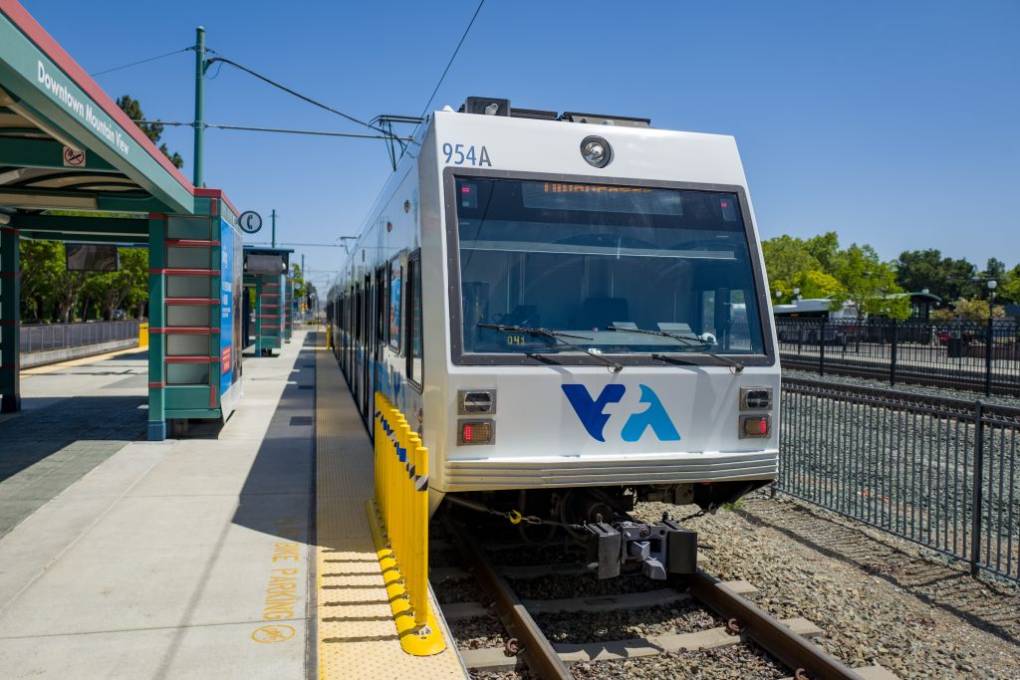
"content": "\u003cp>Santa Clara County’s public transit agency needs to make a series of improvements to strengthen its project management and financial oversight, according to a new state audit.\u003c/p>\n\u003cp>The Santa Clara Valley Transportation Authority, or VTA, also needs to more frequently report key metrics to its board of directors, and lay out a new strategic plan based on specific performance goals, Grant Parks, the state auditor, said in his report.\u003c/p>\n\u003cp>\u003ca href=\"https://www.auditor.ca.gov/reports/2023-101-santa-clara-valley-transportation-authority/\">The 84-page report\u003c/a> was released Tuesday, a little more than a year after Assemblymember Marc Berman (D-Menlo Park) asked the state to look into the VTA.\u003c/p>\n\u003cp>When requesting the audit, Berman noted the agency has been the subject of three critical civil grand jury reports since 2004 and was previously audited by the state in 2008. The most recent report found that the agency had made but not sustained many of the changes recommended in the 2008 audit.\u003c/p>\n\u003cp>“I think the auditor’s report provides a really helpful roadmap for VTA to improve their operations, improve their financial management and to improve their governance,” Berman said. “I was encouraged to see the VTA board agreed with the vast majority of the recommendations from the state auditor.”\u003c/p>\n\u003cp>[ad fullwidth]\u003c/p>\n\u003cp>However, VTA officials did not agree with two key recommendations in the report. One suggests requiring local government officials to publicly explain the reasoning behind the board members they’ve chosen to represent their region and why they think those appointees are qualified. Currently, some groups of cities appoint their representatives in private meetings.\u003c/p>\n\u003cp>VTA countered that a more expedient solution would be to require each appointee to fill out a questionnaire attesting to their experience before they are sworn in, an option the auditor dismissed on the grounds that it would not appropriately hold officials accountable for their appointment decisions.\u003c/p>\n\u003cp>The auditor also suggested lawmakers increase VTA board-member term lengths from two to four years to boost experience and strengthen stability. The report noted that “VTA’s directors continue to average shorter tenures compared to their peers.”\u003c/p>\n\u003cp>VTA has countered that its current two-year terms work well because they offer more flexibility to the cities that select appointees to the board. The agency also said it would continue encouraging those cities to reappoint members for consecutive terms whenever feasible.\u003c/p>\n\u003cp>Berman said he was “surprised and disappointed” that VTA is resisting those changes.\u003c/p>\n\u003cp>“To be honest, I found their arguments against those two recommendations to be laughably weak,” he said. “It makes no sense from a good governance standpoint, either in how you appoint the board members or for how long you appoint the board members.[aside label=\"More public transit coverage\" tag=\"public-transit\"]In a statement, Santa Clara County Supervisor Cindy Chavez, chair of the VTA board, didn’t directly address those points of disagreement but said she thought the report was thorough, fair and thoughtful.\u003c/p>\n\u003cp>“VTA has a strong commitment to continuous improvement and takes every independent evaluation very seriously,” she said.\u003c/p>\n\u003cp>The most recent audit comes four years after a county grand jury investigation found the agency operated one of the “most expensive and least efficient” transit systems in the country and accused it of making many service decisions for political reasons rather than those in the best interest of quality transportation.\u003c/p>\n\u003cp>“Operating costs increase continuously, and taxpayers subsidize 90% of these costs, to the tune of about $5.50 per rider for each bus trip and $10.75 per rider for each light rail trip,” the 2019 grand jury report said.\u003c/p>\n\u003cp>The most recent audit noted that VTA should — but does not — conduct cost-benefit analyses of its projects, nor does it consistently estimate the costs of project operations and maintenance. It also does not regularly inform its board about cost increases or schedule changes, it said.\u003c/p>\n\u003cp>And though the report said that VTA has generally followed best practices when selecting which capital improvement projects to pursue, it found that the agency neglected to do a cost-benefit analysis before pursuing the Eastridge to BART Regional Connector, a project that broke ground earlier this month to extend light rail service about 2.4 miles.\u003c/p>\n\u003cp>“As a result, it is not clear whether one of these projects — an extension of VTA’s light rail system — is the best use of the $653 million cost VTA plans to incur,” the report said, recommending that the agency set a monetary threshold to determine when cost-benefit analyses are worthwhile.\u003c/p>\n\u003cp>The audit recommended that VTA officials report detailed information to the board with greater frequency, including changes in project costs and scheduling, and key performance metrics.\u003c/p>\n\u003cp>The report also found that VTA’s total operating costs per passenger trip and per service hour were higher than any of the five other comparable transit agencies the auditor looked at — including those in Los Angeles, Orange County and Sacramento.\u003c/p>\n\u003cp>“These high operating cost metrics indicate that VTA is not operating as efficiently as its peers, which warrants VTA’s further review to assess the causes,” the auditor said. “However, because VTA staff do not regularly report these types of data to the board, the board has a limited ability to monitor VTA’s performance and direct VTA staff to identify and address causes.”\u003c/p>\n\u003cp>Greg Richardson, VTA’s chief financial officer, said the agency has been working to improve its reporting to the board while also ensuring information is easily digestible and concise.\u003c/p>\n\u003cp>“It just hasn’t been happening on a routine basis and we’ve recognized that, and it’s work that we’re putting in place right now to begin doing,” Richardson told KQED. “I think we’ve done a pretty good job of keeping the board informed on a quarterly basis of what I would call the basic financial performance, but what we really haven’t dived into is metric-type information.”\u003c/p>\n\u003cp>The most recent audit also noted that while VTA is in a “relatively good financial condition,” about 60% of its revenue has come from four sales tax measures, three of which will sunset within the next three decades.\u003c/p>\n\u003cp>[ad floatright]\u003c/p>\n\u003cp>“VTA should begin planning to identify and generate its replacement revenue sources now,” the auditor said, noting that replacement tax measures take a long time to draft and get on the ballot.\u003c/p>\n\n",
"blocks": [],
"excerpt": "The report also said the South Bay transit agency needs to better inform its board of directors about key metrics and draft a new strategic plan based on specific performance goals.",
"status": "publish",
"parent": 0,
"modified": 1719447605,
"stats": {
"hasAudio": false,
"hasVideo": false,
"hasChartOrMap": false,
"iframeSrcs": [],
"hasGoogleForm": false,
"hasGallery": false,
"hasHearkenModule": false,
"hasPolis": false,
"paragraphCount": 26,
"wordCount": 1099
},
"headData": {
"title": "VTA Needs Better Project Planning and Oversight, State Auditor Says | KQED",
"description": "The report also said the South Bay transit agency needs to better inform its board of directors about key metrics and draft a new strategic plan based on specific performance goals.",
"ogTitle": "",
"ogDescription": "",
"ogImgId": "",
"twTitle": "",
"twDescription": "",
"twImgId": "",
"schema": {
"@context": "https://schema.org",
"@type": "NewsArticle",
"headline": "VTA Needs Better Project Planning and Oversight, State Auditor Says",
"datePublished": "2024-06-12T15:08:29-07:00",
"dateModified": "2024-06-26T17:20:05-07:00",
"image": "https://cdn.kqed.org/wp-content/uploads/2020/02/KQED-OG-Image@1x.png",
"isAccessibleForFree": "True",
"publisher": {
"@type": "NewsMediaOrganization",
"@id": "https://www.kqed.org/#organization",
"name": "KQED",
"logo": "https://cdn.kqed.org/wp-content/uploads/2020/02/KQED-OG-Image@1x.png",
"url": "https://www.kqed.org",
"sameAs": [
"https://www.facebook.com/KQED",
"https://twitter.com/KQED",
"https://www.instagram.com/kqed/",
"https://www.tiktok.com/@kqedofficial",
"https://www.linkedin.com/company/kqed",
"https://www.youtube.com/channel/UCeC0IOo7i1P_61zVUWbJ4nw"
]
}
}
},
"sticky": false,
"nprStoryId": "kqed-11989983",
"excludeFromSiteSearch": "Include",
"articleAge": "0",
"path": "/news/11989983/vta-needs-better-project-planning-and-oversight-state-auditor-says",
"audioTrackLength": null,
"parsedContent": [
{
"type": "contentString",
"content": "\u003cdiv class=\"post-body\">\u003cp>\u003cp>Santa Clara County’s public transit agency needs to make a series of improvements to strengthen its project management and financial oversight, according to a new state audit.\u003c/p>\n\u003cp>The Santa Clara Valley Transportation Authority, or VTA, also needs to more frequently report key metrics to its board of directors, and lay out a new strategic plan based on specific performance goals, Grant Parks, the state auditor, said in his report.\u003c/p>\n\u003cp>\u003ca href=\"https://www.auditor.ca.gov/reports/2023-101-santa-clara-valley-transportation-authority/\">The 84-page report\u003c/a> was released Tuesday, a little more than a year after Assemblymember Marc Berman (D-Menlo Park) asked the state to look into the VTA.\u003c/p>\n\u003cp>When requesting the audit, Berman noted the agency has been the subject of three critical civil grand jury reports since 2004 and was previously audited by the state in 2008. The most recent report found that the agency had made but not sustained many of the changes recommended in the 2008 audit.\u003c/p>\n\u003cp>“I think the auditor’s report provides a really helpful roadmap for VTA to improve their operations, improve their financial management and to improve their governance,” Berman said. “I was encouraged to see the VTA board agreed with the vast majority of the recommendations from the state auditor.”\u003c/p>\n\u003cp>\u003c/p>\u003c/div>",
"attributes": {
"named": {},
"numeric": []
}
},
{
"type": "component",
"content": "",
"name": "ad",
"attributes": {
"named": {
"label": "fullwidth"
},
"numeric": [
"fullwidth"
]
}
},
{
"type": "contentString",
"content": "\u003cdiv class=\"post-body\">\u003cp>\u003c/p>\n\u003cp>However, VTA officials did not agree with two key recommendations in the report. One suggests requiring local government officials to publicly explain the reasoning behind the board members they’ve chosen to represent their region and why they think those appointees are qualified. Currently, some groups of cities appoint their representatives in private meetings.\u003c/p>\n\u003cp>VTA countered that a more expedient solution would be to require each appointee to fill out a questionnaire attesting to their experience before they are sworn in, an option the auditor dismissed on the grounds that it would not appropriately hold officials accountable for their appointment decisions.\u003c/p>\n\u003cp>The auditor also suggested lawmakers increase VTA board-member term lengths from two to four years to boost experience and strengthen stability. The report noted that “VTA’s directors continue to average shorter tenures compared to their peers.”\u003c/p>\n\u003cp>VTA has countered that its current two-year terms work well because they offer more flexibility to the cities that select appointees to the board. The agency also said it would continue encouraging those cities to reappoint members for consecutive terms whenever feasible.\u003c/p>\n\u003cp>Berman said he was “surprised and disappointed” that VTA is resisting those changes.\u003c/p>\n\u003cp>“To be honest, I found their arguments against those two recommendations to be laughably weak,” he said. “It makes no sense from a good governance standpoint, either in how you appoint the board members or for how long you appoint the board members.\u003c/p>\u003c/div>",
"attributes": {
"named": {},
"numeric": []
}
},
{
"type": "component",
"content": "",
"name": "aside",
"attributes": {
"named": {
"label": "More public transit coverage ",
"tag": "public-transit"
},
"numeric": []
}
},
{
"type": "contentString",
"content": "\u003cdiv class=\"post-body\">\u003cp>In a statement, Santa Clara County Supervisor Cindy Chavez, chair of the VTA board, didn’t directly address those points of disagreement but said she thought the report was thorough, fair and thoughtful.\u003c/p>\n\u003cp>“VTA has a strong commitment to continuous improvement and takes every independent evaluation very seriously,” she said.\u003c/p>\n\u003cp>The most recent audit comes four years after a county grand jury investigation found the agency operated one of the “most expensive and least efficient” transit systems in the country and accused it of making many service decisions for political reasons rather than those in the best interest of quality transportation.\u003c/p>\n\u003cp>“Operating costs increase continuously, and taxpayers subsidize 90% of these costs, to the tune of about $5.50 per rider for each bus trip and $10.75 per rider for each light rail trip,” the 2019 grand jury report said.\u003c/p>\n\u003cp>The most recent audit noted that VTA should — but does not — conduct cost-benefit analyses of its projects, nor does it consistently estimate the costs of project operations and maintenance. It also does not regularly inform its board about cost increases or schedule changes, it said.\u003c/p>\n\u003cp>And though the report said that VTA has generally followed best practices when selecting which capital improvement projects to pursue, it found that the agency neglected to do a cost-benefit analysis before pursuing the Eastridge to BART Regional Connector, a project that broke ground earlier this month to extend light rail service about 2.4 miles.\u003c/p>\n\u003cp>“As a result, it is not clear whether one of these projects — an extension of VTA’s light rail system — is the best use of the $653 million cost VTA plans to incur,” the report said, recommending that the agency set a monetary threshold to determine when cost-benefit analyses are worthwhile.\u003c/p>\n\u003cp>The audit recommended that VTA officials report detailed information to the board with greater frequency, including changes in project costs and scheduling, and key performance metrics.\u003c/p>\n\u003cp>The report also found that VTA’s total operating costs per passenger trip and per service hour were higher than any of the five other comparable transit agencies the auditor looked at — including those in Los Angeles, Orange County and Sacramento.\u003c/p>\n\u003cp>“These high operating cost metrics indicate that VTA is not operating as efficiently as its peers, which warrants VTA’s further review to assess the causes,” the auditor said. “However, because VTA staff do not regularly report these types of data to the board, the board has a limited ability to monitor VTA’s performance and direct VTA staff to identify and address causes.”\u003c/p>\n\u003cp>Greg Richardson, VTA’s chief financial officer, said the agency has been working to improve its reporting to the board while also ensuring information is easily digestible and concise.\u003c/p>\n\u003cp>“It just hasn’t been happening on a routine basis and we’ve recognized that, and it’s work that we’re putting in place right now to begin doing,” Richardson told KQED. “I think we’ve done a pretty good job of keeping the board informed on a quarterly basis of what I would call the basic financial performance, but what we really haven’t dived into is metric-type information.”\u003c/p>\n\u003cp>The most recent audit also noted that while VTA is in a “relatively good financial condition,” about 60% of its revenue has come from four sales tax measures, three of which will sunset within the next three decades.\u003c/p>\n\u003cp>\u003c/p>\u003c/div>",
"attributes": {
"named": {},
"numeric": []
}
},
{
"type": "component",
"content": "",
"name": "ad",
"attributes": {
"named": {
"label": "floatright"
},
"numeric": [
"floatright"
]
}
},
{
"type": "contentString",
"content": "\u003cdiv class=\"post-body\">\u003cp>\u003c/p>\n\u003cp>“VTA should begin planning to identify and generate its replacement revenue sources now,” the auditor said, noting that replacement tax measures take a long time to draft and get on the ballot.\u003c/p>\n\n\u003c/div>\u003c/p>",
"attributes": {
"named": {},
"numeric": []
}
}
],
"link": "/news/11989983/vta-needs-better-project-planning-and-oversight-state-auditor-says",
"authors": [
"11906"
],
"categories": [
"news_8",
"news_1397"
],
"tags": [
"news_1764",
"news_18188",
"news_29087",
"news_21285",
"news_20517",
"news_20675"
],
"featImg": "news_11985193",
"label": "news"
},
"news_11988365": {
"type": "posts",
"id": "news_11988365",
"meta": {
"index": "posts_1716263798",
"site": "news",
"id": "11988365",
"score": null,
"sort": [
1717163461000
]
},
"guestAuthors": [],
"slug": "a-bill-to-save-bay-area-transit-from-fiscal-disaster-is-dead-at-least-for-now",
"title": "A Bill to Save Bay Area Transit From Fiscal Disaster Is Dead, at Least for Now",
"publishDate": 1717163461,
"format": "standard",
"headTitle": "A Bill to Save Bay Area Transit From Fiscal Disaster Is Dead, at Least for Now | KQED",
"labelTerm": {
"site": "news"
},
"content": "\u003cp>\u003cem>Updated 11:55 a.m. Friday\u003c/em>\u003c/p>\n\u003cp>An ambitious proposal for a regional tax seen as crucial to the long-term survival of Bay Area public transit agencies is dead, the casualty of a dispute over the scope of the measure and who would control the billions of dollars it would raise.\u003c/p>\n\u003cp>State Sens. Scott Wiener of San Francisco and Aisha Wahab of Hayward, the Democratic co-authors of \u003ca href=\"https://leginfo.legislature.ca.gov/faces/billTextClient.xhtml?bill_id=202320240SB1031\">SB 1031\u003c/a>, announced late Thursday they were pulling the bill from further consideration this year in the face of growing opposition across the region.\u003c/p>\n\u003cp>“We worked very hard over the course of this year to try to build consensus within the region around this measure,” Wiener said in an interview. “It became clear that we didn’t have enough time to get that done this year. There are times when you have to take a deep breath, hit the reset button and start over again.”\u003c/p>\n\u003cp>Wahab issued a statement saying the needs the bill addressed, including efficiency, agency consolidation and improved governance, are still urgent. “Riders deserve that, and stakeholders need to prioritize these efforts to save public transit,” she said.\u003c/p>\n\u003cp>[ad fullwidth]\u003c/p>\n\u003cp>The legislation, dubbed the Connect Bay Area Act, would authorize a November 2026 vote on a multicounty tax measure to raise as much as $1.5 billion a year to help pay for train, bus and ferry operations and for initiatives to help better integrate the 27 agencies that deliver those services. The bill would also pay for some street and highway work.\u003c/p>\n\u003cp>Wiener said he remains committed to crafting a plan that will allow transit agencies to head off major deficits and deep service cuts and promised to bring a new measure to the Legislature early next year. Work on a new proposal will begin immediately, he said.\u003c/p>\n\u003cp>“My hope — I can’t guarantee it — but my hope is that by late 2024 we’ll at least have a structure in place so we can be optimistic about 2025 and give the (transit) operators that same optimism” that financial help is on the way, Wiener said.\u003c/p>\n\u003cp>The bill has been seen as crucial to ensuring that BART, Muni, AC Transit, Caltrain and other agencies aren’t forced to slash service because of catastrophic deficits they’re facing in the next few years. The shortfalls are due mostly to the loss of ridership and fare revenue thanks to the pandemic and continuing shifts in work and commute patterns.\u003c/p>\n\u003cp>The legislation was also seen as a vehicle to pay for making transit more frequent, reliable and affordable across the region. It would do that not only by helping agencies purchase more vehicles, but by integrating fares and schedules among agencies and requiring large employers to subsidize all-you-can-ride transit passes for their workers.[aside postID=\"news_11985190,news_11985965\" label=\"Related Stories\"]\u003c/p>\n\u003cp>But the bill, which is just as complex as its 10,000-word length implies, drew resistance from many quarters. Progressive transportation advocates said they’d oppose the measure if it allowed funding for highway expansion projects. Officials with some transit operators, like Caltrain, didn’t like a provision that would require a study of how to consolidate at least some of the region’s 27 agencies.\u003c/p>\n\u003cp>There was also a falling out about what kind of taxes or fees the bill should allow. The proposal offered several alternatives: a half-cent sales tax, a parcel tax on property owners, a payroll tax to be paid by employers, or a future vehicle registration surcharge.\u003c/p>\n\u003cp>But business groups, including the Bay Area Council, said they’d oppose a payroll tax. Some bill supporters were cool to the idea of a sales tax, a levy that would fall most heavily on lower-income residents in an already heavily taxed region. Bill sponsors rejected a proposal from progressive transit advocates to consider a regional income tax on higher-income residents.\u003c/p>\n\u003cp>But the most significant disagreements centered on the issue of “return to source,” or how much money raised in each Bay Area county would be available to use there.\u003c/p>\n\u003cp>The bill provided that tax proceeds would be funneled through the Metropolitan Transportation Commission. It guaranteed that during the proposed tax measure’s first five years, at least 70% of revenue generated in a county would be invested in projects and programs that benefited that county. That percentage would rise to 90% after the initial five years.\u003c/p>\n\u003cp>Santa Clara County officials came out against the measure, saying that the initial 70% allocation was too low and that funds should come back directly to the county without the MTC’s involvement. Officials in the South Bay said they were also concerned that a new sales tax would interfere with several existing sales taxes that support transit operations in the county and are being used to help pay for the $12.7 billion BART extension through downtown San José.\u003c/p>\n\u003cp>That dispute came to a head last Friday when the bill made it to the State Senate floor. Sen. Dave Cortese, a San José Democrat, called the SB 1031 tax proposal “an existential threat” to Santa Clara County and complained that his proposal to send revenue from the tax directly to the counties had been “flat out rejected.”\u003c/p>\n\u003cp>“That told me that we need to organize people in my area and we need to make sure we do everything we can to put a stop to this,” Cortese said.\u003c/p>\n\u003cp>With Wiener and Wahab promising further work on the bill, the Senate approved it 26–10 and sent it to the Assembly.\u003c/p>\n\u003cp>Wiener on Thursday acknowledged Santa Clara County’s influence in the decision to pull the bill, but he said it’s crucial to find a way to put public transportation on a healthy financial footing for the long term.\u003c/p>\n\u003cp>“The challenge that we have is how do we fund these priorities in a way that all the different counties around the region feel like they’re being treated fairly and feel like they are getting a strong benefit from the measure?” he said. “If we’re asking people to pay in, we want people to be confident that they are getting a benefit.”\u003c/p>\n\u003cp>Ian Griffiths, the policy director for Seamless Bay Area, a grassroots group that was one of the bill’s chief advocates, said he was disappointed the measure has been withdrawn. But he says that creates an opportunity to better communicate the benefits a transit tax measure could deliver.\u003c/p>\n\u003cp>He said advocates could do that “by spending time over the next six months developing a clear service vision of the transit network that we’re trying to create. We’ve talked about policies like integrated fares and integrated service, but actually having a … map of service improvements across the region, really I think can help make it more real” for voters.\u003c/p>\n\u003cp>BART’s deficit in the fiscal year starting July 1, 2026, is currently projected at $385 million, with annual shortfalls of $350 million or more continuing into the foreseeable future. San Francisco’s Municipal Transportation Agency, which runs Muni transit service, expects its deficit to top $200 million during the same year.\u003c/p>\n\u003cp>Both agencies, like most other transit operators across the country, have survived on massive infusions of federal cash to replace lost fare revenue. They have warned of drastic service cuts if new operating support isn’t forthcoming.\u003c/p>\n\u003cp>SFMTA chief Jeffrey Tumlin said \u003ca href=\"https://www.sfchronicle.com/bayarea/article/bart-transit-death-spiral-19472978.php\">earlier this week\u003c/a> that major service cuts could begin next year. BART, which has said it may have to shut down two of its five lines, shutter some stations and run trains as much as 60 minutes apart, has not talked about when such steps might be taken.\u003c/p>\n\u003cp>[ad floatright]\u003c/p>\n\u003cp>Neither agency responded immediately to requests for comment on the latest legislative developments.\u003c/p>\n\n",
"blocks": [],
"excerpt": "Amid growing opposition, sponsors pull measure that would authorize regional vote on a tax that would have raised as much as $1.5 billion a year. ",
"status": "publish",
"parent": 0,
"modified": 1746901126,
"stats": {
"hasAudio": false,
"hasVideo": false,
"hasChartOrMap": false,
"iframeSrcs": [],
"hasGoogleForm": false,
"hasGallery": false,
"hasHearkenModule": false,
"hasPolis": false,
"paragraphCount": 29,
"wordCount": 1345
},
"headData": {
"title": "A Bill to Save Bay Area Transit From Fiscal Disaster Is Dead, at Least for Now | KQED",
"description": "Amid growing opposition, sponsors pull measure that would authorize regional vote on a tax that would have raised as much as $1.5 billion a year. ",
"ogTitle": "",
"ogDescription": "",
"ogImgId": "",
"twTitle": "",
"twDescription": "",
"twImgId": "",
"schema": {
"@context": "https://schema.org",
"@type": "NewsArticle",
"headline": "A Bill to Save Bay Area Transit From Fiscal Disaster Is Dead, at Least for Now",
"datePublished": "2024-05-31T06:51:01-07:00",
"dateModified": "2025-05-10T11:18:46-07:00",
"image": "https://cdn.kqed.org/wp-content/uploads/2020/02/KQED-OG-Image@1x.png",
"isAccessibleForFree": "True",
"publisher": {
"@type": "NewsMediaOrganization",
"@id": "https://www.kqed.org/#organization",
"name": "KQED",
"logo": "https://cdn.kqed.org/wp-content/uploads/2020/02/KQED-OG-Image@1x.png",
"url": "https://www.kqed.org",
"sameAs": [
"https://www.facebook.com/KQED",
"https://twitter.com/KQED",
"https://www.instagram.com/kqed/",
"https://www.tiktok.com/@kqedofficial",
"https://www.linkedin.com/company/kqed",
"https://www.youtube.com/channel/UCeC0IOo7i1P_61zVUWbJ4nw"
]
}
}
},
"sticky": false,
"nprStoryId": "kqed-11988365",
"templateType": "standard",
"featuredImageType": "standard",
"excludeFromSiteSearch": "Include",
"articleAge": "0",
"path": "/news/11988365/a-bill-to-save-bay-area-transit-from-fiscal-disaster-is-dead-at-least-for-now",
"audioTrackLength": null,
"parsedContent": [
{
"type": "contentString",
"content": "\u003cdiv class=\"post-body\">\u003cp>\u003cp>\u003cem>Updated 11:55 a.m. Friday\u003c/em>\u003c/p>\n\u003cp>An ambitious proposal for a regional tax seen as crucial to the long-term survival of Bay Area public transit agencies is dead, the casualty of a dispute over the scope of the measure and who would control the billions of dollars it would raise.\u003c/p>\n\u003cp>State Sens. Scott Wiener of San Francisco and Aisha Wahab of Hayward, the Democratic co-authors of \u003ca href=\"https://leginfo.legislature.ca.gov/faces/billTextClient.xhtml?bill_id=202320240SB1031\">SB 1031\u003c/a>, announced late Thursday they were pulling the bill from further consideration this year in the face of growing opposition across the region.\u003c/p>\n\u003cp>“We worked very hard over the course of this year to try to build consensus within the region around this measure,” Wiener said in an interview. “It became clear that we didn’t have enough time to get that done this year. There are times when you have to take a deep breath, hit the reset button and start over again.”\u003c/p>\n\u003cp>Wahab issued a statement saying the needs the bill addressed, including efficiency, agency consolidation and improved governance, are still urgent. “Riders deserve that, and stakeholders need to prioritize these efforts to save public transit,” she said.\u003c/p>\n\u003cp>\u003c/p>\u003c/div>",
"attributes": {
"named": {},
"numeric": []
}
},
{
"type": "component",
"content": "",
"name": "ad",
"attributes": {
"named": {
"label": "fullwidth"
},
"numeric": [
"fullwidth"
]
}
},
{
"type": "contentString",
"content": "\u003cdiv class=\"post-body\">\u003cp>\u003c/p>\n\u003cp>The legislation, dubbed the Connect Bay Area Act, would authorize a November 2026 vote on a multicounty tax measure to raise as much as $1.5 billion a year to help pay for train, bus and ferry operations and for initiatives to help better integrate the 27 agencies that deliver those services. The bill would also pay for some street and highway work.\u003c/p>\n\u003cp>Wiener said he remains committed to crafting a plan that will allow transit agencies to head off major deficits and deep service cuts and promised to bring a new measure to the Legislature early next year. Work on a new proposal will begin immediately, he said.\u003c/p>\n\u003cp>“My hope — I can’t guarantee it — but my hope is that by late 2024 we’ll at least have a structure in place so we can be optimistic about 2025 and give the (transit) operators that same optimism” that financial help is on the way, Wiener said.\u003c/p>\n\u003cp>The bill has been seen as crucial to ensuring that BART, Muni, AC Transit, Caltrain and other agencies aren’t forced to slash service because of catastrophic deficits they’re facing in the next few years. The shortfalls are due mostly to the loss of ridership and fare revenue thanks to the pandemic and continuing shifts in work and commute patterns.\u003c/p>\n\u003cp>The legislation was also seen as a vehicle to pay for making transit more frequent, reliable and affordable across the region. It would do that not only by helping agencies purchase more vehicles, but by integrating fares and schedules among agencies and requiring large employers to subsidize all-you-can-ride transit passes for their workers.\u003c/p>\u003c/div>",
"attributes": {
"named": {},
"numeric": []
}
},
{
"type": "component",
"content": "",
"name": "aside",
"attributes": {
"named": {
"postid": "news_11985190,news_11985965",
"label": "Related Stories "
},
"numeric": []
}
},
{
"type": "contentString",
"content": "\u003cdiv class=\"post-body\">\u003cp>\u003c/p>\n\u003cp>But the bill, which is just as complex as its 10,000-word length implies, drew resistance from many quarters. Progressive transportation advocates said they’d oppose the measure if it allowed funding for highway expansion projects. Officials with some transit operators, like Caltrain, didn’t like a provision that would require a study of how to consolidate at least some of the region’s 27 agencies.\u003c/p>\n\u003cp>There was also a falling out about what kind of taxes or fees the bill should allow. The proposal offered several alternatives: a half-cent sales tax, a parcel tax on property owners, a payroll tax to be paid by employers, or a future vehicle registration surcharge.\u003c/p>\n\u003cp>But business groups, including the Bay Area Council, said they’d oppose a payroll tax. Some bill supporters were cool to the idea of a sales tax, a levy that would fall most heavily on lower-income residents in an already heavily taxed region. Bill sponsors rejected a proposal from progressive transit advocates to consider a regional income tax on higher-income residents.\u003c/p>\n\u003cp>But the most significant disagreements centered on the issue of “return to source,” or how much money raised in each Bay Area county would be available to use there.\u003c/p>\n\u003cp>The bill provided that tax proceeds would be funneled through the Metropolitan Transportation Commission. It guaranteed that during the proposed tax measure’s first five years, at least 70% of revenue generated in a county would be invested in projects and programs that benefited that county. That percentage would rise to 90% after the initial five years.\u003c/p>\n\u003cp>Santa Clara County officials came out against the measure, saying that the initial 70% allocation was too low and that funds should come back directly to the county without the MTC’s involvement. Officials in the South Bay said they were also concerned that a new sales tax would interfere with several existing sales taxes that support transit operations in the county and are being used to help pay for the $12.7 billion BART extension through downtown San José.\u003c/p>\n\u003cp>That dispute came to a head last Friday when the bill made it to the State Senate floor. Sen. Dave Cortese, a San José Democrat, called the SB 1031 tax proposal “an existential threat” to Santa Clara County and complained that his proposal to send revenue from the tax directly to the counties had been “flat out rejected.”\u003c/p>\n\u003cp>“That told me that we need to organize people in my area and we need to make sure we do everything we can to put a stop to this,” Cortese said.\u003c/p>\n\u003cp>With Wiener and Wahab promising further work on the bill, the Senate approved it 26–10 and sent it to the Assembly.\u003c/p>\n\u003cp>Wiener on Thursday acknowledged Santa Clara County’s influence in the decision to pull the bill, but he said it’s crucial to find a way to put public transportation on a healthy financial footing for the long term.\u003c/p>\n\u003cp>“The challenge that we have is how do we fund these priorities in a way that all the different counties around the region feel like they’re being treated fairly and feel like they are getting a strong benefit from the measure?” he said. “If we’re asking people to pay in, we want people to be confident that they are getting a benefit.”\u003c/p>\n\u003cp>Ian Griffiths, the policy director for Seamless Bay Area, a grassroots group that was one of the bill’s chief advocates, said he was disappointed the measure has been withdrawn. But he says that creates an opportunity to better communicate the benefits a transit tax measure could deliver.\u003c/p>\n\u003cp>He said advocates could do that “by spending time over the next six months developing a clear service vision of the transit network that we’re trying to create. We’ve talked about policies like integrated fares and integrated service, but actually having a … map of service improvements across the region, really I think can help make it more real” for voters.\u003c/p>\n\u003cp>BART’s deficit in the fiscal year starting July 1, 2026, is currently projected at $385 million, with annual shortfalls of $350 million or more continuing into the foreseeable future. San Francisco’s Municipal Transportation Agency, which runs Muni transit service, expects its deficit to top $200 million during the same year.\u003c/p>\n\u003cp>Both agencies, like most other transit operators across the country, have survived on massive infusions of federal cash to replace lost fare revenue. They have warned of drastic service cuts if new operating support isn’t forthcoming.\u003c/p>\n\u003cp>SFMTA chief Jeffrey Tumlin said \u003ca href=\"https://www.sfchronicle.com/bayarea/article/bart-transit-death-spiral-19472978.php\">earlier this week\u003c/a> that major service cuts could begin next year. BART, which has said it may have to shut down two of its five lines, shutter some stations and run trains as much as 60 minutes apart, has not talked about when such steps might be taken.\u003c/p>\n\u003cp>\u003c/p>\u003c/div>",
"attributes": {
"named": {},
"numeric": []
}
},
{
"type": "component",
"content": "",
"name": "ad",
"attributes": {
"named": {
"label": "floatright"
},
"numeric": [
"floatright"
]
}
},
{
"type": "contentString",
"content": "\u003cdiv class=\"post-body\">\u003cp>\u003c/p>\n\u003cp>Neither agency responded immediately to requests for comment on the latest legislative developments.\u003c/p>\n\n\u003c/div>\u003c/p>",
"attributes": {
"named": {},
"numeric": []
}
}
],
"link": "/news/11988365/a-bill-to-save-bay-area-transit-from-fiscal-disaster-is-dead-at-least-for-now",
"authors": [
"222"
],
"categories": [
"news_8"
],
"tags": [
"news_24191",
"news_269",
"news_20008",
"news_320",
"news_1764",
"news_18188",
"news_1217"
],
"featImg": "news_11941203",
"label": "news"
},
"news_11986396": {
"type": "posts",
"id": "news_11986396",
"meta": {
"index": "posts_1716263798",
"site": "news",
"id": "11986396",
"score": null,
"sort": [
1715853627000
]
},
"guestAuthors": [],
"slug": "when-bart-was-built-people-and-houses-had-to-go",
"title": "When BART Was Built, People — and Houses — Had to Go",
"publishDate": 1715853627,
"format": "standard",
"headTitle": "When BART Was Built, People — and Houses — Had to Go | KQED",
"labelTerm": {
"term": 33523,
"site": "news"
},
"content": "\u003cp>\u003ca href=\"#episode-transcript\">View the full episode transcript.\u003c/a>\u003c/p>\n\u003cp>Back in the early 1960s, when BART was just a sketch on a map, planners with the young transit agency had a task in front of them. BART had to acquire around 2,200 parcels of land in order to build the transportation system.\u003c/p>\n\u003cp>Exactly how the agency went about getting that land was something that always puzzled Janine Dictor.\u003c/p>\n\u003cp>For her, the question was also personal. Growing up, her family would tell stories about an amazing house her great-grandparents used to own in North Oakland, at 59th, and what is now Martin Luther King Jr. Way (it was called Grove Street back then). But the stories always ended with how they had to sell their home to BART.\u003c/p>\n\u003cp>[baycuriouspodcastinfo]“There was always a sad tone to the story as if they didn’t have control over it,” Dictor said.\u003c/p>\n\u003cp>Dictor’s great-grandparents, Vito and Elizabeth Campilongo, loved that house. They were both immigrants from Italy, and they kept the house full of family, friends and good food. Vito tended a bountiful garden in the backyard.\u003c/p>\n\u003cp>“My grandmother loved to cook in the basement,” said Johanne Dictor, Janine’s mother. “She had this great kitchen downstairs where she made her ravioli; she made her sausages with her women friends.”\u003c/p>\n\u003cp>It was a happy time, but it didn’t last. By the time Johanne was a teenager in the early ‘60s, one topic started to dominate their family dinners.\u003c/p>\n\u003cp>“I remember we’d be sitting at the table and they’d say, ‘They’re going to take my house, they say we have to sell it. And we have to leave everything here.’ And you know, they just were devastated,” said Johanne about her grandparents.\u003c/p>\n\u003cp>Ultimately, the Campilongos sold their house to BART and moved to San Leandro. Her grandfather planted a new garden, but he felt it was never as big or as beautiful as the one in Oakland.\u003c/p>\n\u003cp>“He’d sit on the porch in San Leandro looking so sad,” remembers Johanne.\u003c/p>\n\u003cp>All this history left Janine wondering how exactly the sale of her great-grandparents’ house went down. So she asked KQED’s Bay Curious to look into how much property BART acquired at the time of its inception and whether any homeowners challenged the agency.\u003c/p>\n\u003cp>“There must be a pretty robust story behind all of this, and it’s just odd that we never have known quite what it is,” Janine said.\u003c/p>\n\u003cfigure id=\"attachment_11986429\" class=\"wp-caption aligncenter\" style=\"max-width: 1384px\">\u003ca href=\"https://ww2.kqed.org/news/2024/05/16/when-bart-was-built-people-and-houses-had-to-go/vito_elizabeth_family/\" rel=\"attachment wp-att-11986429\">\u003cimg loading=\"lazy\" decoding=\"async\" class=\"size-full wp-image-11986429\" src=\"https://cdn.kqed.org/wp-content/uploads/sites/10/2024/05/Vito_Elizabeth_family.png\" alt=\"An old black-and-white photo of a family in their living room\" width=\"1384\" height=\"1020\" srcset=\"https://cdn.kqed.org/wp-content/uploads/sites/10/2024/05/Vito_Elizabeth_family.png 1384w, https://cdn.kqed.org/wp-content/uploads/sites/10/2024/05/Vito_Elizabeth_family-800x590.png 800w, https://cdn.kqed.org/wp-content/uploads/sites/10/2024/05/Vito_Elizabeth_family-1020x752.png 1020w, https://cdn.kqed.org/wp-content/uploads/sites/10/2024/05/Vito_Elizabeth_family-160x118.png 160w\" sizes=\"(max-width: 1384px) 100vw, 1384px\">\u003c/a>\u003cfigcaption class=\"wp-caption-text\">Vito and Elizabeth Campilongo (center) left their North Oakland home in the 1960s to make room for a BART line. \u003ccite>(Courtesy of the Campilongo family)\u003c/cite>\u003c/figcaption>\u003c/figure>\n\u003ch2>And so BART begins\u003c/h2>\n\u003cp>Like much of the country in the early 1950s, the Bay Area was in a post-war building boom. New houses were going up all over the region, in places like Concord and Fremont. City planners had to figure out how folks would get around and travel between all these developments.\u003c/p>\n\u003cp>State lawmakers began \u003ca href=\"https://www.foundsf.org/index.php?title=San_Francisco_Bay_Area_Rapid_Transit_Commission%E2%80%94The_Beginnings\">mapping out\u003c/a> a regional transportation system to connect the suburbs to the economic hubs of Oakland and San Francisco. In 1957, they passed a bill creating the Bay Area Rapid Transit District.\u003c/p>\n\u003cp>But BART needed land, including in residential areas where property was already owned and inhabited by people. As an entity charged with building public infrastructure, BART was given the power of eminent domain, a legal tool that helped it acquire the needed property.\u003c/p>\n\u003cp>According to Radhika Rao, a professor at UC San Francisco College of the Law, eminent domain allows the government to take people’s property “even if they don’t consent,” as long as it pays them fair market value for it.\u003c/p>\n\u003cp>Eminent domain is an important tool for governments, said Rao, because infrastructure projects like hospitals, public schools, highways, parks and train tracks might never be built without it.\u003c/p>\n\u003cp>“Because you could have one private property owner who says, ‘My house stands in the way, you can’t build a highway,’ and then we have no highway. So our infrastructure depends upon government having this power,” Rao said.\u003c/p>\n\u003cp>However, Rao says, historically, the use of eminent domain in California has disproportionately affected low-income people and communities of color.\u003c/p>\n\u003cp>[pullquote size=\"medium\" align=\"right\" citation=\"Radhika Rao, UC San Francisco College of Law\"]‘That just makes economic sense, right? Why would government situate your infrastructure in a place where you have to pay more?’[/pullquote]One reason, she said, is that government agencies often use eminent domain in areas with lower property values since it costs them less to acquire that property.\u003c/p>\n\u003cp>“That just makes economic sense, right? Why would government situate your infrastructure in a place where you have to pay more?” Rao said.\u003c/p>\n\u003cp>Another reason for the disproportionate impact, suggests Rao, is that government officials choose to develop areas where residents are less likely to organize against them.\u003c/p>\n\u003cp>“Who has the money to hire a lawyer and go to court saying, ‘the compensation that you’re offering me is not fair market value?’ Rao said.\u003c/p>\n\u003cp>[ad fullwidth]\u003c/p>\n\u003ch2>West Oakland residents displaced\u003c/h2>\n\u003cp>One of the places in the Bay Area hit hardest by eminent domain projects — including, but not limited to, BART construction — was West Oakland.\u003c/p>\n\u003cp>Maxine Willis Ussery was born in Shreveport, Louisiana in 1939, but her family moved to West Oakland when she was just a few years old.\u003c/p>\n\u003cp>“When I was a girl, Seventh Street and all of West Oakland was predominantly Black, owned by Black people. Beautiful old Victorians were there,” Willis Ussery said.\u003c/p>\n\u003cp>Her family, like many Black families at the time, had come from the South in search of work and a better life. Her mother and father made the journey from Louisiana and settled in West Oakland. They found jobs at the nearby Naval shipyard.\u003c/p>\n\u003cp>“They had no problems understanding that they had to develop their own businesses, their own services because that’s how they lived in the South,” Willis Ussery said.\u003c/p>\n\u003cp>She says the West Oakland community had everything they needed: drug stores, groceries, restaurants, churches, doctors, and lawyers. But starting in the 1950s, successive government infrastructure projects ripped apart the fabric of this community.\u003c/p>\n\u003cp>First, government agencies demolished homes and businesses for the Nimitz Freeway (Interstate 880) in the 1950s. Then, in the following decades, they cleared more buildings to make way for the Oakland Main Post Office and the Acorn housing projects. And then, \u003ca href=\"https://diva.sfsu.edu/collections/sfbatv/bundles/232778\">there was BART\u003c/a>. The Oakland Planning Department estimates that between 5,100 and 9,700 housing units were lost in West Oakland in the 1960s alone.\u003c/p>\n\u003cp>“It was like a dispersement of a whole community, not just taking the buildings, it was taking people who had lived there. Teachers, athletes, all of them were displaced,” Willis Ussery said.\u003c/p>\n\u003cp>The effect on the community was disastrous, she said, especially for the older folks.\u003c/p>\n\u003cp>“They were up in age, and they were moved into areas where they could afford to go with the money they were given for BART, which was not a lot,” Willis Ussery said.\u003c/p>\n\u003cp>A KQED analysis of the 1960 census reveals that the West Oakland census tracts hardest hit by eminent domain were where people of color lived — in some areas, as many as 95% of the residents were Black. Annual incomes in the development zones were also far lower than the city average. The neighborhood in North Oakland where the Campilongos lived had a higher median income but was also predominantly Black.\u003c/p>\n\u003cfigure id=\"attachment_11986231\" class=\"wp-caption aligncenter\" style=\"max-width: 2000px\">\u003ca href=\"https://ww2.kqed.org/news/240514-eminentdomain-25-bl-kqed/\">\u003cimg loading=\"lazy\" decoding=\"async\" class=\"size-full wp-image-11986231\" src=\"https://cdn.kqed.org/wp-content/uploads/sites/10/2024/05/240514-EMINENTDOMAIN-25-BL-KQED.jpg\" alt=\"A BART train above two streets intersecting\" width=\"2000\" height=\"1333\" srcset=\"https://cdn.kqed.org/wp-content/uploads/sites/10/2024/05/240514-EMINENTDOMAIN-25-BL-KQED.jpg 2000w, https://cdn.kqed.org/wp-content/uploads/sites/10/2024/05/240514-EMINENTDOMAIN-25-BL-KQED-800x533.jpg 800w, https://cdn.kqed.org/wp-content/uploads/sites/10/2024/05/240514-EMINENTDOMAIN-25-BL-KQED-1020x680.jpg 1020w, https://cdn.kqed.org/wp-content/uploads/sites/10/2024/05/240514-EMINENTDOMAIN-25-BL-KQED-160x107.jpg 160w, https://cdn.kqed.org/wp-content/uploads/sites/10/2024/05/240514-EMINENTDOMAIN-25-BL-KQED-1536x1024.jpg 1536w, https://cdn.kqed.org/wp-content/uploads/sites/10/2024/05/240514-EMINENTDOMAIN-25-BL-KQED-1920x1280.jpg 1920w\" sizes=\"(max-width: 2000px) 100vw, 2000px\">\u003c/a>\u003cfigcaption class=\"wp-caption-text\">A BART train runs along the tracks at 59th Street and Martin Luther King Jr Way in Oakland on May 14, 2024. \u003ccite>(Beth LaBerge/KQED)\u003c/cite>\u003c/figcaption>\u003c/figure>\n\u003ch2>Berkeley residents resist BART plans\u003c/h2>\n\u003cp>Some East Bay residents, such as Mable Howard of Berkeley, successfully altered BART’s path.\u003c/p>\n\u003cp>Howard argued that BART’s plan to construct raised tracks through part of the city would further divide it along racial lines. Her legal challenge was highlighted in the documentary “\u003ca href=\"https://video.kqed.org/video/welcome-to-the-neighborhood-truly-ca-zag6fb/\">Welcome to the Neighborhood\u003c/a>.”\u003c/p>\n\u003cp>As the documentary explains, in 1966, Berkeley voters approved a tax that would pay to put BART completely underground.\u003c/p>\n\u003cp>But BART proposed a design for the Ashby station that was slightly above ground. Howard felt that the design would further segregate the city. She teamed up with the late East Bay politician Ron Dellums, then a city council member, to successfully sue the agency to underground all their Berkeley infrastructure.\u003c/p>\n\u003cp>“We won the case. How do we know we won the case? Go to Berkeley. You’ll see the whole thing’s underground,” said attorney Matthew Weinberg in the film.\u003c/p>\n\u003ch2>BART spokesperson: ‘Lessons learned’\u003c/h2>\n\u003cp>These days, it is hard to imagine a Bay Area without BART. People from all over the Bay Area make millions of trips on it every month. Even the aerial tracks that tower over Martin Luther King Jr. Way, where the Campilongo house used to stand, seem to blend into the background of freeways and buildings.\u003c/p>\n\u003cp>BART’s Chief Communications Officer Alicia Trost says it’s still important for the agency to acknowledge the past harms that the agency committed.\u003c/p>\n\u003cp>“There was a lot of generational wealth that was deeply impacted, if not destroyed, because of the building of the BART system,” Trost said.\u003c/p>\n\u003cp>BART now has an Office of Civil Rights and other equity initiatives that Trost says are critical to rebuilding trust with the community.\u003c/p>\n\u003cp>[pullquote size=\"medium\" align=\"right\" citation=\"Alicia Trost, BART\"]‘There was a lot of generational wealth that was deeply impacted if not destroyed because of the building of the BART system.’[/pullquote]“Especially when we’re building on our land, we want to make sure there’s a carve-out specifically for affordable housing and that we are in a daily conversation with the community to make sure what we’re building is something that they want,” Trost said.\u003c/p>\n\u003cp>As the agency imagines future development, like building a possible second transbay tube between San Francisco and Oakland, she says they’re also developing plans to prevent the displacement of residents.\u003c/p>\n\u003cp>Trost said the uprooting of residents to create BART in the 1960s provided “lessons learned,” and mistakes that shouldn’t be repeated were made.\u003c/p>\n\u003cp>State leaders are also looking at the long-term impact that eminent domain property transfers have had on families and communities.\u003c/p>\n\u003cp>California State Senator Steven Bradford, a member of California’s \u003ca href=\"https://www.kqed.org/reparations\">Reparations Task Force\u003c/a>, introduced a bill in February that would compensate former property owners if their parcel was taken through eminent domain, but they didn’t receive just compensation due to racism or discrimination by the government.\u003c/p>\n\u003ch2>The price the Campilongos paid\u003c/h2>\n\u003cfigure id=\"attachment_11986413\" class=\"wp-caption alignright\" style=\"max-width: 800px\">\u003ca href=\"https://ww2.kqed.org/news/2024/05/16/when-bart-was-built-people-and-houses-had-to-go/campilongo_contract_page_01/\" rel=\"attachment wp-att-11986413\">\u003cimg loading=\"lazy\" decoding=\"async\" class=\"size-medium wp-image-11986413\" src=\"https://cdn.kqed.org/wp-content/uploads/sites/10/2024/05/Campilongo_contract_Page_01-800x1032.jpg\" alt=\"\" width=\"800\" height=\"1032\" srcset=\"https://cdn.kqed.org/wp-content/uploads/sites/10/2024/05/Campilongo_contract_Page_01-800x1032.jpg 800w, https://cdn.kqed.org/wp-content/uploads/sites/10/2024/05/Campilongo_contract_Page_01-1020x1316.jpg 1020w, https://cdn.kqed.org/wp-content/uploads/sites/10/2024/05/Campilongo_contract_Page_01-160x206.jpg 160w, https://cdn.kqed.org/wp-content/uploads/sites/10/2024/05/Campilongo_contract_Page_01-1190x1536.jpg 1190w, https://cdn.kqed.org/wp-content/uploads/sites/10/2024/05/Campilongo_contract_Page_01-1587x2048.jpg 1587w, https://cdn.kqed.org/wp-content/uploads/sites/10/2024/05/Campilongo_contract_Page_01.jpg 1701w\" sizes=\"(max-width: 800px) 100vw, 800px\">\u003c/a>\u003cfigcaption class=\"wp-caption-text\">The contract the Campilongos signed with BART.\u003c/figcaption>\u003c/figure>\n\u003cp>A public records request submitted by KQED reveals that the Bay Area Rapid Transit District paid Vito and Elizabeth Campilongo $25,000 for their property in North Oakland on Sept. 2, 1965. Adjusted for inflation, that’s about $245,000 today. These days, homes go for around $1 million in that neighborhood.\u003c/p>\n\u003cp>Janine and Johanne Dictor were excited to see the contract their relatives signed with BART, the physical evidence of their family history.\u003c/p>\n\u003cp>“Doesn’t that look like Nana’s handwriting?” Janine asked her mom.\u003c/p>\n\u003cp>But after the initial excitement, the mood turned somber.\u003c/p>\n\u003cp>“It’s about a lot more than what they were compensated,” Janine said. “It’s about the fact that they were forced into this, that they lost a lifestyle, that they lost a community,”\u003c/p>\n\u003cp>The premise of using eminent domain is that individual sacrifices are warranted to build public infrastructure. However, for families like the Dictors, the construction of BART was a painful turn in their history.\u003c/p>\n\u003cp>“After we lost that house, we lost the sense of our family in a way. It was kind of driven apart,” her mom, Johanne, added. “That house really brought us together.”\u003cbr>\n\u003cem>\u003cbr>\nSpecial thanks to Pam Uzzell for providing parts of her documentary “Welcome to the Neighborhood” and to KQED’s Dan Brekke for reporting support and data analysis. \u003c/em>\u003c/p>\n\u003cp>[baycuriousquestion]\u003c/p>\n\u003ch2 id=\"episode-transcript\">Episode Transcript\u003c/h2>\n\u003cp>\u003cem>Sounds of BART\u003c/em>\u003c/p>\n\u003cp>\u003cstrong>Olivia Allen-Price:\u003c/strong> Johanne Dictor points at the grassy median dividing the six lanes of Martin Luther King Junior Way in North Oakland. An elevated BART track towers overhead.\u003c/p>\n\u003cp>\u003cstrong>Johanne Dictor:\u003c/strong> I guess my grandmother’s house was right here on the, the tracks.\u003c/p>\n\u003cp>\u003cstrong>Olivia Allen-Price:\u003c/strong> Johanne’s grandparents, Vito and Elizabeth Campilongo were immigrants from Italy. They loved their home on what was then 59th and Grove street in Oakland … Grove is Martin Luther King Jr Way these days. They kept the house full of family, friends and, as is the Italian way … good food.\u003c/p>\n\u003cp>\u003cstrong>Johanne Dictor:\u003c/strong> So she, she had this great kitchen downstairs where she made her ravioli. She made her sausages with her women friends. They’d come over, and all day, they’d make sausages down there.\u003c/p>\n\u003cp>\u003cstrong>Olivia Allen-Price:\u003c/strong> And Vito grew food in the backyard.\u003c/p>\n\u003cp>Janine Dictor: Ah, garden, this master gardener with this beautiful, extensive garden that he used to cook these delicious Italian meals.\u003c/p>\n\u003cp>\u003cstrong>Olivia Allen-Price:\u003c/strong> This was a happy time. But it didn’t last. By the time Johanne was a teenager in the early ’60s, one topic started to dominate their family dinners.\u003c/p>\n\u003cp>\u003cstrong>Johanne Dictor:\u003c/strong> I remember, you know, be sitting at the table and they’d say, you know, they’re, they’re gonna take my house, they say we have to sell it. And we have to leave everything here, and you know, they just were devastated.\u003c/p>\n\u003cp>\u003cstrong>Olivia Allen-Price:\u003c/strong> Ultimately, the Campilongos sold their house to BART and moved to San Leandro. Her grandfather planted a new garden, but it was never as big or as beautiful as the one in Oakland.\u003c/p>\n\u003cp>\u003cstrong>Johanne Dictor:\u003c/strong> He’d sit on the porch like in San Leandro looking so sad, you know, (cries)\u003c/p>\n\u003cp>\u003cstrong>Olivia Allen-Price:\u003c/strong> Johanne’s daughter, Janine, grew up with this family story. But she has always thought it was odd that they didn’t know more about how it all went down.\u003c/p>\n\u003cp>\u003cstrong>Janine Dictor:\u003c/strong> How many properties were acquired? Did anybody challenge, you know, Bart’s ability to acquire their property? What was the outcome of that? Um, yeah, just there seems like there must, there must be a pretty robust story behind all of this. And it’s just odd that we never have known what, quite what it is.\u003c/p>\n\u003cp>\u003cstrong>Olivia Allen-Price:\u003c/strong> I’m Olivia Allen Price, and today on Bay Curious the story of how families like the Campilongos were uprooted to make way for BART. Theirs is a common story — people have been displaced for large infrastructure projects time and time again all across the United States. And it’s still happening today. Stay with us.\u003c/p>\n\u003cp>Bay Area Rapid Transit…better known as BART…is a fixture of life in the Bay Area today. But many families and businesses were displaced to build it. KQED reporter Azul Dahlstrom-Eckman is going to help us understand how it all went down.\u003c/p>\n\u003cp>\u003cem>Music starts\u003c/em>\u003c/p>\n\u003cp>\u003cstrong>Azul Dahlstrom-Eckman:\u003c/strong> In the early ’50s, the Bay Area, like much of the country, was in a post-war building boom. New houses were going up all over the region in places like Concord and Fremont. And a big question was how folks would get around.\u003c/p>\n\u003cp>\u003cem>Sounds of BART promo reel\u003c/em>\u003c/p>\n\u003cp>\u003cstrong>Azul Dahlstrom-Eckman:\u003c/strong> State lawmakers began planning for a regional transportation system to connect the suburbs to the economic hubs of Oakland and San Francisco. There was a lot of excitement … which you can hear in this promotional video for BART.\u003c/p>\n\u003cp>\u003cstrong>BART promo reel:\u003c/strong>…To do this by weaving into the fabric of the Bay Area an entirely new and vastly better way of getting around.\u003c/p>\n\u003cp>\u003cstrong>Azul Dahlstrom-Eckman:\u003c/strong> In 1962, voters in Alameda, Contra Costa, and San Francisco counties approved a nearly 800 million dollar bond to build the new tracks.\u003c/p>\n\u003cp>\u003cstrong>BART promo reel:\u003c/strong>… Locations of lines and stations was the first step in the long planning process.\u003c/p>\n\u003cp>\u003cstrong>Azul Dahlstrom-Eckman\u003c/strong>: But BART needed land, including in residential areas where property was already owned and inhabited by people. The Campilongos neighborhood in North Oakland was one of those areas; another was West Oakland.\u003c/p>\n\u003cp>\u003cstrong>Maxine Ussery\u003c/strong>: When I was a girl, there were… So 7th Street and all of West Oakland was predominantly black, owned by black people. Beautiful old Victorians were there.\u003c/p>\n\u003cp>\u003cstrong>Azul Dahlstrom-Eckman\u003c/strong>: Maxine Ussery was born in Oakland in 1939. Her family, like many Black families at the time, had come from the South in search of work and a better life. Maxine’s mother and father made the journey from Louisiana and settled in West Oakland. They found jobs at the nearby Naval Shipyard.\u003c/p>\n\u003cp>\u003cstrong>Maxine Ussery\u003c/strong>: They had no problems understanding that they had to, in fact, develop their own businesses, their own services, because that’s how they lived in the South.\u003c/p>\n\u003cp>\u003cstrong>Azul Dahlstrom-Eckman\u003c/strong>: She says the West Oakland community had everything they needed…drug stores, groceries, restaurants, churches, doctors and lawyers. But starting in the 1950s, successive government infrastructure projects ripped apart the fabric of this community.\u003c/p>\n\u003cp>\u003cstrong>Maxine Ussery\u003c/strong>: They forced people to move.\u003c/p>\n\u003cp>\u003cstrong>Azul Dahlstrom-Eckman\u003c/strong>: Government agencies demolished homes and businesses for the Nimitz Freeway in the ’50s. Then, in the following decades, they cleared more buildings to make way for Oakland’s Main Post Office and the Acorn housing projects. And then, there was BART. The Oakland Planning Department estimates that upwards of 5,000 units of housing were destroyed in West Oakland in the 1960s alone.\u003c/p>\n\u003cp>\u003cstrong>Maxine Ussery\u003c/strong>: It was like a disbursement of a, of a whole group of a whole community, not just, uh, taking the buildings, it was taking people and who had lived there and who, uh, uh, teachers, um, uh, uh, educate, you know, people who were athletes, all of them were displaced.\u003c/p>\n\u003cp>\u003cstrong>Azul Dahlstrom-Eckman\u003c/strong>: Maxine says the effect on the community was disastrous, especially for the older folks.\u003c/p>\n\u003cp>\u003cstrong>Maxine Ussery\u003c/strong>: They were up in age, and they were moved into areas where they, that where they could afford to go with the money they were given for BART, which was not a lot. It wasn’t enough money for them to live on.\u003c/p>\n\u003cp>\u003cstrong>Azul Dahlstrom-Eckman\u003c/strong>: Many of the infrastructure projects in West Oakland that Maxine talks about were only possible because of a legal tool known as eminent domain.\u003c/p>\n\u003cp>\u003cstrong>Radhika Rao\u003c/strong>: So that’s the part of the Constitution that gives government the power to come along and take people’s private property even if they don’t consent.\u003c/p>\n\u003cp>\u003cstrong>Azul Dahlstrom-Eckman\u003c/strong>: Radhika Rao is a professor of Law at UC San Francisco College of the Law. Eminent domain allows public agencies to buy private property at “fair market value” in order to build infrastructure that is in the public interest. Think hospitals, Public Schools, Highways, Parks, and train tracks. Radhika says without it, infrastructure projects like these might never get built.\u003c/p>\n\u003cp>\u003cstrong>Radhika Rao\u003c/strong>: Because you could have one private property owner who says, my house stands in the way; you can’t build a highway. And then we have no highway. So, our infrastructure depends upon government having this power. It’s, it’s super important.\u003c/p>\n\u003cp>\u003cstrong>Azul Dahlstrom-Eckman\u003c/strong>: But Rhadika says government agencies often target areas with lower property values because they cost less.\u003c/p>\n\u003cp>\u003cstrong>Radhika Rao\u003c/strong>: Of course! That’s, that just makes economic sense, right? Why would government situate your infrastructure in a place where you have to pay more?\u003c/p>\n\u003cp>\u003cstrong>Azul Dahlstrom-Eckman:\u003c/strong> And the government has a long history of undervaluing properties where people of color and low-income people live and work.\u003c/p>\n\u003cp>\u003cstrong>Radhika Rao\u003c/strong>: And then there are also political reasons, you know, which communities have power, um, and which communities don’t, to organize against this kind of action.\u003c/p>\n\u003cp>\u003cstrong>Azul Dahlstrom-Eckman\u003c/strong>: The 1960 census reveals the parts of West Oakland hit hardest by eminent domain projects were highly segregated … as much as 95% Black … with annual incomes far lower than the city average. The neighborhood in North Oakland that the Campilongos lived in had a higher median income but was also predominantly Black. Rhadika says these communities were vulnerable to eminent domain action and less likely to fight back.\u003c/p>\n\u003cp>\u003cstrong>Radhika Rao\u003c/strong>: Who has the money to hire a lawyer and go to court saying this, the compensation that you’re offering me is not just compensation? It’s not fair market value.\u003c/p>\n\u003cp>\u003cem>Music starts\u003c/em>\u003c/p>\n\u003cp>\u003cstrong>Azul Dahlstrom-Eckman:\u003c/strong> BART records show that the agency acquired approximately 2,200 properties in order to build its first 75 miles of track. Some people sold their parcels to BART willingly, but others had to be evicted.\u003c/p>\n\u003cp>\u003cstrong>Clip of news report: \u003c/strong>This is Seventh Street on Oakland’s west side.\u003c/p>\n\u003cp>\u003cstrong>Azul Dahlstrom-Eckman:\u003c/strong> In this KPIX news report from 1967, BART staff are evicting an elderly Black woman named Leitha Blick from the thrift store she owns.\u003c/p>\n\u003cp>\u003cstrong>News report:\u003c/strong> An admittedly blighted area, directly in the path of proposed Bay Area Rapid Transit District construction.\u003c/p>\n\u003cp>\u003cstrong>Azul Dahlstrom-Eckman:\u003c/strong> That word — blighted — is important. It’s a term that was used by urban redevelopment agencies throughout the country — including in Oakland — to describe neighborhoods that were seen as deteriorating.\u003c/p>\n\u003cp>\u003cstrong>News report:\u003c/strong> Most of the homes and businesses in this area will have to be destroyed to make room for progress, and the push of progress is not always gentle. Angry and confused, many of the residents say they can’t buy new homes with the market value prices given them for the ones they now live in. Business people face the same dilemma.\u003c/p>\n\u003cp>\u003cstrong>Azul Dahlstrom-Eckman:\u003c/strong> In the news clip, Blick stands by with her arms crossed as workers pack her things into boxes.\u003c/p>\n\u003cp>\u003cstrong>News report footage:\u003c/strong> Miss Blick, had you and the Bay Area Rapid Transit District reached any agreement before this happened?\u003cbr>\n\u003cstrong>Blick:\u003c/strong> No.\u003cbr>\n\u003cstrong>News reporter:\u003c/strong> Why?\u003cbr>\n\u003cstrong>Blick:\u003c/strong> Because, uh, the price wasn’t satisfactory.\u003cbr>\n\u003cstrong>News reporter:\u003c/strong> You didn’t think they were offering you enough money for your merchandise?\u003cbr>\n\u003cstrong>Blick:\u003c/strong> That’s correct. Moving us out, and we had no place to go, and I didn’t think they were offering enough, no way.\u003c/p>\n\u003cp>\u003cstrong>Azul Dahlstrom-Eckman:\u003c/strong> Blick tried to stop BART from taking her property…but ultimately lost. But there are some examples of people successfully altering BART’s plan.\u003cbr>\n\u003cstrong>\u003cbr>\nDocumentary footage:\u003c/strong> Berkeley was basically a segregated city. So, the whole of South Berkeley was pretty much a black neighborhood.\u003c/p>\n\u003cp>\u003cstrong>Azul Dahlstrom-Eckman: \u003c/strong>Pam Uzzell’s documentary “Welcome to the Neighborhood” chronicles one effort in Berkeley. It profiles Mable Howard, who argued that BART’s plan to put raised tracks through part of the city would divide it along racial lines.\u003c/p>\n\u003cp>\u003cstrong>Documentary footage: \u003c/strong>A woman who said, I won’t have The city of Berkeley, divided in half, there won’t be any other side of the tracks.\u003c/p>\n\u003cp>\u003cstrong>Azul Dahlstrom-Eckman:\u003c/strong> In 1966, Berkeley voters approved a tax that would pay to put BART completely underground in Berkeley. But BART proposed a design for Ashby station that was slightly above ground. So Mable Howard teamed up with Ron Dellums, then a city council member, to sue the agency. Here’s a lawyer on the case, Matthew Weinberg.\u003c/p>\n\u003cp>\u003cstrong>Matthew Weinberg:\u003c/strong> We won the case. How do we know we won the case? Go to Berkeley. You’ll see the whole thing’s underground.\u003c/p>\n\u003cp>\u003cstrong>Azul Dahlstrom-Eckman: \u003c/strong>BART acknowledges this legacy of displacement and struggle. Here’s Chief Communications Officer Alicia Trost.\u003c/p>\n\u003cp>\u003cstrong>Alicia Trost: \u003c/strong>There was a lot of generational wealth that was deeply impacted, if not destroyed, because of the building of the BART system.\u003c/p>\n\u003cp>\u003cstrong>Azul Dahlstrom-Eckman:\u003c/strong> BART now has an office of civil rights, and other equity initiatives that Trost says are critical to rebuilding trust.\u003c/p>\n\u003cp>\u003cstrong>Alicia Trost:\u003c/strong> And especially when we’re building on our land, uh, we want to make sure there’s a carve-out specifically for affordable housing and that we are in a daily conversation with the community to make sure what we’re building is something that they want.\u003c/p>\n\u003cp>\u003cstrong>Azul Dahlstrom-Eckman:\u003c/strong> As the agency imagines building a possible second transbay tube, Trost says they’re also developing anti-displacement goals.\u003c/p>\n\u003cp>\u003cstrong>Alicia Trost:\u003c/strong> Which, if that’s not lessons learned, you know, I don’t know what is.\u003c/p>\n\u003cp>\u003cstrong>Azul Dahlstrom-Eckman:\u003c/strong> I’ve gone through multiple public records requests and dozens of deeds, right-of-way contracts, and insurance policies for this story. At the end of it all, I paid another visit to Janine, our question-asker, and her mom, Johanne. I had something for them.\u003c/p>\n\u003cp>\u003cstrong>Azul Dahlstrom-Eckman, talking to the Dictors:\u003c/strong> I actually found the contract that your grandparents signed with Bart, so here it is. And so this, you can see, like it says right-of-way contract, and it has your grandparents’ names on it.\u003c/p>\n\u003cp>\u003cstrong>Johanne Dictor:\u003c/strong> Oh, is that all they, so it was just 25,000. Is that right? Oh my God. Oh my gosh.\u003c/p>\n\u003cp>\u003cstrong>Azul Dahlstrom-Eckman talking to the Dictors:\u003c/strong> We’re looking at the original contract between Vito and Elizabeth Campilongo and the Bay Area Rapid Transportation District, dated Sept. 2, 1965.\u003c/p>\n\u003cp>\u003cstrong>Janine Dictor:\u003c/strong> And it looks like my grandmother’s handwriting, too, actually.\u003c/p>\n\u003cp>\u003cstrong>Johanne Dictor:\u003c/strong> Oh, it does?\u003c/p>\n\u003cp>\u003cstrong>Azul Dahlstrom-Eckman:\u003c/strong> It shows the Campilongos agreed to sell their property for $25,000. Adjusted for inflation, that’s about 245,000 dollars today. These days, homes go for around a million in that neighborhood.\u003c/p>\n\u003cp>\u003cstrong>Janine Dictor:\u003c/strong> Doesn’t it look like Nana’s?\u003c/p>\n\u003cp>\u003cstrong>Johanne Dictor:\u003c/strong> Not really.\u003c/p>\n\u003cp>\u003cstrong>Janine Dictor: \u003c/strong>That floral?\u003c/p>\n\u003cp>\u003cstrong>Johanne Dictor:\u003c/strong> Yeah, a little bit, but hers was, yeah, she had a good penmanship, Nana. Yeah,\u003c/p>\n\u003cp>\u003cstrong>Azul Dahlstrom-Eckman:\u003c/strong> Janine and Johanne are excited to see the physical evidence of their family history. But after the initial excitement, the mood is somber.\u003c/p>\n\u003cp>\u003cstrong>Janine Dictor:\u003c/strong> Going through this process, it’s like you realize it’s like about a lot more than what they were compensated, right? It’s about the fact that they were forced into this, that they lost a lifestyle, that they lost a community, you know. So, even if they got a good price, it’s kind of like, there’s still something to mourn there right about their experience.\u003c/p>\n\u003cp>\u003cstrong>Azul Dahlstrom-Eckman:\u003c/strong> The word progress comes up a lot when talking about these kinds of projects. The idea is that progress, the greater good, justifies the sacrifice some families have to make. But for families like the Dictors, progress could feel like a step in the wrong direction. Here’s Johanne.\u003c/p>\n\u003cp>\u003cstrong>Johanne Dictor: \u003c/strong>After we lost that house, we lost the sense of our family in a way, it seemed like. It was kind of driven apart. Because that house really brought us together. More than the house in San Leandro, you know.\u003c/p>\n\u003cp>\u003cstrong>Azul Dahlstrom-Eckman:\u003c/strong> Public infrastructure is often seen as a kind of equalizer … it’s something we all pay for and that anyone can use. But the fact is … some people had to pay more than others.\u003c/p>\n\u003cp>\u003cstrong>Olivia Allen-Price:\u003c/strong> That was KQED reporter Azul Dahlstrom-Eckman.The use of eminent domain led to the displacement in some of the stories we explored today. It was often used to displace communities of color to make way for various infrastructure projects around the state. As part of its reparations efforts, California is now considering a bill that would compensate people if they can prove racism or discrimination prevented them from getting just compensation. To learn more about California’s reparations efforts, check out KQED’s coverage at KQED dot org slash reparations.\u003c/p>\n\u003cp>Special Thanks to Pam Uzzell for allowing us to use clips from her documentary “Welcome to the Neighborhood” in this story.\u003c/p>\n\u003cp>\u003cstrong>Katrina Schwartz: \u003c/strong>This episode was edited by Katrina Schwartz.\u003cbr>\n\u003cstrong>Olivia Allen-Price:\u003c/strong> Produced by Olivia Allen-Price.\u003cbr>\n\u003cstrong>Tamuna Chkareuli:\u003c/strong> Tamuna Chkareuli\u003cbr>\n\u003cstrong>Pauline Bartolone:\u003c/strong> Pauline Bartolone\u003cbr>\n\u003cstrong>Christopher Beale:\u003c/strong> And Christopher Beale.\u003c/p>\n\u003cp>\u003cstrong>Olivia Allen-Price:\u003c/strong> We get additional support from:\u003cbr>\n\u003cstrong>Jen Chien:\u003c/strong> Jen Chien\u003cbr>\n\u003cstrong>Katie Sprenger:\u003c/strong> Katie Sprenger\u003cbr>\n\u003cstrong>Cesar Saldaña:\u003c/strong> Cesar Saldaña\u003cbr>\n\u003cstrong>Maha Sanad:\u003c/strong> Maha Sanad\u003cbr>\n\u003cstrong>Xorje Olivares:\u003c/strong> Xorje Olivares:\u003cbr>\n\u003cstrong>Olivia Allen-Price:\u003c/strong> And the whole KQED family. Have a great week, everyone.\u003c/p>\n\u003cp>[ad floatright]\u003c/p>\n",
"blocks": [],
"excerpt": "Building the BART system in the 1960s required thousands of parcels of land. Decades later, memories of the homes and communities that were destroyed remain strong",
"status": "publish",
"parent": 0,
"modified": 1725920239,
"stats": {
"hasAudio": false,
"hasVideo": false,
"hasChartOrMap": false,
"iframeSrcs": [],
"hasGoogleForm": false,
"hasGallery": false,
"hasHearkenModule": true,
"hasPolis": false,
"paragraphCount": 141,
"wordCount": 4872
},
"headData": {
"title": "When BART Was Built, People — and Houses — Had to Go | KQED",
"description": "Building the BART system in the 1960s required thousands of parcels of land. Decades later, memories of the homes and communities that were destroyed remain strong",
"ogTitle": "",
"ogDescription": "",
"ogImgId": "",
"twTitle": "",
"twDescription": "",
"twImgId": "",
"schema": {
"@context": "https://schema.org",
"@type": "NewsArticle",
"headline": "When BART Was Built, People — and Houses — Had to Go",
"datePublished": "2024-05-16T03:00:27-07:00",
"dateModified": "2024-09-09T15:17:19-07:00",
"image": "https://cdn.kqed.org/wp-content/uploads/2020/02/KQED-OG-Image@1x.png",
"isAccessibleForFree": "True",
"publisher": {
"@type": "NewsMediaOrganization",
"@id": "https://www.kqed.org/#organization",
"name": "KQED",
"logo": "https://cdn.kqed.org/wp-content/uploads/2020/02/KQED-OG-Image@1x.png",
"url": "https://www.kqed.org",
"sameAs": [
"https://www.facebook.com/KQED",
"https://twitter.com/KQED",
"https://www.instagram.com/kqed/",
"https://www.tiktok.com/@kqedofficial",
"https://www.linkedin.com/company/kqed",
"https://www.youtube.com/channel/UCeC0IOo7i1P_61zVUWbJ4nw"
]
}
}
},
"audioUrl": "https://www.podtrac.com/pts/redirect.mp3/pdst.fm/e/chrt.fm/track/G6C7C3/traffic.megaphone.fm/KQINC5722041302.mp3?updated=1715818705",
"sticky": false,
"nprStoryId": "kqed-11986396",
"excludeFromSiteSearch": "Include",
"articleAge": "0",
"path": "/news/11986396/when-bart-was-built-people-and-houses-had-to-go",
"audioTrackLength": null,
"parsedContent": [
{
"type": "contentString",
"content": "\u003cdiv class=\"post-body\">\u003cp>\u003cp>\u003ca href=\"#episode-transcript\">View the full episode transcript.\u003c/a>\u003c/p>\n\u003cp>Back in the early 1960s, when BART was just a sketch on a map, planners with the young transit agency had a task in front of them. BART had to acquire around 2,200 parcels of land in order to build the transportation system.\u003c/p>\n\u003cp>Exactly how the agency went about getting that land was something that always puzzled Janine Dictor.\u003c/p>\n\u003cp>For her, the question was also personal. Growing up, her family would tell stories about an amazing house her great-grandparents used to own in North Oakland, at 59th, and what is now Martin Luther King Jr. Way (it was called Grove Street back then). But the stories always ended with how they had to sell their home to BART.\u003c/p>\n\u003cp>\u003c/p>\u003cp>\u003caside class=\"alignleft utils-parseShortcode-shortcodes-__bayCuriousPodcastShortcode__bayCurious\">\u003cimg src=https://cdn.kqed.org/wp-content/uploads/2023/02/bayCuriousLogo.png alt=\"Bay Curious Podcast\" loading=\"lazy\" />\n \u003ca href=\"/news/series/baycurious\">Bay Curious\u003c/a> is a podcast that answers your questions about the Bay Area.\n Subscribe on \u003ca href=\"https://itunes.apple.com/us/podcast/bay-curious/id1172473406\" target=\"_blank\" rel=\"noopener noreferrer\">Apple Podcasts\u003c/a>,\n \u003ca href=\"http://www.npr.org/podcasts/500557090/bay-curious\" target=\"_blank\" rel=\"noopener noreferrer\">NPR One\u003c/a> or your favorite podcast platform.\u003c/aside>\u003c/p>\u003cp>“There was always a sad tone to the story as if they didn’t have control over it,” Dictor said.\u003c/p>\n\u003cp>Dictor’s great-grandparents, Vito and Elizabeth Campilongo, loved that house. They were both immigrants from Italy, and they kept the house full of family, friends and good food. Vito tended a bountiful garden in the backyard.\u003c/p>\n\u003cp>“My grandmother loved to cook in the basement,” said Johanne Dictor, Janine’s mother. “She had this great kitchen downstairs where she made her ravioli; she made her sausages with her women friends.”\u003c/p>\n\u003cp>It was a happy time, but it didn’t last. By the time Johanne was a teenager in the early ‘60s, one topic started to dominate their family dinners.\u003c/p>\n\u003cp>“I remember we’d be sitting at the table and they’d say, ‘They’re going to take my house, they say we have to sell it. And we have to leave everything here.’ And you know, they just were devastated,” said Johanne about her grandparents.\u003c/p>\n\u003cp>Ultimately, the Campilongos sold their house to BART and moved to San Leandro. Her grandfather planted a new garden, but he felt it was never as big or as beautiful as the one in Oakland.\u003c/p>\n\u003cp>“He’d sit on the porch in San Leandro looking so sad,” remembers Johanne.\u003c/p>\n\u003cp>All this history left Janine wondering how exactly the sale of her great-grandparents’ house went down. So she asked KQED’s Bay Curious to look into how much property BART acquired at the time of its inception and whether any homeowners challenged the agency.\u003c/p>\n\u003cp>“There must be a pretty robust story behind all of this, and it’s just odd that we never have known quite what it is,” Janine said.\u003c/p>\n\u003cfigure id=\"attachment_11986429\" class=\"wp-caption aligncenter\" style=\"max-width: 1384px\">\u003ca href=\"https://ww2.kqed.org/news/2024/05/16/when-bart-was-built-people-and-houses-had-to-go/vito_elizabeth_family/\" rel=\"attachment wp-att-11986429\">\u003cimg loading=\"lazy\" decoding=\"async\" class=\"size-full wp-image-11986429\" src=\"https://cdn.kqed.org/wp-content/uploads/sites/10/2024/05/Vito_Elizabeth_family.png\" alt=\"An old black-and-white photo of a family in their living room\" width=\"1384\" height=\"1020\" srcset=\"https://cdn.kqed.org/wp-content/uploads/sites/10/2024/05/Vito_Elizabeth_family.png 1384w, https://cdn.kqed.org/wp-content/uploads/sites/10/2024/05/Vito_Elizabeth_family-800x590.png 800w, https://cdn.kqed.org/wp-content/uploads/sites/10/2024/05/Vito_Elizabeth_family-1020x752.png 1020w, https://cdn.kqed.org/wp-content/uploads/sites/10/2024/05/Vito_Elizabeth_family-160x118.png 160w\" sizes=\"(max-width: 1384px) 100vw, 1384px\">\u003c/a>\u003cfigcaption class=\"wp-caption-text\">Vito and Elizabeth Campilongo (center) left their North Oakland home in the 1960s to make room for a BART line. \u003ccite>(Courtesy of the Campilongo family)\u003c/cite>\u003c/figcaption>\u003c/figure>\n\u003ch2>And so BART begins\u003c/h2>\n\u003cp>Like much of the country in the early 1950s, the Bay Area was in a post-war building boom. New houses were going up all over the region, in places like Concord and Fremont. City planners had to figure out how folks would get around and travel between all these developments.\u003c/p>\n\u003cp>State lawmakers began \u003ca href=\"https://www.foundsf.org/index.php?title=San_Francisco_Bay_Area_Rapid_Transit_Commission%E2%80%94The_Beginnings\">mapping out\u003c/a> a regional transportation system to connect the suburbs to the economic hubs of Oakland and San Francisco. In 1957, they passed a bill creating the Bay Area Rapid Transit District.\u003c/p>\n\u003cp>But BART needed land, including in residential areas where property was already owned and inhabited by people. As an entity charged with building public infrastructure, BART was given the power of eminent domain, a legal tool that helped it acquire the needed property.\u003c/p>\n\u003cp>According to Radhika Rao, a professor at UC San Francisco College of the Law, eminent domain allows the government to take people’s property “even if they don’t consent,” as long as it pays them fair market value for it.\u003c/p>\n\u003cp>Eminent domain is an important tool for governments, said Rao, because infrastructure projects like hospitals, public schools, highways, parks and train tracks might never be built without it.\u003c/p>\n\u003cp>“Because you could have one private property owner who says, ‘My house stands in the way, you can’t build a highway,’ and then we have no highway. So our infrastructure depends upon government having this power,” Rao said.\u003c/p>\n\u003cp>However, Rao says, historically, the use of eminent domain in California has disproportionately affected low-income people and communities of color.\u003c/p>\n\u003cp>\u003c/p>\u003c/div>",
"attributes": {
"named": {},
"numeric": []
}
},
{
"type": "component",
"content": "‘That just makes economic sense, right? Why would government situate your infrastructure in a place where you have to pay more?’",
"name": "pullquote",
"attributes": {
"named": {
"size": "medium",
"align": "right",
"citation": "Radhika Rao, UC San Francisco College of Law",
"label": ""
},
"numeric": []
}
},
{
"type": "contentString",
"content": "\u003cdiv class=\"post-body\">\u003cp>One reason, she said, is that government agencies often use eminent domain in areas with lower property values since it costs them less to acquire that property.\u003c/p>\n\u003cp>“That just makes economic sense, right? Why would government situate your infrastructure in a place where you have to pay more?” Rao said.\u003c/p>\n\u003cp>Another reason for the disproportionate impact, suggests Rao, is that government officials choose to develop areas where residents are less likely to organize against them.\u003c/p>\n\u003cp>“Who has the money to hire a lawyer and go to court saying, ‘the compensation that you’re offering me is not fair market value?’ Rao said.\u003c/p>\n\u003cp>\u003c/p>\u003c/div>",
"attributes": {
"named": {},
"numeric": []
}
},
{
"type": "component",
"content": "",
"name": "ad",
"attributes": {
"named": {
"label": "fullwidth"
},
"numeric": [
"fullwidth"
]
}
},
{
"type": "contentString",
"content": "\u003cdiv class=\"post-body\">\u003cp>\u003c/p>\n\u003ch2>West Oakland residents displaced\u003c/h2>\n\u003cp>One of the places in the Bay Area hit hardest by eminent domain projects — including, but not limited to, BART construction — was West Oakland.\u003c/p>\n\u003cp>Maxine Willis Ussery was born in Shreveport, Louisiana in 1939, but her family moved to West Oakland when she was just a few years old.\u003c/p>\n\u003cp>“When I was a girl, Seventh Street and all of West Oakland was predominantly Black, owned by Black people. Beautiful old Victorians were there,” Willis Ussery said.\u003c/p>\n\u003cp>Her family, like many Black families at the time, had come from the South in search of work and a better life. Her mother and father made the journey from Louisiana and settled in West Oakland. They found jobs at the nearby Naval shipyard.\u003c/p>\n\u003cp>“They had no problems understanding that they had to develop their own businesses, their own services because that’s how they lived in the South,” Willis Ussery said.\u003c/p>\n\u003cp>She says the West Oakland community had everything they needed: drug stores, groceries, restaurants, churches, doctors, and lawyers. But starting in the 1950s, successive government infrastructure projects ripped apart the fabric of this community.\u003c/p>\n\u003cp>First, government agencies demolished homes and businesses for the Nimitz Freeway (Interstate 880) in the 1950s. Then, in the following decades, they cleared more buildings to make way for the Oakland Main Post Office and the Acorn housing projects. And then, \u003ca href=\"https://diva.sfsu.edu/collections/sfbatv/bundles/232778\">there was BART\u003c/a>. The Oakland Planning Department estimates that between 5,100 and 9,700 housing units were lost in West Oakland in the 1960s alone.\u003c/p>\n\u003cp>“It was like a dispersement of a whole community, not just taking the buildings, it was taking people who had lived there. Teachers, athletes, all of them were displaced,” Willis Ussery said.\u003c/p>\n\u003cp>The effect on the community was disastrous, she said, especially for the older folks.\u003c/p>\n\u003cp>“They were up in age, and they were moved into areas where they could afford to go with the money they were given for BART, which was not a lot,” Willis Ussery said.\u003c/p>\n\u003cp>A KQED analysis of the 1960 census reveals that the West Oakland census tracts hardest hit by eminent domain were where people of color lived — in some areas, as many as 95% of the residents were Black. Annual incomes in the development zones were also far lower than the city average. The neighborhood in North Oakland where the Campilongos lived had a higher median income but was also predominantly Black.\u003c/p>\n\u003cfigure id=\"attachment_11986231\" class=\"wp-caption aligncenter\" style=\"max-width: 2000px\">\u003ca href=\"https://ww2.kqed.org/news/240514-eminentdomain-25-bl-kqed/\">\u003cimg loading=\"lazy\" decoding=\"async\" class=\"size-full wp-image-11986231\" src=\"https://cdn.kqed.org/wp-content/uploads/sites/10/2024/05/240514-EMINENTDOMAIN-25-BL-KQED.jpg\" alt=\"A BART train above two streets intersecting\" width=\"2000\" height=\"1333\" srcset=\"https://cdn.kqed.org/wp-content/uploads/sites/10/2024/05/240514-EMINENTDOMAIN-25-BL-KQED.jpg 2000w, https://cdn.kqed.org/wp-content/uploads/sites/10/2024/05/240514-EMINENTDOMAIN-25-BL-KQED-800x533.jpg 800w, https://cdn.kqed.org/wp-content/uploads/sites/10/2024/05/240514-EMINENTDOMAIN-25-BL-KQED-1020x680.jpg 1020w, https://cdn.kqed.org/wp-content/uploads/sites/10/2024/05/240514-EMINENTDOMAIN-25-BL-KQED-160x107.jpg 160w, https://cdn.kqed.org/wp-content/uploads/sites/10/2024/05/240514-EMINENTDOMAIN-25-BL-KQED-1536x1024.jpg 1536w, https://cdn.kqed.org/wp-content/uploads/sites/10/2024/05/240514-EMINENTDOMAIN-25-BL-KQED-1920x1280.jpg 1920w\" sizes=\"(max-width: 2000px) 100vw, 2000px\">\u003c/a>\u003cfigcaption class=\"wp-caption-text\">A BART train runs along the tracks at 59th Street and Martin Luther King Jr Way in Oakland on May 14, 2024. \u003ccite>(Beth LaBerge/KQED)\u003c/cite>\u003c/figcaption>\u003c/figure>\n\u003ch2>Berkeley residents resist BART plans\u003c/h2>\n\u003cp>Some East Bay residents, such as Mable Howard of Berkeley, successfully altered BART’s path.\u003c/p>\n\u003cp>Howard argued that BART’s plan to construct raised tracks through part of the city would further divide it along racial lines. Her legal challenge was highlighted in the documentary “\u003ca href=\"https://video.kqed.org/video/welcome-to-the-neighborhood-truly-ca-zag6fb/\">Welcome to the Neighborhood\u003c/a>.”\u003c/p>\n\u003cp>As the documentary explains, in 1966, Berkeley voters approved a tax that would pay to put BART completely underground.\u003c/p>\n\u003cp>But BART proposed a design for the Ashby station that was slightly above ground. Howard felt that the design would further segregate the city. She teamed up with the late East Bay politician Ron Dellums, then a city council member, to successfully sue the agency to underground all their Berkeley infrastructure.\u003c/p>\n\u003cp>“We won the case. How do we know we won the case? Go to Berkeley. You’ll see the whole thing’s underground,” said attorney Matthew Weinberg in the film.\u003c/p>\n\u003ch2>BART spokesperson: ‘Lessons learned’\u003c/h2>\n\u003cp>These days, it is hard to imagine a Bay Area without BART. People from all over the Bay Area make millions of trips on it every month. Even the aerial tracks that tower over Martin Luther King Jr. Way, where the Campilongo house used to stand, seem to blend into the background of freeways and buildings.\u003c/p>\n\u003cp>BART’s Chief Communications Officer Alicia Trost says it’s still important for the agency to acknowledge the past harms that the agency committed.\u003c/p>\n\u003cp>“There was a lot of generational wealth that was deeply impacted, if not destroyed, because of the building of the BART system,” Trost said.\u003c/p>\n\u003cp>BART now has an Office of Civil Rights and other equity initiatives that Trost says are critical to rebuilding trust with the community.\u003c/p>\n\u003cp>\u003c/p>\u003c/div>",
"attributes": {
"named": {},
"numeric": []
}
},
{
"type": "component",
"content": "‘There was a lot of generational wealth that was deeply impacted if not destroyed because of the building of the BART system.’",
"name": "pullquote",
"attributes": {
"named": {
"size": "medium",
"align": "right",
"citation": "Alicia Trost, BART",
"label": ""
},
"numeric": []
}
},
{
"type": "contentString",
"content": "\u003cdiv class=\"post-body\">\u003cp>“Especially when we’re building on our land, we want to make sure there’s a carve-out specifically for affordable housing and that we are in a daily conversation with the community to make sure what we’re building is something that they want,” Trost said.\u003c/p>\n\u003cp>As the agency imagines future development, like building a possible second transbay tube between San Francisco and Oakland, she says they’re also developing plans to prevent the displacement of residents.\u003c/p>\n\u003cp>Trost said the uprooting of residents to create BART in the 1960s provided “lessons learned,” and mistakes that shouldn’t be repeated were made.\u003c/p>\n\u003cp>State leaders are also looking at the long-term impact that eminent domain property transfers have had on families and communities.\u003c/p>\n\u003cp>California State Senator Steven Bradford, a member of California’s \u003ca href=\"https://www.kqed.org/reparations\">Reparations Task Force\u003c/a>, introduced a bill in February that would compensate former property owners if their parcel was taken through eminent domain, but they didn’t receive just compensation due to racism or discrimination by the government.\u003c/p>\n\u003ch2>The price the Campilongos paid\u003c/h2>\n\u003cfigure id=\"attachment_11986413\" class=\"wp-caption alignright\" style=\"max-width: 800px\">\u003ca href=\"https://ww2.kqed.org/news/2024/05/16/when-bart-was-built-people-and-houses-had-to-go/campilongo_contract_page_01/\" rel=\"attachment wp-att-11986413\">\u003cimg loading=\"lazy\" decoding=\"async\" class=\"size-medium wp-image-11986413\" src=\"https://cdn.kqed.org/wp-content/uploads/sites/10/2024/05/Campilongo_contract_Page_01-800x1032.jpg\" alt=\"\" width=\"800\" height=\"1032\" srcset=\"https://cdn.kqed.org/wp-content/uploads/sites/10/2024/05/Campilongo_contract_Page_01-800x1032.jpg 800w, https://cdn.kqed.org/wp-content/uploads/sites/10/2024/05/Campilongo_contract_Page_01-1020x1316.jpg 1020w, https://cdn.kqed.org/wp-content/uploads/sites/10/2024/05/Campilongo_contract_Page_01-160x206.jpg 160w, https://cdn.kqed.org/wp-content/uploads/sites/10/2024/05/Campilongo_contract_Page_01-1190x1536.jpg 1190w, https://cdn.kqed.org/wp-content/uploads/sites/10/2024/05/Campilongo_contract_Page_01-1587x2048.jpg 1587w, https://cdn.kqed.org/wp-content/uploads/sites/10/2024/05/Campilongo_contract_Page_01.jpg 1701w\" sizes=\"(max-width: 800px) 100vw, 800px\">\u003c/a>\u003cfigcaption class=\"wp-caption-text\">The contract the Campilongos signed with BART.\u003c/figcaption>\u003c/figure>\n\u003cp>A public records request submitted by KQED reveals that the Bay Area Rapid Transit District paid Vito and Elizabeth Campilongo $25,000 for their property in North Oakland on Sept. 2, 1965. Adjusted for inflation, that’s about $245,000 today. These days, homes go for around $1 million in that neighborhood.\u003c/p>\n\u003cp>Janine and Johanne Dictor were excited to see the contract their relatives signed with BART, the physical evidence of their family history.\u003c/p>\n\u003cp>“Doesn’t that look like Nana’s handwriting?” Janine asked her mom.\u003c/p>\n\u003cp>But after the initial excitement, the mood turned somber.\u003c/p>\n\u003cp>“It’s about a lot more than what they were compensated,” Janine said. “It’s about the fact that they were forced into this, that they lost a lifestyle, that they lost a community,”\u003c/p>\n\u003cp>The premise of using eminent domain is that individual sacrifices are warranted to build public infrastructure. However, for families like the Dictors, the construction of BART was a painful turn in their history.\u003c/p>\n\u003cp>“After we lost that house, we lost the sense of our family in a way. It was kind of driven apart,” her mom, Johanne, added. “That house really brought us together.”\u003cbr>\n\u003cem>\u003cbr>\nSpecial thanks to Pam Uzzell for providing parts of her documentary “Welcome to the Neighborhood” and to KQED’s Dan Brekke for reporting support and data analysis. \u003c/em>\u003c/p>\n\u003cp>\u003c/p>\u003c/div>",
"attributes": {
"named": {},
"numeric": []
}
},
{
"type": "component",
"content": "",
"name": "baycuriousquestion",
"attributes": {
"named": {
"label": ""
},
"numeric": []
}
},
{
"type": "contentString",
"content": "\u003cdiv class=\"post-body\">\u003c/div>",
"attributes": {
"named": {},
"numeric": []
}
},
{
"type": "contentString",
"content": "\u003cdiv class=\"post-content post-body\">\u003ch2 id=\"episode-transcript\">Episode Transcript\u003c/h2>\n\u003cp>\u003cem>Sounds of BART\u003c/em>\u003c/p>\n\u003cp>\u003cstrong>Olivia Allen-Price:\u003c/strong> Johanne Dictor points at the grassy median dividing the six lanes of Martin Luther King Junior Way in North Oakland. An elevated BART track towers overhead.\u003c/p>\n\u003cp>\u003cstrong>Johanne Dictor:\u003c/strong> I guess my grandmother’s house was right here on the, the tracks.\u003c/p>\n\u003cp>\u003cstrong>Olivia Allen-Price:\u003c/strong> Johanne’s grandparents, Vito and Elizabeth Campilongo were immigrants from Italy. They loved their home on what was then 59th and Grove street in Oakland … Grove is Martin Luther King Jr Way these days. They kept the house full of family, friends and, as is the Italian way … good food.\u003c/p>\n\u003cp>\u003cstrong>Johanne Dictor:\u003c/strong> So she, she had this great kitchen downstairs where she made her ravioli. She made her sausages with her women friends. They’d come over, and all day, they’d make sausages down there.\u003c/p>\n\u003cp>\u003cstrong>Olivia Allen-Price:\u003c/strong> And Vito grew food in the backyard.\u003c/p>\n\u003cp>Janine Dictor: Ah, garden, this master gardener with this beautiful, extensive garden that he used to cook these delicious Italian meals.\u003c/p>\n\u003cp>\u003cstrong>Olivia Allen-Price:\u003c/strong> This was a happy time. But it didn’t last. By the time Johanne was a teenager in the early ’60s, one topic started to dominate their family dinners.\u003c/p>\n\u003cp>\u003cstrong>Johanne Dictor:\u003c/strong> I remember, you know, be sitting at the table and they’d say, you know, they’re, they’re gonna take my house, they say we have to sell it. And we have to leave everything here, and you know, they just were devastated.\u003c/p>\n\u003cp>\u003cstrong>Olivia Allen-Price:\u003c/strong> Ultimately, the Campilongos sold their house to BART and moved to San Leandro. Her grandfather planted a new garden, but it was never as big or as beautiful as the one in Oakland.\u003c/p>\n\u003cp>\u003cstrong>Johanne Dictor:\u003c/strong> He’d sit on the porch like in San Leandro looking so sad, you know, (cries)\u003c/p>\n\u003cp>\u003cstrong>Olivia Allen-Price:\u003c/strong> Johanne’s daughter, Janine, grew up with this family story. But she has always thought it was odd that they didn’t know more about how it all went down.\u003c/p>\n\u003cp>\u003cstrong>Janine Dictor:\u003c/strong> How many properties were acquired? Did anybody challenge, you know, Bart’s ability to acquire their property? What was the outcome of that? Um, yeah, just there seems like there must, there must be a pretty robust story behind all of this. And it’s just odd that we never have known what, quite what it is.\u003c/p>\n\u003cp>\u003cstrong>Olivia Allen-Price:\u003c/strong> I’m Olivia Allen Price, and today on Bay Curious the story of how families like the Campilongos were uprooted to make way for BART. Theirs is a common story — people have been displaced for large infrastructure projects time and time again all across the United States. And it’s still happening today. Stay with us.\u003c/p>\n\u003cp>Bay Area Rapid Transit…better known as BART…is a fixture of life in the Bay Area today. But many families and businesses were displaced to build it. KQED reporter Azul Dahlstrom-Eckman is going to help us understand how it all went down.\u003c/p>\n\u003cp>\u003cem>Music starts\u003c/em>\u003c/p>\n\u003cp>\u003cstrong>Azul Dahlstrom-Eckman:\u003c/strong> In the early ’50s, the Bay Area, like much of the country, was in a post-war building boom. New houses were going up all over the region in places like Concord and Fremont. And a big question was how folks would get around.\u003c/p>\n\u003cp>\u003cem>Sounds of BART promo reel\u003c/em>\u003c/p>\n\u003cp>\u003cstrong>Azul Dahlstrom-Eckman:\u003c/strong> State lawmakers began planning for a regional transportation system to connect the suburbs to the economic hubs of Oakland and San Francisco. There was a lot of excitement … which you can hear in this promotional video for BART.\u003c/p>\n\u003cp>\u003cstrong>BART promo reel:\u003c/strong>…To do this by weaving into the fabric of the Bay Area an entirely new and vastly better way of getting around.\u003c/p>\n\u003cp>\u003cstrong>Azul Dahlstrom-Eckman:\u003c/strong> In 1962, voters in Alameda, Contra Costa, and San Francisco counties approved a nearly 800 million dollar bond to build the new tracks.\u003c/p>\n\u003cp>\u003cstrong>BART promo reel:\u003c/strong>… Locations of lines and stations was the first step in the long planning process.\u003c/p>\n\u003cp>\u003cstrong>Azul Dahlstrom-Eckman\u003c/strong>: But BART needed land, including in residential areas where property was already owned and inhabited by people. The Campilongos neighborhood in North Oakland was one of those areas; another was West Oakland.\u003c/p>\n\u003cp>\u003cstrong>Maxine Ussery\u003c/strong>: When I was a girl, there were… So 7th Street and all of West Oakland was predominantly black, owned by black people. Beautiful old Victorians were there.\u003c/p>\n\u003cp>\u003cstrong>Azul Dahlstrom-Eckman\u003c/strong>: Maxine Ussery was born in Oakland in 1939. Her family, like many Black families at the time, had come from the South in search of work and a better life. Maxine’s mother and father made the journey from Louisiana and settled in West Oakland. They found jobs at the nearby Naval Shipyard.\u003c/p>\n\u003cp>\u003cstrong>Maxine Ussery\u003c/strong>: They had no problems understanding that they had to, in fact, develop their own businesses, their own services, because that’s how they lived in the South.\u003c/p>\n\u003cp>\u003cstrong>Azul Dahlstrom-Eckman\u003c/strong>: She says the West Oakland community had everything they needed…drug stores, groceries, restaurants, churches, doctors and lawyers. But starting in the 1950s, successive government infrastructure projects ripped apart the fabric of this community.\u003c/p>\n\u003cp>\u003cstrong>Maxine Ussery\u003c/strong>: They forced people to move.\u003c/p>\n\u003cp>\u003cstrong>Azul Dahlstrom-Eckman\u003c/strong>: Government agencies demolished homes and businesses for the Nimitz Freeway in the ’50s. Then, in the following decades, they cleared more buildings to make way for Oakland’s Main Post Office and the Acorn housing projects. And then, there was BART. The Oakland Planning Department estimates that upwards of 5,000 units of housing were destroyed in West Oakland in the 1960s alone.\u003c/p>\n\u003cp>\u003cstrong>Maxine Ussery\u003c/strong>: It was like a disbursement of a, of a whole group of a whole community, not just, uh, taking the buildings, it was taking people and who had lived there and who, uh, uh, teachers, um, uh, uh, educate, you know, people who were athletes, all of them were displaced.\u003c/p>\n\u003cp>\u003cstrong>Azul Dahlstrom-Eckman\u003c/strong>: Maxine says the effect on the community was disastrous, especially for the older folks.\u003c/p>\n\u003cp>\u003cstrong>Maxine Ussery\u003c/strong>: They were up in age, and they were moved into areas where they, that where they could afford to go with the money they were given for BART, which was not a lot. It wasn’t enough money for them to live on.\u003c/p>\n\u003cp>\u003cstrong>Azul Dahlstrom-Eckman\u003c/strong>: Many of the infrastructure projects in West Oakland that Maxine talks about were only possible because of a legal tool known as eminent domain.\u003c/p>\n\u003cp>\u003cstrong>Radhika Rao\u003c/strong>: So that’s the part of the Constitution that gives government the power to come along and take people’s private property even if they don’t consent.\u003c/p>\n\u003cp>\u003cstrong>Azul Dahlstrom-Eckman\u003c/strong>: Radhika Rao is a professor of Law at UC San Francisco College of the Law. Eminent domain allows public agencies to buy private property at “fair market value” in order to build infrastructure that is in the public interest. Think hospitals, Public Schools, Highways, Parks, and train tracks. Radhika says without it, infrastructure projects like these might never get built.\u003c/p>\n\u003cp>\u003cstrong>Radhika Rao\u003c/strong>: Because you could have one private property owner who says, my house stands in the way; you can’t build a highway. And then we have no highway. So, our infrastructure depends upon government having this power. It’s, it’s super important.\u003c/p>\n\u003cp>\u003cstrong>Azul Dahlstrom-Eckman\u003c/strong>: But Rhadika says government agencies often target areas with lower property values because they cost less.\u003c/p>\n\u003cp>\u003cstrong>Radhika Rao\u003c/strong>: Of course! That’s, that just makes economic sense, right? Why would government situate your infrastructure in a place where you have to pay more?\u003c/p>\n\u003cp>\u003cstrong>Azul Dahlstrom-Eckman:\u003c/strong> And the government has a long history of undervaluing properties where people of color and low-income people live and work.\u003c/p>\n\u003cp>\u003cstrong>Radhika Rao\u003c/strong>: And then there are also political reasons, you know, which communities have power, um, and which communities don’t, to organize against this kind of action.\u003c/p>\n\u003cp>\u003cstrong>Azul Dahlstrom-Eckman\u003c/strong>: The 1960 census reveals the parts of West Oakland hit hardest by eminent domain projects were highly segregated … as much as 95% Black … with annual incomes far lower than the city average. The neighborhood in North Oakland that the Campilongos lived in had a higher median income but was also predominantly Black. Rhadika says these communities were vulnerable to eminent domain action and less likely to fight back.\u003c/p>\n\u003cp>\u003cstrong>Radhika Rao\u003c/strong>: Who has the money to hire a lawyer and go to court saying this, the compensation that you’re offering me is not just compensation? It’s not fair market value.\u003c/p>\n\u003cp>\u003cem>Music starts\u003c/em>\u003c/p>\n\u003cp>\u003cstrong>Azul Dahlstrom-Eckman:\u003c/strong> BART records show that the agency acquired approximately 2,200 properties in order to build its first 75 miles of track. Some people sold their parcels to BART willingly, but others had to be evicted.\u003c/p>\n\u003cp>\u003cstrong>Clip of news report: \u003c/strong>This is Seventh Street on Oakland’s west side.\u003c/p>\n\u003cp>\u003cstrong>Azul Dahlstrom-Eckman:\u003c/strong> In this KPIX news report from 1967, BART staff are evicting an elderly Black woman named Leitha Blick from the thrift store she owns.\u003c/p>\n\u003cp>\u003cstrong>News report:\u003c/strong> An admittedly blighted area, directly in the path of proposed Bay Area Rapid Transit District construction.\u003c/p>\n\u003cp>\u003cstrong>Azul Dahlstrom-Eckman:\u003c/strong> That word — blighted — is important. It’s a term that was used by urban redevelopment agencies throughout the country — including in Oakland — to describe neighborhoods that were seen as deteriorating.\u003c/p>\n\u003cp>\u003cstrong>News report:\u003c/strong> Most of the homes and businesses in this area will have to be destroyed to make room for progress, and the push of progress is not always gentle. Angry and confused, many of the residents say they can’t buy new homes with the market value prices given them for the ones they now live in. Business people face the same dilemma.\u003c/p>\n\u003cp>\u003cstrong>Azul Dahlstrom-Eckman:\u003c/strong> In the news clip, Blick stands by with her arms crossed as workers pack her things into boxes.\u003c/p>\n\u003cp>\u003cstrong>News report footage:\u003c/strong> Miss Blick, had you and the Bay Area Rapid Transit District reached any agreement before this happened?\u003cbr>\n\u003cstrong>Blick:\u003c/strong> No.\u003cbr>\n\u003cstrong>News reporter:\u003c/strong> Why?\u003cbr>\n\u003cstrong>Blick:\u003c/strong> Because, uh, the price wasn’t satisfactory.\u003cbr>\n\u003cstrong>News reporter:\u003c/strong> You didn’t think they were offering you enough money for your merchandise?\u003cbr>\n\u003cstrong>Blick:\u003c/strong> That’s correct. Moving us out, and we had no place to go, and I didn’t think they were offering enough, no way.\u003c/p>\n\u003cp>\u003cstrong>Azul Dahlstrom-Eckman:\u003c/strong> Blick tried to stop BART from taking her property…but ultimately lost. But there are some examples of people successfully altering BART’s plan.\u003cbr>\n\u003cstrong>\u003cbr>\nDocumentary footage:\u003c/strong> Berkeley was basically a segregated city. So, the whole of South Berkeley was pretty much a black neighborhood.\u003c/p>\n\u003cp>\u003cstrong>Azul Dahlstrom-Eckman: \u003c/strong>Pam Uzzell’s documentary “Welcome to the Neighborhood” chronicles one effort in Berkeley. It profiles Mable Howard, who argued that BART’s plan to put raised tracks through part of the city would divide it along racial lines.\u003c/p>\n\u003cp>\u003cstrong>Documentary footage: \u003c/strong>A woman who said, I won’t have The city of Berkeley, divided in half, there won’t be any other side of the tracks.\u003c/p>\n\u003cp>\u003cstrong>Azul Dahlstrom-Eckman:\u003c/strong> In 1966, Berkeley voters approved a tax that would pay to put BART completely underground in Berkeley. But BART proposed a design for Ashby station that was slightly above ground. So Mable Howard teamed up with Ron Dellums, then a city council member, to sue the agency. Here’s a lawyer on the case, Matthew Weinberg.\u003c/p>\n\u003cp>\u003cstrong>Matthew Weinberg:\u003c/strong> We won the case. How do we know we won the case? Go to Berkeley. You’ll see the whole thing’s underground.\u003c/p>\n\u003cp>\u003cstrong>Azul Dahlstrom-Eckman: \u003c/strong>BART acknowledges this legacy of displacement and struggle. Here’s Chief Communications Officer Alicia Trost.\u003c/p>\n\u003cp>\u003cstrong>Alicia Trost: \u003c/strong>There was a lot of generational wealth that was deeply impacted, if not destroyed, because of the building of the BART system.\u003c/p>\n\u003cp>\u003cstrong>Azul Dahlstrom-Eckman:\u003c/strong> BART now has an office of civil rights, and other equity initiatives that Trost says are critical to rebuilding trust.\u003c/p>\n\u003cp>\u003cstrong>Alicia Trost:\u003c/strong> And especially when we’re building on our land, uh, we want to make sure there’s a carve-out specifically for affordable housing and that we are in a daily conversation with the community to make sure what we’re building is something that they want.\u003c/p>\n\u003cp>\u003cstrong>Azul Dahlstrom-Eckman:\u003c/strong> As the agency imagines building a possible second transbay tube, Trost says they’re also developing anti-displacement goals.\u003c/p>\n\u003cp>\u003cstrong>Alicia Trost:\u003c/strong> Which, if that’s not lessons learned, you know, I don’t know what is.\u003c/p>\n\u003cp>\u003cstrong>Azul Dahlstrom-Eckman:\u003c/strong> I’ve gone through multiple public records requests and dozens of deeds, right-of-way contracts, and insurance policies for this story. At the end of it all, I paid another visit to Janine, our question-asker, and her mom, Johanne. I had something for them.\u003c/p>\n\u003cp>\u003cstrong>Azul Dahlstrom-Eckman, talking to the Dictors:\u003c/strong> I actually found the contract that your grandparents signed with Bart, so here it is. And so this, you can see, like it says right-of-way contract, and it has your grandparents’ names on it.\u003c/p>\n\u003cp>\u003cstrong>Johanne Dictor:\u003c/strong> Oh, is that all they, so it was just 25,000. Is that right? Oh my God. Oh my gosh.\u003c/p>\n\u003cp>\u003cstrong>Azul Dahlstrom-Eckman talking to the Dictors:\u003c/strong> We’re looking at the original contract between Vito and Elizabeth Campilongo and the Bay Area Rapid Transportation District, dated Sept. 2, 1965.\u003c/p>\n\u003cp>\u003cstrong>Janine Dictor:\u003c/strong> And it looks like my grandmother’s handwriting, too, actually.\u003c/p>\n\u003cp>\u003cstrong>Johanne Dictor:\u003c/strong> Oh, it does?\u003c/p>\n\u003cp>\u003cstrong>Azul Dahlstrom-Eckman:\u003c/strong> It shows the Campilongos agreed to sell their property for $25,000. Adjusted for inflation, that’s about 245,000 dollars today. These days, homes go for around a million in that neighborhood.\u003c/p>\n\u003cp>\u003cstrong>Janine Dictor:\u003c/strong> Doesn’t it look like Nana’s?\u003c/p>\n\u003cp>\u003cstrong>Johanne Dictor:\u003c/strong> Not really.\u003c/p>\n\u003cp>\u003cstrong>Janine Dictor: \u003c/strong>That floral?\u003c/p>\n\u003cp>\u003cstrong>Johanne Dictor:\u003c/strong> Yeah, a little bit, but hers was, yeah, she had a good penmanship, Nana. Yeah,\u003c/p>\n\u003cp>\u003cstrong>Azul Dahlstrom-Eckman:\u003c/strong> Janine and Johanne are excited to see the physical evidence of their family history. But after the initial excitement, the mood is somber.\u003c/p>\n\u003cp>\u003cstrong>Janine Dictor:\u003c/strong> Going through this process, it’s like you realize it’s like about a lot more than what they were compensated, right? It’s about the fact that they were forced into this, that they lost a lifestyle, that they lost a community, you know. So, even if they got a good price, it’s kind of like, there’s still something to mourn there right about their experience.\u003c/p>\n\u003cp>\u003cstrong>Azul Dahlstrom-Eckman:\u003c/strong> The word progress comes up a lot when talking about these kinds of projects. The idea is that progress, the greater good, justifies the sacrifice some families have to make. But for families like the Dictors, progress could feel like a step in the wrong direction. Here’s Johanne.\u003c/p>\n\u003cp>\u003cstrong>Johanne Dictor: \u003c/strong>After we lost that house, we lost the sense of our family in a way, it seemed like. It was kind of driven apart. Because that house really brought us together. More than the house in San Leandro, you know.\u003c/p>\n\u003cp>\u003cstrong>Azul Dahlstrom-Eckman:\u003c/strong> Public infrastructure is often seen as a kind of equalizer … it’s something we all pay for and that anyone can use. But the fact is … some people had to pay more than others.\u003c/p>\n\u003cp>\u003cstrong>Olivia Allen-Price:\u003c/strong> That was KQED reporter Azul Dahlstrom-Eckman.The use of eminent domain led to the displacement in some of the stories we explored today. It was often used to displace communities of color to make way for various infrastructure projects around the state. As part of its reparations efforts, California is now considering a bill that would compensate people if they can prove racism or discrimination prevented them from getting just compensation. To learn more about California’s reparations efforts, check out KQED’s coverage at KQED dot org slash reparations.\u003c/p>\n\u003cp>Special Thanks to Pam Uzzell for allowing us to use clips from her documentary “Welcome to the Neighborhood” in this story.\u003c/p>\n\u003cp>\u003cstrong>Katrina Schwartz: \u003c/strong>This episode was edited by Katrina Schwartz.\u003cbr>\n\u003cstrong>Olivia Allen-Price:\u003c/strong> Produced by Olivia Allen-Price.\u003cbr>\n\u003cstrong>Tamuna Chkareuli:\u003c/strong> Tamuna Chkareuli\u003cbr>\n\u003cstrong>Pauline Bartolone:\u003c/strong> Pauline Bartolone\u003cbr>\n\u003cstrong>Christopher Beale:\u003c/strong> And Christopher Beale.\u003c/p>\n\u003cp>\u003cstrong>Olivia Allen-Price:\u003c/strong> We get additional support from:\u003cbr>\n\u003cstrong>Jen Chien:\u003c/strong> Jen Chien\u003cbr>\n\u003cstrong>Katie Sprenger:\u003c/strong> Katie Sprenger\u003cbr>\n\u003cstrong>Cesar Saldaña:\u003c/strong> Cesar Saldaña\u003cbr>\n\u003cstrong>Maha Sanad:\u003c/strong> Maha Sanad\u003cbr>\n\u003cstrong>Xorje Olivares:\u003c/strong> Xorje Olivares:\u003cbr>\n\u003cstrong>Olivia Allen-Price:\u003c/strong> And the whole KQED family. Have a great week, everyone.\u003c/p>\n\u003cp>\u003c/p>\n\u003c/div>"
}
],
"link": "/news/11986396/when-bart-was-built-people-and-houses-had-to-go",
"authors": [
"11785"
],
"programs": [
"news_33523"
],
"series": [
"news_17986",
"news_34369"
],
"categories": [
"news_8"
],
"tags": [
"news_269",
"news_30652",
"news_1764",
"news_2318"
],
"featImg": "news_11986229",
"label": "news_33523"
},
"news_11970991": {
"type": "posts",
"id": "news_11970991",
"meta": {
"index": "posts_1716263798",
"site": "news",
"id": "11970991",
"score": null,
"sort": [
1703764855000
]
},
"guestAuthors": [],
"slug": "2023-new-years-eve-events-transit-bay-area-free-rides",
"title": "Ring in the New Year: Bay Area Events & Free Transit Options",
"publishDate": 1703764855,
"format": "standard",
"headTitle": "Ring in the New Year: Bay Area Events & Free Transit Options | KQED",
"labelTerm": {
"site": "news"
},
"content": "\u003cp>Are you heading out to a New Year’s Eve event in the Bay Area? Or planning to travel to meet friends and ring in the new year together?\u003c/p>\n\u003cp>Many local transit agencies are providing extra services for New Year’s Eve 2023 — and some are offering free rides, too. So, if you’re planning to head out to celebrate, keep reading to ensure you can get back safely and on time to start 2024 on a high note … without getting stranded or left at the mercy of rideshare “surge pricing.”\u003c/p>\n\u003cp>Remember, transit schedules could change at short notice, and it’s always a good idea to double-check times before heading out — just in case they’ve changed since publication. New Year’s Eve also falls on a Sunday this year, so if a transit agency \u003cem>isn’t\u003c/em> running extra services, be aware that this could mean operations are quite reduced from what you might be used to on a weekday.\u003c/p>\n\u003cp>And if you’re staying over somewhere until the next day? Be sure to check the New Year’s Day operations for your journey home, too, as they may run on a reduced schedule.\u003c/p>\n\u003ch2>BART on New Year’s Eve\u003c/h2>\n\u003cp>\u003ca href=\"https://www.bart.gov/news/articles/2023/news20231212-0\">BART has a full announcement about the system’s New Year’s service\u003c/a>, but the rundown is as follows:\u003c/p>\n\u003cul>\n\u003cli>There will be a special three-line BART service at 1 a.m. on the Orange, Yellow and Blue BART lines.\u003c/li>\n\u003cli>There \u003cem>may\u003c/em> be additional trains before 1 a.m. in case of crowding.\u003c/li>\n\u003cli>The last East Bay bound train running through downtown San Francisco will be around 1:30 a.m.\u003c/li>\n\u003cli>The last southbound train heading toward Millbrae will run through downtown San Francisco at 2:10 a.m.\u003c/li>\n\u003cli>The 1 a.m. extended service will \u003cem>not\u003c/em> serve SFO and OAK airports’ BART stations.\u003c/li>\n\u003c/ul>\n\u003cp>\u003cstrong>Free rides?\u003c/strong> No — BART fares will be as normal on New Year’s Eve. \u003ca href=\"https://www.bart.gov/tickets/calculator\">Use BART’s fare calculator to calculate your journey’s fare\u003c/a>, and remember that \u003ca href=\"https://www.bart.gov/news/articles/2023/news20231211-0\">a 5.5% increase in BART fares will go into effect on Jan. 1, 2024\u003c/a>.\u003c/p>\n\u003cfigure id=\"attachment_11970997\" class=\"wp-caption alignnone\" style=\"max-width: 1920px\">\u003cimg loading=\"lazy\" decoding=\"async\" class=\"size-full wp-image-11970997\" src=\"https://cdn.kqed.org/wp-content/uploads/sites/10/2023/12/BART-NYE.jpg\" alt=\"A purple-toned graphic entitled "New Year's Eve 1am Service" with white lettering\" width=\"1920\" height=\"1920\" srcset=\"https://cdn.kqed.org/wp-content/uploads/sites/10/2023/12/BART-NYE.jpg 1920w, https://cdn.kqed.org/wp-content/uploads/sites/10/2023/12/BART-NYE-800x800.jpg 800w, https://cdn.kqed.org/wp-content/uploads/sites/10/2023/12/BART-NYE-1020x1020.jpg 1020w, https://cdn.kqed.org/wp-content/uploads/sites/10/2023/12/BART-NYE-160x160.jpg 160w, https://cdn.kqed.org/wp-content/uploads/sites/10/2023/12/BART-NYE-1536x1536.jpg 1536w\" sizes=\"auto, (max-width: 1920px) 100vw, 1920px\">\u003cfigcaption class=\"wp-caption-text\">A snapshot of BART’s special New Year’s Eve 1 a.m. service \u003ccite>(Via BART.gov)\u003c/cite>\u003c/figcaption>\u003c/figure>\n\u003ch2>Muni on New Year’s Eve\u003c/h2>\n\u003cp>\u003ca href=\"https://www.sfmta.com/travel-updates/new-years-eve-free-muni-and-extra-service-sunday-december-31-2023-monday-january-1\">Muni will be running extra services on New Year’s Eve\u003c/a> on both Muni Metro and the OWL network:\u003c/p>\n\u003cp>Extra Muni Metro services will run on:\u003c/p>\n\u003cul>\n\u003cli>S Shuttle Trains between West Portal Station and Fourth & King,\u003cbr>\n8 p.m.–2:15 a.m.\u003c/li>\n\u003cli>S Shuttle Trains between Chinatown and Third & Mariposa,\u003cbr>\n8 p.m.–2:15 a.m.\u003c/li>\n\u003c/ul>\n\u003cp>Muni says the last trips on these S Shuttle trains will begin at 2 a.m. from each end of the line, and stations will close at 2:15 a.m.\u003c/p>\n\u003cp>Extra services on the OWL Network will run from 10 p.m. to 5 a.m. on the following lines: 5 Fulton, 7 Haight/Noriega (which isn’t part of the OWL Network), 22 Fillmore, 24 Divisadero, 25 Treasure Island, 38 Geary, 44 O’Shaughnessy, 48 Quintara/24th, 90 Owl, 91 Owl and N Owl.\u003c/p>\n\u003cp>\u003cb>Free rides? \u003c/b>Yes, riding Muni will be free on all lines starting at 8 p.m. on New Year’s Eve until 5 a.m. (Just \u003ca href=\"https://www.sfmta.com/travel-updates/new-years-eve-free-muni-and-extra-service-sunday-december-31-2023-monday-january-1\">don’t tag your Clipper card or activate a MuniMobile ticket during the free Muni period\u003c/a>, advises the agency, otherwise, you’ll get charged.)\u003c/p>\n\u003cp>[ad fullwidth]\u003c/p>\n\u003ch2>AC Transit on New Year’s Eve\u003c/h2>\n\u003cp>\u003ca href=\"https://www.actransit.org/article/nye-free-rides-2023\">AC Transit is not running extra services on New Year’s Eve\u003c/a>, and the system will operate on a Sunday schedule on New Year’s Day. \u003ca href=\"https://www.actransit.org/maps-schedules\">See AC Transit’s full schedule and route maps\u003c/a>.\u003c/p>\n\u003cp>\u003cstrong>Free rides?\u003c/strong> Yes, all AC Transit rides (including Transbay and Tempo lines) will be free from 8 p.m. to 5 a.m.\u003c/p>\n\u003ch2>SamTrans on New Year’s Eve\u003c/h2>\n\u003cp>\u003ca href=\"https://www.samtrans.com/schedulesmaps\">SamTrans will be running as usual on New Year’s Eve\u003c/a>. On New Year’s Day, \u003ca href=\"http://www.samtrans.com/schedulesandmaps/timetables.html\">SamTrans will operate on a Sunday schedule.\u003c/a>\u003c/p>\n\u003cp>\u003cstrong>Free rides?\u003c/strong> Yes, you can ride SamTrans for free on New Year’s Eve from 8 p.m. to 3 a.m.\u003c/p>\n\u003cfigure id=\"attachment_11971025\" class=\"wp-caption alignnone\" style=\"max-width: 1920px\">\u003cimg loading=\"lazy\" decoding=\"async\" class=\"size-full wp-image-11971025\" src=\"https://cdn.kqed.org/wp-content/uploads/sites/10/2023/12/GettyImages-1289748512-qut.jpg\" alt=\"A photograph taken from above of a group of people "cheersing" their glasses at a New Year's Eve party\" width=\"1920\" height=\"1280\" srcset=\"https://cdn.kqed.org/wp-content/uploads/sites/10/2023/12/GettyImages-1289748512-qut.jpg 1920w, https://cdn.kqed.org/wp-content/uploads/sites/10/2023/12/GettyImages-1289748512-qut-800x533.jpg 800w, https://cdn.kqed.org/wp-content/uploads/sites/10/2023/12/GettyImages-1289748512-qut-1020x680.jpg 1020w, https://cdn.kqed.org/wp-content/uploads/sites/10/2023/12/GettyImages-1289748512-qut-160x107.jpg 160w, https://cdn.kqed.org/wp-content/uploads/sites/10/2023/12/GettyImages-1289748512-qut-1536x1024.jpg 1536w\" sizes=\"auto, (max-width: 1920px) 100vw, 1920px\">\u003cfigcaption class=\"wp-caption-text\">Several transit agencies are offering free rides home this New Year’s Eve. \u003ccite>(The Good Brigade)\u003c/cite>\u003c/figcaption>\u003c/figure>\n\u003ch2>Caltrain on New Year’s Eve\u003c/h2>\n\u003cp>\u003ca href=\"https://www.caltrain.com/schedules/holiday-service-schedules\">Caltrain will be offering several extra services on New Year’s Eve.\u003c/a> The train from San José Diridon to San Francisco will depart at 7:45 p.m. and 8:45 p.m., and the San Francisco to San José Diridon train will depart at 1 a.m., 1:30 a.m. and 2 a.m. \u003ca href=\"https://www.caltrain.com/schedules/holiday-service-schedules\">On Jan. 1, Caltrain will be operating on a weekend schedule.\u003c/a>\u003c/p>\n\u003cp>\u003ca href=\"https://www.caltrain.com/schedules/holiday-service-schedules\">Caltrain says that other extra New Year’s Eve services are “TBD,”\u003c/a> so be sure to keep an eye on \u003ca href=\"https://www.caltrain.com/about-caltrain/caltrain-news\">Caltrain’s blog for any updates\u003c/a>.\u003c/p>\n\u003cp>\u003cstrong>Free rides?\u003c/strong> Yes, rides on \u003ca href=\"https://www.caltrain.com/schedules/holiday-service-schedules\">Caltrain will be free starting at 8 p.m. on New Year’s Eve\u003c/a>.\u003c/p>\n\u003ch2>VTA on New Year’s Eve\u003c/h2>\n\u003cp>\u003ca href=\"https://www.vta.org/blog/free-ride-new-years-eve\">VTA is offering extended hours during New Year’s Eve\u003c/a>, according to a VTA spokesperson:\u003c/p>\n\u003cul>\n\u003cli>For the blue line, the “last northbound train will depart Santa Teresa at 1:52 a.m. The last southbound train will depart Baypointe at 1:57 a.m.”\u003c/li>\n\u003cli>For the green line, the “last northbound train will depart Winchester at 1:40 a.m. and will terminate at Civic Center. The northbound trains that depart Winchester at 11:22 p.m. and 11:51 p.m., respectively, and normally end service at Civic Center, will continue in-service to Old Ironsides. The last southbound train will depart Old Ironsides at 1:22 a.m.”\u003c/li>\n\u003cli>For the orange line, “the last eastbound train will depart Baypointe at 2:43 a.m. The last westbound train will depart Alum Rock at 1:36 a.m.”\u003c/li>\n\u003cli>For the Route 500 Extended Service, “the last northbound bus will depart San José Diridon Station at 12:20 a.m. The last southbound bus will depart Berryessa BART at 3:01 a.m.”\u003c/li>\n\u003c/ul>\n\u003cp>VTA will operate on a Sunday/holiday schedule on Jan. 1.\u003c/p>\n\u003cp>\u003cstrong>Free rides?\u003c/strong> Yes, \u003ca href=\"https://www.vta.org/blog/free-ride-new-years-eve\">you can ride VTA for free starting at 8 p.m. on New Year’s Eve until 5 a.m\u003c/a>.\u003c/p>\n\u003ch2>Capitol Corridor on New Year’s Eve\u003c/h2>\n\u003cp>The Capitol Corridor train network has no extended New Year’s hours\u003ca style=\"color: #41a62a;\" href=\"https://www.capitolcorridor.org/schedules/\">. \u003c/a>Instead, expect trains to run on the \u003ca href=\"https://www.capitolcorridor.org/schedules/\">usual Capitol Corridor weekend and holiday schedule\u003c/a>.\u003c/p>\n\u003cp>\u003cstrong>Free rides?\u003c/strong> No.\u003c/p>\n\u003cp>\u003c/p>\n",
"blocks": [],
"excerpt": "Check when your last train or bus home will be after New Year's Eve events in the Bay Area. (Your ticket might be free, too.)",
"status": "publish",
"parent": 0,
"modified": 1747759049,
"stats": {
"hasAudio": false,
"hasVideo": false,
"hasChartOrMap": false,
"iframeSrcs": [],
"hasGoogleForm": false,
"hasGallery": false,
"hasHearkenModule": false,
"hasPolis": false,
"paragraphCount": 25,
"wordCount": 1135
},
"headData": {
"title": "Bay Area New Year’s Eve Events & Free Transit Options | KQED",
"description": "Celebrate New Year's Eve in the Bay Area with fireworks, concerts, and free transit rides. Plan ahead for a safe and festive night.",
"ogTitle": "",
"ogDescription": "",
"ogImgId": "",
"twTitle": "",
"twDescription": "",
"twImgId": "",
"socialTitle": "Bay Area New Year’s Eve Events & Free Transit Options | KQED",
"socialDescription": "Celebrate New Year's Eve in the Bay Area with fireworks, concerts, and free transit rides. Plan ahead for a safe and festive night.",
"schema": {
"@context": "https://schema.org",
"@type": "NewsArticle",
"headline": "Ring in the New Year: Bay Area Events & Free Transit Options",
"datePublished": "2023-12-28T04:00:55-08:00",
"dateModified": "2025-05-20T09:37:29-07:00",
"image": "https://cdn.kqed.org/wp-content/uploads/2020/02/KQED-OG-Image@1x.png",
"isAccessibleForFree": "True",
"publisher": {
"@type": "NewsMediaOrganization",
"@id": "https://www.kqed.org/#organization",
"name": "KQED",
"logo": "https://cdn.kqed.org/wp-content/uploads/2020/02/KQED-OG-Image@1x.png",
"url": "https://www.kqed.org",
"sameAs": [
"https://www.facebook.com/KQED",
"https://twitter.com/KQED",
"https://www.instagram.com/kqed/",
"https://www.tiktok.com/@kqedofficial",
"https://www.linkedin.com/company/kqed",
"https://www.youtube.com/channel/UCeC0IOo7i1P_61zVUWbJ4nw"
]
}
}
},
"sticky": false,
"templateType": "standard",
"featuredImageType": "standard",
"excludeFromSiteSearch": "Include",
"articleAge": "0",
"path": "/news/11970991/2023-new-years-eve-events-transit-bay-area-free-rides",
"audioTrackLength": null,
"parsedContent": [
{
"type": "contentString",
"content": "\u003cdiv class=\"post-body\">\u003cp>\u003cp>Are you heading out to a New Year’s Eve event in the Bay Area? Or planning to travel to meet friends and ring in the new year together?\u003c/p>\n\u003cp>Many local transit agencies are providing extra services for New Year’s Eve 2023 — and some are offering free rides, too. So, if you’re planning to head out to celebrate, keep reading to ensure you can get back safely and on time to start 2024 on a high note … without getting stranded or left at the mercy of rideshare “surge pricing.”\u003c/p>\n\u003cp>Remember, transit schedules could change at short notice, and it’s always a good idea to double-check times before heading out — just in case they’ve changed since publication. New Year’s Eve also falls on a Sunday this year, so if a transit agency \u003cem>isn’t\u003c/em> running extra services, be aware that this could mean operations are quite reduced from what you might be used to on a weekday.\u003c/p>\n\u003cp>And if you’re staying over somewhere until the next day? Be sure to check the New Year’s Day operations for your journey home, too, as they may run on a reduced schedule.\u003c/p>\n\u003ch2>BART on New Year’s Eve\u003c/h2>\n\u003cp>\u003ca href=\"https://www.bart.gov/news/articles/2023/news20231212-0\">BART has a full announcement about the system’s New Year’s service\u003c/a>, but the rundown is as follows:\u003c/p>\n\u003cul>\n\u003cli>There will be a special three-line BART service at 1 a.m. on the Orange, Yellow and Blue BART lines.\u003c/li>\n\u003cli>There \u003cem>may\u003c/em> be additional trains before 1 a.m. in case of crowding.\u003c/li>\n\u003cli>The last East Bay bound train running through downtown San Francisco will be around 1:30 a.m.\u003c/li>\n\u003cli>The last southbound train heading toward Millbrae will run through downtown San Francisco at 2:10 a.m.\u003c/li>\n\u003cli>The 1 a.m. extended service will \u003cem>not\u003c/em> serve SFO and OAK airports’ BART stations.\u003c/li>\n\u003c/ul>\n\u003cp>\u003cstrong>Free rides?\u003c/strong> No — BART fares will be as normal on New Year’s Eve. \u003ca href=\"https://www.bart.gov/tickets/calculator\">Use BART’s fare calculator to calculate your journey’s fare\u003c/a>, and remember that \u003ca href=\"https://www.bart.gov/news/articles/2023/news20231211-0\">a 5.5% increase in BART fares will go into effect on Jan. 1, 2024\u003c/a>.\u003c/p>\n\u003cfigure id=\"attachment_11970997\" class=\"wp-caption alignnone\" style=\"max-width: 1920px\">\u003cimg loading=\"lazy\" decoding=\"async\" class=\"size-full wp-image-11970997\" src=\"https://cdn.kqed.org/wp-content/uploads/sites/10/2023/12/BART-NYE.jpg\" alt=\"A purple-toned graphic entitled "New Year's Eve 1am Service" with white lettering\" width=\"1920\" height=\"1920\" srcset=\"https://cdn.kqed.org/wp-content/uploads/sites/10/2023/12/BART-NYE.jpg 1920w, https://cdn.kqed.org/wp-content/uploads/sites/10/2023/12/BART-NYE-800x800.jpg 800w, https://cdn.kqed.org/wp-content/uploads/sites/10/2023/12/BART-NYE-1020x1020.jpg 1020w, https://cdn.kqed.org/wp-content/uploads/sites/10/2023/12/BART-NYE-160x160.jpg 160w, https://cdn.kqed.org/wp-content/uploads/sites/10/2023/12/BART-NYE-1536x1536.jpg 1536w\" sizes=\"auto, (max-width: 1920px) 100vw, 1920px\">\u003cfigcaption class=\"wp-caption-text\">A snapshot of BART’s special New Year’s Eve 1 a.m. service \u003ccite>(Via BART.gov)\u003c/cite>\u003c/figcaption>\u003c/figure>\n\u003ch2>Muni on New Year’s Eve\u003c/h2>\n\u003cp>\u003ca href=\"https://www.sfmta.com/travel-updates/new-years-eve-free-muni-and-extra-service-sunday-december-31-2023-monday-january-1\">Muni will be running extra services on New Year’s Eve\u003c/a> on both Muni Metro and the OWL network:\u003c/p>\n\u003cp>Extra Muni Metro services will run on:\u003c/p>\n\u003cul>\n\u003cli>S Shuttle Trains between West Portal Station and Fourth & King,\u003cbr>\n8 p.m.–2:15 a.m.\u003c/li>\n\u003cli>S Shuttle Trains between Chinatown and Third & Mariposa,\u003cbr>\n8 p.m.–2:15 a.m.\u003c/li>\n\u003c/ul>\n\u003cp>Muni says the last trips on these S Shuttle trains will begin at 2 a.m. from each end of the line, and stations will close at 2:15 a.m.\u003c/p>\n\u003cp>Extra services on the OWL Network will run from 10 p.m. to 5 a.m. on the following lines: 5 Fulton, 7 Haight/Noriega (which isn’t part of the OWL Network), 22 Fillmore, 24 Divisadero, 25 Treasure Island, 38 Geary, 44 O’Shaughnessy, 48 Quintara/24th, 90 Owl, 91 Owl and N Owl.\u003c/p>\n\u003cp>\u003cb>Free rides? \u003c/b>Yes, riding Muni will be free on all lines starting at 8 p.m. on New Year’s Eve until 5 a.m. (Just \u003ca href=\"https://www.sfmta.com/travel-updates/new-years-eve-free-muni-and-extra-service-sunday-december-31-2023-monday-january-1\">don’t tag your Clipper card or activate a MuniMobile ticket during the free Muni period\u003c/a>, advises the agency, otherwise, you’ll get charged.)\u003c/p>\n\u003cp>\u003c/p>\u003c/div>",
"attributes": {
"named": {},
"numeric": []
}
},
{
"type": "component",
"content": "",
"name": "ad",
"attributes": {
"named": {
"label": "fullwidth"
},
"numeric": [
"fullwidth"
]
}
},
{
"type": "contentString",
"content": "\u003cdiv class=\"post-body\">\u003cp>\u003c/p>\n\u003ch2>AC Transit on New Year’s Eve\u003c/h2>\n\u003cp>\u003ca href=\"https://www.actransit.org/article/nye-free-rides-2023\">AC Transit is not running extra services on New Year’s Eve\u003c/a>, and the system will operate on a Sunday schedule on New Year’s Day. \u003ca href=\"https://www.actransit.org/maps-schedules\">See AC Transit’s full schedule and route maps\u003c/a>.\u003c/p>\n\u003cp>\u003cstrong>Free rides?\u003c/strong> Yes, all AC Transit rides (including Transbay and Tempo lines) will be free from 8 p.m. to 5 a.m.\u003c/p>\n\u003ch2>SamTrans on New Year’s Eve\u003c/h2>\n\u003cp>\u003ca href=\"https://www.samtrans.com/schedulesmaps\">SamTrans will be running as usual on New Year’s Eve\u003c/a>. On New Year’s Day, \u003ca href=\"http://www.samtrans.com/schedulesandmaps/timetables.html\">SamTrans will operate on a Sunday schedule.\u003c/a>\u003c/p>\n\u003cp>\u003cstrong>Free rides?\u003c/strong> Yes, you can ride SamTrans for free on New Year’s Eve from 8 p.m. to 3 a.m.\u003c/p>\n\u003cfigure id=\"attachment_11971025\" class=\"wp-caption alignnone\" style=\"max-width: 1920px\">\u003cimg loading=\"lazy\" decoding=\"async\" class=\"size-full wp-image-11971025\" src=\"https://cdn.kqed.org/wp-content/uploads/sites/10/2023/12/GettyImages-1289748512-qut.jpg\" alt=\"A photograph taken from above of a group of people "cheersing" their glasses at a New Year's Eve party\" width=\"1920\" height=\"1280\" srcset=\"https://cdn.kqed.org/wp-content/uploads/sites/10/2023/12/GettyImages-1289748512-qut.jpg 1920w, https://cdn.kqed.org/wp-content/uploads/sites/10/2023/12/GettyImages-1289748512-qut-800x533.jpg 800w, https://cdn.kqed.org/wp-content/uploads/sites/10/2023/12/GettyImages-1289748512-qut-1020x680.jpg 1020w, https://cdn.kqed.org/wp-content/uploads/sites/10/2023/12/GettyImages-1289748512-qut-160x107.jpg 160w, https://cdn.kqed.org/wp-content/uploads/sites/10/2023/12/GettyImages-1289748512-qut-1536x1024.jpg 1536w\" sizes=\"auto, (max-width: 1920px) 100vw, 1920px\">\u003cfigcaption class=\"wp-caption-text\">Several transit agencies are offering free rides home this New Year’s Eve. \u003ccite>(The Good Brigade)\u003c/cite>\u003c/figcaption>\u003c/figure>\n\u003ch2>Caltrain on New Year’s Eve\u003c/h2>\n\u003cp>\u003ca href=\"https://www.caltrain.com/schedules/holiday-service-schedules\">Caltrain will be offering several extra services on New Year’s Eve.\u003c/a> The train from San José Diridon to San Francisco will depart at 7:45 p.m. and 8:45 p.m., and the San Francisco to San José Diridon train will depart at 1 a.m., 1:30 a.m. and 2 a.m. \u003ca href=\"https://www.caltrain.com/schedules/holiday-service-schedules\">On Jan. 1, Caltrain will be operating on a weekend schedule.\u003c/a>\u003c/p>\n\u003cp>\u003ca href=\"https://www.caltrain.com/schedules/holiday-service-schedules\">Caltrain says that other extra New Year’s Eve services are “TBD,”\u003c/a> so be sure to keep an eye on \u003ca href=\"https://www.caltrain.com/about-caltrain/caltrain-news\">Caltrain’s blog for any updates\u003c/a>.\u003c/p>\n\u003cp>\u003cstrong>Free rides?\u003c/strong> Yes, rides on \u003ca href=\"https://www.caltrain.com/schedules/holiday-service-schedules\">Caltrain will be free starting at 8 p.m. on New Year’s Eve\u003c/a>.\u003c/p>\n\u003ch2>VTA on New Year’s Eve\u003c/h2>\n\u003cp>\u003ca href=\"https://www.vta.org/blog/free-ride-new-years-eve\">VTA is offering extended hours during New Year’s Eve\u003c/a>, according to a VTA spokesperson:\u003c/p>\n\u003cul>\n\u003cli>For the blue line, the “last northbound train will depart Santa Teresa at 1:52 a.m. The last southbound train will depart Baypointe at 1:57 a.m.”\u003c/li>\n\u003cli>For the green line, the “last northbound train will depart Winchester at 1:40 a.m. and will terminate at Civic Center. The northbound trains that depart Winchester at 11:22 p.m. and 11:51 p.m., respectively, and normally end service at Civic Center, will continue in-service to Old Ironsides. The last southbound train will depart Old Ironsides at 1:22 a.m.”\u003c/li>\n\u003cli>For the orange line, “the last eastbound train will depart Baypointe at 2:43 a.m. The last westbound train will depart Alum Rock at 1:36 a.m.”\u003c/li>\n\u003cli>For the Route 500 Extended Service, “the last northbound bus will depart San José Diridon Station at 12:20 a.m. The last southbound bus will depart Berryessa BART at 3:01 a.m.”\u003c/li>\n\u003c/ul>\n\u003cp>VTA will operate on a Sunday/holiday schedule on Jan. 1.\u003c/p>\n\u003cp>\u003cstrong>Free rides?\u003c/strong> Yes, \u003ca href=\"https://www.vta.org/blog/free-ride-new-years-eve\">you can ride VTA for free starting at 8 p.m. on New Year’s Eve until 5 a.m\u003c/a>.\u003c/p>\n\u003ch2>Capitol Corridor on New Year’s Eve\u003c/h2>\n\u003cp>The Capitol Corridor train network has no extended New Year’s hours\u003ca style=\"color: #41a62a;\" href=\"https://www.capitolcorridor.org/schedules/\">. \u003c/a>Instead, expect trains to run on the \u003ca href=\"https://www.capitolcorridor.org/schedules/\">usual Capitol Corridor weekend and holiday schedule\u003c/a>.\u003c/p>\n\u003cp>\u003cstrong>Free rides?\u003c/strong> No.\u003c/p>\n\u003cp>\u003c/p>\n\u003c/div>\u003c/p>",
"attributes": {
"named": {},
"numeric": []
}
}
],
"link": "/news/11970991/2023-new-years-eve-events-transit-bay-area-free-rides",
"authors": [
"11867",
"3243"
],
"categories": [
"news_8"
],
"tags": [
"news_32707",
"news_27626",
"news_527",
"news_1764"
],
"featImg": "news_12019646",
"label": "news"
},
"news_11965942": {
"type": "posts",
"id": "news_11965942",
"meta": {
"index": "posts_1716263798",
"site": "news",
"id": "11965942",
"score": null,
"sort": [
1699909805000
]
},
"guestAuthors": [],
"slug": "from-street-closures-to-security-checks-what-to-know-about-sf-apec-2023",
"title": "What You Need to Know About SF APEC: Street Closures and Security Tips",
"publishDate": 1699909805,
"format": "standard",
"headTitle": "What You Need to Know About SF APEC: Street Closures and Security Tips | KQED",
"labelTerm": {
"site": "news"
},
"content": "\u003cp>San Francisco downtown residents, business owners and commuters are bracing for significant road and transit disruptions, as the city hosts guests like \u003ca href=\"https://apnews.com/article/biden-xi-meeting-negotiations-delicate-protocol-apec-171051514458fbce3b83ed959c80b8cf\">President Joe Biden and Chinese President Xi Jinping\u003c/a> at the 2023 \u003ca href=\"https://sf.gov/apec-2023\">Asia-Pacific Economic Cooperation\u003c/a> conference — known as APEC.\u003c/p>\n\u003cp>From Nov. 11 to 19, San Francisco will be on the world stage as thousands of global heads of state and foreign dignitaries gather in the city for APEC. San Franciscans can consequently expect a flood of law enforcement officers downtown throughout the event, including local police and the U.S. Secret Service, who will operate high-security zones around Moscone Center, Nob Hill and the eastern waterfront. (And on top of that, \u003ca href=\"https://www.kqed.org/science/1985131/bay-area-weather-atmospheric-river-storm-nov-2023-snow-forecast-sierra\">an atmospheric river is forecast to potentially bring rain \u003c/a>to the region in the middle of APEC.)\u003c/p>\n\u003cp>Whether you’re attending the conference, live or work in this area of San Francisco or just want to know how to avoid the disruptions and closures that APEC is bringing, KQED breaks down what you need to plan your week.\u003c/p>\n\u003cp>\u003cb>Jump straight to: \u003c/b>\u003c/p>\n\u003cul>\n\u003cli>\u003cb>\u003ca href=\"#streetclosures\">What are the major APEC street closures in San Francisco?\u003c/a>\u003c/b>\u003c/li>\n\u003cli>\u003cstrong>\u003ca href=\"#apecbaybridgeclosure\">What are the APEC Bay Bridge closures to know about?\u003c/a>\u003c/strong>\u003c/li>\n\u003c/ul>\n\u003ch2>\u003cb>What is APEC, and when is it happening?\u003c/b>\u003c/h2>\n\u003cp>The Asia-Pacific Economic Cooperation is an international economic forum that started in 1989 to promote trade and economic policy for the Asia-Pacific region.\u003c/p>\n\u003cp>Presidents and prime ministers from nearly two dozen countries will be at the event, as well as thousands of other government leaders, CEOs and journalists.\u003c/p>\n\u003cp>This year, \u003ca href=\"https://sf.gov/apec-2023\">APEC will be taking place in San Francisco over a period that started Saturday, Nov. 11 and will end on Sunday, Nov. 19\u003c/a>. The conference itself is scheduled for Nov. 11-17, and the heaviest crowds are expected around Nov. 14-19.\u003c/p>\n\u003cp>APEC events will take place in different locations but will be concentrated at Moscone Center. Nob Hill and the waterfront are also expected to be impacted by events.\u003c/p>\n\u003cp>The total local economic impact is projected to be approximately $52.8 million, according to the San Francisco Travel Association, a marketing group intended to promote tourism in the region.\u003c/p>\n\u003cul>\n\u003cli>\u003cstrong>\u003ca href=\"#tellus\">Tell us: What else do you need a guide for right now?\u003c/a>\u003c/strong>\u003c/li>\n\u003c/ul>\n\u003cp>“APEC will be a major moment that will live in our City’s rich history. We will show the world San Francisco’s unique ability to create a world-class experience where people continue to want to live, work and visit,” Mayor London Breed said.\u003c/p>\n\u003cp>“We know there will be impacts due to the increased security, but we are working with our residents and businesses so that APEC is a successful and safe event,” Breed said.\u003c/p>\n\u003ch2>\u003cb>\u003ca id=\"streetclosures\">\u003c/a>What — and where — are the APEC high-security zones? Can I go in or out?\u003c/b>\u003c/h2>\n\u003cp>The Department of Homeland Security has designated APEC as a National Special Security Event, making the Secret Service the lead agency in designing and implementing a security plan.\u003c/p>\n\u003cp>So-called security zones are surrounding Moscone Center, part of Nob Hill and the northeastern waterfront at Embarcadero. Access is heavily restricted in the most restrictive red zones, and people coming in and out — including residents, business owners and employees who work within security zones — will be subject to a bag check. Cars will also have to be inspected.\u003c/p>\n\u003cp>Green zones are the security zones with lighter security, with inspections focused on vehicles.\u003c/p>\n\u003cfigure id=\"attachment_11966953\" class=\"wp-caption alignnone\" style=\"max-width: 1920px\">\u003cimg loading=\"lazy\" decoding=\"async\" class=\"size-full wp-image-11966953\" src=\"https://ww2.kqed.org/app/uploads/sites/10/2023/11/APEC-perimeter.jpg\" alt=\"A map of downtown San Francisco showing the red and green zones around Moscone Center\" width=\"1920\" height=\"1280\" srcset=\"https://cdn.kqed.org/wp-content/uploads/sites/10/2023/11/APEC-perimeter.jpg 1920w, https://cdn.kqed.org/wp-content/uploads/sites/10/2023/11/APEC-perimeter-800x533.jpg 800w, https://cdn.kqed.org/wp-content/uploads/sites/10/2023/11/APEC-perimeter-1020x680.jpg 1020w, https://cdn.kqed.org/wp-content/uploads/sites/10/2023/11/APEC-perimeter-160x107.jpg 160w, https://cdn.kqed.org/wp-content/uploads/sites/10/2023/11/APEC-perimeter-1536x1024.jpg 1536w\" sizes=\"auto, (max-width: 1920px) 100vw, 1920px\">\u003cfigcaption class=\"wp-caption-text\">A map of downtown San Francisco showing the red and green zones around Moscone Center \u003ccite>(SF.gov)\u003c/cite>\u003c/figcaption>\u003c/figure>\n\u003cp>At a press conference on Nov. 10, Jeremy Brown, Secret Service assistant special agent in charge and overall national special security event coordinator\u003cem> \u003c/em>for APEC 2023, confirmed the different levels of security in the zones:\u003c/p>\n\u003cp>\u003cstrong>‘Red zone’ security and transit:\u003c/strong>\u003c/p>\n\u003cul>\n\u003cli>\u003cem>Who can enter?\u003c/em> This area is “restricted and not generally authorized to general public access,” Brown said. “Individuals seeking to enter this zone must usually be credentialed as an APEC leader, attendee, a worker of APEC or be frequenting a business establishment which is open to the public inside this perimeter,” he said.\u003c/li>\n\u003cli>\u003cem>Security checks?\u003c/em> Yes: All people entering will be screened.\u003c/li>\n\u003cli>\u003cem>Vehicles permitted?\u003c/em> No, this is a “vehicle exclusion” zone, Brown said.\u003c/li>\n\u003c/ul>\n\u003cp>\u003cstrong>‘Green zone’ security and transit:\u003c/strong>\u003c/p>\n\u003cul>\n\u003cli>\u003cem>Who can enter?\u003c/em> As long as they’re on foot, anyone. But if you’re in a car, you “must have a valid reason to enter, such as being a resident, guest of a resident or business patron,” Brown said.\u003c/li>\n\u003cli>\u003cem>Security checks?\u003c/em> Not for pedestrians — who can enter without any screening or ID check — but vehicles will be subject to inspection in the green zone.\u003c/li>\n\u003cli>\u003cem>Vehicles permitted?\u003c/em> Only with “valid reason” and inspection. There’ll be no parking and no public transit in the green zone. The one exception is certain paratransit vehicles after inspection, Brown said.\u003c/li>\n\u003c/ul>\n\u003cp>In addition to the green zones around Moscone Center, Nob Hill and Embarcadero, there is a green zone in Lincoln Park by the Legion of Honor museum. Zoom in on the interactive map below to see the different zones around the city and the location of pedestrian and vehicle checkpoints:\u003c/p>\n\u003cp>\u003c!-- iframe plugin v.4.3 wordpress.org/plugins/iframe/ -->\u003cbr>\n\u003ciframe loading=\"lazy\" width=\"1000\" height=\"600\" frameborder=\"0\" scrolling=\"no\" marginheight=\"0\" marginwidth=\"0\" title=\"Public APEC Map\" src=\"//www.arcgis.com/apps/Embed/index.html?webmap=cff7f147743d45e0a7ccb8546433f1d9&extent=-122.5371,37.7084,-122.338,37.8057&zoom=true&previewImage=false&scale=true&disable_scroll=true&theme=light&legend=true&show_panel=true\" class=\"iframe-class\">\u003c/iframe>\u003c/p>\n\u003cp>Pedestrian checkpoints are located at:\u003c/p>\n\u003cul>\n\u003cli style=\"font-weight: 400;\">Huntington Park\u003c/li>\n\u003cli style=\"font-weight: 400;\">Folsom and 3rd streets\u003c/li>\n\u003cli style=\"font-weight: 400;\">Howard and 5th streets\u003c/li>\n\u003cli style=\"font-weight: 400;\">On Mission between 3rd and 4th streets.\u003c/li>\n\u003c/ul>\n\u003cp>Vehicle checkpoints are located on:\u003c/p>\n\u003cul>\n\u003cli style=\"font-weight: 400;\">New Montgomery near Jessie Street\u003c/li>\n\u003cli style=\"font-weight: 400;\">Mission and 5th streets\u003c/li>\n\u003cli style=\"font-weight: 400;\">Folsom and 5th streets\u003c/li>\n\u003cli style=\"font-weight: 400;\">California and Taylor streets\u003c/li>\n\u003cli style=\"font-weight: 400;\">Clay and Powell streets.\u003c/li>\n\u003c/ul>\n\u003cp>See an \u003ca href=\"https://sfgov.maps.arcgis.com/apps/mapviewer/index.html?webmap=cff7f147743d45e0a7ccb8546433f1d9\">online interactive map showing exactly where roads within these areas are closed and where security checkpoints are located\u003c/a>.\u003c/p>\n\u003ch2>\u003cb>I live in an APEC security zone. What will be affected? \u003c/b>\u003c/h2>\n\u003cp>People who live in an APEC security zone will go through a bag check upon entering. Postal services and trash pickup are scheduled to continue as usual. Street parking is not available.\u003c/p>\n\u003cp>Food delivery workers, like those delivering for companies including Uber Eats and Doordash, can enter the secure zone on foot, bicycle or non-motorized scooter.\u003c/p>\n\u003cp>Some public transportation lines will be rerouted. For more on this, see below.\u003c/p>\n\u003cp>\u003ca href=\"https://sf.gov/resource/2023/prepare-apec-if-you-live-security-zone\">Read SF.gov’s guide for residents living in an APEC security zone.\u003c/a>\u003c/p>\n\u003cp>[ad fullwidth]\u003c/p>\n\u003ch2>\u003cb>Do people who live or work in an APEC security zone have to show their IDs?\u003c/b>\u003c/h2>\n\u003cp>No. People accessing areas within the secured red zone perimeter are subject to a bag check. Security will not check for IDs, or proof of residence, citizenship, immigration status or employment.\u003c/p>\n\u003cp>The Secret Service’s Jeremy Brown confirmed this approach, saying that “we have an obligation to follow laws and policies, but we’re not here to to check people’s status and why they’re here. We’re here to secure this event.”\u003c/p>\n\u003ch2>\u003ca id=\"apecbaybridgeclosure\">\u003c/a>What should I know about closures on the Bay Bridge during APEC?\u003c/h2>\n\u003cp>The Secret Service’s designation of APEC as a National Special Security Event means that traffic\u003cem> in and out\u003c/em> of the city will also be monitored. This means certain closures on and around the San Francisco-Oakland Bay Bridge starting Tuesday, affecting several lanes of traffic, ramps, pedestrian walkways and bike lanes.\u003c/p>\n\u003cp>In a Nov. 6 update, Caltrans acknowledged that these “enhanced safety measures throughout our highway systems” around the region “may cause temporary inconvenience” and recommended that if you live or work around the city, you should “allow extra time for your commute, and consider using alternative routes or public transportation during this period.”\u003c/p>\n\u003cp>Caltrans says that “to ensure the safety and security of all attendees and residents,” the agency will be implementing the following closures in and around the Bay Bridge:\u003c/p>\n\u003cp>\u003cstrong>Closure: 4th Street off-ramp from Eastbound I-80 and \u003c/strong>\u003cstrong>5th Street off-ramp from Westbound I-80\u003c/strong>\u003c/p>\n\u003cp>These off-ramp closures are in effect from 5 a.m. to 9 p.m. every day from Wednesday, Nov. 15 through Friday, Nov. 17\u003c/p>\n\u003cp>\u003cstrong>Closure: The Bay Bridge #1 (left) lane on Eastbound I-80 and #5 (right) lane on Westbound I-80\u003c/strong>\u003c/p>\n\u003cp>This four-day closure begins at 5 a.m. Tuesday, Nov. 14 and ends at 9 p.m. Friday, Nov. 17. There will be “controlled access” to the Bay Bridge pedestrian and bike paths. Caltrans says there are no impacts to transit bus services, and the Treasure Island on-/off-ramps and the Fremont Street off-ramp will remain open.\u003c/p>\n\u003cp>\u003cstrong>Closure: NB U.S. 101 Dana Bowers Vista Point off-ramp\u003c/strong>\u003c/p>\n\u003cp>This five-day closure is in effect Tuesday, Nov. 14, through Saturday, Nov. 18. There’ll be no access to Dana Bowers Vista Point for vehicles, bicycles, or pedestrians. The Golden Gate Bridge Pedestrian Path will be closed at the north end of the bridge, and there will be no pedestrian access from Marin County. The bicycle path on the west side of the Bay Bridge will remain open between Marin County and San Francisco.\u003c/p>\n\u003cp>Resources to see closures and monitor local traffic during APEC:\u003c/p>\n\u003cul>\n\u003cli>\u003ca href=\"https://twitter.com/511SFBay\"> 511.org on Twitter (now called X)\u003c/a>\u003c/li>\n\u003cli>\u003ca href=\"http://quickmap.dot.ca.gov/\">Caltrans QuickMap\u003c/a>\u003c/li>\n\u003c/ul>\n\u003ch2>How will APEC impact public transit in San Francisco?\u003c/h2>\n\u003cp>BART and Caltrain schedules will remain the same during APEC. However, expect significant disruptions to road traffic, including closures and delays, as well as reroutes starting Monday for Muni bus and train lines, including the Central Subway.\u003c/p>\n\u003cp>There will be no Muni Metro service provided to 4th & Brannan or Yerba Buena-Moscone Stations.\u003c/p>\n\u003cfigure id=\"attachment_11965980\" class=\"wp-caption alignnone\" style=\"max-width: 1161px\">\u003cimg loading=\"lazy\" decoding=\"async\" class=\"size-full wp-image-11965980\" src=\"https://ww2.kqed.org/app/uploads/sites/10/2023/10/metro-1023-rail_apec_fnl2_0.png\" alt=\"A colorful public transit map illustrating changes to SF Muni routes\" width=\"1161\" height=\"1200\" srcset=\"https://cdn.kqed.org/wp-content/uploads/sites/10/2023/10/metro-1023-rail_apec_fnl2_0.png 1161w, https://cdn.kqed.org/wp-content/uploads/sites/10/2023/10/metro-1023-rail_apec_fnl2_0-800x827.png 800w, https://cdn.kqed.org/wp-content/uploads/sites/10/2023/10/metro-1023-rail_apec_fnl2_0-1020x1054.png 1020w, https://cdn.kqed.org/wp-content/uploads/sites/10/2023/10/metro-1023-rail_apec_fnl2_0-160x165.png 160w\" sizes=\"auto, (max-width: 1161px) 100vw, 1161px\">\u003cfigcaption class=\"wp-caption-text\">A map showing changes to SF Muni routes during APEC \u003ccite>(Via sfmta.com)\u003c/cite>\u003c/figcaption>\u003c/figure>\n\u003cp>A Muni Metro shuttle train will operate every five minutes between Chinatown-Rose Pak Station and Union Square-Market Street Station to maintain access to Chinatown and areas north of downtown. Transfer at the Powell Street Station to Union Square-Market Street Station to access the temporary shuttle.\u003c/p>\n\u003cp>Streets and freeway ramps in SoMa will be closed from Tuesday, Nov. 14 – Sunday, Nov. 19. This is expected to cause significant traffic congestion and increased ridership on BART and Muni lines.\u003c/p>\n\u003cp>T Third and K Ingleside Muni Metro stops from Balboa Park to Embarcadero to Sunnydale will be served by a temporary KT Ingleside-Third Muni Metro from Nov. 14 – 19. This includes Embarcadero at Folsom and Brannan and King at 2nd and 4th streets.\u003c/p>\n\u003cp>\u003ca href=\"https://www.sfmta.com/projects/asia-pacific-economic-cooperation-apec-transit-and-travel-information\">SFMTA provides detailed maps of impacted transit lines and road closures\u003c/a>.\u003c/p>\n\u003cp>The San Francisco Municipal Transportation Agency issued the following list of Muni lines that will be impacted:\u003c/p>\n\u003cul>\n\u003cli style=\"font-weight: 400;\">T Third Muni Metro\u003c/li>\n\u003cli style=\"font-weight: 400;\">T Third Bus\u003c/li>\n\u003cli style=\"font-weight: 400;\">1 California outbound\u003c/li>\n\u003cli style=\"font-weight: 400;\">5 Fulton Owl\u003c/li>\n\u003cli style=\"font-weight: 400;\">8 Bayshore, 8AX Bayshore Express A and 8BX Bayshore Express B\u003c/li>\n\u003cli style=\"font-weight: 400;\">12 Folsom inbound\u003c/li>\n\u003cli style=\"font-weight: 400;\">14 Mission and 14R Mission Rapid\u003c/li>\n\u003cli style=\"font-weight: 400;\">15 Bayview Hunter’s Point Express\u003c/li>\n\u003cli style=\"font-weight: 400;\">30 Stockton\u003c/li>\n\u003cli style=\"font-weight: 400;\">45 Union-Stockton\u003c/li>\n\u003cli style=\"font-weight: 400;\">91 Owl\u003c/li>\n\u003cli style=\"font-weight: 400;\">714 BART Early Morning Shuttle\u003c/li>\n\u003cli style=\"font-weight: 400;\">California Cable Car\u003c/li>\n\u003cli style=\"font-weight: 400;\">Powell/Mason Cable Car\u003c/li>\n\u003cli style=\"font-weight: 400;\">Powell/Hyde Cable Car\u003c/li>\n\u003cli style=\"font-weight: 400;\">18 46th Avenue (single-day reroute)\u003c/li>\n\u003cli style=\"font-weight: 400;\">F Market and Wharves (single-day reroute)\u003c/li>\n\u003c/ul>\n\u003ch2>\u003cb>I run a business in an APEC security zone. Can I stay open?\u003c/b>\u003c/h2>\n\u003cp>Yes. Businesses within or outside the security zone can remain open during APEC.\u003c/p>\n\u003cp>Due to increased security during the event, however, employees may need to plan for additional time to get to their workplace. Some streets will be closed to vehicle traffic.\u003c/p>\n\u003cp>Additionally, people must go through a bag check to pass certain security perimeters designated by the Secret Service. Those\u003ca href=\"https://sfgov.maps.arcgis.com/apps/mapviewer/index.html?webmap=cff7f147743d45e0a7ccb8546433f1d9\"> high-security areas near Moscone Center are marked in red on the Secret Service’s interactive map\u003c/a>.\u003c/p>\n\u003cp>There are no planned service disruptions for trash pickup.\u003c/p>\n\u003cp>Mechanical street sweeping will be paused in the hardened security zone between Nov. 9 and Nov. 19, according to the city’s Department of Public Works. There will be a limited number of street cleaners in the area during that period as well.\u003c/p>\n\u003cp>All commercial vehicles entering the security zone must go through a Secret Service security check at Pier 27, which will operate as a screening site from Nov. 14 to 18.\u003c/p>\n\u003cp>\u003ca href=\"https://sf.gov/resource/2023/get-information-about-how-apec-may-impact-your-business\">Read the City of San Francisco’s complete guide for business owners about APEC disruptions.\u003c/a>\u003c/p>\n\u003ch2>\u003ca id=\"tellus\">\u003c/a>Tell us: What else do you need information about?\u003c/h2>\n\u003cp>At KQED News, we know that it can sometimes be hard to track down the answers to navigate life in the Bay Area in 2023. We’ve published \u003ca href=\"https://www.kqed.org/news/tag/coronavirus-resources-and-explainers\">clear, practical explainers and guides about COVID\u003c/a>, \u003ca href=\"https://www.kqed.org/news/11936674/how-to-prepare-for-this-weeks-atmospheric-river-storm-sandbags-emergency-kits-and-more\">how to cope with intense winter weather\u003c/a>, and \u003ca href=\"https://www.kqed.org/news/11821950/how-to-safely-attend-a-protest-in-the-bay-area\">how to exercise your right to protest safely\u003c/a>.\u003c/p>\n\u003cp>So tell us: What do you need to know more about? Tell us, and you could see your question answered online or on social media. What you submit will make our reporting stronger, and help us decide what to cover here on our site and on KQED Public Radio, too.\u003c/p>\n\u003cp>[hearken id=\"10483\" src=\"https://modules.wearehearken.com/kqed/embed/10483.js\"]\u003c/p>\n\u003cp>\u003cem>KQED’s Carlos Cabrera-Lomelí contributed to this reporting. A version of this story was originally published on Nov. 9.\u003c/em>\u003c/p>\n\u003cp>[ad floatright]\u003c/p>\n",
"blocks": [],
"excerpt": "The Asia-Pacific Economic Cooperation Conference (APEC) is bringing heightened security to San Francisco this week. From street closures and Bay Bridge traffic to security checks, here's what to know.",
"status": "publish",
"parent": 0,
"modified": 1747677329,
"stats": {
"hasAudio": false,
"hasVideo": false,
"hasChartOrMap": true,
"iframeSrcs": [
"//www.arcgis.com/apps/Embed/index.html"
],
"hasGoogleForm": false,
"hasGallery": false,
"hasHearkenModule": true,
"hasPolis": false,
"paragraphCount": 58,
"wordCount": 2164
},
"headData": {
"title": "Navigating SF During APEC: Street Closures & Security Tips | KQED",
"description": "APEC brings significant changes to San Francisco’s streets and security. Learn about closures, checkpoints, and tips for getting around during the summit.",
"ogTitle": "",
"ogDescription": "",
"ogImgId": "",
"twTitle": "",
"twDescription": "",
"twImgId": "",
"socialTitle": "Navigating SF During APEC: Street Closures & Security Tips | KQED",
"socialDescription": "APEC brings significant changes to San Francisco’s streets and security. Learn about closures, checkpoints, and tips for getting around during the summit.",
"schema": {
"@context": "https://schema.org",
"@type": "NewsArticle",
"headline": "What You Need to Know About SF APEC: Street Closures and Security Tips",
"datePublished": "2023-11-13T13:10:05-08:00",
"dateModified": "2025-05-19T10:55:29-07:00",
"image": "https://cdn.kqed.org/wp-content/uploads/2020/02/KQED-OG-Image@1x.png",
"isAccessibleForFree": "True",
"publisher": {
"@type": "NewsMediaOrganization",
"@id": "https://www.kqed.org/#organization",
"name": "KQED",
"logo": "https://cdn.kqed.org/wp-content/uploads/2020/02/KQED-OG-Image@1x.png",
"url": "https://www.kqed.org",
"sameAs": [
"https://www.facebook.com/KQED",
"https://twitter.com/KQED",
"https://www.instagram.com/kqed/",
"https://www.tiktok.com/@kqedofficial",
"https://www.linkedin.com/company/kqed",
"https://www.youtube.com/channel/UCeC0IOo7i1P_61zVUWbJ4nw"
]
}
}
},
"sticky": false,
"templateType": "standard",
"featuredImageType": "standard",
"excludeFromSiteSearch": "Include",
"articleAge": "0",
"path": "/news/11965942/from-street-closures-to-security-checks-what-to-know-about-sf-apec-2023",
"audioTrackLength": null,
"parsedContent": [
{
"type": "contentString",
"content": "\u003cdiv class=\"post-body\">\u003cp>\u003cp>San Francisco downtown residents, business owners and commuters are bracing for significant road and transit disruptions, as the city hosts guests like \u003ca href=\"https://apnews.com/article/biden-xi-meeting-negotiations-delicate-protocol-apec-171051514458fbce3b83ed959c80b8cf\">President Joe Biden and Chinese President Xi Jinping\u003c/a> at the 2023 \u003ca href=\"https://sf.gov/apec-2023\">Asia-Pacific Economic Cooperation\u003c/a> conference — known as APEC.\u003c/p>\n\u003cp>From Nov. 11 to 19, San Francisco will be on the world stage as thousands of global heads of state and foreign dignitaries gather in the city for APEC. San Franciscans can consequently expect a flood of law enforcement officers downtown throughout the event, including local police and the U.S. Secret Service, who will operate high-security zones around Moscone Center, Nob Hill and the eastern waterfront. (And on top of that, \u003ca href=\"https://www.kqed.org/science/1985131/bay-area-weather-atmospheric-river-storm-nov-2023-snow-forecast-sierra\">an atmospheric river is forecast to potentially bring rain \u003c/a>to the region in the middle of APEC.)\u003c/p>\n\u003cp>Whether you’re attending the conference, live or work in this area of San Francisco or just want to know how to avoid the disruptions and closures that APEC is bringing, KQED breaks down what you need to plan your week.\u003c/p>\n\u003cp>\u003cb>Jump straight to: \u003c/b>\u003c/p>\n\u003cul>\n\u003cli>\u003cb>\u003ca href=\"#streetclosures\">What are the major APEC street closures in San Francisco?\u003c/a>\u003c/b>\u003c/li>\n\u003cli>\u003cstrong>\u003ca href=\"#apecbaybridgeclosure\">What are the APEC Bay Bridge closures to know about?\u003c/a>\u003c/strong>\u003c/li>\n\u003c/ul>\n\u003ch2>\u003cb>What is APEC, and when is it happening?\u003c/b>\u003c/h2>\n\u003cp>The Asia-Pacific Economic Cooperation is an international economic forum that started in 1989 to promote trade and economic policy for the Asia-Pacific region.\u003c/p>\n\u003cp>Presidents and prime ministers from nearly two dozen countries will be at the event, as well as thousands of other government leaders, CEOs and journalists.\u003c/p>\n\u003cp>This year, \u003ca href=\"https://sf.gov/apec-2023\">APEC will be taking place in San Francisco over a period that started Saturday, Nov. 11 and will end on Sunday, Nov. 19\u003c/a>. The conference itself is scheduled for Nov. 11-17, and the heaviest crowds are expected around Nov. 14-19.\u003c/p>\n\u003cp>APEC events will take place in different locations but will be concentrated at Moscone Center. Nob Hill and the waterfront are also expected to be impacted by events.\u003c/p>\n\u003cp>The total local economic impact is projected to be approximately $52.8 million, according to the San Francisco Travel Association, a marketing group intended to promote tourism in the region.\u003c/p>\n\u003cul>\n\u003cli>\u003cstrong>\u003ca href=\"#tellus\">Tell us: What else do you need a guide for right now?\u003c/a>\u003c/strong>\u003c/li>\n\u003c/ul>\n\u003cp>“APEC will be a major moment that will live in our City’s rich history. We will show the world San Francisco’s unique ability to create a world-class experience where people continue to want to live, work and visit,” Mayor London Breed said.\u003c/p>\n\u003cp>“We know there will be impacts due to the increased security, but we are working with our residents and businesses so that APEC is a successful and safe event,” Breed said.\u003c/p>\n\u003ch2>\u003cb>\u003ca id=\"streetclosures\">\u003c/a>What — and where — are the APEC high-security zones? Can I go in or out?\u003c/b>\u003c/h2>\n\u003cp>The Department of Homeland Security has designated APEC as a National Special Security Event, making the Secret Service the lead agency in designing and implementing a security plan.\u003c/p>\n\u003cp>So-called security zones are surrounding Moscone Center, part of Nob Hill and the northeastern waterfront at Embarcadero. Access is heavily restricted in the most restrictive red zones, and people coming in and out — including residents, business owners and employees who work within security zones — will be subject to a bag check. Cars will also have to be inspected.\u003c/p>\n\u003cp>Green zones are the security zones with lighter security, with inspections focused on vehicles.\u003c/p>\n\u003cfigure id=\"attachment_11966953\" class=\"wp-caption alignnone\" style=\"max-width: 1920px\">\u003cimg loading=\"lazy\" decoding=\"async\" class=\"size-full wp-image-11966953\" src=\"https://ww2.kqed.org/app/uploads/sites/10/2023/11/APEC-perimeter.jpg\" alt=\"A map of downtown San Francisco showing the red and green zones around Moscone Center\" width=\"1920\" height=\"1280\" srcset=\"https://cdn.kqed.org/wp-content/uploads/sites/10/2023/11/APEC-perimeter.jpg 1920w, https://cdn.kqed.org/wp-content/uploads/sites/10/2023/11/APEC-perimeter-800x533.jpg 800w, https://cdn.kqed.org/wp-content/uploads/sites/10/2023/11/APEC-perimeter-1020x680.jpg 1020w, https://cdn.kqed.org/wp-content/uploads/sites/10/2023/11/APEC-perimeter-160x107.jpg 160w, https://cdn.kqed.org/wp-content/uploads/sites/10/2023/11/APEC-perimeter-1536x1024.jpg 1536w\" sizes=\"auto, (max-width: 1920px) 100vw, 1920px\">\u003cfigcaption class=\"wp-caption-text\">A map of downtown San Francisco showing the red and green zones around Moscone Center \u003ccite>(SF.gov)\u003c/cite>\u003c/figcaption>\u003c/figure>\n\u003cp>At a press conference on Nov. 10, Jeremy Brown, Secret Service assistant special agent in charge and overall national special security event coordinator\u003cem> \u003c/em>for APEC 2023, confirmed the different levels of security in the zones:\u003c/p>\n\u003cp>\u003cstrong>‘Red zone’ security and transit:\u003c/strong>\u003c/p>\n\u003cul>\n\u003cli>\u003cem>Who can enter?\u003c/em> This area is “restricted and not generally authorized to general public access,” Brown said. “Individuals seeking to enter this zone must usually be credentialed as an APEC leader, attendee, a worker of APEC or be frequenting a business establishment which is open to the public inside this perimeter,” he said.\u003c/li>\n\u003cli>\u003cem>Security checks?\u003c/em> Yes: All people entering will be screened.\u003c/li>\n\u003cli>\u003cem>Vehicles permitted?\u003c/em> No, this is a “vehicle exclusion” zone, Brown said.\u003c/li>\n\u003c/ul>\n\u003cp>\u003cstrong>‘Green zone’ security and transit:\u003c/strong>\u003c/p>\n\u003cul>\n\u003cli>\u003cem>Who can enter?\u003c/em> As long as they’re on foot, anyone. But if you’re in a car, you “must have a valid reason to enter, such as being a resident, guest of a resident or business patron,” Brown said.\u003c/li>\n\u003cli>\u003cem>Security checks?\u003c/em> Not for pedestrians — who can enter without any screening or ID check — but vehicles will be subject to inspection in the green zone.\u003c/li>\n\u003cli>\u003cem>Vehicles permitted?\u003c/em> Only with “valid reason” and inspection. There’ll be no parking and no public transit in the green zone. The one exception is certain paratransit vehicles after inspection, Brown said.\u003c/li>\n\u003c/ul>\n\u003cp>In addition to the green zones around Moscone Center, Nob Hill and Embarcadero, there is a green zone in Lincoln Park by the Legion of Honor museum. Zoom in on the interactive map below to see the different zones around the city and the location of pedestrian and vehicle checkpoints:\u003c/p>\n\u003cp>\u003c!-- iframe plugin v.4.3 wordpress.org/plugins/iframe/ -->\u003cbr>\n\u003ciframe loading=\"lazy\" width=\"1000\" height=\"600\" frameborder=\"0\" scrolling=\"no\" marginheight=\"0\" marginwidth=\"0\" title=\"Public APEC Map\" src=\"//www.arcgis.com/apps/Embed/index.html?webmap=cff7f147743d45e0a7ccb8546433f1d9&extent=-122.5371,37.7084,-122.338,37.8057&zoom=true&previewImage=false&scale=true&disable_scroll=true&theme=light&legend=true&show_panel=true\" class=\"iframe-class\">\u003c/iframe>\u003c/p>\n\u003cp>Pedestrian checkpoints are located at:\u003c/p>\n\u003cul>\n\u003cli style=\"font-weight: 400;\">Huntington Park\u003c/li>\n\u003cli style=\"font-weight: 400;\">Folsom and 3rd streets\u003c/li>\n\u003cli style=\"font-weight: 400;\">Howard and 5th streets\u003c/li>\n\u003cli style=\"font-weight: 400;\">On Mission between 3rd and 4th streets.\u003c/li>\n\u003c/ul>\n\u003cp>Vehicle checkpoints are located on:\u003c/p>\n\u003cul>\n\u003cli style=\"font-weight: 400;\">New Montgomery near Jessie Street\u003c/li>\n\u003cli style=\"font-weight: 400;\">Mission and 5th streets\u003c/li>\n\u003cli style=\"font-weight: 400;\">Folsom and 5th streets\u003c/li>\n\u003cli style=\"font-weight: 400;\">California and Taylor streets\u003c/li>\n\u003cli style=\"font-weight: 400;\">Clay and Powell streets.\u003c/li>\n\u003c/ul>\n\u003cp>See an \u003ca href=\"https://sfgov.maps.arcgis.com/apps/mapviewer/index.html?webmap=cff7f147743d45e0a7ccb8546433f1d9\">online interactive map showing exactly where roads within these areas are closed and where security checkpoints are located\u003c/a>.\u003c/p>\n\u003ch2>\u003cb>I live in an APEC security zone. What will be affected? \u003c/b>\u003c/h2>\n\u003cp>People who live in an APEC security zone will go through a bag check upon entering. Postal services and trash pickup are scheduled to continue as usual. Street parking is not available.\u003c/p>\n\u003cp>Food delivery workers, like those delivering for companies including Uber Eats and Doordash, can enter the secure zone on foot, bicycle or non-motorized scooter.\u003c/p>\n\u003cp>Some public transportation lines will be rerouted. For more on this, see below.\u003c/p>\n\u003cp>\u003ca href=\"https://sf.gov/resource/2023/prepare-apec-if-you-live-security-zone\">Read SF.gov’s guide for residents living in an APEC security zone.\u003c/a>\u003c/p>\n\u003cp>\u003c/p>\u003c/div>",
"attributes": {
"named": {},
"numeric": []
}
},
{
"type": "component",
"content": "",
"name": "ad",
"attributes": {
"named": {
"label": "fullwidth"
},
"numeric": [
"fullwidth"
]
}
},
{
"type": "contentString",
"content": "\u003cdiv class=\"post-body\">\u003cp>\u003c/p>\n\u003ch2>\u003cb>Do people who live or work in an APEC security zone have to show their IDs?\u003c/b>\u003c/h2>\n\u003cp>No. People accessing areas within the secured red zone perimeter are subject to a bag check. Security will not check for IDs, or proof of residence, citizenship, immigration status or employment.\u003c/p>\n\u003cp>The Secret Service’s Jeremy Brown confirmed this approach, saying that “we have an obligation to follow laws and policies, but we’re not here to to check people’s status and why they’re here. We’re here to secure this event.”\u003c/p>\n\u003ch2>\u003ca id=\"apecbaybridgeclosure\">\u003c/a>What should I know about closures on the Bay Bridge during APEC?\u003c/h2>\n\u003cp>The Secret Service’s designation of APEC as a National Special Security Event means that traffic\u003cem> in and out\u003c/em> of the city will also be monitored. This means certain closures on and around the San Francisco-Oakland Bay Bridge starting Tuesday, affecting several lanes of traffic, ramps, pedestrian walkways and bike lanes.\u003c/p>\n\u003cp>In a Nov. 6 update, Caltrans acknowledged that these “enhanced safety measures throughout our highway systems” around the region “may cause temporary inconvenience” and recommended that if you live or work around the city, you should “allow extra time for your commute, and consider using alternative routes or public transportation during this period.”\u003c/p>\n\u003cp>Caltrans says that “to ensure the safety and security of all attendees and residents,” the agency will be implementing the following closures in and around the Bay Bridge:\u003c/p>\n\u003cp>\u003cstrong>Closure: 4th Street off-ramp from Eastbound I-80 and \u003c/strong>\u003cstrong>5th Street off-ramp from Westbound I-80\u003c/strong>\u003c/p>\n\u003cp>These off-ramp closures are in effect from 5 a.m. to 9 p.m. every day from Wednesday, Nov. 15 through Friday, Nov. 17\u003c/p>\n\u003cp>\u003cstrong>Closure: The Bay Bridge #1 (left) lane on Eastbound I-80 and #5 (right) lane on Westbound I-80\u003c/strong>\u003c/p>\n\u003cp>This four-day closure begins at 5 a.m. Tuesday, Nov. 14 and ends at 9 p.m. Friday, Nov. 17. There will be “controlled access” to the Bay Bridge pedestrian and bike paths. Caltrans says there are no impacts to transit bus services, and the Treasure Island on-/off-ramps and the Fremont Street off-ramp will remain open.\u003c/p>\n\u003cp>\u003cstrong>Closure: NB U.S. 101 Dana Bowers Vista Point off-ramp\u003c/strong>\u003c/p>\n\u003cp>This five-day closure is in effect Tuesday, Nov. 14, through Saturday, Nov. 18. There’ll be no access to Dana Bowers Vista Point for vehicles, bicycles, or pedestrians. The Golden Gate Bridge Pedestrian Path will be closed at the north end of the bridge, and there will be no pedestrian access from Marin County. The bicycle path on the west side of the Bay Bridge will remain open between Marin County and San Francisco.\u003c/p>\n\u003cp>Resources to see closures and monitor local traffic during APEC:\u003c/p>\n\u003cul>\n\u003cli>\u003ca href=\"https://twitter.com/511SFBay\"> 511.org on Twitter (now called X)\u003c/a>\u003c/li>\n\u003cli>\u003ca href=\"http://quickmap.dot.ca.gov/\">Caltrans QuickMap\u003c/a>\u003c/li>\n\u003c/ul>\n\u003ch2>How will APEC impact public transit in San Francisco?\u003c/h2>\n\u003cp>BART and Caltrain schedules will remain the same during APEC. However, expect significant disruptions to road traffic, including closures and delays, as well as reroutes starting Monday for Muni bus and train lines, including the Central Subway.\u003c/p>\n\u003cp>There will be no Muni Metro service provided to 4th & Brannan or Yerba Buena-Moscone Stations.\u003c/p>\n\u003cfigure id=\"attachment_11965980\" class=\"wp-caption alignnone\" style=\"max-width: 1161px\">\u003cimg loading=\"lazy\" decoding=\"async\" class=\"size-full wp-image-11965980\" src=\"https://ww2.kqed.org/app/uploads/sites/10/2023/10/metro-1023-rail_apec_fnl2_0.png\" alt=\"A colorful public transit map illustrating changes to SF Muni routes\" width=\"1161\" height=\"1200\" srcset=\"https://cdn.kqed.org/wp-content/uploads/sites/10/2023/10/metro-1023-rail_apec_fnl2_0.png 1161w, https://cdn.kqed.org/wp-content/uploads/sites/10/2023/10/metro-1023-rail_apec_fnl2_0-800x827.png 800w, https://cdn.kqed.org/wp-content/uploads/sites/10/2023/10/metro-1023-rail_apec_fnl2_0-1020x1054.png 1020w, https://cdn.kqed.org/wp-content/uploads/sites/10/2023/10/metro-1023-rail_apec_fnl2_0-160x165.png 160w\" sizes=\"auto, (max-width: 1161px) 100vw, 1161px\">\u003cfigcaption class=\"wp-caption-text\">A map showing changes to SF Muni routes during APEC \u003ccite>(Via sfmta.com)\u003c/cite>\u003c/figcaption>\u003c/figure>\n\u003cp>A Muni Metro shuttle train will operate every five minutes between Chinatown-Rose Pak Station and Union Square-Market Street Station to maintain access to Chinatown and areas north of downtown. Transfer at the Powell Street Station to Union Square-Market Street Station to access the temporary shuttle.\u003c/p>\n\u003cp>Streets and freeway ramps in SoMa will be closed from Tuesday, Nov. 14 – Sunday, Nov. 19. This is expected to cause significant traffic congestion and increased ridership on BART and Muni lines.\u003c/p>\n\u003cp>T Third and K Ingleside Muni Metro stops from Balboa Park to Embarcadero to Sunnydale will be served by a temporary KT Ingleside-Third Muni Metro from Nov. 14 – 19. This includes Embarcadero at Folsom and Brannan and King at 2nd and 4th streets.\u003c/p>\n\u003cp>\u003ca href=\"https://www.sfmta.com/projects/asia-pacific-economic-cooperation-apec-transit-and-travel-information\">SFMTA provides detailed maps of impacted transit lines and road closures\u003c/a>.\u003c/p>\n\u003cp>The San Francisco Municipal Transportation Agency issued the following list of Muni lines that will be impacted:\u003c/p>\n\u003cul>\n\u003cli style=\"font-weight: 400;\">T Third Muni Metro\u003c/li>\n\u003cli style=\"font-weight: 400;\">T Third Bus\u003c/li>\n\u003cli style=\"font-weight: 400;\">1 California outbound\u003c/li>\n\u003cli style=\"font-weight: 400;\">5 Fulton Owl\u003c/li>\n\u003cli style=\"font-weight: 400;\">8 Bayshore, 8AX Bayshore Express A and 8BX Bayshore Express B\u003c/li>\n\u003cli style=\"font-weight: 400;\">12 Folsom inbound\u003c/li>\n\u003cli style=\"font-weight: 400;\">14 Mission and 14R Mission Rapid\u003c/li>\n\u003cli style=\"font-weight: 400;\">15 Bayview Hunter’s Point Express\u003c/li>\n\u003cli style=\"font-weight: 400;\">30 Stockton\u003c/li>\n\u003cli style=\"font-weight: 400;\">45 Union-Stockton\u003c/li>\n\u003cli style=\"font-weight: 400;\">91 Owl\u003c/li>\n\u003cli style=\"font-weight: 400;\">714 BART Early Morning Shuttle\u003c/li>\n\u003cli style=\"font-weight: 400;\">California Cable Car\u003c/li>\n\u003cli style=\"font-weight: 400;\">Powell/Mason Cable Car\u003c/li>\n\u003cli style=\"font-weight: 400;\">Powell/Hyde Cable Car\u003c/li>\n\u003cli style=\"font-weight: 400;\">18 46th Avenue (single-day reroute)\u003c/li>\n\u003cli style=\"font-weight: 400;\">F Market and Wharves (single-day reroute)\u003c/li>\n\u003c/ul>\n\u003ch2>\u003cb>I run a business in an APEC security zone. Can I stay open?\u003c/b>\u003c/h2>\n\u003cp>Yes. Businesses within or outside the security zone can remain open during APEC.\u003c/p>\n\u003cp>Due to increased security during the event, however, employees may need to plan for additional time to get to their workplace. Some streets will be closed to vehicle traffic.\u003c/p>\n\u003cp>Additionally, people must go through a bag check to pass certain security perimeters designated by the Secret Service. Those\u003ca href=\"https://sfgov.maps.arcgis.com/apps/mapviewer/index.html?webmap=cff7f147743d45e0a7ccb8546433f1d9\"> high-security areas near Moscone Center are marked in red on the Secret Service’s interactive map\u003c/a>.\u003c/p>\n\u003cp>There are no planned service disruptions for trash pickup.\u003c/p>\n\u003cp>Mechanical street sweeping will be paused in the hardened security zone between Nov. 9 and Nov. 19, according to the city’s Department of Public Works. There will be a limited number of street cleaners in the area during that period as well.\u003c/p>\n\u003cp>All commercial vehicles entering the security zone must go through a Secret Service security check at Pier 27, which will operate as a screening site from Nov. 14 to 18.\u003c/p>\n\u003cp>\u003ca href=\"https://sf.gov/resource/2023/get-information-about-how-apec-may-impact-your-business\">Read the City of San Francisco’s complete guide for business owners about APEC disruptions.\u003c/a>\u003c/p>\n\u003ch2>\u003ca id=\"tellus\">\u003c/a>Tell us: What else do you need information about?\u003c/h2>\n\u003cp>At KQED News, we know that it can sometimes be hard to track down the answers to navigate life in the Bay Area in 2023. We’ve published \u003ca href=\"https://www.kqed.org/news/tag/coronavirus-resources-and-explainers\">clear, practical explainers and guides about COVID\u003c/a>, \u003ca href=\"https://www.kqed.org/news/11936674/how-to-prepare-for-this-weeks-atmospheric-river-storm-sandbags-emergency-kits-and-more\">how to cope with intense winter weather\u003c/a>, and \u003ca href=\"https://www.kqed.org/news/11821950/how-to-safely-attend-a-protest-in-the-bay-area\">how to exercise your right to protest safely\u003c/a>.\u003c/p>\n\u003cp>So tell us: What do you need to know more about? Tell us, and you could see your question answered online or on social media. What you submit will make our reporting stronger, and help us decide what to cover here on our site and on KQED Public Radio, too.\u003c/p>\n\u003cp>\u003c/p>\u003c/div>",
"attributes": {
"named": {},
"numeric": []
}
},
{
"type": "component",
"content": "",
"name": "hearken",
"attributes": {
"named": {
"id": "10483",
"src": "https://modules.wearehearken.com/kqed/embed/10483.js",
"label": ""
},
"numeric": []
}
},
{
"type": "contentString",
"content": "\u003cdiv class=\"post-body\">\u003cp>\u003c/p>\n\u003cp>\u003cem>KQED’s Carlos Cabrera-Lomelí contributed to this reporting. A version of this story was originally published on Nov. 9.\u003c/em>\u003c/p>\n\u003cp>\u003c/p>\u003c/div>",
"attributes": {
"named": {},
"numeric": []
}
},
{
"type": "component",
"content": "",
"name": "ad",
"attributes": {
"named": {
"label": "floatright"
},
"numeric": [
"floatright"
]
}
},
{
"type": "contentString",
"content": "\u003cdiv class=\"post-body\">\u003cp>\u003c/p>\n\u003c/div>\u003c/p>",
"attributes": {
"named": {},
"numeric": []
}
}
],
"link": "/news/11965942/from-street-closures-to-security-checks-what-to-know-about-sf-apec-2023",
"authors": [
"11840",
"3243"
],
"categories": [
"news_8"
],
"tags": [
"news_1867",
"news_32707",
"news_27626",
"news_1764"
],
"featImg": "news_11967190",
"label": "news"
},
"news_11952821": {
"type": "posts",
"id": "news_11952821",
"meta": {
"index": "posts_1716263798",
"site": "news",
"id": "11952821",
"score": null,
"sort": [
1686611265000
]
},
"guestAuthors": [],
"slug": "1-1-billion-state-bailout-proposed-for-transit-agencies-facing-fiscal-cliff",
"title": "$1.1 Billion State Bailout Proposed for Transit Agencies Facing 'Fiscal Cliff'",
"publishDate": 1686611265,
"format": "standard",
"headTitle": "$1.1 Billion State Bailout Proposed for Transit Agencies Facing ‘Fiscal Cliff’ | KQED",
"labelTerm": {
"site": "news"
},
"content": "\u003cp>After months of pleas from transit agencies and public transportation advocates, California lawmakers have released an emergency funding plan to help commuter rail and bus operators deal with their deepening financial crisis.\u003c/p>\n\u003cp>The proposal released late Sunday would allocate $1.1 billion from the state’s cap-and-trade funds over the next three years to help agencies facing major deficits because of the continuing effects of post-pandemic ridership and revenue losses.\u003c/p>\n\u003cp>That amount represents just a fraction of the more than \u003ca href=\"https://calmatters.org/newsletters/whatmatters/2023/04/california-public-transit-budget/\">$5 billion that local transit agencies have been seeking\u003c/a> over the next five years to avoid what’s come to be known as their fiscal cliff. That would be enough funding over a long enough period of time to allow operators to develop new sources of revenue to finance their day-to-day operations, agencies say.\u003c/p>\n\u003cp>It’s also unclear exactly how the new funding will be shared among operators, whose deficit projections vary dramatically. The Los Angeles County Metropolitan Transportation Authority, the state’s biggest transit district, for instance, is facing \u003ca href=\"https://calmatters.org/newsletters/whatmatters/2023/02/california-budget-public-transit/\">even bigger deficits\u003c/a> than its Bay Area peers in coming years.\u003c/p>\n\u003cp>Even so, Democratic state Sen. Scott Wiener of San Francisco, who has led the campaign to find new state support to help pay for day-to-day transit operations, called the plan a big win.\u003c/p>\n\u003cp>[aside label=\"related coverage\" tag=\"public-transportation\"]“This is a very, very positive step,” Wiener told KQED Monday morning. “We anticipate that this will address about half the Bay Area’s fiscal cliff over the next three years. So, of course, it would have been great to solve the entire problem in one fell swoop, but solving probably half of it is still extremely positive.”\u003c/p>\n\u003cp>Wiener added that he will keep pushing the state to increase support for public transportation during ongoing budget negotiations with the governor’s office. The state Constitution requires the Legislature to pass a balanced budget by midnight June 15. But lawmakers and the governor will negotiate final details — including the possibility of finding more transit funding — for the state’s 2023–24 budget, which takes effect July 1.\u003c/p>\n\u003cp>One potential source for more transit dollars is an approximately $1 billion surplus in federal highway funding.\u003c/p>\n\u003cp>Both Muni and BART, the Bay Area’s biggest transit operators, face deficits ranging into the hundreds of millions of dollars over the next several years. Like other agencies statewide, both have relied on federal COVID relief funding to restore service close to 2019 levels. Also similar to other operators, they will exhaust those federal funds sometime in 2025.\u003c/p>\n\u003cp>In a tweet, Muni chief Jeffrey Tumlin said the plan will buy time for transit operators to work on “other solutions.” Those other solutions could well involve tax measures — either region-wide or floated by BART and/or San Francisco alone.\u003c/p>\n\u003cp>https://twitter.com/jeffreytumlin/status/1668269777691852802\u003c/p>\n\u003cp>BART Board President Janice Li told KQED the proposal “is the first good news we’ve had around the transit fiscal cliff in months. It gives me a lot more hope.”\u003c/p>\n\u003cp>But with uncertainty about how funds will be allocated, she said, “We’re still all really untangling what this means and what the continued need is.”\u003c/p>\n\u003cp>The Legislature’s proposal also restores $2 billion in capital funding — money used for long-term needs like buying new vehicles or improving and maintaining infrastructure — that was cut in Gov. Gavin Newsom’s budget blueprint.\u003c/p>\n\u003cp>[ad fullwidth]\u003c/p>\n\u003cp>The plan would allow flexibility for transit agencies to use that capital funding for immediate operating needs — an idea adopted by budget committees in both the state Assembly and Senate. But Wiener and others have warned that flexibility would carry a heavy price.\u003c/p>\n\u003cp>“It’s really bad policy to cannibalize transit capital funds for operations for two reasons,” Wiener said. “First, obviously, it prevents us from making all the capital improvements we need to have better and better transit. But even more important, if we use these capital funds for operations, we will forfeit billions of dollars of federal matching funds. And so it’s really important to keep the infrastructure funds for infrastructure.”\u003c/p>\n\u003cp>\u003c/p>\n",
"blocks": [],
"excerpt": "The plan would give the funds to bus and rail operators over the next three years to keep services running. Still unknown: exactly how much agencies like BART and Muni would get.\r\n",
"status": "publish",
"parent": 0,
"modified": 1721134409,
"stats": {
"hasAudio": false,
"hasVideo": false,
"hasChartOrMap": false,
"iframeSrcs": [],
"hasGoogleForm": false,
"hasGallery": false,
"hasHearkenModule": false,
"hasPolis": false,
"paragraphCount": 17,
"wordCount": 721
},
"headData": {
"title": "$1.1 Billion State Bailout Proposed for Transit Agencies Facing 'Fiscal Cliff' | KQED",
"description": "The plan would give the funds to bus and rail operators over the next three years to keep services running. Still unknown: exactly how much agencies like BART and Muni would get.\r\n",
"ogTitle": "",
"ogDescription": "",
"ogImgId": "",
"twTitle": "",
"twDescription": "",
"twImgId": "",
"schema": {
"@context": "https://schema.org",
"@type": "NewsArticle",
"headline": "$1.1 Billion State Bailout Proposed for Transit Agencies Facing 'Fiscal Cliff'",
"datePublished": "2023-06-12T16:07:45-07:00",
"dateModified": "2024-07-16T05:53:29-07:00",
"image": "https://cdn.kqed.org/wp-content/uploads/2020/02/KQED-OG-Image@1x.png",
"isAccessibleForFree": "True",
"publisher": {
"@type": "NewsMediaOrganization",
"@id": "https://www.kqed.org/#organization",
"name": "KQED",
"logo": "https://cdn.kqed.org/wp-content/uploads/2020/02/KQED-OG-Image@1x.png",
"url": "https://www.kqed.org",
"sameAs": [
"https://www.facebook.com/KQED",
"https://twitter.com/KQED",
"https://www.instagram.com/kqed/",
"https://www.tiktok.com/@kqedofficial",
"https://www.linkedin.com/company/kqed",
"https://www.youtube.com/channel/UCeC0IOo7i1P_61zVUWbJ4nw"
]
}
}
},
"sticky": false,
"excludeFromSiteSearch": "Include",
"articleAge": "0",
"path": "/news/11952821/1-1-billion-state-bailout-proposed-for-transit-agencies-facing-fiscal-cliff",
"audioTrackLength": null,
"parsedContent": [
{
"type": "contentString",
"content": "\u003cdiv class=\"post-body\">\u003cp>\u003cp>After months of pleas from transit agencies and public transportation advocates, California lawmakers have released an emergency funding plan to help commuter rail and bus operators deal with their deepening financial crisis.\u003c/p>\n\u003cp>The proposal released late Sunday would allocate $1.1 billion from the state’s cap-and-trade funds over the next three years to help agencies facing major deficits because of the continuing effects of post-pandemic ridership and revenue losses.\u003c/p>\n\u003cp>That amount represents just a fraction of the more than \u003ca href=\"https://calmatters.org/newsletters/whatmatters/2023/04/california-public-transit-budget/\">$5 billion that local transit agencies have been seeking\u003c/a> over the next five years to avoid what’s come to be known as their fiscal cliff. That would be enough funding over a long enough period of time to allow operators to develop new sources of revenue to finance their day-to-day operations, agencies say.\u003c/p>\n\u003cp>It’s also unclear exactly how the new funding will be shared among operators, whose deficit projections vary dramatically. The Los Angeles County Metropolitan Transportation Authority, the state’s biggest transit district, for instance, is facing \u003ca href=\"https://calmatters.org/newsletters/whatmatters/2023/02/california-budget-public-transit/\">even bigger deficits\u003c/a> than its Bay Area peers in coming years.\u003c/p>\n\u003cp>Even so, Democratic state Sen. Scott Wiener of San Francisco, who has led the campaign to find new state support to help pay for day-to-day transit operations, called the plan a big win.\u003c/p>\n\u003cp>\u003c/p>\u003c/div>",
"attributes": {
"named": {},
"numeric": []
}
},
{
"type": "component",
"content": "",
"name": "aside",
"attributes": {
"named": {
"label": "related coverage ",
"tag": "public-transportation"
},
"numeric": []
}
},
{
"type": "contentString",
"content": "\u003cdiv class=\"post-body\">\u003cp>“This is a very, very positive step,” Wiener told KQED Monday morning. “We anticipate that this will address about half the Bay Area’s fiscal cliff over the next three years. So, of course, it would have been great to solve the entire problem in one fell swoop, but solving probably half of it is still extremely positive.”\u003c/p>\n\u003cp>Wiener added that he will keep pushing the state to increase support for public transportation during ongoing budget negotiations with the governor’s office. The state Constitution requires the Legislature to pass a balanced budget by midnight June 15. But lawmakers and the governor will negotiate final details — including the possibility of finding more transit funding — for the state’s 2023–24 budget, which takes effect July 1.\u003c/p>\n\u003cp>One potential source for more transit dollars is an approximately $1 billion surplus in federal highway funding.\u003c/p>\n\u003cp>Both Muni and BART, the Bay Area’s biggest transit operators, face deficits ranging into the hundreds of millions of dollars over the next several years. Like other agencies statewide, both have relied on federal COVID relief funding to restore service close to 2019 levels. Also similar to other operators, they will exhaust those federal funds sometime in 2025.\u003c/p>\n\u003cp>In a tweet, Muni chief Jeffrey Tumlin said the plan will buy time for transit operators to work on “other solutions.” Those other solutions could well involve tax measures — either region-wide or floated by BART and/or San Francisco alone.\u003c/p>\u003c/p>\u003c/div>",
"attributes": {
"named": {},
"numeric": []
}
},
{
"type": "component",
"content": "",
"name": "singleTwitterStatus",
"attributes": {
"named": {
"id": "1668269777691852802"
},
"numeric": []
}
},
{
"type": "contentString",
"content": "\u003cdiv class=\"post-body\">\u003cp>\n\u003cp>BART Board President Janice Li told KQED the proposal “is the first good news we’ve had around the transit fiscal cliff in months. It gives me a lot more hope.”\u003c/p>\n\u003cp>But with uncertainty about how funds will be allocated, she said, “We’re still all really untangling what this means and what the continued need is.”\u003c/p>\n\u003cp>The Legislature’s proposal also restores $2 billion in capital funding — money used for long-term needs like buying new vehicles or improving and maintaining infrastructure — that was cut in Gov. Gavin Newsom’s budget blueprint.\u003c/p>\n\u003cp>\u003c/p>\u003c/div>",
"attributes": {
"named": {},
"numeric": []
}
},
{
"type": "component",
"content": "",
"name": "ad",
"attributes": {
"named": {
"label": "fullwidth"
},
"numeric": [
"fullwidth"
]
}
},
{
"type": "contentString",
"content": "\u003cdiv class=\"post-body\">\u003cp>\u003c/p>\n\u003cp>The plan would allow flexibility for transit agencies to use that capital funding for immediate operating needs — an idea adopted by budget committees in both the state Assembly and Senate. But Wiener and others have warned that flexibility would carry a heavy price.\u003c/p>\n\u003cp>“It’s really bad policy to cannibalize transit capital funds for operations for two reasons,” Wiener said. “First, obviously, it prevents us from making all the capital improvements we need to have better and better transit. But even more important, if we use these capital funds for operations, we will forfeit billions of dollars of federal matching funds. And so it’s really important to keep the infrastructure funds for infrastructure.”\u003c/p>\n\u003cp>\u003c/p>\n\u003c/div>\u003c/p>",
"attributes": {
"named": {},
"numeric": []
}
}
],
"link": "/news/11952821/1-1-billion-state-bailout-proposed-for-transit-agencies-facing-fiscal-cliff",
"authors": [
"222"
],
"categories": [
"news_8",
"news_1397"
],
"tags": [
"news_269",
"news_27626",
"news_320",
"news_1764",
"news_1533",
"news_20517"
],
"featImg": "news_11952005",
"label": "news"
},
"news_11950403": {
"type": "posts",
"id": "news_11950403",
"meta": {
"index": "posts_1716263798",
"site": "news",
"id": "11950403",
"score": null,
"sort": [
1684871975000
]
},
"guestAuthors": [],
"slug": "some-bay-area-public-transit-lines-could-be-cut-this-summer-as-california-budget-deficit-looms",
"title": "Some Bay Area Public Transit Lines Could Be Cut This Summer as California Budget Deficit Looms",
"publishDate": 1684871975,
"format": "standard",
"headTitle": "Some Bay Area Public Transit Lines Could Be Cut This Summer as California Budget Deficit Looms | KQED",
"labelTerm": {},
"content": "\u003cp>As California grapples with a $31.5 billion budget deficit, Gov. Gavin Newsom in his latest spending plan denied public transit agencies a lifeline.\u003c/p>\n\u003cp>But transit officials and their supporters in the Legislature aren’t giving up hope that the state will offer at least some aid. And Friday, the California Transit Association delivered a plan for how individual agencies should ask for money — and how they would be held accountable for how they spend it.\u003c/p>\n\u003cp>Transit agencies are \u003ca href=\"https://calmatters.org/newsletters/whatmatters/2023/04/california-public-transit-budget/\">seeking $5.15 billion in operating funds\u003c/a> over the next five years — warning that without substantial cash, they’ll \u003ca href=\"https://calmatters.org/public-transportation/2023/04/public-transit-california/\">fall deep into a financial pit\u003c/a> caused by a continued decline in ridership since the pandemic and the drying up of federal funds.\u003c/p>\n\u003cp>\u003cspan style=\"font-weight: 400\">[ad fullwidth]\u003c/span>\u003c/p>\n\u003cp>Without some kind of financial infusion, Muni — San Francisco’s bus system — \u003ca href=\"https://www.sfchronicle.com/bayarea/article/bart-muni-transit-fiscal-cliff-18101045.php\">may have to start cutting bus lines this summer\u003c/a>. Other transit systems are issuing similarly dire forecasts.\u003c/p>\n\u003cp>If services are cut, commuters will be affected, including working people who can’t afford cars — and certainly not electric vehicles. Increased use of public transit \u003ca href=\"https://calmatters.org/public-transportation/2023/04/public-transit-california/\">is key to reducing carbon emissions and reaching the state’s climate goals\u003c/a> championed by Newsom and Democratic leaders.\u003c/p>\n\u003cfigure id=\"attachment_11950410\" class=\"wp-caption aligncenter\" style=\"max-width: 1920px\">\u003cimg loading=\"lazy\" decoding=\"async\" class=\"size-full wp-image-11950410\" src=\"https://ww2.kqed.org/app/uploads/sites/10/2023/05/RS42569_006_KQED_SanFrancisco_Muni_04062020-qut.jpg\" alt=\"Muni buses parked in San Francisco. They are gray with a red stripe down the side of the bus. The road is wet from rain.\" width=\"1920\" height=\"1280\" srcset=\"https://cdn.kqed.org/wp-content/uploads/sites/10/2023/05/RS42569_006_KQED_SanFrancisco_Muni_04062020-qut.jpg 1920w, https://cdn.kqed.org/wp-content/uploads/sites/10/2023/05/RS42569_006_KQED_SanFrancisco_Muni_04062020-qut-800x533.jpg 800w, https://cdn.kqed.org/wp-content/uploads/sites/10/2023/05/RS42569_006_KQED_SanFrancisco_Muni_04062020-qut-1020x680.jpg 1020w, https://cdn.kqed.org/wp-content/uploads/sites/10/2023/05/RS42569_006_KQED_SanFrancisco_Muni_04062020-qut-160x107.jpg 160w, https://cdn.kqed.org/wp-content/uploads/sites/10/2023/05/RS42569_006_KQED_SanFrancisco_Muni_04062020-qut-1536x1024.jpg 1536w\" sizes=\"(max-width: 1920px) 100vw, 1920px\">\u003cfigcaption class=\"wp-caption-text\">A bus yard in San Francisco on April 6, 2020. \u003ccite>(Beth LaBerge/KQED)\u003c/cite>\u003c/figcaption>\u003c/figure>\n\u003cp>But in his \u003ca href=\"https://calmatters.org/politics/2023/05/california-budget-deficit-newsom/\">updated budget plan unveiled this month\u003c/a>, the governor committed only to working with the Legislature to find a solution.\u003c/p>\n\u003cp>“You can’t do everything,” he said at his May 12 budget briefing. “It’s about balancing other priorities.”\u003c/p>\n\u003cp>[pullquote size=\"medium\" align=\"right\" citation=\"Zack Deutsch-Gross, policy director, TransForm\"]‘The $2.5 billion needed to save Bay Area transit is less costly, in terms of dollars, people and the planet than the $5 billion in additional transportation costs that will be paid by the people who can least afford it.’[/pullquote]\u003c/p>\n\u003cp>The state Senate wants to make public transit a priority. In its spending proposal, it included the $5.15 billion as “bridge funding.” Supporters say the money can come from a mix of sources that already support transit and would reduce general fund revenue by only $213 million.\u003c/p>\n\u003cp>TransForm, an advocacy group focused on transit and housing inequities, said it was \u003ca href=\"https://www.transformca.org/post/press-release-governor-newsom-s-may-revise-fails-to-include-transit-operations?eId=b3522a35-c234-4f3b-978a-1250c46c8709&eType=EmailBlastContent\">disappointed in Newsom’s decision\u003c/a>.\u003c/p>\n\u003cp>“The $2.5 billion needed to save Bay Area transit is less costly, in terms of dollars, people and the planet than the $5 billion in additional transportation costs that will be paid by the people who can least afford it,” said Zack Deutsch-Gross, TransForm policy director.\u003c/p>\n\u003cp>The budget negotiations are well underway, with a June 15 deadline for the Legislature to pass a budget to keep collecting pay.\u003c/p>\n\u003ch2>\u003cstrong>Call for help too late?\u003c/strong>\u003c/h2>\n\u003cp>At a \u003ca href=\"https://youtu.be/V4p2vZSN_rs?t=1634\">town hall\u003c/a> on May 12, Assemblymember \u003ca href=\"https://calmatters.org/legislator-tracker/philip-ting-1969/\">Phil Ting\u003c/a>, a Democrat from San Francisco and chair of the Assembly Budget Committee, said transit agencies should have been better prepared and should have “sounded the alarm earlier.”\u003c/p>\n\u003cp>“Having said that, we are where we are. We can’t change the past,” Ting said.\u003c/p>\n\u003cfigure id=\"attachment_11950408\" class=\"wp-caption aligncenter\" style=\"max-width: 1980px\">\u003cimg loading=\"lazy\" decoding=\"async\" class=\"wp-image-11950408 size-full\" src=\"https://ww2.kqed.org/app/uploads/sites/10/2023/05/RS6153_006.jpg\" alt=\"An Asian man with black hair combed back in a blue business suit is speaking with his hands.\" width=\"1980\" height=\"1319\" srcset=\"https://cdn.kqed.org/wp-content/uploads/sites/10/2023/05/RS6153_006.jpg 1980w, https://cdn.kqed.org/wp-content/uploads/sites/10/2023/05/RS6153_006-800x533.jpg 800w, https://cdn.kqed.org/wp-content/uploads/sites/10/2023/05/RS6153_006-1020x679.jpg 1020w, https://cdn.kqed.org/wp-content/uploads/sites/10/2023/05/RS6153_006-160x107.jpg 160w, https://cdn.kqed.org/wp-content/uploads/sites/10/2023/05/RS6153_006-1536x1023.jpg 1536w, https://cdn.kqed.org/wp-content/uploads/sites/10/2023/05/RS6153_006-1920x1279.jpg 1920w\" sizes=\"(max-width: 1980px) 100vw, 1980px\">\u003cfigcaption class=\"wp-caption-text\">Assemblymember Phil Ting at a community meeting on language access and the Affordable Care Act on Aug. 13, 2014. \u003ccite>(Deborah Svoboda/KQED)\u003c/cite>\u003c/figcaption>\u003c/figure>\n\u003cp>He said that legislators in the Bay Area Caucus he leads are focused on the issue and committed to making sure agencies don’t go over the “fiscal cliff.”\u003c/p>\n\u003cp>“We know that once these agencies have to stop service, it’s very difficult to turn it back on,” he said.\u003c/p>\n\u003cp>Ting said that, given the budget shortfall, the goal is to help get agencies to solid enough ground to pursue a local ballot measure for long-term financial sustainability.\u003c/p>\n\u003cp>But he also said that for the state to help, transit representatives need to present a spending plan and demonstrate accountability.\u003c/p>\n\u003cfigure id=\"attachment_11950411\" class=\"wp-caption aligncenter\" style=\"max-width: 1920px\">\u003cimg loading=\"lazy\" decoding=\"async\" class=\"size-full wp-image-11950411\" src=\"https://ww2.kqed.org/app/uploads/sites/10/2023/05/RS41957_007_KQED_PublicTransit_03102020_6511-qut.jpg\" alt=\"A shot of a BART train inside the Civic Center stop.\" width=\"1920\" height=\"1280\" srcset=\"https://cdn.kqed.org/wp-content/uploads/sites/10/2023/05/RS41957_007_KQED_PublicTransit_03102020_6511-qut.jpg 1920w, https://cdn.kqed.org/wp-content/uploads/sites/10/2023/05/RS41957_007_KQED_PublicTransit_03102020_6511-qut-800x533.jpg 800w, https://cdn.kqed.org/wp-content/uploads/sites/10/2023/05/RS41957_007_KQED_PublicTransit_03102020_6511-qut-1020x680.jpg 1020w, https://cdn.kqed.org/wp-content/uploads/sites/10/2023/05/RS41957_007_KQED_PublicTransit_03102020_6511-qut-160x107.jpg 160w, https://cdn.kqed.org/wp-content/uploads/sites/10/2023/05/RS41957_007_KQED_PublicTransit_03102020_6511-qut-1536x1024.jpg 1536w\" sizes=\"(max-width: 1920px) 100vw, 1920px\">\u003cfigcaption class=\"wp-caption-text\">Civic Center Station in San Francisco during the afternoon on Tuesday, March 10, 2020. \u003ccite>(Beth LaBerge/KQED)\u003c/cite>\u003c/figcaption>\u003c/figure>\n\u003cp>On Friday, the California Transit Association, which represents agencies throughout the state, \u003ca href=\"https://calmatters.org/wp-content/uploads/2022/06/California-Transit-Association-Accountability-and-Reform-Framework-FINAL.pdf\">responded with its proposal\u003c/a>, which includes an 18-month deadline to report how funds are spent. Sent to Newsom and legislative leaders, the blueprint is based on recovery plans previously created by the Bay Area’s regional transportation commission and the Los Angeles Metropolitan Transportation Authority, as well as a bill this session from Burbank-area Democratic Assemblymember \u003ca href=\"https://calmatters.org/legislator-tracker/laura-friedman-1966/\">Laura Friedman\u003c/a> on transit oversight.\u003cspan style=\"font-weight: 400\">[aside label='More Stories on Transportation' tag='transportation']\u003c/span>The association also noted that its proposal won’t solve all the underlying issues.\u003c/p>\n\u003cp>“As we advance this accountability and reform framework, we continue to elevate that significant external challenges will continue to impact agencies’ budgets, operating environments, and ridership levels, including, the hollowing out of downtown cores, the housing crisis, and rise in violent crime,” it said in a statement.\u003c/p>\n\u003cp>The proposal, however, doesn’t satisfy concerns from some lawmakers, including state Sen. \u003ca href=\"https://calmatters.org/legislator-tracker/steven-glazer-1957/\">Steve Glazer\u003c/a>, who has been vocal in his criticism of BART oversight. BART officials previously responded to some of those concerns, saying the “fiscal cliff” has more to do with the agency’s financial model rather than specific expenses and missteps.\u003c/p>\n\u003cfigure id=\"attachment_11950409\" class=\"wp-caption aligncenter\" style=\"max-width: 1920px\">\u003cimg loading=\"lazy\" decoding=\"async\" class=\"size-full wp-image-11950409\" src=\"https://ww2.kqed.org/app/uploads/sites/10/2023/05/RS41952_002_KQED_PublicTransit_03102020_6485-qut.jpg\" alt=\"A passenger on BART looks out the window from his seat.\" width=\"1920\" height=\"1280\" srcset=\"https://cdn.kqed.org/wp-content/uploads/sites/10/2023/05/RS41952_002_KQED_PublicTransit_03102020_6485-qut.jpg 1920w, https://cdn.kqed.org/wp-content/uploads/sites/10/2023/05/RS41952_002_KQED_PublicTransit_03102020_6485-qut-800x533.jpg 800w, https://cdn.kqed.org/wp-content/uploads/sites/10/2023/05/RS41952_002_KQED_PublicTransit_03102020_6485-qut-1020x680.jpg 1020w, https://cdn.kqed.org/wp-content/uploads/sites/10/2023/05/RS41952_002_KQED_PublicTransit_03102020_6485-qut-160x107.jpg 160w, https://cdn.kqed.org/wp-content/uploads/sites/10/2023/05/RS41952_002_KQED_PublicTransit_03102020_6485-qut-1536x1024.jpg 1536w\" sizes=\"(max-width: 1920px) 100vw, 1920px\">\u003cfigcaption class=\"wp-caption-text\">A BART train heading from Oakland to San Francisco in the afternoon on Tuesday, March 10, 2020. \u003ccite>(Beth LaBerge/KQED)\u003c/cite>\u003c/figcaption>\u003c/figure>\n\u003cp>“I thought it was an April Fool’s joke delivered in May,” Glazer told CalMatters of the association’s proposal. “Self-policing is not accountability.”\u003c/p>\n\u003cp>Meanwhile, agencies have already begun to make some changes to boost ridership, including BART ramping up service on its most popular line between Antioch and San Francisco, and LA Metro ramping up both homelessness services and microtransit.\u003c/p>\n\u003cp>But those changes aren’t cheap.\u003c/p>\n\u003cp>Bevan Dufty, a member of the BART board of directors, \u003ca href=\"https://www.youtube.com/watch?v=lLHzI1pK9ro\">said in April\u003c/a>: “We really can’t cut our way out of this.”\u003c/p>\n\u003cp>\u003c/p>\n",
"blocks": [],
"excerpt": "California’s public transit agencies are seeking $5 billion over five years to keep buses and trains running, but time is running out in the budget process at the state Capitol.",
"status": "publish",
"parent": 0,
"modified": 1721131426,
"stats": {
"hasAudio": false,
"hasVideo": false,
"hasChartOrMap": false,
"iframeSrcs": [],
"hasGoogleForm": false,
"hasGallery": false,
"hasHearkenModule": false,
"hasPolis": false,
"paragraphCount": 27,
"wordCount": 1016
},
"headData": {
"title": "Some Bay Area Public Transit Lines Could Be Cut This Summer as California Budget Deficit Looms | KQED",
"description": "California’s public transit agencies are seeking $5 billion over five years to keep buses and trains running, but time is running out in the budget process at the state Capitol.",
"ogTitle": "",
"ogDescription": "",
"ogImgId": "",
"twTitle": "",
"twDescription": "",
"twImgId": "",
"schema": {
"@context": "https://schema.org",
"@type": "NewsArticle",
"headline": "Some Bay Area Public Transit Lines Could Be Cut This Summer as California Budget Deficit Looms",
"datePublished": "2023-05-23T12:59:35-07:00",
"dateModified": "2024-07-16T05:03:46-07:00",
"image": "https://cdn.kqed.org/wp-content/uploads/2020/02/KQED-OG-Image@1x.png",
"isAccessibleForFree": "True",
"publisher": {
"@type": "NewsMediaOrganization",
"@id": "https://www.kqed.org/#organization",
"name": "KQED",
"logo": "https://cdn.kqed.org/wp-content/uploads/2020/02/KQED-OG-Image@1x.png",
"url": "https://www.kqed.org",
"sameAs": [
"https://www.facebook.com/KQED",
"https://twitter.com/KQED",
"https://www.instagram.com/kqed/",
"https://www.tiktok.com/@kqedofficial",
"https://www.linkedin.com/company/kqed",
"https://www.youtube.com/channel/UCeC0IOo7i1P_61zVUWbJ4nw"
]
}
}
},
"source": "Calmatters",
"sourceUrl": "https://calmatters.org/",
"sticky": false,
"nprByline": "\u003ca href=\"https://calmatters.org/author/sameea-kamal/\">Sameea Kamal\u003c/a>",
"excludeFromSiteSearch": "Include",
"showOnAuthorArchivePages": "No",
"articleAge": "0",
"path": "/news/11950403/some-bay-area-public-transit-lines-could-be-cut-this-summer-as-california-budget-deficit-looms",
"audioTrackLength": null,
"parsedContent": [
{
"type": "contentString",
"content": "\u003cdiv class=\"post-body\">\u003cp>\u003cp>As California grapples with a $31.5 billion budget deficit, Gov. Gavin Newsom in his latest spending plan denied public transit agencies a lifeline.\u003c/p>\n\u003cp>But transit officials and their supporters in the Legislature aren’t giving up hope that the state will offer at least some aid. And Friday, the California Transit Association delivered a plan for how individual agencies should ask for money — and how they would be held accountable for how they spend it.\u003c/p>\n\u003cp>Transit agencies are \u003ca href=\"https://calmatters.org/newsletters/whatmatters/2023/04/california-public-transit-budget/\">seeking $5.15 billion in operating funds\u003c/a> over the next five years — warning that without substantial cash, they’ll \u003ca href=\"https://calmatters.org/public-transportation/2023/04/public-transit-california/\">fall deep into a financial pit\u003c/a> caused by a continued decline in ridership since the pandemic and the drying up of federal funds.\u003c/p>\n\u003cp>\u003cspan style=\"font-weight: 400\">\u003c/p>\u003c/div>",
"attributes": {
"named": {},
"numeric": []
}
},
{
"type": "component",
"content": "",
"name": "ad",
"attributes": {
"named": {
"label": "fullwidth"
},
"numeric": [
"fullwidth"
]
}
},
{
"type": "contentString",
"content": "\u003cdiv class=\"post-body\">\u003cp>\u003c/span>\u003c/p>\n\u003cp>Without some kind of financial infusion, Muni — San Francisco’s bus system — \u003ca href=\"https://www.sfchronicle.com/bayarea/article/bart-muni-transit-fiscal-cliff-18101045.php\">may have to start cutting bus lines this summer\u003c/a>. Other transit systems are issuing similarly dire forecasts.\u003c/p>\n\u003cp>If services are cut, commuters will be affected, including working people who can’t afford cars — and certainly not electric vehicles. Increased use of public transit \u003ca href=\"https://calmatters.org/public-transportation/2023/04/public-transit-california/\">is key to reducing carbon emissions and reaching the state’s climate goals\u003c/a> championed by Newsom and Democratic leaders.\u003c/p>\n\u003cfigure id=\"attachment_11950410\" class=\"wp-caption aligncenter\" style=\"max-width: 1920px\">\u003cimg loading=\"lazy\" decoding=\"async\" class=\"size-full wp-image-11950410\" src=\"https://ww2.kqed.org/app/uploads/sites/10/2023/05/RS42569_006_KQED_SanFrancisco_Muni_04062020-qut.jpg\" alt=\"Muni buses parked in San Francisco. They are gray with a red stripe down the side of the bus. The road is wet from rain.\" width=\"1920\" height=\"1280\" srcset=\"https://cdn.kqed.org/wp-content/uploads/sites/10/2023/05/RS42569_006_KQED_SanFrancisco_Muni_04062020-qut.jpg 1920w, https://cdn.kqed.org/wp-content/uploads/sites/10/2023/05/RS42569_006_KQED_SanFrancisco_Muni_04062020-qut-800x533.jpg 800w, https://cdn.kqed.org/wp-content/uploads/sites/10/2023/05/RS42569_006_KQED_SanFrancisco_Muni_04062020-qut-1020x680.jpg 1020w, https://cdn.kqed.org/wp-content/uploads/sites/10/2023/05/RS42569_006_KQED_SanFrancisco_Muni_04062020-qut-160x107.jpg 160w, https://cdn.kqed.org/wp-content/uploads/sites/10/2023/05/RS42569_006_KQED_SanFrancisco_Muni_04062020-qut-1536x1024.jpg 1536w\" sizes=\"(max-width: 1920px) 100vw, 1920px\">\u003cfigcaption class=\"wp-caption-text\">A bus yard in San Francisco on April 6, 2020. \u003ccite>(Beth LaBerge/KQED)\u003c/cite>\u003c/figcaption>\u003c/figure>\n\u003cp>But in his \u003ca href=\"https://calmatters.org/politics/2023/05/california-budget-deficit-newsom/\">updated budget plan unveiled this month\u003c/a>, the governor committed only to working with the Legislature to find a solution.\u003c/p>\n\u003cp>“You can’t do everything,” he said at his May 12 budget briefing. “It’s about balancing other priorities.”\u003c/p>\n\u003cp>\u003c/p>\u003c/div>",
"attributes": {
"named": {},
"numeric": []
}
},
{
"type": "component",
"content": "‘The $2.5 billion needed to save Bay Area transit is less costly, in terms of dollars, people and the planet than the $5 billion in additional transportation costs that will be paid by the people who can least afford it.’",
"name": "pullquote",
"attributes": {
"named": {
"size": "medium",
"align": "right",
"citation": "Zack Deutsch-Gross, policy director, TransForm",
"label": ""
},
"numeric": []
}
},
{
"type": "contentString",
"content": "\u003cdiv class=\"post-body\">\u003cp>\u003c/p>\n\u003cp>The state Senate wants to make public transit a priority. In its spending proposal, it included the $5.15 billion as “bridge funding.” Supporters say the money can come from a mix of sources that already support transit and would reduce general fund revenue by only $213 million.\u003c/p>\n\u003cp>TransForm, an advocacy group focused on transit and housing inequities, said it was \u003ca href=\"https://www.transformca.org/post/press-release-governor-newsom-s-may-revise-fails-to-include-transit-operations?eId=b3522a35-c234-4f3b-978a-1250c46c8709&eType=EmailBlastContent\">disappointed in Newsom’s decision\u003c/a>.\u003c/p>\n\u003cp>“The $2.5 billion needed to save Bay Area transit is less costly, in terms of dollars, people and the planet than the $5 billion in additional transportation costs that will be paid by the people who can least afford it,” said Zack Deutsch-Gross, TransForm policy director.\u003c/p>\n\u003cp>The budget negotiations are well underway, with a June 15 deadline for the Legislature to pass a budget to keep collecting pay.\u003c/p>\n\u003ch2>\u003cstrong>Call for help too late?\u003c/strong>\u003c/h2>\n\u003cp>At a \u003ca href=\"https://youtu.be/V4p2vZSN_rs?t=1634\">town hall\u003c/a> on May 12, Assemblymember \u003ca href=\"https://calmatters.org/legislator-tracker/philip-ting-1969/\">Phil Ting\u003c/a>, a Democrat from San Francisco and chair of the Assembly Budget Committee, said transit agencies should have been better prepared and should have “sounded the alarm earlier.”\u003c/p>\n\u003cp>“Having said that, we are where we are. We can’t change the past,” Ting said.\u003c/p>\n\u003cfigure id=\"attachment_11950408\" class=\"wp-caption aligncenter\" style=\"max-width: 1980px\">\u003cimg loading=\"lazy\" decoding=\"async\" class=\"wp-image-11950408 size-full\" src=\"https://ww2.kqed.org/app/uploads/sites/10/2023/05/RS6153_006.jpg\" alt=\"An Asian man with black hair combed back in a blue business suit is speaking with his hands.\" width=\"1980\" height=\"1319\" srcset=\"https://cdn.kqed.org/wp-content/uploads/sites/10/2023/05/RS6153_006.jpg 1980w, https://cdn.kqed.org/wp-content/uploads/sites/10/2023/05/RS6153_006-800x533.jpg 800w, https://cdn.kqed.org/wp-content/uploads/sites/10/2023/05/RS6153_006-1020x679.jpg 1020w, https://cdn.kqed.org/wp-content/uploads/sites/10/2023/05/RS6153_006-160x107.jpg 160w, https://cdn.kqed.org/wp-content/uploads/sites/10/2023/05/RS6153_006-1536x1023.jpg 1536w, https://cdn.kqed.org/wp-content/uploads/sites/10/2023/05/RS6153_006-1920x1279.jpg 1920w\" sizes=\"(max-width: 1980px) 100vw, 1980px\">\u003cfigcaption class=\"wp-caption-text\">Assemblymember Phil Ting at a community meeting on language access and the Affordable Care Act on Aug. 13, 2014. \u003ccite>(Deborah Svoboda/KQED)\u003c/cite>\u003c/figcaption>\u003c/figure>\n\u003cp>He said that legislators in the Bay Area Caucus he leads are focused on the issue and committed to making sure agencies don’t go over the “fiscal cliff.”\u003c/p>\n\u003cp>“We know that once these agencies have to stop service, it’s very difficult to turn it back on,” he said.\u003c/p>\n\u003cp>Ting said that, given the budget shortfall, the goal is to help get agencies to solid enough ground to pursue a local ballot measure for long-term financial sustainability.\u003c/p>\n\u003cp>But he also said that for the state to help, transit representatives need to present a spending plan and demonstrate accountability.\u003c/p>\n\u003cfigure id=\"attachment_11950411\" class=\"wp-caption aligncenter\" style=\"max-width: 1920px\">\u003cimg loading=\"lazy\" decoding=\"async\" class=\"size-full wp-image-11950411\" src=\"https://ww2.kqed.org/app/uploads/sites/10/2023/05/RS41957_007_KQED_PublicTransit_03102020_6511-qut.jpg\" alt=\"A shot of a BART train inside the Civic Center stop.\" width=\"1920\" height=\"1280\" srcset=\"https://cdn.kqed.org/wp-content/uploads/sites/10/2023/05/RS41957_007_KQED_PublicTransit_03102020_6511-qut.jpg 1920w, https://cdn.kqed.org/wp-content/uploads/sites/10/2023/05/RS41957_007_KQED_PublicTransit_03102020_6511-qut-800x533.jpg 800w, https://cdn.kqed.org/wp-content/uploads/sites/10/2023/05/RS41957_007_KQED_PublicTransit_03102020_6511-qut-1020x680.jpg 1020w, https://cdn.kqed.org/wp-content/uploads/sites/10/2023/05/RS41957_007_KQED_PublicTransit_03102020_6511-qut-160x107.jpg 160w, https://cdn.kqed.org/wp-content/uploads/sites/10/2023/05/RS41957_007_KQED_PublicTransit_03102020_6511-qut-1536x1024.jpg 1536w\" sizes=\"(max-width: 1920px) 100vw, 1920px\">\u003cfigcaption class=\"wp-caption-text\">Civic Center Station in San Francisco during the afternoon on Tuesday, March 10, 2020. \u003ccite>(Beth LaBerge/KQED)\u003c/cite>\u003c/figcaption>\u003c/figure>\n\u003cp>On Friday, the California Transit Association, which represents agencies throughout the state, \u003ca href=\"https://calmatters.org/wp-content/uploads/2022/06/California-Transit-Association-Accountability-and-Reform-Framework-FINAL.pdf\">responded with its proposal\u003c/a>, which includes an 18-month deadline to report how funds are spent. Sent to Newsom and legislative leaders, the blueprint is based on recovery plans previously created by the Bay Area’s regional transportation commission and the Los Angeles Metropolitan Transportation Authority, as well as a bill this session from Burbank-area Democratic Assemblymember \u003ca href=\"https://calmatters.org/legislator-tracker/laura-friedman-1966/\">Laura Friedman\u003c/a> on transit oversight.\u003cspan style=\"font-weight: 400\">\u003c/p>\u003c/div>",
"attributes": {
"named": {},
"numeric": []
}
},
{
"type": "component",
"content": "",
"name": "aside",
"attributes": {
"named": {
"label": "More Stories on Transportation ",
"tag": "transportation"
},
"numeric": []
}
},
{
"type": "contentString",
"content": "\u003cdiv class=\"post-body\">\u003cp>\u003c/span>The association also noted that its proposal won’t solve all the underlying issues.\u003c/p>\n\u003cp>“As we advance this accountability and reform framework, we continue to elevate that significant external challenges will continue to impact agencies’ budgets, operating environments, and ridership levels, including, the hollowing out of downtown cores, the housing crisis, and rise in violent crime,” it said in a statement.\u003c/p>\n\u003cp>The proposal, however, doesn’t satisfy concerns from some lawmakers, including state Sen. \u003ca href=\"https://calmatters.org/legislator-tracker/steven-glazer-1957/\">Steve Glazer\u003c/a>, who has been vocal in his criticism of BART oversight. BART officials previously responded to some of those concerns, saying the “fiscal cliff” has more to do with the agency’s financial model rather than specific expenses and missteps.\u003c/p>\n\u003cfigure id=\"attachment_11950409\" class=\"wp-caption aligncenter\" style=\"max-width: 1920px\">\u003cimg loading=\"lazy\" decoding=\"async\" class=\"size-full wp-image-11950409\" src=\"https://ww2.kqed.org/app/uploads/sites/10/2023/05/RS41952_002_KQED_PublicTransit_03102020_6485-qut.jpg\" alt=\"A passenger on BART looks out the window from his seat.\" width=\"1920\" height=\"1280\" srcset=\"https://cdn.kqed.org/wp-content/uploads/sites/10/2023/05/RS41952_002_KQED_PublicTransit_03102020_6485-qut.jpg 1920w, https://cdn.kqed.org/wp-content/uploads/sites/10/2023/05/RS41952_002_KQED_PublicTransit_03102020_6485-qut-800x533.jpg 800w, https://cdn.kqed.org/wp-content/uploads/sites/10/2023/05/RS41952_002_KQED_PublicTransit_03102020_6485-qut-1020x680.jpg 1020w, https://cdn.kqed.org/wp-content/uploads/sites/10/2023/05/RS41952_002_KQED_PublicTransit_03102020_6485-qut-160x107.jpg 160w, https://cdn.kqed.org/wp-content/uploads/sites/10/2023/05/RS41952_002_KQED_PublicTransit_03102020_6485-qut-1536x1024.jpg 1536w\" sizes=\"(max-width: 1920px) 100vw, 1920px\">\u003cfigcaption class=\"wp-caption-text\">A BART train heading from Oakland to San Francisco in the afternoon on Tuesday, March 10, 2020. \u003ccite>(Beth LaBerge/KQED)\u003c/cite>\u003c/figcaption>\u003c/figure>\n\u003cp>“I thought it was an April Fool’s joke delivered in May,” Glazer told CalMatters of the association’s proposal. “Self-policing is not accountability.”\u003c/p>\n\u003cp>Meanwhile, agencies have already begun to make some changes to boost ridership, including BART ramping up service on its most popular line between Antioch and San Francisco, and LA Metro ramping up both homelessness services and microtransit.\u003c/p>\n\u003cp>But those changes aren’t cheap.\u003c/p>\n\u003cp>Bevan Dufty, a member of the BART board of directors, \u003ca href=\"https://www.youtube.com/watch?v=lLHzI1pK9ro\">said in April\u003c/a>: “We really can’t cut our way out of this.”\u003c/p>\n\u003cp>\u003c/p>\n\u003c/div>\u003c/p>",
"attributes": {
"named": {},
"numeric": []
}
}
],
"link": "/news/11950403/some-bay-area-public-transit-lines-could-be-cut-this-summer-as-california-budget-deficit-looms",
"authors": [
"byline_news_11950403"
],
"categories": [
"news_8",
"news_1397"
],
"tags": [
"news_269",
"news_18538",
"news_16",
"news_1764",
"news_1533",
"news_20517"
],
"featImg": "news_11950407",
"label": "source_news_11950403"
},
"news_11932690": {
"type": "posts",
"id": "news_11932690",
"meta": {
"index": "posts_1716263798",
"site": "news",
"id": "11932690",
"score": null,
"sort": [
1669035719000
]
},
"parent": 0,
"labelTerm": {},
"blocks": [],
"publishDate": 1669035719,
"format": "standard",
"title": "Why Doesn't BART Go More Places?",
"headTitle": "Why Doesn’t BART Go More Places? | KQED",
"content": "\u003cp>\u003ca href=\"https://bit.ly/3AlGTIB\">\u003cem>Read a transcript of this episode here.\u003c/em>\u003c/a>\u003c/p>\n\u003cp>UC Berkeley doctoral candidate Ziad Shafi has lived in several parts of the U.S. and in Europe. In Washington, D.C., he was impressed with the metro system, which took him most places he wanted to go. Same thing in many European cities. So, when he moved to the Bay Area and started riding BART, he was a little confused. Look at any BART map and you’ll see lines converging from Contra Costa and Alameda counties on a single corridor through the Transbay Tube across San Francisco and down the Peninsula to San Francisco International Airport and Millbrae.\u003c/p>\n\u003cp>“Metros and subways in European cities tend to be spread out, hitting every city corner,” Ziad said. “Why do four of the five BART lines (red, yellow, green, blue) go all the way from West Oakland to Daly City? It seems like a mistake.”\u003c/p>\n\u003cp>Ziad submitted his question to Bay Curious and it won \u003ca href=\"https://www.kqed.org/podcasts/baycurious/\">a voting round\u003c/a>, so a lot of people have been wondering why BART was designed this way.\u003c/p>\n\u003cp>[baycuriouspodcastinfo]\u003c/p>\n\u003cp>Of course, what one person sees as a mistake can be another’s very deliberate strategy. And in this case, BART’s route is the product of what public officials, business interests and planners in the 1950s thought a rapid transit system should be. They planned BART as a system with a single main line on its route down to the Peninsula. (Yes, BART was originally envisioned as a system that would also run west through northern and parts of western San Francisco to the Golden Gate Bridge and beyond, but that plan died in 1962 when Marin County officials opted out of the system.)\u003c/p>\n\u003cp>[ad fullwidth]\u003c/p>\n\u003cp>The growing dominance of the automobile — and the massive highway construction that went along with it — lay behind the choice of a main line system whose central mission was to get commuters and shoppers from outlying areas to and from downtown San Francisco and Oakland.\u003c/p>\n\u003cp>A \u003ca href=\"https://s3.documentcloud.org/documents/23314106/redundancy-in-public-transit-1980-adler-chapter-ix.pdf\">1955 status report (PDF)\u003c/a> prepared for the commission overseeing BART planning argued that the only way a regional rapid transit system would persuade drivers to get out of their cars was if service was fast, frequent and comfortable. Patronage would depend on having widely spaced stations, each with a huge parking lot or easy bus access.\u003c/p>\n\u003cp>[aside label=\"More Bay Curious BART Episodes\" link1=\"https://podcasts.apple.com/us/podcast/why-are-bart-trains-so-loud/id1172473406?i=1000392016987&ign-itscg=30200S&ign-itsct=podcast_box,Why Are BART Trains So Loud?\" link2=\"https://podcasts.apple.com/us/podcast/youre-really-really-curious-about-bart/id1172473406?i=1000464113096&ign-itscg=30200S&ign-itsct=podcast_box,You're Really Really Curious About BART\"]Planners contrasted that with what they termed a “neighborhood system,” one that would be within walking distance of most Bay Area homes, and which would require lots of train lines and lots of stops. While that kind of service might be accessible, the frequency of stops and longer waits between trains would mean it was slower — and thus unlikely to woo drivers who were believed to value speed and personal convenience above all.\u003c/p>\n\u003cp>“The foregoing considerations compel in our minds a recommendation for a main line, trunk system, even without taking into account its much lower capital and operating costs as compared to a neighborhood system,” the 1955 memo said.\u003c/p>\n\u003cfigure id=\"attachment_11932714\" class=\"wp-caption alignnone\" style=\"max-width: 800px\">\u003ca href=\"https://ww2.kqed.org/app/uploads/sites/10/2022/11/GettyImages-1318535223-scaled.jpg\">\u003cimg decoding=\"async\" loading=\"lazy\" class=\"size-medium wp-image-11932714\" src=\"https://ww2.kqed.org/app/uploads/sites/10/2022/11/GettyImages-1318535223-800x997.jpg\" alt=\"A 1970 aerial view of freeway and rapid transit construction in Oakland, California.\" width=\"800\" height=\"997\" srcset=\"https://ww2.kqed.org/app/uploads/sites/10/2022/11/GettyImages-1318535223-800x997.jpg 800w, https://ww2.kqed.org/app/uploads/sites/10/2022/11/GettyImages-1318535223-1020x1271.jpg 1020w, https://ww2.kqed.org/app/uploads/sites/10/2022/11/GettyImages-1318535223-160x199.jpg 160w, https://ww2.kqed.org/app/uploads/sites/10/2022/11/GettyImages-1318535223-1233x1536.jpg 1233w, https://ww2.kqed.org/app/uploads/sites/10/2022/11/GettyImages-1318535223-1644x2048.jpg 1644w, https://ww2.kqed.org/app/uploads/sites/10/2022/11/GettyImages-1318535223-1920x2392.jpg 1920w\" sizes=\"(max-width: 800px) 100vw, 800px\">\u003c/a>\u003cfigcaption class=\"wp-caption-text\">Aerial view of the Grove-Shafter Freeway and Bay Area Rapid Transit MacArthur Station construction on Aug. 29, 1970, in Oakland. \u003ccite>(Russ Reed, from plane flown by Warren Boggess/MediaNews Group-Oakland Tribune via Getty Images)\u003c/cite>\u003c/figcaption>\u003c/figure>\n\u003cp>Now, one shouldn’t forget that there was — and is — transit that ties into BART on both sides of the bay. In San Francisco, we’re talking about Muni, mostly. And in the East Bay, we’re talking about AC Transit. If you add those network maps to the rather skeletal BART system, transit looks much more robust — though yes, you’re required to jump from one operator to another to get to your destination.\u003c/p>\n\u003cp>There are a couple of important historical notes to touch upon regarding Muni and the possibility of more rapid transit in San Francisco.\u003c/p>\n\u003ch2>San Francisco rejects new subway lines\u003c/h2>\n\u003cp>City officials had started touting the possibility of citywide subway service as far back as the first decade of the 20th century. Those initiatives were moved to the back burner several times — by “no” votes from the electorate, World War II and, later, by the belief that with BART on the way, such a system might be redundant. The last serious attempt to turn that idea into reality came in 1966.\u003c/p>\n\u003cp>Proposition B on the city’s November ballot that year included a $96.5 million bond issue that would help pay for construction of three new rapid transit subways across the city. The new routes — one to the Richmond District, one to the Sunset, one to the San Francisco State neighborhood by way of Twin Peaks — would take advantage of BART’s two-level subway tunnel under Market Street and make it possible to reach downtown in 20 minutes from anywhere along the line.\u003c/p>\n\u003cp>The measure, which would require tax increases, needed a two-thirds vote to pass. It garnered only a 57% “yes” vote. The plan was never revived.\u003c/p>\n\u003cfigure id=\"attachment_11932710\" class=\"wp-caption alignnone\" style=\"max-width: 800px\">\u003ca href=\"https://ww2.kqed.org/app/uploads/sites/10/2022/11/Screen-Shot-2022-11-17-at-3.35.12-PM.png\">\u003cimg decoding=\"async\" loading=\"lazy\" class=\"size-medium wp-image-11932710\" src=\"https://ww2.kqed.org/app/uploads/sites/10/2022/11/Screen-Shot-2022-11-17-at-3.35.12-PM-800x613.png\" alt=\"A 1966 newspaper map showing proposed routes for San Francisco rapid transit.\" width=\"800\" height=\"613\" srcset=\"https://ww2.kqed.org/app/uploads/sites/10/2022/11/Screen-Shot-2022-11-17-at-3.35.12-PM-800x613.png 800w, https://ww2.kqed.org/app/uploads/sites/10/2022/11/Screen-Shot-2022-11-17-at-3.35.12-PM-1020x782.png 1020w, https://ww2.kqed.org/app/uploads/sites/10/2022/11/Screen-Shot-2022-11-17-at-3.35.12-PM-160x123.png 160w, https://ww2.kqed.org/app/uploads/sites/10/2022/11/Screen-Shot-2022-11-17-at-3.35.12-PM-1536x1177.png 1536w, https://ww2.kqed.org/app/uploads/sites/10/2022/11/Screen-Shot-2022-11-17-at-3.35.12-PM.png 1730w\" sizes=\"(max-width: 800px) 100vw, 800px\">\u003c/a>\u003cfigcaption class=\"wp-caption-text\">A map the San Francisco Examiner printed just before the November 1966 vote on a bond issue to fund a Muni rapid transit network in San Francisco. The caption read: “Here’s a look at the overall transit plan showing the six major high-speed subways and bus lines. Routes 1, 4 and 6 would be financed by Proposition B. Passage of Proposition B at the Nov. 8 elections qualify the Muni for federal aid to build No. 2 and No. 2. BART is building No. 5.” \u003ccite>(San Francisco Examiner via Newspapers.com)\u003c/cite>\u003c/figcaption>\u003c/figure>\n\u003cp>Jason Henderson, a San Francisco State University professor of geography who has written extensively on the city’s transportation politics, said in his 2013 book “\u003ca href=\"https://geog.sfsu.edu/publication/street-fight-politics-mobility-san-francisco\">Street Fight\u003c/a>” that the measure failed for a variety of reasons: a distaste for higher taxes and fear that the new subways would spur unwanted dense development. Voters were unconvinced the new transit plan, which would scrap the existing J, K, L, M and N streetcar lines, would be an improvement on Muni’s existing network. Henderson wrote:\u003c/p>\n\u003cblockquote>\u003cp>“Some neighborhood groups were opposed to the proposal because the plan included restructuring of the bus routes so that the buses fed into the rapid transit trunk lines. … Passengers’ actual travel times would be higher with the transfer and restructuring of routes. The transit plan of 1966 discontinued almost all electric trolley bus service, replacing it with a diesel bus fleet. Some neighborhood groups opposed the proposal on these grounds because in San Francisco, with its many hills, diesel buses performed especially poorly and were extremely noisy compared to electric buses.”\u003c/p>\u003c/blockquote>\n\u003cp>But that’s the past. Is a denser, more efficient transit system — the kind our question-asker Ziad talked about — in our future?\u003c/p>\n\u003cp>In an interview with Bay Curious, Henderson said that in order to “decarbonize” rapidly enough to head off the worst effects of climate change, staggering levels of new investment will be necessary to build a regional rail system and interim systems like busways where it might be too expensive or time-consuming to build train lines.\u003c/p>\n\u003cp>“In Northern California, we’re a region that should be tied together by a train system that rivals or exceeds the freeway system we have,” Henderson said. “I think we could spend the next generation building that. And yes, it would cost hundreds of billions of dollars, but that’s what we’ve got to spend to address the climate issue.”\u003c/p>\n\u003ch2>Making current system more efficient\u003c/h2>\n\u003cp>A regional rail system is coming — eventually. BART and other agencies are working on \u003ca href=\"https://link21program.org/en\">Link21\u003c/a>, an effort to refine a plan for a second transbay rail crossing, and building out improved train service for the “megaregion” stretching to Sacramento and the northern San Joaquin Valley.\u003c/p>\n\u003cfigure id=\"attachment_11932707\" class=\"wp-caption alignnone\" style=\"max-width: 800px\">\u003ca href=\"https://ww2.kqed.org/app/uploads/sites/10/2022/11/Capitol-Corridor-Alviso.jpeg\">\u003cimg decoding=\"async\" loading=\"lazy\" class=\"size-medium wp-image-11932707\" src=\"https://ww2.kqed.org/app/uploads/sites/10/2022/11/Capitol-Corridor-Alviso-800x533.jpeg\" alt=\"A passenger train reflected in a trackside puddle at sunset.\" width=\"800\" height=\"533\" srcset=\"https://ww2.kqed.org/app/uploads/sites/10/2022/11/Capitol-Corridor-Alviso-800x533.jpeg 800w, https://ww2.kqed.org/app/uploads/sites/10/2022/11/Capitol-Corridor-Alviso-1020x680.jpeg 1020w, https://ww2.kqed.org/app/uploads/sites/10/2022/11/Capitol-Corridor-Alviso-160x107.jpeg 160w, https://ww2.kqed.org/app/uploads/sites/10/2022/11/Capitol-Corridor-Alviso-1536x1024.jpeg 1536w, https://ww2.kqed.org/app/uploads/sites/10/2022/11/Capitol-Corridor-Alviso-1920x1280.jpeg 1920w, https://ww2.kqed.org/app/uploads/sites/10/2022/11/Capitol-Corridor-Alviso.jpeg 2000w\" sizes=\"(max-width: 800px) 100vw, 800px\">\u003c/a>\u003cfigcaption class=\"wp-caption-text\">Amtrak California’s Capitol Corridor — seen here at Alviso on the south end of San Francisco Bay — is among the partners in the Link21 program to create improved regional rail service. \u003ccite>(Max Camden/Link21-BART)\u003c/cite>\u003c/figcaption>\u003c/figure>\n\u003cp>But like other big transportation projects in our region — \u003ca href=\"https://omny.fm/shows/kqed-segmented-audio/san-franciscos-central-subway-opens-for-limited-se\" target=\"_blank\" rel=\"noreferrer noopener\">San Francisco’s Central Subway\u003c/a>, BART’s planned extension through downtown San José to Santa Clara, the planned extension of Caltrain to the Salesforce Transit Center, among others — a second transbay crossing promises to be not only expensive, but very slow in moving from plan to reality. Link21’s estimated date for completion is 2039.\u003c/p>\n\u003cp>Given the urgency of climate change and the role that clean transportation can play in providing a solution, Henderson is one of many people impatient to see progress.\u003c/p>\n\u003cp>“We gotta move fast,” he said. “We’ve got to be scaling up and rolling this stuff out this decade and in the early part of the ’30s if we’re gonna really seriously take on this climate issue. And we need to be inspiring the rest of the country.”\u003c/p>\n\u003cp>[ad floatright]\u003c/p>\n\u003cp>[baycuriousquestion]\u003c/p>\n\n",
"stats": {
"hasVideo": false,
"hasChartOrMap": false,
"hasAudio": false,
"hasPolis": false,
"wordCount": 1596,
"hasGoogleForm": false,
"hasGallery": false,
"hasHearkenModule": true,
"iframeSrcs": [],
"paragraphCount": 27
},
"modified": 1700531939,
"excerpt": "The Bay Area Rapid Transit System (BART) was designed from the beginning to be a 'trunk line' that would bring commuters and shoppers into Oakland and San Francisco from the suburbs.",
"headData": {
"twImgId": "",
"twTitle": "",
"ogTitle": "",
"ogImgId": "",
"twDescription": "",
"description": "The Bay Area Rapid Transit System (BART) was designed from the beginning to be a 'trunk line' that would bring commuters and shoppers into Oakland and San Francisco from the suburbs.",
"title": "Why Doesn't BART Go More Places? | KQED",
"ogDescription": "",
"schema": {
"@context": "https://schema.org",
"@type": "NewsArticle",
"headline": "Why Doesn't BART Go More Places?",
"datePublished": "2022-11-21T05:01:59-08:00",
"dateModified": "2023-11-20T17:58:59-08:00",
"image": "https://cdn.kqed.org/wp-content/uploads/2020/02/KQED-OG-Image@1x.png",
"isAccessibleForFree": "True",
"publisher": {
"@type": "NewsMediaOrganization",
"@id": "https://www.kqed.org/#organization",
"name": "KQED",
"logo": "https://cdn.kqed.org/wp-content/uploads/2020/02/KQED-OG-Image@1x.png",
"url": "https://www.kqed.org",
"sameAs": [
"https://www.facebook.com/KQED",
"https://twitter.com/KQED",
"https://www.instagram.com/kqed/",
"https://www.tiktok.com/@kqedofficial",
"https://www.linkedin.com/company/kqed",
"https://www.youtube.com/channel/UCeC0IOo7i1P_61zVUWbJ4nw"
]
}
}
},
"guestAuthors": [],
"slug": "why-doesnt-bart-go-more-places",
"status": "publish",
"sourceUrl": "https://www.kqed.org/podcasts/baycurious",
"audioUrl": "https://www.podtrac.com/pts/redirect.mp3/traffic.megaphone.fm/KQINC6753928462.mp3?updated=1668636444",
"excludeFromSiteSearch": "Include",
"source": "Bay Curious",
"path": "/news/11932690/why-doesnt-bart-go-more-places",
"audioTrackLength": null,
"parsedContent": [
{
"type": "contentString",
"content": "\u003cdiv class=\"post-body\">\u003cp>\u003cp>\u003ca href=\"https://bit.ly/3AlGTIB\">\u003cem>Read a transcript of this episode here.\u003c/em>\u003c/a>\u003c/p>\n\u003cp>UC Berkeley doctoral candidate Ziad Shafi has lived in several parts of the U.S. and in Europe. In Washington, D.C., he was impressed with the metro system, which took him most places he wanted to go. Same thing in many European cities. So, when he moved to the Bay Area and started riding BART, he was a little confused. Look at any BART map and you’ll see lines converging from Contra Costa and Alameda counties on a single corridor through the Transbay Tube across San Francisco and down the Peninsula to San Francisco International Airport and Millbrae.\u003c/p>\n\u003cp>“Metros and subways in European cities tend to be spread out, hitting every city corner,” Ziad said. “Why do four of the five BART lines (red, yellow, green, blue) go all the way from West Oakland to Daly City? It seems like a mistake.”\u003c/p>\n\u003cp>Ziad submitted his question to Bay Curious and it won \u003ca href=\"https://www.kqed.org/podcasts/baycurious/\">a voting round\u003c/a>, so a lot of people have been wondering why BART was designed this way.\u003c/p>\n\u003cp>\u003c/p>\u003cp>\u003caside class=\"alignleft utils-parseShortcode-shortcodes-__bayCuriousPodcastShortcode__bayCurious\">\u003cimg src=https://cdn.kqed.org/wp-content/uploads/2023/02/bayCuriousLogo.png alt=\"Bay Curious Podcast\" loading=\"lazy\" />\n \u003ca href=\"/news/series/baycurious\">Bay Curious\u003c/a> is a podcast that answers your questions about the Bay Area.\n Subscribe on \u003ca href=\"https://itunes.apple.com/us/podcast/bay-curious/id1172473406\" target=\"_blank\" rel=\"noopener noreferrer\">Apple Podcasts\u003c/a>,\n \u003ca href=\"http://www.npr.org/podcasts/500557090/bay-curious\" target=\"_blank\" rel=\"noopener noreferrer\">NPR One\u003c/a> or your favorite podcast platform.\u003c/aside>\u003c/p>\u003cp>\u003c/p>\n\u003cp>Of course, what one person sees as a mistake can be another’s very deliberate strategy. And in this case, BART’s route is the product of what public officials, business interests and planners in the 1950s thought a rapid transit system should be. They planned BART as a system with a single main line on its route down to the Peninsula. (Yes, BART was originally envisioned as a system that would also run west through northern and parts of western San Francisco to the Golden Gate Bridge and beyond, but that plan died in 1962 when Marin County officials opted out of the system.)\u003c/p>\n\u003cp>\u003c/p>\u003c/div>",
"attributes": {
"named": {},
"numeric": []
}
},
{
"type": "component",
"content": "",
"name": "ad",
"attributes": {
"named": {
"label": "fullwidth"
},
"numeric": [
"fullwidth"
]
}
},
{
"type": "contentString",
"content": "\u003cdiv class=\"post-body\">\u003cp>\u003c/p>\n\u003cp>The growing dominance of the automobile — and the massive highway construction that went along with it — lay behind the choice of a main line system whose central mission was to get commuters and shoppers from outlying areas to and from downtown San Francisco and Oakland.\u003c/p>\n\u003cp>A \u003ca href=\"https://s3.documentcloud.org/documents/23314106/redundancy-in-public-transit-1980-adler-chapter-ix.pdf\">1955 status report (PDF)\u003c/a> prepared for the commission overseeing BART planning argued that the only way a regional rapid transit system would persuade drivers to get out of their cars was if service was fast, frequent and comfortable. Patronage would depend on having widely spaced stations, each with a huge parking lot or easy bus access.\u003c/p>\n\u003cp>\u003c/p>\u003c/div>",
"attributes": {
"named": {},
"numeric": []
}
},
{
"type": "component",
"content": "",
"name": "aside",
"attributes": {
"named": {
"label": "More Bay Curious BART Episodes ",
"link1": "https://podcasts.apple.com/us/podcast/why-are-bart-trains-so-loud/id1172473406?i=1000392016987&ign-itscg=30200S&ign-itsct=podcast_box,Why Are BART Trains So Loud?",
"link2": "https://podcasts.apple.com/us/podcast/youre-really-really-curious-about-bart/id1172473406?i=1000464113096&ign-itscg=30200S&ign-itsct=podcast_box,You're Really Really Curious About BART"
},
"numeric": []
}
},
{
"type": "contentString",
"content": "\u003cdiv class=\"post-body\">\u003cp>Planners contrasted that with what they termed a “neighborhood system,” one that would be within walking distance of most Bay Area homes, and which would require lots of train lines and lots of stops. While that kind of service might be accessible, the frequency of stops and longer waits between trains would mean it was slower — and thus unlikely to woo drivers who were believed to value speed and personal convenience above all.\u003c/p>\n\u003cp>“The foregoing considerations compel in our minds a recommendation for a main line, trunk system, even without taking into account its much lower capital and operating costs as compared to a neighborhood system,” the 1955 memo said.\u003c/p>\n\u003cfigure id=\"attachment_11932714\" class=\"wp-caption alignnone\" style=\"max-width: 800px\">\u003ca href=\"https://ww2.kqed.org/app/uploads/sites/10/2022/11/GettyImages-1318535223-scaled.jpg\">\u003cimg decoding=\"async\" loading=\"lazy\" class=\"size-medium wp-image-11932714\" src=\"https://ww2.kqed.org/app/uploads/sites/10/2022/11/GettyImages-1318535223-800x997.jpg\" alt=\"A 1970 aerial view of freeway and rapid transit construction in Oakland, California.\" width=\"800\" height=\"997\" srcset=\"https://ww2.kqed.org/app/uploads/sites/10/2022/11/GettyImages-1318535223-800x997.jpg 800w, https://ww2.kqed.org/app/uploads/sites/10/2022/11/GettyImages-1318535223-1020x1271.jpg 1020w, https://ww2.kqed.org/app/uploads/sites/10/2022/11/GettyImages-1318535223-160x199.jpg 160w, https://ww2.kqed.org/app/uploads/sites/10/2022/11/GettyImages-1318535223-1233x1536.jpg 1233w, https://ww2.kqed.org/app/uploads/sites/10/2022/11/GettyImages-1318535223-1644x2048.jpg 1644w, https://ww2.kqed.org/app/uploads/sites/10/2022/11/GettyImages-1318535223-1920x2392.jpg 1920w\" sizes=\"(max-width: 800px) 100vw, 800px\">\u003c/a>\u003cfigcaption class=\"wp-caption-text\">Aerial view of the Grove-Shafter Freeway and Bay Area Rapid Transit MacArthur Station construction on Aug. 29, 1970, in Oakland. \u003ccite>(Russ Reed, from plane flown by Warren Boggess/MediaNews Group-Oakland Tribune via Getty Images)\u003c/cite>\u003c/figcaption>\u003c/figure>\n\u003cp>Now, one shouldn’t forget that there was — and is — transit that ties into BART on both sides of the bay. In San Francisco, we’re talking about Muni, mostly. And in the East Bay, we’re talking about AC Transit. If you add those network maps to the rather skeletal BART system, transit looks much more robust — though yes, you’re required to jump from one operator to another to get to your destination.\u003c/p>\n\u003cp>There are a couple of important historical notes to touch upon regarding Muni and the possibility of more rapid transit in San Francisco.\u003c/p>\n\u003ch2>San Francisco rejects new subway lines\u003c/h2>\n\u003cp>City officials had started touting the possibility of citywide subway service as far back as the first decade of the 20th century. Those initiatives were moved to the back burner several times — by “no” votes from the electorate, World War II and, later, by the belief that with BART on the way, such a system might be redundant. The last serious attempt to turn that idea into reality came in 1966.\u003c/p>\n\u003cp>Proposition B on the city’s November ballot that year included a $96.5 million bond issue that would help pay for construction of three new rapid transit subways across the city. The new routes — one to the Richmond District, one to the Sunset, one to the San Francisco State neighborhood by way of Twin Peaks — would take advantage of BART’s two-level subway tunnel under Market Street and make it possible to reach downtown in 20 minutes from anywhere along the line.\u003c/p>\n\u003cp>The measure, which would require tax increases, needed a two-thirds vote to pass. It garnered only a 57% “yes” vote. The plan was never revived.\u003c/p>\n\u003cfigure id=\"attachment_11932710\" class=\"wp-caption alignnone\" style=\"max-width: 800px\">\u003ca href=\"https://ww2.kqed.org/app/uploads/sites/10/2022/11/Screen-Shot-2022-11-17-at-3.35.12-PM.png\">\u003cimg decoding=\"async\" loading=\"lazy\" class=\"size-medium wp-image-11932710\" src=\"https://ww2.kqed.org/app/uploads/sites/10/2022/11/Screen-Shot-2022-11-17-at-3.35.12-PM-800x613.png\" alt=\"A 1966 newspaper map showing proposed routes for San Francisco rapid transit.\" width=\"800\" height=\"613\" srcset=\"https://ww2.kqed.org/app/uploads/sites/10/2022/11/Screen-Shot-2022-11-17-at-3.35.12-PM-800x613.png 800w, https://ww2.kqed.org/app/uploads/sites/10/2022/11/Screen-Shot-2022-11-17-at-3.35.12-PM-1020x782.png 1020w, https://ww2.kqed.org/app/uploads/sites/10/2022/11/Screen-Shot-2022-11-17-at-3.35.12-PM-160x123.png 160w, https://ww2.kqed.org/app/uploads/sites/10/2022/11/Screen-Shot-2022-11-17-at-3.35.12-PM-1536x1177.png 1536w, https://ww2.kqed.org/app/uploads/sites/10/2022/11/Screen-Shot-2022-11-17-at-3.35.12-PM.png 1730w\" sizes=\"(max-width: 800px) 100vw, 800px\">\u003c/a>\u003cfigcaption class=\"wp-caption-text\">A map the San Francisco Examiner printed just before the November 1966 vote on a bond issue to fund a Muni rapid transit network in San Francisco. The caption read: “Here’s a look at the overall transit plan showing the six major high-speed subways and bus lines. Routes 1, 4 and 6 would be financed by Proposition B. Passage of Proposition B at the Nov. 8 elections qualify the Muni for federal aid to build No. 2 and No. 2. BART is building No. 5.” \u003ccite>(San Francisco Examiner via Newspapers.com)\u003c/cite>\u003c/figcaption>\u003c/figure>\n\u003cp>Jason Henderson, a San Francisco State University professor of geography who has written extensively on the city’s transportation politics, said in his 2013 book “\u003ca href=\"https://geog.sfsu.edu/publication/street-fight-politics-mobility-san-francisco\">Street Fight\u003c/a>” that the measure failed for a variety of reasons: a distaste for higher taxes and fear that the new subways would spur unwanted dense development. Voters were unconvinced the new transit plan, which would scrap the existing J, K, L, M and N streetcar lines, would be an improvement on Muni’s existing network. Henderson wrote:\u003c/p>\n\u003cblockquote>\u003cp>“Some neighborhood groups were opposed to the proposal because the plan included restructuring of the bus routes so that the buses fed into the rapid transit trunk lines. … Passengers’ actual travel times would be higher with the transfer and restructuring of routes. The transit plan of 1966 discontinued almost all electric trolley bus service, replacing it with a diesel bus fleet. Some neighborhood groups opposed the proposal on these grounds because in San Francisco, with its many hills, diesel buses performed especially poorly and were extremely noisy compared to electric buses.”\u003c/p>\u003c/blockquote>\n\u003cp>But that’s the past. Is a denser, more efficient transit system — the kind our question-asker Ziad talked about — in our future?\u003c/p>\n\u003cp>In an interview with Bay Curious, Henderson said that in order to “decarbonize” rapidly enough to head off the worst effects of climate change, staggering levels of new investment will be necessary to build a regional rail system and interim systems like busways where it might be too expensive or time-consuming to build train lines.\u003c/p>\n\u003cp>“In Northern California, we’re a region that should be tied together by a train system that rivals or exceeds the freeway system we have,” Henderson said. “I think we could spend the next generation building that. And yes, it would cost hundreds of billions of dollars, but that’s what we’ve got to spend to address the climate issue.”\u003c/p>\n\u003ch2>Making current system more efficient\u003c/h2>\n\u003cp>A regional rail system is coming — eventually. BART and other agencies are working on \u003ca href=\"https://link21program.org/en\">Link21\u003c/a>, an effort to refine a plan for a second transbay rail crossing, and building out improved train service for the “megaregion” stretching to Sacramento and the northern San Joaquin Valley.\u003c/p>\n\u003cfigure id=\"attachment_11932707\" class=\"wp-caption alignnone\" style=\"max-width: 800px\">\u003ca href=\"https://ww2.kqed.org/app/uploads/sites/10/2022/11/Capitol-Corridor-Alviso.jpeg\">\u003cimg decoding=\"async\" loading=\"lazy\" class=\"size-medium wp-image-11932707\" src=\"https://ww2.kqed.org/app/uploads/sites/10/2022/11/Capitol-Corridor-Alviso-800x533.jpeg\" alt=\"A passenger train reflected in a trackside puddle at sunset.\" width=\"800\" height=\"533\" srcset=\"https://ww2.kqed.org/app/uploads/sites/10/2022/11/Capitol-Corridor-Alviso-800x533.jpeg 800w, https://ww2.kqed.org/app/uploads/sites/10/2022/11/Capitol-Corridor-Alviso-1020x680.jpeg 1020w, https://ww2.kqed.org/app/uploads/sites/10/2022/11/Capitol-Corridor-Alviso-160x107.jpeg 160w, https://ww2.kqed.org/app/uploads/sites/10/2022/11/Capitol-Corridor-Alviso-1536x1024.jpeg 1536w, https://ww2.kqed.org/app/uploads/sites/10/2022/11/Capitol-Corridor-Alviso-1920x1280.jpeg 1920w, https://ww2.kqed.org/app/uploads/sites/10/2022/11/Capitol-Corridor-Alviso.jpeg 2000w\" sizes=\"(max-width: 800px) 100vw, 800px\">\u003c/a>\u003cfigcaption class=\"wp-caption-text\">Amtrak California’s Capitol Corridor — seen here at Alviso on the south end of San Francisco Bay — is among the partners in the Link21 program to create improved regional rail service. \u003ccite>(Max Camden/Link21-BART)\u003c/cite>\u003c/figcaption>\u003c/figure>\n\u003cp>But like other big transportation projects in our region — \u003ca href=\"https://omny.fm/shows/kqed-segmented-audio/san-franciscos-central-subway-opens-for-limited-se\" target=\"_blank\" rel=\"noreferrer noopener\">San Francisco’s Central Subway\u003c/a>, BART’s planned extension through downtown San José to Santa Clara, the planned extension of Caltrain to the Salesforce Transit Center, among others — a second transbay crossing promises to be not only expensive, but very slow in moving from plan to reality. Link21’s estimated date for completion is 2039.\u003c/p>\n\u003cp>Given the urgency of climate change and the role that clean transportation can play in providing a solution, Henderson is one of many people impatient to see progress.\u003c/p>\n\u003cp>“We gotta move fast,” he said. “We’ve got to be scaling up and rolling this stuff out this decade and in the early part of the ’30s if we’re gonna really seriously take on this climate issue. And we need to be inspiring the rest of the country.”\u003c/p>\n\u003cp>\u003c/p>\u003c/div>",
"attributes": {
"named": {},
"numeric": []
}
},
{
"type": "component",
"content": "",
"name": "ad",
"attributes": {
"named": {
"label": "floatright"
},
"numeric": [
"floatright"
]
}
},
{
"type": "contentString",
"content": "\u003cdiv class=\"post-body\">\u003cp>\u003c/p>\n\u003cp>\u003c/p>\u003c/div>",
"attributes": {
"named": {},
"numeric": []
}
},
{
"type": "component",
"content": "",
"name": "baycuriousquestion",
"attributes": {
"named": {
"label": ""
},
"numeric": []
}
},
{
"type": "contentString",
"content": "\u003cdiv class=\"post-body\">\u003cp>\u003c/p>\n\n\u003c/div>\u003c/p>",
"attributes": {
"named": {},
"numeric": []
}
}
],
"link": "/news/11932690/why-doesnt-bart-go-more-places",
"authors": [
"222"
],
"programs": [
"news_33523"
],
"series": [
"news_17986"
],
"categories": [
"news_28250",
"news_8",
"news_33520",
"news_1397"
],
"tags": [
"news_269",
"news_3631",
"news_1764"
],
"featImg": "news_11932694",
"label": "source_news_11932690"
},
"news_11911549": {
"type": "posts",
"id": "news_11911549",
"meta": {
"index": "posts_1716263798",
"site": "news",
"id": "11911549",
"score": null,
"sort": [
1659126658000
]
},
"guestAuthors": [],
"slug": "mask-mandate-bart-bay-area-transit",
"title": "BART's Mask Mandate Reinstated — Which Other Bay Area Transit Agencies Still Require Masks?",
"publishDate": 1659126658,
"format": "image",
"headTitle": "BART’s Mask Mandate Reinstated — Which Other Bay Area Transit Agencies Still Require Masks? | KQED",
"labelTerm": {
"site": "news"
},
"content": "\u003cp>\u003cem>Stay up to date on the latest developments on mask mandates in the Bay Area with our daily newsletter. \u003ca href=\"https://www.kqed.org/newsletters\">Sign up for the News Daily here.\u003c/a>\u003c/em>\u003c/p>\n\u003cp>\u003cem>Updated 2:45 p.m. Friday, July 29\u003c/em>\u003c/p>\n\u003cp>The BART board of directors approved a resolution Thursday night reinstating a mask requirement on the transit system effective immediately.\u003c/p>\n\u003cp>After a federal judge in Florida struck down an order from the Centers for Disease Control and Prevention requiring masks on public transit nationwide, BART broke ranks with most other operators in late April and adopted its own mask mandate. The agency allowed that requirement, which was incorporated into its customer code of conduct, to lapse on July 18.\u003c/p>\n\u003cul>\n\u003cli>\u003cstrong>Skip to: \u003ca href=\"#maskmandate\">What your local Bay Area transit agency says about masks\u003c/a>\u003c/strong>\u003c/li>\n\u003c/ul>\n\u003cp>Board member Bevan Dufty proposed renewing the mandate because of the highly contagious nature of the currently dominant coronavirus variant.\u003c/p>\n\u003cp>“I think COVID is at its most transmissible right now, and I think our responsibility is to stay the course and to ensure our riders, many of whom are immunocompromised, are safe and feel welcome in our system,” Dufty said.\u003c/p>\n\u003cp>Pushback came from board members Robert Raburn of Oakland and Debora Allen of Clayton. Raburn argued that mask mandates are not supported by current guidance from health authorities. Allen questioned the wisdom and effectiveness of having BART police enforce a mandate.\u003c/p>\n\u003cp>After hearing public comment, the board agreed to reinstate the mask requirement through Oct. 1 by a vote of 7-2. The board will consider extending the mandate further at its Sept. 22 meeting.\u003c/p>\n\u003cp>AC Transit is the only other major Bay Area transit agency currently requiring riders to wear masks.\u003c/p>\n\u003cp>https://twitter.com/SFBART/status/1552835835069755393\u003c/p>\n\u003ch2>\u003cstrong>Masks on transit: How we got here\u003c/strong>\u003c/h2>\n\u003cp>Federal agencies imposed a mask mandate for passengers on most modes of transportation at the outset of the pandemic. And following guidance from the U.S. Centers for Disease Control and Prevention (CDC), the Transportation Security Administration (TSA) extended nationwide mask requirements on planes, buses, trains and ferries through May 3, 2022.\u003c/p>\n\u003cp>But on April 18, a federal judge in Florida \u003ca href=\"https://www.kqed.org/news/11911526/tsa-will-no-longer-enforce-travel-mask-mandate-after-federal-judge-strikes-it-down\">struck down the CDC mask mandate\u003c/a>. A few hours later, the TSA announced it would no longer enforce mask rules inside airports and airplanes and on public transportation.\u003c/p>\n\u003cp>This ruling meant private and public transportation agencies could drop their own mask mandates.\u003c/p>\n\u003cp>Most major airlines, along with the San Francisco, Oakland and San Jose international airports, now have made masks optional. Rideshare giants \u003ca href=\"https://www.uber.com/us/en/safety/\">Uber\u003c/a> and \u003ca href=\"https://www.lyft.com/blog/posts/update-to-lyfts-health-safety-guidelines\">Lyft\u003c/a> also have dropped their masking requirements for passengers and drivers. And private bus companies, like \u003ca href=\"https://twitter.com/FlixBus_USA/status/1516446461671714820\">FlixBus\u003c/a> and \u003ca href=\"https://twitter.com/megabus/status/1516415898168532992\">Megabus\u003c/a>, have followed suit.\u003c/p>\n\u003ch2>BART and AC Transit are the only Bay Area public transit agencies that currently require face masks\u003c/h2>\n\u003cp>Several Bay Area transit agencies — including Caltrain and Muni — initially retained their mask rules after the TSA announcement.\u003c/p>\n\u003cp>But on April 20, the California Department of Public Health (CDPH) announced that \u003ca href=\"https://www.cdph.ca.gov/Programs/CID/DCDC/Pages/COVID-19/guidance-for-face-coverings.aspx\">the state’s mask requirements for public transit — and transportation hubs, like stations — also \u003c/a>\u003ca href=\"https://www.cdph.ca.gov/Programs/CID/DCDC/Pages/COVID-19/guidance-for-face-coverings.aspx\">were \u003c/a>\u003ca href=\"https://www.cdph.ca.gov/Programs/CID/DCDC/Pages/COVID-19/guidance-for-face-coverings.aspx\"> terminated\u003c/a> “effective immediately.” The statement nonetheless still “strongly” recommended that California residents keep wearing their masks in these settings.\u003c/p>\n\u003cp>\u003ca href=\"#maskmandate\">Every Bay Area public transit agency subsequently dropped their mask requirements\u003c/a> for riders following the state’s announcement. However, AC Transit, which operates in both Alameda and Contra Costa counties, announced June 2 that its passengers would once again be required to wear face masks.\u003c/p>\n\u003cp>Could we see more agencies or regions reintroducing their own mask rules for public transit — regardless of \u003ca href=\"https://www.npr.org/2022/04/20/1093927926/mask-mandate-appeal-doj\">the Justice Department’s own appeal against the original decision by the Florida judge\u003c/a>? Right now, it’s unclear. CDC officials declined to comment on the status of that appeal, and \u003ca href=\"https://apnews.com/article/covid-science-travel-health-business-3b819aa097b4e642a97d39f606924203\">The Associated Press reports that DOJ officials did not immediately respond\u003c/a> to a request for information.\u003c/p>\n\u003cp>On April 22, \u003ca href=\"https://abc7.com/los-angeles-county-masks-mandate-bring-back-face-public-transit/11779646/\">Los Angeles County independently introduced a new health order that once again requires masks\u003c/a> on all public transit within the county. LA County Public Health Director Dr. Barbara Ferrer cited the CDC’s continued guidance that masking on public transit remains a key way of preventing the spread of COVID.\u003c/p>\n\u003cp>In the meantime, remember: Regardless of whether a transit agency has dropped its mask requirement, you can always choose to keep wearing your mask in whichever setting you please. NPR has \u003ca href=\"https://www.npr.org/sections/goatsandsoda/2022/02/25/1083046757/coronavirus-faq-im-a-one-way-masker-what-strategy-will-give-me-optimal-protectio\">tips on figuring out whether wearing a mask when others around you are not (aka “one-way masking”) is the right call\u003c/a>.\u003c/p>\n\u003ch2>\u003ca id=\"maskmandate\">\u003c/a>Face mask requirements of all Bay Area transit agencies\u003c/h2>\n\u003ch2>\u003cstrong>BART\u003c/strong>\u003c/h2>\n\u003cp>\u003cstrong>Are masks required on BART?\u003c/strong> \u003cem>Yes.\u003c/em>\u003c/p>\n\u003cp>The rapid transit system, which serves five Bay Area counties, now requires riders to wear masks in all its facilities beyond the fare gates. This includes any waiting areas, platforms and trains.\u003c/p>\n\u003cp>https://twitter.com/SFBART/status/1552835835069755393\u003c/p>\n\u003cp>BART riders are required to wear face masks when waiting at a station and when riding a train. The rule is set to expire Oct. 1. The BART board of directors will review the mask requirement at a meeting on Sept. 22.\u003c/p>\n\u003ch2>\u003cstrong>Caltrain\u003c/strong>\u003c/h2>\n\u003cp>\u003cstrong>Are masks required on Caltrain?\u003c/strong> \u003cem>No.\u003c/em>\u003c/p>\n\u003cp>Caltrain updated riders Wednesday afternoon that it will no longer require face masks on trains. The agency \u003ca href=\"https://twitter.com/Caltrain/status/1516926371573866496\">stated on Twitter that while its mandate has ended\u003c/a>, “guests can and are strongly encouraged to continue wearing them.”\u003c/p>\n\u003ch2>\u003cstrong>AC Transit\u003c/strong>\u003c/h2>\n\u003cp>\u003cstrong>Are masks required on AC Transit?\u003c/strong> \u003cem>Yes.\u003c/em>\u003c/p>\n\u003cp>AC Transit, which serves both Alameda and Contra Costa counties, brought back its mandate in June. \u003ca href=\"https://www.actransit.org/mask-mandate-policy-restored-june-2022\">Wearing a face mask is required whenever riding an AC Transit bus.\u003c/a>\u003c/p>\n\u003cp>Agency officials stressed that the return of the mandate is due to the recent spike in new COVID-19 cases in Alameda County.\u003c/p>\n\u003cfigure id=\"attachment_11911715\" class=\"wp-caption alignnone\" style=\"max-width: 1920px\">\u003cimg loading=\"lazy\" decoding=\"async\" class=\"size-full wp-image-11911715\" src=\"https://ww2.kqed.org/app/uploads/sites/10/2022/04/RS41958_008_KQED_PublicTransit_03102020_6529-qut.jpg\" alt=\"\" width=\"1920\" height=\"1280\" srcset=\"https://cdn.kqed.org/wp-content/uploads/sites/10/2022/04/RS41958_008_KQED_PublicTransit_03102020_6529-qut.jpg 1920w, https://cdn.kqed.org/wp-content/uploads/sites/10/2022/04/RS41958_008_KQED_PublicTransit_03102020_6529-qut-800x533.jpg 800w, https://cdn.kqed.org/wp-content/uploads/sites/10/2022/04/RS41958_008_KQED_PublicTransit_03102020_6529-qut-1020x680.jpg 1020w, https://cdn.kqed.org/wp-content/uploads/sites/10/2022/04/RS41958_008_KQED_PublicTransit_03102020_6529-qut-160x107.jpg 160w, https://cdn.kqed.org/wp-content/uploads/sites/10/2022/04/RS41958_008_KQED_PublicTransit_03102020_6529-qut-1536x1024.jpg 1536w\" sizes=\"(max-width: 1920px) 100vw, 1920px\">\u003cfigcaption class=\"wp-caption-text\">Passengers on the F Muni car in San Francisco. \u003ccite>(Beth LaBerge/KQED)\u003c/cite>\u003c/figcaption>\u003c/figure>\n\u003ch2>\u003cstrong>Muni\u003c/strong>\u003c/h2>\n\u003cp>\u003cstrong>Are masks required on Muni?\u003c/strong> \u003cem>No.\u003c/em>\u003c/p>\n\u003cp>The San Francisco Municipal Transportation Agency, which operates Muni, is still “strongly recommending” that people who ride Muni continue to wear a mask. The agency emphasizes what it called “excellent air flow” on its vehicles, noting that “the Muni fleet HVAC systems turn the air over once every minute.”\u003c/p>\n\u003ch2>\u003cstrong>VTA (Santa Clara Valley Transportation Authority)\u003c/strong>\u003c/h2>\n\u003cp>\u003cstrong>Are masks required on VTA?\u003c/strong> \u003cem>No.\u003c/em>\u003c/p>\n\u003cp>Santa Clara County’s public transit agency is still “strongly recommending” passengers wear masks.\u003c/p>\n\u003ch2>\u003cstrong>SamTrans\u003c/strong>\u003c/h2>\n\u003cp>\u003cstrong>Are masks required on SamTrans?\u003c/strong> \u003cem>No.\u003c/em>\u003c/p>\n\u003cp>San Mateo County’s public transit system says masks are not required but are still “strongly encouraged.”\u003c/p>\n\u003ch2>\u003cstrong>Golden Gate Transit\u003c/strong>\u003c/h2>\n\u003cp>\u003cstrong>Are masks required on Golden Gate Transit?\u003c/strong> \u003cem>No.\u003c/em>\u003c/p>\n\u003cp>\u003cimg loading=\"lazy\" decoding=\"async\" class=\"size-full wp-image-11911716\" style=\"font-weight: bold;background-color: transparent;color: #767676\" src=\"https://ww2.kqed.org/app/uploads/sites/10/2022/04/RS42256_030_KQED_SanFrancisco_Mission_03202020_9678-qut.jpg\" alt=\"\" width=\"1920\" height=\"1280\" srcset=\"https://cdn.kqed.org/wp-content/uploads/sites/10/2022/04/RS42256_030_KQED_SanFrancisco_Mission_03202020_9678-qut.jpg 1920w, https://cdn.kqed.org/wp-content/uploads/sites/10/2022/04/RS42256_030_KQED_SanFrancisco_Mission_03202020_9678-qut-800x533.jpg 800w, https://cdn.kqed.org/wp-content/uploads/sites/10/2022/04/RS42256_030_KQED_SanFrancisco_Mission_03202020_9678-qut-1020x680.jpg 1020w, https://cdn.kqed.org/wp-content/uploads/sites/10/2022/04/RS42256_030_KQED_SanFrancisco_Mission_03202020_9678-qut-160x107.jpg 160w, https://cdn.kqed.org/wp-content/uploads/sites/10/2022/04/RS42256_030_KQED_SanFrancisco_Mission_03202020_9678-qut-1536x1024.jpg 1536w\" sizes=\"(max-width: 1920px) 100vw, 1920px\">\u003c/p>\n\u003cp>A bank of BART turnstiles at 24th Street Station.\u003c/p>\n\u003ch2>\u003cstrong>SMART\u003c/strong>\u003c/h2>\n\u003cp>\u003cstrong>Are masks required on SMART?\u003c/strong> \u003cem>No.\u003c/em>\u003c/p>\n\u003ch2>\u003cstrong>Santa Cruz METRO\u003c/strong>\u003c/h2>\n\u003cp>\u003cstrong>Are masks required on Santa Cruz METRO?\u003c/strong> \u003cem>No — but this only applies to vaccinated people.\u003c/em>\u003c/p>\n\u003cp>Santa Cruz METRO — which serves both Santa Cruz and Santa Clara counties — announced on Tuesday it will no longer require individuals fully vaccinated for COVID-19 to wear face masks in agency vehicles and transit centers.\u003c/p>\n\u003cp>Unvaccinated passengers are still required to wear face masks on Santa Cruz METRO.\u003c/p>\n\u003cp>[ad fullwidth]\u003c/p>\n\u003ch2>\u003cstrong>San Francisco Bay Ferry\u003c/strong>\u003c/h2>\n\u003cp>\u003cstrong>Are masks required on the San Francisco Bay Ferry?\u003c/strong> \u003cem>No.\u003c/em>\u003c/p>\n\u003cp>The Bay Area Water Emergency Transportation Authority, which oversees the Bay Ferry network, says masks are still “strongly recommended,” though not required. The agency also urges patrons: “Be kind to fellow ferry passengers whether they choose to wear a mask or not.”\u003c/p>\n\u003cp>\u003cem>This story contains reporting by KQED’s Carly Severn and the Associated Press.\u003c/em>\u003c/p>\n\u003cp>[ad floatright]\u003c/p>\n",
"blocks": [],
"excerpt": "Now that the federal travel mask mandate has been removed, what's your local Bay Area transit agency enforcing? From BART to Muni and Caltrain, check our list.",
"status": "publish",
"parent": 0,
"modified": 1721110515,
"stats": {
"hasAudio": false,
"hasVideo": false,
"hasChartOrMap": false,
"iframeSrcs": [],
"hasGoogleForm": false,
"hasGallery": false,
"hasHearkenModule": false,
"hasPolis": false,
"paragraphCount": 45,
"wordCount": 1260
},
"headData": {
"title": "BART's Mask Mandate Reinstated — Which Other Bay Area Transit Agencies Still Require Masks? | KQED",
"description": "Now that the federal travel mask mandate has been removed, what's your local Bay Area transit agency enforcing? From BART to Muni and Caltrain, check our list.",
"ogTitle": "BART's Mask Mandate Reinstated — What Other Bay Area Transit Agencies Still Require Masks?",
"ogDescription": "",
"ogImgId": "",
"twTitle": "BART's Mask Mandate Reinstated — What Other Bay Area Transit Agencies Still Require Masks?",
"twDescription": "",
"twImgId": "",
"schema": {
"@context": "https://schema.org",
"@type": "NewsArticle",
"headline": "BART's Mask Mandate Reinstated — Which Other Bay Area Transit Agencies Still Require Masks?",
"datePublished": "2022-07-29T13:30:58-07:00",
"dateModified": "2024-07-15T23:15:15-07:00",
"image": "https://cdn.kqed.org/wp-content/uploads/2020/02/KQED-OG-Image@1x.png",
"isAccessibleForFree": "True",
"publisher": {
"@type": "NewsMediaOrganization",
"@id": "https://www.kqed.org/#organization",
"name": "KQED",
"logo": "https://cdn.kqed.org/wp-content/uploads/2020/02/KQED-OG-Image@1x.png",
"url": "https://www.kqed.org",
"sameAs": [
"https://www.facebook.com/KQED",
"https://twitter.com/KQED",
"https://www.instagram.com/kqed/",
"https://www.tiktok.com/@kqedofficial",
"https://www.linkedin.com/company/kqed",
"https://www.youtube.com/channel/UCeC0IOo7i1P_61zVUWbJ4nw"
]
}
}
},
"sticky": false,
"excludeFromSiteSearch": "Include",
"path": "/news/11911549/mask-mandate-bart-bay-area-transit",
"audioTrackLength": null,
"parsedContent": [
{
"type": "contentString",
"content": "\u003cdiv class=\"post-body\">\u003cp>\u003cp>\u003cem>Stay up to date on the latest developments on mask mandates in the Bay Area with our daily newsletter. \u003ca href=\"https://www.kqed.org/newsletters\">Sign up for the News Daily here.\u003c/a>\u003c/em>\u003c/p>\n\u003cp>\u003cem>Updated 2:45 p.m. Friday, July 29\u003c/em>\u003c/p>\n\u003cp>The BART board of directors approved a resolution Thursday night reinstating a mask requirement on the transit system effective immediately.\u003c/p>\n\u003cp>After a federal judge in Florida struck down an order from the Centers for Disease Control and Prevention requiring masks on public transit nationwide, BART broke ranks with most other operators in late April and adopted its own mask mandate. The agency allowed that requirement, which was incorporated into its customer code of conduct, to lapse on July 18.\u003c/p>\n\u003cul>\n\u003cli>\u003cstrong>Skip to: \u003ca href=\"#maskmandate\">What your local Bay Area transit agency says about masks\u003c/a>\u003c/strong>\u003c/li>\n\u003c/ul>\n\u003cp>Board member Bevan Dufty proposed renewing the mandate because of the highly contagious nature of the currently dominant coronavirus variant.\u003c/p>\n\u003cp>“I think COVID is at its most transmissible right now, and I think our responsibility is to stay the course and to ensure our riders, many of whom are immunocompromised, are safe and feel welcome in our system,” Dufty said.\u003c/p>\n\u003cp>Pushback came from board members Robert Raburn of Oakland and Debora Allen of Clayton. Raburn argued that mask mandates are not supported by current guidance from health authorities. Allen questioned the wisdom and effectiveness of having BART police enforce a mandate.\u003c/p>\n\u003cp>After hearing public comment, the board agreed to reinstate the mask requirement through Oct. 1 by a vote of 7-2. The board will consider extending the mandate further at its Sept. 22 meeting.\u003c/p>\n\u003cp>AC Transit is the only other major Bay Area transit agency currently requiring riders to wear masks.\u003c/p>\u003c/p>\u003c/div>",
"attributes": {
"named": {},
"numeric": []
}
},
{
"type": "component",
"content": "",
"name": "singleTwitterStatus",
"attributes": {
"named": {
"id": "1552835835069755393"
},
"numeric": []
}
},
{
"type": "contentString",
"content": "\u003cdiv class=\"post-body\">\u003cp>\n\u003ch2>\u003cstrong>Masks on transit: How we got here\u003c/strong>\u003c/h2>\n\u003cp>Federal agencies imposed a mask mandate for passengers on most modes of transportation at the outset of the pandemic. And following guidance from the U.S. Centers for Disease Control and Prevention (CDC), the Transportation Security Administration (TSA) extended nationwide mask requirements on planes, buses, trains and ferries through May 3, 2022.\u003c/p>\n\u003cp>But on April 18, a federal judge in Florida \u003ca href=\"https://www.kqed.org/news/11911526/tsa-will-no-longer-enforce-travel-mask-mandate-after-federal-judge-strikes-it-down\">struck down the CDC mask mandate\u003c/a>. A few hours later, the TSA announced it would no longer enforce mask rules inside airports and airplanes and on public transportation.\u003c/p>\n\u003cp>This ruling meant private and public transportation agencies could drop their own mask mandates.\u003c/p>\n\u003cp>Most major airlines, along with the San Francisco, Oakland and San Jose international airports, now have made masks optional. Rideshare giants \u003ca href=\"https://www.uber.com/us/en/safety/\">Uber\u003c/a> and \u003ca href=\"https://www.lyft.com/blog/posts/update-to-lyfts-health-safety-guidelines\">Lyft\u003c/a> also have dropped their masking requirements for passengers and drivers. And private bus companies, like \u003ca href=\"https://twitter.com/FlixBus_USA/status/1516446461671714820\">FlixBus\u003c/a> and \u003ca href=\"https://twitter.com/megabus/status/1516415898168532992\">Megabus\u003c/a>, have followed suit.\u003c/p>\n\u003ch2>BART and AC Transit are the only Bay Area public transit agencies that currently require face masks\u003c/h2>\n\u003cp>Several Bay Area transit agencies — including Caltrain and Muni — initially retained their mask rules after the TSA announcement.\u003c/p>\n\u003cp>But on April 20, the California Department of Public Health (CDPH) announced that \u003ca href=\"https://www.cdph.ca.gov/Programs/CID/DCDC/Pages/COVID-19/guidance-for-face-coverings.aspx\">the state’s mask requirements for public transit — and transportation hubs, like stations — also \u003c/a>\u003ca href=\"https://www.cdph.ca.gov/Programs/CID/DCDC/Pages/COVID-19/guidance-for-face-coverings.aspx\">were \u003c/a>\u003ca href=\"https://www.cdph.ca.gov/Programs/CID/DCDC/Pages/COVID-19/guidance-for-face-coverings.aspx\"> terminated\u003c/a> “effective immediately.” The statement nonetheless still “strongly” recommended that California residents keep wearing their masks in these settings.\u003c/p>\n\u003cp>\u003ca href=\"#maskmandate\">Every Bay Area public transit agency subsequently dropped their mask requirements\u003c/a> for riders following the state’s announcement. However, AC Transit, which operates in both Alameda and Contra Costa counties, announced June 2 that its passengers would once again be required to wear face masks.\u003c/p>\n\u003cp>Could we see more agencies or regions reintroducing their own mask rules for public transit — regardless of \u003ca href=\"https://www.npr.org/2022/04/20/1093927926/mask-mandate-appeal-doj\">the Justice Department’s own appeal against the original decision by the Florida judge\u003c/a>? Right now, it’s unclear. CDC officials declined to comment on the status of that appeal, and \u003ca href=\"https://apnews.com/article/covid-science-travel-health-business-3b819aa097b4e642a97d39f606924203\">The Associated Press reports that DOJ officials did not immediately respond\u003c/a> to a request for information.\u003c/p>\n\u003cp>On April 22, \u003ca href=\"https://abc7.com/los-angeles-county-masks-mandate-bring-back-face-public-transit/11779646/\">Los Angeles County independently introduced a new health order that once again requires masks\u003c/a> on all public transit within the county. LA County Public Health Director Dr. Barbara Ferrer cited the CDC’s continued guidance that masking on public transit remains a key way of preventing the spread of COVID.\u003c/p>\n\u003cp>In the meantime, remember: Regardless of whether a transit agency has dropped its mask requirement, you can always choose to keep wearing your mask in whichever setting you please. NPR has \u003ca href=\"https://www.npr.org/sections/goatsandsoda/2022/02/25/1083046757/coronavirus-faq-im-a-one-way-masker-what-strategy-will-give-me-optimal-protectio\">tips on figuring out whether wearing a mask when others around you are not (aka “one-way masking”) is the right call\u003c/a>.\u003c/p>\n\u003ch2>\u003ca id=\"maskmandate\">\u003c/a>Face mask requirements of all Bay Area transit agencies\u003c/h2>\n\u003ch2>\u003cstrong>BART\u003c/strong>\u003c/h2>\n\u003cp>\u003cstrong>Are masks required on BART?\u003c/strong> \u003cem>Yes.\u003c/em>\u003c/p>\n\u003cp>The rapid transit system, which serves five Bay Area counties, now requires riders to wear masks in all its facilities beyond the fare gates. This includes any waiting areas, platforms and trains.\u003c/p>\u003c/p>\u003c/div>",
"attributes": {
"named": {},
"numeric": []
}
},
{
"type": "component",
"content": "",
"name": "singleTwitterStatus",
"attributes": {
"named": {
"id": "1552835835069755393"
},
"numeric": []
}
},
{
"type": "contentString",
"content": "\u003cdiv class=\"post-body\">\u003cp>\n\u003cp>BART riders are required to wear face masks when waiting at a station and when riding a train. The rule is set to expire Oct. 1. The BART board of directors will review the mask requirement at a meeting on Sept. 22.\u003c/p>\n\u003ch2>\u003cstrong>Caltrain\u003c/strong>\u003c/h2>\n\u003cp>\u003cstrong>Are masks required on Caltrain?\u003c/strong> \u003cem>No.\u003c/em>\u003c/p>\n\u003cp>Caltrain updated riders Wednesday afternoon that it will no longer require face masks on trains. The agency \u003ca href=\"https://twitter.com/Caltrain/status/1516926371573866496\">stated on Twitter that while its mandate has ended\u003c/a>, “guests can and are strongly encouraged to continue wearing them.”\u003c/p>\n\u003ch2>\u003cstrong>AC Transit\u003c/strong>\u003c/h2>\n\u003cp>\u003cstrong>Are masks required on AC Transit?\u003c/strong> \u003cem>Yes.\u003c/em>\u003c/p>\n\u003cp>AC Transit, which serves both Alameda and Contra Costa counties, brought back its mandate in June. \u003ca href=\"https://www.actransit.org/mask-mandate-policy-restored-june-2022\">Wearing a face mask is required whenever riding an AC Transit bus.\u003c/a>\u003c/p>\n\u003cp>Agency officials stressed that the return of the mandate is due to the recent spike in new COVID-19 cases in Alameda County.\u003c/p>\n\u003cfigure id=\"attachment_11911715\" class=\"wp-caption alignnone\" style=\"max-width: 1920px\">\u003cimg loading=\"lazy\" decoding=\"async\" class=\"size-full wp-image-11911715\" src=\"https://ww2.kqed.org/app/uploads/sites/10/2022/04/RS41958_008_KQED_PublicTransit_03102020_6529-qut.jpg\" alt=\"\" width=\"1920\" height=\"1280\" srcset=\"https://cdn.kqed.org/wp-content/uploads/sites/10/2022/04/RS41958_008_KQED_PublicTransit_03102020_6529-qut.jpg 1920w, https://cdn.kqed.org/wp-content/uploads/sites/10/2022/04/RS41958_008_KQED_PublicTransit_03102020_6529-qut-800x533.jpg 800w, https://cdn.kqed.org/wp-content/uploads/sites/10/2022/04/RS41958_008_KQED_PublicTransit_03102020_6529-qut-1020x680.jpg 1020w, https://cdn.kqed.org/wp-content/uploads/sites/10/2022/04/RS41958_008_KQED_PublicTransit_03102020_6529-qut-160x107.jpg 160w, https://cdn.kqed.org/wp-content/uploads/sites/10/2022/04/RS41958_008_KQED_PublicTransit_03102020_6529-qut-1536x1024.jpg 1536w\" sizes=\"(max-width: 1920px) 100vw, 1920px\">\u003cfigcaption class=\"wp-caption-text\">Passengers on the F Muni car in San Francisco. \u003ccite>(Beth LaBerge/KQED)\u003c/cite>\u003c/figcaption>\u003c/figure>\n\u003ch2>\u003cstrong>Muni\u003c/strong>\u003c/h2>\n\u003cp>\u003cstrong>Are masks required on Muni?\u003c/strong> \u003cem>No.\u003c/em>\u003c/p>\n\u003cp>The San Francisco Municipal Transportation Agency, which operates Muni, is still “strongly recommending” that people who ride Muni continue to wear a mask. The agency emphasizes what it called “excellent air flow” on its vehicles, noting that “the Muni fleet HVAC systems turn the air over once every minute.”\u003c/p>\n\u003ch2>\u003cstrong>VTA (Santa Clara Valley Transportation Authority)\u003c/strong>\u003c/h2>\n\u003cp>\u003cstrong>Are masks required on VTA?\u003c/strong> \u003cem>No.\u003c/em>\u003c/p>\n\u003cp>Santa Clara County’s public transit agency is still “strongly recommending” passengers wear masks.\u003c/p>\n\u003ch2>\u003cstrong>SamTrans\u003c/strong>\u003c/h2>\n\u003cp>\u003cstrong>Are masks required on SamTrans?\u003c/strong> \u003cem>No.\u003c/em>\u003c/p>\n\u003cp>San Mateo County’s public transit system says masks are not required but are still “strongly encouraged.”\u003c/p>\n\u003ch2>\u003cstrong>Golden Gate Transit\u003c/strong>\u003c/h2>\n\u003cp>\u003cstrong>Are masks required on Golden Gate Transit?\u003c/strong> \u003cem>No.\u003c/em>\u003c/p>\n\u003cp>\u003cimg loading=\"lazy\" decoding=\"async\" class=\"size-full wp-image-11911716\" style=\"font-weight: bold;background-color: transparent;color: #767676\" src=\"https://ww2.kqed.org/app/uploads/sites/10/2022/04/RS42256_030_KQED_SanFrancisco_Mission_03202020_9678-qut.jpg\" alt=\"\" width=\"1920\" height=\"1280\" srcset=\"https://cdn.kqed.org/wp-content/uploads/sites/10/2022/04/RS42256_030_KQED_SanFrancisco_Mission_03202020_9678-qut.jpg 1920w, https://cdn.kqed.org/wp-content/uploads/sites/10/2022/04/RS42256_030_KQED_SanFrancisco_Mission_03202020_9678-qut-800x533.jpg 800w, https://cdn.kqed.org/wp-content/uploads/sites/10/2022/04/RS42256_030_KQED_SanFrancisco_Mission_03202020_9678-qut-1020x680.jpg 1020w, https://cdn.kqed.org/wp-content/uploads/sites/10/2022/04/RS42256_030_KQED_SanFrancisco_Mission_03202020_9678-qut-160x107.jpg 160w, https://cdn.kqed.org/wp-content/uploads/sites/10/2022/04/RS42256_030_KQED_SanFrancisco_Mission_03202020_9678-qut-1536x1024.jpg 1536w\" sizes=\"(max-width: 1920px) 100vw, 1920px\">\u003c/p>\n\u003cp>A bank of BART turnstiles at 24th Street Station.\u003c/p>\n\u003ch2>\u003cstrong>SMART\u003c/strong>\u003c/h2>\n\u003cp>\u003cstrong>Are masks required on SMART?\u003c/strong> \u003cem>No.\u003c/em>\u003c/p>\n\u003ch2>\u003cstrong>Santa Cruz METRO\u003c/strong>\u003c/h2>\n\u003cp>\u003cstrong>Are masks required on Santa Cruz METRO?\u003c/strong> \u003cem>No — but this only applies to vaccinated people.\u003c/em>\u003c/p>\n\u003cp>Santa Cruz METRO — which serves both Santa Cruz and Santa Clara counties — announced on Tuesday it will no longer require individuals fully vaccinated for COVID-19 to wear face masks in agency vehicles and transit centers.\u003c/p>\n\u003cp>Unvaccinated passengers are still required to wear face masks on Santa Cruz METRO.\u003c/p>\n\u003cp>\u003c/p>\u003c/div>",
"attributes": {
"named": {},
"numeric": []
}
},
{
"type": "component",
"content": "",
"name": "ad",
"attributes": {
"named": {
"label": "fullwidth"
},
"numeric": [
"fullwidth"
]
}
},
{
"type": "contentString",
"content": "\u003cdiv class=\"post-body\">\u003cp>\u003c/p>\n\u003ch2>\u003cstrong>San Francisco Bay Ferry\u003c/strong>\u003c/h2>\n\u003cp>\u003cstrong>Are masks required on the San Francisco Bay Ferry?\u003c/strong> \u003cem>No.\u003c/em>\u003c/p>\n\u003cp>The Bay Area Water Emergency Transportation Authority, which oversees the Bay Ferry network, says masks are still “strongly recommended,” though not required. The agency also urges patrons: “Be kind to fellow ferry passengers whether they choose to wear a mask or not.”\u003c/p>\n\u003cp>\u003cem>This story contains reporting by KQED’s Carly Severn and the Associated Press.\u003c/em>\u003c/p>\n\u003cp>\u003c/p>\u003c/div>",
"attributes": {
"named": {},
"numeric": []
}
},
{
"type": "component",
"content": "",
"name": "ad",
"attributes": {
"named": {
"label": "floatright"
},
"numeric": [
"floatright"
]
}
},
{
"type": "contentString",
"content": "\u003cdiv class=\"post-body\">\u003cp>\u003c/p>\n\u003c/div>\u003c/p>",
"attributes": {
"named": {},
"numeric": []
}
}
],
"link": "/news/11911549/mask-mandate-bart-bay-area-transit",
"authors": [
"11708",
"222"
],
"categories": [
"news_457",
"news_28250",
"news_8",
"news_1397"
],
"tags": [
"news_2505",
"news_269",
"news_510",
"news_2493",
"news_21010",
"news_320",
"news_1764",
"news_1533",
"news_3636",
"news_20887",
"news_20517",
"news_20675"
],
"featImg": "news_11911714",
"label": "news"
},
"news_11911841": {
"type": "posts",
"id": "news_11911841",
"meta": {
"index": "posts_1716263798",
"site": "news",
"id": "11911841",
"score": null,
"sort": [
1650582492000
]
},
"parent": 0,
"labelTerm": {
"site": "news",
"term": 18515
},
"blocks": [],
"publishDate": 1650582492,
"format": "aside",
"disqusTitle": "Fast Track to Unmasking",
"title": "Fast Track to Unmasking",
"headTitle": "Mark Fiore: Drawn to the Bay | KQED News",
"content": "\u003cp>\u003ca href=\"https://ww2.kqed.org/app/uploads/sites/10/2022/04/hooray_042122_final.png\">\u003cimg class=\"alignnone size-full wp-image-11911845\" src=\"https://ww2.kqed.org/app/uploads/sites/10/2022/04/hooray_042122_final.png\" alt='Cartoon: a man on a bus or train throws a face mask away while saying \"hooray! Masks are strongly recommended!\" A masked woman and child look on with concern.' width=\"1920\" height=\"1362\" srcset=\"https://ww2.kqed.org/app/uploads/sites/10/2022/04/hooray_042122_final.png 1920w, https://ww2.kqed.org/app/uploads/sites/10/2022/04/hooray_042122_final-800x568.png 800w, https://ww2.kqed.org/app/uploads/sites/10/2022/04/hooray_042122_final-1020x724.png 1020w, https://ww2.kqed.org/app/uploads/sites/10/2022/04/hooray_042122_final-160x114.png 160w, https://ww2.kqed.org/app/uploads/sites/10/2022/04/hooray_042122_final-1536x1090.png 1536w\" sizes=\"(max-width: 1920px) 100vw, 1920px\">\u003c/a>\u003c/p>\n\u003cp>Face masks are \u003ca href=\"https://bit.ly/fioremaskslifted\">no longer required on any Bay Area public transit\u003c/a> — but just because it's optional, you don't have to ditch your mask.\u003c/p>\n\u003cp>The California Department of Public Health still \u003ca href=\"https://www.cdph.ca.gov/Programs/CID/DCDC/Pages/COVID-19/guidance-for-face-coverings.aspx\">\"strongly recommends\" masking on public transit\u003c/a>.\u003c/p>\n\u003cp>I want to lose the face masks just as much as the next person, but we should keep in mind this Grand Mask-Lifting was \u003ca href=\"https://www.kqed.org/news/11911566/politicizing-public-health-decisions-again\">initiated by a judge's ruling, not by public health experts\u003c/a>.\u003c/p>\n\u003cp>[ad fullwidth]\u003c/p>\u003cp>\u003c/p>\n",
"disqusIdentifier": "11911841 https://ww2.kqed.org/news/?p=11911841",
"disqusUrl": "https://ww2.kqed.org/news/2022/04/21/fast-track-to-unmasking/",
"stats": {
"hasVideo": false,
"hasChartOrMap": false,
"hasAudio": false,
"hasPolis": false,
"wordCount": 78,
"hasGoogleForm": false,
"hasGallery": false,
"hasHearkenModule": false,
"iframeSrcs": [],
"paragraphCount": 6
},
"modified": 1650582899,
"excerpt": "Face masks are no longer required on any Bay Area public transit — but just because it's optional, you don't have to ditch your mask. The California Department of Public Health still \"strongly recommends\" masking on public transit.",
"headData": {
"twImgId": "",
"twTitle": "",
"ogTitle": "",
"ogImgId": "",
"twDescription": "",
"description": "Face masks are no longer required on any Bay Area public transit — but just because it's optional, you don't have to ditch your mask. The California Department of Public Health still "strongly recommends" masking on public transit.",
"title": "Fast Track to Unmasking | KQED",
"ogDescription": "",
"schema": {
"@context": "https://schema.org",
"@type": "NewsArticle",
"headline": "Fast Track to Unmasking",
"datePublished": "2022-04-21T16:08:12-07:00",
"dateModified": "2022-04-21T16:14:59-07:00",
"image": "https://cdn.kqed.org/wp-content/uploads/2020/02/KQED-OG-Image@1x.png",
"isAccessibleForFree": "True",
"publisher": {
"@type": "NewsMediaOrganization",
"@id": "https://www.kqed.org/#organization",
"name": "KQED",
"logo": "https://cdn.kqed.org/wp-content/uploads/2020/02/KQED-OG-Image@1x.png",
"url": "https://www.kqed.org",
"sameAs": [
"https://www.facebook.com/KQED",
"https://twitter.com/KQED",
"https://www.instagram.com/kqed/",
"https://www.tiktok.com/@kqedofficial",
"https://www.linkedin.com/company/kqed",
"https://www.youtube.com/channel/UCeC0IOo7i1P_61zVUWbJ4nw"
]
}
}
},
"guestAuthors": [],
"slug": "fast-track-to-unmasking",
"status": "publish",
"excludeFromSiteSearch": "Include",
"path": "/news/11911841/fast-track-to-unmasking",
"audioTrackLength": null,
"parsedContent": [
{
"type": "contentString",
"content": "\u003cdiv class=\"post-body\">\u003cp>\u003cp>\u003ca href=\"https://ww2.kqed.org/app/uploads/sites/10/2022/04/hooray_042122_final.png\">\u003cimg class=\"alignnone size-full wp-image-11911845\" src=\"https://ww2.kqed.org/app/uploads/sites/10/2022/04/hooray_042122_final.png\" alt='Cartoon: a man on a bus or train throws a face mask away while saying \"hooray! Masks are strongly recommended!\" A masked woman and child look on with concern.' width=\"1920\" height=\"1362\" srcset=\"https://ww2.kqed.org/app/uploads/sites/10/2022/04/hooray_042122_final.png 1920w, https://ww2.kqed.org/app/uploads/sites/10/2022/04/hooray_042122_final-800x568.png 800w, https://ww2.kqed.org/app/uploads/sites/10/2022/04/hooray_042122_final-1020x724.png 1020w, https://ww2.kqed.org/app/uploads/sites/10/2022/04/hooray_042122_final-160x114.png 160w, https://ww2.kqed.org/app/uploads/sites/10/2022/04/hooray_042122_final-1536x1090.png 1536w\" sizes=\"(max-width: 1920px) 100vw, 1920px\">\u003c/a>\u003c/p>\n\u003cp>Face masks are \u003ca href=\"https://bit.ly/fioremaskslifted\">no longer required on any Bay Area public transit\u003c/a> — but just because it's optional, you don't have to ditch your mask.\u003c/p>\n\u003cp>The California Department of Public Health still \u003ca href=\"https://www.cdph.ca.gov/Programs/CID/DCDC/Pages/COVID-19/guidance-for-face-coverings.aspx\">\"strongly recommends\" masking on public transit\u003c/a>.\u003c/p>\n\u003cp>I want to lose the face masks just as much as the next person, but we should keep in mind this Grand Mask-Lifting was \u003ca href=\"https://www.kqed.org/news/11911566/politicizing-public-health-decisions-again\">initiated by a judge's ruling, not by public health experts\u003c/a>.\u003c/p>\n\u003cp>\u003c/p>\u003c/div>",
"attributes": {
"named": {},
"numeric": []
}
},
{
"type": "component",
"content": "",
"name": "ad",
"attributes": {
"named": {
"label": "fullwidth"
},
"numeric": [
"fullwidth"
]
}
},
{
"type": "contentString",
"content": "\u003cdiv class=\"post-body\">\u003cp>\u003c/p>\u003cp>\u003c/p>\n\u003c/div>\u003c/p>",
"attributes": {
"named": {},
"numeric": []
}
}
],
"link": "/news/11911841/fast-track-to-unmasking",
"authors": [
"3236"
],
"series": [
"news_18515"
],
"categories": [
"news_457",
"news_6188",
"news_8",
"news_13",
"news_1397"
],
"tags": [
"news_27350",
"news_27504",
"news_29660",
"news_27804",
"news_20949",
"news_27660",
"news_1764",
"news_1533"
],
"featImg": "news_11911845",
"label": "news_18515"
},
"news_11907640": {
"type": "posts",
"id": "news_11907640",
"meta": {
"index": "posts_1716263798",
"site": "news",
"id": "11907640",
"score": null,
"sort": [
1646862048000
]
},
"parent": 0,
"labelTerm": {
"site": "news",
"term": 18515
},
"blocks": [],
"publishDate": 1646862048,
"format": "aside",
"disqusTitle": "Fill 'Er Up ... and Up ... and Up ... and Up",
"title": "Fill 'Er Up ... and Up ... and Up ... and Up",
"headTitle": "Mark Fiore: Drawn to the Bay | KQED News",
"content": "\u003cp>\u003ca href=\"https://ww2.kqed.org/app/uploads/sites/10/2022/03/gasprices_030922_final.png\">\u003cimg class=\"alignnone size-full wp-image-11907650\" src=\"https://ww2.kqed.org/app/uploads/sites/10/2022/03/gasprices_030922_final.png\" alt='Cartoon: a man fills his huge truck with gas at a gas station, looks over and sees a cyclist zipping by effortlessly. The man says, \"showoff.\"' width=\"1920\" height=\"1302\" srcset=\"https://ww2.kqed.org/app/uploads/sites/10/2022/03/gasprices_030922_final.png 1920w, https://ww2.kqed.org/app/uploads/sites/10/2022/03/gasprices_030922_final-800x543.png 800w, https://ww2.kqed.org/app/uploads/sites/10/2022/03/gasprices_030922_final-1020x692.png 1020w, https://ww2.kqed.org/app/uploads/sites/10/2022/03/gasprices_030922_final-160x109.png 160w, https://ww2.kqed.org/app/uploads/sites/10/2022/03/gasprices_030922_final-1536x1042.png 1536w\" sizes=\"(max-width: 1920px) 100vw, 1920px\">\u003c/a>\u003c/p>\n\u003cp>As the price of a gallon of gas surges in the Bay Area and beyond, bikes and public transit look pretty good right about now.\u003c/p>\n\u003cp>The war in Ukraine has led the price of oil to skyrocket, and after \u003ca href=\"https://www.npr.org/2022/03/08/1085089048/biden-ban-imports-russia-oil\">President Joe Biden announced an embargo on Russian petroleum\u003c/a>, prices rose even further.\u003c/p>\n\u003cp>At his annual State of the State address, \u003ca href=\"https://bit.ly/fioregaspricestaxrebate\">Gov. Gavin Newsom proposed a gas tax rebate\u003c/a> that would reduce some of the financial pain for consumers.\u003c/p>\n\u003cp>Newsom is facing the same conundrum as Biden: make gasoline cheaper while simultaneously fighting climate change.\u003c/p>\n\u003cp>Time to tune up the bike ...\u003c/p>\n\u003cp>[ad fullwidth]\u003c/p>\n\u003cp>\u003c/p>\n",
"disqusIdentifier": "11907640 https://ww2.kqed.org/news/?p=11907640",
"disqusUrl": "https://ww2.kqed.org/news/2022/03/09/fill-er-up-and-up-and-up-and-up/",
"stats": {
"hasVideo": false,
"hasChartOrMap": false,
"hasAudio": false,
"hasPolis": false,
"wordCount": 102,
"hasGoogleForm": false,
"hasGallery": false,
"hasHearkenModule": false,
"iframeSrcs": [],
"paragraphCount": 8
},
"modified": 1646863675,
"excerpt": "As the price of a gallon of gas surges in the Bay Area and beyond, bikes and public transit look pretty good right about now. ",
"headData": {
"twImgId": "",
"twTitle": "",
"ogTitle": "",
"ogImgId": "",
"twDescription": "",
"description": "As the price of a gallon of gas surges in the Bay Area and beyond, bikes and public transit look pretty good right about now. ",
"title": "Fill 'Er Up ... and Up ... and Up ... and Up | KQED",
"ogDescription": "",
"schema": {
"@context": "https://schema.org",
"@type": "NewsArticle",
"headline": "Fill 'Er Up ... and Up ... and Up ... and Up",
"datePublished": "2022-03-09T13:40:48-08:00",
"dateModified": "2022-03-09T14:07:55-08:00",
"image": "https://cdn.kqed.org/wp-content/uploads/2020/02/KQED-OG-Image@1x.png",
"isAccessibleForFree": "True",
"publisher": {
"@type": "NewsMediaOrganization",
"@id": "https://www.kqed.org/#organization",
"name": "KQED",
"logo": "https://cdn.kqed.org/wp-content/uploads/2020/02/KQED-OG-Image@1x.png",
"url": "https://www.kqed.org",
"sameAs": [
"https://www.facebook.com/KQED",
"https://twitter.com/KQED",
"https://www.instagram.com/kqed/",
"https://www.tiktok.com/@kqedofficial",
"https://www.linkedin.com/company/kqed",
"https://www.youtube.com/channel/UCeC0IOo7i1P_61zVUWbJ4nw"
]
}
}
},
"guestAuthors": [],
"slug": "fill-er-up-and-up-and-up-and-up",
"status": "publish",
"excludeFromSiteSearch": "Include",
"path": "/news/11907640/fill-er-up-and-up-and-up-and-up",
"audioTrackLength": null,
"parsedContent": [
{
"type": "contentString",
"content": "\u003cdiv class=\"post-body\">\u003cp>\u003cp>\u003ca href=\"https://ww2.kqed.org/app/uploads/sites/10/2022/03/gasprices_030922_final.png\">\u003cimg class=\"alignnone size-full wp-image-11907650\" src=\"https://ww2.kqed.org/app/uploads/sites/10/2022/03/gasprices_030922_final.png\" alt='Cartoon: a man fills his huge truck with gas at a gas station, looks over and sees a cyclist zipping by effortlessly. The man says, \"showoff.\"' width=\"1920\" height=\"1302\" srcset=\"https://ww2.kqed.org/app/uploads/sites/10/2022/03/gasprices_030922_final.png 1920w, https://ww2.kqed.org/app/uploads/sites/10/2022/03/gasprices_030922_final-800x543.png 800w, https://ww2.kqed.org/app/uploads/sites/10/2022/03/gasprices_030922_final-1020x692.png 1020w, https://ww2.kqed.org/app/uploads/sites/10/2022/03/gasprices_030922_final-160x109.png 160w, https://ww2.kqed.org/app/uploads/sites/10/2022/03/gasprices_030922_final-1536x1042.png 1536w\" sizes=\"(max-width: 1920px) 100vw, 1920px\">\u003c/a>\u003c/p>\n\u003cp>As the price of a gallon of gas surges in the Bay Area and beyond, bikes and public transit look pretty good right about now.\u003c/p>\n\u003cp>The war in Ukraine has led the price of oil to skyrocket, and after \u003ca href=\"https://www.npr.org/2022/03/08/1085089048/biden-ban-imports-russia-oil\">President Joe Biden announced an embargo on Russian petroleum\u003c/a>, prices rose even further.\u003c/p>\n\u003cp>At his annual State of the State address, \u003ca href=\"https://bit.ly/fioregaspricestaxrebate\">Gov. Gavin Newsom proposed a gas tax rebate\u003c/a> that would reduce some of the financial pain for consumers.\u003c/p>\n\u003cp>Newsom is facing the same conundrum as Biden: make gasoline cheaper while simultaneously fighting climate change.\u003c/p>\n\u003cp>Time to tune up the bike ...\u003c/p>\n\u003cp>\u003c/p>\u003c/div>",
"attributes": {
"named": {},
"numeric": []
}
},
{
"type": "component",
"content": "",
"name": "ad",
"attributes": {
"named": {
"label": "fullwidth"
},
"numeric": [
"fullwidth"
]
}
},
{
"type": "contentString",
"content": "\u003cdiv class=\"post-body\">\u003cp>\u003c/p>\n\u003cp>\u003c/p>\n\u003c/div>\u003c/p>",
"attributes": {
"named": {},
"numeric": []
}
}
],
"link": "/news/11907640/fill-er-up-and-up-and-up-and-up",
"authors": [
"3236"
],
"series": [
"news_18515"
],
"categories": [
"news_1758",
"news_19906",
"news_13",
"news_1397"
],
"tags": [
"news_2852",
"news_255",
"news_30247",
"news_641",
"news_16",
"news_717",
"news_20949",
"news_1764",
"news_1533",
"news_30764",
"news_20279",
"news_720",
"news_2684",
"news_26723"
],
"featImg": "news_11907650",
"label": "news_18515"
},
"news_11895977": {
"type": "posts",
"id": "news_11895977",
"meta": {
"index": "posts_1716263798",
"site": "news",
"id": "11895977",
"score": null,
"sort": [
1636748296000
]
},
"guestAuthors": [],
"slug": "southern-california-amtrak-line-offers-up-close-view-of-climate-changes-impact-on-beaches",
"title": "Southern California Amtrak Line Offers Up-Close View of Climate Change's Impact on Beaches",
"publishDate": 1636748296,
"format": "standard",
"headTitle": "Southern California Amtrak Line Offers Up-Close View of Climate Change’s Impact on Beaches | KQED",
"labelTerm": {
"term": 72,
"site": "news"
},
"content": "\u003cp>The United States and China — the world’s top two greenhouse gas-emitting countries, which together account for about 40% of the world’s annual carbon output — \u003ca href=\"https://www.npr.org/2021/11/11/1054648598/u-s-and-china-announce-surprise-climate-agreement-at-cop26-summit\">announced Wednesday they have agreed to cooperate on limiting emissions\u003c/a> to address the global climate crisis.\u003c/p>\n\u003cp>The agreement, announced at the United Nations climate change conference in Glasgow, Scotland, known as COP26, aims to accelerate emissions reductions toward the goals set in the 2015 Paris agreement, which include keeping the global temperature rise “well below” 2 degrees Celsius (3.6 degrees Fahrenheit), with a target of 1.5 degrees Celsius (2.7 degrees Fahrenheit).\u003c/p>\n\u003cp>Despite the encouraging news, experts predict that \u003ca href=\"https://unfccc.int/news/climate-commitments-not-on-track-to-meet-paris-agreement-goals-as-ndc-synthesis-report-is-published\">most countries are currently not on track to meet the commitments they agreed to in Paris\u003c/a>. In the U.S., the West Coast is already experiencing more frequent and severe weather, and rising seas are already \u003ca href=\"https://www.kqed.org/science/1973805/climate-solutions-in-east-palo-alto\">putting some Bay Area communities at risk\u003c/a>.\u003c/p>\n\u003cp>In Southern California in September, Amtrak \u003ca href=\"https://losangeles.cbslocal.com/2021/09/16/beach-erosion-suspends-all-metrolink-amtrak-service-between-oc-san-diego/\">suspended service on their Pacific Surfliner route\u003c/a> for a few weeks between Orange and San Diego counties for emergency repairs due to beach erosion. The scenic coastline route connects San Diego and other cities on its way to San Luis Obispo.\u003c/p>\n\u003cp>https://twitter.com/PacSurfliners/status/1438320674506821632\u003c/p>\n\u003cp>Beach erosion, the process in which \u003ca href=\"https://toolkit.climate.gov/topics/coastal-flood-risk/coastal-erosion\">the sand and rocks that make up a coastline are carried away by rising seas and stronger waves\u003c/a>, presents an ongoing threat to the tracks of the Pacific Surfliner and the oceanfront homes, roads, piers and power plants in the vicinity.\u003c/p>\n\u003cp>Rick Behl, professor of geological sciences at Cal State Long Beach, points out that even in normal times, California’s coast can be a hazardous place to build things.\u003c/p>\n\u003cp>“The coastline is a super-dynamic place naturally,” he said. “It’s where everything comes together: the ocean, the atmosphere, the land, the rivers. It’s constantly changing.”\u003c/p>\n\u003cfigure id=\"attachment_11895980\" class=\"wp-caption alignnone\" style=\"max-width: 771px\">\u003cimg loading=\"lazy\" decoding=\"async\" class=\"wp-image-11895980 size-full\" src=\"https://ww2.kqed.org/app/uploads/sites/10/2021/11/Amtrak-Pacific-Sunsurfer-916x515-1.jpg\" alt=\"An aerial shot of a long, silver-and-blue train on tracks, with only a few yards of beach between it and ocean waves, with low, green hills on the immediate opposite side.\" width=\"771\" height=\"514\" srcset=\"https://cdn.kqed.org/wp-content/uploads/sites/10/2021/11/Amtrak-Pacific-Sunsurfer-916x515-1.jpg 771w, https://cdn.kqed.org/wp-content/uploads/sites/10/2021/11/Amtrak-Pacific-Sunsurfer-916x515-1-160x107.jpg 160w\" sizes=\"(max-width: 771px) 100vw, 771px\">\u003cfigcaption class=\"wp-caption-text\">Amtrak’s Pacific Surfliner train travels along the Southern California coast. \u003ccite>(Courtesy of Amtrak)\u003c/cite>\u003c/figcaption>\u003c/figure>\n\u003cp>He adds that climate change is supercharging these changes, making storms stronger, tides higher and the coastal erosion of beaches and cliffs worse.\u003c/p>\n\u003cp>Riding the Pacific Surfliner provides a unique vantage point to this transformation. As the train crosses San Diego County into Orange County, the tracks come really close to the Pacific Ocean, making it clear how vulnerable the train and nearby homes are to climate change.\u003c/p>\n\u003cfigure id=\"attachment_11896117\" class=\"wp-caption aligncenter\" style=\"max-width: 800px\">\u003cimg loading=\"lazy\" decoding=\"async\" class=\"wp-image-11896117 size-medium\" src=\"https://ww2.kqed.org/app/uploads/sites/10/2021/11/GettyImages-1352379110-800x543.jpg\" alt=\"View inside the interior of a train car taken from the back, with rows of four seats and an aisle up the middle. The bright sun makes the interior mostly dark. A man with short hair, glasses, and a mask takes a photo with his phone out through the window, where a receding wave seems to come up almost to the train itself.\" width=\"800\" height=\"543\">\u003cfigcaption class=\"wp-caption-text\">A passenger takes a photo as an Amtrak train passes near the Pacific Ocean on Nov. 9, 2021, near Oceanside, California. \u003ccite>(Mario Tama/Getty Images)\u003c/cite>\u003c/figcaption>\u003c/figure>\n\u003cp>In nearby towns like San Clemente and Oceanside, seawalls have been built in front of many homes, and giant boulders have been placed between the ocean and the train tracks.\u003c/p>\n\u003cp>But Behl warns that “coastal armoring” actually makes erosion worse in the long term by starving beaches of new sources of sand.\u003c/p>\n\u003cp>“It increases the energy on the beach, causes more erosion, drops the sand and makes less beach,” he said.\u003c/p>\n\u003cp>The cycle can possibly reach a point where “there really is no beach left.”\u003c/p>\n\u003cp>[aside postID=\"science_1973805\" hero=\"https://ww2.kqed.org/app/uploads/sites/35/2021/04/RS48686_EPA_image_selects_fullsize-3-qut.jpg\"]Looking ahead, Behl says Californians will likely face the expensive challenge of moving some homes and critical infrastructure, including parts of this train route, away from the coast. That’s called “planned retreat.”\u003c/p>\n\u003cp>Behl also says we have to stop thinking about sea level rise as something that’s happening so slowly we just don’t have to worry about it yet.\u003c/p>\n\u003cp>“Beach erosion, cliff retreat is not a gradual process, it’s episodic,” he said. “So when someone says that’s long in the future, far in the future, it may be, or it may not be.”\u003c/p>\n\u003cp>\u003cem>This post includes reporting from KQED’s Carlos Cabrera-Lomelí and NPR.\u003c/em>\u003c/p>\n\u003cp>[ad fullwidth]\u003c/p>\n\u003cp>\u003c/p>\n",
"blocks": [],
"excerpt": "Rising seas are transforming California's coast, putting beachfront communities and public transportation systems in danger. Some methods to protect against rising seas may actually worsen coastal erosion.",
"status": "publish",
"parent": 0,
"modified": 1721153273,
"stats": {
"hasAudio": false,
"hasVideo": false,
"hasChartOrMap": false,
"iframeSrcs": [],
"hasGoogleForm": false,
"hasGallery": false,
"hasHearkenModule": false,
"hasPolis": false,
"paragraphCount": 19,
"wordCount": 665
},
"headData": {
"title": "Southern California Amtrak Line Offers Up-Close View of Climate Change's Impact on Beaches | KQED",
"description": "Rising seas are transforming California's coast, putting beachfront communities and public transportation systems in danger. Some methods to protect against rising seas may actually worsen coastal erosion.",
"ogTitle": "",
"ogDescription": "",
"ogImgId": "",
"twTitle": "",
"twDescription": "",
"twImgId": "",
"schema": {
"@context": "https://schema.org",
"@type": "NewsArticle",
"headline": "Southern California Amtrak Line Offers Up-Close View of Climate Change's Impact on Beaches",
"datePublished": "2021-11-12T12:18:16-08:00",
"dateModified": "2024-07-16T11:07:53-07:00",
"image": "https://cdn.kqed.org/wp-content/uploads/2020/02/KQED-OG-Image@1x.png",
"isAccessibleForFree": "True",
"publisher": {
"@type": "NewsMediaOrganization",
"@id": "https://www.kqed.org/#organization",
"name": "KQED",
"logo": "https://cdn.kqed.org/wp-content/uploads/2020/02/KQED-OG-Image@1x.png",
"url": "https://www.kqed.org",
"sameAs": [
"https://www.facebook.com/KQED",
"https://twitter.com/KQED",
"https://www.instagram.com/kqed/",
"https://www.tiktok.com/@kqedofficial",
"https://www.linkedin.com/company/kqed",
"https://www.youtube.com/channel/UCeC0IOo7i1P_61zVUWbJ4nw"
]
}
}
},
"audioUrl": "https://traffic.omny.fm/d/clips/0af137ef-751e-4b19-a055-aaef00d2d578/ffca7e9f-6831-41c5-bcaf-aaef00f5a073/6d16d53e-fbf7-40db-b285-add600f26f94/audio.mp3",
"sticky": false,
"excludeFromSiteSearch": "Include",
"path": "/news/11895977/southern-california-amtrak-line-offers-up-close-view-of-climate-changes-impact-on-beaches",
"audioTrackLength": null,
"parsedContent": [
{
"type": "contentString",
"content": "\u003cdiv class=\"post-body\">\u003cp>\u003cp>The United States and China — the world’s top two greenhouse gas-emitting countries, which together account for about 40% of the world’s annual carbon output — \u003ca href=\"https://www.npr.org/2021/11/11/1054648598/u-s-and-china-announce-surprise-climate-agreement-at-cop26-summit\">announced Wednesday they have agreed to cooperate on limiting emissions\u003c/a> to address the global climate crisis.\u003c/p>\n\u003cp>The agreement, announced at the United Nations climate change conference in Glasgow, Scotland, known as COP26, aims to accelerate emissions reductions toward the goals set in the 2015 Paris agreement, which include keeping the global temperature rise “well below” 2 degrees Celsius (3.6 degrees Fahrenheit), with a target of 1.5 degrees Celsius (2.7 degrees Fahrenheit).\u003c/p>\n\u003cp>Despite the encouraging news, experts predict that \u003ca href=\"https://unfccc.int/news/climate-commitments-not-on-track-to-meet-paris-agreement-goals-as-ndc-synthesis-report-is-published\">most countries are currently not on track to meet the commitments they agreed to in Paris\u003c/a>. In the U.S., the West Coast is already experiencing more frequent and severe weather, and rising seas are already \u003ca href=\"https://www.kqed.org/science/1973805/climate-solutions-in-east-palo-alto\">putting some Bay Area communities at risk\u003c/a>.\u003c/p>\n\u003cp>In Southern California in September, Amtrak \u003ca href=\"https://losangeles.cbslocal.com/2021/09/16/beach-erosion-suspends-all-metrolink-amtrak-service-between-oc-san-diego/\">suspended service on their Pacific Surfliner route\u003c/a> for a few weeks between Orange and San Diego counties for emergency repairs due to beach erosion. The scenic coastline route connects San Diego and other cities on its way to San Luis Obispo.\u003c/p>\u003c/p>\u003c/div>",
"attributes": {
"named": {},
"numeric": []
}
},
{
"type": "component",
"content": "",
"name": "singleTwitterStatus",
"attributes": {
"named": {
"id": "1438320674506821632"
},
"numeric": []
}
},
{
"type": "contentString",
"content": "\u003cdiv class=\"post-body\">\u003cp>\n\u003cp>Beach erosion, the process in which \u003ca href=\"https://toolkit.climate.gov/topics/coastal-flood-risk/coastal-erosion\">the sand and rocks that make up a coastline are carried away by rising seas and stronger waves\u003c/a>, presents an ongoing threat to the tracks of the Pacific Surfliner and the oceanfront homes, roads, piers and power plants in the vicinity.\u003c/p>\n\u003cp>Rick Behl, professor of geological sciences at Cal State Long Beach, points out that even in normal times, California’s coast can be a hazardous place to build things.\u003c/p>\n\u003cp>“The coastline is a super-dynamic place naturally,” he said. “It’s where everything comes together: the ocean, the atmosphere, the land, the rivers. It’s constantly changing.”\u003c/p>\n\u003cfigure id=\"attachment_11895980\" class=\"wp-caption alignnone\" style=\"max-width: 771px\">\u003cimg loading=\"lazy\" decoding=\"async\" class=\"wp-image-11895980 size-full\" src=\"https://ww2.kqed.org/app/uploads/sites/10/2021/11/Amtrak-Pacific-Sunsurfer-916x515-1.jpg\" alt=\"An aerial shot of a long, silver-and-blue train on tracks, with only a few yards of beach between it and ocean waves, with low, green hills on the immediate opposite side.\" width=\"771\" height=\"514\" srcset=\"https://cdn.kqed.org/wp-content/uploads/sites/10/2021/11/Amtrak-Pacific-Sunsurfer-916x515-1.jpg 771w, https://cdn.kqed.org/wp-content/uploads/sites/10/2021/11/Amtrak-Pacific-Sunsurfer-916x515-1-160x107.jpg 160w\" sizes=\"(max-width: 771px) 100vw, 771px\">\u003cfigcaption class=\"wp-caption-text\">Amtrak’s Pacific Surfliner train travels along the Southern California coast. \u003ccite>(Courtesy of Amtrak)\u003c/cite>\u003c/figcaption>\u003c/figure>\n\u003cp>He adds that climate change is supercharging these changes, making storms stronger, tides higher and the coastal erosion of beaches and cliffs worse.\u003c/p>\n\u003cp>Riding the Pacific Surfliner provides a unique vantage point to this transformation. As the train crosses San Diego County into Orange County, the tracks come really close to the Pacific Ocean, making it clear how vulnerable the train and nearby homes are to climate change.\u003c/p>\n\u003cfigure id=\"attachment_11896117\" class=\"wp-caption aligncenter\" style=\"max-width: 800px\">\u003cimg loading=\"lazy\" decoding=\"async\" class=\"wp-image-11896117 size-medium\" src=\"https://ww2.kqed.org/app/uploads/sites/10/2021/11/GettyImages-1352379110-800x543.jpg\" alt=\"View inside the interior of a train car taken from the back, with rows of four seats and an aisle up the middle. The bright sun makes the interior mostly dark. A man with short hair, glasses, and a mask takes a photo with his phone out through the window, where a receding wave seems to come up almost to the train itself.\" width=\"800\" height=\"543\">\u003cfigcaption class=\"wp-caption-text\">A passenger takes a photo as an Amtrak train passes near the Pacific Ocean on Nov. 9, 2021, near Oceanside, California. \u003ccite>(Mario Tama/Getty Images)\u003c/cite>\u003c/figcaption>\u003c/figure>\n\u003cp>In nearby towns like San Clemente and Oceanside, seawalls have been built in front of many homes, and giant boulders have been placed between the ocean and the train tracks.\u003c/p>\n\u003cp>But Behl warns that “coastal armoring” actually makes erosion worse in the long term by starving beaches of new sources of sand.\u003c/p>\n\u003cp>“It increases the energy on the beach, causes more erosion, drops the sand and makes less beach,” he said.\u003c/p>\n\u003cp>The cycle can possibly reach a point where “there really is no beach left.”\u003c/p>\n\u003cp>\u003c/p>\u003c/div>",
"attributes": {
"named": {},
"numeric": []
}
},
{
"type": "component",
"content": "",
"name": "aside",
"attributes": {
"named": {
"postid": "science_1973805",
"hero": "https://ww2.kqed.org/app/uploads/sites/35/2021/04/RS48686_EPA_image_selects_fullsize-3-qut.jpg",
"label": ""
},
"numeric": []
}
},
{
"type": "contentString",
"content": "\u003cdiv class=\"post-body\">\u003cp>Looking ahead, Behl says Californians will likely face the expensive challenge of moving some homes and critical infrastructure, including parts of this train route, away from the coast. That’s called “planned retreat.”\u003c/p>\n\u003cp>Behl also says we have to stop thinking about sea level rise as something that’s happening so slowly we just don’t have to worry about it yet.\u003c/p>\n\u003cp>“Beach erosion, cliff retreat is not a gradual process, it’s episodic,” he said. “So when someone says that’s long in the future, far in the future, it may be, or it may not be.”\u003c/p>\n\u003cp>\u003cem>This post includes reporting from KQED’s Carlos Cabrera-Lomelí and NPR.\u003c/em>\u003c/p>\n\u003cp>\u003c/p>\u003c/div>",
"attributes": {
"named": {},
"numeric": []
}
},
{
"type": "component",
"content": "",
"name": "ad",
"attributes": {
"named": {
"label": "fullwidth"
},
"numeric": [
"fullwidth"
]
}
},
{
"type": "contentString",
"content": "\u003cdiv class=\"post-body\">\u003cp>\u003c/p>\n\u003cp>\u003c/p>\n\u003c/div>\u003c/p>",
"attributes": {
"named": {},
"numeric": []
}
}
],
"link": "/news/11895977/southern-california-amtrak-line-offers-up-close-view-of-climate-changes-impact-on-beaches",
"authors": [
"11621"
],
"programs": [
"news_72"
],
"categories": [
"news_19906",
"news_8",
"news_356"
],
"tags": [
"news_1970",
"news_18538",
"news_255",
"news_28199",
"news_1764",
"news_1533",
"news_2181",
"news_20517"
],
"featImg": "news_11895981",
"label": "news_72"
}
},
"podcastsReducer": {
"isFetching": false,
"fetchFailed": false,
"hasFetched": false,
"podcasts": {}
},
"radioProgramsReducer": {
"isFetching": false,
"fetchFailed": false,
"hasFetched": false,
"radioPrograms": {}
},
"radioSearchSegmentsReducer": {},
"programsReducer": {
"all-things-considered": {
"id": "all-things-considered",
"title": "All Things Considered",
"info": "Every weekday, \u003cem>All Things Considered\u003c/em> hosts Robert Siegel, Audie Cornish, Ari Shapiro, and Kelly McEvers present the program's trademark mix of news, interviews, commentaries, reviews, and offbeat features. Michel Martin hosts on the weekends.",
"airtime": "MON-FRI 1pm-2pm, 4:30pm-6:30pm\u003cbr />SAT-SUN 5pm-6pm",
"imageSrc": "https://cdn.kqed.org/wp-content/uploads/2024/04/All-Things-Considered-Podcast-Tile-360x360-1.jpg",
"officialWebsiteLink": "https://www.npr.org/programs/all-things-considered/",
"meta": {
"site": "news",
"source": "npr"
},
"link": "/radio/program/all-things-considered"
},
"american-suburb-podcast": {
"id": "american-suburb-podcast",
"title": "American Suburb: The Podcast",
"tagline": "The flip side of gentrification, told through one town",
"info": "Gentrification is changing cities across America, forcing people from neighborhoods they have long called home. Call them the displaced. Now those priced out of the Bay Area are looking for a better life in an unlikely place. American Suburb follows this migration to one California town along the Delta, 45 miles from San Francisco. But is this once sleepy suburb ready for them?",
"imageSrc": "https://cdn.kqed.org/wp-content/uploads/2024/04/American-Suburb-Podcast-Tile-703x703-1.jpg",
"officialWebsiteLink": "/news/series/american-suburb-podcast",
"meta": {
"site": "news",
"source": "kqed",
"order": 19
},
"link": "/news/series/american-suburb-podcast/",
"subscribe": {
"npr": "https://rpb3r.app.goo.gl/RBrW",
"apple": "https://itunes.apple.com/WebObjects/MZStore.woa/wa/viewPodcast?mt=2&id=1287748328",
"tuneIn": "https://tunein.com/radio/American-Suburb-p1086805/",
"rss": "https://ww2.kqed.org/news/series/american-suburb-podcast/feed/podcast",
"google": "https://podcasts.google.com/feed/aHR0cHM6Ly9mZWVkcy5tZWdhcGhvbmUuZm0vS1FJTkMzMDExODgxNjA5"
}
},
"baycurious": {
"id": "baycurious",
"title": "Bay Curious",
"tagline": "Exploring the Bay Area, one question at a time",
"info": "KQED’s new podcast, Bay Curious, gets to the bottom of the mysteries — both profound and peculiar — that give the Bay Area its unique identity. And we’ll do it with your help! You ask the questions. You decide what Bay Curious investigates. And you join us on the journey to find the answers.",
"imageSrc": "https://cdn.kqed.org/wp-content/uploads/2024/04/Bay-Curious-Podcast-Tile-703x703-1.jpg",
"imageAlt": "KQED Bay Curious",
"officialWebsiteLink": "/news/series/baycurious",
"meta": {
"site": "news",
"source": "kqed",
"order": 3
},
"link": "/podcasts/baycurious",
"subscribe": {
"apple": "https://podcasts.apple.com/us/podcast/bay-curious/id1172473406",
"npr": "https://www.npr.org/podcasts/500557090/bay-curious",
"rss": "https://ww2.kqed.org/news/category/bay-curious-podcast/feed/podcast",
"amazon": "https://music.amazon.com/podcasts/9a90d476-aa04-455d-9a4c-0871ed6216d4/bay-curious",
"stitcher": "https://www.stitcher.com/podcast/kqed/bay-curious",
"spotify": "https://open.spotify.com/show/6O76IdmhixfijmhTZLIJ8k"
}
},
"bbc-world-service": {
"id": "bbc-world-service",
"title": "BBC World Service",
"info": "The day's top stories from BBC News compiled twice daily in the week, once at weekends.",
"airtime": "MON-FRI 9pm-10pm, TUE-FRI 1am-2am",
"imageSrc": "https://cdn.kqed.org/wp-content/uploads/2024/04/BBC-World-Service-Podcast-Tile-360x360-1.jpg",
"officialWebsiteLink": "https://www.bbc.co.uk/sounds/play/live:bbc_world_service",
"meta": {
"site": "news",
"source": "BBC World Service"
},
"link": "/radio/program/bbc-world-service",
"subscribe": {
"apple": "https://itunes.apple.com/us/podcast/global-news-podcast/id135067274?mt=2",
"tuneIn": "https://tunein.com/radio/BBC-World-Service-p455581/",
"rss": "https://podcasts.files.bbci.co.uk/p02nq0gn.rss"
}
},
"californiareport": {
"id": "californiareport",
"title": "The California Report",
"tagline": "California, day by day",
"info": "KQED’s statewide radio news program providing daily coverage of issues, trends and public policy decisions.",
"imageSrc": "https://cdn.kqed.org/wp-content/uploads/2024/04/The-California-Report-Podcast-Tile-703x703-1.jpg",
"imageAlt": "KQED The California Report",
"officialWebsiteLink": "/californiareport",
"meta": {
"site": "news",
"source": "kqed",
"order": 8
},
"link": "/californiareport",
"subscribe": {
"apple": "https://podcasts.apple.com/us/podcast/kqeds-the-california-report/id79681292",
"amazon": "https://music.amazon.com/podcasts/26099305-72af-4542-9dde-ac1807fe36d5/kqed-s-the-california-report",
"npr": "https://www.npr.org/podcasts/432285393/the-california-report",
"stitcher": "https://www.stitcher.com/podcast/kqedfm-kqeds-the-california-report-podcast-8838",
"rss": "https://ww2.kqed.org/news/tag/tcram/feed/podcast"
}
},
"californiareportmagazine": {
"id": "californiareportmagazine",
"title": "The California Report Magazine",
"tagline": "Your state, your stories",
"info": "Every week, The California Report Magazine takes you on a road trip for the ears: to visit the places and meet the people who make California unique. The in-depth storytelling podcast from the California Report.",
"airtime": "FRI 4:30pm-5pm, 6:30pm-7pm, 11pm-11:30pm",
"imageSrc": "https://cdn.kqed.org/wp-content/uploads/2024/04/The-California-Report-Magazine-Podcast-Tile-703x703-1.jpg",
"imageAlt": "KQED The California Report Magazine",
"officialWebsiteLink": "/californiareportmagazine",
"meta": {
"site": "news",
"source": "kqed",
"order": 10
},
"link": "/californiareportmagazine",
"subscribe": {
"apple": "https://podcasts.apple.com/us/podcast/the-california-report-magazine/id1314750545",
"google": "https://podcasts.google.com/feed/aHR0cHM6Ly9mZWVkcy5tZWdhcGhvbmUuZm0vS1FJTkM3NjkwNjk1OTAz",
"npr": "https://www.npr.org/podcasts/564733126/the-california-report-magazine",
"stitcher": "https://www.stitcher.com/podcast/kqed/the-california-report-magazine",
"rss": "https://ww2.kqed.org/news/tag/tcrmag/feed/podcast"
}
},
"city-arts": {
"id": "city-arts",
"title": "City Arts & Lectures",
"info": "A one-hour radio program to hear celebrated writers, artists and thinkers address contemporary ideas and values, often discussing the creative process. Please note: tapes or transcripts are not available",
"imageSrc": "https://ww2.kqed.org/radio/wp-content/uploads/sites/50/2018/05/cityartsandlecture-300x300.jpg",
"officialWebsiteLink": "https://www.cityarts.net/",
"airtime": "SUN 1pm-2pm, TUE 10pm, WED 1am",
"meta": {
"site": "news",
"source": "City Arts & Lectures"
},
"link": "https://www.cityarts.net",
"subscribe": {
"tuneIn": "https://tunein.com/radio/City-Arts-and-Lectures-p692/",
"rss": "https://www.cityarts.net/feed/"
}
},
"closealltabs": {
"id": "closealltabs",
"title": "Close All Tabs",
"tagline": "Your irreverent guide to the trends redefining our world",
"info": "Close All Tabs breaks down how digital culture shapes our world through thoughtful insights and irreverent humor.",
"imageSrc": "https://cdn.kqed.org/wp-content/uploads/2025/02/CAT_2_Tile-scaled.jpg",
"imageAlt": "KQED Close All Tabs",
"officialWebsiteLink": "/podcasts/closealltabs",
"meta": {
"site": "news",
"source": "kqed",
"order": 1
},
"link": "/podcasts/closealltabs",
"subscribe": {
"apple": "https://podcasts.apple.com/us/podcast/close-all-tabs/id214663465",
"rss": "https://feeds.megaphone.fm/KQINC6993880386",
"amazon": "https://music.amazon.com/podcasts/92d9d4ac-67a3-4eed-b10a-fb45d45b1ef2/close-all-tabs",
"spotify": "https://open.spotify.com/show/6LAJFHnGK1pYXYzv6SIol6?si=deb0cae19813417c"
}
},
"code-switch-life-kit": {
"id": "code-switch-life-kit",
"title": "Code Switch / Life Kit",
"info": "\u003cem>Code Switch\u003c/em>, which listeners will hear in the first part of the hour, has fearless and much-needed conversations about race. Hosted by journalists of color, the show tackles the subject of race head-on, exploring how it impacts every part of society — from politics and pop culture to history, sports and more.\u003cbr />\u003cbr />\u003cem>Life Kit\u003c/em>, which will be in the second part of the hour, guides you through spaces and feelings no one prepares you for — from finances to mental health, from workplace microaggressions to imposter syndrome, from relationships to parenting. The show features experts with real world experience and shares their knowledge. Because everyone needs a little help being human.\u003cbr />\u003cbr />\u003ca href=\"https://www.npr.org/podcasts/510312/codeswitch\">\u003cem>Code Switch\u003c/em> offical site and podcast\u003c/a>\u003cbr />\u003ca href=\"https://www.npr.org/lifekit\">\u003cem>Life Kit\u003c/em> offical site and podcast\u003c/a>\u003cbr />",
"airtime": "SUN 9pm-10pm",
"imageSrc": "https://cdn.kqed.org/wp-content/uploads/2024/04/Code-Switch-Life-Kit-Podcast-Tile-360x360-1.jpg",
"meta": {
"site": "radio",
"source": "npr"
},
"link": "/radio/program/code-switch-life-kit",
"subscribe": {
"apple": "https://podcasts.apple.com/podcast/1112190608?mt=2&at=11l79Y&ct=nprdirectory",
"google": "https://podcasts.google.com/feed/aHR0cHM6Ly93d3cubnByLm9yZy9yc3MvcG9kY2FzdC5waHA_aWQ9NTEwMzEy",
"spotify": "https://open.spotify.com/show/3bExJ9JQpkwNhoHvaIIuyV",
"rss": "https://feeds.npr.org/510312/podcast.xml"
}
},
"commonwealth-club": {
"id": "commonwealth-club",
"title": "Commonwealth Club of California Podcast",
"info": "The Commonwealth Club of California is the nation's oldest and largest public affairs forum. As a non-partisan forum, The Club brings to the public airwaves diverse viewpoints on important topics. The Club's weekly radio broadcast - the oldest in the U.S., dating back to 1924 - is carried across the nation on public radio stations and is now podcasting. Our website archive features audio of our recent programs, as well as selected speeches from our long and distinguished history. This podcast feed is usually updated twice a week and is always un-edited.",
"airtime": "THU 10pm, FRI 1am",
"imageSrc": "https://cdn.kqed.org/wp-content/uploads/2024/04/Commonwealth-Club-Podcast-Tile-360x360-1.jpg",
"officialWebsiteLink": "https://www.commonwealthclub.org/podcasts",
"meta": {
"site": "news",
"source": "Commonwealth Club of California"
},
"link": "/radio/program/commonwealth-club",
"subscribe": {
"apple": "https://itunes.apple.com/us/podcast/commonwealth-club-of-california-podcast/id976334034?mt=2",
"google": "https://podcasts.google.com/feed/aHR0cDovL3d3dy5jb21tb253ZWFsdGhjbHViLm9yZy9hdWRpby9wb2RjYXN0L3dlZWtseS54bWw",
"tuneIn": "https://tunein.com/radio/Commonwealth-Club-of-California-p1060/"
}
},
"forum": {
"id": "forum",
"title": "Forum",
"tagline": "The conversation starts here",
"info": "KQED’s live call-in program discussing local, state, national and international issues, as well as in-depth interviews.",
"airtime": "MON-FRI 9am-11am, 10pm-11pm",
"imageSrc": "https://cdn.kqed.org/wp-content/uploads/2024/04/Forum-Podcast-Tile-703x703-1.jpg",
"imageAlt": "KQED Forum with Mina Kim and Alexis Madrigal",
"officialWebsiteLink": "/forum",
"meta": {
"site": "news",
"source": "kqed",
"order": 9
},
"link": "/forum",
"subscribe": {
"apple": "https://podcasts.apple.com/us/podcast/kqeds-forum/id73329719",
"google": "https://podcasts.google.com/feed/aHR0cHM6Ly9mZWVkcy5tZWdhcGhvbmUuZm0vS1FJTkM5NTU3MzgxNjMz",
"npr": "https://www.npr.org/podcasts/432307980/forum",
"stitcher": "https://www.stitcher.com/podcast/kqedfm-kqeds-forum-podcast",
"rss": "https://feeds.megaphone.fm/KQINC9557381633"
}
},
"freakonomics-radio": {
"id": "freakonomics-radio",
"title": "Freakonomics Radio",
"info": "Freakonomics Radio is a one-hour award-winning podcast and public-radio project hosted by Stephen Dubner, with co-author Steve Levitt as a regular guest. It is produced in partnership with WNYC.",
"imageSrc": "https://ww2.kqed.org/news/wp-content/uploads/sites/10/2018/05/freakonomicsRadio.png",
"officialWebsiteLink": "http://freakonomics.com/",
"airtime": "SUN 1am-2am, SAT 3pm-4pm",
"meta": {
"site": "radio",
"source": "WNYC"
},
"link": "/radio/program/freakonomics-radio",
"subscribe": {
"npr": "https://rpb3r.app.goo.gl/4s8b",
"apple": "https://itunes.apple.com/us/podcast/freakonomics-radio/id354668519",
"tuneIn": "https://tunein.com/podcasts/WNYC-Podcasts/Freakonomics-Radio-p272293/",
"rss": "https://feeds.feedburner.com/freakonomicsradio"
}
},
"fresh-air": {
"id": "fresh-air",
"title": "Fresh Air",
"info": "Hosted by Terry Gross, \u003cem>Fresh Air from WHYY\u003c/em> is the Peabody Award-winning weekday magazine of contemporary arts and issues. One of public radio's most popular programs, Fresh Air features intimate conversations with today's biggest luminaries.",
"airtime": "MON-FRI 7pm-8pm",
"imageSrc": "https://cdn.kqed.org/wp-content/uploads/2024/04/Fresh-Air-Podcast-Tile-360x360-1.jpg",
"officialWebsiteLink": "https://www.npr.org/programs/fresh-air/",
"meta": {
"site": "radio",
"source": "npr"
},
"link": "/radio/program/fresh-air",
"subscribe": {
"npr": "https://rpb3r.app.goo.gl/4s8b",
"apple": "https://itunes.apple.com/WebObjects/MZStore.woa/wa/viewPodcast?s=143441&mt=2&id=214089682&at=11l79Y&ct=nprdirectory",
"tuneIn": "https://tunein.com/radio/Fresh-Air-p17/",
"rss": "https://feeds.npr.org/381444908/podcast.xml"
}
},
"here-and-now": {
"id": "here-and-now",
"title": "Here & Now",
"info": "A live production of NPR and WBUR Boston, in collaboration with stations across the country, Here & Now reflects the fluid world of news as it's happening in the middle of the day, with timely, in-depth news, interviews and conversation. Hosted by Robin Young, Jeremy Hobson and Tonya Mosley.",
"airtime": "MON-THU 11am-12pm",
"imageSrc": "https://cdn.kqed.org/wp-content/uploads/2024/04/Here-And-Now-Podcast-Tile-360x360-1.jpg",
"officialWebsiteLink": "http://www.wbur.org/hereandnow",
"meta": {
"site": "news",
"source": "npr"
},
"link": "/radio/program/here-and-now",
"subsdcribe": {
"apple": "https://itunes.apple.com/WebObjects/MZStore.woa/wa/viewPodcast?mt=2&id=426698661",
"tuneIn": "https://tunein.com/radio/Here--Now-p211/",
"rss": "https://feeds.npr.org/510051/podcast.xml"
}
},
"hidden-brain": {
"id": "hidden-brain",
"title": "Hidden Brain",
"info": "Shankar Vedantam uses science and storytelling to reveal the unconscious patterns that drive human behavior, shape our choices and direct our relationships.",
"imageSrc": "https://ww2.kqed.org/radio/wp-content/uploads/sites/50/2018/05/hiddenbrain.jpg",
"officialWebsiteLink": "https://www.npr.org/series/423302056/hidden-brain",
"airtime": "SUN 7pm-8pm",
"meta": {
"site": "news",
"source": "NPR"
},
"link": "/radio/program/hidden-brain",
"subscribe": {
"apple": "https://itunes.apple.com/us/podcast/hidden-brain/id1028908750?mt=2",
"tuneIn": "https://tunein.com/podcasts/Science-Podcasts/Hidden-Brain-p787503/",
"rss": "https://feeds.npr.org/510308/podcast.xml"
}
},
"how-i-built-this": {
"id": "how-i-built-this",
"title": "How I Built This with Guy Raz",
"info": "Guy Raz dives into the stories behind some of the world's best known companies. How I Built This weaves a narrative journey about innovators, entrepreneurs and idealists—and the movements they built.",
"imageSrc": "https://ww2.kqed.org/news/wp-content/uploads/sites/10/2018/05/howIBuiltThis.png",
"officialWebsiteLink": "https://www.npr.org/podcasts/510313/how-i-built-this",
"airtime": "SUN 7:30pm-8pm",
"meta": {
"site": "news",
"source": "npr"
},
"link": "/radio/program/how-i-built-this",
"subscribe": {
"npr": "https://rpb3r.app.goo.gl/3zxy",
"apple": "https://itunes.apple.com/us/podcast/how-i-built-this-with-guy-raz/id1150510297?mt=2",
"tuneIn": "https://tunein.com/podcasts/Arts--Culture-Podcasts/How-I-Built-This-p910896/",
"rss": "https://feeds.npr.org/510313/podcast.xml"
}
},
"hyphenacion": {
"id": "hyphenacion",
"title": "Hyphenación",
"tagline": "Where conversation and cultura meet",
"info": "What kind of no sabo word is Hyphenación? For us, it’s about living within a hyphenation. Like being a third-gen Mexican-American from the Texas border now living that Bay Area Chicano life. Like Xorje! Each week we bring together a couple of hyphenated Latinos to talk all about personal life choices: family, careers, relationships, belonging … everything is on the table. ",
"imageSrc": "https://cdn.kqed.org/wp-content/uploads/2025/03/Hyphenacion_FinalAssets_PodcastTile.png",
"imageAlt": "KQED Hyphenación",
"officialWebsiteLink": "/podcasts/hyphenacion",
"meta": {
"site": "news",
"source": "kqed",
"order": 15
},
"link": "/podcasts/hyphenacion",
"subscribe": {
"apple": "https://podcasts.apple.com/us/podcast/hyphenaci%C3%B3n/id1191591838",
"spotify": "https://open.spotify.com/show/2p3Fifq96nw9BPcmFdIq0o?si=39209f7b25774f38",
"youtube": "https://www.youtube.com/c/kqedarts",
"amazon": "https://music.amazon.com/podcasts/6c3dd23c-93fb-4aab-97ba-1725fa6315f1/hyphenaci%C3%B3n",
"rss": "https://feeds.megaphone.fm/KQINC2275451163"
}
},
"jerrybrown": {
"id": "jerrybrown",
"title": "The Political Mind of Jerry Brown",
"tagline": "Lessons from a lifetime in politics",
"info": "The Political Mind of Jerry Brown brings listeners the wisdom of the former Governor, Mayor, and presidential candidate. Scott Shafer interviewed Brown for more than 40 hours, covering the former governor's life and half-century in the political game – and Brown has some lessons he'd like to share. ",
"imageSrc": "https://cdn.kqed.org/wp-content/uploads/2024/04/The-Political-Mind-of-Jerry-Brown-Podcast-Tile-703x703-1.jpg",
"imageAlt": "KQED The Political Mind of Jerry Brown",
"officialWebsiteLink": "/podcasts/jerrybrown",
"meta": {
"site": "news",
"source": "kqed",
"order": 18
},
"link": "/podcasts/jerrybrown",
"subscribe": {
"npr": "https://www.npr.org/podcasts/790253322/the-political-mind-of-jerry-brown",
"apple": "https://itunes.apple.com/us/podcast/id1492194549",
"rss": "https://ww2.kqed.org/news/series/jerrybrown/feed/podcast/",
"tuneIn": "http://tun.in/pjGcK",
"stitcher": "https://www.stitcher.com/podcast/kqed/the-political-mind-of-jerry-brown",
"spotify": "https://open.spotify.com/show/54C1dmuyFyKMFttY6X2j6r?si=K8SgRCoISNK6ZbjpXrX5-w",
"amazon": "https://music.amazon.com/podcasts/44420f75-3b0e-4301-ab3b-16da6b09e543/the-political-mind-of-jerry-brown"
}
},
"latino-usa": {
"id": "latino-usa",
"title": "Latino USA",
"airtime": "MON 1am-2am, SUN 6pm-7pm",
"info": "Latino USA, the radio journal of news and culture, is the only national, English-language radio program produced from a Latino perspective.",
"imageSrc": "https://ww2.kqed.org/radio/wp-content/uploads/sites/50/2018/04/latinoUsa.jpg",
"officialWebsiteLink": "http://latinousa.org/",
"meta": {
"site": "news",
"source": "npr"
},
"link": "/radio/program/latino-usa",
"subscribe": {
"npr": "https://rpb3r.app.goo.gl/xtTd",
"apple": "https://itunes.apple.com/WebObjects/MZStore.woa/wa/viewPodcast?s=143441&mt=2&id=79681317&at=11l79Y&ct=nprdirectory",
"tuneIn": "https://tunein.com/radio/Latino-USA-p621/",
"rss": "https://feeds.npr.org/510016/podcast.xml"
}
},
"marketplace": {
"id": "marketplace",
"title": "Marketplace",
"info": "Our flagship program, helmed by Kai Ryssdal, examines what the day in money delivered, through stories, conversations, newsworthy numbers and more. Updated Monday through Friday at about 3:30 p.m. PT.",
"airtime": "MON-FRI 4pm-4:30pm, MON-WED 6:30pm-7pm",
"imageSrc": "https://cdn.kqed.org/wp-content/uploads/2024/04/Marketplace-Podcast-Tile-360x360-1.jpg",
"officialWebsiteLink": "https://www.marketplace.org/",
"meta": {
"site": "news",
"source": "American Public Media"
},
"link": "/radio/program/marketplace",
"subscribe": {
"apple": "https://itunes.apple.com/WebObjects/MZStore.woa/wa/viewPodcast?s=143441&mt=2&id=201853034&at=11l79Y&ct=nprdirectory",
"tuneIn": "https://tunein.com/radio/APM-Marketplace-p88/",
"rss": "https://feeds.publicradio.org/public_feeds/marketplace-pm/rss/rss"
}
},
"masters-of-scale": {
"id": "masters-of-scale",
"title": "Masters of Scale",
"info": "Masters of Scale is an original podcast in which LinkedIn co-founder and Greylock Partner Reid Hoffman sets out to describe and prove theories that explain how great entrepreneurs take their companies from zero to a gazillion in ingenious fashion.",
"airtime": "Every other Wednesday June 12 through October 16 at 8pm (repeats Thursdays at 2am)",
"imageSrc": "https://cdn.kqed.org/wp-content/uploads/2024/04/Masters-of-Scale-Podcast-Tile-360x360-1.jpg",
"officialWebsiteLink": "https://mastersofscale.com/",
"meta": {
"site": "radio",
"source": "WaitWhat"
},
"link": "/radio/program/masters-of-scale",
"subscribe": {
"apple": "http://mastersofscale.app.link/",
"rss": "https://rss.art19.com/masters-of-scale"
}
},
"mindshift": {
"id": "mindshift",
"title": "MindShift",
"tagline": "A podcast about the future of learning and how we raise our kids",
"info": "The MindShift podcast explores the innovations in education that are shaping how kids learn. Hosts Ki Sung and Katrina Schwartz introduce listeners to educators, researchers, parents and students who are developing effective ways to improve how kids learn. We cover topics like how fed-up administrators are developing surprising tactics to deal with classroom disruptions; how listening to podcasts are helping kids develop reading skills; the consequences of overparenting; and why interdisciplinary learning can engage students on all ends of the traditional achievement spectrum. This podcast is part of the MindShift education site, a division of KQED News. KQED is an NPR/PBS member station based in San Francisco. You can also visit the MindShift website for episodes and supplemental blog posts or tweet us \u003ca href=\"https://twitter.com/MindShiftKQED\">@MindShiftKQED\u003c/a> or visit us at \u003ca href=\"/mindshift\">MindShift.KQED.org\u003c/a>",
"imageSrc": "https://cdn.kqed.org/wp-content/uploads/2024/04/Mindshift-Podcast-Tile-703x703-1.jpg",
"imageAlt": "KQED MindShift: How We Will Learn",
"officialWebsiteLink": "/mindshift/",
"meta": {
"site": "news",
"source": "kqed",
"order": 12
},
"link": "/podcasts/mindshift",
"subscribe": {
"apple": "https://podcasts.apple.com/us/podcast/mindshift-podcast/id1078765985",
"google": "https://podcasts.google.com/feed/aHR0cHM6Ly9mZWVkcy5tZWdhcGhvbmUuZm0vS1FJTkM1NzY0NjAwNDI5",
"npr": "https://www.npr.org/podcasts/464615685/mind-shift-podcast",
"stitcher": "https://www.stitcher.com/podcast/kqed/stories-teachers-share",
"spotify": "https://open.spotify.com/show/0MxSpNYZKNprFLCl7eEtyx"
}
},
"morning-edition": {
"id": "morning-edition",
"title": "Morning Edition",
"info": "\u003cem>Morning Edition\u003c/em> takes listeners around the country and the world with multi-faceted stories and commentaries every weekday. Hosts Steve Inskeep, David Greene and Rachel Martin bring you the latest breaking news and features to prepare you for the day.",
"airtime": "MON-FRI 3am-9am",
"imageSrc": "https://cdn.kqed.org/wp-content/uploads/2024/04/Morning-Edition-Podcast-Tile-360x360-1.jpg",
"officialWebsiteLink": "https://www.npr.org/programs/morning-edition/",
"meta": {
"site": "news",
"source": "npr"
},
"link": "/radio/program/morning-edition"
},
"onourwatch": {
"id": "onourwatch",
"title": "On Our Watch",
"tagline": "Deeply-reported investigative journalism",
"info": "For decades, the process for how police police themselves has been inconsistent – if not opaque. In some states, like California, these proceedings were completely hidden. After a new police transparency law unsealed scores of internal affairs files, our reporters set out to examine these cases and the shadow world of police discipline. On Our Watch brings listeners into the rooms where officers are questioned and witnesses are interrogated to find out who this system is really protecting. Is it the officers, or the public they've sworn to serve?",
"imageSrc": "https://cdn.kqed.org/wp-content/uploads/2024/04/On-Our-Watch-Podcast-Tile-703x703-1.jpg",
"imageAlt": "On Our Watch from NPR and KQED",
"officialWebsiteLink": "/podcasts/onourwatch",
"meta": {
"site": "news",
"source": "kqed",
"order": 11
},
"link": "/podcasts/onourwatch",
"subscribe": {
"apple": "https://podcasts.apple.com/podcast/id1567098962",
"google": "https://podcasts.google.com/feed/aHR0cHM6Ly9mZWVkcy5ucHIub3JnLzUxMDM2MC9wb2RjYXN0LnhtbD9zYz1nb29nbGVwb2RjYXN0cw",
"npr": "https://rpb3r.app.goo.gl/onourwatch",
"spotify": "https://open.spotify.com/show/0OLWoyizopu6tY1XiuX70x",
"tuneIn": "https://tunein.com/radio/On-Our-Watch-p1436229/",
"stitcher": "https://www.stitcher.com/show/on-our-watch",
"rss": "https://feeds.npr.org/510360/podcast.xml"
}
},
"on-the-media": {
"id": "on-the-media",
"title": "On The Media",
"info": "Our weekly podcast explores how the media 'sausage' is made, casts an incisive eye on fluctuations in the marketplace of ideas, and examines threats to the freedom of information and expression in America and abroad. For one hour a week, the show tries to lift the veil from the process of \"making media,\" especially news media, because it's through that lens that we see the world and the world sees us",
"airtime": "SUN 2pm-3pm, MON 12am-1am",
"imageSrc": "https://ww2.kqed.org/radio/wp-content/uploads/sites/50/2018/04/onTheMedia.png",
"officialWebsiteLink": "https://www.wnycstudios.org/shows/otm",
"meta": {
"site": "news",
"source": "wnyc"
},
"link": "/radio/program/on-the-media",
"subscribe": {
"apple": "https://itunes.apple.com/us/podcast/on-the-media/id73330715?mt=2",
"tuneIn": "https://tunein.com/radio/On-the-Media-p69/",
"rss": "http://feeds.wnyc.org/onthemedia"
}
},
"pbs-newshour": {
"id": "pbs-newshour",
"title": "PBS NewsHour",
"info": "Analysis, background reports and updates from the PBS NewsHour putting today's news in context.",
"airtime": "MON-FRI 3pm-4pm",
"imageSrc": "https://cdn.kqed.org/wp-content/uploads/2024/04/PBS-News-Hour-Podcast-Tile-360x360-1.jpg",
"officialWebsiteLink": "https://www.pbs.org/newshour/",
"meta": {
"site": "news",
"source": "pbs"
},
"link": "/radio/program/pbs-newshour",
"subscribe": {
"apple": "https://itunes.apple.com/us/podcast/pbs-newshour-full-show/id394432287?mt=2",
"tuneIn": "https://tunein.com/radio/PBS-NewsHour---Full-Show-p425698/",
"rss": "https://www.pbs.org/newshour/feeds/rss/podcasts/show"
}
},
"perspectives": {
"id": "perspectives",
"title": "Perspectives",
"tagline": "KQED's series of daily listener commentaries since 1991",
"info": "KQED's series of daily listener commentaries since 1991.",
"imageSrc": "https://cdn.kqed.org/wp-content/uploads/2025/01/Perspectives_Tile_Final.jpg",
"imageAlt": "KQED Perspectives",
"officialWebsiteLink": "/perspectives/",
"meta": {
"site": "radio",
"source": "kqed",
"order": 14
},
"link": "/perspectives",
"subscribe": {
"apple": "https://podcasts.apple.com/us/podcast/id73801135",
"npr": "https://www.npr.org/podcasts/432309616/perspectives",
"rss": "https://ww2.kqed.org/perspectives/category/perspectives/feed/",
"google": "https://podcasts.google.com/feed/aHR0cHM6Ly93dzIua3FlZC5vcmcvcGVyc3BlY3RpdmVzL2NhdGVnb3J5L3BlcnNwZWN0aXZlcy9mZWVkLw"
}
},
"planet-money": {
"id": "planet-money",
"title": "Planet Money",
"info": "The economy explained. Imagine you could call up a friend and say, Meet me at the bar and tell me what's going on with the economy. Now imagine that's actually a fun evening.",
"airtime": "SUN 3pm-4pm",
"imageSrc": "https://ww2.kqed.org/radio/wp-content/uploads/sites/50/2018/04/planetmoney.jpg",
"officialWebsiteLink": "https://www.npr.org/sections/money/",
"meta": {
"site": "news",
"source": "npr"
},
"link": "/radio/program/planet-money",
"subscribe": {
"npr": "https://rpb3r.app.goo.gl/M4f5",
"apple": "https://itunes.apple.com/us/podcast/planet-money/id290783428?mt=2",
"tuneIn": "https://tunein.com/podcasts/Business--Economics-Podcasts/Planet-Money-p164680/",
"rss": "https://feeds.npr.org/510289/podcast.xml"
}
},
"politicalbreakdown": {
"id": "politicalbreakdown",
"title": "Political Breakdown",
"tagline": "Politics from a personal perspective",
"info": "Political Breakdown is a new series that explores the political intersection of California and the nation. Each week hosts Scott Shafer and Marisa Lagos are joined with a new special guest to unpack politics -- with personality — and offer an insider’s glimpse at how politics happens.",
"airtime": "THU 6:30pm-7pm",
"imageSrc": "https://cdn.kqed.org/wp-content/uploads/2024/04/Political-Breakdown-2024-Podcast-Tile-703x703-1.jpg",
"imageAlt": "KQED Political Breakdown",
"officialWebsiteLink": "/podcasts/politicalbreakdown",
"meta": {
"site": "radio",
"source": "kqed",
"order": 5
},
"link": "/podcasts/politicalbreakdown",
"subscribe": {
"apple": "https://podcasts.apple.com/us/podcast/political-breakdown/id1327641087",
"amazon": "https://music.amazon.com/podcasts/e0c2d153-ad36-4c8d-901d-f1da6a724824/political-breakdown",
"npr": "https://www.npr.org/podcasts/572155894/political-breakdown",
"stitcher": "https://www.stitcher.com/podcast/kqed/political-breakdown",
"spotify": "https://open.spotify.com/show/07RVyIjIdk2WDuVehvBMoN",
"rss": "https://ww2.kqed.org/news/tag/political-breakdown/feed/podcast"
}
},
"possible": {
"id": "possible",
"title": "Possible",
"info": "Possible is hosted by entrepreneur Reid Hoffman and writer Aria Finger. Together in Possible, Hoffman and Finger lead enlightening discussions about building a brighter collective future. The show features interviews with visionary guests like Trevor Noah, Sam Altman and Janette Sadik-Khan. Possible paints an optimistic portrait of the world we can create through science, policy, business, art and our shared humanity. It asks: What if everything goes right for once? How can we get there? Each episode also includes a short fiction story generated by advanced AI GPT-4, serving as a thought-provoking springboard to speculate how humanity could leverage technology for good.",
"airtime": "SUN 2pm",
"imageSrc": "https://cdn.kqed.org/wp-content/uploads/2024/04/Possible-Podcast-Tile-360x360-1.jpg",
"officialWebsiteLink": "https://www.possible.fm/",
"meta": {
"site": "news",
"source": "Possible"
},
"link": "/radio/program/possible",
"subscribe": {
"apple": "https://podcasts.apple.com/us/podcast/possible/id1677184070",
"spotify": "https://open.spotify.com/show/730YpdUSNlMyPQwNnyjp4k"
}
},
"pri-the-world": {
"id": "pri-the-world",
"title": "PRI's The World: Latest Edition",
"info": "Each weekday, host Marco Werman and his team of producers bring you the world's most interesting stories in an hour of radio that reminds us just how small our planet really is.",
"airtime": "MON-FRI 2pm-3pm",
"imageSrc": "https://cdn.kqed.org/wp-content/uploads/2024/04/The-World-Podcast-Tile-360x360-1.jpg",
"officialWebsiteLink": "https://www.pri.org/programs/the-world",
"meta": {
"site": "news",
"source": "PRI"
},
"link": "/radio/program/pri-the-world",
"subscribe": {
"apple": "https://itunes.apple.com/us/podcast/pris-the-world-latest-edition/id278196007?mt=2",
"tuneIn": "https://tunein.com/podcasts/News--Politics-Podcasts/PRIs-The-World-p24/",
"rss": "http://feeds.feedburner.com/pri/theworld"
}
},
"radiolab": {
"id": "radiolab",
"title": "Radiolab",
"info": "A two-time Peabody Award-winner, Radiolab is an investigation told through sounds and stories, and centered around one big idea. In the Radiolab world, information sounds like music and science and culture collide. Hosted by Jad Abumrad and Robert Krulwich, the show is designed for listeners who demand skepticism, but appreciate wonder. WNYC Studios is the producer of other leading podcasts including Freakonomics Radio, Death, Sex & Money, On the Media and many more.",
"airtime": "SUN 12am-1am, SAT 2pm-3pm",
"imageSrc": "https://ww2.kqed.org/radio/wp-content/uploads/sites/50/2018/04/radiolab1400.png",
"officialWebsiteLink": "https://www.wnycstudios.org/shows/radiolab/",
"meta": {
"site": "science",
"source": "WNYC"
},
"link": "/radio/program/radiolab",
"subscribe": {
"apple": "https://itunes.apple.com/us/podcast/radiolab/id152249110?mt=2",
"tuneIn": "https://tunein.com/radio/RadioLab-p68032/",
"rss": "https://feeds.wnyc.org/radiolab"
}
},
"reveal": {
"id": "reveal",
"title": "Reveal",
"info": "Created by The Center for Investigative Reporting and PRX, Reveal is public radios first one-hour weekly radio show and podcast dedicated to investigative reporting. Credible, fact based and without a partisan agenda, Reveal combines the power and artistry of driveway moment storytelling with data-rich reporting on critically important issues. The result is stories that inform and inspire, arming our listeners with information to right injustices, hold the powerful accountable and improve lives.Reveal is hosted by Al Letson and showcases the award-winning work of CIR and newsrooms large and small across the nation. In a radio and podcast market crowded with choices, Reveal focuses on important and often surprising stories that illuminate the world for our listeners.",
"airtime": "SAT 4pm-5pm",
"imageSrc": "https://ww2.kqed.org/radio/wp-content/uploads/sites/50/2018/04/reveal300px.png",
"officialWebsiteLink": "https://www.revealnews.org/episodes/",
"meta": {
"site": "news",
"source": "npr"
},
"link": "/radio/program/reveal",
"subscribe": {
"apple": "https://itunes.apple.com/us/podcast/reveal/id886009669",
"tuneIn": "https://tunein.com/radio/Reveal-p679597/",
"rss": "http://feeds.revealradio.org/revealpodcast"
}
},
"rightnowish": {
"id": "rightnowish",
"title": "Rightnowish",
"tagline": "Art is where you find it",
"info": "Rightnowish digs into life in the Bay Area right now… ish. Journalist Pendarvis Harshaw takes us to galleries painted on the sides of liquor stores in West Oakland. We'll dance in warehouses in the Bayview, make smoothies with kids in South Berkeley, and listen to classical music in a 1984 Cutlass Supreme in Richmond. Every week, Pen talks to movers and shakers about how the Bay Area shapes what they create, and how they shape the place we call home.",
"imageSrc": "https://cdn.kqed.org/wp-content/uploads/2024/04/Rightnowish-Podcast-Tile-500x500-1.jpg",
"imageAlt": "KQED Rightnowish with Pendarvis Harshaw",
"officialWebsiteLink": "/podcasts/rightnowish",
"meta": {
"site": "arts",
"source": "kqed",
"order": 16
},
"link": "/podcasts/rightnowish",
"subscribe": {
"npr": "https://www.npr.org/podcasts/721590300/rightnowish",
"rss": "https://ww2.kqed.org/arts/programs/rightnowish/feed/podcast",
"apple": "https://podcasts.apple.com/us/podcast/rightnowish/id1482187648",
"stitcher": "https://www.stitcher.com/podcast/kqed/rightnowish",
"google": "https://podcasts.google.com/feed/aHR0cHM6Ly9mZWVkcy5tZWdhcGhvbmUuZm0vS1FJTkMxMjU5MTY3NDc4",
"spotify": "https://open.spotify.com/show/7kEJuafTzTVan7B78ttz1I"
}
},
"science-friday": {
"id": "science-friday",
"title": "Science Friday",
"info": "Science Friday is a weekly science talk show, broadcast live over public radio stations nationwide. Each week, the show focuses on science topics that are in the news and tries to bring an educated, balanced discussion to bear on the scientific issues at hand. Panels of expert guests join host Ira Flatow, a veteran science journalist, to discuss science and to take questions from listeners during the call-in portion of the program.",
"airtime": "FRI 11am-1pm",
"imageSrc": "https://cdn.kqed.org/wp-content/uploads/2024/04/Science-Friday-Podcast-Tile-360x360-1.jpg",
"officialWebsiteLink": "https://www.wnycstudios.org/shows/science-friday",
"meta": {
"site": "news",
"source": "npr"
},
"link": "/radio/program/science-friday",
"subscribe": {
"apple": "https://itunes.apple.com/WebObjects/MZStore.woa/wa/viewPodcast?s=143441&mt=2&id=73329284&at=11l79Y&ct=nprdirectory",
"tuneIn": "https://tunein.com/radio/Science-Friday-p394/",
"rss": "http://feeds.wnyc.org/science-friday"
}
},
"snap-judgment": {
"id": "snap-judgment",
"title": "Snap Judgment",
"tagline": "Real stories with killer beats",
"info": "The Snap Judgment radio show and podcast mixes real stories with killer beats to produce cinematic, dramatic radio. Snap's musical brand of storytelling dares listeners to see the world through the eyes of another. This is storytelling... with a BEAT!! Snap first aired on public radio stations nationwide in July 2010. Today, Snap Judgment airs on over 450 public radio stations and is brought to the airwaves by KQED & PRX.",
"airtime": "SAT 1pm-2pm, 9pm-10pm",
"imageSrc": "https://cdn.kqed.org/wp-content/uploads/2024/05/Snap-Judgment-Podcast-Tile-703x703-1.jpg",
"imageAlt": "KQED Snap Judgment",
"officialWebsiteLink": "https://snapjudgment.org",
"meta": {
"site": "arts",
"source": "kqed",
"order": 4
},
"link": "https://snapjudgment.org",
"subscribe": {
"apple": "https://podcasts.apple.com/us/podcast/snap-judgment/id283657561",
"npr": "https://www.npr.org/podcasts/449018144/snap-judgment",
"stitcher": "https://www.pandora.com/podcast/snap-judgment/PC:241?source=stitcher-sunset",
"spotify": "https://open.spotify.com/show/3Cct7ZWmxHNAtLgBTqjC5v",
"rss": "https://snap.feed.snapjudgment.org/"
}
},
"soldout": {
"id": "soldout",
"title": "SOLD OUT: Rethinking Housing in America",
"tagline": "A new future for housing",
"info": "Sold Out: Rethinking Housing in America",
"imageSrc": "https://cdn.kqed.org/wp-content/uploads/2024/04/Sold-Out-Podcast-Tile-703x703-1.jpg",
"imageAlt": "KQED Sold Out: Rethinking Housing in America",
"officialWebsiteLink": "/podcasts/soldout",
"meta": {
"site": "news",
"source": "kqed",
"order": 13
},
"link": "/podcasts/soldout",
"subscribe": {
"npr": "https://www.npr.org/podcasts/911586047/s-o-l-d-o-u-t-a-new-future-for-housing",
"apple": "https://podcasts.apple.com/us/podcast/introducing-sold-out-rethinking-housing-in-america/id1531354937",
"rss": "https://feeds.megaphone.fm/soldout",
"spotify": "https://open.spotify.com/show/38dTBSk2ISFoPiyYNoKn1X",
"stitcher": "https://www.stitcher.com/podcast/kqed/sold-out-rethinking-housing-in-america",
"tunein": "https://tunein.com/radio/SOLD-OUT-Rethinking-Housing-in-America-p1365871/"
}
},
"spooked": {
"id": "spooked",
"title": "Spooked",
"tagline": "True-life supernatural stories",
"info": "",
"imageSrc": "https://cdn.kqed.org/wp-content/uploads/2024/10/Spooked-Podcast-Tile-703x703-1.jpg",
"imageAlt": "KQED Spooked",
"officialWebsiteLink": "https://spookedpodcast.org/",
"meta": {
"site": "news",
"source": "kqed",
"order": 7
},
"link": "https://spookedpodcast.org/",
"subscribe": {
"apple": "https://podcasts.apple.com/us/podcast/spooked/id1279361017",
"npr": "https://www.npr.org/podcasts/549547848/snap-judgment-presents-spooked",
"spotify": "https://open.spotify.com/show/76571Rfl3m7PLJQZKQIGCT",
"rss": "https://feeds.simplecast.com/TBotaapn"
}
},
"tech-nation": {
"id": "tech-nation",
"title": "Tech Nation Radio Podcast",
"info": "Tech Nation is a weekly public radio program, hosted by Dr. Moira Gunn. Founded in 1993, it has grown from a simple interview show to a multi-faceted production, featuring conversations with noted technology and science leaders, and a weekly science and technology-related commentary.",
"airtime": "FRI 10pm",
"imageSrc": "https://cdn.kqed.org/wp-content/uploads/2024/04/Tech-Nation-Radio-Podcast-Tile-360x360-1.jpg",
"officialWebsiteLink": "http://technation.podomatic.com/",
"meta": {
"site": "science",
"source": "Tech Nation Media"
},
"link": "/radio/program/tech-nation",
"subscribe": {
"rss": "https://technation.podomatic.com/rss2.xml"
}
},
"ted-radio-hour": {
"id": "ted-radio-hour",
"title": "TED Radio Hour",
"info": "The TED Radio Hour is a journey through fascinating ideas, astonishing inventions, fresh approaches to old problems, and new ways to think and create.",
"airtime": "SUN 3pm-4pm, SAT 10pm-11pm",
"imageSrc": "https://ww2.kqed.org/radio/wp-content/uploads/sites/50/2018/04/tedRadioHour.jpg",
"officialWebsiteLink": "https://www.npr.org/programs/ted-radio-hour/?showDate=2018-06-22",
"meta": {
"site": "news",
"source": "npr"
},
"link": "/radio/program/ted-radio-hour",
"subscribe": {
"npr": "https://rpb3r.app.goo.gl/8vsS",
"apple": "https://itunes.apple.com/WebObjects/MZStore.woa/wa/viewPodcast?s=143441&mt=2&id=523121474&at=11l79Y&ct=nprdirectory",
"tuneIn": "https://tunein.com/radio/TED-Radio-Hour-p418021/",
"rss": "https://feeds.npr.org/510298/podcast.xml"
}
},
"thebay": {
"id": "thebay",
"title": "The Bay",
"tagline": "Local news to keep you rooted",
"info": "Host Devin Katayama walks you through the biggest story of the day with reporters and newsmakers.",
"imageSrc": "https://cdn.kqed.org/wp-content/uploads/2024/04/The-Bay-Podcast-Tile-703x703-1.jpg",
"imageAlt": "KQED The Bay",
"officialWebsiteLink": "/podcasts/thebay",
"meta": {
"site": "radio",
"source": "kqed",
"order": 2
},
"link": "/podcasts/thebay",
"subscribe": {
"apple": "https://podcasts.apple.com/us/podcast/the-bay/id1350043452",
"amazon": "https://music.amazon.com/podcasts/d800ea4c-7a2c-42f2-b861-edaf78a5db0b/the-bay",
"npr": "https://www.npr.org/podcasts/586725995/the-bay",
"stitcher": "https://www.stitcher.com/podcast/kqed/the-bay",
"spotify": "https://open.spotify.com/show/4BIKBKIujizLHlIlBNaAqQ",
"rss": "https://feeds.megaphone.fm/KQINC8259786327"
}
},
"thelatest": {
"id": "thelatest",
"title": "The Latest",
"tagline": "Trusted local news in real time",
"info": "",
"imageSrc": "https://cdn.kqed.org/wp-content/uploads/2025/05/The-Latest-2025-Podcast-Tile-703x703-1.jpg",
"imageAlt": "KQED The Latest",
"officialWebsiteLink": "/thelatest",
"meta": {
"site": "news",
"source": "kqed",
"order": 6
},
"link": "/thelatest",
"subscribe": {
"apple": "https://podcasts.apple.com/us/podcast/the-latest-from-kqed/id1197721799",
"npr": "https://www.npr.org/podcasts/1257949365/the-latest-from-k-q-e-d",
"spotify": "https://open.spotify.com/show/5KIIXMgM9GTi5AepwOYvIZ?si=bd3053fec7244dba",
"rss": "https://feeds.megaphone.fm/KQINC9137121918"
}
},
"theleap": {
"id": "theleap",
"title": "The Leap",
"tagline": "What if you closed your eyes, and jumped?",
"info": "Stories about people making dramatic, risky changes, told by award-winning public radio reporter Judy Campbell.",
"imageSrc": "https://cdn.kqed.org/wp-content/uploads/2024/04/The-Leap-Podcast-Tile-703x703-1.jpg",
"imageAlt": "KQED The Leap",
"officialWebsiteLink": "/podcasts/theleap",
"meta": {
"site": "news",
"source": "kqed",
"order": 17
},
"link": "/podcasts/theleap",
"subscribe": {
"apple": "https://podcasts.apple.com/us/podcast/the-leap/id1046668171",
"npr": "https://www.npr.org/podcasts/447248267/the-leap",
"stitcher": "https://www.stitcher.com/podcast/kqed/the-leap",
"spotify": "https://open.spotify.com/show/3sSlVHHzU0ytLwuGs1SD1U",
"rss": "https://ww2.kqed.org/news/programs/the-leap/feed/podcast"
}
},
"the-moth-radio-hour": {
"id": "the-moth-radio-hour",
"title": "The Moth Radio Hour",
"info": "Since its launch in 1997, The Moth has presented thousands of true stories, told live and without notes, to standing-room-only crowds worldwide. Moth storytellers stand alone, under a spotlight, with only a microphone and a roomful of strangers. The storyteller and the audience embark on a high-wire act of shared experience which is both terrifying and exhilarating. Since 2008, The Moth podcast has featured many of our favorite stories told live on Moth stages around the country. For information on all of our programs and live events, visit themoth.org.",
"airtime": "SAT 8pm-9pm and SUN 11am-12pm",
"imageSrc": "https://ww2.kqed.org/radio/wp-content/uploads/sites/50/2018/04/theMoth.jpg",
"officialWebsiteLink": "https://themoth.org/",
"meta": {
"site": "arts",
"source": "prx"
},
"link": "/radio/program/the-moth-radio-hour",
"subscribe": {
"apple": "https://itunes.apple.com/us/podcast/the-moth-podcast/id275699983?mt=2",
"tuneIn": "https://tunein.com/radio/The-Moth-p273888/",
"rss": "http://feeds.themoth.org/themothpodcast"
}
},
"the-new-yorker-radio-hour": {
"id": "the-new-yorker-radio-hour",
"title": "The New Yorker Radio Hour",
"info": "The New Yorker Radio Hour is a weekly program presented by the magazine's editor, David Remnick, and produced by WNYC Studios and The New Yorker. Each episode features a diverse mix of interviews, profiles, storytelling, and an occasional burst of humor inspired by the magazine, and shaped by its writers, artists, and editors. This isn't a radio version of a magazine, but something all its own, reflecting the rich possibilities of audio storytelling and conversation. Theme music for the show was composed and performed by Merrill Garbus of tUnE-YArDs.",
"airtime": "SAT 10am-11am",
"imageSrc": "https://cdn.kqed.org/wp-content/uploads/2024/04/The-New-Yorker-Podcast-Tile-360x360-1.jpg",
"officialWebsiteLink": "https://www.wnycstudios.org/shows/tnyradiohour",
"meta": {
"site": "arts",
"source": "WNYC"
},
"link": "/radio/program/the-new-yorker-radio-hour",
"subscribe": {
"apple": "https://itunes.apple.com/us/podcast/id1050430296",
"tuneIn": "https://tunein.com/podcasts/WNYC-Podcasts/New-Yorker-Radio-Hour-p803804/",
"rss": "https://feeds.feedburner.com/newyorkerradiohour"
}
},
"the-sam-sanders-show": {
"id": "the-sam-sanders-show",
"title": "The Sam Sanders Show",
"info": "One of public radio's most dynamic voices, Sam Sanders helped launch The NPR Politics Podcast and hosted NPR's hit show It's Been A Minute. Now, the award-winning host returns with something brand new, The Sam Sanders Show. Every week, Sam Sanders and friends dig into the culture that shapes our lives: what's driving the biggest trends, how artists really think, and even the memes you can't stop scrolling past. Sam is beloved for his way of unpacking the world and bringing you up close to fresh currents and engaging conversations. The Sam Sanders Show is smart, funny and always a good time.",
"airtime": "FRI 12-1pm AND SAT 11am-12pm",
"imageSrc": "https://cdn.kqed.org/wp-content/uploads/2025/11/The-Sam-Sanders-Show-Podcast-Tile-400x400-1.jpg",
"officialWebsiteLink": "https://www.kcrw.com/shows/the-sam-sanders-show/latest",
"meta": {
"site": "arts",
"source": "KCRW"
},
"link": "https://www.kcrw.com/shows/the-sam-sanders-show/latest",
"subscribe": {
"rss": "https://feed.cdnstream1.com/zjb/feed/download/ac/28/59/ac28594c-e1d0-4231-8728-61865cdc80e8.xml"
}
},
"the-splendid-table": {
"id": "the-splendid-table",
"title": "The Splendid Table",
"info": "\u003cem>The Splendid Table\u003c/em> hosts our nation's conversations about cooking, sustainability and food culture.",
"imageSrc": "https://cdn.kqed.org/wp-content/uploads/2024/04/The-Splendid-Table-Podcast-Tile-360x360-1.jpg",
"officialWebsiteLink": "https://www.splendidtable.org/",
"airtime": "SUN 10-11 pm",
"meta": {
"site": "radio",
"source": "npr"
},
"link": "/radio/program/the-splendid-table"
},
"this-american-life": {
"id": "this-american-life",
"title": "This American Life",
"info": "This American Life is a weekly public radio show, heard by 2.2 million people on more than 500 stations. Another 2.5 million people download the weekly podcast. It is hosted by Ira Glass, produced in collaboration with Chicago Public Media, delivered to stations by PRX The Public Radio Exchange, and has won all of the major broadcasting awards.",
"airtime": "SAT 12pm-1pm, 7pm-8pm",
"imageSrc": "https://ww2.kqed.org/radio/wp-content/uploads/sites/50/2018/04/thisAmericanLife.png",
"officialWebsiteLink": "https://www.thisamericanlife.org/",
"meta": {
"site": "news",
"source": "wbez"
},
"link": "/radio/program/this-american-life",
"subscribe": {
"apple": "https://itunes.apple.com/WebObjects/MZStore.woa/wa/viewPodcast?s=143441&mt=2&id=201671138&at=11l79Y&ct=nprdirectory",
"rss": "https://www.thisamericanlife.org/podcast/rss.xml"
}
},
"tinydeskradio": {
"id": "tinydeskradio",
"title": "Tiny Desk Radio",
"info": "We're bringing the best of Tiny Desk to the airwaves, only on public radio.",
"airtime": "SUN 8pm and SAT 9pm",
"imageSrc": "https://cdn.kqed.org/wp-content/uploads/2025/04/300x300-For-Member-Station-Logo-Tiny-Desk-Radio-@2x.png",
"officialWebsiteLink": "https://www.npr.org/series/g-s1-52030/tiny-desk-radio",
"meta": {
"site": "news",
"source": "npr"
},
"link": "/radio/program/tinydeskradio",
"subscribe": {
"rss": "https://feeds.npr.org/g-s1-52030/rss.xml"
}
},
"wait-wait-dont-tell-me": {
"id": "wait-wait-dont-tell-me",
"title": "Wait Wait... Don't Tell Me!",
"info": "Peter Sagal and Bill Kurtis host the weekly NPR News quiz show alongside some of the best and brightest news and entertainment personalities.",
"airtime": "SUN 10am-11am, SAT 11am-12pm, SAT 6pm-7pm",
"imageSrc": "https://cdn.kqed.org/wp-content/uploads/2024/04/Wait-Wait-Podcast-Tile-300x300-1.jpg",
"officialWebsiteLink": "https://www.npr.org/programs/wait-wait-dont-tell-me/",
"meta": {
"site": "news",
"source": "npr"
},
"link": "/radio/program/wait-wait-dont-tell-me",
"subscribe": {
"npr": "https://rpb3r.app.goo.gl/Xogv",
"apple": "https://itunes.apple.com/WebObjects/MZStore.woa/wa/viewPodcast?s=143441&mt=2&id=121493804&at=11l79Y&ct=nprdirectory",
"tuneIn": "https://tunein.com/radio/Wait-Wait-Dont-Tell-Me-p46/",
"rss": "https://feeds.npr.org/344098539/podcast.xml"
}
},
"weekend-edition-saturday": {
"id": "weekend-edition-saturday",
"title": "Weekend Edition Saturday",
"info": "Weekend Edition Saturday wraps up the week's news and offers a mix of analysis and features on a wide range of topics, including arts, sports, entertainment, and human interest stories. The two-hour program is hosted by NPR's Peabody Award-winning Scott Simon.",
"airtime": "SAT 5am-10am",
"imageSrc": "https://cdn.kqed.org/wp-content/uploads/2024/04/Weekend-Edition-Podcast-Tile-360x360-1.jpg",
"officialWebsiteLink": "https://www.npr.org/programs/weekend-edition-saturday/",
"meta": {
"site": "news",
"source": "npr"
},
"link": "/radio/program/weekend-edition-saturday"
},
"weekend-edition-sunday": {
"id": "weekend-edition-sunday",
"title": "Weekend Edition Sunday",
"info": "Weekend Edition Sunday features interviews with newsmakers, artists, scientists, politicians, musicians, writers, theologians and historians. The program has covered news events from Nelson Mandela's 1990 release from a South African prison to the capture of Saddam Hussein.",
"airtime": "SUN 5am-10am",
"imageSrc": "https://cdn.kqed.org/wp-content/uploads/2024/04/Weekend-Edition-Podcast-Tile-360x360-1.jpg",
"officialWebsiteLink": "https://www.npr.org/programs/weekend-edition-sunday/",
"meta": {
"site": "news",
"source": "npr"
},
"link": "/radio/program/weekend-edition-sunday"
}
},
"racesReducer": {},
"racesGenElectionReducer": {},
"racesGenElection2026Reducer": {},
"racesGenElection2026PresidentialReducer": {},
"radioSchedulesReducer": {},
"listsReducer": {
"posts/news?tag=public-transit": {
"isFetching": false,
"latestQuery": {
"from": 96,
"size": 12
},
"vitalsOnly": false,
"totalRequested": 12,
"isLoading": false,
"isLoadingMore": true,
"total": {
"value": 143,
"relation": "eq"
},
"items": [
"news_11989983",
"news_11988365",
"news_11986396",
"news_11970991",
"news_11965942",
"news_11952821",
"news_11950403",
"news_11932690",
"news_11911549",
"news_11911841",
"news_11907640",
"news_11895977"
],
"complete": true
}
},
"recallGuideReducer": {
"intros": {},
"policy": {},
"candidates": {}
},
"savedArticleReducer": {
"articles": [],
"status": {}
},
"newslettersReducer": {
"isFetching": false,
"fetchFailed": false,
"hasFetched": false,
"newsletters": {},
"isSubscribing": false,
"isUnsubscribing": false,
"subscribedNewsletters": {}
},
"termsReducer": {
"about": {
"name": "About",
"type": "terms",
"id": "about",
"slug": "about",
"link": "/about",
"taxonomy": "site"
},
"arts": {
"name": "Arts & Culture",
"grouping": [
"arts",
"pop",
"trulyca"
],
"description": "KQED Arts provides daily in-depth coverage of the Bay Area's music, art, film, performing arts, literature and arts news, as well as cultural commentary and criticism.",
"type": "terms",
"id": "arts",
"slug": "arts",
"link": "/arts",
"taxonomy": "site"
},
"artschool": {
"name": "Art School",
"parent": "arts",
"type": "terms",
"id": "artschool",
"slug": "artschool",
"link": "/artschool",
"taxonomy": "site"
},
"bayareabites": {
"name": "KQED food",
"grouping": [
"food",
"bayareabites",
"checkplease"
],
"parent": "food",
"type": "terms",
"id": "bayareabites",
"slug": "bayareabites",
"link": "/food",
"taxonomy": "site"
},
"bayareahiphop": {
"name": "Bay Area Hiphop",
"type": "terms",
"id": "bayareahiphop",
"slug": "bayareahiphop",
"link": "/bayareahiphop",
"taxonomy": "site"
},
"campaign21": {
"name": "Campaign 21",
"type": "terms",
"id": "campaign21",
"slug": "campaign21",
"link": "/campaign21",
"taxonomy": "site"
},
"careers": {
"name": "Careers",
"type": "terms",
"id": "careers",
"slug": "careers",
"link": "/careers",
"taxonomy": "site"
},
"checkplease": {
"name": "KQED food",
"grouping": [
"food",
"bayareabites",
"checkplease"
],
"parent": "food",
"type": "terms",
"id": "checkplease",
"slug": "checkplease",
"link": "/food",
"taxonomy": "site"
},
"education": {
"name": "Education",
"grouping": [
"education"
],
"type": "terms",
"id": "education",
"slug": "education",
"link": "/education",
"taxonomy": "site"
},
"elections": {
"name": "Elections",
"type": "terms",
"id": "elections",
"slug": "elections",
"link": "/elections",
"taxonomy": "site"
},
"events": {
"name": "Events",
"type": "terms",
"id": "events",
"slug": "events",
"link": "/events",
"taxonomy": "site"
},
"event": {
"name": "Event",
"alias": "events",
"type": "terms",
"id": "event",
"slug": "event",
"link": "/event",
"taxonomy": "site"
},
"filmschoolshorts": {
"name": "Film School Shorts",
"type": "terms",
"id": "filmschoolshorts",
"slug": "filmschoolshorts",
"link": "/filmschoolshorts",
"taxonomy": "site"
},
"food": {
"name": "KQED food",
"grouping": [
"food",
"bayareabites",
"checkplease"
],
"type": "terms",
"id": "food",
"slug": "food",
"link": "/food",
"taxonomy": "site"
},
"forum": {
"name": "Forum",
"relatedContentQuery": "posts/forum?",
"parent": "news",
"type": "terms",
"id": "forum",
"slug": "forum",
"link": "/forum",
"taxonomy": "site"
},
"futureofyou": {
"name": "Future of You",
"grouping": [
"science",
"futureofyou"
],
"parent": "science",
"type": "terms",
"id": "futureofyou",
"slug": "futureofyou",
"link": "/futureofyou",
"taxonomy": "site"
},
"jpepinheart": {
"name": "KQED food",
"relatedContentQuery": "posts/food,bayareabites,checkplease",
"parent": "food",
"type": "terms",
"id": "jpepinheart",
"slug": "jpepinheart",
"link": "/food",
"taxonomy": "site"
},
"liveblog": {
"name": "Live Blog",
"type": "terms",
"id": "liveblog",
"slug": "liveblog",
"link": "/liveblog",
"taxonomy": "site"
},
"livetv": {
"name": "Live TV",
"parent": "tv",
"type": "terms",
"id": "livetv",
"slug": "livetv",
"link": "/livetv",
"taxonomy": "site"
},
"lowdown": {
"name": "The Lowdown",
"relatedContentQuery": "posts/lowdown?",
"parent": "news",
"type": "terms",
"id": "lowdown",
"slug": "lowdown",
"link": "/lowdown",
"taxonomy": "site"
},
"mindshift": {
"name": "Mindshift",
"parent": "news",
"description": "MindShift explores the future of education by highlighting the innovative – and sometimes counterintuitive – ways educators and parents are helping all children succeed.",
"type": "terms",
"id": "mindshift",
"slug": "mindshift",
"link": "/mindshift",
"taxonomy": "site"
},
"news": {
"name": "News",
"grouping": [
"news",
"forum"
],
"type": "terms",
"id": "news",
"slug": "news",
"link": "/news",
"taxonomy": "site"
},
"newsletters": {
"name": "newsletters",
"type": "terms",
"id": "newsletters",
"slug": "newsletters",
"link": "/newsletters",
"taxonomy": "site"
},
"perspectives": {
"name": "Perspectives",
"parent": "radio",
"type": "terms",
"id": "perspectives",
"slug": "perspectives",
"link": "/perspectives",
"taxonomy": "site"
},
"podcasts": {
"name": "Podcasts",
"type": "terms",
"id": "podcasts",
"slug": "podcasts",
"link": "/podcasts",
"taxonomy": "site"
},
"pop": {
"name": "Pop",
"parent": "arts",
"type": "terms",
"id": "pop",
"slug": "pop",
"link": "/pop",
"taxonomy": "site"
},
"pressroom": {
"name": "Pressroom",
"type": "terms",
"id": "pressroom",
"slug": "pressroom",
"link": "/pressroom",
"taxonomy": "site"
},
"quest": {
"name": "Quest",
"parent": "science",
"type": "terms",
"id": "quest",
"slug": "quest",
"link": "/quest",
"taxonomy": "site"
},
"radio": {
"name": "Radio",
"grouping": [
"forum",
"perspectives"
],
"description": "Listen to KQED Public Radio – home of Forum and The California Report – on 88.5 FM in San Francisco, 89.3 FM in Sacramento, 88.3 FM in Santa Rosa and 88.1 FM in Martinez.",
"type": "terms",
"id": "radio",
"slug": "radio",
"link": "/radio",
"taxonomy": "site"
},
"root": {
"name": "KQED",
"image": "https://ww2.kqed.org/app/uploads/2020/02/KQED-OG-Image@1x.png",
"imageWidth": 1200,
"imageHeight": 630,
"headData": {
"title": "KQED | News, Radio, Podcasts, TV | Public Media for Northern California",
"description": "KQED provides public radio, television, and independent reporting on issues that matter to the Bay Area. We’re the NPR and PBS member station for Northern California."
},
"type": "terms",
"id": "root",
"slug": "root",
"link": "/root",
"taxonomy": "site"
},
"science": {
"name": "Science",
"grouping": [
"science",
"futureofyou"
],
"description": "KQED Science brings you award-winning science and environment coverage from the Bay Area and beyond.",
"type": "terms",
"id": "science",
"slug": "science",
"link": "/science",
"taxonomy": "site"
},
"stateofhealth": {
"name": "State of Health",
"parent": "science",
"type": "terms",
"id": "stateofhealth",
"slug": "stateofhealth",
"link": "/stateofhealth",
"taxonomy": "site"
},
"support": {
"name": "Support",
"type": "terms",
"id": "support",
"slug": "support",
"link": "/support",
"taxonomy": "site"
},
"thedolist": {
"name": "The Do List",
"parent": "arts",
"type": "terms",
"id": "thedolist",
"slug": "thedolist",
"link": "/thedolist",
"taxonomy": "site"
},
"trulyca": {
"name": "Truly CA",
"grouping": [
"arts",
"pop",
"trulyca"
],
"parent": "arts",
"type": "terms",
"id": "trulyca",
"slug": "trulyca",
"link": "/trulyca",
"taxonomy": "site"
},
"tv": {
"name": "TV",
"type": "terms",
"id": "tv",
"slug": "tv",
"link": "/tv",
"taxonomy": "site"
},
"voterguide": {
"name": "Voter Guide",
"parent": "elections",
"alias": "elections",
"type": "terms",
"id": "voterguide",
"slug": "voterguide",
"link": "/voterguide",
"taxonomy": "site"
},
"guiaelectoral": {
"name": "Guia Electoral",
"parent": "elections",
"alias": "elections",
"type": "terms",
"id": "guiaelectoral",
"slug": "guiaelectoral",
"link": "/guiaelectoral",
"taxonomy": "site"
},
"news_tag_public-transit": {
"isLoading": true
},
"news_1764": {
"type": "terms",
"id": "news_1764",
"meta": {
"index": "terms_1716263798",
"site": "news",
"id": "1764",
"found": true
},
"relationships": {},
"featImg": null,
"name": "public transit",
"description": null,
"taxonomy": "tag",
"headData": {
"twImgId": null,
"twTitle": null,
"ogTitle": null,
"ogImgId": null,
"twDescription": null,
"description": null,
"title": "public transit Archives | KQED News",
"ogDescription": null
},
"ttid": 1777,
"slug": "public-transit",
"isLoading": false,
"link": "/news/tag/public-transit"
},
"source_news_11950403": {
"type": "terms",
"id": "source_news_11950403",
"meta": {
"override": true
},
"name": "Calmatters",
"link": "https://calmatters.org/",
"isLoading": false
},
"source_news_11932690": {
"type": "terms",
"id": "source_news_11932690",
"meta": {
"override": true
},
"name": "Bay Curious",
"link": "https://www.kqed.org/podcasts/baycurious",
"isLoading": false
},
"news_8": {
"type": "terms",
"id": "news_8",
"meta": {
"index": "terms_1716263798",
"site": "news",
"id": "8",
"found": true
},
"relationships": {},
"featImg": null,
"name": "News",
"description": null,
"taxonomy": "category",
"headData": {
"twImgId": null,
"twTitle": null,
"ogTitle": null,
"ogImgId": null,
"twDescription": null,
"description": null,
"title": "News Archives | KQED News",
"ogDescription": null
},
"ttid": 8,
"slug": "news",
"isLoading": false,
"link": "/news/category/news"
},
"news_1397": {
"type": "terms",
"id": "news_1397",
"meta": {
"index": "terms_1716263798",
"site": "news",
"id": "1397",
"found": true
},
"relationships": {},
"featImg": null,
"name": "Transportation",
"description": null,
"taxonomy": "category",
"headData": {
"twImgId": null,
"twTitle": null,
"ogTitle": null,
"ogImgId": null,
"twDescription": null,
"description": null,
"title": "Transportation Archives | KQED News",
"ogDescription": null
},
"ttid": 1409,
"slug": "transportation",
"isLoading": false,
"link": "/news/category/transportation"
},
"news_18188": {
"type": "terms",
"id": "news_18188",
"meta": {
"index": "terms_1716263798",
"site": "news",
"id": "18188",
"found": true
},
"relationships": {},
"featImg": null,
"name": "Santa Clara County",
"description": null,
"taxonomy": "tag",
"headData": {
"twImgId": null,
"twTitle": null,
"ogTitle": null,
"ogImgId": null,
"twDescription": null,
"description": null,
"title": "Santa Clara County Archives | KQED News",
"ogDescription": null
},
"ttid": 18222,
"slug": "santa-clara-county",
"isLoading": false,
"link": "/news/tag/santa-clara-county"
},
"news_29087": {
"type": "terms",
"id": "news_29087",
"meta": {
"index": "terms_1716263798",
"site": "news",
"id": "29087",
"found": true
},
"relationships": {},
"featImg": null,
"name": "Santa Clara Valley Transportation Authority",
"description": null,
"taxonomy": "tag",
"headData": {
"twImgId": null,
"twTitle": null,
"ogTitle": null,
"ogImgId": null,
"twDescription": null,
"description": null,
"title": "Santa Clara Valley Transportation Authority Archives | KQED News",
"ogDescription": null
},
"ttid": 29104,
"slug": "santa-clara-valley-transportation-authority",
"isLoading": false,
"link": "/news/tag/santa-clara-valley-transportation-authority"
},
"news_21285": {
"type": "terms",
"id": "news_21285",
"meta": {
"index": "terms_1716263798",
"site": "news",
"id": "21285",
"found": true
},
"relationships": {},
"featImg": null,
"name": "South Bay",
"description": null,
"taxonomy": "tag",
"headData": {
"twImgId": null,
"twTitle": null,
"ogTitle": null,
"ogImgId": null,
"twDescription": null,
"description": null,
"title": "South Bay Archives | KQED News",
"ogDescription": null
},
"ttid": 21302,
"slug": "south-bay",
"isLoading": false,
"link": "/news/tag/south-bay"
},
"news_20517": {
"type": "terms",
"id": "news_20517",
"meta": {
"index": "terms_1716263798",
"site": "news",
"id": "20517",
"found": true
},
"relationships": {},
"featImg": null,
"name": "transportation",
"description": null,
"taxonomy": "tag",
"headData": {
"twImgId": null,
"twTitle": null,
"ogTitle": null,
"ogImgId": null,
"twDescription": null,
"description": null,
"title": "transportation Archives | KQED News",
"ogDescription": null
},
"ttid": 20534,
"slug": "transportation",
"isLoading": false,
"link": "/news/tag/transportation"
},
"news_20675": {
"type": "terms",
"id": "news_20675",
"meta": {
"index": "terms_1716263798",
"site": "news",
"id": "20675",
"found": true
},
"relationships": {},
"featImg": null,
"name": "VTA",
"description": null,
"taxonomy": "tag",
"headData": {
"twImgId": null,
"twTitle": null,
"ogTitle": null,
"ogImgId": null,
"twDescription": null,
"description": null,
"title": "VTA Archives | KQED News",
"ogDescription": null
},
"ttid": 20692,
"slug": "vta",
"isLoading": false,
"link": "/news/tag/vta"
},
"news_33731": {
"type": "terms",
"id": "news_33731",
"meta": {
"index": "terms_1716263798",
"site": "news",
"id": "33731",
"found": true
},
"relationships": {},
"featImg": null,
"name": "South Bay",
"description": null,
"taxonomy": "interest",
"headData": {
"twImgId": null,
"twTitle": null,
"ogTitle": null,
"ogImgId": null,
"twDescription": null,
"description": null,
"title": "South Bay Archives | KQED News",
"ogDescription": null
},
"ttid": 33748,
"slug": "south-bay",
"isLoading": false,
"link": "/news/interest/south-bay"
},
"news_24191": {
"type": "terms",
"id": "news_24191",
"meta": {
"index": "terms_1716263798",
"site": "news",
"id": "24191",
"found": true
},
"relationships": {},
"name": "Aisha Wahab",
"slug": "aisha-wahab",
"taxonomy": "tag",
"description": null,
"featImg": null,
"headData": {
"title": "Aisha Wahab | KQED News",
"description": null,
"ogTitle": null,
"ogDescription": null,
"ogImgId": null,
"twTitle": null,
"twDescription": null,
"twImgId": null,
"metaRobotsNoIndex": "noindex"
},
"ttid": 24208,
"isLoading": false,
"link": "/news/tag/aisha-wahab"
},
"news_269": {
"type": "terms",
"id": "news_269",
"meta": {
"index": "terms_1716263798",
"site": "news",
"id": "269",
"found": true
},
"relationships": {},
"featImg": null,
"name": "BART",
"description": null,
"taxonomy": "tag",
"headData": {
"twImgId": null,
"twTitle": null,
"ogTitle": null,
"ogImgId": null,
"twDescription": null,
"description": null,
"title": "BART Archives | KQED News",
"ogDescription": null
},
"ttid": 277,
"slug": "bart",
"isLoading": false,
"link": "/news/tag/bart"
},
"news_20008": {
"type": "terms",
"id": "news_20008",
"meta": {
"index": "terms_1716263798",
"site": "news",
"id": "20008",
"found": true
},
"relationships": {},
"featImg": null,
"name": "Metropolitan Transportation Commission",
"description": null,
"taxonomy": "tag",
"headData": {
"twImgId": null,
"twTitle": null,
"ogTitle": null,
"ogImgId": null,
"twDescription": null,
"description": null,
"title": "Metropolitan Transportation Commission Archives | KQED News",
"ogDescription": null
},
"ttid": 20025,
"slug": "metropolitan-transportation-commission",
"isLoading": false,
"link": "/news/tag/metropolitan-transportation-commission"
},
"news_320": {
"type": "terms",
"id": "news_320",
"meta": {
"index": "terms_1716263798",
"site": "news",
"id": "320",
"found": true
},
"relationships": {},
"featImg": null,
"name": "Muni",
"description": null,
"taxonomy": "tag",
"headData": {
"twImgId": null,
"twTitle": null,
"ogTitle": null,
"ogImgId": null,
"twDescription": null,
"description": null,
"title": "Muni Archives | KQED News",
"ogDescription": null
},
"ttid": 328,
"slug": "muni",
"isLoading": false,
"link": "/news/tag/muni"
},
"news_1217": {
"type": "terms",
"id": "news_1217",
"meta": {
"index": "terms_1716263798",
"site": "news",
"id": "1217",
"found": true
},
"relationships": {},
"featImg": null,
"name": "Scott Wiener",
"description": null,
"taxonomy": "tag",
"headData": {
"twImgId": null,
"twTitle": null,
"ogTitle": null,
"ogImgId": null,
"twDescription": null,
"description": null,
"title": "Scott Wiener Archives | KQED News",
"ogDescription": null
},
"ttid": 1229,
"slug": "scott-wiener",
"isLoading": false,
"link": "/news/tag/scott-wiener"
},
"news_33523": {
"type": "terms",
"id": "news_33523",
"meta": {
"index": "terms_1716263798",
"site": "news",
"id": "33523",
"found": true
},
"relationships": {},
"featImg": null,
"name": "Bay Curious",
"description": null,
"taxonomy": "program",
"headData": {
"twImgId": null,
"twTitle": null,
"ogTitle": null,
"ogImgId": null,
"twDescription": null,
"description": null,
"title": "Bay Curious Archives | KQED News",
"ogDescription": null
},
"ttid": 33540,
"slug": "bay-curious",
"isLoading": false,
"link": "/news/program/bay-curious"
},
"news_17986": {
"type": "terms",
"id": "news_17986",
"meta": {
"index": "terms_1716263798",
"site": "news",
"id": "17986",
"found": true
},
"relationships": {},
"featImg": "https://ww2.kqed.org/app/uploads/sites/10/2016/11/BayCuriousLogoFinal01-e1493662037229.png",
"name": "Bay Curious",
"description": "\u003ch2>A podcast exploring the Bay Area one question at a time\u003c/h2>\r\n\r\n\u003caside>\r\n\u003cdiv style=\"width: 100%; padding-right: 20px;\">\r\n\r\nKQED’s \u003cstrong>Bay Curious\u003c/strong> gets to the bottom of the mysteries — both profound and peculiar — that give the Bay Area its unique identity. And we’ll do it with your help! You ask the questions. You decide what Bay Curious investigates. And you join us on the journey to find the answers.\r\n\u003cbr />\r\n\u003cspan class=\"alignleft\">\u003ca href=\"https://itunes.apple.com/us/podcast/id1172473406\">\u003cimg width=\"75px\" src=\"https://ww2.kqed.org/news/wp-content/uploads/sites/10/2016/11/DownloadOniTunes_100x100.png\">\u003c/a> \u003ca href=\"https://goo.gl/app/playmusic?ibi=com.google.PlayMusic&isi=691797987&ius=googleplaymusic&link=https://play.google.com/music/m/Ipi2mc5aqfen4nr2daayiziiyuy?t%3DBay_Curious\">\u003cimg width=\"75px\" src=\"https://ww2.kqed.org/news/wp-content/uploads/sites/10/2016/11/Google_Play_100x100.png\">\u003c/a>\u003c/span>\u003c/div>\r\n\u003c/aside> \r\n\u003ch2>What's your question?\u003c/h2>\r\n\u003cdiv id=\"huxq6\" class=\"curiosity-module\" data-pym-src=\"//modules.wearehearken.com/kqed/curiosity_modules/133\">\u003c/div>\r\n\u003cscript src=\"//assets.wearehearken.com/production/thirdparty/p.m.js\">\u003c/script>\r\n\u003ch2>Bay Curious monthly newsletter\u003c/h2>\r\nWe're launching it soon! \u003ca href=\"https://docs.google.com/forms/d/e/1FAIpQLSdEtzbyNbSQkRHCCAkKhoGiAl3Bd0zWxhk0ZseJ1KH_o_ZDjQ/viewform\" target=\"_blank\">Sign up\u003c/a> so you don't miss it when it drops.\r\n",
"taxonomy": "series",
"headData": {
"twImgId": null,
"twTitle": null,
"ogTitle": null,
"ogImgId": null,
"twDescription": null,
"description": "A podcast exploring the Bay Area one question at a time KQED’s Bay Curious gets to the bottom of the mysteries — both profound and peculiar — that give the Bay Area its unique identity. And we’ll do it with your help! You ask the questions. You decide what Bay Curious investigates. And you join us on the journey to find the answers. What's your question? Bay Curious monthly newsletter We're launching it soon! Sign up so you don't miss it when it drops.",
"title": "Bay Curious Archives | KQED News",
"ogDescription": null
},
"ttid": 18020,
"slug": "baycurious",
"isLoading": false,
"link": "/news/series/baycurious"
},
"news_34369": {
"type": "terms",
"id": "news_34369",
"meta": {
"index": "terms_1716263798",
"site": "news",
"id": "34369",
"found": true
},
"relationships": {},
"name": "Reparations",
"slug": "reparations",
"taxonomy": "series",
"description": null,
"featImg": null,
"headData": {
"title": "Reparations Archives | KQED News",
"description": null,
"ogTitle": null,
"ogDescription": null,
"ogImgId": null,
"twTitle": null,
"twDescription": null,
"twImgId": null
},
"ttid": 34386,
"isLoading": false,
"link": "/news/series/reparations"
},
"news_30652": {
"type": "terms",
"id": "news_30652",
"meta": {
"index": "terms_1716263798",
"site": "news",
"id": "30652",
"found": true
},
"relationships": {},
"featImg": null,
"name": "california-reparations",
"description": null,
"taxonomy": "tag",
"headData": {
"twImgId": null,
"twTitle": null,
"ogTitle": null,
"ogImgId": null,
"twDescription": null,
"description": null,
"title": "california-reparations Archives | KQED News",
"ogDescription": null
},
"ttid": 30669,
"slug": "california-reparations",
"isLoading": false,
"link": "/news/tag/california-reparations"
},
"news_2318": {
"type": "terms",
"id": "news_2318",
"meta": {
"index": "terms_1716263798",
"site": "news",
"id": "2318",
"found": true
},
"relationships": {},
"featImg": null,
"name": "West Oakland",
"description": null,
"taxonomy": "tag",
"headData": {
"twImgId": null,
"twTitle": null,
"ogTitle": null,
"ogImgId": null,
"twDescription": null,
"description": null,
"title": "West Oakland Archives | KQED News",
"ogDescription": null
},
"ttid": 2333,
"slug": "west-oakland",
"isLoading": false,
"link": "/news/tag/west-oakland"
},
"news_32707": {
"type": "terms",
"id": "news_32707",
"meta": {
"index": "terms_1716263798",
"site": "news",
"id": "32707",
"found": true
},
"relationships": {},
"featImg": null,
"name": "audience-news",
"description": null,
"taxonomy": "tag",
"headData": {
"twImgId": null,
"twTitle": null,
"ogTitle": null,
"ogImgId": null,
"twDescription": null,
"description": null,
"title": "audience-news Archives | KQED News",
"ogDescription": null
},
"ttid": 32724,
"slug": "audience-news",
"isLoading": false,
"link": "/news/tag/audience-news"
},
"news_27626": {
"type": "terms",
"id": "news_27626",
"meta": {
"index": "terms_1716263798",
"site": "news",
"id": "27626",
"found": true
},
"relationships": {},
"featImg": null,
"name": "featured-news",
"description": null,
"taxonomy": "tag",
"headData": {
"twImgId": null,
"twTitle": null,
"ogTitle": null,
"ogImgId": null,
"twDescription": null,
"description": null,
"title": "featured-news Archives | KQED News",
"ogDescription": null
},
"ttid": 27643,
"slug": "featured-news",
"isLoading": false,
"link": "/news/tag/featured-news"
},
"news_527": {
"type": "terms",
"id": "news_527",
"meta": {
"index": "terms_1716263798",
"site": "news",
"id": "527",
"found": true
},
"relationships": {},
"featImg": null,
"name": "New Year's Eve",
"description": null,
"taxonomy": "tag",
"headData": {
"twImgId": null,
"twTitle": null,
"ogTitle": null,
"ogImgId": null,
"twDescription": null,
"description": null,
"title": "New Year's Eve Archives | KQED News",
"ogDescription": null
},
"ttid": 536,
"slug": "new-years-eve",
"isLoading": false,
"link": "/news/tag/new-years-eve"
},
"news_1867": {
"type": "terms",
"id": "news_1867",
"meta": {
"index": "terms_1716263798",
"site": "news",
"id": "1867",
"found": true
},
"relationships": {},
"featImg": null,
"name": "APEC",
"description": null,
"taxonomy": "tag",
"headData": {
"twImgId": null,
"twTitle": null,
"ogTitle": null,
"ogImgId": null,
"twDescription": null,
"description": null,
"title": "APEC Archives | KQED News",
"ogDescription": null
},
"ttid": 1882,
"slug": "apec",
"isLoading": false,
"link": "/news/tag/apec"
},
"news_1533": {
"type": "terms",
"id": "news_1533",
"meta": {
"index": "terms_1716263798",
"site": "news",
"id": "1533",
"found": true
},
"relationships": {},
"featImg": null,
"name": "public transportation",
"description": null,
"taxonomy": "tag",
"headData": {
"twImgId": null,
"twTitle": null,
"ogTitle": null,
"ogImgId": null,
"twDescription": null,
"description": null,
"title": "public transportation Archives | KQED News",
"ogDescription": null
},
"ttid": 1545,
"slug": "public-transportation",
"isLoading": false,
"link": "/news/tag/public-transportation"
},
"news_18538": {
"type": "terms",
"id": "news_18538",
"meta": {
"index": "terms_1716263798",
"site": "news",
"id": "18538",
"found": true
},
"relationships": {},
"featImg": null,
"name": "California",
"description": null,
"taxonomy": "tag",
"headData": {
"twImgId": null,
"twTitle": null,
"ogTitle": null,
"ogImgId": null,
"twDescription": null,
"description": null,
"title": "California Archives | KQED News",
"ogDescription": null
},
"ttid": 31,
"slug": "california",
"isLoading": false,
"link": "/news/tag/california"
},
"news_16": {
"type": "terms",
"id": "news_16",
"meta": {
"index": "terms_1716263798",
"site": "news",
"id": "16",
"found": true
},
"relationships": {},
"featImg": null,
"name": "Gavin Newsom",
"description": null,
"taxonomy": "tag",
"headData": {
"twImgId": null,
"twTitle": null,
"ogTitle": null,
"ogImgId": null,
"twDescription": null,
"description": null,
"title": "Gavin Newsom Archives | KQED News",
"ogDescription": null
},
"ttid": 16,
"slug": "gavin-newsom",
"isLoading": false,
"link": "/news/tag/gavin-newsom"
},
"news_28250": {
"type": "terms",
"id": "news_28250",
"meta": {
"index": "terms_1716263798",
"site": "news",
"id": "28250",
"found": true
},
"relationships": {},
"featImg": null,
"name": "Local",
"description": null,
"taxonomy": "category",
"headData": {
"twImgId": null,
"twTitle": null,
"ogTitle": null,
"ogImgId": null,
"twDescription": null,
"description": null,
"title": "Local Archives | KQED News",
"ogDescription": null
},
"ttid": 28267,
"slug": "local",
"isLoading": false,
"link": "/news/category/local"
},
"news_33520": {
"type": "terms",
"id": "news_33520",
"meta": {
"index": "terms_1716263798",
"site": "news",
"id": "33520",
"found": true
},
"relationships": {},
"featImg": null,
"name": "Podcast",
"description": null,
"taxonomy": "category",
"headData": {
"twImgId": null,
"twTitle": null,
"ogTitle": null,
"ogImgId": null,
"twDescription": null,
"description": null,
"title": "Podcast Archives | KQED News",
"ogDescription": null
},
"ttid": 33537,
"slug": "podcast",
"isLoading": false,
"link": "/news/category/podcast"
},
"news_3631": {
"type": "terms",
"id": "news_3631",
"meta": {
"index": "terms_1716263798",
"site": "news",
"id": "3631",
"found": true
},
"relationships": {},
"featImg": null,
"name": "Bay Area History",
"description": null,
"taxonomy": "tag",
"headData": {
"twImgId": null,
"twTitle": null,
"ogTitle": null,
"ogImgId": null,
"twDescription": null,
"description": null,
"title": "Bay Area History Archives | KQED News",
"ogDescription": null
},
"ttid": 3649,
"slug": "bay-area-history",
"isLoading": false,
"link": "/news/tag/bay-area-history"
},
"news_457": {
"type": "terms",
"id": "news_457",
"meta": {
"index": "terms_1716263798",
"site": "news",
"id": "457",
"found": true
},
"relationships": {},
"featImg": null,
"name": "Health",
"description": null,
"taxonomy": "category",
"headData": {
"twImgId": null,
"twTitle": null,
"ogTitle": null,
"ogImgId": null,
"twDescription": null,
"description": null,
"title": "Health Archives | KQED News",
"ogDescription": null
},
"ttid": 16998,
"slug": "health",
"isLoading": false,
"link": "/news/category/health"
},
"news_2505": {
"type": "terms",
"id": "news_2505",
"meta": {
"index": "terms_1716263798",
"site": "news",
"id": "2505",
"found": true
},
"relationships": {},
"featImg": null,
"name": "AC Transit",
"description": null,
"taxonomy": "tag",
"headData": {
"twImgId": null,
"twTitle": null,
"ogTitle": null,
"ogImgId": null,
"twDescription": null,
"description": null,
"title": "AC Transit Archives | KQED News",
"ogDescription": null
},
"ttid": 2520,
"slug": "ac-transit",
"isLoading": false,
"link": "/news/tag/ac-transit"
},
"news_510": {
"type": "terms",
"id": "news_510",
"meta": {
"index": "terms_1716263798",
"site": "news",
"id": "510",
"found": true
},
"relationships": {},
"featImg": null,
"name": "Caltrain",
"description": null,
"taxonomy": "tag",
"headData": {
"twImgId": null,
"twTitle": null,
"ogTitle": null,
"ogImgId": null,
"twDescription": null,
"description": null,
"title": "Caltrain Archives | KQED News",
"ogDescription": null
},
"ttid": 519,
"slug": "caltrain",
"isLoading": false,
"link": "/news/tag/caltrain"
},
"news_2493": {
"type": "terms",
"id": "news_2493",
"meta": {
"index": "terms_1716263798",
"site": "news",
"id": "2493",
"found": true
},
"relationships": {},
"name": "Golden Gate Ferry",
"slug": "golden-gate-ferry",
"taxonomy": "tag",
"description": null,
"featImg": null,
"headData": {
"title": "Golden Gate Ferry | KQED News",
"description": null,
"ogTitle": null,
"ogDescription": null,
"ogImgId": null,
"twTitle": null,
"twDescription": null,
"twImgId": null,
"metaRobotsNoIndex": "noindex"
},
"ttid": 2508,
"isLoading": false,
"link": "/news/tag/golden-gate-ferry"
},
"news_21010": {
"type": "terms",
"id": "news_21010",
"meta": {
"index": "terms_1716263798",
"site": "news",
"id": "21010",
"found": true
},
"relationships": {},
"name": "Golden Gate Transit",
"slug": "golden-gate-transit",
"taxonomy": "tag",
"description": null,
"featImg": null,
"headData": {
"title": "Golden Gate Transit | KQED News",
"description": null,
"ogTitle": null,
"ogDescription": null,
"ogImgId": null,
"twTitle": null,
"twDescription": null,
"twImgId": null,
"metaRobotsNoIndex": "noindex"
},
"ttid": 21027,
"isLoading": false,
"link": "/news/tag/golden-gate-transit"
},
"news_3636": {
"type": "terms",
"id": "news_3636",
"meta": {
"index": "terms_1716263798",
"site": "news",
"id": "3636",
"found": true
},
"relationships": {},
"featImg": null,
"name": "samtrans",
"description": null,
"taxonomy": "tag",
"headData": {
"twImgId": null,
"twTitle": null,
"ogTitle": null,
"ogImgId": null,
"twDescription": null,
"description": null,
"title": "samtrans Archives | KQED News",
"ogDescription": null
},
"ttid": 3654,
"slug": "samtrans",
"isLoading": false,
"link": "/news/tag/samtrans"
},
"news_20887": {
"type": "terms",
"id": "news_20887",
"meta": {
"index": "terms_1716263798",
"site": "news",
"id": "20887",
"found": true
},
"relationships": {},
"featImg": null,
"name": "San Francisco Bay Ferry",
"description": null,
"taxonomy": "tag",
"headData": {
"twImgId": null,
"twTitle": null,
"ogTitle": null,
"ogImgId": null,
"twDescription": null,
"description": null,
"title": "San Francisco Bay Ferry Archives | KQED News",
"ogDescription": null
},
"ttid": 20904,
"slug": "san-francisco-bay-ferry",
"isLoading": false,
"link": "/news/tag/san-francisco-bay-ferry"
},
"news_18515": {
"type": "terms",
"id": "news_18515",
"meta": {
"index": "terms_1716263798",
"site": "news",
"id": "18515",
"found": true
},
"relationships": {},
"featImg": "https://ww2.kqed.org/app/uploads/sites/10/2015/09/DrawnBayHeader.jpg",
"name": "Mark Fiore: Drawn to the Bay",
"description": "\"Mark Fiore: Drawn to the Bay\" is a look at the Bay Area through the eyes of a longtime local cartoonist. Sometimes current, sometimes quirky, always interesting and engaging, you can find Drawn to the Bay here and on KQED’s Facebook, Twitter and Instagram feeds Monday through Friday. Mark Fiore is a Pulitzer Prize-winning political animator and cartoonist who hatched in California before the Intertubes were even invented.\r\n",
"taxonomy": "series",
"headData": {
"twImgId": null,
"twTitle": null,
"ogTitle": null,
"ogImgId": null,
"twDescription": null,
"description": "\"Mark Fiore: Drawn to the Bay\" is a look at the Bay Area through the eyes of a longtime local cartoonist. Sometimes current, sometimes quirky, always interesting and engaging, you can find Drawn to the Bay here and on KQED’s Facebook, Twitter and Instagram feeds Monday through Friday. Mark Fiore is a Pulitzer Prize-winning political animator and cartoonist who hatched in California before the Intertubes were even invented.",
"title": "Mark Fiore: Drawn to the Bay Archives | KQED News",
"ogDescription": null
},
"ttid": 18549,
"slug": "mark-fiore-drawn-to-the-bay",
"isLoading": false,
"link": "/news/series/mark-fiore-drawn-to-the-bay"
},
"news_6188": {
"type": "terms",
"id": "news_6188",
"meta": {
"index": "terms_1716263798",
"site": "news",
"id": "6188",
"found": true
},
"relationships": {},
"featImg": null,
"name": "Law and Justice",
"description": null,
"taxonomy": "category",
"headData": {
"twImgId": null,
"twTitle": null,
"ogTitle": null,
"ogImgId": null,
"twDescription": null,
"description": null,
"title": "Law and Justice Archives | KQED News",
"ogDescription": null
},
"ttid": 6212,
"slug": "law-and-justice",
"isLoading": false,
"link": "/news/category/law-and-justice"
},
"news_13": {
"type": "terms",
"id": "news_13",
"meta": {
"index": "terms_1716263798",
"site": "news",
"id": "13",
"found": true
},
"relationships": {},
"name": "Politics",
"slug": "politics",
"taxonomy": "category",
"description": null,
"featImg": null,
"headData": {
"title": "Politics | KQED News",
"description": null,
"ogTitle": null,
"ogDescription": null,
"ogImgId": null,
"twTitle": null,
"twDescription": null,
"twImgId": null
},
"ttid": 13,
"isLoading": false,
"link": "/news/category/politics"
},
"news_27350": {
"type": "terms",
"id": "news_27350",
"meta": {
"index": "terms_1716263798",
"site": "news",
"id": "27350",
"found": true
},
"relationships": {},
"featImg": null,
"name": "coronavirus",
"description": null,
"taxonomy": "tag",
"headData": {
"twImgId": null,
"twTitle": null,
"ogTitle": null,
"ogImgId": null,
"twDescription": null,
"description": null,
"title": "coronavirus Archives | KQED News",
"ogDescription": null
},
"ttid": 27367,
"slug": "coronavirus",
"isLoading": false,
"link": "/news/tag/coronavirus"
},
"news_27504": {
"type": "terms",
"id": "news_27504",
"meta": {
"index": "terms_1716263798",
"site": "news",
"id": "27504",
"found": true
},
"relationships": {},
"featImg": null,
"name": "covid-19",
"description": null,
"taxonomy": "tag",
"headData": {
"twImgId": null,
"twTitle": null,
"ogTitle": null,
"ogImgId": null,
"twDescription": null,
"description": null,
"title": "covid-19 Archives | KQED News",
"ogDescription": null
},
"ttid": 27521,
"slug": "covid-19",
"isLoading": false,
"link": "/news/tag/covid-19"
},
"news_29660": {
"type": "terms",
"id": "news_29660",
"meta": {
"index": "terms_1716263798",
"site": "news",
"id": "29660",
"found": true
},
"relationships": {},
"featImg": null,
"name": "face mask",
"description": null,
"taxonomy": "tag",
"headData": {
"twImgId": null,
"twTitle": null,
"ogTitle": null,
"ogImgId": null,
"twDescription": null,
"description": null,
"title": "face mask Archives | KQED News",
"ogDescription": null
},
"ttid": 29677,
"slug": "face-mask",
"isLoading": false,
"link": "/news/tag/face-mask"
},
"news_27804": {
"type": "terms",
"id": "news_27804",
"meta": {
"index": "terms_1716263798",
"site": "news",
"id": "27804",
"found": true
},
"relationships": {},
"featImg": null,
"name": "face masks",
"description": null,
"taxonomy": "tag",
"headData": {
"twImgId": null,
"twTitle": null,
"ogTitle": null,
"ogImgId": null,
"twDescription": null,
"description": null,
"title": "face masks Archives | KQED News",
"ogDescription": null
},
"ttid": 27821,
"slug": "face-masks",
"isLoading": false,
"link": "/news/tag/face-masks"
},
"news_20949": {
"type": "terms",
"id": "news_20949",
"meta": {
"index": "terms_1716263798",
"site": "news",
"id": "20949",
"found": true
},
"relationships": {},
"featImg": null,
"name": "mark-fiore-drawn-to-the-bay-featured",
"description": null,
"taxonomy": "tag",
"headData": {
"twImgId": null,
"twTitle": null,
"ogTitle": null,
"ogImgId": null,
"twDescription": null,
"description": null,
"title": "mark-fiore-drawn-to-the-bay-featured Archives | KQED News",
"ogDescription": null
},
"ttid": 20966,
"slug": "mark-fiore-drawn-to-the-bay-featured",
"isLoading": false,
"link": "/news/tag/mark-fiore-drawn-to-the-bay-featured"
},
"news_27660": {
"type": "terms",
"id": "news_27660",
"meta": {
"index": "terms_1716263798",
"site": "news",
"id": "27660",
"found": true
},
"relationships": {},
"featImg": null,
"name": "pandemic",
"description": null,
"taxonomy": "tag",
"headData": {
"twImgId": null,
"twTitle": null,
"ogTitle": null,
"ogImgId": null,
"twDescription": null,
"description": null,
"title": "pandemic Archives | KQED News",
"ogDescription": null
},
"ttid": 27677,
"slug": "pandemic",
"isLoading": false,
"link": "/news/tag/pandemic"
},
"news_1758": {
"type": "terms",
"id": "news_1758",
"meta": {
"index": "terms_1716263798",
"site": "news",
"id": "1758",
"found": true
},
"relationships": {},
"featImg": null,
"name": "Economy",
"description": null,
"taxonomy": "category",
"headData": {
"twImgId": null,
"twTitle": null,
"ogTitle": null,
"ogImgId": null,
"twDescription": null,
"description": "Full coverage of the economy",
"title": "Economy Archives | KQED News",
"ogDescription": null
},
"ttid": 2648,
"slug": "economy",
"isLoading": false,
"link": "/news/category/economy"
},
"news_19906": {
"type": "terms",
"id": "news_19906",
"meta": {
"index": "terms_1716263798",
"site": "news",
"id": "19906",
"found": true
},
"relationships": {},
"featImg": null,
"name": "Environment",
"description": null,
"taxonomy": "category",
"headData": {
"twImgId": null,
"twTitle": null,
"ogTitle": null,
"ogImgId": null,
"twDescription": null,
"description": null,
"title": "Environment Archives | KQED News",
"ogDescription": null
},
"ttid": 19923,
"slug": "environment",
"isLoading": false,
"link": "/news/category/environment"
},
"news_2852": {
"type": "terms",
"id": "news_2852",
"meta": {
"index": "terms_1716263798",
"site": "news",
"id": "2852",
"found": true
},
"relationships": {},
"featImg": null,
"name": "bikes",
"description": null,
"taxonomy": "tag",
"headData": {
"twImgId": null,
"twTitle": null,
"ogTitle": null,
"ogImgId": null,
"twDescription": null,
"description": null,
"title": "bikes Archives | KQED News",
"ogDescription": null
},
"ttid": 2870,
"slug": "bikes",
"isLoading": false,
"link": "/news/tag/bikes"
},
"news_255": {
"type": "terms",
"id": "news_255",
"meta": {
"index": "terms_1716263798",
"site": "news",
"id": "255",
"found": true
},
"relationships": {},
"featImg": null,
"name": "climate change",
"description": null,
"taxonomy": "tag",
"headData": {
"twImgId": null,
"twTitle": null,
"ogTitle": null,
"ogImgId": null,
"twDescription": null,
"description": null,
"title": "climate change Archives | KQED News",
"ogDescription": null
},
"ttid": 263,
"slug": "climate-change",
"isLoading": false,
"link": "/news/tag/climate-change"
},
"news_30247": {
"type": "terms",
"id": "news_30247",
"meta": {
"index": "terms_1716263798",
"site": "news",
"id": "30247",
"found": true
},
"relationships": {},
"featImg": null,
"name": "fossil fuels",
"description": null,
"taxonomy": "tag",
"headData": {
"twImgId": null,
"twTitle": null,
"ogTitle": null,
"ogImgId": null,
"twDescription": null,
"description": null,
"title": "fossil fuels Archives | KQED News",
"ogDescription": null
},
"ttid": 30264,
"slug": "fossil-fuels",
"isLoading": false,
"link": "/news/tag/fossil-fuels"
},
"news_641": {
"type": "terms",
"id": "news_641",
"meta": {
"index": "terms_1716263798",
"site": "news",
"id": "641",
"found": true
},
"relationships": {},
"featImg": null,
"name": "gas prices",
"description": null,
"taxonomy": "tag",
"headData": {
"twImgId": null,
"twTitle": null,
"ogTitle": null,
"ogImgId": null,
"twDescription": null,
"description": null,
"title": "gas prices Archives | KQED News",
"ogDescription": null
},
"ttid": 650,
"slug": "gas-prices",
"isLoading": false,
"link": "/news/tag/gas-prices"
},
"news_717": {
"type": "terms",
"id": "news_717",
"meta": {
"index": "terms_1716263798",
"site": "news",
"id": "717",
"found": true
},
"relationships": {},
"featImg": null,
"name": "Joe Biden",
"description": null,
"taxonomy": "tag",
"headData": {
"twImgId": null,
"twTitle": null,
"ogTitle": null,
"ogImgId": null,
"twDescription": null,
"description": null,
"title": "Joe Biden Archives | KQED News",
"ogDescription": null
},
"ttid": 726,
"slug": "joe-biden",
"isLoading": false,
"link": "/news/tag/joe-biden"
},
"news_30764": {
"type": "terms",
"id": "news_30764",
"meta": {
"index": "terms_1716263798",
"site": "news",
"id": "30764",
"found": true
},
"relationships": {},
"featImg": null,
"name": "rising gas prices",
"description": null,
"taxonomy": "tag",
"headData": {
"twImgId": null,
"twTitle": null,
"ogTitle": null,
"ogImgId": null,
"twDescription": null,
"description": null,
"title": "rising gas prices Archives | KQED News",
"ogDescription": null
},
"ttid": 30781,
"slug": "rising-gas-prices",
"isLoading": false,
"link": "/news/tag/rising-gas-prices"
},
"news_20279": {
"type": "terms",
"id": "news_20279",
"meta": {
"index": "terms_1716263798",
"site": "news",
"id": "20279",
"found": true
},
"relationships": {},
"featImg": null,
"name": "Russia",
"description": null,
"taxonomy": "tag",
"headData": {
"twImgId": null,
"twTitle": null,
"ogTitle": null,
"ogImgId": null,
"twDescription": null,
"description": null,
"title": "Russia Archives | KQED News",
"ogDescription": null
},
"ttid": 20296,
"slug": "russia",
"isLoading": false,
"link": "/news/tag/russia"
},
"news_720": {
"type": "terms",
"id": "news_720",
"meta": {
"index": "terms_1716263798",
"site": "news",
"id": "720",
"found": true
},
"relationships": {},
"featImg": null,
"name": "State of the State",
"description": null,
"taxonomy": "tag",
"headData": {
"twImgId": null,
"twTitle": null,
"ogTitle": null,
"ogImgId": null,
"twDescription": null,
"description": null,
"title": "State of the State Archives | KQED News",
"ogDescription": null
},
"ttid": 729,
"slug": "state-of-the-state",
"isLoading": false,
"link": "/news/tag/state-of-the-state"
},
"news_2684": {
"type": "terms",
"id": "news_2684",
"meta": {
"index": "terms_1716263798",
"site": "news",
"id": "2684",
"found": true
},
"relationships": {},
"featImg": null,
"name": "transit",
"description": null,
"taxonomy": "tag",
"headData": {
"twImgId": null,
"twTitle": null,
"ogTitle": null,
"ogImgId": null,
"twDescription": null,
"description": null,
"title": "transit Archives | KQED News",
"ogDescription": null
},
"ttid": 2701,
"slug": "transit",
"isLoading": false,
"link": "/news/tag/transit"
},
"news_26723": {
"type": "terms",
"id": "news_26723",
"meta": {
"index": "terms_1716263798",
"site": "news",
"id": "26723",
"found": true
},
"relationships": {},
"featImg": null,
"name": "ukraine",
"description": null,
"taxonomy": "tag",
"headData": {
"twImgId": null,
"twTitle": null,
"ogTitle": null,
"ogImgId": null,
"twDescription": null,
"description": null,
"title": "ukraine Archives | KQED News",
"ogDescription": null
},
"ttid": 26740,
"slug": "ukraine",
"isLoading": false,
"link": "/news/tag/ukraine"
},
"news_72": {
"type": "terms",
"id": "news_72",
"meta": {
"index": "terms_1716263798",
"site": "news",
"id": "72",
"found": true
},
"relationships": {},
"featImg": "https://ww2.kqed.org/app/uploads/sites/10/2014/10/TCR-2-Logo-Web-Banners-03.png",
"name": "The California Report",
"description": null,
"taxonomy": "program",
"headData": {
"twImgId": null,
"twTitle": null,
"ogTitle": null,
"ogImgId": null,
"twDescription": null,
"description": null,
"title": "The California Report Archives | KQED News",
"ogDescription": null
},
"ttid": 6969,
"slug": "the-california-report",
"isLoading": false,
"link": "/news/program/the-california-report"
},
"news_356": {
"type": "terms",
"id": "news_356",
"meta": {
"index": "terms_1716263798",
"site": "news",
"id": "356",
"found": true
},
"relationships": {},
"featImg": null,
"name": "Science",
"description": null,
"taxonomy": "category",
"headData": {
"twImgId": null,
"twTitle": null,
"ogTitle": null,
"ogImgId": null,
"twDescription": null,
"description": null,
"title": "Science Archives | KQED News",
"ogDescription": null
},
"ttid": 364,
"slug": "science",
"isLoading": false,
"link": "/news/category/science"
},
"news_1970": {
"type": "terms",
"id": "news_1970",
"meta": {
"index": "terms_1716263798",
"site": "news",
"id": "1970",
"found": true
},
"relationships": {},
"name": "Amtrak",
"slug": "amtrak",
"taxonomy": "tag",
"description": null,
"featImg": null,
"headData": {
"title": "Amtrak | KQED News",
"description": null,
"ogTitle": null,
"ogDescription": null,
"ogImgId": null,
"twTitle": null,
"twDescription": null,
"twImgId": null,
"metaRobotsNoIndex": "noindex"
},
"ttid": 1985,
"isLoading": false,
"link": "/news/tag/amtrak"
},
"news_28199": {
"type": "terms",
"id": "news_28199",
"meta": {
"index": "terms_1716263798",
"site": "news",
"id": "28199",
"found": true
},
"relationships": {},
"featImg": null,
"name": "featured-science",
"description": null,
"taxonomy": "tag",
"headData": {
"twImgId": null,
"twTitle": null,
"ogTitle": null,
"ogImgId": null,
"twDescription": null,
"description": null,
"title": "featured-science Archives | KQED News",
"ogDescription": null
},
"ttid": 28216,
"slug": "featured-science",
"isLoading": false,
"link": "/news/tag/featured-science"
},
"news_2181": {
"type": "terms",
"id": "news_2181",
"meta": {
"index": "terms_1716263798",
"site": "news",
"id": "2181",
"found": true
},
"relationships": {},
"featImg": null,
"name": "sea-level rise",
"description": null,
"taxonomy": "tag",
"headData": {
"twImgId": null,
"twTitle": null,
"ogTitle": null,
"ogImgId": null,
"twDescription": null,
"description": null,
"title": "sea-level rise Archives | KQED News",
"ogDescription": null
},
"ttid": 2196,
"slug": "sea-level-rise",
"isLoading": false,
"link": "/news/tag/sea-level-rise"
}
},
"userPermissionsReducer": {
"wpLoggedIn": false
},
"eventsReducer": {},
"fssReducer": {},
"tvDailyScheduleReducer": {},
"tvWeeklyScheduleReducer": {},
"tvPrimetimeScheduleReducer": {},
"tvMonthlyScheduleReducer": {},
"userAccountReducer": {
"user": {
"email": null,
"emailStatus": "EMAIL_UNVALIDATED",
"loggedStatus": "LOGGED_OUT",
"loggingChecked": false,
"articles": [],
"firstName": null,
"lastName": null,
"phoneNumber": null,
"fetchingMembership": false,
"membershipError": false,
"memberships": [
{
"id": null,
"startDate": null,
"firstName": null,
"lastName": null,
"familyNumber": null,
"memberNumber": null,
"memberSince": null,
"expirationDate": null,
"pfsEligible": false,
"isSustaining": false,
"membershipLevel": "Prospect",
"membershipStatus": "Non Member",
"lastGiftDate": null,
"renewalDate": null,
"lastDonationAmount": null
}
]
},
"authModal": {
"isOpen": false,
"view": "LANDING_VIEW"
},
"error": null
},
"youthMediaReducer": {},
"checkPleaseReducer": {
"filterData": {
"region": {
"key": "Restaurant Region",
"filters": [
"Any Region"
]
},
"cuisine": {
"key": "Restaurant Cuisine",
"filters": [
"Any Cuisine"
]
}
},
"restaurantDataById": {},
"restaurantIdsSorted": [],
"error": null
},
"userAgentReducer": {
"userAgent": "Mozilla/5.0 AppleWebKit/537.36 (KHTML, like Gecko; compatible; ClaudeBot/1.0; +claudebot@anthropic.com)",
"isBot": true
},
"requestOutcomesReducer": {
"notFound": []
}
}