window.__IS_SSR__=true
window.__INITIAL_STATE__={
"attachmentsReducer": {
"audio_0": {
"type": "attachments",
"id": "audio_0",
"imgSizes": {
"kqedFullSize": {
"file": "https://ww2.kqed.org/news/wp-content/themes/KQED-unified/img/audio_bgs/background0.jpg"
}
}
},
"audio_1": {
"type": "attachments",
"id": "audio_1",
"imgSizes": {
"kqedFullSize": {
"file": "https://ww2.kqed.org/news/wp-content/themes/KQED-unified/img/audio_bgs/background1.jpg"
}
}
},
"audio_2": {
"type": "attachments",
"id": "audio_2",
"imgSizes": {
"kqedFullSize": {
"file": "https://ww2.kqed.org/news/wp-content/themes/KQED-unified/img/audio_bgs/background2.jpg"
}
}
},
"audio_3": {
"type": "attachments",
"id": "audio_3",
"imgSizes": {
"kqedFullSize": {
"file": "https://ww2.kqed.org/news/wp-content/themes/KQED-unified/img/audio_bgs/background3.jpg"
}
}
},
"audio_4": {
"type": "attachments",
"id": "audio_4",
"imgSizes": {
"kqedFullSize": {
"file": "https://ww2.kqed.org/news/wp-content/themes/KQED-unified/img/audio_bgs/background4.jpg"
}
}
},
"placeholder": {
"type": "attachments",
"id": "placeholder",
"imgSizes": {
"thumbnail": {
"file": "https://cdn.kqed.org/wp-content/uploads/2024/12/KQED-Default-Image-816638274-2000x1333-1-160x107.jpg",
"width": 160,
"height": 107,
"mimeType": "image/jpeg"
},
"medium": {
"file": "https://cdn.kqed.org/wp-content/uploads/2024/12/KQED-Default-Image-816638274-2000x1333-1-800x533.jpg",
"width": 800,
"height": 533,
"mimeType": "image/jpeg"
},
"medium_large": {
"file": "https://cdn.kqed.org/wp-content/uploads/2024/12/KQED-Default-Image-816638274-2000x1333-1-768x512.jpg",
"width": 768,
"height": 512,
"mimeType": "image/jpeg"
},
"large": {
"file": "https://cdn.kqed.org/wp-content/uploads/2024/12/KQED-Default-Image-816638274-2000x1333-1-1020x680.jpg",
"width": 1020,
"height": 680,
"mimeType": "image/jpeg"
},
"1536x1536": {
"file": "https://cdn.kqed.org/wp-content/uploads/2024/12/KQED-Default-Image-816638274-2000x1333-1-1536x1024.jpg",
"width": 1536,
"height": 1024,
"mimeType": "image/jpeg"
},
"fd-lrg": {
"file": "https://cdn.kqed.org/wp-content/uploads/2024/12/KQED-Default-Image-816638274-2000x1333-1-1536x1024.jpg",
"width": 1536,
"height": 1024,
"mimeType": "image/jpeg"
},
"fd-med": {
"file": "https://cdn.kqed.org/wp-content/uploads/2024/12/KQED-Default-Image-816638274-2000x1333-1-1020x680.jpg",
"width": 1020,
"height": 680,
"mimeType": "image/jpeg"
},
"fd-sm": {
"file": "https://cdn.kqed.org/wp-content/uploads/2024/12/KQED-Default-Image-816638274-2000x1333-1-800x533.jpg",
"width": 800,
"height": 533,
"mimeType": "image/jpeg"
},
"post-thumbnail": {
"file": "https://cdn.kqed.org/wp-content/uploads/2024/12/KQED-Default-Image-816638274-2000x1333-1-672x372.jpg",
"width": 672,
"height": 372,
"mimeType": "image/jpeg"
},
"twentyfourteen-full-width": {
"file": "https://cdn.kqed.org/wp-content/uploads/2024/12/KQED-Default-Image-816638274-2000x1333-1-1038x576.jpg",
"width": 1038,
"height": 576,
"mimeType": "image/jpeg"
},
"xxsmall": {
"file": "https://cdn.kqed.org/wp-content/uploads/2024/12/KQED-Default-Image-816638274-2000x1333-1-160x107.jpg",
"width": 160,
"height": 107,
"mimeType": "image/jpeg"
},
"xsmall": {
"file": "https://cdn.kqed.org/wp-content/uploads/2024/12/KQED-Default-Image-816638274-2000x1333-1-672x372.jpg",
"width": 672,
"height": 372,
"mimeType": "image/jpeg"
},
"small": {
"file": "https://cdn.kqed.org/wp-content/uploads/2024/12/KQED-Default-Image-816638274-2000x1333-1-672x372.jpg",
"width": 672,
"height": 372,
"mimeType": "image/jpeg"
},
"xlarge": {
"file": "https://cdn.kqed.org/wp-content/uploads/2024/12/KQED-Default-Image-816638274-2000x1333-1-1020x680.jpg",
"width": 1020,
"height": 680,
"mimeType": "image/jpeg"
},
"full-width": {
"file": "https://cdn.kqed.org/wp-content/uploads/2024/12/KQED-Default-Image-816638274-2000x1333-1-1920x1280.jpg",
"width": 1920,
"height": 1280,
"mimeType": "image/jpeg"
},
"guest-author-32": {
"file": "https://cdn.kqed.org/wp-content/uploads/2025/01/KQED-Default-Image-816638274-1333x1333-1-160x160.jpg",
"width": 32,
"height": 32,
"mimeType": "image/jpeg"
},
"guest-author-50": {
"file": "https://cdn.kqed.org/wp-content/uploads/2025/01/KQED-Default-Image-816638274-1333x1333-1-160x160.jpg",
"width": 50,
"height": 50,
"mimeType": "image/jpeg"
},
"guest-author-64": {
"file": "https://cdn.kqed.org/wp-content/uploads/2025/01/KQED-Default-Image-816638274-1333x1333-1-160x160.jpg",
"width": 64,
"height": 64,
"mimeType": "image/jpeg"
},
"guest-author-96": {
"file": "https://cdn.kqed.org/wp-content/uploads/2025/01/KQED-Default-Image-816638274-1333x1333-1-160x160.jpg",
"width": 96,
"height": 96,
"mimeType": "image/jpeg"
},
"guest-author-128": {
"file": "https://cdn.kqed.org/wp-content/uploads/2025/01/KQED-Default-Image-816638274-1333x1333-1-160x160.jpg",
"width": 128,
"height": 128,
"mimeType": "image/jpeg"
},
"detail": {
"file": "https://cdn.kqed.org/wp-content/uploads/2025/01/KQED-Default-Image-816638274-1333x1333-1-160x160.jpg",
"width": 160,
"height": 160,
"mimeType": "image/jpeg"
},
"kqedFullSize": {
"file": "https://cdn.kqed.org/wp-content/uploads/2024/12/KQED-Default-Image-816638274-2000x1333-1.jpg",
"width": 2000,
"height": 1333
}
}
},
"news_11845652": {
"type": "attachments",
"id": "news_11845652",
"meta": {
"index": "attachments_1716263798",
"site": "news",
"id": "11845652",
"found": true
},
"parent": 11845643,
"imgSizes": {
"apple_news_ca_landscape_5_5": {
"file": "https://ww2.kqed.org/app/uploads/sites/10/2020/11/congratulations_110420_final-1044x783.png",
"width": 1044,
"mimeType": "image/png",
"height": 783
},
"apple_news_ca_square_4_0": {
"file": "https://ww2.kqed.org/app/uploads/sites/10/2020/11/congratulations_110420_final-470x470.png",
"width": 470,
"mimeType": "image/png",
"height": 470
},
"twentyfourteen-full-width": {
"file": "https://ww2.kqed.org/app/uploads/sites/10/2020/11/congratulations_110420_final-1038x576.png",
"width": 1038,
"mimeType": "image/png",
"height": 576
},
"thumbnail": {
"file": "https://ww2.kqed.org/app/uploads/sites/10/2020/11/congratulations_110420_final-160x104.png",
"width": 160,
"mimeType": "image/png",
"height": 104
},
"post-thumbnail": {
"file": "https://ww2.kqed.org/app/uploads/sites/10/2020/11/congratulations_110420_final-672x372.png",
"width": 672,
"mimeType": "image/png",
"height": 372
},
"kqedFullSize": {
"file": "https://ww2.kqed.org/app/uploads/sites/10/2020/11/congratulations_110420_final.png",
"width": 1920,
"height": 1249
},
"apple_news_ca_landscape_4_7": {
"file": "https://ww2.kqed.org/app/uploads/sites/10/2020/11/congratulations_110420_final-632x474.png",
"width": 632,
"mimeType": "image/png",
"height": 474
},
"large": {
"file": "https://ww2.kqed.org/app/uploads/sites/10/2020/11/congratulations_110420_final-1020x664.png",
"width": 1020,
"mimeType": "image/png",
"height": 664
},
"apple_news_ca_landscape_4_0": {
"file": "https://ww2.kqed.org/app/uploads/sites/10/2020/11/congratulations_110420_final-536x402.png",
"width": 536,
"mimeType": "image/png",
"height": 402
},
"apple_news_ca_portrait_12_9": {
"file": "https://ww2.kqed.org/app/uploads/sites/10/2020/11/congratulations_110420_final-1122x1249.png",
"width": 1122,
"mimeType": "image/png",
"height": 1249
},
"medium": {
"file": "https://ww2.kqed.org/app/uploads/sites/10/2020/11/congratulations_110420_final-800x520.png",
"width": 800,
"mimeType": "image/png",
"height": 520
},
"apple_news_ca_portrait_4_0": {
"file": "https://ww2.kqed.org/app/uploads/sites/10/2020/11/congratulations_110420_final-354x472.png",
"width": 354,
"mimeType": "image/png",
"height": 472
},
"apple_news_ca_portrait_9_7": {
"file": "https://ww2.kqed.org/app/uploads/sites/10/2020/11/congratulations_110420_final-840x1120.png",
"width": 840,
"mimeType": "image/png",
"height": 1120
},
"apple_news_ca_landscape_12_9": {
"file": "https://ww2.kqed.org/app/uploads/sites/10/2020/11/congratulations_110420_final-1832x1249.png",
"width": 1832,
"mimeType": "image/png",
"height": 1249
},
"apple_news_ca_square_9_7": {
"file": "https://ww2.kqed.org/app/uploads/sites/10/2020/11/congratulations_110420_final-1104x1104.png",
"width": 1104,
"mimeType": "image/png",
"height": 1104
},
"1536x1536": {
"file": "https://ww2.kqed.org/app/uploads/sites/10/2020/11/congratulations_110420_final-1536x999.png",
"width": 1536,
"mimeType": "image/png",
"height": 999
},
"apple_news_ca_portrait_4_7": {
"file": "https://ww2.kqed.org/app/uploads/sites/10/2020/11/congratulations_110420_final-414x552.png",
"width": 414,
"mimeType": "image/png",
"height": 552
},
"apple_news_ca_square_12_9": {
"file": "https://ww2.kqed.org/app/uploads/sites/10/2020/11/congratulations_110420_final-1472x1249.png",
"width": 1472,
"mimeType": "image/png",
"height": 1249
},
"apple_news_ca_portrait_5_5": {
"file": "https://ww2.kqed.org/app/uploads/sites/10/2020/11/congratulations_110420_final-687x916.png",
"width": 687,
"mimeType": "image/png",
"height": 916
},
"apple_news_ca_square_4_7": {
"file": "https://ww2.kqed.org/app/uploads/sites/10/2020/11/congratulations_110420_final-550x550.png",
"width": 550,
"mimeType": "image/png",
"height": 550
},
"apple_news_ca_landscape_9_7": {
"file": "https://ww2.kqed.org/app/uploads/sites/10/2020/11/congratulations_110420_final-1376x1032.png",
"width": 1376,
"mimeType": "image/png",
"height": 1032
},
"apple_news_ca_square_5_5": {
"file": "https://ww2.kqed.org/app/uploads/sites/10/2020/11/congratulations_110420_final-912x912.png",
"width": 912,
"mimeType": "image/png",
"height": 912
}
},
"publishDate": 1604528799,
"modified": 1604528847,
"caption": null,
"description": null,
"title": "congratulations_110420_final",
"credit": null,
"status": "inherit",
"isLoading": false,
"fetchFailed": false
},
"news_11845149": {
"type": "attachments",
"id": "news_11845149",
"meta": {
"index": "attachments_1716263798",
"site": "news",
"id": "11845149",
"found": true
},
"parent": 0,
"imgSizes": {
"apple_news_ca_landscape_5_5": {
"file": "https://ww2.kqed.org/app/uploads/sites/10/2020/11/KQED-Election-Updates-1044x630.png",
"width": 1044,
"mimeType": "image/png",
"height": 630
},
"apple_news_ca_square_4_0": {
"file": "https://ww2.kqed.org/app/uploads/sites/10/2020/11/KQED-Election-Updates-470x470.png",
"width": 470,
"mimeType": "image/png",
"height": 470
},
"twentyfourteen-full-width": {
"file": "https://ww2.kqed.org/app/uploads/sites/10/2020/11/KQED-Election-Updates-1038x576.png",
"width": 1038,
"mimeType": "image/png",
"height": 576
},
"thumbnail": {
"file": "https://ww2.kqed.org/app/uploads/sites/10/2020/11/KQED-Election-Updates-160x84.png",
"width": 160,
"mimeType": "image/png",
"height": 84
},
"post-thumbnail": {
"file": "https://ww2.kqed.org/app/uploads/sites/10/2020/11/KQED-Election-Updates-672x372.png",
"width": 672,
"mimeType": "image/png",
"height": 372
},
"kqedFullSize": {
"file": "https://ww2.kqed.org/app/uploads/sites/10/2020/11/KQED-Election-Updates.png",
"width": 1200,
"height": 630
},
"apple_news_ca_landscape_4_7": {
"file": "https://ww2.kqed.org/app/uploads/sites/10/2020/11/KQED-Election-Updates-632x474.png",
"width": 632,
"mimeType": "image/png",
"height": 474
},
"large": {
"file": "https://ww2.kqed.org/app/uploads/sites/10/2020/11/KQED-Election-Updates-1020x536.png",
"width": 1020,
"mimeType": "image/png",
"height": 536
},
"apple_news_ca_landscape_4_0": {
"file": "https://ww2.kqed.org/app/uploads/sites/10/2020/11/KQED-Election-Updates-536x402.png",
"width": 536,
"mimeType": "image/png",
"height": 402
},
"apple_news_ca_portrait_12_9": {
"file": "https://ww2.kqed.org/app/uploads/sites/10/2020/11/KQED-Election-Updates-1122x630.png",
"width": 1122,
"mimeType": "image/png",
"height": 630
},
"medium": {
"file": "https://ww2.kqed.org/app/uploads/sites/10/2020/11/KQED-Election-Updates-800x420.png",
"width": 800,
"mimeType": "image/png",
"height": 420
},
"apple_news_ca_portrait_4_0": {
"file": "https://ww2.kqed.org/app/uploads/sites/10/2020/11/KQED-Election-Updates-354x472.png",
"width": 354,
"mimeType": "image/png",
"height": 472
},
"apple_news_ca_portrait_9_7": {
"file": "https://ww2.kqed.org/app/uploads/sites/10/2020/11/KQED-Election-Updates-840x630.png",
"width": 840,
"mimeType": "image/png",
"height": 630
},
"apple_news_ca_square_9_7": {
"file": "https://ww2.kqed.org/app/uploads/sites/10/2020/11/KQED-Election-Updates-1104x630.png",
"width": 1104,
"mimeType": "image/png",
"height": 630
},
"apple_news_ca_portrait_4_7": {
"file": "https://ww2.kqed.org/app/uploads/sites/10/2020/11/KQED-Election-Updates-414x552.png",
"width": 414,
"mimeType": "image/png",
"height": 552
},
"apple_news_ca_portrait_5_5": {
"file": "https://ww2.kqed.org/app/uploads/sites/10/2020/11/KQED-Election-Updates-687x630.png",
"width": 687,
"mimeType": "image/png",
"height": 630
},
"apple_news_ca_square_4_7": {
"file": "https://ww2.kqed.org/app/uploads/sites/10/2020/11/KQED-Election-Updates-550x550.png",
"width": 550,
"mimeType": "image/png",
"height": 550
},
"apple_news_ca_square_5_5": {
"file": "https://ww2.kqed.org/app/uploads/sites/10/2020/11/KQED-Election-Updates-912x630.png",
"width": 912,
"mimeType": "image/png",
"height": 630
}
},
"publishDate": 1604433766,
"modified": 1604434655,
"caption": null,
"description": "electionupdates",
"title": "KQED-Election-Updates",
"credit": null,
"status": "inherit",
"isLoading": false,
"fetchFailed": false
},
"news_11844818": {
"type": "attachments",
"id": "news_11844818",
"meta": {
"index": "attachments_1716263798",
"site": "news",
"id": "11844818",
"found": true
},
"parent": 11844698,
"imgSizes": {
"apple_news_ca_landscape_5_5": {
"file": "https://ww2.kqed.org/app/uploads/sites/10/2020/10/GettyImages-1251969801-1044x783.jpg",
"width": 1044,
"mimeType": "image/jpeg",
"height": 783
},
"apple_news_ca_square_4_0": {
"file": "https://ww2.kqed.org/app/uploads/sites/10/2020/10/GettyImages-1251969801-470x470.jpg",
"width": 470,
"mimeType": "image/jpeg",
"height": 470
},
"twentyfourteen-full-width": {
"file": "https://ww2.kqed.org/app/uploads/sites/10/2020/10/GettyImages-1251969801-1038x576.jpg",
"width": 1038,
"mimeType": "image/jpeg",
"height": 576
},
"thumbnail": {
"file": "https://ww2.kqed.org/app/uploads/sites/10/2020/10/GettyImages-1251969801-160x107.jpg",
"width": 160,
"mimeType": "image/jpeg",
"height": 107
},
"post-thumbnail": {
"file": "https://ww2.kqed.org/app/uploads/sites/10/2020/10/GettyImages-1251969801-672x372.jpg",
"width": 672,
"mimeType": "image/jpeg",
"height": 372
},
"kqedFullSize": {
"file": "https://ww2.kqed.org/app/uploads/sites/10/2020/10/GettyImages-1251969801-scaled.jpg",
"width": 2560,
"height": 1707
},
"2048x2048": {
"file": "https://ww2.kqed.org/app/uploads/sites/10/2020/10/GettyImages-1251969801-2048x1365.jpg",
"width": 2048,
"mimeType": "image/jpeg",
"height": 1365
},
"apple_news_ca_landscape_4_7": {
"file": "https://ww2.kqed.org/app/uploads/sites/10/2020/10/GettyImages-1251969801-632x474.jpg",
"width": 632,
"mimeType": "image/jpeg",
"height": 474
},
"large": {
"file": "https://ww2.kqed.org/app/uploads/sites/10/2020/10/GettyImages-1251969801-1020x680.jpg",
"width": 1020,
"mimeType": "image/jpeg",
"height": 680
},
"apple_news_ca_landscape_4_0": {
"file": "https://ww2.kqed.org/app/uploads/sites/10/2020/10/GettyImages-1251969801-536x402.jpg",
"width": 536,
"mimeType": "image/jpeg",
"height": 402
},
"apple_news_ca_portrait_12_9": {
"file": "https://ww2.kqed.org/app/uploads/sites/10/2020/10/GettyImages-1251969801-1122x1496.jpg",
"width": 1122,
"mimeType": "image/jpeg",
"height": 1496
},
"medium": {
"file": "https://ww2.kqed.org/app/uploads/sites/10/2020/10/GettyImages-1251969801-800x533.jpg",
"width": 800,
"mimeType": "image/jpeg",
"height": 533
},
"apple_news_ca_portrait_4_0": {
"file": "https://ww2.kqed.org/app/uploads/sites/10/2020/10/GettyImages-1251969801-354x472.jpg",
"width": 354,
"mimeType": "image/jpeg",
"height": 472
},
"apple_news_ca_portrait_9_7": {
"file": "https://ww2.kqed.org/app/uploads/sites/10/2020/10/GettyImages-1251969801-840x1120.jpg",
"width": 840,
"mimeType": "image/jpeg",
"height": 1120
},
"apple_news_ca_landscape_12_9": {
"file": "https://ww2.kqed.org/app/uploads/sites/10/2020/10/GettyImages-1251969801-1832x1374.jpg",
"width": 1832,
"mimeType": "image/jpeg",
"height": 1374
},
"apple_news_ca_square_9_7": {
"file": "https://ww2.kqed.org/app/uploads/sites/10/2020/10/GettyImages-1251969801-1104x1104.jpg",
"width": 1104,
"mimeType": "image/jpeg",
"height": 1104
},
"1536x1536": {
"file": "https://ww2.kqed.org/app/uploads/sites/10/2020/10/GettyImages-1251969801-1536x1024.jpg",
"width": 1536,
"mimeType": "image/jpeg",
"height": 1024
},
"apple_news_ca_portrait_4_7": {
"file": "https://ww2.kqed.org/app/uploads/sites/10/2020/10/GettyImages-1251969801-414x552.jpg",
"width": 414,
"mimeType": "image/jpeg",
"height": 552
},
"apple_news_ca_square_12_9": {
"file": "https://ww2.kqed.org/app/uploads/sites/10/2020/10/GettyImages-1251969801-1472x1472.jpg",
"width": 1472,
"mimeType": "image/jpeg",
"height": 1472
},
"apple_news_ca_portrait_5_5": {
"file": "https://ww2.kqed.org/app/uploads/sites/10/2020/10/GettyImages-1251969801-687x916.jpg",
"width": 687,
"mimeType": "image/jpeg",
"height": 916
},
"full-width": {
"file": "https://ww2.kqed.org/app/uploads/sites/10/2020/10/GettyImages-1251969801-1920x1280.jpg",
"width": 1920,
"mimeType": "image/jpeg",
"height": 1280
},
"apple_news_ca_square_4_7": {
"file": "https://ww2.kqed.org/app/uploads/sites/10/2020/10/GettyImages-1251969801-550x550.jpg",
"width": 550,
"mimeType": "image/jpeg",
"height": 550
},
"apple_news_ca_landscape_9_7": {
"file": "https://ww2.kqed.org/app/uploads/sites/10/2020/10/GettyImages-1251969801-1376x1032.jpg",
"width": 1376,
"mimeType": "image/jpeg",
"height": 1032
},
"apple_news_ca_square_5_5": {
"file": "https://ww2.kqed.org/app/uploads/sites/10/2020/10/GettyImages-1251969801-912x912.jpg",
"width": 912,
"mimeType": "image/jpeg",
"height": 912
}
},
"publishDate": 1604171606,
"modified": 1604345183,
"caption": "Protesters in cars block Pacific Avenue during a demonstration in front of the home of Uber CEO Dara Khosrowshahi on June 24, 2020 in San Francisco. Dozens of app-based workers held a caravan style protest outside of the home of Uber CEO Dara Khosrowshahi to denounce companies that are classifying workers as independent contractors and have not supplied workers with proper personal protective equipment (PPE) during the coronavirus COVID-19 pandemic.",
"description": null,
"title": "App-Based Workers Protest Outside Home Of Uber CEO Dara Khosrowshahi",
"credit": "Justin Sullivan/Getty Images",
"status": "inherit",
"isLoading": false,
"fetchFailed": false
},
"news_11844612": {
"type": "attachments",
"id": "news_11844612",
"meta": {
"index": "attachments_1716263798",
"site": "news",
"id": "11844612",
"found": true
},
"parent": 11844601,
"imgSizes": {
"apple_news_ca_landscape_5_5": {
"file": "https://ww2.kqed.org/app/uploads/sites/10/2020/10/miss_103020_final-1044x783.png",
"width": 1044,
"mimeType": "image/png",
"height": 783
},
"apple_news_ca_square_4_0": {
"file": "https://ww2.kqed.org/app/uploads/sites/10/2020/10/miss_103020_final-470x470.png",
"width": 470,
"mimeType": "image/png",
"height": 470
},
"twentyfourteen-full-width": {
"file": "https://ww2.kqed.org/app/uploads/sites/10/2020/10/miss_103020_final-1038x576.png",
"width": 1038,
"mimeType": "image/png",
"height": 576
},
"thumbnail": {
"file": "https://ww2.kqed.org/app/uploads/sites/10/2020/10/miss_103020_final-160x102.png",
"width": 160,
"mimeType": "image/png",
"height": 102
},
"post-thumbnail": {
"file": "https://ww2.kqed.org/app/uploads/sites/10/2020/10/miss_103020_final-672x372.png",
"width": 672,
"mimeType": "image/png",
"height": 372
},
"kqedFullSize": {
"file": "https://ww2.kqed.org/app/uploads/sites/10/2020/10/miss_103020_final.png",
"width": 1920,
"height": 1218
},
"apple_news_ca_landscape_4_7": {
"file": "https://ww2.kqed.org/app/uploads/sites/10/2020/10/miss_103020_final-632x474.png",
"width": 632,
"mimeType": "image/png",
"height": 474
},
"large": {
"file": "https://ww2.kqed.org/app/uploads/sites/10/2020/10/miss_103020_final-1020x647.png",
"width": 1020,
"mimeType": "image/png",
"height": 647
},
"apple_news_ca_landscape_4_0": {
"file": "https://ww2.kqed.org/app/uploads/sites/10/2020/10/miss_103020_final-536x402.png",
"width": 536,
"mimeType": "image/png",
"height": 402
},
"apple_news_ca_portrait_12_9": {
"file": "https://ww2.kqed.org/app/uploads/sites/10/2020/10/miss_103020_final-1122x1218.png",
"width": 1122,
"mimeType": "image/png",
"height": 1218
},
"medium": {
"file": "https://ww2.kqed.org/app/uploads/sites/10/2020/10/miss_103020_final-800x508.png",
"width": 800,
"mimeType": "image/png",
"height": 508
},
"apple_news_ca_portrait_4_0": {
"file": "https://ww2.kqed.org/app/uploads/sites/10/2020/10/miss_103020_final-354x472.png",
"width": 354,
"mimeType": "image/png",
"height": 472
},
"apple_news_ca_portrait_9_7": {
"file": "https://ww2.kqed.org/app/uploads/sites/10/2020/10/miss_103020_final-840x1120.png",
"width": 840,
"mimeType": "image/png",
"height": 1120
},
"apple_news_ca_landscape_12_9": {
"file": "https://ww2.kqed.org/app/uploads/sites/10/2020/10/miss_103020_final-1832x1218.png",
"width": 1832,
"mimeType": "image/png",
"height": 1218
},
"apple_news_ca_square_9_7": {
"file": "https://ww2.kqed.org/app/uploads/sites/10/2020/10/miss_103020_final-1104x1104.png",
"width": 1104,
"mimeType": "image/png",
"height": 1104
},
"1536x1536": {
"file": "https://ww2.kqed.org/app/uploads/sites/10/2020/10/miss_103020_final-1536x974.png",
"width": 1536,
"mimeType": "image/png",
"height": 974
},
"apple_news_ca_portrait_4_7": {
"file": "https://ww2.kqed.org/app/uploads/sites/10/2020/10/miss_103020_final-414x552.png",
"width": 414,
"mimeType": "image/png",
"height": 552
},
"apple_news_ca_square_12_9": {
"file": "https://ww2.kqed.org/app/uploads/sites/10/2020/10/miss_103020_final-1472x1218.png",
"width": 1472,
"mimeType": "image/png",
"height": 1218
},
"apple_news_ca_portrait_5_5": {
"file": "https://ww2.kqed.org/app/uploads/sites/10/2020/10/miss_103020_final-687x916.png",
"width": 687,
"mimeType": "image/png",
"height": 916
},
"apple_news_ca_square_4_7": {
"file": "https://ww2.kqed.org/app/uploads/sites/10/2020/10/miss_103020_final-550x550.png",
"width": 550,
"mimeType": "image/png",
"height": 550
},
"apple_news_ca_landscape_9_7": {
"file": "https://ww2.kqed.org/app/uploads/sites/10/2020/10/miss_103020_final-1376x1032.png",
"width": 1376,
"mimeType": "image/png",
"height": 1032
},
"apple_news_ca_square_5_5": {
"file": "https://ww2.kqed.org/app/uploads/sites/10/2020/10/miss_103020_final-912x912.png",
"width": 912,
"mimeType": "image/png",
"height": 912
}
},
"publishDate": 1604086954,
"modified": 1604087006,
"caption": null,
"description": null,
"title": "miss_103020_final",
"credit": null,
"status": "inherit",
"isLoading": false,
"fetchFailed": false
},
"news_11843813": {
"type": "attachments",
"id": "news_11843813",
"meta": {
"index": "attachments_1716263798",
"site": "news",
"id": "11843813",
"found": true
},
"parent": 11843123,
"imgSizes": {
"apple_news_ca_landscape_5_5": {
"file": "https://ww2.kqed.org/app/uploads/sites/10/2020/10/uber-lyft-protest-sign-1044x783.jpg",
"width": 1044,
"mimeType": "image/jpeg",
"height": 783
},
"apple_news_ca_square_4_0": {
"file": "https://ww2.kqed.org/app/uploads/sites/10/2020/10/uber-lyft-protest-sign-470x470.jpg",
"width": 470,
"mimeType": "image/jpeg",
"height": 470
},
"twentyfourteen-full-width": {
"file": "https://ww2.kqed.org/app/uploads/sites/10/2020/10/uber-lyft-protest-sign-1038x576.jpg",
"width": 1038,
"mimeType": "image/jpeg",
"height": 576
},
"thumbnail": {
"file": "https://ww2.kqed.org/app/uploads/sites/10/2020/10/uber-lyft-protest-sign-160x111.jpg",
"width": 160,
"mimeType": "image/jpeg",
"height": 111
},
"post-thumbnail": {
"file": "https://ww2.kqed.org/app/uploads/sites/10/2020/10/uber-lyft-protest-sign-672x372.jpg",
"width": 672,
"mimeType": "image/jpeg",
"height": 372
},
"kqedFullSize": {
"file": "https://ww2.kqed.org/app/uploads/sites/10/2020/10/uber-lyft-protest-sign.jpg",
"width": 1920,
"height": 1330
},
"apple_news_ca_landscape_4_7": {
"file": "https://ww2.kqed.org/app/uploads/sites/10/2020/10/uber-lyft-protest-sign-632x474.jpg",
"width": 632,
"mimeType": "image/jpeg",
"height": 474
},
"large": {
"file": "https://ww2.kqed.org/app/uploads/sites/10/2020/10/uber-lyft-protest-sign-1020x707.jpg",
"width": 1020,
"mimeType": "image/jpeg",
"height": 707
},
"apple_news_ca_landscape_4_0": {
"file": "https://ww2.kqed.org/app/uploads/sites/10/2020/10/uber-lyft-protest-sign-536x402.jpg",
"width": 536,
"mimeType": "image/jpeg",
"height": 402
},
"apple_news_ca_portrait_12_9": {
"file": "https://ww2.kqed.org/app/uploads/sites/10/2020/10/uber-lyft-protest-sign-1122x1330.jpg",
"width": 1122,
"mimeType": "image/jpeg",
"height": 1330
},
"medium": {
"file": "https://ww2.kqed.org/app/uploads/sites/10/2020/10/uber-lyft-protest-sign-800x554.jpg",
"width": 800,
"mimeType": "image/jpeg",
"height": 554
},
"apple_news_ca_portrait_4_0": {
"file": "https://ww2.kqed.org/app/uploads/sites/10/2020/10/uber-lyft-protest-sign-354x472.jpg",
"width": 354,
"mimeType": "image/jpeg",
"height": 472
},
"apple_news_ca_portrait_9_7": {
"file": "https://ww2.kqed.org/app/uploads/sites/10/2020/10/uber-lyft-protest-sign-840x1120.jpg",
"width": 840,
"mimeType": "image/jpeg",
"height": 1120
},
"apple_news_ca_landscape_12_9": {
"file": "https://ww2.kqed.org/app/uploads/sites/10/2020/10/uber-lyft-protest-sign-1832x1330.jpg",
"width": 1832,
"mimeType": "image/jpeg",
"height": 1330
},
"apple_news_ca_square_9_7": {
"file": "https://ww2.kqed.org/app/uploads/sites/10/2020/10/uber-lyft-protest-sign-1104x1104.jpg",
"width": 1104,
"mimeType": "image/jpeg",
"height": 1104
},
"1536x1536": {
"file": "https://ww2.kqed.org/app/uploads/sites/10/2020/10/uber-lyft-protest-sign-1536x1064.jpg",
"width": 1536,
"mimeType": "image/jpeg",
"height": 1064
},
"apple_news_ca_portrait_4_7": {
"file": "https://ww2.kqed.org/app/uploads/sites/10/2020/10/uber-lyft-protest-sign-414x552.jpg",
"width": 414,
"mimeType": "image/jpeg",
"height": 552
},
"apple_news_ca_square_12_9": {
"file": "https://ww2.kqed.org/app/uploads/sites/10/2020/10/uber-lyft-protest-sign-1472x1330.jpg",
"width": 1472,
"mimeType": "image/jpeg",
"height": 1330
},
"apple_news_ca_portrait_5_5": {
"file": "https://ww2.kqed.org/app/uploads/sites/10/2020/10/uber-lyft-protest-sign-687x916.jpg",
"width": 687,
"mimeType": "image/jpeg",
"height": 916
},
"apple_news_ca_square_4_7": {
"file": "https://ww2.kqed.org/app/uploads/sites/10/2020/10/uber-lyft-protest-sign-550x550.jpg",
"width": 550,
"mimeType": "image/jpeg",
"height": 550
},
"apple_news_ca_landscape_9_7": {
"file": "https://ww2.kqed.org/app/uploads/sites/10/2020/10/uber-lyft-protest-sign-1376x1032.jpg",
"width": 1376,
"mimeType": "image/jpeg",
"height": 1032
},
"apple_news_ca_square_5_5": {
"file": "https://ww2.kqed.org/app/uploads/sites/10/2020/10/uber-lyft-protest-sign-912x912.jpg",
"width": 912,
"mimeType": "image/jpeg",
"height": 912
}
},
"publishDate": 1603753946,
"modified": 1678823724,
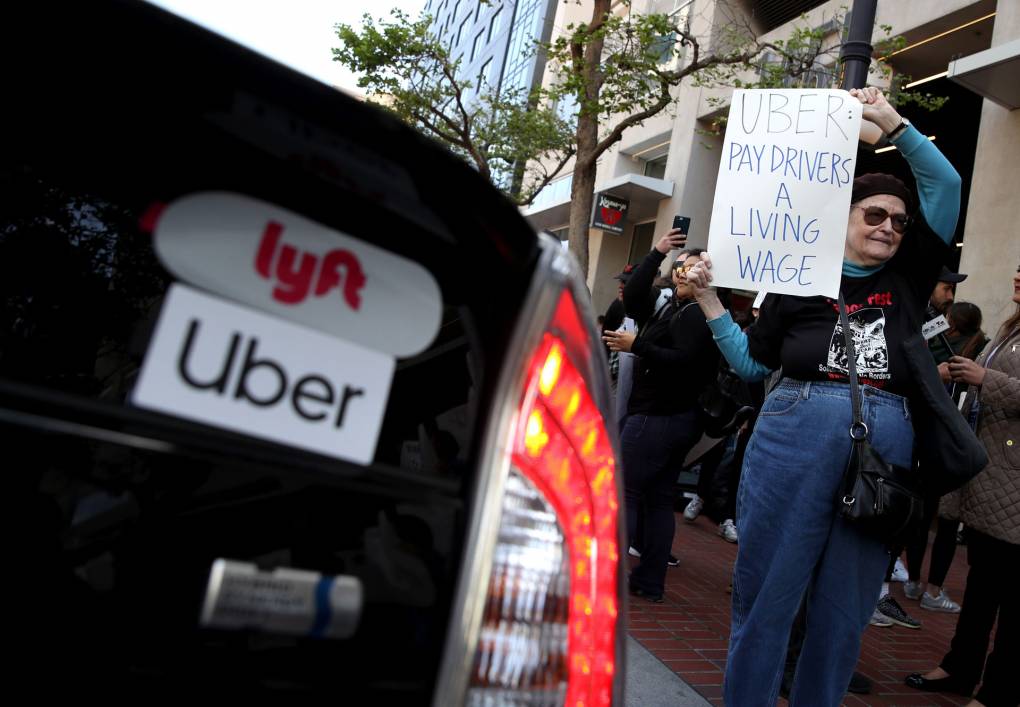
"caption": "A supporter of ride-hail drivers holds a sign during a protest in front of Uber headquarters in May 2019. Prop. 22, backed by huge amounts of cash from gig companies, would create a new class of worker in California.",
"description": "A supporter of ride-hail drivers holds a sign during a protest in front of Uber headquarters in May, 2019. Prop. 22, backed by huge amounts of cash from gig companies, would create a new class of worker in California.",
"title": "uber-lyft-protest-sign",
"credit": "Justin Sullivan/Getty Images",
"status": "inherit",
"altTag": "Protesters stand on a sidewalk in front of an office, and next to a car with Lyft and Uber stickers on the back. A woman holds a sign that says: Uber: 'Pay Drivers a Living Wage.'",
"isLoading": false,
"fetchFailed": false
},
"news_11843387": {
"type": "attachments",
"id": "news_11843387",
"meta": {
"index": "attachments_1716263798",
"site": "news",
"id": "11843387",
"found": true
},
"parent": 11843377,
"imgSizes": {
"apple_news_ca_landscape_5_5": {
"file": "https://ww2.kqed.org/app/uploads/sites/10/2020/10/RS33588_1112018_AW_GetOutTheVote_04-qut-1044x783.jpg",
"width": 1044,
"mimeType": "image/jpeg",
"height": 783
},
"apple_news_ca_square_4_0": {
"file": "https://ww2.kqed.org/app/uploads/sites/10/2020/10/RS33588_1112018_AW_GetOutTheVote_04-qut-470x470.jpg",
"width": 470,
"mimeType": "image/jpeg",
"height": 470
},
"twentyfourteen-full-width": {
"file": "https://ww2.kqed.org/app/uploads/sites/10/2020/10/RS33588_1112018_AW_GetOutTheVote_04-qut-1038x576.jpg",
"width": 1038,
"mimeType": "image/jpeg",
"height": 576
},
"thumbnail": {
"file": "https://ww2.kqed.org/app/uploads/sites/10/2020/10/RS33588_1112018_AW_GetOutTheVote_04-qut-160x107.jpg",
"width": 160,
"mimeType": "image/jpeg",
"height": 107
},
"post-thumbnail": {
"file": "https://ww2.kqed.org/app/uploads/sites/10/2020/10/RS33588_1112018_AW_GetOutTheVote_04-qut-672x372.jpg",
"width": 672,
"mimeType": "image/jpeg",
"height": 372
},
"kqedFullSize": {
"file": "https://ww2.kqed.org/app/uploads/sites/10/2020/10/RS33588_1112018_AW_GetOutTheVote_04-qut.jpg",
"width": 1920,
"height": 1280
},
"apple_news_ca_landscape_4_7": {
"file": "https://ww2.kqed.org/app/uploads/sites/10/2020/10/RS33588_1112018_AW_GetOutTheVote_04-qut-632x474.jpg",
"width": 632,
"mimeType": "image/jpeg",
"height": 474
},
"large": {
"file": "https://ww2.kqed.org/app/uploads/sites/10/2020/10/RS33588_1112018_AW_GetOutTheVote_04-qut-1020x680.jpg",
"width": 1020,
"mimeType": "image/jpeg",
"height": 680
},
"apple_news_ca_landscape_4_0": {
"file": "https://ww2.kqed.org/app/uploads/sites/10/2020/10/RS33588_1112018_AW_GetOutTheVote_04-qut-536x402.jpg",
"width": 536,
"mimeType": "image/jpeg",
"height": 402
},
"apple_news_ca_portrait_12_9": {
"file": "https://ww2.kqed.org/app/uploads/sites/10/2020/10/RS33588_1112018_AW_GetOutTheVote_04-qut-1122x1280.jpg",
"width": 1122,
"mimeType": "image/jpeg",
"height": 1280
},
"medium": {
"file": "https://ww2.kqed.org/app/uploads/sites/10/2020/10/RS33588_1112018_AW_GetOutTheVote_04-qut-800x533.jpg",
"width": 800,
"mimeType": "image/jpeg",
"height": 533
},
"apple_news_ca_portrait_4_0": {
"file": "https://ww2.kqed.org/app/uploads/sites/10/2020/10/RS33588_1112018_AW_GetOutTheVote_04-qut-354x472.jpg",
"width": 354,
"mimeType": "image/jpeg",
"height": 472
},
"apple_news_ca_portrait_9_7": {
"file": "https://ww2.kqed.org/app/uploads/sites/10/2020/10/RS33588_1112018_AW_GetOutTheVote_04-qut-840x1120.jpg",
"width": 840,
"mimeType": "image/jpeg",
"height": 1120
},
"apple_news_ca_landscape_12_9": {
"file": "https://ww2.kqed.org/app/uploads/sites/10/2020/10/RS33588_1112018_AW_GetOutTheVote_04-qut-1832x1280.jpg",
"width": 1832,
"mimeType": "image/jpeg",
"height": 1280
},
"apple_news_ca_square_9_7": {
"file": "https://ww2.kqed.org/app/uploads/sites/10/2020/10/RS33588_1112018_AW_GetOutTheVote_04-qut-1104x1104.jpg",
"width": 1104,
"mimeType": "image/jpeg",
"height": 1104
},
"1536x1536": {
"file": "https://ww2.kqed.org/app/uploads/sites/10/2020/10/RS33588_1112018_AW_GetOutTheVote_04-qut-1536x1024.jpg",
"width": 1536,
"mimeType": "image/jpeg",
"height": 1024
},
"apple_news_ca_portrait_4_7": {
"file": "https://ww2.kqed.org/app/uploads/sites/10/2020/10/RS33588_1112018_AW_GetOutTheVote_04-qut-414x552.jpg",
"width": 414,
"mimeType": "image/jpeg",
"height": 552
},
"apple_news_ca_square_12_9": {
"file": "https://ww2.kqed.org/app/uploads/sites/10/2020/10/RS33588_1112018_AW_GetOutTheVote_04-qut-1472x1280.jpg",
"width": 1472,
"mimeType": "image/jpeg",
"height": 1280
},
"apple_news_ca_portrait_5_5": {
"file": "https://ww2.kqed.org/app/uploads/sites/10/2020/10/RS33588_1112018_AW_GetOutTheVote_04-qut-687x916.jpg",
"width": 687,
"mimeType": "image/jpeg",
"height": 916
},
"apple_news_ca_square_4_7": {
"file": "https://ww2.kqed.org/app/uploads/sites/10/2020/10/RS33588_1112018_AW_GetOutTheVote_04-qut-550x550.jpg",
"width": 550,
"mimeType": "image/jpeg",
"height": 550
},
"apple_news_ca_landscape_9_7": {
"file": "https://ww2.kqed.org/app/uploads/sites/10/2020/10/RS33588_1112018_AW_GetOutTheVote_04-qut-1376x1032.jpg",
"width": 1376,
"mimeType": "image/jpeg",
"height": 1032
},
"apple_news_ca_square_5_5": {
"file": "https://ww2.kqed.org/app/uploads/sites/10/2020/10/RS33588_1112018_AW_GetOutTheVote_04-qut-912x912.jpg",
"width": 912,
"mimeType": "image/jpeg",
"height": 912
}
},
"publishDate": 1603407957,
"modified": 1632876458,
"caption": "Rep. Barbara Lee speaks at an election event in Berkeley on Oct. 27, 2018.",
"description": null,
"title": "RS33588_1112018_AW_GetOutTheVote_04-qut",
"credit": "Anne Wernikoff/KQED",
"status": "inherit",
"altTag": "Rep. Barbara Lee during a speech in front of a podium and microphone. She has a hand raised and is wearing a blue shirt.",
"isLoading": false,
"fetchFailed": false
},
"news_11843065": {
"type": "attachments",
"id": "news_11843065",
"meta": {
"index": "attachments_1716263798",
"site": "news",
"id": "11843065",
"found": true
},
"parent": 11842964,
"imgSizes": {
"apple_news_ca_landscape_5_5": {
"file": "https://ww2.kqed.org/app/uploads/sites/10/2020/10/Uber-Driver-1044x783.jpg",
"width": 1044,
"mimeType": "image/jpeg",
"height": 783
},
"apple_news_ca_square_4_0": {
"file": "https://ww2.kqed.org/app/uploads/sites/10/2020/10/Uber-Driver-470x470.jpg",
"width": 470,
"mimeType": "image/jpeg",
"height": 470
},
"twentyfourteen-full-width": {
"file": "https://ww2.kqed.org/app/uploads/sites/10/2020/10/Uber-Driver-1038x576.jpg",
"width": 1038,
"mimeType": "image/jpeg",
"height": 576
},
"thumbnail": {
"file": "https://ww2.kqed.org/app/uploads/sites/10/2020/10/Uber-Driver-160x110.jpg",
"width": 160,
"mimeType": "image/jpeg",
"height": 110
},
"post-thumbnail": {
"file": "https://ww2.kqed.org/app/uploads/sites/10/2020/10/Uber-Driver-672x372.jpg",
"width": 672,
"mimeType": "image/jpeg",
"height": 372
},
"kqedFullSize": {
"file": "https://ww2.kqed.org/app/uploads/sites/10/2020/10/Uber-Driver.jpg",
"width": 1920,
"height": 1319
},
"apple_news_ca_landscape_4_7": {
"file": "https://ww2.kqed.org/app/uploads/sites/10/2020/10/Uber-Driver-632x474.jpg",
"width": 632,
"mimeType": "image/jpeg",
"height": 474
},
"large": {
"file": "https://ww2.kqed.org/app/uploads/sites/10/2020/10/Uber-Driver-1020x701.jpg",
"width": 1020,
"mimeType": "image/jpeg",
"height": 701
},
"apple_news_ca_landscape_4_0": {
"file": "https://ww2.kqed.org/app/uploads/sites/10/2020/10/Uber-Driver-536x402.jpg",
"width": 536,
"mimeType": "image/jpeg",
"height": 402
},
"apple_news_ca_portrait_12_9": {
"file": "https://ww2.kqed.org/app/uploads/sites/10/2020/10/Uber-Driver-1122x1319.jpg",
"width": 1122,
"mimeType": "image/jpeg",
"height": 1319
},
"medium": {
"file": "https://ww2.kqed.org/app/uploads/sites/10/2020/10/Uber-Driver-800x550.jpg",
"width": 800,
"mimeType": "image/jpeg",
"height": 550
},
"apple_news_ca_portrait_4_0": {
"file": "https://ww2.kqed.org/app/uploads/sites/10/2020/10/Uber-Driver-354x472.jpg",
"width": 354,
"mimeType": "image/jpeg",
"height": 472
},
"apple_news_ca_portrait_9_7": {
"file": "https://ww2.kqed.org/app/uploads/sites/10/2020/10/Uber-Driver-840x1120.jpg",
"width": 840,
"mimeType": "image/jpeg",
"height": 1120
},
"apple_news_ca_landscape_12_9": {
"file": "https://ww2.kqed.org/app/uploads/sites/10/2020/10/Uber-Driver-1832x1319.jpg",
"width": 1832,
"mimeType": "image/jpeg",
"height": 1319
},
"apple_news_ca_square_9_7": {
"file": "https://ww2.kqed.org/app/uploads/sites/10/2020/10/Uber-Driver-1104x1104.jpg",
"width": 1104,
"mimeType": "image/jpeg",
"height": 1104
},
"1536x1536": {
"file": "https://ww2.kqed.org/app/uploads/sites/10/2020/10/Uber-Driver-1536x1055.jpg",
"width": 1536,
"mimeType": "image/jpeg",
"height": 1055
},
"apple_news_ca_portrait_4_7": {
"file": "https://ww2.kqed.org/app/uploads/sites/10/2020/10/Uber-Driver-414x552.jpg",
"width": 414,
"mimeType": "image/jpeg",
"height": 552
},
"apple_news_ca_square_12_9": {
"file": "https://ww2.kqed.org/app/uploads/sites/10/2020/10/Uber-Driver-1472x1319.jpg",
"width": 1472,
"mimeType": "image/jpeg",
"height": 1319
},
"apple_news_ca_portrait_5_5": {
"file": "https://ww2.kqed.org/app/uploads/sites/10/2020/10/Uber-Driver-687x916.jpg",
"width": 687,
"mimeType": "image/jpeg",
"height": 916
},
"apple_news_ca_square_4_7": {
"file": "https://ww2.kqed.org/app/uploads/sites/10/2020/10/Uber-Driver-550x550.jpg",
"width": 550,
"mimeType": "image/jpeg",
"height": 550
},
"apple_news_ca_landscape_9_7": {
"file": "https://ww2.kqed.org/app/uploads/sites/10/2020/10/Uber-Driver-1376x1032.jpg",
"width": 1376,
"mimeType": "image/jpeg",
"height": 1032
},
"apple_news_ca_square_5_5": {
"file": "https://ww2.kqed.org/app/uploads/sites/10/2020/10/Uber-Driver-912x912.jpg",
"width": 912,
"mimeType": "image/jpeg",
"height": 912
}
},
"publishDate": 1603238374,
"modified": 1603238741,
"caption": "An Uber driver in Los Angeles. ",
"description": null,
"title": "Uber-Driver",
"credit": "Mario Tama/Getty Images",
"status": "inherit",
"isLoading": false,
"fetchFailed": false
},
"news_11842014": {
"type": "attachments",
"id": "news_11842014",
"meta": {
"index": "attachments_1716263798",
"site": "news",
"id": "11842014",
"found": true
},
"parent": 11842012,
"imgSizes": {
"apple_news_ca_landscape_5_5": {
"file": "https://ww2.kqed.org/app/uploads/sites/10/2020/10/RS16537_IMG_0458-1044x783.jpg",
"width": 1044,
"mimeType": "image/jpeg",
"height": 783
},
"apple_news_ca_square_4_0": {
"file": "https://ww2.kqed.org/app/uploads/sites/10/2020/10/RS16537_IMG_0458-470x470.jpg",
"width": 470,
"mimeType": "image/jpeg",
"height": 470
},
"twentyfourteen-full-width": {
"file": "https://ww2.kqed.org/app/uploads/sites/10/2020/10/RS16537_IMG_0458-1038x576.jpg",
"width": 1038,
"mimeType": "image/jpeg",
"height": 576
},
"thumbnail": {
"file": "https://ww2.kqed.org/app/uploads/sites/10/2020/10/RS16537_IMG_0458-160x107.jpg",
"width": 160,
"mimeType": "image/jpeg",
"height": 107
},
"post-thumbnail": {
"file": "https://ww2.kqed.org/app/uploads/sites/10/2020/10/RS16537_IMG_0458-672x372.jpg",
"width": 672,
"mimeType": "image/jpeg",
"height": 372
},
"kqedFullSize": {
"file": "https://ww2.kqed.org/app/uploads/sites/10/2020/10/RS16537_IMG_0458-scaled.jpg",
"width": 2560,
"height": 1707
},
"2048x2048": {
"file": "https://ww2.kqed.org/app/uploads/sites/10/2020/10/RS16537_IMG_0458-2048x1365.jpg",
"width": 2048,
"mimeType": "image/jpeg",
"height": 1365
},
"apple_news_ca_landscape_4_7": {
"file": "https://ww2.kqed.org/app/uploads/sites/10/2020/10/RS16537_IMG_0458-632x474.jpg",
"width": 632,
"mimeType": "image/jpeg",
"height": 474
},
"large": {
"file": "https://ww2.kqed.org/app/uploads/sites/10/2020/10/RS16537_IMG_0458-1020x680.jpg",
"width": 1020,
"mimeType": "image/jpeg",
"height": 680
},
"apple_news_ca_landscape_4_0": {
"file": "https://ww2.kqed.org/app/uploads/sites/10/2020/10/RS16537_IMG_0458-536x402.jpg",
"width": 536,
"mimeType": "image/jpeg",
"height": 402
},
"apple_news_ca_portrait_12_9": {
"file": "https://ww2.kqed.org/app/uploads/sites/10/2020/10/RS16537_IMG_0458-1122x1496.jpg",
"width": 1122,
"mimeType": "image/jpeg",
"height": 1496
},
"medium": {
"file": "https://ww2.kqed.org/app/uploads/sites/10/2020/10/RS16537_IMG_0458-800x533.jpg",
"width": 800,
"mimeType": "image/jpeg",
"height": 533
},
"apple_news_ca_portrait_4_0": {
"file": "https://ww2.kqed.org/app/uploads/sites/10/2020/10/RS16537_IMG_0458-354x472.jpg",
"width": 354,
"mimeType": "image/jpeg",
"height": 472
},
"apple_news_ca_portrait_9_7": {
"file": "https://ww2.kqed.org/app/uploads/sites/10/2020/10/RS16537_IMG_0458-840x1120.jpg",
"width": 840,
"mimeType": "image/jpeg",
"height": 1120
},
"apple_news_ca_landscape_12_9": {
"file": "https://ww2.kqed.org/app/uploads/sites/10/2020/10/RS16537_IMG_0458-1832x1374.jpg",
"width": 1832,
"mimeType": "image/jpeg",
"height": 1374
},
"apple_news_ca_square_9_7": {
"file": "https://ww2.kqed.org/app/uploads/sites/10/2020/10/RS16537_IMG_0458-1104x1104.jpg",
"width": 1104,
"mimeType": "image/jpeg",
"height": 1104
},
"1536x1536": {
"file": "https://ww2.kqed.org/app/uploads/sites/10/2020/10/RS16537_IMG_0458-1536x1024.jpg",
"width": 1536,
"mimeType": "image/jpeg",
"height": 1024
},
"apple_news_ca_portrait_4_7": {
"file": "https://ww2.kqed.org/app/uploads/sites/10/2020/10/RS16537_IMG_0458-414x552.jpg",
"width": 414,
"mimeType": "image/jpeg",
"height": 552
},
"apple_news_ca_square_12_9": {
"file": "https://ww2.kqed.org/app/uploads/sites/10/2020/10/RS16537_IMG_0458-1472x1472.jpg",
"width": 1472,
"mimeType": "image/jpeg",
"height": 1472
},
"apple_news_ca_portrait_5_5": {
"file": "https://ww2.kqed.org/app/uploads/sites/10/2020/10/RS16537_IMG_0458-687x916.jpg",
"width": 687,
"mimeType": "image/jpeg",
"height": 916
},
"full-width": {
"file": "https://ww2.kqed.org/app/uploads/sites/10/2020/10/RS16537_IMG_0458-1920x1280.jpg",
"width": 1920,
"mimeType": "image/jpeg",
"height": 1280
},
"apple_news_ca_square_4_7": {
"file": "https://ww2.kqed.org/app/uploads/sites/10/2020/10/RS16537_IMG_0458-550x550.jpg",
"width": 550,
"mimeType": "image/jpeg",
"height": 550
},
"apple_news_ca_landscape_9_7": {
"file": "https://ww2.kqed.org/app/uploads/sites/10/2020/10/RS16537_IMG_0458-1376x1032.jpg",
"width": 1376,
"mimeType": "image/jpeg",
"height": 1032
},
"apple_news_ca_square_5_5": {
"file": "https://ww2.kqed.org/app/uploads/sites/10/2020/10/RS16537_IMG_0458-912x912.jpg",
"width": 912,
"mimeType": "image/jpeg",
"height": 912
}
},
"publishDate": 1602544163,
"modified": 1602544664,
"caption": "At the heart of Prop 22 is a question about how app-based drivers should be classified. ",
"description": "An app-based driver behind the steering wheel, with his phone on the dashboard, displaying a map. ",
"title": "RS16537_IMG_0458",
"credit": "Ericka Cruz Guevarra/KQED",
"status": "inherit",
"isLoading": false,
"fetchFailed": false
},
"news_11839219": {
"type": "attachments",
"id": "news_11839219",
"meta": {
"index": "attachments_1716263798",
"site": "news",
"id": "11839219",
"found": true
},
"parent": 11839164,
"imgSizes": {
"apple_news_ca_landscape_5_5": {
"file": "https://ww2.kqed.org/app/uploads/sites/10/2020/09/RS16556_IMG_0695-qut-1044x783.jpg",
"width": 1044,
"mimeType": "image/jpeg",
"height": 783
},
"apple_news_ca_square_4_0": {
"file": "https://ww2.kqed.org/app/uploads/sites/10/2020/09/RS16556_IMG_0695-qut-470x470.jpg",
"width": 470,
"mimeType": "image/jpeg",
"height": 470
},
"twentyfourteen-full-width": {
"file": "https://ww2.kqed.org/app/uploads/sites/10/2020/09/RS16556_IMG_0695-qut-1038x576.jpg",
"width": 1038,
"mimeType": "image/jpeg",
"height": 576
},
"thumbnail": {
"file": "https://ww2.kqed.org/app/uploads/sites/10/2020/09/RS16556_IMG_0695-qut-160x91.jpg",
"width": 160,
"mimeType": "image/jpeg",
"height": 91
},
"post-thumbnail": {
"file": "https://ww2.kqed.org/app/uploads/sites/10/2020/09/RS16556_IMG_0695-qut-672x372.jpg",
"width": 672,
"mimeType": "image/jpeg",
"height": 372
},
"kqedFullSize": {
"file": "https://ww2.kqed.org/app/uploads/sites/10/2020/09/RS16556_IMG_0695-qut.jpg",
"width": 1920,
"height": 1086
},
"apple_news_ca_landscape_4_7": {
"file": "https://ww2.kqed.org/app/uploads/sites/10/2020/09/RS16556_IMG_0695-qut-632x474.jpg",
"width": 632,
"mimeType": "image/jpeg",
"height": 474
},
"large": {
"file": "https://ww2.kqed.org/app/uploads/sites/10/2020/09/RS16556_IMG_0695-qut-1020x577.jpg",
"width": 1020,
"mimeType": "image/jpeg",
"height": 577
},
"apple_news_ca_landscape_4_0": {
"file": "https://ww2.kqed.org/app/uploads/sites/10/2020/09/RS16556_IMG_0695-qut-536x402.jpg",
"width": 536,
"mimeType": "image/jpeg",
"height": 402
},
"apple_news_ca_portrait_12_9": {
"file": "https://ww2.kqed.org/app/uploads/sites/10/2020/09/RS16556_IMG_0695-qut-1122x1086.jpg",
"width": 1122,
"mimeType": "image/jpeg",
"height": 1086
},
"medium": {
"file": "https://ww2.kqed.org/app/uploads/sites/10/2020/09/RS16556_IMG_0695-qut-800x453.jpg",
"width": 800,
"mimeType": "image/jpeg",
"height": 453
},
"apple_news_ca_portrait_4_0": {
"file": "https://ww2.kqed.org/app/uploads/sites/10/2020/09/RS16556_IMG_0695-qut-354x472.jpg",
"width": 354,
"mimeType": "image/jpeg",
"height": 472
},
"apple_news_ca_portrait_9_7": {
"file": "https://ww2.kqed.org/app/uploads/sites/10/2020/09/RS16556_IMG_0695-qut-840x1086.jpg",
"width": 840,
"mimeType": "image/jpeg",
"height": 1086
},
"apple_news_ca_landscape_12_9": {
"file": "https://ww2.kqed.org/app/uploads/sites/10/2020/09/RS16556_IMG_0695-qut-1832x1086.jpg",
"width": 1832,
"mimeType": "image/jpeg",
"height": 1086
},
"apple_news_ca_square_9_7": {
"file": "https://ww2.kqed.org/app/uploads/sites/10/2020/09/RS16556_IMG_0695-qut-1104x1086.jpg",
"width": 1104,
"mimeType": "image/jpeg",
"height": 1086
},
"1536x1536": {
"file": "https://ww2.kqed.org/app/uploads/sites/10/2020/09/RS16556_IMG_0695-qut-1536x869.jpg",
"width": 1536,
"mimeType": "image/jpeg",
"height": 869
},
"apple_news_ca_portrait_4_7": {
"file": "https://ww2.kqed.org/app/uploads/sites/10/2020/09/RS16556_IMG_0695-qut-414x552.jpg",
"width": 414,
"mimeType": "image/jpeg",
"height": 552
},
"apple_news_ca_square_12_9": {
"file": "https://ww2.kqed.org/app/uploads/sites/10/2020/09/RS16556_IMG_0695-qut-1472x1086.jpg",
"width": 1472,
"mimeType": "image/jpeg",
"height": 1086
},
"apple_news_ca_portrait_5_5": {
"file": "https://ww2.kqed.org/app/uploads/sites/10/2020/09/RS16556_IMG_0695-qut-687x916.jpg",
"width": 687,
"mimeType": "image/jpeg",
"height": 916
},
"apple_news_ca_square_4_7": {
"file": "https://ww2.kqed.org/app/uploads/sites/10/2020/09/RS16556_IMG_0695-qut-550x550.jpg",
"width": 550,
"mimeType": "image/jpeg",
"height": 550
},
"apple_news_ca_landscape_9_7": {
"file": "https://ww2.kqed.org/app/uploads/sites/10/2020/09/RS16556_IMG_0695-qut-1376x1032.jpg",
"width": 1376,
"mimeType": "image/jpeg",
"height": 1032
},
"apple_news_ca_square_5_5": {
"file": "https://ww2.kqed.org/app/uploads/sites/10/2020/09/RS16556_IMG_0695-qut-912x912.jpg",
"width": 912,
"mimeType": "image/jpeg",
"height": 912
}
},
"publishDate": 1600827335,
"modified": 1600827416,
"caption": "A Lyft and Uber driver fiddles with his smartphone as he prepares to pick up a customer on Aug. 31, 2015.",
"description": null,
"title": "RS16556_IMG_0695-qut",
"credit": "Ericka Cruz Guevarra/KQED",
"status": "inherit",
"isLoading": false,
"fetchFailed": false
}
},
"audioPlayerReducer": {
"postId": "stream_live",
"isPaused": true,
"isPlaying": false,
"pfsActive": false,
"pledgeModalIsOpen": true,
"playerDrawerIsOpen": false,
"liveAudioPlayStartedAt": 0,
"liveAudioPlayContext": ""
},
"authorsReducer": {
"ohubertallen": {
"type": "authors",
"id": "102",
"meta": {
"index": "authors_1716337520",
"id": "102",
"found": true
},
"name": "Olivia Allen-Price",
"firstName": "Olivia",
"lastName": "Allen-Price",
"slug": "ohubertallen",
"email": "oallenprice@kqed.org",
"display_author_email": false,
"staff_mastheads": [
"news"
],
"title": "Senior Editor",
"bio": "Olivia Allen-Price is senior editor and host of the award-winning Bay Curious podcast. Prior to joining KQED in 2013, Olivia worked at The Baltimore Sun and The Virginian-Pilot in Norfolk, Va. She holds degrees in journalism and political science from Elon University. Her work has earned awards from the Society of Professional Journalists, the Hearst Foundation and Hearken. She loves to talk about running and curly hair.\r\n\r\nFollow: \u003ca href=\"https://twitter.com/oallenprice\">@oallenprice\u003c/a>\r\nEmail: \u003ca href=\"mailto:oallenprice@kqed.org\">oallenprice@kqed.org\u003c/a>",
"avatar": "https://secure.gravatar.com/avatar/07f7803c1f6be56f3be58ef276dfa64dce898502e0554408ef4858451a8294f7?s=600&d=blank&r=g",
"twitter": "oallenprice",
"bluesky": null,
"facebook": null,
"instagram": null,
"linkedin": null,
"sites": [
{
"site": "",
"roles": [
"editor"
]
},
{
"site": "arts",
"roles": [
"subscriber"
]
},
{
"site": "news",
"roles": [
"administrator"
]
},
{
"site": "pop",
"roles": [
"administrator"
]
},
{
"site": "bayareabites",
"roles": [
"contributor"
]
},
{
"site": "stateofhealth",
"roles": [
"administrator"
]
},
{
"site": "science",
"roles": [
"editor"
]
}
],
"headData": {
"title": "Olivia Allen-Price | KQED",
"description": "Senior Editor",
"ogImgSrc": "https://secure.gravatar.com/avatar/07f7803c1f6be56f3be58ef276dfa64dce898502e0554408ef4858451a8294f7?s=600&d=blank&r=g",
"twImgSrc": "https://secure.gravatar.com/avatar/07f7803c1f6be56f3be58ef276dfa64dce898502e0554408ef4858451a8294f7?s=600&d=blank&r=g"
},
"isLoading": false,
"link": "/author/ohubertallen"
},
"katrinaschwartz": {
"type": "authors",
"id": "234",
"meta": {
"index": "authors_1716337520",
"id": "234",
"found": true
},
"name": "Katrina Schwartz",
"firstName": "Katrina",
"lastName": "Schwartz",
"slug": "katrinaschwartz",
"email": "kschwartz@kqed.org",
"display_author_email": false,
"staff_mastheads": [
"news"
],
"title": "Producer",
"bio": "Katrina Schwartz is a journalist based in San Francisco. She's worked at KPCC public radio in LA and has reported on air and online for KQED since 2010. She covered how teaching and learning is changing for MindShift between 2012 and 2020. She is the co-host of the MindShift podcast and now produces KQED's Bay Curious podcast.",
"avatar": "https://secure.gravatar.com/avatar/edb4ee79070447a018538c9aae6eeecf28786515b8a0c30e43b6b7dce5aa44c8?s=600&d=blank&r=g",
"twitter": "kschwart",
"bluesky": null,
"facebook": null,
"instagram": null,
"linkedin": null,
"sites": [
{
"site": "",
"roles": [
"editor"
]
},
{
"site": "news",
"roles": [
"editor"
]
},
{
"site": "mindshift",
"roles": [
"administrator"
]
},
{
"site": "stateofhealth",
"roles": [
"author"
]
},
{
"site": "science",
"roles": [
"editor"
]
}
],
"headData": {
"title": "Katrina Schwartz | KQED",
"description": "Producer",
"ogImgSrc": "https://secure.gravatar.com/avatar/edb4ee79070447a018538c9aae6eeecf28786515b8a0c30e43b6b7dce5aa44c8?s=600&d=blank&r=g",
"twImgSrc": "https://secure.gravatar.com/avatar/edb4ee79070447a018538c9aae6eeecf28786515b8a0c30e43b6b7dce5aa44c8?s=600&d=blank&r=g"
},
"isLoading": false,
"link": "/author/katrinaschwartz"
},
"mlam": {
"type": "authors",
"id": "244",
"meta": {
"index": "authors_1716337520",
"id": "244",
"found": true
},
"name": "Monica Lam",
"firstName": "Monica Z.",
"lastName": "Lam",
"slug": "mlam",
"email": "mlam@kqed.org",
"display_author_email": true,
"staff_mastheads": [
"news"
],
"title": "KQED Senior Producer",
"bio": "Monica is senior producer of the weekly current affairs program, \"KQED Newsroom.\" She's also served as senior editor of digital content at KQED. She likes to report and edit as well as produce video and take photos.\r\n\r\nBefore joining KQED, Monica worked at the Center for Investigative Reporting, where she examined conditions inside \u003cspan style=\"font-weight: 400;\">maximum security \u003c/span>prisons and abuse in state-run institutions for the developmentally disabled. Prior to that, she produced and directed \u003cem>Journey of the Bonesetter's Daughter,\u003c/em> a documentary that follows novelist Amy Tan as she creates an opera based on her family history.\r\n\r\nMonica's work has been honored with a duPont Award, five Emmys, regional and national Murrow Awards, and has been recognized by Investigative Reporters and Editors, the Society of Professional Journalists, Religion Newswriters Association and the San Francisco Peninsula Press Club. Monica studied urban studies at Stanford University and earned a master's in journalism at University of California at Berkeley. Follow her on twitter: @monicazlam",
"avatar": "https://secure.gravatar.com/avatar/018c474b2b71f43e0e6ca9b15a0ad36f?s=600&d=blank&r=g",
"twitter": "@monicazlam",
"facebook": null,
"instagram": null,
"linkedin": null,
"sites": [
{
"site": "arts",
"roles": [
"administrator"
]
},
{
"site": "news",
"roles": [
"editor"
]
},
{
"site": "trulyca",
"roles": [
"editor"
]
},
{
"site": "science",
"roles": [
"editor"
]
},
{
"site": "breakingnews",
"roles": [
"editor"
]
}
],
"headData": {
"title": "Monica Lam | KQED",
"description": "KQED Senior Producer",
"ogImgSrc": "https://secure.gravatar.com/avatar/018c474b2b71f43e0e6ca9b15a0ad36f?s=600&d=blank&r=g",
"twImgSrc": "https://secure.gravatar.com/avatar/018c474b2b71f43e0e6ca9b15a0ad36f?s=600&d=blank&r=g"
},
"isLoading": false,
"link": "/author/mlam"
},
"samharnett": {
"type": "authors",
"id": "253",
"meta": {
"index": "authors_1716337520",
"id": "253",
"found": true
},
"name": "Sam Harnett",
"firstName": "Sam",
"lastName": "Harnett",
"slug": "samharnett",
"email": "samharnett@gmail.com",
"display_author_email": false,
"staff_mastheads": [],
"title": "KQED Contributor",
"bio": "Sam Harnett covered tech and work at KQED. He is the co-creator of \u003cem>\u003ca href=\"http://www.theworldaccordingtosound.org\">The World According to Sound\u003c/a>,\u003c/em> a 90-second podcast that features different sounds and the stories behind them.\r\n\r\nBefore coming to KQED, Sam worked as an independent reporter who contributed regularly to \u003cem>The California Report, Marketplace,\u003c/em> \u003cem>The World \u003c/em>and NPR.",
"avatar": "https://secure.gravatar.com/avatar/2538b972ac02f2b9546c7a6c59a0f3d0?s=600&d=blank&r=g",
"twitter": "Samwharnett",
"facebook": null,
"instagram": null,
"linkedin": null,
"sites": [
{
"site": "news",
"roles": [
"edit_others_posts",
"subscriber"
]
},
{
"site": "stateofhealth",
"roles": [
"author"
]
},
{
"site": "science",
"roles": [
"editor"
]
},
{
"site": "quest",
"roles": [
"subscriber"
]
}
],
"headData": {
"title": "Sam Harnett | KQED",
"description": "KQED Contributor",
"ogImgSrc": "https://secure.gravatar.com/avatar/2538b972ac02f2b9546c7a6c59a0f3d0?s=600&d=blank&r=g",
"twImgSrc": "https://secure.gravatar.com/avatar/2538b972ac02f2b9546c7a6c59a0f3d0?s=600&d=blank&r=g"
},
"isLoading": false,
"link": "/author/samharnett"
},
"scottshafer": {
"type": "authors",
"id": "255",
"meta": {
"index": "authors_1716337520",
"id": "255",
"found": true
},
"name": "Scott Shafer",
"firstName": "Scott",
"lastName": "Shafer",
"slug": "scottshafer",
"email": "sshafer@kqed.org",
"display_author_email": false,
"staff_mastheads": [
"news"
],
"title": "KQED Contributor",
"bio": "Scott Shafer is a senior editor with the KQED Politics and Government desk. He is co-host of Political Breakdown, the award-winning radio show and podcast with a personal take on the world of politics. Scott came to KQED in 1998 to host the statewide\u003cem> California Report\u003c/em>. Prior to that he had extended stints in politics and government\u003cem>.\u003c/em> He uses that inside experience at KQED in his, reporting, hosting and analysis for the politics desk. Scott collaborated \u003cem>Political Breakdown a\u003c/em>nd on \u003cem>The Political Mind of Jerry Brown, \u003c/em>an eight-part series about the life and extraordinary political career of the former governor. For fun, he plays water polo with the San Francisco Tsunami.",
"avatar": "https://secure.gravatar.com/avatar/a62ebae45b79d7aed1a39a0e3bf68104?s=600&d=blank&r=g",
"twitter": "scottshafer",
"bluesky": null,
"facebook": null,
"instagram": null,
"linkedin": null,
"sites": [
{
"site": "news",
"roles": [
"editor"
]
},
{
"site": "stateofhealth",
"roles": [
"author"
]
},
{
"site": "science",
"roles": [
"author"
]
},
{
"site": "forum",
"roles": [
"subscriber"
]
},
{
"site": "liveblog",
"roles": [
"author"
]
}
],
"headData": {
"title": "Scott Shafer | KQED",
"description": "KQED Contributor",
"ogImgSrc": "https://secure.gravatar.com/avatar/a62ebae45b79d7aed1a39a0e3bf68104?s=600&d=blank&r=g",
"twImgSrc": "https://secure.gravatar.com/avatar/a62ebae45b79d7aed1a39a0e3bf68104?s=600&d=blank&r=g"
},
"isLoading": false,
"link": "/author/scottshafer"
},
"markfiore": {
"type": "authors",
"id": "3236",
"meta": {
"index": "authors_1716337520",
"id": "3236",
"found": true
},
"name": "Mark Fiore",
"firstName": "Mark",
"lastName": "Fiore",
"slug": "markfiore",
"email": "mark@markfiore.com",
"display_author_email": false,
"staff_mastheads": [
"news"
],
"title": "KQED News Cartoonist",
"bio": "\u003ca href=\"http://www.MarkFiore.com\">MarkFiore.com\u003c/a> | \u003ca href=\"https://twitter.com/markfiore\">Follow on Twitter\u003c/a> | \u003ca href=\"https://www.facebook.com/pages/Mark-Fiore-Animated-Political-Cartoons/94451707396?ref=bookmarks\">Facebook\u003c/a> | \u003ca href=\"mailto:mark@markfiore.com\">email\u003c/a>\r\n\r\nPulitzer Prize-winner, Mark Fiore, who the Wall Street Journal has called “the undisputed guru of the form,” creates animated political cartoons in San Francisco, where his work has been featured regularly on the San Francisco Chronicle’s web site, SFGate.com. His work has appeared on Newsweek.com, Slate.com, CBSNews.com, MotherJones.com, DailyKos.com and NPR’s web site. Fiore’s political animation has appeared on CNN, Frontline, Bill Moyers Journal, Salon.com and cable and broadcast outlets across the globe.\r\n\r\nBeginning his professional life by drawing traditional political cartoons for newspapers, Fiore’s work appeared in publications ranging from the Washington Post to the Los Angeles Times. In the late 1990s, he began to experiment with animating political cartoons and, after a short stint at the San Jose Mercury News as their staff cartoonist, Fiore devoted all his energies to animation.\r\nGrowing up in California, Fiore also spent a good portion of his life in the backwoods of Idaho. It was this combination that shaped him politically. Mark majored in political science at Colorado College, where, in a perfect send-off for a cartoonist, he received his diploma in 1991 as commencement speaker Dick Cheney smiled approvingly.\r\nMark Fiore was awarded the Pulitzer Prize for political cartooning in 2010, a Robert F. Kennedy Journalism Award in 2004 and has twice received an Online Journalism Award for commentary from the Online News Association (2002, 2008). Fiore has received two awards for his work in new media from the National Cartoonists Society (2001, 2002), and in 2006 received The James Madison Freedom of Information Award from The Society of Professional Journalists.",
"avatar": "https://secure.gravatar.com/avatar/fc4e2a612b15b67bad0c6f0e1db4ca9b?s=600&d=blank&r=g",
"twitter": "MarkFiore",
"facebook": null,
"instagram": "https://www.instagram.com/markfiore/?hl=en",
"linkedin": null,
"sites": [
{
"site": "arts",
"roles": [
"contributor"
]
},
{
"site": "news",
"roles": [
"editor"
]
},
{
"site": "futureofyou",
"roles": [
"editor"
]
},
{
"site": "science",
"roles": [
"editor"
]
}
],
"headData": {
"title": "Mark Fiore | KQED",
"description": "KQED News Cartoonist",
"ogImgSrc": "https://secure.gravatar.com/avatar/fc4e2a612b15b67bad0c6f0e1db4ca9b?s=600&d=blank&r=g",
"twImgSrc": "https://secure.gravatar.com/avatar/fc4e2a612b15b67bad0c6f0e1db4ca9b?s=600&d=blank&r=g"
},
"isLoading": false,
"link": "/author/markfiore"
},
"mlagos": {
"type": "authors",
"id": "3239",
"meta": {
"index": "authors_1716337520",
"id": "3239",
"found": true
},
"name": "Marisa Lagos",
"firstName": "Marisa",
"lastName": "Lagos",
"slug": "mlagos",
"email": "mlagos@kqed.org",
"display_author_email": false,
"staff_mastheads": [
"news"
],
"title": "KQED Contributor",
"bio": "Marisa Lagos is a correspondent for KQED’s California Politics and Government Desk and co-hosts the award-winning show and podcast, Political Breakdown. At KQED, Lagos also conducts reporting, analysis and investigations into state, local and national politics for radio, TV, online and onstage. In 2022, she and co-host, Scott Shafer, moderated the only gubernatorial debate in California. In 2020, the \u003ci>Washington Post\u003c/i> named her one of the top political journalists in California; she was nominated for a Peabody and won several other awards for her work investigating the 2017 California wildfires. She has worked at the \u003ci>San Francisco Chronicle\u003c/i>, \u003ci>San Francisco Examiner\u003c/i> and \u003ci>Los Angeles Times\u003c/i>. A UC Santa Barbara graduate, she lives in San Francisco with her two sons and husband.",
"avatar": "https://secure.gravatar.com/avatar/a261a0d3696fc066871ef96b85b5e7d2?s=600&d=blank&r=g",
"twitter": "@mlagos",
"facebook": null,
"instagram": null,
"linkedin": null,
"sites": [
{
"site": "arts",
"roles": [
"author"
]
},
{
"site": "news",
"roles": [
"editor"
]
},
{
"site": "science",
"roles": [
"editor"
]
},
{
"site": "forum",
"roles": [
"author"
]
},
{
"site": "liveblog",
"roles": [
"author"
]
}
],
"headData": {
"title": "Marisa Lagos | KQED",
"description": "KQED Contributor",
"ogImgSrc": "https://secure.gravatar.com/avatar/a261a0d3696fc066871ef96b85b5e7d2?s=600&d=blank&r=g",
"twImgSrc": "https://secure.gravatar.com/avatar/a261a0d3696fc066871ef96b85b5e7d2?s=600&d=blank&r=g"
},
"isLoading": false,
"link": "/author/mlagos"
}
},
"pagesReducer": {
"news_tag_prop-22": {
"type": "terms",
"id": "news_28581",
"meta": {
"index": "terms_1716263798",
"site": "news",
"id": "28581",
"score": 9.893661
},
"featImg": null,
"name": "prop 22",
"description": null,
"taxonomy": "tag",
"headData": {
"twImgId": null,
"twTitle": null,
"ogTitle": null,
"ogImgId": null,
"twDescription": null,
"description": null,
"title": "prop 22 Archives | KQED News",
"ogDescription": null
},
"ttid": 28598,
"slug": "prop-22",
"isLoading": false,
"title": "prop 22",
"pageMeta": {
"site": "news",
"WpPageTemplate": "page-topic-editorial",
"currentPage": 2
},
"blocks": [
{
"blockName": "kqed/post-list",
"attrs": {
"layout": "cardArticle2",
"query": "posts/news?tag=prop-22",
"seeMore": false,
"paginated": true,
"page": 2
}
},
{
"blockName": "kqed/ad"
}
]
}
},
"pfsSessionReducer": {},
"postsReducer": {
"stream_live": {
"type": "live",
"id": "stream_live",
"audioUrl": "https://streams.kqed.org/kqedradio",
"title": "Live Stream",
"excerpt": "Live Stream information currently unavailable.",
"link": "/radio",
"featImg": "",
"label": {
"name": "KQED Live",
"link": "/"
}
},
"stream_kqedNewscast": {
"type": "posts",
"id": "stream_kqedNewscast",
"audioUrl": "https://www.kqed.org/.stream/anon/radio/RDnews/newscast.mp3?_=1",
"title": "KQED Newscast",
"featImg": "",
"label": {
"name": "88.5 FM",
"link": "/"
}
},
"news_11845643": {
"type": "posts",
"id": "news_11845643",
"meta": {
"index": "posts_1716263798",
"site": "news",
"id": "11845643",
"score": null,
"sort": [
1604533025000
]
},
"guestAuthors": [],
"slug": "thanks-for-the-lift",
"title": "Thanks for the Lift",
"publishDate": 1604533025,
"format": "standard",
"headTitle": "Thanks for the Lift | KQED",
"labelTerm": {
"term": 18515,
"site": "news"
},
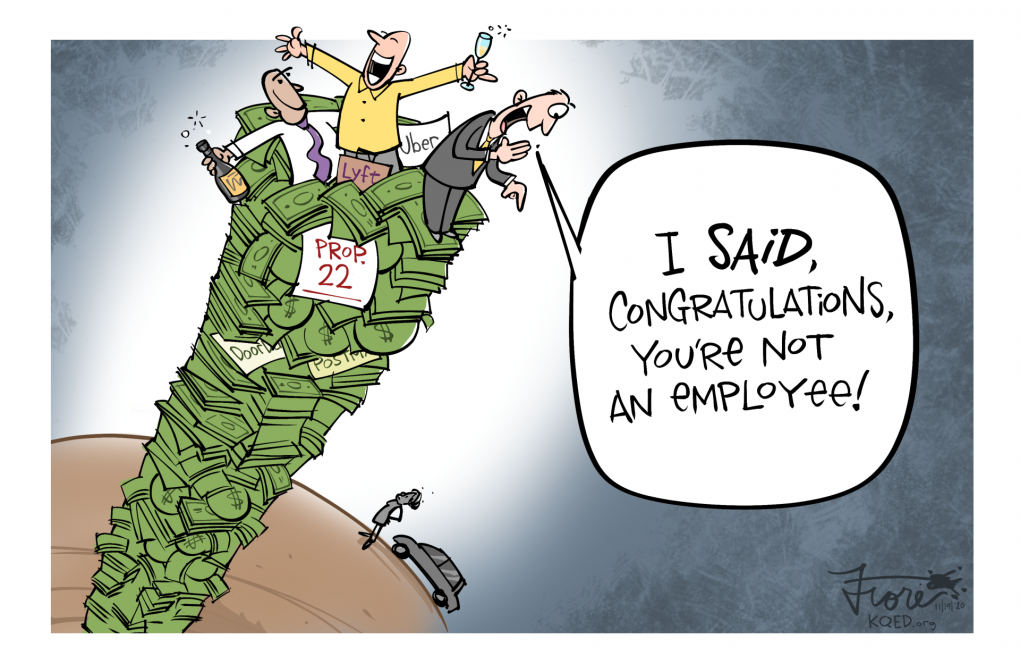
"content": "\u003cp>With the \u003ca href=\"http://bit.ly/fioreprop22passes\">passage of Prop. 22\u003c/a> – the most expensive ballot initiative campaign in California history – gig workers for companies like Uber and Lyft will not be categorized as employees.\u003c/p>\n\u003cp>The workers, who are essential to the success of the handful of multibillion-dollar corporations who pushed the ballot measure through, will be considered some sort of new “contract gig worker” not eligible for regular employee benefits.\u003c/p>\n\u003cp>Uber and Lyft stock \u003ca href=\"https://www.cnbc.com/2020/11/04/uber-and-lyft-stock-jump-after-californians-vote-to-pass-prop-22.html\">jumped at the news\u003c/a>.\u003c/p>\n\u003cp>[ad fullwidth]\u003c/p>\n\u003cp>\u003c/p>\n",
"blocks": [],
"excerpt": "With the passage of Prop. 22 – the most expensive ballot initiative campaign in California history – gig workers for companies like Uber and Lyft will not be categorized as employees.",
"status": "publish",
"parent": 0,
"modified": 1722892137,
"stats": {
"hasAudio": false,
"hasVideo": false,
"hasChartOrMap": false,
"iframeSrcs": [],
"hasGoogleForm": false,
"hasGallery": false,
"hasHearkenModule": false,
"hasPolis": false,
"paragraphCount": 5,
"wordCount": 81
},
"headData": {
"title": "Thanks for the Lift | KQED",
"description": "With the passage of Prop. 22 – the most expensive ballot initiative campaign in California history – gig workers for companies like Uber and Lyft will not be categorized as employees.",
"ogTitle": "",
"ogDescription": "",
"ogImgId": "",
"twTitle": "",
"twDescription": "",
"twImgId": "",
"schema": {
"@context": "https://schema.org",
"@type": "NewsArticle",
"headline": "Thanks for the Lift",
"datePublished": "2020-11-04T15:37:05-08:00",
"dateModified": "2024-08-05T14:08:57-07:00",
"image": "https://cdn.kqed.org/wp-content/uploads/2020/02/KQED-OG-Image@1x.png",
"isAccessibleForFree": "True",
"publisher": {
"@type": "NewsMediaOrganization",
"@id": "https://www.kqed.org/#organization",
"name": "KQED",
"logo": "https://cdn.kqed.org/wp-content/uploads/2020/02/KQED-OG-Image@1x.png",
"url": "https://www.kqed.org",
"sameAs": [
"https://www.facebook.com/KQED",
"https://twitter.com/KQED",
"https://www.instagram.com/kqed/",
"https://www.tiktok.com/@kqedofficial",
"https://www.linkedin.com/company/kqed",
"https://www.youtube.com/channel/UCeC0IOo7i1P_61zVUWbJ4nw"
]
}
}
},
"sticky": false,
"path": "/news/11845643/thanks-for-the-lift",
"audioTrackLength": null,
"parsedContent": [
{
"type": "contentString",
"content": "\u003cdiv class=\"post-body\">\u003cp>\u003cp>With the \u003ca href=\"http://bit.ly/fioreprop22passes\">passage of Prop. 22\u003c/a> – the most expensive ballot initiative campaign in California history – gig workers for companies like Uber and Lyft will not be categorized as employees.\u003c/p>\n\u003cp>The workers, who are essential to the success of the handful of multibillion-dollar corporations who pushed the ballot measure through, will be considered some sort of new “contract gig worker” not eligible for regular employee benefits.\u003c/p>\n\u003cp>Uber and Lyft stock \u003ca href=\"https://www.cnbc.com/2020/11/04/uber-and-lyft-stock-jump-after-californians-vote-to-pass-prop-22.html\">jumped at the news\u003c/a>.\u003c/p>\n\u003cp>\u003c/p>\u003c/div>",
"attributes": {
"named": {},
"numeric": []
}
},
{
"type": "component",
"content": "",
"name": "ad",
"attributes": {
"named": {
"label": "fullwidth"
},
"numeric": [
"fullwidth"
]
}
},
{
"type": "contentString",
"content": "\u003cdiv class=\"post-body\">\u003cp>\u003c/p>\n\u003cp>\u003c/p>\n\u003c/div>\u003c/p>",
"attributes": {
"named": {},
"numeric": []
}
}
],
"link": "/news/11845643/thanks-for-the-lift",
"authors": [
"3236"
],
"series": [
"news_18515"
],
"categories": [
"news_6188",
"news_13",
"news_1397"
],
"tags": [
"news_28756",
"news_4524",
"news_20949",
"news_17968",
"news_28581",
"news_18183",
"news_4523"
],
"featImg": "news_11845652",
"label": "news_18515"
},
"news_11845374": {
"type": "posts",
"id": "news_11845374",
"meta": {
"index": "posts_1716263798",
"site": "news",
"id": "11845374",
"score": null,
"sort": [
1604479468000
]
},
"guestAuthors": [],
"slug": "proposition-22-passes-granting-labor-exemptions-for-uber-lyft",
"title": "Proposition 22 Passes, Granting Labor Exemptions for Uber, Lyft",
"publishDate": 1604479468,
"format": "standard",
"headTitle": "Proposition 22 Passes, Granting Labor Exemptions for Uber, Lyft | KQED",
"labelTerm": {
"site": "news"
},
"content": "\u003cp>Proposition 22, an historically expensive effort by gig companies to continue classifying their workers as independent contractors, was passed by California voters Tuesday.\u003c/p>\n\u003cp>The measure was placed on the ballot after the California Legislature passed Assembly Bill 5 last year. That law forces companies to classify more of their workers as employees rather than independent contractors, and offer them workers’ compensation, overtime pay and other basic benefits they hadn’t previously had to provide.\u003c/p>\n\u003cp>Proposition 22, which was sponsored mainly by a handful of companies that rely on part-time workers — namely Lyft, Uber, DoorDash, Instacart and Postmates, sought an exemption from AB 5 for any company that provides transportation or delivery services through an app.\u003c/p>\n\u003cp>It also enshrines into law a kind of third employment category: the contract gig worker, who would receive fewer benefits than a traditional employee.\u003c/p>\n\u003cp>This ballot initiative and the fight to get it passed was unprecedented for numerous reasons, not least of which was the more than $200 million spent by several app-based transportation companies.\u003c/p>\n\u003cp>[ad fullwidth]\u003c/p>\n\u003cp>As of Tuesday night, more than 58% of voters had voted for Proposition 22.\u003c/p>\n\u003cp>\u003c/p>\n\u003cp>Read the full story \u003ca href=\"https://www.kqed.org/news/11844725/proposition-22-passes-locking-in-sub-employee-status-for-gig-workers\">here\u003c/a>.\u003c/p>\n\n",
"blocks": [],
"excerpt": "The proposition, which denies gig workers employee protections, was a historically expensive effort in California.",
"status": "publish",
"parent": 0,
"modified": 1727130796,
"stats": {
"hasAudio": false,
"hasVideo": false,
"hasChartOrMap": false,
"iframeSrcs": [],
"hasGoogleForm": false,
"hasGallery": false,
"hasHearkenModule": false,
"hasPolis": false,
"paragraphCount": 9,
"wordCount": 196
},
"headData": {
"title": "Proposition 22 Passes, Granting Labor Exemptions for Uber, Lyft | KQED",
"description": "The proposition, which denies gig workers employee protections, was a historically expensive effort in California.",
"ogTitle": "",
"ogDescription": "",
"ogImgId": "",
"twTitle": "",
"twDescription": "",
"twImgId": "",
"schema": {
"@context": "https://schema.org",
"@type": "NewsArticle",
"headline": "Proposition 22 Passes, Granting Labor Exemptions for Uber, Lyft",
"datePublished": "2020-11-04T00:44:28-08:00",
"dateModified": "2024-09-23T15:33:16-07:00",
"image": "https://cdn.kqed.org/wp-content/uploads/2020/02/KQED-OG-Image@1x.png",
"isAccessibleForFree": "True",
"publisher": {
"@type": "NewsMediaOrganization",
"@id": "https://www.kqed.org/#organization",
"name": "KQED",
"logo": "https://cdn.kqed.org/wp-content/uploads/2020/02/KQED-OG-Image@1x.png",
"url": "https://www.kqed.org",
"sameAs": [
"https://www.facebook.com/KQED",
"https://twitter.com/KQED",
"https://www.instagram.com/kqed/",
"https://www.tiktok.com/@kqedofficial",
"https://www.linkedin.com/company/kqed",
"https://www.youtube.com/channel/UCeC0IOo7i1P_61zVUWbJ4nw"
]
}
}
},
"sticky": false,
"templateType": "standard",
"featuredImageType": "standard",
"excludeFromSiteSearch": "Include",
"articleAge": "0",
"path": "/news/11845374/proposition-22-passes-granting-labor-exemptions-for-uber-lyft",
"audioTrackLength": null,
"parsedContent": [
{
"type": "contentString",
"content": "\u003cdiv class=\"post-body\">\u003cp>\u003cp>Proposition 22, an historically expensive effort by gig companies to continue classifying their workers as independent contractors, was passed by California voters Tuesday.\u003c/p>\n\u003cp>The measure was placed on the ballot after the California Legislature passed Assembly Bill 5 last year. That law forces companies to classify more of their workers as employees rather than independent contractors, and offer them workers’ compensation, overtime pay and other basic benefits they hadn’t previously had to provide.\u003c/p>\n\u003cp>Proposition 22, which was sponsored mainly by a handful of companies that rely on part-time workers — namely Lyft, Uber, DoorDash, Instacart and Postmates, sought an exemption from AB 5 for any company that provides transportation or delivery services through an app.\u003c/p>\n\u003cp>It also enshrines into law a kind of third employment category: the contract gig worker, who would receive fewer benefits than a traditional employee.\u003c/p>\n\u003cp>This ballot initiative and the fight to get it passed was unprecedented for numerous reasons, not least of which was the more than $200 million spent by several app-based transportation companies.\u003c/p>\n\u003cp>\u003c/p>\u003c/div>",
"attributes": {
"named": {},
"numeric": []
}
},
{
"type": "component",
"content": "",
"name": "ad",
"attributes": {
"named": {
"label": "fullwidth"
},
"numeric": [
"fullwidth"
]
}
},
{
"type": "contentString",
"content": "\u003cdiv class=\"post-body\">\u003cp>\u003c/p>\n\u003cp>As of Tuesday night, more than 58% of voters had voted for Proposition 22.\u003c/p>\n\u003cp>\u003c/p>\n\u003cp>Read the full story \u003ca href=\"https://www.kqed.org/news/11844725/proposition-22-passes-locking-in-sub-employee-status-for-gig-workers\">here\u003c/a>.\u003c/p>\n\n\u003c/div>\u003c/p>",
"attributes": {
"named": {},
"numeric": []
}
}
],
"link": "/news/11845374/proposition-22-passes-granting-labor-exemptions-for-uber-lyft",
"authors": [
"244"
],
"categories": [
"news_8"
],
"tags": [
"news_26585",
"news_4524",
"news_28581",
"news_28695",
"news_4523"
],
"featImg": "news_11845149",
"label": "news"
},
"news_11844698": {
"type": "posts",
"id": "news_11844698",
"meta": {
"index": "posts_1716263798",
"site": "news",
"id": "11844698",
"score": null,
"sort": [
1604245831000
]
},
"guestAuthors": [],
"slug": "uber-engineer-quits-over-pressure-to-support-proposition-22",
"title": "Uber Engineer Quits Over Pressure to Support Proposition 22",
"publishDate": 1604245831,
"format": "standard",
"headTitle": "Uber Engineer Quits Over Pressure to Support Proposition 22 | KQED",
"labelTerm": {
"site": "news"
},
"content": "\u003cp>Former Uber engineer Eddy Hernandez said it started with the yes on Proposition 22 Zoom backgrounds that began appearing around the onset of the coronavirus pandemic. Then employees were offered free Proposition 22 T-shirts, managers and executives talked about the proposition in meetings and Hernandez got the sense that bonuses and promotions would go to people who worked on projects related to promoting the proposition.\u003c/p>\n\u003cp>Hernandez said he felt a constant push to support the proposition at work. He didn’t like feeling that kind of political pressure on the job. On top of that, Hernandez opposes the ballot initiative, and he did not feel comfortable having that viewpoint. If the proposition passes, so-called gig economy companies such as Uber, Lyft and Instacart would be exempted from state labor law and allowed to continue classifying workers as contractors.\u003c/p>\n\u003cp>“I felt like I was stripped of my voice because if I said anything there would be a conflict of interest or it would affect the financials of the company. That’s a weird place to be in. It’s something I didn’t want to normalize,” he said.[pullquote size=\"medium\" align=\"right\" citation=\"Eddy Hernandez, former Uber engineer\"]‘I felt like I was stripped of my voice because if I said anything there would be a conflict of interest or it would affect the financials of the company … It’s something I didn’t want to normalize.’[/pullquote]\u003c/p>\n\u003cp>Finally, in the middle of the pandemic and without another job, he decided he would quit. At the end of September, he handed in his resignation.\u003c/p>\n\u003cp>Hernandez, \u003ca href=\"https://news.techworkerscoalition.org/2020/10/30/issue-13/\" target=\"_blank\" rel=\"noopener noreferrer\">who has since written a public letter about leaving Uber\u003c/a> and his opposition to Proposition 22, is not the first employee to speak out about this kind of pressure.\u003c/p>\n\u003cp>Drivers at Uber tried, unsuccessfully, to sue the company over the \u003ca href=\"https://www.kqed.org/news/11842964/gig-companies-are-making-their-workers-promote-prop-22\" target=\"_blank\" rel=\"noopener noreferrer\">in-app pop-ups soliciting their support\u003c/a>. Current Uber employee Kurt Nelson also wrote an \u003ca href=\"https://techcrunch.com/2020/10/06/im-a-software-engineer-at-uber-im-voting-against-prop-22/\" target=\"_blank\" rel=\"noopener noreferrer\">op-ed in TechCrunch\u003c/a> about opposing Proposition 22, and later described yes on Proposition 22 pressure at the company, similar to what Hernandez experienced.\u003c/p>\n\u003cp>Hernandez said he only started working there in 2019 because the team that was hiring said the company was really changing its culture. He was apprehensive, but eventually took the job.\u003c/p>\n\u003cp>Over the last year, Hernandez said he realized the company has not changed from its past, and that there was no real interest for social good — just economic gain for the company and those who worked there. [ad fullwidth]\u003c/p>\n\u003cp>Hernandez said he was alarmed by an email he said he received from Uber asking him to tell his family and friends why he supported Proposition 22.\u003c/p>\n\u003cp>Uber spokesperson Davis White said there were only two company-wide emails related to Proposition 22. White said that the second email said: “As always, lending your voice, your vote, or your time to Prop. 22 is entirely up to you. With that being said, here are some ways to pitch in, if you choose.” [aside postID=\"news_11843123\" label=\"More on Proposition 22\"]\u003c/p>\n\u003cp>During the coronavirus, Hernandez said the pressure to support Proposition 22 grew. He saw more and more managers start putting the yes on Proposition 22 backgrounds on Zoom, and the company offered to give a free “yes-on-prop-22” T-shirt to any employee who wanted one and many employees started working on yes on Proposition 22 products, like pop-ups urging drivers to vote yes.\u003c/p>\n\u003cp>There is an internal wiki page at Uber with company initiatives and priorities that employees look at to know what is important to talk about in performance review meetings, Hernandez said. He saw Proposition 22 listed there, which he felt meant that employees who did work on Proposition 22-related projects would have an easier chance of being rewarded with bonuses and promotions.\u003c/p>\n\u003cp>“These materials are not what managers use as a guide for performance reviews. There is a lot displayed on the site that is not relevant to everyone,” Uber spokesperson White wrote in an email. “It is simply a general sense of what’s important to the company as a whole, which Prop. 22 obviously is.” \u003c/p>\n\u003cp>He added, “an employee’s position on Prop. 22 has never and in no way will factor into performance reviews.”\u003c/p>\n\u003cp>\u003c/p>\n",
"blocks": [],
"excerpt": "Former Uber engineer Eddy Hernandez handed in his resignation at the end of September. He has since written a public letter about leaving Uber and his opposition to Proposition 22.",
"status": "publish",
"parent": 0,
"modified": 1728430594,
"stats": {
"hasAudio": false,
"hasVideo": false,
"hasChartOrMap": false,
"iframeSrcs": [],
"hasGoogleForm": false,
"hasGallery": false,
"hasHearkenModule": false,
"hasPolis": false,
"paragraphCount": 15,
"wordCount": 735
},
"headData": {
"title": "Uber Engineer Quits Over Pressure to Support Proposition 22 | KQED",
"description": "Former Uber engineer Eddy Hernandez handed in his resignation at the end of September. He has since written a public letter about leaving Uber and his opposition to Proposition 22.",
"ogTitle": "",
"ogDescription": "",
"ogImgId": "",
"twTitle": "",
"twDescription": "",
"twImgId": "",
"schema": {
"@context": "https://schema.org",
"@type": "NewsArticle",
"headline": "Uber Engineer Quits Over Pressure to Support Proposition 22",
"datePublished": "2020-11-01T07:50:31-08:00",
"dateModified": "2024-10-08T16:36:34-07:00",
"image": "https://cdn.kqed.org/wp-content/uploads/2020/02/KQED-OG-Image@1x.png",
"isAccessibleForFree": "True",
"publisher": {
"@type": "NewsMediaOrganization",
"@id": "https://www.kqed.org/#organization",
"name": "KQED",
"logo": "https://cdn.kqed.org/wp-content/uploads/2020/02/KQED-OG-Image@1x.png",
"url": "https://www.kqed.org",
"sameAs": [
"https://www.facebook.com/KQED",
"https://twitter.com/KQED",
"https://www.instagram.com/kqed/",
"https://www.tiktok.com/@kqedofficial",
"https://www.linkedin.com/company/kqed",
"https://www.youtube.com/channel/UCeC0IOo7i1P_61zVUWbJ4nw"
]
}
}
},
"sticky": false,
"path": "/news/11844698/uber-engineer-quits-over-pressure-to-support-proposition-22",
"audioTrackLength": null,
"parsedContent": [
{
"type": "contentString",
"content": "\u003cdiv class=\"post-body\">\u003cp>\u003cp>Former Uber engineer Eddy Hernandez said it started with the yes on Proposition 22 Zoom backgrounds that began appearing around the onset of the coronavirus pandemic. Then employees were offered free Proposition 22 T-shirts, managers and executives talked about the proposition in meetings and Hernandez got the sense that bonuses and promotions would go to people who worked on projects related to promoting the proposition.\u003c/p>\n\u003cp>Hernandez said he felt a constant push to support the proposition at work. He didn’t like feeling that kind of political pressure on the job. On top of that, Hernandez opposes the ballot initiative, and he did not feel comfortable having that viewpoint. If the proposition passes, so-called gig economy companies such as Uber, Lyft and Instacart would be exempted from state labor law and allowed to continue classifying workers as contractors.\u003c/p>\n\u003cp>“I felt like I was stripped of my voice because if I said anything there would be a conflict of interest or it would affect the financials of the company. That’s a weird place to be in. It’s something I didn’t want to normalize,” he said.\u003c/p>\u003c/div>",
"attributes": {
"named": {},
"numeric": []
}
},
{
"type": "component",
"content": "‘I felt like I was stripped of my voice because if I said anything there would be a conflict of interest or it would affect the financials of the company … It’s something I didn’t want to normalize.’",
"name": "pullquote",
"attributes": {
"named": {
"size": "medium",
"align": "right",
"citation": "Eddy Hernandez, former Uber engineer",
"label": ""
},
"numeric": []
}
},
{
"type": "contentString",
"content": "\u003cdiv class=\"post-body\">\u003cp>\u003c/p>\n\u003cp>Finally, in the middle of the pandemic and without another job, he decided he would quit. At the end of September, he handed in his resignation.\u003c/p>\n\u003cp>Hernandez, \u003ca href=\"https://news.techworkerscoalition.org/2020/10/30/issue-13/\" target=\"_blank\" rel=\"noopener noreferrer\">who has since written a public letter about leaving Uber\u003c/a> and his opposition to Proposition 22, is not the first employee to speak out about this kind of pressure.\u003c/p>\n\u003cp>Drivers at Uber tried, unsuccessfully, to sue the company over the \u003ca href=\"https://www.kqed.org/news/11842964/gig-companies-are-making-their-workers-promote-prop-22\" target=\"_blank\" rel=\"noopener noreferrer\">in-app pop-ups soliciting their support\u003c/a>. Current Uber employee Kurt Nelson also wrote an \u003ca href=\"https://techcrunch.com/2020/10/06/im-a-software-engineer-at-uber-im-voting-against-prop-22/\" target=\"_blank\" rel=\"noopener noreferrer\">op-ed in TechCrunch\u003c/a> about opposing Proposition 22, and later described yes on Proposition 22 pressure at the company, similar to what Hernandez experienced.\u003c/p>\n\u003cp>Hernandez said he only started working there in 2019 because the team that was hiring said the company was really changing its culture. He was apprehensive, but eventually took the job.\u003c/p>\n\u003cp>Over the last year, Hernandez said he realized the company has not changed from its past, and that there was no real interest for social good — just economic gain for the company and those who worked there. \u003c/p>\u003c/div>",
"attributes": {
"named": {},
"numeric": []
}
},
{
"type": "component",
"content": "",
"name": "ad",
"attributes": {
"named": {
"label": "fullwidth"
},
"numeric": [
"fullwidth"
]
}
},
{
"type": "contentString",
"content": "\u003cdiv class=\"post-body\">\u003cp>\u003c/p>\n\u003cp>Hernandez said he was alarmed by an email he said he received from Uber asking him to tell his family and friends why he supported Proposition 22.\u003c/p>\n\u003cp>Uber spokesperson Davis White said there were only two company-wide emails related to Proposition 22. White said that the second email said: “As always, lending your voice, your vote, or your time to Prop. 22 is entirely up to you. With that being said, here are some ways to pitch in, if you choose.” \u003c/p>\u003c/div>",
"attributes": {
"named": {},
"numeric": []
}
},
{
"type": "component",
"content": "",
"name": "aside",
"attributes": {
"named": {
"postid": "news_11843123",
"label": "More on Proposition 22 "
},
"numeric": []
}
},
{
"type": "contentString",
"content": "\u003cdiv class=\"post-body\">\u003cp>\u003c/p>\n\u003cp>During the coronavirus, Hernandez said the pressure to support Proposition 22 grew. He saw more and more managers start putting the yes on Proposition 22 backgrounds on Zoom, and the company offered to give a free “yes-on-prop-22” T-shirt to any employee who wanted one and many employees started working on yes on Proposition 22 products, like pop-ups urging drivers to vote yes.\u003c/p>\n\u003cp>There is an internal wiki page at Uber with company initiatives and priorities that employees look at to know what is important to talk about in performance review meetings, Hernandez said. He saw Proposition 22 listed there, which he felt meant that employees who did work on Proposition 22-related projects would have an easier chance of being rewarded with bonuses and promotions.\u003c/p>\n\u003cp>“These materials are not what managers use as a guide for performance reviews. There is a lot displayed on the site that is not relevant to everyone,” Uber spokesperson White wrote in an email. “It is simply a general sense of what’s important to the company as a whole, which Prop. 22 obviously is.” \u003c/p>\n\u003cp>He added, “an employee’s position on Prop. 22 has never and in no way will factor into performance reviews.”\u003c/p>\n\u003cp>\u003c/p>\n\u003c/div>\u003c/p>",
"attributes": {
"named": {},
"numeric": []
}
}
],
"link": "/news/11844698/uber-engineer-quits-over-pressure-to-support-proposition-22",
"authors": [
"253"
],
"categories": [
"news_8",
"news_13"
],
"tags": [
"news_18538",
"news_26532",
"news_28756",
"news_19904",
"news_4524",
"news_28581",
"news_28695",
"news_4523"
],
"featImg": "news_11844818",
"label": "news"
},
"news_11844601": {
"type": "posts",
"id": "news_11844601",
"meta": {
"index": "posts_1716263798",
"site": "news",
"id": "11844601",
"score": null,
"sort": [
1604088203000
]
},
"parent": 0,
"labelTerm": {
"site": "news",
"term": 18515
},
"blocks": [],
"publishDate": 1604088203,
"format": "standard",
"disqusTitle": "Still Disrupting . . .",
"title": "Still Disrupting . . .",
"headTitle": "Mark Fiore: Drawn to the Bay | KQED News",
"content": "\u003cp>With gig companies turning Proposition 22 into the \u003ca href=\"http://bit.ly/fioreprop22\">most expensive ballot measure in California history\u003c/a>, polling shows its passage is anything but certain.\u003c/p>\n\u003cp>The well-funded proposition essentially carves out a new category of gig worker that would not include the usual employee protections mandated in California.\u003c/p>\n\u003cp>Uber has been \u003ca href=\"https://www.kqed.org/news/11842964/gig-companies-are-making-their-workers-promote-prop-22\">particularly aggressive\u003c/a> in enlisting its workers to advocate for the measure.\u003c/p>\n\u003cp>Watching multibillion-dollar companies pouring millions into a ballot measure so they can reap the rewards of an app that connects drivers and riders ... sure makes the days of taxi cabs seem simpler.\u003c/p>\n\u003cp>[ad fullwidth]\u003c/p>\n\u003cp>\u003c/p>\n",
"disqusIdentifier": "11844601 https://ww2.kqed.org/news/?p=11844601",
"disqusUrl": "https://ww2.kqed.org/news/2020/10/30/still-disrupting/",
"stats": {
"hasVideo": false,
"hasChartOrMap": false,
"hasAudio": false,
"hasPolis": false,
"wordCount": 96,
"hasGoogleForm": false,
"hasGallery": false,
"hasHearkenModule": false,
"iframeSrcs": [],
"paragraphCount": 6
},
"modified": 1604093612,
"excerpt": "With gig companies turning Prop. 22 into the most expensive ballot measure in California history, polling shows its passage is anything but certain.",
"headData": {
"twImgId": "",
"twTitle": "",
"ogTitle": "",
"ogImgId": "",
"twDescription": "",
"description": "With gig companies turning Prop. 22 into the most expensive ballot measure in California history, polling shows its passage is anything but certain.",
"title": "Still Disrupting . . . | KQED",
"ogDescription": "",
"schema": {
"@context": "https://schema.org",
"@type": "NewsArticle",
"headline": "Still Disrupting . . .",
"datePublished": "2020-10-30T13:03:23-07:00",
"dateModified": "2020-10-30T14:33:32-07:00",
"image": "https://cdn.kqed.org/wp-content/uploads/2020/02/KQED-OG-Image@1x.png",
"isAccessibleForFree": "True",
"publisher": {
"@type": "NewsMediaOrganization",
"@id": "https://www.kqed.org/#organization",
"name": "KQED",
"logo": "https://cdn.kqed.org/wp-content/uploads/2020/02/KQED-OG-Image@1x.png",
"url": "https://www.kqed.org",
"sameAs": [
"https://www.facebook.com/KQED",
"https://twitter.com/KQED",
"https://www.instagram.com/kqed/",
"https://www.tiktok.com/@kqedofficial",
"https://www.linkedin.com/company/kqed",
"https://www.youtube.com/channel/UCeC0IOo7i1P_61zVUWbJ4nw"
]
}
}
},
"guestAuthors": [],
"slug": "still-disrupting",
"status": "publish",
"path": "/news/11844601/still-disrupting",
"audioTrackLength": null,
"parsedContent": [
{
"type": "contentString",
"content": "\u003cdiv class=\"post-body\">\u003cp>\u003cp>With gig companies turning Proposition 22 into the \u003ca href=\"http://bit.ly/fioreprop22\">most expensive ballot measure in California history\u003c/a>, polling shows its passage is anything but certain.\u003c/p>\n\u003cp>The well-funded proposition essentially carves out a new category of gig worker that would not include the usual employee protections mandated in California.\u003c/p>\n\u003cp>Uber has been \u003ca href=\"https://www.kqed.org/news/11842964/gig-companies-are-making-their-workers-promote-prop-22\">particularly aggressive\u003c/a> in enlisting its workers to advocate for the measure.\u003c/p>\n\u003cp>Watching multibillion-dollar companies pouring millions into a ballot measure so they can reap the rewards of an app that connects drivers and riders ... sure makes the days of taxi cabs seem simpler.\u003c/p>\n\u003cp>\u003c/p>\u003c/div>",
"attributes": {
"named": {},
"numeric": []
}
},
{
"type": "component",
"content": "",
"name": "ad",
"attributes": {
"named": {
"label": "fullwidth"
},
"numeric": [
"fullwidth"
]
}
},
{
"type": "contentString",
"content": "\u003cdiv class=\"post-body\">\u003cp>\u003c/p>\n\u003cp>\u003c/p>\n\u003c/div>\u003c/p>",
"attributes": {
"named": {},
"numeric": []
}
}
],
"link": "/news/11844601/still-disrupting",
"authors": [
"3236"
],
"series": [
"news_18515"
],
"categories": [
"news_1758",
"news_6188",
"news_13",
"news_1397"
],
"tags": [
"news_26585",
"news_4524",
"news_20949",
"news_28581",
"news_28695",
"news_18183",
"news_4523"
],
"featImg": "news_11844612",
"label": "news_18515"
},
"news_11843123": {
"type": "posts",
"id": "news_11843123",
"meta": {
"index": "posts_1716263798",
"site": "news",
"id": "11843123",
"score": null,
"sort": [
1603759727000
]
},
"guestAuthors": [],
"slug": "prop-22-explained-why-gig-companies-are-spending-huge-money-on-an-unprecedented-measure",
"title": "Prop. 22 Explained: Why Gig Companies Are Spending Huge Money on an Unprecedented Measure",
"publishDate": 1603759727,
"format": "image",
"headTitle": "Prop. 22 Explained: Why Gig Companies Are Spending Huge Money on an Unprecedented Measure | KQED",
"labelTerm": {
"site": "news"
},
"content": "\u003cp>\u003ci data-stringify-type=\"italic\">This story was updated Wednesday, Nov. 4 at 12:40pm\u003c/i>\u003c/p>\n\u003cp>\u003cb data-stringify-type=\"bold\">UPDATE: Proposition 22 was approved by California voters Tuesday, Nov. 3. \u003c/b>\u003cb data-stringify-type=\"bold\">\u003ca class=\"c-link\" href=\"https://www.kqed.org/news/11844725/proposition-22-passes-locking-in-sub-employee-status-for-gig-workers\" target=\"_blank\" rel=\"noopener noreferrer\" data-stringify-link=\"https://www.kqed.org/news/11844725/proposition-22-passes-locking-in-sub-employee-status-for-gig-workers\" data-sk=\"tooltip_parent\">Read the full details here\u003c/a>\u003c/b>\u003cb data-stringify-type=\"bold\">.\u003c/b>\u003c/p>\n\u003cp>\u003ci data-stringify-type=\"italic\">Original story:\u003c/i>\u003c/p>\n\u003cp>The decision California voters face on Proposition 22 boils down to this: should a handful of companies be allowed to create a new gig contractor category for their workers that doesn’t include employee protections and benefits, like unemployment insurance and workers compensation? Or should companies like Uber, Lyft and DoorDash have to follow state labor law and classify their drivers as employees, which could mean directing more revenue to workers, higher prices for consumers and increased requirements for more casual drivers?\u003c/p>\n\u003cp>That’s the choice on the ballot. But there’s so much more going on with this unprecedented and far-reaching proposition — a proposition that recent polling indicates will come down to Californians who are still undecided. As of Oct. 26, \u003ca href=\"https://www.kqed.org/news/11843691/poll-measure-pushed-by-uber-lyft-falling-just-short-of-passage-many-voters-still-undecided\">polling of likely voters\u003c/a> shows 46% in favor, 42% opposed and 12% undecided. Here’s everything you’d need to know about the proposition and its backstory before you vote.\u003c/p>\n\u003cp>\u003cstrong>Skip to:\u003c/strong>\u003c/p>\n\u003cul>\n\u003cli>\u003cstrong>\u003ca href=\"#backstory\">The Backstory\u003c/a>\u003c/strong>: How companies like Lyft, Uber and DoorDash have avoided employee classification for eight years despite pressure from workers, labor groups and every branch of state government\u003c/li>\n\u003cli>\u003cstrong>\u003ca href=\"#written\">What’s Actually in Prop. 22?\u003c/a>\u003c/strong>: An explanation of the limited worker benefits and why the “7/8ths provision” would make it nearly impossible to change this law in the future\u003c/li>\n\u003cli>\u003cstrong>\u003ca href=\"#money\">Unprecedented Money\u003c/a>\u003c/strong>: Gig companies are spending record amounts of cash to market Prop. 22 — and it’s being framed as a social justice issue\u003c/li>\n\u003cli>\u003cstrong>\u003ca href=\"#surveys\">Those Driver Surveys, and What’s Wrong With Them\u003c/a>\u003c/strong>: What do drivers want? Surveys used to market Prop. 22 are often flawed and don’t tell the full story\u003c/li>\n\u003cli>\u003cstrong>\u003ca href=\"#directtovoter\">Unprecedented Direct-to-Voter Connection\u003c/a>\u003c/strong>: Millions of apps in millions of pockets, workers asked to deliver political ads and pop ups galore — win or lose, a new election playbook is being written\u003c/li>\n\u003cli>\u003cstrong>\u003ca href=\"#ramifications\">The Ramifications\u003c/a>\u003c/strong>: If Prop. 22 passes, what will it mean for gig work, labor protections, election campaigning and local governance?\u003c/li>\n\u003c/ul>\n\u003ch1>\u003ca id=\"backstory\">\u003c/a>The Backstory\u003c/h1>\n\u003cfigure id=\"attachment_11843145\" class=\"wp-caption aligncenter\" style=\"max-width: 1920px\">\u003cimg loading=\"lazy\" decoding=\"async\" class=\"size-full wp-image-11843145\" src=\"https://ww2.kqed.org/app/uploads/sites/10/2020/10/Lyft-moustache.jpg\" alt=\"Lyft car with mustache\" width=\"1920\" height=\"1250\" srcset=\"https://cdn.kqed.org/wp-content/uploads/sites/10/2020/10/Lyft-moustache.jpg 1920w, https://cdn.kqed.org/wp-content/uploads/sites/10/2020/10/Lyft-moustache-800x521.jpg 800w, https://cdn.kqed.org/wp-content/uploads/sites/10/2020/10/Lyft-moustache-1020x664.jpg 1020w, https://cdn.kqed.org/wp-content/uploads/sites/10/2020/10/Lyft-moustache-160x104.jpg 160w, https://cdn.kqed.org/wp-content/uploads/sites/10/2020/10/Lyft-moustache-1536x1000.jpg 1536w\" sizes=\"(max-width: 1920px) 100vw, 1920px\">\u003cfigcaption class=\"wp-caption-text\">A Lyft driver with one of the early fuzzy pink mustaches drives in downtown San Francisco in January, 2014. \u003ccite>(Justin Sullivan/Getty Images)\u003c/cite>\u003c/figcaption>\u003c/figure>\n\u003cp>It all began in 2012 with a fuzzy pink mustache and a fist bump. It was Lyft, not Uber, that first started paying drivers to use their own cars to do taxi work. Both companies cast themselves not as taxi companies, but platforms to connect riders to drivers, and tech journalists helped propel this image. \u003ca href=\"https://papers.ssrn.com/sol3/papers.cfm?abstract_id=3668606\">Here’s the even deeper backstory on how that all went down\u003c/a>.\u003c/p>\n\u003cp>Using the platform argument, the gig companies classified their workers as contractors, which shielded them from liability and allowed them to avoid paying for protections like overtime and unemployment insurance. Regulators and the government at the state and federal levels did not stop Uber and Lyft, and soon, companies like Instacart, DoorDash and Postmates began following suit.\u003c/p>\n\u003cp>But this contractor model was legally suspect from the start. In California, the determination of whether a worker was a contractor or an employee was made by the Borello test, which is a \u003ca href=\"https://caselaw.findlaw.com/ca-supreme-court/1774638.html\">complex set of 11 factors established by a 1989 California Supreme Court case\u003c/a>.\u003c/p>\n\u003cp>[aside label=\"Election 2020\" link1=\"https://www.kqed.org/voterguide,KQED's California Voter Guide\" hero=\"https://ww2.kqed.org/app/uploads/sites/10/2020/10/RS45342_001_KQED_SanFrancisco_Election2020_MailinBallot_10122020-qut-1020x680.jpg\"]\u003c/p>\n\u003cp>It was arguable that under those parameters, gig workers were not independent entrepreneurs running their own businesses on a platform provided by “tech” companies, but instead, employees of a transportation company in the case of Uber and Lyft, a service company in the case of TaskRabbit and a delivery company in the case of Postmates or DoorDash.\u003ca href=\"https://www.reuters.com/article/us-uber-tech-drivers-lawsuit/uber-drivers-granted-class-action-status-in-lawsuit-over-employment-idUSKCN0R14O920150901\"> Lawyers began trying to make the case\u003c/a> with big lawsuits against gig companies.\u003c/p>\n\u003cp>Workers were and still are fighting almost all the battles over employee protections and benefits behind closed doors. That’s because gig companies make workers sign arbitration clauses, which prevent them from taking any grievance to court. That has helped preempt and neutralize class-action lawsuits. Law professor Charlotte Garden \u003ca href=\"https://digitalcommons.law.seattleu.edu/cgi/viewcontent.cgi?article=1794&context=faculty\">wrote a whole academic paper\u003c/a> on how the gig economy relies on mandatory arbitration.\u003c/p>\n\u003cp>In 2014, as Uber and Lyft began to slash wages in a price war, workers increased their protest, but they could make no headway toward employment status. Gig companies leaned on customer support for political support, and consumers loved these cheap rides, which were kept low by the contractor model and venture capital. It took six years for any notable action from California’s government. And it came first from the judicial branch.\u003c/p>\n\u003cp>[ad fullwidth]\u003c/p>\n\u003cp>In a ruling on a case known as \u003ca href=\"https://scocal.stanford.edu/opinion/dynamex-operations-west-inc-v-superior-court-34584\">Dynamex in 2018\u003c/a>, California’s Supreme Court simplified the Borello test, boiling it down to just three factors, called the ABCs. A worker could now only be classified as a contractor if they:\u003c/p>\n\u003cul>\n\u003cli>A) Were free from the control and direction of the hirer\u003c/li>\n\u003cli>B) Performed work outside the hirer’s normal course of business\u003c/li>\n\u003cli>C) Had their own independently established trade, occupation or business\u003c/li>\n\u003c/ul>\n\u003cp>The ruling made it much more difficult for gig companies to deny workers employee benefits and protections. But still, gig companies kept classifying workers as contractors.\u003c/p>\n\u003cp>After the state Supreme Court, the Legislature took up the fight. Lawmakers passed \u003ca href=\"https://leginfo.legislature.ca.gov/faces/billTextClient.xhtml?bill_id=201920200AB5\">Assembly Bill 5\u003c/a>, which went into effect on Jan. 1, 2020. AB 5 codified the Dynamex ruling and was designed with gig companies in mind.\u003c/p>\n\u003cp>However, the new law also affected a number of other industries that have come to rely on contractors. The bill was amended after a backlash, and a number of professions got exemptions, like fine artists, foresters and translators — but not gig workers. Still, gig companies kept classifying workers as contractors.\u003c/p>\n\u003cp>[aside postID=news_11833598 hero='https://ww2.kqed.org/app/uploads/sites/10/2019/09/09182019_uber-lyft-qut-1020x640.jpg']\u003c/p>\n\u003cp>Then in May, several months into the coronavirus pandemic, with tens of thousands of Uber and Lyft drivers seeking unemployment funds that didn’t exist because the companies had never paid into the state unemployment fund, the executive branch got involved. California Attorney General Xavier Becerra, along with a handful of city attorneys, \u003ca href=\"https://www.kqed.org/news/11816321/california-city-attorneys-sue-uber-and-lyft-over-worker-misclassification\">sued Uber and Lyft for misclassifying workers\u003c/a>. On Oct. 22 Uber and Lyft \u003ca href=\"https://www.latimes.com/business/story/2020-10-22/uber-and-lyft-must-comply-with-labor-law-ab-5-appeals-court-orders\">lost an appeal\u003c/a>, and will have to start classifying workers as employees in 30 days — unless Proposition 22 passes.\u003c/p>\n\u003cp>After AB 5 passed, the gig companies started their ballot initiative campaign, hoping that voters would enshrine their gig contractor model into law. Now, with all three branches of California’s government pressuring them to classify workers as employees, they are pouring money into Proposition 22. It’s become \u003ca href=\"https://ballotpedia.org/What_were_the_most_expensive_ballot_measures_in_California\">the most well-funded ballot initiative in California history\u003c/a>. And it’s designed to be a conclusive victory for gig companies.\u003c/p>\n\u003ch1>\u003ca id=\"written\">\u003c/a>What’s Actually in Prop. 22?\u003c/h1>\n\u003cfigure id=\"attachment_11843210\" class=\"wp-caption aligncenter\" style=\"max-width: 1920px\">\u003cimg loading=\"lazy\" decoding=\"async\" class=\"size-full wp-image-11843210\" src=\"https://ww2.kqed.org/app/uploads/sites/10/2020/10/RS45263_001_KQED_ElectionStockPhotos_TikaHall_10062020-qut.jpg\" alt=\"\" width=\"1920\" height=\"1280\" srcset=\"https://cdn.kqed.org/wp-content/uploads/sites/10/2020/10/RS45263_001_KQED_ElectionStockPhotos_TikaHall_10062020-qut.jpg 1920w, https://cdn.kqed.org/wp-content/uploads/sites/10/2020/10/RS45263_001_KQED_ElectionStockPhotos_TikaHall_10062020-qut-800x533.jpg 800w, https://cdn.kqed.org/wp-content/uploads/sites/10/2020/10/RS45263_001_KQED_ElectionStockPhotos_TikaHall_10062020-qut-1020x680.jpg 1020w, https://cdn.kqed.org/wp-content/uploads/sites/10/2020/10/RS45263_001_KQED_ElectionStockPhotos_TikaHall_10062020-qut-160x107.jpg 160w, https://cdn.kqed.org/wp-content/uploads/sites/10/2020/10/RS45263_001_KQED_ElectionStockPhotos_TikaHall_10062020-qut-1536x1024.jpg 1536w\" sizes=\"(max-width: 1920px) 100vw, 1920px\">\u003cfigcaption class=\"wp-caption-text\">A San Francisco resident fills out their mail-in ballot on Oct. 6, 2020. \u003ccite>(Beth LaBerge/KQED)\u003c/cite>\u003c/figcaption>\u003c/figure>\n\u003cp>Proposition 22 is written as an exemption from AB 5 for any company that provides transportation or delivery services through an app. It would enshrine in law a kind of third employment category: the contract gig worker. This has been a goal of gig companies for years. They have pursued it at the federal level, and have already \u003ca href=\"https://www.nelp.org/publication/rights-at-risk-gig-companies-campaign-to-upend-employment-as-we-know-it/\">had success in getting legislation on the books in a number of states\u003c/a>.\u003c/p>\n\u003cp>But the measure has several other provisions built around the central premise of exempting gig companies from AB 5.\u003c/p>\n\u003ch3>Limited Employee Benefits\u003c/h3>\n\u003cp>Prop. 22 would guarantee gig workers some limited benefits and protections. As contractors, they currently have none. But the benefits are not as straightforward as they appear at first read.\u003c/p>\n\u003cp>The most murky benefit is the guaranteed wage floor. Prop. 22 would ensure 120% of minimum wage and 30 cents per mile for drivers, adjusted for inflation. But there’s a pretty big catch. The guarantee is only for “engaged” driving time, defined as the time between “accepting a service request and completing the request.”\u003c/p>\n\u003cp>Much of gig work is spent waiting for a job in the app. \u003ca href=\"https://laborcenter.berkeley.edu/the-uber-lyft-ballot-initiative-guarantees-only-5-64-an-hour-2/\">UC Berkeley’s Labor Center did a study\u003c/a> where they tried to take time between rides into account, along with wear and tear on the vehicle. Adding those factors in the mix, the study found the wage guarantee drops to just $5.64 an hour, a drastic pay cut from the $13 minimum wage they would be guaranteed as employees in California. Uber and Lyft disputed the findings in the study, and \u003ca href=\"https://ucreconomicforecast.org/wp-content/uploads/2020/08/Prop22_Driver_Earnings_Analysis_August2020.pdf\">they commissioned another study\u003c/a> that put the earnings at between $25 and $27 an hour. That prompted \u003ca href=\"https://laborcenter.berkeley.edu/the-effects-of-proposition-22-on-driver-earnings-response-to-a-lyft-funded-report-by-dr-christopher-thornberg/#_edn5\">a rebuttal from UC Berkeley.\u003c/a>\u003c/p>\n\u003cp>Aside from the wage floor, Prop. 22 includes a number of benefits that are substitutes for protections guaranteed by traditional employment. In each case, these protections are weaker than what workers would get as employees, and some are contingent on driving a certain number of hours.\u003c/p>\n\u003cp>Instead of health care, drivers who put in over 25 hours per week of engaged driving time would get health care subsidies. Instead of workers compensation, companies would offer occupational accident insurance for medical expenses, lost income and disability. Companies would also offer accidental death insurance. It is not clear if these insurance plans would be given to workers automatically, or if they would only be guaranteed the opportunity to purchase them.\u003c/p>\n\u003cfigure id=\"attachment_11843841\" class=\"wp-caption aligncenter\" style=\"max-width: 1920px\">\u003cimg loading=\"lazy\" decoding=\"async\" class=\"size-full wp-image-11843841\" src=\"https://ww2.kqed.org/app/uploads/sites/10/2020/10/RS41942_005_KQED_Oakland_RideHail_03102020_-qut.jpg\" alt=\"ride-hail driver in Oakland\" width=\"1920\" height=\"1280\" srcset=\"https://cdn.kqed.org/wp-content/uploads/sites/10/2020/10/RS41942_005_KQED_Oakland_RideHail_03102020_-qut.jpg 1920w, https://cdn.kqed.org/wp-content/uploads/sites/10/2020/10/RS41942_005_KQED_Oakland_RideHail_03102020_-qut-800x533.jpg 800w, https://cdn.kqed.org/wp-content/uploads/sites/10/2020/10/RS41942_005_KQED_Oakland_RideHail_03102020_-qut-1020x680.jpg 1020w, https://cdn.kqed.org/wp-content/uploads/sites/10/2020/10/RS41942_005_KQED_Oakland_RideHail_03102020_-qut-160x107.jpg 160w, https://cdn.kqed.org/wp-content/uploads/sites/10/2020/10/RS41942_005_KQED_Oakland_RideHail_03102020_-qut-1536x1024.jpg 1536w\" sizes=\"(max-width: 1920px) 100vw, 1920px\">\u003cfigcaption class=\"wp-caption-text\">A ride-hail driver in Oakland In March, 2020. Prop. 22 would guarantee gig workers some limited benefits and protections. As contractors, they currently have none. \u003ccite>(Beth LaBerge/KQED)\u003c/cite>\u003c/figcaption>\u003c/figure>\n\u003cp>Prop. 22 also includes provisions to address long-term accountability issues in the gig industry, like discrimination, sexual misconduct, a lack of background checks and drivers working more than 12 hours a day. Gig companies would be required to create anti-discrimination and sexual harassment policies, develop training programs for drivers and require criminal background checks — all things that the companies have been criticized for lacking in the past.\u003c/p>\n\u003cp>Many of the issues these final provisions would address are things that are exacerbated by the contractor status of workers. If these workers were actually employees, gig companies would be far more liable for things like car accidents, sexual misconduct and criminal activity.\u003c/p>\n\u003ch3>Prop. 22 Would Be Nearly Impossible to Change\u003c/h3>\n\u003cp>If Proposition 22 passes, it would prevent local governments from passing laws that require companies to provide additional benefits and protections for gig workers not included in Prop. 22. It would also be the hardest statute for the Legislature to alter, aside from a handful of propositions that bar any amendment whatsoever. That’s because of the 7/8ths provision.\u003c/p>\n\u003cp>A single sentence on page 18 of the initiative requires a 7/8ths vote of both the state Assembly and Senate in order to amend Prop. 22 in any way. \u003ca href=\"https://calmatters.org/politics/post-it/2020/10/california-amendment-threshold-proposition-22/\">This particular requirement is unprecedented\u003c/a>. Some propositions have required 2/3rds or 3/5s — but never 7/8ths.\u003c/p>\n\u003cp>If it passes, Prop. 22 would be harder to amend than the state’s Wildlife Protection Act, the Clean Air and Transportation Improvement Act or the Cruelty to Farm Animals Act. Amending it would take eight more votes than are needed to override a governor’s veto or revise the state Constitution, according to data provided to KQED by Alex Vassar, communications manager at the California State Library.\u003c/p>\n\u003cp>[aside postID=news_11840343,news_11841547,news_11841059 label='Election 2020 Resources']In California, a proposition can only be undone by another ballot initiative. So why is the threshold for amendment so high on Prop. 22? Part of the reason is that a section of the proposition’s stated purpose is contradictory to the wishes of gig companies.\u003c/p>\n\u003cp>Proposition 22 states that it would “require rideshare and delivery network companies to offer new protections and benefits for app-based rideshare and delivery drivers.” That might sound good to voters who want more protections for workers, but it could cause problems for gig companies. The Legislature could, for example, alter Prop. 22 once it becomes statute or pass new laws to increase benefits for workers beyond what gig companies want. The 7/8ths provision presents a very high barrier to that.\u003c/p>\n\u003cp>Prop. 22 would also stop local governments from requiring gig companies to increase benefits and protections to gig workers.\u003c/p>\n\u003cp>“Proposition 22 lops off the top by cutting off the state Legislature’s ability to amend the law, and it lops off the bottom [by] preventing local governments from ever modifying its requirements,” said Rey Fuentes, a fellow at The Partnership for Working Families, an advocacy group for workers.\u003c/p>\n\u003cp>Cities in California are often where laws that grant the most rigorous worker benefits and protections start: things like the Healthy SF program, or San Francisco’s mandatory sick leave. Cities have also been the most proactive in requiring gig companies to provide additional benefits to workers. San Francisco and San Jose, for instance, \u003ca href=\"https://www.sfchronicle.com/bayarea/article/Two-Bay-Area-cities-poised-to-approve-paid-sick-15185145.php\">extended COVID-19 emergency benefits to gig workers\u003c/a>. \u003ca href=\"https://www.capitolhillseattle.com/2020/06/seattle-extends-sick-leave-to-gig-workers-including-food-delivery-workers-more-heroes-of-the-covid-19-crisis/\">Seattle passed a similar ordinance\u003c/a>. Prop. 22 has a clause that would preempt future measures like these.\u003c/p>\n\u003cp>Yes on Prop. 22 Spokesperson Geoff Vetter said the issue is consistency for workers who cross city and county lines.\u003c/p>\n\u003cp>“Given the cross-jurisdictional nature of the service,” Vetter said, “it would be impossible to allow all 58 counties and 480+ cities to establish separate requirements. Prop. 22 establishes uniform statewide standards for app-based driver scheduling, benefits.”\u003c/p>\n\u003ch1>\u003ca id=\"money\">\u003c/a>Unprecedented Money\u003c/h1>\n\u003cfigure id=\"attachment_11843334\" class=\"wp-caption aligncenter\" style=\"max-width: 1920px\">\u003cimg loading=\"lazy\" decoding=\"async\" class=\"size-full wp-image-11843334\" src=\"https://ww2.kqed.org/app/uploads/sites/10/2020/10/UberLyftWindshield.jpg\" alt=\"A driver who drives for both Uber and Lyft\" width=\"1920\" height=\"1280\" srcset=\"https://cdn.kqed.org/wp-content/uploads/sites/10/2020/10/UberLyftWindshield.jpg 1920w, https://cdn.kqed.org/wp-content/uploads/sites/10/2020/10/UberLyftWindshield-800x533.jpg 800w, https://cdn.kqed.org/wp-content/uploads/sites/10/2020/10/UberLyftWindshield-1020x680.jpg 1020w, https://cdn.kqed.org/wp-content/uploads/sites/10/2020/10/UberLyftWindshield-160x107.jpg 160w, https://cdn.kqed.org/wp-content/uploads/sites/10/2020/10/UberLyftWindshield-1536x1024.jpg 1536w\" sizes=\"(max-width: 1920px) 100vw, 1920px\">\u003cfigcaption class=\"wp-caption-text\">Uber and Lyft have spent nearly $100 million combined in support of Prop. 22. \u003ccite>(ROBYN BECK/AFP via Getty Images)\u003c/cite>\u003c/figcaption>\u003c/figure>\n\u003cp>Proposition 22 is on track to become the most well-funded ballot initiative in California history.\u003c/p>\n\u003cp>It has already drawn about $200 million, most of it on the pro side. As of 10 days before the election, the anti-side had around $19 million, coming mainly from labor organizations. The pro-side has over $199 million coming from gig companies. As of the beginning of October, Uber had contributed over $50 million; Lyft, $48 million; DoorDash, $47 million; InstaCart, $28 million; and Postmates, $11 million.\u003c/p>\n\u003cp>That money is not just being spent on TV and digital advertising. The Yes on Prop. 22 campaign has also contributed to political parties, including $2 million to the California Republican Party. It has spent millions hiring consultants, lobbyists and PR firms like MB Public Affairs, which is known for working with tobacco companies. These firms have launched personal and \u003ca href=\"https://www.cnet.com/features/uber-lyfts-fight-over-gig-worker-status-as-campaign-against-labor-activists-mounts/\">intrusive attacks on academics like Veena Dubal\u003c/a>, a UC Hastings law professor who has been critical of gig companies and Proposition 22.\u003c/p>\n\u003cp>The Yes on Prop. 22 campaign has also sent money to newsrooms in return for digital advertising. By the middle of September, it had sent almost $48,000 to the Sacramento Bee, $13,500 to the San Diego Union Tribune and a little over $36,000 to the San Francisco Chronicle. Both the Tribune and the Chronicle endorsed the measure, but in their endorsements made no mention of the ad revenue they had received.\u003c/p>\n\u003ch3>Marketing Prop. 22 as a Social Justice Measure\u003c/h3>\n\u003cp>Many workers in the gig economy in California are people of color – a fact reflected in the advertising campaign for Prop. 22, which presents the initiative as a boon for social justice. In the past, \u003ca href=\"https://www.kqed.org/news/11643681/lyft-gains-on-uber-by-appealing-to-progressive-political-ideals\">Lyft had leaned heavily on social justice messaging\u003c/a> to appeal to liberals and distinguish itself from Uber, especially after Trump was elected. Now, this tactic has become a major thrust of the entire Yes on Prop. 22 campaign.\u003c/p>\n\u003cp>[pullquote size=\"medium\" align=\"right\" citation=\"Rep Barbara Lee\"]‘You have very clearly crossed the line when you try to claim the equity mantle for a campaign that has always been about allowing multi-billion-dollar app companies to write their own law so they can keep exploiting drivers.’[/pullquote]PR firms working for the campaign \u003ca href=\"https://www.sfgate.com/politics/article/Fake-progressive-mailers-urge-yes-on-Uber-Lyft-15635173.php\">have created a number of political mailers\u003c/a> that urge people to vote yes on Prop. 22 and are designed to look like voter guides coming from progressive sources. In small letters at the bottom of these mailers it says the guides are prepared by organizations like “Feel the Bern, Progressive Voter Guide,” “Council of Concerned Women Voters Guide” and “Our Voice, Latino Voter Guide,” which are all fake progressive organizations. They don’t actually exist. After these mailers were reported, Bernie Sanders \u003ca href=\"https://twitter.com/BernieSanders/status/1315650084567121920?s=20\">came out publicly against\u003c/a> Proposition 22.\u003c/p>\n\u003cp>Many of the ads in the Yes on Prop. 22 campaign feature people of color, like Aisha A. from Los Angeles, who say they need this flexible job to survive. Uber ran an ad campaign this summer with billboards in many major cities that said “If you tolerate racism, delete Uber.” Lyft \u003ca href=\"https://www.youtube.com/watch?v=yImMyOkeaKQ\">created a television ad\u003c/a> using a recording of Maya Angelou reading her poem, “On the Pulse of Morning.”\u003c/p>\n\u003cp>https://www.youtube.com/watch?v=yImMyOkeaKQ\u003c/p>\n\u003cp>The Lyft ad begins with a voiceover of Angelou saying “Lift up your eyes upon / This day breaking for you.” You see Black and brown people getting ready for work. And then it transitions to the inside of a Lyft. There’s a montage of drivers, all people of color, picking up passengers. “Each new hour holds new chances / For a new beginning.” Angelou says “Do not be wedded forever / To fear, yoked eternally / To brutishness.”\u003c/p>\n\u003cp>Getting the California NAACP to endorse Proposition 22 was a big win for gig companies. The organization has authored voter guides telling people to vote yes, and Alice Huffman, head of the California NAACP, has been writing editorials in support of the proposition. Huffman also happens to run a consulting firm called AC Public Affairs. That firm has so far received $85,000 from the Yes on Prop. 22 Campaign. Huffman has a history of receiving contributions from corporations to support their ballot initiatives. The Yes on Prop. 22 money \u003ca href=\"https://calmatters.org/politics/2020/09/california-naacp-president-helps-corporate-ballot-measure-campaigns/\">is part of $1.2 million her firm has already received this year\u003c/a>.\u003c/p>\n\u003cp>Many Black and Latino leaders in California have come out against Proposition 22; Rep. Barbara Lee from Oakland, Stockton Mayor Michael Tubbs and members of both the Latino and Black California Legislative Caucus were part of a group that \u003ca href=\"https://thehill.com/policy/technology/520671-democrats-accuse-tech-companies-of-deceitful-tactics-in-campaign-against\">publicly denounced\u003c/a> Proposition 22 in mid-October.\u003c/p>\n\u003cp>Addressing the gig companies on the call, Lee said, “You have very clearly crossed the line when you try to claim the equity mantle for a campaign that has always been about allowing multi-billion-dollar app companies to write their own law so they can keep exploiting the drivers.”\u003c/p>\n\u003cp>In response, Vetter said “Prop. 22 not only protects the jobs of drivers of color and their freedom to work independently, it would provide drivers an earnings guarantee, access to benefits like health care and provide drivers and passengers alike with new safety protections.”\u003c/p>\n\u003ch1>\u003ca id=\"surveys\">\u003c/a>Those Driver Surveys, and What’s Wrong With Them\u003c/h1>\n\u003cfigure id=\"attachment_11843323\" class=\"wp-caption aligncenter\" style=\"max-width: 1920px\">\u003cimg loading=\"lazy\" decoding=\"async\" class=\"size-full wp-image-11843323\" src=\"https://ww2.kqed.org/app/uploads/sites/10/2020/10/YesOn22Driver.jpg\" alt=\"Uber driver Sergei Fyodorov holds a flyer supporting a yes vote on Proposition 22 in Oakland.\" width=\"1920\" height=\"1290\" srcset=\"https://cdn.kqed.org/wp-content/uploads/sites/10/2020/10/YesOn22Driver.jpg 1920w, https://cdn.kqed.org/wp-content/uploads/sites/10/2020/10/YesOn22Driver-800x538.jpg 800w, https://cdn.kqed.org/wp-content/uploads/sites/10/2020/10/YesOn22Driver-1020x685.jpg 1020w, https://cdn.kqed.org/wp-content/uploads/sites/10/2020/10/YesOn22Driver-160x108.jpg 160w, https://cdn.kqed.org/wp-content/uploads/sites/10/2020/10/YesOn22Driver-1536x1032.jpg 1536w\" sizes=\"(max-width: 1920px) 100vw, 1920px\">\u003cfigcaption class=\"wp-caption-text\">Uber driver Sergei Fyodorov, in Oakland, holds a flyer suggesting his riders ask him about why he supports Proposition 22. \u003ccite>(Josh Edelson/AFP via Getty Images)\u003c/cite>\u003c/figcaption>\u003c/figure>\n\u003cp>Many ads from the Yes on Prop. 22 campaign say four out of five drivers prefer being independent contractors. This data comes from a survey done on the blog of \u003ca href=\"https://therideshareguy.com/\">Harry the Rideshare Guy\u003c/a>. It’s one of a slew of surveys the gig companies have been using to advocate for Prop. 22. These surveys are often methodologically flawed, and they never tell the whole story of what drivers want.\u003c/p>\n\u003cp>While the Harry the Rideshare Guy survey has been a central piece of advertising for Proposition 22 and used in legal arguments, it is a non-scientific, informal poll done on a blog. There was no guarantee that respondents were drivers, let alone that there was a representative sample in terms of demographics, hours driven or political leanings.\u003c/p>\n\u003cp>Harry Campbell, CEO of The Rideshare Guy blog, said he believes the site’s survey reflects what he has been hearing from drivers. Yes on Prop. 22 campaign spokesperson Geoff Vetter agreed.\u003c/p>\n\u003cp>“The Rideshare Guy polled app-based drivers in California and did it without offering payment to the respondents,” Vetter said. “All this makes for a much fuller, more accurate data set and one that correctly demonstrates how drivers feel about Prop. 22 and independent contractor v. employee status.”\u003c/p>\n\u003cp>But The Rideshare Guy survey is indicative of a number of the broader issues that the No on Prop. 22 campaign and scholars studying the gig economy have with how drivers are being surveyed. Juliet Schor, a professor of sociology at Boston College who has spent years studying the gig economy, said these surveys don’t capture the full picture. There is often bias in the sample, flawed and misleading questions and information presented that influences responses.\u003c/p>\n\u003cfigure id=\"attachment_11843775\" class=\"wp-caption aligncenter\" style=\"max-width: 411px\">\u003cimg loading=\"lazy\" decoding=\"async\" class=\" wp-image-11843775\" src=\"https://ww2.kqed.org/app/uploads/sites/10/2020/10/edelson-survey-800x466.png\" alt=\"\" width=\"411\" height=\"239\" srcset=\"https://cdn.kqed.org/wp-content/uploads/sites/10/2020/10/edelson-survey-800x466.png 800w, https://cdn.kqed.org/wp-content/uploads/sites/10/2020/10/edelson-survey-1020x595.png 1020w, https://cdn.kqed.org/wp-content/uploads/sites/10/2020/10/edelson-survey-160x93.png 160w, https://cdn.kqed.org/wp-content/uploads/sites/10/2020/10/edelson-survey.png 1501w\" sizes=\"(max-width: 411px) 100vw, 411px\">\u003cfigcaption class=\"wp-caption-text\">Drivers got this prompt before being asked if they supported Proposition 22. \u003ccite>(Edelson Survey Screenshot)\u003c/cite>\u003c/figcaption>\u003c/figure>\n\u003cp>This \u003ca href=\"https://d3n8a8pro7vhmx.cloudfront.net/themes/5ef0e34fc294806719977470/attachments/original/1592866174/cadriversurvey.pdf?1592866174\">survey from Edelman\u003c/a> is a good example. In a question about Prop. 22, the survey included a snippet from a TechCrunch article that cast the proposition in positive light. Given that prompt, 72 percent of respondents said they supported the measure. On August 19, Lyft issued a survey that had a common flaw in the questioning, equating contractor status to freedom. The survey asked if “the freedom of being an independent contractor outweighs the benefits of being an employee.” Conflating freedom with being an independent contractor is misleading. Employees can have autonomy and freedom, and likewise contractors can be constrained and coerced.\u003c/p>\n\u003cp>Finally, there is the sample issue. The surveys give equal weight to those who drive only a few hours a week with those who drive much more. And the surveys only poll active workers, which could have a distorting effect on the results. There have been tens or even hundreds of thousands of people in California who have done some work for these gig companies and then stopped. These workers represent a large percentage of the labor that has been done for these companies, yet their opinions are being left out.\u003c/p>\n\u003cp>“It’s a big methodological weakness of the surveys,” Schor said.\u003c/p>\n\u003cp>Schor and her research team have interviewed hundreds of gig workers over the years, ethnographic data that can capture what a survey doesn’t. She says there is actually a lot of consistency in what drivers want. They want to be autonomous and have flexibility, but they also want to earn enough that they can pay their bills, buy insurance, and have money set aside if something goes wrong. Schor said she thinks a lot of gig workers in California are answering surveys with what they wish they could have: independent status and enough money to truly be their own bosses. \u003ca href=\"https://papers.ssrn.com/sol3/papers.cfm?abstract_id=3488009\">Veena Dubal wrote an entire academic paper unpacking all of this\u003c/a>.\u003c/p>\n\u003cp>Driver Noemi Torres agreed with Schor’s conclusions.\u003c/p>\n\u003cp>“We want to be independent contractors, but Uber doesn’t treat us like independent contractors,” said Torres, who has been driving for seven years outside of North Hollywood. “Initially, we would get paid enough to support ourselves in terms of getting our own health insurance, but since they keep lowering the rates, you don’t have the flexibility.” She opposes Proposition 22.\u003c/p>\n\u003cp>Drivers who support Proposition 22 often don’t sound that different when it comes to what they want. They just believe the ballot proposition can get it for them.\u003c/p>\n\u003cp>“I decided to vote yes on Prop. 22, because it would allow me and my fellow drivers to retain the flexibility we need while ensuring we get the benefits and protections we deserve,” said Dave Thomasson, a driver from West Covina.\u003c/p>\n\u003ch1>\u003ca id=\"directtovoter\">\u003c/a>Unprecedented Direct-to-Voter Connection\u003c/h1>\n\u003cfigure id=\"attachment_11843415\" class=\"wp-caption aligncenter\" style=\"max-width: 1920px\">\u003cimg loading=\"lazy\" decoding=\"async\" class=\"size-full wp-image-11843415\" src=\"https://ww2.kqed.org/app/uploads/sites/10/2020/10/LyftAppProp22Ad.jpg\" alt=\"\" width=\"1920\" height=\"1317\" srcset=\"https://cdn.kqed.org/wp-content/uploads/sites/10/2020/10/LyftAppProp22Ad.jpg 1920w, https://cdn.kqed.org/wp-content/uploads/sites/10/2020/10/LyftAppProp22Ad-800x549.jpg 800w, https://cdn.kqed.org/wp-content/uploads/sites/10/2020/10/LyftAppProp22Ad-1020x700.jpg 1020w, https://cdn.kqed.org/wp-content/uploads/sites/10/2020/10/LyftAppProp22Ad-160x110.jpg 160w, https://cdn.kqed.org/wp-content/uploads/sites/10/2020/10/LyftAppProp22Ad-1536x1054.jpg 1536w\" sizes=\"(max-width: 1920px) 100vw, 1920px\">\u003cfigcaption class=\"wp-caption-text\">A Lyft app displays a message asking users to vote yes on Proposition 22. \u003ccite>(JOSH EDELSON/AFP via Getty Images)\u003c/cite>\u003c/figcaption>\u003c/figure>\n\u003cp>Last month, Hector Castellanos started seeing the pop-ups while driving for Uber. Under a dialog box emblazoned with “Prop. 22 is progress,” Castellanos had to click either “Yes on Prop. 22” or “OK” to proceed with his ride. At the same time, his riders were getting pop ups that said their drivers support Prop. 22 and that they should talk with them about it.\u003c/p>\n\u003cp>Castellanos drives full-time, and throughout the day kept seeing the pop up again and again. Castellanos opposes Proposition 22 and he didn’t want to have to click yes or OK, but he had no option. “Drivers have to click ‘yes’ even if they don’t want it,” he said. “They have to click yes or OK.”\u003c/p>\n\u003cp>[aside postID=news_11842964 hero='https://ww2.kqed.org/app/uploads/sites/10/2020/10/Uber-Driver-1020x701.jpg']Uber spokesperson Davis White said Castellanos’s experience is not the norm, and that drivers should only see the pop up once when signing off the app, and that the pop up has been changed so drivers can just close it without selecting an answer. \u003ca href=\"https://beta.documentcloud.org/documents/20398520-uber-prop-22-complaint\">Castellanos and another driver are now suing\u003c/a> Uber for allegedly infringing on their right to be free of political coercion at work.\u003c/p>\n\u003cp>Uber’s popups are an example of the unprecedented advantage gig companies have in this ballot campaign: their own apps.\u003c/p>\n\u003cp>With their apps already used by millions of California workers and consumers, proponents of no other ballot proposition have ever had direct-to-voter connection at this scale — and gig companies are using the opportunity. They’re sending emails, push notifications to phones and using pop-ups to continually send the pro-Prop. 22 message directly to their customers and workers.\u003c/p>\n\u003cp>[pullquote size=\"medium\" align=\"right\" citation=\"David McCuan, Sonoma State University\"]‘It is the holy grail of political communication.’[/pullquote]Lyft and Uber have been particularly aggressive in using apps to market Prop. 22 to customers. In the Uber app, riders will see a little blue text bubble coming out of the car image that says “Yes on 22.” Uber is sending push notifications that pop up on phones saying things like “Vote early on Prop. 22. Support drivers and help keep Uber in your city.”\u003c/p>\n\u003cp>Other \u003ca href=\"https://www.kqed.org/news/11842964/gig-companies-are-making-their-workers-promote-prop-22\">gig companies are also pressuring their workers\u003c/a> to spread pro-Prop. 22 messages to consumers. In October, Instacart asked workers through the app to put pro-Prop. 22 stickers in customers’ orders at a Bay Area store. The sticker said “Yes 22, Save App-Based Jobs and Services.” DoorDash is providing free delivery bags to restaurants that have Prop. 22 ads on their sides. Then workers have to use these bags to bring food to customers.\u003c/p>\n\u003cp>After backlash online, Instacart is no longer asking workers to add stickers to orders. But DoorDash is continuing to send pro-Prop. 22 delivery bags to restaurants. The company says restaurants have requested over 4 million bags.\u003c/p>\n\u003cp>This widespread use of apps to spread messages is unprecedented in a proposition campaign, and it could prove to be a powerful tactic that other corporations want to emulate.\u003c/p>\n\u003cp>“It is the holy grail of political communication,” said David McCuan, professor of political science at Sonoma State University who has been studying ballot propositions for decades.\u003c/p>\n\u003cp>If the gig companies are successful in getting Prop. 22 passed, McCuan said it could change the way ballot initiatives are fought in California. Companies with apps and money to leverage them may see ballot initiatives as a worthwhile way to get their policies enacted if this campaign shows that apps can be used to sway voters.\u003c/p>\n\u003ch1>\u003ca id=\"ramifications\">\u003c/a>The Ramifications\u003c/h1>\n\u003cp>If Proposition 22 fails, gig companies would have to reclassify workers as employees. That could mean redirecting more revenue to pay for basic employee protections, increasing fares and increased requirements to work on these apps, especially for more casual, part-time drivers.\u003c/p>\n\u003cp>Gig companies could be responsible for years of back pay, lost benefits, taxes and unpaid unemployment insurance, which could be an especially big deal for Uber and Lyft. \u003ca href=\"https://laborcenter.berkeley.edu/press-release-what-would-uber-and-lyft-owe-to-the-state-unemployment-insurance-fund/#:~:text=BERKELEY%2C%20CA%20%E2%80%94%20A%20new%20report,Fund%20between%202014%20and%202019.\">A report from UC Berkeley’s Labor Center\u003c/a> estimates they could owe as much as $413 million for the period between 2014 to 2019.\u003c/p>\n\u003cp>Uber has said prices \u003ca href=\"https://www.businessinsider.com/uber-fares-double-small-cities-if-voters-reject-prop-22-2020-10\">could double in small cities\u003c/a>. The Yes on Prop. 22 campaign has suggested that 80% to 90% of drivers could lose work. Given the lack of data from gig companies, it is hard to know how much each would have to change their prices or operations. Also Uber and Lyft are still not profitable, so some change is bound to happen to their services regardless of what happens with Proposition 22.\u003c/p>\n\u003cp>Gig companies have also said they could leave California temporarily. In the past, Uber and Lyft have left places like Austin in order to urge lawmakers to overturn regulations they didn’t like. The companies have always come back, and they’ve never pulled out of a market as big as California. \u003ca href=\"https://medium.com/tusk-venture-partners/initial-thoughts-on-what-the-2020-election-means-for-you-b7d8200b1bf6\">Bradley Tusk is a former political advisor to Uber, and he assumes\u003c/a> gig companies would use their billions of dollars to continue appealing to the Legislature and to voters to find a way to maintain their gig contractor model if Prop. 22 fails.\u003c/p>\n\u003cp>If Proposition 22 passes, California would have a third category of worker — the gig contractor — enshrined in law.\u003c/p>\n\u003cp>Gig companies like Uber, Lyft, DoorDash, Postmates and Instacart would get a carve out from state labor law and would be allowed to classify workers as gig contractors, thereby denying them basic employee benefits. The door would be open for other companies to develop apps to take advantage of this new gig worker category.\u003c/p>\n\u003cp>The measure would become the \u003ca href=\"#written\">hardest statute to amend\u003c/a> in California history, and local governments would have no power to enact laws that provide gig workers with additional benefits.\u003c/p>\n\u003cp>It would \u003ca href=\"#directtovoter\">establish a playbook\u003c/a> for other companies that want to use an app to market a ballot initiative.\u003c/p>\n\u003cp>A handful of companies will have proven that they can use a ballot initiative to maintain a business practice that has been deemed illegal either directly or indirectly by all three branches of California’s government.\u003c/p>\n\u003cp>There would certainly be lawsuits over things like the 7/8ths provision, but barring a new ballot proposition or a major legal victory, gig workers would have to continue working without basic employee protections.\u003c/p>\n\u003cp>[ad floatright]\u003c/p>\n",
"blocks": [],
"excerpt": "The state's most expensive ballot measure ever would lock-in a new category of worker in California - and it would be nearly impossible to change.",
"status": "publish",
"parent": 0,
"modified": 1729028062,
"stats": {
"hasAudio": false,
"hasVideo": true,
"hasChartOrMap": false,
"iframeSrcs": [],
"hasGoogleForm": false,
"hasGallery": false,
"hasHearkenModule": false,
"hasPolis": false,
"paragraphCount": 87,
"wordCount": 5136
},
"headData": {
"title": "Prop. 22 Explained: Why Gig Companies Are Spending Huge Money on an Unprecedented Measure | KQED",
"description": "The state's most expensive ballot measure ever would lock-in a new category of worker in California - and it would be nearly impossible to change.",
"ogTitle": "",
"ogDescription": "",
"ogImgId": "",
"twTitle": "",
"twDescription": "",
"twImgId": "",
"schema": {
"@context": "https://schema.org",
"@type": "NewsArticle",
"headline": "Prop. 22 Explained: Why Gig Companies Are Spending Huge Money on an Unprecedented Measure",
"datePublished": "2020-10-26T17:48:47-07:00",
"dateModified": "2024-10-15T14:34:22-07:00",
"image": "https://cdn.kqed.org/wp-content/uploads/2020/02/KQED-OG-Image@1x.png",
"isAccessibleForFree": "True",
"publisher": {
"@type": "NewsMediaOrganization",
"@id": "https://www.kqed.org/#organization",
"name": "KQED",
"logo": "https://cdn.kqed.org/wp-content/uploads/2020/02/KQED-OG-Image@1x.png",
"url": "https://www.kqed.org",
"sameAs": [
"https://www.facebook.com/KQED",
"https://twitter.com/KQED",
"https://www.instagram.com/kqed/",
"https://www.tiktok.com/@kqedofficial",
"https://www.linkedin.com/company/kqed",
"https://www.youtube.com/channel/UCeC0IOo7i1P_61zVUWbJ4nw"
]
}
}
},
"sticky": false,
"path": "/news/11843123/prop-22-explained-why-gig-companies-are-spending-huge-money-on-an-unprecedented-measure",
"audioTrackLength": null,
"parsedContent": [
{
"type": "contentString",
"content": "\u003cdiv class=\"post-body\">\u003cp>\u003cp>\u003ci data-stringify-type=\"italic\">This story was updated Wednesday, Nov. 4 at 12:40pm\u003c/i>\u003c/p>\n\u003cp>\u003cb data-stringify-type=\"bold\">UPDATE: Proposition 22 was approved by California voters Tuesday, Nov. 3. \u003c/b>\u003cb data-stringify-type=\"bold\">\u003ca class=\"c-link\" href=\"https://www.kqed.org/news/11844725/proposition-22-passes-locking-in-sub-employee-status-for-gig-workers\" target=\"_blank\" rel=\"noopener noreferrer\" data-stringify-link=\"https://www.kqed.org/news/11844725/proposition-22-passes-locking-in-sub-employee-status-for-gig-workers\" data-sk=\"tooltip_parent\">Read the full details here\u003c/a>\u003c/b>\u003cb data-stringify-type=\"bold\">.\u003c/b>\u003c/p>\n\u003cp>\u003ci data-stringify-type=\"italic\">Original story:\u003c/i>\u003c/p>\n\u003cp>The decision California voters face on Proposition 22 boils down to this: should a handful of companies be allowed to create a new gig contractor category for their workers that doesn’t include employee protections and benefits, like unemployment insurance and workers compensation? Or should companies like Uber, Lyft and DoorDash have to follow state labor law and classify their drivers as employees, which could mean directing more revenue to workers, higher prices for consumers and increased requirements for more casual drivers?\u003c/p>\n\u003cp>That’s the choice on the ballot. But there’s so much more going on with this unprecedented and far-reaching proposition — a proposition that recent polling indicates will come down to Californians who are still undecided. As of Oct. 26, \u003ca href=\"https://www.kqed.org/news/11843691/poll-measure-pushed-by-uber-lyft-falling-just-short-of-passage-many-voters-still-undecided\">polling of likely voters\u003c/a> shows 46% in favor, 42% opposed and 12% undecided. Here’s everything you’d need to know about the proposition and its backstory before you vote.\u003c/p>\n\u003cp>\u003cstrong>Skip to:\u003c/strong>\u003c/p>\n\u003cul>\n\u003cli>\u003cstrong>\u003ca href=\"#backstory\">The Backstory\u003c/a>\u003c/strong>: How companies like Lyft, Uber and DoorDash have avoided employee classification for eight years despite pressure from workers, labor groups and every branch of state government\u003c/li>\n\u003cli>\u003cstrong>\u003ca href=\"#written\">What’s Actually in Prop. 22?\u003c/a>\u003c/strong>: An explanation of the limited worker benefits and why the “7/8ths provision” would make it nearly impossible to change this law in the future\u003c/li>\n\u003cli>\u003cstrong>\u003ca href=\"#money\">Unprecedented Money\u003c/a>\u003c/strong>: Gig companies are spending record amounts of cash to market Prop. 22 — and it’s being framed as a social justice issue\u003c/li>\n\u003cli>\u003cstrong>\u003ca href=\"#surveys\">Those Driver Surveys, and What’s Wrong With Them\u003c/a>\u003c/strong>: What do drivers want? Surveys used to market Prop. 22 are often flawed and don’t tell the full story\u003c/li>\n\u003cli>\u003cstrong>\u003ca href=\"#directtovoter\">Unprecedented Direct-to-Voter Connection\u003c/a>\u003c/strong>: Millions of apps in millions of pockets, workers asked to deliver political ads and pop ups galore — win or lose, a new election playbook is being written\u003c/li>\n\u003cli>\u003cstrong>\u003ca href=\"#ramifications\">The Ramifications\u003c/a>\u003c/strong>: If Prop. 22 passes, what will it mean for gig work, labor protections, election campaigning and local governance?\u003c/li>\n\u003c/ul>\n\u003ch1>\u003ca id=\"backstory\">\u003c/a>The Backstory\u003c/h1>\n\u003cfigure id=\"attachment_11843145\" class=\"wp-caption aligncenter\" style=\"max-width: 1920px\">\u003cimg loading=\"lazy\" decoding=\"async\" class=\"size-full wp-image-11843145\" src=\"https://ww2.kqed.org/app/uploads/sites/10/2020/10/Lyft-moustache.jpg\" alt=\"Lyft car with mustache\" width=\"1920\" height=\"1250\" srcset=\"https://cdn.kqed.org/wp-content/uploads/sites/10/2020/10/Lyft-moustache.jpg 1920w, https://cdn.kqed.org/wp-content/uploads/sites/10/2020/10/Lyft-moustache-800x521.jpg 800w, https://cdn.kqed.org/wp-content/uploads/sites/10/2020/10/Lyft-moustache-1020x664.jpg 1020w, https://cdn.kqed.org/wp-content/uploads/sites/10/2020/10/Lyft-moustache-160x104.jpg 160w, https://cdn.kqed.org/wp-content/uploads/sites/10/2020/10/Lyft-moustache-1536x1000.jpg 1536w\" sizes=\"(max-width: 1920px) 100vw, 1920px\">\u003cfigcaption class=\"wp-caption-text\">A Lyft driver with one of the early fuzzy pink mustaches drives in downtown San Francisco in January, 2014. \u003ccite>(Justin Sullivan/Getty Images)\u003c/cite>\u003c/figcaption>\u003c/figure>\n\u003cp>It all began in 2012 with a fuzzy pink mustache and a fist bump. It was Lyft, not Uber, that first started paying drivers to use their own cars to do taxi work. Both companies cast themselves not as taxi companies, but platforms to connect riders to drivers, and tech journalists helped propel this image. \u003ca href=\"https://papers.ssrn.com/sol3/papers.cfm?abstract_id=3668606\">Here’s the even deeper backstory on how that all went down\u003c/a>.\u003c/p>\n\u003cp>Using the platform argument, the gig companies classified their workers as contractors, which shielded them from liability and allowed them to avoid paying for protections like overtime and unemployment insurance. Regulators and the government at the state and federal levels did not stop Uber and Lyft, and soon, companies like Instacart, DoorDash and Postmates began following suit.\u003c/p>\n\u003cp>But this contractor model was legally suspect from the start. In California, the determination of whether a worker was a contractor or an employee was made by the Borello test, which is a \u003ca href=\"https://caselaw.findlaw.com/ca-supreme-court/1774638.html\">complex set of 11 factors established by a 1989 California Supreme Court case\u003c/a>.\u003c/p>\n\u003cp>\u003c/p>\u003c/div>",
"attributes": {
"named": {},
"numeric": []
}
},
{
"type": "component",
"content": "",
"name": "aside",
"attributes": {
"named": {
"label": "Election 2020 ",
"link1": "https://www.kqed.org/voterguide,KQED's California Voter Guide",
"hero": "https://ww2.kqed.org/app/uploads/sites/10/2020/10/RS45342_001_KQED_SanFrancisco_Election2020_MailinBallot_10122020-qut-1020x680.jpg"
},
"numeric": []
}
},
{
"type": "contentString",
"content": "\u003cdiv class=\"post-body\">\u003cp>\u003c/p>\n\u003cp>It was arguable that under those parameters, gig workers were not independent entrepreneurs running their own businesses on a platform provided by “tech” companies, but instead, employees of a transportation company in the case of Uber and Lyft, a service company in the case of TaskRabbit and a delivery company in the case of Postmates or DoorDash.\u003ca href=\"https://www.reuters.com/article/us-uber-tech-drivers-lawsuit/uber-drivers-granted-class-action-status-in-lawsuit-over-employment-idUSKCN0R14O920150901\"> Lawyers began trying to make the case\u003c/a> with big lawsuits against gig companies.\u003c/p>\n\u003cp>Workers were and still are fighting almost all the battles over employee protections and benefits behind closed doors. That’s because gig companies make workers sign arbitration clauses, which prevent them from taking any grievance to court. That has helped preempt and neutralize class-action lawsuits. Law professor Charlotte Garden \u003ca href=\"https://digitalcommons.law.seattleu.edu/cgi/viewcontent.cgi?article=1794&context=faculty\">wrote a whole academic paper\u003c/a> on how the gig economy relies on mandatory arbitration.\u003c/p>\n\u003cp>In 2014, as Uber and Lyft began to slash wages in a price war, workers increased their protest, but they could make no headway toward employment status. Gig companies leaned on customer support for political support, and consumers loved these cheap rides, which were kept low by the contractor model and venture capital. It took six years for any notable action from California’s government. And it came first from the judicial branch.\u003c/p>\n\u003cp>\u003c/p>\u003c/div>",
"attributes": {
"named": {},
"numeric": []
}
},
{
"type": "component",
"content": "",
"name": "ad",
"attributes": {
"named": {
"label": "fullwidth"
},
"numeric": [
"fullwidth"
]
}
},
{
"type": "contentString",
"content": "\u003cdiv class=\"post-body\">\u003cp>\u003c/p>\n\u003cp>In a ruling on a case known as \u003ca href=\"https://scocal.stanford.edu/opinion/dynamex-operations-west-inc-v-superior-court-34584\">Dynamex in 2018\u003c/a>, California’s Supreme Court simplified the Borello test, boiling it down to just three factors, called the ABCs. A worker could now only be classified as a contractor if they:\u003c/p>\n\u003cul>\n\u003cli>A) Were free from the control and direction of the hirer\u003c/li>\n\u003cli>B) Performed work outside the hirer’s normal course of business\u003c/li>\n\u003cli>C) Had their own independently established trade, occupation or business\u003c/li>\n\u003c/ul>\n\u003cp>The ruling made it much more difficult for gig companies to deny workers employee benefits and protections. But still, gig companies kept classifying workers as contractors.\u003c/p>\n\u003cp>After the state Supreme Court, the Legislature took up the fight. Lawmakers passed \u003ca href=\"https://leginfo.legislature.ca.gov/faces/billTextClient.xhtml?bill_id=201920200AB5\">Assembly Bill 5\u003c/a>, which went into effect on Jan. 1, 2020. AB 5 codified the Dynamex ruling and was designed with gig companies in mind.\u003c/p>\n\u003cp>However, the new law also affected a number of other industries that have come to rely on contractors. The bill was amended after a backlash, and a number of professions got exemptions, like fine artists, foresters and translators — but not gig workers. Still, gig companies kept classifying workers as contractors.\u003c/p>\n\u003cp>\u003c/p>\u003c/div>",
"attributes": {
"named": {},
"numeric": []
}
},
{
"type": "component",
"content": "",
"name": "aside",
"attributes": {
"named": {
"postid": "news_11833598",
"hero": "https://ww2.kqed.org/app/uploads/sites/10/2019/09/09182019_uber-lyft-qut-1020x640.jpg",
"label": ""
},
"numeric": []
}
},
{
"type": "contentString",
"content": "\u003cdiv class=\"post-body\">\u003cp>\u003c/p>\n\u003cp>Then in May, several months into the coronavirus pandemic, with tens of thousands of Uber and Lyft drivers seeking unemployment funds that didn’t exist because the companies had never paid into the state unemployment fund, the executive branch got involved. California Attorney General Xavier Becerra, along with a handful of city attorneys, \u003ca href=\"https://www.kqed.org/news/11816321/california-city-attorneys-sue-uber-and-lyft-over-worker-misclassification\">sued Uber and Lyft for misclassifying workers\u003c/a>. On Oct. 22 Uber and Lyft \u003ca href=\"https://www.latimes.com/business/story/2020-10-22/uber-and-lyft-must-comply-with-labor-law-ab-5-appeals-court-orders\">lost an appeal\u003c/a>, and will have to start classifying workers as employees in 30 days — unless Proposition 22 passes.\u003c/p>\n\u003cp>After AB 5 passed, the gig companies started their ballot initiative campaign, hoping that voters would enshrine their gig contractor model into law. Now, with all three branches of California’s government pressuring them to classify workers as employees, they are pouring money into Proposition 22. It’s become \u003ca href=\"https://ballotpedia.org/What_were_the_most_expensive_ballot_measures_in_California\">the most well-funded ballot initiative in California history\u003c/a>. And it’s designed to be a conclusive victory for gig companies.\u003c/p>\n\u003ch1>\u003ca id=\"written\">\u003c/a>What’s Actually in Prop. 22?\u003c/h1>\n\u003cfigure id=\"attachment_11843210\" class=\"wp-caption aligncenter\" style=\"max-width: 1920px\">\u003cimg loading=\"lazy\" decoding=\"async\" class=\"size-full wp-image-11843210\" src=\"https://ww2.kqed.org/app/uploads/sites/10/2020/10/RS45263_001_KQED_ElectionStockPhotos_TikaHall_10062020-qut.jpg\" alt=\"\" width=\"1920\" height=\"1280\" srcset=\"https://cdn.kqed.org/wp-content/uploads/sites/10/2020/10/RS45263_001_KQED_ElectionStockPhotos_TikaHall_10062020-qut.jpg 1920w, https://cdn.kqed.org/wp-content/uploads/sites/10/2020/10/RS45263_001_KQED_ElectionStockPhotos_TikaHall_10062020-qut-800x533.jpg 800w, https://cdn.kqed.org/wp-content/uploads/sites/10/2020/10/RS45263_001_KQED_ElectionStockPhotos_TikaHall_10062020-qut-1020x680.jpg 1020w, https://cdn.kqed.org/wp-content/uploads/sites/10/2020/10/RS45263_001_KQED_ElectionStockPhotos_TikaHall_10062020-qut-160x107.jpg 160w, https://cdn.kqed.org/wp-content/uploads/sites/10/2020/10/RS45263_001_KQED_ElectionStockPhotos_TikaHall_10062020-qut-1536x1024.jpg 1536w\" sizes=\"(max-width: 1920px) 100vw, 1920px\">\u003cfigcaption class=\"wp-caption-text\">A San Francisco resident fills out their mail-in ballot on Oct. 6, 2020. \u003ccite>(Beth LaBerge/KQED)\u003c/cite>\u003c/figcaption>\u003c/figure>\n\u003cp>Proposition 22 is written as an exemption from AB 5 for any company that provides transportation or delivery services through an app. It would enshrine in law a kind of third employment category: the contract gig worker. This has been a goal of gig companies for years. They have pursued it at the federal level, and have already \u003ca href=\"https://www.nelp.org/publication/rights-at-risk-gig-companies-campaign-to-upend-employment-as-we-know-it/\">had success in getting legislation on the books in a number of states\u003c/a>.\u003c/p>\n\u003cp>But the measure has several other provisions built around the central premise of exempting gig companies from AB 5.\u003c/p>\n\u003ch3>Limited Employee Benefits\u003c/h3>\n\u003cp>Prop. 22 would guarantee gig workers some limited benefits and protections. As contractors, they currently have none. But the benefits are not as straightforward as they appear at first read.\u003c/p>\n\u003cp>The most murky benefit is the guaranteed wage floor. Prop. 22 would ensure 120% of minimum wage and 30 cents per mile for drivers, adjusted for inflation. But there’s a pretty big catch. The guarantee is only for “engaged” driving time, defined as the time between “accepting a service request and completing the request.”\u003c/p>\n\u003cp>Much of gig work is spent waiting for a job in the app. \u003ca href=\"https://laborcenter.berkeley.edu/the-uber-lyft-ballot-initiative-guarantees-only-5-64-an-hour-2/\">UC Berkeley’s Labor Center did a study\u003c/a> where they tried to take time between rides into account, along with wear and tear on the vehicle. Adding those factors in the mix, the study found the wage guarantee drops to just $5.64 an hour, a drastic pay cut from the $13 minimum wage they would be guaranteed as employees in California. Uber and Lyft disputed the findings in the study, and \u003ca href=\"https://ucreconomicforecast.org/wp-content/uploads/2020/08/Prop22_Driver_Earnings_Analysis_August2020.pdf\">they commissioned another study\u003c/a> that put the earnings at between $25 and $27 an hour. That prompted \u003ca href=\"https://laborcenter.berkeley.edu/the-effects-of-proposition-22-on-driver-earnings-response-to-a-lyft-funded-report-by-dr-christopher-thornberg/#_edn5\">a rebuttal from UC Berkeley.\u003c/a>\u003c/p>\n\u003cp>Aside from the wage floor, Prop. 22 includes a number of benefits that are substitutes for protections guaranteed by traditional employment. In each case, these protections are weaker than what workers would get as employees, and some are contingent on driving a certain number of hours.\u003c/p>\n\u003cp>Instead of health care, drivers who put in over 25 hours per week of engaged driving time would get health care subsidies. Instead of workers compensation, companies would offer occupational accident insurance for medical expenses, lost income and disability. Companies would also offer accidental death insurance. It is not clear if these insurance plans would be given to workers automatically, or if they would only be guaranteed the opportunity to purchase them.\u003c/p>\n\u003cfigure id=\"attachment_11843841\" class=\"wp-caption aligncenter\" style=\"max-width: 1920px\">\u003cimg loading=\"lazy\" decoding=\"async\" class=\"size-full wp-image-11843841\" src=\"https://ww2.kqed.org/app/uploads/sites/10/2020/10/RS41942_005_KQED_Oakland_RideHail_03102020_-qut.jpg\" alt=\"ride-hail driver in Oakland\" width=\"1920\" height=\"1280\" srcset=\"https://cdn.kqed.org/wp-content/uploads/sites/10/2020/10/RS41942_005_KQED_Oakland_RideHail_03102020_-qut.jpg 1920w, https://cdn.kqed.org/wp-content/uploads/sites/10/2020/10/RS41942_005_KQED_Oakland_RideHail_03102020_-qut-800x533.jpg 800w, https://cdn.kqed.org/wp-content/uploads/sites/10/2020/10/RS41942_005_KQED_Oakland_RideHail_03102020_-qut-1020x680.jpg 1020w, https://cdn.kqed.org/wp-content/uploads/sites/10/2020/10/RS41942_005_KQED_Oakland_RideHail_03102020_-qut-160x107.jpg 160w, https://cdn.kqed.org/wp-content/uploads/sites/10/2020/10/RS41942_005_KQED_Oakland_RideHail_03102020_-qut-1536x1024.jpg 1536w\" sizes=\"(max-width: 1920px) 100vw, 1920px\">\u003cfigcaption class=\"wp-caption-text\">A ride-hail driver in Oakland In March, 2020. Prop. 22 would guarantee gig workers some limited benefits and protections. As contractors, they currently have none. \u003ccite>(Beth LaBerge/KQED)\u003c/cite>\u003c/figcaption>\u003c/figure>\n\u003cp>Prop. 22 also includes provisions to address long-term accountability issues in the gig industry, like discrimination, sexual misconduct, a lack of background checks and drivers working more than 12 hours a day. Gig companies would be required to create anti-discrimination and sexual harassment policies, develop training programs for drivers and require criminal background checks — all things that the companies have been criticized for lacking in the past.\u003c/p>\n\u003cp>Many of the issues these final provisions would address are things that are exacerbated by the contractor status of workers. If these workers were actually employees, gig companies would be far more liable for things like car accidents, sexual misconduct and criminal activity.\u003c/p>\n\u003ch3>Prop. 22 Would Be Nearly Impossible to Change\u003c/h3>\n\u003cp>If Proposition 22 passes, it would prevent local governments from passing laws that require companies to provide additional benefits and protections for gig workers not included in Prop. 22. It would also be the hardest statute for the Legislature to alter, aside from a handful of propositions that bar any amendment whatsoever. That’s because of the 7/8ths provision.\u003c/p>\n\u003cp>A single sentence on page 18 of the initiative requires a 7/8ths vote of both the state Assembly and Senate in order to amend Prop. 22 in any way. \u003ca href=\"https://calmatters.org/politics/post-it/2020/10/california-amendment-threshold-proposition-22/\">This particular requirement is unprecedented\u003c/a>. Some propositions have required 2/3rds or 3/5s — but never 7/8ths.\u003c/p>\n\u003cp>If it passes, Prop. 22 would be harder to amend than the state’s Wildlife Protection Act, the Clean Air and Transportation Improvement Act or the Cruelty to Farm Animals Act. Amending it would take eight more votes than are needed to override a governor’s veto or revise the state Constitution, according to data provided to KQED by Alex Vassar, communications manager at the California State Library.\u003c/p>\n\u003cp>\u003c/p>\u003c/div>",
"attributes": {
"named": {},
"numeric": []
}
},
{
"type": "component",
"content": "",
"name": "aside",
"attributes": {
"named": {
"postid": "news_11840343,news_11841547,news_11841059",
"label": "Election 2020 Resources "
},
"numeric": []
}
},
{
"type": "contentString",
"content": "\u003cdiv class=\"post-body\">\u003cp>In California, a proposition can only be undone by another ballot initiative. So why is the threshold for amendment so high on Prop. 22? Part of the reason is that a section of the proposition’s stated purpose is contradictory to the wishes of gig companies.\u003c/p>\n\u003cp>Proposition 22 states that it would “require rideshare and delivery network companies to offer new protections and benefits for app-based rideshare and delivery drivers.” That might sound good to voters who want more protections for workers, but it could cause problems for gig companies. The Legislature could, for example, alter Prop. 22 once it becomes statute or pass new laws to increase benefits for workers beyond what gig companies want. The 7/8ths provision presents a very high barrier to that.\u003c/p>\n\u003cp>Prop. 22 would also stop local governments from requiring gig companies to increase benefits and protections to gig workers.\u003c/p>\n\u003cp>“Proposition 22 lops off the top by cutting off the state Legislature’s ability to amend the law, and it lops off the bottom [by] preventing local governments from ever modifying its requirements,” said Rey Fuentes, a fellow at The Partnership for Working Families, an advocacy group for workers.\u003c/p>\n\u003cp>Cities in California are often where laws that grant the most rigorous worker benefits and protections start: things like the Healthy SF program, or San Francisco’s mandatory sick leave. Cities have also been the most proactive in requiring gig companies to provide additional benefits to workers. San Francisco and San Jose, for instance, \u003ca href=\"https://www.sfchronicle.com/bayarea/article/Two-Bay-Area-cities-poised-to-approve-paid-sick-15185145.php\">extended COVID-19 emergency benefits to gig workers\u003c/a>. \u003ca href=\"https://www.capitolhillseattle.com/2020/06/seattle-extends-sick-leave-to-gig-workers-including-food-delivery-workers-more-heroes-of-the-covid-19-crisis/\">Seattle passed a similar ordinance\u003c/a>. Prop. 22 has a clause that would preempt future measures like these.\u003c/p>\n\u003cp>Yes on Prop. 22 Spokesperson Geoff Vetter said the issue is consistency for workers who cross city and county lines.\u003c/p>\n\u003cp>“Given the cross-jurisdictional nature of the service,” Vetter said, “it would be impossible to allow all 58 counties and 480+ cities to establish separate requirements. Prop. 22 establishes uniform statewide standards for app-based driver scheduling, benefits.”\u003c/p>\n\u003ch1>\u003ca id=\"money\">\u003c/a>Unprecedented Money\u003c/h1>\n\u003cfigure id=\"attachment_11843334\" class=\"wp-caption aligncenter\" style=\"max-width: 1920px\">\u003cimg loading=\"lazy\" decoding=\"async\" class=\"size-full wp-image-11843334\" src=\"https://ww2.kqed.org/app/uploads/sites/10/2020/10/UberLyftWindshield.jpg\" alt=\"A driver who drives for both Uber and Lyft\" width=\"1920\" height=\"1280\" srcset=\"https://cdn.kqed.org/wp-content/uploads/sites/10/2020/10/UberLyftWindshield.jpg 1920w, https://cdn.kqed.org/wp-content/uploads/sites/10/2020/10/UberLyftWindshield-800x533.jpg 800w, https://cdn.kqed.org/wp-content/uploads/sites/10/2020/10/UberLyftWindshield-1020x680.jpg 1020w, https://cdn.kqed.org/wp-content/uploads/sites/10/2020/10/UberLyftWindshield-160x107.jpg 160w, https://cdn.kqed.org/wp-content/uploads/sites/10/2020/10/UberLyftWindshield-1536x1024.jpg 1536w\" sizes=\"(max-width: 1920px) 100vw, 1920px\">\u003cfigcaption class=\"wp-caption-text\">Uber and Lyft have spent nearly $100 million combined in support of Prop. 22. \u003ccite>(ROBYN BECK/AFP via Getty Images)\u003c/cite>\u003c/figcaption>\u003c/figure>\n\u003cp>Proposition 22 is on track to become the most well-funded ballot initiative in California history.\u003c/p>\n\u003cp>It has already drawn about $200 million, most of it on the pro side. As of 10 days before the election, the anti-side had around $19 million, coming mainly from labor organizations. The pro-side has over $199 million coming from gig companies. As of the beginning of October, Uber had contributed over $50 million; Lyft, $48 million; DoorDash, $47 million; InstaCart, $28 million; and Postmates, $11 million.\u003c/p>\n\u003cp>That money is not just being spent on TV and digital advertising. The Yes on Prop. 22 campaign has also contributed to political parties, including $2 million to the California Republican Party. It has spent millions hiring consultants, lobbyists and PR firms like MB Public Affairs, which is known for working with tobacco companies. These firms have launched personal and \u003ca href=\"https://www.cnet.com/features/uber-lyfts-fight-over-gig-worker-status-as-campaign-against-labor-activists-mounts/\">intrusive attacks on academics like Veena Dubal\u003c/a>, a UC Hastings law professor who has been critical of gig companies and Proposition 22.\u003c/p>\n\u003cp>The Yes on Prop. 22 campaign has also sent money to newsrooms in return for digital advertising. By the middle of September, it had sent almost $48,000 to the Sacramento Bee, $13,500 to the San Diego Union Tribune and a little over $36,000 to the San Francisco Chronicle. Both the Tribune and the Chronicle endorsed the measure, but in their endorsements made no mention of the ad revenue they had received.\u003c/p>\n\u003ch3>Marketing Prop. 22 as a Social Justice Measure\u003c/h3>\n\u003cp>Many workers in the gig economy in California are people of color – a fact reflected in the advertising campaign for Prop. 22, which presents the initiative as a boon for social justice. In the past, \u003ca href=\"https://www.kqed.org/news/11643681/lyft-gains-on-uber-by-appealing-to-progressive-political-ideals\">Lyft had leaned heavily on social justice messaging\u003c/a> to appeal to liberals and distinguish itself from Uber, especially after Trump was elected. Now, this tactic has become a major thrust of the entire Yes on Prop. 22 campaign.\u003c/p>\n\u003cp>\u003c/p>\u003c/div>",
"attributes": {
"named": {},
"numeric": []
}
},
{
"type": "component",
"content": "‘You have very clearly crossed the line when you try to claim the equity mantle for a campaign that has always been about allowing multi-billion-dollar app companies to write their own law so they can keep exploiting drivers.’",
"name": "pullquote",
"attributes": {
"named": {
"size": "medium",
"align": "right",
"citation": "Rep Barbara Lee",
"label": ""
},
"numeric": []
}
},
{
"type": "contentString",
"content": "\u003cdiv class=\"post-body\">\u003cp>PR firms working for the campaign \u003ca href=\"https://www.sfgate.com/politics/article/Fake-progressive-mailers-urge-yes-on-Uber-Lyft-15635173.php\">have created a number of political mailers\u003c/a> that urge people to vote yes on Prop. 22 and are designed to look like voter guides coming from progressive sources. In small letters at the bottom of these mailers it says the guides are prepared by organizations like “Feel the Bern, Progressive Voter Guide,” “Council of Concerned Women Voters Guide” and “Our Voice, Latino Voter Guide,” which are all fake progressive organizations. They don’t actually exist. After these mailers were reported, Bernie Sanders \u003ca href=\"https://twitter.com/BernieSanders/status/1315650084567121920?s=20\">came out publicly against\u003c/a> Proposition 22.\u003c/p>\n\u003cp>Many of the ads in the Yes on Prop. 22 campaign feature people of color, like Aisha A. from Los Angeles, who say they need this flexible job to survive. Uber ran an ad campaign this summer with billboards in many major cities that said “If you tolerate racism, delete Uber.” Lyft \u003ca href=\"https://www.youtube.com/watch?v=yImMyOkeaKQ\">created a television ad\u003c/a> using a recording of Maya Angelou reading her poem, “On the Pulse of Morning.”\u003c/p>\u003c/p>\u003cp>\u003cspan class='utils-parseShortcode-shortcodes-__youtubeShortcode__embedYoutube'>\n \u003cspan class='utils-parseShortcode-shortcodes-__youtubeShortcode__embedYoutubeInside'>\n \u003ciframe\n loading='lazy'\n class='utils-parseShortcode-shortcodes-__youtubeShortcode__youtubePlayer'\n type='text/html'\n src='//www.youtube.com/embed/yImMyOkeaKQ'\n title='//www.youtube.com/embed/yImMyOkeaKQ'\n allowfullscreen='true'\n style='border:0;'>\u003c/iframe>\n \u003c/span>\n \u003c/span>\u003c/p>\u003cp>\u003cp>The Lyft ad begins with a voiceover of Angelou saying “Lift up your eyes upon / This day breaking for you.” You see Black and brown people getting ready for work. And then it transitions to the inside of a Lyft. There’s a montage of drivers, all people of color, picking up passengers. “Each new hour holds new chances / For a new beginning.” Angelou says “Do not be wedded forever / To fear, yoked eternally / To brutishness.”\u003c/p>\n\u003cp>Getting the California NAACP to endorse Proposition 22 was a big win for gig companies. The organization has authored voter guides telling people to vote yes, and Alice Huffman, head of the California NAACP, has been writing editorials in support of the proposition. Huffman also happens to run a consulting firm called AC Public Affairs. That firm has so far received $85,000 from the Yes on Prop. 22 Campaign. Huffman has a history of receiving contributions from corporations to support their ballot initiatives. The Yes on Prop. 22 money \u003ca href=\"https://calmatters.org/politics/2020/09/california-naacp-president-helps-corporate-ballot-measure-campaigns/\">is part of $1.2 million her firm has already received this year\u003c/a>.\u003c/p>\n\u003cp>Many Black and Latino leaders in California have come out against Proposition 22; Rep. Barbara Lee from Oakland, Stockton Mayor Michael Tubbs and members of both the Latino and Black California Legislative Caucus were part of a group that \u003ca href=\"https://thehill.com/policy/technology/520671-democrats-accuse-tech-companies-of-deceitful-tactics-in-campaign-against\">publicly denounced\u003c/a> Proposition 22 in mid-October.\u003c/p>\n\u003cp>Addressing the gig companies on the call, Lee said, “You have very clearly crossed the line when you try to claim the equity mantle for a campaign that has always been about allowing multi-billion-dollar app companies to write their own law so they can keep exploiting the drivers.”\u003c/p>\n\u003cp>In response, Vetter said “Prop. 22 not only protects the jobs of drivers of color and their freedom to work independently, it would provide drivers an earnings guarantee, access to benefits like health care and provide drivers and passengers alike with new safety protections.”\u003c/p>\n\u003ch1>\u003ca id=\"surveys\">\u003c/a>Those Driver Surveys, and What’s Wrong With Them\u003c/h1>\n\u003cfigure id=\"attachment_11843323\" class=\"wp-caption aligncenter\" style=\"max-width: 1920px\">\u003cimg loading=\"lazy\" decoding=\"async\" class=\"size-full wp-image-11843323\" src=\"https://ww2.kqed.org/app/uploads/sites/10/2020/10/YesOn22Driver.jpg\" alt=\"Uber driver Sergei Fyodorov holds a flyer supporting a yes vote on Proposition 22 in Oakland.\" width=\"1920\" height=\"1290\" srcset=\"https://cdn.kqed.org/wp-content/uploads/sites/10/2020/10/YesOn22Driver.jpg 1920w, https://cdn.kqed.org/wp-content/uploads/sites/10/2020/10/YesOn22Driver-800x538.jpg 800w, https://cdn.kqed.org/wp-content/uploads/sites/10/2020/10/YesOn22Driver-1020x685.jpg 1020w, https://cdn.kqed.org/wp-content/uploads/sites/10/2020/10/YesOn22Driver-160x108.jpg 160w, https://cdn.kqed.org/wp-content/uploads/sites/10/2020/10/YesOn22Driver-1536x1032.jpg 1536w\" sizes=\"(max-width: 1920px) 100vw, 1920px\">\u003cfigcaption class=\"wp-caption-text\">Uber driver Sergei Fyodorov, in Oakland, holds a flyer suggesting his riders ask him about why he supports Proposition 22. \u003ccite>(Josh Edelson/AFP via Getty Images)\u003c/cite>\u003c/figcaption>\u003c/figure>\n\u003cp>Many ads from the Yes on Prop. 22 campaign say four out of five drivers prefer being independent contractors. This data comes from a survey done on the blog of \u003ca href=\"https://therideshareguy.com/\">Harry the Rideshare Guy\u003c/a>. It’s one of a slew of surveys the gig companies have been using to advocate for Prop. 22. These surveys are often methodologically flawed, and they never tell the whole story of what drivers want.\u003c/p>\n\u003cp>While the Harry the Rideshare Guy survey has been a central piece of advertising for Proposition 22 and used in legal arguments, it is a non-scientific, informal poll done on a blog. There was no guarantee that respondents were drivers, let alone that there was a representative sample in terms of demographics, hours driven or political leanings.\u003c/p>\n\u003cp>Harry Campbell, CEO of The Rideshare Guy blog, said he believes the site’s survey reflects what he has been hearing from drivers. Yes on Prop. 22 campaign spokesperson Geoff Vetter agreed.\u003c/p>\n\u003cp>“The Rideshare Guy polled app-based drivers in California and did it without offering payment to the respondents,” Vetter said. “All this makes for a much fuller, more accurate data set and one that correctly demonstrates how drivers feel about Prop. 22 and independent contractor v. employee status.”\u003c/p>\n\u003cp>But The Rideshare Guy survey is indicative of a number of the broader issues that the No on Prop. 22 campaign and scholars studying the gig economy have with how drivers are being surveyed. Juliet Schor, a professor of sociology at Boston College who has spent years studying the gig economy, said these surveys don’t capture the full picture. There is often bias in the sample, flawed and misleading questions and information presented that influences responses.\u003c/p>\n\u003cfigure id=\"attachment_11843775\" class=\"wp-caption aligncenter\" style=\"max-width: 411px\">\u003cimg loading=\"lazy\" decoding=\"async\" class=\" wp-image-11843775\" src=\"https://ww2.kqed.org/app/uploads/sites/10/2020/10/edelson-survey-800x466.png\" alt=\"\" width=\"411\" height=\"239\" srcset=\"https://cdn.kqed.org/wp-content/uploads/sites/10/2020/10/edelson-survey-800x466.png 800w, https://cdn.kqed.org/wp-content/uploads/sites/10/2020/10/edelson-survey-1020x595.png 1020w, https://cdn.kqed.org/wp-content/uploads/sites/10/2020/10/edelson-survey-160x93.png 160w, https://cdn.kqed.org/wp-content/uploads/sites/10/2020/10/edelson-survey.png 1501w\" sizes=\"(max-width: 411px) 100vw, 411px\">\u003cfigcaption class=\"wp-caption-text\">Drivers got this prompt before being asked if they supported Proposition 22. \u003ccite>(Edelson Survey Screenshot)\u003c/cite>\u003c/figcaption>\u003c/figure>\n\u003cp>This \u003ca href=\"https://d3n8a8pro7vhmx.cloudfront.net/themes/5ef0e34fc294806719977470/attachments/original/1592866174/cadriversurvey.pdf?1592866174\">survey from Edelman\u003c/a> is a good example. In a question about Prop. 22, the survey included a snippet from a TechCrunch article that cast the proposition in positive light. Given that prompt, 72 percent of respondents said they supported the measure. On August 19, Lyft issued a survey that had a common flaw in the questioning, equating contractor status to freedom. The survey asked if “the freedom of being an independent contractor outweighs the benefits of being an employee.” Conflating freedom with being an independent contractor is misleading. Employees can have autonomy and freedom, and likewise contractors can be constrained and coerced.\u003c/p>\n\u003cp>Finally, there is the sample issue. The surveys give equal weight to those who drive only a few hours a week with those who drive much more. And the surveys only poll active workers, which could have a distorting effect on the results. There have been tens or even hundreds of thousands of people in California who have done some work for these gig companies and then stopped. These workers represent a large percentage of the labor that has been done for these companies, yet their opinions are being left out.\u003c/p>\n\u003cp>“It’s a big methodological weakness of the surveys,” Schor said.\u003c/p>\n\u003cp>Schor and her research team have interviewed hundreds of gig workers over the years, ethnographic data that can capture what a survey doesn’t. She says there is actually a lot of consistency in what drivers want. They want to be autonomous and have flexibility, but they also want to earn enough that they can pay their bills, buy insurance, and have money set aside if something goes wrong. Schor said she thinks a lot of gig workers in California are answering surveys with what they wish they could have: independent status and enough money to truly be their own bosses. \u003ca href=\"https://papers.ssrn.com/sol3/papers.cfm?abstract_id=3488009\">Veena Dubal wrote an entire academic paper unpacking all of this\u003c/a>.\u003c/p>\n\u003cp>Driver Noemi Torres agreed with Schor’s conclusions.\u003c/p>\n\u003cp>“We want to be independent contractors, but Uber doesn’t treat us like independent contractors,” said Torres, who has been driving for seven years outside of North Hollywood. “Initially, we would get paid enough to support ourselves in terms of getting our own health insurance, but since they keep lowering the rates, you don’t have the flexibility.” She opposes Proposition 22.\u003c/p>\n\u003cp>Drivers who support Proposition 22 often don’t sound that different when it comes to what they want. They just believe the ballot proposition can get it for them.\u003c/p>\n\u003cp>“I decided to vote yes on Prop. 22, because it would allow me and my fellow drivers to retain the flexibility we need while ensuring we get the benefits and protections we deserve,” said Dave Thomasson, a driver from West Covina.\u003c/p>\n\u003ch1>\u003ca id=\"directtovoter\">\u003c/a>Unprecedented Direct-to-Voter Connection\u003c/h1>\n\u003cfigure id=\"attachment_11843415\" class=\"wp-caption aligncenter\" style=\"max-width: 1920px\">\u003cimg loading=\"lazy\" decoding=\"async\" class=\"size-full wp-image-11843415\" src=\"https://ww2.kqed.org/app/uploads/sites/10/2020/10/LyftAppProp22Ad.jpg\" alt=\"\" width=\"1920\" height=\"1317\" srcset=\"https://cdn.kqed.org/wp-content/uploads/sites/10/2020/10/LyftAppProp22Ad.jpg 1920w, https://cdn.kqed.org/wp-content/uploads/sites/10/2020/10/LyftAppProp22Ad-800x549.jpg 800w, https://cdn.kqed.org/wp-content/uploads/sites/10/2020/10/LyftAppProp22Ad-1020x700.jpg 1020w, https://cdn.kqed.org/wp-content/uploads/sites/10/2020/10/LyftAppProp22Ad-160x110.jpg 160w, https://cdn.kqed.org/wp-content/uploads/sites/10/2020/10/LyftAppProp22Ad-1536x1054.jpg 1536w\" sizes=\"(max-width: 1920px) 100vw, 1920px\">\u003cfigcaption class=\"wp-caption-text\">A Lyft app displays a message asking users to vote yes on Proposition 22. \u003ccite>(JOSH EDELSON/AFP via Getty Images)\u003c/cite>\u003c/figcaption>\u003c/figure>\n\u003cp>Last month, Hector Castellanos started seeing the pop-ups while driving for Uber. Under a dialog box emblazoned with “Prop. 22 is progress,” Castellanos had to click either “Yes on Prop. 22” or “OK” to proceed with his ride. At the same time, his riders were getting pop ups that said their drivers support Prop. 22 and that they should talk with them about it.\u003c/p>\n\u003cp>Castellanos drives full-time, and throughout the day kept seeing the pop up again and again. Castellanos opposes Proposition 22 and he didn’t want to have to click yes or OK, but he had no option. “Drivers have to click ‘yes’ even if they don’t want it,” he said. “They have to click yes or OK.”\u003c/p>\n\u003cp>\u003c/p>\u003c/div>",
"attributes": {
"named": {},
"numeric": []
}
},
{
"type": "component",
"content": "",
"name": "aside",
"attributes": {
"named": {
"postid": "news_11842964",
"hero": "https://ww2.kqed.org/app/uploads/sites/10/2020/10/Uber-Driver-1020x701.jpg",
"label": ""
},
"numeric": []
}
},
{
"type": "contentString",
"content": "\u003cdiv class=\"post-body\">\u003cp>Uber spokesperson Davis White said Castellanos’s experience is not the norm, and that drivers should only see the pop up once when signing off the app, and that the pop up has been changed so drivers can just close it without selecting an answer. \u003ca href=\"https://beta.documentcloud.org/documents/20398520-uber-prop-22-complaint\">Castellanos and another driver are now suing\u003c/a> Uber for allegedly infringing on their right to be free of political coercion at work.\u003c/p>\n\u003cp>Uber’s popups are an example of the unprecedented advantage gig companies have in this ballot campaign: their own apps.\u003c/p>\n\u003cp>With their apps already used by millions of California workers and consumers, proponents of no other ballot proposition have ever had direct-to-voter connection at this scale — and gig companies are using the opportunity. They’re sending emails, push notifications to phones and using pop-ups to continually send the pro-Prop. 22 message directly to their customers and workers.\u003c/p>\n\u003cp>\u003c/p>\u003c/div>",
"attributes": {
"named": {},
"numeric": []
}
},
{
"type": "component",
"content": "‘It is the holy grail of political communication.’",
"name": "pullquote",
"attributes": {
"named": {
"size": "medium",
"align": "right",
"citation": "David McCuan, Sonoma State University",
"label": ""
},
"numeric": []
}
},
{
"type": "contentString",
"content": "\u003cdiv class=\"post-body\">\u003cp>Lyft and Uber have been particularly aggressive in using apps to market Prop. 22 to customers. In the Uber app, riders will see a little blue text bubble coming out of the car image that says “Yes on 22.” Uber is sending push notifications that pop up on phones saying things like “Vote early on Prop. 22. Support drivers and help keep Uber in your city.”\u003c/p>\n\u003cp>Other \u003ca href=\"https://www.kqed.org/news/11842964/gig-companies-are-making-their-workers-promote-prop-22\">gig companies are also pressuring their workers\u003c/a> to spread pro-Prop. 22 messages to consumers. In October, Instacart asked workers through the app to put pro-Prop. 22 stickers in customers’ orders at a Bay Area store. The sticker said “Yes 22, Save App-Based Jobs and Services.” DoorDash is providing free delivery bags to restaurants that have Prop. 22 ads on their sides. Then workers have to use these bags to bring food to customers.\u003c/p>\n\u003cp>After backlash online, Instacart is no longer asking workers to add stickers to orders. But DoorDash is continuing to send pro-Prop. 22 delivery bags to restaurants. The company says restaurants have requested over 4 million bags.\u003c/p>\n\u003cp>This widespread use of apps to spread messages is unprecedented in a proposition campaign, and it could prove to be a powerful tactic that other corporations want to emulate.\u003c/p>\n\u003cp>“It is the holy grail of political communication,” said David McCuan, professor of political science at Sonoma State University who has been studying ballot propositions for decades.\u003c/p>\n\u003cp>If the gig companies are successful in getting Prop. 22 passed, McCuan said it could change the way ballot initiatives are fought in California. Companies with apps and money to leverage them may see ballot initiatives as a worthwhile way to get their policies enacted if this campaign shows that apps can be used to sway voters.\u003c/p>\n\u003ch1>\u003ca id=\"ramifications\">\u003c/a>The Ramifications\u003c/h1>\n\u003cp>If Proposition 22 fails, gig companies would have to reclassify workers as employees. That could mean redirecting more revenue to pay for basic employee protections, increasing fares and increased requirements to work on these apps, especially for more casual, part-time drivers.\u003c/p>\n\u003cp>Gig companies could be responsible for years of back pay, lost benefits, taxes and unpaid unemployment insurance, which could be an especially big deal for Uber and Lyft. \u003ca href=\"https://laborcenter.berkeley.edu/press-release-what-would-uber-and-lyft-owe-to-the-state-unemployment-insurance-fund/#:~:text=BERKELEY%2C%20CA%20%E2%80%94%20A%20new%20report,Fund%20between%202014%20and%202019.\">A report from UC Berkeley’s Labor Center\u003c/a> estimates they could owe as much as $413 million for the period between 2014 to 2019.\u003c/p>\n\u003cp>Uber has said prices \u003ca href=\"https://www.businessinsider.com/uber-fares-double-small-cities-if-voters-reject-prop-22-2020-10\">could double in small cities\u003c/a>. The Yes on Prop. 22 campaign has suggested that 80% to 90% of drivers could lose work. Given the lack of data from gig companies, it is hard to know how much each would have to change their prices or operations. Also Uber and Lyft are still not profitable, so some change is bound to happen to their services regardless of what happens with Proposition 22.\u003c/p>\n\u003cp>Gig companies have also said they could leave California temporarily. In the past, Uber and Lyft have left places like Austin in order to urge lawmakers to overturn regulations they didn’t like. The companies have always come back, and they’ve never pulled out of a market as big as California. \u003ca href=\"https://medium.com/tusk-venture-partners/initial-thoughts-on-what-the-2020-election-means-for-you-b7d8200b1bf6\">Bradley Tusk is a former political advisor to Uber, and he assumes\u003c/a> gig companies would use their billions of dollars to continue appealing to the Legislature and to voters to find a way to maintain their gig contractor model if Prop. 22 fails.\u003c/p>\n\u003cp>If Proposition 22 passes, California would have a third category of worker — the gig contractor — enshrined in law.\u003c/p>\n\u003cp>Gig companies like Uber, Lyft, DoorDash, Postmates and Instacart would get a carve out from state labor law and would be allowed to classify workers as gig contractors, thereby denying them basic employee benefits. The door would be open for other companies to develop apps to take advantage of this new gig worker category.\u003c/p>\n\u003cp>The measure would become the \u003ca href=\"#written\">hardest statute to amend\u003c/a> in California history, and local governments would have no power to enact laws that provide gig workers with additional benefits.\u003c/p>\n\u003cp>It would \u003ca href=\"#directtovoter\">establish a playbook\u003c/a> for other companies that want to use an app to market a ballot initiative.\u003c/p>\n\u003cp>A handful of companies will have proven that they can use a ballot initiative to maintain a business practice that has been deemed illegal either directly or indirectly by all three branches of California’s government.\u003c/p>\n\u003cp>There would certainly be lawsuits over things like the 7/8ths provision, but barring a new ballot proposition or a major legal victory, gig workers would have to continue working without basic employee protections.\u003c/p>\n\u003cp>\u003c/p>\u003c/div>",
"attributes": {
"named": {},
"numeric": []
}
},
{
"type": "component",
"content": "",
"name": "ad",
"attributes": {
"named": {
"label": "floatright"
},
"numeric": [
"floatright"
]
}
},
{
"type": "contentString",
"content": "\u003cdiv class=\"post-body\">\u003cp>\u003c/p>\n\u003c/div>\u003c/p>",
"attributes": {
"named": {},
"numeric": []
}
}
],
"link": "/news/11843123/prop-22-explained-why-gig-companies-are-spending-huge-money-on-an-unprecedented-measure",
"authors": [
"253"
],
"categories": [
"news_1758",
"news_34551",
"news_8",
"news_13",
"news_248",
"news_1397"
],
"tags": [
"news_26512",
"news_18538",
"news_26532",
"news_28756",
"news_27626",
"news_17994",
"news_26585",
"news_25039",
"news_19904",
"news_4524",
"news_17968",
"news_28581",
"news_28695",
"news_23667",
"news_22800",
"news_1631",
"news_4523"
],
"featImg": "news_11843813",
"label": "news"
},
"news_11843377": {
"type": "posts",
"id": "news_11843377",
"meta": {
"index": "posts_1716263798",
"site": "news",
"id": "11843377",
"score": null,
"sort": [
1603409969000
]
},
"parent": 0,
"labelTerm": {},
"blocks": [],
"publishDate": 1603409969,
"format": "audio",
"title": "Proposition 22 Update and Barbara Lee on the 2020 Campaign",
"headTitle": "Proposition 22 Update and Barbara Lee on the 2020 Campaign | KQED",
"content": "\u003cp>With less than two weeks until Election Day, Scott and Marisa discuss the latest on the record-breaking Proposition 22 with KQED’s Sam Harnett. Then, Oakland Congresswoman Barbara Lee joins to share her thoughts on Prop 22, her recent campaign trip to Arizona, Gov. Gavin Newsom’s potential Senate pick and what she hopes to hear from Joe Biden in Thursday night’s debate.\u003c/p>\n\u003cp>[ad fullwidth]\u003c/p>\u003cp>\u003c/p>\n",
"stats": {
"hasVideo": false,
"hasChartOrMap": false,
"hasAudio": false,
"hasPolis": false,
"wordCount": 70,
"hasGoogleForm": false,
"hasGallery": false,
"hasHearkenModule": false,
"iframeSrcs": [],
"paragraphCount": 3
},
"modified": 1700875593,
"excerpt": null,
"headData": {
"twImgId": "",
"twTitle": "",
"ogTitle": "",
"ogImgId": "",
"twDescription": "",
"description": "With less than two weeks until Election Day, Scott and Marisa discuss the latest on the record-breaking Proposition 22 with KQED's Sam Harnett. Then, Oakland Congresswoman Barbara Lee joins to share her thoughts on Prop 22, her recent campaign trip to Arizona, Gov. Gavin Newsom's potential Senate pick and what she hopes to hear from",
"title": "Proposition 22 Update and Barbara Lee on the 2020 Campaign | KQED",
"ogDescription": "",
"schema": {
"@context": "https://schema.org",
"@type": "NewsArticle",
"headline": "Proposition 22 Update and Barbara Lee on the 2020 Campaign",
"datePublished": "2020-10-22T16:39:29-07:00",
"dateModified": "2023-11-24T17:26:33-08:00",
"image": "https://cdn.kqed.org/wp-content/uploads/2020/02/KQED-OG-Image@1x.png",
"isAccessibleForFree": "True",
"publisher": {
"@type": "NewsMediaOrganization",
"@id": "https://www.kqed.org/#organization",
"name": "KQED",
"logo": "https://cdn.kqed.org/wp-content/uploads/2020/02/KQED-OG-Image@1x.png",
"url": "https://www.kqed.org",
"sameAs": [
"https://www.facebook.com/KQED",
"https://twitter.com/KQED",
"https://www.instagram.com/kqed/",
"https://www.tiktok.com/@kqedofficial",
"https://www.linkedin.com/company/kqed",
"https://www.youtube.com/channel/UCeC0IOo7i1P_61zVUWbJ4nw"
]
}
}
},
"guestAuthors": [],
"slug": "proposition-22-update-and-barbara-lee-on-the-2020-campaign",
"status": "publish",
"audioUrl": "https://www.podtrac.com/pts/redirect.mp3/traffic.megaphone.fm/KQINC5340752775.mp3",
"source": "Political Breakdown",
"path": "/news/11843377/proposition-22-update-and-barbara-lee-on-the-2020-campaign",
"audioDuration": 1800000,
"audioTrackLength": null,
"parsedContent": [
{
"type": "contentString",
"content": "\u003cdiv class=\"post-body\">\u003cp>\u003cp>With less than two weeks until Election Day, Scott and Marisa discuss the latest on the record-breaking Proposition 22 with KQED’s Sam Harnett. Then, Oakland Congresswoman Barbara Lee joins to share her thoughts on Prop 22, her recent campaign trip to Arizona, Gov. Gavin Newsom’s potential Senate pick and what she hopes to hear from Joe Biden in Thursday night’s debate.\u003c/p>\n\u003cp>\u003c/p>\u003c/div>",
"attributes": {
"named": {},
"numeric": []
}
},
{
"type": "component",
"content": "",
"name": "ad",
"attributes": {
"named": {
"label": "fullwidth"
},
"numeric": [
"fullwidth"
]
}
},
{
"type": "contentString",
"content": "\u003cdiv class=\"post-body\">\u003cp>\u003c/p>\u003cp>\u003c/p>\n\u003c/div>\u003c/p>",
"attributes": {
"named": {},
"numeric": []
}
}
],
"link": "/news/11843377/proposition-22-update-and-barbara-lee-on-the-2020-campaign",
"authors": [
"255",
"3239"
],
"programs": [
"news_33544"
],
"categories": [
"news_8",
"news_33520"
],
"tags": [
"news_22235",
"news_28581"
],
"featImg": "news_11843387",
"label": "source_news_11843377"
},
"news_11842964": {
"type": "posts",
"id": "news_11842964",
"meta": {
"index": "posts_1716263798",
"site": "news",
"id": "11842964",
"score": null,
"sort": [
1603240214000
]
},
"guestAuthors": [],
"slug": "gig-companies-are-making-their-workers-promote-prop-22",
"title": "Gig Companies Are Making Their Workers Promote Prop. 22",
"publishDate": 1603240214,
"format": "audio",
"headTitle": "Gig Companies Are Making Their Workers Promote Prop. 22 | KQED",
"labelTerm": {
"term": 72,
"site": "news"
},
"content": "\u003cp>Even as gig companies \u003ca href=\"https://ballotpedia.org/California_Proposition_22,_App-Based_Drivers_as_Contractors_and_Labor_Policies_Initiative_(2020)\">spend a record amount\u003c/a> of advertising money on Proposition 22, they’re making their gig workers help them market the ballot initiative.\u003c/p>\n\u003cp>Proposition 22 would create a carve out from \u003ca href=\"https://leginfo.legislature.ca.gov/faces/billTextClient.xhtml?bill_id=201920200AB5\">California labor law\u003c/a> to allow a handful of gig companies to continue classifying their workers as contractors, making them ineligible for employee protections and benefits like unemployment insurance and workers compensation. Lyft, Uber, Instacart, DoorDash and Postmates have spent almost $200 million on the pro-Proposition 22 campaign. Where does the money go? Ads, obviously, and political consultants – but it’s also going to in-app messages, flyers and takeout packaging.\u003c/p>\n\u003cp>[pullquote size=\"medium\" align=\"right\" citation=\"William Gould, Stanford University law professor\"]‘If ever there was compelled speech, and an interference with a right of freedom of speech, which is protected in California for private sector workers, this is it.’[/pullquote]\u003c/p>\n\u003cp>If you’ve taken a ride with Uber or Lyft recently, you’ve probably seen a pro-Proposition 22 ad in the app. That marketing is also directed at drivers.\u003c/p>\n\u003cp>Last month at work, Hector Castellanos started seeing it while he was driving for Uber. Under a dialog box emblazoned with “Prop 22 is progress,” Castellanos had to click either “Yes on Prop 22” or “Okay.” At the same time, his riders were getting pop ups that said their drivers support Proposition 22 and that they should talk with them about it.\u003c/p>\n\u003cfigure id=\"attachment_11843019\" class=\"wp-caption aligncenter\" style=\"max-width: 577px\">\u003cimg loading=\"lazy\" decoding=\"async\" class=\"size-full wp-image-11843019\" src=\"https://ww2.kqed.org/app/uploads/sites/10/2020/10/Prop-22-Pop-Up-Drivers-e1603233411510.jpeg\" alt=\"\" width=\"577\" height=\"575\" srcset=\"https://cdn.kqed.org/wp-content/uploads/sites/10/2020/10/Prop-22-Pop-Up-Drivers-e1603233411510.jpeg 577w, https://cdn.kqed.org/wp-content/uploads/sites/10/2020/10/Prop-22-Pop-Up-Drivers-e1603233411510-160x159.jpeg 160w\" sizes=\"(max-width: 577px) 100vw, 577px\">\u003cfigcaption class=\"wp-caption-text\">A screenshot from Uber driver Hector Castellanos’ phone. There was no option for him to click ‘no’ to close the pop up. \u003ccite>(Courtesy Hector Castellanos)\u003c/cite>\u003c/figcaption>\u003c/figure>\n\u003cp>Castellanos drives full-time, and throughout the work day, he kept seeing the pop up again and again. “Drivers have to click ‘yes’ even if they don’t want it,” he said. “They have to click yes.”\u003c/p>\n\u003cp>This was particularly upsetting to Castellanos because he opposes Proposition 22. A few years ago, he got into an accident while driving for Lyft and needed surgery on his shoulder. He couldn’t work for eight months, and because he is not an employee, he did not get worker’s compensation. His oldest daughter had to drop out of college and go to work to help the family pay the bills.\u003c/p>\n\u003cp>“That was something that really got to my heart,” Castellanos says, “I was probably just one case in thousands like me.” He decided drivers like him had to be employees to get basic protections like guaranteed minimum wage and workers compensation.\u003c/p>\n\u003cp>[ad fullwidth]\u003c/p>\n\u003cp>An Uber spokesperson says the company changed the pop up recently to be more informational and give drivers an option to close it. Also, the spokesperson said that the pop up should have only appeared one time when drivers go offline.\u003c/p>\n\u003cp>\u003cspan style=\"font-weight: 400\">But drivers sometimes log off when they switch between all different apps they work for, which means they could have to click through the pop up repeatedly. Castellanos estimates that he was seeing it 25 or 30 times a day.\u003c/span>\u003c/p>\n\u003cp>https://twitter.com/SamWHarnett/status/1318289882347786240?s=20\u003c/p>\n\u003cp> \u003c/p>\n\u003cp>Uber isn’t the only company using workers to spread pro-Proposition 22 messages to consumers.\u003c/p>\n\u003cp>Last week, \u003ca href=\"https://www.vice.com/en/article/7kp5yq/instacart-asked-its-gig-workers-to-distribute-propaganda-that-would-hurt-them\">Instacart asked workers through the app\u003c/a> to put pro-Proposition 22 stickers in customers’ orders at a Bay Area store. \u003ca href=\"https://sf.eater.com/2020/10/16/21520005/doordash-prop-22-gig-workers-ab5-apps\">DoorDash is providing free pro-Proposition 22 food delivery bags\u003c/a> to restaurants, which workers then have to use to bring food to customers.\u003c/p>\n\u003cfigure id=\"attachment_11842965\" class=\"wp-caption aligncenter\" style=\"max-width: 1200px\">\u003cimg loading=\"lazy\" decoding=\"async\" class=\"size-full wp-image-11842965\" src=\"https://ww2.kqed.org/app/uploads/sites/10/2020/10/Prop-22-Bags.jpg\" alt=\"\" width=\"1200\" height=\"1200\" srcset=\"https://cdn.kqed.org/wp-content/uploads/sites/10/2020/10/Prop-22-Bags.jpg 1200w, https://cdn.kqed.org/wp-content/uploads/sites/10/2020/10/Prop-22-Bags-800x800.jpg 800w, https://cdn.kqed.org/wp-content/uploads/sites/10/2020/10/Prop-22-Bags-1020x1020.jpg 1020w, https://cdn.kqed.org/wp-content/uploads/sites/10/2020/10/Prop-22-Bags-160x160.jpg 160w, https://cdn.kqed.org/wp-content/uploads/sites/10/2020/10/Prop-22-Bags-1104x1104.jpg 1104w, https://cdn.kqed.org/wp-content/uploads/sites/10/2020/10/Prop-22-Bags-912x912.jpg 912w, https://cdn.kqed.org/wp-content/uploads/sites/10/2020/10/Prop-22-Bags-550x550.jpg 550w, https://cdn.kqed.org/wp-content/uploads/sites/10/2020/10/Prop-22-Bags-470x470.jpg 470w\" sizes=\"(max-width: 1200px) 100vw, 1200px\">\u003cfigcaption class=\"wp-caption-text\">One of the millions of pro-Proposition 22 delivery bags that DoorDash sent to restaurants, and that gig workers have to use to deliver food to customers. \u003ccite>(DoorDash)\u003c/cite>\u003c/figcaption>\u003c/figure>\n\u003cp>Stanford law professor William Gould says all three of these instances could be violating the protected speech of workers.\u003c/p>\n\u003cp>“If ever there was compelled speech, and an interference with a right of freedom of speech, which is protected in California for private sector workers, this is it,” Gould said.\u003c/p>\n\u003cp>Federally these workers have little protection. Since the Supreme Court protected the speech of corporations as if they were people in its 2010 Citizens United decision, companies have had far more ability to \u003ca href=\"https://www.theguardian.com/commentisfree/2018/may/07/politics-at-work-employee-mobilization-lobbying\">mobilize their workers toward particular political goals\u003c/a>.\u003c/p>\n\u003cp>However what these gig companies have made workers do “could be in violation of California \u003ca href=\"https://leginfo.legislature.ca.gov/faces/codes_displaySection.xhtml?sectionNum=1101&lawCode=LAB\">labor code sections 1101 and 1102\u003c/a>,” said David Levine, a law professor at UC Hastings.\u003c/p>\n\u003cp>Those sections prevent an employer from attempting to control or direct the political activities or affiliations of their employees. The gig companies contend their workers are actually contractors not employees – which means they would not be protected by these sections of the labor code.\u003c/p>\n\u003cp>Of course, that very employment status is the central issue at stake with Proposition 22 – and if it passes, gig companies would have a much easier time having workers distribute political materials.\u003c/p>\n\u003cp>In response to the assertion that distributing these materials infringed on freedom of speech, a spokesperson for the Yes on Prop. 22 campaign said “Each company is communicating with their customers in various ways because of the high stakes in this election.”\u003c/p>\n\u003cp>After backlash online, Instacart is no longer asking workers to add stickers to orders. But DoorDash is continuing to send pro-Prop. 22 delivery bags to restaurants. The company says it has sent more than 4 million of the bags to over 600 restaurants.\u003c/p>\n\u003cp>\u003cem>Update: \u003c/em>\u003cem>A spokesperson for DoorDash says more than 4 million bags have been requested by restaurants, but that the company has only sent out around 150 thousand.\u003c/em>\u003c/p>\n\u003cp>\u003c/p>\n",
"blocks": [],
"excerpt": "Workers are being asked to distribute materials, carry delivery bags with ads, and tell riders why they support Proposition 22.",
"status": "publish",
"parent": 0,
"modified": 1729028069,
"stats": {
"hasAudio": false,
"hasVideo": false,
"hasChartOrMap": false,
"iframeSrcs": [],
"hasGoogleForm": false,
"hasGallery": false,
"hasHearkenModule": false,
"hasPolis": false,
"paragraphCount": 23,
"wordCount": 942
},
"headData": {
"title": "Gig Companies Are Making Their Workers Promote Prop. 22 | KQED",
"description": "Workers are being asked to distribute materials, carry delivery bags with ads, and tell riders why they support Proposition 22.",
"ogTitle": "",
"ogDescription": "",
"ogImgId": "",
"twTitle": "",
"twDescription": "",
"twImgId": "",
"schema": {
"@context": "https://schema.org",
"@type": "NewsArticle",
"headline": "Gig Companies Are Making Their Workers Promote Prop. 22",
"datePublished": "2020-10-20T17:30:14-07:00",
"dateModified": "2024-10-15T14:34:29-07:00",
"image": "https://cdn.kqed.org/wp-content/uploads/2020/02/KQED-OG-Image@1x.png",
"isAccessibleForFree": "True",
"publisher": {
"@type": "NewsMediaOrganization",
"@id": "https://www.kqed.org/#organization",
"name": "KQED",
"logo": "https://cdn.kqed.org/wp-content/uploads/2020/02/KQED-OG-Image@1x.png",
"url": "https://www.kqed.org",
"sameAs": [
"https://www.facebook.com/KQED",
"https://twitter.com/KQED",
"https://www.instagram.com/kqed/",
"https://www.tiktok.com/@kqedofficial",
"https://www.linkedin.com/company/kqed",
"https://www.youtube.com/channel/UCeC0IOo7i1P_61zVUWbJ4nw"
]
}
}
},
"audioUrl": "https://www.kqed.org/.stream/anon/radio/RDnews/2020/10/HarnettSilerProp222Way.mp3",
"sticky": false,
"path": "/news/11842964/gig-companies-are-making-their-workers-promote-prop-22",
"audioTrackLength": null,
"parsedContent": [
{
"type": "contentString",
"content": "\u003cdiv class=\"post-body\">\u003cp>\u003cp>Even as gig companies \u003ca href=\"https://ballotpedia.org/California_Proposition_22,_App-Based_Drivers_as_Contractors_and_Labor_Policies_Initiative_(2020)\">spend a record amount\u003c/a> of advertising money on Proposition 22, they’re making their gig workers help them market the ballot initiative.\u003c/p>\n\u003cp>Proposition 22 would create a carve out from \u003ca href=\"https://leginfo.legislature.ca.gov/faces/billTextClient.xhtml?bill_id=201920200AB5\">California labor law\u003c/a> to allow a handful of gig companies to continue classifying their workers as contractors, making them ineligible for employee protections and benefits like unemployment insurance and workers compensation. Lyft, Uber, Instacart, DoorDash and Postmates have spent almost $200 million on the pro-Proposition 22 campaign. Where does the money go? Ads, obviously, and political consultants – but it’s also going to in-app messages, flyers and takeout packaging.\u003c/p>\n\u003cp>\u003c/p>\u003c/div>",
"attributes": {
"named": {},
"numeric": []
}
},
{
"type": "component",
"content": "‘If ever there was compelled speech, and an interference with a right of freedom of speech, which is protected in California for private sector workers, this is it.’",
"name": "pullquote",
"attributes": {
"named": {
"size": "medium",
"align": "right",
"citation": "William Gould, Stanford University law professor",
"label": ""
},
"numeric": []
}
},
{
"type": "contentString",
"content": "\u003cdiv class=\"post-body\">\u003cp>\u003c/p>\n\u003cp>If you’ve taken a ride with Uber or Lyft recently, you’ve probably seen a pro-Proposition 22 ad in the app. That marketing is also directed at drivers.\u003c/p>\n\u003cp>Last month at work, Hector Castellanos started seeing it while he was driving for Uber. Under a dialog box emblazoned with “Prop 22 is progress,” Castellanos had to click either “Yes on Prop 22” or “Okay.” At the same time, his riders were getting pop ups that said their drivers support Proposition 22 and that they should talk with them about it.\u003c/p>\n\u003cfigure id=\"attachment_11843019\" class=\"wp-caption aligncenter\" style=\"max-width: 577px\">\u003cimg loading=\"lazy\" decoding=\"async\" class=\"size-full wp-image-11843019\" src=\"https://ww2.kqed.org/app/uploads/sites/10/2020/10/Prop-22-Pop-Up-Drivers-e1603233411510.jpeg\" alt=\"\" width=\"577\" height=\"575\" srcset=\"https://cdn.kqed.org/wp-content/uploads/sites/10/2020/10/Prop-22-Pop-Up-Drivers-e1603233411510.jpeg 577w, https://cdn.kqed.org/wp-content/uploads/sites/10/2020/10/Prop-22-Pop-Up-Drivers-e1603233411510-160x159.jpeg 160w\" sizes=\"(max-width: 577px) 100vw, 577px\">\u003cfigcaption class=\"wp-caption-text\">A screenshot from Uber driver Hector Castellanos’ phone. There was no option for him to click ‘no’ to close the pop up. \u003ccite>(Courtesy Hector Castellanos)\u003c/cite>\u003c/figcaption>\u003c/figure>\n\u003cp>Castellanos drives full-time, and throughout the work day, he kept seeing the pop up again and again. “Drivers have to click ‘yes’ even if they don’t want it,” he said. “They have to click yes.”\u003c/p>\n\u003cp>This was particularly upsetting to Castellanos because he opposes Proposition 22. A few years ago, he got into an accident while driving for Lyft and needed surgery on his shoulder. He couldn’t work for eight months, and because he is not an employee, he did not get worker’s compensation. His oldest daughter had to drop out of college and go to work to help the family pay the bills.\u003c/p>\n\u003cp>“That was something that really got to my heart,” Castellanos says, “I was probably just one case in thousands like me.” He decided drivers like him had to be employees to get basic protections like guaranteed minimum wage and workers compensation.\u003c/p>\n\u003cp>\u003c/p>\u003c/div>",
"attributes": {
"named": {},
"numeric": []
}
},
{
"type": "component",
"content": "",
"name": "ad",
"attributes": {
"named": {
"label": "fullwidth"
},
"numeric": [
"fullwidth"
]
}
},
{
"type": "contentString",
"content": "\u003cdiv class=\"post-body\">\u003cp>\u003c/p>\n\u003cp>An Uber spokesperson says the company changed the pop up recently to be more informational and give drivers an option to close it. Also, the spokesperson said that the pop up should have only appeared one time when drivers go offline.\u003c/p>\n\u003cp>\u003cspan style=\"font-weight: 400\">But drivers sometimes log off when they switch between all different apps they work for, which means they could have to click through the pop up repeatedly. Castellanos estimates that he was seeing it 25 or 30 times a day.\u003c/span>\u003c/p>\u003c/p>\u003c/div>",
"attributes": {
"named": {},
"numeric": []
}
},
{
"type": "component",
"content": "",
"name": "singleTwitterStatus",
"attributes": {
"named": {
"id": "1318289882347786240"
},
"numeric": []
}
},
{
"type": "contentString",
"content": "\u003cdiv class=\"post-body\">\u003cp>\n\u003cp> \u003c/p>\n\u003cp>Uber isn’t the only company using workers to spread pro-Proposition 22 messages to consumers.\u003c/p>\n\u003cp>Last week, \u003ca href=\"https://www.vice.com/en/article/7kp5yq/instacart-asked-its-gig-workers-to-distribute-propaganda-that-would-hurt-them\">Instacart asked workers through the app\u003c/a> to put pro-Proposition 22 stickers in customers’ orders at a Bay Area store. \u003ca href=\"https://sf.eater.com/2020/10/16/21520005/doordash-prop-22-gig-workers-ab5-apps\">DoorDash is providing free pro-Proposition 22 food delivery bags\u003c/a> to restaurants, which workers then have to use to bring food to customers.\u003c/p>\n\u003cfigure id=\"attachment_11842965\" class=\"wp-caption aligncenter\" style=\"max-width: 1200px\">\u003cimg loading=\"lazy\" decoding=\"async\" class=\"size-full wp-image-11842965\" src=\"https://ww2.kqed.org/app/uploads/sites/10/2020/10/Prop-22-Bags.jpg\" alt=\"\" width=\"1200\" height=\"1200\" srcset=\"https://cdn.kqed.org/wp-content/uploads/sites/10/2020/10/Prop-22-Bags.jpg 1200w, https://cdn.kqed.org/wp-content/uploads/sites/10/2020/10/Prop-22-Bags-800x800.jpg 800w, https://cdn.kqed.org/wp-content/uploads/sites/10/2020/10/Prop-22-Bags-1020x1020.jpg 1020w, https://cdn.kqed.org/wp-content/uploads/sites/10/2020/10/Prop-22-Bags-160x160.jpg 160w, https://cdn.kqed.org/wp-content/uploads/sites/10/2020/10/Prop-22-Bags-1104x1104.jpg 1104w, https://cdn.kqed.org/wp-content/uploads/sites/10/2020/10/Prop-22-Bags-912x912.jpg 912w, https://cdn.kqed.org/wp-content/uploads/sites/10/2020/10/Prop-22-Bags-550x550.jpg 550w, https://cdn.kqed.org/wp-content/uploads/sites/10/2020/10/Prop-22-Bags-470x470.jpg 470w\" sizes=\"(max-width: 1200px) 100vw, 1200px\">\u003cfigcaption class=\"wp-caption-text\">One of the millions of pro-Proposition 22 delivery bags that DoorDash sent to restaurants, and that gig workers have to use to deliver food to customers. \u003ccite>(DoorDash)\u003c/cite>\u003c/figcaption>\u003c/figure>\n\u003cp>Stanford law professor William Gould says all three of these instances could be violating the protected speech of workers.\u003c/p>\n\u003cp>“If ever there was compelled speech, and an interference with a right of freedom of speech, which is protected in California for private sector workers, this is it,” Gould said.\u003c/p>\n\u003cp>Federally these workers have little protection. Since the Supreme Court protected the speech of corporations as if they were people in its 2010 Citizens United decision, companies have had far more ability to \u003ca href=\"https://www.theguardian.com/commentisfree/2018/may/07/politics-at-work-employee-mobilization-lobbying\">mobilize their workers toward particular political goals\u003c/a>.\u003c/p>\n\u003cp>However what these gig companies have made workers do “could be in violation of California \u003ca href=\"https://leginfo.legislature.ca.gov/faces/codes_displaySection.xhtml?sectionNum=1101&lawCode=LAB\">labor code sections 1101 and 1102\u003c/a>,” said David Levine, a law professor at UC Hastings.\u003c/p>\n\u003cp>Those sections prevent an employer from attempting to control or direct the political activities or affiliations of their employees. The gig companies contend their workers are actually contractors not employees – which means they would not be protected by these sections of the labor code.\u003c/p>\n\u003cp>Of course, that very employment status is the central issue at stake with Proposition 22 – and if it passes, gig companies would have a much easier time having workers distribute political materials.\u003c/p>\n\u003cp>In response to the assertion that distributing these materials infringed on freedom of speech, a spokesperson for the Yes on Prop. 22 campaign said “Each company is communicating with their customers in various ways because of the high stakes in this election.”\u003c/p>\n\u003cp>After backlash online, Instacart is no longer asking workers to add stickers to orders. But DoorDash is continuing to send pro-Prop. 22 delivery bags to restaurants. The company says it has sent more than 4 million of the bags to over 600 restaurants.\u003c/p>\n\u003cp>\u003cem>Update: \u003c/em>\u003cem>A spokesperson for DoorDash says more than 4 million bags have been requested by restaurants, but that the company has only sent out around 150 thousand.\u003c/em>\u003c/p>\n\u003cp>\u003c/p>\n\u003c/div>\u003c/p>",
"attributes": {
"named": {},
"numeric": []
}
}
],
"link": "/news/11842964/gig-companies-are-making-their-workers-promote-prop-22",
"authors": [
"253"
],
"programs": [
"news_72"
],
"categories": [
"news_34551",
"news_8",
"news_33520",
"news_13",
"news_248"
],
"tags": [
"news_28756",
"news_17994",
"news_26585",
"news_25039",
"news_19904",
"news_4524",
"news_28581",
"news_28695",
"news_1631",
"news_4523"
],
"featImg": "news_11843065",
"label": "news_72"
},
"news_11842012": {
"type": "posts",
"id": "news_11842012",
"meta": {
"index": "posts_1716263798",
"site": "news",
"id": "11842012",
"score": null,
"sort": [
1602583216000
]
},
"guestAuthors": [],
"slug": "prop-22-asks-should-app-based-drivers-be-classified-as-contractors-instead-of-employees",
"title": "Prop. 22 Asks: Should App-Based Drivers Be Classified as Contractors Instead of Employees? (Transcript)",
"publishDate": 1602583216,
"format": "standard",
"headTitle": "Prop. 22 Asks: Should App-Based Drivers Be Classified as Contractors Instead of Employees? (Transcript) | KQED",
"labelTerm": {},
"content": "\u003cp>\u003cem>Proposition 22 asks Californians if they want to define app-based transportation and delivery drivers as independent contractors, instead of as employees, as state law currently requires. This is an industry-specific carve-out. This episode is part of our \u003ca href=\"https://www.kqed.org/propfest\">Bay Curious Prop Fest\u003c/a> series, which explores the 12 propositions on California’s ballot. The series runs from Oct. 1-16, with new episodes dropping every weekday.\u003c/em>\u003c/p>\n\u003ch2>Transcript\u003c/h2>\n\u003cp>\u003cb>Olivia Allen-Price \u003c/b>[00:00:00] I’m \u003ca href=\"https://www.kqed.org/author/ohubertallen\"> Olivia Allen-Price \u003c/a> . You’re listening to \u003ca href=\"https://www.kqed.org/propfest\">Bay Curious Prop Fest. \u003c/a>\u003c/p>\n\u003cp>\u003cb>Olivia Allen-Price \u003c/b>[00:00:05] It’s the most expensive ballot measure in California history, \u003ca href=\"https://voterguide.sos.ca.gov/propositions/22/\">Proposition 22 \u003c/a>. Or, as you might be calling it, that one about \u003ca href=\"https://www.uber.com/\">Uber \u003c/a> and \u003ca href=\"https://www.lyft.com/\">Lyft. \u003c/a>\u003c/p>\n\u003cp>\u003cb>Lyft driver \u003c/b> [00:00:15] I like the flexibility of driving whenever you want. Having your own schedule.\u003c/p>\n\u003cp>\u003cb>Uber driver \u003c/b>[00:00:20] We want to be independent contractors, but Uber doesn’t treat us like independent contractors. We’re not able to set our rates.\u003c/p>\n\u003cp>[ad fullwidth]\u003c/p>\n\u003cp>\u003cb>Lyft driver \u003c/b><[00:00:26] Right now, I’m going to school. As my part-time gig to make money I’m doing Lyft.\u003c/p>\n\u003cp>\u003cb>Uber driver \u003c/b>[00:00:31] We’re not able to work when we want to, we pretty much have to work when we have to, in order to make money.\u003c/p>\n\u003cp>\u003cb>Olivia Allen-Price \u003c/b>[00:00:38] How should app based drivers be classified? As employees or contractors? Prop 22 asks the public to decide. Today in the show we’ll unpack what difference those classifications make and learn how Prop 22 could impact the future of work.\u003c/p>\n\u003cp>\u003cb>Olivia Allen-Price \u003c/b>[00:01:02] KQED reporter \u003ca href=\"https://www.kqed.org/author/samharnett\">Sam Harnett\u003c/a> has been covering these gig apps for years now and is here to walk us through Prop 22. Welcome, Sam.\u003c/p>\n\u003cp>\u003cb>Sam Harnett \u003c/b>[00:01:09] Hello, Olivia.\u003c/p>\n\u003cp>\u003cb>Olivia Allen-Price \u003c/b>[00:01:10] So I know there’s a lot of layers to this one and we’re gonna get into all of those, but give us first a brief break down, what would Prop 22 do? What are we voting on?\u003c/p>\n\u003cp>\u003cb>Sam Harnett \u003c/b>[00:01:19] So at the highest level, Proposition 22 would exempt a handful of gig app companies like Uber, Lyft and \u003ca href=\"https://www.instacart.com/\">Instacart \u003c/a>from California state labor law. And it would allow those companies to continue classifying their drivers as contractors.\u003c/p>\n\u003cp>[baycuriouspodcastinfo]\u003c/p>\n\u003cp>\u003cb>Olivia Allen-Price \u003c/b>[00:01:33] And the issue of whether app based drivers, you know, should be considered employees or independent contractors, it really goes back to sort of the beginning of when these apps kind of first came out. What’s going on?\u003c/p>\n\u003cp>\u003cb>Sam Harnett \u003c/b>[00:01:45] Sure. So if you go back to the beginning of Uber and Lyft in 2012, they started using this labor model where they, they classified their workers as contractors, which means they don’t pay unemployment insurance, they don’t have to pay overtime, they don’t pay workers comp. They have way less liability if there’s an accident. The whole business model is built on this contractor status, which was legally suspect from the start. So there are lawsuits right in the beginning against these companies, but the companies prevailed and they were able to keep classifying their workers as contractors.\u003c/p>\n\u003cp>\u003cb>Sam Harnett \u003c/b>[00:02:11] Then in 2018, the California Supreme Court came in and they issued what’s called \u003ca href=\"https://scocal.stanford.edu/opinion/dynamex-operations-west-inc-v-superior-court-34584\">The Dynamex Decision\u003c/a>, which actually wasn’t about the gig companies, it was about this independent trucking company that was classifying workers as contractors. But anyway, it made it harder for companies to classify workers as contractors. So in 2018, a lot people thought, OK, now these companies are going to change and start classifying workers as employees. But the companies didn’t.\u003c/p>\n\u003cp>\u003cb>Sam Harnett \u003c/b>[00:02:34] So, the legislature in 2019 passed a law called AB 5, which just codified into law the California Supreme Court dynamic’s decision. That became a law in 2020, and a lot people thought, OK, now, Uber, Lyft and InstaCart, they’re going to classify their workers as employees. But the companies didn’t. So then the pandemic happens, suddenly you’ve got tens or hundreds of thousands of workers for these apps that are out of work, but they can’t collect unemployment because the companies never paid into the state unemployment fund. So then you had the California attorney general step in, and a bunch of city attorneys, and they sued Uber and Lyft. This was back in May. And they sued them saying, hey, listen, you’re you’re still misclassifying your workers. Meanwhile, Uber, Lyft, Instacart, \u003ca href=\"https://postmates.com/\">Postmates\u003c/a> and a bunch of the other gig apps put Proposition 22 on the ballot. And they’re betting like, OK, if we can get the voters to pass this proposition, then we can keep operating as, as we were before.\u003c/p>\n\u003cp>\u003cb>Olivia Allen-Price \u003c/b>[00:03:27] Can you explain a little bit more thoroughly like what is the difference effectively between an employee and an independent contractor?\u003c/p>\n\u003cp>\u003cb>Sam Harnett \u003c/b>[00:03:34] In America the only way to get basic protections like unemployment insurance, guaranteed minimum wage, overtime, workers compensation, is to be an employee. If you’re a contractor, you don’t get any of those protections. That’s essentially the difference. Really, the contractor was supposed to be for kind of professionals who were making a ton of money and were deciding to be a contractor because they wanted to, not because they were being forced to be a contractor. But corporations saw that, hey, with this contractor model, we can get out of paying for all these employee benefits and protections, and it’s way, way cheaper. So over the last, you know, since the late 70s, companies have been pushing more and more workers from employees into contractor status. It’s really just about do you get guaranteed employee protections or not?\u003c/p>\n\u003cp>\u003cb>Olivia Allen-Price \u003c/b>[00:04:19] OK. And can we get into, like, a little bit the nitty gritty of 22 – what would really change.\u003c/p>\n\u003cp>\u003cb>Sam Harnett \u003c/b>[00:04:25] So Proposition 22 is a carve out for select companies. And the carve out is for companies that do transportation or delivery through apps. And if a company fits that description, that means they can classify their workers as contractors.\u003c/p>\n\u003cp>\u003cb>Olivia Allen-Price \u003c/b>[00:04:39] And this isn’t just like Uber and Lyft, which is what I think people immediately think of, but also like delivery, like \u003ca href=\"https://www.doordash.com/en-US\">DoorDash\u003c/a>, Instacart,.\u003c/p>\n\u003cp>\u003cb>Sam Harnett \u003c/b>[00:04:46] PostMates.\u003c/p>\n\u003cp>\u003cb>Olivia Allen-Price \u003c/b>[00:04:47] Anyone who is in a car.\u003c/p>\n\u003cp>\u003cb>Sam Harnett \u003c/b>[00:04:48] Yeah. Through an app, on a car, on a bike, doing delivery or transportation.\u003c/p>\n\u003cp>\u003cb>Olivia Allen-Price \u003c/b>[00:04:53] OK.\u003c/p>\n\u003cp>\u003cb>Sam Harnett \u003c/b>[00:04:53] The proposition then also has a couple increase perks or benefits for contractors. They can get health subsidies if they drive a certain amount. They can get limited insurance. They also, it says Iike a minimum floor for pay, but the minimum pay is calculated based on engaged hours – this is a really important difference. So it’s 120% of minimum wage is going to be guaranteed, but that’s only while you’re actually engaged in the app.\u003c/p>\n\u003cp>[aside label=\"From KQED's California Voter Guide\" link1='https://www.kqed.org/voterguide/proposition-22-ab-5-gig-workers,Proposition 22: Should so-called gig economy companies such as Uber, Lyft, and Instacart be exempted from state labor law?' hero=https://ww2.kqed.org/app/uploads/2020/10/KQED-Election-2020-Aside-Prop-22.png]\u003c/p>\n\u003cp>\u003cb>Sam Harnett \u003c/b>[00:05:17] So that means if you’re driving for Uber and let’s say you don’t get a ride for an hour, well, you don’t get paid for that hour of driving around even though you were working. So that’s like a really important kind of distinction. And I guess, the thing with Proposition 22 is, it’s all – it all gets very complicated in the details, but basically, if you look at the package, it’s going to guarantee a slight improvement to the benefits and protections for the contractors, but it’s far short of what you’d get in employee status.\u003c/p>\n\u003cp>\u003cb>Olivia Allen-Price \u003c/b>[00:05:42] Could other industries be impacted if this passes.\u003c/p>\n\u003cp>\u003cb>Sam Harnett \u003c/b>[00:05:45] It creates this sort of third category that you can bet that corporations are going to go for because they can see a way to make money. And if you remember, Uber and Lyft, you know, started the gig app trend, but Instacart, PostMates, DoorDash, all these companies followed Uber and Lyft by creating apps to create more jobs that were contractor and not employee. So, you can bet that a lot of other industries, if they can figure out a way, you know, if trucking can get on an app, you know, maybe there’s a way to have warehouse workers work through an app. This opens the door for more companies to try to find ways to fit this model because contractors are way cheaper than employees.\u003c/p>\n\u003cp>\u003cb>Olivia Allen-Price \u003c/b>[00:06:24] Now, what are these companies like Uber, Lyft, Instacart, DoorDash, etc., what are their arguments for why people should vote for 22?\u003c/p>\n\u003cp>\u003cb>Sam Harnett \u003c/b>[00:06:32] I’d say their primary argument is: This will allow us to keep operating as we were operating. It’s basically a pitch to consumers saying, hey, you know, you liked Uber and Lyft and Instacart and DoorSash. The second argument they make is, you know, listen, people need work right now, and so you can get work through these apps. We just want to give people work. And it’s not our fault that America doesn’t have a real safety net. It’s not our fault that it’s really hard to make it in this country, even if you’re working full-time. The anti side is saying, listen, if you allow these corporations to provide this kind of subpar, substandard work, you’re going to erode more of the good jobs that we do have. And you’re going to see more and more companies following Uber, Lyft, Instacart down this app route, which means you’re going to have more inequality and you’re going to have less good jobs.\u003c/p>\n\u003cp>\u003cb>Olivia Allen-Price \u003c/b>[00:07:14] I’ve seen a lot of arguments that these companies will stop operating in California if this law doesn’t pass. Is that a risk here?\u003c/p>\n\u003cp>\u003cb>Sam Harnett \u003c/b>[00:07:22] Well, Uber definitely made it clear that they would temporarily pull out of California. But it’s important to remember that Uber, Lyft and other gig companies have threatened to leave whenever they didn’t like a regulation in multiple cities and states across the country. In Austin, in New York City, in Chicago and Seattle, and they always came back. In all of those cases, Uber and Lyft would temporarily leave until the regulation was changed back in their favor and then they return.\u003c/p>\n\u003cp>\u003cb>Sam Harnett \u003c/b>[00:07:48] Now, if you look at California, you know, I think what, Olivia, we’re like the fifth biggest economy in the world. Right? The idea that they would pull out of California forever, it just doesn’t seem very feasible, given how big of a market that they are now.\u003c/p>\n\u003cp>\u003cb>Olivia Allen-Price \u003c/b>[00:08:01] Sort of another sort of, I guess, argument that I’ve seen out there is not just, OK, we might pull out of California, but also if we have to make everyone employees, fewer people will be able to drive for us because of the additional cost of making them employees. Could we see drivers potentially lose out on opportunity here if this were to fail?\u003c/p>\n\u003cp>\u003cb>Sam Harnett \u003c/b>[00:08:24] Uber, Lyft, DoorDash, shifting to employee status is definitely gonna force them to change their business model. They’re going to have to do things a little differently, and that might mean they have fewer drivers who then drive more hours. And so some very casual drivers might lose out.\u003c/p>\n\u003cp>\u003cb>Olivia Allen-Price \u003c/b>[00:08:39] Drivers using these apps come down on both sides of Prop 22. Supporters are worried that becoming employees could ultimately take away their flexible work schedules or cause job losses. They also say rates could go up for consumers and service could disappear from lower profit regions. Drivers voting against Prop 22 want the protections that they would get as an employee. They argue a company shouldn’t get to write their own labor laws. They also point out that Prop 22 would be difficult to amend or overturn, requiring a 7/8 vote in the California state legislature or another proposition on a feature ballot.\u003c/p>\n\u003cp>\u003cb>Olivia Allen-Price \u003c/b>[00:09:19] The campaign financing on this one is bonkers. What does the money situation look like?\u003c/p>\n\u003cp>\u003cb>Sam Harnett \u003c/b>[00:09:23] Right. So on the pro side, I mean, the people who want this proposition, it’s mainly the gig companies. Over 181 million dollars. The most on a California proposition. And if you’re watching TV right now, you’re probably seeing the ads. I mean, they are flooding the airwaves. On the against side, it’s mostly labor, and they’ve got about 10 million dollars. So it’s an 18 to 1 disparity between the funding.\u003c/p>\n\u003cp>\u003cb>Olivia Allen-Price \u003c/b>[00:09:47] Well, Sam Harnett, KQED, Silicon Valley reporter, thanks.\u003c/p>\n\u003cp>\u003cb>Sam Harnett \u003c/b>[00:09:50] Thanks, Olivia.\u003c/p>\n\u003cp>\u003cb>Olivia Allen-Price \u003c/b>[00:09:52] To put a cap on this one, a vote yes says you think app based driving services should be treated differently from other industries and be allowed to classify their workers as independent contractors rather than employees. A no vote means you think app based driving services should follow the regulations set out by our existing law.\u003c/p>\n\u003cp>[ad floatright]\u003c/p>\n\u003cp>\u003cb>Olivia Allen-Price \u003c/b>[00:10:14] Bay Curious Prop Fest is produced by \u003ca href=\"https://www.kqed.org/author/katrinaschwartz\">Katrina Schwartz\u003c/a>, Rob Speight, Katie McMurran and me, Olivia Allen-Price, with a huge assist from the entire KQED newsroom. Our show is made in San Francisco at member supported KQED. We’ll be back tomorrow with an episode on Prop 23, the dialysis prop. See you then.\u003c/p>\n\n",
"blocks": [],
"excerpt": "Proposition 22 asks Californians if they want to define app-based transportation and delivery drivers as independent contractors, instead of as employees.",
"status": "publish",
"parent": 0,
"modified": 1729028077,
"stats": {
"hasAudio": false,
"hasVideo": false,
"hasChartOrMap": false,
"iframeSrcs": [],
"hasGoogleForm": false,
"hasGallery": false,
"hasHearkenModule": false,
"hasPolis": false,
"paragraphCount": 47,
"wordCount": 2488
},
"headData": {
"title": "Prop. 22 Asks: Should App-Based Drivers Be Classified as Contractors Instead of Employees? (Transcript) | KQED",
"description": "Proposition 22 asks Californians if they want to define app-based transportation and delivery drivers as independent contractors, instead of as employees.",
"ogTitle": "",
"ogDescription": "",
"ogImgId": "",
"twTitle": "",
"twDescription": "",
"twImgId": "",
"schema": {
"@context": "https://schema.org",
"@type": "NewsArticle",
"headline": "Prop. 22 Asks: Should App-Based Drivers Be Classified as Contractors Instead of Employees? (Transcript)",
"datePublished": "2020-10-13T03:00:16-07:00",
"dateModified": "2024-10-15T14:34:37-07:00",
"image": "https://cdn.kqed.org/wp-content/uploads/2020/02/KQED-OG-Image@1x.png",
"isAccessibleForFree": "True",
"publisher": {
"@type": "NewsMediaOrganization",
"@id": "https://www.kqed.org/#organization",
"name": "KQED",
"logo": "https://cdn.kqed.org/wp-content/uploads/2020/02/KQED-OG-Image@1x.png",
"url": "https://www.kqed.org",
"sameAs": [
"https://www.facebook.com/KQED",
"https://twitter.com/KQED",
"https://www.instagram.com/kqed/",
"https://www.tiktok.com/@kqedofficial",
"https://www.linkedin.com/company/kqed",
"https://www.youtube.com/channel/UCeC0IOo7i1P_61zVUWbJ4nw"
]
}
}
},
"source": "Bay Curious",
"sourceUrl": "https://www.kqed.org/podcasts/baycurious",
"audioUrl": "https://www.podtrac.com/pts/redirect.mp3/traffic.megaphone.fm/KQINC6138373547.mp3",
"sticky": false,
"path": "/news/11842012/prop-22-asks-should-app-based-drivers-be-classified-as-contractors-instead-of-employees",
"audioTrackLength": null,
"parsedContent": [
{
"type": "contentString",
"content": "\u003cdiv class=\"post-body\">\u003cp>\u003cp>\u003cem>Proposition 22 asks Californians if they want to define app-based transportation and delivery drivers as independent contractors, instead of as employees, as state law currently requires. This is an industry-specific carve-out. This episode is part of our \u003ca href=\"https://www.kqed.org/propfest\">Bay Curious Prop Fest\u003c/a> series, which explores the 12 propositions on California’s ballot. The series runs from Oct. 1-16, with new episodes dropping every weekday.\u003c/em>\u003c/p>\n\u003ch2>Transcript\u003c/h2>\n\u003cp>\u003cb>Olivia Allen-Price \u003c/b>[00:00:00] I’m \u003ca href=\"https://www.kqed.org/author/ohubertallen\"> Olivia Allen-Price \u003c/a> . You’re listening to \u003ca href=\"https://www.kqed.org/propfest\">Bay Curious Prop Fest. \u003c/a>\u003c/p>\n\u003cp>\u003cb>Olivia Allen-Price \u003c/b>[00:00:05] It’s the most expensive ballot measure in California history, \u003ca href=\"https://voterguide.sos.ca.gov/propositions/22/\">Proposition 22 \u003c/a>. Or, as you might be calling it, that one about \u003ca href=\"https://www.uber.com/\">Uber \u003c/a> and \u003ca href=\"https://www.lyft.com/\">Lyft. \u003c/a>\u003c/p>\n\u003cp>\u003cb>Lyft driver \u003c/b> [00:00:15] I like the flexibility of driving whenever you want. Having your own schedule.\u003c/p>\n\u003cp>\u003cb>Uber driver \u003c/b>[00:00:20] We want to be independent contractors, but Uber doesn’t treat us like independent contractors. We’re not able to set our rates.\u003c/p>\n\u003cp>\u003c/p>\u003c/div>",
"attributes": {
"named": {},
"numeric": []
}
},
{
"type": "component",
"content": "",
"name": "ad",
"attributes": {
"named": {
"label": "fullwidth"
},
"numeric": [
"fullwidth"
]
}
},
{
"type": "contentString",
"content": "\u003cdiv class=\"post-body\">\u003cp>\u003c/p>\n\u003cp>\u003cb>Lyft driver \u003c/b><[00:00:26] Right now, I’m going to school. As my part-time gig to make money I’m doing Lyft.\u003c/p>\n\u003cp>\u003cb>Uber driver \u003c/b>[00:00:31] We’re not able to work when we want to, we pretty much have to work when we have to, in order to make money.\u003c/p>\n\u003cp>\u003cb>Olivia Allen-Price \u003c/b>[00:00:38] How should app based drivers be classified? As employees or contractors? Prop 22 asks the public to decide. Today in the show we’ll unpack what difference those classifications make and learn how Prop 22 could impact the future of work.\u003c/p>\n\u003cp>\u003cb>Olivia Allen-Price \u003c/b>[00:01:02] KQED reporter \u003ca href=\"https://www.kqed.org/author/samharnett\">Sam Harnett\u003c/a> has been covering these gig apps for years now and is here to walk us through Prop 22. Welcome, Sam.\u003c/p>\n\u003cp>\u003cb>Sam Harnett \u003c/b>[00:01:09] Hello, Olivia.\u003c/p>\n\u003cp>\u003cb>Olivia Allen-Price \u003c/b>[00:01:10] So I know there’s a lot of layers to this one and we’re gonna get into all of those, but give us first a brief break down, what would Prop 22 do? What are we voting on?\u003c/p>\n\u003cp>\u003cb>Sam Harnett \u003c/b>[00:01:19] So at the highest level, Proposition 22 would exempt a handful of gig app companies like Uber, Lyft and \u003ca href=\"https://www.instacart.com/\">Instacart \u003c/a>from California state labor law. And it would allow those companies to continue classifying their drivers as contractors.\u003c/p>\n\u003cp>\u003c/p>\u003cp>\u003caside class=\"alignleft utils-parseShortcode-shortcodes-__bayCuriousPodcastShortcode__bayCurious\">\u003cimg src=https://cdn.kqed.org/wp-content/uploads/2023/02/bayCuriousLogo.png alt=\"Bay Curious Podcast\" loading=\"lazy\" />\n \u003ca href=\"/news/series/baycurious\">Bay Curious\u003c/a> is a podcast that answers your questions about the Bay Area.\n Subscribe on \u003ca href=\"https://itunes.apple.com/us/podcast/bay-curious/id1172473406\" target=\"_blank\" rel=\"noopener noreferrer\">Apple Podcasts\u003c/a>,\n \u003ca href=\"http://www.npr.org/podcasts/500557090/bay-curious\" target=\"_blank\" rel=\"noopener noreferrer\">NPR One\u003c/a> or your favorite podcast platform.\u003c/aside>\u003c/p>\u003cp>\u003c/p>\n\u003cp>\u003cb>Olivia Allen-Price \u003c/b>[00:01:33] And the issue of whether app based drivers, you know, should be considered employees or independent contractors, it really goes back to sort of the beginning of when these apps kind of first came out. What’s going on?\u003c/p>\n\u003cp>\u003cb>Sam Harnett \u003c/b>[00:01:45] Sure. So if you go back to the beginning of Uber and Lyft in 2012, they started using this labor model where they, they classified their workers as contractors, which means they don’t pay unemployment insurance, they don’t have to pay overtime, they don’t pay workers comp. They have way less liability if there’s an accident. The whole business model is built on this contractor status, which was legally suspect from the start. So there are lawsuits right in the beginning against these companies, but the companies prevailed and they were able to keep classifying their workers as contractors.\u003c/p>\n\u003cp>\u003cb>Sam Harnett \u003c/b>[00:02:11] Then in 2018, the California Supreme Court came in and they issued what’s called \u003ca href=\"https://scocal.stanford.edu/opinion/dynamex-operations-west-inc-v-superior-court-34584\">The Dynamex Decision\u003c/a>, which actually wasn’t about the gig companies, it was about this independent trucking company that was classifying workers as contractors. But anyway, it made it harder for companies to classify workers as contractors. So in 2018, a lot people thought, OK, now these companies are going to change and start classifying workers as employees. But the companies didn’t.\u003c/p>\n\u003cp>\u003cb>Sam Harnett \u003c/b>[00:02:34] So, the legislature in 2019 passed a law called AB 5, which just codified into law the California Supreme Court dynamic’s decision. That became a law in 2020, and a lot people thought, OK, now, Uber, Lyft and InstaCart, they’re going to classify their workers as employees. But the companies didn’t. So then the pandemic happens, suddenly you’ve got tens or hundreds of thousands of workers for these apps that are out of work, but they can’t collect unemployment because the companies never paid into the state unemployment fund. So then you had the California attorney general step in, and a bunch of city attorneys, and they sued Uber and Lyft. This was back in May. And they sued them saying, hey, listen, you’re you’re still misclassifying your workers. Meanwhile, Uber, Lyft, Instacart, \u003ca href=\"https://postmates.com/\">Postmates\u003c/a> and a bunch of the other gig apps put Proposition 22 on the ballot. And they’re betting like, OK, if we can get the voters to pass this proposition, then we can keep operating as, as we were before.\u003c/p>\n\u003cp>\u003cb>Olivia Allen-Price \u003c/b>[00:03:27] Can you explain a little bit more thoroughly like what is the difference effectively between an employee and an independent contractor?\u003c/p>\n\u003cp>\u003cb>Sam Harnett \u003c/b>[00:03:34] In America the only way to get basic protections like unemployment insurance, guaranteed minimum wage, overtime, workers compensation, is to be an employee. If you’re a contractor, you don’t get any of those protections. That’s essentially the difference. Really, the contractor was supposed to be for kind of professionals who were making a ton of money and were deciding to be a contractor because they wanted to, not because they were being forced to be a contractor. But corporations saw that, hey, with this contractor model, we can get out of paying for all these employee benefits and protections, and it’s way, way cheaper. So over the last, you know, since the late 70s, companies have been pushing more and more workers from employees into contractor status. It’s really just about do you get guaranteed employee protections or not?\u003c/p>\n\u003cp>\u003cb>Olivia Allen-Price \u003c/b>[00:04:19] OK. And can we get into, like, a little bit the nitty gritty of 22 – what would really change.\u003c/p>\n\u003cp>\u003cb>Sam Harnett \u003c/b>[00:04:25] So Proposition 22 is a carve out for select companies. And the carve out is for companies that do transportation or delivery through apps. And if a company fits that description, that means they can classify their workers as contractors.\u003c/p>\n\u003cp>\u003cb>Olivia Allen-Price \u003c/b>[00:04:39] And this isn’t just like Uber and Lyft, which is what I think people immediately think of, but also like delivery, like \u003ca href=\"https://www.doordash.com/en-US\">DoorDash\u003c/a>, Instacart,.\u003c/p>\n\u003cp>\u003cb>Sam Harnett \u003c/b>[00:04:46] PostMates.\u003c/p>\n\u003cp>\u003cb>Olivia Allen-Price \u003c/b>[00:04:47] Anyone who is in a car.\u003c/p>\n\u003cp>\u003cb>Sam Harnett \u003c/b>[00:04:48] Yeah. Through an app, on a car, on a bike, doing delivery or transportation.\u003c/p>\n\u003cp>\u003cb>Olivia Allen-Price \u003c/b>[00:04:53] OK.\u003c/p>\n\u003cp>\u003cb>Sam Harnett \u003c/b>[00:04:53] The proposition then also has a couple increase perks or benefits for contractors. They can get health subsidies if they drive a certain amount. They can get limited insurance. They also, it says Iike a minimum floor for pay, but the minimum pay is calculated based on engaged hours – this is a really important difference. So it’s 120% of minimum wage is going to be guaranteed, but that’s only while you’re actually engaged in the app.\u003c/p>\n\u003cp>\u003c/p>\u003c/div>",
"attributes": {
"named": {},
"numeric": []
}
},
{
"type": "component",
"content": "",
"name": "aside",
"attributes": {
"named": {
"label": "From KQED's California Voter Guide ",
"link1": "https://www.kqed.org/voterguide/proposition-22-ab-5-gig-workers,Proposition 22: Should so-called gig economy companies such as Uber, Lyft, and Instacart be exempted from state labor law?",
"hero": "https://ww2.kqed.org/app/uploads/2020/10/KQED-Election-2020-Aside-Prop-22.png"
},
"numeric": []
}
},
{
"type": "contentString",
"content": "\u003cdiv class=\"post-body\">\u003cp>\u003c/p>\n\u003cp>\u003cb>Sam Harnett \u003c/b>[00:05:17] So that means if you’re driving for Uber and let’s say you don’t get a ride for an hour, well, you don’t get paid for that hour of driving around even though you were working. So that’s like a really important kind of distinction. And I guess, the thing with Proposition 22 is, it’s all – it all gets very complicated in the details, but basically, if you look at the package, it’s going to guarantee a slight improvement to the benefits and protections for the contractors, but it’s far short of what you’d get in employee status.\u003c/p>\n\u003cp>\u003cb>Olivia Allen-Price \u003c/b>[00:05:42] Could other industries be impacted if this passes.\u003c/p>\n\u003cp>\u003cb>Sam Harnett \u003c/b>[00:05:45] It creates this sort of third category that you can bet that corporations are going to go for because they can see a way to make money. And if you remember, Uber and Lyft, you know, started the gig app trend, but Instacart, PostMates, DoorDash, all these companies followed Uber and Lyft by creating apps to create more jobs that were contractor and not employee. So, you can bet that a lot of other industries, if they can figure out a way, you know, if trucking can get on an app, you know, maybe there’s a way to have warehouse workers work through an app. This opens the door for more companies to try to find ways to fit this model because contractors are way cheaper than employees.\u003c/p>\n\u003cp>\u003cb>Olivia Allen-Price \u003c/b>[00:06:24] Now, what are these companies like Uber, Lyft, Instacart, DoorDash, etc., what are their arguments for why people should vote for 22?\u003c/p>\n\u003cp>\u003cb>Sam Harnett \u003c/b>[00:06:32] I’d say their primary argument is: This will allow us to keep operating as we were operating. It’s basically a pitch to consumers saying, hey, you know, you liked Uber and Lyft and Instacart and DoorSash. The second argument they make is, you know, listen, people need work right now, and so you can get work through these apps. We just want to give people work. And it’s not our fault that America doesn’t have a real safety net. It’s not our fault that it’s really hard to make it in this country, even if you’re working full-time. The anti side is saying, listen, if you allow these corporations to provide this kind of subpar, substandard work, you’re going to erode more of the good jobs that we do have. And you’re going to see more and more companies following Uber, Lyft, Instacart down this app route, which means you’re going to have more inequality and you’re going to have less good jobs.\u003c/p>\n\u003cp>\u003cb>Olivia Allen-Price \u003c/b>[00:07:14] I’ve seen a lot of arguments that these companies will stop operating in California if this law doesn’t pass. Is that a risk here?\u003c/p>\n\u003cp>\u003cb>Sam Harnett \u003c/b>[00:07:22] Well, Uber definitely made it clear that they would temporarily pull out of California. But it’s important to remember that Uber, Lyft and other gig companies have threatened to leave whenever they didn’t like a regulation in multiple cities and states across the country. In Austin, in New York City, in Chicago and Seattle, and they always came back. In all of those cases, Uber and Lyft would temporarily leave until the regulation was changed back in their favor and then they return.\u003c/p>\n\u003cp>\u003cb>Sam Harnett \u003c/b>[00:07:48] Now, if you look at California, you know, I think what, Olivia, we’re like the fifth biggest economy in the world. Right? The idea that they would pull out of California forever, it just doesn’t seem very feasible, given how big of a market that they are now.\u003c/p>\n\u003cp>\u003cb>Olivia Allen-Price \u003c/b>[00:08:01] Sort of another sort of, I guess, argument that I’ve seen out there is not just, OK, we might pull out of California, but also if we have to make everyone employees, fewer people will be able to drive for us because of the additional cost of making them employees. Could we see drivers potentially lose out on opportunity here if this were to fail?\u003c/p>\n\u003cp>\u003cb>Sam Harnett \u003c/b>[00:08:24] Uber, Lyft, DoorDash, shifting to employee status is definitely gonna force them to change their business model. They’re going to have to do things a little differently, and that might mean they have fewer drivers who then drive more hours. And so some very casual drivers might lose out.\u003c/p>\n\u003cp>\u003cb>Olivia Allen-Price \u003c/b>[00:08:39] Drivers using these apps come down on both sides of Prop 22. Supporters are worried that becoming employees could ultimately take away their flexible work schedules or cause job losses. They also say rates could go up for consumers and service could disappear from lower profit regions. Drivers voting against Prop 22 want the protections that they would get as an employee. They argue a company shouldn’t get to write their own labor laws. They also point out that Prop 22 would be difficult to amend or overturn, requiring a 7/8 vote in the California state legislature or another proposition on a feature ballot.\u003c/p>\n\u003cp>\u003cb>Olivia Allen-Price \u003c/b>[00:09:19] The campaign financing on this one is bonkers. What does the money situation look like?\u003c/p>\n\u003cp>\u003cb>Sam Harnett \u003c/b>[00:09:23] Right. So on the pro side, I mean, the people who want this proposition, it’s mainly the gig companies. Over 181 million dollars. The most on a California proposition. And if you’re watching TV right now, you’re probably seeing the ads. I mean, they are flooding the airwaves. On the against side, it’s mostly labor, and they’ve got about 10 million dollars. So it’s an 18 to 1 disparity between the funding.\u003c/p>\n\u003cp>\u003cb>Olivia Allen-Price \u003c/b>[00:09:47] Well, Sam Harnett, KQED, Silicon Valley reporter, thanks.\u003c/p>\n\u003cp>\u003cb>Sam Harnett \u003c/b>[00:09:50] Thanks, Olivia.\u003c/p>\n\u003cp>\u003cb>Olivia Allen-Price \u003c/b>[00:09:52] To put a cap on this one, a vote yes says you think app based driving services should be treated differently from other industries and be allowed to classify their workers as independent contractors rather than employees. A no vote means you think app based driving services should follow the regulations set out by our existing law.\u003c/p>\n\u003cp>\u003c/p>\u003c/div>",
"attributes": {
"named": {},
"numeric": []
}
},
{
"type": "component",
"content": "",
"name": "ad",
"attributes": {
"named": {
"label": "floatright"
},
"numeric": [
"floatright"
]
}
},
{
"type": "contentString",
"content": "\u003cdiv class=\"post-body\">\u003cp>\u003c/p>\n\u003cp>\u003cb>Olivia Allen-Price \u003c/b>[00:10:14] Bay Curious Prop Fest is produced by \u003ca href=\"https://www.kqed.org/author/katrinaschwartz\">Katrina Schwartz\u003c/a>, Rob Speight, Katie McMurran and me, Olivia Allen-Price, with a huge assist from the entire KQED newsroom. Our show is made in San Francisco at member supported KQED. We’ll be back tomorrow with an episode on Prop 23, the dialysis prop. See you then.\u003c/p>\n\n\u003c/div>\u003c/p>",
"attributes": {
"named": {},
"numeric": []
}
}
],
"link": "/news/11842012/prop-22-asks-should-app-based-drivers-be-classified-as-contractors-instead-of-employees",
"authors": [
"253",
"102",
"234"
],
"programs": [
"news_28779",
"news_34552",
"news_33523"
],
"series": [
"news_17986"
],
"categories": [
"news_8",
"news_33520",
"news_13",
"news_248"
],
"tags": [
"news_28606",
"news_28756",
"news_28581",
"news_22800",
"news_1631"
],
"featImg": "news_11842014",
"label": "source_news_11842012"
},
"news_11839164": {
"type": "posts",
"id": "news_11839164",
"meta": {
"index": "posts_1716263798",
"site": "news",
"id": "11839164",
"score": null,
"sort": [
1600848046000
]
},
"guestAuthors": [],
"slug": "poll-voters-cool-to-measure-backed-by-uber-and-lyft",
"title": "Poll: Voters Cool to Measure Backed by Uber and Lyft",
"publishDate": 1600848046,
"format": "standard",
"headTitle": "Poll: Voters Cool to Measure Backed by Uber and Lyft | KQED",
"labelTerm": {
"site": "news"
},
"content": "\u003cp>A new\u003ca href=\"https://www.igs.berkeley.edu/research/berkeley-igs-poll\" target=\"_blank\" rel=\"noopener noreferrer\"> poll\u003c/a> finds that voters are closely divided on a November ballot measure that would allow companies like Uber, Lyft and DoorDash to continue treating their workers as contractors rather than employees, with the measure currently far short of the majority support it will need to pass.\u003c/p>\n\u003cp>The \u003ca href=\"https://www.igs.berkeley.edu/research/berkeley-igs-poll\">UC Berkeley Institute of Governmental Studies poll\u003c/a> finds that \u003ca href=\"https://voterguide.sos.ca.gov/propositions/22/\" target=\"_blank\" rel=\"noopener noreferrer\">Proposition 22\u003c/a> is favored by 39% of likely voters, while 36% oppose it and 25% are undecided.\u003c/p>\n\u003cp>“In general, a proposition like this, polling just 39% [support] … would probably be at least a slight underdog in terms of its chances for passage,” said IGS co-director Eric Schickler, a UC Berkeley political science professor.\u003c/p>\n\u003cp>If passed, companies with so-called “gig workers” could get around a recently enacted state law, \u003ca href=\"http://leginfo.legislature.ca.gov/faces/billHistoryClient.xhtml?bill_id=201920200AB5\" target=\"_blank\" rel=\"noopener noreferrer\">Assembly Bill 5\u003c/a>, which was crafted to comply with a 2018 \u003ca href=\"https://scocal.stanford.edu/opinion/dynamex-operations-west-inc-v-superior-court-34584\" target=\"_blank\" rel=\"noopener noreferrer\">ruling\u003c/a> from the California Supreme Court defining when workers could qualify as independent contractors rather than employees.\u003c/p>\n\u003cp>According to the poll, Democrats are more likely than Republicans to oppose Proposition 22, while no party preference voters are more evenly divided, with 41% in favor, 33% opposed and 26% undecided.\u003c/p>\n\u003cp>[ad fullwidth]\u003c/p>\n\u003cp>Support for the measure was lowest (31%) in the San Francisco Bay Area, which is home to many tech companies that support it. Support was highest in Orange and San Diego Counties, the Central Valley and the Inland Empire. The proposition was not supported by a majority of voters in any part of the state, the poll found, and about a quarter of voters in all regions are undecided.\u003c/p>\n\u003cp>The poll also found that the measure is, not surprisingly, strongly opposed by organized labor, which is hoping to unionize gig workers. Likely voters living in union households oppose the measure (32% yes, 44% no) more than those living in non-union households (41% yes, 34% no).\u003c/p>\n\u003cp>The poll found higher support among Black and Asian/Pacific Islander voters than among Latino or white voters, although for all groups, approval fell well short of 50%.\u003c/p>\n\u003cp>The Yes on 22 campaign has raised at least $184 million, including at least $30 million each from Uber, Lyft and Doordash. Two other companies — Instacart and Postmates — have also kicked in $10 million for the Yes campaign. Opponents, made up mostly of organized labor, have raised just $10 million.\u003c/p>\n\u003cp>The poll also found \u003ca href=\"https://voterguide.sos.ca.gov/propositions/15/\" target=\"_blank\" rel=\"noopener noreferrer\">Proposition 15\u003c/a>, which would raise taxes on commercial and industrial property worth $3 million or more, ahead 49% to 34% with 17% undecided.\u003c/p>\n\u003cfigure id=\"attachment_11839297\" class=\"wp-caption aligncenter\" style=\"max-width: 2049px\">\u003ca href=\"https://ww2.kqed.org/app/uploads/sites/10/2020/09/IDNEA-nbsp-nbsp-nbsp-nbsp-nbsp-nbsp-nbsp-nbsp-nbsp-nbsp-nbsp-nbsp-nbsp-voter-preferences-on-four-california-ballot-measures-in-november-nbsp-.png\">\u003cimg loading=\"lazy\" decoding=\"async\" class=\"size-full wp-image-11839297\" src=\"https://ww2.kqed.org/app/uploads/sites/10/2020/09/IDNEA-nbsp-nbsp-nbsp-nbsp-nbsp-nbsp-nbsp-nbsp-nbsp-nbsp-nbsp-nbsp-nbsp-voter-preferences-on-four-california-ballot-measures-in-november-nbsp-.png\" alt=\"\" width=\"2049\" height=\"833\" srcset=\"https://cdn.kqed.org/wp-content/uploads/sites/10/2020/09/IDNEA-nbsp-nbsp-nbsp-nbsp-nbsp-nbsp-nbsp-nbsp-nbsp-nbsp-nbsp-nbsp-nbsp-voter-preferences-on-four-california-ballot-measures-in-november-nbsp-.png 2049w, https://cdn.kqed.org/wp-content/uploads/sites/10/2020/09/IDNEA-nbsp-nbsp-nbsp-nbsp-nbsp-nbsp-nbsp-nbsp-nbsp-nbsp-nbsp-nbsp-nbsp-voter-preferences-on-four-california-ballot-measures-in-november-nbsp--800x325.png 800w, https://cdn.kqed.org/wp-content/uploads/sites/10/2020/09/IDNEA-nbsp-nbsp-nbsp-nbsp-nbsp-nbsp-nbsp-nbsp-nbsp-nbsp-nbsp-nbsp-nbsp-voter-preferences-on-four-california-ballot-measures-in-november-nbsp--1020x415.png 1020w, https://cdn.kqed.org/wp-content/uploads/sites/10/2020/09/IDNEA-nbsp-nbsp-nbsp-nbsp-nbsp-nbsp-nbsp-nbsp-nbsp-nbsp-nbsp-nbsp-nbsp-voter-preferences-on-four-california-ballot-measures-in-november-nbsp--160x65.png 160w, https://cdn.kqed.org/wp-content/uploads/sites/10/2020/09/IDNEA-nbsp-nbsp-nbsp-nbsp-nbsp-nbsp-nbsp-nbsp-nbsp-nbsp-nbsp-nbsp-nbsp-voter-preferences-on-four-california-ballot-measures-in-november-nbsp--1536x624.png 1536w, https://cdn.kqed.org/wp-content/uploads/sites/10/2020/09/IDNEA-nbsp-nbsp-nbsp-nbsp-nbsp-nbsp-nbsp-nbsp-nbsp-nbsp-nbsp-nbsp-nbsp-voter-preferences-on-four-california-ballot-measures-in-november-nbsp--1920x781.png 1920w\" sizes=\"(max-width: 2049px) 100vw, 2049px\">\u003c/a>\u003cfigcaption class=\"wp-caption-text\">Source: UC Berkeley Institute of Governmental Studies poll \u003ccite>(Matthew Green/KQED)\u003c/cite>\u003c/figcaption>\u003c/figure>\n\u003cp>Support was strongest among Democrats, renters and voters under the age of 50 who favor creating a so-called “split roll” that would separate commercial and industrial property from residential property and agricultural land, all of which are currently taxed based on original purchase price. Proposition 15 would require commercial and industrial property to be reassessed and taxed at market value, or what it could be sold for, rather than purchase price.\u003c/p>\n\u003cp>“As of now, the proposition is running ahead among no-party-preference voters. And so, I think if that coalition holds up, I think it’s in [a] good position to pass,” Schickler said.\u003c/p>\n\u003cp>Both campaigns have raised a significant amount of money, with supporters pulling in at least $40 million from labor unions and other left-leaning groups, while opponents have raised $29 million from business groups.\u003c/p>\n\u003cp>\u003ca href=\"https://voterguide.sos.ca.gov/propositions/16/\" target=\"_blank\" rel=\"noopener noreferrer\">Proposition 16\u003c/a>, which would reverse California’s ban on affirmative action in public education and hiring, is far behind with just 33% of registered voters supporting it and 41% opposed, while 26% are undecided, according to the poll.\u003c/p>\n\u003cp>[aside tag=\"politics\" label=\"More Related Stories\"]Voters are evenly divided on Proposition 21, which would expand local government’s authority to put rent control on residential properties in California that are more than 15 years old. In the poll, 37% of voters said they support the measure, while 37% are opposed and 26% are undecided.\u003c/p>\n\u003cp>Overall, the poll makes clear that with mail-in ballots expected to arrive within the next two weeks, a relatively high number of likely voters remain undecided on all four measures.\u003c/p>\n\u003cp>“It tends to be the case that undecided voters are more likely to vote no in the end,” Schickler said. “If you’re not sure about a proposition, I think more often than not, voters tend to decide to vote no.”\u003c/p>\n\u003cp>Schickler noted that with so much attention on the presidential race, “it’s hard for these propositions to break through and get the kind of attention that would really help voters decide where they stand.”\u003c/p>\n\u003cp>\u003c/p>\n\u003cp>The Berkeley IGS poll was administered in Spanish and English from Sept. 9-15 among 7,198 registered voters, 5,942 of whom were considered likely to vote. The results are accurate within plus or minus 2 percentage points.\u003c/p>\n\n",
"blocks": [],
"excerpt": "With the pandemic, wildfires and the presidential election attracting so much attention, ballot measures are finding it hard to break through.",
"status": "publish",
"parent": 0,
"modified": 1729028089,
"stats": {
"hasAudio": false,
"hasVideo": false,
"hasChartOrMap": false,
"iframeSrcs": [],
"hasGoogleForm": false,
"hasGallery": false,
"hasHearkenModule": false,
"hasPolis": false,
"paragraphCount": 21,
"wordCount": 825
},
"headData": {
"title": "Poll: Voters Cool to Measure Backed by Uber and Lyft | KQED",
"description": "With the pandemic, wildfires and the presidential election attracting so much attention, ballot measures are finding it hard to break through.",
"ogTitle": "",
"ogDescription": "",
"ogImgId": "",
"twTitle": "",
"twDescription": "",
"twImgId": "",
"schema": {
"@context": "https://schema.org",
"@type": "NewsArticle",
"headline": "Poll: Voters Cool to Measure Backed by Uber and Lyft",
"datePublished": "2020-09-23T01:00:46-07:00",
"dateModified": "2024-10-15T14:34:49-07:00",
"image": "https://cdn.kqed.org/wp-content/uploads/2020/02/KQED-OG-Image@1x.png",
"isAccessibleForFree": "True",
"publisher": {
"@type": "NewsMediaOrganization",
"@id": "https://www.kqed.org/#organization",
"name": "KQED",
"logo": "https://cdn.kqed.org/wp-content/uploads/2020/02/KQED-OG-Image@1x.png",
"url": "https://www.kqed.org",
"sameAs": [
"https://www.facebook.com/KQED",
"https://twitter.com/KQED",
"https://www.instagram.com/kqed/",
"https://www.tiktok.com/@kqedofficial",
"https://www.linkedin.com/company/kqed",
"https://www.youtube.com/channel/UCeC0IOo7i1P_61zVUWbJ4nw"
]
}
}
},
"sticky": false,
"path": "/news/11839164/poll-voters-cool-to-measure-backed-by-uber-and-lyft",
"audioTrackLength": null,
"parsedContent": [
{
"type": "contentString",
"content": "\u003cdiv class=\"post-body\">\u003cp>\u003cp>A new\u003ca href=\"https://www.igs.berkeley.edu/research/berkeley-igs-poll\" target=\"_blank\" rel=\"noopener noreferrer\"> poll\u003c/a> finds that voters are closely divided on a November ballot measure that would allow companies like Uber, Lyft and DoorDash to continue treating their workers as contractors rather than employees, with the measure currently far short of the majority support it will need to pass.\u003c/p>\n\u003cp>The \u003ca href=\"https://www.igs.berkeley.edu/research/berkeley-igs-poll\">UC Berkeley Institute of Governmental Studies poll\u003c/a> finds that \u003ca href=\"https://voterguide.sos.ca.gov/propositions/22/\" target=\"_blank\" rel=\"noopener noreferrer\">Proposition 22\u003c/a> is favored by 39% of likely voters, while 36% oppose it and 25% are undecided.\u003c/p>\n\u003cp>“In general, a proposition like this, polling just 39% [support] … would probably be at least a slight underdog in terms of its chances for passage,” said IGS co-director Eric Schickler, a UC Berkeley political science professor.\u003c/p>\n\u003cp>If passed, companies with so-called “gig workers” could get around a recently enacted state law, \u003ca href=\"http://leginfo.legislature.ca.gov/faces/billHistoryClient.xhtml?bill_id=201920200AB5\" target=\"_blank\" rel=\"noopener noreferrer\">Assembly Bill 5\u003c/a>, which was crafted to comply with a 2018 \u003ca href=\"https://scocal.stanford.edu/opinion/dynamex-operations-west-inc-v-superior-court-34584\" target=\"_blank\" rel=\"noopener noreferrer\">ruling\u003c/a> from the California Supreme Court defining when workers could qualify as independent contractors rather than employees.\u003c/p>\n\u003cp>According to the poll, Democrats are more likely than Republicans to oppose Proposition 22, while no party preference voters are more evenly divided, with 41% in favor, 33% opposed and 26% undecided.\u003c/p>\n\u003cp>\u003c/p>\u003c/div>",
"attributes": {
"named": {},
"numeric": []
}
},
{
"type": "component",
"content": "",
"name": "ad",
"attributes": {
"named": {
"label": "fullwidth"
},
"numeric": [
"fullwidth"
]
}
},
{
"type": "contentString",
"content": "\u003cdiv class=\"post-body\">\u003cp>\u003c/p>\n\u003cp>Support for the measure was lowest (31%) in the San Francisco Bay Area, which is home to many tech companies that support it. Support was highest in Orange and San Diego Counties, the Central Valley and the Inland Empire. The proposition was not supported by a majority of voters in any part of the state, the poll found, and about a quarter of voters in all regions are undecided.\u003c/p>\n\u003cp>The poll also found that the measure is, not surprisingly, strongly opposed by organized labor, which is hoping to unionize gig workers. Likely voters living in union households oppose the measure (32% yes, 44% no) more than those living in non-union households (41% yes, 34% no).\u003c/p>\n\u003cp>The poll found higher support among Black and Asian/Pacific Islander voters than among Latino or white voters, although for all groups, approval fell well short of 50%.\u003c/p>\n\u003cp>The Yes on 22 campaign has raised at least $184 million, including at least $30 million each from Uber, Lyft and Doordash. Two other companies — Instacart and Postmates — have also kicked in $10 million for the Yes campaign. Opponents, made up mostly of organized labor, have raised just $10 million.\u003c/p>\n\u003cp>The poll also found \u003ca href=\"https://voterguide.sos.ca.gov/propositions/15/\" target=\"_blank\" rel=\"noopener noreferrer\">Proposition 15\u003c/a>, which would raise taxes on commercial and industrial property worth $3 million or more, ahead 49% to 34% with 17% undecided.\u003c/p>\n\u003cfigure id=\"attachment_11839297\" class=\"wp-caption aligncenter\" style=\"max-width: 2049px\">\u003ca href=\"https://ww2.kqed.org/app/uploads/sites/10/2020/09/IDNEA-nbsp-nbsp-nbsp-nbsp-nbsp-nbsp-nbsp-nbsp-nbsp-nbsp-nbsp-nbsp-nbsp-voter-preferences-on-four-california-ballot-measures-in-november-nbsp-.png\">\u003cimg loading=\"lazy\" decoding=\"async\" class=\"size-full wp-image-11839297\" src=\"https://ww2.kqed.org/app/uploads/sites/10/2020/09/IDNEA-nbsp-nbsp-nbsp-nbsp-nbsp-nbsp-nbsp-nbsp-nbsp-nbsp-nbsp-nbsp-nbsp-voter-preferences-on-four-california-ballot-measures-in-november-nbsp-.png\" alt=\"\" width=\"2049\" height=\"833\" srcset=\"https://cdn.kqed.org/wp-content/uploads/sites/10/2020/09/IDNEA-nbsp-nbsp-nbsp-nbsp-nbsp-nbsp-nbsp-nbsp-nbsp-nbsp-nbsp-nbsp-nbsp-voter-preferences-on-four-california-ballot-measures-in-november-nbsp-.png 2049w, https://cdn.kqed.org/wp-content/uploads/sites/10/2020/09/IDNEA-nbsp-nbsp-nbsp-nbsp-nbsp-nbsp-nbsp-nbsp-nbsp-nbsp-nbsp-nbsp-nbsp-voter-preferences-on-four-california-ballot-measures-in-november-nbsp--800x325.png 800w, https://cdn.kqed.org/wp-content/uploads/sites/10/2020/09/IDNEA-nbsp-nbsp-nbsp-nbsp-nbsp-nbsp-nbsp-nbsp-nbsp-nbsp-nbsp-nbsp-nbsp-voter-preferences-on-four-california-ballot-measures-in-november-nbsp--1020x415.png 1020w, https://cdn.kqed.org/wp-content/uploads/sites/10/2020/09/IDNEA-nbsp-nbsp-nbsp-nbsp-nbsp-nbsp-nbsp-nbsp-nbsp-nbsp-nbsp-nbsp-nbsp-voter-preferences-on-four-california-ballot-measures-in-november-nbsp--160x65.png 160w, https://cdn.kqed.org/wp-content/uploads/sites/10/2020/09/IDNEA-nbsp-nbsp-nbsp-nbsp-nbsp-nbsp-nbsp-nbsp-nbsp-nbsp-nbsp-nbsp-nbsp-voter-preferences-on-four-california-ballot-measures-in-november-nbsp--1536x624.png 1536w, https://cdn.kqed.org/wp-content/uploads/sites/10/2020/09/IDNEA-nbsp-nbsp-nbsp-nbsp-nbsp-nbsp-nbsp-nbsp-nbsp-nbsp-nbsp-nbsp-nbsp-voter-preferences-on-four-california-ballot-measures-in-november-nbsp--1920x781.png 1920w\" sizes=\"(max-width: 2049px) 100vw, 2049px\">\u003c/a>\u003cfigcaption class=\"wp-caption-text\">Source: UC Berkeley Institute of Governmental Studies poll \u003ccite>(Matthew Green/KQED)\u003c/cite>\u003c/figcaption>\u003c/figure>\n\u003cp>Support was strongest among Democrats, renters and voters under the age of 50 who favor creating a so-called “split roll” that would separate commercial and industrial property from residential property and agricultural land, all of which are currently taxed based on original purchase price. Proposition 15 would require commercial and industrial property to be reassessed and taxed at market value, or what it could be sold for, rather than purchase price.\u003c/p>\n\u003cp>“As of now, the proposition is running ahead among no-party-preference voters. And so, I think if that coalition holds up, I think it’s in [a] good position to pass,” Schickler said.\u003c/p>\n\u003cp>Both campaigns have raised a significant amount of money, with supporters pulling in at least $40 million from labor unions and other left-leaning groups, while opponents have raised $29 million from business groups.\u003c/p>\n\u003cp>\u003ca href=\"https://voterguide.sos.ca.gov/propositions/16/\" target=\"_blank\" rel=\"noopener noreferrer\">Proposition 16\u003c/a>, which would reverse California’s ban on affirmative action in public education and hiring, is far behind with just 33% of registered voters supporting it and 41% opposed, while 26% are undecided, according to the poll.\u003c/p>\n\u003cp>\u003c/p>\u003c/div>",
"attributes": {
"named": {},
"numeric": []
}
},
{
"type": "component",
"content": "",
"name": "aside",
"attributes": {
"named": {
"tag": "politics",
"label": "More Related Stories "
},
"numeric": []
}
},
{
"type": "contentString",
"content": "\u003cdiv class=\"post-body\">\u003cp>Voters are evenly divided on Proposition 21, which would expand local government’s authority to put rent control on residential properties in California that are more than 15 years old. In the poll, 37% of voters said they support the measure, while 37% are opposed and 26% are undecided.\u003c/p>\n\u003cp>Overall, the poll makes clear that with mail-in ballots expected to arrive within the next two weeks, a relatively high number of likely voters remain undecided on all four measures.\u003c/p>\n\u003cp>“It tends to be the case that undecided voters are more likely to vote no in the end,” Schickler said. “If you’re not sure about a proposition, I think more often than not, voters tend to decide to vote no.”\u003c/p>\n\u003cp>Schickler noted that with so much attention on the presidential race, “it’s hard for these propositions to break through and get the kind of attention that would really help voters decide where they stand.”\u003c/p>\n\u003cp>\u003c/p>\n\u003cp>The Berkeley IGS poll was administered in Spanish and English from Sept. 9-15 among 7,198 registered voters, 5,942 of whom were considered likely to vote. The results are accurate within plus or minus 2 percentage points.\u003c/p>\n\n\u003c/div>\u003c/p>",
"attributes": {
"named": {},
"numeric": []
}
}
],
"link": "/news/11839164/poll-voters-cool-to-measure-backed-by-uber-and-lyft",
"authors": [
"255"
],
"categories": [
"news_8",
"news_13",
"news_248"
],
"tags": [
"news_18538",
"news_28756",
"news_17968",
"news_24473",
"news_28581",
"news_1631"
],
"featImg": "news_11839219",
"label": "news"
}
},
"podcastsReducer": {
"isFetching": false,
"fetchFailed": false,
"hasFetched": false,
"podcasts": {}
},
"radioProgramsReducer": {
"isFetching": false,
"fetchFailed": false,
"hasFetched": false,
"radioPrograms": {}
},
"radioSearchSegmentsReducer": {},
"programsReducer": {
"all-things-considered": {
"id": "all-things-considered",
"title": "All Things Considered",
"info": "Every weekday, \u003cem>All Things Considered\u003c/em> hosts Robert Siegel, Audie Cornish, Ari Shapiro, and Kelly McEvers present the program's trademark mix of news, interviews, commentaries, reviews, and offbeat features. Michel Martin hosts on the weekends.",
"airtime": "MON-FRI 1pm-2pm, 4:30pm-6:30pm\u003cbr />SAT-SUN 5pm-6pm",
"imageSrc": "https://cdn.kqed.org/wp-content/uploads/2024/04/All-Things-Considered-Podcast-Tile-360x360-1.jpg",
"officialWebsiteLink": "https://www.npr.org/programs/all-things-considered/",
"meta": {
"site": "news",
"source": "npr"
},
"link": "/radio/program/all-things-considered"
},
"american-suburb-podcast": {
"id": "american-suburb-podcast",
"title": "American Suburb: The Podcast",
"tagline": "The flip side of gentrification, told through one town",
"info": "Gentrification is changing cities across America, forcing people from neighborhoods they have long called home. Call them the displaced. Now those priced out of the Bay Area are looking for a better life in an unlikely place. American Suburb follows this migration to one California town along the Delta, 45 miles from San Francisco. But is this once sleepy suburb ready for them?",
"imageSrc": "https://cdn.kqed.org/wp-content/uploads/2024/04/American-Suburb-Podcast-Tile-703x703-1.jpg",
"officialWebsiteLink": "/news/series/american-suburb-podcast",
"meta": {
"site": "news",
"source": "kqed",
"order": 19
},
"link": "/news/series/american-suburb-podcast/",
"subscribe": {
"npr": "https://rpb3r.app.goo.gl/RBrW",
"apple": "https://itunes.apple.com/WebObjects/MZStore.woa/wa/viewPodcast?mt=2&id=1287748328",
"tuneIn": "https://tunein.com/radio/American-Suburb-p1086805/",
"rss": "https://ww2.kqed.org/news/series/american-suburb-podcast/feed/podcast",
"google": "https://podcasts.google.com/feed/aHR0cHM6Ly9mZWVkcy5tZWdhcGhvbmUuZm0vS1FJTkMzMDExODgxNjA5"
}
},
"baycurious": {
"id": "baycurious",
"title": "Bay Curious",
"tagline": "Exploring the Bay Area, one question at a time",
"info": "KQED’s new podcast, Bay Curious, gets to the bottom of the mysteries — both profound and peculiar — that give the Bay Area its unique identity. And we’ll do it with your help! You ask the questions. You decide what Bay Curious investigates. And you join us on the journey to find the answers.",
"imageSrc": "https://cdn.kqed.org/wp-content/uploads/2024/04/Bay-Curious-Podcast-Tile-703x703-1.jpg",
"imageAlt": "KQED Bay Curious",
"officialWebsiteLink": "/news/series/baycurious",
"meta": {
"site": "news",
"source": "kqed",
"order": 3
},
"link": "/podcasts/baycurious",
"subscribe": {
"apple": "https://podcasts.apple.com/us/podcast/bay-curious/id1172473406",
"npr": "https://www.npr.org/podcasts/500557090/bay-curious",
"rss": "https://ww2.kqed.org/news/category/bay-curious-podcast/feed/podcast",
"amazon": "https://music.amazon.com/podcasts/9a90d476-aa04-455d-9a4c-0871ed6216d4/bay-curious",
"stitcher": "https://www.stitcher.com/podcast/kqed/bay-curious",
"spotify": "https://open.spotify.com/show/6O76IdmhixfijmhTZLIJ8k"
}
},
"bbc-world-service": {
"id": "bbc-world-service",
"title": "BBC World Service",
"info": "The day's top stories from BBC News compiled twice daily in the week, once at weekends.",
"airtime": "MON-FRI 9pm-10pm, TUE-FRI 1am-2am",
"imageSrc": "https://cdn.kqed.org/wp-content/uploads/2024/04/BBC-World-Service-Podcast-Tile-360x360-1.jpg",
"officialWebsiteLink": "https://www.bbc.co.uk/sounds/play/live:bbc_world_service",
"meta": {
"site": "news",
"source": "BBC World Service"
},
"link": "/radio/program/bbc-world-service",
"subscribe": {
"apple": "https://itunes.apple.com/us/podcast/global-news-podcast/id135067274?mt=2",
"tuneIn": "https://tunein.com/radio/BBC-World-Service-p455581/",
"rss": "https://podcasts.files.bbci.co.uk/p02nq0gn.rss"
}
},
"californiareport": {
"id": "californiareport",
"title": "The California Report",
"tagline": "California, day by day",
"info": "KQED’s statewide radio news program providing daily coverage of issues, trends and public policy decisions.",
"imageSrc": "https://cdn.kqed.org/wp-content/uploads/2024/04/The-California-Report-Podcast-Tile-703x703-1.jpg",
"imageAlt": "KQED The California Report",
"officialWebsiteLink": "/californiareport",
"meta": {
"site": "news",
"source": "kqed",
"order": 8
},
"link": "/californiareport",
"subscribe": {
"apple": "https://podcasts.apple.com/us/podcast/kqeds-the-california-report/id79681292",
"amazon": "https://music.amazon.com/podcasts/26099305-72af-4542-9dde-ac1807fe36d5/kqed-s-the-california-report",
"npr": "https://www.npr.org/podcasts/432285393/the-california-report",
"stitcher": "https://www.stitcher.com/podcast/kqedfm-kqeds-the-california-report-podcast-8838",
"rss": "https://ww2.kqed.org/news/tag/tcram/feed/podcast"
}
},
"californiareportmagazine": {
"id": "californiareportmagazine",
"title": "The California Report Magazine",
"tagline": "Your state, your stories",
"info": "Every week, The California Report Magazine takes you on a road trip for the ears: to visit the places and meet the people who make California unique. The in-depth storytelling podcast from the California Report.",
"airtime": "FRI 4:30pm-5pm, 6:30pm-7pm, 11pm-11:30pm",
"imageSrc": "https://cdn.kqed.org/wp-content/uploads/2024/04/The-California-Report-Magazine-Podcast-Tile-703x703-1.jpg",
"imageAlt": "KQED The California Report Magazine",
"officialWebsiteLink": "/californiareportmagazine",
"meta": {
"site": "news",
"source": "kqed",
"order": 10
},
"link": "/californiareportmagazine",
"subscribe": {
"apple": "https://podcasts.apple.com/us/podcast/the-california-report-magazine/id1314750545",
"google": "https://podcasts.google.com/feed/aHR0cHM6Ly9mZWVkcy5tZWdhcGhvbmUuZm0vS1FJTkM3NjkwNjk1OTAz",
"npr": "https://www.npr.org/podcasts/564733126/the-california-report-magazine",
"stitcher": "https://www.stitcher.com/podcast/kqed/the-california-report-magazine",
"rss": "https://ww2.kqed.org/news/tag/tcrmag/feed/podcast"
}
},
"city-arts": {
"id": "city-arts",
"title": "City Arts & Lectures",
"info": "A one-hour radio program to hear celebrated writers, artists and thinkers address contemporary ideas and values, often discussing the creative process. Please note: tapes or transcripts are not available",
"imageSrc": "https://ww2.kqed.org/radio/wp-content/uploads/sites/50/2018/05/cityartsandlecture-300x300.jpg",
"officialWebsiteLink": "https://www.cityarts.net/",
"airtime": "SUN 1pm-2pm, TUE 10pm, WED 1am",
"meta": {
"site": "news",
"source": "City Arts & Lectures"
},
"link": "https://www.cityarts.net",
"subscribe": {
"tuneIn": "https://tunein.com/radio/City-Arts-and-Lectures-p692/",
"rss": "https://www.cityarts.net/feed/"
}
},
"closealltabs": {
"id": "closealltabs",
"title": "Close All Tabs",
"tagline": "Your irreverent guide to the trends redefining our world",
"info": "Close All Tabs breaks down how digital culture shapes our world through thoughtful insights and irreverent humor.",
"imageSrc": "https://cdn.kqed.org/wp-content/uploads/2025/02/CAT_2_Tile-scaled.jpg",
"imageAlt": "KQED Close All Tabs",
"officialWebsiteLink": "/podcasts/closealltabs",
"meta": {
"site": "news",
"source": "kqed",
"order": 1
},
"link": "/podcasts/closealltabs",
"subscribe": {
"apple": "https://podcasts.apple.com/us/podcast/close-all-tabs/id214663465",
"rss": "https://feeds.megaphone.fm/KQINC6993880386",
"amazon": "https://music.amazon.com/podcasts/92d9d4ac-67a3-4eed-b10a-fb45d45b1ef2/close-all-tabs",
"spotify": "https://open.spotify.com/show/6LAJFHnGK1pYXYzv6SIol6?si=deb0cae19813417c"
}
},
"code-switch-life-kit": {
"id": "code-switch-life-kit",
"title": "Code Switch / Life Kit",
"info": "\u003cem>Code Switch\u003c/em>, which listeners will hear in the first part of the hour, has fearless and much-needed conversations about race. Hosted by journalists of color, the show tackles the subject of race head-on, exploring how it impacts every part of society — from politics and pop culture to history, sports and more.\u003cbr />\u003cbr />\u003cem>Life Kit\u003c/em>, which will be in the second part of the hour, guides you through spaces and feelings no one prepares you for — from finances to mental health, from workplace microaggressions to imposter syndrome, from relationships to parenting. The show features experts with real world experience and shares their knowledge. Because everyone needs a little help being human.\u003cbr />\u003cbr />\u003ca href=\"https://www.npr.org/podcasts/510312/codeswitch\">\u003cem>Code Switch\u003c/em> offical site and podcast\u003c/a>\u003cbr />\u003ca href=\"https://www.npr.org/lifekit\">\u003cem>Life Kit\u003c/em> offical site and podcast\u003c/a>\u003cbr />",
"airtime": "SUN 9pm-10pm",
"imageSrc": "https://cdn.kqed.org/wp-content/uploads/2024/04/Code-Switch-Life-Kit-Podcast-Tile-360x360-1.jpg",
"meta": {
"site": "radio",
"source": "npr"
},
"link": "/radio/program/code-switch-life-kit",
"subscribe": {
"apple": "https://podcasts.apple.com/podcast/1112190608?mt=2&at=11l79Y&ct=nprdirectory",
"google": "https://podcasts.google.com/feed/aHR0cHM6Ly93d3cubnByLm9yZy9yc3MvcG9kY2FzdC5waHA_aWQ9NTEwMzEy",
"spotify": "https://open.spotify.com/show/3bExJ9JQpkwNhoHvaIIuyV",
"rss": "https://feeds.npr.org/510312/podcast.xml"
}
},
"commonwealth-club": {
"id": "commonwealth-club",
"title": "Commonwealth Club of California Podcast",
"info": "The Commonwealth Club of California is the nation's oldest and largest public affairs forum. As a non-partisan forum, The Club brings to the public airwaves diverse viewpoints on important topics. The Club's weekly radio broadcast - the oldest in the U.S., dating back to 1924 - is carried across the nation on public radio stations and is now podcasting. Our website archive features audio of our recent programs, as well as selected speeches from our long and distinguished history. This podcast feed is usually updated twice a week and is always un-edited.",
"airtime": "THU 10pm, FRI 1am",
"imageSrc": "https://cdn.kqed.org/wp-content/uploads/2024/04/Commonwealth-Club-Podcast-Tile-360x360-1.jpg",
"officialWebsiteLink": "https://www.commonwealthclub.org/podcasts",
"meta": {
"site": "news",
"source": "Commonwealth Club of California"
},
"link": "/radio/program/commonwealth-club",
"subscribe": {
"apple": "https://itunes.apple.com/us/podcast/commonwealth-club-of-california-podcast/id976334034?mt=2",
"google": "https://podcasts.google.com/feed/aHR0cDovL3d3dy5jb21tb253ZWFsdGhjbHViLm9yZy9hdWRpby9wb2RjYXN0L3dlZWtseS54bWw",
"tuneIn": "https://tunein.com/radio/Commonwealth-Club-of-California-p1060/"
}
},
"forum": {
"id": "forum",
"title": "Forum",
"tagline": "The conversation starts here",
"info": "KQED’s live call-in program discussing local, state, national and international issues, as well as in-depth interviews.",
"airtime": "MON-FRI 9am-11am, 10pm-11pm",
"imageSrc": "https://cdn.kqed.org/wp-content/uploads/2024/04/Forum-Podcast-Tile-703x703-1.jpg",
"imageAlt": "KQED Forum with Mina Kim and Alexis Madrigal",
"officialWebsiteLink": "/forum",
"meta": {
"site": "news",
"source": "kqed",
"order": 9
},
"link": "/forum",
"subscribe": {
"apple": "https://podcasts.apple.com/us/podcast/kqeds-forum/id73329719",
"google": "https://podcasts.google.com/feed/aHR0cHM6Ly9mZWVkcy5tZWdhcGhvbmUuZm0vS1FJTkM5NTU3MzgxNjMz",
"npr": "https://www.npr.org/podcasts/432307980/forum",
"stitcher": "https://www.stitcher.com/podcast/kqedfm-kqeds-forum-podcast",
"rss": "https://feeds.megaphone.fm/KQINC9557381633"
}
},
"freakonomics-radio": {
"id": "freakonomics-radio",
"title": "Freakonomics Radio",
"info": "Freakonomics Radio is a one-hour award-winning podcast and public-radio project hosted by Stephen Dubner, with co-author Steve Levitt as a regular guest. It is produced in partnership with WNYC.",
"imageSrc": "https://ww2.kqed.org/news/wp-content/uploads/sites/10/2018/05/freakonomicsRadio.png",
"officialWebsiteLink": "http://freakonomics.com/",
"airtime": "SUN 1am-2am, SAT 3pm-4pm",
"meta": {
"site": "radio",
"source": "WNYC"
},
"link": "/radio/program/freakonomics-radio",
"subscribe": {
"npr": "https://rpb3r.app.goo.gl/4s8b",
"apple": "https://itunes.apple.com/us/podcast/freakonomics-radio/id354668519",
"tuneIn": "https://tunein.com/podcasts/WNYC-Podcasts/Freakonomics-Radio-p272293/",
"rss": "https://feeds.feedburner.com/freakonomicsradio"
}
},
"fresh-air": {
"id": "fresh-air",
"title": "Fresh Air",
"info": "Hosted by Terry Gross, \u003cem>Fresh Air from WHYY\u003c/em> is the Peabody Award-winning weekday magazine of contemporary arts and issues. One of public radio's most popular programs, Fresh Air features intimate conversations with today's biggest luminaries.",
"airtime": "MON-FRI 7pm-8pm",
"imageSrc": "https://cdn.kqed.org/wp-content/uploads/2024/04/Fresh-Air-Podcast-Tile-360x360-1.jpg",
"officialWebsiteLink": "https://www.npr.org/programs/fresh-air/",
"meta": {
"site": "radio",
"source": "npr"
},
"link": "/radio/program/fresh-air",
"subscribe": {
"npr": "https://rpb3r.app.goo.gl/4s8b",
"apple": "https://itunes.apple.com/WebObjects/MZStore.woa/wa/viewPodcast?s=143441&mt=2&id=214089682&at=11l79Y&ct=nprdirectory",
"tuneIn": "https://tunein.com/radio/Fresh-Air-p17/",
"rss": "https://feeds.npr.org/381444908/podcast.xml"
}
},
"here-and-now": {
"id": "here-and-now",
"title": "Here & Now",
"info": "A live production of NPR and WBUR Boston, in collaboration with stations across the country, Here & Now reflects the fluid world of news as it's happening in the middle of the day, with timely, in-depth news, interviews and conversation. Hosted by Robin Young, Jeremy Hobson and Tonya Mosley.",
"airtime": "MON-THU 11am-12pm",
"imageSrc": "https://cdn.kqed.org/wp-content/uploads/2024/04/Here-And-Now-Podcast-Tile-360x360-1.jpg",
"officialWebsiteLink": "http://www.wbur.org/hereandnow",
"meta": {
"site": "news",
"source": "npr"
},
"link": "/radio/program/here-and-now",
"subsdcribe": {
"apple": "https://itunes.apple.com/WebObjects/MZStore.woa/wa/viewPodcast?mt=2&id=426698661",
"tuneIn": "https://tunein.com/radio/Here--Now-p211/",
"rss": "https://feeds.npr.org/510051/podcast.xml"
}
},
"hidden-brain": {
"id": "hidden-brain",
"title": "Hidden Brain",
"info": "Shankar Vedantam uses science and storytelling to reveal the unconscious patterns that drive human behavior, shape our choices and direct our relationships.",
"imageSrc": "https://ww2.kqed.org/radio/wp-content/uploads/sites/50/2018/05/hiddenbrain.jpg",
"officialWebsiteLink": "https://www.npr.org/series/423302056/hidden-brain",
"airtime": "SUN 7pm-8pm",
"meta": {
"site": "news",
"source": "NPR"
},
"link": "/radio/program/hidden-brain",
"subscribe": {
"apple": "https://itunes.apple.com/us/podcast/hidden-brain/id1028908750?mt=2",
"tuneIn": "https://tunein.com/podcasts/Science-Podcasts/Hidden-Brain-p787503/",
"rss": "https://feeds.npr.org/510308/podcast.xml"
}
},
"how-i-built-this": {
"id": "how-i-built-this",
"title": "How I Built This with Guy Raz",
"info": "Guy Raz dives into the stories behind some of the world's best known companies. How I Built This weaves a narrative journey about innovators, entrepreneurs and idealists—and the movements they built.",
"imageSrc": "https://ww2.kqed.org/news/wp-content/uploads/sites/10/2018/05/howIBuiltThis.png",
"officialWebsiteLink": "https://www.npr.org/podcasts/510313/how-i-built-this",
"airtime": "SUN 7:30pm-8pm",
"meta": {
"site": "news",
"source": "npr"
},
"link": "/radio/program/how-i-built-this",
"subscribe": {
"npr": "https://rpb3r.app.goo.gl/3zxy",
"apple": "https://itunes.apple.com/us/podcast/how-i-built-this-with-guy-raz/id1150510297?mt=2",
"tuneIn": "https://tunein.com/podcasts/Arts--Culture-Podcasts/How-I-Built-This-p910896/",
"rss": "https://feeds.npr.org/510313/podcast.xml"
}
},
"hyphenacion": {
"id": "hyphenacion",
"title": "Hyphenación",
"tagline": "Where conversation and cultura meet",
"info": "What kind of no sabo word is Hyphenación? For us, it’s about living within a hyphenation. Like being a third-gen Mexican-American from the Texas border now living that Bay Area Chicano life. Like Xorje! Each week we bring together a couple of hyphenated Latinos to talk all about personal life choices: family, careers, relationships, belonging … everything is on the table. ",
"imageSrc": "https://cdn.kqed.org/wp-content/uploads/2025/03/Hyphenacion_FinalAssets_PodcastTile.png",
"imageAlt": "KQED Hyphenación",
"officialWebsiteLink": "/podcasts/hyphenacion",
"meta": {
"site": "news",
"source": "kqed",
"order": 15
},
"link": "/podcasts/hyphenacion",
"subscribe": {
"apple": "https://podcasts.apple.com/us/podcast/hyphenaci%C3%B3n/id1191591838",
"spotify": "https://open.spotify.com/show/2p3Fifq96nw9BPcmFdIq0o?si=39209f7b25774f38",
"youtube": "https://www.youtube.com/c/kqedarts",
"amazon": "https://music.amazon.com/podcasts/6c3dd23c-93fb-4aab-97ba-1725fa6315f1/hyphenaci%C3%B3n",
"rss": "https://feeds.megaphone.fm/KQINC2275451163"
}
},
"jerrybrown": {
"id": "jerrybrown",
"title": "The Political Mind of Jerry Brown",
"tagline": "Lessons from a lifetime in politics",
"info": "The Political Mind of Jerry Brown brings listeners the wisdom of the former Governor, Mayor, and presidential candidate. Scott Shafer interviewed Brown for more than 40 hours, covering the former governor's life and half-century in the political game – and Brown has some lessons he'd like to share. ",
"imageSrc": "https://cdn.kqed.org/wp-content/uploads/2024/04/The-Political-Mind-of-Jerry-Brown-Podcast-Tile-703x703-1.jpg",
"imageAlt": "KQED The Political Mind of Jerry Brown",
"officialWebsiteLink": "/podcasts/jerrybrown",
"meta": {
"site": "news",
"source": "kqed",
"order": 18
},
"link": "/podcasts/jerrybrown",
"subscribe": {
"npr": "https://www.npr.org/podcasts/790253322/the-political-mind-of-jerry-brown",
"apple": "https://itunes.apple.com/us/podcast/id1492194549",
"rss": "https://ww2.kqed.org/news/series/jerrybrown/feed/podcast/",
"tuneIn": "http://tun.in/pjGcK",
"stitcher": "https://www.stitcher.com/podcast/kqed/the-political-mind-of-jerry-brown",
"spotify": "https://open.spotify.com/show/54C1dmuyFyKMFttY6X2j6r?si=K8SgRCoISNK6ZbjpXrX5-w",
"amazon": "https://music.amazon.com/podcasts/44420f75-3b0e-4301-ab3b-16da6b09e543/the-political-mind-of-jerry-brown"
}
},
"latino-usa": {
"id": "latino-usa",
"title": "Latino USA",
"airtime": "MON 1am-2am, SUN 6pm-7pm",
"info": "Latino USA, the radio journal of news and culture, is the only national, English-language radio program produced from a Latino perspective.",
"imageSrc": "https://ww2.kqed.org/radio/wp-content/uploads/sites/50/2018/04/latinoUsa.jpg",
"officialWebsiteLink": "http://latinousa.org/",
"meta": {
"site": "news",
"source": "npr"
},
"link": "/radio/program/latino-usa",
"subscribe": {
"npr": "https://rpb3r.app.goo.gl/xtTd",
"apple": "https://itunes.apple.com/WebObjects/MZStore.woa/wa/viewPodcast?s=143441&mt=2&id=79681317&at=11l79Y&ct=nprdirectory",
"tuneIn": "https://tunein.com/radio/Latino-USA-p621/",
"rss": "https://feeds.npr.org/510016/podcast.xml"
}
},
"marketplace": {
"id": "marketplace",
"title": "Marketplace",
"info": "Our flagship program, helmed by Kai Ryssdal, examines what the day in money delivered, through stories, conversations, newsworthy numbers and more. Updated Monday through Friday at about 3:30 p.m. PT.",
"airtime": "MON-FRI 4pm-4:30pm, MON-WED 6:30pm-7pm",
"imageSrc": "https://cdn.kqed.org/wp-content/uploads/2024/04/Marketplace-Podcast-Tile-360x360-1.jpg",
"officialWebsiteLink": "https://www.marketplace.org/",
"meta": {
"site": "news",
"source": "American Public Media"
},
"link": "/radio/program/marketplace",
"subscribe": {
"apple": "https://itunes.apple.com/WebObjects/MZStore.woa/wa/viewPodcast?s=143441&mt=2&id=201853034&at=11l79Y&ct=nprdirectory",
"tuneIn": "https://tunein.com/radio/APM-Marketplace-p88/",
"rss": "https://feeds.publicradio.org/public_feeds/marketplace-pm/rss/rss"
}
},
"masters-of-scale": {
"id": "masters-of-scale",
"title": "Masters of Scale",
"info": "Masters of Scale is an original podcast in which LinkedIn co-founder and Greylock Partner Reid Hoffman sets out to describe and prove theories that explain how great entrepreneurs take their companies from zero to a gazillion in ingenious fashion.",
"airtime": "Every other Wednesday June 12 through October 16 at 8pm (repeats Thursdays at 2am)",
"imageSrc": "https://cdn.kqed.org/wp-content/uploads/2024/04/Masters-of-Scale-Podcast-Tile-360x360-1.jpg",
"officialWebsiteLink": "https://mastersofscale.com/",
"meta": {
"site": "radio",
"source": "WaitWhat"
},
"link": "/radio/program/masters-of-scale",
"subscribe": {
"apple": "http://mastersofscale.app.link/",
"rss": "https://rss.art19.com/masters-of-scale"
}
},
"mindshift": {
"id": "mindshift",
"title": "MindShift",
"tagline": "A podcast about the future of learning and how we raise our kids",
"info": "The MindShift podcast explores the innovations in education that are shaping how kids learn. Hosts Ki Sung and Katrina Schwartz introduce listeners to educators, researchers, parents and students who are developing effective ways to improve how kids learn. We cover topics like how fed-up administrators are developing surprising tactics to deal with classroom disruptions; how listening to podcasts are helping kids develop reading skills; the consequences of overparenting; and why interdisciplinary learning can engage students on all ends of the traditional achievement spectrum. This podcast is part of the MindShift education site, a division of KQED News. KQED is an NPR/PBS member station based in San Francisco. You can also visit the MindShift website for episodes and supplemental blog posts or tweet us \u003ca href=\"https://twitter.com/MindShiftKQED\">@MindShiftKQED\u003c/a> or visit us at \u003ca href=\"/mindshift\">MindShift.KQED.org\u003c/a>",
"imageSrc": "https://cdn.kqed.org/wp-content/uploads/2024/04/Mindshift-Podcast-Tile-703x703-1.jpg",
"imageAlt": "KQED MindShift: How We Will Learn",
"officialWebsiteLink": "/mindshift/",
"meta": {
"site": "news",
"source": "kqed",
"order": 12
},
"link": "/podcasts/mindshift",
"subscribe": {
"apple": "https://podcasts.apple.com/us/podcast/mindshift-podcast/id1078765985",
"google": "https://podcasts.google.com/feed/aHR0cHM6Ly9mZWVkcy5tZWdhcGhvbmUuZm0vS1FJTkM1NzY0NjAwNDI5",
"npr": "https://www.npr.org/podcasts/464615685/mind-shift-podcast",
"stitcher": "https://www.stitcher.com/podcast/kqed/stories-teachers-share",
"spotify": "https://open.spotify.com/show/0MxSpNYZKNprFLCl7eEtyx"
}
},
"morning-edition": {
"id": "morning-edition",
"title": "Morning Edition",
"info": "\u003cem>Morning Edition\u003c/em> takes listeners around the country and the world with multi-faceted stories and commentaries every weekday. Hosts Steve Inskeep, David Greene and Rachel Martin bring you the latest breaking news and features to prepare you for the day.",
"airtime": "MON-FRI 3am-9am",
"imageSrc": "https://cdn.kqed.org/wp-content/uploads/2024/04/Morning-Edition-Podcast-Tile-360x360-1.jpg",
"officialWebsiteLink": "https://www.npr.org/programs/morning-edition/",
"meta": {
"site": "news",
"source": "npr"
},
"link": "/radio/program/morning-edition"
},
"onourwatch": {
"id": "onourwatch",
"title": "On Our Watch",
"tagline": "Deeply-reported investigative journalism",
"info": "For decades, the process for how police police themselves has been inconsistent – if not opaque. In some states, like California, these proceedings were completely hidden. After a new police transparency law unsealed scores of internal affairs files, our reporters set out to examine these cases and the shadow world of police discipline. On Our Watch brings listeners into the rooms where officers are questioned and witnesses are interrogated to find out who this system is really protecting. Is it the officers, or the public they've sworn to serve?",
"imageSrc": "https://cdn.kqed.org/wp-content/uploads/2024/04/On-Our-Watch-Podcast-Tile-703x703-1.jpg",
"imageAlt": "On Our Watch from NPR and KQED",
"officialWebsiteLink": "/podcasts/onourwatch",
"meta": {
"site": "news",
"source": "kqed",
"order": 11
},
"link": "/podcasts/onourwatch",
"subscribe": {
"apple": "https://podcasts.apple.com/podcast/id1567098962",
"google": "https://podcasts.google.com/feed/aHR0cHM6Ly9mZWVkcy5ucHIub3JnLzUxMDM2MC9wb2RjYXN0LnhtbD9zYz1nb29nbGVwb2RjYXN0cw",
"npr": "https://rpb3r.app.goo.gl/onourwatch",
"spotify": "https://open.spotify.com/show/0OLWoyizopu6tY1XiuX70x",
"tuneIn": "https://tunein.com/radio/On-Our-Watch-p1436229/",
"stitcher": "https://www.stitcher.com/show/on-our-watch",
"rss": "https://feeds.npr.org/510360/podcast.xml"
}
},
"on-the-media": {
"id": "on-the-media",
"title": "On The Media",
"info": "Our weekly podcast explores how the media 'sausage' is made, casts an incisive eye on fluctuations in the marketplace of ideas, and examines threats to the freedom of information and expression in America and abroad. For one hour a week, the show tries to lift the veil from the process of \"making media,\" especially news media, because it's through that lens that we see the world and the world sees us",
"airtime": "SUN 2pm-3pm, MON 12am-1am",
"imageSrc": "https://ww2.kqed.org/radio/wp-content/uploads/sites/50/2018/04/onTheMedia.png",
"officialWebsiteLink": "https://www.wnycstudios.org/shows/otm",
"meta": {
"site": "news",
"source": "wnyc"
},
"link": "/radio/program/on-the-media",
"subscribe": {
"apple": "https://itunes.apple.com/us/podcast/on-the-media/id73330715?mt=2",
"tuneIn": "https://tunein.com/radio/On-the-Media-p69/",
"rss": "http://feeds.wnyc.org/onthemedia"
}
},
"pbs-newshour": {
"id": "pbs-newshour",
"title": "PBS NewsHour",
"info": "Analysis, background reports and updates from the PBS NewsHour putting today's news in context.",
"airtime": "MON-FRI 3pm-4pm",
"imageSrc": "https://cdn.kqed.org/wp-content/uploads/2024/04/PBS-News-Hour-Podcast-Tile-360x360-1.jpg",
"officialWebsiteLink": "https://www.pbs.org/newshour/",
"meta": {
"site": "news",
"source": "pbs"
},
"link": "/radio/program/pbs-newshour",
"subscribe": {
"apple": "https://itunes.apple.com/us/podcast/pbs-newshour-full-show/id394432287?mt=2",
"tuneIn": "https://tunein.com/radio/PBS-NewsHour---Full-Show-p425698/",
"rss": "https://www.pbs.org/newshour/feeds/rss/podcasts/show"
}
},
"perspectives": {
"id": "perspectives",
"title": "Perspectives",
"tagline": "KQED's series of daily listener commentaries since 1991",
"info": "KQED's series of daily listener commentaries since 1991.",
"imageSrc": "https://cdn.kqed.org/wp-content/uploads/2025/01/Perspectives_Tile_Final.jpg",
"imageAlt": "KQED Perspectives",
"officialWebsiteLink": "/perspectives/",
"meta": {
"site": "radio",
"source": "kqed",
"order": 14
},
"link": "/perspectives",
"subscribe": {
"apple": "https://podcasts.apple.com/us/podcast/id73801135",
"npr": "https://www.npr.org/podcasts/432309616/perspectives",
"rss": "https://ww2.kqed.org/perspectives/category/perspectives/feed/",
"google": "https://podcasts.google.com/feed/aHR0cHM6Ly93dzIua3FlZC5vcmcvcGVyc3BlY3RpdmVzL2NhdGVnb3J5L3BlcnNwZWN0aXZlcy9mZWVkLw"
}
},
"planet-money": {
"id": "planet-money",
"title": "Planet Money",
"info": "The economy explained. Imagine you could call up a friend and say, Meet me at the bar and tell me what's going on with the economy. Now imagine that's actually a fun evening.",
"airtime": "SUN 3pm-4pm",
"imageSrc": "https://ww2.kqed.org/radio/wp-content/uploads/sites/50/2018/04/planetmoney.jpg",
"officialWebsiteLink": "https://www.npr.org/sections/money/",
"meta": {
"site": "news",
"source": "npr"
},
"link": "/radio/program/planet-money",
"subscribe": {
"npr": "https://rpb3r.app.goo.gl/M4f5",
"apple": "https://itunes.apple.com/us/podcast/planet-money/id290783428?mt=2",
"tuneIn": "https://tunein.com/podcasts/Business--Economics-Podcasts/Planet-Money-p164680/",
"rss": "https://feeds.npr.org/510289/podcast.xml"
}
},
"politicalbreakdown": {
"id": "politicalbreakdown",
"title": "Political Breakdown",
"tagline": "Politics from a personal perspective",
"info": "Political Breakdown is a new series that explores the political intersection of California and the nation. Each week hosts Scott Shafer and Marisa Lagos are joined with a new special guest to unpack politics -- with personality — and offer an insider’s glimpse at how politics happens.",
"airtime": "THU 6:30pm-7pm",
"imageSrc": "https://cdn.kqed.org/wp-content/uploads/2024/04/Political-Breakdown-2024-Podcast-Tile-703x703-1.jpg",
"imageAlt": "KQED Political Breakdown",
"officialWebsiteLink": "/podcasts/politicalbreakdown",
"meta": {
"site": "radio",
"source": "kqed",
"order": 5
},
"link": "/podcasts/politicalbreakdown",
"subscribe": {
"apple": "https://podcasts.apple.com/us/podcast/political-breakdown/id1327641087",
"amazon": "https://music.amazon.com/podcasts/e0c2d153-ad36-4c8d-901d-f1da6a724824/political-breakdown",
"npr": "https://www.npr.org/podcasts/572155894/political-breakdown",
"stitcher": "https://www.stitcher.com/podcast/kqed/political-breakdown",
"spotify": "https://open.spotify.com/show/07RVyIjIdk2WDuVehvBMoN",
"rss": "https://ww2.kqed.org/news/tag/political-breakdown/feed/podcast"
}
},
"possible": {
"id": "possible",
"title": "Possible",
"info": "Possible is hosted by entrepreneur Reid Hoffman and writer Aria Finger. Together in Possible, Hoffman and Finger lead enlightening discussions about building a brighter collective future. The show features interviews with visionary guests like Trevor Noah, Sam Altman and Janette Sadik-Khan. Possible paints an optimistic portrait of the world we can create through science, policy, business, art and our shared humanity. It asks: What if everything goes right for once? How can we get there? Each episode also includes a short fiction story generated by advanced AI GPT-4, serving as a thought-provoking springboard to speculate how humanity could leverage technology for good.",
"airtime": "SUN 2pm",
"imageSrc": "https://cdn.kqed.org/wp-content/uploads/2024/04/Possible-Podcast-Tile-360x360-1.jpg",
"officialWebsiteLink": "https://www.possible.fm/",
"meta": {
"site": "news",
"source": "Possible"
},
"link": "/radio/program/possible",
"subscribe": {
"apple": "https://podcasts.apple.com/us/podcast/possible/id1677184070",
"spotify": "https://open.spotify.com/show/730YpdUSNlMyPQwNnyjp4k"
}
},
"pri-the-world": {
"id": "pri-the-world",
"title": "PRI's The World: Latest Edition",
"info": "Each weekday, host Marco Werman and his team of producers bring you the world's most interesting stories in an hour of radio that reminds us just how small our planet really is.",
"airtime": "MON-FRI 2pm-3pm",
"imageSrc": "https://cdn.kqed.org/wp-content/uploads/2024/04/The-World-Podcast-Tile-360x360-1.jpg",
"officialWebsiteLink": "https://www.pri.org/programs/the-world",
"meta": {
"site": "news",
"source": "PRI"
},
"link": "/radio/program/pri-the-world",
"subscribe": {
"apple": "https://itunes.apple.com/us/podcast/pris-the-world-latest-edition/id278196007?mt=2",
"tuneIn": "https://tunein.com/podcasts/News--Politics-Podcasts/PRIs-The-World-p24/",
"rss": "http://feeds.feedburner.com/pri/theworld"
}
},
"radiolab": {
"id": "radiolab",
"title": "Radiolab",
"info": "A two-time Peabody Award-winner, Radiolab is an investigation told through sounds and stories, and centered around one big idea. In the Radiolab world, information sounds like music and science and culture collide. Hosted by Jad Abumrad and Robert Krulwich, the show is designed for listeners who demand skepticism, but appreciate wonder. WNYC Studios is the producer of other leading podcasts including Freakonomics Radio, Death, Sex & Money, On the Media and many more.",
"airtime": "SUN 12am-1am, SAT 2pm-3pm",
"imageSrc": "https://ww2.kqed.org/radio/wp-content/uploads/sites/50/2018/04/radiolab1400.png",
"officialWebsiteLink": "https://www.wnycstudios.org/shows/radiolab/",
"meta": {
"site": "science",
"source": "WNYC"
},
"link": "/radio/program/radiolab",
"subscribe": {
"apple": "https://itunes.apple.com/us/podcast/radiolab/id152249110?mt=2",
"tuneIn": "https://tunein.com/radio/RadioLab-p68032/",
"rss": "https://feeds.wnyc.org/radiolab"
}
},
"reveal": {
"id": "reveal",
"title": "Reveal",
"info": "Created by The Center for Investigative Reporting and PRX, Reveal is public radios first one-hour weekly radio show and podcast dedicated to investigative reporting. Credible, fact based and without a partisan agenda, Reveal combines the power and artistry of driveway moment storytelling with data-rich reporting on critically important issues. The result is stories that inform and inspire, arming our listeners with information to right injustices, hold the powerful accountable and improve lives.Reveal is hosted by Al Letson and showcases the award-winning work of CIR and newsrooms large and small across the nation. In a radio and podcast market crowded with choices, Reveal focuses on important and often surprising stories that illuminate the world for our listeners.",
"airtime": "SAT 4pm-5pm",
"imageSrc": "https://ww2.kqed.org/radio/wp-content/uploads/sites/50/2018/04/reveal300px.png",
"officialWebsiteLink": "https://www.revealnews.org/episodes/",
"meta": {
"site": "news",
"source": "npr"
},
"link": "/radio/program/reveal",
"subscribe": {
"apple": "https://itunes.apple.com/us/podcast/reveal/id886009669",
"tuneIn": "https://tunein.com/radio/Reveal-p679597/",
"rss": "http://feeds.revealradio.org/revealpodcast"
}
},
"rightnowish": {
"id": "rightnowish",
"title": "Rightnowish",
"tagline": "Art is where you find it",
"info": "Rightnowish digs into life in the Bay Area right now… ish. Journalist Pendarvis Harshaw takes us to galleries painted on the sides of liquor stores in West Oakland. We'll dance in warehouses in the Bayview, make smoothies with kids in South Berkeley, and listen to classical music in a 1984 Cutlass Supreme in Richmond. Every week, Pen talks to movers and shakers about how the Bay Area shapes what they create, and how they shape the place we call home.",
"imageSrc": "https://cdn.kqed.org/wp-content/uploads/2024/04/Rightnowish-Podcast-Tile-500x500-1.jpg",
"imageAlt": "KQED Rightnowish with Pendarvis Harshaw",
"officialWebsiteLink": "/podcasts/rightnowish",
"meta": {
"site": "arts",
"source": "kqed",
"order": 16
},
"link": "/podcasts/rightnowish",
"subscribe": {
"npr": "https://www.npr.org/podcasts/721590300/rightnowish",
"rss": "https://ww2.kqed.org/arts/programs/rightnowish/feed/podcast",
"apple": "https://podcasts.apple.com/us/podcast/rightnowish/id1482187648",
"stitcher": "https://www.stitcher.com/podcast/kqed/rightnowish",
"google": "https://podcasts.google.com/feed/aHR0cHM6Ly9mZWVkcy5tZWdhcGhvbmUuZm0vS1FJTkMxMjU5MTY3NDc4",
"spotify": "https://open.spotify.com/show/7kEJuafTzTVan7B78ttz1I"
}
},
"science-friday": {
"id": "science-friday",
"title": "Science Friday",
"info": "Science Friday is a weekly science talk show, broadcast live over public radio stations nationwide. Each week, the show focuses on science topics that are in the news and tries to bring an educated, balanced discussion to bear on the scientific issues at hand. Panels of expert guests join host Ira Flatow, a veteran science journalist, to discuss science and to take questions from listeners during the call-in portion of the program.",
"airtime": "FRI 11am-1pm",
"imageSrc": "https://cdn.kqed.org/wp-content/uploads/2024/04/Science-Friday-Podcast-Tile-360x360-1.jpg",
"officialWebsiteLink": "https://www.wnycstudios.org/shows/science-friday",
"meta": {
"site": "news",
"source": "npr"
},
"link": "/radio/program/science-friday",
"subscribe": {
"apple": "https://itunes.apple.com/WebObjects/MZStore.woa/wa/viewPodcast?s=143441&mt=2&id=73329284&at=11l79Y&ct=nprdirectory",
"tuneIn": "https://tunein.com/radio/Science-Friday-p394/",
"rss": "http://feeds.wnyc.org/science-friday"
}
},
"snap-judgment": {
"id": "snap-judgment",
"title": "Snap Judgment",
"tagline": "Real stories with killer beats",
"info": "The Snap Judgment radio show and podcast mixes real stories with killer beats to produce cinematic, dramatic radio. Snap's musical brand of storytelling dares listeners to see the world through the eyes of another. This is storytelling... with a BEAT!! Snap first aired on public radio stations nationwide in July 2010. Today, Snap Judgment airs on over 450 public radio stations and is brought to the airwaves by KQED & PRX.",
"airtime": "SAT 1pm-2pm, 9pm-10pm",
"imageSrc": "https://cdn.kqed.org/wp-content/uploads/2024/05/Snap-Judgment-Podcast-Tile-703x703-1.jpg",
"imageAlt": "KQED Snap Judgment",
"officialWebsiteLink": "https://snapjudgment.org",
"meta": {
"site": "arts",
"source": "kqed",
"order": 4
},
"link": "https://snapjudgment.org",
"subscribe": {
"apple": "https://podcasts.apple.com/us/podcast/snap-judgment/id283657561",
"npr": "https://www.npr.org/podcasts/449018144/snap-judgment",
"stitcher": "https://www.pandora.com/podcast/snap-judgment/PC:241?source=stitcher-sunset",
"spotify": "https://open.spotify.com/show/3Cct7ZWmxHNAtLgBTqjC5v",
"rss": "https://snap.feed.snapjudgment.org/"
}
},
"soldout": {
"id": "soldout",
"title": "SOLD OUT: Rethinking Housing in America",
"tagline": "A new future for housing",
"info": "Sold Out: Rethinking Housing in America",
"imageSrc": "https://cdn.kqed.org/wp-content/uploads/2024/04/Sold-Out-Podcast-Tile-703x703-1.jpg",
"imageAlt": "KQED Sold Out: Rethinking Housing in America",
"officialWebsiteLink": "/podcasts/soldout",
"meta": {
"site": "news",
"source": "kqed",
"order": 13
},
"link": "/podcasts/soldout",
"subscribe": {
"npr": "https://www.npr.org/podcasts/911586047/s-o-l-d-o-u-t-a-new-future-for-housing",
"apple": "https://podcasts.apple.com/us/podcast/introducing-sold-out-rethinking-housing-in-america/id1531354937",
"rss": "https://feeds.megaphone.fm/soldout",
"spotify": "https://open.spotify.com/show/38dTBSk2ISFoPiyYNoKn1X",
"stitcher": "https://www.stitcher.com/podcast/kqed/sold-out-rethinking-housing-in-america",
"tunein": "https://tunein.com/radio/SOLD-OUT-Rethinking-Housing-in-America-p1365871/"
}
},
"spooked": {
"id": "spooked",
"title": "Spooked",
"tagline": "True-life supernatural stories",
"info": "",
"imageSrc": "https://cdn.kqed.org/wp-content/uploads/2024/10/Spooked-Podcast-Tile-703x703-1.jpg",
"imageAlt": "KQED Spooked",
"officialWebsiteLink": "https://spookedpodcast.org/",
"meta": {
"site": "news",
"source": "kqed",
"order": 7
},
"link": "https://spookedpodcast.org/",
"subscribe": {
"apple": "https://podcasts.apple.com/us/podcast/spooked/id1279361017",
"npr": "https://www.npr.org/podcasts/549547848/snap-judgment-presents-spooked",
"spotify": "https://open.spotify.com/show/76571Rfl3m7PLJQZKQIGCT",
"rss": "https://feeds.simplecast.com/TBotaapn"
}
},
"tech-nation": {
"id": "tech-nation",
"title": "Tech Nation Radio Podcast",
"info": "Tech Nation is a weekly public radio program, hosted by Dr. Moira Gunn. Founded in 1993, it has grown from a simple interview show to a multi-faceted production, featuring conversations with noted technology and science leaders, and a weekly science and technology-related commentary.",
"airtime": "FRI 10pm",
"imageSrc": "https://cdn.kqed.org/wp-content/uploads/2024/04/Tech-Nation-Radio-Podcast-Tile-360x360-1.jpg",
"officialWebsiteLink": "http://technation.podomatic.com/",
"meta": {
"site": "science",
"source": "Tech Nation Media"
},
"link": "/radio/program/tech-nation",
"subscribe": {
"rss": "https://technation.podomatic.com/rss2.xml"
}
},
"ted-radio-hour": {
"id": "ted-radio-hour",
"title": "TED Radio Hour",
"info": "The TED Radio Hour is a journey through fascinating ideas, astonishing inventions, fresh approaches to old problems, and new ways to think and create.",
"airtime": "SUN 3pm-4pm, SAT 10pm-11pm",
"imageSrc": "https://ww2.kqed.org/radio/wp-content/uploads/sites/50/2018/04/tedRadioHour.jpg",
"officialWebsiteLink": "https://www.npr.org/programs/ted-radio-hour/?showDate=2018-06-22",
"meta": {
"site": "news",
"source": "npr"
},
"link": "/radio/program/ted-radio-hour",
"subscribe": {
"npr": "https://rpb3r.app.goo.gl/8vsS",
"apple": "https://itunes.apple.com/WebObjects/MZStore.woa/wa/viewPodcast?s=143441&mt=2&id=523121474&at=11l79Y&ct=nprdirectory",
"tuneIn": "https://tunein.com/radio/TED-Radio-Hour-p418021/",
"rss": "https://feeds.npr.org/510298/podcast.xml"
}
},
"thebay": {
"id": "thebay",
"title": "The Bay",
"tagline": "Local news to keep you rooted",
"info": "Host Devin Katayama walks you through the biggest story of the day with reporters and newsmakers.",
"imageSrc": "https://cdn.kqed.org/wp-content/uploads/2024/04/The-Bay-Podcast-Tile-703x703-1.jpg",
"imageAlt": "KQED The Bay",
"officialWebsiteLink": "/podcasts/thebay",
"meta": {
"site": "radio",
"source": "kqed",
"order": 2
},
"link": "/podcasts/thebay",
"subscribe": {
"apple": "https://podcasts.apple.com/us/podcast/the-bay/id1350043452",
"amazon": "https://music.amazon.com/podcasts/d800ea4c-7a2c-42f2-b861-edaf78a5db0b/the-bay",
"npr": "https://www.npr.org/podcasts/586725995/the-bay",
"stitcher": "https://www.stitcher.com/podcast/kqed/the-bay",
"spotify": "https://open.spotify.com/show/4BIKBKIujizLHlIlBNaAqQ",
"rss": "https://feeds.megaphone.fm/KQINC8259786327"
}
},
"thelatest": {
"id": "thelatest",
"title": "The Latest",
"tagline": "Trusted local news in real time",
"info": "",
"imageSrc": "https://cdn.kqed.org/wp-content/uploads/2025/05/The-Latest-2025-Podcast-Tile-703x703-1.jpg",
"imageAlt": "KQED The Latest",
"officialWebsiteLink": "/thelatest",
"meta": {
"site": "news",
"source": "kqed",
"order": 6
},
"link": "/thelatest",
"subscribe": {
"apple": "https://podcasts.apple.com/us/podcast/the-latest-from-kqed/id1197721799",
"npr": "https://www.npr.org/podcasts/1257949365/the-latest-from-k-q-e-d",
"spotify": "https://open.spotify.com/show/5KIIXMgM9GTi5AepwOYvIZ?si=bd3053fec7244dba",
"rss": "https://feeds.megaphone.fm/KQINC9137121918"
}
},
"theleap": {
"id": "theleap",
"title": "The Leap",
"tagline": "What if you closed your eyes, and jumped?",
"info": "Stories about people making dramatic, risky changes, told by award-winning public radio reporter Judy Campbell.",
"imageSrc": "https://cdn.kqed.org/wp-content/uploads/2024/04/The-Leap-Podcast-Tile-703x703-1.jpg",
"imageAlt": "KQED The Leap",
"officialWebsiteLink": "/podcasts/theleap",
"meta": {
"site": "news",
"source": "kqed",
"order": 17
},
"link": "/podcasts/theleap",
"subscribe": {
"apple": "https://podcasts.apple.com/us/podcast/the-leap/id1046668171",
"npr": "https://www.npr.org/podcasts/447248267/the-leap",
"stitcher": "https://www.stitcher.com/podcast/kqed/the-leap",
"spotify": "https://open.spotify.com/show/3sSlVHHzU0ytLwuGs1SD1U",
"rss": "https://ww2.kqed.org/news/programs/the-leap/feed/podcast"
}
},
"the-moth-radio-hour": {
"id": "the-moth-radio-hour",
"title": "The Moth Radio Hour",
"info": "Since its launch in 1997, The Moth has presented thousands of true stories, told live and without notes, to standing-room-only crowds worldwide. Moth storytellers stand alone, under a spotlight, with only a microphone and a roomful of strangers. The storyteller and the audience embark on a high-wire act of shared experience which is both terrifying and exhilarating. Since 2008, The Moth podcast has featured many of our favorite stories told live on Moth stages around the country. For information on all of our programs and live events, visit themoth.org.",
"airtime": "SAT 8pm-9pm and SUN 11am-12pm",
"imageSrc": "https://ww2.kqed.org/radio/wp-content/uploads/sites/50/2018/04/theMoth.jpg",
"officialWebsiteLink": "https://themoth.org/",
"meta": {
"site": "arts",
"source": "prx"
},
"link": "/radio/program/the-moth-radio-hour",
"subscribe": {
"apple": "https://itunes.apple.com/us/podcast/the-moth-podcast/id275699983?mt=2",
"tuneIn": "https://tunein.com/radio/The-Moth-p273888/",
"rss": "http://feeds.themoth.org/themothpodcast"
}
},
"the-new-yorker-radio-hour": {
"id": "the-new-yorker-radio-hour",
"title": "The New Yorker Radio Hour",
"info": "The New Yorker Radio Hour is a weekly program presented by the magazine's editor, David Remnick, and produced by WNYC Studios and The New Yorker. Each episode features a diverse mix of interviews, profiles, storytelling, and an occasional burst of humor inspired by the magazine, and shaped by its writers, artists, and editors. This isn't a radio version of a magazine, but something all its own, reflecting the rich possibilities of audio storytelling and conversation. Theme music for the show was composed and performed by Merrill Garbus of tUnE-YArDs.",
"airtime": "SAT 10am-11am",
"imageSrc": "https://cdn.kqed.org/wp-content/uploads/2024/04/The-New-Yorker-Podcast-Tile-360x360-1.jpg",
"officialWebsiteLink": "https://www.wnycstudios.org/shows/tnyradiohour",
"meta": {
"site": "arts",
"source": "WNYC"
},
"link": "/radio/program/the-new-yorker-radio-hour",
"subscribe": {
"apple": "https://itunes.apple.com/us/podcast/id1050430296",
"tuneIn": "https://tunein.com/podcasts/WNYC-Podcasts/New-Yorker-Radio-Hour-p803804/",
"rss": "https://feeds.feedburner.com/newyorkerradiohour"
}
},
"the-sam-sanders-show": {
"id": "the-sam-sanders-show",
"title": "The Sam Sanders Show",
"info": "One of public radio's most dynamic voices, Sam Sanders helped launch The NPR Politics Podcast and hosted NPR's hit show It's Been A Minute. Now, the award-winning host returns with something brand new, The Sam Sanders Show. Every week, Sam Sanders and friends dig into the culture that shapes our lives: what's driving the biggest trends, how artists really think, and even the memes you can't stop scrolling past. Sam is beloved for his way of unpacking the world and bringing you up close to fresh currents and engaging conversations. The Sam Sanders Show is smart, funny and always a good time.",
"airtime": "FRI 12-1pm AND SAT 11am-12pm",
"imageSrc": "https://cdn.kqed.org/wp-content/uploads/2025/11/The-Sam-Sanders-Show-Podcast-Tile-400x400-1.jpg",
"officialWebsiteLink": "https://www.kcrw.com/shows/the-sam-sanders-show/latest",
"meta": {
"site": "arts",
"source": "KCRW"
},
"link": "https://www.kcrw.com/shows/the-sam-sanders-show/latest",
"subscribe": {
"rss": "https://feed.cdnstream1.com/zjb/feed/download/ac/28/59/ac28594c-e1d0-4231-8728-61865cdc80e8.xml"
}
},
"the-splendid-table": {
"id": "the-splendid-table",
"title": "The Splendid Table",
"info": "\u003cem>The Splendid Table\u003c/em> hosts our nation's conversations about cooking, sustainability and food culture.",
"imageSrc": "https://cdn.kqed.org/wp-content/uploads/2024/04/The-Splendid-Table-Podcast-Tile-360x360-1.jpg",
"officialWebsiteLink": "https://www.splendidtable.org/",
"airtime": "SUN 10-11 pm",
"meta": {
"site": "radio",
"source": "npr"
},
"link": "/radio/program/the-splendid-table"
},
"this-american-life": {
"id": "this-american-life",
"title": "This American Life",
"info": "This American Life is a weekly public radio show, heard by 2.2 million people on more than 500 stations. Another 2.5 million people download the weekly podcast. It is hosted by Ira Glass, produced in collaboration with Chicago Public Media, delivered to stations by PRX The Public Radio Exchange, and has won all of the major broadcasting awards.",
"airtime": "SAT 12pm-1pm, 7pm-8pm",
"imageSrc": "https://ww2.kqed.org/radio/wp-content/uploads/sites/50/2018/04/thisAmericanLife.png",
"officialWebsiteLink": "https://www.thisamericanlife.org/",
"meta": {
"site": "news",
"source": "wbez"
},
"link": "/radio/program/this-american-life",
"subscribe": {
"apple": "https://itunes.apple.com/WebObjects/MZStore.woa/wa/viewPodcast?s=143441&mt=2&id=201671138&at=11l79Y&ct=nprdirectory",
"rss": "https://www.thisamericanlife.org/podcast/rss.xml"
}
},
"tinydeskradio": {
"id": "tinydeskradio",
"title": "Tiny Desk Radio",
"info": "We're bringing the best of Tiny Desk to the airwaves, only on public radio.",
"airtime": "SUN 8pm and SAT 9pm",
"imageSrc": "https://cdn.kqed.org/wp-content/uploads/2025/04/300x300-For-Member-Station-Logo-Tiny-Desk-Radio-@2x.png",
"officialWebsiteLink": "https://www.npr.org/series/g-s1-52030/tiny-desk-radio",
"meta": {
"site": "news",
"source": "npr"
},
"link": "/radio/program/tinydeskradio",
"subscribe": {
"rss": "https://feeds.npr.org/g-s1-52030/rss.xml"
}
},
"wait-wait-dont-tell-me": {
"id": "wait-wait-dont-tell-me",
"title": "Wait Wait... Don't Tell Me!",
"info": "Peter Sagal and Bill Kurtis host the weekly NPR News quiz show alongside some of the best and brightest news and entertainment personalities.",
"airtime": "SUN 10am-11am, SAT 11am-12pm, SAT 6pm-7pm",
"imageSrc": "https://cdn.kqed.org/wp-content/uploads/2024/04/Wait-Wait-Podcast-Tile-300x300-1.jpg",
"officialWebsiteLink": "https://www.npr.org/programs/wait-wait-dont-tell-me/",
"meta": {
"site": "news",
"source": "npr"
},
"link": "/radio/program/wait-wait-dont-tell-me",
"subscribe": {
"npr": "https://rpb3r.app.goo.gl/Xogv",
"apple": "https://itunes.apple.com/WebObjects/MZStore.woa/wa/viewPodcast?s=143441&mt=2&id=121493804&at=11l79Y&ct=nprdirectory",
"tuneIn": "https://tunein.com/radio/Wait-Wait-Dont-Tell-Me-p46/",
"rss": "https://feeds.npr.org/344098539/podcast.xml"
}
},
"weekend-edition-saturday": {
"id": "weekend-edition-saturday",
"title": "Weekend Edition Saturday",
"info": "Weekend Edition Saturday wraps up the week's news and offers a mix of analysis and features on a wide range of topics, including arts, sports, entertainment, and human interest stories. The two-hour program is hosted by NPR's Peabody Award-winning Scott Simon.",
"airtime": "SAT 5am-10am",
"imageSrc": "https://cdn.kqed.org/wp-content/uploads/2024/04/Weekend-Edition-Podcast-Tile-360x360-1.jpg",
"officialWebsiteLink": "https://www.npr.org/programs/weekend-edition-saturday/",
"meta": {
"site": "news",
"source": "npr"
},
"link": "/radio/program/weekend-edition-saturday"
},
"weekend-edition-sunday": {
"id": "weekend-edition-sunday",
"title": "Weekend Edition Sunday",
"info": "Weekend Edition Sunday features interviews with newsmakers, artists, scientists, politicians, musicians, writers, theologians and historians. The program has covered news events from Nelson Mandela's 1990 release from a South African prison to the capture of Saddam Hussein.",
"airtime": "SUN 5am-10am",
"imageSrc": "https://cdn.kqed.org/wp-content/uploads/2024/04/Weekend-Edition-Podcast-Tile-360x360-1.jpg",
"officialWebsiteLink": "https://www.npr.org/programs/weekend-edition-sunday/",
"meta": {
"site": "news",
"source": "npr"
},
"link": "/radio/program/weekend-edition-sunday"
}
},
"racesReducer": {},
"racesGenElectionReducer": {},
"racesGenElection2026Reducer": {},
"racesGenElection2026PresidentialReducer": {},
"radioSchedulesReducer": {},
"listsReducer": {
"posts/news?tag=prop-22": {
"isFetching": false,
"latestQuery": {
"from": 12,
"size": 12
},
"vitalsOnly": false,
"totalRequested": 9,
"isLoading": false,
"isLoadingMore": true,
"total": {
"value": 21,
"relation": "eq"
},
"items": [
"news_11845643",
"news_11845374",
"news_11844698",
"news_11844601",
"news_11843123",
"news_11843377",
"news_11842964",
"news_11842012",
"news_11839164"
],
"complete": true
}
},
"recallGuideReducer": {
"intros": {},
"policy": {},
"candidates": {}
},
"savedArticleReducer": {
"articles": [],
"status": {}
},
"newslettersReducer": {
"isFetching": false,
"fetchFailed": false,
"hasFetched": false,
"newsletters": {},
"isSubscribing": false,
"isUnsubscribing": false,
"subscribedNewsletters": {}
},
"termsReducer": {
"about": {
"name": "About",
"type": "terms",
"id": "about",
"slug": "about",
"link": "/about",
"taxonomy": "site"
},
"arts": {
"name": "Arts & Culture",
"grouping": [
"arts",
"pop",
"trulyca"
],
"description": "KQED Arts provides daily in-depth coverage of the Bay Area's music, art, film, performing arts, literature and arts news, as well as cultural commentary and criticism.",
"type": "terms",
"id": "arts",
"slug": "arts",
"link": "/arts",
"taxonomy": "site"
},
"artschool": {
"name": "Art School",
"parent": "arts",
"type": "terms",
"id": "artschool",
"slug": "artschool",
"link": "/artschool",
"taxonomy": "site"
},
"bayareabites": {
"name": "KQED food",
"grouping": [
"food",
"bayareabites",
"checkplease"
],
"parent": "food",
"type": "terms",
"id": "bayareabites",
"slug": "bayareabites",
"link": "/food",
"taxonomy": "site"
},
"bayareahiphop": {
"name": "Bay Area Hiphop",
"type": "terms",
"id": "bayareahiphop",
"slug": "bayareahiphop",
"link": "/bayareahiphop",
"taxonomy": "site"
},
"campaign21": {
"name": "Campaign 21",
"type": "terms",
"id": "campaign21",
"slug": "campaign21",
"link": "/campaign21",
"taxonomy": "site"
},
"careers": {
"name": "Careers",
"type": "terms",
"id": "careers",
"slug": "careers",
"link": "/careers",
"taxonomy": "site"
},
"checkplease": {
"name": "KQED food",
"grouping": [
"food",
"bayareabites",
"checkplease"
],
"parent": "food",
"type": "terms",
"id": "checkplease",
"slug": "checkplease",
"link": "/food",
"taxonomy": "site"
},
"education": {
"name": "Education",
"grouping": [
"education"
],
"type": "terms",
"id": "education",
"slug": "education",
"link": "/education",
"taxonomy": "site"
},
"elections": {
"name": "Elections",
"type": "terms",
"id": "elections",
"slug": "elections",
"link": "/elections",
"taxonomy": "site"
},
"events": {
"name": "Events",
"type": "terms",
"id": "events",
"slug": "events",
"link": "/events",
"taxonomy": "site"
},
"event": {
"name": "Event",
"alias": "events",
"type": "terms",
"id": "event",
"slug": "event",
"link": "/event",
"taxonomy": "site"
},
"filmschoolshorts": {
"name": "Film School Shorts",
"type": "terms",
"id": "filmschoolshorts",
"slug": "filmschoolshorts",
"link": "/filmschoolshorts",
"taxonomy": "site"
},
"food": {
"name": "KQED food",
"grouping": [
"food",
"bayareabites",
"checkplease"
],
"type": "terms",
"id": "food",
"slug": "food",
"link": "/food",
"taxonomy": "site"
},
"forum": {
"name": "Forum",
"relatedContentQuery": "posts/forum?",
"parent": "news",
"type": "terms",
"id": "forum",
"slug": "forum",
"link": "/forum",
"taxonomy": "site"
},
"futureofyou": {
"name": "Future of You",
"grouping": [
"science",
"futureofyou"
],
"parent": "science",
"type": "terms",
"id": "futureofyou",
"slug": "futureofyou",
"link": "/futureofyou",
"taxonomy": "site"
},
"jpepinheart": {
"name": "KQED food",
"relatedContentQuery": "posts/food,bayareabites,checkplease",
"parent": "food",
"type": "terms",
"id": "jpepinheart",
"slug": "jpepinheart",
"link": "/food",
"taxonomy": "site"
},
"liveblog": {
"name": "Live Blog",
"type": "terms",
"id": "liveblog",
"slug": "liveblog",
"link": "/liveblog",
"taxonomy": "site"
},
"livetv": {
"name": "Live TV",
"parent": "tv",
"type": "terms",
"id": "livetv",
"slug": "livetv",
"link": "/livetv",
"taxonomy": "site"
},
"lowdown": {
"name": "The Lowdown",
"relatedContentQuery": "posts/lowdown?",
"parent": "news",
"type": "terms",
"id": "lowdown",
"slug": "lowdown",
"link": "/lowdown",
"taxonomy": "site"
},
"mindshift": {
"name": "Mindshift",
"parent": "news",
"description": "MindShift explores the future of education by highlighting the innovative – and sometimes counterintuitive – ways educators and parents are helping all children succeed.",
"type": "terms",
"id": "mindshift",
"slug": "mindshift",
"link": "/mindshift",
"taxonomy": "site"
},
"news": {
"name": "News",
"grouping": [
"news",
"forum"
],
"type": "terms",
"id": "news",
"slug": "news",
"link": "/news",
"taxonomy": "site"
},
"newsletters": {
"name": "newsletters",
"type": "terms",
"id": "newsletters",
"slug": "newsletters",
"link": "/newsletters",
"taxonomy": "site"
},
"perspectives": {
"name": "Perspectives",
"parent": "radio",
"type": "terms",
"id": "perspectives",
"slug": "perspectives",
"link": "/perspectives",
"taxonomy": "site"
},
"podcasts": {
"name": "Podcasts",
"type": "terms",
"id": "podcasts",
"slug": "podcasts",
"link": "/podcasts",
"taxonomy": "site"
},
"pop": {
"name": "Pop",
"parent": "arts",
"type": "terms",
"id": "pop",
"slug": "pop",
"link": "/pop",
"taxonomy": "site"
},
"pressroom": {
"name": "Pressroom",
"type": "terms",
"id": "pressroom",
"slug": "pressroom",
"link": "/pressroom",
"taxonomy": "site"
},
"quest": {
"name": "Quest",
"parent": "science",
"type": "terms",
"id": "quest",
"slug": "quest",
"link": "/quest",
"taxonomy": "site"
},
"radio": {
"name": "Radio",
"grouping": [
"forum",
"perspectives"
],
"description": "Listen to KQED Public Radio – home of Forum and The California Report – on 88.5 FM in San Francisco, 89.3 FM in Sacramento, 88.3 FM in Santa Rosa and 88.1 FM in Martinez.",
"type": "terms",
"id": "radio",
"slug": "radio",
"link": "/radio",
"taxonomy": "site"
},
"root": {
"name": "KQED",
"image": "https://ww2.kqed.org/app/uploads/2020/02/KQED-OG-Image@1x.png",
"imageWidth": 1200,
"imageHeight": 630,
"headData": {
"title": "KQED | News, Radio, Podcasts, TV | Public Media for Northern California",
"description": "KQED provides public radio, television, and independent reporting on issues that matter to the Bay Area. We’re the NPR and PBS member station for Northern California."
},
"type": "terms",
"id": "root",
"slug": "root",
"link": "/root",
"taxonomy": "site"
},
"science": {
"name": "Science",
"grouping": [
"science",
"futureofyou"
],
"description": "KQED Science brings you award-winning science and environment coverage from the Bay Area and beyond.",
"type": "terms",
"id": "science",
"slug": "science",
"link": "/science",
"taxonomy": "site"
},
"stateofhealth": {
"name": "State of Health",
"parent": "science",
"type": "terms",
"id": "stateofhealth",
"slug": "stateofhealth",
"link": "/stateofhealth",
"taxonomy": "site"
},
"support": {
"name": "Support",
"type": "terms",
"id": "support",
"slug": "support",
"link": "/support",
"taxonomy": "site"
},
"thedolist": {
"name": "The Do List",
"parent": "arts",
"type": "terms",
"id": "thedolist",
"slug": "thedolist",
"link": "/thedolist",
"taxonomy": "site"
},
"trulyca": {
"name": "Truly CA",
"grouping": [
"arts",
"pop",
"trulyca"
],
"parent": "arts",
"type": "terms",
"id": "trulyca",
"slug": "trulyca",
"link": "/trulyca",
"taxonomy": "site"
},
"tv": {
"name": "TV",
"type": "terms",
"id": "tv",
"slug": "tv",
"link": "/tv",
"taxonomy": "site"
},
"voterguide": {
"name": "Voter Guide",
"parent": "elections",
"alias": "elections",
"type": "terms",
"id": "voterguide",
"slug": "voterguide",
"link": "/voterguide",
"taxonomy": "site"
},
"guiaelectoral": {
"name": "Guia Electoral",
"parent": "elections",
"alias": "elections",
"type": "terms",
"id": "guiaelectoral",
"slug": "guiaelectoral",
"link": "/guiaelectoral",
"taxonomy": "site"
},
"news_tag_prop-22": {
"isLoading": true
},
"news_28581": {
"type": "terms",
"id": "news_28581",
"meta": {
"index": "terms_1716263798",
"site": "news",
"id": "28581",
"found": true
},
"relationships": {},
"featImg": null,
"name": "prop 22",
"description": null,
"taxonomy": "tag",
"headData": {
"twImgId": null,
"twTitle": null,
"ogTitle": null,
"ogImgId": null,
"twDescription": null,
"description": null,
"title": "prop 22 Archives | KQED News",
"ogDescription": null
},
"ttid": 28598,
"slug": "prop-22",
"isLoading": false,
"link": "/news/tag/prop-22"
},
"source_news_11843377": {
"type": "terms",
"id": "source_news_11843377",
"meta": {
"override": true
},
"name": "Political Breakdown",
"isLoading": false
},
"source_news_11842012": {
"type": "terms",
"id": "source_news_11842012",
"meta": {
"override": true
},
"name": "Bay Curious",
"link": "https://www.kqed.org/podcasts/baycurious",
"isLoading": false
},
"news_18515": {
"type": "terms",
"id": "news_18515",
"meta": {
"index": "terms_1716263798",
"site": "news",
"id": "18515",
"found": true
},
"relationships": {},
"featImg": "https://ww2.kqed.org/app/uploads/sites/10/2015/09/DrawnBayHeader.jpg",
"name": "Mark Fiore: Drawn to the Bay",
"description": "\"Mark Fiore: Drawn to the Bay\" is a look at the Bay Area through the eyes of a longtime local cartoonist. Sometimes current, sometimes quirky, always interesting and engaging, you can find Drawn to the Bay here and on KQED’s Facebook, Twitter and Instagram feeds Monday through Friday. Mark Fiore is a Pulitzer Prize-winning political animator and cartoonist who hatched in California before the Intertubes were even invented.\r\n",
"taxonomy": "series",
"headData": {
"twImgId": null,
"twTitle": null,
"ogTitle": null,
"ogImgId": null,
"twDescription": null,
"description": "\"Mark Fiore: Drawn to the Bay\" is a look at the Bay Area through the eyes of a longtime local cartoonist. Sometimes current, sometimes quirky, always interesting and engaging, you can find Drawn to the Bay here and on KQED’s Facebook, Twitter and Instagram feeds Monday through Friday. Mark Fiore is a Pulitzer Prize-winning political animator and cartoonist who hatched in California before the Intertubes were even invented.",
"title": "Mark Fiore: Drawn to the Bay Archives | KQED News",
"ogDescription": null
},
"ttid": 18549,
"slug": "mark-fiore-drawn-to-the-bay",
"isLoading": false,
"link": "/news/series/mark-fiore-drawn-to-the-bay"
},
"news_6188": {
"type": "terms",
"id": "news_6188",
"meta": {
"index": "terms_1716263798",
"site": "news",
"id": "6188",
"found": true
},
"relationships": {},
"featImg": null,
"name": "Law and Justice",
"description": null,
"taxonomy": "category",
"headData": {
"twImgId": null,
"twTitle": null,
"ogTitle": null,
"ogImgId": null,
"twDescription": null,
"description": null,
"title": "Law and Justice Archives | KQED News",
"ogDescription": null
},
"ttid": 6212,
"slug": "law-and-justice",
"isLoading": false,
"link": "/news/category/law-and-justice"
},
"news_13": {
"type": "terms",
"id": "news_13",
"meta": {
"index": "terms_1716263798",
"site": "news",
"id": "13",
"found": true
},
"relationships": {},
"name": "Politics",
"slug": "politics",
"taxonomy": "category",
"description": null,
"featImg": null,
"headData": {
"title": "Politics | KQED News",
"description": null,
"ogTitle": null,
"ogDescription": null,
"ogImgId": null,
"twTitle": null,
"twDescription": null,
"twImgId": null
},
"ttid": 13,
"isLoading": false,
"link": "/news/category/politics"
},
"news_1397": {
"type": "terms",
"id": "news_1397",
"meta": {
"index": "terms_1716263798",
"site": "news",
"id": "1397",
"found": true
},
"relationships": {},
"featImg": null,
"name": "Transportation",
"description": null,
"taxonomy": "category",
"headData": {
"twImgId": null,
"twTitle": null,
"ogTitle": null,
"ogImgId": null,
"twDescription": null,
"description": null,
"title": "Transportation Archives | KQED News",
"ogDescription": null
},
"ttid": 1409,
"slug": "transportation",
"isLoading": false,
"link": "/news/category/transportation"
},
"news_28756": {
"type": "terms",
"id": "news_28756",
"meta": {
"index": "terms_1716263798",
"site": "news",
"id": "28756",
"found": true
},
"relationships": {},
"name": "Election 2020",
"slug": "election-2020",
"taxonomy": "tag",
"description": null,
"featImg": null,
"headData": {
"title": "Election 2020 | KQED News",
"description": null,
"ogTitle": null,
"ogDescription": null,
"ogImgId": null,
"twTitle": null,
"twDescription": null,
"twImgId": null
},
"ttid": 28773,
"isLoading": false,
"link": "/news/tag/election-2020"
},
"news_4524": {
"type": "terms",
"id": "news_4524",
"meta": {
"index": "terms_1716263798",
"site": "news",
"id": "4524",
"found": true
},
"relationships": {},
"featImg": null,
"name": "Lyft",
"description": null,
"taxonomy": "tag",
"headData": {
"twImgId": null,
"twTitle": null,
"ogTitle": null,
"ogImgId": null,
"twDescription": null,
"description": null,
"title": "Lyft Archives | KQED News",
"ogDescription": null
},
"ttid": 4543,
"slug": "lyft",
"isLoading": false,
"link": "/news/tag/lyft"
},
"news_20949": {
"type": "terms",
"id": "news_20949",
"meta": {
"index": "terms_1716263798",
"site": "news",
"id": "20949",
"found": true
},
"relationships": {},
"featImg": null,
"name": "mark-fiore-drawn-to-the-bay-featured",
"description": null,
"taxonomy": "tag",
"headData": {
"twImgId": null,
"twTitle": null,
"ogTitle": null,
"ogImgId": null,
"twDescription": null,
"description": null,
"title": "mark-fiore-drawn-to-the-bay-featured Archives | KQED News",
"ogDescription": null
},
"ttid": 20966,
"slug": "mark-fiore-drawn-to-the-bay-featured",
"isLoading": false,
"link": "/news/tag/mark-fiore-drawn-to-the-bay-featured"
},
"news_17968": {
"type": "terms",
"id": "news_17968",
"meta": {
"index": "terms_1716263798",
"site": "news",
"id": "17968",
"found": true
},
"relationships": {},
"name": "Politics",
"slug": "politics",
"taxonomy": "tag",
"description": null,
"featImg": null,
"headData": {
"title": "Politics | KQED News",
"description": null,
"ogTitle": null,
"ogDescription": null,
"ogImgId": null,
"twTitle": null,
"twDescription": null,
"twImgId": null
},
"ttid": 18002,
"isLoading": false,
"link": "/news/tag/politics"
},
"news_18183": {
"type": "terms",
"id": "news_18183",
"meta": {
"index": "terms_1716263798",
"site": "news",
"id": "18183",
"found": true
},
"relationships": {},
"featImg": null,
"name": "ride services",
"description": null,
"taxonomy": "tag",
"headData": {
"twImgId": null,
"twTitle": null,
"ogTitle": null,
"ogImgId": null,
"twDescription": null,
"description": null,
"title": "ride services Archives | KQED News",
"ogDescription": null
},
"ttid": 18217,
"slug": "ride-services",
"isLoading": false,
"link": "/news/tag/ride-services"
},
"news_4523": {
"type": "terms",
"id": "news_4523",
"meta": {
"index": "terms_1716263798",
"site": "news",
"id": "4523",
"found": true
},
"relationships": {},
"featImg": null,
"name": "Uber",
"description": null,
"taxonomy": "tag",
"headData": {
"twImgId": null,
"twTitle": null,
"ogTitle": null,
"ogImgId": null,
"twDescription": null,
"description": null,
"title": "Uber Archives | KQED News",
"ogDescription": null
},
"ttid": 4542,
"slug": "uber",
"isLoading": false,
"link": "/news/tag/uber"
},
"news_8": {
"type": "terms",
"id": "news_8",
"meta": {
"index": "terms_1716263798",
"site": "news",
"id": "8",
"found": true
},
"relationships": {},
"featImg": null,
"name": "News",
"description": null,
"taxonomy": "category",
"headData": {
"twImgId": null,
"twTitle": null,
"ogTitle": null,
"ogImgId": null,
"twDescription": null,
"description": null,
"title": "News Archives | KQED News",
"ogDescription": null
},
"ttid": 8,
"slug": "news",
"isLoading": false,
"link": "/news/category/news"
},
"news_26585": {
"type": "terms",
"id": "news_26585",
"meta": {
"index": "terms_1716263798",
"site": "news",
"id": "26585",
"found": true
},
"relationships": {},
"featImg": null,
"name": "gig workers",
"description": null,
"taxonomy": "tag",
"headData": {
"twImgId": null,
"twTitle": null,
"ogTitle": null,
"ogImgId": null,
"twDescription": null,
"description": null,
"title": "gig workers Archives | KQED News",
"ogDescription": null
},
"ttid": 26602,
"slug": "gig-workers",
"isLoading": false,
"link": "/news/tag/gig-workers"
},
"news_28695": {
"type": "terms",
"id": "news_28695",
"meta": {
"index": "terms_1716263798",
"site": "news",
"id": "28695",
"found": true
},
"relationships": {},
"featImg": null,
"name": "proposition 22",
"description": null,
"taxonomy": "tag",
"headData": {
"twImgId": null,
"twTitle": null,
"ogTitle": null,
"ogImgId": null,
"twDescription": null,
"description": null,
"title": "proposition 22 Archives | KQED News",
"ogDescription": null
},
"ttid": 28712,
"slug": "proposition-22",
"isLoading": false,
"link": "/news/tag/proposition-22"
},
"news_18538": {
"type": "terms",
"id": "news_18538",
"meta": {
"index": "terms_1716263798",
"site": "news",
"id": "18538",
"found": true
},
"relationships": {},
"featImg": null,
"name": "California",
"description": null,
"taxonomy": "tag",
"headData": {
"twImgId": null,
"twTitle": null,
"ogTitle": null,
"ogImgId": null,
"twDescription": null,
"description": null,
"title": "California Archives | KQED News",
"ogDescription": null
},
"ttid": 31,
"slug": "california",
"isLoading": false,
"link": "/news/tag/california"
},
"news_26532": {
"type": "terms",
"id": "news_26532",
"meta": {
"index": "terms_1716263798",
"site": "news",
"id": "26532",
"found": true
},
"relationships": {},
"featImg": null,
"name": "doordash",
"description": null,
"taxonomy": "tag",
"headData": {
"twImgId": null,
"twTitle": null,
"ogTitle": null,
"ogImgId": null,
"twDescription": null,
"description": null,
"title": "doordash Archives | KQED News",
"ogDescription": null
},
"ttid": 26549,
"slug": "doordash",
"isLoading": false,
"link": "/news/tag/doordash"
},
"news_19904": {
"type": "terms",
"id": "news_19904",
"meta": {
"index": "terms_1716263798",
"site": "news",
"id": "19904",
"found": true
},
"relationships": {},
"name": "Labor",
"slug": "labor",
"taxonomy": "tag",
"description": null,
"featImg": null,
"headData": {
"title": "Labor | KQED News",
"description": null,
"ogTitle": null,
"ogDescription": null,
"ogImgId": null,
"twTitle": null,
"twDescription": null,
"twImgId": null
},
"ttid": 19921,
"isLoading": false,
"link": "/news/tag/labor"
},
"news_1758": {
"type": "terms",
"id": "news_1758",
"meta": {
"index": "terms_1716263798",
"site": "news",
"id": "1758",
"found": true
},
"relationships": {},
"featImg": null,
"name": "Economy",
"description": null,
"taxonomy": "category",
"headData": {
"twImgId": null,
"twTitle": null,
"ogTitle": null,
"ogImgId": null,
"twDescription": null,
"description": "Full coverage of the economy",
"title": "Economy Archives | KQED News",
"ogDescription": null
},
"ttid": 2648,
"slug": "economy",
"isLoading": false,
"link": "/news/category/economy"
},
"news_34551": {
"type": "terms",
"id": "news_34551",
"meta": {
"index": "terms_1716263798",
"site": "news",
"id": "34551",
"found": true
},
"relationships": {},
"name": "Labor",
"slug": "labor",
"taxonomy": "category",
"description": "We examine worker safety, workplace regulation, employment trends and union organizing.",
"featImg": null,
"headData": {
"title": "Labor | KQED News",
"description": "We examine worker safety, workplace regulation, employment trends and union organizing.",
"ogTitle": null,
"ogDescription": null,
"ogImgId": null,
"twTitle": null,
"twDescription": null,
"twImgId": null
},
"ttid": 34568,
"isLoading": false,
"link": "/news/category/labor"
},
"news_248": {
"type": "terms",
"id": "news_248",
"meta": {
"index": "terms_1716263798",
"site": "news",
"id": "248",
"found": true
},
"relationships": {},
"featImg": null,
"name": "Technology",
"description": null,
"taxonomy": "category",
"headData": {
"twImgId": null,
"twTitle": null,
"ogTitle": null,
"ogImgId": null,
"twDescription": null,
"description": null,
"title": "Technology Archives | KQED News",
"ogDescription": null
},
"ttid": 256,
"slug": "technology",
"isLoading": false,
"link": "/news/category/technology"
},
"news_26512": {
"type": "terms",
"id": "news_26512",
"meta": {
"index": "terms_1716263798",
"site": "news",
"id": "26512",
"found": true
},
"relationships": {},
"name": "AB5",
"slug": "ab5",
"taxonomy": "tag",
"description": null,
"featImg": null,
"headData": {
"title": "AB5 | KQED News",
"description": null,
"ogTitle": null,
"ogDescription": null,
"ogImgId": null,
"twTitle": null,
"twDescription": null,
"twImgId": null,
"metaRobotsNoIndex": "noindex"
},
"ttid": 26529,
"isLoading": false,
"link": "/news/tag/ab5"
},
"news_27626": {
"type": "terms",
"id": "news_27626",
"meta": {
"index": "terms_1716263798",
"site": "news",
"id": "27626",
"found": true
},
"relationships": {},
"featImg": null,
"name": "featured-news",
"description": null,
"taxonomy": "tag",
"headData": {
"twImgId": null,
"twTitle": null,
"ogTitle": null,
"ogImgId": null,
"twDescription": null,
"description": null,
"title": "featured-news Archives | KQED News",
"ogDescription": null
},
"ttid": 27643,
"slug": "featured-news",
"isLoading": false,
"link": "/news/tag/featured-news"
},
"news_17994": {
"type": "terms",
"id": "news_17994",
"meta": {
"index": "terms_1716263798",
"site": "news",
"id": "17994",
"found": true
},
"relationships": {},
"featImg": null,
"name": "gig economy",
"description": null,
"taxonomy": "tag",
"headData": {
"twImgId": null,
"twTitle": null,
"ogTitle": null,
"ogImgId": null,
"twDescription": null,
"description": null,
"title": "gig economy Archives | KQED News",
"ogDescription": null
},
"ttid": 18028,
"slug": "gig-economy",
"isLoading": false,
"link": "/news/tag/gig-economy"
},
"news_25039": {
"type": "terms",
"id": "news_25039",
"meta": {
"index": "terms_1716263798",
"site": "news",
"id": "25039",
"found": true
},
"relationships": {},
"featImg": null,
"name": "Instacart",
"description": null,
"taxonomy": "tag",
"headData": {
"twImgId": null,
"twTitle": null,
"ogTitle": null,
"ogImgId": null,
"twDescription": null,
"description": null,
"title": "Instacart Archives | KQED News",
"ogDescription": null
},
"ttid": 25056,
"slug": "instacart",
"isLoading": false,
"link": "/news/tag/instacart"
},
"news_23667": {
"type": "terms",
"id": "news_23667",
"meta": {
"index": "terms_1716263798",
"site": "news",
"id": "23667",
"found": true
},
"relationships": {},
"featImg": null,
"name": "ride-hailing",
"description": null,
"taxonomy": "tag",
"headData": {
"twImgId": null,
"twTitle": null,
"ogTitle": null,
"ogImgId": null,
"twDescription": null,
"description": null,
"title": "ride-hailing Archives | KQED News",
"ogDescription": null
},
"ttid": 23684,
"slug": "ride-hailing",
"isLoading": false,
"link": "/news/tag/ride-hailing"
},
"news_22800": {
"type": "terms",
"id": "news_22800",
"meta": {
"index": "terms_1716263798",
"site": "news",
"id": "22800",
"found": true
},
"relationships": {},
"featImg": null,
"name": "Sam Harnett",
"description": null,
"taxonomy": "tag",
"headData": {
"twImgId": null,
"twTitle": null,
"ogTitle": null,
"ogImgId": null,
"twDescription": null,
"description": null,
"title": "Sam Harnett Archives | KQED News",
"ogDescription": null
},
"ttid": 22817,
"slug": "sam-harnett",
"isLoading": false,
"link": "/news/tag/sam-harnett"
},
"news_1631": {
"type": "terms",
"id": "news_1631",
"meta": {
"index": "terms_1716263798",
"site": "news",
"id": "1631",
"found": true
},
"relationships": {},
"name": "Technology",
"slug": "technology",
"taxonomy": "tag",
"description": null,
"featImg": null,
"headData": {
"title": "Technology | KQED News",
"description": null,
"ogTitle": null,
"ogDescription": null,
"ogImgId": null,
"twTitle": null,
"twDescription": null,
"twImgId": null
},
"ttid": 1643,
"isLoading": false,
"link": "/news/tag/technology"
},
"news_33544": {
"type": "terms",
"id": "news_33544",
"meta": {
"index": "terms_1716263798",
"site": "news",
"id": "33544",
"found": true
},
"relationships": {},
"featImg": null,
"name": "Political Breakdown",
"description": null,
"taxonomy": "program",
"headData": {
"twImgId": null,
"twTitle": null,
"ogTitle": null,
"ogImgId": null,
"twDescription": null,
"description": null,
"title": "Political Breakdown Archives | KQED News",
"ogDescription": null
},
"ttid": 33561,
"slug": "political-breakdown",
"isLoading": false,
"link": "/news/program/political-breakdown"
},
"news_33520": {
"type": "terms",
"id": "news_33520",
"meta": {
"index": "terms_1716263798",
"site": "news",
"id": "33520",
"found": true
},
"relationships": {},
"featImg": null,
"name": "Podcast",
"description": null,
"taxonomy": "category",
"headData": {
"twImgId": null,
"twTitle": null,
"ogTitle": null,
"ogImgId": null,
"twDescription": null,
"description": null,
"title": "Podcast Archives | KQED News",
"ogDescription": null
},
"ttid": 33537,
"slug": "podcast",
"isLoading": false,
"link": "/news/category/podcast"
},
"news_22235": {
"type": "terms",
"id": "news_22235",
"meta": {
"index": "terms_1716263798",
"site": "news",
"id": "22235",
"found": true
},
"relationships": {},
"featImg": null,
"name": "Political Breakdown",
"description": "\u003cimg class=\"alignnone size-medium wp-image-11638190\" src=\"https://ww2.kqed.org/news/wp-content/uploads/sites/10/2018/01/PB-for-FB-links.png\" alt=\"\" />\r\n\r\nJoin hosts\u003cstrong> Scott Shafer\u003c/strong> and \u003cstrong>Marisa Lagos\u003c/strong> as they unpack the week in politics with a California perspective. Featuring interviews with reporters and other insiders involved in the craft of politics—including elected officials, candidates, pollsters, campaign managers, fundraisers, and other political players—\u003ci>Political Breakdown \u003c/i>pulls back the curtain to offer an insider’s glimpse at how politics works today.\r\n\r\n\u003ca href=\"https://itunes.apple.com/us/podcast/political-breakdown/id1327641087?mt=2\">\u003cimg src=\"https://ww2.kqed.org/news/wp-content/uploads/sites/10/2018/01/Listen_on_Apple_Podcasts_sRGB_US-e1515635079510.png\" />\u003c/a>",
"taxonomy": "tag",
"headData": {
"twImgId": null,
"twTitle": null,
"ogTitle": null,
"ogImgId": null,
"twDescription": null,
"description": "Join hosts Scott Shafer and Marisa Lagos as they unpack the week in politics with a California perspective. Featuring interviews with reporters and other insiders involved in the craft of politics—including elected officials, candidates, pollsters, campaign managers, fundraisers, and other political players—Political Breakdown pulls back the curtain to offer an insider’s glimpse at how politics works today.",
"title": "Political Breakdown Archives | KQED News",
"ogDescription": null
},
"ttid": 22252,
"slug": "political-breakdown",
"isLoading": false,
"link": "/news/tag/political-breakdown"
},
"news_72": {
"type": "terms",
"id": "news_72",
"meta": {
"index": "terms_1716263798",
"site": "news",
"id": "72",
"found": true
},
"relationships": {},
"featImg": "https://ww2.kqed.org/app/uploads/sites/10/2014/10/TCR-2-Logo-Web-Banners-03.png",
"name": "The California Report",
"description": null,
"taxonomy": "program",
"headData": {
"twImgId": null,
"twTitle": null,
"ogTitle": null,
"ogImgId": null,
"twDescription": null,
"description": null,
"title": "The California Report Archives | KQED News",
"ogDescription": null
},
"ttid": 6969,
"slug": "the-california-report",
"isLoading": false,
"link": "/news/program/the-california-report"
},
"news_28779": {
"type": "terms",
"id": "news_28779",
"meta": {
"index": "terms_1716263798",
"site": "news",
"id": "28779",
"found": true
},
"relationships": {},
"featImg": null,
"name": "The Bay",
"description": null,
"taxonomy": "program",
"headData": {
"twImgId": null,
"twTitle": null,
"ogTitle": null,
"ogImgId": null,
"twDescription": null,
"description": "The Bay is a daily news and culture program from KQED that covers the latest headlines, trends, and stories that matter to the Bay Area.",
"title": "The Bay Area Archives | KQED",
"ogDescription": null
},
"ttid": 28796,
"slug": "the-bay",
"isLoading": false,
"link": "/news/program/the-bay"
},
"news_34552": {
"type": "terms",
"id": "news_34552",
"meta": {
"index": "terms_1716263798",
"site": "news",
"id": "34552",
"found": true
},
"relationships": {},
"name": "baycurious",
"slug": "baycurious",
"taxonomy": "program",
"description": null,
"featImg": null,
"headData": {
"title": "baycurious | KQED News",
"description": null,
"ogTitle": null,
"ogDescription": null,
"ogImgId": null,
"twTitle": null,
"twDescription": null,
"twImgId": null
},
"ttid": 34569,
"isLoading": false,
"link": "/news/program/baycurious"
},
"news_33523": {
"type": "terms",
"id": "news_33523",
"meta": {
"index": "terms_1716263798",
"site": "news",
"id": "33523",
"found": true
},
"relationships": {},
"featImg": null,
"name": "Bay Curious",
"description": null,
"taxonomy": "program",
"headData": {
"twImgId": null,
"twTitle": null,
"ogTitle": null,
"ogImgId": null,
"twDescription": null,
"description": null,
"title": "Bay Curious Archives | KQED News",
"ogDescription": null
},
"ttid": 33540,
"slug": "bay-curious",
"isLoading": false,
"link": "/news/program/bay-curious"
},
"news_17986": {
"type": "terms",
"id": "news_17986",
"meta": {
"index": "terms_1716263798",
"site": "news",
"id": "17986",
"found": true
},
"relationships": {},
"featImg": "https://ww2.kqed.org/app/uploads/sites/10/2016/11/BayCuriousLogoFinal01-e1493662037229.png",
"name": "Bay Curious",
"description": "\u003ch2>A podcast exploring the Bay Area one question at a time\u003c/h2>\r\n\r\n\u003caside>\r\n\u003cdiv style=\"width: 100%; padding-right: 20px;\">\r\n\r\nKQED’s \u003cstrong>Bay Curious\u003c/strong> gets to the bottom of the mysteries — both profound and peculiar — that give the Bay Area its unique identity. And we’ll do it with your help! You ask the questions. You decide what Bay Curious investigates. And you join us on the journey to find the answers.\r\n\u003cbr />\r\n\u003cspan class=\"alignleft\">\u003ca href=\"https://itunes.apple.com/us/podcast/id1172473406\">\u003cimg width=\"75px\" src=\"https://ww2.kqed.org/news/wp-content/uploads/sites/10/2016/11/DownloadOniTunes_100x100.png\">\u003c/a> \u003ca href=\"https://goo.gl/app/playmusic?ibi=com.google.PlayMusic&isi=691797987&ius=googleplaymusic&link=https://play.google.com/music/m/Ipi2mc5aqfen4nr2daayiziiyuy?t%3DBay_Curious\">\u003cimg width=\"75px\" src=\"https://ww2.kqed.org/news/wp-content/uploads/sites/10/2016/11/Google_Play_100x100.png\">\u003c/a>\u003c/span>\u003c/div>\r\n\u003c/aside> \r\n\u003ch2>What's your question?\u003c/h2>\r\n\u003cdiv id=\"huxq6\" class=\"curiosity-module\" data-pym-src=\"//modules.wearehearken.com/kqed/curiosity_modules/133\">\u003c/div>\r\n\u003cscript src=\"//assets.wearehearken.com/production/thirdparty/p.m.js\">\u003c/script>\r\n\u003ch2>Bay Curious monthly newsletter\u003c/h2>\r\nWe're launching it soon! \u003ca href=\"https://docs.google.com/forms/d/e/1FAIpQLSdEtzbyNbSQkRHCCAkKhoGiAl3Bd0zWxhk0ZseJ1KH_o_ZDjQ/viewform\" target=\"_blank\">Sign up\u003c/a> so you don't miss it when it drops.\r\n",
"taxonomy": "series",
"headData": {
"twImgId": null,
"twTitle": null,
"ogTitle": null,
"ogImgId": null,
"twDescription": null,
"description": "A podcast exploring the Bay Area one question at a time KQED’s Bay Curious gets to the bottom of the mysteries — both profound and peculiar — that give the Bay Area its unique identity. And we’ll do it with your help! You ask the questions. You decide what Bay Curious investigates. And you join us on the journey to find the answers. What's your question? Bay Curious monthly newsletter We're launching it soon! Sign up so you don't miss it when it drops.",
"title": "Bay Curious Archives | KQED News",
"ogDescription": null
},
"ttid": 18020,
"slug": "baycurious",
"isLoading": false,
"link": "/news/series/baycurious"
},
"news_28606": {
"type": "terms",
"id": "news_28606",
"meta": {
"index": "terms_1716263798",
"site": "news",
"id": "28606",
"found": true
},
"relationships": {},
"featImg": null,
"name": "Bay Curious Prop Fest",
"description": null,
"taxonomy": "tag",
"headData": {
"twImgId": null,
"twTitle": null,
"ogTitle": null,
"ogImgId": null,
"twDescription": null,
"description": null,
"title": "Bay Curious Prop Fest Archives | KQED News",
"ogDescription": null
},
"ttid": 28623,
"slug": "bay-curious-prop-fest",
"isLoading": false,
"link": "/news/tag/bay-curious-prop-fest"
},
"news_24473": {
"type": "terms",
"id": "news_24473",
"meta": {
"index": "terms_1716263798",
"site": "news",
"id": "24473",
"found": true
},
"relationships": {},
"featImg": null,
"name": "polls",
"description": null,
"taxonomy": "tag",
"headData": {
"twImgId": null,
"twTitle": null,
"ogTitle": null,
"ogImgId": null,
"twDescription": null,
"description": null,
"title": "polls Archives | KQED News",
"ogDescription": null
},
"ttid": 24490,
"slug": "polls",
"isLoading": false,
"link": "/news/tag/polls"
}
},
"userPermissionsReducer": {
"wpLoggedIn": false
},
"eventsReducer": {},
"fssReducer": {},
"tvDailyScheduleReducer": {},
"tvWeeklyScheduleReducer": {},
"tvPrimetimeScheduleReducer": {},
"tvMonthlyScheduleReducer": {},
"userAccountReducer": {
"user": {
"email": null,
"emailStatus": "EMAIL_UNVALIDATED",
"loggedStatus": "LOGGED_OUT",
"loggingChecked": false,
"articles": [],
"firstName": null,
"lastName": null,
"phoneNumber": null,
"fetchingMembership": false,
"membershipError": false,
"memberships": [
{
"id": null,
"startDate": null,
"firstName": null,
"lastName": null,
"familyNumber": null,
"memberNumber": null,
"memberSince": null,
"expirationDate": null,
"pfsEligible": false,
"isSustaining": false,
"membershipLevel": "Prospect",
"membershipStatus": "Non Member",
"lastGiftDate": null,
"renewalDate": null,
"lastDonationAmount": null
}
]
},
"authModal": {
"isOpen": false,
"view": "LANDING_VIEW"
},
"error": null
},
"youthMediaReducer": {},
"checkPleaseReducer": {
"filterData": {
"region": {
"key": "Restaurant Region",
"filters": [
"Any Region"
]
},
"cuisine": {
"key": "Restaurant Cuisine",
"filters": [
"Any Cuisine"
]
}
},
"restaurantDataById": {},
"restaurantIdsSorted": [],
"error": null
},
"userAgentReducer": {
"userAgent": "Mozilla/5.0 AppleWebKit/537.36 (KHTML, like Gecko; compatible; ClaudeBot/1.0; +claudebot@anthropic.com)",
"isBot": true
},
"requestOutcomesReducer": {
"notFound": []
}
}