window.__IS_SSR__=true
window.__INITIAL_STATE__={
"attachmentsReducer": {
"audio_0": {
"type": "attachments",
"id": "audio_0",
"imgSizes": {
"kqedFullSize": {
"file": "https://ww2.kqed.org/news/wp-content/themes/KQED-unified/img/audio_bgs/background0.jpg"
}
}
},
"audio_1": {
"type": "attachments",
"id": "audio_1",
"imgSizes": {
"kqedFullSize": {
"file": "https://ww2.kqed.org/news/wp-content/themes/KQED-unified/img/audio_bgs/background1.jpg"
}
}
},
"audio_2": {
"type": "attachments",
"id": "audio_2",
"imgSizes": {
"kqedFullSize": {
"file": "https://ww2.kqed.org/news/wp-content/themes/KQED-unified/img/audio_bgs/background2.jpg"
}
}
},
"audio_3": {
"type": "attachments",
"id": "audio_3",
"imgSizes": {
"kqedFullSize": {
"file": "https://ww2.kqed.org/news/wp-content/themes/KQED-unified/img/audio_bgs/background3.jpg"
}
}
},
"audio_4": {
"type": "attachments",
"id": "audio_4",
"imgSizes": {
"kqedFullSize": {
"file": "https://ww2.kqed.org/news/wp-content/themes/KQED-unified/img/audio_bgs/background4.jpg"
}
}
},
"placeholder": {
"type": "attachments",
"id": "placeholder",
"imgSizes": {
"thumbnail": {
"file": "https://cdn.kqed.org/wp-content/uploads/2024/12/KQED-Default-Image-816638274-2000x1333-1-160x107.jpg",
"width": 160,
"height": 107,
"mimeType": "image/jpeg"
},
"medium": {
"file": "https://cdn.kqed.org/wp-content/uploads/2024/12/KQED-Default-Image-816638274-2000x1333-1-800x533.jpg",
"width": 800,
"height": 533,
"mimeType": "image/jpeg"
},
"medium_large": {
"file": "https://cdn.kqed.org/wp-content/uploads/2024/12/KQED-Default-Image-816638274-2000x1333-1-768x512.jpg",
"width": 768,
"height": 512,
"mimeType": "image/jpeg"
},
"large": {
"file": "https://cdn.kqed.org/wp-content/uploads/2024/12/KQED-Default-Image-816638274-2000x1333-1-1020x680.jpg",
"width": 1020,
"height": 680,
"mimeType": "image/jpeg"
},
"1536x1536": {
"file": "https://cdn.kqed.org/wp-content/uploads/2024/12/KQED-Default-Image-816638274-2000x1333-1-1536x1024.jpg",
"width": 1536,
"height": 1024,
"mimeType": "image/jpeg"
},
"fd-lrg": {
"file": "https://cdn.kqed.org/wp-content/uploads/2024/12/KQED-Default-Image-816638274-2000x1333-1-1536x1024.jpg",
"width": 1536,
"height": 1024,
"mimeType": "image/jpeg"
},
"fd-med": {
"file": "https://cdn.kqed.org/wp-content/uploads/2024/12/KQED-Default-Image-816638274-2000x1333-1-1020x680.jpg",
"width": 1020,
"height": 680,
"mimeType": "image/jpeg"
},
"fd-sm": {
"file": "https://cdn.kqed.org/wp-content/uploads/2024/12/KQED-Default-Image-816638274-2000x1333-1-800x533.jpg",
"width": 800,
"height": 533,
"mimeType": "image/jpeg"
},
"post-thumbnail": {
"file": "https://cdn.kqed.org/wp-content/uploads/2024/12/KQED-Default-Image-816638274-2000x1333-1-672x372.jpg",
"width": 672,
"height": 372,
"mimeType": "image/jpeg"
},
"twentyfourteen-full-width": {
"file": "https://cdn.kqed.org/wp-content/uploads/2024/12/KQED-Default-Image-816638274-2000x1333-1-1038x576.jpg",
"width": 1038,
"height": 576,
"mimeType": "image/jpeg"
},
"xxsmall": {
"file": "https://cdn.kqed.org/wp-content/uploads/2024/12/KQED-Default-Image-816638274-2000x1333-1-160x107.jpg",
"width": 160,
"height": 107,
"mimeType": "image/jpeg"
},
"xsmall": {
"file": "https://cdn.kqed.org/wp-content/uploads/2024/12/KQED-Default-Image-816638274-2000x1333-1-672x372.jpg",
"width": 672,
"height": 372,
"mimeType": "image/jpeg"
},
"small": {
"file": "https://cdn.kqed.org/wp-content/uploads/2024/12/KQED-Default-Image-816638274-2000x1333-1-672x372.jpg",
"width": 672,
"height": 372,
"mimeType": "image/jpeg"
},
"xlarge": {
"file": "https://cdn.kqed.org/wp-content/uploads/2024/12/KQED-Default-Image-816638274-2000x1333-1-1020x680.jpg",
"width": 1020,
"height": 680,
"mimeType": "image/jpeg"
},
"full-width": {
"file": "https://cdn.kqed.org/wp-content/uploads/2024/12/KQED-Default-Image-816638274-2000x1333-1-1920x1280.jpg",
"width": 1920,
"height": 1280,
"mimeType": "image/jpeg"
},
"guest-author-32": {
"file": "https://cdn.kqed.org/wp-content/uploads/2025/01/KQED-Default-Image-816638274-1333x1333-1-160x160.jpg",
"width": 32,
"height": 32,
"mimeType": "image/jpeg"
},
"guest-author-50": {
"file": "https://cdn.kqed.org/wp-content/uploads/2025/01/KQED-Default-Image-816638274-1333x1333-1-160x160.jpg",
"width": 50,
"height": 50,
"mimeType": "image/jpeg"
},
"guest-author-64": {
"file": "https://cdn.kqed.org/wp-content/uploads/2025/01/KQED-Default-Image-816638274-1333x1333-1-160x160.jpg",
"width": 64,
"height": 64,
"mimeType": "image/jpeg"
},
"guest-author-96": {
"file": "https://cdn.kqed.org/wp-content/uploads/2025/01/KQED-Default-Image-816638274-1333x1333-1-160x160.jpg",
"width": 96,
"height": 96,
"mimeType": "image/jpeg"
},
"guest-author-128": {
"file": "https://cdn.kqed.org/wp-content/uploads/2025/01/KQED-Default-Image-816638274-1333x1333-1-160x160.jpg",
"width": 128,
"height": 128,
"mimeType": "image/jpeg"
},
"detail": {
"file": "https://cdn.kqed.org/wp-content/uploads/2025/01/KQED-Default-Image-816638274-1333x1333-1-160x160.jpg",
"width": 160,
"height": 160,
"mimeType": "image/jpeg"
},
"kqedFullSize": {
"file": "https://cdn.kqed.org/wp-content/uploads/2024/12/KQED-Default-Image-816638274-2000x1333-1.jpg",
"width": 2000,
"height": 1333
}
}
},
"news_12081506": {
"type": "attachments",
"id": "news_12081506",
"meta": {
"index": "attachments_1716263798",
"site": "news",
"id": "12081506",
"found": true
},
"title": "US-POLITICS-HEALTH-TAXATION",
"publishDate": 1777319044,
"status": "inherit",
"parent": 12081502,
"modified": 1789514617,
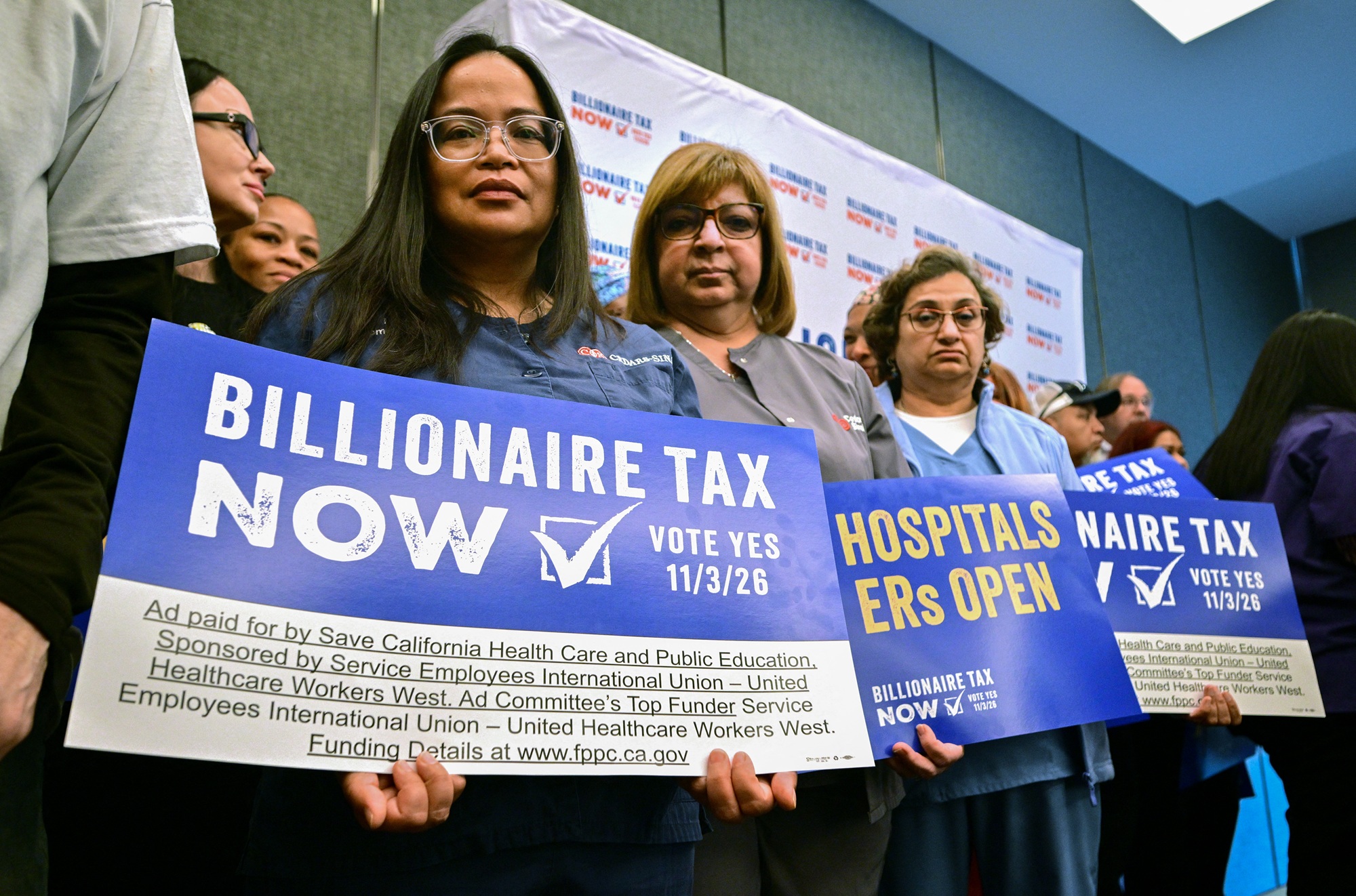
"caption": "Healthcare workers and other supporters with the Billionaire Tax Now coalition hold placards during a media briefing in Los Angeles on April 27, 2026.",
"credit": "Frederic J. Brown/AFP via Getty Images",
"altTag": null,
"description": null,
"imgSizes": {
"thumbnail": {
"file": "https://cdn.kqed.org/wp-content/uploads/sites/10/2026/04/BillionaireTaxGetty-160x106.jpg",
"width": 160,
"height": 106,
"mimeType": "image/jpeg"
},
"1536x1536": {
"file": "https://cdn.kqed.org/wp-content/uploads/sites/10/2026/04/BillionaireTaxGetty-1536x1015.jpg",
"width": 1536,
"height": 1015,
"mimeType": "image/jpeg"
},
"post-thumbnail": {
"file": "https://cdn.kqed.org/wp-content/uploads/sites/10/2026/04/BillionaireTaxGetty-672x372.jpg",
"width": 672,
"height": 372,
"mimeType": "image/jpeg"
},
"twentyfourteen-full-width": {
"file": "https://cdn.kqed.org/wp-content/uploads/sites/10/2026/04/BillionaireTaxGetty-1038x576.jpg",
"width": 1038,
"height": 576,
"mimeType": "image/jpeg"
},
"npr-cds-wide": {
"file": "https://cdn.kqed.org/wp-content/uploads/sites/10/2026/04/BillionaireTaxGetty-1200x675.jpg",
"width": 1200,
"height": 675,
"mimeType": "image/jpeg"
},
"npr-cds-square": {
"file": "https://cdn.kqed.org/wp-content/uploads/sites/10/2026/04/BillionaireTaxGetty-600x600.jpg",
"width": 600,
"height": 600,
"mimeType": "image/jpeg"
},
"kqedFullSize": {
"file": "https://cdn.kqed.org/wp-content/uploads/sites/10/2026/04/BillionaireTaxGetty.jpg",
"width": 2000,
"height": 1322
}
},
"isLoading": false,
"fetchFailed": false
},
"news_12088937": {
"type": "attachments",
"id": "news_12088937",
"meta": {
"index": "attachments_1716263798",
"site": "news",
"id": "12088937",
"found": true
},
"title": "US-POLITICS-IMMIGRATION-COURT-HAITI",
"publishDate": 1782425108,
"status": "inherit",
"parent": 12088898,
"modified": 1782427896,
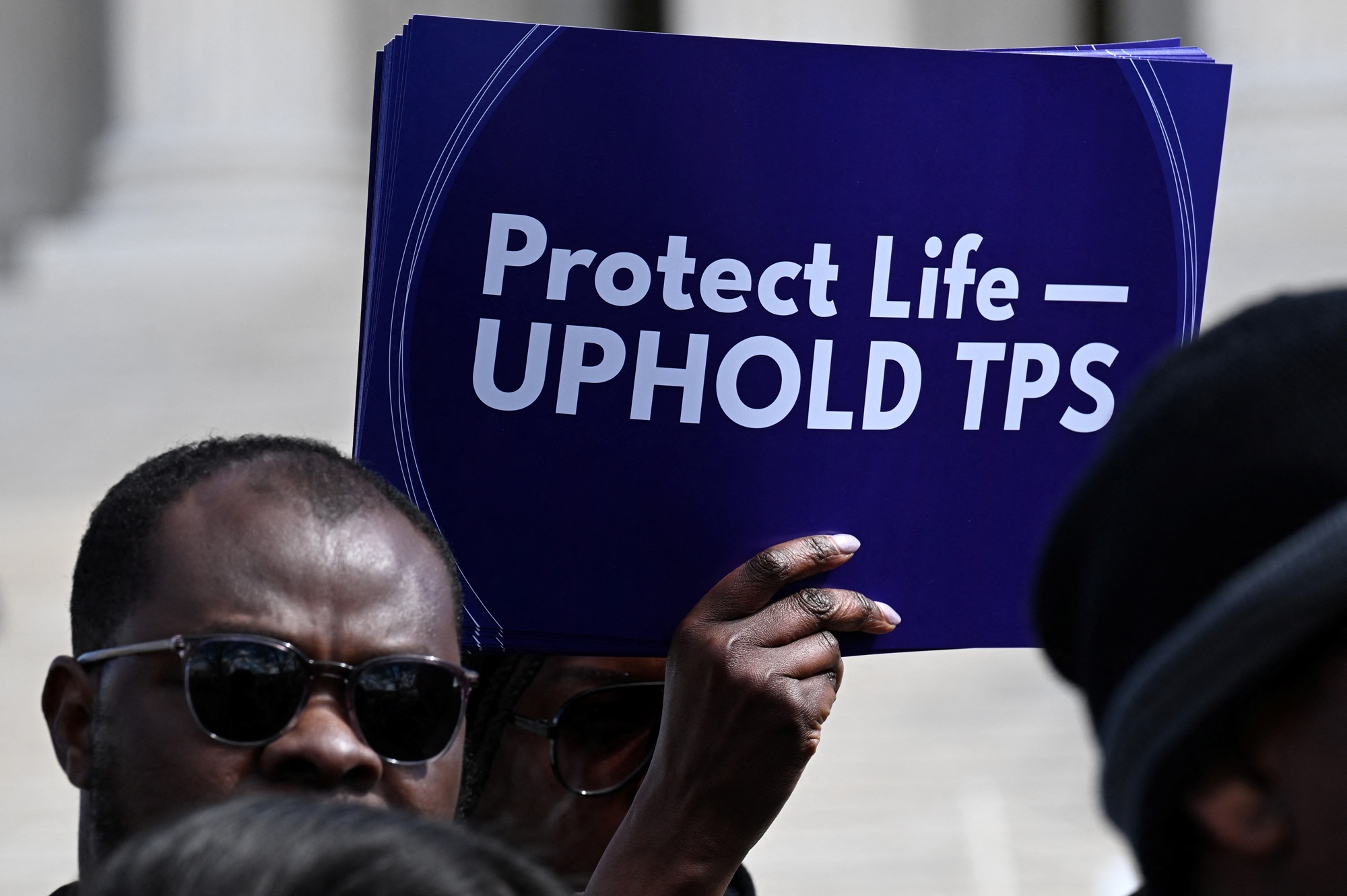
"caption": "A protester holds a sign calling on the U.S. Supreme Court to uphold Temporary Protected Status (TPS) for Haitian refugees in front of the court in Washington, D.C., on March 16, 2026. The U.S. Supreme Court agreed on Monday to consider the Trump administration's bid to strip Haitians and Syrians of temporary deportation protections. The Department of Homeland Security (DHS) has announced plans to end so-called Temporary Protected Status (TPS) for some 350,000 Haitians and 6,000 Syrians. ",
"credit": "Roberto Schmidt/AFP via Getty Images",
"altTag": null,
"description": null,
"imgSizes": {
"thumbnail": {
"file": "https://cdn.kqed.org/wp-content/uploads/sites/10/2026/06/TPSGetty-1-160x106.jpg",
"width": 160,
"height": 106,
"mimeType": "image/jpeg"
},
"1536x1536": {
"file": "https://cdn.kqed.org/wp-content/uploads/sites/10/2026/06/TPSGetty-1-1536x1022.jpg",
"width": 1536,
"height": 1022,
"mimeType": "image/jpeg"
},
"post-thumbnail": {
"file": "https://cdn.kqed.org/wp-content/uploads/sites/10/2026/06/TPSGetty-1-672x372.jpg",
"width": 672,
"height": 372,
"mimeType": "image/jpeg"
},
"twentyfourteen-full-width": {
"file": "https://cdn.kqed.org/wp-content/uploads/sites/10/2026/06/TPSGetty-1-1038x576.jpg",
"width": 1038,
"height": 576,
"mimeType": "image/jpeg"
},
"npr-cds-wide": {
"file": "https://cdn.kqed.org/wp-content/uploads/sites/10/2026/06/TPSGetty-1-1200x675.jpg",
"width": 1200,
"height": 675,
"mimeType": "image/jpeg"
},
"npr-cds-square": {
"file": "https://cdn.kqed.org/wp-content/uploads/sites/10/2026/06/TPSGetty-1-600x600.jpg",
"width": 600,
"height": 600,
"mimeType": "image/jpeg"
},
"kqedFullSize": {
"file": "https://cdn.kqed.org/wp-content/uploads/sites/10/2026/06/TPSGetty-1.jpg",
"width": 2000,
"height": 1331
}
},
"isLoading": false,
"fetchFailed": false
},
"news_12088839": {
"type": "attachments",
"id": "news_12088839",
"meta": {
"index": "attachments_1716263798",
"site": "news",
"id": "12088839",
"found": true
},
"title": "USA v Australia: Group D - FIFA World Cup 2026",
"publishDate": 1782403139,
"status": "inherit",
"parent": 12088838,
"modified": 1782497573,
"caption": "Weston McKennie of the United States runs with the ball during the FIFA World Cup 2026 Group D match between USA and Australia at Seattle Stadium on June 19, 2026, in Seattle, Washington.",
"credit": "Emilee Chinn/Getty Images",
"altTag": null,
"description": null,
"imgSizes": {
"medium": {
"file": "https://cdn.kqed.org/wp-content/uploads/sites/10/2026/06/GettyImages-2282393383-2000x1333.jpg",
"width": 2000,
"height": 1333,
"mimeType": "image/jpeg"
},
"large": {
"file": "https://cdn.kqed.org/wp-content/uploads/sites/10/2026/06/GettyImages-2282393383-2000x1333.jpg",
"width": 2000,
"height": 1333,
"mimeType": "image/jpeg"
},
"thumbnail": {
"file": "https://cdn.kqed.org/wp-content/uploads/sites/10/2026/06/GettyImages-2282393383-160x107.jpg",
"width": 160,
"height": 107,
"mimeType": "image/jpeg"
},
"1536x1536": {
"file": "https://cdn.kqed.org/wp-content/uploads/sites/10/2026/06/GettyImages-2282393383-1536x1024.jpg",
"width": 1536,
"height": 1024,
"mimeType": "image/jpeg"
},
"2048x2048": {
"file": "https://cdn.kqed.org/wp-content/uploads/sites/10/2026/06/GettyImages-2282393383-2048x1365.jpg",
"width": 2048,
"height": 1365,
"mimeType": "image/jpeg"
},
"post-thumbnail": {
"file": "https://cdn.kqed.org/wp-content/uploads/sites/10/2026/06/GettyImages-2282393383-672x372.jpg",
"width": 672,
"height": 372,
"mimeType": "image/jpeg"
},
"twentyfourteen-full-width": {
"file": "https://cdn.kqed.org/wp-content/uploads/sites/10/2026/06/GettyImages-2282393383-1038x576.jpg",
"width": 1038,
"height": 576,
"mimeType": "image/jpeg"
},
"full-width": {
"file": "https://cdn.kqed.org/wp-content/uploads/sites/10/2026/06/GettyImages-2282393383-2000x1333.jpg",
"width": 2000,
"height": 1333,
"mimeType": "image/jpeg"
},
"npr-cds-wide": {
"file": "https://cdn.kqed.org/wp-content/uploads/sites/10/2026/06/GettyImages-2282393383-1200x675.jpg",
"width": 1200,
"height": 675,
"mimeType": "image/jpeg"
},
"npr-cds-square": {
"file": "https://cdn.kqed.org/wp-content/uploads/sites/10/2026/06/GettyImages-2282393383-600x600.jpg",
"width": 600,
"height": 600,
"mimeType": "image/jpeg"
},
"kqedFullSize": {
"file": "https://cdn.kqed.org/wp-content/uploads/sites/10/2026/06/GettyImages-2282393383-scaled-e1782497582317.jpg",
"width": 2000,
"height": 1333
}
},
"isLoading": false,
"fetchFailed": false
},
"news_12088821": {
"type": "attachments",
"id": "news_12088821",
"meta": {
"index": "attachments_1716263798",
"site": "news",
"id": "12088821",
"found": true
},
"title": "Supreme Court TPS Rally",
"publishDate": 1782342598,
"status": "inherit",
"parent": 12088417,
"modified": 1782342625,
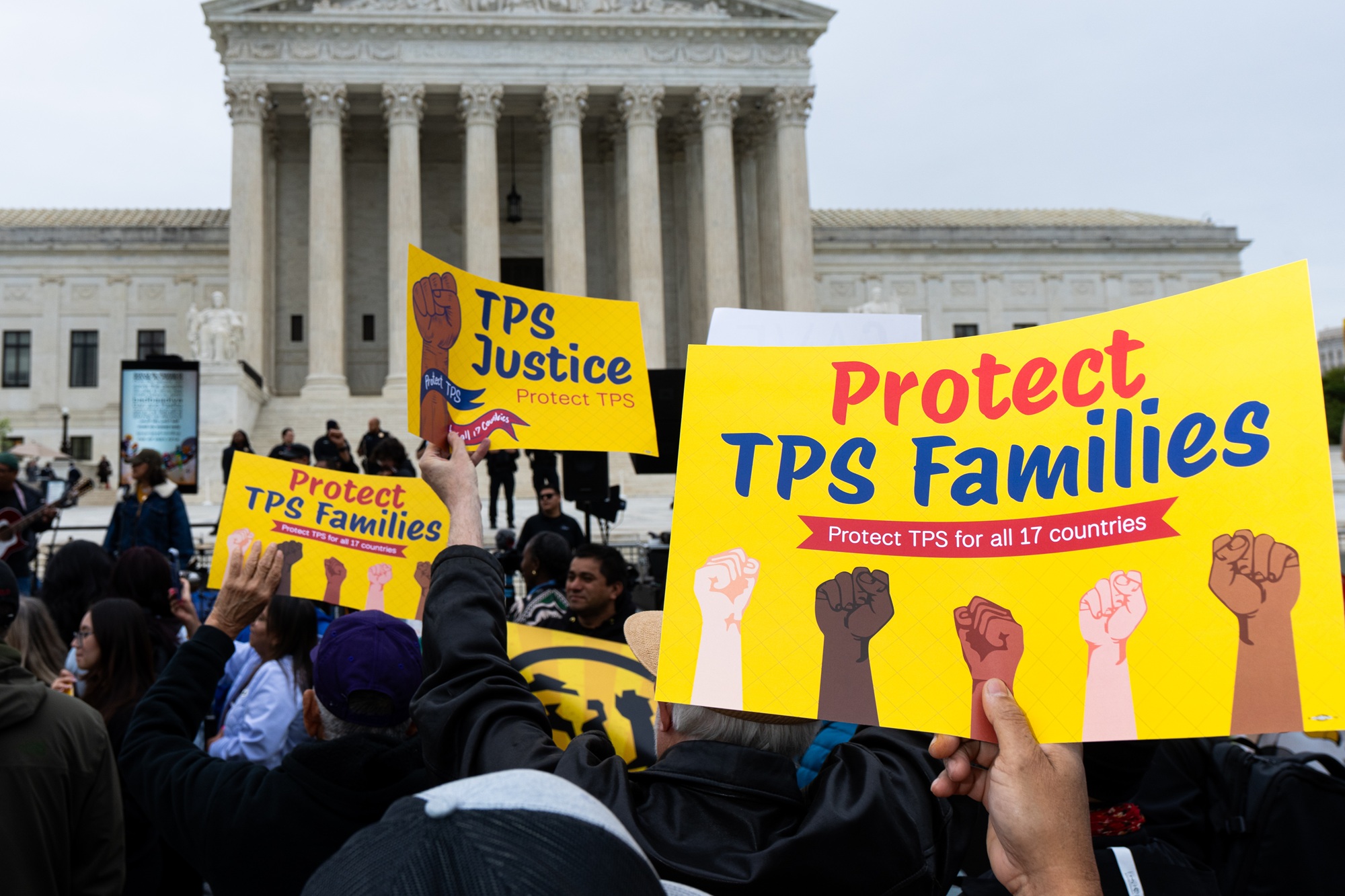
"caption": "Temporary Protected Status holders along with union leaders and advocates rally as the Supreme Court prepares to hear oral arguments in Mullin v. Doe on Wednesday, April 29, 2026. The case will determine whether the Trump Administration may terminate the TPS designations. ",
"credit": "Bill Clark/CQ-Roll Call, Inc via Getty Images",
"altTag": null,
"description": null,
"imgSizes": {
"thumbnail": {
"file": "https://cdn.kqed.org/wp-content/uploads/sites/10/2026/06/TPSGetty-160x107.jpg",
"width": 160,
"height": 107,
"mimeType": "image/jpeg"
},
"1536x1536": {
"file": "https://cdn.kqed.org/wp-content/uploads/sites/10/2026/06/TPSGetty-1536x1024.jpg",
"width": 1536,
"height": 1024,
"mimeType": "image/jpeg"
},
"post-thumbnail": {
"file": "https://cdn.kqed.org/wp-content/uploads/sites/10/2026/06/TPSGetty-672x372.jpg",
"width": 672,
"height": 372,
"mimeType": "image/jpeg"
},
"twentyfourteen-full-width": {
"file": "https://cdn.kqed.org/wp-content/uploads/sites/10/2026/06/TPSGetty-1038x576.jpg",
"width": 1038,
"height": 576,
"mimeType": "image/jpeg"
},
"npr-cds-wide": {
"file": "https://cdn.kqed.org/wp-content/uploads/sites/10/2026/06/TPSGetty-1200x675.jpg",
"width": 1200,
"height": 675,
"mimeType": "image/jpeg"
},
"npr-cds-square": {
"file": "https://cdn.kqed.org/wp-content/uploads/sites/10/2026/06/TPSGetty-600x600.jpg",
"width": 600,
"height": 600,
"mimeType": "image/jpeg"
},
"kqedFullSize": {
"file": "https://cdn.kqed.org/wp-content/uploads/sites/10/2026/06/TPSGetty.jpg",
"width": 2000,
"height": 1333
}
},
"isLoading": false,
"fetchFailed": false
},
"news_12088568": {
"type": "attachments",
"id": "news_12088568",
"meta": {
"index": "attachments_1716263798",
"site": "news",
"id": "12088568",
"found": true
},
"title": "A parking meter in San José on June 23, 2026.",
"publishDate": 1782249351,
"status": "inherit",
"parent": 0,
"modified": 1782249395,
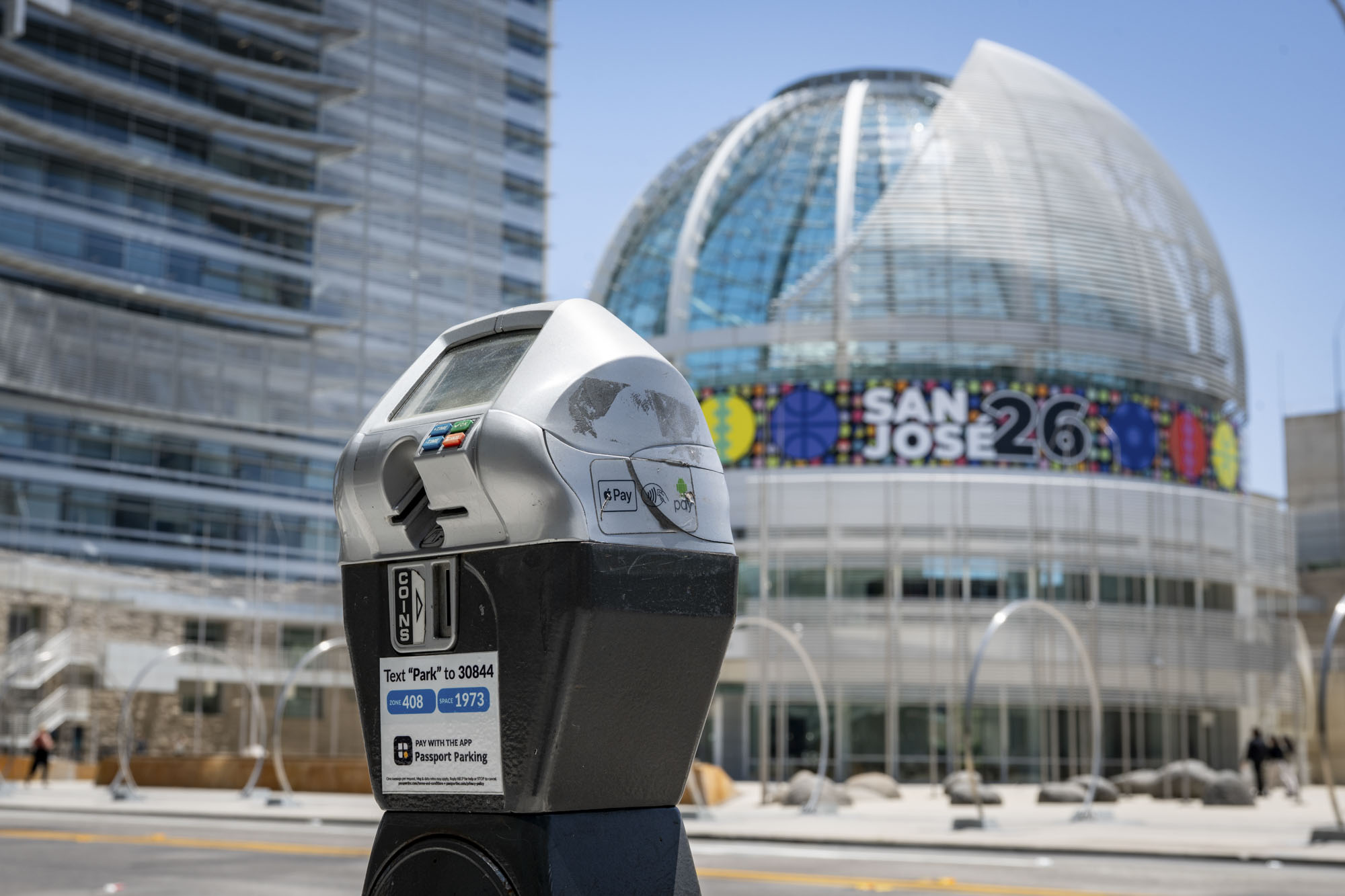
"caption": "A parking meter in San José on June 23, 2026.",
"credit": "Beth LaBerge/KQED",
"altTag": null,
"description": null,
"imgSizes": {
"thumbnail": {
"file": "https://cdn.kqed.org/wp-content/uploads/sites/10/2026/06/260623-SJParking-07-BL-KQED-160x107.jpg",
"width": 160,
"height": 107,
"mimeType": "image/jpeg"
},
"1536x1536": {
"file": "https://cdn.kqed.org/wp-content/uploads/sites/10/2026/06/260623-SJParking-07-BL-KQED-1536x1024.jpg",
"width": 1536,
"height": 1024,
"mimeType": "image/jpeg"
},
"post-thumbnail": {
"file": "https://cdn.kqed.org/wp-content/uploads/sites/10/2026/06/260623-SJParking-07-BL-KQED-672x372.jpg",
"width": 672,
"height": 372,
"mimeType": "image/jpeg"
},
"twentyfourteen-full-width": {
"file": "https://cdn.kqed.org/wp-content/uploads/sites/10/2026/06/260623-SJParking-07-BL-KQED-1038x576.jpg",
"width": 1038,
"height": 576,
"mimeType": "image/jpeg"
},
"npr-cds-wide": {
"file": "https://cdn.kqed.org/wp-content/uploads/sites/10/2026/06/260623-SJParking-07-BL-KQED-1200x675.jpg",
"width": 1200,
"height": 675,
"mimeType": "image/jpeg"
},
"npr-cds-square": {
"file": "https://cdn.kqed.org/wp-content/uploads/sites/10/2026/06/260623-SJParking-07-BL-KQED-600x600.jpg",
"width": 600,
"height": 600,
"mimeType": "image/jpeg"
},
"kqedFullSize": {
"file": "https://cdn.kqed.org/wp-content/uploads/sites/10/2026/06/260623-SJParking-07-BL-KQED.jpg",
"width": 2000,
"height": 1333
}
},
"isLoading": false,
"fetchFailed": false
},
"news_12088381": {
"type": "attachments",
"id": "news_12088381",
"meta": {
"index": "attachments_1716263798",
"site": "news",
"id": "12088381",
"found": true
},
"title": "20260614-ChinatownActivism-JY-02",
"publishDate": 1782156868,
"status": "inherit",
"parent": 12089306,
"modified": 1782861381,
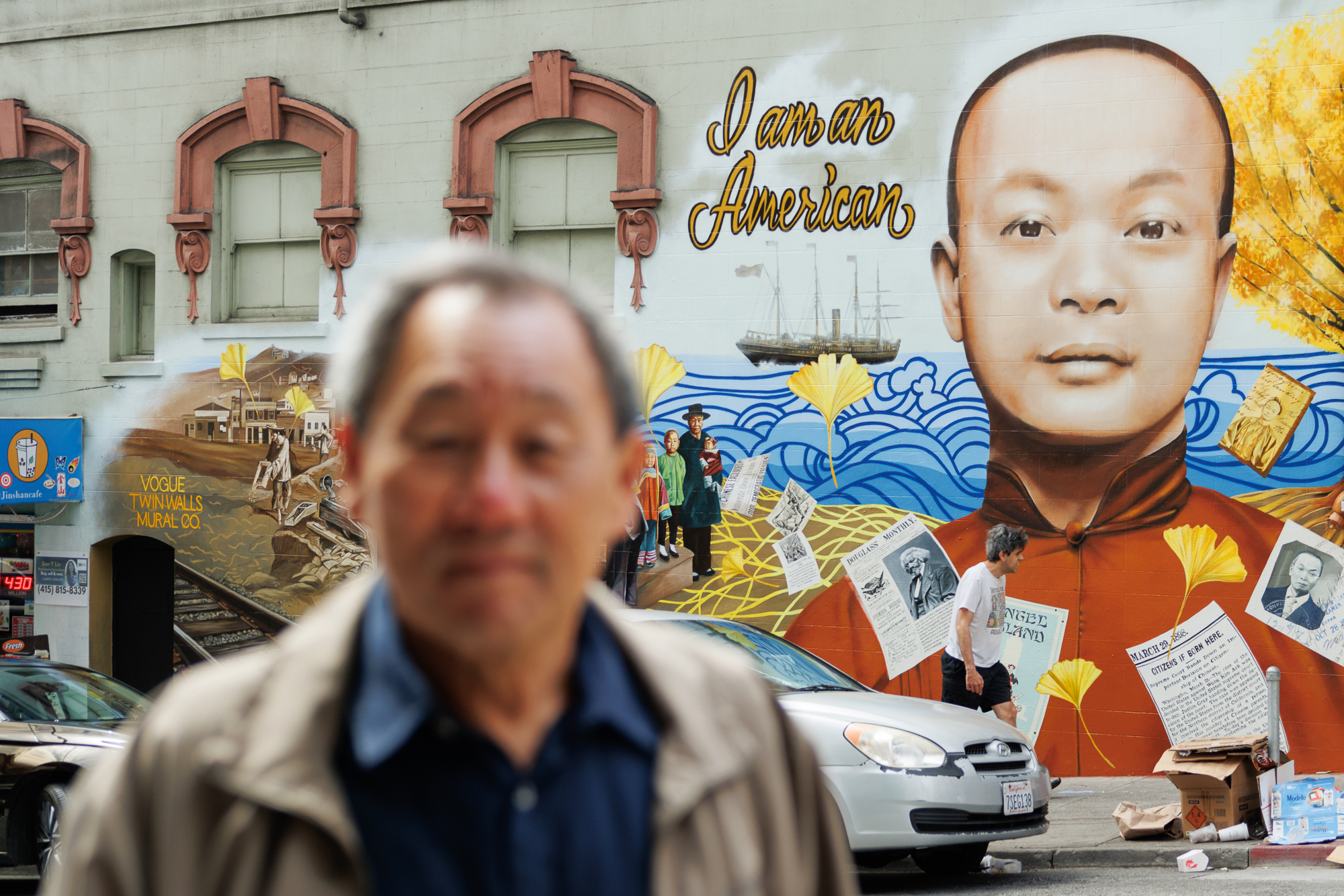
"caption": "Norman Wong stands in front of a mural made by Twin and Walls Mural Company depicting his great-grandfather, Wong Kim Ark, on the corner of Sacramento and Grant streets in San Francisco’s Chinatown on Sunday, June 14, 2026. Wong, 76, was unaware of his connection to the landmark Supreme Court case won by his great-grandfather for most of his life, but now works to share his family’s story and history. ",
"credit": "Juliana Yamada/KQED",
"altTag": null,
"description": null,
"imgSizes": {
"thumbnail": {
"file": "https://cdn.kqed.org/wp-content/uploads/sites/10/2026/06/20260614-ChinatownActivism-JY-02-160x107.jpg",
"width": 160,
"height": 107,
"mimeType": "image/jpeg"
},
"1536x1536": {
"file": "https://cdn.kqed.org/wp-content/uploads/sites/10/2026/06/20260614-ChinatownActivism-JY-02-1536x1025.jpg",
"width": 1536,
"height": 1025,
"mimeType": "image/jpeg"
},
"post-thumbnail": {
"file": "https://cdn.kqed.org/wp-content/uploads/sites/10/2026/06/20260614-ChinatownActivism-JY-02-672x372.jpg",
"width": 672,
"height": 372,
"mimeType": "image/jpeg"
},
"twentyfourteen-full-width": {
"file": "https://cdn.kqed.org/wp-content/uploads/sites/10/2026/06/20260614-ChinatownActivism-JY-02-1038x576.jpg",
"width": 1038,
"height": 576,
"mimeType": "image/jpeg"
},
"npr-cds-wide": {
"file": "https://cdn.kqed.org/wp-content/uploads/sites/10/2026/06/20260614-ChinatownActivism-JY-02-1200x675.jpg",
"width": 1200,
"height": 675,
"mimeType": "image/jpeg"
},
"npr-cds-square": {
"file": "https://cdn.kqed.org/wp-content/uploads/sites/10/2026/06/20260614-ChinatownActivism-JY-02-600x600.jpg",
"width": 600,
"height": 600,
"mimeType": "image/jpeg"
},
"kqedFullSize": {
"file": "https://cdn.kqed.org/wp-content/uploads/sites/10/2026/06/20260614-ChinatownActivism-JY-02.jpg",
"width": 2000,
"height": 1334
}
},
"isLoading": false,
"fetchFailed": false
},
"news_12002026": {
"type": "attachments",
"id": "news_12002026",
"meta": {
"index": "attachments_1716263798",
"site": "news",
"id": "12002026",
"found": true
},
"title": "01192023_Assembly-Chamber_RL_CM_03",
"publishDate": 1724779410,
"status": "inherit",
"parent": 12002006,
"modified": 1753721211,
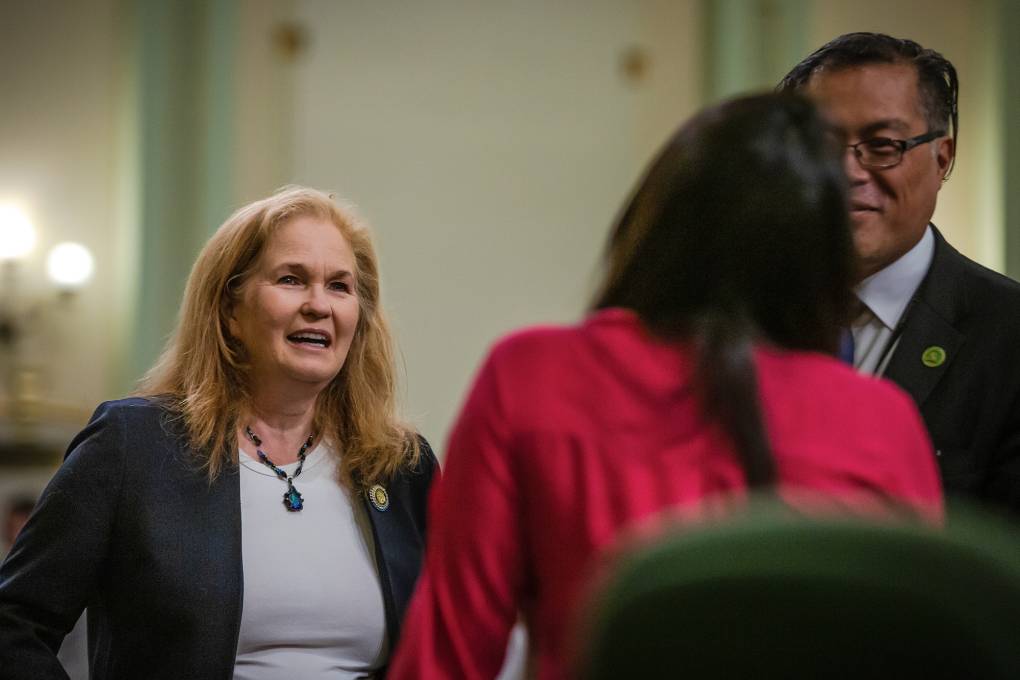
"caption": "Assemblymember Gail Pellerin (left), a Santa Cruz Democrat, convenes with legislators during a session at the state Capitol in Sacramento on Jan. 19, 2023. ",
"credit": "Rahul Lal/CalMatters",
"altTag": "A white woman wearing a black jacket and grey shirt looks at a woman wearing a red jacket that has her back turned to the camera.",
"description": null,
"imgSizes": {
"medium": {
"file": "https://cdn.kqed.org/wp-content/uploads/sites/10/2024/08/01192023_Assembly-Chamber_RL_CM_03-800x533.jpg",
"width": 800,
"height": 533,
"mimeType": "image/jpeg"
},
"large": {
"file": "https://cdn.kqed.org/wp-content/uploads/sites/10/2024/08/01192023_Assembly-Chamber_RL_CM_03-1020x680.jpg",
"width": 1020,
"height": 680,
"mimeType": "image/jpeg"
},
"thumbnail": {
"file": "https://cdn.kqed.org/wp-content/uploads/sites/10/2024/08/01192023_Assembly-Chamber_RL_CM_03-160x107.jpg",
"width": 160,
"height": 107,
"mimeType": "image/jpeg"
},
"1536x1536": {
"file": "https://cdn.kqed.org/wp-content/uploads/sites/10/2024/08/01192023_Assembly-Chamber_RL_CM_03-1536x1024.jpg",
"width": 1536,
"height": 1024,
"mimeType": "image/jpeg"
},
"post-thumbnail": {
"file": "https://cdn.kqed.org/wp-content/uploads/sites/10/2024/08/01192023_Assembly-Chamber_RL_CM_03-672x372.jpg",
"width": 672,
"height": 372,
"mimeType": "image/jpeg"
},
"twentyfourteen-full-width": {
"file": "https://cdn.kqed.org/wp-content/uploads/sites/10/2024/08/01192023_Assembly-Chamber_RL_CM_03-1038x576.jpg",
"width": 1038,
"height": 576,
"mimeType": "image/jpeg"
},
"full-width": {
"file": "https://cdn.kqed.org/wp-content/uploads/sites/10/2024/08/01192023_Assembly-Chamber_RL_CM_03-1920x1280.jpg",
"width": 1920,
"height": 1280,
"mimeType": "image/jpeg"
},
"kqedFullSize": {
"file": "https://cdn.kqed.org/wp-content/uploads/sites/10/2024/08/01192023_Assembly-Chamber_RL_CM_03.jpg",
"width": 2000,
"height": 1333
}
},
"isLoading": false,
"fetchFailed": false
},
"news_12024435": {
"type": "attachments",
"id": "news_12024435",
"meta": {
"index": "attachments_1716263798",
"site": "news",
"id": "12024435",
"found": true
},
"title": "250128-SFImmigration-30-BL",
"publishDate": 1738105128,
"status": "inherit",
"parent": 12028703,
"modified": 1740618033,
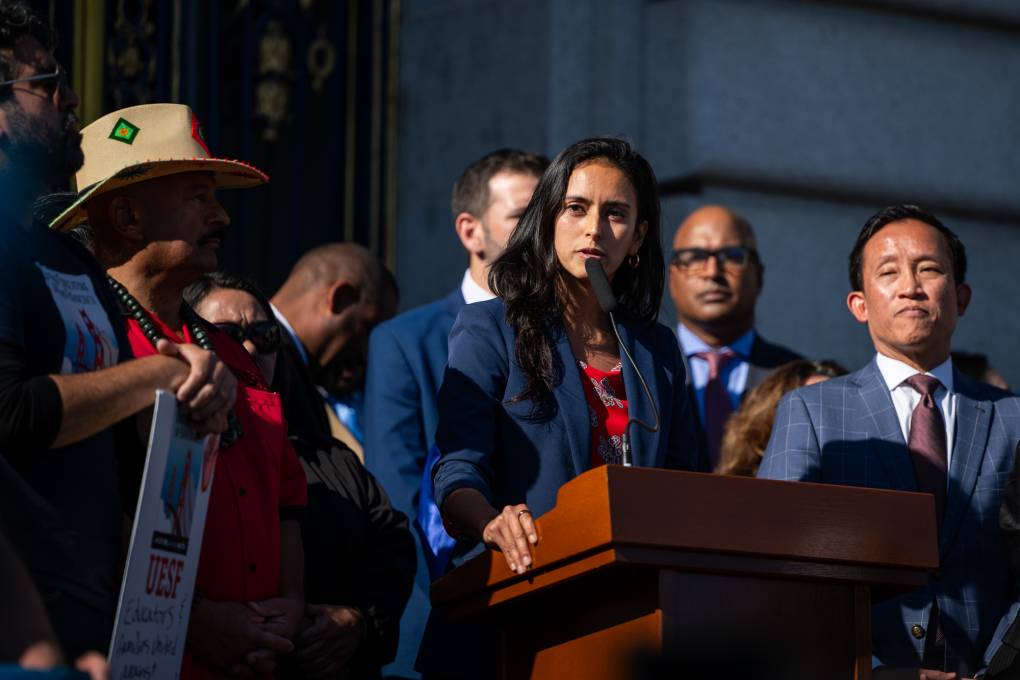
"caption": "San Francisco Supervisor Jackie Fielder speaks during a press conference with elected and public safety officials and labor leaders in front of City Hall in San Francisco on Tuesday, Jan. 28, 2025, to reaffirm San Francisco’s commitment to being a Sanctuary City.",
"credit": "Beth LaBerge/KQED",
"altTag": null,
"description": null,
"imgSizes": {
"medium": {
"file": "https://cdn.kqed.org/wp-content/uploads/sites/10/2025/01/250128-SFImmigration-30-BL-800x533.jpg",
"width": 800,
"height": 533,
"mimeType": "image/jpeg"
},
"large": {
"file": "https://cdn.kqed.org/wp-content/uploads/sites/10/2025/01/250128-SFImmigration-30-BL-1020x680.jpg",
"width": 1020,
"height": 680,
"mimeType": "image/jpeg"
},
"thumbnail": {
"file": "https://cdn.kqed.org/wp-content/uploads/sites/10/2025/01/250128-SFImmigration-30-BL-160x107.jpg",
"width": 160,
"height": 107,
"mimeType": "image/jpeg"
},
"1536x1536": {
"file": "https://cdn.kqed.org/wp-content/uploads/sites/10/2025/01/250128-SFImmigration-30-BL-1536x1024.jpg",
"width": 1536,
"height": 1024,
"mimeType": "image/jpeg"
},
"post-thumbnail": {
"file": "https://cdn.kqed.org/wp-content/uploads/sites/10/2025/01/250128-SFImmigration-30-BL-672x372.jpg",
"width": 672,
"height": 372,
"mimeType": "image/jpeg"
},
"twentyfourteen-full-width": {
"file": "https://cdn.kqed.org/wp-content/uploads/sites/10/2025/01/250128-SFImmigration-30-BL-1038x576.jpg",
"width": 1038,
"height": 576,
"mimeType": "image/jpeg"
},
"full-width": {
"file": "https://cdn.kqed.org/wp-content/uploads/sites/10/2025/01/250128-SFImmigration-30-BL-1920x1280.jpg",
"width": 1920,
"height": 1280,
"mimeType": "image/jpeg"
},
"kqedFullSize": {
"file": "https://cdn.kqed.org/wp-content/uploads/sites/10/2025/01/250128-SFImmigration-30-BL.jpg",
"width": 2000,
"height": 1333
}
},
"isLoading": false,
"fetchFailed": false
},
"news_12086095": {
"type": "attachments",
"id": "news_12086095",
"meta": {
"index": "attachments_1716263798",
"site": "news",
"id": "12086095",
"found": true
},
"title": "APTOPIX Election 2026 Los Angeles Mayor",
"publishDate": 1780507112,
"status": "inherit",
"parent": 12086090,
"modified": 1780507146,
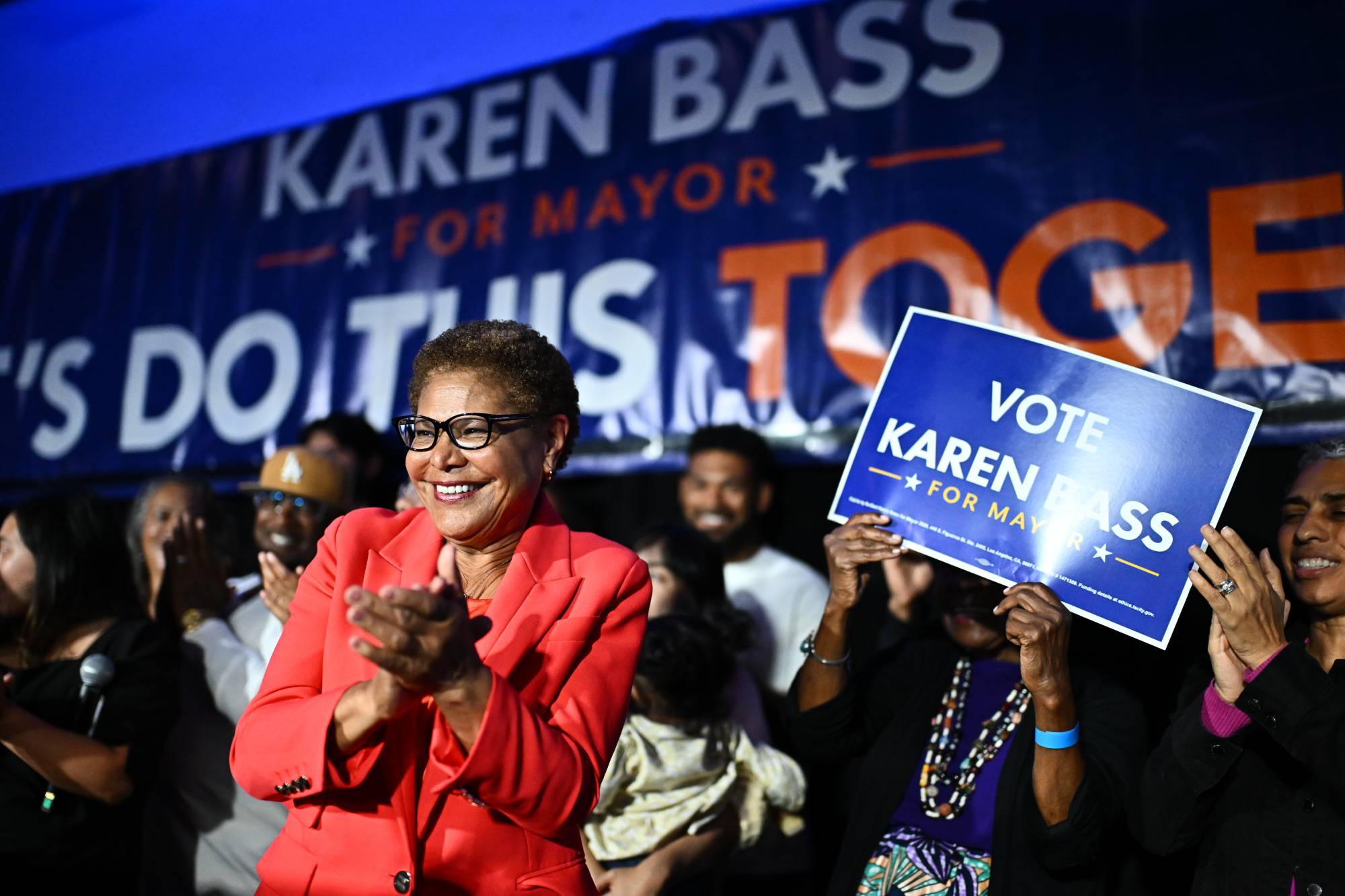
"caption": "Los Angeles Mayor Karen Bass speaks during an election night event Tuesday, June 2, 2026, in Los Angeles. ",
"credit": "AP Photo/William Liang",
"altTag": null,
"description": null,
"imgSizes": {
"medium": {
"file": "https://cdn.kqed.org/wp-content/uploads/sites/10/2026/06/AP26154166135184-2000x1333.jpg",
"width": 2000,
"height": 1333,
"mimeType": "image/jpeg"
},
"large": {
"file": "https://cdn.kqed.org/wp-content/uploads/sites/10/2026/06/AP26154166135184-2000x1333.jpg",
"width": 2000,
"height": 1333,
"mimeType": "image/jpeg"
},
"thumbnail": {
"file": "https://cdn.kqed.org/wp-content/uploads/sites/10/2026/06/AP26154166135184-160x107.jpg",
"width": 160,
"height": 107,
"mimeType": "image/jpeg"
},
"1536x1536": {
"file": "https://cdn.kqed.org/wp-content/uploads/sites/10/2026/06/AP26154166135184-1536x1024.jpg",
"width": 1536,
"height": 1024,
"mimeType": "image/jpeg"
},
"2048x2048": {
"file": "https://cdn.kqed.org/wp-content/uploads/sites/10/2026/06/AP26154166135184-2048x1365.jpg",
"width": 2048,
"height": 1365,
"mimeType": "image/jpeg"
},
"post-thumbnail": {
"file": "https://cdn.kqed.org/wp-content/uploads/sites/10/2026/06/AP26154166135184-672x372.jpg",
"width": 672,
"height": 372,
"mimeType": "image/jpeg"
},
"twentyfourteen-full-width": {
"file": "https://cdn.kqed.org/wp-content/uploads/sites/10/2026/06/AP26154166135184-1038x576.jpg",
"width": 1038,
"height": 576,
"mimeType": "image/jpeg"
},
"full-width": {
"file": "https://cdn.kqed.org/wp-content/uploads/sites/10/2026/06/AP26154166135184-2000x1333.jpg",
"width": 2000,
"height": 1333,
"mimeType": "image/jpeg"
},
"npr-cds-wide": {
"file": "https://cdn.kqed.org/wp-content/uploads/sites/10/2026/06/AP26154166135184-1200x675.jpg",
"width": 1200,
"height": 675,
"mimeType": "image/jpeg"
},
"npr-cds-square": {
"file": "https://cdn.kqed.org/wp-content/uploads/sites/10/2026/06/AP26154166135184-600x600.jpg",
"width": 600,
"height": 600,
"mimeType": "image/jpeg"
},
"kqedFullSize": {
"file": "https://cdn.kqed.org/wp-content/uploads/sites/10/2026/06/AP26154166135184-scaled-e1780507153418.jpg",
"width": 2000,
"height": 1334
}
},
"isLoading": false,
"fetchFailed": false
},
"news_12088085": {
"type": "attachments",
"id": "news_12088085",
"meta": {
"index": "attachments_1716263798",
"site": "news",
"id": "12088085",
"found": true
},
"title": "021826-Billionaires-Tax-GETTY-CM-01",
"publishDate": 1781800791,
"status": "inherit",
"parent": 12088063,
"modified": 1791155708,
"caption": "Signs reading “A Billionaire Tax Now” rest on chairs at a Billionaire Tax Now rally where Sen. Bernie Sanders is set to speak in Los Angeles on Feb. 18, 2026. ",
"credit": "Jason Armond/Los Angeles Times via Getty Images",
"altTag": null,
"description": null,
"imgSizes": {
"thumbnail": {
"file": "https://cdn.kqed.org/wp-content/uploads/sites/10/2026/06/021826-Billionaires-Tax-GETTY-CM-01-160x107.jpeg",
"width": 160,
"height": 107,
"mimeType": "image/jpeg"
},
"1536x1536": {
"file": "https://cdn.kqed.org/wp-content/uploads/sites/10/2026/06/021826-Billionaires-Tax-GETTY-CM-01-1536x1025.jpeg",
"width": 1536,
"height": 1025,
"mimeType": "image/jpeg"
},
"post-thumbnail": {
"file": "https://cdn.kqed.org/wp-content/uploads/sites/10/2026/06/021826-Billionaires-Tax-GETTY-CM-01-672x372.jpeg",
"width": 672,
"height": 372,
"mimeType": "image/jpeg"
},
"twentyfourteen-full-width": {
"file": "https://cdn.kqed.org/wp-content/uploads/sites/10/2026/06/021826-Billionaires-Tax-GETTY-CM-01-1038x576.jpeg",
"width": 1038,
"height": 576,
"mimeType": "image/jpeg"
},
"npr-cds-wide": {
"file": "https://cdn.kqed.org/wp-content/uploads/sites/10/2026/06/021826-Billionaires-Tax-GETTY-CM-01-1200x675.jpeg",
"width": 1200,
"height": 675,
"mimeType": "image/jpeg"
},
"npr-cds-square": {
"file": "https://cdn.kqed.org/wp-content/uploads/sites/10/2026/06/021826-Billionaires-Tax-GETTY-CM-01-600x600.jpeg",
"width": 600,
"height": 600,
"mimeType": "image/jpeg"
},
"kqedFullSize": {
"file": "https://cdn.kqed.org/wp-content/uploads/sites/10/2026/06/021826-Billionaires-Tax-GETTY-CM-01.jpeg",
"width": 2000,
"height": 1334
}
},
"isLoading": false,
"fetchFailed": false
},
"news_12015756": {
"type": "attachments",
"id": "news_12015756",
"meta": {
"index": "attachments_1716263798",
"site": "news",
"id": "12015756",
"found": true
},
"title": "US-POLITICS-government-Trump",
"publishDate": 1732560501,
"status": "inherit",
"parent": 12015752,
"modified": 1781741530,
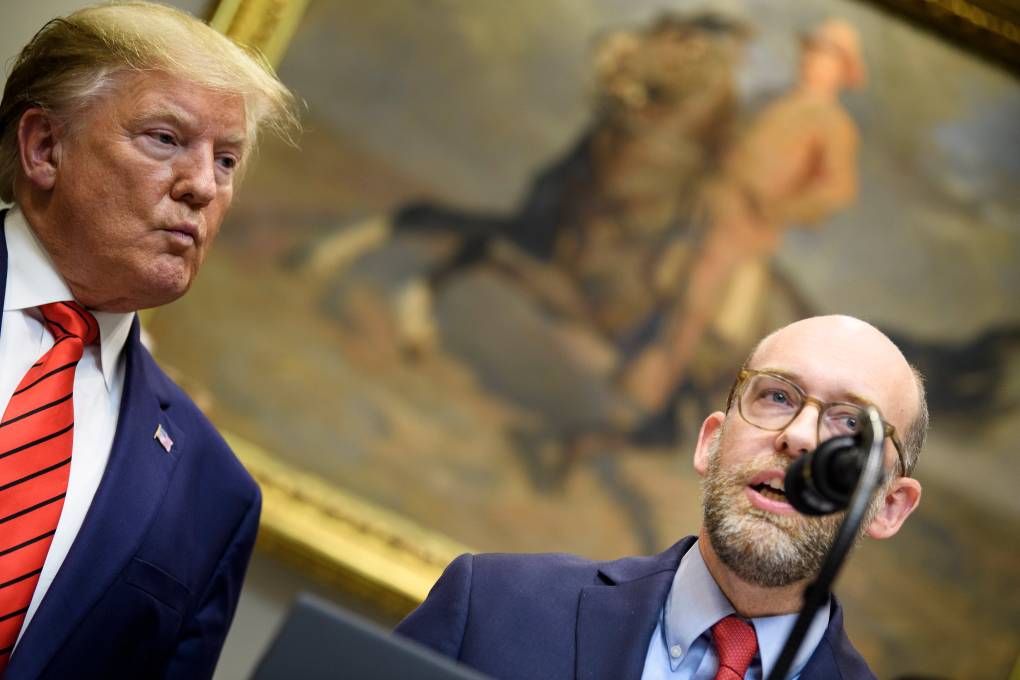
"caption": "U.S. President Donald Trump listens while acting OMB Director Russell Vought speaks during an executive order signing regarding federal regulations in the Roosevelt Room of the White House on Oct. 9, 2019, in Washington, D.C. ",
"credit": "Brendan Smialowski/AFP via Getty Images",
"altTag": null,
"description": null,
"imgSizes": {
"medium": {
"file": "https://cdn.kqed.org/wp-content/uploads/sites/10/2024/11/GettyImages-1174750205-800x533.jpg",
"width": 800,
"height": 533,
"mimeType": "image/jpeg"
},
"large": {
"file": "https://cdn.kqed.org/wp-content/uploads/sites/10/2024/11/GettyImages-1174750205-1020x680.jpg",
"width": 1020,
"height": 680,
"mimeType": "image/jpeg"
},
"thumbnail": {
"file": "https://cdn.kqed.org/wp-content/uploads/sites/10/2024/11/GettyImages-1174750205-160x107.jpg",
"width": 160,
"height": 107,
"mimeType": "image/jpeg"
},
"1536x1536": {
"file": "https://cdn.kqed.org/wp-content/uploads/sites/10/2024/11/GettyImages-1174750205-1536x1024.jpg",
"width": 1536,
"height": 1024,
"mimeType": "image/jpeg"
},
"2048x2048": {
"file": "https://cdn.kqed.org/wp-content/uploads/sites/10/2024/11/GettyImages-1174750205-2048x1365.jpg",
"width": 2048,
"height": 1365,
"mimeType": "image/jpeg"
},
"post-thumbnail": {
"file": "https://cdn.kqed.org/wp-content/uploads/sites/10/2024/11/GettyImages-1174750205-672x372.jpg",
"width": 672,
"height": 372,
"mimeType": "image/jpeg"
},
"twentyfourteen-full-width": {
"file": "https://cdn.kqed.org/wp-content/uploads/sites/10/2024/11/GettyImages-1174750205-1038x576.jpg",
"width": 1038,
"height": 576,
"mimeType": "image/jpeg"
},
"full-width": {
"file": "https://cdn.kqed.org/wp-content/uploads/sites/10/2024/11/GettyImages-1174750205-1920x1280.jpg",
"width": 1920,
"height": 1280,
"mimeType": "image/jpeg"
},
"kqedFullSize": {
"file": "https://cdn.kqed.org/wp-content/uploads/sites/10/2024/11/GettyImages-1174750205-scaled-e1781739384219.jpg",
"width": 2000,
"height": 1334
}
},
"isLoading": false,
"fetchFailed": false
},
"news_12031249": {
"type": "attachments",
"id": "news_12031249",
"meta": {
"index": "attachments_1716263798",
"site": "news",
"id": "12031249",
"found": true
},
"title": "250312-MATT MAHAN ON PB-MD-06-KQED",
"publishDate": 1741896837,
"status": "inherit",
"parent": 0,
"modified": 1741907817,
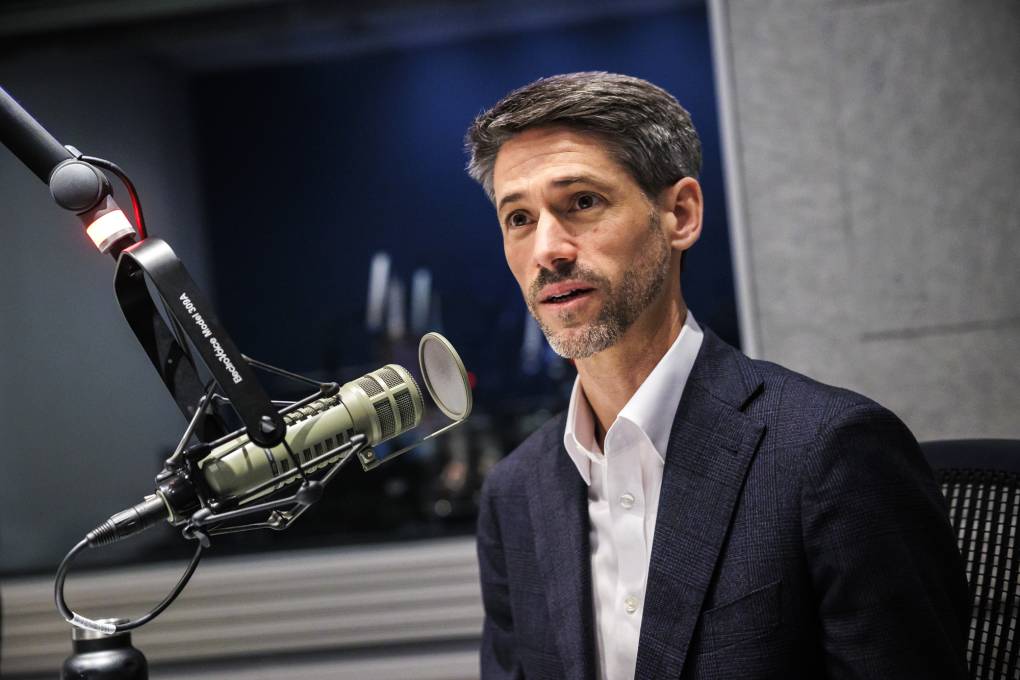
"caption": "San José Mayor Matt Mahan is interviewed for Political Breakdown at the KQED offices in San Francisco on March 13, 2025.",
"credit": "Martin do Nascimento/KQED",
"altTag": null,
"description": null,
"imgSizes": {
"medium": {
"file": "https://cdn.kqed.org/wp-content/uploads/sites/10/2025/03/250312-MATT-MAHAN-ON-PB-MD-06-KQED-800x533.jpg",
"width": 800,
"height": 533,
"mimeType": "image/jpeg"
},
"large": {
"file": "https://cdn.kqed.org/wp-content/uploads/sites/10/2025/03/250312-MATT-MAHAN-ON-PB-MD-06-KQED-1020x680.jpg",
"width": 1020,
"height": 680,
"mimeType": "image/jpeg"
},
"thumbnail": {
"file": "https://cdn.kqed.org/wp-content/uploads/sites/10/2025/03/250312-MATT-MAHAN-ON-PB-MD-06-KQED-160x107.jpg",
"width": 160,
"height": 107,
"mimeType": "image/jpeg"
},
"1536x1536": {
"file": "https://cdn.kqed.org/wp-content/uploads/sites/10/2025/03/250312-MATT-MAHAN-ON-PB-MD-06-KQED-1536x1024.jpg",
"width": 1536,
"height": 1024,
"mimeType": "image/jpeg"
},
"post-thumbnail": {
"file": "https://cdn.kqed.org/wp-content/uploads/sites/10/2025/03/250312-MATT-MAHAN-ON-PB-MD-06-KQED-672x372.jpg",
"width": 672,
"height": 372,
"mimeType": "image/jpeg"
},
"twentyfourteen-full-width": {
"file": "https://cdn.kqed.org/wp-content/uploads/sites/10/2025/03/250312-MATT-MAHAN-ON-PB-MD-06-KQED-1038x576.jpg",
"width": 1038,
"height": 576,
"mimeType": "image/jpeg"
},
"full-width": {
"file": "https://cdn.kqed.org/wp-content/uploads/sites/10/2025/03/250312-MATT-MAHAN-ON-PB-MD-06-KQED-1920x1280.jpg",
"width": 1920,
"height": 1280,
"mimeType": "image/jpeg"
},
"kqedFullSize": {
"file": "https://cdn.kqed.org/wp-content/uploads/sites/10/2025/03/250312-MATT-MAHAN-ON-PB-MD-06-KQED.jpg?ver=1741907806",
"width": 2000,
"height": 1333
}
},
"isLoading": false,
"fetchFailed": false
}
},
"audioPlayerReducer": {
"postId": "stream_live",
"isPaused": true,
"isPlaying": false,
"pfsActive": false,
"pledgeModalIsOpen": true,
"playerDrawerIsOpen": false,
"liveAudioPlayStartedAt": 0,
"liveAudioPlayContext": ""
},
"authorsReducer": {
"byline_news_12088063": {
"type": "authors",
"id": "byline_news_12088063",
"meta": {
"override": true
},
"slug": "byline_news_12088063",
"name": "Kristen Hwang, CalMatters",
"isLoading": false
},
"gmarzorati": {
"type": "authors",
"id": "227",
"meta": {
"index": "authors_1716337520",
"id": "227",
"found": true
},
"name": "Guy Marzorati",
"firstName": "Guy",
"lastName": "Marzorati",
"slug": "gmarzorati",
"email": "gmarzorati@KQED.org",
"display_author_email": true,
"staff_mastheads": [
"news"
],
"title": "Correspondent",
"bio": "Guy Marzorati is a correspondent on KQED's California Politics and Government Desk, based in San Jose. A graduate of Santa Clara University, Guy joined KQED in 2013. He reports on state and local politics and produces KQED's digital voter guide.",
"avatar": "https://secure.gravatar.com/avatar/e7038b8dbfd55b104369b76b1cd0b9de?s=600&d=blank&r=g",
"twitter": "guymarzorati",
"facebook": null,
"instagram": null,
"linkedin": null,
"sites": [
{
"site": "",
"roles": [
"editor"
]
},
{
"site": "news",
"roles": [
"editor"
]
},
{
"site": "science",
"roles": [
"editor"
]
},
{
"site": "forum",
"roles": [
"editor"
]
},
{
"site": "elections",
"roles": [
"editor"
]
},
{
"site": "liveblog",
"roles": [
"editor"
]
}
],
"headData": {
"title": "Guy Marzorati | KQED",
"description": "Correspondent",
"ogImgSrc": "https://secure.gravatar.com/avatar/e7038b8dbfd55b104369b76b1cd0b9de?s=600&d=blank&r=g",
"twImgSrc": "https://secure.gravatar.com/avatar/e7038b8dbfd55b104369b76b1cd0b9de?s=600&d=blank&r=g"
},
"isLoading": false,
"link": "/author/gmarzorati"
},
"tychehendricks": {
"type": "authors",
"id": "259",
"meta": {
"index": "authors_1716337520",
"id": "259",
"found": true
},
"name": "Tyche Hendricks",
"firstName": "Tyche",
"lastName": "Hendricks",
"slug": "tychehendricks",
"email": "thendricks@kqed.org",
"display_author_email": true,
"staff_mastheads": [
"news"
],
"title": "KQED Senior Editor, Immigration",
"bio": "\u003cspan style=\"font-weight: 400;\">Tyche Hendricks is KQED’s senior editor for immigration, leading coverage of the policy and politics that affect California’s immigrant communities. Her work for KQED’s radio and online audiences is also carried on NPR and other national outlets. She has been recognized with awards from the Radio and Television News Directors Association, the Society for Professional Journalists; the Education Writers Association; the Best of the West and the National Federation of Community Broadcasters. Before joining KQED in 2010, Tyche spent more than a dozen years as a newspaper reporter, notably at the \u003c/span>\u003ci>\u003cspan style=\"font-weight: 400;\">San Francisco Chronicle\u003c/span>\u003c/i>\u003cspan style=\"font-weight: 400;\">. At different times she has covered criminal justice, government and politics and urban planning. Tyche has taught in the MFA Creative Writing program at the University of San Francisco and at UC Berkeley’s Graduate School of Journalism, where she was co-director of a national immigration symposium for professional journalists. She is the author of \u003c/span>\u003ci>\u003cspan style=\"font-weight: 400;\">The Wind Doesn't Need a Passport: Stories from the U.S.-Mexico Borderlands\u003c/span>\u003c/i>\u003cspan style=\"font-weight: 400;\"> (University of California Press). \u003c/span>",
"avatar": "https://secure.gravatar.com/avatar/b8ee458e2731c2d43df86882ce17267e?s=600&d=blank&r=g",
"twitter": "tychehendricks",
"facebook": null,
"instagram": null,
"linkedin": null,
"sites": [
{
"site": "news",
"roles": [
"editor"
]
},
{
"site": "stateofhealth",
"roles": [
"editor"
]
}
],
"headData": {
"title": "Tyche Hendricks | KQED",
"description": "KQED Senior Editor, Immigration",
"ogImgSrc": "https://secure.gravatar.com/avatar/b8ee458e2731c2d43df86882ce17267e?s=600&d=blank&r=g",
"twImgSrc": "https://secure.gravatar.com/avatar/b8ee458e2731c2d43df86882ce17267e?s=600&d=blank&r=g"
},
"isLoading": false,
"link": "/author/tychehendricks"
},
"mlagos": {
"type": "authors",
"id": "3239",
"meta": {
"index": "authors_1716337520",
"id": "3239",
"found": true
},
"name": "Marisa Lagos",
"firstName": "Marisa",
"lastName": "Lagos",
"slug": "mlagos",
"email": "mlagos@kqed.org",
"display_author_email": false,
"staff_mastheads": [
"news"
],
"title": "KQED Contributor",
"bio": "Marisa Lagos is a correspondent for KQED’s California Politics and Government Desk and co-hosts the award-winning show and podcast, Political Breakdown. At KQED, Lagos also conducts reporting, analysis and investigations into state, local and national politics for radio, TV, online and onstage. In 2022, she and co-host, Scott Shafer, moderated the only gubernatorial debate in California. In 2020, the \u003ci>Washington Post\u003c/i> named her one of the top political journalists in California; she was nominated for a Peabody and won several other awards for her work investigating the 2017 California wildfires. She has worked at the \u003ci>San Francisco Chronicle\u003c/i>, \u003ci>San Francisco Examiner\u003c/i> and \u003ci>Los Angeles Times\u003c/i>. A UC Santa Barbara graduate, she lives in San Francisco with her two sons and husband.",
"avatar": "https://secure.gravatar.com/avatar/a261a0d3696fc066871ef96b85b5e7d2?s=600&d=blank&r=g",
"twitter": "@mlagos",
"facebook": null,
"instagram": null,
"linkedin": null,
"sites": [
{
"site": "arts",
"roles": [
"author"
]
},
{
"site": "news",
"roles": [
"editor"
]
},
{
"site": "science",
"roles": [
"editor"
]
},
{
"site": "forum",
"roles": [
"author"
]
},
{
"site": "liveblog",
"roles": [
"author"
]
}
],
"headData": {
"title": "Marisa Lagos | KQED",
"description": "KQED Contributor",
"ogImgSrc": "https://secure.gravatar.com/avatar/a261a0d3696fc066871ef96b85b5e7d2?s=600&d=blank&r=g",
"twImgSrc": "https://secure.gravatar.com/avatar/a261a0d3696fc066871ef96b85b5e7d2?s=600&d=blank&r=g"
},
"isLoading": false,
"link": "/author/mlagos"
},
"clei": {
"type": "authors",
"id": "8617",
"meta": {
"index": "authors_1716337520",
"id": "8617",
"found": true
},
"name": "Cecilia Lei",
"firstName": "Cecilia",
"lastName": "Lei",
"slug": "clei",
"email": "clei@KQED.org",
"display_author_email": false,
"staff_mastheads": [],
"title": "KQED Contributor",
"bio": "Cecilia Lei is an on-call host and producer for KQED News and Podcasts. Previously, she was the executive producer and host of the San Francisco Chronicle's daily news podcast, 'Fifth and Mission'. Cecilia is a graduate of UC Berkeley’s Graduate School of Journalism and the former president of the Asian American Journalists Association San Francisco Bay Area chapter.",
"avatar": "https://secure.gravatar.com/avatar/40975f1f88fccf628ee537bf6ffc2af8?s=600&d=blank&r=g",
"twitter": null,
"facebook": null,
"instagram": null,
"linkedin": null,
"sites": [
{
"site": "arts",
"roles": [
"contributor"
]
},
{
"site": "news",
"roles": [
"author",
"read_private_posts"
]
},
{
"site": "about",
"roles": [
"editor"
]
}
],
"headData": {
"title": "Cecilia Lei | KQED",
"description": "KQED Contributor",
"ogImgSrc": "https://secure.gravatar.com/avatar/40975f1f88fccf628ee537bf6ffc2af8?s=600&d=blank&r=g",
"twImgSrc": "https://secure.gravatar.com/avatar/40975f1f88fccf628ee537bf6ffc2af8?s=600&d=blank&r=g"
},
"isLoading": false,
"link": "/author/clei"
},
"lesleymcclurg": {
"type": "authors",
"id": "11229",
"meta": {
"index": "authors_1716337520",
"id": "11229",
"found": true
},
"name": "Lesley McClurg",
"firstName": "Lesley",
"lastName": "McClurg",
"slug": "lesleymcclurg",
"email": "lmcclurg@KQED.org",
"display_author_email": false,
"staff_mastheads": [
"news",
"science"
],
"title": "KQED Health Correspondent",
"bio": "Lesley McClurg is a health correspondent and fill-in host whose work is regularly rebroadcast on NPR and PBS programs. She’s earned multiple regional Emmy awards, a national and a regional Edward R. Murrow award, and was named Best Beat Reporter by the Association of Health Care Journalists. The Society of Professional Journalists has recognized her work several times, and the Society of Environmental Journalists spotlighted her coverage of California’s historic drought.\r\n\r\nBefore joining KQED in 2016, Lesley covered food and sustainability for Capital Public Radio, environmental issues for Colorado Public Radio, and reported for KUOW and KCTS 9 in Seattle. Away from the newsroom, she loves skiing with her daughter, mountain biking with her partner, and playing with Ollie, the family’s goldendoodle. On deadline, she runs almost entirely on chocolate chips.\r\n\r\n ",
"avatar": "https://secure.gravatar.com/avatar/bab49e972ea10c774fe0f5e29dba1722b158f7c0d58a360923d1389d380b2978?s=600&d=blank&r=g",
"twitter": "lesleywmcclurg",
"bluesky": null,
"facebook": null,
"instagram": null,
"linkedin": null,
"sites": [
{
"site": "arts",
"roles": [
"author"
]
},
{
"site": "news",
"roles": [
"editor"
]
},
{
"site": "futureofyou",
"roles": [
"editor"
]
},
{
"site": "stateofhealth",
"roles": [
"author"
]
},
{
"site": "science",
"roles": [
"editor"
]
},
{
"site": "quest",
"roles": [
"subscriber"
]
},
{
"site": "forum",
"roles": [
"administrator"
]
},
{
"site": "liveblog",
"roles": [
"author"
]
}
],
"headData": {
"title": "Lesley McClurg | KQED",
"description": "KQED Health Correspondent",
"ogImgSrc": "https://secure.gravatar.com/avatar/bab49e972ea10c774fe0f5e29dba1722b158f7c0d58a360923d1389d380b2978?s=600&d=blank&r=g",
"twImgSrc": "https://secure.gravatar.com/avatar/bab49e972ea10c774fe0f5e29dba1722b158f7c0d58a360923d1389d380b2978?s=600&d=blank&r=g"
},
"isLoading": false,
"link": "/author/lesleymcclurg"
},
"sjohnson": {
"type": "authors",
"id": "11840",
"meta": {
"index": "authors_1716337520",
"id": "11840",
"found": true
},
"name": "Sydney Johnson",
"firstName": "Sydney",
"lastName": "Johnson",
"slug": "sjohnson",
"email": "sjohnson@kqed.org",
"display_author_email": false,
"staff_mastheads": [
"news"
],
"title": "KQED Reporter",
"bio": "Sydney Johnson is a general assignment reporter at KQED. She previously reported on public health and city government at the San Francisco Examiner, and before that, she covered statewide education policy for EdSource. Her reporting has won multiple local, state and national awards. Sydney is a graduate of the University of California, Berkeley and lives in San Francisco.",
"avatar": "https://secure.gravatar.com/avatar/97855f2719b72ad6190b7c535fe642c8?s=600&d=blank&r=g",
"twitter": "sydneyfjohnson",
"facebook": null,
"instagram": null,
"linkedin": null,
"sites": [
{
"site": "news",
"roles": [
"editor"
]
}
],
"headData": {
"title": "Sydney Johnson | KQED",
"description": "KQED Reporter",
"ogImgSrc": "https://secure.gravatar.com/avatar/97855f2719b72ad6190b7c535fe642c8?s=600&d=blank&r=g",
"twImgSrc": "https://secure.gravatar.com/avatar/97855f2719b72ad6190b7c535fe642c8?s=600&d=blank&r=g"
},
"isLoading": false,
"link": "/author/sjohnson"
},
"kdebenedetti": {
"type": "authors",
"id": "11913",
"meta": {
"index": "authors_1716337520",
"id": "11913",
"found": true
},
"name": "Katie DeBenedetti",
"firstName": "Katie",
"lastName": "DeBenedetti",
"slug": "kdebenedetti",
"email": "kdebenedetti@kqed.org",
"display_author_email": false,
"staff_mastheads": [
"news",
"science"
],
"title": "KQED Contributor",
"bio": "Katie DeBenedetti is a digital reporter covering daily news for the Express Desk. Prior to joining KQED as a culture reporting intern in January 2024, she covered education and city government for the Napa Valley Register.",
"avatar": "https://secure.gravatar.com/avatar/6e31073cb8f7e4214ab03f42771d0f45?s=600&d=blank&r=g",
"twitter": null,
"facebook": null,
"instagram": null,
"linkedin": null,
"sites": [
{
"site": "news",
"roles": [
"author"
]
},
{
"site": "science",
"roles": [
"author"
]
},
{
"site": "liveblog",
"roles": [
"author"
]
}
],
"headData": {
"title": "Katie DeBenedetti | KQED",
"description": "KQED Contributor",
"ogImgSrc": "https://secure.gravatar.com/avatar/6e31073cb8f7e4214ab03f42771d0f45?s=600&d=blank&r=g",
"twImgSrc": "https://secure.gravatar.com/avatar/6e31073cb8f7e4214ab03f42771d0f45?s=600&d=blank&r=g"
},
"isLoading": false,
"link": "/author/kdebenedetti"
},
"emanoukian": {
"type": "authors",
"id": "11925",
"meta": {
"index": "authors_1716337520",
"id": "11925",
"found": true
},
"name": "Elize Manoukian",
"firstName": "Elize",
"lastName": "Manoukian",
"slug": "emanoukian",
"email": "emanoukian@KQED.org",
"display_author_email": false,
"staff_mastheads": [
"news"
],
"title": "Digital News Editor",
"bio": "Elize Manoukian is an award-winning audio producer and Senior Editor on the Express Desk, KQED's digital news platform. Her work has appeared on KPFA, Interlochen Public Radio, Oregon Public Broadcast, the New York Daily News, LA Times and the San Diego Union-Tribune.",
"avatar": "https://secure.gravatar.com/avatar/4525f1a8e46ccb30933b32653d9772064cfefe3fa655eb45b3b3a80341f6bdad?s=600&d=blank&r=g",
"twitter": null,
"bluesky": null,
"facebook": null,
"instagram": null,
"linkedin": null,
"sites": [
{
"site": "arts",
"roles": [
"editor"
]
},
{
"site": "news",
"roles": [
"editor"
]
},
{
"site": "science",
"roles": [
"editor"
]
}
],
"headData": {
"title": "Elize Manoukian | KQED",
"description": "Digital News Editor",
"ogImgSrc": "https://secure.gravatar.com/avatar/4525f1a8e46ccb30933b32653d9772064cfefe3fa655eb45b3b3a80341f6bdad?s=600&d=blank&r=g",
"twImgSrc": "https://secure.gravatar.com/avatar/4525f1a8e46ccb30933b32653d9772064cfefe3fa655eb45b3b3a80341f6bdad?s=600&d=blank&r=g"
},
"isLoading": false,
"link": "/author/emanoukian"
},
"aaliahmad": {
"type": "authors",
"id": "11986",
"meta": {
"index": "authors_1716337520",
"id": "11986",
"found": true
},
"name": "Ayah Ali-Ahmad",
"firstName": "Ayah",
"lastName": "Ali-Ahmad",
"slug": "aaliahmad",
"email": "aaliahmad@KQED.org",
"display_author_email": false,
"staff_mastheads": [],
"title": "KQED Contributor",
"bio": null,
"avatar": "https://secure.gravatar.com/avatar/1cf54f187a5e1064b2cfef3f3d2f1e4f93e453395d56912aca6382a6071ec3ed?s=600&d=blank&r=g",
"twitter": "ayahaliahmad",
"bluesky": null,
"facebook": null,
"instagram": null,
"linkedin": null,
"sites": [
{
"site": "news",
"roles": [
"subscriber"
]
}
],
"headData": {
"title": "Ayah Ali-Ahmad | KQED",
"description": "KQED Contributor",
"ogImgSrc": "https://secure.gravatar.com/avatar/1cf54f187a5e1064b2cfef3f3d2f1e4f93e453395d56912aca6382a6071ec3ed?s=600&d=blank&r=g",
"twImgSrc": "https://secure.gravatar.com/avatar/1cf54f187a5e1064b2cfef3f3d2f1e4f93e453395d56912aca6382a6071ec3ed?s=600&d=blank&r=g"
},
"isLoading": false,
"link": "/author/aaliahmad"
}
},
"pagesReducer": {
"news_tag_politics": {
"type": "terms",
"id": "news_17968",
"meta": {
"index": "terms_1716263798",
"site": "news",
"id": "17968",
"score": 8.007074
},
"name": "Politics",
"slug": "politics",
"taxonomy": "tag",
"description": null,
"featImg": null,
"headData": {
"title": "Politics | KQED News",
"description": null,
"ogTitle": null,
"ogDescription": null,
"ogImgId": null,
"twTitle": null,
"twDescription": null,
"twImgId": null
},
"ttid": 18002,
"isLoading": false,
"title": "Politics",
"pageMeta": {
"site": "news",
"WpPageTemplate": "page-topic-editorial",
"currentPage": 14
},
"blocks": [
{
"blockName": "kqed/post-list",
"attrs": {
"layout": "cardArticle2",
"query": "posts/news?tag=politics",
"seeMore": false,
"paginated": true,
"page": 14
}
},
{
"blockName": "kqed/ad"
}
]
}
},
"pfsSessionReducer": {},
"postsReducer": {
"stream_live": {
"type": "live",
"id": "stream_live",
"audioUrl": "https://streams.kqed.org/kqedradio",
"title": "Live Stream",
"excerpt": "Live Stream information currently unavailable.",
"link": "/radio",
"featImg": "",
"label": {
"name": "KQED Live",
"link": "/"
}
},
"stream_kqedNewscast": {
"type": "posts",
"id": "stream_kqedNewscast",
"audioUrl": "https://www.kqed.org/.stream/anon/radio/RDnews/newscast.mp3?_=1",
"title": "KQED Newscast",
"featImg": "",
"label": {
"name": "88.5 FM",
"link": "/"
}
},
"news_12088883": {
"type": "posts",
"id": "news_12088883",
"meta": {
"index": "posts_1716263798",
"site": "news",
"id": "12088883",
"score": null,
"sort": [
1782489329000
]
},
"guestAuthors": [],
"slug": "california-billionaire-tax-november-ballot-measures",
"title": "California Billionaire Tax Will Be on November’s Ballot, Along With These 13 Measures",
"publishDate": 1782489329,
"format": "standard",
"headTitle": "California Billionaire Tax Will Be on November’s Ballot, Along With These 13 Measures | KQED",
"labelTerm": {
"site": "news"
},
"content": "\u003cp>\u003ca href=\"https://www.kqed.org/electionsnews\">California voters\u003c/a> this fall will decide whether to levy a one-off wealth tax on billionaires, require identification to vote and expand the state’s rainy day fund — among the 14 measures on the November ballot, the secretary of state announced on Thursday.\u003c/p>\n\u003cp>The ballot is packed with showdowns between business and labor, requests for borrowing and changes to the state’s election laws. The result could be high-profile and expensive campaigns that are likely to overshadow the races for governor and many other statewide offices.\u003c/p>\n\u003cp>Here’s a first look at the measures on the ballot, according to the list finalized Thursday:\u003c/p>\n\u003cp>[ad fullwidth]\u003c/p>\n\u003cp>\u003cstrong>Billionaire wealth tax: \u003c/strong>It’s hard to remember a measure with this much buzz before it even \u003ca href=\"https://www.kqed.org/news/12088063/5-things-to-know-about-californias-new-billionaire-tax-measure\">qualified for the ballot\u003c/a>. This initiative, brought to the ballot by the healthcare workers union SEIU-UHW, would enact a one-time 5% tax on the wealth of California billionaires who were living in the state on Jan. 1, 2026. Proponents kept the measure on the ballot despite a flurry of last-minute negotiations with state leaders who oppose the idea.\u003c/p>\n\u003cp>\u003cstrong>Billionaire wealth tax poison pill\u003c/strong>: Opponents of the billionaire tax, led by Google co-founder Sergey Brin, gathered the signatures for two measures written to invalidate the wealth tax. This initiative would ban taxes that target financial assets, personal property or that are enacted retroactively.\u003c/p>\n\u003cp>\u003cstrong>Another billionaire wealth tax poison pill\u003c/strong>: A second measure introduced to counter the billionaire tax would ban new taxes that exempt their revenue from California’s state spending limit, which the proposed wealth tax does. It would also require audits of state tax proposals.\u003c/p>\n\u003cfigure id=\"attachment_12062365\" class=\"wp-caption alignnone\" style=\"max-width: 2000px\">\u003cimg loading=\"lazy\" decoding=\"async\" class=\"size-full wp-image-12062365\" src=\"https://cdn.kqed.org/wp-content/uploads/sites/10/2025/10/251030-BAYAREAVOTERS-06-BL-KQED.jpg\" alt=\"\" width=\"2000\" height=\"1333\" srcset=\"https://cdn.kqed.org/wp-content/uploads/sites/10/2025/10/251030-BAYAREAVOTERS-06-BL-KQED.jpg 2000w, https://cdn.kqed.org/wp-content/uploads/sites/10/2025/10/251030-BAYAREAVOTERS-06-BL-KQED-160x107.jpg 160w, https://cdn.kqed.org/wp-content/uploads/sites/10/2025/10/251030-BAYAREAVOTERS-06-BL-KQED-1536x1024.jpg 1536w\" sizes=\"auto, (max-width: 2000px) 100vw, 2000px\">\u003cfigcaption class=\"wp-caption-text\">A voter is given a sticker after dropping his ballot at City Hall in San Francisco on Oct. 30, 2025, ahead of the statewide special election. \u003ccite>(Beth LaBerge/KQED)\u003c/cite>\u003c/figcaption>\u003c/figure>\n\u003cp>\u003cstrong>Voter ID: \u003c/strong>This measure, backed by California Republicans, would require Californians to \u003ca href=\"https://www.kqed.org/news/12081404/voter-id-initiative-qualifies-for-californias-november-election\">provide a government ID to vote \u003c/a>in person or provide the last four digits of a government-issued number if voting by mail.\u003c/p>\n\u003cp>\u003cstrong>Local taxes: \u003c/strong>In a deal struck late Thursday, the Legislature placed a measure on the ballot that would require two-thirds voter approval for any local tax that earmarks revenue for a specific purpose. Currently, local taxes can pass with a majority vote if they were placed on the ballot by citizens. In response, the Howard Jarvis Taxpayers Association agreed to withdraw a measure from the ballot that would have also limited local real estate taxes — both retroactively and moving forward.\u003c/p>\n\u003cp>\u003cstrong>Recall rules: \u003c/strong>In \u003ca href=\"https://www.kqed.org/news/11888736/newsom-crushed-the-recall-now-democrats-want-to-change-the-system\">gubernatorial recall elections\u003c/a>, California voters are asked two questions: Should the governor be recalled? And, if the recall is successful, who should be the next governor? This measure, placed on the ballot by the Legislature, would eliminate that second question and instead replace a recalled governor with the lieutenant governor — or through a subsequent special election.\u003c/p>\n\u003cp>\u003cstrong>Public campaign financing: \u003c/strong>Under this measure, more local governments in California would be allowed to establish systems of public campaign financing — in which candidates can receive taxpayer dollars for their campaigns if they demonstrate a certain level of viability. Currently, only charter cities (such as Los Angeles and San Francisco) can enact public financing for local elections.\u003c/p>\n\u003cfigure id=\"attachment_11985441\" class=\"wp-caption alignnone\" style=\"max-width: 2000px\">\u003cimg loading=\"lazy\" decoding=\"async\" class=\"size-full wp-image-11985441\" src=\"https://cdn.kqed.org/wp-content/uploads/sites/10/2024/05/20240508_WHATTOMAKETOBUYHOMECA-11-KQED.jpg\" alt=\"\" width=\"2000\" height=\"1333\" srcset=\"https://cdn.kqed.org/wp-content/uploads/sites/10/2024/05/20240508_WHATTOMAKETOBUYHOMECA-11-KQED.jpg 2000w, https://cdn.kqed.org/wp-content/uploads/sites/10/2024/05/20240508_WHATTOMAKETOBUYHOMECA-11-KQED-800x533.jpg 800w, https://cdn.kqed.org/wp-content/uploads/sites/10/2024/05/20240508_WHATTOMAKETOBUYHOMECA-11-KQED-1020x680.jpg 1020w, https://cdn.kqed.org/wp-content/uploads/sites/10/2024/05/20240508_WHATTOMAKETOBUYHOMECA-11-KQED-160x107.jpg 160w, https://cdn.kqed.org/wp-content/uploads/sites/10/2024/05/20240508_WHATTOMAKETOBUYHOMECA-11-KQED-1536x1024.jpg 1536w, https://cdn.kqed.org/wp-content/uploads/sites/10/2024/05/20240508_WHATTOMAKETOBUYHOMECA-11-KQED-1920x1280.jpg 1920w\" sizes=\"auto, (max-width: 2000px) 100vw, 2000px\">\u003cfigcaption class=\"wp-caption-text\">A home for sale on Hillside Road in San Carlos on May 8, 2024. \u003ccite>(Gina Castro/KQED)\u003c/cite>\u003c/figcaption>\u003c/figure>\n\u003cp>\u003cstrong>Homebuyer assistance: \u003c/strong>Backed by former Assembly Speaker Bob Hertzberg, this $25 billion bond measure would fund mortgages for middle-income Californians who are purchasing a newly constructed home worth less than $1.5 million. The loans would act as a second mortgage for the buyer, covering up to 17% of the purchase price.\u003c/p>\n\u003cp>\u003cstrong>Housing bond: \u003c/strong>The state Legislature passed this $11.2 billion bond measure on Thursday, and Gov. Gavin Newsom quickly signed it onto the ballot. If voters approve it, $10 billion will be spent on building, acquiring or preserving affordable housing, while $1.25 billion will go toward home loans for California veterans.\u003c/p>\n\u003cp>\u003cstrong>Income tax: \u003c/strong>In 2012, California voters approved boosting income tax rates on high-income residents, and then they extended those rates in 2016. This measure, backed by unions representing California teachers, would make those higher income tax rates permanent.[aside postID=news_12088417 hero='https://cdn.kqed.org/wp-content/uploads/sites/10/2026/06/TPSGetty.jpg']\u003cstrong>Healthcare spending\u003c/strong>: Another SEIU-UHW-backed measure would require health clinics, which traditionally serve low-income patients in areas with limited healthcare services, to spend 90% of their revenue on patient services, rather than administrative costs. Failure to adhere to the measure would force clinics to pay fines and penalties that eventually would be used for clinic workforce programs.\u003c/p>\n\u003cp>\u003cstrong>CEQA overhaul: \u003c/strong>Under this proposal, the \u003ca href=\"https://www.kqed.org/news/12046558/california-lawmakers-approve-major-overhaul-of-landmark-environmental-law\">California Environmental Quality Act\u003c/a>, or CEQA, would be changed to speed up environmental reviews for certain projects and limit legal challenges under the law. The California Chamber of Commerce would spearhead the proposal and would apply to developments including housing, transportation, clean energy projects, hospitals, schools and water systems.\u003c/p>\n\u003cp>\u003cstrong>Rainy day fund\u003c/strong>: The Legislature voted Thursday to place this measure on the ballot in order to boost the state’s \u003ca href=\"https://www.kqed.org/news/12083617/newsom-touts-dominance-of-california-in-final-budget-proposal\">ability to save money\u003c/a> during flush budget years. The constitutional amendment would increase the cap on rainy day fund deposits from 10% of general fund revenue to 20% and exempt those deposits from counting against the state spending limit. Higher deposits would also be triggered in years with higher capital gains tax revenue.\u003c/p>\n\u003cp>\u003cstrong>Immunology bond: \u003c/strong>This $8.4 billion bond would fund research into immunology and immunotherapy — earmarking half of the money for work on cancer, heart disease and Alzheimer’s disease. The measure’s main sponsor is Dr. Gary Michelson, an investor and philanthropist.\u003c/p>\n\u003cp>\u003c/p>\n",
"blocks": [],
"excerpt": "A one-time wealth tax on California’s billionaires, voter ID requirements, and changes to environmental and election law are among the propositions heading to the ballot this fall.",
"status": "publish",
"parent": 0,
"modified": 1782494875,
"stats": {
"hasAudio": false,
"hasVideo": false,
"hasChartOrMap": false,
"iframeSrcs": [],
"hasGoogleForm": false,
"hasGallery": false,
"hasHearkenModule": false,
"hasPolis": false,
"paragraphCount": 18,
"wordCount": 956
},
"headData": {
"title": "California Billionaire Tax Will Be on November’s Ballot, Along With These 13 Measures | KQED",
"description": "A one-time wealth tax on California’s billionaires, voter ID requirements, and changes to environmental and election law are among the propositions heading to the ballot this fall.",
"ogTitle": "",
"ogDescription": "",
"ogImgId": "",
"twTitle": "",
"twDescription": "",
"twImgId": "",
"schema": {
"@context": "https://schema.org",
"@type": "NewsArticle",
"headline": "California Billionaire Tax Will Be on November’s Ballot, Along With These 13 Measures",
"datePublished": "2026-06-26T08:55:29-07:00",
"dateModified": "2026-06-26T10:27:55-07:00",
"image": "https://cdn.kqed.org/wp-content/uploads/2020/02/KQED-OG-Image@1x.png",
"isAccessibleForFree": "True",
"publisher": {
"@type": "NewsMediaOrganization",
"@id": "https://www.kqed.org/#organization",
"name": "KQED",
"logo": "https://cdn.kqed.org/wp-content/uploads/2020/02/KQED-OG-Image@1x.png",
"url": "https://www.kqed.org",
"sameAs": [
"https://www.facebook.com/KQED",
"https://twitter.com/KQED",
"https://www.instagram.com/kqed/",
"https://www.tiktok.com/@kqedofficial",
"https://www.linkedin.com/company/kqed",
"https://www.youtube.com/channel/UCeC0IOo7i1P_61zVUWbJ4nw"
]
}
}
},
"primaryCategory": {
"termId": 13,
"slug": "politics",
"name": "Politics"
},
"sticky": false,
"nprStoryId": "kqed-12088883",
"templateType": "standard",
"featuredImageType": "standard",
"excludeFromSiteSearch": "Include",
"articleAge": "0",
"path": "/news/12088883/california-billionaire-tax-november-ballot-measures",
"audioTrackLength": null,
"parsedContent": [
{
"type": "contentString",
"content": "\u003cdiv class=\"post-body\">\u003cp>\u003cp>\u003ca href=\"https://www.kqed.org/electionsnews\">California voters\u003c/a> this fall will decide whether to levy a one-off wealth tax on billionaires, require identification to vote and expand the state’s rainy day fund — among the 14 measures on the November ballot, the secretary of state announced on Thursday.\u003c/p>\n\u003cp>The ballot is packed with showdowns between business and labor, requests for borrowing and changes to the state’s election laws. The result could be high-profile and expensive campaigns that are likely to overshadow the races for governor and many other statewide offices.\u003c/p>\n\u003cp>Here’s a first look at the measures on the ballot, according to the list finalized Thursday:\u003c/p>\n\u003cp>\u003c/p>\u003c/div>",
"attributes": {
"named": {},
"numeric": []
}
},
{
"type": "component",
"content": "",
"name": "ad",
"attributes": {
"named": {
"label": "fullwidth"
},
"numeric": [
"fullwidth"
]
}
},
{
"type": "contentString",
"content": "\u003cdiv class=\"post-body\">\u003cp>\u003c/p>\n\u003cp>\u003cstrong>Billionaire wealth tax: \u003c/strong>It’s hard to remember a measure with this much buzz before it even \u003ca href=\"https://www.kqed.org/news/12088063/5-things-to-know-about-californias-new-billionaire-tax-measure\">qualified for the ballot\u003c/a>. This initiative, brought to the ballot by the healthcare workers union SEIU-UHW, would enact a one-time 5% tax on the wealth of California billionaires who were living in the state on Jan. 1, 2026. Proponents kept the measure on the ballot despite a flurry of last-minute negotiations with state leaders who oppose the idea.\u003c/p>\n\u003cp>\u003cstrong>Billionaire wealth tax poison pill\u003c/strong>: Opponents of the billionaire tax, led by Google co-founder Sergey Brin, gathered the signatures for two measures written to invalidate the wealth tax. This initiative would ban taxes that target financial assets, personal property or that are enacted retroactively.\u003c/p>\n\u003cp>\u003cstrong>Another billionaire wealth tax poison pill\u003c/strong>: A second measure introduced to counter the billionaire tax would ban new taxes that exempt their revenue from California’s state spending limit, which the proposed wealth tax does. It would also require audits of state tax proposals.\u003c/p>\n\u003cfigure id=\"attachment_12062365\" class=\"wp-caption alignnone\" style=\"max-width: 2000px\">\u003cimg loading=\"lazy\" decoding=\"async\" class=\"size-full wp-image-12062365\" src=\"https://cdn.kqed.org/wp-content/uploads/sites/10/2025/10/251030-BAYAREAVOTERS-06-BL-KQED.jpg\" alt=\"\" width=\"2000\" height=\"1333\" srcset=\"https://cdn.kqed.org/wp-content/uploads/sites/10/2025/10/251030-BAYAREAVOTERS-06-BL-KQED.jpg 2000w, https://cdn.kqed.org/wp-content/uploads/sites/10/2025/10/251030-BAYAREAVOTERS-06-BL-KQED-160x107.jpg 160w, https://cdn.kqed.org/wp-content/uploads/sites/10/2025/10/251030-BAYAREAVOTERS-06-BL-KQED-1536x1024.jpg 1536w\" sizes=\"auto, (max-width: 2000px) 100vw, 2000px\">\u003cfigcaption class=\"wp-caption-text\">A voter is given a sticker after dropping his ballot at City Hall in San Francisco on Oct. 30, 2025, ahead of the statewide special election. \u003ccite>(Beth LaBerge/KQED)\u003c/cite>\u003c/figcaption>\u003c/figure>\n\u003cp>\u003cstrong>Voter ID: \u003c/strong>This measure, backed by California Republicans, would require Californians to \u003ca href=\"https://www.kqed.org/news/12081404/voter-id-initiative-qualifies-for-californias-november-election\">provide a government ID to vote \u003c/a>in person or provide the last four digits of a government-issued number if voting by mail.\u003c/p>\n\u003cp>\u003cstrong>Local taxes: \u003c/strong>In a deal struck late Thursday, the Legislature placed a measure on the ballot that would require two-thirds voter approval for any local tax that earmarks revenue for a specific purpose. Currently, local taxes can pass with a majority vote if they were placed on the ballot by citizens. In response, the Howard Jarvis Taxpayers Association agreed to withdraw a measure from the ballot that would have also limited local real estate taxes — both retroactively and moving forward.\u003c/p>\n\u003cp>\u003cstrong>Recall rules: \u003c/strong>In \u003ca href=\"https://www.kqed.org/news/11888736/newsom-crushed-the-recall-now-democrats-want-to-change-the-system\">gubernatorial recall elections\u003c/a>, California voters are asked two questions: Should the governor be recalled? And, if the recall is successful, who should be the next governor? This measure, placed on the ballot by the Legislature, would eliminate that second question and instead replace a recalled governor with the lieutenant governor — or through a subsequent special election.\u003c/p>\n\u003cp>\u003cstrong>Public campaign financing: \u003c/strong>Under this measure, more local governments in California would be allowed to establish systems of public campaign financing — in which candidates can receive taxpayer dollars for their campaigns if they demonstrate a certain level of viability. Currently, only charter cities (such as Los Angeles and San Francisco) can enact public financing for local elections.\u003c/p>\n\u003cfigure id=\"attachment_11985441\" class=\"wp-caption alignnone\" style=\"max-width: 2000px\">\u003cimg loading=\"lazy\" decoding=\"async\" class=\"size-full wp-image-11985441\" src=\"https://cdn.kqed.org/wp-content/uploads/sites/10/2024/05/20240508_WHATTOMAKETOBUYHOMECA-11-KQED.jpg\" alt=\"\" width=\"2000\" height=\"1333\" srcset=\"https://cdn.kqed.org/wp-content/uploads/sites/10/2024/05/20240508_WHATTOMAKETOBUYHOMECA-11-KQED.jpg 2000w, https://cdn.kqed.org/wp-content/uploads/sites/10/2024/05/20240508_WHATTOMAKETOBUYHOMECA-11-KQED-800x533.jpg 800w, https://cdn.kqed.org/wp-content/uploads/sites/10/2024/05/20240508_WHATTOMAKETOBUYHOMECA-11-KQED-1020x680.jpg 1020w, https://cdn.kqed.org/wp-content/uploads/sites/10/2024/05/20240508_WHATTOMAKETOBUYHOMECA-11-KQED-160x107.jpg 160w, https://cdn.kqed.org/wp-content/uploads/sites/10/2024/05/20240508_WHATTOMAKETOBUYHOMECA-11-KQED-1536x1024.jpg 1536w, https://cdn.kqed.org/wp-content/uploads/sites/10/2024/05/20240508_WHATTOMAKETOBUYHOMECA-11-KQED-1920x1280.jpg 1920w\" sizes=\"auto, (max-width: 2000px) 100vw, 2000px\">\u003cfigcaption class=\"wp-caption-text\">A home for sale on Hillside Road in San Carlos on May 8, 2024. \u003ccite>(Gina Castro/KQED)\u003c/cite>\u003c/figcaption>\u003c/figure>\n\u003cp>\u003cstrong>Homebuyer assistance: \u003c/strong>Backed by former Assembly Speaker Bob Hertzberg, this $25 billion bond measure would fund mortgages for middle-income Californians who are purchasing a newly constructed home worth less than $1.5 million. The loans would act as a second mortgage for the buyer, covering up to 17% of the purchase price.\u003c/p>\n\u003cp>\u003cstrong>Housing bond: \u003c/strong>The state Legislature passed this $11.2 billion bond measure on Thursday, and Gov. Gavin Newsom quickly signed it onto the ballot. If voters approve it, $10 billion will be spent on building, acquiring or preserving affordable housing, while $1.25 billion will go toward home loans for California veterans.\u003c/p>\n\u003cp>\u003cstrong>Income tax: \u003c/strong>In 2012, California voters approved boosting income tax rates on high-income residents, and then they extended those rates in 2016. This measure, backed by unions representing California teachers, would make those higher income tax rates permanent.\u003c/p>\u003c/div>",
"attributes": {
"named": {},
"numeric": []
}
},
{
"type": "component",
"content": "",
"name": "aside",
"attributes": {
"named": {
"postid": "news_12088417",
"hero": "https://cdn.kqed.org/wp-content/uploads/sites/10/2026/06/TPSGetty.jpg",
"label": ""
},
"numeric": []
}
},
{
"type": "contentString",
"content": "\u003cdiv class=\"post-body\">\u003cp>\u003cstrong>Healthcare spending\u003c/strong>: Another SEIU-UHW-backed measure would require health clinics, which traditionally serve low-income patients in areas with limited healthcare services, to spend 90% of their revenue on patient services, rather than administrative costs. Failure to adhere to the measure would force clinics to pay fines and penalties that eventually would be used for clinic workforce programs.\u003c/p>\n\u003cp>\u003cstrong>CEQA overhaul: \u003c/strong>Under this proposal, the \u003ca href=\"https://www.kqed.org/news/12046558/california-lawmakers-approve-major-overhaul-of-landmark-environmental-law\">California Environmental Quality Act\u003c/a>, or CEQA, would be changed to speed up environmental reviews for certain projects and limit legal challenges under the law. The California Chamber of Commerce would spearhead the proposal and would apply to developments including housing, transportation, clean energy projects, hospitals, schools and water systems.\u003c/p>\n\u003cp>\u003cstrong>Rainy day fund\u003c/strong>: The Legislature voted Thursday to place this measure on the ballot in order to boost the state’s \u003ca href=\"https://www.kqed.org/news/12083617/newsom-touts-dominance-of-california-in-final-budget-proposal\">ability to save money\u003c/a> during flush budget years. The constitutional amendment would increase the cap on rainy day fund deposits from 10% of general fund revenue to 20% and exempt those deposits from counting against the state spending limit. Higher deposits would also be triggered in years with higher capital gains tax revenue.\u003c/p>\n\u003cp>\u003cstrong>Immunology bond: \u003c/strong>This $8.4 billion bond would fund research into immunology and immunotherapy — earmarking half of the money for work on cancer, heart disease and Alzheimer’s disease. The measure’s main sponsor is Dr. Gary Michelson, an investor and philanthropist.\u003c/p>\n\u003cp>\u003c/p>\n\u003c/div>\u003c/p>",
"attributes": {
"named": {},
"numeric": []
}
}
],
"link": "/news/12088883/california-billionaire-tax-november-ballot-measures",
"authors": [
"227"
],
"categories": [
"news_8",
"news_13"
],
"tags": [
"news_37055",
"news_36336",
"news_27626",
"news_34377",
"news_17968"
],
"featImg": "news_12081506",
"label": "news"
},
"news_12088898": {
"type": "posts",
"id": "news_12088898",
"meta": {
"index": "posts_1716263798",
"site": "news",
"id": "12088898",
"score": null,
"sort": [
1782482444000
]
},
"guestAuthors": [],
"slug": "supreme-court-ruling-leaves-tps-holders-confronting-an-uncertain-future",
"title": "Supreme Court Ruling Leaves TPS Holders Confronting an Uncertain Future",
"publishDate": 1782482444,
"format": "standard",
"headTitle": "Supreme Court Ruling Leaves TPS Holders Confronting an Uncertain Future | KQED",
"labelTerm": {
"site": "news"
},
"content": "\u003cp>A Haitian nurse who has spent three decades \u003ca href=\"https://www.kqed.org/news/tag/immigration\">in the United States\u003c/a> couldn’t get out of bed for most of Thursday. By late afternoon, she had finally showered and eaten something and was ready to crawl back under the covers.\u003c/p>\n\u003cp>That morning, Harlaine, who asked to be identified only by her first name, learned that the U.S. Supreme Court had cleared the way for the Trump administration to end Temporary Protected Status for hundreds of thousands of people from Haiti and Syria.\u003c/p>\n\u003cp>“I’m hurting for my loved ones, for so many other people. I’m mourning for them, and I’m scared for them,” said Harlaine, who has held TPS status since the 2010 Haiti earthquake.\u003c/p>\n\u003cp>[ad fullwidth]\u003c/p>\n\u003cp>The Supreme Court’s \u003ca href=\"https://www.kqed.org/news/12088417/supreme-court-immigration-decision-leaves-thousands-of-californians-in-limbo\">6-3 ruling\u003c/a> means that as soon as next month, people like Harlaine could lose their work permits — the protection that has shielded them from deportation.\u003c/p>\n\u003cp>“The only thing we ask for is the ability to work so we can eat,” she said. “Even if deportation doesn’t come first, they’re starving us out.”\u003c/p>\n\u003cp>She left Haiti at age five and came to the U.S. in 1995 when she was seven, growing up in South Florida. Harlaine’s \u003ca href=\"https://www.kqed.org/immigration\">immigration\u003c/a> status barred her from attending college despite being offered a nearly full-ride scholarship, so she paid out of pocket. Taking one class per semester, she was forced to pause repeatedly when her work permit expired between terms.\u003c/p>\n\u003cfigure id=\"attachment_12082399\" class=\"wp-caption aligncenter\" style=\"max-width: 2000px\">\u003cimg loading=\"lazy\" decoding=\"async\" class=\"size-full wp-image-12082399\" src=\"https://cdn.kqed.org/wp-content/uploads/sites/10/2026/05/GettyImages-2273951119-scaled-e1781111182660.jpg\" alt=\"\" width=\"2000\" height=\"1334\">\u003cfigcaption class=\"wp-caption-text\">The U.S. Supreme Court building on May 4, 2026, in Washington, D.C. \u003ccite>(Andrew Harnik/Getty Images)\u003c/cite>\u003c/figcaption>\u003c/figure>\n\u003cp>Prerequisites that took most students a year took Harlaine seven. She earned her associate degree in 2019 and has worked the front lines ever since: during COVID, as a traveling nurse in underserved hospitals, in cardiac care, the ICU and now the emergency room, with an oncology certificate to administer chemotherapy to cancer patients. Last year, she had a son, a U.S. citizen.\u003c/p>\n\u003cp>If Harlaine is forced to leave, she fears she’ll lose him. “My issue is separation. I would be separated from my young son if I had to leave this country,” she said. “Leaving with him is not even an option.”\u003c/p>\n\u003cp>Congress established TPS as part of the Immigration Act of 1990, for immigrants already in the U.S. whose home countries are experiencing armed conflict, natural disasters or other “extraordinary conditions.” It provides a shield from deportation and a work permit, but not permanent legal status. Protections last six to 18 months and can be renewed or terminated, depending on conditions back home.[aside postID=news_12088417 hero='https://cdn.kqed.org/wp-content/uploads/sites/10/2026/06/TPSGetty.jpg']In the cases decided Thursday, the court ruled that a provision of the TPS statute bars courts from reviewing whether the administration followed the law when it ended protections for Haiti and Syria. According to Ahilan Arulanantham, co-director of UCLA’s Center for Immigration Law and Policy and an attorney on the Syrian case, the decision does not say the terminations were lawful, only that judges have no power to check them.\u003c/p>\n\u003cp>Lupe Aguirre, deputy director of U.S. litigation for the International Refugee Assistance Project, called it potentially the largest “de-documentation effort in history.”\u003c/p>\n\u003cp>The decision takes effect in 32 days, Arulanantham said. At that point, unless a lower court intervenes, Haitians and Syrians who held work authorization through TPS will most likely lose it. As many as 350,000 Haitians and 6,000 Syrians in the U.S. could be affected.\u003c/p>\n\u003cp>The ruling did not directly touch the roughly 170,000 Salvadorans whose protections are due for review in September. Until recently, Cristina Morales was one of them. A Bay Area educator, Morales held TPS for over two decades before becoming a permanent resident in March. She and her daughter, Crista Ramos, were \u003ca href=\"https://www.kqed.org/news/11714388/california-teen-leads-suit-to-keep-hundreds-of-thousands-of-immigrants-in-u-s\">named plaintiffs\u003c/a> in a 2018 lawsuit that staved off TPS termination during Trump’s first term.\u003c/p>\n\u003cp>Even with her own status secure, Morales said the ruling left her shaken. “There’s a lot of agony, and there’s a lot of people feeling in limbo,” she said. Many longtime holders are nearing retirement and could lose access to their benefits. “We need Congress to do something for the families. We need permanent residency.”\u003c/p>\n\u003cfigure id=\"attachment_11714405\" class=\"wp-caption aligncenter\" style=\"max-width: 1920px\">\u003cimg loading=\"lazy\" decoding=\"async\" class=\"size-full wp-image-11714405\" src=\"https://cdn.kqed.org/wp-content/uploads/sites/10/2018/12/RS34533_IMG_2059-qut.jpg\" alt=\"\" width=\"1920\" height=\"1280\" srcset=\"https://cdn.kqed.org/wp-content/uploads/sites/10/2018/12/RS34533_IMG_2059-qut.jpg 1920w, https://cdn.kqed.org/wp-content/uploads/sites/10/2018/12/RS34533_IMG_2059-qut-160x107.jpg 160w, https://cdn.kqed.org/wp-content/uploads/sites/10/2018/12/RS34533_IMG_2059-qut-800x533.jpg 800w, https://cdn.kqed.org/wp-content/uploads/sites/10/2018/12/RS34533_IMG_2059-qut-1020x680.jpg 1020w, https://cdn.kqed.org/wp-content/uploads/sites/10/2018/12/RS34533_IMG_2059-qut-1200x800.jpg 1200w\" sizes=\"auto, (max-width: 1920px) 100vw, 1920px\">\u003cfigcaption class=\"wp-caption-text\">Crista Ramos sits on a park bench with her dad Edgar Ramos (left), brother Diego and mom Cristina Morales in Richmond, California, on Nov. 4, 2018. \u003ccite>(Farida Jhabvala Romero/KQED)\u003c/cite>\u003c/figcaption>\u003c/figure>\n\u003cp>The TPS decision did not arrive in isolation. The same day, the court issued a separate ruling allowing the administration to sharply limit who can seek asylum at the southern border. A day earlier, it gave border officers more power to detain \u003ca href=\"https://www.kqed.org/news/12088676/supreme-court-ruling-brings-new-challenges-for-green-card-holders-advocates-warn\">returning green card holders\u003c/a>. And still pending is a decision on \u003ca href=\"https://www.kqed.org/news/tag/birthright-citizenship\">birthright citizenship\u003c/a> — the constitutional guarantee that virtually anyone born on U.S. soil is a citizen.\u003c/p>\n\u003cp>To Arulanantham, the cases form a pattern. The administration “wanted to kill off the TPS statute,” he said, and “this victory allows them to accomplish much the same result without having to go through Congress.”\u003c/p>\n\u003cp>But advocates and analysts caution against assuming the birthright case will follow suit. Theresa Cardinal Brown, an immigration policy expert and nonresident fellow at Cornell Law School, said the TPS, asylum and green card rulings all relied on interpretations of existing immigration statutes — while birthright citizenship “is a fundamentally constitutional question,” requiring the court to overturn an over century-old precedent rooted in the 14th Amendment.\u003c/p>\n\u003cp>“Most people that I know, including people who would like to see birthright go away, think it’s a long shot,” Brown said.\u003c/p>\n\u003cfigure id=\"attachment_12088944\" class=\"wp-caption aligncenter\" style=\"max-width: 2000px\">\u003cimg loading=\"lazy\" decoding=\"async\" class=\"size-full wp-image-12088944\" src=\"https://cdn.kqed.org/wp-content/uploads/sites/10/2026/06/TPSSCOTUSGetty.jpg\" alt=\"\" width=\"2000\" height=\"1345\" srcset=\"https://cdn.kqed.org/wp-content/uploads/sites/10/2026/06/TPSSCOTUSGetty.jpg 2000w, https://cdn.kqed.org/wp-content/uploads/sites/10/2026/06/TPSSCOTUSGetty-160x108.jpg 160w, https://cdn.kqed.org/wp-content/uploads/sites/10/2026/06/TPSSCOTUSGetty-1536x1033.jpg 1536w\" sizes=\"auto, (max-width: 2000px) 100vw, 2000px\">\u003cfigcaption class=\"wp-caption-text\">Members of the National TPS Alliance rally at the U.S. Supreme Court in Washington, D.C., on April 29, 2026. \u003ccite>(Alex Wroblewski/AFP via Getty Images)\u003c/cite>\u003c/figcaption>\u003c/figure>\n\u003cp>What the rulings share in common, Brown said, is their target: people living in the U.S. under discretionary protections.\u003c/p>\n\u003cp>“A lot of people who have spent a lot of time in the United States in these kinds of discretionary statuses — whether it’s humanitarian parole, deferred action, temporary protected status — are all at risk,” Brown said. Her advice is to “find competent immigration counsel” and explore other options rather than wait on litigation.\u003c/p>\n\u003cp>For Harlaine, the hardest part is the gap between how she is classified and the life she’s built.\u003c/p>\n\u003cp>“The idea that they have about us, that we’re all criminals, that we’re using resources from this country. All of that is inaccurate,” she said. “This country does not give me anything.”\u003c/p>\n\u003cp>Harlaine and her family own their home and pay taxes, she said, money that funds the very hospitals and police she counts as neighbors. “We’re actually who you would probably want to have around, because we uplift, not destroy.”\u003c/p>\n\u003cp>[ad floatright]\u003c/p>\n",
"blocks": [],
"excerpt": "The Supreme Court’s decision to strip deportation protections from hundreds of thousands of immigrants is one of several rulings reshaping who is allowed to stay in the country.",
"status": "publish",
"parent": 0,
"modified": 1782428594,
"stats": {
"hasAudio": false,
"hasVideo": false,
"hasChartOrMap": false,
"iframeSrcs": [],
"hasGoogleForm": false,
"hasGallery": false,
"hasHearkenModule": false,
"hasPolis": false,
"paragraphCount": 24,
"wordCount": 1196
},
"headData": {
"title": "Supreme Court Ruling Leaves TPS Holders Confronting an Uncertain Future | KQED",
"description": "The Supreme Court’s decision to strip deportation protections from hundreds of thousands of immigrants is one of several rulings reshaping who is allowed to stay in the country.",
"ogTitle": "",
"ogDescription": "",
"ogImgId": "",
"twTitle": "",
"twDescription": "",
"twImgId": "",
"schema": {
"@context": "https://schema.org",
"@type": "NewsArticle",
"headline": "Supreme Court Ruling Leaves TPS Holders Confronting an Uncertain Future",
"datePublished": "2026-06-26T07:00:44-07:00",
"dateModified": "2026-06-25T16:03:14-07:00",
"image": "https://cdn.kqed.org/wp-content/uploads/2020/02/KQED-OG-Image@1x.png",
"isAccessibleForFree": "True",
"publisher": {
"@type": "NewsMediaOrganization",
"@id": "https://www.kqed.org/#organization",
"name": "KQED",
"logo": "https://cdn.kqed.org/wp-content/uploads/2020/02/KQED-OG-Image@1x.png",
"url": "https://www.kqed.org",
"sameAs": [
"https://www.facebook.com/KQED",
"https://twitter.com/KQED",
"https://www.instagram.com/kqed/",
"https://www.tiktok.com/@kqedofficial",
"https://www.linkedin.com/company/kqed",
"https://www.youtube.com/channel/UCeC0IOo7i1P_61zVUWbJ4nw"
]
}
}
},
"primaryCategory": {
"termId": 1169,
"slug": "immigration",
"name": "Immigration"
},
"sticky": false,
"templateType": "standard",
"featuredImageType": "standard",
"excludeFromSiteSearch": "Include",
"articleAge": "0",
"path": "/news/12088898/supreme-court-ruling-leaves-tps-holders-confronting-an-uncertain-future",
"audioTrackLength": null,
"parsedContent": [
{
"type": "contentString",
"content": "\u003cdiv class=\"post-body\">\u003cp>\u003cp>A Haitian nurse who has spent three decades \u003ca href=\"https://www.kqed.org/news/tag/immigration\">in the United States\u003c/a> couldn’t get out of bed for most of Thursday. By late afternoon, she had finally showered and eaten something and was ready to crawl back under the covers.\u003c/p>\n\u003cp>That morning, Harlaine, who asked to be identified only by her first name, learned that the U.S. Supreme Court had cleared the way for the Trump administration to end Temporary Protected Status for hundreds of thousands of people from Haiti and Syria.\u003c/p>\n\u003cp>“I’m hurting for my loved ones, for so many other people. I’m mourning for them, and I’m scared for them,” said Harlaine, who has held TPS status since the 2010 Haiti earthquake.\u003c/p>\n\u003cp>\u003c/p>\u003c/div>",
"attributes": {
"named": {},
"numeric": []
}
},
{
"type": "component",
"content": "",
"name": "ad",
"attributes": {
"named": {
"label": "fullwidth"
},
"numeric": [
"fullwidth"
]
}
},
{
"type": "contentString",
"content": "\u003cdiv class=\"post-body\">\u003cp>\u003c/p>\n\u003cp>The Supreme Court’s \u003ca href=\"https://www.kqed.org/news/12088417/supreme-court-immigration-decision-leaves-thousands-of-californians-in-limbo\">6-3 ruling\u003c/a> means that as soon as next month, people like Harlaine could lose their work permits — the protection that has shielded them from deportation.\u003c/p>\n\u003cp>“The only thing we ask for is the ability to work so we can eat,” she said. “Even if deportation doesn’t come first, they’re starving us out.”\u003c/p>\n\u003cp>She left Haiti at age five and came to the U.S. in 1995 when she was seven, growing up in South Florida. Harlaine’s \u003ca href=\"https://www.kqed.org/immigration\">immigration\u003c/a> status barred her from attending college despite being offered a nearly full-ride scholarship, so she paid out of pocket. Taking one class per semester, she was forced to pause repeatedly when her work permit expired between terms.\u003c/p>\n\u003cfigure id=\"attachment_12082399\" class=\"wp-caption aligncenter\" style=\"max-width: 2000px\">\u003cimg loading=\"lazy\" decoding=\"async\" class=\"size-full wp-image-12082399\" src=\"https://cdn.kqed.org/wp-content/uploads/sites/10/2026/05/GettyImages-2273951119-scaled-e1781111182660.jpg\" alt=\"\" width=\"2000\" height=\"1334\">\u003cfigcaption class=\"wp-caption-text\">The U.S. Supreme Court building on May 4, 2026, in Washington, D.C. \u003ccite>(Andrew Harnik/Getty Images)\u003c/cite>\u003c/figcaption>\u003c/figure>\n\u003cp>Prerequisites that took most students a year took Harlaine seven. She earned her associate degree in 2019 and has worked the front lines ever since: during COVID, as a traveling nurse in underserved hospitals, in cardiac care, the ICU and now the emergency room, with an oncology certificate to administer chemotherapy to cancer patients. Last year, she had a son, a U.S. citizen.\u003c/p>\n\u003cp>If Harlaine is forced to leave, she fears she’ll lose him. “My issue is separation. I would be separated from my young son if I had to leave this country,” she said. “Leaving with him is not even an option.”\u003c/p>\n\u003cp>Congress established TPS as part of the Immigration Act of 1990, for immigrants already in the U.S. whose home countries are experiencing armed conflict, natural disasters or other “extraordinary conditions.” It provides a shield from deportation and a work permit, but not permanent legal status. Protections last six to 18 months and can be renewed or terminated, depending on conditions back home.\u003c/p>\u003c/div>",
"attributes": {
"named": {},
"numeric": []
}
},
{
"type": "component",
"content": "",
"name": "aside",
"attributes": {
"named": {
"postid": "news_12088417",
"hero": "https://cdn.kqed.org/wp-content/uploads/sites/10/2026/06/TPSGetty.jpg",
"label": ""
},
"numeric": []
}
},
{
"type": "contentString",
"content": "\u003cdiv class=\"post-body\">\u003cp>In the cases decided Thursday, the court ruled that a provision of the TPS statute bars courts from reviewing whether the administration followed the law when it ended protections for Haiti and Syria. According to Ahilan Arulanantham, co-director of UCLA’s Center for Immigration Law and Policy and an attorney on the Syrian case, the decision does not say the terminations were lawful, only that judges have no power to check them.\u003c/p>\n\u003cp>Lupe Aguirre, deputy director of U.S. litigation for the International Refugee Assistance Project, called it potentially the largest “de-documentation effort in history.”\u003c/p>\n\u003cp>The decision takes effect in 32 days, Arulanantham said. At that point, unless a lower court intervenes, Haitians and Syrians who held work authorization through TPS will most likely lose it. As many as 350,000 Haitians and 6,000 Syrians in the U.S. could be affected.\u003c/p>\n\u003cp>The ruling did not directly touch the roughly 170,000 Salvadorans whose protections are due for review in September. Until recently, Cristina Morales was one of them. A Bay Area educator, Morales held TPS for over two decades before becoming a permanent resident in March. She and her daughter, Crista Ramos, were \u003ca href=\"https://www.kqed.org/news/11714388/california-teen-leads-suit-to-keep-hundreds-of-thousands-of-immigrants-in-u-s\">named plaintiffs\u003c/a> in a 2018 lawsuit that staved off TPS termination during Trump’s first term.\u003c/p>\n\u003cp>Even with her own status secure, Morales said the ruling left her shaken. “There’s a lot of agony, and there’s a lot of people feeling in limbo,” she said. Many longtime holders are nearing retirement and could lose access to their benefits. “We need Congress to do something for the families. We need permanent residency.”\u003c/p>\n\u003cfigure id=\"attachment_11714405\" class=\"wp-caption aligncenter\" style=\"max-width: 1920px\">\u003cimg loading=\"lazy\" decoding=\"async\" class=\"size-full wp-image-11714405\" src=\"https://cdn.kqed.org/wp-content/uploads/sites/10/2018/12/RS34533_IMG_2059-qut.jpg\" alt=\"\" width=\"1920\" height=\"1280\" srcset=\"https://cdn.kqed.org/wp-content/uploads/sites/10/2018/12/RS34533_IMG_2059-qut.jpg 1920w, https://cdn.kqed.org/wp-content/uploads/sites/10/2018/12/RS34533_IMG_2059-qut-160x107.jpg 160w, https://cdn.kqed.org/wp-content/uploads/sites/10/2018/12/RS34533_IMG_2059-qut-800x533.jpg 800w, https://cdn.kqed.org/wp-content/uploads/sites/10/2018/12/RS34533_IMG_2059-qut-1020x680.jpg 1020w, https://cdn.kqed.org/wp-content/uploads/sites/10/2018/12/RS34533_IMG_2059-qut-1200x800.jpg 1200w\" sizes=\"auto, (max-width: 1920px) 100vw, 1920px\">\u003cfigcaption class=\"wp-caption-text\">Crista Ramos sits on a park bench with her dad Edgar Ramos (left), brother Diego and mom Cristina Morales in Richmond, California, on Nov. 4, 2018. \u003ccite>(Farida Jhabvala Romero/KQED)\u003c/cite>\u003c/figcaption>\u003c/figure>\n\u003cp>The TPS decision did not arrive in isolation. The same day, the court issued a separate ruling allowing the administration to sharply limit who can seek asylum at the southern border. A day earlier, it gave border officers more power to detain \u003ca href=\"https://www.kqed.org/news/12088676/supreme-court-ruling-brings-new-challenges-for-green-card-holders-advocates-warn\">returning green card holders\u003c/a>. And still pending is a decision on \u003ca href=\"https://www.kqed.org/news/tag/birthright-citizenship\">birthright citizenship\u003c/a> — the constitutional guarantee that virtually anyone born on U.S. soil is a citizen.\u003c/p>\n\u003cp>To Arulanantham, the cases form a pattern. The administration “wanted to kill off the TPS statute,” he said, and “this victory allows them to accomplish much the same result without having to go through Congress.”\u003c/p>\n\u003cp>But advocates and analysts caution against assuming the birthright case will follow suit. Theresa Cardinal Brown, an immigration policy expert and nonresident fellow at Cornell Law School, said the TPS, asylum and green card rulings all relied on interpretations of existing immigration statutes — while birthright citizenship “is a fundamentally constitutional question,” requiring the court to overturn an over century-old precedent rooted in the 14th Amendment.\u003c/p>\n\u003cp>“Most people that I know, including people who would like to see birthright go away, think it’s a long shot,” Brown said.\u003c/p>\n\u003cfigure id=\"attachment_12088944\" class=\"wp-caption aligncenter\" style=\"max-width: 2000px\">\u003cimg loading=\"lazy\" decoding=\"async\" class=\"size-full wp-image-12088944\" src=\"https://cdn.kqed.org/wp-content/uploads/sites/10/2026/06/TPSSCOTUSGetty.jpg\" alt=\"\" width=\"2000\" height=\"1345\" srcset=\"https://cdn.kqed.org/wp-content/uploads/sites/10/2026/06/TPSSCOTUSGetty.jpg 2000w, https://cdn.kqed.org/wp-content/uploads/sites/10/2026/06/TPSSCOTUSGetty-160x108.jpg 160w, https://cdn.kqed.org/wp-content/uploads/sites/10/2026/06/TPSSCOTUSGetty-1536x1033.jpg 1536w\" sizes=\"auto, (max-width: 2000px) 100vw, 2000px\">\u003cfigcaption class=\"wp-caption-text\">Members of the National TPS Alliance rally at the U.S. Supreme Court in Washington, D.C., on April 29, 2026. \u003ccite>(Alex Wroblewski/AFP via Getty Images)\u003c/cite>\u003c/figcaption>\u003c/figure>\n\u003cp>What the rulings share in common, Brown said, is their target: people living in the U.S. under discretionary protections.\u003c/p>\n\u003cp>“A lot of people who have spent a lot of time in the United States in these kinds of discretionary statuses — whether it’s humanitarian parole, deferred action, temporary protected status — are all at risk,” Brown said. Her advice is to “find competent immigration counsel” and explore other options rather than wait on litigation.\u003c/p>\n\u003cp>For Harlaine, the hardest part is the gap between how she is classified and the life she’s built.\u003c/p>\n\u003cp>“The idea that they have about us, that we’re all criminals, that we’re using resources from this country. All of that is inaccurate,” she said. “This country does not give me anything.”\u003c/p>\n\u003cp>Harlaine and her family own their home and pay taxes, she said, money that funds the very hospitals and police she counts as neighbors. “We’re actually who you would probably want to have around, because we uplift, not destroy.”\u003c/p>\n\u003cp>\u003c/p>\u003c/div>",
"attributes": {
"named": {},
"numeric": []
}
},
{
"type": "component",
"content": "",
"name": "ad",
"attributes": {
"named": {
"label": "floatright"
},
"numeric": [
"floatright"
]
}
},
{
"type": "contentString",
"content": "\u003cdiv class=\"post-body\">\u003cp>\u003c/p>\n\u003c/div>\u003c/p>",
"attributes": {
"named": {},
"numeric": []
}
}
],
"link": "/news/12088898/supreme-court-ruling-leaves-tps-holders-confronting-an-uncertain-future",
"authors": [
"11986"
],
"categories": [
"news_1169",
"news_8",
"news_13"
],
"tags": [
"news_1323",
"news_27626",
"news_17708",
"news_20202",
"news_17968",
"news_932",
"news_18037",
"news_22335",
"news_1172"
],
"featImg": "news_12088937",
"label": "news"
},
"news_12088838": {
"type": "posts",
"id": "news_12088838",
"meta": {
"index": "posts_1716263798",
"site": "news",
"id": "12088838",
"score": null,
"sort": [
1782429877000
]
},
"guestAuthors": [],
"slug": "2026-world-cup-is-putting-fifas-rules-on-political-neutrality-to-the-test",
"title": "2026 World Cup Is Putting FIFA’s Rules on Political Neutrality to the Test",
"publishDate": 1782429877,
"format": "audio",
"headTitle": "2026 World Cup Is Putting FIFA’s Rules on Political Neutrality to the Test | KQED",
"labelTerm": {},
"content": "\u003cp>The World Cup is in full swing across North America, and the U.S. men’s team faces Turkey in its final group round appearance on Thursday. But behind the cheering fans and nail biting matches, FIFA’s commitment to political neutrality is put to the test. Marisa sits down with Tariq Panja, global sports correspondent at The New York Times. They dig into the politics behind the games, from restrictions on Iran’s team and President Trump’s unusually close relationship with FIFA president Gianni Infantino.\u003c/p>\n\u003cp>Check out \u003ca href=\"https://www.kqed.org/newsletters/political-breakdown\">Political Breakdown’s weekly newsletter\u003c/a>, delivered straight to your inbox.\u003c/p>\n\u003cp>[ad fullwidth]\u003c/p>\u003cp>\u003c/p>\n",
"blocks": [],
"excerpt": "For the first time in World Cup history, a host nation is at war with one of the competing teams. ",
"status": "publish",
"parent": 0,
"modified": 1782430361,
"stats": {
"hasAudio": false,
"hasVideo": false,
"hasChartOrMap": false,
"iframeSrcs": [],
"hasGoogleForm": false,
"hasGallery": false,
"hasHearkenModule": false,
"hasPolis": false,
"paragraphCount": 4,
"wordCount": 114
},
"headData": {
"title": "2026 World Cup Is Putting FIFA’s Rules on Political Neutrality to the Test | KQED",
"description": "For the first time in World Cup history, a host nation is at war with one of the competing teams. ",
"ogTitle": "",
"ogDescription": "",
"ogImgId": "",
"twTitle": "",
"twDescription": "",
"twImgId": "",
"schema": {
"@context": "https://schema.org",
"@type": "NewsArticle",
"headline": "2026 World Cup Is Putting FIFA’s Rules on Political Neutrality to the Test",
"datePublished": "2026-06-25T16:24:37-07:00",
"dateModified": "2026-06-25T16:32:41-07:00",
"image": "https://cdn.kqed.org/wp-content/uploads/2020/02/KQED-OG-Image@1x.png",
"isAccessibleForFree": "True",
"publisher": {
"@type": "NewsMediaOrganization",
"@id": "https://www.kqed.org/#organization",
"name": "KQED",
"logo": "https://cdn.kqed.org/wp-content/uploads/2020/02/KQED-OG-Image@1x.png",
"url": "https://www.kqed.org",
"sameAs": [
"https://www.facebook.com/KQED",
"https://twitter.com/KQED",
"https://www.instagram.com/kqed/",
"https://www.tiktok.com/@kqedofficial",
"https://www.linkedin.com/company/kqed",
"https://www.youtube.com/channel/UCeC0IOo7i1P_61zVUWbJ4nw"
]
}
}
},
"primaryCategory": {
"termId": 8,
"slug": "news",
"name": "News"
},
"source": "Political Breakdown",
"audioUrl": "https://www.podtrac.com/pts/redirect.mp3/traffic.megaphone.fm/KQINC9236655165.mp3",
"sticky": false,
"nprStoryId": "kqed-12088838",
"templateType": "standard",
"featuredImageType": "standard",
"excludeFromSiteSearch": "Include",
"articleAge": "0",
"path": "/news/12088838/2026-world-cup-is-putting-fifas-rules-on-political-neutrality-to-the-test",
"audioTrackLength": null,
"parsedContent": [
{
"type": "contentString",
"content": "\u003cdiv class=\"post-body\">\u003cp>\u003cp>The World Cup is in full swing across North America, and the U.S. men’s team faces Turkey in its final group round appearance on Thursday. But behind the cheering fans and nail biting matches, FIFA’s commitment to political neutrality is put to the test. Marisa sits down with Tariq Panja, global sports correspondent at The New York Times. They dig into the politics behind the games, from restrictions on Iran’s team and President Trump’s unusually close relationship with FIFA president Gianni Infantino.\u003c/p>\n\u003cp>Check out \u003ca href=\"https://www.kqed.org/newsletters/political-breakdown\">Political Breakdown’s weekly newsletter\u003c/a>, delivered straight to your inbox.\u003c/p>\n\u003cp>\u003c/p>\u003c/div>",
"attributes": {
"named": {},
"numeric": []
}
},
{
"type": "component",
"content": "",
"name": "ad",
"attributes": {
"named": {
"label": "fullwidth"
},
"numeric": [
"fullwidth"
]
}
},
{
"type": "contentString",
"content": "\u003cdiv class=\"post-body\">\u003cp>\u003c/p>\u003cp>\u003c/p>\n\u003c/div>\u003c/p>",
"attributes": {
"named": {},
"numeric": []
}
}
],
"link": "/news/12088838/2026-world-cup-is-putting-fifas-rules-on-political-neutrality-to-the-test",
"authors": [
"3239"
],
"programs": [
"news_33544"
],
"categories": [
"news_8"
],
"tags": [
"news_34377",
"news_22235",
"news_17968",
"news_6464"
],
"featImg": "news_12088839",
"label": "source_news_12088838"
},
"news_12088417": {
"type": "posts",
"id": "news_12088417",
"meta": {
"index": "posts_1716263798",
"site": "news",
"id": "12088417",
"score": null,
"sort": [
1782409352000
]
},
"guestAuthors": [],
"slug": "supreme-court-immigration-decision-leaves-thousands-of-californians-in-limbo",
"title": "Supreme Court Immigration Decision Leaves Thousands of Californians in Limbo",
"publishDate": 1782409352,
"format": "standard",
"headTitle": "Supreme Court Immigration Decision Leaves Thousands of Californians in Limbo | KQED",
"labelTerm": {
"site": "news"
},
"content": "\u003cp>Thousands of \u003ca href=\"https://www.kqed.org/news/tag/bay-area\">Bay Area\u003c/a> residents who have relied on longstanding immigration protections may now face deportation after the U.S. Supreme Court ruled Thursday that the Trump administration has the power to terminate \u003ca href=\"https://www.kqed.org/news/12020620/thebay-tps-trump\">Temporary Protected Status\u003c/a> without court oversight.\u003c/p>\n\u003cp>In a 6-3 decision, the court cleared the way for the administration to end TPS for hundreds of thousands of people from Haiti and Syria.\u003c/p>\n\u003cp>Lupe Aguirre, deputy director of U.S. Litigation for the International Refugee Assistance Project, described the move as potentially the largest “de-documentation effort in history.” The decision came as a shock for immigrants who, for years or even decades, have been allowed to live and work lawfully in the U.S.\u003c/p>\n\u003cp>[ad fullwidth]\u003c/p>\n\u003cp>“After you’ve been here for like 20 years, it’s not temporary anymore. It’s part of who you are,” said Cristina Morales, a Bay Area educator from El Salvador who was \u003ca href=\"https://www.kqed.org/news/11714388/california-teen-leads-suit-to-keep-hundreds-of-thousands-of-immigrants-in-u-s\">protected under TPS\u003c/a> for over two decades until March, when she became a permanent resident.\u003c/p>\n\u003cp>Even with her own status now secure, she said the ruling left her shaken: “It made me feel so broken, because not many people have the opportunity to adjust their status.”\u003c/p>\n\u003cp>\u003ca href=\"https://www.congress.gov/bill/101st-congress/senate-bill/358\">Congress\u003c/a> established the program as part of the Immigration Act of 1990, for immigrants already living in the U.S. whose home countries are experiencing armed conflict, natural disasters or other “extraordinary conditions.”\u003c/p>\n\u003cfigure id=\"attachment_12082399\" class=\"wp-caption aligncenter\" style=\"max-width: 2000px\">\u003cimg loading=\"lazy\" decoding=\"async\" class=\"size-full wp-image-12082399\" src=\"https://cdn.kqed.org/wp-content/uploads/sites/10/2026/05/GettyImages-2273951119-scaled-e1781111182660.jpg\" alt=\"\" width=\"2000\" height=\"1334\">\u003cfigcaption class=\"wp-caption-text\">The U.S. Supreme Court building on May 4, 2026, in Washington, D.C. \u003ccite>(Andrew Harnik/Getty Images)\u003c/cite>\u003c/figcaption>\u003c/figure>\n\u003cp>Both Democratic and Republican administrations have granted these protections to people from countries in crisis — including many who live in the U.S. without authorization.\u003c/p>\n\u003cp>The decision takes effect in 32 days, said Ahilan Arulanantham, co-director of UCLA’s Center for Immigration Law and Policy and an attorney who presented the case on behalf of the Syrian refugees. At that point, Haitians and Syrians who held work authorization through TPS will most likely lose it — unless a district court intervenes.[aside postID=news_12084545 hero='https://cdn.kqed.org/wp-content/uploads/sites/10/2025/12/20250129_UCBERKELEYRALLY_GC-44-KQED.jpg']TPS provides a shield from deportation and a work permit, but it doesn’t represent permanent legal status.\u003c/p>\n\u003cp>Protections last from six to 18 months, and the government can renew them repeatedly — or terminate them — depending on country conditions.\u003c/p>\n\u003cp>Federal data shows that as of March 2025, \u003ca href=\"https://crsreports.congress.gov/product/pdf/RS/RS20844/79\">roughly 1.3 million people from 17 countries\u003c/a>, ranging from Venezuela and Honduras to Afghanistan and Nepal, have held TPS. Since then, the Trump administration has ended, or tried to end, TPS designations for 13 of those countries, which could expose 1 million people to deportation.\u003c/p>\n\u003cp>The \u003ca href=\"https://www.scotusblog.com/2026/04/court-considers-whether-trump-administration-properly-ended-temporary-protected-status-for-haiti/\">two cases\u003c/a> before the Supreme Court involved \u003ca href=\"https://www.npr.org/2026/04/29/nx-s1-5794042/supeme-court-tps\">migrants from Haiti and Syria\u003c/a>. More than 300,000 Haitians have been living legally in the U.S. since a 2010 earthquake.\u003c/p>\n\u003cp>The U.S. has repeatedly extended their TPS, in light of a cholera epidemic and a political collapse that involved the assassination of Haiti’s president and widespread gang violence.\u003c/p>\n\u003cp>Syrians were first granted TPS in 2012, during a crackdown on dissent by former Syrian dictator Bashar al-Assad. \u003ca href=\"https://www.congress.gov/crs-product/RS20844#_Ref202881937\">Roughly 3,800\u003c/a> Syrians still hold the protections.\u003c/p>\n\u003cfigure id=\"attachment_12055174\" class=\"wp-caption aligncenter\" style=\"max-width: 2000px\">\u003cimg loading=\"lazy\" decoding=\"async\" class=\"size-full wp-image-12055174\" src=\"https://cdn.kqed.org/wp-content/uploads/sites/10/2025/09/Brett-Kavanaugh-Getty.jpg\" alt=\"\" width=\"2000\" height=\"1333\" srcset=\"https://cdn.kqed.org/wp-content/uploads/sites/10/2025/09/Brett-Kavanaugh-Getty.jpg 2000w, https://cdn.kqed.org/wp-content/uploads/sites/10/2025/09/Brett-Kavanaugh-Getty-160x107.jpg 160w, https://cdn.kqed.org/wp-content/uploads/sites/10/2025/09/Brett-Kavanaugh-Getty-1536x1024.jpg 1536w\" sizes=\"auto, (max-width: 2000px) 100vw, 2000px\">\u003cfigcaption class=\"wp-caption-text\">Left to right: Chief Justice of the Supreme Court John Roberts, Justice Elena Kagan, Justice Brett Kavanaugh, Justice Amy Coney Barrett, and retired Justice Anthony Kennedy attend U.S. President Donald Trump’s address to a joint session of Congress at the U.S. Capitol on March 04, 2025 in Washington, D.C. President Trump was expected to address Congress on his early achievements of his presidency and his upcoming legislative agenda. \u003ccite>(Win McNamee/Getty Images)\u003c/cite>\u003c/figcaption>\u003c/figure>\n\u003cp>The Syrian and Haitian lawsuits are among \u003ca href=\"https://www.aila.org/library/practice-alert-tps-and-parole-status-updates-chart\">several\u003c/a> filed by TPS holders challenging Trump administration terminations, on the grounds that the government had not followed proper procedures and, in the Haitian case, that it was motivated by an illegal racial animus toward immigrants from Haiti.\u003c/p>\n\u003cp>The two cases before the high court challenged the way DHS terminated the TPS designations for Syrians and Haitians.\u003c/p>\n\u003cp>The Trump administration argued that it had made those decisions properly, and it went much further, insisting that the courts had no authority to determine whether it was implementing the program as Congress intended. And most justices agreed.\u003c/p>\n\u003cp>Writing for the majority, Justice Samuel Alito wrote that the administration’s statements were not “overtly racial,” and that the language of the TPS statute prohibiting judicial review “is clear, and its plain meaning is very broad.”\u003c/p>\n\u003cp>In a blistering dissent led by Justice Elena Kagan, she wrote that the Haitian and Syrian TPS beneficiaries “ask for only one thing: that they may stay in this country while they continue to litigate their claims. … [T]hey are entitled to that relief, and should not instead be consigned to devastating, and indeed life-threatening, injury.”\u003c/p>\n\u003cfigure id=\"attachment_12088878\" class=\"wp-caption aligncenter\" style=\"max-width: 1980px\">\u003cimg loading=\"lazy\" decoding=\"async\" class=\"size-full wp-image-12088878\" src=\"https://cdn.kqed.org/wp-content/uploads/sites/10/2026/06/GettyImages-2273115711.jpg\" alt=\"\" width=\"1980\" height=\"1312\" srcset=\"https://cdn.kqed.org/wp-content/uploads/sites/10/2026/06/GettyImages-2273115711.jpg 1980w, https://cdn.kqed.org/wp-content/uploads/sites/10/2026/06/GettyImages-2273115711-160x106.jpg 160w, https://cdn.kqed.org/wp-content/uploads/sites/10/2026/06/GettyImages-2273115711-1536x1018.jpg 1536w\" sizes=\"auto, (max-width: 1980px) 100vw, 1980px\">\u003cfigcaption class=\"wp-caption-text\">Members of the National TPS Alliance rally at the U.S. Supreme Court in Washington, D.C., on April 29, 2026. The Supreme Court is examining the revocation of Temporary Protected Status (TPS) for Haitian and Syrian migrants. \u003ccite>(Alex Wroblewski/AFP via Getty Images)\u003c/cite>\u003c/figcaption>\u003c/figure>\n\u003cp>Today’s ruling could essentially give the administration carte blanche to swiftly end TPS for every country — without any judicial review of whether it was complying with the process Congress laid out.\u003c/p>\n\u003cp>“It’s worth understanding this administration is obviously trying to extend its discretionary authority to the broadest extent,” said Theresa Cardinal Brown, an immigration policy expert and nonresident fellow and scholar at Cornell Law School. “And a lot of people who have spent a lot of time in the U.S. in these kinds of discretionary statuses — whether it’s humanitarian parole, deferred action, temporary protected status — are all at risk.”\u003c/p>\n\u003cp>Brown said that people who are in the U.S. under discretionary status “should be thinking and talking to immigration attorneys about what options they may have under the law to try to stay and not necessarily wait on litigation to save them.”\u003c/p>\n\u003cp>The high court’s ruling is not the end of the road for advocates defending the rights of TPS holders to remain in the U.S. lawfully, Arulanantham said. Because the ruling sends the cases back to the lower courts rather than striking the protections outright, a judge must still issue an order before the terminations take effect — though courts could act sooner.\u003c/p>\n\u003cp>Hundreds of thousands of TPS holders nationwide could lose their work permits, forcing their employers to choose between keeping them on illegally or letting them go. And those TPS holders now face the possibility of immigration officers arresting and deporting them at any time.\u003c/p>\n\u003cp>Though the ruling didn’t address El Salvador, the country’s protections cover roughly 170,000 people, and are up for review in September. Some 100,000 Ukrainians have TPS until October. Many of those immigrants, Brown said, will lose their TPS status if they haven’t already, and will have to find other means to stay in the country legally.\u003c/p>\n\u003cp>Morales, who along with her daughter was a plaintiff in a 2018 case to protect \u003ca href=\"https://www.kqed.org/news/12020620/thebay-tps-trump\">TPS during the first Trump administration\u003c/a>, said many in the community feel caught in limbo.\u003c/p>\n\u003cp>“That shadow of deportation, that shadow that family can split; it’s been like a big umbrella around TPS families,” Morales said. “It feels so powerful. But we can pick it up. We have to hold on.”\u003c/p>\n\u003cp>[ad floatright]\u003c/p>\n",
"blocks": [],
"excerpt": "The court allowed President Donald Trump to end Temporary Protected Status, which provides humanitarian relief for hundreds of thousands living and working legally in the U.S.",
"status": "publish",
"parent": 0,
"modified": 1782428290,
"stats": {
"hasAudio": false,
"hasVideo": false,
"hasChartOrMap": false,
"iframeSrcs": [],
"hasGoogleForm": false,
"hasGallery": false,
"hasHearkenModule": false,
"hasPolis": false,
"paragraphCount": 28,
"wordCount": 1277
},
"headData": {
"title": "Supreme Court Immigration Decision Leaves Thousands of Californians in Limbo | KQED",
"description": "The court allowed President Donald Trump to end Temporary Protected Status, which provides humanitarian relief for hundreds of thousands living and working legally in the U.S.",
"ogTitle": "",
"ogDescription": "",
"ogImgId": "",
"twTitle": "",
"twDescription": "",
"twImgId": "",
"schema": {
"@context": "https://schema.org",
"@type": "NewsArticle",
"headline": "Supreme Court Immigration Decision Leaves Thousands of Californians in Limbo",
"datePublished": "2026-06-25T10:42:32-07:00",
"dateModified": "2026-06-25T15:58:10-07:00",
"image": "https://cdn.kqed.org/wp-content/uploads/2020/02/KQED-OG-Image@1x.png",
"isAccessibleForFree": "True",
"publisher": {
"@type": "NewsMediaOrganization",
"@id": "https://www.kqed.org/#organization",
"name": "KQED",
"logo": "https://cdn.kqed.org/wp-content/uploads/2020/02/KQED-OG-Image@1x.png",
"url": "https://www.kqed.org",
"sameAs": [
"https://www.facebook.com/KQED",
"https://twitter.com/KQED",
"https://www.instagram.com/kqed/",
"https://www.tiktok.com/@kqedofficial",
"https://www.linkedin.com/company/kqed",
"https://www.youtube.com/channel/UCeC0IOo7i1P_61zVUWbJ4nw"
]
}
}
},
"primaryCategory": {
"termId": 1169,
"slug": "immigration",
"name": "Immigration"
},
"sticky": false,
"nprStoryId": "kqed-12088417",
"templateType": "standard",
"featuredImageType": "standard",
"excludeFromSiteSearch": "Include",
"articleAge": "0",
"path": "/news/12088417/supreme-court-immigration-decision-leaves-thousands-of-californians-in-limbo",
"audioTrackLength": null,
"parsedContent": [
{
"type": "contentString",
"content": "\u003cdiv class=\"post-body\">\u003cp>\u003cp>Thousands of \u003ca href=\"https://www.kqed.org/news/tag/bay-area\">Bay Area\u003c/a> residents who have relied on longstanding immigration protections may now face deportation after the U.S. Supreme Court ruled Thursday that the Trump administration has the power to terminate \u003ca href=\"https://www.kqed.org/news/12020620/thebay-tps-trump\">Temporary Protected Status\u003c/a> without court oversight.\u003c/p>\n\u003cp>In a 6-3 decision, the court cleared the way for the administration to end TPS for hundreds of thousands of people from Haiti and Syria.\u003c/p>\n\u003cp>Lupe Aguirre, deputy director of U.S. Litigation for the International Refugee Assistance Project, described the move as potentially the largest “de-documentation effort in history.” The decision came as a shock for immigrants who, for years or even decades, have been allowed to live and work lawfully in the U.S.\u003c/p>\n\u003cp>\u003c/p>\u003c/div>",
"attributes": {
"named": {},
"numeric": []
}
},
{
"type": "component",
"content": "",
"name": "ad",
"attributes": {
"named": {
"label": "fullwidth"
},
"numeric": [
"fullwidth"
]
}
},
{
"type": "contentString",
"content": "\u003cdiv class=\"post-body\">\u003cp>\u003c/p>\n\u003cp>“After you’ve been here for like 20 years, it’s not temporary anymore. It’s part of who you are,” said Cristina Morales, a Bay Area educator from El Salvador who was \u003ca href=\"https://www.kqed.org/news/11714388/california-teen-leads-suit-to-keep-hundreds-of-thousands-of-immigrants-in-u-s\">protected under TPS\u003c/a> for over two decades until March, when she became a permanent resident.\u003c/p>\n\u003cp>Even with her own status now secure, she said the ruling left her shaken: “It made me feel so broken, because not many people have the opportunity to adjust their status.”\u003c/p>\n\u003cp>\u003ca href=\"https://www.congress.gov/bill/101st-congress/senate-bill/358\">Congress\u003c/a> established the program as part of the Immigration Act of 1990, for immigrants already living in the U.S. whose home countries are experiencing armed conflict, natural disasters or other “extraordinary conditions.”\u003c/p>\n\u003cfigure id=\"attachment_12082399\" class=\"wp-caption aligncenter\" style=\"max-width: 2000px\">\u003cimg loading=\"lazy\" decoding=\"async\" class=\"size-full wp-image-12082399\" src=\"https://cdn.kqed.org/wp-content/uploads/sites/10/2026/05/GettyImages-2273951119-scaled-e1781111182660.jpg\" alt=\"\" width=\"2000\" height=\"1334\">\u003cfigcaption class=\"wp-caption-text\">The U.S. Supreme Court building on May 4, 2026, in Washington, D.C. \u003ccite>(Andrew Harnik/Getty Images)\u003c/cite>\u003c/figcaption>\u003c/figure>\n\u003cp>Both Democratic and Republican administrations have granted these protections to people from countries in crisis — including many who live in the U.S. without authorization.\u003c/p>\n\u003cp>The decision takes effect in 32 days, said Ahilan Arulanantham, co-director of UCLA’s Center for Immigration Law and Policy and an attorney who presented the case on behalf of the Syrian refugees. At that point, Haitians and Syrians who held work authorization through TPS will most likely lose it — unless a district court intervenes.\u003c/p>\u003c/div>",
"attributes": {
"named": {},
"numeric": []
}
},
{
"type": "component",
"content": "",
"name": "aside",
"attributes": {
"named": {
"postid": "news_12084545",
"hero": "https://cdn.kqed.org/wp-content/uploads/sites/10/2025/12/20250129_UCBERKELEYRALLY_GC-44-KQED.jpg",
"label": ""
},
"numeric": []
}
},
{
"type": "contentString",
"content": "\u003cdiv class=\"post-body\">\u003cp>TPS provides a shield from deportation and a work permit, but it doesn’t represent permanent legal status.\u003c/p>\n\u003cp>Protections last from six to 18 months, and the government can renew them repeatedly — or terminate them — depending on country conditions.\u003c/p>\n\u003cp>Federal data shows that as of March 2025, \u003ca href=\"https://crsreports.congress.gov/product/pdf/RS/RS20844/79\">roughly 1.3 million people from 17 countries\u003c/a>, ranging from Venezuela and Honduras to Afghanistan and Nepal, have held TPS. Since then, the Trump administration has ended, or tried to end, TPS designations for 13 of those countries, which could expose 1 million people to deportation.\u003c/p>\n\u003cp>The \u003ca href=\"https://www.scotusblog.com/2026/04/court-considers-whether-trump-administration-properly-ended-temporary-protected-status-for-haiti/\">two cases\u003c/a> before the Supreme Court involved \u003ca href=\"https://www.npr.org/2026/04/29/nx-s1-5794042/supeme-court-tps\">migrants from Haiti and Syria\u003c/a>. More than 300,000 Haitians have been living legally in the U.S. since a 2010 earthquake.\u003c/p>\n\u003cp>The U.S. has repeatedly extended their TPS, in light of a cholera epidemic and a political collapse that involved the assassination of Haiti’s president and widespread gang violence.\u003c/p>\n\u003cp>Syrians were first granted TPS in 2012, during a crackdown on dissent by former Syrian dictator Bashar al-Assad. \u003ca href=\"https://www.congress.gov/crs-product/RS20844#_Ref202881937\">Roughly 3,800\u003c/a> Syrians still hold the protections.\u003c/p>\n\u003cfigure id=\"attachment_12055174\" class=\"wp-caption aligncenter\" style=\"max-width: 2000px\">\u003cimg loading=\"lazy\" decoding=\"async\" class=\"size-full wp-image-12055174\" src=\"https://cdn.kqed.org/wp-content/uploads/sites/10/2025/09/Brett-Kavanaugh-Getty.jpg\" alt=\"\" width=\"2000\" height=\"1333\" srcset=\"https://cdn.kqed.org/wp-content/uploads/sites/10/2025/09/Brett-Kavanaugh-Getty.jpg 2000w, https://cdn.kqed.org/wp-content/uploads/sites/10/2025/09/Brett-Kavanaugh-Getty-160x107.jpg 160w, https://cdn.kqed.org/wp-content/uploads/sites/10/2025/09/Brett-Kavanaugh-Getty-1536x1024.jpg 1536w\" sizes=\"auto, (max-width: 2000px) 100vw, 2000px\">\u003cfigcaption class=\"wp-caption-text\">Left to right: Chief Justice of the Supreme Court John Roberts, Justice Elena Kagan, Justice Brett Kavanaugh, Justice Amy Coney Barrett, and retired Justice Anthony Kennedy attend U.S. President Donald Trump’s address to a joint session of Congress at the U.S. Capitol on March 04, 2025 in Washington, D.C. President Trump was expected to address Congress on his early achievements of his presidency and his upcoming legislative agenda. \u003ccite>(Win McNamee/Getty Images)\u003c/cite>\u003c/figcaption>\u003c/figure>\n\u003cp>The Syrian and Haitian lawsuits are among \u003ca href=\"https://www.aila.org/library/practice-alert-tps-and-parole-status-updates-chart\">several\u003c/a> filed by TPS holders challenging Trump administration terminations, on the grounds that the government had not followed proper procedures and, in the Haitian case, that it was motivated by an illegal racial animus toward immigrants from Haiti.\u003c/p>\n\u003cp>The two cases before the high court challenged the way DHS terminated the TPS designations for Syrians and Haitians.\u003c/p>\n\u003cp>The Trump administration argued that it had made those decisions properly, and it went much further, insisting that the courts had no authority to determine whether it was implementing the program as Congress intended. And most justices agreed.\u003c/p>\n\u003cp>Writing for the majority, Justice Samuel Alito wrote that the administration’s statements were not “overtly racial,” and that the language of the TPS statute prohibiting judicial review “is clear, and its plain meaning is very broad.”\u003c/p>\n\u003cp>In a blistering dissent led by Justice Elena Kagan, she wrote that the Haitian and Syrian TPS beneficiaries “ask for only one thing: that they may stay in this country while they continue to litigate their claims. … [T]hey are entitled to that relief, and should not instead be consigned to devastating, and indeed life-threatening, injury.”\u003c/p>\n\u003cfigure id=\"attachment_12088878\" class=\"wp-caption aligncenter\" style=\"max-width: 1980px\">\u003cimg loading=\"lazy\" decoding=\"async\" class=\"size-full wp-image-12088878\" src=\"https://cdn.kqed.org/wp-content/uploads/sites/10/2026/06/GettyImages-2273115711.jpg\" alt=\"\" width=\"1980\" height=\"1312\" srcset=\"https://cdn.kqed.org/wp-content/uploads/sites/10/2026/06/GettyImages-2273115711.jpg 1980w, https://cdn.kqed.org/wp-content/uploads/sites/10/2026/06/GettyImages-2273115711-160x106.jpg 160w, https://cdn.kqed.org/wp-content/uploads/sites/10/2026/06/GettyImages-2273115711-1536x1018.jpg 1536w\" sizes=\"auto, (max-width: 1980px) 100vw, 1980px\">\u003cfigcaption class=\"wp-caption-text\">Members of the National TPS Alliance rally at the U.S. Supreme Court in Washington, D.C., on April 29, 2026. The Supreme Court is examining the revocation of Temporary Protected Status (TPS) for Haitian and Syrian migrants. \u003ccite>(Alex Wroblewski/AFP via Getty Images)\u003c/cite>\u003c/figcaption>\u003c/figure>\n\u003cp>Today’s ruling could essentially give the administration carte blanche to swiftly end TPS for every country — without any judicial review of whether it was complying with the process Congress laid out.\u003c/p>\n\u003cp>“It’s worth understanding this administration is obviously trying to extend its discretionary authority to the broadest extent,” said Theresa Cardinal Brown, an immigration policy expert and nonresident fellow and scholar at Cornell Law School. “And a lot of people who have spent a lot of time in the U.S. in these kinds of discretionary statuses — whether it’s humanitarian parole, deferred action, temporary protected status — are all at risk.”\u003c/p>\n\u003cp>Brown said that people who are in the U.S. under discretionary status “should be thinking and talking to immigration attorneys about what options they may have under the law to try to stay and not necessarily wait on litigation to save them.”\u003c/p>\n\u003cp>The high court’s ruling is not the end of the road for advocates defending the rights of TPS holders to remain in the U.S. lawfully, Arulanantham said. Because the ruling sends the cases back to the lower courts rather than striking the protections outright, a judge must still issue an order before the terminations take effect — though courts could act sooner.\u003c/p>\n\u003cp>Hundreds of thousands of TPS holders nationwide could lose their work permits, forcing their employers to choose between keeping them on illegally or letting them go. And those TPS holders now face the possibility of immigration officers arresting and deporting them at any time.\u003c/p>\n\u003cp>Though the ruling didn’t address El Salvador, the country’s protections cover roughly 170,000 people, and are up for review in September. Some 100,000 Ukrainians have TPS until October. Many of those immigrants, Brown said, will lose their TPS status if they haven’t already, and will have to find other means to stay in the country legally.\u003c/p>\n\u003cp>Morales, who along with her daughter was a plaintiff in a 2018 case to protect \u003ca href=\"https://www.kqed.org/news/12020620/thebay-tps-trump\">TPS during the first Trump administration\u003c/a>, said many in the community feel caught in limbo.\u003c/p>\n\u003cp>“That shadow of deportation, that shadow that family can split; it’s been like a big umbrella around TPS families,” Morales said. “It feels so powerful. But we can pick it up. We have to hold on.”\u003c/p>\n\u003cp>\u003c/p>\u003c/div>",
"attributes": {
"named": {},
"numeric": []
}
},
{
"type": "component",
"content": "",
"name": "ad",
"attributes": {
"named": {
"label": "floatright"
},
"numeric": [
"floatright"
]
}
},
{
"type": "contentString",
"content": "\u003cdiv class=\"post-body\">\u003cp>\u003c/p>\n\u003c/div>\u003c/p>",
"attributes": {
"named": {},
"numeric": []
}
}
],
"link": "/news/12088417/supreme-court-immigration-decision-leaves-thousands-of-californians-in-limbo",
"authors": [
"259",
"11925",
"11986"
],
"categories": [
"news_31795",
"news_1169",
"news_8",
"news_13"
],
"tags": [
"news_34903",
"news_18538",
"news_22883",
"news_27626",
"news_17708",
"news_20202",
"news_17968",
"news_18037",
"news_1172"
],
"featImg": "news_12088821",
"label": "news"
},
"news_12088496": {
"type": "posts",
"id": "news_12088496",
"meta": {
"index": "posts_1716263798",
"site": "news",
"id": "12088496",
"score": null,
"sort": [
1782327735000
]
},
"guestAuthors": [],
"slug": "san-jose-postpones-plan-to-double-downtown-parking-rates-after-business-owner-uproar",
"title": "San José Postpones Plan to Double Downtown Parking Rates After Business Owner Uproar",
"publishDate": 1782327735,
"format": "standard",
"headTitle": "San José Postpones Plan to Double Downtown Parking Rates After Business Owner Uproar | KQED",
"labelTerm": {
"site": "news"
},
"content": "\u003cp>\u003ca href=\"https://www.kqed.org/news/tag/san-jose\">San José\u003c/a> has postponed its plan to double parking meter rates and extend paid hours in the heart of downtown, after small business owners and service workers said the city never consulted them.\u003c/p>\n\u003cp>The council voted unanimously on Tuesday to defer the proposal until August, giving the city time to do community outreach that several officials acknowledged should have happened months ago.\u003c/p>\n\u003cp>The plan would raise the hourly meter rate from $2 to $4 for roughly 900 parking spaces located within two blocks of a city parking garage, and extend paid parking hours in the urban core from 6 p.m. to 9 p.m. at about 1,600 parking spaces. According to a city memo, the changes were expected to generate roughly $1.2 million in annual revenue, plus an estimated $70,000 in additional citation revenue.\u003c/p>\n\u003cp>[ad fullwidth]\u003c/p>\n\u003cp>The increase had already been built into the 2026-2027 budget adopted earlier this year, which is part of why it arrived for what was supposed to be routine approval on the consent calendar, rather than as a standalone item with dedicated public input.\u003c/p>\n\u003cp>“I had a number of small businesses, ground-floor retail businesses, reach out and express their concern over the lack of public engagement on this item,” said Councilmember George Casey, who made the motion to defer. “Somewhere along the line, the ball got dropped.”\u003c/p>\n\u003cp>The plan to capitalize on increased nightlife downtown, most recently due to a surge of traffic from the \u003ca href=\"https://www.kqed.org/news/12088198/what-it-was-like-inside-levis-for-the-algeria-vs-jordan-world-cup-match\">FIFA World Cup\u003c/a>, ran afoul of downtown restaurant and bar owners, workers and residents, who said during the meeting the increase would hit the service industry hardest and at exactly the wrong hours.\u003c/p>\n\u003cfigure id=\"attachment_12088567\" class=\"wp-caption aligncenter\" style=\"max-width: 2000px\">\u003cimg loading=\"lazy\" decoding=\"async\" class=\"size-full wp-image-12088567\" src=\"https://cdn.kqed.org/wp-content/uploads/sites/10/2026/06/260623-SJParking-05-BL-KQED.jpg\" alt=\"\" width=\"2000\" height=\"1333\" srcset=\"https://cdn.kqed.org/wp-content/uploads/sites/10/2026/06/260623-SJParking-05-BL-KQED.jpg 2000w, https://cdn.kqed.org/wp-content/uploads/sites/10/2026/06/260623-SJParking-05-BL-KQED-160x107.jpg 160w, https://cdn.kqed.org/wp-content/uploads/sites/10/2026/06/260623-SJParking-05-BL-KQED-1536x1024.jpg 1536w\" sizes=\"auto, (max-width: 2000px) 100vw, 2000px\">\u003cfigcaption class=\"wp-caption-text\">A parking compliance vehicle in San José on June 23, 2026. \u003ccite>(Beth LaBerge/KQED)\u003c/cite>\u003c/figcaption>\u003c/figure>\n\u003cp>George Lahlouh, an owner of M.O. Hospitality, which operates five bars and restaurants downtown and employs 200 people, told the council the timing of the extended hours was the main issue.\u003c/p>\n\u003cp>“Extending paid meter hours until 9 p.m. and raising key downtown meters to $4 an hour affects the exact hours when restaurants, bars, cafes, venues and events are working to bring people back to downtown,” Lahlouh said. He noted that 90 minutes of free garage parking “does not always cover dinner, drinks, shows, or a full downtown experience. For employees, it does not cover a normal shift by far.”\u003c/p>\n\u003cp>In response to questions from KQED, the city’s Department of Transportation defended the increase as long overdue. Spokesperson Colin Heyne said meter rates had not been raised since 2014, and that the operating hours for most meters had gone unchanged for more than two decades.\u003c/p>\n\u003cp>He said San José’s $2 rate sits below peer cities — Oakland charges up to $4 an hour, Sacramento up to $6, and San Francisco up to $13 — and that even after the increase, San José would remain tied for the lowest meter rates in the region while continuing to offer free parking on Sundays.[aside postID=news_12088143 hero='https://cdn.kqed.org/wp-content/uploads/sites/10/2025/12/251208-BART-SILICON-VALLEY-TOUR-MD-09-KQED.jpg']Low rates and free on-street parking after 6 p.m. appear to allow some cars to park for long stretches, limiting availability for other customers, Heyne said. San José operates \u003ca href=\"https://parksj.org/\">seven\u003c/a> public garages with more than 6,000 spaces, including roughly 3,600 downtown spaces that offer 90 minutes of free parking, with monthly passes starting at $100. The city also offers a discounted \u003ca href=\"https://parksj.org/info-for-businesses/\">permit\u003c/a> for downtown employees earning less than 30% above minimum wage, though there is no special meter rate for workers, students or commuters.\u003c/p>\n\u003cp>Jason Greer, a longtime restaurant manager who said he spoke on behalf of his back-of-house staff, said the rate hike would eat into already-thin wages.\u003c/p>\n\u003cp>“Most of the employees are not making over $20 an hour,” Greer said. “Taking $4 is taking a huge portion of their pay, and it’s inappropriate.”\u003c/p>\n\u003cp>David Faria, a small business owner and chair of the SoFA District Committee, a group advocating for downtown businesses, argued the plan assumed the city could pull $1.2 million out of the local economy without changing how people behave — that customers and workers would simply absorb the higher cost rather than spend less or stay away.\u003c/p>\n\u003cp>“That money has to come from somewhere, and it ultimately comes from the pockets of working people and customers who are already stretched,” Faria said. “If we want a stronger downtown, we should be reducing friction, not adding to it.”\u003c/p>\n\u003cp>Heather Hoshii, deputy director of the Department of Transportation, told the council most outreach had been done internally, through the budget study sessions, and that an email to the Downtown Association in early May offering a meeting had been missed. The department’s full communications push — reaching businesses, updating websites — wasn’t scheduled until July, the month before the change would take effect.\u003c/p>\n\u003cp>Vice Mayor Pam Foley called that sequence backward.\u003c/p>\n\u003cfigure id=\"attachment_12088566\" class=\"wp-caption aligncenter\" style=\"max-width: 2000px\">\u003cimg loading=\"lazy\" decoding=\"async\" class=\"size-full wp-image-12088566\" src=\"https://cdn.kqed.org/wp-content/uploads/sites/10/2026/06/260623-SJParking-04-BL-KQED.jpg\" alt=\"\" width=\"2000\" height=\"1333\" srcset=\"https://cdn.kqed.org/wp-content/uploads/sites/10/2026/06/260623-SJParking-04-BL-KQED.jpg 2000w, https://cdn.kqed.org/wp-content/uploads/sites/10/2026/06/260623-SJParking-04-BL-KQED-160x107.jpg 160w, https://cdn.kqed.org/wp-content/uploads/sites/10/2026/06/260623-SJParking-04-BL-KQED-1536x1024.jpg 1536w\" sizes=\"auto, (max-width: 2000px) 100vw, 2000px\">\u003cfigcaption class=\"wp-caption-text\">Parking meters in San José on June 23, 2026. \u003ccite>(Beth LaBerge/KQED)\u003c/cite>\u003c/figcaption>\u003c/figure>\n\u003cp>“It’s clear the community at large did not know about this increase,” Foley said. “Whether the downtown business association knew or not or attended the meetings, that’s really irrelevant. What is relevant is that the small business owners here didn’t know about it. And really, I think we need to take ownership of that outreach.”\u003c/p>\n\u003cp>Because the revenue was already counted in the budget, the deferral carries a cost. Budget Director Jim Shannon said the delay would reduce revenue by roughly $150,000 to $200,000. But he said he did not expect any impact on city services.\u003c/p>\n\u003cp>Councilmember Anthony Tordillos, who represents downtown, floated the idea of spreading a smaller increase across the whole city rather than doubling the cost for the downtown spaces. Foley raised concerns that a citywide change would require far broader outreach than could be done by August. The council also asked staff to study possible parking discounts or set-asides for downtown employees.\u003c/p>\n\u003cp>Nate LeBlanc, economic development director at the San José Downtown Association, had asked for the deferral on similar grounds and noted the proposal skipped a key step by never going before the city’s downtown parking board. He said it’s “probably inevitable that some new revenue needs to be raised,” but argued the city could find a way “without negatively impacting our service industry and our visitors.”\u003c/p>\n\u003cp>[ad floatright]\u003c/p>\n",
"blocks": [],
"excerpt": "Advocates for downtown businesses said the increase would hit the service industry hardest.",
"status": "publish",
"parent": 0,
"modified": 1782329884,
"stats": {
"hasAudio": false,
"hasVideo": false,
"hasChartOrMap": false,
"iframeSrcs": [],
"hasGoogleForm": false,
"hasGallery": false,
"hasHearkenModule": false,
"hasPolis": false,
"paragraphCount": 22,
"wordCount": 1121
},
"headData": {
"title": "San José Postpones Plan to Double Downtown Parking Rates After Business Owner Uproar | KQED",
"description": "Advocates for downtown businesses said the increase would hit the service industry hardest.",
"ogTitle": "",
"ogDescription": "",
"ogImgId": "",
"twTitle": "",
"twDescription": "",
"twImgId": "",
"schema": {
"@context": "https://schema.org",
"@type": "NewsArticle",
"headline": "San José Postpones Plan to Double Downtown Parking Rates After Business Owner Uproar",
"datePublished": "2026-06-24T12:02:15-07:00",
"dateModified": "2026-06-24T12:38:04-07:00",
"image": "https://cdn.kqed.org/wp-content/uploads/2020/02/KQED-OG-Image@1x.png",
"isAccessibleForFree": "True",
"publisher": {
"@type": "NewsMediaOrganization",
"@id": "https://www.kqed.org/#organization",
"name": "KQED",
"logo": "https://cdn.kqed.org/wp-content/uploads/2020/02/KQED-OG-Image@1x.png",
"url": "https://www.kqed.org",
"sameAs": [
"https://www.facebook.com/KQED",
"https://twitter.com/KQED",
"https://www.instagram.com/kqed/",
"https://www.tiktok.com/@kqedofficial",
"https://www.linkedin.com/company/kqed",
"https://www.youtube.com/channel/UCeC0IOo7i1P_61zVUWbJ4nw"
]
}
}
},
"primaryCategory": {
"termId": 1397,
"slug": "transportation",
"name": "Transportation"
},
"sticky": false,
"nprStoryId": "kqed-12088496",
"templateType": "standard",
"featuredImageType": "standard",
"excludeFromSiteSearch": "Include",
"articleAge": "0",
"path": "/news/12088496/san-jose-postpones-plan-to-double-downtown-parking-rates-after-business-owner-uproar",
"audioTrackLength": null,
"parsedContent": [
{
"type": "contentString",
"content": "\u003cdiv class=\"post-body\">\u003cp>\u003cp>\u003ca href=\"https://www.kqed.org/news/tag/san-jose\">San José\u003c/a> has postponed its plan to double parking meter rates and extend paid hours in the heart of downtown, after small business owners and service workers said the city never consulted them.\u003c/p>\n\u003cp>The council voted unanimously on Tuesday to defer the proposal until August, giving the city time to do community outreach that several officials acknowledged should have happened months ago.\u003c/p>\n\u003cp>The plan would raise the hourly meter rate from $2 to $4 for roughly 900 parking spaces located within two blocks of a city parking garage, and extend paid parking hours in the urban core from 6 p.m. to 9 p.m. at about 1,600 parking spaces. According to a city memo, the changes were expected to generate roughly $1.2 million in annual revenue, plus an estimated $70,000 in additional citation revenue.\u003c/p>\n\u003cp>\u003c/p>\u003c/div>",
"attributes": {
"named": {},
"numeric": []
}
},
{
"type": "component",
"content": "",
"name": "ad",
"attributes": {
"named": {
"label": "fullwidth"
},
"numeric": [
"fullwidth"
]
}
},
{
"type": "contentString",
"content": "\u003cdiv class=\"post-body\">\u003cp>\u003c/p>\n\u003cp>The increase had already been built into the 2026-2027 budget adopted earlier this year, which is part of why it arrived for what was supposed to be routine approval on the consent calendar, rather than as a standalone item with dedicated public input.\u003c/p>\n\u003cp>“I had a number of small businesses, ground-floor retail businesses, reach out and express their concern over the lack of public engagement on this item,” said Councilmember George Casey, who made the motion to defer. “Somewhere along the line, the ball got dropped.”\u003c/p>\n\u003cp>The plan to capitalize on increased nightlife downtown, most recently due to a surge of traffic from the \u003ca href=\"https://www.kqed.org/news/12088198/what-it-was-like-inside-levis-for-the-algeria-vs-jordan-world-cup-match\">FIFA World Cup\u003c/a>, ran afoul of downtown restaurant and bar owners, workers and residents, who said during the meeting the increase would hit the service industry hardest and at exactly the wrong hours.\u003c/p>\n\u003cfigure id=\"attachment_12088567\" class=\"wp-caption aligncenter\" style=\"max-width: 2000px\">\u003cimg loading=\"lazy\" decoding=\"async\" class=\"size-full wp-image-12088567\" src=\"https://cdn.kqed.org/wp-content/uploads/sites/10/2026/06/260623-SJParking-05-BL-KQED.jpg\" alt=\"\" width=\"2000\" height=\"1333\" srcset=\"https://cdn.kqed.org/wp-content/uploads/sites/10/2026/06/260623-SJParking-05-BL-KQED.jpg 2000w, https://cdn.kqed.org/wp-content/uploads/sites/10/2026/06/260623-SJParking-05-BL-KQED-160x107.jpg 160w, https://cdn.kqed.org/wp-content/uploads/sites/10/2026/06/260623-SJParking-05-BL-KQED-1536x1024.jpg 1536w\" sizes=\"auto, (max-width: 2000px) 100vw, 2000px\">\u003cfigcaption class=\"wp-caption-text\">A parking compliance vehicle in San José on June 23, 2026. \u003ccite>(Beth LaBerge/KQED)\u003c/cite>\u003c/figcaption>\u003c/figure>\n\u003cp>George Lahlouh, an owner of M.O. Hospitality, which operates five bars and restaurants downtown and employs 200 people, told the council the timing of the extended hours was the main issue.\u003c/p>\n\u003cp>“Extending paid meter hours until 9 p.m. and raising key downtown meters to $4 an hour affects the exact hours when restaurants, bars, cafes, venues and events are working to bring people back to downtown,” Lahlouh said. He noted that 90 minutes of free garage parking “does not always cover dinner, drinks, shows, or a full downtown experience. For employees, it does not cover a normal shift by far.”\u003c/p>\n\u003cp>In response to questions from KQED, the city’s Department of Transportation defended the increase as long overdue. Spokesperson Colin Heyne said meter rates had not been raised since 2014, and that the operating hours for most meters had gone unchanged for more than two decades.\u003c/p>\n\u003cp>He said San José’s $2 rate sits below peer cities — Oakland charges up to $4 an hour, Sacramento up to $6, and San Francisco up to $13 — and that even after the increase, San José would remain tied for the lowest meter rates in the region while continuing to offer free parking on Sundays.\u003c/p>\u003c/div>",
"attributes": {
"named": {},
"numeric": []
}
},
{
"type": "component",
"content": "",
"name": "aside",
"attributes": {
"named": {
"postid": "news_12088143",
"hero": "https://cdn.kqed.org/wp-content/uploads/sites/10/2025/12/251208-BART-SILICON-VALLEY-TOUR-MD-09-KQED.jpg",
"label": ""
},
"numeric": []
}
},
{
"type": "contentString",
"content": "\u003cdiv class=\"post-body\">\u003cp>Low rates and free on-street parking after 6 p.m. appear to allow some cars to park for long stretches, limiting availability for other customers, Heyne said. San José operates \u003ca href=\"https://parksj.org/\">seven\u003c/a> public garages with more than 6,000 spaces, including roughly 3,600 downtown spaces that offer 90 minutes of free parking, with monthly passes starting at $100. The city also offers a discounted \u003ca href=\"https://parksj.org/info-for-businesses/\">permit\u003c/a> for downtown employees earning less than 30% above minimum wage, though there is no special meter rate for workers, students or commuters.\u003c/p>\n\u003cp>Jason Greer, a longtime restaurant manager who said he spoke on behalf of his back-of-house staff, said the rate hike would eat into already-thin wages.\u003c/p>\n\u003cp>“Most of the employees are not making over $20 an hour,” Greer said. “Taking $4 is taking a huge portion of their pay, and it’s inappropriate.”\u003c/p>\n\u003cp>David Faria, a small business owner and chair of the SoFA District Committee, a group advocating for downtown businesses, argued the plan assumed the city could pull $1.2 million out of the local economy without changing how people behave — that customers and workers would simply absorb the higher cost rather than spend less or stay away.\u003c/p>\n\u003cp>“That money has to come from somewhere, and it ultimately comes from the pockets of working people and customers who are already stretched,” Faria said. “If we want a stronger downtown, we should be reducing friction, not adding to it.”\u003c/p>\n\u003cp>Heather Hoshii, deputy director of the Department of Transportation, told the council most outreach had been done internally, through the budget study sessions, and that an email to the Downtown Association in early May offering a meeting had been missed. The department’s full communications push — reaching businesses, updating websites — wasn’t scheduled until July, the month before the change would take effect.\u003c/p>\n\u003cp>Vice Mayor Pam Foley called that sequence backward.\u003c/p>\n\u003cfigure id=\"attachment_12088566\" class=\"wp-caption aligncenter\" style=\"max-width: 2000px\">\u003cimg loading=\"lazy\" decoding=\"async\" class=\"size-full wp-image-12088566\" src=\"https://cdn.kqed.org/wp-content/uploads/sites/10/2026/06/260623-SJParking-04-BL-KQED.jpg\" alt=\"\" width=\"2000\" height=\"1333\" srcset=\"https://cdn.kqed.org/wp-content/uploads/sites/10/2026/06/260623-SJParking-04-BL-KQED.jpg 2000w, https://cdn.kqed.org/wp-content/uploads/sites/10/2026/06/260623-SJParking-04-BL-KQED-160x107.jpg 160w, https://cdn.kqed.org/wp-content/uploads/sites/10/2026/06/260623-SJParking-04-BL-KQED-1536x1024.jpg 1536w\" sizes=\"auto, (max-width: 2000px) 100vw, 2000px\">\u003cfigcaption class=\"wp-caption-text\">Parking meters in San José on June 23, 2026. \u003ccite>(Beth LaBerge/KQED)\u003c/cite>\u003c/figcaption>\u003c/figure>\n\u003cp>“It’s clear the community at large did not know about this increase,” Foley said. “Whether the downtown business association knew or not or attended the meetings, that’s really irrelevant. What is relevant is that the small business owners here didn’t know about it. And really, I think we need to take ownership of that outreach.”\u003c/p>\n\u003cp>Because the revenue was already counted in the budget, the deferral carries a cost. Budget Director Jim Shannon said the delay would reduce revenue by roughly $150,000 to $200,000. But he said he did not expect any impact on city services.\u003c/p>\n\u003cp>Councilmember Anthony Tordillos, who represents downtown, floated the idea of spreading a smaller increase across the whole city rather than doubling the cost for the downtown spaces. Foley raised concerns that a citywide change would require far broader outreach than could be done by August. The council also asked staff to study possible parking discounts or set-asides for downtown employees.\u003c/p>\n\u003cp>Nate LeBlanc, economic development director at the San José Downtown Association, had asked for the deferral on similar grounds and noted the proposal skipped a key step by never going before the city’s downtown parking board. He said it’s “probably inevitable that some new revenue needs to be raised,” but argued the city could find a way “without negatively impacting our service industry and our visitors.”\u003c/p>\n\u003cp>\u003c/p>\u003c/div>",
"attributes": {
"named": {},
"numeric": []
}
},
{
"type": "component",
"content": "",
"name": "ad",
"attributes": {
"named": {
"label": "floatright"
},
"numeric": [
"floatright"
]
}
},
{
"type": "contentString",
"content": "\u003cdiv class=\"post-body\">\u003cp>\u003c/p>\n\u003c/div>\u003c/p>",
"attributes": {
"named": {},
"numeric": []
}
}
],
"link": "/news/12088496/san-jose-postpones-plan-to-double-downtown-parking-rates-after-business-owner-uproar",
"authors": [
"11986"
],
"categories": [
"news_28250",
"news_8",
"news_13",
"news_1397"
],
"tags": [
"news_1386",
"news_1159",
"news_17968",
"news_18541",
"news_21285",
"news_20517"
],
"featImg": "news_12088568",
"label": "news"
},
"news_12088125": {
"type": "posts",
"id": "news_12088125",
"meta": {
"index": "posts_1716263798",
"site": "news",
"id": "12088125",
"score": null,
"sort": [
1782317436000
]
},
"guestAuthors": [],
"slug": "as-america-turns-250-san-franciscos-role-in-defining-citizenship-endures",
"title": "As America Turns 250, San Francisco’s Role in Defining Citizenship Endures",
"publishDate": 1782317436,
"format": "standard",
"headTitle": "As America Turns 250, San Francisco’s Role in Defining Citizenship Endures | KQED",
"labelTerm": {
"site": "news"
},
"content": "\u003cp>It was a high-pressure moment when Cecillia Wang stepped into the U.S. Supreme Court in April to deliver oral arguments defending \u003ca href=\"https://www.kqed.org/news/tag/birthright-citizenship\">birthright citizenship\u003c/a>. But, she said, she had the spirit of millions of Americans’ ancestors with her.\u003c/p>\n\n\n\n\u003cp>“I felt a lot of the weight of all those hopes and aspirations, and really a belief in the promise of this country, that birthright citizenship is so much a part of the fabric of what it means to be an American,” Wang said.\u003c/p>\n\n\n\n\u003cp>In the landmark case \u003ca href=\"https://www.congress.gov/crs-product/LSB11423\">\u003cem>Trump v. Barbara\u003c/em>\u003c/a>\u003cem>, \u003c/em>Wang — the national legal director of the American Civil Liberties Union — challenged \u003ca href=\"https://www.kqed.org/news/12078161/trump-executive-order-ending-birthright-citizenship-supreme-court-ruling-who-is-affected-can-citizen-be-revoked\">President Donald Trump’s executive order\u003c/a>, which seeks to deny U.S. citizenship to babies whose parents aren’t citizens or permanent legal residents. The Supreme Court is expected to hand down its highly anticipated ruling by the end of the month.\u003c/p>\n\n\n\n\n\n\u003cp>Birthright citizenship is just one of the landmark legal victories won by 19th-century Chinese immigrants. Their court battles helped secure constitutional protections that remain at the center of today’s debates over citizenship, due process and democracy. As the nation approaches its 250th anniversary, Asian American historians, legal scholars and civil rights advocates say those contributions remain largely absent from the national narrative, even as the rights they helped establish face renewed challenges.\u003c/p>\n\n\n\n\u003cp>The semiquincentennial, they say, offers an opportunity to examine who helped build American democracy — and to recognize that immigrants were not only beneficiaries of constitutional rights, but among their architects.\u003c/p>\n\n\n\n\u003cp>[ad fullwidth]\u003c/p>\n\u003cp>The right to automatic American citizenship was established in 1898 under the 14th Amendment when \u003ca href=\"https://www.kqed.org/news/12015449/a-129-year-old-san-francisco-lawsuit-could-stop-trump-from-ending-birthright-citizenship\">Wong Kim Ark\u003c/a>, a Chinese cook born in San Francisco, successfully defended his claim to U.S. citizenship after officials argued that his parents’ Chinese citizenship disqualified him from it.\u003c/p>\n\n\n\n\u003cp>As a constitutional lawyer, Wang has worked many cases at the Supreme Court, but she said this was the first one to hit very close to home: Wang is a recipient of birthright citizenship, and her personal history made her role at the nation’s highest court meaningful for many immigrants and second-generation Americans — especially Asian Americans.\u003c/p>\n\n\n\u003cdiv class=\"wp-block-image\">\n\u003cfigure class=\"aligncenter size-full\">\u003cimg loading=\"lazy\" decoding=\"async\" width=\"2000\" height=\"1354\" src=\"https://cdn.kqed.org/wp-content/uploads/sites/10/2026/06/GettyImages-2268796836.jpg\" alt=\"\" class=\"wp-image-12088380\" srcset=\"https://cdn.kqed.org/wp-content/uploads/sites/10/2026/06/GettyImages-2268796836.jpg 2000w, https://cdn.kqed.org/wp-content/uploads/sites/10/2026/06/GettyImages-2268796836-160x108.jpg 160w, https://cdn.kqed.org/wp-content/uploads/sites/10/2026/06/GettyImages-2268796836-1536x1040.jpg 1536w\" sizes=\"auto, (max-width: 2000px) 100vw, 2000px\">\u003cfigcaption class=\"wp-element-caption\">American Civil Liberties Union attorney Cecillia Wang spoke outside the U.S. Supreme Court in Washington, D.C., on April 1, 2026. President Donald Trump attended in person as the court heard a landmark case weighing the constitutionality of his effort to end birthright citizenship. (Mandel NGAN/AFP via Getty Images)\u003c/figcaption>\u003c/figure>\n\u003c/div>\n\n\n\u003cp>“I can’t tell you how many people have told me, both friends and loved ones, but also total strangers: ‘I listened to \u003ca href=\"https://www.c-span.org/program/public-affairs-event/trump-v-barbara-oral-argument/675665\">that argument;\u003c/a> it’s the first time I’ve ever listened to a Supreme Court argument. My parents, who are immigrants, listened to [it] and they’ve never listened to [one] before,’” Wang said. “‘And we’re all cheering you on.’”\u003c/p>\n\n\n\n\u003cp>Wang said the effort to overturn a centuries-old constitutional right has helped spotlight critical and often overlooked Asian American history, particularly highlighting how the Chinese community’s 19th-century legal victories helped secure foundational protections for both Americans and noncitizens. Many constitutional protections are now under attack by the Trump administration.\u003c/p>\n\n\n\n\u003cp>Birthright citizenship is only one example. Early Chinese immigrants filed more than 10,000 lawsuits to fight discrimination and raised money to hire prominent white lawyers to argue on their behalf. Some cases reached the Supreme Court, and the resulting decisions continue to undergird many modern civil rights cases, including disputes over \u003ca href=\"https://www.kqed.org/news/12050233/how-a-chinese-laundryman-shaped-us-civil-rights-from-san-francisco\">equal protection and due process\u003c/a>.\u003c/p>\n\n\n\n\u003cp>Efforts to reframe the American story have been fueled by descendants of some of the country’s earliest immigrants. They’ve illuminated little-known chapters of the nation’s history by unearthing family archives and sharing personal stories.\u003c/p>\n\n\n\u003cdiv class=\"wp-block-image\">\n\u003cfigure class=\"aligncenter size-full\">\u003cimg loading=\"lazy\" decoding=\"async\" width=\"2000\" height=\"1333\" src=\"https://cdn.kqed.org/wp-content/uploads/sites/10/2026/06/20260614-ChinatownActivism-JY-05.jpg\" alt=\"\" class=\"wp-image-12088375\" srcset=\"https://cdn.kqed.org/wp-content/uploads/sites/10/2026/06/20260614-ChinatownActivism-JY-05.jpg 2000w, https://cdn.kqed.org/wp-content/uploads/sites/10/2026/06/20260614-ChinatownActivism-JY-05-160x107.jpg 160w, https://cdn.kqed.org/wp-content/uploads/sites/10/2026/06/20260614-ChinatownActivism-JY-05-1536x1024.jpg 1536w\" sizes=\"auto, (max-width: 2000px) 100vw, 2000px\">\u003cfigcaption class=\"wp-element-caption\">Norman Wong walks through Ross Alley in San Francisco’s Chinatown on June 14, 2026. Wong, 76, is the great-grandson of Wong Kim Ark, who won birthright citizenship in 1898 in the Supreme Court. (Juliana Yamada/KQED)\u003c/figcaption>\u003c/figure>\n\u003c/div>\n\n\n\u003cp>Norman Wong, a Bay Area resident and the great-grandson of Wong Kim Ark, has been on a media blitz since January to share his family’s legacy and protect birthright citizenship. He’s appeared at public events, been invited to speak on panels and been interviewed by national and local news outlets.\u003c/p>\n\n\n\n\u003cp>In April, he traveled to Washington, D.C., for birthright citizenship hearings and gave a speech outside of the Supreme Court. It’s work that Wong didn’t expect to do at this stage of his life, but it’s a role and responsibility that he accepts willingly.\u003c/p>\n\n\n\n\u003cp>“I consider it a duty and a privilege to, in a sense, serve, because these times need people to volunteer and help,” Wong, 76, said. “I think especially for Chinese Americans who are afraid of [how] their history might implicate them … We need to get out from under that rock.”\u003c/p>\n\n\n\n\u003cp>For most of his life, Wong had no idea he was a descendant of Wong Kim Ark. His father, Wong Yook Jim, rarely spoke about his past or their family lineage, let alone who Wong’s great-grandfather was. Wong only discovered the connection in his 50s — but he was no stranger to Asian American history.\u003c/p>\n\n\n\u003cdiv class=\"wp-block-image\">\n\u003cfigure class=\"aligncenter size-full\">\u003cimg loading=\"lazy\" decoding=\"async\" width=\"2000\" height=\"1091\" src=\"https://cdn.kqed.org/wp-content/uploads/sites/10/2026/06/normanarchival.jpg\" alt=\"\" class=\"wp-image-12088377\" srcset=\"https://cdn.kqed.org/wp-content/uploads/sites/10/2026/06/normanarchival.jpg 2000w, https://cdn.kqed.org/wp-content/uploads/sites/10/2026/06/normanarchival-160x87.jpg 160w, https://cdn.kqed.org/wp-content/uploads/sites/10/2026/06/normanarchival-1536x838.jpg 1536w\" sizes=\"auto, (max-width: 2000px) 100vw, 2000px\">\u003cfigcaption class=\"wp-element-caption\">Left: Wong Yook Jim, grandson of Wong Kim Ark, with his two sons, Gary (left) and Norman Wong (right), during the early 1950s in San Francisco.Right: Wong Yook Jim during the mid-1950s.Norman Wong didn’t know he was a descendant of Wong Kim Ark until he was in his 50s because his Chinese family never spoke about their family history. He says of his father, “He didn’t talk about his mother or his father or any of that … We didn’t even know he actually came from China … as far as I knew, he could have been born here.” (Courtesy of Norman Wong.)\u003c/figcaption>\u003c/figure>\n\u003c/div>\n\n\n\u003cp>As a UC Berkeley student during the 1970s, Wong was a part of the multiracial \u003ca href=\"https://www.kqed.org/news/11830384/how-the-longest-student-strike-in-u-s-history-created-ethnic-studies\">Third World Liberation Front movement\u003c/a> in the Bay Area, when widespread student strikes helped establish the country’s first ethnic studies programs.\u003c/p>\n\n\n\n\u003cp>It was during that period that the Asian American identity was first conceived. Wong also protested the demolition of \u003ca href=\"https://www.instagram.com/reels/DAt5-VRqL3z/\">San Francisco’s International Hotel\u003c/a> — a landmark event widely regarded as the catalyst for the Asian American movement. \u003c/p>\n\n\n\n\u003cp>Wong said his activism as a young man helped prepare him for his current role as a public advocate for immigrants and other vulnerable groups in America. He’s not only fiery in his efforts to preserve his great-grandfather’s contributions, but also in his critiques of the Trump administration, especially as it prepares to host the nation’s 250th-anniversary celebrations.\u003c/p>\n\n\n\n\u003cp>“I think it’s ironic that Trump is our president while we’re extolling the virtues of the United States, and he’s showing the worst side of America,” Wong said. “I think the main story is ‘who we should be as a people?’ instead of just celebrating that we’re Americans.”\u003c/p>\n\n\n\n\u003cp>Russell Jeung, a professor of Asian American studies at San Francisco State University, said having people like Wong speak out exemplifies how vital it is to connect history to the present.\u003c/p>\n\n\n\u003cdiv class=\"wp-block-image\">\n\u003cfigure class=\"aligncenter size-full\">\u003cimg loading=\"lazy\" decoding=\"async\" width=\"2000\" height=\"1333\" src=\"https://cdn.kqed.org/wp-content/uploads/sites/10/2026/06/20260614-ChinatownActivism-JY-03.jpg\" alt=\"\" class=\"wp-image-12088374\" srcset=\"https://cdn.kqed.org/wp-content/uploads/sites/10/2026/06/20260614-ChinatownActivism-JY-03.jpg 2000w, https://cdn.kqed.org/wp-content/uploads/sites/10/2026/06/20260614-ChinatownActivism-JY-03-160x107.jpg 160w, https://cdn.kqed.org/wp-content/uploads/sites/10/2026/06/20260614-ChinatownActivism-JY-03-1536x1024.jpg 1536w\" sizes=\"auto, (max-width: 2000px) 100vw, 2000px\">\u003cfigcaption class=\"wp-element-caption\">Norman Wong stands in front of a mural depicting his great-grandfather, Wong Kim Ark, on the corner of Sacramento and Grant streets in San Francisco’s Chinatown on Sunday, June 14, 2026. (Juliana Yamada/KQED)\u003c/figcaption>\u003c/figure>\n\u003c/div>\n\n\n\u003cp>“It’s really significant to share our stories to change the narrative about Asian Americans, to change the narrative of America,” Jeung said. “I think digging up and reclaiming our history is critical to helping us face the challenges of what we’re dealing with now.”\u003c/p>\n\n\n\n\u003cp>Jeung is a co-founder of \u003ca href=\"https://www.kqed.org/news/11876972/inside-the-california-organization-tracking-anti-asian-hate-incidents\">Stop AAPI Hate\u003c/a>, a movement that started during the COVID era, which has helped reshape the way the country views racism against Asians. But Jeung said Asian American activism isn’t new; it’s always been a part of the Asian American experience.\u003c/p>\n\n\n\n\u003cp>“Asians were really unruly when they came. They were engaged in massive disobedience against every law … They used every means available to their disposal to challenge racist laws,” Jeung said. \u003c/p>\n\n\n\n\u003cp>One example is the 1886 U.S. Supreme Court case, \u003ca href=\"https://supreme.justia.com/cases/federal/us/118/356/\">\u003cem>Yick Wo v. Hopkins\u003c/em>\u003c/a>\u003cem>,\u003c/em> in which \u003ca href=\"https://www.kqed.org/news/12050233/how-a-chinese-laundryman-shaped-us-civil-rights-from-san-francisco\">Chinese laundrymen sued San Francisco\u003c/a> because of an unfair laundry ordinance — one of many discriminatory laws designed to make life and earning a livelihood difficult for Chinese immigrants. With the help of the Chinese Consolidated Benevolent Association, the laundrymen won and secured 14th Amendment protections, including equal rights and due process for noncitizens.\u003c/p>\n\n\n\u003cdiv class=\"wp-block-image\">\n\u003cfigure class=\"aligncenter size-full\">\u003cimg loading=\"lazy\" decoding=\"async\" width=\"2000\" height=\"1333\" src=\"https://cdn.kqed.org/wp-content/uploads/sites/10/2026/06/20260607-ChinatownActivism-JY-06.jpg\" alt=\"\" class=\"wp-image-12088373\" srcset=\"https://cdn.kqed.org/wp-content/uploads/sites/10/2026/06/20260607-ChinatownActivism-JY-06.jpg 2000w, https://cdn.kqed.org/wp-content/uploads/sites/10/2026/06/20260607-ChinatownActivism-JY-06-160x107.jpg 160w, https://cdn.kqed.org/wp-content/uploads/sites/10/2026/06/20260607-ChinatownActivism-JY-06-1536x1024.jpg 1536w\" sizes=\"auto, (max-width: 2000px) 100vw, 2000px\">\u003cfigcaption class=\"wp-element-caption\">People walk through the intersection at Pacific and Stockton streets in San Francisco’s Chinatown on June 7, 2026. (Juliana Yamada/KQED)\u003c/figcaption>\u003c/figure>\n\u003c/div>\n\n\n\u003cp>Jeung said that the current debates over constitutional protections and who qualifies for U.S. citizenship are especially relevant to Asian Americans because 19th-century Asians were, in his words, the “foundational aliens” — the group through which the boundaries of American citizenship were drawn and the limits of constitutional rights were tested. The restrictions imposed on Chinese immigrants helped define who could — and could not — be considered American.\u003c/p>\n\n\n\n\u003cp>“The whole idea of American citizenship and belonging was based on the opposite, the Asian as the paradigmatic alien,” Jeung said. “And so today, the treatment of immigrants is sort of based on how America treated Asians initially as aliens.”\u003c/p>\n\n\n\n\u003cp>That treatment includes being regarded as economic scapegoats, as threats to national security, ineligible for citizenship despite legal ties, and \u003ca href=\"https://www.kqed.org/news/12085159/immigration-courts-are-using-a-new-tactic-to-speed-up-deportations\">being denied due process rights\u003c/a> and subjected to hostile political rhetoric.\u003c/p>\n\n\n\n\u003cp>But Jeung said early Chinese immigrants also created a model of how to seek justice. By organizing across their community and bringing their fights to the courts, they called out the hypocrisy of America and challenged the nation to live up to its espoused values.\u003c/p>\n\n\n\u003cdiv class=\"wp-block-image\">\n\u003cfigure class=\"aligncenter size-full\">\u003cimg loading=\"lazy\" decoding=\"async\" width=\"2000\" height=\"1333\" src=\"https://cdn.kqed.org/wp-content/uploads/sites/10/2026/06/20260607-ChinatownActivism-JY-02.jpg\" alt=\"\" class=\"wp-image-12088372\" srcset=\"https://cdn.kqed.org/wp-content/uploads/sites/10/2026/06/20260607-ChinatownActivism-JY-02.jpg 2000w, https://cdn.kqed.org/wp-content/uploads/sites/10/2026/06/20260607-ChinatownActivism-JY-02-160x107.jpg 160w, https://cdn.kqed.org/wp-content/uploads/sites/10/2026/06/20260607-ChinatownActivism-JY-02-1536x1024.jpg 1536w\" sizes=\"auto, (max-width: 2000px) 100vw, 2000px\">\u003cfigcaption class=\"wp-element-caption\">“I am an American” in various languages is etched into a plaque honoring Wong Kim Ark in San Francisco’s Chinatown on June 7, 2026. (Juliana Yamada/KQED)\u003c/figcaption>\u003c/figure>\n\u003c/div>\n\n\n\u003cp>“We were supposed to have inalienable rights to the pursuit of happiness … but aliens didn’t get those rights, and the same holds true today. Undocumented people don’t have the right to … due process, habeas corpus; they don’t have the right to be innocent until proven guilty,” he said.\u003c/p>\n\n\n\n\u003cp>Because of the parallels between the past and present, Jeung believes the country’s upcoming celebrations should raise some critical questions.\u003c/p>\n\n\n\n\u003cp>“It’s a question for America on the 250th anniversary of the Declaration of Independence. Are those rights inalienable, are they sacred to all? Or why do we only hold them for a certain privileged few?”\u003c/p>\n\n\n\n\n\n\u003cp>Aarti Kohli, executive director of the Asian Law Caucus, a legal and civil rights nonprofit in San Francisco, has worked for decades to ensure rights are upheld for some of the most vulnerable groups in the Asian American community. The organization was part of the nationwide class action in \u003cem>Trump v. Barbara\u003c/em>, and Kohli said this has been a “pivotal moment” for the Asian Law Caucus, as many constitutional protections beyond birthright citizenship are under threat.\u003c/p>\n\n\n\n\u003cp>“The ground has really shifted under most civil rights organizations,” Kohli said. “We have to be more strategic, more creative than ever … we need to build a coalition of supporters … we can’t just fight in court. We have to win on the streets as well.”\u003c/p>\n\n\n\n\u003cp>Kohli pointed to the \u003ca href=\"https://www.kqed.org/news/12081927/supreme-court-ruling-on-voting-wont-change-california-districts-but-could-hurt-democrats\">recent weakening of the Voting Rights Act\u003c/a> by the Supreme Court — including decisions limiting the consideration of race in drawing congressional maps — as emblematic of the direction the country is heading towards as it approaches its 250th anniversary. \u003c/p>\n\n\n\n\u003cp>“[The Trump administration] has revealed to us the vulnerabilities in our democracy,” Kohli said. “The checks and balances of power relied on people acting with integrity … one of the things that was not contemplated … is that an administration could act with such impunity and feel very justified in violating not just norms, but the law.”\u003c/p>\n\n\n\n\u003cp>Because of vulnerabilities in the nation’s democratic institutions, Kohli and other advocates argue that preserving a multiracial democracy will require deeper solidarity across communities and a recognition of the connections between different groups’ struggles for rights and belonging.\u003c/p>\n\n\n\n\u003cp>For Wang, that broader struggle for rights and belonging stretches beyond the Chinese American experience. That’s why she said there’s another important group of ancestors to acknowledge when discussing birthright citizenship and other constitutional ideals: Black freedom fighters.\u003c/p>\n\n\n\u003cdiv class=\"wp-block-image\">\n\u003cfigure class=\"aligncenter size-full\">\u003cimg loading=\"lazy\" decoding=\"async\" width=\"2000\" height=\"1334\" src=\"https://cdn.kqed.org/wp-content/uploads/sites/10/2026/06/20260620-ChinatownActivism-JY-03.jpg\" alt=\"\" class=\"wp-image-12088378\" srcset=\"https://cdn.kqed.org/wp-content/uploads/sites/10/2026/06/20260620-ChinatownActivism-JY-03.jpg 2000w, https://cdn.kqed.org/wp-content/uploads/sites/10/2026/06/20260620-ChinatownActivism-JY-03-160x107.jpg 160w, https://cdn.kqed.org/wp-content/uploads/sites/10/2026/06/20260620-ChinatownActivism-JY-03-1536x1025.jpg 1536w\" sizes=\"auto, (max-width: 2000px) 100vw, 2000px\">\u003cfigcaption class=\"wp-element-caption\">An American flag, a San Francisco flag and the Chinese flag fly on Grant Avenue in San Francisco’s Chinatown on June 20, 2026. (Juliana Yamada/KQED)\u003c/figcaption>\u003c/figure>\n\u003c/div>\n\n\n\u003cp>“[They] both achieved the end of slavery, and Reconstruction in the form of civil rights legislation in the 1960s…we need to connect those efforts,” Wang said, noting that the constitutional protections invoked by Chinese immigrants originated from Black Americans’ struggle against slavery. Without the \u003ca href=\"https://www.pbs.org/tpt/slavery-by-another-name/themes/reconstruction-amendments/\">Reconstruction Amendments\u003c/a> and the legal framework earned by Black Americans, Chinese litigants wouldn’t have been able to test those guarantees in court – and secure them for generations of Americans.\u003c/p>\n\n\n\n\u003cp>While the political climate and the ongoing challenges to constitutional protections may easily overshadow the nation’s upcoming 250th anniversary for some, Wang said she still plans to commemorate the milestone.\u003c/p>\n\n\n\n\u003cp>“I don’t want to let the president take away my joy,” she said. “I remember the bicentennial; I was a little kid and remember the excitement of it … there are a lot of people who have a critique of American exceptionalism and those critiques are very valid. But for me personally, I feel so fortunate to be a U.S. citizen. I feel so fortunate to be American. And I think being a civil rights lawyer is a really profound expression of American patriotism.”\u003c/p>\n\n\n\n\u003cp>Wang marvels at the fact that she, a Chinese American lawyer and daughter of immigrants, was able to argue the birthright citizenship case before the Supreme Court at a time when Chinese people like Wong Kim Ark lived in an era when they were barred from testifying in court.\u003c/p>\n\n\n\u003cdiv class=\"wp-block-image\">\n\u003cfigure class=\"aligncenter size-full\">\u003cimg loading=\"lazy\" decoding=\"async\" width=\"2000\" height=\"1333\" src=\"https://cdn.kqed.org/wp-content/uploads/sites/10/2026/06/20260620-ChinatownActivism-JY-05.jpg\" alt=\"\" class=\"wp-image-12088379\" srcset=\"https://cdn.kqed.org/wp-content/uploads/sites/10/2026/06/20260620-ChinatownActivism-JY-05.jpg 2000w, https://cdn.kqed.org/wp-content/uploads/sites/10/2026/06/20260620-ChinatownActivism-JY-05-160x107.jpg 160w, https://cdn.kqed.org/wp-content/uploads/sites/10/2026/06/20260620-ChinatownActivism-JY-05-1536x1024.jpg 1536w\" sizes=\"auto, (max-width: 2000px) 100vw, 2000px\">\u003cfigcaption class=\"wp-element-caption\">A mural depicting Wong Kim Ark is seen through the Floating Sushi Boat restaurant on the corner of Sacramento and Grant in San Francisco’s Chinatown on June 20, 2026. (Juliana Yamada/KQED)\u003c/figcaption>\u003c/figure>\n\u003c/div>\n\n\n\u003cp>That arc of history is not lost on Norman Wong. It may explain why he’s been so tireless in his efforts to share who his great-grandfather was and what he achieved.\u003c/p>\n\n\n\n\u003cp>When asked what’s next for his family’s legacy after the Supreme Court issues its ruling, Wong said he hopes there will no longer be a need for such a public role.\u003c/p>\n\n\n\n\u003cp>“When I’m not needed anymore, I’ll just fade away,” Wong said. “People shouldn’t worry about [birthright citizenship], and all of this will be a footnote.”\u003c/p>\n\n\n\n\u003cp>For now, though, Wong believes there are still countless family stories waiting to be told — if others are willing to share them.\u003c/p>\n\n\n\n\u003cp>“We shouldn’t be ashamed of our personal history. It’s time for us to say who we are.”\u003c/p>\n\n\n\n\u003chr class=\"wp-block-separator has-alpha-channel-opacity\">\n\n\n\n\u003cp style=\"font-style:italic;font-weight:400\">As we tell these stories, \u003ca href=\"https://airtable.com/appYRab8nOv1F5DoN/pagzLWLgeFJm7OqcO/form\">we want to hear from you\u003c/a>. Do you have family ties to San Francisco Chinatown or the Bay Area’s early Chinese American communities? Family photographs, letters, documents or stories passed down through generations? Do you know of local histories, legal battles or community contributions that deserve greater attention?\u003c/p>\n\n\n\n\u003cp style=\"font-style:italic;font-weight:400\">Reporter Cecilia Lei is collecting stories, memories and historical materials that may inform or be featured in our reporting. Email her at clei@kqed.org and help us preserve and share this history.\u003c/p>\n\n\n\n\u003cp>[ad floatright]\u003c/p>\n\u003cp>\u003ca href=\"https://airtable.com/appYRab8nOv1F5DoN/pagzLWLgeFJm7OqcO/form\">SHARE YOUR STORY\u003c/a>\u003c/p>\n\n",
"blocks": [
{
"blockName": "core/paragraph",
"attrs": [],
"innerHTML": "\n\u003cp>It was a high-pressure moment when Cecillia Wang stepped into the U.S. Supreme Court in April to deliver oral arguments defending \u003ca href=\"https://www.kqed.org/news/tag/birthright-citizenship\">birthright citizenship\u003c/a>. But, she said, she had the spirit of millions of Americans’ ancestors with her.\u003c/p>\n",
"innerContent": [
"\n\u003cp>It was a high-pressure moment when Cecillia Wang stepped into the U.S. Supreme Court in April to deliver oral arguments defending \u003ca href=\"https://www.kqed.org/news/tag/birthright-citizenship\">birthright citizenship\u003c/a>. But, she said, she had the spirit of millions of Americans’ ancestors with her.\u003c/p>\n"
],
"innerBlocks": []
},
{
"blockName": "core/paragraph",
"attrs": [],
"innerHTML": "\n\u003cp>“I felt a lot of the weight of all those hopes and aspirations, and really a belief in the promise of this country, that birthright citizenship is so much a part of the fabric of what it means to be an American,” Wang said.\u003c/p>\n",
"innerContent": [
"\n\u003cp>“I felt a lot of the weight of all those hopes and aspirations, and really a belief in the promise of this country, that birthright citizenship is so much a part of the fabric of what it means to be an American,” Wang said.\u003c/p>\n"
],
"innerBlocks": []
},
{
"blockName": "core/paragraph",
"attrs": [],
"innerHTML": "\n\u003cp>In the landmark case \u003ca href=\"https://www.congress.gov/crs-product/LSB11423\">\u003cem>Trump v. Barbara\u003c/em>\u003c/a>\u003cem>, \u003c/em>Wang — the national legal director of the American Civil Liberties Union — challenged \u003ca href=\"https://www.kqed.org/news/12078161/trump-executive-order-ending-birthright-citizenship-supreme-court-ruling-who-is-affected-can-citizen-be-revoked\">President Donald Trump’s executive order\u003c/a>, which seeks to deny U.S. citizenship to babies whose parents aren’t citizens or permanent legal residents. The Supreme Court is expected to hand down its highly anticipated ruling by the end of the month.\u003c/p>\n",
"innerContent": [
"\n\u003cp>In the landmark case \u003ca href=\"https://www.congress.gov/crs-product/LSB11423\">\u003cem>Trump v. Barbara\u003c/em>\u003c/a>\u003cem>, \u003c/em>Wang — the national legal director of the American Civil Liberties Union — challenged \u003ca href=\"https://www.kqed.org/news/12078161/trump-executive-order-ending-birthright-citizenship-supreme-court-ruling-who-is-affected-can-citizen-be-revoked\">President Donald Trump’s executive order\u003c/a>, which seeks to deny U.S. citizenship to babies whose parents aren’t citizens or permanent legal residents. The Supreme Court is expected to hand down its highly anticipated ruling by the end of the month.\u003c/p>\n"
],
"innerBlocks": []
},
{
"blockName": "kqed-v2/related-articles",
"attrs": {
"labelWasCleared": true,
"heroImage": "https://cdn.kqed.org/wp-content/uploads/2026/07/AnniversaryBadge_Final_Black.png",
"heroImageAlt": "CA 175/USA 250 Logo",
"heroImageLink": "https://www.kqed.org/news/tag/california-175-america-250",
"manualLinks": [
{
"url": "https://www.kqed.org/news/tag/california-175-america-250",
"title": "Find more of KQED’s coverage of California’s 175th and the United States’ 250th"
}
]
},
"innerHTML": "",
"innerContent": [],
"innerBlocks": []
},
{
"blockName": "core/paragraph",
"attrs": [],
"innerHTML": "\n\u003cp>Birthright citizenship is just one of the landmark legal victories won by 19th-century Chinese immigrants. Their court battles helped secure constitutional protections that remain at the center of today’s debates over citizenship, due process and democracy. As the nation approaches its 250th anniversary, Asian American historians, legal scholars and civil rights advocates say those contributions remain largely absent from the national narrative, even as the rights they helped establish face renewed challenges.\u003c/p>\n",
"innerContent": [
"\n\u003cp>Birthright citizenship is just one of the landmark legal victories won by 19th-century Chinese immigrants. Their court battles helped secure constitutional protections that remain at the center of today’s debates over citizenship, due process and democracy. As the nation approaches its 250th anniversary, Asian American historians, legal scholars and civil rights advocates say those contributions remain largely absent from the national narrative, even as the rights they helped establish face renewed challenges.\u003c/p>\n"
],
"innerBlocks": []
},
{
"blockName": "core/paragraph",
"attrs": [],
"innerHTML": "\n\u003cp>The semiquincentennial, they say, offers an opportunity to examine who helped build American democracy — and to recognize that immigrants were not only beneficiaries of constitutional rights, but among their architects.\u003c/p>\n",
"innerContent": [
"\n\u003cp>The semiquincentennial, they say, offers an opportunity to examine who helped build American democracy — and to recognize that immigrants were not only beneficiaries of constitutional rights, but among their architects.\u003c/p>\n"
],
"innerBlocks": []
},
{
"blockName": "kqed/ad",
"attrs": {
"format": "fullwidth"
},
"innerBlocks": [],
"innerHTML": "",
"innerContent": []
},
{
"blockName": "core/paragraph",
"attrs": [],
"innerHTML": "\n\u003cp>The right to automatic American citizenship was established in 1898 under the 14th Amendment when \u003ca href=\"https://www.kqed.org/news/12015449/a-129-year-old-san-francisco-lawsuit-could-stop-trump-from-ending-birthright-citizenship\">Wong Kim Ark\u003c/a>, a Chinese cook born in San Francisco, successfully defended his claim to U.S. citizenship after officials argued that his parents’ Chinese citizenship disqualified him from it.\u003c/p>\n",
"innerContent": [
"\n\u003cp>The right to automatic American citizenship was established in 1898 under the 14th Amendment when \u003ca href=\"https://www.kqed.org/news/12015449/a-129-year-old-san-francisco-lawsuit-could-stop-trump-from-ending-birthright-citizenship\">Wong Kim Ark\u003c/a>, a Chinese cook born in San Francisco, successfully defended his claim to U.S. citizenship after officials argued that his parents’ Chinese citizenship disqualified him from it.\u003c/p>\n"
],
"innerBlocks": []
},
{
"blockName": "core/paragraph",
"attrs": [],
"innerHTML": "\n\u003cp>As a constitutional lawyer, Wang has worked many cases at the Supreme Court, but she said this was the first one to hit very close to home: Wang is a recipient of birthright citizenship, and her personal history made her role at the nation’s highest court meaningful for many immigrants and second-generation Americans — especially Asian Americans.\u003c/p>\n",
"innerContent": [
"\n\u003cp>As a constitutional lawyer, Wang has worked many cases at the Supreme Court, but she said this was the first one to hit very close to home: Wang is a recipient of birthright citizenship, and her personal history made her role at the nation’s highest court meaningful for many immigrants and second-generation Americans — especially Asian Americans.\u003c/p>\n"
],
"innerBlocks": []
},
{
"blockName": "core/image",
"attrs": {
"id": 12088380,
"sizeSlug": "full",
"align": "center",
"imageCredit": "Mandel NGAN/AFP via Getty Images",
"srcset": "https://cdn.kqed.org/wp-content/uploads/sites/10/2026/06/GettyImages-2268796836.jpg 2000w, https://cdn.kqed.org/wp-content/uploads/sites/10/2026/06/GettyImages-2268796836-160x108.jpg 160w, https://cdn.kqed.org/wp-content/uploads/sites/10/2026/06/GettyImages-2268796836-1536x1040.jpg 1536w",
"sizes": "(min-width: 992px) min(100vw, 1536px), (min-width: 768px) min(100vw, 1280px), min(100vw, 1020px)"
},
"innerHTML": "\n\u003cfigure class=\"wp-block-image aligncenter size-full\">\u003cimg src=\"https://cdn.kqed.org/wp-content/uploads/sites/10/2026/06/GettyImages-2268796836.jpg\" alt=\"\" class=\"wp-image-12088380\" srcset=\"https://cdn.kqed.org/wp-content/uploads/sites/10/2026/06/GettyImages-2268796836.jpg 2000w, https://cdn.kqed.org/wp-content/uploads/sites/10/2026/06/GettyImages-2268796836-160x108.jpg 160w, https://cdn.kqed.org/wp-content/uploads/sites/10/2026/06/GettyImages-2268796836-1536x1040.jpg 1536w\" sizes=\"(min-width: 992px) min(100vw, 1536px), (min-width: 768px) min(100vw, 1280px), min(100vw, 1020px)\"/>\u003cfigcaption class=\"wp-element-caption\">American Civil Liberties Union attorney Cecillia Wang spoke outside the U.S. Supreme Court in Washington, D.C., on April 1, 2026. President Donald Trump attended in person as the court heard a landmark case weighing the constitutionality of his effort to end birthright citizenship.\u003c/figcaption>\u003c/figure>\n",
"innerContent": [
"\n\u003cfigure class=\"wp-block-image aligncenter size-full\">\u003cimg src=\"https://cdn.kqed.org/wp-content/uploads/sites/10/2026/06/GettyImages-2268796836.jpg\" alt=\"\" class=\"wp-image-12088380\"/>\u003cfigcaption class=\"wp-element-caption\">American Civil Liberties Union attorney Cecillia Wang spoke outside the U.S. Supreme Court in Washington, D.C., on April 1, 2026. President Donald Trump attended in person as the court heard a landmark case weighing the constitutionality of his effort to end birthright citizenship.\u003c/figcaption>\u003c/figure>\n"
],
"innerBlocks": []
},
{
"blockName": "core/paragraph",
"attrs": [],
"innerHTML": "\n\u003cp>“I can’t tell you how many people have told me, both friends and loved ones, but also total strangers: ‘I listened to \u003ca href=\"https://www.c-span.org/program/public-affairs-event/trump-v-barbara-oral-argument/675665\">that argument;\u003c/a> it’s the first time I’ve ever listened to a Supreme Court argument. My parents, who are immigrants, listened to [it] and they’ve never listened to [one] before,’” Wang said. “‘And we’re all cheering you on.’”\u003c/p>\n",
"innerContent": [
"\n\u003cp>“I can’t tell you how many people have told me, both friends and loved ones, but also total strangers: ‘I listened to \u003ca href=\"https://www.c-span.org/program/public-affairs-event/trump-v-barbara-oral-argument/675665\">that argument;\u003c/a> it’s the first time I’ve ever listened to a Supreme Court argument. My parents, who are immigrants, listened to [it] and they’ve never listened to [one] before,’” Wang said. “‘And we’re all cheering you on.’”\u003c/p>\n"
],
"innerBlocks": []
},
{
"blockName": "core/paragraph",
"attrs": [],
"innerHTML": "\n\u003cp>Wang said the effort to overturn a centuries-old constitutional right has helped spotlight critical and often overlooked Asian American history, particularly highlighting how the Chinese community’s 19th-century legal victories helped secure foundational protections for both Americans and noncitizens. Many constitutional protections are now under attack by the Trump administration.\u003c/p>\n",
"innerContent": [
"\n\u003cp>Wang said the effort to overturn a centuries-old constitutional right has helped spotlight critical and often overlooked Asian American history, particularly highlighting how the Chinese community’s 19th-century legal victories helped secure foundational protections for both Americans and noncitizens. Many constitutional protections are now under attack by the Trump administration.\u003c/p>\n"
],
"innerBlocks": []
},
{
"blockName": "core/paragraph",
"attrs": [],
"innerHTML": "\n\u003cp>Birthright citizenship is only one example. Early Chinese immigrants filed more than 10,000 lawsuits to fight discrimination and raised money to hire prominent white lawyers to argue on their behalf. Some cases reached the Supreme Court, and the resulting decisions continue to undergird many modern civil rights cases, including disputes over \u003ca href=\"https://www.kqed.org/news/12050233/how-a-chinese-laundryman-shaped-us-civil-rights-from-san-francisco\">equal protection and due process\u003c/a>.\u003c/p>\n",
"innerContent": [
"\n\u003cp>Birthright citizenship is only one example. Early Chinese immigrants filed more than 10,000 lawsuits to fight discrimination and raised money to hire prominent white lawyers to argue on their behalf. Some cases reached the Supreme Court, and the resulting decisions continue to undergird many modern civil rights cases, including disputes over \u003ca href=\"https://www.kqed.org/news/12050233/how-a-chinese-laundryman-shaped-us-civil-rights-from-san-francisco\">equal protection and due process\u003c/a>.\u003c/p>\n"
],
"innerBlocks": []
},
{
"blockName": "core/paragraph",
"attrs": [],
"innerHTML": "\n\u003cp>Efforts to reframe the American story have been fueled by descendants of some of the country’s earliest immigrants. They’ve illuminated little-known chapters of the nation’s history by unearthing family archives and sharing personal stories.\u003c/p>\n",
"innerContent": [
"\n\u003cp>Efforts to reframe the American story have been fueled by descendants of some of the country’s earliest immigrants. They’ve illuminated little-known chapters of the nation’s history by unearthing family archives and sharing personal stories.\u003c/p>\n"
],
"innerBlocks": []
},
{
"blockName": "core/image",
"attrs": {
"id": 12088375,
"sizeSlug": "full",
"align": "center",
"imageCredit": "Juliana Yamada/KQED",
"srcset": "https://cdn.kqed.org/wp-content/uploads/sites/10/2026/06/20260614-ChinatownActivism-JY-05.jpg 2000w, https://cdn.kqed.org/wp-content/uploads/sites/10/2026/06/20260614-ChinatownActivism-JY-05-160x107.jpg 160w, https://cdn.kqed.org/wp-content/uploads/sites/10/2026/06/20260614-ChinatownActivism-JY-05-1536x1024.jpg 1536w",
"sizes": "(min-width: 992px) min(100vw, 1536px), (min-width: 768px) min(100vw, 1280px), min(100vw, 1020px)"
},
"innerHTML": "\n\u003cfigure class=\"wp-block-image aligncenter size-full\">\u003cimg src=\"https://cdn.kqed.org/wp-content/uploads/sites/10/2026/06/20260614-ChinatownActivism-JY-05.jpg\" alt=\"\" class=\"wp-image-12088375\" srcset=\"https://cdn.kqed.org/wp-content/uploads/sites/10/2026/06/20260614-ChinatownActivism-JY-05.jpg 2000w, https://cdn.kqed.org/wp-content/uploads/sites/10/2026/06/20260614-ChinatownActivism-JY-05-160x107.jpg 160w, https://cdn.kqed.org/wp-content/uploads/sites/10/2026/06/20260614-ChinatownActivism-JY-05-1536x1024.jpg 1536w\" sizes=\"(min-width: 992px) min(100vw, 1536px), (min-width: 768px) min(100vw, 1280px), min(100vw, 1020px)\"/>\u003cfigcaption class=\"wp-element-caption\">Norman Wong walks through Ross Alley in San Francisco’s Chinatown on June 14, 2026. Wong, 76, is the great-grandson of Wong Kim Ark, who won birthright citizenship in 1898 in the Supreme Court.\u003c/figcaption>\u003c/figure>\n",
"innerContent": [
"\n\u003cfigure class=\"wp-block-image aligncenter size-full\">\u003cimg src=\"https://cdn.kqed.org/wp-content/uploads/sites/10/2026/06/20260614-ChinatownActivism-JY-05.jpg\" alt=\"\" class=\"wp-image-12088375\"/>\u003cfigcaption class=\"wp-element-caption\">Norman Wong walks through Ross Alley in San Francisco’s Chinatown on June 14, 2026. Wong, 76, is the great-grandson of Wong Kim Ark, who won birthright citizenship in 1898 in the Supreme Court.\u003c/figcaption>\u003c/figure>\n"
],
"innerBlocks": []
},
{
"blockName": "core/paragraph",
"attrs": [],
"innerHTML": "\n\u003cp>Norman Wong, a Bay Area resident and the great-grandson of Wong Kim Ark, has been on a media blitz since January to share his family’s legacy and protect birthright citizenship. He’s appeared at public events, been invited to speak on panels and been interviewed by national and local news outlets.\u003c/p>\n",
"innerContent": [
"\n\u003cp>Norman Wong, a Bay Area resident and the great-grandson of Wong Kim Ark, has been on a media blitz since January to share his family’s legacy and protect birthright citizenship. He’s appeared at public events, been invited to speak on panels and been interviewed by national and local news outlets.\u003c/p>\n"
],
"innerBlocks": []
},
{
"blockName": "core/paragraph",
"attrs": [],
"innerHTML": "\n\u003cp>In April, he traveled to Washington, D.C., for birthright citizenship hearings and gave a speech outside of the Supreme Court. It’s work that Wong didn’t expect to do at this stage of his life, but it’s a role and responsibility that he accepts willingly.\u003c/p>\n",
"innerContent": [
"\n\u003cp>In April, he traveled to Washington, D.C., for birthright citizenship hearings and gave a speech outside of the Supreme Court. It’s work that Wong didn’t expect to do at this stage of his life, but it’s a role and responsibility that he accepts willingly.\u003c/p>\n"
],
"innerBlocks": []
},
{
"blockName": "core/paragraph",
"attrs": [],
"innerHTML": "\n\u003cp>“I consider it a duty and a privilege to, in a sense, serve, because these times need people to volunteer and help,” Wong, 76, said. “I think especially for Chinese Americans who are afraid of [how] their history might implicate them … We need to get out from under that rock.”\u003c/p>\n",
"innerContent": [
"\n\u003cp>“I consider it a duty and a privilege to, in a sense, serve, because these times need people to volunteer and help,” Wong, 76, said. “I think especially for Chinese Americans who are afraid of [how] their history might implicate them … We need to get out from under that rock.”\u003c/p>\n"
],
"innerBlocks": []
},
{
"blockName": "core/paragraph",
"attrs": [],
"innerHTML": "\n\u003cp>For most of his life, Wong had no idea he was a descendant of Wong Kim Ark. His father, Wong Yook Jim, rarely spoke about his past or their family lineage, let alone who Wong’s great-grandfather was. Wong only discovered the connection in his 50s — but he was no stranger to Asian American history.\u003c/p>\n",
"innerContent": [
"\n\u003cp>For most of his life, Wong had no idea he was a descendant of Wong Kim Ark. His father, Wong Yook Jim, rarely spoke about his past or their family lineage, let alone who Wong’s great-grandfather was. Wong only discovered the connection in his 50s — but he was no stranger to Asian American history.\u003c/p>\n"
],
"innerBlocks": []
},
{
"blockName": "core/image",
"attrs": {
"id": 12088377,
"sizeSlug": "full",
"align": "center",
"imageCredit": "Courtesy of Norman Wong.",
"srcset": "https://cdn.kqed.org/wp-content/uploads/sites/10/2026/06/normanarchival.jpg 2000w, https://cdn.kqed.org/wp-content/uploads/sites/10/2026/06/normanarchival-160x87.jpg 160w, https://cdn.kqed.org/wp-content/uploads/sites/10/2026/06/normanarchival-1536x838.jpg 1536w",
"sizes": "(min-width: 992px) min(100vw, 1536px), (min-width: 768px) min(100vw, 1280px), min(100vw, 1020px)"
},
"innerHTML": "\n\u003cfigure class=\"wp-block-image aligncenter size-full\">\u003cimg src=\"https://cdn.kqed.org/wp-content/uploads/sites/10/2026/06/normanarchival.jpg\" alt=\"\" class=\"wp-image-12088377\" srcset=\"https://cdn.kqed.org/wp-content/uploads/sites/10/2026/06/normanarchival.jpg 2000w, https://cdn.kqed.org/wp-content/uploads/sites/10/2026/06/normanarchival-160x87.jpg 160w, https://cdn.kqed.org/wp-content/uploads/sites/10/2026/06/normanarchival-1536x838.jpg 1536w\" sizes=\"(min-width: 992px) min(100vw, 1536px), (min-width: 768px) min(100vw, 1280px), min(100vw, 1020px)\"/>\u003cfigcaption class=\"wp-element-caption\">Left: Wong Yook Jim, grandson of Wong Kim Ark, with his two sons, Gary (left) and Norman Wong (right), during the early 1950s in San Francisco.Right: Wong Yook Jim during the mid-1950s.Norman Wong didn’t know he was a descendant of Wong Kim Ark until he was in his 50s because his Chinese family never spoke about their family history. He says of his father, “He didn’t talk about his mother or his father or any of that … We didn’t even know he actually came from China … as far as I knew, he could have been born here.”\u003c/figcaption>\u003c/figure>\n",
"innerContent": [
"\n\u003cfigure class=\"wp-block-image aligncenter size-full\">\u003cimg src=\"https://cdn.kqed.org/wp-content/uploads/sites/10/2026/06/normanarchival.jpg\" alt=\"\" class=\"wp-image-12088377\"/>\u003cfigcaption class=\"wp-element-caption\">Left: Wong Yook Jim, grandson of Wong Kim Ark, with his two sons, Gary (left) and Norman Wong (right), during the early 1950s in San Francisco.Right: Wong Yook Jim during the mid-1950s.Norman Wong didn’t know he was a descendant of Wong Kim Ark until he was in his 50s because his Chinese family never spoke about their family history. He says of his father, “He didn’t talk about his mother or his father or any of that … We didn’t even know he actually came from China … as far as I knew, he could have been born here.”\u003c/figcaption>\u003c/figure>\n"
],
"innerBlocks": []
},
{
"blockName": "core/paragraph",
"attrs": [],
"innerHTML": "\n\u003cp>As a UC Berkeley student during the 1970s, Wong was a part of the multiracial \u003ca href=\"https://www.kqed.org/news/11830384/how-the-longest-student-strike-in-u-s-history-created-ethnic-studies\">Third World Liberation Front movement\u003c/a> in the Bay Area, when widespread student strikes helped establish the country’s first ethnic studies programs.\u003c/p>\n",
"innerContent": [
"\n\u003cp>As a UC Berkeley student during the 1970s, Wong was a part of the multiracial \u003ca href=\"https://www.kqed.org/news/11830384/how-the-longest-student-strike-in-u-s-history-created-ethnic-studies\">Third World Liberation Front movement\u003c/a> in the Bay Area, when widespread student strikes helped establish the country’s first ethnic studies programs.\u003c/p>\n"
],
"innerBlocks": []
},
{
"blockName": "core/paragraph",
"attrs": [],
"innerHTML": "\n\u003cp>It was during that period that the Asian American identity was first conceived. Wong also protested the demolition of \u003ca href=\"https://www.instagram.com/reels/DAt5-VRqL3z/\">San Francisco’s International Hotel\u003c/a> — a landmark event widely regarded as the catalyst for the Asian American movement. \u003c/p>\n",
"innerContent": [
"\n\u003cp>It was during that period that the Asian American identity was first conceived. Wong also protested the demolition of \u003ca href=\"https://www.instagram.com/reels/DAt5-VRqL3z/\">San Francisco’s International Hotel\u003c/a> — a landmark event widely regarded as the catalyst for the Asian American movement. \u003c/p>\n"
],
"innerBlocks": []
},
{
"blockName": "core/paragraph",
"attrs": [],
"innerHTML": "\n\u003cp>Wong said his activism as a young man helped prepare him for his current role as a public advocate for immigrants and other vulnerable groups in America. He’s not only fiery in his efforts to preserve his great-grandfather’s contributions, but also in his critiques of the Trump administration, especially as it prepares to host the nation’s 250th-anniversary celebrations.\u003c/p>\n",
"innerContent": [
"\n\u003cp>Wong said his activism as a young man helped prepare him for his current role as a public advocate for immigrants and other vulnerable groups in America. He’s not only fiery in his efforts to preserve his great-grandfather’s contributions, but also in his critiques of the Trump administration, especially as it prepares to host the nation’s 250th-anniversary celebrations.\u003c/p>\n"
],
"innerBlocks": []
},
{
"blockName": "core/paragraph",
"attrs": [],
"innerHTML": "\n\u003cp>“I think it’s ironic that Trump is our president while we’re extolling the virtues of the United States, and he’s showing the worst side of America,” Wong said. “I think the main story is ‘who we should be as a people?’ instead of just celebrating that we’re Americans.”\u003c/p>\n",
"innerContent": [
"\n\u003cp>“I think it’s ironic that Trump is our president while we’re extolling the virtues of the United States, and he’s showing the worst side of America,” Wong said. “I think the main story is ‘who we should be as a people?’ instead of just celebrating that we’re Americans.”\u003c/p>\n"
],
"innerBlocks": []
},
{
"blockName": "core/paragraph",
"attrs": [],
"innerHTML": "\n\u003cp>Russell Jeung, a professor of Asian American studies at San Francisco State University, said having people like Wong speak out exemplifies how vital it is to connect history to the present.\u003c/p>\n",
"innerContent": [
"\n\u003cp>Russell Jeung, a professor of Asian American studies at San Francisco State University, said having people like Wong speak out exemplifies how vital it is to connect history to the present.\u003c/p>\n"
],
"innerBlocks": []
},
{
"blockName": "core/image",
"attrs": {
"id": 12088374,
"sizeSlug": "full",
"align": "center",
"imageCredit": "Juliana Yamada/KQED",
"srcset": "https://cdn.kqed.org/wp-content/uploads/sites/10/2026/06/20260614-ChinatownActivism-JY-03.jpg 2000w, https://cdn.kqed.org/wp-content/uploads/sites/10/2026/06/20260614-ChinatownActivism-JY-03-160x107.jpg 160w, https://cdn.kqed.org/wp-content/uploads/sites/10/2026/06/20260614-ChinatownActivism-JY-03-1536x1024.jpg 1536w",
"sizes": "(min-width: 992px) min(100vw, 1536px), (min-width: 768px) min(100vw, 1280px), min(100vw, 1020px)"
},
"innerHTML": "\n\u003cfigure class=\"wp-block-image aligncenter size-full\">\u003cimg src=\"https://cdn.kqed.org/wp-content/uploads/sites/10/2026/06/20260614-ChinatownActivism-JY-03.jpg\" alt=\"\" class=\"wp-image-12088374\" srcset=\"https://cdn.kqed.org/wp-content/uploads/sites/10/2026/06/20260614-ChinatownActivism-JY-03.jpg 2000w, https://cdn.kqed.org/wp-content/uploads/sites/10/2026/06/20260614-ChinatownActivism-JY-03-160x107.jpg 160w, https://cdn.kqed.org/wp-content/uploads/sites/10/2026/06/20260614-ChinatownActivism-JY-03-1536x1024.jpg 1536w\" sizes=\"(min-width: 992px) min(100vw, 1536px), (min-width: 768px) min(100vw, 1280px), min(100vw, 1020px)\"/>\u003cfigcaption class=\"wp-element-caption\">Norman Wong stands in front of a mural depicting his great-grandfather, Wong Kim Ark, on the corner of Sacramento and Grant streets in San Francisco’s Chinatown on Sunday, June 14, 2026.\u003c/figcaption>\u003c/figure>\n",
"innerContent": [
"\n\u003cfigure class=\"wp-block-image aligncenter size-full\">\u003cimg src=\"https://cdn.kqed.org/wp-content/uploads/sites/10/2026/06/20260614-ChinatownActivism-JY-03.jpg\" alt=\"\" class=\"wp-image-12088374\"/>\u003cfigcaption class=\"wp-element-caption\">Norman Wong stands in front of a mural depicting his great-grandfather, Wong Kim Ark, on the corner of Sacramento and Grant streets in San Francisco’s Chinatown on Sunday, June 14, 2026.\u003c/figcaption>\u003c/figure>\n"
],
"innerBlocks": []
},
{
"blockName": "core/paragraph",
"attrs": [],
"innerHTML": "\n\u003cp>“It’s really significant to share our stories to change the narrative about Asian Americans, to change the narrative of America,” Jeung said. “I think digging up and reclaiming our history is critical to helping us face the challenges of what we’re dealing with now.”\u003c/p>\n",
"innerContent": [
"\n\u003cp>“It’s really significant to share our stories to change the narrative about Asian Americans, to change the narrative of America,” Jeung said. “I think digging up and reclaiming our history is critical to helping us face the challenges of what we’re dealing with now.”\u003c/p>\n"
],
"innerBlocks": []
},
{
"blockName": "core/paragraph",
"attrs": [],
"innerHTML": "\n\u003cp>Jeung is a co-founder of \u003ca href=\"https://www.kqed.org/news/11876972/inside-the-california-organization-tracking-anti-asian-hate-incidents\">Stop AAPI Hate\u003c/a>, a movement that started during the COVID era, which has helped reshape the way the country views racism against Asians. But Jeung said Asian American activism isn’t new; it’s always been a part of the Asian American experience.\u003c/p>\n",
"innerContent": [
"\n\u003cp>Jeung is a co-founder of \u003ca href=\"https://www.kqed.org/news/11876972/inside-the-california-organization-tracking-anti-asian-hate-incidents\">Stop AAPI Hate\u003c/a>, a movement that started during the COVID era, which has helped reshape the way the country views racism against Asians. But Jeung said Asian American activism isn’t new; it’s always been a part of the Asian American experience.\u003c/p>\n"
],
"innerBlocks": []
},
{
"blockName": "core/paragraph",
"attrs": [],
"innerHTML": "\n\u003cp>“Asians were really unruly when they came. They were engaged in massive disobedience against every law … They used every means available to their disposal to challenge racist laws,” Jeung said. \u003c/p>\n",
"innerContent": [
"\n\u003cp>“Asians were really unruly when they came. They were engaged in massive disobedience against every law … They used every means available to their disposal to challenge racist laws,” Jeung said. \u003c/p>\n"
],
"innerBlocks": []
},
{
"blockName": "core/paragraph",
"attrs": [],
"innerHTML": "\n\u003cp>One example is the 1886 U.S. Supreme Court case, \u003ca href=\"https://supreme.justia.com/cases/federal/us/118/356/\">\u003cem>Yick Wo v. Hopkins\u003c/em>\u003c/a>\u003cem>,\u003c/em> in which \u003ca href=\"https://www.kqed.org/news/12050233/how-a-chinese-laundryman-shaped-us-civil-rights-from-san-francisco\">Chinese laundrymen sued San Francisco\u003c/a> because of an unfair laundry ordinance — one of many discriminatory laws designed to make life and earning a livelihood difficult for Chinese immigrants. With the help of the Chinese Consolidated Benevolent Association, the laundrymen won and secured 14th Amendment protections, including equal rights and due process for noncitizens.\u003c/p>\n",
"innerContent": [
"\n\u003cp>One example is the 1886 U.S. Supreme Court case, \u003ca href=\"https://supreme.justia.com/cases/federal/us/118/356/\">\u003cem>Yick Wo v. Hopkins\u003c/em>\u003c/a>\u003cem>,\u003c/em> in which \u003ca href=\"https://www.kqed.org/news/12050233/how-a-chinese-laundryman-shaped-us-civil-rights-from-san-francisco\">Chinese laundrymen sued San Francisco\u003c/a> because of an unfair laundry ordinance — one of many discriminatory laws designed to make life and earning a livelihood difficult for Chinese immigrants. With the help of the Chinese Consolidated Benevolent Association, the laundrymen won and secured 14th Amendment protections, including equal rights and due process for noncitizens.\u003c/p>\n"
],
"innerBlocks": []
},
{
"blockName": "core/image",
"attrs": {
"id": 12088373,
"sizeSlug": "full",
"align": "center",
"imageCredit": "Juliana Yamada/KQED",
"srcset": "https://cdn.kqed.org/wp-content/uploads/sites/10/2026/06/20260607-ChinatownActivism-JY-06.jpg 2000w, https://cdn.kqed.org/wp-content/uploads/sites/10/2026/06/20260607-ChinatownActivism-JY-06-160x107.jpg 160w, https://cdn.kqed.org/wp-content/uploads/sites/10/2026/06/20260607-ChinatownActivism-JY-06-1536x1024.jpg 1536w",
"sizes": "(min-width: 992px) min(100vw, 1536px), (min-width: 768px) min(100vw, 1280px), min(100vw, 1020px)"
},
"innerHTML": "\n\u003cfigure class=\"wp-block-image aligncenter size-full\">\u003cimg src=\"https://cdn.kqed.org/wp-content/uploads/sites/10/2026/06/20260607-ChinatownActivism-JY-06.jpg\" alt=\"\" class=\"wp-image-12088373\" srcset=\"https://cdn.kqed.org/wp-content/uploads/sites/10/2026/06/20260607-ChinatownActivism-JY-06.jpg 2000w, https://cdn.kqed.org/wp-content/uploads/sites/10/2026/06/20260607-ChinatownActivism-JY-06-160x107.jpg 160w, https://cdn.kqed.org/wp-content/uploads/sites/10/2026/06/20260607-ChinatownActivism-JY-06-1536x1024.jpg 1536w\" sizes=\"(min-width: 992px) min(100vw, 1536px), (min-width: 768px) min(100vw, 1280px), min(100vw, 1020px)\"/>\u003cfigcaption class=\"wp-element-caption\">People walk through the intersection at Pacific and Stockton streets in San Francisco’s Chinatown on June 7, 2026.\u003c/figcaption>\u003c/figure>\n",
"innerContent": [
"\n\u003cfigure class=\"wp-block-image aligncenter size-full\">\u003cimg src=\"https://cdn.kqed.org/wp-content/uploads/sites/10/2026/06/20260607-ChinatownActivism-JY-06.jpg\" alt=\"\" class=\"wp-image-12088373\"/>\u003cfigcaption class=\"wp-element-caption\">People walk through the intersection at Pacific and Stockton streets in San Francisco’s Chinatown on June 7, 2026.\u003c/figcaption>\u003c/figure>\n"
],
"innerBlocks": []
},
{
"blockName": "core/paragraph",
"attrs": [],
"innerHTML": "\n\u003cp>Jeung said that the current debates over constitutional protections and who qualifies for U.S. citizenship are especially relevant to Asian Americans because 19th-century Asians were, in his words, the “foundational aliens” — the group through which the boundaries of American citizenship were drawn and the limits of constitutional rights were tested. The restrictions imposed on Chinese immigrants helped define who could — and could not — be considered American.\u003c/p>\n",
"innerContent": [
"\n\u003cp>Jeung said that the current debates over constitutional protections and who qualifies for U.S. citizenship are especially relevant to Asian Americans because 19th-century Asians were, in his words, the “foundational aliens” — the group through which the boundaries of American citizenship were drawn and the limits of constitutional rights were tested. The restrictions imposed on Chinese immigrants helped define who could — and could not — be considered American.\u003c/p>\n"
],
"innerBlocks": []
},
{
"blockName": "core/paragraph",
"attrs": [],
"innerHTML": "\n\u003cp>“The whole idea of American citizenship and belonging was based on the opposite, the Asian as the paradigmatic alien,” Jeung said. “And so today, the treatment of immigrants is sort of based on how America treated Asians initially as aliens.”\u003c/p>\n",
"innerContent": [
"\n\u003cp>“The whole idea of American citizenship and belonging was based on the opposite, the Asian as the paradigmatic alien,” Jeung said. “And so today, the treatment of immigrants is sort of based on how America treated Asians initially as aliens.”\u003c/p>\n"
],
"innerBlocks": []
},
{
"blockName": "core/paragraph",
"attrs": [],
"innerHTML": "\n\u003cp>That treatment includes being regarded as economic scapegoats, as threats to national security, ineligible for citizenship despite legal ties, and \u003ca href=\"https://www.kqed.org/news/12085159/immigration-courts-are-using-a-new-tactic-to-speed-up-deportations\">being denied due process rights\u003c/a> and subjected to hostile political rhetoric.\u003c/p>\n",
"innerContent": [
"\n\u003cp>That treatment includes being regarded as economic scapegoats, as threats to national security, ineligible for citizenship despite legal ties, and \u003ca href=\"https://www.kqed.org/news/12085159/immigration-courts-are-using-a-new-tactic-to-speed-up-deportations\">being denied due process rights\u003c/a> and subjected to hostile political rhetoric.\u003c/p>\n"
],
"innerBlocks": []
},
{
"blockName": "core/paragraph",
"attrs": [],
"innerHTML": "\n\u003cp>But Jeung said early Chinese immigrants also created a model of how to seek justice. By organizing across their community and bringing their fights to the courts, they called out the hypocrisy of America and challenged the nation to live up to its espoused values.\u003c/p>\n",
"innerContent": [
"\n\u003cp>But Jeung said early Chinese immigrants also created a model of how to seek justice. By organizing across their community and bringing their fights to the courts, they called out the hypocrisy of America and challenged the nation to live up to its espoused values.\u003c/p>\n"
],
"innerBlocks": []
},
{
"blockName": "core/image",
"attrs": {
"id": 12088372,
"sizeSlug": "full",
"align": "center",
"imageCredit": "Juliana Yamada/KQED",
"srcset": "https://cdn.kqed.org/wp-content/uploads/sites/10/2026/06/20260607-ChinatownActivism-JY-02.jpg 2000w, https://cdn.kqed.org/wp-content/uploads/sites/10/2026/06/20260607-ChinatownActivism-JY-02-160x107.jpg 160w, https://cdn.kqed.org/wp-content/uploads/sites/10/2026/06/20260607-ChinatownActivism-JY-02-1536x1024.jpg 1536w",
"sizes": "(min-width: 992px) min(100vw, 1536px), (min-width: 768px) min(100vw, 1280px), min(100vw, 1020px)"
},
"innerHTML": "\n\u003cfigure class=\"wp-block-image aligncenter size-full\">\u003cimg src=\"https://cdn.kqed.org/wp-content/uploads/sites/10/2026/06/20260607-ChinatownActivism-JY-02.jpg\" alt=\"\" class=\"wp-image-12088372\" srcset=\"https://cdn.kqed.org/wp-content/uploads/sites/10/2026/06/20260607-ChinatownActivism-JY-02.jpg 2000w, https://cdn.kqed.org/wp-content/uploads/sites/10/2026/06/20260607-ChinatownActivism-JY-02-160x107.jpg 160w, https://cdn.kqed.org/wp-content/uploads/sites/10/2026/06/20260607-ChinatownActivism-JY-02-1536x1024.jpg 1536w\" sizes=\"(min-width: 992px) min(100vw, 1536px), (min-width: 768px) min(100vw, 1280px), min(100vw, 1020px)\"/>\u003cfigcaption class=\"wp-element-caption\">“I am an American” in various languages is etched into a plaque honoring Wong Kim Ark in San Francisco’s Chinatown on June 7, 2026.\u003c/figcaption>\u003c/figure>\n",
"innerContent": [
"\n\u003cfigure class=\"wp-block-image aligncenter size-full\">\u003cimg src=\"https://cdn.kqed.org/wp-content/uploads/sites/10/2026/06/20260607-ChinatownActivism-JY-02.jpg\" alt=\"\" class=\"wp-image-12088372\"/>\u003cfigcaption class=\"wp-element-caption\">“I am an American” in various languages is etched into a plaque honoring Wong Kim Ark in San Francisco’s Chinatown on June 7, 2026.\u003c/figcaption>\u003c/figure>\n"
],
"innerBlocks": []
},
{
"blockName": "core/paragraph",
"attrs": [],
"innerHTML": "\n\u003cp>“We were supposed to have inalienable rights to the pursuit of happiness … but aliens didn’t get those rights, and the same holds true today. Undocumented people don’t have the right to … due process, habeas corpus; they don’t have the right to be innocent until proven guilty,” he said.\u003c/p>\n",
"innerContent": [
"\n\u003cp>“We were supposed to have inalienable rights to the pursuit of happiness … but aliens didn’t get those rights, and the same holds true today. Undocumented people don’t have the right to … due process, habeas corpus; they don’t have the right to be innocent until proven guilty,” he said.\u003c/p>\n"
],
"innerBlocks": []
},
{
"blockName": "core/paragraph",
"attrs": [],
"innerHTML": "\n\u003cp>Because of the parallels between the past and present, Jeung believes the country’s upcoming celebrations should raise some critical questions.\u003c/p>\n",
"innerContent": [
"\n\u003cp>Because of the parallels between the past and present, Jeung believes the country’s upcoming celebrations should raise some critical questions.\u003c/p>\n"
],
"innerBlocks": []
},
{
"blockName": "core/paragraph",
"attrs": [],
"innerHTML": "\n\u003cp>“It’s a question for America on the 250th anniversary of the Declaration of Independence. Are those rights inalienable, are they sacred to all? Or why do we only hold them for a certain privileged few?”\u003c/p>\n",
"innerContent": [
"\n\u003cp>“It’s a question for America on the 250th anniversary of the Declaration of Independence. Are those rights inalienable, are they sacred to all? Or why do we only hold them for a certain privileged few?”\u003c/p>\n"
],
"innerBlocks": []
},
{
"blockName": "kqed-v2/related-articles",
"attrs": {
"postIds": [
"news_12050233"
],
"label": "Related Articles",
"maxPosts": 1,
"showImages": false,
"heroImage": "https://cdn.kqed.org/wp-content/uploads/sites/10/2025/08/250812-YICK-WO-ARCHIVAL-06-KQED.jpg"
},
"innerHTML": "",
"innerContent": [],
"innerBlocks": []
},
{
"blockName": "core/paragraph",
"attrs": [],
"innerHTML": "\n\u003cp>Aarti Kohli, executive director of the Asian Law Caucus, a legal and civil rights nonprofit in San Francisco, has worked for decades to ensure rights are upheld for some of the most vulnerable groups in the Asian American community. The organization was part of the nationwide class action in \u003cem>Trump v. Barbara\u003c/em>, and Kohli said this has been a “pivotal moment” for the Asian Law Caucus, as many constitutional protections beyond birthright citizenship are under threat.\u003c/p>\n",
"innerContent": [
"\n\u003cp>Aarti Kohli, executive director of the Asian Law Caucus, a legal and civil rights nonprofit in San Francisco, has worked for decades to ensure rights are upheld for some of the most vulnerable groups in the Asian American community. The organization was part of the nationwide class action in \u003cem>Trump v. Barbara\u003c/em>, and Kohli said this has been a “pivotal moment” for the Asian Law Caucus, as many constitutional protections beyond birthright citizenship are under threat.\u003c/p>\n"
],
"innerBlocks": []
},
{
"blockName": "core/paragraph",
"attrs": [],
"innerHTML": "\n\u003cp>“The ground has really shifted under most civil rights organizations,” Kohli said. “We have to be more strategic, more creative than ever … we need to build a coalition of supporters … we can’t just fight in court. We have to win on the streets as well.”\u003c/p>\n",
"innerContent": [
"\n\u003cp>“The ground has really shifted under most civil rights organizations,” Kohli said. “We have to be more strategic, more creative than ever … we need to build a coalition of supporters … we can’t just fight in court. We have to win on the streets as well.”\u003c/p>\n"
],
"innerBlocks": []
},
{
"blockName": "core/paragraph",
"attrs": [],
"innerHTML": "\n\u003cp>Kohli pointed to the \u003ca href=\"https://www.kqed.org/news/12081927/supreme-court-ruling-on-voting-wont-change-california-districts-but-could-hurt-democrats\">recent weakening of the Voting Rights Act\u003c/a> by the Supreme Court — including decisions limiting the consideration of race in drawing congressional maps — as emblematic of the direction the country is heading towards as it approaches its 250th anniversary. \u003c/p>\n",
"innerContent": [
"\n\u003cp>Kohli pointed to the \u003ca href=\"https://www.kqed.org/news/12081927/supreme-court-ruling-on-voting-wont-change-california-districts-but-could-hurt-democrats\">recent weakening of the Voting Rights Act\u003c/a> by the Supreme Court — including decisions limiting the consideration of race in drawing congressional maps — as emblematic of the direction the country is heading towards as it approaches its 250th anniversary. \u003c/p>\n"
],
"innerBlocks": []
},
{
"blockName": "core/paragraph",
"attrs": [],
"innerHTML": "\n\u003cp>“[The Trump administration] has revealed to us the vulnerabilities in our democracy,” Kohli said. “The checks and balances of power relied on people acting with integrity … one of the things that was not contemplated … is that an administration could act with such impunity and feel very justified in violating not just norms, but the law.”\u003c/p>\n",
"innerContent": [
"\n\u003cp>“[The Trump administration] has revealed to us the vulnerabilities in our democracy,” Kohli said. “The checks and balances of power relied on people acting with integrity … one of the things that was not contemplated … is that an administration could act with such impunity and feel very justified in violating not just norms, but the law.”\u003c/p>\n"
],
"innerBlocks": []
},
{
"blockName": "core/paragraph",
"attrs": [],
"innerHTML": "\n\u003cp>Because of vulnerabilities in the nation’s democratic institutions, Kohli and other advocates argue that preserving a multiracial democracy will require deeper solidarity across communities and a recognition of the connections between different groups’ struggles for rights and belonging.\u003c/p>\n",
"innerContent": [
"\n\u003cp>Because of vulnerabilities in the nation’s democratic institutions, Kohli and other advocates argue that preserving a multiracial democracy will require deeper solidarity across communities and a recognition of the connections between different groups’ struggles for rights and belonging.\u003c/p>\n"
],
"innerBlocks": []
},
{
"blockName": "core/paragraph",
"attrs": [],
"innerHTML": "\n\u003cp>For Wang, that broader struggle for rights and belonging stretches beyond the Chinese American experience. That’s why she said there’s another important group of ancestors to acknowledge when discussing birthright citizenship and other constitutional ideals: Black freedom fighters.\u003c/p>\n",
"innerContent": [
"\n\u003cp>For Wang, that broader struggle for rights and belonging stretches beyond the Chinese American experience. That’s why she said there’s another important group of ancestors to acknowledge when discussing birthright citizenship and other constitutional ideals: Black freedom fighters.\u003c/p>\n"
],
"innerBlocks": []
},
{
"blockName": "core/image",
"attrs": {
"id": 12088378,
"sizeSlug": "full",
"align": "center",
"imageCredit": "Juliana Yamada/KQED",
"srcset": "https://cdn.kqed.org/wp-content/uploads/sites/10/2026/06/20260620-ChinatownActivism-JY-03.jpg 2000w, https://cdn.kqed.org/wp-content/uploads/sites/10/2026/06/20260620-ChinatownActivism-JY-03-160x107.jpg 160w, https://cdn.kqed.org/wp-content/uploads/sites/10/2026/06/20260620-ChinatownActivism-JY-03-1536x1025.jpg 1536w",
"sizes": "(min-width: 992px) min(100vw, 1536px), (min-width: 768px) min(100vw, 1280px), min(100vw, 1020px)"
},
"innerHTML": "\n\u003cfigure class=\"wp-block-image aligncenter size-full\">\u003cimg src=\"https://cdn.kqed.org/wp-content/uploads/sites/10/2026/06/20260620-ChinatownActivism-JY-03.jpg\" alt=\"\" class=\"wp-image-12088378\" srcset=\"https://cdn.kqed.org/wp-content/uploads/sites/10/2026/06/20260620-ChinatownActivism-JY-03.jpg 2000w, https://cdn.kqed.org/wp-content/uploads/sites/10/2026/06/20260620-ChinatownActivism-JY-03-160x107.jpg 160w, https://cdn.kqed.org/wp-content/uploads/sites/10/2026/06/20260620-ChinatownActivism-JY-03-1536x1025.jpg 1536w\" sizes=\"(min-width: 992px) min(100vw, 1536px), (min-width: 768px) min(100vw, 1280px), min(100vw, 1020px)\"/>\u003cfigcaption class=\"wp-element-caption\">An American flag, a San Francisco flag and the Chinese flag fly on Grant Avenue in San Francisco’s Chinatown on June 20, 2026.\u003c/figcaption>\u003c/figure>\n",
"innerContent": [
"\n\u003cfigure class=\"wp-block-image aligncenter size-full\">\u003cimg src=\"https://cdn.kqed.org/wp-content/uploads/sites/10/2026/06/20260620-ChinatownActivism-JY-03.jpg\" alt=\"\" class=\"wp-image-12088378\"/>\u003cfigcaption class=\"wp-element-caption\">An American flag, a San Francisco flag and the Chinese flag fly on Grant Avenue in San Francisco’s Chinatown on June 20, 2026.\u003c/figcaption>\u003c/figure>\n"
],
"innerBlocks": []
},
{
"blockName": "core/paragraph",
"attrs": [],
"innerHTML": "\n\u003cp>“[They] both achieved the end of slavery, and Reconstruction in the form of civil rights legislation in the 1960s…we need to connect those efforts,” Wang said, noting that the constitutional protections invoked by Chinese immigrants originated from Black Americans’ struggle against slavery. Without the \u003ca href=\"https://www.pbs.org/tpt/slavery-by-another-name/themes/reconstruction-amendments/\">Reconstruction Amendments\u003c/a> and the legal framework earned by Black Americans, Chinese litigants wouldn’t have been able to test those guarantees in court – and secure them for generations of Americans.\u003c/p>\n",
"innerContent": [
"\n\u003cp>“[They] both achieved the end of slavery, and Reconstruction in the form of civil rights legislation in the 1960s…we need to connect those efforts,” Wang said, noting that the constitutional protections invoked by Chinese immigrants originated from Black Americans’ struggle against slavery. Without the \u003ca href=\"https://www.pbs.org/tpt/slavery-by-another-name/themes/reconstruction-amendments/\">Reconstruction Amendments\u003c/a> and the legal framework earned by Black Americans, Chinese litigants wouldn’t have been able to test those guarantees in court – and secure them for generations of Americans.\u003c/p>\n"
],
"innerBlocks": []
},
{
"blockName": "core/paragraph",
"attrs": [],
"innerHTML": "\n\u003cp>While the political climate and the ongoing challenges to constitutional protections may easily overshadow the nation’s upcoming 250th anniversary for some, Wang said she still plans to commemorate the milestone.\u003c/p>\n",
"innerContent": [
"\n\u003cp>While the political climate and the ongoing challenges to constitutional protections may easily overshadow the nation’s upcoming 250th anniversary for some, Wang said she still plans to commemorate the milestone.\u003c/p>\n"
],
"innerBlocks": []
},
{
"blockName": "core/paragraph",
"attrs": [],
"innerHTML": "\n\u003cp>“I don’t want to let the president take away my joy,” she said. “I remember the bicentennial; I was a little kid and remember the excitement of it … there are a lot of people who have a critique of American exceptionalism and those critiques are very valid. But for me personally, I feel so fortunate to be a U.S. citizen. I feel so fortunate to be American. And I think being a civil rights lawyer is a really profound expression of American patriotism.”\u003c/p>\n",
"innerContent": [
"\n\u003cp>“I don’t want to let the president take away my joy,” she said. “I remember the bicentennial; I was a little kid and remember the excitement of it … there are a lot of people who have a critique of American exceptionalism and those critiques are very valid. But for me personally, I feel so fortunate to be a U.S. citizen. I feel so fortunate to be American. And I think being a civil rights lawyer is a really profound expression of American patriotism.”\u003c/p>\n"
],
"innerBlocks": []
},
{
"blockName": "core/paragraph",
"attrs": [],
"innerHTML": "\n\u003cp>Wang marvels at the fact that she, a Chinese American lawyer and daughter of immigrants, was able to argue the birthright citizenship case before the Supreme Court at a time when Chinese people like Wong Kim Ark lived in an era when they were barred from testifying in court.\u003c/p>\n",
"innerContent": [
"\n\u003cp>Wang marvels at the fact that she, a Chinese American lawyer and daughter of immigrants, was able to argue the birthright citizenship case before the Supreme Court at a time when Chinese people like Wong Kim Ark lived in an era when they were barred from testifying in court.\u003c/p>\n"
],
"innerBlocks": []
},
{
"blockName": "core/image",
"attrs": {
"id": 12088379,
"sizeSlug": "full",
"align": "center",
"imageCredit": "Juliana Yamada/KQED",
"srcset": "https://cdn.kqed.org/wp-content/uploads/sites/10/2026/06/20260620-ChinatownActivism-JY-05.jpg 2000w, https://cdn.kqed.org/wp-content/uploads/sites/10/2026/06/20260620-ChinatownActivism-JY-05-160x107.jpg 160w, https://cdn.kqed.org/wp-content/uploads/sites/10/2026/06/20260620-ChinatownActivism-JY-05-1536x1024.jpg 1536w",
"sizes": "(min-width: 992px) min(100vw, 1536px), (min-width: 768px) min(100vw, 1280px), min(100vw, 1020px)"
},
"innerHTML": "\n\u003cfigure class=\"wp-block-image aligncenter size-full\">\u003cimg src=\"https://cdn.kqed.org/wp-content/uploads/sites/10/2026/06/20260620-ChinatownActivism-JY-05.jpg\" alt=\"\" class=\"wp-image-12088379\" srcset=\"https://cdn.kqed.org/wp-content/uploads/sites/10/2026/06/20260620-ChinatownActivism-JY-05.jpg 2000w, https://cdn.kqed.org/wp-content/uploads/sites/10/2026/06/20260620-ChinatownActivism-JY-05-160x107.jpg 160w, https://cdn.kqed.org/wp-content/uploads/sites/10/2026/06/20260620-ChinatownActivism-JY-05-1536x1024.jpg 1536w\" sizes=\"(min-width: 992px) min(100vw, 1536px), (min-width: 768px) min(100vw, 1280px), min(100vw, 1020px)\"/>\u003cfigcaption class=\"wp-element-caption\">A mural depicting Wong Kim Ark is seen through the Floating Sushi Boat restaurant on the corner of Sacramento and Grant in San Francisco’s Chinatown on June 20, 2026.\u003c/figcaption>\u003c/figure>\n",
"innerContent": [
"\n\u003cfigure class=\"wp-block-image aligncenter size-full\">\u003cimg src=\"https://cdn.kqed.org/wp-content/uploads/sites/10/2026/06/20260620-ChinatownActivism-JY-05.jpg\" alt=\"\" class=\"wp-image-12088379\"/>\u003cfigcaption class=\"wp-element-caption\">A mural depicting Wong Kim Ark is seen through the Floating Sushi Boat restaurant on the corner of Sacramento and Grant in San Francisco’s Chinatown on June 20, 2026.\u003c/figcaption>\u003c/figure>\n"
],
"innerBlocks": []
},
{
"blockName": "core/paragraph",
"attrs": [],
"innerHTML": "\n\u003cp>That arc of history is not lost on Norman Wong. It may explain why he’s been so tireless in his efforts to share who his great-grandfather was and what he achieved.\u003c/p>\n",
"innerContent": [
"\n\u003cp>That arc of history is not lost on Norman Wong. It may explain why he’s been so tireless in his efforts to share who his great-grandfather was and what he achieved.\u003c/p>\n"
],
"innerBlocks": []
},
{
"blockName": "core/paragraph",
"attrs": [],
"innerHTML": "\n\u003cp>When asked what’s next for his family’s legacy after the Supreme Court issues its ruling, Wong said he hopes there will no longer be a need for such a public role.\u003c/p>\n",
"innerContent": [
"\n\u003cp>When asked what’s next for his family’s legacy after the Supreme Court issues its ruling, Wong said he hopes there will no longer be a need for such a public role.\u003c/p>\n"
],
"innerBlocks": []
},
{
"blockName": "core/paragraph",
"attrs": [],
"innerHTML": "\n\u003cp>“When I’m not needed anymore, I’ll just fade away,” Wong said. “People shouldn’t worry about [birthright citizenship], and all of this will be a footnote.”\u003c/p>\n",
"innerContent": [
"\n\u003cp>“When I’m not needed anymore, I’ll just fade away,” Wong said. “People shouldn’t worry about [birthright citizenship], and all of this will be a footnote.”\u003c/p>\n"
],
"innerBlocks": []
},
{
"blockName": "core/paragraph",
"attrs": [],
"innerHTML": "\n\u003cp>For now, though, Wong believes there are still countless family stories waiting to be told — if others are willing to share them.\u003c/p>\n",
"innerContent": [
"\n\u003cp>For now, though, Wong believes there are still countless family stories waiting to be told — if others are willing to share them.\u003c/p>\n"
],
"innerBlocks": []
},
{
"blockName": "core/paragraph",
"attrs": [],
"innerHTML": "\n\u003cp>“We shouldn’t be ashamed of our personal history. It’s time for us to say who we are.”\u003c/p>\n",
"innerContent": [
"\n\u003cp>“We shouldn’t be ashamed of our personal history. It’s time for us to say who we are.”\u003c/p>\n"
],
"innerBlocks": []
},
{
"blockName": "core/separator",
"attrs": [],
"innerHTML": "\n\u003chr class=\"wp-block-separator has-alpha-channel-opacity\"/>\n",
"innerContent": [
"\n\u003chr class=\"wp-block-separator has-alpha-channel-opacity\"/>\n"
],
"innerBlocks": []
},
{
"blockName": "core/paragraph",
"attrs": {
"style": {
"typography": {
"fontStyle": "italic",
"fontWeight": "400"
}
}
},
"innerHTML": "\n\u003cp style=\"font-style:italic;font-weight:400\">As we tell these stories, \u003ca href=\"https://airtable.com/appYRab8nOv1F5DoN/pagzLWLgeFJm7OqcO/form\">we want to hear from you\u003c/a>. Do you have family ties to San Francisco Chinatown or the Bay Area’s early Chinese American communities? Family photographs, letters, documents or stories passed down through generations? Do you know of local histories, legal battles or community contributions that deserve greater attention?\u003c/p>\n",
"innerContent": [
"\n\u003cp style=\"font-style:italic;font-weight:400\">As we tell these stories, \u003ca href=\"https://airtable.com/appYRab8nOv1F5DoN/pagzLWLgeFJm7OqcO/form\">we want to hear from you\u003c/a>. Do you have family ties to San Francisco Chinatown or the Bay Area’s early Chinese American communities? Family photographs, letters, documents or stories passed down through generations? Do you know of local histories, legal battles or community contributions that deserve greater attention?\u003c/p>\n"
],
"innerBlocks": []
},
{
"blockName": "core/paragraph",
"attrs": {
"style": {
"typography": {
"fontStyle": "italic",
"fontWeight": "400"
}
}
},
"innerHTML": "\n\u003cp style=\"font-style:italic;font-weight:400\">Reporter Cecilia Lei is collecting stories, memories and historical materials that may inform or be featured in our reporting. Email her at clei@kqed.org and help us preserve and share this history.\u003c/p>\n",
"innerContent": [
"\n\u003cp style=\"font-style:italic;font-weight:400\">Reporter Cecilia Lei is collecting stories, memories and historical materials that may inform or be featured in our reporting. Email her at clei@kqed.org and help us preserve and share this history.\u003c/p>\n"
],
"innerBlocks": []
},
{
"blockName": "kqed/ad",
"attrs": {
"format": "floatright"
},
"innerBlocks": [],
"innerHTML": "",
"innerContent": []
},
{
"blockName": "core/paragraph",
"attrs": [],
"innerHTML": "\n\u003cp>\u003ca href=\"https://airtable.com/appYRab8nOv1F5DoN/pagzLWLgeFJm7OqcO/form\">SHARE YOUR STORY\u003c/a>\u003c/p>\n",
"innerContent": [
"\n\u003cp>\u003ca href=\"https://airtable.com/appYRab8nOv1F5DoN/pagzLWLgeFJm7OqcO/form\">SHARE YOUR STORY\u003c/a>\u003c/p>\n"
],
"innerBlocks": []
}
],
"excerpt": "Cases involving Chinese immigrants from San Francisco reached the U.S. Supreme Court and helped establish birthright citizenship, now under threat as America celebrates 250 years as a nation.",
"status": "publish",
"parent": 0,
"modified": 1784320016,
"stats": {
"hasAudio": false,
"hasVideo": false,
"hasChartOrMap": false,
"iframeSrcs": [],
"hasGoogleForm": false,
"hasGallery": false,
"hasHearkenModule": false,
"hasPolis": false,
"paragraphCount": 49,
"wordCount": 2741
},
"headData": {
"title": "As America Turns 250, San Francisco’s Role in Defining Citizenship Endures | KQED",
"description": "Cases involving Chinese immigrants from San Francisco reached the U.S. Supreme Court and helped establish birthright citizenship, now under threat as America celebrates 250 years as a nation.",
"ogTitle": "",
"ogDescription": "",
"ogImgId": "",
"twTitle": "",
"twDescription": "",
"twImgId": "",
"schema": {
"@context": "https://schema.org",
"@type": "NewsArticle",
"headline": "As America Turns 250, San Francisco’s Role in Defining Citizenship Endures",
"datePublished": "2026-06-24T09:10:36-07:00",
"dateModified": "2026-07-17T13:26:56-07:00",
"image": "https://cdn.kqed.org/wp-content/uploads/2020/02/KQED-OG-Image@1x.png",
"isAccessibleForFree": "True",
"publisher": {
"@type": "NewsMediaOrganization",
"@id": "https://www.kqed.org/#organization",
"name": "KQED",
"logo": "https://cdn.kqed.org/wp-content/uploads/2020/02/KQED-OG-Image@1x.png",
"url": "https://www.kqed.org",
"sameAs": [
"https://www.facebook.com/KQED",
"https://twitter.com/KQED",
"https://www.instagram.com/kqed/",
"https://www.tiktok.com/@kqedofficial",
"https://www.linkedin.com/company/kqed",
"https://www.youtube.com/channel/UCeC0IOo7i1P_61zVUWbJ4nw"
]
}
}
},
"primaryCategory": {
"termId": 1169,
"slug": "immigration",
"name": "Immigration"
},
"audioUrl": "https://traffic.omny.fm/d/clips/0af137ef-751e-4b19-a055-aaef00d2d578/ffca7e9f-6831-41c5-bcaf-aaef00f5a073/b07815a8-984c-418f-b97a-b473010cbc6d/audio.mp3",
"sticky": false,
"nprStoryId": "kqed-12088125",
"templateType": "standard",
"featuredImageType": "standard",
"excludeFromSiteSearch": "Include",
"articleAge": "0",
"path": "/news/12088125/as-america-turns-250-san-franciscos-role-in-defining-citizenship-endures",
"audioTrackLength": null,
"parsedContent": [
{
"type": "contentString",
"content": "\u003cdiv class=\"post-body\">\u003cp>\u003cp>It was a high-pressure moment when Cecillia Wang stepped into the U.S. Supreme Court in April to deliver oral arguments defending \u003ca href=\"https://www.kqed.org/news/tag/birthright-citizenship\">birthright citizenship\u003c/a>. But, she said, she had the spirit of millions of Americans’ ancestors with her.\u003c/p>\n\n\n\n\u003cp>“I felt a lot of the weight of all those hopes and aspirations, and really a belief in the promise of this country, that birthright citizenship is so much a part of the fabric of what it means to be an American,” Wang said.\u003c/p>\n\n\n\n\u003cp>In the landmark case \u003ca href=\"https://www.congress.gov/crs-product/LSB11423\">\u003cem>Trump v. Barbara\u003c/em>\u003c/a>\u003cem>, \u003c/em>Wang — the national legal director of the American Civil Liberties Union — challenged \u003ca href=\"https://www.kqed.org/news/12078161/trump-executive-order-ending-birthright-citizenship-supreme-court-ruling-who-is-affected-can-citizen-be-revoked\">President Donald Trump’s executive order\u003c/a>, which seeks to deny U.S. citizenship to babies whose parents aren’t citizens or permanent legal residents. The Supreme Court is expected to hand down its highly anticipated ruling by the end of the month.\u003c/p>\n\n\n\n\n\n\u003cp>Birthright citizenship is just one of the landmark legal victories won by 19th-century Chinese immigrants. Their court battles helped secure constitutional protections that remain at the center of today’s debates over citizenship, due process and democracy. As the nation approaches its 250th anniversary, Asian American historians, legal scholars and civil rights advocates say those contributions remain largely absent from the national narrative, even as the rights they helped establish face renewed challenges.\u003c/p>\n\n\n\n\u003cp>The semiquincentennial, they say, offers an opportunity to examine who helped build American democracy — and to recognize that immigrants were not only beneficiaries of constitutional rights, but among their architects.\u003c/p>\n\n\n\n\u003cp>\u003c/p>\u003c/div>",
"attributes": {
"named": {},
"numeric": []
}
},
{
"type": "component",
"content": "",
"name": "ad",
"attributes": {
"named": {
"label": "fullwidth"
},
"numeric": [
"fullwidth"
]
}
},
{
"type": "contentString",
"content": "\u003cdiv class=\"post-body\">\u003cp>\u003c/p>\n\u003cp>The right to automatic American citizenship was established in 1898 under the 14th Amendment when \u003ca href=\"https://www.kqed.org/news/12015449/a-129-year-old-san-francisco-lawsuit-could-stop-trump-from-ending-birthright-citizenship\">Wong Kim Ark\u003c/a>, a Chinese cook born in San Francisco, successfully defended his claim to U.S. citizenship after officials argued that his parents’ Chinese citizenship disqualified him from it.\u003c/p>\n\n\n\n\u003cp>As a constitutional lawyer, Wang has worked many cases at the Supreme Court, but she said this was the first one to hit very close to home: Wang is a recipient of birthright citizenship, and her personal history made her role at the nation’s highest court meaningful for many immigrants and second-generation Americans — especially Asian Americans.\u003c/p>\n\n\n\u003cdiv class=\"wp-block-image\">\n\u003cfigure class=\"aligncenter size-full\">\u003cimg loading=\"lazy\" decoding=\"async\" width=\"2000\" height=\"1354\" src=\"https://cdn.kqed.org/wp-content/uploads/sites/10/2026/06/GettyImages-2268796836.jpg\" alt=\"\" class=\"wp-image-12088380\" srcset=\"https://cdn.kqed.org/wp-content/uploads/sites/10/2026/06/GettyImages-2268796836.jpg 2000w, https://cdn.kqed.org/wp-content/uploads/sites/10/2026/06/GettyImages-2268796836-160x108.jpg 160w, https://cdn.kqed.org/wp-content/uploads/sites/10/2026/06/GettyImages-2268796836-1536x1040.jpg 1536w\" sizes=\"auto, (max-width: 2000px) 100vw, 2000px\">\u003cfigcaption class=\"wp-element-caption\">American Civil Liberties Union attorney Cecillia Wang spoke outside the U.S. Supreme Court in Washington, D.C., on April 1, 2026. President Donald Trump attended in person as the court heard a landmark case weighing the constitutionality of his effort to end birthright citizenship. (Mandel NGAN/AFP via Getty Images)\u003c/figcaption>\u003c/figure>\n\u003c/div>\n\n\n\u003cp>“I can’t tell you how many people have told me, both friends and loved ones, but also total strangers: ‘I listened to \u003ca href=\"https://www.c-span.org/program/public-affairs-event/trump-v-barbara-oral-argument/675665\">that argument;\u003c/a> it’s the first time I’ve ever listened to a Supreme Court argument. My parents, who are immigrants, listened to [it] and they’ve never listened to [one] before,’” Wang said. “‘And we’re all cheering you on.’”\u003c/p>\n\n\n\n\u003cp>Wang said the effort to overturn a centuries-old constitutional right has helped spotlight critical and often overlooked Asian American history, particularly highlighting how the Chinese community’s 19th-century legal victories helped secure foundational protections for both Americans and noncitizens. Many constitutional protections are now under attack by the Trump administration.\u003c/p>\n\n\n\n\u003cp>Birthright citizenship is only one example. Early Chinese immigrants filed more than 10,000 lawsuits to fight discrimination and raised money to hire prominent white lawyers to argue on their behalf. Some cases reached the Supreme Court, and the resulting decisions continue to undergird many modern civil rights cases, including disputes over \u003ca href=\"https://www.kqed.org/news/12050233/how-a-chinese-laundryman-shaped-us-civil-rights-from-san-francisco\">equal protection and due process\u003c/a>.\u003c/p>\n\n\n\n\u003cp>Efforts to reframe the American story have been fueled by descendants of some of the country’s earliest immigrants. They’ve illuminated little-known chapters of the nation’s history by unearthing family archives and sharing personal stories.\u003c/p>\n\n\n\u003cdiv class=\"wp-block-image\">\n\u003cfigure class=\"aligncenter size-full\">\u003cimg loading=\"lazy\" decoding=\"async\" width=\"2000\" height=\"1333\" src=\"https://cdn.kqed.org/wp-content/uploads/sites/10/2026/06/20260614-ChinatownActivism-JY-05.jpg\" alt=\"\" class=\"wp-image-12088375\" srcset=\"https://cdn.kqed.org/wp-content/uploads/sites/10/2026/06/20260614-ChinatownActivism-JY-05.jpg 2000w, https://cdn.kqed.org/wp-content/uploads/sites/10/2026/06/20260614-ChinatownActivism-JY-05-160x107.jpg 160w, https://cdn.kqed.org/wp-content/uploads/sites/10/2026/06/20260614-ChinatownActivism-JY-05-1536x1024.jpg 1536w\" sizes=\"auto, (max-width: 2000px) 100vw, 2000px\">\u003cfigcaption class=\"wp-element-caption\">Norman Wong walks through Ross Alley in San Francisco’s Chinatown on June 14, 2026. Wong, 76, is the great-grandson of Wong Kim Ark, who won birthright citizenship in 1898 in the Supreme Court. (Juliana Yamada/KQED)\u003c/figcaption>\u003c/figure>\n\u003c/div>\n\n\n\u003cp>Norman Wong, a Bay Area resident and the great-grandson of Wong Kim Ark, has been on a media blitz since January to share his family’s legacy and protect birthright citizenship. He’s appeared at public events, been invited to speak on panels and been interviewed by national and local news outlets.\u003c/p>\n\n\n\n\u003cp>In April, he traveled to Washington, D.C., for birthright citizenship hearings and gave a speech outside of the Supreme Court. It’s work that Wong didn’t expect to do at this stage of his life, but it’s a role and responsibility that he accepts willingly.\u003c/p>\n\n\n\n\u003cp>“I consider it a duty and a privilege to, in a sense, serve, because these times need people to volunteer and help,” Wong, 76, said. “I think especially for Chinese Americans who are afraid of [how] their history might implicate them … We need to get out from under that rock.”\u003c/p>\n\n\n\n\u003cp>For most of his life, Wong had no idea he was a descendant of Wong Kim Ark. His father, Wong Yook Jim, rarely spoke about his past or their family lineage, let alone who Wong’s great-grandfather was. Wong only discovered the connection in his 50s — but he was no stranger to Asian American history.\u003c/p>\n\n\n\u003cdiv class=\"wp-block-image\">\n\u003cfigure class=\"aligncenter size-full\">\u003cimg loading=\"lazy\" decoding=\"async\" width=\"2000\" height=\"1091\" src=\"https://cdn.kqed.org/wp-content/uploads/sites/10/2026/06/normanarchival.jpg\" alt=\"\" class=\"wp-image-12088377\" srcset=\"https://cdn.kqed.org/wp-content/uploads/sites/10/2026/06/normanarchival.jpg 2000w, https://cdn.kqed.org/wp-content/uploads/sites/10/2026/06/normanarchival-160x87.jpg 160w, https://cdn.kqed.org/wp-content/uploads/sites/10/2026/06/normanarchival-1536x838.jpg 1536w\" sizes=\"auto, (max-width: 2000px) 100vw, 2000px\">\u003cfigcaption class=\"wp-element-caption\">Left: Wong Yook Jim, grandson of Wong Kim Ark, with his two sons, Gary (left) and Norman Wong (right), during the early 1950s in San Francisco.Right: Wong Yook Jim during the mid-1950s.Norman Wong didn’t know he was a descendant of Wong Kim Ark until he was in his 50s because his Chinese family never spoke about their family history. He says of his father, “He didn’t talk about his mother or his father or any of that … We didn’t even know he actually came from China … as far as I knew, he could have been born here.” (Courtesy of Norman Wong.)\u003c/figcaption>\u003c/figure>\n\u003c/div>\n\n\n\u003cp>As a UC Berkeley student during the 1970s, Wong was a part of the multiracial \u003ca href=\"https://www.kqed.org/news/11830384/how-the-longest-student-strike-in-u-s-history-created-ethnic-studies\">Third World Liberation Front movement\u003c/a> in the Bay Area, when widespread student strikes helped establish the country’s first ethnic studies programs.\u003c/p>\n\n\n\n\u003cp>It was during that period that the Asian American identity was first conceived. Wong also protested the demolition of \u003ca href=\"https://www.instagram.com/reels/DAt5-VRqL3z/\">San Francisco’s International Hotel\u003c/a> — a landmark event widely regarded as the catalyst for the Asian American movement. \u003c/p>\n\n\n\n\u003cp>Wong said his activism as a young man helped prepare him for his current role as a public advocate for immigrants and other vulnerable groups in America. He’s not only fiery in his efforts to preserve his great-grandfather’s contributions, but also in his critiques of the Trump administration, especially as it prepares to host the nation’s 250th-anniversary celebrations.\u003c/p>\n\n\n\n\u003cp>“I think it’s ironic that Trump is our president while we’re extolling the virtues of the United States, and he’s showing the worst side of America,” Wong said. “I think the main story is ‘who we should be as a people?’ instead of just celebrating that we’re Americans.”\u003c/p>\n\n\n\n\u003cp>Russell Jeung, a professor of Asian American studies at San Francisco State University, said having people like Wong speak out exemplifies how vital it is to connect history to the present.\u003c/p>\n\n\n\u003cdiv class=\"wp-block-image\">\n\u003cfigure class=\"aligncenter size-full\">\u003cimg loading=\"lazy\" decoding=\"async\" width=\"2000\" height=\"1333\" src=\"https://cdn.kqed.org/wp-content/uploads/sites/10/2026/06/20260614-ChinatownActivism-JY-03.jpg\" alt=\"\" class=\"wp-image-12088374\" srcset=\"https://cdn.kqed.org/wp-content/uploads/sites/10/2026/06/20260614-ChinatownActivism-JY-03.jpg 2000w, https://cdn.kqed.org/wp-content/uploads/sites/10/2026/06/20260614-ChinatownActivism-JY-03-160x107.jpg 160w, https://cdn.kqed.org/wp-content/uploads/sites/10/2026/06/20260614-ChinatownActivism-JY-03-1536x1024.jpg 1536w\" sizes=\"auto, (max-width: 2000px) 100vw, 2000px\">\u003cfigcaption class=\"wp-element-caption\">Norman Wong stands in front of a mural depicting his great-grandfather, Wong Kim Ark, on the corner of Sacramento and Grant streets in San Francisco’s Chinatown on Sunday, June 14, 2026. (Juliana Yamada/KQED)\u003c/figcaption>\u003c/figure>\n\u003c/div>\n\n\n\u003cp>“It’s really significant to share our stories to change the narrative about Asian Americans, to change the narrative of America,” Jeung said. “I think digging up and reclaiming our history is critical to helping us face the challenges of what we’re dealing with now.”\u003c/p>\n\n\n\n\u003cp>Jeung is a co-founder of \u003ca href=\"https://www.kqed.org/news/11876972/inside-the-california-organization-tracking-anti-asian-hate-incidents\">Stop AAPI Hate\u003c/a>, a movement that started during the COVID era, which has helped reshape the way the country views racism against Asians. But Jeung said Asian American activism isn’t new; it’s always been a part of the Asian American experience.\u003c/p>\n\n\n\n\u003cp>“Asians were really unruly when they came. They were engaged in massive disobedience against every law … They used every means available to their disposal to challenge racist laws,” Jeung said. \u003c/p>\n\n\n\n\u003cp>One example is the 1886 U.S. Supreme Court case, \u003ca href=\"https://supreme.justia.com/cases/federal/us/118/356/\">\u003cem>Yick Wo v. Hopkins\u003c/em>\u003c/a>\u003cem>,\u003c/em> in which \u003ca href=\"https://www.kqed.org/news/12050233/how-a-chinese-laundryman-shaped-us-civil-rights-from-san-francisco\">Chinese laundrymen sued San Francisco\u003c/a> because of an unfair laundry ordinance — one of many discriminatory laws designed to make life and earning a livelihood difficult for Chinese immigrants. With the help of the Chinese Consolidated Benevolent Association, the laundrymen won and secured 14th Amendment protections, including equal rights and due process for noncitizens.\u003c/p>\n\n\n\u003cdiv class=\"wp-block-image\">\n\u003cfigure class=\"aligncenter size-full\">\u003cimg loading=\"lazy\" decoding=\"async\" width=\"2000\" height=\"1333\" src=\"https://cdn.kqed.org/wp-content/uploads/sites/10/2026/06/20260607-ChinatownActivism-JY-06.jpg\" alt=\"\" class=\"wp-image-12088373\" srcset=\"https://cdn.kqed.org/wp-content/uploads/sites/10/2026/06/20260607-ChinatownActivism-JY-06.jpg 2000w, https://cdn.kqed.org/wp-content/uploads/sites/10/2026/06/20260607-ChinatownActivism-JY-06-160x107.jpg 160w, https://cdn.kqed.org/wp-content/uploads/sites/10/2026/06/20260607-ChinatownActivism-JY-06-1536x1024.jpg 1536w\" sizes=\"auto, (max-width: 2000px) 100vw, 2000px\">\u003cfigcaption class=\"wp-element-caption\">People walk through the intersection at Pacific and Stockton streets in San Francisco’s Chinatown on June 7, 2026. (Juliana Yamada/KQED)\u003c/figcaption>\u003c/figure>\n\u003c/div>\n\n\n\u003cp>Jeung said that the current debates over constitutional protections and who qualifies for U.S. citizenship are especially relevant to Asian Americans because 19th-century Asians were, in his words, the “foundational aliens” — the group through which the boundaries of American citizenship were drawn and the limits of constitutional rights were tested. The restrictions imposed on Chinese immigrants helped define who could — and could not — be considered American.\u003c/p>\n\n\n\n\u003cp>“The whole idea of American citizenship and belonging was based on the opposite, the Asian as the paradigmatic alien,” Jeung said. “And so today, the treatment of immigrants is sort of based on how America treated Asians initially as aliens.”\u003c/p>\n\n\n\n\u003cp>That treatment includes being regarded as economic scapegoats, as threats to national security, ineligible for citizenship despite legal ties, and \u003ca href=\"https://www.kqed.org/news/12085159/immigration-courts-are-using-a-new-tactic-to-speed-up-deportations\">being denied due process rights\u003c/a> and subjected to hostile political rhetoric.\u003c/p>\n\n\n\n\u003cp>But Jeung said early Chinese immigrants also created a model of how to seek justice. By organizing across their community and bringing their fights to the courts, they called out the hypocrisy of America and challenged the nation to live up to its espoused values.\u003c/p>\n\n\n\u003cdiv class=\"wp-block-image\">\n\u003cfigure class=\"aligncenter size-full\">\u003cimg loading=\"lazy\" decoding=\"async\" width=\"2000\" height=\"1333\" src=\"https://cdn.kqed.org/wp-content/uploads/sites/10/2026/06/20260607-ChinatownActivism-JY-02.jpg\" alt=\"\" class=\"wp-image-12088372\" srcset=\"https://cdn.kqed.org/wp-content/uploads/sites/10/2026/06/20260607-ChinatownActivism-JY-02.jpg 2000w, https://cdn.kqed.org/wp-content/uploads/sites/10/2026/06/20260607-ChinatownActivism-JY-02-160x107.jpg 160w, https://cdn.kqed.org/wp-content/uploads/sites/10/2026/06/20260607-ChinatownActivism-JY-02-1536x1024.jpg 1536w\" sizes=\"auto, (max-width: 2000px) 100vw, 2000px\">\u003cfigcaption class=\"wp-element-caption\">“I am an American” in various languages is etched into a plaque honoring Wong Kim Ark in San Francisco’s Chinatown on June 7, 2026. (Juliana Yamada/KQED)\u003c/figcaption>\u003c/figure>\n\u003c/div>\n\n\n\u003cp>“We were supposed to have inalienable rights to the pursuit of happiness … but aliens didn’t get those rights, and the same holds true today. Undocumented people don’t have the right to … due process, habeas corpus; they don’t have the right to be innocent until proven guilty,” he said.\u003c/p>\n\n\n\n\u003cp>Because of the parallels between the past and present, Jeung believes the country’s upcoming celebrations should raise some critical questions.\u003c/p>\n\n\n\n\u003cp>“It’s a question for America on the 250th anniversary of the Declaration of Independence. Are those rights inalienable, are they sacred to all? Or why do we only hold them for a certain privileged few?”\u003c/p>\n\n\n\n\n\n\u003cp>Aarti Kohli, executive director of the Asian Law Caucus, a legal and civil rights nonprofit in San Francisco, has worked for decades to ensure rights are upheld for some of the most vulnerable groups in the Asian American community. The organization was part of the nationwide class action in \u003cem>Trump v. Barbara\u003c/em>, and Kohli said this has been a “pivotal moment” for the Asian Law Caucus, as many constitutional protections beyond birthright citizenship are under threat.\u003c/p>\n\n\n\n\u003cp>“The ground has really shifted under most civil rights organizations,” Kohli said. “We have to be more strategic, more creative than ever … we need to build a coalition of supporters … we can’t just fight in court. We have to win on the streets as well.”\u003c/p>\n\n\n\n\u003cp>Kohli pointed to the \u003ca href=\"https://www.kqed.org/news/12081927/supreme-court-ruling-on-voting-wont-change-california-districts-but-could-hurt-democrats\">recent weakening of the Voting Rights Act\u003c/a> by the Supreme Court — including decisions limiting the consideration of race in drawing congressional maps — as emblematic of the direction the country is heading towards as it approaches its 250th anniversary. \u003c/p>\n\n\n\n\u003cp>“[The Trump administration] has revealed to us the vulnerabilities in our democracy,” Kohli said. “The checks and balances of power relied on people acting with integrity … one of the things that was not contemplated … is that an administration could act with such impunity and feel very justified in violating not just norms, but the law.”\u003c/p>\n\n\n\n\u003cp>Because of vulnerabilities in the nation’s democratic institutions, Kohli and other advocates argue that preserving a multiracial democracy will require deeper solidarity across communities and a recognition of the connections between different groups’ struggles for rights and belonging.\u003c/p>\n\n\n\n\u003cp>For Wang, that broader struggle for rights and belonging stretches beyond the Chinese American experience. That’s why she said there’s another important group of ancestors to acknowledge when discussing birthright citizenship and other constitutional ideals: Black freedom fighters.\u003c/p>\n\n\n\u003cdiv class=\"wp-block-image\">\n\u003cfigure class=\"aligncenter size-full\">\u003cimg loading=\"lazy\" decoding=\"async\" width=\"2000\" height=\"1334\" src=\"https://cdn.kqed.org/wp-content/uploads/sites/10/2026/06/20260620-ChinatownActivism-JY-03.jpg\" alt=\"\" class=\"wp-image-12088378\" srcset=\"https://cdn.kqed.org/wp-content/uploads/sites/10/2026/06/20260620-ChinatownActivism-JY-03.jpg 2000w, https://cdn.kqed.org/wp-content/uploads/sites/10/2026/06/20260620-ChinatownActivism-JY-03-160x107.jpg 160w, https://cdn.kqed.org/wp-content/uploads/sites/10/2026/06/20260620-ChinatownActivism-JY-03-1536x1025.jpg 1536w\" sizes=\"auto, (max-width: 2000px) 100vw, 2000px\">\u003cfigcaption class=\"wp-element-caption\">An American flag, a San Francisco flag and the Chinese flag fly on Grant Avenue in San Francisco’s Chinatown on June 20, 2026. (Juliana Yamada/KQED)\u003c/figcaption>\u003c/figure>\n\u003c/div>\n\n\n\u003cp>“[They] both achieved the end of slavery, and Reconstruction in the form of civil rights legislation in the 1960s…we need to connect those efforts,” Wang said, noting that the constitutional protections invoked by Chinese immigrants originated from Black Americans’ struggle against slavery. Without the \u003ca href=\"https://www.pbs.org/tpt/slavery-by-another-name/themes/reconstruction-amendments/\">Reconstruction Amendments\u003c/a> and the legal framework earned by Black Americans, Chinese litigants wouldn’t have been able to test those guarantees in court – and secure them for generations of Americans.\u003c/p>\n\n\n\n\u003cp>While the political climate and the ongoing challenges to constitutional protections may easily overshadow the nation’s upcoming 250th anniversary for some, Wang said she still plans to commemorate the milestone.\u003c/p>\n\n\n\n\u003cp>“I don’t want to let the president take away my joy,” she said. “I remember the bicentennial; I was a little kid and remember the excitement of it … there are a lot of people who have a critique of American exceptionalism and those critiques are very valid. But for me personally, I feel so fortunate to be a U.S. citizen. I feel so fortunate to be American. And I think being a civil rights lawyer is a really profound expression of American patriotism.”\u003c/p>\n\n\n\n\u003cp>Wang marvels at the fact that she, a Chinese American lawyer and daughter of immigrants, was able to argue the birthright citizenship case before the Supreme Court at a time when Chinese people like Wong Kim Ark lived in an era when they were barred from testifying in court.\u003c/p>\n\n\n\u003cdiv class=\"wp-block-image\">\n\u003cfigure class=\"aligncenter size-full\">\u003cimg loading=\"lazy\" decoding=\"async\" width=\"2000\" height=\"1333\" src=\"https://cdn.kqed.org/wp-content/uploads/sites/10/2026/06/20260620-ChinatownActivism-JY-05.jpg\" alt=\"\" class=\"wp-image-12088379\" srcset=\"https://cdn.kqed.org/wp-content/uploads/sites/10/2026/06/20260620-ChinatownActivism-JY-05.jpg 2000w, https://cdn.kqed.org/wp-content/uploads/sites/10/2026/06/20260620-ChinatownActivism-JY-05-160x107.jpg 160w, https://cdn.kqed.org/wp-content/uploads/sites/10/2026/06/20260620-ChinatownActivism-JY-05-1536x1024.jpg 1536w\" sizes=\"auto, (max-width: 2000px) 100vw, 2000px\">\u003cfigcaption class=\"wp-element-caption\">A mural depicting Wong Kim Ark is seen through the Floating Sushi Boat restaurant on the corner of Sacramento and Grant in San Francisco’s Chinatown on June 20, 2026. (Juliana Yamada/KQED)\u003c/figcaption>\u003c/figure>\n\u003c/div>\n\n\n\u003cp>That arc of history is not lost on Norman Wong. It may explain why he’s been so tireless in his efforts to share who his great-grandfather was and what he achieved.\u003c/p>\n\n\n\n\u003cp>When asked what’s next for his family’s legacy after the Supreme Court issues its ruling, Wong said he hopes there will no longer be a need for such a public role.\u003c/p>\n\n\n\n\u003cp>“When I’m not needed anymore, I’ll just fade away,” Wong said. “People shouldn’t worry about [birthright citizenship], and all of this will be a footnote.”\u003c/p>\n\n\n\n\u003cp>For now, though, Wong believes there are still countless family stories waiting to be told — if others are willing to share them.\u003c/p>\n\n\n\n\u003cp>“We shouldn’t be ashamed of our personal history. It’s time for us to say who we are.”\u003c/p>\n\n\n\n\u003chr class=\"wp-block-separator has-alpha-channel-opacity\">\n\n\n\n\u003cp style=\"font-style:italic;font-weight:400\">As we tell these stories, \u003ca href=\"https://airtable.com/appYRab8nOv1F5DoN/pagzLWLgeFJm7OqcO/form\">we want to hear from you\u003c/a>. Do you have family ties to San Francisco Chinatown or the Bay Area’s early Chinese American communities? Family photographs, letters, documents or stories passed down through generations? Do you know of local histories, legal battles or community contributions that deserve greater attention?\u003c/p>\n\n\n\n\u003cp style=\"font-style:italic;font-weight:400\">Reporter Cecilia Lei is collecting stories, memories and historical materials that may inform or be featured in our reporting. Email her at clei@kqed.org and help us preserve and share this history.\u003c/p>\n\n\n\n\u003cp>\u003c/p>\u003c/div>",
"attributes": {
"named": {},
"numeric": []
}
},
{
"type": "component",
"content": "",
"name": "ad",
"attributes": {
"named": {
"label": "floatright"
},
"numeric": [
"floatright"
]
}
},
{
"type": "contentString",
"content": "\u003cdiv class=\"post-body\">\u003cp>\u003c/p>\n\u003cp>\u003ca href=\"https://airtable.com/appYRab8nOv1F5DoN/pagzLWLgeFJm7OqcO/form\">SHARE YOUR STORY\u003c/a>\u003c/p>\n\n\u003c/div>\u003c/p>",
"attributes": {
"named": {},
"numeric": []
}
}
],
"link": "/news/12088125/as-america-turns-250-san-franciscos-role-in-defining-citizenship-endures",
"authors": [
"8617"
],
"categories": [
"news_1169",
"news_8",
"news_13"
],
"tags": [
"news_34903",
"news_37165",
"news_23152",
"news_1323",
"news_27626",
"news_20579",
"news_20202",
"news_17968",
"news_18037",
"news_1172"
],
"featImg": "news_12088381",
"label": "news"
},
"news_12088560": {
"type": "posts",
"id": "news_12088560",
"meta": {
"index": "posts_1716263798",
"site": "news",
"id": "12088560",
"score": null,
"sort": [
1782255395000
]
},
"guestAuthors": [],
"slug": "california-lawmaker-warns-faster-vote-count-would-disenfranchise-voters",
"title": "California Lawmaker Warns Faster Vote Count Would Disenfranchise Voters",
"publishDate": 1782255395,
"format": "audio",
"headTitle": "California Lawmaker Warns Faster Vote Count Would Disenfranchise Voters | KQED",
"labelTerm": {},
"content": "\u003cp>The U.S. Supreme Court will soon decide whether states can count mail-in ballots that arrive after Election Day. The decision could dramatically reshape how elections are administered in California and nationwide. Meanwhile, California’s slow vote-counting process continues to draw national criticism. Marisa is joined by Assemblymember Gail Pellerin, who spent nearly three decades as Santa Cruz County’s chief election official.\u003c/p>\n\u003cp>Check out \u003ca href=\"https://www.kqed.org/newsletters/political-breakdown\">Political Breakdown’s weekly newsletter\u003c/a>, delivered straight to your inbox.\u003c/p>\n\u003cp>[ad fullwidth]\u003c/p>\u003cp>\u003c/p>\n",
"blocks": [],
"excerpt": "Assemblymember Gail Pellerin pushes back on criticisms of the California's vote-counting process, arguing it is working exactly as it should. ",
"status": "publish",
"parent": 0,
"modified": 1782255395,
"stats": {
"hasAudio": false,
"hasVideo": false,
"hasChartOrMap": false,
"iframeSrcs": [],
"hasGoogleForm": false,
"hasGallery": false,
"hasHearkenModule": false,
"hasPolis": false,
"paragraphCount": 4,
"wordCount": 90
},
"headData": {
"title": "California Lawmaker Warns Faster Vote Count Would Disenfranchise Voters | KQED",
"description": "Assemblymember Gail Pellerin pushes back on criticisms of the California's vote-counting process, arguing it is working exactly as it should. ",
"ogTitle": "",
"ogDescription": "",
"ogImgId": "",
"twTitle": "",
"twDescription": "",
"twImgId": "",
"schema": {
"@context": "https://schema.org",
"@type": "NewsArticle",
"headline": "California Lawmaker Warns Faster Vote Count Would Disenfranchise Voters",
"datePublished": "2026-06-23T15:56:35-07:00",
"dateModified": "2026-06-23T15:56:35-07:00",
"image": "https://cdn.kqed.org/wp-content/uploads/2020/02/KQED-OG-Image@1x.png",
"isAccessibleForFree": "True",
"publisher": {
"@type": "NewsMediaOrganization",
"@id": "https://www.kqed.org/#organization",
"name": "KQED",
"logo": "https://cdn.kqed.org/wp-content/uploads/2020/02/KQED-OG-Image@1x.png",
"url": "https://www.kqed.org",
"sameAs": [
"https://www.facebook.com/KQED",
"https://twitter.com/KQED",
"https://www.instagram.com/kqed/",
"https://www.tiktok.com/@kqedofficial",
"https://www.linkedin.com/company/kqed",
"https://www.youtube.com/channel/UCeC0IOo7i1P_61zVUWbJ4nw"
]
}
}
},
"primaryCategory": {
"termId": 13,
"slug": "politics",
"name": "Politics"
},
"source": "Political Breakdown",
"audioUrl": "https://www.podtrac.com/pts/redirect.mp3/traffic.megaphone.fm/KQINC9913364234.mp3",
"sticky": false,
"nprStoryId": "kqed-12088560",
"templateType": "standard",
"featuredImageType": "standard",
"excludeFromSiteSearch": "Include",
"articleAge": "0",
"path": "/news/12088560/california-lawmaker-warns-faster-vote-count-would-disenfranchise-voters",
"audioTrackLength": null,
"parsedContent": [
{
"type": "contentString",
"content": "\u003cdiv class=\"post-body\">\u003cp>\u003cp>The U.S. Supreme Court will soon decide whether states can count mail-in ballots that arrive after Election Day. The decision could dramatically reshape how elections are administered in California and nationwide. Meanwhile, California’s slow vote-counting process continues to draw national criticism. Marisa is joined by Assemblymember Gail Pellerin, who spent nearly three decades as Santa Cruz County’s chief election official.\u003c/p>\n\u003cp>Check out \u003ca href=\"https://www.kqed.org/newsletters/political-breakdown\">Political Breakdown’s weekly newsletter\u003c/a>, delivered straight to your inbox.\u003c/p>\n\u003cp>\u003c/p>\u003c/div>",
"attributes": {
"named": {},
"numeric": []
}
},
{
"type": "component",
"content": "",
"name": "ad",
"attributes": {
"named": {
"label": "fullwidth"
},
"numeric": [
"fullwidth"
]
}
},
{
"type": "contentString",
"content": "\u003cdiv class=\"post-body\">\u003cp>\u003c/p>\u003cp>\u003c/p>\n\u003c/div>\u003c/p>",
"attributes": {
"named": {},
"numeric": []
}
}
],
"link": "/news/12088560/california-lawmaker-warns-faster-vote-count-would-disenfranchise-voters",
"authors": [
"3239"
],
"programs": [
"news_33544"
],
"categories": [
"news_8",
"news_13"
],
"tags": [
"news_34377",
"news_22235",
"news_17968"
],
"featImg": "news_12002026",
"label": "source_news_12088560"
},
"news_12088481": {
"type": "posts",
"id": "news_12088481",
"meta": {
"index": "posts_1716263798",
"site": "news",
"id": "12088481",
"score": null,
"sort": [
1782240107000
]
},
"guestAuthors": [],
"slug": "san-francisco-supervisor-jackie-fielder-plans-to-return-to-office-after-mental-health-crisis",
"title": "San Francisco Supervisor Jackie Fielder Plans to Return to Office After Mental Health Crisis",
"publishDate": 1782240107,
"format": "standard",
"headTitle": "San Francisco Supervisor Jackie Fielder Plans to Return to Office After Mental Health Crisis | KQED",
"labelTerm": {
"site": "news"
},
"content": "\u003cp>San Francisco Supervisor Jackie Fielder will return to office on June 29 after taking a \u003ca href=\"https://www.kqed.org/news/12078055/san-francisco-supervisor-jackie-fielder-takes-medical-leave-for-mental-health\">three-month leave of absence\u003c/a> due to a mental health challenge.\u003c/p>\n\u003cp>Fielder’s office denied a request for an interview, but the supervisor said in a \u003ca href=\"https://www.instagram.com/p/DZ7wLw0vgtc/\">video on Instagram\u003c/a> that she left the work that she loves so much “not because she wanted to, but because her mental health demanded it.”\u003c/p>\n\u003cp>“I was going 100 miles an hour since early 2023 when I started that campaign for supervisor, and being a grassroots candidate is a lot of elbow grease,” Fielder, 31, said. “This leave and even my whole adult life has been an entire journey on mental health. And I know I’m not the only one who struggles with it.”\u003c/p>\n\u003cp>[ad fullwidth]\u003c/p>\n\u003cp>One of the city’s youngest elected supervisors, Fielder is the most progressive member of the board, which currently leans moderate by San Francisco standards.\u003c/p>\n\u003cp>She represents Bernal Heights, the Portola neighborhood and the Mission District, the latter of which is home to the city’s most dense Latino community and where concerns about federal immigration enforcement have been top of mind for many residents in recent months. The neighborhood has also become a focal point of the city’s homelessness response, after efforts to clear encampments in areas like the Tenderloin and South of Market neighborhood have shifted some unhoused communities to the Mission.[aside postID=news_12078622 hero='https://cdn.kqed.org/wp-content/uploads/sites/10/2025/06/250609-SF-IMMIGRATION-PROTESTS-MD-08-KQED-3.jpg']Fielder said she often felt the weight of the district’s needs before her departure and thanked friends and family for an outpouring of support, as well as her colleagues on the board and Mayor Daniel Lurie, who she said has welcomed her back.\u003c/p>\n\u003cp>Fielder stepped back from her post in City Hall in late March after telling local reporters that she was checking into a hospital for a mental health crisis and could resign. While she was hospitalized, her staff clarified that Fielder had not officially resigned and would be taking an extended leave to focus on her well-being.\u003c/p>\n\u003cp>The supervisor had previously been leading an effort to create a municipal bank in San Francisco. Supervisor Chyanne Chen stepped in during her colleague’s absence to carry on the initiative. Fielder’s staff continued to carry out other office duties during her absence.\u003c/p>\n\u003cp>The supervisor plans to attend the board meeting on Tuesday, June 30, and her office said she will hold listening sessions throughout District 9, but further details were not immediately available.\u003c/p>\n\u003cp>\u003c/p>\n",
"blocks": [],
"excerpt": "San Francisco Supervisor Jackie Fielder will return to office on June 29 after taking a three-month leave of absence related to her mental health. ",
"status": "publish",
"parent": 0,
"modified": 1782241431,
"stats": {
"hasAudio": false,
"hasVideo": false,
"hasChartOrMap": false,
"iframeSrcs": [],
"hasGoogleForm": false,
"hasGallery": false,
"hasHearkenModule": false,
"hasPolis": false,
"paragraphCount": 10,
"wordCount": 447
},
"headData": {
"title": "San Francisco Supervisor Jackie Fielder Plans to Return to Office After Mental Health Crisis | KQED",
"description": "San Francisco Supervisor Jackie Fielder will return to office on June 29 after taking a three-month leave of absence related to her mental health. ",
"ogTitle": "",
"ogDescription": "",
"ogImgId": "",
"twTitle": "",
"twDescription": "",
"twImgId": "",
"schema": {
"@context": "https://schema.org",
"@type": "NewsArticle",
"headline": "San Francisco Supervisor Jackie Fielder Plans to Return to Office After Mental Health Crisis",
"datePublished": "2026-06-23T11:41:47-07:00",
"dateModified": "2026-06-23T12:03:51-07:00",
"image": "https://cdn.kqed.org/wp-content/uploads/2020/02/KQED-OG-Image@1x.png",
"isAccessibleForFree": "True",
"publisher": {
"@type": "NewsMediaOrganization",
"@id": "https://www.kqed.org/#organization",
"name": "KQED",
"logo": "https://cdn.kqed.org/wp-content/uploads/2020/02/KQED-OG-Image@1x.png",
"url": "https://www.kqed.org",
"sameAs": [
"https://www.facebook.com/KQED",
"https://twitter.com/KQED",
"https://www.instagram.com/kqed/",
"https://www.tiktok.com/@kqedofficial",
"https://www.linkedin.com/company/kqed",
"https://www.youtube.com/channel/UCeC0IOo7i1P_61zVUWbJ4nw"
]
}
}
},
"primaryCategory": {
"termId": 13,
"slug": "politics",
"name": "Politics"
},
"sticky": false,
"nprStoryId": "kqed-12088481",
"templateType": "standard",
"featuredImageType": "standard",
"excludeFromSiteSearch": "Include",
"articleAge": "0",
"path": "/news/12088481/san-francisco-supervisor-jackie-fielder-plans-to-return-to-office-after-mental-health-crisis",
"audioTrackLength": null,
"parsedContent": [
{
"type": "contentString",
"content": "\u003cdiv class=\"post-body\">\u003cp>\u003cp>San Francisco Supervisor Jackie Fielder will return to office on June 29 after taking a \u003ca href=\"https://www.kqed.org/news/12078055/san-francisco-supervisor-jackie-fielder-takes-medical-leave-for-mental-health\">three-month leave of absence\u003c/a> due to a mental health challenge.\u003c/p>\n\u003cp>Fielder’s office denied a request for an interview, but the supervisor said in a \u003ca href=\"https://www.instagram.com/p/DZ7wLw0vgtc/\">video on Instagram\u003c/a> that she left the work that she loves so much “not because she wanted to, but because her mental health demanded it.”\u003c/p>\n\u003cp>“I was going 100 miles an hour since early 2023 when I started that campaign for supervisor, and being a grassroots candidate is a lot of elbow grease,” Fielder, 31, said. “This leave and even my whole adult life has been an entire journey on mental health. And I know I’m not the only one who struggles with it.”\u003c/p>\n\u003cp>\u003c/p>\u003c/div>",
"attributes": {
"named": {},
"numeric": []
}
},
{
"type": "component",
"content": "",
"name": "ad",
"attributes": {
"named": {
"label": "fullwidth"
},
"numeric": [
"fullwidth"
]
}
},
{
"type": "contentString",
"content": "\u003cdiv class=\"post-body\">\u003cp>\u003c/p>\n\u003cp>One of the city’s youngest elected supervisors, Fielder is the most progressive member of the board, which currently leans moderate by San Francisco standards.\u003c/p>\n\u003cp>She represents Bernal Heights, the Portola neighborhood and the Mission District, the latter of which is home to the city’s most dense Latino community and where concerns about federal immigration enforcement have been top of mind for many residents in recent months. The neighborhood has also become a focal point of the city’s homelessness response, after efforts to clear encampments in areas like the Tenderloin and South of Market neighborhood have shifted some unhoused communities to the Mission.\u003c/p>\u003c/div>",
"attributes": {
"named": {},
"numeric": []
}
},
{
"type": "component",
"content": "",
"name": "aside",
"attributes": {
"named": {
"postid": "news_12078622",
"hero": "https://cdn.kqed.org/wp-content/uploads/sites/10/2025/06/250609-SF-IMMIGRATION-PROTESTS-MD-08-KQED-3.jpg",
"label": ""
},
"numeric": []
}
},
{
"type": "contentString",
"content": "\u003cdiv class=\"post-body\">\u003cp>Fielder said she often felt the weight of the district’s needs before her departure and thanked friends and family for an outpouring of support, as well as her colleagues on the board and Mayor Daniel Lurie, who she said has welcomed her back.\u003c/p>\n\u003cp>Fielder stepped back from her post in City Hall in late March after telling local reporters that she was checking into a hospital for a mental health crisis and could resign. While she was hospitalized, her staff clarified that Fielder had not officially resigned and would be taking an extended leave to focus on her well-being.\u003c/p>\n\u003cp>The supervisor had previously been leading an effort to create a municipal bank in San Francisco. Supervisor Chyanne Chen stepped in during her colleague’s absence to carry on the initiative. Fielder’s staff continued to carry out other office duties during her absence.\u003c/p>\n\u003cp>The supervisor plans to attend the board meeting on Tuesday, June 30, and her office said she will hold listening sessions throughout District 9, but further details were not immediately available.\u003c/p>\n\u003cp>\u003c/p>\n\u003c/div>\u003c/p>",
"attributes": {
"named": {},
"numeric": []
}
}
],
"link": "/news/12088481/san-francisco-supervisor-jackie-fielder-plans-to-return-to-office-after-mental-health-crisis",
"authors": [
"11840"
],
"categories": [
"news_28250",
"news_8",
"news_13"
],
"tags": [
"news_27626",
"news_34377",
"news_36696",
"news_17968",
"news_38",
"news_196"
],
"featImg": "news_12024435",
"label": "news"
},
"news_12088139": {
"type": "posts",
"id": "news_12088139",
"meta": {
"index": "posts_1716263798",
"site": "news",
"id": "12088139",
"score": null,
"sort": [
1781824296000
]
},
"guestAuthors": [],
"slug": "la-mayors-race-may-become-a-slugfest-between-former-allies",
"title": "LA Mayor’s Race May Become a ‘Slugfest’ Between Former Allies",
"publishDate": 1781824296,
"format": "audio",
"headTitle": "LA Mayor’s Race May Become a ‘Slugfest’ Between Former Allies | KQED",
"labelTerm": {},
"content": "\u003cp>The feud between Gov. Gavin Newsom and President Donald Trump escalated this week, with Newsom announcing the \u003ca href=\"https://www.kqed.org/news/12087654/newsom-trump-doj-investigating-governor-and-first-partner\">U.S. Department of Justice is investigating him and his wife\u003c/a>. The decision to announce publicly before any official charges is unusual, but the investigation may help elevate Newsom as he weighs a possible presidential run. KQED’s Lesley McClurg and Guy Marzorati discuss what we know so far about the investigation and how it fits into Trump’s broader weaponization of the DOJ.\u003c/p>\n\u003cp>Plus: the race for Los Angeles mayor is headed to a runoff between two Democrats, and some expect it to be a “slugfest.” The candidates, Mayor Karen Bass and City Councilmember Nithya Raman, share many of the same policy goals, so the battle may be less about ideology and more about Bass’ record and Raman’s call for change. Lesley is joined by Mike Bonin, a former Los Angeles City Councilmember who now leads the Pat Brown Institute for Public Affairs.\u003c/p>\n\u003cp>https://www.youtube.com/watch?v=9DNWQXjEQA4\u003c/p>\n\u003cp>Check out \u003ca href=\"https://www.kqed.org/newsletters/political-breakdown\">Political Breakdown’s weekly newsletter\u003c/a>, delivered straight to your inbox.\u003c/p>\n\u003cp>[ad fullwidth]\u003c/p>\u003cp>\u003c/p>\n",
"blocks": [],
"excerpt": "Mayor Karen Bass and City Councilmember Nithya Raman both call themselves progressive Democrats, but they will need to draw sharper distinctions for voters ahead of the November general election. ",
"status": "publish",
"parent": 0,
"modified": 1781892136,
"stats": {
"hasAudio": false,
"hasVideo": true,
"hasChartOrMap": false,
"iframeSrcs": [],
"hasGoogleForm": false,
"hasGallery": false,
"hasHearkenModule": false,
"hasPolis": false,
"paragraphCount": 5,
"wordCount": 198
},
"headData": {
"title": "LA Mayor’s Race May Become a ‘Slugfest’ Between Former Allies | KQED",
"description": "Mayor Karen Bass and City Councilmember Nithya Raman both call themselves progressive Democrats, but they will need to draw sharper distinctions for voters ahead of the November general election. ",
"ogTitle": "",
"ogDescription": "",
"ogImgId": "",
"twTitle": "",
"twDescription": "",
"twImgId": "",
"schema": {
"@context": "https://schema.org",
"@type": "NewsArticle",
"headline": "LA Mayor’s Race May Become a ‘Slugfest’ Between Former Allies",
"datePublished": "2026-06-18T16:11:36-07:00",
"dateModified": "2026-06-19T11:02:16-07:00",
"image": "https://cdn.kqed.org/wp-content/uploads/2020/02/KQED-OG-Image@1x.png",
"isAccessibleForFree": "True",
"publisher": {
"@type": "NewsMediaOrganization",
"@id": "https://www.kqed.org/#organization",
"name": "KQED",
"logo": "https://cdn.kqed.org/wp-content/uploads/2020/02/KQED-OG-Image@1x.png",
"url": "https://www.kqed.org",
"sameAs": [
"https://www.facebook.com/KQED",
"https://twitter.com/KQED",
"https://www.instagram.com/kqed/",
"https://www.tiktok.com/@kqedofficial",
"https://www.linkedin.com/company/kqed",
"https://www.youtube.com/channel/UCeC0IOo7i1P_61zVUWbJ4nw"
]
}
}
},
"primaryCategory": {
"termId": 13,
"slug": "politics",
"name": "Politics"
},
"source": "Political Breakdown",
"audioUrl": "https://www.podtrac.com/pts/redirect.mp3/traffic.megaphone.fm/KQINC8960988365.mp3",
"sticky": false,
"nprStoryId": "kqed-12088139",
"templateType": "standard",
"featuredImageType": "standard",
"excludeFromSiteSearch": "Include",
"articleAge": "0",
"path": "/news/12088139/la-mayors-race-may-become-a-slugfest-between-former-allies",
"audioTrackLength": null,
"parsedContent": [
{
"type": "contentString",
"content": "\u003cdiv class=\"post-body\">\u003cp>\u003cp>The feud between Gov. Gavin Newsom and President Donald Trump escalated this week, with Newsom announcing the \u003ca href=\"https://www.kqed.org/news/12087654/newsom-trump-doj-investigating-governor-and-first-partner\">U.S. Department of Justice is investigating him and his wife\u003c/a>. The decision to announce publicly before any official charges is unusual, but the investigation may help elevate Newsom as he weighs a possible presidential run. KQED’s Lesley McClurg and Guy Marzorati discuss what we know so far about the investigation and how it fits into Trump’s broader weaponization of the DOJ.\u003c/p>\n\u003cp>Plus: the race for Los Angeles mayor is headed to a runoff between two Democrats, and some expect it to be a “slugfest.” The candidates, Mayor Karen Bass and City Councilmember Nithya Raman, share many of the same policy goals, so the battle may be less about ideology and more about Bass’ record and Raman’s call for change. Lesley is joined by Mike Bonin, a former Los Angeles City Councilmember who now leads the Pat Brown Institute for Public Affairs.\u003c/p>\u003c/p>\u003cp>\u003cspan class='utils-parseShortcode-shortcodes-__youtubeShortcode__embedYoutube'>\n \u003cspan class='utils-parseShortcode-shortcodes-__youtubeShortcode__embedYoutubeInside'>\n \u003ciframe\n loading='lazy'\n class='utils-parseShortcode-shortcodes-__youtubeShortcode__youtubePlayer'\n type='text/html'\n src='//www.youtube.com/embed/9DNWQXjEQA4'\n title='//www.youtube.com/embed/9DNWQXjEQA4'\n allowfullscreen='true'\n style='border:0;'>\u003c/iframe>\n \u003c/span>\n \u003c/span>\u003c/p>\u003cp>\u003cp>Check out \u003ca href=\"https://www.kqed.org/newsletters/political-breakdown\">Political Breakdown’s weekly newsletter\u003c/a>, delivered straight to your inbox.\u003c/p>\n\u003cp>\u003c/p>\u003c/div>",
"attributes": {
"named": {},
"numeric": []
}
},
{
"type": "component",
"content": "",
"name": "ad",
"attributes": {
"named": {
"label": "fullwidth"
},
"numeric": [
"fullwidth"
]
}
},
{
"type": "contentString",
"content": "\u003cdiv class=\"post-body\">\u003cp>\u003c/p>\u003cp>\u003c/p>\n\u003c/div>\u003c/p>",
"attributes": {
"named": {},
"numeric": []
}
}
],
"link": "/news/12088139/la-mayors-race-may-become-a-slugfest-between-former-allies",
"authors": [
"11229",
"227"
],
"programs": [
"news_33544"
],
"categories": [
"news_8",
"news_13"
],
"tags": [
"news_34377",
"news_36059",
"news_35079",
"news_36942",
"news_36712",
"news_22235",
"news_17968"
],
"featImg": "news_12086095",
"label": "source_news_12088139"
},
"news_12088063": {
"type": "posts",
"id": "news_12088063",
"meta": {
"index": "posts_1716263798",
"site": "news",
"id": "12088063",
"score": null,
"sort": [
1781801220000
]
},
"guestAuthors": [],
"slug": "5-things-to-know-about-californias-new-billionaire-tax-measure",
"title": "5 Things to Know About California's New Billionaire Tax Measure",
"publishDate": 1781801220,
"format": "standard",
"headTitle": "5 Things to Know About California’s New Billionaire Tax Measure | KQED",
"labelTerm": {},
"content": "\u003cp>\u003c!-- Creative Commons Attribution-NonCommercial-NoDerivatives https://creativecommons.org/licenses/by-nc-nd/4.0/ -->\u003c/p>\n\u003cp>\u003cem>This story was originally published by \u003ca href=\"https://calmatters.org/\">CalMatters\u003c/a>. \u003ca href=\"https://calmatters.org/subscribe-to-calmatters/\">Sign up\u003c/a> for their newsletters.\u003c/em>\u003c/p>\n\u003cp>A union wants \u003ca href=\"https://www.kqed.org/news/12081502/california-billionaire-tax-nears-the-november-ballot\">California’s billionaires\u003c/a> to rescue the state’s healthcare system. The billionaires have other ideas.\u003c/p>\n\u003cp>On June 17, an initiative to tax the state’s wealthiest residents qualified for the ballot, according to the secretary of state’s office, which verifies petition signatures.\u003c/p>\n\u003cp>Gov. Gavin Newsom, who has consistently swatted down the idea of tax increases throughout his tenure, emerged early as an \u003ca href=\"https://calmatters.org/politics/2026/01/billionaires-tax-health-funding/\">opponent of the proposed tax\u003c/a>.\u003c/p>\n\u003cp>[ad fullwidth]\u003c/p>\n\u003cp>Wealthy allies in Silicon Valley joined the fray armed with deep pockets and threats to leave the state, which depends disproportionately on high earners for revenue.\u003c/p>\n\u003cp>The union funding the measure, Service Employees International Union-United Healthcare Workers West, says California needs the revenue that would be generated by the measure to rescue the healthcare system from deep cuts that the Trump administration made last year in the president’s tax reform package, known as the “One Big Beautiful Bill Act.”\u003c/p>\n\u003cp>Newsom is \u003ca href=\"http://workona.com/redirect/#favIconUrl=https%3A%2F%2Fwww.nytimes.com%2Fvi-assets%2Fstatic-assets%2Fassets%2Ffavicon-dark-CovzF8uX.ico&title=Unlikely%20Coalition%20Begins%20Campaign%20Against%20Billionaire%20Tax%20in%20California%20-%20The%20New%20York%20Times&url=https%3A%2F%2Fwww.nytimes.com%2F2026%2F06%2F17%2Fus%2Fcalifornia-billionaire-tax-opponents.html%3Fpartner%3Dslack%26smid%3Dsl-share\">reportedly trying to negotiate\u003c/a> a last-minute deal that would pull the initiative before the ballot is finalized on June 25.\u003c/p>\n\u003ch2>What would it do?\u003c/h2>\n\u003cp>The \u003ca href=\"https://oag.ca.gov/system/files/initiatives/pdfs/25-0024A1%20%28Billionaire%20Tax%20%29.pdf\">proposed initiative\u003c/a> would levy a one-time 5% tax on California residents whose net worth exceeded $1 billion at the start of this year. The tax would hit roughly 200 people, and billionaires could pay in installments over five years. Proponents of the measure estimate it would generate $100 billion for the state.\u003c/p>\n\u003cp>The revenue would go into a special fund with 90% reserved for healthcare spending and 10% for education and food assistance programs.\u003c/p>\n\u003cfigure id=\"attachment_12077053\" class=\"wp-caption aligncenter\" style=\"max-width: 2000px\">\u003cimg loading=\"lazy\" decoding=\"async\" class=\"size-full wp-image-12077053\" src=\"https://cdn.kqed.org/wp-content/uploads/sites/10/2026/03/BillionaireTaxAP.jpg\" alt=\"\" width=\"2000\" height=\"1333\" srcset=\"https://cdn.kqed.org/wp-content/uploads/sites/10/2026/03/BillionaireTaxAP.jpg 2000w, https://cdn.kqed.org/wp-content/uploads/sites/10/2026/03/BillionaireTaxAP-160x107.jpg 160w, https://cdn.kqed.org/wp-content/uploads/sites/10/2026/03/BillionaireTaxAP-1536x1024.jpg 1536w\" sizes=\"auto, (max-width: 2000px) 100vw, 2000px\">\u003cfigcaption class=\"wp-caption-text\">A man’s shirt and sticker are displayed at the Billionaire Tax Now booth at the 2026 California Democratic Party State Convention in San Francisco, on Saturday, Feb. 21, 2026. \u003ccite>(Jeff Chiu/AP Photo)\u003c/cite>\u003c/figcaption>\u003c/figure>\n\u003cp>The Legislature would control the funds and could allocate up to $25 billion annually to designated programs including Medi-Cal and CalFresh.\u003c/p>\n\u003cp>It needs a simple majority to pass.\u003c/p>\n\u003ch2>\u003cstrong>Who is supporting it?\u003c/strong>\u003c/h2>\n\u003cp>The state’s largest healthcare workers union is bankrolling the measure, pouring more than $31 million into the campaign. “We are facing literally a collapse of our healthcare system here in California and elsewhere,” Dave Regan, president of SEIU-UHW, said in October when the campaign launched.\u003c/p>\n\u003cp>The union, which is \u003ca href=\"https://www.politico.com/news/2026/03/25/the-labor-leader-behind-californias-billionaire-tax-showdown-00840631\">known for wielding ballot measures aggressively\u003c/a>, argues that federal healthcare cuts will result in hospital and clinic closures, worsened patient access and thousands of lost jobs if the state doesn’t step in to backfill tens of billions of federal dollars. The group also points out that the Trump tax breaks for income, businesses and investments disproportionately benefit the wealthy people who would then be subject to the proposed billionaire tax.\u003c/p>\n\u003cp>“Whether or not folks support this, they can’t deny that these massive cuts to healthcare are coming,” said union spokesperson Renée Saldaña. “Nobody else has a solution to fill this massive $100 billion funding gap that is facing California.”\u003c/p>\n\u003cfigure id=\"attachment_12081506\" class=\"wp-caption aligncenter\" style=\"max-width: 2000px\">\u003cimg loading=\"lazy\" decoding=\"async\" class=\"size-full wp-image-12081506\" src=\"https://cdn.kqed.org/wp-content/uploads/sites/10/2026/04/BillionaireTaxGetty.jpg\" alt=\"\" width=\"2000\" height=\"1322\" srcset=\"https://cdn.kqed.org/wp-content/uploads/sites/10/2026/04/BillionaireTaxGetty.jpg 2000w, https://cdn.kqed.org/wp-content/uploads/sites/10/2026/04/BillionaireTaxGetty-160x106.jpg 160w, https://cdn.kqed.org/wp-content/uploads/sites/10/2026/04/BillionaireTaxGetty-1536x1015.jpg 1536w\" sizes=\"auto, (max-width: 2000px) 100vw, 2000px\">\u003cfigcaption class=\"wp-caption-text\">Healthcare workers and other supporters with the Billionaire Tax Now coalition hold placards during a media briefing in Los Angeles on April 27, 2026. Healthcare workers and allies outlined the next steps in their effort to get California’s Billionaire Tax on the ballot for the November election, with their efforts already exceeding 1,500,000 signatures collected from across the state. The initiative would levy a one-time 5% tax on California billionaires. \u003ccite>(Frederic J. Brown/AFP via Getty Images)\u003c/cite>\u003c/figcaption>\u003c/figure>\n\u003cp>Saldaña noted that people signing the initiative petition were supportive and sometimes wanted the tax to be continuous rather than one-time.\u003c/p>\n\u003cp>“This is popular. The public is feeling the strain of their own healthcare costs,” she said.\u003c/p>\n\u003cp>The measure has won high-profile support from Vermont Sen. Bernie Sanders and former Secretary of Labor Robert Reich. A handful of local unions as well as the Teamsters and AFSCME California have also backed the measure.\u003c/p>\n\u003ch2>\u003cstrong>Who is opposed to it?\u003c/strong>\u003c/h2>\n\u003cp>Newsom is an unsurprising and \u003ca href=\"https://calmatters.org/politics/2026/01/billionaires-tax-health-funding/\">vocal critic of the proposal\u003c/a>. He has long argued that increased taxes would drive wealthy people and businesses out of the state. In a recent appearance on Real Time with Bill Maher, Newsom claimed that “we’ve already seen dozens and dozens of people leave the state.”\u003c/p>\n\u003cp>Google co-founder Sergey Brin, with a net worth of $300 billion, according to Forbes, reportedly moved to Nevada because of the tax threat. Brin, a one-time supporter of liberal causes turned Trump supporter, is also the biggest spender among opponents.\u003c/p>\n\u003cp>As of June 15, he has contributed $82 million to Building a Better California, which is funding multiple countermeasures designed to invalidate or weaken the initiative should it pass. The committee has not, however, taken a position on the wealth tax.\u003c/p>\n\u003cfigure id=\"attachment_12084670\" class=\"wp-caption aligncenter\" style=\"max-width: 2000px\">\u003cimg loading=\"lazy\" decoding=\"async\" class=\"size-full wp-image-12084670\" src=\"https://cdn.kqed.org/wp-content/uploads/sites/10/2026/05/GavinNewsomAP.jpg\" alt=\"\" width=\"2000\" height=\"1333\" srcset=\"https://cdn.kqed.org/wp-content/uploads/sites/10/2026/05/GavinNewsomAP.jpg 2000w, https://cdn.kqed.org/wp-content/uploads/sites/10/2026/05/GavinNewsomAP-160x107.jpg 160w, https://cdn.kqed.org/wp-content/uploads/sites/10/2026/05/GavinNewsomAP-1536x1024.jpg 1536w\" sizes=\"auto, (max-width: 2000px) 100vw, 2000px\">\u003cfigcaption class=\"wp-caption-text\">California Gov. Gavin Newsom speaks about his state budget proposal on Thursday, May 14, 2026, in Sacramento, California. \u003ccite>(Jeff Chiu/AP )\u003c/cite>\u003c/figcaption>\u003c/figure>\n\u003cp>The top two measures — the \u003ca href=\"https://oag.ca.gov/system/files/initiatives/pdfs/25-0041A1%20%28Retirement%20Protection%20%29.pdf\">Retirement and Personal Savings Protection Act\u003c/a> and the \u003ca href=\"https://oag.ca.gov/system/files/initiatives/pdfs/25-0040A1%20%28Gov.%20Efficiency%29.pdf\">Improving Transparency, Effectiveness and Efficiency in California Government Act\u003c/a> — will also likely appear on the November ballot.\u003c/p>\n\u003cp>The retirement act would prohibit new state taxes on personal property, effectively canceling the billionaire tax if both measures pass. The transparency act would require audits of state programs funded by special taxes.\u003c/p>\n\u003cp>Other tech and industry titans, including Google CEO Eric Schmidt, worth $43.3 billion, Kleiner Perkins chairman John Doerr, worth $25 billion, and The Wonderful Company president Stewart Resnick, worth $5.4 billion, have donated millions of dollars to Brin’s committee.[aside postID=news_12070052 hero='https://cdn.kqed.org/wp-content/uploads/sites/10/2026/01/Newsom-StateofState-013.jpg']Ripple Labs co-founder Chris Larsen, worth an estimated $12.4 billion, also started Golden State Promise, a political action committee dedicated to opposing the tax initiative directly. Venture capitalist Ron Conway, who does not appear on \u003ca href=\"https://www.forbes.com/real-time-billionaires/\">Forbes’ billionaires list\u003c/a>, is funding a third group, Stop The Squeeze.\u003c/p>\n\u003cp>Collectively, the opposition campaigns have raised $107.9 million as of June 15, according to state campaign finance data.\u003c/p>\n\u003cp>Robert Lapsley, president of the California Business Roundtable, said one of the most concerning parts of the proposal is a provision allowing the Legislature to amend the tax after passage. “They can change the level of taxation; they can change how often they get taxed; they can keep ratcheting down the income level of who pays it.” The union disputes this claim.\u003c/p>\n\u003cp>Progressive groups like Planned Parenthood and the California Teachers Association have opposed the measure in recent weeks. Healthcare industry groups like the California Medical Association, California Primary Care Association and California Hospital Association also oppose it.\u003c/p>\n\u003ch2>\u003cstrong>What’s really going on with healthcare?\u003c/strong>\u003c/h2>\n\u003cp>The “One Big Beautiful Bill Act,” which Congress passed last year, enacts a number of sweeping changes to Medicaid, the health insurance program for low-income people and those with disabilities.\u003c/p>\n\u003cp>Over time, experts say the changes will dramatically reduce the number of people with publicly funded insurance through mandates such as work requirements and shorter eligibility periods. The law also limits federal Medicaid spending. Because Medicaid programs draw on state and federal dollars, reductions in enrollment or federal spending mean less money for states like California.\u003c/p>\n\u003cp>The state Department of Health Care Services projected early on that federal cuts could cost California $30 billion annually. Roughly 14 million people rely on Medicaid, also known as Medi-Cal, in California.\u003c/p>\n\u003cfigure id=\"attachment_12074131\" class=\"wp-caption aligncenter\" style=\"max-width: 2000px\">\u003cimg loading=\"lazy\" decoding=\"async\" class=\"size-full wp-image-12074131\" src=\"https://cdn.kqed.org/wp-content/uploads/sites/10/2026/02/OneBigBeautifulBillGetty.jpg\" alt=\"\" width=\"2000\" height=\"1251\" srcset=\"https://cdn.kqed.org/wp-content/uploads/sites/10/2026/02/OneBigBeautifulBillGetty.jpg 2000w, https://cdn.kqed.org/wp-content/uploads/sites/10/2026/02/OneBigBeautifulBillGetty-160x100.jpg 160w, https://cdn.kqed.org/wp-content/uploads/sites/10/2026/02/OneBigBeautifulBillGetty-1536x961.jpg 1536w\" sizes=\"auto, (max-width: 2000px) 100vw, 2000px\">\u003cfigcaption class=\"wp-caption-text\">H.R. 1, the One, Big, Beautiful Bill Act, is seen during an enrollment ceremony at the U.S. Capitol on July 3, 2025, in Washington, D.C. The House passed the sweeping tax and spending bill after winning over fiscal hawks and moderate Republicans. The bill makes permanent President Donald Trump’s 2017 tax cuts, increase spending on defense and immigration enforcement and temporarily cut taxes on tips, while at the same time cutting funding for Medicaid, food assistance for the poor, clean energy and raises the nation’s debit limit by $5 trillion. \u003ccite>(Kevin Dietsch/Getty Images)\u003c/cite>\u003c/figcaption>\u003c/figure>\n\u003cp>State lawmakers have also \u003ca href=\"https://calmatters.org/politics/2026/01/billionaires-tax-health-funding/\">grappled with successive budget deficits and ballooning program costs\u003c/a>. Last year, Newsom and the Legislature limited Medi-Cal enrollment for low-income people without legal status. State leaders are \u003ca href=\"https://calmatters.org/politics/2026/06/california-budget-legislature-deal/\">eyeing additional cuts\u003c/a> this year to align with new federal requirements.\u003c/p>\n\u003cp>Miranda Dietz, director of the Health Care Program at the UC Berkeley Labor Center, said \u003ca href=\"https://laborcenter.berkeley.edu/projected-reduction-in-medi-cal-coverage-due-to-federal-h-r-1-and-2025-26-state-budget-by-county-2028/\">close to 3 million Californians will lose healthcare\u003c/a> over the next two years as a result of state and federal changes.\u003c/p>\n\u003cp>“The need for health insurance and healthcare is not going anywhere,” Dietz said.\u003c/p>\n\u003ch2>\u003cstrong>What are the challenges?\u003c/strong>\u003c/h2>\n\u003cp>Should the measure pass, it will surely face legal challenges that could tie the potential revenue up for years, experts say.\u003c/p>\n\u003cp>The seemingly retroactive nature of the tax invites a constitutional challenge, many say, though supporters \u003ca href=\"https://itep.org/expert-report-on-the-california-2026-billionaire-tax-revenue-economic-and-constitutional-analysis/\">reject those concerns\u003c/a>. The initiative proposes taxing those who are California residents as of Jan. 1, 2026, meaning those who have since left the state would still owe it.\u003c/p>\n\u003cp>Mark Peterson, a public policy professor at UCLA School of Law, said revenue from the initiative would “make a huge difference” in helping the state offset federal funding losses, but that’s only if the initiative survives legal challenges and efforts by billionaires to move or hide assets.\u003c/p>\n\u003cfigure id=\"attachment_12035915\" class=\"wp-caption aligncenter\" style=\"max-width: 2000px\">\u003cimg loading=\"lazy\" decoding=\"async\" class=\"size-full wp-image-12035915\" src=\"https://cdn.kqed.org/wp-content/uploads/sites/10/2025/04/MetaGetty.jpg\" alt=\"\" width=\"2000\" height=\"1333\" srcset=\"https://cdn.kqed.org/wp-content/uploads/sites/10/2025/04/MetaGetty.jpg 2000w, https://cdn.kqed.org/wp-content/uploads/sites/10/2025/04/MetaGetty-800x533.jpg 800w, https://cdn.kqed.org/wp-content/uploads/sites/10/2025/04/MetaGetty-1020x680.jpg 1020w, https://cdn.kqed.org/wp-content/uploads/sites/10/2025/04/MetaGetty-160x107.jpg 160w, https://cdn.kqed.org/wp-content/uploads/sites/10/2025/04/MetaGetty-1536x1024.jpg 1536w, https://cdn.kqed.org/wp-content/uploads/sites/10/2025/04/MetaGetty-1920x1280.jpg 1920w\" sizes=\"auto, (max-width: 2000px) 100vw, 2000px\">\u003cfigcaption class=\"wp-caption-text\">CEO of Meta, Mark Zuckerberg (center), attends the inauguration ceremony of Donald Trump as he swears in as the 47th U.S. President in the U.S. Capitol Rotunda in Washington, D.C., on Jan. 20, 2025. \u003ccite>(Kenny Holston/AFP via Getty Images)\u003c/cite>\u003c/figcaption>\u003c/figure>\n\u003cp>Economists and state budget watchers are also wary of the number of \u003ca href=\"https://sfstandard.com/2026/01/15/who-s-leaving-who-s-staying-sf-standard-s-billionaire-tax-tracker/\">billionaires who have already left the state\u003c/a>, taking their assets and businesses with them.\u003c/p>\n\u003cp>Only six people moved out of state last year before the proposed tax would apply to them, but their collective worth would have generated the state $27 billion, \u003ca href=\"https://fortune.com/2026/03/17/6-billionaires-left-california-billionaire-tax-newsom-brin-page-thiel-spielberg-revenue/\">Fortune reported\u003c/a>. Others, including Meta CEO Mark Zuckerberg, worth $231 billion, have also \u003ca href=\"https://www.forbes.com/sites/maryroeloffs/2026/04/28/google-billionaire-sergey-brin-compares-california-wealth-tax-to-soviet-union-socialism/?utm_campaign=ForbesMainFB&utm_medium=social&utm_source=ForbesMainFacebook&streamIndex=0\">reportedly moved out\u003c/a> but not before Jan. 1.\u003c/p>\n\u003cp>On the other hand, there’s no evidence yet that a majority of the state’s 200 billionaires are leaving. Some, including former gubernatorial candidate and billionaire Tom Steyer, have stated they support the proposal.[aside postID=news_12081620 hero='https://cdn.kqed.org/wp-content/uploads/sites/10/2026/04/250428-OAKLAND-CITY-HALL-FILE-MD-02-KQED-1920x1280-1.jpg']Early polling shows 50% of voters favor the initiative, with most strongly behind it, according to the \u003ca href=\"https://www.politico.com/f/?id=0000019c-d472-d628-a9bf-d7f6a3dc0000&nname=california-playbook&nid=00000150-384f-da43-aff2-bf7fd35a0000&nrid=07c908f2-070b-4e85-a787-f320a4b3c496\">UC Berkeley Citrin Center for Public Opinion Research-POLITICO poll\u003c/a>.\u003c/p>\n\u003cp>But that is not as strong a position as it may seem: 54% of voters are concerned about wealthy individuals leaving the state, and 63% are concerned about them taking their businesses with them. A \u003ca href=\"https://www.latimes.com/california/story/2026-03-19/californias-proposed-billionaire-tax-gains-majority-support-in-new-poll-with-partisan-split-on-voter-id\">UC Berkeley Institute of Government Studies-Los Angeles Times poll\u003c/a> from March showed similar division among voters with 52% in support.\u003c/p>\n\u003cp>Generally, campaigns running ballot initiatives want their early polling numbers to be much higher because support nearly always dwindles as the election creeps closer.\u003c/p>\n\u003cp>\u003cem>Supported by the California Health Care Foundation (CHCF), which works to ensure that people have access to the care they need, when they need it, at a price they can afford. Visit www.chcf.org to learn more.\u003c/em>\u003c/p>\n\u003cp>\u003cem>This article was \u003ca href=\"https://calmatters.org/politics/2026/06/california-unions-billionaire-tax-ballot/\">originally published on CalMatters\u003c/a> and was republished under the \u003ca href=\"https://creativecommons.org/licenses/by-nc-nd/4.0/\">Creative Commons Attribution-NonCommercial-NoDerivatives\u003c/a> license.\u003c/em>\u003c/p>\n\u003cp>[ad floatright]\u003c/p>\n",
"blocks": [],
"excerpt": "A healthcare workers union is pushing a one-time 5% tax on the state's roughly 200 billionaires to offset federal Medicaid cuts.",
"status": "publish",
"parent": 0,
"modified": 1781801220,
"stats": {
"hasAudio": false,
"hasVideo": false,
"hasChartOrMap": false,
"iframeSrcs": [],
"hasGoogleForm": false,
"hasGallery": false,
"hasHearkenModule": false,
"hasPolis": false,
"paragraphCount": 45,
"wordCount": 1931
},
"headData": {
"title": "5 Things to Know About California's New Billionaire Tax Measure | KQED",
"description": "A healthcare workers union is pushing a one-time 5% tax on the state's roughly 200 billionaires to offset federal Medicaid cuts.",
"ogTitle": "",
"ogDescription": "",
"ogImgId": "",
"twTitle": "",
"twDescription": "",
"twImgId": "",
"schema": {
"@context": "https://schema.org",
"@type": "NewsArticle",
"headline": "5 Things to Know About California's New Billionaire Tax Measure",
"datePublished": "2026-06-18T09:47:00-07:00",
"dateModified": "2026-06-18T09:47:00-07:00",
"image": "https://cdn.kqed.org/wp-content/uploads/2020/02/KQED-OG-Image@1x.png",
"isAccessibleForFree": "True",
"publisher": {
"@type": "NewsMediaOrganization",
"@id": "https://www.kqed.org/#organization",
"name": "KQED",
"logo": "https://cdn.kqed.org/wp-content/uploads/2020/02/KQED-OG-Image@1x.png",
"url": "https://www.kqed.org",
"sameAs": [
"https://www.facebook.com/KQED",
"https://twitter.com/KQED",
"https://www.instagram.com/kqed/",
"https://www.tiktok.com/@kqedofficial",
"https://www.linkedin.com/company/kqed",
"https://www.youtube.com/channel/UCeC0IOo7i1P_61zVUWbJ4nw"
]
}
}
},
"primaryCategory": {
"termId": 13,
"slug": "politics",
"name": "Politics"
},
"source": "CalMatters",
"sourceUrl": "https://calmatters.org/",
"sticky": false,
"nprByline": "Kristen Hwang, CalMatters",
"nprStoryId": "kqed-12088063",
"templateType": "standard",
"featuredImageType": "standard",
"excludeFromSiteSearch": "Include",
"showOnAuthorArchivePages": "No",
"articleAge": "0",
"path": "/news/12088063/5-things-to-know-about-californias-new-billionaire-tax-measure",
"audioTrackLength": null,
"parsedContent": [
{
"type": "contentString",
"content": "\u003cdiv class=\"post-body\">\u003cp>\u003cp>\u003c!-- Creative Commons Attribution-NonCommercial-NoDerivatives https://creativecommons.org/licenses/by-nc-nd/4.0/ -->\u003c/p>\n\u003cp>\u003cem>This story was originally published by \u003ca href=\"https://calmatters.org/\">CalMatters\u003c/a>. \u003ca href=\"https://calmatters.org/subscribe-to-calmatters/\">Sign up\u003c/a> for their newsletters.\u003c/em>\u003c/p>\n\u003cp>A union wants \u003ca href=\"https://www.kqed.org/news/12081502/california-billionaire-tax-nears-the-november-ballot\">California’s billionaires\u003c/a> to rescue the state’s healthcare system. The billionaires have other ideas.\u003c/p>\n\u003cp>On June 17, an initiative to tax the state’s wealthiest residents qualified for the ballot, according to the secretary of state’s office, which verifies petition signatures.\u003c/p>\n\u003cp>Gov. Gavin Newsom, who has consistently swatted down the idea of tax increases throughout his tenure, emerged early as an \u003ca href=\"https://calmatters.org/politics/2026/01/billionaires-tax-health-funding/\">opponent of the proposed tax\u003c/a>.\u003c/p>\n\u003cp>\u003c/p>\u003c/div>",
"attributes": {
"named": {},
"numeric": []
}
},
{
"type": "component",
"content": "",
"name": "ad",
"attributes": {
"named": {
"label": "fullwidth"
},
"numeric": [
"fullwidth"
]
}
},
{
"type": "contentString",
"content": "\u003cdiv class=\"post-body\">\u003cp>\u003c/p>\n\u003cp>Wealthy allies in Silicon Valley joined the fray armed with deep pockets and threats to leave the state, which depends disproportionately on high earners for revenue.\u003c/p>\n\u003cp>The union funding the measure, Service Employees International Union-United Healthcare Workers West, says California needs the revenue that would be generated by the measure to rescue the healthcare system from deep cuts that the Trump administration made last year in the president’s tax reform package, known as the “One Big Beautiful Bill Act.”\u003c/p>\n\u003cp>Newsom is \u003ca href=\"http://workona.com/redirect/#favIconUrl=https%3A%2F%2Fwww.nytimes.com%2Fvi-assets%2Fstatic-assets%2Fassets%2Ffavicon-dark-CovzF8uX.ico&title=Unlikely%20Coalition%20Begins%20Campaign%20Against%20Billionaire%20Tax%20in%20California%20-%20The%20New%20York%20Times&url=https%3A%2F%2Fwww.nytimes.com%2F2026%2F06%2F17%2Fus%2Fcalifornia-billionaire-tax-opponents.html%3Fpartner%3Dslack%26smid%3Dsl-share\">reportedly trying to negotiate\u003c/a> a last-minute deal that would pull the initiative before the ballot is finalized on June 25.\u003c/p>\n\u003ch2>What would it do?\u003c/h2>\n\u003cp>The \u003ca href=\"https://oag.ca.gov/system/files/initiatives/pdfs/25-0024A1%20%28Billionaire%20Tax%20%29.pdf\">proposed initiative\u003c/a> would levy a one-time 5% tax on California residents whose net worth exceeded $1 billion at the start of this year. The tax would hit roughly 200 people, and billionaires could pay in installments over five years. Proponents of the measure estimate it would generate $100 billion for the state.\u003c/p>\n\u003cp>The revenue would go into a special fund with 90% reserved for healthcare spending and 10% for education and food assistance programs.\u003c/p>\n\u003cfigure id=\"attachment_12077053\" class=\"wp-caption aligncenter\" style=\"max-width: 2000px\">\u003cimg loading=\"lazy\" decoding=\"async\" class=\"size-full wp-image-12077053\" src=\"https://cdn.kqed.org/wp-content/uploads/sites/10/2026/03/BillionaireTaxAP.jpg\" alt=\"\" width=\"2000\" height=\"1333\" srcset=\"https://cdn.kqed.org/wp-content/uploads/sites/10/2026/03/BillionaireTaxAP.jpg 2000w, https://cdn.kqed.org/wp-content/uploads/sites/10/2026/03/BillionaireTaxAP-160x107.jpg 160w, https://cdn.kqed.org/wp-content/uploads/sites/10/2026/03/BillionaireTaxAP-1536x1024.jpg 1536w\" sizes=\"auto, (max-width: 2000px) 100vw, 2000px\">\u003cfigcaption class=\"wp-caption-text\">A man’s shirt and sticker are displayed at the Billionaire Tax Now booth at the 2026 California Democratic Party State Convention in San Francisco, on Saturday, Feb. 21, 2026. \u003ccite>(Jeff Chiu/AP Photo)\u003c/cite>\u003c/figcaption>\u003c/figure>\n\u003cp>The Legislature would control the funds and could allocate up to $25 billion annually to designated programs including Medi-Cal and CalFresh.\u003c/p>\n\u003cp>It needs a simple majority to pass.\u003c/p>\n\u003ch2>\u003cstrong>Who is supporting it?\u003c/strong>\u003c/h2>\n\u003cp>The state’s largest healthcare workers union is bankrolling the measure, pouring more than $31 million into the campaign. “We are facing literally a collapse of our healthcare system here in California and elsewhere,” Dave Regan, president of SEIU-UHW, said in October when the campaign launched.\u003c/p>\n\u003cp>The union, which is \u003ca href=\"https://www.politico.com/news/2026/03/25/the-labor-leader-behind-californias-billionaire-tax-showdown-00840631\">known for wielding ballot measures aggressively\u003c/a>, argues that federal healthcare cuts will result in hospital and clinic closures, worsened patient access and thousands of lost jobs if the state doesn’t step in to backfill tens of billions of federal dollars. The group also points out that the Trump tax breaks for income, businesses and investments disproportionately benefit the wealthy people who would then be subject to the proposed billionaire tax.\u003c/p>\n\u003cp>“Whether or not folks support this, they can’t deny that these massive cuts to healthcare are coming,” said union spokesperson Renée Saldaña. “Nobody else has a solution to fill this massive $100 billion funding gap that is facing California.”\u003c/p>\n\u003cfigure id=\"attachment_12081506\" class=\"wp-caption aligncenter\" style=\"max-width: 2000px\">\u003cimg loading=\"lazy\" decoding=\"async\" class=\"size-full wp-image-12081506\" src=\"https://cdn.kqed.org/wp-content/uploads/sites/10/2026/04/BillionaireTaxGetty.jpg\" alt=\"\" width=\"2000\" height=\"1322\" srcset=\"https://cdn.kqed.org/wp-content/uploads/sites/10/2026/04/BillionaireTaxGetty.jpg 2000w, https://cdn.kqed.org/wp-content/uploads/sites/10/2026/04/BillionaireTaxGetty-160x106.jpg 160w, https://cdn.kqed.org/wp-content/uploads/sites/10/2026/04/BillionaireTaxGetty-1536x1015.jpg 1536w\" sizes=\"auto, (max-width: 2000px) 100vw, 2000px\">\u003cfigcaption class=\"wp-caption-text\">Healthcare workers and other supporters with the Billionaire Tax Now coalition hold placards during a media briefing in Los Angeles on April 27, 2026. Healthcare workers and allies outlined the next steps in their effort to get California’s Billionaire Tax on the ballot for the November election, with their efforts already exceeding 1,500,000 signatures collected from across the state. The initiative would levy a one-time 5% tax on California billionaires. \u003ccite>(Frederic J. Brown/AFP via Getty Images)\u003c/cite>\u003c/figcaption>\u003c/figure>\n\u003cp>Saldaña noted that people signing the initiative petition were supportive and sometimes wanted the tax to be continuous rather than one-time.\u003c/p>\n\u003cp>“This is popular. The public is feeling the strain of their own healthcare costs,” she said.\u003c/p>\n\u003cp>The measure has won high-profile support from Vermont Sen. Bernie Sanders and former Secretary of Labor Robert Reich. A handful of local unions as well as the Teamsters and AFSCME California have also backed the measure.\u003c/p>\n\u003ch2>\u003cstrong>Who is opposed to it?\u003c/strong>\u003c/h2>\n\u003cp>Newsom is an unsurprising and \u003ca href=\"https://calmatters.org/politics/2026/01/billionaires-tax-health-funding/\">vocal critic of the proposal\u003c/a>. He has long argued that increased taxes would drive wealthy people and businesses out of the state. In a recent appearance on Real Time with Bill Maher, Newsom claimed that “we’ve already seen dozens and dozens of people leave the state.”\u003c/p>\n\u003cp>Google co-founder Sergey Brin, with a net worth of $300 billion, according to Forbes, reportedly moved to Nevada because of the tax threat. Brin, a one-time supporter of liberal causes turned Trump supporter, is also the biggest spender among opponents.\u003c/p>\n\u003cp>As of June 15, he has contributed $82 million to Building a Better California, which is funding multiple countermeasures designed to invalidate or weaken the initiative should it pass. The committee has not, however, taken a position on the wealth tax.\u003c/p>\n\u003cfigure id=\"attachment_12084670\" class=\"wp-caption aligncenter\" style=\"max-width: 2000px\">\u003cimg loading=\"lazy\" decoding=\"async\" class=\"size-full wp-image-12084670\" src=\"https://cdn.kqed.org/wp-content/uploads/sites/10/2026/05/GavinNewsomAP.jpg\" alt=\"\" width=\"2000\" height=\"1333\" srcset=\"https://cdn.kqed.org/wp-content/uploads/sites/10/2026/05/GavinNewsomAP.jpg 2000w, https://cdn.kqed.org/wp-content/uploads/sites/10/2026/05/GavinNewsomAP-160x107.jpg 160w, https://cdn.kqed.org/wp-content/uploads/sites/10/2026/05/GavinNewsomAP-1536x1024.jpg 1536w\" sizes=\"auto, (max-width: 2000px) 100vw, 2000px\">\u003cfigcaption class=\"wp-caption-text\">California Gov. Gavin Newsom speaks about his state budget proposal on Thursday, May 14, 2026, in Sacramento, California. \u003ccite>(Jeff Chiu/AP )\u003c/cite>\u003c/figcaption>\u003c/figure>\n\u003cp>The top two measures — the \u003ca href=\"https://oag.ca.gov/system/files/initiatives/pdfs/25-0041A1%20%28Retirement%20Protection%20%29.pdf\">Retirement and Personal Savings Protection Act\u003c/a> and the \u003ca href=\"https://oag.ca.gov/system/files/initiatives/pdfs/25-0040A1%20%28Gov.%20Efficiency%29.pdf\">Improving Transparency, Effectiveness and Efficiency in California Government Act\u003c/a> — will also likely appear on the November ballot.\u003c/p>\n\u003cp>The retirement act would prohibit new state taxes on personal property, effectively canceling the billionaire tax if both measures pass. The transparency act would require audits of state programs funded by special taxes.\u003c/p>\n\u003cp>Other tech and industry titans, including Google CEO Eric Schmidt, worth $43.3 billion, Kleiner Perkins chairman John Doerr, worth $25 billion, and The Wonderful Company president Stewart Resnick, worth $5.4 billion, have donated millions of dollars to Brin’s committee.\u003c/p>\u003c/div>",
"attributes": {
"named": {},
"numeric": []
}
},
{
"type": "component",
"content": "",
"name": "aside",
"attributes": {
"named": {
"postid": "news_12070052",
"hero": "https://cdn.kqed.org/wp-content/uploads/sites/10/2026/01/Newsom-StateofState-013.jpg",
"label": ""
},
"numeric": []
}
},
{
"type": "contentString",
"content": "\u003cdiv class=\"post-body\">\u003cp>Ripple Labs co-founder Chris Larsen, worth an estimated $12.4 billion, also started Golden State Promise, a political action committee dedicated to opposing the tax initiative directly. Venture capitalist Ron Conway, who does not appear on \u003ca href=\"https://www.forbes.com/real-time-billionaires/\">Forbes’ billionaires list\u003c/a>, is funding a third group, Stop The Squeeze.\u003c/p>\n\u003cp>Collectively, the opposition campaigns have raised $107.9 million as of June 15, according to state campaign finance data.\u003c/p>\n\u003cp>Robert Lapsley, president of the California Business Roundtable, said one of the most concerning parts of the proposal is a provision allowing the Legislature to amend the tax after passage. “They can change the level of taxation; they can change how often they get taxed; they can keep ratcheting down the income level of who pays it.” The union disputes this claim.\u003c/p>\n\u003cp>Progressive groups like Planned Parenthood and the California Teachers Association have opposed the measure in recent weeks. Healthcare industry groups like the California Medical Association, California Primary Care Association and California Hospital Association also oppose it.\u003c/p>\n\u003ch2>\u003cstrong>What’s really going on with healthcare?\u003c/strong>\u003c/h2>\n\u003cp>The “One Big Beautiful Bill Act,” which Congress passed last year, enacts a number of sweeping changes to Medicaid, the health insurance program for low-income people and those with disabilities.\u003c/p>\n\u003cp>Over time, experts say the changes will dramatically reduce the number of people with publicly funded insurance through mandates such as work requirements and shorter eligibility periods. The law also limits federal Medicaid spending. Because Medicaid programs draw on state and federal dollars, reductions in enrollment or federal spending mean less money for states like California.\u003c/p>\n\u003cp>The state Department of Health Care Services projected early on that federal cuts could cost California $30 billion annually. Roughly 14 million people rely on Medicaid, also known as Medi-Cal, in California.\u003c/p>\n\u003cfigure id=\"attachment_12074131\" class=\"wp-caption aligncenter\" style=\"max-width: 2000px\">\u003cimg loading=\"lazy\" decoding=\"async\" class=\"size-full wp-image-12074131\" src=\"https://cdn.kqed.org/wp-content/uploads/sites/10/2026/02/OneBigBeautifulBillGetty.jpg\" alt=\"\" width=\"2000\" height=\"1251\" srcset=\"https://cdn.kqed.org/wp-content/uploads/sites/10/2026/02/OneBigBeautifulBillGetty.jpg 2000w, https://cdn.kqed.org/wp-content/uploads/sites/10/2026/02/OneBigBeautifulBillGetty-160x100.jpg 160w, https://cdn.kqed.org/wp-content/uploads/sites/10/2026/02/OneBigBeautifulBillGetty-1536x961.jpg 1536w\" sizes=\"auto, (max-width: 2000px) 100vw, 2000px\">\u003cfigcaption class=\"wp-caption-text\">H.R. 1, the One, Big, Beautiful Bill Act, is seen during an enrollment ceremony at the U.S. Capitol on July 3, 2025, in Washington, D.C. The House passed the sweeping tax and spending bill after winning over fiscal hawks and moderate Republicans. The bill makes permanent President Donald Trump’s 2017 tax cuts, increase spending on defense and immigration enforcement and temporarily cut taxes on tips, while at the same time cutting funding for Medicaid, food assistance for the poor, clean energy and raises the nation’s debit limit by $5 trillion. \u003ccite>(Kevin Dietsch/Getty Images)\u003c/cite>\u003c/figcaption>\u003c/figure>\n\u003cp>State lawmakers have also \u003ca href=\"https://calmatters.org/politics/2026/01/billionaires-tax-health-funding/\">grappled with successive budget deficits and ballooning program costs\u003c/a>. Last year, Newsom and the Legislature limited Medi-Cal enrollment for low-income people without legal status. State leaders are \u003ca href=\"https://calmatters.org/politics/2026/06/california-budget-legislature-deal/\">eyeing additional cuts\u003c/a> this year to align with new federal requirements.\u003c/p>\n\u003cp>Miranda Dietz, director of the Health Care Program at the UC Berkeley Labor Center, said \u003ca href=\"https://laborcenter.berkeley.edu/projected-reduction-in-medi-cal-coverage-due-to-federal-h-r-1-and-2025-26-state-budget-by-county-2028/\">close to 3 million Californians will lose healthcare\u003c/a> over the next two years as a result of state and federal changes.\u003c/p>\n\u003cp>“The need for health insurance and healthcare is not going anywhere,” Dietz said.\u003c/p>\n\u003ch2>\u003cstrong>What are the challenges?\u003c/strong>\u003c/h2>\n\u003cp>Should the measure pass, it will surely face legal challenges that could tie the potential revenue up for years, experts say.\u003c/p>\n\u003cp>The seemingly retroactive nature of the tax invites a constitutional challenge, many say, though supporters \u003ca href=\"https://itep.org/expert-report-on-the-california-2026-billionaire-tax-revenue-economic-and-constitutional-analysis/\">reject those concerns\u003c/a>. The initiative proposes taxing those who are California residents as of Jan. 1, 2026, meaning those who have since left the state would still owe it.\u003c/p>\n\u003cp>Mark Peterson, a public policy professor at UCLA School of Law, said revenue from the initiative would “make a huge difference” in helping the state offset federal funding losses, but that’s only if the initiative survives legal challenges and efforts by billionaires to move or hide assets.\u003c/p>\n\u003cfigure id=\"attachment_12035915\" class=\"wp-caption aligncenter\" style=\"max-width: 2000px\">\u003cimg loading=\"lazy\" decoding=\"async\" class=\"size-full wp-image-12035915\" src=\"https://cdn.kqed.org/wp-content/uploads/sites/10/2025/04/MetaGetty.jpg\" alt=\"\" width=\"2000\" height=\"1333\" srcset=\"https://cdn.kqed.org/wp-content/uploads/sites/10/2025/04/MetaGetty.jpg 2000w, https://cdn.kqed.org/wp-content/uploads/sites/10/2025/04/MetaGetty-800x533.jpg 800w, https://cdn.kqed.org/wp-content/uploads/sites/10/2025/04/MetaGetty-1020x680.jpg 1020w, https://cdn.kqed.org/wp-content/uploads/sites/10/2025/04/MetaGetty-160x107.jpg 160w, https://cdn.kqed.org/wp-content/uploads/sites/10/2025/04/MetaGetty-1536x1024.jpg 1536w, https://cdn.kqed.org/wp-content/uploads/sites/10/2025/04/MetaGetty-1920x1280.jpg 1920w\" sizes=\"auto, (max-width: 2000px) 100vw, 2000px\">\u003cfigcaption class=\"wp-caption-text\">CEO of Meta, Mark Zuckerberg (center), attends the inauguration ceremony of Donald Trump as he swears in as the 47th U.S. President in the U.S. Capitol Rotunda in Washington, D.C., on Jan. 20, 2025. \u003ccite>(Kenny Holston/AFP via Getty Images)\u003c/cite>\u003c/figcaption>\u003c/figure>\n\u003cp>Economists and state budget watchers are also wary of the number of \u003ca href=\"https://sfstandard.com/2026/01/15/who-s-leaving-who-s-staying-sf-standard-s-billionaire-tax-tracker/\">billionaires who have already left the state\u003c/a>, taking their assets and businesses with them.\u003c/p>\n\u003cp>Only six people moved out of state last year before the proposed tax would apply to them, but their collective worth would have generated the state $27 billion, \u003ca href=\"https://fortune.com/2026/03/17/6-billionaires-left-california-billionaire-tax-newsom-brin-page-thiel-spielberg-revenue/\">Fortune reported\u003c/a>. Others, including Meta CEO Mark Zuckerberg, worth $231 billion, have also \u003ca href=\"https://www.forbes.com/sites/maryroeloffs/2026/04/28/google-billionaire-sergey-brin-compares-california-wealth-tax-to-soviet-union-socialism/?utm_campaign=ForbesMainFB&utm_medium=social&utm_source=ForbesMainFacebook&streamIndex=0\">reportedly moved out\u003c/a> but not before Jan. 1.\u003c/p>\n\u003cp>On the other hand, there’s no evidence yet that a majority of the state’s 200 billionaires are leaving. Some, including former gubernatorial candidate and billionaire Tom Steyer, have stated they support the proposal.\u003c/p>\u003c/div>",
"attributes": {
"named": {},
"numeric": []
}
},
{
"type": "component",
"content": "",
"name": "aside",
"attributes": {
"named": {
"postid": "news_12081620",
"hero": "https://cdn.kqed.org/wp-content/uploads/sites/10/2026/04/250428-OAKLAND-CITY-HALL-FILE-MD-02-KQED-1920x1280-1.jpg",
"label": ""
},
"numeric": []
}
},
{
"type": "contentString",
"content": "\u003cdiv class=\"post-body\">\u003cp>Early polling shows 50% of voters favor the initiative, with most strongly behind it, according to the \u003ca href=\"https://www.politico.com/f/?id=0000019c-d472-d628-a9bf-d7f6a3dc0000&nname=california-playbook&nid=00000150-384f-da43-aff2-bf7fd35a0000&nrid=07c908f2-070b-4e85-a787-f320a4b3c496\">UC Berkeley Citrin Center for Public Opinion Research-POLITICO poll\u003c/a>.\u003c/p>\n\u003cp>But that is not as strong a position as it may seem: 54% of voters are concerned about wealthy individuals leaving the state, and 63% are concerned about them taking their businesses with them. A \u003ca href=\"https://www.latimes.com/california/story/2026-03-19/californias-proposed-billionaire-tax-gains-majority-support-in-new-poll-with-partisan-split-on-voter-id\">UC Berkeley Institute of Government Studies-Los Angeles Times poll\u003c/a> from March showed similar division among voters with 52% in support.\u003c/p>\n\u003cp>Generally, campaigns running ballot initiatives want their early polling numbers to be much higher because support nearly always dwindles as the election creeps closer.\u003c/p>\n\u003cp>\u003cem>Supported by the California Health Care Foundation (CHCF), which works to ensure that people have access to the care they need, when they need it, at a price they can afford. Visit www.chcf.org to learn more.\u003c/em>\u003c/p>\n\u003cp>\u003cem>This article was \u003ca href=\"https://calmatters.org/politics/2026/06/california-unions-billionaire-tax-ballot/\">originally published on CalMatters\u003c/a> and was republished under the \u003ca href=\"https://creativecommons.org/licenses/by-nc-nd/4.0/\">Creative Commons Attribution-NonCommercial-NoDerivatives\u003c/a> license.\u003c/em>\u003c/p>\n\u003cp>\u003c/p>\u003c/div>",
"attributes": {
"named": {},
"numeric": []
}
},
{
"type": "component",
"content": "",
"name": "ad",
"attributes": {
"named": {
"label": "floatright"
},
"numeric": [
"floatright"
]
}
},
{
"type": "contentString",
"content": "\u003cdiv class=\"post-body\">\u003cp>\u003c/p>\n\u003c/div>\u003c/p>",
"attributes": {
"named": {},
"numeric": []
}
}
],
"link": "/news/12088063/5-things-to-know-about-californias-new-billionaire-tax-measure",
"authors": [
"byline_news_12088063"
],
"categories": [
"news_1758",
"news_8",
"news_13"
],
"tags": [
"news_34061",
"news_1323",
"news_16",
"news_17968",
"news_2679",
"news_794"
],
"affiliates": [
"news_18481"
],
"featImg": "news_12088085",
"label": "source_news_12088063"
},
"news_12087915": {
"type": "posts",
"id": "news_12087915",
"meta": {
"index": "posts_1716263798",
"site": "news",
"id": "12087915",
"score": null,
"sort": [
1781740221000
]
},
"guestAuthors": [],
"slug": "bay-area-cities-ask-us-judge-to-block-trump-from-cutting-funds-over-dei-immigration",
"title": "Bay Area Cities Ask US Judge to Block Trump From Cutting Funds Over DEI, Immigration",
"publishDate": 1781740221,
"format": "standard",
"headTitle": "Bay Area Cities Ask US Judge to Block Trump From Cutting Funds Over DEI, Immigration | KQED",
"labelTerm": {
"site": "news"
},
"content": "\u003cp>As their budget deadline approaches, \u003ca href=\"https://www.kqed.org/news/tag/bay-area\">Bay Area \u003c/a>cities asked a federal judge in San Francisco on Wednesday to temporarily block the Trump administration from denying funding over local policies linked to gender, diversity, equity and inclusion and immigration.\u003c/p>\n\u003cp>Santa Clara, Santa Cruz and Redwood City are among 11 California and Oregon jurisdictions suing a slew of federal departments over conditions they say are unconstitutional and designed to coerce them into adhering to the president’s policy agenda.\u003c/p>\n\u003cp>The plaintiffs’ attorneys argue that the president’s executive orders and grant program conditions put municipalities in an “untenable” position, forced to choose between “acquiescing in unlawful conditions or forfeiting critical federal funding necessary to carry out essential public safety, public health, and environmental programs.”\u003c/p>\n\u003cp>[ad fullwidth]\u003c/p>\n\u003cp>U.S. District Judge William Orrick did not issue a ruling during Wednesday’s hearing, but he appeared poised to grant the municipalities’ request for a preliminary injunction — under a narrow scope. He said if the cities and counties had applied for a specific grant that had a condition related to one of the policy issues in the suit, there is a threat of harm that gives the city or county the right to bring the motion.\u003c/p>\n\u003cp>He raised questions about whether the municipalities had standing to bring a case regarding grants that they hadn’t yet applied for, signaling that he might instead plan to expand his injunction to applicable grants whenever the cities or counties do apply in the future.\u003c/p>\n\u003cp>“If I was a municipality, I wouldn’t be all that concerned about what I am going to do,” he said during the brief hearing.\u003c/p>\n\u003cfigure id=\"attachment_12088034\" class=\"wp-caption aligncenter\" style=\"max-width: 1997px\">\u003cimg loading=\"lazy\" decoding=\"async\" class=\"size-full wp-image-12088034\" src=\"https://cdn.kqed.org/wp-content/uploads/sites/10/2026/06/COURTHOUSE_007_qed.jpg\" alt=\"\" width=\"1997\" height=\"1333\" srcset=\"https://cdn.kqed.org/wp-content/uploads/sites/10/2026/06/COURTHOUSE_007_qed.jpg 1997w, https://cdn.kqed.org/wp-content/uploads/sites/10/2026/06/COURTHOUSE_007_qed-160x107.jpg 160w, https://cdn.kqed.org/wp-content/uploads/sites/10/2026/06/COURTHOUSE_007_qed-1536x1025.jpg 1536w\" sizes=\"auto, (max-width: 1997px) 100vw, 1997px\">\u003cfigcaption class=\"wp-caption-text\">The Phillip Burton Federal Building and United States Courthouse in San Francisco, California, on March 6, 2018. \u003ccite>(Lauren Hanussak/KQED)\u003c/cite>\u003c/figcaption>\u003c/figure>\n\u003cp>Orrick said he would issue a written order “as soon as possible,” after prosecuting attorney Jim Ross noted that cities and counties have to finalize their budgets for the coming fiscal year before July.\u003c/p>\n\u003cp>The suit is one of many filed across the U.S. stemming from President Donald Trump’s threats to withhold federal funding from local governments that don’t comply with the administration’s policy views on diversity, equity and inclusion, gender and immigration enforcement.\u003c/p>\n\u003cp>The directives — which include the “Ending Taxpayer Subsidization of Open Borders” and “Ending Illegal Discrimination and Restoring Merit-Based Opportunity” orders issued last year — call for the heads of federal agencies, including the Department of Homeland Security, Department of Justice and Department of Interior, to include terms in their grants and contracts that prohibit recipients from operating DEI programs and “promot[ing] gender ideology,” and require that they comply with federal immigration officials.[aside postID=news_12087600 hero='https://cdn.kqed.org/wp-content/uploads/sites/10/2026/06/CoalOaklandGetty.jpg']The suit alleges that the orders’ vague and ambiguous language violates the Constitution’s Due Process and Spending clauses, and allows the administration to condition funding as a “mechanism of retaliation” against municipalities that have viewpoints or policies that don’t align with the administration’s. They also say that DHS’s updated “standard terms and conditions” require entities to violate their sanctuary policies, and other departments’ new grant and contract terms similarly restrict funding for entities that support DEI initiatives or transgender people in violation of antidiscrimination laws.\u003c/p>\n\u003cp>The plaintiffs have asked the court to establish that the funding conditions are unlawful and unconstitutional, and prohibit the administration from conditioning congressionally authorized funds on those requirements.\u003c/p>\n\u003cp>“The Constitution vests Congress — not the Executive — with the authority to make laws and\u003c/p>\n\u003cp>appropriate federal funds,” the suit said. “While the Executive Branch is charged with faithfully executing the laws enacted by Congress, that duty does not include the power to unilaterally rewrite or expand the statutory terms under which federal funds are awarded.\u003c/p>\n\u003cp>“These actions exceed Defendants’ constitutional and statutory authority, erode the separation of powers, and disregard core constitutional and statutory protections,” it continues.\u003c/p>\n\u003cp>\u003c/p>\n",
"blocks": [],
"excerpt": "Santa Clara, Redwood City and Santa Cruz have sued for a preliminary injunction blocking the administration from cutting off or conditioning the use of federal funds over local policies linked to gender and sanctuary status.",
"status": "publish",
"parent": 0,
"modified": 1781743073,
"stats": {
"hasAudio": false,
"hasVideo": false,
"hasChartOrMap": false,
"iframeSrcs": [],
"hasGoogleForm": false,
"hasGallery": false,
"hasHearkenModule": false,
"hasPolis": false,
"paragraphCount": 15,
"wordCount": 698
},
"headData": {
"title": "Bay Area Cities Ask US Judge to Block Trump From Cutting Funds Over DEI, Immigration | KQED",
"description": "Santa Clara, Redwood City and Santa Cruz have sued for a preliminary injunction blocking the administration from cutting off or conditioning the use of federal funds over local policies linked to gender and sanctuary status.",
"ogTitle": "",
"ogDescription": "",
"ogImgId": "",
"twTitle": "",
"twDescription": "",
"twImgId": "",
"schema": {
"@context": "https://schema.org",
"@type": "NewsArticle",
"headline": "Bay Area Cities Ask US Judge to Block Trump From Cutting Funds Over DEI, Immigration",
"datePublished": "2026-06-17T16:50:21-07:00",
"dateModified": "2026-06-17T17:37:53-07:00",
"image": "https://cdn.kqed.org/wp-content/uploads/2020/02/KQED-OG-Image@1x.png",
"isAccessibleForFree": "True",
"publisher": {
"@type": "NewsMediaOrganization",
"@id": "https://www.kqed.org/#organization",
"name": "KQED",
"logo": "https://cdn.kqed.org/wp-content/uploads/2020/02/KQED-OG-Image@1x.png",
"url": "https://www.kqed.org",
"sameAs": [
"https://www.facebook.com/KQED",
"https://twitter.com/KQED",
"https://www.instagram.com/kqed/",
"https://www.tiktok.com/@kqedofficial",
"https://www.linkedin.com/company/kqed",
"https://www.youtube.com/channel/UCeC0IOo7i1P_61zVUWbJ4nw"
]
}
}
},
"primaryCategory": {
"termId": 6188,
"slug": "law-and-justice",
"name": "Law and Justice"
},
"sticky": false,
"nprStoryId": "kqed-12087915",
"templateType": "standard",
"featuredImageType": "standard",
"excludeFromSiteSearch": "Include",
"articleAge": "0",
"path": "/news/12087915/bay-area-cities-ask-us-judge-to-block-trump-from-cutting-funds-over-dei-immigration",
"audioTrackLength": null,
"parsedContent": [
{
"type": "contentString",
"content": "\u003cdiv class=\"post-body\">\u003cp>\u003cp>As their budget deadline approaches, \u003ca href=\"https://www.kqed.org/news/tag/bay-area\">Bay Area \u003c/a>cities asked a federal judge in San Francisco on Wednesday to temporarily block the Trump administration from denying funding over local policies linked to gender, diversity, equity and inclusion and immigration.\u003c/p>\n\u003cp>Santa Clara, Santa Cruz and Redwood City are among 11 California and Oregon jurisdictions suing a slew of federal departments over conditions they say are unconstitutional and designed to coerce them into adhering to the president’s policy agenda.\u003c/p>\n\u003cp>The plaintiffs’ attorneys argue that the president’s executive orders and grant program conditions put municipalities in an “untenable” position, forced to choose between “acquiescing in unlawful conditions or forfeiting critical federal funding necessary to carry out essential public safety, public health, and environmental programs.”\u003c/p>\n\u003cp>\u003c/p>\u003c/div>",
"attributes": {
"named": {},
"numeric": []
}
},
{
"type": "component",
"content": "",
"name": "ad",
"attributes": {
"named": {
"label": "fullwidth"
},
"numeric": [
"fullwidth"
]
}
},
{
"type": "contentString",
"content": "\u003cdiv class=\"post-body\">\u003cp>\u003c/p>\n\u003cp>U.S. District Judge William Orrick did not issue a ruling during Wednesday’s hearing, but he appeared poised to grant the municipalities’ request for a preliminary injunction — under a narrow scope. He said if the cities and counties had applied for a specific grant that had a condition related to one of the policy issues in the suit, there is a threat of harm that gives the city or county the right to bring the motion.\u003c/p>\n\u003cp>He raised questions about whether the municipalities had standing to bring a case regarding grants that they hadn’t yet applied for, signaling that he might instead plan to expand his injunction to applicable grants whenever the cities or counties do apply in the future.\u003c/p>\n\u003cp>“If I was a municipality, I wouldn’t be all that concerned about what I am going to do,” he said during the brief hearing.\u003c/p>\n\u003cfigure id=\"attachment_12088034\" class=\"wp-caption aligncenter\" style=\"max-width: 1997px\">\u003cimg loading=\"lazy\" decoding=\"async\" class=\"size-full wp-image-12088034\" src=\"https://cdn.kqed.org/wp-content/uploads/sites/10/2026/06/COURTHOUSE_007_qed.jpg\" alt=\"\" width=\"1997\" height=\"1333\" srcset=\"https://cdn.kqed.org/wp-content/uploads/sites/10/2026/06/COURTHOUSE_007_qed.jpg 1997w, https://cdn.kqed.org/wp-content/uploads/sites/10/2026/06/COURTHOUSE_007_qed-160x107.jpg 160w, https://cdn.kqed.org/wp-content/uploads/sites/10/2026/06/COURTHOUSE_007_qed-1536x1025.jpg 1536w\" sizes=\"auto, (max-width: 1997px) 100vw, 1997px\">\u003cfigcaption class=\"wp-caption-text\">The Phillip Burton Federal Building and United States Courthouse in San Francisco, California, on March 6, 2018. \u003ccite>(Lauren Hanussak/KQED)\u003c/cite>\u003c/figcaption>\u003c/figure>\n\u003cp>Orrick said he would issue a written order “as soon as possible,” after prosecuting attorney Jim Ross noted that cities and counties have to finalize their budgets for the coming fiscal year before July.\u003c/p>\n\u003cp>The suit is one of many filed across the U.S. stemming from President Donald Trump’s threats to withhold federal funding from local governments that don’t comply with the administration’s policy views on diversity, equity and inclusion, gender and immigration enforcement.\u003c/p>\n\u003cp>The directives — which include the “Ending Taxpayer Subsidization of Open Borders” and “Ending Illegal Discrimination and Restoring Merit-Based Opportunity” orders issued last year — call for the heads of federal agencies, including the Department of Homeland Security, Department of Justice and Department of Interior, to include terms in their grants and contracts that prohibit recipients from operating DEI programs and “promot[ing] gender ideology,” and require that they comply with federal immigration officials.\u003c/p>\u003c/div>",
"attributes": {
"named": {},
"numeric": []
}
},
{
"type": "component",
"content": "",
"name": "aside",
"attributes": {
"named": {
"postid": "news_12087600",
"hero": "https://cdn.kqed.org/wp-content/uploads/sites/10/2026/06/CoalOaklandGetty.jpg",
"label": ""
},
"numeric": []
}
},
{
"type": "contentString",
"content": "\u003cdiv class=\"post-body\">\u003cp>The suit alleges that the orders’ vague and ambiguous language violates the Constitution’s Due Process and Spending clauses, and allows the administration to condition funding as a “mechanism of retaliation” against municipalities that have viewpoints or policies that don’t align with the administration’s. They also say that DHS’s updated “standard terms and conditions” require entities to violate their sanctuary policies, and other departments’ new grant and contract terms similarly restrict funding for entities that support DEI initiatives or transgender people in violation of antidiscrimination laws.\u003c/p>\n\u003cp>The plaintiffs have asked the court to establish that the funding conditions are unlawful and unconstitutional, and prohibit the administration from conditioning congressionally authorized funds on those requirements.\u003c/p>\n\u003cp>“The Constitution vests Congress — not the Executive — with the authority to make laws and\u003c/p>\n\u003cp>appropriate federal funds,” the suit said. “While the Executive Branch is charged with faithfully executing the laws enacted by Congress, that duty does not include the power to unilaterally rewrite or expand the statutory terms under which federal funds are awarded.\u003c/p>\n\u003cp>“These actions exceed Defendants’ constitutional and statutory authority, erode the separation of powers, and disregard core constitutional and statutory protections,” it continues.\u003c/p>\n\u003cp>\u003c/p>\n\u003c/div>\u003c/p>",
"attributes": {
"named": {},
"numeric": []
}
}
],
"link": "/news/12087915/bay-area-cities-ask-us-judge-to-block-trump-from-cutting-funds-over-dei-immigration",
"authors": [
"11913"
],
"categories": [
"news_31795",
"news_6188",
"news_28250",
"news_8",
"news_13"
],
"tags": [
"news_18538",
"news_32395",
"news_1323",
"news_27626",
"news_35063",
"news_34927",
"news_17968",
"news_17867",
"news_1749"
],
"featImg": "news_12015756",
"label": "news"
},
"news_12087807": {
"type": "posts",
"id": "news_12087807",
"meta": {
"index": "posts_1716263798",
"site": "news",
"id": "12087807",
"score": null,
"sort": [
1781650919000
]
},
"guestAuthors": [],
"slug": "silicon-valley-spent-millions-on-californias-primaries-with-mixed-results",
"title": "Silicon Valley Spent Millions on California's Primaries with Mixed Results",
"publishDate": 1781650919,
"format": "audio",
"headTitle": "Silicon Valley Spent Millions on California’s Primaries with Mixed Results | KQED",
"labelTerm": {},
"content": "\u003cp>Silicon Valley spent big in California’s primaries. Venture capitalists, artificial intelligence executives and tech billionaires poured tens of millions of dollars into races up and down the ballot, trying to influence who will regulate them. For the most part, their preferred candidates fell short, a sign of growing anti-tech sentiment among voters. However, tech-backed super PACs managed to secure some notable victories.\u003c/p>\n\u003cp>KQED’s Lesley McClurg is joined by Politico’s Silicon Valley reporter Christine Mui to assess the impact of Big Tech’s big spending.\u003c/p>\n\u003cp>Check out \u003ca href=\"https://www.kqed.org/newsletters/political-breakdown\">Political Breakdown’s weekly newsletter\u003c/a>, delivered straight to your inbox.\u003c/p>\n\u003cp>[ad fullwidth]\u003c/p>\u003cp>\u003c/p>\n",
"blocks": [],
"excerpt": "California, a state viewed as more receptive to the tech industry, served as an early test for how AI money will perform in primary elections nationwide. ",
"status": "publish",
"parent": 0,
"modified": 1781654734,
"stats": {
"hasAudio": false,
"hasVideo": false,
"hasChartOrMap": false,
"iframeSrcs": [],
"hasGoogleForm": false,
"hasGallery": false,
"hasHearkenModule": false,
"hasPolis": false,
"paragraphCount": 5,
"wordCount": 116
},
"headData": {
"title": "Silicon Valley Spent Millions on California's Primaries with Mixed Results | KQED",
"description": "California, a state viewed as more receptive to the tech industry, served as an early test for how AI money will perform in primary elections nationwide. ",
"ogTitle": "",
"ogDescription": "",
"ogImgId": "",
"twTitle": "",
"twDescription": "",
"twImgId": "",
"schema": {
"@context": "https://schema.org",
"@type": "NewsArticle",
"headline": "Silicon Valley Spent Millions on California's Primaries with Mixed Results",
"datePublished": "2026-06-16T16:01:59-07:00",
"dateModified": "2026-06-16T17:05:34-07:00",
"image": "https://cdn.kqed.org/wp-content/uploads/2020/02/KQED-OG-Image@1x.png",
"isAccessibleForFree": "True",
"publisher": {
"@type": "NewsMediaOrganization",
"@id": "https://www.kqed.org/#organization",
"name": "KQED",
"logo": "https://cdn.kqed.org/wp-content/uploads/2020/02/KQED-OG-Image@1x.png",
"url": "https://www.kqed.org",
"sameAs": [
"https://www.facebook.com/KQED",
"https://twitter.com/KQED",
"https://www.instagram.com/kqed/",
"https://www.tiktok.com/@kqedofficial",
"https://www.linkedin.com/company/kqed",
"https://www.youtube.com/channel/UCeC0IOo7i1P_61zVUWbJ4nw"
]
}
}
},
"primaryCategory": {
"termId": 13,
"slug": "politics",
"name": "Politics"
},
"source": "Political Breakdown",
"audioUrl": "https://www.podtrac.com/pts/redirect.mp3/traffic.megaphone.fm/KQINC6012938127.mp3",
"sticky": false,
"nprStoryId": "kqed-12087807",
"templateType": "standard",
"featuredImageType": "standard",
"excludeFromSiteSearch": "Include",
"articleAge": "0",
"path": "/news/12087807/silicon-valley-spent-millions-on-californias-primaries-with-mixed-results",
"audioTrackLength": null,
"parsedContent": [
{
"type": "contentString",
"content": "\u003cdiv class=\"post-body\">\u003cp>\u003cp>Silicon Valley spent big in California’s primaries. Venture capitalists, artificial intelligence executives and tech billionaires poured tens of millions of dollars into races up and down the ballot, trying to influence who will regulate them. For the most part, their preferred candidates fell short, a sign of growing anti-tech sentiment among voters. However, tech-backed super PACs managed to secure some notable victories.\u003c/p>\n\u003cp>KQED’s Lesley McClurg is joined by Politico’s Silicon Valley reporter Christine Mui to assess the impact of Big Tech’s big spending.\u003c/p>\n\u003cp>Check out \u003ca href=\"https://www.kqed.org/newsletters/political-breakdown\">Political Breakdown’s weekly newsletter\u003c/a>, delivered straight to your inbox.\u003c/p>\n\u003cp>\u003c/p>\u003c/div>",
"attributes": {
"named": {},
"numeric": []
}
},
{
"type": "component",
"content": "",
"name": "ad",
"attributes": {
"named": {
"label": "fullwidth"
},
"numeric": [
"fullwidth"
]
}
},
{
"type": "contentString",
"content": "\u003cdiv class=\"post-body\">\u003cp>\u003c/p>\u003cp>\u003c/p>\n\u003c/div>\u003c/p>",
"attributes": {
"named": {},
"numeric": []
}
}
],
"link": "/news/12087807/silicon-valley-spent-millions-on-californias-primaries-with-mixed-results",
"authors": [
"11229"
],
"programs": [
"news_33544"
],
"categories": [
"news_8",
"news_13"
],
"tags": [
"news_25184",
"news_34377",
"news_22235",
"news_17968",
"news_35940"
],
"featImg": "news_12031249",
"label": "source_news_12087807"
}
},
"podcastsReducer": {
"isFetching": false,
"fetchFailed": false,
"hasFetched": false,
"podcasts": {}
},
"radioProgramsReducer": {
"isFetching": false,
"fetchFailed": false,
"hasFetched": false,
"radioPrograms": {}
},
"radioSearchSegmentsReducer": {},
"programsReducer": {
"all-things-considered": {
"id": "all-things-considered",
"title": "All Things Considered",
"info": "Every weekday, \u003cem>All Things Considered\u003c/em> hosts Robert Siegel, Audie Cornish, Ari Shapiro, and Kelly McEvers present the program's trademark mix of news, interviews, commentaries, reviews, and offbeat features. Michel Martin hosts on the weekends.",
"airtime": "MON-FRI 1pm-2pm, 4:30pm-6:30pm\u003cbr />SAT-SUN 5pm-6pm",
"imageSrc": "https://cdn.kqed.org/wp-content/uploads/2024/04/All-Things-Considered-Podcast-Tile-360x360-1.jpg",
"officialWebsiteLink": "https://www.npr.org/programs/all-things-considered/",
"meta": {
"site": "news",
"source": "npr"
},
"link": "/radio/program/all-things-considered"
},
"american-suburb-podcast": {
"id": "american-suburb-podcast",
"title": "American Suburb: The Podcast",
"tagline": "The flip side of gentrification, told through one town",
"info": "Gentrification is changing cities across America, forcing people from neighborhoods they have long called home. Call them the displaced. Now those priced out of the Bay Area are looking for a better life in an unlikely place. American Suburb follows this migration to one California town along the Delta, 45 miles from San Francisco. But is this once sleepy suburb ready for them?",
"imageSrc": "https://cdn.kqed.org/wp-content/uploads/2024/04/American-Suburb-Podcast-Tile-703x703-1.jpg",
"officialWebsiteLink": "/news/series/american-suburb-podcast",
"meta": {
"site": "news",
"source": "kqed",
"order": 19
},
"link": "/news/series/american-suburb-podcast/",
"subscribe": {
"npr": "https://rpb3r.app.goo.gl/RBrW",
"apple": "https://itunes.apple.com/WebObjects/MZStore.woa/wa/viewPodcast?mt=2&id=1287748328",
"tuneIn": "https://tunein.com/radio/American-Suburb-p1086805/",
"rss": "https://ww2.kqed.org/news/series/american-suburb-podcast/feed/podcast",
"google": "https://podcasts.google.com/feed/aHR0cHM6Ly9mZWVkcy5tZWdhcGhvbmUuZm0vS1FJTkMzMDExODgxNjA5"
}
},
"baycurious": {
"id": "baycurious",
"title": "Bay Curious",
"tagline": "Exploring the Bay Area, one question at a time",
"info": "KQED’s new podcast, Bay Curious, gets to the bottom of the mysteries — both profound and peculiar — that give the Bay Area its unique identity. And we’ll do it with your help! You ask the questions. You decide what Bay Curious investigates. And you join us on the journey to find the answers.",
"imageSrc": "https://cdn.kqed.org/wp-content/uploads/2024/04/Bay-Curious-Podcast-Tile-703x703-1.jpg",
"imageAlt": "KQED Bay Curious",
"officialWebsiteLink": "/news/series/baycurious",
"meta": {
"site": "news",
"source": "kqed",
"order": 3
},
"link": "/podcasts/baycurious",
"subscribe": {
"apple": "https://podcasts.apple.com/us/podcast/bay-curious/id1172473406",
"npr": "https://www.npr.org/podcasts/500557090/bay-curious",
"rss": "https://ww2.kqed.org/news/category/bay-curious-podcast/feed/podcast",
"amazon": "https://music.amazon.com/podcasts/9a90d476-aa04-455d-9a4c-0871ed6216d4/bay-curious",
"stitcher": "https://www.stitcher.com/podcast/kqed/bay-curious",
"spotify": "https://open.spotify.com/show/6O76IdmhixfijmhTZLIJ8k"
}
},
"bbc-world-service": {
"id": "bbc-world-service",
"title": "BBC World Service",
"info": "The day's top stories from BBC News compiled twice daily in the week, once at weekends.",
"airtime": "MON-FRI 9pm-10pm, TUE-FRI 1am-2am",
"imageSrc": "https://cdn.kqed.org/wp-content/uploads/2024/04/BBC-World-Service-Podcast-Tile-360x360-1.jpg",
"officialWebsiteLink": "https://www.bbc.co.uk/sounds/play/live:bbc_world_service",
"meta": {
"site": "news",
"source": "BBC World Service"
},
"link": "/radio/program/bbc-world-service",
"subscribe": {
"apple": "https://itunes.apple.com/us/podcast/global-news-podcast/id135067274?mt=2",
"tuneIn": "https://tunein.com/radio/BBC-World-Service-p455581/",
"rss": "https://podcasts.files.bbci.co.uk/p02nq0gn.rss"
}
},
"californiareport": {
"id": "californiareport",
"title": "The California Report",
"tagline": "California, day by day",
"info": "KQED’s statewide radio news program providing daily coverage of issues, trends and public policy decisions.",
"imageSrc": "https://cdn.kqed.org/wp-content/uploads/2024/04/The-California-Report-Podcast-Tile-703x703-1.jpg",
"imageAlt": "KQED The California Report",
"officialWebsiteLink": "/californiareport",
"meta": {
"site": "news",
"source": "kqed",
"order": 8
},
"link": "/californiareport",
"subscribe": {
"apple": "https://podcasts.apple.com/us/podcast/kqeds-the-california-report/id79681292",
"amazon": "https://music.amazon.com/podcasts/26099305-72af-4542-9dde-ac1807fe36d5/kqed-s-the-california-report",
"npr": "https://www.npr.org/podcasts/432285393/the-california-report",
"stitcher": "https://www.stitcher.com/podcast/kqedfm-kqeds-the-california-report-podcast-8838",
"rss": "https://ww2.kqed.org/news/tag/tcram/feed/podcast"
}
},
"californiareportmagazine": {
"id": "californiareportmagazine",
"title": "The California Report Magazine",
"tagline": "Your state, your stories",
"info": "Every week, The California Report Magazine takes you on a road trip for the ears: to visit the places and meet the people who make California unique. The in-depth storytelling podcast from the California Report.",
"airtime": "FRI 4:30pm-5pm, 6:30pm-7pm, 11pm-11:30pm",
"imageSrc": "https://cdn.kqed.org/wp-content/uploads/2024/04/The-California-Report-Magazine-Podcast-Tile-703x703-1.jpg",
"imageAlt": "KQED The California Report Magazine",
"officialWebsiteLink": "/californiareportmagazine",
"meta": {
"site": "news",
"source": "kqed",
"order": 10
},
"link": "/californiareportmagazine",
"subscribe": {
"apple": "https://podcasts.apple.com/us/podcast/the-california-report-magazine/id1314750545",
"google": "https://podcasts.google.com/feed/aHR0cHM6Ly9mZWVkcy5tZWdhcGhvbmUuZm0vS1FJTkM3NjkwNjk1OTAz",
"npr": "https://www.npr.org/podcasts/564733126/the-california-report-magazine",
"stitcher": "https://www.stitcher.com/podcast/kqed/the-california-report-magazine",
"rss": "https://ww2.kqed.org/news/tag/tcrmag/feed/podcast"
}
},
"city-arts": {
"id": "city-arts",
"title": "City Arts & Lectures",
"info": "A one-hour radio program to hear celebrated writers, artists and thinkers address contemporary ideas and values, often discussing the creative process. Please note: tapes or transcripts are not available",
"imageSrc": "https://ww2.kqed.org/radio/wp-content/uploads/sites/50/2018/05/cityartsandlecture-300x300.jpg",
"officialWebsiteLink": "https://www.cityarts.net/",
"airtime": "SUN 1pm-2pm, TUE 10pm, WED 1am",
"meta": {
"site": "news",
"source": "City Arts & Lectures"
},
"link": "https://www.cityarts.net",
"subscribe": {
"tuneIn": "https://tunein.com/radio/City-Arts-and-Lectures-p692/",
"rss": "https://www.cityarts.net/feed/"
}
},
"closealltabs": {
"id": "closealltabs",
"title": "Close All Tabs",
"tagline": "Your irreverent guide to the trends redefining our world",
"info": "Close All Tabs breaks down how digital culture shapes our world through thoughtful insights and irreverent humor.",
"imageSrc": "https://cdn.kqed.org/wp-content/uploads/2025/02/CAT_2_Tile-scaled.jpg",
"imageAlt": "KQED Close All Tabs",
"officialWebsiteLink": "/podcasts/closealltabs",
"meta": {
"site": "news",
"source": "kqed",
"order": 1
},
"link": "/podcasts/closealltabs",
"subscribe": {
"apple": "https://podcasts.apple.com/us/podcast/close-all-tabs/id214663465",
"rss": "https://feeds.megaphone.fm/KQINC6993880386",
"amazon": "https://music.amazon.com/podcasts/92d9d4ac-67a3-4eed-b10a-fb45d45b1ef2/close-all-tabs",
"spotify": "https://open.spotify.com/show/6LAJFHnGK1pYXYzv6SIol6?si=deb0cae19813417c"
}
},
"code-switch-life-kit": {
"id": "code-switch-life-kit",
"title": "Code Switch / Life Kit",
"info": "\u003cem>Code Switch\u003c/em>, which listeners will hear in the first part of the hour, has fearless and much-needed conversations about race. Hosted by journalists of color, the show tackles the subject of race head-on, exploring how it impacts every part of society — from politics and pop culture to history, sports and more.\u003cbr />\u003cbr />\u003cem>Life Kit\u003c/em>, which will be in the second part of the hour, guides you through spaces and feelings no one prepares you for — from finances to mental health, from workplace microaggressions to imposter syndrome, from relationships to parenting. The show features experts with real world experience and shares their knowledge. Because everyone needs a little help being human.\u003cbr />\u003cbr />\u003ca href=\"https://www.npr.org/podcasts/510312/codeswitch\">\u003cem>Code Switch\u003c/em> offical site and podcast\u003c/a>\u003cbr />\u003ca href=\"https://www.npr.org/lifekit\">\u003cem>Life Kit\u003c/em> offical site and podcast\u003c/a>\u003cbr />",
"airtime": "SUN 9pm-10pm",
"imageSrc": "https://cdn.kqed.org/wp-content/uploads/2024/04/Code-Switch-Life-Kit-Podcast-Tile-360x360-1.jpg",
"meta": {
"site": "radio",
"source": "npr"
},
"link": "/radio/program/code-switch-life-kit",
"subscribe": {
"apple": "https://podcasts.apple.com/podcast/1112190608?mt=2&at=11l79Y&ct=nprdirectory",
"google": "https://podcasts.google.com/feed/aHR0cHM6Ly93d3cubnByLm9yZy9yc3MvcG9kY2FzdC5waHA_aWQ9NTEwMzEy",
"spotify": "https://open.spotify.com/show/3bExJ9JQpkwNhoHvaIIuyV",
"rss": "https://feeds.npr.org/510312/podcast.xml"
}
},
"commonwealth-club": {
"id": "commonwealth-club",
"title": "Commonwealth Club of California Podcast",
"info": "The Commonwealth Club of California is the nation's oldest and largest public affairs forum. As a non-partisan forum, The Club brings to the public airwaves diverse viewpoints on important topics. The Club's weekly radio broadcast - the oldest in the U.S., dating back to 1924 - is carried across the nation on public radio stations and is now podcasting. Our website archive features audio of our recent programs, as well as selected speeches from our long and distinguished history. This podcast feed is usually updated twice a week and is always un-edited.",
"airtime": "THU 10pm, FRI 1am",
"imageSrc": "https://cdn.kqed.org/wp-content/uploads/2024/04/Commonwealth-Club-Podcast-Tile-360x360-1.jpg",
"officialWebsiteLink": "https://www.commonwealthclub.org/podcasts",
"meta": {
"site": "news",
"source": "Commonwealth Club of California"
},
"link": "/radio/program/commonwealth-club",
"subscribe": {
"apple": "https://itunes.apple.com/us/podcast/commonwealth-club-of-california-podcast/id976334034?mt=2",
"google": "https://podcasts.google.com/feed/aHR0cDovL3d3dy5jb21tb253ZWFsdGhjbHViLm9yZy9hdWRpby9wb2RjYXN0L3dlZWtseS54bWw",
"tuneIn": "https://tunein.com/radio/Commonwealth-Club-of-California-p1060/"
}
},
"forum": {
"id": "forum",
"title": "Forum",
"tagline": "The conversation starts here",
"info": "KQED’s live call-in program discussing local, state, national and international issues, as well as in-depth interviews.",
"airtime": "MON-FRI 9am-11am, 10pm-11pm",
"imageSrc": "https://cdn.kqed.org/wp-content/uploads/2024/04/Forum-Podcast-Tile-703x703-1.jpg",
"imageAlt": "KQED Forum with Mina Kim and Alexis Madrigal",
"officialWebsiteLink": "/forum",
"meta": {
"site": "news",
"source": "kqed",
"order": 9
},
"link": "/forum",
"subscribe": {
"apple": "https://podcasts.apple.com/us/podcast/kqeds-forum/id73329719",
"google": "https://podcasts.google.com/feed/aHR0cHM6Ly9mZWVkcy5tZWdhcGhvbmUuZm0vS1FJTkM5NTU3MzgxNjMz",
"npr": "https://www.npr.org/podcasts/432307980/forum",
"stitcher": "https://www.stitcher.com/podcast/kqedfm-kqeds-forum-podcast",
"rss": "https://feeds.megaphone.fm/KQINC9557381633"
}
},
"freakonomics-radio": {
"id": "freakonomics-radio",
"title": "Freakonomics Radio",
"info": "Freakonomics Radio is a one-hour award-winning podcast and public-radio project hosted by Stephen Dubner, with co-author Steve Levitt as a regular guest. It is produced in partnership with WNYC.",
"imageSrc": "https://ww2.kqed.org/news/wp-content/uploads/sites/10/2018/05/freakonomicsRadio.png",
"officialWebsiteLink": "http://freakonomics.com/",
"airtime": "SUN 1am-2am, SAT 3pm-4pm",
"meta": {
"site": "radio",
"source": "WNYC"
},
"link": "/radio/program/freakonomics-radio",
"subscribe": {
"npr": "https://rpb3r.app.goo.gl/4s8b",
"apple": "https://itunes.apple.com/us/podcast/freakonomics-radio/id354668519",
"tuneIn": "https://tunein.com/podcasts/WNYC-Podcasts/Freakonomics-Radio-p272293/",
"rss": "https://feeds.feedburner.com/freakonomicsradio"
}
},
"fresh-air": {
"id": "fresh-air",
"title": "Fresh Air",
"info": "Hosted by Terry Gross, \u003cem>Fresh Air from WHYY\u003c/em> is the Peabody Award-winning weekday magazine of contemporary arts and issues. One of public radio's most popular programs, Fresh Air features intimate conversations with today's biggest luminaries.",
"airtime": "MON-FRI 7pm-8pm",
"imageSrc": "https://cdn.kqed.org/wp-content/uploads/2024/04/Fresh-Air-Podcast-Tile-360x360-1.jpg",
"officialWebsiteLink": "https://www.npr.org/programs/fresh-air/",
"meta": {
"site": "radio",
"source": "npr"
},
"link": "/radio/program/fresh-air",
"subscribe": {
"npr": "https://rpb3r.app.goo.gl/4s8b",
"apple": "https://itunes.apple.com/WebObjects/MZStore.woa/wa/viewPodcast?s=143441&mt=2&id=214089682&at=11l79Y&ct=nprdirectory",
"tuneIn": "https://tunein.com/radio/Fresh-Air-p17/",
"rss": "https://feeds.npr.org/381444908/podcast.xml"
}
},
"here-and-now": {
"id": "here-and-now",
"title": "Here & Now",
"info": "A live production of NPR and WBUR Boston, in collaboration with stations across the country, Here & Now reflects the fluid world of news as it's happening in the middle of the day, with timely, in-depth news, interviews and conversation. Hosted by Robin Young, Jeremy Hobson and Tonya Mosley.",
"airtime": "MON-THU 11am-12pm",
"imageSrc": "https://cdn.kqed.org/wp-content/uploads/2024/04/Here-And-Now-Podcast-Tile-360x360-1.jpg",
"officialWebsiteLink": "http://www.wbur.org/hereandnow",
"meta": {
"site": "news",
"source": "npr"
},
"link": "/radio/program/here-and-now",
"subsdcribe": {
"apple": "https://itunes.apple.com/WebObjects/MZStore.woa/wa/viewPodcast?mt=2&id=426698661",
"tuneIn": "https://tunein.com/radio/Here--Now-p211/",
"rss": "https://feeds.npr.org/510051/podcast.xml"
}
},
"hidden-brain": {
"id": "hidden-brain",
"title": "Hidden Brain",
"info": "Shankar Vedantam uses science and storytelling to reveal the unconscious patterns that drive human behavior, shape our choices and direct our relationships.",
"imageSrc": "https://ww2.kqed.org/radio/wp-content/uploads/sites/50/2018/05/hiddenbrain.jpg",
"officialWebsiteLink": "https://www.npr.org/series/423302056/hidden-brain",
"airtime": "SUN 7pm-8pm",
"meta": {
"site": "news",
"source": "NPR"
},
"link": "/radio/program/hidden-brain",
"subscribe": {
"apple": "https://itunes.apple.com/us/podcast/hidden-brain/id1028908750?mt=2",
"tuneIn": "https://tunein.com/podcasts/Science-Podcasts/Hidden-Brain-p787503/",
"rss": "https://feeds.npr.org/510308/podcast.xml"
}
},
"how-i-built-this": {
"id": "how-i-built-this",
"title": "How I Built This with Guy Raz",
"info": "Guy Raz dives into the stories behind some of the world's best known companies. How I Built This weaves a narrative journey about innovators, entrepreneurs and idealists—and the movements they built.",
"imageSrc": "https://ww2.kqed.org/news/wp-content/uploads/sites/10/2018/05/howIBuiltThis.png",
"officialWebsiteLink": "https://www.npr.org/podcasts/510313/how-i-built-this",
"airtime": "SUN 7:30pm-8pm",
"meta": {
"site": "news",
"source": "npr"
},
"link": "/radio/program/how-i-built-this",
"subscribe": {
"npr": "https://rpb3r.app.goo.gl/3zxy",
"apple": "https://itunes.apple.com/us/podcast/how-i-built-this-with-guy-raz/id1150510297?mt=2",
"tuneIn": "https://tunein.com/podcasts/Arts--Culture-Podcasts/How-I-Built-This-p910896/",
"rss": "https://feeds.npr.org/510313/podcast.xml"
}
},
"hyphenacion": {
"id": "hyphenacion",
"title": "Hyphenación",
"tagline": "Where conversation and cultura meet",
"info": "What kind of no sabo word is Hyphenación? For us, it’s about living within a hyphenation. Like being a third-gen Mexican-American from the Texas border now living that Bay Area Chicano life. Like Xorje! Each week we bring together a couple of hyphenated Latinos to talk all about personal life choices: family, careers, relationships, belonging … everything is on the table. ",
"imageSrc": "https://cdn.kqed.org/wp-content/uploads/2025/03/Hyphenacion_FinalAssets_PodcastTile.png",
"imageAlt": "KQED Hyphenación",
"officialWebsiteLink": "/podcasts/hyphenacion",
"meta": {
"site": "news",
"source": "kqed",
"order": 15
},
"link": "/podcasts/hyphenacion",
"subscribe": {
"apple": "https://podcasts.apple.com/us/podcast/hyphenaci%C3%B3n/id1191591838",
"spotify": "https://open.spotify.com/show/2p3Fifq96nw9BPcmFdIq0o?si=39209f7b25774f38",
"youtube": "https://www.youtube.com/c/kqedarts",
"amazon": "https://music.amazon.com/podcasts/6c3dd23c-93fb-4aab-97ba-1725fa6315f1/hyphenaci%C3%B3n",
"rss": "https://feeds.megaphone.fm/KQINC2275451163"
}
},
"jerrybrown": {
"id": "jerrybrown",
"title": "The Political Mind of Jerry Brown",
"tagline": "Lessons from a lifetime in politics",
"info": "The Political Mind of Jerry Brown brings listeners the wisdom of the former Governor, Mayor, and presidential candidate. Scott Shafer interviewed Brown for more than 40 hours, covering the former governor's life and half-century in the political game – and Brown has some lessons he'd like to share. ",
"imageSrc": "https://cdn.kqed.org/wp-content/uploads/2024/04/The-Political-Mind-of-Jerry-Brown-Podcast-Tile-703x703-1.jpg",
"imageAlt": "KQED The Political Mind of Jerry Brown",
"officialWebsiteLink": "/podcasts/jerrybrown",
"meta": {
"site": "news",
"source": "kqed",
"order": 18
},
"link": "/podcasts/jerrybrown",
"subscribe": {
"npr": "https://www.npr.org/podcasts/790253322/the-political-mind-of-jerry-brown",
"apple": "https://itunes.apple.com/us/podcast/id1492194549",
"rss": "https://ww2.kqed.org/news/series/jerrybrown/feed/podcast/",
"tuneIn": "http://tun.in/pjGcK",
"stitcher": "https://www.stitcher.com/podcast/kqed/the-political-mind-of-jerry-brown",
"spotify": "https://open.spotify.com/show/54C1dmuyFyKMFttY6X2j6r?si=K8SgRCoISNK6ZbjpXrX5-w",
"amazon": "https://music.amazon.com/podcasts/44420f75-3b0e-4301-ab3b-16da6b09e543/the-political-mind-of-jerry-brown"
}
},
"latino-usa": {
"id": "latino-usa",
"title": "Latino USA",
"airtime": "MON 1am-2am, SUN 6pm-7pm",
"info": "Latino USA, the radio journal of news and culture, is the only national, English-language radio program produced from a Latino perspective.",
"imageSrc": "https://ww2.kqed.org/radio/wp-content/uploads/sites/50/2018/04/latinoUsa.jpg",
"officialWebsiteLink": "http://latinousa.org/",
"meta": {
"site": "news",
"source": "npr"
},
"link": "/radio/program/latino-usa",
"subscribe": {
"npr": "https://rpb3r.app.goo.gl/xtTd",
"apple": "https://itunes.apple.com/WebObjects/MZStore.woa/wa/viewPodcast?s=143441&mt=2&id=79681317&at=11l79Y&ct=nprdirectory",
"tuneIn": "https://tunein.com/radio/Latino-USA-p621/",
"rss": "https://feeds.npr.org/510016/podcast.xml"
}
},
"marketplace": {
"id": "marketplace",
"title": "Marketplace",
"info": "Our flagship program, helmed by Kai Ryssdal, examines what the day in money delivered, through stories, conversations, newsworthy numbers and more. Updated Monday through Friday at about 3:30 p.m. PT.",
"airtime": "MON-FRI 4pm-4:30pm, MON-WED 6:30pm-7pm",
"imageSrc": "https://cdn.kqed.org/wp-content/uploads/2024/04/Marketplace-Podcast-Tile-360x360-1.jpg",
"officialWebsiteLink": "https://www.marketplace.org/",
"meta": {
"site": "news",
"source": "American Public Media"
},
"link": "/radio/program/marketplace",
"subscribe": {
"apple": "https://itunes.apple.com/WebObjects/MZStore.woa/wa/viewPodcast?s=143441&mt=2&id=201853034&at=11l79Y&ct=nprdirectory",
"tuneIn": "https://tunein.com/radio/APM-Marketplace-p88/",
"rss": "https://feeds.publicradio.org/public_feeds/marketplace-pm/rss/rss"
}
},
"masters-of-scale": {
"id": "masters-of-scale",
"title": "Masters of Scale",
"info": "Masters of Scale is an original podcast in which LinkedIn co-founder and Greylock Partner Reid Hoffman sets out to describe and prove theories that explain how great entrepreneurs take their companies from zero to a gazillion in ingenious fashion.",
"airtime": "Every other Wednesday June 12 through October 16 at 8pm (repeats Thursdays at 2am)",
"imageSrc": "https://cdn.kqed.org/wp-content/uploads/2024/04/Masters-of-Scale-Podcast-Tile-360x360-1.jpg",
"officialWebsiteLink": "https://mastersofscale.com/",
"meta": {
"site": "radio",
"source": "WaitWhat"
},
"link": "/radio/program/masters-of-scale",
"subscribe": {
"apple": "http://mastersofscale.app.link/",
"rss": "https://rss.art19.com/masters-of-scale"
}
},
"mindshift": {
"id": "mindshift",
"title": "MindShift",
"tagline": "A podcast about the future of learning and how we raise our kids",
"info": "The MindShift podcast explores the innovations in education that are shaping how kids learn. Hosts Ki Sung and Katrina Schwartz introduce listeners to educators, researchers, parents and students who are developing effective ways to improve how kids learn. We cover topics like how fed-up administrators are developing surprising tactics to deal with classroom disruptions; how listening to podcasts are helping kids develop reading skills; the consequences of overparenting; and why interdisciplinary learning can engage students on all ends of the traditional achievement spectrum. This podcast is part of the MindShift education site, a division of KQED News. KQED is an NPR/PBS member station based in San Francisco. You can also visit the MindShift website for episodes and supplemental blog posts or tweet us \u003ca href=\"https://twitter.com/MindShiftKQED\">@MindShiftKQED\u003c/a> or visit us at \u003ca href=\"/mindshift\">MindShift.KQED.org\u003c/a>",
"imageSrc": "https://cdn.kqed.org/wp-content/uploads/2024/04/Mindshift-Podcast-Tile-703x703-1.jpg",
"imageAlt": "KQED MindShift: How We Will Learn",
"officialWebsiteLink": "/mindshift/",
"meta": {
"site": "news",
"source": "kqed",
"order": 12
},
"link": "/podcasts/mindshift",
"subscribe": {
"apple": "https://podcasts.apple.com/us/podcast/mindshift-podcast/id1078765985",
"google": "https://podcasts.google.com/feed/aHR0cHM6Ly9mZWVkcy5tZWdhcGhvbmUuZm0vS1FJTkM1NzY0NjAwNDI5",
"npr": "https://www.npr.org/podcasts/464615685/mind-shift-podcast",
"stitcher": "https://www.stitcher.com/podcast/kqed/stories-teachers-share",
"spotify": "https://open.spotify.com/show/0MxSpNYZKNprFLCl7eEtyx"
}
},
"morning-edition": {
"id": "morning-edition",
"title": "Morning Edition",
"info": "\u003cem>Morning Edition\u003c/em> takes listeners around the country and the world with multi-faceted stories and commentaries every weekday. Hosts Steve Inskeep, David Greene and Rachel Martin bring you the latest breaking news and features to prepare you for the day.",
"airtime": "MON-FRI 3am-9am",
"imageSrc": "https://cdn.kqed.org/wp-content/uploads/2024/04/Morning-Edition-Podcast-Tile-360x360-1.jpg",
"officialWebsiteLink": "https://www.npr.org/programs/morning-edition/",
"meta": {
"site": "news",
"source": "npr"
},
"link": "/radio/program/morning-edition"
},
"onourwatch": {
"id": "onourwatch",
"title": "On Our Watch",
"tagline": "Deeply-reported investigative journalism",
"info": "For decades, the process for how police police themselves has been inconsistent – if not opaque. In some states, like California, these proceedings were completely hidden. After a new police transparency law unsealed scores of internal affairs files, our reporters set out to examine these cases and the shadow world of police discipline. On Our Watch brings listeners into the rooms where officers are questioned and witnesses are interrogated to find out who this system is really protecting. Is it the officers, or the public they've sworn to serve?",
"imageSrc": "https://cdn.kqed.org/wp-content/uploads/2024/04/On-Our-Watch-Podcast-Tile-703x703-1.jpg",
"imageAlt": "On Our Watch from NPR and KQED",
"officialWebsiteLink": "/podcasts/onourwatch",
"meta": {
"site": "news",
"source": "kqed",
"order": 11
},
"link": "/podcasts/onourwatch",
"subscribe": {
"apple": "https://podcasts.apple.com/podcast/id1567098962",
"google": "https://podcasts.google.com/feed/aHR0cHM6Ly9mZWVkcy5ucHIub3JnLzUxMDM2MC9wb2RjYXN0LnhtbD9zYz1nb29nbGVwb2RjYXN0cw",
"npr": "https://rpb3r.app.goo.gl/onourwatch",
"spotify": "https://open.spotify.com/show/0OLWoyizopu6tY1XiuX70x",
"tuneIn": "https://tunein.com/radio/On-Our-Watch-p1436229/",
"stitcher": "https://www.stitcher.com/show/on-our-watch",
"rss": "https://feeds.npr.org/510360/podcast.xml"
}
},
"on-the-media": {
"id": "on-the-media",
"title": "On The Media",
"info": "Our weekly podcast explores how the media 'sausage' is made, casts an incisive eye on fluctuations in the marketplace of ideas, and examines threats to the freedom of information and expression in America and abroad. For one hour a week, the show tries to lift the veil from the process of \"making media,\" especially news media, because it's through that lens that we see the world and the world sees us",
"airtime": "SUN 2pm-3pm, MON 12am-1am",
"imageSrc": "https://ww2.kqed.org/radio/wp-content/uploads/sites/50/2018/04/onTheMedia.png",
"officialWebsiteLink": "https://www.wnycstudios.org/shows/otm",
"meta": {
"site": "news",
"source": "wnyc"
},
"link": "/radio/program/on-the-media",
"subscribe": {
"apple": "https://itunes.apple.com/us/podcast/on-the-media/id73330715?mt=2",
"tuneIn": "https://tunein.com/radio/On-the-Media-p69/",
"rss": "http://feeds.wnyc.org/onthemedia"
}
},
"pbs-newshour": {
"id": "pbs-newshour",
"title": "PBS NewsHour",
"info": "Analysis, background reports and updates from the PBS NewsHour putting today's news in context.",
"airtime": "MON-FRI 3pm-4pm",
"imageSrc": "https://cdn.kqed.org/wp-content/uploads/2024/04/PBS-News-Hour-Podcast-Tile-360x360-1.jpg",
"officialWebsiteLink": "https://www.pbs.org/newshour/",
"meta": {
"site": "news",
"source": "pbs"
},
"link": "/radio/program/pbs-newshour",
"subscribe": {
"apple": "https://itunes.apple.com/us/podcast/pbs-newshour-full-show/id394432287?mt=2",
"tuneIn": "https://tunein.com/radio/PBS-NewsHour---Full-Show-p425698/",
"rss": "https://www.pbs.org/newshour/feeds/rss/podcasts/show"
}
},
"perspectives": {
"id": "perspectives",
"title": "Perspectives",
"tagline": "KQED's series of daily listener commentaries since 1991",
"info": "KQED's series of daily listener commentaries since 1991.",
"imageSrc": "https://cdn.kqed.org/wp-content/uploads/2025/01/Perspectives_Tile_Final.jpg",
"imageAlt": "KQED Perspectives",
"officialWebsiteLink": "/perspectives/",
"meta": {
"site": "radio",
"source": "kqed",
"order": 14
},
"link": "/perspectives",
"subscribe": {
"apple": "https://podcasts.apple.com/us/podcast/id73801135",
"npr": "https://www.npr.org/podcasts/432309616/perspectives",
"rss": "https://ww2.kqed.org/perspectives/category/perspectives/feed/",
"google": "https://podcasts.google.com/feed/aHR0cHM6Ly93dzIua3FlZC5vcmcvcGVyc3BlY3RpdmVzL2NhdGVnb3J5L3BlcnNwZWN0aXZlcy9mZWVkLw"
}
},
"planet-money": {
"id": "planet-money",
"title": "Planet Money",
"info": "The economy explained. Imagine you could call up a friend and say, Meet me at the bar and tell me what's going on with the economy. Now imagine that's actually a fun evening.",
"airtime": "SUN 3pm-4pm",
"imageSrc": "https://ww2.kqed.org/radio/wp-content/uploads/sites/50/2018/04/planetmoney.jpg",
"officialWebsiteLink": "https://www.npr.org/sections/money/",
"meta": {
"site": "news",
"source": "npr"
},
"link": "/radio/program/planet-money",
"subscribe": {
"npr": "https://rpb3r.app.goo.gl/M4f5",
"apple": "https://itunes.apple.com/us/podcast/planet-money/id290783428?mt=2",
"tuneIn": "https://tunein.com/podcasts/Business--Economics-Podcasts/Planet-Money-p164680/",
"rss": "https://feeds.npr.org/510289/podcast.xml"
}
},
"politicalbreakdown": {
"id": "politicalbreakdown",
"title": "Political Breakdown",
"tagline": "Politics from a personal perspective",
"info": "Political Breakdown is a new series that explores the political intersection of California and the nation. Each week hosts Scott Shafer and Marisa Lagos are joined with a new special guest to unpack politics -- with personality — and offer an insider’s glimpse at how politics happens.",
"airtime": "THU 6:30pm-7pm",
"imageSrc": "https://cdn.kqed.org/wp-content/uploads/2024/04/Political-Breakdown-2024-Podcast-Tile-703x703-1.jpg",
"imageAlt": "KQED Political Breakdown",
"officialWebsiteLink": "/podcasts/politicalbreakdown",
"meta": {
"site": "radio",
"source": "kqed",
"order": 5
},
"link": "/podcasts/politicalbreakdown",
"subscribe": {
"apple": "https://podcasts.apple.com/us/podcast/political-breakdown/id1327641087",
"amazon": "https://music.amazon.com/podcasts/e0c2d153-ad36-4c8d-901d-f1da6a724824/political-breakdown",
"npr": "https://www.npr.org/podcasts/572155894/political-breakdown",
"stitcher": "https://www.stitcher.com/podcast/kqed/political-breakdown",
"spotify": "https://open.spotify.com/show/07RVyIjIdk2WDuVehvBMoN",
"rss": "https://ww2.kqed.org/news/tag/political-breakdown/feed/podcast"
}
},
"possible": {
"id": "possible",
"title": "Possible",
"info": "Possible is hosted by entrepreneur Reid Hoffman and writer Aria Finger. Together in Possible, Hoffman and Finger lead enlightening discussions about building a brighter collective future. The show features interviews with visionary guests like Trevor Noah, Sam Altman and Janette Sadik-Khan. Possible paints an optimistic portrait of the world we can create through science, policy, business, art and our shared humanity. It asks: What if everything goes right for once? How can we get there? Each episode also includes a short fiction story generated by advanced AI GPT-4, serving as a thought-provoking springboard to speculate how humanity could leverage technology for good.",
"airtime": "SUN 2pm",
"imageSrc": "https://cdn.kqed.org/wp-content/uploads/2024/04/Possible-Podcast-Tile-360x360-1.jpg",
"officialWebsiteLink": "https://www.possible.fm/",
"meta": {
"site": "news",
"source": "Possible"
},
"link": "/radio/program/possible",
"subscribe": {
"apple": "https://podcasts.apple.com/us/podcast/possible/id1677184070",
"spotify": "https://open.spotify.com/show/730YpdUSNlMyPQwNnyjp4k"
}
},
"pri-the-world": {
"id": "pri-the-world",
"title": "PRI's The World: Latest Edition",
"info": "Each weekday, host Marco Werman and his team of producers bring you the world's most interesting stories in an hour of radio that reminds us just how small our planet really is.",
"airtime": "MON-FRI 2pm-3pm",
"imageSrc": "https://cdn.kqed.org/wp-content/uploads/2024/04/The-World-Podcast-Tile-360x360-1.jpg",
"officialWebsiteLink": "https://www.pri.org/programs/the-world",
"meta": {
"site": "news",
"source": "PRI"
},
"link": "/radio/program/pri-the-world",
"subscribe": {
"apple": "https://itunes.apple.com/us/podcast/pris-the-world-latest-edition/id278196007?mt=2",
"tuneIn": "https://tunein.com/podcasts/News--Politics-Podcasts/PRIs-The-World-p24/",
"rss": "http://feeds.feedburner.com/pri/theworld"
}
},
"radiolab": {
"id": "radiolab",
"title": "Radiolab",
"info": "A two-time Peabody Award-winner, Radiolab is an investigation told through sounds and stories, and centered around one big idea. In the Radiolab world, information sounds like music and science and culture collide. Hosted by Jad Abumrad and Robert Krulwich, the show is designed for listeners who demand skepticism, but appreciate wonder. WNYC Studios is the producer of other leading podcasts including Freakonomics Radio, Death, Sex & Money, On the Media and many more.",
"airtime": "SUN 12am-1am, SAT 2pm-3pm",
"imageSrc": "https://ww2.kqed.org/radio/wp-content/uploads/sites/50/2018/04/radiolab1400.png",
"officialWebsiteLink": "https://www.wnycstudios.org/shows/radiolab/",
"meta": {
"site": "science",
"source": "WNYC"
},
"link": "/radio/program/radiolab",
"subscribe": {
"apple": "https://itunes.apple.com/us/podcast/radiolab/id152249110?mt=2",
"tuneIn": "https://tunein.com/radio/RadioLab-p68032/",
"rss": "https://feeds.wnyc.org/radiolab"
}
},
"reveal": {
"id": "reveal",
"title": "Reveal",
"info": "Created by The Center for Investigative Reporting and PRX, Reveal is public radios first one-hour weekly radio show and podcast dedicated to investigative reporting. Credible, fact based and without a partisan agenda, Reveal combines the power and artistry of driveway moment storytelling with data-rich reporting on critically important issues. The result is stories that inform and inspire, arming our listeners with information to right injustices, hold the powerful accountable and improve lives.Reveal is hosted by Al Letson and showcases the award-winning work of CIR and newsrooms large and small across the nation. In a radio and podcast market crowded with choices, Reveal focuses on important and often surprising stories that illuminate the world for our listeners.",
"airtime": "SAT 4pm-5pm",
"imageSrc": "https://ww2.kqed.org/radio/wp-content/uploads/sites/50/2018/04/reveal300px.png",
"officialWebsiteLink": "https://www.revealnews.org/episodes/",
"meta": {
"site": "news",
"source": "npr"
},
"link": "/radio/program/reveal",
"subscribe": {
"apple": "https://itunes.apple.com/us/podcast/reveal/id886009669",
"tuneIn": "https://tunein.com/radio/Reveal-p679597/",
"rss": "http://feeds.revealradio.org/revealpodcast"
}
},
"rightnowish": {
"id": "rightnowish",
"title": "Rightnowish",
"tagline": "Art is where you find it",
"info": "Rightnowish digs into life in the Bay Area right now… ish. Journalist Pendarvis Harshaw takes us to galleries painted on the sides of liquor stores in West Oakland. We'll dance in warehouses in the Bayview, make smoothies with kids in South Berkeley, and listen to classical music in a 1984 Cutlass Supreme in Richmond. Every week, Pen talks to movers and shakers about how the Bay Area shapes what they create, and how they shape the place we call home.",
"imageSrc": "https://cdn.kqed.org/wp-content/uploads/2024/04/Rightnowish-Podcast-Tile-500x500-1.jpg",
"imageAlt": "KQED Rightnowish with Pendarvis Harshaw",
"officialWebsiteLink": "/podcasts/rightnowish",
"meta": {
"site": "arts",
"source": "kqed",
"order": 16
},
"link": "/podcasts/rightnowish",
"subscribe": {
"npr": "https://www.npr.org/podcasts/721590300/rightnowish",
"rss": "https://ww2.kqed.org/arts/programs/rightnowish/feed/podcast",
"apple": "https://podcasts.apple.com/us/podcast/rightnowish/id1482187648",
"stitcher": "https://www.stitcher.com/podcast/kqed/rightnowish",
"google": "https://podcasts.google.com/feed/aHR0cHM6Ly9mZWVkcy5tZWdhcGhvbmUuZm0vS1FJTkMxMjU5MTY3NDc4",
"spotify": "https://open.spotify.com/show/7kEJuafTzTVan7B78ttz1I"
}
},
"science-friday": {
"id": "science-friday",
"title": "Science Friday",
"info": "Science Friday is a weekly science talk show, broadcast live over public radio stations nationwide. Each week, the show focuses on science topics that are in the news and tries to bring an educated, balanced discussion to bear on the scientific issues at hand. Panels of expert guests join host Ira Flatow, a veteran science journalist, to discuss science and to take questions from listeners during the call-in portion of the program.",
"airtime": "FRI 11am-1pm",
"imageSrc": "https://cdn.kqed.org/wp-content/uploads/2024/04/Science-Friday-Podcast-Tile-360x360-1.jpg",
"officialWebsiteLink": "https://www.wnycstudios.org/shows/science-friday",
"meta": {
"site": "news",
"source": "npr"
},
"link": "/radio/program/science-friday",
"subscribe": {
"apple": "https://itunes.apple.com/WebObjects/MZStore.woa/wa/viewPodcast?s=143441&mt=2&id=73329284&at=11l79Y&ct=nprdirectory",
"tuneIn": "https://tunein.com/radio/Science-Friday-p394/",
"rss": "http://feeds.wnyc.org/science-friday"
}
},
"snap-judgment": {
"id": "snap-judgment",
"title": "Snap Judgment",
"tagline": "Real stories with killer beats",
"info": "The Snap Judgment radio show and podcast mixes real stories with killer beats to produce cinematic, dramatic radio. Snap's musical brand of storytelling dares listeners to see the world through the eyes of another. This is storytelling... with a BEAT!! Snap first aired on public radio stations nationwide in July 2010. Today, Snap Judgment airs on over 450 public radio stations and is brought to the airwaves by KQED & PRX.",
"airtime": "SAT 1pm-2pm, 9pm-10pm",
"imageSrc": "https://cdn.kqed.org/wp-content/uploads/2024/05/Snap-Judgment-Podcast-Tile-703x703-1.jpg",
"imageAlt": "KQED Snap Judgment",
"officialWebsiteLink": "https://snapjudgment.org",
"meta": {
"site": "arts",
"source": "kqed",
"order": 4
},
"link": "https://snapjudgment.org",
"subscribe": {
"apple": "https://podcasts.apple.com/us/podcast/snap-judgment/id283657561",
"npr": "https://www.npr.org/podcasts/449018144/snap-judgment",
"stitcher": "https://www.pandora.com/podcast/snap-judgment/PC:241?source=stitcher-sunset",
"spotify": "https://open.spotify.com/show/3Cct7ZWmxHNAtLgBTqjC5v",
"rss": "https://snap.feed.snapjudgment.org/"
}
},
"soldout": {
"id": "soldout",
"title": "SOLD OUT: Rethinking Housing in America",
"tagline": "A new future for housing",
"info": "Sold Out: Rethinking Housing in America",
"imageSrc": "https://cdn.kqed.org/wp-content/uploads/2024/04/Sold-Out-Podcast-Tile-703x703-1.jpg",
"imageAlt": "KQED Sold Out: Rethinking Housing in America",
"officialWebsiteLink": "/podcasts/soldout",
"meta": {
"site": "news",
"source": "kqed",
"order": 13
},
"link": "/podcasts/soldout",
"subscribe": {
"npr": "https://www.npr.org/podcasts/911586047/s-o-l-d-o-u-t-a-new-future-for-housing",
"apple": "https://podcasts.apple.com/us/podcast/introducing-sold-out-rethinking-housing-in-america/id1531354937",
"rss": "https://feeds.megaphone.fm/soldout",
"spotify": "https://open.spotify.com/show/38dTBSk2ISFoPiyYNoKn1X",
"stitcher": "https://www.stitcher.com/podcast/kqed/sold-out-rethinking-housing-in-america",
"tunein": "https://tunein.com/radio/SOLD-OUT-Rethinking-Housing-in-America-p1365871/"
}
},
"spooked": {
"id": "spooked",
"title": "Spooked",
"tagline": "True-life supernatural stories",
"info": "",
"imageSrc": "https://cdn.kqed.org/wp-content/uploads/2024/10/Spooked-Podcast-Tile-703x703-1.jpg",
"imageAlt": "KQED Spooked",
"officialWebsiteLink": "https://spookedpodcast.org/",
"meta": {
"site": "news",
"source": "kqed",
"order": 7
},
"link": "https://spookedpodcast.org/",
"subscribe": {
"apple": "https://podcasts.apple.com/us/podcast/spooked/id1279361017",
"npr": "https://www.npr.org/podcasts/549547848/snap-judgment-presents-spooked",
"spotify": "https://open.spotify.com/show/76571Rfl3m7PLJQZKQIGCT",
"rss": "https://feeds.simplecast.com/TBotaapn"
}
},
"tech-nation": {
"id": "tech-nation",
"title": "Tech Nation Radio Podcast",
"info": "Tech Nation is a weekly public radio program, hosted by Dr. Moira Gunn. Founded in 1993, it has grown from a simple interview show to a multi-faceted production, featuring conversations with noted technology and science leaders, and a weekly science and technology-related commentary.",
"airtime": "FRI 10pm",
"imageSrc": "https://cdn.kqed.org/wp-content/uploads/2024/04/Tech-Nation-Radio-Podcast-Tile-360x360-1.jpg",
"officialWebsiteLink": "http://technation.podomatic.com/",
"meta": {
"site": "science",
"source": "Tech Nation Media"
},
"link": "/radio/program/tech-nation",
"subscribe": {
"rss": "https://technation.podomatic.com/rss2.xml"
}
},
"ted-radio-hour": {
"id": "ted-radio-hour",
"title": "TED Radio Hour",
"info": "The TED Radio Hour is a journey through fascinating ideas, astonishing inventions, fresh approaches to old problems, and new ways to think and create.",
"airtime": "SUN 3pm-4pm, SAT 10pm-11pm",
"imageSrc": "https://ww2.kqed.org/radio/wp-content/uploads/sites/50/2018/04/tedRadioHour.jpg",
"officialWebsiteLink": "https://www.npr.org/programs/ted-radio-hour/?showDate=2018-06-22",
"meta": {
"site": "news",
"source": "npr"
},
"link": "/radio/program/ted-radio-hour",
"subscribe": {
"npr": "https://rpb3r.app.goo.gl/8vsS",
"apple": "https://itunes.apple.com/WebObjects/MZStore.woa/wa/viewPodcast?s=143441&mt=2&id=523121474&at=11l79Y&ct=nprdirectory",
"tuneIn": "https://tunein.com/radio/TED-Radio-Hour-p418021/",
"rss": "https://feeds.npr.org/510298/podcast.xml"
}
},
"thebay": {
"id": "thebay",
"title": "The Bay",
"tagline": "Local news to keep you rooted",
"info": "Host Devin Katayama walks you through the biggest story of the day with reporters and newsmakers.",
"imageSrc": "https://cdn.kqed.org/wp-content/uploads/2024/04/The-Bay-Podcast-Tile-703x703-1.jpg",
"imageAlt": "KQED The Bay",
"officialWebsiteLink": "/podcasts/thebay",
"meta": {
"site": "radio",
"source": "kqed",
"order": 2
},
"link": "/podcasts/thebay",
"subscribe": {
"apple": "https://podcasts.apple.com/us/podcast/the-bay/id1350043452",
"amazon": "https://music.amazon.com/podcasts/d800ea4c-7a2c-42f2-b861-edaf78a5db0b/the-bay",
"npr": "https://www.npr.org/podcasts/586725995/the-bay",
"stitcher": "https://www.stitcher.com/podcast/kqed/the-bay",
"spotify": "https://open.spotify.com/show/4BIKBKIujizLHlIlBNaAqQ",
"rss": "https://feeds.megaphone.fm/KQINC8259786327"
}
},
"thelatest": {
"id": "thelatest",
"title": "The Latest",
"tagline": "Trusted local news in real time",
"info": "",
"imageSrc": "https://cdn.kqed.org/wp-content/uploads/2025/05/The-Latest-2025-Podcast-Tile-703x703-1.jpg",
"imageAlt": "KQED The Latest",
"officialWebsiteLink": "/thelatest",
"meta": {
"site": "news",
"source": "kqed",
"order": 6
},
"link": "/thelatest",
"subscribe": {
"apple": "https://podcasts.apple.com/us/podcast/the-latest-from-kqed/id1197721799",
"npr": "https://www.npr.org/podcasts/1257949365/the-latest-from-k-q-e-d",
"spotify": "https://open.spotify.com/show/5KIIXMgM9GTi5AepwOYvIZ?si=bd3053fec7244dba",
"rss": "https://feeds.megaphone.fm/KQINC9137121918"
}
},
"theleap": {
"id": "theleap",
"title": "The Leap",
"tagline": "What if you closed your eyes, and jumped?",
"info": "Stories about people making dramatic, risky changes, told by award-winning public radio reporter Judy Campbell.",
"imageSrc": "https://cdn.kqed.org/wp-content/uploads/2024/04/The-Leap-Podcast-Tile-703x703-1.jpg",
"imageAlt": "KQED The Leap",
"officialWebsiteLink": "/podcasts/theleap",
"meta": {
"site": "news",
"source": "kqed",
"order": 17
},
"link": "/podcasts/theleap",
"subscribe": {
"apple": "https://podcasts.apple.com/us/podcast/the-leap/id1046668171",
"npr": "https://www.npr.org/podcasts/447248267/the-leap",
"stitcher": "https://www.stitcher.com/podcast/kqed/the-leap",
"spotify": "https://open.spotify.com/show/3sSlVHHzU0ytLwuGs1SD1U",
"rss": "https://ww2.kqed.org/news/programs/the-leap/feed/podcast"
}
},
"the-moth-radio-hour": {
"id": "the-moth-radio-hour",
"title": "The Moth Radio Hour",
"info": "Since its launch in 1997, The Moth has presented thousands of true stories, told live and without notes, to standing-room-only crowds worldwide. Moth storytellers stand alone, under a spotlight, with only a microphone and a roomful of strangers. The storyteller and the audience embark on a high-wire act of shared experience which is both terrifying and exhilarating. Since 2008, The Moth podcast has featured many of our favorite stories told live on Moth stages around the country. For information on all of our programs and live events, visit themoth.org.",
"airtime": "SAT 8pm-9pm and SUN 11am-12pm",
"imageSrc": "https://ww2.kqed.org/radio/wp-content/uploads/sites/50/2018/04/theMoth.jpg",
"officialWebsiteLink": "https://themoth.org/",
"meta": {
"site": "arts",
"source": "prx"
},
"link": "/radio/program/the-moth-radio-hour",
"subscribe": {
"apple": "https://itunes.apple.com/us/podcast/the-moth-podcast/id275699983?mt=2",
"tuneIn": "https://tunein.com/radio/The-Moth-p273888/",
"rss": "http://feeds.themoth.org/themothpodcast"
}
},
"the-new-yorker-radio-hour": {
"id": "the-new-yorker-radio-hour",
"title": "The New Yorker Radio Hour",
"info": "The New Yorker Radio Hour is a weekly program presented by the magazine's editor, David Remnick, and produced by WNYC Studios and The New Yorker. Each episode features a diverse mix of interviews, profiles, storytelling, and an occasional burst of humor inspired by the magazine, and shaped by its writers, artists, and editors. This isn't a radio version of a magazine, but something all its own, reflecting the rich possibilities of audio storytelling and conversation. Theme music for the show was composed and performed by Merrill Garbus of tUnE-YArDs.",
"airtime": "SAT 10am-11am",
"imageSrc": "https://cdn.kqed.org/wp-content/uploads/2024/04/The-New-Yorker-Podcast-Tile-360x360-1.jpg",
"officialWebsiteLink": "https://www.wnycstudios.org/shows/tnyradiohour",
"meta": {
"site": "arts",
"source": "WNYC"
},
"link": "/radio/program/the-new-yorker-radio-hour",
"subscribe": {
"apple": "https://itunes.apple.com/us/podcast/id1050430296",
"tuneIn": "https://tunein.com/podcasts/WNYC-Podcasts/New-Yorker-Radio-Hour-p803804/",
"rss": "https://feeds.feedburner.com/newyorkerradiohour"
}
},
"the-sam-sanders-show": {
"id": "the-sam-sanders-show",
"title": "The Sam Sanders Show",
"info": "One of public radio's most dynamic voices, Sam Sanders helped launch The NPR Politics Podcast and hosted NPR's hit show It's Been A Minute. Now, the award-winning host returns with something brand new, The Sam Sanders Show. Every week, Sam Sanders and friends dig into the culture that shapes our lives: what's driving the biggest trends, how artists really think, and even the memes you can't stop scrolling past. Sam is beloved for his way of unpacking the world and bringing you up close to fresh currents and engaging conversations. The Sam Sanders Show is smart, funny and always a good time.",
"airtime": "FRI 12-1pm AND SAT 11am-12pm",
"imageSrc": "https://cdn.kqed.org/wp-content/uploads/2025/11/The-Sam-Sanders-Show-Podcast-Tile-400x400-1.jpg",
"officialWebsiteLink": "https://www.kcrw.com/shows/the-sam-sanders-show/latest",
"meta": {
"site": "arts",
"source": "KCRW"
},
"link": "https://www.kcrw.com/shows/the-sam-sanders-show/latest",
"subscribe": {
"rss": "https://feed.cdnstream1.com/zjb/feed/download/ac/28/59/ac28594c-e1d0-4231-8728-61865cdc80e8.xml"
}
},
"the-splendid-table": {
"id": "the-splendid-table",
"title": "The Splendid Table",
"info": "\u003cem>The Splendid Table\u003c/em> hosts our nation's conversations about cooking, sustainability and food culture.",
"imageSrc": "https://cdn.kqed.org/wp-content/uploads/2024/04/The-Splendid-Table-Podcast-Tile-360x360-1.jpg",
"officialWebsiteLink": "https://www.splendidtable.org/",
"airtime": "SUN 10-11 pm",
"meta": {
"site": "radio",
"source": "npr"
},
"link": "/radio/program/the-splendid-table"
},
"this-american-life": {
"id": "this-american-life",
"title": "This American Life",
"info": "This American Life is a weekly public radio show, heard by 2.2 million people on more than 500 stations. Another 2.5 million people download the weekly podcast. It is hosted by Ira Glass, produced in collaboration with Chicago Public Media, delivered to stations by PRX The Public Radio Exchange, and has won all of the major broadcasting awards.",
"airtime": "SAT 12pm-1pm, 7pm-8pm",
"imageSrc": "https://ww2.kqed.org/radio/wp-content/uploads/sites/50/2018/04/thisAmericanLife.png",
"officialWebsiteLink": "https://www.thisamericanlife.org/",
"meta": {
"site": "news",
"source": "wbez"
},
"link": "/radio/program/this-american-life",
"subscribe": {
"apple": "https://itunes.apple.com/WebObjects/MZStore.woa/wa/viewPodcast?s=143441&mt=2&id=201671138&at=11l79Y&ct=nprdirectory",
"rss": "https://www.thisamericanlife.org/podcast/rss.xml"
}
},
"tinydeskradio": {
"id": "tinydeskradio",
"title": "Tiny Desk Radio",
"info": "We're bringing the best of Tiny Desk to the airwaves, only on public radio.",
"airtime": "SUN 8pm and SAT 9pm",
"imageSrc": "https://cdn.kqed.org/wp-content/uploads/2025/04/300x300-For-Member-Station-Logo-Tiny-Desk-Radio-@2x.png",
"officialWebsiteLink": "https://www.npr.org/series/g-s1-52030/tiny-desk-radio",
"meta": {
"site": "news",
"source": "npr"
},
"link": "/radio/program/tinydeskradio",
"subscribe": {
"rss": "https://feeds.npr.org/g-s1-52030/rss.xml"
}
},
"wait-wait-dont-tell-me": {
"id": "wait-wait-dont-tell-me",
"title": "Wait Wait... Don't Tell Me!",
"info": "Peter Sagal and Bill Kurtis host the weekly NPR News quiz show alongside some of the best and brightest news and entertainment personalities.",
"airtime": "SUN 10am-11am, SAT 11am-12pm, SAT 6pm-7pm",
"imageSrc": "https://cdn.kqed.org/wp-content/uploads/2024/04/Wait-Wait-Podcast-Tile-300x300-1.jpg",
"officialWebsiteLink": "https://www.npr.org/programs/wait-wait-dont-tell-me/",
"meta": {
"site": "news",
"source": "npr"
},
"link": "/radio/program/wait-wait-dont-tell-me",
"subscribe": {
"npr": "https://rpb3r.app.goo.gl/Xogv",
"apple": "https://itunes.apple.com/WebObjects/MZStore.woa/wa/viewPodcast?s=143441&mt=2&id=121493804&at=11l79Y&ct=nprdirectory",
"tuneIn": "https://tunein.com/radio/Wait-Wait-Dont-Tell-Me-p46/",
"rss": "https://feeds.npr.org/344098539/podcast.xml"
}
},
"weekend-edition-saturday": {
"id": "weekend-edition-saturday",
"title": "Weekend Edition Saturday",
"info": "Weekend Edition Saturday wraps up the week's news and offers a mix of analysis and features on a wide range of topics, including arts, sports, entertainment, and human interest stories. The two-hour program is hosted by NPR's Peabody Award-winning Scott Simon.",
"airtime": "SAT 5am-10am",
"imageSrc": "https://cdn.kqed.org/wp-content/uploads/2024/04/Weekend-Edition-Podcast-Tile-360x360-1.jpg",
"officialWebsiteLink": "https://www.npr.org/programs/weekend-edition-saturday/",
"meta": {
"site": "news",
"source": "npr"
},
"link": "/radio/program/weekend-edition-saturday"
},
"weekend-edition-sunday": {
"id": "weekend-edition-sunday",
"title": "Weekend Edition Sunday",
"info": "Weekend Edition Sunday features interviews with newsmakers, artists, scientists, politicians, musicians, writers, theologians and historians. The program has covered news events from Nelson Mandela's 1990 release from a South African prison to the capture of Saddam Hussein.",
"airtime": "SUN 5am-10am",
"imageSrc": "https://cdn.kqed.org/wp-content/uploads/2024/04/Weekend-Edition-Podcast-Tile-360x360-1.jpg",
"officialWebsiteLink": "https://www.npr.org/programs/weekend-edition-sunday/",
"meta": {
"site": "news",
"source": "npr"
},
"link": "/radio/program/weekend-edition-sunday"
}
},
"racesReducer": {},
"racesGenElectionReducer": {},
"racesGenElection2026Reducer": {},
"racesGenElection2026PresidentialReducer": {},
"radioSchedulesReducer": {},
"listsReducer": {
"posts/news?tag=politics": {
"isFetching": false,
"latestQuery": {
"from": 156,
"size": 12
},
"vitalsOnly": false,
"totalRequested": 12,
"isLoading": false,
"isLoadingMore": true,
"total": {
"value": 3358,
"relation": "eq"
},
"items": [
"news_12088883",
"news_12088898",
"news_12088838",
"news_12088417",
"news_12088496",
"news_12088125",
"news_12088560",
"news_12088481",
"news_12088139",
"news_12088063",
"news_12087915",
"news_12087807"
],
"complete": true
}
},
"recallGuideReducer": {
"intros": {},
"policy": {},
"candidates": {}
},
"savedArticleReducer": {
"articles": [],
"status": {}
},
"newslettersReducer": {
"isFetching": false,
"fetchFailed": false,
"hasFetched": false,
"newsletters": {},
"isSubscribing": false,
"isUnsubscribing": false,
"subscribedNewsletters": {}
},
"termsReducer": {
"about": {
"name": "About",
"type": "terms",
"id": "about",
"slug": "about",
"link": "/about",
"taxonomy": "site"
},
"arts": {
"name": "Arts & Culture",
"grouping": [
"arts",
"pop",
"trulyca"
],
"description": "KQED Arts provides daily in-depth coverage of the Bay Area's music, art, film, performing arts, literature and arts news, as well as cultural commentary and criticism.",
"type": "terms",
"id": "arts",
"slug": "arts",
"link": "/arts",
"taxonomy": "site"
},
"artschool": {
"name": "Art School",
"parent": "arts",
"type": "terms",
"id": "artschool",
"slug": "artschool",
"link": "/artschool",
"taxonomy": "site"
},
"bayareabites": {
"name": "KQED food",
"grouping": [
"food",
"bayareabites",
"checkplease"
],
"parent": "food",
"type": "terms",
"id": "bayareabites",
"slug": "bayareabites",
"link": "/food",
"taxonomy": "site"
},
"bayareahiphop": {
"name": "Bay Area Hiphop",
"type": "terms",
"id": "bayareahiphop",
"slug": "bayareahiphop",
"link": "/bayareahiphop",
"taxonomy": "site"
},
"campaign21": {
"name": "Campaign 21",
"type": "terms",
"id": "campaign21",
"slug": "campaign21",
"link": "/campaign21",
"taxonomy": "site"
},
"careers": {
"name": "Careers",
"type": "terms",
"id": "careers",
"slug": "careers",
"link": "/careers",
"taxonomy": "site"
},
"checkplease": {
"name": "KQED food",
"grouping": [
"food",
"bayareabites",
"checkplease"
],
"parent": "food",
"type": "terms",
"id": "checkplease",
"slug": "checkplease",
"link": "/food",
"taxonomy": "site"
},
"education": {
"name": "Education",
"grouping": [
"education"
],
"type": "terms",
"id": "education",
"slug": "education",
"link": "/education",
"taxonomy": "site"
},
"elections": {
"name": "Elections",
"type": "terms",
"id": "elections",
"slug": "elections",
"link": "/elections",
"taxonomy": "site"
},
"events": {
"name": "Events",
"type": "terms",
"id": "events",
"slug": "events",
"link": "/events",
"taxonomy": "site"
},
"event": {
"name": "Event",
"alias": "events",
"type": "terms",
"id": "event",
"slug": "event",
"link": "/event",
"taxonomy": "site"
},
"filmschoolshorts": {
"name": "Film School Shorts",
"type": "terms",
"id": "filmschoolshorts",
"slug": "filmschoolshorts",
"link": "/filmschoolshorts",
"taxonomy": "site"
},
"food": {
"name": "KQED food",
"grouping": [
"food",
"bayareabites",
"checkplease"
],
"type": "terms",
"id": "food",
"slug": "food",
"link": "/food",
"taxonomy": "site"
},
"forum": {
"name": "Forum",
"relatedContentQuery": "posts/forum?",
"parent": "news",
"type": "terms",
"id": "forum",
"slug": "forum",
"link": "/forum",
"taxonomy": "site"
},
"futureofyou": {
"name": "Future of You",
"grouping": [
"science",
"futureofyou"
],
"parent": "science",
"type": "terms",
"id": "futureofyou",
"slug": "futureofyou",
"link": "/futureofyou",
"taxonomy": "site"
},
"jpepinheart": {
"name": "KQED food",
"relatedContentQuery": "posts/food,bayareabites,checkplease",
"parent": "food",
"type": "terms",
"id": "jpepinheart",
"slug": "jpepinheart",
"link": "/food",
"taxonomy": "site"
},
"liveblog": {
"name": "Live Blog",
"type": "terms",
"id": "liveblog",
"slug": "liveblog",
"link": "/liveblog",
"taxonomy": "site"
},
"livetv": {
"name": "Live TV",
"parent": "tv",
"type": "terms",
"id": "livetv",
"slug": "livetv",
"link": "/livetv",
"taxonomy": "site"
},
"lowdown": {
"name": "The Lowdown",
"relatedContentQuery": "posts/lowdown?",
"parent": "news",
"type": "terms",
"id": "lowdown",
"slug": "lowdown",
"link": "/lowdown",
"taxonomy": "site"
},
"mindshift": {
"name": "Mindshift",
"parent": "news",
"description": "MindShift explores the future of education by highlighting the innovative – and sometimes counterintuitive – ways educators and parents are helping all children succeed.",
"type": "terms",
"id": "mindshift",
"slug": "mindshift",
"link": "/mindshift",
"taxonomy": "site"
},
"news": {
"name": "News",
"grouping": [
"news",
"forum"
],
"type": "terms",
"id": "news",
"slug": "news",
"link": "/news",
"taxonomy": "site"
},
"newsletters": {
"name": "newsletters",
"type": "terms",
"id": "newsletters",
"slug": "newsletters",
"link": "/newsletters",
"taxonomy": "site"
},
"perspectives": {
"name": "Perspectives",
"parent": "radio",
"type": "terms",
"id": "perspectives",
"slug": "perspectives",
"link": "/perspectives",
"taxonomy": "site"
},
"podcasts": {
"name": "Podcasts",
"type": "terms",
"id": "podcasts",
"slug": "podcasts",
"link": "/podcasts",
"taxonomy": "site"
},
"pop": {
"name": "Pop",
"parent": "arts",
"type": "terms",
"id": "pop",
"slug": "pop",
"link": "/pop",
"taxonomy": "site"
},
"pressroom": {
"name": "Pressroom",
"type": "terms",
"id": "pressroom",
"slug": "pressroom",
"link": "/pressroom",
"taxonomy": "site"
},
"quest": {
"name": "Quest",
"parent": "science",
"type": "terms",
"id": "quest",
"slug": "quest",
"link": "/quest",
"taxonomy": "site"
},
"radio": {
"name": "Radio",
"grouping": [
"forum",
"perspectives"
],
"description": "Listen to KQED Public Radio – home of Forum and The California Report – on 88.5 FM in San Francisco, 89.3 FM in Sacramento, 88.3 FM in Santa Rosa and 88.1 FM in Martinez.",
"type": "terms",
"id": "radio",
"slug": "radio",
"link": "/radio",
"taxonomy": "site"
},
"root": {
"name": "KQED",
"image": "https://ww2.kqed.org/app/uploads/2020/02/KQED-OG-Image@1x.png",
"imageWidth": 1200,
"imageHeight": 630,
"headData": {
"title": "KQED | News, Radio, Podcasts, TV | Public Media for Northern California",
"description": "KQED provides public radio, television, and independent reporting on issues that matter to the Bay Area. We’re the NPR and PBS member station for Northern California."
},
"type": "terms",
"id": "root",
"slug": "root",
"link": "/root",
"taxonomy": "site"
},
"science": {
"name": "Science",
"grouping": [
"science",
"futureofyou"
],
"description": "KQED Science brings you award-winning science and environment coverage from the Bay Area and beyond.",
"type": "terms",
"id": "science",
"slug": "science",
"link": "/science",
"taxonomy": "site"
},
"stateofhealth": {
"name": "State of Health",
"parent": "science",
"type": "terms",
"id": "stateofhealth",
"slug": "stateofhealth",
"link": "/stateofhealth",
"taxonomy": "site"
},
"support": {
"name": "Support",
"type": "terms",
"id": "support",
"slug": "support",
"link": "/support",
"taxonomy": "site"
},
"thedolist": {
"name": "The Do List",
"parent": "arts",
"type": "terms",
"id": "thedolist",
"slug": "thedolist",
"link": "/thedolist",
"taxonomy": "site"
},
"trulyca": {
"name": "Truly CA",
"grouping": [
"arts",
"pop",
"trulyca"
],
"parent": "arts",
"type": "terms",
"id": "trulyca",
"slug": "trulyca",
"link": "/trulyca",
"taxonomy": "site"
},
"tv": {
"name": "TV",
"type": "terms",
"id": "tv",
"slug": "tv",
"link": "/tv",
"taxonomy": "site"
},
"voterguide": {
"name": "Voter Guide",
"parent": "elections",
"alias": "elections",
"type": "terms",
"id": "voterguide",
"slug": "voterguide",
"link": "/voterguide",
"taxonomy": "site"
},
"guiaelectoral": {
"name": "Guia Electoral",
"parent": "elections",
"alias": "elections",
"type": "terms",
"id": "guiaelectoral",
"slug": "guiaelectoral",
"link": "/guiaelectoral",
"taxonomy": "site"
},
"news_tag_politics": {
"isLoading": true
},
"news_17968": {
"type": "terms",
"id": "news_17968",
"meta": {
"index": "terms_1716263798",
"site": "news",
"id": "17968",
"found": true
},
"relationships": {},
"name": "Politics",
"slug": "politics",
"taxonomy": "tag",
"description": null,
"featImg": null,
"headData": {
"title": "Politics | KQED News",
"description": null,
"ogTitle": null,
"ogDescription": null,
"ogImgId": null,
"twTitle": null,
"twDescription": null,
"twImgId": null
},
"ttid": 18002,
"isLoading": false,
"link": "/news/tag/politics"
},
"source_news_12088838": {
"type": "terms",
"id": "source_news_12088838",
"meta": {
"override": true
},
"name": "Political Breakdown",
"isLoading": false
},
"source_news_12088560": {
"type": "terms",
"id": "source_news_12088560",
"meta": {
"override": true
},
"name": "Political Breakdown",
"isLoading": false
},
"source_news_12088139": {
"type": "terms",
"id": "source_news_12088139",
"meta": {
"override": true
},
"name": "Political Breakdown",
"isLoading": false
},
"source_news_12088063": {
"type": "terms",
"id": "source_news_12088063",
"meta": {
"override": true
},
"name": "CalMatters",
"link": "https://calmatters.org/",
"isLoading": false
},
"source_news_12087807": {
"type": "terms",
"id": "source_news_12087807",
"meta": {
"override": true
},
"name": "Political Breakdown",
"isLoading": false
},
"news_8": {
"type": "terms",
"id": "news_8",
"meta": {
"index": "terms_1716263798",
"site": "news",
"id": "8",
"found": true
},
"relationships": {},
"featImg": null,
"name": "News",
"description": null,
"taxonomy": "category",
"headData": {
"twImgId": null,
"twTitle": null,
"ogTitle": null,
"ogImgId": null,
"twDescription": null,
"description": null,
"title": "News Archives | KQED News",
"ogDescription": null
},
"ttid": 8,
"slug": "news",
"isLoading": false,
"link": "/news/category/news"
},
"news_13": {
"type": "terms",
"id": "news_13",
"meta": {
"index": "terms_1716263798",
"site": "news",
"id": "13",
"found": true
},
"relationships": {},
"name": "Politics",
"slug": "politics",
"taxonomy": "category",
"description": null,
"featImg": null,
"headData": {
"title": "Politics | KQED News",
"description": null,
"ogTitle": null,
"ogDescription": null,
"ogImgId": null,
"twTitle": null,
"twDescription": null,
"twImgId": null
},
"ttid": 13,
"isLoading": false,
"link": "/news/category/politics"
},
"news_37055": {
"type": "terms",
"id": "news_37055",
"meta": {
"index": "terms_1716263798",
"site": "news",
"id": "37055",
"found": true
},
"relationships": {},
"name": "billionaire tax",
"slug": "billionaire-tax",
"taxonomy": "tag",
"description": null,
"featImg": null,
"headData": {
"title": "billionaire tax | KQED News",
"description": null,
"ogTitle": null,
"ogDescription": null,
"ogImgId": null,
"twTitle": null,
"twDescription": null,
"twImgId": null
},
"ttid": 37072,
"isLoading": false,
"link": "/news/tag/billionaire-tax"
},
"news_36336": {
"type": "terms",
"id": "news_36336",
"meta": {
"index": "terms_1716263798",
"site": "news",
"id": "36336",
"found": true
},
"relationships": {},
"name": "Election 2026",
"slug": "election-2026",
"taxonomy": "tag",
"description": null,
"featImg": null,
"headData": {
"title": "Election 2026 | KQED News",
"description": null,
"ogTitle": null,
"ogDescription": null,
"ogImgId": null,
"twTitle": null,
"twDescription": null,
"twImgId": null
},
"ttid": 36353,
"isLoading": false,
"link": "/news/tag/election-2026"
},
"news_27626": {
"type": "terms",
"id": "news_27626",
"meta": {
"index": "terms_1716263798",
"site": "news",
"id": "27626",
"found": true
},
"relationships": {},
"featImg": null,
"name": "featured-news",
"description": null,
"taxonomy": "tag",
"headData": {
"twImgId": null,
"twTitle": null,
"ogTitle": null,
"ogImgId": null,
"twDescription": null,
"description": null,
"title": "featured-news Archives | KQED News",
"ogDescription": null
},
"ttid": 27643,
"slug": "featured-news",
"isLoading": false,
"link": "/news/tag/featured-news"
},
"news_34377": {
"type": "terms",
"id": "news_34377",
"meta": {
"index": "terms_1716263798",
"site": "news",
"id": "34377",
"found": true
},
"relationships": {},
"name": "featured-politics",
"slug": "featured-politics",
"taxonomy": "tag",
"description": null,
"featImg": null,
"headData": {
"title": "featured-politics Archives | KQED News",
"description": null,
"ogTitle": null,
"ogDescription": null,
"ogImgId": null,
"twTitle": null,
"twDescription": null,
"twImgId": null
},
"ttid": 34394,
"isLoading": false,
"link": "/news/tag/featured-politics"
},
"news_33734": {
"type": "terms",
"id": "news_33734",
"meta": {
"index": "terms_1716263798",
"site": "news",
"id": "33734",
"found": true
},
"relationships": {},
"featImg": null,
"name": "Local Politics",
"description": null,
"taxonomy": "interest",
"headData": {
"twImgId": null,
"twTitle": null,
"ogTitle": null,
"ogImgId": null,
"twDescription": null,
"description": null,
"title": "Local Politics Archives | KQED News",
"ogDescription": null
},
"ttid": 33751,
"slug": "local-politics",
"isLoading": false,
"link": "/news/interest/local-politics"
},
"news_33733": {
"type": "terms",
"id": "news_33733",
"meta": {
"index": "terms_1716263798",
"site": "news",
"id": "33733",
"found": true
},
"relationships": {},
"featImg": null,
"name": "News",
"description": null,
"taxonomy": "interest",
"headData": {
"twImgId": null,
"twTitle": null,
"ogTitle": null,
"ogImgId": null,
"twDescription": null,
"description": null,
"title": "News Archives | KQED News",
"ogDescription": null
},
"ttid": 33750,
"slug": "news",
"isLoading": false,
"link": "/news/interest/news"
},
"news_1169": {
"type": "terms",
"id": "news_1169",
"meta": {
"index": "terms_1716263798",
"site": "news",
"id": "1169",
"found": true
},
"relationships": {},
"featImg": null,
"name": "Immigration",
"description": null,
"taxonomy": "category",
"headData": {
"twImgId": null,
"twTitle": null,
"ogTitle": null,
"ogImgId": null,
"twDescription": null,
"description": null,
"title": "Immigration Archives | KQED News",
"ogDescription": null
},
"ttid": 1180,
"slug": "immigration",
"isLoading": false,
"link": "/news/category/immigration"
},
"news_1323": {
"type": "terms",
"id": "news_1323",
"meta": {
"index": "terms_1716263798",
"site": "news",
"id": "1323",
"found": true
},
"relationships": {},
"featImg": null,
"name": "Donald Trump",
"description": null,
"taxonomy": "tag",
"headData": {
"twImgId": null,
"twTitle": null,
"ogTitle": null,
"ogImgId": null,
"twDescription": null,
"description": null,
"title": "Donald Trump Archives | KQED News",
"ogDescription": null
},
"ttid": 1335,
"slug": "donald-trump",
"isLoading": false,
"link": "/news/tag/donald-trump"
},
"news_17708": {
"type": "terms",
"id": "news_17708",
"meta": {
"index": "terms_1716263798",
"site": "news",
"id": "17708",
"found": true
},
"relationships": {},
"featImg": null,
"name": "immigrants",
"description": null,
"taxonomy": "tag",
"headData": {
"twImgId": null,
"twTitle": null,
"ogTitle": null,
"ogImgId": null,
"twDescription": null,
"description": null,
"title": "immigrants Archives | KQED News",
"ogDescription": null
},
"ttid": 17742,
"slug": "immigrants",
"isLoading": false,
"link": "/news/tag/immigrants"
},
"news_20202": {
"type": "terms",
"id": "news_20202",
"meta": {
"index": "terms_1716263798",
"site": "news",
"id": "20202",
"found": true
},
"relationships": {},
"featImg": null,
"name": "immigration",
"description": null,
"taxonomy": "tag",
"headData": {
"twImgId": null,
"twTitle": null,
"ogTitle": null,
"ogImgId": null,
"twDescription": null,
"description": null,
"title": "immigration Archives | KQED News",
"ogDescription": null
},
"ttid": 20219,
"slug": "immigration",
"isLoading": false,
"link": "/news/tag/immigration"
},
"news_932": {
"type": "terms",
"id": "news_932",
"meta": {
"index": "terms_1716263798",
"site": "news",
"id": "932",
"found": true
},
"relationships": {},
"featImg": null,
"name": "supreme court",
"description": null,
"taxonomy": "tag",
"headData": {
"twImgId": null,
"twTitle": null,
"ogTitle": null,
"ogImgId": null,
"twDescription": null,
"description": null,
"title": "supreme court Archives | KQED News",
"ogDescription": null
},
"ttid": 942,
"slug": "supreme-court",
"isLoading": false,
"link": "/news/tag/supreme-court"
},
"news_18037": {
"type": "terms",
"id": "news_18037",
"meta": {
"index": "terms_1716263798",
"site": "news",
"id": "18037",
"found": true
},
"relationships": {},
"featImg": null,
"name": "Supreme Court of the United States",
"description": null,
"taxonomy": "tag",
"headData": {
"twImgId": null,
"twTitle": null,
"ogTitle": null,
"ogImgId": null,
"twDescription": null,
"description": null,
"title": "Supreme Court of the United States Archives | KQED News",
"ogDescription": null
},
"ttid": 18071,
"slug": "supreme-court-of-the-united-states",
"isLoading": false,
"link": "/news/tag/supreme-court-of-the-united-states"
},
"news_22335": {
"type": "terms",
"id": "news_22335",
"meta": {
"index": "terms_1716263798",
"site": "news",
"id": "22335",
"found": true
},
"relationships": {},
"featImg": null,
"name": "Temporary Protected Status",
"description": null,
"taxonomy": "tag",
"headData": {
"twImgId": null,
"twTitle": null,
"ogTitle": null,
"ogImgId": null,
"twDescription": null,
"description": null,
"title": "Temporary Protected Status Archives | KQED News",
"ogDescription": null
},
"ttid": 22352,
"slug": "temporary-protected-status",
"isLoading": false,
"link": "/news/tag/temporary-protected-status"
},
"news_1172": {
"type": "terms",
"id": "news_1172",
"meta": {
"index": "terms_1716263798",
"site": "news",
"id": "1172",
"found": true
},
"relationships": {},
"featImg": null,
"name": "U.S. Supreme Court",
"description": null,
"taxonomy": "tag",
"headData": {
"twImgId": null,
"twTitle": null,
"ogTitle": null,
"ogImgId": null,
"twDescription": null,
"description": null,
"title": "U.S. Supreme Court Archives | KQED News",
"ogDescription": null
},
"ttid": 1183,
"slug": "u-s-supreme-court",
"isLoading": false,
"link": "/news/tag/u-s-supreme-court"
},
"news_33748": {
"type": "terms",
"id": "news_33748",
"meta": {
"index": "terms_1716263798",
"site": "news",
"id": "33748",
"found": true
},
"relationships": {},
"featImg": null,
"name": "Immigration",
"description": null,
"taxonomy": "interest",
"headData": {
"twImgId": null,
"twTitle": null,
"ogTitle": null,
"ogImgId": null,
"twDescription": null,
"description": null,
"title": "Immigration Archives | KQED News",
"ogDescription": null
},
"ttid": 33765,
"slug": "immigration",
"isLoading": false,
"link": "/news/interest/immigration"
},
"news_33544": {
"type": "terms",
"id": "news_33544",
"meta": {
"index": "terms_1716263798",
"site": "news",
"id": "33544",
"found": true
},
"relationships": {},
"featImg": null,
"name": "Political Breakdown",
"description": null,
"taxonomy": "program",
"headData": {
"twImgId": null,
"twTitle": null,
"ogTitle": null,
"ogImgId": null,
"twDescription": null,
"description": null,
"title": "Political Breakdown Archives | KQED News",
"ogDescription": null
},
"ttid": 33561,
"slug": "political-breakdown",
"isLoading": false,
"link": "/news/program/political-breakdown"
},
"news_22235": {
"type": "terms",
"id": "news_22235",
"meta": {
"index": "terms_1716263798",
"site": "news",
"id": "22235",
"found": true
},
"relationships": {},
"featImg": null,
"name": "Political Breakdown",
"description": "\u003cimg class=\"alignnone size-medium wp-image-11638190\" src=\"https://ww2.kqed.org/news/wp-content/uploads/sites/10/2018/01/PB-for-FB-links.png\" alt=\"\" />\r\n\r\nJoin hosts\u003cstrong> Scott Shafer\u003c/strong> and \u003cstrong>Marisa Lagos\u003c/strong> as they unpack the week in politics with a California perspective. Featuring interviews with reporters and other insiders involved in the craft of politics—including elected officials, candidates, pollsters, campaign managers, fundraisers, and other political players—\u003ci>Political Breakdown \u003c/i>pulls back the curtain to offer an insider’s glimpse at how politics works today.\r\n\r\n\u003ca href=\"https://itunes.apple.com/us/podcast/political-breakdown/id1327641087?mt=2\">\u003cimg src=\"https://ww2.kqed.org/news/wp-content/uploads/sites/10/2018/01/Listen_on_Apple_Podcasts_sRGB_US-e1515635079510.png\" />\u003c/a>",
"taxonomy": "tag",
"headData": {
"twImgId": null,
"twTitle": null,
"ogTitle": null,
"ogImgId": null,
"twDescription": null,
"description": "Join hosts Scott Shafer and Marisa Lagos as they unpack the week in politics with a California perspective. Featuring interviews with reporters and other insiders involved in the craft of politics—including elected officials, candidates, pollsters, campaign managers, fundraisers, and other political players—Political Breakdown pulls back the curtain to offer an insider’s glimpse at how politics works today.",
"title": "Political Breakdown Archives | KQED News",
"ogDescription": null
},
"ttid": 22252,
"slug": "political-breakdown",
"isLoading": false,
"link": "/news/tag/political-breakdown"
},
"news_6464": {
"type": "terms",
"id": "news_6464",
"meta": {
"index": "terms_1716263798",
"site": "news",
"id": "6464",
"found": true
},
"relationships": {},
"featImg": null,
"name": "World Cup",
"description": null,
"taxonomy": "tag",
"headData": {
"twImgId": null,
"twTitle": null,
"ogTitle": null,
"ogImgId": null,
"twDescription": null,
"description": null,
"title": "World Cup Archives | KQED News",
"ogDescription": null
},
"ttid": 6488,
"slug": "world-cup",
"isLoading": false,
"link": "/news/tag/world-cup"
},
"news_31795": {
"type": "terms",
"id": "news_31795",
"meta": {
"index": "terms_1716263798",
"site": "news",
"id": "31795",
"found": true
},
"relationships": {},
"featImg": null,
"name": "California",
"description": null,
"taxonomy": "category",
"headData": {
"twImgId": null,
"twTitle": null,
"ogTitle": null,
"ogImgId": null,
"twDescription": null,
"description": null,
"title": "California Archives | KQED News",
"ogDescription": null
},
"ttid": 31812,
"slug": "california",
"isLoading": false,
"link": "/news/category/california"
},
"news_34903": {
"type": "terms",
"id": "news_34903",
"meta": {
"index": "terms_1716263798",
"site": "news",
"id": "34903",
"found": true
},
"relationships": {},
"name": "birthright citizenship",
"slug": "birthright-citizenship",
"taxonomy": "tag",
"description": null,
"featImg": null,
"headData": {
"title": "birthright citizenship | KQED News",
"description": null,
"ogTitle": null,
"ogDescription": null,
"ogImgId": null,
"twTitle": null,
"twDescription": null,
"twImgId": null
},
"ttid": 34920,
"isLoading": false,
"link": "/news/tag/birthright-citizenship"
},
"news_18538": {
"type": "terms",
"id": "news_18538",
"meta": {
"index": "terms_1716263798",
"site": "news",
"id": "18538",
"found": true
},
"relationships": {},
"featImg": null,
"name": "California",
"description": null,
"taxonomy": "tag",
"headData": {
"twImgId": null,
"twTitle": null,
"ogTitle": null,
"ogImgId": null,
"twDescription": null,
"description": null,
"title": "California Archives | KQED News",
"ogDescription": null
},
"ttid": 31,
"slug": "california",
"isLoading": false,
"link": "/news/tag/california"
},
"news_22883": {
"type": "terms",
"id": "news_22883",
"meta": {
"index": "terms_1716263798",
"site": "news",
"id": "22883",
"found": true
},
"relationships": {},
"featImg": null,
"name": "citizenship",
"description": null,
"taxonomy": "tag",
"headData": {
"twImgId": null,
"twTitle": null,
"ogTitle": null,
"ogImgId": null,
"twDescription": null,
"description": null,
"title": "citizenship Archives | KQED News",
"ogDescription": null
},
"ttid": 22900,
"slug": "citizenship",
"isLoading": false,
"link": "/news/tag/citizenship"
},
"news_28250": {
"type": "terms",
"id": "news_28250",
"meta": {
"index": "terms_1716263798",
"site": "news",
"id": "28250",
"found": true
},
"relationships": {},
"featImg": null,
"name": "Local",
"description": null,
"taxonomy": "category",
"headData": {
"twImgId": null,
"twTitle": null,
"ogTitle": null,
"ogImgId": null,
"twDescription": null,
"description": null,
"title": "Local Archives | KQED News",
"ogDescription": null
},
"ttid": 28267,
"slug": "local",
"isLoading": false,
"link": "/news/category/local"
},
"news_1397": {
"type": "terms",
"id": "news_1397",
"meta": {
"index": "terms_1716263798",
"site": "news",
"id": "1397",
"found": true
},
"relationships": {},
"featImg": null,
"name": "Transportation",
"description": null,
"taxonomy": "category",
"headData": {
"twImgId": null,
"twTitle": null,
"ogTitle": null,
"ogImgId": null,
"twDescription": null,
"description": null,
"title": "Transportation Archives | KQED News",
"ogDescription": null
},
"ttid": 1409,
"slug": "transportation",
"isLoading": false,
"link": "/news/category/transportation"
},
"news_1386": {
"type": "terms",
"id": "news_1386",
"meta": {
"index": "terms_1716263798",
"site": "news",
"id": "1386",
"found": true
},
"relationships": {},
"featImg": null,
"name": "Bay Area",
"description": null,
"taxonomy": "tag",
"headData": {
"twImgId": null,
"twTitle": null,
"ogTitle": null,
"ogImgId": null,
"twDescription": null,
"description": null,
"title": "Bay Area Archives | KQED News",
"ogDescription": null
},
"ttid": 1398,
"slug": "bay-area",
"isLoading": false,
"link": "/news/tag/bay-area"
},
"news_1159": {
"type": "terms",
"id": "news_1159",
"meta": {
"index": "terms_1716263798",
"site": "news",
"id": "1159",
"found": true
},
"relationships": {},
"featImg": null,
"name": "Parking",
"description": null,
"taxonomy": "tag",
"headData": {
"twImgId": null,
"twTitle": null,
"ogTitle": null,
"ogImgId": null,
"twDescription": null,
"description": null,
"title": "Parking Archives | KQED News",
"ogDescription": null
},
"ttid": 1170,
"slug": "parking",
"isLoading": false,
"link": "/news/tag/parking"
},
"news_18541": {
"type": "terms",
"id": "news_18541",
"meta": {
"index": "terms_1716263798",
"site": "news",
"id": "18541",
"found": true
},
"relationships": {},
"featImg": null,
"name": "San Jose",
"description": null,
"taxonomy": "tag",
"headData": {
"twImgId": null,
"twTitle": null,
"ogTitle": null,
"ogImgId": null,
"twDescription": null,
"description": null,
"title": "San Jose Archives | KQED News",
"ogDescription": null
},
"ttid": 91,
"slug": "san-jose",
"isLoading": false,
"link": "/news/tag/san-jose"
},
"news_21285": {
"type": "terms",
"id": "news_21285",
"meta": {
"index": "terms_1716263798",
"site": "news",
"id": "21285",
"found": true
},
"relationships": {},
"featImg": null,
"name": "South Bay",
"description": null,
"taxonomy": "tag",
"headData": {
"twImgId": null,
"twTitle": null,
"ogTitle": null,
"ogImgId": null,
"twDescription": null,
"description": null,
"title": "South Bay Archives | KQED News",
"ogDescription": null
},
"ttid": 21302,
"slug": "south-bay",
"isLoading": false,
"link": "/news/tag/south-bay"
},
"news_20517": {
"type": "terms",
"id": "news_20517",
"meta": {
"index": "terms_1716263798",
"site": "news",
"id": "20517",
"found": true
},
"relationships": {},
"featImg": null,
"name": "transportation",
"description": null,
"taxonomy": "tag",
"headData": {
"twImgId": null,
"twTitle": null,
"ogTitle": null,
"ogImgId": null,
"twDescription": null,
"description": null,
"title": "transportation Archives | KQED News",
"ogDescription": null
},
"ttid": 20534,
"slug": "transportation",
"isLoading": false,
"link": "/news/tag/transportation"
},
"news_33731": {
"type": "terms",
"id": "news_33731",
"meta": {
"index": "terms_1716263798",
"site": "news",
"id": "33731",
"found": true
},
"relationships": {},
"featImg": null,
"name": "South Bay",
"description": null,
"taxonomy": "interest",
"headData": {
"twImgId": null,
"twTitle": null,
"ogTitle": null,
"ogImgId": null,
"twDescription": null,
"description": null,
"title": "South Bay Archives | KQED News",
"ogDescription": null
},
"ttid": 33748,
"slug": "south-bay",
"isLoading": false,
"link": "/news/interest/south-bay"
},
"news_37165": {
"type": "terms",
"id": "news_37165",
"meta": {
"index": "terms_1716263798",
"site": "news",
"id": "37165",
"found": true
},
"relationships": {},
"name": "California 175 & America 250",
"slug": "california-175-america-250",
"taxonomy": "tag",
"description": null,
"featImg": null,
"headData": {
"title": "California 175 & America 250 | KQED News",
"description": null,
"ogTitle": null,
"ogDescription": null,
"ogImgId": null,
"twTitle": null,
"twDescription": null,
"twImgId": null
},
"ttid": 37182,
"isLoading": false,
"link": "/news/tag/california-175-america-250"
},
"news_23152": {
"type": "terms",
"id": "news_23152",
"meta": {
"index": "terms_1716263798",
"site": "news",
"id": "23152",
"found": true
},
"relationships": {},
"featImg": null,
"name": "Chinese immigrants",
"description": null,
"taxonomy": "tag",
"headData": {
"twImgId": null,
"twTitle": null,
"ogTitle": null,
"ogImgId": null,
"twDescription": null,
"description": null,
"title": "Chinese immigrants Archives | KQED News",
"ogDescription": null
},
"ttid": 23169,
"slug": "chinese-immigrants",
"isLoading": false,
"link": "/news/tag/chinese-immigrants"
},
"news_20579": {
"type": "terms",
"id": "news_20579",
"meta": {
"index": "terms_1716263798",
"site": "news",
"id": "20579",
"found": true
},
"relationships": {},
"featImg": null,
"name": "immigrant rights",
"description": null,
"taxonomy": "tag",
"headData": {
"twImgId": null,
"twTitle": null,
"ogTitle": null,
"ogImgId": null,
"twDescription": null,
"description": null,
"title": "immigrant rights Archives | KQED News",
"ogDescription": null
},
"ttid": 20596,
"slug": "immigrant-rights",
"isLoading": false,
"link": "/news/tag/immigrant-rights"
},
"news_36696": {
"type": "terms",
"id": "news_36696",
"meta": {
"index": "terms_1716263798",
"site": "news",
"id": "36696",
"found": true
},
"relationships": {},
"name": "jackie fielder",
"slug": "jackie-fielder",
"taxonomy": "tag",
"description": null,
"featImg": null,
"headData": {
"title": "jackie fielder | KQED News",
"description": null,
"ogTitle": null,
"ogDescription": null,
"ogImgId": null,
"twTitle": null,
"twDescription": null,
"twImgId": null
},
"ttid": 36713,
"isLoading": false,
"link": "/news/tag/jackie-fielder"
},
"news_38": {
"type": "terms",
"id": "news_38",
"meta": {
"index": "terms_1716263798",
"site": "news",
"id": "38",
"found": true
},
"relationships": {},
"featImg": null,
"name": "San Francisco",
"description": null,
"taxonomy": "tag",
"headData": {
"twImgId": null,
"twTitle": null,
"ogTitle": null,
"ogImgId": null,
"twDescription": null,
"description": null,
"title": "San Francisco Archives | KQED News",
"ogDescription": null
},
"ttid": 58,
"slug": "san-francisco",
"isLoading": false,
"link": "/news/tag/san-francisco"
},
"news_196": {
"type": "terms",
"id": "news_196",
"meta": {
"index": "terms_1716263798",
"site": "news",
"id": "196",
"found": true
},
"relationships": {},
"featImg": null,
"name": "San Francisco Board of Supervisors",
"description": null,
"taxonomy": "tag",
"headData": {
"twImgId": null,
"twTitle": null,
"ogTitle": null,
"ogImgId": null,
"twDescription": null,
"description": null,
"title": "San Francisco Board of Supervisors Archives | KQED News",
"ogDescription": null
},
"ttid": 204,
"slug": "san-francisco-board-of-supervisors",
"isLoading": false,
"link": "/news/tag/san-francisco-board-of-supervisors"
},
"news_33729": {
"type": "terms",
"id": "news_33729",
"meta": {
"index": "terms_1716263798",
"site": "news",
"id": "33729",
"found": true
},
"relationships": {},
"featImg": null,
"name": "San Francisco",
"description": null,
"taxonomy": "interest",
"headData": {
"twImgId": null,
"twTitle": null,
"ogTitle": null,
"ogImgId": null,
"twDescription": null,
"description": null,
"title": "San Francisco Archives | KQED News",
"ogDescription": null
},
"ttid": 33746,
"slug": "san-francisco",
"isLoading": false,
"link": "/news/interest/san-francisco"
},
"news_36059": {
"type": "terms",
"id": "news_36059",
"meta": {
"index": "terms_1716263798",
"site": "news",
"id": "36059",
"found": true
},
"relationships": {},
"name": "Gov. Gavin Newsom",
"slug": "gov-gavin-newsom",
"taxonomy": "tag",
"description": null,
"featImg": null,
"headData": {
"title": "Gov. Gavin Newsom | KQED News",
"description": null,
"ogTitle": null,
"ogDescription": null,
"ogImgId": null,
"twTitle": null,
"twDescription": null,
"twImgId": null
},
"ttid": 36076,
"isLoading": false,
"link": "/news/tag/gov-gavin-newsom"
},
"news_35079": {
"type": "terms",
"id": "news_35079",
"meta": {
"index": "terms_1716263798",
"site": "news",
"id": "35079",
"found": true
},
"relationships": {},
"name": "Karen Bass",
"slug": "karen-bass",
"taxonomy": "tag",
"description": null,
"featImg": null,
"headData": {
"title": "Karen Bass | KQED News",
"description": null,
"ogTitle": null,
"ogDescription": null,
"ogImgId": null,
"twTitle": null,
"twDescription": null,
"twImgId": null
},
"ttid": 35096,
"isLoading": false,
"link": "/news/tag/karen-bass"
},
"news_36942": {
"type": "terms",
"id": "news_36942",
"meta": {
"index": "terms_1716263798",
"site": "news",
"id": "36942",
"found": true
},
"relationships": {},
"name": "Los Angeles mayor's race",
"slug": "los-angeles-mayors-race",
"taxonomy": "tag",
"description": null,
"featImg": null,
"headData": {
"title": "Los Angeles mayor's race | KQED News",
"description": null,
"ogTitle": null,
"ogDescription": null,
"ogImgId": null,
"twTitle": null,
"twDescription": null,
"twImgId": null
},
"ttid": 36959,
"isLoading": false,
"link": "/news/tag/los-angeles-mayors-race"
},
"news_36712": {
"type": "terms",
"id": "news_36712",
"meta": {
"index": "terms_1716263798",
"site": "news",
"id": "36712",
"found": true
},
"relationships": {},
"name": "nithya raman",
"slug": "nithya-raman",
"taxonomy": "tag",
"description": null,
"featImg": null,
"headData": {
"title": "nithya raman | KQED News",
"description": null,
"ogTitle": null,
"ogDescription": null,
"ogImgId": null,
"twTitle": null,
"twDescription": null,
"twImgId": null
},
"ttid": 36729,
"isLoading": false,
"link": "/news/tag/nithya-raman"
},
"news_1758": {
"type": "terms",
"id": "news_1758",
"meta": {
"index": "terms_1716263798",
"site": "news",
"id": "1758",
"found": true
},
"relationships": {},
"featImg": null,
"name": "Economy",
"description": null,
"taxonomy": "category",
"headData": {
"twImgId": null,
"twTitle": null,
"ogTitle": null,
"ogImgId": null,
"twDescription": null,
"description": "Full coverage of the economy",
"title": "Economy Archives | KQED News",
"ogDescription": null
},
"ttid": 2648,
"slug": "economy",
"isLoading": false,
"link": "/news/category/economy"
},
"news_34061": {
"type": "terms",
"id": "news_34061",
"meta": {
"index": "terms_1716263798",
"site": "news",
"id": "34061",
"found": true
},
"relationships": {},
"featImg": null,
"name": "billionaires",
"description": null,
"taxonomy": "tag",
"headData": {
"twImgId": null,
"twTitle": null,
"ogTitle": null,
"ogImgId": null,
"twDescription": null,
"description": null,
"title": "billionaires Archives | KQED News",
"ogDescription": null
},
"ttid": 34078,
"slug": "billionaires",
"isLoading": false,
"link": "/news/tag/billionaires"
},
"news_16": {
"type": "terms",
"id": "news_16",
"meta": {
"index": "terms_1716263798",
"site": "news",
"id": "16",
"found": true
},
"relationships": {},
"featImg": null,
"name": "Gavin Newsom",
"description": null,
"taxonomy": "tag",
"headData": {
"twImgId": null,
"twTitle": null,
"ogTitle": null,
"ogImgId": null,
"twDescription": null,
"description": null,
"title": "Gavin Newsom Archives | KQED News",
"ogDescription": null
},
"ttid": 16,
"slug": "gavin-newsom",
"isLoading": false,
"link": "/news/tag/gavin-newsom"
},
"news_2679": {
"type": "terms",
"id": "news_2679",
"meta": {
"index": "terms_1716263798",
"site": "news",
"id": "2679",
"found": true
},
"relationships": {},
"featImg": null,
"name": "tax",
"description": null,
"taxonomy": "tag",
"headData": {
"twImgId": null,
"twTitle": null,
"ogTitle": null,
"ogImgId": null,
"twDescription": null,
"description": null,
"title": "tax Archives | KQED News",
"ogDescription": null
},
"ttid": 2696,
"slug": "tax",
"isLoading": false,
"link": "/news/tag/tax"
},
"news_794": {
"type": "terms",
"id": "news_794",
"meta": {
"index": "terms_1716263798",
"site": "news",
"id": "794",
"found": true
},
"relationships": {},
"name": "Unions",
"slug": "unions",
"taxonomy": "tag",
"description": null,
"featImg": null,
"headData": {
"title": "Unions | KQED News",
"description": null,
"ogTitle": null,
"ogDescription": null,
"ogImgId": null,
"twTitle": null,
"twDescription": null,
"twImgId": null
},
"ttid": 804,
"isLoading": false,
"link": "/news/tag/unions"
},
"news_18481": {
"type": "terms",
"id": "news_18481",
"meta": {
"index": "terms_1716263798",
"site": "news",
"id": "18481",
"found": true
},
"relationships": {},
"featImg": null,
"name": "CALmatters",
"description": null,
"taxonomy": "affiliate",
"headData": {
"twImgId": null,
"twTitle": null,
"ogTitle": null,
"ogImgId": null,
"twDescription": null,
"description": null,
"title": "CALmatters Archives | KQED Arts",
"ogDescription": null
},
"ttid": 18515,
"slug": "calmatters",
"isLoading": false,
"link": "/news/affiliate/calmatters"
},
"news_33738": {
"type": "terms",
"id": "news_33738",
"meta": {
"index": "terms_1716263798",
"site": "news",
"id": "33738",
"found": true
},
"relationships": {},
"featImg": null,
"name": "California",
"description": null,
"taxonomy": "interest",
"headData": {
"twImgId": null,
"twTitle": null,
"ogTitle": null,
"ogImgId": null,
"twDescription": null,
"description": null,
"title": "California Archives | KQED News",
"ogDescription": null
},
"ttid": 33755,
"slug": "california",
"isLoading": false,
"link": "/news/interest/california"
},
"news_6188": {
"type": "terms",
"id": "news_6188",
"meta": {
"index": "terms_1716263798",
"site": "news",
"id": "6188",
"found": true
},
"relationships": {},
"featImg": null,
"name": "Law and Justice",
"description": null,
"taxonomy": "category",
"headData": {
"twImgId": null,
"twTitle": null,
"ogTitle": null,
"ogImgId": null,
"twDescription": null,
"description": null,
"title": "Law and Justice Archives | KQED News",
"ogDescription": null
},
"ttid": 6212,
"slug": "law-and-justice",
"isLoading": false,
"link": "/news/category/law-and-justice"
},
"news_32395": {
"type": "terms",
"id": "news_32395",
"meta": {
"index": "terms_1716263798",
"site": "news",
"id": "32395",
"found": true
},
"relationships": {},
"featImg": null,
"name": "DEI",
"description": null,
"taxonomy": "tag",
"headData": {
"twImgId": null,
"twTitle": null,
"ogTitle": null,
"ogImgId": null,
"twDescription": null,
"description": null,
"title": "DEI Archives | KQED News",
"ogDescription": null
},
"ttid": 32412,
"slug": "dei",
"isLoading": false,
"link": "/news/tag/dei"
},
"news_35063": {
"type": "terms",
"id": "news_35063",
"meta": {
"index": "terms_1716263798",
"site": "news",
"id": "35063",
"found": true
},
"relationships": {},
"name": "federal funding",
"slug": "federal-funding",
"taxonomy": "tag",
"description": null,
"featImg": null,
"headData": {
"title": "federal funding | KQED News",
"description": null,
"ogTitle": null,
"ogDescription": null,
"ogImgId": null,
"twTitle": null,
"twDescription": null,
"twImgId": null
},
"ttid": 35080,
"isLoading": false,
"link": "/news/tag/federal-funding"
},
"news_34927": {
"type": "terms",
"id": "news_34927",
"meta": {
"index": "terms_1716263798",
"site": "news",
"id": "34927",
"found": true
},
"relationships": {},
"name": "federal funds",
"slug": "federal-funds",
"taxonomy": "tag",
"description": null,
"featImg": null,
"headData": {
"title": "federal funds | KQED News",
"description": null,
"ogTitle": null,
"ogDescription": null,
"ogImgId": null,
"twTitle": null,
"twDescription": null,
"twImgId": null
},
"ttid": 34944,
"isLoading": false,
"link": "/news/tag/federal-funds"
},
"news_17867": {
"type": "terms",
"id": "news_17867",
"meta": {
"index": "terms_1716263798",
"site": "news",
"id": "17867",
"found": true
},
"relationships": {},
"featImg": null,
"name": "Redwood City",
"description": null,
"taxonomy": "tag",
"headData": {
"twImgId": null,
"twTitle": null,
"ogTitle": null,
"ogImgId": null,
"twDescription": null,
"description": null,
"title": "Redwood City Archives | KQED News",
"ogDescription": null
},
"ttid": 17901,
"slug": "redwood-city",
"isLoading": false,
"link": "/news/tag/redwood-city"
},
"news_1749": {
"type": "terms",
"id": "news_1749",
"meta": {
"index": "terms_1716263798",
"site": "news",
"id": "1749",
"found": true
},
"relationships": {},
"featImg": null,
"name": "Santa Clara",
"description": null,
"taxonomy": "tag",
"headData": {
"twImgId": null,
"twTitle": null,
"ogTitle": null,
"ogImgId": null,
"twDescription": null,
"description": null,
"title": "Santa Clara Archives | KQED News",
"ogDescription": null
},
"ttid": 1761,
"slug": "santa-clara",
"isLoading": false,
"link": "/news/tag/santa-clara"
},
"news_25184": {
"type": "terms",
"id": "news_25184",
"meta": {
"index": "terms_1716263798",
"site": "news",
"id": "25184",
"found": true
},
"relationships": {},
"featImg": null,
"name": "AI",
"description": null,
"taxonomy": "tag",
"headData": {
"twImgId": null,
"twTitle": null,
"ogTitle": null,
"ogImgId": null,
"twDescription": null,
"description": null,
"title": "AI Archives | KQED News",
"ogDescription": null
},
"ttid": 25201,
"slug": "ai",
"isLoading": false,
"link": "/news/tag/ai"
},
"news_35940": {
"type": "terms",
"id": "news_35940",
"meta": {
"index": "terms_1716263798",
"site": "news",
"id": "35940",
"found": true
},
"relationships": {},
"name": "tech industry",
"slug": "tech-industry",
"taxonomy": "tag",
"description": null,
"featImg": null,
"headData": {
"title": "tech industry | KQED News",
"description": null,
"ogTitle": null,
"ogDescription": null,
"ogImgId": null,
"twTitle": null,
"twDescription": null,
"twImgId": null
},
"ttid": 35957,
"isLoading": false,
"link": "/news/tag/tech-industry"
}
},
"userPermissionsReducer": {
"wpLoggedIn": false
},
"eventsReducer": {},
"fssReducer": {},
"tvDailyScheduleReducer": {},
"tvWeeklyScheduleReducer": {},
"tvPrimetimeScheduleReducer": {},
"tvMonthlyScheduleReducer": {},
"userAccountReducer": {
"user": {
"email": null,
"emailStatus": "EMAIL_UNVALIDATED",
"loggedStatus": "LOGGED_OUT",
"loggingChecked": false,
"articles": [],
"firstName": null,
"lastName": null,
"phoneNumber": null,
"fetchingMembership": false,
"membershipError": false,
"memberships": [
{
"id": null,
"startDate": null,
"firstName": null,
"lastName": null,
"familyNumber": null,
"memberNumber": null,
"memberSince": null,
"expirationDate": null,
"pfsEligible": false,
"isSustaining": false,
"membershipLevel": "Prospect",
"membershipStatus": "Non Member",
"lastGiftDate": null,
"renewalDate": null,
"lastDonationAmount": null
}
]
},
"authModal": {
"isOpen": false,
"view": "LANDING_VIEW"
},
"error": null
},
"youthMediaReducer": {},
"checkPleaseReducer": {
"filterData": {
"region": {
"key": "Restaurant Region",
"filters": [
"Any Region"
]
},
"cuisine": {
"key": "Restaurant Cuisine",
"filters": [
"Any Cuisine"
]
}
},
"restaurantDataById": {},
"restaurantIdsSorted": [],
"error": null
},
"userAgentReducer": {
"userAgent": "Mozilla/5.0 AppleWebKit/537.36 (KHTML, like Gecko; compatible; ClaudeBot/1.0; +claudebot@anthropic.com)",
"isBot": true
},
"requestOutcomesReducer": {
"notFound": []
}
}