window.__IS_SSR__=true
window.__INITIAL_STATE__={
"attachmentsReducer": {
"audio_0": {
"type": "attachments",
"id": "audio_0",
"imgSizes": {
"kqedFullSize": {
"file": "https://ww2.kqed.org/news/wp-content/themes/KQED-unified/img/audio_bgs/background0.jpg"
}
}
},
"audio_1": {
"type": "attachments",
"id": "audio_1",
"imgSizes": {
"kqedFullSize": {
"file": "https://ww2.kqed.org/news/wp-content/themes/KQED-unified/img/audio_bgs/background1.jpg"
}
}
},
"audio_2": {
"type": "attachments",
"id": "audio_2",
"imgSizes": {
"kqedFullSize": {
"file": "https://ww2.kqed.org/news/wp-content/themes/KQED-unified/img/audio_bgs/background2.jpg"
}
}
},
"audio_3": {
"type": "attachments",
"id": "audio_3",
"imgSizes": {
"kqedFullSize": {
"file": "https://ww2.kqed.org/news/wp-content/themes/KQED-unified/img/audio_bgs/background3.jpg"
}
}
},
"audio_4": {
"type": "attachments",
"id": "audio_4",
"imgSizes": {
"kqedFullSize": {
"file": "https://ww2.kqed.org/news/wp-content/themes/KQED-unified/img/audio_bgs/background4.jpg"
}
}
},
"placeholder": {
"type": "attachments",
"id": "placeholder",
"imgSizes": {
"thumbnail": {
"file": "https://cdn.kqed.org/wp-content/uploads/2024/12/KQED-Default-Image-816638274-2000x1333-1-160x107.jpg",
"width": 160,
"height": 107,
"mimeType": "image/jpeg"
},
"medium": {
"file": "https://cdn.kqed.org/wp-content/uploads/2024/12/KQED-Default-Image-816638274-2000x1333-1-800x533.jpg",
"width": 800,
"height": 533,
"mimeType": "image/jpeg"
},
"medium_large": {
"file": "https://cdn.kqed.org/wp-content/uploads/2024/12/KQED-Default-Image-816638274-2000x1333-1-768x512.jpg",
"width": 768,
"height": 512,
"mimeType": "image/jpeg"
},
"large": {
"file": "https://cdn.kqed.org/wp-content/uploads/2024/12/KQED-Default-Image-816638274-2000x1333-1-1020x680.jpg",
"width": 1020,
"height": 680,
"mimeType": "image/jpeg"
},
"1536x1536": {
"file": "https://cdn.kqed.org/wp-content/uploads/2024/12/KQED-Default-Image-816638274-2000x1333-1-1536x1024.jpg",
"width": 1536,
"height": 1024,
"mimeType": "image/jpeg"
},
"fd-lrg": {
"file": "https://cdn.kqed.org/wp-content/uploads/2024/12/KQED-Default-Image-816638274-2000x1333-1-1536x1024.jpg",
"width": 1536,
"height": 1024,
"mimeType": "image/jpeg"
},
"fd-med": {
"file": "https://cdn.kqed.org/wp-content/uploads/2024/12/KQED-Default-Image-816638274-2000x1333-1-1020x680.jpg",
"width": 1020,
"height": 680,
"mimeType": "image/jpeg"
},
"fd-sm": {
"file": "https://cdn.kqed.org/wp-content/uploads/2024/12/KQED-Default-Image-816638274-2000x1333-1-800x533.jpg",
"width": 800,
"height": 533,
"mimeType": "image/jpeg"
},
"post-thumbnail": {
"file": "https://cdn.kqed.org/wp-content/uploads/2024/12/KQED-Default-Image-816638274-2000x1333-1-672x372.jpg",
"width": 672,
"height": 372,
"mimeType": "image/jpeg"
},
"twentyfourteen-full-width": {
"file": "https://cdn.kqed.org/wp-content/uploads/2024/12/KQED-Default-Image-816638274-2000x1333-1-1038x576.jpg",
"width": 1038,
"height": 576,
"mimeType": "image/jpeg"
},
"xxsmall": {
"file": "https://cdn.kqed.org/wp-content/uploads/2024/12/KQED-Default-Image-816638274-2000x1333-1-160x107.jpg",
"width": 160,
"height": 107,
"mimeType": "image/jpeg"
},
"xsmall": {
"file": "https://cdn.kqed.org/wp-content/uploads/2024/12/KQED-Default-Image-816638274-2000x1333-1-672x372.jpg",
"width": 672,
"height": 372,
"mimeType": "image/jpeg"
},
"small": {
"file": "https://cdn.kqed.org/wp-content/uploads/2024/12/KQED-Default-Image-816638274-2000x1333-1-672x372.jpg",
"width": 672,
"height": 372,
"mimeType": "image/jpeg"
},
"xlarge": {
"file": "https://cdn.kqed.org/wp-content/uploads/2024/12/KQED-Default-Image-816638274-2000x1333-1-1020x680.jpg",
"width": 1020,
"height": 680,
"mimeType": "image/jpeg"
},
"full-width": {
"file": "https://cdn.kqed.org/wp-content/uploads/2024/12/KQED-Default-Image-816638274-2000x1333-1-1920x1280.jpg",
"width": 1920,
"height": 1280,
"mimeType": "image/jpeg"
},
"guest-author-32": {
"file": "https://cdn.kqed.org/wp-content/uploads/2025/01/KQED-Default-Image-816638274-1333x1333-1-160x160.jpg",
"width": 32,
"height": 32,
"mimeType": "image/jpeg"
},
"guest-author-50": {
"file": "https://cdn.kqed.org/wp-content/uploads/2025/01/KQED-Default-Image-816638274-1333x1333-1-160x160.jpg",
"width": 50,
"height": 50,
"mimeType": "image/jpeg"
},
"guest-author-64": {
"file": "https://cdn.kqed.org/wp-content/uploads/2025/01/KQED-Default-Image-816638274-1333x1333-1-160x160.jpg",
"width": 64,
"height": 64,
"mimeType": "image/jpeg"
},
"guest-author-96": {
"file": "https://cdn.kqed.org/wp-content/uploads/2025/01/KQED-Default-Image-816638274-1333x1333-1-160x160.jpg",
"width": 96,
"height": 96,
"mimeType": "image/jpeg"
},
"guest-author-128": {
"file": "https://cdn.kqed.org/wp-content/uploads/2025/01/KQED-Default-Image-816638274-1333x1333-1-160x160.jpg",
"width": 128,
"height": 128,
"mimeType": "image/jpeg"
},
"detail": {
"file": "https://cdn.kqed.org/wp-content/uploads/2025/01/KQED-Default-Image-816638274-1333x1333-1-160x160.jpg",
"width": 160,
"height": 160,
"mimeType": "image/jpeg"
},
"kqedFullSize": {
"file": "https://cdn.kqed.org/wp-content/uploads/2024/12/KQED-Default-Image-816638274-2000x1333-1.jpg",
"width": 2000,
"height": 1333
}
}
},
"news_12087608": {
"type": "attachments",
"id": "news_12087608",
"meta": {
"index": "attachments_1716263798",
"site": "news",
"id": "12087608",
"found": true
},
"title": "A train loaded with coal approaches the Levin-Richmond Terminal in Richmond, Calif., on Thursday, July 23, 2015. A similar plan for a coal exporting operation has been proposed at the old Oakland Army Base by Oakland developer Phil Tagami and a company ca",
"publishDate": 1781546787,
"status": "inherit",
"parent": 12087600,
"modified": 1783814535,
"caption": "A train loaded with coal approaches the Levin-Richmond Terminal in Richmond, California, on July 23, 2015. A similar plan for a coal exporting operation has been proposed at the old Oakland Army Base by Oakland developer Phil Tagami and a company called Terminal Logistics Solutions. Residents and environmental justice advocates say the terminal would worsen air quality in West Oakland, which is already overburdened.",
"credit": "Carlos Avila Gonzalez/The San Francisco Chronicle via Getty Images",
"altTag": null,
"description": null,
"imgSizes": {
"thumbnail": {
"file": "https://cdn.kqed.org/wp-content/uploads/sites/10/2026/06/CoalOaklandGetty-160x104.jpg",
"width": 160,
"height": 104,
"mimeType": "image/jpeg"
},
"1536x1536": {
"file": "https://cdn.kqed.org/wp-content/uploads/sites/10/2026/06/CoalOaklandGetty-1536x1003.jpg",
"width": 1536,
"height": 1003,
"mimeType": "image/jpeg"
},
"post-thumbnail": {
"file": "https://cdn.kqed.org/wp-content/uploads/sites/10/2026/06/CoalOaklandGetty-672x372.jpg",
"width": 672,
"height": 372,
"mimeType": "image/jpeg"
},
"twentyfourteen-full-width": {
"file": "https://cdn.kqed.org/wp-content/uploads/sites/10/2026/06/CoalOaklandGetty-1038x576.jpg",
"width": 1038,
"height": 576,
"mimeType": "image/jpeg"
},
"npr-cds-wide": {
"file": "https://cdn.kqed.org/wp-content/uploads/sites/10/2026/06/CoalOaklandGetty-1200x675.jpg",
"width": 1200,
"height": 675,
"mimeType": "image/jpeg"
},
"npr-cds-square": {
"file": "https://cdn.kqed.org/wp-content/uploads/sites/10/2026/06/CoalOaklandGetty-600x600.jpg",
"width": 600,
"height": 600,
"mimeType": "image/jpeg"
},
"kqedFullSize": {
"file": "https://cdn.kqed.org/wp-content/uploads/sites/10/2026/06/CoalOaklandGetty.jpg",
"width": 2000,
"height": 1306
}
},
"isLoading": false,
"fetchFailed": false
},
"news_12079625": {
"type": "attachments",
"id": "news_12079625",
"meta": {
"index": "attachments_1716263798",
"site": "news",
"id": "12079625",
"found": true
},
"title": "US-POLITICS-LABOR-CALIFORNIA-GOVERNOR",
"publishDate": 1776081042,
"status": "inherit",
"parent": 12079624,
"modified": 1787243886,
"caption": "Democratic United States Representative Eric Swalwell attends the SEIU-United Service Workers West (SEIU-USWW)'s Gubernatorial Candidate Worker Forum at Meruelo Studios in Los Angeles, California, on Jan. 10, 2026. ",
"credit": "Etienne Laurent/AFP via Getty Images",
"altTag": null,
"description": null,
"imgSizes": {
"medium": {
"file": "https://cdn.kqed.org/wp-content/uploads/sites/10/2026/04/GettyImages-2255023222-2000x1334.jpg",
"width": 2000,
"height": 1334,
"mimeType": "image/jpeg"
},
"large": {
"file": "https://cdn.kqed.org/wp-content/uploads/sites/10/2026/04/GettyImages-2255023222-2000x1334.jpg",
"width": 2000,
"height": 1334,
"mimeType": "image/jpeg"
},
"thumbnail": {
"file": "https://cdn.kqed.org/wp-content/uploads/sites/10/2026/04/GettyImages-2255023222-160x107.jpg",
"width": 160,
"height": 107,
"mimeType": "image/jpeg"
},
"1536x1536": {
"file": "https://cdn.kqed.org/wp-content/uploads/sites/10/2026/04/GettyImages-2255023222-1536x1025.jpg",
"width": 1536,
"height": 1025,
"mimeType": "image/jpeg"
},
"2048x2048": {
"file": "https://cdn.kqed.org/wp-content/uploads/sites/10/2026/04/GettyImages-2255023222-2048x1366.jpg",
"width": 2048,
"height": 1366,
"mimeType": "image/jpeg"
},
"post-thumbnail": {
"file": "https://cdn.kqed.org/wp-content/uploads/sites/10/2026/04/GettyImages-2255023222-672x372.jpg",
"width": 672,
"height": 372,
"mimeType": "image/jpeg"
},
"twentyfourteen-full-width": {
"file": "https://cdn.kqed.org/wp-content/uploads/sites/10/2026/04/GettyImages-2255023222-1038x576.jpg",
"width": 1038,
"height": 576,
"mimeType": "image/jpeg"
},
"full-width": {
"file": "https://cdn.kqed.org/wp-content/uploads/sites/10/2026/04/GettyImages-2255023222-2000x1334.jpg",
"width": 2000,
"height": 1334,
"mimeType": "image/jpeg"
},
"npr-cds-wide": {
"file": "https://cdn.kqed.org/wp-content/uploads/sites/10/2026/04/GettyImages-2255023222-1200x675.jpg",
"width": 1200,
"height": 675,
"mimeType": "image/jpeg"
},
"npr-cds-square": {
"file": "https://cdn.kqed.org/wp-content/uploads/sites/10/2026/04/GettyImages-2255023222-600x600.jpg",
"width": 600,
"height": 600,
"mimeType": "image/jpeg"
},
"kqedFullSize": {
"file": "https://cdn.kqed.org/wp-content/uploads/sites/10/2026/04/GettyImages-2255023222-scaled.jpg",
"width": 2560,
"height": 1708
}
},
"isLoading": false,
"fetchFailed": false
},
"news_12087767": {
"type": "attachments",
"id": "news_12087767",
"meta": {
"index": "attachments_1716263798",
"site": "news",
"id": "12087767",
"found": true
},
"title": "American flag at half-mast. Memorial Day in the US.",
"publishDate": 1781630710,
"status": "inherit",
"parent": 12087760,
"modified": 1781630810,
"caption": "An American flag is flown at half-mast on Memorial Day.",
"credit": "Tatiana Rico/Getty Images",
"altTag": null,
"description": null,
"imgSizes": {
"thumbnail": {
"file": "https://cdn.kqed.org/wp-content/uploads/sites/10/2026/06/AmericanFlagHalfMastGetty-160x107.jpg",
"width": 160,
"height": 107,
"mimeType": "image/jpeg"
},
"1536x1536": {
"file": "https://cdn.kqed.org/wp-content/uploads/sites/10/2026/06/AmericanFlagHalfMastGetty-1536x1024.jpg",
"width": 1536,
"height": 1024,
"mimeType": "image/jpeg"
},
"post-thumbnail": {
"file": "https://cdn.kqed.org/wp-content/uploads/sites/10/2026/06/AmericanFlagHalfMastGetty-672x372.jpg",
"width": 672,
"height": 372,
"mimeType": "image/jpeg"
},
"twentyfourteen-full-width": {
"file": "https://cdn.kqed.org/wp-content/uploads/sites/10/2026/06/AmericanFlagHalfMastGetty-1038x576.jpg",
"width": 1038,
"height": 576,
"mimeType": "image/jpeg"
},
"npr-cds-wide": {
"file": "https://cdn.kqed.org/wp-content/uploads/sites/10/2026/06/AmericanFlagHalfMastGetty-1200x675.jpg",
"width": 1200,
"height": 675,
"mimeType": "image/jpeg"
},
"npr-cds-square": {
"file": "https://cdn.kqed.org/wp-content/uploads/sites/10/2026/06/AmericanFlagHalfMastGetty-600x600.jpg",
"width": 600,
"height": 600,
"mimeType": "image/jpeg"
},
"kqedFullSize": {
"file": "https://cdn.kqed.org/wp-content/uploads/sites/10/2026/06/AmericanFlagHalfMastGetty.jpg",
"width": 2000,
"height": 1333
}
},
"isLoading": false,
"fetchFailed": false
},
"news_12086031": {
"type": "attachments",
"id": "news_12086031",
"meta": {
"index": "attachments_1716263798",
"site": "news",
"id": "12086031",
"found": true
},
"title": "060226CHAKRABARTI_GH_026-KQED",
"publishDate": 1780469272,
"status": "inherit",
"parent": 0,
"modified": 1780469284,
"caption": "Congressional candidate Saikat Chakrabarti addresses to his supporters during election night event at The Chapel on June 3, 2026, in San Francisco.",
"credit": "Gustavo Hernandez/KQED",
"altTag": null,
"description": null,
"imgSizes": {
"thumbnail": {
"file": "https://cdn.kqed.org/wp-content/uploads/sites/10/2026/06/060226CHAKRABARTI_GH_026-KQED-160x107.jpg",
"width": 160,
"height": 107,
"mimeType": "image/jpeg"
},
"1536x1536": {
"file": "https://cdn.kqed.org/wp-content/uploads/sites/10/2026/06/060226CHAKRABARTI_GH_026-KQED-1536x1024.jpg",
"width": 1536,
"height": 1024,
"mimeType": "image/jpeg"
},
"post-thumbnail": {
"file": "https://cdn.kqed.org/wp-content/uploads/sites/10/2026/06/060226CHAKRABARTI_GH_026-KQED-672x372.jpg",
"width": 672,
"height": 372,
"mimeType": "image/jpeg"
},
"twentyfourteen-full-width": {
"file": "https://cdn.kqed.org/wp-content/uploads/sites/10/2026/06/060226CHAKRABARTI_GH_026-KQED-1038x576.jpg",
"width": 1038,
"height": 576,
"mimeType": "image/jpeg"
},
"npr-cds-wide": {
"file": "https://cdn.kqed.org/wp-content/uploads/sites/10/2026/06/060226CHAKRABARTI_GH_026-KQED-1200x675.jpg",
"width": 1200,
"height": 675,
"mimeType": "image/jpeg"
},
"npr-cds-square": {
"file": "https://cdn.kqed.org/wp-content/uploads/sites/10/2026/06/060226CHAKRABARTI_GH_026-KQED-600x600.jpg",
"width": 600,
"height": 600,
"mimeType": "image/jpeg"
},
"kqedFullSize": {
"file": "https://cdn.kqed.org/wp-content/uploads/sites/10/2026/06/060226CHAKRABARTI_GH_026-KQED.jpg",
"width": 2000,
"height": 1333
}
},
"isLoading": false,
"fetchFailed": false
},
"news_12087658": {
"type": "attachments",
"id": "news_12087658",
"meta": {
"index": "attachments_1716263798",
"site": "news",
"id": "12087658",
"found": true
},
"title": "California's Democratic Party Holds Election Night Gathering To Watch Prop 50 Results",
"publishDate": 1781558666,
"status": "inherit",
"parent": 12087654,
"modified": 1788298610,
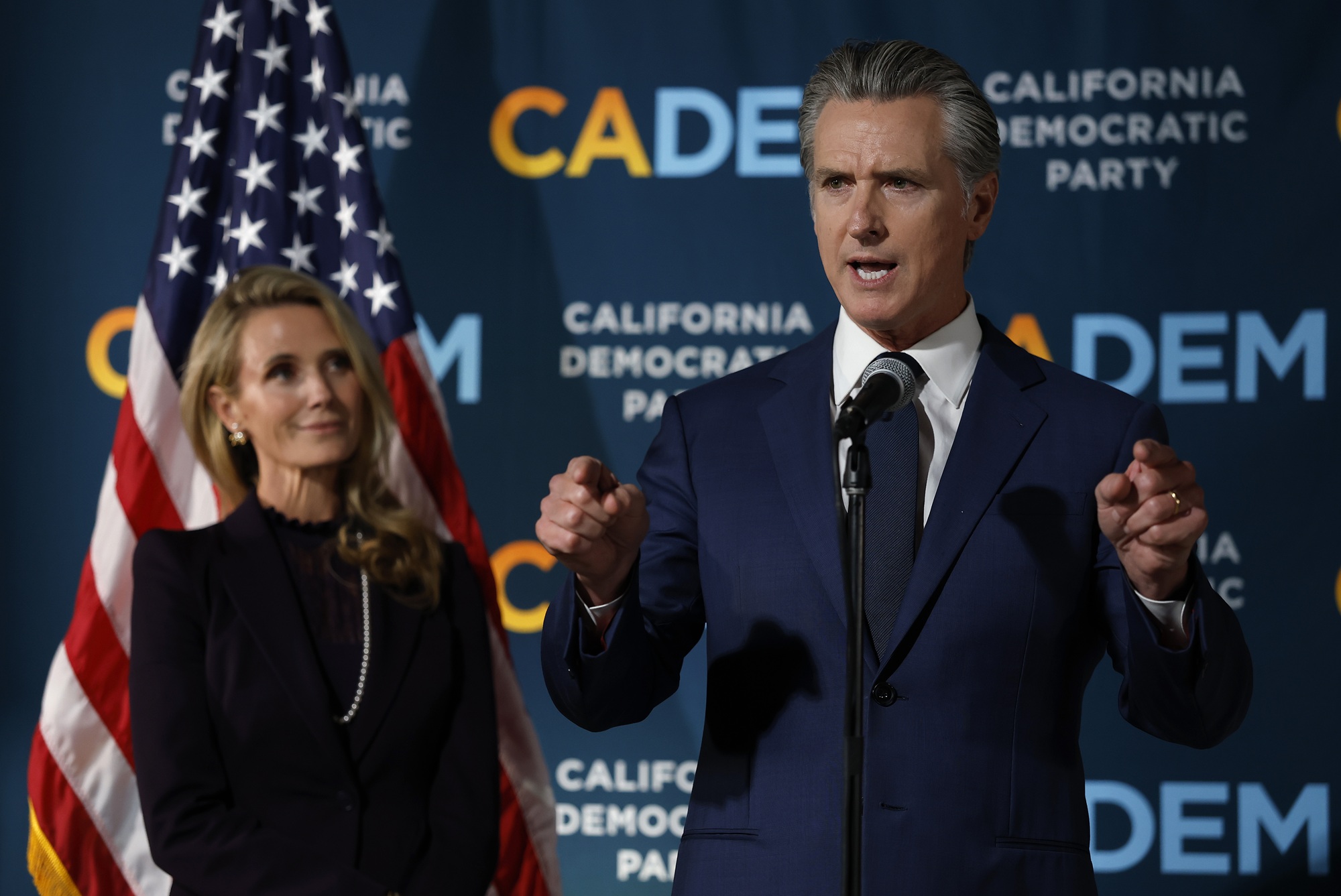
"caption": "Gov. Gavin Newsom speaks as his wife, Jennifer Siebel Newsom (left), looks on during an election night gathering at California Democratic headquarters in Sacramento, California, on Nov. 4, 2025.",
"credit": "Justin Sullivan/Getty Images",
"altTag": null,
"description": null,
"imgSizes": {
"thumbnail": {
"file": "https://cdn.kqed.org/wp-content/uploads/sites/10/2026/06/GavinJenniferNewsomGetty-160x107.jpg",
"width": 160,
"height": 107,
"mimeType": "image/jpeg"
},
"1536x1536": {
"file": "https://cdn.kqed.org/wp-content/uploads/sites/10/2026/06/GavinJenniferNewsomGetty-1536x1027.jpg",
"width": 1536,
"height": 1027,
"mimeType": "image/jpeg"
},
"post-thumbnail": {
"file": "https://cdn.kqed.org/wp-content/uploads/sites/10/2026/06/GavinJenniferNewsomGetty-672x372.jpg",
"width": 672,
"height": 372,
"mimeType": "image/jpeg"
},
"twentyfourteen-full-width": {
"file": "https://cdn.kqed.org/wp-content/uploads/sites/10/2026/06/GavinJenniferNewsomGetty-1038x576.jpg",
"width": 1038,
"height": 576,
"mimeType": "image/jpeg"
},
"npr-cds-wide": {
"file": "https://cdn.kqed.org/wp-content/uploads/sites/10/2026/06/GavinJenniferNewsomGetty-1200x675.jpg",
"width": 1200,
"height": 675,
"mimeType": "image/jpeg"
},
"npr-cds-square": {
"file": "https://cdn.kqed.org/wp-content/uploads/sites/10/2026/06/GavinJenniferNewsomGetty-600x600.jpg",
"width": 600,
"height": 600,
"mimeType": "image/jpeg"
},
"kqedFullSize": {
"file": "https://cdn.kqed.org/wp-content/uploads/sites/10/2026/06/GavinJenniferNewsomGetty.jpg",
"width": 2000,
"height": 1337
}
},
"isLoading": false,
"fetchFailed": false
},
"news_12049457": {
"type": "attachments",
"id": "news_12049457",
"meta": {
"index": "attachments_1716263798",
"site": "news",
"id": "12049457",
"found": true
},
"title": "Muir Woods Exhibit (1)",
"publishDate": 1753310562,
"status": "inherit",
"parent": 12049405,
"modified": 1758226708,
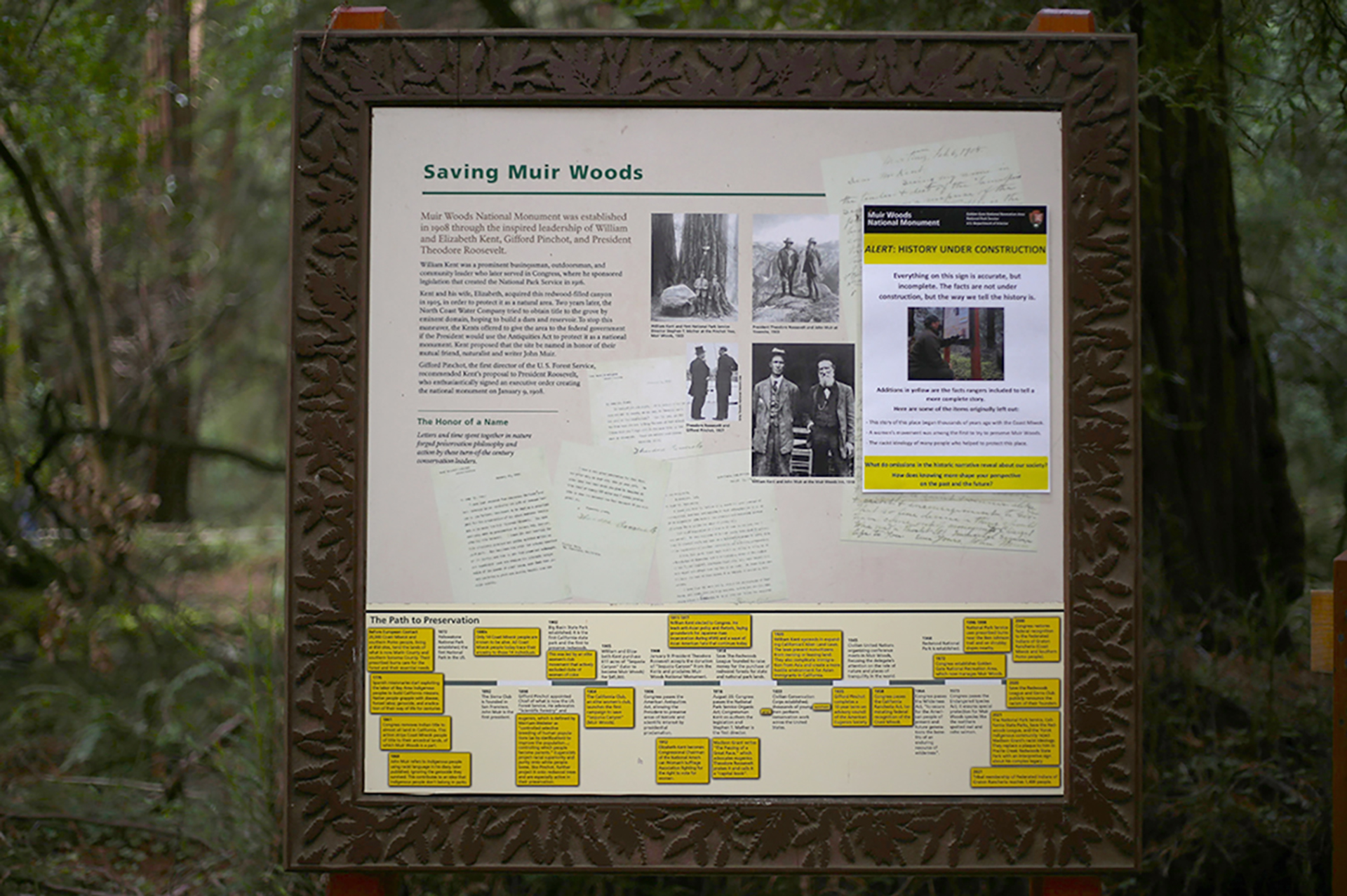
"caption": "The Muir Woods 'History in Construction' Exhibit, which was put up in 2021 to honor previously undocumented contributions to the park's stewardship. Signs like this one were part of the Trump Administration's removal order.",
"credit": "Courtesy of NPS/Jace Ritchey",
"altTag": null,
"description": null,
"imgSizes": {
"thumbnail": {
"file": "https://cdn.kqed.org/wp-content/uploads/sites/10/2025/07/Muir-Woods-Exhibit-1-160x106.png",
"width": 160,
"height": 106,
"mimeType": "image/png"
},
"1536x1536": {
"file": "https://cdn.kqed.org/wp-content/uploads/sites/10/2025/07/Muir-Woods-Exhibit-1-1536x1022.png",
"width": 1536,
"height": 1022,
"mimeType": "image/png"
},
"post-thumbnail": {
"file": "https://cdn.kqed.org/wp-content/uploads/sites/10/2025/07/Muir-Woods-Exhibit-1-672x372.png",
"width": 672,
"height": 372,
"mimeType": "image/png"
},
"twentyfourteen-full-width": {
"file": "https://cdn.kqed.org/wp-content/uploads/sites/10/2025/07/Muir-Woods-Exhibit-1-1038x576.png",
"width": 1038,
"height": 576,
"mimeType": "image/png"
},
"kqedFullSize": {
"file": "https://cdn.kqed.org/wp-content/uploads/sites/10/2025/07/Muir-Woods-Exhibit-1.png",
"width": 1920,
"height": 1277
}
},
"isLoading": false,
"fetchFailed": false
},
"news_12087391": {
"type": "attachments",
"id": "news_12087391",
"meta": {
"index": "attachments_1716263798",
"site": "news",
"id": "12087391",
"found": true
},
"title": "Eric Jones on the campaign trail",
"publishDate": 1781291734,
"status": "inherit",
"parent": 12087322,
"modified": 1781304608,
"caption": "Eric Jones at a Democratic Party fundraiser in Placer County on May 20, 2026. Jones is facing Rep. Mike Thompson, who is seeking his 15th term in the U.S. House of Representatives for California’s 4th District. ",
"credit": "Kent Porter/MediaNews Group via The Press Democrat via Getty Images",
"altTag": null,
"description": null,
"imgSizes": {
"thumbnail": {
"file": "https://cdn.kqed.org/wp-content/uploads/sites/10/2026/06/EricJonesGetty-160x104.jpg",
"width": 160,
"height": 104,
"mimeType": "image/jpeg"
},
"1536x1536": {
"file": "https://cdn.kqed.org/wp-content/uploads/sites/10/2026/06/EricJonesGetty-1536x998.jpg",
"width": 1536,
"height": 998,
"mimeType": "image/jpeg"
},
"post-thumbnail": {
"file": "https://cdn.kqed.org/wp-content/uploads/sites/10/2026/06/EricJonesGetty-672x372.jpg",
"width": 672,
"height": 372,
"mimeType": "image/jpeg"
},
"twentyfourteen-full-width": {
"file": "https://cdn.kqed.org/wp-content/uploads/sites/10/2026/06/EricJonesGetty-1038x576.jpg",
"width": 1038,
"height": 576,
"mimeType": "image/jpeg"
},
"npr-cds-wide": {
"file": "https://cdn.kqed.org/wp-content/uploads/sites/10/2026/06/EricJonesGetty-1200x675.jpg",
"width": 1200,
"height": 675,
"mimeType": "image/jpeg"
},
"npr-cds-square": {
"file": "https://cdn.kqed.org/wp-content/uploads/sites/10/2026/06/EricJonesGetty-600x600.jpg",
"width": 600,
"height": 600,
"mimeType": "image/jpeg"
},
"kqedFullSize": {
"file": "https://cdn.kqed.org/wp-content/uploads/sites/10/2026/06/EricJonesGetty.jpg",
"width": 2000,
"height": 1300
}
},
"isLoading": false,
"fetchFailed": false
},
"news_12086023": {
"type": "attachments",
"id": "news_12086023",
"meta": {
"index": "attachments_1716263798",
"site": "news",
"id": "12086023",
"found": true
},
"title": "California Gubernatorial Candidate Steve Hilton Holds Primary Night Event In Huntington Beach",
"publishDate": 1780468382,
"status": "inherit",
"parent": 0,
"modified": 1780468432,
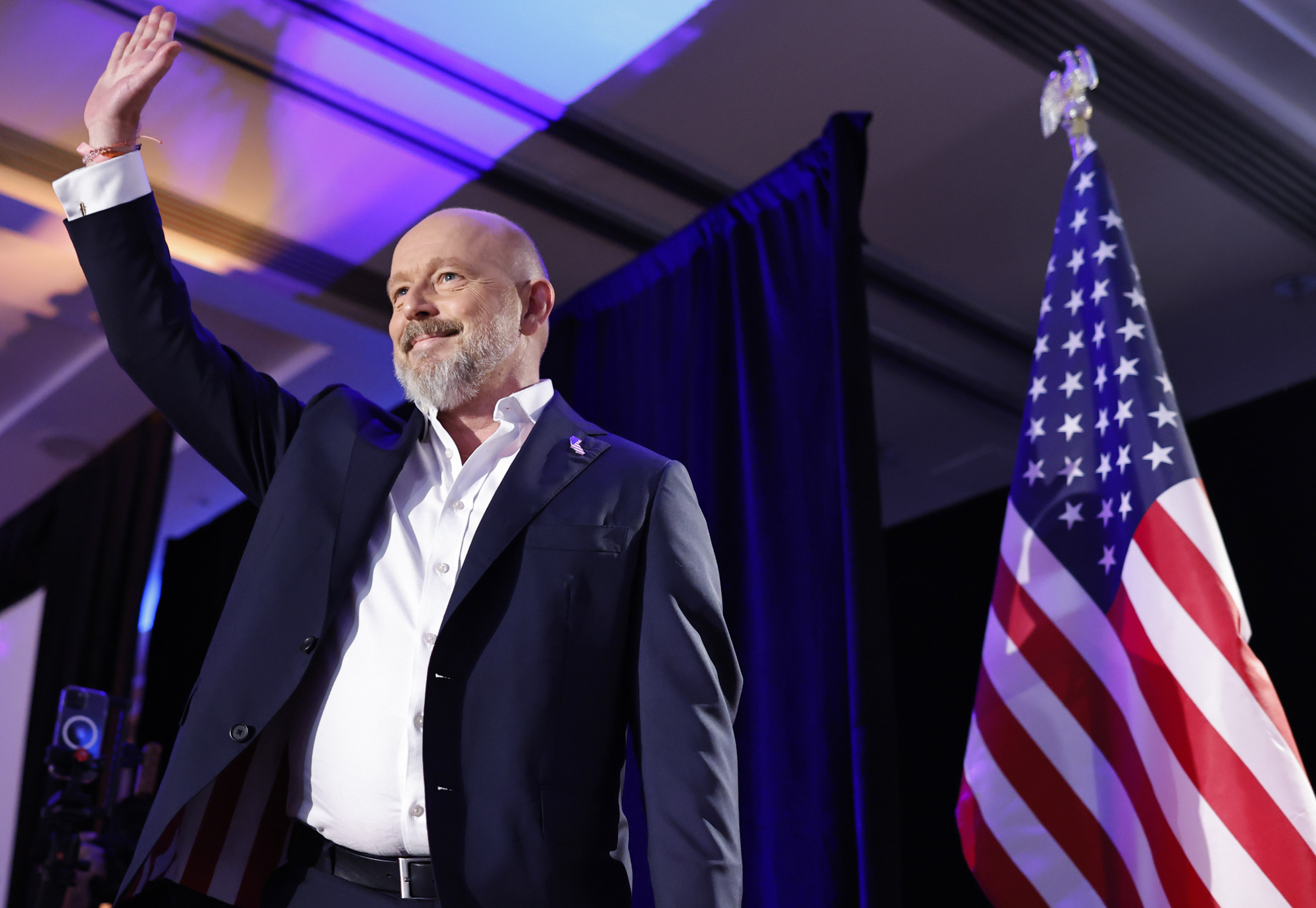
"caption": "California Republican Gubernatorial candidate Steve Hilton waves to supporters at his primary night event on June 2, 2026 in Huntington Beach.",
"credit": "Mario Tama/Getty Images",
"altTag": null,
"description": null,
"imgSizes": {
"thumbnail": {
"file": "https://cdn.kqed.org/wp-content/uploads/sites/10/2026/06/GETTYIMAGES-2279541285-KQED-160x110.jpg",
"width": 160,
"height": 110,
"mimeType": "image/jpeg"
},
"1536x1536": {
"file": "https://cdn.kqed.org/wp-content/uploads/sites/10/2026/06/GETTYIMAGES-2279541285-KQED-1536x1060.jpg",
"width": 1536,
"height": 1060,
"mimeType": "image/jpeg"
},
"post-thumbnail": {
"file": "https://cdn.kqed.org/wp-content/uploads/sites/10/2026/06/GETTYIMAGES-2279541285-KQED-672x372.jpg",
"width": 672,
"height": 372,
"mimeType": "image/jpeg"
},
"twentyfourteen-full-width": {
"file": "https://cdn.kqed.org/wp-content/uploads/sites/10/2026/06/GETTYIMAGES-2279541285-KQED-1038x576.jpg",
"width": 1038,
"height": 576,
"mimeType": "image/jpeg"
},
"npr-cds-wide": {
"file": "https://cdn.kqed.org/wp-content/uploads/sites/10/2026/06/GETTYIMAGES-2279541285-KQED-1200x675.jpg",
"width": 1200,
"height": 675,
"mimeType": "image/jpeg"
},
"npr-cds-square": {
"file": "https://cdn.kqed.org/wp-content/uploads/sites/10/2026/06/GETTYIMAGES-2279541285-KQED-600x600.jpg",
"width": 600,
"height": 600,
"mimeType": "image/jpeg"
},
"kqedFullSize": {
"file": "https://cdn.kqed.org/wp-content/uploads/sites/10/2026/06/GETTYIMAGES-2279541285-KQED.jpg",
"width": 2000,
"height": 1380
}
},
"isLoading": false,
"fetchFailed": false
},
"news_12087261": {
"type": "attachments",
"id": "news_12087261",
"meta": {
"index": "attachments_1716263798",
"site": "news",
"id": "12087261",
"found": true
},
"title": "260611-Vang:Villegas for PB-KQED",
"publishDate": 1781219883,
"status": "inherit",
"parent": 0,
"modified": 1781220723,
"caption": "Randy Villegas (left) and Mai Vang (right) are two Democratic congressional challengers who made it out of the primaries and hope to unseat longtime incumbents. ",
"credit": "Courtesy of Villegas and Vang campaigns",
"altTag": null,
"description": null,
"imgSizes": {
"thumbnail": {
"file": "https://cdn.kqed.org/wp-content/uploads/sites/10/2026/06/260611-VangVillegas-for-PB-KQED-160x107.jpg",
"width": 160,
"height": 107,
"mimeType": "image/jpeg"
},
"1536x1536": {
"file": "https://cdn.kqed.org/wp-content/uploads/sites/10/2026/06/260611-VangVillegas-for-PB-KQED-1536x1025.jpg",
"width": 1536,
"height": 1025,
"mimeType": "image/jpeg"
},
"post-thumbnail": {
"file": "https://cdn.kqed.org/wp-content/uploads/sites/10/2026/06/260611-VangVillegas-for-PB-KQED-672x372.jpg",
"width": 672,
"height": 372,
"mimeType": "image/jpeg"
},
"twentyfourteen-full-width": {
"file": "https://cdn.kqed.org/wp-content/uploads/sites/10/2026/06/260611-VangVillegas-for-PB-KQED-1038x576.jpg",
"width": 1038,
"height": 576,
"mimeType": "image/jpeg"
},
"npr-cds-wide": {
"file": "https://cdn.kqed.org/wp-content/uploads/sites/10/2026/06/260611-VangVillegas-for-PB-KQED-1200x675.jpg",
"width": 1200,
"height": 675,
"mimeType": "image/jpeg"
},
"npr-cds-square": {
"file": "https://cdn.kqed.org/wp-content/uploads/sites/10/2026/06/260611-VangVillegas-for-PB-KQED-600x600.jpg",
"width": 600,
"height": 600,
"mimeType": "image/jpeg"
},
"kqedFullSize": {
"file": "https://cdn.kqed.org/wp-content/uploads/sites/10/2026/06/260611-VangVillegas-for-PB-KQED.jpg",
"width": 2000,
"height": 1334
}
},
"isLoading": false,
"fetchFailed": false
},
"news_12087182": {
"type": "attachments",
"id": "news_12087182",
"meta": {
"index": "attachments_1716263798",
"site": "news",
"id": "12087182",
"found": true
},
"title": "251030-BayAreaVoters-25-BL_qed",
"publishDate": 1781204818,
"status": "inherit",
"parent": 12087072,
"modified": 1781204827,
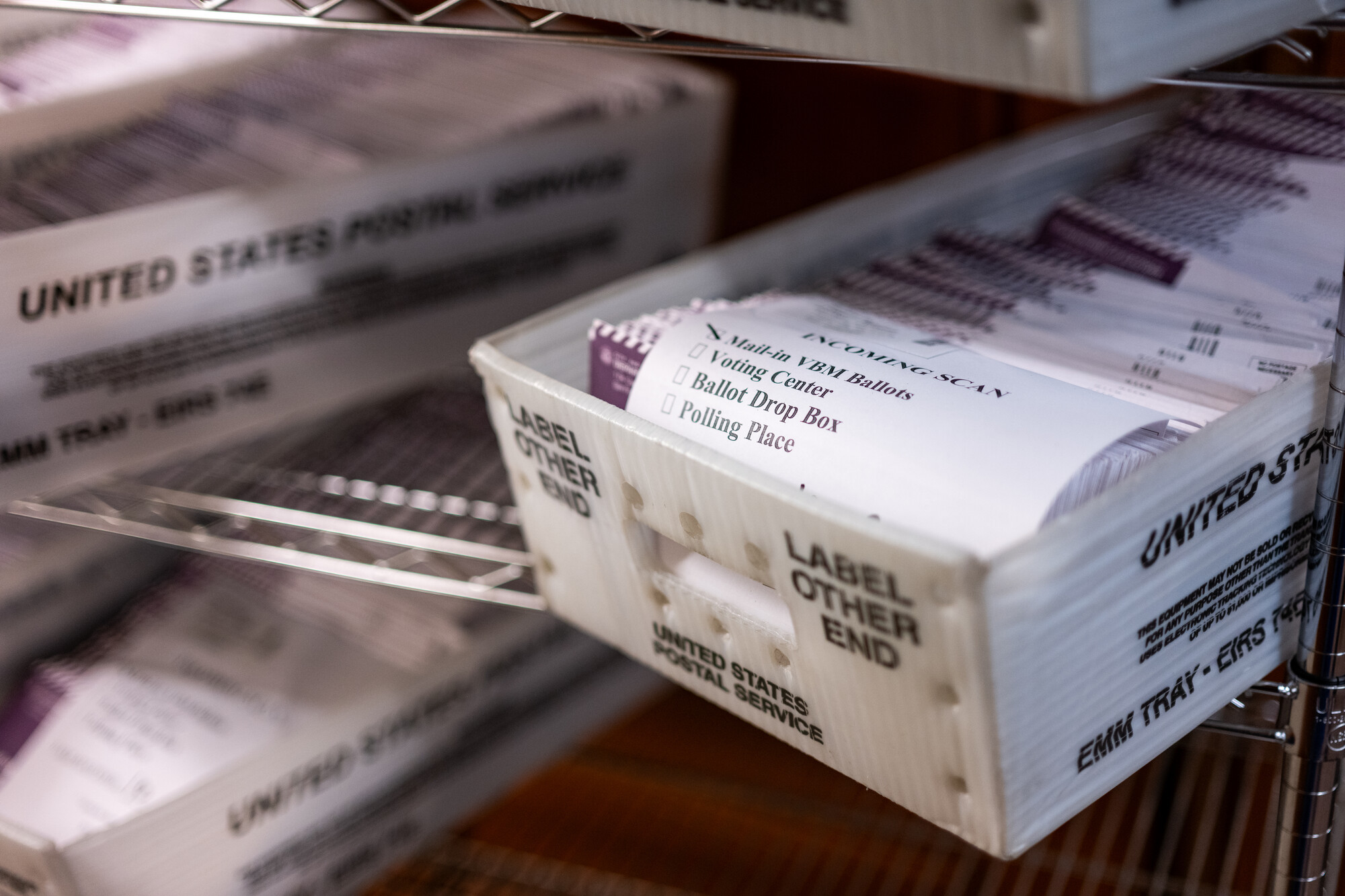
"caption": "Ballots sit in crates before being counted at the City Hall Voting Center in San Francisco on Oct. 30, 2025, ahead of the statewide special election.",
"credit": "Beth LaBerge/KQED",
"altTag": null,
"description": null,
"imgSizes": {
"thumbnail": {
"file": "https://cdn.kqed.org/wp-content/uploads/sites/10/2026/06/251030-BayAreaVoters-25-BL_qed-160x107.jpg",
"width": 160,
"height": 107,
"mimeType": "image/jpeg"
},
"1536x1536": {
"file": "https://cdn.kqed.org/wp-content/uploads/sites/10/2026/06/251030-BayAreaVoters-25-BL_qed-1536x1024.jpg",
"width": 1536,
"height": 1024,
"mimeType": "image/jpeg"
},
"post-thumbnail": {
"file": "https://cdn.kqed.org/wp-content/uploads/sites/10/2026/06/251030-BayAreaVoters-25-BL_qed-672x372.jpg",
"width": 672,
"height": 372,
"mimeType": "image/jpeg"
},
"twentyfourteen-full-width": {
"file": "https://cdn.kqed.org/wp-content/uploads/sites/10/2026/06/251030-BayAreaVoters-25-BL_qed-1038x576.jpg",
"width": 1038,
"height": 576,
"mimeType": "image/jpeg"
},
"npr-cds-wide": {
"file": "https://cdn.kqed.org/wp-content/uploads/sites/10/2026/06/251030-BayAreaVoters-25-BL_qed-1200x675.jpg",
"width": 1200,
"height": 675,
"mimeType": "image/jpeg"
},
"npr-cds-square": {
"file": "https://cdn.kqed.org/wp-content/uploads/sites/10/2026/06/251030-BayAreaVoters-25-BL_qed-600x600.jpg",
"width": 600,
"height": 600,
"mimeType": "image/jpeg"
},
"kqedFullSize": {
"file": "https://cdn.kqed.org/wp-content/uploads/sites/10/2026/06/251030-BayAreaVoters-25-BL_qed.jpg",
"width": 2000,
"height": 1333
}
},
"isLoading": false,
"fetchFailed": false
},
"news_12086921": {
"type": "attachments",
"id": "news_12086921",
"meta": {
"index": "attachments_1716263798",
"site": "news",
"id": "12086921",
"found": true
},
"title": "House Education",
"publishDate": 1781115362,
"status": "inherit",
"parent": 12086884,
"modified": 1781116144,
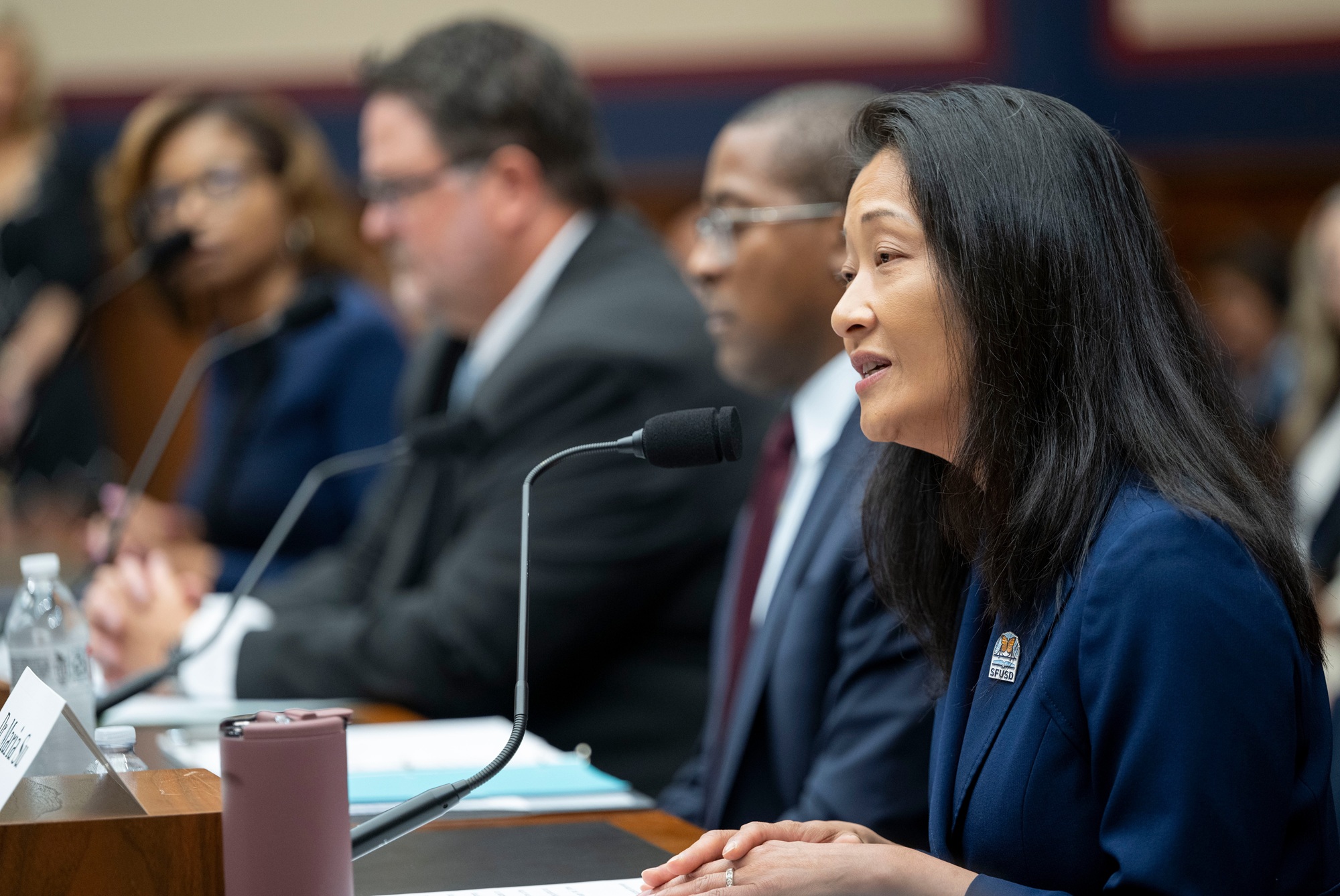
"caption": "San Francisco Unified School District Superintendent Dr. Maria Su, right, testifies during a House Education and Workforce Committee hearing on parental rights and school content policies, on Wednesday, June 10, 2026, in Washington. ",
"credit": "Kevin Wolf/AP Photo",
"altTag": null,
"description": null,
"imgSizes": {
"thumbnail": {
"file": "https://cdn.kqed.org/wp-content/uploads/sites/10/2026/06/MariaSuAP1-160x107.jpg",
"width": 160,
"height": 107,
"mimeType": "image/jpeg"
},
"1536x1536": {
"file": "https://cdn.kqed.org/wp-content/uploads/sites/10/2026/06/MariaSuAP1-1536x1028.jpg",
"width": 1536,
"height": 1028,
"mimeType": "image/jpeg"
},
"post-thumbnail": {
"file": "https://cdn.kqed.org/wp-content/uploads/sites/10/2026/06/MariaSuAP1-672x372.jpg",
"width": 672,
"height": 372,
"mimeType": "image/jpeg"
},
"twentyfourteen-full-width": {
"file": "https://cdn.kqed.org/wp-content/uploads/sites/10/2026/06/MariaSuAP1-1038x576.jpg",
"width": 1038,
"height": 576,
"mimeType": "image/jpeg"
},
"npr-cds-wide": {
"file": "https://cdn.kqed.org/wp-content/uploads/sites/10/2026/06/MariaSuAP1-1200x675.jpg",
"width": 1200,
"height": 675,
"mimeType": "image/jpeg"
},
"npr-cds-square": {
"file": "https://cdn.kqed.org/wp-content/uploads/sites/10/2026/06/MariaSuAP1-600x600.jpg",
"width": 600,
"height": 600,
"mimeType": "image/jpeg"
},
"kqedFullSize": {
"file": "https://cdn.kqed.org/wp-content/uploads/sites/10/2026/06/MariaSuAP1.jpg",
"width": 2000,
"height": 1338
}
},
"isLoading": false,
"fetchFailed": false
},
"news_12086015": {
"type": "attachments",
"id": "news_12086015",
"meta": {
"index": "attachments_1716263798",
"site": "news",
"id": "12086015",
"found": true
},
"title": "20260602_PRIMARY2026CD4_163-KQED",
"publishDate": 1780468009,
"status": "inherit",
"parent": 12087322,
"modified": 1781303868,
"caption": "Abby Delanoy wears an Eric Jones shirt at the Democratic candidate’s watch party at Three Mile Brewing in Davis on June 2, 2026.",
"credit": "Gina Castro for KQED",
"altTag": null,
"description": null,
"imgSizes": {
"thumbnail": {
"file": "https://cdn.kqed.org/wp-content/uploads/sites/10/2026/06/20260602_PRIMARY2026CD4_163-KQED-160x107.jpg",
"width": 160,
"height": 107,
"mimeType": "image/jpeg"
},
"1536x1536": {
"file": "https://cdn.kqed.org/wp-content/uploads/sites/10/2026/06/20260602_PRIMARY2026CD4_163-KQED-1536x1024.jpg",
"width": 1536,
"height": 1024,
"mimeType": "image/jpeg"
},
"post-thumbnail": {
"file": "https://cdn.kqed.org/wp-content/uploads/sites/10/2026/06/20260602_PRIMARY2026CD4_163-KQED-672x372.jpg",
"width": 672,
"height": 372,
"mimeType": "image/jpeg"
},
"twentyfourteen-full-width": {
"file": "https://cdn.kqed.org/wp-content/uploads/sites/10/2026/06/20260602_PRIMARY2026CD4_163-KQED-1038x576.jpg",
"width": 1038,
"height": 576,
"mimeType": "image/jpeg"
},
"npr-cds-wide": {
"file": "https://cdn.kqed.org/wp-content/uploads/sites/10/2026/06/20260602_PRIMARY2026CD4_163-KQED-1200x675.jpg",
"width": 1200,
"height": 675,
"mimeType": "image/jpeg"
},
"npr-cds-square": {
"file": "https://cdn.kqed.org/wp-content/uploads/sites/10/2026/06/20260602_PRIMARY2026CD4_163-KQED-600x600.jpg",
"width": 600,
"height": 600,
"mimeType": "image/jpeg"
},
"kqedFullSize": {
"file": "https://cdn.kqed.org/wp-content/uploads/sites/10/2026/06/20260602_PRIMARY2026CD4_163-KQED.jpg",
"width": 2000,
"height": 1333
}
},
"isLoading": false,
"fetchFailed": false
}
},
"audioPlayerReducer": {
"postId": "stream_live",
"isPaused": true,
"isPlaying": false,
"pfsActive": false,
"pledgeModalIsOpen": true,
"playerDrawerIsOpen": false,
"liveAudioPlayStartedAt": 0,
"liveAudioPlayContext": ""
},
"authorsReducer": {
"byline_news_12087760": {
"type": "authors",
"id": "byline_news_12087760",
"meta": {
"override": true
},
"slug": "byline_news_12087760",
"name": "Christopher Weber and Konstantin Toropin, The Associated Press",
"isLoading": false
},
"gmarzorati": {
"type": "authors",
"id": "227",
"meta": {
"index": "authors_1716337520",
"id": "227",
"found": true
},
"name": "Guy Marzorati",
"firstName": "Guy",
"lastName": "Marzorati",
"slug": "gmarzorati",
"email": "gmarzorati@KQED.org",
"display_author_email": true,
"staff_mastheads": [
"news"
],
"title": "Correspondent",
"bio": "Guy Marzorati is a correspondent on KQED's California Politics and Government Desk, based in San Jose. A graduate of Santa Clara University, Guy joined KQED in 2013. He reports on state and local politics and produces KQED's digital voter guide.",
"avatar": "https://secure.gravatar.com/avatar/e7038b8dbfd55b104369b76b1cd0b9de?s=600&d=blank&r=g",
"twitter": "guymarzorati",
"facebook": null,
"instagram": null,
"linkedin": null,
"sites": [
{
"site": "",
"roles": [
"editor"
]
},
{
"site": "news",
"roles": [
"editor"
]
},
{
"site": "science",
"roles": [
"editor"
]
},
{
"site": "forum",
"roles": [
"editor"
]
},
{
"site": "elections",
"roles": [
"editor"
]
},
{
"site": "liveblog",
"roles": [
"editor"
]
}
],
"headData": {
"title": "Guy Marzorati | KQED",
"description": "Correspondent",
"ogImgSrc": "https://secure.gravatar.com/avatar/e7038b8dbfd55b104369b76b1cd0b9de?s=600&d=blank&r=g",
"twImgSrc": "https://secure.gravatar.com/avatar/e7038b8dbfd55b104369b76b1cd0b9de?s=600&d=blank&r=g"
},
"isLoading": false,
"link": "/author/gmarzorati"
},
"scottshafer": {
"type": "authors",
"id": "255",
"meta": {
"index": "authors_1716337520",
"id": "255",
"found": true
},
"name": "Scott Shafer",
"firstName": "Scott",
"lastName": "Shafer",
"slug": "scottshafer",
"email": "sshafer@kqed.org",
"display_author_email": false,
"staff_mastheads": [
"news"
],
"title": "KQED Contributor",
"bio": "Scott Shafer is a senior editor with the KQED Politics and Government desk. He is co-host of Political Breakdown, the award-winning radio show and podcast with a personal take on the world of politics. Scott came to KQED in 1998 to host the statewide\u003cem> California Report\u003c/em>. Prior to that he had extended stints in politics and government\u003cem>.\u003c/em> He uses that inside experience at KQED in his, reporting, hosting and analysis for the politics desk. Scott collaborated \u003cem>Political Breakdown a\u003c/em>nd on \u003cem>The Political Mind of Jerry Brown, \u003c/em>an eight-part series about the life and extraordinary political career of the former governor. For fun, he plays water polo with the San Francisco Tsunami.",
"avatar": "https://secure.gravatar.com/avatar/a62ebae45b79d7aed1a39a0e3bf68104?s=600&d=blank&r=g",
"twitter": "scottshafer",
"bluesky": null,
"facebook": null,
"instagram": null,
"linkedin": null,
"sites": [
{
"site": "news",
"roles": [
"editor"
]
},
{
"site": "stateofhealth",
"roles": [
"author"
]
},
{
"site": "science",
"roles": [
"author"
]
},
{
"site": "forum",
"roles": [
"subscriber"
]
},
{
"site": "liveblog",
"roles": [
"author"
]
}
],
"headData": {
"title": "Scott Shafer | KQED",
"description": "KQED Contributor",
"ogImgSrc": "https://secure.gravatar.com/avatar/a62ebae45b79d7aed1a39a0e3bf68104?s=600&d=blank&r=g",
"twImgSrc": "https://secure.gravatar.com/avatar/a62ebae45b79d7aed1a39a0e3bf68104?s=600&d=blank&r=g"
},
"isLoading": false,
"link": "/author/scottshafer"
},
"mlagos": {
"type": "authors",
"id": "3239",
"meta": {
"index": "authors_1716337520",
"id": "3239",
"found": true
},
"name": "Marisa Lagos",
"firstName": "Marisa",
"lastName": "Lagos",
"slug": "mlagos",
"email": "mlagos@kqed.org",
"display_author_email": false,
"staff_mastheads": [
"news"
],
"title": "KQED Contributor",
"bio": "Marisa Lagos is a correspondent for KQED’s California Politics and Government Desk and co-hosts the award-winning show and podcast, Political Breakdown. At KQED, Lagos also conducts reporting, analysis and investigations into state, local and national politics for radio, TV, online and onstage. In 2022, she and co-host, Scott Shafer, moderated the only gubernatorial debate in California. In 2020, the \u003ci>Washington Post\u003c/i> named her one of the top political journalists in California; she was nominated for a Peabody and won several other awards for her work investigating the 2017 California wildfires. She has worked at the \u003ci>San Francisco Chronicle\u003c/i>, \u003ci>San Francisco Examiner\u003c/i> and \u003ci>Los Angeles Times\u003c/i>. A UC Santa Barbara graduate, she lives in San Francisco with her two sons and husband.",
"avatar": "https://secure.gravatar.com/avatar/a261a0d3696fc066871ef96b85b5e7d2?s=600&d=blank&r=g",
"twitter": "@mlagos",
"facebook": null,
"instagram": null,
"linkedin": null,
"sites": [
{
"site": "arts",
"roles": [
"author"
]
},
{
"site": "news",
"roles": [
"editor"
]
},
{
"site": "science",
"roles": [
"editor"
]
},
{
"site": "forum",
"roles": [
"author"
]
},
{
"site": "liveblog",
"roles": [
"author"
]
}
],
"headData": {
"title": "Marisa Lagos | KQED",
"description": "KQED Contributor",
"ogImgSrc": "https://secure.gravatar.com/avatar/a261a0d3696fc066871ef96b85b5e7d2?s=600&d=blank&r=g",
"twImgSrc": "https://secure.gravatar.com/avatar/a261a0d3696fc066871ef96b85b5e7d2?s=600&d=blank&r=g"
},
"isLoading": false,
"link": "/author/mlagos"
},
"ibloom": {
"type": "authors",
"id": "11805",
"meta": {
"index": "authors_1716337520",
"id": "11805",
"found": true
},
"name": "Izzy Bloom",
"firstName": "Izzy",
"lastName": "Bloom",
"slug": "ibloom",
"email": "ibloom@kqed.org",
"display_author_email": false,
"staff_mastheads": [],
"title": "KQED Reporter & Producer",
"bio": "Izzy is a reporter and producer on KQED's California Politics & Government Desk. She joined the desk in 2024 to produce Political Breakdown, covering local and national elections and attending the RNC and DNC in Milwaukee and Chicago. \r\n\r\nBefore that, Izzy was a producer on The California Report and reported long-form stories for The California Report Magazine. She was a finalist for the Third Coast/Richard H. Driehaus Foundation Competition and was awarded for her reporting on indigenous land back by the Society of Professional Journalists. Izzy received her master's in journalism from the University of California, Berkeley.",
"avatar": "https://secure.gravatar.com/avatar/cc4d272ca430783ee1a8efac470a6b1e0fdd082c3beb61da019801d0ff751c8c?s=600&d=blank&r=g",
"twitter": null,
"bluesky": null,
"facebook": null,
"instagram": null,
"linkedin": null,
"sites": [
{
"site": "news",
"roles": [
"editor"
]
},
{
"site": "perspectives",
"roles": [
"editor"
]
}
],
"headData": {
"title": "Izzy Bloom | KQED",
"description": "KQED Reporter & Producer",
"ogImgSrc": "https://secure.gravatar.com/avatar/cc4d272ca430783ee1a8efac470a6b1e0fdd082c3beb61da019801d0ff751c8c?s=600&d=blank&r=g",
"twImgSrc": "https://secure.gravatar.com/avatar/cc4d272ca430783ee1a8efac470a6b1e0fdd082c3beb61da019801d0ff751c8c?s=600&d=blank&r=g"
},
"isLoading": false,
"link": "/author/ibloom"
},
"sjohnson": {
"type": "authors",
"id": "11840",
"meta": {
"index": "authors_1716337520",
"id": "11840",
"found": true
},
"name": "Sydney Johnson",
"firstName": "Sydney",
"lastName": "Johnson",
"slug": "sjohnson",
"email": "sjohnson@kqed.org",
"display_author_email": false,
"staff_mastheads": [
"news"
],
"title": "KQED Reporter",
"bio": "Sydney Johnson is a general assignment reporter at KQED. She previously reported on public health and city government at the San Francisco Examiner, and before that, she covered statewide education policy for EdSource. Her reporting has won multiple local, state and national awards. Sydney is a graduate of the University of California, Berkeley and lives in San Francisco.",
"avatar": "https://secure.gravatar.com/avatar/97855f2719b72ad6190b7c535fe642c8?s=600&d=blank&r=g",
"twitter": "sydneyfjohnson",
"facebook": null,
"instagram": null,
"linkedin": null,
"sites": [
{
"site": "news",
"roles": [
"editor"
]
}
],
"headData": {
"title": "Sydney Johnson | KQED",
"description": "KQED Reporter",
"ogImgSrc": "https://secure.gravatar.com/avatar/97855f2719b72ad6190b7c535fe642c8?s=600&d=blank&r=g",
"twImgSrc": "https://secure.gravatar.com/avatar/97855f2719b72ad6190b7c535fe642c8?s=600&d=blank&r=g"
},
"isLoading": false,
"link": "/author/sjohnson"
},
"jgeha": {
"type": "authors",
"id": "11906",
"meta": {
"index": "authors_1716337520",
"id": "11906",
"found": true
},
"name": "Joseph Geha",
"firstName": "Joseph",
"lastName": "Geha",
"slug": "jgeha",
"email": "jgeha@kqed.org",
"display_author_email": false,
"staff_mastheads": [
"news",
"science"
],
"title": "KQED Contributor",
"bio": null,
"avatar": "https://secure.gravatar.com/avatar/ea84d2b6dd93d6369d453edf19dd583f117cd1759d2d9c9c92f9de77017354fe?s=600&d=blank&r=g",
"twitter": null,
"bluesky": null,
"facebook": null,
"instagram": null,
"linkedin": null,
"sites": [
{
"site": "news",
"roles": [
"editor"
]
},
{
"site": "liveblog",
"roles": [
"author"
]
}
],
"headData": {
"title": "Joseph Geha | KQED",
"description": "KQED Contributor",
"ogImgSrc": "https://secure.gravatar.com/avatar/ea84d2b6dd93d6369d453edf19dd583f117cd1759d2d9c9c92f9de77017354fe?s=600&d=blank&r=g",
"twImgSrc": "https://secure.gravatar.com/avatar/ea84d2b6dd93d6369d453edf19dd583f117cd1759d2d9c9c92f9de77017354fe?s=600&d=blank&r=g"
},
"isLoading": false,
"link": "/author/jgeha"
},
"kdebenedetti": {
"type": "authors",
"id": "11913",
"meta": {
"index": "authors_1716337520",
"id": "11913",
"found": true
},
"name": "Katie DeBenedetti",
"firstName": "Katie",
"lastName": "DeBenedetti",
"slug": "kdebenedetti",
"email": "kdebenedetti@kqed.org",
"display_author_email": false,
"staff_mastheads": [
"news",
"science"
],
"title": "KQED Contributor",
"bio": "Katie DeBenedetti is a digital reporter covering daily news for the Express Desk. Prior to joining KQED as a culture reporting intern in January 2024, she covered education and city government for the Napa Valley Register.",
"avatar": "https://secure.gravatar.com/avatar/6e31073cb8f7e4214ab03f42771d0f45?s=600&d=blank&r=g",
"twitter": null,
"facebook": null,
"instagram": null,
"linkedin": null,
"sites": [
{
"site": "news",
"roles": [
"author"
]
},
{
"site": "science",
"roles": [
"author"
]
},
{
"site": "liveblog",
"roles": [
"author"
]
}
],
"headData": {
"title": "Katie DeBenedetti | KQED",
"description": "KQED Contributor",
"ogImgSrc": "https://secure.gravatar.com/avatar/6e31073cb8f7e4214ab03f42771d0f45?s=600&d=blank&r=g",
"twImgSrc": "https://secure.gravatar.com/avatar/6e31073cb8f7e4214ab03f42771d0f45?s=600&d=blank&r=g"
},
"isLoading": false,
"link": "/author/kdebenedetti"
},
"sarahwright": {
"type": "authors",
"id": "11956",
"meta": {
"index": "authors_1716337520",
"id": "11956",
"found": true
},
"name": "Sarah Wright",
"firstName": "Sarah",
"lastName": "Wright",
"slug": "sarahwright",
"email": "swright@kqed.org",
"display_author_email": true,
"staff_mastheads": [],
"title": "Outdoors Engagement Reporter",
"bio": "Sarah Wright is KQED's Outdoors Engagement Reporter. Originally from Lake Tahoe, she completed a thru-hike of the Pacific Crest Trail in 2019 and was a U.S. Fulbright Program grantee to Argentina in 2023. Her journalism has appeared in The Guardian, The San Francisco Standard, The Palo Alto Weekly and the Half Moon Bay Review.",
"avatar": "https://secure.gravatar.com/avatar/c161a3d6441865cba25e6db4fa561099ad665799e9432e34da2b84d7e371524c?s=600&d=blank&r=g",
"twitter": null,
"bluesky": null,
"facebook": null,
"instagram": null,
"linkedin": null,
"sites": [
{
"site": "arts",
"roles": [
"editor"
]
},
{
"site": "news",
"roles": [
"editor"
]
},
{
"site": "science",
"roles": [
"contributor",
"author"
]
},
{
"site": "forum",
"roles": [
"editor"
]
}
],
"headData": {
"title": "Sarah Wright | KQED",
"description": "Outdoors Engagement Reporter",
"ogImgSrc": "https://secure.gravatar.com/avatar/c161a3d6441865cba25e6db4fa561099ad665799e9432e34da2b84d7e371524c?s=600&d=blank&r=g",
"twImgSrc": "https://secure.gravatar.com/avatar/c161a3d6441865cba25e6db4fa561099ad665799e9432e34da2b84d7e371524c?s=600&d=blank&r=g"
},
"isLoading": false,
"link": "/author/sarahwright"
}
},
"pagesReducer": {
"news_tag_politics": {
"type": "terms",
"id": "news_17968",
"meta": {
"index": "terms_1716263798",
"site": "news",
"id": "17968",
"score": 8.007074
},
"name": "Politics",
"slug": "politics",
"taxonomy": "tag",
"description": null,
"featImg": null,
"headData": {
"title": "Politics | KQED News",
"description": null,
"ogTitle": null,
"ogDescription": null,
"ogImgId": null,
"twTitle": null,
"twDescription": null,
"twImgId": null
},
"ttid": 18002,
"isLoading": false,
"title": "Politics",
"pageMeta": {
"site": "news",
"WpPageTemplate": "page-topic-editorial",
"currentPage": 15
},
"blocks": [
{
"blockName": "kqed/post-list",
"attrs": {
"layout": "cardArticle2",
"query": "posts/news?tag=politics",
"seeMore": false,
"paginated": true,
"page": 15
}
},
{
"blockName": "kqed/ad"
}
]
}
},
"pfsSessionReducer": {},
"postsReducer": {
"stream_live": {
"type": "live",
"id": "stream_live",
"audioUrl": "https://streams.kqed.org/kqedradio",
"title": "Live Stream",
"excerpt": "Live Stream information currently unavailable.",
"link": "/radio",
"featImg": "",
"label": {
"name": "KQED Live",
"link": "/"
}
},
"stream_kqedNewscast": {
"type": "posts",
"id": "stream_kqedNewscast",
"audioUrl": "https://www.kqed.org/.stream/anon/radio/RDnews/newscast.mp3?_=1",
"title": "KQED Newscast",
"featImg": "",
"label": {
"name": "88.5 FM",
"link": "/"
}
},
"news_12087600": {
"type": "posts",
"id": "news_12087600",
"meta": {
"index": "posts_1716263798",
"site": "news",
"id": "12087600",
"score": null,
"sort": [
1781645850000
]
},
"guestAuthors": [],
"slug": "lawmakers-push-back-against-trump-coal-terminal-plans-in-west-oakland",
"title": "Lawmakers Push Back Against Trump Coal Terminal Plans in West Oakland",
"publishDate": 1781645850,
"format": "standard",
"headTitle": "Lawmakers Push Back Against Trump Coal Terminal Plans in West Oakland | KQED",
"labelTerm": {
"site": "news"
},
"content": "\u003cp>\u003ca href=\"https://www.kqed.org/news/tag/east-bay\">East Bay\u003c/a> lawmakers are proposing new legislation this week in an effort to halt the Trump administration’s push to open a long-opposed export terminal in West Oakland.\u003c/p>\n\u003cp>U.S. Rep. Lateefah Simon of Oakland filed an amendment on Tuesday that would block the use of energy and water funds for coal projects. This followed new legislation that East Bay Assemblymember Mia Bonta announced on Monday that would require a full environmental review before granting new or expanded approval of such operations.\u003c/p>\n\u003cp>The legislative opposition comes after President Donald Trump announced last month that he would direct $75 million toward the construction of the Oakland Bulk and Oversized Terminal — as part of a nearly $700 million investment in the country’s lagging coal industry. The funds reinvigorate efforts to open a terminal in the West Coast city, which has been opposed and delayed by Oakland residents and officials for more than a decade.\u003c/p>\n\u003cp>[ad fullwidth]\u003c/p>\n\u003cp>“The beautiful people of West Oakland, Alameda, and Emeryville have fought for clean air, for their children’s health, and for their right to breathe for generations,” Bonta said in a statement on Monday. “Donald Trump used a Cold War emergency law to try to override all of that. He will not succeed.”\u003c/p>\n\u003cp>On June 4, Trump announced that he would direct the hundreds of millions of dollars toward keeping ailing coal facilities open, creating two new coal plants in Alaska and West Virginia, and constructing the Oakland export terminal.\u003c/p>\n\u003cp>After the Oakland Army Base closed in 1999, East Bay developer Phil Tagami planned to open a bulk export facility on a portion of the site. Though initially, he said the terminal would not handle coal, in 2015, \u003ca href=\"https://www.kqed.org/news/10585739/oakland-mayor-port-developer-in-dispute-over-plan-to-ship-coal\">plans to partner with Utah \u003c/a>and allow up to 10 million tons of the state’s coal to be sent through the facility became public, prompting widespread outrage from Oaklanders.\u003c/p>\n\u003cfigure id=\"attachment_12076630\" class=\"wp-caption aligncenter\" style=\"max-width: 1980px\">\u003cimg loading=\"lazy\" decoding=\"async\" class=\"size-full wp-image-12076630\" src=\"https://cdn.kqed.org/wp-content/uploads/sites/10/2026/03/GettyImages-2231342596.jpg\" alt=\"\" width=\"1980\" height=\"1320\" srcset=\"https://cdn.kqed.org/wp-content/uploads/sites/10/2026/03/GettyImages-2231342596.jpg 1980w, https://cdn.kqed.org/wp-content/uploads/sites/10/2026/03/GettyImages-2231342596-160x107.jpg 160w, https://cdn.kqed.org/wp-content/uploads/sites/10/2026/03/GettyImages-2231342596-1536x1024.jpg 1536w\" sizes=\"auto, (max-width: 1980px) 100vw, 1980px\">\u003cfigcaption class=\"wp-caption-text\">Democratic Assemblymember Mia Bonta speaks during a meeting of the California State Assembly at the California State Capitol on Aug. 21, 2025, in Sacramento, California. \u003ccite>(Justin Sullivan via Getty Images)\u003c/cite>\u003c/figcaption>\u003c/figure>\n\u003cp>Residents and environmental justice advocates say the terminal would worsen air quality in West Oakland, which already suffers from some of the highest asthma-related emergency room visit and hospitalization \u003ca href=\"https://www.baaqmd.gov/~/media/files/ab617-community-health/air-pollution-and-health-risks_oakland-060418-pdf.pdf?la=en\">rates\u003c/a> in the country due to pollution from highways and industrial operations.\u003c/p>\n\u003cp>They worry that coal dust from uncovered trains traveling through the city could add to that burden. According to Bonta, the terminal would have the capacity to export up to 10 million short tons of coal annually — which equates to multiple trains-worth a day arriving in West Oakland through the East Bay.\u003c/p>\n\u003cp>“Shipping coal through Oakland would exacerbate the real emergencies of global warming and public health in vulnerable communities along the Union Pacific tracks that would bring the coal to Oakland,” No Coal in Oakland, a coalition that’s been organizing in opposition to the project for more than a decade, said in a statement following Trump’s announcement. “If the terminal is built, coal dust and diesel exhaust will spew from multiple mile-long coal trains passing through our communities each day.”\u003c/p>\n\u003cp>In 2016, the city council passed a \u003ca href=\"https://www.kqed.org/news/11641853/oakland-heads-to-trial-over-coal-ban\">ban on handling or exporting coal\u003c/a> in Oakland. Though Tagami sued, city officials and local environmental justice groups have stalled the project for a decade, as multiple legal challenges played out in court.[aside postID=forum_2010101914067 hero='https://cdn.kqed.org/wp-content/uploads/sites/43/2026/06/TrumpCoalAP.jpg']Last year, the state supreme court declined to take up the case. That leaves funding as one of the last major hurdles to building the terminal. Coal-producing states now hope the Trump administration’s funding infusion could be the key to finally bringing the Oakland facility to fruition.\u003c/p>\n\u003cp>Wyoming Gov. Mark Gordon, who joined the president during his June 4 announcement, said Taiwan and Japan have recently decided to reinvest in coal as a “reliable, dispatchable, secure source of energy,” which can be extracted from the coal mines in the Powder River Basin, a 20,000 square mile stretch of coal-rich land in southeast Montana and northeast Wyoming.\u003c/p>\n\u003cp>“To be able to open that Oakland port is absolutely essential for the lifeblood of our state and for our coal mines,” he said.\u003c/p>\n\u003cp>For decades, the U.S.’s coal industry has been largely locked out of the West Coast — as liberal states have rejected projects that could be used to transfer fuel from coal producers to Asia. The American coal industry had also waned, eclipsed by less expensive natural gas and renewable energy, before the Trump administration announced it would focus on “\u003ca href=\"https://www.whitehouse.gov/presidential-actions/2025/04/reinvigorating-americas-beautiful-clean-coal-industry-and-amending-executive-order-14241/\">reinvigorating America’s beautiful, clean coal industry\u003c/a>.”\u003c/p>\n\u003cp>The funds Trump has proposed for the Oakland terminal and other coal industry investments were originally to be used for reducing carbon dioxide emissions from polluting industries.\u003c/p>\n\u003cp>He’s invoked the Defense Production Act, a wartime law that gives the president broad emergency powers to support domestic industries needed to maintain domestic security, saying that the U.S. faces a \u003ca href=\"https://www.whitehouse.gov/presidential-actions/2025/01/declaring-a-national-energy-emergency/\">national energy emergency\u003c/a>.\u003c/p>\n\u003cp>Bonta’s \u003ca href=\"https://leginfo.legislature.ca.gov/faces/billNavClient.xhtml?bill_id=202520260AB40\">AB 40\u003c/a>, the “Community First Coal Review Act,” would require local agencies to conduct an environmental impact report before granting discretionary approval for new or expanded coal handling, storage, or export terminal that would exceed a capacity of 5 million short tons per year. It would also require updated environmental reviews when there are changes to the type or quantity of coal, or after 10 years.\u003c/p>\n\u003cfigure id=\"attachment_12087686\" class=\"wp-caption aligncenter\" style=\"max-width: 1980px\">\u003cimg loading=\"lazy\" decoding=\"async\" class=\"size-full wp-image-12087686\" src=\"https://cdn.kqed.org/wp-content/uploads/sites/10/2026/06/GettyImages-1356445057.jpg\" alt=\"\" width=\"1980\" height=\"1320\" srcset=\"https://cdn.kqed.org/wp-content/uploads/sites/10/2026/06/GettyImages-1356445057.jpg 1980w, https://cdn.kqed.org/wp-content/uploads/sites/10/2026/06/GettyImages-1356445057-160x107.jpg 160w, https://cdn.kqed.org/wp-content/uploads/sites/10/2026/06/GettyImages-1356445057-1536x1024.jpg 1536w\" sizes=\"auto, (max-width: 1980px) 100vw, 1980px\">\u003cfigcaption class=\"wp-caption-text\">The maze and part of the old Oakland Army Base are seen from this drone view in West Oakland, California, on Tuesday, Nov. 23, 2021. \u003ccite>(Jane Tyska/Digital First Media/East Bay Times via Getty Images)\u003c/cite>\u003c/figcaption>\u003c/figure>\n\u003cp>Simon’s amendment, which will be considered alongside the Energy and Water Development and Related Agencies Appropriations Act (H.R. 9022) in Congress next week, would block funding for coal projects at the federal level.\u003c/p>\n\u003cp>The proposal would ensure that none of the funds made available through the appropriations bill could be used to implement or enforce Trump’s pro-coal push — including his emergency declaration in April that demanded expanding coal supply chain capacity or various Department of Energy funding notices issued since. It specifically prevents dispersing money for the Oakland project, called the “West Gateway Terminal Project.”\u003c/p>\n\u003cp>“I was sent to Congress to work for and represent the people of the East Bay. They have been clear in the last week and for years prior — no coal in Oakland,” Simon said in a statement. “I will leave no stone unturned in Congress possible to stop this terminal … Our families and our bodies should not have to bear the burden of the Trump Administration’s cruel and backwards decisions.”\u003c/p>\n\u003cp>“West Oaklanders should not be blindly subjected to more air pollution and a multitude of health harms so the Trump administration can prop up the failing coal industry,” said Colin O’Brien, the deputy managing attorney of Earthjustice’s California regional office. “We stand with West Oakland residents who demand to know exactly how this project may harm their community.”\u003c/p>\n\u003cp>[ad floatright]\u003c/p>\n",
"blocks": [],
"excerpt": "New legislation would require a full environmental impact report ahead of coal operations in the state. The policy rebukes White House plans to put a $75 million coal project in the East Bay. ",
"status": "publish",
"parent": 0,
"modified": 1781645840,
"stats": {
"hasAudio": false,
"hasVideo": false,
"hasChartOrMap": false,
"iframeSrcs": [],
"hasGoogleForm": false,
"hasGallery": false,
"hasHearkenModule": false,
"hasPolis": false,
"paragraphCount": 22,
"wordCount": 1226
},
"headData": {
"title": "Lawmakers Push Back Against Trump Coal Terminal Plans in West Oakland | KQED",
"description": "New legislation would require a full environmental impact report ahead of coal operations in the state. The policy rebukes White House plans to put a $75 million coal project in the East Bay. ",
"ogTitle": "",
"ogDescription": "",
"ogImgId": "",
"twTitle": "",
"twDescription": "",
"twImgId": "",
"schema": {
"@context": "https://schema.org",
"@type": "NewsArticle",
"headline": "Lawmakers Push Back Against Trump Coal Terminal Plans in West Oakland",
"datePublished": "2026-06-16T14:37:30-07:00",
"dateModified": "2026-06-16T14:37:20-07:00",
"image": "https://cdn.kqed.org/wp-content/uploads/2020/02/KQED-OG-Image@1x.png",
"isAccessibleForFree": "True",
"publisher": {
"@type": "NewsMediaOrganization",
"@id": "https://www.kqed.org/#organization",
"name": "KQED",
"logo": "https://cdn.kqed.org/wp-content/uploads/2020/02/KQED-OG-Image@1x.png",
"url": "https://www.kqed.org",
"sameAs": [
"https://www.facebook.com/KQED",
"https://twitter.com/KQED",
"https://www.instagram.com/kqed/",
"https://www.tiktok.com/@kqedofficial",
"https://www.linkedin.com/company/kqed",
"https://www.youtube.com/channel/UCeC0IOo7i1P_61zVUWbJ4nw"
]
}
}
},
"primaryCategory": {
"termId": 28250,
"slug": "local",
"name": "Local"
},
"sticky": false,
"nprStoryId": "kqed-12087600",
"templateType": "standard",
"featuredImageType": "standard",
"excludeFromSiteSearch": "Include",
"articleAge": "0",
"path": "/news/12087600/lawmakers-push-back-against-trump-coal-terminal-plans-in-west-oakland",
"audioTrackLength": null,
"parsedContent": [
{
"type": "contentString",
"content": "\u003cdiv class=\"post-body\">\u003cp>\u003cp>\u003ca href=\"https://www.kqed.org/news/tag/east-bay\">East Bay\u003c/a> lawmakers are proposing new legislation this week in an effort to halt the Trump administration’s push to open a long-opposed export terminal in West Oakland.\u003c/p>\n\u003cp>U.S. Rep. Lateefah Simon of Oakland filed an amendment on Tuesday that would block the use of energy and water funds for coal projects. This followed new legislation that East Bay Assemblymember Mia Bonta announced on Monday that would require a full environmental review before granting new or expanded approval of such operations.\u003c/p>\n\u003cp>The legislative opposition comes after President Donald Trump announced last month that he would direct $75 million toward the construction of the Oakland Bulk and Oversized Terminal — as part of a nearly $700 million investment in the country’s lagging coal industry. The funds reinvigorate efforts to open a terminal in the West Coast city, which has been opposed and delayed by Oakland residents and officials for more than a decade.\u003c/p>\n\u003cp>\u003c/p>\u003c/div>",
"attributes": {
"named": {},
"numeric": []
}
},
{
"type": "component",
"content": "",
"name": "ad",
"attributes": {
"named": {
"label": "fullwidth"
},
"numeric": [
"fullwidth"
]
}
},
{
"type": "contentString",
"content": "\u003cdiv class=\"post-body\">\u003cp>\u003c/p>\n\u003cp>“The beautiful people of West Oakland, Alameda, and Emeryville have fought for clean air, for their children’s health, and for their right to breathe for generations,” Bonta said in a statement on Monday. “Donald Trump used a Cold War emergency law to try to override all of that. He will not succeed.”\u003c/p>\n\u003cp>On June 4, Trump announced that he would direct the hundreds of millions of dollars toward keeping ailing coal facilities open, creating two new coal plants in Alaska and West Virginia, and constructing the Oakland export terminal.\u003c/p>\n\u003cp>After the Oakland Army Base closed in 1999, East Bay developer Phil Tagami planned to open a bulk export facility on a portion of the site. Though initially, he said the terminal would not handle coal, in 2015, \u003ca href=\"https://www.kqed.org/news/10585739/oakland-mayor-port-developer-in-dispute-over-plan-to-ship-coal\">plans to partner with Utah \u003c/a>and allow up to 10 million tons of the state’s coal to be sent through the facility became public, prompting widespread outrage from Oaklanders.\u003c/p>\n\u003cfigure id=\"attachment_12076630\" class=\"wp-caption aligncenter\" style=\"max-width: 1980px\">\u003cimg loading=\"lazy\" decoding=\"async\" class=\"size-full wp-image-12076630\" src=\"https://cdn.kqed.org/wp-content/uploads/sites/10/2026/03/GettyImages-2231342596.jpg\" alt=\"\" width=\"1980\" height=\"1320\" srcset=\"https://cdn.kqed.org/wp-content/uploads/sites/10/2026/03/GettyImages-2231342596.jpg 1980w, https://cdn.kqed.org/wp-content/uploads/sites/10/2026/03/GettyImages-2231342596-160x107.jpg 160w, https://cdn.kqed.org/wp-content/uploads/sites/10/2026/03/GettyImages-2231342596-1536x1024.jpg 1536w\" sizes=\"auto, (max-width: 1980px) 100vw, 1980px\">\u003cfigcaption class=\"wp-caption-text\">Democratic Assemblymember Mia Bonta speaks during a meeting of the California State Assembly at the California State Capitol on Aug. 21, 2025, in Sacramento, California. \u003ccite>(Justin Sullivan via Getty Images)\u003c/cite>\u003c/figcaption>\u003c/figure>\n\u003cp>Residents and environmental justice advocates say the terminal would worsen air quality in West Oakland, which already suffers from some of the highest asthma-related emergency room visit and hospitalization \u003ca href=\"https://www.baaqmd.gov/~/media/files/ab617-community-health/air-pollution-and-health-risks_oakland-060418-pdf.pdf?la=en\">rates\u003c/a> in the country due to pollution from highways and industrial operations.\u003c/p>\n\u003cp>They worry that coal dust from uncovered trains traveling through the city could add to that burden. According to Bonta, the terminal would have the capacity to export up to 10 million short tons of coal annually — which equates to multiple trains-worth a day arriving in West Oakland through the East Bay.\u003c/p>\n\u003cp>“Shipping coal through Oakland would exacerbate the real emergencies of global warming and public health in vulnerable communities along the Union Pacific tracks that would bring the coal to Oakland,” No Coal in Oakland, a coalition that’s been organizing in opposition to the project for more than a decade, said in a statement following Trump’s announcement. “If the terminal is built, coal dust and diesel exhaust will spew from multiple mile-long coal trains passing through our communities each day.”\u003c/p>\n\u003cp>In 2016, the city council passed a \u003ca href=\"https://www.kqed.org/news/11641853/oakland-heads-to-trial-over-coal-ban\">ban on handling or exporting coal\u003c/a> in Oakland. Though Tagami sued, city officials and local environmental justice groups have stalled the project for a decade, as multiple legal challenges played out in court.\u003c/p>\u003c/div>",
"attributes": {
"named": {},
"numeric": []
}
},
{
"type": "component",
"content": "",
"name": "aside",
"attributes": {
"named": {
"postid": "forum_2010101914067",
"hero": "https://cdn.kqed.org/wp-content/uploads/sites/43/2026/06/TrumpCoalAP.jpg",
"label": ""
},
"numeric": []
}
},
{
"type": "contentString",
"content": "\u003cdiv class=\"post-body\">\u003cp>Last year, the state supreme court declined to take up the case. That leaves funding as one of the last major hurdles to building the terminal. Coal-producing states now hope the Trump administration’s funding infusion could be the key to finally bringing the Oakland facility to fruition.\u003c/p>\n\u003cp>Wyoming Gov. Mark Gordon, who joined the president during his June 4 announcement, said Taiwan and Japan have recently decided to reinvest in coal as a “reliable, dispatchable, secure source of energy,” which can be extracted from the coal mines in the Powder River Basin, a 20,000 square mile stretch of coal-rich land in southeast Montana and northeast Wyoming.\u003c/p>\n\u003cp>“To be able to open that Oakland port is absolutely essential for the lifeblood of our state and for our coal mines,” he said.\u003c/p>\n\u003cp>For decades, the U.S.’s coal industry has been largely locked out of the West Coast — as liberal states have rejected projects that could be used to transfer fuel from coal producers to Asia. The American coal industry had also waned, eclipsed by less expensive natural gas and renewable energy, before the Trump administration announced it would focus on “\u003ca href=\"https://www.whitehouse.gov/presidential-actions/2025/04/reinvigorating-americas-beautiful-clean-coal-industry-and-amending-executive-order-14241/\">reinvigorating America’s beautiful, clean coal industry\u003c/a>.”\u003c/p>\n\u003cp>The funds Trump has proposed for the Oakland terminal and other coal industry investments were originally to be used for reducing carbon dioxide emissions from polluting industries.\u003c/p>\n\u003cp>He’s invoked the Defense Production Act, a wartime law that gives the president broad emergency powers to support domestic industries needed to maintain domestic security, saying that the U.S. faces a \u003ca href=\"https://www.whitehouse.gov/presidential-actions/2025/01/declaring-a-national-energy-emergency/\">national energy emergency\u003c/a>.\u003c/p>\n\u003cp>Bonta’s \u003ca href=\"https://leginfo.legislature.ca.gov/faces/billNavClient.xhtml?bill_id=202520260AB40\">AB 40\u003c/a>, the “Community First Coal Review Act,” would require local agencies to conduct an environmental impact report before granting discretionary approval for new or expanded coal handling, storage, or export terminal that would exceed a capacity of 5 million short tons per year. It would also require updated environmental reviews when there are changes to the type or quantity of coal, or after 10 years.\u003c/p>\n\u003cfigure id=\"attachment_12087686\" class=\"wp-caption aligncenter\" style=\"max-width: 1980px\">\u003cimg loading=\"lazy\" decoding=\"async\" class=\"size-full wp-image-12087686\" src=\"https://cdn.kqed.org/wp-content/uploads/sites/10/2026/06/GettyImages-1356445057.jpg\" alt=\"\" width=\"1980\" height=\"1320\" srcset=\"https://cdn.kqed.org/wp-content/uploads/sites/10/2026/06/GettyImages-1356445057.jpg 1980w, https://cdn.kqed.org/wp-content/uploads/sites/10/2026/06/GettyImages-1356445057-160x107.jpg 160w, https://cdn.kqed.org/wp-content/uploads/sites/10/2026/06/GettyImages-1356445057-1536x1024.jpg 1536w\" sizes=\"auto, (max-width: 1980px) 100vw, 1980px\">\u003cfigcaption class=\"wp-caption-text\">The maze and part of the old Oakland Army Base are seen from this drone view in West Oakland, California, on Tuesday, Nov. 23, 2021. \u003ccite>(Jane Tyska/Digital First Media/East Bay Times via Getty Images)\u003c/cite>\u003c/figcaption>\u003c/figure>\n\u003cp>Simon’s amendment, which will be considered alongside the Energy and Water Development and Related Agencies Appropriations Act (H.R. 9022) in Congress next week, would block funding for coal projects at the federal level.\u003c/p>\n\u003cp>The proposal would ensure that none of the funds made available through the appropriations bill could be used to implement or enforce Trump’s pro-coal push — including his emergency declaration in April that demanded expanding coal supply chain capacity or various Department of Energy funding notices issued since. It specifically prevents dispersing money for the Oakland project, called the “West Gateway Terminal Project.”\u003c/p>\n\u003cp>“I was sent to Congress to work for and represent the people of the East Bay. They have been clear in the last week and for years prior — no coal in Oakland,” Simon said in a statement. “I will leave no stone unturned in Congress possible to stop this terminal … Our families and our bodies should not have to bear the burden of the Trump Administration’s cruel and backwards decisions.”\u003c/p>\n\u003cp>“West Oaklanders should not be blindly subjected to more air pollution and a multitude of health harms so the Trump administration can prop up the failing coal industry,” said Colin O’Brien, the deputy managing attorney of Earthjustice’s California regional office. “We stand with West Oakland residents who demand to know exactly how this project may harm their community.”\u003c/p>\n\u003cp>\u003c/p>\u003c/div>",
"attributes": {
"named": {},
"numeric": []
}
},
{
"type": "component",
"content": "",
"name": "ad",
"attributes": {
"named": {
"label": "floatright"
},
"numeric": [
"floatright"
]
}
},
{
"type": "contentString",
"content": "\u003cdiv class=\"post-body\">\u003cp>\u003c/p>\n\u003c/div>\u003c/p>",
"attributes": {
"named": {},
"numeric": []
}
}
],
"link": "/news/12087600/lawmakers-push-back-against-trump-coal-terminal-plans-in-west-oakland",
"authors": [
"11913"
],
"categories": [
"news_19906",
"news_28250",
"news_8",
"news_13"
],
"tags": [
"news_1386",
"news_18538",
"news_6253",
"news_1323",
"news_20023",
"news_29347",
"news_34054",
"news_17968",
"news_19960"
],
"featImg": "news_12087608",
"label": "news"
},
"news_12087582": {
"type": "posts",
"id": "news_12087582",
"meta": {
"index": "posts_1716263798",
"site": "news",
"id": "12087582",
"score": null,
"sort": [
1781632623000
]
},
"guestAuthors": [],
"slug": "polls-close-tonight-in-special-election-for-swalwells-former-seat",
"title": "Aisha Wahab Far Ahead in Special Election for Swalwell’s Former Seat",
"publishDate": 1781632623,
"format": "standard",
"headTitle": "Aisha Wahab Far Ahead in Special Election for Swalwell’s Former Seat | KQED",
"labelTerm": {
"site": "news"
},
"content": "\u003cp>State Sen. Aisha Wahab is far ahead in early returns Tuesday night in the East Bay’s \u003ca href=\"https://www.kqed.org/news/12083627/eric-swalwell-special-election-california-governor-two-ballots-14th-district\">special primary\u003c/a> election for the congressional seat vacated by Eric Swalwell in mid-April.\u003c/p>\n\u003cp>Wahab was holding a little more than 42% of the votes in the first batch of results from the Alameda County Registrar of Voters, while former Dublin Mayor Melissa Hernandez was in a distant second place with just under 17%.\u003c/p>\n\u003cp>Educator Rakhi Israni Singh was in third with about 13% of the votes.\u003c/p>\n\u003cp>“I’m just grateful to the voters,” Wahab said Tuesday night in an interview. “I genuinely try to work hard and work with all types of folks and stakeholders to really pass good policy. And I genuinely think that our constituents, the voters, clearly see the work that we do.”\u003c/p>\n\u003cp>[ad fullwidth]\u003c/p>\n\u003cp>A total of 11 candidates threw their hats in the ring for the race, but only the top two finishers, regardless of party, will move on to a special general election to determine who earns the seat scheduled for Aug. 18.\u003c/p>\n\u003cp>If one candidate secures more than 50% of the votes in the primary, however, they will win the seat outright.\u003c/p>\n\u003cp>Wahab said given the number of candidates in the race, she feels it’s unlikely she’ll be able to earn more than 50% of the votes to win the race outright, but was encouraged by the large share of voters who supported her in a crowded field.\u003c/p>\n\u003cfigure id=\"attachment_12087588\" class=\"wp-caption aligncenter\" style=\"max-width: 2000px\">\u003cimg loading=\"lazy\" decoding=\"async\" class=\"size-full wp-image-12087588\" src=\"https://cdn.kqed.org/wp-content/uploads/sites/10/2026/06/Aisha-Wahab-Getty.jpg\" alt=\"\" width=\"2000\" height=\"1333\" srcset=\"https://cdn.kqed.org/wp-content/uploads/sites/10/2026/06/Aisha-Wahab-Getty.jpg 2000w, https://cdn.kqed.org/wp-content/uploads/sites/10/2026/06/Aisha-Wahab-Getty-160x107.jpg 160w, https://cdn.kqed.org/wp-content/uploads/sites/10/2026/06/Aisha-Wahab-Getty-1536x1024.jpg 1536w\" sizes=\"auto, (max-width: 2000px) 100vw, 2000px\">\u003cfigcaption class=\"wp-caption-text\">State Sen. Aisha Wahab speaks during the Bay Area Abortion Rights Coalition (BAARC) and commemoration of the 50th Anniversary of Roe v. Wade event at the City Hall in San Francisco, California, on Jan. 25, 2023. \u003ccite>(Tayfun Coskun/Anadolu Agency via Getty Images)\u003c/cite>\u003c/figcaption>\u003c/figure>\n\u003cp>“I try really hard to pass policies that really help them. From capping HOA fees, to increasing the renter’s tax credit, to putting money for down payment assistance for first-time home buyers, capping insulin, you name it, we try to do it. And these are common-sense policies,” Wahab said.\u003c/p>\n\u003cp>“Even in the wealthy Bay Area, people are struggling. I’ve lived that struggle, I know that struggle and I think that that is largely what really motivates me to do the work I do every single day, and it translates to the voters,” she said.\u003c/p>\n\u003cp>Gov. Gavin Newsom called the special election after Swalwell resigned from Congress after multiple women leveled\u003ca href=\"https://www.kqed.org/news/12079746/rep-eric-swalwell-says-he-is-resigning-from-congress-amid-sexual-assault-allegations\"> sexual assault and misconduct allegations\u003c/a> against him.\u003c/p>\n\u003cp>The unexpected race has thrown an extra wrinkle into an already hotly contested congressional election.[aside postID=news_12083627 hero='https://cdn.kqed.org/wp-content/uploads/sites/10/2026/05/260309-DEAF-DEPORTEE-MD-05_qed.jpg']Swalwell had previously declared he would not seek reelection to Congress so he could run for governor, which prompted nine candidates to run for the seat in the standard June 2 primary.\u003c/p>\n\u003cp>In that race, \u003ca href=\"https://www.kqed.org/news/12085551/aisha-wahab-leading-race-for-swalwells-former-congressional-seat\">Wahab was the frontrunner\u003c/a>, earning more than 38% of the votes counted thus far, which is more than double the second-place finisher, Hernandez, who holds a little more than 17% of the vote.\u003c/p>\n\u003cp>Wahab and Hernandez, both Democrats, will face off in the November general election to determine who wins the seat for the next four-year term.\u003c/p>\n\u003cp>The special primary and general election process will determine who will hold the seat for the remainder of Swalwell’s term, which ends in January. Democrats are hoping to fill the seat quickly, as Republicans control the House of Representatives by just a handful of votes.\u003c/p>\n\u003cp>Also on the ballot with Wahab, Hernandez and Singh are three other Democrats: Alisha Cordes, a business administrator; administrative law judge Sheriene Ridenour; and businessman Jot Thiara.\u003c/p>\n\u003cp>Four Republicans were running in the race: Wendy Huang, a real estate investor; florist Dena Maldonado; Tom Wong, a businessman; and Jack Wu, an educator. Victor Zevallos, a financial business strategist, was running as an independent.\u003c/p>\n\u003cp>The seat represents about 740,000 people across Castro Valley, Hayward, Livermore, Pleasanton and Union City, and parts of Dublin, Fremont and San Leandro.\u003c/p>\n\u003cp>About 429,000 registered voters live in the district, with about half of them registered Democrats. Nearly 18% are Republicans, and about 26% do not have a party preference.\u003c/p>\n\u003cp>Polls were open until 8 p.m. Tuesday, as in a standard election, though early voting had been available since ballots were mailed to voters in mid-May.\u003c/p>\n\u003cp>\u003c/p>\n",
"blocks": [],
"excerpt": "Aisha Wahab jumped out to a big lead in early results Tuesday night in a special election for an East Bay congressional seat vacated by Eric Swalwell. \r\n",
"status": "publish",
"parent": 0,
"modified": 1781713678,
"stats": {
"hasAudio": false,
"hasVideo": false,
"hasChartOrMap": false,
"iframeSrcs": [],
"hasGoogleForm": false,
"hasGallery": false,
"hasHearkenModule": false,
"hasPolis": false,
"paragraphCount": 21,
"wordCount": 744
},
"headData": {
"title": "Aisha Wahab Far Ahead in Special Election for Swalwell’s Former Seat | KQED",
"description": "Aisha Wahab jumped out to a big lead in early results Tuesday night in a special election for an East Bay congressional seat vacated by Eric Swalwell. \r\n",
"ogTitle": "",
"ogDescription": "",
"ogImgId": "",
"twTitle": "",
"twDescription": "",
"twImgId": "",
"schema": {
"@context": "https://schema.org",
"@type": "NewsArticle",
"headline": "Aisha Wahab Far Ahead in Special Election for Swalwell’s Former Seat",
"datePublished": "2026-06-16T10:57:03-07:00",
"dateModified": "2026-06-17T09:27:58-07:00",
"image": "https://cdn.kqed.org/wp-content/uploads/2020/02/KQED-OG-Image@1x.png",
"isAccessibleForFree": "True",
"publisher": {
"@type": "NewsMediaOrganization",
"@id": "https://www.kqed.org/#organization",
"name": "KQED",
"logo": "https://cdn.kqed.org/wp-content/uploads/2020/02/KQED-OG-Image@1x.png",
"url": "https://www.kqed.org",
"sameAs": [
"https://www.facebook.com/KQED",
"https://twitter.com/KQED",
"https://www.instagram.com/kqed/",
"https://www.tiktok.com/@kqedofficial",
"https://www.linkedin.com/company/kqed",
"https://www.youtube.com/channel/UCeC0IOo7i1P_61zVUWbJ4nw"
]
}
}
},
"primaryCategory": {
"termId": 13,
"slug": "politics",
"name": "Politics"
},
"sticky": false,
"nprStoryId": "kqed-12087582",
"templateType": "standard",
"featuredImageType": "standard",
"excludeFromSiteSearch": "Include",
"articleAge": "0",
"path": "/news/12087582/polls-close-tonight-in-special-election-for-swalwells-former-seat",
"audioTrackLength": null,
"parsedContent": [
{
"type": "contentString",
"content": "\u003cdiv class=\"post-body\">\u003cp>\u003cp>State Sen. Aisha Wahab is far ahead in early returns Tuesday night in the East Bay’s \u003ca href=\"https://www.kqed.org/news/12083627/eric-swalwell-special-election-california-governor-two-ballots-14th-district\">special primary\u003c/a> election for the congressional seat vacated by Eric Swalwell in mid-April.\u003c/p>\n\u003cp>Wahab was holding a little more than 42% of the votes in the first batch of results from the Alameda County Registrar of Voters, while former Dublin Mayor Melissa Hernandez was in a distant second place with just under 17%.\u003c/p>\n\u003cp>Educator Rakhi Israni Singh was in third with about 13% of the votes.\u003c/p>\n\u003cp>“I’m just grateful to the voters,” Wahab said Tuesday night in an interview. “I genuinely try to work hard and work with all types of folks and stakeholders to really pass good policy. And I genuinely think that our constituents, the voters, clearly see the work that we do.”\u003c/p>\n\u003cp>\u003c/p>\u003c/div>",
"attributes": {
"named": {},
"numeric": []
}
},
{
"type": "component",
"content": "",
"name": "ad",
"attributes": {
"named": {
"label": "fullwidth"
},
"numeric": [
"fullwidth"
]
}
},
{
"type": "contentString",
"content": "\u003cdiv class=\"post-body\">\u003cp>\u003c/p>\n\u003cp>A total of 11 candidates threw their hats in the ring for the race, but only the top two finishers, regardless of party, will move on to a special general election to determine who earns the seat scheduled for Aug. 18.\u003c/p>\n\u003cp>If one candidate secures more than 50% of the votes in the primary, however, they will win the seat outright.\u003c/p>\n\u003cp>Wahab said given the number of candidates in the race, she feels it’s unlikely she’ll be able to earn more than 50% of the votes to win the race outright, but was encouraged by the large share of voters who supported her in a crowded field.\u003c/p>\n\u003cfigure id=\"attachment_12087588\" class=\"wp-caption aligncenter\" style=\"max-width: 2000px\">\u003cimg loading=\"lazy\" decoding=\"async\" class=\"size-full wp-image-12087588\" src=\"https://cdn.kqed.org/wp-content/uploads/sites/10/2026/06/Aisha-Wahab-Getty.jpg\" alt=\"\" width=\"2000\" height=\"1333\" srcset=\"https://cdn.kqed.org/wp-content/uploads/sites/10/2026/06/Aisha-Wahab-Getty.jpg 2000w, https://cdn.kqed.org/wp-content/uploads/sites/10/2026/06/Aisha-Wahab-Getty-160x107.jpg 160w, https://cdn.kqed.org/wp-content/uploads/sites/10/2026/06/Aisha-Wahab-Getty-1536x1024.jpg 1536w\" sizes=\"auto, (max-width: 2000px) 100vw, 2000px\">\u003cfigcaption class=\"wp-caption-text\">State Sen. Aisha Wahab speaks during the Bay Area Abortion Rights Coalition (BAARC) and commemoration of the 50th Anniversary of Roe v. Wade event at the City Hall in San Francisco, California, on Jan. 25, 2023. \u003ccite>(Tayfun Coskun/Anadolu Agency via Getty Images)\u003c/cite>\u003c/figcaption>\u003c/figure>\n\u003cp>“I try really hard to pass policies that really help them. From capping HOA fees, to increasing the renter’s tax credit, to putting money for down payment assistance for first-time home buyers, capping insulin, you name it, we try to do it. And these are common-sense policies,” Wahab said.\u003c/p>\n\u003cp>“Even in the wealthy Bay Area, people are struggling. I’ve lived that struggle, I know that struggle and I think that that is largely what really motivates me to do the work I do every single day, and it translates to the voters,” she said.\u003c/p>\n\u003cp>Gov. Gavin Newsom called the special election after Swalwell resigned from Congress after multiple women leveled\u003ca href=\"https://www.kqed.org/news/12079746/rep-eric-swalwell-says-he-is-resigning-from-congress-amid-sexual-assault-allegations\"> sexual assault and misconduct allegations\u003c/a> against him.\u003c/p>\n\u003cp>The unexpected race has thrown an extra wrinkle into an already hotly contested congressional election.\u003c/p>\u003c/div>",
"attributes": {
"named": {},
"numeric": []
}
},
{
"type": "component",
"content": "",
"name": "aside",
"attributes": {
"named": {
"postid": "news_12083627",
"hero": "https://cdn.kqed.org/wp-content/uploads/sites/10/2026/05/260309-DEAF-DEPORTEE-MD-05_qed.jpg",
"label": ""
},
"numeric": []
}
},
{
"type": "contentString",
"content": "\u003cdiv class=\"post-body\">\u003cp>Swalwell had previously declared he would not seek reelection to Congress so he could run for governor, which prompted nine candidates to run for the seat in the standard June 2 primary.\u003c/p>\n\u003cp>In that race, \u003ca href=\"https://www.kqed.org/news/12085551/aisha-wahab-leading-race-for-swalwells-former-congressional-seat\">Wahab was the frontrunner\u003c/a>, earning more than 38% of the votes counted thus far, which is more than double the second-place finisher, Hernandez, who holds a little more than 17% of the vote.\u003c/p>\n\u003cp>Wahab and Hernandez, both Democrats, will face off in the November general election to determine who wins the seat for the next four-year term.\u003c/p>\n\u003cp>The special primary and general election process will determine who will hold the seat for the remainder of Swalwell’s term, which ends in January. Democrats are hoping to fill the seat quickly, as Republicans control the House of Representatives by just a handful of votes.\u003c/p>\n\u003cp>Also on the ballot with Wahab, Hernandez and Singh are three other Democrats: Alisha Cordes, a business administrator; administrative law judge Sheriene Ridenour; and businessman Jot Thiara.\u003c/p>\n\u003cp>Four Republicans were running in the race: Wendy Huang, a real estate investor; florist Dena Maldonado; Tom Wong, a businessman; and Jack Wu, an educator. Victor Zevallos, a financial business strategist, was running as an independent.\u003c/p>\n\u003cp>The seat represents about 740,000 people across Castro Valley, Hayward, Livermore, Pleasanton and Union City, and parts of Dublin, Fremont and San Leandro.\u003c/p>\n\u003cp>About 429,000 registered voters live in the district, with about half of them registered Democrats. Nearly 18% are Republicans, and about 26% do not have a party preference.\u003c/p>\n\u003cp>Polls were open until 8 p.m. Tuesday, as in a standard election, though early voting had been available since ballots were mailed to voters in mid-May.\u003c/p>\n\u003cp>\u003c/p>\n\u003c/div>\u003c/p>",
"attributes": {
"named": {},
"numeric": []
}
}
],
"link": "/news/12087582/polls-close-tonight-in-special-election-for-swalwells-former-seat",
"authors": [
"11906"
],
"categories": [
"news_31795",
"news_28250",
"news_8",
"news_13"
],
"tags": [
"news_18538",
"news_3543",
"news_18352",
"news_20910",
"news_27626",
"news_34377",
"news_17968"
],
"featImg": "news_12079625",
"label": "news"
},
"news_12087760": {
"type": "posts",
"id": "news_12087760",
"meta": {
"index": "posts_1716263798",
"site": "news",
"id": "12087760",
"score": null,
"sort": [
1781631107000
]
},
"guestAuthors": [],
"slug": "8-dead-in-b-52-bomber-crash-at-edwards-air-force-base-in-southern-california",
"title": "8 Dead in B-52 Bomber Crash at Edwards Air Force Base in Southern California",
"publishDate": 1781631107,
"format": "standard",
"headTitle": "8 Dead in B-52 Bomber Crash at Edwards Air Force Base in Southern California | KQED",
"labelTerm": {
"site": "news"
},
"content": "\u003cp>A B-52 bomber \u003ca href=\"https://apnews.com/article/edwards-air-force-base-history-military-crash-99ba8ecd107faaa643df27c92f195841\">crashed shortly after takeoff\u003c/a> at a U.S. Air Force base in Southern California’s Mojave Desert and burst into flames Monday, killing all eight people aboard, military officials said.\u003c/p>\n\u003cp>Aerial footage showed virtually nothing left of the aircraft that went down around 11:20 a.m. during a routine test mission at Edwards Air Force Base, which is north of Los Angeles. Black smoke rose from a large swath of charred desert near the runway on the base, with emergency vehicles nearby.\u003c/p>\n\u003cp>Those on the B-52 included government contractors and uniformed military. Aircraft manufacturer Boeing confirmed Monday evening that two of its employees were on board.\u003c/p>\n\u003cp>After reviewing footage of the crash, it was determined that no one could have survived, Col. James Hayes, the deputy commander for the 412 test wing at Edwards, said at a news conference.\u003c/p>\n\u003cp>[ad fullwidth]\u003c/p>\n\u003cp>“We lost eight great Americans,” Hayes said, adding that officials were working to notify their families.\u003c/p>\n\u003cp>It was not immediately clear what caused the crash, and it could take up to six months to complete an investigation, Hayes said, but shared that the B-52 was supporting the “radar modernization program.”\u003c/p>\n\u003cp>The \u003ca href=\"https://apnews.com/hub/boeing-co\">Boeing\u003c/a> B-52 Stratofortress is a long-range bomber that entered service in 1955. Designed to carry both conventional and nuclear weapons, it has been \u003ca href=\"https://apnews.com/article/ap-top-news-north-korea-vietnam-war-vietnam-donald-trump-d27a1567e2334168a740631fdb7ed0c6\">used in conflicts involving the U.S. military from Vietnam\u003c/a> to Iran.\u003c/p>\n\u003cp>https://www.youtube.com/watch?v=uUL-ApL8Sps\u003c/p>\n\u003cp>In 2025, Boeing sent a B-52 to Edwards with a new, modernized radar system. A test team planned to conduct ground and flight test activities on the aircraft throughout 2026 to feed a production decision, the air force said in a 2025 news release. The modern Active Electronically Scanned Array (AESA) radar system replaced the aircraft’s antiquated radar for efficacy. It was unclear if that was the same aircraft involved in Monday’s crash.\u003c/p>\n\u003cp>Edwards Air Force Base is home to a large portion of the U.S. Air Force’s aircraft test and development efforts and is about 100 miles north of Los Angeles. The 412th Test Wing, which runs the base, also conducts developmental testing of all Air Force aircraft, weapons systems, software and components before purchase by the service as well as throughout their lifespan.\u003c/p>\n\u003cp>The vast desert base is where \u003ca href=\"https://apnews.com/article/chuch-yeager-dies-at-97-air-force-f027e8960916cbd8094ab9f05ec2cbf2\">Air Force test pilot Chuck Yeager\u003c/a> reached a speed of Mach 1.05 and broke the sound barrier in 1947.\u003c/p>\n\u003cp>The airfield was closed most of Monday and all inbound aircraft were being diverted, but it reopened to people coming onto the base by late afternoon. Non-commercial visitor passes for the base were suspended as emergency crews doused the flames.\u003c/p>\n\u003cp>It’s too soon to say what might have happened.\u003c/p>\n\u003cp>Air Force Secretary Troy Meink said he is deeply saddened by the lives lost.[aside postID=news_12087600 hero='https://cdn.kqed.org/wp-content/uploads/sites/10/2026/06/CoalOaklandGetty.jpg']“We mourn this loss and honor the service of our Airmen, civilians, and contractors who work every day to advance our mission,” he said in a post on X.\u003c/p>\n\u003cp>The way the B-52 crashed so quickly after takeoff without getting very high or going far makes aviation safety expert Jeff Guzzetti suspect some kind of flight control malfunction.\u003c/p>\n\u003cp>It’s possible the controls were rigged wrong after maintenance, he said, or a catastrophic engine problem or a failure of a piece of equipment that was being tested.\u003c/p>\n\u003cp>“I think it was definitely a controllability issue. Now, whether that was tied to an engine failure, a flight control failure, or some new testing device failure, I’m not sure,” said Guzzetti, who used to investigate crashes for both the Federal Aviation Administration and the National Transportation Safety Board.\u003c/p>\n\u003cp>Although the Air Force has been flying B-52 bombers for more than 70 years, testing out new equipment on a plane can create new challenges.\u003c/p>\n\u003cp>“A flight test is always riskier than normal operations, so that’s why you have specially trained test pilots, and you should have other safety protocols,” Guzzetti said.\u003c/p>\n\u003cp>In recent years, fatal Air Force training accidents in the U.S. have included an \u003ca href=\"https://apnews.com/article/pilot-ejection-seat-air-force-texas-245af4f7949346feecdd8032a92d031c\">instructor pilot who was killed\u003c/a> in 2024 when the ejection seat activated while the aircraft was still on the ground in Texas and an \u003ca href=\"https://apnews.com/article/politics-alaska-idaho-accidents-obituaries-8ee9bd4f2c264476760707c6e7eec02e\">Air Force ROTC cadet’s death\u003c/a> in a 2022 accident involving a Humvee during a training exercise in Idaho. Two Air Force pilots were killed when a \u003ca href=\"https://apnews.com/article/alabama-columbus-mississippi-montgomery-cda79d35aa7452b4e736b6a913fece7e\">trainer jet crashed\u003c/a> near an Alabama airport in 2021.\u003c/p>\n\u003cp>\u003cem>Toropin reported from Washington, D.C. AP Transportation Writer Josh Funk in Omaha, Nebraska, and AP reporters Hallie Golden in Seattle and Jennifer Kelleher in Honolulu contributed to this report.\u003c/em>\u003c/p>\n\u003cp>\u003c/p>\n",
"blocks": [],
"excerpt": "Officials said Monday that emergency crews responded after the aircraft went down around 11:20 a.m. at Edwards Air Force Base north of Los Angeles. ",
"status": "publish",
"parent": 0,
"modified": 1781632553,
"stats": {
"hasAudio": false,
"hasVideo": true,
"hasChartOrMap": false,
"iframeSrcs": [],
"hasGoogleForm": false,
"hasGallery": false,
"hasHearkenModule": false,
"hasPolis": false,
"paragraphCount": 22,
"wordCount": 822
},
"headData": {
"title": "8 Dead in B-52 Bomber Crash at Edwards Air Force Base in Southern California | KQED",
"description": "Officials said Monday that emergency crews responded after the aircraft went down around 11:20 a.m. at Edwards Air Force Base north of Los Angeles. ",
"ogTitle": "",
"ogDescription": "",
"ogImgId": "",
"twTitle": "",
"twDescription": "",
"twImgId": "",
"schema": {
"@context": "https://schema.org",
"@type": "NewsArticle",
"headline": "8 Dead in B-52 Bomber Crash at Edwards Air Force Base in Southern California",
"datePublished": "2026-06-16T10:31:47-07:00",
"dateModified": "2026-06-16T10:55:53-07:00",
"image": "https://cdn.kqed.org/wp-content/uploads/2020/02/KQED-OG-Image@1x.png",
"isAccessibleForFree": "True",
"publisher": {
"@type": "NewsMediaOrganization",
"@id": "https://www.kqed.org/#organization",
"name": "KQED",
"logo": "https://cdn.kqed.org/wp-content/uploads/2020/02/KQED-OG-Image@1x.png",
"url": "https://www.kqed.org",
"sameAs": [
"https://www.facebook.com/KQED",
"https://twitter.com/KQED",
"https://www.instagram.com/kqed/",
"https://www.tiktok.com/@kqedofficial",
"https://www.linkedin.com/company/kqed",
"https://www.youtube.com/channel/UCeC0IOo7i1P_61zVUWbJ4nw"
]
}
}
},
"primaryCategory": {
"termId": 8,
"slug": "news",
"name": "News"
},
"sticky": false,
"nprByline": "Christopher Weber and Konstantin Toropin, The Associated Press",
"nprStoryId": "kqed-12087760",
"templateType": "standard",
"featuredImageType": "standard",
"excludeFromSiteSearch": "Include",
"showOnAuthorArchivePages": "No",
"articleAge": "0",
"path": "/news/12087760/8-dead-in-b-52-bomber-crash-at-edwards-air-force-base-in-southern-california",
"audioTrackLength": null,
"parsedContent": [
{
"type": "contentString",
"content": "\u003cdiv class=\"post-body\">\u003cp>\u003cp>A B-52 bomber \u003ca href=\"https://apnews.com/article/edwards-air-force-base-history-military-crash-99ba8ecd107faaa643df27c92f195841\">crashed shortly after takeoff\u003c/a> at a U.S. Air Force base in Southern California’s Mojave Desert and burst into flames Monday, killing all eight people aboard, military officials said.\u003c/p>\n\u003cp>Aerial footage showed virtually nothing left of the aircraft that went down around 11:20 a.m. during a routine test mission at Edwards Air Force Base, which is north of Los Angeles. Black smoke rose from a large swath of charred desert near the runway on the base, with emergency vehicles nearby.\u003c/p>\n\u003cp>Those on the B-52 included government contractors and uniformed military. Aircraft manufacturer Boeing confirmed Monday evening that two of its employees were on board.\u003c/p>\n\u003cp>After reviewing footage of the crash, it was determined that no one could have survived, Col. James Hayes, the deputy commander for the 412 test wing at Edwards, said at a news conference.\u003c/p>\n\u003cp>\u003c/p>\u003c/div>",
"attributes": {
"named": {},
"numeric": []
}
},
{
"type": "component",
"content": "",
"name": "ad",
"attributes": {
"named": {
"label": "fullwidth"
},
"numeric": [
"fullwidth"
]
}
},
{
"type": "contentString",
"content": "\u003cdiv class=\"post-body\">\u003cp>\u003c/p>\n\u003cp>“We lost eight great Americans,” Hayes said, adding that officials were working to notify their families.\u003c/p>\n\u003cp>It was not immediately clear what caused the crash, and it could take up to six months to complete an investigation, Hayes said, but shared that the B-52 was supporting the “radar modernization program.”\u003c/p>\n\u003cp>The \u003ca href=\"https://apnews.com/hub/boeing-co\">Boeing\u003c/a> B-52 Stratofortress is a long-range bomber that entered service in 1955. Designed to carry both conventional and nuclear weapons, it has been \u003ca href=\"https://apnews.com/article/ap-top-news-north-korea-vietnam-war-vietnam-donald-trump-d27a1567e2334168a740631fdb7ed0c6\">used in conflicts involving the U.S. military from Vietnam\u003c/a> to Iran.\u003c/p>\u003c/p>\u003cp>\u003cspan class='utils-parseShortcode-shortcodes-__youtubeShortcode__embedYoutube'>\n \u003cspan class='utils-parseShortcode-shortcodes-__youtubeShortcode__embedYoutubeInside'>\n \u003ciframe\n loading='lazy'\n class='utils-parseShortcode-shortcodes-__youtubeShortcode__youtubePlayer'\n type='text/html'\n src='//www.youtube.com/embed/uUL-ApL8Sps'\n title='//www.youtube.com/embed/uUL-ApL8Sps'\n allowfullscreen='true'\n style='border:0;'>\u003c/iframe>\n \u003c/span>\n \u003c/span>\u003c/p>\u003cp>\u003cp>In 2025, Boeing sent a B-52 to Edwards with a new, modernized radar system. A test team planned to conduct ground and flight test activities on the aircraft throughout 2026 to feed a production decision, the air force said in a 2025 news release. The modern Active Electronically Scanned Array (AESA) radar system replaced the aircraft’s antiquated radar for efficacy. It was unclear if that was the same aircraft involved in Monday’s crash.\u003c/p>\n\u003cp>Edwards Air Force Base is home to a large portion of the U.S. Air Force’s aircraft test and development efforts and is about 100 miles north of Los Angeles. The 412th Test Wing, which runs the base, also conducts developmental testing of all Air Force aircraft, weapons systems, software and components before purchase by the service as well as throughout their lifespan.\u003c/p>\n\u003cp>The vast desert base is where \u003ca href=\"https://apnews.com/article/chuch-yeager-dies-at-97-air-force-f027e8960916cbd8094ab9f05ec2cbf2\">Air Force test pilot Chuck Yeager\u003c/a> reached a speed of Mach 1.05 and broke the sound barrier in 1947.\u003c/p>\n\u003cp>The airfield was closed most of Monday and all inbound aircraft were being diverted, but it reopened to people coming onto the base by late afternoon. Non-commercial visitor passes for the base were suspended as emergency crews doused the flames.\u003c/p>\n\u003cp>It’s too soon to say what might have happened.\u003c/p>\n\u003cp>Air Force Secretary Troy Meink said he is deeply saddened by the lives lost.\u003c/p>\u003c/div>",
"attributes": {
"named": {},
"numeric": []
}
},
{
"type": "component",
"content": "",
"name": "aside",
"attributes": {
"named": {
"postid": "news_12087600",
"hero": "https://cdn.kqed.org/wp-content/uploads/sites/10/2026/06/CoalOaklandGetty.jpg",
"label": ""
},
"numeric": []
}
},
{
"type": "contentString",
"content": "\u003cdiv class=\"post-body\">\u003cp>“We mourn this loss and honor the service of our Airmen, civilians, and contractors who work every day to advance our mission,” he said in a post on X.\u003c/p>\n\u003cp>The way the B-52 crashed so quickly after takeoff without getting very high or going far makes aviation safety expert Jeff Guzzetti suspect some kind of flight control malfunction.\u003c/p>\n\u003cp>It’s possible the controls were rigged wrong after maintenance, he said, or a catastrophic engine problem or a failure of a piece of equipment that was being tested.\u003c/p>\n\u003cp>“I think it was definitely a controllability issue. Now, whether that was tied to an engine failure, a flight control failure, or some new testing device failure, I’m not sure,” said Guzzetti, who used to investigate crashes for both the Federal Aviation Administration and the National Transportation Safety Board.\u003c/p>\n\u003cp>Although the Air Force has been flying B-52 bombers for more than 70 years, testing out new equipment on a plane can create new challenges.\u003c/p>\n\u003cp>“A flight test is always riskier than normal operations, so that’s why you have specially trained test pilots, and you should have other safety protocols,” Guzzetti said.\u003c/p>\n\u003cp>In recent years, fatal Air Force training accidents in the U.S. have included an \u003ca href=\"https://apnews.com/article/pilot-ejection-seat-air-force-texas-245af4f7949346feecdd8032a92d031c\">instructor pilot who was killed\u003c/a> in 2024 when the ejection seat activated while the aircraft was still on the ground in Texas and an \u003ca href=\"https://apnews.com/article/politics-alaska-idaho-accidents-obituaries-8ee9bd4f2c264476760707c6e7eec02e\">Air Force ROTC cadet’s death\u003c/a> in a 2022 accident involving a Humvee during a training exercise in Idaho. Two Air Force pilots were killed when a \u003ca href=\"https://apnews.com/article/alabama-columbus-mississippi-montgomery-cda79d35aa7452b4e736b6a913fece7e\">trainer jet crashed\u003c/a> near an Alabama airport in 2021.\u003c/p>\n\u003cp>\u003cem>Toropin reported from Washington, D.C. AP Transportation Writer Josh Funk in Omaha, Nebraska, and AP reporters Hallie Golden in Seattle and Jennifer Kelleher in Honolulu contributed to this report.\u003c/em>\u003c/p>\n\u003cp>\u003c/p>\n\u003c/div>\u003c/p>",
"attributes": {
"named": {},
"numeric": []
}
}
],
"link": "/news/12087760/8-dead-in-b-52-bomber-crash-at-edwards-air-force-base-in-southern-california",
"authors": [
"byline_news_12087760"
],
"categories": [
"news_31795",
"news_8"
],
"tags": [
"news_21653",
"news_18538",
"news_22434",
"news_80",
"news_34913",
"news_1763",
"news_35484",
"news_17968",
"news_22456",
"news_18355",
"news_21417"
],
"featImg": "news_12087767",
"label": "news"
},
"news_12087620": {
"type": "posts",
"id": "news_12087620",
"meta": {
"index": "posts_1716263798",
"site": "news",
"id": "12087620",
"score": null,
"sort": [
1781567593000
]
},
"guestAuthors": [],
"slug": "saikat-chakrabarti-launches-campaign-to-support-connie-chans-bid-for-congress",
"title": "Saikat Chakrabarti Launches Campaign to Support Connie Chan’s Bid for Congress",
"publishDate": 1781567593,
"format": "standard",
"headTitle": "Saikat Chakrabarti Launches Campaign to Support Connie Chan’s Bid for Congress | KQED",
"labelTerm": {
"site": "news"
},
"content": "\u003cp>\u003ca href=\"https://www.kqed.org/news/tag/saikat-chakrabarti\">Saikat Chakrabarti\u003c/a>, the former tech engineer who ran a failed campaign to replace Rep. Nancy Pelosi in Congress, is throwing his efforts behind his former opponent, Supervisor Connie Chan.\u003c/p>\n\u003cp>Chakrabarti filed papers on Monday to launch an independent expenditure campaign and is turning his campaign into a political action committee, called Solidarity PAC,\u003ca href=\"https://www.kqed.org/news/12084959/after-pelosi-young-sf-voters-want-change-two-progressives-are-competing-to-offer-it\"> to support Chan,\u003c/a> who defeated Chakrabarti in the June primary and will face off against Sen. Scott Wiener in November’s general election.\u003c/p>\n\u003cp>While Chakrabarti and Chan differed on ways to accomplish change in Washington, he said that the two agree on “almost everything” when it comes to federal policy, like stopping the flow of weapons from the U.S. to Israel and increasing taxes on the rich.\u003c/p>\n\u003cp>[ad fullwidth]\u003c/p>\n\u003cp>“It’s extremely important that we have someone representing San Francisco who is for a tax on the ultra-rich, and Connie’s the only candidate right now that supports that,” Chakrabarti said. “And it’s really important that we have someone representing San Francisco who does not take corporate money.”\u003c/p>\n\u003cp>Chakrabarti said in addition to the independent expenditure campaign, he is directing the more than 200 paid staff members from his run to pivot their door knocking and other field efforts to support Chan as well.\u003c/p>\n\u003cp>He told KQED that he plans to put money into the committee backing Chan “at the same pace” that he was funding his own campaign through at least July 10.\u003c/p>\n\u003cfigure id=\"attachment_12086008\" class=\"wp-caption aligncenter\" style=\"max-width: 2000px\">\u003cimg loading=\"lazy\" decoding=\"async\" class=\"size-full wp-image-12086008\" src=\"https://cdn.kqed.org/wp-content/uploads/sites/10/2026/06/260602-DISTRICT11CONNIECHAN-03-BL-KQED.jpg\" alt=\"\" width=\"2000\" height=\"1333\" srcset=\"https://cdn.kqed.org/wp-content/uploads/sites/10/2026/06/260602-DISTRICT11CONNIECHAN-03-BL-KQED.jpg 2000w, https://cdn.kqed.org/wp-content/uploads/sites/10/2026/06/260602-DISTRICT11CONNIECHAN-03-BL-KQED-160x107.jpg 160w, https://cdn.kqed.org/wp-content/uploads/sites/10/2026/06/260602-DISTRICT11CONNIECHAN-03-BL-KQED-1536x1024.jpg 1536w\" sizes=\"auto, (max-width: 2000px) 100vw, 2000px\">\u003cfigcaption class=\"wp-caption-text\">Supervisor Connie Chan speaks to supporters during an election night party at El Rio in San Francisco on June 2, 2026. \u003ccite>(Beth LaBerge/KQED)\u003c/cite>\u003c/figcaption>\u003c/figure>\n\u003cp>Chakrabarti ran one of the most expensive self-funded campaigns, pouring $10 million of his own wealth from a former career as a tech engineer into the race. While Chan amassed wide support from labor unions, her campaign raised only a small fraction of the money compared to Chakrabarti.\u003c/p>\n\u003cp>“This campaign has always been about empowering working people — not cozying up to big corporations. I welcome Saikat’s endorsement and will work every day to earn the vote of every person in San Francisco,” Chan said in a statement about the endorsement.\u003c/p>\n\u003cp>Candidates are not allowed to directly coordinate with independent expenditures, and Chan did not comment on Chakrabarti’s fundraising.[aside postID=news_12087400 hero='https://cdn.kqed.org/wp-content/uploads/sites/10/2026/06/GETTYIMAGES-2279541285-KQED.jpg']“Together, we can stand up to corporate power and bring the voices of working families to Washington.”\u003c/p>\n\u003cp>Chakrabarti, who previously worked as chief of staff for New York Rep. Alexandria Ocasio-Cortez, ran as a progressive Democrat focused on changing the Democratic Party and breaking ties with corporate donors.\u003c/p>\n\u003cp>But as a political outsider, he had little footprint in San Francisco’s small but mighty political circles and was not shy to criticize Democratic leaders like Pelosi, who has held the seat representing San Francisco for nearly four decades.\u003c/p>\n\u003cp>Chan, also a progressive Democrat who moved to San Francisco from Hong Kong in her youth, has worked for years in City Hall and received the coveted endorsement from Pelosi herself.\u003c/p>\n\u003cp>Jason McDaniel, a political science professor at San Francisco State University, said Chakrabarti’s move to back Chan could help consolidate more left-leaning voters.\u003c/p>\n\u003cp>“It’s sending a signal to a lot of the sort of progressive voters and leaders in the city that there is a sense of unity and solidarity. I do think that one important part of this,” he said.\u003c/p>\n\u003cp>Chakrabarti acknowledged that his campaign likely split some progressive voters and said he was happy to “consolidate the progressive movement.”\u003c/p>\n\u003cfigure id=\"attachment_12085169\" class=\"wp-caption aligncenter\" style=\"max-width: 2000px\">\u003cimg loading=\"lazy\" decoding=\"async\" class=\"size-full wp-image-12085169\" src=\"https://cdn.kqed.org/wp-content/uploads/sites/10/2026/05/260515-SF-YOUNG-PROGRESSIVES-MD-01-KQED.jpg\" alt=\"\" width=\"2000\" height=\"1334\" srcset=\"https://cdn.kqed.org/wp-content/uploads/sites/10/2026/05/260515-SF-YOUNG-PROGRESSIVES-MD-01-KQED.jpg 2000w, https://cdn.kqed.org/wp-content/uploads/sites/10/2026/05/260515-SF-YOUNG-PROGRESSIVES-MD-01-KQED-160x107.jpg 160w, https://cdn.kqed.org/wp-content/uploads/sites/10/2026/05/260515-SF-YOUNG-PROGRESSIVES-MD-01-KQED-1536x1025.jpg 1536w\" sizes=\"auto, (max-width: 2000px) 100vw, 2000px\">\u003cfigcaption class=\"wp-caption-text\">San Francisco City Supervisor and Congressional candidate Connie Chan pins a button on a supporter at a get out the vote rally at City Hall in San Francisco on May 15, 2026. \u003ccite>(Martin do Nascimento/KQED)\u003c/cite>\u003c/figcaption>\u003c/figure>\n\u003cp>But Chakrabarti’s endorsement isn’t guaranteed to be a big boost for Chan’s campaign, McDaniel said, noting that Chakrabarti did well among some demographics such as younger tech workers who might peel off and go for Wiener, the more moderate of the three.\u003c/p>\n\u003cp>“Some people, maybe sort of younger tech type workers, saw Chakrabarti as a change agent,” he said. “Some similar voters see Scott Wiener as the one who also maybe represents change and who’s still relatively progressive and very liberal.”\u003c/p>\n\u003cp>Wiener, a productive state lawmaker who also previously served as a local supervisor, received endorsements and hefty campaign contributions from various tech leaders as well as groups like San Francisco YIMBY, the moderate political organization GrowSF and the San Francisco Democratic Party.\u003c/p>\n\u003cp>“Connie Chan has built a career on blocking housing and affordability for young people — the same voters Saikat claimed to speak for,” said Joe Arellano, campaign spokesperson for Wiener. “With this move, it’s clear that Saikat never cared about what’s best for San Francisco. He was only in the race to stroke his massive ego.”\u003c/p>\n\u003cp>Wiener was projected to be the frontrunner in June and came out with nearly 41% of the vote in the June primary.\u003c/p>\n\u003cfigure id=\"attachment_12069066\" class=\"wp-caption aligncenter\" style=\"max-width: 2000px\">\u003cimg loading=\"lazy\" decoding=\"async\" class=\"size-full wp-image-12069066\" src=\"https://cdn.kqed.org/wp-content/uploads/sites/10/2026/01/260107-SFCongressionalCandidateForum-25-BL_qed.jpg\" alt=\"\" width=\"2000\" height=\"1333\" srcset=\"https://cdn.kqed.org/wp-content/uploads/sites/10/2026/01/260107-SFCongressionalCandidateForum-25-BL_qed.jpg 2000w, https://cdn.kqed.org/wp-content/uploads/sites/10/2026/01/260107-SFCongressionalCandidateForum-25-BL_qed-160x107.jpg 160w, https://cdn.kqed.org/wp-content/uploads/sites/10/2026/01/260107-SFCongressionalCandidateForum-25-BL_qed-1536x1024.jpg 1536w\" sizes=\"auto, (max-width: 2000px) 100vw, 2000px\">\u003cfigcaption class=\"wp-caption-text\">Candidates running for California’s 11th Congressional District, (from left) Saikat Chakrabarti, state Sen. Scott Wiener, and San Francisco Supervisor Connie Chan, take part in a forum at UC Law San Francisco on Jan. 7, 2026. \u003ccite>(Beth LaBerge/KQED)\u003c/cite>\u003c/figcaption>\u003c/figure>\n\u003cp>Chan came in second with roughly 30%, higher than recent polling had projected, and Chakrabarti came in third with 18% of votes.\u003c/p>\n\u003cp>“A week ago, Saikat was running Connie Chan attack ads, calling her ‘the establishment,’ and saying she’s a puppet of AIPAC. Now he’s endorsing her?” Arellano said. “This is the cynical politics that voters hate.”\u003c/p>\n\u003cp>Chakrabarti said his support for Chan comes down to wanting to reshape democratic politics in Washington, D.C.\u003c/p>\n\u003cp>“I never believed that it’s all about one race or one seat. I’ve always thought it has to be a movement of change,” Chakrabarti said. “Connie Chan is part of the movement in the right direction for the Democratic Party.”\u003c/p>\n\u003cp>\u003c/p>\n",
"blocks": [],
"excerpt": "Chakrabarti placed third in the June primary to replace Rep. Nancy Pelosi and is now directing his supporters to back his former opponent in the general election. ",
"status": "publish",
"parent": 0,
"modified": 1781581524,
"stats": {
"hasAudio": false,
"hasVideo": false,
"hasChartOrMap": false,
"iframeSrcs": [],
"hasGoogleForm": false,
"hasGallery": false,
"hasHearkenModule": false,
"hasPolis": false,
"paragraphCount": 26,
"wordCount": 1054
},
"headData": {
"title": "Saikat Chakrabarti Launches Campaign to Support Connie Chan’s Bid for Congress | KQED",
"description": "Chakrabarti placed third in the June primary to replace Rep. Nancy Pelosi and is now directing his supporters to back his former opponent in the general election. ",
"ogTitle": "",
"ogDescription": "",
"ogImgId": "",
"twTitle": "",
"twDescription": "",
"twImgId": "",
"schema": {
"@context": "https://schema.org",
"@type": "NewsArticle",
"headline": "Saikat Chakrabarti Launches Campaign to Support Connie Chan’s Bid for Congress",
"datePublished": "2026-06-15T16:53:13-07:00",
"dateModified": "2026-06-15T20:45:24-07:00",
"image": "https://cdn.kqed.org/wp-content/uploads/2020/02/KQED-OG-Image@1x.png",
"isAccessibleForFree": "True",
"publisher": {
"@type": "NewsMediaOrganization",
"@id": "https://www.kqed.org/#organization",
"name": "KQED",
"logo": "https://cdn.kqed.org/wp-content/uploads/2020/02/KQED-OG-Image@1x.png",
"url": "https://www.kqed.org",
"sameAs": [
"https://www.facebook.com/KQED",
"https://twitter.com/KQED",
"https://www.instagram.com/kqed/",
"https://www.tiktok.com/@kqedofficial",
"https://www.linkedin.com/company/kqed",
"https://www.youtube.com/channel/UCeC0IOo7i1P_61zVUWbJ4nw"
]
}
}
},
"primaryCategory": {
"termId": 13,
"slug": "politics",
"name": "Politics"
},
"sticky": false,
"nprStoryId": "kqed-12087620",
"templateType": "standard",
"featuredImageType": "standard",
"excludeFromSiteSearch": "Include",
"articleAge": "0",
"path": "/news/12087620/saikat-chakrabarti-launches-campaign-to-support-connie-chans-bid-for-congress",
"audioTrackLength": null,
"parsedContent": [
{
"type": "contentString",
"content": "\u003cdiv class=\"post-body\">\u003cp>\u003cp>\u003ca href=\"https://www.kqed.org/news/tag/saikat-chakrabarti\">Saikat Chakrabarti\u003c/a>, the former tech engineer who ran a failed campaign to replace Rep. Nancy Pelosi in Congress, is throwing his efforts behind his former opponent, Supervisor Connie Chan.\u003c/p>\n\u003cp>Chakrabarti filed papers on Monday to launch an independent expenditure campaign and is turning his campaign into a political action committee, called Solidarity PAC,\u003ca href=\"https://www.kqed.org/news/12084959/after-pelosi-young-sf-voters-want-change-two-progressives-are-competing-to-offer-it\"> to support Chan,\u003c/a> who defeated Chakrabarti in the June primary and will face off against Sen. Scott Wiener in November’s general election.\u003c/p>\n\u003cp>While Chakrabarti and Chan differed on ways to accomplish change in Washington, he said that the two agree on “almost everything” when it comes to federal policy, like stopping the flow of weapons from the U.S. to Israel and increasing taxes on the rich.\u003c/p>\n\u003cp>\u003c/p>\u003c/div>",
"attributes": {
"named": {},
"numeric": []
}
},
{
"type": "component",
"content": "",
"name": "ad",
"attributes": {
"named": {
"label": "fullwidth"
},
"numeric": [
"fullwidth"
]
}
},
{
"type": "contentString",
"content": "\u003cdiv class=\"post-body\">\u003cp>\u003c/p>\n\u003cp>“It’s extremely important that we have someone representing San Francisco who is for a tax on the ultra-rich, and Connie’s the only candidate right now that supports that,” Chakrabarti said. “And it’s really important that we have someone representing San Francisco who does not take corporate money.”\u003c/p>\n\u003cp>Chakrabarti said in addition to the independent expenditure campaign, he is directing the more than 200 paid staff members from his run to pivot their door knocking and other field efforts to support Chan as well.\u003c/p>\n\u003cp>He told KQED that he plans to put money into the committee backing Chan “at the same pace” that he was funding his own campaign through at least July 10.\u003c/p>\n\u003cfigure id=\"attachment_12086008\" class=\"wp-caption aligncenter\" style=\"max-width: 2000px\">\u003cimg loading=\"lazy\" decoding=\"async\" class=\"size-full wp-image-12086008\" src=\"https://cdn.kqed.org/wp-content/uploads/sites/10/2026/06/260602-DISTRICT11CONNIECHAN-03-BL-KQED.jpg\" alt=\"\" width=\"2000\" height=\"1333\" srcset=\"https://cdn.kqed.org/wp-content/uploads/sites/10/2026/06/260602-DISTRICT11CONNIECHAN-03-BL-KQED.jpg 2000w, https://cdn.kqed.org/wp-content/uploads/sites/10/2026/06/260602-DISTRICT11CONNIECHAN-03-BL-KQED-160x107.jpg 160w, https://cdn.kqed.org/wp-content/uploads/sites/10/2026/06/260602-DISTRICT11CONNIECHAN-03-BL-KQED-1536x1024.jpg 1536w\" sizes=\"auto, (max-width: 2000px) 100vw, 2000px\">\u003cfigcaption class=\"wp-caption-text\">Supervisor Connie Chan speaks to supporters during an election night party at El Rio in San Francisco on June 2, 2026. \u003ccite>(Beth LaBerge/KQED)\u003c/cite>\u003c/figcaption>\u003c/figure>\n\u003cp>Chakrabarti ran one of the most expensive self-funded campaigns, pouring $10 million of his own wealth from a former career as a tech engineer into the race. While Chan amassed wide support from labor unions, her campaign raised only a small fraction of the money compared to Chakrabarti.\u003c/p>\n\u003cp>“This campaign has always been about empowering working people — not cozying up to big corporations. I welcome Saikat’s endorsement and will work every day to earn the vote of every person in San Francisco,” Chan said in a statement about the endorsement.\u003c/p>\n\u003cp>Candidates are not allowed to directly coordinate with independent expenditures, and Chan did not comment on Chakrabarti’s fundraising.\u003c/p>\u003c/div>",
"attributes": {
"named": {},
"numeric": []
}
},
{
"type": "component",
"content": "",
"name": "aside",
"attributes": {
"named": {
"postid": "news_12087400",
"hero": "https://cdn.kqed.org/wp-content/uploads/sites/10/2026/06/GETTYIMAGES-2279541285-KQED.jpg",
"label": ""
},
"numeric": []
}
},
{
"type": "contentString",
"content": "\u003cdiv class=\"post-body\">\u003cp>“Together, we can stand up to corporate power and bring the voices of working families to Washington.”\u003c/p>\n\u003cp>Chakrabarti, who previously worked as chief of staff for New York Rep. Alexandria Ocasio-Cortez, ran as a progressive Democrat focused on changing the Democratic Party and breaking ties with corporate donors.\u003c/p>\n\u003cp>But as a political outsider, he had little footprint in San Francisco’s small but mighty political circles and was not shy to criticize Democratic leaders like Pelosi, who has held the seat representing San Francisco for nearly four decades.\u003c/p>\n\u003cp>Chan, also a progressive Democrat who moved to San Francisco from Hong Kong in her youth, has worked for years in City Hall and received the coveted endorsement from Pelosi herself.\u003c/p>\n\u003cp>Jason McDaniel, a political science professor at San Francisco State University, said Chakrabarti’s move to back Chan could help consolidate more left-leaning voters.\u003c/p>\n\u003cp>“It’s sending a signal to a lot of the sort of progressive voters and leaders in the city that there is a sense of unity and solidarity. I do think that one important part of this,” he said.\u003c/p>\n\u003cp>Chakrabarti acknowledged that his campaign likely split some progressive voters and said he was happy to “consolidate the progressive movement.”\u003c/p>\n\u003cfigure id=\"attachment_12085169\" class=\"wp-caption aligncenter\" style=\"max-width: 2000px\">\u003cimg loading=\"lazy\" decoding=\"async\" class=\"size-full wp-image-12085169\" src=\"https://cdn.kqed.org/wp-content/uploads/sites/10/2026/05/260515-SF-YOUNG-PROGRESSIVES-MD-01-KQED.jpg\" alt=\"\" width=\"2000\" height=\"1334\" srcset=\"https://cdn.kqed.org/wp-content/uploads/sites/10/2026/05/260515-SF-YOUNG-PROGRESSIVES-MD-01-KQED.jpg 2000w, https://cdn.kqed.org/wp-content/uploads/sites/10/2026/05/260515-SF-YOUNG-PROGRESSIVES-MD-01-KQED-160x107.jpg 160w, https://cdn.kqed.org/wp-content/uploads/sites/10/2026/05/260515-SF-YOUNG-PROGRESSIVES-MD-01-KQED-1536x1025.jpg 1536w\" sizes=\"auto, (max-width: 2000px) 100vw, 2000px\">\u003cfigcaption class=\"wp-caption-text\">San Francisco City Supervisor and Congressional candidate Connie Chan pins a button on a supporter at a get out the vote rally at City Hall in San Francisco on May 15, 2026. \u003ccite>(Martin do Nascimento/KQED)\u003c/cite>\u003c/figcaption>\u003c/figure>\n\u003cp>But Chakrabarti’s endorsement isn’t guaranteed to be a big boost for Chan’s campaign, McDaniel said, noting that Chakrabarti did well among some demographics such as younger tech workers who might peel off and go for Wiener, the more moderate of the three.\u003c/p>\n\u003cp>“Some people, maybe sort of younger tech type workers, saw Chakrabarti as a change agent,” he said. “Some similar voters see Scott Wiener as the one who also maybe represents change and who’s still relatively progressive and very liberal.”\u003c/p>\n\u003cp>Wiener, a productive state lawmaker who also previously served as a local supervisor, received endorsements and hefty campaign contributions from various tech leaders as well as groups like San Francisco YIMBY, the moderate political organization GrowSF and the San Francisco Democratic Party.\u003c/p>\n\u003cp>“Connie Chan has built a career on blocking housing and affordability for young people — the same voters Saikat claimed to speak for,” said Joe Arellano, campaign spokesperson for Wiener. “With this move, it’s clear that Saikat never cared about what’s best for San Francisco. He was only in the race to stroke his massive ego.”\u003c/p>\n\u003cp>Wiener was projected to be the frontrunner in June and came out with nearly 41% of the vote in the June primary.\u003c/p>\n\u003cfigure id=\"attachment_12069066\" class=\"wp-caption aligncenter\" style=\"max-width: 2000px\">\u003cimg loading=\"lazy\" decoding=\"async\" class=\"size-full wp-image-12069066\" src=\"https://cdn.kqed.org/wp-content/uploads/sites/10/2026/01/260107-SFCongressionalCandidateForum-25-BL_qed.jpg\" alt=\"\" width=\"2000\" height=\"1333\" srcset=\"https://cdn.kqed.org/wp-content/uploads/sites/10/2026/01/260107-SFCongressionalCandidateForum-25-BL_qed.jpg 2000w, https://cdn.kqed.org/wp-content/uploads/sites/10/2026/01/260107-SFCongressionalCandidateForum-25-BL_qed-160x107.jpg 160w, https://cdn.kqed.org/wp-content/uploads/sites/10/2026/01/260107-SFCongressionalCandidateForum-25-BL_qed-1536x1024.jpg 1536w\" sizes=\"auto, (max-width: 2000px) 100vw, 2000px\">\u003cfigcaption class=\"wp-caption-text\">Candidates running for California’s 11th Congressional District, (from left) Saikat Chakrabarti, state Sen. Scott Wiener, and San Francisco Supervisor Connie Chan, take part in a forum at UC Law San Francisco on Jan. 7, 2026. \u003ccite>(Beth LaBerge/KQED)\u003c/cite>\u003c/figcaption>\u003c/figure>\n\u003cp>Chan came in second with roughly 30%, higher than recent polling had projected, and Chakrabarti came in third with 18% of votes.\u003c/p>\n\u003cp>“A week ago, Saikat was running Connie Chan attack ads, calling her ‘the establishment,’ and saying she’s a puppet of AIPAC. Now he’s endorsing her?” Arellano said. “This is the cynical politics that voters hate.”\u003c/p>\n\u003cp>Chakrabarti said his support for Chan comes down to wanting to reshape democratic politics in Washington, D.C.\u003c/p>\n\u003cp>“I never believed that it’s all about one race or one seat. I’ve always thought it has to be a movement of change,” Chakrabarti said. “Connie Chan is part of the movement in the right direction for the Democratic Party.”\u003c/p>\n\u003cp>\u003c/p>\n\u003c/div>\u003c/p>",
"attributes": {
"named": {},
"numeric": []
}
}
],
"link": "/news/12087620/saikat-chakrabarti-launches-campaign-to-support-connie-chans-bid-for-congress",
"authors": [
"11840"
],
"categories": [
"news_28250",
"news_8",
"news_13"
],
"tags": [
"news_36137",
"news_36336",
"news_17968",
"news_35209",
"news_38",
"news_1217"
],
"featImg": "news_12086031",
"label": "news"
},
"news_12087654": {
"type": "posts",
"id": "news_12087654",
"meta": {
"index": "posts_1716263798",
"site": "news",
"id": "12087654",
"score": null,
"sort": [
1781558940000
]
},
"guestAuthors": [],
"slug": "newsom-trump-doj-investigating-governor-and-first-partner",
"title": "Newsom: Trump DOJ Investigating Governor and First Partner",
"publishDate": 1781558940,
"format": "standard",
"headTitle": "Newsom: Trump DOJ Investigating Governor and First Partner | KQED",
"labelTerm": {
"site": "news"
},
"content": "\u003cp>Gov. \u003ca href=\"https://www.kqed.org/news/tag/gavin-newsom\">Gavin Newsom\u003c/a> said on Monday that the U.S. Department of Justice is investigating him and his wife, first partner Jennifer Siebel Newsom, in retaliation for his opposition to President Donald Trump.\u003c/p>\n\u003cp>The Department of Justice did not immediately respond to a request for comment. Newsom took the unusual step of discussing the probe \u003ca href=\"https://x.com/GavinNewsom/status/2066585778982166808?s=20\">in a video\u003c/a> released by his office.\u003c/p>\n\u003cp>“In recent days, federal agents have knocked on the doors of family, friends and former employees,” Newsom said. “Not because they found a crime. Because they are simply trying to find one.”\u003c/p>\n\u003cp>The activity, which Newsom’s office said has intensified recently, would mark an escalation in \u003ca href=\"https://www.kqed.org/news/12070628/newsom-trolls-trump-in-davos-says-hes-living-rent-free-in-the-presidents-head\">the ongoing feud\u003c/a> between the governor and the Trump administration.\u003c/p>\n\u003cp>[ad fullwidth]\u003c/p>\n\u003cp>Newsom has assumed the role of \u003ca href=\"https://www.kqed.org/news/12054630/in-picking-a-fight-with-trump-newsom-gambles-on-his-own-political-future\">a leading foil\u003c/a> to Trump during the president’s second term — through lawsuits, provocative social media posts and a \u003ca href=\"https://www.kqed.org/news/12062781/proposition-50-passes-in-california-boosting-democrats-in-fight-for-us-house-control\">voter-approved redistricting campaign\u003c/a>, Proposition 50, framed as a rebuttal to Trump’s own gerrymandering efforts.\u003c/p>\n\u003cp>“Donald Trump isn’t just coming after me because of my mean tweets. He’s coming after me because I am considering running for president,” Newsom said. “Because he hates that I’ve consistently called him out — over and over again — for his lies and deceit.”\u003c/p>\n\u003cp>The governor’s office said federal agents are also looking into income earned by Siebel Newsom, a documentary filmmaker.\u003c/p>\n\u003cp>“This is not presidential behavior, and the Governor and I will continue to speak truth to power because the American people deserve so much more,” Siebel Newsom said in a statement.[aside postID=news_12087610 hero='https://cdn.kqed.org/wp-content/uploads/sites/10/2025/07/Muir-Woods-Exhibit-1.png']The governor’s office said federal agents have interviewed friends, donors and business associates of the governor and first partner.\u003c/p>\n\u003cp>“This is very cryptic,” said Laurie Levenson, a criminal law professor at Loyola Law School and a former federal prosecutor. She added that it’s hard to assess the inquiry without knowing what Newsom is being investigated for. Still, Levenson said the governor has grounds to question the Justice Department’s motives. “We are seeing things happening in the grand jury which we have not seen in prior departments of justice,” she said.\u003c/p>\n\u003cp>Last month, Newsom’s former chief of staff, Dana Williamson, \u003ca href=\"https://www.sacbee.com/news/politics-government/capitol-alert/article315734649.html\">pleaded guilty\u003c/a> to multiple charges in a wide-ranging corruption case that targeted Williamson’s tax returns and her theft from the campaign account of former Attorney General Xavier Becerra. Prosecutors said in one instance, Williamson lied to federal agents about using her position in the Newsom administration to help a former client, the video game company Activision Blizzard.\u003c/p>\n\u003cp>Williamson’s lawyer said federal prosecutors asked her for information on Newsom, but she had none to provide. Newsom was not accused of any wrongdoing.\u003c/p>\n\u003cp>In his video, Newsom compared the current probe to the Trump administration’s investigations of other high-profile Democratic opponents, including California Sen. Adam Schiff and New York Attorney General Letitia James.\u003c/p>\n\u003cp>Coming out strong early is likely a smart play for the governor, said Levenson — particularly the probe’s focus on Newsom’s wife. “By and large, the public does not like when the federal government … goes after family members just because they’re related to him,” Levenson said.\u003c/p>\n\u003cp>“Put my name on every and any enemies list you have, but leave my wife and family out of your personal vendetta,” Newsom said.\u003c/p>\n\u003cp>\u003c/p>\n",
"blocks": [],
"excerpt": "Newsom took the unusual step of addressing the probe in a video — accusing President Donald Trump of a politically motivated investigation.",
"status": "publish",
"parent": 0,
"modified": 1781565623,
"stats": {
"hasAudio": false,
"hasVideo": false,
"hasChartOrMap": false,
"iframeSrcs": [],
"hasGoogleForm": false,
"hasGallery": false,
"hasHearkenModule": false,
"hasPolis": false,
"paragraphCount": 16,
"wordCount": 609
},
"headData": {
"title": "Newsom: Trump DOJ Investigating Governor and First Partner | KQED",
"description": "Newsom took the unusual step of addressing the probe in a video — accusing President Donald Trump of a politically motivated investigation.",
"ogTitle": "",
"ogDescription": "",
"ogImgId": "",
"twTitle": "",
"twDescription": "",
"twImgId": "",
"schema": {
"@context": "https://schema.org",
"@type": "NewsArticle",
"headline": "Newsom: Trump DOJ Investigating Governor and First Partner",
"datePublished": "2026-06-15T14:29:00-07:00",
"dateModified": "2026-06-15T16:20:23-07:00",
"image": "https://cdn.kqed.org/wp-content/uploads/2020/02/KQED-OG-Image@1x.png",
"isAccessibleForFree": "True",
"publisher": {
"@type": "NewsMediaOrganization",
"@id": "https://www.kqed.org/#organization",
"name": "KQED",
"logo": "https://cdn.kqed.org/wp-content/uploads/2020/02/KQED-OG-Image@1x.png",
"url": "https://www.kqed.org",
"sameAs": [
"https://www.facebook.com/KQED",
"https://twitter.com/KQED",
"https://www.instagram.com/kqed/",
"https://www.tiktok.com/@kqedofficial",
"https://www.linkedin.com/company/kqed",
"https://www.youtube.com/channel/UCeC0IOo7i1P_61zVUWbJ4nw"
]
}
}
},
"primaryCategory": {
"termId": 13,
"slug": "politics",
"name": "Politics"
},
"sticky": false,
"nprStoryId": "kqed-12087654",
"templateType": "standard",
"featuredImageType": "standard",
"excludeFromSiteSearch": "Include",
"articleAge": "0",
"path": "/news/12087654/newsom-trump-doj-investigating-governor-and-first-partner",
"audioTrackLength": null,
"parsedContent": [
{
"type": "contentString",
"content": "\u003cdiv class=\"post-body\">\u003cp>\u003cp>Gov. \u003ca href=\"https://www.kqed.org/news/tag/gavin-newsom\">Gavin Newsom\u003c/a> said on Monday that the U.S. Department of Justice is investigating him and his wife, first partner Jennifer Siebel Newsom, in retaliation for his opposition to President Donald Trump.\u003c/p>\n\u003cp>The Department of Justice did not immediately respond to a request for comment. Newsom took the unusual step of discussing the probe \u003ca href=\"https://x.com/GavinNewsom/status/2066585778982166808?s=20\">in a video\u003c/a> released by his office.\u003c/p>\n\u003cp>“In recent days, federal agents have knocked on the doors of family, friends and former employees,” Newsom said. “Not because they found a crime. Because they are simply trying to find one.”\u003c/p>\n\u003cp>The activity, which Newsom’s office said has intensified recently, would mark an escalation in \u003ca href=\"https://www.kqed.org/news/12070628/newsom-trolls-trump-in-davos-says-hes-living-rent-free-in-the-presidents-head\">the ongoing feud\u003c/a> between the governor and the Trump administration.\u003c/p>\n\u003cp>\u003c/p>\u003c/div>",
"attributes": {
"named": {},
"numeric": []
}
},
{
"type": "component",
"content": "",
"name": "ad",
"attributes": {
"named": {
"label": "fullwidth"
},
"numeric": [
"fullwidth"
]
}
},
{
"type": "contentString",
"content": "\u003cdiv class=\"post-body\">\u003cp>\u003c/p>\n\u003cp>Newsom has assumed the role of \u003ca href=\"https://www.kqed.org/news/12054630/in-picking-a-fight-with-trump-newsom-gambles-on-his-own-political-future\">a leading foil\u003c/a> to Trump during the president’s second term — through lawsuits, provocative social media posts and a \u003ca href=\"https://www.kqed.org/news/12062781/proposition-50-passes-in-california-boosting-democrats-in-fight-for-us-house-control\">voter-approved redistricting campaign\u003c/a>, Proposition 50, framed as a rebuttal to Trump’s own gerrymandering efforts.\u003c/p>\n\u003cp>“Donald Trump isn’t just coming after me because of my mean tweets. He’s coming after me because I am considering running for president,” Newsom said. “Because he hates that I’ve consistently called him out — over and over again — for his lies and deceit.”\u003c/p>\n\u003cp>The governor’s office said federal agents are also looking into income earned by Siebel Newsom, a documentary filmmaker.\u003c/p>\n\u003cp>“This is not presidential behavior, and the Governor and I will continue to speak truth to power because the American people deserve so much more,” Siebel Newsom said in a statement.\u003c/p>\u003c/div>",
"attributes": {
"named": {},
"numeric": []
}
},
{
"type": "component",
"content": "",
"name": "aside",
"attributes": {
"named": {
"postid": "news_12087610",
"hero": "https://cdn.kqed.org/wp-content/uploads/sites/10/2025/07/Muir-Woods-Exhibit-1.png",
"label": ""
},
"numeric": []
}
},
{
"type": "contentString",
"content": "\u003cdiv class=\"post-body\">\u003cp>The governor’s office said federal agents have interviewed friends, donors and business associates of the governor and first partner.\u003c/p>\n\u003cp>“This is very cryptic,” said Laurie Levenson, a criminal law professor at Loyola Law School and a former federal prosecutor. She added that it’s hard to assess the inquiry without knowing what Newsom is being investigated for. Still, Levenson said the governor has grounds to question the Justice Department’s motives. “We are seeing things happening in the grand jury which we have not seen in prior departments of justice,” she said.\u003c/p>\n\u003cp>Last month, Newsom’s former chief of staff, Dana Williamson, \u003ca href=\"https://www.sacbee.com/news/politics-government/capitol-alert/article315734649.html\">pleaded guilty\u003c/a> to multiple charges in a wide-ranging corruption case that targeted Williamson’s tax returns and her theft from the campaign account of former Attorney General Xavier Becerra. Prosecutors said in one instance, Williamson lied to federal agents about using her position in the Newsom administration to help a former client, the video game company Activision Blizzard.\u003c/p>\n\u003cp>Williamson’s lawyer said federal prosecutors asked her for information on Newsom, but she had none to provide. Newsom was not accused of any wrongdoing.\u003c/p>\n\u003cp>In his video, Newsom compared the current probe to the Trump administration’s investigations of other high-profile Democratic opponents, including California Sen. Adam Schiff and New York Attorney General Letitia James.\u003c/p>\n\u003cp>Coming out strong early is likely a smart play for the governor, said Levenson — particularly the probe’s focus on Newsom’s wife. “By and large, the public does not like when the federal government … goes after family members just because they’re related to him,” Levenson said.\u003c/p>\n\u003cp>“Put my name on every and any enemies list you have, but leave my wife and family out of your personal vendetta,” Newsom said.\u003c/p>\n\u003cp>\u003c/p>\n\u003c/div>\u003c/p>",
"attributes": {
"named": {},
"numeric": []
}
}
],
"link": "/news/12087654/newsom-trump-doj-investigating-governor-and-first-partner",
"authors": [
"227"
],
"categories": [
"news_31795",
"news_8",
"news_13"
],
"tags": [
"news_4016",
"news_1323",
"news_34377",
"news_16",
"news_17968",
"news_20058"
],
"featImg": "news_12087658",
"label": "news"
},
"news_12087610": {
"type": "posts",
"id": "news_12087610",
"meta": {
"index": "posts_1716263798",
"site": "news",
"id": "12087610",
"score": null,
"sort": [
1781557223000
]
},
"guestAuthors": [],
"slug": "court-orders-national-parks-signage-including-at-muir-woods-to-be-restored",
"title": "Court Orders National Parks Signage, Including at Muir Woods, to Be Restored",
"publishDate": 1781557223,
"format": "standard",
"headTitle": "Court Orders National Parks Signage, Including at Muir Woods, to Be Restored | KQED",
"labelTerm": {
"site": "news"
},
"content": "\u003cp>A U.S. District Court ruling issued Friday ordered the Trump administration to restore \u003ca href=\"https://www.kqed.org/news/12055659/national-park-service-california-yosemite-muir-woods-trump-executive-order\">signage at national parks that was taken down last year\u003c/a>. That includes a sign at \u003ca href=\"https://www.kqed.org/news/12049405/muir-woods-national-monument-exhibit-removal-trump-executive-order-national-parks-history-under-construction-sticky-notes\">Muir Woods National Monument\u003c/a> in Marin County that documented the contributions of women and Indigenous people to the founding of the park.\u003c/p>\n\u003cp>The signage, which was removed as part of a 2025 \u003ca href=\"https://www.doi.gov/document-library/secretary-order/so-3431-restoring-truth-and-sanity-american-history\">executive order\u003c/a>, includes anything on display that the administration deemed would “inappropriately disparage Americans past or living.”\u003c/p>\n\u003cp>In \u003ca href=\"https://democracyforward.org/wp-content/uploads/2026/06/Parks-PI-Order.pdf\">her 63-page ruling\u003c/a>, Judge Angel Kelley documented exhibits on slavery, climate change and history that were taken down by leaders in President Donald Trump’s White House, who she said: “seek to rewrite the nation’s history with a white-out pen.”\u003c/p>\n\u003cp>[ad fullwidth]\u003c/p>\n\u003cp>Parks advocacy groups, which filed a \u003ca href=\"https://apnews.com/article/slavery-exhibit-climate-national-parks-trump-cb443d3d61c0df9613bc6dd37f7b0f07\">February lawsuit\u003c/a> challenging the order, celebrated the decision, especially amid the 250th anniversary of the founding of the United States.\u003c/p>\n\u003cp>“Today’s court ruling will help protect national parks from the administration’s unprecedented campaign to erase history and science at these one-of-a-kind places,” wrote Alan Spears, senior director for cultural resources at the National Parks Conservation Association, one of the plaintiff organizations. “National parks belong to the American people and censorship of any kind goes against the values these places represent. Americans count on national parks to help us understand our full, rich history.”\u003c/p>\n\u003cp>A Department of the Interior spokesperson told KQED in an email that it is weighing an appeal given the ruling is “from a [President] Biden-appointed judge.”\u003c/p>\n\u003cfigure id=\"attachment_12087613\" class=\"wp-caption aligncenter\" style=\"max-width: 2000px\">\u003cimg loading=\"lazy\" decoding=\"async\" class=\"size-full wp-image-12087613\" src=\"https://cdn.kqed.org/wp-content/uploads/sites/10/2026/06/NPSGetty.jpg\" alt=\"\" width=\"2000\" height=\"1277\" srcset=\"https://cdn.kqed.org/wp-content/uploads/sites/10/2026/06/NPSGetty.jpg 2000w, https://cdn.kqed.org/wp-content/uploads/sites/10/2026/06/NPSGetty-160x102.jpg 160w, https://cdn.kqed.org/wp-content/uploads/sites/10/2026/06/NPSGetty-1536x981.jpg 1536w\" sizes=\"auto, (max-width: 2000px) 100vw, 2000px\">\u003cfigcaption class=\"wp-caption-text\">Staff with the National Parks Service replace the plaques that were part of the ‘Freedom and Slavery in the Making of a New Nation’ exhibit at the President’s house on Feb. 19, 2026, in Philadelphia, Pennsylvania. On Jan. 22, 2926, the exhibit was removed as part of the Trump administration’s policies, and on President’s Day, U.S. District Judge Cynthia Rufe ordered the exhibit’s restoration. \u003ccite>(Matthew Hatcher/Getty Images)\u003c/cite>\u003c/figcaption>\u003c/figure>\n\u003cp>Jon Jarvis, former director of the National Park Service under President Barack Obama, said he anticipates an appeal, but even without one, it’s unlikely the administration will take immediate action to restore removed signs like the one at Muir Woods.\u003c/p>\n\u003cp>This administration’s NPS has been “kind of a mess,” and has a “pattern of ignoring court decisions,” he said. “And I think implementation of this order will also be very messy.”\u003c/p>\n\u003cp>The \u003ca href=\"https://www.kqed.org/news/12055659/national-park-service-california-yosemite-muir-woods-trump-executive-order\">removal process itself has been chaotic\u003c/a> since it was announced last year, Jarvis said.[aside postID=news_12087471 hero='https://cdn.kqed.org/wp-content/uploads/sites/10/2026/06/Trailhead-Gays-LEDE.jpg']“There haven’t been a wholesale and comprehensive set of decisions made from [the executive order],” he said. “There have been some places that have been, let’s say, more aggressive about it … but in many cases, nothing’s ever actually been done to remove or adjust the signs.” Jarvis praised Kelley’s ruling as “well-justified.” He said it “will go in the sort of annals of park service legal lore,” in particular noting its focus on the park service’s education mission.\u003c/p>\n\u003cp>“It’s an affirmation of the park services, not only its mission and responsibilities, but its policy and its responsibility to tell America’s story authentically and to ensure that no one gets left out of that story,” Jarvis said.\u003c/p>\n\u003cp>Parks advocacy groups nationwide have been\u003ca href=\"https://sites.google.com/umn.edu/save-our-signs/home\"> documenting what has been taken down\u003c/a> both physically and digitally on government websites as a result of the executive order. At sites across the state, including at Manzanar National Historic Site in Inyo County, where Japanese Americans were incarcerated during World War II, QR codes were posted soliciting public input on what should be taken down.\u003c/p>\n\u003cp>“The park service took down or revised a lot of signs, and they put them in storage, and they’ll come back out,” he said. “They’re either going to come back now, or they’re going to come back in a few years.”\u003c/p>\n\u003cp>\u003c/p>\n",
"blocks": [],
"excerpt": "The interior department is considering an appeal as parks advocacy organizations celebrate the win.",
"status": "publish",
"parent": 0,
"modified": 1781559067,
"stats": {
"hasAudio": false,
"hasVideo": false,
"hasChartOrMap": false,
"iframeSrcs": [],
"hasGoogleForm": false,
"hasGallery": false,
"hasHearkenModule": false,
"hasPolis": false,
"paragraphCount": 14,
"wordCount": 718
},
"headData": {
"title": "Court Orders National Parks Signage, Including at Muir Woods, to Be Restored | KQED",
"description": "The interior department is considering an appeal as parks advocacy organizations celebrate the win.",
"ogTitle": "",
"ogDescription": "",
"ogImgId": "",
"twTitle": "",
"twDescription": "",
"twImgId": "",
"schema": {
"@context": "https://schema.org",
"@type": "NewsArticle",
"headline": "Court Orders National Parks Signage, Including at Muir Woods, to Be Restored",
"datePublished": "2026-06-15T14:00:23-07:00",
"dateModified": "2026-06-15T14:31:07-07:00",
"image": "https://cdn.kqed.org/wp-content/uploads/2020/02/KQED-OG-Image@1x.png",
"isAccessibleForFree": "True",
"publisher": {
"@type": "NewsMediaOrganization",
"@id": "https://www.kqed.org/#organization",
"name": "KQED",
"logo": "https://cdn.kqed.org/wp-content/uploads/2020/02/KQED-OG-Image@1x.png",
"url": "https://www.kqed.org",
"sameAs": [
"https://www.facebook.com/KQED",
"https://twitter.com/KQED",
"https://www.instagram.com/kqed/",
"https://www.tiktok.com/@kqedofficial",
"https://www.linkedin.com/company/kqed",
"https://www.youtube.com/channel/UCeC0IOo7i1P_61zVUWbJ4nw"
]
}
}
},
"primaryCategory": {
"termId": 31795,
"slug": "california",
"name": "California"
},
"sticky": false,
"nprStoryId": "kqed-12087610",
"templateType": "standard",
"featuredImageType": "standard",
"excludeFromSiteSearch": "Include",
"articleAge": "0",
"path": "/news/12087610/court-orders-national-parks-signage-including-at-muir-woods-to-be-restored",
"audioTrackLength": null,
"parsedContent": [
{
"type": "contentString",
"content": "\u003cdiv class=\"post-body\">\u003cp>\u003cp>A U.S. District Court ruling issued Friday ordered the Trump administration to restore \u003ca href=\"https://www.kqed.org/news/12055659/national-park-service-california-yosemite-muir-woods-trump-executive-order\">signage at national parks that was taken down last year\u003c/a>. That includes a sign at \u003ca href=\"https://www.kqed.org/news/12049405/muir-woods-national-monument-exhibit-removal-trump-executive-order-national-parks-history-under-construction-sticky-notes\">Muir Woods National Monument\u003c/a> in Marin County that documented the contributions of women and Indigenous people to the founding of the park.\u003c/p>\n\u003cp>The signage, which was removed as part of a 2025 \u003ca href=\"https://www.doi.gov/document-library/secretary-order/so-3431-restoring-truth-and-sanity-american-history\">executive order\u003c/a>, includes anything on display that the administration deemed would “inappropriately disparage Americans past or living.”\u003c/p>\n\u003cp>In \u003ca href=\"https://democracyforward.org/wp-content/uploads/2026/06/Parks-PI-Order.pdf\">her 63-page ruling\u003c/a>, Judge Angel Kelley documented exhibits on slavery, climate change and history that were taken down by leaders in President Donald Trump’s White House, who she said: “seek to rewrite the nation’s history with a white-out pen.”\u003c/p>\n\u003cp>\u003c/p>\u003c/div>",
"attributes": {
"named": {},
"numeric": []
}
},
{
"type": "component",
"content": "",
"name": "ad",
"attributes": {
"named": {
"label": "fullwidth"
},
"numeric": [
"fullwidth"
]
}
},
{
"type": "contentString",
"content": "\u003cdiv class=\"post-body\">\u003cp>\u003c/p>\n\u003cp>Parks advocacy groups, which filed a \u003ca href=\"https://apnews.com/article/slavery-exhibit-climate-national-parks-trump-cb443d3d61c0df9613bc6dd37f7b0f07\">February lawsuit\u003c/a> challenging the order, celebrated the decision, especially amid the 250th anniversary of the founding of the United States.\u003c/p>\n\u003cp>“Today’s court ruling will help protect national parks from the administration’s unprecedented campaign to erase history and science at these one-of-a-kind places,” wrote Alan Spears, senior director for cultural resources at the National Parks Conservation Association, one of the plaintiff organizations. “National parks belong to the American people and censorship of any kind goes against the values these places represent. Americans count on national parks to help us understand our full, rich history.”\u003c/p>\n\u003cp>A Department of the Interior spokesperson told KQED in an email that it is weighing an appeal given the ruling is “from a [President] Biden-appointed judge.”\u003c/p>\n\u003cfigure id=\"attachment_12087613\" class=\"wp-caption aligncenter\" style=\"max-width: 2000px\">\u003cimg loading=\"lazy\" decoding=\"async\" class=\"size-full wp-image-12087613\" src=\"https://cdn.kqed.org/wp-content/uploads/sites/10/2026/06/NPSGetty.jpg\" alt=\"\" width=\"2000\" height=\"1277\" srcset=\"https://cdn.kqed.org/wp-content/uploads/sites/10/2026/06/NPSGetty.jpg 2000w, https://cdn.kqed.org/wp-content/uploads/sites/10/2026/06/NPSGetty-160x102.jpg 160w, https://cdn.kqed.org/wp-content/uploads/sites/10/2026/06/NPSGetty-1536x981.jpg 1536w\" sizes=\"auto, (max-width: 2000px) 100vw, 2000px\">\u003cfigcaption class=\"wp-caption-text\">Staff with the National Parks Service replace the plaques that were part of the ‘Freedom and Slavery in the Making of a New Nation’ exhibit at the President’s house on Feb. 19, 2026, in Philadelphia, Pennsylvania. On Jan. 22, 2926, the exhibit was removed as part of the Trump administration’s policies, and on President’s Day, U.S. District Judge Cynthia Rufe ordered the exhibit’s restoration. \u003ccite>(Matthew Hatcher/Getty Images)\u003c/cite>\u003c/figcaption>\u003c/figure>\n\u003cp>Jon Jarvis, former director of the National Park Service under President Barack Obama, said he anticipates an appeal, but even without one, it’s unlikely the administration will take immediate action to restore removed signs like the one at Muir Woods.\u003c/p>\n\u003cp>This administration’s NPS has been “kind of a mess,” and has a “pattern of ignoring court decisions,” he said. “And I think implementation of this order will also be very messy.”\u003c/p>\n\u003cp>The \u003ca href=\"https://www.kqed.org/news/12055659/national-park-service-california-yosemite-muir-woods-trump-executive-order\">removal process itself has been chaotic\u003c/a> since it was announced last year, Jarvis said.\u003c/p>\u003c/div>",
"attributes": {
"named": {},
"numeric": []
}
},
{
"type": "component",
"content": "",
"name": "aside",
"attributes": {
"named": {
"postid": "news_12087471",
"hero": "https://cdn.kqed.org/wp-content/uploads/sites/10/2026/06/Trailhead-Gays-LEDE.jpg",
"label": ""
},
"numeric": []
}
},
{
"type": "contentString",
"content": "\u003cdiv class=\"post-body\">\u003cp>“There haven’t been a wholesale and comprehensive set of decisions made from [the executive order],” he said. “There have been some places that have been, let’s say, more aggressive about it … but in many cases, nothing’s ever actually been done to remove or adjust the signs.” Jarvis praised Kelley’s ruling as “well-justified.” He said it “will go in the sort of annals of park service legal lore,” in particular noting its focus on the park service’s education mission.\u003c/p>\n\u003cp>“It’s an affirmation of the park services, not only its mission and responsibilities, but its policy and its responsibility to tell America’s story authentically and to ensure that no one gets left out of that story,” Jarvis said.\u003c/p>\n\u003cp>Parks advocacy groups nationwide have been\u003ca href=\"https://sites.google.com/umn.edu/save-our-signs/home\"> documenting what has been taken down\u003c/a> both physically and digitally on government websites as a result of the executive order. At sites across the state, including at Manzanar National Historic Site in Inyo County, where Japanese Americans were incarcerated during World War II, QR codes were posted soliciting public input on what should be taken down.\u003c/p>\n\u003cp>“The park service took down or revised a lot of signs, and they put them in storage, and they’ll come back out,” he said. “They’re either going to come back now, or they’re going to come back in a few years.”\u003c/p>\n\u003cp>\u003c/p>\n\u003c/div>\u003c/p>",
"attributes": {
"named": {},
"numeric": []
}
}
],
"link": "/news/12087610/court-orders-national-parks-signage-including-at-muir-woods-to-be-restored",
"authors": [
"11956"
],
"categories": [
"news_31795",
"news_34168",
"news_34551",
"news_8",
"news_13"
],
"tags": [
"news_32707",
"news_18538",
"news_24345",
"news_32395",
"news_1323",
"news_20013",
"news_19904",
"news_2715",
"news_35725",
"news_36379",
"news_17968",
"news_19216",
"news_28497"
],
"featImg": "news_12049457",
"label": "news"
},
"news_12087322": {
"type": "posts",
"id": "news_12087322",
"meta": {
"index": "posts_1716263798",
"site": "news",
"id": "12087322",
"score": null,
"sort": [
1781317164000
]
},
"guestAuthors": [],
"slug": "democrat-eric-jones-set-up-for-runoff-battle-against-longtime-napa-valley-congressman",
"title": "Democrat Eric Jones Advances to Runoff Battle Against Longtime Napa Valley Congressman",
"publishDate": 1781317164,
"format": "standard",
"headTitle": "Democrat Eric Jones Advances to Runoff Battle Against Longtime Napa Valley Congressman | KQED",
"labelTerm": {
"site": "news"
},
"content": "\u003cp>Democratic former venture capitalist Eric Jones is advancing to the November general election against incumbent Rep. Mike Thompson \u003ca href=\"https://www.kqed.org/elections/results/california/congress-4th-district\">in Congressional District 4\u003c/a>, setting up an intraparty battle for the seat representing Napa Valley, the Sacramento suburbs and the rural North State.\u003c/p>\n\u003cp>After trailing Republican Ray Riehle for more than a week, Jones surged past him in Friday’s vote count update, and at 5:14 p.m., the Associated Press declared Jones the second-place finisher in the top-two primary.\u003c/p>\n\u003cp>“We are finishing in a very strong position,” Jones told KQED after the update.\u003c/p>\n\u003cp>[ad fullwidth]\u003c/p>\n\u003cp>He said the results show that voters want change.\u003c/p>\n\u003cp>“Americans are suffering, we’ve never seen so much inequality in our country,” he said. “And our government, whether it’s in Sacramento or Washington, D.C., just ain’t focused on the problems that are plaguing everyday Americans.”\u003c/p>\n\u003cp>His campaign remained optimistic the whole time, banking on later ballots skewing more progressive. Republicans \u003ca href=\"https://www.kqed.org/news/12084978/california-democrats-anxious-about-wasted-votes-are-clinging-to-their-ballots\">voted by mail earlier\u003c/a> than Democrats, boosting Riehle in early vote counts.\u003c/p>\n\u003cp>“All those late absentee votes typically are younger, much more Democratic and working-class people of color who fit our base much more,” said Brian Parvizshahi, Jones’ campaign manager.\u003c/p>\n\u003cp>Jones was part of \u003ca href=\"https://www.kqed.org/news/12086710/how-did-the-generational-change-movement-do-in-californias-election\">a wave of younger Democrats\u003c/a> taking on some of the party’s longest-serving members of Congress. For the most part, incumbents held their own.\u003c/p>\n\u003cfigure id=\"attachment_12086015\" class=\"wp-caption aligncenter\" style=\"max-width: 2000px\">\u003cimg loading=\"lazy\" decoding=\"async\" class=\"size-full wp-image-12086015\" src=\"https://cdn.kqed.org/wp-content/uploads/sites/10/2026/06/20260602_PRIMARY2026CD4_163-KQED.jpg\" alt=\"\" width=\"2000\" height=\"1333\" srcset=\"https://cdn.kqed.org/wp-content/uploads/sites/10/2026/06/20260602_PRIMARY2026CD4_163-KQED.jpg 2000w, https://cdn.kqed.org/wp-content/uploads/sites/10/2026/06/20260602_PRIMARY2026CD4_163-KQED-160x107.jpg 160w, https://cdn.kqed.org/wp-content/uploads/sites/10/2026/06/20260602_PRIMARY2026CD4_163-KQED-1536x1024.jpg 1536w\" sizes=\"auto, (max-width: 2000px) 100vw, 2000px\">\u003cfigcaption class=\"wp-caption-text\">Abby Delanoy wears an Eric Jones shirt at the Democratic candidate’s watch party at Three Mile Brewing in Davis on June 2, 2026. \u003ccite>(Gina Castro for KQED)\u003c/cite>\u003c/figcaption>\u003c/figure>\n\u003cp>Democratic challengers to 81-year-old Rep. John Garamendi in Solano and Contra Costa counties, as well as 71-year-old Rep. Brad Sherman and 87-year-old Rep. Maxine Waters, both in the Los Angeles area, did not make it into the general election.\u003c/p>\n\u003cp>Sacramento City Councilmember Mai Vang was the only generational change candidate to outperform the incumbent, Rep. Doris Matsui, in the primary.\u003c/p>\n\u003cp>Jones put up the most serious challenge that Thompson has faced in years, but he remains 19 percentage points behind the incumbent, \u003cspan style=\"font-weight: 400\">with 98% of ballots counted.\u003c/span> Still, his campaign sees a path to victory in November.[aside label=\"Live 2026 Election Results\" link1='https://www.kqed.org/elections/results/napa,Napa County: Stay informed with the latest results for elected leaders and measures passed' hero=https://cdn.kqed.org/wp-content/uploads/sites/80/2026/05/Aside-Results-2026-Local-Elections-Napa-County-1200x1200@2x.png]“The general electorate is a completely different electorate. It’s much more diverse, it’s much younger, and it’s voters who live with the day-to-day realities of this country … and the hardships that are facing everyone,” Jones said. “That’s dramatically different from the primary voter base. So we feel very good about our message resonating with the general electorate.”\u003c/p>\n\u003cp>Like Thompson, Jones focused his campaign messaging on affordability, but he ran on a progressive platform, calling for universal childcare, a $10,000 working-class tax refund, Medicare for All and expanded coverage for in-home nursing, dental, vision and hearing care.\u003c/p>\n\u003cp>“Our entire campaign from day one has been about change,” Jones said. “It’s been about fighting for a new order in politics in our country and getting money out of politics and fighting for something better.”\u003c/p>\n\u003cp>He has also pledged not to accept any corporate PAC money and wants to ban members of Congress from trading stocks.\u003c/p>\n\u003cp>“The core of my platform is forcing corporations to actually follow the tax code we have on the books, closing corporate loopholes, and using that money to fund a tax cut for the working class in this country,” said Jones, who has the endorsement of Our Revolution, a progressive organization founded by Sen. Bernie Sanders.\u003c/p>\n\u003cp>Thompson \u003ca href=\"https://www.kqed.org/news/12085544/in-redrawn-napa-valley-house-seat-voters-appear-to-stick-with-incumbent-they-know\">easily cinched the first-place spot\u003c/a> on election night. A Vietnam War veteran, Thompson is a moderate Democrat who has served 14 terms in Congress with broad establishment support, including endorsements from Rep. Nancy Pelosi, Gov. Gavin Newsom, Sen. Adam Schiff and the state Democratic Party.\u003c/p>\n\u003cp>Thompson has countered the generational argument of his opponent, noting his endorsements from youth voter groups such as Sacramento County Young Democrats and UC Davis College Democrats.\u003c/p>\n\u003cfigure id=\"attachment_11705041\" class=\"wp-caption aligncenter\" style=\"max-width: 1920px\">\u003cimg loading=\"lazy\" decoding=\"async\" class=\"size-full wp-image-11705041\" src=\"https://cdn.kqed.org/wp-content/uploads/sites/10/2018/11/ThompsonPelosi.jpg\" alt=\"Rep. Mike Thompson and Nancy Pelosi, pictured in Dec., 2017.\" width=\"1920\" height=\"1259\" srcset=\"https://cdn.kqed.org/wp-content/uploads/sites/10/2018/11/ThompsonPelosi.jpg 1920w, https://cdn.kqed.org/wp-content/uploads/sites/10/2018/11/ThompsonPelosi-160x105.jpg 160w, https://cdn.kqed.org/wp-content/uploads/sites/10/2018/11/ThompsonPelosi-800x525.jpg 800w, https://cdn.kqed.org/wp-content/uploads/sites/10/2018/11/ThompsonPelosi-1020x669.jpg 1020w, https://cdn.kqed.org/wp-content/uploads/sites/10/2018/11/ThompsonPelosi-1200x787.jpg 1200w\" sizes=\"auto, (max-width: 1920px) 100vw, 1920px\">\u003cfigcaption class=\"wp-caption-text\">Rep. Mike Thompson and Nancy Pelosi, pictured in Dec. 2017. \u003ccite>(Zach Gibson/Getty Images)\u003c/cite>\u003c/figcaption>\u003c/figure>\n\u003cp>“I think every generation has something to offer, and there are younger people coming into Congress, but you can’t have an entire Congress of brand new people,” Thompson said. “It’s important to have people who can provide advice and share knowledge with the younger members who are coming in.”\u003c/p>\n\u003cp>One of Thompson’s signature issues is gun reform, and he chairs the House Gun Violence Prevention Task Force. He’s also championed the wine industry as a vineyard owner and co-chair of the Congressional Wine Caucus.\u003c/p>\n\u003cp>Jones’ campaign manager Parvizshahi previously ran Rep. Ro Khanna’s 2014 and 2016 campaigns against Rep. Mike Honda. In 2014, Khanna gained 17 points between the primary and general election. He lost, but returned to defeat Honda in 2016.\u003c/p>\n\u003cp>Parvizshahi believes Jones could follow a similar trajectory, arguing that in addition to an expanded general electorate, the longer runway to November also offers time to build name recognition.\u003c/p>\n\u003cp>Thompson usually wins close to two-thirds of the vote in the general election, but in this month’s primary he has received only 41% of votes so far.\u003c/p>\n\u003cp>“It’s never good for an incumbent to be under 50%,” Parvizshahi said.\u003c/p>\n\u003cp>Christian Grose, a political science professor at the University of Southern California, agreed the results may be a sign of voter dissatisfaction with the incumbent.\u003c/p>\n\u003cfigure id=\"attachment_12086017\" class=\"wp-caption aligncenter\" style=\"max-width: 2000px\">\u003cimg loading=\"lazy\" decoding=\"async\" class=\"size-full wp-image-12086017\" src=\"https://cdn.kqed.org/wp-content/uploads/sites/10/2026/06/20260602_PRIMARY2026CD4_GC-34-KQED.jpg\" alt=\"\" width=\"2000\" height=\"1333\" srcset=\"https://cdn.kqed.org/wp-content/uploads/sites/10/2026/06/20260602_PRIMARY2026CD4_GC-34-KQED.jpg 2000w, https://cdn.kqed.org/wp-content/uploads/sites/10/2026/06/20260602_PRIMARY2026CD4_GC-34-KQED-160x107.jpg 160w, https://cdn.kqed.org/wp-content/uploads/sites/10/2026/06/20260602_PRIMARY2026CD4_GC-34-KQED-1536x1024.jpg 1536w\" sizes=\"auto, (max-width: 2000px) 100vw, 2000px\">\u003cfigcaption class=\"wp-caption-text\">Eric Jones, Democratic candidate for California’s 4th Congressional District, center, speaks to a supporter at his watch party at Three Mile Brewing in Davis on June 2, 2026. \u003ccite>(Gina Castro for KQED)\u003c/cite>\u003c/figcaption>\u003c/figure>\n\u003cp>“Thompson’s not doing that great, right? If that many people have decided to vote against the incumbent. So that’s a weakness potentially,” Grose said. “But also you can’t assume Republicans will vote for the other Democrat if it’s a D versus D race. They might just sit it out.”\u003c/p>\n\u003cp>Redistricting could work in Jones’ favor. After voters approved Proposition 50 last year, redrawing the state’s congressional maps, 47% of District 4 is new territory — weakening the powerful role of incumbency name recognition for Thompson.\u003c/p>\n\u003cp>However, the new District 4 map brought in more conservative, rural regions of the state, including all of Colusa, Yuba and Sutter counties and parts of Placer and Sacramento counties, while dropping much of its more Democratic territory in Sonoma and Lake counties.\u003c/p>\n\u003cp>Whether those voters back a progressive like Jones over a moderate Democrat like Thompson is an open question.\u003c/p>\n\u003cp>[ad floatright]\u003c/p>\n",
"blocks": [],
"excerpt": "Jones, who moved into the No. 2 spot on Friday as more votes were counted, will bring a progressive generational challenge to incumbent Rep. Mike Thompson.",
"status": "publish",
"parent": 0,
"modified": 1781340109,
"stats": {
"hasAudio": false,
"hasVideo": false,
"hasChartOrMap": false,
"iframeSrcs": [],
"hasGoogleForm": false,
"hasGallery": false,
"hasHearkenModule": false,
"hasPolis": false,
"paragraphCount": 30,
"wordCount": 1183
},
"headData": {
"title": "Democrat Eric Jones Advances to Runoff Battle Against Longtime Napa Valley Congressman | KQED",
"description": "Jones, who moved into the No. 2 spot on Friday as more votes were counted, will bring a progressive generational challenge to incumbent Rep. Mike Thompson.",
"ogTitle": "",
"ogDescription": "",
"ogImgId": "",
"twTitle": "",
"twDescription": "",
"twImgId": "",
"schema": {
"@context": "https://schema.org",
"@type": "NewsArticle",
"headline": "Democrat Eric Jones Advances to Runoff Battle Against Longtime Napa Valley Congressman",
"datePublished": "2026-06-12T19:19:24-07:00",
"dateModified": "2026-06-13T01:41:49-07:00",
"image": "https://cdn.kqed.org/wp-content/uploads/2020/02/KQED-OG-Image@1x.png",
"isAccessibleForFree": "True",
"publisher": {
"@type": "NewsMediaOrganization",
"@id": "https://www.kqed.org/#organization",
"name": "KQED",
"logo": "https://cdn.kqed.org/wp-content/uploads/2020/02/KQED-OG-Image@1x.png",
"url": "https://www.kqed.org",
"sameAs": [
"https://www.facebook.com/KQED",
"https://twitter.com/KQED",
"https://www.instagram.com/kqed/",
"https://www.tiktok.com/@kqedofficial",
"https://www.linkedin.com/company/kqed",
"https://www.youtube.com/channel/UCeC0IOo7i1P_61zVUWbJ4nw"
]
}
}
},
"primaryCategory": {
"termId": 13,
"slug": "politics",
"name": "Politics"
},
"sticky": false,
"nprStoryId": "kqed-12087322",
"templateType": "standard",
"featuredImageType": "standard",
"excludeFromSiteSearch": "Include",
"articleAge": "0",
"path": "/news/12087322/democrat-eric-jones-set-up-for-runoff-battle-against-longtime-napa-valley-congressman",
"audioTrackLength": null,
"parsedContent": [
{
"type": "contentString",
"content": "\u003cdiv class=\"post-body\">\u003cp>\u003cp>Democratic former venture capitalist Eric Jones is advancing to the November general election against incumbent Rep. Mike Thompson \u003ca href=\"https://www.kqed.org/elections/results/california/congress-4th-district\">in Congressional District 4\u003c/a>, setting up an intraparty battle for the seat representing Napa Valley, the Sacramento suburbs and the rural North State.\u003c/p>\n\u003cp>After trailing Republican Ray Riehle for more than a week, Jones surged past him in Friday’s vote count update, and at 5:14 p.m., the Associated Press declared Jones the second-place finisher in the top-two primary.\u003c/p>\n\u003cp>“We are finishing in a very strong position,” Jones told KQED after the update.\u003c/p>\n\u003cp>\u003c/p>\u003c/div>",
"attributes": {
"named": {},
"numeric": []
}
},
{
"type": "component",
"content": "",
"name": "ad",
"attributes": {
"named": {
"label": "fullwidth"
},
"numeric": [
"fullwidth"
]
}
},
{
"type": "contentString",
"content": "\u003cdiv class=\"post-body\">\u003cp>\u003c/p>\n\u003cp>He said the results show that voters want change.\u003c/p>\n\u003cp>“Americans are suffering, we’ve never seen so much inequality in our country,” he said. “And our government, whether it’s in Sacramento or Washington, D.C., just ain’t focused on the problems that are plaguing everyday Americans.”\u003c/p>\n\u003cp>His campaign remained optimistic the whole time, banking on later ballots skewing more progressive. Republicans \u003ca href=\"https://www.kqed.org/news/12084978/california-democrats-anxious-about-wasted-votes-are-clinging-to-their-ballots\">voted by mail earlier\u003c/a> than Democrats, boosting Riehle in early vote counts.\u003c/p>\n\u003cp>“All those late absentee votes typically are younger, much more Democratic and working-class people of color who fit our base much more,” said Brian Parvizshahi, Jones’ campaign manager.\u003c/p>\n\u003cp>Jones was part of \u003ca href=\"https://www.kqed.org/news/12086710/how-did-the-generational-change-movement-do-in-californias-election\">a wave of younger Democrats\u003c/a> taking on some of the party’s longest-serving members of Congress. For the most part, incumbents held their own.\u003c/p>\n\u003cfigure id=\"attachment_12086015\" class=\"wp-caption aligncenter\" style=\"max-width: 2000px\">\u003cimg loading=\"lazy\" decoding=\"async\" class=\"size-full wp-image-12086015\" src=\"https://cdn.kqed.org/wp-content/uploads/sites/10/2026/06/20260602_PRIMARY2026CD4_163-KQED.jpg\" alt=\"\" width=\"2000\" height=\"1333\" srcset=\"https://cdn.kqed.org/wp-content/uploads/sites/10/2026/06/20260602_PRIMARY2026CD4_163-KQED.jpg 2000w, https://cdn.kqed.org/wp-content/uploads/sites/10/2026/06/20260602_PRIMARY2026CD4_163-KQED-160x107.jpg 160w, https://cdn.kqed.org/wp-content/uploads/sites/10/2026/06/20260602_PRIMARY2026CD4_163-KQED-1536x1024.jpg 1536w\" sizes=\"auto, (max-width: 2000px) 100vw, 2000px\">\u003cfigcaption class=\"wp-caption-text\">Abby Delanoy wears an Eric Jones shirt at the Democratic candidate’s watch party at Three Mile Brewing in Davis on June 2, 2026. \u003ccite>(Gina Castro for KQED)\u003c/cite>\u003c/figcaption>\u003c/figure>\n\u003cp>Democratic challengers to 81-year-old Rep. John Garamendi in Solano and Contra Costa counties, as well as 71-year-old Rep. Brad Sherman and 87-year-old Rep. Maxine Waters, both in the Los Angeles area, did not make it into the general election.\u003c/p>\n\u003cp>Sacramento City Councilmember Mai Vang was the only generational change candidate to outperform the incumbent, Rep. Doris Matsui, in the primary.\u003c/p>\n\u003cp>Jones put up the most serious challenge that Thompson has faced in years, but he remains 19 percentage points behind the incumbent, \u003cspan style=\"font-weight: 400\">with 98% of ballots counted.\u003c/span> Still, his campaign sees a path to victory in November.\u003c/p>\u003c/div>",
"attributes": {
"named": {},
"numeric": []
}
},
{
"type": "component",
"content": "",
"name": "aside",
"attributes": {
"named": {
"label": "Live 2026 Election Results ",
"link1": "https://www.kqed.org/elections/results/napa,Napa County: Stay informed with the latest results for elected leaders and measures passed",
"hero": "https://cdn.kqed.org/wp-content/uploads/sites/80/2026/05/Aside-Results-2026-Local-Elections-Napa-County-1200x1200@2x.png"
},
"numeric": []
}
},
{
"type": "contentString",
"content": "\u003cdiv class=\"post-body\">\u003cp>“The general electorate is a completely different electorate. It’s much more diverse, it’s much younger, and it’s voters who live with the day-to-day realities of this country … and the hardships that are facing everyone,” Jones said. “That’s dramatically different from the primary voter base. So we feel very good about our message resonating with the general electorate.”\u003c/p>\n\u003cp>Like Thompson, Jones focused his campaign messaging on affordability, but he ran on a progressive platform, calling for universal childcare, a $10,000 working-class tax refund, Medicare for All and expanded coverage for in-home nursing, dental, vision and hearing care.\u003c/p>\n\u003cp>“Our entire campaign from day one has been about change,” Jones said. “It’s been about fighting for a new order in politics in our country and getting money out of politics and fighting for something better.”\u003c/p>\n\u003cp>He has also pledged not to accept any corporate PAC money and wants to ban members of Congress from trading stocks.\u003c/p>\n\u003cp>“The core of my platform is forcing corporations to actually follow the tax code we have on the books, closing corporate loopholes, and using that money to fund a tax cut for the working class in this country,” said Jones, who has the endorsement of Our Revolution, a progressive organization founded by Sen. Bernie Sanders.\u003c/p>\n\u003cp>Thompson \u003ca href=\"https://www.kqed.org/news/12085544/in-redrawn-napa-valley-house-seat-voters-appear-to-stick-with-incumbent-they-know\">easily cinched the first-place spot\u003c/a> on election night. A Vietnam War veteran, Thompson is a moderate Democrat who has served 14 terms in Congress with broad establishment support, including endorsements from Rep. Nancy Pelosi, Gov. Gavin Newsom, Sen. Adam Schiff and the state Democratic Party.\u003c/p>\n\u003cp>Thompson has countered the generational argument of his opponent, noting his endorsements from youth voter groups such as Sacramento County Young Democrats and UC Davis College Democrats.\u003c/p>\n\u003cfigure id=\"attachment_11705041\" class=\"wp-caption aligncenter\" style=\"max-width: 1920px\">\u003cimg loading=\"lazy\" decoding=\"async\" class=\"size-full wp-image-11705041\" src=\"https://cdn.kqed.org/wp-content/uploads/sites/10/2018/11/ThompsonPelosi.jpg\" alt=\"Rep. Mike Thompson and Nancy Pelosi, pictured in Dec., 2017.\" width=\"1920\" height=\"1259\" srcset=\"https://cdn.kqed.org/wp-content/uploads/sites/10/2018/11/ThompsonPelosi.jpg 1920w, https://cdn.kqed.org/wp-content/uploads/sites/10/2018/11/ThompsonPelosi-160x105.jpg 160w, https://cdn.kqed.org/wp-content/uploads/sites/10/2018/11/ThompsonPelosi-800x525.jpg 800w, https://cdn.kqed.org/wp-content/uploads/sites/10/2018/11/ThompsonPelosi-1020x669.jpg 1020w, https://cdn.kqed.org/wp-content/uploads/sites/10/2018/11/ThompsonPelosi-1200x787.jpg 1200w\" sizes=\"auto, (max-width: 1920px) 100vw, 1920px\">\u003cfigcaption class=\"wp-caption-text\">Rep. Mike Thompson and Nancy Pelosi, pictured in Dec. 2017. \u003ccite>(Zach Gibson/Getty Images)\u003c/cite>\u003c/figcaption>\u003c/figure>\n\u003cp>“I think every generation has something to offer, and there are younger people coming into Congress, but you can’t have an entire Congress of brand new people,” Thompson said. “It’s important to have people who can provide advice and share knowledge with the younger members who are coming in.”\u003c/p>\n\u003cp>One of Thompson’s signature issues is gun reform, and he chairs the House Gun Violence Prevention Task Force. He’s also championed the wine industry as a vineyard owner and co-chair of the Congressional Wine Caucus.\u003c/p>\n\u003cp>Jones’ campaign manager Parvizshahi previously ran Rep. Ro Khanna’s 2014 and 2016 campaigns against Rep. Mike Honda. In 2014, Khanna gained 17 points between the primary and general election. He lost, but returned to defeat Honda in 2016.\u003c/p>\n\u003cp>Parvizshahi believes Jones could follow a similar trajectory, arguing that in addition to an expanded general electorate, the longer runway to November also offers time to build name recognition.\u003c/p>\n\u003cp>Thompson usually wins close to two-thirds of the vote in the general election, but in this month’s primary he has received only 41% of votes so far.\u003c/p>\n\u003cp>“It’s never good for an incumbent to be under 50%,” Parvizshahi said.\u003c/p>\n\u003cp>Christian Grose, a political science professor at the University of Southern California, agreed the results may be a sign of voter dissatisfaction with the incumbent.\u003c/p>\n\u003cfigure id=\"attachment_12086017\" class=\"wp-caption aligncenter\" style=\"max-width: 2000px\">\u003cimg loading=\"lazy\" decoding=\"async\" class=\"size-full wp-image-12086017\" src=\"https://cdn.kqed.org/wp-content/uploads/sites/10/2026/06/20260602_PRIMARY2026CD4_GC-34-KQED.jpg\" alt=\"\" width=\"2000\" height=\"1333\" srcset=\"https://cdn.kqed.org/wp-content/uploads/sites/10/2026/06/20260602_PRIMARY2026CD4_GC-34-KQED.jpg 2000w, https://cdn.kqed.org/wp-content/uploads/sites/10/2026/06/20260602_PRIMARY2026CD4_GC-34-KQED-160x107.jpg 160w, https://cdn.kqed.org/wp-content/uploads/sites/10/2026/06/20260602_PRIMARY2026CD4_GC-34-KQED-1536x1024.jpg 1536w\" sizes=\"auto, (max-width: 2000px) 100vw, 2000px\">\u003cfigcaption class=\"wp-caption-text\">Eric Jones, Democratic candidate for California’s 4th Congressional District, center, speaks to a supporter at his watch party at Three Mile Brewing in Davis on June 2, 2026. \u003ccite>(Gina Castro for KQED)\u003c/cite>\u003c/figcaption>\u003c/figure>\n\u003cp>“Thompson’s not doing that great, right? If that many people have decided to vote against the incumbent. So that’s a weakness potentially,” Grose said. “But also you can’t assume Republicans will vote for the other Democrat if it’s a D versus D race. They might just sit it out.”\u003c/p>\n\u003cp>Redistricting could work in Jones’ favor. After voters approved Proposition 50 last year, redrawing the state’s congressional maps, 47% of District 4 is new territory — weakening the powerful role of incumbency name recognition for Thompson.\u003c/p>\n\u003cp>However, the new District 4 map brought in more conservative, rural regions of the state, including all of Colusa, Yuba and Sutter counties and parts of Placer and Sacramento counties, while dropping much of its more Democratic territory in Sonoma and Lake counties.\u003c/p>\n\u003cp>Whether those voters back a progressive like Jones over a moderate Democrat like Thompson is an open question.\u003c/p>\n\u003cp>\u003c/p>\u003c/div>",
"attributes": {
"named": {},
"numeric": []
}
},
{
"type": "component",
"content": "",
"name": "ad",
"attributes": {
"named": {
"label": "floatright"
},
"numeric": [
"floatright"
]
}
},
{
"type": "contentString",
"content": "\u003cdiv class=\"post-body\">\u003cp>\u003c/p>\n\u003c/div>\u003c/p>",
"attributes": {
"named": {},
"numeric": []
}
}
],
"link": "/news/12087322/democrat-eric-jones-set-up-for-runoff-battle-against-longtime-napa-valley-congressman",
"authors": [
"11805"
],
"categories": [
"news_28250",
"news_8",
"news_13"
],
"tags": [
"news_18538",
"news_36336",
"news_36890",
"news_27626",
"news_34377",
"news_24484",
"news_17968",
"news_20147"
],
"featImg": "news_12087391",
"label": "news"
},
"news_12087400": {
"type": "posts",
"id": "news_12087400",
"meta": {
"index": "posts_1716263798",
"site": "news",
"id": "12087400",
"score": null,
"sort": [
1781306162000
]
},
"guestAuthors": [],
"slug": "as-the-dust-settles-on-californias-primary-november-battles-take-shape",
"title": "As the Dust Settles on California’s Primary, November Battles Take Shape",
"publishDate": 1781306162,
"format": "audio",
"headTitle": "As the Dust Settles on California’s Primary, November Battles Take Shape | KQED",
"labelTerm": {},
"content": "\u003cp>Ballot counting in California is nearly complete and November matchups are coming into focus. Democrat Xavier Becerra and Republican Steve Hilton will face off for governor. In Los Angeles, incumbent Mayor Karen Bass will meet progressive City Councilmember Nithya Raman in the general election. Scott, Marisa and Guy dig into new endorsements, unpublished poll results and candidates’ paths to victory.\u003c/p>\n\u003cp>Track the \u003ca href=\"https://www.kqed.org/elections/results\">latest election results here\u003c/a>.\u003c/p>\n\u003cp>Check out \u003ca href=\"https://www.kqed.org/newsletters/political-breakdown\">Political Breakdown’s weekly newsletter\u003c/a>, delivered straight to your inbox.\u003c/p>\n\u003cp>[ad fullwidth]\u003c/p>\u003cp>\u003c/p>\n",
"blocks": [],
"excerpt": "Many of California’s November matchups are set: Becerra faces Hilton for governor, Bass faces Raman for LA mayor. ",
"status": "publish",
"parent": 0,
"modified": 1781306205,
"stats": {
"hasAudio": false,
"hasVideo": false,
"hasChartOrMap": false,
"iframeSrcs": [],
"hasGoogleForm": false,
"hasGallery": false,
"hasHearkenModule": false,
"hasPolis": false,
"paragraphCount": 5,
"wordCount": 90
},
"headData": {
"title": "As the Dust Settles on California’s Primary, November Battles Take Shape | KQED",
"description": "Many of California’s November matchups are set: Becerra faces Hilton for governor, Bass faces Raman for LA mayor. ",
"ogTitle": "",
"ogDescription": "",
"ogImgId": "",
"twTitle": "",
"twDescription": "",
"twImgId": "",
"schema": {
"@context": "https://schema.org",
"@type": "NewsArticle",
"headline": "As the Dust Settles on California’s Primary, November Battles Take Shape",
"datePublished": "2026-06-12T16:16:02-07:00",
"dateModified": "2026-06-12T16:16:45-07:00",
"image": "https://cdn.kqed.org/wp-content/uploads/2020/02/KQED-OG-Image@1x.png",
"isAccessibleForFree": "True",
"publisher": {
"@type": "NewsMediaOrganization",
"@id": "https://www.kqed.org/#organization",
"name": "KQED",
"logo": "https://cdn.kqed.org/wp-content/uploads/2020/02/KQED-OG-Image@1x.png",
"url": "https://www.kqed.org",
"sameAs": [
"https://www.facebook.com/KQED",
"https://twitter.com/KQED",
"https://www.instagram.com/kqed/",
"https://www.tiktok.com/@kqedofficial",
"https://www.linkedin.com/company/kqed",
"https://www.youtube.com/channel/UCeC0IOo7i1P_61zVUWbJ4nw"
]
}
}
},
"primaryCategory": {
"termId": 13,
"slug": "politics",
"name": "Politics"
},
"source": "Political Breakdown",
"audioUrl": "https://www.podtrac.com/pts/redirect.mp3/traffic.megaphone.fm/KQINC5555068552.mp3",
"sticky": false,
"nprStoryId": "kqed-12087400",
"templateType": "standard",
"featuredImageType": "standard",
"excludeFromSiteSearch": "Include",
"articleAge": "0",
"path": "/news/12087400/as-the-dust-settles-on-californias-primary-november-battles-take-shape",
"audioTrackLength": null,
"parsedContent": [
{
"type": "contentString",
"content": "\u003cdiv class=\"post-body\">\u003cp>\u003cp>Ballot counting in California is nearly complete and November matchups are coming into focus. Democrat Xavier Becerra and Republican Steve Hilton will face off for governor. In Los Angeles, incumbent Mayor Karen Bass will meet progressive City Councilmember Nithya Raman in the general election. Scott, Marisa and Guy dig into new endorsements, unpublished poll results and candidates’ paths to victory.\u003c/p>\n\u003cp>Track the \u003ca href=\"https://www.kqed.org/elections/results\">latest election results here\u003c/a>.\u003c/p>\n\u003cp>Check out \u003ca href=\"https://www.kqed.org/newsletters/political-breakdown\">Political Breakdown’s weekly newsletter\u003c/a>, delivered straight to your inbox.\u003c/p>\n\u003cp>\u003c/p>\u003c/div>",
"attributes": {
"named": {},
"numeric": []
}
},
{
"type": "component",
"content": "",
"name": "ad",
"attributes": {
"named": {
"label": "fullwidth"
},
"numeric": [
"fullwidth"
]
}
},
{
"type": "contentString",
"content": "\u003cdiv class=\"post-body\">\u003cp>\u003c/p>\u003cp>\u003c/p>\n\u003c/div>\u003c/p>",
"attributes": {
"named": {},
"numeric": []
}
}
],
"link": "/news/12087400/as-the-dust-settles-on-californias-primary-november-battles-take-shape",
"authors": [
"255",
"3239",
"227"
],
"programs": [
"news_33544"
],
"categories": [
"news_8",
"news_13"
],
"tags": [
"news_34377",
"news_22235",
"news_17968"
],
"featImg": "news_12086023",
"label": "source_news_12087400"
},
"news_12087172": {
"type": "posts",
"id": "news_12087172",
"meta": {
"index": "posts_1716263798",
"site": "news",
"id": "12087172",
"score": null,
"sort": [
1781220736000
]
},
"guestAuthors": [],
"slug": "two-democratic-challengers-make-the-case-for-change",
"title": "Two Democratic Challengers Make the Case for Change",
"publishDate": 1781220736,
"format": "audio",
"headTitle": "Two Democratic Challengers Make the Case for Change | KQED",
"labelTerm": {},
"content": "\u003cp>The Democratic Party is still searching for a path forward after losses in the 2024 election. With the November midterms looming, Democrats are trying different strategies to win back the hearts and votes of the electorate. Do they focus on ideology, running more populist, progressive candidates? Or do they make the case that the party needs a \u003ca href=\"https://www.kqed.org/news/12086710/how-did-the-generational-change-movement-do-in-californias-election\">generational shift\u003c/a> in leadership?\u003c/p>\n\u003cp>Marisa and Scott are joined by two congressional candidates running on change who have made it through the primaries to take on longtime incumbents. Sacramento City Councilmember Mai Vang is challenging Democratic Rep. Doris Matsui in Sacramento and progressive college professor Randy Villegas is taking on Republican Rep. David Valadao in the Central Valley.\u003c/p>\n\u003cp>https://www.youtube.com/watch?v=z5kEmOiBY8s\u003c/p>\n\u003cp>Track the \u003ca href=\"https://www.kqed.org/elections/results\">latest election results here\u003c/a>.\u003c/p>\n\u003cp>Check out \u003ca href=\"https://www.kqed.org/newsletters/political-breakdown\">Political Breakdown’s weekly newsletter\u003c/a>, delivered straight to your inbox.\u003c/p>\n\u003cp>[ad fullwidth]\u003c/p>\u003cp>\u003c/p>\n",
"blocks": [],
"excerpt": "Two Democratic congressional candidates attempting to unseat longtime incumbents share what they think their party needs to do to win back voters. ",
"status": "publish",
"parent": 0,
"modified": 1781297624,
"stats": {
"hasAudio": false,
"hasVideo": true,
"hasChartOrMap": false,
"iframeSrcs": [],
"hasGoogleForm": false,
"hasGallery": false,
"hasHearkenModule": false,
"hasPolis": false,
"paragraphCount": 6,
"wordCount": 151
},
"headData": {
"title": "Two Democratic Challengers Make the Case for Change | KQED",
"description": "Two Democratic congressional candidates attempting to unseat longtime incumbents share what they think their party needs to do to win back voters. ",
"ogTitle": "",
"ogDescription": "",
"ogImgId": "",
"twTitle": "",
"twDescription": "",
"twImgId": "",
"schema": {
"@context": "https://schema.org",
"@type": "NewsArticle",
"headline": "Two Democratic Challengers Make the Case for Change",
"datePublished": "2026-06-11T16:32:16-07:00",
"dateModified": "2026-06-12T13:53:44-07:00",
"image": "https://cdn.kqed.org/wp-content/uploads/2020/02/KQED-OG-Image@1x.png",
"isAccessibleForFree": "True",
"publisher": {
"@type": "NewsMediaOrganization",
"@id": "https://www.kqed.org/#organization",
"name": "KQED",
"logo": "https://cdn.kqed.org/wp-content/uploads/2020/02/KQED-OG-Image@1x.png",
"url": "https://www.kqed.org",
"sameAs": [
"https://www.facebook.com/KQED",
"https://twitter.com/KQED",
"https://www.instagram.com/kqed/",
"https://www.tiktok.com/@kqedofficial",
"https://www.linkedin.com/company/kqed",
"https://www.youtube.com/channel/UCeC0IOo7i1P_61zVUWbJ4nw"
]
}
}
},
"primaryCategory": {
"termId": 8,
"slug": "news",
"name": "News"
},
"source": "Political Breakdown",
"audioUrl": "https://www.podtrac.com/pts/redirect.mp3/traffic.megaphone.fm/KQINC8952691872.mp3",
"sticky": false,
"nprStoryId": "kqed-12087172",
"templateType": "standard",
"featuredImageType": "standard",
"excludeFromSiteSearch": "Include",
"articleAge": "0",
"path": "/news/12087172/two-democratic-challengers-make-the-case-for-change",
"audioTrackLength": null,
"parsedContent": [
{
"type": "contentString",
"content": "\u003cdiv class=\"post-body\">\u003cp>\u003cp>The Democratic Party is still searching for a path forward after losses in the 2024 election. With the November midterms looming, Democrats are trying different strategies to win back the hearts and votes of the electorate. Do they focus on ideology, running more populist, progressive candidates? Or do they make the case that the party needs a \u003ca href=\"https://www.kqed.org/news/12086710/how-did-the-generational-change-movement-do-in-californias-election\">generational shift\u003c/a> in leadership?\u003c/p>\n\u003cp>Marisa and Scott are joined by two congressional candidates running on change who have made it through the primaries to take on longtime incumbents. Sacramento City Councilmember Mai Vang is challenging Democratic Rep. Doris Matsui in Sacramento and progressive college professor Randy Villegas is taking on Republican Rep. David Valadao in the Central Valley.\u003c/p>\u003c/p>\u003cp>\u003cspan class='utils-parseShortcode-shortcodes-__youtubeShortcode__embedYoutube'>\n \u003cspan class='utils-parseShortcode-shortcodes-__youtubeShortcode__embedYoutubeInside'>\n \u003ciframe\n loading='lazy'\n class='utils-parseShortcode-shortcodes-__youtubeShortcode__youtubePlayer'\n type='text/html'\n src='//www.youtube.com/embed/z5kEmOiBY8s'\n title='//www.youtube.com/embed/z5kEmOiBY8s'\n allowfullscreen='true'\n style='border:0;'>\u003c/iframe>\n \u003c/span>\n \u003c/span>\u003c/p>\u003cp>\u003cp>Track the \u003ca href=\"https://www.kqed.org/elections/results\">latest election results here\u003c/a>.\u003c/p>\n\u003cp>Check out \u003ca href=\"https://www.kqed.org/newsletters/political-breakdown\">Political Breakdown’s weekly newsletter\u003c/a>, delivered straight to your inbox.\u003c/p>\n\u003cp>\u003c/p>\u003c/div>",
"attributes": {
"named": {},
"numeric": []
}
},
{
"type": "component",
"content": "",
"name": "ad",
"attributes": {
"named": {
"label": "fullwidth"
},
"numeric": [
"fullwidth"
]
}
},
{
"type": "contentString",
"content": "\u003cdiv class=\"post-body\">\u003cp>\u003c/p>\u003cp>\u003c/p>\n\u003c/div>\u003c/p>",
"attributes": {
"named": {},
"numeric": []
}
}
],
"link": "/news/12087172/two-democratic-challengers-make-the-case-for-change",
"authors": [
"3239",
"255",
"227"
],
"programs": [
"news_33544"
],
"categories": [
"news_8"
],
"tags": [
"news_20717",
"news_36889",
"news_34377",
"news_36888",
"news_22235",
"news_17968",
"news_36901"
],
"featImg": "news_12087261",
"label": "source_news_12087172"
},
"news_12087072": {
"type": "posts",
"id": "news_12087072",
"meta": {
"index": "posts_1716263798",
"site": "news",
"id": "12087072",
"score": null,
"sort": [
1781186434000
]
},
"guestAuthors": [],
"slug": "why-is-california-still-counting-votes-and-other-questions-about-how-our-elections-actually-work",
"title": "Why Is California Still Counting Votes? And Other Questions About How Our Elections Actually Work",
"publishDate": 1781186434,
"format": "standard",
"headTitle": "Why Is California Still Counting Votes? And Other Questions About How Our Elections Actually Work | KQED",
"labelTerm": {
"site": "news"
},
"content": "\u003cp>Eight days after its primary election, California officials \u003ca href=\"https://www.kqed.org/news/12086054/ballots-are-all-in-but-california-election-results-could-take-weeks-to-settle-why\">are still counting ballots\u003c/a>.\u003c/p>\n\u003cp>That in itself isn’t a big deal — \u003ca href=\"https://www.ncsl.org/elections-and-campaigns/election-certification-deadlines\">many states\u003c/a> give election officials more than a week to tally votes, and California’s sheer size makes a fast turnaround especially unlikely.\u003c/p>\n\u003cp>But the lag in calling some of the state’s most high-profile races has captured national attention. Social media has exploded with misleading or false posts claiming Democrats are cheating — that’s despite the primary success of a Republican at the top of the ballot, \u003ca href=\"https://www.kqed.org/news/12086501/california-governor-election-steve-hilton-advances\">gubernatorial candidate Steve Hilton\u003c/a>. President Donald Trump and other national Republicans have also made unfounded allegations of fraud.\u003c/p>\n\u003cp>[ad fullwidth]\u003c/p>\n\u003cp>The lies — combined with Trump’s sustained attacks on election security and a number of moves or threats his administration has made to interfere with local election processes — have raised alarms about what could happen in November.\u003c/p>\n\u003cp>To set the record straight, KQED’s \u003ca href=\"https://www.kqed.org/news/12086764/is-californias-election-system-crooked-an-election-integrity-expert-weighs-in\">Political Breakdown podcast sat down with election security expert David Becker\u003c/a> to discuss California’s voting process, the federal government’s role in elections and the likelihood that the Trump administration could interfere in the midterms.\u003c/p>\n\u003cfigure id=\"attachment_12085478\" class=\"wp-caption aligncenter\" style=\"max-width: 2000px\">\u003cimg loading=\"lazy\" decoding=\"async\" class=\"size-full wp-image-12085478\" src=\"https://cdn.kqed.org/wp-content/uploads/sites/10/2026/05/ap26090784092005-scaled-e1781134932262.jpeg\" alt=\"President Trump holds his signed executive order that calls for restricting voting by mail in the White House’s Oval Office in March.\" width=\"2000\" height=\"1334\">\u003cfigcaption class=\"wp-caption-text\">President Trump holds his signed executive order that calls for restricting voting by mail in the White House’s Oval Office in March. \u003ccite>(Alex Brandon/AP Photo)\u003c/cite>\u003c/figcaption>\u003c/figure>\n\u003cp>Becker is executive director and founder of the nonpartisan, nonprofit Center for Election Innovation & Research, which works with election officials of both parties to ensure voting is secure, including providing pro bono legal assistance to election officials who are threatened with frivolous criminal prosecution, harassment, or physical violence.\u003c/p>\n\u003cp>He was previously a senior trial attorney at the Department of Justice’s Civil Rights Division, overseeing voting rights enforcement in several states, including California and Georgia.\u003c/p>\n\u003cul>\n\u003cli>\u003cstrong>Jump straight to: \u003ca href=\"#Howcommonaproblemiselectionfraudanddopeoplegetawaywithit\">How common a problem is election fraud, and do people get away with it?\u003c/a>\u003c/strong>\u003c/li>\n\u003c/ul>\n\u003ch2>Why does it take so long to count ballots in California?\u003c/h2>\n\u003cp>In short: Because California’s a giant state with 23 million registered voters that has enacted a slew of policies aimed at making voting as easy and accessible as possible. Most notably, the state automatically sends every registered voter a mail-in ballot — and allows those ballots to arrive up to seven days after Election Day, as long as they are postmarked by Election Day.\u003c/p>\n\u003cp>As Becker said, when people mail in their ballots, it takes longer for county election officials to verify that legitimate voters cast those ballots and ensure that they aren’t fraudulent.\u003c/p>\n\u003cp>“And we want that to happen. We want every single one of those ballots to be assessed to make sure the person hasn’t voted in another way,” he said, “and to confirm that the right person is returning it. When you vote in person, that’s done at the polling place, before you ever get a ballot. When you do it by mail, it’s done afterwards, when the election officials get it.”\u003c/p>\n\u003cfigure id=\"attachment_12085720\" class=\"wp-caption aligncenter\" style=\"max-width: 1999px\">\u003cimg loading=\"lazy\" decoding=\"async\" class=\"wp-image-12085720 size-full\" src=\"https://cdn.kqed.org/wp-content/uploads/sites/10/2026/06/voter.jpg\" alt=\"\" width=\"1999\" height=\"1333\" srcset=\"https://cdn.kqed.org/wp-content/uploads/sites/10/2026/06/voter.jpg 1999w, https://cdn.kqed.org/wp-content/uploads/sites/10/2026/06/voter-160x107.jpg 160w, https://cdn.kqed.org/wp-content/uploads/sites/10/2026/06/voter-1536x1024.jpg 1536w\" sizes=\"auto, (max-width: 1999px) 100vw, 1999px\">\u003cfigcaption class=\"wp-caption-text\">Monica Holguin places her ballot at City Hall in San Francisco on May 15, 2026. \u003ccite>(Martin do Nascimento/KQED)\u003c/cite>\u003c/figcaption>\u003c/figure>\n\u003cp>Becker said that by the end of election night, some 5.1 million ballots were counted around the state.\u003c/p>\n\u003cp>“That’s more than most states see in a presidential general election,” he said, noting that many counties have been counting at a fast clip since. “Los Angeles County, for instance, is counting about 200,000 mail ballots every single day. That’s huge.”\u003c/p>\n\u003cp>(Los Angeles County has 9.6 million residents — more than the population of 40 U.S. states.)\u003c/p>\n\u003cp>In addition to verifying mail-in ballots, election officials in California are working to review provisional ballots — those cast when a voter’s eligibility can’t be immediately confirmed — and ballots from members of the military deployed overseas.\u003c/p>\n\u003cp>Becker said that this year, amid a competitive governor’s race, many Democrats \u003ca href=\"https://www.kqed.org/news/12084978/california-democrats-anxious-about-wasted-votes-are-clinging-to-their-ballots\">held onto their ballots\u003c/a> until the last minute, delaying the count even further.\u003c/p>\n\u003ch2>Are California’s election laws out of step with American tradition?\u003c/h2>\n\u003cp>No, Becker said.\u003c/p>\n\u003cp>“We’ve had mail voting since at least the Civil War, probably before that. We have extensive federal laws that actually accommodate late-arriving ballots for people like military and overseas voters, which is really important,” he said.\u003c/p>\n\u003ch2>When we talk about a slow count, are we actually talking about counting ballots or calling races?\u003c/h2>\n\u003cp>Calling races. Becker said that the public doesn’t really care when every single ballot is tallied — they care about knowing the outcome of important races.\u003c/p>\n\u003cp>The slow count only matters, he said, when there are close races that are difficult to call.\u003c/p>\n\u003cfigure id=\"attachment_12085889\" class=\"wp-caption aligncenter\" style=\"max-width: 2000px\">\u003cimg loading=\"lazy\" decoding=\"async\" class=\"size-full wp-image-12085889\" src=\"https://cdn.kqed.org/wp-content/uploads/sites/10/2026/06/20260602_PRIMARY2026CD4_GC-20-KQED.jpg\" alt=\"\" width=\"2000\" height=\"1333\" srcset=\"https://cdn.kqed.org/wp-content/uploads/sites/10/2026/06/20260602_PRIMARY2026CD4_GC-20-KQED.jpg 2000w, https://cdn.kqed.org/wp-content/uploads/sites/10/2026/06/20260602_PRIMARY2026CD4_GC-20-KQED-160x107.jpg 160w, https://cdn.kqed.org/wp-content/uploads/sites/10/2026/06/20260602_PRIMARY2026CD4_GC-20-KQED-1536x1024.jpg 1536w\" sizes=\"auto, (max-width: 2000px) 100vw, 2000px\">\u003cfigcaption class=\"wp-caption-text\">Voters cast their ballots at UC Davis in Davis on June 2, 2026. \u003ccite>(Gina Castro for KQED)\u003c/cite>\u003c/figcaption>\u003c/figure>\n\u003cp>“On election night in 2024, at 8:01 p.m. Pacific time, they called the presidential race. Is that because they finished counting the presidential ballots? Not even close. But the margins were so big, there was no question who won the presidential race. But in those congressional races that were really close, that were decided by a few-thousand-vote margin, they needed a lot more detail,” he said, adding that “every single state that ran a June 2 primary, not just California, is still counting some ballots.”\u003c/p>\n\u003cp>Speaking with KQED on June 9, Becker said that a week after the election, “most of the major races are pretty clear and have been called by the media” in California.\u003c/p>\n\u003ch2>What could California do to speed up its vote counts?\u003c/h2>\n\u003cp>Becker said individual voters could speed things along by turning in mail-in ballots earlier, or voting prior to Election Day at early vote centers. In other words: don’t wait until the last minute.\u003c/p>\n\u003cp>Counties and the state could also give \u003ca href=\"https://www.kqed.org/news/12086735/why-california-takes-forever-to-count-ballots\">election offices more resources \u003c/a>to speed up the count, according to election officials.\u003c/p>\n\u003cp>It’s not clear whether barring ballots from arriving after Election Day — the subject of \u003ca href=\"https://bipartisanpolicy.org/article/what-could-the-supreme-courts-decision-in-watson-v-rnc-mean-for-mail-voting/\">a case\u003c/a> now before the U.S. Supreme Court — \u003ca href=\"https://www.latimes.com/politics/story/2026-06-09/californias-slow-vote-count-faces-changes-as-supreme-court-decision-on-late-ballots-looms\">would actually speed things up\u003c/a>, since many of the mail-in ballots counted later are the ones turned in on or just before Election Day.\u003c/p>\n\u003ch2>Trump has talked about nationalizing elections — why \u003cem>doesn’t \u003c/em>the federal government control elections?\u003c/h2>\n\u003cp>“If you go back to the founders, they had just fought a war against a monarch,” Becker said. “And if you read the original Constitution, even before the Bill of Rights, there is one thread that is woven throughout the Constitution. And that is the limitations on executive power. They were really careful about this. They wanted power to be retained by the states.”\u003c/p>\n\u003cp>He said that the elections clause — giving states the power to decide the time, place and manner of elections — “is literally the fourth paragraph in the Constitution.”\u003c/p>\n\u003cfigure id=\"attachment_12085822\" class=\"wp-caption aligncenter\" style=\"max-width: 2000px\">\u003cimg loading=\"lazy\" decoding=\"async\" class=\"size-full wp-image-12085822\" src=\"https://cdn.kqed.org/wp-content/uploads/sites/10/2026/06/260602-PRIMARYVOTERVOX-20-BL-KQED.jpg\" alt=\"\" width=\"2000\" height=\"1333\" srcset=\"https://cdn.kqed.org/wp-content/uploads/sites/10/2026/06/260602-PRIMARYVOTERVOX-20-BL-KQED.jpg 2000w, https://cdn.kqed.org/wp-content/uploads/sites/10/2026/06/260602-PRIMARYVOTERVOX-20-BL-KQED-160x107.jpg 160w, https://cdn.kqed.org/wp-content/uploads/sites/10/2026/06/260602-PRIMARYVOTERVOX-20-BL-KQED-1536x1024.jpg 1536w\" sizes=\"auto, (max-width: 2000px) 100vw, 2000px\">\u003cfigcaption class=\"wp-caption-text\">A polling place at SOMArts Cultural Center in San Francisco on June 2, 2026. \u003ccite>(Beth LaBerge/KQED)\u003c/cite>\u003c/figcaption>\u003c/figure>\n\u003cp>That dispersal of power is a “security feature,” Becker said, that makes it more difficult for anyone to carry out election fraud on a large scale.\u003c/p>\n\u003cp>“We don’t run a national election. We run 10,000 little elections all over the country. We run 58 little elections here in California,” he said, one for each of the state’s 58 counties. “If there were a bad actor, that bad actor could not overturn the will of the people nationally or in a state.”\u003c/p>\n\u003ch2>Could President Trump put military troops or immigration agents at polling places?\u003c/h2>\n\u003cp>No. That’s prohibited by \u003ca href=\"https://www.brennancenter.org/our-work/research-reports/federal-and-state-election-laws-ban-federal-forces-polling-places\">law\u003c/a>, Becker said. But even the threat of it is troubling, he said.\u003c/p>\n\u003cp>“I think that there are individuals in the government and in the United States that would like American voters to be scared,” he said. “They would like them to think that voting might be dangerous. Because that actually could depress turnout, but it’s a lot easier to get them to worry about that than it is to actually do it.”\u003c/p>\n\u003ch2>\u003ca id=\"Howcommonaproblemiselectionfraudanddopeoplegetawaywithit\">\u003c/a>How common a problem is election fraud, and do people get away with it?\u003c/h2>\n\u003cp>“It’s extraordinarily rare,” Becker said. But he said that it does occur — among both \u003ca href=\"https://www.latimes.com/california/story/2026-04-22/california-woman-registered-dog-to-vote-cast-ballots-for-pooch\">Republicans\u003c/a> and \u003ca href=\"https://www.justice.gov/usao-edpa/pr/former-us-congressman-and-philadelphia-political-operative-pleads-guilty-election-fraud\">Democrats\u003c/a>.\u003c/p>\n\u003cp>And Becker said offenders are almost always caught.[aside postID=news_12086288 hero='https://cdn.kqed.org/wp-content/uploads/sites/10/2026/05/GettyImages-2277856381.jpg']“It is one of the dumbest crimes someone can commit,” Becker said. He knows from experience: he investigated voter fraud cases as a DOJ attorney.\u003c/p>\n\u003cp>“It is one of the easiest crimes to detect. … If you want to spend some time in lodging courtesy of your state or federal government, you should try to commit voter fraud, because you will be caught and you will go to prison. And if you’re a noncitizen, before you get sent to prison, you will be deported. And this is why we know it’s so rare. The incentive structure just isn’t there to cast one ballot in an election, which 150 million are gonna be cast.”\u003c/p>\n\u003cp>Becker also said that despite Trump’s obsession with voter fraud, “this administration has had nearly 18 months [and] the full power of the federal government and the Justice Department. And they’ve been spending a ton of resources looking for fraud. And what have they shown us so far? Nothing.”\u003c/p>\n\u003ch2>Are the president’s attacks on elections working?\u003c/h2>\n\u003cp>Becker doesn’t think so. He said that despite the drumbeat of fraud allegations, turnout in the last two presidential elections was the highest in modern American history.\u003c/p>\n\u003cp>He said it’s easier and more secure than it has ever been to vote — and that Americans largely report being happy with their voting experience and with how local officials are running elections. That’s how it should be, Becker said.\u003c/p>\n\u003cp>“We have to remember how much elections are a celebration of our democracy, a celebration of our nation, of our citizenry and the joy of voting. We should recapture that,” he said, predicting that this fall will set a record for midterm election turnout nationally.\u003c/p>\n\u003cp>[ad floatright]\u003c/p>\n",
"blocks": [],
"excerpt": "Election security expert David Becker breaks down why California’s ballot count takes so long, and why claims of fraud don’t hold up.",
"status": "publish",
"parent": 0,
"modified": 1781204845,
"stats": {
"hasAudio": false,
"hasVideo": false,
"hasChartOrMap": false,
"iframeSrcs": [],
"hasGoogleForm": false,
"hasGallery": false,
"hasHearkenModule": false,
"hasPolis": false,
"paragraphCount": 39,
"wordCount": 1761
},
"headData": {
"title": "Why Is California Still Counting Votes? And Other Questions About How Our Elections Actually Work | KQED",
"description": "Election security expert David Becker breaks down why California’s ballot count takes so long, and why claims of fraud don’t hold up.",
"ogTitle": "",
"ogDescription": "",
"ogImgId": "",
"twTitle": "",
"twDescription": "",
"twImgId": "",
"schema": {
"@context": "https://schema.org",
"@type": "NewsArticle",
"headline": "Why Is California Still Counting Votes? And Other Questions About How Our Elections Actually Work",
"datePublished": "2026-06-11T07:00:34-07:00",
"dateModified": "2026-06-11T12:07:25-07:00",
"image": "https://cdn.kqed.org/wp-content/uploads/2020/02/KQED-OG-Image@1x.png",
"isAccessibleForFree": "True",
"publisher": {
"@type": "NewsMediaOrganization",
"@id": "https://www.kqed.org/#organization",
"name": "KQED",
"logo": "https://cdn.kqed.org/wp-content/uploads/2020/02/KQED-OG-Image@1x.png",
"url": "https://www.kqed.org",
"sameAs": [
"https://www.facebook.com/KQED",
"https://twitter.com/KQED",
"https://www.instagram.com/kqed/",
"https://www.tiktok.com/@kqedofficial",
"https://www.linkedin.com/company/kqed",
"https://www.youtube.com/channel/UCeC0IOo7i1P_61zVUWbJ4nw"
]
}
}
},
"primaryCategory": {
"termId": 34168,
"slug": "guides-and-explainers",
"name": "Guides and Explainers"
},
"sticky": false,
"nprStoryId": "kqed-12087072",
"templateType": "standard",
"featuredImageType": "standard",
"excludeFromSiteSearch": "Include",
"articleAge": "0",
"path": "/news/12087072/why-is-california-still-counting-votes-and-other-questions-about-how-our-elections-actually-work",
"audioTrackLength": null,
"parsedContent": [
{
"type": "contentString",
"content": "\u003cdiv class=\"post-body\">\u003cp>\u003cp>Eight days after its primary election, California officials \u003ca href=\"https://www.kqed.org/news/12086054/ballots-are-all-in-but-california-election-results-could-take-weeks-to-settle-why\">are still counting ballots\u003c/a>.\u003c/p>\n\u003cp>That in itself isn’t a big deal — \u003ca href=\"https://www.ncsl.org/elections-and-campaigns/election-certification-deadlines\">many states\u003c/a> give election officials more than a week to tally votes, and California’s sheer size makes a fast turnaround especially unlikely.\u003c/p>\n\u003cp>But the lag in calling some of the state’s most high-profile races has captured national attention. Social media has exploded with misleading or false posts claiming Democrats are cheating — that’s despite the primary success of a Republican at the top of the ballot, \u003ca href=\"https://www.kqed.org/news/12086501/california-governor-election-steve-hilton-advances\">gubernatorial candidate Steve Hilton\u003c/a>. President Donald Trump and other national Republicans have also made unfounded allegations of fraud.\u003c/p>\n\u003cp>\u003c/p>\u003c/div>",
"attributes": {
"named": {},
"numeric": []
}
},
{
"type": "component",
"content": "",
"name": "ad",
"attributes": {
"named": {
"label": "fullwidth"
},
"numeric": [
"fullwidth"
]
}
},
{
"type": "contentString",
"content": "\u003cdiv class=\"post-body\">\u003cp>\u003c/p>\n\u003cp>The lies — combined with Trump’s sustained attacks on election security and a number of moves or threats his administration has made to interfere with local election processes — have raised alarms about what could happen in November.\u003c/p>\n\u003cp>To set the record straight, KQED’s \u003ca href=\"https://www.kqed.org/news/12086764/is-californias-election-system-crooked-an-election-integrity-expert-weighs-in\">Political Breakdown podcast sat down with election security expert David Becker\u003c/a> to discuss California’s voting process, the federal government’s role in elections and the likelihood that the Trump administration could interfere in the midterms.\u003c/p>\n\u003cfigure id=\"attachment_12085478\" class=\"wp-caption aligncenter\" style=\"max-width: 2000px\">\u003cimg loading=\"lazy\" decoding=\"async\" class=\"size-full wp-image-12085478\" src=\"https://cdn.kqed.org/wp-content/uploads/sites/10/2026/05/ap26090784092005-scaled-e1781134932262.jpeg\" alt=\"President Trump holds his signed executive order that calls for restricting voting by mail in the White House’s Oval Office in March.\" width=\"2000\" height=\"1334\">\u003cfigcaption class=\"wp-caption-text\">President Trump holds his signed executive order that calls for restricting voting by mail in the White House’s Oval Office in March. \u003ccite>(Alex Brandon/AP Photo)\u003c/cite>\u003c/figcaption>\u003c/figure>\n\u003cp>Becker is executive director and founder of the nonpartisan, nonprofit Center for Election Innovation & Research, which works with election officials of both parties to ensure voting is secure, including providing pro bono legal assistance to election officials who are threatened with frivolous criminal prosecution, harassment, or physical violence.\u003c/p>\n\u003cp>He was previously a senior trial attorney at the Department of Justice’s Civil Rights Division, overseeing voting rights enforcement in several states, including California and Georgia.\u003c/p>\n\u003cul>\n\u003cli>\u003cstrong>Jump straight to: \u003ca href=\"#Howcommonaproblemiselectionfraudanddopeoplegetawaywithit\">How common a problem is election fraud, and do people get away with it?\u003c/a>\u003c/strong>\u003c/li>\n\u003c/ul>\n\u003ch2>Why does it take so long to count ballots in California?\u003c/h2>\n\u003cp>In short: Because California’s a giant state with 23 million registered voters that has enacted a slew of policies aimed at making voting as easy and accessible as possible. Most notably, the state automatically sends every registered voter a mail-in ballot — and allows those ballots to arrive up to seven days after Election Day, as long as they are postmarked by Election Day.\u003c/p>\n\u003cp>As Becker said, when people mail in their ballots, it takes longer for county election officials to verify that legitimate voters cast those ballots and ensure that they aren’t fraudulent.\u003c/p>\n\u003cp>“And we want that to happen. We want every single one of those ballots to be assessed to make sure the person hasn’t voted in another way,” he said, “and to confirm that the right person is returning it. When you vote in person, that’s done at the polling place, before you ever get a ballot. When you do it by mail, it’s done afterwards, when the election officials get it.”\u003c/p>\n\u003cfigure id=\"attachment_12085720\" class=\"wp-caption aligncenter\" style=\"max-width: 1999px\">\u003cimg loading=\"lazy\" decoding=\"async\" class=\"wp-image-12085720 size-full\" src=\"https://cdn.kqed.org/wp-content/uploads/sites/10/2026/06/voter.jpg\" alt=\"\" width=\"1999\" height=\"1333\" srcset=\"https://cdn.kqed.org/wp-content/uploads/sites/10/2026/06/voter.jpg 1999w, https://cdn.kqed.org/wp-content/uploads/sites/10/2026/06/voter-160x107.jpg 160w, https://cdn.kqed.org/wp-content/uploads/sites/10/2026/06/voter-1536x1024.jpg 1536w\" sizes=\"auto, (max-width: 1999px) 100vw, 1999px\">\u003cfigcaption class=\"wp-caption-text\">Monica Holguin places her ballot at City Hall in San Francisco on May 15, 2026. \u003ccite>(Martin do Nascimento/KQED)\u003c/cite>\u003c/figcaption>\u003c/figure>\n\u003cp>Becker said that by the end of election night, some 5.1 million ballots were counted around the state.\u003c/p>\n\u003cp>“That’s more than most states see in a presidential general election,” he said, noting that many counties have been counting at a fast clip since. “Los Angeles County, for instance, is counting about 200,000 mail ballots every single day. That’s huge.”\u003c/p>\n\u003cp>(Los Angeles County has 9.6 million residents — more than the population of 40 U.S. states.)\u003c/p>\n\u003cp>In addition to verifying mail-in ballots, election officials in California are working to review provisional ballots — those cast when a voter’s eligibility can’t be immediately confirmed — and ballots from members of the military deployed overseas.\u003c/p>\n\u003cp>Becker said that this year, amid a competitive governor’s race, many Democrats \u003ca href=\"https://www.kqed.org/news/12084978/california-democrats-anxious-about-wasted-votes-are-clinging-to-their-ballots\">held onto their ballots\u003c/a> until the last minute, delaying the count even further.\u003c/p>\n\u003ch2>Are California’s election laws out of step with American tradition?\u003c/h2>\n\u003cp>No, Becker said.\u003c/p>\n\u003cp>“We’ve had mail voting since at least the Civil War, probably before that. We have extensive federal laws that actually accommodate late-arriving ballots for people like military and overseas voters, which is really important,” he said.\u003c/p>\n\u003ch2>When we talk about a slow count, are we actually talking about counting ballots or calling races?\u003c/h2>\n\u003cp>Calling races. Becker said that the public doesn’t really care when every single ballot is tallied — they care about knowing the outcome of important races.\u003c/p>\n\u003cp>The slow count only matters, he said, when there are close races that are difficult to call.\u003c/p>\n\u003cfigure id=\"attachment_12085889\" class=\"wp-caption aligncenter\" style=\"max-width: 2000px\">\u003cimg loading=\"lazy\" decoding=\"async\" class=\"size-full wp-image-12085889\" src=\"https://cdn.kqed.org/wp-content/uploads/sites/10/2026/06/20260602_PRIMARY2026CD4_GC-20-KQED.jpg\" alt=\"\" width=\"2000\" height=\"1333\" srcset=\"https://cdn.kqed.org/wp-content/uploads/sites/10/2026/06/20260602_PRIMARY2026CD4_GC-20-KQED.jpg 2000w, https://cdn.kqed.org/wp-content/uploads/sites/10/2026/06/20260602_PRIMARY2026CD4_GC-20-KQED-160x107.jpg 160w, https://cdn.kqed.org/wp-content/uploads/sites/10/2026/06/20260602_PRIMARY2026CD4_GC-20-KQED-1536x1024.jpg 1536w\" sizes=\"auto, (max-width: 2000px) 100vw, 2000px\">\u003cfigcaption class=\"wp-caption-text\">Voters cast their ballots at UC Davis in Davis on June 2, 2026. \u003ccite>(Gina Castro for KQED)\u003c/cite>\u003c/figcaption>\u003c/figure>\n\u003cp>“On election night in 2024, at 8:01 p.m. Pacific time, they called the presidential race. Is that because they finished counting the presidential ballots? Not even close. But the margins were so big, there was no question who won the presidential race. But in those congressional races that were really close, that were decided by a few-thousand-vote margin, they needed a lot more detail,” he said, adding that “every single state that ran a June 2 primary, not just California, is still counting some ballots.”\u003c/p>\n\u003cp>Speaking with KQED on June 9, Becker said that a week after the election, “most of the major races are pretty clear and have been called by the media” in California.\u003c/p>\n\u003ch2>What could California do to speed up its vote counts?\u003c/h2>\n\u003cp>Becker said individual voters could speed things along by turning in mail-in ballots earlier, or voting prior to Election Day at early vote centers. In other words: don’t wait until the last minute.\u003c/p>\n\u003cp>Counties and the state could also give \u003ca href=\"https://www.kqed.org/news/12086735/why-california-takes-forever-to-count-ballots\">election offices more resources \u003c/a>to speed up the count, according to election officials.\u003c/p>\n\u003cp>It’s not clear whether barring ballots from arriving after Election Day — the subject of \u003ca href=\"https://bipartisanpolicy.org/article/what-could-the-supreme-courts-decision-in-watson-v-rnc-mean-for-mail-voting/\">a case\u003c/a> now before the U.S. Supreme Court — \u003ca href=\"https://www.latimes.com/politics/story/2026-06-09/californias-slow-vote-count-faces-changes-as-supreme-court-decision-on-late-ballots-looms\">would actually speed things up\u003c/a>, since many of the mail-in ballots counted later are the ones turned in on or just before Election Day.\u003c/p>\n\u003ch2>Trump has talked about nationalizing elections — why \u003cem>doesn’t \u003c/em>the federal government control elections?\u003c/h2>\n\u003cp>“If you go back to the founders, they had just fought a war against a monarch,” Becker said. “And if you read the original Constitution, even before the Bill of Rights, there is one thread that is woven throughout the Constitution. And that is the limitations on executive power. They were really careful about this. They wanted power to be retained by the states.”\u003c/p>\n\u003cp>He said that the elections clause — giving states the power to decide the time, place and manner of elections — “is literally the fourth paragraph in the Constitution.”\u003c/p>\n\u003cfigure id=\"attachment_12085822\" class=\"wp-caption aligncenter\" style=\"max-width: 2000px\">\u003cimg loading=\"lazy\" decoding=\"async\" class=\"size-full wp-image-12085822\" src=\"https://cdn.kqed.org/wp-content/uploads/sites/10/2026/06/260602-PRIMARYVOTERVOX-20-BL-KQED.jpg\" alt=\"\" width=\"2000\" height=\"1333\" srcset=\"https://cdn.kqed.org/wp-content/uploads/sites/10/2026/06/260602-PRIMARYVOTERVOX-20-BL-KQED.jpg 2000w, https://cdn.kqed.org/wp-content/uploads/sites/10/2026/06/260602-PRIMARYVOTERVOX-20-BL-KQED-160x107.jpg 160w, https://cdn.kqed.org/wp-content/uploads/sites/10/2026/06/260602-PRIMARYVOTERVOX-20-BL-KQED-1536x1024.jpg 1536w\" sizes=\"auto, (max-width: 2000px) 100vw, 2000px\">\u003cfigcaption class=\"wp-caption-text\">A polling place at SOMArts Cultural Center in San Francisco on June 2, 2026. \u003ccite>(Beth LaBerge/KQED)\u003c/cite>\u003c/figcaption>\u003c/figure>\n\u003cp>That dispersal of power is a “security feature,” Becker said, that makes it more difficult for anyone to carry out election fraud on a large scale.\u003c/p>\n\u003cp>“We don’t run a national election. We run 10,000 little elections all over the country. We run 58 little elections here in California,” he said, one for each of the state’s 58 counties. “If there were a bad actor, that bad actor could not overturn the will of the people nationally or in a state.”\u003c/p>\n\u003ch2>Could President Trump put military troops or immigration agents at polling places?\u003c/h2>\n\u003cp>No. That’s prohibited by \u003ca href=\"https://www.brennancenter.org/our-work/research-reports/federal-and-state-election-laws-ban-federal-forces-polling-places\">law\u003c/a>, Becker said. But even the threat of it is troubling, he said.\u003c/p>\n\u003cp>“I think that there are individuals in the government and in the United States that would like American voters to be scared,” he said. “They would like them to think that voting might be dangerous. Because that actually could depress turnout, but it’s a lot easier to get them to worry about that than it is to actually do it.”\u003c/p>\n\u003ch2>\u003ca id=\"Howcommonaproblemiselectionfraudanddopeoplegetawaywithit\">\u003c/a>How common a problem is election fraud, and do people get away with it?\u003c/h2>\n\u003cp>“It’s extraordinarily rare,” Becker said. But he said that it does occur — among both \u003ca href=\"https://www.latimes.com/california/story/2026-04-22/california-woman-registered-dog-to-vote-cast-ballots-for-pooch\">Republicans\u003c/a> and \u003ca href=\"https://www.justice.gov/usao-edpa/pr/former-us-congressman-and-philadelphia-political-operative-pleads-guilty-election-fraud\">Democrats\u003c/a>.\u003c/p>\n\u003cp>And Becker said offenders are almost always caught.\u003c/p>\u003c/div>",
"attributes": {
"named": {},
"numeric": []
}
},
{
"type": "component",
"content": "",
"name": "aside",
"attributes": {
"named": {
"postid": "news_12086288",
"hero": "https://cdn.kqed.org/wp-content/uploads/sites/10/2026/05/GettyImages-2277856381.jpg",
"label": ""
},
"numeric": []
}
},
{
"type": "contentString",
"content": "\u003cdiv class=\"post-body\">\u003cp>“It is one of the dumbest crimes someone can commit,” Becker said. He knows from experience: he investigated voter fraud cases as a DOJ attorney.\u003c/p>\n\u003cp>“It is one of the easiest crimes to detect. … If you want to spend some time in lodging courtesy of your state or federal government, you should try to commit voter fraud, because you will be caught and you will go to prison. And if you’re a noncitizen, before you get sent to prison, you will be deported. And this is why we know it’s so rare. The incentive structure just isn’t there to cast one ballot in an election, which 150 million are gonna be cast.”\u003c/p>\n\u003cp>Becker also said that despite Trump’s obsession with voter fraud, “this administration has had nearly 18 months [and] the full power of the federal government and the Justice Department. And they’ve been spending a ton of resources looking for fraud. And what have they shown us so far? Nothing.”\u003c/p>\n\u003ch2>Are the president’s attacks on elections working?\u003c/h2>\n\u003cp>Becker doesn’t think so. He said that despite the drumbeat of fraud allegations, turnout in the last two presidential elections was the highest in modern American history.\u003c/p>\n\u003cp>He said it’s easier and more secure than it has ever been to vote — and that Americans largely report being happy with their voting experience and with how local officials are running elections. That’s how it should be, Becker said.\u003c/p>\n\u003cp>“We have to remember how much elections are a celebration of our democracy, a celebration of our nation, of our citizenry and the joy of voting. We should recapture that,” he said, predicting that this fall will set a record for midterm election turnout nationally.\u003c/p>\n\u003cp>\u003c/p>\u003c/div>",
"attributes": {
"named": {},
"numeric": []
}
},
{
"type": "component",
"content": "",
"name": "ad",
"attributes": {
"named": {
"label": "floatright"
},
"numeric": [
"floatright"
]
}
},
{
"type": "contentString",
"content": "\u003cdiv class=\"post-body\">\u003cp>\u003c/p>\n\u003c/div>\u003c/p>",
"attributes": {
"named": {},
"numeric": []
}
}
],
"link": "/news/12087072/why-is-california-still-counting-votes-and-other-questions-about-how-our-elections-actually-work",
"authors": [
"3239"
],
"categories": [
"news_31795",
"news_34168",
"news_8",
"news_13"
],
"tags": [
"news_32707",
"news_36663",
"news_18538",
"news_27166",
"news_36336",
"news_35888",
"news_27626",
"news_34377",
"news_36335",
"news_28404",
"news_17968"
],
"featImg": "news_12087182",
"label": "news"
},
"news_12086884": {
"type": "posts",
"id": "news_12086884",
"meta": {
"index": "posts_1716263798",
"site": "news",
"id": "12086884",
"score": null,
"sort": [
1781124812000
]
},
"guestAuthors": [],
"slug": "sfusd-chief-maria-su-defends-trans-student-policies-ethnic-studies-at-heated-house-hearing",
"title": "SFUSD Chief Maria Su Defends Trans Student Policies, Ethnic Studies at Heated House Hearing",
"publishDate": 1781124812,
"format": "standard",
"headTitle": "SFUSD Chief Maria Su Defends Trans Student Policies, Ethnic Studies at Heated House Hearing | KQED",
"labelTerm": {
"site": "news"
},
"content": "\u003cp>San Francisco’s public schools chief faced pointed questioning from House Republicans about \u003ca href=\"https://www.kqed.org/arts/13984850/drag-story-hour-celebrates-10-years-at-san-francisco-public-library\">drag story hour\u003c/a>, \u003ca href=\"https://www.kqed.org/news/12046122/sfusd-was-a-pioneer-in-ethnic-studies-now-the-program-could-be-put-on-pause\">ethnic studies\u003c/a> and policies affecting LGBTQ+ students during a heated Congressional hearing on Wednesday.\u003c/p>\n\u003cp>Superintendent Maria Su maintained that the San Francisco Unified School District follows state and federal law, largely dodging questions about culture war issues, including transgender student protections, parent communication policies and specific course content.\u003c/p>\n\u003cp>The first question posed to Su, seated behind the witness table alongside heads of Chicago and Loudoun County, Virginia schools, Macquline King and Aaron Spence, was from the Committee on Education and the Workforce Committee Chairman Rep. Tim Walberg, R-Michigan, who asked: “At what age do you think students should be exposed to drag queen story hour?”\u003c/p>\n\u003cp>[ad fullwidth]\u003c/p>\n\u003cp>Su did not provide a specific age and said parents can choose to opt out of activities for religious reasons.\u003c/p>\n\u003cp>In a short opening testimony, she said the district was “proud of its history,” and that San Francisco is known as a “pioneer” in LGBTQ+ rights.\u003c/p>\n\u003cp>“We have a long tradition of embracing diversity and welcoming everyone, including those who feel marginalized or overlooked,” Su told the committee. “We are focused on positive student outcomes. Students must learn to read clearly, write effectively and graduate prepared for college, career and life.”\u003c/p>\n\u003cfigure id=\"attachment_12033890\" class=\"wp-caption aligncenter\" style=\"max-width: 2000px\">\u003cimg loading=\"lazy\" decoding=\"async\" class=\"size-full wp-image-12033890\" src=\"https://cdn.kqed.org/wp-content/uploads/sites/10/2025/03/250331-Trans-Newsom-Rally-AC-10-KQED.jpg\" alt=\"\" width=\"2000\" height=\"1334\" srcset=\"https://cdn.kqed.org/wp-content/uploads/sites/10/2025/03/250331-Trans-Newsom-Rally-AC-10-KQED.jpg 2000w, https://cdn.kqed.org/wp-content/uploads/sites/10/2025/03/250331-Trans-Newsom-Rally-AC-10-KQED-800x534.jpg 800w, https://cdn.kqed.org/wp-content/uploads/sites/10/2025/03/250331-Trans-Newsom-Rally-AC-10-KQED-1020x680.jpg 1020w, https://cdn.kqed.org/wp-content/uploads/sites/10/2025/03/250331-Trans-Newsom-Rally-AC-10-KQED-160x107.jpg 160w, https://cdn.kqed.org/wp-content/uploads/sites/10/2025/03/250331-Trans-Newsom-Rally-AC-10-KQED-1536x1025.jpg 1536w, https://cdn.kqed.org/wp-content/uploads/sites/10/2025/03/250331-Trans-Newsom-Rally-AC-10-KQED-1920x1281.jpg 1920w\" sizes=\"auto, (max-width: 2000px) 100vw, 2000px\">\u003cfigcaption class=\"wp-caption-text\">A demonstrator waves an LGBTQ+ flag during a march for trans youth in Kentfield on March 31, 2025. \u003ccite>(Aryk Copley for KQED)\u003c/cite>\u003c/figcaption>\u003c/figure>\n\u003cp>During the three-hourlong hearing, Su and the other superintendents were asked a range of questions loosely related to their districts’ policies protecting LGBTQ+ students and diversity, equity and inclusion, including whether biological men should be allowed in locker rooms with biological women, and if declining to use a student’s preferred pronouns is “morally equivalent to assault.”\u003c/p>\n\u003cp>Su, who told the committee she was suffering from laryngitis, mostly avoided the morning’s sharpest questioning, in part due to her short tenure at the helm of San Francisco’s schools.\u003c/p>\n\u003cp>Multiple committee members appeared frustrated by Su’s refusal to provide yes or no responses to questions, as she instead calmly and repeatedly harkened back to the district’s focus on “welcom[ing] all 49,000 students as they are.”\u003c/p>\n\u003cp>Democratic lawmakers on the committee said the hearing was designed to generate controversy and scare schools into compliance with the Trump administration’s views on hot-button topics. Several argued the hearing ignored real issues school districts face, from funding shortages to youth mental health struggles, racial or sexual discrimination and gun violence.[aside postID=news_12086522 hero='https://cdn.kqed.org/wp-content/uploads/sites/10/2025/06/250421-SFUSDCentralCuts-09-BL_qed.jpg']“This is part and parcel of the Trump administration and Congressional Republicans’ track record of putting political games before proper governance and using divisive, hateful rhetoric to distract from their attacks on public education,” Rep. Bobby Scott of Virginia, the ranking Democrat on the committee, said.\u003c/p>\n\u003cp>They likened Republican members’ questions and assertions about the school leaders to “harassment” — including from Rep. Burgess Owens, R-Utah, who told the three school heads, all of whom hold doctorates: “This is not your thing. You need to find something else to do because you are not helping out kids. You’re failing our kids.”\u003c/p>\n\u003cp>Spence faced repeated questioning over an \u003ca href=\"https://www.ed.gov/about/news/press-release/us-department-of-education-probes-loudoun-county-public-schools-over-alleged-bathroom-filming-incidents\">incident at one high school\u003c/a>, where a transgender student was accused of filming other boys in a bathroom, and King was asked a particularly graphic question from Rep. Joe Wilson, R-South Carolina, about whether she preferred abortion via suction or removing body parts individually.\u003c/p>\n\u003cp>“I’m very disturbed by that question,” King said, adding that Chicago schools’ sexual education curriculum is in compliance with state law.\u003c/p>\n\u003cp>SFUSD received a positive nod from Walberg during closing statements, after Rep. Kevin Kiley, who recently changed his party affiliation from Republican to independent after \u003ca href=\"https://www.kqed.org/news/12085346/californias-3rd-congressional-district-race-pits-longtime-politician-against-progressive-newcomer\">California redrew lines\u003c/a> around his district in favor of Democrats last year, praised changes SFUSD has made.\u003c/p>\n\u003cp>“We’ve seen big improvements in recent years, so I think that’s something to celebrate,” Kiley said.\u003c/p>\n\u003cfigure id=\"attachment_12086920\" class=\"wp-caption aligncenter\" style=\"max-width: 2000px\">\u003cimg loading=\"lazy\" decoding=\"async\" class=\"size-full wp-image-12086920\" src=\"https://cdn.kqed.org/wp-content/uploads/sites/10/2026/06/MariaSuAP2.jpg\" alt=\"\" width=\"2000\" height=\"1333\" srcset=\"https://cdn.kqed.org/wp-content/uploads/sites/10/2026/06/MariaSuAP2.jpg 2000w, https://cdn.kqed.org/wp-content/uploads/sites/10/2026/06/MariaSuAP2-160x107.jpg 160w, https://cdn.kqed.org/wp-content/uploads/sites/10/2026/06/MariaSuAP2-1536x1024.jpg 1536w\" sizes=\"auto, (max-width: 2000px) 100vw, 2000px\">\u003cfigcaption class=\"wp-caption-text\">San Francisco Unified School District Superintendent Dr. Maria Su testifies during a House Education and Workforce Committee hearing on parental rights and school content policies, on Wednesday, June 10, 2026, in Washington, D.C. \u003ccite>(Kevin Wolf/AP Photo)\u003c/cite>\u003c/figcaption>\u003c/figure>\n\u003cp>He contrasted the state of the district today with 2022, when three board of education members were recalled over COVID-19-related school closures and a movement to rename some campuses. He noted the district’s restoration of algebra for eighth graders, \u003ca href=\"https://www.kqed.org/news/12081794/sfusd-new-ethnic-studies-curriculum-adopted-over-controversy-and-some-parents-complaints\">ethnic studies curriculum reform\u003c/a> and improved budget conditions.\u003c/p>\n\u003cp>“I listened to parents, listened to families and our educators and moved quickly to remove the previous ethnic studies curriculum,” Su said, in response to Kiley’s comments.\u003c/p>\n\u003cp>But SFUSD still faces a \u003ca href=\"https://www.kqed.org/news/12086522/congress-to-grill-san-francisco-schools-chief-maria-su-about-gender-ethnic-studies\">probe by the Department of Justice\u003c/a> into its instruction on gender ideology and sexual orientation, and policies that allow students to use bathrooms, locker rooms and participate on athletic teams that align with their gender identity.\u003c/p>\n\u003cp>The Trump administration has also threatened to withhold federal funding from schools that have protections for transgender students or programs promoting DEI, and recent Supreme Court decisions in favor of parents’ rights could require policy changes with regard to parents’ rights.\u003c/p>\n\u003cp>\u003c/p>\n",
"blocks": [],
"excerpt": "Superintendent Maria Su faced scrutiny from Republican lawmakers over drag story hour and parental rights, though she largely sidestepped questions about culture war issues.",
"status": "publish",
"parent": 0,
"modified": 1781126327,
"stats": {
"hasAudio": false,
"hasVideo": false,
"hasChartOrMap": false,
"iframeSrcs": [],
"hasGoogleForm": false,
"hasGallery": false,
"hasHearkenModule": false,
"hasPolis": false,
"paragraphCount": 21,
"wordCount": 919
},
"headData": {
"title": "SFUSD Chief Maria Su Defends Trans Student Policies, Ethnic Studies at Heated House Hearing | KQED",
"description": "Superintendent Maria Su faced scrutiny from Republican lawmakers over drag story hour and parental rights, though she largely sidestepped questions about culture war issues.",
"ogTitle": "",
"ogDescription": "",
"ogImgId": "",
"twTitle": "",
"twDescription": "",
"twImgId": "",
"schema": {
"@context": "https://schema.org",
"@type": "NewsArticle",
"headline": "SFUSD Chief Maria Su Defends Trans Student Policies, Ethnic Studies at Heated House Hearing",
"datePublished": "2026-06-10T13:53:32-07:00",
"dateModified": "2026-06-10T14:18:47-07:00",
"image": "https://cdn.kqed.org/wp-content/uploads/2020/02/KQED-OG-Image@1x.png",
"isAccessibleForFree": "True",
"publisher": {
"@type": "NewsMediaOrganization",
"@id": "https://www.kqed.org/#organization",
"name": "KQED",
"logo": "https://cdn.kqed.org/wp-content/uploads/2020/02/KQED-OG-Image@1x.png",
"url": "https://www.kqed.org",
"sameAs": [
"https://www.facebook.com/KQED",
"https://twitter.com/KQED",
"https://www.instagram.com/kqed/",
"https://www.tiktok.com/@kqedofficial",
"https://www.linkedin.com/company/kqed",
"https://www.youtube.com/channel/UCeC0IOo7i1P_61zVUWbJ4nw"
]
}
}
},
"primaryCategory": {
"termId": 18540,
"slug": "education",
"name": "Education"
},
"sticky": false,
"nprStoryId": "kqed-12086884",
"templateType": "standard",
"featuredImageType": "standard",
"excludeFromSiteSearch": "Include",
"articleAge": "0",
"path": "/news/12086884/sfusd-chief-maria-su-defends-trans-student-policies-ethnic-studies-at-heated-house-hearing",
"audioTrackLength": null,
"parsedContent": [
{
"type": "contentString",
"content": "\u003cdiv class=\"post-body\">\u003cp>\u003cp>San Francisco’s public schools chief faced pointed questioning from House Republicans about \u003ca href=\"https://www.kqed.org/arts/13984850/drag-story-hour-celebrates-10-years-at-san-francisco-public-library\">drag story hour\u003c/a>, \u003ca href=\"https://www.kqed.org/news/12046122/sfusd-was-a-pioneer-in-ethnic-studies-now-the-program-could-be-put-on-pause\">ethnic studies\u003c/a> and policies affecting LGBTQ+ students during a heated Congressional hearing on Wednesday.\u003c/p>\n\u003cp>Superintendent Maria Su maintained that the San Francisco Unified School District follows state and federal law, largely dodging questions about culture war issues, including transgender student protections, parent communication policies and specific course content.\u003c/p>\n\u003cp>The first question posed to Su, seated behind the witness table alongside heads of Chicago and Loudoun County, Virginia schools, Macquline King and Aaron Spence, was from the Committee on Education and the Workforce Committee Chairman Rep. Tim Walberg, R-Michigan, who asked: “At what age do you think students should be exposed to drag queen story hour?”\u003c/p>\n\u003cp>\u003c/p>\u003c/div>",
"attributes": {
"named": {},
"numeric": []
}
},
{
"type": "component",
"content": "",
"name": "ad",
"attributes": {
"named": {
"label": "fullwidth"
},
"numeric": [
"fullwidth"
]
}
},
{
"type": "contentString",
"content": "\u003cdiv class=\"post-body\">\u003cp>\u003c/p>\n\u003cp>Su did not provide a specific age and said parents can choose to opt out of activities for religious reasons.\u003c/p>\n\u003cp>In a short opening testimony, she said the district was “proud of its history,” and that San Francisco is known as a “pioneer” in LGBTQ+ rights.\u003c/p>\n\u003cp>“We have a long tradition of embracing diversity and welcoming everyone, including those who feel marginalized or overlooked,” Su told the committee. “We are focused on positive student outcomes. Students must learn to read clearly, write effectively and graduate prepared for college, career and life.”\u003c/p>\n\u003cfigure id=\"attachment_12033890\" class=\"wp-caption aligncenter\" style=\"max-width: 2000px\">\u003cimg loading=\"lazy\" decoding=\"async\" class=\"size-full wp-image-12033890\" src=\"https://cdn.kqed.org/wp-content/uploads/sites/10/2025/03/250331-Trans-Newsom-Rally-AC-10-KQED.jpg\" alt=\"\" width=\"2000\" height=\"1334\" srcset=\"https://cdn.kqed.org/wp-content/uploads/sites/10/2025/03/250331-Trans-Newsom-Rally-AC-10-KQED.jpg 2000w, https://cdn.kqed.org/wp-content/uploads/sites/10/2025/03/250331-Trans-Newsom-Rally-AC-10-KQED-800x534.jpg 800w, https://cdn.kqed.org/wp-content/uploads/sites/10/2025/03/250331-Trans-Newsom-Rally-AC-10-KQED-1020x680.jpg 1020w, https://cdn.kqed.org/wp-content/uploads/sites/10/2025/03/250331-Trans-Newsom-Rally-AC-10-KQED-160x107.jpg 160w, https://cdn.kqed.org/wp-content/uploads/sites/10/2025/03/250331-Trans-Newsom-Rally-AC-10-KQED-1536x1025.jpg 1536w, https://cdn.kqed.org/wp-content/uploads/sites/10/2025/03/250331-Trans-Newsom-Rally-AC-10-KQED-1920x1281.jpg 1920w\" sizes=\"auto, (max-width: 2000px) 100vw, 2000px\">\u003cfigcaption class=\"wp-caption-text\">A demonstrator waves an LGBTQ+ flag during a march for trans youth in Kentfield on March 31, 2025. \u003ccite>(Aryk Copley for KQED)\u003c/cite>\u003c/figcaption>\u003c/figure>\n\u003cp>During the three-hourlong hearing, Su and the other superintendents were asked a range of questions loosely related to their districts’ policies protecting LGBTQ+ students and diversity, equity and inclusion, including whether biological men should be allowed in locker rooms with biological women, and if declining to use a student’s preferred pronouns is “morally equivalent to assault.”\u003c/p>\n\u003cp>Su, who told the committee she was suffering from laryngitis, mostly avoided the morning’s sharpest questioning, in part due to her short tenure at the helm of San Francisco’s schools.\u003c/p>\n\u003cp>Multiple committee members appeared frustrated by Su’s refusal to provide yes or no responses to questions, as she instead calmly and repeatedly harkened back to the district’s focus on “welcom[ing] all 49,000 students as they are.”\u003c/p>\n\u003cp>Democratic lawmakers on the committee said the hearing was designed to generate controversy and scare schools into compliance with the Trump administration’s views on hot-button topics. Several argued the hearing ignored real issues school districts face, from funding shortages to youth mental health struggles, racial or sexual discrimination and gun violence.\u003c/p>\u003c/div>",
"attributes": {
"named": {},
"numeric": []
}
},
{
"type": "component",
"content": "",
"name": "aside",
"attributes": {
"named": {
"postid": "news_12086522",
"hero": "https://cdn.kqed.org/wp-content/uploads/sites/10/2025/06/250421-SFUSDCentralCuts-09-BL_qed.jpg",
"label": ""
},
"numeric": []
}
},
{
"type": "contentString",
"content": "\u003cdiv class=\"post-body\">\u003cp>“This is part and parcel of the Trump administration and Congressional Republicans’ track record of putting political games before proper governance and using divisive, hateful rhetoric to distract from their attacks on public education,” Rep. Bobby Scott of Virginia, the ranking Democrat on the committee, said.\u003c/p>\n\u003cp>They likened Republican members’ questions and assertions about the school leaders to “harassment” — including from Rep. Burgess Owens, R-Utah, who told the three school heads, all of whom hold doctorates: “This is not your thing. You need to find something else to do because you are not helping out kids. You’re failing our kids.”\u003c/p>\n\u003cp>Spence faced repeated questioning over an \u003ca href=\"https://www.ed.gov/about/news/press-release/us-department-of-education-probes-loudoun-county-public-schools-over-alleged-bathroom-filming-incidents\">incident at one high school\u003c/a>, where a transgender student was accused of filming other boys in a bathroom, and King was asked a particularly graphic question from Rep. Joe Wilson, R-South Carolina, about whether she preferred abortion via suction or removing body parts individually.\u003c/p>\n\u003cp>“I’m very disturbed by that question,” King said, adding that Chicago schools’ sexual education curriculum is in compliance with state law.\u003c/p>\n\u003cp>SFUSD received a positive nod from Walberg during closing statements, after Rep. Kevin Kiley, who recently changed his party affiliation from Republican to independent after \u003ca href=\"https://www.kqed.org/news/12085346/californias-3rd-congressional-district-race-pits-longtime-politician-against-progressive-newcomer\">California redrew lines\u003c/a> around his district in favor of Democrats last year, praised changes SFUSD has made.\u003c/p>\n\u003cp>“We’ve seen big improvements in recent years, so I think that’s something to celebrate,” Kiley said.\u003c/p>\n\u003cfigure id=\"attachment_12086920\" class=\"wp-caption aligncenter\" style=\"max-width: 2000px\">\u003cimg loading=\"lazy\" decoding=\"async\" class=\"size-full wp-image-12086920\" src=\"https://cdn.kqed.org/wp-content/uploads/sites/10/2026/06/MariaSuAP2.jpg\" alt=\"\" width=\"2000\" height=\"1333\" srcset=\"https://cdn.kqed.org/wp-content/uploads/sites/10/2026/06/MariaSuAP2.jpg 2000w, https://cdn.kqed.org/wp-content/uploads/sites/10/2026/06/MariaSuAP2-160x107.jpg 160w, https://cdn.kqed.org/wp-content/uploads/sites/10/2026/06/MariaSuAP2-1536x1024.jpg 1536w\" sizes=\"auto, (max-width: 2000px) 100vw, 2000px\">\u003cfigcaption class=\"wp-caption-text\">San Francisco Unified School District Superintendent Dr. Maria Su testifies during a House Education and Workforce Committee hearing on parental rights and school content policies, on Wednesday, June 10, 2026, in Washington, D.C. \u003ccite>(Kevin Wolf/AP Photo)\u003c/cite>\u003c/figcaption>\u003c/figure>\n\u003cp>He contrasted the state of the district today with 2022, when three board of education members were recalled over COVID-19-related school closures and a movement to rename some campuses. He noted the district’s restoration of algebra for eighth graders, \u003ca href=\"https://www.kqed.org/news/12081794/sfusd-new-ethnic-studies-curriculum-adopted-over-controversy-and-some-parents-complaints\">ethnic studies curriculum reform\u003c/a> and improved budget conditions.\u003c/p>\n\u003cp>“I listened to parents, listened to families and our educators and moved quickly to remove the previous ethnic studies curriculum,” Su said, in response to Kiley’s comments.\u003c/p>\n\u003cp>But SFUSD still faces a \u003ca href=\"https://www.kqed.org/news/12086522/congress-to-grill-san-francisco-schools-chief-maria-su-about-gender-ethnic-studies\">probe by the Department of Justice\u003c/a> into its instruction on gender ideology and sexual orientation, and policies that allow students to use bathrooms, locker rooms and participate on athletic teams that align with their gender identity.\u003c/p>\n\u003cp>The Trump administration has also threatened to withhold federal funding from schools that have protections for transgender students or programs promoting DEI, and recent Supreme Court decisions in favor of parents’ rights could require policy changes with regard to parents’ rights.\u003c/p>\n\u003cp>\u003c/p>\n\u003c/div>\u003c/p>",
"attributes": {
"named": {},
"numeric": []
}
}
],
"link": "/news/12086884/sfusd-chief-maria-su-defends-trans-student-policies-ethnic-studies-at-heated-house-hearing",
"authors": [
"11913"
],
"categories": [
"news_18540",
"news_28250",
"news_8",
"news_13"
],
"tags": [
"news_20013",
"news_27626",
"news_34905",
"news_17968",
"news_38",
"news_3946",
"news_1290",
"news_35628",
"news_36591"
],
"featImg": "news_12086921",
"label": "news"
},
"news_12086710": {
"type": "posts",
"id": "news_12086710",
"meta": {
"index": "posts_1716263798",
"site": "news",
"id": "12086710",
"score": null,
"sort": [
1781100059000
]
},
"guestAuthors": [],
"slug": "how-did-the-generational-change-movement-do-in-californias-election",
"title": "How Did the Generational Change Movement Do in California’s Election?",
"publishDate": 1781100059,
"format": "standard",
"headTitle": "How Did the Generational Change Movement Do in California’s Election? | KQED",
"labelTerm": {
"site": "news"
},
"content": "\u003cp>One of the defining storylines of California’s congressional primaries this year was \u003ca href=\"https://www.kqed.org/news/12085139/young-progressive-candidates-look-for-change-of-guard-in-ca-congressional-races\">a generational battle\u003c/a> within the Democratic Party driven by a wave of young, often progressive, challengers who took on their own party’s aging incumbents.\u003c/p>\n\u003cp>This rebuke of the so-called gerontocracy targeted Congress members across the state: 75-year-old \u003ca href=\"https://www.kqed.org/news/12085544/in-redrawn-napa-valley-house-seat-voters-appear-to-stick-with-incumbent-they-know\">North Bay Rep. Mike Thompson\u003c/a>, 81-year-old Solano and Sacramento Valley Rep. John Garamendi, 81-year-old Sacramento Rep. Doris Matsui, 87-year-old South Los Angeles Rep. Maxine Waters and 71-year-old San Fernando Valley Rep. Brad Sherman.\u003c/p>\n\u003cp>How did they do?\u003c/p>\n\u003cp>Challengers to Sherman, Waters and Garamendi fell short of the second-place finish needed to advance under California’s top-two primary system. Each incumbent represents a safe blue district, setting them up for a smooth path to reelection in November.\u003c/p>\n\u003cp>[ad fullwidth]\u003c/p>\n\u003cp>Sacramento City Councilmember Mai Vang, 41, had the greatest success of any challenger, running a close race against Matsui. As of Tuesday afternoon, with 95% of votes counted, Vang is nearly 2 percentage points ahead of Matsui. In the North Bay, former venture capitalist Eric Jones, 35, is still sweating out the final results, \u003ca href=\"https://www.kqed.org/elections/results/california/congress-4th-district\">sitting less than 2 percentage points\u003c/a> behind Republican business owner Ray Riehle in a contest for second to face Thompson in the runoff.\u003c/p>\n\u003cp>The results hint at what it takes to mount a successful generational challenge. Age alone, it turns out, is not enough. Candidates and analysts point to name recognition, money and redistricting as key factors shaping the outcomes.\u003c/p>\n\u003cp>“You have to have a reason other than ‘the person is old,’” said Christian Grose, a political science professor at the University of Southern California. “You have to have a case to make for why you would be better.”\u003c/p>\n\u003cfigure id=\"attachment_12086912\" class=\"wp-caption aligncenter\" style=\"max-width: 2000px\">\u003cimg loading=\"lazy\" decoding=\"async\" class=\"size-full wp-image-12086912\" src=\"https://cdn.kqed.org/wp-content/uploads/sites/10/2026/06/MaiVang.jpg\" alt=\"\" width=\"2000\" height=\"1334\" srcset=\"https://cdn.kqed.org/wp-content/uploads/sites/10/2026/06/MaiVang.jpg 2000w, https://cdn.kqed.org/wp-content/uploads/sites/10/2026/06/MaiVang-160x107.jpg 160w, https://cdn.kqed.org/wp-content/uploads/sites/10/2026/06/MaiVang-1536x1025.jpg 1536w\" sizes=\"auto, (max-width: 2000px) 100vw, 2000px\">\u003cfigcaption class=\"wp-caption-text\">Sacramento City Councilmember Mai Vang is running against incumbent Doris Matsui for the congressional District 7. \u003ccite>(Courtesy of the Mai Vang Campaign)\u003c/cite>\u003c/figcaption>\u003c/figure>\n\u003cp>Challengers were generally more successful when they could articulate ideological differences, Grose said. For instance, Vang has criticized Matsui for accepting funding from the American Israel Public Affairs Committee (AIPAC), not calling the war in Gaza a genocide and previously voting to fund Immigration and Customs Enforcement, though her position has changed in recent years.\u003c/p>\n\u003cp>“Progressivism, I think, helps in a primary,” Grose said. “A left progressive can get people’s attention, especially with the crowd of [the] governor’s election too.”\u003c/p>\n\u003cp>Vang also attributes her strong showing to a clear progressive platform, running for something instead of against someone.[aside postID=news_12082765 hero='https://cdn.kqed.org/wp-content/uploads/sites/10/2026/05/GettyImages-2274165052-scaled-e1778866234143.jpg']“Are you for working families? Are you for making their lives better?” Vang said. “It can’t just be that you’re anti-Trump. You’ve got to be for these bold issues for our working families.”\u003c/p>\n\u003cp>Addisu Demissie, a veteran Democratic political consultant and former campaign manager for Gov. Gavin Newsom’s 2018 bid, \u003ca href=\"https://omny.fm/shows/kqed-segmented-audio/establishment-democrats-largely-prevail-in-primary-races\">told KQED\u003c/a> last week that results prove name recognition remains among the biggest obstacles for newcomers.\u003c/p>\n\u003cp>“I don’t think it’s necessarily an indictment of those candidates or even that much of a celebration of incumbents and incumbency as much as voters tend to go with the name,” Demissie said. “And the name frankly has probably provided for you, in some way, constituent services or representation over the course of several years.”\u003c/p>\n\u003cp>Matsui was first elected in a 2005 special election to fill her husband’s seat after he died of pneumonia; the Matsui name has represented the Sacramento area for a combined 47 years. Waters is also a nationally recognized figure who first took her seat in 1991, and Sherman has served in Congress since 1997.\u003c/p>\n\u003cp>Even if voters want generational change broadly, they tend to be less likely to vote against their own representative, Grose said.\u003c/p>\n\u003cp>“If you ask somebody, ‘Do you want younger people in Congress? Do you want to say goodbye to 80-year-olds?’ People say yes,” Grose said. “But when you ask them about their own Congress member, they really like their own member.”\u003c/p>\n\u003cfigure id=\"attachment_12086915\" class=\"wp-caption aligncenter\" style=\"max-width: 2000px\">\u003cimg loading=\"lazy\" decoding=\"async\" class=\"size-full wp-image-12086915\" src=\"https://cdn.kqed.org/wp-content/uploads/sites/10/2026/06/Jake-Levine.jpg\" alt=\"\" width=\"2000\" height=\"1500\" srcset=\"https://cdn.kqed.org/wp-content/uploads/sites/10/2026/06/Jake-Levine.jpg 2000w, https://cdn.kqed.org/wp-content/uploads/sites/10/2026/06/Jake-Levine-160x120.jpg 160w, https://cdn.kqed.org/wp-content/uploads/sites/10/2026/06/Jake-Levine-1536x1152.jpg 1536w\" sizes=\"auto, (max-width: 2000px) 100vw, 2000px\">\u003cfigcaption class=\"wp-caption-text\">Former Obama and Biden White House climate aide Jake Levine ran against incumbent Brad Sherman for the congressional District 32. \u003ccite>(Courtesy of the Jake Levin Campaign)\u003c/cite>\u003c/figcaption>\u003c/figure>\n\u003cp>Jake Levine, a 42-year-old former White House climate aide under Presidents Obama and Biden, said his loss to Sherman should not be interpreted as a rejection of the generational message.\u003c/p>\n\u003cp>“I think that that is less a reflection of whether people want a new generation and more a reflection of some of the structural aspects of this race,” Levine said.\u003c/p>\n\u003cp>Levine believes \u003ca href=\"https://www.kqed.org/news/12064834/how-prop-50-just-rewrote-californias-2026-congressional-map\">California’s redistricting under Proposition 50\u003c/a>, whose new maps debuted in this month’s election, worked against him.\u003c/p>\n\u003cp>“I really supported Prop. 50, but at the same time, for my district, that made our district significantly more Republican in terms of its complexion,” he said.\u003c/p>\n\u003cp>In other cases, Grose said redistricting could work against incumbents like Matsui and Thompson by bringing in a swath of new voters who may be unfamiliar with them, weakening their name recognition advantage. Nearly half of Thompson’s District 4 is now new territory.\u003c/p>\n\u003cfigure id=\"attachment_12086017\" class=\"wp-caption aligncenter\" style=\"max-width: 2000px\">\u003cimg loading=\"lazy\" decoding=\"async\" class=\"size-full wp-image-12086017\" src=\"https://cdn.kqed.org/wp-content/uploads/sites/10/2026/06/20260602_PRIMARY2026CD4_GC-34-KQED.jpg\" alt=\"\" width=\"2000\" height=\"1333\" srcset=\"https://cdn.kqed.org/wp-content/uploads/sites/10/2026/06/20260602_PRIMARY2026CD4_GC-34-KQED.jpg 2000w, https://cdn.kqed.org/wp-content/uploads/sites/10/2026/06/20260602_PRIMARY2026CD4_GC-34-KQED-160x107.jpg 160w, https://cdn.kqed.org/wp-content/uploads/sites/10/2026/06/20260602_PRIMARY2026CD4_GC-34-KQED-1536x1024.jpg 1536w\" sizes=\"auto, (max-width: 2000px) 100vw, 2000px\">\u003cfigcaption class=\"wp-caption-text\">Eric Jones, Democratic candidate for California’s 4th Congressional District, center, speaks to a supporter at his watch party at Three Mile Brewing in Davis on June 2, 2026. \u003ccite>(Gina Castro for KQED)\u003c/cite>\u003c/figcaption>\u003c/figure>\n\u003cp>Levine also argues the state Democratic Party “intentionally make[s] it very difficult for challengers,” noting that he was not allowed to speak at the California Democratic Party convention.\u003c/p>\n\u003cp>Jones, who challenged Thompson in the North Bay, agreed on this point.\u003c/p>\n\u003cp>“The Democratic Party is a party built to protect incumbency,” Jones said. “You see that the way the party chooses to endorse, where the California Democratic Party has never once in its history endorsed against a congressional incumbent. And I think that is the biggest uphill battle.”\u003c/p>\n\u003cp>It is rare for the state party to back a challenger, but not unprecedented. In 2018, the party endorsed former state Sen. Kevin de León for U.S. Senate over then-Sen. Dianne Feinstein.\u003c/p>\n\u003cp>With California’s count still ongoing, Jones’ campaign manager Brian Parvizshahi said he remains confident Jones will advance to the general election, where he expects to make up ground.[aside postID=news_12086288 hero='https://cdn.kqed.org/wp-content/uploads/sites/10/2026/05/GettyImages-2277856381.jpg']“When you expand the electorate [from the primary to the general election] … they typically become much more young and much more working class and more people of color. And that’s who makes up Eric Jones’ base,” Parvizshahi said.\u003c/p>\n\u003cp>Parvizshahi previously ran Rep. Ro Khanna’s 2014 and 2016 campaigns against Rep. Mike Honda. In 2014, Khanna gained 17 points between the primary and general election. He lost, but returned to defeat Honda in 2016.\u003c/p>\n\u003cp>Parvizshahi believes Jones could follow a similar trajectory, arguing that the longer runway to November offers time to build name recognition and that a younger, more diverse general election electorate could help him close the current 16-point gap.\u003c/p>\n\u003cp>“It’s never good for an incumbent to be under 50%,” Parvizshahi said. Thompson is currently sitting at 38% of the vote. “That’s pretty damning. That’s 62% of the electorate saying, ‘I do not want you as my congressman.’”\u003c/p>\n\u003cp>Democratic strategist Orrin Evans said if Jones does squeak through to the general election, it would indicate voters have an appetite for the generational change message.\u003c/p>\n\u003cp>“If two out of five made it through, I would say that’s a pretty good night for the kids,” Evans said.\u003c/p>\n\u003cp>Money proved to be the biggest hurdle for Sacramento City Councilmember Vang. She raised roughly $800,000, significantly less than Matsui’s $1.5 million. Matsui also loaned her campaign an additional $1.4 million.\u003c/p>\n\u003cp>“We always knew we were going to be outspent,” Vang said. “The only way to beat money is to have organized people. And that’s what we did. We knocked on thousands of doors and spoke to thousands of voters. We did it because this region is ready for change.”\u003c/p>\n\u003cfigure id=\"attachment_12086029\" class=\"wp-caption aligncenter\" style=\"max-width: 2000px\">\u003cimg loading=\"lazy\" decoding=\"async\" class=\"size-full wp-image-12086029\" src=\"https://cdn.kqed.org/wp-content/uploads/sites/10/2026/06/060226CHAKRABARTI_GH_009-KQED.jpg\" alt=\"\" width=\"2000\" height=\"1333\" srcset=\"https://cdn.kqed.org/wp-content/uploads/sites/10/2026/06/060226CHAKRABARTI_GH_009-KQED.jpg 2000w, https://cdn.kqed.org/wp-content/uploads/sites/10/2026/06/060226CHAKRABARTI_GH_009-KQED-160x107.jpg 160w, https://cdn.kqed.org/wp-content/uploads/sites/10/2026/06/060226CHAKRABARTI_GH_009-KQED-1536x1024.jpg 1536w\" sizes=\"auto, (max-width: 2000px) 100vw, 2000px\">\u003cfigcaption class=\"wp-caption-text\">Congressional candidate Saikat Chakrabarti converses with his supporters during an election night event at The Chapel on June 3, 2026, in San Francisco. \u003ccite>(Gustavo Hernandez/KQED)\u003c/cite>\u003c/figcaption>\u003c/figure>\n\u003cp>Money didn’t guarantee challengers would sail through to the general election. Compared to Thompson’s $3.4 million, Jones raised $3 million and poured in an additional $5.2 million of his own money and still found himself fighting for second place.\u003c/p>\n\u003cp>In San Francisco, Saikat Chakrabarti announced his intent to run for Rep. Nancy Pelosi’s seat before the 86-year-old said she would not run for reelection. Chakrabarti’s incredible $8.8 million in loans to his campaign also did not get him into the runoff, which has been called for state Sen. Scott Wiener and San Francisco Supervisor Connie Chan.\u003c/p>\n\u003cp>Despite the many hurdles these young challengers face, Grose said this cycle gave them their best shot at a congressional seat.\u003c/p>\n\u003cp>“They would do really bad in a crowded field of 40-somethings in an open seat,” he said. “Trying to run against an old person who’s an incumbent is the better strategy for them.”\u003c/p>\n\u003cp>[ad floatright]\u003c/p>\n",
"blocks": [],
"excerpt": "Young Democratic challengers took on their party’s aging congressional representatives, but incumbents largely held on. ",
"status": "publish",
"parent": 0,
"modified": 1781204375,
"stats": {
"hasAudio": false,
"hasVideo": false,
"hasChartOrMap": false,
"iframeSrcs": [],
"hasGoogleForm": false,
"hasGallery": false,
"hasHearkenModule": false,
"hasPolis": false,
"paragraphCount": 38,
"wordCount": 1628
},
"headData": {
"title": "How Did the Generational Change Movement Do in California’s Election? | KQED",
"description": "Young Democratic challengers took on their party’s aging congressional representatives, but incumbents largely held on. ",
"ogTitle": "",
"ogDescription": "",
"ogImgId": "",
"twTitle": "",
"twDescription": "",
"twImgId": "",
"schema": {
"@context": "https://schema.org",
"@type": "NewsArticle",
"headline": "How Did the Generational Change Movement Do in California’s Election?",
"datePublished": "2026-06-10T07:00:59-07:00",
"dateModified": "2026-06-11T11:59:35-07:00",
"image": "https://cdn.kqed.org/wp-content/uploads/2020/02/KQED-OG-Image@1x.png",
"isAccessibleForFree": "True",
"publisher": {
"@type": "NewsMediaOrganization",
"@id": "https://www.kqed.org/#organization",
"name": "KQED",
"logo": "https://cdn.kqed.org/wp-content/uploads/2020/02/KQED-OG-Image@1x.png",
"url": "https://www.kqed.org",
"sameAs": [
"https://www.facebook.com/KQED",
"https://twitter.com/KQED",
"https://www.instagram.com/kqed/",
"https://www.tiktok.com/@kqedofficial",
"https://www.linkedin.com/company/kqed",
"https://www.youtube.com/channel/UCeC0IOo7i1P_61zVUWbJ4nw"
]
}
}
},
"primaryCategory": {
"termId": 13,
"slug": "politics",
"name": "Politics"
},
"audioUrl": "https://traffic.omny.fm/d/clips/0af137ef-751e-4b19-a055-aaef00d2d578/ffca7e9f-6831-41c5-bcaf-aaef00f5a073/5a99b00c-8f22-4ef6-849a-b466010901d6/audio.mp3",
"sticky": false,
"nprStoryId": "kqed-12086710",
"templateType": "standard",
"featuredImageType": "standard",
"excludeFromSiteSearch": "Include",
"articleAge": "0",
"path": "/news/12086710/how-did-the-generational-change-movement-do-in-californias-election",
"audioTrackLength": null,
"parsedContent": [
{
"type": "contentString",
"content": "\u003cdiv class=\"post-body\">\u003cp>\u003cp>One of the defining storylines of California’s congressional primaries this year was \u003ca href=\"https://www.kqed.org/news/12085139/young-progressive-candidates-look-for-change-of-guard-in-ca-congressional-races\">a generational battle\u003c/a> within the Democratic Party driven by a wave of young, often progressive, challengers who took on their own party’s aging incumbents.\u003c/p>\n\u003cp>This rebuke of the so-called gerontocracy targeted Congress members across the state: 75-year-old \u003ca href=\"https://www.kqed.org/news/12085544/in-redrawn-napa-valley-house-seat-voters-appear-to-stick-with-incumbent-they-know\">North Bay Rep. Mike Thompson\u003c/a>, 81-year-old Solano and Sacramento Valley Rep. John Garamendi, 81-year-old Sacramento Rep. Doris Matsui, 87-year-old South Los Angeles Rep. Maxine Waters and 71-year-old San Fernando Valley Rep. Brad Sherman.\u003c/p>\n\u003cp>How did they do?\u003c/p>\n\u003cp>Challengers to Sherman, Waters and Garamendi fell short of the second-place finish needed to advance under California’s top-two primary system. Each incumbent represents a safe blue district, setting them up for a smooth path to reelection in November.\u003c/p>\n\u003cp>\u003c/p>\u003c/div>",
"attributes": {
"named": {},
"numeric": []
}
},
{
"type": "component",
"content": "",
"name": "ad",
"attributes": {
"named": {
"label": "fullwidth"
},
"numeric": [
"fullwidth"
]
}
},
{
"type": "contentString",
"content": "\u003cdiv class=\"post-body\">\u003cp>\u003c/p>\n\u003cp>Sacramento City Councilmember Mai Vang, 41, had the greatest success of any challenger, running a close race against Matsui. As of Tuesday afternoon, with 95% of votes counted, Vang is nearly 2 percentage points ahead of Matsui. In the North Bay, former venture capitalist Eric Jones, 35, is still sweating out the final results, \u003ca href=\"https://www.kqed.org/elections/results/california/congress-4th-district\">sitting less than 2 percentage points\u003c/a> behind Republican business owner Ray Riehle in a contest for second to face Thompson in the runoff.\u003c/p>\n\u003cp>The results hint at what it takes to mount a successful generational challenge. Age alone, it turns out, is not enough. Candidates and analysts point to name recognition, money and redistricting as key factors shaping the outcomes.\u003c/p>\n\u003cp>“You have to have a reason other than ‘the person is old,’” said Christian Grose, a political science professor at the University of Southern California. “You have to have a case to make for why you would be better.”\u003c/p>\n\u003cfigure id=\"attachment_12086912\" class=\"wp-caption aligncenter\" style=\"max-width: 2000px\">\u003cimg loading=\"lazy\" decoding=\"async\" class=\"size-full wp-image-12086912\" src=\"https://cdn.kqed.org/wp-content/uploads/sites/10/2026/06/MaiVang.jpg\" alt=\"\" width=\"2000\" height=\"1334\" srcset=\"https://cdn.kqed.org/wp-content/uploads/sites/10/2026/06/MaiVang.jpg 2000w, https://cdn.kqed.org/wp-content/uploads/sites/10/2026/06/MaiVang-160x107.jpg 160w, https://cdn.kqed.org/wp-content/uploads/sites/10/2026/06/MaiVang-1536x1025.jpg 1536w\" sizes=\"auto, (max-width: 2000px) 100vw, 2000px\">\u003cfigcaption class=\"wp-caption-text\">Sacramento City Councilmember Mai Vang is running against incumbent Doris Matsui for the congressional District 7. \u003ccite>(Courtesy of the Mai Vang Campaign)\u003c/cite>\u003c/figcaption>\u003c/figure>\n\u003cp>Challengers were generally more successful when they could articulate ideological differences, Grose said. For instance, Vang has criticized Matsui for accepting funding from the American Israel Public Affairs Committee (AIPAC), not calling the war in Gaza a genocide and previously voting to fund Immigration and Customs Enforcement, though her position has changed in recent years.\u003c/p>\n\u003cp>“Progressivism, I think, helps in a primary,” Grose said. “A left progressive can get people’s attention, especially with the crowd of [the] governor’s election too.”\u003c/p>\n\u003cp>Vang also attributes her strong showing to a clear progressive platform, running for something instead of against someone.\u003c/p>\u003c/div>",
"attributes": {
"named": {},
"numeric": []
}
},
{
"type": "component",
"content": "",
"name": "aside",
"attributes": {
"named": {
"postid": "news_12082765",
"hero": "https://cdn.kqed.org/wp-content/uploads/sites/10/2026/05/GettyImages-2274165052-scaled-e1778866234143.jpg",
"label": ""
},
"numeric": []
}
},
{
"type": "contentString",
"content": "\u003cdiv class=\"post-body\">\u003cp>“Are you for working families? Are you for making their lives better?” Vang said. “It can’t just be that you’re anti-Trump. You’ve got to be for these bold issues for our working families.”\u003c/p>\n\u003cp>Addisu Demissie, a veteran Democratic political consultant and former campaign manager for Gov. Gavin Newsom’s 2018 bid, \u003ca href=\"https://omny.fm/shows/kqed-segmented-audio/establishment-democrats-largely-prevail-in-primary-races\">told KQED\u003c/a> last week that results prove name recognition remains among the biggest obstacles for newcomers.\u003c/p>\n\u003cp>“I don’t think it’s necessarily an indictment of those candidates or even that much of a celebration of incumbents and incumbency as much as voters tend to go with the name,” Demissie said. “And the name frankly has probably provided for you, in some way, constituent services or representation over the course of several years.”\u003c/p>\n\u003cp>Matsui was first elected in a 2005 special election to fill her husband’s seat after he died of pneumonia; the Matsui name has represented the Sacramento area for a combined 47 years. Waters is also a nationally recognized figure who first took her seat in 1991, and Sherman has served in Congress since 1997.\u003c/p>\n\u003cp>Even if voters want generational change broadly, they tend to be less likely to vote against their own representative, Grose said.\u003c/p>\n\u003cp>“If you ask somebody, ‘Do you want younger people in Congress? Do you want to say goodbye to 80-year-olds?’ People say yes,” Grose said. “But when you ask them about their own Congress member, they really like their own member.”\u003c/p>\n\u003cfigure id=\"attachment_12086915\" class=\"wp-caption aligncenter\" style=\"max-width: 2000px\">\u003cimg loading=\"lazy\" decoding=\"async\" class=\"size-full wp-image-12086915\" src=\"https://cdn.kqed.org/wp-content/uploads/sites/10/2026/06/Jake-Levine.jpg\" alt=\"\" width=\"2000\" height=\"1500\" srcset=\"https://cdn.kqed.org/wp-content/uploads/sites/10/2026/06/Jake-Levine.jpg 2000w, https://cdn.kqed.org/wp-content/uploads/sites/10/2026/06/Jake-Levine-160x120.jpg 160w, https://cdn.kqed.org/wp-content/uploads/sites/10/2026/06/Jake-Levine-1536x1152.jpg 1536w\" sizes=\"auto, (max-width: 2000px) 100vw, 2000px\">\u003cfigcaption class=\"wp-caption-text\">Former Obama and Biden White House climate aide Jake Levine ran against incumbent Brad Sherman for the congressional District 32. \u003ccite>(Courtesy of the Jake Levin Campaign)\u003c/cite>\u003c/figcaption>\u003c/figure>\n\u003cp>Jake Levine, a 42-year-old former White House climate aide under Presidents Obama and Biden, said his loss to Sherman should not be interpreted as a rejection of the generational message.\u003c/p>\n\u003cp>“I think that that is less a reflection of whether people want a new generation and more a reflection of some of the structural aspects of this race,” Levine said.\u003c/p>\n\u003cp>Levine believes \u003ca href=\"https://www.kqed.org/news/12064834/how-prop-50-just-rewrote-californias-2026-congressional-map\">California’s redistricting under Proposition 50\u003c/a>, whose new maps debuted in this month’s election, worked against him.\u003c/p>\n\u003cp>“I really supported Prop. 50, but at the same time, for my district, that made our district significantly more Republican in terms of its complexion,” he said.\u003c/p>\n\u003cp>In other cases, Grose said redistricting could work against incumbents like Matsui and Thompson by bringing in a swath of new voters who may be unfamiliar with them, weakening their name recognition advantage. Nearly half of Thompson’s District 4 is now new territory.\u003c/p>\n\u003cfigure id=\"attachment_12086017\" class=\"wp-caption aligncenter\" style=\"max-width: 2000px\">\u003cimg loading=\"lazy\" decoding=\"async\" class=\"size-full wp-image-12086017\" src=\"https://cdn.kqed.org/wp-content/uploads/sites/10/2026/06/20260602_PRIMARY2026CD4_GC-34-KQED.jpg\" alt=\"\" width=\"2000\" height=\"1333\" srcset=\"https://cdn.kqed.org/wp-content/uploads/sites/10/2026/06/20260602_PRIMARY2026CD4_GC-34-KQED.jpg 2000w, https://cdn.kqed.org/wp-content/uploads/sites/10/2026/06/20260602_PRIMARY2026CD4_GC-34-KQED-160x107.jpg 160w, https://cdn.kqed.org/wp-content/uploads/sites/10/2026/06/20260602_PRIMARY2026CD4_GC-34-KQED-1536x1024.jpg 1536w\" sizes=\"auto, (max-width: 2000px) 100vw, 2000px\">\u003cfigcaption class=\"wp-caption-text\">Eric Jones, Democratic candidate for California’s 4th Congressional District, center, speaks to a supporter at his watch party at Three Mile Brewing in Davis on June 2, 2026. \u003ccite>(Gina Castro for KQED)\u003c/cite>\u003c/figcaption>\u003c/figure>\n\u003cp>Levine also argues the state Democratic Party “intentionally make[s] it very difficult for challengers,” noting that he was not allowed to speak at the California Democratic Party convention.\u003c/p>\n\u003cp>Jones, who challenged Thompson in the North Bay, agreed on this point.\u003c/p>\n\u003cp>“The Democratic Party is a party built to protect incumbency,” Jones said. “You see that the way the party chooses to endorse, where the California Democratic Party has never once in its history endorsed against a congressional incumbent. And I think that is the biggest uphill battle.”\u003c/p>\n\u003cp>It is rare for the state party to back a challenger, but not unprecedented. In 2018, the party endorsed former state Sen. Kevin de León for U.S. Senate over then-Sen. Dianne Feinstein.\u003c/p>\n\u003cp>With California’s count still ongoing, Jones’ campaign manager Brian Parvizshahi said he remains confident Jones will advance to the general election, where he expects to make up ground.\u003c/p>\u003c/div>",
"attributes": {
"named": {},
"numeric": []
}
},
{
"type": "component",
"content": "",
"name": "aside",
"attributes": {
"named": {
"postid": "news_12086288",
"hero": "https://cdn.kqed.org/wp-content/uploads/sites/10/2026/05/GettyImages-2277856381.jpg",
"label": ""
},
"numeric": []
}
},
{
"type": "contentString",
"content": "\u003cdiv class=\"post-body\">\u003cp>“When you expand the electorate [from the primary to the general election] … they typically become much more young and much more working class and more people of color. And that’s who makes up Eric Jones’ base,” Parvizshahi said.\u003c/p>\n\u003cp>Parvizshahi previously ran Rep. Ro Khanna’s 2014 and 2016 campaigns against Rep. Mike Honda. In 2014, Khanna gained 17 points between the primary and general election. He lost, but returned to defeat Honda in 2016.\u003c/p>\n\u003cp>Parvizshahi believes Jones could follow a similar trajectory, arguing that the longer runway to November offers time to build name recognition and that a younger, more diverse general election electorate could help him close the current 16-point gap.\u003c/p>\n\u003cp>“It’s never good for an incumbent to be under 50%,” Parvizshahi said. Thompson is currently sitting at 38% of the vote. “That’s pretty damning. That’s 62% of the electorate saying, ‘I do not want you as my congressman.’”\u003c/p>\n\u003cp>Democratic strategist Orrin Evans said if Jones does squeak through to the general election, it would indicate voters have an appetite for the generational change message.\u003c/p>\n\u003cp>“If two out of five made it through, I would say that’s a pretty good night for the kids,” Evans said.\u003c/p>\n\u003cp>Money proved to be the biggest hurdle for Sacramento City Councilmember Vang. She raised roughly $800,000, significantly less than Matsui’s $1.5 million. Matsui also loaned her campaign an additional $1.4 million.\u003c/p>\n\u003cp>“We always knew we were going to be outspent,” Vang said. “The only way to beat money is to have organized people. And that’s what we did. We knocked on thousands of doors and spoke to thousands of voters. We did it because this region is ready for change.”\u003c/p>\n\u003cfigure id=\"attachment_12086029\" class=\"wp-caption aligncenter\" style=\"max-width: 2000px\">\u003cimg loading=\"lazy\" decoding=\"async\" class=\"size-full wp-image-12086029\" src=\"https://cdn.kqed.org/wp-content/uploads/sites/10/2026/06/060226CHAKRABARTI_GH_009-KQED.jpg\" alt=\"\" width=\"2000\" height=\"1333\" srcset=\"https://cdn.kqed.org/wp-content/uploads/sites/10/2026/06/060226CHAKRABARTI_GH_009-KQED.jpg 2000w, https://cdn.kqed.org/wp-content/uploads/sites/10/2026/06/060226CHAKRABARTI_GH_009-KQED-160x107.jpg 160w, https://cdn.kqed.org/wp-content/uploads/sites/10/2026/06/060226CHAKRABARTI_GH_009-KQED-1536x1024.jpg 1536w\" sizes=\"auto, (max-width: 2000px) 100vw, 2000px\">\u003cfigcaption class=\"wp-caption-text\">Congressional candidate Saikat Chakrabarti converses with his supporters during an election night event at The Chapel on June 3, 2026, in San Francisco. \u003ccite>(Gustavo Hernandez/KQED)\u003c/cite>\u003c/figcaption>\u003c/figure>\n\u003cp>Money didn’t guarantee challengers would sail through to the general election. Compared to Thompson’s $3.4 million, Jones raised $3 million and poured in an additional $5.2 million of his own money and still found himself fighting for second place.\u003c/p>\n\u003cp>In San Francisco, Saikat Chakrabarti announced his intent to run for Rep. Nancy Pelosi’s seat before the 86-year-old said she would not run for reelection. Chakrabarti’s incredible $8.8 million in loans to his campaign also did not get him into the runoff, which has been called for state Sen. Scott Wiener and San Francisco Supervisor Connie Chan.\u003c/p>\n\u003cp>Despite the many hurdles these young challengers face, Grose said this cycle gave them their best shot at a congressional seat.\u003c/p>\n\u003cp>“They would do really bad in a crowded field of 40-somethings in an open seat,” he said. “Trying to run against an old person who’s an incumbent is the better strategy for them.”\u003c/p>\n\u003cp>\u003c/p>\u003c/div>",
"attributes": {
"named": {},
"numeric": []
}
},
{
"type": "component",
"content": "",
"name": "ad",
"attributes": {
"named": {
"label": "floatright"
},
"numeric": [
"floatright"
]
}
},
{
"type": "contentString",
"content": "\u003cdiv class=\"post-body\">\u003cp>\u003c/p>\n\u003c/div>\u003c/p>",
"attributes": {
"named": {},
"numeric": []
}
}
],
"link": "/news/12086710/how-did-the-generational-change-movement-do-in-californias-election",
"authors": [
"11805"
],
"categories": [
"news_31795",
"news_8",
"news_13"
],
"tags": [
"news_18538",
"news_36336",
"news_27626",
"news_34377",
"news_17968",
"news_387"
],
"featImg": "news_12086015",
"label": "news"
}
},
"podcastsReducer": {
"isFetching": false,
"fetchFailed": false,
"hasFetched": false,
"podcasts": {}
},
"radioProgramsReducer": {
"isFetching": false,
"fetchFailed": false,
"hasFetched": false,
"radioPrograms": {}
},
"radioSearchSegmentsReducer": {},
"programsReducer": {
"all-things-considered": {
"id": "all-things-considered",
"title": "All Things Considered",
"info": "Every weekday, \u003cem>All Things Considered\u003c/em> hosts Robert Siegel, Audie Cornish, Ari Shapiro, and Kelly McEvers present the program's trademark mix of news, interviews, commentaries, reviews, and offbeat features. Michel Martin hosts on the weekends.",
"airtime": "MON-FRI 1pm-2pm, 4:30pm-6:30pm\u003cbr />SAT-SUN 5pm-6pm",
"imageSrc": "https://cdn.kqed.org/wp-content/uploads/2024/04/All-Things-Considered-Podcast-Tile-360x360-1.jpg",
"officialWebsiteLink": "https://www.npr.org/programs/all-things-considered/",
"meta": {
"site": "news",
"source": "npr"
},
"link": "/radio/program/all-things-considered"
},
"american-suburb-podcast": {
"id": "american-suburb-podcast",
"title": "American Suburb: The Podcast",
"tagline": "The flip side of gentrification, told through one town",
"info": "Gentrification is changing cities across America, forcing people from neighborhoods they have long called home. Call them the displaced. Now those priced out of the Bay Area are looking for a better life in an unlikely place. American Suburb follows this migration to one California town along the Delta, 45 miles from San Francisco. But is this once sleepy suburb ready for them?",
"imageSrc": "https://cdn.kqed.org/wp-content/uploads/2024/04/American-Suburb-Podcast-Tile-703x703-1.jpg",
"officialWebsiteLink": "/news/series/american-suburb-podcast",
"meta": {
"site": "news",
"source": "kqed",
"order": 19
},
"link": "/news/series/american-suburb-podcast/",
"subscribe": {
"npr": "https://rpb3r.app.goo.gl/RBrW",
"apple": "https://itunes.apple.com/WebObjects/MZStore.woa/wa/viewPodcast?mt=2&id=1287748328",
"tuneIn": "https://tunein.com/radio/American-Suburb-p1086805/",
"rss": "https://ww2.kqed.org/news/series/american-suburb-podcast/feed/podcast",
"google": "https://podcasts.google.com/feed/aHR0cHM6Ly9mZWVkcy5tZWdhcGhvbmUuZm0vS1FJTkMzMDExODgxNjA5"
}
},
"baycurious": {
"id": "baycurious",
"title": "Bay Curious",
"tagline": "Exploring the Bay Area, one question at a time",
"info": "KQED’s new podcast, Bay Curious, gets to the bottom of the mysteries — both profound and peculiar — that give the Bay Area its unique identity. And we’ll do it with your help! You ask the questions. You decide what Bay Curious investigates. And you join us on the journey to find the answers.",
"imageSrc": "https://cdn.kqed.org/wp-content/uploads/2024/04/Bay-Curious-Podcast-Tile-703x703-1.jpg",
"imageAlt": "KQED Bay Curious",
"officialWebsiteLink": "/news/series/baycurious",
"meta": {
"site": "news",
"source": "kqed",
"order": 3
},
"link": "/podcasts/baycurious",
"subscribe": {
"apple": "https://podcasts.apple.com/us/podcast/bay-curious/id1172473406",
"npr": "https://www.npr.org/podcasts/500557090/bay-curious",
"rss": "https://ww2.kqed.org/news/category/bay-curious-podcast/feed/podcast",
"amazon": "https://music.amazon.com/podcasts/9a90d476-aa04-455d-9a4c-0871ed6216d4/bay-curious",
"stitcher": "https://www.stitcher.com/podcast/kqed/bay-curious",
"spotify": "https://open.spotify.com/show/6O76IdmhixfijmhTZLIJ8k"
}
},
"bbc-world-service": {
"id": "bbc-world-service",
"title": "BBC World Service",
"info": "The day's top stories from BBC News compiled twice daily in the week, once at weekends.",
"airtime": "MON-FRI 9pm-10pm, TUE-FRI 1am-2am",
"imageSrc": "https://cdn.kqed.org/wp-content/uploads/2024/04/BBC-World-Service-Podcast-Tile-360x360-1.jpg",
"officialWebsiteLink": "https://www.bbc.co.uk/sounds/play/live:bbc_world_service",
"meta": {
"site": "news",
"source": "BBC World Service"
},
"link": "/radio/program/bbc-world-service",
"subscribe": {
"apple": "https://itunes.apple.com/us/podcast/global-news-podcast/id135067274?mt=2",
"tuneIn": "https://tunein.com/radio/BBC-World-Service-p455581/",
"rss": "https://podcasts.files.bbci.co.uk/p02nq0gn.rss"
}
},
"californiareport": {
"id": "californiareport",
"title": "The California Report",
"tagline": "California, day by day",
"info": "KQED’s statewide radio news program providing daily coverage of issues, trends and public policy decisions.",
"imageSrc": "https://cdn.kqed.org/wp-content/uploads/2024/04/The-California-Report-Podcast-Tile-703x703-1.jpg",
"imageAlt": "KQED The California Report",
"officialWebsiteLink": "/californiareport",
"meta": {
"site": "news",
"source": "kqed",
"order": 8
},
"link": "/californiareport",
"subscribe": {
"apple": "https://podcasts.apple.com/us/podcast/kqeds-the-california-report/id79681292",
"amazon": "https://music.amazon.com/podcasts/26099305-72af-4542-9dde-ac1807fe36d5/kqed-s-the-california-report",
"npr": "https://www.npr.org/podcasts/432285393/the-california-report",
"stitcher": "https://www.stitcher.com/podcast/kqedfm-kqeds-the-california-report-podcast-8838",
"rss": "https://ww2.kqed.org/news/tag/tcram/feed/podcast"
}
},
"californiareportmagazine": {
"id": "californiareportmagazine",
"title": "The California Report Magazine",
"tagline": "Your state, your stories",
"info": "Every week, The California Report Magazine takes you on a road trip for the ears: to visit the places and meet the people who make California unique. The in-depth storytelling podcast from the California Report.",
"airtime": "FRI 4:30pm-5pm, 6:30pm-7pm, 11pm-11:30pm",
"imageSrc": "https://cdn.kqed.org/wp-content/uploads/2024/04/The-California-Report-Magazine-Podcast-Tile-703x703-1.jpg",
"imageAlt": "KQED The California Report Magazine",
"officialWebsiteLink": "/californiareportmagazine",
"meta": {
"site": "news",
"source": "kqed",
"order": 10
},
"link": "/californiareportmagazine",
"subscribe": {
"apple": "https://podcasts.apple.com/us/podcast/the-california-report-magazine/id1314750545",
"google": "https://podcasts.google.com/feed/aHR0cHM6Ly9mZWVkcy5tZWdhcGhvbmUuZm0vS1FJTkM3NjkwNjk1OTAz",
"npr": "https://www.npr.org/podcasts/564733126/the-california-report-magazine",
"stitcher": "https://www.stitcher.com/podcast/kqed/the-california-report-magazine",
"rss": "https://ww2.kqed.org/news/tag/tcrmag/feed/podcast"
}
},
"city-arts": {
"id": "city-arts",
"title": "City Arts & Lectures",
"info": "A one-hour radio program to hear celebrated writers, artists and thinkers address contemporary ideas and values, often discussing the creative process. Please note: tapes or transcripts are not available",
"imageSrc": "https://ww2.kqed.org/radio/wp-content/uploads/sites/50/2018/05/cityartsandlecture-300x300.jpg",
"officialWebsiteLink": "https://www.cityarts.net/",
"airtime": "SUN 1pm-2pm, TUE 10pm, WED 1am",
"meta": {
"site": "news",
"source": "City Arts & Lectures"
},
"link": "https://www.cityarts.net",
"subscribe": {
"tuneIn": "https://tunein.com/radio/City-Arts-and-Lectures-p692/",
"rss": "https://www.cityarts.net/feed/"
}
},
"closealltabs": {
"id": "closealltabs",
"title": "Close All Tabs",
"tagline": "Your irreverent guide to the trends redefining our world",
"info": "Close All Tabs breaks down how digital culture shapes our world through thoughtful insights and irreverent humor.",
"imageSrc": "https://cdn.kqed.org/wp-content/uploads/2025/02/CAT_2_Tile-scaled.jpg",
"imageAlt": "KQED Close All Tabs",
"officialWebsiteLink": "/podcasts/closealltabs",
"meta": {
"site": "news",
"source": "kqed",
"order": 1
},
"link": "/podcasts/closealltabs",
"subscribe": {
"apple": "https://podcasts.apple.com/us/podcast/close-all-tabs/id214663465",
"rss": "https://feeds.megaphone.fm/KQINC6993880386",
"amazon": "https://music.amazon.com/podcasts/92d9d4ac-67a3-4eed-b10a-fb45d45b1ef2/close-all-tabs",
"spotify": "https://open.spotify.com/show/6LAJFHnGK1pYXYzv6SIol6?si=deb0cae19813417c"
}
},
"code-switch-life-kit": {
"id": "code-switch-life-kit",
"title": "Code Switch / Life Kit",
"info": "\u003cem>Code Switch\u003c/em>, which listeners will hear in the first part of the hour, has fearless and much-needed conversations about race. Hosted by journalists of color, the show tackles the subject of race head-on, exploring how it impacts every part of society — from politics and pop culture to history, sports and more.\u003cbr />\u003cbr />\u003cem>Life Kit\u003c/em>, which will be in the second part of the hour, guides you through spaces and feelings no one prepares you for — from finances to mental health, from workplace microaggressions to imposter syndrome, from relationships to parenting. The show features experts with real world experience and shares their knowledge. Because everyone needs a little help being human.\u003cbr />\u003cbr />\u003ca href=\"https://www.npr.org/podcasts/510312/codeswitch\">\u003cem>Code Switch\u003c/em> offical site and podcast\u003c/a>\u003cbr />\u003ca href=\"https://www.npr.org/lifekit\">\u003cem>Life Kit\u003c/em> offical site and podcast\u003c/a>\u003cbr />",
"airtime": "SUN 9pm-10pm",
"imageSrc": "https://cdn.kqed.org/wp-content/uploads/2024/04/Code-Switch-Life-Kit-Podcast-Tile-360x360-1.jpg",
"meta": {
"site": "radio",
"source": "npr"
},
"link": "/radio/program/code-switch-life-kit",
"subscribe": {
"apple": "https://podcasts.apple.com/podcast/1112190608?mt=2&at=11l79Y&ct=nprdirectory",
"google": "https://podcasts.google.com/feed/aHR0cHM6Ly93d3cubnByLm9yZy9yc3MvcG9kY2FzdC5waHA_aWQ9NTEwMzEy",
"spotify": "https://open.spotify.com/show/3bExJ9JQpkwNhoHvaIIuyV",
"rss": "https://feeds.npr.org/510312/podcast.xml"
}
},
"commonwealth-club": {
"id": "commonwealth-club",
"title": "Commonwealth Club of California Podcast",
"info": "The Commonwealth Club of California is the nation's oldest and largest public affairs forum. As a non-partisan forum, The Club brings to the public airwaves diverse viewpoints on important topics. The Club's weekly radio broadcast - the oldest in the U.S., dating back to 1924 - is carried across the nation on public radio stations and is now podcasting. Our website archive features audio of our recent programs, as well as selected speeches from our long and distinguished history. This podcast feed is usually updated twice a week and is always un-edited.",
"airtime": "THU 10pm, FRI 1am",
"imageSrc": "https://cdn.kqed.org/wp-content/uploads/2024/04/Commonwealth-Club-Podcast-Tile-360x360-1.jpg",
"officialWebsiteLink": "https://www.commonwealthclub.org/podcasts",
"meta": {
"site": "news",
"source": "Commonwealth Club of California"
},
"link": "/radio/program/commonwealth-club",
"subscribe": {
"apple": "https://itunes.apple.com/us/podcast/commonwealth-club-of-california-podcast/id976334034?mt=2",
"google": "https://podcasts.google.com/feed/aHR0cDovL3d3dy5jb21tb253ZWFsdGhjbHViLm9yZy9hdWRpby9wb2RjYXN0L3dlZWtseS54bWw",
"tuneIn": "https://tunein.com/radio/Commonwealth-Club-of-California-p1060/"
}
},
"forum": {
"id": "forum",
"title": "Forum",
"tagline": "The conversation starts here",
"info": "KQED’s live call-in program discussing local, state, national and international issues, as well as in-depth interviews.",
"airtime": "MON-FRI 9am-11am, 10pm-11pm",
"imageSrc": "https://cdn.kqed.org/wp-content/uploads/2024/04/Forum-Podcast-Tile-703x703-1.jpg",
"imageAlt": "KQED Forum with Mina Kim and Alexis Madrigal",
"officialWebsiteLink": "/forum",
"meta": {
"site": "news",
"source": "kqed",
"order": 9
},
"link": "/forum",
"subscribe": {
"apple": "https://podcasts.apple.com/us/podcast/kqeds-forum/id73329719",
"google": "https://podcasts.google.com/feed/aHR0cHM6Ly9mZWVkcy5tZWdhcGhvbmUuZm0vS1FJTkM5NTU3MzgxNjMz",
"npr": "https://www.npr.org/podcasts/432307980/forum",
"stitcher": "https://www.stitcher.com/podcast/kqedfm-kqeds-forum-podcast",
"rss": "https://feeds.megaphone.fm/KQINC9557381633"
}
},
"freakonomics-radio": {
"id": "freakonomics-radio",
"title": "Freakonomics Radio",
"info": "Freakonomics Radio is a one-hour award-winning podcast and public-radio project hosted by Stephen Dubner, with co-author Steve Levitt as a regular guest. It is produced in partnership with WNYC.",
"imageSrc": "https://ww2.kqed.org/news/wp-content/uploads/sites/10/2018/05/freakonomicsRadio.png",
"officialWebsiteLink": "http://freakonomics.com/",
"airtime": "SUN 1am-2am, SAT 3pm-4pm",
"meta": {
"site": "radio",
"source": "WNYC"
},
"link": "/radio/program/freakonomics-radio",
"subscribe": {
"npr": "https://rpb3r.app.goo.gl/4s8b",
"apple": "https://itunes.apple.com/us/podcast/freakonomics-radio/id354668519",
"tuneIn": "https://tunein.com/podcasts/WNYC-Podcasts/Freakonomics-Radio-p272293/",
"rss": "https://feeds.feedburner.com/freakonomicsradio"
}
},
"fresh-air": {
"id": "fresh-air",
"title": "Fresh Air",
"info": "Hosted by Terry Gross, \u003cem>Fresh Air from WHYY\u003c/em> is the Peabody Award-winning weekday magazine of contemporary arts and issues. One of public radio's most popular programs, Fresh Air features intimate conversations with today's biggest luminaries.",
"airtime": "MON-FRI 7pm-8pm",
"imageSrc": "https://cdn.kqed.org/wp-content/uploads/2024/04/Fresh-Air-Podcast-Tile-360x360-1.jpg",
"officialWebsiteLink": "https://www.npr.org/programs/fresh-air/",
"meta": {
"site": "radio",
"source": "npr"
},
"link": "/radio/program/fresh-air",
"subscribe": {
"npr": "https://rpb3r.app.goo.gl/4s8b",
"apple": "https://itunes.apple.com/WebObjects/MZStore.woa/wa/viewPodcast?s=143441&mt=2&id=214089682&at=11l79Y&ct=nprdirectory",
"tuneIn": "https://tunein.com/radio/Fresh-Air-p17/",
"rss": "https://feeds.npr.org/381444908/podcast.xml"
}
},
"here-and-now": {
"id": "here-and-now",
"title": "Here & Now",
"info": "A live production of NPR and WBUR Boston, in collaboration with stations across the country, Here & Now reflects the fluid world of news as it's happening in the middle of the day, with timely, in-depth news, interviews and conversation. Hosted by Robin Young, Jeremy Hobson and Tonya Mosley.",
"airtime": "MON-THU 11am-12pm",
"imageSrc": "https://cdn.kqed.org/wp-content/uploads/2024/04/Here-And-Now-Podcast-Tile-360x360-1.jpg",
"officialWebsiteLink": "http://www.wbur.org/hereandnow",
"meta": {
"site": "news",
"source": "npr"
},
"link": "/radio/program/here-and-now",
"subsdcribe": {
"apple": "https://itunes.apple.com/WebObjects/MZStore.woa/wa/viewPodcast?mt=2&id=426698661",
"tuneIn": "https://tunein.com/radio/Here--Now-p211/",
"rss": "https://feeds.npr.org/510051/podcast.xml"
}
},
"hidden-brain": {
"id": "hidden-brain",
"title": "Hidden Brain",
"info": "Shankar Vedantam uses science and storytelling to reveal the unconscious patterns that drive human behavior, shape our choices and direct our relationships.",
"imageSrc": "https://ww2.kqed.org/radio/wp-content/uploads/sites/50/2018/05/hiddenbrain.jpg",
"officialWebsiteLink": "https://www.npr.org/series/423302056/hidden-brain",
"airtime": "SUN 7pm-8pm",
"meta": {
"site": "news",
"source": "NPR"
},
"link": "/radio/program/hidden-brain",
"subscribe": {
"apple": "https://itunes.apple.com/us/podcast/hidden-brain/id1028908750?mt=2",
"tuneIn": "https://tunein.com/podcasts/Science-Podcasts/Hidden-Brain-p787503/",
"rss": "https://feeds.npr.org/510308/podcast.xml"
}
},
"how-i-built-this": {
"id": "how-i-built-this",
"title": "How I Built This with Guy Raz",
"info": "Guy Raz dives into the stories behind some of the world's best known companies. How I Built This weaves a narrative journey about innovators, entrepreneurs and idealists—and the movements they built.",
"imageSrc": "https://ww2.kqed.org/news/wp-content/uploads/sites/10/2018/05/howIBuiltThis.png",
"officialWebsiteLink": "https://www.npr.org/podcasts/510313/how-i-built-this",
"airtime": "SUN 7:30pm-8pm",
"meta": {
"site": "news",
"source": "npr"
},
"link": "/radio/program/how-i-built-this",
"subscribe": {
"npr": "https://rpb3r.app.goo.gl/3zxy",
"apple": "https://itunes.apple.com/us/podcast/how-i-built-this-with-guy-raz/id1150510297?mt=2",
"tuneIn": "https://tunein.com/podcasts/Arts--Culture-Podcasts/How-I-Built-This-p910896/",
"rss": "https://feeds.npr.org/510313/podcast.xml"
}
},
"hyphenacion": {
"id": "hyphenacion",
"title": "Hyphenación",
"tagline": "Where conversation and cultura meet",
"info": "What kind of no sabo word is Hyphenación? For us, it’s about living within a hyphenation. Like being a third-gen Mexican-American from the Texas border now living that Bay Area Chicano life. Like Xorje! Each week we bring together a couple of hyphenated Latinos to talk all about personal life choices: family, careers, relationships, belonging … everything is on the table. ",
"imageSrc": "https://cdn.kqed.org/wp-content/uploads/2025/03/Hyphenacion_FinalAssets_PodcastTile.png",
"imageAlt": "KQED Hyphenación",
"officialWebsiteLink": "/podcasts/hyphenacion",
"meta": {
"site": "news",
"source": "kqed",
"order": 15
},
"link": "/podcasts/hyphenacion",
"subscribe": {
"apple": "https://podcasts.apple.com/us/podcast/hyphenaci%C3%B3n/id1191591838",
"spotify": "https://open.spotify.com/show/2p3Fifq96nw9BPcmFdIq0o?si=39209f7b25774f38",
"youtube": "https://www.youtube.com/c/kqedarts",
"amazon": "https://music.amazon.com/podcasts/6c3dd23c-93fb-4aab-97ba-1725fa6315f1/hyphenaci%C3%B3n",
"rss": "https://feeds.megaphone.fm/KQINC2275451163"
}
},
"jerrybrown": {
"id": "jerrybrown",
"title": "The Political Mind of Jerry Brown",
"tagline": "Lessons from a lifetime in politics",
"info": "The Political Mind of Jerry Brown brings listeners the wisdom of the former Governor, Mayor, and presidential candidate. Scott Shafer interviewed Brown for more than 40 hours, covering the former governor's life and half-century in the political game – and Brown has some lessons he'd like to share. ",
"imageSrc": "https://cdn.kqed.org/wp-content/uploads/2024/04/The-Political-Mind-of-Jerry-Brown-Podcast-Tile-703x703-1.jpg",
"imageAlt": "KQED The Political Mind of Jerry Brown",
"officialWebsiteLink": "/podcasts/jerrybrown",
"meta": {
"site": "news",
"source": "kqed",
"order": 18
},
"link": "/podcasts/jerrybrown",
"subscribe": {
"npr": "https://www.npr.org/podcasts/790253322/the-political-mind-of-jerry-brown",
"apple": "https://itunes.apple.com/us/podcast/id1492194549",
"rss": "https://ww2.kqed.org/news/series/jerrybrown/feed/podcast/",
"tuneIn": "http://tun.in/pjGcK",
"stitcher": "https://www.stitcher.com/podcast/kqed/the-political-mind-of-jerry-brown",
"spotify": "https://open.spotify.com/show/54C1dmuyFyKMFttY6X2j6r?si=K8SgRCoISNK6ZbjpXrX5-w",
"amazon": "https://music.amazon.com/podcasts/44420f75-3b0e-4301-ab3b-16da6b09e543/the-political-mind-of-jerry-brown"
}
},
"latino-usa": {
"id": "latino-usa",
"title": "Latino USA",
"airtime": "MON 1am-2am, SUN 6pm-7pm",
"info": "Latino USA, the radio journal of news and culture, is the only national, English-language radio program produced from a Latino perspective.",
"imageSrc": "https://ww2.kqed.org/radio/wp-content/uploads/sites/50/2018/04/latinoUsa.jpg",
"officialWebsiteLink": "http://latinousa.org/",
"meta": {
"site": "news",
"source": "npr"
},
"link": "/radio/program/latino-usa",
"subscribe": {
"npr": "https://rpb3r.app.goo.gl/xtTd",
"apple": "https://itunes.apple.com/WebObjects/MZStore.woa/wa/viewPodcast?s=143441&mt=2&id=79681317&at=11l79Y&ct=nprdirectory",
"tuneIn": "https://tunein.com/radio/Latino-USA-p621/",
"rss": "https://feeds.npr.org/510016/podcast.xml"
}
},
"marketplace": {
"id": "marketplace",
"title": "Marketplace",
"info": "Our flagship program, helmed by Kai Ryssdal, examines what the day in money delivered, through stories, conversations, newsworthy numbers and more. Updated Monday through Friday at about 3:30 p.m. PT.",
"airtime": "MON-FRI 4pm-4:30pm, MON-WED 6:30pm-7pm",
"imageSrc": "https://cdn.kqed.org/wp-content/uploads/2024/04/Marketplace-Podcast-Tile-360x360-1.jpg",
"officialWebsiteLink": "https://www.marketplace.org/",
"meta": {
"site": "news",
"source": "American Public Media"
},
"link": "/radio/program/marketplace",
"subscribe": {
"apple": "https://itunes.apple.com/WebObjects/MZStore.woa/wa/viewPodcast?s=143441&mt=2&id=201853034&at=11l79Y&ct=nprdirectory",
"tuneIn": "https://tunein.com/radio/APM-Marketplace-p88/",
"rss": "https://feeds.publicradio.org/public_feeds/marketplace-pm/rss/rss"
}
},
"masters-of-scale": {
"id": "masters-of-scale",
"title": "Masters of Scale",
"info": "Masters of Scale is an original podcast in which LinkedIn co-founder and Greylock Partner Reid Hoffman sets out to describe and prove theories that explain how great entrepreneurs take their companies from zero to a gazillion in ingenious fashion.",
"airtime": "Every other Wednesday June 12 through October 16 at 8pm (repeats Thursdays at 2am)",
"imageSrc": "https://cdn.kqed.org/wp-content/uploads/2024/04/Masters-of-Scale-Podcast-Tile-360x360-1.jpg",
"officialWebsiteLink": "https://mastersofscale.com/",
"meta": {
"site": "radio",
"source": "WaitWhat"
},
"link": "/radio/program/masters-of-scale",
"subscribe": {
"apple": "http://mastersofscale.app.link/",
"rss": "https://rss.art19.com/masters-of-scale"
}
},
"mindshift": {
"id": "mindshift",
"title": "MindShift",
"tagline": "A podcast about the future of learning and how we raise our kids",
"info": "The MindShift podcast explores the innovations in education that are shaping how kids learn. Hosts Ki Sung and Katrina Schwartz introduce listeners to educators, researchers, parents and students who are developing effective ways to improve how kids learn. We cover topics like how fed-up administrators are developing surprising tactics to deal with classroom disruptions; how listening to podcasts are helping kids develop reading skills; the consequences of overparenting; and why interdisciplinary learning can engage students on all ends of the traditional achievement spectrum. This podcast is part of the MindShift education site, a division of KQED News. KQED is an NPR/PBS member station based in San Francisco. You can also visit the MindShift website for episodes and supplemental blog posts or tweet us \u003ca href=\"https://twitter.com/MindShiftKQED\">@MindShiftKQED\u003c/a> or visit us at \u003ca href=\"/mindshift\">MindShift.KQED.org\u003c/a>",
"imageSrc": "https://cdn.kqed.org/wp-content/uploads/2024/04/Mindshift-Podcast-Tile-703x703-1.jpg",
"imageAlt": "KQED MindShift: How We Will Learn",
"officialWebsiteLink": "/mindshift/",
"meta": {
"site": "news",
"source": "kqed",
"order": 12
},
"link": "/podcasts/mindshift",
"subscribe": {
"apple": "https://podcasts.apple.com/us/podcast/mindshift-podcast/id1078765985",
"google": "https://podcasts.google.com/feed/aHR0cHM6Ly9mZWVkcy5tZWdhcGhvbmUuZm0vS1FJTkM1NzY0NjAwNDI5",
"npr": "https://www.npr.org/podcasts/464615685/mind-shift-podcast",
"stitcher": "https://www.stitcher.com/podcast/kqed/stories-teachers-share",
"spotify": "https://open.spotify.com/show/0MxSpNYZKNprFLCl7eEtyx"
}
},
"morning-edition": {
"id": "morning-edition",
"title": "Morning Edition",
"info": "\u003cem>Morning Edition\u003c/em> takes listeners around the country and the world with multi-faceted stories and commentaries every weekday. Hosts Steve Inskeep, David Greene and Rachel Martin bring you the latest breaking news and features to prepare you for the day.",
"airtime": "MON-FRI 3am-9am",
"imageSrc": "https://cdn.kqed.org/wp-content/uploads/2024/04/Morning-Edition-Podcast-Tile-360x360-1.jpg",
"officialWebsiteLink": "https://www.npr.org/programs/morning-edition/",
"meta": {
"site": "news",
"source": "npr"
},
"link": "/radio/program/morning-edition"
},
"onourwatch": {
"id": "onourwatch",
"title": "On Our Watch",
"tagline": "Deeply-reported investigative journalism",
"info": "For decades, the process for how police police themselves has been inconsistent – if not opaque. In some states, like California, these proceedings were completely hidden. After a new police transparency law unsealed scores of internal affairs files, our reporters set out to examine these cases and the shadow world of police discipline. On Our Watch brings listeners into the rooms where officers are questioned and witnesses are interrogated to find out who this system is really protecting. Is it the officers, or the public they've sworn to serve?",
"imageSrc": "https://cdn.kqed.org/wp-content/uploads/2024/04/On-Our-Watch-Podcast-Tile-703x703-1.jpg",
"imageAlt": "On Our Watch from NPR and KQED",
"officialWebsiteLink": "/podcasts/onourwatch",
"meta": {
"site": "news",
"source": "kqed",
"order": 11
},
"link": "/podcasts/onourwatch",
"subscribe": {
"apple": "https://podcasts.apple.com/podcast/id1567098962",
"google": "https://podcasts.google.com/feed/aHR0cHM6Ly9mZWVkcy5ucHIub3JnLzUxMDM2MC9wb2RjYXN0LnhtbD9zYz1nb29nbGVwb2RjYXN0cw",
"npr": "https://rpb3r.app.goo.gl/onourwatch",
"spotify": "https://open.spotify.com/show/0OLWoyizopu6tY1XiuX70x",
"tuneIn": "https://tunein.com/radio/On-Our-Watch-p1436229/",
"stitcher": "https://www.stitcher.com/show/on-our-watch",
"rss": "https://feeds.npr.org/510360/podcast.xml"
}
},
"on-the-media": {
"id": "on-the-media",
"title": "On The Media",
"info": "Our weekly podcast explores how the media 'sausage' is made, casts an incisive eye on fluctuations in the marketplace of ideas, and examines threats to the freedom of information and expression in America and abroad. For one hour a week, the show tries to lift the veil from the process of \"making media,\" especially news media, because it's through that lens that we see the world and the world sees us",
"airtime": "SUN 2pm-3pm, MON 12am-1am",
"imageSrc": "https://ww2.kqed.org/radio/wp-content/uploads/sites/50/2018/04/onTheMedia.png",
"officialWebsiteLink": "https://www.wnycstudios.org/shows/otm",
"meta": {
"site": "news",
"source": "wnyc"
},
"link": "/radio/program/on-the-media",
"subscribe": {
"apple": "https://itunes.apple.com/us/podcast/on-the-media/id73330715?mt=2",
"tuneIn": "https://tunein.com/radio/On-the-Media-p69/",
"rss": "http://feeds.wnyc.org/onthemedia"
}
},
"pbs-newshour": {
"id": "pbs-newshour",
"title": "PBS NewsHour",
"info": "Analysis, background reports and updates from the PBS NewsHour putting today's news in context.",
"airtime": "MON-FRI 3pm-4pm",
"imageSrc": "https://cdn.kqed.org/wp-content/uploads/2024/04/PBS-News-Hour-Podcast-Tile-360x360-1.jpg",
"officialWebsiteLink": "https://www.pbs.org/newshour/",
"meta": {
"site": "news",
"source": "pbs"
},
"link": "/radio/program/pbs-newshour",
"subscribe": {
"apple": "https://itunes.apple.com/us/podcast/pbs-newshour-full-show/id394432287?mt=2",
"tuneIn": "https://tunein.com/radio/PBS-NewsHour---Full-Show-p425698/",
"rss": "https://www.pbs.org/newshour/feeds/rss/podcasts/show"
}
},
"perspectives": {
"id": "perspectives",
"title": "Perspectives",
"tagline": "KQED's series of daily listener commentaries since 1991",
"info": "KQED's series of daily listener commentaries since 1991.",
"imageSrc": "https://cdn.kqed.org/wp-content/uploads/2025/01/Perspectives_Tile_Final.jpg",
"imageAlt": "KQED Perspectives",
"officialWebsiteLink": "/perspectives/",
"meta": {
"site": "radio",
"source": "kqed",
"order": 14
},
"link": "/perspectives",
"subscribe": {
"apple": "https://podcasts.apple.com/us/podcast/id73801135",
"npr": "https://www.npr.org/podcasts/432309616/perspectives",
"rss": "https://ww2.kqed.org/perspectives/category/perspectives/feed/",
"google": "https://podcasts.google.com/feed/aHR0cHM6Ly93dzIua3FlZC5vcmcvcGVyc3BlY3RpdmVzL2NhdGVnb3J5L3BlcnNwZWN0aXZlcy9mZWVkLw"
}
},
"planet-money": {
"id": "planet-money",
"title": "Planet Money",
"info": "The economy explained. Imagine you could call up a friend and say, Meet me at the bar and tell me what's going on with the economy. Now imagine that's actually a fun evening.",
"airtime": "SUN 3pm-4pm",
"imageSrc": "https://ww2.kqed.org/radio/wp-content/uploads/sites/50/2018/04/planetmoney.jpg",
"officialWebsiteLink": "https://www.npr.org/sections/money/",
"meta": {
"site": "news",
"source": "npr"
},
"link": "/radio/program/planet-money",
"subscribe": {
"npr": "https://rpb3r.app.goo.gl/M4f5",
"apple": "https://itunes.apple.com/us/podcast/planet-money/id290783428?mt=2",
"tuneIn": "https://tunein.com/podcasts/Business--Economics-Podcasts/Planet-Money-p164680/",
"rss": "https://feeds.npr.org/510289/podcast.xml"
}
},
"politicalbreakdown": {
"id": "politicalbreakdown",
"title": "Political Breakdown",
"tagline": "Politics from a personal perspective",
"info": "Political Breakdown is a new series that explores the political intersection of California and the nation. Each week hosts Scott Shafer and Marisa Lagos are joined with a new special guest to unpack politics -- with personality — and offer an insider’s glimpse at how politics happens.",
"airtime": "THU 6:30pm-7pm",
"imageSrc": "https://cdn.kqed.org/wp-content/uploads/2024/04/Political-Breakdown-2024-Podcast-Tile-703x703-1.jpg",
"imageAlt": "KQED Political Breakdown",
"officialWebsiteLink": "/podcasts/politicalbreakdown",
"meta": {
"site": "radio",
"source": "kqed",
"order": 5
},
"link": "/podcasts/politicalbreakdown",
"subscribe": {
"apple": "https://podcasts.apple.com/us/podcast/political-breakdown/id1327641087",
"amazon": "https://music.amazon.com/podcasts/e0c2d153-ad36-4c8d-901d-f1da6a724824/political-breakdown",
"npr": "https://www.npr.org/podcasts/572155894/political-breakdown",
"stitcher": "https://www.stitcher.com/podcast/kqed/political-breakdown",
"spotify": "https://open.spotify.com/show/07RVyIjIdk2WDuVehvBMoN",
"rss": "https://ww2.kqed.org/news/tag/political-breakdown/feed/podcast"
}
},
"possible": {
"id": "possible",
"title": "Possible",
"info": "Possible is hosted by entrepreneur Reid Hoffman and writer Aria Finger. Together in Possible, Hoffman and Finger lead enlightening discussions about building a brighter collective future. The show features interviews with visionary guests like Trevor Noah, Sam Altman and Janette Sadik-Khan. Possible paints an optimistic portrait of the world we can create through science, policy, business, art and our shared humanity. It asks: What if everything goes right for once? How can we get there? Each episode also includes a short fiction story generated by advanced AI GPT-4, serving as a thought-provoking springboard to speculate how humanity could leverage technology for good.",
"airtime": "SUN 2pm",
"imageSrc": "https://cdn.kqed.org/wp-content/uploads/2024/04/Possible-Podcast-Tile-360x360-1.jpg",
"officialWebsiteLink": "https://www.possible.fm/",
"meta": {
"site": "news",
"source": "Possible"
},
"link": "/radio/program/possible",
"subscribe": {
"apple": "https://podcasts.apple.com/us/podcast/possible/id1677184070",
"spotify": "https://open.spotify.com/show/730YpdUSNlMyPQwNnyjp4k"
}
},
"pri-the-world": {
"id": "pri-the-world",
"title": "PRI's The World: Latest Edition",
"info": "Each weekday, host Marco Werman and his team of producers bring you the world's most interesting stories in an hour of radio that reminds us just how small our planet really is.",
"airtime": "MON-FRI 2pm-3pm",
"imageSrc": "https://cdn.kqed.org/wp-content/uploads/2024/04/The-World-Podcast-Tile-360x360-1.jpg",
"officialWebsiteLink": "https://www.pri.org/programs/the-world",
"meta": {
"site": "news",
"source": "PRI"
},
"link": "/radio/program/pri-the-world",
"subscribe": {
"apple": "https://itunes.apple.com/us/podcast/pris-the-world-latest-edition/id278196007?mt=2",
"tuneIn": "https://tunein.com/podcasts/News--Politics-Podcasts/PRIs-The-World-p24/",
"rss": "http://feeds.feedburner.com/pri/theworld"
}
},
"radiolab": {
"id": "radiolab",
"title": "Radiolab",
"info": "A two-time Peabody Award-winner, Radiolab is an investigation told through sounds and stories, and centered around one big idea. In the Radiolab world, information sounds like music and science and culture collide. Hosted by Jad Abumrad and Robert Krulwich, the show is designed for listeners who demand skepticism, but appreciate wonder. WNYC Studios is the producer of other leading podcasts including Freakonomics Radio, Death, Sex & Money, On the Media and many more.",
"airtime": "SUN 12am-1am, SAT 2pm-3pm",
"imageSrc": "https://ww2.kqed.org/radio/wp-content/uploads/sites/50/2018/04/radiolab1400.png",
"officialWebsiteLink": "https://www.wnycstudios.org/shows/radiolab/",
"meta": {
"site": "science",
"source": "WNYC"
},
"link": "/radio/program/radiolab",
"subscribe": {
"apple": "https://itunes.apple.com/us/podcast/radiolab/id152249110?mt=2",
"tuneIn": "https://tunein.com/radio/RadioLab-p68032/",
"rss": "https://feeds.wnyc.org/radiolab"
}
},
"reveal": {
"id": "reveal",
"title": "Reveal",
"info": "Created by The Center for Investigative Reporting and PRX, Reveal is public radios first one-hour weekly radio show and podcast dedicated to investigative reporting. Credible, fact based and without a partisan agenda, Reveal combines the power and artistry of driveway moment storytelling with data-rich reporting on critically important issues. The result is stories that inform and inspire, arming our listeners with information to right injustices, hold the powerful accountable and improve lives.Reveal is hosted by Al Letson and showcases the award-winning work of CIR and newsrooms large and small across the nation. In a radio and podcast market crowded with choices, Reveal focuses on important and often surprising stories that illuminate the world for our listeners.",
"airtime": "SAT 4pm-5pm",
"imageSrc": "https://ww2.kqed.org/radio/wp-content/uploads/sites/50/2018/04/reveal300px.png",
"officialWebsiteLink": "https://www.revealnews.org/episodes/",
"meta": {
"site": "news",
"source": "npr"
},
"link": "/radio/program/reveal",
"subscribe": {
"apple": "https://itunes.apple.com/us/podcast/reveal/id886009669",
"tuneIn": "https://tunein.com/radio/Reveal-p679597/",
"rss": "http://feeds.revealradio.org/revealpodcast"
}
},
"rightnowish": {
"id": "rightnowish",
"title": "Rightnowish",
"tagline": "Art is where you find it",
"info": "Rightnowish digs into life in the Bay Area right now… ish. Journalist Pendarvis Harshaw takes us to galleries painted on the sides of liquor stores in West Oakland. We'll dance in warehouses in the Bayview, make smoothies with kids in South Berkeley, and listen to classical music in a 1984 Cutlass Supreme in Richmond. Every week, Pen talks to movers and shakers about how the Bay Area shapes what they create, and how they shape the place we call home.",
"imageSrc": "https://cdn.kqed.org/wp-content/uploads/2024/04/Rightnowish-Podcast-Tile-500x500-1.jpg",
"imageAlt": "KQED Rightnowish with Pendarvis Harshaw",
"officialWebsiteLink": "/podcasts/rightnowish",
"meta": {
"site": "arts",
"source": "kqed",
"order": 16
},
"link": "/podcasts/rightnowish",
"subscribe": {
"npr": "https://www.npr.org/podcasts/721590300/rightnowish",
"rss": "https://ww2.kqed.org/arts/programs/rightnowish/feed/podcast",
"apple": "https://podcasts.apple.com/us/podcast/rightnowish/id1482187648",
"stitcher": "https://www.stitcher.com/podcast/kqed/rightnowish",
"google": "https://podcasts.google.com/feed/aHR0cHM6Ly9mZWVkcy5tZWdhcGhvbmUuZm0vS1FJTkMxMjU5MTY3NDc4",
"spotify": "https://open.spotify.com/show/7kEJuafTzTVan7B78ttz1I"
}
},
"science-friday": {
"id": "science-friday",
"title": "Science Friday",
"info": "Science Friday is a weekly science talk show, broadcast live over public radio stations nationwide. Each week, the show focuses on science topics that are in the news and tries to bring an educated, balanced discussion to bear on the scientific issues at hand. Panels of expert guests join host Ira Flatow, a veteran science journalist, to discuss science and to take questions from listeners during the call-in portion of the program.",
"airtime": "FRI 11am-1pm",
"imageSrc": "https://cdn.kqed.org/wp-content/uploads/2024/04/Science-Friday-Podcast-Tile-360x360-1.jpg",
"officialWebsiteLink": "https://www.wnycstudios.org/shows/science-friday",
"meta": {
"site": "news",
"source": "npr"
},
"link": "/radio/program/science-friday",
"subscribe": {
"apple": "https://itunes.apple.com/WebObjects/MZStore.woa/wa/viewPodcast?s=143441&mt=2&id=73329284&at=11l79Y&ct=nprdirectory",
"tuneIn": "https://tunein.com/radio/Science-Friday-p394/",
"rss": "http://feeds.wnyc.org/science-friday"
}
},
"snap-judgment": {
"id": "snap-judgment",
"title": "Snap Judgment",
"tagline": "Real stories with killer beats",
"info": "The Snap Judgment radio show and podcast mixes real stories with killer beats to produce cinematic, dramatic radio. Snap's musical brand of storytelling dares listeners to see the world through the eyes of another. This is storytelling... with a BEAT!! Snap first aired on public radio stations nationwide in July 2010. Today, Snap Judgment airs on over 450 public radio stations and is brought to the airwaves by KQED & PRX.",
"airtime": "SAT 1pm-2pm, 9pm-10pm",
"imageSrc": "https://cdn.kqed.org/wp-content/uploads/2024/05/Snap-Judgment-Podcast-Tile-703x703-1.jpg",
"imageAlt": "KQED Snap Judgment",
"officialWebsiteLink": "https://snapjudgment.org",
"meta": {
"site": "arts",
"source": "kqed",
"order": 4
},
"link": "https://snapjudgment.org",
"subscribe": {
"apple": "https://podcasts.apple.com/us/podcast/snap-judgment/id283657561",
"npr": "https://www.npr.org/podcasts/449018144/snap-judgment",
"stitcher": "https://www.pandora.com/podcast/snap-judgment/PC:241?source=stitcher-sunset",
"spotify": "https://open.spotify.com/show/3Cct7ZWmxHNAtLgBTqjC5v",
"rss": "https://snap.feed.snapjudgment.org/"
}
},
"soldout": {
"id": "soldout",
"title": "SOLD OUT: Rethinking Housing in America",
"tagline": "A new future for housing",
"info": "Sold Out: Rethinking Housing in America",
"imageSrc": "https://cdn.kqed.org/wp-content/uploads/2024/04/Sold-Out-Podcast-Tile-703x703-1.jpg",
"imageAlt": "KQED Sold Out: Rethinking Housing in America",
"officialWebsiteLink": "/podcasts/soldout",
"meta": {
"site": "news",
"source": "kqed",
"order": 13
},
"link": "/podcasts/soldout",
"subscribe": {
"npr": "https://www.npr.org/podcasts/911586047/s-o-l-d-o-u-t-a-new-future-for-housing",
"apple": "https://podcasts.apple.com/us/podcast/introducing-sold-out-rethinking-housing-in-america/id1531354937",
"rss": "https://feeds.megaphone.fm/soldout",
"spotify": "https://open.spotify.com/show/38dTBSk2ISFoPiyYNoKn1X",
"stitcher": "https://www.stitcher.com/podcast/kqed/sold-out-rethinking-housing-in-america",
"tunein": "https://tunein.com/radio/SOLD-OUT-Rethinking-Housing-in-America-p1365871/"
}
},
"spooked": {
"id": "spooked",
"title": "Spooked",
"tagline": "True-life supernatural stories",
"info": "",
"imageSrc": "https://cdn.kqed.org/wp-content/uploads/2024/10/Spooked-Podcast-Tile-703x703-1.jpg",
"imageAlt": "KQED Spooked",
"officialWebsiteLink": "https://spookedpodcast.org/",
"meta": {
"site": "news",
"source": "kqed",
"order": 7
},
"link": "https://spookedpodcast.org/",
"subscribe": {
"apple": "https://podcasts.apple.com/us/podcast/spooked/id1279361017",
"npr": "https://www.npr.org/podcasts/549547848/snap-judgment-presents-spooked",
"spotify": "https://open.spotify.com/show/76571Rfl3m7PLJQZKQIGCT",
"rss": "https://feeds.simplecast.com/TBotaapn"
}
},
"tech-nation": {
"id": "tech-nation",
"title": "Tech Nation Radio Podcast",
"info": "Tech Nation is a weekly public radio program, hosted by Dr. Moira Gunn. Founded in 1993, it has grown from a simple interview show to a multi-faceted production, featuring conversations with noted technology and science leaders, and a weekly science and technology-related commentary.",
"airtime": "FRI 10pm",
"imageSrc": "https://cdn.kqed.org/wp-content/uploads/2024/04/Tech-Nation-Radio-Podcast-Tile-360x360-1.jpg",
"officialWebsiteLink": "http://technation.podomatic.com/",
"meta": {
"site": "science",
"source": "Tech Nation Media"
},
"link": "/radio/program/tech-nation",
"subscribe": {
"rss": "https://technation.podomatic.com/rss2.xml"
}
},
"ted-radio-hour": {
"id": "ted-radio-hour",
"title": "TED Radio Hour",
"info": "The TED Radio Hour is a journey through fascinating ideas, astonishing inventions, fresh approaches to old problems, and new ways to think and create.",
"airtime": "SUN 3pm-4pm, SAT 10pm-11pm",
"imageSrc": "https://ww2.kqed.org/radio/wp-content/uploads/sites/50/2018/04/tedRadioHour.jpg",
"officialWebsiteLink": "https://www.npr.org/programs/ted-radio-hour/?showDate=2018-06-22",
"meta": {
"site": "news",
"source": "npr"
},
"link": "/radio/program/ted-radio-hour",
"subscribe": {
"npr": "https://rpb3r.app.goo.gl/8vsS",
"apple": "https://itunes.apple.com/WebObjects/MZStore.woa/wa/viewPodcast?s=143441&mt=2&id=523121474&at=11l79Y&ct=nprdirectory",
"tuneIn": "https://tunein.com/radio/TED-Radio-Hour-p418021/",
"rss": "https://feeds.npr.org/510298/podcast.xml"
}
},
"thebay": {
"id": "thebay",
"title": "The Bay",
"tagline": "Local news to keep you rooted",
"info": "Host Devin Katayama walks you through the biggest story of the day with reporters and newsmakers.",
"imageSrc": "https://cdn.kqed.org/wp-content/uploads/2024/04/The-Bay-Podcast-Tile-703x703-1.jpg",
"imageAlt": "KQED The Bay",
"officialWebsiteLink": "/podcasts/thebay",
"meta": {
"site": "radio",
"source": "kqed",
"order": 2
},
"link": "/podcasts/thebay",
"subscribe": {
"apple": "https://podcasts.apple.com/us/podcast/the-bay/id1350043452",
"amazon": "https://music.amazon.com/podcasts/d800ea4c-7a2c-42f2-b861-edaf78a5db0b/the-bay",
"npr": "https://www.npr.org/podcasts/586725995/the-bay",
"stitcher": "https://www.stitcher.com/podcast/kqed/the-bay",
"spotify": "https://open.spotify.com/show/4BIKBKIujizLHlIlBNaAqQ",
"rss": "https://feeds.megaphone.fm/KQINC8259786327"
}
},
"thelatest": {
"id": "thelatest",
"title": "The Latest",
"tagline": "Trusted local news in real time",
"info": "",
"imageSrc": "https://cdn.kqed.org/wp-content/uploads/2025/05/The-Latest-2025-Podcast-Tile-703x703-1.jpg",
"imageAlt": "KQED The Latest",
"officialWebsiteLink": "/thelatest",
"meta": {
"site": "news",
"source": "kqed",
"order": 6
},
"link": "/thelatest",
"subscribe": {
"apple": "https://podcasts.apple.com/us/podcast/the-latest-from-kqed/id1197721799",
"npr": "https://www.npr.org/podcasts/1257949365/the-latest-from-k-q-e-d",
"spotify": "https://open.spotify.com/show/5KIIXMgM9GTi5AepwOYvIZ?si=bd3053fec7244dba",
"rss": "https://feeds.megaphone.fm/KQINC9137121918"
}
},
"theleap": {
"id": "theleap",
"title": "The Leap",
"tagline": "What if you closed your eyes, and jumped?",
"info": "Stories about people making dramatic, risky changes, told by award-winning public radio reporter Judy Campbell.",
"imageSrc": "https://cdn.kqed.org/wp-content/uploads/2024/04/The-Leap-Podcast-Tile-703x703-1.jpg",
"imageAlt": "KQED The Leap",
"officialWebsiteLink": "/podcasts/theleap",
"meta": {
"site": "news",
"source": "kqed",
"order": 17
},
"link": "/podcasts/theleap",
"subscribe": {
"apple": "https://podcasts.apple.com/us/podcast/the-leap/id1046668171",
"npr": "https://www.npr.org/podcasts/447248267/the-leap",
"stitcher": "https://www.stitcher.com/podcast/kqed/the-leap",
"spotify": "https://open.spotify.com/show/3sSlVHHzU0ytLwuGs1SD1U",
"rss": "https://ww2.kqed.org/news/programs/the-leap/feed/podcast"
}
},
"the-moth-radio-hour": {
"id": "the-moth-radio-hour",
"title": "The Moth Radio Hour",
"info": "Since its launch in 1997, The Moth has presented thousands of true stories, told live and without notes, to standing-room-only crowds worldwide. Moth storytellers stand alone, under a spotlight, with only a microphone and a roomful of strangers. The storyteller and the audience embark on a high-wire act of shared experience which is both terrifying and exhilarating. Since 2008, The Moth podcast has featured many of our favorite stories told live on Moth stages around the country. For information on all of our programs and live events, visit themoth.org.",
"airtime": "SAT 8pm-9pm and SUN 11am-12pm",
"imageSrc": "https://ww2.kqed.org/radio/wp-content/uploads/sites/50/2018/04/theMoth.jpg",
"officialWebsiteLink": "https://themoth.org/",
"meta": {
"site": "arts",
"source": "prx"
},
"link": "/radio/program/the-moth-radio-hour",
"subscribe": {
"apple": "https://itunes.apple.com/us/podcast/the-moth-podcast/id275699983?mt=2",
"tuneIn": "https://tunein.com/radio/The-Moth-p273888/",
"rss": "http://feeds.themoth.org/themothpodcast"
}
},
"the-new-yorker-radio-hour": {
"id": "the-new-yorker-radio-hour",
"title": "The New Yorker Radio Hour",
"info": "The New Yorker Radio Hour is a weekly program presented by the magazine's editor, David Remnick, and produced by WNYC Studios and The New Yorker. Each episode features a diverse mix of interviews, profiles, storytelling, and an occasional burst of humor inspired by the magazine, and shaped by its writers, artists, and editors. This isn't a radio version of a magazine, but something all its own, reflecting the rich possibilities of audio storytelling and conversation. Theme music for the show was composed and performed by Merrill Garbus of tUnE-YArDs.",
"airtime": "SAT 10am-11am",
"imageSrc": "https://cdn.kqed.org/wp-content/uploads/2024/04/The-New-Yorker-Podcast-Tile-360x360-1.jpg",
"officialWebsiteLink": "https://www.wnycstudios.org/shows/tnyradiohour",
"meta": {
"site": "arts",
"source": "WNYC"
},
"link": "/radio/program/the-new-yorker-radio-hour",
"subscribe": {
"apple": "https://itunes.apple.com/us/podcast/id1050430296",
"tuneIn": "https://tunein.com/podcasts/WNYC-Podcasts/New-Yorker-Radio-Hour-p803804/",
"rss": "https://feeds.feedburner.com/newyorkerradiohour"
}
},
"the-sam-sanders-show": {
"id": "the-sam-sanders-show",
"title": "The Sam Sanders Show",
"info": "One of public radio's most dynamic voices, Sam Sanders helped launch The NPR Politics Podcast and hosted NPR's hit show It's Been A Minute. Now, the award-winning host returns with something brand new, The Sam Sanders Show. Every week, Sam Sanders and friends dig into the culture that shapes our lives: what's driving the biggest trends, how artists really think, and even the memes you can't stop scrolling past. Sam is beloved for his way of unpacking the world and bringing you up close to fresh currents and engaging conversations. The Sam Sanders Show is smart, funny and always a good time.",
"airtime": "FRI 12-1pm AND SAT 11am-12pm",
"imageSrc": "https://cdn.kqed.org/wp-content/uploads/2025/11/The-Sam-Sanders-Show-Podcast-Tile-400x400-1.jpg",
"officialWebsiteLink": "https://www.kcrw.com/shows/the-sam-sanders-show/latest",
"meta": {
"site": "arts",
"source": "KCRW"
},
"link": "https://www.kcrw.com/shows/the-sam-sanders-show/latest",
"subscribe": {
"rss": "https://feed.cdnstream1.com/zjb/feed/download/ac/28/59/ac28594c-e1d0-4231-8728-61865cdc80e8.xml"
}
},
"the-splendid-table": {
"id": "the-splendid-table",
"title": "The Splendid Table",
"info": "\u003cem>The Splendid Table\u003c/em> hosts our nation's conversations about cooking, sustainability and food culture.",
"imageSrc": "https://cdn.kqed.org/wp-content/uploads/2024/04/The-Splendid-Table-Podcast-Tile-360x360-1.jpg",
"officialWebsiteLink": "https://www.splendidtable.org/",
"airtime": "SUN 10-11 pm",
"meta": {
"site": "radio",
"source": "npr"
},
"link": "/radio/program/the-splendid-table"
},
"this-american-life": {
"id": "this-american-life",
"title": "This American Life",
"info": "This American Life is a weekly public radio show, heard by 2.2 million people on more than 500 stations. Another 2.5 million people download the weekly podcast. It is hosted by Ira Glass, produced in collaboration with Chicago Public Media, delivered to stations by PRX The Public Radio Exchange, and has won all of the major broadcasting awards.",
"airtime": "SAT 12pm-1pm, 7pm-8pm",
"imageSrc": "https://ww2.kqed.org/radio/wp-content/uploads/sites/50/2018/04/thisAmericanLife.png",
"officialWebsiteLink": "https://www.thisamericanlife.org/",
"meta": {
"site": "news",
"source": "wbez"
},
"link": "/radio/program/this-american-life",
"subscribe": {
"apple": "https://itunes.apple.com/WebObjects/MZStore.woa/wa/viewPodcast?s=143441&mt=2&id=201671138&at=11l79Y&ct=nprdirectory",
"rss": "https://www.thisamericanlife.org/podcast/rss.xml"
}
},
"tinydeskradio": {
"id": "tinydeskradio",
"title": "Tiny Desk Radio",
"info": "We're bringing the best of Tiny Desk to the airwaves, only on public radio.",
"airtime": "SUN 8pm and SAT 9pm",
"imageSrc": "https://cdn.kqed.org/wp-content/uploads/2025/04/300x300-For-Member-Station-Logo-Tiny-Desk-Radio-@2x.png",
"officialWebsiteLink": "https://www.npr.org/series/g-s1-52030/tiny-desk-radio",
"meta": {
"site": "news",
"source": "npr"
},
"link": "/radio/program/tinydeskradio",
"subscribe": {
"rss": "https://feeds.npr.org/g-s1-52030/rss.xml"
}
},
"wait-wait-dont-tell-me": {
"id": "wait-wait-dont-tell-me",
"title": "Wait Wait... Don't Tell Me!",
"info": "Peter Sagal and Bill Kurtis host the weekly NPR News quiz show alongside some of the best and brightest news and entertainment personalities.",
"airtime": "SUN 10am-11am, SAT 11am-12pm, SAT 6pm-7pm",
"imageSrc": "https://cdn.kqed.org/wp-content/uploads/2024/04/Wait-Wait-Podcast-Tile-300x300-1.jpg",
"officialWebsiteLink": "https://www.npr.org/programs/wait-wait-dont-tell-me/",
"meta": {
"site": "news",
"source": "npr"
},
"link": "/radio/program/wait-wait-dont-tell-me",
"subscribe": {
"npr": "https://rpb3r.app.goo.gl/Xogv",
"apple": "https://itunes.apple.com/WebObjects/MZStore.woa/wa/viewPodcast?s=143441&mt=2&id=121493804&at=11l79Y&ct=nprdirectory",
"tuneIn": "https://tunein.com/radio/Wait-Wait-Dont-Tell-Me-p46/",
"rss": "https://feeds.npr.org/344098539/podcast.xml"
}
},
"weekend-edition-saturday": {
"id": "weekend-edition-saturday",
"title": "Weekend Edition Saturday",
"info": "Weekend Edition Saturday wraps up the week's news and offers a mix of analysis and features on a wide range of topics, including arts, sports, entertainment, and human interest stories. The two-hour program is hosted by NPR's Peabody Award-winning Scott Simon.",
"airtime": "SAT 5am-10am",
"imageSrc": "https://cdn.kqed.org/wp-content/uploads/2024/04/Weekend-Edition-Podcast-Tile-360x360-1.jpg",
"officialWebsiteLink": "https://www.npr.org/programs/weekend-edition-saturday/",
"meta": {
"site": "news",
"source": "npr"
},
"link": "/radio/program/weekend-edition-saturday"
},
"weekend-edition-sunday": {
"id": "weekend-edition-sunday",
"title": "Weekend Edition Sunday",
"info": "Weekend Edition Sunday features interviews with newsmakers, artists, scientists, politicians, musicians, writers, theologians and historians. The program has covered news events from Nelson Mandela's 1990 release from a South African prison to the capture of Saddam Hussein.",
"airtime": "SUN 5am-10am",
"imageSrc": "https://cdn.kqed.org/wp-content/uploads/2024/04/Weekend-Edition-Podcast-Tile-360x360-1.jpg",
"officialWebsiteLink": "https://www.npr.org/programs/weekend-edition-sunday/",
"meta": {
"site": "news",
"source": "npr"
},
"link": "/radio/program/weekend-edition-sunday"
}
},
"racesReducer": {},
"racesGenElectionReducer": {},
"racesGenElection2026Reducer": {},
"racesGenElection2026PresidentialReducer": {},
"radioSchedulesReducer": {},
"listsReducer": {
"posts/news?tag=politics": {
"isFetching": false,
"latestQuery": {
"from": 168,
"size": 12
},
"vitalsOnly": false,
"totalRequested": 12,
"isLoading": false,
"isLoadingMore": true,
"total": {
"value": 3358,
"relation": "eq"
},
"items": [
"news_12087600",
"news_12087582",
"news_12087760",
"news_12087620",
"news_12087654",
"news_12087610",
"news_12087322",
"news_12087400",
"news_12087172",
"news_12087072",
"news_12086884",
"news_12086710"
],
"complete": true
}
},
"recallGuideReducer": {
"intros": {},
"policy": {},
"candidates": {}
},
"savedArticleReducer": {
"articles": [],
"status": {}
},
"newslettersReducer": {
"isFetching": false,
"fetchFailed": false,
"hasFetched": false,
"newsletters": {},
"isSubscribing": false,
"isUnsubscribing": false,
"subscribedNewsletters": {}
},
"termsReducer": {
"about": {
"name": "About",
"type": "terms",
"id": "about",
"slug": "about",
"link": "/about",
"taxonomy": "site"
},
"arts": {
"name": "Arts & Culture",
"grouping": [
"arts",
"pop",
"trulyca"
],
"description": "KQED Arts provides daily in-depth coverage of the Bay Area's music, art, film, performing arts, literature and arts news, as well as cultural commentary and criticism.",
"type": "terms",
"id": "arts",
"slug": "arts",
"link": "/arts",
"taxonomy": "site"
},
"artschool": {
"name": "Art School",
"parent": "arts",
"type": "terms",
"id": "artschool",
"slug": "artschool",
"link": "/artschool",
"taxonomy": "site"
},
"bayareabites": {
"name": "KQED food",
"grouping": [
"food",
"bayareabites",
"checkplease"
],
"parent": "food",
"type": "terms",
"id": "bayareabites",
"slug": "bayareabites",
"link": "/food",
"taxonomy": "site"
},
"bayareahiphop": {
"name": "Bay Area Hiphop",
"type": "terms",
"id": "bayareahiphop",
"slug": "bayareahiphop",
"link": "/bayareahiphop",
"taxonomy": "site"
},
"campaign21": {
"name": "Campaign 21",
"type": "terms",
"id": "campaign21",
"slug": "campaign21",
"link": "/campaign21",
"taxonomy": "site"
},
"careers": {
"name": "Careers",
"type": "terms",
"id": "careers",
"slug": "careers",
"link": "/careers",
"taxonomy": "site"
},
"checkplease": {
"name": "KQED food",
"grouping": [
"food",
"bayareabites",
"checkplease"
],
"parent": "food",
"type": "terms",
"id": "checkplease",
"slug": "checkplease",
"link": "/food",
"taxonomy": "site"
},
"education": {
"name": "Education",
"grouping": [
"education"
],
"type": "terms",
"id": "education",
"slug": "education",
"link": "/education",
"taxonomy": "site"
},
"elections": {
"name": "Elections",
"type": "terms",
"id": "elections",
"slug": "elections",
"link": "/elections",
"taxonomy": "site"
},
"events": {
"name": "Events",
"type": "terms",
"id": "events",
"slug": "events",
"link": "/events",
"taxonomy": "site"
},
"event": {
"name": "Event",
"alias": "events",
"type": "terms",
"id": "event",
"slug": "event",
"link": "/event",
"taxonomy": "site"
},
"filmschoolshorts": {
"name": "Film School Shorts",
"type": "terms",
"id": "filmschoolshorts",
"slug": "filmschoolshorts",
"link": "/filmschoolshorts",
"taxonomy": "site"
},
"food": {
"name": "KQED food",
"grouping": [
"food",
"bayareabites",
"checkplease"
],
"type": "terms",
"id": "food",
"slug": "food",
"link": "/food",
"taxonomy": "site"
},
"forum": {
"name": "Forum",
"relatedContentQuery": "posts/forum?",
"parent": "news",
"type": "terms",
"id": "forum",
"slug": "forum",
"link": "/forum",
"taxonomy": "site"
},
"futureofyou": {
"name": "Future of You",
"grouping": [
"science",
"futureofyou"
],
"parent": "science",
"type": "terms",
"id": "futureofyou",
"slug": "futureofyou",
"link": "/futureofyou",
"taxonomy": "site"
},
"jpepinheart": {
"name": "KQED food",
"relatedContentQuery": "posts/food,bayareabites,checkplease",
"parent": "food",
"type": "terms",
"id": "jpepinheart",
"slug": "jpepinheart",
"link": "/food",
"taxonomy": "site"
},
"liveblog": {
"name": "Live Blog",
"type": "terms",
"id": "liveblog",
"slug": "liveblog",
"link": "/liveblog",
"taxonomy": "site"
},
"livetv": {
"name": "Live TV",
"parent": "tv",
"type": "terms",
"id": "livetv",
"slug": "livetv",
"link": "/livetv",
"taxonomy": "site"
},
"lowdown": {
"name": "The Lowdown",
"relatedContentQuery": "posts/lowdown?",
"parent": "news",
"type": "terms",
"id": "lowdown",
"slug": "lowdown",
"link": "/lowdown",
"taxonomy": "site"
},
"mindshift": {
"name": "Mindshift",
"parent": "news",
"description": "MindShift explores the future of education by highlighting the innovative – and sometimes counterintuitive – ways educators and parents are helping all children succeed.",
"type": "terms",
"id": "mindshift",
"slug": "mindshift",
"link": "/mindshift",
"taxonomy": "site"
},
"news": {
"name": "News",
"grouping": [
"news",
"forum"
],
"type": "terms",
"id": "news",
"slug": "news",
"link": "/news",
"taxonomy": "site"
},
"newsletters": {
"name": "newsletters",
"type": "terms",
"id": "newsletters",
"slug": "newsletters",
"link": "/newsletters",
"taxonomy": "site"
},
"perspectives": {
"name": "Perspectives",
"parent": "radio",
"type": "terms",
"id": "perspectives",
"slug": "perspectives",
"link": "/perspectives",
"taxonomy": "site"
},
"podcasts": {
"name": "Podcasts",
"type": "terms",
"id": "podcasts",
"slug": "podcasts",
"link": "/podcasts",
"taxonomy": "site"
},
"pop": {
"name": "Pop",
"parent": "arts",
"type": "terms",
"id": "pop",
"slug": "pop",
"link": "/pop",
"taxonomy": "site"
},
"pressroom": {
"name": "Pressroom",
"type": "terms",
"id": "pressroom",
"slug": "pressroom",
"link": "/pressroom",
"taxonomy": "site"
},
"quest": {
"name": "Quest",
"parent": "science",
"type": "terms",
"id": "quest",
"slug": "quest",
"link": "/quest",
"taxonomy": "site"
},
"radio": {
"name": "Radio",
"grouping": [
"forum",
"perspectives"
],
"description": "Listen to KQED Public Radio – home of Forum and The California Report – on 88.5 FM in San Francisco, 89.3 FM in Sacramento, 88.3 FM in Santa Rosa and 88.1 FM in Martinez.",
"type": "terms",
"id": "radio",
"slug": "radio",
"link": "/radio",
"taxonomy": "site"
},
"root": {
"name": "KQED",
"image": "https://ww2.kqed.org/app/uploads/2020/02/KQED-OG-Image@1x.png",
"imageWidth": 1200,
"imageHeight": 630,
"headData": {
"title": "KQED | News, Radio, Podcasts, TV | Public Media for Northern California",
"description": "KQED provides public radio, television, and independent reporting on issues that matter to the Bay Area. We’re the NPR and PBS member station for Northern California."
},
"type": "terms",
"id": "root",
"slug": "root",
"link": "/root",
"taxonomy": "site"
},
"science": {
"name": "Science",
"grouping": [
"science",
"futureofyou"
],
"description": "KQED Science brings you award-winning science and environment coverage from the Bay Area and beyond.",
"type": "terms",
"id": "science",
"slug": "science",
"link": "/science",
"taxonomy": "site"
},
"stateofhealth": {
"name": "State of Health",
"parent": "science",
"type": "terms",
"id": "stateofhealth",
"slug": "stateofhealth",
"link": "/stateofhealth",
"taxonomy": "site"
},
"support": {
"name": "Support",
"type": "terms",
"id": "support",
"slug": "support",
"link": "/support",
"taxonomy": "site"
},
"thedolist": {
"name": "The Do List",
"parent": "arts",
"type": "terms",
"id": "thedolist",
"slug": "thedolist",
"link": "/thedolist",
"taxonomy": "site"
},
"trulyca": {
"name": "Truly CA",
"grouping": [
"arts",
"pop",
"trulyca"
],
"parent": "arts",
"type": "terms",
"id": "trulyca",
"slug": "trulyca",
"link": "/trulyca",
"taxonomy": "site"
},
"tv": {
"name": "TV",
"type": "terms",
"id": "tv",
"slug": "tv",
"link": "/tv",
"taxonomy": "site"
},
"voterguide": {
"name": "Voter Guide",
"parent": "elections",
"alias": "elections",
"type": "terms",
"id": "voterguide",
"slug": "voterguide",
"link": "/voterguide",
"taxonomy": "site"
},
"guiaelectoral": {
"name": "Guia Electoral",
"parent": "elections",
"alias": "elections",
"type": "terms",
"id": "guiaelectoral",
"slug": "guiaelectoral",
"link": "/guiaelectoral",
"taxonomy": "site"
},
"news_tag_politics": {
"isLoading": true
},
"news_17968": {
"type": "terms",
"id": "news_17968",
"meta": {
"index": "terms_1716263798",
"site": "news",
"id": "17968",
"found": true
},
"relationships": {},
"name": "Politics",
"slug": "politics",
"taxonomy": "tag",
"description": null,
"featImg": null,
"headData": {
"title": "Politics | KQED News",
"description": null,
"ogTitle": null,
"ogDescription": null,
"ogImgId": null,
"twTitle": null,
"twDescription": null,
"twImgId": null
},
"ttid": 18002,
"isLoading": false,
"link": "/news/tag/politics"
},
"source_news_12087400": {
"type": "terms",
"id": "source_news_12087400",
"meta": {
"override": true
},
"name": "Political Breakdown",
"isLoading": false
},
"source_news_12087172": {
"type": "terms",
"id": "source_news_12087172",
"meta": {
"override": true
},
"name": "Political Breakdown",
"isLoading": false
},
"news_19906": {
"type": "terms",
"id": "news_19906",
"meta": {
"index": "terms_1716263798",
"site": "news",
"id": "19906",
"found": true
},
"relationships": {},
"featImg": null,
"name": "Environment",
"description": null,
"taxonomy": "category",
"headData": {
"twImgId": null,
"twTitle": null,
"ogTitle": null,
"ogImgId": null,
"twDescription": null,
"description": null,
"title": "Environment Archives | KQED News",
"ogDescription": null
},
"ttid": 19923,
"slug": "environment",
"isLoading": false,
"link": "/news/category/environment"
},
"news_28250": {
"type": "terms",
"id": "news_28250",
"meta": {
"index": "terms_1716263798",
"site": "news",
"id": "28250",
"found": true
},
"relationships": {},
"featImg": null,
"name": "Local",
"description": null,
"taxonomy": "category",
"headData": {
"twImgId": null,
"twTitle": null,
"ogTitle": null,
"ogImgId": null,
"twDescription": null,
"description": null,
"title": "Local Archives | KQED News",
"ogDescription": null
},
"ttid": 28267,
"slug": "local",
"isLoading": false,
"link": "/news/category/local"
},
"news_8": {
"type": "terms",
"id": "news_8",
"meta": {
"index": "terms_1716263798",
"site": "news",
"id": "8",
"found": true
},
"relationships": {},
"featImg": null,
"name": "News",
"description": null,
"taxonomy": "category",
"headData": {
"twImgId": null,
"twTitle": null,
"ogTitle": null,
"ogImgId": null,
"twDescription": null,
"description": null,
"title": "News Archives | KQED News",
"ogDescription": null
},
"ttid": 8,
"slug": "news",
"isLoading": false,
"link": "/news/category/news"
},
"news_13": {
"type": "terms",
"id": "news_13",
"meta": {
"index": "terms_1716263798",
"site": "news",
"id": "13",
"found": true
},
"relationships": {},
"name": "Politics",
"slug": "politics",
"taxonomy": "category",
"description": null,
"featImg": null,
"headData": {
"title": "Politics | KQED News",
"description": null,
"ogTitle": null,
"ogDescription": null,
"ogImgId": null,
"twTitle": null,
"twDescription": null,
"twImgId": null
},
"ttid": 13,
"isLoading": false,
"link": "/news/category/politics"
},
"news_1386": {
"type": "terms",
"id": "news_1386",
"meta": {
"index": "terms_1716263798",
"site": "news",
"id": "1386",
"found": true
},
"relationships": {},
"featImg": null,
"name": "Bay Area",
"description": null,
"taxonomy": "tag",
"headData": {
"twImgId": null,
"twTitle": null,
"ogTitle": null,
"ogImgId": null,
"twDescription": null,
"description": null,
"title": "Bay Area Archives | KQED News",
"ogDescription": null
},
"ttid": 1398,
"slug": "bay-area",
"isLoading": false,
"link": "/news/tag/bay-area"
},
"news_18538": {
"type": "terms",
"id": "news_18538",
"meta": {
"index": "terms_1716263798",
"site": "news",
"id": "18538",
"found": true
},
"relationships": {},
"featImg": null,
"name": "California",
"description": null,
"taxonomy": "tag",
"headData": {
"twImgId": null,
"twTitle": null,
"ogTitle": null,
"ogImgId": null,
"twDescription": null,
"description": null,
"title": "California Archives | KQED News",
"ogDescription": null
},
"ttid": 31,
"slug": "california",
"isLoading": false,
"link": "/news/tag/california"
},
"news_6253": {
"type": "terms",
"id": "news_6253",
"meta": {
"index": "terms_1716263798",
"site": "news",
"id": "6253",
"found": true
},
"relationships": {},
"featImg": null,
"name": "coal",
"description": null,
"taxonomy": "tag",
"headData": {
"twImgId": null,
"twTitle": null,
"ogTitle": null,
"ogImgId": null,
"twDescription": null,
"description": null,
"title": "coal Archives | KQED News",
"ogDescription": null
},
"ttid": 6277,
"slug": "coal",
"isLoading": false,
"link": "/news/tag/coal"
},
"news_1323": {
"type": "terms",
"id": "news_1323",
"meta": {
"index": "terms_1716263798",
"site": "news",
"id": "1323",
"found": true
},
"relationships": {},
"featImg": null,
"name": "Donald Trump",
"description": null,
"taxonomy": "tag",
"headData": {
"twImgId": null,
"twTitle": null,
"ogTitle": null,
"ogImgId": null,
"twDescription": null,
"description": null,
"title": "Donald Trump Archives | KQED News",
"ogDescription": null
},
"ttid": 1335,
"slug": "donald-trump",
"isLoading": false,
"link": "/news/tag/donald-trump"
},
"news_20023": {
"type": "terms",
"id": "news_20023",
"meta": {
"index": "terms_1716263798",
"site": "news",
"id": "20023",
"found": true
},
"relationships": {},
"featImg": null,
"name": "environment",
"description": null,
"taxonomy": "tag",
"headData": {
"twImgId": null,
"twTitle": null,
"ogTitle": null,
"ogImgId": null,
"twDescription": null,
"description": null,
"title": "environment Archives | KQED News",
"ogDescription": null
},
"ttid": 20040,
"slug": "environment",
"isLoading": false,
"link": "/news/tag/environment"
},
"news_29347": {
"type": "terms",
"id": "news_29347",
"meta": {
"index": "terms_1716263798",
"site": "news",
"id": "29347",
"found": true
},
"relationships": {},
"featImg": null,
"name": "Mia Bonta",
"description": null,
"taxonomy": "tag",
"headData": {
"twImgId": null,
"twTitle": null,
"ogTitle": null,
"ogImgId": null,
"twDescription": null,
"description": null,
"title": "Mia Bonta Archives | KQED News",
"ogDescription": null
},
"ttid": 29364,
"slug": "mia-bonta",
"isLoading": false,
"link": "/news/tag/mia-bonta"
},
"news_34054": {
"type": "terms",
"id": "news_34054",
"meta": {
"index": "terms_1716263798",
"site": "news",
"id": "34054",
"found": true
},
"relationships": {},
"featImg": null,
"name": "oakland",
"description": null,
"taxonomy": "tag",
"headData": {
"twImgId": null,
"twTitle": null,
"ogTitle": null,
"ogImgId": null,
"twDescription": null,
"description": null,
"title": "oakland Archives | KQED News",
"ogDescription": null
},
"ttid": 34071,
"slug": "oakland",
"isLoading": false,
"link": "/news/tag/oakland"
},
"news_19960": {
"type": "terms",
"id": "news_19960",
"meta": {
"index": "terms_1716263798",
"site": "news",
"id": "19960",
"found": true
},
"relationships": {},
"featImg": null,
"name": "public health",
"description": null,
"taxonomy": "tag",
"headData": {
"twImgId": null,
"twTitle": null,
"ogTitle": null,
"ogImgId": null,
"twDescription": null,
"description": null,
"title": "public health Archives | KQED News",
"ogDescription": null
},
"ttid": 19977,
"slug": "public-health",
"isLoading": false,
"link": "/news/tag/public-health"
},
"news_33734": {
"type": "terms",
"id": "news_33734",
"meta": {
"index": "terms_1716263798",
"site": "news",
"id": "33734",
"found": true
},
"relationships": {},
"featImg": null,
"name": "Local Politics",
"description": null,
"taxonomy": "interest",
"headData": {
"twImgId": null,
"twTitle": null,
"ogTitle": null,
"ogImgId": null,
"twDescription": null,
"description": null,
"title": "Local Politics Archives | KQED News",
"ogDescription": null
},
"ttid": 33751,
"slug": "local-politics",
"isLoading": false,
"link": "/news/interest/local-politics"
},
"news_33733": {
"type": "terms",
"id": "news_33733",
"meta": {
"index": "terms_1716263798",
"site": "news",
"id": "33733",
"found": true
},
"relationships": {},
"featImg": null,
"name": "News",
"description": null,
"taxonomy": "interest",
"headData": {
"twImgId": null,
"twTitle": null,
"ogTitle": null,
"ogImgId": null,
"twDescription": null,
"description": null,
"title": "News Archives | KQED News",
"ogDescription": null
},
"ttid": 33750,
"slug": "news",
"isLoading": false,
"link": "/news/interest/news"
},
"news_33730": {
"type": "terms",
"id": "news_33730",
"meta": {
"index": "terms_1716263798",
"site": "news",
"id": "33730",
"found": true
},
"relationships": {},
"featImg": null,
"name": "Oakland",
"description": null,
"taxonomy": "interest",
"headData": {
"twImgId": null,
"twTitle": null,
"ogTitle": null,
"ogImgId": null,
"twDescription": null,
"description": null,
"title": "Oakland Archives | KQED News",
"ogDescription": null
},
"ttid": 33747,
"slug": "oakland",
"isLoading": false,
"link": "/news/interest/oakland"
},
"news_31795": {
"type": "terms",
"id": "news_31795",
"meta": {
"index": "terms_1716263798",
"site": "news",
"id": "31795",
"found": true
},
"relationships": {},
"featImg": null,
"name": "California",
"description": null,
"taxonomy": "category",
"headData": {
"twImgId": null,
"twTitle": null,
"ogTitle": null,
"ogImgId": null,
"twDescription": null,
"description": null,
"title": "California Archives | KQED News",
"ogDescription": null
},
"ttid": 31812,
"slug": "california",
"isLoading": false,
"link": "/news/category/california"
},
"news_3543": {
"type": "terms",
"id": "news_3543",
"meta": {
"index": "terms_1716263798",
"site": "news",
"id": "3543",
"found": true
},
"relationships": {},
"featImg": null,
"name": "Dublin",
"description": null,
"taxonomy": "tag",
"headData": {
"twImgId": null,
"twTitle": null,
"ogTitle": null,
"ogImgId": null,
"twDescription": null,
"description": null,
"title": "Dublin Archives | KQED News",
"ogDescription": null
},
"ttid": 3561,
"slug": "dublin",
"isLoading": false,
"link": "/news/tag/dublin"
},
"news_18352": {
"type": "terms",
"id": "news_18352",
"meta": {
"index": "terms_1716263798",
"site": "news",
"id": "18352",
"found": true
},
"relationships": {},
"featImg": null,
"name": "East Bay",
"description": null,
"taxonomy": "tag",
"headData": {
"twImgId": null,
"twTitle": null,
"ogTitle": null,
"ogImgId": null,
"twDescription": null,
"description": null,
"title": "East Bay Archives | KQED News",
"ogDescription": null
},
"ttid": 18386,
"slug": "east-bay",
"isLoading": false,
"link": "/news/tag/east-bay"
},
"news_20910": {
"type": "terms",
"id": "news_20910",
"meta": {
"index": "terms_1716263798",
"site": "news",
"id": "20910",
"found": true
},
"relationships": {},
"featImg": null,
"name": "Eric Swalwell",
"description": null,
"taxonomy": "tag",
"headData": {
"twImgId": null,
"twTitle": null,
"ogTitle": null,
"ogImgId": null,
"twDescription": null,
"description": null,
"title": "Eric Swalwell Archives | KQED News",
"ogDescription": null
},
"ttid": 20927,
"slug": "eric-swalwell",
"isLoading": false,
"link": "/news/tag/eric-swalwell"
},
"news_27626": {
"type": "terms",
"id": "news_27626",
"meta": {
"index": "terms_1716263798",
"site": "news",
"id": "27626",
"found": true
},
"relationships": {},
"featImg": null,
"name": "featured-news",
"description": null,
"taxonomy": "tag",
"headData": {
"twImgId": null,
"twTitle": null,
"ogTitle": null,
"ogImgId": null,
"twDescription": null,
"description": null,
"title": "featured-news Archives | KQED News",
"ogDescription": null
},
"ttid": 27643,
"slug": "featured-news",
"isLoading": false,
"link": "/news/tag/featured-news"
},
"news_34377": {
"type": "terms",
"id": "news_34377",
"meta": {
"index": "terms_1716263798",
"site": "news",
"id": "34377",
"found": true
},
"relationships": {},
"name": "featured-politics",
"slug": "featured-politics",
"taxonomy": "tag",
"description": null,
"featImg": null,
"headData": {
"title": "featured-politics Archives | KQED News",
"description": null,
"ogTitle": null,
"ogDescription": null,
"ogImgId": null,
"twTitle": null,
"twDescription": null,
"twImgId": null
},
"ttid": 34394,
"isLoading": false,
"link": "/news/tag/featured-politics"
},
"news_33738": {
"type": "terms",
"id": "news_33738",
"meta": {
"index": "terms_1716263798",
"site": "news",
"id": "33738",
"found": true
},
"relationships": {},
"featImg": null,
"name": "California",
"description": null,
"taxonomy": "interest",
"headData": {
"twImgId": null,
"twTitle": null,
"ogTitle": null,
"ogImgId": null,
"twDescription": null,
"description": null,
"title": "California Archives | KQED News",
"ogDescription": null
},
"ttid": 33755,
"slug": "california",
"isLoading": false,
"link": "/news/interest/california"
},
"news_21653": {
"type": "terms",
"id": "news_21653",
"meta": {
"index": "terms_1716263798",
"site": "news",
"id": "21653",
"found": true
},
"relationships": {},
"featImg": null,
"name": "Air Force",
"description": null,
"taxonomy": "tag",
"headData": {
"twImgId": null,
"twTitle": null,
"ogTitle": null,
"ogImgId": null,
"twDescription": null,
"description": null,
"title": "Air Force Archives | KQED News",
"ogDescription": null
},
"ttid": 21670,
"slug": "air-force",
"isLoading": false,
"link": "/news/tag/air-force"
},
"news_22434": {
"type": "terms",
"id": "news_22434",
"meta": {
"index": "terms_1716263798",
"site": "news",
"id": "22434",
"found": true
},
"relationships": {},
"featImg": null,
"name": "death",
"description": null,
"taxonomy": "tag",
"headData": {
"twImgId": null,
"twTitle": null,
"ogTitle": null,
"ogImgId": null,
"twDescription": null,
"description": null,
"title": "death Archives | KQED News",
"ogDescription": null
},
"ttid": 22451,
"slug": "death",
"isLoading": false,
"link": "/news/tag/death"
},
"news_80": {
"type": "terms",
"id": "news_80",
"meta": {
"index": "terms_1716263798",
"site": "news",
"id": "80",
"found": true
},
"relationships": {},
"featImg": null,
"name": "Military",
"description": null,
"taxonomy": "tag",
"headData": {
"twImgId": null,
"twTitle": null,
"ogTitle": null,
"ogImgId": null,
"twDescription": null,
"description": null,
"title": "Military Archives | KQED News",
"ogDescription": null
},
"ttid": 81,
"slug": "military",
"isLoading": false,
"link": "/news/tag/military"
},
"news_34913": {
"type": "terms",
"id": "news_34913",
"meta": {
"index": "terms_1716263798",
"site": "news",
"id": "34913",
"found": true
},
"relationships": {},
"name": "military bases",
"slug": "military-bases",
"taxonomy": "tag",
"description": null,
"featImg": null,
"headData": {
"title": "military bases | KQED News",
"description": null,
"ogTitle": null,
"ogDescription": null,
"ogImgId": null,
"twTitle": null,
"twDescription": null,
"twImgId": null
},
"ttid": 34930,
"isLoading": false,
"link": "/news/tag/military-bases"
},
"news_1763": {
"type": "terms",
"id": "news_1763",
"meta": {
"index": "terms_1716263798",
"site": "news",
"id": "1763",
"found": true
},
"relationships": {},
"featImg": null,
"name": "Military deaths",
"description": null,
"taxonomy": "tag",
"headData": {
"twImgId": null,
"twTitle": null,
"ogTitle": null,
"ogImgId": null,
"twDescription": null,
"description": null,
"title": "Military deaths Archives | KQED News",
"ogDescription": null
},
"ttid": 1776,
"slug": "military-deaths",
"isLoading": false,
"link": "/news/tag/military-deaths"
},
"news_35484": {
"type": "terms",
"id": "news_35484",
"meta": {
"index": "terms_1716263798",
"site": "news",
"id": "35484",
"found": true
},
"relationships": {},
"name": "plane crash",
"slug": "plane-crash",
"taxonomy": "tag",
"description": null,
"featImg": null,
"headData": {
"title": "plane crash | KQED News",
"description": null,
"ogTitle": null,
"ogDescription": null,
"ogImgId": null,
"twTitle": null,
"twDescription": null,
"twImgId": null
},
"ttid": 35501,
"isLoading": false,
"link": "/news/tag/plane-crash"
},
"news_22456": {
"type": "terms",
"id": "news_22456",
"meta": {
"index": "terms_1716263798",
"site": "news",
"id": "22456",
"found": true
},
"relationships": {},
"featImg": null,
"name": "public safety",
"description": null,
"taxonomy": "tag",
"headData": {
"twImgId": null,
"twTitle": null,
"ogTitle": null,
"ogImgId": null,
"twDescription": null,
"description": null,
"title": "public safety Archives | KQED News",
"ogDescription": null
},
"ttid": 22473,
"slug": "public-safety",
"isLoading": false,
"link": "/news/tag/public-safety"
},
"news_18355": {
"type": "terms",
"id": "news_18355",
"meta": {
"index": "terms_1716263798",
"site": "news",
"id": "18355",
"found": true
},
"relationships": {},
"featImg": null,
"name": "Southern California",
"description": null,
"taxonomy": "tag",
"headData": {
"twImgId": null,
"twTitle": null,
"ogTitle": null,
"ogImgId": null,
"twDescription": null,
"description": null,
"title": "Southern California Archives | KQED News",
"ogDescription": null
},
"ttid": 18389,
"slug": "southern-california",
"isLoading": false,
"link": "/news/tag/southern-california"
},
"news_21417": {
"type": "terms",
"id": "news_21417",
"meta": {
"index": "terms_1716263798",
"site": "news",
"id": "21417",
"found": true
},
"relationships": {},
"featImg": null,
"name": "U.S. Military",
"description": null,
"taxonomy": "tag",
"headData": {
"twImgId": null,
"twTitle": null,
"ogTitle": null,
"ogImgId": null,
"twDescription": null,
"description": null,
"title": "U.S. Military Archives | KQED News",
"ogDescription": null
},
"ttid": 21434,
"slug": "u-s-military",
"isLoading": false,
"link": "/news/tag/u-s-military"
},
"news_36137": {
"type": "terms",
"id": "news_36137",
"meta": {
"index": "terms_1716263798",
"site": "news",
"id": "36137",
"found": true
},
"relationships": {},
"name": "connie chan",
"slug": "connie-chan",
"taxonomy": "tag",
"description": null,
"featImg": null,
"headData": {
"title": "connie chan | KQED News",
"description": null,
"ogTitle": null,
"ogDescription": null,
"ogImgId": null,
"twTitle": null,
"twDescription": null,
"twImgId": null
},
"ttid": 36154,
"isLoading": false,
"link": "/news/tag/connie-chan"
},
"news_36336": {
"type": "terms",
"id": "news_36336",
"meta": {
"index": "terms_1716263798",
"site": "news",
"id": "36336",
"found": true
},
"relationships": {},
"name": "Election 2026",
"slug": "election-2026",
"taxonomy": "tag",
"description": null,
"featImg": null,
"headData": {
"title": "Election 2026 | KQED News",
"description": null,
"ogTitle": null,
"ogDescription": null,
"ogImgId": null,
"twTitle": null,
"twDescription": null,
"twImgId": null
},
"ttid": 36353,
"isLoading": false,
"link": "/news/tag/election-2026"
},
"news_35209": {
"type": "terms",
"id": "news_35209",
"meta": {
"index": "terms_1716263798",
"site": "news",
"id": "35209",
"found": true
},
"relationships": {},
"name": "saikat chakrabarti",
"slug": "saikat-chakrabarti",
"taxonomy": "tag",
"description": null,
"featImg": null,
"headData": {
"title": "saikat chakrabarti | KQED News",
"description": null,
"ogTitle": null,
"ogDescription": null,
"ogImgId": null,
"twTitle": null,
"twDescription": null,
"twImgId": null
},
"ttid": 35226,
"isLoading": false,
"link": "/news/tag/saikat-chakrabarti"
},
"news_38": {
"type": "terms",
"id": "news_38",
"meta": {
"index": "terms_1716263798",
"site": "news",
"id": "38",
"found": true
},
"relationships": {},
"featImg": null,
"name": "San Francisco",
"description": null,
"taxonomy": "tag",
"headData": {
"twImgId": null,
"twTitle": null,
"ogTitle": null,
"ogImgId": null,
"twDescription": null,
"description": null,
"title": "San Francisco Archives | KQED News",
"ogDescription": null
},
"ttid": 58,
"slug": "san-francisco",
"isLoading": false,
"link": "/news/tag/san-francisco"
},
"news_1217": {
"type": "terms",
"id": "news_1217",
"meta": {
"index": "terms_1716263798",
"site": "news",
"id": "1217",
"found": true
},
"relationships": {},
"featImg": null,
"name": "Scott Wiener",
"description": null,
"taxonomy": "tag",
"headData": {
"twImgId": null,
"twTitle": null,
"ogTitle": null,
"ogImgId": null,
"twDescription": null,
"description": null,
"title": "Scott Wiener Archives | KQED News",
"ogDescription": null
},
"ttid": 1229,
"slug": "scott-wiener",
"isLoading": false,
"link": "/news/tag/scott-wiener"
},
"news_33729": {
"type": "terms",
"id": "news_33729",
"meta": {
"index": "terms_1716263798",
"site": "news",
"id": "33729",
"found": true
},
"relationships": {},
"featImg": null,
"name": "San Francisco",
"description": null,
"taxonomy": "interest",
"headData": {
"twImgId": null,
"twTitle": null,
"ogTitle": null,
"ogImgId": null,
"twDescription": null,
"description": null,
"title": "San Francisco Archives | KQED News",
"ogDescription": null
},
"ttid": 33746,
"slug": "san-francisco",
"isLoading": false,
"link": "/news/interest/san-francisco"
},
"news_4016": {
"type": "terms",
"id": "news_4016",
"meta": {
"index": "terms_1716263798",
"site": "news",
"id": "4016",
"found": true
},
"relationships": {},
"featImg": null,
"name": "Department of Justice",
"description": null,
"taxonomy": "tag",
"headData": {
"twImgId": null,
"twTitle": null,
"ogTitle": null,
"ogImgId": null,
"twDescription": null,
"description": null,
"title": "Department of Justice Archives | KQED News",
"ogDescription": null
},
"ttid": 4035,
"slug": "department-of-justice",
"isLoading": false,
"link": "/news/tag/department-of-justice"
},
"news_16": {
"type": "terms",
"id": "news_16",
"meta": {
"index": "terms_1716263798",
"site": "news",
"id": "16",
"found": true
},
"relationships": {},
"featImg": null,
"name": "Gavin Newsom",
"description": null,
"taxonomy": "tag",
"headData": {
"twImgId": null,
"twTitle": null,
"ogTitle": null,
"ogImgId": null,
"twDescription": null,
"description": null,
"title": "Gavin Newsom Archives | KQED News",
"ogDescription": null
},
"ttid": 16,
"slug": "gavin-newsom",
"isLoading": false,
"link": "/news/tag/gavin-newsom"
},
"news_20058": {
"type": "terms",
"id": "news_20058",
"meta": {
"index": "terms_1716263798",
"site": "news",
"id": "20058",
"found": true
},
"relationships": {},
"featImg": null,
"name": "U.S. Department of Justice",
"description": null,
"taxonomy": "tag",
"headData": {
"twImgId": null,
"twTitle": null,
"ogTitle": null,
"ogImgId": null,
"twDescription": null,
"description": null,
"title": "U.S. Department of Justice Archives | KQED News",
"ogDescription": null
},
"ttid": 20075,
"slug": "u-s-department-of-justice",
"isLoading": false,
"link": "/news/tag/u-s-department-of-justice"
},
"news_34168": {
"type": "terms",
"id": "news_34168",
"meta": {
"index": "terms_1716263798",
"site": "news",
"id": "34168",
"found": true
},
"relationships": {},
"name": "Guides and Explainers",
"slug": "guides-and-explainers",
"taxonomy": "category",
"description": null,
"featImg": null,
"headData": {
"title": "Guides and Explainers Archives | KQED News",
"description": null,
"ogTitle": null,
"ogDescription": null,
"ogImgId": null,
"twTitle": null,
"twDescription": null,
"twImgId": null
},
"ttid": 34185,
"isLoading": false,
"link": "/news/category/guides-and-explainers"
},
"news_34551": {
"type": "terms",
"id": "news_34551",
"meta": {
"index": "terms_1716263798",
"site": "news",
"id": "34551",
"found": true
},
"relationships": {},
"name": "Labor",
"slug": "labor",
"taxonomy": "category",
"description": "We examine worker safety, workplace regulation, employment trends and union organizing.",
"featImg": null,
"headData": {
"title": "Labor | KQED News",
"description": "We examine worker safety, workplace regulation, employment trends and union organizing.",
"ogTitle": null,
"ogDescription": null,
"ogImgId": null,
"twTitle": null,
"twDescription": null,
"twImgId": null
},
"ttid": 34568,
"isLoading": false,
"link": "/news/category/labor"
},
"news_32707": {
"type": "terms",
"id": "news_32707",
"meta": {
"index": "terms_1716263798",
"site": "news",
"id": "32707",
"found": true
},
"relationships": {},
"featImg": null,
"name": "audience-news",
"description": null,
"taxonomy": "tag",
"headData": {
"twImgId": null,
"twTitle": null,
"ogTitle": null,
"ogImgId": null,
"twDescription": null,
"description": null,
"title": "audience-news Archives | KQED News",
"ogDescription": null
},
"ttid": 32724,
"slug": "audience-news",
"isLoading": false,
"link": "/news/tag/audience-news"
},
"news_24345": {
"type": "terms",
"id": "news_24345",
"meta": {
"index": "terms_1716263798",
"site": "news",
"id": "24345",
"found": true
},
"relationships": {},
"featImg": null,
"name": "California State Parks",
"description": null,
"taxonomy": "tag",
"headData": {
"twImgId": null,
"twTitle": null,
"ogTitle": null,
"ogImgId": null,
"twDescription": null,
"description": null,
"title": "California State Parks Archives | KQED News",
"ogDescription": null
},
"ttid": 24362,
"slug": "california-state-parks",
"isLoading": false,
"link": "/news/tag/california-state-parks"
},
"news_32395": {
"type": "terms",
"id": "news_32395",
"meta": {
"index": "terms_1716263798",
"site": "news",
"id": "32395",
"found": true
},
"relationships": {},
"featImg": null,
"name": "DEI",
"description": null,
"taxonomy": "tag",
"headData": {
"twImgId": null,
"twTitle": null,
"ogTitle": null,
"ogImgId": null,
"twDescription": null,
"description": null,
"title": "DEI Archives | KQED News",
"ogDescription": null
},
"ttid": 32412,
"slug": "dei",
"isLoading": false,
"link": "/news/tag/dei"
},
"news_20013": {
"type": "terms",
"id": "news_20013",
"meta": {
"index": "terms_1716263798",
"site": "news",
"id": "20013",
"found": true
},
"relationships": {},
"featImg": null,
"name": "education",
"description": null,
"taxonomy": "tag",
"headData": {
"twImgId": null,
"twTitle": null,
"ogTitle": null,
"ogImgId": null,
"twDescription": null,
"description": null,
"title": "education Archives | KQED News",
"ogDescription": null
},
"ttid": 20030,
"slug": "education",
"isLoading": false,
"link": "/news/tag/education"
},
"news_19904": {
"type": "terms",
"id": "news_19904",
"meta": {
"index": "terms_1716263798",
"site": "news",
"id": "19904",
"found": true
},
"relationships": {},
"name": "Labor",
"slug": "labor",
"taxonomy": "tag",
"description": null,
"featImg": null,
"headData": {
"title": "Labor | KQED News",
"description": null,
"ogTitle": null,
"ogDescription": null,
"ogImgId": null,
"twTitle": null,
"twDescription": null,
"twImgId": null
},
"ttid": 19921,
"isLoading": false,
"link": "/news/tag/labor"
},
"news_2715": {
"type": "terms",
"id": "news_2715",
"meta": {
"index": "terms_1716263798",
"site": "news",
"id": "2715",
"found": true
},
"relationships": {},
"featImg": null,
"name": "national parks",
"description": null,
"taxonomy": "tag",
"headData": {
"twImgId": null,
"twTitle": null,
"ogTitle": null,
"ogImgId": null,
"twDescription": null,
"description": null,
"title": "national parks Archives | KQED News",
"ogDescription": null
},
"ttid": 2733,
"slug": "national-parks",
"isLoading": false,
"link": "/news/tag/national-parks"
},
"news_35725": {
"type": "terms",
"id": "news_35725",
"meta": {
"index": "terms_1716263798",
"site": "news",
"id": "35725",
"found": true
},
"relationships": {},
"name": "National Parks Service",
"slug": "national-parks-service",
"taxonomy": "tag",
"description": null,
"featImg": null,
"headData": {
"title": "National Parks Service | KQED News",
"description": null,
"ogTitle": null,
"ogDescription": null,
"ogImgId": null,
"twTitle": null,
"twDescription": null,
"twImgId": null
},
"ttid": 35742,
"isLoading": false,
"link": "/news/tag/national-parks-service"
},
"news_36379": {
"type": "terms",
"id": "news_36379",
"meta": {
"index": "terms_1716263798",
"site": "news",
"id": "36379",
"found": true
},
"relationships": {},
"name": "outdoors",
"slug": "outdoors",
"taxonomy": "tag",
"description": null,
"featImg": null,
"headData": {
"title": "outdoors | KQED News",
"description": null,
"ogTitle": null,
"ogDescription": null,
"ogImgId": null,
"twTitle": null,
"twDescription": null,
"twImgId": null
},
"ttid": 36396,
"isLoading": false,
"link": "/news/tag/outdoors"
},
"news_19216": {
"type": "terms",
"id": "news_19216",
"meta": {
"index": "terms_1716263798",
"site": "news",
"id": "19216",
"found": true
},
"relationships": {},
"featImg": null,
"name": "racism",
"description": null,
"taxonomy": "tag",
"headData": {
"twImgId": null,
"twTitle": null,
"ogTitle": null,
"ogImgId": null,
"twDescription": null,
"description": null,
"title": "racism Archives | KQED News",
"ogDescription": null
},
"ttid": 19233,
"slug": "racism",
"isLoading": false,
"link": "/news/tag/racism"
},
"news_28497": {
"type": "terms",
"id": "news_28497",
"meta": {
"index": "terms_1716263798",
"site": "news",
"id": "28497",
"found": true
},
"relationships": {},
"featImg": null,
"name": "systemic racism",
"description": null,
"taxonomy": "tag",
"headData": {
"twImgId": null,
"twTitle": null,
"ogTitle": null,
"ogImgId": null,
"twDescription": null,
"description": null,
"title": "systemic racism Archives | KQED News",
"ogDescription": null
},
"ttid": 28514,
"slug": "systemic-racism",
"isLoading": false,
"link": "/news/tag/systemic-racism"
},
"news_36890": {
"type": "terms",
"id": "news_36890",
"meta": {
"index": "terms_1716263798",
"site": "news",
"id": "36890",
"found": true
},
"relationships": {},
"name": "Eric Jones",
"slug": "eric-jones",
"taxonomy": "tag",
"description": null,
"featImg": null,
"headData": {
"title": "Eric Jones | KQED News",
"description": null,
"ogTitle": null,
"ogDescription": null,
"ogImgId": null,
"twTitle": null,
"twDescription": null,
"twImgId": null
},
"ttid": 36907,
"isLoading": false,
"link": "/news/tag/eric-jones"
},
"news_24484": {
"type": "terms",
"id": "news_24484",
"meta": {
"index": "terms_1716263798",
"site": "news",
"id": "24484",
"found": true
},
"relationships": {},
"featImg": null,
"name": "mike thompson",
"description": null,
"taxonomy": "tag",
"headData": {
"twImgId": null,
"twTitle": null,
"ogTitle": null,
"ogImgId": null,
"twDescription": null,
"description": null,
"title": "mike thompson Archives | KQED News",
"ogDescription": null
},
"ttid": 24501,
"slug": "mike-thompson",
"isLoading": false,
"link": "/news/tag/mike-thompson"
},
"news_20147": {
"type": "terms",
"id": "news_20147",
"meta": {
"index": "terms_1716263798",
"site": "news",
"id": "20147",
"found": true
},
"relationships": {},
"featImg": null,
"name": "voters",
"description": null,
"taxonomy": "tag",
"headData": {
"twImgId": null,
"twTitle": null,
"ogTitle": null,
"ogImgId": null,
"twDescription": null,
"description": null,
"title": "voters Archives | KQED News",
"ogDescription": null
},
"ttid": 20164,
"slug": "voters",
"isLoading": false,
"link": "/news/tag/voters"
},
"news_33743": {
"type": "terms",
"id": "news_33743",
"meta": {
"index": "terms_1716263798",
"site": "news",
"id": "33743",
"found": true
},
"relationships": {},
"featImg": null,
"name": "North Bay",
"description": null,
"taxonomy": "interest",
"headData": {
"twImgId": null,
"twTitle": null,
"ogTitle": null,
"ogImgId": null,
"twDescription": null,
"description": null,
"title": "North Bay Archives | KQED News",
"ogDescription": null
},
"ttid": 33760,
"slug": "north-bay",
"isLoading": false,
"link": "/news/interest/north-bay"
},
"news_33544": {
"type": "terms",
"id": "news_33544",
"meta": {
"index": "terms_1716263798",
"site": "news",
"id": "33544",
"found": true
},
"relationships": {},
"featImg": null,
"name": "Political Breakdown",
"description": null,
"taxonomy": "program",
"headData": {
"twImgId": null,
"twTitle": null,
"ogTitle": null,
"ogImgId": null,
"twDescription": null,
"description": null,
"title": "Political Breakdown Archives | KQED News",
"ogDescription": null
},
"ttid": 33561,
"slug": "political-breakdown",
"isLoading": false,
"link": "/news/program/political-breakdown"
},
"news_22235": {
"type": "terms",
"id": "news_22235",
"meta": {
"index": "terms_1716263798",
"site": "news",
"id": "22235",
"found": true
},
"relationships": {},
"featImg": null,
"name": "Political Breakdown",
"description": "\u003cimg class=\"alignnone size-medium wp-image-11638190\" src=\"https://ww2.kqed.org/news/wp-content/uploads/sites/10/2018/01/PB-for-FB-links.png\" alt=\"\" />\r\n\r\nJoin hosts\u003cstrong> Scott Shafer\u003c/strong> and \u003cstrong>Marisa Lagos\u003c/strong> as they unpack the week in politics with a California perspective. Featuring interviews with reporters and other insiders involved in the craft of politics—including elected officials, candidates, pollsters, campaign managers, fundraisers, and other political players—\u003ci>Political Breakdown \u003c/i>pulls back the curtain to offer an insider’s glimpse at how politics works today.\r\n\r\n\u003ca href=\"https://itunes.apple.com/us/podcast/political-breakdown/id1327641087?mt=2\">\u003cimg src=\"https://ww2.kqed.org/news/wp-content/uploads/sites/10/2018/01/Listen_on_Apple_Podcasts_sRGB_US-e1515635079510.png\" />\u003c/a>",
"taxonomy": "tag",
"headData": {
"twImgId": null,
"twTitle": null,
"ogTitle": null,
"ogImgId": null,
"twDescription": null,
"description": "Join hosts Scott Shafer and Marisa Lagos as they unpack the week in politics with a California perspective. Featuring interviews with reporters and other insiders involved in the craft of politics—including elected officials, candidates, pollsters, campaign managers, fundraisers, and other political players—Political Breakdown pulls back the curtain to offer an insider’s glimpse at how politics works today.",
"title": "Political Breakdown Archives | KQED News",
"ogDescription": null
},
"ttid": 22252,
"slug": "political-breakdown",
"isLoading": false,
"link": "/news/tag/political-breakdown"
},
"news_20717": {
"type": "terms",
"id": "news_20717",
"meta": {
"index": "terms_1716263798",
"site": "news",
"id": "20717",
"found": true
},
"relationships": {},
"featImg": null,
"name": "David Valadao",
"description": null,
"taxonomy": "tag",
"headData": {
"twImgId": null,
"twTitle": null,
"ogTitle": null,
"ogImgId": null,
"twDescription": null,
"description": null,
"title": "David Valadao Archives | KQED News",
"ogDescription": null
},
"ttid": 20734,
"slug": "david-valadao",
"isLoading": false,
"link": "/news/tag/david-valadao"
},
"news_36889": {
"type": "terms",
"id": "news_36889",
"meta": {
"index": "terms_1716263798",
"site": "news",
"id": "36889",
"found": true
},
"relationships": {},
"name": "Doris Matsui",
"slug": "doris-matsui",
"taxonomy": "tag",
"description": null,
"featImg": null,
"headData": {
"title": "Doris Matsui | KQED News",
"description": null,
"ogTitle": null,
"ogDescription": null,
"ogImgId": null,
"twTitle": null,
"twDescription": null,
"twImgId": null
},
"ttid": 36906,
"isLoading": false,
"link": "/news/tag/doris-matsui"
},
"news_36888": {
"type": "terms",
"id": "news_36888",
"meta": {
"index": "terms_1716263798",
"site": "news",
"id": "36888",
"found": true
},
"relationships": {},
"name": "Mai Vang",
"slug": "mai-vang",
"taxonomy": "tag",
"description": null,
"featImg": null,
"headData": {
"title": "Mai Vang | KQED News",
"description": null,
"ogTitle": null,
"ogDescription": null,
"ogImgId": null,
"twTitle": null,
"twDescription": null,
"twImgId": null
},
"ttid": 36905,
"isLoading": false,
"link": "/news/tag/mai-vang"
},
"news_36901": {
"type": "terms",
"id": "news_36901",
"meta": {
"index": "terms_1716263798",
"site": "news",
"id": "36901",
"found": true
},
"relationships": {},
"name": "Randy Villegas",
"slug": "randy-villegas",
"taxonomy": "tag",
"description": null,
"featImg": null,
"headData": {
"title": "Randy Villegas | KQED News",
"description": null,
"ogTitle": null,
"ogDescription": null,
"ogImgId": null,
"twTitle": null,
"twDescription": null,
"twImgId": null
},
"ttid": 36918,
"isLoading": false,
"link": "/news/tag/randy-villegas"
},
"news_36663": {
"type": "terms",
"id": "news_36663",
"meta": {
"index": "terms_1716263798",
"site": "news",
"id": "36663",
"found": true
},
"relationships": {},
"name": "ballots",
"slug": "ballots",
"taxonomy": "tag",
"description": null,
"featImg": null,
"headData": {
"title": "ballots | KQED News",
"description": null,
"ogTitle": null,
"ogDescription": null,
"ogImgId": null,
"twTitle": null,
"twDescription": null,
"twImgId": null
},
"ttid": 36680,
"isLoading": false,
"link": "/news/tag/ballots"
},
"news_27166": {
"type": "terms",
"id": "news_27166",
"meta": {
"index": "terms_1716263798",
"site": "news",
"id": "27166",
"found": true
},
"relationships": {},
"featImg": null,
"name": "california voters",
"description": null,
"taxonomy": "tag",
"headData": {
"twImgId": null,
"twTitle": null,
"ogTitle": null,
"ogImgId": null,
"twDescription": null,
"description": null,
"title": "california voters Archives | KQED News",
"ogDescription": null
},
"ttid": 27183,
"slug": "california-voters",
"isLoading": false,
"link": "/news/tag/california-voters"
},
"news_35888": {
"type": "terms",
"id": "news_35888",
"meta": {
"index": "terms_1716263798",
"site": "news",
"id": "35888",
"found": true
},
"relationships": {},
"name": "featured-audience-news",
"slug": "featured-audience-news",
"taxonomy": "tag",
"description": null,
"featImg": null,
"headData": {
"title": "featured-audience-news | KQED News",
"description": null,
"ogTitle": null,
"ogDescription": null,
"ogImgId": null,
"twTitle": null,
"twDescription": null,
"twImgId": null
},
"ttid": 35905,
"isLoading": false,
"link": "/news/tag/featured-audience-news"
},
"news_36335": {
"type": "terms",
"id": "news_36335",
"meta": {
"index": "terms_1716263798",
"site": "news",
"id": "36335",
"found": true
},
"relationships": {},
"name": "Governor 2026",
"slug": "governor-2026",
"taxonomy": "tag",
"description": null,
"featImg": null,
"headData": {
"title": "Governor 2026 | KQED News",
"description": null,
"ogTitle": null,
"ogDescription": null,
"ogImgId": null,
"twTitle": null,
"twDescription": null,
"twImgId": null
},
"ttid": 36352,
"isLoading": false,
"link": "/news/tag/governor-2026"
},
"news_28404": {
"type": "terms",
"id": "news_28404",
"meta": {
"index": "terms_1716263798",
"site": "news",
"id": "28404",
"found": true
},
"relationships": {},
"featImg": null,
"name": "mail-in ballots",
"description": null,
"taxonomy": "tag",
"headData": {
"twImgId": null,
"twTitle": null,
"ogTitle": null,
"ogImgId": null,
"twDescription": null,
"description": null,
"title": "mail-in ballots Archives | KQED News",
"ogDescription": null
},
"ttid": 28421,
"slug": "mail-in-ballots",
"isLoading": false,
"link": "/news/tag/mail-in-ballots"
},
"news_18540": {
"type": "terms",
"id": "news_18540",
"meta": {
"index": "terms_1716263798",
"site": "news",
"id": "18540",
"found": true
},
"relationships": {},
"featImg": null,
"name": "Education",
"description": null,
"taxonomy": "category",
"headData": {
"twImgId": null,
"twTitle": null,
"ogTitle": null,
"ogImgId": null,
"twDescription": null,
"description": null,
"title": "Education Archives | KQED News",
"ogDescription": null
},
"ttid": 2595,
"slug": "education",
"isLoading": false,
"link": "/news/category/education"
},
"news_34905": {
"type": "terms",
"id": "news_34905",
"meta": {
"index": "terms_1716263798",
"site": "news",
"id": "34905",
"found": true
},
"relationships": {},
"name": "gender identity",
"slug": "gender-identity",
"taxonomy": "tag",
"description": null,
"featImg": null,
"headData": {
"title": "gender identity | KQED News",
"description": null,
"ogTitle": null,
"ogDescription": null,
"ogImgId": null,
"twTitle": null,
"twDescription": null,
"twImgId": null
},
"ttid": 34922,
"isLoading": false,
"link": "/news/tag/gender-identity"
},
"news_3946": {
"type": "terms",
"id": "news_3946",
"meta": {
"index": "terms_1716263798",
"site": "news",
"id": "3946",
"found": true
},
"relationships": {},
"featImg": null,
"name": "San Francisco Unified School District",
"description": null,
"taxonomy": "tag",
"headData": {
"twImgId": null,
"twTitle": null,
"ogTitle": null,
"ogImgId": null,
"twDescription": null,
"description": null,
"title": "San Francisco Unified School District Archives | KQED News",
"ogDescription": null
},
"ttid": 3965,
"slug": "san-francisco-unified-school-district",
"isLoading": false,
"link": "/news/tag/san-francisco-unified-school-district"
},
"news_1290": {
"type": "terms",
"id": "news_1290",
"meta": {
"index": "terms_1716263798",
"site": "news",
"id": "1290",
"found": true
},
"relationships": {},
"featImg": null,
"name": "SFUSD",
"description": null,
"taxonomy": "tag",
"headData": {
"twImgId": null,
"twTitle": null,
"ogTitle": null,
"ogImgId": null,
"twDescription": null,
"description": null,
"title": "SFUSD Archives | KQED News",
"ogDescription": null
},
"ttid": 1302,
"slug": "sfusd",
"isLoading": false,
"link": "/news/tag/sfusd"
},
"news_35628": {
"type": "terms",
"id": "news_35628",
"meta": {
"index": "terms_1716263798",
"site": "news",
"id": "35628",
"found": true
},
"relationships": {},
"name": "transgender rights",
"slug": "transgender-rights",
"taxonomy": "tag",
"description": null,
"featImg": null,
"headData": {
"title": "transgender rights | KQED News",
"description": null,
"ogTitle": null,
"ogDescription": null,
"ogImgId": null,
"twTitle": null,
"twDescription": null,
"twImgId": null
},
"ttid": 35645,
"isLoading": false,
"link": "/news/tag/transgender-rights"
},
"news_36591": {
"type": "terms",
"id": "news_36591",
"meta": {
"index": "terms_1716263798",
"site": "news",
"id": "36591",
"found": true
},
"relationships": {},
"name": "transgender students",
"slug": "transgender-students",
"taxonomy": "tag",
"description": null,
"featImg": null,
"headData": {
"title": "transgender students | KQED News",
"description": null,
"ogTitle": null,
"ogDescription": null,
"ogImgId": null,
"twTitle": null,
"twDescription": null,
"twImgId": null
},
"ttid": 36608,
"isLoading": false,
"link": "/news/tag/transgender-students"
},
"news_33746": {
"type": "terms",
"id": "news_33746",
"meta": {
"index": "terms_1716263798",
"site": "news",
"id": "33746",
"found": true
},
"relationships": {},
"featImg": null,
"name": "Education",
"description": null,
"taxonomy": "interest",
"headData": {
"twImgId": null,
"twTitle": null,
"ogTitle": null,
"ogImgId": null,
"twDescription": null,
"description": null,
"title": "Education Archives | KQED News",
"ogDescription": null
},
"ttid": 33763,
"slug": "education",
"isLoading": false,
"link": "/news/interest/education"
},
"news_387": {
"type": "terms",
"id": "news_387",
"meta": {
"index": "terms_1716263798",
"site": "news",
"id": "387",
"found": true
},
"relationships": {},
"featImg": null,
"name": "U.S. House of Representatives",
"description": null,
"taxonomy": "tag",
"headData": {
"twImgId": null,
"twTitle": null,
"ogTitle": null,
"ogImgId": null,
"twDescription": null,
"description": null,
"title": "U.S. House of Representatives Archives | KQED News",
"ogDescription": null
},
"ttid": 395,
"slug": "u-s-house-of-representatives",
"isLoading": false,
"link": "/news/tag/u-s-house-of-representatives"
}
},
"userPermissionsReducer": {
"wpLoggedIn": false
},
"eventsReducer": {},
"fssReducer": {},
"tvDailyScheduleReducer": {},
"tvWeeklyScheduleReducer": {},
"tvPrimetimeScheduleReducer": {},
"tvMonthlyScheduleReducer": {},
"userAccountReducer": {
"user": {
"email": null,
"emailStatus": "EMAIL_UNVALIDATED",
"loggedStatus": "LOGGED_OUT",
"loggingChecked": false,
"articles": [],
"firstName": null,
"lastName": null,
"phoneNumber": null,
"fetchingMembership": false,
"membershipError": false,
"memberships": [
{
"id": null,
"startDate": null,
"firstName": null,
"lastName": null,
"familyNumber": null,
"memberNumber": null,
"memberSince": null,
"expirationDate": null,
"pfsEligible": false,
"isSustaining": false,
"membershipLevel": "Prospect",
"membershipStatus": "Non Member",
"lastGiftDate": null,
"renewalDate": null,
"lastDonationAmount": null
}
]
},
"authModal": {
"isOpen": false,
"view": "LANDING_VIEW"
},
"error": null
},
"youthMediaReducer": {},
"checkPleaseReducer": {
"filterData": {
"region": {
"key": "Restaurant Region",
"filters": [
"Any Region"
]
},
"cuisine": {
"key": "Restaurant Cuisine",
"filters": [
"Any Cuisine"
]
}
},
"restaurantDataById": {},
"restaurantIdsSorted": [],
"error": null
},
"userAgentReducer": {
"userAgent": "Mozilla/5.0 AppleWebKit/537.36 (KHTML, like Gecko; compatible; ClaudeBot/1.0; +claudebot@anthropic.com)",
"isBot": true
},
"requestOutcomesReducer": {
"notFound": []
}
}