window.__IS_SSR__=true
window.__INITIAL_STATE__={
"attachmentsReducer": {
"audio_0": {
"type": "attachments",
"id": "audio_0",
"imgSizes": {
"kqedFullSize": {
"file": "https://ww2.kqed.org/news/wp-content/themes/KQED-unified/img/audio_bgs/background0.jpg"
}
}
},
"audio_1": {
"type": "attachments",
"id": "audio_1",
"imgSizes": {
"kqedFullSize": {
"file": "https://ww2.kqed.org/news/wp-content/themes/KQED-unified/img/audio_bgs/background1.jpg"
}
}
},
"audio_2": {
"type": "attachments",
"id": "audio_2",
"imgSizes": {
"kqedFullSize": {
"file": "https://ww2.kqed.org/news/wp-content/themes/KQED-unified/img/audio_bgs/background2.jpg"
}
}
},
"audio_3": {
"type": "attachments",
"id": "audio_3",
"imgSizes": {
"kqedFullSize": {
"file": "https://ww2.kqed.org/news/wp-content/themes/KQED-unified/img/audio_bgs/background3.jpg"
}
}
},
"audio_4": {
"type": "attachments",
"id": "audio_4",
"imgSizes": {
"kqedFullSize": {
"file": "https://ww2.kqed.org/news/wp-content/themes/KQED-unified/img/audio_bgs/background4.jpg"
}
}
},
"placeholder": {
"type": "attachments",
"id": "placeholder",
"imgSizes": {
"thumbnail": {
"file": "https://cdn.kqed.org/wp-content/uploads/2024/12/KQED-Default-Image-816638274-2000x1333-1-160x107.jpg",
"width": 160,
"height": 107,
"mimeType": "image/jpeg"
},
"medium": {
"file": "https://cdn.kqed.org/wp-content/uploads/2024/12/KQED-Default-Image-816638274-2000x1333-1-800x533.jpg",
"width": 800,
"height": 533,
"mimeType": "image/jpeg"
},
"medium_large": {
"file": "https://cdn.kqed.org/wp-content/uploads/2024/12/KQED-Default-Image-816638274-2000x1333-1-768x512.jpg",
"width": 768,
"height": 512,
"mimeType": "image/jpeg"
},
"large": {
"file": "https://cdn.kqed.org/wp-content/uploads/2024/12/KQED-Default-Image-816638274-2000x1333-1-1020x680.jpg",
"width": 1020,
"height": 680,
"mimeType": "image/jpeg"
},
"1536x1536": {
"file": "https://cdn.kqed.org/wp-content/uploads/2024/12/KQED-Default-Image-816638274-2000x1333-1-1536x1024.jpg",
"width": 1536,
"height": 1024,
"mimeType": "image/jpeg"
},
"fd-lrg": {
"file": "https://cdn.kqed.org/wp-content/uploads/2024/12/KQED-Default-Image-816638274-2000x1333-1-1536x1024.jpg",
"width": 1536,
"height": 1024,
"mimeType": "image/jpeg"
},
"fd-med": {
"file": "https://cdn.kqed.org/wp-content/uploads/2024/12/KQED-Default-Image-816638274-2000x1333-1-1020x680.jpg",
"width": 1020,
"height": 680,
"mimeType": "image/jpeg"
},
"fd-sm": {
"file": "https://cdn.kqed.org/wp-content/uploads/2024/12/KQED-Default-Image-816638274-2000x1333-1-800x533.jpg",
"width": 800,
"height": 533,
"mimeType": "image/jpeg"
},
"post-thumbnail": {
"file": "https://cdn.kqed.org/wp-content/uploads/2024/12/KQED-Default-Image-816638274-2000x1333-1-672x372.jpg",
"width": 672,
"height": 372,
"mimeType": "image/jpeg"
},
"twentyfourteen-full-width": {
"file": "https://cdn.kqed.org/wp-content/uploads/2024/12/KQED-Default-Image-816638274-2000x1333-1-1038x576.jpg",
"width": 1038,
"height": 576,
"mimeType": "image/jpeg"
},
"xxsmall": {
"file": "https://cdn.kqed.org/wp-content/uploads/2024/12/KQED-Default-Image-816638274-2000x1333-1-160x107.jpg",
"width": 160,
"height": 107,
"mimeType": "image/jpeg"
},
"xsmall": {
"file": "https://cdn.kqed.org/wp-content/uploads/2024/12/KQED-Default-Image-816638274-2000x1333-1-672x372.jpg",
"width": 672,
"height": 372,
"mimeType": "image/jpeg"
},
"small": {
"file": "https://cdn.kqed.org/wp-content/uploads/2024/12/KQED-Default-Image-816638274-2000x1333-1-672x372.jpg",
"width": 672,
"height": 372,
"mimeType": "image/jpeg"
},
"xlarge": {
"file": "https://cdn.kqed.org/wp-content/uploads/2024/12/KQED-Default-Image-816638274-2000x1333-1-1020x680.jpg",
"width": 1020,
"height": 680,
"mimeType": "image/jpeg"
},
"full-width": {
"file": "https://cdn.kqed.org/wp-content/uploads/2024/12/KQED-Default-Image-816638274-2000x1333-1-1920x1280.jpg",
"width": 1920,
"height": 1280,
"mimeType": "image/jpeg"
},
"guest-author-32": {
"file": "https://cdn.kqed.org/wp-content/uploads/2025/01/KQED-Default-Image-816638274-1333x1333-1-160x160.jpg",
"width": 32,
"height": 32,
"mimeType": "image/jpeg"
},
"guest-author-50": {
"file": "https://cdn.kqed.org/wp-content/uploads/2025/01/KQED-Default-Image-816638274-1333x1333-1-160x160.jpg",
"width": 50,
"height": 50,
"mimeType": "image/jpeg"
},
"guest-author-64": {
"file": "https://cdn.kqed.org/wp-content/uploads/2025/01/KQED-Default-Image-816638274-1333x1333-1-160x160.jpg",
"width": 64,
"height": 64,
"mimeType": "image/jpeg"
},
"guest-author-96": {
"file": "https://cdn.kqed.org/wp-content/uploads/2025/01/KQED-Default-Image-816638274-1333x1333-1-160x160.jpg",
"width": 96,
"height": 96,
"mimeType": "image/jpeg"
},
"guest-author-128": {
"file": "https://cdn.kqed.org/wp-content/uploads/2025/01/KQED-Default-Image-816638274-1333x1333-1-160x160.jpg",
"width": 128,
"height": 128,
"mimeType": "image/jpeg"
},
"detail": {
"file": "https://cdn.kqed.org/wp-content/uploads/2025/01/KQED-Default-Image-816638274-1333x1333-1-160x160.jpg",
"width": 160,
"height": 160,
"mimeType": "image/jpeg"
},
"kqedFullSize": {
"file": "https://cdn.kqed.org/wp-content/uploads/2024/12/KQED-Default-Image-816638274-2000x1333-1.jpg",
"width": 2000,
"height": 1333
}
}
},
"news_11818547": {
"type": "attachments",
"id": "news_11818547",
"meta": {
"index": "attachments_1716263798",
"site": "news",
"id": "11818547",
"found": true
},
"parent": 11818318,
"imgSizes": {
"apple_news_ca_landscape_5_5": {
"file": "https://ww2.kqed.org/app/uploads/sites/10/2020/05/RS43191_GettyImages-107043747-qut-1044x783.jpg",
"width": 1044,
"mimeType": "image/jpeg",
"height": 783
},
"apple_news_ca_square_4_0": {
"file": "https://ww2.kqed.org/app/uploads/sites/10/2020/05/RS43191_GettyImages-107043747-qut-470x470.jpg",
"width": 470,
"mimeType": "image/jpeg",
"height": 470
},
"twentyfourteen-full-width": {
"file": "https://ww2.kqed.org/app/uploads/sites/10/2020/05/RS43191_GettyImages-107043747-qut-1038x576.jpg",
"width": 1038,
"mimeType": "image/jpeg",
"height": 576
},
"thumbnail": {
"file": "https://ww2.kqed.org/app/uploads/sites/10/2020/05/RS43191_GettyImages-107043747-qut-160x107.jpg",
"width": 160,
"mimeType": "image/jpeg",
"height": 107
},
"post-thumbnail": {
"file": "https://ww2.kqed.org/app/uploads/sites/10/2020/05/RS43191_GettyImages-107043747-qut-672x372.jpg",
"width": 672,
"mimeType": "image/jpeg",
"height": 372
},
"kqedFullSize": {
"file": "https://ww2.kqed.org/app/uploads/sites/10/2020/05/RS43191_GettyImages-107043747-qut.jpg",
"width": 1920,
"height": 1288
},
"apple_news_ca_landscape_4_7": {
"file": "https://ww2.kqed.org/app/uploads/sites/10/2020/05/RS43191_GettyImages-107043747-qut-632x474.jpg",
"width": 632,
"mimeType": "image/jpeg",
"height": 474
},
"large": {
"file": "https://ww2.kqed.org/app/uploads/sites/10/2020/05/RS43191_GettyImages-107043747-qut-1020x684.jpg",
"width": 1020,
"mimeType": "image/jpeg",
"height": 684
},
"apple_news_ca_landscape_4_0": {
"file": "https://ww2.kqed.org/app/uploads/sites/10/2020/05/RS43191_GettyImages-107043747-qut-536x402.jpg",
"width": 536,
"mimeType": "image/jpeg",
"height": 402
},
"apple_news_ca_portrait_12_9": {
"file": "https://ww2.kqed.org/app/uploads/sites/10/2020/05/RS43191_GettyImages-107043747-qut-1122x1288.jpg",
"width": 1122,
"mimeType": "image/jpeg",
"height": 1288
},
"medium": {
"file": "https://ww2.kqed.org/app/uploads/sites/10/2020/05/RS43191_GettyImages-107043747-qut-800x537.jpg",
"width": 800,
"mimeType": "image/jpeg",
"height": 537
},
"apple_news_ca_portrait_4_0": {
"file": "https://ww2.kqed.org/app/uploads/sites/10/2020/05/RS43191_GettyImages-107043747-qut-354x472.jpg",
"width": 354,
"mimeType": "image/jpeg",
"height": 472
},
"apple_news_ca_portrait_9_7": {
"file": "https://ww2.kqed.org/app/uploads/sites/10/2020/05/RS43191_GettyImages-107043747-qut-840x1120.jpg",
"width": 840,
"mimeType": "image/jpeg",
"height": 1120
},
"apple_news_ca_landscape_12_9": {
"file": "https://ww2.kqed.org/app/uploads/sites/10/2020/05/RS43191_GettyImages-107043747-qut-1832x1288.jpg",
"width": 1832,
"mimeType": "image/jpeg",
"height": 1288
},
"apple_news_ca_square_9_7": {
"file": "https://ww2.kqed.org/app/uploads/sites/10/2020/05/RS43191_GettyImages-107043747-qut-1104x1104.jpg",
"width": 1104,
"mimeType": "image/jpeg",
"height": 1104
},
"apple_news_ca_portrait_4_7": {
"file": "https://ww2.kqed.org/app/uploads/sites/10/2020/05/RS43191_GettyImages-107043747-qut-414x552.jpg",
"width": 414,
"mimeType": "image/jpeg",
"height": 552
},
"apple_news_ca_square_12_9": {
"file": "https://ww2.kqed.org/app/uploads/sites/10/2020/05/RS43191_GettyImages-107043747-qut-1472x1288.jpg",
"width": 1472,
"mimeType": "image/jpeg",
"height": 1288
},
"apple_news_ca_portrait_5_5": {
"file": "https://ww2.kqed.org/app/uploads/sites/10/2020/05/RS43191_GettyImages-107043747-qut-687x916.jpg",
"width": 687,
"mimeType": "image/jpeg",
"height": 916
},
"full-width": {
"file": "https://ww2.kqed.org/app/uploads/sites/10/2020/05/RS43191_GettyImages-107043747-qut-1920x1288.jpg",
"width": 1920,
"mimeType": "image/jpeg",
"height": 1288
},
"apple_news_ca_square_4_7": {
"file": "https://ww2.kqed.org/app/uploads/sites/10/2020/05/RS43191_GettyImages-107043747-qut-550x550.jpg",
"width": 550,
"mimeType": "image/jpeg",
"height": 550
},
"apple_news_ca_landscape_9_7": {
"file": "https://ww2.kqed.org/app/uploads/sites/10/2020/05/RS43191_GettyImages-107043747-qut-1376x1032.jpg",
"width": 1376,
"mimeType": "image/jpeg",
"height": 1032
},
"apple_news_ca_square_5_5": {
"file": "https://ww2.kqed.org/app/uploads/sites/10/2020/05/RS43191_GettyImages-107043747-qut-912x912.jpg",
"width": 912,
"mimeType": "image/jpeg",
"height": 912
}
},
"publishDate": 1589518991,
"modified": 1589519089,
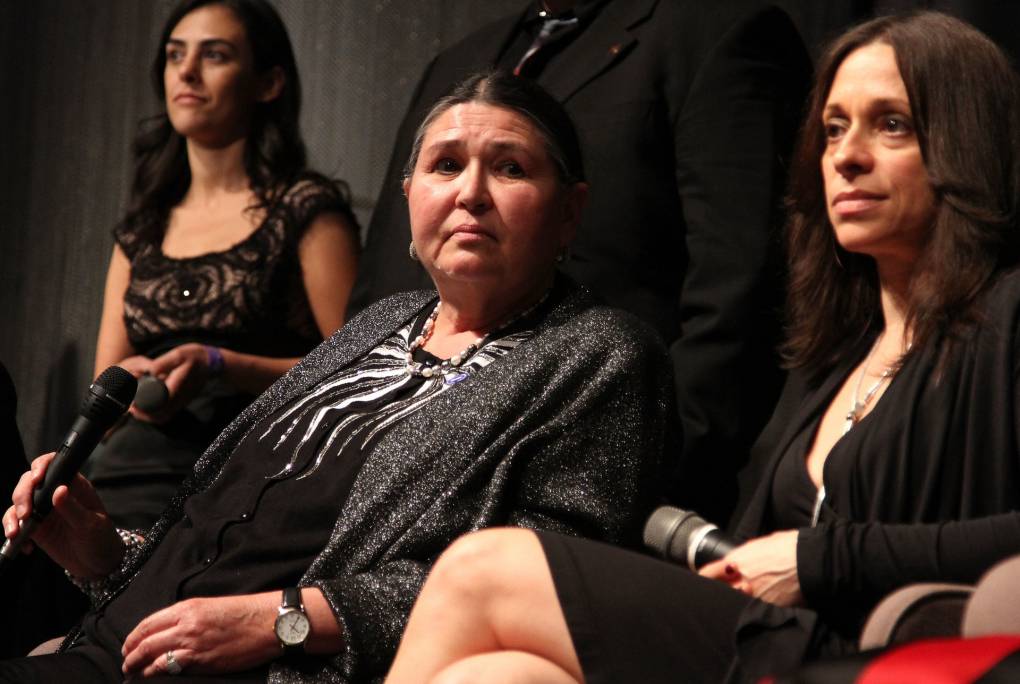
"caption": "Activist Sacheen Littlefeather (L) and producer of the movie Christina Fon (R) attend the Q&A at the SAG President's National Task Force For American Indians & NBC Universal Premiere Screening Of \"Reel indian\" & \"American Indian Actors\" At LA Skins Fest in 2010.",
"description": null,
"title": "SAG President's National Task Force For American Indians & NBC Universal Premiere Screening Of \"Reel indian\" & \"American Indian Actors\" At LA Skins Fest",
"credit": "Valerie Macon/Getty Images",
"status": "inherit",
"isLoading": false,
"fetchFailed": false
},
"news_11818395": {
"type": "attachments",
"id": "news_11818395",
"meta": {
"index": "attachments_1716263798",
"site": "news",
"id": "11818395",
"found": true
},
"parent": 11818362,
"imgSizes": {
"apple_news_ca_landscape_5_5": {
"file": "https://ww2.kqed.org/app/uploads/sites/10/2020/05/RS43182_IMG_0012-qut-1044x783.jpg",
"width": 1044,
"mimeType": "image/jpeg",
"height": 783
},
"apple_news_ca_square_4_0": {
"file": "https://ww2.kqed.org/app/uploads/sites/10/2020/05/RS43182_IMG_0012-qut-470x470.jpg",
"width": 470,
"mimeType": "image/jpeg",
"height": 470
},
"twentyfourteen-full-width": {
"file": "https://ww2.kqed.org/app/uploads/sites/10/2020/05/RS43182_IMG_0012-qut-1038x576.jpg",
"width": 1038,
"mimeType": "image/jpeg",
"height": 576
},
"thumbnail": {
"file": "https://ww2.kqed.org/app/uploads/sites/10/2020/05/RS43182_IMG_0012-qut-160x120.jpg",
"width": 160,
"mimeType": "image/jpeg",
"height": 120
},
"post-thumbnail": {
"file": "https://ww2.kqed.org/app/uploads/sites/10/2020/05/RS43182_IMG_0012-qut-672x372.jpg",
"width": 672,
"mimeType": "image/jpeg",
"height": 372
},
"kqedFullSize": {
"file": "https://ww2.kqed.org/app/uploads/sites/10/2020/05/RS43182_IMG_0012-qut.jpg",
"width": 1920,
"height": 1440
},
"apple_news_ca_landscape_4_7": {
"file": "https://ww2.kqed.org/app/uploads/sites/10/2020/05/RS43182_IMG_0012-qut-632x474.jpg",
"width": 632,
"mimeType": "image/jpeg",
"height": 474
},
"large": {
"file": "https://ww2.kqed.org/app/uploads/sites/10/2020/05/RS43182_IMG_0012-qut-1020x765.jpg",
"width": 1020,
"mimeType": "image/jpeg",
"height": 765
},
"apple_news_ca_landscape_4_0": {
"file": "https://ww2.kqed.org/app/uploads/sites/10/2020/05/RS43182_IMG_0012-qut-536x402.jpg",
"width": 536,
"mimeType": "image/jpeg",
"height": 402
},
"apple_news_ca_portrait_12_9": {
"file": "https://ww2.kqed.org/app/uploads/sites/10/2020/05/RS43182_IMG_0012-qut-1122x1440.jpg",
"width": 1122,
"mimeType": "image/jpeg",
"height": 1440
},
"medium": {
"file": "https://ww2.kqed.org/app/uploads/sites/10/2020/05/RS43182_IMG_0012-qut-800x600.jpg",
"width": 800,
"mimeType": "image/jpeg",
"height": 600
},
"apple_news_ca_portrait_4_0": {
"file": "https://ww2.kqed.org/app/uploads/sites/10/2020/05/RS43182_IMG_0012-qut-354x472.jpg",
"width": 354,
"mimeType": "image/jpeg",
"height": 472
},
"apple_news_ca_portrait_9_7": {
"file": "https://ww2.kqed.org/app/uploads/sites/10/2020/05/RS43182_IMG_0012-qut-840x1120.jpg",
"width": 840,
"mimeType": "image/jpeg",
"height": 1120
},
"apple_news_ca_landscape_12_9": {
"file": "https://ww2.kqed.org/app/uploads/sites/10/2020/05/RS43182_IMG_0012-qut-1832x1374.jpg",
"width": 1832,
"mimeType": "image/jpeg",
"height": 1374
},
"apple_news_ca_square_9_7": {
"file": "https://ww2.kqed.org/app/uploads/sites/10/2020/05/RS43182_IMG_0012-qut-1104x1104.jpg",
"width": 1104,
"mimeType": "image/jpeg",
"height": 1104
},
"apple_news_ca_portrait_4_7": {
"file": "https://ww2.kqed.org/app/uploads/sites/10/2020/05/RS43182_IMG_0012-qut-414x552.jpg",
"width": 414,
"mimeType": "image/jpeg",
"height": 552
},
"apple_news_ca_square_12_9": {
"file": "https://ww2.kqed.org/app/uploads/sites/10/2020/05/RS43182_IMG_0012-qut-1472x1440.jpg",
"width": 1472,
"mimeType": "image/jpeg",
"height": 1440
},
"apple_news_ca_portrait_5_5": {
"file": "https://ww2.kqed.org/app/uploads/sites/10/2020/05/RS43182_IMG_0012-qut-687x916.jpg",
"width": 687,
"mimeType": "image/jpeg",
"height": 916
},
"full-width": {
"file": "https://ww2.kqed.org/app/uploads/sites/10/2020/05/RS43182_IMG_0012-qut-1920x1440.jpg",
"width": 1920,
"mimeType": "image/jpeg",
"height": 1440
},
"apple_news_ca_square_4_7": {
"file": "https://ww2.kqed.org/app/uploads/sites/10/2020/05/RS43182_IMG_0012-qut-550x550.jpg",
"width": 550,
"mimeType": "image/jpeg",
"height": 550
},
"apple_news_ca_landscape_9_7": {
"file": "https://ww2.kqed.org/app/uploads/sites/10/2020/05/RS43182_IMG_0012-qut-1376x1032.jpg",
"width": 1376,
"mimeType": "image/jpeg",
"height": 1032
},
"apple_news_ca_square_5_5": {
"file": "https://ww2.kqed.org/app/uploads/sites/10/2020/05/RS43182_IMG_0012-qut-912x912.jpg",
"width": 912,
"mimeType": "image/jpeg",
"height": 912
}
},
"publishDate": 1589492709,
"modified": 1589570389,
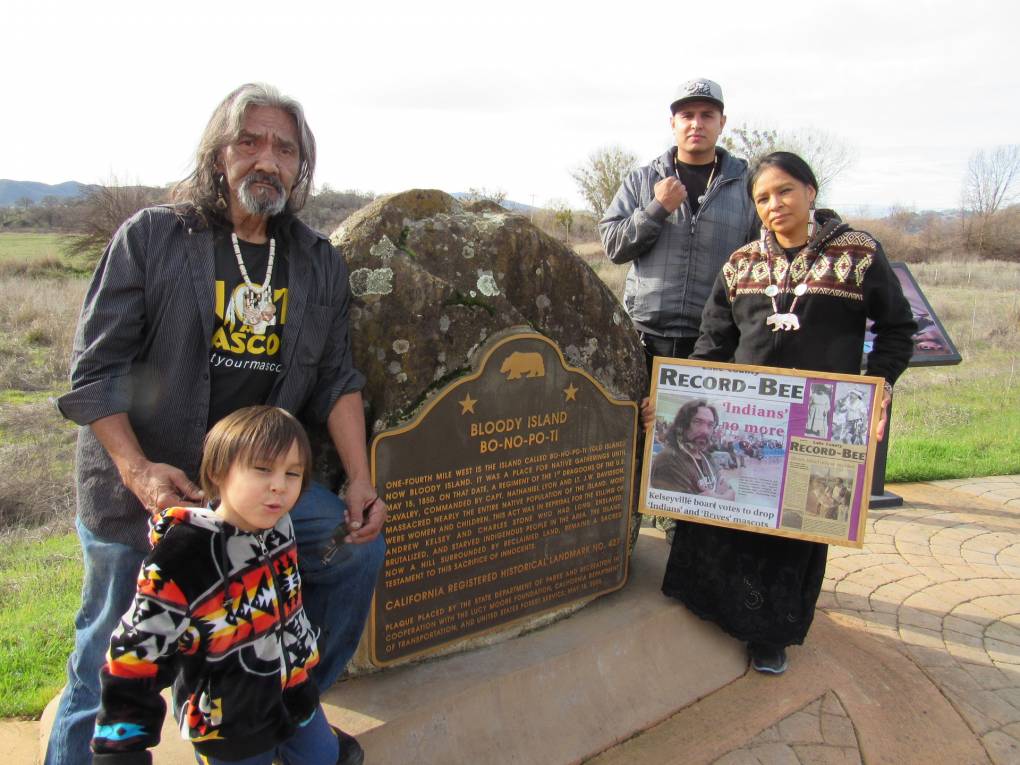
"caption": "Clayton Duncan, his 4-year-old grandson Misuenculla, Lisa Peake and Rudy Alvarez at the California Historical Landmark commemorating the massacre at Bloody Island.",
"description": null,
"title": "RS43182_IMG_0012-qut",
"credit": "Suzie Racho/KQED",
"status": "inherit",
"isLoading": false,
"fetchFailed": false
},
"news_11800066": {
"type": "attachments",
"id": "news_11800066",
"meta": {
"index": "attachments_1716263798",
"site": "news",
"id": "11800066",
"found": true
},
"parent": 11800021,
"imgSizes": {
"apple_news_ca_landscape_5_5": {
"file": "https://ww2.kqed.org/app/uploads/sites/10/2020/02/Sacheen-Littlefeather-1044x783.jpg",
"width": 1044,
"mimeType": "image/jpeg",
"height": 783
},
"apple_news_ca_square_4_0": {
"file": "https://ww2.kqed.org/app/uploads/sites/10/2020/02/Sacheen-Littlefeather-470x470.jpg",
"width": 470,
"mimeType": "image/jpeg",
"height": 470
},
"twentyfourteen-full-width": {
"file": "https://ww2.kqed.org/app/uploads/sites/10/2020/02/Sacheen-Littlefeather-1038x576.jpg",
"width": 1038,
"mimeType": "image/jpeg",
"height": 576
},
"thumbnail": {
"file": "https://ww2.kqed.org/app/uploads/sites/10/2020/02/Sacheen-Littlefeather-160x137.jpg",
"width": 160,
"mimeType": "image/jpeg",
"height": 137
},
"post-thumbnail": {
"file": "https://ww2.kqed.org/app/uploads/sites/10/2020/02/Sacheen-Littlefeather-672x372.jpg",
"width": 672,
"mimeType": "image/jpeg",
"height": 372
},
"kqedFullSize": {
"file": "https://ww2.kqed.org/app/uploads/sites/10/2020/02/Sacheen-Littlefeather.jpg",
"width": 1920,
"height": 1644
},
"apple_news_ca_landscape_4_7": {
"file": "https://ww2.kqed.org/app/uploads/sites/10/2020/02/Sacheen-Littlefeather-632x474.jpg",
"width": 632,
"mimeType": "image/jpeg",
"height": 474
},
"large": {
"file": "https://ww2.kqed.org/app/uploads/sites/10/2020/02/Sacheen-Littlefeather-1020x873.jpg",
"width": 1020,
"mimeType": "image/jpeg",
"height": 873
},
"apple_news_ca_landscape_4_0": {
"file": "https://ww2.kqed.org/app/uploads/sites/10/2020/02/Sacheen-Littlefeather-536x402.jpg",
"width": 536,
"mimeType": "image/jpeg",
"height": 402
},
"apple_news_ca_portrait_12_9": {
"file": "https://ww2.kqed.org/app/uploads/sites/10/2020/02/Sacheen-Littlefeather-1122x1496.jpg",
"width": 1122,
"mimeType": "image/jpeg",
"height": 1496
},
"medium": {
"file": "https://ww2.kqed.org/app/uploads/sites/10/2020/02/Sacheen-Littlefeather-800x685.jpg",
"width": 800,
"mimeType": "image/jpeg",
"height": 685
},
"apple_news_ca_portrait_4_0": {
"file": "https://ww2.kqed.org/app/uploads/sites/10/2020/02/Sacheen-Littlefeather-354x472.jpg",
"width": 354,
"mimeType": "image/jpeg",
"height": 472
},
"apple_news_ca_portrait_9_7": {
"file": "https://ww2.kqed.org/app/uploads/sites/10/2020/02/Sacheen-Littlefeather-840x1120.jpg",
"width": 840,
"mimeType": "image/jpeg",
"height": 1120
},
"apple_news_ca_landscape_12_9": {
"file": "https://ww2.kqed.org/app/uploads/sites/10/2020/02/Sacheen-Littlefeather-1832x1374.jpg",
"width": 1832,
"mimeType": "image/jpeg",
"height": 1374
},
"apple_news_ca_square_9_7": {
"file": "https://ww2.kqed.org/app/uploads/sites/10/2020/02/Sacheen-Littlefeather-1104x1104.jpg",
"width": 1104,
"mimeType": "image/jpeg",
"height": 1104
},
"apple_news_ca_portrait_4_7": {
"file": "https://ww2.kqed.org/app/uploads/sites/10/2020/02/Sacheen-Littlefeather-414x552.jpg",
"width": 414,
"mimeType": "image/jpeg",
"height": 552
},
"apple_news_ca_square_12_9": {
"file": "https://ww2.kqed.org/app/uploads/sites/10/2020/02/Sacheen-Littlefeather-1472x1472.jpg",
"width": 1472,
"mimeType": "image/jpeg",
"height": 1472
},
"apple_news_ca_portrait_5_5": {
"file": "https://ww2.kqed.org/app/uploads/sites/10/2020/02/Sacheen-Littlefeather-687x916.jpg",
"width": 687,
"mimeType": "image/jpeg",
"height": 916
},
"full-width": {
"file": "https://ww2.kqed.org/app/uploads/sites/10/2020/02/Sacheen-Littlefeather-1920x1644.jpg",
"width": 1920,
"mimeType": "image/jpeg",
"height": 1644
},
"apple_news_ca_square_4_7": {
"file": "https://ww2.kqed.org/app/uploads/sites/10/2020/02/Sacheen-Littlefeather-550x550.jpg",
"width": 550,
"mimeType": "image/jpeg",
"height": 550
},
"apple_news_ca_landscape_9_7": {
"file": "https://ww2.kqed.org/app/uploads/sites/10/2020/02/Sacheen-Littlefeather-1376x1032.jpg",
"width": 1376,
"mimeType": "image/jpeg",
"height": 1032
},
"apple_news_ca_square_5_5": {
"file": "https://ww2.kqed.org/app/uploads/sites/10/2020/02/Sacheen-Littlefeather-912x912.jpg",
"width": 912,
"mimeType": "image/jpeg",
"height": 912
}
},
"publishDate": 1580863348,
"modified": 1581030084,
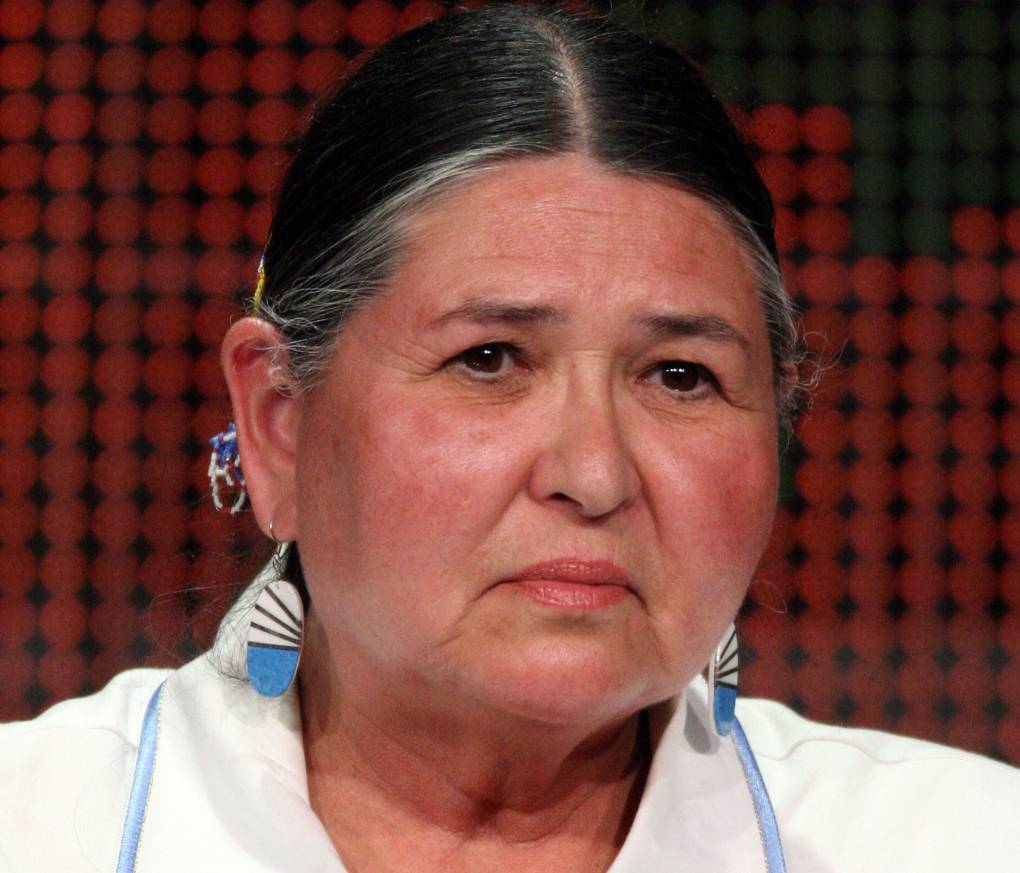
"caption": "Sacheen Littlefeather, the first indigenous person to use the Oscars as a platform to protest the mistreatment of her people, is pictured in 2010. ",
"description": "Sacheen Littlefeather in 2010. ",
"title": "Sacheen-Littlefeather",
"credit": "Frederick M. Brown/Getty Images",
"status": "inherit",
"isLoading": false,
"fetchFailed": false
},
"news_11789448": {
"type": "attachments",
"id": "news_11789448",
"meta": {
"index": "attachments_1716263798",
"site": "news",
"id": "11789448",
"found": true
},
"parent": 11789158,
"imgSizes": {
"apple_news_ca_landscape_5_5": {
"file": "https://ww2.kqed.org/app/uploads/sites/10/2019/12/IRM_KQED-7-1044x783.jpg",
"width": 1044,
"mimeType": "image/jpeg",
"height": 783
},
"apple_news_ca_square_4_0": {
"file": "https://ww2.kqed.org/app/uploads/sites/10/2019/12/IRM_KQED-7-470x470.jpg",
"width": 470,
"mimeType": "image/jpeg",
"height": 470
},
"twentyfourteen-full-width": {
"file": "https://ww2.kqed.org/app/uploads/sites/10/2019/12/IRM_KQED-7-1038x576.jpg",
"width": 1038,
"mimeType": "image/jpeg",
"height": 576
},
"thumbnail": {
"file": "https://ww2.kqed.org/app/uploads/sites/10/2019/12/IRM_KQED-7-160x107.jpg",
"width": 160,
"mimeType": "image/jpeg",
"height": 107
},
"post-thumbnail": {
"file": "https://ww2.kqed.org/app/uploads/sites/10/2019/12/IRM_KQED-7-672x372.jpg",
"width": 672,
"mimeType": "image/jpeg",
"height": 372
},
"kqedFullSize": {
"file": "https://ww2.kqed.org/app/uploads/sites/10/2019/12/IRM_KQED-7-e1613003482580.jpg",
"width": 1920,
"height": 1280
},
"apple_news_ca_landscape_4_7": {
"file": "https://ww2.kqed.org/app/uploads/sites/10/2019/12/IRM_KQED-7-632x474.jpg",
"width": 632,
"mimeType": "image/jpeg",
"height": 474
},
"large": {
"file": "https://ww2.kqed.org/app/uploads/sites/10/2019/12/IRM_KQED-7-1020x680.jpg",
"width": 1020,
"mimeType": "image/jpeg",
"height": 680
},
"complete_open_graph": {
"file": "https://ww2.kqed.org/app/uploads/sites/10/2019/12/IRM_KQED-7-1200x800.jpg",
"width": 1200,
"mimeType": "image/jpeg",
"height": 800
},
"apple_news_ca_landscape_4_0": {
"file": "https://ww2.kqed.org/app/uploads/sites/10/2019/12/IRM_KQED-7-536x402.jpg",
"width": 536,
"mimeType": "image/jpeg",
"height": 402
},
"apple_news_ca_portrait_12_9": {
"file": "https://ww2.kqed.org/app/uploads/sites/10/2019/12/IRM_KQED-7-1122x1496.jpg",
"width": 1122,
"mimeType": "image/jpeg",
"height": 1496
},
"medium": {
"file": "https://ww2.kqed.org/app/uploads/sites/10/2019/12/IRM_KQED-7-800x533.jpg",
"width": 800,
"mimeType": "image/jpeg",
"height": 533
},
"apple_news_ca_portrait_4_0": {
"file": "https://ww2.kqed.org/app/uploads/sites/10/2019/12/IRM_KQED-7-354x472.jpg",
"width": 354,
"mimeType": "image/jpeg",
"height": 472
},
"apple_news_ca_portrait_9_7": {
"file": "https://ww2.kqed.org/app/uploads/sites/10/2019/12/IRM_KQED-7-840x1120.jpg",
"width": 840,
"mimeType": "image/jpeg",
"height": 1120
},
"apple_news_ca_landscape_12_9": {
"file": "https://ww2.kqed.org/app/uploads/sites/10/2019/12/IRM_KQED-7-1832x1374.jpg",
"width": 1832,
"mimeType": "image/jpeg",
"height": 1374
},
"apple_news_ca_square_9_7": {
"file": "https://ww2.kqed.org/app/uploads/sites/10/2019/12/IRM_KQED-7-1104x1104.jpg",
"width": 1104,
"mimeType": "image/jpeg",
"height": 1104
},
"apple_news_ca_portrait_4_7": {
"file": "https://ww2.kqed.org/app/uploads/sites/10/2019/12/IRM_KQED-7-414x552.jpg",
"width": 414,
"mimeType": "image/jpeg",
"height": 552
},
"apple_news_ca_square_12_9": {
"file": "https://ww2.kqed.org/app/uploads/sites/10/2019/12/IRM_KQED-7-1472x1472.jpg",
"width": 1472,
"mimeType": "image/jpeg",
"height": 1472
},
"apple_news_ca_portrait_5_5": {
"file": "https://ww2.kqed.org/app/uploads/sites/10/2019/12/IRM_KQED-7-687x916.jpg",
"width": 687,
"mimeType": "image/jpeg",
"height": 916
},
"full-width": {
"file": "https://ww2.kqed.org/app/uploads/sites/10/2019/12/IRM_KQED-7-1920x1280.jpg",
"width": 1920,
"mimeType": "image/jpeg",
"height": 1280
},
"apple_news_ca_square_4_7": {
"file": "https://ww2.kqed.org/app/uploads/sites/10/2019/12/IRM_KQED-7-550x550.jpg",
"width": 550,
"mimeType": "image/jpeg",
"height": 550
},
"apple_news_ca_landscape_9_7": {
"file": "https://ww2.kqed.org/app/uploads/sites/10/2019/12/IRM_KQED-7-1376x1032.jpg",
"width": 1376,
"mimeType": "image/jpeg",
"height": 1032
},
"apple_news_ca_square_5_5": {
"file": "https://ww2.kqed.org/app/uploads/sites/10/2019/12/IRM_KQED-7-912x912.jpg",
"width": 912,
"mimeType": "image/jpeg",
"height": 912
}
},
"publishDate": 1575424405,
"modified": 1613003717,
"caption": "Indigenous artists, chefs and vendors celebrate Native culture at the Indigenous Red Market. ",
"description": "Indigenous artists, chefs, and vendors celebrate native culture at the Indigenous Red Market. ",
"title": "Indigenous Red Market 1",
"credit": "Joey Montoya",
"status": "inherit",
"altTag": "Indigenous artists, chefs, and vendors celebrate native culture at the Indigenous Red Market.",
"isLoading": false,
"fetchFailed": false
},
"news_11788401": {
"type": "attachments",
"id": "news_11788401",
"meta": {
"index": "attachments_1716263798",
"site": "news",
"id": "11788401",
"found": true
},
"parent": 0,
"imgSizes": {
"apple_news_ca_landscape_5_5": {
"file": "https://ww2.kqed.org/app/uploads/sites/10/2019/11/DSC7054-1044x783.jpg",
"width": 1044,
"mimeType": "image/jpeg",
"height": 783
},
"apple_news_ca_square_4_0": {
"file": "https://ww2.kqed.org/app/uploads/sites/10/2019/11/DSC7054-470x470.jpg",
"width": 470,
"mimeType": "image/jpeg",
"height": 470
},
"twentyfourteen-full-width": {
"file": "https://ww2.kqed.org/app/uploads/sites/10/2019/11/DSC7054-1038x576.jpg",
"width": 1038,
"mimeType": "image/jpeg",
"height": 576
},
"thumbnail": {
"file": "https://ww2.kqed.org/app/uploads/sites/10/2019/11/DSC7054-160x107.jpg",
"width": 160,
"mimeType": "image/jpeg",
"height": 107
},
"post-thumbnail": {
"file": "https://ww2.kqed.org/app/uploads/sites/10/2019/11/DSC7054-672x372.jpg",
"width": 672,
"mimeType": "image/jpeg",
"height": 372
},
"kqedFullSize": {
"file": "https://ww2.kqed.org/app/uploads/sites/10/2019/11/DSC7054-e1574628322842.jpg",
"width": 1920,
"height": 1282
},
"apple_news_ca_landscape_4_7": {
"file": "https://ww2.kqed.org/app/uploads/sites/10/2019/11/DSC7054-632x474.jpg",
"width": 632,
"mimeType": "image/jpeg",
"height": 474
},
"large": {
"file": "https://ww2.kqed.org/app/uploads/sites/10/2019/11/DSC7054-1020x681.jpg",
"width": 1020,
"mimeType": "image/jpeg",
"height": 681
},
"complete_open_graph": {
"file": "https://ww2.kqed.org/app/uploads/sites/10/2019/11/DSC7054-1200x801.jpg",
"width": 1200,
"mimeType": "image/jpeg",
"height": 801
},
"apple_news_ca_landscape_4_0": {
"file": "https://ww2.kqed.org/app/uploads/sites/10/2019/11/DSC7054-536x402.jpg",
"width": 536,
"mimeType": "image/jpeg",
"height": 402
},
"apple_news_ca_portrait_12_9": {
"file": "https://ww2.kqed.org/app/uploads/sites/10/2019/11/DSC7054-1122x1496.jpg",
"width": 1122,
"mimeType": "image/jpeg",
"height": 1496
},
"medium": {
"file": "https://ww2.kqed.org/app/uploads/sites/10/2019/11/DSC7054-800x534.jpg",
"width": 800,
"mimeType": "image/jpeg",
"height": 534
},
"apple_news_ca_portrait_4_0": {
"file": "https://ww2.kqed.org/app/uploads/sites/10/2019/11/DSC7054-354x472.jpg",
"width": 354,
"mimeType": "image/jpeg",
"height": 472
},
"apple_news_ca_portrait_9_7": {
"file": "https://ww2.kqed.org/app/uploads/sites/10/2019/11/DSC7054-840x1120.jpg",
"width": 840,
"mimeType": "image/jpeg",
"height": 1120
},
"apple_news_ca_landscape_12_9": {
"file": "https://ww2.kqed.org/app/uploads/sites/10/2019/11/DSC7054-1832x1374.jpg",
"width": 1832,
"mimeType": "image/jpeg",
"height": 1374
},
"apple_news_ca_square_9_7": {
"file": "https://ww2.kqed.org/app/uploads/sites/10/2019/11/DSC7054-1104x1104.jpg",
"width": 1104,
"mimeType": "image/jpeg",
"height": 1104
},
"apple_news_ca_portrait_4_7": {
"file": "https://ww2.kqed.org/app/uploads/sites/10/2019/11/DSC7054-414x552.jpg",
"width": 414,
"mimeType": "image/jpeg",
"height": 552
},
"apple_news_ca_square_12_9": {
"file": "https://ww2.kqed.org/app/uploads/sites/10/2019/11/DSC7054-1472x1472.jpg",
"width": 1472,
"mimeType": "image/jpeg",
"height": 1472
},
"apple_news_ca_portrait_5_5": {
"file": "https://ww2.kqed.org/app/uploads/sites/10/2019/11/DSC7054-687x916.jpg",
"width": 687,
"mimeType": "image/jpeg",
"height": 916
},
"full-width": {
"file": "https://ww2.kqed.org/app/uploads/sites/10/2019/11/DSC7054-1920x1282.jpg",
"width": 1920,
"mimeType": "image/jpeg",
"height": 1282
},
"apple_news_ca_square_4_7": {
"file": "https://ww2.kqed.org/app/uploads/sites/10/2019/11/DSC7054-550x550.jpg",
"width": 550,
"mimeType": "image/jpeg",
"height": 550
},
"apple_news_ca_landscape_9_7": {
"file": "https://ww2.kqed.org/app/uploads/sites/10/2019/11/DSC7054-1376x1032.jpg",
"width": 1376,
"mimeType": "image/jpeg",
"height": 1032
},
"apple_news_ca_square_5_5": {
"file": "https://ww2.kqed.org/app/uploads/sites/10/2019/11/DSC7054-912x912.jpg",
"width": 912,
"mimeType": "image/jpeg",
"height": 912
}
},
"publishDate": 1574613243,
"modified": 1574628315,
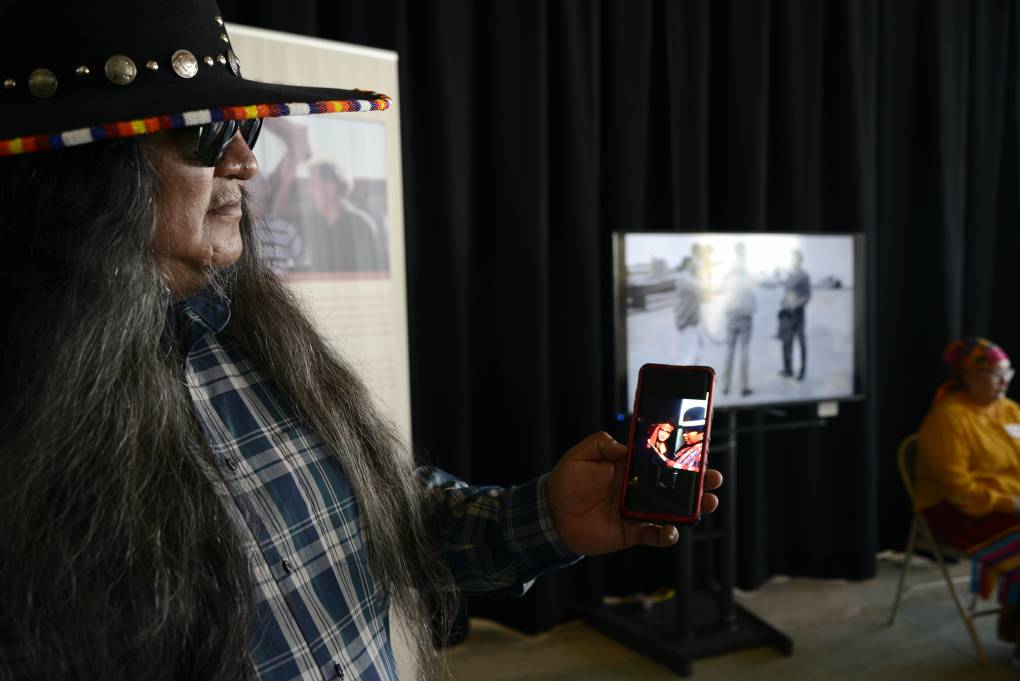
"caption": "Jason Morsette, of New Town, North Dakota, holds a picture of his mother, Geneva Seaboy and Alan Miller which is on display at the new exhibit Red Power on Alcatraz: Perspectives 50 Years Later, on Nov. 23, 2019. ",
"description": "Jason Morsette, of New Town, North Dakota, holds a picture of his mother, Geneva Seaboy and Alan Miller which is on display at the new exhibit Red Power on Alcatraz: Perspectives 50 Years Later, on Nov. 23, 2019. ",
"title": "_DSC7054",
"credit": "Stephanie Lister/KQED",
"status": "inherit",
"isLoading": false,
"fetchFailed": false
},
"news_11788394": {
"type": "attachments",
"id": "news_11788394",
"meta": {
"index": "attachments_1716263798",
"site": "news",
"id": "11788394",
"found": true
},
"parent": 11788393,
"imgSizes": {
"apple_news_ca_landscape_5_5": {
"file": "https://ww2.kqed.org/app/uploads/sites/10/2019/11/ap_19326664203456-1db9a2278e9f1c9bcd0cb6a6aa46f57016ed9051-1044x783.jpg",
"width": 1044,
"mimeType": "image/jpeg",
"height": 783
},
"apple_news_ca_square_4_0": {
"file": "https://ww2.kqed.org/app/uploads/sites/10/2019/11/ap_19326664203456-1db9a2278e9f1c9bcd0cb6a6aa46f57016ed9051-470x470.jpg",
"width": 470,
"mimeType": "image/jpeg",
"height": 470
},
"twentyfourteen-full-width": {
"file": "https://ww2.kqed.org/app/uploads/sites/10/2019/11/ap_19326664203456-1db9a2278e9f1c9bcd0cb6a6aa46f57016ed9051-1038x576.jpg",
"width": 1038,
"mimeType": "image/jpeg",
"height": 576
},
"thumbnail": {
"file": "https://ww2.kqed.org/app/uploads/sites/10/2019/11/ap_19326664203456-1db9a2278e9f1c9bcd0cb6a6aa46f57016ed9051-160x120.jpg",
"width": 160,
"mimeType": "image/jpeg",
"height": 120
},
"post-thumbnail": {
"file": "https://ww2.kqed.org/app/uploads/sites/10/2019/11/ap_19326664203456-1db9a2278e9f1c9bcd0cb6a6aa46f57016ed9051-672x372.jpg",
"width": 672,
"mimeType": "image/jpeg",
"height": 372
},
"kqedFullSize": {
"file": "https://ww2.kqed.org/app/uploads/sites/10/2019/11/ap_19326664203456-1db9a2278e9f1c9bcd0cb6a6aa46f57016ed9051-e1574612458723.jpg",
"width": 1920,
"height": 1440
},
"apple_news_ca_landscape_4_7": {
"file": "https://ww2.kqed.org/app/uploads/sites/10/2019/11/ap_19326664203456-1db9a2278e9f1c9bcd0cb6a6aa46f57016ed9051-632x474.jpg",
"width": 632,
"mimeType": "image/jpeg",
"height": 474
},
"large": {
"file": "https://ww2.kqed.org/app/uploads/sites/10/2019/11/ap_19326664203456-1db9a2278e9f1c9bcd0cb6a6aa46f57016ed9051-1020x765.jpg",
"width": 1020,
"mimeType": "image/jpeg",
"height": 765
},
"complete_open_graph": {
"file": "https://ww2.kqed.org/app/uploads/sites/10/2019/11/ap_19326664203456-1db9a2278e9f1c9bcd0cb6a6aa46f57016ed9051-1200x900.jpg",
"width": 1200,
"mimeType": "image/jpeg",
"height": 900
},
"apple_news_ca_landscape_4_0": {
"file": "https://ww2.kqed.org/app/uploads/sites/10/2019/11/ap_19326664203456-1db9a2278e9f1c9bcd0cb6a6aa46f57016ed9051-536x402.jpg",
"width": 536,
"mimeType": "image/jpeg",
"height": 402
},
"apple_news_ca_portrait_12_9": {
"file": "https://ww2.kqed.org/app/uploads/sites/10/2019/11/ap_19326664203456-1db9a2278e9f1c9bcd0cb6a6aa46f57016ed9051-1122x1496.jpg",
"width": 1122,
"mimeType": "image/jpeg",
"height": 1496
},
"medium": {
"file": "https://ww2.kqed.org/app/uploads/sites/10/2019/11/ap_19326664203456-1db9a2278e9f1c9bcd0cb6a6aa46f57016ed9051-800x600.jpg",
"width": 800,
"mimeType": "image/jpeg",
"height": 600
},
"apple_news_ca_portrait_4_0": {
"file": "https://ww2.kqed.org/app/uploads/sites/10/2019/11/ap_19326664203456-1db9a2278e9f1c9bcd0cb6a6aa46f57016ed9051-354x472.jpg",
"width": 354,
"mimeType": "image/jpeg",
"height": 472
},
"apple_news_ca_portrait_9_7": {
"file": "https://ww2.kqed.org/app/uploads/sites/10/2019/11/ap_19326664203456-1db9a2278e9f1c9bcd0cb6a6aa46f57016ed9051-840x1120.jpg",
"width": 840,
"mimeType": "image/jpeg",
"height": 1120
},
"apple_news_ca_landscape_12_9": {
"file": "https://ww2.kqed.org/app/uploads/sites/10/2019/11/ap_19326664203456-1db9a2278e9f1c9bcd0cb6a6aa46f57016ed9051-1832x1374.jpg",
"width": 1832,
"mimeType": "image/jpeg",
"height": 1374
},
"apple_news_ca_square_9_7": {
"file": "https://ww2.kqed.org/app/uploads/sites/10/2019/11/ap_19326664203456-1db9a2278e9f1c9bcd0cb6a6aa46f57016ed9051-1104x1104.jpg",
"width": 1104,
"mimeType": "image/jpeg",
"height": 1104
},
"apple_news_ca_portrait_4_7": {
"file": "https://ww2.kqed.org/app/uploads/sites/10/2019/11/ap_19326664203456-1db9a2278e9f1c9bcd0cb6a6aa46f57016ed9051-414x552.jpg",
"width": 414,
"mimeType": "image/jpeg",
"height": 552
},
"apple_news_ca_square_12_9": {
"file": "https://ww2.kqed.org/app/uploads/sites/10/2019/11/ap_19326664203456-1db9a2278e9f1c9bcd0cb6a6aa46f57016ed9051-1472x1472.jpg",
"width": 1472,
"mimeType": "image/jpeg",
"height": 1472
},
"apple_news_ca_portrait_5_5": {
"file": "https://ww2.kqed.org/app/uploads/sites/10/2019/11/ap_19326664203456-1db9a2278e9f1c9bcd0cb6a6aa46f57016ed9051-687x916.jpg",
"width": 687,
"mimeType": "image/jpeg",
"height": 916
},
"full-width": {
"file": "https://ww2.kqed.org/app/uploads/sites/10/2019/11/ap_19326664203456-1db9a2278e9f1c9bcd0cb6a6aa46f57016ed9051-1920x1440.jpg",
"width": 1920,
"mimeType": "image/jpeg",
"height": 1440
},
"apple_news_ca_square_4_7": {
"file": "https://ww2.kqed.org/app/uploads/sites/10/2019/11/ap_19326664203456-1db9a2278e9f1c9bcd0cb6a6aa46f57016ed9051-550x550.jpg",
"width": 550,
"mimeType": "image/jpeg",
"height": 550
},
"apple_news_ca_landscape_9_7": {
"file": "https://ww2.kqed.org/app/uploads/sites/10/2019/11/ap_19326664203456-1db9a2278e9f1c9bcd0cb6a6aa46f57016ed9051-1376x1032.jpg",
"width": 1376,
"mimeType": "image/jpeg",
"height": 1032
},
"apple_news_ca_square_5_5": {
"file": "https://ww2.kqed.org/app/uploads/sites/10/2019/11/ap_19326664203456-1db9a2278e9f1c9bcd0cb6a6aa46f57016ed9051-912x912.jpg",
"width": 912,
"mimeType": "image/jpeg",
"height": 912
}
},
"publishDate": 1574611936,
"modified": 1574612450,
"caption": "Attorney General William Barr speaks with Myrna DuMontier (left) and Charmel Gillin (right), councilwomen with the Confederated Salish and Kootenai Tribes on Friday on the Flathead Reservation in Pablo, Mont.",
"description": "Attorney General William Barr speaks with Myrna DuMontier (left)\u003cem> \u003c/em>and Charmel Gillin (right),\u003cem> \u003c/em>councilwomen with the Confederated Salish and Kootenai Tribes on Friday on the Flathead Reservation in Pablo, Mont.",
"title": "Attorney General William Barr speaks with Myrna DuMontier (left) and Charmel Gillin (right), councilwomen with the Confederated Salish and Kootenai Tribes on Friday on the Flathead Reservation in Pablo, Mont.",
"credit": "Patrick Semansky/AP",
"status": "inherit",
"isLoading": false,
"fetchFailed": false
},
"news_11788147": {
"type": "attachments",
"id": "news_11788147",
"meta": {
"index": "attachments_1716263798",
"site": "news",
"id": "11788147",
"found": true
},
"parent": 11788133,
"imgSizes": {
"apple_news_ca_landscape_5_5": {
"file": "https://ww2.kqed.org/app/uploads/sites/10/2019/11/708-MARQUEE-1044x720.jpg",
"width": 1044,
"mimeType": "image/jpeg",
"height": 720
},
"apple_news_ca_square_4_0": {
"file": "https://ww2.kqed.org/app/uploads/sites/10/2019/11/708-MARQUEE-470x470.jpg",
"width": 470,
"mimeType": "image/jpeg",
"height": 470
},
"twentyfourteen-full-width": {
"file": "https://ww2.kqed.org/app/uploads/sites/10/2019/11/708-MARQUEE-1038x576.jpg",
"width": 1038,
"mimeType": "image/jpeg",
"height": 576
},
"thumbnail": {
"file": "https://ww2.kqed.org/app/uploads/sites/10/2019/11/708-MARQUEE-160x90.jpg",
"width": 160,
"mimeType": "image/jpeg",
"height": 90
},
"post-thumbnail": {
"file": "https://ww2.kqed.org/app/uploads/sites/10/2019/11/708-MARQUEE-672x372.jpg",
"width": 672,
"mimeType": "image/jpeg",
"height": 372
},
"kqedFullSize": {
"file": "https://ww2.kqed.org/app/uploads/sites/10/2019/11/708-MARQUEE.jpg",
"width": 1280,
"height": 720
},
"apple_news_ca_landscape_4_7": {
"file": "https://ww2.kqed.org/app/uploads/sites/10/2019/11/708-MARQUEE-632x474.jpg",
"width": 632,
"mimeType": "image/jpeg",
"height": 474
},
"large": {
"file": "https://ww2.kqed.org/app/uploads/sites/10/2019/11/708-MARQUEE-1020x574.jpg",
"width": 1020,
"mimeType": "image/jpeg",
"height": 574
},
"complete_open_graph": {
"file": "https://ww2.kqed.org/app/uploads/sites/10/2019/11/708-MARQUEE-1200x675.jpg",
"width": 1200,
"mimeType": "image/jpeg",
"height": 675
},
"apple_news_ca_landscape_4_0": {
"file": "https://ww2.kqed.org/app/uploads/sites/10/2019/11/708-MARQUEE-536x402.jpg",
"width": 536,
"mimeType": "image/jpeg",
"height": 402
},
"apple_news_ca_portrait_12_9": {
"file": "https://ww2.kqed.org/app/uploads/sites/10/2019/11/708-MARQUEE-1122x720.jpg",
"width": 1122,
"mimeType": "image/jpeg",
"height": 720
},
"medium": {
"file": "https://ww2.kqed.org/app/uploads/sites/10/2019/11/708-MARQUEE-800x450.jpg",
"width": 800,
"mimeType": "image/jpeg",
"height": 450
},
"apple_news_ca_portrait_4_0": {
"file": "https://ww2.kqed.org/app/uploads/sites/10/2019/11/708-MARQUEE-354x472.jpg",
"width": 354,
"mimeType": "image/jpeg",
"height": 472
},
"apple_news_ca_portrait_9_7": {
"file": "https://ww2.kqed.org/app/uploads/sites/10/2019/11/708-MARQUEE-840x720.jpg",
"width": 840,
"mimeType": "image/jpeg",
"height": 720
},
"apple_news_ca_square_9_7": {
"file": "https://ww2.kqed.org/app/uploads/sites/10/2019/11/708-MARQUEE-1104x720.jpg",
"width": 1104,
"mimeType": "image/jpeg",
"height": 720
},
"apple_news_ca_portrait_4_7": {
"file": "https://ww2.kqed.org/app/uploads/sites/10/2019/11/708-MARQUEE-414x552.jpg",
"width": 414,
"mimeType": "image/jpeg",
"height": 552
},
"apple_news_ca_portrait_5_5": {
"file": "https://ww2.kqed.org/app/uploads/sites/10/2019/11/708-MARQUEE-687x720.jpg",
"width": 687,
"mimeType": "image/jpeg",
"height": 720
},
"apple_news_ca_square_4_7": {
"file": "https://ww2.kqed.org/app/uploads/sites/10/2019/11/708-MARQUEE-550x550.jpg",
"width": 550,
"mimeType": "image/jpeg",
"height": 550
},
"apple_news_ca_square_5_5": {
"file": "https://ww2.kqed.org/app/uploads/sites/10/2019/11/708-MARQUEE-912x720.jpg",
"width": 912,
"mimeType": "image/jpeg",
"height": 720
}
},
"publishDate": 1574452522,
"modified": 1574452522,
"caption": null,
"description": null,
"title": "708 MARQUEE",
"credit": null,
"status": "inherit",
"isLoading": false,
"fetchFailed": false
},
"news_11621265": {
"type": "attachments",
"id": "news_11621265",
"meta": {
"index": "attachments_1716263798",
"site": "news",
"id": "11621265",
"found": true
},
"parent": 11621258,
"imgSizes": {
"small": {
"file": "https://ww2.kqed.org/app/uploads/sites/10/2017/10/evenearlier_100517_final-520x520.jpg",
"width": 520,
"mimeType": "image/jpeg",
"height": 520
},
"twentyfourteen-full-width": {
"file": "https://ww2.kqed.org/app/uploads/sites/10/2017/10/evenearlier_100517_final-1038x576.jpg",
"width": 1038,
"mimeType": "image/jpeg",
"height": 576
},
"thumbnail": {
"file": "https://ww2.kqed.org/app/uploads/sites/10/2017/10/evenearlier_100517_final-160x160.jpg",
"width": 160,
"mimeType": "image/jpeg",
"height": 160
},
"fd-sm": {
"file": "https://ww2.kqed.org/app/uploads/sites/10/2017/10/evenearlier_100517_final-960x960.jpg",
"width": 960,
"mimeType": "image/jpeg",
"height": 960
},
"post-thumbnail": {
"file": "https://ww2.kqed.org/app/uploads/sites/10/2017/10/evenearlier_100517_final-672x372.jpg",
"width": 672,
"mimeType": "image/jpeg",
"height": 372
},
"xsmall": {
"file": "https://ww2.kqed.org/app/uploads/sites/10/2017/10/evenearlier_100517_final-375x375.jpg",
"width": 375,
"mimeType": "image/jpeg",
"height": 375
},
"kqedFullSize": {
"file": "https://ww2.kqed.org/app/uploads/sites/10/2017/10/evenearlier_100517_final.jpg",
"width": 1920,
"height": 1920
},
"large": {
"file": "https://ww2.kqed.org/app/uploads/sites/10/2017/10/evenearlier_100517_final-1020x1020.jpg",
"width": 1020,
"mimeType": "image/jpeg",
"height": 1020
},
"xlarge": {
"file": "https://ww2.kqed.org/app/uploads/sites/10/2017/10/evenearlier_100517_final-1180x1180.jpg",
"width": 1180,
"mimeType": "image/jpeg",
"height": 1180
},
"guest-author-50": {
"file": "https://ww2.kqed.org/app/uploads/sites/10/2017/10/evenearlier_100517_final-50x50.jpg",
"width": 50,
"mimeType": "image/jpeg",
"height": 50
},
"guest-author-96": {
"file": "https://ww2.kqed.org/app/uploads/sites/10/2017/10/evenearlier_100517_final-96x96.jpg",
"width": 96,
"mimeType": "image/jpeg",
"height": 96
},
"medium": {
"file": "https://ww2.kqed.org/app/uploads/sites/10/2017/10/evenearlier_100517_final-800x800.jpg",
"width": 800,
"mimeType": "image/jpeg",
"height": 800
},
"guest-author-64": {
"file": "https://ww2.kqed.org/app/uploads/sites/10/2017/10/evenearlier_100517_final-64x64.jpg",
"width": 64,
"mimeType": "image/jpeg",
"height": 64
},
"guest-author-32": {
"file": "https://ww2.kqed.org/app/uploads/sites/10/2017/10/evenearlier_100517_final-32x32.jpg",
"width": 32,
"mimeType": "image/jpeg",
"height": 32
},
"fd-lrg": {
"file": "https://ww2.kqed.org/app/uploads/sites/10/2017/10/evenearlier_100517_final-1920x1920.jpg",
"width": 1920,
"mimeType": "image/jpeg",
"height": 1920
},
"fd-med": {
"file": "https://ww2.kqed.org/app/uploads/sites/10/2017/10/evenearlier_100517_final-1180x1180.jpg",
"width": 1180,
"mimeType": "image/jpeg",
"height": 1180
},
"full-width": {
"file": "https://ww2.kqed.org/app/uploads/sites/10/2017/10/evenearlier_100517_final-1920x1920.jpg",
"width": 1920,
"mimeType": "image/jpeg",
"height": 1920
},
"detail": {
"file": "https://ww2.kqed.org/app/uploads/sites/10/2017/10/evenearlier_100517_final-150x150.jpg",
"width": 150,
"mimeType": "image/jpeg",
"height": 150
},
"guest-author-128": {
"file": "https://ww2.kqed.org/app/uploads/sites/10/2017/10/evenearlier_100517_final-128x128.jpg",
"width": 128,
"mimeType": "image/jpeg",
"height": 128
},
"xxsmall": {
"file": "https://ww2.kqed.org/app/uploads/sites/10/2017/10/evenearlier_100517_final-240x240.jpg",
"width": 240,
"mimeType": "image/jpeg",
"height": 240
}
},
"publishDate": 1507236806,
"modified": 1507236835,
"caption": null,
"description": null,
"title": "evenearlier_100517_final",
"credit": null,
"status": "inherit",
"isLoading": false,
"fetchFailed": false
},
"news_11613496": {
"type": "attachments",
"id": "news_11613496",
"meta": {
"index": "attachments_1716263798",
"site": "news",
"id": "11613496",
"found": true
},
"parent": 11613490,
"imgSizes": {
"small": {
"file": "https://ww2.kqed.org/app/uploads/sites/10/2017/08/pioneer_082317_final-520x520.jpg",
"width": 520,
"mimeType": "image/jpeg",
"height": 520
},
"twentyfourteen-full-width": {
"file": "https://ww2.kqed.org/app/uploads/sites/10/2017/08/pioneer_082317_final-1038x576.jpg",
"width": 1038,
"mimeType": "image/jpeg",
"height": 576
},
"thumbnail": {
"file": "https://ww2.kqed.org/app/uploads/sites/10/2017/08/pioneer_082317_final-160x160.jpg",
"width": 160,
"mimeType": "image/jpeg",
"height": 160
},
"fd-sm": {
"file": "https://ww2.kqed.org/app/uploads/sites/10/2017/08/pioneer_082317_final-960x960.jpg",
"width": 960,
"mimeType": "image/jpeg",
"height": 960
},
"post-thumbnail": {
"file": "https://ww2.kqed.org/app/uploads/sites/10/2017/08/pioneer_082317_final-672x372.jpg",
"width": 672,
"mimeType": "image/jpeg",
"height": 372
},
"xsmall": {
"file": "https://ww2.kqed.org/app/uploads/sites/10/2017/08/pioneer_082317_final-375x375.jpg",
"width": 375,
"mimeType": "image/jpeg",
"height": 375
},
"kqedFullSize": {
"file": "https://ww2.kqed.org/app/uploads/sites/10/2017/08/pioneer_082317_final.jpg",
"width": 1920,
"height": 1920
},
"large": {
"file": "https://ww2.kqed.org/app/uploads/sites/10/2017/08/pioneer_082317_final-1020x1020.jpg",
"width": 1020,
"mimeType": "image/jpeg",
"height": 1020
},
"xlarge": {
"file": "https://ww2.kqed.org/app/uploads/sites/10/2017/08/pioneer_082317_final-1180x1180.jpg",
"width": 1180,
"mimeType": "image/jpeg",
"height": 1180
},
"guest-author-50": {
"file": "https://ww2.kqed.org/app/uploads/sites/10/2017/08/pioneer_082317_final-50x50.jpg",
"width": 50,
"mimeType": "image/jpeg",
"height": 50
},
"guest-author-96": {
"file": "https://ww2.kqed.org/app/uploads/sites/10/2017/08/pioneer_082317_final-96x96.jpg",
"width": 96,
"mimeType": "image/jpeg",
"height": 96
},
"medium": {
"file": "https://ww2.kqed.org/app/uploads/sites/10/2017/08/pioneer_082317_final-800x800.jpg",
"width": 800,
"mimeType": "image/jpeg",
"height": 800
},
"guest-author-64": {
"file": "https://ww2.kqed.org/app/uploads/sites/10/2017/08/pioneer_082317_final-64x64.jpg",
"width": 64,
"mimeType": "image/jpeg",
"height": 64
},
"guest-author-32": {
"file": "https://ww2.kqed.org/app/uploads/sites/10/2017/08/pioneer_082317_final-32x32.jpg",
"width": 32,
"mimeType": "image/jpeg",
"height": 32
},
"fd-lrg": {
"file": "https://ww2.kqed.org/app/uploads/sites/10/2017/08/pioneer_082317_final-1920x1920.jpg",
"width": 1920,
"mimeType": "image/jpeg",
"height": 1920
},
"fd-med": {
"file": "https://ww2.kqed.org/app/uploads/sites/10/2017/08/pioneer_082317_final-1180x1180.jpg",
"width": 1180,
"mimeType": "image/jpeg",
"height": 1180
},
"full-width": {
"file": "https://ww2.kqed.org/app/uploads/sites/10/2017/08/pioneer_082317_final-1920x1920.jpg",
"width": 1920,
"mimeType": "image/jpeg",
"height": 1920
},
"detail": {
"file": "https://ww2.kqed.org/app/uploads/sites/10/2017/08/pioneer_082317_final-150x150.jpg",
"width": 150,
"mimeType": "image/jpeg",
"height": 150
},
"guest-author-128": {
"file": "https://ww2.kqed.org/app/uploads/sites/10/2017/08/pioneer_082317_final-128x128.jpg",
"width": 128,
"mimeType": "image/jpeg",
"height": 128
},
"xxsmall": {
"file": "https://ww2.kqed.org/app/uploads/sites/10/2017/08/pioneer_082317_final-240x240.jpg",
"width": 240,
"mimeType": "image/jpeg",
"height": 240
}
},
"publishDate": 1503516581,
"modified": 1503516617,
"caption": null,
"description": null,
"title": "pioneer_082317_final",
"credit": null,
"status": "inherit",
"isLoading": false,
"fetchFailed": false
}
},
"audioPlayerReducer": {
"postId": "stream_live",
"isPaused": true,
"isPlaying": false,
"pfsActive": false,
"pledgeModalIsOpen": true,
"playerDrawerIsOpen": false,
"liveAudioPlayStartedAt": 0,
"liveAudioPlayContext": ""
},
"authorsReducer": {
"byline_news_11818318": {
"type": "authors",
"id": "byline_news_11818318",
"meta": {
"override": true
},
"slug": "byline_news_11818318",
"name": "Sacheen Littlefeather, as told to Chloe Veltman",
"isLoading": false
},
"byline_news_11788393": {
"type": "authors",
"id": "byline_news_11788393",
"meta": {
"override": true
},
"slug": "byline_news_11788393",
"name": "\u003ca href=\"https://www.npr.org/people/2100569/richard-gonzales\"> Richard Gonzales \u003ca /> \u003cbr>NPR ",
"isLoading": false
},
"sracho": {
"type": "authors",
"id": "107",
"meta": {
"index": "authors_1716337520",
"id": "107",
"found": true
},
"name": "Suzie Racho",
"firstName": "Suzie",
"lastName": "Racho",
"slug": "sracho",
"email": "SRacho@KQED.org",
"display_author_email": false,
"staff_mastheads": [
"news"
],
"title": "KQED Contributor",
"bio": "Suzie Racho is a correspondent-producer with \u003cem>The California Report Magazine\u003c/em>\u003cem>. S\u003c/em>he has also worked with several other KQED productions, including Bay Curious, Truth Be Told, The Do List and KQED News.\r\n\r\nSuzie came to KQED in 1996 after receiving a BA in journalism from San Francisco State University and spending several years working in the music industry. As part of \u003cem>The California Report\u003c/em> team, her work has been recognized by the Society for Professional Journalists, National Federation of Community Broadcasters and Public Radio News Directors Incorporated, among others. She was recognized with a national Gracie Award in 2019. She spends her free time baking, listening to K-pop and rooting for the Giants and Valkyries.",
"avatar": "https://secure.gravatar.com/avatar/842e457a9830b0f3c1ce3ab70ed3518d616d1e25e315c6292eab8cd611d98601?s=600&d=blank&r=g",
"twitter": null,
"bluesky": null,
"facebook": null,
"instagram": null,
"linkedin": null,
"sites": [
{
"site": "arts",
"roles": [
"editor"
]
},
{
"site": "news",
"roles": [
"editor"
]
}
],
"headData": {
"title": "Suzie Racho | KQED",
"description": "KQED Contributor",
"ogImgSrc": "https://secure.gravatar.com/avatar/842e457a9830b0f3c1ce3ab70ed3518d616d1e25e315c6292eab8cd611d98601?s=600&d=blank&r=g",
"twImgSrc": "https://secure.gravatar.com/avatar/842e457a9830b0f3c1ce3ab70ed3518d616d1e25e315c6292eab8cd611d98601?s=600&d=blank&r=g"
},
"isLoading": false,
"link": "/author/sracho"
},
"kqed": {
"type": "authors",
"id": "236",
"meta": {
"index": "authors_1716337520",
"id": "236",
"found": true
},
"name": "KQED News Staff",
"firstName": "KQED News Staff",
"lastName": null,
"slug": "kqed",
"email": "faq@kqed.org",
"display_author_email": false,
"staff_mastheads": [],
"title": null,
"bio": null,
"avatar": "https://secure.gravatar.com/avatar/ef0e801a68c4c54afa9180db14084167?s=600&d=blank&r=g",
"twitter": null,
"facebook": null,
"instagram": null,
"linkedin": null,
"sites": [
{
"site": "arts",
"roles": [
"contributor"
]
},
{
"site": "news",
"roles": [
"editor"
]
},
{
"site": "futureofyou",
"roles": [
"author"
]
}
],
"headData": {
"title": "KQED News Staff | KQED",
"description": null,
"ogImgSrc": "https://secure.gravatar.com/avatar/ef0e801a68c4c54afa9180db14084167?s=600&d=blank&r=g",
"twImgSrc": "https://secure.gravatar.com/avatar/ef0e801a68c4c54afa9180db14084167?s=600&d=blank&r=g"
},
"isLoading": false,
"link": "/author/kqed"
},
"sasha-khokha": {
"type": "authors",
"id": "254",
"meta": {
"index": "authors_1716337520",
"id": "254",
"found": true
},
"name": "Sasha Khokha",
"firstName": "Sasha",
"lastName": "Khokha",
"slug": "sasha-khokha",
"email": "skhokha@kqed.org",
"display_author_email": true,
"staff_mastheads": [
"news"
],
"title": "Host, The California Report Magazine",
"bio": "Sasha Khokha is the host of \u003cem>The California Report's \u003c/em> weekly magazine program, which takes listeners on sound-rich excursions to meet the people that make the Golden State unique -- through audio documentaries and long-form stories. As \u003cem>The California Report's\u003c/em> Central Valley Bureau Chief based in Fresno for nearly a dozen years, Sasha brought the lives and concerns of rural Californians to listeners around the state. Her reporting helped expose the hidden price immigrant women janitors and farmworkers may pay to keep their jobs: sexual assault at work. It inspired two new California laws to protect them from sexual harassment. She was a key member of the reporting team for the Frontline film \u003cem>Rape on the Night Shift, \u003c/em>which was nominated for two national Emmys. Sasha has also won a national Edward R. Murrow and a national PRNDI award for investigative reporting, as well as multiple prizes from the Society for Professional Journalists. Sasha is a proud alum of the UC Berkeley Graduate School of Journalism and Brown University and a member of the South Asian Journalists Association.",
"avatar": "https://secure.gravatar.com/avatar/e4b5e1541aaeea2aa356aa1fb2a68950?s=600&d=blank&r=g",
"twitter": "KQEDSashaKhokha",
"facebook": null,
"instagram": null,
"linkedin": null,
"sites": [
{
"site": "news",
"roles": [
"editor"
]
},
{
"site": "stateofhealth",
"roles": [
"author"
]
},
{
"site": "science",
"roles": [
"author"
]
},
{
"site": "quest",
"roles": [
"subscriber"
]
}
],
"headData": {
"title": "Sasha Khokha | KQED",
"description": "Host, The California Report Magazine",
"ogImgSrc": "https://secure.gravatar.com/avatar/e4b5e1541aaeea2aa356aa1fb2a68950?s=600&d=blank&r=g",
"twImgSrc": "https://secure.gravatar.com/avatar/e4b5e1541aaeea2aa356aa1fb2a68950?s=600&d=blank&r=g"
},
"isLoading": false,
"link": "/author/sasha-khokha"
},
"markfiore": {
"type": "authors",
"id": "3236",
"meta": {
"index": "authors_1716337520",
"id": "3236",
"found": true
},
"name": "Mark Fiore",
"firstName": "Mark",
"lastName": "Fiore",
"slug": "markfiore",
"email": "mark@markfiore.com",
"display_author_email": false,
"staff_mastheads": [
"news"
],
"title": "KQED News Cartoonist",
"bio": "\u003ca href=\"http://www.MarkFiore.com\">MarkFiore.com\u003c/a> | \u003ca href=\"https://twitter.com/markfiore\">Follow on Twitter\u003c/a> | \u003ca href=\"https://www.facebook.com/pages/Mark-Fiore-Animated-Political-Cartoons/94451707396?ref=bookmarks\">Facebook\u003c/a> | \u003ca href=\"mailto:mark@markfiore.com\">email\u003c/a>\r\n\r\nPulitzer Prize-winner, Mark Fiore, who the Wall Street Journal has called “the undisputed guru of the form,” creates animated political cartoons in San Francisco, where his work has been featured regularly on the San Francisco Chronicle’s web site, SFGate.com. His work has appeared on Newsweek.com, Slate.com, CBSNews.com, MotherJones.com, DailyKos.com and NPR’s web site. Fiore’s political animation has appeared on CNN, Frontline, Bill Moyers Journal, Salon.com and cable and broadcast outlets across the globe.\r\n\r\nBeginning his professional life by drawing traditional political cartoons for newspapers, Fiore’s work appeared in publications ranging from the Washington Post to the Los Angeles Times. In the late 1990s, he began to experiment with animating political cartoons and, after a short stint at the San Jose Mercury News as their staff cartoonist, Fiore devoted all his energies to animation.\r\nGrowing up in California, Fiore also spent a good portion of his life in the backwoods of Idaho. It was this combination that shaped him politically. Mark majored in political science at Colorado College, where, in a perfect send-off for a cartoonist, he received his diploma in 1991 as commencement speaker Dick Cheney smiled approvingly.\r\nMark Fiore was awarded the Pulitzer Prize for political cartooning in 2010, a Robert F. Kennedy Journalism Award in 2004 and has twice received an Online Journalism Award for commentary from the Online News Association (2002, 2008). Fiore has received two awards for his work in new media from the National Cartoonists Society (2001, 2002), and in 2006 received The James Madison Freedom of Information Award from The Society of Professional Journalists.",
"avatar": "https://secure.gravatar.com/avatar/fc4e2a612b15b67bad0c6f0e1db4ca9b?s=600&d=blank&r=g",
"twitter": "MarkFiore",
"facebook": null,
"instagram": "https://www.instagram.com/markfiore/?hl=en",
"linkedin": null,
"sites": [
{
"site": "arts",
"roles": [
"contributor"
]
},
{
"site": "news",
"roles": [
"editor"
]
},
{
"site": "futureofyou",
"roles": [
"editor"
]
},
{
"site": "science",
"roles": [
"editor"
]
}
],
"headData": {
"title": "Mark Fiore | KQED",
"description": "KQED News Cartoonist",
"ogImgSrc": "https://secure.gravatar.com/avatar/fc4e2a612b15b67bad0c6f0e1db4ca9b?s=600&d=blank&r=g",
"twImgSrc": "https://secure.gravatar.com/avatar/fc4e2a612b15b67bad0c6f0e1db4ca9b?s=600&d=blank&r=g"
},
"isLoading": false,
"link": "/author/markfiore"
},
"cveltman": {
"type": "authors",
"id": "8608",
"meta": {
"index": "authors_1716337520",
"id": "8608",
"found": true
},
"name": "Chloe Veltman",
"firstName": "Chloe",
"lastName": "Veltman",
"slug": "cveltman",
"email": "cveltman@kqed.org",
"display_author_email": true,
"staff_mastheads": [],
"title": "Arts and Culture Reporter",
"bio": "Chloe Veltman is a former arts and culture reporter for KQED. Prior to joining the organization, she launched and led the arts bureau at Colorado Public Radio, served as the Bay Area's culture columnist for the New York Times, and was the founder, host and executive producer of VoiceBox, a national award-winning weekly podcast/radio show and live events series all about the human voice. Chloe is the recipient of numerous prizes, grants and fellowships including a Webby Award for her work on interactive storytelling, both the John S Knight Journalism Fellowship and Humanities Center Fellowship at Stanford University, the Sundance Arts Writing Fellowship and a Library of Congress Research Fellowship. She is the author of the book \"On Acting\" and has appeared as a guest lecturer at Yale University and the San Francisco Conservatory of Music among other institutions. She holds a BA in english literature from King's College, Cambridge, and a Masters in Dramaturgy from the Central School of Speech and Drama/Harvard Institute for Advanced Theater Training.\r\n\u003ca href=\"https://www.chloeveltman.com\">www.chloeveltman.com\u003c/a>",
"avatar": "https://secure.gravatar.com/avatar/55403394b00a1ddab683952c2eb2cf85?s=600&d=blank&r=g",
"twitter": "chloeveltman",
"facebook": null,
"instagram": null,
"linkedin": null,
"sites": [
{
"site": "arts",
"roles": []
},
{
"site": "news",
"roles": [
"author"
]
},
{
"site": "pop",
"roles": [
"editor"
]
},
{
"site": "science",
"roles": []
}
],
"headData": {
"title": "Chloe Veltman | KQED",
"description": "Arts and Culture Reporter",
"ogImgSrc": "https://secure.gravatar.com/avatar/55403394b00a1ddab683952c2eb2cf85?s=600&d=blank&r=g",
"twImgSrc": "https://secure.gravatar.com/avatar/55403394b00a1ddab683952c2eb2cf85?s=600&d=blank&r=g"
},
"isLoading": false,
"link": "/author/cveltman"
},
"mmedina": {
"type": "authors",
"id": "11528",
"meta": {
"index": "authors_1716337520",
"id": "11528",
"found": true
},
"name": "Marisol Medina-Cadena",
"firstName": "Marisol",
"lastName": "Medina-Cadena",
"slug": "mmedina",
"email": "mmedina@KQED.org",
"display_author_email": true,
"staff_mastheads": [],
"title": "Producer, Rightnowish Podcast",
"bio": "Marisol Medina-Cadena is a radio reporter and podcast producer. Before working at KQED, she produced for PBS member station, KCET, in Los Angeles. In 2017, Marisol won an Emmy Award for her work on the televised documentary, \u003cem>City Rising\u003c/em>, examining California's affordable housing crisis and the historical roots of gentrification.",
"avatar": "https://secure.gravatar.com/avatar/6c3db46a1cabb5e1fe9a365b5f4e681e?s=600&d=blank&r=g",
"twitter": "marisolreports",
"facebook": null,
"instagram": null,
"linkedin": null,
"sites": [
{
"site": "arts",
"roles": []
},
{
"site": "news",
"roles": [
"edit_others_posts"
]
}
],
"headData": {
"title": "Marisol Medina-Cadena | KQED",
"description": "Producer, Rightnowish Podcast",
"ogImgSrc": "https://secure.gravatar.com/avatar/6c3db46a1cabb5e1fe9a365b5f4e681e?s=600&d=blank&r=g",
"twImgSrc": "https://secure.gravatar.com/avatar/6c3db46a1cabb5e1fe9a365b5f4e681e?s=600&d=blank&r=g"
},
"isLoading": false,
"link": "/author/mmedina"
},
"slister": {
"type": "authors",
"id": "11582",
"meta": {
"index": "authors_1716337520",
"id": "11582",
"found": true
},
"name": "Stephanie Lister",
"firstName": "Stephanie",
"lastName": "Lister",
"slug": "slister",
"email": "slister@kqed.org",
"display_author_email": false,
"staff_mastheads": [],
"title": "KQED Contributor",
"bio": null,
"avatar": "https://secure.gravatar.com/avatar/5393644d68259d7bd1c83bcfc9725ca5?s=600&d=blank&r=g",
"twitter": null,
"facebook": null,
"instagram": null,
"linkedin": null,
"sites": [
{
"site": "news",
"roles": [
"subscriber"
]
}
],
"headData": {
"title": "Stephanie Lister | KQED",
"description": "KQED Contributor",
"ogImgSrc": "https://secure.gravatar.com/avatar/5393644d68259d7bd1c83bcfc9725ca5?s=600&d=blank&r=g",
"twImgSrc": "https://secure.gravatar.com/avatar/5393644d68259d7bd1c83bcfc9725ca5?s=600&d=blank&r=g"
},
"isLoading": false,
"link": "/author/slister"
}
},
"pagesReducer": {
"news_tag_native-american": {
"type": "terms",
"id": "news_21512",
"meta": {
"index": "terms_1716263798",
"site": "news",
"id": "21512",
"score": 8.559244
},
"featImg": null,
"name": "Native American",
"description": null,
"taxonomy": "tag",
"headData": {
"twImgId": null,
"twTitle": null,
"ogTitle": null,
"ogImgId": null,
"twDescription": null,
"description": null,
"title": "Native American Archives | KQED News",
"ogDescription": null
},
"ttid": 21529,
"slug": "native-american",
"isLoading": false,
"title": "Native American",
"pageMeta": {
"site": "news",
"WpPageTemplate": "page-topic-editorial",
"currentPage": 4
},
"blocks": [
{
"blockName": "kqed/post-list",
"attrs": {
"layout": "cardArticle2",
"query": "posts/news?tag=native-american",
"seeMore": false,
"paginated": true,
"page": 4
}
},
{
"blockName": "kqed/ad"
}
]
}
},
"pfsSessionReducer": {},
"postsReducer": {
"stream_live": {
"type": "live",
"id": "stream_live",
"audioUrl": "https://streams.kqed.org/kqedradio",
"title": "Live Stream",
"excerpt": "Live Stream information currently unavailable.",
"link": "/radio",
"featImg": "",
"label": {
"name": "KQED Live",
"link": "/"
}
},
"stream_kqedNewscast": {
"type": "posts",
"id": "stream_kqedNewscast",
"audioUrl": "https://www.kqed.org/.stream/anon/radio/RDnews/newscast.mp3?_=1",
"title": "KQED Newscast",
"featImg": "",
"label": {
"name": "88.5 FM",
"link": "/"
}
},
"news_11818318": {
"type": "posts",
"id": "news_11818318",
"meta": {
"index": "posts_1716263798",
"site": "news",
"id": "11818318",
"score": null,
"sort": [
1589643950000
]
},
"guestAuthors": [],
"slug": "sacheen-littlefeather-on-life-and-activism-after-her-stand-at-the-1973-oscars",
"title": "Sacheen Littlefeather on Life and Activism After Her Stand at the 1973 Oscars",
"publishDate": 1589643950,
"format": "audio",
"headTitle": "Sacheen Littlefeather on Life and Activism After Her Stand at the 1973 Oscars | KQED",
"labelTerm": {
"term": 26731,
"site": "news"
},
"content": "\u003cp>\u003cem>Sacheen Littlefeather is best known for causing a massive uproar at the 1973 Academy Awards, when she got up on stage and calmly turned down Marlon Brando’s best actor accolade for “The Godfather.”\u003c/em>\u003c/p>\n\u003cp>\u003cem>At the time she was a young Native American rights activist and budding actress when Brando asked her to represent him at the Oscars. She appeared in movies like “Johnny Firecloud.” \u003c/em>\u003cem>The entertainment industry was getting rich off of racist stereotypes of Native Americans and Westerns like \u003ca href=\"https://www.youtube.com/watch?v=QAiPX3mMueo\" target=\"_blank\" rel=\"noopener noreferrer\">“The Great Sioux Massacre”\u003c/a> were rife with them.\u003c/em>\u003c/p>\n\u003cp>https://www.youtube.com/watch?v=8Kv1oc7IxY8\u003c/p>\n\u003cp>\u003cem>After the anger she caused at the Oscars, Sacheen’s TV and movie career floundered. But her work as an activist took off. She shared her story with KQED from her home in Marin County:\u003c/em>\u003c/p>\n\u003cp>My father, an Apache and Yaqui man, met my white mother at a saddle shop in Arizona. And they moved to Salinas, California, because their interracial marriage was illegal in Arizona.\u003c/p>\n\u003cp>[ad fullwidth]\u003c/p>\n\u003cp>When my father beat my mother he made me watch, as though it were an afternoon bargain matinee. That killed my soul, and not only because I loved my mother, but because I knew I was next.\u003c/p>\n\u003cp>My white grandparents took me in. And they raised me as a white person. But when I looked in the mirror I knew I wasn’t.\u003c/p>\n\u003cp>I always knew I was Indian. But in those days back in the ’40s and the ’50s, everybody wanted to be white.\u003c/p>\n\u003cp>Because everybody in the radio or in the ads in magazines and newspapers, everybody was white. It looked like a Clorox factory.\u003c/p>\n\u003cp>I was kind of a loner. Writing was my outlet. Simple little poems like, “I slippy and I slidey over everybody’s hidey. I’m just a little bar of soap.”\u003c/p>\n\u003cp>My grandmother, she was very exasperated with me for being so clumsy, for falling over my own two feet. I had big feet and I was only 9 years old. So I used to sing the song, “Oh my darling, oh my darling, oh my darling Clementine. You are lost and gone forever, and your shoes are number nine.”\u003c/p>\n\u003cp>[pullquote size=\"medium\" align=\"right\"]‘The more that Native American Indian people like myself speak out, the more understanding that there becomes. The truth has got to win out above all the lies that have been told about us by the dominant society.’[/pullquote]\u003c/p>\n\u003cp>When we used to go into restaurants or whatever and I used to go hand in hand with my white grandparents, people always looked at us funny.\u003c/p>\n\u003cp>And I could tell, you know intuitively, that something wasn’t right.\u003c/p>\n\u003cp>When I grew older, I went on a car trip to the south with my mother, who is white. And then I found out exactly what was up when I went to use the bathroom. There was a police officer with a billy club who was looking directly at me. And there was a white bathroom and a black bathroom. The white officer looked at me and went with the billy club, pounding the billy club in his fist.\u003c/p>\n\u003cp>And I thought out of my best interest to go to the black bathroom.\u003c/p>\n\u003cp>My mother, however, went to the white bathroom.\u003c/p>\n\u003cp>And I can’t tell you how much I cried and cried after that experience.\u003c/p>\n\u003cp>And after I had several of those experiences, I knew how blatant racism was — open, alive and well.\u003c/p>\n\u003cp>After refusing that award for Marlon, I went back to school to get a degree in holistic health and nutrition with a minor in Native American medicine.\u003c/p>\n\u003cp>I did a lot of consulting work, because medicine people were going into the hospital to treat and pray for their American Indian patients. And much of this was misunderstood by the doctors and the staff. So we needed a group of us to go in and to educate everyone from the CEO down to the janitor about what Native American medicine was all about.\u003c/p>\n\u003cp>We have been oppressed so much from dominant society that we have internalized that oppression. For example, saying, “You’re not Indian enough. You weren’t born on the reservation and I was.” And “Oh! You’re only half Indian, I’m a full blood. So I’m more Indian than you’re Indian.”\u003c/p>\n\u003cp>That’s internalized oppression.\u003c/p>\n\u003cp>The more that Native American Indian people like myself speak out, the more understanding that there becomes. The truth has got to win out above all the lies that have been told about us by the dominant society.\u003c/p>\n\u003cp>We’re all Indian. Of one blood, one mind and one heart.\u003c/p>\n\u003cp>And, eventually, I did grow into my feet. Now I wear a size 11 narrow. And when I go to the shoe store, I just say, “I’ve got room for everybody in my shoes.”\u003c/p>\n\u003cp>\u003c/p>\n\u003cp>\u003cem>This week’s \u003ca href=\"https://www.kqed.org/news/11818670/gold-chains-californias-hidden-history\" target=\"_blank\" rel=\"noopener noreferrer\">California Report Magazine\u003c/a> uncovers stories of resilience as part of a collaboration with the \u003ca href=\"https://www.aclunc.org/home\" target=\"_blank\" rel=\"noopener noreferrer\">ACLU of Northern California\u003c/a> called “Gold Chains: The Hidden History of Slavery in California.” \u003c/em>\u003c/p>\n\n",
"blocks": [],
"excerpt": "After the anger she caused at the Oscars, the actor's TV and movie career floundered. But her work as an activist took off. She shared her story with KQED from her home in Marin County.",
"status": "publish",
"parent": 0,
"modified": 1721124967,
"stats": {
"hasAudio": false,
"hasVideo": true,
"hasChartOrMap": false,
"iframeSrcs": [],
"hasGoogleForm": false,
"hasGallery": false,
"hasHearkenModule": false,
"hasPolis": false,
"paragraphCount": 28,
"wordCount": 885
},
"headData": {
"title": "Sacheen Littlefeather on Life and Activism After Her Stand at the 1973 Oscars | KQED",
"description": "After the anger she caused at the Oscars, the actor's TV and movie career floundered. But her work as an activist took off. She shared her story with KQED from her home in Marin County.",
"ogTitle": "",
"ogDescription": "",
"ogImgId": "",
"twTitle": "",
"twDescription": "",
"twImgId": "",
"schema": {
"@context": "https://schema.org",
"@type": "NewsArticle",
"headline": "Sacheen Littlefeather on Life and Activism After Her Stand at the 1973 Oscars",
"datePublished": "2020-05-16T08:45:50-07:00",
"dateModified": "2024-07-16T03:16:07-07:00",
"image": "https://cdn.kqed.org/wp-content/uploads/2020/02/KQED-OG-Image@1x.png",
"isAccessibleForFree": "True",
"publisher": {
"@type": "NewsMediaOrganization",
"@id": "https://www.kqed.org/#organization",
"name": "KQED",
"logo": "https://cdn.kqed.org/wp-content/uploads/2020/02/KQED-OG-Image@1x.png",
"url": "https://www.kqed.org",
"sameAs": [
"https://www.facebook.com/KQED",
"https://twitter.com/KQED",
"https://www.instagram.com/kqed/",
"https://www.tiktok.com/@kqedofficial",
"https://www.linkedin.com/company/kqed",
"https://www.youtube.com/channel/UCeC0IOo7i1P_61zVUWbJ4nw"
]
}
}
},
"audioUrl": "https://traffic.omny.fm/d/clips/0af137ef-751e-4b19-a055-aaef00d2d578/ffca7e9f-6831-41c5-bcaf-aaef00f5a073/9159016a-b9b0-4592-889d-abbc0184beae/audio.mp3",
"sticky": false,
"nprByline": "Sacheen Littlefeather, as told to Chloe Veltman",
"path": "/news/11818318/sacheen-littlefeather-on-life-and-activism-after-her-stand-at-the-1973-oscars",
"audioTrackLength": null,
"parsedContent": [
{
"type": "contentString",
"content": "\u003cdiv class=\"post-body\">\u003cp>\u003cp>\u003cem>Sacheen Littlefeather is best known for causing a massive uproar at the 1973 Academy Awards, when she got up on stage and calmly turned down Marlon Brando’s best actor accolade for “The Godfather.”\u003c/em>\u003c/p>\n\u003cp>\u003cem>At the time she was a young Native American rights activist and budding actress when Brando asked her to represent him at the Oscars. She appeared in movies like “Johnny Firecloud.” \u003c/em>\u003cem>The entertainment industry was getting rich off of racist stereotypes of Native Americans and Westerns like \u003ca href=\"https://www.youtube.com/watch?v=QAiPX3mMueo\" target=\"_blank\" rel=\"noopener noreferrer\">“The Great Sioux Massacre”\u003c/a> were rife with them.\u003c/em>\u003c/p>\u003c/p>\u003cp>\u003cspan class='utils-parseShortcode-shortcodes-__youtubeShortcode__embedYoutube'>\n \u003cspan class='utils-parseShortcode-shortcodes-__youtubeShortcode__embedYoutubeInside'>\n \u003ciframe\n loading='lazy'\n class='utils-parseShortcode-shortcodes-__youtubeShortcode__youtubePlayer'\n type='text/html'\n src='//www.youtube.com/embed/8Kv1oc7IxY8'\n title='//www.youtube.com/embed/8Kv1oc7IxY8'\n allowfullscreen='true'\n style='border:0;'>\u003c/iframe>\n \u003c/span>\n \u003c/span>\u003c/p>\u003cp>\u003cp>\u003cem>After the anger she caused at the Oscars, Sacheen’s TV and movie career floundered. But her work as an activist took off. She shared her story with KQED from her home in Marin County:\u003c/em>\u003c/p>\n\u003cp>My father, an Apache and Yaqui man, met my white mother at a saddle shop in Arizona. And they moved to Salinas, California, because their interracial marriage was illegal in Arizona.\u003c/p>\n\u003cp>\u003c/p>\u003c/div>",
"attributes": {
"named": {},
"numeric": []
}
},
{
"type": "component",
"content": "",
"name": "ad",
"attributes": {
"named": {
"label": "fullwidth"
},
"numeric": [
"fullwidth"
]
}
},
{
"type": "contentString",
"content": "\u003cdiv class=\"post-body\">\u003cp>\u003c/p>\n\u003cp>When my father beat my mother he made me watch, as though it were an afternoon bargain matinee. That killed my soul, and not only because I loved my mother, but because I knew I was next.\u003c/p>\n\u003cp>My white grandparents took me in. And they raised me as a white person. But when I looked in the mirror I knew I wasn’t.\u003c/p>\n\u003cp>I always knew I was Indian. But in those days back in the ’40s and the ’50s, everybody wanted to be white.\u003c/p>\n\u003cp>Because everybody in the radio or in the ads in magazines and newspapers, everybody was white. It looked like a Clorox factory.\u003c/p>\n\u003cp>I was kind of a loner. Writing was my outlet. Simple little poems like, “I slippy and I slidey over everybody’s hidey. I’m just a little bar of soap.”\u003c/p>\n\u003cp>My grandmother, she was very exasperated with me for being so clumsy, for falling over my own two feet. I had big feet and I was only 9 years old. So I used to sing the song, “Oh my darling, oh my darling, oh my darling Clementine. You are lost and gone forever, and your shoes are number nine.”\u003c/p>\n\u003cp>\u003c/p>\u003c/div>",
"attributes": {
"named": {},
"numeric": []
}
},
{
"type": "component",
"content": "‘The more that Native American Indian people like myself speak out, the more understanding that there becomes. The truth has got to win out above all the lies that have been told about us by the dominant society.’",
"name": "pullquote",
"attributes": {
"named": {
"size": "medium",
"align": "right",
"label": ""
},
"numeric": []
}
},
{
"type": "contentString",
"content": "\u003cdiv class=\"post-body\">\u003cp>\u003c/p>\n\u003cp>When we used to go into restaurants or whatever and I used to go hand in hand with my white grandparents, people always looked at us funny.\u003c/p>\n\u003cp>And I could tell, you know intuitively, that something wasn’t right.\u003c/p>\n\u003cp>When I grew older, I went on a car trip to the south with my mother, who is white. And then I found out exactly what was up when I went to use the bathroom. There was a police officer with a billy club who was looking directly at me. And there was a white bathroom and a black bathroom. The white officer looked at me and went with the billy club, pounding the billy club in his fist.\u003c/p>\n\u003cp>And I thought out of my best interest to go to the black bathroom.\u003c/p>\n\u003cp>My mother, however, went to the white bathroom.\u003c/p>\n\u003cp>And I can’t tell you how much I cried and cried after that experience.\u003c/p>\n\u003cp>And after I had several of those experiences, I knew how blatant racism was — open, alive and well.\u003c/p>\n\u003cp>After refusing that award for Marlon, I went back to school to get a degree in holistic health and nutrition with a minor in Native American medicine.\u003c/p>\n\u003cp>I did a lot of consulting work, because medicine people were going into the hospital to treat and pray for their American Indian patients. And much of this was misunderstood by the doctors and the staff. So we needed a group of us to go in and to educate everyone from the CEO down to the janitor about what Native American medicine was all about.\u003c/p>\n\u003cp>We have been oppressed so much from dominant society that we have internalized that oppression. For example, saying, “You’re not Indian enough. You weren’t born on the reservation and I was.” And “Oh! You’re only half Indian, I’m a full blood. So I’m more Indian than you’re Indian.”\u003c/p>\n\u003cp>That’s internalized oppression.\u003c/p>\n\u003cp>The more that Native American Indian people like myself speak out, the more understanding that there becomes. The truth has got to win out above all the lies that have been told about us by the dominant society.\u003c/p>\n\u003cp>We’re all Indian. Of one blood, one mind and one heart.\u003c/p>\n\u003cp>And, eventually, I did grow into my feet. Now I wear a size 11 narrow. And when I go to the shoe store, I just say, “I’ve got room for everybody in my shoes.”\u003c/p>\n\u003cp>\u003c/p>\n\u003cp>\u003cem>This week’s \u003ca href=\"https://www.kqed.org/news/11818670/gold-chains-californias-hidden-history\" target=\"_blank\" rel=\"noopener noreferrer\">California Report Magazine\u003c/a> uncovers stories of resilience as part of a collaboration with the \u003ca href=\"https://www.aclunc.org/home\" target=\"_blank\" rel=\"noopener noreferrer\">ACLU of Northern California\u003c/a> called “Gold Chains: The Hidden History of Slavery in California.” \u003c/em>\u003c/p>\n\n\u003c/div>\u003c/p>",
"attributes": {
"named": {},
"numeric": []
}
}
],
"link": "/news/11818318/sacheen-littlefeather-on-life-and-activism-after-her-stand-at-the-1973-oscars",
"authors": [
"byline_news_11818318"
],
"programs": [
"news_26731"
],
"categories": [
"news_223",
"news_8"
],
"tags": [
"news_27966",
"news_21512",
"news_1262",
"news_2336"
],
"featImg": "news_11818547",
"label": "news_26731"
},
"news_11818362": {
"type": "posts",
"id": "news_11818362",
"meta": {
"index": "posts_1716263798",
"site": "news",
"id": "11818362",
"score": null,
"sort": [
1589581987000
]
},
"guestAuthors": [],
"slug": "marking-a-california-massacre-with-a-native-ceremony-of-forgiveness",
"title": "Marking a California Massacre — With a Native Ceremony of Forgiveness",
"publishDate": 1589581987,
"format": "audio",
"headTitle": "Marking a California Massacre — With a Native Ceremony of Forgiveness | KQED",
"labelTerm": {
"term": 26731,
"site": "news"
},
"content": "\u003cp>It’s rare to have a direct link to history in the way Clayton Duncan does. He’s 70, and he remembers his great-grandmother, Lucy Moore, who lived until 110.\u003c/p>\n\u003cp>Do the math, and you can see how Duncan heard stories as a child about her firsthand experience surviving a massacre in 1850.\u003c/p>\n\u003cp>Moore was one of the few who lived to recount what happened when the U.S. Army slaughtered a group of Pomo Indians on May 15, 1850, at an island known as Bonopoti. Pomo gathered at the island in Lake County to fish and collect medicine and plants. While U.S. soldiers murdered hundreds of men, women and children, 6-year-old Moore hid under the water.\u003c/p>\n\u003cp>Duncan says she survived because of a hide-and-seek game Pomo kids used to play, hiding under the water and breathing through hollowed-out reeds. And that’s what she did, until she came up hours later.\u003c/p>\n\u003cp>“She saw all her cousins and grandpas and grandmas, they’re all just laying there dead. The water was all just full of blood,” Duncan said.\u003c/p>\n\u003cp>The attack was in retaliation for the deaths of Andrew Kelsey and Charles Stone, white cattle ranchers who were notoriously cruel to the native population. They forced Pomo to work as laborers on their ranch. Native people were often starved and beat, sometimes even strung up from trees as a form of torture.\u003c/p>\n\u003cp>[pullquote size=\"medium\" align=\"right\" citation=\"Clayton Duncan\"]“My mother would ask me, ‘Why are you always walking around here mad? Let me tell you about Grandma. She used to pray, and she forgave those people, and she lived through it.'”[/pullquote]\u003c/p>\n\u003cp>It all came to a head after Kelsey lashed a young Pomo boy 100 times, then shot him, allegedly for flirting with a Pomo woman Kelsey kept on his property as a concubine. Exasperated with the violence and oppression, Pomo men murdered Kelsey and Stone soon after.\u003c/p>\n\u003cp>Then, the U.S. military retaliated. A regiment of the 1st Dragoons of the U.S. Cavalry, commanded by Capt. Nathaniel Lyon and Lt. J.W. Davidson, massacred nearly the entire native population of the island. (You may recognize Lyon’s name — he’s the first Union general to be killed in the Civil War, and there’s a famous street named after him in San Francisco.)\u003c/p>\n\u003cp>Now, the place once known as Bonopoti is called Bloody Island. The water and marshes have been drained. All that’s left is a grassy hill.\u003c/p>\n\u003cp>On the side of Highway 20 in Lake County, there’s a commemorative plaque that explains how Bloody Island got its name. It’s easy to miss it driving past, unless you’re looking for it.\u003c/p>\n\u003cfigure id=\"attachment_11818394\" class=\"wp-caption alignnone\" style=\"max-width: 800px\">\u003cimg loading=\"lazy\" decoding=\"async\" class=\"size-medium wp-image-11818394\" src=\"https://ww2.kqed.org/app/uploads/sites/10/2020/05/RS43181_IMG_0002-qut-800x600.jpg\" alt=\"\" width=\"800\" height=\"600\" srcset=\"https://cdn.kqed.org/wp-content/uploads/sites/10/2020/05/RS43181_IMG_0002-qut-800x600.jpg 800w, https://cdn.kqed.org/wp-content/uploads/sites/10/2020/05/RS43181_IMG_0002-qut-160x120.jpg 160w, https://cdn.kqed.org/wp-content/uploads/sites/10/2020/05/RS43181_IMG_0002-qut-1020x765.jpg 1020w, https://cdn.kqed.org/wp-content/uploads/sites/10/2020/05/RS43181_IMG_0002-qut.jpg 1920w, https://cdn.kqed.org/wp-content/uploads/sites/10/2020/05/RS43181_IMG_0002-qut-1832x1374.jpg 1832w, https://cdn.kqed.org/wp-content/uploads/sites/10/2020/05/RS43181_IMG_0002-qut-1376x1032.jpg 1376w, https://cdn.kqed.org/wp-content/uploads/sites/10/2020/05/RS43181_IMG_0002-qut-1044x783.jpg 1044w, https://cdn.kqed.org/wp-content/uploads/sites/10/2020/05/RS43181_IMG_0002-qut-632x474.jpg 632w, https://cdn.kqed.org/wp-content/uploads/sites/10/2020/05/RS43181_IMG_0002-qut-536x402.jpg 536w\" sizes=\"(max-width: 800px) 100vw, 800px\">\u003cfigcaption class=\"wp-caption-text\">This California Historical Landmark commemorates the massacre at Bloody Island. It was installed in 2005, after advocacy from Clayton Duncan and others. \u003ccite>(Suzie Racho/KQED)\u003c/cite>\u003c/figcaption>\u003c/figure>\n\u003cp>Clayton Duncan petitioned the state to get the highway plaque installed. He lives just a few miles away, in Nice.\u003c/p>\n\u003cp>But to get to the actual site of Bloody Island, Duncan has to drive his Dodge Dart down a rutted road, on the edge of the hill that was the island.\u003c/p>\n\u003cp>On a recent visit, he wore a T-shirt proclaiming “I Am Not Your Mascot.” Lighting a bundle of dried sage, he fanned the smoke toward the grassy hillside where Bonopoti used to be.\u003c/p>\n\u003cp>“I can imagine my great-grandmother telling this story over and over and over,” Duncan said. “You know, what can we do about it? You know, we can’t just let these people get away with it.”\u003cbr>\n[ad fullwidth]\u003c/p>\n\u003ch3>History, Rewritten, Again and Again\u003c/h3>\n\u003cp>The massacre has been \u003ca href=\"https://dpg.lib.berkeley.edu/webdb/anthpubs/search?all=&volume=10&journal=6&item=1\">well-documented\u003c/a>, even when it happened back in 1850. Here’s an excerpt from an article that appeared in the \u003ca href=\"http://calindianhistory.org/wp-content/uploads/2015/09/05_28_1850.pdf\">Daily Alta California dated May 28, 1850\u003c/a>:\u003c/p>\n\u003cp>\u003cem>“On the 1st of the month an expedition was fitted out against them, composed of a detachment of Infantry, and a company of Dragoons, under command of Lieut. Davidson … with orders to proceed against the Clear Lake Indians, and exterminate if possible the tribe. The troops arrived in the vicinity of the Lake, and came unexpectedly upon a body of Indians numbering between two and three hundred. Little or no resistance was encountered, and the work of butchery was of short duration. The shrieks of the slaughtered victims died away, the roar of muskets that ceased, and stretched lifeless upon the sod of their native valley were the bleeding bodies of these Indians — or sex, nor age was spared; it was the order of extermination fearfully obeyed.”\u003c/em>\u003c/p>\n\u003cp>But history was rewritten just three days later in the same newspaper, after a military officer questioned the original story. Here’s what \u003ca href=\"https://cdnc.ucr.edu/?a=d&d=DAC18500601.2.3&srpos=2&e=------185-en--20--1--txt-txIN-clear+lake+massacre----1850---1\">the new version said\u003c/a>:\u003c/p>\n\u003cp>\u003cem>“A party of Indians, living in and about the Sonoma district, after committing many murders and other outrages, in November last fled to Clear Lake … This they have made their abode ever since, setting the troops at defiance and maintaining an attitude of hostility towards all the whites … The men advanced in boats and were received with a shower of arrows. In the combat, many of the soldiers were seriously wounded, and a number of the Indians killed. The statement that women and children were massacred, is wholly unfounded.”\u003c/em>\u003c/p>\n\u003cp>That history was echoed in 1942, when \u003ca href=\"https://nsgw.org/benefits-of-the-native-sons/\">The Native Sons of the Golden West\u003c/a> — known for commemorating the Gold Rush, California’s entry into statehood and the deeds of white California “pioneers” — put up a tiny plaque on a rock near the hillside. An \u003ca href=\"https://scholarcommons.usf.edu/gsp/vol9/iss2/8/\">article in Genocide Studies and Prevention: An International Journal\u003c/a> analyzes how this plaque reflects a World War II mentality, when racism against Japanese Americans and others was heightened.\u003c/p>\n\u003cfigure id=\"attachment_11818392\" class=\"wp-caption alignnone\" style=\"max-width: 800px\">\u003cimg loading=\"lazy\" decoding=\"async\" class=\"size-medium wp-image-11818392\" src=\"https://ww2.kqed.org/app/uploads/sites/10/2020/05/RS43180_IMG_0037-qut-800x600.jpg\" alt=\"\" width=\"800\" height=\"600\" srcset=\"https://cdn.kqed.org/wp-content/uploads/sites/10/2020/05/RS43180_IMG_0037-qut-800x600.jpg 800w, https://cdn.kqed.org/wp-content/uploads/sites/10/2020/05/RS43180_IMG_0037-qut-160x120.jpg 160w, https://cdn.kqed.org/wp-content/uploads/sites/10/2020/05/RS43180_IMG_0037-qut-1020x765.jpg 1020w, https://cdn.kqed.org/wp-content/uploads/sites/10/2020/05/RS43180_IMG_0037-qut.jpg 1920w, https://cdn.kqed.org/wp-content/uploads/sites/10/2020/05/RS43180_IMG_0037-qut-1832x1374.jpg 1832w, https://cdn.kqed.org/wp-content/uploads/sites/10/2020/05/RS43180_IMG_0037-qut-1376x1032.jpg 1376w, https://cdn.kqed.org/wp-content/uploads/sites/10/2020/05/RS43180_IMG_0037-qut-1044x783.jpg 1044w, https://cdn.kqed.org/wp-content/uploads/sites/10/2020/05/RS43180_IMG_0037-qut-632x474.jpg 632w, https://cdn.kqed.org/wp-content/uploads/sites/10/2020/05/RS43180_IMG_0037-qut-536x402.jpg 536w\" sizes=\"(max-width: 800px) 100vw, 800px\">\u003cfigcaption class=\"wp-caption-text\">Installed by the Native Sons of the Golden West, the plaque downplays the brutal murders that took place at Bloody Island, instead framing the site as “the scene of a battle.” \u003ccite>(Suzie Racho/KQED)\u003c/cite>\u003c/figcaption>\u003c/figure>\n\u003cp>Ironically, an inaccurate plaque is closest to the scene. Today, it is splashed with red paint to signify the blood spilled there.\u003c/p>\n\u003cp>Duncan’s cousin, Lisa Peake, likes to come to the plaque to burn sage, purifying the area as she smudges with an eagle feather.\u003c/p>\n\u003cp>“I smudge and pray when I come here,” Peake said. “My grandparents were dead before I was even born. I feel it inside a lot. So I know when they say blood memory.”\u003c/p>\n\u003cp>There’s no way to confirm how many people were killed that day. Army estimates from the time calculated that about 200 people were killed. Duncan and other indigenous leaders estimate closer to 400 people lived on the island, and very few survived.\u003c/p>\n\u003cfigure id=\"attachment_11818391\" class=\"wp-caption alignnone\" style=\"max-width: 800px\">\u003cimg loading=\"lazy\" decoding=\"async\" class=\"size-medium wp-image-11818391\" src=\"https://ww2.kqed.org/app/uploads/sites/10/2020/05/RS43179_IMG_0054-qut-800x600.jpg\" alt=\"\" width=\"800\" height=\"600\" srcset=\"https://cdn.kqed.org/wp-content/uploads/sites/10/2020/05/RS43179_IMG_0054-qut-800x600.jpg 800w, https://cdn.kqed.org/wp-content/uploads/sites/10/2020/05/RS43179_IMG_0054-qut-160x120.jpg 160w, https://cdn.kqed.org/wp-content/uploads/sites/10/2020/05/RS43179_IMG_0054-qut-1020x765.jpg 1020w, https://cdn.kqed.org/wp-content/uploads/sites/10/2020/05/RS43179_IMG_0054-qut.jpg 1920w, https://cdn.kqed.org/wp-content/uploads/sites/10/2020/05/RS43179_IMG_0054-qut-1832x1374.jpg 1832w, https://cdn.kqed.org/wp-content/uploads/sites/10/2020/05/RS43179_IMG_0054-qut-1376x1032.jpg 1376w, https://cdn.kqed.org/wp-content/uploads/sites/10/2020/05/RS43179_IMG_0054-qut-1044x783.jpg 1044w, https://cdn.kqed.org/wp-content/uploads/sites/10/2020/05/RS43179_IMG_0054-qut-632x474.jpg 632w, https://cdn.kqed.org/wp-content/uploads/sites/10/2020/05/RS43179_IMG_0054-qut-536x402.jpg 536w\" sizes=\"(max-width: 800px) 100vw, 800px\">\u003cfigcaption class=\"wp-caption-text\">Clayton Duncan holds a framed image of his great grandparents, Lucy and Solomon Moore, taken sometime in the 1950s, when Lucy Moore was 106 years old. \u003ccite>(Suzie Racho/KQED )\u003c/cite>\u003c/figcaption>\u003c/figure>\n\u003ch3>One Family’s Legacy\u003c/h3>\n\u003cp>Duncan’s mom isn’t alive anymore, but he has a recording of her voice set to music. He played it from a CD out of his car stereo as he smudged the hillside with sage.\u003c/p>\n\u003cp>In the recording, Mildred Duncan explains how Lucy Moore and her mother — Mildred’s great-grandmother — both survived the massacre. They went up into the mountains, hunting animals and eating wild onions and potatoes. After about a month, they came back down and settled near Upper Lake. Listen below:\u003c/p>\n\u003cp>\u003c!-- iframe plugin v.4.3 wordpress.org/plugins/iframe/ -->\u003cbr>\n\u003ciframe loading=\"lazy\" src=\"https://omny.fm/shows/kqed-segmented-audio/claytons-mom/embed\" width=\"100%\" height=\"180\" frameborder=\"0\" scrolling=\"yes\" class=\"iframe-class\">\u003c/iframe>\u003c/p>\n\u003cp>In an act of fierce determination, Lucy Moore lived more than a century after the massacre. She married a man much younger than she was, and survived to 110 years old. In her final years, she helped raise Clayton after he was born in 1950.\u003c/p>\n\u003cp>“My mom said she was talking our language, telling me what to do, telling me to go do this and that. And then every time she went out and prayed — she had cataracts so she couldn’t see — but I’d run outside [and] bring her inside. I was like, her little eyes, you know,” laughed Duncan. “That’s why out of our whole family, I took this on.”\u003c/p>\n\u003cp>Now, Duncan is raising his three grandkids who are about the same age he was when Lucy helped raise him.\u003c/p>\n\u003cp>He’s figuring out how he’ll tell them her story.\u003c/p>\n\u003cp>“You can imagine these guys with guns and bayonets, walking through these shallow places and looking for these people hiding, too. How can anybody feel proud of what my forefathers did?” he asked.\u003c/p>\n\u003cp>It took Duncan a while to learn how to forgive.\u003c/p>\n\u003cp>“My mother would ask me, ‘Why are you always walking around here mad? Let me tell you about grandma. She used to pray, and she forgave those people, and she lived through it,’ ” recalled Duncan. “And so I start thinking, what an ultimate human being. If I were to hurt any white man, I would shame my grandma’s prayer.”\u003c/p>\n\u003cfigure class=\"wp-caption aligncenter\" style=\"max-width: 600px\">\u003cimg loading=\"lazy\" decoding=\"async\" src=\"https://media.giphy.com/media/RestQTTQXPMcnzLMRp/source.gif\" alt=\"\" width=\"600\" height=\"338\">\u003cfigcaption class=\"wp-caption-text\">Clayton Duncan organizes an annual Sunrise Ceremony of Forgiveness at Bloody Island where people from different tribes gather. (Video courtesy of Dennis Hinrichs)\u003c/figcaption>\u003c/figure>\n\u003cp>Today, the descendants of those who were killed in that massacre are part of the Robinson Rancheria, and other rancherias, in Lake County. The nearby town of Kelseyville, named after Andrew Kelsey, has a historical marker where Kelsey and Stone are buried. But there’s no mention of the massacre that was carried out in their name.\u003c/p>\n\u003cp>Duncan wants to make sure people in Lake County don’t forget Bloody Island. He’s established the \u003ca href=\"https://www.lakeconews.com/index.php/news/1584-lucy-moore-foundation-seeks-to-create-healing-understanding?__cf_chl_jschl_tk__=e684f6a4d089d19fdd4cd1deb83b92d842b29234-1589413194-0-AXdGEnTh2ge6PHF1-w5MVMXBbp_JzRLO1sF2n41i2qhz-MEsngqIRPQHW4axJL7dMDLIymBKeb6MoxCqYvHsJTGvkvq2sYTDwxVNRPeiWrM21DgAhWZHr8u2-y9H1a5PIPfkvYiUBpyVmT8E_ewKkvY2wQVTA9nWqwtZV-lntzFPOQC1VvXFmNWr3W2L6u5m-ZGews1rBayqN8jV9jgUv6NzAH1L0DJdCrvGZWm4nGjpk7h1FEdkHCXmHKcSFhnyBgGbPv_JW9JYNvymoDNZfhHbvO2MOE4L-L8d80TzFQB4twnOUie5mBsRrbXp-XacFrY7TWXKRkN-H6Rz21gPYoXeMGAlA4ZinyKO3xmzclAy0qIgxqroOvkSkoCjErF94w\">Lucy Moore Foundation\u003c/a> in his grandmother’s memory. For the last two decades, he’s been organizing a \u003ca href=\"https://www.lakeconews.com/index.php/news/1584-lucy-moore-foundation-seeks-to-create-healing-understanding?__cf_chl_jschl_tk__=e684f6a4d089d19fdd4cd1deb83b92d842b29234-1589413194-0-AXdGEnTh2ge6PHF1-w5MVMXBbp_JzRLO1sF2n41i2qhz-MEsngqIRPQHW4axJL7dMDLIymBKeb6MoxCqYvHsJTGvkvq2sYTDwxVNRPeiWrM21DgAhWZHr8u2-y9H1a5PIPfkvYiUBpyVmT8E_ewKkvY2wQVTA9nWqwtZV-lntzFPOQC1VvXFmNWr3W2L6u5m-ZGews1rBayqN8jV9jgUv6NzAH1L0DJdCrvGZWm4nGjpk7h1FEdkHCXmHKcSFhnyBgGbPv_JW9JYNvymoDNZfhHbvO2MOE4L-L8d80TzFQB4twnOUie5mBsRrbXp-XacFrY7TWXKRkN-H6Rz21gPYoXeMGAlA4ZinyKO3xmzclAy0qIgxqroOvkSkoCjErF94w\">Sunrise Ceremony of Forgiveness\u003c/a> every May at Bloody Island where people from different tribes gather.\u003c/p>\n\u003cp>“We are spiritual people, we are the creator’s people,” Duncan said. “We don’t start wars, we don’t steal, we don’t lie, and we don’t kill. Human beings don’t do that.”\u003c/p>\n\u003cp>Some locals who are white, like Charmaine Larsen, also attend the ceremony.\u003c/p>\n\u003cp>[aside postID=\"science_1963054\" label=\"Related Coverage\" hero=\"https://cdn.kqed.org/wp-content/uploads/sites/35/2020/04/RS42927_1-qut-1020x681.jpg\"]\u003c/p>\n\u003cp>“We’re all fed some fake history from the time we’re born,” said Charmaine. “That’s not right. I don’t want to be told lies and I don’t want to believe lies. I want to help those bringing out the truth and stand behind what’s real.”\u003c/p>\n\u003cp>This year, Duncan plans to \u003ca href=\"https://www.facebook.com/BloodyIslandMemorial/photos/a.103534626401372/3024851974269608/?type=3&theater\">livestream the ceremony on May 16 at 5 a.m.\u003c/a> — to respect social distancing rules under shelter-in-place orders.\u003c/p>\n\u003cp>It’s no surprise, he says, that Native Americans are \u003ca href=\"https://www.pbs.org/newshour/nation/how-covid-19-is-impacting-indigenous-peoples-in-the-u-s\">disproportionately impacted\u003c/a> by COVID-19. Just look at the \u003ca href=\"https://www.historylink.org/File/5171\">history\u003c/a> of smallpox and other contagious diseases that helped white settlers claim Native American land.\u003c/p>\n\u003cp>“It all goes back to inequality,” Duncan said. “Genocide is still in our mind and our soul.”\u003c/p>\n\u003cp>\u003cem>This story was reported as part of “\u003ca href=\"http://www.goldchainsca.org\">Gold Chains: The Hidden History of Slavery in California\u003c/a>.” The project aims to lift up the voices of courageous African American and Native American individuals who challenged their brutal treatment and demanded their civil rights, inspiring us with their ingenuity, resilience and tenacity. Gold Chains is a collaboration between KQED, the ACLU of Northern California, the California Historical Society, Laura Atkins, and the Equal Justice Society.\u003c/em>\u003c/p>\n\u003cp>[ad floatright]\u003c/p>\n",
"blocks": [],
"excerpt": "The Bloody Island Massacre of 1850 is a tragic chapter of California history. This year, a descendant of one of the survivors is hosting the annual ceremony to mark the anniversary by livestream.",
"status": "publish",
"parent": 0,
"modified": 1721124907,
"stats": {
"hasAudio": false,
"hasVideo": false,
"hasChartOrMap": false,
"iframeSrcs": [],
"hasGoogleForm": false,
"hasGallery": false,
"hasHearkenModule": false,
"hasPolis": false,
"paragraphCount": 45,
"wordCount": 1988
},
"headData": {
"title": "Marking a California Massacre — With a Native Ceremony of Forgiveness | KQED",
"description": "The Bloody Island Massacre of 1850 is a tragic chapter of California history. This year, a descendant of one of the survivors is hosting the annual ceremony to mark the anniversary by livestream.",
"ogTitle": "",
"ogDescription": "",
"ogImgId": "",
"twTitle": "",
"twDescription": "",
"twImgId": "",
"schema": {
"@context": "https://schema.org",
"@type": "NewsArticle",
"headline": "Marking a California Massacre — With a Native Ceremony of Forgiveness",
"datePublished": "2020-05-15T15:33:07-07:00",
"dateModified": "2024-07-16T03:15:07-07:00",
"image": "https://cdn.kqed.org/wp-content/uploads/2020/02/KQED-OG-Image@1x.png",
"isAccessibleForFree": "True",
"publisher": {
"@type": "NewsMediaOrganization",
"@id": "https://www.kqed.org/#organization",
"name": "KQED",
"logo": "https://cdn.kqed.org/wp-content/uploads/2020/02/KQED-OG-Image@1x.png",
"url": "https://www.kqed.org",
"sameAs": [
"https://www.facebook.com/KQED",
"https://twitter.com/KQED",
"https://www.instagram.com/kqed/",
"https://www.tiktok.com/@kqedofficial",
"https://www.linkedin.com/company/kqed",
"https://www.youtube.com/channel/UCeC0IOo7i1P_61zVUWbJ4nw"
]
}
}
},
"audioUrl": "https://traffic.omny.fm/d/clips/0af137ef-751e-4b19-a055-aaef00d2d578/ffca7e9f-6831-41c5-bcaf-aaef00f5a073/70768377-e3d3-40b4-b9e5-abbc0145a899/audio.mp3",
"sticky": false,
"path": "/news/11818362/marking-a-california-massacre-with-a-native-ceremony-of-forgiveness",
"audioDuration": 533000,
"audioTrackLength": null,
"parsedContent": [
{
"type": "contentString",
"content": "\u003cdiv class=\"post-body\">\u003cp>\u003cp>It’s rare to have a direct link to history in the way Clayton Duncan does. He’s 70, and he remembers his great-grandmother, Lucy Moore, who lived until 110.\u003c/p>\n\u003cp>Do the math, and you can see how Duncan heard stories as a child about her firsthand experience surviving a massacre in 1850.\u003c/p>\n\u003cp>Moore was one of the few who lived to recount what happened when the U.S. Army slaughtered a group of Pomo Indians on May 15, 1850, at an island known as Bonopoti. Pomo gathered at the island in Lake County to fish and collect medicine and plants. While U.S. soldiers murdered hundreds of men, women and children, 6-year-old Moore hid under the water.\u003c/p>\n\u003cp>Duncan says she survived because of a hide-and-seek game Pomo kids used to play, hiding under the water and breathing through hollowed-out reeds. And that’s what she did, until she came up hours later.\u003c/p>\n\u003cp>“She saw all her cousins and grandpas and grandmas, they’re all just laying there dead. The water was all just full of blood,” Duncan said.\u003c/p>\n\u003cp>The attack was in retaliation for the deaths of Andrew Kelsey and Charles Stone, white cattle ranchers who were notoriously cruel to the native population. They forced Pomo to work as laborers on their ranch. Native people were often starved and beat, sometimes even strung up from trees as a form of torture.\u003c/p>\n\u003cp>\u003c/p>\u003c/div>",
"attributes": {
"named": {},
"numeric": []
}
},
{
"type": "component",
"content": "“My mother would ask me, ‘Why are you always walking around here mad? Let me tell you about Grandma. She used to pray, and she forgave those people, and she lived through it.'”",
"name": "pullquote",
"attributes": {
"named": {
"size": "medium",
"align": "right",
"citation": "Clayton Duncan",
"label": ""
},
"numeric": []
}
},
{
"type": "contentString",
"content": "\u003cdiv class=\"post-body\">\u003cp>\u003c/p>\n\u003cp>It all came to a head after Kelsey lashed a young Pomo boy 100 times, then shot him, allegedly for flirting with a Pomo woman Kelsey kept on his property as a concubine. Exasperated with the violence and oppression, Pomo men murdered Kelsey and Stone soon after.\u003c/p>\n\u003cp>Then, the U.S. military retaliated. A regiment of the 1st Dragoons of the U.S. Cavalry, commanded by Capt. Nathaniel Lyon and Lt. J.W. Davidson, massacred nearly the entire native population of the island. (You may recognize Lyon’s name — he’s the first Union general to be killed in the Civil War, and there’s a famous street named after him in San Francisco.)\u003c/p>\n\u003cp>Now, the place once known as Bonopoti is called Bloody Island. The water and marshes have been drained. All that’s left is a grassy hill.\u003c/p>\n\u003cp>On the side of Highway 20 in Lake County, there’s a commemorative plaque that explains how Bloody Island got its name. It’s easy to miss it driving past, unless you’re looking for it.\u003c/p>\n\u003cfigure id=\"attachment_11818394\" class=\"wp-caption alignnone\" style=\"max-width: 800px\">\u003cimg loading=\"lazy\" decoding=\"async\" class=\"size-medium wp-image-11818394\" src=\"https://ww2.kqed.org/app/uploads/sites/10/2020/05/RS43181_IMG_0002-qut-800x600.jpg\" alt=\"\" width=\"800\" height=\"600\" srcset=\"https://cdn.kqed.org/wp-content/uploads/sites/10/2020/05/RS43181_IMG_0002-qut-800x600.jpg 800w, https://cdn.kqed.org/wp-content/uploads/sites/10/2020/05/RS43181_IMG_0002-qut-160x120.jpg 160w, https://cdn.kqed.org/wp-content/uploads/sites/10/2020/05/RS43181_IMG_0002-qut-1020x765.jpg 1020w, https://cdn.kqed.org/wp-content/uploads/sites/10/2020/05/RS43181_IMG_0002-qut.jpg 1920w, https://cdn.kqed.org/wp-content/uploads/sites/10/2020/05/RS43181_IMG_0002-qut-1832x1374.jpg 1832w, https://cdn.kqed.org/wp-content/uploads/sites/10/2020/05/RS43181_IMG_0002-qut-1376x1032.jpg 1376w, https://cdn.kqed.org/wp-content/uploads/sites/10/2020/05/RS43181_IMG_0002-qut-1044x783.jpg 1044w, https://cdn.kqed.org/wp-content/uploads/sites/10/2020/05/RS43181_IMG_0002-qut-632x474.jpg 632w, https://cdn.kqed.org/wp-content/uploads/sites/10/2020/05/RS43181_IMG_0002-qut-536x402.jpg 536w\" sizes=\"(max-width: 800px) 100vw, 800px\">\u003cfigcaption class=\"wp-caption-text\">This California Historical Landmark commemorates the massacre at Bloody Island. It was installed in 2005, after advocacy from Clayton Duncan and others. \u003ccite>(Suzie Racho/KQED)\u003c/cite>\u003c/figcaption>\u003c/figure>\n\u003cp>Clayton Duncan petitioned the state to get the highway plaque installed. He lives just a few miles away, in Nice.\u003c/p>\n\u003cp>But to get to the actual site of Bloody Island, Duncan has to drive his Dodge Dart down a rutted road, on the edge of the hill that was the island.\u003c/p>\n\u003cp>On a recent visit, he wore a T-shirt proclaiming “I Am Not Your Mascot.” Lighting a bundle of dried sage, he fanned the smoke toward the grassy hillside where Bonopoti used to be.\u003c/p>\n\u003cp>“I can imagine my great-grandmother telling this story over and over and over,” Duncan said. “You know, what can we do about it? You know, we can’t just let these people get away with it.”\u003cbr>\n\u003c/p>\u003c/div>",
"attributes": {
"named": {},
"numeric": []
}
},
{
"type": "component",
"content": "",
"name": "ad",
"attributes": {
"named": {
"label": "fullwidth"
},
"numeric": [
"fullwidth"
]
}
},
{
"type": "contentString",
"content": "\u003cdiv class=\"post-body\">\u003cp>\u003c/p>\n\u003ch3>History, Rewritten, Again and Again\u003c/h3>\n\u003cp>The massacre has been \u003ca href=\"https://dpg.lib.berkeley.edu/webdb/anthpubs/search?all=&volume=10&journal=6&item=1\">well-documented\u003c/a>, even when it happened back in 1850. Here’s an excerpt from an article that appeared in the \u003ca href=\"http://calindianhistory.org/wp-content/uploads/2015/09/05_28_1850.pdf\">Daily Alta California dated May 28, 1850\u003c/a>:\u003c/p>\n\u003cp>\u003cem>“On the 1st of the month an expedition was fitted out against them, composed of a detachment of Infantry, and a company of Dragoons, under command of Lieut. Davidson … with orders to proceed against the Clear Lake Indians, and exterminate if possible the tribe. The troops arrived in the vicinity of the Lake, and came unexpectedly upon a body of Indians numbering between two and three hundred. Little or no resistance was encountered, and the work of butchery was of short duration. The shrieks of the slaughtered victims died away, the roar of muskets that ceased, and stretched lifeless upon the sod of their native valley were the bleeding bodies of these Indians — or sex, nor age was spared; it was the order of extermination fearfully obeyed.”\u003c/em>\u003c/p>\n\u003cp>But history was rewritten just three days later in the same newspaper, after a military officer questioned the original story. Here’s what \u003ca href=\"https://cdnc.ucr.edu/?a=d&d=DAC18500601.2.3&srpos=2&e=------185-en--20--1--txt-txIN-clear+lake+massacre----1850---1\">the new version said\u003c/a>:\u003c/p>\n\u003cp>\u003cem>“A party of Indians, living in and about the Sonoma district, after committing many murders and other outrages, in November last fled to Clear Lake … This they have made their abode ever since, setting the troops at defiance and maintaining an attitude of hostility towards all the whites … The men advanced in boats and were received with a shower of arrows. In the combat, many of the soldiers were seriously wounded, and a number of the Indians killed. The statement that women and children were massacred, is wholly unfounded.”\u003c/em>\u003c/p>\n\u003cp>That history was echoed in 1942, when \u003ca href=\"https://nsgw.org/benefits-of-the-native-sons/\">The Native Sons of the Golden West\u003c/a> — known for commemorating the Gold Rush, California’s entry into statehood and the deeds of white California “pioneers” — put up a tiny plaque on a rock near the hillside. An \u003ca href=\"https://scholarcommons.usf.edu/gsp/vol9/iss2/8/\">article in Genocide Studies and Prevention: An International Journal\u003c/a> analyzes how this plaque reflects a World War II mentality, when racism against Japanese Americans and others was heightened.\u003c/p>\n\u003cfigure id=\"attachment_11818392\" class=\"wp-caption alignnone\" style=\"max-width: 800px\">\u003cimg loading=\"lazy\" decoding=\"async\" class=\"size-medium wp-image-11818392\" src=\"https://ww2.kqed.org/app/uploads/sites/10/2020/05/RS43180_IMG_0037-qut-800x600.jpg\" alt=\"\" width=\"800\" height=\"600\" srcset=\"https://cdn.kqed.org/wp-content/uploads/sites/10/2020/05/RS43180_IMG_0037-qut-800x600.jpg 800w, https://cdn.kqed.org/wp-content/uploads/sites/10/2020/05/RS43180_IMG_0037-qut-160x120.jpg 160w, https://cdn.kqed.org/wp-content/uploads/sites/10/2020/05/RS43180_IMG_0037-qut-1020x765.jpg 1020w, https://cdn.kqed.org/wp-content/uploads/sites/10/2020/05/RS43180_IMG_0037-qut.jpg 1920w, https://cdn.kqed.org/wp-content/uploads/sites/10/2020/05/RS43180_IMG_0037-qut-1832x1374.jpg 1832w, https://cdn.kqed.org/wp-content/uploads/sites/10/2020/05/RS43180_IMG_0037-qut-1376x1032.jpg 1376w, https://cdn.kqed.org/wp-content/uploads/sites/10/2020/05/RS43180_IMG_0037-qut-1044x783.jpg 1044w, https://cdn.kqed.org/wp-content/uploads/sites/10/2020/05/RS43180_IMG_0037-qut-632x474.jpg 632w, https://cdn.kqed.org/wp-content/uploads/sites/10/2020/05/RS43180_IMG_0037-qut-536x402.jpg 536w\" sizes=\"(max-width: 800px) 100vw, 800px\">\u003cfigcaption class=\"wp-caption-text\">Installed by the Native Sons of the Golden West, the plaque downplays the brutal murders that took place at Bloody Island, instead framing the site as “the scene of a battle.” \u003ccite>(Suzie Racho/KQED)\u003c/cite>\u003c/figcaption>\u003c/figure>\n\u003cp>Ironically, an inaccurate plaque is closest to the scene. Today, it is splashed with red paint to signify the blood spilled there.\u003c/p>\n\u003cp>Duncan’s cousin, Lisa Peake, likes to come to the plaque to burn sage, purifying the area as she smudges with an eagle feather.\u003c/p>\n\u003cp>“I smudge and pray when I come here,” Peake said. “My grandparents were dead before I was even born. I feel it inside a lot. So I know when they say blood memory.”\u003c/p>\n\u003cp>There’s no way to confirm how many people were killed that day. Army estimates from the time calculated that about 200 people were killed. Duncan and other indigenous leaders estimate closer to 400 people lived on the island, and very few survived.\u003c/p>\n\u003cfigure id=\"attachment_11818391\" class=\"wp-caption alignnone\" style=\"max-width: 800px\">\u003cimg loading=\"lazy\" decoding=\"async\" class=\"size-medium wp-image-11818391\" src=\"https://ww2.kqed.org/app/uploads/sites/10/2020/05/RS43179_IMG_0054-qut-800x600.jpg\" alt=\"\" width=\"800\" height=\"600\" srcset=\"https://cdn.kqed.org/wp-content/uploads/sites/10/2020/05/RS43179_IMG_0054-qut-800x600.jpg 800w, https://cdn.kqed.org/wp-content/uploads/sites/10/2020/05/RS43179_IMG_0054-qut-160x120.jpg 160w, https://cdn.kqed.org/wp-content/uploads/sites/10/2020/05/RS43179_IMG_0054-qut-1020x765.jpg 1020w, https://cdn.kqed.org/wp-content/uploads/sites/10/2020/05/RS43179_IMG_0054-qut.jpg 1920w, https://cdn.kqed.org/wp-content/uploads/sites/10/2020/05/RS43179_IMG_0054-qut-1832x1374.jpg 1832w, https://cdn.kqed.org/wp-content/uploads/sites/10/2020/05/RS43179_IMG_0054-qut-1376x1032.jpg 1376w, https://cdn.kqed.org/wp-content/uploads/sites/10/2020/05/RS43179_IMG_0054-qut-1044x783.jpg 1044w, https://cdn.kqed.org/wp-content/uploads/sites/10/2020/05/RS43179_IMG_0054-qut-632x474.jpg 632w, https://cdn.kqed.org/wp-content/uploads/sites/10/2020/05/RS43179_IMG_0054-qut-536x402.jpg 536w\" sizes=\"(max-width: 800px) 100vw, 800px\">\u003cfigcaption class=\"wp-caption-text\">Clayton Duncan holds a framed image of his great grandparents, Lucy and Solomon Moore, taken sometime in the 1950s, when Lucy Moore was 106 years old. \u003ccite>(Suzie Racho/KQED )\u003c/cite>\u003c/figcaption>\u003c/figure>\n\u003ch3>One Family’s Legacy\u003c/h3>\n\u003cp>Duncan’s mom isn’t alive anymore, but he has a recording of her voice set to music. He played it from a CD out of his car stereo as he smudged the hillside with sage.\u003c/p>\n\u003cp>In the recording, Mildred Duncan explains how Lucy Moore and her mother — Mildred’s great-grandmother — both survived the massacre. They went up into the mountains, hunting animals and eating wild onions and potatoes. After about a month, they came back down and settled near Upper Lake. Listen below:\u003c/p>\n\u003cp>\u003c!-- iframe plugin v.4.3 wordpress.org/plugins/iframe/ -->\u003cbr>\n\u003ciframe loading=\"lazy\" src=\"https://omny.fm/shows/kqed-segmented-audio/claytons-mom/embed\" width=\"100%\" height=\"180\" frameborder=\"0\" scrolling=\"yes\" class=\"iframe-class\">\u003c/iframe>\u003c/p>\n\u003cp>In an act of fierce determination, Lucy Moore lived more than a century after the massacre. She married a man much younger than she was, and survived to 110 years old. In her final years, she helped raise Clayton after he was born in 1950.\u003c/p>\n\u003cp>“My mom said she was talking our language, telling me what to do, telling me to go do this and that. And then every time she went out and prayed — she had cataracts so she couldn’t see — but I’d run outside [and] bring her inside. I was like, her little eyes, you know,” laughed Duncan. “That’s why out of our whole family, I took this on.”\u003c/p>\n\u003cp>Now, Duncan is raising his three grandkids who are about the same age he was when Lucy helped raise him.\u003c/p>\n\u003cp>He’s figuring out how he’ll tell them her story.\u003c/p>\n\u003cp>“You can imagine these guys with guns and bayonets, walking through these shallow places and looking for these people hiding, too. How can anybody feel proud of what my forefathers did?” he asked.\u003c/p>\n\u003cp>It took Duncan a while to learn how to forgive.\u003c/p>\n\u003cp>“My mother would ask me, ‘Why are you always walking around here mad? Let me tell you about grandma. She used to pray, and she forgave those people, and she lived through it,’ ” recalled Duncan. “And so I start thinking, what an ultimate human being. If I were to hurt any white man, I would shame my grandma’s prayer.”\u003c/p>\n\u003cfigure class=\"wp-caption aligncenter\" style=\"max-width: 600px\">\u003cimg loading=\"lazy\" decoding=\"async\" src=\"https://media.giphy.com/media/RestQTTQXPMcnzLMRp/source.gif\" alt=\"\" width=\"600\" height=\"338\">\u003cfigcaption class=\"wp-caption-text\">Clayton Duncan organizes an annual Sunrise Ceremony of Forgiveness at Bloody Island where people from different tribes gather. (Video courtesy of Dennis Hinrichs)\u003c/figcaption>\u003c/figure>\n\u003cp>Today, the descendants of those who were killed in that massacre are part of the Robinson Rancheria, and other rancherias, in Lake County. The nearby town of Kelseyville, named after Andrew Kelsey, has a historical marker where Kelsey and Stone are buried. But there’s no mention of the massacre that was carried out in their name.\u003c/p>\n\u003cp>Duncan wants to make sure people in Lake County don’t forget Bloody Island. He’s established the \u003ca href=\"https://www.lakeconews.com/index.php/news/1584-lucy-moore-foundation-seeks-to-create-healing-understanding?__cf_chl_jschl_tk__=e684f6a4d089d19fdd4cd1deb83b92d842b29234-1589413194-0-AXdGEnTh2ge6PHF1-w5MVMXBbp_JzRLO1sF2n41i2qhz-MEsngqIRPQHW4axJL7dMDLIymBKeb6MoxCqYvHsJTGvkvq2sYTDwxVNRPeiWrM21DgAhWZHr8u2-y9H1a5PIPfkvYiUBpyVmT8E_ewKkvY2wQVTA9nWqwtZV-lntzFPOQC1VvXFmNWr3W2L6u5m-ZGews1rBayqN8jV9jgUv6NzAH1L0DJdCrvGZWm4nGjpk7h1FEdkHCXmHKcSFhnyBgGbPv_JW9JYNvymoDNZfhHbvO2MOE4L-L8d80TzFQB4twnOUie5mBsRrbXp-XacFrY7TWXKRkN-H6Rz21gPYoXeMGAlA4ZinyKO3xmzclAy0qIgxqroOvkSkoCjErF94w\">Lucy Moore Foundation\u003c/a> in his grandmother’s memory. For the last two decades, he’s been organizing a \u003ca href=\"https://www.lakeconews.com/index.php/news/1584-lucy-moore-foundation-seeks-to-create-healing-understanding?__cf_chl_jschl_tk__=e684f6a4d089d19fdd4cd1deb83b92d842b29234-1589413194-0-AXdGEnTh2ge6PHF1-w5MVMXBbp_JzRLO1sF2n41i2qhz-MEsngqIRPQHW4axJL7dMDLIymBKeb6MoxCqYvHsJTGvkvq2sYTDwxVNRPeiWrM21DgAhWZHr8u2-y9H1a5PIPfkvYiUBpyVmT8E_ewKkvY2wQVTA9nWqwtZV-lntzFPOQC1VvXFmNWr3W2L6u5m-ZGews1rBayqN8jV9jgUv6NzAH1L0DJdCrvGZWm4nGjpk7h1FEdkHCXmHKcSFhnyBgGbPv_JW9JYNvymoDNZfhHbvO2MOE4L-L8d80TzFQB4twnOUie5mBsRrbXp-XacFrY7TWXKRkN-H6Rz21gPYoXeMGAlA4ZinyKO3xmzclAy0qIgxqroOvkSkoCjErF94w\">Sunrise Ceremony of Forgiveness\u003c/a> every May at Bloody Island where people from different tribes gather.\u003c/p>\n\u003cp>“We are spiritual people, we are the creator’s people,” Duncan said. “We don’t start wars, we don’t steal, we don’t lie, and we don’t kill. Human beings don’t do that.”\u003c/p>\n\u003cp>Some locals who are white, like Charmaine Larsen, also attend the ceremony.\u003c/p>\n\u003cp>\u003c/p>\u003c/div>",
"attributes": {
"named": {},
"numeric": []
}
},
{
"type": "component",
"content": "",
"name": "aside",
"attributes": {
"named": {
"postid": "science_1963054",
"label": "Related Coverage ",
"hero": "https://cdn.kqed.org/wp-content/uploads/sites/35/2020/04/RS42927_1-qut-1020x681.jpg"
},
"numeric": []
}
},
{
"type": "contentString",
"content": "\u003cdiv class=\"post-body\">\u003cp>\u003c/p>\n\u003cp>“We’re all fed some fake history from the time we’re born,” said Charmaine. “That’s not right. I don’t want to be told lies and I don’t want to believe lies. I want to help those bringing out the truth and stand behind what’s real.”\u003c/p>\n\u003cp>This year, Duncan plans to \u003ca href=\"https://www.facebook.com/BloodyIslandMemorial/photos/a.103534626401372/3024851974269608/?type=3&theater\">livestream the ceremony on May 16 at 5 a.m.\u003c/a> — to respect social distancing rules under shelter-in-place orders.\u003c/p>\n\u003cp>It’s no surprise, he says, that Native Americans are \u003ca href=\"https://www.pbs.org/newshour/nation/how-covid-19-is-impacting-indigenous-peoples-in-the-u-s\">disproportionately impacted\u003c/a> by COVID-19. Just look at the \u003ca href=\"https://www.historylink.org/File/5171\">history\u003c/a> of smallpox and other contagious diseases that helped white settlers claim Native American land.\u003c/p>\n\u003cp>“It all goes back to inequality,” Duncan said. “Genocide is still in our mind and our soul.”\u003c/p>\n\u003cp>\u003cem>This story was reported as part of “\u003ca href=\"http://www.goldchainsca.org\">Gold Chains: The Hidden History of Slavery in California\u003c/a>.” The project aims to lift up the voices of courageous African American and Native American individuals who challenged their brutal treatment and demanded their civil rights, inspiring us with their ingenuity, resilience and tenacity. Gold Chains is a collaboration between KQED, the ACLU of Northern California, the California Historical Society, Laura Atkins, and the Equal Justice Society.\u003c/em>\u003c/p>\n\u003cp>\u003c/p>\u003c/div>",
"attributes": {
"named": {},
"numeric": []
}
},
{
"type": "component",
"content": "",
"name": "ad",
"attributes": {
"named": {
"label": "floatright"
},
"numeric": [
"floatright"
]
}
},
{
"type": "contentString",
"content": "\u003cdiv class=\"post-body\">\u003cp>\u003c/p>\n\u003c/div>\u003c/p>",
"attributes": {
"named": {},
"numeric": []
}
}
],
"link": "/news/11818362/marking-a-california-massacre-with-a-native-ceremony-of-forgiveness",
"authors": [
"254",
"107"
],
"programs": [
"news_72",
"news_26731"
],
"categories": [
"news_8"
],
"tags": [
"news_18411",
"news_21512",
"news_1262"
],
"featImg": "news_11818395",
"label": "news_26731"
},
"news_11800021": {
"type": "posts",
"id": "news_11800021",
"meta": {
"index": "posts_1716263798",
"site": "news",
"id": "11800021",
"score": null,
"sort": [
1581080480000
]
},
"parent": 0,
"labelTerm": {
"site": "news",
"term": 72
},
"blocks": [],
"publishDate": 1581080480,
"format": "standard",
"disqusTitle": "Long Before Politics at the Oscars Was a Thing, There Was Sacheen Littlefeather",
"title": "Long Before Politics at the Oscars Was a Thing, There Was Sacheen Littlefeather",
"headTitle": "The California Report | KQED News",
"content": "\u003cp>The night of the 45th Academy Awards, the tuxedo’d and tiara’d denizens of Hollywood expected Marlon Brando to show up on stage and accept his best actor accolade for “The Godfather.”\u003c/p>\n\u003cp>Instead, they got Sacheen Littlefeather.\u003c/p>\n\u003cp>From John Legend's stand against incarceration to Patricia Arquette's call for equal pay for women — political statements at the Oscars have become so commonplace in recent times, it’s hard to keep track of them all.\u003c/p>\n\u003cp>\u003ciframe title=\"9 Times the Oscars Got Political\" width=\"640\" height=\"360\" src=\"https://www.youtube.com/embed/OrK3jr0lewA?feature=oembed\" frameborder=\"0\" allow=\"accelerometer; autoplay; encrypted-media; gyroscope; picture-in-picture\" allowfullscreen>\u003c/iframe>\u003c/p>\n\u003cp>But Littlefeather's actions as the first indigenous person to use the Oscars as a platform to protest the mistreatment of her people in 1973 continue to stand out to this day.\u003c/p>\n\u003cp>[ad fullwidth]\u003c/p>\n\u003cp>“Hello, my name is Sacheen Littlefeather,\" said the 20-something California actress and activist as she stood under the lights. She was dressed in tribal dress and waving several pages of paper covered with typed text Brando had given her to read out that evening. \"He has asked me to tell you in a very long speech, which I cannot share with you presently because of time, but I will be glad to share with the press afterwards, that he very regretfully cannot accept this very generous award.\"\u003c/p>\n\u003cp>Littlefeather’s face lit up TV sets in more than \u003ca href=\"https://tvbythenumbers.zap2it.com/reference/academy-awards-show-ratings/\" target=\"_blank\" rel=\"noopener noreferrer\">24 million homes\u003c/a>, as she explained Brando’s decision to boycott the high-profile event and send her in his place.\u003c/p>\n\u003cp>\"And the reasons for this being the treatment of American Indians today by the film industry,\" she went on against a chorus of boos and cheers. \"And on television, in movie reruns and also with recent happenings at Wounded Knee.\"\u003c/p>\n\u003cp>\u003ciframe title=\"Marlon Brando's Oscar® win for "The Godfather"\" width=\"640\" height=\"480\" src=\"https://www.youtube.com/embed/2QUacU0I4yU?feature=oembed\" frameborder=\"0\" allow=\"accelerometer; autoplay; encrypted-media; gyroscope; picture-in-picture\" allowfullscreen>\u003c/iframe>\u003c/p>\n\u003cp>Littlefeather, who's half Apache and half white, is now in her seventies. She lives in Novato, a town about an hour north of San Francisco. Her speech about the representation of indigenous people on screen — and the U.S. government's recent suppression of Native American protesters at Wounded Knee on the Pine Ridge Reservation in South Dakota — may have been short, but she said it caused an immediate uproar.\u003c/p>\n\u003cp>[pullquote size=\"medium\" align=\"right\" citation=\"Sacheen Littlefeather\"]'A lot of people were making money off of that racism of the Hollywood Indian. Of course, they’re going to boo. They don't want their evening interrupted.'[/pullquote]\u003c/p>\n\u003cp>\"All hell broke loose,\" she said, recalling the memory of being escorted off stage by a team of security guards when her 60 seconds were up.\u003c/p>\n\u003cp>Littlefeather said she narrowly avoided getting into a scrap with John Wayne in the wings. He was the biggest name in old-school westerns, which were riddled with negative stereotypes of Native Americans.\u003c/p>\n\u003cp>\"A lot of people were making money off of that racism of the Hollywood Indian,\" Littlefeather said. \"Of course, they’re going to boo. They don't want their evening interrupted.\"\u003c/p>\n\u003cp>\u003ciframe title=\"The Searchers (1956) - Cowboys vs. Indians Scene (4/10) | Movieclips\" width=\"640\" height=\"360\" src=\"https://www.youtube.com/embed/dc8glsGbIus?feature=oembed\" frameborder=\"0\" allow=\"accelerometer; autoplay; encrypted-media; gyroscope; picture-in-picture\" allowfullscreen>\u003c/iframe>\u003c/p>\n\u003cp>\"People were furious at Marlon Brando, that he had blindsided and ambushed them,\" said Bay Area-based film critic Michael Fox, who remembers watching the 1973 Oscars as a teenager and seeing the incident recaptured in the papers the next day. \"I'm sure the industry took it as a betrayal.\"\u003c/p>\n\u003cp>Littlefeather was living in San Francisco as a radio personality and Native American rights activist — she'd participated in the Native occupation of Alcatraz in the late 1960s — when Brando started speaking publicly about his support of Native Americans.\u003c/p>\n\u003cp>She said she was skeptical at first. So she got her neighbor, director Francis Ford Coppola, to deliver the movie star a letter she wrote that quizzed him about his intentions.\u003c/p>\n\u003cp>[pullquote size=\"medium\" align=\"right\" citation=\"Sacheen Littlefeather\"]'I wanted to break barriers. I wanted to see young actresses acting not specifically a cowboy and Indian role, but a role being anything on the screen that you want to be.'[/pullquote]\u003c/p>\n\u003cp>\"It took him a year to get back to me,\" she said. \"But eventually he did.\"\u003c/p>\n\u003cp>Littlefeather said she could see Brando was sincere from his response. They began a friendship, which led to his request for her to stand in for him at the Oscars.\u003c/p>\n\u003cp>She said her stand at the 1973 Oscars wasn’t in vain.\u003c/p>\n\u003cp>\"The press showed up in South Dakota,\" she said. \"And they blasted open the story of Wounded Knee.\"\u003c/p>\n\u003cp>\u003ciframe title=\"Feb 28, 1973 Surveying Damage at Wounded Knee Video ABC News\" width=\"640\" height=\"480\" src=\"https://www.youtube.com/embed/Y1l1ACpRYrg?feature=oembed\" frameborder=\"0\" allow=\"accelerometer; autoplay; encrypted-media; gyroscope; picture-in-picture\" allowfullscreen>\u003c/iframe>\u003c/p>\n\u003cp>But it ruined her career in the entertainment industry.\u003c/p>\n\u003cp>\"I was boycotted from that time forward,\" said the actress, who appeared in a few films — like the 1973 release \"Counselor at Crime\" — before the work dried up. \"I was never allowed on any of the major television shows, major productions of films.\"\u003c/p>\n\u003cp>\u003ciframe title='Sexy Sacheen Littlefeather on \"Counselor at Crime\" (Il Consigliori, 1973)' width=\"640\" height=\"360\" src=\"https://www.youtube.com/embed/8Kv1oc7IxY8?feature=oembed\" frameborder=\"0\" allow=\"accelerometer; autoplay; encrypted-media; gyroscope; picture-in-picture\" allowfullscreen>\u003c/iframe>\u003c/p>\n\u003cp>There still aren’t many lead roles for Native Americans today. But things are slowly changing.\u003c/p>\n\u003cp>Apache actress Sivan Alyra Rose recently became the first indigenous North American to star in a Netflix series,\"\u003ca href=\"https://www.netflix.com/title/80210361\" target=\"_blank\" rel=\"noopener noreferrer\">Chambers,\u003c/a>\" last year. Also in 2019, Cherokee actor \u003ca href=\"https://www.wbur.org/hereandnow/2019/07/02/wes-studi-oscar-native-american\" target=\"_blank\" rel=\"noopener noreferrer\">Wes Studi won an honorary Academy Award\u003c/a>, becoming the first Native American to win an Oscar since songwriter Buffy Sainte-Marie received a nod for her theme song \"Up Where We Belong\" from the movie \"An Officer and a Gentleman\" in 1983.\u003c/p>\n\u003cp>\u003ciframe title='\"Up Where We Belong\" Wins Original Song: 1983 Oscars' width=\"640\" height=\"480\" src=\"https://www.youtube.com/embed/YMRP0HVD63g?feature=oembed\" frameborder=\"0\" allow=\"accelerometer; autoplay; encrypted-media; gyroscope; picture-in-picture\" allowfullscreen>\u003c/iframe>\u003c/p>\n\u003cp>At a \u003ca href=\"https://www.commonwealthclub.org/events/archive/podcast/sacheen-littlefeather-and-sivan-alyra-rose-native-americans-film-and-media\" target=\"_blank\" rel=\"noopener noreferrer\">recent Commonwealth Club talk\u003c/a> in San Francisco, Oglala Lakota film producer Sarah Eagle Heart credited Littlefeather with paving the way for people like her.\u003c/p>\n\u003cp>\"Those of us that had to come afterwards in the industry, I know are grateful for you standing up and fighting for us to have a voice and for our issues to be heard as well,\" Eagle Heart said.\u003c/p>\n\u003cp>Littlefeather was a special guest at that event.\u003c/p>\n\u003cp>\"This is one of the reasons why I refused that Academy Award,\" Littlefeather responded. \"I wanted to break barriers. I wanted to see young actresses acting not specifically a cowboy and Indian role but a role being anything on the screen that you want to be.\"\u003c/p>\n\u003cp>\u003ciframe title=\"SACHEEN, Breaking the silence OFFICIAL TRAILER\" src=\"https://player.vimeo.com/video/316908967?dnt=1&app_id=122963\" width=\"640\" height=\"360\" frameborder=\"0\" allow=\"autoplay; fullscreen\" allowfullscreen>\u003c/iframe>\u003c/p>\n\u003cp>\u003c/p>\n\u003cp>\u003cem>Littlefeather shares information about her life, activism and pioneering stand at the 45th Academy Awards in the recently released documentary, \"Sacheen, Breaking the Silence.\"\u003c/em>\u003c/p>\n\n",
"disqusIdentifier": "11800021 https://ww2.kqed.org/news/?p=11800021",
"disqusUrl": "https://ww2.kqed.org/news/2020/02/07/long-before-politics-at-the-oscars-was-a-thing-there-was-sacheen-littlefeather/",
"stats": {
"hasVideo": true,
"hasChartOrMap": false,
"hasAudio": false,
"hasPolis": false,
"wordCount": 1006,
"hasGoogleForm": false,
"hasGallery": false,
"hasHearkenModule": false,
"iframeSrcs": [],
"paragraphCount": 38
},
"modified": 1581113070,
"excerpt": "The Apache actress and activist's actions as the first indigenous person to use the Oscars as a platform to protest the mistreatment of her people continue to stand out to this day. ",
"headData": {
"twImgId": "",
"twTitle": "",
"ogTitle": "",
"ogImgId": "",
"twDescription": "",
"description": "The Apache actress and activist's actions as the first indigenous person to use the Oscars as a platform to protest the mistreatment of her people continue to stand out to this day. ",
"title": "Long Before Politics at the Oscars Was a Thing, There Was Sacheen Littlefeather | KQED",
"ogDescription": "",
"schema": {
"@context": "https://schema.org",
"@type": "NewsArticle",
"headline": "Long Before Politics at the Oscars Was a Thing, There Was Sacheen Littlefeather",
"datePublished": "2020-02-07T05:01:20-08:00",
"dateModified": "2020-02-07T14:04:30-08:00",
"image": "https://cdn.kqed.org/wp-content/uploads/2020/02/KQED-OG-Image@1x.png",
"isAccessibleForFree": "True",
"publisher": {
"@type": "NewsMediaOrganization",
"@id": "https://www.kqed.org/#organization",
"name": "KQED",
"logo": "https://cdn.kqed.org/wp-content/uploads/2020/02/KQED-OG-Image@1x.png",
"url": "https://www.kqed.org",
"sameAs": [
"https://www.facebook.com/KQED",
"https://twitter.com/KQED",
"https://www.instagram.com/kqed/",
"https://www.tiktok.com/@kqedofficial",
"https://www.linkedin.com/company/kqed",
"https://www.youtube.com/channel/UCeC0IOo7i1P_61zVUWbJ4nw"
]
}
}
},
"guestAuthors": [],
"slug": "long-before-politics-at-the-oscars-was-a-thing-there-was-sacheen-littlefeather",
"status": "publish",
"audioTrackLength": 215,
"path": "/news/11800021/long-before-politics-at-the-oscars-was-a-thing-there-was-sacheen-littlefeather",
"audioUrl": "https://traffic.omny.fm/d/clips/0af137ef-751e-4b19-a055-aaef00d2d578/ffca7e9f-6831-41c5-bcaf-aaef00f5a073/dace6028-751f-4c54-8771-ab5a0137919e/audio.mp3",
"audioDuration": 215000,
"parsedContent": [
{
"type": "contentString",
"content": "\u003cdiv class=\"post-body\">\u003cp>\u003cp>The night of the 45th Academy Awards, the tuxedo’d and tiara’d denizens of Hollywood expected Marlon Brando to show up on stage and accept his best actor accolade for “The Godfather.”\u003c/p>\n\u003cp>Instead, they got Sacheen Littlefeather.\u003c/p>\n\u003cp>From John Legend's stand against incarceration to Patricia Arquette's call for equal pay for women — political statements at the Oscars have become so commonplace in recent times, it’s hard to keep track of them all.\u003c/p>\n\u003cp>\u003ciframe title=\"9 Times the Oscars Got Political\" width=\"640\" height=\"360\" src=\"https://www.youtube.com/embed/OrK3jr0lewA?feature=oembed\" frameborder=\"0\" allow=\"accelerometer; autoplay; encrypted-media; gyroscope; picture-in-picture\" allowfullscreen>\u003c/iframe>\u003c/p>\n\u003cp>But Littlefeather's actions as the first indigenous person to use the Oscars as a platform to protest the mistreatment of her people in 1973 continue to stand out to this day.\u003c/p>\n\u003cp>\u003c/p>\u003c/div>",
"attributes": {
"named": {},
"numeric": []
}
},
{
"type": "component",
"content": "",
"name": "ad",
"attributes": {
"named": {
"label": "fullwidth"
},
"numeric": [
"fullwidth"
]
}
},
{
"type": "contentString",
"content": "\u003cdiv class=\"post-body\">\u003cp>\u003c/p>\n\u003cp>“Hello, my name is Sacheen Littlefeather,\" said the 20-something California actress and activist as she stood under the lights. She was dressed in tribal dress and waving several pages of paper covered with typed text Brando had given her to read out that evening. \"He has asked me to tell you in a very long speech, which I cannot share with you presently because of time, but I will be glad to share with the press afterwards, that he very regretfully cannot accept this very generous award.\"\u003c/p>\n\u003cp>Littlefeather’s face lit up TV sets in more than \u003ca href=\"https://tvbythenumbers.zap2it.com/reference/academy-awards-show-ratings/\" target=\"_blank\" rel=\"noopener noreferrer\">24 million homes\u003c/a>, as she explained Brando’s decision to boycott the high-profile event and send her in his place.\u003c/p>\n\u003cp>\"And the reasons for this being the treatment of American Indians today by the film industry,\" she went on against a chorus of boos and cheers. \"And on television, in movie reruns and also with recent happenings at Wounded Knee.\"\u003c/p>\n\u003cp>\u003ciframe title=\"Marlon Brando's Oscar® win for "The Godfather"\" width=\"640\" height=\"480\" src=\"https://www.youtube.com/embed/2QUacU0I4yU?feature=oembed\" frameborder=\"0\" allow=\"accelerometer; autoplay; encrypted-media; gyroscope; picture-in-picture\" allowfullscreen>\u003c/iframe>\u003c/p>\n\u003cp>Littlefeather, who's half Apache and half white, is now in her seventies. She lives in Novato, a town about an hour north of San Francisco. Her speech about the representation of indigenous people on screen — and the U.S. government's recent suppression of Native American protesters at Wounded Knee on the Pine Ridge Reservation in South Dakota — may have been short, but she said it caused an immediate uproar.\u003c/p>\n\u003cp>\u003c/p>\u003c/div>",
"attributes": {
"named": {},
"numeric": []
}
},
{
"type": "component",
"content": "'A lot of people were making money off of that racism of the Hollywood Indian. Of course, they’re going to boo. They don't want their evening interrupted.'",
"name": "pullquote",
"attributes": {
"named": {
"size": "medium",
"align": "right",
"citation": "Sacheen Littlefeather",
"label": ""
},
"numeric": []
}
},
{
"type": "contentString",
"content": "\u003cdiv class=\"post-body\">\u003cp>\u003c/p>\n\u003cp>\"All hell broke loose,\" she said, recalling the memory of being escorted off stage by a team of security guards when her 60 seconds were up.\u003c/p>\n\u003cp>Littlefeather said she narrowly avoided getting into a scrap with John Wayne in the wings. He was the biggest name in old-school westerns, which were riddled with negative stereotypes of Native Americans.\u003c/p>\n\u003cp>\"A lot of people were making money off of that racism of the Hollywood Indian,\" Littlefeather said. \"Of course, they’re going to boo. They don't want their evening interrupted.\"\u003c/p>\n\u003cp>\u003ciframe title=\"The Searchers (1956) - Cowboys vs. Indians Scene (4/10) | Movieclips\" width=\"640\" height=\"360\" src=\"https://www.youtube.com/embed/dc8glsGbIus?feature=oembed\" frameborder=\"0\" allow=\"accelerometer; autoplay; encrypted-media; gyroscope; picture-in-picture\" allowfullscreen>\u003c/iframe>\u003c/p>\n\u003cp>\"People were furious at Marlon Brando, that he had blindsided and ambushed them,\" said Bay Area-based film critic Michael Fox, who remembers watching the 1973 Oscars as a teenager and seeing the incident recaptured in the papers the next day. \"I'm sure the industry took it as a betrayal.\"\u003c/p>\n\u003cp>Littlefeather was living in San Francisco as a radio personality and Native American rights activist — she'd participated in the Native occupation of Alcatraz in the late 1960s — when Brando started speaking publicly about his support of Native Americans.\u003c/p>\n\u003cp>She said she was skeptical at first. So she got her neighbor, director Francis Ford Coppola, to deliver the movie star a letter she wrote that quizzed him about his intentions.\u003c/p>\n\u003cp>\u003c/p>\u003c/div>",
"attributes": {
"named": {},
"numeric": []
}
},
{
"type": "component",
"content": "'I wanted to break barriers. I wanted to see young actresses acting not specifically a cowboy and Indian role, but a role being anything on the screen that you want to be.'",
"name": "pullquote",
"attributes": {
"named": {
"size": "medium",
"align": "right",
"citation": "Sacheen Littlefeather",
"label": ""
},
"numeric": []
}
},
{
"type": "contentString",
"content": "\u003cdiv class=\"post-body\">\u003cp>\u003c/p>\n\u003cp>\"It took him a year to get back to me,\" she said. \"But eventually he did.\"\u003c/p>\n\u003cp>Littlefeather said she could see Brando was sincere from his response. They began a friendship, which led to his request for her to stand in for him at the Oscars.\u003c/p>\n\u003cp>She said her stand at the 1973 Oscars wasn’t in vain.\u003c/p>\n\u003cp>\"The press showed up in South Dakota,\" she said. \"And they blasted open the story of Wounded Knee.\"\u003c/p>\n\u003cp>\u003ciframe title=\"Feb 28, 1973 Surveying Damage at Wounded Knee Video ABC News\" width=\"640\" height=\"480\" src=\"https://www.youtube.com/embed/Y1l1ACpRYrg?feature=oembed\" frameborder=\"0\" allow=\"accelerometer; autoplay; encrypted-media; gyroscope; picture-in-picture\" allowfullscreen>\u003c/iframe>\u003c/p>\n\u003cp>But it ruined her career in the entertainment industry.\u003c/p>\n\u003cp>\"I was boycotted from that time forward,\" said the actress, who appeared in a few films — like the 1973 release \"Counselor at Crime\" — before the work dried up. \"I was never allowed on any of the major television shows, major productions of films.\"\u003c/p>\n\u003cp>\u003ciframe title='Sexy Sacheen Littlefeather on \"Counselor at Crime\" (Il Consigliori, 1973)' width=\"640\" height=\"360\" src=\"https://www.youtube.com/embed/8Kv1oc7IxY8?feature=oembed\" frameborder=\"0\" allow=\"accelerometer; autoplay; encrypted-media; gyroscope; picture-in-picture\" allowfullscreen>\u003c/iframe>\u003c/p>\n\u003cp>There still aren’t many lead roles for Native Americans today. But things are slowly changing.\u003c/p>\n\u003cp>Apache actress Sivan Alyra Rose recently became the first indigenous North American to star in a Netflix series,\"\u003ca href=\"https://www.netflix.com/title/80210361\" target=\"_blank\" rel=\"noopener noreferrer\">Chambers,\u003c/a>\" last year. Also in 2019, Cherokee actor \u003ca href=\"https://www.wbur.org/hereandnow/2019/07/02/wes-studi-oscar-native-american\" target=\"_blank\" rel=\"noopener noreferrer\">Wes Studi won an honorary Academy Award\u003c/a>, becoming the first Native American to win an Oscar since songwriter Buffy Sainte-Marie received a nod for her theme song \"Up Where We Belong\" from the movie \"An Officer and a Gentleman\" in 1983.\u003c/p>\n\u003cp>\u003ciframe title='\"Up Where We Belong\" Wins Original Song: 1983 Oscars' width=\"640\" height=\"480\" src=\"https://www.youtube.com/embed/YMRP0HVD63g?feature=oembed\" frameborder=\"0\" allow=\"accelerometer; autoplay; encrypted-media; gyroscope; picture-in-picture\" allowfullscreen>\u003c/iframe>\u003c/p>\n\u003cp>At a \u003ca href=\"https://www.commonwealthclub.org/events/archive/podcast/sacheen-littlefeather-and-sivan-alyra-rose-native-americans-film-and-media\" target=\"_blank\" rel=\"noopener noreferrer\">recent Commonwealth Club talk\u003c/a> in San Francisco, Oglala Lakota film producer Sarah Eagle Heart credited Littlefeather with paving the way for people like her.\u003c/p>\n\u003cp>\"Those of us that had to come afterwards in the industry, I know are grateful for you standing up and fighting for us to have a voice and for our issues to be heard as well,\" Eagle Heart said.\u003c/p>\n\u003cp>Littlefeather was a special guest at that event.\u003c/p>\n\u003cp>\"This is one of the reasons why I refused that Academy Award,\" Littlefeather responded. \"I wanted to break barriers. I wanted to see young actresses acting not specifically a cowboy and Indian role but a role being anything on the screen that you want to be.\"\u003c/p>\n\u003cp>\u003ciframe title=\"SACHEEN, Breaking the silence OFFICIAL TRAILER\" src=\"https://player.vimeo.com/video/316908967?dnt=1&app_id=122963\" width=\"640\" height=\"360\" frameborder=\"0\" allow=\"autoplay; fullscreen\" allowfullscreen>\u003c/iframe>\u003c/p>\n\u003cp>\u003c/p>\n\u003cp>\u003cem>Littlefeather shares information about her life, activism and pioneering stand at the 45th Academy Awards in the recently released documentary, \"Sacheen, Breaking the Silence.\"\u003c/em>\u003c/p>\n\n\u003c/div>\u003c/p>",
"attributes": {
"named": {},
"numeric": []
}
}
],
"link": "/news/11800021/long-before-politics-at-the-oscars-was-a-thing-there-was-sacheen-littlefeather",
"authors": [
"8608"
],
"programs": [
"news_72"
],
"categories": [
"news_223",
"news_8"
],
"tags": [
"news_21512",
"news_2336"
],
"featImg": "news_11800066",
"label": "news_72"
},
"news_11789158": {
"type": "posts",
"id": "news_11789158",
"meta": {
"index": "posts_1716263798",
"site": "news",
"id": "11789158",
"score": null,
"sort": [
1575677725000
]
},
"guestAuthors": [],
"slug": "get-your-kickapoo-chili-and-artwork-featuring-strong-babes-at-oaklands-indigenous-red-market",
"title": "At Oakland's Indigenous Red Market, Art, Food and Activism Celebrate Native Identities",
"publishDate": 1575677725,
"format": "audio",
"headTitle": "At Oakland’s Indigenous Red Market, Art, Food and Activism Celebrate Native Identities | KQED",
"labelTerm": {},
"content": "\u003cp>On the first Sunday of every month, a parking lot in the heart of Oakland’s Fruitvale neighborhood transforms into a vibrant marketplace featuring Indigenous artists, performers and chefs.\u003c/p>\n\u003cp>Since its start over a year ago, the Indigenous Red Market, organized by \u003ca href=\"https://urbannativeera.com\">Urban Native Era\u003c/a> and the\u003ca href=\"https://www.nativehealth.org/content/oakland-0\"> Native American Health Center,\u003c/a> has become more than a place to buy handcrafted items and mouthwatering foods. \u003c/p>\n\u003cp>“It’s a gathering place where we can come and be Native,” said Noah Gallo (Ysleta del Sur Pueblo) one of the event organizers with the Native American Health Center. “There is this misconception that Natives don’t exist anymore, but we do. We’re human beings. We have jobs. We live out here just like everybody else.”\u003c/p>\n\u003cp>Although Oakland is home to a number of Native American community centers, including the \u003ca href=\"https://www.ifhurbanrez.org\">Intertribal Friendship House\u003c/a>, Gallo says it’s important to also have spaces where all Indigenous people — including those from Latin America and the Pacific Islands — can come together.\u003c/p>\n\u003cfigure id=\"attachment_11789451\" class=\"wp-caption alignnone\" style=\"max-width: 800px\">\u003cimg loading=\"lazy\" decoding=\"async\" class=\"wp-image-11789451 size-medium\" src=\"https://ww2.kqed.org/app/uploads/sites/10/2019/12/RS40309_IRM_KQED-3-qut-800x533.jpg\" alt=\"Mexica dance group Calpulli Coatlicue dances at the Indigenous Red Market in Oakland.\" width=\"800\" height=\"533\">\u003cfigcaption class=\"wp-caption-text\">Mexica (Aztec) dance group Calpulli Coatlicue dances at the Indigenous Red Market in Oakland. \u003ccite>(Joey Montoya)\u003c/cite>\u003c/figcaption>\u003c/figure>\n\u003ch3>Kickapoo Chili\u003c/h3>\n\u003cp>The food options cover a wide range, too. At one corner of the market, you might find fry bread tacos. ‘Otai, a \u003ca href=\"https://www.instagram.com/otaimibreeze/\">Tongan watermelon drink, \u003c/a>is sold in another corner.\u003c/p>\n\u003cp>[aside tag=\"native-americans\" label=\"Related Coverage\"]\u003c/p>\n\u003cp>On a recent weekend, the \u003ca href=\"https://www.wahpepahskitchen.com\">Wahpepah’s Kitchen\u003c/a> food stand is slammed with customers waiting to order elderberry hibiscus tea and Kickapoo chili, a thick soup with bison and hominy topped with microgreens. The chef behind the popular food booth is Crystal Wahpepah (Kickapoo/Sac and Fox).\u003c/p>\n\u003cp>“[The chili] is something out of Oklahoma,” said Wahpepah. “It’s very inspired by my grandmother and all the Kickapoo ladies from Mexico all the way up to Oklahoma to Kansas to Michigan.”\u003c/p>\n\u003cp>Wahpepah’s family moved to Oakland from Oklahoma not long after the \u003ca href=\"https://www.apmreports.org/story/2019/11/01/uprooted-the-1950s-plan-to-erase-indian-country\">1956 Indian Relocation Act\u003c/a>, which encouraged rural Native Americans to leave their reservations for urban areas. The federal government circulated posters that promised “good jobs” and “happy homes” in places like Oakland, with the expectation that Native Americans would assimilate.\u003c/p>\n\u003cp>But many of those promises for quality housing and job training didn’t materialize.\u003c/p>\n\u003cfigure id=\"attachment_11789453\" class=\"wp-caption aligncenter\" style=\"max-width: 800px\">\u003cimg loading=\"lazy\" decoding=\"async\" class=\"size-medium wp-image-11789453\" src=\"https://ww2.kqed.org/app/uploads/sites/10/2019/12/come-to-denver-800x997.jpg\" alt=\"A relocation recruitment poster from the 1950s distributed by the Bureau of Indian Affairs.\" width=\"800\" height=\"997\" srcset=\"https://cdn.kqed.org/wp-content/uploads/sites/10/2019/12/come-to-denver-800x997.jpg 800w, https://cdn.kqed.org/wp-content/uploads/sites/10/2019/12/come-to-denver-160x199.jpg 160w, https://cdn.kqed.org/wp-content/uploads/sites/10/2019/12/come-to-denver-1020x1271.jpg 1020w, https://cdn.kqed.org/wp-content/uploads/sites/10/2019/12/come-to-denver-963x1200.jpg 963w, https://cdn.kqed.org/wp-content/uploads/sites/10/2019/12/come-to-denver-1920x2392.jpg 1920w\" sizes=\"(max-width: 800px) 100vw, 800px\">\u003cfigcaption class=\"wp-caption-text\">A relocation recruitment poster from the 1950s distributed by the Bureau of Indian Affairs. \u003ccite>(Courtesy National Archives and Records Administration)\u003c/cite>\u003c/figcaption>\u003c/figure>\n\u003cp>Despite pressure from the federal government to assimilate, Wahpepah’s family didn’t abandon their culture. Instead, they got involved with the local American Indian movement and held onto their traditional foods.\u003c/p>\n\u003cp>Wahpepah grew up among many Native Americans who also hung out at the Intertribal Friendship House. She wondered why there weren’t any restaurants where her community could eat Indigenous foods. That’s what ultimately inspired her to learn the recipes of her Kickapoo elders.\u003c/p>\n\u003cp>Fast forward a couple of years, and Wahpepah became the first Native American chef on the \u003ca href=\"https://www.foodnetwork.com/shows/chopped/episodes/tortellini-trials\">Food Network show “Chopped.”\u003c/a>\u003c/p>\n\u003cp>Nowadays, she’s busy running her booming catering company, but the \u003ca href=\"https://www.facebook.com/IndigenousRedMarket/\">Indigenous Red Market\u003c/a> is her favorite place to share her food.\u003c/p>\n\u003cp>“When we do food booths this is the one I like doing, because it represents who I am and where I’m from,” she said.\u003c/p>\n\u003ch3>‘Strong Indigenous Babes All Around Is My Theme’\u003c/h3>\n\u003cp>The Indigenous Red Market also provides a platform for activists and artists to report on social issues like the construction happening on sacred lands, including Mauna Kea in Hawaii.\u003c/p>\n\u003cp>These issues are at the forefront of \u003ca href=\"https://www.facebook.com/pg/jackiefawnillustrations/photos/?ref=page_internal\">Jackie Fawn’s\u003c/a> (Yurok/Washoe/Filipino) work. Her illustrations of Indigenous women — stylized like the characters of the comic “Sailor Moon” — are on display at her booth.\u003c/p>\n\u003cfigure id=\"attachment_11789493\" class=\"wp-caption aligncenter\" style=\"max-width: 800px\">\u003cimg loading=\"lazy\" decoding=\"async\" class=\"size-medium wp-image-11789493\" src=\"https://ww2.kqed.org/app/uploads/sites/10/2019/12/RS40316_74413575_10163059223725599_3383600945463033856_o-qut-800x801.jpg\" alt=\"One of the many posters artist Jackie Fawn has for sale at the Indigenous Red Market.\" width=\"800\" height=\"801\" srcset=\"https://cdn.kqed.org/wp-content/uploads/sites/10/2019/12/RS40316_74413575_10163059223725599_3383600945463033856_o-qut-800x801.jpg 800w, https://cdn.kqed.org/wp-content/uploads/sites/10/2019/12/RS40316_74413575_10163059223725599_3383600945463033856_o-qut-160x160.jpg 160w, https://cdn.kqed.org/wp-content/uploads/sites/10/2019/12/RS40316_74413575_10163059223725599_3383600945463033856_o-qut-912x912.jpg 912w, https://cdn.kqed.org/wp-content/uploads/sites/10/2019/12/RS40316_74413575_10163059223725599_3383600945463033856_o-qut-550x550.jpg 550w, https://cdn.kqed.org/wp-content/uploads/sites/10/2019/12/RS40316_74413575_10163059223725599_3383600945463033856_o-qut-470x470.jpg 470w, https://cdn.kqed.org/wp-content/uploads/sites/10/2019/12/RS40316_74413575_10163059223725599_3383600945463033856_o-qut.jpg 1001w\" sizes=\"(max-width: 800px) 100vw, 800px\">\u003cfigcaption class=\"wp-caption-text\">One of the many posters artist Jackie Fawn has for sale at the Indigenous Red Market. \u003ccite>(Courtesy of Jackie Fawn)\u003c/cite>\u003c/figcaption>\u003c/figure>\n\u003cp>“My favorite poster is a woman riding a horse into battle. She’s fighting a black snake, which symbolizes the pipelines,” said Fawn. “Strong Indigenous babes all around is my theme of work.”\u003c/p>\n\u003cp>On the other side of the market is jewelry maker \u003ca href=\"https://www.instagram.com/bravensaigeeagle/\">Desiree Adams\u003c/a> (Diné), who blends her Native culture with Bay Area aesthetics. Her handcrafted hoop earrings are intricately beaded in the pattern of Diné baskets and integrate the colors of local sports teams like the Oakland A’s and the Golden State Warriors.\u003c/p>\n\u003cp>“We’re not all on reservations. We’re urban. We’re just trying to bring awareness to who we are as people and let society know that we’re still here,” said Adams.\u003c/p>\n\u003cp>She also wants to share the diversity of Native people. “A lot of people think we’re just all one tribe,” said Adams. “We’re multiple tribes, multiple clans.”\u003c/p>\n\u003cp>[ad fullwidth]\u003c/p>\n\u003cp>Honoring and sharing different histories and identities is what draws many Indigenous people in the Bay Area to this market — and others have come from as far as Sacramento, Los Angeles and New Mexico.\u003c/p>\n\u003cp>For drummer and singer Manny Lieras (Navajo/Comanche), the market is also a place to share powwow drumming and singing.\u003c/p>\n\u003cp>To close out the event, he invited the crowd to join his family in a communal dance. Toddlers, 20-somethings and elders linked arms to form a circle. Together they stepped to the beat of the drum.\u003c/p>\n\u003cp>“All right, give yourselves a big round of applause for being out here at the Indigenous Red Market,” said Lieras. “Thank you for your time. Thank you for your participation. Thank you for your good vibes.”\u003c/p>\n\u003cp>Then friends, old and new, made plans to see each other at the next market.\u003c/p>\n\u003cp>The market is located at 3124 International Blvd, Oakland. For information on market dates, follow \u003ca href=\"https://www.instagram.com/indigenousredmarket/?utm_source=ig_embed\">@indigenousredmarket on Instagram \u003c/a>or the market’s\u003ca href=\"https://www.facebook.com/IndigenousRedMarket/\"> Facebook page.\u003c/a>\u003c/p>\n\u003cp>https://www.instagram.com/p/B5jeKrXF5QC/\u003c/p>\n\u003cp>\u003c/p>\n",
"blocks": [],
"excerpt": "On the first Sunday of every month, a parking lot in the heart of Oakland’s Fruitvale neighborhood transforms into a vibrant marketplace featuring Indigenous artists, performers and chefs.",
"status": "publish",
"parent": 0,
"modified": 1721123799,
"stats": {
"hasAudio": false,
"hasVideo": false,
"hasChartOrMap": false,
"iframeSrcs": [],
"hasGoogleForm": false,
"hasGallery": false,
"hasHearkenModule": false,
"hasPolis": false,
"paragraphCount": 29,
"wordCount": 1011
},
"headData": {
"title": "At Oakland's Indigenous Red Market, Art, Food and Activism Celebrate Native Identities | KQED",
"description": "On the first Sunday of every month, a parking lot in the heart of Oakland’s Fruitvale neighborhood transforms into a vibrant marketplace featuring Indigenous artists, performers and chefs.",
"ogTitle": "",
"ogDescription": "",
"ogImgId": "",
"twTitle": "",
"twDescription": "",
"twImgId": "",
"schema": {
"@context": "https://schema.org",
"@type": "NewsArticle",
"headline": "At Oakland's Indigenous Red Market, Art, Food and Activism Celebrate Native Identities",
"datePublished": "2019-12-06T16:15:25-08:00",
"dateModified": "2024-07-16T02:56:39-07:00",
"image": "https://cdn.kqed.org/wp-content/uploads/2020/02/KQED-OG-Image@1x.png",
"isAccessibleForFree": "True",
"publisher": {
"@type": "NewsMediaOrganization",
"@id": "https://www.kqed.org/#organization",
"name": "KQED",
"logo": "https://cdn.kqed.org/wp-content/uploads/2020/02/KQED-OG-Image@1x.png",
"url": "https://www.kqed.org",
"sameAs": [
"https://www.facebook.com/KQED",
"https://twitter.com/KQED",
"https://www.instagram.com/kqed/",
"https://www.tiktok.com/@kqedofficial",
"https://www.linkedin.com/company/kqed",
"https://www.youtube.com/channel/UCeC0IOo7i1P_61zVUWbJ4nw"
]
}
}
},
"audioUrl": "https://www.kqed.org/.stream/anon/radio/tcrmag/2019/12/MedinaCadenaIndigenousMarket.mp3",
"sticky": false,
"audioTrackLength": 322,
"templateType": "standard",
"featuredImageType": "standard",
"path": "/news/11789158/get-your-kickapoo-chili-and-artwork-featuring-strong-babes-at-oaklands-indigenous-red-market",
"audioDuration": 323000,
"parsedContent": [
{
"type": "contentString",
"content": "\u003cdiv class=\"post-body\">\u003cp>\u003cp>On the first Sunday of every month, a parking lot in the heart of Oakland’s Fruitvale neighborhood transforms into a vibrant marketplace featuring Indigenous artists, performers and chefs.\u003c/p>\n\u003cp>Since its start over a year ago, the Indigenous Red Market, organized by \u003ca href=\"https://urbannativeera.com\">Urban Native Era\u003c/a> and the\u003ca href=\"https://www.nativehealth.org/content/oakland-0\"> Native American Health Center,\u003c/a> has become more than a place to buy handcrafted items and mouthwatering foods. \u003c/p>\n\u003cp>“It’s a gathering place where we can come and be Native,” said Noah Gallo (Ysleta del Sur Pueblo) one of the event organizers with the Native American Health Center. “There is this misconception that Natives don’t exist anymore, but we do. We’re human beings. We have jobs. We live out here just like everybody else.”\u003c/p>\n\u003cp>Although Oakland is home to a number of Native American community centers, including the \u003ca href=\"https://www.ifhurbanrez.org\">Intertribal Friendship House\u003c/a>, Gallo says it’s important to also have spaces where all Indigenous people — including those from Latin America and the Pacific Islands — can come together.\u003c/p>\n\u003cfigure id=\"attachment_11789451\" class=\"wp-caption alignnone\" style=\"max-width: 800px\">\u003cimg loading=\"lazy\" decoding=\"async\" class=\"wp-image-11789451 size-medium\" src=\"https://ww2.kqed.org/app/uploads/sites/10/2019/12/RS40309_IRM_KQED-3-qut-800x533.jpg\" alt=\"Mexica dance group Calpulli Coatlicue dances at the Indigenous Red Market in Oakland.\" width=\"800\" height=\"533\">\u003cfigcaption class=\"wp-caption-text\">Mexica (Aztec) dance group Calpulli Coatlicue dances at the Indigenous Red Market in Oakland. \u003ccite>(Joey Montoya)\u003c/cite>\u003c/figcaption>\u003c/figure>\n\u003ch3>Kickapoo Chili\u003c/h3>\n\u003cp>The food options cover a wide range, too. At one corner of the market, you might find fry bread tacos. ‘Otai, a \u003ca href=\"https://www.instagram.com/otaimibreeze/\">Tongan watermelon drink, \u003c/a>is sold in another corner.\u003c/p>\n\u003cp>\u003c/p>\u003c/div>",
"attributes": {
"named": {},
"numeric": []
}
},
{
"type": "component",
"content": "",
"name": "aside",
"attributes": {
"named": {
"tag": "native-americans",
"label": "Related Coverage "
},
"numeric": []
}
},
{
"type": "contentString",
"content": "\u003cdiv class=\"post-body\">\u003cp>\u003c/p>\n\u003cp>On a recent weekend, the \u003ca href=\"https://www.wahpepahskitchen.com\">Wahpepah’s Kitchen\u003c/a> food stand is slammed with customers waiting to order elderberry hibiscus tea and Kickapoo chili, a thick soup with bison and hominy topped with microgreens. The chef behind the popular food booth is Crystal Wahpepah (Kickapoo/Sac and Fox).\u003c/p>\n\u003cp>“[The chili] is something out of Oklahoma,” said Wahpepah. “It’s very inspired by my grandmother and all the Kickapoo ladies from Mexico all the way up to Oklahoma to Kansas to Michigan.”\u003c/p>\n\u003cp>Wahpepah’s family moved to Oakland from Oklahoma not long after the \u003ca href=\"https://www.apmreports.org/story/2019/11/01/uprooted-the-1950s-plan-to-erase-indian-country\">1956 Indian Relocation Act\u003c/a>, which encouraged rural Native Americans to leave their reservations for urban areas. The federal government circulated posters that promised “good jobs” and “happy homes” in places like Oakland, with the expectation that Native Americans would assimilate.\u003c/p>\n\u003cp>But many of those promises for quality housing and job training didn’t materialize.\u003c/p>\n\u003cfigure id=\"attachment_11789453\" class=\"wp-caption aligncenter\" style=\"max-width: 800px\">\u003cimg loading=\"lazy\" decoding=\"async\" class=\"size-medium wp-image-11789453\" src=\"https://ww2.kqed.org/app/uploads/sites/10/2019/12/come-to-denver-800x997.jpg\" alt=\"A relocation recruitment poster from the 1950s distributed by the Bureau of Indian Affairs.\" width=\"800\" height=\"997\" srcset=\"https://cdn.kqed.org/wp-content/uploads/sites/10/2019/12/come-to-denver-800x997.jpg 800w, https://cdn.kqed.org/wp-content/uploads/sites/10/2019/12/come-to-denver-160x199.jpg 160w, https://cdn.kqed.org/wp-content/uploads/sites/10/2019/12/come-to-denver-1020x1271.jpg 1020w, https://cdn.kqed.org/wp-content/uploads/sites/10/2019/12/come-to-denver-963x1200.jpg 963w, https://cdn.kqed.org/wp-content/uploads/sites/10/2019/12/come-to-denver-1920x2392.jpg 1920w\" sizes=\"(max-width: 800px) 100vw, 800px\">\u003cfigcaption class=\"wp-caption-text\">A relocation recruitment poster from the 1950s distributed by the Bureau of Indian Affairs. \u003ccite>(Courtesy National Archives and Records Administration)\u003c/cite>\u003c/figcaption>\u003c/figure>\n\u003cp>Despite pressure from the federal government to assimilate, Wahpepah’s family didn’t abandon their culture. Instead, they got involved with the local American Indian movement and held onto their traditional foods.\u003c/p>\n\u003cp>Wahpepah grew up among many Native Americans who also hung out at the Intertribal Friendship House. She wondered why there weren’t any restaurants where her community could eat Indigenous foods. That’s what ultimately inspired her to learn the recipes of her Kickapoo elders.\u003c/p>\n\u003cp>Fast forward a couple of years, and Wahpepah became the first Native American chef on the \u003ca href=\"https://www.foodnetwork.com/shows/chopped/episodes/tortellini-trials\">Food Network show “Chopped.”\u003c/a>\u003c/p>\n\u003cp>Nowadays, she’s busy running her booming catering company, but the \u003ca href=\"https://www.facebook.com/IndigenousRedMarket/\">Indigenous Red Market\u003c/a> is her favorite place to share her food.\u003c/p>\n\u003cp>“When we do food booths this is the one I like doing, because it represents who I am and where I’m from,” she said.\u003c/p>\n\u003ch3>‘Strong Indigenous Babes All Around Is My Theme’\u003c/h3>\n\u003cp>The Indigenous Red Market also provides a platform for activists and artists to report on social issues like the construction happening on sacred lands, including Mauna Kea in Hawaii.\u003c/p>\n\u003cp>These issues are at the forefront of \u003ca href=\"https://www.facebook.com/pg/jackiefawnillustrations/photos/?ref=page_internal\">Jackie Fawn’s\u003c/a> (Yurok/Washoe/Filipino) work. Her illustrations of Indigenous women — stylized like the characters of the comic “Sailor Moon” — are on display at her booth.\u003c/p>\n\u003cfigure id=\"attachment_11789493\" class=\"wp-caption aligncenter\" style=\"max-width: 800px\">\u003cimg loading=\"lazy\" decoding=\"async\" class=\"size-medium wp-image-11789493\" src=\"https://ww2.kqed.org/app/uploads/sites/10/2019/12/RS40316_74413575_10163059223725599_3383600945463033856_o-qut-800x801.jpg\" alt=\"One of the many posters artist Jackie Fawn has for sale at the Indigenous Red Market.\" width=\"800\" height=\"801\" srcset=\"https://cdn.kqed.org/wp-content/uploads/sites/10/2019/12/RS40316_74413575_10163059223725599_3383600945463033856_o-qut-800x801.jpg 800w, https://cdn.kqed.org/wp-content/uploads/sites/10/2019/12/RS40316_74413575_10163059223725599_3383600945463033856_o-qut-160x160.jpg 160w, https://cdn.kqed.org/wp-content/uploads/sites/10/2019/12/RS40316_74413575_10163059223725599_3383600945463033856_o-qut-912x912.jpg 912w, https://cdn.kqed.org/wp-content/uploads/sites/10/2019/12/RS40316_74413575_10163059223725599_3383600945463033856_o-qut-550x550.jpg 550w, https://cdn.kqed.org/wp-content/uploads/sites/10/2019/12/RS40316_74413575_10163059223725599_3383600945463033856_o-qut-470x470.jpg 470w, https://cdn.kqed.org/wp-content/uploads/sites/10/2019/12/RS40316_74413575_10163059223725599_3383600945463033856_o-qut.jpg 1001w\" sizes=\"(max-width: 800px) 100vw, 800px\">\u003cfigcaption class=\"wp-caption-text\">One of the many posters artist Jackie Fawn has for sale at the Indigenous Red Market. \u003ccite>(Courtesy of Jackie Fawn)\u003c/cite>\u003c/figcaption>\u003c/figure>\n\u003cp>“My favorite poster is a woman riding a horse into battle. She’s fighting a black snake, which symbolizes the pipelines,” said Fawn. “Strong Indigenous babes all around is my theme of work.”\u003c/p>\n\u003cp>On the other side of the market is jewelry maker \u003ca href=\"https://www.instagram.com/bravensaigeeagle/\">Desiree Adams\u003c/a> (Diné), who blends her Native culture with Bay Area aesthetics. Her handcrafted hoop earrings are intricately beaded in the pattern of Diné baskets and integrate the colors of local sports teams like the Oakland A’s and the Golden State Warriors.\u003c/p>\n\u003cp>“We’re not all on reservations. We’re urban. We’re just trying to bring awareness to who we are as people and let society know that we’re still here,” said Adams.\u003c/p>\n\u003cp>She also wants to share the diversity of Native people. “A lot of people think we’re just all one tribe,” said Adams. “We’re multiple tribes, multiple clans.”\u003c/p>\n\u003cp>\u003c/p>\u003c/div>",
"attributes": {
"named": {},
"numeric": []
}
},
{
"type": "component",
"content": "",
"name": "ad",
"attributes": {
"named": {
"label": "fullwidth"
},
"numeric": [
"fullwidth"
]
}
},
{
"type": "contentString",
"content": "\u003cdiv class=\"post-body\">\u003cp>\u003c/p>\n\u003cp>Honoring and sharing different histories and identities is what draws many Indigenous people in the Bay Area to this market — and others have come from as far as Sacramento, Los Angeles and New Mexico.\u003c/p>\n\u003cp>For drummer and singer Manny Lieras (Navajo/Comanche), the market is also a place to share powwow drumming and singing.\u003c/p>\n\u003cp>To close out the event, he invited the crowd to join his family in a communal dance. Toddlers, 20-somethings and elders linked arms to form a circle. Together they stepped to the beat of the drum.\u003c/p>\n\u003cp>“All right, give yourselves a big round of applause for being out here at the Indigenous Red Market,” said Lieras. “Thank you for your time. Thank you for your participation. Thank you for your good vibes.”\u003c/p>\n\u003cp>Then friends, old and new, made plans to see each other at the next market.\u003c/p>\n\u003cp>The market is located at 3124 International Blvd, Oakland. For information on market dates, follow \u003ca href=\"https://www.instagram.com/indigenousredmarket/?utm_source=ig_embed\">@indigenousredmarket on Instagram \u003c/a>or the market’s\u003ca href=\"https://www.facebook.com/IndigenousRedMarket/\"> Facebook page.\u003c/a>\u003c/p>\u003c/p>\u003c/div>",
"attributes": {
"named": {},
"numeric": []
}
},
{
"type": "component",
"content": "",
"name": "instagramLink",
"attributes": {
"named": {
"instagramUrl": "https://www.instagram.com/p/B5jeKrXF5QC/"
},
"numeric": []
}
},
{
"type": "contentString",
"content": "\u003cdiv class=\"post-body\">\u003cp>\u003cp>\u003c/p>\n\u003c/div>\u003c/p>",
"attributes": {
"named": {},
"numeric": []
}
}
],
"link": "/news/11789158/get-your-kickapoo-chili-and-artwork-featuring-strong-babes-at-oaklands-indigenous-red-market",
"authors": [
"11528"
],
"programs": [
"news_72"
],
"categories": [
"news_223",
"news_24114",
"news_8"
],
"tags": [
"news_20013",
"news_333",
"news_85",
"news_21512",
"news_1262",
"news_17041"
],
"featImg": "news_11789448",
"label": "news"
},
"news_11788361": {
"type": "posts",
"id": "news_11788361",
"meta": {
"index": "posts_1716263798",
"site": "news",
"id": "11788361",
"score": null,
"sort": [
1574631129000
]
},
"parent": 0,
"labelTerm": {
"site": "news"
},
"blocks": [],
"publishDate": 1574631129,
"format": "standard",
"disqusTitle": "PHOTOS: Alcatraz Occupation to Dedication, Different Time ... Same Place",
"title": "PHOTOS: Alcatraz Occupation to Dedication, Different Time ... Same Place",
"headTitle": "KQED News",
"content": "\u003cp>This month marks the 50th \u003ca href=\"https://www.kqed.org/arts/13870041/alcatraz-occupation-50\" target=\"_blank\" rel=\"noopener noreferrer\">anniversary of the occupation\u003c/a> of Alcatraz, when a group of Native Americans landed on the San Francisco Bay island, launching a 19-month occupation based on an established legal principle of reclaiming abandoned federal lands for Native use.\u003c/p>\n\u003cp>Now, for the next 19 months — the same amount of time that the Indians of All Tribes called the island home — an exhibition in the New Industries Building on that occupation, titled \"\u003ca href=\"https://www.nps.gov/goga/red-power-on-alcatraz.htm\" target=\"_blank\" rel=\"noopener noreferrer\">Red Power on Alcatraz\u003c/a>: Perspectives 50 Years Later,\" will be open to the public.\u003c/p>\n\u003cp>But the cliffside building was more than a gallery in recent days. It was a site of reunion, reflection and celebration.\u003c/p>\n\u003cp>The events commemorating the occupation on Saturday included an opening prayer and dedication to the exhibit by Geneva Seaboy, an original occupier. She thanked the National Park Service, which she called \"instrumental in putting the exhibit together.\"\u003c/p>\n\u003cfigure id=\"attachment_11788400\" class=\"wp-caption alignnone\" style=\"max-width: 800px\">\u003cimg class=\"wp-image-11788400 size-medium\" src=\"https://ww2.kqed.org/app/uploads/sites/10/2019/11/DSC7019-800x534.jpg\" alt=\"\" width=\"800\" height=\"534\" srcset=\"https://ww2.kqed.org/app/uploads/sites/10/2019/11/DSC7019-800x534.jpg 800w, https://ww2.kqed.org/app/uploads/sites/10/2019/11/DSC7019-160x107.jpg 160w, https://ww2.kqed.org/app/uploads/sites/10/2019/11/DSC7019-1020x681.jpg 1020w, https://ww2.kqed.org/app/uploads/sites/10/2019/11/DSC7019-1200x801.jpg 1200w, https://ww2.kqed.org/app/uploads/sites/10/2019/11/DSC7019-1920x1281.jpg 1920w\" sizes=\"(max-width: 800px) 100vw, 800px\">\u003cfigcaption class=\"wp-caption-text\">Elaine Duncan (left) and Geneva Seaboy (seated) watch a slideshow of photos taken by Brooks Townes, a sailor who brought the first organizers to the island and also was one of the first to photograph the occupation. \u003ccite>(Stephanie Lister/KQED)\u003c/cite>\u003c/figcaption>\u003c/figure>\n\u003cfigure id=\"attachment_11788375\" class=\"wp-caption alignnone\" style=\"max-width: 800px\">\u003cimg class=\"size-medium wp-image-11788375\" src=\"https://ww2.kqed.org/app/uploads/sites/10/2019/11/DSC7146-800x534.jpg\" alt=\"\" width=\"800\" height=\"534\" srcset=\"https://ww2.kqed.org/app/uploads/sites/10/2019/11/DSC7146-800x534.jpg 800w, https://ww2.kqed.org/app/uploads/sites/10/2019/11/DSC7146-160x107.jpg 160w, https://ww2.kqed.org/app/uploads/sites/10/2019/11/DSC7146-1020x681.jpg 1020w, https://ww2.kqed.org/app/uploads/sites/10/2019/11/DSC7146-1200x801.jpg 1200w, https://ww2.kqed.org/app/uploads/sites/10/2019/11/DSC7146-1920x1281.jpg 1920w\" sizes=\"(max-width: 800px) 100vw, 800px\">\u003cfigcaption class=\"wp-caption-text\">A teepee erected in the New Industries Building for the Red Power exhibition. Nov. 23, 2019. \u003ccite>(Stephanie Lister/KQED)\u003c/cite>\u003c/figcaption>\u003c/figure>\n\u003cp>Exhibitors Ilka Hartmann, Stephen Shames and Kent Blansett were present for the display to answer questions. Blansett and Dr. LaNada War Jack, another original occupier, gave presentations.\u003c/p>\n\u003cfigure id=\"attachment_11788423\" class=\"wp-caption alignnone\" style=\"max-width: 800px\">\u003cimg class=\"wp-image-11788423 size-medium\" src=\"https://ww2.kqed.org/app/uploads/sites/10/2019/11/DSC7125-800x534.jpg\" alt=\"\" width=\"800\" height=\"534\" srcset=\"https://ww2.kqed.org/app/uploads/sites/10/2019/11/DSC7125-800x534.jpg 800w, https://ww2.kqed.org/app/uploads/sites/10/2019/11/DSC7125-160x107.jpg 160w, https://ww2.kqed.org/app/uploads/sites/10/2019/11/DSC7125-1020x681.jpg 1020w, https://ww2.kqed.org/app/uploads/sites/10/2019/11/DSC7125-1200x801.jpg 1200w, https://ww2.kqed.org/app/uploads/sites/10/2019/11/DSC7125-1920x1282.jpg 1920w\" sizes=\"(max-width: 800px) 100vw, 800px\">\u003cfigcaption class=\"wp-caption-text\">Kent Blansett, an associate professor of history and Native American Studies at the University of Nebraska at Omaha and a descendant of Cherokee, Creek, Choctaw, Shawnee and Potawatomi, speaks at Alcatraz on Nov. 23, 2019. \u003ccite>(Stephanie Lister/KQED)\u003c/cite>\u003c/figcaption>\u003c/figure>\n\u003cp>Blansett's display, \"Not Your Indians Anymore,\" features ephemera, original artifacts and rare media from his personal collection.\u003c/p>\n\u003cfigure id=\"attachment_11788365\" class=\"wp-caption alignnone\" style=\"max-width: 800px\">\u003cimg class=\"wp-image-11788365 size-medium\" src=\"https://ww2.kqed.org/app/uploads/sites/10/2019/11/DSC7003-800x534.jpg\" alt=\"\" width=\"800\" height=\"534\" srcset=\"https://ww2.kqed.org/app/uploads/sites/10/2019/11/DSC7003-800x534.jpg 800w, https://ww2.kqed.org/app/uploads/sites/10/2019/11/DSC7003-160x107.jpg 160w, https://ww2.kqed.org/app/uploads/sites/10/2019/11/DSC7003-1020x681.jpg 1020w, https://ww2.kqed.org/app/uploads/sites/10/2019/11/DSC7003-1200x801.jpg 1200w, https://ww2.kqed.org/app/uploads/sites/10/2019/11/DSC7003-1920x1282.jpg 1920w\" sizes=\"(max-width: 800px) 100vw, 800px\">\u003cfigcaption class=\"wp-caption-text\">Ray St. Clair (Whitehawk) of White Earth, Minnesota, Ojibwe/Eagle Clan, wrapped in his Nation's flag, watches a video from Kent Blansett's display at Alcatraz on Nov. 23, 2019. \u003ccite>(Stephanie Lister/KQED)\u003c/cite>\u003c/figcaption>\u003c/figure>\n\u003cfigure id=\"attachment_11788374\" class=\"wp-caption alignnone\" style=\"max-width: 800px\">\u003cimg class=\"size-medium wp-image-11788374\" src=\"https://ww2.kqed.org/app/uploads/sites/10/2019/11/DSC7122-800x534.jpg\" alt=\"\" width=\"800\" height=\"534\" srcset=\"https://ww2.kqed.org/app/uploads/sites/10/2019/11/DSC7122-800x534.jpg 800w, https://ww2.kqed.org/app/uploads/sites/10/2019/11/DSC7122-160x107.jpg 160w, https://ww2.kqed.org/app/uploads/sites/10/2019/11/DSC7122-1020x681.jpg 1020w, https://ww2.kqed.org/app/uploads/sites/10/2019/11/DSC7122-1200x801.jpg 1200w, https://ww2.kqed.org/app/uploads/sites/10/2019/11/DSC7122-1920x1282.jpg 1920w\" sizes=\"(max-width: 800px) 100vw, 800px\">\u003cfigcaption class=\"wp-caption-text\">An original poster made by artist Joseph \"Indian Joe\" Morris (Blackfeet) featured at Alcatraz on Nov. 23, 2019. \u003ccite>(Stephanie Lister/KQED)\u003c/cite>\u003c/figcaption>\u003c/figure>\n\u003cfigure id=\"attachment_11788379\" class=\"wp-caption alignnone\" style=\"max-width: 800px\">\u003cimg class=\"size-medium wp-image-11788379\" src=\"https://ww2.kqed.org/app/uploads/sites/10/2019/11/DSC7202-800x534.jpg\" alt=\"\" width=\"800\" height=\"534\" srcset=\"https://ww2.kqed.org/app/uploads/sites/10/2019/11/DSC7202-800x534.jpg 800w, https://ww2.kqed.org/app/uploads/sites/10/2019/11/DSC7202-160x107.jpg 160w, https://ww2.kqed.org/app/uploads/sites/10/2019/11/DSC7202-1020x681.jpg 1020w, https://ww2.kqed.org/app/uploads/sites/10/2019/11/DSC7202-1200x801.jpg 1200w, https://ww2.kqed.org/app/uploads/sites/10/2019/11/DSC7202-1920x1282.jpg 1920w\" sizes=\"(max-width: 800px) 100vw, 800px\">\u003cfigcaption class=\"wp-caption-text\">Ilka Hartmann sitting in front of one of her photographs at Alcatraz on Nov. 23, 2019. \u003ccite>(Stephanie Lister/KQED)\u003c/cite>\u003c/figcaption>\u003c/figure>\n\u003cfigure id=\"attachment_11788373\" class=\"wp-caption alignnone\" style=\"max-width: 800px\">\u003cimg class=\"size-medium wp-image-11788373\" src=\"https://ww2.kqed.org/app/uploads/sites/10/2019/11/DSC7119-800x534.jpg\" alt=\"\" width=\"800\" height=\"534\" srcset=\"https://ww2.kqed.org/app/uploads/sites/10/2019/11/DSC7119-800x534.jpg 800w, https://ww2.kqed.org/app/uploads/sites/10/2019/11/DSC7119-160x107.jpg 160w, https://ww2.kqed.org/app/uploads/sites/10/2019/11/DSC7119-1020x681.jpg 1020w, https://ww2.kqed.org/app/uploads/sites/10/2019/11/DSC7119-1200x801.jpg 1200w, https://ww2.kqed.org/app/uploads/sites/10/2019/11/DSC7119-1920x1282.jpg 1920w\" sizes=\"(max-width: 800px) 100vw, 800px\">\u003cfigcaption class=\"wp-caption-text\">Visitors look at large photographs taken by Ilka Hartmann at Alcatraz on Nov. 23, 2019. \u003ccite>(Stephanie Lister/KQED)\u003c/cite>\u003c/figcaption>\u003c/figure>\n\u003cp>David Leach, who was the first to set foot on the island as an occupier, brought his son, Dana (Joe) Leach, to Alcatraz for the first time for the anniversary.\u003c/p>\n\u003cp>\"I never came here before because I couldn't afford it,\" Joe said.\u003c/p>\n\u003cp>Some photos of Joe's grandmother, Stella Means, who was a nurse on the island during the occupation, are in the show.\u003c/p>\n\u003cfigure id=\"attachment_11788372\" class=\"wp-caption alignnone\" style=\"max-width: 800px\">\u003cimg class=\"size-medium wp-image-11788372\" src=\"https://ww2.kqed.org/app/uploads/sites/10/2019/11/DSC7088-800x534.jpg\" alt=\"\" width=\"800\" height=\"534\" srcset=\"https://ww2.kqed.org/app/uploads/sites/10/2019/11/DSC7088-800x534.jpg 800w, https://ww2.kqed.org/app/uploads/sites/10/2019/11/DSC7088-160x107.jpg 160w, https://ww2.kqed.org/app/uploads/sites/10/2019/11/DSC7088-1020x681.jpg 1020w, https://ww2.kqed.org/app/uploads/sites/10/2019/11/DSC7088-1200x801.jpg 1200w, https://ww2.kqed.org/app/uploads/sites/10/2019/11/DSC7088-1920x1282.jpg 1920w\" sizes=\"(max-width: 800px) 100vw, 800px\">\u003cfigcaption class=\"wp-caption-text\">David Leach (Colville/Sioux) of Nespelem, poses in cell 13 in cell block A in Alcatraz on Nov. 23, 2019. \u003ccite>(Stephanie Lister/KQED)\u003c/cite>\u003c/figcaption>\u003c/figure>\n\u003cp>Toward the end of the event, Mutsun-Ohlone educator, singer and activist Kanyon Sayers-Roods read a letter written by her Ohlone relatives, whose ancestral land Alcatraz belongs to.\u003c/p>\n\u003cp>The letter said: \"Those on Alcatraz say they speak for all Indian people everywhere, but they do not... There is not one Ohlone Indian among those now on Alcatraz island.\"\u003c/p>\n\u003cp>Sayers-Roods said that although she supports the occupation herself, she chose to read the letter to honor the history and acknowledge differing perspectives.\u003c/p>\n\u003cp>\"I will do as much as I can for as long as I can, whenever I can and wherever I can, to honor truth in history and to be a good ancestor-in-training,\" said Sayers-Roods.\u003c/p>\n\u003cfigure id=\"attachment_11788378\" class=\"wp-caption alignnone\" style=\"max-width: 800px\">\u003cimg class=\"size-medium wp-image-11788378\" src=\"https://ww2.kqed.org/app/uploads/sites/10/2019/11/DSC7187-800x534.jpg\" alt=\"\" width=\"800\" height=\"534\" srcset=\"https://ww2.kqed.org/app/uploads/sites/10/2019/11/DSC7187-800x534.jpg 800w, https://ww2.kqed.org/app/uploads/sites/10/2019/11/DSC7187-160x107.jpg 160w, https://ww2.kqed.org/app/uploads/sites/10/2019/11/DSC7187-1020x681.jpg 1020w, https://ww2.kqed.org/app/uploads/sites/10/2019/11/DSC7187-1200x801.jpg 1200w, https://ww2.kqed.org/app/uploads/sites/10/2019/11/DSC7187-1920x1281.jpg 1920w\" sizes=\"(max-width: 800px) 100vw, 800px\">\u003cfigcaption class=\"wp-caption-text\">Kanyon Sayers-Roods (Ohlone/Chumash) speaks during the Red Power exhibit at Alcatraz on Nov. 23, 2019. \u003ccite>(Stephanie Lister/KQED)\u003c/cite>\u003c/figcaption>\u003c/figure>\n\u003cp>[ad fullwidth]\u003c/p>\n\u003cp>\u003c/p>\n",
"disqusIdentifier": "11788361 https://ww2.kqed.org/news/?p=11788361",
"disqusUrl": "https://ww2.kqed.org/news/2019/11/24/photos-alcatraz-occupation-to-dedication-different-time-same-place/",
"stats": {
"hasVideo": false,
"hasChartOrMap": false,
"hasAudio": false,
"hasPolis": false,
"wordCount": 613,
"hasGoogleForm": false,
"hasGallery": false,
"hasHearkenModule": false,
"iframeSrcs": [],
"paragraphCount": 15
},
"modified": 1574731262,
"excerpt": "The 19-month exhibition on Alcatraz mirrors the length of time the island was occupied by Native Americans in 1969.",
"headData": {
"twImgId": "",
"twTitle": "",
"ogTitle": "",
"ogImgId": "",
"twDescription": "",
"description": "The 19-month exhibition on Alcatraz mirrors the length of time the island was occupied by Native Americans in 1969.",
"title": "PHOTOS: Alcatraz Occupation to Dedication, Different Time ... Same Place | KQED",
"ogDescription": "",
"schema": {
"@context": "https://schema.org",
"@type": "NewsArticle",
"headline": "PHOTOS: Alcatraz Occupation to Dedication, Different Time ... Same Place",
"datePublished": "2019-11-24T13:32:09-08:00",
"dateModified": "2019-11-25T17:21:02-08:00",
"image": "https://cdn.kqed.org/wp-content/uploads/2020/02/KQED-OG-Image@1x.png",
"isAccessibleForFree": "True",
"publisher": {
"@type": "NewsMediaOrganization",
"@id": "https://www.kqed.org/#organization",
"name": "KQED",
"logo": "https://cdn.kqed.org/wp-content/uploads/2020/02/KQED-OG-Image@1x.png",
"url": "https://www.kqed.org",
"sameAs": [
"https://www.facebook.com/KQED",
"https://twitter.com/KQED",
"https://www.instagram.com/kqed/",
"https://www.tiktok.com/@kqedofficial",
"https://www.linkedin.com/company/kqed",
"https://www.youtube.com/channel/UCeC0IOo7i1P_61zVUWbJ4nw"
]
}
}
},
"guestAuthors": [],
"slug": "photos-alcatraz-occupation-to-dedication-different-time-same-place",
"status": "publish",
"path": "/news/11788361/photos-alcatraz-occupation-to-dedication-different-time-same-place",
"audioTrackLength": null,
"parsedContent": [
{
"type": "contentString",
"content": "\u003cdiv class=\"post-body\">\u003cp>\u003cp>This month marks the 50th \u003ca href=\"https://www.kqed.org/arts/13870041/alcatraz-occupation-50\" target=\"_blank\" rel=\"noopener noreferrer\">anniversary of the occupation\u003c/a> of Alcatraz, when a group of Native Americans landed on the San Francisco Bay island, launching a 19-month occupation based on an established legal principle of reclaiming abandoned federal lands for Native use.\u003c/p>\n\u003cp>Now, for the next 19 months — the same amount of time that the Indians of All Tribes called the island home — an exhibition in the New Industries Building on that occupation, titled \"\u003ca href=\"https://www.nps.gov/goga/red-power-on-alcatraz.htm\" target=\"_blank\" rel=\"noopener noreferrer\">Red Power on Alcatraz\u003c/a>: Perspectives 50 Years Later,\" will be open to the public.\u003c/p>\n\u003cp>But the cliffside building was more than a gallery in recent days. It was a site of reunion, reflection and celebration.\u003c/p>\n\u003cp>The events commemorating the occupation on Saturday included an opening prayer and dedication to the exhibit by Geneva Seaboy, an original occupier. She thanked the National Park Service, which she called \"instrumental in putting the exhibit together.\"\u003c/p>\n\u003cfigure id=\"attachment_11788400\" class=\"wp-caption alignnone\" style=\"max-width: 800px\">\u003cimg class=\"wp-image-11788400 size-medium\" src=\"https://ww2.kqed.org/app/uploads/sites/10/2019/11/DSC7019-800x534.jpg\" alt=\"\" width=\"800\" height=\"534\" srcset=\"https://ww2.kqed.org/app/uploads/sites/10/2019/11/DSC7019-800x534.jpg 800w, https://ww2.kqed.org/app/uploads/sites/10/2019/11/DSC7019-160x107.jpg 160w, https://ww2.kqed.org/app/uploads/sites/10/2019/11/DSC7019-1020x681.jpg 1020w, https://ww2.kqed.org/app/uploads/sites/10/2019/11/DSC7019-1200x801.jpg 1200w, https://ww2.kqed.org/app/uploads/sites/10/2019/11/DSC7019-1920x1281.jpg 1920w\" sizes=\"(max-width: 800px) 100vw, 800px\">\u003cfigcaption class=\"wp-caption-text\">Elaine Duncan (left) and Geneva Seaboy (seated) watch a slideshow of photos taken by Brooks Townes, a sailor who brought the first organizers to the island and also was one of the first to photograph the occupation. \u003ccite>(Stephanie Lister/KQED)\u003c/cite>\u003c/figcaption>\u003c/figure>\n\u003cfigure id=\"attachment_11788375\" class=\"wp-caption alignnone\" style=\"max-width: 800px\">\u003cimg class=\"size-medium wp-image-11788375\" src=\"https://ww2.kqed.org/app/uploads/sites/10/2019/11/DSC7146-800x534.jpg\" alt=\"\" width=\"800\" height=\"534\" srcset=\"https://ww2.kqed.org/app/uploads/sites/10/2019/11/DSC7146-800x534.jpg 800w, https://ww2.kqed.org/app/uploads/sites/10/2019/11/DSC7146-160x107.jpg 160w, https://ww2.kqed.org/app/uploads/sites/10/2019/11/DSC7146-1020x681.jpg 1020w, https://ww2.kqed.org/app/uploads/sites/10/2019/11/DSC7146-1200x801.jpg 1200w, https://ww2.kqed.org/app/uploads/sites/10/2019/11/DSC7146-1920x1281.jpg 1920w\" sizes=\"(max-width: 800px) 100vw, 800px\">\u003cfigcaption class=\"wp-caption-text\">A teepee erected in the New Industries Building for the Red Power exhibition. Nov. 23, 2019. \u003ccite>(Stephanie Lister/KQED)\u003c/cite>\u003c/figcaption>\u003c/figure>\n\u003cp>Exhibitors Ilka Hartmann, Stephen Shames and Kent Blansett were present for the display to answer questions. Blansett and Dr. LaNada War Jack, another original occupier, gave presentations.\u003c/p>\n\u003cfigure id=\"attachment_11788423\" class=\"wp-caption alignnone\" style=\"max-width: 800px\">\u003cimg class=\"wp-image-11788423 size-medium\" src=\"https://ww2.kqed.org/app/uploads/sites/10/2019/11/DSC7125-800x534.jpg\" alt=\"\" width=\"800\" height=\"534\" srcset=\"https://ww2.kqed.org/app/uploads/sites/10/2019/11/DSC7125-800x534.jpg 800w, https://ww2.kqed.org/app/uploads/sites/10/2019/11/DSC7125-160x107.jpg 160w, https://ww2.kqed.org/app/uploads/sites/10/2019/11/DSC7125-1020x681.jpg 1020w, https://ww2.kqed.org/app/uploads/sites/10/2019/11/DSC7125-1200x801.jpg 1200w, https://ww2.kqed.org/app/uploads/sites/10/2019/11/DSC7125-1920x1282.jpg 1920w\" sizes=\"(max-width: 800px) 100vw, 800px\">\u003cfigcaption class=\"wp-caption-text\">Kent Blansett, an associate professor of history and Native American Studies at the University of Nebraska at Omaha and a descendant of Cherokee, Creek, Choctaw, Shawnee and Potawatomi, speaks at Alcatraz on Nov. 23, 2019. \u003ccite>(Stephanie Lister/KQED)\u003c/cite>\u003c/figcaption>\u003c/figure>\n\u003cp>Blansett's display, \"Not Your Indians Anymore,\" features ephemera, original artifacts and rare media from his personal collection.\u003c/p>\n\u003cfigure id=\"attachment_11788365\" class=\"wp-caption alignnone\" style=\"max-width: 800px\">\u003cimg class=\"wp-image-11788365 size-medium\" src=\"https://ww2.kqed.org/app/uploads/sites/10/2019/11/DSC7003-800x534.jpg\" alt=\"\" width=\"800\" height=\"534\" srcset=\"https://ww2.kqed.org/app/uploads/sites/10/2019/11/DSC7003-800x534.jpg 800w, https://ww2.kqed.org/app/uploads/sites/10/2019/11/DSC7003-160x107.jpg 160w, https://ww2.kqed.org/app/uploads/sites/10/2019/11/DSC7003-1020x681.jpg 1020w, https://ww2.kqed.org/app/uploads/sites/10/2019/11/DSC7003-1200x801.jpg 1200w, https://ww2.kqed.org/app/uploads/sites/10/2019/11/DSC7003-1920x1282.jpg 1920w\" sizes=\"(max-width: 800px) 100vw, 800px\">\u003cfigcaption class=\"wp-caption-text\">Ray St. Clair (Whitehawk) of White Earth, Minnesota, Ojibwe/Eagle Clan, wrapped in his Nation's flag, watches a video from Kent Blansett's display at Alcatraz on Nov. 23, 2019. \u003ccite>(Stephanie Lister/KQED)\u003c/cite>\u003c/figcaption>\u003c/figure>\n\u003cfigure id=\"attachment_11788374\" class=\"wp-caption alignnone\" style=\"max-width: 800px\">\u003cimg class=\"size-medium wp-image-11788374\" src=\"https://ww2.kqed.org/app/uploads/sites/10/2019/11/DSC7122-800x534.jpg\" alt=\"\" width=\"800\" height=\"534\" srcset=\"https://ww2.kqed.org/app/uploads/sites/10/2019/11/DSC7122-800x534.jpg 800w, https://ww2.kqed.org/app/uploads/sites/10/2019/11/DSC7122-160x107.jpg 160w, https://ww2.kqed.org/app/uploads/sites/10/2019/11/DSC7122-1020x681.jpg 1020w, https://ww2.kqed.org/app/uploads/sites/10/2019/11/DSC7122-1200x801.jpg 1200w, https://ww2.kqed.org/app/uploads/sites/10/2019/11/DSC7122-1920x1282.jpg 1920w\" sizes=\"(max-width: 800px) 100vw, 800px\">\u003cfigcaption class=\"wp-caption-text\">An original poster made by artist Joseph \"Indian Joe\" Morris (Blackfeet) featured at Alcatraz on Nov. 23, 2019. \u003ccite>(Stephanie Lister/KQED)\u003c/cite>\u003c/figcaption>\u003c/figure>\n\u003cfigure id=\"attachment_11788379\" class=\"wp-caption alignnone\" style=\"max-width: 800px\">\u003cimg class=\"size-medium wp-image-11788379\" src=\"https://ww2.kqed.org/app/uploads/sites/10/2019/11/DSC7202-800x534.jpg\" alt=\"\" width=\"800\" height=\"534\" srcset=\"https://ww2.kqed.org/app/uploads/sites/10/2019/11/DSC7202-800x534.jpg 800w, https://ww2.kqed.org/app/uploads/sites/10/2019/11/DSC7202-160x107.jpg 160w, https://ww2.kqed.org/app/uploads/sites/10/2019/11/DSC7202-1020x681.jpg 1020w, https://ww2.kqed.org/app/uploads/sites/10/2019/11/DSC7202-1200x801.jpg 1200w, https://ww2.kqed.org/app/uploads/sites/10/2019/11/DSC7202-1920x1282.jpg 1920w\" sizes=\"(max-width: 800px) 100vw, 800px\">\u003cfigcaption class=\"wp-caption-text\">Ilka Hartmann sitting in front of one of her photographs at Alcatraz on Nov. 23, 2019. \u003ccite>(Stephanie Lister/KQED)\u003c/cite>\u003c/figcaption>\u003c/figure>\n\u003cfigure id=\"attachment_11788373\" class=\"wp-caption alignnone\" style=\"max-width: 800px\">\u003cimg class=\"size-medium wp-image-11788373\" src=\"https://ww2.kqed.org/app/uploads/sites/10/2019/11/DSC7119-800x534.jpg\" alt=\"\" width=\"800\" height=\"534\" srcset=\"https://ww2.kqed.org/app/uploads/sites/10/2019/11/DSC7119-800x534.jpg 800w, https://ww2.kqed.org/app/uploads/sites/10/2019/11/DSC7119-160x107.jpg 160w, https://ww2.kqed.org/app/uploads/sites/10/2019/11/DSC7119-1020x681.jpg 1020w, https://ww2.kqed.org/app/uploads/sites/10/2019/11/DSC7119-1200x801.jpg 1200w, https://ww2.kqed.org/app/uploads/sites/10/2019/11/DSC7119-1920x1282.jpg 1920w\" sizes=\"(max-width: 800px) 100vw, 800px\">\u003cfigcaption class=\"wp-caption-text\">Visitors look at large photographs taken by Ilka Hartmann at Alcatraz on Nov. 23, 2019. \u003ccite>(Stephanie Lister/KQED)\u003c/cite>\u003c/figcaption>\u003c/figure>\n\u003cp>David Leach, who was the first to set foot on the island as an occupier, brought his son, Dana (Joe) Leach, to Alcatraz for the first time for the anniversary.\u003c/p>\n\u003cp>\"I never came here before because I couldn't afford it,\" Joe said.\u003c/p>\n\u003cp>Some photos of Joe's grandmother, Stella Means, who was a nurse on the island during the occupation, are in the show.\u003c/p>\n\u003cfigure id=\"attachment_11788372\" class=\"wp-caption alignnone\" style=\"max-width: 800px\">\u003cimg class=\"size-medium wp-image-11788372\" src=\"https://ww2.kqed.org/app/uploads/sites/10/2019/11/DSC7088-800x534.jpg\" alt=\"\" width=\"800\" height=\"534\" srcset=\"https://ww2.kqed.org/app/uploads/sites/10/2019/11/DSC7088-800x534.jpg 800w, https://ww2.kqed.org/app/uploads/sites/10/2019/11/DSC7088-160x107.jpg 160w, https://ww2.kqed.org/app/uploads/sites/10/2019/11/DSC7088-1020x681.jpg 1020w, https://ww2.kqed.org/app/uploads/sites/10/2019/11/DSC7088-1200x801.jpg 1200w, https://ww2.kqed.org/app/uploads/sites/10/2019/11/DSC7088-1920x1282.jpg 1920w\" sizes=\"(max-width: 800px) 100vw, 800px\">\u003cfigcaption class=\"wp-caption-text\">David Leach (Colville/Sioux) of Nespelem, poses in cell 13 in cell block A in Alcatraz on Nov. 23, 2019. \u003ccite>(Stephanie Lister/KQED)\u003c/cite>\u003c/figcaption>\u003c/figure>\n\u003cp>Toward the end of the event, Mutsun-Ohlone educator, singer and activist Kanyon Sayers-Roods read a letter written by her Ohlone relatives, whose ancestral land Alcatraz belongs to.\u003c/p>\n\u003cp>The letter said: \"Those on Alcatraz say they speak for all Indian people everywhere, but they do not... There is not one Ohlone Indian among those now on Alcatraz island.\"\u003c/p>\n\u003cp>Sayers-Roods said that although she supports the occupation herself, she chose to read the letter to honor the history and acknowledge differing perspectives.\u003c/p>\n\u003cp>\"I will do as much as I can for as long as I can, whenever I can and wherever I can, to honor truth in history and to be a good ancestor-in-training,\" said Sayers-Roods.\u003c/p>\n\u003cfigure id=\"attachment_11788378\" class=\"wp-caption alignnone\" style=\"max-width: 800px\">\u003cimg class=\"size-medium wp-image-11788378\" src=\"https://ww2.kqed.org/app/uploads/sites/10/2019/11/DSC7187-800x534.jpg\" alt=\"\" width=\"800\" height=\"534\" srcset=\"https://ww2.kqed.org/app/uploads/sites/10/2019/11/DSC7187-800x534.jpg 800w, https://ww2.kqed.org/app/uploads/sites/10/2019/11/DSC7187-160x107.jpg 160w, https://ww2.kqed.org/app/uploads/sites/10/2019/11/DSC7187-1020x681.jpg 1020w, https://ww2.kqed.org/app/uploads/sites/10/2019/11/DSC7187-1200x801.jpg 1200w, https://ww2.kqed.org/app/uploads/sites/10/2019/11/DSC7187-1920x1281.jpg 1920w\" sizes=\"(max-width: 800px) 100vw, 800px\">\u003cfigcaption class=\"wp-caption-text\">Kanyon Sayers-Roods (Ohlone/Chumash) speaks during the Red Power exhibit at Alcatraz on Nov. 23, 2019. \u003ccite>(Stephanie Lister/KQED)\u003c/cite>\u003c/figcaption>\u003c/figure>\n\u003cp>\u003c/p>\u003c/div>",
"attributes": {
"named": {},
"numeric": []
}
},
{
"type": "component",
"content": "",
"name": "ad",
"attributes": {
"named": {
"label": "fullwidth"
},
"numeric": [
"fullwidth"
]
}
},
{
"type": "contentString",
"content": "\u003cdiv class=\"post-body\">\u003cp>\u003c/p>\n\u003cp>\u003c/p>\n\u003c/div>\u003c/p>",
"attributes": {
"named": {},
"numeric": []
}
}
],
"link": "/news/11788361/photos-alcatraz-occupation-to-dedication-different-time-same-place",
"authors": [
"11582"
],
"categories": [
"news_223",
"news_8"
],
"tags": [
"news_165",
"news_25738",
"news_19542",
"news_21512",
"news_21733"
],
"featImg": "news_11788401",
"label": "news"
},
"news_11788393": {
"type": "posts",
"id": "news_11788393",
"meta": {
"index": "posts_1716263798",
"site": "news",
"id": "11788393",
"score": null,
"sort": [
1574613258000
]
},
"parent": 0,
"labelTerm": {},
"blocks": [],
"publishDate": 1574613258,
"format": "standard",
"disqusTitle": "Barr Announces Plan To Address Crisis Of Missing And Murdered Native Americans",
"title": "Barr Announces Plan To Address Crisis Of Missing And Murdered Native Americans",
"headTitle": "KQED News",
"content": "\u003cp>\u003cstrong>Updated at 7:17 p.m. ET\u003c/strong>\u003c/p>\n\u003cp>U.S. Attorney General William Barr announced a national plan on Friday to increase the federal government's role in reducing the number of Native Americans who are murdered or reported missing every year.\u003c/p>\n\u003cp>Barr announced the Missing and Murdered Indigenous Persons Initiative after a meeting with tribal leaders and law enforcement officials at the Flathead Reservation in Montana, home of the Confederated Salish and Kootenai Tribes.\u003c/p>\n\u003cp>\"American Indian and Alaska Native people suffer from unacceptable and disproportionately high levels of violence, which can have lasting impacts on families and communities, Barr said in a \u003ca href=\"https://www.justice.gov/opa/pr/attorney-general-william-p-barr-launches-national-strategy-address-missing-and-murdered\" target=\"_blank\" rel=\"noopener noreferrer\">statement\u003c/a>. \"Native American women face particularly high rates of violence, with at least half suffering sexual or intimate-partner violence in their lifetime. Too many of these families have experienced the loss of loved ones who went missing or were murdered.\"\u003c/p>\n\u003cp>As NPR's Camila Domonoske \u003ca href=\"https://www.npr.org/2018/11/15/667335392/police-in-many-u-s-cities-fail-to-track-murdered-missing-indigenous-women\" target=\"_blank\" rel=\"noopener noreferrer\">reported\u003c/a> last year,\u003c/p>\n\u003cblockquote>\u003cp>\"Native women living on tribal lands are murdered at an extremely high rate — in some communities, more than 10 times the national average, according to research funded by the \u003ca href=\"https://www.ncjrs.gov/pdffiles1/nij/grants/223691.pdf\" target=\"_blank\" rel=\"noopener noreferrer\">Department of Justice.\u003c/a> And in part because of jurisdictional challenges, the disappearances can be hard to track and prosecute.\"\u003c/p>\u003c/blockquote>\n\u003cp>And the crisis is not confined to reservations, as more than 70% of Native Americans in the U.S. live in urban areas. A \u003ca href=\"http://www.uihi.org/wp-content/uploads/2018/11/Missing-and-Murdered-Indigenous-Women-and-Girls-Report.pdf\" target=\"_blank\" rel=\"noopener noreferrer\">study\u003c/a> by the Urban Indian Health Institute found that in 2016 there were 5,712 reports of missing American Indian and Alaska Native women and girls, but the Justice Department's database of missing persons logged only 116 cases.\u003c/p>\n\u003cp>[ad fullwidth]\u003c/p>\n\u003cp>The Justice Department's plan has three elements:\u003c/p>\n\u003cul>\n\u003cli>The department will spend $1.5 million to hire specialized coordinators in U.S. attorneys' offices in 11 states to develop protocols for improving law enforcement response to reports of missing or murdered persons.\u003c/li>\n\u003cli>The FBI can be brought in to work on such cases at the request of tribal, state and local law enforcement. Rapid deployment teams specializing in child abduction, evidence collection and digital and social media analysis can be brought in.\u003c/li>\n\u003cli>The department will also improve its missing-persons data by conducting an in-depth analysis of its databases and data collection practices.\u003c/li>\n\u003c/ul>\n\u003cp>Federal and state agencies will also coordinate to provide local training in using federal missing-persons databases.\u003c/p>\n\u003cp>\u003c/p>\n\u003cp>\"This is the stuff we've been advocating for,\" Amber Crotty, a lawmaker on the Navajo Nation, \u003ca href=\"https://apnews.com/025dc5573fdb4952a4ebdcc3212fa560\" target=\"_blank\" rel=\"noopener noreferrer\">told\u003c/a> the Associated Press. \"It's just funding a slice of it.\"\u003c/p>\n\u003cdiv class=\"fullattribution\">\u003cem>Copyright 2019 NPR. To see more, visit https://www.npr.org.\u003cimg src=\"https://www.google-analytics.com/__utm.gif?utmac=UA-5828686-4&utmdt=Barr+Announces+Plan+To+Address+Crisis+Of+Missing+And+Murdered+Native+Americans&utme=8(APIKey)9(MDAxOTAwOTE4MDEyMTkxMDAzNjczZDljZA004)\">\u003c/em>\u003c/div>\n\n",
"disqusIdentifier": "11788393 https://ww2.kqed.org/news/?p=11788393",
"disqusUrl": "https://ww2.kqed.org/news/2019/11/24/barr-announces-plan-to-address-crisis-of-missing-and-murdered-native-americans/",
"stats": {
"hasVideo": false,
"hasChartOrMap": false,
"hasAudio": false,
"hasPolis": false,
"wordCount": 426,
"hasGoogleForm": false,
"hasGallery": false,
"hasHearkenModule": false,
"iframeSrcs": [],
"paragraphCount": 12
},
"modified": 1574613258,
"excerpt": "Studies find that Native Americans, especially women, are victims of disproportionate levels of violence, and state and federal databases inadequately track the crisis.",
"headData": {
"twImgId": "",
"twTitle": "",
"ogTitle": "",
"ogImgId": "",
"twDescription": "",
"description": "Studies find that Native Americans, especially women, are victims of disproportionate levels of violence, and state and federal databases inadequately track the crisis.",
"title": "Barr Announces Plan To Address Crisis Of Missing And Murdered Native Americans | KQED",
"ogDescription": "",
"schema": {
"@context": "https://schema.org",
"@type": "NewsArticle",
"headline": "Barr Announces Plan To Address Crisis Of Missing And Murdered Native Americans",
"datePublished": "2019-11-24T08:34:18-08:00",
"dateModified": "2019-11-24T08:34:18-08:00",
"image": "https://cdn.kqed.org/wp-content/uploads/2020/02/KQED-OG-Image@1x.png",
"isAccessibleForFree": "True",
"publisher": {
"@type": "NewsMediaOrganization",
"@id": "https://www.kqed.org/#organization",
"name": "KQED",
"logo": "https://cdn.kqed.org/wp-content/uploads/2020/02/KQED-OG-Image@1x.png",
"url": "https://www.kqed.org",
"sameAs": [
"https://www.facebook.com/KQED",
"https://twitter.com/KQED",
"https://www.instagram.com/kqed/",
"https://www.tiktok.com/@kqedofficial",
"https://www.linkedin.com/company/kqed",
"https://www.youtube.com/channel/UCeC0IOo7i1P_61zVUWbJ4nw"
]
}
}
},
"guestAuthors": [],
"slug": "barr-announces-plan-to-address-crisis-of-missing-and-murdered-native-americans",
"status": "publish",
"sourceUrl": "www.npr.org",
"nprApiLink": "http://api.npr.org/query?id=782107603&apiKey=MDAxOTAwOTE4MDEyMTkxMDAzNjczZDljZA004",
"nprByline": "\u003ca href=\"https://www.npr.org/people/2100569/richard-gonzales\"> Richard Gonzales \u003ca /> \u003cbr>NPR ",
"nprStoryDate": "Fri, 22 Nov 2019 16:50:34 -0500",
"nprLastModifiedDate": "Fri, 22 Nov 2019 19:55:15 -0500",
"nprHtmlLink": "https://www.npr.org/2019/11/22/782107603/barr-announces-plan-to-address-crisis-of-missing-and-murdered-native-americans?ft=nprml&f=782107603",
"nprImageAgency": "AP",
"nprImageCredit": "Patrick Semansky",
"source": "NPR",
"nprStoryId": "782107603",
"nprRetrievedStory": "1",
"nprPubDate": "Fri, 22 Nov 2019 19:55:00 -0500",
"path": "/news/11788393/barr-announces-plan-to-address-crisis-of-missing-and-murdered-native-americans",
"audioTrackLength": null,
"parsedContent": [
{
"type": "contentString",
"content": "\u003cdiv class=\"post-body\">\u003cp>\u003cp>\u003cstrong>Updated at 7:17 p.m. ET\u003c/strong>\u003c/p>\n\u003cp>U.S. Attorney General William Barr announced a national plan on Friday to increase the federal government's role in reducing the number of Native Americans who are murdered or reported missing every year.\u003c/p>\n\u003cp>Barr announced the Missing and Murdered Indigenous Persons Initiative after a meeting with tribal leaders and law enforcement officials at the Flathead Reservation in Montana, home of the Confederated Salish and Kootenai Tribes.\u003c/p>\n\u003cp>\"American Indian and Alaska Native people suffer from unacceptable and disproportionately high levels of violence, which can have lasting impacts on families and communities, Barr said in a \u003ca href=\"https://www.justice.gov/opa/pr/attorney-general-william-p-barr-launches-national-strategy-address-missing-and-murdered\" target=\"_blank\" rel=\"noopener noreferrer\">statement\u003c/a>. \"Native American women face particularly high rates of violence, with at least half suffering sexual or intimate-partner violence in their lifetime. Too many of these families have experienced the loss of loved ones who went missing or were murdered.\"\u003c/p>\n\u003cp>As NPR's Camila Domonoske \u003ca href=\"https://www.npr.org/2018/11/15/667335392/police-in-many-u-s-cities-fail-to-track-murdered-missing-indigenous-women\" target=\"_blank\" rel=\"noopener noreferrer\">reported\u003c/a> last year,\u003c/p>\n\u003cblockquote>\u003cp>\"Native women living on tribal lands are murdered at an extremely high rate — in some communities, more than 10 times the national average, according to research funded by the \u003ca href=\"https://www.ncjrs.gov/pdffiles1/nij/grants/223691.pdf\" target=\"_blank\" rel=\"noopener noreferrer\">Department of Justice.\u003c/a> And in part because of jurisdictional challenges, the disappearances can be hard to track and prosecute.\"\u003c/p>\u003c/blockquote>\n\u003cp>And the crisis is not confined to reservations, as more than 70% of Native Americans in the U.S. live in urban areas. A \u003ca href=\"http://www.uihi.org/wp-content/uploads/2018/11/Missing-and-Murdered-Indigenous-Women-and-Girls-Report.pdf\" target=\"_blank\" rel=\"noopener noreferrer\">study\u003c/a> by the Urban Indian Health Institute found that in 2016 there were 5,712 reports of missing American Indian and Alaska Native women and girls, but the Justice Department's database of missing persons logged only 116 cases.\u003c/p>\n\u003cp>\u003c/p>\u003c/div>",
"attributes": {
"named": {},
"numeric": []
}
},
{
"type": "component",
"content": "",
"name": "ad",
"attributes": {
"named": {
"label": "fullwidth"
},
"numeric": [
"fullwidth"
]
}
},
{
"type": "contentString",
"content": "\u003cdiv class=\"post-body\">\u003cp>\u003c/p>\n\u003cp>The Justice Department's plan has three elements:\u003c/p>\n\u003cul>\n\u003cli>The department will spend $1.5 million to hire specialized coordinators in U.S. attorneys' offices in 11 states to develop protocols for improving law enforcement response to reports of missing or murdered persons.\u003c/li>\n\u003cli>The FBI can be brought in to work on such cases at the request of tribal, state and local law enforcement. Rapid deployment teams specializing in child abduction, evidence collection and digital and social media analysis can be brought in.\u003c/li>\n\u003cli>The department will also improve its missing-persons data by conducting an in-depth analysis of its databases and data collection practices.\u003c/li>\n\u003c/ul>\n\u003cp>Federal and state agencies will also coordinate to provide local training in using federal missing-persons databases.\u003c/p>\n\u003cp>\u003c/p>\n\u003cp>\"This is the stuff we've been advocating for,\" Amber Crotty, a lawmaker on the Navajo Nation, \u003ca href=\"https://apnews.com/025dc5573fdb4952a4ebdcc3212fa560\" target=\"_blank\" rel=\"noopener noreferrer\">told\u003c/a> the Associated Press. \"It's just funding a slice of it.\"\u003c/p>\n\u003cdiv class=\"fullattribution\">\u003cem>Copyright 2019 NPR. To see more, visit https://www.npr.org.\u003cimg src=\"https://www.google-analytics.com/__utm.gif?utmac=UA-5828686-4&utmdt=Barr+Announces+Plan+To+Address+Crisis+Of+Missing+And+Murdered+Native+Americans&utme=8(APIKey)9(MDAxOTAwOTE4MDEyMTkxMDAzNjczZDljZA004)\">\u003c/em>\u003c/div>\n\n\u003c/div>\u003c/p>",
"attributes": {
"named": {},
"numeric": []
}
}
],
"link": "/news/11788393/barr-announces-plan-to-address-crisis-of-missing-and-murdered-native-americans",
"authors": [
"byline_news_11788393"
],
"categories": [
"news_8"
],
"tags": [
"news_21512"
],
"featImg": "news_11788394",
"label": "source_news_11788393"
},
"news_11788133": {
"type": "posts",
"id": "news_11788133",
"meta": {
"index": "posts_1716263798",
"site": "news",
"id": "11788133",
"score": null,
"sort": [
1574467752000
]
},
"guestAuthors": [],
"slug": "debate-and-impeachment-hearings-pge-alcatraz-anniversary",
"title": "Debate and Impeachment Hearings, PG&E, Alcatraz Anniversary",
"publishDate": 1574467752,
"format": "video",
"headTitle": "Debate and Impeachment Hearings, PG&E, Alcatraz Anniversary | KQED",
"labelTerm": {
"term": 7052,
"site": "news"
},
"content": "\u003cp>\u003cb>Democratic Debate and Second Week of Impeachment Hearings\u003cbr>\n\u003c/b>\u003cspan style=\"font-weight: 400\">On Wednesday, 10 candidates faced off for a Democratic presidential debate held in Atlanta. Reflecting his surge in the polls, South Bend Mayor Pete Buttigieg came under fire for his political inexperience, while California Sen. Kamala Harris tried to regain momentum in her flagging campaign. Meanwhile, on Capitol Hill, House Democrats heard from nine witnesses this week in their impeachment investigation of President Trump. Ambassador to the European Union Gordon Sondland and former White House adviser Fiona Hill were among those who testified. Sondland said that there was, in fact, a quid pro quo for the release of military aid to Ukraine, while Hill characterized the pressure campaign as a “domestic political errand” being run by Sondland and other White House officials.\u003c/span>\u003c/p>\n\u003cp>\u003cb>Guests:\u003c/b>\u003cspan style=\"font-weight: 400\"> \u003c/span>\u003c/p>\n\u003cul>\n\u003cli style=\"font-weight: 400\">\u003cspan style=\"font-weight: 400\">Joe Garofoli, senior political writer, San Francisco Chronicle\u003c/span>\u003c/li>\n\u003cli style=\"font-weight: 400\">\u003cspan style=\"font-weight: 400\">Aimee Allison, founder and president, She the People\u003c/span>\u003c/li>\n\u003c/ul>\n\u003cp>\u003cb>Latest PG&E Power Shutoff\u003cbr>\n\u003c/b>\u003cspan style=\"font-weight: 400\">On Wednesday, utility giant PG&E began shutting off power to customers in parts of 11 counties in Northern California, including Napa and Sonoma. PG&E had earlier warned that the outages could affect 300,000 customers, but changing weather conditions ultimately left only about 50,000 customers without power this week. It’s the second consecutive month that PG&E has preemptively cut off power to avoid sparking a wildfire with its equipment during dry and gusty winds. On Monday, lawmakers in Sacramento called executives from the state’s three largest investor-owned utilities, including PG&E, to testify about the impact from last month’s power outages. At the hearing, PG&E CEO Bill Johnson said the shutoffs are “not a sustainable solution” to the threat of wildfires, which have become more intense and deadly in recent years. \u003c/span>\u003c/p>\n\u003cp>\u003cb>Guest:\u003c/b>\u003cspan style=\"font-weight: 400\"> \u003c/span>\u003c/p>\n\u003cul>\n\u003cli style=\"font-weight: 400\">\u003cspan style=\"font-weight: 400\">Dan Brekke, KQED reporter and editor\u003c/span>\u003c/li>\n\u003c/ul>\n\u003cp>\u003cb>Alcatraz Occupation Anniversary\u003cbr>\n\u003c/b>\u003cspan style=\"font-weight: 400\">Wednesday marked the 50th anniversary of the occupation of Alcatraz Island by Native American students and community leaders. Calling themselves the “Indians of All Tribes,” the group of 89 activists took over the former penitentiary to protest unjust federal policies against Native Americans, including relocation and termination of sovereign tribal rights. The occupation ended when armed federal marshals raided the island 19 months later in June 1971. Today, a new generation of activists is commemorating this historic takeover and affirming why, in the words of one of the occupation’s leaders, Alcatraz is an idea, not an island.\u003c/span>\u003c/p>\n\u003cp>[ad fullwidth]\u003c/p>\n\u003cp>\u003c/p>\n\u003cp>\u003cspan style=\"font-weight: 400\"> \u003c/span>\u003cb>Guest:\u003c/b>\u003cspan style=\"font-weight: 400\"> \u003c/span>\u003c/p>\n\u003cul>\n\u003cli style=\"font-weight: 400\">\u003cspan style=\"font-weight: 400\">Eloy Martinez, Native American activist \u003c/span>\u003c/li>\n\u003c/ul>\n\n",
"blocks": [],
"excerpt": "Wednesday marked the 50th anniversary of the occupation of Alcatraz Island by Native American students and community leaders.",
"status": "publish",
"parent": 0,
"modified": 1721123736,
"stats": {
"hasAudio": false,
"hasVideo": false,
"hasChartOrMap": false,
"iframeSrcs": [],
"hasGoogleForm": false,
"hasGallery": false,
"hasHearkenModule": false,
"hasPolis": false,
"paragraphCount": 7,
"wordCount": 431
},
"headData": {
"title": "Debate and Impeachment Hearings, PG&E, Alcatraz Anniversary | KQED",
"description": "Wednesday marked the 50th anniversary of the occupation of Alcatraz Island by Native American students and community leaders.",
"ogTitle": "",
"ogDescription": "",
"ogImgId": "",
"twTitle": "",
"twDescription": "",
"twImgId": "",
"schema": {
"@context": "https://schema.org",
"@type": "NewsArticle",
"headline": "Debate and Impeachment Hearings, PG&E, Alcatraz Anniversary",
"datePublished": "2019-11-22T16:09:12-08:00",
"dateModified": "2024-07-16T02:55:36-07:00",
"image": "https://cdn.kqed.org/wp-content/uploads/2020/02/KQED-OG-Image@1x.png",
"isAccessibleForFree": "True",
"publisher": {
"@type": "NewsMediaOrganization",
"@id": "https://www.kqed.org/#organization",
"name": "KQED",
"logo": "https://cdn.kqed.org/wp-content/uploads/2020/02/KQED-OG-Image@1x.png",
"url": "https://www.kqed.org",
"sameAs": [
"https://www.facebook.com/KQED",
"https://twitter.com/KQED",
"https://www.instagram.com/kqed/",
"https://www.tiktok.com/@kqedofficial",
"https://www.linkedin.com/company/kqed",
"https://www.youtube.com/channel/UCeC0IOo7i1P_61zVUWbJ4nw"
]
}
}
},
"videoEmbed": "https://youtu.be/FSKFzEJwnYo",
"sticky": false,
"path": "/news/11788133/debate-and-impeachment-hearings-pge-alcatraz-anniversary",
"audioTrackLength": null,
"parsedContent": [
{
"type": "contentString",
"content": "\u003cdiv class=\"post-body\">\u003cp>\u003cp>\u003cb>Democratic Debate and Second Week of Impeachment Hearings\u003cbr>\n\u003c/b>\u003cspan style=\"font-weight: 400\">On Wednesday, 10 candidates faced off for a Democratic presidential debate held in Atlanta. Reflecting his surge in the polls, South Bend Mayor Pete Buttigieg came under fire for his political inexperience, while California Sen. Kamala Harris tried to regain momentum in her flagging campaign. Meanwhile, on Capitol Hill, House Democrats heard from nine witnesses this week in their impeachment investigation of President Trump. Ambassador to the European Union Gordon Sondland and former White House adviser Fiona Hill were among those who testified. Sondland said that there was, in fact, a quid pro quo for the release of military aid to Ukraine, while Hill characterized the pressure campaign as a “domestic political errand” being run by Sondland and other White House officials.\u003c/span>\u003c/p>\n\u003cp>\u003cb>Guests:\u003c/b>\u003cspan style=\"font-weight: 400\"> \u003c/span>\u003c/p>\n\u003cul>\n\u003cli style=\"font-weight: 400\">\u003cspan style=\"font-weight: 400\">Joe Garofoli, senior political writer, San Francisco Chronicle\u003c/span>\u003c/li>\n\u003cli style=\"font-weight: 400\">\u003cspan style=\"font-weight: 400\">Aimee Allison, founder and president, She the People\u003c/span>\u003c/li>\n\u003c/ul>\n\u003cp>\u003cb>Latest PG&E Power Shutoff\u003cbr>\n\u003c/b>\u003cspan style=\"font-weight: 400\">On Wednesday, utility giant PG&E began shutting off power to customers in parts of 11 counties in Northern California, including Napa and Sonoma. PG&E had earlier warned that the outages could affect 300,000 customers, but changing weather conditions ultimately left only about 50,000 customers without power this week. It’s the second consecutive month that PG&E has preemptively cut off power to avoid sparking a wildfire with its equipment during dry and gusty winds. On Monday, lawmakers in Sacramento called executives from the state’s three largest investor-owned utilities, including PG&E, to testify about the impact from last month’s power outages. At the hearing, PG&E CEO Bill Johnson said the shutoffs are “not a sustainable solution” to the threat of wildfires, which have become more intense and deadly in recent years. \u003c/span>\u003c/p>\n\u003cp>\u003cb>Guest:\u003c/b>\u003cspan style=\"font-weight: 400\"> \u003c/span>\u003c/p>\n\u003cul>\n\u003cli style=\"font-weight: 400\">\u003cspan style=\"font-weight: 400\">Dan Brekke, KQED reporter and editor\u003c/span>\u003c/li>\n\u003c/ul>\n\u003cp>\u003cb>Alcatraz Occupation Anniversary\u003cbr>\n\u003c/b>\u003cspan style=\"font-weight: 400\">Wednesday marked the 50th anniversary of the occupation of Alcatraz Island by Native American students and community leaders. Calling themselves the “Indians of All Tribes,” the group of 89 activists took over the former penitentiary to protest unjust federal policies against Native Americans, including relocation and termination of sovereign tribal rights. The occupation ended when armed federal marshals raided the island 19 months later in June 1971. Today, a new generation of activists is commemorating this historic takeover and affirming why, in the words of one of the occupation’s leaders, Alcatraz is an idea, not an island.\u003c/span>\u003c/p>\n\u003cp>\u003c/p>\u003c/div>",
"attributes": {
"named": {},
"numeric": []
}
},
{
"type": "component",
"content": "",
"name": "ad",
"attributes": {
"named": {
"label": "fullwidth"
},
"numeric": [
"fullwidth"
]
}
},
{
"type": "contentString",
"content": "\u003cdiv class=\"post-body\">\u003cp>\u003c/p>\n\u003cp>\u003c/p>\n\u003cp>\u003cspan style=\"font-weight: 400\"> \u003c/span>\u003cb>Guest:\u003c/b>\u003cspan style=\"font-weight: 400\"> \u003c/span>\u003c/p>\n\u003cul>\n\u003cli style=\"font-weight: 400\">\u003cspan style=\"font-weight: 400\">Eloy Martinez, Native American activist \u003c/span>\u003c/li>\n\u003c/ul>\n\n\u003c/div>\u003c/p>",
"attributes": {
"named": {},
"numeric": []
}
}
],
"link": "/news/11788133/debate-and-impeachment-hearings-pge-alcatraz-anniversary",
"authors": [
"236"
],
"programs": [
"news_7052"
],
"categories": [
"news_223",
"news_6188",
"news_8",
"news_13"
],
"tags": [
"news_21962",
"news_25738",
"news_24620",
"news_26648",
"news_1323",
"news_27014",
"news_3682",
"news_20297",
"news_19177",
"news_21512",
"news_140",
"news_17968"
],
"featImg": "news_11788147",
"label": "news_7052"
},
"news_11621258": {
"type": "posts",
"id": "news_11621258",
"meta": {
"index": "posts_1716263798",
"site": "news",
"id": "11621258",
"score": null,
"sort": [
1507237907000
]
},
"guestAuthors": [],
"slug": "early-days-may-be-a-goner",
"title": "'Early Days' May Be a Goner",
"publishDate": 1507237907,
"format": "standard",
"headTitle": "‘Early Days’ May Be a Goner | KQED",
"labelTerm": {
"term": 18515,
"site": "news"
},
"content": "\u003cp>The S.F. Arts Commission voted unanimously to initiate the review process to \u003ca href=\"https://ww2.kqed.org/arts/2017/10/03/san-francisco-begins-process-of-removing-early-days-statue/\">remove the controversial “Early Days” statue\u003c/a>.\u003c/p>\n\u003cp>The depiction of a Native American on the ground with a Catholic missionary and \u003cem>vaquero\u003c/em> standing above him has been condemned by the Native community for decades.\u003c/p>\n\u003cp>Why not make “Early Days” represent an even earlier time, when the Bay Area’s Ohlone were flourishing, back before the days of genocide?\u003c/p>\n\u003cp> \u003c/p>\n\u003cp>[ad fullwidth]\u003c/p>\u003cp>\u003c/p>\n",
"blocks": [],
"excerpt": "The S.F. Arts Commission voted unanimously to initiate the review process to remove the controversial \"Early Days\" statue. ",
"status": "publish",
"parent": 0,
"modified": 1721112462,
"stats": {
"hasAudio": false,
"hasVideo": false,
"hasChartOrMap": false,
"iframeSrcs": [],
"hasGoogleForm": false,
"hasGallery": false,
"hasHearkenModule": false,
"hasPolis": false,
"paragraphCount": 5,
"wordCount": 79
},
"headData": {
"title": "'Early Days' May Be a Goner | KQED",
"description": "The S.F. Arts Commission voted unanimously to initiate the review process to remove the controversial "Early Days" statue. ",
"ogTitle": "",
"ogDescription": "",
"ogImgId": "",
"twTitle": "",
"twDescription": "",
"twImgId": "",
"schema": {
"@context": "https://schema.org",
"@type": "NewsArticle",
"headline": "'Early Days' May Be a Goner",
"datePublished": "2017-10-05T14:11:47-07:00",
"dateModified": "2024-07-15T23:47:42-07:00",
"image": "https://cdn.kqed.org/wp-content/uploads/2020/02/KQED-OG-Image@1x.png",
"isAccessibleForFree": "True",
"publisher": {
"@type": "NewsMediaOrganization",
"@id": "https://www.kqed.org/#organization",
"name": "KQED",
"logo": "https://cdn.kqed.org/wp-content/uploads/2020/02/KQED-OG-Image@1x.png",
"url": "https://www.kqed.org",
"sameAs": [
"https://www.facebook.com/KQED",
"https://twitter.com/KQED",
"https://www.instagram.com/kqed/",
"https://www.tiktok.com/@kqedofficial",
"https://www.linkedin.com/company/kqed",
"https://www.youtube.com/channel/UCeC0IOo7i1P_61zVUWbJ4nw"
]
}
}
},
"sticky": false,
"path": "/news/11621258/early-days-may-be-a-goner",
"audioTrackLength": null,
"parsedContent": [
{
"type": "contentString",
"content": "\u003cdiv class=\"post-body\">\u003cp>\u003cp>The S.F. Arts Commission voted unanimously to initiate the review process to \u003ca href=\"https://ww2.kqed.org/arts/2017/10/03/san-francisco-begins-process-of-removing-early-days-statue/\">remove the controversial “Early Days” statue\u003c/a>.\u003c/p>\n\u003cp>The depiction of a Native American on the ground with a Catholic missionary and \u003cem>vaquero\u003c/em> standing above him has been condemned by the Native community for decades.\u003c/p>\n\u003cp>Why not make “Early Days” represent an even earlier time, when the Bay Area’s Ohlone were flourishing, back before the days of genocide?\u003c/p>\n\u003cp> \u003c/p>\n\u003cp>\u003c/p>\u003c/div>",
"attributes": {
"named": {},
"numeric": []
}
},
{
"type": "component",
"content": "",
"name": "ad",
"attributes": {
"named": {
"label": "fullwidth"
},
"numeric": [
"fullwidth"
]
}
},
{
"type": "contentString",
"content": "\u003cdiv class=\"post-body\">\u003cp>\u003c/p>\u003cp>\u003c/p>\n\u003c/div>\u003c/p>",
"attributes": {
"named": {},
"numeric": []
}
}
],
"link": "/news/11621258/early-days-may-be-a-goner",
"authors": [
"3236"
],
"series": [
"news_18515"
],
"categories": [
"news_223",
"news_8"
],
"tags": [
"news_19133",
"news_20150",
"news_20949",
"news_21512",
"news_1262",
"news_21733"
],
"featImg": "news_11621265",
"label": "news_18515"
},
"news_11613490": {
"type": "posts",
"id": "news_11613490",
"meta": {
"index": "posts_1716263798",
"site": "news",
"id": "11613490",
"score": null,
"sort": [
1503527437000
]
},
"parent": 0,
"labelTerm": {
"site": "news",
"term": 18515
},
"blocks": [],
"publishDate": 1503527437,
"format": "standard",
"disqusTitle": "A Controversial Statue Right Here",
"title": "A Controversial Statue Right Here",
"headTitle": "Mark Fiore: Drawn to the Bay | KQED News",
"content": "\u003cp>Debate over \u003ca href=\"https://ww2.kqed.org/news/2017/08/22/debate-reignites-over-removal-of-s-f-monument/\">San Francisco's Pioneer Monument\u003c/a> has been reignited amid national efforts to remove Confederate statues. \u003ca href=\"http://www.nytimes.com/1996/05/07/us/san-francisco-journal-a-monument-caught-in-the-middle.html\">This isn't the first time\u003c/a> the Pioneer Monument has sparked a debate. Created in 1894, one part of the expansive statue features a Native American on the ground below a missionary and a Spanish vaquero.\u003c/p>\n\u003cp>If people want to remove statues that offend or glorify injustice, one option is to make them available for the public to see in another venue, like a museum. That is a way to avoid wiping away history and risk forgetting the sins of the past.\u003c/p>\n\u003cp>[ad fullwidth]\u003c/p>\u003cp>\u003c/p>\n",
"disqusIdentifier": "11613490 https://ww2.kqed.org/news/?p=11613490",
"disqusUrl": "https://ww2.kqed.org/news/2017/08/23/a-controversial-statue-right-here/",
"stats": {
"hasVideo": false,
"hasChartOrMap": false,
"hasAudio": false,
"hasPolis": false,
"wordCount": 103,
"hasGoogleForm": false,
"hasGallery": false,
"hasHearkenModule": false,
"iframeSrcs": [],
"paragraphCount": 4
},
"modified": 1503527437,
"excerpt": "Debate over San Francisco's Pioneer Monument has been reignited amid national efforts to remove Confederate statues.",
"headData": {
"twImgId": "",
"twTitle": "",
"ogTitle": "",
"ogImgId": "",
"twDescription": "",
"description": "Debate over San Francisco's Pioneer Monument has been reignited amid national efforts to remove Confederate statues.",
"title": "A Controversial Statue Right Here | KQED",
"ogDescription": "",
"schema": {
"@context": "https://schema.org",
"@type": "NewsArticle",
"headline": "A Controversial Statue Right Here",
"datePublished": "2017-08-23T15:30:37-07:00",
"dateModified": "2017-08-23T15:30:37-07:00",
"image": "https://cdn.kqed.org/wp-content/uploads/2020/02/KQED-OG-Image@1x.png",
"isAccessibleForFree": "True",
"publisher": {
"@type": "NewsMediaOrganization",
"@id": "https://www.kqed.org/#organization",
"name": "KQED",
"logo": "https://cdn.kqed.org/wp-content/uploads/2020/02/KQED-OG-Image@1x.png",
"url": "https://www.kqed.org",
"sameAs": [
"https://www.facebook.com/KQED",
"https://twitter.com/KQED",
"https://www.instagram.com/kqed/",
"https://www.tiktok.com/@kqedofficial",
"https://www.linkedin.com/company/kqed",
"https://www.youtube.com/channel/UCeC0IOo7i1P_61zVUWbJ4nw"
]
}
}
},
"guestAuthors": [],
"slug": "a-controversial-statue-right-here",
"status": "publish",
"path": "/news/11613490/a-controversial-statue-right-here",
"audioTrackLength": null,
"parsedContent": [
{
"type": "contentString",
"content": "\u003cdiv class=\"post-body\">\u003cp>\u003cp>Debate over \u003ca href=\"https://ww2.kqed.org/news/2017/08/22/debate-reignites-over-removal-of-s-f-monument/\">San Francisco's Pioneer Monument\u003c/a> has been reignited amid national efforts to remove Confederate statues. \u003ca href=\"http://www.nytimes.com/1996/05/07/us/san-francisco-journal-a-monument-caught-in-the-middle.html\">This isn't the first time\u003c/a> the Pioneer Monument has sparked a debate. Created in 1894, one part of the expansive statue features a Native American on the ground below a missionary and a Spanish vaquero.\u003c/p>\n\u003cp>If people want to remove statues that offend or glorify injustice, one option is to make them available for the public to see in another venue, like a museum. That is a way to avoid wiping away history and risk forgetting the sins of the past.\u003c/p>\n\u003cp>\u003c/p>\u003c/div>",
"attributes": {
"named": {},
"numeric": []
}
},
{
"type": "component",
"content": "",
"name": "ad",
"attributes": {
"named": {
"label": "fullwidth"
},
"numeric": [
"fullwidth"
]
}
},
{
"type": "contentString",
"content": "\u003cdiv class=\"post-body\">\u003cp>\u003c/p>\u003cp>\u003c/p>\n\u003c/div>\u003c/p>",
"attributes": {
"named": {},
"numeric": []
}
}
],
"link": "/news/11613490/a-controversial-statue-right-here",
"authors": [
"3236"
],
"series": [
"news_18515"
],
"categories": [
"news_223",
"news_8"
],
"tags": [
"news_20150",
"news_20949",
"news_21512",
"news_1262"
],
"featImg": "news_11613496",
"label": "news_18515"
}
},
"podcastsReducer": {
"isFetching": false,
"fetchFailed": false,
"hasFetched": false,
"podcasts": {}
},
"radioProgramsReducer": {
"isFetching": false,
"fetchFailed": false,
"hasFetched": false,
"radioPrograms": {}
},
"radioSearchSegmentsReducer": {},
"programsReducer": {
"all-things-considered": {
"id": "all-things-considered",
"title": "All Things Considered",
"info": "Every weekday, \u003cem>All Things Considered\u003c/em> hosts Robert Siegel, Audie Cornish, Ari Shapiro, and Kelly McEvers present the program's trademark mix of news, interviews, commentaries, reviews, and offbeat features. Michel Martin hosts on the weekends.",
"airtime": "MON-FRI 1pm-2pm, 4:30pm-6:30pm\u003cbr />SAT-SUN 5pm-6pm",
"imageSrc": "https://cdn.kqed.org/wp-content/uploads/2024/04/All-Things-Considered-Podcast-Tile-360x360-1.jpg",
"officialWebsiteLink": "https://www.npr.org/programs/all-things-considered/",
"meta": {
"site": "news",
"source": "npr"
},
"link": "/radio/program/all-things-considered"
},
"american-suburb-podcast": {
"id": "american-suburb-podcast",
"title": "American Suburb: The Podcast",
"tagline": "The flip side of gentrification, told through one town",
"info": "Gentrification is changing cities across America, forcing people from neighborhoods they have long called home. Call them the displaced. Now those priced out of the Bay Area are looking for a better life in an unlikely place. American Suburb follows this migration to one California town along the Delta, 45 miles from San Francisco. But is this once sleepy suburb ready for them?",
"imageSrc": "https://cdn.kqed.org/wp-content/uploads/2024/04/American-Suburb-Podcast-Tile-703x703-1.jpg",
"officialWebsiteLink": "/news/series/american-suburb-podcast",
"meta": {
"site": "news",
"source": "kqed",
"order": 19
},
"link": "/news/series/american-suburb-podcast/",
"subscribe": {
"npr": "https://rpb3r.app.goo.gl/RBrW",
"apple": "https://itunes.apple.com/WebObjects/MZStore.woa/wa/viewPodcast?mt=2&id=1287748328",
"tuneIn": "https://tunein.com/radio/American-Suburb-p1086805/",
"rss": "https://ww2.kqed.org/news/series/american-suburb-podcast/feed/podcast",
"google": "https://podcasts.google.com/feed/aHR0cHM6Ly9mZWVkcy5tZWdhcGhvbmUuZm0vS1FJTkMzMDExODgxNjA5"
}
},
"baycurious": {
"id": "baycurious",
"title": "Bay Curious",
"tagline": "Exploring the Bay Area, one question at a time",
"info": "KQED’s new podcast, Bay Curious, gets to the bottom of the mysteries — both profound and peculiar — that give the Bay Area its unique identity. And we’ll do it with your help! You ask the questions. You decide what Bay Curious investigates. And you join us on the journey to find the answers.",
"imageSrc": "https://cdn.kqed.org/wp-content/uploads/2024/04/Bay-Curious-Podcast-Tile-703x703-1.jpg",
"imageAlt": "KQED Bay Curious",
"officialWebsiteLink": "/news/series/baycurious",
"meta": {
"site": "news",
"source": "kqed",
"order": 3
},
"link": "/podcasts/baycurious",
"subscribe": {
"apple": "https://podcasts.apple.com/us/podcast/bay-curious/id1172473406",
"npr": "https://www.npr.org/podcasts/500557090/bay-curious",
"rss": "https://ww2.kqed.org/news/category/bay-curious-podcast/feed/podcast",
"amazon": "https://music.amazon.com/podcasts/9a90d476-aa04-455d-9a4c-0871ed6216d4/bay-curious",
"stitcher": "https://www.stitcher.com/podcast/kqed/bay-curious",
"spotify": "https://open.spotify.com/show/6O76IdmhixfijmhTZLIJ8k"
}
},
"bbc-world-service": {
"id": "bbc-world-service",
"title": "BBC World Service",
"info": "The day's top stories from BBC News compiled twice daily in the week, once at weekends.",
"airtime": "MON-FRI 9pm-10pm, TUE-FRI 1am-2am",
"imageSrc": "https://cdn.kqed.org/wp-content/uploads/2024/04/BBC-World-Service-Podcast-Tile-360x360-1.jpg",
"officialWebsiteLink": "https://www.bbc.co.uk/sounds/play/live:bbc_world_service",
"meta": {
"site": "news",
"source": "BBC World Service"
},
"link": "/radio/program/bbc-world-service",
"subscribe": {
"apple": "https://itunes.apple.com/us/podcast/global-news-podcast/id135067274?mt=2",
"tuneIn": "https://tunein.com/radio/BBC-World-Service-p455581/",
"rss": "https://podcasts.files.bbci.co.uk/p02nq0gn.rss"
}
},
"californiareport": {
"id": "californiareport",
"title": "The California Report",
"tagline": "California, day by day",
"info": "KQED’s statewide radio news program providing daily coverage of issues, trends and public policy decisions.",
"imageSrc": "https://cdn.kqed.org/wp-content/uploads/2024/04/The-California-Report-Podcast-Tile-703x703-1.jpg",
"imageAlt": "KQED The California Report",
"officialWebsiteLink": "/californiareport",
"meta": {
"site": "news",
"source": "kqed",
"order": 8
},
"link": "/californiareport",
"subscribe": {
"apple": "https://podcasts.apple.com/us/podcast/kqeds-the-california-report/id79681292",
"amazon": "https://music.amazon.com/podcasts/26099305-72af-4542-9dde-ac1807fe36d5/kqed-s-the-california-report",
"npr": "https://www.npr.org/podcasts/432285393/the-california-report",
"stitcher": "https://www.stitcher.com/podcast/kqedfm-kqeds-the-california-report-podcast-8838",
"rss": "https://ww2.kqed.org/news/tag/tcram/feed/podcast"
}
},
"californiareportmagazine": {
"id": "californiareportmagazine",
"title": "The California Report Magazine",
"tagline": "Your state, your stories",
"info": "Every week, The California Report Magazine takes you on a road trip for the ears: to visit the places and meet the people who make California unique. The in-depth storytelling podcast from the California Report.",
"airtime": "FRI 4:30pm-5pm, 6:30pm-7pm, 11pm-11:30pm",
"imageSrc": "https://cdn.kqed.org/wp-content/uploads/2024/04/The-California-Report-Magazine-Podcast-Tile-703x703-1.jpg",
"imageAlt": "KQED The California Report Magazine",
"officialWebsiteLink": "/californiareportmagazine",
"meta": {
"site": "news",
"source": "kqed",
"order": 10
},
"link": "/californiareportmagazine",
"subscribe": {
"apple": "https://podcasts.apple.com/us/podcast/the-california-report-magazine/id1314750545",
"google": "https://podcasts.google.com/feed/aHR0cHM6Ly9mZWVkcy5tZWdhcGhvbmUuZm0vS1FJTkM3NjkwNjk1OTAz",
"npr": "https://www.npr.org/podcasts/564733126/the-california-report-magazine",
"stitcher": "https://www.stitcher.com/podcast/kqed/the-california-report-magazine",
"rss": "https://ww2.kqed.org/news/tag/tcrmag/feed/podcast"
}
},
"city-arts": {
"id": "city-arts",
"title": "City Arts & Lectures",
"info": "A one-hour radio program to hear celebrated writers, artists and thinkers address contemporary ideas and values, often discussing the creative process. Please note: tapes or transcripts are not available",
"imageSrc": "https://ww2.kqed.org/radio/wp-content/uploads/sites/50/2018/05/cityartsandlecture-300x300.jpg",
"officialWebsiteLink": "https://www.cityarts.net/",
"airtime": "SUN 1pm-2pm, TUE 10pm, WED 1am",
"meta": {
"site": "news",
"source": "City Arts & Lectures"
},
"link": "https://www.cityarts.net",
"subscribe": {
"tuneIn": "https://tunein.com/radio/City-Arts-and-Lectures-p692/",
"rss": "https://www.cityarts.net/feed/"
}
},
"closealltabs": {
"id": "closealltabs",
"title": "Close All Tabs",
"tagline": "Your irreverent guide to the trends redefining our world",
"info": "Close All Tabs breaks down how digital culture shapes our world through thoughtful insights and irreverent humor.",
"imageSrc": "https://cdn.kqed.org/wp-content/uploads/2025/02/CAT_2_Tile-scaled.jpg",
"imageAlt": "KQED Close All Tabs",
"officialWebsiteLink": "/podcasts/closealltabs",
"meta": {
"site": "news",
"source": "kqed",
"order": 1
},
"link": "/podcasts/closealltabs",
"subscribe": {
"apple": "https://podcasts.apple.com/us/podcast/close-all-tabs/id214663465",
"rss": "https://feeds.megaphone.fm/KQINC6993880386",
"amazon": "https://music.amazon.com/podcasts/92d9d4ac-67a3-4eed-b10a-fb45d45b1ef2/close-all-tabs",
"spotify": "https://open.spotify.com/show/6LAJFHnGK1pYXYzv6SIol6?si=deb0cae19813417c"
}
},
"code-switch-life-kit": {
"id": "code-switch-life-kit",
"title": "Code Switch / Life Kit",
"info": "\u003cem>Code Switch\u003c/em>, which listeners will hear in the first part of the hour, has fearless and much-needed conversations about race. Hosted by journalists of color, the show tackles the subject of race head-on, exploring how it impacts every part of society — from politics and pop culture to history, sports and more.\u003cbr />\u003cbr />\u003cem>Life Kit\u003c/em>, which will be in the second part of the hour, guides you through spaces and feelings no one prepares you for — from finances to mental health, from workplace microaggressions to imposter syndrome, from relationships to parenting. The show features experts with real world experience and shares their knowledge. Because everyone needs a little help being human.\u003cbr />\u003cbr />\u003ca href=\"https://www.npr.org/podcasts/510312/codeswitch\">\u003cem>Code Switch\u003c/em> offical site and podcast\u003c/a>\u003cbr />\u003ca href=\"https://www.npr.org/lifekit\">\u003cem>Life Kit\u003c/em> offical site and podcast\u003c/a>\u003cbr />",
"airtime": "SUN 9pm-10pm",
"imageSrc": "https://cdn.kqed.org/wp-content/uploads/2024/04/Code-Switch-Life-Kit-Podcast-Tile-360x360-1.jpg",
"meta": {
"site": "radio",
"source": "npr"
},
"link": "/radio/program/code-switch-life-kit",
"subscribe": {
"apple": "https://podcasts.apple.com/podcast/1112190608?mt=2&at=11l79Y&ct=nprdirectory",
"google": "https://podcasts.google.com/feed/aHR0cHM6Ly93d3cubnByLm9yZy9yc3MvcG9kY2FzdC5waHA_aWQ9NTEwMzEy",
"spotify": "https://open.spotify.com/show/3bExJ9JQpkwNhoHvaIIuyV",
"rss": "https://feeds.npr.org/510312/podcast.xml"
}
},
"commonwealth-club": {
"id": "commonwealth-club",
"title": "Commonwealth Club of California Podcast",
"info": "The Commonwealth Club of California is the nation's oldest and largest public affairs forum. As a non-partisan forum, The Club brings to the public airwaves diverse viewpoints on important topics. The Club's weekly radio broadcast - the oldest in the U.S., dating back to 1924 - is carried across the nation on public radio stations and is now podcasting. Our website archive features audio of our recent programs, as well as selected speeches from our long and distinguished history. This podcast feed is usually updated twice a week and is always un-edited.",
"airtime": "THU 10pm, FRI 1am",
"imageSrc": "https://cdn.kqed.org/wp-content/uploads/2024/04/Commonwealth-Club-Podcast-Tile-360x360-1.jpg",
"officialWebsiteLink": "https://www.commonwealthclub.org/podcasts",
"meta": {
"site": "news",
"source": "Commonwealth Club of California"
},
"link": "/radio/program/commonwealth-club",
"subscribe": {
"apple": "https://itunes.apple.com/us/podcast/commonwealth-club-of-california-podcast/id976334034?mt=2",
"google": "https://podcasts.google.com/feed/aHR0cDovL3d3dy5jb21tb253ZWFsdGhjbHViLm9yZy9hdWRpby9wb2RjYXN0L3dlZWtseS54bWw",
"tuneIn": "https://tunein.com/radio/Commonwealth-Club-of-California-p1060/"
}
},
"forum": {
"id": "forum",
"title": "Forum",
"tagline": "The conversation starts here",
"info": "KQED’s live call-in program discussing local, state, national and international issues, as well as in-depth interviews.",
"airtime": "MON-FRI 9am-11am, 10pm-11pm",
"imageSrc": "https://cdn.kqed.org/wp-content/uploads/2024/04/Forum-Podcast-Tile-703x703-1.jpg",
"imageAlt": "KQED Forum with Mina Kim and Alexis Madrigal",
"officialWebsiteLink": "/forum",
"meta": {
"site": "news",
"source": "kqed",
"order": 9
},
"link": "/forum",
"subscribe": {
"apple": "https://podcasts.apple.com/us/podcast/kqeds-forum/id73329719",
"google": "https://podcasts.google.com/feed/aHR0cHM6Ly9mZWVkcy5tZWdhcGhvbmUuZm0vS1FJTkM5NTU3MzgxNjMz",
"npr": "https://www.npr.org/podcasts/432307980/forum",
"stitcher": "https://www.stitcher.com/podcast/kqedfm-kqeds-forum-podcast",
"rss": "https://feeds.megaphone.fm/KQINC9557381633"
}
},
"freakonomics-radio": {
"id": "freakonomics-radio",
"title": "Freakonomics Radio",
"info": "Freakonomics Radio is a one-hour award-winning podcast and public-radio project hosted by Stephen Dubner, with co-author Steve Levitt as a regular guest. It is produced in partnership with WNYC.",
"imageSrc": "https://ww2.kqed.org/news/wp-content/uploads/sites/10/2018/05/freakonomicsRadio.png",
"officialWebsiteLink": "http://freakonomics.com/",
"airtime": "SUN 1am-2am, SAT 3pm-4pm",
"meta": {
"site": "radio",
"source": "WNYC"
},
"link": "/radio/program/freakonomics-radio",
"subscribe": {
"npr": "https://rpb3r.app.goo.gl/4s8b",
"apple": "https://itunes.apple.com/us/podcast/freakonomics-radio/id354668519",
"tuneIn": "https://tunein.com/podcasts/WNYC-Podcasts/Freakonomics-Radio-p272293/",
"rss": "https://feeds.feedburner.com/freakonomicsradio"
}
},
"fresh-air": {
"id": "fresh-air",
"title": "Fresh Air",
"info": "Hosted by Terry Gross, \u003cem>Fresh Air from WHYY\u003c/em> is the Peabody Award-winning weekday magazine of contemporary arts and issues. One of public radio's most popular programs, Fresh Air features intimate conversations with today's biggest luminaries.",
"airtime": "MON-FRI 7pm-8pm",
"imageSrc": "https://cdn.kqed.org/wp-content/uploads/2024/04/Fresh-Air-Podcast-Tile-360x360-1.jpg",
"officialWebsiteLink": "https://www.npr.org/programs/fresh-air/",
"meta": {
"site": "radio",
"source": "npr"
},
"link": "/radio/program/fresh-air",
"subscribe": {
"npr": "https://rpb3r.app.goo.gl/4s8b",
"apple": "https://itunes.apple.com/WebObjects/MZStore.woa/wa/viewPodcast?s=143441&mt=2&id=214089682&at=11l79Y&ct=nprdirectory",
"tuneIn": "https://tunein.com/radio/Fresh-Air-p17/",
"rss": "https://feeds.npr.org/381444908/podcast.xml"
}
},
"here-and-now": {
"id": "here-and-now",
"title": "Here & Now",
"info": "A live production of NPR and WBUR Boston, in collaboration with stations across the country, Here & Now reflects the fluid world of news as it's happening in the middle of the day, with timely, in-depth news, interviews and conversation. Hosted by Robin Young, Jeremy Hobson and Tonya Mosley.",
"airtime": "MON-THU 11am-12pm",
"imageSrc": "https://cdn.kqed.org/wp-content/uploads/2024/04/Here-And-Now-Podcast-Tile-360x360-1.jpg",
"officialWebsiteLink": "http://www.wbur.org/hereandnow",
"meta": {
"site": "news",
"source": "npr"
},
"link": "/radio/program/here-and-now",
"subsdcribe": {
"apple": "https://itunes.apple.com/WebObjects/MZStore.woa/wa/viewPodcast?mt=2&id=426698661",
"tuneIn": "https://tunein.com/radio/Here--Now-p211/",
"rss": "https://feeds.npr.org/510051/podcast.xml"
}
},
"hidden-brain": {
"id": "hidden-brain",
"title": "Hidden Brain",
"info": "Shankar Vedantam uses science and storytelling to reveal the unconscious patterns that drive human behavior, shape our choices and direct our relationships.",
"imageSrc": "https://ww2.kqed.org/radio/wp-content/uploads/sites/50/2018/05/hiddenbrain.jpg",
"officialWebsiteLink": "https://www.npr.org/series/423302056/hidden-brain",
"airtime": "SUN 7pm-8pm",
"meta": {
"site": "news",
"source": "NPR"
},
"link": "/radio/program/hidden-brain",
"subscribe": {
"apple": "https://itunes.apple.com/us/podcast/hidden-brain/id1028908750?mt=2",
"tuneIn": "https://tunein.com/podcasts/Science-Podcasts/Hidden-Brain-p787503/",
"rss": "https://feeds.npr.org/510308/podcast.xml"
}
},
"how-i-built-this": {
"id": "how-i-built-this",
"title": "How I Built This with Guy Raz",
"info": "Guy Raz dives into the stories behind some of the world's best known companies. How I Built This weaves a narrative journey about innovators, entrepreneurs and idealists—and the movements they built.",
"imageSrc": "https://ww2.kqed.org/news/wp-content/uploads/sites/10/2018/05/howIBuiltThis.png",
"officialWebsiteLink": "https://www.npr.org/podcasts/510313/how-i-built-this",
"airtime": "SUN 7:30pm-8pm",
"meta": {
"site": "news",
"source": "npr"
},
"link": "/radio/program/how-i-built-this",
"subscribe": {
"npr": "https://rpb3r.app.goo.gl/3zxy",
"apple": "https://itunes.apple.com/us/podcast/how-i-built-this-with-guy-raz/id1150510297?mt=2",
"tuneIn": "https://tunein.com/podcasts/Arts--Culture-Podcasts/How-I-Built-This-p910896/",
"rss": "https://feeds.npr.org/510313/podcast.xml"
}
},
"hyphenacion": {
"id": "hyphenacion",
"title": "Hyphenación",
"tagline": "Where conversation and cultura meet",
"info": "What kind of no sabo word is Hyphenación? For us, it’s about living within a hyphenation. Like being a third-gen Mexican-American from the Texas border now living that Bay Area Chicano life. Like Xorje! Each week we bring together a couple of hyphenated Latinos to talk all about personal life choices: family, careers, relationships, belonging … everything is on the table. ",
"imageSrc": "https://cdn.kqed.org/wp-content/uploads/2025/03/Hyphenacion_FinalAssets_PodcastTile.png",
"imageAlt": "KQED Hyphenación",
"officialWebsiteLink": "/podcasts/hyphenacion",
"meta": {
"site": "news",
"source": "kqed",
"order": 15
},
"link": "/podcasts/hyphenacion",
"subscribe": {
"apple": "https://podcasts.apple.com/us/podcast/hyphenaci%C3%B3n/id1191591838",
"spotify": "https://open.spotify.com/show/2p3Fifq96nw9BPcmFdIq0o?si=39209f7b25774f38",
"youtube": "https://www.youtube.com/c/kqedarts",
"amazon": "https://music.amazon.com/podcasts/6c3dd23c-93fb-4aab-97ba-1725fa6315f1/hyphenaci%C3%B3n",
"rss": "https://feeds.megaphone.fm/KQINC2275451163"
}
},
"jerrybrown": {
"id": "jerrybrown",
"title": "The Political Mind of Jerry Brown",
"tagline": "Lessons from a lifetime in politics",
"info": "The Political Mind of Jerry Brown brings listeners the wisdom of the former Governor, Mayor, and presidential candidate. Scott Shafer interviewed Brown for more than 40 hours, covering the former governor's life and half-century in the political game – and Brown has some lessons he'd like to share. ",
"imageSrc": "https://cdn.kqed.org/wp-content/uploads/2024/04/The-Political-Mind-of-Jerry-Brown-Podcast-Tile-703x703-1.jpg",
"imageAlt": "KQED The Political Mind of Jerry Brown",
"officialWebsiteLink": "/podcasts/jerrybrown",
"meta": {
"site": "news",
"source": "kqed",
"order": 18
},
"link": "/podcasts/jerrybrown",
"subscribe": {
"npr": "https://www.npr.org/podcasts/790253322/the-political-mind-of-jerry-brown",
"apple": "https://itunes.apple.com/us/podcast/id1492194549",
"rss": "https://ww2.kqed.org/news/series/jerrybrown/feed/podcast/",
"tuneIn": "http://tun.in/pjGcK",
"stitcher": "https://www.stitcher.com/podcast/kqed/the-political-mind-of-jerry-brown",
"spotify": "https://open.spotify.com/show/54C1dmuyFyKMFttY6X2j6r?si=K8SgRCoISNK6ZbjpXrX5-w",
"amazon": "https://music.amazon.com/podcasts/44420f75-3b0e-4301-ab3b-16da6b09e543/the-political-mind-of-jerry-brown"
}
},
"latino-usa": {
"id": "latino-usa",
"title": "Latino USA",
"airtime": "MON 1am-2am, SUN 6pm-7pm",
"info": "Latino USA, the radio journal of news and culture, is the only national, English-language radio program produced from a Latino perspective.",
"imageSrc": "https://ww2.kqed.org/radio/wp-content/uploads/sites/50/2018/04/latinoUsa.jpg",
"officialWebsiteLink": "http://latinousa.org/",
"meta": {
"site": "news",
"source": "npr"
},
"link": "/radio/program/latino-usa",
"subscribe": {
"npr": "https://rpb3r.app.goo.gl/xtTd",
"apple": "https://itunes.apple.com/WebObjects/MZStore.woa/wa/viewPodcast?s=143441&mt=2&id=79681317&at=11l79Y&ct=nprdirectory",
"tuneIn": "https://tunein.com/radio/Latino-USA-p621/",
"rss": "https://feeds.npr.org/510016/podcast.xml"
}
},
"marketplace": {
"id": "marketplace",
"title": "Marketplace",
"info": "Our flagship program, helmed by Kai Ryssdal, examines what the day in money delivered, through stories, conversations, newsworthy numbers and more. Updated Monday through Friday at about 3:30 p.m. PT.",
"airtime": "MON-FRI 4pm-4:30pm, MON-WED 6:30pm-7pm",
"imageSrc": "https://cdn.kqed.org/wp-content/uploads/2024/04/Marketplace-Podcast-Tile-360x360-1.jpg",
"officialWebsiteLink": "https://www.marketplace.org/",
"meta": {
"site": "news",
"source": "American Public Media"
},
"link": "/radio/program/marketplace",
"subscribe": {
"apple": "https://itunes.apple.com/WebObjects/MZStore.woa/wa/viewPodcast?s=143441&mt=2&id=201853034&at=11l79Y&ct=nprdirectory",
"tuneIn": "https://tunein.com/radio/APM-Marketplace-p88/",
"rss": "https://feeds.publicradio.org/public_feeds/marketplace-pm/rss/rss"
}
},
"masters-of-scale": {
"id": "masters-of-scale",
"title": "Masters of Scale",
"info": "Masters of Scale is an original podcast in which LinkedIn co-founder and Greylock Partner Reid Hoffman sets out to describe and prove theories that explain how great entrepreneurs take their companies from zero to a gazillion in ingenious fashion.",
"airtime": "Every other Wednesday June 12 through October 16 at 8pm (repeats Thursdays at 2am)",
"imageSrc": "https://cdn.kqed.org/wp-content/uploads/2024/04/Masters-of-Scale-Podcast-Tile-360x360-1.jpg",
"officialWebsiteLink": "https://mastersofscale.com/",
"meta": {
"site": "radio",
"source": "WaitWhat"
},
"link": "/radio/program/masters-of-scale",
"subscribe": {
"apple": "http://mastersofscale.app.link/",
"rss": "https://rss.art19.com/masters-of-scale"
}
},
"mindshift": {
"id": "mindshift",
"title": "MindShift",
"tagline": "A podcast about the future of learning and how we raise our kids",
"info": "The MindShift podcast explores the innovations in education that are shaping how kids learn. Hosts Ki Sung and Katrina Schwartz introduce listeners to educators, researchers, parents and students who are developing effective ways to improve how kids learn. We cover topics like how fed-up administrators are developing surprising tactics to deal with classroom disruptions; how listening to podcasts are helping kids develop reading skills; the consequences of overparenting; and why interdisciplinary learning can engage students on all ends of the traditional achievement spectrum. This podcast is part of the MindShift education site, a division of KQED News. KQED is an NPR/PBS member station based in San Francisco. You can also visit the MindShift website for episodes and supplemental blog posts or tweet us \u003ca href=\"https://twitter.com/MindShiftKQED\">@MindShiftKQED\u003c/a> or visit us at \u003ca href=\"/mindshift\">MindShift.KQED.org\u003c/a>",
"imageSrc": "https://cdn.kqed.org/wp-content/uploads/2024/04/Mindshift-Podcast-Tile-703x703-1.jpg",
"imageAlt": "KQED MindShift: How We Will Learn",
"officialWebsiteLink": "/mindshift/",
"meta": {
"site": "news",
"source": "kqed",
"order": 12
},
"link": "/podcasts/mindshift",
"subscribe": {
"apple": "https://podcasts.apple.com/us/podcast/mindshift-podcast/id1078765985",
"google": "https://podcasts.google.com/feed/aHR0cHM6Ly9mZWVkcy5tZWdhcGhvbmUuZm0vS1FJTkM1NzY0NjAwNDI5",
"npr": "https://www.npr.org/podcasts/464615685/mind-shift-podcast",
"stitcher": "https://www.stitcher.com/podcast/kqed/stories-teachers-share",
"spotify": "https://open.spotify.com/show/0MxSpNYZKNprFLCl7eEtyx"
}
},
"morning-edition": {
"id": "morning-edition",
"title": "Morning Edition",
"info": "\u003cem>Morning Edition\u003c/em> takes listeners around the country and the world with multi-faceted stories and commentaries every weekday. Hosts Steve Inskeep, David Greene and Rachel Martin bring you the latest breaking news and features to prepare you for the day.",
"airtime": "MON-FRI 3am-9am",
"imageSrc": "https://cdn.kqed.org/wp-content/uploads/2024/04/Morning-Edition-Podcast-Tile-360x360-1.jpg",
"officialWebsiteLink": "https://www.npr.org/programs/morning-edition/",
"meta": {
"site": "news",
"source": "npr"
},
"link": "/radio/program/morning-edition"
},
"onourwatch": {
"id": "onourwatch",
"title": "On Our Watch",
"tagline": "Deeply-reported investigative journalism",
"info": "For decades, the process for how police police themselves has been inconsistent – if not opaque. In some states, like California, these proceedings were completely hidden. After a new police transparency law unsealed scores of internal affairs files, our reporters set out to examine these cases and the shadow world of police discipline. On Our Watch brings listeners into the rooms where officers are questioned and witnesses are interrogated to find out who this system is really protecting. Is it the officers, or the public they've sworn to serve?",
"imageSrc": "https://cdn.kqed.org/wp-content/uploads/2024/04/On-Our-Watch-Podcast-Tile-703x703-1.jpg",
"imageAlt": "On Our Watch from NPR and KQED",
"officialWebsiteLink": "/podcasts/onourwatch",
"meta": {
"site": "news",
"source": "kqed",
"order": 11
},
"link": "/podcasts/onourwatch",
"subscribe": {
"apple": "https://podcasts.apple.com/podcast/id1567098962",
"google": "https://podcasts.google.com/feed/aHR0cHM6Ly9mZWVkcy5ucHIub3JnLzUxMDM2MC9wb2RjYXN0LnhtbD9zYz1nb29nbGVwb2RjYXN0cw",
"npr": "https://rpb3r.app.goo.gl/onourwatch",
"spotify": "https://open.spotify.com/show/0OLWoyizopu6tY1XiuX70x",
"tuneIn": "https://tunein.com/radio/On-Our-Watch-p1436229/",
"stitcher": "https://www.stitcher.com/show/on-our-watch",
"rss": "https://feeds.npr.org/510360/podcast.xml"
}
},
"on-the-media": {
"id": "on-the-media",
"title": "On The Media",
"info": "Our weekly podcast explores how the media 'sausage' is made, casts an incisive eye on fluctuations in the marketplace of ideas, and examines threats to the freedom of information and expression in America and abroad. For one hour a week, the show tries to lift the veil from the process of \"making media,\" especially news media, because it's through that lens that we see the world and the world sees us",
"airtime": "SUN 2pm-3pm, MON 12am-1am",
"imageSrc": "https://ww2.kqed.org/radio/wp-content/uploads/sites/50/2018/04/onTheMedia.png",
"officialWebsiteLink": "https://www.wnycstudios.org/shows/otm",
"meta": {
"site": "news",
"source": "wnyc"
},
"link": "/radio/program/on-the-media",
"subscribe": {
"apple": "https://itunes.apple.com/us/podcast/on-the-media/id73330715?mt=2",
"tuneIn": "https://tunein.com/radio/On-the-Media-p69/",
"rss": "http://feeds.wnyc.org/onthemedia"
}
},
"pbs-newshour": {
"id": "pbs-newshour",
"title": "PBS NewsHour",
"info": "Analysis, background reports and updates from the PBS NewsHour putting today's news in context.",
"airtime": "MON-FRI 3pm-4pm",
"imageSrc": "https://cdn.kqed.org/wp-content/uploads/2024/04/PBS-News-Hour-Podcast-Tile-360x360-1.jpg",
"officialWebsiteLink": "https://www.pbs.org/newshour/",
"meta": {
"site": "news",
"source": "pbs"
},
"link": "/radio/program/pbs-newshour",
"subscribe": {
"apple": "https://itunes.apple.com/us/podcast/pbs-newshour-full-show/id394432287?mt=2",
"tuneIn": "https://tunein.com/radio/PBS-NewsHour---Full-Show-p425698/",
"rss": "https://www.pbs.org/newshour/feeds/rss/podcasts/show"
}
},
"perspectives": {
"id": "perspectives",
"title": "Perspectives",
"tagline": "KQED's series of daily listener commentaries since 1991",
"info": "KQED's series of daily listener commentaries since 1991.",
"imageSrc": "https://cdn.kqed.org/wp-content/uploads/2025/01/Perspectives_Tile_Final.jpg",
"imageAlt": "KQED Perspectives",
"officialWebsiteLink": "/perspectives/",
"meta": {
"site": "radio",
"source": "kqed",
"order": 14
},
"link": "/perspectives",
"subscribe": {
"apple": "https://podcasts.apple.com/us/podcast/id73801135",
"npr": "https://www.npr.org/podcasts/432309616/perspectives",
"rss": "https://ww2.kqed.org/perspectives/category/perspectives/feed/",
"google": "https://podcasts.google.com/feed/aHR0cHM6Ly93dzIua3FlZC5vcmcvcGVyc3BlY3RpdmVzL2NhdGVnb3J5L3BlcnNwZWN0aXZlcy9mZWVkLw"
}
},
"planet-money": {
"id": "planet-money",
"title": "Planet Money",
"info": "The economy explained. Imagine you could call up a friend and say, Meet me at the bar and tell me what's going on with the economy. Now imagine that's actually a fun evening.",
"airtime": "SUN 3pm-4pm",
"imageSrc": "https://ww2.kqed.org/radio/wp-content/uploads/sites/50/2018/04/planetmoney.jpg",
"officialWebsiteLink": "https://www.npr.org/sections/money/",
"meta": {
"site": "news",
"source": "npr"
},
"link": "/radio/program/planet-money",
"subscribe": {
"npr": "https://rpb3r.app.goo.gl/M4f5",
"apple": "https://itunes.apple.com/us/podcast/planet-money/id290783428?mt=2",
"tuneIn": "https://tunein.com/podcasts/Business--Economics-Podcasts/Planet-Money-p164680/",
"rss": "https://feeds.npr.org/510289/podcast.xml"
}
},
"politicalbreakdown": {
"id": "politicalbreakdown",
"title": "Political Breakdown",
"tagline": "Politics from a personal perspective",
"info": "Political Breakdown is a new series that explores the political intersection of California and the nation. Each week hosts Scott Shafer and Marisa Lagos are joined with a new special guest to unpack politics -- with personality — and offer an insider’s glimpse at how politics happens.",
"airtime": "THU 6:30pm-7pm",
"imageSrc": "https://cdn.kqed.org/wp-content/uploads/2024/04/Political-Breakdown-2024-Podcast-Tile-703x703-1.jpg",
"imageAlt": "KQED Political Breakdown",
"officialWebsiteLink": "/podcasts/politicalbreakdown",
"meta": {
"site": "radio",
"source": "kqed",
"order": 5
},
"link": "/podcasts/politicalbreakdown",
"subscribe": {
"apple": "https://podcasts.apple.com/us/podcast/political-breakdown/id1327641087",
"amazon": "https://music.amazon.com/podcasts/e0c2d153-ad36-4c8d-901d-f1da6a724824/political-breakdown",
"npr": "https://www.npr.org/podcasts/572155894/political-breakdown",
"stitcher": "https://www.stitcher.com/podcast/kqed/political-breakdown",
"spotify": "https://open.spotify.com/show/07RVyIjIdk2WDuVehvBMoN",
"rss": "https://ww2.kqed.org/news/tag/political-breakdown/feed/podcast"
}
},
"possible": {
"id": "possible",
"title": "Possible",
"info": "Possible is hosted by entrepreneur Reid Hoffman and writer Aria Finger. Together in Possible, Hoffman and Finger lead enlightening discussions about building a brighter collective future. The show features interviews with visionary guests like Trevor Noah, Sam Altman and Janette Sadik-Khan. Possible paints an optimistic portrait of the world we can create through science, policy, business, art and our shared humanity. It asks: What if everything goes right for once? How can we get there? Each episode also includes a short fiction story generated by advanced AI GPT-4, serving as a thought-provoking springboard to speculate how humanity could leverage technology for good.",
"airtime": "SUN 2pm",
"imageSrc": "https://cdn.kqed.org/wp-content/uploads/2024/04/Possible-Podcast-Tile-360x360-1.jpg",
"officialWebsiteLink": "https://www.possible.fm/",
"meta": {
"site": "news",
"source": "Possible"
},
"link": "/radio/program/possible",
"subscribe": {
"apple": "https://podcasts.apple.com/us/podcast/possible/id1677184070",
"spotify": "https://open.spotify.com/show/730YpdUSNlMyPQwNnyjp4k"
}
},
"pri-the-world": {
"id": "pri-the-world",
"title": "PRI's The World: Latest Edition",
"info": "Each weekday, host Marco Werman and his team of producers bring you the world's most interesting stories in an hour of radio that reminds us just how small our planet really is.",
"airtime": "MON-FRI 2pm-3pm",
"imageSrc": "https://cdn.kqed.org/wp-content/uploads/2024/04/The-World-Podcast-Tile-360x360-1.jpg",
"officialWebsiteLink": "https://www.pri.org/programs/the-world",
"meta": {
"site": "news",
"source": "PRI"
},
"link": "/radio/program/pri-the-world",
"subscribe": {
"apple": "https://itunes.apple.com/us/podcast/pris-the-world-latest-edition/id278196007?mt=2",
"tuneIn": "https://tunein.com/podcasts/News--Politics-Podcasts/PRIs-The-World-p24/",
"rss": "http://feeds.feedburner.com/pri/theworld"
}
},
"radiolab": {
"id": "radiolab",
"title": "Radiolab",
"info": "A two-time Peabody Award-winner, Radiolab is an investigation told through sounds and stories, and centered around one big idea. In the Radiolab world, information sounds like music and science and culture collide. Hosted by Jad Abumrad and Robert Krulwich, the show is designed for listeners who demand skepticism, but appreciate wonder. WNYC Studios is the producer of other leading podcasts including Freakonomics Radio, Death, Sex & Money, On the Media and many more.",
"airtime": "SUN 12am-1am, SAT 2pm-3pm",
"imageSrc": "https://ww2.kqed.org/radio/wp-content/uploads/sites/50/2018/04/radiolab1400.png",
"officialWebsiteLink": "https://www.wnycstudios.org/shows/radiolab/",
"meta": {
"site": "science",
"source": "WNYC"
},
"link": "/radio/program/radiolab",
"subscribe": {
"apple": "https://itunes.apple.com/us/podcast/radiolab/id152249110?mt=2",
"tuneIn": "https://tunein.com/radio/RadioLab-p68032/",
"rss": "https://feeds.wnyc.org/radiolab"
}
},
"reveal": {
"id": "reveal",
"title": "Reveal",
"info": "Created by The Center for Investigative Reporting and PRX, Reveal is public radios first one-hour weekly radio show and podcast dedicated to investigative reporting. Credible, fact based and without a partisan agenda, Reveal combines the power and artistry of driveway moment storytelling with data-rich reporting on critically important issues. The result is stories that inform and inspire, arming our listeners with information to right injustices, hold the powerful accountable and improve lives.Reveal is hosted by Al Letson and showcases the award-winning work of CIR and newsrooms large and small across the nation. In a radio and podcast market crowded with choices, Reveal focuses on important and often surprising stories that illuminate the world for our listeners.",
"airtime": "SAT 4pm-5pm",
"imageSrc": "https://ww2.kqed.org/radio/wp-content/uploads/sites/50/2018/04/reveal300px.png",
"officialWebsiteLink": "https://www.revealnews.org/episodes/",
"meta": {
"site": "news",
"source": "npr"
},
"link": "/radio/program/reveal",
"subscribe": {
"apple": "https://itunes.apple.com/us/podcast/reveal/id886009669",
"tuneIn": "https://tunein.com/radio/Reveal-p679597/",
"rss": "http://feeds.revealradio.org/revealpodcast"
}
},
"rightnowish": {
"id": "rightnowish",
"title": "Rightnowish",
"tagline": "Art is where you find it",
"info": "Rightnowish digs into life in the Bay Area right now… ish. Journalist Pendarvis Harshaw takes us to galleries painted on the sides of liquor stores in West Oakland. We'll dance in warehouses in the Bayview, make smoothies with kids in South Berkeley, and listen to classical music in a 1984 Cutlass Supreme in Richmond. Every week, Pen talks to movers and shakers about how the Bay Area shapes what they create, and how they shape the place we call home.",
"imageSrc": "https://cdn.kqed.org/wp-content/uploads/2024/04/Rightnowish-Podcast-Tile-500x500-1.jpg",
"imageAlt": "KQED Rightnowish with Pendarvis Harshaw",
"officialWebsiteLink": "/podcasts/rightnowish",
"meta": {
"site": "arts",
"source": "kqed",
"order": 16
},
"link": "/podcasts/rightnowish",
"subscribe": {
"npr": "https://www.npr.org/podcasts/721590300/rightnowish",
"rss": "https://ww2.kqed.org/arts/programs/rightnowish/feed/podcast",
"apple": "https://podcasts.apple.com/us/podcast/rightnowish/id1482187648",
"stitcher": "https://www.stitcher.com/podcast/kqed/rightnowish",
"google": "https://podcasts.google.com/feed/aHR0cHM6Ly9mZWVkcy5tZWdhcGhvbmUuZm0vS1FJTkMxMjU5MTY3NDc4",
"spotify": "https://open.spotify.com/show/7kEJuafTzTVan7B78ttz1I"
}
},
"science-friday": {
"id": "science-friday",
"title": "Science Friday",
"info": "Science Friday is a weekly science talk show, broadcast live over public radio stations nationwide. Each week, the show focuses on science topics that are in the news and tries to bring an educated, balanced discussion to bear on the scientific issues at hand. Panels of expert guests join host Ira Flatow, a veteran science journalist, to discuss science and to take questions from listeners during the call-in portion of the program.",
"airtime": "FRI 11am-1pm",
"imageSrc": "https://cdn.kqed.org/wp-content/uploads/2024/04/Science-Friday-Podcast-Tile-360x360-1.jpg",
"officialWebsiteLink": "https://www.wnycstudios.org/shows/science-friday",
"meta": {
"site": "news",
"source": "npr"
},
"link": "/radio/program/science-friday",
"subscribe": {
"apple": "https://itunes.apple.com/WebObjects/MZStore.woa/wa/viewPodcast?s=143441&mt=2&id=73329284&at=11l79Y&ct=nprdirectory",
"tuneIn": "https://tunein.com/radio/Science-Friday-p394/",
"rss": "http://feeds.wnyc.org/science-friday"
}
},
"snap-judgment": {
"id": "snap-judgment",
"title": "Snap Judgment",
"tagline": "Real stories with killer beats",
"info": "The Snap Judgment radio show and podcast mixes real stories with killer beats to produce cinematic, dramatic radio. Snap's musical brand of storytelling dares listeners to see the world through the eyes of another. This is storytelling... with a BEAT!! Snap first aired on public radio stations nationwide in July 2010. Today, Snap Judgment airs on over 450 public radio stations and is brought to the airwaves by KQED & PRX.",
"airtime": "SAT 1pm-2pm, 9pm-10pm",
"imageSrc": "https://cdn.kqed.org/wp-content/uploads/2024/05/Snap-Judgment-Podcast-Tile-703x703-1.jpg",
"imageAlt": "KQED Snap Judgment",
"officialWebsiteLink": "https://snapjudgment.org",
"meta": {
"site": "arts",
"source": "kqed",
"order": 4
},
"link": "https://snapjudgment.org",
"subscribe": {
"apple": "https://podcasts.apple.com/us/podcast/snap-judgment/id283657561",
"npr": "https://www.npr.org/podcasts/449018144/snap-judgment",
"stitcher": "https://www.pandora.com/podcast/snap-judgment/PC:241?source=stitcher-sunset",
"spotify": "https://open.spotify.com/show/3Cct7ZWmxHNAtLgBTqjC5v",
"rss": "https://snap.feed.snapjudgment.org/"
}
},
"soldout": {
"id": "soldout",
"title": "SOLD OUT: Rethinking Housing in America",
"tagline": "A new future for housing",
"info": "Sold Out: Rethinking Housing in America",
"imageSrc": "https://cdn.kqed.org/wp-content/uploads/2024/04/Sold-Out-Podcast-Tile-703x703-1.jpg",
"imageAlt": "KQED Sold Out: Rethinking Housing in America",
"officialWebsiteLink": "/podcasts/soldout",
"meta": {
"site": "news",
"source": "kqed",
"order": 13
},
"link": "/podcasts/soldout",
"subscribe": {
"npr": "https://www.npr.org/podcasts/911586047/s-o-l-d-o-u-t-a-new-future-for-housing",
"apple": "https://podcasts.apple.com/us/podcast/introducing-sold-out-rethinking-housing-in-america/id1531354937",
"rss": "https://feeds.megaphone.fm/soldout",
"spotify": "https://open.spotify.com/show/38dTBSk2ISFoPiyYNoKn1X",
"stitcher": "https://www.stitcher.com/podcast/kqed/sold-out-rethinking-housing-in-america",
"tunein": "https://tunein.com/radio/SOLD-OUT-Rethinking-Housing-in-America-p1365871/"
}
},
"spooked": {
"id": "spooked",
"title": "Spooked",
"tagline": "True-life supernatural stories",
"info": "",
"imageSrc": "https://cdn.kqed.org/wp-content/uploads/2024/10/Spooked-Podcast-Tile-703x703-1.jpg",
"imageAlt": "KQED Spooked",
"officialWebsiteLink": "https://spookedpodcast.org/",
"meta": {
"site": "news",
"source": "kqed",
"order": 7
},
"link": "https://spookedpodcast.org/",
"subscribe": {
"apple": "https://podcasts.apple.com/us/podcast/spooked/id1279361017",
"npr": "https://www.npr.org/podcasts/549547848/snap-judgment-presents-spooked",
"spotify": "https://open.spotify.com/show/76571Rfl3m7PLJQZKQIGCT",
"rss": "https://feeds.simplecast.com/TBotaapn"
}
},
"tech-nation": {
"id": "tech-nation",
"title": "Tech Nation Radio Podcast",
"info": "Tech Nation is a weekly public radio program, hosted by Dr. Moira Gunn. Founded in 1993, it has grown from a simple interview show to a multi-faceted production, featuring conversations with noted technology and science leaders, and a weekly science and technology-related commentary.",
"airtime": "FRI 10pm",
"imageSrc": "https://cdn.kqed.org/wp-content/uploads/2024/04/Tech-Nation-Radio-Podcast-Tile-360x360-1.jpg",
"officialWebsiteLink": "http://technation.podomatic.com/",
"meta": {
"site": "science",
"source": "Tech Nation Media"
},
"link": "/radio/program/tech-nation",
"subscribe": {
"rss": "https://technation.podomatic.com/rss2.xml"
}
},
"ted-radio-hour": {
"id": "ted-radio-hour",
"title": "TED Radio Hour",
"info": "The TED Radio Hour is a journey through fascinating ideas, astonishing inventions, fresh approaches to old problems, and new ways to think and create.",
"airtime": "SUN 3pm-4pm, SAT 10pm-11pm",
"imageSrc": "https://ww2.kqed.org/radio/wp-content/uploads/sites/50/2018/04/tedRadioHour.jpg",
"officialWebsiteLink": "https://www.npr.org/programs/ted-radio-hour/?showDate=2018-06-22",
"meta": {
"site": "news",
"source": "npr"
},
"link": "/radio/program/ted-radio-hour",
"subscribe": {
"npr": "https://rpb3r.app.goo.gl/8vsS",
"apple": "https://itunes.apple.com/WebObjects/MZStore.woa/wa/viewPodcast?s=143441&mt=2&id=523121474&at=11l79Y&ct=nprdirectory",
"tuneIn": "https://tunein.com/radio/TED-Radio-Hour-p418021/",
"rss": "https://feeds.npr.org/510298/podcast.xml"
}
},
"thebay": {
"id": "thebay",
"title": "The Bay",
"tagline": "Local news to keep you rooted",
"info": "Host Devin Katayama walks you through the biggest story of the day with reporters and newsmakers.",
"imageSrc": "https://cdn.kqed.org/wp-content/uploads/2024/04/The-Bay-Podcast-Tile-703x703-1.jpg",
"imageAlt": "KQED The Bay",
"officialWebsiteLink": "/podcasts/thebay",
"meta": {
"site": "radio",
"source": "kqed",
"order": 2
},
"link": "/podcasts/thebay",
"subscribe": {
"apple": "https://podcasts.apple.com/us/podcast/the-bay/id1350043452",
"amazon": "https://music.amazon.com/podcasts/d800ea4c-7a2c-42f2-b861-edaf78a5db0b/the-bay",
"npr": "https://www.npr.org/podcasts/586725995/the-bay",
"stitcher": "https://www.stitcher.com/podcast/kqed/the-bay",
"spotify": "https://open.spotify.com/show/4BIKBKIujizLHlIlBNaAqQ",
"rss": "https://feeds.megaphone.fm/KQINC8259786327"
}
},
"thelatest": {
"id": "thelatest",
"title": "The Latest",
"tagline": "Trusted local news in real time",
"info": "",
"imageSrc": "https://cdn.kqed.org/wp-content/uploads/2025/05/The-Latest-2025-Podcast-Tile-703x703-1.jpg",
"imageAlt": "KQED The Latest",
"officialWebsiteLink": "/thelatest",
"meta": {
"site": "news",
"source": "kqed",
"order": 6
},
"link": "/thelatest",
"subscribe": {
"apple": "https://podcasts.apple.com/us/podcast/the-latest-from-kqed/id1197721799",
"npr": "https://www.npr.org/podcasts/1257949365/the-latest-from-k-q-e-d",
"spotify": "https://open.spotify.com/show/5KIIXMgM9GTi5AepwOYvIZ?si=bd3053fec7244dba",
"rss": "https://feeds.megaphone.fm/KQINC9137121918"
}
},
"theleap": {
"id": "theleap",
"title": "The Leap",
"tagline": "What if you closed your eyes, and jumped?",
"info": "Stories about people making dramatic, risky changes, told by award-winning public radio reporter Judy Campbell.",
"imageSrc": "https://cdn.kqed.org/wp-content/uploads/2024/04/The-Leap-Podcast-Tile-703x703-1.jpg",
"imageAlt": "KQED The Leap",
"officialWebsiteLink": "/podcasts/theleap",
"meta": {
"site": "news",
"source": "kqed",
"order": 17
},
"link": "/podcasts/theleap",
"subscribe": {
"apple": "https://podcasts.apple.com/us/podcast/the-leap/id1046668171",
"npr": "https://www.npr.org/podcasts/447248267/the-leap",
"stitcher": "https://www.stitcher.com/podcast/kqed/the-leap",
"spotify": "https://open.spotify.com/show/3sSlVHHzU0ytLwuGs1SD1U",
"rss": "https://ww2.kqed.org/news/programs/the-leap/feed/podcast"
}
},
"the-moth-radio-hour": {
"id": "the-moth-radio-hour",
"title": "The Moth Radio Hour",
"info": "Since its launch in 1997, The Moth has presented thousands of true stories, told live and without notes, to standing-room-only crowds worldwide. Moth storytellers stand alone, under a spotlight, with only a microphone and a roomful of strangers. The storyteller and the audience embark on a high-wire act of shared experience which is both terrifying and exhilarating. Since 2008, The Moth podcast has featured many of our favorite stories told live on Moth stages around the country. For information on all of our programs and live events, visit themoth.org.",
"airtime": "SAT 8pm-9pm and SUN 11am-12pm",
"imageSrc": "https://ww2.kqed.org/radio/wp-content/uploads/sites/50/2018/04/theMoth.jpg",
"officialWebsiteLink": "https://themoth.org/",
"meta": {
"site": "arts",
"source": "prx"
},
"link": "/radio/program/the-moth-radio-hour",
"subscribe": {
"apple": "https://itunes.apple.com/us/podcast/the-moth-podcast/id275699983?mt=2",
"tuneIn": "https://tunein.com/radio/The-Moth-p273888/",
"rss": "http://feeds.themoth.org/themothpodcast"
}
},
"the-new-yorker-radio-hour": {
"id": "the-new-yorker-radio-hour",
"title": "The New Yorker Radio Hour",
"info": "The New Yorker Radio Hour is a weekly program presented by the magazine's editor, David Remnick, and produced by WNYC Studios and The New Yorker. Each episode features a diverse mix of interviews, profiles, storytelling, and an occasional burst of humor inspired by the magazine, and shaped by its writers, artists, and editors. This isn't a radio version of a magazine, but something all its own, reflecting the rich possibilities of audio storytelling and conversation. Theme music for the show was composed and performed by Merrill Garbus of tUnE-YArDs.",
"airtime": "SAT 10am-11am",
"imageSrc": "https://cdn.kqed.org/wp-content/uploads/2024/04/The-New-Yorker-Podcast-Tile-360x360-1.jpg",
"officialWebsiteLink": "https://www.wnycstudios.org/shows/tnyradiohour",
"meta": {
"site": "arts",
"source": "WNYC"
},
"link": "/radio/program/the-new-yorker-radio-hour",
"subscribe": {
"apple": "https://itunes.apple.com/us/podcast/id1050430296",
"tuneIn": "https://tunein.com/podcasts/WNYC-Podcasts/New-Yorker-Radio-Hour-p803804/",
"rss": "https://feeds.feedburner.com/newyorkerradiohour"
}
},
"the-sam-sanders-show": {
"id": "the-sam-sanders-show",
"title": "The Sam Sanders Show",
"info": "One of public radio's most dynamic voices, Sam Sanders helped launch The NPR Politics Podcast and hosted NPR's hit show It's Been A Minute. Now, the award-winning host returns with something brand new, The Sam Sanders Show. Every week, Sam Sanders and friends dig into the culture that shapes our lives: what's driving the biggest trends, how artists really think, and even the memes you can't stop scrolling past. Sam is beloved for his way of unpacking the world and bringing you up close to fresh currents and engaging conversations. The Sam Sanders Show is smart, funny and always a good time.",
"airtime": "FRI 12-1pm AND SAT 11am-12pm",
"imageSrc": "https://cdn.kqed.org/wp-content/uploads/2025/11/The-Sam-Sanders-Show-Podcast-Tile-400x400-1.jpg",
"officialWebsiteLink": "https://www.kcrw.com/shows/the-sam-sanders-show/latest",
"meta": {
"site": "arts",
"source": "KCRW"
},
"link": "https://www.kcrw.com/shows/the-sam-sanders-show/latest",
"subscribe": {
"rss": "https://feed.cdnstream1.com/zjb/feed/download/ac/28/59/ac28594c-e1d0-4231-8728-61865cdc80e8.xml"
}
},
"the-splendid-table": {
"id": "the-splendid-table",
"title": "The Splendid Table",
"info": "\u003cem>The Splendid Table\u003c/em> hosts our nation's conversations about cooking, sustainability and food culture.",
"imageSrc": "https://cdn.kqed.org/wp-content/uploads/2024/04/The-Splendid-Table-Podcast-Tile-360x360-1.jpg",
"officialWebsiteLink": "https://www.splendidtable.org/",
"airtime": "SUN 10-11 pm",
"meta": {
"site": "radio",
"source": "npr"
},
"link": "/radio/program/the-splendid-table"
},
"this-american-life": {
"id": "this-american-life",
"title": "This American Life",
"info": "This American Life is a weekly public radio show, heard by 2.2 million people on more than 500 stations. Another 2.5 million people download the weekly podcast. It is hosted by Ira Glass, produced in collaboration with Chicago Public Media, delivered to stations by PRX The Public Radio Exchange, and has won all of the major broadcasting awards.",
"airtime": "SAT 12pm-1pm, 7pm-8pm",
"imageSrc": "https://ww2.kqed.org/radio/wp-content/uploads/sites/50/2018/04/thisAmericanLife.png",
"officialWebsiteLink": "https://www.thisamericanlife.org/",
"meta": {
"site": "news",
"source": "wbez"
},
"link": "/radio/program/this-american-life",
"subscribe": {
"apple": "https://itunes.apple.com/WebObjects/MZStore.woa/wa/viewPodcast?s=143441&mt=2&id=201671138&at=11l79Y&ct=nprdirectory",
"rss": "https://www.thisamericanlife.org/podcast/rss.xml"
}
},
"tinydeskradio": {
"id": "tinydeskradio",
"title": "Tiny Desk Radio",
"info": "We're bringing the best of Tiny Desk to the airwaves, only on public radio.",
"airtime": "SUN 8pm and SAT 9pm",
"imageSrc": "https://cdn.kqed.org/wp-content/uploads/2025/04/300x300-For-Member-Station-Logo-Tiny-Desk-Radio-@2x.png",
"officialWebsiteLink": "https://www.npr.org/series/g-s1-52030/tiny-desk-radio",
"meta": {
"site": "news",
"source": "npr"
},
"link": "/radio/program/tinydeskradio",
"subscribe": {
"rss": "https://feeds.npr.org/g-s1-52030/rss.xml"
}
},
"wait-wait-dont-tell-me": {
"id": "wait-wait-dont-tell-me",
"title": "Wait Wait... Don't Tell Me!",
"info": "Peter Sagal and Bill Kurtis host the weekly NPR News quiz show alongside some of the best and brightest news and entertainment personalities.",
"airtime": "SUN 10am-11am, SAT 11am-12pm, SAT 6pm-7pm",
"imageSrc": "https://cdn.kqed.org/wp-content/uploads/2024/04/Wait-Wait-Podcast-Tile-300x300-1.jpg",
"officialWebsiteLink": "https://www.npr.org/programs/wait-wait-dont-tell-me/",
"meta": {
"site": "news",
"source": "npr"
},
"link": "/radio/program/wait-wait-dont-tell-me",
"subscribe": {
"npr": "https://rpb3r.app.goo.gl/Xogv",
"apple": "https://itunes.apple.com/WebObjects/MZStore.woa/wa/viewPodcast?s=143441&mt=2&id=121493804&at=11l79Y&ct=nprdirectory",
"tuneIn": "https://tunein.com/radio/Wait-Wait-Dont-Tell-Me-p46/",
"rss": "https://feeds.npr.org/344098539/podcast.xml"
}
},
"weekend-edition-saturday": {
"id": "weekend-edition-saturday",
"title": "Weekend Edition Saturday",
"info": "Weekend Edition Saturday wraps up the week's news and offers a mix of analysis and features on a wide range of topics, including arts, sports, entertainment, and human interest stories. The two-hour program is hosted by NPR's Peabody Award-winning Scott Simon.",
"airtime": "SAT 5am-10am",
"imageSrc": "https://cdn.kqed.org/wp-content/uploads/2024/04/Weekend-Edition-Podcast-Tile-360x360-1.jpg",
"officialWebsiteLink": "https://www.npr.org/programs/weekend-edition-saturday/",
"meta": {
"site": "news",
"source": "npr"
},
"link": "/radio/program/weekend-edition-saturday"
},
"weekend-edition-sunday": {
"id": "weekend-edition-sunday",
"title": "Weekend Edition Sunday",
"info": "Weekend Edition Sunday features interviews with newsmakers, artists, scientists, politicians, musicians, writers, theologians and historians. The program has covered news events from Nelson Mandela's 1990 release from a South African prison to the capture of Saddam Hussein.",
"airtime": "SUN 5am-10am",
"imageSrc": "https://cdn.kqed.org/wp-content/uploads/2024/04/Weekend-Edition-Podcast-Tile-360x360-1.jpg",
"officialWebsiteLink": "https://www.npr.org/programs/weekend-edition-sunday/",
"meta": {
"site": "news",
"source": "npr"
},
"link": "/radio/program/weekend-edition-sunday"
}
},
"racesReducer": {},
"racesGenElectionReducer": {},
"racesGenElection2026Reducer": {},
"racesGenElection2026PresidentialReducer": {},
"radioSchedulesReducer": {},
"listsReducer": {
"posts/news?tag=native-american": {
"isFetching": false,
"latestQuery": {
"from": 36,
"size": 12
},
"vitalsOnly": false,
"totalRequested": 9,
"isLoading": false,
"isLoadingMore": true,
"total": {
"value": 45,
"relation": "eq"
},
"items": [
"news_11818318",
"news_11818362",
"news_11800021",
"news_11789158",
"news_11788361",
"news_11788393",
"news_11788133",
"news_11621258",
"news_11613490"
],
"complete": true
}
},
"recallGuideReducer": {
"intros": {},
"policy": {},
"candidates": {}
},
"savedArticleReducer": {
"articles": [],
"status": {}
},
"newslettersReducer": {
"isFetching": false,
"fetchFailed": false,
"hasFetched": false,
"newsletters": {},
"isSubscribing": false,
"isUnsubscribing": false,
"subscribedNewsletters": {}
},
"termsReducer": {
"about": {
"name": "About",
"type": "terms",
"id": "about",
"slug": "about",
"link": "/about",
"taxonomy": "site"
},
"arts": {
"name": "Arts & Culture",
"grouping": [
"arts",
"pop",
"trulyca"
],
"description": "KQED Arts provides daily in-depth coverage of the Bay Area's music, art, film, performing arts, literature and arts news, as well as cultural commentary and criticism.",
"type": "terms",
"id": "arts",
"slug": "arts",
"link": "/arts",
"taxonomy": "site"
},
"artschool": {
"name": "Art School",
"parent": "arts",
"type": "terms",
"id": "artschool",
"slug": "artschool",
"link": "/artschool",
"taxonomy": "site"
},
"bayareabites": {
"name": "KQED food",
"grouping": [
"food",
"bayareabites",
"checkplease"
],
"parent": "food",
"type": "terms",
"id": "bayareabites",
"slug": "bayareabites",
"link": "/food",
"taxonomy": "site"
},
"bayareahiphop": {
"name": "Bay Area Hiphop",
"type": "terms",
"id": "bayareahiphop",
"slug": "bayareahiphop",
"link": "/bayareahiphop",
"taxonomy": "site"
},
"campaign21": {
"name": "Campaign 21",
"type": "terms",
"id": "campaign21",
"slug": "campaign21",
"link": "/campaign21",
"taxonomy": "site"
},
"careers": {
"name": "Careers",
"type": "terms",
"id": "careers",
"slug": "careers",
"link": "/careers",
"taxonomy": "site"
},
"checkplease": {
"name": "KQED food",
"grouping": [
"food",
"bayareabites",
"checkplease"
],
"parent": "food",
"type": "terms",
"id": "checkplease",
"slug": "checkplease",
"link": "/food",
"taxonomy": "site"
},
"education": {
"name": "Education",
"grouping": [
"education"
],
"type": "terms",
"id": "education",
"slug": "education",
"link": "/education",
"taxonomy": "site"
},
"elections": {
"name": "Elections",
"type": "terms",
"id": "elections",
"slug": "elections",
"link": "/elections",
"taxonomy": "site"
},
"events": {
"name": "Events",
"type": "terms",
"id": "events",
"slug": "events",
"link": "/events",
"taxonomy": "site"
},
"event": {
"name": "Event",
"alias": "events",
"type": "terms",
"id": "event",
"slug": "event",
"link": "/event",
"taxonomy": "site"
},
"filmschoolshorts": {
"name": "Film School Shorts",
"type": "terms",
"id": "filmschoolshorts",
"slug": "filmschoolshorts",
"link": "/filmschoolshorts",
"taxonomy": "site"
},
"food": {
"name": "KQED food",
"grouping": [
"food",
"bayareabites",
"checkplease"
],
"type": "terms",
"id": "food",
"slug": "food",
"link": "/food",
"taxonomy": "site"
},
"forum": {
"name": "Forum",
"relatedContentQuery": "posts/forum?",
"parent": "news",
"type": "terms",
"id": "forum",
"slug": "forum",
"link": "/forum",
"taxonomy": "site"
},
"futureofyou": {
"name": "Future of You",
"grouping": [
"science",
"futureofyou"
],
"parent": "science",
"type": "terms",
"id": "futureofyou",
"slug": "futureofyou",
"link": "/futureofyou",
"taxonomy": "site"
},
"jpepinheart": {
"name": "KQED food",
"relatedContentQuery": "posts/food,bayareabites,checkplease",
"parent": "food",
"type": "terms",
"id": "jpepinheart",
"slug": "jpepinheart",
"link": "/food",
"taxonomy": "site"
},
"liveblog": {
"name": "Live Blog",
"type": "terms",
"id": "liveblog",
"slug": "liveblog",
"link": "/liveblog",
"taxonomy": "site"
},
"livetv": {
"name": "Live TV",
"parent": "tv",
"type": "terms",
"id": "livetv",
"slug": "livetv",
"link": "/livetv",
"taxonomy": "site"
},
"lowdown": {
"name": "The Lowdown",
"relatedContentQuery": "posts/lowdown?",
"parent": "news",
"type": "terms",
"id": "lowdown",
"slug": "lowdown",
"link": "/lowdown",
"taxonomy": "site"
},
"mindshift": {
"name": "Mindshift",
"parent": "news",
"description": "MindShift explores the future of education by highlighting the innovative – and sometimes counterintuitive – ways educators and parents are helping all children succeed.",
"type": "terms",
"id": "mindshift",
"slug": "mindshift",
"link": "/mindshift",
"taxonomy": "site"
},
"news": {
"name": "News",
"grouping": [
"news",
"forum"
],
"type": "terms",
"id": "news",
"slug": "news",
"link": "/news",
"taxonomy": "site"
},
"newsletters": {
"name": "newsletters",
"type": "terms",
"id": "newsletters",
"slug": "newsletters",
"link": "/newsletters",
"taxonomy": "site"
},
"perspectives": {
"name": "Perspectives",
"parent": "radio",
"type": "terms",
"id": "perspectives",
"slug": "perspectives",
"link": "/perspectives",
"taxonomy": "site"
},
"podcasts": {
"name": "Podcasts",
"type": "terms",
"id": "podcasts",
"slug": "podcasts",
"link": "/podcasts",
"taxonomy": "site"
},
"pop": {
"name": "Pop",
"parent": "arts",
"type": "terms",
"id": "pop",
"slug": "pop",
"link": "/pop",
"taxonomy": "site"
},
"pressroom": {
"name": "Pressroom",
"type": "terms",
"id": "pressroom",
"slug": "pressroom",
"link": "/pressroom",
"taxonomy": "site"
},
"quest": {
"name": "Quest",
"parent": "science",
"type": "terms",
"id": "quest",
"slug": "quest",
"link": "/quest",
"taxonomy": "site"
},
"radio": {
"name": "Radio",
"grouping": [
"forum",
"perspectives"
],
"description": "Listen to KQED Public Radio – home of Forum and The California Report – on 88.5 FM in San Francisco, 89.3 FM in Sacramento, 88.3 FM in Santa Rosa and 88.1 FM in Martinez.",
"type": "terms",
"id": "radio",
"slug": "radio",
"link": "/radio",
"taxonomy": "site"
},
"root": {
"name": "KQED",
"image": "https://ww2.kqed.org/app/uploads/2020/02/KQED-OG-Image@1x.png",
"imageWidth": 1200,
"imageHeight": 630,
"headData": {
"title": "KQED | News, Radio, Podcasts, TV | Public Media for Northern California",
"description": "KQED provides public radio, television, and independent reporting on issues that matter to the Bay Area. We’re the NPR and PBS member station for Northern California."
},
"type": "terms",
"id": "root",
"slug": "root",
"link": "/root",
"taxonomy": "site"
},
"science": {
"name": "Science",
"grouping": [
"science",
"futureofyou"
],
"description": "KQED Science brings you award-winning science and environment coverage from the Bay Area and beyond.",
"type": "terms",
"id": "science",
"slug": "science",
"link": "/science",
"taxonomy": "site"
},
"stateofhealth": {
"name": "State of Health",
"parent": "science",
"type": "terms",
"id": "stateofhealth",
"slug": "stateofhealth",
"link": "/stateofhealth",
"taxonomy": "site"
},
"support": {
"name": "Support",
"type": "terms",
"id": "support",
"slug": "support",
"link": "/support",
"taxonomy": "site"
},
"thedolist": {
"name": "The Do List",
"parent": "arts",
"type": "terms",
"id": "thedolist",
"slug": "thedolist",
"link": "/thedolist",
"taxonomy": "site"
},
"trulyca": {
"name": "Truly CA",
"grouping": [
"arts",
"pop",
"trulyca"
],
"parent": "arts",
"type": "terms",
"id": "trulyca",
"slug": "trulyca",
"link": "/trulyca",
"taxonomy": "site"
},
"tv": {
"name": "TV",
"type": "terms",
"id": "tv",
"slug": "tv",
"link": "/tv",
"taxonomy": "site"
},
"voterguide": {
"name": "Voter Guide",
"parent": "elections",
"alias": "elections",
"type": "terms",
"id": "voterguide",
"slug": "voterguide",
"link": "/voterguide",
"taxonomy": "site"
},
"guiaelectoral": {
"name": "Guia Electoral",
"parent": "elections",
"alias": "elections",
"type": "terms",
"id": "guiaelectoral",
"slug": "guiaelectoral",
"link": "/guiaelectoral",
"taxonomy": "site"
},
"news_tag_native-american": {
"isLoading": true
},
"news_21512": {
"type": "terms",
"id": "news_21512",
"meta": {
"index": "terms_1716263798",
"site": "news",
"id": "21512",
"found": true
},
"relationships": {},
"featImg": null,
"name": "Native American",
"description": null,
"taxonomy": "tag",
"headData": {
"twImgId": null,
"twTitle": null,
"ogTitle": null,
"ogImgId": null,
"twDescription": null,
"description": null,
"title": "Native American Archives | KQED News",
"ogDescription": null
},
"ttid": 21529,
"slug": "native-american",
"isLoading": false,
"link": "/news/tag/native-american"
},
"source_news_11788393": {
"type": "terms",
"id": "source_news_11788393",
"meta": {
"override": true
},
"name": "NPR",
"link": "www.npr.org",
"isLoading": false
},
"news_26731": {
"type": "terms",
"id": "news_26731",
"meta": {
"index": "terms_1716263798",
"site": "news",
"id": "26731",
"found": true
},
"relationships": {},
"featImg": null,
"name": "The California Report Magazine",
"description": null,
"taxonomy": "program",
"headData": {
"twImgId": null,
"twTitle": null,
"ogTitle": null,
"ogImgId": null,
"twDescription": null,
"description": null,
"title": "The California Report Magazine Archives | KQED News",
"ogDescription": null
},
"ttid": 26748,
"slug": "the-california-report-magazine",
"isLoading": false,
"link": "/news/program/the-california-report-magazine"
},
"news_223": {
"type": "terms",
"id": "news_223",
"meta": {
"index": "terms_1716263798",
"site": "news",
"id": "223",
"found": true
},
"relationships": {},
"featImg": null,
"name": "Arts and Culture",
"description": null,
"taxonomy": "category",
"headData": {
"twImgId": null,
"twTitle": null,
"ogTitle": null,
"ogImgId": null,
"twDescription": null,
"description": null,
"title": "Arts and Culture Archives | KQED News",
"ogDescription": null
},
"ttid": 231,
"slug": "arts-and-culture",
"isLoading": false,
"link": "/news/category/arts-and-culture"
},
"news_8": {
"type": "terms",
"id": "news_8",
"meta": {
"index": "terms_1716263798",
"site": "news",
"id": "8",
"found": true
},
"relationships": {},
"featImg": null,
"name": "News",
"description": null,
"taxonomy": "category",
"headData": {
"twImgId": null,
"twTitle": null,
"ogTitle": null,
"ogImgId": null,
"twDescription": null,
"description": null,
"title": "News Archives | KQED News",
"ogDescription": null
},
"ttid": 8,
"slug": "news",
"isLoading": false,
"link": "/news/category/news"
},
"news_27966": {
"type": "terms",
"id": "news_27966",
"meta": {
"index": "terms_1716263798",
"site": "news",
"id": "27966",
"found": true
},
"relationships": {},
"featImg": null,
"name": "indigenous",
"description": null,
"taxonomy": "tag",
"headData": {
"twImgId": null,
"twTitle": null,
"ogTitle": null,
"ogImgId": null,
"twDescription": null,
"description": null,
"title": "indigenous Archives | KQED News",
"ogDescription": null
},
"ttid": 27983,
"slug": "indigenous",
"isLoading": false,
"link": "/news/tag/indigenous"
},
"news_1262": {
"type": "terms",
"id": "news_1262",
"meta": {
"index": "terms_1716263798",
"site": "news",
"id": "1262",
"found": true
},
"relationships": {},
"featImg": null,
"name": "native americans",
"description": null,
"taxonomy": "tag",
"headData": {
"twImgId": null,
"twTitle": null,
"ogTitle": null,
"ogImgId": null,
"twDescription": null,
"description": null,
"title": "native americans Archives | KQED News",
"ogDescription": null
},
"ttid": 1274,
"slug": "native-americans",
"isLoading": false,
"link": "/news/tag/native-americans"
},
"news_2336": {
"type": "terms",
"id": "news_2336",
"meta": {
"index": "terms_1716263798",
"site": "news",
"id": "2336",
"found": true
},
"relationships": {},
"featImg": null,
"name": "Oscars",
"description": null,
"taxonomy": "tag",
"headData": {
"twImgId": null,
"twTitle": null,
"ogTitle": null,
"ogImgId": null,
"twDescription": null,
"description": null,
"title": "Oscars Archives | KQED News",
"ogDescription": null
},
"ttid": 2351,
"slug": "oscars",
"isLoading": false,
"link": "/news/tag/oscars"
},
"news_72": {
"type": "terms",
"id": "news_72",
"meta": {
"index": "terms_1716263798",
"site": "news",
"id": "72",
"found": true
},
"relationships": {},
"featImg": "https://ww2.kqed.org/app/uploads/sites/10/2014/10/TCR-2-Logo-Web-Banners-03.png",
"name": "The California Report",
"description": null,
"taxonomy": "program",
"headData": {
"twImgId": null,
"twTitle": null,
"ogTitle": null,
"ogImgId": null,
"twDescription": null,
"description": null,
"title": "The California Report Archives | KQED News",
"ogDescription": null
},
"ttid": 6969,
"slug": "the-california-report",
"isLoading": false,
"link": "/news/program/the-california-report"
},
"news_18411": {
"type": "terms",
"id": "news_18411",
"meta": {
"index": "terms_1716263798",
"site": "news",
"id": "18411",
"found": true
},
"relationships": {},
"featImg": null,
"name": "Lake County",
"description": null,
"taxonomy": "tag",
"headData": {
"twImgId": null,
"twTitle": null,
"ogTitle": null,
"ogImgId": null,
"twDescription": null,
"description": null,
"title": "Lake County Archives | KQED News",
"ogDescription": null
},
"ttid": 18445,
"slug": "lake-county",
"isLoading": false,
"link": "/news/tag/lake-county"
},
"news_24114": {
"type": "terms",
"id": "news_24114",
"meta": {
"index": "terms_1716263798",
"site": "news",
"id": "24114",
"found": true
},
"relationships": {},
"featImg": null,
"name": "Food",
"description": null,
"taxonomy": "category",
"headData": {
"twImgId": null,
"twTitle": null,
"ogTitle": null,
"ogImgId": null,
"twDescription": null,
"description": null,
"title": "Food Archives | KQED News",
"ogDescription": null
},
"ttid": 24131,
"slug": "food",
"isLoading": false,
"link": "/news/category/food"
},
"news_20013": {
"type": "terms",
"id": "news_20013",
"meta": {
"index": "terms_1716263798",
"site": "news",
"id": "20013",
"found": true
},
"relationships": {},
"featImg": null,
"name": "education",
"description": null,
"taxonomy": "tag",
"headData": {
"twImgId": null,
"twTitle": null,
"ogTitle": null,
"ogImgId": null,
"twDescription": null,
"description": null,
"title": "education Archives | KQED News",
"ogDescription": null
},
"ttid": 20030,
"slug": "education",
"isLoading": false,
"link": "/news/tag/education"
},
"news_333": {
"type": "terms",
"id": "news_333",
"meta": {
"index": "terms_1716263798",
"site": "news",
"id": "333",
"found": true
},
"relationships": {},
"featImg": null,
"name": "Food",
"description": null,
"taxonomy": "tag",
"headData": {
"twImgId": null,
"twTitle": null,
"ogTitle": null,
"ogImgId": null,
"twDescription": null,
"description": null,
"title": "Food Archives | KQED News",
"ogDescription": null
},
"ttid": 341,
"slug": "food",
"isLoading": false,
"link": "/news/tag/food"
},
"news_85": {
"type": "terms",
"id": "news_85",
"meta": {
"index": "terms_1716263798",
"site": "news",
"id": "85",
"found": true
},
"relationships": {},
"featImg": null,
"name": "Fruitvale",
"description": null,
"taxonomy": "tag",
"headData": {
"twImgId": null,
"twTitle": null,
"ogTitle": null,
"ogImgId": null,
"twDescription": null,
"description": null,
"title": "Fruitvale Archives | KQED News",
"ogDescription": null
},
"ttid": 87,
"slug": "fruitvale",
"isLoading": false,
"link": "/news/tag/fruitvale"
},
"news_17041": {
"type": "terms",
"id": "news_17041",
"meta": {
"index": "terms_1716263798",
"site": "news",
"id": "17041",
"found": true
},
"relationships": {},
"featImg": null,
"name": "the-california-report-featured",
"description": null,
"taxonomy": "tag",
"headData": {
"twImgId": null,
"twTitle": null,
"ogTitle": null,
"ogImgId": null,
"twDescription": null,
"description": null,
"title": "the-california-report-featured Archives | KQED News",
"ogDescription": null
},
"ttid": 17067,
"slug": "the-california-report-featured",
"isLoading": false,
"link": "/news/tag/the-california-report-featured"
},
"news_165": {
"type": "terms",
"id": "news_165",
"meta": {
"index": "terms_1716263798",
"site": "news",
"id": "165",
"found": true
},
"relationships": {},
"name": "Alcatraz",
"slug": "alcatraz",
"taxonomy": "tag",
"description": null,
"featImg": null,
"headData": {
"title": "Alcatraz | KQED News",
"description": null,
"ogTitle": null,
"ogDescription": null,
"ogImgId": null,
"twTitle": null,
"twDescription": null,
"twImgId": null,
"metaRobotsNoIndex": "noindex"
},
"ttid": 172,
"isLoading": false,
"link": "/news/tag/alcatraz"
},
"news_25738": {
"type": "terms",
"id": "news_25738",
"meta": {
"index": "terms_1716263798",
"site": "news",
"id": "25738",
"found": true
},
"relationships": {},
"featImg": null,
"name": "Alcatraz Island",
"description": null,
"taxonomy": "tag",
"headData": {
"twImgId": null,
"twTitle": null,
"ogTitle": null,
"ogImgId": null,
"twDescription": null,
"description": null,
"title": "Alcatraz Island Archives | KQED News",
"ogDescription": null
},
"ttid": 25755,
"slug": "alcatraz-island",
"isLoading": false,
"link": "/news/tag/alcatraz-island"
},
"news_19542": {
"type": "terms",
"id": "news_19542",
"meta": {
"index": "terms_1716263798",
"site": "news",
"id": "19542",
"found": true
},
"relationships": {},
"featImg": null,
"name": "featured",
"description": null,
"taxonomy": "tag",
"headData": {
"twImgId": null,
"twTitle": null,
"ogTitle": null,
"ogImgId": null,
"twDescription": null,
"description": null,
"title": "featured Archives | KQED News",
"ogDescription": null
},
"ttid": 19559,
"slug": "featured",
"isLoading": false,
"link": "/news/tag/featured"
},
"news_21733": {
"type": "terms",
"id": "news_21733",
"meta": {
"index": "terms_1716263798",
"site": "news",
"id": "21733",
"found": true
},
"relationships": {},
"featImg": null,
"name": "Ohlone",
"description": null,
"taxonomy": "tag",
"headData": {
"twImgId": null,
"twTitle": null,
"ogTitle": null,
"ogImgId": null,
"twDescription": null,
"description": null,
"title": "Ohlone Archives | KQED News",
"ogDescription": null
},
"ttid": 21750,
"slug": "ohlone",
"isLoading": false,
"link": "/news/tag/ohlone"
},
"news_7052": {
"type": "terms",
"id": "news_7052",
"meta": {
"index": "terms_1716263798",
"site": "news",
"id": "7052",
"found": true
},
"relationships": {
"ogImgId": {
"data": {
"type": "attachments",
"id": "news_117396"
}
}
},
"featImg": "https://ww2.kqed.org/app/uploads/sites/10/2014/10/KQED-Newsroom-Logo-Web-Banners-051.png",
"name": "KQED Newsroom",
"description": null,
"taxonomy": "program",
"headData": {
"twImgId": null,
"twTitle": null,
"ogTitle": "KQED Newsroom",
"ogImgId": "news_117396",
"twDescription": null,
"description": "KQED Newsroom airs every Friday on KQED-9",
"title": "KQED Newsroom | KQED Arts",
"ogDescription": "KQED Newsroom is our weekly show highlighting the issues that matter most to the people of Northern California."
},
"ttid": 7078,
"slug": "kqed-newsroom",
"isLoading": false,
"link": "/news/program/kqed-newsroom"
},
"news_6188": {
"type": "terms",
"id": "news_6188",
"meta": {
"index": "terms_1716263798",
"site": "news",
"id": "6188",
"found": true
},
"relationships": {},
"featImg": null,
"name": "Law and Justice",
"description": null,
"taxonomy": "category",
"headData": {
"twImgId": null,
"twTitle": null,
"ogTitle": null,
"ogImgId": null,
"twDescription": null,
"description": null,
"title": "Law and Justice Archives | KQED News",
"ogDescription": null
},
"ttid": 6212,
"slug": "law-and-justice",
"isLoading": false,
"link": "/news/category/law-and-justice"
},
"news_13": {
"type": "terms",
"id": "news_13",
"meta": {
"index": "terms_1716263798",
"site": "news",
"id": "13",
"found": true
},
"relationships": {},
"name": "Politics",
"slug": "politics",
"taxonomy": "category",
"description": null,
"featImg": null,
"headData": {
"title": "Politics | KQED News",
"description": null,
"ogTitle": null,
"ogDescription": null,
"ogImgId": null,
"twTitle": null,
"twDescription": null,
"twImgId": null
},
"ttid": 13,
"isLoading": false,
"link": "/news/category/politics"
},
"news_21962": {
"type": "terms",
"id": "news_21962",
"meta": {
"index": "terms_1716263798",
"site": "news",
"id": "21962",
"found": true
},
"relationships": {},
"featImg": null,
"name": "aimee allison",
"description": null,
"taxonomy": "tag",
"headData": {
"twImgId": null,
"twTitle": null,
"ogTitle": null,
"ogImgId": null,
"twDescription": null,
"description": null,
"title": "aimee allison Archives | KQED News",
"ogDescription": null
},
"ttid": 21979,
"slug": "aimee-allison",
"isLoading": false,
"link": "/news/tag/aimee-allison"
},
"news_24620": {
"type": "terms",
"id": "news_24620",
"meta": {
"index": "terms_1716263798",
"site": "news",
"id": "24620",
"found": true
},
"relationships": {},
"featImg": null,
"name": "Dan Brekke",
"description": null,
"taxonomy": "tag",
"headData": {
"twImgId": null,
"twTitle": null,
"ogTitle": null,
"ogImgId": null,
"twDescription": null,
"description": null,
"title": "Dan Brekke Archives | KQED News",
"ogDescription": null
},
"ttid": 24637,
"slug": "dan-brekke",
"isLoading": false,
"link": "/news/tag/dan-brekke"
},
"news_26648": {
"type": "terms",
"id": "news_26648",
"meta": {
"index": "terms_1716263798",
"site": "news",
"id": "26648",
"found": true
},
"relationships": {},
"featImg": null,
"name": "democratic debate",
"description": null,
"taxonomy": "tag",
"headData": {
"twImgId": null,
"twTitle": null,
"ogTitle": null,
"ogImgId": null,
"twDescription": null,
"description": null,
"title": "democratic debate Archives | KQED News",
"ogDescription": null
},
"ttid": 26665,
"slug": "democratic-debate",
"isLoading": false,
"link": "/news/tag/democratic-debate"
},
"news_1323": {
"type": "terms",
"id": "news_1323",
"meta": {
"index": "terms_1716263798",
"site": "news",
"id": "1323",
"found": true
},
"relationships": {},
"featImg": null,
"name": "Donald Trump",
"description": null,
"taxonomy": "tag",
"headData": {
"twImgId": null,
"twTitle": null,
"ogTitle": null,
"ogImgId": null,
"twDescription": null,
"description": null,
"title": "Donald Trump Archives | KQED News",
"ogDescription": null
},
"ttid": 1335,
"slug": "donald-trump",
"isLoading": false,
"link": "/news/tag/donald-trump"
},
"news_27014": {
"type": "terms",
"id": "news_27014",
"meta": {
"index": "terms_1716263798",
"site": "news",
"id": "27014",
"found": true
},
"relationships": {},
"featImg": null,
"name": "impeachment hearings",
"description": null,
"taxonomy": "tag",
"headData": {
"twImgId": null,
"twTitle": null,
"ogTitle": null,
"ogImgId": null,
"twDescription": null,
"description": null,
"title": "impeachment hearings Archives | KQED News",
"ogDescription": null
},
"ttid": 27031,
"slug": "impeachment-hearings",
"isLoading": false,
"link": "/news/tag/impeachment-hearings"
},
"news_3682": {
"type": "terms",
"id": "news_3682",
"meta": {
"index": "terms_1716263798",
"site": "news",
"id": "3682",
"found": true
},
"relationships": {},
"featImg": null,
"name": "Joe Garofoli",
"description": null,
"taxonomy": "tag",
"headData": {
"twImgId": null,
"twTitle": null,
"ogTitle": null,
"ogImgId": null,
"twDescription": null,
"description": null,
"title": "Joe Garofoli Archives | KQED News",
"ogDescription": null
},
"ttid": 3700,
"slug": "joe-garofoli",
"isLoading": false,
"link": "/news/tag/joe-garofoli"
},
"news_20297": {
"type": "terms",
"id": "news_20297",
"meta": {
"index": "terms_1716263798",
"site": "news",
"id": "20297",
"found": true
},
"relationships": {},
"featImg": "https://ww2.kqed.org/app/uploads/sites/10/2014/10/KQED-Newsroom-Logo-Web-Banners-051.png",
"name": "KQED Newsroom Full Episodes",
"description": null,
"taxonomy": "tag",
"headData": {
"twImgId": null,
"twTitle": null,
"ogTitle": null,
"ogImgId": null,
"twDescription": null,
"description": null,
"title": "KQED Newsroom Full Episodes Archives | KQED News",
"ogDescription": null
},
"ttid": 20314,
"slug": "kqed-newsroom-episode",
"isLoading": false,
"link": "/news/tag/kqed-newsroom-episode"
},
"news_19177": {
"type": "terms",
"id": "news_19177",
"meta": {
"index": "terms_1716263798",
"site": "news",
"id": "19177",
"found": true
},
"relationships": {},
"featImg": null,
"name": "kqed-newsroom-featured",
"description": null,
"taxonomy": "tag",
"headData": {
"twImgId": null,
"twTitle": null,
"ogTitle": null,
"ogImgId": null,
"twDescription": null,
"description": null,
"title": "kqed-newsroom-featured Archives | KQED News",
"ogDescription": null
},
"ttid": 19194,
"slug": "kqed-newsroom-featured",
"isLoading": false,
"link": "/news/tag/kqed-newsroom-featured"
},
"news_140": {
"type": "terms",
"id": "news_140",
"meta": {
"index": "terms_1716263798",
"site": "news",
"id": "140",
"found": true
},
"relationships": {},
"featImg": null,
"name": "PG&E",
"description": null,
"taxonomy": "tag",
"headData": {
"twImgId": null,
"twTitle": null,
"ogTitle": null,
"ogImgId": null,
"twDescription": null,
"description": null,
"title": "PG&E Archives | KQED News",
"ogDescription": null
},
"ttid": 144,
"slug": "pge",
"isLoading": false,
"link": "/news/tag/pge"
},
"news_17968": {
"type": "terms",
"id": "news_17968",
"meta": {
"index": "terms_1716263798",
"site": "news",
"id": "17968",
"found": true
},
"relationships": {},
"name": "Politics",
"slug": "politics",
"taxonomy": "tag",
"description": null,
"featImg": null,
"headData": {
"title": "Politics | KQED News",
"description": null,
"ogTitle": null,
"ogDescription": null,
"ogImgId": null,
"twTitle": null,
"twDescription": null,
"twImgId": null
},
"ttid": 18002,
"isLoading": false,
"link": "/news/tag/politics"
},
"news_18515": {
"type": "terms",
"id": "news_18515",
"meta": {
"index": "terms_1716263798",
"site": "news",
"id": "18515",
"found": true
},
"relationships": {},
"featImg": "https://ww2.kqed.org/app/uploads/sites/10/2015/09/DrawnBayHeader.jpg",
"name": "Mark Fiore: Drawn to the Bay",
"description": "\"Mark Fiore: Drawn to the Bay\" is a look at the Bay Area through the eyes of a longtime local cartoonist. Sometimes current, sometimes quirky, always interesting and engaging, you can find Drawn to the Bay here and on KQED’s Facebook, Twitter and Instagram feeds Monday through Friday. Mark Fiore is a Pulitzer Prize-winning political animator and cartoonist who hatched in California before the Intertubes were even invented.\r\n",
"taxonomy": "series",
"headData": {
"twImgId": null,
"twTitle": null,
"ogTitle": null,
"ogImgId": null,
"twDescription": null,
"description": "\"Mark Fiore: Drawn to the Bay\" is a look at the Bay Area through the eyes of a longtime local cartoonist. Sometimes current, sometimes quirky, always interesting and engaging, you can find Drawn to the Bay here and on KQED’s Facebook, Twitter and Instagram feeds Monday through Friday. Mark Fiore is a Pulitzer Prize-winning political animator and cartoonist who hatched in California before the Intertubes were even invented.",
"title": "Mark Fiore: Drawn to the Bay Archives | KQED News",
"ogDescription": null
},
"ttid": 18549,
"slug": "mark-fiore-drawn-to-the-bay",
"isLoading": false,
"link": "/news/series/mark-fiore-drawn-to-the-bay"
},
"news_19133": {
"type": "terms",
"id": "news_19133",
"meta": {
"index": "terms_1716263798",
"site": "news",
"id": "19133",
"found": true
},
"relationships": {},
"featImg": null,
"name": "Arts",
"description": null,
"taxonomy": "tag",
"headData": {
"twImgId": null,
"twTitle": null,
"ogTitle": null,
"ogImgId": null,
"twDescription": null,
"description": null,
"title": "Arts Archives | KQED News",
"ogDescription": null
},
"ttid": 19150,
"slug": "arts",
"isLoading": false,
"link": "/news/tag/arts"
},
"news_20150": {
"type": "terms",
"id": "news_20150",
"meta": {
"index": "terms_1716263798",
"site": "news",
"id": "20150",
"found": true
},
"relationships": {},
"featImg": null,
"name": "exclude",
"description": null,
"taxonomy": "tag",
"headData": {
"twImgId": null,
"twTitle": null,
"ogTitle": null,
"ogImgId": null,
"twDescription": null,
"description": null,
"title": "exclude Archives | KQED News",
"ogDescription": null
},
"ttid": 20167,
"slug": "exclude",
"isLoading": false,
"link": "/news/tag/exclude"
},
"news_20949": {
"type": "terms",
"id": "news_20949",
"meta": {
"index": "terms_1716263798",
"site": "news",
"id": "20949",
"found": true
},
"relationships": {},
"featImg": null,
"name": "mark-fiore-drawn-to-the-bay-featured",
"description": null,
"taxonomy": "tag",
"headData": {
"twImgId": null,
"twTitle": null,
"ogTitle": null,
"ogImgId": null,
"twDescription": null,
"description": null,
"title": "mark-fiore-drawn-to-the-bay-featured Archives | KQED News",
"ogDescription": null
},
"ttid": 20966,
"slug": "mark-fiore-drawn-to-the-bay-featured",
"isLoading": false,
"link": "/news/tag/mark-fiore-drawn-to-the-bay-featured"
}
},
"userPermissionsReducer": {
"wpLoggedIn": false
},
"eventsReducer": {},
"fssReducer": {},
"tvDailyScheduleReducer": {},
"tvWeeklyScheduleReducer": {},
"tvPrimetimeScheduleReducer": {},
"tvMonthlyScheduleReducer": {},
"userAccountReducer": {
"user": {
"email": null,
"emailStatus": "EMAIL_UNVALIDATED",
"loggedStatus": "LOGGED_OUT",
"loggingChecked": false,
"articles": [],
"firstName": null,
"lastName": null,
"phoneNumber": null,
"fetchingMembership": false,
"membershipError": false,
"memberships": [
{
"id": null,
"startDate": null,
"firstName": null,
"lastName": null,
"familyNumber": null,
"memberNumber": null,
"memberSince": null,
"expirationDate": null,
"pfsEligible": false,
"isSustaining": false,
"membershipLevel": "Prospect",
"membershipStatus": "Non Member",
"lastGiftDate": null,
"renewalDate": null,
"lastDonationAmount": null
}
]
},
"authModal": {
"isOpen": false,
"view": "LANDING_VIEW"
},
"error": null
},
"youthMediaReducer": {},
"checkPleaseReducer": {
"filterData": {
"region": {
"key": "Restaurant Region",
"filters": [
"Any Region"
]
},
"cuisine": {
"key": "Restaurant Cuisine",
"filters": [
"Any Cuisine"
]
}
},
"restaurantDataById": {},
"restaurantIdsSorted": [],
"error": null
},
"userAgentReducer": {
"userAgent": "Mozilla/5.0 AppleWebKit/537.36 (KHTML, like Gecko; compatible; ClaudeBot/1.0; +claudebot@anthropic.com)",
"isBot": true
},
"requestOutcomesReducer": {
"notFound": []
}
}