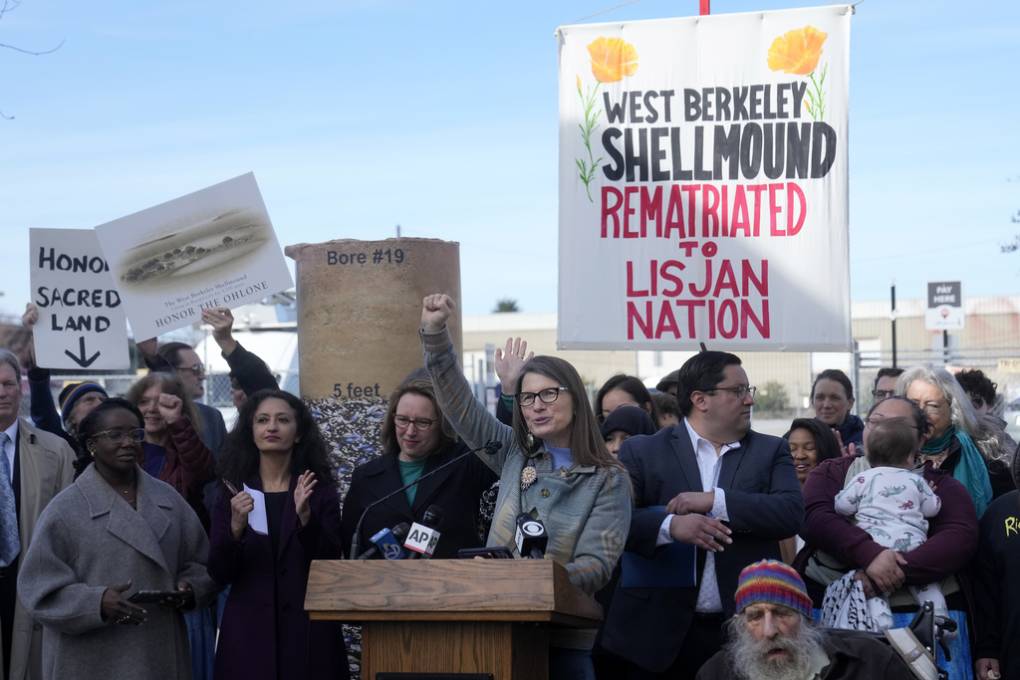
Ohlone People Rejoice After City of Berkeley Votes to Return Sacred Land
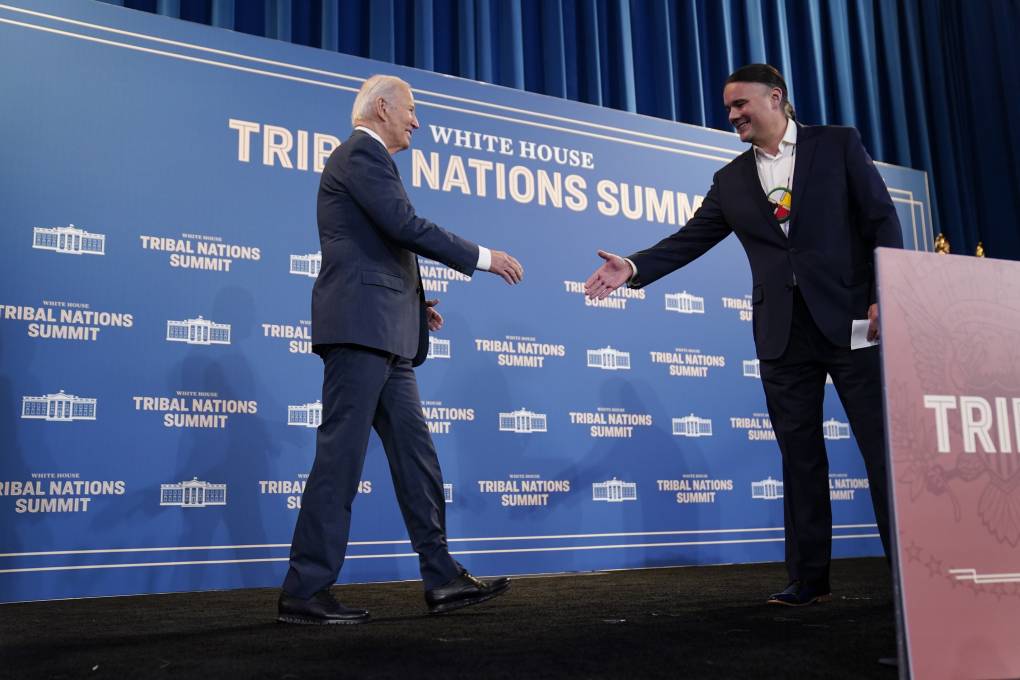
In Historical Shift, US Aims to Give Native American Tribes More Say in Managing Public Lands and Water
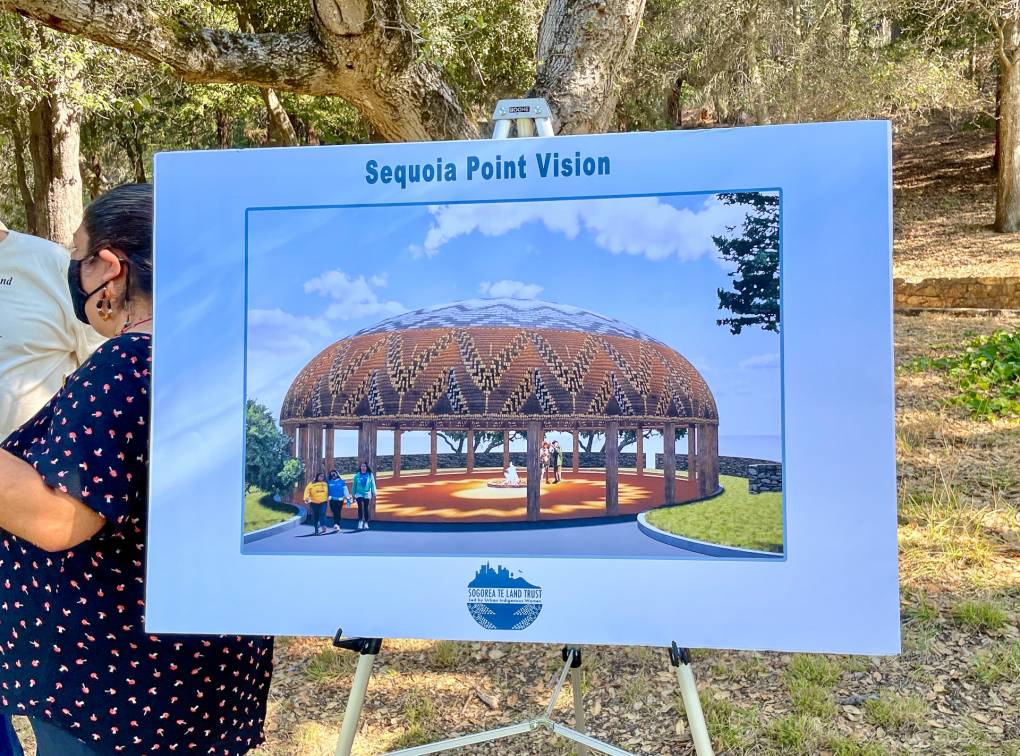
What It Takes to Return Land to Native People in the Bay Area
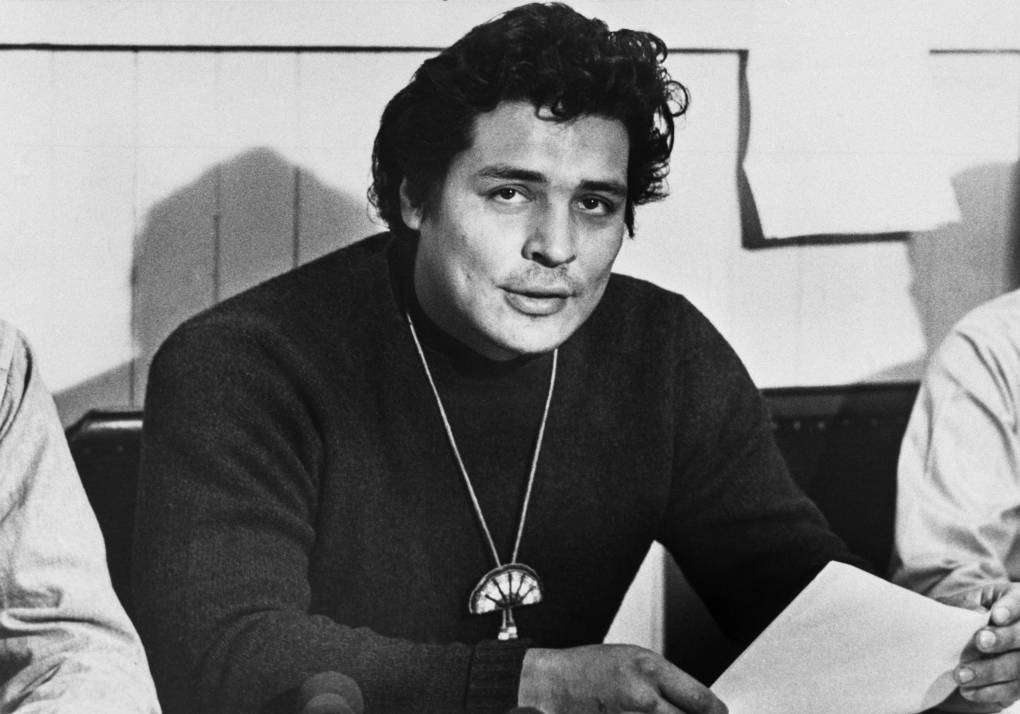
The Untold Story of Richard Oakes' Killing, Part 1
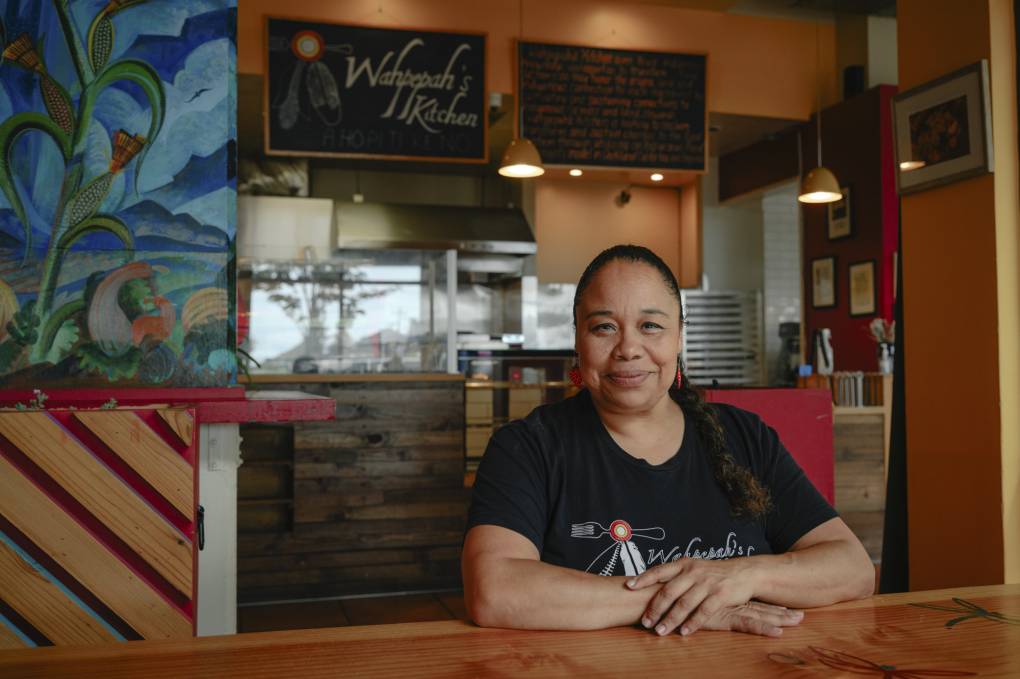
How Oakland Restaurant Wahpepah's Kitchen Reclaimed Native Dishes
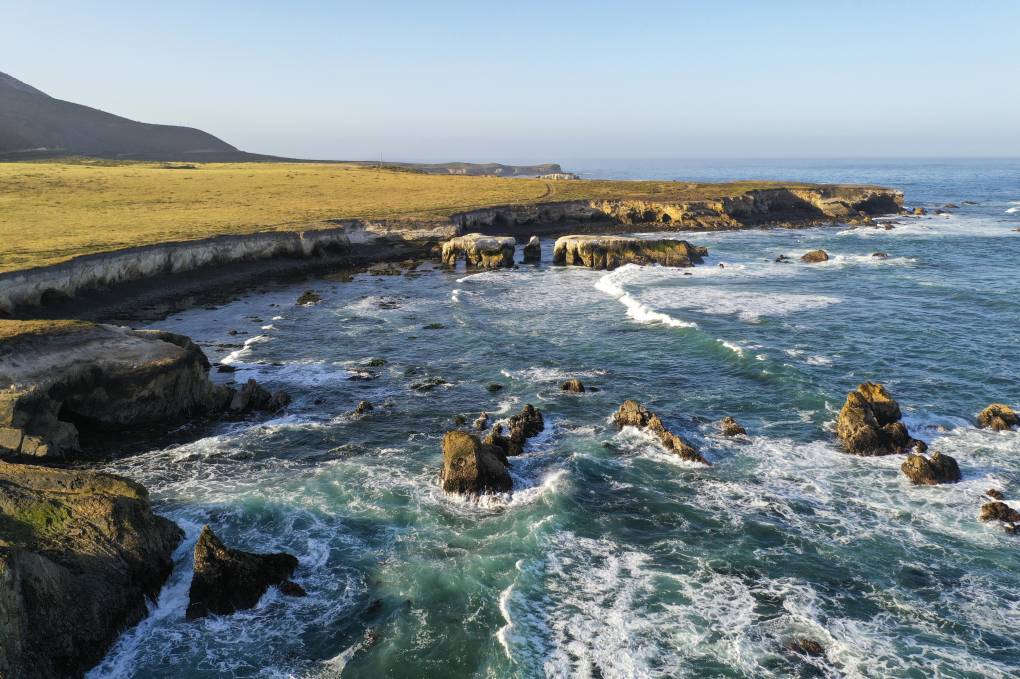
Biden Proposes Vast New Marine Sanctuary in Partnership With California Tribe
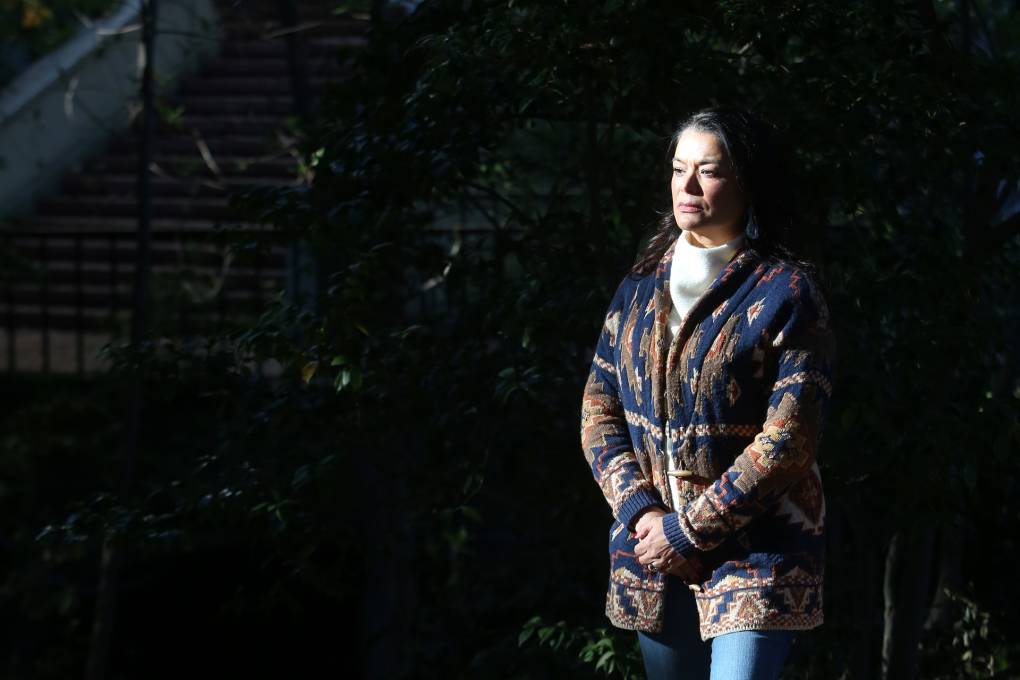
$100 Million Grant to Assist California Native Tribes With Buying Back Land
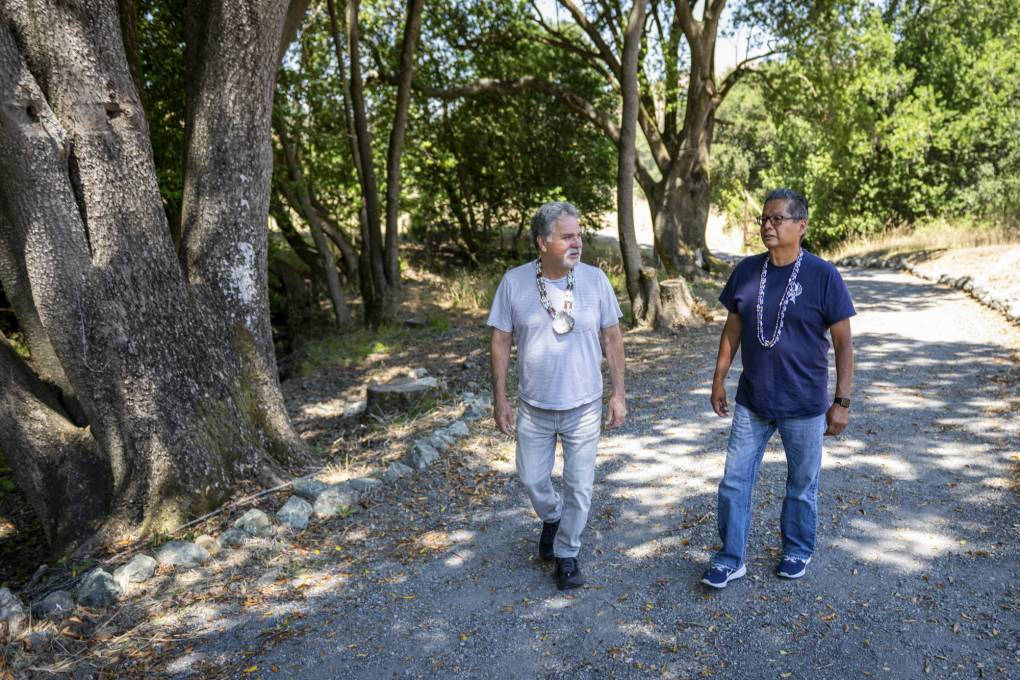
How a Coast Miwok Group Is Buying Back a Piece of Their Ancestral Land in Marin
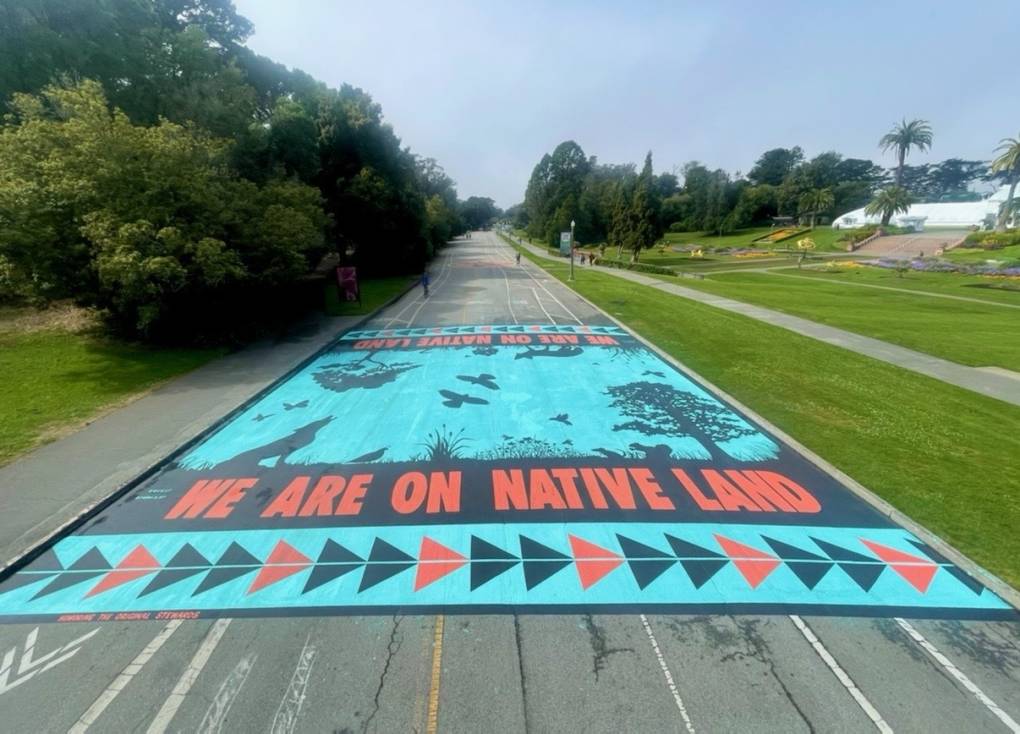
'We Are Here and Present': New Native American Mural in Golden Gate Park, Despite Recent Vandalism, Continues Efforts to Uplift Bay Area Native History
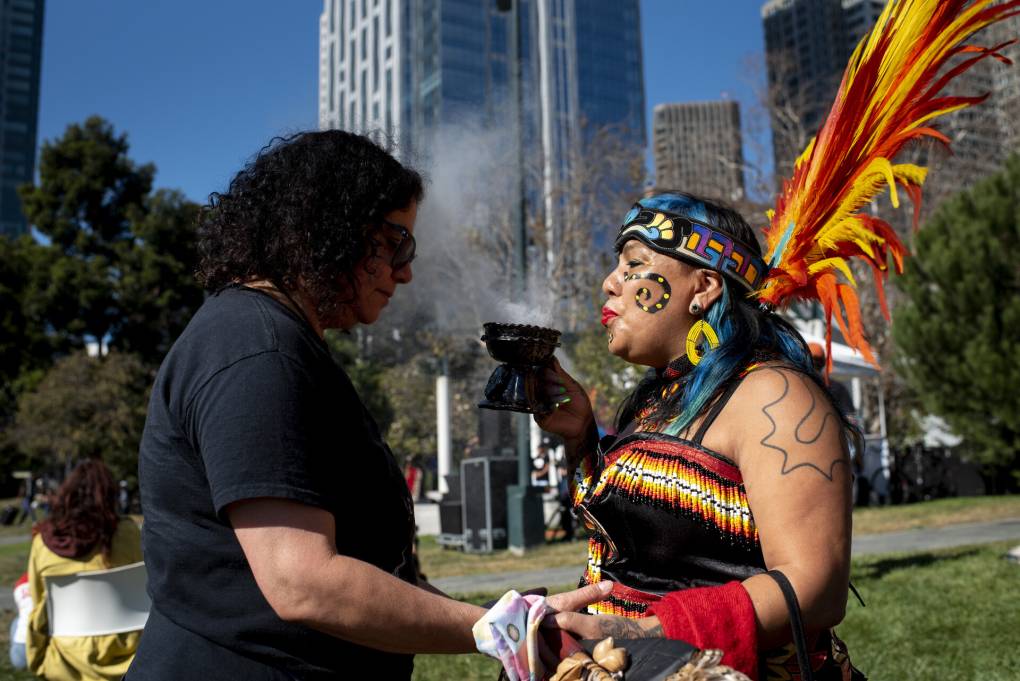
'Our Ongoing Resistance': See Indigenous Peoples Day Celebrated in San Francisco
'A Catalyst for Truth and Healing': $500,000 to Be Distributed to California's Indigenous Communities
'You're Going to Know Who My Daughter Was': Families Demand Justice for Missing and Murdered Indigenous Women
window.__IS_SSR__=true
window.__INITIAL_STATE__={
"attachmentsReducer": {
"audio_0": {
"type": "attachments",
"id": "audio_0",
"imgSizes": {
"kqedFullSize": {
"file": "https://ww2.kqed.org/news/wp-content/themes/KQED-unified/img/audio_bgs/background0.jpg"
}
}
},
"audio_1": {
"type": "attachments",
"id": "audio_1",
"imgSizes": {
"kqedFullSize": {
"file": "https://ww2.kqed.org/news/wp-content/themes/KQED-unified/img/audio_bgs/background1.jpg"
}
}
},
"audio_2": {
"type": "attachments",
"id": "audio_2",
"imgSizes": {
"kqedFullSize": {
"file": "https://ww2.kqed.org/news/wp-content/themes/KQED-unified/img/audio_bgs/background2.jpg"
}
}
},
"audio_3": {
"type": "attachments",
"id": "audio_3",
"imgSizes": {
"kqedFullSize": {
"file": "https://ww2.kqed.org/news/wp-content/themes/KQED-unified/img/audio_bgs/background3.jpg"
}
}
},
"audio_4": {
"type": "attachments",
"id": "audio_4",
"imgSizes": {
"kqedFullSize": {
"file": "https://ww2.kqed.org/news/wp-content/themes/KQED-unified/img/audio_bgs/background4.jpg"
}
}
},
"placeholder": {
"type": "attachments",
"id": "placeholder",
"imgSizes": {
"thumbnail": {
"file": "https://cdn.kqed.org/wp-content/uploads/2024/12/KQED-Default-Image-816638274-2000x1333-1-160x107.jpg",
"width": 160,
"height": 107,
"mimeType": "image/jpeg"
},
"medium": {
"file": "https://cdn.kqed.org/wp-content/uploads/2024/12/KQED-Default-Image-816638274-2000x1333-1-800x533.jpg",
"width": 800,
"height": 533,
"mimeType": "image/jpeg"
},
"medium_large": {
"file": "https://cdn.kqed.org/wp-content/uploads/2024/12/KQED-Default-Image-816638274-2000x1333-1-768x512.jpg",
"width": 768,
"height": 512,
"mimeType": "image/jpeg"
},
"large": {
"file": "https://cdn.kqed.org/wp-content/uploads/2024/12/KQED-Default-Image-816638274-2000x1333-1-1020x680.jpg",
"width": 1020,
"height": 680,
"mimeType": "image/jpeg"
},
"1536x1536": {
"file": "https://cdn.kqed.org/wp-content/uploads/2024/12/KQED-Default-Image-816638274-2000x1333-1-1536x1024.jpg",
"width": 1536,
"height": 1024,
"mimeType": "image/jpeg"
},
"fd-lrg": {
"file": "https://cdn.kqed.org/wp-content/uploads/2024/12/KQED-Default-Image-816638274-2000x1333-1-1536x1024.jpg",
"width": 1536,
"height": 1024,
"mimeType": "image/jpeg"
},
"fd-med": {
"file": "https://cdn.kqed.org/wp-content/uploads/2024/12/KQED-Default-Image-816638274-2000x1333-1-1020x680.jpg",
"width": 1020,
"height": 680,
"mimeType": "image/jpeg"
},
"fd-sm": {
"file": "https://cdn.kqed.org/wp-content/uploads/2024/12/KQED-Default-Image-816638274-2000x1333-1-800x533.jpg",
"width": 800,
"height": 533,
"mimeType": "image/jpeg"
},
"post-thumbnail": {
"file": "https://cdn.kqed.org/wp-content/uploads/2024/12/KQED-Default-Image-816638274-2000x1333-1-672x372.jpg",
"width": 672,
"height": 372,
"mimeType": "image/jpeg"
},
"twentyfourteen-full-width": {
"file": "https://cdn.kqed.org/wp-content/uploads/2024/12/KQED-Default-Image-816638274-2000x1333-1-1038x576.jpg",
"width": 1038,
"height": 576,
"mimeType": "image/jpeg"
},
"xxsmall": {
"file": "https://cdn.kqed.org/wp-content/uploads/2024/12/KQED-Default-Image-816638274-2000x1333-1-160x107.jpg",
"width": 160,
"height": 107,
"mimeType": "image/jpeg"
},
"xsmall": {
"file": "https://cdn.kqed.org/wp-content/uploads/2024/12/KQED-Default-Image-816638274-2000x1333-1-672x372.jpg",
"width": 672,
"height": 372,
"mimeType": "image/jpeg"
},
"small": {
"file": "https://cdn.kqed.org/wp-content/uploads/2024/12/KQED-Default-Image-816638274-2000x1333-1-672x372.jpg",
"width": 672,
"height": 372,
"mimeType": "image/jpeg"
},
"xlarge": {
"file": "https://cdn.kqed.org/wp-content/uploads/2024/12/KQED-Default-Image-816638274-2000x1333-1-1020x680.jpg",
"width": 1020,
"height": 680,
"mimeType": "image/jpeg"
},
"full-width": {
"file": "https://cdn.kqed.org/wp-content/uploads/2024/12/KQED-Default-Image-816638274-2000x1333-1-1920x1280.jpg",
"width": 1920,
"height": 1280,
"mimeType": "image/jpeg"
},
"guest-author-32": {
"file": "https://cdn.kqed.org/wp-content/uploads/2025/01/KQED-Default-Image-816638274-1333x1333-1-160x160.jpg",
"width": 32,
"height": 32,
"mimeType": "image/jpeg"
},
"guest-author-50": {
"file": "https://cdn.kqed.org/wp-content/uploads/2025/01/KQED-Default-Image-816638274-1333x1333-1-160x160.jpg",
"width": 50,
"height": 50,
"mimeType": "image/jpeg"
},
"guest-author-64": {
"file": "https://cdn.kqed.org/wp-content/uploads/2025/01/KQED-Default-Image-816638274-1333x1333-1-160x160.jpg",
"width": 64,
"height": 64,
"mimeType": "image/jpeg"
},
"guest-author-96": {
"file": "https://cdn.kqed.org/wp-content/uploads/2025/01/KQED-Default-Image-816638274-1333x1333-1-160x160.jpg",
"width": 96,
"height": 96,
"mimeType": "image/jpeg"
},
"guest-author-128": {
"file": "https://cdn.kqed.org/wp-content/uploads/2025/01/KQED-Default-Image-816638274-1333x1333-1-160x160.jpg",
"width": 128,
"height": 128,
"mimeType": "image/jpeg"
},
"detail": {
"file": "https://cdn.kqed.org/wp-content/uploads/2025/01/KQED-Default-Image-816638274-1333x1333-1-160x160.jpg",
"width": 160,
"height": 160,
"mimeType": "image/jpeg"
},
"kqedFullSize": {
"file": "https://cdn.kqed.org/wp-content/uploads/2024/12/KQED-Default-Image-816638274-2000x1333-1.jpg",
"width": 2000,
"height": 1333
}
}
},
"news_11979333": {
"type": "attachments",
"id": "news_11979333",
"meta": {
"index": "attachments_1716263798",
"site": "news",
"id": "11979333",
"found": true
},
"parent": 11979268,
"imgSizes": {
"twentyfourteen-full-width": {
"file": "https://cdn.kqed.org/wp-content/uploads/sites/10/2024/03/AP24073728844941-1024x576.jpg",
"width": 1024,
"mimeType": "image/jpeg",
"height": 576
},
"thumbnail": {
"file": "https://cdn.kqed.org/wp-content/uploads/sites/10/2024/03/AP24073728844941-160x107.jpg",
"width": 160,
"mimeType": "image/jpeg",
"height": 107
},
"post-thumbnail": {
"file": "https://cdn.kqed.org/wp-content/uploads/sites/10/2024/03/AP24073728844941-672x372.jpg",
"width": 672,
"mimeType": "image/jpeg",
"height": 372
},
"kqedFullSize": {
"file": "https://cdn.kqed.org/wp-content/uploads/sites/10/2024/03/AP24073728844941.jpg",
"width": 1024,
"height": 683
},
"large": {
"file": "https://cdn.kqed.org/wp-content/uploads/sites/10/2024/03/AP24073728844941-1020x680.jpg",
"width": 1020,
"mimeType": "image/jpeg",
"height": 680
},
"medium": {
"file": "https://cdn.kqed.org/wp-content/uploads/sites/10/2024/03/AP24073728844941-800x534.jpg",
"width": 800,
"mimeType": "image/jpeg",
"height": 534
}
},
"publishDate": 1710365009,
"modified": 1710365084,
"caption": "Melissa Nelson, chair of the board of directors of the Sogorea Te’ Land Trust, middle, gestures while speaking at a news conference in Berkeley, Wednesday, March 13, 2024. Berkeley’s City Council voted unanimously Tuesday, March 12, 2024, to adopt an ordinance giving the title of the land to the Sogorea Te’ Land Trust, a women-led, San Francisco Bay Area collective that works to return land to Indigenous people and that raised the funds needed to reach the agreement. ",
"description": null,
"title": "AP24073728844941",
"credit": "Jeff Chiu/AP Photo",
"status": "inherit",
"altTag": null,
"isLoading": false,
"fetchFailed": false
},
"news_11969408": {
"type": "attachments",
"id": "news_11969408",
"meta": {
"index": "attachments_1716263798",
"site": "news",
"id": "11969408",
"found": true
},
"parent": 11969401,
"imgSizes": {
"twentyfourteen-full-width": {
"file": "https://cdn.kqed.org/wp-content/uploads/sites/10/2023/12/AP23340707616905-1038x576.jpg",
"width": 1038,
"mimeType": "image/jpeg",
"height": 576
},
"thumbnail": {
"file": "https://cdn.kqed.org/wp-content/uploads/sites/10/2023/12/AP23340707616905-160x107.jpg",
"width": 160,
"mimeType": "image/jpeg",
"height": 107
},
"post-thumbnail": {
"file": "https://cdn.kqed.org/wp-content/uploads/sites/10/2023/12/AP23340707616905-672x372.jpg",
"width": 672,
"mimeType": "image/jpeg",
"height": 372
},
"kqedFullSize": {
"file": "https://cdn.kqed.org/wp-content/uploads/sites/10/2023/12/AP23340707616905-scaled.jpg",
"width": 2560,
"height": 1707
},
"2048x2048": {
"file": "https://cdn.kqed.org/wp-content/uploads/sites/10/2023/12/AP23340707616905-2048x1365.jpg",
"width": 2048,
"mimeType": "image/jpeg",
"height": 1365
},
"large": {
"file": "https://cdn.kqed.org/wp-content/uploads/sites/10/2023/12/AP23340707616905-1020x680.jpg",
"width": 1020,
"mimeType": "image/jpeg",
"height": 680
},
"1536x1536": {
"file": "https://cdn.kqed.org/wp-content/uploads/sites/10/2023/12/AP23340707616905-1536x1024.jpg",
"width": 1536,
"mimeType": "image/jpeg",
"height": 1024
},
"full-width": {
"file": "https://cdn.kqed.org/wp-content/uploads/sites/10/2023/12/AP23340707616905-1920x1280.jpg",
"width": 1920,
"mimeType": "image/jpeg",
"height": 1280
},
"medium": {
"file": "https://cdn.kqed.org/wp-content/uploads/sites/10/2023/12/AP23340707616905-800x533.jpg",
"width": 800,
"mimeType": "image/jpeg",
"height": 533
}
},
"publishDate": 1702063567,
"modified": 1702078912,
"caption": "President Joe Biden shakes hands with Assistant Secretary of the Interior for Indian Affairs Bryan Newland at the White House Tribal Nations Summit in Washington, D.C. on Dec. 6, 2023.",
"description": null,
"title": "Biden",
"credit": "Evan Vucci/AP",
"status": "inherit",
"altTag": "President Biden, on a stage, moves to shake hands with a younger man. Behind them, a sign reads: 'Tribal Nations Summit.'",
"isLoading": false,
"fetchFailed": false
},
"news_11925212": {
"type": "attachments",
"id": "news_11925212",
"meta": {
"index": "attachments_1716263798",
"site": "news",
"id": "11925212",
"found": true
},
"parent": 11925121,
"imgSizes": {
"twentyfourteen-full-width": {
"file": "https://ww2.kqed.org/app/uploads/sites/10/2022/09/IMG_8787-2-1-1038x576.jpg",
"width": 1038,
"mimeType": "image/jpeg",
"height": 576
},
"thumbnail": {
"file": "https://ww2.kqed.org/app/uploads/sites/10/2022/09/IMG_8787-2-1-160x119.jpg",
"width": 160,
"mimeType": "image/jpeg",
"height": 119
},
"post-thumbnail": {
"file": "https://ww2.kqed.org/app/uploads/sites/10/2022/09/IMG_8787-2-1-672x372.jpg",
"width": 672,
"mimeType": "image/jpeg",
"height": 372
},
"kqedFullSize": {
"file": "https://ww2.kqed.org/app/uploads/sites/10/2022/09/IMG_8787-2-1.jpg",
"width": 1920,
"height": 1423
},
"large": {
"file": "https://ww2.kqed.org/app/uploads/sites/10/2022/09/IMG_8787-2-1-1020x756.jpg",
"width": 1020,
"mimeType": "image/jpeg",
"height": 756
},
"1536x1536": {
"file": "https://ww2.kqed.org/app/uploads/sites/10/2022/09/IMG_8787-2-1-1536x1138.jpg",
"width": 1536,
"mimeType": "image/jpeg",
"height": 1138
},
"medium": {
"file": "https://ww2.kqed.org/app/uploads/sites/10/2022/09/IMG_8787-2-1-800x593.jpg",
"width": 800,
"mimeType": "image/jpeg",
"height": 593
}
},
"publishDate": 1662761552,
"modified": 1662761601,
"caption": "At a Sept. 8 press conference, City officials and members of the Sogorea Te’ Land Trust, shared a mock-up image of a structure the trust is hoping to build at the Sequoia Point site.",
"description": null,
"title": "IMG_8787 2 (1)",
"credit": "Annelise Finney/KQED",
"status": "inherit",
"altTag": "a poster board showing a mockup of a gazebo",
"isLoading": false,
"fetchFailed": false
},
"news_11963727": {
"type": "attachments",
"id": "news_11963727",
"meta": {
"index": "attachments_1716263798",
"site": "news",
"id": "11963727",
"found": true
},
"parent": 11963726,
"imgSizes": {
"twentyfourteen-full-width": {
"file": "https://ww2.kqed.org/app/uploads/sites/10/2023/10/GettyImages-640119072-1038x576.jpg",
"width": 1038,
"mimeType": "image/jpeg",
"height": 576
},
"thumbnail": {
"file": "https://ww2.kqed.org/app/uploads/sites/10/2023/10/GettyImages-640119072-160x112.jpg",
"width": 160,
"mimeType": "image/jpeg",
"height": 112
},
"post-thumbnail": {
"file": "https://ww2.kqed.org/app/uploads/sites/10/2023/10/GettyImages-640119072-672x372.jpg",
"width": 672,
"mimeType": "image/jpeg",
"height": 372
},
"kqedFullSize": {
"file": "https://ww2.kqed.org/app/uploads/sites/10/2023/10/GettyImages-640119072-scaled.jpg",
"width": 2560,
"height": 1793
},
"2048x2048": {
"file": "https://ww2.kqed.org/app/uploads/sites/10/2023/10/GettyImages-640119072-2048x1434.jpg",
"width": 2048,
"mimeType": "image/jpeg",
"height": 1434
},
"large": {
"file": "https://ww2.kqed.org/app/uploads/sites/10/2023/10/GettyImages-640119072-1020x714.jpg",
"width": 1020,
"mimeType": "image/jpeg",
"height": 714
},
"1536x1536": {
"file": "https://ww2.kqed.org/app/uploads/sites/10/2023/10/GettyImages-640119072-1536x1076.jpg",
"width": 1536,
"mimeType": "image/jpeg",
"height": 1076
},
"full-width": {
"file": "https://ww2.kqed.org/app/uploads/sites/10/2023/10/GettyImages-640119072-1920x1344.jpg",
"width": 1920,
"mimeType": "image/jpeg",
"height": 1344
},
"medium": {
"file": "https://ww2.kqed.org/app/uploads/sites/10/2023/10/GettyImages-640119072-800x560.jpg",
"width": 800,
"mimeType": "image/jpeg",
"height": 560
}
},
"publishDate": 1696624506,
"modified": 1696624585,
"caption": "Richard Oakes led the famous native occupation of Alcatraz Island in 1969.",
"description": null,
"title": "Richard Oakes",
"credit": "Bettmann/Getty Images",
"status": "inherit",
"altTag": null,
"isLoading": false,
"fetchFailed": false
},
"news_11953935": {
"type": "attachments",
"id": "news_11953935",
"meta": {
"index": "attachments_1716263798",
"site": "news",
"id": "11953935",
"found": true
},
"parent": 0,
"imgSizes": {
"twentyfourteen-full-width": {
"file": "https://ww2.kqed.org/app/uploads/sites/10/2023/06/RS66538_230623-wahpepahs-kitchen-05-ks-KQED-1038x576.jpg",
"width": 1038,
"mimeType": "image/jpeg",
"height": 576
},
"thumbnail": {
"file": "https://ww2.kqed.org/app/uploads/sites/10/2023/06/RS66538_230623-wahpepahs-kitchen-05-ks-KQED-160x106.jpg",
"width": 160,
"mimeType": "image/jpeg",
"height": 106
},
"post-thumbnail": {
"file": "https://ww2.kqed.org/app/uploads/sites/10/2023/06/RS66538_230623-wahpepahs-kitchen-05-ks-KQED-672x372.jpg",
"width": 672,
"mimeType": "image/jpeg",
"height": 372
},
"kqedFullSize": {
"file": "https://ww2.kqed.org/app/uploads/sites/10/2023/06/RS66538_230623-wahpepahs-kitchen-05-ks-KQED.jpg",
"width": 2000,
"height": 1331
},
"large": {
"file": "https://ww2.kqed.org/app/uploads/sites/10/2023/06/RS66538_230623-wahpepahs-kitchen-05-ks-KQED-1020x679.jpg",
"width": 1020,
"mimeType": "image/jpeg",
"height": 679
},
"1536x1536": {
"file": "https://ww2.kqed.org/app/uploads/sites/10/2023/06/RS66538_230623-wahpepahs-kitchen-05-ks-KQED-1536x1022.jpg",
"width": 1536,
"mimeType": "image/jpeg",
"height": 1022
},
"full-width": {
"file": "https://ww2.kqed.org/app/uploads/sites/10/2023/06/RS66538_230623-wahpepahs-kitchen-05-ks-KQED-1920x1278.jpg",
"width": 1920,
"mimeType": "image/jpeg",
"height": 1278
},
"medium": {
"file": "https://ww2.kqed.org/app/uploads/sites/10/2023/06/RS66538_230623-wahpepahs-kitchen-05-ks-KQED-800x532.jpg",
"width": 800,
"mimeType": "image/jpeg",
"height": 532
}
},
"publishDate": 1687556983,
"modified": 1687557423,
"caption": "Crystal Wahpepah sits for a portrait at her restaurant, Wahpepah’s Kitchen, in the Fruitvale neighborhood of Oakland on June 23, 2023. Wahpepah sees her restaurant as a place to reclaim and celebrate Indigenous food systems and to recognize that we live on stolen land.",
"description": null,
"title": "RS66538_230623-wahpepah's kitchen-05-ks-KQED",
"credit": "Kori Suzuki/KQED",
"status": "inherit",
"altTag": "A woman wearing a black t-shirt and with her hair in a braid leans on a wooden countertop and smiles at the camera.",
"isLoading": false,
"fetchFailed": false
},
"news_11959108": {
"type": "attachments",
"id": "news_11959108",
"meta": {
"index": "attachments_1716263798",
"site": "news",
"id": "11959108",
"found": true
},
"parent": 11959107,
"imgSizes": {
"twentyfourteen-full-width": {
"file": "https://ww2.kqed.org/app/uploads/sites/10/2023/08/20230821-montana-de-oro-aerial-robert-schwemmer_custom-8cb6cb756d3da78606e51e8660486dafece39bc8-1038x576.jpg",
"width": 1038,
"mimeType": "image/jpeg",
"height": 576
},
"thumbnail": {
"file": "https://ww2.kqed.org/app/uploads/sites/10/2023/08/20230821-montana-de-oro-aerial-robert-schwemmer_custom-8cb6cb756d3da78606e51e8660486dafece39bc8-160x107.jpg",
"width": 160,
"mimeType": "image/jpeg",
"height": 107
},
"post-thumbnail": {
"file": "https://ww2.kqed.org/app/uploads/sites/10/2023/08/20230821-montana-de-oro-aerial-robert-schwemmer_custom-8cb6cb756d3da78606e51e8660486dafece39bc8-672x372.jpg",
"width": 672,
"mimeType": "image/jpeg",
"height": 372
},
"kqedFullSize": {
"file": "https://ww2.kqed.org/app/uploads/sites/10/2023/08/20230821-montana-de-oro-aerial-robert-schwemmer_custom-8cb6cb756d3da78606e51e8660486dafece39bc8-scaled.jpg",
"width": 2560,
"height": 1705
},
"2048x2048": {
"file": "https://ww2.kqed.org/app/uploads/sites/10/2023/08/20230821-montana-de-oro-aerial-robert-schwemmer_custom-8cb6cb756d3da78606e51e8660486dafece39bc8-2048x1364.jpg",
"width": 2048,
"mimeType": "image/jpeg",
"height": 1364
},
"large": {
"file": "https://ww2.kqed.org/app/uploads/sites/10/2023/08/20230821-montana-de-oro-aerial-robert-schwemmer_custom-8cb6cb756d3da78606e51e8660486dafece39bc8-1020x679.jpg",
"width": 1020,
"mimeType": "image/jpeg",
"height": 679
},
"1536x1536": {
"file": "https://ww2.kqed.org/app/uploads/sites/10/2023/08/20230821-montana-de-oro-aerial-robert-schwemmer_custom-8cb6cb756d3da78606e51e8660486dafece39bc8-1536x1023.jpg",
"width": 1536,
"mimeType": "image/jpeg",
"height": 1023
},
"full-width": {
"file": "https://ww2.kqed.org/app/uploads/sites/10/2023/08/20230821-montana-de-oro-aerial-robert-schwemmer_custom-8cb6cb756d3da78606e51e8660486dafece39bc8-1920x1279.jpg",
"width": 1920,
"mimeType": "image/jpeg",
"height": 1279
},
"medium": {
"file": "https://ww2.kqed.org/app/uploads/sites/10/2023/08/20230821-montana-de-oro-aerial-robert-schwemmer_custom-8cb6cb756d3da78606e51e8660486dafece39bc8-800x533.jpg",
"width": 800,
"mimeType": "image/jpeg",
"height": 533
}
},
"publishDate": 1692920248,
"modified": 1692924776,
"caption": "Members of the Chumash tribe have pushed for a decade to create a new marine sanctuary. If created, it would be the first to be designated with tribal involvement from the outset.",
"description": "default",
"title": "Members of the Chumash tribe have pushed for a decade to create a new marine sanctuary. If created, it would be the first to be designated with tribal involvement from the outset.",
"credit": "Robert Schwemmer/NOAA",
"status": "inherit",
"altTag": "An aerial view of the California coastline with rocky cliffs, a rough ocean and blue sky.",
"isLoading": false,
"fetchFailed": false
},
"news_11957424": {
"type": "attachments",
"id": "news_11957424",
"meta": {
"index": "attachments_1716263798",
"site": "news",
"id": "11957424",
"found": true
},
"title": "Charlene Nijmeh, chair of the Muwekma Ohlone tribe in the Bay Area, stands for a portrait next to Strawberry Creek on the UC Berkeley campus on Friday, November 27, 2020 in Berkeley, Calif.",
"publishDate": 1691171091,
"status": "inherit",
"parent": 12026194,
"modified": 1738971902,
"caption": "The Tribal Nature-Based Solutions grant program is an effort to meet the state’s land conservation goals and also a means to strengthen partnerships with native tribes. Some tribes, however, have raised concerns over its focus. Muwekma Ohlone Chairwoman Charlene Nijmeh said in an email that her tribe is open to developing a project for this grant, but 'too much focus is on plants and animals and not the native people. It's a perpetuation of colonialism and performative allyship.'",
"credit": "Lea Suzuki/The San Francisco Chronicle via Getty Images",
"altTag": "A woman stand in the shadows. Her face and body are illuminated by a spotlight. She has long, brown hair and wears a blue and tan-print jacket and jeans. She looks somber.",
"description": null,
"imgSizes": {
"medium": {
"file": "https://cdn.kqed.org/wp-content/uploads/sites/10/2023/08/TribalBuyBack01-800x533.jpg",
"width": 800,
"height": 533,
"mimeType": "image/jpeg"
},
"large": {
"file": "https://cdn.kqed.org/wp-content/uploads/sites/10/2023/08/TribalBuyBack01-1020x680.jpg",
"width": 1020,
"height": 680,
"mimeType": "image/jpeg"
},
"thumbnail": {
"file": "https://cdn.kqed.org/wp-content/uploads/sites/10/2023/08/TribalBuyBack01-160x107.jpg",
"width": 160,
"height": 107,
"mimeType": "image/jpeg"
},
"1536x1536": {
"file": "https://cdn.kqed.org/wp-content/uploads/sites/10/2023/08/TribalBuyBack01-1536x1024.jpg",
"width": 1536,
"height": 1024,
"mimeType": "image/jpeg"
},
"post-thumbnail": {
"file": "https://cdn.kqed.org/wp-content/uploads/sites/10/2023/08/TribalBuyBack01-672x372.jpg",
"width": 672,
"height": 372,
"mimeType": "image/jpeg"
},
"twentyfourteen-full-width": {
"file": "https://cdn.kqed.org/wp-content/uploads/sites/10/2023/08/TribalBuyBack01-1038x576.jpg",
"width": 1038,
"height": 576,
"mimeType": "image/jpeg"
},
"kqedFullSize": {
"file": "https://cdn.kqed.org/wp-content/uploads/sites/10/2023/08/TribalBuyBack01.jpg",
"width": 1920,
"height": 1280
}
},
"isLoading": false,
"fetchFailed": false
},
"news_11956348": {
"type": "attachments",
"id": "news_11956348",
"meta": {
"index": "attachments_1716263798",
"site": "news",
"id": "11956348",
"found": true
},
"parent": 0,
"imgSizes": {
"twentyfourteen-full-width": {
"file": "https://ww2.kqed.org/app/uploads/sites/10/2023/07/RS67156_230721-CoastMiwokLandMarin-04-BL-KQED-1038x576.jpg",
"width": 1038,
"mimeType": "image/jpeg",
"height": 576
},
"thumbnail": {
"file": "https://ww2.kqed.org/app/uploads/sites/10/2023/07/RS67156_230721-CoastMiwokLandMarin-04-BL-KQED-160x107.jpg",
"width": 160,
"mimeType": "image/jpeg",
"height": 107
},
"post-thumbnail": {
"file": "https://ww2.kqed.org/app/uploads/sites/10/2023/07/RS67156_230721-CoastMiwokLandMarin-04-BL-KQED-672x372.jpg",
"width": 672,
"mimeType": "image/jpeg",
"height": 372
},
"kqedFullSize": {
"file": "https://ww2.kqed.org/app/uploads/sites/10/2023/07/RS67156_230721-CoastMiwokLandMarin-04-BL-KQED.jpg",
"width": 2000,
"height": 1333
},
"large": {
"file": "https://ww2.kqed.org/app/uploads/sites/10/2023/07/RS67156_230721-CoastMiwokLandMarin-04-BL-KQED-1020x680.jpg",
"width": 1020,
"mimeType": "image/jpeg",
"height": 680
},
"1536x1536": {
"file": "https://ww2.kqed.org/app/uploads/sites/10/2023/07/RS67156_230721-CoastMiwokLandMarin-04-BL-KQED-1536x1024.jpg",
"width": 1536,
"mimeType": "image/jpeg",
"height": 1024
},
"full-width": {
"file": "https://ww2.kqed.org/app/uploads/sites/10/2023/07/RS67156_230721-CoastMiwokLandMarin-04-BL-KQED-1920x1280.jpg",
"width": 1920,
"mimeType": "image/jpeg",
"height": 1280
},
"medium": {
"file": "https://ww2.kqed.org/app/uploads/sites/10/2023/07/RS67156_230721-CoastMiwokLandMarin-04-BL-KQED-800x533.jpg",
"width": 800,
"mimeType": "image/jpeg",
"height": 533
}
},
"publishDate": 1690225897,
"modified": 1690658236,
"caption": "Members of the Coast Miwok Tribal Council, Joe Sanchez (left) and Dean Hoaglin, walk on their ancestral land near Nicasio, Marin County, which the tribe purchased with the help of a fundraising campaign earlier in the year. ",
"description": null,
"title": "RS67156_230721-CoastMiwokLandMarin-04-BL-KQED",
"credit": "Beth LaBerge/KQED",
"status": "inherit",
"altTag": "Two people wearing necklaces walk on an outdoor trail.",
"isLoading": false,
"fetchFailed": false
},
"news_11929111": {
"type": "attachments",
"id": "news_11929111",
"meta": {
"index": "attachments_1716263798",
"site": "news",
"id": "11929111",
"found": true
},
"parent": 11929099,
"imgSizes": {
"twentyfourteen-full-width": {
"file": "https://ww2.kqed.org/app/uploads/sites/10/2022/10/Finished_Mural-1038x576.jpg",
"width": 1038,
"mimeType": "image/jpeg",
"height": 576
},
"thumbnail": {
"file": "https://ww2.kqed.org/app/uploads/sites/10/2022/10/Finished_Mural-160x115.jpg",
"width": 160,
"mimeType": "image/jpeg",
"height": 115
},
"post-thumbnail": {
"file": "https://ww2.kqed.org/app/uploads/sites/10/2022/10/Finished_Mural-672x372.jpg",
"width": 672,
"mimeType": "image/jpeg",
"height": 372
},
"kqedFullSize": {
"file": "https://ww2.kqed.org/app/uploads/sites/10/2022/10/Finished_Mural.jpg",
"width": 1206,
"height": 868
},
"large": {
"file": "https://ww2.kqed.org/app/uploads/sites/10/2022/10/Finished_Mural-1020x734.jpg",
"width": 1020,
"mimeType": "image/jpeg",
"height": 734
},
"medium": {
"file": "https://ww2.kqed.org/app/uploads/sites/10/2022/10/Finished_Mural-800x576.jpg",
"width": 800,
"mimeType": "image/jpeg",
"height": 576
}
},
"publishDate": 1665864115,
"modified": 1666035940,
"caption": "The 'We Are on Native Land' mural before it was vandalized.",
"description": null,
"title": "Finished_Mural",
"credit": "Courtesy of American Indian Cultural District",
"status": "inherit",
"altTag": "A massive turquoise, black and red street mural covering a section of the JFK Promenade stating 'We are on Native land'",
"isLoading": false,
"fetchFailed": false
},
"news_11928361": {
"type": "attachments",
"id": "news_11928361",
"meta": {
"index": "attachments_1716263798",
"site": "news",
"id": "11928361",
"found": true
},
"parent": 11928345,
"imgSizes": {
"twentyfourteen-full-width": {
"file": "https://ww2.kqed.org/app/uploads/sites/10/2022/10/RS59237_Indigenous_Peoples_Day_014-qut-1038x576.jpg",
"width": 1038,
"mimeType": "image/jpeg",
"height": 576
},
"thumbnail": {
"file": "https://ww2.kqed.org/app/uploads/sites/10/2022/10/RS59237_Indigenous_Peoples_Day_014-qut-160x107.jpg",
"width": 160,
"mimeType": "image/jpeg",
"height": 107
},
"post-thumbnail": {
"file": "https://ww2.kqed.org/app/uploads/sites/10/2022/10/RS59237_Indigenous_Peoples_Day_014-qut-672x372.jpg",
"width": 672,
"mimeType": "image/jpeg",
"height": 372
},
"kqedFullSize": {
"file": "https://ww2.kqed.org/app/uploads/sites/10/2022/10/RS59237_Indigenous_Peoples_Day_014-qut.jpg",
"width": 1920,
"height": 1282
},
"large": {
"file": "https://ww2.kqed.org/app/uploads/sites/10/2022/10/RS59237_Indigenous_Peoples_Day_014-qut-1020x681.jpg",
"width": 1020,
"mimeType": "image/jpeg",
"height": 681
},
"1536x1536": {
"file": "https://ww2.kqed.org/app/uploads/sites/10/2022/10/RS59237_Indigenous_Peoples_Day_014-qut-1536x1026.jpg",
"width": 1536,
"mimeType": "image/jpeg",
"height": 1026
},
"medium": {
"file": "https://ww2.kqed.org/app/uploads/sites/10/2022/10/RS59237_Indigenous_Peoples_Day_014-qut-800x534.jpg",
"width": 800,
"mimeType": "image/jpeg",
"height": 534
}
},
"publishDate": 1665442798,
"modified": 1665448874,
"caption": "Lidia Doniz of San José (right), a member of the Teocalli dance group, which performs traditional Mexica dance, shares copal medicine with Annette Cueto of San Francisco during San Francisco's Indigenous Peoples Day celebration at Yerba Buena Gardens in San Francisco on Monday, Oct. 10, 2022.",
"description": null,
"title": "KQED_IndigenousPeoplesDay",
"credit": "Marlena Sloss/KQED",
"status": "inherit",
"altTag": "Two people stand facing each other in the middle of a park setting with tall city buildings behind them. The person on the right is dressed in Indigenous regalia, and is blowing a smoky substance from a dish held in their right hand. Their other hand is holding the arm of the person on the left.",
"isLoading": false,
"fetchFailed": false
},
"news_11913899": {
"type": "attachments",
"id": "news_11913899",
"meta": {
"index": "attachments_1716263798",
"site": "news",
"id": "11913899",
"found": true
},
"parent": 11913895,
"imgSizes": {
"twentyfourteen-full-width": {
"file": "https://ww2.kqed.org/app/uploads/sites/10/2022/05/GettyImages-1298865526-1024x576.jpg",
"width": 1024,
"mimeType": "image/jpeg",
"height": 576
},
"thumbnail": {
"file": "https://ww2.kqed.org/app/uploads/sites/10/2022/05/GettyImages-1298865526-160x107.jpg",
"width": 160,
"mimeType": "image/jpeg",
"height": 107
},
"post-thumbnail": {
"file": "https://ww2.kqed.org/app/uploads/sites/10/2022/05/GettyImages-1298865526-672x372.jpg",
"width": 672,
"mimeType": "image/jpeg",
"height": 372
},
"kqedFullSize": {
"file": "https://ww2.kqed.org/app/uploads/sites/10/2022/05/GettyImages-1298865526.jpg",
"width": 1024,
"height": 682
},
"large": {
"file": "https://ww2.kqed.org/app/uploads/sites/10/2022/05/GettyImages-1298865526-1020x679.jpg",
"width": 1020,
"mimeType": "image/jpeg",
"height": 679
},
"medium": {
"file": "https://ww2.kqed.org/app/uploads/sites/10/2022/05/GettyImages-1298865526-800x533.jpg",
"width": 800,
"mimeType": "image/jpeg",
"height": 533
}
},
"publishDate": 1652307246,
"modified": 1652316966,
"caption": "A grand entry is performed by multiple tribes during the Two-Spirit Powwow at Festival Pavilion at Fort Mason in San Francisco, on Saturday, Feb. 2, 2019. The event was hosted by the Bay Area American Indian Two-Spirits (BAAITS). For the past eight years, BAAITS has held a powwow for queer Indigenous people. ",
"description": null,
"title": "A grand entry is performed by multiple tribes during the Two-Spirit Powwow at Festival Pavilion at Fort Mason in San Francisco, Calif., on Saturday, February 2, 2019. The event was hosted by the Bay Area American Indian Two-Spirits (BAAITS). For the past",
"credit": "Yalonda M. James/San Francisco Chronicle via Getty Images",
"status": "inherit",
"altTag": "Several people are seen wearing multiple colors and holding flags.",
"isLoading": false,
"fetchFailed": false
},
"news_11909451": {
"type": "attachments",
"id": "news_11909451",
"meta": {
"index": "attachments_1716263798",
"site": "news",
"id": "11909451",
"found": true
},
"parent": 11909356,
"imgSizes": {
"twentyfourteen-full-width": {
"file": "https://ww2.kqed.org/app/uploads/sites/10/2022/03/TammyAng26Birthday-1-1038x576.jpg",
"width": 1038,
"mimeType": "image/jpeg",
"height": 576
},
"thumbnail": {
"file": "https://ww2.kqed.org/app/uploads/sites/10/2022/03/TammyAng26Birthday-1-160x90.jpg",
"width": 160,
"mimeType": "image/jpeg",
"height": 90
},
"post-thumbnail": {
"file": "https://ww2.kqed.org/app/uploads/sites/10/2022/03/TammyAng26Birthday-1-672x372.jpg",
"width": 672,
"mimeType": "image/jpeg",
"height": 372
},
"kqedFullSize": {
"file": "https://ww2.kqed.org/app/uploads/sites/10/2022/03/TammyAng26Birthday-1.jpg",
"width": 1080,
"height": 609
},
"large": {
"file": "https://ww2.kqed.org/app/uploads/sites/10/2022/03/TammyAng26Birthday-1-1020x575.jpg",
"width": 1020,
"mimeType": "image/jpeg",
"height": 575
},
"medium": {
"file": "https://ww2.kqed.org/app/uploads/sites/10/2022/03/TammyAng26Birthday-1-800x451.jpg",
"width": 800,
"mimeType": "image/jpeg",
"height": 451
}
},
"publishDate": 1648260068,
"modified": 1648260090,
"caption": "Tammy Carpenter (left) and her daughter, Angela Lynn McConnell, share a loving moment on Angela's 26th birthday in December 2017. Angela was shot to death the following September.",
"description": null,
"title": "Tammy+Ang26Birthday",
"credit": "Courtesy of Tammy Carpenter",
"status": "inherit",
"altTag": "Two women embrace in a selfie.",
"isLoading": false,
"fetchFailed": false
}
},
"audioPlayerReducer": {
"postId": "stream_live",
"isPaused": true,
"isPlaying": false,
"pfsActive": false,
"pledgeModalIsOpen": true,
"playerDrawerIsOpen": false,
"liveAudioPlayStartedAt": 0,
"liveAudioPlayContext": ""
},
"authorsReducer": {
"byline_news_11979268": {
"type": "authors",
"id": "byline_news_11979268",
"meta": {
"override": true
},
"slug": "byline_news_11979268",
"name": "Janie Har\u003cbr>Associated Press",
"isLoading": false
},
"byline_news_11969401": {
"type": "authors",
"id": "byline_news_11969401",
"meta": {
"override": true
},
"slug": "byline_news_11969401",
"name": "Susan Montoya\u003cbr>Associated Press",
"isLoading": false
},
"byline_news_11959107": {
"type": "authors",
"id": "byline_news_11959107",
"meta": {
"override": true
},
"slug": "byline_news_11959107",
"name": "\u003ca href=\"https://www.npr.org/people/803934365/lauren-sommer\">Lauren Sommer\u003c/a>",
"isLoading": false
},
"byline_news_11928345": {
"type": "authors",
"id": "byline_news_11928345",
"meta": {
"override": true
},
"slug": "byline_news_11928345",
"name": "\u003ca href=\"https://www.kqed.org/author/carlysevern\">Carly Severn\u003c/a>, \u003ca href=\"https://twitter.com/marlenasloss\">Marlena Sloss\u003c/a>",
"isLoading": false
},
"byline_news_11913895": {
"type": "authors",
"id": "byline_news_11913895",
"meta": {
"override": true
},
"slug": "byline_news_11913895",
"name": "\u003ca href=\"https://calmatters.org/author/lil-kalish/\">Lil Kalish\u003c/a>",
"isLoading": false
},
"byline_news_11909356": {
"type": "authors",
"id": "byline_news_11909356",
"meta": {
"override": true
},
"slug": "byline_news_11909356",
"name": "Lee Romney",
"isLoading": false
},
"ecruzguevarra": {
"type": "authors",
"id": "8654",
"meta": {
"index": "authors_1716337520",
"id": "8654",
"found": true
},
"name": "Ericka Cruz Guevarra",
"firstName": "Ericka",
"lastName": "Cruz Guevarra",
"slug": "ecruzguevarra",
"email": "ecruzguevarra@kqed.org",
"display_author_email": true,
"staff_mastheads": [
"news"
],
"title": "Producer, The Bay Podcast",
"bio": "Ericka Cruz Guevarra is host of \u003ca href=\"https://www.kqed.org/podcasts/thebay\">\u003cem>The Bay\u003c/em>\u003c/a> podcast at KQED. Before host, she was the show’s producer. Her work in that capacity includes a three-part reported series on policing in Vallejo, which won a 2020 excellence in journalism award from the Society of Professional Journalists. Ericka has worked as a breaking news reporter at Oregon Public Broadcasting, helped produce the Code Switch podcast, and was KQED’s inaugural Raul Ramirez Diversity Fund intern. She’s also an alumna of NPR’s Next Generation Radio program. Send her an email if you have strong feelings about whether Fairfield and Suisun City are the Bay. Ericka is represented by SAG-AFTRA.",
"avatar": "https://secure.gravatar.com/avatar/accefc1de4bafc7e234b69bcb9b6f6536c130fd84709bc3069ef11a78787e1bb?s=600&d=blank&r=g",
"twitter": "NotoriousECG",
"bluesky": null,
"facebook": null,
"instagram": null,
"linkedin": null,
"sites": [
{
"site": "arts",
"roles": [
"subscriber"
]
},
{
"site": "news",
"roles": [
"editor",
"manage_categories"
]
},
{
"site": "futureofyou",
"roles": [
"subscriber"
]
},
{
"site": "stateofhealth",
"roles": [
"subscriber"
]
},
{
"site": "science",
"roles": [
"editor"
]
},
{
"site": "forum",
"roles": [
"subscriber"
]
}
],
"headData": {
"title": "Ericka Cruz Guevarra | KQED",
"description": "Producer, The Bay Podcast",
"ogImgSrc": "https://secure.gravatar.com/avatar/accefc1de4bafc7e234b69bcb9b6f6536c130fd84709bc3069ef11a78787e1bb?s=600&d=blank&r=g",
"twImgSrc": "https://secure.gravatar.com/avatar/accefc1de4bafc7e234b69bcb9b6f6536c130fd84709bc3069ef11a78787e1bb?s=600&d=blank&r=g"
},
"isLoading": false,
"link": "/author/ecruzguevarra"
},
"vrancano": {
"type": "authors",
"id": "11276",
"meta": {
"index": "authors_1716337520",
"id": "11276",
"found": true
},
"name": "Vanessa Rancaño",
"firstName": "Vanessa",
"lastName": "Rancaño",
"slug": "vrancano",
"email": "vrancano@kqed.org",
"display_author_email": false,
"staff_mastheads": [
"news"
],
"title": "Reporter",
"bio": "Vanessa Rancaño is a features reporter for KQED. She’s also covered homelessness and education for the station and reported from the Central Valley. Her work has aired across public radio, from flagship national news shows to longform narrative podcasts. Before taking up a mic, she worked as a freelance print journalist. She’s been recognized with a number of national and regional awards. Vanessa grew up in California's Central Valley. She's a former NPR Kroc Fellow, and a graduate of the UC Berkeley Graduate School of Journalism.",
"avatar": "https://secure.gravatar.com/avatar/b3a383dfb0e7ee1c17568f2cf067904ab654d6e3de9743fc661f3c788ade1bed?s=600&d=blank&r=g",
"twitter": "vanessarancano",
"bluesky": null,
"facebook": null,
"instagram": null,
"linkedin": null,
"sites": [
{
"site": "arts",
"roles": [
"editor"
]
},
{
"site": "news",
"roles": [
"editor"
]
},
{
"site": "liveblog",
"roles": [
"contributor"
]
}
],
"headData": {
"title": "Vanessa Rancaño | KQED",
"description": "Reporter",
"ogImgSrc": "https://secure.gravatar.com/avatar/b3a383dfb0e7ee1c17568f2cf067904ab654d6e3de9743fc661f3c788ade1bed?s=600&d=blank&r=g",
"twImgSrc": "https://secure.gravatar.com/avatar/b3a383dfb0e7ee1c17568f2cf067904ab654d6e3de9743fc661f3c788ade1bed?s=600&d=blank&r=g"
},
"isLoading": false,
"link": "/author/vrancano"
},
"btaylor": {
"type": "authors",
"id": "11365",
"meta": {
"index": "authors_1716337520",
"id": "11365",
"found": true
},
"name": "Bianca Taylor",
"firstName": "Bianca",
"lastName": "Taylor",
"slug": "btaylor",
"email": "btaylor@KQED.org",
"display_author_email": false,
"staff_mastheads": [
"news"
],
"title": "Host and Producer ",
"bio": "Bianca Taylor is a news producer and host of KQED's The Latest podcast.\r\n\r\nHer work with KQED has been honored by the Society of Professional Journalists NorCal, the Webby's, the Regional Murrow Awards, and ONA. She has also worked with NPR, the BBC World Service, and the Washington Post Creative Group.\r\n\r\nBianca is represented by SAG-AFTRA.",
"avatar": "https://secure.gravatar.com/avatar/6b9d3f6552dd10470c5d1c2e58cfe717?s=600&d=blank&r=g",
"twitter": "SoundsLkeBianca",
"facebook": null,
"instagram": null,
"linkedin": null,
"sites": [
{
"site": "arts",
"roles": [
"editor"
]
},
{
"site": "news",
"roles": [
"edit_others_posts",
"editor"
]
},
{
"site": "pop",
"roles": [
"editor"
]
},
{
"site": "bayareabites",
"roles": [
"author"
]
},
{
"site": "science",
"roles": [
"editor"
]
},
{
"site": "forum",
"roles": [
"editor"
]
},
{
"site": "radio",
"roles": [
"editor"
]
},
{
"site": "podcasts",
"roles": [
"editor"
]
}
],
"headData": {
"title": "Bianca Taylor | KQED",
"description": "Host and Producer ",
"ogImgSrc": "https://secure.gravatar.com/avatar/6b9d3f6552dd10470c5d1c2e58cfe717?s=600&d=blank&r=g",
"twImgSrc": "https://secure.gravatar.com/avatar/6b9d3f6552dd10470c5d1c2e58cfe717?s=600&d=blank&r=g"
},
"isLoading": false,
"link": "/author/btaylor"
},
"lsarah": {
"type": "authors",
"id": "11626",
"meta": {
"index": "authors_1716337520",
"id": "11626",
"found": true
},
"name": "Lakshmi Sarah",
"firstName": "Lakshmi",
"lastName": "Sarah",
"slug": "lsarah",
"email": "lsarah@kqed.org",
"display_author_email": false,
"staff_mastheads": [],
"title": "Digital Producer",
"bio": "Lakshmi Sarah is an educator, author and journalist with a focus on innovative storytelling. She has worked with newspapers, radio and magazines from Ahmedabad, India to Los Angeles, California. She has written and produced for Die Zeit, Global Voices, AJ+, KQED, Fusion Media Group and the New York Times.",
"avatar": "https://secure.gravatar.com/avatar/652dcaecd8b28826fc17a8b2d6bb4e93?s=600&d=blank&r=g",
"twitter": "lakitalki",
"facebook": null,
"instagram": "https://www.instagram.com/laki.talki/",
"linkedin": "https://www.linkedin.com/in/lakisarah/",
"sites": [
{
"site": "arts",
"roles": []
},
{
"site": "news",
"roles": []
},
{
"site": "bayareabites",
"roles": []
},
{
"site": "science",
"roles": []
}
],
"headData": {
"title": "Lakshmi Sarah | KQED",
"description": "Digital Producer",
"ogImgSrc": "https://secure.gravatar.com/avatar/652dcaecd8b28826fc17a8b2d6bb4e93?s=600&d=blank&r=g",
"twImgSrc": "https://secure.gravatar.com/avatar/652dcaecd8b28826fc17a8b2d6bb4e93?s=600&d=blank&r=g"
},
"isLoading": false,
"link": "/author/lsarah"
},
"amontecillo": {
"type": "authors",
"id": "11649",
"meta": {
"index": "authors_1716337520",
"id": "11649",
"found": true
},
"name": "Alan Montecillo",
"firstName": "Alan",
"lastName": "Montecillo",
"slug": "amontecillo",
"email": "amontecillo@kqed.org",
"display_author_email": false,
"staff_mastheads": [
"news"
],
"title": "KQED Contributor",
"bio": "Alan Montecillo is the senior editor of \u003cem>\u003ca href=\"http://kqed.org/thebay\">The Bay\u003c/a>, \u003c/em> KQED's local news podcast. Before moving to the Bay Area, he worked as a senior talk show producer for WILL in Champaign-Urbana, Illinois and at Oregon Public Broadcasting in Portland, Oregon. He has won journalism awards from the Society of Professional Journalists Northern California, the Public Media Journalists Association, The Signal Awards, and has also received a regional Edward R. Murrow award. Alan is a Filipino American from Hong Kong and a graduate of Reed College.",
"avatar": "https://secure.gravatar.com/avatar/268f53a2066899ea9efdd8a5900218b17c822d9862cbc9326cccec53ef41d349?s=600&d=blank&r=g",
"twitter": "alanmontecillo",
"bluesky": null,
"facebook": null,
"instagram": null,
"linkedin": null,
"sites": [
{
"site": "",
"roles": [
"editor"
]
},
{
"site": "news",
"roles": [
"editor",
"manage_categories"
]
}
],
"headData": {
"title": "Alan Montecillo | KQED",
"description": "KQED Contributor",
"ogImgSrc": "https://secure.gravatar.com/avatar/268f53a2066899ea9efdd8a5900218b17c822d9862cbc9326cccec53ef41d349?s=600&d=blank&r=g",
"twImgSrc": "https://secure.gravatar.com/avatar/268f53a2066899ea9efdd8a5900218b17c822d9862cbc9326cccec53ef41d349?s=600&d=blank&r=g"
},
"isLoading": false,
"link": "/author/amontecillo"
},
"afinney": {
"type": "authors",
"id": "11772",
"meta": {
"index": "authors_1716337520",
"id": "11772",
"found": true
},
"name": "Annelise Finney",
"firstName": "Annelise",
"lastName": "Finney",
"slug": "afinney",
"email": "afinney@kqed.org",
"display_author_email": false,
"staff_mastheads": [],
"title": "Reporter",
"bio": "Annelise reports on reparations in California and East Bay politics. She co-produced the Sunday Music Drop, a limited-term radio series featuring Bay Area musicians that aired between Sept 2022 and Oct 2024. She joined KQED in 2021 as a general assignment reporter and is an alumna of KALW's Audio Academy. She was born and raised in the East Bay. She is currently away from KQED completing a year-long reporting project in Berlin, Germany as a Alexander Von Humboldt German Chancellor Fellow.",
"avatar": "https://secure.gravatar.com/avatar/b439010ea6540bec1060ee74b3c94314480991106a4a84e774fe5a0fd6605878?s=600&d=mm&r=g",
"twitter": null,
"bluesky": null,
"facebook": null,
"instagram": null,
"linkedin": null,
"sites": [
{
"site": "news",
"roles": [
"subscriber"
]
},
{
"site": "liveblog",
"roles": [
"subscriber"
]
}
],
"headData": {
"title": "Annelise Finney | KQED",
"description": "Reporter",
"ogImgSrc": "https://secure.gravatar.com/avatar/b439010ea6540bec1060ee74b3c94314480991106a4a84e774fe5a0fd6605878?s=600&d=mm&r=g",
"twImgSrc": "https://secure.gravatar.com/avatar/b439010ea6540bec1060ee74b3c94314480991106a4a84e774fe5a0fd6605878?s=600&d=mm&r=g"
},
"isLoading": false,
"link": "/author/afinney"
},
"mesquinca": {
"type": "authors",
"id": "11802",
"meta": {
"index": "authors_1716337520",
"id": "11802",
"found": true
},
"name": "Maria Esquinca",
"firstName": "Maria",
"lastName": "Esquinca",
"slug": "mesquinca",
"email": "mesquinca@kqed.org",
"display_author_email": false,
"staff_mastheads": [],
"title": "Producer, The Bay",
"bio": "María Esquinca is a producer of The Bay. Before that, she was a New York Women’s Foundation IGNITE Fellow at Latino USA. She worked at Radio Bilingue where she covered the San Joaquin Valley. Maria has interned at WLRN, News 21, The New York Times Student Journalism Institute and at Crain’s Detroit Business as a Dow Jones News Fund Business Reporting Intern. She is an MFA graduate from the University of Miami. In 2017, she graduated from the Walter Cronkite School of Journalism and Mass Communication with a Master of Mass Communication. A fronteriza, she was born in Ciudad Juárez, Chihuahua, Mexico and grew up in El Paso, Texas.",
"avatar": "https://secure.gravatar.com/avatar/77cedba18aae91da775038ba06dcd8d0?s=600&d=blank&r=g",
"twitter": "@m_esquinca",
"facebook": null,
"instagram": null,
"linkedin": null,
"sites": [
{
"site": "news",
"roles": []
}
],
"headData": {
"title": "Maria Esquinca | KQED",
"description": "Producer, The Bay",
"ogImgSrc": "https://secure.gravatar.com/avatar/77cedba18aae91da775038ba06dcd8d0?s=600&d=blank&r=g",
"twImgSrc": "https://secure.gravatar.com/avatar/77cedba18aae91da775038ba06dcd8d0?s=600&d=blank&r=g"
},
"isLoading": false,
"link": "/author/mesquinca"
},
"naltenberg": {
"type": "authors",
"id": "11896",
"meta": {
"index": "authors_1716337520",
"id": "11896",
"found": true
},
"name": "Nik Altenberg",
"firstName": "Nik",
"lastName": "Altenberg",
"slug": "naltenberg",
"email": "naltenberg@kqed.org",
"display_author_email": false,
"staff_mastheads": [],
"title": "KQED Contributor",
"bio": "Nik Altenberg is an on-call reporter for KQED and a copy editor and fact checker for Santa Cruz Local. Nik’s reporting interests include policing, public health, environment, immigration, housing and the places where these issues intersect.",
"avatar": "https://secure.gravatar.com/avatar/e391b3a18ce4a53a7ca3f3065c74418b?s=600&d=blank&r=g",
"twitter": null,
"facebook": null,
"instagram": "https://www.instagram.com/nikaltenberg/",
"linkedin": null,
"sites": [
{
"site": "news",
"roles": []
}
],
"headData": {
"title": "Nik Altenberg | KQED",
"description": "KQED Contributor",
"ogImgSrc": "https://secure.gravatar.com/avatar/e391b3a18ce4a53a7ca3f3065c74418b?s=600&d=blank&r=g",
"twImgSrc": "https://secure.gravatar.com/avatar/e391b3a18ce4a53a7ca3f3065c74418b?s=600&d=blank&r=g"
},
"isLoading": false,
"link": "/author/naltenberg"
}
},
"pagesReducer": {
"news_tag_native-american": {
"type": "terms",
"id": "news_21512",
"meta": {
"index": "terms_1716263798",
"site": "news",
"id": "21512",
"score": 8.559244
},
"featImg": null,
"name": "Native American",
"description": null,
"taxonomy": "tag",
"headData": {
"twImgId": null,
"twTitle": null,
"ogTitle": null,
"ogImgId": null,
"twDescription": null,
"description": null,
"title": "Native American Archives | KQED News",
"ogDescription": null
},
"ttid": 21529,
"slug": "native-american",
"isLoading": false,
"title": "Native American",
"pageMeta": {
"site": "news",
"WpPageTemplate": "page-topic-editorial",
"currentPage": 2
},
"blocks": [
{
"blockName": "kqed/post-list",
"attrs": {
"layout": "cardArticle2",
"query": "posts/news?tag=native-american",
"seeMore": false,
"paginated": true,
"page": 2
}
},
{
"blockName": "kqed/ad"
}
]
}
},
"pfsSessionReducer": {},
"postsReducer": {
"stream_live": {
"type": "live",
"id": "stream_live",
"audioUrl": "https://streams.kqed.org/kqedradio",
"title": "Live Stream",
"excerpt": "Live Stream information currently unavailable.",
"link": "/radio",
"featImg": "",
"label": {
"name": "KQED Live",
"link": "/"
}
},
"stream_kqedNewscast": {
"type": "posts",
"id": "stream_kqedNewscast",
"audioUrl": "https://www.kqed.org/.stream/anon/radio/RDnews/newscast.mp3?_=1",
"title": "KQED Newscast",
"featImg": "",
"label": {
"name": "88.5 FM",
"link": "/"
}
},
"news_11979268": {
"type": "posts",
"id": "news_11979268",
"meta": {
"index": "posts_1716263798",
"site": "news",
"id": "11979268",
"score": null,
"sort": [
1710361636000
]
},
"parent": 0,
"labelTerm": {
"site": "news"
},
"blocks": [],
"publishDate": 1710361636,
"format": "standard",
"title": "Ohlone People Rejoice After City of Berkeley Votes to Return Sacred Land",
"headTitle": "Ohlone People Rejoice After City of Berkeley Votes to Return Sacred Land | KQED",
"content": "\u003cp>Ohlone people and their allies rejoiced Wednesday over the return of sacred native land dating back thousands of years, saying the move righted a historic wrong and restored the people who were first on the land now called Berkeley to their rightful place in history.\u003c/p>\n\u003cp>The 2.2-acre parking lot is the only undeveloped portion of the shellmound in West Berkeley, where ancestors of today’s Ohlone people established the first human settlement on the shores of the San Francisco Bay 5,700 years ago.\u003c/p>\n\u003cp>[pullquote align=\"right\" size=\"medium\" citation=\"Berkeley Mayor Jesse Arreguín\"]‘[I]t’s been a long effort … long, long legal battles, many meetings. People prayed, people protested. But all along, it’s been an incredible community effort. And I’m very grateful that we were able to do this today.’[/pullquote]Berkeley’s City Council voted unanimously Tuesday to adopt an ordinance giving the title of the land to the Sogorea Te’ Land Trust, a San Francisco Bay Area collective led by women that works to return land to Indigenous people. The collective raised most of the money needed to reach an agreement with developers who own the land.\u003c/p>\n\u003cp>“The site will be home to education, prayer and preservation, and will outlast every one of us today to continue telling the story of the Ohlone people,” said Mayor Jesse Arreguín at a celebratory press conference on Fourth Street in Berkeley Wednesday. He said their history is “marked not by adversity, but more importantly, by their unwavering resilience as a community.”\u003c/p>\n\u003cp>Arreguín added that he thought it was “pretty absurd” that they had to buy the site to give it back to Indigenous people “when this was theirs all along, and we stole it from them.”\u003c/p>\n\u003cp>[ad fullwidth]\u003c/p>\n\u003cp>“[I]t’s been a long effort … long, long legal battles, many meetings. People prayed, people protested. But all along, it’s been an incredible community effort. And I’m very grateful that we were able to do this today,” Arreguín said.\u003c/p>\n\u003cp>Cheyenne Zepeda from the\u003cb> \u003c/b>Confederated Villages of Lisjan Nation said that they’ve been praying and fighting for this recognition for over 25 years.\u003c/p>\n\u003cp>“We see a huge parking lot that’s been paved over, we’re looking towards the train tracks, there’s also the freeway that’s here off of university, and we don’t see the beautiful ground that it was before, but we will … we will again,” Zepeda said.\u003c/p>\n\u003cp>[pullquote align=\"right\" size=\"medium\" citation=\"Cheyenne Zepeda, Confederated Villages of Lisjan Nation\"]‘[W]e don’t see the beautiful ground that it was before, but we will … we will again.’[/pullquote]The crowd cheered as speakers talked of a movement to restore other lands to Indigenous people. The site — a three-block area Berkeley designated as a landmark in 2000 — will be home to native medicines and foods, an oasis for pollinators and wildlife, and a place for youth to learn about their heritage, including ancient dances and ceremonies, said Melissa Nelson, chair of the board of the Sogorea Te’ Land Trust.\u003c/p>\n\u003cp>“Thousands of years ago, this site was a thriving … urban center for Native Americans, for California Indians with their beautiful shellmounds dotted all around the bay,” Nelson said. “We want to be a place for global Indigenous leadership to come and gather in solidarity. We want to educate, we want to restore, and we want to heal.”\u003c/p>\n\u003cp>Before Spanish colonizers arrived in the region, the area held a village and a massive shell mound with a height of 20 feet and the length and width of a football field that was a ceremonial and burial site. Built over years with mussel, clam and oyster shells, human remains, and artifacts, the mound also served as a lookout.\u003c/p>\n\u003cp>The Spanish removed the Ohlone from their villages and forced them into labor at local missions. In the late 1800s and early 1900s, Anglo settlers took over the land and razed the shell mound to line roadbeds in Berkeley with shells.\u003c/p>\n\u003cp>[aside label=\"Related Stories\" postID=\"news_11959169,news_11969401,news_11970846\"]The agreement with Berkeley-based Ruegg & Ellsworth LLC, which owns the parking lot, comes after a six-year legal fight that started in 2018 when the developer sued the city after officials denied its application to build a 260-unit apartment building with 50% affordable housing and 27,500 feet of retail and parking space.\u003c/p>\n\u003cp>The settlement was reached after Ruegg & Ellsworth agreed to accept $27 million to settle all outstanding claims and to turn the property over to Berkeley. The Sogorea Te’ Land Trust contributed $25.5 million and Berkeley paid $1.5 million, officials said.\u003c/p>\n\u003cp>The trust plans to build a commemorative park with a new shell mound and a cultural center to house some of the pottery, jewelry, baskets and other artifacts found over the years and that are in the Phoebe A. Hearst Museum of Anthropology at UC Berkeley.\u003c/p>\n\u003cp>Corrina Gould, co-founder of the Sogorea Te’ Land Trust and tribal chair of the Confederated Villages of Lisjan Ohlone, attended Tuesday’s City Council meeting via video conference and wiped away tears after the council voted to return the land.\u003c/p>\n\u003cp>The mound that once stood there was “a place where we first said goodbye to someone,” she said. “To have this place saved forever, I am beyond words.”\u003c/p>\n\u003cp>\u003cem>KQED’s Sara Hossaini contributed to this story.\u003c/em>\u003c/p>\n\u003cp>\u003c/p>\n",
"stats": {
"hasVideo": false,
"hasChartOrMap": false,
"hasAudio": false,
"hasPolis": false,
"wordCount": 959,
"hasGoogleForm": false,
"hasGallery": false,
"hasHearkenModule": false,
"iframeSrcs": [],
"paragraphCount": 20
},
"modified": 1710392959,
"excerpt": "There was celebration at a press conference in Berkeley a day after Berkeley’s City Council voted unanimously to adopt an ordinance giving the title of the land to the Sogorea Te’ Land Trust.",
"headData": {
"twImgId": "",
"twTitle": "",
"ogTitle": "",
"ogImgId": "",
"twDescription": "",
"description": "There was celebration at a press conference in Berkeley a day after Berkeley’s City Council voted unanimously to adopt an ordinance giving the title of the land to the Sogorea Te’ Land Trust.",
"title": "Ohlone People Rejoice After City of Berkeley Votes to Return Sacred Land | KQED",
"ogDescription": "",
"schema": {
"@context": "https://schema.org",
"@type": "NewsArticle",
"headline": "Ohlone People Rejoice After City of Berkeley Votes to Return Sacred Land",
"datePublished": "2024-03-13T13:27:16-07:00",
"dateModified": "2024-03-13T22:09:19-07:00",
"image": "https://cdn.kqed.org/wp-content/uploads/2020/02/KQED-OG-Image@1x.png",
"isAccessibleForFree": "True",
"publisher": {
"@type": "NewsMediaOrganization",
"@id": "https://www.kqed.org/#organization",
"name": "KQED",
"logo": "https://cdn.kqed.org/wp-content/uploads/2020/02/KQED-OG-Image@1x.png",
"url": "https://www.kqed.org",
"sameAs": [
"https://www.facebook.com/KQED",
"https://twitter.com/KQED",
"https://www.instagram.com/kqed/",
"https://www.tiktok.com/@kqedofficial",
"https://www.linkedin.com/company/kqed",
"https://www.youtube.com/channel/UCeC0IOo7i1P_61zVUWbJ4nw"
]
}
}
},
"guestAuthors": [],
"slug": "ohlone-people-rejoice-after-city-of-berkeley-votes-to-return-sacred-land-to-tribe",
"status": "publish",
"nprByline": "Janie Har\u003cbr>Associated Press",
"excludeFromSiteSearch": "Include",
"sticky": false,
"showOnAuthorArchivePages": "No",
"articleAge": "0",
"path": "/news/11979268/ohlone-people-rejoice-after-city-of-berkeley-votes-to-return-sacred-land-to-tribe",
"audioTrackLength": null,
"parsedContent": [
{
"type": "contentString",
"content": "\u003cdiv class=\"post-body\">\u003cp>\u003cp>Ohlone people and their allies rejoiced Wednesday over the return of sacred native land dating back thousands of years, saying the move righted a historic wrong and restored the people who were first on the land now called Berkeley to their rightful place in history.\u003c/p>\n\u003cp>The 2.2-acre parking lot is the only undeveloped portion of the shellmound in West Berkeley, where ancestors of today’s Ohlone people established the first human settlement on the shores of the San Francisco Bay 5,700 years ago.\u003c/p>\n\u003cp>\u003c/p>\u003c/div>",
"attributes": {
"named": {},
"numeric": []
}
},
{
"type": "component",
"content": "‘[I]t’s been a long effort … long, long legal battles, many meetings. People prayed, people protested. But all along, it’s been an incredible community effort. And I’m very grateful that we were able to do this today.’",
"name": "pullquote",
"attributes": {
"named": {
"align": "right",
"size": "medium",
"citation": "Berkeley Mayor Jesse Arreguín",
"label": ""
},
"numeric": []
}
},
{
"type": "contentString",
"content": "\u003cdiv class=\"post-body\">\u003cp>Berkeley’s City Council voted unanimously Tuesday to adopt an ordinance giving the title of the land to the Sogorea Te’ Land Trust, a San Francisco Bay Area collective led by women that works to return land to Indigenous people. The collective raised most of the money needed to reach an agreement with developers who own the land.\u003c/p>\n\u003cp>“The site will be home to education, prayer and preservation, and will outlast every one of us today to continue telling the story of the Ohlone people,” said Mayor Jesse Arreguín at a celebratory press conference on Fourth Street in Berkeley Wednesday. He said their history is “marked not by adversity, but more importantly, by their unwavering resilience as a community.”\u003c/p>\n\u003cp>Arreguín added that he thought it was “pretty absurd” that they had to buy the site to give it back to Indigenous people “when this was theirs all along, and we stole it from them.”\u003c/p>\n\u003cp>\u003c/p>\u003c/div>",
"attributes": {
"named": {},
"numeric": []
}
},
{
"type": "component",
"content": "",
"name": "ad",
"attributes": {
"named": {
"label": "fullwidth"
},
"numeric": [
"fullwidth"
]
}
},
{
"type": "contentString",
"content": "\u003cdiv class=\"post-body\">\u003cp>\u003c/p>\n\u003cp>“[I]t’s been a long effort … long, long legal battles, many meetings. People prayed, people protested. But all along, it’s been an incredible community effort. And I’m very grateful that we were able to do this today,” Arreguín said.\u003c/p>\n\u003cp>Cheyenne Zepeda from the\u003cb> \u003c/b>Confederated Villages of Lisjan Nation said that they’ve been praying and fighting for this recognition for over 25 years.\u003c/p>\n\u003cp>“We see a huge parking lot that’s been paved over, we’re looking towards the train tracks, there’s also the freeway that’s here off of university, and we don’t see the beautiful ground that it was before, but we will … we will again,” Zepeda said.\u003c/p>\n\u003cp>\u003c/p>\u003c/div>",
"attributes": {
"named": {},
"numeric": []
}
},
{
"type": "component",
"content": "‘[W]e don’t see the beautiful ground that it was before, but we will … we will again.’",
"name": "pullquote",
"attributes": {
"named": {
"align": "right",
"size": "medium",
"citation": "Cheyenne Zepeda, Confederated Villages of Lisjan Nation",
"label": ""
},
"numeric": []
}
},
{
"type": "contentString",
"content": "\u003cdiv class=\"post-body\">\u003cp>The crowd cheered as speakers talked of a movement to restore other lands to Indigenous people. The site — a three-block area Berkeley designated as a landmark in 2000 — will be home to native medicines and foods, an oasis for pollinators and wildlife, and a place for youth to learn about their heritage, including ancient dances and ceremonies, said Melissa Nelson, chair of the board of the Sogorea Te’ Land Trust.\u003c/p>\n\u003cp>“Thousands of years ago, this site was a thriving … urban center for Native Americans, for California Indians with their beautiful shellmounds dotted all around the bay,” Nelson said. “We want to be a place for global Indigenous leadership to come and gather in solidarity. We want to educate, we want to restore, and we want to heal.”\u003c/p>\n\u003cp>Before Spanish colonizers arrived in the region, the area held a village and a massive shell mound with a height of 20 feet and the length and width of a football field that was a ceremonial and burial site. Built over years with mussel, clam and oyster shells, human remains, and artifacts, the mound also served as a lookout.\u003c/p>\n\u003cp>The Spanish removed the Ohlone from their villages and forced them into labor at local missions. In the late 1800s and early 1900s, Anglo settlers took over the land and razed the shell mound to line roadbeds in Berkeley with shells.\u003c/p>\n\u003cp>\u003c/p>\u003c/div>",
"attributes": {
"named": {},
"numeric": []
}
},
{
"type": "component",
"content": "",
"name": "aside",
"attributes": {
"named": {
"label": "Related Stories ",
"postid": "news_11959169,news_11969401,news_11970846"
},
"numeric": []
}
},
{
"type": "contentString",
"content": "\u003cdiv class=\"post-body\">\u003cp>The agreement with Berkeley-based Ruegg & Ellsworth LLC, which owns the parking lot, comes after a six-year legal fight that started in 2018 when the developer sued the city after officials denied its application to build a 260-unit apartment building with 50% affordable housing and 27,500 feet of retail and parking space.\u003c/p>\n\u003cp>The settlement was reached after Ruegg & Ellsworth agreed to accept $27 million to settle all outstanding claims and to turn the property over to Berkeley. The Sogorea Te’ Land Trust contributed $25.5 million and Berkeley paid $1.5 million, officials said.\u003c/p>\n\u003cp>The trust plans to build a commemorative park with a new shell mound and a cultural center to house some of the pottery, jewelry, baskets and other artifacts found over the years and that are in the Phoebe A. Hearst Museum of Anthropology at UC Berkeley.\u003c/p>\n\u003cp>Corrina Gould, co-founder of the Sogorea Te’ Land Trust and tribal chair of the Confederated Villages of Lisjan Ohlone, attended Tuesday’s City Council meeting via video conference and wiped away tears after the council voted to return the land.\u003c/p>\n\u003cp>The mound that once stood there was “a place where we first said goodbye to someone,” she said. “To have this place saved forever, I am beyond words.”\u003c/p>\n\u003cp>\u003cem>KQED’s Sara Hossaini contributed to this story.\u003c/em>\u003c/p>\n\u003cp>\u003c/p>\n\u003c/div>\u003c/p>",
"attributes": {
"named": {},
"numeric": []
}
}
],
"link": "/news/11979268/ohlone-people-rejoice-after-city-of-berkeley-votes-to-return-sacred-land-to-tribe",
"authors": [
"byline_news_11979268"
],
"categories": [
"news_8"
],
"tags": [
"news_129",
"news_27626",
"news_27966",
"news_21512",
"news_21733"
],
"featImg": "news_11979333",
"label": "news"
},
"news_11969401": {
"type": "posts",
"id": "news_11969401",
"meta": {
"index": "posts_1716263798",
"site": "news",
"id": "11969401",
"score": null,
"sort": [
1702308629000
]
},
"guestAuthors": [],
"slug": "in-historical-shift-us-aims-to-give-native-american-tribes-more-say-in-managing-public-lands-and-water",
"title": "In Historical Shift, US Aims to Give Native American Tribes More Say in Managing Public Lands and Water",
"publishDate": 1702308629,
"format": "standard",
"headTitle": "In Historical Shift, US Aims to Give Native American Tribes More Say in Managing Public Lands and Water | KQED",
"labelTerm": {
"site": "news"
},
"content": "\u003cp>The U.S. government said it is entering a new era of collaboration with Native American and Alaska Native leaders in managing public lands and other resources, with top federal officials saying that incorporating more Indigenous knowledge into decision-making can help spur conservation and combat climate change.\u003c/p>\n\u003cp>Federal emergency managers last week also announced updates to recovery policies to help tribal communities repair or rebuild traditional homes or ceremonial structures damaged by recent wildfires, floods and other natural disasters around the country.\u003c/p>\n\u003cp>As hundreds of tribal leaders gathered in Washington last week for an annual summit, the Biden administration celebrated nearly 200 new agreements that are designed to boost federal cooperation with tribes nationwide.\u003c/p>\n\u003cp>The agreements cover everything from fishery restoration projects in Alaska and the Pacific Northwest to management of new national monuments in the Southwestern U.S., seed collection work in Montana and plant restoration in the Great Smoky Mountains.\u003c/p>\n\u003cp>“The United States manages hundreds of millions of acres of what we call federal public lands. Why wouldn’t we want added capacity, added expertise, millennia of knowledge and understanding of how to manage those lands?” U.S. Interior Assistant Secretary Bryan Newland said during a recent panel discussion.\u003c/p>\n\u003cp>[ad fullwidth]\u003c/p>\n\u003cp>The new co-management and co-stewardship agreements announced this week mark a tenfold increase over the number of agreements inked just a year earlier, and officials said more are in the pipeline.\u003c/p>\n\u003cp>Newland, a citizen of the Bay Mills Indian Community in northern Michigan, said each agreement is unique and tailored to a tribe’s needs and capacity for helping to manage public lands. And at the very least, he added, it assures their presence at the table when decisions are made.[aside label=\"related coverage\" tag=\"native-americans\"]Newland emphasized that the federal government is not looking to dictate to tribal leaders what a partnership should look like.\u003c/p>\n\u003cp>The federal government, which, for much of U.S. history, forcibly stole or facilitated the theft of vast swaths of Native American territory, controls more than a quarter of the land in the country. Much of that land encompasses the ancestral homelands of federally recognized tribes.\u003c/p>\n\u003cp>While the idea of co-stewardship dates back decades and has spanned multiple presidential administrations, many tribes have advocated in recent years for a more formal role in helping to manage those federal lands. Tribes and advocacy groups have been pushing for arrangements beyond the consultation requirements mandated by federal law.\u003c/p>\n\u003cp>Researchers at the University of Washington and legal experts with the Native American Rights Fund have put together \u003ca href=\"https://lib.law.uw.edu/cooperative\">a new clearinghouse on the topic\u003c/a>. They point out that public lands now central to the country’s national heritage originated from the dispossession and displacement of Indigenous people and that co-management could present an opportunity for the U.S. to reckon with that complicated, dishonorable legacy.\u003c/p>\n\u003cp>Ada Montague Stepleton, a staff attorney with the Native American Rights Fund, said the significant uptick in the number of agreements signed just in the past year shows there’s a willingness in Indian Country to find a path forward that is mutually beneficial to tribes and the federal government — and ultimately taxpayers.\u003c/p>\n\u003cp>“We’ve been compiling information to try to understand these agreements better,” Montague Stepleton said. But she also noted that “there is a sort of a double-edged sword. We want to make sure that sovereignty isn’t eroded while at the same time creating places where co-management can, in fact, occur.”\u003c/p>\n\u003cp>Montague Stepleton said one of the challenges is that tribes often have few resources, with much of their attention going toward maintaining their cultures and ensuring their communities, where poverty rates are often disproportionately high, have access to basic necessities like food, water and health care.\u003c/p>\n\u003cp>In an attempt to address complaints about chronic underfunding in tribal communities across the country, President Joe Biden on Wednesday \u003ca href=\"https://apnews.com/article/biden-tribe-native-american-reservation-f76c54f54bb9dbfdaaab48202cdb39c7\">signed an executive order\u003c/a> that will make it easier for tribes to find and access grants.\u003c/p>\n\u003cp>Deanne Criswell, administrator of the Federal Emergency Management Agency, told tribal leaders Thursday that her agency began work this year to upgrade its disaster guidance, particularly in response to tribal needs.\u003c/p>\n\u003cp>The Indigenous people of Hawaii have increasingly been under siege from disasters, most recently a \u003ca href=\"https://apnews.com/article/hawaii-fires-timeline-maui-lahaina-road-block-c8522222f6de587bd14b2da0020c40e9\">devastating fire\u003c/a> that killed dozens of people and leveled an entire town. Just last month, another blaze scorched a stretch of irreplaceable rainforest on Oahu.\u003c/p>\n\u003cp>Tribes in California and Oregon also were forced to seek disaster declarations earlier this year after severe storms resulted in flooding and mudslides.\u003c/p>\n\u003cp>Nancy James, first chief of the Gwichyaa Zhee Gwich’in Tribal Government in Alaska, said the effects of climate change on tribal communities can’t be ignored.\u003c/p>\n\u003cp>“Reality check,” she said, after ticking off details about warmer temperatures, bears not hibernating as they should, and the inability of her people to fish due to changing water conditions. “Global warming has affected every one of us.”\u003c/p>\n\u003cp>Criswell said the new guidance includes a pathway for Native American, Alaskan Native and Native Hawaiian communities to request presidential disaster declarations and provides them with more direct access to emergency federal relief funding.\u003c/p>\n\u003cp>\u003c/p>\n\u003cp>The agency also accepts tribal self-certified damage assessments and cost estimates for restoring ceremonial buildings or traditional homes while not requiring site inspections, maps or other details that might compromise culturally sensitive data.\u003c/p>\n\n",
"blocks": [],
"excerpt": "Federal officials say working more closely with tribes to manage natural resources can help further conservation goals and combat climate change. ",
"status": "publish",
"parent": 0,
"modified": 1728933348,
"stats": {
"hasAudio": false,
"hasVideo": false,
"hasChartOrMap": false,
"iframeSrcs": [],
"hasGoogleForm": false,
"hasGallery": false,
"hasHearkenModule": false,
"hasPolis": false,
"paragraphCount": 23,
"wordCount": 914
},
"headData": {
"title": "In Historical Shift, US Aims to Give Native American Tribes More Say in Managing Public Lands and Water | KQED",
"description": "Federal officials say working more closely with tribes to manage natural resources can help further conservation goals and combat climate change. ",
"ogTitle": "",
"ogDescription": "",
"ogImgId": "",
"twTitle": "",
"twDescription": "",
"twImgId": "",
"schema": {
"@context": "https://schema.org",
"@type": "NewsArticle",
"headline": "In Historical Shift, US Aims to Give Native American Tribes More Say in Managing Public Lands and Water",
"datePublished": "2023-12-11T07:30:29-08:00",
"dateModified": "2024-10-14T12:15:48-07:00",
"image": "https://cdn.kqed.org/wp-content/uploads/2020/02/KQED-OG-Image@1x.png",
"isAccessibleForFree": "True",
"publisher": {
"@type": "NewsMediaOrganization",
"@id": "https://www.kqed.org/#organization",
"name": "KQED",
"logo": "https://cdn.kqed.org/wp-content/uploads/2020/02/KQED-OG-Image@1x.png",
"url": "https://www.kqed.org",
"sameAs": [
"https://www.facebook.com/KQED",
"https://twitter.com/KQED",
"https://www.instagram.com/kqed/",
"https://www.tiktok.com/@kqedofficial",
"https://www.linkedin.com/company/kqed",
"https://www.youtube.com/channel/UCeC0IOo7i1P_61zVUWbJ4nw"
]
}
}
},
"sticky": false,
"nprByline": "Susan Montoya\u003cbr>Associated Press",
"excludeFromSiteSearch": "Include",
"showOnAuthorArchivePages": "No",
"articleAge": "0",
"path": "/news/11969401/in-historical-shift-us-aims-to-give-native-american-tribes-more-say-in-managing-public-lands-and-water",
"audioTrackLength": null,
"parsedContent": [
{
"type": "contentString",
"content": "\u003cdiv class=\"post-body\">\u003cp>\u003cp>The U.S. government said it is entering a new era of collaboration with Native American and Alaska Native leaders in managing public lands and other resources, with top federal officials saying that incorporating more Indigenous knowledge into decision-making can help spur conservation and combat climate change.\u003c/p>\n\u003cp>Federal emergency managers last week also announced updates to recovery policies to help tribal communities repair or rebuild traditional homes or ceremonial structures damaged by recent wildfires, floods and other natural disasters around the country.\u003c/p>\n\u003cp>As hundreds of tribal leaders gathered in Washington last week for an annual summit, the Biden administration celebrated nearly 200 new agreements that are designed to boost federal cooperation with tribes nationwide.\u003c/p>\n\u003cp>The agreements cover everything from fishery restoration projects in Alaska and the Pacific Northwest to management of new national monuments in the Southwestern U.S., seed collection work in Montana and plant restoration in the Great Smoky Mountains.\u003c/p>\n\u003cp>“The United States manages hundreds of millions of acres of what we call federal public lands. Why wouldn’t we want added capacity, added expertise, millennia of knowledge and understanding of how to manage those lands?” U.S. Interior Assistant Secretary Bryan Newland said during a recent panel discussion.\u003c/p>\n\u003cp>\u003c/p>\u003c/div>",
"attributes": {
"named": {},
"numeric": []
}
},
{
"type": "component",
"content": "",
"name": "ad",
"attributes": {
"named": {
"label": "fullwidth"
},
"numeric": [
"fullwidth"
]
}
},
{
"type": "contentString",
"content": "\u003cdiv class=\"post-body\">\u003cp>\u003c/p>\n\u003cp>The new co-management and co-stewardship agreements announced this week mark a tenfold increase over the number of agreements inked just a year earlier, and officials said more are in the pipeline.\u003c/p>\n\u003cp>Newland, a citizen of the Bay Mills Indian Community in northern Michigan, said each agreement is unique and tailored to a tribe’s needs and capacity for helping to manage public lands. And at the very least, he added, it assures their presence at the table when decisions are made.\u003c/p>\u003c/div>",
"attributes": {
"named": {},
"numeric": []
}
},
{
"type": "component",
"content": "",
"name": "aside",
"attributes": {
"named": {
"label": "related coverage ",
"tag": "native-americans"
},
"numeric": []
}
},
{
"type": "contentString",
"content": "\u003cdiv class=\"post-body\">\u003cp>Newland emphasized that the federal government is not looking to dictate to tribal leaders what a partnership should look like.\u003c/p>\n\u003cp>The federal government, which, for much of U.S. history, forcibly stole or facilitated the theft of vast swaths of Native American territory, controls more than a quarter of the land in the country. Much of that land encompasses the ancestral homelands of federally recognized tribes.\u003c/p>\n\u003cp>While the idea of co-stewardship dates back decades and has spanned multiple presidential administrations, many tribes have advocated in recent years for a more formal role in helping to manage those federal lands. Tribes and advocacy groups have been pushing for arrangements beyond the consultation requirements mandated by federal law.\u003c/p>\n\u003cp>Researchers at the University of Washington and legal experts with the Native American Rights Fund have put together \u003ca href=\"https://lib.law.uw.edu/cooperative\">a new clearinghouse on the topic\u003c/a>. They point out that public lands now central to the country’s national heritage originated from the dispossession and displacement of Indigenous people and that co-management could present an opportunity for the U.S. to reckon with that complicated, dishonorable legacy.\u003c/p>\n\u003cp>Ada Montague Stepleton, a staff attorney with the Native American Rights Fund, said the significant uptick in the number of agreements signed just in the past year shows there’s a willingness in Indian Country to find a path forward that is mutually beneficial to tribes and the federal government — and ultimately taxpayers.\u003c/p>\n\u003cp>“We’ve been compiling information to try to understand these agreements better,” Montague Stepleton said. But she also noted that “there is a sort of a double-edged sword. We want to make sure that sovereignty isn’t eroded while at the same time creating places where co-management can, in fact, occur.”\u003c/p>\n\u003cp>Montague Stepleton said one of the challenges is that tribes often have few resources, with much of their attention going toward maintaining their cultures and ensuring their communities, where poverty rates are often disproportionately high, have access to basic necessities like food, water and health care.\u003c/p>\n\u003cp>In an attempt to address complaints about chronic underfunding in tribal communities across the country, President Joe Biden on Wednesday \u003ca href=\"https://apnews.com/article/biden-tribe-native-american-reservation-f76c54f54bb9dbfdaaab48202cdb39c7\">signed an executive order\u003c/a> that will make it easier for tribes to find and access grants.\u003c/p>\n\u003cp>Deanne Criswell, administrator of the Federal Emergency Management Agency, told tribal leaders Thursday that her agency began work this year to upgrade its disaster guidance, particularly in response to tribal needs.\u003c/p>\n\u003cp>The Indigenous people of Hawaii have increasingly been under siege from disasters, most recently a \u003ca href=\"https://apnews.com/article/hawaii-fires-timeline-maui-lahaina-road-block-c8522222f6de587bd14b2da0020c40e9\">devastating fire\u003c/a> that killed dozens of people and leveled an entire town. Just last month, another blaze scorched a stretch of irreplaceable rainforest on Oahu.\u003c/p>\n\u003cp>Tribes in California and Oregon also were forced to seek disaster declarations earlier this year after severe storms resulted in flooding and mudslides.\u003c/p>\n\u003cp>Nancy James, first chief of the Gwichyaa Zhee Gwich’in Tribal Government in Alaska, said the effects of climate change on tribal communities can’t be ignored.\u003c/p>\n\u003cp>“Reality check,” she said, after ticking off details about warmer temperatures, bears not hibernating as they should, and the inability of her people to fish due to changing water conditions. “Global warming has affected every one of us.”\u003c/p>\n\u003cp>Criswell said the new guidance includes a pathway for Native American, Alaskan Native and Native Hawaiian communities to request presidential disaster declarations and provides them with more direct access to emergency federal relief funding.\u003c/p>\n\u003cp>\u003c/p>\n\u003cp>The agency also accepts tribal self-certified damage assessments and cost estimates for restoring ceremonial buildings or traditional homes while not requiring site inspections, maps or other details that might compromise culturally sensitive data.\u003c/p>\n\n\u003c/div>\u003c/p>",
"attributes": {
"named": {},
"numeric": []
}
}
],
"link": "/news/11969401/in-historical-shift-us-aims-to-give-native-american-tribes-more-say-in-managing-public-lands-and-water",
"authors": [
"byline_news_11969401"
],
"categories": [
"news_8"
],
"tags": [
"news_29052",
"news_27626",
"news_27966",
"news_21512",
"news_1262"
],
"featImg": "news_11969408",
"label": "news"
},
"news_11968081": {
"type": "posts",
"id": "news_11968081",
"meta": {
"index": "posts_1716263798",
"site": "news",
"id": "11968081",
"score": null,
"sort": [
1700650839000
]
},
"guestAuthors": [],
"slug": "what-it-takes-to-return-land-to-native-people-in-the-bay-area",
"title": "What It Takes to Return Land to Native People in the Bay Area",
"publishDate": 1700650839,
"format": "audio",
"headTitle": "What It Takes to Return Land to Native People in the Bay Area | KQED",
"labelTerm": {},
"content": "\u003cp>\u003ca href=\"#episode-transcript\">\u003ci>\u003cspan style=\"font-weight: 400\">View the full episode transcript.\u003c/span>\u003c/i>\u003c/a>\u003c/p>\n\u003cp>\u003cspan style=\"font-weight: 400\">Last year, Oakland returned 5 acres of Joaquin Miller Park to the Sogorea Te’ land trust and the Confederated Villages of Lisjan, marking the first time a Bay Area city has given land back to Native Americans.\u003c/span>\u003c/p>\n\u003cp>\u003cspan style=\"font-weight: 400\">Despite no significant opposition to this plan, the process took more than 5 years. So what does it actually take to give land back?\u003c/span>\u003c/p>\n\u003cp>\u003ci>\u003cspan style=\"font-weight: 400\">This episode originally aired on Nov. 28, 2022.\u003c/span>\u003c/i>\u003c/p>\n\u003cdiv class=\"card card--enclosed grey\">\n\u003cp id=\"embed-code\" class=\"inconsolata\">\n\u003c!-- iframe plugin v.4.3 wordpress.org/plugins/iframe/ -->\u003cbr>\n\u003ciframe loading=\"lazy\" frameborder=\"0\" height=\"200\" scrolling=\"no\" src=\"https://playlist.megaphone.fm/?e=KQINC9048366560&light=true\" width=\"100%\" class=\"iframe-class\">\u003c/iframe>\n\u003c/p>\n\u003ch2 id=\"episode-transcript\">Episode Transcript\u003c/h2>\n\u003cp>\u003ci>\u003cspan style=\"font-weight: 400\">This is a computer-generated transcript. While our team has reviewed it, there may be errors.\u003c/span>\u003c/i>\u003c/p>\n\u003cp>\u003cstrong>Alan Montecillo: \u003c/strong>Hi, I’m Alan Montecillo, in for Ericka Cruz Guevarra. And welcome to the bay. Local news to keep you rooted. Last year, Oakland did something that no other city in the Bay Area had done before; returned land to indigenous people.\u003c/p>\n\u003cp>\u003cstrong>Corrina Gould: \u003c/strong>It’s a place that we imagine not just engaging the tribe but everyone that lives in the Bay Area again, and to reimagine what it would have looked like to reengage with the plants and the trees, to reengage with those things that are necessary for us to live.\u003c/p>\n\u003cp>\u003cstrong>Alan Montecillo: \u003c/strong>Five acres of Joaquin Miller Park were given to the Security Land Trust and the Confederated Villages of Lashon. This plan didn’t have any significant opposition. The process still took five whole years.\u003c/p>\n\u003cp>\u003cstrong>Annelise Finney: \u003c/strong>The reason why it’s taken five years to get to this place is that actually giving land back from a city is not easy.\u003c/p>\n\u003cp>\u003cstrong>Alan Montecillo: \u003c/strong>Today, we’re revisiting an episode from last November with Ericka Cruz Guevarra and KQED reporter Annelise Finney. We’ll hear about the appetite for returning land to Native people and why actually making it happen is so complicated.\u003c/p>\n\u003cp>\u003cstrong>Ericka Cruz Guevarra: \u003c/strong> Annelise, Let’s start by talking about the land itself. Can you describe for me what it looks like?\u003c/p>\n\u003cp>\u003cstrong>Annelise Finney: \u003c/strong>Sequoia Point is way up. And Joaquin Miller Park. It’s off of Skyline Boulevard, and it’s about five acres. If you drive into it, there’s kind of this like, padded cement area that looks like it used to be a parking lot, but it’s kind of been abandoned by the city. And all around that is this big wooded area. And through the trees you can see views of all of the east bay and then north towards the Coquina Strait.\u003c/p>\n\u003cp>\u003cstrong>Ericka Cruz Guevarra: \u003c/strong>Today we’re talking about this example of a city in California giving land back to native tribes. When did you find out this was going to happen?\u003c/p>\n\u003cp>\u003cstrong>Annelise Finney: \u003c/strong>So back in September, the city and security, which is a land trust based in the East Bay on the traditional territory of the Confederated Villages of Lushan, held a press conference in Joaquin Miller Park.\u003c/p>\n\u003cp>\u003cstrong>Libby Schaaf: \u003c/strong>Today we are letting healing begin.\u003c/p>\n\u003cp>\u003cstrong>Annelise Finney: \u003c/strong>The point of this press conference was to announce this land back plan. It’s very personal, but they’ve been working on it since 2017. So at this point, it’s been about five years in the making. But they decided to keep it kind of on the down low until they had worked out a lot of the kinks for the plan. Mayor Libby Schaaf, She did a lot of kind of the talking at the beginning and introducing sort of what this plan with security is.\u003c/p>\n\u003cp>\u003cstrong>Libby Schaaf: \u003c/strong>So today is a day where we acknowledge the harm that government and colonialization has done.\u003c/p>\n\u003cp>\u003cstrong>Ericka Cruz Guevarra: \u003c/strong>How big of a deal is this for Native American tribes in the Bay Area? Has this ever happened for these tribes before?\u003c/p>\n\u003cp>\u003cstrong>Annelise Finney: \u003c/strong>So in the Bay Area, there’s never been a land return that came from a municipality. There have been other land returns, but they typically have come from private property owners, some state parks and even some national parks that are kind of outside of the General Bay Area. But Pinnacles, which is sort of south of the Bay Area, closer to Monterey, has also done some work with native tribes in that area.\u003c/p>\n\u003cp>\u003cstrong>Corrina Gould: \u003c/strong>*introducing herself in native language*\u003c/p>\n\u003cp>\u003cstrong>Annelise Finney: \u003c/strong>So Corrina Gould is the co-founder of the Sogorea Te Land Trust, and she’s also the spokesperson for the Confederated Villages of Lisjan. The Confederated Villages of Lisjan, are one a loaning group based in sort of the northern part of the East Bay.\u003c/p>\n\u003cp>\u003cstrong>Corrina Gould: \u003c/strong>20 something years ago, when Janelle De La Rose, the co founder of the Sogorea Te Land Trust, who stands with us today, started this work around sacred site protection in the Bay Area. And most people didn’t know the word colony. No one knew the word Alaskan. And over the last 20 plus years, we worked to protect those sacred sites and those ancestors, and they have protected us. Who knew that 20 plus years later, that land would start to come back to us? And Little Rock…\u003c/p>\n\u003cp>\u003cstrong>Ericka Cruz Guevarra: \u003c/strong>I want to talk about sort of the how now. I mean, we mentioned how rare this is for a city to do this. And I know that here in the Bay Area, there’s definitely an appetite for movements like land back. Has this process been hard?\u003c/p>\n\u003cp>\u003cstrong>Annelise Finney: \u003c/strong>Yes, it’s been very complicated. And that’s something that everybody emphasized that this press conference kind of folks from Cigarets and from the city, that the reason why it’s taken five years to get to this place is that actually giving land back from a city is not easy. And it ties into something called federal recognition, which essentially is this federal process that Native American tribes can go through to get sort of federal recognition of their tribe’s history and rights within the United States.\u003c/p>\n\u003cp>\u003cstrong>Annelise Finney: \u003c/strong>If you have federal recognition, you get access to federal funding for education and health care, and you also get access to sovereignty on your own land. But in California, it’s really hard to get that type of recognition. To explain this. I’m going to have to give you a little bit of a history lesson. And this may be familiar if you grew up in California, but California before it was part of the United States, was part of Mexico, and before it was part of Mexico, it was actually a Spanish colony. And during the time of Spanish rule, there was a system called the mission system.\u003c/p>\n\u003cp>\u003cstrong>Annelise Finney: \u003c/strong>But these missions were essentially outposts run by priests who were Spanish, and they functioned essentially like plantations in that they enslaved Native American people and involved them in forced labor. It was also a really deadly experience, in part because the labor was hard and in part because of disease that was brought to native communities that hadn’t been there before.\u003c/p>\n\u003cp>\u003cstrong>Valentine Lopez: \u003c/strong>The Indians would go to those missions and they’re nothing but death camps.\u003c/p>\n\u003cp>\u003cstrong>Annelise Finney: \u003c/strong>When I was learning a little bit more about this process and how it’s impacted federal recognition, I spoke with the tribal leader from the South Bay, whose name is Valentine Lopez. He’s the chairman of the Amah Mutsun Tribal Band, and he explained that for his ancestors, experience in the mission was incredibly detrimental.\u003c/p>\n\u003cp>\u003cstrong>Valentine Lopez: \u003c/strong>During that time, many of the tribes were wiped out 100%. Many of the other tribes, you know, they survived losing, you know, 96 to 90% of their of their tribal members. And, you know, and that’s the history that was never told.\u003c/p>\n\u003cp>\u003cstrong>Annelise Finney: \u003c/strong>The mission experience was just part one. After that, the Spanish were replaced by the Mexican government and that controlled California for a long time, during which point the Bay Area was broken up into these sort of ranch areas, these big ranches where native people were often involved in indentured servitude. And after that, the United States came in California became sort of an American state. And during this time, the government of California adopted policies geared towards the extermination of Native American people in the first State of the Union address of California. The governor at the time said he was going to wage a war against the California Indians. So for Native people, it was just wave after wave of essentially coordinated genocide.\u003c/p>\n\u003cp>\u003cstrong>Valentine Lopez: \u003c/strong>The state of California was largely responsible for that brutal history. And in so many ways, it’s, you know, the history of that destruction and domination of tribes never ended. It continues to this day.\u003c/p>\n\u003cp>\u003cstrong>Ericka Cruz Guevarra: \u003c/strong>How does that brutal history make it more difficult for tribes to eventually gain federal recognition?\u003c/p>\n\u003cp>\u003cstrong>Annelise Finney: \u003c/strong>In the late 1970s, the federal government created this process to try to legitimize and provide benefits to some Native American tribes. But within that process, the burden falls on native communities to sort of prove the things that the government evaluates in deciding whether or not to give federal recognition. And those things include sort of proving kind of cultural continuity throughout time, proving that there’s been a governance system over the tribe that’s continued from kind of pre 1900s through to the present.\u003c/p>\n\u003cp>\u003cstrong>Annelise Finney: \u003c/strong>And for Native American communities on the California coast who were subject to sort of this brutality I was describing of the California mission system, it was almost impossible to maintain that type of continuity because this stability for record keeping and providing a consistent sense of community and especially a place based community was nearly impossible. And this is something that Chairman Lopez spoke to as well.\u003c/p>\n\u003cp>\u003cstrong>Valentine Lopez: \u003c/strong>So, you know, with those kind of death rates and that kind of brutal history, how we supposed to stay together? You have to have an effective government system, you know, to be federally recognized. How do you have an effective government system? Well, you know, what are you dealing with is just day to day survival and brutality.\u003c/p>\n\u003cp>\u003cstrong>Ericka Cruz Guevarra: \u003c/strong>I mean, what does that all mean for tribes here today, including when it comes to efforts to get land back?\u003c/p>\n\u003cp>\u003cstrong>Annelise Finney: \u003c/strong>Essentially, that means that it’s really hard for Bay Area tribes to gain federal recognition. I mean, it’s hard for anybody to get federal recognition. The process takes 30 years. You often have to employ historians and ethnographers lawyers to help you through this process. So it’s difficult for anyone. But in California and in the Bay Area, it’s particularly hard.\u003c/p>\n\u003cp>\u003cstrong>Annelise Finney: \u003c/strong>And for that reason there aren’t any federally recognized, although many tribes. And if you’re not federally recognized, it’s pretty hard to own land because you as a group don’t have any more legal rights than, say, the Breakfast Club of Lafayette. So in order to work around this, a lot of Native communities in the Bay Area have started forming nonprofits or land trusts so that they’re able to hold property in a collective.\u003c/p>\n\u003cp>\u003cstrong>Ericka Cruz Guevarra: \u003c/strong>So it sounds like Oakland can’t give this land to these non federally recognized tribes, but they can give it to a land trust created by these tribes.\u003c/p>\n\u003cp>\u003cstrong>Annelise Finney: \u003c/strong>Exactly.\u003c/p>\n\u003cp>\u003cstrong>Ericka Cruz Guevarra: \u003c/strong>Coming up, we’ll talk about the deal between native tribes in the city of Oakland and why just giving away the land is a lot harder than it sounds.\u003c/p>\n\u003cp>\u003cstrong>Ericka Cruz Guevarra: \u003c/strong>So what exactly did Sogorea Te receive in this transaction with the city of Oakland?\u003c/p>\n\u003cp>\u003cstrong>Annelise Finney: \u003c/strong>Essentially, the way they worked out this deal is they created what’s called a cultural conservation easement. And what the easement does is it doesn’t sell the land to security. So security doesn’t have all of the property rights, but it does section off specific property rights and it transfer them to security in perpetuity, which means that essentially security owns these rights to this property forever into the future until essentially either the city of Oakland or security ceases to exist.\u003c/p>\n\u003cp>\u003cstrong>Ericka Cruz Guevarra: \u003c/strong>It’s not quite the same as owning the land. Right?\u003c/p>\n\u003cp>\u003cstrong>Annelise Finney: \u003c/strong>Right. So there are some rights that the city of Oakland will reserve on this property. One of them is the right to enforce Oakland laws. Oakland also will reserve the right to sort of help with some of the maintenance and help come up with a management plan. But on the other hand, security has the rights to sort of do any type of land management that preserves the environmental quality of the land. So if they want to do native plant restoration or they want to hold ceremony or other types of programing or educational events, all of those rights will belong to them when this deal is finalized.\u003c/p>\n\u003cp>\u003cstrong>Brendan Moriarty: \u003c/strong>It’s like we’re trying to do the right thing and return this land and unwind incredible oppression. And we’re dealing with an institutional environment that is in some ways racist, frankly.\u003c/p>\n\u003cp>\u003cstrong>Annelise Finney: \u003c/strong>Part of the reason they chose a cultural easement is because the city faces certain barriers when it comes to getting rid of public land. This thing I spoke with Brendan Moriarty about, Brendan is the real estate manager for the City of Oakland, which means that his job is to sort of manage the city’s property portfolio.\u003c/p>\n\u003cp>\u003cstrong>Brendan Moriarty: \u003c/strong>It’s been proving really hard to do the right thing. Know, it’s been five years that the city has been working on this and we’re only now the point where we can convey this easement back.\u003c/p>\n\u003cp>\u003cstrong>Annelise Finney: \u003c/strong>So if the city decides they want to sell something that is currently public land, like a section of rock in Miller Park, it triggers a bunch of state laws. And one of those laws called the Surplus Land Act requires the city government to make that land first available to any other public agency who wants it. And then if there’s no public agency who wants it, then make it available to anybody who might develop affordable housing. Because don’t forget, we are in a housing crisis here in the Bay Area in California at large.\u003c/p>\n\u003cp>\u003cstrong>Annelise Finney: \u003c/strong>So after that, if nobody wants it, the city is then still subject to Sequoia. Sequoia as the California Environmental Quality Act, which is a rule that essentially requires anybody making a change or selling property. Evaluate how that change might impact the environment. Sequoia has become sort of notorious for the way that it can really hold up projects. So the city of Oakland with Cigarets essentially decided that, look, we want to get this land into the hands of security and by extension, people who are part of the Confederated Villages of La Shawn as soon as possible. And it’s going to be a lot faster and a lot more convenient for us to do that through a cultural conservation easement.\u003c/p>\n\u003cp>\u003cstrong>Brendan Moriarty: \u003c/strong>I think we feel like they shouldn’t have so many regulatory hoops to still jump through. But it is the world we all live in. And so I think there’s probably more work to do to make things easier, frankly, for the people, for the poorest people. Giving some land back is one act, but in and of itself is not enough.\u003c/p>\n\u003cp>\u003cstrong>Ericka Cruz Guevarra: \u003c/strong>I do feel like I have to ask you this question, because I do imagine maybe some listeners hearing that and saying, well, I mean, is this just the government trying to pull one over on Native people again? You know, why not just give them full rights to the land? But I mean, is security okay with this arrangement.\u003c/p>\n\u003cp>\u003cstrong>Annelise Finney: \u003c/strong>In this case? As far as I can tell, from what security has said, they’re okay with this deal. At an event that was held by security, talking with a lot of other people who have successfully carried out land back programs in the places that they live. Corrina Gould talked about how beginning to get more access to land, especially kind of relatively unfettered access, is in a lot of ways just the first step in kind of completing this dream of having Indigenous leadership over the way we interact with the land and also centering Native people and understanding what it means to live in the Bay Area and how we can care for the environment that ultimately cares for us.\u003c/p>\n\u003cp>\u003cstrong>Corrina Gould: \u003c/strong>That was their staff and the city that really took this under way, did a lot of research try to figure out how to turn loss upside down so that they would work and create a model of change so that it wasn’t just for us. And we really wanted to get it right so that it could be a blueprint for other tribal people to do that in other places.\u003c/p>\n\u003cp>\u003cstrong>Ericka Cruz Guevarra: \u003c/strong>And what are the tribes plan to do with the land? What’s their vision for it?\u003c/p>\n\u003cp>\u003cstrong>Annelise Finney: \u003c/strong>Yeah. So what Corrina has emphasized is wanting this to be a space where the native communities in the Bay Area of many different tribes that people come from have as a place to hold ceremony, to learn about the environment and to reconnect with kind of sort of the native species. And and part of that is through land restoration up there. There’s a lot of non-native species that are on the on the land that are going to become part of this land transfer.\u003c/p>\n\u003cp>\u003cstrong>Annelise Finney: \u003c/strong>There’s also a hope to create educational programing for non-native residents of the Bay Area to also learn about native history. And ultimately there’s some hope for development. Corrina has talked about wanting to build a sort of ceremonial structure that would be on the cement pad. That’s sort of part of the parking lot that’s up there already. But that is definitely a few years down the road. I think what seems the most exciting is just the opportunity to really vision with way less limits.\u003c/p>\n\u003cp>\u003cstrong>Ericka Cruz Guevarra: \u003c/strong>What implications could what Oakland just did have for maybe other Bay Area cities that are interested in doing something like this?\u003c/p>\n\u003cp>\u003cstrong>Annelise Finney: \u003c/strong>One thing that Corrina has said and Brendan Moriarty from the city of Oakland said is that part of why they spent so long working on this is because they wanted to create a really good example for other people. And, you know, the land back movement generally has been gaining speed over the last few decades. And a few of the tribal leaders I spoke to kind of highlighted the growth in this movement since the George Floyd murder. And in California, there’s been land back from Eureka all the way to L.A.\u003c/p>\n\u003cp>\u003cstrong>Annelise Finney: \u003c/strong>I mean, the Tongva in L.A. now have land back, and urban land is particularly hard to come by. So what’s happening in Oakland is sort of a culmination of, you know, this idea of, okay, let’s focus our energies on returning land to native people, and there’s a role that cities can play. So I think for other folks in the Bay Area, I know many of the leaders that I spoke to are really looking to security and what’s happening in Oakland as a kind of way to push the door open even further in terms of returning land to native people here in the Bay Area.\u003c/p>\n\u003cp>\u003cstrong>Jonathan Cordero: \u003c/strong>So land back has to include capacity.\u003c/p>\n\u003cp>\u003cstrong>Annelise Finney: \u003c/strong>Jonathan Cordero is the chairman of the of Ramaytush Ohlone. That is the Ohlone Group that is traditionally from the San Francisco Peninsula. And I was asking him about land back. And one thing he said that stuck out to me was that, you know, without resources land in and of itself, isn’t that useful?\u003c/p>\n\u003cp>\u003cstrong>Jonathan Cordero: \u003c/strong>If you were to offer us a thousand acres today, I would say no, because we do not have the financial, legal and human resources necessary to tend that land over time. In other words, the the return of land would become a burden, not a benefit, for us.\u003c/p>\n\u003cp>\u003cstrong>Annelise Finney: \u003c/strong>It takes a lot of work. It takes a lot of time to restore land that ultimately what a lot of tribes need is affordable housing. I mean, I spoke with tribal leaders from the South Bay who both told me that the majority of their membership lives in the Central Valley, not in the South Bay, because they can’t afford it and because they were forced there and haven’t been able to make it back.\u003c/p>\n\u003cp>\u003cstrong>Annelise Finney: \u003c/strong>So for those people who are hoping that land back will also include a way for tribes to kind of return to their traditional land and live and maintain the land, that is challenging and it requires a lot of resources. And for tribes that are not federally recognized, there’s very little financial support available. And that, unfortunately, is the circumstance of most Bay Area tribes. Many of the tribal leaders that I spoke to emphasized that land back is great, but it’s just the first step.\u003c/p>\n\u003cp>\u003cstrong>Ericka Cruz Guevarra: \u003c/strong>Annelise, thank you so much for joining us. I always appreciate it.\u003c/p>\n\u003cp>\u003cstrong>Annelise Finney: \u003c/strong>Thank you.\u003c/p>\n\u003cp>\u003cstrong>Alan Montecillo :\u003c/strong>That was Annelise Finney, a producer and reporter for KQED, speaking with Bay host Ericka Cruz Guevarra. This conversation was cut down and edited by me, Alan Montecillo. Ericka Cruz Guevarra scored it and added the tape. Our producer is Maria Esquinca. I’m Alan Montecillo, in for Ericka Cruz Guevarra. I hope you have a safe and restful holiday. We’ll talk to you next time.\u003c/p>\n\u003c/div>\n\u003cp>[ad fullwidth]\u003c/p>\u003cp>[ad floatright]\u003c/p>\n",
"blocks": [],
"excerpt": "Today, The Bay podcast shares an episode from last November about how Oakland returned 5 acres of land to the East Bay Ohlone.",
"status": "publish",
"parent": 0,
"modified": 1721127865,
"stats": {
"hasAudio": true,
"hasVideo": false,
"hasChartOrMap": false,
"iframeSrcs": [],
"hasGoogleForm": false,
"hasGallery": false,
"hasHearkenModule": false,
"hasPolis": false,
"paragraphCount": 70,
"wordCount": 3758
},
"headData": {
"title": "What It Takes to Return Land to Native People in the Bay Area | KQED",
"description": "Today, The Bay podcast shares an episode from last November about how Oakland returned 5 acres of land to the East Bay Ohlone.",
"ogTitle": "",
"ogDescription": "",
"ogImgId": "",
"twTitle": "",
"twDescription": "",
"twImgId": "",
"schema": {
"@context": "https://schema.org",
"@type": "NewsArticle",
"headline": "What It Takes to Return Land to Native People in the Bay Area",
"datePublished": "2023-11-22T03:00:39-08:00",
"dateModified": "2024-07-16T04:04:25-07:00",
"image": "https://cdn.kqed.org/wp-content/uploads/2020/02/KQED-OG-Image@1x.png",
"isAccessibleForFree": "True",
"publisher": {
"@type": "NewsMediaOrganization",
"@id": "https://www.kqed.org/#organization",
"name": "KQED",
"logo": "https://cdn.kqed.org/wp-content/uploads/2020/02/KQED-OG-Image@1x.png",
"url": "https://www.kqed.org",
"sameAs": [
"https://www.facebook.com/KQED",
"https://twitter.com/KQED",
"https://www.instagram.com/kqed/",
"https://www.tiktok.com/@kqedofficial",
"https://www.linkedin.com/company/kqed",
"https://www.youtube.com/channel/UCeC0IOo7i1P_61zVUWbJ4nw"
]
}
}
},
"source": "The Bay",
"sourceUrl": "https://www.kqed.org/podcasts/thebay",
"audioUrl": "https://www.podtrac.com/pts/redirect.mp3/chrt.fm/track/G6C7C3/traffic.megaphone.fm/KQINC9048366560.mp3?updated=1700593988",
"sticky": false,
"excludeFromSiteSearch": "Include",
"articleAge": "0",
"path": "/news/11968081/what-it-takes-to-return-land-to-native-people-in-the-bay-area",
"audioTrackLength": null,
"parsedContent": [
{
"type": "contentString",
"content": "\u003cdiv class=\"post-body\">\u003cp>\u003cp>\u003ca href=\"#episode-transcript\">\u003ci>\u003cspan style=\"font-weight: 400\">View the full episode transcript.\u003c/span>\u003c/i>\u003c/a>\u003c/p>\n\u003cp>\u003cspan style=\"font-weight: 400\">Last year, Oakland returned 5 acres of Joaquin Miller Park to the Sogorea Te’ land trust and the Confederated Villages of Lisjan, marking the first time a Bay Area city has given land back to Native Americans.\u003c/span>\u003c/p>\n\u003cp>\u003cspan style=\"font-weight: 400\">Despite no significant opposition to this plan, the process took more than 5 years. So what does it actually take to give land back?\u003c/span>\u003c/p>\n\u003cp>\u003ci>\u003cspan style=\"font-weight: 400\">This episode originally aired on Nov. 28, 2022.\u003c/span>\u003c/i>\u003c/p>\n\u003cdiv class=\"card card--enclosed grey\">\n\u003cp id=\"embed-code\" class=\"inconsolata\">\n\u003c!-- iframe plugin v.4.3 wordpress.org/plugins/iframe/ -->\u003cbr>\n\u003ciframe loading=\"lazy\" frameborder=\"0\" height=\"200\" scrolling=\"no\" src=\"https://playlist.megaphone.fm/?e=KQINC9048366560&light=true\" width=\"100%\" class=\"iframe-class\">\u003c/iframe>\u003c/div>",
"attributes": {
"named": {},
"numeric": []
}
},
{
"type": "contentString",
"content": "\u003cdiv class=\"post-content post-body\">\u003ch2 id=\"episode-transcript\">Episode Transcript\u003c/h2>\n\u003cp>\u003ci>\u003cspan style=\"font-weight: 400\">This is a computer-generated transcript. While our team has reviewed it, there may be errors.\u003c/span>\u003c/i>\u003c/p>\n\u003cp>\u003cstrong>Alan Montecillo: \u003c/strong>Hi, I’m Alan Montecillo, in for Ericka Cruz Guevarra. And welcome to the bay. Local news to keep you rooted. Last year, Oakland did something that no other city in the Bay Area had done before; returned land to indigenous people.\u003c/p>\n\u003cp>\u003cstrong>Corrina Gould: \u003c/strong>It’s a place that we imagine not just engaging the tribe but everyone that lives in the Bay Area again, and to reimagine what it would have looked like to reengage with the plants and the trees, to reengage with those things that are necessary for us to live.\u003c/p>\n\u003cp>\u003cstrong>Alan Montecillo: \u003c/strong>Five acres of Joaquin Miller Park were given to the Security Land Trust and the Confederated Villages of Lashon. This plan didn’t have any significant opposition. The process still took five whole years.\u003c/p>\n\u003cp>\u003cstrong>Annelise Finney: \u003c/strong>The reason why it’s taken five years to get to this place is that actually giving land back from a city is not easy.\u003c/p>\n\u003cp>\u003cstrong>Alan Montecillo: \u003c/strong>Today, we’re revisiting an episode from last November with Ericka Cruz Guevarra and KQED reporter Annelise Finney. We’ll hear about the appetite for returning land to Native people and why actually making it happen is so complicated.\u003c/p>\n\u003cp>\u003cstrong>Ericka Cruz Guevarra: \u003c/strong> Annelise, Let’s start by talking about the land itself. Can you describe for me what it looks like?\u003c/p>\n\u003cp>\u003cstrong>Annelise Finney: \u003c/strong>Sequoia Point is way up. And Joaquin Miller Park. It’s off of Skyline Boulevard, and it’s about five acres. If you drive into it, there’s kind of this like, padded cement area that looks like it used to be a parking lot, but it’s kind of been abandoned by the city. And all around that is this big wooded area. And through the trees you can see views of all of the east bay and then north towards the Coquina Strait.\u003c/p>\n\u003cp>\u003cstrong>Ericka Cruz Guevarra: \u003c/strong>Today we’re talking about this example of a city in California giving land back to native tribes. When did you find out this was going to happen?\u003c/p>\n\u003cp>\u003cstrong>Annelise Finney: \u003c/strong>So back in September, the city and security, which is a land trust based in the East Bay on the traditional territory of the Confederated Villages of Lushan, held a press conference in Joaquin Miller Park.\u003c/p>\n\u003cp>\u003cstrong>Libby Schaaf: \u003c/strong>Today we are letting healing begin.\u003c/p>\n\u003cp>\u003cstrong>Annelise Finney: \u003c/strong>The point of this press conference was to announce this land back plan. It’s very personal, but they’ve been working on it since 2017. So at this point, it’s been about five years in the making. But they decided to keep it kind of on the down low until they had worked out a lot of the kinks for the plan. Mayor Libby Schaaf, She did a lot of kind of the talking at the beginning and introducing sort of what this plan with security is.\u003c/p>\n\u003cp>\u003cstrong>Libby Schaaf: \u003c/strong>So today is a day where we acknowledge the harm that government and colonialization has done.\u003c/p>\n\u003cp>\u003cstrong>Ericka Cruz Guevarra: \u003c/strong>How big of a deal is this for Native American tribes in the Bay Area? Has this ever happened for these tribes before?\u003c/p>\n\u003cp>\u003cstrong>Annelise Finney: \u003c/strong>So in the Bay Area, there’s never been a land return that came from a municipality. There have been other land returns, but they typically have come from private property owners, some state parks and even some national parks that are kind of outside of the General Bay Area. But Pinnacles, which is sort of south of the Bay Area, closer to Monterey, has also done some work with native tribes in that area.\u003c/p>\n\u003cp>\u003cstrong>Corrina Gould: \u003c/strong>*introducing herself in native language*\u003c/p>\n\u003cp>\u003cstrong>Annelise Finney: \u003c/strong>So Corrina Gould is the co-founder of the Sogorea Te Land Trust, and she’s also the spokesperson for the Confederated Villages of Lisjan. The Confederated Villages of Lisjan, are one a loaning group based in sort of the northern part of the East Bay.\u003c/p>\n\u003cp>\u003cstrong>Corrina Gould: \u003c/strong>20 something years ago, when Janelle De La Rose, the co founder of the Sogorea Te Land Trust, who stands with us today, started this work around sacred site protection in the Bay Area. And most people didn’t know the word colony. No one knew the word Alaskan. And over the last 20 plus years, we worked to protect those sacred sites and those ancestors, and they have protected us. Who knew that 20 plus years later, that land would start to come back to us? And Little Rock…\u003c/p>\n\u003cp>\u003cstrong>Ericka Cruz Guevarra: \u003c/strong>I want to talk about sort of the how now. I mean, we mentioned how rare this is for a city to do this. And I know that here in the Bay Area, there’s definitely an appetite for movements like land back. Has this process been hard?\u003c/p>\n\u003cp>\u003cstrong>Annelise Finney: \u003c/strong>Yes, it’s been very complicated. And that’s something that everybody emphasized that this press conference kind of folks from Cigarets and from the city, that the reason why it’s taken five years to get to this place is that actually giving land back from a city is not easy. And it ties into something called federal recognition, which essentially is this federal process that Native American tribes can go through to get sort of federal recognition of their tribe’s history and rights within the United States.\u003c/p>\n\u003cp>\u003cstrong>Annelise Finney: \u003c/strong>If you have federal recognition, you get access to federal funding for education and health care, and you also get access to sovereignty on your own land. But in California, it’s really hard to get that type of recognition. To explain this. I’m going to have to give you a little bit of a history lesson. And this may be familiar if you grew up in California, but California before it was part of the United States, was part of Mexico, and before it was part of Mexico, it was actually a Spanish colony. And during the time of Spanish rule, there was a system called the mission system.\u003c/p>\n\u003cp>\u003cstrong>Annelise Finney: \u003c/strong>But these missions were essentially outposts run by priests who were Spanish, and they functioned essentially like plantations in that they enslaved Native American people and involved them in forced labor. It was also a really deadly experience, in part because the labor was hard and in part because of disease that was brought to native communities that hadn’t been there before.\u003c/p>\n\u003cp>\u003cstrong>Valentine Lopez: \u003c/strong>The Indians would go to those missions and they’re nothing but death camps.\u003c/p>\n\u003cp>\u003cstrong>Annelise Finney: \u003c/strong>When I was learning a little bit more about this process and how it’s impacted federal recognition, I spoke with the tribal leader from the South Bay, whose name is Valentine Lopez. He’s the chairman of the Amah Mutsun Tribal Band, and he explained that for his ancestors, experience in the mission was incredibly detrimental.\u003c/p>\n\u003cp>\u003cstrong>Valentine Lopez: \u003c/strong>During that time, many of the tribes were wiped out 100%. Many of the other tribes, you know, they survived losing, you know, 96 to 90% of their of their tribal members. And, you know, and that’s the history that was never told.\u003c/p>\n\u003cp>\u003cstrong>Annelise Finney: \u003c/strong>The mission experience was just part one. After that, the Spanish were replaced by the Mexican government and that controlled California for a long time, during which point the Bay Area was broken up into these sort of ranch areas, these big ranches where native people were often involved in indentured servitude. And after that, the United States came in California became sort of an American state. And during this time, the government of California adopted policies geared towards the extermination of Native American people in the first State of the Union address of California. The governor at the time said he was going to wage a war against the California Indians. So for Native people, it was just wave after wave of essentially coordinated genocide.\u003c/p>\n\u003cp>\u003cstrong>Valentine Lopez: \u003c/strong>The state of California was largely responsible for that brutal history. And in so many ways, it’s, you know, the history of that destruction and domination of tribes never ended. It continues to this day.\u003c/p>\n\u003cp>\u003cstrong>Ericka Cruz Guevarra: \u003c/strong>How does that brutal history make it more difficult for tribes to eventually gain federal recognition?\u003c/p>\n\u003cp>\u003cstrong>Annelise Finney: \u003c/strong>In the late 1970s, the federal government created this process to try to legitimize and provide benefits to some Native American tribes. But within that process, the burden falls on native communities to sort of prove the things that the government evaluates in deciding whether or not to give federal recognition. And those things include sort of proving kind of cultural continuity throughout time, proving that there’s been a governance system over the tribe that’s continued from kind of pre 1900s through to the present.\u003c/p>\n\u003cp>\u003cstrong>Annelise Finney: \u003c/strong>And for Native American communities on the California coast who were subject to sort of this brutality I was describing of the California mission system, it was almost impossible to maintain that type of continuity because this stability for record keeping and providing a consistent sense of community and especially a place based community was nearly impossible. And this is something that Chairman Lopez spoke to as well.\u003c/p>\n\u003cp>\u003cstrong>Valentine Lopez: \u003c/strong>So, you know, with those kind of death rates and that kind of brutal history, how we supposed to stay together? You have to have an effective government system, you know, to be federally recognized. How do you have an effective government system? Well, you know, what are you dealing with is just day to day survival and brutality.\u003c/p>\n\u003cp>\u003cstrong>Ericka Cruz Guevarra: \u003c/strong>I mean, what does that all mean for tribes here today, including when it comes to efforts to get land back?\u003c/p>\n\u003cp>\u003cstrong>Annelise Finney: \u003c/strong>Essentially, that means that it’s really hard for Bay Area tribes to gain federal recognition. I mean, it’s hard for anybody to get federal recognition. The process takes 30 years. You often have to employ historians and ethnographers lawyers to help you through this process. So it’s difficult for anyone. But in California and in the Bay Area, it’s particularly hard.\u003c/p>\n\u003cp>\u003cstrong>Annelise Finney: \u003c/strong>And for that reason there aren’t any federally recognized, although many tribes. And if you’re not federally recognized, it’s pretty hard to own land because you as a group don’t have any more legal rights than, say, the Breakfast Club of Lafayette. So in order to work around this, a lot of Native communities in the Bay Area have started forming nonprofits or land trusts so that they’re able to hold property in a collective.\u003c/p>\n\u003cp>\u003cstrong>Ericka Cruz Guevarra: \u003c/strong>So it sounds like Oakland can’t give this land to these non federally recognized tribes, but they can give it to a land trust created by these tribes.\u003c/p>\n\u003cp>\u003cstrong>Annelise Finney: \u003c/strong>Exactly.\u003c/p>\n\u003cp>\u003cstrong>Ericka Cruz Guevarra: \u003c/strong>Coming up, we’ll talk about the deal between native tribes in the city of Oakland and why just giving away the land is a lot harder than it sounds.\u003c/p>\n\u003cp>\u003cstrong>Ericka Cruz Guevarra: \u003c/strong>So what exactly did Sogorea Te receive in this transaction with the city of Oakland?\u003c/p>\n\u003cp>\u003cstrong>Annelise Finney: \u003c/strong>Essentially, the way they worked out this deal is they created what’s called a cultural conservation easement. And what the easement does is it doesn’t sell the land to security. So security doesn’t have all of the property rights, but it does section off specific property rights and it transfer them to security in perpetuity, which means that essentially security owns these rights to this property forever into the future until essentially either the city of Oakland or security ceases to exist.\u003c/p>\n\u003cp>\u003cstrong>Ericka Cruz Guevarra: \u003c/strong>It’s not quite the same as owning the land. Right?\u003c/p>\n\u003cp>\u003cstrong>Annelise Finney: \u003c/strong>Right. So there are some rights that the city of Oakland will reserve on this property. One of them is the right to enforce Oakland laws. Oakland also will reserve the right to sort of help with some of the maintenance and help come up with a management plan. But on the other hand, security has the rights to sort of do any type of land management that preserves the environmental quality of the land. So if they want to do native plant restoration or they want to hold ceremony or other types of programing or educational events, all of those rights will belong to them when this deal is finalized.\u003c/p>\n\u003cp>\u003cstrong>Brendan Moriarty: \u003c/strong>It’s like we’re trying to do the right thing and return this land and unwind incredible oppression. And we’re dealing with an institutional environment that is in some ways racist, frankly.\u003c/p>\n\u003cp>\u003cstrong>Annelise Finney: \u003c/strong>Part of the reason they chose a cultural easement is because the city faces certain barriers when it comes to getting rid of public land. This thing I spoke with Brendan Moriarty about, Brendan is the real estate manager for the City of Oakland, which means that his job is to sort of manage the city’s property portfolio.\u003c/p>\n\u003cp>\u003cstrong>Brendan Moriarty: \u003c/strong>It’s been proving really hard to do the right thing. Know, it’s been five years that the city has been working on this and we’re only now the point where we can convey this easement back.\u003c/p>\n\u003cp>\u003cstrong>Annelise Finney: \u003c/strong>So if the city decides they want to sell something that is currently public land, like a section of rock in Miller Park, it triggers a bunch of state laws. And one of those laws called the Surplus Land Act requires the city government to make that land first available to any other public agency who wants it. And then if there’s no public agency who wants it, then make it available to anybody who might develop affordable housing. Because don’t forget, we are in a housing crisis here in the Bay Area in California at large.\u003c/p>\n\u003cp>\u003cstrong>Annelise Finney: \u003c/strong>So after that, if nobody wants it, the city is then still subject to Sequoia. Sequoia as the California Environmental Quality Act, which is a rule that essentially requires anybody making a change or selling property. Evaluate how that change might impact the environment. Sequoia has become sort of notorious for the way that it can really hold up projects. So the city of Oakland with Cigarets essentially decided that, look, we want to get this land into the hands of security and by extension, people who are part of the Confederated Villages of La Shawn as soon as possible. And it’s going to be a lot faster and a lot more convenient for us to do that through a cultural conservation easement.\u003c/p>\n\u003cp>\u003cstrong>Brendan Moriarty: \u003c/strong>I think we feel like they shouldn’t have so many regulatory hoops to still jump through. But it is the world we all live in. And so I think there’s probably more work to do to make things easier, frankly, for the people, for the poorest people. Giving some land back is one act, but in and of itself is not enough.\u003c/p>\n\u003cp>\u003cstrong>Ericka Cruz Guevarra: \u003c/strong>I do feel like I have to ask you this question, because I do imagine maybe some listeners hearing that and saying, well, I mean, is this just the government trying to pull one over on Native people again? You know, why not just give them full rights to the land? But I mean, is security okay with this arrangement.\u003c/p>\n\u003cp>\u003cstrong>Annelise Finney: \u003c/strong>In this case? As far as I can tell, from what security has said, they’re okay with this deal. At an event that was held by security, talking with a lot of other people who have successfully carried out land back programs in the places that they live. Corrina Gould talked about how beginning to get more access to land, especially kind of relatively unfettered access, is in a lot of ways just the first step in kind of completing this dream of having Indigenous leadership over the way we interact with the land and also centering Native people and understanding what it means to live in the Bay Area and how we can care for the environment that ultimately cares for us.\u003c/p>\n\u003cp>\u003cstrong>Corrina Gould: \u003c/strong>That was their staff and the city that really took this under way, did a lot of research try to figure out how to turn loss upside down so that they would work and create a model of change so that it wasn’t just for us. And we really wanted to get it right so that it could be a blueprint for other tribal people to do that in other places.\u003c/p>\n\u003cp>\u003cstrong>Ericka Cruz Guevarra: \u003c/strong>And what are the tribes plan to do with the land? What’s their vision for it?\u003c/p>\n\u003cp>\u003cstrong>Annelise Finney: \u003c/strong>Yeah. So what Corrina has emphasized is wanting this to be a space where the native communities in the Bay Area of many different tribes that people come from have as a place to hold ceremony, to learn about the environment and to reconnect with kind of sort of the native species. And and part of that is through land restoration up there. There’s a lot of non-native species that are on the on the land that are going to become part of this land transfer.\u003c/p>\n\u003cp>\u003cstrong>Annelise Finney: \u003c/strong>There’s also a hope to create educational programing for non-native residents of the Bay Area to also learn about native history. And ultimately there’s some hope for development. Corrina has talked about wanting to build a sort of ceremonial structure that would be on the cement pad. That’s sort of part of the parking lot that’s up there already. But that is definitely a few years down the road. I think what seems the most exciting is just the opportunity to really vision with way less limits.\u003c/p>\n\u003cp>\u003cstrong>Ericka Cruz Guevarra: \u003c/strong>What implications could what Oakland just did have for maybe other Bay Area cities that are interested in doing something like this?\u003c/p>\n\u003cp>\u003cstrong>Annelise Finney: \u003c/strong>One thing that Corrina has said and Brendan Moriarty from the city of Oakland said is that part of why they spent so long working on this is because they wanted to create a really good example for other people. And, you know, the land back movement generally has been gaining speed over the last few decades. And a few of the tribal leaders I spoke to kind of highlighted the growth in this movement since the George Floyd murder. And in California, there’s been land back from Eureka all the way to L.A.\u003c/p>\n\u003cp>\u003cstrong>Annelise Finney: \u003c/strong>I mean, the Tongva in L.A. now have land back, and urban land is particularly hard to come by. So what’s happening in Oakland is sort of a culmination of, you know, this idea of, okay, let’s focus our energies on returning land to native people, and there’s a role that cities can play. So I think for other folks in the Bay Area, I know many of the leaders that I spoke to are really looking to security and what’s happening in Oakland as a kind of way to push the door open even further in terms of returning land to native people here in the Bay Area.\u003c/p>\n\u003cp>\u003cstrong>Jonathan Cordero: \u003c/strong>So land back has to include capacity.\u003c/p>\n\u003cp>\u003cstrong>Annelise Finney: \u003c/strong>Jonathan Cordero is the chairman of the of Ramaytush Ohlone. That is the Ohlone Group that is traditionally from the San Francisco Peninsula. And I was asking him about land back. And one thing he said that stuck out to me was that, you know, without resources land in and of itself, isn’t that useful?\u003c/p>\n\u003cp>\u003cstrong>Jonathan Cordero: \u003c/strong>If you were to offer us a thousand acres today, I would say no, because we do not have the financial, legal and human resources necessary to tend that land over time. In other words, the the return of land would become a burden, not a benefit, for us.\u003c/p>\n\u003cp>\u003cstrong>Annelise Finney: \u003c/strong>It takes a lot of work. It takes a lot of time to restore land that ultimately what a lot of tribes need is affordable housing. I mean, I spoke with tribal leaders from the South Bay who both told me that the majority of their membership lives in the Central Valley, not in the South Bay, because they can’t afford it and because they were forced there and haven’t been able to make it back.\u003c/p>\n\u003cp>\u003cstrong>Annelise Finney: \u003c/strong>So for those people who are hoping that land back will also include a way for tribes to kind of return to their traditional land and live and maintain the land, that is challenging and it requires a lot of resources. And for tribes that are not federally recognized, there’s very little financial support available. And that, unfortunately, is the circumstance of most Bay Area tribes. Many of the tribal leaders that I spoke to emphasized that land back is great, but it’s just the first step.\u003c/p>\n\u003cp>\u003cstrong>Ericka Cruz Guevarra: \u003c/strong>Annelise, thank you so much for joining us. I always appreciate it.\u003c/p>\n\u003cp>\u003cstrong>Annelise Finney: \u003c/strong>Thank you.\u003c/p>\n\u003cp>\u003cstrong>Alan Montecillo :\u003c/strong>That was Annelise Finney, a producer and reporter for KQED, speaking with Bay host Ericka Cruz Guevarra. This conversation was cut down and edited by me, Alan Montecillo. Ericka Cruz Guevarra scored it and added the tape. Our producer is Maria Esquinca. I’m Alan Montecillo, in for Ericka Cruz Guevarra. I hope you have a safe and restful holiday. We’ll talk to you next time.\u003c/p>\n\u003c/div>\n\u003cp>\u003c/p>\u003cp>\u003c/p>\n\u003c/div>"
}
],
"link": "/news/11968081/what-it-takes-to-return-land-to-native-people-in-the-bay-area",
"authors": [
"8654",
"11772",
"11649",
"11802"
],
"programs": [
"news_28779"
],
"categories": [
"news_8",
"news_33520"
],
"tags": [
"news_21512",
"news_1262",
"news_22598"
],
"featImg": "news_11925212",
"label": "source_news_11968081"
},
"news_11963726": {
"type": "posts",
"id": "news_11963726",
"meta": {
"index": "posts_1716263798",
"site": "news",
"id": "11963726",
"score": null,
"sort": [
1696845652000
]
},
"guestAuthors": [],
"slug": "the-killing-of-richard-oakes-part-1-life-after-alcatraz",
"title": "The Untold Story of Richard Oakes' Killing, Part 1",
"publishDate": 1696845652,
"format": "audio",
"headTitle": "The Untold Story of Richard Oakes’ Killing, Part 1 | KQED",
"labelTerm": {},
"content": "\u003cp>\u003ca href=\"#episode-transcript\">\u003ci>\u003cspan style=\"font-weight: 400\">View the full episode transcript.\u003c/span>\u003c/i>\u003c/a>\u003c/p>\n\u003cp>\u003cspan style=\"font-weight: 400\">Richard Oakes was the face of the burgeoning “Red Power” movement when he led the famous Native occupation of Alcatraz Island in 1969. \u003c/span>\u003c/p>\n\u003cp>\u003cspan style=\"font-weight: 400\">But like other civil rights leaders at the time, he died too soon. In 1972, Oakes was gunned down in rural Sonoma County. His killer, Michael Oliver Morgan, stood trial for manslaughter and was found not guilty.\u003c/span>\u003c/p>\n\u003cp>The official story of Richard Oakes’ death, and the circumstances surrounding Morgan’s trial, are part of the reason why Oakes’ legacy has been largely erased from mainstream history. Oakes’ family and friends, meanwhile, never got closure. \u003cspan style=\"font-weight: 400\">All this time, they have believed that Oakes’ death, and Morgan’s acquittal, were racially motivated. \u003c/span>\u003c/p>\n\u003cp>\u003cspan style=\"font-weight: 400\">Now, thanks to new reporting from the \u003cem>San Francisco Chronicle\u003c/em>, we know details about this story that have been kept secret for decades. In Part 1 of a two-part episode with reporters\u003c/span>\u003cspan style=\"font-weight: 400\"> Julie Johnson and Jason Fagone, we discuss the events that led Oakes to rural Sonoma County, and the encounters that foreshadowed his killing. \u003c/span>\u003c/p>\n\u003cp>[ad fullwidth]\u003c/p>\n\u003cp>\u003ci>This is Part 1 of a two-part episode. Part 2 will publish on Wednesday, Oct. 11.\u003c/i>\u003c/p>\n\u003cp>\u003c!-- iframe plugin v.4.3 wordpress.org/plugins/iframe/ -->\u003cbr>\n\u003ciframe loading=\"lazy\" frameborder=\"0\" height=\"200\" scrolling=\"no\" src=\"https://playlist.megaphone.fm/?e=KQINC7483756438\" width=\"100%\" class=\"iframe-class\">\u003c/iframe>\u003c/p>\n\u003cp>\u003ci>\u003cspan style=\"font-weight: 400\">Read\u003c/span>\u003c/i>\u003ca href=\"https://www.sfchronicle.com/projects/2023/richard-oakes-killing/\">\u003ci>\u003cspan style=\"font-weight: 400\"> the full story \u003c/span>\u003c/i>\u003c/a>\u003ci>\u003cspan style=\"font-weight: 400\">on Richard Oakes’ death in the \u003c/span>\u003c/i>\u003cspan style=\"font-weight: 400\">San Francisco Chronicle\u003c/span>\u003ci>\u003cspan style=\"font-weight: 400\">.\u003c/span>\u003c/i>\u003c/p>\n\u003ch2 id=\"episode-transcript\">Episode Transcript\u003c/h2>\n\u003cp>\u003ci>\u003cspan style=\"font-weight: 400\">This is a computer-generated transcript. While our team has reviewed it, there may be errors.\u003c/span>\u003c/i>\u003c/p>\n\u003cp>\u003cstrong>Ericka Cruz Guevarra: \u003c/strong>I’m Ericka Cruz Guevarra, and welcome to the Bay; Local news to keep you rooted. Richard Oakes is one of the most important figures of the Native Civil Rights movement. In 1969, he led the famous occupation of Alcatraz Island, where he brought attention to living conditions on the reservation and pushed for Native people’s right to self-determination.\u003c/p>\n\u003cp>\u003cstrong>Eloy Martinez: \u003c/strong>Richard was a visionary. He would see beyond just now. I believe any strong leader this leader is right up there with all of the best of them, some of the great black leaders in the civil rights movement. Alcatraz was the civil rights movement.\u003c/p>\n\u003cp>\u003cstrong>Ericka Cruz Guevarra: \u003c/strong>Oakes’ actions on Alcatraz would eventually bring the Red Power movement to the mainland. But like other civil rights leaders of the time, he died too soon. Oakes was gunned down in 1972 in rural Sonoma County. His killer, Michael Oliver Morgan, stood trial for manslaughter but was found not guilty. That was 50 years ago. The official story of Richard Oakes, His death and the not guilty verdict for the man who shot him are part of the reason why his legacy has been erased from mainstream history. Oakes His family, meanwhile, has never gotten closure all this time. They’ve never doubted that Oakes, his death and Morgan’s acquittal were racially motivated. But thanks to new reporting from the San Francisco Chronicle, we now know details about this story that have been kept secret for decades.\u003c/p>\n\u003cp>\u003cstrong>Jason Fagone: \u003c/strong>The story that came out of the trial was not a big story about a moral cause. It was a story of two men getting in an argument on a road in the middle of nowhere. That story is the wrong story.\u003c/p>\n\u003cp>\u003cstrong>Ericka Cruz Guevarra: \u003c/strong>Today, Part one of my conversation with San Francisco Chronicle reporters Jason Fagone and Julie Johnson about the true story of Richard Oakes, his death, and why it went untold until now.\u003c/p>\n\u003cp>\u003cstrong>Jason Fagone: \u003c/strong>Richard was one of the most prominent and effective Native American activists of that era.\u003c/p>\n\u003cp>\u003cstrong>Richard Oakes: \u003c/strong>I think it’s about time this government starts recognizing that we young people like to take over our own destiny.\u003c/p>\n\u003cp>\u003cstrong>Jason Fagone: \u003c/strong>He had a national profile, even an international profile, because of the Alcatraz occupation, which he started in 1969.\u003c/p>\n\u003cp>\u003cstrong>Reporter: \u003c/strong>Do you think you have the legal right to claim the island and why?\u003c/p>\n\u003cp>\u003cstrong>Richard Oakes: \u003c/strong>Well, you’re talking about two different societies now. In my society or in Indian society, yes, we do.\u003c/p>\n\u003cp>\u003cstrong>Jason Fagone: \u003c/strong>It became this, you know, 19 month occupation. Huge global news story. I mean, Marlon Brando went to the islands, Jane Fonda, all kinds of tribal elders came to meet him, to talk to him, just to hear what he had to say.\u003c/p>\n\u003cp>\u003cstrong>Richard Oakes: \u003c/strong>We hope to build an example at our Mecca.\u003c/p>\n\u003cp>\u003cstrong>Jason Fagone: \u003c/strong>And he inspired a whole generation of young native people.\u003c/p>\n\u003cp>\u003cstrong>Richard Oakes: \u003c/strong>We will purchase, said Alcatraz Island for $24 in glass beads and red cloth, a precedent set by the white man’s purchase of a similar island about 300 years ago. Our offer of 20 a dollar and $0.24 per acre is greater than the $0.47 per acre The white man is now paying to California Indians for their land.\u003c/p>\n\u003cp>\u003cstrong>Jason Fagone: \u003c/strong>Because he was channeling and expressing, you know, native anger about a range of issues, you know, mainly mistreatment by the US government, poor conditions on reservations, forced assimilation into a white society that really had no place for native people. But he is also laying out this vision for a better world.\u003c/p>\n\u003cp>\u003cstrong>Richard Oakes: \u003c/strong>Therefore, we plan to develop on this island several Indian institutes in the name of all Indians. Therefore, we reclaim this land for our Indian nations. For all these reasons, we feel this claim is just and proper, and that this land should rightfully be granted to us for as long as the river shall run in the sunshine. Sign Indians of All Tribes. November, 1969, San Francisco, California.\u003c/p>\n\u003cp>\u003cstrong>Jason Fagone: \u003c/strong>And he also just had this incredible kind of charisma like this, which has volcanic personal charisma. People, people, people followed him.\u003c/p>\n\u003cp>\u003cstrong>Reporter: \u003c/strong>Why Alcatraz?\u003c/p>\n\u003cp>\u003cstrong>Richard Oakes: \u003c/strong>Everybody can see it. At one end of the country, you have the Statue of Liberty. And this is it’s just the opposite. We have a true reality of liberty.\u003c/p>\n\u003cp>\u003cstrong>Ericka Cruz Guevarra: \u003c/strong>He was essentially like the face of the red power movement. Right.\u003c/p>\n\u003cp>\u003cstrong>Jason Fagone: \u003c/strong>He was the leader of a national movement. Red Power was something that grew out of the Alcatraz occupation. You know, it wasn’t just a one off thing, Richard. After Alcatraz, he he sort of took the spark of that demonstration in that protest and and brought it to the mainland and then set up the string of sort of very similar demonstrations all across the West Coast.\u003c/p>\n\u003cp>\u003cstrong>Ericka Cruz Guevarra: \u003c/strong>This story takes place in rural Sonoma County in the 1970s. Julie How does someone like Richard Oaks end up in Sonoma County in 1972?\u003c/p>\n\u003cp>\u003cstrong>Julie Johnson: \u003c/strong>Richard’s wife Annie was from Sonoma County. She grew up there. She grew up on the Stuarts Point Ranch area, home of the Cassia Band of Pomo Indians. Near the Sonoma County coastline, it was actually two traumatic incidents that led them back to Sonoma County. The first was the death of their daughter, Yvonne. She was 13 years old and she fell off a ledge while playing on Alcatraz. This was during the occupation. She was rushed to the hospital, but she died. And Richard and Annie didn’t return. The occupation was still going on, but they were grieving and they just didn’t go back to the island. But Richard was still involved in activism. He was traveling all around the state of California, participating in demonstrations related to land rights.\u003c/p>\n\u003cp>\u003cstrong>Richard Oakes: \u003c/strong>With the river tribe of Indians of California, in accordance with the findings of the Indian Claims Commission that established the various findings, our territory and what is now called Shasta Modoc, Lassen and Siskiyou Counties land that was illegally taken from us in the year of 1853. Reject all monies offered to us for this land and instead will retain our land within these established findings.\u003c/p>\n\u003cp>\u003cstrong>Julie Johnson: \u003c/strong>He had developed this really interesting and kind of effective strategy to trespass on corporate or government lands that were in fact traditional indigenous lands, and they would get arrested and mass forced police to arrest dozens of people. Then they’d end up in court and the government would have to argue that Native American people were trespassing on their own traditional lands. And it was wonderfully ironic and got a lot of media attention. And in 1974, Richard and a group of others went to P.G. and his headquarters in downtown San Francisco. This is on Market Street to make a citizen’s arrest of the CEO And Peggy and he owns a lot of land in California, including many traditional indigenous lands.\u003c/p>\n\u003cp>\u003cstrong>Julie Johnson: \u003c/strong>So they did like this staged citizen’s arrest. Security kicked him out. They held a press conference deemed a success. Afterwards, they went to a bar to celebrate and a man snuck up behind Richard and attacked him with a pool cue. And he ended up in a coma and suffered permanent impacts. Once he awoke, he had to relearn how to talk. He had to relearn how to walk. And he never really was the same. So it was in that context that Annie, I think, insisted that they move back home to her family, this quiet place, very familiar, very remote.\u003c/p>\n\u003cp>\u003cstrong>Ericka Cruz Guevarra: \u003c/strong>So, Richard, in any move to this quieter, more rural part of the Bay Area and in large part because they’ve really experienced, I mean, some of the consequences of being the face of a movement, the dangers of that. But Richard doesn’t retreat from his activism once he moves to Sonoma County, does he?\u003c/p>\n\u003cp>\u003cstrong>Julie Johnson: \u003c/strong>So in Sonoma County, he was involved in a number of smaller demonstrations, but one in particular caught the attention of Sonoma County. The county wanted to widen the road. Skaggs Springs Road that went through the Stuarts Point range area. To this day, it’s the only road between the Dry Creek Valley and the Snowman Coast. And so the county carved away about three acres of tribal lands to do it. And, you know, mind you, that tribe had about 40 acres. So that was significant. And Richard saw this as theft. So he had a group of men and adolescents pulled a branch across the road one day, painted a sign and started charging drivers a dollar to pass. You know, this is a rural road. It’s in the middle of nowhere. I think eight drivers passed. But in the paper the next day, he was called a militant.\u003c/p>\n\u003cp>\u003cstrong>Ericka Cruz Guevarra: \u003c/strong>I know someone who becomes aware of Oakes. His presence in Sonoma County. Is a man named Michael Oliver. Morgan Jason. Who is Michael Oliver Morgan. And how would you describe him?\u003c/p>\n\u003cp>\u003cstrong>Jason Fagone: \u003c/strong>Michael Morgan was a fairly typical local white guy of that era and that place in Sonoma. I read out of high school he joined the Army and he served for a couple of years as a military policeman. He was essentially a cop for the army there. Around 1970, he was hired by the Berkeley YMCA, which operated this kind of remote wilderness camp that they mainly used as a summer camp for Bay Area kids up in the Redwood Country in Sonoma. And because it was so far away from Berkeley, the Berkeley, why needed a local person to sort of look after it and keep the boiler running and take care of the horses that they had there and fix pipes and that kind of thing. And Morgan was good at those kinds of tasks. And so they hired him there as the caretaker to look after it.\u003c/p>\n\u003cp>\u003cstrong>Ericka Cruz Guevarra: \u003c/strong>Richard in any live in the Stuart’s point, Rancheria, where is it located and what was the relationship between the camp where Michael Morgan worked and the ranch area?\u003c/p>\n\u003cp>\u003cstrong>Julie Johnson: \u003c/strong>So the Stewarts Point Rancheria is about four miles down the road from the camp closer to the coast to about 40 acres. And to compare, the YMCA camp had about 450 acres of beautiful, pristine forest alongside a lovely creek. And the Rancheria, in contrast, didn’t have access to fresh water, so they had to truck it in, actually. And they still do to this day. And I think for a long time there was somewhat of an understanding between the caretakers of the YMCA camp and the people who lived in the Rancheria Canteen was a really important source of food and also just recreation for people living in the ranch area. And I think they were able to kind of traverse on camp lands. And this is this is a wild forest. So, you know, the boundaries are somewhat unclear, but I think they were able to move pretty freely. And our understanding is that once Morgan became the caretaker, that he was just more firm with those boundaries and he didn’t want people trespassing on camp land.\u003c/p>\n\u003cp>\u003cstrong>Jason Fagone: \u003c/strong>The thing about Morgan is that he was different from other caretakers who had looked after the camp before him. He came in and he he basically viewed everything there is as private property, totally off limits to the shire. And he was willing to enforce that belief with firearms. He kept a lot of guns there. Guns were common in some in that area and I think they still are shotguns, hunting rifles and that kind of thing. He had guns that were not those kinds of guns. He had handguns. He had semi-auto automatic pistols. That wasn’t the kind of thing that had been at the camp before.\u003c/p>\n\u003cp>\u003cstrong>Ericka Cruz Guevarra: \u003c/strong>Coming up, Michael Morgan and Richard Oakes’ first encounter and how it sets the stage for the violence to come. Stay with us.\u003c/p>\n\u003cp>\u003cstrong>Ericka Cruz Guevarra: \u003c/strong>Jason, Michael Morgan would eventually shoot and kill Richard Oakes on September 20th, 1972, but they’d actually met days before that. As I understand it, it wasn’t a very friendly encounter. How does that first encounter between Michael Morgan and Richard Oakes sort of foreshadow what is to come?\u003c/p>\n\u003cp>\u003cstrong>Jason Fagone: \u003c/strong>So six days before the killing, September 14th, 1972, Morgan and his employees at the camp there, they’re at the camp one afternoon, and this 15 year old, a native kid, comes walking down the road. His name is Billy Lazor. He was a mohawk. He had known Richard, Richard and Stanley for a while. He was visiting from the East Coast, from Mohawk territory. And this kid comes walking, walking down the road and Morgan and some boys ask to be still in there. And he doesn’t say. He just says this is Indian land. And any Indian has a right to be here and hunt here. It turns out the kid had been looking for his friends who had gone hunting earlier in the day, thought they might be around there. But Morgan and his camp employees interpreted this says, as some kind of reticence or hostility.\u003c/p>\n\u003cp>\u003cstrong>Jason Fagone: \u003c/strong>They get into this argument about whether that’s Indian land or not. Pretty soon after that, Richard Oakes pulls up in a car. He’s been out looking for the missing boys, too. He sees this argument happening. He pulls over to see what’s going on. He joins the argument. The argument keeps getting more and more heated. And there are kind of two versions of what happened next. In Morgan’s version, the kid takes out a hunting knife. Richard grabs the knife. Morgan sees him grab the knife. He’s afraid for his safety. He asks Richard to leave. Richard refuses. And so at that point, Morgan picks up a rifle and fires a warning shot at Richard right above his head, booms out. And and then Richard says he’s going to come back and burn down the camp. And then at that point, you hear the kid leave.\u003c/p>\n\u003cp>\u003cstrong>Jason Fagone: \u003c/strong>That’s what Morgan says happened, according to the kid’s version, which he later gave in court and which we think is more credible. What really happened is that Morgan is the one who escalated this argument in this conflict. It was Morgan who started to be hostile to sort of make threatening gestures, say threatening things called Richard Oakes a stupid Indian, according to the kid. And it was Morgan who fired the shot. And it’s only after he fires that the kid takes out the knives because the kid is afraid because now he feels like he’s he’s being attacked. At that point, Richard takes the knife from the kid because he’s trying to de-escalate. He doesn’t want anybody to do anything rash.\u003c/p>\n\u003cp>\u003cstrong>Ericka Cruz Guevarra: \u003c/strong>What evidence is there to show that the latter account from Billy Lazarus is perhaps more credible?\u003c/p>\n\u003cp>\u003cstrong>Jason Fagone: \u003c/strong>The FBI ultimately investigated the circumstances of the killing, and they talked to some of Morgan’s own people who were there that night, his own employees, and they took these witness statements. The witness statements are very detailed. And in the witness statements, there are a couple of Morgan’s own people, in other words, people on Morgan’s side who corroborated some of the most important elements of the kids believe the source story. So that’s why we think it’s more credible.\u003c/p>\n\u003cp>\u003cstrong>Ericka Cruz Guevarra: \u003c/strong>Julie, why was this first encounter and in what you would eventually learn about it from some of these FBI documents, why is it important to note and to document.\u003c/p>\n\u003cp>\u003cstrong>Julie Johnson: \u003c/strong>This first encounter really set the stage for what would happen next? And not only did Michael Morgan fire a warning shot over Richard’s head, but right after that, a sheriff’s deputy came to the scene. Richard and Billy had left. A sheriff’s deputy turns up because somebody at the camp had called and they had this conversation. And Jason was really instrumental in getting these FBI files and getting them unredacted, which was really important to understanding who said what and how. All of this, like, really changes the way you can look at the shooting.\u003c/p>\n\u003cp>\u003cstrong>Jason Fagone: \u003c/strong>To me, this is one of the most crucial parts of the story and one of the most important things that we discovered. And it took about a year through the FOI process even to find out where these documents were and to go and to get them unredacted. Because what we found is that the police themselves escalated this conflict. And there’s even evidence that they conspired with Morgan to contemplate the death of Richard Knox and kind of create a space to give a kind of permission that made violence against Richard possible. Because remember, this is six days before the killing. So six days before the killing, the warning shot happens and someone calls the police and then this deputy sheriff shows up, David Craver, who went by the nickname Mike.\u003c/p>\n\u003cp>\u003cstrong>Jason Fagone: \u003c/strong>And by this point, Richard and Kate have left. It’s just Morgan, his friend. And there’s this white deputy sheriff. And the deputy sheriff is talking to Morgan about what just happened. And Maureen tells them, in the end, the cop says to Morgan, well, why didn’t you just shoot him when you had the chance? I would have shot him when he picked up the knife. After that, this cop said some blatantly racist stuff about Native people. He bragged that he wasn’t afraid of Indians. He said that he kept an M-16 rifle in the trunk of his cop car and that this rifle just loves to eat up Indians. And he said all this stuff in the presence of Morgan, who six days later shoots and kills Richard Oakes.\u003c/p>\n\u003cp>\u003cstrong>Jason Fagone: \u003c/strong>So the story of this first incident. Sonoma County police were involved in the conflict in a really fundamental way, but they injected themselves into it, escalated it, and seemed to goad Michael Morgan into violence. Six days later, Morgan shoots and kills Richard Oakes. Maybe it’s not surprising to listeners that a rural cop in the early 1970s would be racist. But to me, this really is shocking because of the specifics and because this information was not available to the public at the time. The story that came out of the trial was not a big story about a moral cause. It was a story of two men getting in an argument on a road in the middle of nowhere and something happening. That story is the wrong story.\u003c/p>\n\u003cp>[ad floatright]\u003c/p>\n\u003cp>\u003cstrong>Ericka Cruz Guevarra: \u003c/strong>That was San Francisco Chronicle reporters Julie Johnson and Jason Fagone. This is part one of a two part episode on the killing of Richard OakEs. On Wednesday, we’ll hear more from Julie and Jason about the trial of Michael Morgan, how he was found not guilty and the impact the trial still has today. You can read Julie and Jason’s full story for The Chronicle on the true story of Richard Oakes’s death. We’ll leave you a link to that in our shownotes. This conversation was cut down and edited by senior editor Alan Montecillo. Producer Maria Esquinca scored this episode and added all the tape with extra production support from me. Special thanks to San Francisco Chronicle staff photojournalist Brontë Wittpenn. At the top of this episode, you heard from Eloy Martinez, a friend of Richard Oakes. Music courtesy of the Audio Network. Archival footage from the Bay Area Television Archive. The Bay is a production of member supported KQED. I’m Ericka Cruz Guevarra. Thanks for listening. Talk to you Wednesday.\u003c/p>\n\n",
"blocks": [],
"excerpt": "Richard Oakes was the face of the burgeoning ‘Red Power’ movement when he led the famous Native occupation of Alcatraz Island in 1969. But like other civil rights leaders at the time, he died too soon.",
"status": "publish",
"parent": 0,
"modified": 1721127883,
"stats": {
"hasAudio": true,
"hasVideo": false,
"hasChartOrMap": false,
"iframeSrcs": [],
"hasGoogleForm": false,
"hasGallery": false,
"hasHearkenModule": false,
"hasPolis": false,
"paragraphCount": 57,
"wordCount": 3694
},
"headData": {
"title": "The Untold Story of Richard Oakes' Killing, Part 1 | KQED",
"description": "Richard Oakes was the face of the burgeoning ‘Red Power’ movement when he led the famous Native occupation of Alcatraz Island in 1969. But like other civil rights leaders at the time, he died too soon.",
"ogTitle": "",
"ogDescription": "",
"ogImgId": "",
"twTitle": "",
"twDescription": "",
"twImgId": "",
"schema": {
"@context": "https://schema.org",
"@type": "NewsArticle",
"headline": "The Untold Story of Richard Oakes' Killing, Part 1",
"datePublished": "2023-10-09T03:00:52-07:00",
"dateModified": "2024-07-16T04:04:43-07:00",
"image": "https://cdn.kqed.org/wp-content/uploads/2020/02/KQED-OG-Image@1x.png",
"isAccessibleForFree": "True",
"publisher": {
"@type": "NewsMediaOrganization",
"@id": "https://www.kqed.org/#organization",
"name": "KQED",
"logo": "https://cdn.kqed.org/wp-content/uploads/2020/02/KQED-OG-Image@1x.png",
"url": "https://www.kqed.org",
"sameAs": [
"https://www.facebook.com/KQED",
"https://twitter.com/KQED",
"https://www.instagram.com/kqed/",
"https://www.tiktok.com/@kqedofficial",
"https://www.linkedin.com/company/kqed",
"https://www.youtube.com/channel/UCeC0IOo7i1P_61zVUWbJ4nw"
]
}
}
},
"source": "The Bay",
"sourceUrl": "https://www.kqed.org/podcasts/thebay",
"audioUrl": "https://www.podtrac.com/pts/redirect.mp3/chrt.fm/track/G6C7C3/traffic.megaphone.fm/KQINC7483756438.mp3?updated=1696625234",
"sticky": false,
"excludeFromSiteSearch": "Include",
"articleAge": "0",
"path": "/news/11963726/the-killing-of-richard-oakes-part-1-life-after-alcatraz",
"audioTrackLength": null,
"parsedContent": [
{
"type": "contentString",
"content": "\u003cdiv class=\"post-body\">\u003cp>\u003cp>\u003ca href=\"#episode-transcript\">\u003ci>\u003cspan style=\"font-weight: 400\">View the full episode transcript.\u003c/span>\u003c/i>\u003c/a>\u003c/p>\n\u003cp>\u003cspan style=\"font-weight: 400\">Richard Oakes was the face of the burgeoning “Red Power” movement when he led the famous Native occupation of Alcatraz Island in 1969. \u003c/span>\u003c/p>\n\u003cp>\u003cspan style=\"font-weight: 400\">But like other civil rights leaders at the time, he died too soon. In 1972, Oakes was gunned down in rural Sonoma County. His killer, Michael Oliver Morgan, stood trial for manslaughter and was found not guilty.\u003c/span>\u003c/p>\n\u003cp>The official story of Richard Oakes’ death, and the circumstances surrounding Morgan’s trial, are part of the reason why Oakes’ legacy has been largely erased from mainstream history. Oakes’ family and friends, meanwhile, never got closure. \u003cspan style=\"font-weight: 400\">All this time, they have believed that Oakes’ death, and Morgan’s acquittal, were racially motivated. \u003c/span>\u003c/p>\n\u003cp>\u003cspan style=\"font-weight: 400\">Now, thanks to new reporting from the \u003cem>San Francisco Chronicle\u003c/em>, we know details about this story that have been kept secret for decades. In Part 1 of a two-part episode with reporters\u003c/span>\u003cspan style=\"font-weight: 400\"> Julie Johnson and Jason Fagone, we discuss the events that led Oakes to rural Sonoma County, and the encounters that foreshadowed his killing. \u003c/span>\u003c/p>\n\u003cp>\u003c/p>\u003c/div>",
"attributes": {
"named": {},
"numeric": []
}
},
{
"type": "component",
"content": "",
"name": "ad",
"attributes": {
"named": {
"label": "fullwidth"
},
"numeric": [
"fullwidth"
]
}
},
{
"type": "contentString",
"content": "\u003cdiv class=\"post-body\">\u003cp>\u003c/p>\n\u003cp>\u003ci>This is Part 1 of a two-part episode. Part 2 will publish on Wednesday, Oct. 11.\u003c/i>\u003c/p>\n\u003cp>\u003c!-- iframe plugin v.4.3 wordpress.org/plugins/iframe/ -->\u003cbr>\n\u003ciframe loading=\"lazy\" frameborder=\"0\" height=\"200\" scrolling=\"no\" src=\"https://playlist.megaphone.fm/?e=KQINC7483756438\" width=\"100%\" class=\"iframe-class\">\u003c/iframe>\u003c/p>\n\u003cp>\u003ci>\u003cspan style=\"font-weight: 400\">Read\u003c/span>\u003c/i>\u003ca href=\"https://www.sfchronicle.com/projects/2023/richard-oakes-killing/\">\u003ci>\u003cspan style=\"font-weight: 400\"> the full story \u003c/span>\u003c/i>\u003c/a>\u003ci>\u003cspan style=\"font-weight: 400\">on Richard Oakes’ death in the \u003c/span>\u003c/i>\u003cspan style=\"font-weight: 400\">San Francisco Chronicle\u003c/span>\u003ci>\u003cspan style=\"font-weight: 400\">.\u003c/span>\u003c/i>\u003c/div>",
"attributes": {
"named": {},
"numeric": []
}
},
{
"type": "contentString",
"content": "\u003cdiv class=\"post-content post-body\">\u003ch2 id=\"episode-transcript\">Episode Transcript\u003c/h2>\n\u003cp>\u003ci>\u003cspan style=\"font-weight: 400\">This is a computer-generated transcript. While our team has reviewed it, there may be errors.\u003c/span>\u003c/i>\u003c/p>\n\u003cp>\u003cstrong>Ericka Cruz Guevarra: \u003c/strong>I’m Ericka Cruz Guevarra, and welcome to the Bay; Local news to keep you rooted. Richard Oakes is one of the most important figures of the Native Civil Rights movement. In 1969, he led the famous occupation of Alcatraz Island, where he brought attention to living conditions on the reservation and pushed for Native people’s right to self-determination.\u003c/p>\n\u003cp>\u003cstrong>Eloy Martinez: \u003c/strong>Richard was a visionary. He would see beyond just now. I believe any strong leader this leader is right up there with all of the best of them, some of the great black leaders in the civil rights movement. Alcatraz was the civil rights movement.\u003c/p>\n\u003cp>\u003cstrong>Ericka Cruz Guevarra: \u003c/strong>Oakes’ actions on Alcatraz would eventually bring the Red Power movement to the mainland. But like other civil rights leaders of the time, he died too soon. Oakes was gunned down in 1972 in rural Sonoma County. His killer, Michael Oliver Morgan, stood trial for manslaughter but was found not guilty. That was 50 years ago. The official story of Richard Oakes, His death and the not guilty verdict for the man who shot him are part of the reason why his legacy has been erased from mainstream history. Oakes His family, meanwhile, has never gotten closure all this time. They’ve never doubted that Oakes, his death and Morgan’s acquittal were racially motivated. But thanks to new reporting from the San Francisco Chronicle, we now know details about this story that have been kept secret for decades.\u003c/p>\n\u003cp>\u003cstrong>Jason Fagone: \u003c/strong>The story that came out of the trial was not a big story about a moral cause. It was a story of two men getting in an argument on a road in the middle of nowhere. That story is the wrong story.\u003c/p>\n\u003cp>\u003cstrong>Ericka Cruz Guevarra: \u003c/strong>Today, Part one of my conversation with San Francisco Chronicle reporters Jason Fagone and Julie Johnson about the true story of Richard Oakes, his death, and why it went untold until now.\u003c/p>\n\u003cp>\u003cstrong>Jason Fagone: \u003c/strong>Richard was one of the most prominent and effective Native American activists of that era.\u003c/p>\n\u003cp>\u003cstrong>Richard Oakes: \u003c/strong>I think it’s about time this government starts recognizing that we young people like to take over our own destiny.\u003c/p>\n\u003cp>\u003cstrong>Jason Fagone: \u003c/strong>He had a national profile, even an international profile, because of the Alcatraz occupation, which he started in 1969.\u003c/p>\n\u003cp>\u003cstrong>Reporter: \u003c/strong>Do you think you have the legal right to claim the island and why?\u003c/p>\n\u003cp>\u003cstrong>Richard Oakes: \u003c/strong>Well, you’re talking about two different societies now. In my society or in Indian society, yes, we do.\u003c/p>\n\u003cp>\u003cstrong>Jason Fagone: \u003c/strong>It became this, you know, 19 month occupation. Huge global news story. I mean, Marlon Brando went to the islands, Jane Fonda, all kinds of tribal elders came to meet him, to talk to him, just to hear what he had to say.\u003c/p>\n\u003cp>\u003cstrong>Richard Oakes: \u003c/strong>We hope to build an example at our Mecca.\u003c/p>\n\u003cp>\u003cstrong>Jason Fagone: \u003c/strong>And he inspired a whole generation of young native people.\u003c/p>\n\u003cp>\u003cstrong>Richard Oakes: \u003c/strong>We will purchase, said Alcatraz Island for $24 in glass beads and red cloth, a precedent set by the white man’s purchase of a similar island about 300 years ago. Our offer of 20 a dollar and $0.24 per acre is greater than the $0.47 per acre The white man is now paying to California Indians for their land.\u003c/p>\n\u003cp>\u003cstrong>Jason Fagone: \u003c/strong>Because he was channeling and expressing, you know, native anger about a range of issues, you know, mainly mistreatment by the US government, poor conditions on reservations, forced assimilation into a white society that really had no place for native people. But he is also laying out this vision for a better world.\u003c/p>\n\u003cp>\u003cstrong>Richard Oakes: \u003c/strong>Therefore, we plan to develop on this island several Indian institutes in the name of all Indians. Therefore, we reclaim this land for our Indian nations. For all these reasons, we feel this claim is just and proper, and that this land should rightfully be granted to us for as long as the river shall run in the sunshine. Sign Indians of All Tribes. November, 1969, San Francisco, California.\u003c/p>\n\u003cp>\u003cstrong>Jason Fagone: \u003c/strong>And he also just had this incredible kind of charisma like this, which has volcanic personal charisma. People, people, people followed him.\u003c/p>\n\u003cp>\u003cstrong>Reporter: \u003c/strong>Why Alcatraz?\u003c/p>\n\u003cp>\u003cstrong>Richard Oakes: \u003c/strong>Everybody can see it. At one end of the country, you have the Statue of Liberty. And this is it’s just the opposite. We have a true reality of liberty.\u003c/p>\n\u003cp>\u003cstrong>Ericka Cruz Guevarra: \u003c/strong>He was essentially like the face of the red power movement. Right.\u003c/p>\n\u003cp>\u003cstrong>Jason Fagone: \u003c/strong>He was the leader of a national movement. Red Power was something that grew out of the Alcatraz occupation. You know, it wasn’t just a one off thing, Richard. After Alcatraz, he he sort of took the spark of that demonstration in that protest and and brought it to the mainland and then set up the string of sort of very similar demonstrations all across the West Coast.\u003c/p>\n\u003cp>\u003cstrong>Ericka Cruz Guevarra: \u003c/strong>This story takes place in rural Sonoma County in the 1970s. Julie How does someone like Richard Oaks end up in Sonoma County in 1972?\u003c/p>\n\u003cp>\u003cstrong>Julie Johnson: \u003c/strong>Richard’s wife Annie was from Sonoma County. She grew up there. She grew up on the Stuarts Point Ranch area, home of the Cassia Band of Pomo Indians. Near the Sonoma County coastline, it was actually two traumatic incidents that led them back to Sonoma County. The first was the death of their daughter, Yvonne. She was 13 years old and she fell off a ledge while playing on Alcatraz. This was during the occupation. She was rushed to the hospital, but she died. And Richard and Annie didn’t return. The occupation was still going on, but they were grieving and they just didn’t go back to the island. But Richard was still involved in activism. He was traveling all around the state of California, participating in demonstrations related to land rights.\u003c/p>\n\u003cp>\u003cstrong>Richard Oakes: \u003c/strong>With the river tribe of Indians of California, in accordance with the findings of the Indian Claims Commission that established the various findings, our territory and what is now called Shasta Modoc, Lassen and Siskiyou Counties land that was illegally taken from us in the year of 1853. Reject all monies offered to us for this land and instead will retain our land within these established findings.\u003c/p>\n\u003cp>\u003cstrong>Julie Johnson: \u003c/strong>He had developed this really interesting and kind of effective strategy to trespass on corporate or government lands that were in fact traditional indigenous lands, and they would get arrested and mass forced police to arrest dozens of people. Then they’d end up in court and the government would have to argue that Native American people were trespassing on their own traditional lands. And it was wonderfully ironic and got a lot of media attention. And in 1974, Richard and a group of others went to P.G. and his headquarters in downtown San Francisco. This is on Market Street to make a citizen’s arrest of the CEO And Peggy and he owns a lot of land in California, including many traditional indigenous lands.\u003c/p>\n\u003cp>\u003cstrong>Julie Johnson: \u003c/strong>So they did like this staged citizen’s arrest. Security kicked him out. They held a press conference deemed a success. Afterwards, they went to a bar to celebrate and a man snuck up behind Richard and attacked him with a pool cue. And he ended up in a coma and suffered permanent impacts. Once he awoke, he had to relearn how to talk. He had to relearn how to walk. And he never really was the same. So it was in that context that Annie, I think, insisted that they move back home to her family, this quiet place, very familiar, very remote.\u003c/p>\n\u003cp>\u003cstrong>Ericka Cruz Guevarra: \u003c/strong>So, Richard, in any move to this quieter, more rural part of the Bay Area and in large part because they’ve really experienced, I mean, some of the consequences of being the face of a movement, the dangers of that. But Richard doesn’t retreat from his activism once he moves to Sonoma County, does he?\u003c/p>\n\u003cp>\u003cstrong>Julie Johnson: \u003c/strong>So in Sonoma County, he was involved in a number of smaller demonstrations, but one in particular caught the attention of Sonoma County. The county wanted to widen the road. Skaggs Springs Road that went through the Stuarts Point range area. To this day, it’s the only road between the Dry Creek Valley and the Snowman Coast. And so the county carved away about three acres of tribal lands to do it. And, you know, mind you, that tribe had about 40 acres. So that was significant. And Richard saw this as theft. So he had a group of men and adolescents pulled a branch across the road one day, painted a sign and started charging drivers a dollar to pass. You know, this is a rural road. It’s in the middle of nowhere. I think eight drivers passed. But in the paper the next day, he was called a militant.\u003c/p>\n\u003cp>\u003cstrong>Ericka Cruz Guevarra: \u003c/strong>I know someone who becomes aware of Oakes. His presence in Sonoma County. Is a man named Michael Oliver. Morgan Jason. Who is Michael Oliver Morgan. And how would you describe him?\u003c/p>\n\u003cp>\u003cstrong>Jason Fagone: \u003c/strong>Michael Morgan was a fairly typical local white guy of that era and that place in Sonoma. I read out of high school he joined the Army and he served for a couple of years as a military policeman. He was essentially a cop for the army there. Around 1970, he was hired by the Berkeley YMCA, which operated this kind of remote wilderness camp that they mainly used as a summer camp for Bay Area kids up in the Redwood Country in Sonoma. And because it was so far away from Berkeley, the Berkeley, why needed a local person to sort of look after it and keep the boiler running and take care of the horses that they had there and fix pipes and that kind of thing. And Morgan was good at those kinds of tasks. And so they hired him there as the caretaker to look after it.\u003c/p>\n\u003cp>\u003cstrong>Ericka Cruz Guevarra: \u003c/strong>Richard in any live in the Stuart’s point, Rancheria, where is it located and what was the relationship between the camp where Michael Morgan worked and the ranch area?\u003c/p>\n\u003cp>\u003cstrong>Julie Johnson: \u003c/strong>So the Stewarts Point Rancheria is about four miles down the road from the camp closer to the coast to about 40 acres. And to compare, the YMCA camp had about 450 acres of beautiful, pristine forest alongside a lovely creek. And the Rancheria, in contrast, didn’t have access to fresh water, so they had to truck it in, actually. And they still do to this day. And I think for a long time there was somewhat of an understanding between the caretakers of the YMCA camp and the people who lived in the Rancheria Canteen was a really important source of food and also just recreation for people living in the ranch area. And I think they were able to kind of traverse on camp lands. And this is this is a wild forest. So, you know, the boundaries are somewhat unclear, but I think they were able to move pretty freely. And our understanding is that once Morgan became the caretaker, that he was just more firm with those boundaries and he didn’t want people trespassing on camp land.\u003c/p>\n\u003cp>\u003cstrong>Jason Fagone: \u003c/strong>The thing about Morgan is that he was different from other caretakers who had looked after the camp before him. He came in and he he basically viewed everything there is as private property, totally off limits to the shire. And he was willing to enforce that belief with firearms. He kept a lot of guns there. Guns were common in some in that area and I think they still are shotguns, hunting rifles and that kind of thing. He had guns that were not those kinds of guns. He had handguns. He had semi-auto automatic pistols. That wasn’t the kind of thing that had been at the camp before.\u003c/p>\n\u003cp>\u003cstrong>Ericka Cruz Guevarra: \u003c/strong>Coming up, Michael Morgan and Richard Oakes’ first encounter and how it sets the stage for the violence to come. Stay with us.\u003c/p>\n\u003cp>\u003cstrong>Ericka Cruz Guevarra: \u003c/strong>Jason, Michael Morgan would eventually shoot and kill Richard Oakes on September 20th, 1972, but they’d actually met days before that. As I understand it, it wasn’t a very friendly encounter. How does that first encounter between Michael Morgan and Richard Oakes sort of foreshadow what is to come?\u003c/p>\n\u003cp>\u003cstrong>Jason Fagone: \u003c/strong>So six days before the killing, September 14th, 1972, Morgan and his employees at the camp there, they’re at the camp one afternoon, and this 15 year old, a native kid, comes walking down the road. His name is Billy Lazor. He was a mohawk. He had known Richard, Richard and Stanley for a while. He was visiting from the East Coast, from Mohawk territory. And this kid comes walking, walking down the road and Morgan and some boys ask to be still in there. And he doesn’t say. He just says this is Indian land. And any Indian has a right to be here and hunt here. It turns out the kid had been looking for his friends who had gone hunting earlier in the day, thought they might be around there. But Morgan and his camp employees interpreted this says, as some kind of reticence or hostility.\u003c/p>\n\u003cp>\u003cstrong>Jason Fagone: \u003c/strong>They get into this argument about whether that’s Indian land or not. Pretty soon after that, Richard Oakes pulls up in a car. He’s been out looking for the missing boys, too. He sees this argument happening. He pulls over to see what’s going on. He joins the argument. The argument keeps getting more and more heated. And there are kind of two versions of what happened next. In Morgan’s version, the kid takes out a hunting knife. Richard grabs the knife. Morgan sees him grab the knife. He’s afraid for his safety. He asks Richard to leave. Richard refuses. And so at that point, Morgan picks up a rifle and fires a warning shot at Richard right above his head, booms out. And and then Richard says he’s going to come back and burn down the camp. And then at that point, you hear the kid leave.\u003c/p>\n\u003cp>\u003cstrong>Jason Fagone: \u003c/strong>That’s what Morgan says happened, according to the kid’s version, which he later gave in court and which we think is more credible. What really happened is that Morgan is the one who escalated this argument in this conflict. It was Morgan who started to be hostile to sort of make threatening gestures, say threatening things called Richard Oakes a stupid Indian, according to the kid. And it was Morgan who fired the shot. And it’s only after he fires that the kid takes out the knives because the kid is afraid because now he feels like he’s he’s being attacked. At that point, Richard takes the knife from the kid because he’s trying to de-escalate. He doesn’t want anybody to do anything rash.\u003c/p>\n\u003cp>\u003cstrong>Ericka Cruz Guevarra: \u003c/strong>What evidence is there to show that the latter account from Billy Lazarus is perhaps more credible?\u003c/p>\n\u003cp>\u003cstrong>Jason Fagone: \u003c/strong>The FBI ultimately investigated the circumstances of the killing, and they talked to some of Morgan’s own people who were there that night, his own employees, and they took these witness statements. The witness statements are very detailed. And in the witness statements, there are a couple of Morgan’s own people, in other words, people on Morgan’s side who corroborated some of the most important elements of the kids believe the source story. So that’s why we think it’s more credible.\u003c/p>\n\u003cp>\u003cstrong>Ericka Cruz Guevarra: \u003c/strong>Julie, why was this first encounter and in what you would eventually learn about it from some of these FBI documents, why is it important to note and to document.\u003c/p>\n\u003cp>\u003cstrong>Julie Johnson: \u003c/strong>This first encounter really set the stage for what would happen next? And not only did Michael Morgan fire a warning shot over Richard’s head, but right after that, a sheriff’s deputy came to the scene. Richard and Billy had left. A sheriff’s deputy turns up because somebody at the camp had called and they had this conversation. And Jason was really instrumental in getting these FBI files and getting them unredacted, which was really important to understanding who said what and how. All of this, like, really changes the way you can look at the shooting.\u003c/p>\n\u003cp>\u003cstrong>Jason Fagone: \u003c/strong>To me, this is one of the most crucial parts of the story and one of the most important things that we discovered. And it took about a year through the FOI process even to find out where these documents were and to go and to get them unredacted. Because what we found is that the police themselves escalated this conflict. And there’s even evidence that they conspired with Morgan to contemplate the death of Richard Knox and kind of create a space to give a kind of permission that made violence against Richard possible. Because remember, this is six days before the killing. So six days before the killing, the warning shot happens and someone calls the police and then this deputy sheriff shows up, David Craver, who went by the nickname Mike.\u003c/p>\n\u003cp>\u003cstrong>Jason Fagone: \u003c/strong>And by this point, Richard and Kate have left. It’s just Morgan, his friend. And there’s this white deputy sheriff. And the deputy sheriff is talking to Morgan about what just happened. And Maureen tells them, in the end, the cop says to Morgan, well, why didn’t you just shoot him when you had the chance? I would have shot him when he picked up the knife. After that, this cop said some blatantly racist stuff about Native people. He bragged that he wasn’t afraid of Indians. He said that he kept an M-16 rifle in the trunk of his cop car and that this rifle just loves to eat up Indians. And he said all this stuff in the presence of Morgan, who six days later shoots and kills Richard Oakes.\u003c/p>\n\u003cp>\u003cstrong>Jason Fagone: \u003c/strong>So the story of this first incident. Sonoma County police were involved in the conflict in a really fundamental way, but they injected themselves into it, escalated it, and seemed to goad Michael Morgan into violence. Six days later, Morgan shoots and kills Richard Oakes. Maybe it’s not surprising to listeners that a rural cop in the early 1970s would be racist. But to me, this really is shocking because of the specifics and because this information was not available to the public at the time. The story that came out of the trial was not a big story about a moral cause. It was a story of two men getting in an argument on a road in the middle of nowhere and something happening. That story is the wrong story.\u003c/p>\n\u003cp>\u003c/p>\n\u003cp>\u003cstrong>Ericka Cruz Guevarra: \u003c/strong>That was San Francisco Chronicle reporters Julie Johnson and Jason Fagone. This is part one of a two part episode on the killing of Richard OakEs. On Wednesday, we’ll hear more from Julie and Jason about the trial of Michael Morgan, how he was found not guilty and the impact the trial still has today. You can read Julie and Jason’s full story for The Chronicle on the true story of Richard Oakes’s death. We’ll leave you a link to that in our shownotes. This conversation was cut down and edited by senior editor Alan Montecillo. Producer Maria Esquinca scored this episode and added all the tape with extra production support from me. Special thanks to San Francisco Chronicle staff photojournalist Brontë Wittpenn. At the top of this episode, you heard from Eloy Martinez, a friend of Richard Oakes. Music courtesy of the Audio Network. Archival footage from the Bay Area Television Archive. The Bay is a production of member supported KQED. I’m Ericka Cruz Guevarra. Thanks for listening. Talk to you Wednesday.\u003c/p>\n\n\u003c/div>"
}
],
"link": "/news/11963726/the-killing-of-richard-oakes-part-1-life-after-alcatraz",
"authors": [
"8654",
"11649",
"11802"
],
"programs": [
"news_28779"
],
"categories": [
"news_8",
"news_33520"
],
"tags": [
"news_25738",
"news_21512",
"news_1262",
"news_22598"
],
"featImg": "news_11963727",
"label": "source_news_11963726"
},
"news_11958720": {
"type": "posts",
"id": "news_11958720",
"meta": {
"index": "posts_1716263798",
"site": "news",
"id": "11958720",
"score": null,
"sort": [
1692972000000
]
},
"guestAuthors": [],
"slug": "oakland-restaurant-wahpepahs-kitchen-rnative-dishes",
"title": "How Oakland Restaurant Wahpepah's Kitchen Reclaimed Native Dishes",
"publishDate": 1692972000,
"format": "standard",
"headTitle": "How Oakland Restaurant Wahpepah’s Kitchen Reclaimed Native Dishes | KQED",
"labelTerm": {
"term": 26731,
"site": "news"
},
"content": "\u003cp>\u003cem>Flavor Profile is our new series looking at how people, some with little or no experience, started successful food businesses during the COVID-19 pandemic.\u003c/em>\u003c/p>\n\u003cp>Crystal Wahpepah wanted to be a chef since she was 7 years old.\u003c/p>\n\u003cp>“I really, really loved cooking,” she says. “And I have that connection when it comes to the soil, to the land … this is something that just always came just so naturally.”\u003c/p>\n\u003cp>Like her grandfather and mother, Wahpepah is a registered member of the Kickapoo tribe of Oklahoma. She remembers learning to make fry bread with her aunty and grandmother and picking berries on the Hoopa Reservation where she spent time as a child.[pullquote size=\"medium\" align=\"right\" citation=\"Crystal Wahpepah, owner, Wahpepah’s Kitchen\"]‘I really, really loved cooking. And I have that connection when it comes to the soil, to the land … this is something that just always came just so naturally.’[/pullquote]While growing up on \u003ca href=\"https://www.kqed.org/news/11880526/who-were-the-first-people-to-live-in-the-bay-area\">Ohlone land\u003c/a> in Oakland, Wahpepah was struck by the Bay Area’s lack of Native restaurants, despite the region’s large Indigenous population and palette for diverse cuisine. So she decided to change that. It wasn’t just a matter of culinary representation, it was a matter of reclaiming \u003ca href=\"https://www.kqed.org/bayareabites/134283/indigenous-food-security-is-dependent-on-food-sovereignty\">Native food sovereignty\u003c/a>.\u003c/p>\n\u003cp>“I feel this is the human right for everybody to have their own cultural foods and to eat it and to have that relationship with it on their homeland … or even not on their homeland,” she says.\u003c/p>\n\u003cp>In 2010, Wahpepah graduated from Le Cordon Bleu College of Culinary Arts. One year later, she launched one of the state’s first Indigenous woman-owned catering businesses.\u003c/p>\n\u003cp>[ad fullwidth]\u003c/p>\n\u003cp>She became the first Native chef to appear on the Food Network show, \u003cem>Chopped\u003c/em>. Wahpepah and her team started cooking for high-profile clients like the White House and the James Beard Awards. But she says she wasn’t just feeding people, she was also educating them.\u003c/p>\n\u003cp>“I’m in San Francisco, in the tech world,” she says. “[I’m] going out of my Native community, serving these foods no one’s never heard of. So I had all the questions brought at me … all the way up to, ‘Oh yeah, this [is] Native American land?’”\u003c/p>\n\u003cp>At the beginning of 2020, she had just started selling snack bars online — made with wild rice, amaranth, pepita and cranberries — when COVID hit. Then, she found out that the kitchen where she ran her catering business was closing.\u003c/p>\n\u003cp>She reached out to her community, to see if anyone had kitchen space she could share. A friend came back with a different proposal — she offered Wahpepah an entire restaurant in Oakland’s Fruitvale Station.\u003c/p>\n\u003cfigure id=\"attachment_11953939\" class=\"wp-caption aligncenter\" style=\"max-width: 2000px\">\u003cimg loading=\"lazy\" decoding=\"async\" class=\"size-full wp-image-11953939\" src=\"https://ww2.kqed.org/app/uploads/sites/10/2023/06/RS66553_230623-wahpepahs-kitchen-12-ks-KQED.jpg\" alt='A woman in a red apron walks through a room on one wall of which a mural is painted of people wearing a variety of indigenous clothing and above which the words \"INDIGENOUS FOOD WARRIORS\" is written.' width=\"2000\" height=\"1331\" srcset=\"https://cdn.kqed.org/wp-content/uploads/sites/10/2023/06/RS66553_230623-wahpepahs-kitchen-12-ks-KQED.jpg 2000w, https://cdn.kqed.org/wp-content/uploads/sites/10/2023/06/RS66553_230623-wahpepahs-kitchen-12-ks-KQED-800x532.jpg 800w, https://cdn.kqed.org/wp-content/uploads/sites/10/2023/06/RS66553_230623-wahpepahs-kitchen-12-ks-KQED-1020x679.jpg 1020w, https://cdn.kqed.org/wp-content/uploads/sites/10/2023/06/RS66553_230623-wahpepahs-kitchen-12-ks-KQED-160x106.jpg 160w, https://cdn.kqed.org/wp-content/uploads/sites/10/2023/06/RS66553_230623-wahpepahs-kitchen-12-ks-KQED-1536x1022.jpg 1536w, https://cdn.kqed.org/wp-content/uploads/sites/10/2023/06/RS66553_230623-wahpepahs-kitchen-12-ks-KQED-1920x1278.jpg 1920w\" sizes=\"(max-width: 2000px) 100vw, 2000px\">\u003cfigcaption class=\"wp-caption-text\">Grace Rualo, 53, prepares for the day at Wahpepah’s Kitchen in the Fruitvale neighborhood of Oakland on June 23, 2023. \u003ccite>(Kori Suzuki/KQED)\u003c/cite>\u003c/figcaption>\u003c/figure>\n\u003cp>At first, Wahpepah was hesitant.\u003c/p>\n\u003cp>She was used to cooking behind the scenes. A restaurant was different.\u003c/p>\n\u003cp>“When you have a restaurant, this is who you are,” she says. “This is your personality. This is your heart and your soul.”\u003c/p>\n\u003cp>During the pandemic, the Bay Area had some of the strictest COVID restrictions around indoor dining. Even if people could go out to eat, a lot of them were too scared to do so.[pullquote size=\"medium\" align=\"right\" citation=\"Crystal Wahpepah, owner, Wahpepah’s Kitchen\"]‘When you have a restaurant this is who you are. This is your personality. This is your heart and your soul.’[/pullquote]Opening a restaurant in the middle of that climate was a huge risk. Wahpepah meditated on the offer for about a year, weighing the financial uncertainty against what had always driven her. Ultimately, she decided it was time that Oakland needed a Native restaurant.\u003c/p>\n\u003cp>“We have a huge Native community here in the Bay Area. I felt the need for our community to have that space and to represent when it comes to our foods,” she says. “Without knowing where we come from and who we are and what we ate … you have to ask yourself, who are we?”\u003c/p>\n\u003cp>She opened \u003ca href=\"https://www.kqed.org/arts/13903531/wahpepahs-kitchen-fruitvale-indigenous-restaurant\">Wahpepah’s Kitchen\u003c/a> in Oakland’s Fruitvale Village in November 2021. Although she wasn’t sure what to expect, the response on opening day blew her away.\u003c/p>\n\u003cp>“I was just only expecting about like maybe 50, 75 people to show up on our opening. We had almost 1200. There was dancing, drums, music, celebration … I can still tear up to this day,” she says. “I was like, ‘Wow, our time has come.’”\u003c/p>\n\u003ch2>‘Lost from this land’\u003c/h2>\n\u003cp>From the moment white settlers made contact with Native Americans, they strategically used food as a tactic of subjugation and suppression.\u003c/p>\n\u003cp>In the mid-1800s, the U.S. Army “solved” what President Ulysses S. Grant called the country’s “Indian Problem” by slaughtering American bison — the main food and spiritual source of the Plains Indians — to near extinction.\u003c/p>\n\u003cp>A century later, the Indian Relocation Act of 1956 forcibly removed tens of thousands of Native Americans — including Crystal Wahpepah’s grandparents — from their rural reservations into urban cities, severing Native people’s ties to their land and foodways.\u003c/p>\n\u003cp>Today, members of the Standing Rock Sioux are fighting to keep the Dakota Access Pipeline from slicing through its reservation and poisoning its tribal water supply.\u003c/p>\n\u003cfigure id=\"attachment_11953937\" class=\"wp-caption aligncenter\" style=\"max-width: 2000px\">\u003cimg loading=\"lazy\" decoding=\"async\" class=\"size-full wp-image-11953937\" src=\"https://ww2.kqed.org/app/uploads/sites/10/2023/06/RS66549_230623-wahpepahs-kitchen-11-ks-KQED.jpg\" alt=\"Chiles ranging in color from red to deep maroon, their seeds and stems are seen in close-up.\" width=\"2000\" height=\"1335\" srcset=\"https://cdn.kqed.org/wp-content/uploads/sites/10/2023/06/RS66549_230623-wahpepahs-kitchen-11-ks-KQED.jpg 2000w, https://cdn.kqed.org/wp-content/uploads/sites/10/2023/06/RS66549_230623-wahpepahs-kitchen-11-ks-KQED-800x534.jpg 800w, https://cdn.kqed.org/wp-content/uploads/sites/10/2023/06/RS66549_230623-wahpepahs-kitchen-11-ks-KQED-1020x681.jpg 1020w, https://cdn.kqed.org/wp-content/uploads/sites/10/2023/06/RS66549_230623-wahpepahs-kitchen-11-ks-KQED-160x107.jpg 160w, https://cdn.kqed.org/wp-content/uploads/sites/10/2023/06/RS66549_230623-wahpepahs-kitchen-11-ks-KQED-1536x1025.jpg 1536w, https://cdn.kqed.org/wp-content/uploads/sites/10/2023/06/RS66549_230623-wahpepahs-kitchen-11-ks-KQED-1920x1282.jpg 1920w\" sizes=\"(max-width: 2000px) 100vw, 2000px\">\u003cfigcaption class=\"wp-caption-text\">A tray of California and New Mexico chiles sits on the counter at Wahpepah’s Kitchen. \u003ccite>(Kori Suzuki/KQED)\u003c/cite>\u003c/figcaption>\u003c/figure>\n\u003cp>“All of us [have] the same story of how our foods were lost, just because … being displaced … our foods were pretty much taken away from us,” she says.[pullquote size=\"medium\" align=\"right\" citation=\"Crystal Wahpepah, owner, Wahpepah’s Kitchen\"]‘Our food is medicine. Our food is healing. If we don’t have these foods in the community … how are we going to heal from the past?’[/pullquote]As a result of this historical trauma, Wahpepah says many Native people are “lost from this land.” Her vision for Wahpepah’s Kitchen is a physical space to heal Native American people by reconnecting them with their Native foods.\u003c/p>\n\u003cp>“Our food is medicine. Our food is healing,” she says. “If we don’t have these foods in the community … how are we going to heal from the past?”\u003c/p>\n\u003cp>Healing starts with the people. The restaurant’s staff represents 17 different tribes. This includes Wahpepah’s three daughters, who are members of the Big Valley Rancheria Pomo Tribe.\u003c/p>\n\u003cp>Then, of course, there’s the food.\u003c/p>\n\u003ch2>‘A little place of home’\u003c/h2>\n\u003cp>The menus at Wahpepah’s Kitchen are written in the Kickapoo language with English translations.\u003c/p>\n\u003cp>Starters include ihskopihpeniiya peeskoneiihi taquitos — hand-rolled taquitos with smoked hibiscus and a mixture of sweet and white potatoes. You can order a side of peesekithi-a, deer sticks with a chokecherry dipping sauce. For dessert, there’s the popular sweet miinaki keetaheehi, which is a fry bread topped with mixed berries and coconut whipped cream.\u003c/p>\n\u003cfigure id=\"attachment_11958809\" class=\"wp-caption aligncenter\" style=\"max-width: 1920px\">\u003cimg loading=\"lazy\" decoding=\"async\" class=\"size-full wp-image-11958809\" src=\"https://ww2.kqed.org/app/uploads/sites/10/2023/08/RS66541_230623-wahpepahs-kitchen-08-ks-qut.jpg\" alt=\"A close-up shot of hands kneading dough in a large, metal bowl. Flour is dusted all over the countertop.\" width=\"1920\" height=\"1282\" srcset=\"https://cdn.kqed.org/wp-content/uploads/sites/10/2023/08/RS66541_230623-wahpepahs-kitchen-08-ks-qut.jpg 1920w, https://cdn.kqed.org/wp-content/uploads/sites/10/2023/08/RS66541_230623-wahpepahs-kitchen-08-ks-qut-800x534.jpg 800w, https://cdn.kqed.org/wp-content/uploads/sites/10/2023/08/RS66541_230623-wahpepahs-kitchen-08-ks-qut-1020x681.jpg 1020w, https://cdn.kqed.org/wp-content/uploads/sites/10/2023/08/RS66541_230623-wahpepahs-kitchen-08-ks-qut-160x107.jpg 160w, https://cdn.kqed.org/wp-content/uploads/sites/10/2023/08/RS66541_230623-wahpepahs-kitchen-08-ks-qut-1536x1026.jpg 1536w\" sizes=\"(max-width: 1920px) 100vw, 1920px\">\u003cfigcaption class=\"wp-caption-text\">Crystal Wahpepah tests a batch of fry bread dough. \u003ccite>(Kori Suzuki/KQED)\u003c/cite>\u003c/figcaption>\u003c/figure>\n\u003cp>All of the ingredients Wahpepah uses come directly from Native food producers: The blue corn comes from the northern Ute nation, the bison comes from the Cheyenne River, the beans come from the Salt River Pima-Maricopa Nation and the maple comes from the Ottawa.\u003c/p>\n\u003cp>“In our culture and our beliefs, we are honored to have these foods … because this is something they have been reclaiming and reviving and protecting and saving,” she says.[pullquote size=\"medium\" align=\"right\" citation=\"Crystal Wahpepah, owner, Wahpepah’s Kitchen\"]‘It’s my little place of home, of happiness. If you can spark that little food memory, it’s actually a really good endorphin to heal.’[/pullquote]Her favorite dish on the menu is the Three Sisters Veggie Bowl with rice, squash and beans. The other ingredients rotate seasonally, so the bowl features produce from as many as five different tribes at once. This summer, the bowl includes strawberries, which she says remind her of those summers spent with her grandfather.\u003c/p>\n\u003cp>“It’s my little place of home, of happiness. If you can spark that little food memory, it’s actually a really good endorphin to heal,” she says. “I just want people to come here and be in this space and … relate to the foods.”\u003c/p>\n\u003cp>And they’re not just coming to eat.\u003c/p>\n\u003cp>People come to Wahpepah’s Kitchen bearing gifts. There’s an entire wall in the restaurant displaying the presents people bring for Wahpepah: mason jars packed with butternut squash seeds, seaweed, and blue corn flour, bundles of dried sage, and clay pots filled with succulents. These are gifts of gratitude from her community, to thank her for the home she’s created.\u003c/p>\n\u003cfigure id=\"attachment_11953940\" class=\"wp-caption aligncenter\" style=\"max-width: 2000px\">\u003cimg loading=\"lazy\" decoding=\"async\" class=\"size-full wp-image-11953940\" src=\"https://ww2.kqed.org/app/uploads/sites/10/2023/06/RS66561_230623-wahpepahs-kitchen-22-ks-KQED.jpg\" alt=\"Mason jars filled with various substances -- seeds, powders, herbs -- are aligned on bright yellow shelves\" width=\"2000\" height=\"1331\" srcset=\"https://cdn.kqed.org/wp-content/uploads/sites/10/2023/06/RS66561_230623-wahpepahs-kitchen-22-ks-KQED.jpg 2000w, https://cdn.kqed.org/wp-content/uploads/sites/10/2023/06/RS66561_230623-wahpepahs-kitchen-22-ks-KQED-800x532.jpg 800w, https://cdn.kqed.org/wp-content/uploads/sites/10/2023/06/RS66561_230623-wahpepahs-kitchen-22-ks-KQED-1020x679.jpg 1020w, https://cdn.kqed.org/wp-content/uploads/sites/10/2023/06/RS66561_230623-wahpepahs-kitchen-22-ks-KQED-160x106.jpg 160w, https://cdn.kqed.org/wp-content/uploads/sites/10/2023/06/RS66561_230623-wahpepahs-kitchen-22-ks-KQED-1536x1022.jpg 1536w, https://cdn.kqed.org/wp-content/uploads/sites/10/2023/06/RS66561_230623-wahpepahs-kitchen-22-ks-KQED-1920x1278.jpg 1920w\" sizes=\"(max-width: 2000px) 100vw, 2000px\">\u003cfigcaption class=\"wp-caption-text\">Customers of Wahpepah’s Kitchen often gift mason jars packed with butternut squash seeds, seaweed, blue corn flour, clay pots filled with succulents and more. These gestures of gratitude from Crystal Wahpepah’s community are to thank her for the home she’s created in Oakland. \u003ccite>(Kori Suzuki/KQED)\u003c/cite>\u003c/figcaption>\u003c/figure>\n\u003cp>“A lot of elders come in,” she says. “They’ll sit here and they say, ‘I never thought I would sit in a Native American restaurant. And I wanted to come here today.’”\u003c/p>\n\u003cp>Others come with an almost spiritual purpose, like the man who traveled all the way from Arizona by himself to spend his birthday at Wahpepah’s Kitchen.\u003c/p>\n\u003cp>Odelia Young and Vina Vo stopped by the restaurant on a Wednesday afternoon lunch break. Young has been a fan of the place since it opened. She’s not Native American and says coming here to eat is an opportunity for authentic connections with Indigenous culture and people.[aside postID=news_11954383 hero='https://ww2.kqed.org/app/uploads/sites/10/2023/06/20230626-SAUCY-CHICK-05-KQED-1020x816.jpg']“I feel like it’s always like a sharing of culture with us,” Young says. “It isn’t just a place to come and consume — but it’s a place to come and connect.”\u003c/p>\n\u003cp>Vo, who is Vietnamese American, agrees.\u003c/p>\n\u003cp>“The flavors are very different than what I’m used to,” she says. “I think when you’re able to look at different ingredients [and] different flavors, you can kind of get a feel for what was available at that time, in that land … and there are stories behind that.”\u003c/p>\n\u003cp>Wahpepah hopes to share her food beyond the Bay Area. She is now working on a cookbook, which, on top of running a restaurant, is tough.\u003c/p>\n\u003cp>“It’s pretty much seven days a week. You definitely got to love what you do … and it’s definitely not about finance,” she says, with a laugh.\u003c/p>\n\u003cp>But she says it’s worth it when she adds warm corn soups and fresh-baked cornbread to her menu in the fall — and feels her grandmother’s presence.\u003c/p>\n\u003cp>“She might not be here physically, but she’s here,” Wahpepah says, smiling. “She would love it.”\u003c/p>\n\u003cp>[ad floatright]\u003c/p>\n",
"blocks": [],
"excerpt": "Kickapoo Chef Crystal Wahpepah opened her restaurant in the middle of the pandemic as a space to heal Native people by reconnecting them with Native foods.",
"status": "publish",
"parent": 0,
"modified": 1721156685,
"stats": {
"hasAudio": false,
"hasVideo": false,
"hasChartOrMap": false,
"iframeSrcs": [],
"hasGoogleForm": false,
"hasGallery": false,
"hasHearkenModule": false,
"hasPolis": false,
"paragraphCount": 43,
"wordCount": 1962
},
"headData": {
"title": "How Oakland Restaurant Wahpepah's Kitchen Reclaimed Native Dishes | KQED",
"description": "Kickapoo Chef Crystal Wahpepah opened her restaurant in the middle of the pandemic as a space to heal Native people by reconnecting them with Native foods.",
"ogTitle": "",
"ogDescription": "",
"ogImgId": "",
"twTitle": "",
"twDescription": "",
"twImgId": "",
"schema": {
"@context": "https://schema.org",
"@type": "NewsArticle",
"headline": "How Oakland Restaurant Wahpepah's Kitchen Reclaimed Native Dishes",
"datePublished": "2023-08-25T07:00:00-07:00",
"dateModified": "2024-07-16T12:04:45-07:00",
"image": "https://cdn.kqed.org/wp-content/uploads/2020/02/KQED-OG-Image@1x.png",
"isAccessibleForFree": "True",
"publisher": {
"@type": "NewsMediaOrganization",
"@id": "https://www.kqed.org/#organization",
"name": "KQED",
"logo": "https://cdn.kqed.org/wp-content/uploads/2020/02/KQED-OG-Image@1x.png",
"url": "https://www.kqed.org",
"sameAs": [
"https://www.facebook.com/KQED",
"https://twitter.com/KQED",
"https://www.instagram.com/kqed/",
"https://www.tiktok.com/@kqedofficial",
"https://www.linkedin.com/company/kqed",
"https://www.youtube.com/channel/UCeC0IOo7i1P_61zVUWbJ4nw"
]
}
}
},
"audioUrl": "https://traffic.omny.fm/d/clips/0af137ef-751e-4b19-a055-aaef00d2d578/ffca7e9f-6831-41c5-bcaf-aaef00f5a073/69cb54d3-4acd-4747-8af0-b069011d98c4/audio.mp3",
"sticky": false,
"excludeFromSiteSearch": "Include",
"articleAge": "0",
"path": "/news/11958720/oakland-restaurant-wahpepahs-kitchen-rnative-dishes",
"audioTrackLength": null,
"parsedContent": [
{
"type": "contentString",
"content": "\u003cdiv class=\"post-body\">\u003cp>\u003cp>\u003cem>Flavor Profile is our new series looking at how people, some with little or no experience, started successful food businesses during the COVID-19 pandemic.\u003c/em>\u003c/p>\n\u003cp>Crystal Wahpepah wanted to be a chef since she was 7 years old.\u003c/p>\n\u003cp>“I really, really loved cooking,” she says. “And I have that connection when it comes to the soil, to the land … this is something that just always came just so naturally.”\u003c/p>\n\u003cp>Like her grandfather and mother, Wahpepah is a registered member of the Kickapoo tribe of Oklahoma. She remembers learning to make fry bread with her aunty and grandmother and picking berries on the Hoopa Reservation where she spent time as a child.\u003c/p>\u003c/div>",
"attributes": {
"named": {},
"numeric": []
}
},
{
"type": "component",
"content": "‘I really, really loved cooking. And I have that connection when it comes to the soil, to the land … this is something that just always came just so naturally.’",
"name": "pullquote",
"attributes": {
"named": {
"size": "medium",
"align": "right",
"citation": "Crystal Wahpepah, owner, Wahpepah’s Kitchen",
"label": ""
},
"numeric": []
}
},
{
"type": "contentString",
"content": "\u003cdiv class=\"post-body\">\u003cp>While growing up on \u003ca href=\"https://www.kqed.org/news/11880526/who-were-the-first-people-to-live-in-the-bay-area\">Ohlone land\u003c/a> in Oakland, Wahpepah was struck by the Bay Area’s lack of Native restaurants, despite the region’s large Indigenous population and palette for diverse cuisine. So she decided to change that. It wasn’t just a matter of culinary representation, it was a matter of reclaiming \u003ca href=\"https://www.kqed.org/bayareabites/134283/indigenous-food-security-is-dependent-on-food-sovereignty\">Native food sovereignty\u003c/a>.\u003c/p>\n\u003cp>“I feel this is the human right for everybody to have their own cultural foods and to eat it and to have that relationship with it on their homeland … or even not on their homeland,” she says.\u003c/p>\n\u003cp>In 2010, Wahpepah graduated from Le Cordon Bleu College of Culinary Arts. One year later, she launched one of the state’s first Indigenous woman-owned catering businesses.\u003c/p>\n\u003cp>\u003c/p>\u003c/div>",
"attributes": {
"named": {},
"numeric": []
}
},
{
"type": "component",
"content": "",
"name": "ad",
"attributes": {
"named": {
"label": "fullwidth"
},
"numeric": [
"fullwidth"
]
}
},
{
"type": "contentString",
"content": "\u003cdiv class=\"post-body\">\u003cp>\u003c/p>\n\u003cp>She became the first Native chef to appear on the Food Network show, \u003cem>Chopped\u003c/em>. Wahpepah and her team started cooking for high-profile clients like the White House and the James Beard Awards. But she says she wasn’t just feeding people, she was also educating them.\u003c/p>\n\u003cp>“I’m in San Francisco, in the tech world,” she says. “[I’m] going out of my Native community, serving these foods no one’s never heard of. So I had all the questions brought at me … all the way up to, ‘Oh yeah, this [is] Native American land?’”\u003c/p>\n\u003cp>At the beginning of 2020, she had just started selling snack bars online — made with wild rice, amaranth, pepita and cranberries — when COVID hit. Then, she found out that the kitchen where she ran her catering business was closing.\u003c/p>\n\u003cp>She reached out to her community, to see if anyone had kitchen space she could share. A friend came back with a different proposal — she offered Wahpepah an entire restaurant in Oakland’s Fruitvale Station.\u003c/p>\n\u003cfigure id=\"attachment_11953939\" class=\"wp-caption aligncenter\" style=\"max-width: 2000px\">\u003cimg loading=\"lazy\" decoding=\"async\" class=\"size-full wp-image-11953939\" src=\"https://ww2.kqed.org/app/uploads/sites/10/2023/06/RS66553_230623-wahpepahs-kitchen-12-ks-KQED.jpg\" alt='A woman in a red apron walks through a room on one wall of which a mural is painted of people wearing a variety of indigenous clothing and above which the words \"INDIGENOUS FOOD WARRIORS\" is written.' width=\"2000\" height=\"1331\" srcset=\"https://cdn.kqed.org/wp-content/uploads/sites/10/2023/06/RS66553_230623-wahpepahs-kitchen-12-ks-KQED.jpg 2000w, https://cdn.kqed.org/wp-content/uploads/sites/10/2023/06/RS66553_230623-wahpepahs-kitchen-12-ks-KQED-800x532.jpg 800w, https://cdn.kqed.org/wp-content/uploads/sites/10/2023/06/RS66553_230623-wahpepahs-kitchen-12-ks-KQED-1020x679.jpg 1020w, https://cdn.kqed.org/wp-content/uploads/sites/10/2023/06/RS66553_230623-wahpepahs-kitchen-12-ks-KQED-160x106.jpg 160w, https://cdn.kqed.org/wp-content/uploads/sites/10/2023/06/RS66553_230623-wahpepahs-kitchen-12-ks-KQED-1536x1022.jpg 1536w, https://cdn.kqed.org/wp-content/uploads/sites/10/2023/06/RS66553_230623-wahpepahs-kitchen-12-ks-KQED-1920x1278.jpg 1920w\" sizes=\"(max-width: 2000px) 100vw, 2000px\">\u003cfigcaption class=\"wp-caption-text\">Grace Rualo, 53, prepares for the day at Wahpepah’s Kitchen in the Fruitvale neighborhood of Oakland on June 23, 2023. \u003ccite>(Kori Suzuki/KQED)\u003c/cite>\u003c/figcaption>\u003c/figure>\n\u003cp>At first, Wahpepah was hesitant.\u003c/p>\n\u003cp>She was used to cooking behind the scenes. A restaurant was different.\u003c/p>\n\u003cp>“When you have a restaurant, this is who you are,” she says. “This is your personality. This is your heart and your soul.”\u003c/p>\n\u003cp>During the pandemic, the Bay Area had some of the strictest COVID restrictions around indoor dining. Even if people could go out to eat, a lot of them were too scared to do so.\u003c/p>\u003c/div>",
"attributes": {
"named": {},
"numeric": []
}
},
{
"type": "component",
"content": "‘When you have a restaurant this is who you are. This is your personality. This is your heart and your soul.’",
"name": "pullquote",
"attributes": {
"named": {
"size": "medium",
"align": "right",
"citation": "Crystal Wahpepah, owner, Wahpepah’s Kitchen",
"label": ""
},
"numeric": []
}
},
{
"type": "contentString",
"content": "\u003cdiv class=\"post-body\">\u003cp>Opening a restaurant in the middle of that climate was a huge risk. Wahpepah meditated on the offer for about a year, weighing the financial uncertainty against what had always driven her. Ultimately, she decided it was time that Oakland needed a Native restaurant.\u003c/p>\n\u003cp>“We have a huge Native community here in the Bay Area. I felt the need for our community to have that space and to represent when it comes to our foods,” she says. “Without knowing where we come from and who we are and what we ate … you have to ask yourself, who are we?”\u003c/p>\n\u003cp>She opened \u003ca href=\"https://www.kqed.org/arts/13903531/wahpepahs-kitchen-fruitvale-indigenous-restaurant\">Wahpepah’s Kitchen\u003c/a> in Oakland’s Fruitvale Village in November 2021. Although she wasn’t sure what to expect, the response on opening day blew her away.\u003c/p>\n\u003cp>“I was just only expecting about like maybe 50, 75 people to show up on our opening. We had almost 1200. There was dancing, drums, music, celebration … I can still tear up to this day,” she says. “I was like, ‘Wow, our time has come.’”\u003c/p>\n\u003ch2>‘Lost from this land’\u003c/h2>\n\u003cp>From the moment white settlers made contact with Native Americans, they strategically used food as a tactic of subjugation and suppression.\u003c/p>\n\u003cp>In the mid-1800s, the U.S. Army “solved” what President Ulysses S. Grant called the country’s “Indian Problem” by slaughtering American bison — the main food and spiritual source of the Plains Indians — to near extinction.\u003c/p>\n\u003cp>A century later, the Indian Relocation Act of 1956 forcibly removed tens of thousands of Native Americans — including Crystal Wahpepah’s grandparents — from their rural reservations into urban cities, severing Native people’s ties to their land and foodways.\u003c/p>\n\u003cp>Today, members of the Standing Rock Sioux are fighting to keep the Dakota Access Pipeline from slicing through its reservation and poisoning its tribal water supply.\u003c/p>\n\u003cfigure id=\"attachment_11953937\" class=\"wp-caption aligncenter\" style=\"max-width: 2000px\">\u003cimg loading=\"lazy\" decoding=\"async\" class=\"size-full wp-image-11953937\" src=\"https://ww2.kqed.org/app/uploads/sites/10/2023/06/RS66549_230623-wahpepahs-kitchen-11-ks-KQED.jpg\" alt=\"Chiles ranging in color from red to deep maroon, their seeds and stems are seen in close-up.\" width=\"2000\" height=\"1335\" srcset=\"https://cdn.kqed.org/wp-content/uploads/sites/10/2023/06/RS66549_230623-wahpepahs-kitchen-11-ks-KQED.jpg 2000w, https://cdn.kqed.org/wp-content/uploads/sites/10/2023/06/RS66549_230623-wahpepahs-kitchen-11-ks-KQED-800x534.jpg 800w, https://cdn.kqed.org/wp-content/uploads/sites/10/2023/06/RS66549_230623-wahpepahs-kitchen-11-ks-KQED-1020x681.jpg 1020w, https://cdn.kqed.org/wp-content/uploads/sites/10/2023/06/RS66549_230623-wahpepahs-kitchen-11-ks-KQED-160x107.jpg 160w, https://cdn.kqed.org/wp-content/uploads/sites/10/2023/06/RS66549_230623-wahpepahs-kitchen-11-ks-KQED-1536x1025.jpg 1536w, https://cdn.kqed.org/wp-content/uploads/sites/10/2023/06/RS66549_230623-wahpepahs-kitchen-11-ks-KQED-1920x1282.jpg 1920w\" sizes=\"(max-width: 2000px) 100vw, 2000px\">\u003cfigcaption class=\"wp-caption-text\">A tray of California and New Mexico chiles sits on the counter at Wahpepah’s Kitchen. \u003ccite>(Kori Suzuki/KQED)\u003c/cite>\u003c/figcaption>\u003c/figure>\n\u003cp>“All of us [have] the same story of how our foods were lost, just because … being displaced … our foods were pretty much taken away from us,” she says.\u003c/p>\u003c/div>",
"attributes": {
"named": {},
"numeric": []
}
},
{
"type": "component",
"content": "‘Our food is medicine. Our food is healing. If we don’t have these foods in the community … how are we going to heal from the past?’",
"name": "pullquote",
"attributes": {
"named": {
"size": "medium",
"align": "right",
"citation": "Crystal Wahpepah, owner, Wahpepah’s Kitchen",
"label": ""
},
"numeric": []
}
},
{
"type": "contentString",
"content": "\u003cdiv class=\"post-body\">\u003cp>As a result of this historical trauma, Wahpepah says many Native people are “lost from this land.” Her vision for Wahpepah’s Kitchen is a physical space to heal Native American people by reconnecting them with their Native foods.\u003c/p>\n\u003cp>“Our food is medicine. Our food is healing,” she says. “If we don’t have these foods in the community … how are we going to heal from the past?”\u003c/p>\n\u003cp>Healing starts with the people. The restaurant’s staff represents 17 different tribes. This includes Wahpepah’s three daughters, who are members of the Big Valley Rancheria Pomo Tribe.\u003c/p>\n\u003cp>Then, of course, there’s the food.\u003c/p>\n\u003ch2>‘A little place of home’\u003c/h2>\n\u003cp>The menus at Wahpepah’s Kitchen are written in the Kickapoo language with English translations.\u003c/p>\n\u003cp>Starters include ihskopihpeniiya peeskoneiihi taquitos — hand-rolled taquitos with smoked hibiscus and a mixture of sweet and white potatoes. You can order a side of peesekithi-a, deer sticks with a chokecherry dipping sauce. For dessert, there’s the popular sweet miinaki keetaheehi, which is a fry bread topped with mixed berries and coconut whipped cream.\u003c/p>\n\u003cfigure id=\"attachment_11958809\" class=\"wp-caption aligncenter\" style=\"max-width: 1920px\">\u003cimg loading=\"lazy\" decoding=\"async\" class=\"size-full wp-image-11958809\" src=\"https://ww2.kqed.org/app/uploads/sites/10/2023/08/RS66541_230623-wahpepahs-kitchen-08-ks-qut.jpg\" alt=\"A close-up shot of hands kneading dough in a large, metal bowl. Flour is dusted all over the countertop.\" width=\"1920\" height=\"1282\" srcset=\"https://cdn.kqed.org/wp-content/uploads/sites/10/2023/08/RS66541_230623-wahpepahs-kitchen-08-ks-qut.jpg 1920w, https://cdn.kqed.org/wp-content/uploads/sites/10/2023/08/RS66541_230623-wahpepahs-kitchen-08-ks-qut-800x534.jpg 800w, https://cdn.kqed.org/wp-content/uploads/sites/10/2023/08/RS66541_230623-wahpepahs-kitchen-08-ks-qut-1020x681.jpg 1020w, https://cdn.kqed.org/wp-content/uploads/sites/10/2023/08/RS66541_230623-wahpepahs-kitchen-08-ks-qut-160x107.jpg 160w, https://cdn.kqed.org/wp-content/uploads/sites/10/2023/08/RS66541_230623-wahpepahs-kitchen-08-ks-qut-1536x1026.jpg 1536w\" sizes=\"(max-width: 1920px) 100vw, 1920px\">\u003cfigcaption class=\"wp-caption-text\">Crystal Wahpepah tests a batch of fry bread dough. \u003ccite>(Kori Suzuki/KQED)\u003c/cite>\u003c/figcaption>\u003c/figure>\n\u003cp>All of the ingredients Wahpepah uses come directly from Native food producers: The blue corn comes from the northern Ute nation, the bison comes from the Cheyenne River, the beans come from the Salt River Pima-Maricopa Nation and the maple comes from the Ottawa.\u003c/p>\n\u003cp>“In our culture and our beliefs, we are honored to have these foods … because this is something they have been reclaiming and reviving and protecting and saving,” she says.\u003c/p>\u003c/div>",
"attributes": {
"named": {},
"numeric": []
}
},
{
"type": "component",
"content": "‘It’s my little place of home, of happiness. If you can spark that little food memory, it’s actually a really good endorphin to heal.’",
"name": "pullquote",
"attributes": {
"named": {
"size": "medium",
"align": "right",
"citation": "Crystal Wahpepah, owner, Wahpepah’s Kitchen",
"label": ""
},
"numeric": []
}
},
{
"type": "contentString",
"content": "\u003cdiv class=\"post-body\">\u003cp>Her favorite dish on the menu is the Three Sisters Veggie Bowl with rice, squash and beans. The other ingredients rotate seasonally, so the bowl features produce from as many as five different tribes at once. This summer, the bowl includes strawberries, which she says remind her of those summers spent with her grandfather.\u003c/p>\n\u003cp>“It’s my little place of home, of happiness. If you can spark that little food memory, it’s actually a really good endorphin to heal,” she says. “I just want people to come here and be in this space and … relate to the foods.”\u003c/p>\n\u003cp>And they’re not just coming to eat.\u003c/p>\n\u003cp>People come to Wahpepah’s Kitchen bearing gifts. There’s an entire wall in the restaurant displaying the presents people bring for Wahpepah: mason jars packed with butternut squash seeds, seaweed, and blue corn flour, bundles of dried sage, and clay pots filled with succulents. These are gifts of gratitude from her community, to thank her for the home she’s created.\u003c/p>\n\u003cfigure id=\"attachment_11953940\" class=\"wp-caption aligncenter\" style=\"max-width: 2000px\">\u003cimg loading=\"lazy\" decoding=\"async\" class=\"size-full wp-image-11953940\" src=\"https://ww2.kqed.org/app/uploads/sites/10/2023/06/RS66561_230623-wahpepahs-kitchen-22-ks-KQED.jpg\" alt=\"Mason jars filled with various substances -- seeds, powders, herbs -- are aligned on bright yellow shelves\" width=\"2000\" height=\"1331\" srcset=\"https://cdn.kqed.org/wp-content/uploads/sites/10/2023/06/RS66561_230623-wahpepahs-kitchen-22-ks-KQED.jpg 2000w, https://cdn.kqed.org/wp-content/uploads/sites/10/2023/06/RS66561_230623-wahpepahs-kitchen-22-ks-KQED-800x532.jpg 800w, https://cdn.kqed.org/wp-content/uploads/sites/10/2023/06/RS66561_230623-wahpepahs-kitchen-22-ks-KQED-1020x679.jpg 1020w, https://cdn.kqed.org/wp-content/uploads/sites/10/2023/06/RS66561_230623-wahpepahs-kitchen-22-ks-KQED-160x106.jpg 160w, https://cdn.kqed.org/wp-content/uploads/sites/10/2023/06/RS66561_230623-wahpepahs-kitchen-22-ks-KQED-1536x1022.jpg 1536w, https://cdn.kqed.org/wp-content/uploads/sites/10/2023/06/RS66561_230623-wahpepahs-kitchen-22-ks-KQED-1920x1278.jpg 1920w\" sizes=\"(max-width: 2000px) 100vw, 2000px\">\u003cfigcaption class=\"wp-caption-text\">Customers of Wahpepah’s Kitchen often gift mason jars packed with butternut squash seeds, seaweed, blue corn flour, clay pots filled with succulents and more. These gestures of gratitude from Crystal Wahpepah’s community are to thank her for the home she’s created in Oakland. \u003ccite>(Kori Suzuki/KQED)\u003c/cite>\u003c/figcaption>\u003c/figure>\n\u003cp>“A lot of elders come in,” she says. “They’ll sit here and they say, ‘I never thought I would sit in a Native American restaurant. And I wanted to come here today.’”\u003c/p>\n\u003cp>Others come with an almost spiritual purpose, like the man who traveled all the way from Arizona by himself to spend his birthday at Wahpepah’s Kitchen.\u003c/p>\n\u003cp>Odelia Young and Vina Vo stopped by the restaurant on a Wednesday afternoon lunch break. Young has been a fan of the place since it opened. She’s not Native American and says coming here to eat is an opportunity for authentic connections with Indigenous culture and people.\u003c/p>\u003c/div>",
"attributes": {
"named": {},
"numeric": []
}
},
{
"type": "component",
"content": "",
"name": "aside",
"attributes": {
"named": {
"postid": "news_11954383",
"hero": "https://ww2.kqed.org/app/uploads/sites/10/2023/06/20230626-SAUCY-CHICK-05-KQED-1020x816.jpg",
"label": ""
},
"numeric": []
}
},
{
"type": "contentString",
"content": "\u003cdiv class=\"post-body\">\u003cp>“I feel like it’s always like a sharing of culture with us,” Young says. “It isn’t just a place to come and consume — but it’s a place to come and connect.”\u003c/p>\n\u003cp>Vo, who is Vietnamese American, agrees.\u003c/p>\n\u003cp>“The flavors are very different than what I’m used to,” she says. “I think when you’re able to look at different ingredients [and] different flavors, you can kind of get a feel for what was available at that time, in that land … and there are stories behind that.”\u003c/p>\n\u003cp>Wahpepah hopes to share her food beyond the Bay Area. She is now working on a cookbook, which, on top of running a restaurant, is tough.\u003c/p>\n\u003cp>“It’s pretty much seven days a week. You definitely got to love what you do … and it’s definitely not about finance,” she says, with a laugh.\u003c/p>\n\u003cp>But she says it’s worth it when she adds warm corn soups and fresh-baked cornbread to her menu in the fall — and feels her grandmother’s presence.\u003c/p>\n\u003cp>“She might not be here physically, but she’s here,” Wahpepah says, smiling. “She would love it.”\u003c/p>\n\u003cp>\u003c/p>\u003c/div>",
"attributes": {
"named": {},
"numeric": []
}
},
{
"type": "component",
"content": "",
"name": "ad",
"attributes": {
"named": {
"label": "floatright"
},
"numeric": [
"floatright"
]
}
},
{
"type": "contentString",
"content": "\u003cdiv class=\"post-body\">\u003cp>\u003c/p>\n\u003c/div>\u003c/p>",
"attributes": {
"named": {},
"numeric": []
}
}
],
"link": "/news/11958720/oakland-restaurant-wahpepahs-kitchen-rnative-dishes",
"authors": [
"11365"
],
"programs": [
"news_72",
"news_26731"
],
"categories": [
"news_31795",
"news_8"
],
"tags": [
"news_24312",
"news_17886",
"news_18352",
"news_20013",
"news_20023",
"news_27626",
"news_32866",
"news_21512"
],
"featImg": "news_11953935",
"label": "news_26731"
},
"news_11959107": {
"type": "posts",
"id": "news_11959107",
"meta": {
"index": "posts_1716263798",
"site": "news",
"id": "11959107",
"score": null,
"sort": [
1692961203000
]
},
"guestAuthors": [],
"slug": "biden-proposes-vast-new-marine-sanctuary-in-partnership-with-california-tribe",
"title": "Biden Proposes Vast New Marine Sanctuary in Partnership With California Tribe",
"publishDate": 1692961203,
"format": "standard",
"headTitle": "Biden Proposes Vast New Marine Sanctuary in Partnership With California Tribe | KQED",
"labelTerm": {
"term": 253,
"site": "news"
},
"content": "\u003cp>The Biden administration is one step away from designating the first national marine sanctuary nominated by a tribe. The Chumash Heritage National Marine Sanctuary would protect 5,600 square miles of ocean off the central California coast, an area known for its kelp forests, sea otters and migratory whales. Tribal members of the Chumash, \u003ca href=\"https://www.npr.org/2023/08/10/1192122040/chumash-tribe-california-marine-sanctuary\">who have lobbied for its creation for more than a decade\u003c/a>, would be involved in managing it.\u003c/p>\n\u003cp>The decision is part of the Biden administration’s push to give Native American tribes a say over lands and waters that were forcibly taken from them. Under the proposal, the area would be protected from energy development.[aside postID=news_11940494 hero='https://cdn.kqed.org/wp-content/uploads/sites/10/2023/02/RS62630_rock2018-qut-1020x728.jpg']“Sanctuaries uplift local participation in ocean management, and this sanctuary will put Indigenous communities in partnership with NOAA,” says Violet Sage Walker, Northern Chumash Tribal Council chairwoman and a nominator of the sanctuary. “The collective knowledge of the Central Coast’s First Peoples, as well as other local stakeholders, scientists, and policymakers, will create a strong foundation to have a thriving coast for generations to come.”\u003c/p>\n\u003cp>Walker’s father proposed the sanctuary in 2015 and the application sat idle for years. It would be located off a stretch of coastline that’s home to many Chumash sacred sites.\u003c/p>\n\u003cp>“The coastal waters of central California are rich with precious marine life, contain critical ocean ecosystems, and are connected to the past, present, and future of the Chumash people,” Vice President Kamala Harris said in a statement about the announcement.\u003c/p>\n\u003cp>The National Oceanic and Atmospheric Association put the proposal together in consultation with the Chumash. If the sanctuary moves forward, federally recognized tribes would advise decision-making as part of a collaborative group known as an Intergovernmental Policy Council, modeled after one \u003ca href=\"https://olympiccoast.noaa.gov/management/intergovernmentalpolicy.html\">pioneered with tribes for the Olympic Coast National Marine Sanctuary\u003c/a> in Washington state.\u003c/p>\n\u003cp>Only one band of Chumash, the Santa Santa Ynez Band of Chumash Indians, is federally recognized. Other bands, like many tribes in California, are not. In the mid-1800s, Congress\u003ca href=\"https://www.archives.gov/files/publications/prologue/2013/fall-winter/treaties.pdf\"> rejected treaties made with some California tribes (PDF)\u003c/a> — a move that was kept secret for decades. Other bands of Chumash would be able to join the sanctuary’s advisory council, which also provides feedback for decisions and priorities.\u003c/p>\n\u003cfigure id=\"attachment_11959142\" class=\"wp-caption aligncenter\" style=\"max-width: 1600px\">\u003ca href=\"https://ww2.kqed.org/news/?attachment_id=11959142\" rel=\"attachment wp-att-11959142\">\u003cimg loading=\"lazy\" decoding=\"async\" class=\"size-full wp-image-11959142\" src=\"https://ww2.kqed.org/app/uploads/sites/10/2023/08/Screen-Shot-2023-08-24-at-5.12.42-PM.png\" alt=\"a map showing the waters off California \" width=\"1600\" height=\"1198\" srcset=\"https://cdn.kqed.org/wp-content/uploads/sites/10/2023/08/Screen-Shot-2023-08-24-at-5.12.42-PM.png 1600w, https://cdn.kqed.org/wp-content/uploads/sites/10/2023/08/Screen-Shot-2023-08-24-at-5.12.42-PM-800x599.png 800w, https://cdn.kqed.org/wp-content/uploads/sites/10/2023/08/Screen-Shot-2023-08-24-at-5.12.42-PM-1020x764.png 1020w, https://cdn.kqed.org/wp-content/uploads/sites/10/2023/08/Screen-Shot-2023-08-24-at-5.12.42-PM-160x120.png 160w, https://cdn.kqed.org/wp-content/uploads/sites/10/2023/08/Screen-Shot-2023-08-24-at-5.12.42-PM-1536x1150.png 1536w\" sizes=\"(max-width: 1600px) 100vw, 1600px\">\u003c/a>\u003cfigcaption class=\"wp-caption-text\">The proposed Chumash Heritage National Marine Sanctuary. \u003ccite>(Source: National Oceanic and Atmospheric Administration Credit: Connie Hanzhang Jin/NPR)\u003c/cite>\u003c/figcaption>\u003c/figure>\n\u003cp>The new boundary of the sanctuary is smaller than the originally proposed 7,600 square miles. It now would exclude an area that is likely to be used for undersea transmission cables from future wind turbines. California’s coast has been the focus of new attention in recent years, as the wind industry looks for places to \u003ca href=\"https://www.npr.org/2022/12/30/1146141123/california-offshore-wind-promises-a-new-gold-rush-while-slashing-emissions\">install the state’s first offshore wind farms\u003c/a>. The state has an ambitious goal to get 100% of its electricity from renewable sources by 2045.\u003c/p>\n\u003cp>A marine sanctuary designation would prevent wind turbines from being installed within its boundaries, as well as offshore oil platforms. Commercial fishing would be permitted in the sanctuary, as it is in most marine sanctuaries.\u003c/p>\n\u003cp>NOAA will take public comments until Oct. 23 before a final decision is made in mid-2024.\u003c/p>\n\u003cp>The country’s network of 15 other marine sanctuaries are monitored for their ecological health, which marine experts say helps spot possible impacts and the effects of climate change. \u003ca href=\"https://www.npr.org/2023/08/10/1192122040/chumash-tribe-california-marine-sanctuary\">Chumash tribal members are already teaming up with scientists\u003c/a> to start a monitoring program where the new sanctuary would be designated.\u003c/p>\n\u003cp>[ad fullwidth]\u003c/p>\n\u003cp>\u003c/p>\n",
"blocks": [],
"excerpt": "The Chumash Heritage National Marine Sanctuary would make history as the first marine sanctuary to be managed with a tribe from the outset. ",
"status": "publish",
"parent": 0,
"modified": 1728933355,
"stats": {
"hasAudio": false,
"hasVideo": false,
"hasChartOrMap": false,
"iframeSrcs": [],
"hasGoogleForm": false,
"hasGallery": false,
"hasHearkenModule": false,
"hasPolis": false,
"paragraphCount": 12,
"wordCount": 608
},
"headData": {
"title": "Biden Proposes Vast New Marine Sanctuary in Partnership With California Tribe | KQED",
"description": "The Chumash Heritage National Marine Sanctuary would make history as the first marine sanctuary to be managed with a tribe from the outset. ",
"ogTitle": "",
"ogDescription": "",
"ogImgId": "",
"twTitle": "",
"twDescription": "",
"twImgId": "",
"schema": {
"@context": "https://schema.org",
"@type": "NewsArticle",
"headline": "Biden Proposes Vast New Marine Sanctuary in Partnership With California Tribe",
"datePublished": "2023-08-25T04:00:03-07:00",
"dateModified": "2024-10-14T12:15:55-07:00",
"image": "https://cdn.kqed.org/wp-content/uploads/2020/02/KQED-OG-Image@1x.png",
"isAccessibleForFree": "True",
"publisher": {
"@type": "NewsMediaOrganization",
"@id": "https://www.kqed.org/#organization",
"name": "KQED",
"logo": "https://cdn.kqed.org/wp-content/uploads/2020/02/KQED-OG-Image@1x.png",
"url": "https://www.kqed.org",
"sameAs": [
"https://www.facebook.com/KQED",
"https://twitter.com/KQED",
"https://www.instagram.com/kqed/",
"https://www.tiktok.com/@kqedofficial",
"https://www.linkedin.com/company/kqed",
"https://www.youtube.com/channel/UCeC0IOo7i1P_61zVUWbJ4nw"
]
}
}
},
"sticky": false,
"nprByline": "\u003ca href=\"https://www.npr.org/people/803934365/lauren-sommer\">Lauren Sommer\u003c/a>",
"nprImageAgency": "Robert Schwemmer/NOAA",
"nprStoryId": "1195653011",
"nprApiLink": "http://api.npr.org/query?id=1195653011&apiKey=MDAxOTAwOTE4MDEyMTkxMDAzNjczZDljZA004",
"nprHtmlLink": "https://www.npr.org/2023/08/24/1195653011/biden-proposes-vast-new-marine-sanctuary-in-partnership-with-california-tribe?ft=nprml&f=1195653011",
"nprRetrievedStory": "1",
"nprPubDate": "Thu, 24 Aug 2023 16:05:00 -0400",
"nprStoryDate": "Thu, 24 Aug 2023 16:05:09 -0400",
"nprLastModifiedDate": "Thu, 24 Aug 2023 16:05:09 -0400",
"excludeFromSiteSearch": "Include",
"showOnAuthorArchivePages": "No",
"articleAge": "0",
"path": "/news/11959107/biden-proposes-vast-new-marine-sanctuary-in-partnership-with-california-tribe",
"audioTrackLength": null,
"parsedContent": [
{
"type": "contentString",
"content": "\u003cdiv class=\"post-body\">\u003cp>\u003cp>The Biden administration is one step away from designating the first national marine sanctuary nominated by a tribe. The Chumash Heritage National Marine Sanctuary would protect 5,600 square miles of ocean off the central California coast, an area known for its kelp forests, sea otters and migratory whales. Tribal members of the Chumash, \u003ca href=\"https://www.npr.org/2023/08/10/1192122040/chumash-tribe-california-marine-sanctuary\">who have lobbied for its creation for more than a decade\u003c/a>, would be involved in managing it.\u003c/p>\n\u003cp>The decision is part of the Biden administration’s push to give Native American tribes a say over lands and waters that were forcibly taken from them. Under the proposal, the area would be protected from energy development.\u003c/p>\u003c/div>",
"attributes": {
"named": {},
"numeric": []
}
},
{
"type": "component",
"content": "",
"name": "aside",
"attributes": {
"named": {
"postid": "news_11940494",
"hero": "https://cdn.kqed.org/wp-content/uploads/sites/10/2023/02/RS62630_rock2018-qut-1020x728.jpg",
"label": ""
},
"numeric": []
}
},
{
"type": "contentString",
"content": "\u003cdiv class=\"post-body\">\u003cp>“Sanctuaries uplift local participation in ocean management, and this sanctuary will put Indigenous communities in partnership with NOAA,” says Violet Sage Walker, Northern Chumash Tribal Council chairwoman and a nominator of the sanctuary. “The collective knowledge of the Central Coast’s First Peoples, as well as other local stakeholders, scientists, and policymakers, will create a strong foundation to have a thriving coast for generations to come.”\u003c/p>\n\u003cp>Walker’s father proposed the sanctuary in 2015 and the application sat idle for years. It would be located off a stretch of coastline that’s home to many Chumash sacred sites.\u003c/p>\n\u003cp>“The coastal waters of central California are rich with precious marine life, contain critical ocean ecosystems, and are connected to the past, present, and future of the Chumash people,” Vice President Kamala Harris said in a statement about the announcement.\u003c/p>\n\u003cp>The National Oceanic and Atmospheric Association put the proposal together in consultation with the Chumash. If the sanctuary moves forward, federally recognized tribes would advise decision-making as part of a collaborative group known as an Intergovernmental Policy Council, modeled after one \u003ca href=\"https://olympiccoast.noaa.gov/management/intergovernmentalpolicy.html\">pioneered with tribes for the Olympic Coast National Marine Sanctuary\u003c/a> in Washington state.\u003c/p>\n\u003cp>Only one band of Chumash, the Santa Santa Ynez Band of Chumash Indians, is federally recognized. Other bands, like many tribes in California, are not. In the mid-1800s, Congress\u003ca href=\"https://www.archives.gov/files/publications/prologue/2013/fall-winter/treaties.pdf\"> rejected treaties made with some California tribes (PDF)\u003c/a> — a move that was kept secret for decades. Other bands of Chumash would be able to join the sanctuary’s advisory council, which also provides feedback for decisions and priorities.\u003c/p>\n\u003cfigure id=\"attachment_11959142\" class=\"wp-caption aligncenter\" style=\"max-width: 1600px\">\u003ca href=\"https://ww2.kqed.org/news/?attachment_id=11959142\" rel=\"attachment wp-att-11959142\">\u003cimg loading=\"lazy\" decoding=\"async\" class=\"size-full wp-image-11959142\" src=\"https://ww2.kqed.org/app/uploads/sites/10/2023/08/Screen-Shot-2023-08-24-at-5.12.42-PM.png\" alt=\"a map showing the waters off California \" width=\"1600\" height=\"1198\" srcset=\"https://cdn.kqed.org/wp-content/uploads/sites/10/2023/08/Screen-Shot-2023-08-24-at-5.12.42-PM.png 1600w, https://cdn.kqed.org/wp-content/uploads/sites/10/2023/08/Screen-Shot-2023-08-24-at-5.12.42-PM-800x599.png 800w, https://cdn.kqed.org/wp-content/uploads/sites/10/2023/08/Screen-Shot-2023-08-24-at-5.12.42-PM-1020x764.png 1020w, https://cdn.kqed.org/wp-content/uploads/sites/10/2023/08/Screen-Shot-2023-08-24-at-5.12.42-PM-160x120.png 160w, https://cdn.kqed.org/wp-content/uploads/sites/10/2023/08/Screen-Shot-2023-08-24-at-5.12.42-PM-1536x1150.png 1536w\" sizes=\"(max-width: 1600px) 100vw, 1600px\">\u003c/a>\u003cfigcaption class=\"wp-caption-text\">The proposed Chumash Heritage National Marine Sanctuary. \u003ccite>(Source: National Oceanic and Atmospheric Administration Credit: Connie Hanzhang Jin/NPR)\u003c/cite>\u003c/figcaption>\u003c/figure>\n\u003cp>The new boundary of the sanctuary is smaller than the originally proposed 7,600 square miles. It now would exclude an area that is likely to be used for undersea transmission cables from future wind turbines. California’s coast has been the focus of new attention in recent years, as the wind industry looks for places to \u003ca href=\"https://www.npr.org/2022/12/30/1146141123/california-offshore-wind-promises-a-new-gold-rush-while-slashing-emissions\">install the state’s first offshore wind farms\u003c/a>. The state has an ambitious goal to get 100% of its electricity from renewable sources by 2045.\u003c/p>\n\u003cp>A marine sanctuary designation would prevent wind turbines from being installed within its boundaries, as well as offshore oil platforms. Commercial fishing would be permitted in the sanctuary, as it is in most marine sanctuaries.\u003c/p>\n\u003cp>NOAA will take public comments until Oct. 23 before a final decision is made in mid-2024.\u003c/p>\n\u003cp>The country’s network of 15 other marine sanctuaries are monitored for their ecological health, which marine experts say helps spot possible impacts and the effects of climate change. \u003ca href=\"https://www.npr.org/2023/08/10/1192122040/chumash-tribe-california-marine-sanctuary\">Chumash tribal members are already teaming up with scientists\u003c/a> to start a monitoring program where the new sanctuary would be designated.\u003c/p>\n\u003cp>\u003c/p>\u003c/div>",
"attributes": {
"named": {},
"numeric": []
}
},
{
"type": "component",
"content": "",
"name": "ad",
"attributes": {
"named": {
"label": "fullwidth"
},
"numeric": [
"fullwidth"
]
}
},
{
"type": "contentString",
"content": "\u003cdiv class=\"post-body\">\u003cp>\u003c/p>\n\u003cp>\u003c/p>\n\u003c/div>\u003c/p>",
"attributes": {
"named": {},
"numeric": []
}
}
],
"link": "/news/11959107/biden-proposes-vast-new-marine-sanctuary-in-partnership-with-california-tribe",
"authors": [
"byline_news_11959107"
],
"categories": [
"news_8",
"news_356"
],
"tags": [
"news_31791",
"news_32385",
"news_27966",
"news_3613",
"news_21512",
"news_30174"
],
"affiliates": [
"news_253"
],
"featImg": "news_11959108",
"label": "news_253"
},
"news_11957413": {
"type": "posts",
"id": "news_11957413",
"meta": {
"index": "posts_1716263798",
"site": "news",
"id": "11957413",
"score": null,
"sort": [
1691179204000
]
},
"parent": 0,
"labelTerm": {
"site": "news"
},
"blocks": [],
"publishDate": 1691179204,
"format": "standard",
"title": "$100 Million Grant to Assist California Native Tribes With Buying Back Land",
"headTitle": "$100 Million Grant to Assist California Native Tribes With Buying Back Land | KQED",
"content": "\u003cp>Native American tribes in California can apply for money to help buy back lands they lost during colonization, the California Natural Resources Agency announced Monday.\u003c/p>\n\u003cp>The intention of the $100 million Tribal Nature-Based Solutions grant program is to advance the state’s climate goals by giving tribes the opportunity to buy land for conservation and cultural projects.\u003c/p>\n\u003cp>“The purpose of the grant program really is to strengthen our partnerships with tribes in the natural resources conservation and environmental space,” said Geneva Thompson, Deputy Secretary of Tribal Affairs for the agency. The grant program is part of a broader strategy in Gov. Gavin Newsom’s administration to promote “nature-based” solutions to climate change, such as the \u003ca href=\"https://www.californianature.ca.gov/\">30×30 plan\u003c/a> to conserve 30% of California’s lands and coastal waters by 2030.\u003c/p>\n\u003cp>[ad fullwidth]\u003c/p>\n\u003cp>“We know that the lands benefit and are healthier by being stewarded by tribes and by being lived with in relation to tribal traditional ecological knowledge [and] cultural practices,” Thompson said. The grant will assist tribes to “reacquire those lands to ensure that tribes are back in the stewardship role.”\u003c/p>\n\u003cp>Forestry management and restoration through cultural burning, or the use of fire to manage land, is one type of project that tribes can propose to apply for this money. Initiatives to recover ancestral knowledge and practices, such as traditional food harvesting, will also be considered. Newsom announced the grant program during a Truth and Healing Council meeting last year.[pullquote size=\"medium\" align=\"right\" citation=\"Geneva Thompson, deputy secretary of tribal affairs, California Natural Resources Agency\"]‘We know that the lands benefit and are healthier by being stewarded by tribes and by being lived with in relation to tribal traditional ecological knowledge [and] cultural practices.’[/pullquote]Thompson said in the process of developing guidelines for this grant program, 45 tribes were consulted and ancestral land return was a top priority. Housing for tribal members was also a concern brought up by tribal representatives, she said, but lands purchased through this grant program cannot be lived on.\u003c/p>\n\u003cp>There are 109 federally-recognized tribes in California, and more than 40 tribes have applied for federal status. Thompson said that all California Native American tribes are eligible to apply for the grant, regardless of federally-recognized status.\u003c/p>\n\u003cp>However, some tribes have raised concerns over the focus of the grant program. Muwekma Ohlone Chairwoman Charlene Nijmeh said in an email that her tribe is open to developing a project for this grant, but “too much focus is on plants and animals and not the native people. It’s a perpetuation of colonialism and performative allyship.”\u003c/p>\n\u003cp>A representative for the tribe also wrote in an email that they were not informed of the grant program. Chairwoman Nijmeh also said her tribe was also not included in Newsom’s Truth and Healing Council initiative.[aside label='More on Envrionmental News' tag='environment']The Muwekma Ohlone Tribe, which currently has 614 members, is not a federally-recognized tribe. They lost that status in 1927 when their tribe, along with more than a hundred other tribes in California, were deemed not in need of land by a \u003ca href=\"https://digitalcommons.csumb.edu/cgi/viewcontent.cgi?article=1056&context=hornbeck_usa_3_d\">report on landless tribes (CGI)\u003c/a> issued by an agent for the Bureau of Indian Affairs (at the time called Indian Services).\u003c/p>\n\u003cp>With few exceptions, tribes that did not gain land then still are landless today, including the Muwekma Ohlone Tribe, whose members say they’ve called the San Francisco Bay Area home for more than 10,000 years.\u003c/p>\n\u003cp>In 1851 and 1852, tribes across California \u003ca href=\"https://americanindian.si.edu/nationtonation/unratified-california-treaty-k.html\">signed 18 treaties\u003c/a> with the U.S. government, relinquishing their territories in exchange for a total of 7.5 million acres of reservations — but the Senate never ratified them. Native people, who had already left their territories, were turned away from the lands allocated in the unratified treaties.\u003c/p>\n\u003cp>Governor’s Office of Tribal Affairs Secretary Christina Snider-Ashtari said in a press release that the grant program “is a step in the right direction to begin to address some of the historical wrongs committed against California Native peoples.”\u003c/p>\n\u003cp>\u003ca href=\"https://resources.ca.gov/Newsroom/Page-Content/News-List/California-Launches-Grant-Program-to-Support-California-Native-American-Tribes\">The California Natural Resources Agency\u003c/a> will be hosting a series of webinars for interested tribes, and the first round of applications will be due on Aug. 28.\u003c/p>\n\u003cp>\u003c/p>\n",
"stats": {
"hasVideo": false,
"hasChartOrMap": false,
"hasAudio": false,
"hasPolis": false,
"wordCount": 726,
"hasGoogleForm": false,
"hasGallery": false,
"hasHearkenModule": false,
"iframeSrcs": [],
"paragraphCount": 14
},
"modified": 1706904599,
"excerpt": "The Tribal Nature-Based Solutions program targets the state's climate goals by giving tribes the chance to buy land for conservation and cultural projects.",
"headData": {
"twImgId": "",
"twTitle": "",
"ogTitle": "",
"ogImgId": "",
"twDescription": "",
"description": "The Tribal Nature-Based Solutions program targets the state's climate goals by giving tribes the chance to buy land for conservation and cultural projects.",
"title": "$100 Million Grant to Assist California Native Tribes With Buying Back Land | KQED",
"ogDescription": "",
"schema": {
"@context": "https://schema.org",
"@type": "NewsArticle",
"headline": "$100 Million Grant to Assist California Native Tribes With Buying Back Land",
"datePublished": "2023-08-04T13:00:04-07:00",
"dateModified": "2024-02-02T12:09:59-08:00",
"image": "https://cdn.kqed.org/wp-content/uploads/2020/02/KQED-OG-Image@1x.png",
"isAccessibleForFree": "True",
"publisher": {
"@type": "NewsMediaOrganization",
"@id": "https://www.kqed.org/#organization",
"name": "KQED",
"logo": "https://cdn.kqed.org/wp-content/uploads/2020/02/KQED-OG-Image@1x.png",
"url": "https://www.kqed.org",
"sameAs": [
"https://www.facebook.com/KQED",
"https://twitter.com/KQED",
"https://www.instagram.com/kqed/",
"https://www.tiktok.com/@kqedofficial",
"https://www.linkedin.com/company/kqed",
"https://www.youtube.com/channel/UCeC0IOo7i1P_61zVUWbJ4nw"
]
}
}
},
"guestAuthors": [],
"slug": "100-million-grant-to-assist-california-native-tribes-with-buying-back-land",
"status": "publish",
"excludeFromSiteSearch": "Include",
"sticky": false,
"showOnAuthorArchivePages": "No",
"articleAge": "0",
"path": "/news/11957413/100-million-grant-to-assist-california-native-tribes-with-buying-back-land",
"audioTrackLength": null,
"parsedContent": [
{
"type": "contentString",
"content": "\u003cdiv class=\"post-body\">\u003cp>\u003cp>Native American tribes in California can apply for money to help buy back lands they lost during colonization, the California Natural Resources Agency announced Monday.\u003c/p>\n\u003cp>The intention of the $100 million Tribal Nature-Based Solutions grant program is to advance the state’s climate goals by giving tribes the opportunity to buy land for conservation and cultural projects.\u003c/p>\n\u003cp>“The purpose of the grant program really is to strengthen our partnerships with tribes in the natural resources conservation and environmental space,” said Geneva Thompson, Deputy Secretary of Tribal Affairs for the agency. The grant program is part of a broader strategy in Gov. Gavin Newsom’s administration to promote “nature-based” solutions to climate change, such as the \u003ca href=\"https://www.californianature.ca.gov/\">30×30 plan\u003c/a> to conserve 30% of California’s lands and coastal waters by 2030.\u003c/p>\n\u003cp>\u003c/p>\u003c/div>",
"attributes": {
"named": {},
"numeric": []
}
},
{
"type": "component",
"content": "",
"name": "ad",
"attributes": {
"named": {
"label": "fullwidth"
},
"numeric": [
"fullwidth"
]
}
},
{
"type": "contentString",
"content": "\u003cdiv class=\"post-body\">\u003cp>\u003c/p>\n\u003cp>“We know that the lands benefit and are healthier by being stewarded by tribes and by being lived with in relation to tribal traditional ecological knowledge [and] cultural practices,” Thompson said. The grant will assist tribes to “reacquire those lands to ensure that tribes are back in the stewardship role.”\u003c/p>\n\u003cp>Forestry management and restoration through cultural burning, or the use of fire to manage land, is one type of project that tribes can propose to apply for this money. Initiatives to recover ancestral knowledge and practices, such as traditional food harvesting, will also be considered. Newsom announced the grant program during a Truth and Healing Council meeting last year.\u003c/p>\u003c/div>",
"attributes": {
"named": {},
"numeric": []
}
},
{
"type": "component",
"content": "‘We know that the lands benefit and are healthier by being stewarded by tribes and by being lived with in relation to tribal traditional ecological knowledge [and] cultural practices.’",
"name": "pullquote",
"attributes": {
"named": {
"size": "medium",
"align": "right",
"citation": "Geneva Thompson, deputy secretary of tribal affairs, California Natural Resources Agency",
"label": ""
},
"numeric": []
}
},
{
"type": "contentString",
"content": "\u003cdiv class=\"post-body\">\u003cp>Thompson said in the process of developing guidelines for this grant program, 45 tribes were consulted and ancestral land return was a top priority. Housing for tribal members was also a concern brought up by tribal representatives, she said, but lands purchased through this grant program cannot be lived on.\u003c/p>\n\u003cp>There are 109 federally-recognized tribes in California, and more than 40 tribes have applied for federal status. Thompson said that all California Native American tribes are eligible to apply for the grant, regardless of federally-recognized status.\u003c/p>\n\u003cp>However, some tribes have raised concerns over the focus of the grant program. Muwekma Ohlone Chairwoman Charlene Nijmeh said in an email that her tribe is open to developing a project for this grant, but “too much focus is on plants and animals and not the native people. It’s a perpetuation of colonialism and performative allyship.”\u003c/p>\n\u003cp>A representative for the tribe also wrote in an email that they were not informed of the grant program. Chairwoman Nijmeh also said her tribe was also not included in Newsom’s Truth and Healing Council initiative.\u003c/p>\u003c/div>",
"attributes": {
"named": {},
"numeric": []
}
},
{
"type": "component",
"content": "",
"name": "aside",
"attributes": {
"named": {
"label": "More on Envrionmental News ",
"tag": "environment"
},
"numeric": []
}
},
{
"type": "contentString",
"content": "\u003cdiv class=\"post-body\">\u003cp>The Muwekma Ohlone Tribe, which currently has 614 members, is not a federally-recognized tribe. They lost that status in 1927 when their tribe, along with more than a hundred other tribes in California, were deemed not in need of land by a \u003ca href=\"https://digitalcommons.csumb.edu/cgi/viewcontent.cgi?article=1056&context=hornbeck_usa_3_d\">report on landless tribes (CGI)\u003c/a> issued by an agent for the Bureau of Indian Affairs (at the time called Indian Services).\u003c/p>\n\u003cp>With few exceptions, tribes that did not gain land then still are landless today, including the Muwekma Ohlone Tribe, whose members say they’ve called the San Francisco Bay Area home for more than 10,000 years.\u003c/p>\n\u003cp>In 1851 and 1852, tribes across California \u003ca href=\"https://americanindian.si.edu/nationtonation/unratified-california-treaty-k.html\">signed 18 treaties\u003c/a> with the U.S. government, relinquishing their territories in exchange for a total of 7.5 million acres of reservations — but the Senate never ratified them. Native people, who had already left their territories, were turned away from the lands allocated in the unratified treaties.\u003c/p>\n\u003cp>Governor’s Office of Tribal Affairs Secretary Christina Snider-Ashtari said in a press release that the grant program “is a step in the right direction to begin to address some of the historical wrongs committed against California Native peoples.”\u003c/p>\n\u003cp>\u003ca href=\"https://resources.ca.gov/Newsroom/Page-Content/News-List/California-Launches-Grant-Program-to-Support-California-Native-American-Tribes\">The California Natural Resources Agency\u003c/a> will be hosting a series of webinars for interested tribes, and the first round of applications will be due on Aug. 28.\u003c/p>\n\u003cp>\u003c/p>\n\u003c/div>\u003c/p>",
"attributes": {
"named": {},
"numeric": []
}
}
],
"link": "/news/11957413/100-million-grant-to-assist-california-native-tribes-with-buying-back-land",
"authors": [
"11896"
],
"categories": [
"news_31795",
"news_8"
],
"tags": [
"news_18538",
"news_31791",
"news_16",
"news_21512",
"news_1262",
"news_21733"
],
"featImg": "news_11957424",
"label": "news"
},
"news_11956856": {
"type": "posts",
"id": "news_11956856",
"meta": {
"index": "posts_1716263798",
"site": "news",
"id": "11956856",
"score": null,
"sort": [
1690801250000
]
},
"guestAuthors": [],
"slug": "how-a-coast-miwok-group-are-buying-back-a-piece-of-their-ancestral-land-in-marin",
"title": "How a Coast Miwok Group Is Buying Back a Piece of Their Ancestral Land in Marin",
"publishDate": 1690801250,
"format": "standard",
"headTitle": "How a Coast Miwok Group Is Buying Back a Piece of Their Ancestral Land in Marin | KQED",
"labelTerm": {
"site": "news"
},
"content": "\u003cp>When Joe Sanchez was 8 years old, his grandmother asked him to make a promise to never forget his California Indian heritage.\u003c/p>\n\u003cp>She was determined to see the culture live on, after watching her brothers deny their Coast Miwok ancestry, a matter of economic survival in early 20th century California.\u003c/p>\n\u003cp>Today, at 75, Sanchez is making good on that promise in a more ambitious way than he ever imagined: He’s bought back a piece of his ancestral homeland. In July, he and \u003ca href=\"http://www.coastmiwokofmarin.org/index.html\">the Coast Miwok Tribal Council of Marin\u003c/a> purchased a 26-acre piece of land in the rural Marin County community of Nicasio, once Coast Miwok territory.\u003c/p>\n\u003cp>“We needed a place to have ceremony, a place where we could do all those things that we always did for thousands of years,” he said.\u003c/p>\n\u003cp>It’s believed to be the first modern “Land Back” effort in Marin County, part of a growing movement across California to get land back to the original indigenous people who lived on it. At least a dozen Land Back endeavors have already succeeded, from an island returned to the Wiyot tribe in Humboldt County to the Esselen tribe’s purchase of a 1,200-acre ranch near Big Sur.\u003c/p>\n\u003ch2>‘We’re home’\u003c/h2>\n\u003cp>On a sunny afternoon recently, Sanchez stood in the shade of an oak on the land in Nicasio, which is nestled in rolling hills and covered in tall grasses and brush. He said the tribal council imagines a place where they can bring together people with Coast Miwok roots from around the region.\u003c/p>\n\u003cfigure id=\"attachment_11956865\" class=\"wp-caption aligncenter\" style=\"max-width: 1920px\">\u003ca href=\"https://ww2.kqed.org/news/2023/07/31/how-a-coast-miwok-group-are-buying-back-a-piece-of-their-ancestral-land-in-marin/rs67176_230721-coastmiwoklandmarin-27-bl-qut/\" rel=\"attachment wp-att-11956865\">\u003cimg loading=\"lazy\" decoding=\"async\" class=\"size-full wp-image-11956865\" src=\"https://ww2.kqed.org/app/uploads/sites/10/2023/07/RS67176_230721-CoastMiwokLandMarin-27-BL-qut.jpg\" alt=\"\" width=\"1920\" height=\"1280\" srcset=\"https://cdn.kqed.org/wp-content/uploads/sites/10/2023/07/RS67176_230721-CoastMiwokLandMarin-27-BL-qut.jpg 1920w, https://cdn.kqed.org/wp-content/uploads/sites/10/2023/07/RS67176_230721-CoastMiwokLandMarin-27-BL-qut-800x533.jpg 800w, https://cdn.kqed.org/wp-content/uploads/sites/10/2023/07/RS67176_230721-CoastMiwokLandMarin-27-BL-qut-1020x680.jpg 1020w, https://cdn.kqed.org/wp-content/uploads/sites/10/2023/07/RS67176_230721-CoastMiwokLandMarin-27-BL-qut-160x107.jpg 160w, https://cdn.kqed.org/wp-content/uploads/sites/10/2023/07/RS67176_230721-CoastMiwokLandMarin-27-BL-qut-1536x1024.jpg 1536w\" sizes=\"(max-width: 1920px) 100vw, 1920px\">\u003c/a>\u003cfigcaption class=\"wp-caption-text\">Sanchez checks on the water line for fruit trees growing on their newly purchased land. \u003ccite>(Beth LaBerge/KQED)\u003c/cite>\u003c/figcaption>\u003c/figure>\n\u003cp>At the foot of a hill that encompasses much of the property, he pointed out a flat area where they plan to build a dance arbor, a roundhouse and a sweat lodge — places to dance and sing and sit in ceremony without having to ask anyone’s permission.\u003c/p>\n\u003cp>Sanchez was joined by Dean Hoaglin, a founding member of the tribal council. “It’s beautiful to be on our land,” Hoaglin said. “We’re home.”\u003c/p>\n\u003cp>After he and Sanchez helped form the council, Hoaglin said an elder told him the ancestors were calling him to the land.\u003c/p>\n\u003cp>“It’s time that we come back together and that we fulfill what our ancestors always prayed for, and that was for us to come back home and to share the original teachings,” Hoaglin said, referring to indigenous values about how to live in harmony with the natural world and each other.\u003c/p>\n\u003cp>Hoaglin has spent 30 years teaching traditional cultural practices as part of a suicide prevention program for Native American youth in Sonoma County. He’s planning to retire this year. With the extra time, he wants to plant a garden here on their newly returned land, grow traditional foods and medicinal plants, and teach indigenous land stewardship practices.[pullquote size=\"medium\" align=\"right\" citation=\"Coast Miwok Tribal Council letter to the land's sellers\"]‘We come to the negotiation table with you carrying the prayers and hopes of our Ancestors.’[/pullquote]Hoaglin and Sanchez dreamed for years of having land, but it didn’t become a real possibility until they created a nonprofit — Huukuiko Inc., named after the Coast Miwok band they’re descended from — and started raising money.\u003c/p>\n\u003cp>When they found this piece of land in Nicasio for sale, it felt right. So they wrote a letter to the couple who owned it.\u003c/p>\n\u003cp>“We come to the negotiation table with you carrying the prayers and hopes of our Ancestors,” it read.\u003c/p>\n\u003cp>They explained it would take some time for them to come up with the $1.3 million the sellers were asking, but offered something unique: “The opportunity to be part of the healing process for us, for our Ancestors, and for the land itself.”\u003c/p>\n\u003cp>They reminded the sellers that for some 10,000 years those ancestors had lived on this land and throughout all of what’s now Marin and much of Sonoma counties.\u003c/p>\n\u003cp>The letter worked. The sellers agreed to their timeline, and after two months of furious fundraising they had the money. The bulk of it came from foundations, but there were individual donors, too. One person gave $25 dollars, another $200,000, according to Nancy Binzen, a Marin County resident who managed the fundraising effort and supported the tribal council throughout this process.\u003c/p>\n\u003cp>“We were kind of riding a roller coaster for a while, but things came through in a big way,” Sanchez said.\u003c/p>\n\u003cp>In all, 101 people and foundations chipped in, and on July 3 the deal closed.\u003c/p>\n\u003cp>[ad fullwidth]\u003c/p>\n\u003ch2>The history of Land Back\u003c/h2>\n\u003cp>The history of Native Americans fighting for their land is as old as attempts to take it. But efforts to reclaim ancestral lands have become increasingly visible in recent years.\u003c/p>\n\u003cp>“Throughout the generations, the fight has always been there,” said Robby Burroughs, the holdings managing director for \u003ca href=\"https://ndncollective.org/\">NDN Collective\u003c/a>, a national indigenous-led organization focused on climate justice and racial and educational equity.[aside postID=news_11921034,education_535779,arts_13920243 label='More on Land Back']He said the difference today is that as the climate crisis has become impossible to ignore, returning land to indigenous hands is being seen as an effective way to manage natural resources. In California, the state Natural Resources Agency is rolling out \u003ca href=\"https://www.kqed.org/news/11908716/the-theft-of-our-land-in-newsoms-100m-landback-proposal-indigenous-advocates-see-progress-and-they-have-questions\">a $100 million program\u003c/a> over two years for Native American tribes to buy back and preserve their ancestral lands. The funding application process is still being finalized. It’s part of Gov. Gavin Newsom’s \u003ca href=\"https://resources.ca.gov/Newsroom/Page-Content/News-List/Newsom-Administration-Launches-30x30-Partnership\">30×30 conservation initiative\u003c/a> to preserve 30% of California’s land and coastal waters by 2030.\u003c/p>\n\u003cp>“Land Back is not only a necessary way to repair harm done to indigenous people that’s been ongoing for generations, it’s also a way to save the planet,” said Burroughs, a member of the \u003ca href=\"https://drycreekrancheria.com/\">Dry Creek Rancheria Band of Pomo Indians\u003c/a> in Northern California.\u003c/p>\n\u003cp>NDN Collective’s \u003ca href=\"https://landback.org/\">national LANDBACK campaign\u003c/a> aims to bring together and support the many individual groups working to reclaim land across the country.\u003c/p>\n\u003cp>The modern Land Back movement is nourished by the organizing power that came out of the Dakota Access Pipeline Protests in 2016–17, as well as the cultural shifts brought about by the Black Lives Matter movement. It’s also gotten a boost from the appointment of the first Native American cabinet member, Secretary of the Interior Deb Haaland, who leads a department that oversees one-fifth of the land in this country. Since taking office, Haaland has \u003ca href=\"https://www.doi.gov/pressreleases/interior-department-takes-steps-restore-tribal-homelands-empower-tribal-governments\">streamlined the process\u003c/a> for tribes to acquire and consolidate land, reversing a Trump administration policy, and has helped push forward \u003ca href=\"https://docs.google.com/viewer?url=https%3A%2F%2Fwww.bia.gov%2Fsites%2Fdefault%2Ffiles%2Fdup%2Finline-files%2Fdoi_annual_report_on_co-stewardship.pdf\">co-stewardship agreements (PDF)\u003c/a> for management of public lands with tribes across the country.\u003c/p>\n\u003cp>“When we’re talking about returning land, often it’s not as radical as it seems,” said Kyle T. Mays, a UCLA professor and author of \u003cem>An Afro-Indigenous History of the United States\u003c/em>. “It’s simply that native nations are advocating for the United States to honor the treaties that they have made.”\u003c/p>\n\u003cp>In Nicasio, Sanchez isn’t buying land as part of a formal tribal nation, but his efforts are bound up with this history all the same.\u003c/p>\n\u003cp>At the dawn of California statehood, the U.S. Senate \u003ca href=\"https://www.bia.gov/regional-offices/pacific/who-we-are\">refused to ratify 18 treaties\u003c/a> that had been \u003ca href=\"https://www.archives.gov/files/publications/prologue/2013/fall-winter/treaties.pdf\">negotiated with the state’s tribes (PDF)\u003c/a>, leaving most California Indians homeless.\u003c/p>\n\u003cp>Public pressure eventually led to the creation of the Rancheria System, similar to reservations, in the early 1900s. But by the mid-20th century, with its coffers depleted by World War II, the federal government was looking to get out of its financial obligations to tribes, Mays said, including dissolving the Rancherias.\u003c/p>\n\u003cp>This is when Sanchez made the promise to his grandmother that set him on the path to the Nicasio land.\u003c/p>\n\u003ch2>Not just for the past, but for the future\u003c/h2>\n\u003cp>In 1956, his grandmother took him from his home in San Mateo to downtown San Francisco, where 400 Native Americans from around California were gathered at the San Francisco Civic Auditorium to take a vote \u003ca href=\"https://www.documentcloud.org/documents/23888665-rancheria-act-of-aug-18_-1958?responsive=1&title=1\">on a deal the Bureau of Indian Affairs was offering (PDF)\u003c/a>: a few hundred dollars per person in exchange for giving up their land rights.[pullquote size=\"medium\" align=\"right\" citation=\"Robby Burroughs, NDN Collective\"]‘Land back is not only a necessary way to repair harm done to indigenous people that’s been ongoing for generations, it’s also a way to save the planet.’[/pullquote]Sanchez remembers people taking to the stage to protest the idea. “‘We’ll lose our sovereignty. We lose everything for a few hundred dollars,’” he recalls them saying.\u003c/p>\n\u003cp>California’s tribal lands were being liquidated as part of the government’s policy of \u003ca href=\"https://www.archives.gov/education/lessons/indian-relocation.html\">termination and relocation\u003c/a>. Over 100 tribes across the country were cut off from federal assistance. Some were ordered to dissolve their governments and distribute their land. The U.S. wanted to assimilate members into mainstream society, and the efforts led to a mass migration from tribal lands to cities.\u003c/p>\n\u003cp>Sanchez watched the participants record their votes in pencil on small pieces of paper. Afterward, a BIA official announced the deal had passed.\u003c/p>\n\u003cp>“Right away I felt the air just go out of the room,” he said.\u003c/p>\n\u003cp>He was just a kid, who’d never heard the word “sovereignty” before that day, but he read a lot into the silence.\u003c/p>\n\u003cp>“What I felt at the time was, like, that this had happened before,” Sanchez said. “It was just one loss after another, after another.”\u003c/p>\n\u003cp>When they got outside, his grandmother knelt down in front of him.\u003c/p>\n\u003cp>“She stopped and looked at me in the eyes and said, ‘Don’t ever forget you’re California Indian. Don’t ever forget,’” Sanchez said. “And I swore at that time that I would never forget.”[aside postID=news_11880526 hero='https://ww2.kqed.org/app/uploads/sites/10/2021/07/tule-reed-hut-1020x765.jpg']Sanchez has spent much of his adult life trying to honor that promise. He’s studied the history of his people, and in 2020 helped start the Coast Miwok Tribal Council of Marin to preserve that history and culture and to share it.\u003c/p>\n\u003cp>Now that he and the council have land, they have to figure out how to make their vision for it a reality. They’re looking to people who’ve charted this path before them for guidance. Corrina Gould of the \u003ca href=\"https://sogoreate-landtrust.org/\">Sogorea Te’ Land Trust\u003c/a> in the East Bay is among them.\u003c/p>\n\u003cp>Gould, who’s been co-leading the nonprofit as it works to return Ohlone lands to indigenous stewardship since 2012, said when her team began this undertaking they didn’t give much thought to the complex logistics involved in pulling it off.\u003c/p>\n\u003cp>In retrospect, she said she would have asked, “What is it going to look like as we grow to engage in these practices of a government that really disappeared us?”\u003c/p>\n\u003cfigure id=\"attachment_11956345\" class=\"wp-caption aligncenter\" style=\"max-width: 2000px\">\u003ca href=\"https://ww2.kqed.org/news/rs67092_230718-sogoreatelandtrustberkeley-08-bl-kqed/\">\u003cimg loading=\"lazy\" decoding=\"async\" class=\"size-full wp-image-11956345\" src=\"https://ww2.kqed.org/app/uploads/sites/10/2023/07/RS67092_230718-SogoreaTeLandTrustBerkeley-08-BL-KQED.jpg\" alt=\"A person with long hair, earrings and a necklace stands in the shade of a tree.\" width=\"2000\" height=\"1333\" srcset=\"https://cdn.kqed.org/wp-content/uploads/sites/10/2023/07/RS67092_230718-SogoreaTeLandTrustBerkeley-08-BL-KQED.jpg 2000w, https://cdn.kqed.org/wp-content/uploads/sites/10/2023/07/RS67092_230718-SogoreaTeLandTrustBerkeley-08-BL-KQED-800x533.jpg 800w, https://cdn.kqed.org/wp-content/uploads/sites/10/2023/07/RS67092_230718-SogoreaTeLandTrustBerkeley-08-BL-KQED-1020x680.jpg 1020w, https://cdn.kqed.org/wp-content/uploads/sites/10/2023/07/RS67092_230718-SogoreaTeLandTrustBerkeley-08-BL-KQED-160x107.jpg 160w, https://cdn.kqed.org/wp-content/uploads/sites/10/2023/07/RS67092_230718-SogoreaTeLandTrustBerkeley-08-BL-KQED-1536x1024.jpg 1536w, https://cdn.kqed.org/wp-content/uploads/sites/10/2023/07/RS67092_230718-SogoreaTeLandTrustBerkeley-08-BL-KQED-1920x1280.jpg 1920w\" sizes=\"(max-width: 2000px) 100vw, 2000px\">\u003c/a>\u003cfigcaption class=\"wp-caption-text\">Corrina Gould, chair and spokesperson for the Confederated Villages of Lisjan, stands in a Sogorea Te’ Land Trust garden in Berkeley. \u003ccite>(Beth LaBerge/KQED)\u003c/cite>\u003c/figcaption>\u003c/figure>\n\u003cp>Navigating the nonprofit world is difficult because it’s at odds with traditional Native ideology, she said. “You still have to follow the policies and procedures and the laws that are governed by the state of California around private land ownership, around getting tax exemption, around doing audits every year.”\u003c/p>\n\u003cp>Since making connections with lawyers and accountants who are helping them through the process, today Sogorea Te’ manages about 10 pieces of land, mostly in the East Bay.\u003c/p>\n\u003cp>They’re growing native plants, creating a seed-saving library, doing creek restoration, running a youth program and building resilience hubs, places to store and distribute resources in case of natural or human-made emergencies.\u003c/p>\n\u003cp>“Now we get to also begin to mentor others that are beginning to do this work as well,” Gould said.\u003c/p>\n\u003cp>Sanchez and the Coast Miwok Tribal Council of Marin are among those now benefiting from Sogorea Te’s experience. As they figure out how to fund their vision for the Nicasio land, they’re planning to apply for grants and are meeting with more potential donors.\u003c/p>\n\u003cp>Asked if he has any conflicted feelings about what it took to get this little piece of his homeland back, or about having to ask for charity from others who’ve built their wealth on this land, Sanchez doesn’t miss a beat.\u003c/p>\n\u003cp>“We’d like to see the county give us the land, but we took it upon ourselves to get what we could when the time presented itself,” he said.\u003c/p>\n\u003cp>Sanchez said he’s moved by the support they got. “It’s a profound feeling that people came to help us. It’s just extremely powerful, so we’re very grateful,” he said. “But all of this land is Coast Miwok land. Unceded Coast Miwok land. We didn’t sell the land. We weren’t compensated for the land.”\u003c/p>\n\u003cp>That painful history is never far from his mind. There are reminders everywhere. This county’s name, Marin, comes from the name given to a Coast Miwok leader by missionaries.\u003c/p>\n\u003cfigure id=\"attachment_11956350\" class=\"wp-caption aligncenter\" style=\"max-width: 2000px\">\u003ca href=\"https://ww2.kqed.org/news/rs67168_230721-coastmiwoklandmarin-19-bl-kqed/\">\u003cimg loading=\"lazy\" decoding=\"async\" class=\"size-full wp-image-11956350\" src=\"https://ww2.kqed.org/app/uploads/sites/10/2023/07/RS67168_230721-CoastMiwokLandMarin-19-BL-KQED.jpg\" alt=\"Two people look out over a valley filled with green trees and golden grasses.\" width=\"2000\" height=\"1333\" srcset=\"https://cdn.kqed.org/wp-content/uploads/sites/10/2023/07/RS67168_230721-CoastMiwokLandMarin-19-BL-KQED.jpg 2000w, https://cdn.kqed.org/wp-content/uploads/sites/10/2023/07/RS67168_230721-CoastMiwokLandMarin-19-BL-KQED-800x533.jpg 800w, https://cdn.kqed.org/wp-content/uploads/sites/10/2023/07/RS67168_230721-CoastMiwokLandMarin-19-BL-KQED-1020x680.jpg 1020w, https://cdn.kqed.org/wp-content/uploads/sites/10/2023/07/RS67168_230721-CoastMiwokLandMarin-19-BL-KQED-160x107.jpg 160w, https://cdn.kqed.org/wp-content/uploads/sites/10/2023/07/RS67168_230721-CoastMiwokLandMarin-19-BL-KQED-1536x1024.jpg 1536w, https://cdn.kqed.org/wp-content/uploads/sites/10/2023/07/RS67168_230721-CoastMiwokLandMarin-19-BL-KQED-1920x1280.jpg 1920w\" sizes=\"(max-width: 2000px) 100vw, 2000px\">\u003c/a>\u003cfigcaption class=\"wp-caption-text\">Hoaglin (left) and Sanchez survey their ancestral lands in the hills outside Nicasio. The tribal council plans to build a roundhouse for ceremonies on the property. \u003ccite>(Beth LaBerge/KQED)\u003c/cite>\u003c/figcaption>\u003c/figure>\n\u003cp>Their Nicasio land is at the heart of what was once Rancho Nicasio, a land grant promised to the Coast Miwok by the Mexican government but later seized by Americans.\u003c/p>\n\u003cp>From a hilltop on the land, he points out an area nearby where \u003ca href=\"http://npshistory.com/publications/goga/coast-miwok-ethnohistory.pdf\">one of the last Coast Miwok villages (PDF)\u003c/a> was settled until it was sold off in the late 1800s.\u003c/p>\n\u003cp>At the end, there were just three dozen Coast Miwok living together here. Those ancestors are part of what draw Sanchez to this piece of land. He wants to hold on to that heritage, and pass it on. “This isn’t just for us, this is for our generations to come,” he said.\u003c/p>\n\u003cp>He’s always seen the past here. Now he sees a future, too.\u003c/p>\n\u003cp>[ad floatright]\u003c/p>\n",
"blocks": [],
"excerpt": "Part of a growing movement across the state to return lands to the original indigenous people who were forced off them, the Land Back effort has its first success in Marin County.",
"status": "publish",
"parent": 0,
"modified": 1728943792,
"stats": {
"hasAudio": false,
"hasVideo": false,
"hasChartOrMap": false,
"iframeSrcs": [],
"hasGoogleForm": false,
"hasGallery": false,
"hasHearkenModule": false,
"hasPolis": false,
"paragraphCount": 54,
"wordCount": 2473
},
"headData": {
"title": "How a Coast Miwok Group Is Buying Back a Piece of Their Ancestral Land in Marin | KQED",
"description": "Part of a growing movement across the state to return lands to the original indigenous people who were forced off them, the Land Back effort has its first success in Marin County.",
"ogTitle": "",
"ogDescription": "",
"ogImgId": "",
"twTitle": "",
"twDescription": "",
"twImgId": "",
"schema": {
"@context": "https://schema.org",
"@type": "NewsArticle",
"headline": "How a Coast Miwok Group Is Buying Back a Piece of Their Ancestral Land in Marin",
"datePublished": "2023-07-31T04:00:50-07:00",
"dateModified": "2024-10-14T15:09:52-07:00",
"image": "https://cdn.kqed.org/wp-content/uploads/2020/02/KQED-OG-Image@1x.png",
"isAccessibleForFree": "True",
"publisher": {
"@type": "NewsMediaOrganization",
"@id": "https://www.kqed.org/#organization",
"name": "KQED",
"logo": "https://cdn.kqed.org/wp-content/uploads/2020/02/KQED-OG-Image@1x.png",
"url": "https://www.kqed.org",
"sameAs": [
"https://www.facebook.com/KQED",
"https://twitter.com/KQED",
"https://www.instagram.com/kqed/",
"https://www.tiktok.com/@kqedofficial",
"https://www.linkedin.com/company/kqed",
"https://www.youtube.com/channel/UCeC0IOo7i1P_61zVUWbJ4nw"
]
}
}
},
"audioUrl": "https://traffic.omny.fm/d/clips/0af137ef-751e-4b19-a055-aaef00d2d578/ffca7e9f-6831-41c5-bcaf-aaef00f5a073/d00ed30e-4581-44c2-91ed-b069011d98cd/audio.mp3",
"sticky": false,
"excludeFromSiteSearch": "Include",
"articleAge": "0",
"path": "/news/11956856/how-a-coast-miwok-group-are-buying-back-a-piece-of-their-ancestral-land-in-marin",
"audioTrackLength": null,
"parsedContent": [
{
"type": "contentString",
"content": "\u003cdiv class=\"post-body\">\u003cp>\u003cp>When Joe Sanchez was 8 years old, his grandmother asked him to make a promise to never forget his California Indian heritage.\u003c/p>\n\u003cp>She was determined to see the culture live on, after watching her brothers deny their Coast Miwok ancestry, a matter of economic survival in early 20th century California.\u003c/p>\n\u003cp>Today, at 75, Sanchez is making good on that promise in a more ambitious way than he ever imagined: He’s bought back a piece of his ancestral homeland. In July, he and \u003ca href=\"http://www.coastmiwokofmarin.org/index.html\">the Coast Miwok Tribal Council of Marin\u003c/a> purchased a 26-acre piece of land in the rural Marin County community of Nicasio, once Coast Miwok territory.\u003c/p>\n\u003cp>“We needed a place to have ceremony, a place where we could do all those things that we always did for thousands of years,” he said.\u003c/p>\n\u003cp>It’s believed to be the first modern “Land Back” effort in Marin County, part of a growing movement across California to get land back to the original indigenous people who lived on it. At least a dozen Land Back endeavors have already succeeded, from an island returned to the Wiyot tribe in Humboldt County to the Esselen tribe’s purchase of a 1,200-acre ranch near Big Sur.\u003c/p>\n\u003ch2>‘We’re home’\u003c/h2>\n\u003cp>On a sunny afternoon recently, Sanchez stood in the shade of an oak on the land in Nicasio, which is nestled in rolling hills and covered in tall grasses and brush. He said the tribal council imagines a place where they can bring together people with Coast Miwok roots from around the region.\u003c/p>\n\u003cfigure id=\"attachment_11956865\" class=\"wp-caption aligncenter\" style=\"max-width: 1920px\">\u003ca href=\"https://ww2.kqed.org/news/2023/07/31/how-a-coast-miwok-group-are-buying-back-a-piece-of-their-ancestral-land-in-marin/rs67176_230721-coastmiwoklandmarin-27-bl-qut/\" rel=\"attachment wp-att-11956865\">\u003cimg loading=\"lazy\" decoding=\"async\" class=\"size-full wp-image-11956865\" src=\"https://ww2.kqed.org/app/uploads/sites/10/2023/07/RS67176_230721-CoastMiwokLandMarin-27-BL-qut.jpg\" alt=\"\" width=\"1920\" height=\"1280\" srcset=\"https://cdn.kqed.org/wp-content/uploads/sites/10/2023/07/RS67176_230721-CoastMiwokLandMarin-27-BL-qut.jpg 1920w, https://cdn.kqed.org/wp-content/uploads/sites/10/2023/07/RS67176_230721-CoastMiwokLandMarin-27-BL-qut-800x533.jpg 800w, https://cdn.kqed.org/wp-content/uploads/sites/10/2023/07/RS67176_230721-CoastMiwokLandMarin-27-BL-qut-1020x680.jpg 1020w, https://cdn.kqed.org/wp-content/uploads/sites/10/2023/07/RS67176_230721-CoastMiwokLandMarin-27-BL-qut-160x107.jpg 160w, https://cdn.kqed.org/wp-content/uploads/sites/10/2023/07/RS67176_230721-CoastMiwokLandMarin-27-BL-qut-1536x1024.jpg 1536w\" sizes=\"(max-width: 1920px) 100vw, 1920px\">\u003c/a>\u003cfigcaption class=\"wp-caption-text\">Sanchez checks on the water line for fruit trees growing on their newly purchased land. \u003ccite>(Beth LaBerge/KQED)\u003c/cite>\u003c/figcaption>\u003c/figure>\n\u003cp>At the foot of a hill that encompasses much of the property, he pointed out a flat area where they plan to build a dance arbor, a roundhouse and a sweat lodge — places to dance and sing and sit in ceremony without having to ask anyone’s permission.\u003c/p>\n\u003cp>Sanchez was joined by Dean Hoaglin, a founding member of the tribal council. “It’s beautiful to be on our land,” Hoaglin said. “We’re home.”\u003c/p>\n\u003cp>After he and Sanchez helped form the council, Hoaglin said an elder told him the ancestors were calling him to the land.\u003c/p>\n\u003cp>“It’s time that we come back together and that we fulfill what our ancestors always prayed for, and that was for us to come back home and to share the original teachings,” Hoaglin said, referring to indigenous values about how to live in harmony with the natural world and each other.\u003c/p>\n\u003cp>Hoaglin has spent 30 years teaching traditional cultural practices as part of a suicide prevention program for Native American youth in Sonoma County. He’s planning to retire this year. With the extra time, he wants to plant a garden here on their newly returned land, grow traditional foods and medicinal plants, and teach indigenous land stewardship practices.\u003c/p>\u003c/div>",
"attributes": {
"named": {},
"numeric": []
}
},
{
"type": "component",
"content": "‘We come to the negotiation table with you carrying the prayers and hopes of our Ancestors.’",
"name": "pullquote",
"attributes": {
"named": {
"size": "medium",
"align": "right",
"citation": "Coast Miwok Tribal Council letter to the land's sellers",
"label": ""
},
"numeric": []
}
},
{
"type": "contentString",
"content": "\u003cdiv class=\"post-body\">\u003cp>Hoaglin and Sanchez dreamed for years of having land, but it didn’t become a real possibility until they created a nonprofit — Huukuiko Inc., named after the Coast Miwok band they’re descended from — and started raising money.\u003c/p>\n\u003cp>When they found this piece of land in Nicasio for sale, it felt right. So they wrote a letter to the couple who owned it.\u003c/p>\n\u003cp>“We come to the negotiation table with you carrying the prayers and hopes of our Ancestors,” it read.\u003c/p>\n\u003cp>They explained it would take some time for them to come up with the $1.3 million the sellers were asking, but offered something unique: “The opportunity to be part of the healing process for us, for our Ancestors, and for the land itself.”\u003c/p>\n\u003cp>They reminded the sellers that for some 10,000 years those ancestors had lived on this land and throughout all of what’s now Marin and much of Sonoma counties.\u003c/p>\n\u003cp>The letter worked. The sellers agreed to their timeline, and after two months of furious fundraising they had the money. The bulk of it came from foundations, but there were individual donors, too. One person gave $25 dollars, another $200,000, according to Nancy Binzen, a Marin County resident who managed the fundraising effort and supported the tribal council throughout this process.\u003c/p>\n\u003cp>“We were kind of riding a roller coaster for a while, but things came through in a big way,” Sanchez said.\u003c/p>\n\u003cp>In all, 101 people and foundations chipped in, and on July 3 the deal closed.\u003c/p>\n\u003cp>\u003c/p>\u003c/div>",
"attributes": {
"named": {},
"numeric": []
}
},
{
"type": "component",
"content": "",
"name": "ad",
"attributes": {
"named": {
"label": "fullwidth"
},
"numeric": [
"fullwidth"
]
}
},
{
"type": "contentString",
"content": "\u003cdiv class=\"post-body\">\u003cp>\u003c/p>\n\u003ch2>The history of Land Back\u003c/h2>\n\u003cp>The history of Native Americans fighting for their land is as old as attempts to take it. But efforts to reclaim ancestral lands have become increasingly visible in recent years.\u003c/p>\n\u003cp>“Throughout the generations, the fight has always been there,” said Robby Burroughs, the holdings managing director for \u003ca href=\"https://ndncollective.org/\">NDN Collective\u003c/a>, a national indigenous-led organization focused on climate justice and racial and educational equity.\u003c/p>\u003c/div>",
"attributes": {
"named": {},
"numeric": []
}
},
{
"type": "component",
"content": "",
"name": "aside",
"attributes": {
"named": {
"postid": "news_11921034,education_535779,arts_13920243",
"label": "More on Land Back "
},
"numeric": []
}
},
{
"type": "contentString",
"content": "\u003cdiv class=\"post-body\">\u003cp>He said the difference today is that as the climate crisis has become impossible to ignore, returning land to indigenous hands is being seen as an effective way to manage natural resources. In California, the state Natural Resources Agency is rolling out \u003ca href=\"https://www.kqed.org/news/11908716/the-theft-of-our-land-in-newsoms-100m-landback-proposal-indigenous-advocates-see-progress-and-they-have-questions\">a $100 million program\u003c/a> over two years for Native American tribes to buy back and preserve their ancestral lands. The funding application process is still being finalized. It’s part of Gov. Gavin Newsom’s \u003ca href=\"https://resources.ca.gov/Newsroom/Page-Content/News-List/Newsom-Administration-Launches-30x30-Partnership\">30×30 conservation initiative\u003c/a> to preserve 30% of California’s land and coastal waters by 2030.\u003c/p>\n\u003cp>“Land Back is not only a necessary way to repair harm done to indigenous people that’s been ongoing for generations, it’s also a way to save the planet,” said Burroughs, a member of the \u003ca href=\"https://drycreekrancheria.com/\">Dry Creek Rancheria Band of Pomo Indians\u003c/a> in Northern California.\u003c/p>\n\u003cp>NDN Collective’s \u003ca href=\"https://landback.org/\">national LANDBACK campaign\u003c/a> aims to bring together and support the many individual groups working to reclaim land across the country.\u003c/p>\n\u003cp>The modern Land Back movement is nourished by the organizing power that came out of the Dakota Access Pipeline Protests in 2016–17, as well as the cultural shifts brought about by the Black Lives Matter movement. It’s also gotten a boost from the appointment of the first Native American cabinet member, Secretary of the Interior Deb Haaland, who leads a department that oversees one-fifth of the land in this country. Since taking office, Haaland has \u003ca href=\"https://www.doi.gov/pressreleases/interior-department-takes-steps-restore-tribal-homelands-empower-tribal-governments\">streamlined the process\u003c/a> for tribes to acquire and consolidate land, reversing a Trump administration policy, and has helped push forward \u003ca href=\"https://docs.google.com/viewer?url=https%3A%2F%2Fwww.bia.gov%2Fsites%2Fdefault%2Ffiles%2Fdup%2Finline-files%2Fdoi_annual_report_on_co-stewardship.pdf\">co-stewardship agreements (PDF)\u003c/a> for management of public lands with tribes across the country.\u003c/p>\n\u003cp>“When we’re talking about returning land, often it’s not as radical as it seems,” said Kyle T. Mays, a UCLA professor and author of \u003cem>An Afro-Indigenous History of the United States\u003c/em>. “It’s simply that native nations are advocating for the United States to honor the treaties that they have made.”\u003c/p>\n\u003cp>In Nicasio, Sanchez isn’t buying land as part of a formal tribal nation, but his efforts are bound up with this history all the same.\u003c/p>\n\u003cp>At the dawn of California statehood, the U.S. Senate \u003ca href=\"https://www.bia.gov/regional-offices/pacific/who-we-are\">refused to ratify 18 treaties\u003c/a> that had been \u003ca href=\"https://www.archives.gov/files/publications/prologue/2013/fall-winter/treaties.pdf\">negotiated with the state’s tribes (PDF)\u003c/a>, leaving most California Indians homeless.\u003c/p>\n\u003cp>Public pressure eventually led to the creation of the Rancheria System, similar to reservations, in the early 1900s. But by the mid-20th century, with its coffers depleted by World War II, the federal government was looking to get out of its financial obligations to tribes, Mays said, including dissolving the Rancherias.\u003c/p>\n\u003cp>This is when Sanchez made the promise to his grandmother that set him on the path to the Nicasio land.\u003c/p>\n\u003ch2>Not just for the past, but for the future\u003c/h2>\n\u003cp>In 1956, his grandmother took him from his home in San Mateo to downtown San Francisco, where 400 Native Americans from around California were gathered at the San Francisco Civic Auditorium to take a vote \u003ca href=\"https://www.documentcloud.org/documents/23888665-rancheria-act-of-aug-18_-1958?responsive=1&title=1\">on a deal the Bureau of Indian Affairs was offering (PDF)\u003c/a>: a few hundred dollars per person in exchange for giving up their land rights.\u003c/p>\u003c/div>",
"attributes": {
"named": {},
"numeric": []
}
},
{
"type": "component",
"content": "‘Land back is not only a necessary way to repair harm done to indigenous people that’s been ongoing for generations, it’s also a way to save the planet.’",
"name": "pullquote",
"attributes": {
"named": {
"size": "medium",
"align": "right",
"citation": "Robby Burroughs, NDN Collective",
"label": ""
},
"numeric": []
}
},
{
"type": "contentString",
"content": "\u003cdiv class=\"post-body\">\u003cp>Sanchez remembers people taking to the stage to protest the idea. “‘We’ll lose our sovereignty. We lose everything for a few hundred dollars,’” he recalls them saying.\u003c/p>\n\u003cp>California’s tribal lands were being liquidated as part of the government’s policy of \u003ca href=\"https://www.archives.gov/education/lessons/indian-relocation.html\">termination and relocation\u003c/a>. Over 100 tribes across the country were cut off from federal assistance. Some were ordered to dissolve their governments and distribute their land. The U.S. wanted to assimilate members into mainstream society, and the efforts led to a mass migration from tribal lands to cities.\u003c/p>\n\u003cp>Sanchez watched the participants record their votes in pencil on small pieces of paper. Afterward, a BIA official announced the deal had passed.\u003c/p>\n\u003cp>“Right away I felt the air just go out of the room,” he said.\u003c/p>\n\u003cp>He was just a kid, who’d never heard the word “sovereignty” before that day, but he read a lot into the silence.\u003c/p>\n\u003cp>“What I felt at the time was, like, that this had happened before,” Sanchez said. “It was just one loss after another, after another.”\u003c/p>\n\u003cp>When they got outside, his grandmother knelt down in front of him.\u003c/p>\n\u003cp>“She stopped and looked at me in the eyes and said, ‘Don’t ever forget you’re California Indian. Don’t ever forget,’” Sanchez said. “And I swore at that time that I would never forget.”\u003c/p>\u003c/div>",
"attributes": {
"named": {},
"numeric": []
}
},
{
"type": "component",
"content": "",
"name": "aside",
"attributes": {
"named": {
"postid": "news_11880526",
"hero": "https://ww2.kqed.org/app/uploads/sites/10/2021/07/tule-reed-hut-1020x765.jpg",
"label": ""
},
"numeric": []
}
},
{
"type": "contentString",
"content": "\u003cdiv class=\"post-body\">\u003cp>Sanchez has spent much of his adult life trying to honor that promise. He’s studied the history of his people, and in 2020 helped start the Coast Miwok Tribal Council of Marin to preserve that history and culture and to share it.\u003c/p>\n\u003cp>Now that he and the council have land, they have to figure out how to make their vision for it a reality. They’re looking to people who’ve charted this path before them for guidance. Corrina Gould of the \u003ca href=\"https://sogoreate-landtrust.org/\">Sogorea Te’ Land Trust\u003c/a> in the East Bay is among them.\u003c/p>\n\u003cp>Gould, who’s been co-leading the nonprofit as it works to return Ohlone lands to indigenous stewardship since 2012, said when her team began this undertaking they didn’t give much thought to the complex logistics involved in pulling it off.\u003c/p>\n\u003cp>In retrospect, she said she would have asked, “What is it going to look like as we grow to engage in these practices of a government that really disappeared us?”\u003c/p>\n\u003cfigure id=\"attachment_11956345\" class=\"wp-caption aligncenter\" style=\"max-width: 2000px\">\u003ca href=\"https://ww2.kqed.org/news/rs67092_230718-sogoreatelandtrustberkeley-08-bl-kqed/\">\u003cimg loading=\"lazy\" decoding=\"async\" class=\"size-full wp-image-11956345\" src=\"https://ww2.kqed.org/app/uploads/sites/10/2023/07/RS67092_230718-SogoreaTeLandTrustBerkeley-08-BL-KQED.jpg\" alt=\"A person with long hair, earrings and a necklace stands in the shade of a tree.\" width=\"2000\" height=\"1333\" srcset=\"https://cdn.kqed.org/wp-content/uploads/sites/10/2023/07/RS67092_230718-SogoreaTeLandTrustBerkeley-08-BL-KQED.jpg 2000w, https://cdn.kqed.org/wp-content/uploads/sites/10/2023/07/RS67092_230718-SogoreaTeLandTrustBerkeley-08-BL-KQED-800x533.jpg 800w, https://cdn.kqed.org/wp-content/uploads/sites/10/2023/07/RS67092_230718-SogoreaTeLandTrustBerkeley-08-BL-KQED-1020x680.jpg 1020w, https://cdn.kqed.org/wp-content/uploads/sites/10/2023/07/RS67092_230718-SogoreaTeLandTrustBerkeley-08-BL-KQED-160x107.jpg 160w, https://cdn.kqed.org/wp-content/uploads/sites/10/2023/07/RS67092_230718-SogoreaTeLandTrustBerkeley-08-BL-KQED-1536x1024.jpg 1536w, https://cdn.kqed.org/wp-content/uploads/sites/10/2023/07/RS67092_230718-SogoreaTeLandTrustBerkeley-08-BL-KQED-1920x1280.jpg 1920w\" sizes=\"(max-width: 2000px) 100vw, 2000px\">\u003c/a>\u003cfigcaption class=\"wp-caption-text\">Corrina Gould, chair and spokesperson for the Confederated Villages of Lisjan, stands in a Sogorea Te’ Land Trust garden in Berkeley. \u003ccite>(Beth LaBerge/KQED)\u003c/cite>\u003c/figcaption>\u003c/figure>\n\u003cp>Navigating the nonprofit world is difficult because it’s at odds with traditional Native ideology, she said. “You still have to follow the policies and procedures and the laws that are governed by the state of California around private land ownership, around getting tax exemption, around doing audits every year.”\u003c/p>\n\u003cp>Since making connections with lawyers and accountants who are helping them through the process, today Sogorea Te’ manages about 10 pieces of land, mostly in the East Bay.\u003c/p>\n\u003cp>They’re growing native plants, creating a seed-saving library, doing creek restoration, running a youth program and building resilience hubs, places to store and distribute resources in case of natural or human-made emergencies.\u003c/p>\n\u003cp>“Now we get to also begin to mentor others that are beginning to do this work as well,” Gould said.\u003c/p>\n\u003cp>Sanchez and the Coast Miwok Tribal Council of Marin are among those now benefiting from Sogorea Te’s experience. As they figure out how to fund their vision for the Nicasio land, they’re planning to apply for grants and are meeting with more potential donors.\u003c/p>\n\u003cp>Asked if he has any conflicted feelings about what it took to get this little piece of his homeland back, or about having to ask for charity from others who’ve built their wealth on this land, Sanchez doesn’t miss a beat.\u003c/p>\n\u003cp>“We’d like to see the county give us the land, but we took it upon ourselves to get what we could when the time presented itself,” he said.\u003c/p>\n\u003cp>Sanchez said he’s moved by the support they got. “It’s a profound feeling that people came to help us. It’s just extremely powerful, so we’re very grateful,” he said. “But all of this land is Coast Miwok land. Unceded Coast Miwok land. We didn’t sell the land. We weren’t compensated for the land.”\u003c/p>\n\u003cp>That painful history is never far from his mind. There are reminders everywhere. This county’s name, Marin, comes from the name given to a Coast Miwok leader by missionaries.\u003c/p>\n\u003cfigure id=\"attachment_11956350\" class=\"wp-caption aligncenter\" style=\"max-width: 2000px\">\u003ca href=\"https://ww2.kqed.org/news/rs67168_230721-coastmiwoklandmarin-19-bl-kqed/\">\u003cimg loading=\"lazy\" decoding=\"async\" class=\"size-full wp-image-11956350\" src=\"https://ww2.kqed.org/app/uploads/sites/10/2023/07/RS67168_230721-CoastMiwokLandMarin-19-BL-KQED.jpg\" alt=\"Two people look out over a valley filled with green trees and golden grasses.\" width=\"2000\" height=\"1333\" srcset=\"https://cdn.kqed.org/wp-content/uploads/sites/10/2023/07/RS67168_230721-CoastMiwokLandMarin-19-BL-KQED.jpg 2000w, https://cdn.kqed.org/wp-content/uploads/sites/10/2023/07/RS67168_230721-CoastMiwokLandMarin-19-BL-KQED-800x533.jpg 800w, https://cdn.kqed.org/wp-content/uploads/sites/10/2023/07/RS67168_230721-CoastMiwokLandMarin-19-BL-KQED-1020x680.jpg 1020w, https://cdn.kqed.org/wp-content/uploads/sites/10/2023/07/RS67168_230721-CoastMiwokLandMarin-19-BL-KQED-160x107.jpg 160w, https://cdn.kqed.org/wp-content/uploads/sites/10/2023/07/RS67168_230721-CoastMiwokLandMarin-19-BL-KQED-1536x1024.jpg 1536w, https://cdn.kqed.org/wp-content/uploads/sites/10/2023/07/RS67168_230721-CoastMiwokLandMarin-19-BL-KQED-1920x1280.jpg 1920w\" sizes=\"(max-width: 2000px) 100vw, 2000px\">\u003c/a>\u003cfigcaption class=\"wp-caption-text\">Hoaglin (left) and Sanchez survey their ancestral lands in the hills outside Nicasio. The tribal council plans to build a roundhouse for ceremonies on the property. \u003ccite>(Beth LaBerge/KQED)\u003c/cite>\u003c/figcaption>\u003c/figure>\n\u003cp>Their Nicasio land is at the heart of what was once Rancho Nicasio, a land grant promised to the Coast Miwok by the Mexican government but later seized by Americans.\u003c/p>\n\u003cp>From a hilltop on the land, he points out an area nearby where \u003ca href=\"http://npshistory.com/publications/goga/coast-miwok-ethnohistory.pdf\">one of the last Coast Miwok villages (PDF)\u003c/a> was settled until it was sold off in the late 1800s.\u003c/p>\n\u003cp>At the end, there were just three dozen Coast Miwok living together here. Those ancestors are part of what draw Sanchez to this piece of land. He wants to hold on to that heritage, and pass it on. “This isn’t just for us, this is for our generations to come,” he said.\u003c/p>\n\u003cp>He’s always seen the past here. Now he sees a future, too.\u003c/p>\n\u003cp>\u003c/p>\u003c/div>",
"attributes": {
"named": {},
"numeric": []
}
},
{
"type": "component",
"content": "",
"name": "ad",
"attributes": {
"named": {
"label": "floatright"
},
"numeric": [
"floatright"
]
}
},
{
"type": "contentString",
"content": "\u003cdiv class=\"post-body\">\u003cp>\u003c/p>\n\u003c/div>\u003c/p>",
"attributes": {
"named": {},
"numeric": []
}
}
],
"link": "/news/11956856/how-a-coast-miwok-group-are-buying-back-a-piece-of-their-ancestral-land-in-marin",
"authors": [
"11276"
],
"categories": [
"news_8"
],
"tags": [
"news_27626",
"news_27966",
"news_3729",
"news_21512",
"news_1262",
"news_31956"
],
"featImg": "news_11956348",
"label": "news"
},
"news_11929099": {
"type": "posts",
"id": "news_11929099",
"meta": {
"index": "posts_1716263798",
"site": "news",
"id": "11929099",
"score": null,
"sort": [
1665881316000
]
},
"guestAuthors": [],
"slug": "we-are-here-and-present-vandalized-mural-sparks-renewed-efforts-to-recognize-native-american-history",
"title": "'We Are Here and Present': New Native American Mural in Golden Gate Park, Despite Recent Vandalism, Continues Efforts to Uplift Bay Area Native History",
"publishDate": 1665881316,
"format": "standard",
"headTitle": "‘We Are Here and Present’: New Native American Mural in Golden Gate Park, Despite Recent Vandalism, Continues Efforts to Uplift Bay Area Native History | KQED",
"labelTerm": {
"site": "news"
},
"content": "\u003cp>A turquoise, black and red street mural covering a section of the JFK Promenade with the words “We Are on Native Land” was vandalized on Thursday night.\u003c/p>\n\u003cp>Passersby and employees of the San Francisco Recreation and Parks Department first noticed the changes early Friday morning. The lead muralist on the project, Rachel Znerold, found out via text message. The mural had been finished just a few days before, in time for Indigenous Peoples Day. Now, she learned, someone had poured black paint over the word “Native” and written “no such thing” in yellow spray paint above the blacked-out word. [pullquote size=\"medium\" align=\"right\" citation=\"Aiko Little, vice chair, WGAW's Native American and Indigenous Writers Committee\"]‘We are not an imaginary people or people of the past. This is Native land.’[/pullquote]In response, members of Bay Area Native American communities called the vandalism an attempt at cultural erasure.\u003c/p>\n\u003cp>“The recognition of our community has been met repeatedly with resistance and violent behavior,” said Mary Travis-Allen, advisory board president of San Francisco’s \u003ca href=\"https://americanindianculturaldistrict.org/\">American Indian Cultural District\u003c/a>. “Scraping paint off the ground does not erase us. We are here and present.”\u003c/p>\n\u003cp>Janine Laiwa — member of the Pomo Nation, mural painter, volunteer and community ambassador for AICD — said the mural was done in good faith and with time, love and thought.\u003c/p>\n\u003cp>“For someone to paint over the word ‘Native’ shows that racism against Native Americans is still a big issue in San Francisco,” she said.[aside tag=\"indigenous, native\" label=\"More Related Stories\"]This sentiment was echoed by Aiko Little, vice chair of the Native American and Indigenous Writers Committee of the Writers Guild of America West, or WGAW, and member of the Oglala subtribe of the Lakota people.\u003c/p>\n\u003cp>“This is not simply an act of vandalism, but an act of erasure that continues to linger behind the Native/Indigenous peoples since 1492. We are not an imaginary people or people of the past. This is Native land,” Little said. “I can only hope that the people who did this one day unlearn all the ignorance and prejudice instilled in their current actions.”\u003c/p>\n\u003cp>San Francisco Recreation and Parks Department General Manager Phil Ginsburg said he was sickened by the hateful vandalism of the mural.\u003c/p>\n\u003cp>“This ugly act cannot erase the beautiful message behind this installation,” he said. “It was specifically placed at the entrance of JFK Promenade to welcome people from around the world and (to) honor our shared connection to the land.”\u003c/p>\n\u003cp>Jonathan Cordero, chair of the Ramaytush Ohlone peoples, the original inhabitants of the San Francisco peninsula, said he thought the act was more of an anomaly.\u003c/p>\n\u003cp>“The San Francisco Bay Area is actually one of the areas in the United States where Native peoples have higher visibility than they do in other places, especially in major cities,” said Cordero. “I really see this (vandalism) as an aberration.”\u003c/p>\n\u003cp>But, he added, “when things like this happen, it becomes an opportunity for us to talk about who we are and, unfortunately, continue to have to say that we’re still here … still living in our land, still trying to make our way in the world, despite the adverse consequences of colonization, which are still ongoing.”\u003c/p>\n\u003cp>Sharaya Souza (Taos Pueblo, Ute, Kiowa), co-founder and executive director of the American Indian Cultural District, organized the mural after being asked by the SFRPD, the arts organization \u003ca href=\"https://illuminate.org/\">Illuminate\u003c/a>, and nonprofit \u003ca href=\"https://www.paintthevoid.org/\">Paint the Void\u003c/a> to participate in their Golden Mile Project along the JFK Promenade. The mural is also part of the AICD’s \u003ca href=\"https://americanindianculturaldistrict.org/indigenizesf\">Indigenize Project\u003c/a>, celebrating the long history of Native American life in San Francisco through public art.\u003c/p>\n\u003cp>“We still need to have conversations about being on Native land in San Francisco and how that makes some people feel uncomfortable,” Souza said, adding that she would like to see the mural become a talking point and a permanent installation within Golden Gate Park.\u003c/p>\n\u003cp>Znerold, the muralist, spent Friday repairing the mural alongside other muralists and around a dozen volunteers. She said she plans to continue making murals honoring Native life in San Francisco.\u003c/p>\n\u003cp>“We stand strong with our Native communities, and this has been a project that so many have poured their hearts into,” she said, describing families and passersby who stopped to help with the painting while the mural was in progress. “We’re gonna fix it up and we’re gonna keep coming back and fixing it up.”\u003c/p>\n\u003cp>She added that, as a white woman working in collaboration with Native people, she can go home and choose to not engage with racists, but for people of color and Native people, “this is what they’re facing every day.”\u003c/p>\n\u003cp>The work is part of ongoing efforts to fight racism.\u003c/p>\n\u003cp>“If anti-racist work was done, then we wouldn’t need to be out here. But it is the kind of work you have to keep showing up for every single day. So it’s a reminder, a humbling reminder, that our work is continuous,” said Znerold.\u003c/p>\n\u003cp>“It’s not actually taking anything away from you by just acknowledging the history and acknowledging the contributions and the gifts of the first people of this land.”\u003c/p>\n\u003cp>By Friday evening, the mural had been fully restored.\u003c/p>\n\u003cp>[ad fullwidth]\u003c/p>\n\u003cp>\u003c/p>\n",
"blocks": [],
"excerpt": "San Francisco's American Indian Cultural District commissioned the mural as part of their Indigenize project, celebrating the long history of Native American life in San Francisco through public art. ",
"status": "publish",
"parent": 0,
"modified": 1721158124,
"stats": {
"hasAudio": false,
"hasVideo": false,
"hasChartOrMap": false,
"iframeSrcs": [],
"hasGoogleForm": false,
"hasGallery": false,
"hasHearkenModule": false,
"hasPolis": false,
"paragraphCount": 22,
"wordCount": 932
},
"headData": {
"title": "'We Are Here and Present': New Native American Mural in Golden Gate Park, Despite Recent Vandalism, Continues Efforts to Uplift Bay Area Native History | KQED",
"description": "San Francisco's American Indian Cultural District commissioned the mural as part of their Indigenize project, celebrating the long history of Native American life in San Francisco through public art. ",
"ogTitle": "",
"ogDescription": "",
"ogImgId": "",
"twTitle": "",
"twDescription": "",
"twImgId": "",
"schema": {
"@context": "https://schema.org",
"@type": "NewsArticle",
"headline": "'We Are Here and Present': New Native American Mural in Golden Gate Park, Despite Recent Vandalism, Continues Efforts to Uplift Bay Area Native History",
"datePublished": "2022-10-15T17:48:36-07:00",
"dateModified": "2024-07-16T12:28:44-07:00",
"image": "https://cdn.kqed.org/wp-content/uploads/2020/02/KQED-OG-Image@1x.png",
"isAccessibleForFree": "True",
"publisher": {
"@type": "NewsMediaOrganization",
"@id": "https://www.kqed.org/#organization",
"name": "KQED",
"logo": "https://cdn.kqed.org/wp-content/uploads/2020/02/KQED-OG-Image@1x.png",
"url": "https://www.kqed.org",
"sameAs": [
"https://www.facebook.com/KQED",
"https://twitter.com/KQED",
"https://www.instagram.com/kqed/",
"https://www.tiktok.com/@kqedofficial",
"https://www.linkedin.com/company/kqed",
"https://www.youtube.com/channel/UCeC0IOo7i1P_61zVUWbJ4nw"
]
}
}
},
"sticky": false,
"excludeFromSiteSearch": "Include",
"path": "/news/11929099/we-are-here-and-present-vandalized-mural-sparks-renewed-efforts-to-recognize-native-american-history",
"audioTrackLength": null,
"parsedContent": [
{
"type": "contentString",
"content": "\u003cdiv class=\"post-body\">\u003cp>\u003cp>A turquoise, black and red street mural covering a section of the JFK Promenade with the words “We Are on Native Land” was vandalized on Thursday night.\u003c/p>\n\u003cp>Passersby and employees of the San Francisco Recreation and Parks Department first noticed the changes early Friday morning. The lead muralist on the project, Rachel Znerold, found out via text message. The mural had been finished just a few days before, in time for Indigenous Peoples Day. Now, she learned, someone had poured black paint over the word “Native” and written “no such thing” in yellow spray paint above the blacked-out word. \u003c/p>\u003c/div>",
"attributes": {
"named": {},
"numeric": []
}
},
{
"type": "component",
"content": "‘We are not an imaginary people or people of the past. This is Native land.’",
"name": "pullquote",
"attributes": {
"named": {
"size": "medium",
"align": "right",
"citation": "Aiko Little, vice chair, WGAW's Native American and Indigenous Writers Committee",
"label": ""
},
"numeric": []
}
},
{
"type": "contentString",
"content": "\u003cdiv class=\"post-body\">\u003cp>In response, members of Bay Area Native American communities called the vandalism an attempt at cultural erasure.\u003c/p>\n\u003cp>“The recognition of our community has been met repeatedly with resistance and violent behavior,” said Mary Travis-Allen, advisory board president of San Francisco’s \u003ca href=\"https://americanindianculturaldistrict.org/\">American Indian Cultural District\u003c/a>. “Scraping paint off the ground does not erase us. We are here and present.”\u003c/p>\n\u003cp>Janine Laiwa — member of the Pomo Nation, mural painter, volunteer and community ambassador for AICD — said the mural was done in good faith and with time, love and thought.\u003c/p>\n\u003cp>“For someone to paint over the word ‘Native’ shows that racism against Native Americans is still a big issue in San Francisco,” she said.\u003c/p>\u003c/div>",
"attributes": {
"named": {},
"numeric": []
}
},
{
"type": "component",
"content": "",
"name": "aside",
"attributes": {
"named": {
"tag": "indigenous, native",
"label": "More Related Stories "
},
"numeric": []
}
},
{
"type": "contentString",
"content": "\u003cdiv class=\"post-body\">\u003cp>This sentiment was echoed by Aiko Little, vice chair of the Native American and Indigenous Writers Committee of the Writers Guild of America West, or WGAW, and member of the Oglala subtribe of the Lakota people.\u003c/p>\n\u003cp>“This is not simply an act of vandalism, but an act of erasure that continues to linger behind the Native/Indigenous peoples since 1492. We are not an imaginary people or people of the past. This is Native land,” Little said. “I can only hope that the people who did this one day unlearn all the ignorance and prejudice instilled in their current actions.”\u003c/p>\n\u003cp>San Francisco Recreation and Parks Department General Manager Phil Ginsburg said he was sickened by the hateful vandalism of the mural.\u003c/p>\n\u003cp>“This ugly act cannot erase the beautiful message behind this installation,” he said. “It was specifically placed at the entrance of JFK Promenade to welcome people from around the world and (to) honor our shared connection to the land.”\u003c/p>\n\u003cp>Jonathan Cordero, chair of the Ramaytush Ohlone peoples, the original inhabitants of the San Francisco peninsula, said he thought the act was more of an anomaly.\u003c/p>\n\u003cp>“The San Francisco Bay Area is actually one of the areas in the United States where Native peoples have higher visibility than they do in other places, especially in major cities,” said Cordero. “I really see this (vandalism) as an aberration.”\u003c/p>\n\u003cp>But, he added, “when things like this happen, it becomes an opportunity for us to talk about who we are and, unfortunately, continue to have to say that we’re still here … still living in our land, still trying to make our way in the world, despite the adverse consequences of colonization, which are still ongoing.”\u003c/p>\n\u003cp>Sharaya Souza (Taos Pueblo, Ute, Kiowa), co-founder and executive director of the American Indian Cultural District, organized the mural after being asked by the SFRPD, the arts organization \u003ca href=\"https://illuminate.org/\">Illuminate\u003c/a>, and nonprofit \u003ca href=\"https://www.paintthevoid.org/\">Paint the Void\u003c/a> to participate in their Golden Mile Project along the JFK Promenade. The mural is also part of the AICD’s \u003ca href=\"https://americanindianculturaldistrict.org/indigenizesf\">Indigenize Project\u003c/a>, celebrating the long history of Native American life in San Francisco through public art.\u003c/p>\n\u003cp>“We still need to have conversations about being on Native land in San Francisco and how that makes some people feel uncomfortable,” Souza said, adding that she would like to see the mural become a talking point and a permanent installation within Golden Gate Park.\u003c/p>\n\u003cp>Znerold, the muralist, spent Friday repairing the mural alongside other muralists and around a dozen volunteers. She said she plans to continue making murals honoring Native life in San Francisco.\u003c/p>\n\u003cp>“We stand strong with our Native communities, and this has been a project that so many have poured their hearts into,” she said, describing families and passersby who stopped to help with the painting while the mural was in progress. “We’re gonna fix it up and we’re gonna keep coming back and fixing it up.”\u003c/p>\n\u003cp>She added that, as a white woman working in collaboration with Native people, she can go home and choose to not engage with racists, but for people of color and Native people, “this is what they’re facing every day.”\u003c/p>\n\u003cp>The work is part of ongoing efforts to fight racism.\u003c/p>\n\u003cp>“If anti-racist work was done, then we wouldn’t need to be out here. But it is the kind of work you have to keep showing up for every single day. So it’s a reminder, a humbling reminder, that our work is continuous,” said Znerold.\u003c/p>\n\u003cp>“It’s not actually taking anything away from you by just acknowledging the history and acknowledging the contributions and the gifts of the first people of this land.”\u003c/p>\n\u003cp>By Friday evening, the mural had been fully restored.\u003c/p>\n\u003cp>\u003c/p>\u003c/div>",
"attributes": {
"named": {},
"numeric": []
}
},
{
"type": "component",
"content": "",
"name": "ad",
"attributes": {
"named": {
"label": "fullwidth"
},
"numeric": [
"fullwidth"
]
}
},
{
"type": "contentString",
"content": "\u003cdiv class=\"post-body\">\u003cp>\u003c/p>\n\u003cp>\u003c/p>\n\u003c/div>\u003c/p>",
"attributes": {
"named": {},
"numeric": []
}
}
],
"link": "/news/11929099/we-are-here-and-present-vandalized-mural-sparks-renewed-efforts-to-recognize-native-american-history",
"authors": [
"11626",
"11772"
],
"categories": [
"news_29992",
"news_223",
"news_31795",
"news_28250",
"news_8"
],
"tags": [
"news_20257",
"news_20023",
"news_823",
"news_27966",
"news_1247",
"news_21512"
],
"featImg": "news_11929111",
"label": "news"
},
"news_11928345": {
"type": "posts",
"id": "news_11928345",
"meta": {
"index": "posts_1716263798",
"site": "news",
"id": "11928345",
"score": null,
"sort": [
1665448678000
]
},
"guestAuthors": [],
"slug": "our-ongoing-resistance-see-indigenous-peoples-day-celebrated-in-san-francisco",
"title": "'Our Ongoing Resistance': See Indigenous Peoples Day Celebrated in San Francisco",
"publishDate": 1665448678,
"format": "image",
"headTitle": "‘Our Ongoing Resistance’: See Indigenous Peoples Day Celebrated in San Francisco | KQED",
"labelTerm": {
"site": "news"
},
"content": "\u003cp>Hundreds gathered in San Francisco’s Yerba Buena Gardens on Monday to celebrate Indigenous Peoples Day with an afternoon of performance, community and creative expression.\u003c/p>\n\u003cp>“Today is a celebration of our continued resistance, our solidarity with Indigenous people all over the world,” said Morning Star Gali, a member of the Ajumawi band of the Pit River Tribe, project director of Restoring Justice for Indigenous Peoples, and emcee for Monday’s event.\u003c/p>\n\u003cp>“It’s about our ongoing resistance to colonialism,” said Gali.\u003c/p>\n\u003cfigure id=\"attachment_11928340\" class=\"wp-caption alignnone\" style=\"max-width: 1920px\">\u003cimg loading=\"lazy\" decoding=\"async\" class=\"size-full wp-image-11928340\" src=\"https://ww2.kqed.org/app/uploads/sites/10/2022/10/RS59223_Indigenous_Peoples_Day_001-qut.jpg\" alt=\"\" width=\"1920\" height=\"1282\" srcset=\"https://cdn.kqed.org/wp-content/uploads/sites/10/2022/10/RS59223_Indigenous_Peoples_Day_001-qut.jpg 1920w, https://cdn.kqed.org/wp-content/uploads/sites/10/2022/10/RS59223_Indigenous_Peoples_Day_001-qut-800x534.jpg 800w, https://cdn.kqed.org/wp-content/uploads/sites/10/2022/10/RS59223_Indigenous_Peoples_Day_001-qut-1020x681.jpg 1020w, https://cdn.kqed.org/wp-content/uploads/sites/10/2022/10/RS59223_Indigenous_Peoples_Day_001-qut-160x107.jpg 160w, https://cdn.kqed.org/wp-content/uploads/sites/10/2022/10/RS59223_Indigenous_Peoples_Day_001-qut-1536x1026.jpg 1536w\" sizes=\"(max-width: 1920px) 100vw, 1920px\">\u003cfigcaption class=\"wp-caption-text\">Douglas Scholfield of the Wintu and Pit River Tribes performs an intertribal dance with the Thundering Moccasins Dance Company during San Francisco’s Indigenous Peoples Day celebration at Yerba Buena Gardens in San Francisco on Monday, Oct. 10, 2022. \u003ccite>(Marlena Sloss/KQED)\u003c/cite>\u003c/figcaption>\u003c/figure>\n\u003cp>The event in downtown San Francisco — the fourth annual event in Yerba Buena Gardens to mark Indigenous Peoples Day — saw a gathering of Indigenous creatives from around the Bay Area and the state, including artists, musicians, performers and vendors.\u003c/p>\n\u003cp>“It’s really beautiful … to see Indigenous people celebrated in this way,” said Gali.\u003c/p>\n\u003cp>The free event featured performers including DJ Cutz, the Round Valley Dancers, the Cody Blackbird Band, Big Valley Pomo youth dancers, and All Nations Singers and Powwow Dancers.\u003c/p>\n\u003cfigure id=\"attachment_11928385\" class=\"wp-caption alignnone\" style=\"max-width: 1920px\">\u003cimg loading=\"lazy\" decoding=\"async\" class=\"size-full wp-image-11928385\" src=\"https://ww2.kqed.org/app/uploads/sites/10/2022/10/RS59229_Indigenous_Peoples_Day_008-qut.png\" alt=\"\" width=\"1920\" height=\"1280\" srcset=\"https://cdn.kqed.org/wp-content/uploads/sites/10/2022/10/RS59229_Indigenous_Peoples_Day_008-qut.png 1920w, https://cdn.kqed.org/wp-content/uploads/sites/10/2022/10/RS59229_Indigenous_Peoples_Day_008-qut-800x533.png 800w, https://cdn.kqed.org/wp-content/uploads/sites/10/2022/10/RS59229_Indigenous_Peoples_Day_008-qut-1020x680.png 1020w, https://cdn.kqed.org/wp-content/uploads/sites/10/2022/10/RS59229_Indigenous_Peoples_Day_008-qut-160x107.png 160w, https://cdn.kqed.org/wp-content/uploads/sites/10/2022/10/RS59229_Indigenous_Peoples_Day_008-qut-1536x1024.png 1536w\" sizes=\"(max-width: 1920px) 100vw, 1920px\">\u003cfigcaption class=\"wp-caption-text\">Xochitl Flores of San Francisco sits backstage in preparation for performing a traditional Mexica dance during San Francisco’s Indigenous Peoples Day celebration at Yerba Buena Gardens in San Francisco on Monday, Oct. 10, 2022. \u003ccite>(Marlena Sloss/KQED)\u003c/cite>\u003c/figcaption>\u003c/figure>\n\u003cp>“For me, it’s a way to breathe and live our culture,” said Douglas Scholfield, a member of the Wintu and Pit River Tribes. Scholfield performed an intertribal dance with the Thundering Moccasins Dance Company.\u003c/p>\n\u003cp>Also in attendance was Lidia Doniz of San José, a member of the Teocalli dance group, which performs Mexica traditional dance. Against a backdrop of Yerba Buena Gardens’ greenery and downtown San Francisco architecture, Doniz also shared copal medicine with attendees and fellow performers.\u003c/p>\n\u003cfigure id=\"attachment_11928379\" class=\"wp-caption alignnone\" style=\"max-width: 1920px\">\u003cimg loading=\"lazy\" decoding=\"async\" class=\"wp-image-11928379 size-full\" src=\"https://ww2.kqed.org/app/uploads/sites/10/2022/10/RS59236_Indigenous_Peoples_Day_015-qut.jpg\" alt=\"\" width=\"1920\" height=\"1282\" srcset=\"https://cdn.kqed.org/wp-content/uploads/sites/10/2022/10/RS59236_Indigenous_Peoples_Day_015-qut.jpg 1920w, https://cdn.kqed.org/wp-content/uploads/sites/10/2022/10/RS59236_Indigenous_Peoples_Day_015-qut-800x534.jpg 800w, https://cdn.kqed.org/wp-content/uploads/sites/10/2022/10/RS59236_Indigenous_Peoples_Day_015-qut-1020x681.jpg 1020w, https://cdn.kqed.org/wp-content/uploads/sites/10/2022/10/RS59236_Indigenous_Peoples_Day_015-qut-160x107.jpg 160w, https://cdn.kqed.org/wp-content/uploads/sites/10/2022/10/RS59236_Indigenous_Peoples_Day_015-qut-1536x1026.jpg 1536w\" sizes=\"(max-width: 1920px) 100vw, 1920px\">\u003cfigcaption class=\"wp-caption-text\">Lidia Doniz of San José (left), a member of the Teocalli dance group, which performs Mexica traditional dance, shares copal medicine with Jose Morales before their performance during San Francisco’s Indigenous Peoples Day celebration at Yerba Buena Gardens in San Francisco on Monday, Oct. 10, 2022. \u003ccite>(Marlena Sloss/KQED)\u003c/cite>\u003c/figcaption>\u003c/figure>\n\u003cp>Copal, a Mexican tree sap, is intended to cleanse, bless and direct prayers and thoughts where they need to go, Doniz explained. “It connects us to our ancestors,” Doniz said.\u003c/p>\n\u003cp>Monday’s event in downtown San Francisco was preceded by the \u003ca href=\"https://www.iitc.org/event/international-indian-treaty-council-annual-indigenous-peoples-day-events/\">traditional sunrise gathering on Alcatraz Island\u003c/a>, commemorating — as the organizing body the International Indian Treaty Council put it — “530 years of Indigenous resistance, cultural resiliency and survival in the Americas.”\u003c/p>\n\u003cp>This event will be followed by the \u003ca href=\"https://indiancountrytoday.com/news/400-years-later-we-did-not-vanish\">annual November sunrise gathering on Alcatraz Island on Thanksgiving morning\u003c/a>, known to many as Unthanksgiving.\u003c/p>\n\u003cfigure id=\"attachment_11928339\" class=\"wp-caption alignnone\" style=\"max-width: 1920px\">\u003cimg loading=\"lazy\" decoding=\"async\" class=\"size-full wp-image-11928339\" src=\"https://ww2.kqed.org/app/uploads/sites/10/2022/10/RS59224_Indigenous_Peoples_Day_003-qut.jpg\" alt=\"\" width=\"1920\" height=\"1282\" srcset=\"https://cdn.kqed.org/wp-content/uploads/sites/10/2022/10/RS59224_Indigenous_Peoples_Day_003-qut.jpg 1920w, https://cdn.kqed.org/wp-content/uploads/sites/10/2022/10/RS59224_Indigenous_Peoples_Day_003-qut-800x534.jpg 800w, https://cdn.kqed.org/wp-content/uploads/sites/10/2022/10/RS59224_Indigenous_Peoples_Day_003-qut-1020x681.jpg 1020w, https://cdn.kqed.org/wp-content/uploads/sites/10/2022/10/RS59224_Indigenous_Peoples_Day_003-qut-160x107.jpg 160w, https://cdn.kqed.org/wp-content/uploads/sites/10/2022/10/RS59224_Indigenous_Peoples_Day_003-qut-1536x1026.jpg 1536w\" sizes=\"(max-width: 1920px) 100vw, 1920px\">\u003cfigcaption class=\"wp-caption-text\">Xochitl Flores of San Francisco puts ayoyotes on his ankles in preparation for performing a traditional Mexica dance during San Francisco’s Indigenous Peoples Day celebration at Yerba Buena Gardens in San Francisco on Monday, Oct. 10, 2022. \u003ccite>(Marlena Sloss/KQED)\u003c/cite>\u003c/figcaption>\u003c/figure>\n\u003cp>According to the United States census, in 2020 there were just over 1.4 million “American Indian and Alaska Native alone or in combination” people in California, representing 3.6% of the population.\u003c/p>\n\u003cp>Indigenous Peoples Day has been celebrated in the Bay Area since 1992, when Berkeley became the first city in the U.S. to officially celebrate the holiday. The day was intended to be in protest of Columbus Day, which remains the official federal holiday. The state of California has formally recognized Indigenous Peoples Day since 2019. (\u003ca href=\"https://www.kqed.org/news/11841688/the-push-to-ditch-columbus-day-for-indigenous-peoples-day-began-in-berkeley\">Read more about the origins of Indigenous Peoples Day in the Bay Area here\u003c/a>.)\u003c/p>\n\u003cfigure id=\"attachment_11928343\" class=\"wp-caption alignnone\" style=\"max-width: 1920px\">\u003cimg loading=\"lazy\" decoding=\"async\" class=\"size-full wp-image-11928343\" src=\"https://ww2.kqed.org/app/uploads/sites/10/2022/10/RS59230_Indigenous_Peoples_Day_004-qut.jpg\" alt=\"\" width=\"1920\" height=\"1282\" srcset=\"https://cdn.kqed.org/wp-content/uploads/sites/10/2022/10/RS59230_Indigenous_Peoples_Day_004-qut.jpg 1920w, https://cdn.kqed.org/wp-content/uploads/sites/10/2022/10/RS59230_Indigenous_Peoples_Day_004-qut-800x534.jpg 800w, https://cdn.kqed.org/wp-content/uploads/sites/10/2022/10/RS59230_Indigenous_Peoples_Day_004-qut-1020x681.jpg 1020w, https://cdn.kqed.org/wp-content/uploads/sites/10/2022/10/RS59230_Indigenous_Peoples_Day_004-qut-160x107.jpg 160w, https://cdn.kqed.org/wp-content/uploads/sites/10/2022/10/RS59230_Indigenous_Peoples_Day_004-qut-1536x1026.jpg 1536w\" sizes=\"(max-width: 1920px) 100vw, 1920px\">\u003cfigcaption class=\"wp-caption-text\">Celeste McGurk and her son, Jaycen Llena, 6, of the Navajo Tribe, walk around after performing dances during San Francisco’s Indigenous Peoples Day celebration at Yerba Buena Gardens in San Francisco on Monday, Oct. 10, 2022. ‘Today is a celebration of our continued resistance, our solidarity with Indigenous people all over the world,’ said event emcee Morning Star Gali. ‘It’s really beautiful … to see Indigenous people celebrated in this way. It’s about our ongoing resistance to colonialism.’ \u003ccite>(Marlena Sloss/KQED)\u003c/cite>\u003c/figcaption>\u003c/figure>\n\u003cp>This year also marks the 53rd anniversary of the loss of San Francisco’s first American Indian Center, which burned down on this day, October 10, in 1969. \u003ca href=\"https://www.aiccsf.org/our-creation-story\">That event has often been credited with contributing to the Alcatraz Movement\u003c/a>: It spurred Indigenous activists to seek a new gathering place, and to establish a new American Indian Center and Native American school on Alcatraz Island.\u003c/p>\n\u003cp>On Sunday, the day before Indigenous Peoples Day, it was announced that \u003ca href=\"https://www.kqed.org/news/11928364/were-in-the-crisis-mode-5-california-tribes-will-reclaim-protect-coastal-lands-threatened-by-climate-change\">five California tribes will reclaim their right to manage coastal land significant\u003c/a> to their history under a first-in-the-nation program backed with $3.6 million in state money.\u003c/p>\n\u003cfigure id=\"attachment_11928341\" class=\"wp-caption alignnone\" style=\"max-width: 1920px\">\u003cimg loading=\"lazy\" decoding=\"async\" class=\"size-full wp-image-11928341\" src=\"https://ww2.kqed.org/app/uploads/sites/10/2022/10/RS59228_Indigenous_Peoples_Day_007-qut.jpg\" alt=\"\" width=\"1920\" height=\"1282\" srcset=\"https://cdn.kqed.org/wp-content/uploads/sites/10/2022/10/RS59228_Indigenous_Peoples_Day_007-qut.jpg 1920w, https://cdn.kqed.org/wp-content/uploads/sites/10/2022/10/RS59228_Indigenous_Peoples_Day_007-qut-800x534.jpg 800w, https://cdn.kqed.org/wp-content/uploads/sites/10/2022/10/RS59228_Indigenous_Peoples_Day_007-qut-1020x681.jpg 1020w, https://cdn.kqed.org/wp-content/uploads/sites/10/2022/10/RS59228_Indigenous_Peoples_Day_007-qut-160x107.jpg 160w, https://cdn.kqed.org/wp-content/uploads/sites/10/2022/10/RS59228_Indigenous_Peoples_Day_007-qut-1536x1026.jpg 1536w\" sizes=\"(max-width: 1920px) 100vw, 1920px\">\u003cfigcaption class=\"wp-caption-text\">San Francisco’s Indigenous Peoples Day celebration takes place at the Yerba Buena Gardens in San Francisco on Monday, Oct. 10, 2022. \u003ccite>(Marlena Sloss/KQED)\u003c/cite>\u003c/figcaption>\u003c/figure>\n\u003cp>The tribes will rely on their traditional knowledge to protect more than 200 miles of coastline in the state, as climate change and human activity have affected the vast area.\u003c/p>\n\u003cp>Some of the tribes’ work will include monitoring salmon after the removal of a century-old defunct dam in the redwood forests of the Santa Cruz Mountains and testing for toxins in shellfish, while also educating future generations on traditional practices.\u003c/p>\n\u003cp>The partnership comes three years after \u003ca href=\"https://www.gov.ca.gov/2019/06/18/governor-newsom-issues-apology-to-native-americans-for-states-historical-wrongdoings-establishes-truth-and-healing-council/\">Democratic Gov. Gavin Newsom apologized for the state’s previous violence and mistreatment against Indigenous peoples\u003c/a>. Newsom said the state should allow for more co-management of tribes’ ancestral lands.\u003c/p>\n\u003cp>In September, \u003ca href=\"https://www.kqed.org/news/11925121/we-have-a-vision-east-bay-ohlone-tribe-looks-to-future-as-oakland-announces-landback-plan\">the City of Oakland announced plans to return portions of Joaquin Miller Park to the East Bay Ohlone\u003c/a>. This action, if formally approved in November, would make Oakland the first city in the state ever to return part of a municipal park to Native stewardship, as part of \u003ca href=\"https://www.kqed.org/education/535779/land-back-the-indigenous-fight-to-reclaim-stolen-lands\">the Indigenous Land Back movement\u003c/a>.\u003c/p>\n\u003cp>\u003cem>This story contains reporting by The Associated Press.\u003c/em>\u003c/p>\n\u003cp>[ad fullwidth]\u003c/p>\n\u003cp>\u003c/p>\n",
"blocks": [],
"excerpt": "Over 200 people gathered in San Francisco's Yerba Buena Gardens on Monday to celebrate Indigenous Peoples Day with an afternoon of performance, community and creative expression.",
"status": "publish",
"parent": 0,
"modified": 1728945578,
"stats": {
"hasAudio": false,
"hasVideo": false,
"hasChartOrMap": false,
"iframeSrcs": [],
"hasGoogleForm": false,
"hasGallery": false,
"hasHearkenModule": false,
"hasPolis": false,
"paragraphCount": 22,
"wordCount": 1040
},
"headData": {
"title": "'Our Ongoing Resistance': See Indigenous Peoples Day Celebrated in San Francisco | KQED",
"description": "Over 200 people gathered in San Francisco's Yerba Buena Gardens on Monday to celebrate Indigenous Peoples Day with an afternoon of performance, community and creative expression.",
"ogTitle": "",
"ogDescription": "",
"ogImgId": "",
"twTitle": "",
"twDescription": "",
"twImgId": "",
"schema": {
"@context": "https://schema.org",
"@type": "NewsArticle",
"headline": "'Our Ongoing Resistance': See Indigenous Peoples Day Celebrated in San Francisco",
"datePublished": "2022-10-10T17:37:58-07:00",
"dateModified": "2024-10-14T15:39:38-07:00",
"image": "https://cdn.kqed.org/wp-content/uploads/2020/02/KQED-OG-Image@1x.png",
"isAccessibleForFree": "True",
"publisher": {
"@type": "NewsMediaOrganization",
"@id": "https://www.kqed.org/#organization",
"name": "KQED",
"logo": "https://cdn.kqed.org/wp-content/uploads/2020/02/KQED-OG-Image@1x.png",
"url": "https://www.kqed.org",
"sameAs": [
"https://www.facebook.com/KQED",
"https://twitter.com/KQED",
"https://www.instagram.com/kqed/",
"https://www.tiktok.com/@kqedofficial",
"https://www.linkedin.com/company/kqed",
"https://www.youtube.com/channel/UCeC0IOo7i1P_61zVUWbJ4nw"
]
}
}
},
"sticky": false,
"nprByline": "\u003ca href=\"https://www.kqed.org/author/carlysevern\">Carly Severn\u003c/a>, \u003ca href=\"https://twitter.com/marlenasloss\">Marlena Sloss\u003c/a>",
"excludeFromSiteSearch": "Include",
"showOnAuthorArchivePages": "No",
"path": "/news/11928345/our-ongoing-resistance-see-indigenous-peoples-day-celebrated-in-san-francisco",
"audioTrackLength": null,
"parsedContent": [
{
"type": "contentString",
"content": "\u003cdiv class=\"post-body\">\u003cp>\u003cp>Hundreds gathered in San Francisco’s Yerba Buena Gardens on Monday to celebrate Indigenous Peoples Day with an afternoon of performance, community and creative expression.\u003c/p>\n\u003cp>“Today is a celebration of our continued resistance, our solidarity with Indigenous people all over the world,” said Morning Star Gali, a member of the Ajumawi band of the Pit River Tribe, project director of Restoring Justice for Indigenous Peoples, and emcee for Monday’s event.\u003c/p>\n\u003cp>“It’s about our ongoing resistance to colonialism,” said Gali.\u003c/p>\n\u003cfigure id=\"attachment_11928340\" class=\"wp-caption alignnone\" style=\"max-width: 1920px\">\u003cimg loading=\"lazy\" decoding=\"async\" class=\"size-full wp-image-11928340\" src=\"https://ww2.kqed.org/app/uploads/sites/10/2022/10/RS59223_Indigenous_Peoples_Day_001-qut.jpg\" alt=\"\" width=\"1920\" height=\"1282\" srcset=\"https://cdn.kqed.org/wp-content/uploads/sites/10/2022/10/RS59223_Indigenous_Peoples_Day_001-qut.jpg 1920w, https://cdn.kqed.org/wp-content/uploads/sites/10/2022/10/RS59223_Indigenous_Peoples_Day_001-qut-800x534.jpg 800w, https://cdn.kqed.org/wp-content/uploads/sites/10/2022/10/RS59223_Indigenous_Peoples_Day_001-qut-1020x681.jpg 1020w, https://cdn.kqed.org/wp-content/uploads/sites/10/2022/10/RS59223_Indigenous_Peoples_Day_001-qut-160x107.jpg 160w, https://cdn.kqed.org/wp-content/uploads/sites/10/2022/10/RS59223_Indigenous_Peoples_Day_001-qut-1536x1026.jpg 1536w\" sizes=\"(max-width: 1920px) 100vw, 1920px\">\u003cfigcaption class=\"wp-caption-text\">Douglas Scholfield of the Wintu and Pit River Tribes performs an intertribal dance with the Thundering Moccasins Dance Company during San Francisco’s Indigenous Peoples Day celebration at Yerba Buena Gardens in San Francisco on Monday, Oct. 10, 2022. \u003ccite>(Marlena Sloss/KQED)\u003c/cite>\u003c/figcaption>\u003c/figure>\n\u003cp>The event in downtown San Francisco — the fourth annual event in Yerba Buena Gardens to mark Indigenous Peoples Day — saw a gathering of Indigenous creatives from around the Bay Area and the state, including artists, musicians, performers and vendors.\u003c/p>\n\u003cp>“It’s really beautiful … to see Indigenous people celebrated in this way,” said Gali.\u003c/p>\n\u003cp>The free event featured performers including DJ Cutz, the Round Valley Dancers, the Cody Blackbird Band, Big Valley Pomo youth dancers, and All Nations Singers and Powwow Dancers.\u003c/p>\n\u003cfigure id=\"attachment_11928385\" class=\"wp-caption alignnone\" style=\"max-width: 1920px\">\u003cimg loading=\"lazy\" decoding=\"async\" class=\"size-full wp-image-11928385\" src=\"https://ww2.kqed.org/app/uploads/sites/10/2022/10/RS59229_Indigenous_Peoples_Day_008-qut.png\" alt=\"\" width=\"1920\" height=\"1280\" srcset=\"https://cdn.kqed.org/wp-content/uploads/sites/10/2022/10/RS59229_Indigenous_Peoples_Day_008-qut.png 1920w, https://cdn.kqed.org/wp-content/uploads/sites/10/2022/10/RS59229_Indigenous_Peoples_Day_008-qut-800x533.png 800w, https://cdn.kqed.org/wp-content/uploads/sites/10/2022/10/RS59229_Indigenous_Peoples_Day_008-qut-1020x680.png 1020w, https://cdn.kqed.org/wp-content/uploads/sites/10/2022/10/RS59229_Indigenous_Peoples_Day_008-qut-160x107.png 160w, https://cdn.kqed.org/wp-content/uploads/sites/10/2022/10/RS59229_Indigenous_Peoples_Day_008-qut-1536x1024.png 1536w\" sizes=\"(max-width: 1920px) 100vw, 1920px\">\u003cfigcaption class=\"wp-caption-text\">Xochitl Flores of San Francisco sits backstage in preparation for performing a traditional Mexica dance during San Francisco’s Indigenous Peoples Day celebration at Yerba Buena Gardens in San Francisco on Monday, Oct. 10, 2022. \u003ccite>(Marlena Sloss/KQED)\u003c/cite>\u003c/figcaption>\u003c/figure>\n\u003cp>“For me, it’s a way to breathe and live our culture,” said Douglas Scholfield, a member of the Wintu and Pit River Tribes. Scholfield performed an intertribal dance with the Thundering Moccasins Dance Company.\u003c/p>\n\u003cp>Also in attendance was Lidia Doniz of San José, a member of the Teocalli dance group, which performs Mexica traditional dance. Against a backdrop of Yerba Buena Gardens’ greenery and downtown San Francisco architecture, Doniz also shared copal medicine with attendees and fellow performers.\u003c/p>\n\u003cfigure id=\"attachment_11928379\" class=\"wp-caption alignnone\" style=\"max-width: 1920px\">\u003cimg loading=\"lazy\" decoding=\"async\" class=\"wp-image-11928379 size-full\" src=\"https://ww2.kqed.org/app/uploads/sites/10/2022/10/RS59236_Indigenous_Peoples_Day_015-qut.jpg\" alt=\"\" width=\"1920\" height=\"1282\" srcset=\"https://cdn.kqed.org/wp-content/uploads/sites/10/2022/10/RS59236_Indigenous_Peoples_Day_015-qut.jpg 1920w, https://cdn.kqed.org/wp-content/uploads/sites/10/2022/10/RS59236_Indigenous_Peoples_Day_015-qut-800x534.jpg 800w, https://cdn.kqed.org/wp-content/uploads/sites/10/2022/10/RS59236_Indigenous_Peoples_Day_015-qut-1020x681.jpg 1020w, https://cdn.kqed.org/wp-content/uploads/sites/10/2022/10/RS59236_Indigenous_Peoples_Day_015-qut-160x107.jpg 160w, https://cdn.kqed.org/wp-content/uploads/sites/10/2022/10/RS59236_Indigenous_Peoples_Day_015-qut-1536x1026.jpg 1536w\" sizes=\"(max-width: 1920px) 100vw, 1920px\">\u003cfigcaption class=\"wp-caption-text\">Lidia Doniz of San José (left), a member of the Teocalli dance group, which performs Mexica traditional dance, shares copal medicine with Jose Morales before their performance during San Francisco’s Indigenous Peoples Day celebration at Yerba Buena Gardens in San Francisco on Monday, Oct. 10, 2022. \u003ccite>(Marlena Sloss/KQED)\u003c/cite>\u003c/figcaption>\u003c/figure>\n\u003cp>Copal, a Mexican tree sap, is intended to cleanse, bless and direct prayers and thoughts where they need to go, Doniz explained. “It connects us to our ancestors,” Doniz said.\u003c/p>\n\u003cp>Monday’s event in downtown San Francisco was preceded by the \u003ca href=\"https://www.iitc.org/event/international-indian-treaty-council-annual-indigenous-peoples-day-events/\">traditional sunrise gathering on Alcatraz Island\u003c/a>, commemorating — as the organizing body the International Indian Treaty Council put it — “530 years of Indigenous resistance, cultural resiliency and survival in the Americas.”\u003c/p>\n\u003cp>This event will be followed by the \u003ca href=\"https://indiancountrytoday.com/news/400-years-later-we-did-not-vanish\">annual November sunrise gathering on Alcatraz Island on Thanksgiving morning\u003c/a>, known to many as Unthanksgiving.\u003c/p>\n\u003cfigure id=\"attachment_11928339\" class=\"wp-caption alignnone\" style=\"max-width: 1920px\">\u003cimg loading=\"lazy\" decoding=\"async\" class=\"size-full wp-image-11928339\" src=\"https://ww2.kqed.org/app/uploads/sites/10/2022/10/RS59224_Indigenous_Peoples_Day_003-qut.jpg\" alt=\"\" width=\"1920\" height=\"1282\" srcset=\"https://cdn.kqed.org/wp-content/uploads/sites/10/2022/10/RS59224_Indigenous_Peoples_Day_003-qut.jpg 1920w, https://cdn.kqed.org/wp-content/uploads/sites/10/2022/10/RS59224_Indigenous_Peoples_Day_003-qut-800x534.jpg 800w, https://cdn.kqed.org/wp-content/uploads/sites/10/2022/10/RS59224_Indigenous_Peoples_Day_003-qut-1020x681.jpg 1020w, https://cdn.kqed.org/wp-content/uploads/sites/10/2022/10/RS59224_Indigenous_Peoples_Day_003-qut-160x107.jpg 160w, https://cdn.kqed.org/wp-content/uploads/sites/10/2022/10/RS59224_Indigenous_Peoples_Day_003-qut-1536x1026.jpg 1536w\" sizes=\"(max-width: 1920px) 100vw, 1920px\">\u003cfigcaption class=\"wp-caption-text\">Xochitl Flores of San Francisco puts ayoyotes on his ankles in preparation for performing a traditional Mexica dance during San Francisco’s Indigenous Peoples Day celebration at Yerba Buena Gardens in San Francisco on Monday, Oct. 10, 2022. \u003ccite>(Marlena Sloss/KQED)\u003c/cite>\u003c/figcaption>\u003c/figure>\n\u003cp>According to the United States census, in 2020 there were just over 1.4 million “American Indian and Alaska Native alone or in combination” people in California, representing 3.6% of the population.\u003c/p>\n\u003cp>Indigenous Peoples Day has been celebrated in the Bay Area since 1992, when Berkeley became the first city in the U.S. to officially celebrate the holiday. The day was intended to be in protest of Columbus Day, which remains the official federal holiday. The state of California has formally recognized Indigenous Peoples Day since 2019. (\u003ca href=\"https://www.kqed.org/news/11841688/the-push-to-ditch-columbus-day-for-indigenous-peoples-day-began-in-berkeley\">Read more about the origins of Indigenous Peoples Day in the Bay Area here\u003c/a>.)\u003c/p>\n\u003cfigure id=\"attachment_11928343\" class=\"wp-caption alignnone\" style=\"max-width: 1920px\">\u003cimg loading=\"lazy\" decoding=\"async\" class=\"size-full wp-image-11928343\" src=\"https://ww2.kqed.org/app/uploads/sites/10/2022/10/RS59230_Indigenous_Peoples_Day_004-qut.jpg\" alt=\"\" width=\"1920\" height=\"1282\" srcset=\"https://cdn.kqed.org/wp-content/uploads/sites/10/2022/10/RS59230_Indigenous_Peoples_Day_004-qut.jpg 1920w, https://cdn.kqed.org/wp-content/uploads/sites/10/2022/10/RS59230_Indigenous_Peoples_Day_004-qut-800x534.jpg 800w, https://cdn.kqed.org/wp-content/uploads/sites/10/2022/10/RS59230_Indigenous_Peoples_Day_004-qut-1020x681.jpg 1020w, https://cdn.kqed.org/wp-content/uploads/sites/10/2022/10/RS59230_Indigenous_Peoples_Day_004-qut-160x107.jpg 160w, https://cdn.kqed.org/wp-content/uploads/sites/10/2022/10/RS59230_Indigenous_Peoples_Day_004-qut-1536x1026.jpg 1536w\" sizes=\"(max-width: 1920px) 100vw, 1920px\">\u003cfigcaption class=\"wp-caption-text\">Celeste McGurk and her son, Jaycen Llena, 6, of the Navajo Tribe, walk around after performing dances during San Francisco’s Indigenous Peoples Day celebration at Yerba Buena Gardens in San Francisco on Monday, Oct. 10, 2022. ‘Today is a celebration of our continued resistance, our solidarity with Indigenous people all over the world,’ said event emcee Morning Star Gali. ‘It’s really beautiful … to see Indigenous people celebrated in this way. It’s about our ongoing resistance to colonialism.’ \u003ccite>(Marlena Sloss/KQED)\u003c/cite>\u003c/figcaption>\u003c/figure>\n\u003cp>This year also marks the 53rd anniversary of the loss of San Francisco’s first American Indian Center, which burned down on this day, October 10, in 1969. \u003ca href=\"https://www.aiccsf.org/our-creation-story\">That event has often been credited with contributing to the Alcatraz Movement\u003c/a>: It spurred Indigenous activists to seek a new gathering place, and to establish a new American Indian Center and Native American school on Alcatraz Island.\u003c/p>\n\u003cp>On Sunday, the day before Indigenous Peoples Day, it was announced that \u003ca href=\"https://www.kqed.org/news/11928364/were-in-the-crisis-mode-5-california-tribes-will-reclaim-protect-coastal-lands-threatened-by-climate-change\">five California tribes will reclaim their right to manage coastal land significant\u003c/a> to their history under a first-in-the-nation program backed with $3.6 million in state money.\u003c/p>\n\u003cfigure id=\"attachment_11928341\" class=\"wp-caption alignnone\" style=\"max-width: 1920px\">\u003cimg loading=\"lazy\" decoding=\"async\" class=\"size-full wp-image-11928341\" src=\"https://ww2.kqed.org/app/uploads/sites/10/2022/10/RS59228_Indigenous_Peoples_Day_007-qut.jpg\" alt=\"\" width=\"1920\" height=\"1282\" srcset=\"https://cdn.kqed.org/wp-content/uploads/sites/10/2022/10/RS59228_Indigenous_Peoples_Day_007-qut.jpg 1920w, https://cdn.kqed.org/wp-content/uploads/sites/10/2022/10/RS59228_Indigenous_Peoples_Day_007-qut-800x534.jpg 800w, https://cdn.kqed.org/wp-content/uploads/sites/10/2022/10/RS59228_Indigenous_Peoples_Day_007-qut-1020x681.jpg 1020w, https://cdn.kqed.org/wp-content/uploads/sites/10/2022/10/RS59228_Indigenous_Peoples_Day_007-qut-160x107.jpg 160w, https://cdn.kqed.org/wp-content/uploads/sites/10/2022/10/RS59228_Indigenous_Peoples_Day_007-qut-1536x1026.jpg 1536w\" sizes=\"(max-width: 1920px) 100vw, 1920px\">\u003cfigcaption class=\"wp-caption-text\">San Francisco’s Indigenous Peoples Day celebration takes place at the Yerba Buena Gardens in San Francisco on Monday, Oct. 10, 2022. \u003ccite>(Marlena Sloss/KQED)\u003c/cite>\u003c/figcaption>\u003c/figure>\n\u003cp>The tribes will rely on their traditional knowledge to protect more than 200 miles of coastline in the state, as climate change and human activity have affected the vast area.\u003c/p>\n\u003cp>Some of the tribes’ work will include monitoring salmon after the removal of a century-old defunct dam in the redwood forests of the Santa Cruz Mountains and testing for toxins in shellfish, while also educating future generations on traditional practices.\u003c/p>\n\u003cp>The partnership comes three years after \u003ca href=\"https://www.gov.ca.gov/2019/06/18/governor-newsom-issues-apology-to-native-americans-for-states-historical-wrongdoings-establishes-truth-and-healing-council/\">Democratic Gov. Gavin Newsom apologized for the state’s previous violence and mistreatment against Indigenous peoples\u003c/a>. Newsom said the state should allow for more co-management of tribes’ ancestral lands.\u003c/p>\n\u003cp>In September, \u003ca href=\"https://www.kqed.org/news/11925121/we-have-a-vision-east-bay-ohlone-tribe-looks-to-future-as-oakland-announces-landback-plan\">the City of Oakland announced plans to return portions of Joaquin Miller Park to the East Bay Ohlone\u003c/a>. This action, if formally approved in November, would make Oakland the first city in the state ever to return part of a municipal park to Native stewardship, as part of \u003ca href=\"https://www.kqed.org/education/535779/land-back-the-indigenous-fight-to-reclaim-stolen-lands\">the Indigenous Land Back movement\u003c/a>.\u003c/p>\n\u003cp>\u003cem>This story contains reporting by The Associated Press.\u003c/em>\u003c/p>\n\u003cp>\u003c/p>\u003c/div>",
"attributes": {
"named": {},
"numeric": []
}
},
{
"type": "component",
"content": "",
"name": "ad",
"attributes": {
"named": {
"label": "fullwidth"
},
"numeric": [
"fullwidth"
]
}
},
{
"type": "contentString",
"content": "\u003cdiv class=\"post-body\">\u003cp>\u003c/p>\n\u003cp>\u003c/p>\n\u003c/div>\u003c/p>",
"attributes": {
"named": {},
"numeric": []
}
}
],
"link": "/news/11928345/our-ongoing-resistance-see-indigenous-peoples-day-celebrated-in-san-francisco",
"authors": [
"byline_news_11928345"
],
"categories": [
"news_8"
],
"tags": [
"news_27626",
"news_27966",
"news_21512"
],
"featImg": "news_11928361",
"label": "news"
},
"news_11913895": {
"type": "posts",
"id": "news_11913895",
"meta": {
"index": "posts_1716263798",
"site": "news",
"id": "11913895",
"score": null,
"sort": [
1652312179000
]
},
"guestAuthors": [],
"slug": "a-catalyst-for-truth-and-healing-500000-to-be-distributed-to-californias-indigenous-communities",
"title": "'A Catalyst for Truth and Healing': $500,000 to Be Distributed to California's Indigenous Communities",
"publishDate": 1652312179,
"format": "standard",
"headTitle": "‘A Catalyst for Truth and Healing’: $500,000 to Be Distributed to California’s Indigenous Communities | KQED",
"labelTerm": {},
"content": "\u003cp>A racial equity organization is announcing a new fund that will help Native American communities preserve tribal history and further California’s effort to atone for its history of violence and wrongdoing against Native Americans.\u003c/p>\n\u003cp data-reader-unique-id=\"8\">The \u003ca href=\"https://decolonizingwealth.com/\" data-reader-unique-id=\"9\">Decolonizing Wealth Project\u003c/a>, an Indigenous and Black-led organization, will distribute $500,000 to California Indigenous communities and nonprofits. It’s to support storytelling and healing, said Carlos Rojas Alvarez, director of executive affairs and strategic initiatives.\u003c/p>\n\u003cp>[pullquote size=\"medium\" align=\"right\" citation=\"Carlos Rojas Alvarez, director of executive affairs and strategic initiatives, Decolonizing Wealth Project\"]‘We believe that we have a unique and historic opportunity, given that California is a state that is leading the way on truth and healing with Native communities.’[/pullquote]\u003c/p>\n\u003cp data-reader-unique-id=\"10\">The money comes from the California Endowment, the Christensen Fund and the fund supporting the Decolonizing Wealth Project, based in New York.\u003c/p>\n\u003cp data-reader-unique-id=\"11\">The Project has partnered with the \u003ca href=\"https://tribalaffairs.ca.gov/cthc/\" data-reader-unique-id=\"12\">California Truth and Healing Council\u003c/a>, which Gov. Gavin Newsom established in 2019 to, as he said, “clarify the record — and provide [Native Americans’] historical perspective — on the troubled relationship between tribes and the state.”\u003c/p>\n\u003cp data-reader-unique-id=\"19\">The Council on Truth and Healing is expected to release a report on the historical relationship between the state and California Native Americans by 2025. It may include recommendations to the Legislature about reparations or restoration of land for Native communities.\u003c/p>\n\u003cp data-reader-unique-id=\"21\">“California must reckon with our dark history,” Newsom said at the time. “We can never undo the wrongs inflicted on the peoples who have lived on this land that we now call California … but we can work together to build bridges, tell the truth about our past and begin to heal deep wounds.”[aside postID=\"news_11912123,news_11909471,education_535779\" label=\"Related Posts\"]The \u003ca href=\"https://calmatters.org/commentary/my-turn/2020/12/path-to-reconciliation-for-native-people-in-california-begins-with-truth-and-healing/\">country’s first such council\u003c/a>, it comprises 12 members of Indigenous tribes from across the state and is led by the state’s tribal advisor, Christina Snider, a lawyer and member of the Dry Creek Rancheria Band of Pomo Indians.\u003c/p>\n\u003cp data-reader-unique-id=\"31\">Newsom in his executive order issued a formal apology for the state’s history of violence against, and disenfranchisement of, Native Americans. He referred to the 1850 Act for the Government and Protection of Indians, which removed Indigenous people from their land and legalized separating families and enslaving them.\u003c/p>\n\u003cp data-reader-unique-id=\"32\">Now the Decolonizing Wealth Project has set a goal to “promote Native history and personal narratives as truth and to record the history, which clarifies and corrects the historical record that we have right now,” Rojas Alvarez said.\u003c/p>\n\u003cp data-reader-unique-id=\"33\">He added that the group hopes to raise more than $5 million to provide grants to Indigenous communities across the state. Among other things, the funds would pay for digitizing tribal oral histories and documenting tribal land loss for research and for \u003ca href=\"https://www.kqed.org/education/535779/land-back-the-indigenous-fight-to-reclaim-stolen-lands\" data-reader-unique-id=\"34\">Land Back\u003c/a> initiatives, an Indigenous-led movement to restore land to the original stewards.\u003c/p>\n\u003cp data-amp-original-style=\"font-size:15px\" data-reader-unique-id=\"39\">“We’re really hoping it will reach Native American communities, tribes and families directly,” he said. “That can include applying for transportation, lodging, child care, meeting space or any other barriers that they could face engaging in this important process.”\u003c/p>\n\u003cp data-reader-unique-id=\"51\">\u003ca href=\"https://decolonizingwealth.com/liberated-capital/cathf/\">Indigenous tribes and nonprofits can begin applying for grants\u003c/a> of $5,000 to $50,000 in two rounds, in July and October, Rojas Alvarez said.\u003c/p>\n\u003cp data-reader-unique-id=\"53\">“We believe that we have a unique and historic opportunity, given that California is a state that is leading the way on truth and healing with Native communities,” he said.\u003c/p>\n\u003cp data-reader-unique-id=\"54\">“We hope that not only will a rich and diverse group of California Native American communities engage with the process and shape it — including the recommendations that come out — but that they are resourced to do that. Hopefully it will be a catalyst for truth and healing processes across the country.”\u003c/p>\n\u003cp>[ad fullwidth]\u003c/p>\n\u003cp>\u003c/p>\n",
"blocks": [],
"excerpt": "The Decolonizing Wealth Project launched a new $500,000 fund to help Indigenous Californians record the state's history of colonial violence. Leaders are partnering with the state's Truth and Healing Council, which will produce a report.",
"status": "publish",
"parent": 0,
"modified": 1728933405,
"stats": {
"hasAudio": false,
"hasVideo": false,
"hasChartOrMap": false,
"iframeSrcs": [],
"hasGoogleForm": false,
"hasGallery": false,
"hasHearkenModule": false,
"hasPolis": false,
"paragraphCount": 4,
"wordCount": 652
},
"headData": {
"title": "'A Catalyst for Truth and Healing': $500,000 to Be Distributed to California's Indigenous Communities | KQED",
"description": "The Decolonizing Wealth Project launched a new $500,000 fund to help Indigenous Californians record the state's history of colonial violence. Leaders are partnering with the state's Truth and Healing Council, which will produce a report.",
"ogTitle": "",
"ogDescription": "",
"ogImgId": "",
"twTitle": "",
"twDescription": "",
"twImgId": "",
"schema": {
"@context": "https://schema.org",
"@type": "NewsArticle",
"headline": "'A Catalyst for Truth and Healing': $500,000 to Be Distributed to California's Indigenous Communities",
"datePublished": "2022-05-11T16:36:19-07:00",
"dateModified": "2024-10-14T12:16:45-07:00",
"image": "https://cdn.kqed.org/wp-content/uploads/2020/02/KQED-OG-Image@1x.png",
"isAccessibleForFree": "True",
"publisher": {
"@type": "NewsMediaOrganization",
"@id": "https://www.kqed.org/#organization",
"name": "KQED",
"logo": "https://cdn.kqed.org/wp-content/uploads/2020/02/KQED-OG-Image@1x.png",
"url": "https://www.kqed.org",
"sameAs": [
"https://www.facebook.com/KQED",
"https://twitter.com/KQED",
"https://www.instagram.com/kqed/",
"https://www.tiktok.com/@kqedofficial",
"https://www.linkedin.com/company/kqed",
"https://www.youtube.com/channel/UCeC0IOo7i1P_61zVUWbJ4nw"
]
}
}
},
"source": "CalMatters",
"sourceUrl": "https://calmatters.org/",
"sticky": false,
"nprByline": "\u003ca href=\"https://calmatters.org/author/lil-kalish/\">Lil Kalish\u003c/a>",
"excludeFromSiteSearch": "Include",
"showOnAuthorArchivePages": "No",
"path": "/news/11913895/a-catalyst-for-truth-and-healing-500000-to-be-distributed-to-californias-indigenous-communities",
"audioTrackLength": null,
"parsedContent": [
{
"type": "contentString",
"content": "\u003cdiv class=\"post-body\">\u003cp>\u003cp>A racial equity organization is announcing a new fund that will help Native American communities preserve tribal history and further California’s effort to atone for its history of violence and wrongdoing against Native Americans.\u003c/p>\n\u003cp data-reader-unique-id=\"8\">The \u003ca href=\"https://decolonizingwealth.com/\" data-reader-unique-id=\"9\">Decolonizing Wealth Project\u003c/a>, an Indigenous and Black-led organization, will distribute $500,000 to California Indigenous communities and nonprofits. It’s to support storytelling and healing, said Carlos Rojas Alvarez, director of executive affairs and strategic initiatives.\u003c/p>\n\u003cp>\u003c/p>\u003c/div>",
"attributes": {
"named": {},
"numeric": []
}
},
{
"type": "component",
"content": "‘We believe that we have a unique and historic opportunity, given that California is a state that is leading the way on truth and healing with Native communities.’",
"name": "pullquote",
"attributes": {
"named": {
"size": "medium",
"align": "right",
"citation": "Carlos Rojas Alvarez, director of executive affairs and strategic initiatives, Decolonizing Wealth Project",
"label": ""
},
"numeric": []
}
},
{
"type": "contentString",
"content": "\u003cdiv class=\"post-body\">\u003cp>\u003c/p>\n\u003cp data-reader-unique-id=\"10\">The money comes from the California Endowment, the Christensen Fund and the fund supporting the Decolonizing Wealth Project, based in New York.\u003c/p>\n\u003cp data-reader-unique-id=\"11\">The Project has partnered with the \u003ca href=\"https://tribalaffairs.ca.gov/cthc/\" data-reader-unique-id=\"12\">California Truth and Healing Council\u003c/a>, which Gov. Gavin Newsom established in 2019 to, as he said, “clarify the record — and provide [Native Americans’] historical perspective — on the troubled relationship between tribes and the state.”\u003c/p>\n\u003cp data-reader-unique-id=\"19\">The Council on Truth and Healing is expected to release a report on the historical relationship between the state and California Native Americans by 2025. It may include recommendations to the Legislature about reparations or restoration of land for Native communities.\u003c/p>\n\u003cp data-reader-unique-id=\"21\">“California must reckon with our dark history,” Newsom said at the time. “We can never undo the wrongs inflicted on the peoples who have lived on this land that we now call California … but we can work together to build bridges, tell the truth about our past and begin to heal deep wounds.”\u003c/p>\u003c/div>",
"attributes": {
"named": {},
"numeric": []
}
},
{
"type": "component",
"content": "",
"name": "aside",
"attributes": {
"named": {
"postid": "news_11912123,news_11909471,education_535779",
"label": "Related Posts "
},
"numeric": []
}
},
{
"type": "contentString",
"content": "\u003cdiv class=\"post-body\">\u003cp>The \u003ca href=\"https://calmatters.org/commentary/my-turn/2020/12/path-to-reconciliation-for-native-people-in-california-begins-with-truth-and-healing/\">country’s first such council\u003c/a>, it comprises 12 members of Indigenous tribes from across the state and is led by the state’s tribal advisor, Christina Snider, a lawyer and member of the Dry Creek Rancheria Band of Pomo Indians.\u003c/p>\n\u003cp data-reader-unique-id=\"31\">Newsom in his executive order issued a formal apology for the state’s history of violence against, and disenfranchisement of, Native Americans. He referred to the 1850 Act for the Government and Protection of Indians, which removed Indigenous people from their land and legalized separating families and enslaving them.\u003c/p>\n\u003cp data-reader-unique-id=\"32\">Now the Decolonizing Wealth Project has set a goal to “promote Native history and personal narratives as truth and to record the history, which clarifies and corrects the historical record that we have right now,” Rojas Alvarez said.\u003c/p>\n\u003cp data-reader-unique-id=\"33\">He added that the group hopes to raise more than $5 million to provide grants to Indigenous communities across the state. Among other things, the funds would pay for digitizing tribal oral histories and documenting tribal land loss for research and for \u003ca href=\"https://www.kqed.org/education/535779/land-back-the-indigenous-fight-to-reclaim-stolen-lands\" data-reader-unique-id=\"34\">Land Back\u003c/a> initiatives, an Indigenous-led movement to restore land to the original stewards.\u003c/p>\n\u003cp data-amp-original-style=\"font-size:15px\" data-reader-unique-id=\"39\">“We’re really hoping it will reach Native American communities, tribes and families directly,” he said. “That can include applying for transportation, lodging, child care, meeting space or any other barriers that they could face engaging in this important process.”\u003c/p>\n\u003cp data-reader-unique-id=\"51\">\u003ca href=\"https://decolonizingwealth.com/liberated-capital/cathf/\">Indigenous tribes and nonprofits can begin applying for grants\u003c/a> of $5,000 to $50,000 in two rounds, in July and October, Rojas Alvarez said.\u003c/p>\n\u003cp data-reader-unique-id=\"53\">“We believe that we have a unique and historic opportunity, given that California is a state that is leading the way on truth and healing with Native communities,” he said.\u003c/p>\n\u003cp data-reader-unique-id=\"54\">“We hope that not only will a rich and diverse group of California Native American communities engage with the process and shape it — including the recommendations that come out — but that they are resourced to do that. Hopefully it will be a catalyst for truth and healing processes across the country.”\u003c/p>\n\u003cp>\u003c/p>\u003c/div>",
"attributes": {
"named": {},
"numeric": []
}
},
{
"type": "component",
"content": "",
"name": "ad",
"attributes": {
"named": {
"label": "fullwidth"
},
"numeric": [
"fullwidth"
]
}
},
{
"type": "contentString",
"content": "\u003cdiv class=\"post-body\">\u003cp>\u003c/p>\n\u003cp>\u003c/p>\n\u003c/div>\u003c/p>",
"attributes": {
"named": {},
"numeric": []
}
}
],
"link": "/news/11913895/a-catalyst-for-truth-and-healing-500000-to-be-distributed-to-californias-indigenous-communities",
"authors": [
"byline_news_11913895"
],
"categories": [
"news_8"
],
"tags": [
"news_27966",
"news_21512",
"news_2923"
],
"featImg": "news_11913899",
"label": "source_news_11913895"
},
"news_11909356": {
"type": "posts",
"id": "news_11909356",
"meta": {
"index": "posts_1716263798",
"site": "news",
"id": "11909356",
"score": null,
"sort": [
1648303219000
]
},
"guestAuthors": [],
"slug": "youre-going-to-know-who-my-daughter-was-families-demand-justice-for-missing-and-murdered-indigenous-women",
"title": "'You're Going to Know Who My Daughter Was': Families Demand Justice for Missing and Murdered Indigenous Women",
"publishDate": 1648303219,
"format": "standard",
"headTitle": "‘You’re Going to Know Who My Daughter Was’: Families Demand Justice for Missing and Murdered Indigenous Women | KQED",
"labelTerm": {
"term": 26731,
"site": "news"
},
"content": "\u003cp>When Tammy Carpenter talks about her daughter, her posture straightens and laugh lines earned in better years brighten her eyes. She mimics Angela’s playful, rapid-fire way of speaking, and recalls her joyful giggle and generous heart.\u003c/p>\n\u003cp>“She was so caring and giving,” Carpenter said. “Very helpful to the family.”\u003c/p>\n\u003cp>Carpenter raised Angela and her younger brother, Richie, on the Hoopa Valley Reservation in Humboldt County — surrounded by big rivers, forests and a loving network of aunties and cousins. Carpenter said that Angela was proud of her Hoopa culture and other Indigenous roots: part Mojave, through her maternal grandmother, and on her dad’s side, part Karuk and Yurok, neighboring tribes in California’s rural north.\u003c/p>\n\u003cp>But Angela would join a much darker lineage — one that stretches back to colonization: Indigenous women disappearing, never to be found, and others turning up dead. Most cases, going cold. In September of 2018, Angela was shot to death at age 26. Her case is open but remains unsolved.\u003c/p>\n\u003cp>“I miss talking with her early in the morning. I miss her hugs and her kisses,” said Carpenter, 53, her face mask emblazoned with “Justice for Angela” on one side and a red handprint on the other, a raw symbol associated with a growing international movement on behalf of Indigenous victims.\u003c/p>\n\u003cp>[ad fullwidth]\u003c/p>\n\u003cp>Carpenter said her daughter’s death inducted her unwillingly into an “MMIW (Missing and Murdered Indigenous Women ) club” of family members who are grieving and demanding action.\u003c/p>\n\u003cp>“She’s no longer with us on this earth,” Carpenter said. “But I’m here, and I will always continue to be her voice to find out who murdered my only daughter.”\u003c/p>\n\u003cfigure id=\"attachment_11909395\" class=\"wp-caption alignright\" style=\"max-width: 432px\">\u003ca href=\"https://ww2.kqed.org/app/uploads/sites/10/2022/03/NWCAtribalmap.jpg\">\u003cimg loading=\"lazy\" decoding=\"async\" class=\"size-full wp-image-11909395\" src=\"https://ww2.kqed.org/app/uploads/sites/10/2022/03/NWCAtribalmap.jpg\" alt=\"\" width=\"432\" height=\"574\" srcset=\"https://cdn.kqed.org/wp-content/uploads/sites/10/2022/03/NWCAtribalmap.jpg 432w, https://cdn.kqed.org/wp-content/uploads/sites/10/2022/03/NWCAtribalmap-160x213.jpg 160w\" sizes=\"(max-width: 432px) 100vw, 432px\">\u003c/a>\u003cfigcaption class=\"wp-caption-text\">A map of reservations, rancherias and ancestral lands of the Indigenous tribes of northwest California. \u003ccite>( Bureau of Indian Affairs edition 2000, California Indian Trust Land)\u003c/cite>\u003c/figcaption>\u003c/figure>\n\u003ch2>\u003cstrong>A legacy of violence\u003c/strong>\u003c/h2>\n\u003cp>Violence has haunted Indigenous communities since colonization and persists at alarming rates. A recent\u003ca href=\"https://www.ojp.gov/pdffiles1/nij/249822.pdf\"> U.S. Department of Justice study\u003c/a> found that more than 4 out of 5 Indigenous people have experienced some kind of violence in their lifetimes. As for Indigenous women, more than half have been sexually assaulted. And, on some reservations, they’re murdered at\u003ca href=\"https://www.ojp.gov/pdffiles1/nij/grants/223691.pdf\"> a rate 10 times higher than the national average\u003c/a>.\u003c/p>\n\u003cp>A precise tally of the missing or murdered remains far out of reach, however, due to a web of systemic failures, mostly by law enforcement. In 2016, for example, the FBI’s National Crime Information Center\u003ca href=\"https://www.uihi.org/wp-content/uploads/2018/11/Missing-and-Murdered-Indigenous-Women-and-Girls-Report.pdf\"> logged 5,712 reports\u003c/a> of missing American Indian and Alaska Native women and girls. But the U.S. Department of Justice’s \u003ca href=\"https://namus.nij.ojp.gov/\">federal missing persons database\u003c/a> showed just 116 cases.\u003c/p>\n\u003cp>That may be changing. In recent years, advocacy by families of the missing and murdered — and by Indigenous leaders — has prompted a flood of new initiatives. At the federal level alone, there’s\u003ca href=\"https://www.npr.org/sections/live-updates-protests-for-racial-justice/2020/09/28/917807372/savannas-act-addresses-alarming-numbers-of-missing-or-murdered-native-women\"> Savanna’s Act\u003c/a>, the\u003ca href=\"https://www.justice.gov/opa/pr/justice-and-interior-departments-take-next-steps-implementation-not-invisible-act\"> Not Invisible Act,\u003c/a> and\u003ca href=\"https://operationladyjustice.usdoj.gov/\"> Operation Lady Justice\u003c/a>. All call for better training around data collection and better coordination among federal, state and tribal law enforcement agencies.\u003c/p>\n\u003cp>States are stepping up, too. Assemblymember James Ramos, a Democrat from San Bernardino County, is the first Indigenous person ever elected to the California Legislature. His bill, which passed in 2020 and received funding last year, established the\u003ca href=\"https://oag.ca.gov/nativeamerican/ab3099\"> Tribal Assistance Program\u003c/a>, run out of the state Attorney General’s Office of Native American Affairs. It’s just now getting off the ground, and in part funds research that aims to identify why it’s so hard to solve these cases, on and off reservation lands.\u003c/p>\n\u003cp>At a recent legislative hearing on implementation of the law, Ramos detailed how that multiyear research effort will ultimately lead to more specific recommendations to state lawmakers “that will come back to this body, will come back to all of us to follow through.”\u003c/p>\n\u003cp>But, it turns out, much is already known about what’s broken — thanks to Indigenous-led research spearheaded by California’s Yurok Tribal Court and the nonprofit \u003ca href=\"https://www.sovereign-bodies.org/\">Sovereign Bodies Institute\u003c/a>, which focuses its research on gender and sexual violence against Indigenous people. That research has relied heavily on the experiences of survivors and family members — Tammy Carpenter included — based on the premise that it is Indigenous families who understand the roots of this crisis, and the pain it’s causing, better than anyone.\u003c/p>\n\u003cfigure id=\"attachment_11909380\" class=\"wp-caption aligncenter\" style=\"max-width: 2560px\">\u003ca href=\"https://ww2.kqed.org/app/uploads/sites/10/2022/03/TammyBulletinBoard-scaled.jpeg\">\u003cimg loading=\"lazy\" decoding=\"async\" class=\"wp-image-11909380 size-full\" src=\"https://ww2.kqed.org/app/uploads/sites/10/2022/03/TammyBulletinBoard-scaled.jpeg\" alt=\"A woman with a facemask that says 'Justice for Anglea' points to a poster on a bulletin board listing a reward for an ongoing murder investigation.\" width=\"2560\" height=\"1919\" srcset=\"https://cdn.kqed.org/wp-content/uploads/sites/10/2022/03/TammyBulletinBoard-scaled.jpeg 2560w, https://cdn.kqed.org/wp-content/uploads/sites/10/2022/03/TammyBulletinBoard-800x600.jpeg 800w, https://cdn.kqed.org/wp-content/uploads/sites/10/2022/03/TammyBulletinBoard-1020x764.jpeg 1020w, https://cdn.kqed.org/wp-content/uploads/sites/10/2022/03/TammyBulletinBoard-160x120.jpeg 160w, https://cdn.kqed.org/wp-content/uploads/sites/10/2022/03/TammyBulletinBoard-1536x1151.jpeg 1536w, https://cdn.kqed.org/wp-content/uploads/sites/10/2022/03/TammyBulletinBoard-2048x1535.jpeg 2048w, https://cdn.kqed.org/wp-content/uploads/sites/10/2022/03/TammyBulletinBoard-1920x1439.jpeg 1920w\" sizes=\"(max-width: 2560px) 100vw, 2560px\">\u003c/a>\u003cfigcaption class=\"wp-caption-text\">Tammy Carpenter points to a poster on a bulletin board on the Hoopa Valley reservation in September 2021, seeking information on her daughter’s murder. On the lower left is a flyer for another missing tribal member. \u003ccite>(Lee Romney/KQED)\u003c/cite>\u003c/figcaption>\u003c/figure>\n\u003ch2>\u003cstrong>No kiss goodbye\u003c/strong>\u003c/h2>\n\u003cp>Angela Lynn McConnell had dreams of becoming a journalist and, one day, a nurse, so she could care for people the way that she did for her own grandmother, who suffered from kidney disease. She was creative and generous and, even when she was broke, gave her mother the best gifts.\u003c/p>\n\u003cp>“She loved to write poems — was always writing poems to me,” said Tammy Carpenter.\u003c/p>\n\u003cp>Almost all were poems of praise. On one of their last visits together, Angela handed her mom an ornate Mother’s Day card, a compliment streaming from each letter of Tammy’s name: Tasteful, Attractive, Majestic, Monumental and Youthful.\u003c/p>\n\u003cp>Just a few days later, she’d write the poem that would wind up on her gravestone.\u003c/p>\n\u003cblockquote>\u003cp>\u003cem>Music is my sweet life.\u003cbr>\nTogether as one against all others;\u003cbr>\nUntil the Lord calls me home,\u003cbr>\nMay I always be in His good graces;\u003cbr>\nSo, may it be the best year’s always,\u003cbr>\nThe never-ending Story of Ang … \u003c/em>\u003c/p>\u003c/blockquote>\n\u003cp>Angela would be called home at a tragically young age. She had been staying with her boyfriend, Michael Thomas Bingham Jr., in Redding. At least, that’s what her mother thought. But on Sept. 7, 2018, Angela and Bingham Jr. were found shot in the head\u003ca href=\"https://twitter.com/shastasheriff/status/1039668609566433280?lang=ca\"> on the outskirts of the town of Shasta Lake\u003c/a>. They had been camping on private land there, near his father’s house. His dad discovered the bodies, and his sister was the one who called Carpenter to let her know.\u003c/p>\n\u003cp>Carpenter said she couldn’t reach law enforcement, and couldn’t understand what her daughter would have been doing on that land. So, she and her family made the long drive east to the Shasta County Sheriff’s headquarters in Redding. When they got there, Carpenter said, a group of deputies was standing in the parking lot, but “none of the officers wanted to talk to me.”\u003c/p>\n\u003cp>She said she insisted the deputies call someone who could tell her something. A detective came outside and told Carpenter that Angela’s body was already at the coroner’s.[pullquote align=\"right\" size=\"medium\" citation=\"Tammy Carpenter, mother of Angela Lynn McConnell \"]‘She’s no longer with us on this earth. But I’m here, and I will always continue to be her voice to find out who murdered my only daughter.’[/pullquote]They’d identified her through her fingerprints. But because the gunshot to the head had badly disfigured Angela, Tammy was told she wasn’t permitted to see her daughter. That still haunts her. Just seeing Angela’s hands or feet, she said, would have given her a sense of certainty.\u003c/p>\n\u003cp>“We didn’t get to kiss her goodbye,” she said. “We didn’t get to hug her. Or hold her hand. We didn’t get to see anything, you know, so it’s difficult for all of us.”\u003c/p>\n\u003cp>But what really got Carpenter off on a bad footing with law enforcement wasn’t so much the lack of answers that night in the parking lot, but the nature of the detective’s questions. Carpenter said he started with, “ ‘Did you know your daughter was using drugs?”\u003c/p>\n\u003cp>She was stunned.\u003c/p>\n\u003cp>“No child is going to tell their parent, ‘Oh, yeah, by the way, I’m using drugs.’ No. And then he goes, ‘Did you know she was living like a transient over there, like a homeless person?’ I said, ‘No,’” said Carpenter.\u003c/p>\n\u003cp>Angela had stayed in Shasta County with Bingham Jr. on and off for a few years, Carpenter said — always, she thought, in a rented room or with her boyfriend’s relatives. The drug use, and the camp where the two were killed, may have been relevant to the investigation. But to a mother who just learned that she’d lost her only daughter, it sounded like victim blaming, like her whole family was being stereotyped.\u003c/p>\n\u003cp>“I said, ‘What are you trying to say? Look behind me. You see our cars that we came in? They’re all brand-new cars,’” Carpenter recalls. “‘And do you know where we were, do you know where all my sisters were?’ I said, ‘We were all at work. And we’re all educated. And by the time you get done, you’re gonna know who my daughter was.’”\u003c/p>\n\u003cfigure id=\"attachment_11909381\" class=\"wp-caption aligncenter\" style=\"max-width: 2183px\">\u003ca href=\"https://ww2.kqed.org/app/uploads/sites/10/2022/03/TammyHoopaTribalRadio.jpeg\">\u003cimg loading=\"lazy\" decoding=\"async\" class=\"size-full wp-image-11909381\" src=\"https://ww2.kqed.org/app/uploads/sites/10/2022/03/TammyHoopaTribalRadio.jpeg\" alt=\"A woman wearing a face mask with a red hand on it.\" width=\"2183\" height=\"1654\" srcset=\"https://cdn.kqed.org/wp-content/uploads/sites/10/2022/03/TammyHoopaTribalRadio.jpeg 2183w, https://cdn.kqed.org/wp-content/uploads/sites/10/2022/03/TammyHoopaTribalRadio-800x606.jpeg 800w, https://cdn.kqed.org/wp-content/uploads/sites/10/2022/03/TammyHoopaTribalRadio-1020x773.jpeg 1020w, https://cdn.kqed.org/wp-content/uploads/sites/10/2022/03/TammyHoopaTribalRadio-160x121.jpeg 160w, https://cdn.kqed.org/wp-content/uploads/sites/10/2022/03/TammyHoopaTribalRadio-1536x1164.jpeg 1536w, https://cdn.kqed.org/wp-content/uploads/sites/10/2022/03/TammyHoopaTribalRadio-2048x1552.jpeg 2048w, https://cdn.kqed.org/wp-content/uploads/sites/10/2022/03/TammyHoopaTribalRadio-1920x1455.jpeg 1920w\" sizes=\"(max-width: 2183px) 100vw, 2183px\">\u003c/a>\u003cfigcaption class=\"wp-caption-text\">Tammy stands outside KIDE, the Hoopa tribal radio station where she works. Her daughter, Angela Lynn McConnell, was an aspiring journalist who worked there, too, before she was shot to death in September 2018. The red hand on Tammy’s face mask has come to symbolize the international movement on behalf of missing and murdered Indigenous women, or MMIW. \u003ccite>(Lee Romney/KQED)\u003c/cite>\u003c/figcaption>\u003c/figure>\n\u003cp>That first detective spent five months on the case before he transferred to a different unit. Then another came and went. By the first anniversary of Angela’s death, Carpenter said, she was on detective No. 3. He has remained on the case, and she said she used to check in with him often, passing on what she’d been hearing. “It’s like, ‘OK, yeah, we’ll look into that, we’ll look into that,” Carpenter said of the detectives’ responses. “They’re like, ‘Oh, OK, here’s another statistic, another dead Indian girl. We can’t find the killer.’”\u003c/p>\n\u003cp>Shasta County Sheriff’s Lt. Chris Edwards leads the major crimes unit, which handles homicides. He’s new to that role. He was actually one of those officers in the parking lot the night that Carpenter and her family came to Redding. He saw the detective come out and talk with her about her murdered daughter. In an interview, he said he regrets the pain it caused her.\u003c/p>\n\u003cp>“That’s never any detective’s intent to disrespect somebody’s loved ones, especially during a hard time like that,” he said. “It was probably a question that came out, maybe wrong.”\u003c/p>\n\u003cp>Edwards called it “unfortunate” that Carpenter interpreted it as disrespect and said, “I don’t want her to feel that way.”\u003c/p>\n\u003cp>As for having three different detectives on the case during the first year, he said it’s just something that happens as people get promoted and others cycle in, and that it should not affect the quality of the investigation.[aside postID=\"news_11888051\" hero=\"https://ww2.kqed.org/app/uploads/sites/10/2021/09/dv-camag5-1020x689.jpg\"]Carpenter said she is thirsty for answers to all kinds of questions: Did the detective follow up on the lead she gave him about someone on the Hoopa Valley reservation who might know something? Did anyone check Angela’s cellphone records? And how long had her daughter been lying there before she was found?\u003c/p>\n\u003cp>Since the case is open, Edwards declined in the interview to get into specifics. But in general, he said, law enforcement faces distinct challenges in California’s rural north. Shasta County covers nearly 4,000 square miles, and the department is chronically understaffed. That can make it harder to solve homicides — of Indigenous and non-Indigenous people alike, Edwards said. He also acknowledged that a lack of trust with potential sources can land an investigation in the cold.\u003c/p>\n\u003cp>“If somebody has information and they don’t want to talk to the police because of bad prior relationships, that’s hard,” he said. “We’re here trying to help. We’re trying to solve the case. If we don’t get that information because they just don’t trust us, ultimately the victim doesn’t get justice, because we don’t get that information which may break the case.”\u003c/p>\n\u003ch2>Unheard, ignored, neglected\u003c/h2>\n\u003cp>That issue of trust, or the lack of it, affects not just law enforcement sources, but relationships with victims’ families. According to a \u003ca href=\"https://www.sovereign-bodies.org/_files/ugd/6b33f7_c7031acf738f4f05a0bd46bf96486e58.pdf\">research report\u003c/a> released in mid-2020 by the \u003ca href=\"https://yuroktribalcourt.org/\">Yurok Tribal Court \u003c/a>and the \u003ca href=\"https://www.sovereign-bodies.org/\">Sovereign Bodies Institute\u003c/a>, “[E]ach of the families and survivors we spoke with communicated feelings of being unheard, ignored, neglected, left behind, and forgotten” by law enforcement.\u003c/p>\n\u003cp>Law enforcement agencies, the report continues, “must immediately work to correct wrongdoings, repair broken relationships, and hold their agencies accountable to do better by Indigenous survivors and MMIWG2S families,” an acronym that incorporates a G for girls and 2S for Two-Spirit people, who identify as what some non-Indigenous people might call LGBTQ+ or gender-fluid.\u003c/p>\n\u003cp>Those broken relationships with law enforcement are why advocates and relatives of missing and murdered Indigenous women blew up Twitter in September 2021, when they saw just how differently authorities, and the media, were treating the case of another missing woman: Gabby Petito.\u003c/p>\n\u003cp>The search for the white, blond aspiring social media star, and the national interest it garnered, was massive and immediate. So was the nationwide call that her killer be brought to justice. Multiple tweets pointed out that in Wyoming alone, where Petito went missing,\u003ca href=\"https://www.insider.com/710-indigenous-people-missing-in-wyoming-where-gabby-petito-disappeared-2021-9\"> 710 Indigenous people\u003c/a>, mostly women and girls, had been reported missing over the previous decade.\u003c/p>\n\u003cp>Others listed off the names of Indigenous women who never received the same kind of attention from the media or law enforcement.\u003c/p>\n\u003cp>https://twitter.com/AmericanIndian8/status/1457800092111491076\u003c/p>\n\u003cp>According to the recent Indigenous-led research, other, more tangible wrongdoings include the failure of law enforcement to report Indigenous cases to national criminal or missing-person databases, the prevalence of racial misclassification of Indigenous victims, and the high number of cases classified as suicides or deaths by natural causes when it was clear that foul play was likely.\u003c/p>\n\u003cp>Those factors have not come into play in Angela’s case. But the deep mistrust of law enforcement, that sense of being disrespected and poorly treated, most certainly has.\u003c/p>\n\u003cp>Greg O’Rourke is a Yurok tribal member from the villages of Morek, Noch-Kue, Kep’-el and Pecwan. He’s also the Yurok Tribal Police chief, and he understands where that mistrust comes from. He worked as a tribal police officer on the Yurok and Hoopa Valley reservations before spending a dozen years with the Humboldt County Sheriff’s Department, establishing deep ties with sheriffs’ deputies and top brass in both Humboldt and Del Norte counties.\u003c/p>\n\u003cp>O’Rourke said he tries to be a bridge, to help non-Indigenous law enforcement understand the roots of the poor relations — because he’s convinced that understanding and collaboration will lead to healing.\u003c/p>\n\u003cp>“I’ve had many deputies and other officers come to me and just ask, ‘Why do they act that way when we’re trying to help?’ Meaning people on the reservation,” he said. “And my response to that’s always been, ‘Do you want the nice, simple answer or do you actually want the real answer?’”\u003c/p>\n\u003cfigure id=\"attachment_11909390\" class=\"wp-caption aligncenter\" style=\"max-width: 2560px\">\u003ca href=\"https://ww2.kqed.org/app/uploads/sites/10/2022/03/ChiefORourkePortrait-scaled.jpeg\">\u003cimg loading=\"lazy\" decoding=\"async\" class=\"size-full wp-image-11909390\" src=\"https://ww2.kqed.org/app/uploads/sites/10/2022/03/ChiefORourkePortrait-scaled.jpeg\" alt=\"A police officer sitting at his desk.\" width=\"2560\" height=\"1920\" srcset=\"https://cdn.kqed.org/wp-content/uploads/sites/10/2022/03/ChiefORourkePortrait-scaled.jpeg 2560w, https://cdn.kqed.org/wp-content/uploads/sites/10/2022/03/ChiefORourkePortrait-800x600.jpeg 800w, https://cdn.kqed.org/wp-content/uploads/sites/10/2022/03/ChiefORourkePortrait-1020x765.jpeg 1020w, https://cdn.kqed.org/wp-content/uploads/sites/10/2022/03/ChiefORourkePortrait-160x120.jpeg 160w, https://cdn.kqed.org/wp-content/uploads/sites/10/2022/03/ChiefORourkePortrait-1536x1152.jpeg 1536w, https://cdn.kqed.org/wp-content/uploads/sites/10/2022/03/ChiefORourkePortrait-2048x1536.jpeg 2048w, https://cdn.kqed.org/wp-content/uploads/sites/10/2022/03/ChiefORourkePortrait-1920x1440.jpeg 1920w\" sizes=\"(max-width: 2560px) 100vw, 2560px\">\u003c/a>\u003cfigcaption class=\"wp-caption-text\">Yurok Tribal Police Chief Greg O’Rourke in his office in Klamath in September 2021, discussing trauma-informed policing and the roots of Indigenous mistrust of state and federal law enforcement. \u003ccite>(Lee Romeny/KQED)\u003c/cite>\u003c/figcaption>\u003c/figure>\n\u003ch2>\u003cstrong>‘He goes and gets people’\u003c/strong>\u003c/h2>\n\u003cp>O’Rourke said the real answer is rooted in the past, and his explanation almost always begins with the Yurok word for police officer: K’ley-go’-mee-no’, which translates as “He goes and gets people.” His colleagues, he said, are generally blown away by the history lesson that follows, about the\u003ca href=\"https://www.nlm.nih.gov/nativevoices/timeline/488.html\"> Indian Termination Act\u003c/a> and the\u003ca href=\"https://www.nps.gov/articles/000/dawes-act.htm\"> Indian Assimilation Act\u003c/a>, both designed to assimilate Indigenous people into the dominant culture.\u003c/p>\n\u003cp>“Part of that \u003ca href=\"https://carlisleindian.dickinson.edu/teach/kill-indian-him-and-save-man-r-h-pratt-education-native-americans\">‘Kill the Indian to save the man\u003c/a>,’” O’Rourke explains, “was forcibly removing Native children to go to\u003ca href=\"https://boardingschoolhealing.org/education/us-indian-boarding-school-history/\"> boarding schools\u003c/a>. And so, I would ask deputies, ‘If some government entity came to your house to try to forcibly take your kid, would you fight?’ ‘Oh, hell, yeah, I’d fight.’ Well, yeah, they fought back then, too. So, social workers who would come to pick up Native kids would need protection, and the people that they brought with them to protect them were uniformed law enforcement.”\u003c/p>\n\u003cp>Jurisdictional issues also have complicated law enforcement on tribal lands. In most of the country, federal law enforcement agencies are responsible for investigating major crimes — including murder and rape — on tribal lands. But in 1953, Congress passed Public Law 280, which compelled California and five other states to take on that responsibility. That meant county sheriffs’ departments had to enforce those laws, and state law enforcement got no extra funding to do the job. Meanwhile, tribal law enforcement in these states lost access to steady federal funding.\u003c/p>\n\u003cp>The upshot: Tribal lands were under-policed and remain so. When state law enforcement does show up, it’s generally not a positive experience. O’Rourke, the Yurok tribal police chief, tries to explain this to non-Indigenous cops, too, and he gives them a lesson on historical trauma, because that long history of forced assimilation and abuse by law enforcement has trickled down.[pullquote align=\"right\" size=\"medium\" citation=\"Greg O'Rourke, Yurok Tribal Police chief\"]‘Can you imagine that confusion and hurt of not being able to fit in two places, the one where you’re born to belong and the one where you were raised?’[/pullquote]“Can you imagine that confusion and hurt,” he tells them, “of not being able to fit in two places, the one where you’re born to belong and the one where you were raised? How do most people cope with that type of stress and rejection? A lot of them turn to alcohol, a lot of them turn to drugs.”\u003c/p>\n\u003cp>Angela Lynn McConnell had turned to drugs, at least somewhat, unbeknownst to her mother. She had also experienced another trauma that the research by the Sovereign Bodies Institute and Yurok Tribal Court found to be prevalent among missing and murdered Indigenous people: domestic or intimate partner violence.\u003c/p>\n\u003cp>That form of trauma is\u003ca href=\"https://www.kqed.org/news/11888051/where-did-this-start-in-yurok-domestic-violence-program-understanding-generational-roots-of-trauma-is-key\"> all too common in Indigenous communities\u003c/a>. And the research indicates a possible nexus with cases of the murdered and missing: Nearly half of the Indigenous victims in Northern California had experienced it at some point in their lives, the research found. In Angela’s case, she had so feared her boyfriend at one point that she sought and obtained a restraining order against him from the Hoopa Valley Tribal Court.\u003c/p>\n\u003cp>It is unknown whether domestic violence was connected in any way to Angela’s death. But the nexus is just one example of the ways in which better data, and an understanding of the human stories behind that data, could help lead to fewer tragedies.\u003c/p>\n\u003cp>As for O’Rourke, he believes that all law enforcement officers should go into the field being more aware of the trauma that people have experienced. That training approach is called \u003ca href=\"https://www.vera.org/blog/police-perspectives/building-trust-through-trauma-informed-policing\"> trauma-informed policing\u003c/a>, and is increasingly being adopted by law enforcement in other communities that have been historically disenfranchised.\u003c/p>\n\u003cp>The chief is starting at home, with his own tribal police officers, Indigenous and non-Indigenous alike — working to remake their image as guardians of the collective good.\u003c/p>\n\u003cp>“Traditionally, the Yurok tribe didn’t have a warrior class or a warrior society. But we did have a village protector, that person whose role it was to make sure that the village was safe, that everyone in the village was taken care of,” he said. “They made sure that everybody had a plate, everyone had a safe place to sleep for the night, to a point where they would eat last, go to bed last, just to make sure that the village was safe. And that’s the archetype that I want to bring to this police department.”\u003c/p>\n\u003cp>Humboldt County Sheriff William Honsal said he’s on board with that approach. His department already deputizes Yurok and Hoopa Valley tribal police to enforce state law on and off tribal lands, which they otherwise would not be able to do. And he wants even more collaboration.\u003c/p>\n\u003cp>“Some sheriffs just basically ignore tribal entities and do their own thing on tribal land and don’t include input from tribal government,” he said. “And I think we’re seeing a real shift.”\u003c/p>\n\u003cp>Honsal also has been working closely with Yurok tribal officials.\u003c/p>\n\u003cfigure id=\"attachment_11909448\" class=\"wp-caption aligncenter\" style=\"max-width: 800px\">\u003ca href=\"https://ww2.kqed.org/app/uploads/sites/10/2022/03/TammyPondersBillboard-1.jpeg\">\u003cimg loading=\"lazy\" decoding=\"async\" class=\"size-full wp-image-11909448\" src=\"https://ww2.kqed.org/app/uploads/sites/10/2022/03/TammyPondersBillboard-1.jpeg\" alt=\"A women looks up at a large billboard listing a $30,000 reward for information leading to a murder.\" width=\"800\" height=\"779\" srcset=\"https://cdn.kqed.org/wp-content/uploads/sites/10/2022/03/TammyPondersBillboard-1.jpeg 800w, https://cdn.kqed.org/wp-content/uploads/sites/10/2022/03/TammyPondersBillboard-1-160x156.jpeg 160w\" sizes=\"(max-width: 800px) 100vw, 800px\">\u003c/a>\u003cfigcaption class=\"wp-caption-text\">Tammy Carpenter in February 2021 looks at a billboard in Shasta Lake that calls for justice for her murdered daughter, Angela Lynn McConnell. The Hoopa Valley Tribe paid for the billboard and put up half the reward money. \u003ccite>(Courtesy of Tammy Carpenter)\u003c/cite>\u003c/figcaption>\u003c/figure>\n\u003cp>The tribal court recently hired its own prosecutor and is now raising funds to hire an investigator who will work cold missing and murdered cases along with new ones. According to the tribe’s chief judge, that person will be working not separate from, but in collaboration with tribal, local, state and federal law enforcement.\u003c/p>\n\u003cp>Carpenter, Angela’s mother, said she is all for those kinds of collaborations, even across county lines. She’s convinced there are people who can break her case, but Shasta County detectives, she said, need a way in.\u003c/p>\n\u003ch2>Tribal support\u003c/h2>\n\u003cp>On a crisp February day in 2021, Carpenter stood in front of a massive billboard in the town of Shasta Lake that lists a $30,000 reward for information about Angela’s murder, with an anonymous hotline number. A picture on the billboard of a smiling Angela, wearing stylish eyeglasses and plum-colored lipstick, looms over Carpenter.\u003c/p>\n\u003cp>Filmed in a video streaming on \u003ca href=\"https://www.facebook.com/110366280767105/videos/241930900745961\">Facebook Live\u003c/a>, Carpenter made her plea over the roar of truck traffic, looking into the camera: “If you know anything at all about Angela, anybody that sees me on Facebook world, please contact that number.”\u003c/p>\n\u003cp>Carpenter also thanked the \u003ca href=\"https://www.hoopa-nsn.gov/\">Hoopa Valley Tribe \u003c/a>for everything it had been doing to step into the gap and help solve the case. When the one-year anniversary of Angela’s death came and went with no answers, she turned to tribal leaders, who paid for the billboard. Before that, they kicked in half the reward money. Through Danielle Vigil-Masten, the tribe’s MMIW coordinator, they also organized a march for justice on the anniversary.\u003c/p>\n\u003cp>In the spring of 2021, the tribe hired a private investigator, who is working not just Angela’s case, but also the unsolved cases of other murdered or missing tribal members. And those numbers, said Vigil-Masten, keep climbing.\u003c/p>\n\u003cp>Each disappearance or murder stirs up the trauma in all those families who have lost loved ones. It also strengthens their resolve. Ten days after another tribal member — \u003ca href=\"https://www.facebook.com/Bring-Emmilee-Risling-Home-100590942427495\">32-year-old Emmilee Risling\u003c/a> — went missing, Carpenter and her family, along with Vigil-Masten and other tribal members, returned to Shasta Lake for a prayer walk for Angela.\u003c/p>\n\u003cp>“The mayor came. The city council came,” Vigil-Masten said. “People honked. And a lot of people came out from different tribes in the pouring-down rain.”\u003c/p>\n\u003cp>All of that attention seems to have helped, because not long after, Vigil-Masten said, the private investigator got an important lead in the case. Shasta County Sheriff’s Lt. Chris Edwards said he had not known about the private investigator, but he is eager to learn of any advances “so we can go follow it up with our own investigators” and, hopefully, bring the perpetrator to justice.\u003c/p>\n\u003cp>[ad floatright]\u003c/p>\n\u003cp>\u003cem>Interviews \u003ci class=\"\">with Yurok Tribal Police Chief Greg O’Rourke and Humboldt County Sheriff William Honsal were conducted by Romney for\u003ca class=\"\" href=\"https://protect-us.mimecast.com/s/F9WOC73Al2SEvlrQI8Dva1?domain=courts.ca.gov\"> an earlier project \u003c/a>for the Judicial Council of California. Special thanks for allowing KQED to repurpose them.\u003c/i>\u003c/em>\u003c/p>\n\n",
"blocks": [],
"excerpt": "Violence against Indigenous women is pervasive, and a shocking number of murders and missing person cases go unsolved. Tribal advocates in California are pushing for more accountability.",
"status": "publish",
"parent": 0,
"modified": 1728943815,
"stats": {
"hasAudio": false,
"hasVideo": false,
"hasChartOrMap": false,
"iframeSrcs": [],
"hasGoogleForm": false,
"hasGallery": false,
"hasHearkenModule": false,
"hasPolis": false,
"paragraphCount": 69,
"wordCount": 4203
},
"headData": {
"title": "'You're Going to Know Who My Daughter Was': Families Demand Justice for Missing and Murdered Indigenous Women | KQED",
"description": "Violence against Indigenous women is pervasive, and a shocking number of murders and missing person cases go unsolved. Tribal advocates in California are pushing for more accountability.",
"ogTitle": "",
"ogDescription": "",
"ogImgId": "",
"twTitle": "",
"twDescription": "",
"twImgId": "",
"schema": {
"@context": "https://schema.org",
"@type": "NewsArticle",
"headline": "'You're Going to Know Who My Daughter Was': Families Demand Justice for Missing and Murdered Indigenous Women",
"datePublished": "2022-03-26T07:00:19-07:00",
"dateModified": "2024-10-14T15:10:15-07:00",
"image": "https://cdn.kqed.org/wp-content/uploads/2020/02/KQED-OG-Image@1x.png",
"isAccessibleForFree": "True",
"publisher": {
"@type": "NewsMediaOrganization",
"@id": "https://www.kqed.org/#organization",
"name": "KQED",
"logo": "https://cdn.kqed.org/wp-content/uploads/2020/02/KQED-OG-Image@1x.png",
"url": "https://www.kqed.org",
"sameAs": [
"https://www.facebook.com/KQED",
"https://twitter.com/KQED",
"https://www.instagram.com/kqed/",
"https://www.tiktok.com/@kqedofficial",
"https://www.linkedin.com/company/kqed",
"https://www.youtube.com/channel/UCeC0IOo7i1P_61zVUWbJ4nw"
]
}
}
},
"audioUrl": "https://www.podtrac.com/pts/redirect.mp3/traffic.megaphone.fm/KQINC4361194331.mp3?updated=1648234882",
"sticky": false,
"nprByline": "Lee Romney",
"excludeFromSiteSearch": "Include",
"showOnAuthorArchivePages": "No",
"path": "/news/11909356/youre-going-to-know-who-my-daughter-was-families-demand-justice-for-missing-and-murdered-indigenous-women",
"audioTrackLength": null,
"parsedContent": [
{
"type": "contentString",
"content": "\u003cdiv class=\"post-body\">\u003cp>\u003cp>When Tammy Carpenter talks about her daughter, her posture straightens and laugh lines earned in better years brighten her eyes. She mimics Angela’s playful, rapid-fire way of speaking, and recalls her joyful giggle and generous heart.\u003c/p>\n\u003cp>“She was so caring and giving,” Carpenter said. “Very helpful to the family.”\u003c/p>\n\u003cp>Carpenter raised Angela and her younger brother, Richie, on the Hoopa Valley Reservation in Humboldt County — surrounded by big rivers, forests and a loving network of aunties and cousins. Carpenter said that Angela was proud of her Hoopa culture and other Indigenous roots: part Mojave, through her maternal grandmother, and on her dad’s side, part Karuk and Yurok, neighboring tribes in California’s rural north.\u003c/p>\n\u003cp>But Angela would join a much darker lineage — one that stretches back to colonization: Indigenous women disappearing, never to be found, and others turning up dead. Most cases, going cold. In September of 2018, Angela was shot to death at age 26. Her case is open but remains unsolved.\u003c/p>\n\u003cp>“I miss talking with her early in the morning. I miss her hugs and her kisses,” said Carpenter, 53, her face mask emblazoned with “Justice for Angela” on one side and a red handprint on the other, a raw symbol associated with a growing international movement on behalf of Indigenous victims.\u003c/p>\n\u003cp>\u003c/p>\u003c/div>",
"attributes": {
"named": {},
"numeric": []
}
},
{
"type": "component",
"content": "",
"name": "ad",
"attributes": {
"named": {
"label": "fullwidth"
},
"numeric": [
"fullwidth"
]
}
},
{
"type": "contentString",
"content": "\u003cdiv class=\"post-body\">\u003cp>\u003c/p>\n\u003cp>Carpenter said her daughter’s death inducted her unwillingly into an “MMIW (Missing and Murdered Indigenous Women ) club” of family members who are grieving and demanding action.\u003c/p>\n\u003cp>“She’s no longer with us on this earth,” Carpenter said. “But I’m here, and I will always continue to be her voice to find out who murdered my only daughter.”\u003c/p>\n\u003cfigure id=\"attachment_11909395\" class=\"wp-caption alignright\" style=\"max-width: 432px\">\u003ca href=\"https://ww2.kqed.org/app/uploads/sites/10/2022/03/NWCAtribalmap.jpg\">\u003cimg loading=\"lazy\" decoding=\"async\" class=\"size-full wp-image-11909395\" src=\"https://ww2.kqed.org/app/uploads/sites/10/2022/03/NWCAtribalmap.jpg\" alt=\"\" width=\"432\" height=\"574\" srcset=\"https://cdn.kqed.org/wp-content/uploads/sites/10/2022/03/NWCAtribalmap.jpg 432w, https://cdn.kqed.org/wp-content/uploads/sites/10/2022/03/NWCAtribalmap-160x213.jpg 160w\" sizes=\"(max-width: 432px) 100vw, 432px\">\u003c/a>\u003cfigcaption class=\"wp-caption-text\">A map of reservations, rancherias and ancestral lands of the Indigenous tribes of northwest California. \u003ccite>( Bureau of Indian Affairs edition 2000, California Indian Trust Land)\u003c/cite>\u003c/figcaption>\u003c/figure>\n\u003ch2>\u003cstrong>A legacy of violence\u003c/strong>\u003c/h2>\n\u003cp>Violence has haunted Indigenous communities since colonization and persists at alarming rates. A recent\u003ca href=\"https://www.ojp.gov/pdffiles1/nij/249822.pdf\"> U.S. Department of Justice study\u003c/a> found that more than 4 out of 5 Indigenous people have experienced some kind of violence in their lifetimes. As for Indigenous women, more than half have been sexually assaulted. And, on some reservations, they’re murdered at\u003ca href=\"https://www.ojp.gov/pdffiles1/nij/grants/223691.pdf\"> a rate 10 times higher than the national average\u003c/a>.\u003c/p>\n\u003cp>A precise tally of the missing or murdered remains far out of reach, however, due to a web of systemic failures, mostly by law enforcement. In 2016, for example, the FBI’s National Crime Information Center\u003ca href=\"https://www.uihi.org/wp-content/uploads/2018/11/Missing-and-Murdered-Indigenous-Women-and-Girls-Report.pdf\"> logged 5,712 reports\u003c/a> of missing American Indian and Alaska Native women and girls. But the U.S. Department of Justice’s \u003ca href=\"https://namus.nij.ojp.gov/\">federal missing persons database\u003c/a> showed just 116 cases.\u003c/p>\n\u003cp>That may be changing. In recent years, advocacy by families of the missing and murdered — and by Indigenous leaders — has prompted a flood of new initiatives. At the federal level alone, there’s\u003ca href=\"https://www.npr.org/sections/live-updates-protests-for-racial-justice/2020/09/28/917807372/savannas-act-addresses-alarming-numbers-of-missing-or-murdered-native-women\"> Savanna’s Act\u003c/a>, the\u003ca href=\"https://www.justice.gov/opa/pr/justice-and-interior-departments-take-next-steps-implementation-not-invisible-act\"> Not Invisible Act,\u003c/a> and\u003ca href=\"https://operationladyjustice.usdoj.gov/\"> Operation Lady Justice\u003c/a>. All call for better training around data collection and better coordination among federal, state and tribal law enforcement agencies.\u003c/p>\n\u003cp>States are stepping up, too. Assemblymember James Ramos, a Democrat from San Bernardino County, is the first Indigenous person ever elected to the California Legislature. His bill, which passed in 2020 and received funding last year, established the\u003ca href=\"https://oag.ca.gov/nativeamerican/ab3099\"> Tribal Assistance Program\u003c/a>, run out of the state Attorney General’s Office of Native American Affairs. It’s just now getting off the ground, and in part funds research that aims to identify why it’s so hard to solve these cases, on and off reservation lands.\u003c/p>\n\u003cp>At a recent legislative hearing on implementation of the law, Ramos detailed how that multiyear research effort will ultimately lead to more specific recommendations to state lawmakers “that will come back to this body, will come back to all of us to follow through.”\u003c/p>\n\u003cp>But, it turns out, much is already known about what’s broken — thanks to Indigenous-led research spearheaded by California’s Yurok Tribal Court and the nonprofit \u003ca href=\"https://www.sovereign-bodies.org/\">Sovereign Bodies Institute\u003c/a>, which focuses its research on gender and sexual violence against Indigenous people. That research has relied heavily on the experiences of survivors and family members — Tammy Carpenter included — based on the premise that it is Indigenous families who understand the roots of this crisis, and the pain it’s causing, better than anyone.\u003c/p>\n\u003cfigure id=\"attachment_11909380\" class=\"wp-caption aligncenter\" style=\"max-width: 2560px\">\u003ca href=\"https://ww2.kqed.org/app/uploads/sites/10/2022/03/TammyBulletinBoard-scaled.jpeg\">\u003cimg loading=\"lazy\" decoding=\"async\" class=\"wp-image-11909380 size-full\" src=\"https://ww2.kqed.org/app/uploads/sites/10/2022/03/TammyBulletinBoard-scaled.jpeg\" alt=\"A woman with a facemask that says 'Justice for Anglea' points to a poster on a bulletin board listing a reward for an ongoing murder investigation.\" width=\"2560\" height=\"1919\" srcset=\"https://cdn.kqed.org/wp-content/uploads/sites/10/2022/03/TammyBulletinBoard-scaled.jpeg 2560w, https://cdn.kqed.org/wp-content/uploads/sites/10/2022/03/TammyBulletinBoard-800x600.jpeg 800w, https://cdn.kqed.org/wp-content/uploads/sites/10/2022/03/TammyBulletinBoard-1020x764.jpeg 1020w, https://cdn.kqed.org/wp-content/uploads/sites/10/2022/03/TammyBulletinBoard-160x120.jpeg 160w, https://cdn.kqed.org/wp-content/uploads/sites/10/2022/03/TammyBulletinBoard-1536x1151.jpeg 1536w, https://cdn.kqed.org/wp-content/uploads/sites/10/2022/03/TammyBulletinBoard-2048x1535.jpeg 2048w, https://cdn.kqed.org/wp-content/uploads/sites/10/2022/03/TammyBulletinBoard-1920x1439.jpeg 1920w\" sizes=\"(max-width: 2560px) 100vw, 2560px\">\u003c/a>\u003cfigcaption class=\"wp-caption-text\">Tammy Carpenter points to a poster on a bulletin board on the Hoopa Valley reservation in September 2021, seeking information on her daughter’s murder. On the lower left is a flyer for another missing tribal member. \u003ccite>(Lee Romney/KQED)\u003c/cite>\u003c/figcaption>\u003c/figure>\n\u003ch2>\u003cstrong>No kiss goodbye\u003c/strong>\u003c/h2>\n\u003cp>Angela Lynn McConnell had dreams of becoming a journalist and, one day, a nurse, so she could care for people the way that she did for her own grandmother, who suffered from kidney disease. She was creative and generous and, even when she was broke, gave her mother the best gifts.\u003c/p>\n\u003cp>“She loved to write poems — was always writing poems to me,” said Tammy Carpenter.\u003c/p>\n\u003cp>Almost all were poems of praise. On one of their last visits together, Angela handed her mom an ornate Mother’s Day card, a compliment streaming from each letter of Tammy’s name: Tasteful, Attractive, Majestic, Monumental and Youthful.\u003c/p>\n\u003cp>Just a few days later, she’d write the poem that would wind up on her gravestone.\u003c/p>\n\u003cblockquote>\u003cp>\u003cem>Music is my sweet life.\u003cbr>\nTogether as one against all others;\u003cbr>\nUntil the Lord calls me home,\u003cbr>\nMay I always be in His good graces;\u003cbr>\nSo, may it be the best year’s always,\u003cbr>\nThe never-ending Story of Ang … \u003c/em>\u003c/p>\u003c/blockquote>\n\u003cp>Angela would be called home at a tragically young age. She had been staying with her boyfriend, Michael Thomas Bingham Jr., in Redding. At least, that’s what her mother thought. But on Sept. 7, 2018, Angela and Bingham Jr. were found shot in the head\u003ca href=\"https://twitter.com/shastasheriff/status/1039668609566433280?lang=ca\"> on the outskirts of the town of Shasta Lake\u003c/a>. They had been camping on private land there, near his father’s house. His dad discovered the bodies, and his sister was the one who called Carpenter to let her know.\u003c/p>\n\u003cp>Carpenter said she couldn’t reach law enforcement, and couldn’t understand what her daughter would have been doing on that land. So, she and her family made the long drive east to the Shasta County Sheriff’s headquarters in Redding. When they got there, Carpenter said, a group of deputies was standing in the parking lot, but “none of the officers wanted to talk to me.”\u003c/p>\n\u003cp>She said she insisted the deputies call someone who could tell her something. A detective came outside and told Carpenter that Angela’s body was already at the coroner’s.\u003c/p>\u003c/div>",
"attributes": {
"named": {},
"numeric": []
}
},
{
"type": "component",
"content": "‘She’s no longer with us on this earth. But I’m here, and I will always continue to be her voice to find out who murdered my only daughter.’",
"name": "pullquote",
"attributes": {
"named": {
"align": "right",
"size": "medium",
"citation": "Tammy Carpenter, mother of Angela Lynn McConnell ",
"label": ""
},
"numeric": []
}
},
{
"type": "contentString",
"content": "\u003cdiv class=\"post-body\">\u003cp>They’d identified her through her fingerprints. But because the gunshot to the head had badly disfigured Angela, Tammy was told she wasn’t permitted to see her daughter. That still haunts her. Just seeing Angela’s hands or feet, she said, would have given her a sense of certainty.\u003c/p>\n\u003cp>“We didn’t get to kiss her goodbye,” she said. “We didn’t get to hug her. Or hold her hand. We didn’t get to see anything, you know, so it’s difficult for all of us.”\u003c/p>\n\u003cp>But what really got Carpenter off on a bad footing with law enforcement wasn’t so much the lack of answers that night in the parking lot, but the nature of the detective’s questions. Carpenter said he started with, “ ‘Did you know your daughter was using drugs?”\u003c/p>\n\u003cp>She was stunned.\u003c/p>\n\u003cp>“No child is going to tell their parent, ‘Oh, yeah, by the way, I’m using drugs.’ No. And then he goes, ‘Did you know she was living like a transient over there, like a homeless person?’ I said, ‘No,’” said Carpenter.\u003c/p>\n\u003cp>Angela had stayed in Shasta County with Bingham Jr. on and off for a few years, Carpenter said — always, she thought, in a rented room or with her boyfriend’s relatives. The drug use, and the camp where the two were killed, may have been relevant to the investigation. But to a mother who just learned that she’d lost her only daughter, it sounded like victim blaming, like her whole family was being stereotyped.\u003c/p>\n\u003cp>“I said, ‘What are you trying to say? Look behind me. You see our cars that we came in? They’re all brand-new cars,’” Carpenter recalls. “‘And do you know where we were, do you know where all my sisters were?’ I said, ‘We were all at work. And we’re all educated. And by the time you get done, you’re gonna know who my daughter was.’”\u003c/p>\n\u003cfigure id=\"attachment_11909381\" class=\"wp-caption aligncenter\" style=\"max-width: 2183px\">\u003ca href=\"https://ww2.kqed.org/app/uploads/sites/10/2022/03/TammyHoopaTribalRadio.jpeg\">\u003cimg loading=\"lazy\" decoding=\"async\" class=\"size-full wp-image-11909381\" src=\"https://ww2.kqed.org/app/uploads/sites/10/2022/03/TammyHoopaTribalRadio.jpeg\" alt=\"A woman wearing a face mask with a red hand on it.\" width=\"2183\" height=\"1654\" srcset=\"https://cdn.kqed.org/wp-content/uploads/sites/10/2022/03/TammyHoopaTribalRadio.jpeg 2183w, https://cdn.kqed.org/wp-content/uploads/sites/10/2022/03/TammyHoopaTribalRadio-800x606.jpeg 800w, https://cdn.kqed.org/wp-content/uploads/sites/10/2022/03/TammyHoopaTribalRadio-1020x773.jpeg 1020w, https://cdn.kqed.org/wp-content/uploads/sites/10/2022/03/TammyHoopaTribalRadio-160x121.jpeg 160w, https://cdn.kqed.org/wp-content/uploads/sites/10/2022/03/TammyHoopaTribalRadio-1536x1164.jpeg 1536w, https://cdn.kqed.org/wp-content/uploads/sites/10/2022/03/TammyHoopaTribalRadio-2048x1552.jpeg 2048w, https://cdn.kqed.org/wp-content/uploads/sites/10/2022/03/TammyHoopaTribalRadio-1920x1455.jpeg 1920w\" sizes=\"(max-width: 2183px) 100vw, 2183px\">\u003c/a>\u003cfigcaption class=\"wp-caption-text\">Tammy stands outside KIDE, the Hoopa tribal radio station where she works. Her daughter, Angela Lynn McConnell, was an aspiring journalist who worked there, too, before she was shot to death in September 2018. The red hand on Tammy’s face mask has come to symbolize the international movement on behalf of missing and murdered Indigenous women, or MMIW. \u003ccite>(Lee Romney/KQED)\u003c/cite>\u003c/figcaption>\u003c/figure>\n\u003cp>That first detective spent five months on the case before he transferred to a different unit. Then another came and went. By the first anniversary of Angela’s death, Carpenter said, she was on detective No. 3. He has remained on the case, and she said she used to check in with him often, passing on what she’d been hearing. “It’s like, ‘OK, yeah, we’ll look into that, we’ll look into that,” Carpenter said of the detectives’ responses. “They’re like, ‘Oh, OK, here’s another statistic, another dead Indian girl. We can’t find the killer.’”\u003c/p>\n\u003cp>Shasta County Sheriff’s Lt. Chris Edwards leads the major crimes unit, which handles homicides. He’s new to that role. He was actually one of those officers in the parking lot the night that Carpenter and her family came to Redding. He saw the detective come out and talk with her about her murdered daughter. In an interview, he said he regrets the pain it caused her.\u003c/p>\n\u003cp>“That’s never any detective’s intent to disrespect somebody’s loved ones, especially during a hard time like that,” he said. “It was probably a question that came out, maybe wrong.”\u003c/p>\n\u003cp>Edwards called it “unfortunate” that Carpenter interpreted it as disrespect and said, “I don’t want her to feel that way.”\u003c/p>\n\u003cp>As for having three different detectives on the case during the first year, he said it’s just something that happens as people get promoted and others cycle in, and that it should not affect the quality of the investigation.\u003c/p>\u003c/div>",
"attributes": {
"named": {},
"numeric": []
}
},
{
"type": "component",
"content": "",
"name": "aside",
"attributes": {
"named": {
"postid": "news_11888051",
"hero": "https://ww2.kqed.org/app/uploads/sites/10/2021/09/dv-camag5-1020x689.jpg",
"label": ""
},
"numeric": []
}
},
{
"type": "contentString",
"content": "\u003cdiv class=\"post-body\">\u003cp>Carpenter said she is thirsty for answers to all kinds of questions: Did the detective follow up on the lead she gave him about someone on the Hoopa Valley reservation who might know something? Did anyone check Angela’s cellphone records? And how long had her daughter been lying there before she was found?\u003c/p>\n\u003cp>Since the case is open, Edwards declined in the interview to get into specifics. But in general, he said, law enforcement faces distinct challenges in California’s rural north. Shasta County covers nearly 4,000 square miles, and the department is chronically understaffed. That can make it harder to solve homicides — of Indigenous and non-Indigenous people alike, Edwards said. He also acknowledged that a lack of trust with potential sources can land an investigation in the cold.\u003c/p>\n\u003cp>“If somebody has information and they don’t want to talk to the police because of bad prior relationships, that’s hard,” he said. “We’re here trying to help. We’re trying to solve the case. If we don’t get that information because they just don’t trust us, ultimately the victim doesn’t get justice, because we don’t get that information which may break the case.”\u003c/p>\n\u003ch2>Unheard, ignored, neglected\u003c/h2>\n\u003cp>That issue of trust, or the lack of it, affects not just law enforcement sources, but relationships with victims’ families. According to a \u003ca href=\"https://www.sovereign-bodies.org/_files/ugd/6b33f7_c7031acf738f4f05a0bd46bf96486e58.pdf\">research report\u003c/a> released in mid-2020 by the \u003ca href=\"https://yuroktribalcourt.org/\">Yurok Tribal Court \u003c/a>and the \u003ca href=\"https://www.sovereign-bodies.org/\">Sovereign Bodies Institute\u003c/a>, “[E]ach of the families and survivors we spoke with communicated feelings of being unheard, ignored, neglected, left behind, and forgotten” by law enforcement.\u003c/p>\n\u003cp>Law enforcement agencies, the report continues, “must immediately work to correct wrongdoings, repair broken relationships, and hold their agencies accountable to do better by Indigenous survivors and MMIWG2S families,” an acronym that incorporates a G for girls and 2S for Two-Spirit people, who identify as what some non-Indigenous people might call LGBTQ+ or gender-fluid.\u003c/p>\n\u003cp>Those broken relationships with law enforcement are why advocates and relatives of missing and murdered Indigenous women blew up Twitter in September 2021, when they saw just how differently authorities, and the media, were treating the case of another missing woman: Gabby Petito.\u003c/p>\n\u003cp>The search for the white, blond aspiring social media star, and the national interest it garnered, was massive and immediate. So was the nationwide call that her killer be brought to justice. Multiple tweets pointed out that in Wyoming alone, where Petito went missing,\u003ca href=\"https://www.insider.com/710-indigenous-people-missing-in-wyoming-where-gabby-petito-disappeared-2021-9\"> 710 Indigenous people\u003c/a>, mostly women and girls, had been reported missing over the previous decade.\u003c/p>\n\u003cp>Others listed off the names of Indigenous women who never received the same kind of attention from the media or law enforcement.\u003c/p>\u003c/p>\u003c/div>",
"attributes": {
"named": {},
"numeric": []
}
},
{
"type": "component",
"content": "",
"name": "singleTwitterStatus",
"attributes": {
"named": {
"id": "1457800092111491076"
},
"numeric": []
}
},
{
"type": "contentString",
"content": "\u003cdiv class=\"post-body\">\u003cp>\n\u003cp>According to the recent Indigenous-led research, other, more tangible wrongdoings include the failure of law enforcement to report Indigenous cases to national criminal or missing-person databases, the prevalence of racial misclassification of Indigenous victims, and the high number of cases classified as suicides or deaths by natural causes when it was clear that foul play was likely.\u003c/p>\n\u003cp>Those factors have not come into play in Angela’s case. But the deep mistrust of law enforcement, that sense of being disrespected and poorly treated, most certainly has.\u003c/p>\n\u003cp>Greg O’Rourke is a Yurok tribal member from the villages of Morek, Noch-Kue, Kep’-el and Pecwan. He’s also the Yurok Tribal Police chief, and he understands where that mistrust comes from. He worked as a tribal police officer on the Yurok and Hoopa Valley reservations before spending a dozen years with the Humboldt County Sheriff’s Department, establishing deep ties with sheriffs’ deputies and top brass in both Humboldt and Del Norte counties.\u003c/p>\n\u003cp>O’Rourke said he tries to be a bridge, to help non-Indigenous law enforcement understand the roots of the poor relations — because he’s convinced that understanding and collaboration will lead to healing.\u003c/p>\n\u003cp>“I’ve had many deputies and other officers come to me and just ask, ‘Why do they act that way when we’re trying to help?’ Meaning people on the reservation,” he said. “And my response to that’s always been, ‘Do you want the nice, simple answer or do you actually want the real answer?’”\u003c/p>\n\u003cfigure id=\"attachment_11909390\" class=\"wp-caption aligncenter\" style=\"max-width: 2560px\">\u003ca href=\"https://ww2.kqed.org/app/uploads/sites/10/2022/03/ChiefORourkePortrait-scaled.jpeg\">\u003cimg loading=\"lazy\" decoding=\"async\" class=\"size-full wp-image-11909390\" src=\"https://ww2.kqed.org/app/uploads/sites/10/2022/03/ChiefORourkePortrait-scaled.jpeg\" alt=\"A police officer sitting at his desk.\" width=\"2560\" height=\"1920\" srcset=\"https://cdn.kqed.org/wp-content/uploads/sites/10/2022/03/ChiefORourkePortrait-scaled.jpeg 2560w, https://cdn.kqed.org/wp-content/uploads/sites/10/2022/03/ChiefORourkePortrait-800x600.jpeg 800w, https://cdn.kqed.org/wp-content/uploads/sites/10/2022/03/ChiefORourkePortrait-1020x765.jpeg 1020w, https://cdn.kqed.org/wp-content/uploads/sites/10/2022/03/ChiefORourkePortrait-160x120.jpeg 160w, https://cdn.kqed.org/wp-content/uploads/sites/10/2022/03/ChiefORourkePortrait-1536x1152.jpeg 1536w, https://cdn.kqed.org/wp-content/uploads/sites/10/2022/03/ChiefORourkePortrait-2048x1536.jpeg 2048w, https://cdn.kqed.org/wp-content/uploads/sites/10/2022/03/ChiefORourkePortrait-1920x1440.jpeg 1920w\" sizes=\"(max-width: 2560px) 100vw, 2560px\">\u003c/a>\u003cfigcaption class=\"wp-caption-text\">Yurok Tribal Police Chief Greg O’Rourke in his office in Klamath in September 2021, discussing trauma-informed policing and the roots of Indigenous mistrust of state and federal law enforcement. \u003ccite>(Lee Romeny/KQED)\u003c/cite>\u003c/figcaption>\u003c/figure>\n\u003ch2>\u003cstrong>‘He goes and gets people’\u003c/strong>\u003c/h2>\n\u003cp>O’Rourke said the real answer is rooted in the past, and his explanation almost always begins with the Yurok word for police officer: K’ley-go’-mee-no’, which translates as “He goes and gets people.” His colleagues, he said, are generally blown away by the history lesson that follows, about the\u003ca href=\"https://www.nlm.nih.gov/nativevoices/timeline/488.html\"> Indian Termination Act\u003c/a> and the\u003ca href=\"https://www.nps.gov/articles/000/dawes-act.htm\"> Indian Assimilation Act\u003c/a>, both designed to assimilate Indigenous people into the dominant culture.\u003c/p>\n\u003cp>“Part of that \u003ca href=\"https://carlisleindian.dickinson.edu/teach/kill-indian-him-and-save-man-r-h-pratt-education-native-americans\">‘Kill the Indian to save the man\u003c/a>,’” O’Rourke explains, “was forcibly removing Native children to go to\u003ca href=\"https://boardingschoolhealing.org/education/us-indian-boarding-school-history/\"> boarding schools\u003c/a>. And so, I would ask deputies, ‘If some government entity came to your house to try to forcibly take your kid, would you fight?’ ‘Oh, hell, yeah, I’d fight.’ Well, yeah, they fought back then, too. So, social workers who would come to pick up Native kids would need protection, and the people that they brought with them to protect them were uniformed law enforcement.”\u003c/p>\n\u003cp>Jurisdictional issues also have complicated law enforcement on tribal lands. In most of the country, federal law enforcement agencies are responsible for investigating major crimes — including murder and rape — on tribal lands. But in 1953, Congress passed Public Law 280, which compelled California and five other states to take on that responsibility. That meant county sheriffs’ departments had to enforce those laws, and state law enforcement got no extra funding to do the job. Meanwhile, tribal law enforcement in these states lost access to steady federal funding.\u003c/p>\n\u003cp>The upshot: Tribal lands were under-policed and remain so. When state law enforcement does show up, it’s generally not a positive experience. O’Rourke, the Yurok tribal police chief, tries to explain this to non-Indigenous cops, too, and he gives them a lesson on historical trauma, because that long history of forced assimilation and abuse by law enforcement has trickled down.\u003c/p>\u003c/div>",
"attributes": {
"named": {},
"numeric": []
}
},
{
"type": "component",
"content": "‘Can you imagine that confusion and hurt of not being able to fit in two places, the one where you’re born to belong and the one where you were raised?’",
"name": "pullquote",
"attributes": {
"named": {
"align": "right",
"size": "medium",
"citation": "Greg O'Rourke, Yurok Tribal Police chief",
"label": ""
},
"numeric": []
}
},
{
"type": "contentString",
"content": "\u003cdiv class=\"post-body\">\u003cp>“Can you imagine that confusion and hurt,” he tells them, “of not being able to fit in two places, the one where you’re born to belong and the one where you were raised? How do most people cope with that type of stress and rejection? A lot of them turn to alcohol, a lot of them turn to drugs.”\u003c/p>\n\u003cp>Angela Lynn McConnell had turned to drugs, at least somewhat, unbeknownst to her mother. She had also experienced another trauma that the research by the Sovereign Bodies Institute and Yurok Tribal Court found to be prevalent among missing and murdered Indigenous people: domestic or intimate partner violence.\u003c/p>\n\u003cp>That form of trauma is\u003ca href=\"https://www.kqed.org/news/11888051/where-did-this-start-in-yurok-domestic-violence-program-understanding-generational-roots-of-trauma-is-key\"> all too common in Indigenous communities\u003c/a>. And the research indicates a possible nexus with cases of the murdered and missing: Nearly half of the Indigenous victims in Northern California had experienced it at some point in their lives, the research found. In Angela’s case, she had so feared her boyfriend at one point that she sought and obtained a restraining order against him from the Hoopa Valley Tribal Court.\u003c/p>\n\u003cp>It is unknown whether domestic violence was connected in any way to Angela’s death. But the nexus is just one example of the ways in which better data, and an understanding of the human stories behind that data, could help lead to fewer tragedies.\u003c/p>\n\u003cp>As for O’Rourke, he believes that all law enforcement officers should go into the field being more aware of the trauma that people have experienced. That training approach is called \u003ca href=\"https://www.vera.org/blog/police-perspectives/building-trust-through-trauma-informed-policing\"> trauma-informed policing\u003c/a>, and is increasingly being adopted by law enforcement in other communities that have been historically disenfranchised.\u003c/p>\n\u003cp>The chief is starting at home, with his own tribal police officers, Indigenous and non-Indigenous alike — working to remake their image as guardians of the collective good.\u003c/p>\n\u003cp>“Traditionally, the Yurok tribe didn’t have a warrior class or a warrior society. But we did have a village protector, that person whose role it was to make sure that the village was safe, that everyone in the village was taken care of,” he said. “They made sure that everybody had a plate, everyone had a safe place to sleep for the night, to a point where they would eat last, go to bed last, just to make sure that the village was safe. And that’s the archetype that I want to bring to this police department.”\u003c/p>\n\u003cp>Humboldt County Sheriff William Honsal said he’s on board with that approach. His department already deputizes Yurok and Hoopa Valley tribal police to enforce state law on and off tribal lands, which they otherwise would not be able to do. And he wants even more collaboration.\u003c/p>\n\u003cp>“Some sheriffs just basically ignore tribal entities and do their own thing on tribal land and don’t include input from tribal government,” he said. “And I think we’re seeing a real shift.”\u003c/p>\n\u003cp>Honsal also has been working closely with Yurok tribal officials.\u003c/p>\n\u003cfigure id=\"attachment_11909448\" class=\"wp-caption aligncenter\" style=\"max-width: 800px\">\u003ca href=\"https://ww2.kqed.org/app/uploads/sites/10/2022/03/TammyPondersBillboard-1.jpeg\">\u003cimg loading=\"lazy\" decoding=\"async\" class=\"size-full wp-image-11909448\" src=\"https://ww2.kqed.org/app/uploads/sites/10/2022/03/TammyPondersBillboard-1.jpeg\" alt=\"A women looks up at a large billboard listing a $30,000 reward for information leading to a murder.\" width=\"800\" height=\"779\" srcset=\"https://cdn.kqed.org/wp-content/uploads/sites/10/2022/03/TammyPondersBillboard-1.jpeg 800w, https://cdn.kqed.org/wp-content/uploads/sites/10/2022/03/TammyPondersBillboard-1-160x156.jpeg 160w\" sizes=\"(max-width: 800px) 100vw, 800px\">\u003c/a>\u003cfigcaption class=\"wp-caption-text\">Tammy Carpenter in February 2021 looks at a billboard in Shasta Lake that calls for justice for her murdered daughter, Angela Lynn McConnell. The Hoopa Valley Tribe paid for the billboard and put up half the reward money. \u003ccite>(Courtesy of Tammy Carpenter)\u003c/cite>\u003c/figcaption>\u003c/figure>\n\u003cp>The tribal court recently hired its own prosecutor and is now raising funds to hire an investigator who will work cold missing and murdered cases along with new ones. According to the tribe’s chief judge, that person will be working not separate from, but in collaboration with tribal, local, state and federal law enforcement.\u003c/p>\n\u003cp>Carpenter, Angela’s mother, said she is all for those kinds of collaborations, even across county lines. She’s convinced there are people who can break her case, but Shasta County detectives, she said, need a way in.\u003c/p>\n\u003ch2>Tribal support\u003c/h2>\n\u003cp>On a crisp February day in 2021, Carpenter stood in front of a massive billboard in the town of Shasta Lake that lists a $30,000 reward for information about Angela’s murder, with an anonymous hotline number. A picture on the billboard of a smiling Angela, wearing stylish eyeglasses and plum-colored lipstick, looms over Carpenter.\u003c/p>\n\u003cp>Filmed in a video streaming on \u003ca href=\"https://www.facebook.com/110366280767105/videos/241930900745961\">Facebook Live\u003c/a>, Carpenter made her plea over the roar of truck traffic, looking into the camera: “If you know anything at all about Angela, anybody that sees me on Facebook world, please contact that number.”\u003c/p>\n\u003cp>Carpenter also thanked the \u003ca href=\"https://www.hoopa-nsn.gov/\">Hoopa Valley Tribe \u003c/a>for everything it had been doing to step into the gap and help solve the case. When the one-year anniversary of Angela’s death came and went with no answers, she turned to tribal leaders, who paid for the billboard. Before that, they kicked in half the reward money. Through Danielle Vigil-Masten, the tribe’s MMIW coordinator, they also organized a march for justice on the anniversary.\u003c/p>\n\u003cp>In the spring of 2021, the tribe hired a private investigator, who is working not just Angela’s case, but also the unsolved cases of other murdered or missing tribal members. And those numbers, said Vigil-Masten, keep climbing.\u003c/p>\n\u003cp>Each disappearance or murder stirs up the trauma in all those families who have lost loved ones. It also strengthens their resolve. Ten days after another tribal member — \u003ca href=\"https://www.facebook.com/Bring-Emmilee-Risling-Home-100590942427495\">32-year-old Emmilee Risling\u003c/a> — went missing, Carpenter and her family, along with Vigil-Masten and other tribal members, returned to Shasta Lake for a prayer walk for Angela.\u003c/p>\n\u003cp>“The mayor came. The city council came,” Vigil-Masten said. “People honked. And a lot of people came out from different tribes in the pouring-down rain.”\u003c/p>\n\u003cp>All of that attention seems to have helped, because not long after, Vigil-Masten said, the private investigator got an important lead in the case. Shasta County Sheriff’s Lt. Chris Edwards said he had not known about the private investigator, but he is eager to learn of any advances “so we can go follow it up with our own investigators” and, hopefully, bring the perpetrator to justice.\u003c/p>\n\u003cp>\u003c/p>\u003c/div>",
"attributes": {
"named": {},
"numeric": []
}
},
{
"type": "component",
"content": "",
"name": "ad",
"attributes": {
"named": {
"label": "floatright"
},
"numeric": [
"floatright"
]
}
},
{
"type": "contentString",
"content": "\u003cdiv class=\"post-body\">\u003cp>\u003c/p>\n\u003cp>\u003cem>Interviews \u003ci class=\"\">with Yurok Tribal Police Chief Greg O’Rourke and Humboldt County Sheriff William Honsal were conducted by Romney for\u003ca class=\"\" href=\"https://protect-us.mimecast.com/s/F9WOC73Al2SEvlrQI8Dva1?domain=courts.ca.gov\"> an earlier project \u003c/a>for the Judicial Council of California. Special thanks for allowing KQED to repurpose them.\u003c/i>\u003c/em>\u003c/p>\n\n\u003c/div>\u003c/p>",
"attributes": {
"named": {},
"numeric": []
}
}
],
"link": "/news/11909356/youre-going-to-know-who-my-daughter-was-families-demand-justice-for-missing-and-murdered-indigenous-women",
"authors": [
"byline_news_11909356"
],
"programs": [
"news_26731"
],
"categories": [
"news_8"
],
"tags": [
"news_27626",
"news_27966",
"news_21512",
"news_1262"
],
"featImg": "news_11909451",
"label": "news_26731"
}
},
"podcastsReducer": {
"isFetching": false,
"fetchFailed": false,
"hasFetched": false,
"podcasts": {}
},
"radioProgramsReducer": {
"isFetching": false,
"fetchFailed": false,
"hasFetched": false,
"radioPrograms": {}
},
"radioSearchSegmentsReducer": {},
"programsReducer": {
"all-things-considered": {
"id": "all-things-considered",
"title": "All Things Considered",
"info": "Every weekday, \u003cem>All Things Considered\u003c/em> hosts Robert Siegel, Audie Cornish, Ari Shapiro, and Kelly McEvers present the program's trademark mix of news, interviews, commentaries, reviews, and offbeat features. Michel Martin hosts on the weekends.",
"airtime": "MON-FRI 1pm-2pm, 4:30pm-6:30pm\u003cbr />SAT-SUN 5pm-6pm",
"imageSrc": "https://cdn.kqed.org/wp-content/uploads/2024/04/All-Things-Considered-Podcast-Tile-360x360-1.jpg",
"officialWebsiteLink": "https://www.npr.org/programs/all-things-considered/",
"meta": {
"site": "news",
"source": "npr"
},
"link": "/radio/program/all-things-considered"
},
"american-suburb-podcast": {
"id": "american-suburb-podcast",
"title": "American Suburb: The Podcast",
"tagline": "The flip side of gentrification, told through one town",
"info": "Gentrification is changing cities across America, forcing people from neighborhoods they have long called home. Call them the displaced. Now those priced out of the Bay Area are looking for a better life in an unlikely place. American Suburb follows this migration to one California town along the Delta, 45 miles from San Francisco. But is this once sleepy suburb ready for them?",
"imageSrc": "https://cdn.kqed.org/wp-content/uploads/2024/04/American-Suburb-Podcast-Tile-703x703-1.jpg",
"officialWebsiteLink": "/news/series/american-suburb-podcast",
"meta": {
"site": "news",
"source": "kqed",
"order": 19
},
"link": "/news/series/american-suburb-podcast/",
"subscribe": {
"npr": "https://rpb3r.app.goo.gl/RBrW",
"apple": "https://itunes.apple.com/WebObjects/MZStore.woa/wa/viewPodcast?mt=2&id=1287748328",
"tuneIn": "https://tunein.com/radio/American-Suburb-p1086805/",
"rss": "https://ww2.kqed.org/news/series/american-suburb-podcast/feed/podcast",
"google": "https://podcasts.google.com/feed/aHR0cHM6Ly9mZWVkcy5tZWdhcGhvbmUuZm0vS1FJTkMzMDExODgxNjA5"
}
},
"baycurious": {
"id": "baycurious",
"title": "Bay Curious",
"tagline": "Exploring the Bay Area, one question at a time",
"info": "KQED’s new podcast, Bay Curious, gets to the bottom of the mysteries — both profound and peculiar — that give the Bay Area its unique identity. And we’ll do it with your help! You ask the questions. You decide what Bay Curious investigates. And you join us on the journey to find the answers.",
"imageSrc": "https://cdn.kqed.org/wp-content/uploads/2024/04/Bay-Curious-Podcast-Tile-703x703-1.jpg",
"imageAlt": "KQED Bay Curious",
"officialWebsiteLink": "/news/series/baycurious",
"meta": {
"site": "news",
"source": "kqed",
"order": 3
},
"link": "/podcasts/baycurious",
"subscribe": {
"apple": "https://podcasts.apple.com/us/podcast/bay-curious/id1172473406",
"npr": "https://www.npr.org/podcasts/500557090/bay-curious",
"rss": "https://ww2.kqed.org/news/category/bay-curious-podcast/feed/podcast",
"amazon": "https://music.amazon.com/podcasts/9a90d476-aa04-455d-9a4c-0871ed6216d4/bay-curious",
"stitcher": "https://www.stitcher.com/podcast/kqed/bay-curious",
"spotify": "https://open.spotify.com/show/6O76IdmhixfijmhTZLIJ8k"
}
},
"bbc-world-service": {
"id": "bbc-world-service",
"title": "BBC World Service",
"info": "The day's top stories from BBC News compiled twice daily in the week, once at weekends.",
"airtime": "MON-FRI 9pm-10pm, TUE-FRI 1am-2am",
"imageSrc": "https://cdn.kqed.org/wp-content/uploads/2024/04/BBC-World-Service-Podcast-Tile-360x360-1.jpg",
"officialWebsiteLink": "https://www.bbc.co.uk/sounds/play/live:bbc_world_service",
"meta": {
"site": "news",
"source": "BBC World Service"
},
"link": "/radio/program/bbc-world-service",
"subscribe": {
"apple": "https://itunes.apple.com/us/podcast/global-news-podcast/id135067274?mt=2",
"tuneIn": "https://tunein.com/radio/BBC-World-Service-p455581/",
"rss": "https://podcasts.files.bbci.co.uk/p02nq0gn.rss"
}
},
"californiareport": {
"id": "californiareport",
"title": "The California Report",
"tagline": "California, day by day",
"info": "KQED’s statewide radio news program providing daily coverage of issues, trends and public policy decisions.",
"imageSrc": "https://cdn.kqed.org/wp-content/uploads/2024/04/The-California-Report-Podcast-Tile-703x703-1.jpg",
"imageAlt": "KQED The California Report",
"officialWebsiteLink": "/californiareport",
"meta": {
"site": "news",
"source": "kqed",
"order": 8
},
"link": "/californiareport",
"subscribe": {
"apple": "https://podcasts.apple.com/us/podcast/kqeds-the-california-report/id79681292",
"amazon": "https://music.amazon.com/podcasts/26099305-72af-4542-9dde-ac1807fe36d5/kqed-s-the-california-report",
"npr": "https://www.npr.org/podcasts/432285393/the-california-report",
"stitcher": "https://www.stitcher.com/podcast/kqedfm-kqeds-the-california-report-podcast-8838",
"rss": "https://ww2.kqed.org/news/tag/tcram/feed/podcast"
}
},
"californiareportmagazine": {
"id": "californiareportmagazine",
"title": "The California Report Magazine",
"tagline": "Your state, your stories",
"info": "Every week, The California Report Magazine takes you on a road trip for the ears: to visit the places and meet the people who make California unique. The in-depth storytelling podcast from the California Report.",
"airtime": "FRI 4:30pm-5pm, 6:30pm-7pm, 11pm-11:30pm",
"imageSrc": "https://cdn.kqed.org/wp-content/uploads/2024/04/The-California-Report-Magazine-Podcast-Tile-703x703-1.jpg",
"imageAlt": "KQED The California Report Magazine",
"officialWebsiteLink": "/californiareportmagazine",
"meta": {
"site": "news",
"source": "kqed",
"order": 10
},
"link": "/californiareportmagazine",
"subscribe": {
"apple": "https://podcasts.apple.com/us/podcast/the-california-report-magazine/id1314750545",
"google": "https://podcasts.google.com/feed/aHR0cHM6Ly9mZWVkcy5tZWdhcGhvbmUuZm0vS1FJTkM3NjkwNjk1OTAz",
"npr": "https://www.npr.org/podcasts/564733126/the-california-report-magazine",
"stitcher": "https://www.stitcher.com/podcast/kqed/the-california-report-magazine",
"rss": "https://ww2.kqed.org/news/tag/tcrmag/feed/podcast"
}
},
"city-arts": {
"id": "city-arts",
"title": "City Arts & Lectures",
"info": "A one-hour radio program to hear celebrated writers, artists and thinkers address contemporary ideas and values, often discussing the creative process. Please note: tapes or transcripts are not available",
"imageSrc": "https://ww2.kqed.org/radio/wp-content/uploads/sites/50/2018/05/cityartsandlecture-300x300.jpg",
"officialWebsiteLink": "https://www.cityarts.net/",
"airtime": "SUN 1pm-2pm, TUE 10pm, WED 1am",
"meta": {
"site": "news",
"source": "City Arts & Lectures"
},
"link": "https://www.cityarts.net",
"subscribe": {
"tuneIn": "https://tunein.com/radio/City-Arts-and-Lectures-p692/",
"rss": "https://www.cityarts.net/feed/"
}
},
"closealltabs": {
"id": "closealltabs",
"title": "Close All Tabs",
"tagline": "Your irreverent guide to the trends redefining our world",
"info": "Close All Tabs breaks down how digital culture shapes our world through thoughtful insights and irreverent humor.",
"imageSrc": "https://cdn.kqed.org/wp-content/uploads/2025/02/CAT_2_Tile-scaled.jpg",
"imageAlt": "KQED Close All Tabs",
"officialWebsiteLink": "/podcasts/closealltabs",
"meta": {
"site": "news",
"source": "kqed",
"order": 1
},
"link": "/podcasts/closealltabs",
"subscribe": {
"apple": "https://podcasts.apple.com/us/podcast/close-all-tabs/id214663465",
"rss": "https://feeds.megaphone.fm/KQINC6993880386",
"amazon": "https://music.amazon.com/podcasts/92d9d4ac-67a3-4eed-b10a-fb45d45b1ef2/close-all-tabs",
"spotify": "https://open.spotify.com/show/6LAJFHnGK1pYXYzv6SIol6?si=deb0cae19813417c"
}
},
"code-switch-life-kit": {
"id": "code-switch-life-kit",
"title": "Code Switch / Life Kit",
"info": "\u003cem>Code Switch\u003c/em>, which listeners will hear in the first part of the hour, has fearless and much-needed conversations about race. Hosted by journalists of color, the show tackles the subject of race head-on, exploring how it impacts every part of society — from politics and pop culture to history, sports and more.\u003cbr />\u003cbr />\u003cem>Life Kit\u003c/em>, which will be in the second part of the hour, guides you through spaces and feelings no one prepares you for — from finances to mental health, from workplace microaggressions to imposter syndrome, from relationships to parenting. The show features experts with real world experience and shares their knowledge. Because everyone needs a little help being human.\u003cbr />\u003cbr />\u003ca href=\"https://www.npr.org/podcasts/510312/codeswitch\">\u003cem>Code Switch\u003c/em> offical site and podcast\u003c/a>\u003cbr />\u003ca href=\"https://www.npr.org/lifekit\">\u003cem>Life Kit\u003c/em> offical site and podcast\u003c/a>\u003cbr />",
"airtime": "SUN 9pm-10pm",
"imageSrc": "https://cdn.kqed.org/wp-content/uploads/2024/04/Code-Switch-Life-Kit-Podcast-Tile-360x360-1.jpg",
"meta": {
"site": "radio",
"source": "npr"
},
"link": "/radio/program/code-switch-life-kit",
"subscribe": {
"apple": "https://podcasts.apple.com/podcast/1112190608?mt=2&at=11l79Y&ct=nprdirectory",
"google": "https://podcasts.google.com/feed/aHR0cHM6Ly93d3cubnByLm9yZy9yc3MvcG9kY2FzdC5waHA_aWQ9NTEwMzEy",
"spotify": "https://open.spotify.com/show/3bExJ9JQpkwNhoHvaIIuyV",
"rss": "https://feeds.npr.org/510312/podcast.xml"
}
},
"commonwealth-club": {
"id": "commonwealth-club",
"title": "Commonwealth Club of California Podcast",
"info": "The Commonwealth Club of California is the nation's oldest and largest public affairs forum. As a non-partisan forum, The Club brings to the public airwaves diverse viewpoints on important topics. The Club's weekly radio broadcast - the oldest in the U.S., dating back to 1924 - is carried across the nation on public radio stations and is now podcasting. Our website archive features audio of our recent programs, as well as selected speeches from our long and distinguished history. This podcast feed is usually updated twice a week and is always un-edited.",
"airtime": "THU 10pm, FRI 1am",
"imageSrc": "https://cdn.kqed.org/wp-content/uploads/2024/04/Commonwealth-Club-Podcast-Tile-360x360-1.jpg",
"officialWebsiteLink": "https://www.commonwealthclub.org/podcasts",
"meta": {
"site": "news",
"source": "Commonwealth Club of California"
},
"link": "/radio/program/commonwealth-club",
"subscribe": {
"apple": "https://itunes.apple.com/us/podcast/commonwealth-club-of-california-podcast/id976334034?mt=2",
"google": "https://podcasts.google.com/feed/aHR0cDovL3d3dy5jb21tb253ZWFsdGhjbHViLm9yZy9hdWRpby9wb2RjYXN0L3dlZWtseS54bWw",
"tuneIn": "https://tunein.com/radio/Commonwealth-Club-of-California-p1060/"
}
},
"forum": {
"id": "forum",
"title": "Forum",
"tagline": "The conversation starts here",
"info": "KQED’s live call-in program discussing local, state, national and international issues, as well as in-depth interviews.",
"airtime": "MON-FRI 9am-11am, 10pm-11pm",
"imageSrc": "https://cdn.kqed.org/wp-content/uploads/2024/04/Forum-Podcast-Tile-703x703-1.jpg",
"imageAlt": "KQED Forum with Mina Kim and Alexis Madrigal",
"officialWebsiteLink": "/forum",
"meta": {
"site": "news",
"source": "kqed",
"order": 9
},
"link": "/forum",
"subscribe": {
"apple": "https://podcasts.apple.com/us/podcast/kqeds-forum/id73329719",
"google": "https://podcasts.google.com/feed/aHR0cHM6Ly9mZWVkcy5tZWdhcGhvbmUuZm0vS1FJTkM5NTU3MzgxNjMz",
"npr": "https://www.npr.org/podcasts/432307980/forum",
"stitcher": "https://www.stitcher.com/podcast/kqedfm-kqeds-forum-podcast",
"rss": "https://feeds.megaphone.fm/KQINC9557381633"
}
},
"freakonomics-radio": {
"id": "freakonomics-radio",
"title": "Freakonomics Radio",
"info": "Freakonomics Radio is a one-hour award-winning podcast and public-radio project hosted by Stephen Dubner, with co-author Steve Levitt as a regular guest. It is produced in partnership with WNYC.",
"imageSrc": "https://ww2.kqed.org/news/wp-content/uploads/sites/10/2018/05/freakonomicsRadio.png",
"officialWebsiteLink": "http://freakonomics.com/",
"airtime": "SUN 1am-2am, SAT 3pm-4pm",
"meta": {
"site": "radio",
"source": "WNYC"
},
"link": "/radio/program/freakonomics-radio",
"subscribe": {
"npr": "https://rpb3r.app.goo.gl/4s8b",
"apple": "https://itunes.apple.com/us/podcast/freakonomics-radio/id354668519",
"tuneIn": "https://tunein.com/podcasts/WNYC-Podcasts/Freakonomics-Radio-p272293/",
"rss": "https://feeds.feedburner.com/freakonomicsradio"
}
},
"fresh-air": {
"id": "fresh-air",
"title": "Fresh Air",
"info": "Hosted by Terry Gross, \u003cem>Fresh Air from WHYY\u003c/em> is the Peabody Award-winning weekday magazine of contemporary arts and issues. One of public radio's most popular programs, Fresh Air features intimate conversations with today's biggest luminaries.",
"airtime": "MON-FRI 7pm-8pm",
"imageSrc": "https://cdn.kqed.org/wp-content/uploads/2024/04/Fresh-Air-Podcast-Tile-360x360-1.jpg",
"officialWebsiteLink": "https://www.npr.org/programs/fresh-air/",
"meta": {
"site": "radio",
"source": "npr"
},
"link": "/radio/program/fresh-air",
"subscribe": {
"npr": "https://rpb3r.app.goo.gl/4s8b",
"apple": "https://itunes.apple.com/WebObjects/MZStore.woa/wa/viewPodcast?s=143441&mt=2&id=214089682&at=11l79Y&ct=nprdirectory",
"tuneIn": "https://tunein.com/radio/Fresh-Air-p17/",
"rss": "https://feeds.npr.org/381444908/podcast.xml"
}
},
"here-and-now": {
"id": "here-and-now",
"title": "Here & Now",
"info": "A live production of NPR and WBUR Boston, in collaboration with stations across the country, Here & Now reflects the fluid world of news as it's happening in the middle of the day, with timely, in-depth news, interviews and conversation. Hosted by Robin Young, Jeremy Hobson and Tonya Mosley.",
"airtime": "MON-THU 11am-12pm",
"imageSrc": "https://cdn.kqed.org/wp-content/uploads/2024/04/Here-And-Now-Podcast-Tile-360x360-1.jpg",
"officialWebsiteLink": "http://www.wbur.org/hereandnow",
"meta": {
"site": "news",
"source": "npr"
},
"link": "/radio/program/here-and-now",
"subsdcribe": {
"apple": "https://itunes.apple.com/WebObjects/MZStore.woa/wa/viewPodcast?mt=2&id=426698661",
"tuneIn": "https://tunein.com/radio/Here--Now-p211/",
"rss": "https://feeds.npr.org/510051/podcast.xml"
}
},
"hidden-brain": {
"id": "hidden-brain",
"title": "Hidden Brain",
"info": "Shankar Vedantam uses science and storytelling to reveal the unconscious patterns that drive human behavior, shape our choices and direct our relationships.",
"imageSrc": "https://ww2.kqed.org/radio/wp-content/uploads/sites/50/2018/05/hiddenbrain.jpg",
"officialWebsiteLink": "https://www.npr.org/series/423302056/hidden-brain",
"airtime": "SUN 7pm-8pm",
"meta": {
"site": "news",
"source": "NPR"
},
"link": "/radio/program/hidden-brain",
"subscribe": {
"apple": "https://itunes.apple.com/us/podcast/hidden-brain/id1028908750?mt=2",
"tuneIn": "https://tunein.com/podcasts/Science-Podcasts/Hidden-Brain-p787503/",
"rss": "https://feeds.npr.org/510308/podcast.xml"
}
},
"how-i-built-this": {
"id": "how-i-built-this",
"title": "How I Built This with Guy Raz",
"info": "Guy Raz dives into the stories behind some of the world's best known companies. How I Built This weaves a narrative journey about innovators, entrepreneurs and idealists—and the movements they built.",
"imageSrc": "https://ww2.kqed.org/news/wp-content/uploads/sites/10/2018/05/howIBuiltThis.png",
"officialWebsiteLink": "https://www.npr.org/podcasts/510313/how-i-built-this",
"airtime": "SUN 7:30pm-8pm",
"meta": {
"site": "news",
"source": "npr"
},
"link": "/radio/program/how-i-built-this",
"subscribe": {
"npr": "https://rpb3r.app.goo.gl/3zxy",
"apple": "https://itunes.apple.com/us/podcast/how-i-built-this-with-guy-raz/id1150510297?mt=2",
"tuneIn": "https://tunein.com/podcasts/Arts--Culture-Podcasts/How-I-Built-This-p910896/",
"rss": "https://feeds.npr.org/510313/podcast.xml"
}
},
"hyphenacion": {
"id": "hyphenacion",
"title": "Hyphenación",
"tagline": "Where conversation and cultura meet",
"info": "What kind of no sabo word is Hyphenación? For us, it’s about living within a hyphenation. Like being a third-gen Mexican-American from the Texas border now living that Bay Area Chicano life. Like Xorje! Each week we bring together a couple of hyphenated Latinos to talk all about personal life choices: family, careers, relationships, belonging … everything is on the table. ",
"imageSrc": "https://cdn.kqed.org/wp-content/uploads/2025/03/Hyphenacion_FinalAssets_PodcastTile.png",
"imageAlt": "KQED Hyphenación",
"officialWebsiteLink": "/podcasts/hyphenacion",
"meta": {
"site": "news",
"source": "kqed",
"order": 15
},
"link": "/podcasts/hyphenacion",
"subscribe": {
"apple": "https://podcasts.apple.com/us/podcast/hyphenaci%C3%B3n/id1191591838",
"spotify": "https://open.spotify.com/show/2p3Fifq96nw9BPcmFdIq0o?si=39209f7b25774f38",
"youtube": "https://www.youtube.com/c/kqedarts",
"amazon": "https://music.amazon.com/podcasts/6c3dd23c-93fb-4aab-97ba-1725fa6315f1/hyphenaci%C3%B3n",
"rss": "https://feeds.megaphone.fm/KQINC2275451163"
}
},
"jerrybrown": {
"id": "jerrybrown",
"title": "The Political Mind of Jerry Brown",
"tagline": "Lessons from a lifetime in politics",
"info": "The Political Mind of Jerry Brown brings listeners the wisdom of the former Governor, Mayor, and presidential candidate. Scott Shafer interviewed Brown for more than 40 hours, covering the former governor's life and half-century in the political game – and Brown has some lessons he'd like to share. ",
"imageSrc": "https://cdn.kqed.org/wp-content/uploads/2024/04/The-Political-Mind-of-Jerry-Brown-Podcast-Tile-703x703-1.jpg",
"imageAlt": "KQED The Political Mind of Jerry Brown",
"officialWebsiteLink": "/podcasts/jerrybrown",
"meta": {
"site": "news",
"source": "kqed",
"order": 18
},
"link": "/podcasts/jerrybrown",
"subscribe": {
"npr": "https://www.npr.org/podcasts/790253322/the-political-mind-of-jerry-brown",
"apple": "https://itunes.apple.com/us/podcast/id1492194549",
"rss": "https://ww2.kqed.org/news/series/jerrybrown/feed/podcast/",
"tuneIn": "http://tun.in/pjGcK",
"stitcher": "https://www.stitcher.com/podcast/kqed/the-political-mind-of-jerry-brown",
"spotify": "https://open.spotify.com/show/54C1dmuyFyKMFttY6X2j6r?si=K8SgRCoISNK6ZbjpXrX5-w",
"amazon": "https://music.amazon.com/podcasts/44420f75-3b0e-4301-ab3b-16da6b09e543/the-political-mind-of-jerry-brown"
}
},
"latino-usa": {
"id": "latino-usa",
"title": "Latino USA",
"airtime": "MON 1am-2am, SUN 6pm-7pm",
"info": "Latino USA, the radio journal of news and culture, is the only national, English-language radio program produced from a Latino perspective.",
"imageSrc": "https://ww2.kqed.org/radio/wp-content/uploads/sites/50/2018/04/latinoUsa.jpg",
"officialWebsiteLink": "http://latinousa.org/",
"meta": {
"site": "news",
"source": "npr"
},
"link": "/radio/program/latino-usa",
"subscribe": {
"npr": "https://rpb3r.app.goo.gl/xtTd",
"apple": "https://itunes.apple.com/WebObjects/MZStore.woa/wa/viewPodcast?s=143441&mt=2&id=79681317&at=11l79Y&ct=nprdirectory",
"tuneIn": "https://tunein.com/radio/Latino-USA-p621/",
"rss": "https://feeds.npr.org/510016/podcast.xml"
}
},
"marketplace": {
"id": "marketplace",
"title": "Marketplace",
"info": "Our flagship program, helmed by Kai Ryssdal, examines what the day in money delivered, through stories, conversations, newsworthy numbers and more. Updated Monday through Friday at about 3:30 p.m. PT.",
"airtime": "MON-FRI 4pm-4:30pm, MON-WED 6:30pm-7pm",
"imageSrc": "https://cdn.kqed.org/wp-content/uploads/2024/04/Marketplace-Podcast-Tile-360x360-1.jpg",
"officialWebsiteLink": "https://www.marketplace.org/",
"meta": {
"site": "news",
"source": "American Public Media"
},
"link": "/radio/program/marketplace",
"subscribe": {
"apple": "https://itunes.apple.com/WebObjects/MZStore.woa/wa/viewPodcast?s=143441&mt=2&id=201853034&at=11l79Y&ct=nprdirectory",
"tuneIn": "https://tunein.com/radio/APM-Marketplace-p88/",
"rss": "https://feeds.publicradio.org/public_feeds/marketplace-pm/rss/rss"
}
},
"masters-of-scale": {
"id": "masters-of-scale",
"title": "Masters of Scale",
"info": "Masters of Scale is an original podcast in which LinkedIn co-founder and Greylock Partner Reid Hoffman sets out to describe and prove theories that explain how great entrepreneurs take their companies from zero to a gazillion in ingenious fashion.",
"airtime": "Every other Wednesday June 12 through October 16 at 8pm (repeats Thursdays at 2am)",
"imageSrc": "https://cdn.kqed.org/wp-content/uploads/2024/04/Masters-of-Scale-Podcast-Tile-360x360-1.jpg",
"officialWebsiteLink": "https://mastersofscale.com/",
"meta": {
"site": "radio",
"source": "WaitWhat"
},
"link": "/radio/program/masters-of-scale",
"subscribe": {
"apple": "http://mastersofscale.app.link/",
"rss": "https://rss.art19.com/masters-of-scale"
}
},
"mindshift": {
"id": "mindshift",
"title": "MindShift",
"tagline": "A podcast about the future of learning and how we raise our kids",
"info": "The MindShift podcast explores the innovations in education that are shaping how kids learn. Hosts Ki Sung and Katrina Schwartz introduce listeners to educators, researchers, parents and students who are developing effective ways to improve how kids learn. We cover topics like how fed-up administrators are developing surprising tactics to deal with classroom disruptions; how listening to podcasts are helping kids develop reading skills; the consequences of overparenting; and why interdisciplinary learning can engage students on all ends of the traditional achievement spectrum. This podcast is part of the MindShift education site, a division of KQED News. KQED is an NPR/PBS member station based in San Francisco. You can also visit the MindShift website for episodes and supplemental blog posts or tweet us \u003ca href=\"https://twitter.com/MindShiftKQED\">@MindShiftKQED\u003c/a> or visit us at \u003ca href=\"/mindshift\">MindShift.KQED.org\u003c/a>",
"imageSrc": "https://cdn.kqed.org/wp-content/uploads/2024/04/Mindshift-Podcast-Tile-703x703-1.jpg",
"imageAlt": "KQED MindShift: How We Will Learn",
"officialWebsiteLink": "/mindshift/",
"meta": {
"site": "news",
"source": "kqed",
"order": 12
},
"link": "/podcasts/mindshift",
"subscribe": {
"apple": "https://podcasts.apple.com/us/podcast/mindshift-podcast/id1078765985",
"google": "https://podcasts.google.com/feed/aHR0cHM6Ly9mZWVkcy5tZWdhcGhvbmUuZm0vS1FJTkM1NzY0NjAwNDI5",
"npr": "https://www.npr.org/podcasts/464615685/mind-shift-podcast",
"stitcher": "https://www.stitcher.com/podcast/kqed/stories-teachers-share",
"spotify": "https://open.spotify.com/show/0MxSpNYZKNprFLCl7eEtyx"
}
},
"morning-edition": {
"id": "morning-edition",
"title": "Morning Edition",
"info": "\u003cem>Morning Edition\u003c/em> takes listeners around the country and the world with multi-faceted stories and commentaries every weekday. Hosts Steve Inskeep, David Greene and Rachel Martin bring you the latest breaking news and features to prepare you for the day.",
"airtime": "MON-FRI 3am-9am",
"imageSrc": "https://cdn.kqed.org/wp-content/uploads/2024/04/Morning-Edition-Podcast-Tile-360x360-1.jpg",
"officialWebsiteLink": "https://www.npr.org/programs/morning-edition/",
"meta": {
"site": "news",
"source": "npr"
},
"link": "/radio/program/morning-edition"
},
"onourwatch": {
"id": "onourwatch",
"title": "On Our Watch",
"tagline": "Deeply-reported investigative journalism",
"info": "For decades, the process for how police police themselves has been inconsistent – if not opaque. In some states, like California, these proceedings were completely hidden. After a new police transparency law unsealed scores of internal affairs files, our reporters set out to examine these cases and the shadow world of police discipline. On Our Watch brings listeners into the rooms where officers are questioned and witnesses are interrogated to find out who this system is really protecting. Is it the officers, or the public they've sworn to serve?",
"imageSrc": "https://cdn.kqed.org/wp-content/uploads/2024/04/On-Our-Watch-Podcast-Tile-703x703-1.jpg",
"imageAlt": "On Our Watch from NPR and KQED",
"officialWebsiteLink": "/podcasts/onourwatch",
"meta": {
"site": "news",
"source": "kqed",
"order": 11
},
"link": "/podcasts/onourwatch",
"subscribe": {
"apple": "https://podcasts.apple.com/podcast/id1567098962",
"google": "https://podcasts.google.com/feed/aHR0cHM6Ly9mZWVkcy5ucHIub3JnLzUxMDM2MC9wb2RjYXN0LnhtbD9zYz1nb29nbGVwb2RjYXN0cw",
"npr": "https://rpb3r.app.goo.gl/onourwatch",
"spotify": "https://open.spotify.com/show/0OLWoyizopu6tY1XiuX70x",
"tuneIn": "https://tunein.com/radio/On-Our-Watch-p1436229/",
"stitcher": "https://www.stitcher.com/show/on-our-watch",
"rss": "https://feeds.npr.org/510360/podcast.xml"
}
},
"on-the-media": {
"id": "on-the-media",
"title": "On The Media",
"info": "Our weekly podcast explores how the media 'sausage' is made, casts an incisive eye on fluctuations in the marketplace of ideas, and examines threats to the freedom of information and expression in America and abroad. For one hour a week, the show tries to lift the veil from the process of \"making media,\" especially news media, because it's through that lens that we see the world and the world sees us",
"airtime": "SUN 2pm-3pm, MON 12am-1am",
"imageSrc": "https://ww2.kqed.org/radio/wp-content/uploads/sites/50/2018/04/onTheMedia.png",
"officialWebsiteLink": "https://www.wnycstudios.org/shows/otm",
"meta": {
"site": "news",
"source": "wnyc"
},
"link": "/radio/program/on-the-media",
"subscribe": {
"apple": "https://itunes.apple.com/us/podcast/on-the-media/id73330715?mt=2",
"tuneIn": "https://tunein.com/radio/On-the-Media-p69/",
"rss": "http://feeds.wnyc.org/onthemedia"
}
},
"pbs-newshour": {
"id": "pbs-newshour",
"title": "PBS NewsHour",
"info": "Analysis, background reports and updates from the PBS NewsHour putting today's news in context.",
"airtime": "MON-FRI 3pm-4pm",
"imageSrc": "https://cdn.kqed.org/wp-content/uploads/2024/04/PBS-News-Hour-Podcast-Tile-360x360-1.jpg",
"officialWebsiteLink": "https://www.pbs.org/newshour/",
"meta": {
"site": "news",
"source": "pbs"
},
"link": "/radio/program/pbs-newshour",
"subscribe": {
"apple": "https://itunes.apple.com/us/podcast/pbs-newshour-full-show/id394432287?mt=2",
"tuneIn": "https://tunein.com/radio/PBS-NewsHour---Full-Show-p425698/",
"rss": "https://www.pbs.org/newshour/feeds/rss/podcasts/show"
}
},
"perspectives": {
"id": "perspectives",
"title": "Perspectives",
"tagline": "KQED's series of daily listener commentaries since 1991",
"info": "KQED's series of daily listener commentaries since 1991.",
"imageSrc": "https://cdn.kqed.org/wp-content/uploads/2025/01/Perspectives_Tile_Final.jpg",
"imageAlt": "KQED Perspectives",
"officialWebsiteLink": "/perspectives/",
"meta": {
"site": "radio",
"source": "kqed",
"order": 14
},
"link": "/perspectives",
"subscribe": {
"apple": "https://podcasts.apple.com/us/podcast/id73801135",
"npr": "https://www.npr.org/podcasts/432309616/perspectives",
"rss": "https://ww2.kqed.org/perspectives/category/perspectives/feed/",
"google": "https://podcasts.google.com/feed/aHR0cHM6Ly93dzIua3FlZC5vcmcvcGVyc3BlY3RpdmVzL2NhdGVnb3J5L3BlcnNwZWN0aXZlcy9mZWVkLw"
}
},
"planet-money": {
"id": "planet-money",
"title": "Planet Money",
"info": "The economy explained. Imagine you could call up a friend and say, Meet me at the bar and tell me what's going on with the economy. Now imagine that's actually a fun evening.",
"airtime": "SUN 3pm-4pm",
"imageSrc": "https://ww2.kqed.org/radio/wp-content/uploads/sites/50/2018/04/planetmoney.jpg",
"officialWebsiteLink": "https://www.npr.org/sections/money/",
"meta": {
"site": "news",
"source": "npr"
},
"link": "/radio/program/planet-money",
"subscribe": {
"npr": "https://rpb3r.app.goo.gl/M4f5",
"apple": "https://itunes.apple.com/us/podcast/planet-money/id290783428?mt=2",
"tuneIn": "https://tunein.com/podcasts/Business--Economics-Podcasts/Planet-Money-p164680/",
"rss": "https://feeds.npr.org/510289/podcast.xml"
}
},
"politicalbreakdown": {
"id": "politicalbreakdown",
"title": "Political Breakdown",
"tagline": "Politics from a personal perspective",
"info": "Political Breakdown is a new series that explores the political intersection of California and the nation. Each week hosts Scott Shafer and Marisa Lagos are joined with a new special guest to unpack politics -- with personality — and offer an insider’s glimpse at how politics happens.",
"airtime": "THU 6:30pm-7pm",
"imageSrc": "https://cdn.kqed.org/wp-content/uploads/2024/04/Political-Breakdown-2024-Podcast-Tile-703x703-1.jpg",
"imageAlt": "KQED Political Breakdown",
"officialWebsiteLink": "/podcasts/politicalbreakdown",
"meta": {
"site": "radio",
"source": "kqed",
"order": 5
},
"link": "/podcasts/politicalbreakdown",
"subscribe": {
"apple": "https://podcasts.apple.com/us/podcast/political-breakdown/id1327641087",
"amazon": "https://music.amazon.com/podcasts/e0c2d153-ad36-4c8d-901d-f1da6a724824/political-breakdown",
"npr": "https://www.npr.org/podcasts/572155894/political-breakdown",
"stitcher": "https://www.stitcher.com/podcast/kqed/political-breakdown",
"spotify": "https://open.spotify.com/show/07RVyIjIdk2WDuVehvBMoN",
"rss": "https://ww2.kqed.org/news/tag/political-breakdown/feed/podcast"
}
},
"possible": {
"id": "possible",
"title": "Possible",
"info": "Possible is hosted by entrepreneur Reid Hoffman and writer Aria Finger. Together in Possible, Hoffman and Finger lead enlightening discussions about building a brighter collective future. The show features interviews with visionary guests like Trevor Noah, Sam Altman and Janette Sadik-Khan. Possible paints an optimistic portrait of the world we can create through science, policy, business, art and our shared humanity. It asks: What if everything goes right for once? How can we get there? Each episode also includes a short fiction story generated by advanced AI GPT-4, serving as a thought-provoking springboard to speculate how humanity could leverage technology for good.",
"airtime": "SUN 2pm",
"imageSrc": "https://cdn.kqed.org/wp-content/uploads/2024/04/Possible-Podcast-Tile-360x360-1.jpg",
"officialWebsiteLink": "https://www.possible.fm/",
"meta": {
"site": "news",
"source": "Possible"
},
"link": "/radio/program/possible",
"subscribe": {
"apple": "https://podcasts.apple.com/us/podcast/possible/id1677184070",
"spotify": "https://open.spotify.com/show/730YpdUSNlMyPQwNnyjp4k"
}
},
"pri-the-world": {
"id": "pri-the-world",
"title": "PRI's The World: Latest Edition",
"info": "Each weekday, host Marco Werman and his team of producers bring you the world's most interesting stories in an hour of radio that reminds us just how small our planet really is.",
"airtime": "MON-FRI 2pm-3pm",
"imageSrc": "https://cdn.kqed.org/wp-content/uploads/2024/04/The-World-Podcast-Tile-360x360-1.jpg",
"officialWebsiteLink": "https://www.pri.org/programs/the-world",
"meta": {
"site": "news",
"source": "PRI"
},
"link": "/radio/program/pri-the-world",
"subscribe": {
"apple": "https://itunes.apple.com/us/podcast/pris-the-world-latest-edition/id278196007?mt=2",
"tuneIn": "https://tunein.com/podcasts/News--Politics-Podcasts/PRIs-The-World-p24/",
"rss": "http://feeds.feedburner.com/pri/theworld"
}
},
"radiolab": {
"id": "radiolab",
"title": "Radiolab",
"info": "A two-time Peabody Award-winner, Radiolab is an investigation told through sounds and stories, and centered around one big idea. In the Radiolab world, information sounds like music and science and culture collide. Hosted by Jad Abumrad and Robert Krulwich, the show is designed for listeners who demand skepticism, but appreciate wonder. WNYC Studios is the producer of other leading podcasts including Freakonomics Radio, Death, Sex & Money, On the Media and many more.",
"airtime": "SUN 12am-1am, SAT 2pm-3pm",
"imageSrc": "https://ww2.kqed.org/radio/wp-content/uploads/sites/50/2018/04/radiolab1400.png",
"officialWebsiteLink": "https://www.wnycstudios.org/shows/radiolab/",
"meta": {
"site": "science",
"source": "WNYC"
},
"link": "/radio/program/radiolab",
"subscribe": {
"apple": "https://itunes.apple.com/us/podcast/radiolab/id152249110?mt=2",
"tuneIn": "https://tunein.com/radio/RadioLab-p68032/",
"rss": "https://feeds.wnyc.org/radiolab"
}
},
"reveal": {
"id": "reveal",
"title": "Reveal",
"info": "Created by The Center for Investigative Reporting and PRX, Reveal is public radios first one-hour weekly radio show and podcast dedicated to investigative reporting. Credible, fact based and without a partisan agenda, Reveal combines the power and artistry of driveway moment storytelling with data-rich reporting on critically important issues. The result is stories that inform and inspire, arming our listeners with information to right injustices, hold the powerful accountable and improve lives.Reveal is hosted by Al Letson and showcases the award-winning work of CIR and newsrooms large and small across the nation. In a radio and podcast market crowded with choices, Reveal focuses on important and often surprising stories that illuminate the world for our listeners.",
"airtime": "SAT 4pm-5pm",
"imageSrc": "https://ww2.kqed.org/radio/wp-content/uploads/sites/50/2018/04/reveal300px.png",
"officialWebsiteLink": "https://www.revealnews.org/episodes/",
"meta": {
"site": "news",
"source": "npr"
},
"link": "/radio/program/reveal",
"subscribe": {
"apple": "https://itunes.apple.com/us/podcast/reveal/id886009669",
"tuneIn": "https://tunein.com/radio/Reveal-p679597/",
"rss": "http://feeds.revealradio.org/revealpodcast"
}
},
"rightnowish": {
"id": "rightnowish",
"title": "Rightnowish",
"tagline": "Art is where you find it",
"info": "Rightnowish digs into life in the Bay Area right now… ish. Journalist Pendarvis Harshaw takes us to galleries painted on the sides of liquor stores in West Oakland. We'll dance in warehouses in the Bayview, make smoothies with kids in South Berkeley, and listen to classical music in a 1984 Cutlass Supreme in Richmond. Every week, Pen talks to movers and shakers about how the Bay Area shapes what they create, and how they shape the place we call home.",
"imageSrc": "https://cdn.kqed.org/wp-content/uploads/2024/04/Rightnowish-Podcast-Tile-500x500-1.jpg",
"imageAlt": "KQED Rightnowish with Pendarvis Harshaw",
"officialWebsiteLink": "/podcasts/rightnowish",
"meta": {
"site": "arts",
"source": "kqed",
"order": 16
},
"link": "/podcasts/rightnowish",
"subscribe": {
"npr": "https://www.npr.org/podcasts/721590300/rightnowish",
"rss": "https://ww2.kqed.org/arts/programs/rightnowish/feed/podcast",
"apple": "https://podcasts.apple.com/us/podcast/rightnowish/id1482187648",
"stitcher": "https://www.stitcher.com/podcast/kqed/rightnowish",
"google": "https://podcasts.google.com/feed/aHR0cHM6Ly9mZWVkcy5tZWdhcGhvbmUuZm0vS1FJTkMxMjU5MTY3NDc4",
"spotify": "https://open.spotify.com/show/7kEJuafTzTVan7B78ttz1I"
}
},
"science-friday": {
"id": "science-friday",
"title": "Science Friday",
"info": "Science Friday is a weekly science talk show, broadcast live over public radio stations nationwide. Each week, the show focuses on science topics that are in the news and tries to bring an educated, balanced discussion to bear on the scientific issues at hand. Panels of expert guests join host Ira Flatow, a veteran science journalist, to discuss science and to take questions from listeners during the call-in portion of the program.",
"airtime": "FRI 11am-1pm",
"imageSrc": "https://cdn.kqed.org/wp-content/uploads/2024/04/Science-Friday-Podcast-Tile-360x360-1.jpg",
"officialWebsiteLink": "https://www.wnycstudios.org/shows/science-friday",
"meta": {
"site": "news",
"source": "npr"
},
"link": "/radio/program/science-friday",
"subscribe": {
"apple": "https://itunes.apple.com/WebObjects/MZStore.woa/wa/viewPodcast?s=143441&mt=2&id=73329284&at=11l79Y&ct=nprdirectory",
"tuneIn": "https://tunein.com/radio/Science-Friday-p394/",
"rss": "http://feeds.wnyc.org/science-friday"
}
},
"snap-judgment": {
"id": "snap-judgment",
"title": "Snap Judgment",
"tagline": "Real stories with killer beats",
"info": "The Snap Judgment radio show and podcast mixes real stories with killer beats to produce cinematic, dramatic radio. Snap's musical brand of storytelling dares listeners to see the world through the eyes of another. This is storytelling... with a BEAT!! Snap first aired on public radio stations nationwide in July 2010. Today, Snap Judgment airs on over 450 public radio stations and is brought to the airwaves by KQED & PRX.",
"airtime": "SAT 1pm-2pm, 9pm-10pm",
"imageSrc": "https://cdn.kqed.org/wp-content/uploads/2024/05/Snap-Judgment-Podcast-Tile-703x703-1.jpg",
"imageAlt": "KQED Snap Judgment",
"officialWebsiteLink": "https://snapjudgment.org",
"meta": {
"site": "arts",
"source": "kqed",
"order": 4
},
"link": "https://snapjudgment.org",
"subscribe": {
"apple": "https://podcasts.apple.com/us/podcast/snap-judgment/id283657561",
"npr": "https://www.npr.org/podcasts/449018144/snap-judgment",
"stitcher": "https://www.pandora.com/podcast/snap-judgment/PC:241?source=stitcher-sunset",
"spotify": "https://open.spotify.com/show/3Cct7ZWmxHNAtLgBTqjC5v",
"rss": "https://snap.feed.snapjudgment.org/"
}
},
"soldout": {
"id": "soldout",
"title": "SOLD OUT: Rethinking Housing in America",
"tagline": "A new future for housing",
"info": "Sold Out: Rethinking Housing in America",
"imageSrc": "https://cdn.kqed.org/wp-content/uploads/2024/04/Sold-Out-Podcast-Tile-703x703-1.jpg",
"imageAlt": "KQED Sold Out: Rethinking Housing in America",
"officialWebsiteLink": "/podcasts/soldout",
"meta": {
"site": "news",
"source": "kqed",
"order": 13
},
"link": "/podcasts/soldout",
"subscribe": {
"npr": "https://www.npr.org/podcasts/911586047/s-o-l-d-o-u-t-a-new-future-for-housing",
"apple": "https://podcasts.apple.com/us/podcast/introducing-sold-out-rethinking-housing-in-america/id1531354937",
"rss": "https://feeds.megaphone.fm/soldout",
"spotify": "https://open.spotify.com/show/38dTBSk2ISFoPiyYNoKn1X",
"stitcher": "https://www.stitcher.com/podcast/kqed/sold-out-rethinking-housing-in-america",
"tunein": "https://tunein.com/radio/SOLD-OUT-Rethinking-Housing-in-America-p1365871/"
}
},
"spooked": {
"id": "spooked",
"title": "Spooked",
"tagline": "True-life supernatural stories",
"info": "",
"imageSrc": "https://cdn.kqed.org/wp-content/uploads/2024/10/Spooked-Podcast-Tile-703x703-1.jpg",
"imageAlt": "KQED Spooked",
"officialWebsiteLink": "https://spookedpodcast.org/",
"meta": {
"site": "news",
"source": "kqed",
"order": 7
},
"link": "https://spookedpodcast.org/",
"subscribe": {
"apple": "https://podcasts.apple.com/us/podcast/spooked/id1279361017",
"npr": "https://www.npr.org/podcasts/549547848/snap-judgment-presents-spooked",
"spotify": "https://open.spotify.com/show/76571Rfl3m7PLJQZKQIGCT",
"rss": "https://feeds.simplecast.com/TBotaapn"
}
},
"tech-nation": {
"id": "tech-nation",
"title": "Tech Nation Radio Podcast",
"info": "Tech Nation is a weekly public radio program, hosted by Dr. Moira Gunn. Founded in 1993, it has grown from a simple interview show to a multi-faceted production, featuring conversations with noted technology and science leaders, and a weekly science and technology-related commentary.",
"airtime": "FRI 10pm",
"imageSrc": "https://cdn.kqed.org/wp-content/uploads/2024/04/Tech-Nation-Radio-Podcast-Tile-360x360-1.jpg",
"officialWebsiteLink": "http://technation.podomatic.com/",
"meta": {
"site": "science",
"source": "Tech Nation Media"
},
"link": "/radio/program/tech-nation",
"subscribe": {
"rss": "https://technation.podomatic.com/rss2.xml"
}
},
"ted-radio-hour": {
"id": "ted-radio-hour",
"title": "TED Radio Hour",
"info": "The TED Radio Hour is a journey through fascinating ideas, astonishing inventions, fresh approaches to old problems, and new ways to think and create.",
"airtime": "SUN 3pm-4pm, SAT 10pm-11pm",
"imageSrc": "https://ww2.kqed.org/radio/wp-content/uploads/sites/50/2018/04/tedRadioHour.jpg",
"officialWebsiteLink": "https://www.npr.org/programs/ted-radio-hour/?showDate=2018-06-22",
"meta": {
"site": "news",
"source": "npr"
},
"link": "/radio/program/ted-radio-hour",
"subscribe": {
"npr": "https://rpb3r.app.goo.gl/8vsS",
"apple": "https://itunes.apple.com/WebObjects/MZStore.woa/wa/viewPodcast?s=143441&mt=2&id=523121474&at=11l79Y&ct=nprdirectory",
"tuneIn": "https://tunein.com/radio/TED-Radio-Hour-p418021/",
"rss": "https://feeds.npr.org/510298/podcast.xml"
}
},
"thebay": {
"id": "thebay",
"title": "The Bay",
"tagline": "Local news to keep you rooted",
"info": "Host Devin Katayama walks you through the biggest story of the day with reporters and newsmakers.",
"imageSrc": "https://cdn.kqed.org/wp-content/uploads/2024/04/The-Bay-Podcast-Tile-703x703-1.jpg",
"imageAlt": "KQED The Bay",
"officialWebsiteLink": "/podcasts/thebay",
"meta": {
"site": "radio",
"source": "kqed",
"order": 2
},
"link": "/podcasts/thebay",
"subscribe": {
"apple": "https://podcasts.apple.com/us/podcast/the-bay/id1350043452",
"amazon": "https://music.amazon.com/podcasts/d800ea4c-7a2c-42f2-b861-edaf78a5db0b/the-bay",
"npr": "https://www.npr.org/podcasts/586725995/the-bay",
"stitcher": "https://www.stitcher.com/podcast/kqed/the-bay",
"spotify": "https://open.spotify.com/show/4BIKBKIujizLHlIlBNaAqQ",
"rss": "https://feeds.megaphone.fm/KQINC8259786327"
}
},
"thelatest": {
"id": "thelatest",
"title": "The Latest",
"tagline": "Trusted local news in real time",
"info": "",
"imageSrc": "https://cdn.kqed.org/wp-content/uploads/2025/05/The-Latest-2025-Podcast-Tile-703x703-1.jpg",
"imageAlt": "KQED The Latest",
"officialWebsiteLink": "/thelatest",
"meta": {
"site": "news",
"source": "kqed",
"order": 6
},
"link": "/thelatest",
"subscribe": {
"apple": "https://podcasts.apple.com/us/podcast/the-latest-from-kqed/id1197721799",
"npr": "https://www.npr.org/podcasts/1257949365/the-latest-from-k-q-e-d",
"spotify": "https://open.spotify.com/show/5KIIXMgM9GTi5AepwOYvIZ?si=bd3053fec7244dba",
"rss": "https://feeds.megaphone.fm/KQINC9137121918"
}
},
"theleap": {
"id": "theleap",
"title": "The Leap",
"tagline": "What if you closed your eyes, and jumped?",
"info": "Stories about people making dramatic, risky changes, told by award-winning public radio reporter Judy Campbell.",
"imageSrc": "https://cdn.kqed.org/wp-content/uploads/2024/04/The-Leap-Podcast-Tile-703x703-1.jpg",
"imageAlt": "KQED The Leap",
"officialWebsiteLink": "/podcasts/theleap",
"meta": {
"site": "news",
"source": "kqed",
"order": 17
},
"link": "/podcasts/theleap",
"subscribe": {
"apple": "https://podcasts.apple.com/us/podcast/the-leap/id1046668171",
"npr": "https://www.npr.org/podcasts/447248267/the-leap",
"stitcher": "https://www.stitcher.com/podcast/kqed/the-leap",
"spotify": "https://open.spotify.com/show/3sSlVHHzU0ytLwuGs1SD1U",
"rss": "https://ww2.kqed.org/news/programs/the-leap/feed/podcast"
}
},
"the-moth-radio-hour": {
"id": "the-moth-radio-hour",
"title": "The Moth Radio Hour",
"info": "Since its launch in 1997, The Moth has presented thousands of true stories, told live and without notes, to standing-room-only crowds worldwide. Moth storytellers stand alone, under a spotlight, with only a microphone and a roomful of strangers. The storyteller and the audience embark on a high-wire act of shared experience which is both terrifying and exhilarating. Since 2008, The Moth podcast has featured many of our favorite stories told live on Moth stages around the country. For information on all of our programs and live events, visit themoth.org.",
"airtime": "SAT 8pm-9pm and SUN 11am-12pm",
"imageSrc": "https://ww2.kqed.org/radio/wp-content/uploads/sites/50/2018/04/theMoth.jpg",
"officialWebsiteLink": "https://themoth.org/",
"meta": {
"site": "arts",
"source": "prx"
},
"link": "/radio/program/the-moth-radio-hour",
"subscribe": {
"apple": "https://itunes.apple.com/us/podcast/the-moth-podcast/id275699983?mt=2",
"tuneIn": "https://tunein.com/radio/The-Moth-p273888/",
"rss": "http://feeds.themoth.org/themothpodcast"
}
},
"the-new-yorker-radio-hour": {
"id": "the-new-yorker-radio-hour",
"title": "The New Yorker Radio Hour",
"info": "The New Yorker Radio Hour is a weekly program presented by the magazine's editor, David Remnick, and produced by WNYC Studios and The New Yorker. Each episode features a diverse mix of interviews, profiles, storytelling, and an occasional burst of humor inspired by the magazine, and shaped by its writers, artists, and editors. This isn't a radio version of a magazine, but something all its own, reflecting the rich possibilities of audio storytelling and conversation. Theme music for the show was composed and performed by Merrill Garbus of tUnE-YArDs.",
"airtime": "SAT 10am-11am",
"imageSrc": "https://cdn.kqed.org/wp-content/uploads/2024/04/The-New-Yorker-Podcast-Tile-360x360-1.jpg",
"officialWebsiteLink": "https://www.wnycstudios.org/shows/tnyradiohour",
"meta": {
"site": "arts",
"source": "WNYC"
},
"link": "/radio/program/the-new-yorker-radio-hour",
"subscribe": {
"apple": "https://itunes.apple.com/us/podcast/id1050430296",
"tuneIn": "https://tunein.com/podcasts/WNYC-Podcasts/New-Yorker-Radio-Hour-p803804/",
"rss": "https://feeds.feedburner.com/newyorkerradiohour"
}
},
"the-sam-sanders-show": {
"id": "the-sam-sanders-show",
"title": "The Sam Sanders Show",
"info": "One of public radio's most dynamic voices, Sam Sanders helped launch The NPR Politics Podcast and hosted NPR's hit show It's Been A Minute. Now, the award-winning host returns with something brand new, The Sam Sanders Show. Every week, Sam Sanders and friends dig into the culture that shapes our lives: what's driving the biggest trends, how artists really think, and even the memes you can't stop scrolling past. Sam is beloved for his way of unpacking the world and bringing you up close to fresh currents and engaging conversations. The Sam Sanders Show is smart, funny and always a good time.",
"airtime": "FRI 12-1pm AND SAT 11am-12pm",
"imageSrc": "https://cdn.kqed.org/wp-content/uploads/2025/11/The-Sam-Sanders-Show-Podcast-Tile-400x400-1.jpg",
"officialWebsiteLink": "https://www.kcrw.com/shows/the-sam-sanders-show/latest",
"meta": {
"site": "arts",
"source": "KCRW"
},
"link": "https://www.kcrw.com/shows/the-sam-sanders-show/latest",
"subscribe": {
"rss": "https://feed.cdnstream1.com/zjb/feed/download/ac/28/59/ac28594c-e1d0-4231-8728-61865cdc80e8.xml"
}
},
"the-splendid-table": {
"id": "the-splendid-table",
"title": "The Splendid Table",
"info": "\u003cem>The Splendid Table\u003c/em> hosts our nation's conversations about cooking, sustainability and food culture.",
"imageSrc": "https://cdn.kqed.org/wp-content/uploads/2024/04/The-Splendid-Table-Podcast-Tile-360x360-1.jpg",
"officialWebsiteLink": "https://www.splendidtable.org/",
"airtime": "SUN 10-11 pm",
"meta": {
"site": "radio",
"source": "npr"
},
"link": "/radio/program/the-splendid-table"
},
"this-american-life": {
"id": "this-american-life",
"title": "This American Life",
"info": "This American Life is a weekly public radio show, heard by 2.2 million people on more than 500 stations. Another 2.5 million people download the weekly podcast. It is hosted by Ira Glass, produced in collaboration with Chicago Public Media, delivered to stations by PRX The Public Radio Exchange, and has won all of the major broadcasting awards.",
"airtime": "SAT 12pm-1pm, 7pm-8pm",
"imageSrc": "https://ww2.kqed.org/radio/wp-content/uploads/sites/50/2018/04/thisAmericanLife.png",
"officialWebsiteLink": "https://www.thisamericanlife.org/",
"meta": {
"site": "news",
"source": "wbez"
},
"link": "/radio/program/this-american-life",
"subscribe": {
"apple": "https://itunes.apple.com/WebObjects/MZStore.woa/wa/viewPodcast?s=143441&mt=2&id=201671138&at=11l79Y&ct=nprdirectory",
"rss": "https://www.thisamericanlife.org/podcast/rss.xml"
}
},
"tinydeskradio": {
"id": "tinydeskradio",
"title": "Tiny Desk Radio",
"info": "We're bringing the best of Tiny Desk to the airwaves, only on public radio.",
"airtime": "SUN 8pm and SAT 9pm",
"imageSrc": "https://cdn.kqed.org/wp-content/uploads/2025/04/300x300-For-Member-Station-Logo-Tiny-Desk-Radio-@2x.png",
"officialWebsiteLink": "https://www.npr.org/series/g-s1-52030/tiny-desk-radio",
"meta": {
"site": "news",
"source": "npr"
},
"link": "/radio/program/tinydeskradio",
"subscribe": {
"rss": "https://feeds.npr.org/g-s1-52030/rss.xml"
}
},
"wait-wait-dont-tell-me": {
"id": "wait-wait-dont-tell-me",
"title": "Wait Wait... Don't Tell Me!",
"info": "Peter Sagal and Bill Kurtis host the weekly NPR News quiz show alongside some of the best and brightest news and entertainment personalities.",
"airtime": "SUN 10am-11am, SAT 11am-12pm, SAT 6pm-7pm",
"imageSrc": "https://cdn.kqed.org/wp-content/uploads/2024/04/Wait-Wait-Podcast-Tile-300x300-1.jpg",
"officialWebsiteLink": "https://www.npr.org/programs/wait-wait-dont-tell-me/",
"meta": {
"site": "news",
"source": "npr"
},
"link": "/radio/program/wait-wait-dont-tell-me",
"subscribe": {
"npr": "https://rpb3r.app.goo.gl/Xogv",
"apple": "https://itunes.apple.com/WebObjects/MZStore.woa/wa/viewPodcast?s=143441&mt=2&id=121493804&at=11l79Y&ct=nprdirectory",
"tuneIn": "https://tunein.com/radio/Wait-Wait-Dont-Tell-Me-p46/",
"rss": "https://feeds.npr.org/344098539/podcast.xml"
}
},
"weekend-edition-saturday": {
"id": "weekend-edition-saturday",
"title": "Weekend Edition Saturday",
"info": "Weekend Edition Saturday wraps up the week's news and offers a mix of analysis and features on a wide range of topics, including arts, sports, entertainment, and human interest stories. The two-hour program is hosted by NPR's Peabody Award-winning Scott Simon.",
"airtime": "SAT 5am-10am",
"imageSrc": "https://cdn.kqed.org/wp-content/uploads/2024/04/Weekend-Edition-Podcast-Tile-360x360-1.jpg",
"officialWebsiteLink": "https://www.npr.org/programs/weekend-edition-saturday/",
"meta": {
"site": "news",
"source": "npr"
},
"link": "/radio/program/weekend-edition-saturday"
},
"weekend-edition-sunday": {
"id": "weekend-edition-sunday",
"title": "Weekend Edition Sunday",
"info": "Weekend Edition Sunday features interviews with newsmakers, artists, scientists, politicians, musicians, writers, theologians and historians. The program has covered news events from Nelson Mandela's 1990 release from a South African prison to the capture of Saddam Hussein.",
"airtime": "SUN 5am-10am",
"imageSrc": "https://cdn.kqed.org/wp-content/uploads/2024/04/Weekend-Edition-Podcast-Tile-360x360-1.jpg",
"officialWebsiteLink": "https://www.npr.org/programs/weekend-edition-sunday/",
"meta": {
"site": "news",
"source": "npr"
},
"link": "/radio/program/weekend-edition-sunday"
}
},
"racesReducer": {},
"racesGenElectionReducer": {},
"racesGenElection2026Reducer": {},
"racesGenElection2026PresidentialReducer": {},
"radioSchedulesReducer": {},
"listsReducer": {
"posts/news?tag=native-american": {
"isFetching": false,
"latestQuery": {
"from": 12,
"size": 12
},
"vitalsOnly": false,
"totalRequested": 12,
"isLoading": false,
"isLoadingMore": true,
"total": {
"value": 45,
"relation": "eq"
},
"items": [
"news_11979268",
"news_11969401",
"news_11968081",
"news_11963726",
"news_11958720",
"news_11959107",
"news_11957413",
"news_11956856",
"news_11929099",
"news_11928345",
"news_11913895",
"news_11909356"
],
"complete": true
}
},
"recallGuideReducer": {
"intros": {},
"policy": {},
"candidates": {}
},
"savedArticleReducer": {
"articles": [],
"status": {}
},
"newslettersReducer": {
"isFetching": false,
"fetchFailed": false,
"hasFetched": false,
"newsletters": {},
"isSubscribing": false,
"isUnsubscribing": false,
"subscribedNewsletters": {}
},
"termsReducer": {
"about": {
"name": "About",
"type": "terms",
"id": "about",
"slug": "about",
"link": "/about",
"taxonomy": "site"
},
"arts": {
"name": "Arts & Culture",
"grouping": [
"arts",
"pop",
"trulyca"
],
"description": "KQED Arts provides daily in-depth coverage of the Bay Area's music, art, film, performing arts, literature and arts news, as well as cultural commentary and criticism.",
"type": "terms",
"id": "arts",
"slug": "arts",
"link": "/arts",
"taxonomy": "site"
},
"artschool": {
"name": "Art School",
"parent": "arts",
"type": "terms",
"id": "artschool",
"slug": "artschool",
"link": "/artschool",
"taxonomy": "site"
},
"bayareabites": {
"name": "KQED food",
"grouping": [
"food",
"bayareabites",
"checkplease"
],
"parent": "food",
"type": "terms",
"id": "bayareabites",
"slug": "bayareabites",
"link": "/food",
"taxonomy": "site"
},
"bayareahiphop": {
"name": "Bay Area Hiphop",
"type": "terms",
"id": "bayareahiphop",
"slug": "bayareahiphop",
"link": "/bayareahiphop",
"taxonomy": "site"
},
"campaign21": {
"name": "Campaign 21",
"type": "terms",
"id": "campaign21",
"slug": "campaign21",
"link": "/campaign21",
"taxonomy": "site"
},
"careers": {
"name": "Careers",
"type": "terms",
"id": "careers",
"slug": "careers",
"link": "/careers",
"taxonomy": "site"
},
"checkplease": {
"name": "KQED food",
"grouping": [
"food",
"bayareabites",
"checkplease"
],
"parent": "food",
"type": "terms",
"id": "checkplease",
"slug": "checkplease",
"link": "/food",
"taxonomy": "site"
},
"education": {
"name": "Education",
"grouping": [
"education"
],
"type": "terms",
"id": "education",
"slug": "education",
"link": "/education",
"taxonomy": "site"
},
"elections": {
"name": "Elections",
"type": "terms",
"id": "elections",
"slug": "elections",
"link": "/elections",
"taxonomy": "site"
},
"events": {
"name": "Events",
"type": "terms",
"id": "events",
"slug": "events",
"link": "/events",
"taxonomy": "site"
},
"event": {
"name": "Event",
"alias": "events",
"type": "terms",
"id": "event",
"slug": "event",
"link": "/event",
"taxonomy": "site"
},
"filmschoolshorts": {
"name": "Film School Shorts",
"type": "terms",
"id": "filmschoolshorts",
"slug": "filmschoolshorts",
"link": "/filmschoolshorts",
"taxonomy": "site"
},
"food": {
"name": "KQED food",
"grouping": [
"food",
"bayareabites",
"checkplease"
],
"type": "terms",
"id": "food",
"slug": "food",
"link": "/food",
"taxonomy": "site"
},
"forum": {
"name": "Forum",
"relatedContentQuery": "posts/forum?",
"parent": "news",
"type": "terms",
"id": "forum",
"slug": "forum",
"link": "/forum",
"taxonomy": "site"
},
"futureofyou": {
"name": "Future of You",
"grouping": [
"science",
"futureofyou"
],
"parent": "science",
"type": "terms",
"id": "futureofyou",
"slug": "futureofyou",
"link": "/futureofyou",
"taxonomy": "site"
},
"jpepinheart": {
"name": "KQED food",
"relatedContentQuery": "posts/food,bayareabites,checkplease",
"parent": "food",
"type": "terms",
"id": "jpepinheart",
"slug": "jpepinheart",
"link": "/food",
"taxonomy": "site"
},
"liveblog": {
"name": "Live Blog",
"type": "terms",
"id": "liveblog",
"slug": "liveblog",
"link": "/liveblog",
"taxonomy": "site"
},
"livetv": {
"name": "Live TV",
"parent": "tv",
"type": "terms",
"id": "livetv",
"slug": "livetv",
"link": "/livetv",
"taxonomy": "site"
},
"lowdown": {
"name": "The Lowdown",
"relatedContentQuery": "posts/lowdown?",
"parent": "news",
"type": "terms",
"id": "lowdown",
"slug": "lowdown",
"link": "/lowdown",
"taxonomy": "site"
},
"mindshift": {
"name": "Mindshift",
"parent": "news",
"description": "MindShift explores the future of education by highlighting the innovative – and sometimes counterintuitive – ways educators and parents are helping all children succeed.",
"type": "terms",
"id": "mindshift",
"slug": "mindshift",
"link": "/mindshift",
"taxonomy": "site"
},
"news": {
"name": "News",
"grouping": [
"news",
"forum"
],
"type": "terms",
"id": "news",
"slug": "news",
"link": "/news",
"taxonomy": "site"
},
"newsletters": {
"name": "newsletters",
"type": "terms",
"id": "newsletters",
"slug": "newsletters",
"link": "/newsletters",
"taxonomy": "site"
},
"perspectives": {
"name": "Perspectives",
"parent": "radio",
"type": "terms",
"id": "perspectives",
"slug": "perspectives",
"link": "/perspectives",
"taxonomy": "site"
},
"podcasts": {
"name": "Podcasts",
"type": "terms",
"id": "podcasts",
"slug": "podcasts",
"link": "/podcasts",
"taxonomy": "site"
},
"pop": {
"name": "Pop",
"parent": "arts",
"type": "terms",
"id": "pop",
"slug": "pop",
"link": "/pop",
"taxonomy": "site"
},
"pressroom": {
"name": "Pressroom",
"type": "terms",
"id": "pressroom",
"slug": "pressroom",
"link": "/pressroom",
"taxonomy": "site"
},
"quest": {
"name": "Quest",
"parent": "science",
"type": "terms",
"id": "quest",
"slug": "quest",
"link": "/quest",
"taxonomy": "site"
},
"radio": {
"name": "Radio",
"grouping": [
"forum",
"perspectives"
],
"description": "Listen to KQED Public Radio – home of Forum and The California Report – on 88.5 FM in San Francisco, 89.3 FM in Sacramento, 88.3 FM in Santa Rosa and 88.1 FM in Martinez.",
"type": "terms",
"id": "radio",
"slug": "radio",
"link": "/radio",
"taxonomy": "site"
},
"root": {
"name": "KQED",
"image": "https://ww2.kqed.org/app/uploads/2020/02/KQED-OG-Image@1x.png",
"imageWidth": 1200,
"imageHeight": 630,
"headData": {
"title": "KQED | News, Radio, Podcasts, TV | Public Media for Northern California",
"description": "KQED provides public radio, television, and independent reporting on issues that matter to the Bay Area. We’re the NPR and PBS member station for Northern California."
},
"type": "terms",
"id": "root",
"slug": "root",
"link": "/root",
"taxonomy": "site"
},
"science": {
"name": "Science",
"grouping": [
"science",
"futureofyou"
],
"description": "KQED Science brings you award-winning science and environment coverage from the Bay Area and beyond.",
"type": "terms",
"id": "science",
"slug": "science",
"link": "/science",
"taxonomy": "site"
},
"stateofhealth": {
"name": "State of Health",
"parent": "science",
"type": "terms",
"id": "stateofhealth",
"slug": "stateofhealth",
"link": "/stateofhealth",
"taxonomy": "site"
},
"support": {
"name": "Support",
"type": "terms",
"id": "support",
"slug": "support",
"link": "/support",
"taxonomy": "site"
},
"thedolist": {
"name": "The Do List",
"parent": "arts",
"type": "terms",
"id": "thedolist",
"slug": "thedolist",
"link": "/thedolist",
"taxonomy": "site"
},
"trulyca": {
"name": "Truly CA",
"grouping": [
"arts",
"pop",
"trulyca"
],
"parent": "arts",
"type": "terms",
"id": "trulyca",
"slug": "trulyca",
"link": "/trulyca",
"taxonomy": "site"
},
"tv": {
"name": "TV",
"type": "terms",
"id": "tv",
"slug": "tv",
"link": "/tv",
"taxonomy": "site"
},
"voterguide": {
"name": "Voter Guide",
"parent": "elections",
"alias": "elections",
"type": "terms",
"id": "voterguide",
"slug": "voterguide",
"link": "/voterguide",
"taxonomy": "site"
},
"guiaelectoral": {
"name": "Guia Electoral",
"parent": "elections",
"alias": "elections",
"type": "terms",
"id": "guiaelectoral",
"slug": "guiaelectoral",
"link": "/guiaelectoral",
"taxonomy": "site"
},
"news_tag_native-american": {
"isLoading": true
},
"news_21512": {
"type": "terms",
"id": "news_21512",
"meta": {
"index": "terms_1716263798",
"site": "news",
"id": "21512",
"found": true
},
"relationships": {},
"featImg": null,
"name": "Native American",
"description": null,
"taxonomy": "tag",
"headData": {
"twImgId": null,
"twTitle": null,
"ogTitle": null,
"ogImgId": null,
"twDescription": null,
"description": null,
"title": "Native American Archives | KQED News",
"ogDescription": null
},
"ttid": 21529,
"slug": "native-american",
"isLoading": false,
"link": "/news/tag/native-american"
},
"source_news_11968081": {
"type": "terms",
"id": "source_news_11968081",
"meta": {
"override": true
},
"name": "The Bay",
"link": "https://www.kqed.org/podcasts/thebay",
"isLoading": false
},
"source_news_11963726": {
"type": "terms",
"id": "source_news_11963726",
"meta": {
"override": true
},
"name": "The Bay",
"link": "https://www.kqed.org/podcasts/thebay",
"isLoading": false
},
"source_news_11913895": {
"type": "terms",
"id": "source_news_11913895",
"meta": {
"override": true
},
"name": "CalMatters",
"link": "https://calmatters.org/",
"isLoading": false
},
"news_8": {
"type": "terms",
"id": "news_8",
"meta": {
"index": "terms_1716263798",
"site": "news",
"id": "8",
"found": true
},
"relationships": {},
"featImg": null,
"name": "News",
"description": null,
"taxonomy": "category",
"headData": {
"twImgId": null,
"twTitle": null,
"ogTitle": null,
"ogImgId": null,
"twDescription": null,
"description": null,
"title": "News Archives | KQED News",
"ogDescription": null
},
"ttid": 8,
"slug": "news",
"isLoading": false,
"link": "/news/category/news"
},
"news_129": {
"type": "terms",
"id": "news_129",
"meta": {
"index": "terms_1716263798",
"site": "news",
"id": "129",
"found": true
},
"relationships": {},
"featImg": null,
"name": "Berkeley",
"description": null,
"taxonomy": "tag",
"headData": {
"twImgId": null,
"twTitle": null,
"ogTitle": null,
"ogImgId": null,
"twDescription": null,
"description": null,
"title": "Berkeley Archives | KQED News",
"ogDescription": null
},
"ttid": 133,
"slug": "berkeley",
"isLoading": false,
"link": "/news/tag/berkeley"
},
"news_27626": {
"type": "terms",
"id": "news_27626",
"meta": {
"index": "terms_1716263798",
"site": "news",
"id": "27626",
"found": true
},
"relationships": {},
"featImg": null,
"name": "featured-news",
"description": null,
"taxonomy": "tag",
"headData": {
"twImgId": null,
"twTitle": null,
"ogTitle": null,
"ogImgId": null,
"twDescription": null,
"description": null,
"title": "featured-news Archives | KQED News",
"ogDescription": null
},
"ttid": 27643,
"slug": "featured-news",
"isLoading": false,
"link": "/news/tag/featured-news"
},
"news_27966": {
"type": "terms",
"id": "news_27966",
"meta": {
"index": "terms_1716263798",
"site": "news",
"id": "27966",
"found": true
},
"relationships": {},
"featImg": null,
"name": "indigenous",
"description": null,
"taxonomy": "tag",
"headData": {
"twImgId": null,
"twTitle": null,
"ogTitle": null,
"ogImgId": null,
"twDescription": null,
"description": null,
"title": "indigenous Archives | KQED News",
"ogDescription": null
},
"ttid": 27983,
"slug": "indigenous",
"isLoading": false,
"link": "/news/tag/indigenous"
},
"news_21733": {
"type": "terms",
"id": "news_21733",
"meta": {
"index": "terms_1716263798",
"site": "news",
"id": "21733",
"found": true
},
"relationships": {},
"featImg": null,
"name": "Ohlone",
"description": null,
"taxonomy": "tag",
"headData": {
"twImgId": null,
"twTitle": null,
"ogTitle": null,
"ogImgId": null,
"twDescription": null,
"description": null,
"title": "Ohlone Archives | KQED News",
"ogDescription": null
},
"ttid": 21750,
"slug": "ohlone",
"isLoading": false,
"link": "/news/tag/ohlone"
},
"news_33742": {
"type": "terms",
"id": "news_33742",
"meta": {
"index": "terms_1716263798",
"site": "news",
"id": "33742",
"found": true
},
"relationships": {},
"featImg": null,
"name": "Berkeley",
"description": null,
"taxonomy": "interest",
"headData": {
"twImgId": null,
"twTitle": null,
"ogTitle": null,
"ogImgId": null,
"twDescription": null,
"description": null,
"title": "Berkeley Archives | KQED News",
"ogDescription": null
},
"ttid": 33759,
"slug": "berkeley",
"isLoading": false,
"link": "/news/interest/berkeley"
},
"news_33733": {
"type": "terms",
"id": "news_33733",
"meta": {
"index": "terms_1716263798",
"site": "news",
"id": "33733",
"found": true
},
"relationships": {},
"featImg": null,
"name": "News",
"description": null,
"taxonomy": "interest",
"headData": {
"twImgId": null,
"twTitle": null,
"ogTitle": null,
"ogImgId": null,
"twDescription": null,
"description": null,
"title": "News Archives | KQED News",
"ogDescription": null
},
"ttid": 33750,
"slug": "news",
"isLoading": false,
"link": "/news/interest/news"
},
"news_29052": {
"type": "terms",
"id": "news_29052",
"meta": {
"index": "terms_1716263798",
"site": "news",
"id": "29052",
"found": true
},
"relationships": {},
"featImg": null,
"name": "biden administration",
"description": null,
"taxonomy": "tag",
"headData": {
"twImgId": null,
"twTitle": null,
"ogTitle": null,
"ogImgId": null,
"twDescription": null,
"description": null,
"title": "biden administration Archives | KQED News",
"ogDescription": null
},
"ttid": 29069,
"slug": "biden-administration",
"isLoading": false,
"link": "/news/tag/biden-administration"
},
"news_1262": {
"type": "terms",
"id": "news_1262",
"meta": {
"index": "terms_1716263798",
"site": "news",
"id": "1262",
"found": true
},
"relationships": {},
"featImg": null,
"name": "native americans",
"description": null,
"taxonomy": "tag",
"headData": {
"twImgId": null,
"twTitle": null,
"ogTitle": null,
"ogImgId": null,
"twDescription": null,
"description": null,
"title": "native americans Archives | KQED News",
"ogDescription": null
},
"ttid": 1274,
"slug": "native-americans",
"isLoading": false,
"link": "/news/tag/native-americans"
},
"news_28779": {
"type": "terms",
"id": "news_28779",
"meta": {
"index": "terms_1716263798",
"site": "news",
"id": "28779",
"found": true
},
"relationships": {},
"featImg": null,
"name": "The Bay",
"description": null,
"taxonomy": "program",
"headData": {
"twImgId": null,
"twTitle": null,
"ogTitle": null,
"ogImgId": null,
"twDescription": null,
"description": "The Bay is a daily news and culture program from KQED that covers the latest headlines, trends, and stories that matter to the Bay Area.",
"title": "The Bay Area Archives | KQED",
"ogDescription": null
},
"ttid": 28796,
"slug": "the-bay",
"isLoading": false,
"link": "/news/program/the-bay"
},
"news_33520": {
"type": "terms",
"id": "news_33520",
"meta": {
"index": "terms_1716263798",
"site": "news",
"id": "33520",
"found": true
},
"relationships": {},
"featImg": null,
"name": "Podcast",
"description": null,
"taxonomy": "category",
"headData": {
"twImgId": null,
"twTitle": null,
"ogTitle": null,
"ogImgId": null,
"twDescription": null,
"description": null,
"title": "Podcast Archives | KQED News",
"ogDescription": null
},
"ttid": 33537,
"slug": "podcast",
"isLoading": false,
"link": "/news/category/podcast"
},
"news_22598": {
"type": "terms",
"id": "news_22598",
"meta": {
"index": "terms_1716263798",
"site": "news",
"id": "22598",
"found": true
},
"relationships": {},
"featImg": null,
"name": "The Bay",
"description": "\u003cimg class=\"alignnone size-medium wp-image-11638190\" src=\"https://ww2.kqed.org/news/wp-content/uploads/sites/10/2018/02/TheBay_1200x6301.png\" alt=\"\" />\r\n\u003cbr/>\r\n\r\nEvery good story starts local. So that’s where we start. \u003ci>The Bay\u003c/i> is storytelling for daily news. KQED host Devin Katayama talks with reporters to help us make sense of what’s happening in the Bay Area. One story. One conversation. One idea.\r\n\r\n\u003cstrong>Subscribe to The Bay:\u003c/strong>\r\n\r\n\u003ca href=\"https://itunes.apple.com/us/podcast/the-bay/id1350043452?mt=2\">\u003cimg src=\"https://ww2.kqed.org/news/wp-content/uploads/sites/10/2018/01/Listen_on_Apple_Podcasts_sRGB_US-e1515635079510.png\" />\u003c/a>",
"taxonomy": "tag",
"headData": {
"twImgId": null,
"twTitle": null,
"ogTitle": null,
"ogImgId": null,
"twDescription": null,
"description": "Every good story starts local. So that’s where we start. The Bay is storytelling for daily news. KQED host Devin Katayama talks with reporters to help us make sense of what’s happening in the Bay Area. One story. One conversation. One idea. Subscribe to The Bay:",
"title": "The Bay Archives | KQED News",
"ogDescription": null
},
"ttid": 22615,
"slug": "the-bay",
"isLoading": false,
"link": "/news/tag/the-bay"
},
"news_25738": {
"type": "terms",
"id": "news_25738",
"meta": {
"index": "terms_1716263798",
"site": "news",
"id": "25738",
"found": true
},
"relationships": {},
"featImg": null,
"name": "Alcatraz Island",
"description": null,
"taxonomy": "tag",
"headData": {
"twImgId": null,
"twTitle": null,
"ogTitle": null,
"ogImgId": null,
"twDescription": null,
"description": null,
"title": "Alcatraz Island Archives | KQED News",
"ogDescription": null
},
"ttid": 25755,
"slug": "alcatraz-island",
"isLoading": false,
"link": "/news/tag/alcatraz-island"
},
"news_72": {
"type": "terms",
"id": "news_72",
"meta": {
"index": "terms_1716263798",
"site": "news",
"id": "72",
"found": true
},
"relationships": {},
"featImg": "https://ww2.kqed.org/app/uploads/sites/10/2014/10/TCR-2-Logo-Web-Banners-03.png",
"name": "The California Report",
"description": null,
"taxonomy": "program",
"headData": {
"twImgId": null,
"twTitle": null,
"ogTitle": null,
"ogImgId": null,
"twDescription": null,
"description": null,
"title": "The California Report Archives | KQED News",
"ogDescription": null
},
"ttid": 6969,
"slug": "the-california-report",
"isLoading": false,
"link": "/news/program/the-california-report"
},
"news_26731": {
"type": "terms",
"id": "news_26731",
"meta": {
"index": "terms_1716263798",
"site": "news",
"id": "26731",
"found": true
},
"relationships": {},
"featImg": null,
"name": "The California Report Magazine",
"description": null,
"taxonomy": "program",
"headData": {
"twImgId": null,
"twTitle": null,
"ogTitle": null,
"ogImgId": null,
"twDescription": null,
"description": null,
"title": "The California Report Magazine Archives | KQED News",
"ogDescription": null
},
"ttid": 26748,
"slug": "the-california-report-magazine",
"isLoading": false,
"link": "/news/program/the-california-report-magazine"
},
"news_31795": {
"type": "terms",
"id": "news_31795",
"meta": {
"index": "terms_1716263798",
"site": "news",
"id": "31795",
"found": true
},
"relationships": {},
"featImg": null,
"name": "California",
"description": null,
"taxonomy": "category",
"headData": {
"twImgId": null,
"twTitle": null,
"ogTitle": null,
"ogImgId": null,
"twDescription": null,
"description": null,
"title": "California Archives | KQED News",
"ogDescription": null
},
"ttid": 31812,
"slug": "california",
"isLoading": false,
"link": "/news/category/california"
},
"news_24312": {
"type": "terms",
"id": "news_24312",
"meta": {
"index": "terms_1716263798",
"site": "news",
"id": "24312",
"found": true
},
"relationships": {},
"featImg": null,
"name": "Bay Area Food",
"description": null,
"taxonomy": "tag",
"headData": {
"twImgId": null,
"twTitle": null,
"ogTitle": null,
"ogImgId": null,
"twDescription": null,
"description": null,
"title": "Bay Area Food Archives | KQED News",
"ogDescription": null
},
"ttid": 24329,
"slug": "bay-area-food",
"isLoading": false,
"link": "/news/tag/bay-area-food"
},
"news_17886": {
"type": "terms",
"id": "news_17886",
"meta": {
"index": "terms_1716263798",
"site": "news",
"id": "17886",
"found": true
},
"relationships": {},
"featImg": null,
"name": "California Foodways",
"description": null,
"taxonomy": "tag",
"headData": {
"twImgId": null,
"twTitle": null,
"ogTitle": null,
"ogImgId": null,
"twDescription": null,
"description": null,
"title": "California Foodways Archives | KQED News",
"ogDescription": null
},
"ttid": 17920,
"slug": "california-foodways",
"isLoading": false,
"link": "/news/tag/california-foodways"
},
"news_18352": {
"type": "terms",
"id": "news_18352",
"meta": {
"index": "terms_1716263798",
"site": "news",
"id": "18352",
"found": true
},
"relationships": {},
"featImg": null,
"name": "East Bay",
"description": null,
"taxonomy": "tag",
"headData": {
"twImgId": null,
"twTitle": null,
"ogTitle": null,
"ogImgId": null,
"twDescription": null,
"description": null,
"title": "East Bay Archives | KQED News",
"ogDescription": null
},
"ttid": 18386,
"slug": "east-bay",
"isLoading": false,
"link": "/news/tag/east-bay"
},
"news_20013": {
"type": "terms",
"id": "news_20013",
"meta": {
"index": "terms_1716263798",
"site": "news",
"id": "20013",
"found": true
},
"relationships": {},
"featImg": null,
"name": "education",
"description": null,
"taxonomy": "tag",
"headData": {
"twImgId": null,
"twTitle": null,
"ogTitle": null,
"ogImgId": null,
"twDescription": null,
"description": null,
"title": "education Archives | KQED News",
"ogDescription": null
},
"ttid": 20030,
"slug": "education",
"isLoading": false,
"link": "/news/tag/education"
},
"news_20023": {
"type": "terms",
"id": "news_20023",
"meta": {
"index": "terms_1716263798",
"site": "news",
"id": "20023",
"found": true
},
"relationships": {},
"featImg": null,
"name": "environment",
"description": null,
"taxonomy": "tag",
"headData": {
"twImgId": null,
"twTitle": null,
"ogTitle": null,
"ogImgId": null,
"twDescription": null,
"description": null,
"title": "environment Archives | KQED News",
"ogDescription": null
},
"ttid": 20040,
"slug": "environment",
"isLoading": false,
"link": "/news/tag/environment"
},
"news_32866": {
"type": "terms",
"id": "news_32866",
"meta": {
"index": "terms_1716263798",
"site": "news",
"id": "32866",
"found": true
},
"relationships": {},
"featImg": null,
"name": "Flavor Profile",
"description": null,
"taxonomy": "tag",
"headData": {
"twImgId": null,
"twTitle": null,
"ogTitle": null,
"ogImgId": null,
"twDescription": null,
"description": null,
"title": "Flavor Profile Archives | KQED News",
"ogDescription": null
},
"ttid": 32883,
"slug": "flavor-profile",
"isLoading": false,
"link": "/news/tag/flavor-profile"
},
"news_356": {
"type": "terms",
"id": "news_356",
"meta": {
"index": "terms_1716263798",
"site": "news",
"id": "356",
"found": true
},
"relationships": {},
"featImg": null,
"name": "Science",
"description": null,
"taxonomy": "category",
"headData": {
"twImgId": null,
"twTitle": null,
"ogTitle": null,
"ogImgId": null,
"twDescription": null,
"description": null,
"title": "Science Archives | KQED News",
"ogDescription": null
},
"ttid": 364,
"slug": "science",
"isLoading": false,
"link": "/news/category/science"
},
"news_31791": {
"type": "terms",
"id": "news_31791",
"meta": {
"index": "terms_1716263798",
"site": "news",
"id": "31791",
"found": true
},
"relationships": {},
"featImg": null,
"name": "California tribes",
"description": null,
"taxonomy": "tag",
"headData": {
"twImgId": null,
"twTitle": null,
"ogTitle": null,
"ogImgId": null,
"twDescription": null,
"description": null,
"title": "California tribes Archives | KQED News",
"ogDescription": null
},
"ttid": 31808,
"slug": "california-tribes",
"isLoading": false,
"link": "/news/tag/california-tribes"
},
"news_32385": {
"type": "terms",
"id": "news_32385",
"meta": {
"index": "terms_1716263798",
"site": "news",
"id": "32385",
"found": true
},
"relationships": {},
"name": "Chumash",
"slug": "chumash",
"taxonomy": "tag",
"description": null,
"featImg": null,
"headData": {
"title": "Chumash | KQED News",
"description": null,
"ogTitle": null,
"ogDescription": null,
"ogImgId": null,
"twTitle": null,
"twDescription": null,
"twImgId": null,
"metaRobotsNoIndex": "noindex"
},
"ttid": 32402,
"isLoading": false,
"link": "/news/tag/chumash"
},
"news_3613": {
"type": "terms",
"id": "news_3613",
"meta": {
"index": "terms_1716263798",
"site": "news",
"id": "3613",
"found": true
},
"relationships": {},
"featImg": null,
"name": "marine sanctuary",
"description": null,
"taxonomy": "tag",
"headData": {
"twImgId": null,
"twTitle": null,
"ogTitle": null,
"ogImgId": null,
"twDescription": null,
"description": null,
"title": "marine sanctuary Archives | KQED News",
"ogDescription": null
},
"ttid": 3631,
"slug": "marine-sanctuary",
"isLoading": false,
"link": "/news/tag/marine-sanctuary"
},
"news_30174": {
"type": "terms",
"id": "news_30174",
"meta": {
"index": "terms_1716263798",
"site": "news",
"id": "30174",
"found": true
},
"relationships": {},
"name": "tribe",
"slug": "tribe",
"taxonomy": "tag",
"description": null,
"featImg": null,
"headData": {
"title": "tribe | KQED News",
"description": null,
"ogTitle": null,
"ogDescription": null,
"ogImgId": null,
"twTitle": null,
"twDescription": null,
"twImgId": null,
"metaRobotsNoIndex": "noindex"
},
"ttid": 30191,
"isLoading": false,
"link": "/news/tag/tribe"
},
"news_253": {
"type": "terms",
"id": "news_253",
"meta": {
"index": "terms_1716263798",
"site": "news",
"id": "253",
"found": true
},
"relationships": {},
"featImg": null,
"name": "NPR",
"description": null,
"taxonomy": "affiliate",
"headData": {
"twImgId": null,
"twTitle": null,
"ogTitle": null,
"ogImgId": null,
"twDescription": null,
"description": "KQED is the NPR station for the Bay Area, providing award-winning news, programming, and community engagement.",
"title": "NPR Archives - Get the Latest News and Reports from California | KQED",
"ogDescription": null
},
"ttid": 7083,
"slug": "npr",
"isLoading": false,
"link": "/news/affiliate/npr"
},
"news_18538": {
"type": "terms",
"id": "news_18538",
"meta": {
"index": "terms_1716263798",
"site": "news",
"id": "18538",
"found": true
},
"relationships": {},
"featImg": null,
"name": "California",
"description": null,
"taxonomy": "tag",
"headData": {
"twImgId": null,
"twTitle": null,
"ogTitle": null,
"ogImgId": null,
"twDescription": null,
"description": null,
"title": "California Archives | KQED News",
"ogDescription": null
},
"ttid": 31,
"slug": "california",
"isLoading": false,
"link": "/news/tag/california"
},
"news_16": {
"type": "terms",
"id": "news_16",
"meta": {
"index": "terms_1716263798",
"site": "news",
"id": "16",
"found": true
},
"relationships": {},
"featImg": null,
"name": "Gavin Newsom",
"description": null,
"taxonomy": "tag",
"headData": {
"twImgId": null,
"twTitle": null,
"ogTitle": null,
"ogImgId": null,
"twDescription": null,
"description": null,
"title": "Gavin Newsom Archives | KQED News",
"ogDescription": null
},
"ttid": 16,
"slug": "gavin-newsom",
"isLoading": false,
"link": "/news/tag/gavin-newsom"
},
"news_3729": {
"type": "terms",
"id": "news_3729",
"meta": {
"index": "terms_1716263798",
"site": "news",
"id": "3729",
"found": true
},
"relationships": {},
"featImg": null,
"name": "Marin County",
"description": null,
"taxonomy": "tag",
"headData": {
"twImgId": null,
"twTitle": null,
"ogTitle": null,
"ogImgId": null,
"twDescription": null,
"description": null,
"title": "Marin County Archives | KQED News",
"ogDescription": null
},
"ttid": 3747,
"slug": "marin-county",
"isLoading": false,
"link": "/news/tag/marin-county"
},
"news_31956": {
"type": "terms",
"id": "news_31956",
"meta": {
"index": "terms_1716263798",
"site": "news",
"id": "31956",
"found": true
},
"relationships": {},
"featImg": null,
"name": "tribal sovereignty",
"description": null,
"taxonomy": "tag",
"headData": {
"twImgId": null,
"twTitle": null,
"ogTitle": null,
"ogImgId": null,
"twDescription": null,
"description": null,
"title": "tribal sovereignty Archives | KQED News",
"ogDescription": null
},
"ttid": 31973,
"slug": "tribal-sovereignty",
"isLoading": false,
"link": "/news/tag/tribal-sovereignty"
},
"news_29992": {
"type": "terms",
"id": "news_29992",
"meta": {
"index": "terms_1716263798",
"site": "news",
"id": "29992",
"found": true
},
"relationships": {},
"featImg": null,
"name": "Arts",
"description": null,
"taxonomy": "category",
"headData": {
"twImgId": null,
"twTitle": null,
"ogTitle": null,
"ogImgId": null,
"twDescription": null,
"description": null,
"title": "Arts Archives | KQED News",
"ogDescription": null
},
"ttid": 30009,
"slug": "arts",
"isLoading": false,
"link": "/news/category/arts"
},
"news_223": {
"type": "terms",
"id": "news_223",
"meta": {
"index": "terms_1716263798",
"site": "news",
"id": "223",
"found": true
},
"relationships": {},
"featImg": null,
"name": "Arts and Culture",
"description": null,
"taxonomy": "category",
"headData": {
"twImgId": null,
"twTitle": null,
"ogTitle": null,
"ogImgId": null,
"twDescription": null,
"description": null,
"title": "Arts and Culture Archives | KQED News",
"ogDescription": null
},
"ttid": 231,
"slug": "arts-and-culture",
"isLoading": false,
"link": "/news/category/arts-and-culture"
},
"news_28250": {
"type": "terms",
"id": "news_28250",
"meta": {
"index": "terms_1716263798",
"site": "news",
"id": "28250",
"found": true
},
"relationships": {},
"featImg": null,
"name": "Local",
"description": null,
"taxonomy": "category",
"headData": {
"twImgId": null,
"twTitle": null,
"ogTitle": null,
"ogImgId": null,
"twDescription": null,
"description": null,
"title": "Local Archives | KQED News",
"ogDescription": null
},
"ttid": 28267,
"slug": "local",
"isLoading": false,
"link": "/news/category/local"
},
"news_20257": {
"type": "terms",
"id": "news_20257",
"meta": {
"index": "terms_1716263798",
"site": "news",
"id": "20257",
"found": true
},
"relationships": {},
"featImg": null,
"name": "art",
"description": null,
"taxonomy": "tag",
"headData": {
"twImgId": null,
"twTitle": null,
"ogTitle": null,
"ogImgId": null,
"twDescription": null,
"description": null,
"title": "art Archives | KQED News",
"ogDescription": null
},
"ttid": 20274,
"slug": "art",
"isLoading": false,
"link": "/news/tag/art"
},
"news_823": {
"type": "terms",
"id": "news_823",
"meta": {
"index": "terms_1716263798",
"site": "news",
"id": "823",
"found": true
},
"relationships": {},
"featImg": null,
"name": "Golden Gate Park",
"description": null,
"taxonomy": "tag",
"headData": {
"twImgId": null,
"twTitle": null,
"ogTitle": null,
"ogImgId": null,
"twDescription": null,
"description": null,
"title": "Golden Gate Park Archives | KQED News",
"ogDescription": null
},
"ttid": 833,
"slug": "golden-gate-park",
"isLoading": false,
"link": "/news/tag/golden-gate-park"
},
"news_1247": {
"type": "terms",
"id": "news_1247",
"meta": {
"index": "terms_1716263798",
"site": "news",
"id": "1247",
"found": true
},
"relationships": {},
"featImg": null,
"name": "mural",
"description": null,
"taxonomy": "tag",
"headData": {
"twImgId": null,
"twTitle": null,
"ogTitle": null,
"ogImgId": null,
"twDescription": null,
"description": null,
"title": "mural Archives | KQED News",
"ogDescription": null
},
"ttid": 1259,
"slug": "mural",
"isLoading": false,
"link": "/news/tag/mural"
},
"news_2923": {
"type": "terms",
"id": "news_2923",
"meta": {
"index": "terms_1716263798",
"site": "news",
"id": "2923",
"found": true
},
"relationships": {},
"featImg": null,
"name": "reparations",
"description": null,
"taxonomy": "tag",
"headData": {
"twImgId": null,
"twTitle": null,
"ogTitle": null,
"ogImgId": null,
"twDescription": null,
"description": null,
"title": "reparations Archives | KQED News",
"ogDescription": null
},
"ttid": 2941,
"slug": "reparations",
"isLoading": false,
"link": "/news/tag/reparations"
}
},
"userPermissionsReducer": {
"wpLoggedIn": false
},
"eventsReducer": {},
"fssReducer": {},
"tvDailyScheduleReducer": {},
"tvWeeklyScheduleReducer": {},
"tvPrimetimeScheduleReducer": {},
"tvMonthlyScheduleReducer": {},
"userAccountReducer": {
"user": {
"email": null,
"emailStatus": "EMAIL_UNVALIDATED",
"loggedStatus": "LOGGED_OUT",
"loggingChecked": false,
"articles": [],
"firstName": null,
"lastName": null,
"phoneNumber": null,
"fetchingMembership": false,
"membershipError": false,
"memberships": [
{
"id": null,
"startDate": null,
"firstName": null,
"lastName": null,
"familyNumber": null,
"memberNumber": null,
"memberSince": null,
"expirationDate": null,
"pfsEligible": false,
"isSustaining": false,
"membershipLevel": "Prospect",
"membershipStatus": "Non Member",
"lastGiftDate": null,
"renewalDate": null,
"lastDonationAmount": null
}
]
},
"authModal": {
"isOpen": false,
"view": "LANDING_VIEW"
},
"error": null
},
"youthMediaReducer": {},
"checkPleaseReducer": {
"filterData": {
"region": {
"key": "Restaurant Region",
"filters": [
"Any Region"
]
},
"cuisine": {
"key": "Restaurant Cuisine",
"filters": [
"Any Cuisine"
]
}
},
"restaurantDataById": {},
"restaurantIdsSorted": [],
"error": null
},
"userAgentReducer": {
"userAgent": "Mozilla/5.0 AppleWebKit/537.36 (KHTML, like Gecko; compatible; ClaudeBot/1.0; +claudebot@anthropic.com)",
"isBot": true
},
"requestOutcomesReducer": {
"notFound": []
}
}