window.__IS_SSR__=true
window.__INITIAL_STATE__={
"attachmentsReducer": {
"audio_0": {
"type": "attachments",
"id": "audio_0",
"imgSizes": {
"kqedFullSize": {
"file": "https://ww2.kqed.org/news/wp-content/themes/KQED-unified/img/audio_bgs/background0.jpg"
}
}
},
"audio_1": {
"type": "attachments",
"id": "audio_1",
"imgSizes": {
"kqedFullSize": {
"file": "https://ww2.kqed.org/news/wp-content/themes/KQED-unified/img/audio_bgs/background1.jpg"
}
}
},
"audio_2": {
"type": "attachments",
"id": "audio_2",
"imgSizes": {
"kqedFullSize": {
"file": "https://ww2.kqed.org/news/wp-content/themes/KQED-unified/img/audio_bgs/background2.jpg"
}
}
},
"audio_3": {
"type": "attachments",
"id": "audio_3",
"imgSizes": {
"kqedFullSize": {
"file": "https://ww2.kqed.org/news/wp-content/themes/KQED-unified/img/audio_bgs/background3.jpg"
}
}
},
"audio_4": {
"type": "attachments",
"id": "audio_4",
"imgSizes": {
"kqedFullSize": {
"file": "https://ww2.kqed.org/news/wp-content/themes/KQED-unified/img/audio_bgs/background4.jpg"
}
}
},
"placeholder": {
"type": "attachments",
"id": "placeholder",
"imgSizes": {
"thumbnail": {
"file": "https://cdn.kqed.org/wp-content/uploads/2024/12/KQED-Default-Image-816638274-2000x1333-1-160x107.jpg",
"width": 160,
"height": 107,
"mimeType": "image/jpeg"
},
"medium": {
"file": "https://cdn.kqed.org/wp-content/uploads/2024/12/KQED-Default-Image-816638274-2000x1333-1-800x533.jpg",
"width": 800,
"height": 533,
"mimeType": "image/jpeg"
},
"medium_large": {
"file": "https://cdn.kqed.org/wp-content/uploads/2024/12/KQED-Default-Image-816638274-2000x1333-1-768x512.jpg",
"width": 768,
"height": 512,
"mimeType": "image/jpeg"
},
"large": {
"file": "https://cdn.kqed.org/wp-content/uploads/2024/12/KQED-Default-Image-816638274-2000x1333-1-1020x680.jpg",
"width": 1020,
"height": 680,
"mimeType": "image/jpeg"
},
"1536x1536": {
"file": "https://cdn.kqed.org/wp-content/uploads/2024/12/KQED-Default-Image-816638274-2000x1333-1-1536x1024.jpg",
"width": 1536,
"height": 1024,
"mimeType": "image/jpeg"
},
"fd-lrg": {
"file": "https://cdn.kqed.org/wp-content/uploads/2024/12/KQED-Default-Image-816638274-2000x1333-1-1536x1024.jpg",
"width": 1536,
"height": 1024,
"mimeType": "image/jpeg"
},
"fd-med": {
"file": "https://cdn.kqed.org/wp-content/uploads/2024/12/KQED-Default-Image-816638274-2000x1333-1-1020x680.jpg",
"width": 1020,
"height": 680,
"mimeType": "image/jpeg"
},
"fd-sm": {
"file": "https://cdn.kqed.org/wp-content/uploads/2024/12/KQED-Default-Image-816638274-2000x1333-1-800x533.jpg",
"width": 800,
"height": 533,
"mimeType": "image/jpeg"
},
"post-thumbnail": {
"file": "https://cdn.kqed.org/wp-content/uploads/2024/12/KQED-Default-Image-816638274-2000x1333-1-672x372.jpg",
"width": 672,
"height": 372,
"mimeType": "image/jpeg"
},
"twentyfourteen-full-width": {
"file": "https://cdn.kqed.org/wp-content/uploads/2024/12/KQED-Default-Image-816638274-2000x1333-1-1038x576.jpg",
"width": 1038,
"height": 576,
"mimeType": "image/jpeg"
},
"xxsmall": {
"file": "https://cdn.kqed.org/wp-content/uploads/2024/12/KQED-Default-Image-816638274-2000x1333-1-160x107.jpg",
"width": 160,
"height": 107,
"mimeType": "image/jpeg"
},
"xsmall": {
"file": "https://cdn.kqed.org/wp-content/uploads/2024/12/KQED-Default-Image-816638274-2000x1333-1-672x372.jpg",
"width": 672,
"height": 372,
"mimeType": "image/jpeg"
},
"small": {
"file": "https://cdn.kqed.org/wp-content/uploads/2024/12/KQED-Default-Image-816638274-2000x1333-1-672x372.jpg",
"width": 672,
"height": 372,
"mimeType": "image/jpeg"
},
"xlarge": {
"file": "https://cdn.kqed.org/wp-content/uploads/2024/12/KQED-Default-Image-816638274-2000x1333-1-1020x680.jpg",
"width": 1020,
"height": 680,
"mimeType": "image/jpeg"
},
"full-width": {
"file": "https://cdn.kqed.org/wp-content/uploads/2024/12/KQED-Default-Image-816638274-2000x1333-1-1920x1280.jpg",
"width": 1920,
"height": 1280,
"mimeType": "image/jpeg"
},
"guest-author-32": {
"file": "https://cdn.kqed.org/wp-content/uploads/2025/01/KQED-Default-Image-816638274-1333x1333-1-160x160.jpg",
"width": 32,
"height": 32,
"mimeType": "image/jpeg"
},
"guest-author-50": {
"file": "https://cdn.kqed.org/wp-content/uploads/2025/01/KQED-Default-Image-816638274-1333x1333-1-160x160.jpg",
"width": 50,
"height": 50,
"mimeType": "image/jpeg"
},
"guest-author-64": {
"file": "https://cdn.kqed.org/wp-content/uploads/2025/01/KQED-Default-Image-816638274-1333x1333-1-160x160.jpg",
"width": 64,
"height": 64,
"mimeType": "image/jpeg"
},
"guest-author-96": {
"file": "https://cdn.kqed.org/wp-content/uploads/2025/01/KQED-Default-Image-816638274-1333x1333-1-160x160.jpg",
"width": 96,
"height": 96,
"mimeType": "image/jpeg"
},
"guest-author-128": {
"file": "https://cdn.kqed.org/wp-content/uploads/2025/01/KQED-Default-Image-816638274-1333x1333-1-160x160.jpg",
"width": 128,
"height": 128,
"mimeType": "image/jpeg"
},
"detail": {
"file": "https://cdn.kqed.org/wp-content/uploads/2025/01/KQED-Default-Image-816638274-1333x1333-1-160x160.jpg",
"width": 160,
"height": 160,
"mimeType": "image/jpeg"
},
"kqedFullSize": {
"file": "https://cdn.kqed.org/wp-content/uploads/2024/12/KQED-Default-Image-816638274-2000x1333-1.jpg",
"width": 2000,
"height": 1333
}
}
},
"news_11951816": {
"type": "attachments",
"id": "news_11951816",
"meta": {
"index": "attachments_1716263798",
"site": "news",
"id": "11951816",
"found": true
},
"parent": 0,
"imgSizes": {
"twentyfourteen-full-width": {
"file": "https://ww2.kqed.org/app/uploads/sites/10/2023/05/RS49566_012_SanJose_FleaMarket_05262021-qut-1038x576.jpg",
"width": 1038,
"mimeType": "image/jpeg",
"height": 576
},
"thumbnail": {
"file": "https://ww2.kqed.org/app/uploads/sites/10/2023/05/RS49566_012_SanJose_FleaMarket_05262021-qut-160x107.jpg",
"width": 160,
"mimeType": "image/jpeg",
"height": 107
},
"post-thumbnail": {
"file": "https://ww2.kqed.org/app/uploads/sites/10/2023/05/RS49566_012_SanJose_FleaMarket_05262021-qut-672x372.jpg",
"width": 672,
"mimeType": "image/jpeg",
"height": 372
},
"kqedFullSize": {
"file": "https://ww2.kqed.org/app/uploads/sites/10/2023/05/RS49566_012_SanJose_FleaMarket_05262021-qut.jpg",
"width": 1920,
"height": 1280
},
"large": {
"file": "https://ww2.kqed.org/app/uploads/sites/10/2023/05/RS49566_012_SanJose_FleaMarket_05262021-qut-1020x680.jpg",
"width": 1020,
"mimeType": "image/jpeg",
"height": 680
},
"1536x1536": {
"file": "https://ww2.kqed.org/app/uploads/sites/10/2023/05/RS49566_012_SanJose_FleaMarket_05262021-qut-1536x1024.jpg",
"width": 1536,
"mimeType": "image/jpeg",
"height": 1024
},
"medium": {
"file": "https://ww2.kqed.org/app/uploads/sites/10/2023/05/RS49566_012_SanJose_FleaMarket_05262021-qut-800x533.jpg",
"width": 800,
"mimeType": "image/jpeg",
"height": 533
}
},
"publishDate": 1685552529,
"modified": 1685554630,
"caption": "A fabric stall at San José's Berryessa Flea Market on Wednesday, May 26, 2021. On May 17, 2023, a vendor group attended a public meeting to discuss the eventual closure of the market and advise the city on how to decide what to do with the hundreds of small businesses that stand to be displaced.",
"description": null,
"title": "A fabric stall at the San Jose Flea Market on Wednesday, May 26, 2021.",
"credit": "Beth LaBerge/KQED",
"status": "inherit",
"altTag": "Large spools of fabric in various multicolor and floral patterns are piled on top of each other inside an outdoor vendor stall that sells at a local flea market. Garments are seen hanging in the background.",
"isLoading": false,
"fetchFailed": false
},
"news_11950496": {
"type": "attachments",
"id": "news_11950496",
"meta": {
"index": "attachments_1716263798",
"site": "news",
"id": "11950496",
"found": true
},
"parent": 0,
"imgSizes": {
"twentyfourteen-full-width": {
"file": "https://ww2.kqed.org/app/uploads/sites/10/2023/05/RS62440_008_KQED_SanJoseInterimHousing_01302023-qut-1038x576.jpg",
"width": 1038,
"mimeType": "image/jpeg",
"height": 576
},
"thumbnail": {
"file": "https://ww2.kqed.org/app/uploads/sites/10/2023/05/RS62440_008_KQED_SanJoseInterimHousing_01302023-qut-160x107.jpg",
"width": 160,
"mimeType": "image/jpeg",
"height": 107
},
"post-thumbnail": {
"file": "https://ww2.kqed.org/app/uploads/sites/10/2023/05/RS62440_008_KQED_SanJoseInterimHousing_01302023-qut-672x372.jpg",
"width": 672,
"mimeType": "image/jpeg",
"height": 372
},
"kqedFullSize": {
"file": "https://ww2.kqed.org/app/uploads/sites/10/2023/05/RS62440_008_KQED_SanJoseInterimHousing_01302023-qut.jpg",
"width": 1920,
"height": 1280
},
"large": {
"file": "https://ww2.kqed.org/app/uploads/sites/10/2023/05/RS62440_008_KQED_SanJoseInterimHousing_01302023-qut-1020x680.jpg",
"width": 1020,
"mimeType": "image/jpeg",
"height": 680
},
"1536x1536": {
"file": "https://ww2.kqed.org/app/uploads/sites/10/2023/05/RS62440_008_KQED_SanJoseInterimHousing_01302023-qut-1536x1024.jpg",
"width": 1536,
"mimeType": "image/jpeg",
"height": 1024
},
"medium": {
"file": "https://ww2.kqed.org/app/uploads/sites/10/2023/05/RS62440_008_KQED_SanJoseInterimHousing_01302023-qut-800x533.jpg",
"width": 800,
"mimeType": "image/jpeg",
"height": 533
}
},
"publishDate": 1684875470,
"modified": 1684972698,
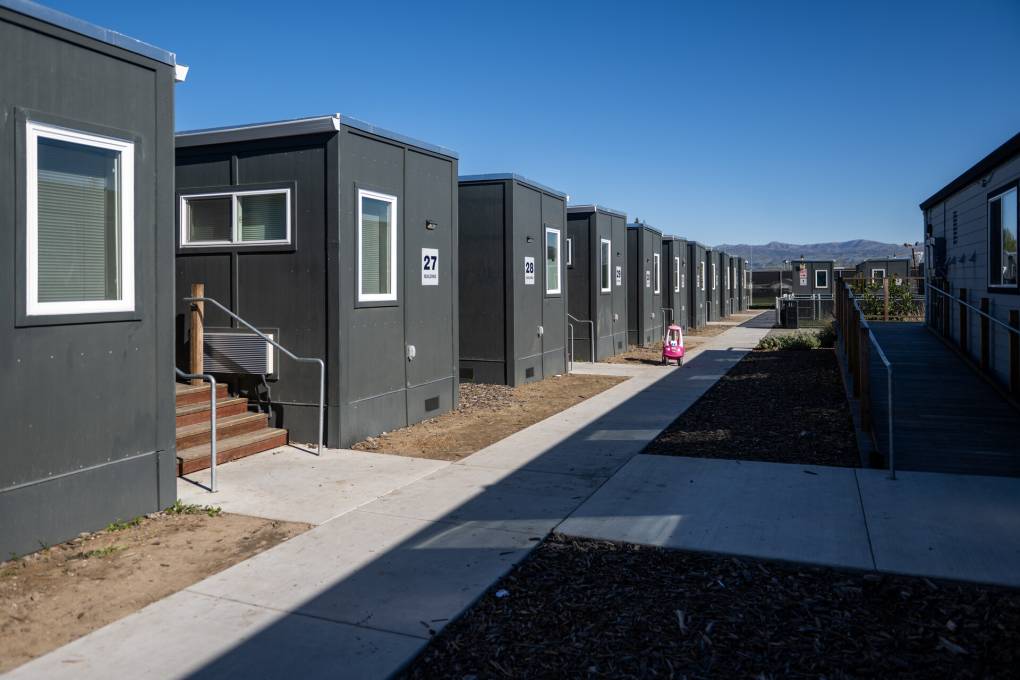
"caption": "Shipping containers converted to homes line the perimeter of Evans Lane housing, an interim housing facility located on city-owned land in San José, on Jan. 30, 2023.",
"description": null,
"title": "RS62440_008_KQED_SanJoseInterimHousing_01302023-qut",
"credit": "Beth LaBerge/KQED",
"status": "inherit",
"altTag": "Neat rows of gray shipping containers have been converted into housing. A kid's Little Tikes car in yellow and red is seen on the sidewalk in the distance.",
"isLoading": false,
"fetchFailed": false
},
"news_11949856": {
"type": "attachments",
"id": "news_11949856",
"meta": {
"index": "attachments_1716263798",
"site": "news",
"id": "11949856",
"found": true
},
"parent": 11952913,
"imgSizes": {
"twentyfourteen-full-width": {
"file": "https://ww2.kqed.org/app/uploads/sites/10/2023/05/RS62452_022_KQED_SanJoseInterimHousing_01302023-qut-1038x576.jpg",
"width": 1038,
"mimeType": "image/jpeg",
"height": 576
},
"thumbnail": {
"file": "https://ww2.kqed.org/app/uploads/sites/10/2023/05/RS62452_022_KQED_SanJoseInterimHousing_01302023-qut-160x107.jpg",
"width": 160,
"mimeType": "image/jpeg",
"height": 107
},
"post-thumbnail": {
"file": "https://ww2.kqed.org/app/uploads/sites/10/2023/05/RS62452_022_KQED_SanJoseInterimHousing_01302023-qut-672x372.jpg",
"width": 672,
"mimeType": "image/jpeg",
"height": 372
},
"kqedFullSize": {
"file": "https://ww2.kqed.org/app/uploads/sites/10/2023/05/RS62452_022_KQED_SanJoseInterimHousing_01302023-qut.jpg",
"width": 1920,
"height": 1280
},
"large": {
"file": "https://ww2.kqed.org/app/uploads/sites/10/2023/05/RS62452_022_KQED_SanJoseInterimHousing_01302023-qut-1020x680.jpg",
"width": 1020,
"mimeType": "image/jpeg",
"height": 680
},
"1536x1536": {
"file": "https://ww2.kqed.org/app/uploads/sites/10/2023/05/RS62452_022_KQED_SanJoseInterimHousing_01302023-qut-1536x1024.jpg",
"width": 1536,
"mimeType": "image/jpeg",
"height": 1024
},
"medium": {
"file": "https://ww2.kqed.org/app/uploads/sites/10/2023/05/RS62452_022_KQED_SanJoseInterimHousing_01302023-qut-800x533.jpg",
"width": 800,
"mimeType": "image/jpeg",
"height": 533
}
},
"publishDate": 1684350739,
"modified": 1686768473,
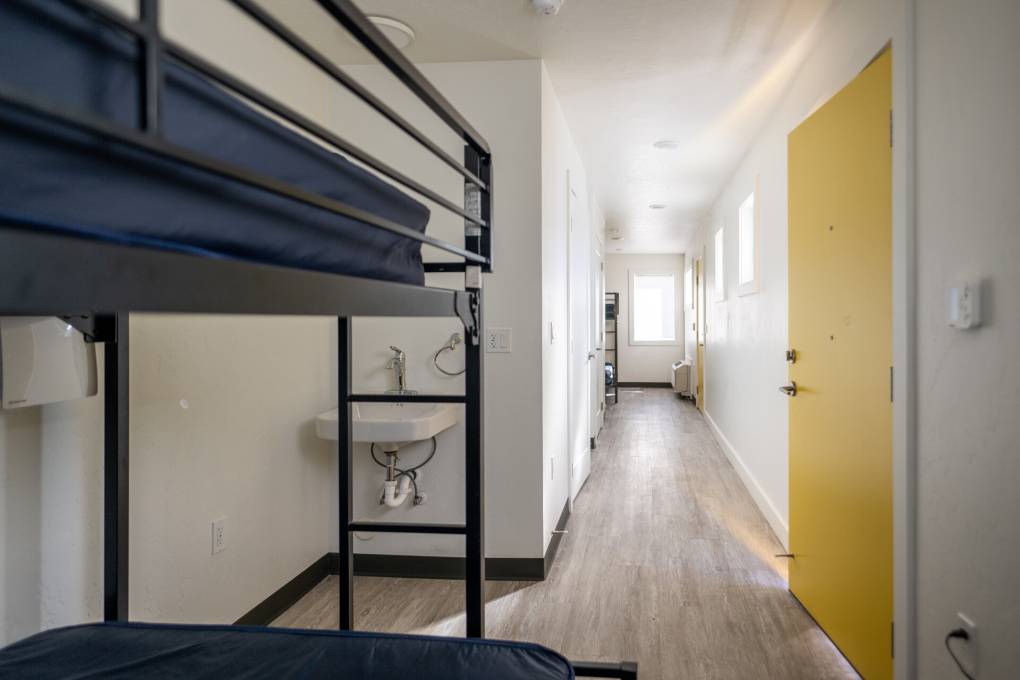
"caption": "The interior of a family home at Evans Lane, an interim housing facility located on city-owned land in San José, on Jan. 30, 2023.",
"description": null,
"title": "RS62452_022_KQED_SanJoseInterimHousing_01302023-qut",
"credit": "Beth LaBerge/KQED",
"status": "inherit",
"altTag": "A bunk bed with black frame and mattresses covered in navy sheets is inside a small shipping container that was converted into temporary housing. A yellow door and a sink are seen just behind the bunk bed.",
"isLoading": false,
"fetchFailed": false
},
"news_11942804": {
"type": "attachments",
"id": "news_11942804",
"meta": {
"index": "attachments_1716263798",
"site": "news",
"id": "11942804",
"found": true
},
"parent": 11942734,
"imgSizes": {
"twentyfourteen-full-width": {
"file": "https://ww2.kqed.org/app/uploads/sites/10/2023/03/RS62446_016_KQED_SanJoseInterimHousing_01302023-qut-1038x576.jpg",
"width": 1038,
"mimeType": "image/jpeg",
"height": 576
},
"thumbnail": {
"file": "https://ww2.kqed.org/app/uploads/sites/10/2023/03/RS62446_016_KQED_SanJoseInterimHousing_01302023-qut-160x107.jpg",
"width": 160,
"mimeType": "image/jpeg",
"height": 107
},
"post-thumbnail": {
"file": "https://ww2.kqed.org/app/uploads/sites/10/2023/03/RS62446_016_KQED_SanJoseInterimHousing_01302023-qut-672x372.jpg",
"width": 672,
"mimeType": "image/jpeg",
"height": 372
},
"kqedFullSize": {
"file": "https://ww2.kqed.org/app/uploads/sites/10/2023/03/RS62446_016_KQED_SanJoseInterimHousing_01302023-qut.jpg",
"width": 1920,
"height": 1280
},
"large": {
"file": "https://ww2.kqed.org/app/uploads/sites/10/2023/03/RS62446_016_KQED_SanJoseInterimHousing_01302023-qut-1020x680.jpg",
"width": 1020,
"mimeType": "image/jpeg",
"height": 680
},
"1536x1536": {
"file": "https://ww2.kqed.org/app/uploads/sites/10/2023/03/RS62446_016_KQED_SanJoseInterimHousing_01302023-qut-1536x1024.jpg",
"width": 1536,
"mimeType": "image/jpeg",
"height": 1024
},
"medium": {
"file": "https://ww2.kqed.org/app/uploads/sites/10/2023/03/RS62446_016_KQED_SanJoseInterimHousing_01302023-qut-800x533.jpg",
"width": 800,
"mimeType": "image/jpeg",
"height": 533
}
},
"publishDate": 1678222039,
"modified": 1678222419,
"caption": "Amanda Mora, a resident of Evans Lane, an interim housing facility located on city-owned land, in San José, tours the property on Jan. 30, 2023.",
"description": null,
"title": "RS62446_016_KQED_SanJoseInterimHousing_01302023-qut",
"credit": "Beth LaBerge/KQED",
"status": "inherit",
"altTag": null,
"isLoading": false,
"fetchFailed": false
},
"news_11937446": {
"type": "attachments",
"id": "news_11937446",
"meta": {
"index": "attachments_1716263798",
"site": "news",
"id": "11937446",
"found": true
},
"parent": 11937410,
"imgSizes": {
"twentyfourteen-full-width": {
"file": "https://ww2.kqed.org/app/uploads/sites/10/2023/01/RS59959_026_KQED_MattMahanSanJose_11082022-qut-1038x576.jpg",
"width": 1038,
"mimeType": "image/jpeg",
"height": 576
},
"thumbnail": {
"file": "https://ww2.kqed.org/app/uploads/sites/10/2023/01/RS59959_026_KQED_MattMahanSanJose_11082022-qut-160x107.jpg",
"width": 160,
"mimeType": "image/jpeg",
"height": 107
},
"post-thumbnail": {
"file": "https://ww2.kqed.org/app/uploads/sites/10/2023/01/RS59959_026_KQED_MattMahanSanJose_11082022-qut-672x372.jpg",
"width": 672,
"mimeType": "image/jpeg",
"height": 372
},
"kqedFullSize": {
"file": "https://ww2.kqed.org/app/uploads/sites/10/2023/01/RS59959_026_KQED_MattMahanSanJose_11082022-qut.jpg",
"width": 1920,
"height": 1280
},
"large": {
"file": "https://ww2.kqed.org/app/uploads/sites/10/2023/01/RS59959_026_KQED_MattMahanSanJose_11082022-qut-1020x680.jpg",
"width": 1020,
"mimeType": "image/jpeg",
"height": 680
},
"1536x1536": {
"file": "https://ww2.kqed.org/app/uploads/sites/10/2023/01/RS59959_026_KQED_MattMahanSanJose_11082022-qut-1536x1024.jpg",
"width": 1536,
"mimeType": "image/jpeg",
"height": 1024
},
"medium": {
"file": "https://ww2.kqed.org/app/uploads/sites/10/2023/01/RS59959_026_KQED_MattMahanSanJose_11082022-qut-800x533.jpg",
"width": 800,
"mimeType": "image/jpeg",
"height": 533
}
},
"publishDate": 1673295494,
"modified": 1673382949,
"caption": "San José mayoral candidate Matt Mahan at his campaign headquarters in San José on Election Day, Nov. 8, 2022.",
"description": null,
"title": "RS59959_026_KQED_MattMahanSanJose_11082022-qut",
"credit": "Beth LaBerge/KQED",
"status": "inherit",
"altTag": null,
"isLoading": false,
"fetchFailed": false
},
"news_11934271": {
"type": "attachments",
"id": "news_11934271",
"meta": {
"index": "attachments_1716263798",
"site": "news",
"id": "11934271",
"found": true
},
"parent": 11934261,
"imgSizes": {
"twentyfourteen-full-width": {
"file": "https://ww2.kqed.org/app/uploads/sites/10/2022/12/RS61499_IMG_4613-qut-1038x576.jpg",
"width": 1038,
"mimeType": "image/jpeg",
"height": 576
},
"thumbnail": {
"file": "https://ww2.kqed.org/app/uploads/sites/10/2022/12/RS61499_IMG_4613-qut-160x99.jpg",
"width": 160,
"mimeType": "image/jpeg",
"height": 99
},
"post-thumbnail": {
"file": "https://ww2.kqed.org/app/uploads/sites/10/2022/12/RS61499_IMG_4613-qut-672x372.jpg",
"width": 672,
"mimeType": "image/jpeg",
"height": 372
},
"kqedFullSize": {
"file": "https://ww2.kqed.org/app/uploads/sites/10/2022/12/RS61499_IMG_4613-qut.jpg",
"width": 1920,
"height": 1182
},
"large": {
"file": "https://ww2.kqed.org/app/uploads/sites/10/2022/12/RS61499_IMG_4613-qut-1020x628.jpg",
"width": 1020,
"mimeType": "image/jpeg",
"height": 628
},
"1536x1536": {
"file": "https://ww2.kqed.org/app/uploads/sites/10/2022/12/RS61499_IMG_4613-qut-1536x946.jpg",
"width": 1536,
"mimeType": "image/jpeg",
"height": 946
},
"medium": {
"file": "https://ww2.kqed.org/app/uploads/sites/10/2022/12/RS61499_IMG_4613-qut-800x493.jpg",
"width": 800,
"mimeType": "image/jpeg",
"height": 493
}
},
"publishDate": 1670346027,
"modified": 1670352406,
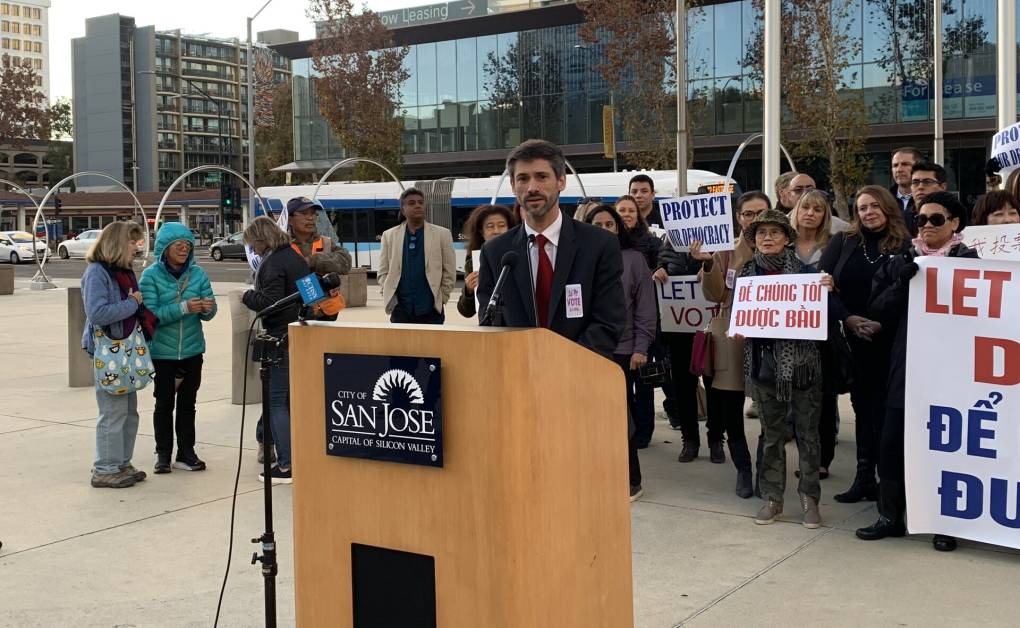
"caption": "San José Mayor-Elect Matt Mahan speaks at a rally outside San José City Hall in support of special elections to fill upcoming council vacancies in District 8 and District 10, on Dec. 5, 2022.",
"description": null,
"title": "RS61499_IMG_4613-qut",
"credit": "Guy Marzorati/KQED",
"status": "inherit",
"altTag": null,
"isLoading": false,
"fetchFailed": false
},
"news_11932435": {
"type": "attachments",
"id": "news_11932435",
"meta": {
"index": "attachments_1716263798",
"site": "news",
"id": "11932435",
"found": true
},
"parent": 11932432,
"imgSizes": {
"twentyfourteen-full-width": {
"file": "https://ww2.kqed.org/app/uploads/sites/10/2022/11/RS60160_IMG_0533-qut-1038x576.jpg",
"width": 1038,
"mimeType": "image/jpeg",
"height": 576
},
"thumbnail": {
"file": "https://ww2.kqed.org/app/uploads/sites/10/2022/11/RS60160_IMG_0533-qut-160x107.jpg",
"width": 160,
"mimeType": "image/jpeg",
"height": 107
},
"post-thumbnail": {
"file": "https://ww2.kqed.org/app/uploads/sites/10/2022/11/RS60160_IMG_0533-qut-672x372.jpg",
"width": 672,
"mimeType": "image/jpeg",
"height": 372
},
"kqedFullSize": {
"file": "https://ww2.kqed.org/app/uploads/sites/10/2022/11/RS60160_IMG_0533-qut.jpg",
"width": 1920,
"height": 1280
},
"large": {
"file": "https://ww2.kqed.org/app/uploads/sites/10/2022/11/RS60160_IMG_0533-qut-1020x680.jpg",
"width": 1020,
"mimeType": "image/jpeg",
"height": 680
},
"1536x1536": {
"file": "https://ww2.kqed.org/app/uploads/sites/10/2022/11/RS60160_IMG_0533-qut-1536x1024.jpg",
"width": 1536,
"mimeType": "image/jpeg",
"height": 1024
},
"medium": {
"file": "https://ww2.kqed.org/app/uploads/sites/10/2022/11/RS60160_IMG_0533-qut-800x533.jpg",
"width": 800,
"mimeType": "image/jpeg",
"height": 533
}
},
"publishDate": 1668631899,
"modified": 1668646131,
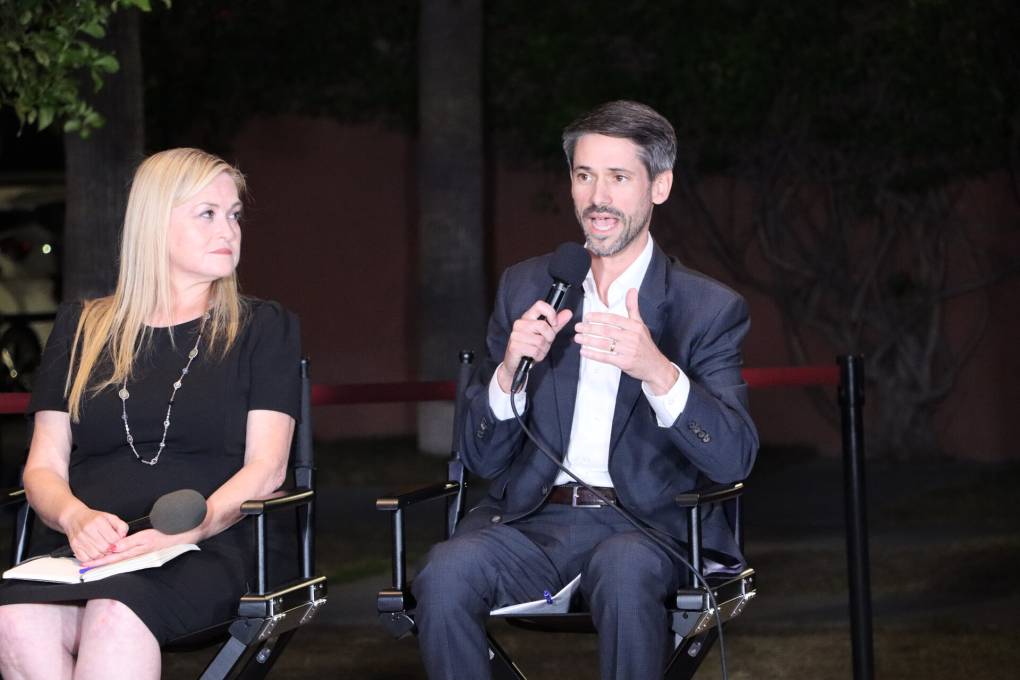
"caption": "Santa Clara County Supervisor Cindy Chavez and San José City Council member Matt Mahan debate at the KQED Univision San José Mayoral Candidates Forum on Oct. 13, 2022, in the city's Mexican Heritage Plaza.",
"description": null,
"title": "RS60160_IMG_0533-qut",
"credit": "Marky Enriquez/KQED",
"status": "inherit",
"altTag": "A white woman with blonde hair and a black dress looks at a speaking white man with dark hair and a suit, both are seated",
"isLoading": false,
"fetchFailed": false
},
"news_11931526": {
"type": "attachments",
"id": "news_11931526",
"meta": {
"index": "attachments_1716263798",
"site": "news",
"id": "11931526",
"found": true
},
"parent": 0,
"imgSizes": {
"twentyfourteen-full-width": {
"file": "https://ww2.kqed.org/app/uploads/sites/10/2022/11/019_KQED_MattMahanSanJose_11082022-1038x576.jpg",
"width": 1038,
"mimeType": "image/jpeg",
"height": 576
},
"thumbnail": {
"file": "https://ww2.kqed.org/app/uploads/sites/10/2022/11/019_KQED_MattMahanSanJose_11082022-160x107.jpg",
"width": 160,
"mimeType": "image/jpeg",
"height": 107
},
"post-thumbnail": {
"file": "https://ww2.kqed.org/app/uploads/sites/10/2022/11/019_KQED_MattMahanSanJose_11082022-672x372.jpg",
"width": 672,
"mimeType": "image/jpeg",
"height": 372
},
"kqedFullSize": {
"file": "https://ww2.kqed.org/app/uploads/sites/10/2022/11/019_KQED_MattMahanSanJose_11082022.jpg",
"width": 1920,
"height": 1280
},
"large": {
"file": "https://ww2.kqed.org/app/uploads/sites/10/2022/11/019_KQED_MattMahanSanJose_11082022-1020x680.jpg",
"width": 1020,
"mimeType": "image/jpeg",
"height": 680
},
"1536x1536": {
"file": "https://ww2.kqed.org/app/uploads/sites/10/2022/11/019_KQED_MattMahanSanJose_11082022-1536x1024.jpg",
"width": 1536,
"mimeType": "image/jpeg",
"height": 1024
},
"medium": {
"file": "https://ww2.kqed.org/app/uploads/sites/10/2022/11/019_KQED_MattMahanSanJose_11082022-800x533.jpg",
"width": 800,
"mimeType": "image/jpeg",
"height": 533
}
},
"publishDate": 1667958070,
"modified": 1667958119,
"caption": "San Jose mayoral candidate Matt Mahan hi-fives with a campaign staff member at his campaign headquarters in San Jose on Election Day, Nov. 8, 2022.",
"description": null,
"title": "019_KQED_MattMahanSanJose_11082022",
"credit": "Beth LaBerge/KQED",
"status": "inherit",
"altTag": "San Jose mayoral candidate Matt Mahan.",
"isLoading": false,
"fetchFailed": false
},
"news_11928939": {
"type": "attachments",
"id": "news_11928939",
"meta": {
"index": "attachments_1716263798",
"site": "news",
"id": "11928939",
"found": true
},
"parent": 11928937,
"imgSizes": {
"twentyfourteen-full-width": {
"file": "https://ww2.kqed.org/app/uploads/sites/10/2022/10/Screen-Shot-2022-10-14-at-12.19.22-PM-1038x576.png",
"width": 1038,
"mimeType": "image/png",
"height": 576
},
"thumbnail": {
"file": "https://ww2.kqed.org/app/uploads/sites/10/2022/10/Screen-Shot-2022-10-14-at-12.19.22-PM-160x102.png",
"width": 160,
"mimeType": "image/png",
"height": 102
},
"post-thumbnail": {
"file": "https://ww2.kqed.org/app/uploads/sites/10/2022/10/Screen-Shot-2022-10-14-at-12.19.22-PM-672x372.png",
"width": 672,
"mimeType": "image/png",
"height": 372
},
"kqedFullSize": {
"file": "https://ww2.kqed.org/app/uploads/sites/10/2022/10/Screen-Shot-2022-10-14-at-12.19.22-PM.png",
"width": 2256,
"height": 1445
},
"2048x2048": {
"file": "https://ww2.kqed.org/app/uploads/sites/10/2022/10/Screen-Shot-2022-10-14-at-12.19.22-PM-2048x1312.png",
"width": 2048,
"mimeType": "image/png",
"height": 1312
},
"large": {
"file": "https://ww2.kqed.org/app/uploads/sites/10/2022/10/Screen-Shot-2022-10-14-at-12.19.22-PM-1020x653.png",
"width": 1020,
"mimeType": "image/png",
"height": 653
},
"1536x1536": {
"file": "https://ww2.kqed.org/app/uploads/sites/10/2022/10/Screen-Shot-2022-10-14-at-12.19.22-PM-1536x984.png",
"width": 1536,
"mimeType": "image/png",
"height": 984
},
"full-width": {
"file": "https://ww2.kqed.org/app/uploads/sites/10/2022/10/Screen-Shot-2022-10-14-at-12.19.22-PM-1920x1230.png",
"width": 1920,
"mimeType": "image/png",
"height": 1230
},
"medium": {
"file": "https://ww2.kqed.org/app/uploads/sites/10/2022/10/Screen-Shot-2022-10-14-at-12.19.22-PM-800x512.png",
"width": 800,
"mimeType": "image/png",
"height": 512
}
},
"publishDate": 1665775191,
"modified": 1667869300,
"caption": "Santa Clara County Supervisor Cindy Chavez and San José City Council member Matt Mahan debate at a San José mayoral forum on Oct. 13, 2022.",
"description": null,
"title": "Screen Shot 2022-10-14 at 12.19.22 PM",
"credit": "KQED Live",
"status": "inherit",
"altTag": "A man and woman sit together on a stage.",
"isLoading": false,
"fetchFailed": false
},
"news_11928158": {
"type": "attachments",
"id": "news_11928158",
"meta": {
"index": "attachments_1716263798",
"site": "news",
"id": "11928158",
"found": true
},
"parent": 11928149,
"imgSizes": {
"twentyfourteen-full-width": {
"file": "https://ww2.kqed.org/app/uploads/sites/10/2022/10/RS36032__M6A0599-qut-1038x576.jpg",
"width": 1038,
"mimeType": "image/jpeg",
"height": 576
},
"thumbnail": {
"file": "https://ww2.kqed.org/app/uploads/sites/10/2022/10/RS36032__M6A0599-qut-160x107.jpg",
"width": 160,
"mimeType": "image/jpeg",
"height": 107
},
"post-thumbnail": {
"file": "https://ww2.kqed.org/app/uploads/sites/10/2022/10/RS36032__M6A0599-qut-672x372.jpg",
"width": 672,
"mimeType": "image/jpeg",
"height": 372
},
"kqedFullSize": {
"file": "https://ww2.kqed.org/app/uploads/sites/10/2022/10/RS36032__M6A0599-qut.jpg",
"width": 1920,
"height": 1280
},
"large": {
"file": "https://ww2.kqed.org/app/uploads/sites/10/2022/10/RS36032__M6A0599-qut-1020x680.jpg",
"width": 1020,
"mimeType": "image/jpeg",
"height": 680
},
"1536x1536": {
"file": "https://ww2.kqed.org/app/uploads/sites/10/2022/10/RS36032__M6A0599-qut-1536x1024.jpg",
"width": 1536,
"mimeType": "image/jpeg",
"height": 1024
},
"medium": {
"file": "https://ww2.kqed.org/app/uploads/sites/10/2022/10/RS36032__M6A0599-qut-800x533.jpg",
"width": 800,
"mimeType": "image/jpeg",
"height": 533
}
},
"publishDate": 1665261056,
"modified": 1665435581,
"caption": "The winner of the November 8 runoff faces a short runway to show results. San José's mayor has few powers beyond that of a councilmember, but both Mahan and Chavez feel an urgency to show immediate results.",
"description": null,
"title": "RS36032__M6A0599-qut",
"credit": "Sruti Mamidanna/KQED",
"status": "inherit",
"altTag": "A view of San Jose City Hall, a large modern white 15-story building with a glass dome in the foreground and a sign out front that says \"San Jose City Hall\"",
"isLoading": false,
"fetchFailed": false
},
"news_11916460": {
"type": "attachments",
"id": "news_11916460",
"meta": {
"index": "attachments_1716263798",
"site": "news",
"id": "11916460",
"found": true
},
"parent": 11915899,
"imgSizes": {
"twentyfourteen-full-width": {
"file": "https://ww2.kqed.org/app/uploads/sites/10/2022/06/SJ-race-1-1038x576.jpg",
"width": 1038,
"mimeType": "image/jpeg",
"height": 576
},
"thumbnail": {
"file": "https://ww2.kqed.org/app/uploads/sites/10/2022/06/SJ-race-1-160x89.jpg",
"width": 160,
"mimeType": "image/jpeg",
"height": 89
},
"post-thumbnail": {
"file": "https://ww2.kqed.org/app/uploads/sites/10/2022/06/SJ-race-1-672x372.jpg",
"width": 672,
"mimeType": "image/jpeg",
"height": 372
},
"kqedFullSize": {
"file": "https://ww2.kqed.org/app/uploads/sites/10/2022/06/SJ-race-1.jpg",
"width": 1654,
"height": 922
},
"large": {
"file": "https://ww2.kqed.org/app/uploads/sites/10/2022/06/SJ-race-1-1020x569.jpg",
"width": 1020,
"mimeType": "image/jpeg",
"height": 569
},
"1536x1536": {
"file": "https://ww2.kqed.org/app/uploads/sites/10/2022/06/SJ-race-1-1536x856.jpg",
"width": 1536,
"mimeType": "image/jpeg",
"height": 856
},
"medium": {
"file": "https://ww2.kqed.org/app/uploads/sites/10/2022/06/SJ-race-1-800x446.jpg",
"width": 800,
"mimeType": "image/jpeg",
"height": 446
}
},
"publishDate": 1654672562,
"modified": 1654672625,
"caption": "Santa Clara County Supervisor Cindy Chavez, left, and San José City Councilmember Matt Mahan will face each other in San José's November mayoral election.",
"description": null,
"title": "SJ-race",
"credit": "Carlos Cabrera-Lomelí/KQED",
"status": "inherit",
"altTag": null,
"isLoading": false,
"fetchFailed": false
}
},
"audioPlayerReducer": {
"postId": "stream_live",
"isPaused": true,
"isPlaying": false,
"pfsActive": false,
"pledgeModalIsOpen": true,
"playerDrawerIsOpen": false,
"liveAudioPlayStartedAt": 0,
"liveAudioPlayContext": ""
},
"authorsReducer": {
"gmarzorati": {
"type": "authors",
"id": "227",
"meta": {
"index": "authors_1716337520",
"id": "227",
"found": true
},
"name": "Guy Marzorati",
"firstName": "Guy",
"lastName": "Marzorati",
"slug": "gmarzorati",
"email": "gmarzorati@KQED.org",
"display_author_email": true,
"staff_mastheads": [
"news"
],
"title": "Correspondent",
"bio": "Guy Marzorati is a correspondent on KQED's California Politics and Government Desk, based in San Jose. A graduate of Santa Clara University, Guy joined KQED in 2013. He reports on state and local politics and produces KQED's digital voter guide.",
"avatar": "https://secure.gravatar.com/avatar/e7038b8dbfd55b104369b76b1cd0b9de?s=600&d=blank&r=g",
"twitter": "guymarzorati",
"facebook": null,
"instagram": null,
"linkedin": null,
"sites": [
{
"site": "",
"roles": [
"editor"
]
},
{
"site": "news",
"roles": [
"editor"
]
},
{
"site": "science",
"roles": [
"editor"
]
},
{
"site": "forum",
"roles": [
"editor"
]
},
{
"site": "elections",
"roles": [
"editor"
]
},
{
"site": "liveblog",
"roles": [
"editor"
]
}
],
"headData": {
"title": "Guy Marzorati | KQED",
"description": "Correspondent",
"ogImgSrc": "https://secure.gravatar.com/avatar/e7038b8dbfd55b104369b76b1cd0b9de?s=600&d=blank&r=g",
"twImgSrc": "https://secure.gravatar.com/avatar/e7038b8dbfd55b104369b76b1cd0b9de?s=600&d=blank&r=g"
},
"isLoading": false,
"link": "/author/gmarzorati"
},
"ecruzguevarra": {
"type": "authors",
"id": "8654",
"meta": {
"index": "authors_1716337520",
"id": "8654",
"found": true
},
"name": "Ericka Cruz Guevarra",
"firstName": "Ericka",
"lastName": "Cruz Guevarra",
"slug": "ecruzguevarra",
"email": "ecruzguevarra@kqed.org",
"display_author_email": true,
"staff_mastheads": [
"news"
],
"title": "Producer, The Bay Podcast",
"bio": "Ericka Cruz Guevarra is host of \u003ca href=\"https://www.kqed.org/podcasts/thebay\">\u003cem>The Bay\u003c/em>\u003c/a> podcast at KQED. Before host, she was the show’s producer. Her work in that capacity includes a three-part reported series on policing in Vallejo, which won a 2020 excellence in journalism award from the Society of Professional Journalists. Ericka has worked as a breaking news reporter at Oregon Public Broadcasting, helped produce the Code Switch podcast, and was KQED’s inaugural Raul Ramirez Diversity Fund intern. She’s also an alumna of NPR’s Next Generation Radio program. Send her an email if you have strong feelings about whether Fairfield and Suisun City are the Bay. Ericka is represented by SAG-AFTRA.",
"avatar": "https://secure.gravatar.com/avatar/accefc1de4bafc7e234b69bcb9b6f6536c130fd84709bc3069ef11a78787e1bb?s=600&d=blank&r=g",
"twitter": "NotoriousECG",
"bluesky": null,
"facebook": null,
"instagram": null,
"linkedin": null,
"sites": [
{
"site": "arts",
"roles": [
"subscriber"
]
},
{
"site": "news",
"roles": [
"editor",
"manage_categories"
]
},
{
"site": "futureofyou",
"roles": [
"subscriber"
]
},
{
"site": "stateofhealth",
"roles": [
"subscriber"
]
},
{
"site": "science",
"roles": [
"editor"
]
},
{
"site": "forum",
"roles": [
"subscriber"
]
}
],
"headData": {
"title": "Ericka Cruz Guevarra | KQED",
"description": "Producer, The Bay Podcast",
"ogImgSrc": "https://secure.gravatar.com/avatar/accefc1de4bafc7e234b69bcb9b6f6536c130fd84709bc3069ef11a78787e1bb?s=600&d=blank&r=g",
"twImgSrc": "https://secure.gravatar.com/avatar/accefc1de4bafc7e234b69bcb9b6f6536c130fd84709bc3069ef11a78787e1bb?s=600&d=blank&r=g"
},
"isLoading": false,
"link": "/author/ecruzguevarra"
},
"amontecillo": {
"type": "authors",
"id": "11649",
"meta": {
"index": "authors_1716337520",
"id": "11649",
"found": true
},
"name": "Alan Montecillo",
"firstName": "Alan",
"lastName": "Montecillo",
"slug": "amontecillo",
"email": "amontecillo@kqed.org",
"display_author_email": false,
"staff_mastheads": [
"news"
],
"title": "KQED Contributor",
"bio": "Alan Montecillo is the senior editor of \u003cem>\u003ca href=\"http://kqed.org/thebay\">The Bay\u003c/a>, \u003c/em> KQED's local news podcast. Before moving to the Bay Area, he worked as a senior talk show producer for WILL in Champaign-Urbana, Illinois and at Oregon Public Broadcasting in Portland, Oregon. He has won journalism awards from the Society of Professional Journalists Northern California, the Public Media Journalists Association, The Signal Awards, and has also received a regional Edward R. Murrow award. Alan is a Filipino American from Hong Kong and a graduate of Reed College.",
"avatar": "https://secure.gravatar.com/avatar/268f53a2066899ea9efdd8a5900218b17c822d9862cbc9326cccec53ef41d349?s=600&d=blank&r=g",
"twitter": "alanmontecillo",
"bluesky": null,
"facebook": null,
"instagram": null,
"linkedin": null,
"sites": [
{
"site": "",
"roles": [
"editor"
]
},
{
"site": "news",
"roles": [
"editor",
"manage_categories"
]
}
],
"headData": {
"title": "Alan Montecillo | KQED",
"description": "KQED Contributor",
"ogImgSrc": "https://secure.gravatar.com/avatar/268f53a2066899ea9efdd8a5900218b17c822d9862cbc9326cccec53ef41d349?s=600&d=blank&r=g",
"twImgSrc": "https://secure.gravatar.com/avatar/268f53a2066899ea9efdd8a5900218b17c822d9862cbc9326cccec53ef41d349?s=600&d=blank&r=g"
},
"isLoading": false,
"link": "/author/amontecillo"
},
"ccabreralomeli": {
"type": "authors",
"id": "11708",
"meta": {
"index": "authors_1716337520",
"id": "11708",
"found": true
},
"name": "Carlos Cabrera-Lomelí",
"firstName": "Carlos",
"lastName": "Cabrera-Lomelí",
"slug": "ccabreralomeli",
"email": "ccabreralomeli@KQED.org",
"display_author_email": true,
"staff_mastheads": [
"news"
],
"title": "Community Reporter",
"bio": "Carlos Cabrera-Lomelí is a community reporter with KQED's digital engagement team. He also reports and co-produces for KQED's bilingual news hub KQED en Español. He grew up in San Francisco's Mission District and has previously worked with Univision, 48 Hills and REFORMA in Mexico City.",
"avatar": "https://secure.gravatar.com/avatar/c309be9665e484f887b818c89e273ecc673004f426f36b24d00a4d813a2e0518?s=600&d=blank&r=g",
"twitter": "@LomeliCabrera",
"bluesky": null,
"facebook": null,
"instagram": null,
"linkedin": null,
"sites": [
{
"site": "arts",
"roles": [
"editor"
]
},
{
"site": "news",
"roles": [
"editor"
]
},
{
"site": "about",
"roles": [
"editor"
]
},
{
"site": "science",
"roles": [
"editor"
]
},
{
"site": "perspectives",
"roles": [
"editor"
]
},
{
"site": "elections",
"roles": [
"editor"
]
},
{
"site": "liveblog",
"roles": [
"contributor"
]
}
],
"headData": {
"title": "Carlos Cabrera-Lomelí | KQED",
"description": "Community Reporter",
"ogImgSrc": "https://secure.gravatar.com/avatar/c309be9665e484f887b818c89e273ecc673004f426f36b24d00a4d813a2e0518?s=600&d=blank&r=g",
"twImgSrc": "https://secure.gravatar.com/avatar/c309be9665e484f887b818c89e273ecc673004f426f36b24d00a4d813a2e0518?s=600&d=blank&r=g"
},
"isLoading": false,
"link": "/author/ccabreralomeli"
}
},
"pagesReducer": {
"news_tag_matt-mahan": {
"type": "terms",
"id": "news_31197",
"meta": {
"index": "terms_1716263798",
"site": "news",
"id": "31197",
"score": 9.892343
},
"name": "Matt Mahan",
"slug": "matt-mahan",
"taxonomy": "tag",
"description": null,
"featImg": null,
"headData": {
"title": "Matt Mahan | KQED News",
"description": null,
"ogTitle": null,
"ogDescription": null,
"ogImgId": null,
"twTitle": null,
"twDescription": null,
"twImgId": null
},
"ttid": 31214,
"isLoading": false,
"title": "Matt Mahan",
"pageMeta": {
"site": "news",
"WpPageTemplate": "page-topic-editorial",
"currentPage": 5
},
"blocks": [
{
"blockName": "kqed/post-list",
"attrs": {
"layout": "cardArticle2",
"query": "posts/news?tag=matt-mahan",
"seeMore": false,
"paginated": true,
"page": 5
}
},
{
"blockName": "kqed/ad"
}
]
}
},
"pfsSessionReducer": {},
"postsReducer": {
"stream_live": {
"type": "live",
"id": "stream_live",
"audioUrl": "https://streams.kqed.org/kqedradio",
"title": "Live Stream",
"excerpt": "Live Stream information currently unavailable.",
"link": "/radio",
"featImg": "",
"label": {
"name": "KQED Live",
"link": "/"
}
},
"stream_kqedNewscast": {
"type": "posts",
"id": "stream_kqedNewscast",
"audioUrl": "https://www.kqed.org/.stream/anon/radio/RDnews/newscast.mp3?_=1",
"title": "KQED Newscast",
"featImg": "",
"label": {
"name": "88.5 FM",
"link": "/"
}
},
"news_11951100": {
"type": "posts",
"id": "news_11951100",
"meta": {
"index": "posts_1716263798",
"site": "news",
"id": "11951100",
"score": null,
"sort": [
1685557999000
]
},
"guestAuthors": [],
"slug": "san-joses-flea-market-la-pulga-has-new-vendor-group-voicing-its-future",
"title": "San José’s Flea Market, La Pulga, Has New Vendor Group Voicing Its Future",
"publishDate": 1685557999,
"format": "standard",
"headTitle": "San José’s Flea Market, La Pulga, Has New Vendor Group Voicing Its Future | KQED",
"labelTerm": {
"site": "news"
},
"content": "\u003cp>Discussions about the future of \u003ca href=\"https://www.kqed.org/arts/13905374/la-pulga-san-jose-flea-market-redevelopment-eulogy\">San José’s Berryessa Flea Market\u003c/a> are quietly underway. A group of vendors advising the city about the path ahead for the legendary bazaar began meeting this month ahead of what feels like a perennially impending closure.\u003c/p>\n\u003cp>The \u003ca href=\"https://www.kqed.org/news/11879717/san-jose-approves-plan-to-radically-transform-flea-market-site\">Flea Market Advisory Group\u003c/a> was created by the San José City Council in 2021, when the city approved an update to a rezoning plan that will eliminate most of the 60-acre market known as La Pulga to make way for housing and retail near the Berryessa/North San José BART station. The group is charged with advising the city on how best to aid \u003ca href=\"https://www.kqed.org/news/11916729/my-roots-are-at-the-flea-market-as-la-pulga-closure-looms-over-vendors-one-san-jose-family-weighs-the-future\">the hundreds of small businesses that will be displaced\u003c/a> by the development.\u003c/p>\n\u003cp>In the months ahead, the group is expected to address thorny issues such as how to divide a pool of financial compensation for vendors, and how to design the 5 acres of the current lot that will remain in the new project.\u003c/p>\n\u003cp>[ad fullwidth]\u003c/p>\n\u003cp>At the task force’s first meeting, held on May 17 at the Berryessa Community Center, the new vendor leaders spoke before a room of roughly 50 people. They heard from stand owners who are facing the immediate challenges of rising costs of parking and declining sales. Then there’s the open question of when exactly the market will close — and divided views on where vendors should go when it does.\u003c/p>\n\u003cp>“This is the first time that our voice is represented,” said advisory group member Alma Jacobo, after the first meeting. “It’s a victory and it’s a good way to move forward with our opinion.”\u003c/p>\n\u003cfigure id=\"attachment_11951122\" class=\"wp-caption aligncenter\" style=\"max-width: 1920px\">\u003cimg loading=\"lazy\" decoding=\"async\" class=\"size-full wp-image-11951122\" src=\"https://ww2.kqed.org/app/uploads/sites/10/2023/05/RS65913_20230517_kqed_berryessafleamarket-462-qut.jpg\" alt='A crowd of people, men and women, are sitting at tables listening intently to a speaker off camera. They each wear name tags that read, \"Roberto,\" \"Alma,\" and \"Erica.\" Many folks are seated in rows behind them inside this community meeting space.' width=\"1920\" height=\"1282\" srcset=\"https://cdn.kqed.org/wp-content/uploads/sites/10/2023/05/RS65913_20230517_kqed_berryessafleamarket-462-qut.jpg 1920w, https://cdn.kqed.org/wp-content/uploads/sites/10/2023/05/RS65913_20230517_kqed_berryessafleamarket-462-qut-800x534.jpg 800w, https://cdn.kqed.org/wp-content/uploads/sites/10/2023/05/RS65913_20230517_kqed_berryessafleamarket-462-qut-1020x681.jpg 1020w, https://cdn.kqed.org/wp-content/uploads/sites/10/2023/05/RS65913_20230517_kqed_berryessafleamarket-462-qut-160x107.jpg 160w, https://cdn.kqed.org/wp-content/uploads/sites/10/2023/05/RS65913_20230517_kqed_berryessafleamarket-462-qut-1536x1026.jpg 1536w\" sizes=\"(max-width: 1920px) 100vw, 1920px\">\u003cfigcaption class=\"wp-caption-text\">From left, Roberto Gonzalez, Alma Jacobo and Erika Barajas listen during a public meeting about the closure of La Pulga, the Berryessa Flea Market in San José. Gonzalez, Jacobo and Barajas are part of the city’s advisory group. \u003ccite>(Kori Suzuki/KQED)\u003c/cite>\u003c/figcaption>\u003c/figure>\n\u003cp>Jacobo’s family has operated an embroidery and silk screen business at the flea market for 35 years, printing shirts and uniforms for generations of San José small businesses. She said the advisory group recommendations should be informed by a thorough survey of vendors’ future plans. Some stand owners may decide to retire when the market closes, but others like Jacobo rely heavily on income from sales at the flea market.\u003c/p>\n\u003cp>[pullquote size=\"medium\" align=\"right\" citation=\"Alma Jacobo, advisory group member\"]‘This is the first time that our voice is represented. It’s a victory and it’s a good way to move forward with our opinion.’[/pullquote]\u003c/p>\n\u003cp>“I’m hoping that we find another spot where the culture and the main roots of the flea market are still intact,” she said.\u003c/p>\n\u003cp>Jacobo and 10 other advisory group members are tasked with counseling the city on how to spend a $7.5 million “vendor transition fund.” The flea market’s owners will pay $5 million, with a $2.5 million down payment coming from the city. The group will also provide input on the design of a 5-acre market that will house vendors in the new development, and keep vendors abreast of the market’s future plans.\u003c/p>\n\u003cp>That planning has been complicated by the market’s uncertain end date. The flea market’s slow demise was set in motion by a 2007 vote of the San José City Council to \u003ca href=\"https://www.mercurynews.com/2007/08/15/san-jose-council-approves-plan-to-rezone-flea-market-site/\">rezone the parcel along Berryessa Road\u003c/a> for a residential development plan proposed by the Bumb family, who owns the market. City leaders have argued the site’s transformation is necessary to advance the creation of dense housing near transit stops.\u003c/p>\n\u003cfigure id=\"attachment_11951105\" class=\"wp-caption aligncenter\" style=\"max-width: 1920px\">\u003cimg loading=\"lazy\" decoding=\"async\" class=\"size-full wp-image-11951105\" src=\"https://ww2.kqed.org/app/uploads/sites/10/2023/05/RS65901_20230517_kqed_berryessafleamarket-026-qut.jpg\" alt=\"A man's face is illuminated by outdoor lighting shining indoors as he sits among a large crowd listening to a speaker speak off camera. He has gray hair and a gray beard.\" width=\"1920\" height=\"1282\" srcset=\"https://cdn.kqed.org/wp-content/uploads/sites/10/2023/05/RS65901_20230517_kqed_berryessafleamarket-026-qut.jpg 1920w, https://cdn.kqed.org/wp-content/uploads/sites/10/2023/05/RS65901_20230517_kqed_berryessafleamarket-026-qut-800x534.jpg 800w, https://cdn.kqed.org/wp-content/uploads/sites/10/2023/05/RS65901_20230517_kqed_berryessafleamarket-026-qut-1020x681.jpg 1020w, https://cdn.kqed.org/wp-content/uploads/sites/10/2023/05/RS65901_20230517_kqed_berryessafleamarket-026-qut-160x107.jpg 160w, https://cdn.kqed.org/wp-content/uploads/sites/10/2023/05/RS65901_20230517_kqed_berryessafleamarket-026-qut-1536x1026.jpg 1536w\" sizes=\"(max-width: 1920px) 100vw, 1920px\">\u003cfigcaption class=\"wp-caption-text\">Jimmy Hernandez listens during a public meeting about the closure of the Berryessa Flea Market in San José, California. Hernandez, a longtime music and artwork vendor, is serving on the city’s advisory board. \u003ccite>(Kori Suzuki/KQED)\u003c/cite>\u003c/figcaption>\u003c/figure>\n\u003cp>Then, in 2021, the flea market owners returned to the council with a plan to increase the residential density at the site and add millions of square feet of potential commercial space. Vendors \u003ca href=\"https://www.kqed.org/news/11878548/san-jose-flea-market-leaders-end-hunger-strike-but-future-of-la-pulga-still-hangs-in-the-balance\">seized the opportunity to organize and leveraged the final vote\u003c/a> into financial support, the 5-acre market and the creation of the advisory group.\u003c/p>\n\u003cp>The deal stipulated that the market could close as soon as July 2024, with one-year eviction notices going to vendors the year prior. But in a recent filing with the city, the Bumb family disclosed that they would not issue closure notifications to vendors before Oct. 1, 2023 — meaning the earliest the flea market could close is Oct. 1, 2024.\u003c/p>\n\u003cp>[aside postID=news_11916729 hero='https://ww2.kqed.org/app/uploads/sites/10/2022/06/RS56053_20220402_SJFleaMarket_RamosWhites-07-2-qut-1020x680.jpg']\u003c/p>\n\u003cp>“We have no intention of closing right now,” said Patrick DeTar, a representative of the Bumb family, and the only non-vendor in the advisory group.\u003c/p>\n\u003cp>Adding to the uncertainty is the region’s diminished commercial real estate market, which could push development — and the eventual eviction notices — years into the future.\u003c/p>\n\u003cp>“The big challenge is this feeling that at any time it could be one year away, and that creates a sense of urgency that may not be needed, but certainly is understandable,” said San José City Councilmember David Cohen, whose district includes the flea market site.\u003c/p>\n\u003cp>Cohen said the advisory committee will have to balance a desire for a deliberative process — one that weighs the varied concerns of the vendor community — with the time-sensitive need to have a plan ready to go when the Bumb family begins issuing eviction notices.\u003c/p>\n\u003cp>Cohen added that he was excited to be “putting the future of the flea market in the hands of the vendors.” But some attendees at the meeting voiced a desire for the city to do more to ease the transition for vendors. Top of mind was the need for city staff to help disseminate information, because members of the advisory group said they are often too busy at their own stands to canvass the market and provide vendors updates about the task force’s work.\u003c/p>\n\u003cfigure id=\"attachment_11951118\" class=\"wp-caption aligncenter\" style=\"max-width: 1920px\">\u003cimg loading=\"lazy\" decoding=\"async\" class=\"size-full wp-image-11951118\" src=\"https://ww2.kqed.org/app/uploads/sites/10/2023/05/RS65919_20230517_kqed_berryessafleamarket-595-qut.jpg\" alt=\"Two men are standing about six feet apart from each other in a crowded room with a seated audience. They attend a city meeting and are speaking to each other.\" width=\"1920\" height=\"1277\" srcset=\"https://cdn.kqed.org/wp-content/uploads/sites/10/2023/05/RS65919_20230517_kqed_berryessafleamarket-595-qut.jpg 1920w, https://cdn.kqed.org/wp-content/uploads/sites/10/2023/05/RS65919_20230517_kqed_berryessafleamarket-595-qut-800x532.jpg 800w, https://cdn.kqed.org/wp-content/uploads/sites/10/2023/05/RS65919_20230517_kqed_berryessafleamarket-595-qut-1020x678.jpg 1020w, https://cdn.kqed.org/wp-content/uploads/sites/10/2023/05/RS65919_20230517_kqed_berryessafleamarket-595-qut-160x106.jpg 160w, https://cdn.kqed.org/wp-content/uploads/sites/10/2023/05/RS65919_20230517_kqed_berryessafleamarket-595-qut-1536x1022.jpg 1536w\" sizes=\"(max-width: 1920px) 100vw, 1920px\">\u003cfigcaption class=\"wp-caption-text\">Alex Ortega addresses San José city workers. Ortega’s family has sold fruit cups and agua fresca at the flea market for decades. He said he thinks the city should follow through on its promises to find a new location. \u003ccite>(Kori Suzuki/KQED)\u003c/cite>\u003c/figcaption>\u003c/figure>\n\u003cp>Alex Ortega, whose family has sold fruit cups and agua fresca for decades, said the city should go further, and follow through on promises to find a new location that can replicate the market’s current size. Ortega said the planned 5-acre market will lose the cross-pollination that occurs when customers seeking a wide variety of goods come to the sprawling lot.[pullquote size=\"medium\" align=\"right\" citation=\"Alex Ortega, advisory group member\"]‘If the city of San José can’t provide it for all of us, no vendor should be left behind.’[/pullquote]For years, city leaders — including Mayor Matt Mahan and his predecessor, Sam Liccardo — have vowed to hunt for a parcel that could house a new flea market. The names of possible options have remained stagnant, and include the Santa Clara County Fairgrounds, Lake Cunningham Park and the former Singleton landfill. But little progress has been made in securing a large piece of property for a future market.\u003c/p>\n\u003cp>Ortega said the vendors should use the transition fund to find their own plot of land, even if that means leaving the Bay Area.\u003c/p>\n\u003cp>“If the city of San José can’t provide it for all of us, no vendor should be left behind,” Ortega said. “And if they can’t, then we need to find a home that’s going to accept us, a city that’s going to accept us, a county that’s going to accept us.”\u003c/p>\n\u003cp>[ad floatright]\u003c/p>\n",
"blocks": [],
"excerpt": "When San José’s Berryessa Flea Market ultimately closes, hundreds of small businesses will be affected. Where do vendors go when it does? One group has answers. ",
"status": "publish",
"parent": 0,
"modified": 1721157361,
"stats": {
"hasAudio": false,
"hasVideo": false,
"hasChartOrMap": false,
"iframeSrcs": [],
"hasGoogleForm": false,
"hasGallery": false,
"hasHearkenModule": false,
"hasPolis": false,
"paragraphCount": 23,
"wordCount": 1354
},
"headData": {
"title": "San José’s Flea Market, La Pulga, Has New Vendor Group Voicing Its Future | KQED",
"description": "When San José’s Berryessa Flea Market ultimately closes, hundreds of small businesses will be affected. Where do vendors go when it does? One group has answers. ",
"ogTitle": "",
"ogDescription": "",
"ogImgId": "",
"twTitle": "",
"twDescription": "",
"twImgId": "",
"schema": {
"@context": "https://schema.org",
"@type": "NewsArticle",
"headline": "San José’s Flea Market, La Pulga, Has New Vendor Group Voicing Its Future",
"datePublished": "2023-05-31T11:33:19-07:00",
"dateModified": "2024-07-16T12:16:01-07:00",
"image": "https://cdn.kqed.org/wp-content/uploads/2020/02/KQED-OG-Image@1x.png",
"isAccessibleForFree": "True",
"publisher": {
"@type": "NewsMediaOrganization",
"@id": "https://www.kqed.org/#organization",
"name": "KQED",
"logo": "https://cdn.kqed.org/wp-content/uploads/2020/02/KQED-OG-Image@1x.png",
"url": "https://www.kqed.org",
"sameAs": [
"https://www.facebook.com/KQED",
"https://twitter.com/KQED",
"https://www.instagram.com/kqed/",
"https://www.tiktok.com/@kqedofficial",
"https://www.linkedin.com/company/kqed",
"https://www.youtube.com/channel/UCeC0IOo7i1P_61zVUWbJ4nw"
]
}
}
},
"sticky": false,
"excludeFromSiteSearch": "Include",
"articleAge": "0",
"path": "/news/11951100/san-joses-flea-market-la-pulga-has-new-vendor-group-voicing-its-future",
"audioTrackLength": null,
"parsedContent": [
{
"type": "contentString",
"content": "\u003cdiv class=\"post-body\">\u003cp>\u003cp>Discussions about the future of \u003ca href=\"https://www.kqed.org/arts/13905374/la-pulga-san-jose-flea-market-redevelopment-eulogy\">San José’s Berryessa Flea Market\u003c/a> are quietly underway. A group of vendors advising the city about the path ahead for the legendary bazaar began meeting this month ahead of what feels like a perennially impending closure.\u003c/p>\n\u003cp>The \u003ca href=\"https://www.kqed.org/news/11879717/san-jose-approves-plan-to-radically-transform-flea-market-site\">Flea Market Advisory Group\u003c/a> was created by the San José City Council in 2021, when the city approved an update to a rezoning plan that will eliminate most of the 60-acre market known as La Pulga to make way for housing and retail near the Berryessa/North San José BART station. The group is charged with advising the city on how best to aid \u003ca href=\"https://www.kqed.org/news/11916729/my-roots-are-at-the-flea-market-as-la-pulga-closure-looms-over-vendors-one-san-jose-family-weighs-the-future\">the hundreds of small businesses that will be displaced\u003c/a> by the development.\u003c/p>\n\u003cp>In the months ahead, the group is expected to address thorny issues such as how to divide a pool of financial compensation for vendors, and how to design the 5 acres of the current lot that will remain in the new project.\u003c/p>\n\u003cp>\u003c/p>\u003c/div>",
"attributes": {
"named": {},
"numeric": []
}
},
{
"type": "component",
"content": "",
"name": "ad",
"attributes": {
"named": {
"label": "fullwidth"
},
"numeric": [
"fullwidth"
]
}
},
{
"type": "contentString",
"content": "\u003cdiv class=\"post-body\">\u003cp>\u003c/p>\n\u003cp>At the task force’s first meeting, held on May 17 at the Berryessa Community Center, the new vendor leaders spoke before a room of roughly 50 people. They heard from stand owners who are facing the immediate challenges of rising costs of parking and declining sales. Then there’s the open question of when exactly the market will close — and divided views on where vendors should go when it does.\u003c/p>\n\u003cp>“This is the first time that our voice is represented,” said advisory group member Alma Jacobo, after the first meeting. “It’s a victory and it’s a good way to move forward with our opinion.”\u003c/p>\n\u003cfigure id=\"attachment_11951122\" class=\"wp-caption aligncenter\" style=\"max-width: 1920px\">\u003cimg loading=\"lazy\" decoding=\"async\" class=\"size-full wp-image-11951122\" src=\"https://ww2.kqed.org/app/uploads/sites/10/2023/05/RS65913_20230517_kqed_berryessafleamarket-462-qut.jpg\" alt='A crowd of people, men and women, are sitting at tables listening intently to a speaker off camera. They each wear name tags that read, \"Roberto,\" \"Alma,\" and \"Erica.\" Many folks are seated in rows behind them inside this community meeting space.' width=\"1920\" height=\"1282\" srcset=\"https://cdn.kqed.org/wp-content/uploads/sites/10/2023/05/RS65913_20230517_kqed_berryessafleamarket-462-qut.jpg 1920w, https://cdn.kqed.org/wp-content/uploads/sites/10/2023/05/RS65913_20230517_kqed_berryessafleamarket-462-qut-800x534.jpg 800w, https://cdn.kqed.org/wp-content/uploads/sites/10/2023/05/RS65913_20230517_kqed_berryessafleamarket-462-qut-1020x681.jpg 1020w, https://cdn.kqed.org/wp-content/uploads/sites/10/2023/05/RS65913_20230517_kqed_berryessafleamarket-462-qut-160x107.jpg 160w, https://cdn.kqed.org/wp-content/uploads/sites/10/2023/05/RS65913_20230517_kqed_berryessafleamarket-462-qut-1536x1026.jpg 1536w\" sizes=\"(max-width: 1920px) 100vw, 1920px\">\u003cfigcaption class=\"wp-caption-text\">From left, Roberto Gonzalez, Alma Jacobo and Erika Barajas listen during a public meeting about the closure of La Pulga, the Berryessa Flea Market in San José. Gonzalez, Jacobo and Barajas are part of the city’s advisory group. \u003ccite>(Kori Suzuki/KQED)\u003c/cite>\u003c/figcaption>\u003c/figure>\n\u003cp>Jacobo’s family has operated an embroidery and silk screen business at the flea market for 35 years, printing shirts and uniforms for generations of San José small businesses. She said the advisory group recommendations should be informed by a thorough survey of vendors’ future plans. Some stand owners may decide to retire when the market closes, but others like Jacobo rely heavily on income from sales at the flea market.\u003c/p>\n\u003cp>\u003c/p>\u003c/div>",
"attributes": {
"named": {},
"numeric": []
}
},
{
"type": "component",
"content": "‘This is the first time that our voice is represented. It’s a victory and it’s a good way to move forward with our opinion.’",
"name": "pullquote",
"attributes": {
"named": {
"size": "medium",
"align": "right",
"citation": "Alma Jacobo, advisory group member",
"label": ""
},
"numeric": []
}
},
{
"type": "contentString",
"content": "\u003cdiv class=\"post-body\">\u003cp>\u003c/p>\n\u003cp>“I’m hoping that we find another spot where the culture and the main roots of the flea market are still intact,” she said.\u003c/p>\n\u003cp>Jacobo and 10 other advisory group members are tasked with counseling the city on how to spend a $7.5 million “vendor transition fund.” The flea market’s owners will pay $5 million, with a $2.5 million down payment coming from the city. The group will also provide input on the design of a 5-acre market that will house vendors in the new development, and keep vendors abreast of the market’s future plans.\u003c/p>\n\u003cp>That planning has been complicated by the market’s uncertain end date. The flea market’s slow demise was set in motion by a 2007 vote of the San José City Council to \u003ca href=\"https://www.mercurynews.com/2007/08/15/san-jose-council-approves-plan-to-rezone-flea-market-site/\">rezone the parcel along Berryessa Road\u003c/a> for a residential development plan proposed by the Bumb family, who owns the market. City leaders have argued the site’s transformation is necessary to advance the creation of dense housing near transit stops.\u003c/p>\n\u003cfigure id=\"attachment_11951105\" class=\"wp-caption aligncenter\" style=\"max-width: 1920px\">\u003cimg loading=\"lazy\" decoding=\"async\" class=\"size-full wp-image-11951105\" src=\"https://ww2.kqed.org/app/uploads/sites/10/2023/05/RS65901_20230517_kqed_berryessafleamarket-026-qut.jpg\" alt=\"A man's face is illuminated by outdoor lighting shining indoors as he sits among a large crowd listening to a speaker speak off camera. He has gray hair and a gray beard.\" width=\"1920\" height=\"1282\" srcset=\"https://cdn.kqed.org/wp-content/uploads/sites/10/2023/05/RS65901_20230517_kqed_berryessafleamarket-026-qut.jpg 1920w, https://cdn.kqed.org/wp-content/uploads/sites/10/2023/05/RS65901_20230517_kqed_berryessafleamarket-026-qut-800x534.jpg 800w, https://cdn.kqed.org/wp-content/uploads/sites/10/2023/05/RS65901_20230517_kqed_berryessafleamarket-026-qut-1020x681.jpg 1020w, https://cdn.kqed.org/wp-content/uploads/sites/10/2023/05/RS65901_20230517_kqed_berryessafleamarket-026-qut-160x107.jpg 160w, https://cdn.kqed.org/wp-content/uploads/sites/10/2023/05/RS65901_20230517_kqed_berryessafleamarket-026-qut-1536x1026.jpg 1536w\" sizes=\"(max-width: 1920px) 100vw, 1920px\">\u003cfigcaption class=\"wp-caption-text\">Jimmy Hernandez listens during a public meeting about the closure of the Berryessa Flea Market in San José, California. Hernandez, a longtime music and artwork vendor, is serving on the city’s advisory board. \u003ccite>(Kori Suzuki/KQED)\u003c/cite>\u003c/figcaption>\u003c/figure>\n\u003cp>Then, in 2021, the flea market owners returned to the council with a plan to increase the residential density at the site and add millions of square feet of potential commercial space. Vendors \u003ca href=\"https://www.kqed.org/news/11878548/san-jose-flea-market-leaders-end-hunger-strike-but-future-of-la-pulga-still-hangs-in-the-balance\">seized the opportunity to organize and leveraged the final vote\u003c/a> into financial support, the 5-acre market and the creation of the advisory group.\u003c/p>\n\u003cp>The deal stipulated that the market could close as soon as July 2024, with one-year eviction notices going to vendors the year prior. But in a recent filing with the city, the Bumb family disclosed that they would not issue closure notifications to vendors before Oct. 1, 2023 — meaning the earliest the flea market could close is Oct. 1, 2024.\u003c/p>\n\u003cp>\u003c/p>\u003c/div>",
"attributes": {
"named": {},
"numeric": []
}
},
{
"type": "component",
"content": "",
"name": "aside",
"attributes": {
"named": {
"postid": "news_11916729",
"hero": "https://ww2.kqed.org/app/uploads/sites/10/2022/06/RS56053_20220402_SJFleaMarket_RamosWhites-07-2-qut-1020x680.jpg",
"label": ""
},
"numeric": []
}
},
{
"type": "contentString",
"content": "\u003cdiv class=\"post-body\">\u003cp>\u003c/p>\n\u003cp>“We have no intention of closing right now,” said Patrick DeTar, a representative of the Bumb family, and the only non-vendor in the advisory group.\u003c/p>\n\u003cp>Adding to the uncertainty is the region’s diminished commercial real estate market, which could push development — and the eventual eviction notices — years into the future.\u003c/p>\n\u003cp>“The big challenge is this feeling that at any time it could be one year away, and that creates a sense of urgency that may not be needed, but certainly is understandable,” said San José City Councilmember David Cohen, whose district includes the flea market site.\u003c/p>\n\u003cp>Cohen said the advisory committee will have to balance a desire for a deliberative process — one that weighs the varied concerns of the vendor community — with the time-sensitive need to have a plan ready to go when the Bumb family begins issuing eviction notices.\u003c/p>\n\u003cp>Cohen added that he was excited to be “putting the future of the flea market in the hands of the vendors.” But some attendees at the meeting voiced a desire for the city to do more to ease the transition for vendors. Top of mind was the need for city staff to help disseminate information, because members of the advisory group said they are often too busy at their own stands to canvass the market and provide vendors updates about the task force’s work.\u003c/p>\n\u003cfigure id=\"attachment_11951118\" class=\"wp-caption aligncenter\" style=\"max-width: 1920px\">\u003cimg loading=\"lazy\" decoding=\"async\" class=\"size-full wp-image-11951118\" src=\"https://ww2.kqed.org/app/uploads/sites/10/2023/05/RS65919_20230517_kqed_berryessafleamarket-595-qut.jpg\" alt=\"Two men are standing about six feet apart from each other in a crowded room with a seated audience. They attend a city meeting and are speaking to each other.\" width=\"1920\" height=\"1277\" srcset=\"https://cdn.kqed.org/wp-content/uploads/sites/10/2023/05/RS65919_20230517_kqed_berryessafleamarket-595-qut.jpg 1920w, https://cdn.kqed.org/wp-content/uploads/sites/10/2023/05/RS65919_20230517_kqed_berryessafleamarket-595-qut-800x532.jpg 800w, https://cdn.kqed.org/wp-content/uploads/sites/10/2023/05/RS65919_20230517_kqed_berryessafleamarket-595-qut-1020x678.jpg 1020w, https://cdn.kqed.org/wp-content/uploads/sites/10/2023/05/RS65919_20230517_kqed_berryessafleamarket-595-qut-160x106.jpg 160w, https://cdn.kqed.org/wp-content/uploads/sites/10/2023/05/RS65919_20230517_kqed_berryessafleamarket-595-qut-1536x1022.jpg 1536w\" sizes=\"(max-width: 1920px) 100vw, 1920px\">\u003cfigcaption class=\"wp-caption-text\">Alex Ortega addresses San José city workers. Ortega’s family has sold fruit cups and agua fresca at the flea market for decades. He said he thinks the city should follow through on its promises to find a new location. \u003ccite>(Kori Suzuki/KQED)\u003c/cite>\u003c/figcaption>\u003c/figure>\n\u003cp>Alex Ortega, whose family has sold fruit cups and agua fresca for decades, said the city should go further, and follow through on promises to find a new location that can replicate the market’s current size. Ortega said the planned 5-acre market will lose the cross-pollination that occurs when customers seeking a wide variety of goods come to the sprawling lot.\u003c/p>\u003c/div>",
"attributes": {
"named": {},
"numeric": []
}
},
{
"type": "component",
"content": "‘If the city of San José can’t provide it for all of us, no vendor should be left behind.’",
"name": "pullquote",
"attributes": {
"named": {
"size": "medium",
"align": "right",
"citation": "Alex Ortega, advisory group member",
"label": ""
},
"numeric": []
}
},
{
"type": "contentString",
"content": "\u003cdiv class=\"post-body\">\u003cp>For years, city leaders — including Mayor Matt Mahan and his predecessor, Sam Liccardo — have vowed to hunt for a parcel that could house a new flea market. The names of possible options have remained stagnant, and include the Santa Clara County Fairgrounds, Lake Cunningham Park and the former Singleton landfill. But little progress has been made in securing a large piece of property for a future market.\u003c/p>\n\u003cp>Ortega said the vendors should use the transition fund to find their own plot of land, even if that means leaving the Bay Area.\u003c/p>\n\u003cp>“If the city of San José can’t provide it for all of us, no vendor should be left behind,” Ortega said. “And if they can’t, then we need to find a home that’s going to accept us, a city that’s going to accept us, a county that’s going to accept us.”\u003c/p>\n\u003cp>\u003c/p>\u003c/div>",
"attributes": {
"named": {},
"numeric": []
}
},
{
"type": "component",
"content": "",
"name": "ad",
"attributes": {
"named": {
"label": "floatright"
},
"numeric": [
"floatright"
]
}
},
{
"type": "contentString",
"content": "\u003cdiv class=\"post-body\">\u003cp>\u003c/p>\n\u003c/div>\u003c/p>",
"attributes": {
"named": {},
"numeric": []
}
}
],
"link": "/news/11951100/san-joses-flea-market-la-pulga-has-new-vendor-group-voicing-its-future",
"authors": [
"227"
],
"categories": [
"news_8"
],
"tags": [
"news_27626",
"news_19904",
"news_31197",
"news_18541",
"news_29632",
"news_20920",
"news_27734"
],
"featImg": "news_11951816",
"label": "news"
},
"news_11950483": {
"type": "posts",
"id": "news_11950483",
"meta": {
"index": "posts_1716263798",
"site": "news",
"id": "11950483",
"score": null,
"sort": [
1684973038000
]
},
"guestAuthors": [],
"slug": "san-jose-mayor-city-council-compromise-on-homeless-spending",
"title": "San José Mayor, Council Move Toward Compromise on Homelessness Spending",
"publishDate": 1684973038,
"format": "standard",
"headTitle": "San José Mayor, Council Move Toward Compromise on Homelessness Spending | KQED",
"labelTerm": {
"site": "news"
},
"content": "\u003cp>On Wednesday, San José’s city council moved closer to an agreement on how to spend money dedicated to reducing homelessness, as a pair of budget proposals sought to strike a balance between\u003ca href=\"https://www.kqed.org/news/11949797/in-controversial-plan-san-jose-mayor-seeks-to-use-homelessness-dollars-to-build-more-temporary-shelters-instead-of-permanent-housing\"> funding permanent and temporary housing\u003c/a>.\u003c/p>\n\u003cp>The new plans come amid debate over the best approach to provide housing and shelter for the estimated 6,650 people experiencing homelessness in the city. The mayor and council members are negotiating how to divide a pot of revenue created by voters in 2020 with the passage of Measure E, which taxes expensive home sales in the city.\u003c/p>\n\u003cp>After putting forward a controversial shift toward funding temporary units last week, Mayor Matt Mahan is now proposing to keep the vast majority of future Measure E funding for building affordable apartments, while using unspent homelessness funds for interim housing. A separate proposal, written by Councilmembers David Cohen and Sergio Jimenez, takes a similar approach: maintaining the Measure E spending formula and finding money elsewhere in the budget to pay for temporary shelter in the short term.\u003c/p>\n\u003cp>\u003cspan style=\"font-weight: 400\">[ad fullwidth]\u003c/span>\u003c/p>\n\u003cp>The key difference is that Mahan, along with Vice Mayor Rosemary Kamei and Councilmember Pam Foley, are proposing to spend more of the existing Measure E money from the current and previous budget years on short-term housing. Cohen and Jimenez prioritize more of this money for permanent housing.\u003c/p>\n\u003cp>Currently, three-quarters of Measure E revenue goes toward building affordable housing at a variety of income levels, with the rest dedicated to temporary units and providing tenants with cash and legal assistance. The tax is expected to raise $50 million in the fiscal year beginning July 1, a decline from previous years due to the city’s slowing real estate market.\u003c/p>\n\u003cfigure id=\"attachment_11950602\" class=\"wp-caption aligncenter\" style=\"max-width: 1920px\">\u003cimg loading=\"lazy\" decoding=\"async\" class=\"size-full wp-image-11950602\" src=\"https://ww2.kqed.org/app/uploads/sites/10/2023/05/RS59959_026_KQED_MattMahanSanJose_11082022-qut.jpg\" alt=\"A white man with a maroon sweater smiles as he looks past the camera. He has salt and pepper hair and is standing outdoors with trees behind him.\" width=\"1920\" height=\"1280\" srcset=\"https://cdn.kqed.org/wp-content/uploads/sites/10/2023/05/RS59959_026_KQED_MattMahanSanJose_11082022-qut.jpg 1920w, https://cdn.kqed.org/wp-content/uploads/sites/10/2023/05/RS59959_026_KQED_MattMahanSanJose_11082022-qut-800x533.jpg 800w, https://cdn.kqed.org/wp-content/uploads/sites/10/2023/05/RS59959_026_KQED_MattMahanSanJose_11082022-qut-1020x680.jpg 1020w, https://cdn.kqed.org/wp-content/uploads/sites/10/2023/05/RS59959_026_KQED_MattMahanSanJose_11082022-qut-160x107.jpg 160w, https://cdn.kqed.org/wp-content/uploads/sites/10/2023/05/RS59959_026_KQED_MattMahanSanJose_11082022-qut-1536x1024.jpg 1536w\" sizes=\"auto, (max-width: 1920px) 100vw, 1920px\">\u003cfigcaption class=\"wp-caption-text\">San José Mayor Matt Mahan in San José on Nov. 8, 2022. \u003ccite>(Beth LaBerge/KQED)\u003c/cite>\u003c/figcaption>\u003c/figure>\n\u003cp>Mahan has pushed the council to spend more money on programs he argues will provide a faster pathway for unhoused individuals to exit homelessness, such as emergency interim housing, which includes prefabricated units that provide residents with a private bedroom and bathroom.\u003c/p>\n\u003cp>“The great news is that by working collaboratively, being creative, we are able to do both — we are able to address the immediate crisis on our streets and really accelerate those solutions, while maintaining our commitment to continuing to build that much-needed pipeline of affordable housing,” Mahan said at a Wednesday press conference.\u003c/p>\n\u003cp>Mahan’s earlier plan would have spent 80% of the dedicated homelessness funds in the next fiscal year on temporary shelters. Affordable housing advocates balked at the idea of cutting off money for building apartments in the 2023–2024 fiscal year, arguing such a move could jeopardize the future of projects in the pipeline. Under Mahan’s latest proposal, next year’s tax allocation will be left alone, and temporary units will instead be paid for with money from unspent Measure E and general fund dollars.\u003c/p>\n\u003cfigure id=\"attachment_11950601\" class=\"wp-caption aligncenter\" style=\"max-width: 1920px\">\u003cimg loading=\"lazy\" decoding=\"async\" class=\"size-full wp-image-11950601\" src=\"https://ww2.kqed.org/app/uploads/sites/10/2023/05/RS36046__M6A0674-qut.jpg\" alt=\"A large, tan government building with many glass windows and a globe-like glass ceiling is prominently displayed on a sunny day in San Jose.\" width=\"1920\" height=\"1280\" srcset=\"https://cdn.kqed.org/wp-content/uploads/sites/10/2023/05/RS36046__M6A0674-qut.jpg 1920w, https://cdn.kqed.org/wp-content/uploads/sites/10/2023/05/RS36046__M6A0674-qut-800x533.jpg 800w, https://cdn.kqed.org/wp-content/uploads/sites/10/2023/05/RS36046__M6A0674-qut-1020x680.jpg 1020w, https://cdn.kqed.org/wp-content/uploads/sites/10/2023/05/RS36046__M6A0674-qut-160x107.jpg 160w, https://cdn.kqed.org/wp-content/uploads/sites/10/2023/05/RS36046__M6A0674-qut-1536x1024.jpg 1536w\" sizes=\"auto, (max-width: 1920px) 100vw, 1920px\">\u003cfigcaption class=\"wp-caption-text\">San José City Hall on March 20, 2019. \u003ccite>(Sruti Mamidanna/KQED)\u003c/cite>\u003c/figcaption>\u003c/figure>\n\u003cp>“What’s key is that we maintain our clear commitment to affordable housing under Measure E, while also ensuring solutions that address our most pressing community needs of our unhoused neighbors,” said Kamei, who represents West San José. “We can only accomplish these goals through principled collaboration and thoughtful compromise.”\u003c/p>\n\u003cp>Cohen, who had been working earlier in the week to forge a compromise with Kamei, Foley and Jimenez, also wants to keep the existing distribution of Measure E funds.\u003c/p>\n\u003cp>\u003cspan style=\"font-weight: 400\">[aside label='More Stories on Housing' tag='housing']\u003c/span>\u003c/p>\n\u003cp>To pay for short-term housing, Cohen and Jimenez’s plan would combine Measure E dollars with up to $15 million in anticipated unspent general fund money, while also redirecting $3.5 million currently slated for San José Bridge, an employment program for unhoused residents.\u003c/p>\n\u003cp>“I wanted to find a way using what we have in our budget to be able to continue to meet our commitments to building affordable housing, while also funding the short-term need to provide safe locations for people to live in the period of time while they’re waiting for affordable housing options,” Cohen told KQED.\u003c/p>\n\u003cp>Mahan’s plan would reach the same investment in interim housing by tapping a greater amount of current and prior-year Measure E funds and slightly less — $10 million — from money predicted to be left over in the general fund at the end of the fiscal year.[pullquote size=\"medium\" align=\"right\" citation=\"Councilmember David Cohen, District 4\"]‘I wanted to find a way using what we have in our budget to be able to continue to meet our commitments to building affordable housing.’[/pullquote]The changes to Measure E spending require the supermajority support of eight councilmembers. It is unclear whether more progressive members like Omar Torres and Peter Ortiz, who spoke out against Mahan’s initial plan, will support any increase in Measure E dollars going toward temporary housing. But, the support of centrist voices like Cohen and Kamei to add dollars for short-term solutions suggests a path forward for compromise.\u003c/p>\n\u003cp>Mahan and the council are hoping to reach a deal on Measure E spending that could be included in the updated budget proposal the mayor is expected to release in early June. A hearing and vote on the plan is set for June 12.\u003c/p>\n\u003cp>\u003c/p>\n",
"blocks": [],
"excerpt": "Proposals from Mayor Matt Mahan and the City Council signal agreement on keeping future Measure E dollars for permanent housing in San José.",
"status": "publish",
"parent": 0,
"modified": 1740516862,
"stats": {
"hasAudio": false,
"hasVideo": false,
"hasChartOrMap": false,
"iframeSrcs": [],
"hasGoogleForm": false,
"hasGallery": false,
"hasHearkenModule": false,
"hasPolis": false,
"paragraphCount": 17,
"wordCount": 912
},
"headData": {
"title": "San José Mayor, Council Move Toward Compromise on Homelessness Spending | KQED",
"description": "Proposals from Mayor Matt Mahan and the City Council signal agreement on keeping future Measure E dollars for permanent housing in San José.",
"ogTitle": "",
"ogDescription": "",
"ogImgId": "",
"twTitle": "",
"twDescription": "",
"twImgId": "",
"schema": {
"@context": "https://schema.org",
"@type": "NewsArticle",
"headline": "San José Mayor, Council Move Toward Compromise on Homelessness Spending",
"datePublished": "2023-05-24T17:03:58-07:00",
"dateModified": "2025-02-25T12:54:22-08:00",
"image": "https://cdn.kqed.org/wp-content/uploads/2020/02/KQED-OG-Image@1x.png",
"isAccessibleForFree": "True",
"publisher": {
"@type": "NewsMediaOrganization",
"@id": "https://www.kqed.org/#organization",
"name": "KQED",
"logo": "https://cdn.kqed.org/wp-content/uploads/2020/02/KQED-OG-Image@1x.png",
"url": "https://www.kqed.org",
"sameAs": [
"https://www.facebook.com/KQED",
"https://twitter.com/KQED",
"https://www.instagram.com/kqed/",
"https://www.tiktok.com/@kqedofficial",
"https://www.linkedin.com/company/kqed",
"https://www.youtube.com/channel/UCeC0IOo7i1P_61zVUWbJ4nw"
]
}
}
},
"sticky": false,
"excludeFromSiteSearch": "Include",
"articleAge": "0",
"path": "/news/11950483/san-jose-mayor-city-council-compromise-on-homeless-spending",
"audioTrackLength": null,
"parsedContent": [
{
"type": "contentString",
"content": "\u003cdiv class=\"post-body\">\u003cp>\u003cp>On Wednesday, San José’s city council moved closer to an agreement on how to spend money dedicated to reducing homelessness, as a pair of budget proposals sought to strike a balance between\u003ca href=\"https://www.kqed.org/news/11949797/in-controversial-plan-san-jose-mayor-seeks-to-use-homelessness-dollars-to-build-more-temporary-shelters-instead-of-permanent-housing\"> funding permanent and temporary housing\u003c/a>.\u003c/p>\n\u003cp>The new plans come amid debate over the best approach to provide housing and shelter for the estimated 6,650 people experiencing homelessness in the city. The mayor and council members are negotiating how to divide a pot of revenue created by voters in 2020 with the passage of Measure E, which taxes expensive home sales in the city.\u003c/p>\n\u003cp>After putting forward a controversial shift toward funding temporary units last week, Mayor Matt Mahan is now proposing to keep the vast majority of future Measure E funding for building affordable apartments, while using unspent homelessness funds for interim housing. A separate proposal, written by Councilmembers David Cohen and Sergio Jimenez, takes a similar approach: maintaining the Measure E spending formula and finding money elsewhere in the budget to pay for temporary shelter in the short term.\u003c/p>\n\u003cp>\u003cspan style=\"font-weight: 400\">\u003c/p>\u003c/div>",
"attributes": {
"named": {},
"numeric": []
}
},
{
"type": "component",
"content": "",
"name": "ad",
"attributes": {
"named": {
"label": "fullwidth"
},
"numeric": [
"fullwidth"
]
}
},
{
"type": "contentString",
"content": "\u003cdiv class=\"post-body\">\u003cp>\u003c/span>\u003c/p>\n\u003cp>The key difference is that Mahan, along with Vice Mayor Rosemary Kamei and Councilmember Pam Foley, are proposing to spend more of the existing Measure E money from the current and previous budget years on short-term housing. Cohen and Jimenez prioritize more of this money for permanent housing.\u003c/p>\n\u003cp>Currently, three-quarters of Measure E revenue goes toward building affordable housing at a variety of income levels, with the rest dedicated to temporary units and providing tenants with cash and legal assistance. The tax is expected to raise $50 million in the fiscal year beginning July 1, a decline from previous years due to the city’s slowing real estate market.\u003c/p>\n\u003cfigure id=\"attachment_11950602\" class=\"wp-caption aligncenter\" style=\"max-width: 1920px\">\u003cimg loading=\"lazy\" decoding=\"async\" class=\"size-full wp-image-11950602\" src=\"https://ww2.kqed.org/app/uploads/sites/10/2023/05/RS59959_026_KQED_MattMahanSanJose_11082022-qut.jpg\" alt=\"A white man with a maroon sweater smiles as he looks past the camera. He has salt and pepper hair and is standing outdoors with trees behind him.\" width=\"1920\" height=\"1280\" srcset=\"https://cdn.kqed.org/wp-content/uploads/sites/10/2023/05/RS59959_026_KQED_MattMahanSanJose_11082022-qut.jpg 1920w, https://cdn.kqed.org/wp-content/uploads/sites/10/2023/05/RS59959_026_KQED_MattMahanSanJose_11082022-qut-800x533.jpg 800w, https://cdn.kqed.org/wp-content/uploads/sites/10/2023/05/RS59959_026_KQED_MattMahanSanJose_11082022-qut-1020x680.jpg 1020w, https://cdn.kqed.org/wp-content/uploads/sites/10/2023/05/RS59959_026_KQED_MattMahanSanJose_11082022-qut-160x107.jpg 160w, https://cdn.kqed.org/wp-content/uploads/sites/10/2023/05/RS59959_026_KQED_MattMahanSanJose_11082022-qut-1536x1024.jpg 1536w\" sizes=\"auto, (max-width: 1920px) 100vw, 1920px\">\u003cfigcaption class=\"wp-caption-text\">San José Mayor Matt Mahan in San José on Nov. 8, 2022. \u003ccite>(Beth LaBerge/KQED)\u003c/cite>\u003c/figcaption>\u003c/figure>\n\u003cp>Mahan has pushed the council to spend more money on programs he argues will provide a faster pathway for unhoused individuals to exit homelessness, such as emergency interim housing, which includes prefabricated units that provide residents with a private bedroom and bathroom.\u003c/p>\n\u003cp>“The great news is that by working collaboratively, being creative, we are able to do both — we are able to address the immediate crisis on our streets and really accelerate those solutions, while maintaining our commitment to continuing to build that much-needed pipeline of affordable housing,” Mahan said at a Wednesday press conference.\u003c/p>\n\u003cp>Mahan’s earlier plan would have spent 80% of the dedicated homelessness funds in the next fiscal year on temporary shelters. Affordable housing advocates balked at the idea of cutting off money for building apartments in the 2023–2024 fiscal year, arguing such a move could jeopardize the future of projects in the pipeline. Under Mahan’s latest proposal, next year’s tax allocation will be left alone, and temporary units will instead be paid for with money from unspent Measure E and general fund dollars.\u003c/p>\n\u003cfigure id=\"attachment_11950601\" class=\"wp-caption aligncenter\" style=\"max-width: 1920px\">\u003cimg loading=\"lazy\" decoding=\"async\" class=\"size-full wp-image-11950601\" src=\"https://ww2.kqed.org/app/uploads/sites/10/2023/05/RS36046__M6A0674-qut.jpg\" alt=\"A large, tan government building with many glass windows and a globe-like glass ceiling is prominently displayed on a sunny day in San Jose.\" width=\"1920\" height=\"1280\" srcset=\"https://cdn.kqed.org/wp-content/uploads/sites/10/2023/05/RS36046__M6A0674-qut.jpg 1920w, https://cdn.kqed.org/wp-content/uploads/sites/10/2023/05/RS36046__M6A0674-qut-800x533.jpg 800w, https://cdn.kqed.org/wp-content/uploads/sites/10/2023/05/RS36046__M6A0674-qut-1020x680.jpg 1020w, https://cdn.kqed.org/wp-content/uploads/sites/10/2023/05/RS36046__M6A0674-qut-160x107.jpg 160w, https://cdn.kqed.org/wp-content/uploads/sites/10/2023/05/RS36046__M6A0674-qut-1536x1024.jpg 1536w\" sizes=\"auto, (max-width: 1920px) 100vw, 1920px\">\u003cfigcaption class=\"wp-caption-text\">San José City Hall on March 20, 2019. \u003ccite>(Sruti Mamidanna/KQED)\u003c/cite>\u003c/figcaption>\u003c/figure>\n\u003cp>“What’s key is that we maintain our clear commitment to affordable housing under Measure E, while also ensuring solutions that address our most pressing community needs of our unhoused neighbors,” said Kamei, who represents West San José. “We can only accomplish these goals through principled collaboration and thoughtful compromise.”\u003c/p>\n\u003cp>Cohen, who had been working earlier in the week to forge a compromise with Kamei, Foley and Jimenez, also wants to keep the existing distribution of Measure E funds.\u003c/p>\n\u003cp>\u003cspan style=\"font-weight: 400\">\u003c/p>\u003c/div>",
"attributes": {
"named": {},
"numeric": []
}
},
{
"type": "component",
"content": "",
"name": "aside",
"attributes": {
"named": {
"label": "More Stories on Housing ",
"tag": "housing"
},
"numeric": []
}
},
{
"type": "contentString",
"content": "\u003cdiv class=\"post-body\">\u003cp>\u003c/span>\u003c/p>\n\u003cp>To pay for short-term housing, Cohen and Jimenez’s plan would combine Measure E dollars with up to $15 million in anticipated unspent general fund money, while also redirecting $3.5 million currently slated for San José Bridge, an employment program for unhoused residents.\u003c/p>\n\u003cp>“I wanted to find a way using what we have in our budget to be able to continue to meet our commitments to building affordable housing, while also funding the short-term need to provide safe locations for people to live in the period of time while they’re waiting for affordable housing options,” Cohen told KQED.\u003c/p>\n\u003cp>Mahan’s plan would reach the same investment in interim housing by tapping a greater amount of current and prior-year Measure E funds and slightly less — $10 million — from money predicted to be left over in the general fund at the end of the fiscal year.\u003c/p>\u003c/div>",
"attributes": {
"named": {},
"numeric": []
}
},
{
"type": "component",
"content": "‘I wanted to find a way using what we have in our budget to be able to continue to meet our commitments to building affordable housing.’",
"name": "pullquote",
"attributes": {
"named": {
"size": "medium",
"align": "right",
"citation": "Councilmember David Cohen, District 4",
"label": ""
},
"numeric": []
}
},
{
"type": "contentString",
"content": "\u003cdiv class=\"post-body\">\u003cp>The changes to Measure E spending require the supermajority support of eight councilmembers. It is unclear whether more progressive members like Omar Torres and Peter Ortiz, who spoke out against Mahan’s initial plan, will support any increase in Measure E dollars going toward temporary housing. But, the support of centrist voices like Cohen and Kamei to add dollars for short-term solutions suggests a path forward for compromise.\u003c/p>\n\u003cp>Mahan and the council are hoping to reach a deal on Measure E spending that could be included in the updated budget proposal the mayor is expected to release in early June. A hearing and vote on the plan is set for June 12.\u003c/p>\n\u003cp>\u003c/p>\n\u003c/div>\u003c/p>",
"attributes": {
"named": {},
"numeric": []
}
}
],
"link": "/news/11950483/san-jose-mayor-city-council-compromise-on-homeless-spending",
"authors": [
"227"
],
"categories": [
"news_6266",
"news_8"
],
"tags": [
"news_3921",
"news_4020",
"news_1775",
"news_31197",
"news_18541",
"news_3327",
"news_29607"
],
"featImg": "news_11950496",
"label": "news"
},
"news_11949797": {
"type": "posts",
"id": "news_11949797",
"meta": {
"index": "posts_1716263798",
"site": "news",
"id": "11949797",
"score": null,
"sort": [
1684361675000
]
},
"guestAuthors": [],
"slug": "in-controversial-plan-san-jose-mayor-seeks-to-use-homelessness-dollars-to-build-more-temporary-shelters-instead-of-permanent-housing",
"title": "San José Mayor Pushes to Use Homelessness Dollars to Build More Temporary Shelters Instead of Permanent Housing",
"publishDate": 1684361675,
"format": "standard",
"headTitle": "San José Mayor Pushes to Use Homelessness Dollars to Build More Temporary Shelters Instead of Permanent Housing | KQED",
"labelTerm": {
"site": "news"
},
"content": "\u003cp>San José’s city council is weighing a controversial plan to dramatically reshape how the city spends money to reduce homelessness.\u003c/p>\n\u003cp>The proposal, spearheaded by Mayor Matt Mahan, would shift dedicated homelessness dollars away from building affordable apartments to, instead, constructing temporary shelters. The budget plan is the manifestation of an argument \u003ca href=\"https://www.kqed.org/news/11937410/san-joses-new-mayor-matt-mahan-seeks-allies-to-tackle-homelessness-policing\">Mahan made repeatedly during his mayoral campaign\u003c/a>: that local governments have placed too much focus on permanent supportive housing instead of what the mayor describes as low-barrier solutions to quickly provide more shelter for unhoused residents.\u003c/p>\n\u003cp>“We do not need to put all of the dollars into building brand-new buildings right now when we have thousands of people suffering on our streets,” Mahan said at a press conference on Monday.\u003c/p>\n\u003cp>[ad fullwidth]\u003c/p>\n\u003cp>The debate centers on a pot of money created by San José voters in 2020, when they approved Measure E to address housing affordability and homelessness by taxing home sales of $2 million or more.\u003c/p>\n\u003cp>Mahan’s push to reallocate the city’s Measure E funds is the most contentious proposal in this year’s budget process. The council will take a final vote in June on the spending plan for the fiscal year that begins on July 1. On Tuesday, they heard hours of public comment on the homelessness spending plan from residents who crowded City Hall into the evening.\u003c/p>\n\u003cp>[pullquote size=\"medium\" align=\"right\" citation=\"San José Mayor Matt Mahan\"]‘We do not need to put all of the dollars into building brand-new buildings right now when we have thousands of people suffering on our streets.’[/pullquote]\u003c/p>\n\u003cp>Currently, 75% of Measure E revenue is used to pay for the development of new affordable housing at a variety of income levels, with the rest going to shelter construction and homelessness prevention.\u003c/p>\n\u003cp>In the 2023–24 fiscal year, Mahan is proposing a dramatic revision: for 80% of Measure E revenue (estimated to be $50 million) to go toward temporary housing, like the \u003ca href=\"https://www.kqed.org/news/11942734/emergency-calls-complaints-are-down-near-san-joses-temporary-housing-sites-so-why-are-they-still-so-politically-risky\">six emergency interim housing sites already open\u003c/a> across the city.\u003c/p>\n\u003cp>The plan would set aside 20% of revenue for rental and legal assistance for San José tenants. None of the new Measure E funds would be dedicated to permanent affordable housing. At the end of the 2023–24 budget year, Measure E allocations would return to their current levels.\u003c/p>\n\u003cfigure id=\"attachment_11949855\" class=\"wp-caption aligncenter\" style=\"max-width: 1920px\">\u003cimg loading=\"lazy\" decoding=\"async\" class=\"size-full wp-image-11949855\" src=\"https://ww2.kqed.org/app/uploads/sites/10/2023/05/RS62438_006_KQED_SanJoseInterimHousing_01302023-qut.jpg\" alt=\"Neat rows of gray shipping containers with a singular white window in each line a sidewalk with well-manicured flower beds filled with brown bark. A mountain range is seen in the background.\" width=\"1920\" height=\"1280\" srcset=\"https://cdn.kqed.org/wp-content/uploads/sites/10/2023/05/RS62438_006_KQED_SanJoseInterimHousing_01302023-qut.jpg 1920w, https://cdn.kqed.org/wp-content/uploads/sites/10/2023/05/RS62438_006_KQED_SanJoseInterimHousing_01302023-qut-800x533.jpg 800w, https://cdn.kqed.org/wp-content/uploads/sites/10/2023/05/RS62438_006_KQED_SanJoseInterimHousing_01302023-qut-1020x680.jpg 1020w, https://cdn.kqed.org/wp-content/uploads/sites/10/2023/05/RS62438_006_KQED_SanJoseInterimHousing_01302023-qut-160x107.jpg 160w, https://cdn.kqed.org/wp-content/uploads/sites/10/2023/05/RS62438_006_KQED_SanJoseInterimHousing_01302023-qut-1536x1024.jpg 1536w\" sizes=\"(max-width: 1920px) 100vw, 1920px\">\u003cfigcaption class=\"wp-caption-text\">Shipping containers converted into transitional homes line the perimeter of Evans Lane, an interim housing facility located on city-owned land in San José, on Jan. 30, 2023. \u003ccite>(Beth LaBerge/KQED)\u003c/cite>\u003c/figcaption>\u003c/figure>\n\u003cp>Supporters of the shift say a change of approach is needed in the face of a problem that seems intractable. San José’s unhoused population grew to 6,650 people last year, and while the ratio of households exiting and entering homelessness has narrowed in Santa Clara County, 1.7 households are still becoming homeless for every one household housed.\u003c/p>\n\u003cp>“I see homeless that [are] sleeping right in front of our businesses,” said June Tran, owner of Crema Coffee, who spoke at Mahan’s press conference. “I can see that our current strategy right now is not working, so we really need change.”\u003c/p>\n\u003cp>But to critics, the plan is a short-sighted maneuver designed to mollify concerns about visible street homelessness without providing permanent shelter for the unhoused.\u003c/p>\n\u003cp>“The only people that call for this kind of an approach has usually been politicians,” said Jennifer Loving, CEO of the housing nonprofit Destination: Home. “But there’s no evidence, there’s no research, there’s no subject matter experts that would tell you diverting money from creating the deepest level of affordable housing in perpetuity and moving it to do shelter is a winning strategy.”\u003c/p>\n\u003cfigure id=\"attachment_11949870\" class=\"wp-caption aligncenter\" style=\"max-width: 1920px\">\u003cimg loading=\"lazy\" decoding=\"async\" class=\"size-full wp-image-11949870\" src=\"https://ww2.kqed.org/app/uploads/sites/10/2023/05/RS46566_009_SanJose_DestinationHome_01112021-qut.jpg\" alt=\"Two women stare at a computer screen within a gray cubicle. A single green plant is seen in the corner of the foreground. This is a neat office setting.\" width=\"1920\" height=\"1280\" srcset=\"https://cdn.kqed.org/wp-content/uploads/sites/10/2023/05/RS46566_009_SanJose_DestinationHome_01112021-qut.jpg 1920w, https://cdn.kqed.org/wp-content/uploads/sites/10/2023/05/RS46566_009_SanJose_DestinationHome_01112021-qut-800x533.jpg 800w, https://cdn.kqed.org/wp-content/uploads/sites/10/2023/05/RS46566_009_SanJose_DestinationHome_01112021-qut-1020x680.jpg 1020w, https://cdn.kqed.org/wp-content/uploads/sites/10/2023/05/RS46566_009_SanJose_DestinationHome_01112021-qut-160x107.jpg 160w, https://cdn.kqed.org/wp-content/uploads/sites/10/2023/05/RS46566_009_SanJose_DestinationHome_01112021-qut-1536x1024.jpg 1536w\" sizes=\"(max-width: 1920px) 100vw, 1920px\">\u003cfigcaption class=\"wp-caption-text\">Community Engagement Specialist Ingrid Granados (left) and Chief Executive Officer Jennifer Loving of Destination: Home work at the organization’s San José office on Jan. 11, 2021. \u003ccite>(Beth LaBerge/KQED)\u003c/cite>\u003c/figcaption>\u003c/figure>\n\u003cp>Under the plan, unspent Measure E revenue from the current and previous budget years would continue to fund affordable housing, to the tune of $52.8 million.\u003c/p>\n\u003cp>That money will largely go to projects already in the city’s pipeline. But affordable housing advocates say the falloff in funding in the next budget could lead to some projects dying on the vine — losing out on not only city money but also the matching funds from other levels of government that could accompany it.\u003c/p>\n\u003cp>“We would be seriously hindering our city’s ability to secure funding for affordable housing during a time where we are in dire need of more homes for our most vulnerable residents,” said Councilmember Peter Ortiz, who represents District 5, which includes East San José.[pullquote size=\"medium\" align=\"right\" citation=\"Councilmember Peter Ortiz, District 5\"]‘We would be seriously hindering our city’s ability to secure funding for affordable housing during a time where we are in dire need of more homes for our most vulnerable residents.’[/pullquote]Backers of affordable housing funding waved paper fans with pictures of houses and a broken heart during Tuesday’s meeting and used the public comment period to decry the Measure E change as a betrayal of the ballot measure’s promises around building affordable units.\u003c/p>\n\u003cp>“This comes down to a matter of trust,” said RJ Ramsey, a resident of an affordable housing project in San José, who said he helped campaign for the passage of Measure E. “Honor your promises that you made to the unhoused community.”\u003c/p>\n\u003cp>Gustavo Gonzalez, a real estate broker, applauded the proposal, arguing that money spent on interim housing would still serve the goal of helping residents exit homelessness.\u003c/p>\n\u003cp>“There’s been no taking away from Measure E,” he said. “We’re talking about homeless shelters, you guys, we need this for our homeless folks.”\u003c/p>\n\u003cfigure id=\"attachment_11949857\" class=\"wp-caption aligncenter\" style=\"max-width: 1920px\">\u003cimg loading=\"lazy\" decoding=\"async\" class=\"size-full wp-image-11949857\" src=\"https://ww2.kqed.org/app/uploads/sites/10/2023/05/RS36032__M6A0599-qut.jpg\" alt='Outside of a tan and gray government building, a large metal sign reads, \"San Jose City Hall.\" An art sculpture in the background depicts the large letters, \"XO.\" A California State flag with a brown bear is waving from a flagpole in the background.' width=\"1920\" height=\"1280\" srcset=\"https://cdn.kqed.org/wp-content/uploads/sites/10/2023/05/RS36032__M6A0599-qut.jpg 1920w, https://cdn.kqed.org/wp-content/uploads/sites/10/2023/05/RS36032__M6A0599-qut-800x533.jpg 800w, https://cdn.kqed.org/wp-content/uploads/sites/10/2023/05/RS36032__M6A0599-qut-1020x680.jpg 1020w, https://cdn.kqed.org/wp-content/uploads/sites/10/2023/05/RS36032__M6A0599-qut-160x107.jpg 160w, https://cdn.kqed.org/wp-content/uploads/sites/10/2023/05/RS36032__M6A0599-qut-1536x1024.jpg 1536w\" sizes=\"(max-width: 1920px) 100vw, 1920px\">\u003cfigcaption class=\"wp-caption-text\">San José City Hall, March 20, 2019. \u003ccite>(Sruti Mamidanna/KQED)\u003c/cite>\u003c/figcaption>\u003c/figure>\n\u003cp>The challenge facing Mahan is that while Santa Clara County has picked up the tab for services at permanent affordable housing sites, the city is on the hook for \u003ca href=\"https://www.kqed.org/news/11948329/residents-fear-crime-and-drugs-near-temporary-housing-sites-in-san-jose-but-the-evidence-shows-otherwise\">the operation of interim housing\u003c/a> into the future.[pullquote size=\"medium\" align=\"right\" citation=\"RJ Ramsey, resident of an affordable housing project\"]‘This comes down to a matter of trust. Honor your promises that you made to the unhoused community.’[/pullquote]Mahan said he is hopeful for an infusion of funds from the state government or a regional housing bond but that, for now, rerouting Measure E dollars is the most realistic avenue to bankroll his vision.\u003c/p>\n\u003cp>To change Measure E funding, San José’s council is required to hold a second hearing, which is set for June 12. A final vote on the plan, which requires a two-thirds majority, is expected to take place the following day.\u003c/p>\n\u003cp>[ad floatright]\u003c/p>\n",
"blocks": [],
"excerpt": "Led by San José Mayor Matt Mahan, the proposal would shift dedicated homelessness funds away from building affordable apartments to prioritizing construction of temporary shelters.",
"status": "publish",
"parent": 0,
"modified": 1729884150,
"stats": {
"hasAudio": false,
"hasVideo": false,
"hasChartOrMap": false,
"iframeSrcs": [],
"hasGoogleForm": false,
"hasGallery": false,
"hasHearkenModule": false,
"hasPolis": false,
"paragraphCount": 23,
"wordCount": 1172
},
"headData": {
"title": "San José Mayor Pushes to Use Homelessness Dollars to Build More Temporary Shelters Instead of Permanent Housing | KQED",
"description": "Led by San José Mayor Matt Mahan, the proposal would shift dedicated homelessness funds away from building affordable apartments to prioritizing construction of temporary shelters.",
"ogTitle": "",
"ogDescription": "",
"ogImgId": "",
"twTitle": "",
"twDescription": "",
"twImgId": "",
"schema": {
"@context": "https://schema.org",
"@type": "NewsArticle",
"headline": "San José Mayor Pushes to Use Homelessness Dollars to Build More Temporary Shelters Instead of Permanent Housing",
"datePublished": "2023-05-17T15:14:35-07:00",
"dateModified": "2024-10-25T12:22:30-07:00",
"image": "https://cdn.kqed.org/wp-content/uploads/2020/02/KQED-OG-Image@1x.png",
"isAccessibleForFree": "True",
"publisher": {
"@type": "NewsMediaOrganization",
"@id": "https://www.kqed.org/#organization",
"name": "KQED",
"logo": "https://cdn.kqed.org/wp-content/uploads/2020/02/KQED-OG-Image@1x.png",
"url": "https://www.kqed.org",
"sameAs": [
"https://www.facebook.com/KQED",
"https://twitter.com/KQED",
"https://www.instagram.com/kqed/",
"https://www.tiktok.com/@kqedofficial",
"https://www.linkedin.com/company/kqed",
"https://www.youtube.com/channel/UCeC0IOo7i1P_61zVUWbJ4nw"
]
}
}
},
"sticky": false,
"excludeFromSiteSearch": "Include",
"articleAge": "0",
"path": "/news/11949797/in-controversial-plan-san-jose-mayor-seeks-to-use-homelessness-dollars-to-build-more-temporary-shelters-instead-of-permanent-housing",
"audioTrackLength": null,
"parsedContent": [
{
"type": "contentString",
"content": "\u003cdiv class=\"post-body\">\u003cp>\u003cp>San José’s city council is weighing a controversial plan to dramatically reshape how the city spends money to reduce homelessness.\u003c/p>\n\u003cp>The proposal, spearheaded by Mayor Matt Mahan, would shift dedicated homelessness dollars away from building affordable apartments to, instead, constructing temporary shelters. The budget plan is the manifestation of an argument \u003ca href=\"https://www.kqed.org/news/11937410/san-joses-new-mayor-matt-mahan-seeks-allies-to-tackle-homelessness-policing\">Mahan made repeatedly during his mayoral campaign\u003c/a>: that local governments have placed too much focus on permanent supportive housing instead of what the mayor describes as low-barrier solutions to quickly provide more shelter for unhoused residents.\u003c/p>\n\u003cp>“We do not need to put all of the dollars into building brand-new buildings right now when we have thousands of people suffering on our streets,” Mahan said at a press conference on Monday.\u003c/p>\n\u003cp>\u003c/p>\u003c/div>",
"attributes": {
"named": {},
"numeric": []
}
},
{
"type": "component",
"content": "",
"name": "ad",
"attributes": {
"named": {
"label": "fullwidth"
},
"numeric": [
"fullwidth"
]
}
},
{
"type": "contentString",
"content": "\u003cdiv class=\"post-body\">\u003cp>\u003c/p>\n\u003cp>The debate centers on a pot of money created by San José voters in 2020, when they approved Measure E to address housing affordability and homelessness by taxing home sales of $2 million or more.\u003c/p>\n\u003cp>Mahan’s push to reallocate the city’s Measure E funds is the most contentious proposal in this year’s budget process. The council will take a final vote in June on the spending plan for the fiscal year that begins on July 1. On Tuesday, they heard hours of public comment on the homelessness spending plan from residents who crowded City Hall into the evening.\u003c/p>\n\u003cp>\u003c/p>\u003c/div>",
"attributes": {
"named": {},
"numeric": []
}
},
{
"type": "component",
"content": "‘We do not need to put all of the dollars into building brand-new buildings right now when we have thousands of people suffering on our streets.’",
"name": "pullquote",
"attributes": {
"named": {
"size": "medium",
"align": "right",
"citation": "San José Mayor Matt Mahan",
"label": ""
},
"numeric": []
}
},
{
"type": "contentString",
"content": "\u003cdiv class=\"post-body\">\u003cp>\u003c/p>\n\u003cp>Currently, 75% of Measure E revenue is used to pay for the development of new affordable housing at a variety of income levels, with the rest going to shelter construction and homelessness prevention.\u003c/p>\n\u003cp>In the 2023–24 fiscal year, Mahan is proposing a dramatic revision: for 80% of Measure E revenue (estimated to be $50 million) to go toward temporary housing, like the \u003ca href=\"https://www.kqed.org/news/11942734/emergency-calls-complaints-are-down-near-san-joses-temporary-housing-sites-so-why-are-they-still-so-politically-risky\">six emergency interim housing sites already open\u003c/a> across the city.\u003c/p>\n\u003cp>The plan would set aside 20% of revenue for rental and legal assistance for San José tenants. None of the new Measure E funds would be dedicated to permanent affordable housing. At the end of the 2023–24 budget year, Measure E allocations would return to their current levels.\u003c/p>\n\u003cfigure id=\"attachment_11949855\" class=\"wp-caption aligncenter\" style=\"max-width: 1920px\">\u003cimg loading=\"lazy\" decoding=\"async\" class=\"size-full wp-image-11949855\" src=\"https://ww2.kqed.org/app/uploads/sites/10/2023/05/RS62438_006_KQED_SanJoseInterimHousing_01302023-qut.jpg\" alt=\"Neat rows of gray shipping containers with a singular white window in each line a sidewalk with well-manicured flower beds filled with brown bark. A mountain range is seen in the background.\" width=\"1920\" height=\"1280\" srcset=\"https://cdn.kqed.org/wp-content/uploads/sites/10/2023/05/RS62438_006_KQED_SanJoseInterimHousing_01302023-qut.jpg 1920w, https://cdn.kqed.org/wp-content/uploads/sites/10/2023/05/RS62438_006_KQED_SanJoseInterimHousing_01302023-qut-800x533.jpg 800w, https://cdn.kqed.org/wp-content/uploads/sites/10/2023/05/RS62438_006_KQED_SanJoseInterimHousing_01302023-qut-1020x680.jpg 1020w, https://cdn.kqed.org/wp-content/uploads/sites/10/2023/05/RS62438_006_KQED_SanJoseInterimHousing_01302023-qut-160x107.jpg 160w, https://cdn.kqed.org/wp-content/uploads/sites/10/2023/05/RS62438_006_KQED_SanJoseInterimHousing_01302023-qut-1536x1024.jpg 1536w\" sizes=\"(max-width: 1920px) 100vw, 1920px\">\u003cfigcaption class=\"wp-caption-text\">Shipping containers converted into transitional homes line the perimeter of Evans Lane, an interim housing facility located on city-owned land in San José, on Jan. 30, 2023. \u003ccite>(Beth LaBerge/KQED)\u003c/cite>\u003c/figcaption>\u003c/figure>\n\u003cp>Supporters of the shift say a change of approach is needed in the face of a problem that seems intractable. San José’s unhoused population grew to 6,650 people last year, and while the ratio of households exiting and entering homelessness has narrowed in Santa Clara County, 1.7 households are still becoming homeless for every one household housed.\u003c/p>\n\u003cp>“I see homeless that [are] sleeping right in front of our businesses,” said June Tran, owner of Crema Coffee, who spoke at Mahan’s press conference. “I can see that our current strategy right now is not working, so we really need change.”\u003c/p>\n\u003cp>But to critics, the plan is a short-sighted maneuver designed to mollify concerns about visible street homelessness without providing permanent shelter for the unhoused.\u003c/p>\n\u003cp>“The only people that call for this kind of an approach has usually been politicians,” said Jennifer Loving, CEO of the housing nonprofit Destination: Home. “But there’s no evidence, there’s no research, there’s no subject matter experts that would tell you diverting money from creating the deepest level of affordable housing in perpetuity and moving it to do shelter is a winning strategy.”\u003c/p>\n\u003cfigure id=\"attachment_11949870\" class=\"wp-caption aligncenter\" style=\"max-width: 1920px\">\u003cimg loading=\"lazy\" decoding=\"async\" class=\"size-full wp-image-11949870\" src=\"https://ww2.kqed.org/app/uploads/sites/10/2023/05/RS46566_009_SanJose_DestinationHome_01112021-qut.jpg\" alt=\"Two women stare at a computer screen within a gray cubicle. A single green plant is seen in the corner of the foreground. This is a neat office setting.\" width=\"1920\" height=\"1280\" srcset=\"https://cdn.kqed.org/wp-content/uploads/sites/10/2023/05/RS46566_009_SanJose_DestinationHome_01112021-qut.jpg 1920w, https://cdn.kqed.org/wp-content/uploads/sites/10/2023/05/RS46566_009_SanJose_DestinationHome_01112021-qut-800x533.jpg 800w, https://cdn.kqed.org/wp-content/uploads/sites/10/2023/05/RS46566_009_SanJose_DestinationHome_01112021-qut-1020x680.jpg 1020w, https://cdn.kqed.org/wp-content/uploads/sites/10/2023/05/RS46566_009_SanJose_DestinationHome_01112021-qut-160x107.jpg 160w, https://cdn.kqed.org/wp-content/uploads/sites/10/2023/05/RS46566_009_SanJose_DestinationHome_01112021-qut-1536x1024.jpg 1536w\" sizes=\"(max-width: 1920px) 100vw, 1920px\">\u003cfigcaption class=\"wp-caption-text\">Community Engagement Specialist Ingrid Granados (left) and Chief Executive Officer Jennifer Loving of Destination: Home work at the organization’s San José office on Jan. 11, 2021. \u003ccite>(Beth LaBerge/KQED)\u003c/cite>\u003c/figcaption>\u003c/figure>\n\u003cp>Under the plan, unspent Measure E revenue from the current and previous budget years would continue to fund affordable housing, to the tune of $52.8 million.\u003c/p>\n\u003cp>That money will largely go to projects already in the city’s pipeline. But affordable housing advocates say the falloff in funding in the next budget could lead to some projects dying on the vine — losing out on not only city money but also the matching funds from other levels of government that could accompany it.\u003c/p>\n\u003cp>“We would be seriously hindering our city’s ability to secure funding for affordable housing during a time where we are in dire need of more homes for our most vulnerable residents,” said Councilmember Peter Ortiz, who represents District 5, which includes East San José.\u003c/p>\u003c/div>",
"attributes": {
"named": {},
"numeric": []
}
},
{
"type": "component",
"content": "‘We would be seriously hindering our city’s ability to secure funding for affordable housing during a time where we are in dire need of more homes for our most vulnerable residents.’",
"name": "pullquote",
"attributes": {
"named": {
"size": "medium",
"align": "right",
"citation": "Councilmember Peter Ortiz, District 5",
"label": ""
},
"numeric": []
}
},
{
"type": "contentString",
"content": "\u003cdiv class=\"post-body\">\u003cp>Backers of affordable housing funding waved paper fans with pictures of houses and a broken heart during Tuesday’s meeting and used the public comment period to decry the Measure E change as a betrayal of the ballot measure’s promises around building affordable units.\u003c/p>\n\u003cp>“This comes down to a matter of trust,” said RJ Ramsey, a resident of an affordable housing project in San José, who said he helped campaign for the passage of Measure E. “Honor your promises that you made to the unhoused community.”\u003c/p>\n\u003cp>Gustavo Gonzalez, a real estate broker, applauded the proposal, arguing that money spent on interim housing would still serve the goal of helping residents exit homelessness.\u003c/p>\n\u003cp>“There’s been no taking away from Measure E,” he said. “We’re talking about homeless shelters, you guys, we need this for our homeless folks.”\u003c/p>\n\u003cfigure id=\"attachment_11949857\" class=\"wp-caption aligncenter\" style=\"max-width: 1920px\">\u003cimg loading=\"lazy\" decoding=\"async\" class=\"size-full wp-image-11949857\" src=\"https://ww2.kqed.org/app/uploads/sites/10/2023/05/RS36032__M6A0599-qut.jpg\" alt='Outside of a tan and gray government building, a large metal sign reads, \"San Jose City Hall.\" An art sculpture in the background depicts the large letters, \"XO.\" A California State flag with a brown bear is waving from a flagpole in the background.' width=\"1920\" height=\"1280\" srcset=\"https://cdn.kqed.org/wp-content/uploads/sites/10/2023/05/RS36032__M6A0599-qut.jpg 1920w, https://cdn.kqed.org/wp-content/uploads/sites/10/2023/05/RS36032__M6A0599-qut-800x533.jpg 800w, https://cdn.kqed.org/wp-content/uploads/sites/10/2023/05/RS36032__M6A0599-qut-1020x680.jpg 1020w, https://cdn.kqed.org/wp-content/uploads/sites/10/2023/05/RS36032__M6A0599-qut-160x107.jpg 160w, https://cdn.kqed.org/wp-content/uploads/sites/10/2023/05/RS36032__M6A0599-qut-1536x1024.jpg 1536w\" sizes=\"(max-width: 1920px) 100vw, 1920px\">\u003cfigcaption class=\"wp-caption-text\">San José City Hall, March 20, 2019. \u003ccite>(Sruti Mamidanna/KQED)\u003c/cite>\u003c/figcaption>\u003c/figure>\n\u003cp>The challenge facing Mahan is that while Santa Clara County has picked up the tab for services at permanent affordable housing sites, the city is on the hook for \u003ca href=\"https://www.kqed.org/news/11948329/residents-fear-crime-and-drugs-near-temporary-housing-sites-in-san-jose-but-the-evidence-shows-otherwise\">the operation of interim housing\u003c/a> into the future.\u003c/p>\u003c/div>",
"attributes": {
"named": {},
"numeric": []
}
},
{
"type": "component",
"content": "‘This comes down to a matter of trust. Honor your promises that you made to the unhoused community.’",
"name": "pullquote",
"attributes": {
"named": {
"size": "medium",
"align": "right",
"citation": "RJ Ramsey, resident of an affordable housing project",
"label": ""
},
"numeric": []
}
},
{
"type": "contentString",
"content": "\u003cdiv class=\"post-body\">\u003cp>Mahan said he is hopeful for an infusion of funds from the state government or a regional housing bond but that, for now, rerouting Measure E dollars is the most realistic avenue to bankroll his vision.\u003c/p>\n\u003cp>To change Measure E funding, San José’s council is required to hold a second hearing, which is set for June 12. A final vote on the plan, which requires a two-thirds majority, is expected to take place the following day.\u003c/p>\n\u003cp>\u003c/p>\u003c/div>",
"attributes": {
"named": {},
"numeric": []
}
},
{
"type": "component",
"content": "",
"name": "ad",
"attributes": {
"named": {
"label": "floatright"
},
"numeric": [
"floatright"
]
}
},
{
"type": "contentString",
"content": "\u003cdiv class=\"post-body\">\u003cp>\u003c/p>\n\u003c/div>\u003c/p>",
"attributes": {
"named": {},
"numeric": []
}
}
],
"link": "/news/11949797/in-controversial-plan-san-jose-mayor-seeks-to-use-homelessness-dollars-to-build-more-temporary-shelters-instead-of-permanent-housing",
"authors": [
"227"
],
"categories": [
"news_6266",
"news_8"
],
"tags": [
"news_4020",
"news_1775",
"news_31197",
"news_18541"
],
"featImg": "news_11949856",
"label": "news"
},
"news_11942734": {
"type": "posts",
"id": "news_11942734",
"meta": {
"index": "posts_1716263798",
"site": "news",
"id": "11942734",
"score": null,
"sort": [
1678226388000
]
},
"guestAuthors": [],
"slug": "emergency-calls-complaints-are-down-near-san-joses-temporary-housing-sites-so-why-are-they-still-so-politically-risky",
"title": "Emergency Calls, Complaints Are Down Near San José's Temporary Housing Sites. So Why Are They Still So Politically Risky?",
"publishDate": 1678226388,
"format": "standard",
"headTitle": "Emergency Calls, Complaints Are Down Near San José’s Temporary Housing Sites. So Why Are They Still So Politically Risky? | KQED",
"labelTerm": {
"site": "news"
},
"content": "\u003cp>Rick Oderio already felt like his flooring business had been under siege when San José officials in 2016 proposed building temporary housing in a lot next door to serve unhoused residents.\u003c/p>\n\u003cp>Oderio had worked for Conklin Bros. Floor Coverings his entire professional life and now owned the business, located just off Almaden Expressway in the city’s Canoas Garden neighborhood. Crime had gotten so bad in the area, Oderio remembered, that employees were afraid to walk to the Subway at the end of the block to buy a sandwich at lunchtime.[pullquote align=\"right\" size=\"medium\" citation=\"Rick Oderio, owner, Conklin Bros. Floor Coverings\"]‘This new housing development, temporary housing thing, as far as I’m concerned, I haven’t heard a peep out of these people. This has not been an issue for us, a problem whatsoever.’[/pullquote]“We were already inundated, it was already a disaster,” said Oderio, who feared the temporary housing site would only exacerbate crime.\u003c/p>\n\u003cp>He and a group of neighbors showed up at meetings to protest the project and sent blistering messages to the city’s housing staff.\u003c/p>\n\u003cp>“Clearly, this has not been thought out,” Oderio wrote in an email to a city planner. “Our businesses are suffering. Our property values declining. And now THIS!”\u003c/p>\n\u003cp>After a marathon meeting, the City Council approved 102 units of temporary housing on Evans Lane. After years of delays in funding, the site finally opened in April of 2021. But the increase in crime Oderio feared? It never materialized.\u003c/p>\n\u003cp>“This new housing development, temporary housing thing, as far as I’m concerned, I haven’t heard a peep out of these people,” Oderio said. “This has not been an issue for us, a problem whatsoever.”\u003c/p>\n\u003cfigure id=\"attachment_11942802\" class=\"wp-caption alignnone\" style=\"max-width: 1920px\">\u003ca href=\"https://ww2.kqed.org/app/uploads/sites/10/2023/03/RS62443_010_KQED_SanJoseInterimHousing_01302023-qut.jpg\">\u003cimg loading=\"lazy\" decoding=\"async\" class=\"size-full wp-image-11942802\" src=\"https://ww2.kqed.org/app/uploads/sites/10/2023/03/RS62443_010_KQED_SanJoseInterimHousing_01302023-qut.jpg\" alt=\"A pink child's toy car sits in front of a line of small housing units made out of shipping containers.\" width=\"1920\" height=\"1280\" srcset=\"https://cdn.kqed.org/wp-content/uploads/sites/10/2023/03/RS62443_010_KQED_SanJoseInterimHousing_01302023-qut.jpg 1920w, https://cdn.kqed.org/wp-content/uploads/sites/10/2023/03/RS62443_010_KQED_SanJoseInterimHousing_01302023-qut-800x533.jpg 800w, https://cdn.kqed.org/wp-content/uploads/sites/10/2023/03/RS62443_010_KQED_SanJoseInterimHousing_01302023-qut-1020x680.jpg 1020w, https://cdn.kqed.org/wp-content/uploads/sites/10/2023/03/RS62443_010_KQED_SanJoseInterimHousing_01302023-qut-160x107.jpg 160w, https://cdn.kqed.org/wp-content/uploads/sites/10/2023/03/RS62443_010_KQED_SanJoseInterimHousing_01302023-qut-1536x1024.jpg 1536w\" sizes=\"(max-width: 1920px) 100vw, 1920px\">\u003c/a>\u003cfigcaption class=\"wp-caption-text\">Shipping containers converted to homes line the perimeter of the Evans Lane interim housing facility located on city-owned land, in San José, on Jan. 30, 2023. \u003ccite>(Beth LaBerge/KQED)\u003c/cite>\u003c/figcaption>\u003c/figure>\n\u003cp>It’s not just Evans Lane. An analysis of city data on San José’s five quick-build communities — officially known as emergency interim housing sites — reveals that calls to police about property and drug crimes around the sites actually decreased in the year after the sites opened. The sites collectively offer roughly 400 beds for unhoused people.\u003c/p>\n\u003cp>Other common fears — that people living in the new interim sites would fill streets with litter and attract other unhoused people to the area — also aren’t backed up by the data. In fact, graffiti and trash complaints near the sites have actually declined in the year after they opened. So, too, have calls about fires.\u003c/p>\n\u003cp>But that hasn’t stopped the pitchforks.\u003c/p>\n\u003cp>“As we describe the problem and describe the solutions, people tend to say, ‘Those make a lot of sense, that sounds like a great plan. Just make sure it’s at least a couple of miles from my home,’” Matt Mahan, San José’s newly elected mayor, told KQED.\u003c/p>\n\u003cp>As San José faces a troubling rise in homelessness, some city leaders like Mahan are pushing to build more temporary housing as a cost-effective approach to quickly get unhoused residents off the streets. But supporting these projects often comes with a political price. For Mahan, and half the City Council, who are also seeking reelection in March 2024, trying to reduce street homelessness while keeping neighbors happy is a challenging task.\u003c/p>\n\u003cp>“It really comes down to their conviction,” said Bob Staedler, principal of Silicon Valley Synergy, a land-use consulting firm in San José. “If you want to get reelected, you have to walk a fine line of supporting what your constituents want versus what you know morally and as a leader you should push. But it’s really a tightrope.”\u003c/p>\n\u003cp>Staedler said almost any proposed development is bound to get some complaints from residents concerned with potential impacts to traffic or the oft-cited “neighborhood character.” But opposition to new housing for people exiting homelessness, he added, is often rooted in fear.\u003c/p>\n\u003cp>“They feel like, well, you’re bringing these people in my neighborhood, you’re not going to be able to control them, and it’s going to be scary for us and we’re not going to feel safe in our homes,” he said. “It’s fear, right? It’s fear.”\u003c/p>\n\u003ch2>\u003cstrong>The Evans Lane experience\u003c/strong>\u003c/h2>\n\u003cp>When the Evans Lane project was proposed next to his flooring business, Oderio had already fortified his property with fences and barbed wire to ward off break-ins.\u003c/p>\n\u003cp>“It looked terrible,” he remembered. “It looked like a prison.”\u003c/p>\n\u003cp>But on a recent Friday, the block was calm, as shoppers at Conklin Bros. milled through the showroom’s tile and laminate displays. Meanwhile, next door at the Evans Lane housing site, resident Amanda Mora had found an oasis.\u003c/p>\n\u003cfigure id=\"attachment_11942739\" class=\"wp-caption alignnone\" style=\"max-width: 1920px\">\u003cimg loading=\"lazy\" decoding=\"async\" class=\"wp-image-11942739 size-full\" src=\"https://ww2.kqed.org/app/uploads/sites/10/2023/03/RS62450_020_KQED_SanJoseInterimHousing_01302023-qut.jpg\" alt=\"An older Latina woman, with short, graying black hair, wearing a gray T-shirt and a long-sleeved black cardigan, leans forward and smiles as she opens a bright yellow door.\" width=\"1920\" height=\"1280\" srcset=\"https://cdn.kqed.org/wp-content/uploads/sites/10/2023/03/RS62450_020_KQED_SanJoseInterimHousing_01302023-qut.jpg 1920w, https://cdn.kqed.org/wp-content/uploads/sites/10/2023/03/RS62450_020_KQED_SanJoseInterimHousing_01302023-qut-800x533.jpg 800w, https://cdn.kqed.org/wp-content/uploads/sites/10/2023/03/RS62450_020_KQED_SanJoseInterimHousing_01302023-qut-1020x680.jpg 1020w, https://cdn.kqed.org/wp-content/uploads/sites/10/2023/03/RS62450_020_KQED_SanJoseInterimHousing_01302023-qut-160x107.jpg 160w, https://cdn.kqed.org/wp-content/uploads/sites/10/2023/03/RS62450_020_KQED_SanJoseInterimHousing_01302023-qut-1536x1024.jpg 1536w\" sizes=\"(max-width: 1920px) 100vw, 1920px\">\u003cfigcaption class=\"wp-caption-text\">Amanda Mora talks to her dog in her temporary home at Evans Lane, an interim housing facility located on city-owned land, in San José, on Jan. 30, 2023. \u003ccite>(Beth LaBerge/KQED)\u003c/cite>\u003c/figcaption>\u003c/figure>\n\u003cp>Mora arrived in the Bay Area from the Central Valley town of Porterville in Oct. 2021, when her daughter was rushed to Stanford Medical Center for surgery after a serious car accident.\u003c/p>\n\u003cp>Mora said she left the hospital with her daughter after months of care “with absolutely nothing.”\u003c/p>\n\u003cp>“I said, ‘I’m very afraid to even [have] the thought of being with my kid in the streets, my daughter in a wheelchair and nowhere to go and not knowing anybody,’” she said.\u003c/p>\n\u003cp>After six months of living in a motel shelter, Mora and her daughter were able to move into Evans Lane, which exclusively serves families exiting homelessness. Her teenage son was able to join them, too.\u003c/p>\n\u003cfigure id=\"attachment_11942801\" class=\"wp-caption alignnone\" style=\"max-width: 1920px\">\u003ca href=\"https://ww2.kqed.org/app/uploads/sites/10/2023/03/RS62436_001_KQED_SanJoseInterimHousing_01302023-qut.jpg\">\u003cimg loading=\"lazy\" decoding=\"async\" class=\"size-full wp-image-11942801\" src=\"https://ww2.kqed.org/app/uploads/sites/10/2023/03/RS62436_001_KQED_SanJoseInterimHousing_01302023-qut.jpg\" alt=\"A new-looking kitchen with 2 stainless steel fridges, a sink and an oven.\" width=\"1920\" height=\"1280\" srcset=\"https://cdn.kqed.org/wp-content/uploads/sites/10/2023/03/RS62436_001_KQED_SanJoseInterimHousing_01302023-qut.jpg 1920w, https://cdn.kqed.org/wp-content/uploads/sites/10/2023/03/RS62436_001_KQED_SanJoseInterimHousing_01302023-qut-800x533.jpg 800w, https://cdn.kqed.org/wp-content/uploads/sites/10/2023/03/RS62436_001_KQED_SanJoseInterimHousing_01302023-qut-1020x680.jpg 1020w, https://cdn.kqed.org/wp-content/uploads/sites/10/2023/03/RS62436_001_KQED_SanJoseInterimHousing_01302023-qut-160x107.jpg 160w, https://cdn.kqed.org/wp-content/uploads/sites/10/2023/03/RS62436_001_KQED_SanJoseInterimHousing_01302023-qut-1536x1024.jpg 1536w\" sizes=\"(max-width: 1920px) 100vw, 1920px\">\u003c/a>\u003cfigcaption class=\"wp-caption-text\">The communal kitchen at Evans Lane. \u003ccite>(Beth LaBerge/KQED)\u003c/cite>\u003c/figcaption>\u003c/figure>\n\u003cp>The three now live in a small studio apartment constructed from a shipping container. The unit has bunk beds, a private bathroom, heating and cooling, and a TV. Mora pointed with pride to the plants growing on her windowsill as her dog, a Chihuahua mix, patrolled the doorway.\u003c/p>\n\u003cp>“I have accomplished more here in the last six months that I’ve been here than I have in the last 10 years,” Mora said. “And that’s because I have had the opportunity to be given all the tools to be able to succeed.”\u003c/p>\n\u003cp>In a separate building on the site that houses a communal kitchen, case managers work to connect residents to doctor’s appointments, pet care, legal counsel and jobs. An on-site housing specialist is helping Mora find a permanent home with a voucher from the Santa Clara County Housing Authority.\u003c/p>\n\u003cfigure id=\"attachment_11942805\" class=\"wp-caption alignnone\" style=\"max-width: 1920px\">\u003ca href=\"https://ww2.kqed.org/app/uploads/sites/10/2023/03/RS62451_021_KQED_SanJoseInterimHousing_01302023-qut.jpg\">\u003cimg loading=\"lazy\" decoding=\"async\" class=\"size-full wp-image-11942805\" src=\"https://ww2.kqed.org/app/uploads/sites/10/2023/03/RS62451_021_KQED_SanJoseInterimHousing_01302023-qut.jpg\" alt=\"A bunk bed in a narrow bedroom.\" width=\"1920\" height=\"1280\" srcset=\"https://cdn.kqed.org/wp-content/uploads/sites/10/2023/03/RS62451_021_KQED_SanJoseInterimHousing_01302023-qut.jpg 1920w, https://cdn.kqed.org/wp-content/uploads/sites/10/2023/03/RS62451_021_KQED_SanJoseInterimHousing_01302023-qut-800x533.jpg 800w, https://cdn.kqed.org/wp-content/uploads/sites/10/2023/03/RS62451_021_KQED_SanJoseInterimHousing_01302023-qut-1020x680.jpg 1020w, https://cdn.kqed.org/wp-content/uploads/sites/10/2023/03/RS62451_021_KQED_SanJoseInterimHousing_01302023-qut-160x107.jpg 160w, https://cdn.kqed.org/wp-content/uploads/sites/10/2023/03/RS62451_021_KQED_SanJoseInterimHousing_01302023-qut-1536x1024.jpg 1536w\" sizes=\"(max-width: 1920px) 100vw, 1920px\">\u003c/a>\u003cfigcaption class=\"wp-caption-text\">The interior of a converted shipping container home at Evans Lane, an interim housing facility located on city-owned land, in San José. \u003ccite>(Beth LaBerge/KQED)\u003c/cite>\u003c/figcaption>\u003c/figure>\n\u003ch2>\u003cstrong>What the data shows\u003c/strong>\u003c/h2>\n\u003cp>San José’s first interim housing development, a village of tiny sheds on Mabury Road near the Berryessa/North San José BART station, opened in Feb. 2020. The remaining four opened within the next year and a half, all of which provide people exiting homelessness with more privacy, community and services than a group shelter with the goal of transitioning residents to permanent housing.\u003c/p>\n\u003cp>The city tallied service requests to clean up graffiti and illegal dumping, certain fire and police department calls, and reported vehicle code violations within a 10-minute walking range around each interim housing location. The data, collected by the Department of Housing and the Department of Parks, Recreation and Neighborhood Services, includes incidents for the year before and the year after each site opened.\u003c/p>\n\u003cp>“When we talk with residents, of course, we hear the concerns, worried that more encampments will show up or RVs will surround the area, increased crime, blight, graffiti, dumping,” Jon Cicirelli, director of parks, recreation and neighborhood services, told the City Council in November. “All of these things are valid things to be worried about when we’re talking about this population. But we started looking at the data.”\u003c/p>\n\u003cp>Calls to the police about “quality of life” issues such as drug possession, property crimes and assault — along with complaints about graffiti — decreased overall, at four of the five sites. And total calls about fires and illegal dumping near the five sites fell as well. The data doesn’t include felony crimes.\u003c/p>\n\u003cp>Only calls to the Fire Department for medical services, specifically involving individuals experiencing homelessness, notably increased. Cicirelli told the council that was to be expected, as people exiting homelessness have years of medical issues to address.\u003c/p>\n\u003cp>\u003c!-- iframe plugin v.4.3 wordpress.org/plugins/iframe/ -->\u003cbr>\n\u003ciframe loading=\"lazy\" src=\"https://flo.uri.sh/visualisation/12968061/embed\" title=\"Interactive or visual content\" class=\"flourish-embed-iframe\" frameborder=\"0\" scrolling=\"no\" style=\"width:800;height:700px;\" sandbox=\"allow-same-origin allow-forms allow-scripts allow-downloads allow-popups allow-popups-to-escape-sandbox allow-top-navigation-by-user-activation\" width=\"100%\" height=\"500\">\u003c/iframe>\u003c/p>\n\u003cp>“The EMS needs go up, but that’s not surprising given the population that’s being served, and that they’re just coming off the street, in many cases from years and years of hardship,” he said.\u003c/p>\n\u003cp>Expanding the interim housing sites is expected to be a top priority in the budget proposal Mahan plans to release next week. To pay for it, he said he wants to direct more of San José’s dedicated Measure E homelessness funding toward building interim housing and away from building permanent housing.\u003c/p>\n\u003cp>The mayor said he also wants the new housing sites to be prioritized for unhoused residents who live closest to them, and vowed to spend time educating residents about prospective projects by presenting data and offering tours of existing locations.\u003c/p>\n\u003cp>“I think there has to be engagement. We’re in the business of serving the public and representing the public,” he said. “At the same time, I don’t think that these sites should be taken to a referendum because we would never solve homelessness if we approached it that way.”\u003c/p>\n\u003cp>But even Mahan, San José’s flag bearer for interim housing, appears to have benefited politically from opposing some of these sites in the past.\u003c/p>\n\u003ch2>\u003cstrong>Noble Avenue uproar\u003c/strong>\u003c/h2>\n\u003cp>Just last year, the city gave up on two potential sites amid resident uproar. One of the ill-fated proposals, in the city’s Berryessa neighborhood, quickly became the most controversial interim housing project in the program’s history, after the City Council approved the 100-bed site, in June 2022, as part of a larger vote that included additional interim housing sites.\u003c/p>\n\u003cfigure id=\"attachment_11942830\" class=\"wp-caption alignright\" style=\"max-width: 320px\">\u003ca href=\"https://ww2.kqed.org/app/uploads/sites/10/2023/03/image.png\">\u003cimg loading=\"lazy\" decoding=\"async\" class=\"size-full wp-image-11942830\" src=\"https://ww2.kqed.org/app/uploads/sites/10/2023/03/image.png\" alt=\"Three men and one woman post for a photo outside, holding a sign that says 'Mahan Mayor.'\" width=\"320\" height=\"240\" srcset=\"https://cdn.kqed.org/wp-content/uploads/sites/10/2023/03/image.png 320w, https://cdn.kqed.org/wp-content/uploads/sites/10/2023/03/image-160x120.png 160w\" sizes=\"(max-width: 320px) 100vw, 320px\">\u003c/a>\u003cfigcaption class=\"wp-caption-text\">San Jose Mayor Matt Mahan, pictured during his mayoral campaign in 2022 with Sandra Harrison Kay, (second from left), who helped organize opposition to the proposed emergency interim housing site on Noble Avenue, in North San José. \u003ccite>(Courtesy of \u003ca href=\"https://notonnoble.blogspot.com/\">'Not on Noble' blog\u003c/a>)\u003c/cite>\u003c/figcaption>\u003c/figure>\n\u003cp>Neighbors of the proposed Noble Avenue site balked at the idea of a quick-build community on land near Penitencia Creek Park, a popular hiking and biking spot, which they argued should have been off-limits for emergency housing.\u003c/p>\n\u003cp>“It’s an open space park that families use every day for walks, hikes, bike rides. It’s a natural reserve for wildlife. It’s land that’s also used for a water supply facility,” said Sandra Harrison Kay, who helped organize neighbors against the project after the Council approved it. “It’s directly across the street from an elementary school, a day care, a library. It’s down the street from a middle school.”\u003c/p>\n\u003cp>\u003ca href=\"https://notonnoble.blogspot.com/\">Opponents of the site\u003c/a> went door to door in the neighborhood, handing out flyers and convening meetings. The protests swelled throughout the summer. Demonstrators blanketed City Hall meetings wearing white “Not on Noble” T-shirts and waving signs in front of the council chamber cameras — even when the project was not on the day’s agenda.\u003c/p>\n\u003cp>And protesters found an unlikely ally in their cause: Mahan, who was then a councilmember and mayoral candidate.\u003c/p>\n\u003cp>Despite touting quick-build housing as part of his campaign — as a cheaper, faster alternative to the permanent affordable apartments championed by his opponent, Santa Clara County Supervisor Cindy Chavez — Mahan was actually one of two councilmembers who voted against the new interim housing sites that summer. The vote included Noble Avenue and a project in Mahan’s own Almaden Valley district. He argued those developments were put forward without any outreach to nearby residents.\u003c/p>\n\u003cp>The leaders of the Noble Avenue opposition took notice. On Aug. 6, they gathered at the Penitencia Creek percolation ponds, where Mahan was the guest speaker. A month later, city staff recommended dropping the site in favor of a new location.[aside label=\"More housing coverage\" tag=\"housing\"]“He absolutely did gain some allegiances and votes based on his appearance at that picnic and everything he shared,” Harrison Kay said. “Because we had this whole group of ‘Not on Noble,’ and we were really looking for leadership that shared our values and was willing to be open, public, etcetera. And he was.”\u003c/p>\n\u003cp>North San José is one of the city’s political battlegrounds, where margins between candidates aligned with labor and business interests are often razor-thin. After losing the entire neighborhood in the June primary, Mahan flipped Berryessa in November, and won nearly all the precincts around the proposed Noble Avenue site on his way to victory over Chavez.\u003c/p>\n\u003cp>Councilmember David Cohen, who represents the area, said he has no doubt Mahan’s vote helped him gain support in the neighborhood.\u003c/p>\n\u003cp>“People did rally behind him after that, and they thought that he was with them,” said Cohen, who supported Chavez in the race. “In fact, I heard many people saying he voted against it, Cindy Chavez voted for it — even though Cindy Chavez isn’t on the council.”\u003c/p>\n\u003cp>Cohen admits that it can be a good short-term political move to oppose controversial projects. He also voted against the Noble Avenue proposal, which he called a bad site that cost the city precious time. Now, he said the mayor and council need to work together to find a broader range of locations for interim housing — like in West San José, where there currently is none.\u003c/p>\n\u003cp>“He ran on a platform of doing something to get people off the street and provide solutions like this,” Cohen said. “And so you can only have it both ways for a short period of time.”\u003c/p>\n\u003cp>Mahan said he made it clear to opponents of the Noble Avenue site that his vote was based squarely on the process and a lack of outreach to surrounding communities. And in November, he voted to support a new interim project near a VTA light rail station in South San José, despite howls from constituents who claimed the incoming residents would interfere with commuters and endanger nurses at the adjacent Kaiser Permanente Medical Center.\u003c/p>\n\u003cfigure id=\"attachment_11942741\" class=\"wp-caption alignnone\" style=\"max-width: 1920px\">\u003cimg loading=\"lazy\" decoding=\"async\" class=\"wp-image-11942741 size-full\" src=\"https://ww2.kqed.org/app/uploads/sites/10/2023/03/RS63511_IMG_4792-qut.jpg\" alt=\"A middle-aged white man in a green plaid shirt sits smiling at a desk typing on a computer keyboard.\" width=\"1920\" height=\"1440\" srcset=\"https://cdn.kqed.org/wp-content/uploads/sites/10/2023/03/RS63511_IMG_4792-qut.jpg 1920w, https://cdn.kqed.org/wp-content/uploads/sites/10/2023/03/RS63511_IMG_4792-qut-800x600.jpg 800w, https://cdn.kqed.org/wp-content/uploads/sites/10/2023/03/RS63511_IMG_4792-qut-1020x765.jpg 1020w, https://cdn.kqed.org/wp-content/uploads/sites/10/2023/03/RS63511_IMG_4792-qut-160x120.jpg 160w, https://cdn.kqed.org/wp-content/uploads/sites/10/2023/03/RS63511_IMG_4792-qut-1536x1152.jpg 1536w\" sizes=\"(max-width: 1920px) 100vw, 1920px\">\u003cfigcaption class=\"wp-caption-text\">Rick Oderio, owner of Conklin Bros. Floor Coverings, at his office, located next to an interim housing site, in San José’s Canoas Garden neighborhood, on Feb. 24, 2023. \u003ccite>(Guy Marzorati/KQED)\u003c/cite>\u003c/figcaption>\u003c/figure>\n\u003cp>“I’ve been on the receiving end of hundreds of people in a room yelling at me. I’ve no doubt lost thousands of votes over supporting these sites,” Mahan said. “The reality is that people are frustrated and expect results, and the truth is if we don’t make faster progress on ending homelessness, particularly unsheltered homelessness, none of us are going to get reelected.”\u003c/p>\n\u003cp>That theory will be put to the test soon enough, with voting in the city’s next election — in which Mahan will be running to keep his seat — beginning in less than a year.\u003c/p>\n\u003cp>These days, Oderio, of Conklin Bros., is focused on the flooring needs of his commercial real estate clients and hasn’t paid much attention to the interim housing site next door on Evans Lane.\u003c/p>\n\u003cp>“I really hadn’t even given it much thought,” Oderio said. “They were just our neighbor, you know, and they’re well-maintained over there, and it looks nice. That’s all we care about.”[ad fullwidth]\u003c/p>\n\u003cp>[ad floatright]\u003c/p>\n",
"blocks": [],
"excerpt": "Despite some neighbors' fears, there was an overall decrease in the number of emergency calls and requests for service \r\nnear San José's five new interim housing sites in the year after they opened. But city leaders supporting the projects are still walking a 'political tightrope.'",
"status": "publish",
"parent": 0,
"modified": 1721146244,
"stats": {
"hasAudio": false,
"hasVideo": false,
"hasChartOrMap": true,
"iframeSrcs": [
"https://flo.uri.sh/visualisation/12968061/embed"
],
"hasGoogleForm": false,
"hasGallery": false,
"hasHearkenModule": false,
"hasPolis": false,
"paragraphCount": 53,
"wordCount": 2764
},
"headData": {
"title": "Emergency Calls, Complaints Are Down Near San José's Temporary Housing Sites. So Why Are They Still So Politically Risky? | KQED",
"description": "Despite some neighbors' fears, there was an overall decrease in the number of emergency calls and requests for service \r\nnear San José's five new interim housing sites in the year after they opened. But city leaders supporting the projects are still walking a 'political tightrope.'",
"ogTitle": "",
"ogDescription": "",
"ogImgId": "",
"twTitle": "",
"twDescription": "",
"twImgId": "",
"schema": {
"@context": "https://schema.org",
"@type": "NewsArticle",
"headline": "Emergency Calls, Complaints Are Down Near San José's Temporary Housing Sites. So Why Are They Still So Politically Risky?",
"datePublished": "2023-03-07T13:59:48-08:00",
"dateModified": "2024-07-16T09:10:44-07:00",
"image": "https://cdn.kqed.org/wp-content/uploads/2020/02/KQED-OG-Image@1x.png",
"isAccessibleForFree": "True",
"publisher": {
"@type": "NewsMediaOrganization",
"@id": "https://www.kqed.org/#organization",
"name": "KQED",
"logo": "https://cdn.kqed.org/wp-content/uploads/2020/02/KQED-OG-Image@1x.png",
"url": "https://www.kqed.org",
"sameAs": [
"https://www.facebook.com/KQED",
"https://twitter.com/KQED",
"https://www.instagram.com/kqed/",
"https://www.tiktok.com/@kqedofficial",
"https://www.linkedin.com/company/kqed",
"https://www.youtube.com/channel/UCeC0IOo7i1P_61zVUWbJ4nw"
]
}
}
},
"audioUrl": "https://traffic.omny.fm/d/clips/0af137ef-751e-4b19-a055-aaef00d2d578/ffca7e9f-6831-41c5-bcaf-aaef00f5a073/c61925ca-970c-45ec-8253-afbf01494358/audio.mp3",
"sticky": false,
"excludeFromSiteSearch": "Include",
"articleAge": "0",
"path": "/news/11942734/emergency-calls-complaints-are-down-near-san-joses-temporary-housing-sites-so-why-are-they-still-so-politically-risky",
"audioTrackLength": null,
"parsedContent": [
{
"type": "contentString",
"content": "\u003cdiv class=\"post-body\">\u003cp>\u003cp>Rick Oderio already felt like his flooring business had been under siege when San José officials in 2016 proposed building temporary housing in a lot next door to serve unhoused residents.\u003c/p>\n\u003cp>Oderio had worked for Conklin Bros. Floor Coverings his entire professional life and now owned the business, located just off Almaden Expressway in the city’s Canoas Garden neighborhood. Crime had gotten so bad in the area, Oderio remembered, that employees were afraid to walk to the Subway at the end of the block to buy a sandwich at lunchtime.\u003c/p>\u003c/div>",
"attributes": {
"named": {},
"numeric": []
}
},
{
"type": "component",
"content": "‘This new housing development, temporary housing thing, as far as I’m concerned, I haven’t heard a peep out of these people. This has not been an issue for us, a problem whatsoever.’",
"name": "pullquote",
"attributes": {
"named": {
"align": "right",
"size": "medium",
"citation": "Rick Oderio, owner, Conklin Bros. Floor Coverings",
"label": ""
},
"numeric": []
}
},
{
"type": "contentString",
"content": "\u003cdiv class=\"post-body\">\u003cp>“We were already inundated, it was already a disaster,” said Oderio, who feared the temporary housing site would only exacerbate crime.\u003c/p>\n\u003cp>He and a group of neighbors showed up at meetings to protest the project and sent blistering messages to the city’s housing staff.\u003c/p>\n\u003cp>“Clearly, this has not been thought out,” Oderio wrote in an email to a city planner. “Our businesses are suffering. Our property values declining. And now THIS!”\u003c/p>\n\u003cp>After a marathon meeting, the City Council approved 102 units of temporary housing on Evans Lane. After years of delays in funding, the site finally opened in April of 2021. But the increase in crime Oderio feared? It never materialized.\u003c/p>\n\u003cp>“This new housing development, temporary housing thing, as far as I’m concerned, I haven’t heard a peep out of these people,” Oderio said. “This has not been an issue for us, a problem whatsoever.”\u003c/p>\n\u003cfigure id=\"attachment_11942802\" class=\"wp-caption alignnone\" style=\"max-width: 1920px\">\u003ca href=\"https://ww2.kqed.org/app/uploads/sites/10/2023/03/RS62443_010_KQED_SanJoseInterimHousing_01302023-qut.jpg\">\u003cimg loading=\"lazy\" decoding=\"async\" class=\"size-full wp-image-11942802\" src=\"https://ww2.kqed.org/app/uploads/sites/10/2023/03/RS62443_010_KQED_SanJoseInterimHousing_01302023-qut.jpg\" alt=\"A pink child's toy car sits in front of a line of small housing units made out of shipping containers.\" width=\"1920\" height=\"1280\" srcset=\"https://cdn.kqed.org/wp-content/uploads/sites/10/2023/03/RS62443_010_KQED_SanJoseInterimHousing_01302023-qut.jpg 1920w, https://cdn.kqed.org/wp-content/uploads/sites/10/2023/03/RS62443_010_KQED_SanJoseInterimHousing_01302023-qut-800x533.jpg 800w, https://cdn.kqed.org/wp-content/uploads/sites/10/2023/03/RS62443_010_KQED_SanJoseInterimHousing_01302023-qut-1020x680.jpg 1020w, https://cdn.kqed.org/wp-content/uploads/sites/10/2023/03/RS62443_010_KQED_SanJoseInterimHousing_01302023-qut-160x107.jpg 160w, https://cdn.kqed.org/wp-content/uploads/sites/10/2023/03/RS62443_010_KQED_SanJoseInterimHousing_01302023-qut-1536x1024.jpg 1536w\" sizes=\"(max-width: 1920px) 100vw, 1920px\">\u003c/a>\u003cfigcaption class=\"wp-caption-text\">Shipping containers converted to homes line the perimeter of the Evans Lane interim housing facility located on city-owned land, in San José, on Jan. 30, 2023. \u003ccite>(Beth LaBerge/KQED)\u003c/cite>\u003c/figcaption>\u003c/figure>\n\u003cp>It’s not just Evans Lane. An analysis of city data on San José’s five quick-build communities — officially known as emergency interim housing sites — reveals that calls to police about property and drug crimes around the sites actually decreased in the year after the sites opened. The sites collectively offer roughly 400 beds for unhoused people.\u003c/p>\n\u003cp>Other common fears — that people living in the new interim sites would fill streets with litter and attract other unhoused people to the area — also aren’t backed up by the data. In fact, graffiti and trash complaints near the sites have actually declined in the year after they opened. So, too, have calls about fires.\u003c/p>\n\u003cp>But that hasn’t stopped the pitchforks.\u003c/p>\n\u003cp>“As we describe the problem and describe the solutions, people tend to say, ‘Those make a lot of sense, that sounds like a great plan. Just make sure it’s at least a couple of miles from my home,’” Matt Mahan, San José’s newly elected mayor, told KQED.\u003c/p>\n\u003cp>As San José faces a troubling rise in homelessness, some city leaders like Mahan are pushing to build more temporary housing as a cost-effective approach to quickly get unhoused residents off the streets. But supporting these projects often comes with a political price. For Mahan, and half the City Council, who are also seeking reelection in March 2024, trying to reduce street homelessness while keeping neighbors happy is a challenging task.\u003c/p>\n\u003cp>“It really comes down to their conviction,” said Bob Staedler, principal of Silicon Valley Synergy, a land-use consulting firm in San José. “If you want to get reelected, you have to walk a fine line of supporting what your constituents want versus what you know morally and as a leader you should push. But it’s really a tightrope.”\u003c/p>\n\u003cp>Staedler said almost any proposed development is bound to get some complaints from residents concerned with potential impacts to traffic or the oft-cited “neighborhood character.” But opposition to new housing for people exiting homelessness, he added, is often rooted in fear.\u003c/p>\n\u003cp>“They feel like, well, you’re bringing these people in my neighborhood, you’re not going to be able to control them, and it’s going to be scary for us and we’re not going to feel safe in our homes,” he said. “It’s fear, right? It’s fear.”\u003c/p>\n\u003ch2>\u003cstrong>The Evans Lane experience\u003c/strong>\u003c/h2>\n\u003cp>When the Evans Lane project was proposed next to his flooring business, Oderio had already fortified his property with fences and barbed wire to ward off break-ins.\u003c/p>\n\u003cp>“It looked terrible,” he remembered. “It looked like a prison.”\u003c/p>\n\u003cp>But on a recent Friday, the block was calm, as shoppers at Conklin Bros. milled through the showroom’s tile and laminate displays. Meanwhile, next door at the Evans Lane housing site, resident Amanda Mora had found an oasis.\u003c/p>\n\u003cfigure id=\"attachment_11942739\" class=\"wp-caption alignnone\" style=\"max-width: 1920px\">\u003cimg loading=\"lazy\" decoding=\"async\" class=\"wp-image-11942739 size-full\" src=\"https://ww2.kqed.org/app/uploads/sites/10/2023/03/RS62450_020_KQED_SanJoseInterimHousing_01302023-qut.jpg\" alt=\"An older Latina woman, with short, graying black hair, wearing a gray T-shirt and a long-sleeved black cardigan, leans forward and smiles as she opens a bright yellow door.\" width=\"1920\" height=\"1280\" srcset=\"https://cdn.kqed.org/wp-content/uploads/sites/10/2023/03/RS62450_020_KQED_SanJoseInterimHousing_01302023-qut.jpg 1920w, https://cdn.kqed.org/wp-content/uploads/sites/10/2023/03/RS62450_020_KQED_SanJoseInterimHousing_01302023-qut-800x533.jpg 800w, https://cdn.kqed.org/wp-content/uploads/sites/10/2023/03/RS62450_020_KQED_SanJoseInterimHousing_01302023-qut-1020x680.jpg 1020w, https://cdn.kqed.org/wp-content/uploads/sites/10/2023/03/RS62450_020_KQED_SanJoseInterimHousing_01302023-qut-160x107.jpg 160w, https://cdn.kqed.org/wp-content/uploads/sites/10/2023/03/RS62450_020_KQED_SanJoseInterimHousing_01302023-qut-1536x1024.jpg 1536w\" sizes=\"(max-width: 1920px) 100vw, 1920px\">\u003cfigcaption class=\"wp-caption-text\">Amanda Mora talks to her dog in her temporary home at Evans Lane, an interim housing facility located on city-owned land, in San José, on Jan. 30, 2023. \u003ccite>(Beth LaBerge/KQED)\u003c/cite>\u003c/figcaption>\u003c/figure>\n\u003cp>Mora arrived in the Bay Area from the Central Valley town of Porterville in Oct. 2021, when her daughter was rushed to Stanford Medical Center for surgery after a serious car accident.\u003c/p>\n\u003cp>Mora said she left the hospital with her daughter after months of care “with absolutely nothing.”\u003c/p>\n\u003cp>“I said, ‘I’m very afraid to even [have] the thought of being with my kid in the streets, my daughter in a wheelchair and nowhere to go and not knowing anybody,’” she said.\u003c/p>\n\u003cp>After six months of living in a motel shelter, Mora and her daughter were able to move into Evans Lane, which exclusively serves families exiting homelessness. Her teenage son was able to join them, too.\u003c/p>\n\u003cfigure id=\"attachment_11942801\" class=\"wp-caption alignnone\" style=\"max-width: 1920px\">\u003ca href=\"https://ww2.kqed.org/app/uploads/sites/10/2023/03/RS62436_001_KQED_SanJoseInterimHousing_01302023-qut.jpg\">\u003cimg loading=\"lazy\" decoding=\"async\" class=\"size-full wp-image-11942801\" src=\"https://ww2.kqed.org/app/uploads/sites/10/2023/03/RS62436_001_KQED_SanJoseInterimHousing_01302023-qut.jpg\" alt=\"A new-looking kitchen with 2 stainless steel fridges, a sink and an oven.\" width=\"1920\" height=\"1280\" srcset=\"https://cdn.kqed.org/wp-content/uploads/sites/10/2023/03/RS62436_001_KQED_SanJoseInterimHousing_01302023-qut.jpg 1920w, https://cdn.kqed.org/wp-content/uploads/sites/10/2023/03/RS62436_001_KQED_SanJoseInterimHousing_01302023-qut-800x533.jpg 800w, https://cdn.kqed.org/wp-content/uploads/sites/10/2023/03/RS62436_001_KQED_SanJoseInterimHousing_01302023-qut-1020x680.jpg 1020w, https://cdn.kqed.org/wp-content/uploads/sites/10/2023/03/RS62436_001_KQED_SanJoseInterimHousing_01302023-qut-160x107.jpg 160w, https://cdn.kqed.org/wp-content/uploads/sites/10/2023/03/RS62436_001_KQED_SanJoseInterimHousing_01302023-qut-1536x1024.jpg 1536w\" sizes=\"(max-width: 1920px) 100vw, 1920px\">\u003c/a>\u003cfigcaption class=\"wp-caption-text\">The communal kitchen at Evans Lane. \u003ccite>(Beth LaBerge/KQED)\u003c/cite>\u003c/figcaption>\u003c/figure>\n\u003cp>The three now live in a small studio apartment constructed from a shipping container. The unit has bunk beds, a private bathroom, heating and cooling, and a TV. Mora pointed with pride to the plants growing on her windowsill as her dog, a Chihuahua mix, patrolled the doorway.\u003c/p>\n\u003cp>“I have accomplished more here in the last six months that I’ve been here than I have in the last 10 years,” Mora said. “And that’s because I have had the opportunity to be given all the tools to be able to succeed.”\u003c/p>\n\u003cp>In a separate building on the site that houses a communal kitchen, case managers work to connect residents to doctor’s appointments, pet care, legal counsel and jobs. An on-site housing specialist is helping Mora find a permanent home with a voucher from the Santa Clara County Housing Authority.\u003c/p>\n\u003cfigure id=\"attachment_11942805\" class=\"wp-caption alignnone\" style=\"max-width: 1920px\">\u003ca href=\"https://ww2.kqed.org/app/uploads/sites/10/2023/03/RS62451_021_KQED_SanJoseInterimHousing_01302023-qut.jpg\">\u003cimg loading=\"lazy\" decoding=\"async\" class=\"size-full wp-image-11942805\" src=\"https://ww2.kqed.org/app/uploads/sites/10/2023/03/RS62451_021_KQED_SanJoseInterimHousing_01302023-qut.jpg\" alt=\"A bunk bed in a narrow bedroom.\" width=\"1920\" height=\"1280\" srcset=\"https://cdn.kqed.org/wp-content/uploads/sites/10/2023/03/RS62451_021_KQED_SanJoseInterimHousing_01302023-qut.jpg 1920w, https://cdn.kqed.org/wp-content/uploads/sites/10/2023/03/RS62451_021_KQED_SanJoseInterimHousing_01302023-qut-800x533.jpg 800w, https://cdn.kqed.org/wp-content/uploads/sites/10/2023/03/RS62451_021_KQED_SanJoseInterimHousing_01302023-qut-1020x680.jpg 1020w, https://cdn.kqed.org/wp-content/uploads/sites/10/2023/03/RS62451_021_KQED_SanJoseInterimHousing_01302023-qut-160x107.jpg 160w, https://cdn.kqed.org/wp-content/uploads/sites/10/2023/03/RS62451_021_KQED_SanJoseInterimHousing_01302023-qut-1536x1024.jpg 1536w\" sizes=\"(max-width: 1920px) 100vw, 1920px\">\u003c/a>\u003cfigcaption class=\"wp-caption-text\">The interior of a converted shipping container home at Evans Lane, an interim housing facility located on city-owned land, in San José. \u003ccite>(Beth LaBerge/KQED)\u003c/cite>\u003c/figcaption>\u003c/figure>\n\u003ch2>\u003cstrong>What the data shows\u003c/strong>\u003c/h2>\n\u003cp>San José’s first interim housing development, a village of tiny sheds on Mabury Road near the Berryessa/North San José BART station, opened in Feb. 2020. The remaining four opened within the next year and a half, all of which provide people exiting homelessness with more privacy, community and services than a group shelter with the goal of transitioning residents to permanent housing.\u003c/p>\n\u003cp>The city tallied service requests to clean up graffiti and illegal dumping, certain fire and police department calls, and reported vehicle code violations within a 10-minute walking range around each interim housing location. The data, collected by the Department of Housing and the Department of Parks, Recreation and Neighborhood Services, includes incidents for the year before and the year after each site opened.\u003c/p>\n\u003cp>“When we talk with residents, of course, we hear the concerns, worried that more encampments will show up or RVs will surround the area, increased crime, blight, graffiti, dumping,” Jon Cicirelli, director of parks, recreation and neighborhood services, told the City Council in November. “All of these things are valid things to be worried about when we’re talking about this population. But we started looking at the data.”\u003c/p>\n\u003cp>Calls to the police about “quality of life” issues such as drug possession, property crimes and assault — along with complaints about graffiti — decreased overall, at four of the five sites. And total calls about fires and illegal dumping near the five sites fell as well. The data doesn’t include felony crimes.\u003c/p>\n\u003cp>Only calls to the Fire Department for medical services, specifically involving individuals experiencing homelessness, notably increased. Cicirelli told the council that was to be expected, as people exiting homelessness have years of medical issues to address.\u003c/p>\n\u003cp>\u003c!-- iframe plugin v.4.3 wordpress.org/plugins/iframe/ -->\u003cbr>\n\u003ciframe loading=\"lazy\" src=\"https://flo.uri.sh/visualisation/12968061/embed\" title=\"Interactive or visual content\" class=\"flourish-embed-iframe\" frameborder=\"0\" scrolling=\"no\" style=\"width:800;height:700px;\" sandbox=\"allow-same-origin allow-forms allow-scripts allow-downloads allow-popups allow-popups-to-escape-sandbox allow-top-navigation-by-user-activation\" width=\"100%\" height=\"500\">\u003c/iframe>\u003c/p>\n\u003cp>“The EMS needs go up, but that’s not surprising given the population that’s being served, and that they’re just coming off the street, in many cases from years and years of hardship,” he said.\u003c/p>\n\u003cp>Expanding the interim housing sites is expected to be a top priority in the budget proposal Mahan plans to release next week. To pay for it, he said he wants to direct more of San José’s dedicated Measure E homelessness funding toward building interim housing and away from building permanent housing.\u003c/p>\n\u003cp>The mayor said he also wants the new housing sites to be prioritized for unhoused residents who live closest to them, and vowed to spend time educating residents about prospective projects by presenting data and offering tours of existing locations.\u003c/p>\n\u003cp>“I think there has to be engagement. We’re in the business of serving the public and representing the public,” he said. “At the same time, I don’t think that these sites should be taken to a referendum because we would never solve homelessness if we approached it that way.”\u003c/p>\n\u003cp>But even Mahan, San José’s flag bearer for interim housing, appears to have benefited politically from opposing some of these sites in the past.\u003c/p>\n\u003ch2>\u003cstrong>Noble Avenue uproar\u003c/strong>\u003c/h2>\n\u003cp>Just last year, the city gave up on two potential sites amid resident uproar. One of the ill-fated proposals, in the city’s Berryessa neighborhood, quickly became the most controversial interim housing project in the program’s history, after the City Council approved the 100-bed site, in June 2022, as part of a larger vote that included additional interim housing sites.\u003c/p>\n\u003cfigure id=\"attachment_11942830\" class=\"wp-caption alignright\" style=\"max-width: 320px\">\u003ca href=\"https://ww2.kqed.org/app/uploads/sites/10/2023/03/image.png\">\u003cimg loading=\"lazy\" decoding=\"async\" class=\"size-full wp-image-11942830\" src=\"https://ww2.kqed.org/app/uploads/sites/10/2023/03/image.png\" alt=\"Three men and one woman post for a photo outside, holding a sign that says 'Mahan Mayor.'\" width=\"320\" height=\"240\" srcset=\"https://cdn.kqed.org/wp-content/uploads/sites/10/2023/03/image.png 320w, https://cdn.kqed.org/wp-content/uploads/sites/10/2023/03/image-160x120.png 160w\" sizes=\"(max-width: 320px) 100vw, 320px\">\u003c/a>\u003cfigcaption class=\"wp-caption-text\">San Jose Mayor Matt Mahan, pictured during his mayoral campaign in 2022 with Sandra Harrison Kay, (second from left), who helped organize opposition to the proposed emergency interim housing site on Noble Avenue, in North San José. \u003ccite>(Courtesy of \u003ca href=\"https://notonnoble.blogspot.com/\">'Not on Noble' blog\u003c/a>)\u003c/cite>\u003c/figcaption>\u003c/figure>\n\u003cp>Neighbors of the proposed Noble Avenue site balked at the idea of a quick-build community on land near Penitencia Creek Park, a popular hiking and biking spot, which they argued should have been off-limits for emergency housing.\u003c/p>\n\u003cp>“It’s an open space park that families use every day for walks, hikes, bike rides. It’s a natural reserve for wildlife. It’s land that’s also used for a water supply facility,” said Sandra Harrison Kay, who helped organize neighbors against the project after the Council approved it. “It’s directly across the street from an elementary school, a day care, a library. It’s down the street from a middle school.”\u003c/p>\n\u003cp>\u003ca href=\"https://notonnoble.blogspot.com/\">Opponents of the site\u003c/a> went door to door in the neighborhood, handing out flyers and convening meetings. The protests swelled throughout the summer. Demonstrators blanketed City Hall meetings wearing white “Not on Noble” T-shirts and waving signs in front of the council chamber cameras — even when the project was not on the day’s agenda.\u003c/p>\n\u003cp>And protesters found an unlikely ally in their cause: Mahan, who was then a councilmember and mayoral candidate.\u003c/p>\n\u003cp>Despite touting quick-build housing as part of his campaign — as a cheaper, faster alternative to the permanent affordable apartments championed by his opponent, Santa Clara County Supervisor Cindy Chavez — Mahan was actually one of two councilmembers who voted against the new interim housing sites that summer. The vote included Noble Avenue and a project in Mahan’s own Almaden Valley district. He argued those developments were put forward without any outreach to nearby residents.\u003c/p>\n\u003cp>The leaders of the Noble Avenue opposition took notice. On Aug. 6, they gathered at the Penitencia Creek percolation ponds, where Mahan was the guest speaker. A month later, city staff recommended dropping the site in favor of a new location.\u003c/p>\u003c/div>",
"attributes": {
"named": {},
"numeric": []
}
},
{
"type": "component",
"content": "",
"name": "aside",
"attributes": {
"named": {
"label": "More housing coverage ",
"tag": "housing"
},
"numeric": []
}
},
{
"type": "contentString",
"content": "\u003cdiv class=\"post-body\">\u003cp>“He absolutely did gain some allegiances and votes based on his appearance at that picnic and everything he shared,” Harrison Kay said. “Because we had this whole group of ‘Not on Noble,’ and we were really looking for leadership that shared our values and was willing to be open, public, etcetera. And he was.”\u003c/p>\n\u003cp>North San José is one of the city’s political battlegrounds, where margins between candidates aligned with labor and business interests are often razor-thin. After losing the entire neighborhood in the June primary, Mahan flipped Berryessa in November, and won nearly all the precincts around the proposed Noble Avenue site on his way to victory over Chavez.\u003c/p>\n\u003cp>Councilmember David Cohen, who represents the area, said he has no doubt Mahan’s vote helped him gain support in the neighborhood.\u003c/p>\n\u003cp>“People did rally behind him after that, and they thought that he was with them,” said Cohen, who supported Chavez in the race. “In fact, I heard many people saying he voted against it, Cindy Chavez voted for it — even though Cindy Chavez isn’t on the council.”\u003c/p>\n\u003cp>Cohen admits that it can be a good short-term political move to oppose controversial projects. He also voted against the Noble Avenue proposal, which he called a bad site that cost the city precious time. Now, he said the mayor and council need to work together to find a broader range of locations for interim housing — like in West San José, where there currently is none.\u003c/p>\n\u003cp>“He ran on a platform of doing something to get people off the street and provide solutions like this,” Cohen said. “And so you can only have it both ways for a short period of time.”\u003c/p>\n\u003cp>Mahan said he made it clear to opponents of the Noble Avenue site that his vote was based squarely on the process and a lack of outreach to surrounding communities. And in November, he voted to support a new interim project near a VTA light rail station in South San José, despite howls from constituents who claimed the incoming residents would interfere with commuters and endanger nurses at the adjacent Kaiser Permanente Medical Center.\u003c/p>\n\u003cfigure id=\"attachment_11942741\" class=\"wp-caption alignnone\" style=\"max-width: 1920px\">\u003cimg loading=\"lazy\" decoding=\"async\" class=\"wp-image-11942741 size-full\" src=\"https://ww2.kqed.org/app/uploads/sites/10/2023/03/RS63511_IMG_4792-qut.jpg\" alt=\"A middle-aged white man in a green plaid shirt sits smiling at a desk typing on a computer keyboard.\" width=\"1920\" height=\"1440\" srcset=\"https://cdn.kqed.org/wp-content/uploads/sites/10/2023/03/RS63511_IMG_4792-qut.jpg 1920w, https://cdn.kqed.org/wp-content/uploads/sites/10/2023/03/RS63511_IMG_4792-qut-800x600.jpg 800w, https://cdn.kqed.org/wp-content/uploads/sites/10/2023/03/RS63511_IMG_4792-qut-1020x765.jpg 1020w, https://cdn.kqed.org/wp-content/uploads/sites/10/2023/03/RS63511_IMG_4792-qut-160x120.jpg 160w, https://cdn.kqed.org/wp-content/uploads/sites/10/2023/03/RS63511_IMG_4792-qut-1536x1152.jpg 1536w\" sizes=\"(max-width: 1920px) 100vw, 1920px\">\u003cfigcaption class=\"wp-caption-text\">Rick Oderio, owner of Conklin Bros. Floor Coverings, at his office, located next to an interim housing site, in San José’s Canoas Garden neighborhood, on Feb. 24, 2023. \u003ccite>(Guy Marzorati/KQED)\u003c/cite>\u003c/figcaption>\u003c/figure>\n\u003cp>“I’ve been on the receiving end of hundreds of people in a room yelling at me. I’ve no doubt lost thousands of votes over supporting these sites,” Mahan said. “The reality is that people are frustrated and expect results, and the truth is if we don’t make faster progress on ending homelessness, particularly unsheltered homelessness, none of us are going to get reelected.”\u003c/p>\n\u003cp>That theory will be put to the test soon enough, with voting in the city’s next election — in which Mahan will be running to keep his seat — beginning in less than a year.\u003c/p>\n\u003cp>These days, Oderio, of Conklin Bros., is focused on the flooring needs of his commercial real estate clients and hasn’t paid much attention to the interim housing site next door on Evans Lane.\u003c/p>\n\u003cp>“I really hadn’t even given it much thought,” Oderio said. “They were just our neighbor, you know, and they’re well-maintained over there, and it looks nice. That’s all we care about.”\u003c/p>\u003c/div>",
"attributes": {
"named": {},
"numeric": []
}
},
{
"type": "component",
"content": "",
"name": "ad",
"attributes": {
"named": {
"label": "fullwidth"
},
"numeric": [
"fullwidth"
]
}
},
{
"type": "contentString",
"content": "\u003cdiv class=\"post-body\">\u003cp>\u003c/p>\n\u003cp>\u003c/p>\u003c/div>",
"attributes": {
"named": {},
"numeric": []
}
},
{
"type": "component",
"content": "",
"name": "ad",
"attributes": {
"named": {
"label": "floatright"
},
"numeric": [
"floatright"
]
}
},
{
"type": "contentString",
"content": "\u003cdiv class=\"post-body\">\u003cp>\u003c/p>\n\u003c/div>\u003c/p>",
"attributes": {
"named": {},
"numeric": []
}
}
],
"link": "/news/11942734/emergency-calls-complaints-are-down-near-san-joses-temporary-housing-sites-so-why-are-they-still-so-politically-risky",
"authors": [
"227"
],
"categories": [
"news_6266",
"news_8"
],
"tags": [
"news_27626",
"news_4020",
"news_1775",
"news_31197",
"news_17968",
"news_18541"
],
"featImg": "news_11942804",
"label": "news"
},
"news_11937410": {
"type": "posts",
"id": "news_11937410",
"meta": {
"index": "posts_1716263798",
"site": "news",
"id": "11937410",
"score": null,
"sort": [
1673377571000
]
},
"parent": 0,
"labelTerm": {
"site": "news"
},
"blocks": [],
"publishDate": 1673377571,
"format": "standard",
"title": "New San José Mayor Matt Mahan Seeks Allies to Tackle Homelessness, Policing",
"headTitle": "KQED News",
"content": "\u003cp>San José’s new mayor, Matt Mahan, will wield the gavel for the first time on Tuesday, as he leads his first city council meeting as the city's top elected official.\u003c/p>\n\u003cp>Mahan was \u003ca href=\"https://www.kqed.org/news/11936704/matt-mahan-begins-his-first-year-as-san-joses-new-mayor\">welcomed into his first week in office\u003c/a> with a massive storm that led to evacuation orders and urgent warnings for unhoused residents to relocate from the city’s waterways.\u003c/p>\n\u003cp>Now, Mahan will assume the lead of a council with four new members, \u003ca href=\"https://www.kqed.org/news/11932432/cindy-chavez-concedes-race-for-san-jose-mayor-to-matt-mahan\">in the wake of a hard-fought election\u003c/a> and \u003ca href=\"https://www.kqed.org/news/11934261/san-jose-council-to-fill-vacancies-with-appointments-not-special-elections\">a bitter debate over the fate of two vacant council seats\u003c/a>. Residents of the Bay Area’s largest city will be looking for signs of progress on the issues that dominated the mayoral campaign, such as homelessness, affordability and public safety.\u003c/p>\n\u003ch2>Building a working majority\u003c/h2>\n\u003cp>Under San José’s weak-mayor system, Mahan has just one vote on local ordinances, without the veto power or the direct oversight of department heads wielded by mayors in cities like San Francisco and Oakland. Building a working majority will require Mahan to find six votes for his agenda, on a council in which all returning members endorsed his opponent in the mayoral election.[aside label=\"Related Stories\" postID=\"news_11936704,news_11931416\"]Mahan’s attempts to build a coalition at the ballot box were thwarted last month, when the council took the controversial step of filling vacant council seats in District 8 and District 10 through appointments instead of special elections.\u003c/p>\n\u003cp>On Friday, Mahan took a step toward reconciliation. He tapped West San José Councilmember Rosemary Kamei, who received backing in her campaign from both labor and business groups, to be the city’s vice mayor.\u003c/p>\n\u003cp>“Rosemary Kamei is collaborative, thoughtful, independent, has a ton of common sense and is a great listener,” Mahan said in a statement. “She is excited about assuming more leadership responsibilities than vice mayors traditionally have in San José and is committed, as I am, to putting unnecessary conflicts behind us, as we focus on driving results on homelessness, community safety and blight.”\u003c/p>\n\u003cp>Mahan also opted to give committee chair positions to four returning council members who opposed his run for mayor — Sergio Jimenez, David Cohen, Dev Davis and Pam Foley — and not Bien Doan, the only current council member to back Mahan’s campaign. Mahan said he will soon release his recommendations for the vacant council seats, which the council is expected to fill this month.\u003c/p>\n\u003ch2>\u003cstrong>Public safety and policing\u003c/strong>\u003c/h2>\n\u003cp>On the campaign trail, Mahan said his top priority was hiring more police officers in the hopes of lowering response times and assuaging concerns about crime. Like many offices in the city, the San José Police Department is thinly staffed compared to similar departments in large U.S. cities — the result of San José’s financial turmoil in the wake of the Great Recession.\u003c/p>\n\u003cp>Details of how Mahan plans to pay for the staffing increase will come in the mayor’s March budget message. In an interview with KQED, Mahan said he is putting together “transition committees that will include council members and community stakeholders\" to help craft that plan.\u003c/p>\n\u003cp>The push for more police officers will come as the council considers reforms to how the department deals with wrongdoing by SJPD officers. As soon as April, the council could vote to move some investigations of officer misconduct from the department’s internal affairs to the city’s independent police auditor.[pullquote align=\"right\" size=\"medium\" citation=\"Sam Liccardo, former mayor of San José\"]'It's going to take courage. There are those community meetings where you're going to be there with 300 very unhappy people, all asserting that they are going to vote you out if affordable housing for the unhoused is anywhere in their neighborhood.'[/pullquote]Mahan said he supports that move, but some civil rights advocates say the reform falls short of changes demanded by protestors in the wake of George Floyd's murder and subsequent protests in San José. They argue the policy could be undermined by keeping the power to discipline officers in the hands of SJPD.\u003c/p>\n\u003cp>“The police shouldn't be the ones dictating what the disciplinary actions should be on the involved police officers,” said Raj Jayadev, co-founder of the community organizing group \u003ca href=\"https://www.siliconvalleydebug.org/\">Silicon Valley De-Bug\u003c/a>. “So while I think this is better than what is the current model, I think there's a sort of fatal flaw in the approach in that it's still the police chief deciding what, if any, action should be taken on the officers that cross the line.”\u003c/p>\n\u003cp>Mahan said he has “total confidence” in Police Chief Anthony Mata and his ability to discipline officers.\u003c/p>\n\u003cp>“He's a public figure himself and is in the spotlight and will receive public scrutiny, and so I think there are some mechanisms in place for accountability there,” Mahan said.\u003c/p>\n\u003ch2>Homelessness\u003c/h2>\n\u003cp>Days before he took office, Mahan joined a ceremony \u003ca href=\"https://www.mercurynews.com/2022/12/21/the-bay-area-mourns-hundreds-of-people-who-died-without-homes-this-year/\">memorializing the unhoused residents who died on city streets in 2022\u003c/a>, a stinging indictment of San José’s response to rising homelessness.\u003c/p>\n\u003cp>Mahan’s solution: focus on constructing quick-build interim shelters instead of costlier, permanent affordable housing.\u003c/p>\n\u003cp>On the agenda this year is building the \u003ca href=\"https://www.sanjoseinside.com/news/city-council-adds-quick-build-housing-units-to-reach-2022-goal/\">hundreds of emergency interim units that the council already approved\u003c/a> last year. Each additional shelter proposal promises a pitched battle with neighbors.\u003c/p>\n\u003cp>“It's going to take courage,” said former Mayor Sam Liccardo, in an interview with KQED. “There are those community meetings where you're going to be there with 300 very unhappy people, all asserting that they are going to vote you out if affordable housing for the unhoused is anywhere in their neighborhood.”\u003c/p>\n\u003cp>Neighborhood opposition has left vast swaths of the city, such as West San José, with no emergency or temporary housing for the unhoused.\u003c/p>\n\u003cfigure id=\"attachment_11937453\" class=\"wp-caption alignright\" style=\"max-width: 733px\">\u003ca href=\"https://ww2.kqed.org/app/uploads/sites/10/2023/01/san-jose-housing.png\">\u003cimg class=\"wp-image-11937453 size-full\" src=\"https://ww2.kqed.org/app/uploads/sites/10/2023/01/san-jose-housing.png\" alt=\"\" width=\"733\" height=\"679\" srcset=\"https://ww2.kqed.org/app/uploads/sites/10/2023/01/san-jose-housing.png 733w, https://ww2.kqed.org/app/uploads/sites/10/2023/01/san-jose-housing-160x148.png 160w\" sizes=\"(max-width: 733px) 100vw, 733px\">\u003c/a>\u003cfigcaption class=\"wp-caption-text\">A map from San José's 2021 housing inventory count shows emergency shelters, group shelters and transitional beds in the city. \u003ccite>(Courtesy of City of San José)\u003c/cite>\u003c/figcaption>\u003c/figure>\n\u003cp>“I want to see every single council district have safe parking, have tiny homes, have something to do with the unhoused,” said homeless advocate Gail Osmer.\u003c/p>\n\u003cp>Mahan said he would like to identify sites for emergency housing in council Districts 1 and 9, in the west and southwest areas of the city, by the end of the year.\u003c/p>\n\u003cp>“Over time, I fully expect that every district in San José will take on part of the solution to homelessness,” Mahan said. “That being said, it won't look exactly the same in every district. There are reasons that some districts have more space than others. The land use is different, access to transit looks different, the cost of land is different.”\u003c/p>\n\u003ch2>Investment in the community\u003c/h2>\n\u003cp>Like many Bay Area cities, San José needs to accelerate its construction of affordable housing to keep up with state-mandated goals.\u003c/p>\n\u003cp>Mahan said he’ll fight against new fees and regulations on developers, and use his bully pulpit to push for reforms at the state capitol to ease environmental reviews on new projects.\u003c/p>\n\u003cp>“I've been very willing to say that we're in the way in government, and we need to get better at facilitating investment in the community,” he said.\u003c/p>\n\u003cp>Many of San José’s most powerful developers backed Mahan’s run for mayor. Now, Alex Shoor, executive director of housing advocacy group Catalyze SV, wants to see Mahan use those relationships to push developers to include more affordable units in the new projects they build.\u003c/p>\n\u003cp>“Is he going to push equity? Because it’s like you're playing blackjack with developers and they never show their hand [on how many affordable units they can afford to build],” said Shoor. “And when you're the mayor of a city, you need to ask for someone to be transparent and open about what they can and cannot do as a development.”\u003c/p>\n\u003ch2>\u003cstrong>'Matt was the sign'\u003c/strong>\u003c/h2>\n\u003cp>Mahan’s vice mayor and committee appointments may have signaled a détente in the city’s political battles, but the election calendar could force the mayor back into campaign mode before long. Mahan’s initial term will span only two years, and 2024’s primary will be held in March, not June.\u003c/p>\n\u003cp>Maintaining engagement with his grassroots supporters could work to Mahan’s advantage. He rallied hundreds of residents to City Hall during the debate over vacant council seats and may need to turn out his backers at a moment’s notice if he faces opposition on the council.\u003c/p>\n\u003cp>Janet Holt, a board member with the Evergreen Leadership Neighborhood Association, credits Mahan’s dogged engagement with residents for helping him carry a neighborhood that had voted for more progressive candidates in previous elections.\u003c/p>\n\u003cp>“During his campaign, he was everywhere. You know, it wasn't just all these signs of Matt everywhere, Matt \u003cem>was\u003c/em> the sign,\" Holt said. “He was at many, many events, he listened to people, he gave his vision, he answered questions.”\u003c/p>\n\u003cp>In 14 months, Mahan said, improvements should be apparent to residents.\u003c/p>\n\u003cp>\"When residents drive around our city in a year's time, they need to see a cleaner city, the city to feel safer and to be a city where they want to spend more time and and hang out with their family and friends,\" he said.\u003c/p>\n\u003cp>[ad fullwidth]\u003c/p>\n\u003cp>[ad floatright]\u003c/p>\n",
"stats": {
"hasVideo": false,
"hasChartOrMap": false,
"hasAudio": false,
"hasPolis": false,
"wordCount": 1622,
"hasGoogleForm": false,
"hasGallery": false,
"hasHearkenModule": false,
"iframeSrcs": [],
"paragraphCount": 34
},
"modified": 1673393472,
"excerpt": "Mahan discusses his agenda with KQED ahead of leading his first city council meeting on Tuesday.",
"headData": {
"twImgId": "",
"twTitle": "",
"ogTitle": "",
"ogImgId": "",
"twDescription": "",
"description": "Mahan discusses his agenda with KQED ahead of leading his first city council meeting on Tuesday.",
"title": "New San José Mayor Matt Mahan Seeks Allies to Tackle Homelessness, Policing | KQED",
"ogDescription": "",
"schema": {
"@context": "https://schema.org",
"@type": "NewsArticle",
"headline": "New San José Mayor Matt Mahan Seeks Allies to Tackle Homelessness, Policing",
"datePublished": "2023-01-10T11:06:11-08:00",
"dateModified": "2023-01-10T15:31:12-08:00",
"image": "https://cdn.kqed.org/wp-content/uploads/2020/02/KQED-OG-Image@1x.png",
"isAccessibleForFree": "True",
"publisher": {
"@type": "NewsMediaOrganization",
"@id": "https://www.kqed.org/#organization",
"name": "KQED",
"logo": "https://cdn.kqed.org/wp-content/uploads/2020/02/KQED-OG-Image@1x.png",
"url": "https://www.kqed.org",
"sameAs": [
"https://www.facebook.com/KQED",
"https://twitter.com/KQED",
"https://www.instagram.com/kqed/",
"https://www.tiktok.com/@kqedofficial",
"https://www.linkedin.com/company/kqed",
"https://www.youtube.com/channel/UCeC0IOo7i1P_61zVUWbJ4nw"
]
}
}
},
"guestAuthors": [],
"slug": "san-joses-new-mayor-matt-mahan-seeks-allies-to-tackle-homelessness-policing",
"status": "publish",
"excludeFromSiteSearch": "Include",
"articleAge": "0",
"path": "/news/11937410/san-joses-new-mayor-matt-mahan-seeks-allies-to-tackle-homelessness-policing",
"audioTrackLength": null,
"parsedContent": [
{
"type": "contentString",
"content": "\u003cdiv class=\"post-body\">\u003cp>\u003cp>San José’s new mayor, Matt Mahan, will wield the gavel for the first time on Tuesday, as he leads his first city council meeting as the city's top elected official.\u003c/p>\n\u003cp>Mahan was \u003ca href=\"https://www.kqed.org/news/11936704/matt-mahan-begins-his-first-year-as-san-joses-new-mayor\">welcomed into his first week in office\u003c/a> with a massive storm that led to evacuation orders and urgent warnings for unhoused residents to relocate from the city’s waterways.\u003c/p>\n\u003cp>Now, Mahan will assume the lead of a council with four new members, \u003ca href=\"https://www.kqed.org/news/11932432/cindy-chavez-concedes-race-for-san-jose-mayor-to-matt-mahan\">in the wake of a hard-fought election\u003c/a> and \u003ca href=\"https://www.kqed.org/news/11934261/san-jose-council-to-fill-vacancies-with-appointments-not-special-elections\">a bitter debate over the fate of two vacant council seats\u003c/a>. Residents of the Bay Area’s largest city will be looking for signs of progress on the issues that dominated the mayoral campaign, such as homelessness, affordability and public safety.\u003c/p>\n\u003ch2>Building a working majority\u003c/h2>\n\u003cp>Under San José’s weak-mayor system, Mahan has just one vote on local ordinances, without the veto power or the direct oversight of department heads wielded by mayors in cities like San Francisco and Oakland. Building a working majority will require Mahan to find six votes for his agenda, on a council in which all returning members endorsed his opponent in the mayoral election.\u003c/p>\u003c/div>",
"attributes": {
"named": {},
"numeric": []
}
},
{
"type": "component",
"content": "",
"name": "aside",
"attributes": {
"named": {
"label": "Related Stories ",
"postid": "news_11936704,news_11931416"
},
"numeric": []
}
},
{
"type": "contentString",
"content": "\u003cdiv class=\"post-body\">\u003cp>Mahan’s attempts to build a coalition at the ballot box were thwarted last month, when the council took the controversial step of filling vacant council seats in District 8 and District 10 through appointments instead of special elections.\u003c/p>\n\u003cp>On Friday, Mahan took a step toward reconciliation. He tapped West San José Councilmember Rosemary Kamei, who received backing in her campaign from both labor and business groups, to be the city’s vice mayor.\u003c/p>\n\u003cp>“Rosemary Kamei is collaborative, thoughtful, independent, has a ton of common sense and is a great listener,” Mahan said in a statement. “She is excited about assuming more leadership responsibilities than vice mayors traditionally have in San José and is committed, as I am, to putting unnecessary conflicts behind us, as we focus on driving results on homelessness, community safety and blight.”\u003c/p>\n\u003cp>Mahan also opted to give committee chair positions to four returning council members who opposed his run for mayor — Sergio Jimenez, David Cohen, Dev Davis and Pam Foley — and not Bien Doan, the only current council member to back Mahan’s campaign. Mahan said he will soon release his recommendations for the vacant council seats, which the council is expected to fill this month.\u003c/p>\n\u003ch2>\u003cstrong>Public safety and policing\u003c/strong>\u003c/h2>\n\u003cp>On the campaign trail, Mahan said his top priority was hiring more police officers in the hopes of lowering response times and assuaging concerns about crime. Like many offices in the city, the San José Police Department is thinly staffed compared to similar departments in large U.S. cities — the result of San José’s financial turmoil in the wake of the Great Recession.\u003c/p>\n\u003cp>Details of how Mahan plans to pay for the staffing increase will come in the mayor’s March budget message. In an interview with KQED, Mahan said he is putting together “transition committees that will include council members and community stakeholders\" to help craft that plan.\u003c/p>\n\u003cp>The push for more police officers will come as the council considers reforms to how the department deals with wrongdoing by SJPD officers. As soon as April, the council could vote to move some investigations of officer misconduct from the department’s internal affairs to the city’s independent police auditor.\u003c/p>\u003c/div>",
"attributes": {
"named": {},
"numeric": []
}
},
{
"type": "component",
"content": "'It's going to take courage. There are those community meetings where you're going to be there with 300 very unhappy people, all asserting that they are going to vote you out if affordable housing for the unhoused is anywhere in their neighborhood.'",
"name": "pullquote",
"attributes": {
"named": {
"align": "right",
"size": "medium",
"citation": "Sam Liccardo, former mayor of San José",
"label": ""
},
"numeric": []
}
},
{
"type": "contentString",
"content": "\u003cdiv class=\"post-body\">\u003cp>Mahan said he supports that move, but some civil rights advocates say the reform falls short of changes demanded by protestors in the wake of George Floyd's murder and subsequent protests in San José. They argue the policy could be undermined by keeping the power to discipline officers in the hands of SJPD.\u003c/p>\n\u003cp>“The police shouldn't be the ones dictating what the disciplinary actions should be on the involved police officers,” said Raj Jayadev, co-founder of the community organizing group \u003ca href=\"https://www.siliconvalleydebug.org/\">Silicon Valley De-Bug\u003c/a>. “So while I think this is better than what is the current model, I think there's a sort of fatal flaw in the approach in that it's still the police chief deciding what, if any, action should be taken on the officers that cross the line.”\u003c/p>\n\u003cp>Mahan said he has “total confidence” in Police Chief Anthony Mata and his ability to discipline officers.\u003c/p>\n\u003cp>“He's a public figure himself and is in the spotlight and will receive public scrutiny, and so I think there are some mechanisms in place for accountability there,” Mahan said.\u003c/p>\n\u003ch2>Homelessness\u003c/h2>\n\u003cp>Days before he took office, Mahan joined a ceremony \u003ca href=\"https://www.mercurynews.com/2022/12/21/the-bay-area-mourns-hundreds-of-people-who-died-without-homes-this-year/\">memorializing the unhoused residents who died on city streets in 2022\u003c/a>, a stinging indictment of San José’s response to rising homelessness.\u003c/p>\n\u003cp>Mahan’s solution: focus on constructing quick-build interim shelters instead of costlier, permanent affordable housing.\u003c/p>\n\u003cp>On the agenda this year is building the \u003ca href=\"https://www.sanjoseinside.com/news/city-council-adds-quick-build-housing-units-to-reach-2022-goal/\">hundreds of emergency interim units that the council already approved\u003c/a> last year. Each additional shelter proposal promises a pitched battle with neighbors.\u003c/p>\n\u003cp>“It's going to take courage,” said former Mayor Sam Liccardo, in an interview with KQED. “There are those community meetings where you're going to be there with 300 very unhappy people, all asserting that they are going to vote you out if affordable housing for the unhoused is anywhere in their neighborhood.”\u003c/p>\n\u003cp>Neighborhood opposition has left vast swaths of the city, such as West San José, with no emergency or temporary housing for the unhoused.\u003c/p>\n\u003cfigure id=\"attachment_11937453\" class=\"wp-caption alignright\" style=\"max-width: 733px\">\u003ca href=\"https://ww2.kqed.org/app/uploads/sites/10/2023/01/san-jose-housing.png\">\u003cimg class=\"wp-image-11937453 size-full\" src=\"https://ww2.kqed.org/app/uploads/sites/10/2023/01/san-jose-housing.png\" alt=\"\" width=\"733\" height=\"679\" srcset=\"https://ww2.kqed.org/app/uploads/sites/10/2023/01/san-jose-housing.png 733w, https://ww2.kqed.org/app/uploads/sites/10/2023/01/san-jose-housing-160x148.png 160w\" sizes=\"(max-width: 733px) 100vw, 733px\">\u003c/a>\u003cfigcaption class=\"wp-caption-text\">A map from San José's 2021 housing inventory count shows emergency shelters, group shelters and transitional beds in the city. \u003ccite>(Courtesy of City of San José)\u003c/cite>\u003c/figcaption>\u003c/figure>\n\u003cp>“I want to see every single council district have safe parking, have tiny homes, have something to do with the unhoused,” said homeless advocate Gail Osmer.\u003c/p>\n\u003cp>Mahan said he would like to identify sites for emergency housing in council Districts 1 and 9, in the west and southwest areas of the city, by the end of the year.\u003c/p>\n\u003cp>“Over time, I fully expect that every district in San José will take on part of the solution to homelessness,” Mahan said. “That being said, it won't look exactly the same in every district. There are reasons that some districts have more space than others. The land use is different, access to transit looks different, the cost of land is different.”\u003c/p>\n\u003ch2>Investment in the community\u003c/h2>\n\u003cp>Like many Bay Area cities, San José needs to accelerate its construction of affordable housing to keep up with state-mandated goals.\u003c/p>\n\u003cp>Mahan said he’ll fight against new fees and regulations on developers, and use his bully pulpit to push for reforms at the state capitol to ease environmental reviews on new projects.\u003c/p>\n\u003cp>“I've been very willing to say that we're in the way in government, and we need to get better at facilitating investment in the community,” he said.\u003c/p>\n\u003cp>Many of San José’s most powerful developers backed Mahan’s run for mayor. Now, Alex Shoor, executive director of housing advocacy group Catalyze SV, wants to see Mahan use those relationships to push developers to include more affordable units in the new projects they build.\u003c/p>\n\u003cp>“Is he going to push equity? Because it’s like you're playing blackjack with developers and they never show their hand [on how many affordable units they can afford to build],” said Shoor. “And when you're the mayor of a city, you need to ask for someone to be transparent and open about what they can and cannot do as a development.”\u003c/p>\n\u003ch2>\u003cstrong>'Matt was the sign'\u003c/strong>\u003c/h2>\n\u003cp>Mahan’s vice mayor and committee appointments may have signaled a détente in the city’s political battles, but the election calendar could force the mayor back into campaign mode before long. Mahan’s initial term will span only two years, and 2024’s primary will be held in March, not June.\u003c/p>\n\u003cp>Maintaining engagement with his grassroots supporters could work to Mahan’s advantage. He rallied hundreds of residents to City Hall during the debate over vacant council seats and may need to turn out his backers at a moment’s notice if he faces opposition on the council.\u003c/p>\n\u003cp>Janet Holt, a board member with the Evergreen Leadership Neighborhood Association, credits Mahan’s dogged engagement with residents for helping him carry a neighborhood that had voted for more progressive candidates in previous elections.\u003c/p>\n\u003cp>“During his campaign, he was everywhere. You know, it wasn't just all these signs of Matt everywhere, Matt \u003cem>was\u003c/em> the sign,\" Holt said. “He was at many, many events, he listened to people, he gave his vision, he answered questions.”\u003c/p>\n\u003cp>In 14 months, Mahan said, improvements should be apparent to residents.\u003c/p>\n\u003cp>\"When residents drive around our city in a year's time, they need to see a cleaner city, the city to feel safer and to be a city where they want to spend more time and and hang out with their family and friends,\" he said.\u003c/p>\n\u003cp>\u003c/p>\u003c/div>",
"attributes": {
"named": {},
"numeric": []
}
},
{
"type": "component",
"content": "",
"name": "ad",
"attributes": {
"named": {
"label": "fullwidth"
},
"numeric": [
"fullwidth"
]
}
},
{
"type": "contentString",
"content": "\u003cdiv class=\"post-body\">\u003cp>\u003c/p>\n\u003cp>\u003c/p>\u003c/div>",
"attributes": {
"named": {},
"numeric": []
}
},
{
"type": "component",
"content": "",
"name": "ad",
"attributes": {
"named": {
"label": "floatright"
},
"numeric": [
"floatright"
]
}
},
{
"type": "contentString",
"content": "\u003cdiv class=\"post-body\">\u003cp>\u003c/p>\n\u003c/div>\u003c/p>",
"attributes": {
"named": {},
"numeric": []
}
}
],
"link": "/news/11937410/san-joses-new-mayor-matt-mahan-seeks-allies-to-tackle-homelessness-policing",
"authors": [
"227"
],
"categories": [
"news_28250",
"news_8",
"news_13"
],
"tags": [
"news_31197",
"news_17968",
"news_18541"
],
"featImg": "news_11937446",
"label": "news"
},
"news_11934261": {
"type": "posts",
"id": "news_11934261",
"meta": {
"index": "posts_1716263798",
"site": "news",
"id": "11934261",
"score": null,
"sort": [
1670353831000
]
},
"parent": 0,
"labelTerm": {
"site": "news"
},
"blocks": [],
"publishDate": 1670353831,
"format": "standard",
"title": "San José Council to Fill Vacancies With Appointments, Not Special Elections",
"headTitle": "KQED News",
"content": "\u003cp>Two upcoming vacancies on the San José City Council will be filled by appointments, not special elections, after the council ended a marathon meeting Monday night by voting to pick replacements for openings in District 8 and District 10.\u003c/p>\n\u003cp>The decision was an early political setback for Mayor-Elect Matt Mahan, who spent weeks championing special elections as the fairest way to fill his current South San José seat, and another on the city’s east side. But in a special meeting that stretched until nearly midnight, a majority of council members bucked recent history by opting against elections, saying they would bring high costs and low voter turnout.\u003c/p>\n\u003cp>“I am concerned with the cost and it’s because we’re likely entering a belt-tightening time in the city,” said Councilmember Dev Davis, who said even the lowest estimate of the election’s cost could pay for a new traffic signal in her district. “We don’t have the luxury to say that cost doesn’t matter.”\u003c/p>\n\u003cp>The two vacancies were created by \u003ca href=\"https://www.kqed.org/news/11932432/cindy-chavez-concedes-race-for-san-jose-mayor-to-matt-mahan\">Mahan’s victory in the mayoral election\u003c/a>, and Councilmember Sylvia Arenas’ election to the Santa Clara County Board of Supervisors. Now, the council will fill the two vacancies in January, when four new council members will take office. The appointed members will serve until voters elect a council member for a full term, either in March or November of 2024.\u003c/p>\n\u003cp>Councilmembers Davis, Arenas, Sergio Jimenez, Raul Peralez, David Cohen, Magdalena Carrasco and Maya Esparza voted for the two-year appointments. Mayor Sam Liccardo and council members Chappie Jones, Pam Foley and Mahan opposed.\u003c/p>\n\u003cp>Supporters of the appointment process worried special elections would create a continuous campaign cycle that would bleed right into the March 2024 primary.[aside postID=\"news_11931416,news_11932432,news_11929162\" label=\"Related Posts\"]\u003c/p>\n\u003cp>“There’s a lot of work to do,” said Jimenez. “And rather than be mired in the issues of the election and the politics of all this, I’m interested in moving on.”\u003c/p>\n\u003cp>Nine members of the current council opposed Mahan in his run for mayor this year. The vacancy elections could have offered an opportunity for the incoming mayor to widen his base of support within San José’s weak mayor system, in which the mayor is just one of 11 votes on the council.\u003c/p>\n\u003cp>Critics of the council's move labeled it a \"power grab\" designed to prevent more moderate, Mahan-aligned candidates from prevailing in often overlooked special elections.\u003c/p>\n\u003cp>Of particular concern for progressives was the District 8 seat, which includes Evergreen and parts of East San José. While Arenas has been aligned with labor during her time on the council, Evergreen voters backed Mahan in the mayoral election.\u003c/p>\n\u003cp>In recent days, Mahan led a pair of rallies outside City Hall with residents organized under the banner “Let Me Vote SJ.\"\u003c/p>\n\u003cp>\"I was blown away by the level of community engagement,\" Mahan told KQED after the vote. \"Hundreds of people came out and advocated for what I think they believe, and I firmly believe, is a core principle in our country, which is that we select our representatives through open and competitive elections and there has to be a really good reason for not doing that. I did not hear a compelling reason so I'm pretty disappointed with the outcome of the vote.\"\u003c/p>\n\u003cp>Hundreds of residents weighed in at the Monday evening meeting and on Zoom, the vast majority of whom implored the council to call the special elections.\u003c/p>\n\u003cp>“It would be another two years before another election occurs. We can’t wait until another election,” said Ha Tran, who identified herself as a 42-year San José resident. “It’s worth it to spend the money because a bad City Council for two long years can be costly and [have] harmful outcomes.”\u003c/p>\n\u003cp>Sarah Weng, who told the council she emigrated to San José from China decades ago, said, “Democracy is priceless to me.”\u003c/p>\n\u003cp>“Don’t tell me because elections cost money that we should not have elections,” she added.\u003c/p>\n\u003cp>The combined cost of special elections could have ranged from $3.8 million to $11.4 million, according to the Santa Clara County Registrar of Voters. The price tag would have depended on factors including whether the two elections required a runoff to decide the winner.\u003c/p>\n\u003cp>Councilmember Peralez said the biggest factor in his support for appointments was that special elections would produce winners picked by only a small portion of eligible voters.\u003c/p>\n\u003cp>“When you have these special one-off elections, turnout is pitiful,” Peralez said. “It’s incredibly low.”\u003c/p>\n\u003cp>Many of those who did speak in favor of appointments, like Alice Saelee, a member of the Carpenters Local 405 union, were showered with a chorus of boos as they left the public comment lectern.\u003c/p>\n\u003cp>“Residents deserve continuity of representation and an advocate who will continually represent their needs,” Saelee said. “If you guys go through with this special election, you’re denying these residents at least 10 months of no representation.”\u003c/p>\n\u003cp>The city charter gives the council the option of filling vacancies via appointment or election, but in recent history, the council turned to voters to fill unscheduled openings. According to a memo prepared by the city clerk, the previous five vacancies were filled by special elections. The last appointment to fill a vacancy occurred in 1994, when Alice Woody was tapped by the council to succeed Councilmember Kathryn Cole, who was recalled.\u003c/p>\n\u003cp>The specter of future recalls was raised by outgoing Mayor Sam Liccardo, who said residents left frustrated with the council’s decision could turn their anger against the future appointees.\u003c/p>\n\u003cp>“I’m pretty confident those 300 people who waited four or five hours to speak — out of those 300, we could probably find 100 volunteers who might go out there and get signatures on petitions for a recall of the same people who were appointed,” Liccardo said.\u003c/p>\n\u003cp>[ad fullwidth]\u003c/p>\n\u003cp>\u003c/p>\n",
"stats": {
"hasVideo": false,
"hasChartOrMap": false,
"hasAudio": false,
"hasPolis": false,
"wordCount": 1038,
"hasGoogleForm": false,
"hasGallery": false,
"hasHearkenModule": false,
"iframeSrcs": [],
"paragraphCount": 26
},
"modified": 1670354911,
"excerpt": "The decision, which broke with recent council precedent, was an early political setback for Mayor-Elect Matt Mahan.",
"headData": {
"twImgId": "",
"twTitle": "",
"ogTitle": "",
"ogImgId": "",
"twDescription": "",
"description": "The decision, which broke with recent council precedent, was an early political setback for Mayor-Elect Matt Mahan.",
"title": "San José Council to Fill Vacancies With Appointments, Not Special Elections | KQED",
"ogDescription": "",
"schema": {
"@context": "https://schema.org",
"@type": "NewsArticle",
"headline": "San José Council to Fill Vacancies With Appointments, Not Special Elections",
"datePublished": "2022-12-06T11:10:31-08:00",
"dateModified": "2022-12-06T11:28:31-08:00",
"image": "https://cdn.kqed.org/wp-content/uploads/2020/02/KQED-OG-Image@1x.png",
"isAccessibleForFree": "True",
"publisher": {
"@type": "NewsMediaOrganization",
"@id": "https://www.kqed.org/#organization",
"name": "KQED",
"logo": "https://cdn.kqed.org/wp-content/uploads/2020/02/KQED-OG-Image@1x.png",
"url": "https://www.kqed.org",
"sameAs": [
"https://www.facebook.com/KQED",
"https://twitter.com/KQED",
"https://www.instagram.com/kqed/",
"https://www.tiktok.com/@kqedofficial",
"https://www.linkedin.com/company/kqed",
"https://www.youtube.com/channel/UCeC0IOo7i1P_61zVUWbJ4nw"
]
}
}
},
"guestAuthors": [],
"slug": "san-jose-council-to-fill-vacancies-with-appointments-not-special-elections",
"status": "publish",
"excludeFromSiteSearch": "Include",
"path": "/news/11934261/san-jose-council-to-fill-vacancies-with-appointments-not-special-elections",
"audioTrackLength": null,
"parsedContent": [
{
"type": "contentString",
"content": "\u003cdiv class=\"post-body\">\u003cp>\u003cp>Two upcoming vacancies on the San José City Council will be filled by appointments, not special elections, after the council ended a marathon meeting Monday night by voting to pick replacements for openings in District 8 and District 10.\u003c/p>\n\u003cp>The decision was an early political setback for Mayor-Elect Matt Mahan, who spent weeks championing special elections as the fairest way to fill his current South San José seat, and another on the city’s east side. But in a special meeting that stretched until nearly midnight, a majority of council members bucked recent history by opting against elections, saying they would bring high costs and low voter turnout.\u003c/p>\n\u003cp>“I am concerned with the cost and it’s because we’re likely entering a belt-tightening time in the city,” said Councilmember Dev Davis, who said even the lowest estimate of the election’s cost could pay for a new traffic signal in her district. “We don’t have the luxury to say that cost doesn’t matter.”\u003c/p>\n\u003cp>The two vacancies were created by \u003ca href=\"https://www.kqed.org/news/11932432/cindy-chavez-concedes-race-for-san-jose-mayor-to-matt-mahan\">Mahan’s victory in the mayoral election\u003c/a>, and Councilmember Sylvia Arenas’ election to the Santa Clara County Board of Supervisors. Now, the council will fill the two vacancies in January, when four new council members will take office. The appointed members will serve until voters elect a council member for a full term, either in March or November of 2024.\u003c/p>\n\u003cp>Councilmembers Davis, Arenas, Sergio Jimenez, Raul Peralez, David Cohen, Magdalena Carrasco and Maya Esparza voted for the two-year appointments. Mayor Sam Liccardo and council members Chappie Jones, Pam Foley and Mahan opposed.\u003c/p>\n\u003cp>Supporters of the appointment process worried special elections would create a continuous campaign cycle that would bleed right into the March 2024 primary.\u003c/p>\u003c/div>",
"attributes": {
"named": {},
"numeric": []
}
},
{
"type": "component",
"content": "",
"name": "aside",
"attributes": {
"named": {
"postid": "news_11931416,news_11932432,news_11929162",
"label": "Related Posts "
},
"numeric": []
}
},
{
"type": "contentString",
"content": "\u003cdiv class=\"post-body\">\u003cp>\u003c/p>\n\u003cp>“There’s a lot of work to do,” said Jimenez. “And rather than be mired in the issues of the election and the politics of all this, I’m interested in moving on.”\u003c/p>\n\u003cp>Nine members of the current council opposed Mahan in his run for mayor this year. The vacancy elections could have offered an opportunity for the incoming mayor to widen his base of support within San José’s weak mayor system, in which the mayor is just one of 11 votes on the council.\u003c/p>\n\u003cp>Critics of the council's move labeled it a \"power grab\" designed to prevent more moderate, Mahan-aligned candidates from prevailing in often overlooked special elections.\u003c/p>\n\u003cp>Of particular concern for progressives was the District 8 seat, which includes Evergreen and parts of East San José. While Arenas has been aligned with labor during her time on the council, Evergreen voters backed Mahan in the mayoral election.\u003c/p>\n\u003cp>In recent days, Mahan led a pair of rallies outside City Hall with residents organized under the banner “Let Me Vote SJ.\"\u003c/p>\n\u003cp>\"I was blown away by the level of community engagement,\" Mahan told KQED after the vote. \"Hundreds of people came out and advocated for what I think they believe, and I firmly believe, is a core principle in our country, which is that we select our representatives through open and competitive elections and there has to be a really good reason for not doing that. I did not hear a compelling reason so I'm pretty disappointed with the outcome of the vote.\"\u003c/p>\n\u003cp>Hundreds of residents weighed in at the Monday evening meeting and on Zoom, the vast majority of whom implored the council to call the special elections.\u003c/p>\n\u003cp>“It would be another two years before another election occurs. We can’t wait until another election,” said Ha Tran, who identified herself as a 42-year San José resident. “It’s worth it to spend the money because a bad City Council for two long years can be costly and [have] harmful outcomes.”\u003c/p>\n\u003cp>Sarah Weng, who told the council she emigrated to San José from China decades ago, said, “Democracy is priceless to me.”\u003c/p>\n\u003cp>“Don’t tell me because elections cost money that we should not have elections,” she added.\u003c/p>\n\u003cp>The combined cost of special elections could have ranged from $3.8 million to $11.4 million, according to the Santa Clara County Registrar of Voters. The price tag would have depended on factors including whether the two elections required a runoff to decide the winner.\u003c/p>\n\u003cp>Councilmember Peralez said the biggest factor in his support for appointments was that special elections would produce winners picked by only a small portion of eligible voters.\u003c/p>\n\u003cp>“When you have these special one-off elections, turnout is pitiful,” Peralez said. “It’s incredibly low.”\u003c/p>\n\u003cp>Many of those who did speak in favor of appointments, like Alice Saelee, a member of the Carpenters Local 405 union, were showered with a chorus of boos as they left the public comment lectern.\u003c/p>\n\u003cp>“Residents deserve continuity of representation and an advocate who will continually represent their needs,” Saelee said. “If you guys go through with this special election, you’re denying these residents at least 10 months of no representation.”\u003c/p>\n\u003cp>The city charter gives the council the option of filling vacancies via appointment or election, but in recent history, the council turned to voters to fill unscheduled openings. According to a memo prepared by the city clerk, the previous five vacancies were filled by special elections. The last appointment to fill a vacancy occurred in 1994, when Alice Woody was tapped by the council to succeed Councilmember Kathryn Cole, who was recalled.\u003c/p>\n\u003cp>The specter of future recalls was raised by outgoing Mayor Sam Liccardo, who said residents left frustrated with the council’s decision could turn their anger against the future appointees.\u003c/p>\n\u003cp>“I’m pretty confident those 300 people who waited four or five hours to speak — out of those 300, we could probably find 100 volunteers who might go out there and get signatures on petitions for a recall of the same people who were appointed,” Liccardo said.\u003c/p>\n\u003cp>\u003c/p>\u003c/div>",
"attributes": {
"named": {},
"numeric": []
}
},
{
"type": "component",
"content": "",
"name": "ad",
"attributes": {
"named": {
"label": "fullwidth"
},
"numeric": [
"fullwidth"
]
}
},
{
"type": "contentString",
"content": "\u003cdiv class=\"post-body\">\u003cp>\u003c/p>\n\u003cp>\u003c/p>\n\u003c/div>\u003c/p>",
"attributes": {
"named": {},
"numeric": []
}
}
],
"link": "/news/11934261/san-jose-council-to-fill-vacancies-with-appointments-not-special-elections",
"authors": [
"227"
],
"categories": [
"news_8"
],
"tags": [
"news_27626",
"news_31197",
"news_18541"
],
"featImg": "news_11934271",
"label": "news"
},
"news_11932432": {
"type": "posts",
"id": "news_11932432",
"meta": {
"index": "posts_1716263798",
"site": "news",
"id": "11932432",
"score": null,
"sort": [
1668634758000
]
},
"guestAuthors": [],
"slug": "cindy-chavez-concedes-race-for-san-jose-mayor-to-matt-mahan",
"title": "Cindy Chavez Concedes Race for San José Mayor to Matt Mahan",
"publishDate": 1668634758,
"format": "standard",
"headTitle": "Cindy Chavez Concedes Race for San José Mayor to Matt Mahan | KQED",
"labelTerm": {
"site": "news"
},
"content": "\u003cp>Santa Clara County Supervisor Cindy Chavez conceded defeat in the race for San José mayor Wednesday, acknowledging that San José Councilmember Matt Mahan would ascend to the top job in the nation’s 10th largest city.\u003c/p>\n\u003cp>New vote totals released by the Santa Clara County Registrar of Voters on Tuesday showed Mahan leading Chavez by 2.64%. Chavez said she called Mahan to offer her congratulations.\u003c/p>\n\u003cp>“Of course I feel disappointed,” Chavez said in an interview with KQED. “I was [and] am so excited to be able to serve the public.”\u003c/p>\n\u003cp>Mahan’s victory caps a meteoric rise in city politics. The former tech executive first won office in 2020, when he was elected to a City Council seat representing Almaden Valley and Blossom Valley. Now, Mahan becomes the face of San José’s response to rising homelessness and ongoing staffing shortages in city departments.\u003c/p>\n\u003cp>“I’m going to push for what I ran on, which is greater accountability for results,” Mahan said in an interview. “I certainly don’t believe I have all of the answers for how to solve these problems. I have a lot of ideas, but I know others do as well, and what I care about is that we are focused on the biggest problems.”\u003c/p>\n\u003cp>In a bitterly contested campaign, Mahan seized on voter desire for change with persistent broadsides against Chavez’s record in office and the city’s response to homelessness, while touting his own status as a newcomer to local government.\u003c/p>\n\u003cp>“The secret of the campaign and what I want to bet on going forward is keeping the community engaged, staying close to the community,” Mahan said. “When I was in tech we had this concept of staying close to the customer … and I want to bring that same spirit of customer service to local government, and you can expect to see me out in the community constantly doing cleanup and meeting with small-business owners and inviting people to get involved.”\u003c/p>\n\u003cp>Mahan rejected the focus that Chavez and other local leaders have placed on building permanent housing for the homeless, promising instead to pivot to more quick-build, temporary units. And he vowed to bring accountability to city government by tying the pay of city leaders to metrics on issues like crime.\u003c/p>\n\u003cp>“Matt as a candidate symbolized optimism and the potential for trying something new,” said former City Council member Lân Diệp. “And voters I guess said we want to try something new.”\u003c/p>\n\u003cp>For Chavez, the defeat comes despite an avalanche of outside spending on her behalf. While Mahan led Chavez in campaign fundraising and spending, independent expenditure committees backed by the South Bay Labor Council, the San Francisco 49ers, the city’s police union and business leader Carl Guardino spent more than $1.5 million to back Chavez in the general election.\u003c/p>\n\u003cp>Sensing voter desire for a new direction at City Hall this year, Chavez aimed to tie Mahan to his most notable supporter, current mayor Sam Liccardo — whose own super PAC spent more than $500,000 in support of Mahan.\u003c/p>\n\u003cp>Working within the confines of San José’s weak mayor system, Mahan will need the support of five other Council members to enact his legislative agenda. Diệp said it’s important for Mahan to turn his attention to two upcoming vacancies on the Council: in District 8, where incumbent Sylvia Arenas won a seat on the county Board of Supervisors, and Mahan’s current seat in District 10.\u003c/p>\n\u003cp>The City Council will likely vote before the end of the year on whether to fill the seats through a Council appointment or a special election. Mahan said he prefers to see the seats filled through a special election.\u003c/p>\n\u003cp>“If he is able to pick up those two seats, he should be able to form a majority,” said Diệp. “But short of that, being on the City Council is about working across the aisle and building coalitions, so he won’t be able to exert force and get his way on everything.”\u003c/p>\n\u003cp>Voter-approved changes to the city charter will put the mayor’s office back on the ballot in 2024. Chavez said her focus will remain on her work on the board of supervisors but didn’t rule out a third run for mayor.\u003c/p>\n\u003cp>“I’m going to be interested in continuing to serve San José in whatever way makes the most sense for the community I represent,” she said. “So I’m going to be very open-minded about that.”\u003c/p>\n\u003cp>[ad fullwidth]\u003c/p>\n\u003cp>\u003c/p>\n",
"blocks": [],
"excerpt": "Chavez said she called Mahan to congratulate him as vote counting nears completion.",
"status": "publish",
"parent": 0,
"modified": 1721135052,
"stats": {
"hasAudio": false,
"hasVideo": false,
"hasChartOrMap": false,
"iframeSrcs": [],
"hasGoogleForm": false,
"hasGallery": false,
"hasHearkenModule": false,
"hasPolis": false,
"paragraphCount": 18,
"wordCount": 808
},
"headData": {
"title": "Cindy Chavez Concedes Race for San José Mayor to Matt Mahan | KQED",
"description": "Chavez said she called Mahan to congratulate him as vote counting nears completion.",
"ogTitle": "",
"ogDescription": "",
"ogImgId": "",
"twTitle": "",
"twDescription": "",
"twImgId": "",
"schema": {
"@context": "https://schema.org",
"@type": "NewsArticle",
"headline": "Cindy Chavez Concedes Race for San José Mayor to Matt Mahan",
"datePublished": "2022-11-16T13:39:18-08:00",
"dateModified": "2024-07-16T06:04:12-07:00",
"image": "https://cdn.kqed.org/wp-content/uploads/2020/02/KQED-OG-Image@1x.png",
"isAccessibleForFree": "True",
"publisher": {
"@type": "NewsMediaOrganization",
"@id": "https://www.kqed.org/#organization",
"name": "KQED",
"logo": "https://cdn.kqed.org/wp-content/uploads/2020/02/KQED-OG-Image@1x.png",
"url": "https://www.kqed.org",
"sameAs": [
"https://www.facebook.com/KQED",
"https://twitter.com/KQED",
"https://www.instagram.com/kqed/",
"https://www.tiktok.com/@kqedofficial",
"https://www.linkedin.com/company/kqed",
"https://www.youtube.com/channel/UCeC0IOo7i1P_61zVUWbJ4nw"
]
}
}
},
"sticky": false,
"excludeFromSiteSearch": "Include",
"path": "/news/11932432/cindy-chavez-concedes-race-for-san-jose-mayor-to-matt-mahan",
"audioTrackLength": null,
"parsedContent": [
{
"type": "contentString",
"content": "\u003cdiv class=\"post-body\">\u003cp>\u003cp>Santa Clara County Supervisor Cindy Chavez conceded defeat in the race for San José mayor Wednesday, acknowledging that San José Councilmember Matt Mahan would ascend to the top job in the nation’s 10th largest city.\u003c/p>\n\u003cp>New vote totals released by the Santa Clara County Registrar of Voters on Tuesday showed Mahan leading Chavez by 2.64%. Chavez said she called Mahan to offer her congratulations.\u003c/p>\n\u003cp>“Of course I feel disappointed,” Chavez said in an interview with KQED. “I was [and] am so excited to be able to serve the public.”\u003c/p>\n\u003cp>Mahan’s victory caps a meteoric rise in city politics. The former tech executive first won office in 2020, when he was elected to a City Council seat representing Almaden Valley and Blossom Valley. Now, Mahan becomes the face of San José’s response to rising homelessness and ongoing staffing shortages in city departments.\u003c/p>\n\u003cp>“I’m going to push for what I ran on, which is greater accountability for results,” Mahan said in an interview. “I certainly don’t believe I have all of the answers for how to solve these problems. I have a lot of ideas, but I know others do as well, and what I care about is that we are focused on the biggest problems.”\u003c/p>\n\u003cp>In a bitterly contested campaign, Mahan seized on voter desire for change with persistent broadsides against Chavez’s record in office and the city’s response to homelessness, while touting his own status as a newcomer to local government.\u003c/p>\n\u003cp>“The secret of the campaign and what I want to bet on going forward is keeping the community engaged, staying close to the community,” Mahan said. “When I was in tech we had this concept of staying close to the customer … and I want to bring that same spirit of customer service to local government, and you can expect to see me out in the community constantly doing cleanup and meeting with small-business owners and inviting people to get involved.”\u003c/p>\n\u003cp>Mahan rejected the focus that Chavez and other local leaders have placed on building permanent housing for the homeless, promising instead to pivot to more quick-build, temporary units. And he vowed to bring accountability to city government by tying the pay of city leaders to metrics on issues like crime.\u003c/p>\n\u003cp>“Matt as a candidate symbolized optimism and the potential for trying something new,” said former City Council member Lân Diệp. “And voters I guess said we want to try something new.”\u003c/p>\n\u003cp>For Chavez, the defeat comes despite an avalanche of outside spending on her behalf. While Mahan led Chavez in campaign fundraising and spending, independent expenditure committees backed by the South Bay Labor Council, the San Francisco 49ers, the city’s police union and business leader Carl Guardino spent more than $1.5 million to back Chavez in the general election.\u003c/p>\n\u003cp>Sensing voter desire for a new direction at City Hall this year, Chavez aimed to tie Mahan to his most notable supporter, current mayor Sam Liccardo — whose own super PAC spent more than $500,000 in support of Mahan.\u003c/p>\n\u003cp>Working within the confines of San José’s weak mayor system, Mahan will need the support of five other Council members to enact his legislative agenda. Diệp said it’s important for Mahan to turn his attention to two upcoming vacancies on the Council: in District 8, where incumbent Sylvia Arenas won a seat on the county Board of Supervisors, and Mahan’s current seat in District 10.\u003c/p>\n\u003cp>The City Council will likely vote before the end of the year on whether to fill the seats through a Council appointment or a special election. Mahan said he prefers to see the seats filled through a special election.\u003c/p>\n\u003cp>“If he is able to pick up those two seats, he should be able to form a majority,” said Diệp. “But short of that, being on the City Council is about working across the aisle and building coalitions, so he won’t be able to exert force and get his way on everything.”\u003c/p>\n\u003cp>Voter-approved changes to the city charter will put the mayor’s office back on the ballot in 2024. Chavez said her focus will remain on her work on the board of supervisors but didn’t rule out a third run for mayor.\u003c/p>\n\u003cp>“I’m going to be interested in continuing to serve San José in whatever way makes the most sense for the community I represent,” she said. “So I’m going to be very open-minded about that.”\u003c/p>\n\u003cp>\u003c/p>\u003c/div>",
"attributes": {
"named": {},
"numeric": []
}
},
{
"type": "component",
"content": "",
"name": "ad",
"attributes": {
"named": {
"label": "fullwidth"
},
"numeric": [
"fullwidth"
]
}
},
{
"type": "contentString",
"content": "\u003cdiv class=\"post-body\">\u003cp>\u003c/p>\n\u003cp>\u003c/p>\n\u003c/div>\u003c/p>",
"attributes": {
"named": {},
"numeric": []
}
}
],
"link": "/news/11932432/cindy-chavez-concedes-race-for-san-jose-mayor-to-matt-mahan",
"authors": [
"227"
],
"categories": [
"news_8",
"news_13"
],
"tags": [
"news_31196",
"news_32006",
"news_30879",
"news_31072",
"news_31197",
"news_18541"
],
"featImg": "news_11932435",
"label": "news"
},
"news_11931416": {
"type": "posts",
"id": "news_11931416",
"meta": {
"index": "posts_1716263798",
"site": "news",
"id": "11931416",
"score": null,
"sort": [
1668481546000
]
},
"guestAuthors": [],
"slug": "mahan-holds-slim-lead-san-jose-mayor",
"title": "Mahan Holds Slim Lead Over Chavez in Still Undecided San José Mayor's Race",
"publishDate": 1668481546,
"format": "standard",
"headTitle": "Mahan Holds Slim Lead Over Chavez in Still Undecided San José Mayor’s Race | KQED",
"labelTerm": {
"site": "news"
},
"content": "\u003cp>The race for San José mayor remains in the balance nearly a week after Election Day, as election officials in Santa Clara County continue to count mail ballots.\u003c/p>\n\u003cp>\u003ca href=\"https://results.enr.clarityelections.com/CA/Santa_Clara/115971/web.307039/#/detail/85\">The latest results\u003c/a>, posted Monday evening, show San José City Councilmember Matt Mahan leading Santa Clara County Supervisor Cindy Chavez by 4,256 votes, or 51% to 49%. The registrar’s office estimates that, countywide, 79% of ballots have been counted.\u003c/p>\n\u003cp>“Our democratic process is inspiring. Over 250,000 San Jose citizens thought seriously about what direction they wanted for our city before they cast their ballots,” said Mahan, in a statement. “While we are hopeful that the majority of voters have chosen common sense and change, however they voted, I am deeply grateful to every person who cast their ballot.”\u003c/p>\n\u003cp>[aside label=\"related coverage\" tag=\"san-jose-mayor\"]While Mahan won over 60% of the votes cast at the polls on Election Day, Mahan and Chavez are virtually tied as hundreds of thousands of vote-by-mail ballots continue to be processed and counted.\u003c/p>\n\u003cp>“This is a real close race – and we applaud the work the registrar is doing to ensure the outstanding ballots are processed and voters’ voice are heard,” Chavez’s campaign manager Brian Parvizshahi said in a statement.\u003c/p>\n\u003cp>The San José mayoral race was dominated by debates over the candidates’ approaches to reducing homelessness and improving public safety — along with arguments over which of the candidates was better positioned to bring change to city government.\u003c/p>\n\u003cp>With decades of experience, as a San José City Council member, labor leader and, currently, Santa Clara County supervisor, Chavez touted her work funding hospitals and health services and pushing for the passage of a $950 million affordable housing bond, Measure A, in 2016.\u003c/p>\n\u003cp>In her first run for mayor, in 2006, Chavez was weighed down by her ties to embattled mayor Ron Gonzales. This time around, Chavez framed her candidacy as a departure from the leadership of current mayor Sam Liccardo — who endorsed Mahan — on issues such as police staffing.\u003c/p>\n\u003cp>Mahan ran on a vow to shake up City Hall by tying councilmember and mayoral pay to specific benchmarks on reducing crime and housing the unhoused. With just two years under his belt on the City Council, the former tech executive honed sharp attacks on Chavez’s record in local government — on housing, policing and serving residents with mental illness.\u003c/p>\n\u003cp>He charged the county with taking too long to enact reforms on mental health treatment, said the Chavez-backed housing bond was taking too long to show results, and tied the city’s current staffing shortages to cuts that followed generous pension votes made by Chavez in the early 2000s.\u003c/p>\n\u003cfigure id=\"attachment_11931521\" class=\"wp-caption aligncenter\" style=\"max-width: 1920px\">\u003cimg loading=\"lazy\" decoding=\"async\" class=\"size-full wp-image-11931521\" src=\"https://ww2.kqed.org/app/uploads/sites/10/2022/11/006_KQED_CindyChavezSanJose_11082022.jpg\" alt=\"Santa Clara county supervisor Cindy Chavez\" width=\"1920\" height=\"1280\" srcset=\"https://cdn.kqed.org/wp-content/uploads/sites/10/2022/11/006_KQED_CindyChavezSanJose_11082022.jpg 1920w, https://cdn.kqed.org/wp-content/uploads/sites/10/2022/11/006_KQED_CindyChavezSanJose_11082022-800x533.jpg 800w, https://cdn.kqed.org/wp-content/uploads/sites/10/2022/11/006_KQED_CindyChavezSanJose_11082022-1020x680.jpg 1020w, https://cdn.kqed.org/wp-content/uploads/sites/10/2022/11/006_KQED_CindyChavezSanJose_11082022-160x107.jpg 160w, https://cdn.kqed.org/wp-content/uploads/sites/10/2022/11/006_KQED_CindyChavezSanJose_11082022-1536x1024.jpg 1536w\" sizes=\"(max-width: 1920px) 100vw, 1920px\">\u003cfigcaption class=\"wp-caption-text\">San José mayoral candidate Cindy Chavez greets a supporter on Election Day at her campaign headquarters in San José on Nov. 8, 2022. \u003ccite>(Beth LaBerge/KQED)\u003c/cite>\u003c/figcaption>\u003c/figure>\n\u003cp>Cost of housing was a top concern for many San José voters, including Susana Burgos, an East San José resident who has lived in the city for over 25 years and was able to vote for the first time on Election Day after her naturalization.\u003c/p>\n\u003cp>“Now that I’m a citizen … we have to use our voice and vote to speak for those who cannot vote,” Burgos told KQED in Spanish. “In my work I get to talk to families every day at stores, in the supermarket, and what comes up is that housing is too expensive, that there’s not enough preschools and places for parents to leave their kids while they work.”\u003c/p>\n\u003cp>Mahan’s candidacy motivated Anh Nguyen, a downtown San José resident who works in the mental health sector, to become more engaged with the election.\u003c/p>\n\u003cp>“I tend to avoid politics because I don’t like confrontation, I don’t like debates. But I realized that in my life, I wanted to learn how to make a difference,” Nguyen told KQED. “I love [Mahan’s] consistency, his accountability, his authenticity … I don’t trust politics, but I trust Matt.”\u003c/p>\n\u003cp>Óscar Quiroz-Medrano, a South San José resident who voted for Chavez, was turned off by Mahan’s attack ads.\u003c/p>\n\u003cp>“I think Cindy Chavez could do a lot better than Matt Mahan. From her views and how she promotes herself, I think she’s more open to alternative housing models and really open to listening to the community,” he said. “There was a lot of smear campaigns coming from Matt Mahan that I really did not like.”\u003c/p>\n\u003cp>Both candidates listed the hiring of more police officers as their top priority if elected. The city’s violent crime rate jumped in 2021, although the rate of property crimes like burglary and vehicle theft have been on a steady decline for a decade. The city’s police force has slowly been growing after Great Recession cuts and departures, but the department has 200 fewer positions than it did at the turn of the century. While the City Council could soon weigh whether to move internal investigations outside of the department, Chavez and Mahan focused far more attention on hiring than oversight and reform.\u003c/p>\n\u003cp>The centerpiece of Mahan’s platform to reduce homelessness was the construction of emergency interim housing units: prefabricated or quick-build homes for unhoused residents, often on government-owned land. Chavez argued those units would be no substitute for permanent supportive housing, where unhoused residents could receive wraparound services. Neither candidate laid out a detailed vision for how to combat neighborhood opposition that routinely quashes both short-term and permanent homeless housing.\u003c/p>\n\u003cp>The winner of the race will be back on the ballot in 2024, thanks to voter-approved changes aligning future mayoral elections with presidential contests. But the election reforms will allow the city’s next mayor to seek two additional terms, with the potential to serve in the city’s top job until 2033.\u003c/p>\n\u003cp>\u003cem>KQED’s Carlos Cabrera-Lomelí contributed to this report. \u003c/em>\u003c/p>\n\u003cp>[ad fullwidth]\u003c/p>\n\u003cp>\u003c/p>\n",
"blocks": [],
"excerpt": "The race was dominated by debates over the candidates' approaches to reducing homelessness and improving public safety, along with arguments over which candidate was better positioned to bring change to City Hall.",
"status": "publish",
"parent": 0,
"modified": 1721133562,
"stats": {
"hasAudio": false,
"hasVideo": false,
"hasChartOrMap": false,
"iframeSrcs": [],
"hasGoogleForm": false,
"hasGallery": false,
"hasHearkenModule": false,
"hasPolis": false,
"paragraphCount": 22,
"wordCount": 1043
},
"headData": {
"title": "Mahan Holds Slim Lead Over Chavez in Still Undecided San José Mayor's Race | KQED",
"description": "The race was dominated by debates over the candidates' approaches to reducing homelessness and improving public safety, along with arguments over which candidate was better positioned to bring change to City Hall.",
"ogTitle": "",
"ogDescription": "",
"ogImgId": "",
"twTitle": "",
"twDescription": "",
"twImgId": "",
"schema": {
"@context": "https://schema.org",
"@type": "NewsArticle",
"headline": "Mahan Holds Slim Lead Over Chavez in Still Undecided San José Mayor's Race",
"datePublished": "2022-11-14T19:05:46-08:00",
"dateModified": "2024-07-16T05:39:22-07:00",
"image": "https://cdn.kqed.org/wp-content/uploads/2020/02/KQED-OG-Image@1x.png",
"isAccessibleForFree": "True",
"publisher": {
"@type": "NewsMediaOrganization",
"@id": "https://www.kqed.org/#organization",
"name": "KQED",
"logo": "https://cdn.kqed.org/wp-content/uploads/2020/02/KQED-OG-Image@1x.png",
"url": "https://www.kqed.org",
"sameAs": [
"https://www.facebook.com/KQED",
"https://twitter.com/KQED",
"https://www.instagram.com/kqed/",
"https://www.tiktok.com/@kqedofficial",
"https://www.linkedin.com/company/kqed",
"https://www.youtube.com/channel/UCeC0IOo7i1P_61zVUWbJ4nw"
]
}
}
},
"sticky": false,
"WpOldSlug": "elex-pre-write-sj-mayor",
"templateType": "standard",
"featuredImageType": "standard",
"excludeFromSiteSearch": "Include",
"path": "/news/11931416/mahan-holds-slim-lead-san-jose-mayor",
"audioTrackLength": null,
"parsedContent": [
{
"type": "contentString",
"content": "\u003cdiv class=\"post-body\">\u003cp>\u003cp>The race for San José mayor remains in the balance nearly a week after Election Day, as election officials in Santa Clara County continue to count mail ballots.\u003c/p>\n\u003cp>\u003ca href=\"https://results.enr.clarityelections.com/CA/Santa_Clara/115971/web.307039/#/detail/85\">The latest results\u003c/a>, posted Monday evening, show San José City Councilmember Matt Mahan leading Santa Clara County Supervisor Cindy Chavez by 4,256 votes, or 51% to 49%. The registrar’s office estimates that, countywide, 79% of ballots have been counted.\u003c/p>\n\u003cp>“Our democratic process is inspiring. Over 250,000 San Jose citizens thought seriously about what direction they wanted for our city before they cast their ballots,” said Mahan, in a statement. “While we are hopeful that the majority of voters have chosen common sense and change, however they voted, I am deeply grateful to every person who cast their ballot.”\u003c/p>\n\u003cp>\u003c/p>\u003c/div>",
"attributes": {
"named": {},
"numeric": []
}
},
{
"type": "component",
"content": "",
"name": "aside",
"attributes": {
"named": {
"label": "related coverage ",
"tag": "san-jose-mayor"
},
"numeric": []
}
},
{
"type": "contentString",
"content": "\u003cdiv class=\"post-body\">\u003cp>While Mahan won over 60% of the votes cast at the polls on Election Day, Mahan and Chavez are virtually tied as hundreds of thousands of vote-by-mail ballots continue to be processed and counted.\u003c/p>\n\u003cp>“This is a real close race – and we applaud the work the registrar is doing to ensure the outstanding ballots are processed and voters’ voice are heard,” Chavez’s campaign manager Brian Parvizshahi said in a statement.\u003c/p>\n\u003cp>The San José mayoral race was dominated by debates over the candidates’ approaches to reducing homelessness and improving public safety — along with arguments over which of the candidates was better positioned to bring change to city government.\u003c/p>\n\u003cp>With decades of experience, as a San José City Council member, labor leader and, currently, Santa Clara County supervisor, Chavez touted her work funding hospitals and health services and pushing for the passage of a $950 million affordable housing bond, Measure A, in 2016.\u003c/p>\n\u003cp>In her first run for mayor, in 2006, Chavez was weighed down by her ties to embattled mayor Ron Gonzales. This time around, Chavez framed her candidacy as a departure from the leadership of current mayor Sam Liccardo — who endorsed Mahan — on issues such as police staffing.\u003c/p>\n\u003cp>Mahan ran on a vow to shake up City Hall by tying councilmember and mayoral pay to specific benchmarks on reducing crime and housing the unhoused. With just two years under his belt on the City Council, the former tech executive honed sharp attacks on Chavez’s record in local government — on housing, policing and serving residents with mental illness.\u003c/p>\n\u003cp>He charged the county with taking too long to enact reforms on mental health treatment, said the Chavez-backed housing bond was taking too long to show results, and tied the city’s current staffing shortages to cuts that followed generous pension votes made by Chavez in the early 2000s.\u003c/p>\n\u003cfigure id=\"attachment_11931521\" class=\"wp-caption aligncenter\" style=\"max-width: 1920px\">\u003cimg loading=\"lazy\" decoding=\"async\" class=\"size-full wp-image-11931521\" src=\"https://ww2.kqed.org/app/uploads/sites/10/2022/11/006_KQED_CindyChavezSanJose_11082022.jpg\" alt=\"Santa Clara county supervisor Cindy Chavez\" width=\"1920\" height=\"1280\" srcset=\"https://cdn.kqed.org/wp-content/uploads/sites/10/2022/11/006_KQED_CindyChavezSanJose_11082022.jpg 1920w, https://cdn.kqed.org/wp-content/uploads/sites/10/2022/11/006_KQED_CindyChavezSanJose_11082022-800x533.jpg 800w, https://cdn.kqed.org/wp-content/uploads/sites/10/2022/11/006_KQED_CindyChavezSanJose_11082022-1020x680.jpg 1020w, https://cdn.kqed.org/wp-content/uploads/sites/10/2022/11/006_KQED_CindyChavezSanJose_11082022-160x107.jpg 160w, https://cdn.kqed.org/wp-content/uploads/sites/10/2022/11/006_KQED_CindyChavezSanJose_11082022-1536x1024.jpg 1536w\" sizes=\"(max-width: 1920px) 100vw, 1920px\">\u003cfigcaption class=\"wp-caption-text\">San José mayoral candidate Cindy Chavez greets a supporter on Election Day at her campaign headquarters in San José on Nov. 8, 2022. \u003ccite>(Beth LaBerge/KQED)\u003c/cite>\u003c/figcaption>\u003c/figure>\n\u003cp>Cost of housing was a top concern for many San José voters, including Susana Burgos, an East San José resident who has lived in the city for over 25 years and was able to vote for the first time on Election Day after her naturalization.\u003c/p>\n\u003cp>“Now that I’m a citizen … we have to use our voice and vote to speak for those who cannot vote,” Burgos told KQED in Spanish. “In my work I get to talk to families every day at stores, in the supermarket, and what comes up is that housing is too expensive, that there’s not enough preschools and places for parents to leave their kids while they work.”\u003c/p>\n\u003cp>Mahan’s candidacy motivated Anh Nguyen, a downtown San José resident who works in the mental health sector, to become more engaged with the election.\u003c/p>\n\u003cp>“I tend to avoid politics because I don’t like confrontation, I don’t like debates. But I realized that in my life, I wanted to learn how to make a difference,” Nguyen told KQED. “I love [Mahan’s] consistency, his accountability, his authenticity … I don’t trust politics, but I trust Matt.”\u003c/p>\n\u003cp>Óscar Quiroz-Medrano, a South San José resident who voted for Chavez, was turned off by Mahan’s attack ads.\u003c/p>\n\u003cp>“I think Cindy Chavez could do a lot better than Matt Mahan. From her views and how she promotes herself, I think she’s more open to alternative housing models and really open to listening to the community,” he said. “There was a lot of smear campaigns coming from Matt Mahan that I really did not like.”\u003c/p>\n\u003cp>Both candidates listed the hiring of more police officers as their top priority if elected. The city’s violent crime rate jumped in 2021, although the rate of property crimes like burglary and vehicle theft have been on a steady decline for a decade. The city’s police force has slowly been growing after Great Recession cuts and departures, but the department has 200 fewer positions than it did at the turn of the century. While the City Council could soon weigh whether to move internal investigations outside of the department, Chavez and Mahan focused far more attention on hiring than oversight and reform.\u003c/p>\n\u003cp>The centerpiece of Mahan’s platform to reduce homelessness was the construction of emergency interim housing units: prefabricated or quick-build homes for unhoused residents, often on government-owned land. Chavez argued those units would be no substitute for permanent supportive housing, where unhoused residents could receive wraparound services. Neither candidate laid out a detailed vision for how to combat neighborhood opposition that routinely quashes both short-term and permanent homeless housing.\u003c/p>\n\u003cp>The winner of the race will be back on the ballot in 2024, thanks to voter-approved changes aligning future mayoral elections with presidential contests. But the election reforms will allow the city’s next mayor to seek two additional terms, with the potential to serve in the city’s top job until 2033.\u003c/p>\n\u003cp>\u003cem>KQED’s Carlos Cabrera-Lomelí contributed to this report. \u003c/em>\u003c/p>\n\u003cp>\u003c/p>\u003c/div>",
"attributes": {
"named": {},
"numeric": []
}
},
{
"type": "component",
"content": "",
"name": "ad",
"attributes": {
"named": {
"label": "fullwidth"
},
"numeric": [
"fullwidth"
]
}
},
{
"type": "contentString",
"content": "\u003cdiv class=\"post-body\">\u003cp>\u003c/p>\n\u003cp>\u003c/p>\n\u003c/div>\u003c/p>",
"attributes": {
"named": {},
"numeric": []
}
}
],
"link": "/news/11931416/mahan-holds-slim-lead-san-jose-mayor",
"authors": [
"227"
],
"categories": [
"news_8"
],
"tags": [
"news_31196",
"news_30879",
"news_31072",
"news_31197",
"news_17968",
"news_18541"
],
"featImg": "news_11931526",
"label": "news"
},
"news_11928937": {
"type": "posts",
"id": "news_11928937",
"meta": {
"index": "posts_1716263798",
"site": "news",
"id": "11928937",
"score": null,
"sort": [
1666000832000
]
},
"guestAuthors": [],
"slug": "san-jose-mayoral-candidates-forum",
"title": "KQED Live: A San José Mayoral Candidates Forum",
"publishDate": 1666000832,
"format": "audio",
"headTitle": "KQED Live: A San José Mayoral Candidates Forum | KQED",
"labelTerm": {},
"content": "\u003cp>This November, San José residents will make a big decision about the future of the nation’s 10th largest city. The San José mayor’s race is between two candidates: Santa Clara County Supervisor Cindy Chavez and San José City Council member Matt Mahan.\u003c/p>\n\u003cp>Whoever becomes mayor will be responsible for big issues like homelessness, affordable housing, policing and the future of the city’s downtown.\u003c/p>\n\u003cp>Today, we’re sharing a \u003ca href=\"https://www.kqed.org/event/2501\" target=\"_blank\" rel=\"noopener noreferrer\">mayoral forum\u003c/a> hosted by KQED in partnership with Univision, where Chavez and Mahan discuss their visions for the city.\u003c/p>\n\u003cp>\u003c!-- iframe plugin v.4.3 wordpress.org/plugins/iframe/ -->\u003cbr>\n\u003ciframe loading=\"lazy\" frameborder=\"0\" height=\"200\" scrolling=\"no\" src=\"https://playlist.megaphone.fm?e=KQINC8986047006\" width=\"100%\" class=\"iframe-class\">\u003c/iframe>\u003c/p>\n\u003cp>[ad fullwidth]\u003c/p>\u003cp>\u003c/p>\n",
"blocks": [],
"excerpt": "Cindy Chavez and Matt Mahan share their visions on homelessness, public safety, housing and more.",
"status": "publish",
"parent": 0,
"modified": 1721132865,
"stats": {
"hasAudio": true,
"hasVideo": false,
"hasChartOrMap": false,
"iframeSrcs": [],
"hasGoogleForm": false,
"hasGallery": false,
"hasHearkenModule": false,
"hasPolis": false,
"paragraphCount": 6,
"wordCount": 99
},
"headData": {
"title": "KQED Live: A San José Mayoral Candidates Forum | KQED",
"description": "Cindy Chavez and Matt Mahan share their visions on homelessness, public safety, housing and more.",
"ogTitle": "",
"ogDescription": "",
"ogImgId": "",
"twTitle": "",
"twDescription": "",
"twImgId": "",
"schema": {
"@context": "https://schema.org",
"@type": "NewsArticle",
"headline": "KQED Live: A San José Mayoral Candidates Forum",
"datePublished": "2022-10-17T03:00:32-07:00",
"dateModified": "2024-07-16T05:27:45-07:00",
"image": "https://cdn.kqed.org/wp-content/uploads/2020/02/KQED-OG-Image@1x.png",
"isAccessibleForFree": "True",
"publisher": {
"@type": "NewsMediaOrganization",
"@id": "https://www.kqed.org/#organization",
"name": "KQED",
"logo": "https://cdn.kqed.org/wp-content/uploads/2020/02/KQED-OG-Image@1x.png",
"url": "https://www.kqed.org",
"sameAs": [
"https://www.facebook.com/KQED",
"https://twitter.com/KQED",
"https://www.instagram.com/kqed/",
"https://www.tiktok.com/@kqedofficial",
"https://www.linkedin.com/company/kqed",
"https://www.youtube.com/channel/UCeC0IOo7i1P_61zVUWbJ4nw"
]
}
}
},
"source": "The Bay",
"sourceUrl": "https://www.kqed.org/podcasts/thebay",
"audioUrl": "https://www.podtrac.com/pts/redirect.mp3/traffic.megaphone.fm/KQINC8986047006.mp3",
"sticky": false,
"excludeFromSiteSearch": "Include",
"path": "/news/11928937/san-jose-mayoral-candidates-forum",
"audioTrackLength": null,
"parsedContent": [
{
"type": "contentString",
"content": "\u003cdiv class=\"post-body\">\u003cp>\u003cp>This November, San José residents will make a big decision about the future of the nation’s 10th largest city. The San José mayor’s race is between two candidates: Santa Clara County Supervisor Cindy Chavez and San José City Council member Matt Mahan.\u003c/p>\n\u003cp>Whoever becomes mayor will be responsible for big issues like homelessness, affordable housing, policing and the future of the city’s downtown.\u003c/p>\n\u003cp>Today, we’re sharing a \u003ca href=\"https://www.kqed.org/event/2501\" target=\"_blank\" rel=\"noopener noreferrer\">mayoral forum\u003c/a> hosted by KQED in partnership with Univision, where Chavez and Mahan discuss their visions for the city.\u003c/p>\n\u003cp>\u003c!-- iframe plugin v.4.3 wordpress.org/plugins/iframe/ -->\u003cbr>\n\u003ciframe loading=\"lazy\" frameborder=\"0\" height=\"200\" scrolling=\"no\" src=\"https://playlist.megaphone.fm?e=KQINC8986047006\" width=\"100%\" class=\"iframe-class\">\u003c/iframe>\u003c/p>\n\u003cp>\u003c/p>\u003c/div>",
"attributes": {
"named": {},
"numeric": []
}
},
{
"type": "component",
"content": "",
"name": "ad",
"attributes": {
"named": {
"label": "fullwidth"
},
"numeric": [
"fullwidth"
]
}
},
{
"type": "contentString",
"content": "\u003cdiv class=\"post-body\">\u003cp>\u003c/p>\u003cp>\u003c/p>\n\u003c/div>\u003c/p>",
"attributes": {
"named": {},
"numeric": []
}
}
],
"link": "/news/11928937/san-jose-mayoral-candidates-forum",
"authors": [
"8654",
"227",
"11649"
],
"programs": [
"news_28779"
],
"categories": [
"news_8",
"news_33520"
],
"tags": [
"news_31196",
"news_30879",
"news_23394",
"news_31197",
"news_18541",
"news_22598"
],
"featImg": "news_11928939",
"label": "source_news_11928937"
},
"news_11928149": {
"type": "posts",
"id": "news_11928149",
"meta": {
"index": "posts_1716263798",
"site": "news",
"id": "11928149",
"score": null,
"sort": [
1665406842000
]
},
"guestAuthors": [],
"slug": "cindy-chavez-and-matt-mahan-vie-to-be-change-agent-for-san-jose",
"title": "Mayoral Candidates Cindy Chavez and Matt Mahan Vie to Be Change Agent for San José",
"publishDate": 1665406842,
"format": "standard",
"headTitle": "Mayoral Candidates Cindy Chavez and Matt Mahan Vie to Be Change Agent for San José | KQED",
"labelTerm": {
"site": "news"
},
"content": "\u003cp>\u003cspan style=\"font-weight: 400\">As voting gets underway Monday in the runoff election for San José mayor, Santa Clara County Supervisor Cindy Chavez and San José City Council member Matt Mahan are hoping to convince voters that they can move city government in a new direction in the nation’s 10th-largest city.\u003c/span>\u003c/p>\n\u003cp>\u003cspan style=\"font-weight: 400\">The question of which candidate is better positioned to be a force for change has assumed a central role in the race to lead a city grappling with rising homelessness, lack of affordable housing and\u003c/span>\u003cspan style=\"font-weight: 400\"> thinly staffed city departments like police and planning.\u003c/span>\u003cspan style=\"font-weight: 400\"> In interviews with KQED, Mahan and Chavez laid out their immediate and long-term visions, with a recent amendment to the city charter giving the winner of this race an opportunity to hold office for a decade. \u003c/span>\u003c/p>\n\u003cp>\u003cspan style=\"font-weight: 400\">Chavez has served in local government for most of the last quarter-century, first winning election to the San José City Council in 1998. Still, she has billed herself as a departure from current Mayor Sam Liccardo — who is supporting Mahan — by promising to bolster city staffing and to bring harmony to the council. \u003c/span>\u003c/p>\n\u003cp>\u003cspan style=\"font-weight: 400\">Mahan is a relative newcomer to San José politics, having won election to the Council in 2020 after a career in the tech industry. Liccardo and his business-aligned allies have spent heavily to back Mahan, but the first-term councilmember has run on a vow to shake up the city bureaucracy \u003c/span>\u003cspan style=\"font-weight: 400\">— \u003c/span>\u003cspan style=\"font-weight: 400\">in part by tying pay increases for city leaders, nearly all of whom are supporting Chavez, to progress on issues such as crime and homelessness. \u003c/span>\u003c/p>\n\u003cp>\u003cspan style=\"font-weight: 400\">With San José’s unhoused population \u003ca href=\"https://www.sanjoseca.gov/Home/Components/News/News/4103/4699#:~:text=The%20overall%20number%20of%20homeless,city%20limits%20of%20San%20Jos%C3%A9.%22\" target=\"_blank\" rel=\"noopener noreferrer\">rising 11% during the pandemic\u003c/a>, Mahan has attacked Chavez’s focus on constructing permanent supportive housing with services and has instead advocated to house the unhoused in quick-build tiny homes known as emergency interim housing. \u003c/span>\u003c/p>\n\u003cp>\u003cspan style=\"font-weight: 400\">“If it’s really a crisis, let’s go after scalable, efficient solutions to get people indoors and then invest in the supportive services from mental health and addiction counseling to job training, job placement,” Mahan said. “We should be buying (homes) in bulk rather than what we do today, which is extremely incremental and still leans far too heavily on building brand-new apartments.” \u003c/span>\u003c/p>\n\u003cfigure id=\"attachment_11928237\" class=\"wp-caption alignnone\" style=\"max-width: 800px\">\u003cimg loading=\"lazy\" decoding=\"async\" class=\"wp-image-11928237 size-medium\" src=\"https://ww2.kqed.org/app/uploads/sites/10/2022/10/RS59222_IMG_4462-qut-800x517.jpg\" alt=\"\" width=\"800\" height=\"517\" srcset=\"https://cdn.kqed.org/wp-content/uploads/sites/10/2022/10/RS59222_IMG_4462-qut-800x517.jpg 800w, https://cdn.kqed.org/wp-content/uploads/sites/10/2022/10/RS59222_IMG_4462-qut-1020x659.jpg 1020w, https://cdn.kqed.org/wp-content/uploads/sites/10/2022/10/RS59222_IMG_4462-qut-160x103.jpg 160w, https://cdn.kqed.org/wp-content/uploads/sites/10/2022/10/RS59222_IMG_4462-qut-1536x992.jpg 1536w, https://cdn.kqed.org/wp-content/uploads/sites/10/2022/10/RS59222_IMG_4462-qut.jpg 1919w\" sizes=\"(max-width: 800px) 100vw, 800px\">\u003cfigcaption class=\"wp-caption-text\">Santa Clara County Supervisor Cindy Chavez at an election night party for her campaign for mayor, at the San José Woman’s Club on June 7, 2022. \u003ccite>(Carlos Cabrera-Lomelí/KQED)\u003c/cite>\u003c/figcaption>\u003c/figure>\n\u003cp>\u003cspan style=\"font-weight: 400\">But the tiny-home policy has still generated predictable pushback from residents who don’t want unhoused people in their neighborhoods. When the City Council voted in June on four new and expanded emergency interim housing sites, Mahan was one of two “no” votes, asking city staff to spend more time exploring an alternative to the site proposed in his council district. \u003c/span>\u003c/p>\n\u003cp>\u003cspan style=\"font-weight: 400\">Chavez has defended the county’s focus on building supportive housing, a policy funded through Measure A, a $950 million housing bond that was voted on in 2016 and that Chavez championed. And she has pointed to Santa Clara County’s smaller increase in homelessness compared to neighboring counties. \u003c/span>\u003c/p>\n\u003cp>\u003cspan style=\"font-weight: 400\">“The reason for that is we kept thousands of families from becoming homeless, and we kept moving our program forward,” she said. “We kept building and we kept putting people in housing.” \u003c/span>\u003c/p>\n\u003cp>\u003cspan style=\"font-weight: 400\">Chavez has honed in on the issue of police staffing in her attempt to tie Mahan with the current administration. Over the summer, she blamed Liccardo and Mahan for allowing “dangerously low staffing levels” in San José, which employs fewer officers than most cities of its size. Notably, the critiques came as San José’s Police Officers’ Association, which has endorsed Chavez and spent heavily on her behalf, negotiated a new contract with the city. \u003c/span>\u003c/p>\n\u003cp>\u003cspan style=\"font-weight: 400\">Chavez has promised to hire 45 new officers every year, arguing that, regardless of contract talks, “if you live in San José, you know that when you dial 911, you’re waiting longer than you should. \u003c/span>\u003c/p>\n\u003cp>\u003cspan style=\"font-weight: 400\">“That is all about how many people we have that can respond to calls for service,” she added. “We do not have enough police officers, period.” \u003c/span>\u003c/p>\n\u003cfigure id=\"attachment_11928238\" class=\"wp-caption alignnone\" style=\"max-width: 800px\">\u003cimg loading=\"lazy\" decoding=\"async\" class=\"wp-image-11928238 size-medium\" src=\"https://ww2.kqed.org/app/uploads/sites/10/2022/10/RS59221_IMG_4461-qut-800x481.jpg\" alt=\"\" width=\"800\" height=\"481\" srcset=\"https://cdn.kqed.org/wp-content/uploads/sites/10/2022/10/RS59221_IMG_4461-qut-800x481.jpg 800w, https://cdn.kqed.org/wp-content/uploads/sites/10/2022/10/RS59221_IMG_4461-qut-1020x613.jpg 1020w, https://cdn.kqed.org/wp-content/uploads/sites/10/2022/10/RS59221_IMG_4461-qut-160x96.jpg 160w, https://cdn.kqed.org/wp-content/uploads/sites/10/2022/10/RS59221_IMG_4461-qut-1536x923.jpg 1536w, https://cdn.kqed.org/wp-content/uploads/sites/10/2022/10/RS59221_IMG_4461-qut.jpg 1918w\" sizes=\"(max-width: 800px) 100vw, 800px\">\u003cfigcaption class=\"wp-caption-text\">San José City Council member Matt Mahan at his election night party in downtown San José for his campaign for mayor on June 7, 2022. \u003ccite>(Carlos Cabrera-Lomelí/KQED)\u003c/cite>\u003c/figcaption>\u003c/figure>\n\u003cp>\u003cspan style=\"font-weight: 400\">Mahan said he will also work to increase staffing at the department, but said the financial limitations the city faces in hiring new employees can be traced back to overly generous health and retirement benefits for police that Chavez voted for as a councilmember in the early 2000s. \u003c/span>\u003c/p>\n\u003cp>\u003cspan style=\"font-weight: 400\">“We could hire hundreds of police officers if we didn’t have the legacy of that accumulated debt,” Mahan said. “Let’s not rewrite history here or promise something to the public that isn’t realistic or fiscally responsible.” \u003c/span>\u003c/p>\n\u003cp>\u003cspan style=\"font-weight: 400\">The winner of the November 8 runoff faces a short runway to show results. Measure B, approved by city voters in June, will align future mayoral contests with presidential elections, beginning in 2024. San José’s mayor has few powers beyond that of a councilmember, but both candidates feel an urgency to show immediate results.\u003c/span>\u003c/p>\n\u003cp>\u003cspan style=\"font-weight: 400\">“People will see a difference in the number of homeless people that we see on the streets, because I think that if we’re assertive about the programming that we’re doing and we’re collaborative with the county and the state and the federal government, that we’re going to be able to not just move the dial on paper, but people will be able to see the difference almost right away,” Chavez said. \u003c/span>\u003c/p>\n\u003cp>\u003cspan style=\"font-weight: 400\">But the time pressure created by Measure B comes with a trade-off: The next mayor will be allowed to run for two additional terms after 2024, with the potential of holding office until early 2033. With construction of Google’s Downtown West development and the projected arrival of BART at Diridon Station, the city’s downtown stands to be transformed during the next administration. \u003c/span>\u003c/p>\n\u003cp>\u003cspan style=\"font-weight: 400\">“I believe over the course of 10 years, if we fully staff our planning department, streamline some of those permitting processes, speed up our inspections, become a more business-friendly city, we could see a downtown that attracts the investment in housing and jobs and transit that we need, which can be transformative for our entire city,” Mahan said. \u003c/span>\u003c/p>\n\u003cp>[ad fullwidth]\u003c/p>\n\u003cp>[ad floatright]\u003c/p>\n",
"blocks": [],
"excerpt": "Voting begins Monday in the race to lead the Bay Area's largest city.",
"status": "publish",
"parent": 0,
"modified": 1728429336,
"stats": {
"hasAudio": false,
"hasVideo": false,
"hasChartOrMap": false,
"iframeSrcs": [],
"hasGoogleForm": false,
"hasGallery": false,
"hasHearkenModule": false,
"hasPolis": false,
"paragraphCount": 20,
"wordCount": 1133
},
"headData": {
"title": "Mayoral Candidates Cindy Chavez and Matt Mahan Vie to Be Change Agent for San José | KQED",
"description": "Voting begins Monday in the race to lead the Bay Area's largest city.",
"ogTitle": "",
"ogDescription": "",
"ogImgId": "",
"twTitle": "",
"twDescription": "",
"twImgId": "",
"schema": {
"@context": "https://schema.org",
"@type": "NewsArticle",
"headline": "Mayoral Candidates Cindy Chavez and Matt Mahan Vie to Be Change Agent for San José",
"datePublished": "2022-10-10T06:00:42-07:00",
"dateModified": "2024-10-08T16:15:36-07:00",
"image": "https://cdn.kqed.org/wp-content/uploads/2020/02/KQED-OG-Image@1x.png",
"isAccessibleForFree": "True",
"publisher": {
"@type": "NewsMediaOrganization",
"@id": "https://www.kqed.org/#organization",
"name": "KQED",
"logo": "https://cdn.kqed.org/wp-content/uploads/2020/02/KQED-OG-Image@1x.png",
"url": "https://www.kqed.org",
"sameAs": [
"https://www.facebook.com/KQED",
"https://twitter.com/KQED",
"https://www.instagram.com/kqed/",
"https://www.tiktok.com/@kqedofficial",
"https://www.linkedin.com/company/kqed",
"https://www.youtube.com/channel/UCeC0IOo7i1P_61zVUWbJ4nw"
]
}
}
},
"sticky": false,
"excludeFromSiteSearch": "Include",
"path": "/news/11928149/cindy-chavez-and-matt-mahan-vie-to-be-change-agent-for-san-jose",
"audioTrackLength": null,
"parsedContent": [
{
"type": "contentString",
"content": "\u003cdiv class=\"post-body\">\u003cp>\u003cp>\u003cspan style=\"font-weight: 400\">As voting gets underway Monday in the runoff election for San José mayor, Santa Clara County Supervisor Cindy Chavez and San José City Council member Matt Mahan are hoping to convince voters that they can move city government in a new direction in the nation’s 10th-largest city.\u003c/span>\u003c/p>\n\u003cp>\u003cspan style=\"font-weight: 400\">The question of which candidate is better positioned to be a force for change has assumed a central role in the race to lead a city grappling with rising homelessness, lack of affordable housing and\u003c/span>\u003cspan style=\"font-weight: 400\"> thinly staffed city departments like police and planning.\u003c/span>\u003cspan style=\"font-weight: 400\"> In interviews with KQED, Mahan and Chavez laid out their immediate and long-term visions, with a recent amendment to the city charter giving the winner of this race an opportunity to hold office for a decade. \u003c/span>\u003c/p>\n\u003cp>\u003cspan style=\"font-weight: 400\">Chavez has served in local government for most of the last quarter-century, first winning election to the San José City Council in 1998. Still, she has billed herself as a departure from current Mayor Sam Liccardo — who is supporting Mahan — by promising to bolster city staffing and to bring harmony to the council. \u003c/span>\u003c/p>\n\u003cp>\u003cspan style=\"font-weight: 400\">Mahan is a relative newcomer to San José politics, having won election to the Council in 2020 after a career in the tech industry. Liccardo and his business-aligned allies have spent heavily to back Mahan, but the first-term councilmember has run on a vow to shake up the city bureaucracy \u003c/span>\u003cspan style=\"font-weight: 400\">— \u003c/span>\u003cspan style=\"font-weight: 400\">in part by tying pay increases for city leaders, nearly all of whom are supporting Chavez, to progress on issues such as crime and homelessness. \u003c/span>\u003c/p>\n\u003cp>\u003cspan style=\"font-weight: 400\">With San José’s unhoused population \u003ca href=\"https://www.sanjoseca.gov/Home/Components/News/News/4103/4699#:~:text=The%20overall%20number%20of%20homeless,city%20limits%20of%20San%20Jos%C3%A9.%22\" target=\"_blank\" rel=\"noopener noreferrer\">rising 11% during the pandemic\u003c/a>, Mahan has attacked Chavez’s focus on constructing permanent supportive housing with services and has instead advocated to house the unhoused in quick-build tiny homes known as emergency interim housing. \u003c/span>\u003c/p>\n\u003cp>\u003cspan style=\"font-weight: 400\">“If it’s really a crisis, let’s go after scalable, efficient solutions to get people indoors and then invest in the supportive services from mental health and addiction counseling to job training, job placement,” Mahan said. “We should be buying (homes) in bulk rather than what we do today, which is extremely incremental and still leans far too heavily on building brand-new apartments.” \u003c/span>\u003c/p>\n\u003cfigure id=\"attachment_11928237\" class=\"wp-caption alignnone\" style=\"max-width: 800px\">\u003cimg loading=\"lazy\" decoding=\"async\" class=\"wp-image-11928237 size-medium\" src=\"https://ww2.kqed.org/app/uploads/sites/10/2022/10/RS59222_IMG_4462-qut-800x517.jpg\" alt=\"\" width=\"800\" height=\"517\" srcset=\"https://cdn.kqed.org/wp-content/uploads/sites/10/2022/10/RS59222_IMG_4462-qut-800x517.jpg 800w, https://cdn.kqed.org/wp-content/uploads/sites/10/2022/10/RS59222_IMG_4462-qut-1020x659.jpg 1020w, https://cdn.kqed.org/wp-content/uploads/sites/10/2022/10/RS59222_IMG_4462-qut-160x103.jpg 160w, https://cdn.kqed.org/wp-content/uploads/sites/10/2022/10/RS59222_IMG_4462-qut-1536x992.jpg 1536w, https://cdn.kqed.org/wp-content/uploads/sites/10/2022/10/RS59222_IMG_4462-qut.jpg 1919w\" sizes=\"(max-width: 800px) 100vw, 800px\">\u003cfigcaption class=\"wp-caption-text\">Santa Clara County Supervisor Cindy Chavez at an election night party for her campaign for mayor, at the San José Woman’s Club on June 7, 2022. \u003ccite>(Carlos Cabrera-Lomelí/KQED)\u003c/cite>\u003c/figcaption>\u003c/figure>\n\u003cp>\u003cspan style=\"font-weight: 400\">But the tiny-home policy has still generated predictable pushback from residents who don’t want unhoused people in their neighborhoods. When the City Council voted in June on four new and expanded emergency interim housing sites, Mahan was one of two “no” votes, asking city staff to spend more time exploring an alternative to the site proposed in his council district. \u003c/span>\u003c/p>\n\u003cp>\u003cspan style=\"font-weight: 400\">Chavez has defended the county’s focus on building supportive housing, a policy funded through Measure A, a $950 million housing bond that was voted on in 2016 and that Chavez championed. And she has pointed to Santa Clara County’s smaller increase in homelessness compared to neighboring counties. \u003c/span>\u003c/p>\n\u003cp>\u003cspan style=\"font-weight: 400\">“The reason for that is we kept thousands of families from becoming homeless, and we kept moving our program forward,” she said. “We kept building and we kept putting people in housing.” \u003c/span>\u003c/p>\n\u003cp>\u003cspan style=\"font-weight: 400\">Chavez has honed in on the issue of police staffing in her attempt to tie Mahan with the current administration. Over the summer, she blamed Liccardo and Mahan for allowing “dangerously low staffing levels” in San José, which employs fewer officers than most cities of its size. Notably, the critiques came as San José’s Police Officers’ Association, which has endorsed Chavez and spent heavily on her behalf, negotiated a new contract with the city. \u003c/span>\u003c/p>\n\u003cp>\u003cspan style=\"font-weight: 400\">Chavez has promised to hire 45 new officers every year, arguing that, regardless of contract talks, “if you live in San José, you know that when you dial 911, you’re waiting longer than you should. \u003c/span>\u003c/p>\n\u003cp>\u003cspan style=\"font-weight: 400\">“That is all about how many people we have that can respond to calls for service,” she added. “We do not have enough police officers, period.” \u003c/span>\u003c/p>\n\u003cfigure id=\"attachment_11928238\" class=\"wp-caption alignnone\" style=\"max-width: 800px\">\u003cimg loading=\"lazy\" decoding=\"async\" class=\"wp-image-11928238 size-medium\" src=\"https://ww2.kqed.org/app/uploads/sites/10/2022/10/RS59221_IMG_4461-qut-800x481.jpg\" alt=\"\" width=\"800\" height=\"481\" srcset=\"https://cdn.kqed.org/wp-content/uploads/sites/10/2022/10/RS59221_IMG_4461-qut-800x481.jpg 800w, https://cdn.kqed.org/wp-content/uploads/sites/10/2022/10/RS59221_IMG_4461-qut-1020x613.jpg 1020w, https://cdn.kqed.org/wp-content/uploads/sites/10/2022/10/RS59221_IMG_4461-qut-160x96.jpg 160w, https://cdn.kqed.org/wp-content/uploads/sites/10/2022/10/RS59221_IMG_4461-qut-1536x923.jpg 1536w, https://cdn.kqed.org/wp-content/uploads/sites/10/2022/10/RS59221_IMG_4461-qut.jpg 1918w\" sizes=\"(max-width: 800px) 100vw, 800px\">\u003cfigcaption class=\"wp-caption-text\">San José City Council member Matt Mahan at his election night party in downtown San José for his campaign for mayor on June 7, 2022. \u003ccite>(Carlos Cabrera-Lomelí/KQED)\u003c/cite>\u003c/figcaption>\u003c/figure>\n\u003cp>\u003cspan style=\"font-weight: 400\">Mahan said he will also work to increase staffing at the department, but said the financial limitations the city faces in hiring new employees can be traced back to overly generous health and retirement benefits for police that Chavez voted for as a councilmember in the early 2000s. \u003c/span>\u003c/p>\n\u003cp>\u003cspan style=\"font-weight: 400\">“We could hire hundreds of police officers if we didn’t have the legacy of that accumulated debt,” Mahan said. “Let’s not rewrite history here or promise something to the public that isn’t realistic or fiscally responsible.” \u003c/span>\u003c/p>\n\u003cp>\u003cspan style=\"font-weight: 400\">The winner of the November 8 runoff faces a short runway to show results. Measure B, approved by city voters in June, will align future mayoral contests with presidential elections, beginning in 2024. San José’s mayor has few powers beyond that of a councilmember, but both candidates feel an urgency to show immediate results.\u003c/span>\u003c/p>\n\u003cp>\u003cspan style=\"font-weight: 400\">“People will see a difference in the number of homeless people that we see on the streets, because I think that if we’re assertive about the programming that we’re doing and we’re collaborative with the county and the state and the federal government, that we’re going to be able to not just move the dial on paper, but people will be able to see the difference almost right away,” Chavez said. \u003c/span>\u003c/p>\n\u003cp>\u003cspan style=\"font-weight: 400\">But the time pressure created by Measure B comes with a trade-off: The next mayor will be allowed to run for two additional terms after 2024, with the potential of holding office until early 2033. With construction of Google’s Downtown West development and the projected arrival of BART at Diridon Station, the city’s downtown stands to be transformed during the next administration. \u003c/span>\u003c/p>\n\u003cp>\u003cspan style=\"font-weight: 400\">“I believe over the course of 10 years, if we fully staff our planning department, streamline some of those permitting processes, speed up our inspections, become a more business-friendly city, we could see a downtown that attracts the investment in housing and jobs and transit that we need, which can be transformative for our entire city,” Mahan said. \u003c/span>\u003c/p>\n\u003cp>\u003c/p>\u003c/div>",
"attributes": {
"named": {},
"numeric": []
}
},
{
"type": "component",
"content": "",
"name": "ad",
"attributes": {
"named": {
"label": "fullwidth"
},
"numeric": [
"fullwidth"
]
}
},
{
"type": "contentString",
"content": "\u003cdiv class=\"post-body\">\u003cp>\u003c/p>\n\u003cp>\u003c/p>\u003c/div>",
"attributes": {
"named": {},
"numeric": []
}
},
{
"type": "component",
"content": "",
"name": "ad",
"attributes": {
"named": {
"label": "floatright"
},
"numeric": [
"floatright"
]
}
},
{
"type": "contentString",
"content": "\u003cdiv class=\"post-body\">\u003cp>\u003c/p>\n\u003c/div>\u003c/p>",
"attributes": {
"named": {},
"numeric": []
}
}
],
"link": "/news/11928149/cindy-chavez-and-matt-mahan-vie-to-be-change-agent-for-san-jose",
"authors": [
"227"
],
"categories": [
"news_8",
"news_13"
],
"tags": [
"news_31196",
"news_31197",
"news_17968",
"news_18541"
],
"featImg": "news_11928158",
"label": "news"
},
"news_11915899": {
"type": "posts",
"id": "news_11915899",
"meta": {
"index": "posts_1716263798",
"site": "news",
"id": "11915899",
"score": null,
"sort": [
1654671379000
]
},
"guestAuthors": [],
"slug": "cindy-chavez-and-matt-mahan-headed-to-runoff-in-san-jose-mayoral-race",
"title": "Cindy Chavez and Matt Mahan Headed to Runoff in San José Mayoral Race",
"publishDate": 1654671379,
"format": "standard",
"headTitle": "Cindy Chavez and Matt Mahan Headed to Runoff in San José Mayoral Race | KQED",
"labelTerm": {
"site": "news"
},
"content": "\u003cp>Santa Clara County Supervisor Cindy Chavez took the lead in San José’s mayoral primary Tuesday, easily advancing to the November runoff, where she will face City Councilmember Matt Mahan for the top job in America’s 10th-largest city.\u003c/p>\n\u003cp>The first round of results showed Chavez with about 40% of votes, compared to Mahan’s 32%. Third-place finisher Dev Davis, also a city councilmember, trailed Mahan by some 22 points.\u003c/p>\n\u003cp>The runoff between Chavez and Mahan presents a \u003ca href=\"https://www.kqed.org/news/11915515/san-jose-is-choosing-a-new-mayor\" target=\"_blank\" rel=\"noopener noreferrer\">contrast of candidates running on experience and change\u003c/a>.\u003c/p>\n\u003cp>Chavez first ran for mayor in 2006, after two terms on the city council, losing to Chuck Reed that year. In her run this year, Chavez has focused on her work on the Santa Clara County Board of Supervisors, where she has served since 2013. In particular, she touts the county’s landmark affordable housing bond — Measure A — and its acquisition of O’Connor Hospital in San José, which faced potential closure.\u003c/p>\n\u003cp>“What I want people to understand is experience matters and it particularly matters when you can line up accomplishments. Because what faces this city in the future is so significant and so big,” Chavez said on election night.\u003c/p>\n\u003cp>[ad fullwidth]\u003c/p>\n\u003cp>Mahan, meanwhile, has promised to shake up city government, if elected, with a plan to tie councilmember and department-head raises to metrics measuring progress on reducing homelessness and crime. After co-founding Brigade, an app for civic engagement and political debate, Mahan was elected to the city council in 2020, representing Almaden Valley. As a mayoral candidate, he has vowed to reduce development fees and avoid levying new taxes on businesses as part of his effort to bring more jobs downtown.\u003c/p>\n\u003cp>“I think voters want real change, and I think they want accountability for results,” Mahan said. “And this November, they’re going to get a real choice between [me and] someone who’s been in the public eye for 30 years, and elected office for nearly 20, and has pushed much of the same policies that have us where we are today.”\u003c/p>\n\u003cp>Mahan’s pro-business platform puts him and Chavez on opposite sides of the business-labor divide that has long framed politics in the city. Before her election to the board of supervisors, Chavez ran the powerful South Bay AFL-CIO Labor Council.\u003c/p>\n\u003cp>For the most part, that divide steered the millions of dollars of outside spending that poured into the race. While Chavez and Mahan’s campaigns each spent north of $900,000, independent expenditure committees backed by the Labor Council and the San Jose Police Officers’ Association spent a combined $680,620 to bolster Chavez’s candidacy. Local business leader Carl Guardino and the San Francisco 49ers also threw their weight behind Chavez, spending hundreds of thousands of dollars to air digital and cable ads backing the supervisor.\u003c/p>\n\u003cp>Meanwhile, a super PAC created by current mayor Sam Liccardo brought together tech and developer dollars to spend $360,373 in support of Mahan.\u003c/p>\n\u003cp>Those resources helped Chavez and Mahan outpace Dev Davis and Raul Peralez, \u003ca href=\"https://omny.fm/shows/kqed-segmented-audio/meet-san-joses-mayoral-candidates\" target=\"_blank\" rel=\"noopener noreferrer\">the other two elected officials in the field\u003c/a>.\u003c/p>\n\u003cp>“They were able to do a lot of mailers and a lot more ads because of that outside money,” Davis said on Tuesday night. “And so it definitely gets in front of people’s eyes much more.”\u003c/p>\n\u003cp>Davis, whose District 6 council seat centers on Willow Glen, ran on a platform of what she called “tough love,” with a pledge to ban homeless encampments, staff up the city’s police force and strongly protect single-family zoning. During her tenure, Davis has chided her fellow councilmembers for pursuing legislation that requires gun owners to purchase insurance and allows noncitizens to vote.\u003c/p>\n\u003cp>[aside label='More Election Coverage' tag='election-2022']Peralez, a former city police officer who represents downtown on the council, hoped to challenge Chavez for the progressive vote. He garnered support from YIMBY groups with his push for more state involvement in housing laws, and promised to expand sanctioned homeless encampments and push for free public transit for lower-income residents and students.\u003c/p>\n\u003cp>“Having my roots here in the city have I think allowed me to be a voice for some of our communities that traditionally has not had that voice,” Peralez said on Tuesday, while adding “It’s sobering, disappointing not to be in the runoff.”\u003c/p>\n\u003cp>The top priority of whoever wins the race in November likely will be tackling the city’s worsening homelessness crisis. San José’s unhoused population has grown by 11% since 2019, according to the latest point-in-time count, and the federal government has pressured the city to clear its largest encampment, located on city land south of the Norman Y. Mineta San Jose International Airport. In his 2021 state of the city address, Liccardo called homelessness “our greatest failure.”\u003c/p>\n\u003cp>As part of San José’s weak-mayor system, the mayor has just one vote on the city council on major policy issues. But the winner of the November runoff nonetheless will have an opportunity to leave an indelible mark on the Bay Area’s largest city — where major downtown development projects, like Google’s Downtown West development and the planned BART extension to Diridon Station, are expected to break ground in the next decade.\u003c/p>\n\u003cp>\u003c/p>\n\u003cp>San José voters on Tuesday also appeared likely to approve \u003ca href=\"https://www.sanjoseca.gov/your-government/appointees/city-clerk/elections/measureb2022\">Measure B\u003c/a>, a proposal to shift future mayoral elections to presidential election years. That change will force the next mayor to go back on the ballot in just two years. But it also opens the possibility for that candidate to additionally serve two four-year terms, amounting to up to 10 years in office — the longest mayoral tenure in city history.\u003c/p>\n\n",
"blocks": [],
"excerpt": "Mahan's pro-business platform puts him and Chavez on opposite sides of the business-labor divide that has long framed politics in the city.",
"status": "publish",
"parent": 0,
"modified": 1728429342,
"stats": {
"hasAudio": false,
"hasVideo": false,
"hasChartOrMap": false,
"iframeSrcs": [],
"hasGoogleForm": false,
"hasGallery": false,
"hasHearkenModule": false,
"hasPolis": false,
"paragraphCount": 20,
"wordCount": 998
},
"headData": {
"title": "Cindy Chavez and Matt Mahan Headed to Runoff in San José Mayoral Race | KQED",
"description": "Mahan's pro-business platform puts him and Chavez on opposite sides of the business-labor divide that has long framed politics in the city.",
"ogTitle": "",
"ogDescription": "",
"ogImgId": "",
"twTitle": "",
"twDescription": "",
"twImgId": "",
"schema": {
"@context": "https://schema.org",
"@type": "NewsArticle",
"headline": "Cindy Chavez and Matt Mahan Headed to Runoff in San José Mayoral Race",
"datePublished": "2022-06-07T23:56:19-07:00",
"dateModified": "2024-10-08T16:15:42-07:00",
"image": "https://cdn.kqed.org/wp-content/uploads/2020/02/KQED-OG-Image@1x.png",
"isAccessibleForFree": "True",
"publisher": {
"@type": "NewsMediaOrganization",
"@id": "https://www.kqed.org/#organization",
"name": "KQED",
"logo": "https://cdn.kqed.org/wp-content/uploads/2020/02/KQED-OG-Image@1x.png",
"url": "https://www.kqed.org",
"sameAs": [
"https://www.facebook.com/KQED",
"https://twitter.com/KQED",
"https://www.instagram.com/kqed/",
"https://www.tiktok.com/@kqedofficial",
"https://www.linkedin.com/company/kqed",
"https://www.youtube.com/channel/UCeC0IOo7i1P_61zVUWbJ4nw"
]
}
}
},
"sticky": false,
"excludeFromSiteSearch": "Include",
"path": "/news/11915899/cindy-chavez-and-matt-mahan-headed-to-runoff-in-san-jose-mayoral-race",
"audioTrackLength": null,
"parsedContent": [
{
"type": "contentString",
"content": "\u003cdiv class=\"post-body\">\u003cp>\u003cp>Santa Clara County Supervisor Cindy Chavez took the lead in San José’s mayoral primary Tuesday, easily advancing to the November runoff, where she will face City Councilmember Matt Mahan for the top job in America’s 10th-largest city.\u003c/p>\n\u003cp>The first round of results showed Chavez with about 40% of votes, compared to Mahan’s 32%. Third-place finisher Dev Davis, also a city councilmember, trailed Mahan by some 22 points.\u003c/p>\n\u003cp>The runoff between Chavez and Mahan presents a \u003ca href=\"https://www.kqed.org/news/11915515/san-jose-is-choosing-a-new-mayor\" target=\"_blank\" rel=\"noopener noreferrer\">contrast of candidates running on experience and change\u003c/a>.\u003c/p>\n\u003cp>Chavez first ran for mayor in 2006, after two terms on the city council, losing to Chuck Reed that year. In her run this year, Chavez has focused on her work on the Santa Clara County Board of Supervisors, where she has served since 2013. In particular, she touts the county’s landmark affordable housing bond — Measure A — and its acquisition of O’Connor Hospital in San José, which faced potential closure.\u003c/p>\n\u003cp>“What I want people to understand is experience matters and it particularly matters when you can line up accomplishments. Because what faces this city in the future is so significant and so big,” Chavez said on election night.\u003c/p>\n\u003cp>\u003c/p>\u003c/div>",
"attributes": {
"named": {},
"numeric": []
}
},
{
"type": "component",
"content": "",
"name": "ad",
"attributes": {
"named": {
"label": "fullwidth"
},
"numeric": [
"fullwidth"
]
}
},
{
"type": "contentString",
"content": "\u003cdiv class=\"post-body\">\u003cp>\u003c/p>\n\u003cp>Mahan, meanwhile, has promised to shake up city government, if elected, with a plan to tie councilmember and department-head raises to metrics measuring progress on reducing homelessness and crime. After co-founding Brigade, an app for civic engagement and political debate, Mahan was elected to the city council in 2020, representing Almaden Valley. As a mayoral candidate, he has vowed to reduce development fees and avoid levying new taxes on businesses as part of his effort to bring more jobs downtown.\u003c/p>\n\u003cp>“I think voters want real change, and I think they want accountability for results,” Mahan said. “And this November, they’re going to get a real choice between [me and] someone who’s been in the public eye for 30 years, and elected office for nearly 20, and has pushed much of the same policies that have us where we are today.”\u003c/p>\n\u003cp>Mahan’s pro-business platform puts him and Chavez on opposite sides of the business-labor divide that has long framed politics in the city. Before her election to the board of supervisors, Chavez ran the powerful South Bay AFL-CIO Labor Council.\u003c/p>\n\u003cp>For the most part, that divide steered the millions of dollars of outside spending that poured into the race. While Chavez and Mahan’s campaigns each spent north of $900,000, independent expenditure committees backed by the Labor Council and the San Jose Police Officers’ Association spent a combined $680,620 to bolster Chavez’s candidacy. Local business leader Carl Guardino and the San Francisco 49ers also threw their weight behind Chavez, spending hundreds of thousands of dollars to air digital and cable ads backing the supervisor.\u003c/p>\n\u003cp>Meanwhile, a super PAC created by current mayor Sam Liccardo brought together tech and developer dollars to spend $360,373 in support of Mahan.\u003c/p>\n\u003cp>Those resources helped Chavez and Mahan outpace Dev Davis and Raul Peralez, \u003ca href=\"https://omny.fm/shows/kqed-segmented-audio/meet-san-joses-mayoral-candidates\" target=\"_blank\" rel=\"noopener noreferrer\">the other two elected officials in the field\u003c/a>.\u003c/p>\n\u003cp>“They were able to do a lot of mailers and a lot more ads because of that outside money,” Davis said on Tuesday night. “And so it definitely gets in front of people’s eyes much more.”\u003c/p>\n\u003cp>Davis, whose District 6 council seat centers on Willow Glen, ran on a platform of what she called “tough love,” with a pledge to ban homeless encampments, staff up the city’s police force and strongly protect single-family zoning. During her tenure, Davis has chided her fellow councilmembers for pursuing legislation that requires gun owners to purchase insurance and allows noncitizens to vote.\u003c/p>\n\u003cp>\u003c/p>\u003c/div>",
"attributes": {
"named": {},
"numeric": []
}
},
{
"type": "component",
"content": "",
"name": "aside",
"attributes": {
"named": {
"label": "More Election Coverage ",
"tag": "election-2022"
},
"numeric": []
}
},
{
"type": "contentString",
"content": "\u003cdiv class=\"post-body\">\u003cp>Peralez, a former city police officer who represents downtown on the council, hoped to challenge Chavez for the progressive vote. He garnered support from YIMBY groups with his push for more state involvement in housing laws, and promised to expand sanctioned homeless encampments and push for free public transit for lower-income residents and students.\u003c/p>\n\u003cp>“Having my roots here in the city have I think allowed me to be a voice for some of our communities that traditionally has not had that voice,” Peralez said on Tuesday, while adding “It’s sobering, disappointing not to be in the runoff.”\u003c/p>\n\u003cp>The top priority of whoever wins the race in November likely will be tackling the city’s worsening homelessness crisis. San José’s unhoused population has grown by 11% since 2019, according to the latest point-in-time count, and the federal government has pressured the city to clear its largest encampment, located on city land south of the Norman Y. Mineta San Jose International Airport. In his 2021 state of the city address, Liccardo called homelessness “our greatest failure.”\u003c/p>\n\u003cp>As part of San José’s weak-mayor system, the mayor has just one vote on the city council on major policy issues. But the winner of the November runoff nonetheless will have an opportunity to leave an indelible mark on the Bay Area’s largest city — where major downtown development projects, like Google’s Downtown West development and the planned BART extension to Diridon Station, are expected to break ground in the next decade.\u003c/p>\n\u003cp>\u003c/p>\n\u003cp>San José voters on Tuesday also appeared likely to approve \u003ca href=\"https://www.sanjoseca.gov/your-government/appointees/city-clerk/elections/measureb2022\">Measure B\u003c/a>, a proposal to shift future mayoral elections to presidential election years. That change will force the next mayor to go back on the ballot in just two years. But it also opens the possibility for that candidate to additionally serve two four-year terms, amounting to up to 10 years in office — the longest mayoral tenure in city history.\u003c/p>\n\n\u003c/div>\u003c/p>",
"attributes": {
"named": {},
"numeric": []
}
}
],
"link": "/news/11915899/cindy-chavez-and-matt-mahan-headed-to-runoff-in-san-jose-mayoral-race",
"authors": [
"227",
"11708"
],
"categories": [
"news_8",
"news_13"
],
"tags": [
"news_31196",
"news_30879",
"news_31197",
"news_17968",
"news_18541"
],
"featImg": "news_11916460",
"label": "news"
}
},
"podcastsReducer": {
"isFetching": false,
"fetchFailed": false,
"hasFetched": false,
"podcasts": {}
},
"radioProgramsReducer": {
"isFetching": false,
"fetchFailed": false,
"hasFetched": false,
"radioPrograms": {}
},
"radioSearchSegmentsReducer": {},
"programsReducer": {
"all-things-considered": {
"id": "all-things-considered",
"title": "All Things Considered",
"info": "Every weekday, \u003cem>All Things Considered\u003c/em> hosts Robert Siegel, Audie Cornish, Ari Shapiro, and Kelly McEvers present the program's trademark mix of news, interviews, commentaries, reviews, and offbeat features. Michel Martin hosts on the weekends.",
"airtime": "MON-FRI 1pm-2pm, 4:30pm-6:30pm\u003cbr />SAT-SUN 5pm-6pm",
"imageSrc": "https://cdn.kqed.org/wp-content/uploads/2024/04/All-Things-Considered-Podcast-Tile-360x360-1.jpg",
"officialWebsiteLink": "https://www.npr.org/programs/all-things-considered/",
"meta": {
"site": "news",
"source": "npr"
},
"link": "/radio/program/all-things-considered"
},
"american-suburb-podcast": {
"id": "american-suburb-podcast",
"title": "American Suburb: The Podcast",
"tagline": "The flip side of gentrification, told through one town",
"info": "Gentrification is changing cities across America, forcing people from neighborhoods they have long called home. Call them the displaced. Now those priced out of the Bay Area are looking for a better life in an unlikely place. American Suburb follows this migration to one California town along the Delta, 45 miles from San Francisco. But is this once sleepy suburb ready for them?",
"imageSrc": "https://cdn.kqed.org/wp-content/uploads/2024/04/American-Suburb-Podcast-Tile-703x703-1.jpg",
"officialWebsiteLink": "/news/series/american-suburb-podcast",
"meta": {
"site": "news",
"source": "kqed",
"order": 19
},
"link": "/news/series/american-suburb-podcast/",
"subscribe": {
"npr": "https://rpb3r.app.goo.gl/RBrW",
"apple": "https://itunes.apple.com/WebObjects/MZStore.woa/wa/viewPodcast?mt=2&id=1287748328",
"tuneIn": "https://tunein.com/radio/American-Suburb-p1086805/",
"rss": "https://ww2.kqed.org/news/series/american-suburb-podcast/feed/podcast",
"google": "https://podcasts.google.com/feed/aHR0cHM6Ly9mZWVkcy5tZWdhcGhvbmUuZm0vS1FJTkMzMDExODgxNjA5"
}
},
"baycurious": {
"id": "baycurious",
"title": "Bay Curious",
"tagline": "Exploring the Bay Area, one question at a time",
"info": "KQED’s new podcast, Bay Curious, gets to the bottom of the mysteries — both profound and peculiar — that give the Bay Area its unique identity. And we’ll do it with your help! You ask the questions. You decide what Bay Curious investigates. And you join us on the journey to find the answers.",
"imageSrc": "https://cdn.kqed.org/wp-content/uploads/2024/04/Bay-Curious-Podcast-Tile-703x703-1.jpg",
"imageAlt": "KQED Bay Curious",
"officialWebsiteLink": "/news/series/baycurious",
"meta": {
"site": "news",
"source": "kqed",
"order": 3
},
"link": "/podcasts/baycurious",
"subscribe": {
"apple": "https://podcasts.apple.com/us/podcast/bay-curious/id1172473406",
"npr": "https://www.npr.org/podcasts/500557090/bay-curious",
"rss": "https://ww2.kqed.org/news/category/bay-curious-podcast/feed/podcast",
"amazon": "https://music.amazon.com/podcasts/9a90d476-aa04-455d-9a4c-0871ed6216d4/bay-curious",
"stitcher": "https://www.stitcher.com/podcast/kqed/bay-curious",
"spotify": "https://open.spotify.com/show/6O76IdmhixfijmhTZLIJ8k"
}
},
"bbc-world-service": {
"id": "bbc-world-service",
"title": "BBC World Service",
"info": "The day's top stories from BBC News compiled twice daily in the week, once at weekends.",
"airtime": "MON-FRI 9pm-10pm, TUE-FRI 1am-2am",
"imageSrc": "https://cdn.kqed.org/wp-content/uploads/2024/04/BBC-World-Service-Podcast-Tile-360x360-1.jpg",
"officialWebsiteLink": "https://www.bbc.co.uk/sounds/play/live:bbc_world_service",
"meta": {
"site": "news",
"source": "BBC World Service"
},
"link": "/radio/program/bbc-world-service",
"subscribe": {
"apple": "https://itunes.apple.com/us/podcast/global-news-podcast/id135067274?mt=2",
"tuneIn": "https://tunein.com/radio/BBC-World-Service-p455581/",
"rss": "https://podcasts.files.bbci.co.uk/p02nq0gn.rss"
}
},
"californiareport": {
"id": "californiareport",
"title": "The California Report",
"tagline": "California, day by day",
"info": "KQED’s statewide radio news program providing daily coverage of issues, trends and public policy decisions.",
"imageSrc": "https://cdn.kqed.org/wp-content/uploads/2024/04/The-California-Report-Podcast-Tile-703x703-1.jpg",
"imageAlt": "KQED The California Report",
"officialWebsiteLink": "/californiareport",
"meta": {
"site": "news",
"source": "kqed",
"order": 8
},
"link": "/californiareport",
"subscribe": {
"apple": "https://podcasts.apple.com/us/podcast/kqeds-the-california-report/id79681292",
"amazon": "https://music.amazon.com/podcasts/26099305-72af-4542-9dde-ac1807fe36d5/kqed-s-the-california-report",
"npr": "https://www.npr.org/podcasts/432285393/the-california-report",
"stitcher": "https://www.stitcher.com/podcast/kqedfm-kqeds-the-california-report-podcast-8838",
"rss": "https://ww2.kqed.org/news/tag/tcram/feed/podcast"
}
},
"californiareportmagazine": {
"id": "californiareportmagazine",
"title": "The California Report Magazine",
"tagline": "Your state, your stories",
"info": "Every week, The California Report Magazine takes you on a road trip for the ears: to visit the places and meet the people who make California unique. The in-depth storytelling podcast from the California Report.",
"airtime": "FRI 4:30pm-5pm, 6:30pm-7pm, 11pm-11:30pm",
"imageSrc": "https://cdn.kqed.org/wp-content/uploads/2024/04/The-California-Report-Magazine-Podcast-Tile-703x703-1.jpg",
"imageAlt": "KQED The California Report Magazine",
"officialWebsiteLink": "/californiareportmagazine",
"meta": {
"site": "news",
"source": "kqed",
"order": 10
},
"link": "/californiareportmagazine",
"subscribe": {
"apple": "https://podcasts.apple.com/us/podcast/the-california-report-magazine/id1314750545",
"google": "https://podcasts.google.com/feed/aHR0cHM6Ly9mZWVkcy5tZWdhcGhvbmUuZm0vS1FJTkM3NjkwNjk1OTAz",
"npr": "https://www.npr.org/podcasts/564733126/the-california-report-magazine",
"stitcher": "https://www.stitcher.com/podcast/kqed/the-california-report-magazine",
"rss": "https://ww2.kqed.org/news/tag/tcrmag/feed/podcast"
}
},
"city-arts": {
"id": "city-arts",
"title": "City Arts & Lectures",
"info": "A one-hour radio program to hear celebrated writers, artists and thinkers address contemporary ideas and values, often discussing the creative process. Please note: tapes or transcripts are not available",
"imageSrc": "https://ww2.kqed.org/radio/wp-content/uploads/sites/50/2018/05/cityartsandlecture-300x300.jpg",
"officialWebsiteLink": "https://www.cityarts.net/",
"airtime": "SUN 1pm-2pm, TUE 10pm, WED 1am",
"meta": {
"site": "news",
"source": "City Arts & Lectures"
},
"link": "https://www.cityarts.net",
"subscribe": {
"tuneIn": "https://tunein.com/radio/City-Arts-and-Lectures-p692/",
"rss": "https://www.cityarts.net/feed/"
}
},
"closealltabs": {
"id": "closealltabs",
"title": "Close All Tabs",
"tagline": "Your irreverent guide to the trends redefining our world",
"info": "Close All Tabs breaks down how digital culture shapes our world through thoughtful insights and irreverent humor.",
"imageSrc": "https://cdn.kqed.org/wp-content/uploads/2025/02/CAT_2_Tile-scaled.jpg",
"imageAlt": "KQED Close All Tabs",
"officialWebsiteLink": "/podcasts/closealltabs",
"meta": {
"site": "news",
"source": "kqed",
"order": 1
},
"link": "/podcasts/closealltabs",
"subscribe": {
"apple": "https://podcasts.apple.com/us/podcast/close-all-tabs/id214663465",
"rss": "https://feeds.megaphone.fm/KQINC6993880386",
"amazon": "https://music.amazon.com/podcasts/92d9d4ac-67a3-4eed-b10a-fb45d45b1ef2/close-all-tabs",
"spotify": "https://open.spotify.com/show/6LAJFHnGK1pYXYzv6SIol6?si=deb0cae19813417c"
}
},
"code-switch-life-kit": {
"id": "code-switch-life-kit",
"title": "Code Switch / Life Kit",
"info": "\u003cem>Code Switch\u003c/em>, which listeners will hear in the first part of the hour, has fearless and much-needed conversations about race. Hosted by journalists of color, the show tackles the subject of race head-on, exploring how it impacts every part of society — from politics and pop culture to history, sports and more.\u003cbr />\u003cbr />\u003cem>Life Kit\u003c/em>, which will be in the second part of the hour, guides you through spaces and feelings no one prepares you for — from finances to mental health, from workplace microaggressions to imposter syndrome, from relationships to parenting. The show features experts with real world experience and shares their knowledge. Because everyone needs a little help being human.\u003cbr />\u003cbr />\u003ca href=\"https://www.npr.org/podcasts/510312/codeswitch\">\u003cem>Code Switch\u003c/em> offical site and podcast\u003c/a>\u003cbr />\u003ca href=\"https://www.npr.org/lifekit\">\u003cem>Life Kit\u003c/em> offical site and podcast\u003c/a>\u003cbr />",
"airtime": "SUN 9pm-10pm",
"imageSrc": "https://cdn.kqed.org/wp-content/uploads/2024/04/Code-Switch-Life-Kit-Podcast-Tile-360x360-1.jpg",
"meta": {
"site": "radio",
"source": "npr"
},
"link": "/radio/program/code-switch-life-kit",
"subscribe": {
"apple": "https://podcasts.apple.com/podcast/1112190608?mt=2&at=11l79Y&ct=nprdirectory",
"google": "https://podcasts.google.com/feed/aHR0cHM6Ly93d3cubnByLm9yZy9yc3MvcG9kY2FzdC5waHA_aWQ9NTEwMzEy",
"spotify": "https://open.spotify.com/show/3bExJ9JQpkwNhoHvaIIuyV",
"rss": "https://feeds.npr.org/510312/podcast.xml"
}
},
"commonwealth-club": {
"id": "commonwealth-club",
"title": "Commonwealth Club of California Podcast",
"info": "The Commonwealth Club of California is the nation's oldest and largest public affairs forum. As a non-partisan forum, The Club brings to the public airwaves diverse viewpoints on important topics. The Club's weekly radio broadcast - the oldest in the U.S., dating back to 1924 - is carried across the nation on public radio stations and is now podcasting. Our website archive features audio of our recent programs, as well as selected speeches from our long and distinguished history. This podcast feed is usually updated twice a week and is always un-edited.",
"airtime": "THU 10pm, FRI 1am",
"imageSrc": "https://cdn.kqed.org/wp-content/uploads/2024/04/Commonwealth-Club-Podcast-Tile-360x360-1.jpg",
"officialWebsiteLink": "https://www.commonwealthclub.org/podcasts",
"meta": {
"site": "news",
"source": "Commonwealth Club of California"
},
"link": "/radio/program/commonwealth-club",
"subscribe": {
"apple": "https://itunes.apple.com/us/podcast/commonwealth-club-of-california-podcast/id976334034?mt=2",
"google": "https://podcasts.google.com/feed/aHR0cDovL3d3dy5jb21tb253ZWFsdGhjbHViLm9yZy9hdWRpby9wb2RjYXN0L3dlZWtseS54bWw",
"tuneIn": "https://tunein.com/radio/Commonwealth-Club-of-California-p1060/"
}
},
"forum": {
"id": "forum",
"title": "Forum",
"tagline": "The conversation starts here",
"info": "KQED’s live call-in program discussing local, state, national and international issues, as well as in-depth interviews.",
"airtime": "MON-FRI 9am-11am, 10pm-11pm",
"imageSrc": "https://cdn.kqed.org/wp-content/uploads/2024/04/Forum-Podcast-Tile-703x703-1.jpg",
"imageAlt": "KQED Forum with Mina Kim and Alexis Madrigal",
"officialWebsiteLink": "/forum",
"meta": {
"site": "news",
"source": "kqed",
"order": 9
},
"link": "/forum",
"subscribe": {
"apple": "https://podcasts.apple.com/us/podcast/kqeds-forum/id73329719",
"google": "https://podcasts.google.com/feed/aHR0cHM6Ly9mZWVkcy5tZWdhcGhvbmUuZm0vS1FJTkM5NTU3MzgxNjMz",
"npr": "https://www.npr.org/podcasts/432307980/forum",
"stitcher": "https://www.stitcher.com/podcast/kqedfm-kqeds-forum-podcast",
"rss": "https://feeds.megaphone.fm/KQINC9557381633"
}
},
"freakonomics-radio": {
"id": "freakonomics-radio",
"title": "Freakonomics Radio",
"info": "Freakonomics Radio is a one-hour award-winning podcast and public-radio project hosted by Stephen Dubner, with co-author Steve Levitt as a regular guest. It is produced in partnership with WNYC.",
"imageSrc": "https://ww2.kqed.org/news/wp-content/uploads/sites/10/2018/05/freakonomicsRadio.png",
"officialWebsiteLink": "http://freakonomics.com/",
"airtime": "SUN 1am-2am, SAT 3pm-4pm",
"meta": {
"site": "radio",
"source": "WNYC"
},
"link": "/radio/program/freakonomics-radio",
"subscribe": {
"npr": "https://rpb3r.app.goo.gl/4s8b",
"apple": "https://itunes.apple.com/us/podcast/freakonomics-radio/id354668519",
"tuneIn": "https://tunein.com/podcasts/WNYC-Podcasts/Freakonomics-Radio-p272293/",
"rss": "https://feeds.feedburner.com/freakonomicsradio"
}
},
"fresh-air": {
"id": "fresh-air",
"title": "Fresh Air",
"info": "Hosted by Terry Gross, \u003cem>Fresh Air from WHYY\u003c/em> is the Peabody Award-winning weekday magazine of contemporary arts and issues. One of public radio's most popular programs, Fresh Air features intimate conversations with today's biggest luminaries.",
"airtime": "MON-FRI 7pm-8pm",
"imageSrc": "https://cdn.kqed.org/wp-content/uploads/2024/04/Fresh-Air-Podcast-Tile-360x360-1.jpg",
"officialWebsiteLink": "https://www.npr.org/programs/fresh-air/",
"meta": {
"site": "radio",
"source": "npr"
},
"link": "/radio/program/fresh-air",
"subscribe": {
"npr": "https://rpb3r.app.goo.gl/4s8b",
"apple": "https://itunes.apple.com/WebObjects/MZStore.woa/wa/viewPodcast?s=143441&mt=2&id=214089682&at=11l79Y&ct=nprdirectory",
"tuneIn": "https://tunein.com/radio/Fresh-Air-p17/",
"rss": "https://feeds.npr.org/381444908/podcast.xml"
}
},
"here-and-now": {
"id": "here-and-now",
"title": "Here & Now",
"info": "A live production of NPR and WBUR Boston, in collaboration with stations across the country, Here & Now reflects the fluid world of news as it's happening in the middle of the day, with timely, in-depth news, interviews and conversation. Hosted by Robin Young, Jeremy Hobson and Tonya Mosley.",
"airtime": "MON-THU 11am-12pm",
"imageSrc": "https://cdn.kqed.org/wp-content/uploads/2024/04/Here-And-Now-Podcast-Tile-360x360-1.jpg",
"officialWebsiteLink": "http://www.wbur.org/hereandnow",
"meta": {
"site": "news",
"source": "npr"
},
"link": "/radio/program/here-and-now",
"subsdcribe": {
"apple": "https://itunes.apple.com/WebObjects/MZStore.woa/wa/viewPodcast?mt=2&id=426698661",
"tuneIn": "https://tunein.com/radio/Here--Now-p211/",
"rss": "https://feeds.npr.org/510051/podcast.xml"
}
},
"hidden-brain": {
"id": "hidden-brain",
"title": "Hidden Brain",
"info": "Shankar Vedantam uses science and storytelling to reveal the unconscious patterns that drive human behavior, shape our choices and direct our relationships.",
"imageSrc": "https://ww2.kqed.org/radio/wp-content/uploads/sites/50/2018/05/hiddenbrain.jpg",
"officialWebsiteLink": "https://www.npr.org/series/423302056/hidden-brain",
"airtime": "SUN 7pm-8pm",
"meta": {
"site": "news",
"source": "NPR"
},
"link": "/radio/program/hidden-brain",
"subscribe": {
"apple": "https://itunes.apple.com/us/podcast/hidden-brain/id1028908750?mt=2",
"tuneIn": "https://tunein.com/podcasts/Science-Podcasts/Hidden-Brain-p787503/",
"rss": "https://feeds.npr.org/510308/podcast.xml"
}
},
"how-i-built-this": {
"id": "how-i-built-this",
"title": "How I Built This with Guy Raz",
"info": "Guy Raz dives into the stories behind some of the world's best known companies. How I Built This weaves a narrative journey about innovators, entrepreneurs and idealists—and the movements they built.",
"imageSrc": "https://ww2.kqed.org/news/wp-content/uploads/sites/10/2018/05/howIBuiltThis.png",
"officialWebsiteLink": "https://www.npr.org/podcasts/510313/how-i-built-this",
"airtime": "SUN 7:30pm-8pm",
"meta": {
"site": "news",
"source": "npr"
},
"link": "/radio/program/how-i-built-this",
"subscribe": {
"npr": "https://rpb3r.app.goo.gl/3zxy",
"apple": "https://itunes.apple.com/us/podcast/how-i-built-this-with-guy-raz/id1150510297?mt=2",
"tuneIn": "https://tunein.com/podcasts/Arts--Culture-Podcasts/How-I-Built-This-p910896/",
"rss": "https://feeds.npr.org/510313/podcast.xml"
}
},
"hyphenacion": {
"id": "hyphenacion",
"title": "Hyphenación",
"tagline": "Where conversation and cultura meet",
"info": "What kind of no sabo word is Hyphenación? For us, it’s about living within a hyphenation. Like being a third-gen Mexican-American from the Texas border now living that Bay Area Chicano life. Like Xorje! Each week we bring together a couple of hyphenated Latinos to talk all about personal life choices: family, careers, relationships, belonging … everything is on the table. ",
"imageSrc": "https://cdn.kqed.org/wp-content/uploads/2025/03/Hyphenacion_FinalAssets_PodcastTile.png",
"imageAlt": "KQED Hyphenación",
"officialWebsiteLink": "/podcasts/hyphenacion",
"meta": {
"site": "news",
"source": "kqed",
"order": 15
},
"link": "/podcasts/hyphenacion",
"subscribe": {
"apple": "https://podcasts.apple.com/us/podcast/hyphenaci%C3%B3n/id1191591838",
"spotify": "https://open.spotify.com/show/2p3Fifq96nw9BPcmFdIq0o?si=39209f7b25774f38",
"youtube": "https://www.youtube.com/c/kqedarts",
"amazon": "https://music.amazon.com/podcasts/6c3dd23c-93fb-4aab-97ba-1725fa6315f1/hyphenaci%C3%B3n",
"rss": "https://feeds.megaphone.fm/KQINC2275451163"
}
},
"jerrybrown": {
"id": "jerrybrown",
"title": "The Political Mind of Jerry Brown",
"tagline": "Lessons from a lifetime in politics",
"info": "The Political Mind of Jerry Brown brings listeners the wisdom of the former Governor, Mayor, and presidential candidate. Scott Shafer interviewed Brown for more than 40 hours, covering the former governor's life and half-century in the political game – and Brown has some lessons he'd like to share. ",
"imageSrc": "https://cdn.kqed.org/wp-content/uploads/2024/04/The-Political-Mind-of-Jerry-Brown-Podcast-Tile-703x703-1.jpg",
"imageAlt": "KQED The Political Mind of Jerry Brown",
"officialWebsiteLink": "/podcasts/jerrybrown",
"meta": {
"site": "news",
"source": "kqed",
"order": 18
},
"link": "/podcasts/jerrybrown",
"subscribe": {
"npr": "https://www.npr.org/podcasts/790253322/the-political-mind-of-jerry-brown",
"apple": "https://itunes.apple.com/us/podcast/id1492194549",
"rss": "https://ww2.kqed.org/news/series/jerrybrown/feed/podcast/",
"tuneIn": "http://tun.in/pjGcK",
"stitcher": "https://www.stitcher.com/podcast/kqed/the-political-mind-of-jerry-brown",
"spotify": "https://open.spotify.com/show/54C1dmuyFyKMFttY6X2j6r?si=K8SgRCoISNK6ZbjpXrX5-w",
"amazon": "https://music.amazon.com/podcasts/44420f75-3b0e-4301-ab3b-16da6b09e543/the-political-mind-of-jerry-brown"
}
},
"latino-usa": {
"id": "latino-usa",
"title": "Latino USA",
"airtime": "MON 1am-2am, SUN 6pm-7pm",
"info": "Latino USA, the radio journal of news and culture, is the only national, English-language radio program produced from a Latino perspective.",
"imageSrc": "https://ww2.kqed.org/radio/wp-content/uploads/sites/50/2018/04/latinoUsa.jpg",
"officialWebsiteLink": "http://latinousa.org/",
"meta": {
"site": "news",
"source": "npr"
},
"link": "/radio/program/latino-usa",
"subscribe": {
"npr": "https://rpb3r.app.goo.gl/xtTd",
"apple": "https://itunes.apple.com/WebObjects/MZStore.woa/wa/viewPodcast?s=143441&mt=2&id=79681317&at=11l79Y&ct=nprdirectory",
"tuneIn": "https://tunein.com/radio/Latino-USA-p621/",
"rss": "https://feeds.npr.org/510016/podcast.xml"
}
},
"marketplace": {
"id": "marketplace",
"title": "Marketplace",
"info": "Our flagship program, helmed by Kai Ryssdal, examines what the day in money delivered, through stories, conversations, newsworthy numbers and more. Updated Monday through Friday at about 3:30 p.m. PT.",
"airtime": "MON-FRI 4pm-4:30pm, MON-WED 6:30pm-7pm",
"imageSrc": "https://cdn.kqed.org/wp-content/uploads/2024/04/Marketplace-Podcast-Tile-360x360-1.jpg",
"officialWebsiteLink": "https://www.marketplace.org/",
"meta": {
"site": "news",
"source": "American Public Media"
},
"link": "/radio/program/marketplace",
"subscribe": {
"apple": "https://itunes.apple.com/WebObjects/MZStore.woa/wa/viewPodcast?s=143441&mt=2&id=201853034&at=11l79Y&ct=nprdirectory",
"tuneIn": "https://tunein.com/radio/APM-Marketplace-p88/",
"rss": "https://feeds.publicradio.org/public_feeds/marketplace-pm/rss/rss"
}
},
"masters-of-scale": {
"id": "masters-of-scale",
"title": "Masters of Scale",
"info": "Masters of Scale is an original podcast in which LinkedIn co-founder and Greylock Partner Reid Hoffman sets out to describe and prove theories that explain how great entrepreneurs take their companies from zero to a gazillion in ingenious fashion.",
"airtime": "Every other Wednesday June 12 through October 16 at 8pm (repeats Thursdays at 2am)",
"imageSrc": "https://cdn.kqed.org/wp-content/uploads/2024/04/Masters-of-Scale-Podcast-Tile-360x360-1.jpg",
"officialWebsiteLink": "https://mastersofscale.com/",
"meta": {
"site": "radio",
"source": "WaitWhat"
},
"link": "/radio/program/masters-of-scale",
"subscribe": {
"apple": "http://mastersofscale.app.link/",
"rss": "https://rss.art19.com/masters-of-scale"
}
},
"mindshift": {
"id": "mindshift",
"title": "MindShift",
"tagline": "A podcast about the future of learning and how we raise our kids",
"info": "The MindShift podcast explores the innovations in education that are shaping how kids learn. Hosts Ki Sung and Katrina Schwartz introduce listeners to educators, researchers, parents and students who are developing effective ways to improve how kids learn. We cover topics like how fed-up administrators are developing surprising tactics to deal with classroom disruptions; how listening to podcasts are helping kids develop reading skills; the consequences of overparenting; and why interdisciplinary learning can engage students on all ends of the traditional achievement spectrum. This podcast is part of the MindShift education site, a division of KQED News. KQED is an NPR/PBS member station based in San Francisco. You can also visit the MindShift website for episodes and supplemental blog posts or tweet us \u003ca href=\"https://twitter.com/MindShiftKQED\">@MindShiftKQED\u003c/a> or visit us at \u003ca href=\"/mindshift\">MindShift.KQED.org\u003c/a>",
"imageSrc": "https://cdn.kqed.org/wp-content/uploads/2024/04/Mindshift-Podcast-Tile-703x703-1.jpg",
"imageAlt": "KQED MindShift: How We Will Learn",
"officialWebsiteLink": "/mindshift/",
"meta": {
"site": "news",
"source": "kqed",
"order": 12
},
"link": "/podcasts/mindshift",
"subscribe": {
"apple": "https://podcasts.apple.com/us/podcast/mindshift-podcast/id1078765985",
"google": "https://podcasts.google.com/feed/aHR0cHM6Ly9mZWVkcy5tZWdhcGhvbmUuZm0vS1FJTkM1NzY0NjAwNDI5",
"npr": "https://www.npr.org/podcasts/464615685/mind-shift-podcast",
"stitcher": "https://www.stitcher.com/podcast/kqed/stories-teachers-share",
"spotify": "https://open.spotify.com/show/0MxSpNYZKNprFLCl7eEtyx"
}
},
"morning-edition": {
"id": "morning-edition",
"title": "Morning Edition",
"info": "\u003cem>Morning Edition\u003c/em> takes listeners around the country and the world with multi-faceted stories and commentaries every weekday. Hosts Steve Inskeep, David Greene and Rachel Martin bring you the latest breaking news and features to prepare you for the day.",
"airtime": "MON-FRI 3am-9am",
"imageSrc": "https://cdn.kqed.org/wp-content/uploads/2024/04/Morning-Edition-Podcast-Tile-360x360-1.jpg",
"officialWebsiteLink": "https://www.npr.org/programs/morning-edition/",
"meta": {
"site": "news",
"source": "npr"
},
"link": "/radio/program/morning-edition"
},
"onourwatch": {
"id": "onourwatch",
"title": "On Our Watch",
"tagline": "Deeply-reported investigative journalism",
"info": "For decades, the process for how police police themselves has been inconsistent – if not opaque. In some states, like California, these proceedings were completely hidden. After a new police transparency law unsealed scores of internal affairs files, our reporters set out to examine these cases and the shadow world of police discipline. On Our Watch brings listeners into the rooms where officers are questioned and witnesses are interrogated to find out who this system is really protecting. Is it the officers, or the public they've sworn to serve?",
"imageSrc": "https://cdn.kqed.org/wp-content/uploads/2024/04/On-Our-Watch-Podcast-Tile-703x703-1.jpg",
"imageAlt": "On Our Watch from NPR and KQED",
"officialWebsiteLink": "/podcasts/onourwatch",
"meta": {
"site": "news",
"source": "kqed",
"order": 11
},
"link": "/podcasts/onourwatch",
"subscribe": {
"apple": "https://podcasts.apple.com/podcast/id1567098962",
"google": "https://podcasts.google.com/feed/aHR0cHM6Ly9mZWVkcy5ucHIub3JnLzUxMDM2MC9wb2RjYXN0LnhtbD9zYz1nb29nbGVwb2RjYXN0cw",
"npr": "https://rpb3r.app.goo.gl/onourwatch",
"spotify": "https://open.spotify.com/show/0OLWoyizopu6tY1XiuX70x",
"tuneIn": "https://tunein.com/radio/On-Our-Watch-p1436229/",
"stitcher": "https://www.stitcher.com/show/on-our-watch",
"rss": "https://feeds.npr.org/510360/podcast.xml"
}
},
"on-the-media": {
"id": "on-the-media",
"title": "On The Media",
"info": "Our weekly podcast explores how the media 'sausage' is made, casts an incisive eye on fluctuations in the marketplace of ideas, and examines threats to the freedom of information and expression in America and abroad. For one hour a week, the show tries to lift the veil from the process of \"making media,\" especially news media, because it's through that lens that we see the world and the world sees us",
"airtime": "SUN 2pm-3pm, MON 12am-1am",
"imageSrc": "https://ww2.kqed.org/radio/wp-content/uploads/sites/50/2018/04/onTheMedia.png",
"officialWebsiteLink": "https://www.wnycstudios.org/shows/otm",
"meta": {
"site": "news",
"source": "wnyc"
},
"link": "/radio/program/on-the-media",
"subscribe": {
"apple": "https://itunes.apple.com/us/podcast/on-the-media/id73330715?mt=2",
"tuneIn": "https://tunein.com/radio/On-the-Media-p69/",
"rss": "http://feeds.wnyc.org/onthemedia"
}
},
"pbs-newshour": {
"id": "pbs-newshour",
"title": "PBS NewsHour",
"info": "Analysis, background reports and updates from the PBS NewsHour putting today's news in context.",
"airtime": "MON-FRI 3pm-4pm",
"imageSrc": "https://cdn.kqed.org/wp-content/uploads/2024/04/PBS-News-Hour-Podcast-Tile-360x360-1.jpg",
"officialWebsiteLink": "https://www.pbs.org/newshour/",
"meta": {
"site": "news",
"source": "pbs"
},
"link": "/radio/program/pbs-newshour",
"subscribe": {
"apple": "https://itunes.apple.com/us/podcast/pbs-newshour-full-show/id394432287?mt=2",
"tuneIn": "https://tunein.com/radio/PBS-NewsHour---Full-Show-p425698/",
"rss": "https://www.pbs.org/newshour/feeds/rss/podcasts/show"
}
},
"perspectives": {
"id": "perspectives",
"title": "Perspectives",
"tagline": "KQED's series of daily listener commentaries since 1991",
"info": "KQED's series of daily listener commentaries since 1991.",
"imageSrc": "https://cdn.kqed.org/wp-content/uploads/2025/01/Perspectives_Tile_Final.jpg",
"imageAlt": "KQED Perspectives",
"officialWebsiteLink": "/perspectives/",
"meta": {
"site": "radio",
"source": "kqed",
"order": 14
},
"link": "/perspectives",
"subscribe": {
"apple": "https://podcasts.apple.com/us/podcast/id73801135",
"npr": "https://www.npr.org/podcasts/432309616/perspectives",
"rss": "https://ww2.kqed.org/perspectives/category/perspectives/feed/",
"google": "https://podcasts.google.com/feed/aHR0cHM6Ly93dzIua3FlZC5vcmcvcGVyc3BlY3RpdmVzL2NhdGVnb3J5L3BlcnNwZWN0aXZlcy9mZWVkLw"
}
},
"planet-money": {
"id": "planet-money",
"title": "Planet Money",
"info": "The economy explained. Imagine you could call up a friend and say, Meet me at the bar and tell me what's going on with the economy. Now imagine that's actually a fun evening.",
"airtime": "SUN 3pm-4pm",
"imageSrc": "https://ww2.kqed.org/radio/wp-content/uploads/sites/50/2018/04/planetmoney.jpg",
"officialWebsiteLink": "https://www.npr.org/sections/money/",
"meta": {
"site": "news",
"source": "npr"
},
"link": "/radio/program/planet-money",
"subscribe": {
"npr": "https://rpb3r.app.goo.gl/M4f5",
"apple": "https://itunes.apple.com/us/podcast/planet-money/id290783428?mt=2",
"tuneIn": "https://tunein.com/podcasts/Business--Economics-Podcasts/Planet-Money-p164680/",
"rss": "https://feeds.npr.org/510289/podcast.xml"
}
},
"politicalbreakdown": {
"id": "politicalbreakdown",
"title": "Political Breakdown",
"tagline": "Politics from a personal perspective",
"info": "Political Breakdown is a new series that explores the political intersection of California and the nation. Each week hosts Scott Shafer and Marisa Lagos are joined with a new special guest to unpack politics -- with personality — and offer an insider’s glimpse at how politics happens.",
"airtime": "THU 6:30pm-7pm",
"imageSrc": "https://cdn.kqed.org/wp-content/uploads/2024/04/Political-Breakdown-2024-Podcast-Tile-703x703-1.jpg",
"imageAlt": "KQED Political Breakdown",
"officialWebsiteLink": "/podcasts/politicalbreakdown",
"meta": {
"site": "radio",
"source": "kqed",
"order": 5
},
"link": "/podcasts/politicalbreakdown",
"subscribe": {
"apple": "https://podcasts.apple.com/us/podcast/political-breakdown/id1327641087",
"amazon": "https://music.amazon.com/podcasts/e0c2d153-ad36-4c8d-901d-f1da6a724824/political-breakdown",
"npr": "https://www.npr.org/podcasts/572155894/political-breakdown",
"stitcher": "https://www.stitcher.com/podcast/kqed/political-breakdown",
"spotify": "https://open.spotify.com/show/07RVyIjIdk2WDuVehvBMoN",
"rss": "https://ww2.kqed.org/news/tag/political-breakdown/feed/podcast"
}
},
"possible": {
"id": "possible",
"title": "Possible",
"info": "Possible is hosted by entrepreneur Reid Hoffman and writer Aria Finger. Together in Possible, Hoffman and Finger lead enlightening discussions about building a brighter collective future. The show features interviews with visionary guests like Trevor Noah, Sam Altman and Janette Sadik-Khan. Possible paints an optimistic portrait of the world we can create through science, policy, business, art and our shared humanity. It asks: What if everything goes right for once? How can we get there? Each episode also includes a short fiction story generated by advanced AI GPT-4, serving as a thought-provoking springboard to speculate how humanity could leverage technology for good.",
"airtime": "SUN 2pm",
"imageSrc": "https://cdn.kqed.org/wp-content/uploads/2024/04/Possible-Podcast-Tile-360x360-1.jpg",
"officialWebsiteLink": "https://www.possible.fm/",
"meta": {
"site": "news",
"source": "Possible"
},
"link": "/radio/program/possible",
"subscribe": {
"apple": "https://podcasts.apple.com/us/podcast/possible/id1677184070",
"spotify": "https://open.spotify.com/show/730YpdUSNlMyPQwNnyjp4k"
}
},
"pri-the-world": {
"id": "pri-the-world",
"title": "PRI's The World: Latest Edition",
"info": "Each weekday, host Marco Werman and his team of producers bring you the world's most interesting stories in an hour of radio that reminds us just how small our planet really is.",
"airtime": "MON-FRI 2pm-3pm",
"imageSrc": "https://cdn.kqed.org/wp-content/uploads/2024/04/The-World-Podcast-Tile-360x360-1.jpg",
"officialWebsiteLink": "https://www.pri.org/programs/the-world",
"meta": {
"site": "news",
"source": "PRI"
},
"link": "/radio/program/pri-the-world",
"subscribe": {
"apple": "https://itunes.apple.com/us/podcast/pris-the-world-latest-edition/id278196007?mt=2",
"tuneIn": "https://tunein.com/podcasts/News--Politics-Podcasts/PRIs-The-World-p24/",
"rss": "http://feeds.feedburner.com/pri/theworld"
}
},
"radiolab": {
"id": "radiolab",
"title": "Radiolab",
"info": "A two-time Peabody Award-winner, Radiolab is an investigation told through sounds and stories, and centered around one big idea. In the Radiolab world, information sounds like music and science and culture collide. Hosted by Jad Abumrad and Robert Krulwich, the show is designed for listeners who demand skepticism, but appreciate wonder. WNYC Studios is the producer of other leading podcasts including Freakonomics Radio, Death, Sex & Money, On the Media and many more.",
"airtime": "SUN 12am-1am, SAT 2pm-3pm",
"imageSrc": "https://ww2.kqed.org/radio/wp-content/uploads/sites/50/2018/04/radiolab1400.png",
"officialWebsiteLink": "https://www.wnycstudios.org/shows/radiolab/",
"meta": {
"site": "science",
"source": "WNYC"
},
"link": "/radio/program/radiolab",
"subscribe": {
"apple": "https://itunes.apple.com/us/podcast/radiolab/id152249110?mt=2",
"tuneIn": "https://tunein.com/radio/RadioLab-p68032/",
"rss": "https://feeds.wnyc.org/radiolab"
}
},
"reveal": {
"id": "reveal",
"title": "Reveal",
"info": "Created by The Center for Investigative Reporting and PRX, Reveal is public radios first one-hour weekly radio show and podcast dedicated to investigative reporting. Credible, fact based and without a partisan agenda, Reveal combines the power and artistry of driveway moment storytelling with data-rich reporting on critically important issues. The result is stories that inform and inspire, arming our listeners with information to right injustices, hold the powerful accountable and improve lives.Reveal is hosted by Al Letson and showcases the award-winning work of CIR and newsrooms large and small across the nation. In a radio and podcast market crowded with choices, Reveal focuses on important and often surprising stories that illuminate the world for our listeners.",
"airtime": "SAT 4pm-5pm",
"imageSrc": "https://ww2.kqed.org/radio/wp-content/uploads/sites/50/2018/04/reveal300px.png",
"officialWebsiteLink": "https://www.revealnews.org/episodes/",
"meta": {
"site": "news",
"source": "npr"
},
"link": "/radio/program/reveal",
"subscribe": {
"apple": "https://itunes.apple.com/us/podcast/reveal/id886009669",
"tuneIn": "https://tunein.com/radio/Reveal-p679597/",
"rss": "http://feeds.revealradio.org/revealpodcast"
}
},
"rightnowish": {
"id": "rightnowish",
"title": "Rightnowish",
"tagline": "Art is where you find it",
"info": "Rightnowish digs into life in the Bay Area right now… ish. Journalist Pendarvis Harshaw takes us to galleries painted on the sides of liquor stores in West Oakland. We'll dance in warehouses in the Bayview, make smoothies with kids in South Berkeley, and listen to classical music in a 1984 Cutlass Supreme in Richmond. Every week, Pen talks to movers and shakers about how the Bay Area shapes what they create, and how they shape the place we call home.",
"imageSrc": "https://cdn.kqed.org/wp-content/uploads/2024/04/Rightnowish-Podcast-Tile-500x500-1.jpg",
"imageAlt": "KQED Rightnowish with Pendarvis Harshaw",
"officialWebsiteLink": "/podcasts/rightnowish",
"meta": {
"site": "arts",
"source": "kqed",
"order": 16
},
"link": "/podcasts/rightnowish",
"subscribe": {
"npr": "https://www.npr.org/podcasts/721590300/rightnowish",
"rss": "https://ww2.kqed.org/arts/programs/rightnowish/feed/podcast",
"apple": "https://podcasts.apple.com/us/podcast/rightnowish/id1482187648",
"stitcher": "https://www.stitcher.com/podcast/kqed/rightnowish",
"google": "https://podcasts.google.com/feed/aHR0cHM6Ly9mZWVkcy5tZWdhcGhvbmUuZm0vS1FJTkMxMjU5MTY3NDc4",
"spotify": "https://open.spotify.com/show/7kEJuafTzTVan7B78ttz1I"
}
},
"science-friday": {
"id": "science-friday",
"title": "Science Friday",
"info": "Science Friday is a weekly science talk show, broadcast live over public radio stations nationwide. Each week, the show focuses on science topics that are in the news and tries to bring an educated, balanced discussion to bear on the scientific issues at hand. Panels of expert guests join host Ira Flatow, a veteran science journalist, to discuss science and to take questions from listeners during the call-in portion of the program.",
"airtime": "FRI 11am-1pm",
"imageSrc": "https://cdn.kqed.org/wp-content/uploads/2024/04/Science-Friday-Podcast-Tile-360x360-1.jpg",
"officialWebsiteLink": "https://www.wnycstudios.org/shows/science-friday",
"meta": {
"site": "news",
"source": "npr"
},
"link": "/radio/program/science-friday",
"subscribe": {
"apple": "https://itunes.apple.com/WebObjects/MZStore.woa/wa/viewPodcast?s=143441&mt=2&id=73329284&at=11l79Y&ct=nprdirectory",
"tuneIn": "https://tunein.com/radio/Science-Friday-p394/",
"rss": "http://feeds.wnyc.org/science-friday"
}
},
"snap-judgment": {
"id": "snap-judgment",
"title": "Snap Judgment",
"tagline": "Real stories with killer beats",
"info": "The Snap Judgment radio show and podcast mixes real stories with killer beats to produce cinematic, dramatic radio. Snap's musical brand of storytelling dares listeners to see the world through the eyes of another. This is storytelling... with a BEAT!! Snap first aired on public radio stations nationwide in July 2010. Today, Snap Judgment airs on over 450 public radio stations and is brought to the airwaves by KQED & PRX.",
"airtime": "SAT 1pm-2pm, 9pm-10pm",
"imageSrc": "https://cdn.kqed.org/wp-content/uploads/2024/05/Snap-Judgment-Podcast-Tile-703x703-1.jpg",
"imageAlt": "KQED Snap Judgment",
"officialWebsiteLink": "https://snapjudgment.org",
"meta": {
"site": "arts",
"source": "kqed",
"order": 4
},
"link": "https://snapjudgment.org",
"subscribe": {
"apple": "https://podcasts.apple.com/us/podcast/snap-judgment/id283657561",
"npr": "https://www.npr.org/podcasts/449018144/snap-judgment",
"stitcher": "https://www.pandora.com/podcast/snap-judgment/PC:241?source=stitcher-sunset",
"spotify": "https://open.spotify.com/show/3Cct7ZWmxHNAtLgBTqjC5v",
"rss": "https://snap.feed.snapjudgment.org/"
}
},
"soldout": {
"id": "soldout",
"title": "SOLD OUT: Rethinking Housing in America",
"tagline": "A new future for housing",
"info": "Sold Out: Rethinking Housing in America",
"imageSrc": "https://cdn.kqed.org/wp-content/uploads/2024/04/Sold-Out-Podcast-Tile-703x703-1.jpg",
"imageAlt": "KQED Sold Out: Rethinking Housing in America",
"officialWebsiteLink": "/podcasts/soldout",
"meta": {
"site": "news",
"source": "kqed",
"order": 13
},
"link": "/podcasts/soldout",
"subscribe": {
"npr": "https://www.npr.org/podcasts/911586047/s-o-l-d-o-u-t-a-new-future-for-housing",
"apple": "https://podcasts.apple.com/us/podcast/introducing-sold-out-rethinking-housing-in-america/id1531354937",
"rss": "https://feeds.megaphone.fm/soldout",
"spotify": "https://open.spotify.com/show/38dTBSk2ISFoPiyYNoKn1X",
"stitcher": "https://www.stitcher.com/podcast/kqed/sold-out-rethinking-housing-in-america",
"tunein": "https://tunein.com/radio/SOLD-OUT-Rethinking-Housing-in-America-p1365871/"
}
},
"spooked": {
"id": "spooked",
"title": "Spooked",
"tagline": "True-life supernatural stories",
"info": "",
"imageSrc": "https://cdn.kqed.org/wp-content/uploads/2024/10/Spooked-Podcast-Tile-703x703-1.jpg",
"imageAlt": "KQED Spooked",
"officialWebsiteLink": "https://spookedpodcast.org/",
"meta": {
"site": "news",
"source": "kqed",
"order": 7
},
"link": "https://spookedpodcast.org/",
"subscribe": {
"apple": "https://podcasts.apple.com/us/podcast/spooked/id1279361017",
"npr": "https://www.npr.org/podcasts/549547848/snap-judgment-presents-spooked",
"spotify": "https://open.spotify.com/show/76571Rfl3m7PLJQZKQIGCT",
"rss": "https://feeds.simplecast.com/TBotaapn"
}
},
"tech-nation": {
"id": "tech-nation",
"title": "Tech Nation Radio Podcast",
"info": "Tech Nation is a weekly public radio program, hosted by Dr. Moira Gunn. Founded in 1993, it has grown from a simple interview show to a multi-faceted production, featuring conversations with noted technology and science leaders, and a weekly science and technology-related commentary.",
"airtime": "FRI 10pm",
"imageSrc": "https://cdn.kqed.org/wp-content/uploads/2024/04/Tech-Nation-Radio-Podcast-Tile-360x360-1.jpg",
"officialWebsiteLink": "http://technation.podomatic.com/",
"meta": {
"site": "science",
"source": "Tech Nation Media"
},
"link": "/radio/program/tech-nation",
"subscribe": {
"rss": "https://technation.podomatic.com/rss2.xml"
}
},
"ted-radio-hour": {
"id": "ted-radio-hour",
"title": "TED Radio Hour",
"info": "The TED Radio Hour is a journey through fascinating ideas, astonishing inventions, fresh approaches to old problems, and new ways to think and create.",
"airtime": "SUN 3pm-4pm, SAT 10pm-11pm",
"imageSrc": "https://ww2.kqed.org/radio/wp-content/uploads/sites/50/2018/04/tedRadioHour.jpg",
"officialWebsiteLink": "https://www.npr.org/programs/ted-radio-hour/?showDate=2018-06-22",
"meta": {
"site": "news",
"source": "npr"
},
"link": "/radio/program/ted-radio-hour",
"subscribe": {
"npr": "https://rpb3r.app.goo.gl/8vsS",
"apple": "https://itunes.apple.com/WebObjects/MZStore.woa/wa/viewPodcast?s=143441&mt=2&id=523121474&at=11l79Y&ct=nprdirectory",
"tuneIn": "https://tunein.com/radio/TED-Radio-Hour-p418021/",
"rss": "https://feeds.npr.org/510298/podcast.xml"
}
},
"thebay": {
"id": "thebay",
"title": "The Bay",
"tagline": "Local news to keep you rooted",
"info": "Host Devin Katayama walks you through the biggest story of the day with reporters and newsmakers.",
"imageSrc": "https://cdn.kqed.org/wp-content/uploads/2024/04/The-Bay-Podcast-Tile-703x703-1.jpg",
"imageAlt": "KQED The Bay",
"officialWebsiteLink": "/podcasts/thebay",
"meta": {
"site": "radio",
"source": "kqed",
"order": 2
},
"link": "/podcasts/thebay",
"subscribe": {
"apple": "https://podcasts.apple.com/us/podcast/the-bay/id1350043452",
"amazon": "https://music.amazon.com/podcasts/d800ea4c-7a2c-42f2-b861-edaf78a5db0b/the-bay",
"npr": "https://www.npr.org/podcasts/586725995/the-bay",
"stitcher": "https://www.stitcher.com/podcast/kqed/the-bay",
"spotify": "https://open.spotify.com/show/4BIKBKIujizLHlIlBNaAqQ",
"rss": "https://feeds.megaphone.fm/KQINC8259786327"
}
},
"thelatest": {
"id": "thelatest",
"title": "The Latest",
"tagline": "Trusted local news in real time",
"info": "",
"imageSrc": "https://cdn.kqed.org/wp-content/uploads/2025/05/The-Latest-2025-Podcast-Tile-703x703-1.jpg",
"imageAlt": "KQED The Latest",
"officialWebsiteLink": "/thelatest",
"meta": {
"site": "news",
"source": "kqed",
"order": 6
},
"link": "/thelatest",
"subscribe": {
"apple": "https://podcasts.apple.com/us/podcast/the-latest-from-kqed/id1197721799",
"npr": "https://www.npr.org/podcasts/1257949365/the-latest-from-k-q-e-d",
"spotify": "https://open.spotify.com/show/5KIIXMgM9GTi5AepwOYvIZ?si=bd3053fec7244dba",
"rss": "https://feeds.megaphone.fm/KQINC9137121918"
}
},
"theleap": {
"id": "theleap",
"title": "The Leap",
"tagline": "What if you closed your eyes, and jumped?",
"info": "Stories about people making dramatic, risky changes, told by award-winning public radio reporter Judy Campbell.",
"imageSrc": "https://cdn.kqed.org/wp-content/uploads/2024/04/The-Leap-Podcast-Tile-703x703-1.jpg",
"imageAlt": "KQED The Leap",
"officialWebsiteLink": "/podcasts/theleap",
"meta": {
"site": "news",
"source": "kqed",
"order": 17
},
"link": "/podcasts/theleap",
"subscribe": {
"apple": "https://podcasts.apple.com/us/podcast/the-leap/id1046668171",
"npr": "https://www.npr.org/podcasts/447248267/the-leap",
"stitcher": "https://www.stitcher.com/podcast/kqed/the-leap",
"spotify": "https://open.spotify.com/show/3sSlVHHzU0ytLwuGs1SD1U",
"rss": "https://ww2.kqed.org/news/programs/the-leap/feed/podcast"
}
},
"the-moth-radio-hour": {
"id": "the-moth-radio-hour",
"title": "The Moth Radio Hour",
"info": "Since its launch in 1997, The Moth has presented thousands of true stories, told live and without notes, to standing-room-only crowds worldwide. Moth storytellers stand alone, under a spotlight, with only a microphone and a roomful of strangers. The storyteller and the audience embark on a high-wire act of shared experience which is both terrifying and exhilarating. Since 2008, The Moth podcast has featured many of our favorite stories told live on Moth stages around the country. For information on all of our programs and live events, visit themoth.org.",
"airtime": "SAT 8pm-9pm and SUN 11am-12pm",
"imageSrc": "https://ww2.kqed.org/radio/wp-content/uploads/sites/50/2018/04/theMoth.jpg",
"officialWebsiteLink": "https://themoth.org/",
"meta": {
"site": "arts",
"source": "prx"
},
"link": "/radio/program/the-moth-radio-hour",
"subscribe": {
"apple": "https://itunes.apple.com/us/podcast/the-moth-podcast/id275699983?mt=2",
"tuneIn": "https://tunein.com/radio/The-Moth-p273888/",
"rss": "http://feeds.themoth.org/themothpodcast"
}
},
"the-new-yorker-radio-hour": {
"id": "the-new-yorker-radio-hour",
"title": "The New Yorker Radio Hour",
"info": "The New Yorker Radio Hour is a weekly program presented by the magazine's editor, David Remnick, and produced by WNYC Studios and The New Yorker. Each episode features a diverse mix of interviews, profiles, storytelling, and an occasional burst of humor inspired by the magazine, and shaped by its writers, artists, and editors. This isn't a radio version of a magazine, but something all its own, reflecting the rich possibilities of audio storytelling and conversation. Theme music for the show was composed and performed by Merrill Garbus of tUnE-YArDs.",
"airtime": "SAT 10am-11am",
"imageSrc": "https://cdn.kqed.org/wp-content/uploads/2024/04/The-New-Yorker-Podcast-Tile-360x360-1.jpg",
"officialWebsiteLink": "https://www.wnycstudios.org/shows/tnyradiohour",
"meta": {
"site": "arts",
"source": "WNYC"
},
"link": "/radio/program/the-new-yorker-radio-hour",
"subscribe": {
"apple": "https://itunes.apple.com/us/podcast/id1050430296",
"tuneIn": "https://tunein.com/podcasts/WNYC-Podcasts/New-Yorker-Radio-Hour-p803804/",
"rss": "https://feeds.feedburner.com/newyorkerradiohour"
}
},
"the-sam-sanders-show": {
"id": "the-sam-sanders-show",
"title": "The Sam Sanders Show",
"info": "One of public radio's most dynamic voices, Sam Sanders helped launch The NPR Politics Podcast and hosted NPR's hit show It's Been A Minute. Now, the award-winning host returns with something brand new, The Sam Sanders Show. Every week, Sam Sanders and friends dig into the culture that shapes our lives: what's driving the biggest trends, how artists really think, and even the memes you can't stop scrolling past. Sam is beloved for his way of unpacking the world and bringing you up close to fresh currents and engaging conversations. The Sam Sanders Show is smart, funny and always a good time.",
"airtime": "FRI 12-1pm AND SAT 11am-12pm",
"imageSrc": "https://cdn.kqed.org/wp-content/uploads/2025/11/The-Sam-Sanders-Show-Podcast-Tile-400x400-1.jpg",
"officialWebsiteLink": "https://www.kcrw.com/shows/the-sam-sanders-show/latest",
"meta": {
"site": "arts",
"source": "KCRW"
},
"link": "https://www.kcrw.com/shows/the-sam-sanders-show/latest",
"subscribe": {
"rss": "https://feed.cdnstream1.com/zjb/feed/download/ac/28/59/ac28594c-e1d0-4231-8728-61865cdc80e8.xml"
}
},
"the-splendid-table": {
"id": "the-splendid-table",
"title": "The Splendid Table",
"info": "\u003cem>The Splendid Table\u003c/em> hosts our nation's conversations about cooking, sustainability and food culture.",
"imageSrc": "https://cdn.kqed.org/wp-content/uploads/2024/04/The-Splendid-Table-Podcast-Tile-360x360-1.jpg",
"officialWebsiteLink": "https://www.splendidtable.org/",
"airtime": "SUN 10-11 pm",
"meta": {
"site": "radio",
"source": "npr"
},
"link": "/radio/program/the-splendid-table"
},
"this-american-life": {
"id": "this-american-life",
"title": "This American Life",
"info": "This American Life is a weekly public radio show, heard by 2.2 million people on more than 500 stations. Another 2.5 million people download the weekly podcast. It is hosted by Ira Glass, produced in collaboration with Chicago Public Media, delivered to stations by PRX The Public Radio Exchange, and has won all of the major broadcasting awards.",
"airtime": "SAT 12pm-1pm, 7pm-8pm",
"imageSrc": "https://ww2.kqed.org/radio/wp-content/uploads/sites/50/2018/04/thisAmericanLife.png",
"officialWebsiteLink": "https://www.thisamericanlife.org/",
"meta": {
"site": "news",
"source": "wbez"
},
"link": "/radio/program/this-american-life",
"subscribe": {
"apple": "https://itunes.apple.com/WebObjects/MZStore.woa/wa/viewPodcast?s=143441&mt=2&id=201671138&at=11l79Y&ct=nprdirectory",
"rss": "https://www.thisamericanlife.org/podcast/rss.xml"
}
},
"tinydeskradio": {
"id": "tinydeskradio",
"title": "Tiny Desk Radio",
"info": "We're bringing the best of Tiny Desk to the airwaves, only on public radio.",
"airtime": "SUN 8pm and SAT 9pm",
"imageSrc": "https://cdn.kqed.org/wp-content/uploads/2025/04/300x300-For-Member-Station-Logo-Tiny-Desk-Radio-@2x.png",
"officialWebsiteLink": "https://www.npr.org/series/g-s1-52030/tiny-desk-radio",
"meta": {
"site": "news",
"source": "npr"
},
"link": "/radio/program/tinydeskradio",
"subscribe": {
"rss": "https://feeds.npr.org/g-s1-52030/rss.xml"
}
},
"wait-wait-dont-tell-me": {
"id": "wait-wait-dont-tell-me",
"title": "Wait Wait... Don't Tell Me!",
"info": "Peter Sagal and Bill Kurtis host the weekly NPR News quiz show alongside some of the best and brightest news and entertainment personalities.",
"airtime": "SUN 10am-11am, SAT 11am-12pm, SAT 6pm-7pm",
"imageSrc": "https://cdn.kqed.org/wp-content/uploads/2024/04/Wait-Wait-Podcast-Tile-300x300-1.jpg",
"officialWebsiteLink": "https://www.npr.org/programs/wait-wait-dont-tell-me/",
"meta": {
"site": "news",
"source": "npr"
},
"link": "/radio/program/wait-wait-dont-tell-me",
"subscribe": {
"npr": "https://rpb3r.app.goo.gl/Xogv",
"apple": "https://itunes.apple.com/WebObjects/MZStore.woa/wa/viewPodcast?s=143441&mt=2&id=121493804&at=11l79Y&ct=nprdirectory",
"tuneIn": "https://tunein.com/radio/Wait-Wait-Dont-Tell-Me-p46/",
"rss": "https://feeds.npr.org/344098539/podcast.xml"
}
},
"weekend-edition-saturday": {
"id": "weekend-edition-saturday",
"title": "Weekend Edition Saturday",
"info": "Weekend Edition Saturday wraps up the week's news and offers a mix of analysis and features on a wide range of topics, including arts, sports, entertainment, and human interest stories. The two-hour program is hosted by NPR's Peabody Award-winning Scott Simon.",
"airtime": "SAT 5am-10am",
"imageSrc": "https://cdn.kqed.org/wp-content/uploads/2024/04/Weekend-Edition-Podcast-Tile-360x360-1.jpg",
"officialWebsiteLink": "https://www.npr.org/programs/weekend-edition-saturday/",
"meta": {
"site": "news",
"source": "npr"
},
"link": "/radio/program/weekend-edition-saturday"
},
"weekend-edition-sunday": {
"id": "weekend-edition-sunday",
"title": "Weekend Edition Sunday",
"info": "Weekend Edition Sunday features interviews with newsmakers, artists, scientists, politicians, musicians, writers, theologians and historians. The program has covered news events from Nelson Mandela's 1990 release from a South African prison to the capture of Saddam Hussein.",
"airtime": "SUN 5am-10am",
"imageSrc": "https://cdn.kqed.org/wp-content/uploads/2024/04/Weekend-Edition-Podcast-Tile-360x360-1.jpg",
"officialWebsiteLink": "https://www.npr.org/programs/weekend-edition-sunday/",
"meta": {
"site": "news",
"source": "npr"
},
"link": "/radio/program/weekend-edition-sunday"
}
},
"racesReducer": {},
"racesGenElectionReducer": {},
"racesGenElection2026Reducer": {},
"radioSchedulesReducer": {},
"listsReducer": {
"posts/news?tag=matt-mahan": {
"isFetching": false,
"latestQuery": {
"from": 48,
"size": 12
},
"vitalsOnly": false,
"totalRequested": 11,
"isLoading": false,
"isLoadingMore": true,
"total": {
"value": 59,
"relation": "eq"
},
"items": [
"news_11951100",
"news_11950483",
"news_11949797",
"news_11942734",
"news_11937410",
"news_11934261",
"news_11932432",
"news_11931416",
"news_11928937",
"news_11928149",
"news_11915899"
],
"complete": true
}
},
"recallGuideReducer": {
"intros": {},
"policy": {},
"candidates": {}
},
"savedArticleReducer": {
"articles": [],
"status": {}
},
"newslettersReducer": {
"isFetching": false,
"fetchFailed": false,
"hasFetched": false,
"newsletters": {},
"isSubscribing": false,
"isUnsubscribing": false,
"subscribedNewsletters": {}
},
"termsReducer": {
"about": {
"name": "About",
"type": "terms",
"id": "about",
"slug": "about",
"link": "/about",
"taxonomy": "site"
},
"arts": {
"name": "Arts & Culture",
"grouping": [
"arts",
"pop",
"trulyca"
],
"description": "KQED Arts provides daily in-depth coverage of the Bay Area's music, art, film, performing arts, literature and arts news, as well as cultural commentary and criticism.",
"type": "terms",
"id": "arts",
"slug": "arts",
"link": "/arts",
"taxonomy": "site"
},
"artschool": {
"name": "Art School",
"parent": "arts",
"type": "terms",
"id": "artschool",
"slug": "artschool",
"link": "/artschool",
"taxonomy": "site"
},
"bayareabites": {
"name": "KQED food",
"grouping": [
"food",
"bayareabites",
"checkplease"
],
"parent": "food",
"type": "terms",
"id": "bayareabites",
"slug": "bayareabites",
"link": "/food",
"taxonomy": "site"
},
"bayareahiphop": {
"name": "Bay Area Hiphop",
"type": "terms",
"id": "bayareahiphop",
"slug": "bayareahiphop",
"link": "/bayareahiphop",
"taxonomy": "site"
},
"campaign21": {
"name": "Campaign 21",
"type": "terms",
"id": "campaign21",
"slug": "campaign21",
"link": "/campaign21",
"taxonomy": "site"
},
"careers": {
"name": "Careers",
"type": "terms",
"id": "careers",
"slug": "careers",
"link": "/careers",
"taxonomy": "site"
},
"checkplease": {
"name": "KQED food",
"grouping": [
"food",
"bayareabites",
"checkplease"
],
"parent": "food",
"type": "terms",
"id": "checkplease",
"slug": "checkplease",
"link": "/food",
"taxonomy": "site"
},
"education": {
"name": "Education",
"grouping": [
"education"
],
"type": "terms",
"id": "education",
"slug": "education",
"link": "/education",
"taxonomy": "site"
},
"elections": {
"name": "Elections",
"type": "terms",
"id": "elections",
"slug": "elections",
"link": "/elections",
"taxonomy": "site"
},
"events": {
"name": "Events",
"type": "terms",
"id": "events",
"slug": "events",
"link": "/events",
"taxonomy": "site"
},
"event": {
"name": "Event",
"alias": "events",
"type": "terms",
"id": "event",
"slug": "event",
"link": "/event",
"taxonomy": "site"
},
"filmschoolshorts": {
"name": "Film School Shorts",
"type": "terms",
"id": "filmschoolshorts",
"slug": "filmschoolshorts",
"link": "/filmschoolshorts",
"taxonomy": "site"
},
"food": {
"name": "KQED food",
"grouping": [
"food",
"bayareabites",
"checkplease"
],
"type": "terms",
"id": "food",
"slug": "food",
"link": "/food",
"taxonomy": "site"
},
"forum": {
"name": "Forum",
"relatedContentQuery": "posts/forum?",
"parent": "news",
"type": "terms",
"id": "forum",
"slug": "forum",
"link": "/forum",
"taxonomy": "site"
},
"futureofyou": {
"name": "Future of You",
"grouping": [
"science",
"futureofyou"
],
"parent": "science",
"type": "terms",
"id": "futureofyou",
"slug": "futureofyou",
"link": "/futureofyou",
"taxonomy": "site"
},
"jpepinheart": {
"name": "KQED food",
"relatedContentQuery": "posts/food,bayareabites,checkplease",
"parent": "food",
"type": "terms",
"id": "jpepinheart",
"slug": "jpepinheart",
"link": "/food",
"taxonomy": "site"
},
"liveblog": {
"name": "Live Blog",
"type": "terms",
"id": "liveblog",
"slug": "liveblog",
"link": "/liveblog",
"taxonomy": "site"
},
"livetv": {
"name": "Live TV",
"parent": "tv",
"type": "terms",
"id": "livetv",
"slug": "livetv",
"link": "/livetv",
"taxonomy": "site"
},
"lowdown": {
"name": "The Lowdown",
"relatedContentQuery": "posts/lowdown?",
"parent": "news",
"type": "terms",
"id": "lowdown",
"slug": "lowdown",
"link": "/lowdown",
"taxonomy": "site"
},
"mindshift": {
"name": "Mindshift",
"parent": "news",
"description": "MindShift explores the future of education by highlighting the innovative – and sometimes counterintuitive – ways educators and parents are helping all children succeed.",
"type": "terms",
"id": "mindshift",
"slug": "mindshift",
"link": "/mindshift",
"taxonomy": "site"
},
"news": {
"name": "News",
"grouping": [
"news",
"forum"
],
"type": "terms",
"id": "news",
"slug": "news",
"link": "/news",
"taxonomy": "site"
},
"newsletters": {
"name": "newsletters",
"type": "terms",
"id": "newsletters",
"slug": "newsletters",
"link": "/newsletters",
"taxonomy": "site"
},
"perspectives": {
"name": "Perspectives",
"parent": "radio",
"type": "terms",
"id": "perspectives",
"slug": "perspectives",
"link": "/perspectives",
"taxonomy": "site"
},
"podcasts": {
"name": "Podcasts",
"type": "terms",
"id": "podcasts",
"slug": "podcasts",
"link": "/podcasts",
"taxonomy": "site"
},
"pop": {
"name": "Pop",
"parent": "arts",
"type": "terms",
"id": "pop",
"slug": "pop",
"link": "/pop",
"taxonomy": "site"
},
"pressroom": {
"name": "Pressroom",
"type": "terms",
"id": "pressroom",
"slug": "pressroom",
"link": "/pressroom",
"taxonomy": "site"
},
"quest": {
"name": "Quest",
"parent": "science",
"type": "terms",
"id": "quest",
"slug": "quest",
"link": "/quest",
"taxonomy": "site"
},
"radio": {
"name": "Radio",
"grouping": [
"forum",
"perspectives"
],
"description": "Listen to KQED Public Radio – home of Forum and The California Report – on 88.5 FM in San Francisco, 89.3 FM in Sacramento, 88.3 FM in Santa Rosa and 88.1 FM in Martinez.",
"type": "terms",
"id": "radio",
"slug": "radio",
"link": "/radio",
"taxonomy": "site"
},
"root": {
"name": "KQED",
"image": "https://ww2.kqed.org/app/uploads/2020/02/KQED-OG-Image@1x.png",
"imageWidth": 1200,
"imageHeight": 630,
"headData": {
"title": "KQED | News, Radio, Podcasts, TV | Public Media for Northern California",
"description": "KQED provides public radio, television, and independent reporting on issues that matter to the Bay Area. We’re the NPR and PBS member station for Northern California."
},
"type": "terms",
"id": "root",
"slug": "root",
"link": "/root",
"taxonomy": "site"
},
"science": {
"name": "Science",
"grouping": [
"science",
"futureofyou"
],
"description": "KQED Science brings you award-winning science and environment coverage from the Bay Area and beyond.",
"type": "terms",
"id": "science",
"slug": "science",
"link": "/science",
"taxonomy": "site"
},
"stateofhealth": {
"name": "State of Health",
"parent": "science",
"type": "terms",
"id": "stateofhealth",
"slug": "stateofhealth",
"link": "/stateofhealth",
"taxonomy": "site"
},
"support": {
"name": "Support",
"type": "terms",
"id": "support",
"slug": "support",
"link": "/support",
"taxonomy": "site"
},
"thedolist": {
"name": "The Do List",
"parent": "arts",
"type": "terms",
"id": "thedolist",
"slug": "thedolist",
"link": "/thedolist",
"taxonomy": "site"
},
"trulyca": {
"name": "Truly CA",
"grouping": [
"arts",
"pop",
"trulyca"
],
"parent": "arts",
"type": "terms",
"id": "trulyca",
"slug": "trulyca",
"link": "/trulyca",
"taxonomy": "site"
},
"tv": {
"name": "TV",
"type": "terms",
"id": "tv",
"slug": "tv",
"link": "/tv",
"taxonomy": "site"
},
"voterguide": {
"name": "Voter Guide",
"parent": "elections",
"alias": "elections",
"type": "terms",
"id": "voterguide",
"slug": "voterguide",
"link": "/voterguide",
"taxonomy": "site"
},
"guiaelectoral": {
"name": "Guia Electoral",
"parent": "elections",
"alias": "elections",
"type": "terms",
"id": "guiaelectoral",
"slug": "guiaelectoral",
"link": "/guiaelectoral",
"taxonomy": "site"
},
"news_tag_matt-mahan": {
"isLoading": true
},
"news_31197": {
"type": "terms",
"id": "news_31197",
"meta": {
"index": "terms_1716263798",
"site": "news",
"id": "31197",
"found": true
},
"relationships": {},
"name": "Matt Mahan",
"slug": "matt-mahan",
"taxonomy": "tag",
"description": null,
"featImg": null,
"headData": {
"title": "Matt Mahan | KQED News",
"description": null,
"ogTitle": null,
"ogDescription": null,
"ogImgId": null,
"twTitle": null,
"twDescription": null,
"twImgId": null
},
"ttid": 31214,
"isLoading": false,
"link": "/news/tag/matt-mahan"
},
"source_news_11928937": {
"type": "terms",
"id": "source_news_11928937",
"meta": {
"override": true
},
"name": "The Bay",
"link": "https://www.kqed.org/podcasts/thebay",
"isLoading": false
},
"news_8": {
"type": "terms",
"id": "news_8",
"meta": {
"index": "terms_1716263798",
"site": "news",
"id": "8",
"found": true
},
"relationships": {},
"featImg": null,
"name": "News",
"description": null,
"taxonomy": "category",
"headData": {
"twImgId": null,
"twTitle": null,
"ogTitle": null,
"ogImgId": null,
"twDescription": null,
"description": null,
"title": "News Archives | KQED News",
"ogDescription": null
},
"ttid": 8,
"slug": "news",
"isLoading": false,
"link": "/news/category/news"
},
"news_27626": {
"type": "terms",
"id": "news_27626",
"meta": {
"index": "terms_1716263798",
"site": "news",
"id": "27626",
"found": true
},
"relationships": {},
"featImg": null,
"name": "featured-news",
"description": null,
"taxonomy": "tag",
"headData": {
"twImgId": null,
"twTitle": null,
"ogTitle": null,
"ogImgId": null,
"twDescription": null,
"description": null,
"title": "featured-news Archives | KQED News",
"ogDescription": null
},
"ttid": 27643,
"slug": "featured-news",
"isLoading": false,
"link": "/news/tag/featured-news"
},
"news_19904": {
"type": "terms",
"id": "news_19904",
"meta": {
"index": "terms_1716263798",
"site": "news",
"id": "19904",
"found": true
},
"relationships": {},
"name": "Labor",
"slug": "labor",
"taxonomy": "tag",
"description": null,
"featImg": null,
"headData": {
"title": "Labor | KQED News",
"description": null,
"ogTitle": null,
"ogDescription": null,
"ogImgId": null,
"twTitle": null,
"twDescription": null,
"twImgId": null
},
"ttid": 19921,
"isLoading": false,
"link": "/news/tag/labor"
},
"news_18541": {
"type": "terms",
"id": "news_18541",
"meta": {
"index": "terms_1716263798",
"site": "news",
"id": "18541",
"found": true
},
"relationships": {},
"featImg": null,
"name": "San Jose",
"description": null,
"taxonomy": "tag",
"headData": {
"twImgId": null,
"twTitle": null,
"ogTitle": null,
"ogImgId": null,
"twDescription": null,
"description": null,
"title": "San Jose Archives | KQED News",
"ogDescription": null
},
"ttid": 91,
"slug": "san-jose",
"isLoading": false,
"link": "/news/tag/san-jose"
},
"news_29632": {
"type": "terms",
"id": "news_29632",
"meta": {
"index": "terms_1716263798",
"site": "news",
"id": "29632",
"found": true
},
"relationships": {},
"name": "san jose flea market",
"slug": "san-jose-flea-market",
"taxonomy": "tag",
"description": null,
"featImg": null,
"headData": {
"title": "san jose flea market | KQED News",
"description": null,
"ogTitle": null,
"ogDescription": null,
"ogImgId": null,
"twTitle": null,
"twDescription": null,
"twImgId": null,
"metaRobotsNoIndex": "noindex"
},
"ttid": 29649,
"isLoading": false,
"link": "/news/tag/san-jose-flea-market"
},
"news_20920": {
"type": "terms",
"id": "news_20920",
"meta": {
"index": "terms_1716263798",
"site": "news",
"id": "20920",
"found": true
},
"relationships": {},
"featImg": null,
"name": "small business",
"description": null,
"taxonomy": "tag",
"headData": {
"twImgId": null,
"twTitle": null,
"ogTitle": null,
"ogImgId": null,
"twDescription": null,
"description": null,
"title": "small business Archives | KQED News",
"ogDescription": null
},
"ttid": 20937,
"slug": "small-business",
"isLoading": false,
"link": "/news/tag/small-business"
},
"news_27734": {
"type": "terms",
"id": "news_27734",
"meta": {
"index": "terms_1716263798",
"site": "news",
"id": "27734",
"found": true
},
"relationships": {},
"featImg": null,
"name": "small businesses",
"description": null,
"taxonomy": "tag",
"headData": {
"twImgId": null,
"twTitle": null,
"ogTitle": null,
"ogImgId": null,
"twDescription": null,
"description": null,
"title": "small businesses Archives | KQED News",
"ogDescription": null
},
"ttid": 27751,
"slug": "small-businesses",
"isLoading": false,
"link": "/news/tag/small-businesses"
},
"news_6266": {
"type": "terms",
"id": "news_6266",
"meta": {
"index": "terms_1716263798",
"site": "news",
"id": "6266",
"found": true
},
"relationships": {},
"featImg": null,
"name": "Housing",
"description": null,
"taxonomy": "category",
"headData": {
"twImgId": null,
"twTitle": null,
"ogTitle": null,
"ogImgId": null,
"twDescription": null,
"description": null,
"title": "Housing Archives | KQED News",
"ogDescription": null
},
"ttid": 6290,
"slug": "housing",
"isLoading": false,
"link": "/news/category/housing"
},
"news_3921": {
"type": "terms",
"id": "news_3921",
"meta": {
"index": "terms_1716263798",
"site": "news",
"id": "3921",
"found": true
},
"relationships": {},
"featImg": null,
"name": "affordable housing",
"description": null,
"taxonomy": "tag",
"headData": {
"twImgId": null,
"twTitle": null,
"ogTitle": null,
"ogImgId": null,
"twDescription": null,
"description": null,
"title": "affordable housing Archives | KQED News",
"ogDescription": null
},
"ttid": 3940,
"slug": "affordable-housing",
"isLoading": false,
"link": "/news/tag/affordable-housing"
},
"news_4020": {
"type": "terms",
"id": "news_4020",
"meta": {
"index": "terms_1716263798",
"site": "news",
"id": "4020",
"found": true
},
"relationships": {},
"name": "Homelessness",
"slug": "homelessness",
"taxonomy": "tag",
"description": null,
"featImg": null,
"headData": {
"title": "Homelessness | KQED News",
"description": null,
"ogTitle": null,
"ogDescription": null,
"ogImgId": null,
"twTitle": null,
"twDescription": null,
"twImgId": null,
"metaRobotsNoIndex": "index"
},
"ttid": 4039,
"isLoading": false,
"link": "/news/tag/homelessness"
},
"news_1775": {
"type": "terms",
"id": "news_1775",
"meta": {
"index": "terms_1716263798",
"site": "news",
"id": "1775",
"found": true
},
"relationships": {},
"featImg": null,
"name": "housing",
"description": null,
"taxonomy": "tag",
"headData": {
"twImgId": null,
"twTitle": null,
"ogTitle": null,
"ogImgId": null,
"twDescription": null,
"description": null,
"title": "housing Archives | KQED News",
"ogDescription": null
},
"ttid": 1790,
"slug": "housing",
"isLoading": false,
"link": "/news/tag/housing"
},
"news_3327": {
"type": "terms",
"id": "news_3327",
"meta": {
"index": "terms_1716263798",
"site": "news",
"id": "3327",
"found": true
},
"relationships": {},
"featImg": null,
"name": "shelter",
"description": null,
"taxonomy": "tag",
"headData": {
"twImgId": null,
"twTitle": null,
"ogTitle": null,
"ogImgId": null,
"twDescription": null,
"description": null,
"title": "shelter Archives | KQED News",
"ogDescription": null
},
"ttid": 3345,
"slug": "shelter",
"isLoading": false,
"link": "/news/tag/shelter"
},
"news_29607": {
"type": "terms",
"id": "news_29607",
"meta": {
"index": "terms_1716263798",
"site": "news",
"id": "29607",
"found": true
},
"relationships": {},
"featImg": null,
"name": "unhoused",
"description": null,
"taxonomy": "tag",
"headData": {
"twImgId": null,
"twTitle": null,
"ogTitle": null,
"ogImgId": null,
"twDescription": null,
"description": null,
"title": "unhoused Archives | KQED News",
"ogDescription": null
},
"ttid": 29624,
"slug": "unhoused",
"isLoading": false,
"link": "/news/tag/unhoused"
},
"news_17968": {
"type": "terms",
"id": "news_17968",
"meta": {
"index": "terms_1716263798",
"site": "news",
"id": "17968",
"found": true
},
"relationships": {},
"name": "Politics",
"slug": "politics",
"taxonomy": "tag",
"description": null,
"featImg": null,
"headData": {
"title": "Politics | KQED News",
"description": null,
"ogTitle": null,
"ogDescription": null,
"ogImgId": null,
"twTitle": null,
"twDescription": null,
"twImgId": null
},
"ttid": 18002,
"isLoading": false,
"link": "/news/tag/politics"
},
"news_28250": {
"type": "terms",
"id": "news_28250",
"meta": {
"index": "terms_1716263798",
"site": "news",
"id": "28250",
"found": true
},
"relationships": {},
"featImg": null,
"name": "Local",
"description": null,
"taxonomy": "category",
"headData": {
"twImgId": null,
"twTitle": null,
"ogTitle": null,
"ogImgId": null,
"twDescription": null,
"description": null,
"title": "Local Archives | KQED News",
"ogDescription": null
},
"ttid": 28267,
"slug": "local",
"isLoading": false,
"link": "/news/category/local"
},
"news_13": {
"type": "terms",
"id": "news_13",
"meta": {
"index": "terms_1716263798",
"site": "news",
"id": "13",
"found": true
},
"relationships": {},
"name": "Politics",
"slug": "politics",
"taxonomy": "category",
"description": null,
"featImg": null,
"headData": {
"title": "Politics | KQED News",
"description": null,
"ogTitle": null,
"ogDescription": null,
"ogImgId": null,
"twTitle": null,
"twDescription": null,
"twImgId": null
},
"ttid": 13,
"isLoading": false,
"link": "/news/category/politics"
},
"news_31196": {
"type": "terms",
"id": "news_31196",
"meta": {
"index": "terms_1716263798",
"site": "news",
"id": "31196",
"found": true
},
"relationships": {},
"featImg": null,
"name": "cindy chavez",
"description": null,
"taxonomy": "tag",
"headData": {
"twImgId": null,
"twTitle": null,
"ogTitle": null,
"ogImgId": null,
"twDescription": null,
"description": null,
"title": "cindy chavez Archives | KQED News",
"ogDescription": null
},
"ttid": 31213,
"slug": "cindy-chavez",
"isLoading": false,
"link": "/news/tag/cindy-chavez"
},
"news_32006": {
"type": "terms",
"id": "news_32006",
"meta": {
"index": "terms_1716263798",
"site": "news",
"id": "32006",
"found": true
},
"relationships": {},
"featImg": null,
"name": "City Hall",
"description": null,
"taxonomy": "tag",
"headData": {
"twImgId": null,
"twTitle": null,
"ogTitle": null,
"ogImgId": null,
"twDescription": null,
"description": null,
"title": "City Hall Archives | KQED News",
"ogDescription": null
},
"ttid": 32023,
"slug": "city-hall",
"isLoading": false,
"link": "/news/tag/city-hall"
},
"news_30879": {
"type": "terms",
"id": "news_30879",
"meta": {
"index": "terms_1716263798",
"site": "news",
"id": "30879",
"found": true
},
"relationships": {},
"name": "Election 2022",
"slug": "election-2022",
"taxonomy": "tag",
"description": null,
"featImg": null,
"headData": {
"title": "Election 2022 | KQED News",
"description": null,
"ogTitle": null,
"ogDescription": null,
"ogImgId": null,
"twTitle": null,
"twDescription": null,
"twImgId": null
},
"ttid": 30896,
"isLoading": false,
"link": "/news/tag/election-2022"
},
"news_31072": {
"type": "terms",
"id": "news_31072",
"meta": {
"index": "terms_1716263798",
"site": "news",
"id": "31072",
"found": true
},
"relationships": {},
"featImg": null,
"name": "election 2022 featured",
"description": null,
"taxonomy": "tag",
"headData": {
"twImgId": null,
"twTitle": null,
"ogTitle": null,
"ogImgId": null,
"twDescription": null,
"description": null,
"title": "election 2022 featured Archives | KQED News",
"ogDescription": null
},
"ttid": 31089,
"slug": "election-2022-featured",
"isLoading": false,
"link": "/news/tag/election-2022-featured"
},
"news_28779": {
"type": "terms",
"id": "news_28779",
"meta": {
"index": "terms_1716263798",
"site": "news",
"id": "28779",
"found": true
},
"relationships": {},
"featImg": null,
"name": "The Bay",
"description": null,
"taxonomy": "program",
"headData": {
"twImgId": null,
"twTitle": null,
"ogTitle": null,
"ogImgId": null,
"twDescription": null,
"description": "The Bay is a daily news and culture program from KQED that covers the latest headlines, trends, and stories that matter to the Bay Area.",
"title": "The Bay Area Archives | KQED",
"ogDescription": null
},
"ttid": 28796,
"slug": "the-bay",
"isLoading": false,
"link": "/news/program/the-bay"
},
"news_33520": {
"type": "terms",
"id": "news_33520",
"meta": {
"index": "terms_1716263798",
"site": "news",
"id": "33520",
"found": true
},
"relationships": {},
"featImg": null,
"name": "Podcast",
"description": null,
"taxonomy": "category",
"headData": {
"twImgId": null,
"twTitle": null,
"ogTitle": null,
"ogImgId": null,
"twDescription": null,
"description": null,
"title": "Podcast Archives | KQED News",
"ogDescription": null
},
"ttid": 33537,
"slug": "podcast",
"isLoading": false,
"link": "/news/category/podcast"
},
"news_23394": {
"type": "terms",
"id": "news_23394",
"meta": {
"index": "terms_1716263798",
"site": "news",
"id": "23394",
"found": true
},
"relationships": {},
"featImg": null,
"name": "elections",
"description": null,
"taxonomy": "tag",
"headData": {
"twImgId": null,
"twTitle": null,
"ogTitle": null,
"ogImgId": null,
"twDescription": null,
"description": null,
"title": "elections Archives | KQED News",
"ogDescription": null
},
"ttid": 23411,
"slug": "elections",
"isLoading": false,
"link": "/news/tag/elections"
},
"news_22598": {
"type": "terms",
"id": "news_22598",
"meta": {
"index": "terms_1716263798",
"site": "news",
"id": "22598",
"found": true
},
"relationships": {},
"featImg": null,
"name": "The Bay",
"description": "\u003cimg class=\"alignnone size-medium wp-image-11638190\" src=\"https://ww2.kqed.org/news/wp-content/uploads/sites/10/2018/02/TheBay_1200x6301.png\" alt=\"\" />\r\n\u003cbr/>\r\n\r\nEvery good story starts local. So that’s where we start. \u003ci>The Bay\u003c/i> is storytelling for daily news. KQED host Devin Katayama talks with reporters to help us make sense of what’s happening in the Bay Area. One story. One conversation. One idea.\r\n\r\n\u003cstrong>Subscribe to The Bay:\u003c/strong>\r\n\r\n\u003ca href=\"https://itunes.apple.com/us/podcast/the-bay/id1350043452?mt=2\">\u003cimg src=\"https://ww2.kqed.org/news/wp-content/uploads/sites/10/2018/01/Listen_on_Apple_Podcasts_sRGB_US-e1515635079510.png\" />\u003c/a>",
"taxonomy": "tag",
"headData": {
"twImgId": null,
"twTitle": null,
"ogTitle": null,
"ogImgId": null,
"twDescription": null,
"description": "Every good story starts local. So that’s where we start. The Bay is storytelling for daily news. KQED host Devin Katayama talks with reporters to help us make sense of what’s happening in the Bay Area. One story. One conversation. One idea. Subscribe to The Bay:",
"title": "The Bay Archives | KQED News",
"ogDescription": null
},
"ttid": 22615,
"slug": "the-bay",
"isLoading": false,
"link": "/news/tag/the-bay"
}
},
"userPermissionsReducer": {
"wpLoggedIn": false
},
"eventsReducer": {},
"fssReducer": {},
"tvDailyScheduleReducer": {},
"tvWeeklyScheduleReducer": {},
"tvPrimetimeScheduleReducer": {},
"tvMonthlyScheduleReducer": {},
"userAccountReducer": {
"user": {
"email": null,
"emailStatus": "EMAIL_UNVALIDATED",
"loggedStatus": "LOGGED_OUT",
"loggingChecked": false,
"articles": [],
"firstName": null,
"lastName": null,
"phoneNumber": null,
"fetchingMembership": false,
"membershipError": false,
"memberships": [
{
"id": null,
"startDate": null,
"firstName": null,
"lastName": null,
"familyNumber": null,
"memberNumber": null,
"memberSince": null,
"expirationDate": null,
"pfsEligible": false,
"isSustaining": false,
"membershipLevel": "Prospect",
"membershipStatus": "Non Member",
"lastGiftDate": null,
"renewalDate": null,
"lastDonationAmount": null
}
]
},
"authModal": {
"isOpen": false,
"view": "LANDING_VIEW"
},
"error": null
},
"youthMediaReducer": {},
"checkPleaseReducer": {
"filterData": {
"region": {
"key": "Restaurant Region",
"filters": [
"Any Region"
]
},
"cuisine": {
"key": "Restaurant Cuisine",
"filters": [
"Any Cuisine"
]
}
},
"restaurantDataById": {},
"restaurantIdsSorted": [],
"error": null
},
"userAgentReducer": {
"userAgent": "Mozilla/5.0 AppleWebKit/537.36 (KHTML, like Gecko; compatible; ClaudeBot/1.0; +claudebot@anthropic.com)",
"isBot": true
},
"requestOutcomesReducer": {
"notFound": []
}
}