window.__IS_SSR__=true
window.__INITIAL_STATE__={
"attachmentsReducer": {
"audio_0": {
"type": "attachments",
"id": "audio_0",
"imgSizes": {
"kqedFullSize": {
"file": "https://ww2.kqed.org/news/wp-content/themes/KQED-unified/img/audio_bgs/background0.jpg"
}
}
},
"audio_1": {
"type": "attachments",
"id": "audio_1",
"imgSizes": {
"kqedFullSize": {
"file": "https://ww2.kqed.org/news/wp-content/themes/KQED-unified/img/audio_bgs/background1.jpg"
}
}
},
"audio_2": {
"type": "attachments",
"id": "audio_2",
"imgSizes": {
"kqedFullSize": {
"file": "https://ww2.kqed.org/news/wp-content/themes/KQED-unified/img/audio_bgs/background2.jpg"
}
}
},
"audio_3": {
"type": "attachments",
"id": "audio_3",
"imgSizes": {
"kqedFullSize": {
"file": "https://ww2.kqed.org/news/wp-content/themes/KQED-unified/img/audio_bgs/background3.jpg"
}
}
},
"audio_4": {
"type": "attachments",
"id": "audio_4",
"imgSizes": {
"kqedFullSize": {
"file": "https://ww2.kqed.org/news/wp-content/themes/KQED-unified/img/audio_bgs/background4.jpg"
}
}
},
"placeholder": {
"type": "attachments",
"id": "placeholder",
"imgSizes": {
"thumbnail": {
"file": "https://cdn.kqed.org/wp-content/uploads/2024/12/KQED-Default-Image-816638274-2000x1333-1-160x107.jpg",
"width": 160,
"height": 107,
"mimeType": "image/jpeg"
},
"medium": {
"file": "https://cdn.kqed.org/wp-content/uploads/2024/12/KQED-Default-Image-816638274-2000x1333-1-800x533.jpg",
"width": 800,
"height": 533,
"mimeType": "image/jpeg"
},
"medium_large": {
"file": "https://cdn.kqed.org/wp-content/uploads/2024/12/KQED-Default-Image-816638274-2000x1333-1-768x512.jpg",
"width": 768,
"height": 512,
"mimeType": "image/jpeg"
},
"large": {
"file": "https://cdn.kqed.org/wp-content/uploads/2024/12/KQED-Default-Image-816638274-2000x1333-1-1020x680.jpg",
"width": 1020,
"height": 680,
"mimeType": "image/jpeg"
},
"1536x1536": {
"file": "https://cdn.kqed.org/wp-content/uploads/2024/12/KQED-Default-Image-816638274-2000x1333-1-1536x1024.jpg",
"width": 1536,
"height": 1024,
"mimeType": "image/jpeg"
},
"fd-lrg": {
"file": "https://cdn.kqed.org/wp-content/uploads/2024/12/KQED-Default-Image-816638274-2000x1333-1-1536x1024.jpg",
"width": 1536,
"height": 1024,
"mimeType": "image/jpeg"
},
"fd-med": {
"file": "https://cdn.kqed.org/wp-content/uploads/2024/12/KQED-Default-Image-816638274-2000x1333-1-1020x680.jpg",
"width": 1020,
"height": 680,
"mimeType": "image/jpeg"
},
"fd-sm": {
"file": "https://cdn.kqed.org/wp-content/uploads/2024/12/KQED-Default-Image-816638274-2000x1333-1-800x533.jpg",
"width": 800,
"height": 533,
"mimeType": "image/jpeg"
},
"post-thumbnail": {
"file": "https://cdn.kqed.org/wp-content/uploads/2024/12/KQED-Default-Image-816638274-2000x1333-1-672x372.jpg",
"width": 672,
"height": 372,
"mimeType": "image/jpeg"
},
"twentyfourteen-full-width": {
"file": "https://cdn.kqed.org/wp-content/uploads/2024/12/KQED-Default-Image-816638274-2000x1333-1-1038x576.jpg",
"width": 1038,
"height": 576,
"mimeType": "image/jpeg"
},
"xxsmall": {
"file": "https://cdn.kqed.org/wp-content/uploads/2024/12/KQED-Default-Image-816638274-2000x1333-1-160x107.jpg",
"width": 160,
"height": 107,
"mimeType": "image/jpeg"
},
"xsmall": {
"file": "https://cdn.kqed.org/wp-content/uploads/2024/12/KQED-Default-Image-816638274-2000x1333-1-672x372.jpg",
"width": 672,
"height": 372,
"mimeType": "image/jpeg"
},
"small": {
"file": "https://cdn.kqed.org/wp-content/uploads/2024/12/KQED-Default-Image-816638274-2000x1333-1-672x372.jpg",
"width": 672,
"height": 372,
"mimeType": "image/jpeg"
},
"xlarge": {
"file": "https://cdn.kqed.org/wp-content/uploads/2024/12/KQED-Default-Image-816638274-2000x1333-1-1020x680.jpg",
"width": 1020,
"height": 680,
"mimeType": "image/jpeg"
},
"full-width": {
"file": "https://cdn.kqed.org/wp-content/uploads/2024/12/KQED-Default-Image-816638274-2000x1333-1-1920x1280.jpg",
"width": 1920,
"height": 1280,
"mimeType": "image/jpeg"
},
"guest-author-32": {
"file": "https://cdn.kqed.org/wp-content/uploads/2025/01/KQED-Default-Image-816638274-1333x1333-1-160x160.jpg",
"width": 32,
"height": 32,
"mimeType": "image/jpeg"
},
"guest-author-50": {
"file": "https://cdn.kqed.org/wp-content/uploads/2025/01/KQED-Default-Image-816638274-1333x1333-1-160x160.jpg",
"width": 50,
"height": 50,
"mimeType": "image/jpeg"
},
"guest-author-64": {
"file": "https://cdn.kqed.org/wp-content/uploads/2025/01/KQED-Default-Image-816638274-1333x1333-1-160x160.jpg",
"width": 64,
"height": 64,
"mimeType": "image/jpeg"
},
"guest-author-96": {
"file": "https://cdn.kqed.org/wp-content/uploads/2025/01/KQED-Default-Image-816638274-1333x1333-1-160x160.jpg",
"width": 96,
"height": 96,
"mimeType": "image/jpeg"
},
"guest-author-128": {
"file": "https://cdn.kqed.org/wp-content/uploads/2025/01/KQED-Default-Image-816638274-1333x1333-1-160x160.jpg",
"width": 128,
"height": 128,
"mimeType": "image/jpeg"
},
"detail": {
"file": "https://cdn.kqed.org/wp-content/uploads/2025/01/KQED-Default-Image-816638274-1333x1333-1-160x160.jpg",
"width": 160,
"height": 160,
"mimeType": "image/jpeg"
},
"kqedFullSize": {
"file": "https://cdn.kqed.org/wp-content/uploads/2024/12/KQED-Default-Image-816638274-2000x1333-1.jpg",
"width": 2000,
"height": 1333
}
}
},
"news_11808269": {
"type": "attachments",
"id": "news_11808269",
"meta": {
"index": "attachments_1716263798",
"site": "news",
"id": "11808269",
"found": true
},
"parent": 11808267,
"imgSizes": {
"apple_news_ca_landscape_5_5": {
"file": "https://ww2.kqed.org/app/uploads/sites/10/2020/03/RS42226_Maricruz-qut-1044x783.jpg",
"width": 1044,
"mimeType": "image/jpeg",
"height": 783
},
"apple_news_ca_square_4_0": {
"file": "https://ww2.kqed.org/app/uploads/sites/10/2020/03/RS42226_Maricruz-qut-470x470.jpg",
"width": 470,
"mimeType": "image/jpeg",
"height": 470
},
"twentyfourteen-full-width": {
"file": "https://ww2.kqed.org/app/uploads/sites/10/2020/03/RS42226_Maricruz-qut-1038x576.jpg",
"width": 1038,
"mimeType": "image/jpeg",
"height": 576
},
"thumbnail": {
"file": "https://ww2.kqed.org/app/uploads/sites/10/2020/03/RS42226_Maricruz-qut-160x108.jpg",
"width": 160,
"mimeType": "image/jpeg",
"height": 108
},
"post-thumbnail": {
"file": "https://ww2.kqed.org/app/uploads/sites/10/2020/03/RS42226_Maricruz-qut-672x372.jpg",
"width": 672,
"mimeType": "image/jpeg",
"height": 372
},
"kqedFullSize": {
"file": "https://ww2.kqed.org/app/uploads/sites/10/2020/03/RS42226_Maricruz-qut.jpg",
"width": 1920,
"height": 1290
},
"apple_news_ca_landscape_4_7": {
"file": "https://ww2.kqed.org/app/uploads/sites/10/2020/03/RS42226_Maricruz-qut-632x474.jpg",
"width": 632,
"mimeType": "image/jpeg",
"height": 474
},
"large": {
"file": "https://ww2.kqed.org/app/uploads/sites/10/2020/03/RS42226_Maricruz-qut-1020x685.jpg",
"width": 1020,
"mimeType": "image/jpeg",
"height": 685
},
"apple_news_ca_landscape_4_0": {
"file": "https://ww2.kqed.org/app/uploads/sites/10/2020/03/RS42226_Maricruz-qut-536x402.jpg",
"width": 536,
"mimeType": "image/jpeg",
"height": 402
},
"apple_news_ca_portrait_12_9": {
"file": "https://ww2.kqed.org/app/uploads/sites/10/2020/03/RS42226_Maricruz-qut-1122x1290.jpg",
"width": 1122,
"mimeType": "image/jpeg",
"height": 1290
},
"medium": {
"file": "https://ww2.kqed.org/app/uploads/sites/10/2020/03/RS42226_Maricruz-qut-800x538.jpg",
"width": 800,
"mimeType": "image/jpeg",
"height": 538
},
"apple_news_ca_portrait_4_0": {
"file": "https://ww2.kqed.org/app/uploads/sites/10/2020/03/RS42226_Maricruz-qut-354x472.jpg",
"width": 354,
"mimeType": "image/jpeg",
"height": 472
},
"apple_news_ca_portrait_9_7": {
"file": "https://ww2.kqed.org/app/uploads/sites/10/2020/03/RS42226_Maricruz-qut-840x1120.jpg",
"width": 840,
"mimeType": "image/jpeg",
"height": 1120
},
"apple_news_ca_landscape_12_9": {
"file": "https://ww2.kqed.org/app/uploads/sites/10/2020/03/RS42226_Maricruz-qut-1832x1290.jpg",
"width": 1832,
"mimeType": "image/jpeg",
"height": 1290
},
"apple_news_ca_square_9_7": {
"file": "https://ww2.kqed.org/app/uploads/sites/10/2020/03/RS42226_Maricruz-qut-1104x1104.jpg",
"width": 1104,
"mimeType": "image/jpeg",
"height": 1104
},
"apple_news_ca_portrait_4_7": {
"file": "https://ww2.kqed.org/app/uploads/sites/10/2020/03/RS42226_Maricruz-qut-414x552.jpg",
"width": 414,
"mimeType": "image/jpeg",
"height": 552
},
"apple_news_ca_square_12_9": {
"file": "https://ww2.kqed.org/app/uploads/sites/10/2020/03/RS42226_Maricruz-qut-1472x1290.jpg",
"width": 1472,
"mimeType": "image/jpeg",
"height": 1290
},
"apple_news_ca_portrait_5_5": {
"file": "https://ww2.kqed.org/app/uploads/sites/10/2020/03/RS42226_Maricruz-qut-687x916.jpg",
"width": 687,
"mimeType": "image/jpeg",
"height": 916
},
"full-width": {
"file": "https://ww2.kqed.org/app/uploads/sites/10/2020/03/RS42226_Maricruz-qut-1920x1290.jpg",
"width": 1920,
"mimeType": "image/jpeg",
"height": 1290
},
"apple_news_ca_square_4_7": {
"file": "https://ww2.kqed.org/app/uploads/sites/10/2020/03/RS42226_Maricruz-qut-550x550.jpg",
"width": 550,
"mimeType": "image/jpeg",
"height": 550
},
"apple_news_ca_landscape_9_7": {
"file": "https://ww2.kqed.org/app/uploads/sites/10/2020/03/RS42226_Maricruz-qut-1376x1032.jpg",
"width": 1376,
"mimeType": "image/jpeg",
"height": 1032
},
"apple_news_ca_square_5_5": {
"file": "https://ww2.kqed.org/app/uploads/sites/10/2020/03/RS42226_Maricruz-qut-912x912.jpg",
"width": 912,
"mimeType": "image/jpeg",
"height": 912
}
},
"publishDate": 1584999693,
"modified": 1585026392,
"caption": "Maricruz Ladino in a Salinas lettuce field when she appeared in the Frontline film “Rape in the Fields.” ",
"description": "Maricruz Ladino in a Salinas lettuce field when she appeared in the Frontline film “Rape in the Fields.” ",
"title": "RS42226_Maricruz-qut",
"credit": "Andres Cediel/Frontline",
"status": "inherit",
"isLoading": false,
"fetchFailed": false
},
"news_11808692": {
"type": "attachments",
"id": "news_11808692",
"meta": {
"index": "attachments_1716263798",
"site": "news",
"id": "11808692",
"found": true
},
"parent": 11808531,
"imgSizes": {
"apple_news_ca_landscape_5_5": {
"file": "https://ww2.kqed.org/app/uploads/sites/10/2020/03/Ventilator2-1044x783.jpg",
"width": 1044,
"mimeType": "image/jpeg",
"height": 783
},
"apple_news_ca_square_4_0": {
"file": "https://ww2.kqed.org/app/uploads/sites/10/2020/03/Ventilator2-470x470.jpg",
"width": 470,
"mimeType": "image/jpeg",
"height": 470
},
"twentyfourteen-full-width": {
"file": "https://ww2.kqed.org/app/uploads/sites/10/2020/03/Ventilator2-1038x576.jpg",
"width": 1038,
"mimeType": "image/jpeg",
"height": 576
},
"thumbnail": {
"file": "https://ww2.kqed.org/app/uploads/sites/10/2020/03/Ventilator2-160x107.jpg",
"width": 160,
"mimeType": "image/jpeg",
"height": 107
},
"post-thumbnail": {
"file": "https://ww2.kqed.org/app/uploads/sites/10/2020/03/Ventilator2-672x372.jpg",
"width": 672,
"mimeType": "image/jpeg",
"height": 372
},
"kqedFullSize": {
"file": "https://ww2.kqed.org/app/uploads/sites/10/2020/03/Ventilator2.jpg",
"width": 1920,
"height": 1280
},
"apple_news_ca_landscape_4_7": {
"file": "https://ww2.kqed.org/app/uploads/sites/10/2020/03/Ventilator2-632x474.jpg",
"width": 632,
"mimeType": "image/jpeg",
"height": 474
},
"large": {
"file": "https://ww2.kqed.org/app/uploads/sites/10/2020/03/Ventilator2-1020x680.jpg",
"width": 1020,
"mimeType": "image/jpeg",
"height": 680
},
"apple_news_ca_landscape_4_0": {
"file": "https://ww2.kqed.org/app/uploads/sites/10/2020/03/Ventilator2-536x402.jpg",
"width": 536,
"mimeType": "image/jpeg",
"height": 402
},
"apple_news_ca_portrait_12_9": {
"file": "https://ww2.kqed.org/app/uploads/sites/10/2020/03/Ventilator2-1122x1280.jpg",
"width": 1122,
"mimeType": "image/jpeg",
"height": 1280
},
"medium": {
"file": "https://ww2.kqed.org/app/uploads/sites/10/2020/03/Ventilator2-800x533.jpg",
"width": 800,
"mimeType": "image/jpeg",
"height": 533
},
"apple_news_ca_portrait_4_0": {
"file": "https://ww2.kqed.org/app/uploads/sites/10/2020/03/Ventilator2-354x472.jpg",
"width": 354,
"mimeType": "image/jpeg",
"height": 472
},
"apple_news_ca_portrait_9_7": {
"file": "https://ww2.kqed.org/app/uploads/sites/10/2020/03/Ventilator2-840x1120.jpg",
"width": 840,
"mimeType": "image/jpeg",
"height": 1120
},
"apple_news_ca_landscape_12_9": {
"file": "https://ww2.kqed.org/app/uploads/sites/10/2020/03/Ventilator2-1832x1280.jpg",
"width": 1832,
"mimeType": "image/jpeg",
"height": 1280
},
"apple_news_ca_square_9_7": {
"file": "https://ww2.kqed.org/app/uploads/sites/10/2020/03/Ventilator2-1104x1104.jpg",
"width": 1104,
"mimeType": "image/jpeg",
"height": 1104
},
"apple_news_ca_portrait_4_7": {
"file": "https://ww2.kqed.org/app/uploads/sites/10/2020/03/Ventilator2-414x552.jpg",
"width": 414,
"mimeType": "image/jpeg",
"height": 552
},
"apple_news_ca_square_12_9": {
"file": "https://ww2.kqed.org/app/uploads/sites/10/2020/03/Ventilator2-1472x1280.jpg",
"width": 1472,
"mimeType": "image/jpeg",
"height": 1280
},
"apple_news_ca_portrait_5_5": {
"file": "https://ww2.kqed.org/app/uploads/sites/10/2020/03/Ventilator2-687x916.jpg",
"width": 687,
"mimeType": "image/jpeg",
"height": 916
},
"full-width": {
"file": "https://ww2.kqed.org/app/uploads/sites/10/2020/03/Ventilator2-1920x1280.jpg",
"width": 1920,
"mimeType": "image/jpeg",
"height": 1280
},
"apple_news_ca_square_4_7": {
"file": "https://ww2.kqed.org/app/uploads/sites/10/2020/03/Ventilator2-550x550.jpg",
"width": 550,
"mimeType": "image/jpeg",
"height": 550
},
"apple_news_ca_landscape_9_7": {
"file": "https://ww2.kqed.org/app/uploads/sites/10/2020/03/Ventilator2-1376x1032.jpg",
"width": 1376,
"mimeType": "image/jpeg",
"height": 1032
},
"apple_news_ca_square_5_5": {
"file": "https://ww2.kqed.org/app/uploads/sites/10/2020/03/Ventilator2-912x912.jpg",
"width": 912,
"mimeType": "image/jpeg",
"height": 912
}
},
"publishDate": 1585168398,
"modified": 1585168510,
"caption": "A ventilator sits ready next to a hospital bed. The U.S. ventilator supply was already limited before the coronavirus began to spread. ",
"description": "A ventilator sits ready next to a hospital bed. The U.S. ventilator supply was already limited before the coronavirus began to spread. ",
"title": "Ventilator2",
"credit": "AXEL HEIMKEN/POOL/AFP via Getty Images",
"status": "inherit",
"isLoading": false,
"fetchFailed": false
},
"news_11808120": {
"type": "attachments",
"id": "news_11808120",
"meta": {
"index": "attachments_1716263798",
"site": "news",
"id": "11808120",
"found": true
},
"parent": 11808116,
"imgSizes": {
"apple_news_ca_landscape_5_5": {
"file": "https://ww2.kqed.org/app/uploads/sites/10/2020/03/April_Image1-1044x783.jpg",
"width": 1044,
"mimeType": "image/jpeg",
"height": 783
},
"apple_news_ca_square_4_0": {
"file": "https://ww2.kqed.org/app/uploads/sites/10/2020/03/April_Image1-470x470.jpg",
"width": 470,
"mimeType": "image/jpeg",
"height": 470
},
"twentyfourteen-full-width": {
"file": "https://ww2.kqed.org/app/uploads/sites/10/2020/03/April_Image1-1038x576.jpg",
"width": 1038,
"mimeType": "image/jpeg",
"height": 576
},
"thumbnail": {
"file": "https://ww2.kqed.org/app/uploads/sites/10/2020/03/April_Image1-160x90.jpg",
"width": 160,
"mimeType": "image/jpeg",
"height": 90
},
"post-thumbnail": {
"file": "https://ww2.kqed.org/app/uploads/sites/10/2020/03/April_Image1-672x372.jpg",
"width": 672,
"mimeType": "image/jpeg",
"height": 372
},
"kqedFullSize": {
"file": "https://ww2.kqed.org/app/uploads/sites/10/2020/03/April_Image1.jpg",
"width": 1920,
"height": 1080
},
"apple_news_ca_landscape_4_7": {
"file": "https://ww2.kqed.org/app/uploads/sites/10/2020/03/April_Image1-632x474.jpg",
"width": 632,
"mimeType": "image/jpeg",
"height": 474
},
"large": {
"file": "https://ww2.kqed.org/app/uploads/sites/10/2020/03/April_Image1-1020x574.jpg",
"width": 1020,
"mimeType": "image/jpeg",
"height": 574
},
"apple_news_ca_landscape_4_0": {
"file": "https://ww2.kqed.org/app/uploads/sites/10/2020/03/April_Image1-536x402.jpg",
"width": 536,
"mimeType": "image/jpeg",
"height": 402
},
"apple_news_ca_portrait_12_9": {
"file": "https://ww2.kqed.org/app/uploads/sites/10/2020/03/April_Image1-1122x1080.jpg",
"width": 1122,
"mimeType": "image/jpeg",
"height": 1080
},
"medium": {
"file": "https://ww2.kqed.org/app/uploads/sites/10/2020/03/April_Image1-800x450.jpg",
"width": 800,
"mimeType": "image/jpeg",
"height": 450
},
"apple_news_ca_portrait_4_0": {
"file": "https://ww2.kqed.org/app/uploads/sites/10/2020/03/April_Image1-354x472.jpg",
"width": 354,
"mimeType": "image/jpeg",
"height": 472
},
"apple_news_ca_portrait_9_7": {
"file": "https://ww2.kqed.org/app/uploads/sites/10/2020/03/April_Image1-840x1080.jpg",
"width": 840,
"mimeType": "image/jpeg",
"height": 1080
},
"apple_news_ca_landscape_12_9": {
"file": "https://ww2.kqed.org/app/uploads/sites/10/2020/03/April_Image1-1832x1080.jpg",
"width": 1832,
"mimeType": "image/jpeg",
"height": 1080
},
"apple_news_ca_square_9_7": {
"file": "https://ww2.kqed.org/app/uploads/sites/10/2020/03/April_Image1-1104x1080.jpg",
"width": 1104,
"mimeType": "image/jpeg",
"height": 1080
},
"apple_news_ca_portrait_4_7": {
"file": "https://ww2.kqed.org/app/uploads/sites/10/2020/03/April_Image1-414x552.jpg",
"width": 414,
"mimeType": "image/jpeg",
"height": 552
},
"apple_news_ca_square_12_9": {
"file": "https://ww2.kqed.org/app/uploads/sites/10/2020/03/April_Image1-1472x1080.jpg",
"width": 1472,
"mimeType": "image/jpeg",
"height": 1080
},
"apple_news_ca_portrait_5_5": {
"file": "https://ww2.kqed.org/app/uploads/sites/10/2020/03/April_Image1-687x916.jpg",
"width": 687,
"mimeType": "image/jpeg",
"height": 916
},
"full-width": {
"file": "https://ww2.kqed.org/app/uploads/sites/10/2020/03/April_Image1-1920x1080.jpg",
"width": 1920,
"mimeType": "image/jpeg",
"height": 1080
},
"apple_news_ca_square_4_7": {
"file": "https://ww2.kqed.org/app/uploads/sites/10/2020/03/April_Image1-550x550.jpg",
"width": 550,
"mimeType": "image/jpeg",
"height": 550
},
"apple_news_ca_landscape_9_7": {
"file": "https://ww2.kqed.org/app/uploads/sites/10/2020/03/April_Image1-1376x1032.jpg",
"width": 1376,
"mimeType": "image/jpeg",
"height": 1032
},
"apple_news_ca_square_5_5": {
"file": "https://ww2.kqed.org/app/uploads/sites/10/2020/03/April_Image1-912x912.jpg",
"width": 912,
"mimeType": "image/jpeg",
"height": 912
}
},
"publishDate": 1584924523,
"modified": 1584924604,
"caption": "UCSF psychologist Ashley Mason works on coordinating the distribution of ring sizing kits for 2,000 health care workers who will test the wearable health ring to see if it predicts coronavirus illness before symptoms appear.",
"description": null,
"title": "April_Image1",
"credit": "Courtesy of Evan Drake",
"status": "inherit",
"isLoading": false,
"fetchFailed": false
},
"news_11808380": {
"type": "attachments",
"id": "news_11808380",
"meta": {
"index": "attachments_1716263798",
"site": "news",
"id": "11808380",
"found": true
},
"parent": 11808043,
"imgSizes": {
"apple_news_ca_landscape_5_5": {
"file": "https://ww2.kqed.org/app/uploads/sites/10/2020/03/RS42230_005_KQED_Hayward_CoronavirusTesting_03232020_9849-qut-1044x783.jpg",
"width": 1044,
"mimeType": "image/jpeg",
"height": 783
},
"apple_news_ca_square_4_0": {
"file": "https://ww2.kqed.org/app/uploads/sites/10/2020/03/RS42230_005_KQED_Hayward_CoronavirusTesting_03232020_9849-qut-470x470.jpg",
"width": 470,
"mimeType": "image/jpeg",
"height": 470
},
"twentyfourteen-full-width": {
"file": "https://ww2.kqed.org/app/uploads/sites/10/2020/03/RS42230_005_KQED_Hayward_CoronavirusTesting_03232020_9849-qut-1038x576.jpg",
"width": 1038,
"mimeType": "image/jpeg",
"height": 576
},
"thumbnail": {
"file": "https://ww2.kqed.org/app/uploads/sites/10/2020/03/RS42230_005_KQED_Hayward_CoronavirusTesting_03232020_9849-qut-160x107.jpg",
"width": 160,
"mimeType": "image/jpeg",
"height": 107
},
"post-thumbnail": {
"file": "https://ww2.kqed.org/app/uploads/sites/10/2020/03/RS42230_005_KQED_Hayward_CoronavirusTesting_03232020_9849-qut-672x372.jpg",
"width": 672,
"mimeType": "image/jpeg",
"height": 372
},
"kqedFullSize": {
"file": "https://ww2.kqed.org/app/uploads/sites/10/2020/03/RS42230_005_KQED_Hayward_CoronavirusTesting_03232020_9849-qut.jpg",
"width": 1920,
"height": 1280
},
"apple_news_ca_landscape_4_7": {
"file": "https://ww2.kqed.org/app/uploads/sites/10/2020/03/RS42230_005_KQED_Hayward_CoronavirusTesting_03232020_9849-qut-632x474.jpg",
"width": 632,
"mimeType": "image/jpeg",
"height": 474
},
"large": {
"file": "https://ww2.kqed.org/app/uploads/sites/10/2020/03/RS42230_005_KQED_Hayward_CoronavirusTesting_03232020_9849-qut-1020x680.jpg",
"width": 1020,
"mimeType": "image/jpeg",
"height": 680
},
"apple_news_ca_landscape_4_0": {
"file": "https://ww2.kqed.org/app/uploads/sites/10/2020/03/RS42230_005_KQED_Hayward_CoronavirusTesting_03232020_9849-qut-536x402.jpg",
"width": 536,
"mimeType": "image/jpeg",
"height": 402
},
"apple_news_ca_portrait_12_9": {
"file": "https://ww2.kqed.org/app/uploads/sites/10/2020/03/RS42230_005_KQED_Hayward_CoronavirusTesting_03232020_9849-qut-1122x1280.jpg",
"width": 1122,
"mimeType": "image/jpeg",
"height": 1280
},
"medium": {
"file": "https://ww2.kqed.org/app/uploads/sites/10/2020/03/RS42230_005_KQED_Hayward_CoronavirusTesting_03232020_9849-qut-800x533.jpg",
"width": 800,
"mimeType": "image/jpeg",
"height": 533
},
"apple_news_ca_portrait_4_0": {
"file": "https://ww2.kqed.org/app/uploads/sites/10/2020/03/RS42230_005_KQED_Hayward_CoronavirusTesting_03232020_9849-qut-354x472.jpg",
"width": 354,
"mimeType": "image/jpeg",
"height": 472
},
"apple_news_ca_portrait_9_7": {
"file": "https://ww2.kqed.org/app/uploads/sites/10/2020/03/RS42230_005_KQED_Hayward_CoronavirusTesting_03232020_9849-qut-840x1120.jpg",
"width": 840,
"mimeType": "image/jpeg",
"height": 1120
},
"apple_news_ca_landscape_12_9": {
"file": "https://ww2.kqed.org/app/uploads/sites/10/2020/03/RS42230_005_KQED_Hayward_CoronavirusTesting_03232020_9849-qut-1832x1280.jpg",
"width": 1832,
"mimeType": "image/jpeg",
"height": 1280
},
"apple_news_ca_square_9_7": {
"file": "https://ww2.kqed.org/app/uploads/sites/10/2020/03/RS42230_005_KQED_Hayward_CoronavirusTesting_03232020_9849-qut-1104x1104.jpg",
"width": 1104,
"mimeType": "image/jpeg",
"height": 1104
},
"apple_news_ca_portrait_4_7": {
"file": "https://ww2.kqed.org/app/uploads/sites/10/2020/03/RS42230_005_KQED_Hayward_CoronavirusTesting_03232020_9849-qut-414x552.jpg",
"width": 414,
"mimeType": "image/jpeg",
"height": 552
},
"apple_news_ca_square_12_9": {
"file": "https://ww2.kqed.org/app/uploads/sites/10/2020/03/RS42230_005_KQED_Hayward_CoronavirusTesting_03232020_9849-qut-1472x1280.jpg",
"width": 1472,
"mimeType": "image/jpeg",
"height": 1280
},
"apple_news_ca_portrait_5_5": {
"file": "https://ww2.kqed.org/app/uploads/sites/10/2020/03/RS42230_005_KQED_Hayward_CoronavirusTesting_03232020_9849-qut-687x916.jpg",
"width": 687,
"mimeType": "image/jpeg",
"height": 916
},
"full-width": {
"file": "https://ww2.kqed.org/app/uploads/sites/10/2020/03/RS42230_005_KQED_Hayward_CoronavirusTesting_03232020_9849-qut-1920x1280.jpg",
"width": 1920,
"mimeType": "image/jpeg",
"height": 1280
},
"apple_news_ca_square_4_7": {
"file": "https://ww2.kqed.org/app/uploads/sites/10/2020/03/RS42230_005_KQED_Hayward_CoronavirusTesting_03232020_9849-qut-550x550.jpg",
"width": 550,
"mimeType": "image/jpeg",
"height": 550
},
"apple_news_ca_landscape_9_7": {
"file": "https://ww2.kqed.org/app/uploads/sites/10/2020/03/RS42230_005_KQED_Hayward_CoronavirusTesting_03232020_9849-qut-1376x1032.jpg",
"width": 1376,
"mimeType": "image/jpeg",
"height": 1032
},
"apple_news_ca_square_5_5": {
"file": "https://ww2.kqed.org/app/uploads/sites/10/2020/03/RS42230_005_KQED_Hayward_CoronavirusTesting_03232020_9849-qut-912x912.jpg",
"width": 912,
"mimeType": "image/jpeg",
"height": 912
}
},
"publishDate": 1585017039,
"modified": 1585017101,
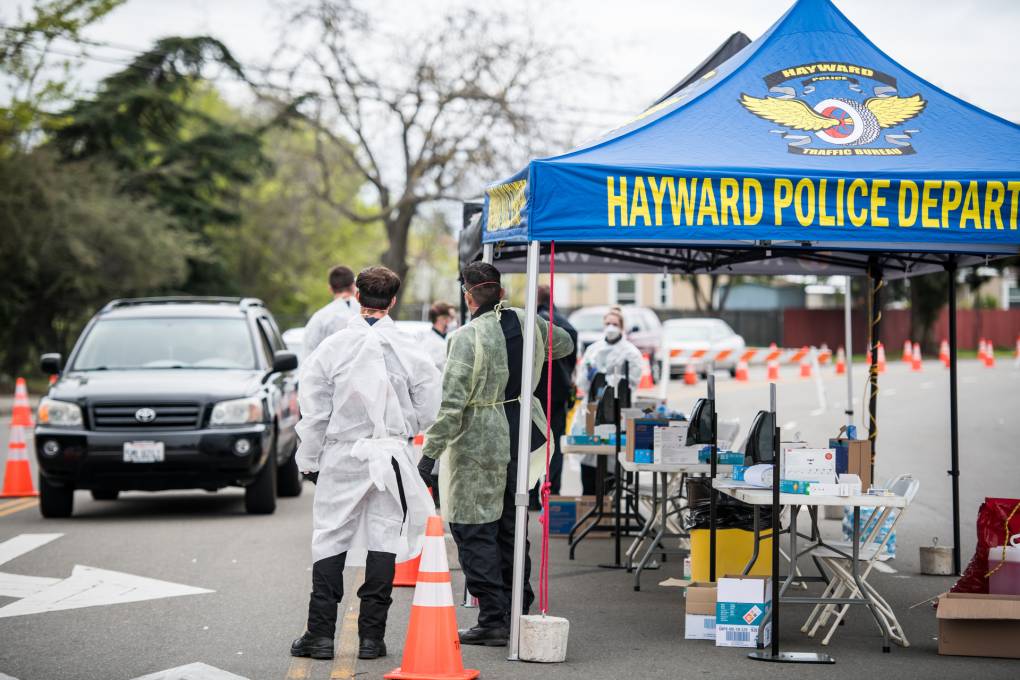
"caption": "Medical personnel screen patients at a new Coronavirus-testing facility at a Hayward fire station, which opened on Monday, March 23, 2020. The testing station has drive-through and walk-up screening and can test 370 people per day.",
"description": null,
"title": "RS42230_005_KQED_Hayward_CoronavirusTesting_03232020_9849-qut",
"credit": "Beth LaBerge/KQED",
"status": "inherit",
"isLoading": false,
"fetchFailed": false
},
"news_11807856": {
"type": "attachments",
"id": "news_11807856",
"meta": {
"index": "attachments_1716263798",
"site": "news",
"id": "11807856",
"found": true
},
"parent": 11807823,
"imgSizes": {
"apple_news_ca_landscape_5_5": {
"file": "https://ww2.kqed.org/app/uploads/sites/10/2020/03/GettyImages-86267618-1044x783.jpg",
"width": 1044,
"mimeType": "image/jpeg",
"height": 783
},
"apple_news_ca_square_4_0": {
"file": "https://ww2.kqed.org/app/uploads/sites/10/2020/03/GettyImages-86267618-470x470.jpg",
"width": 470,
"mimeType": "image/jpeg",
"height": 470
},
"twentyfourteen-full-width": {
"file": "https://ww2.kqed.org/app/uploads/sites/10/2020/03/GettyImages-86267618-1038x576.jpg",
"width": 1038,
"mimeType": "image/jpeg",
"height": 576
},
"thumbnail": {
"file": "https://ww2.kqed.org/app/uploads/sites/10/2020/03/GettyImages-86267618-160x113.jpg",
"width": 160,
"mimeType": "image/jpeg",
"height": 113
},
"post-thumbnail": {
"file": "https://ww2.kqed.org/app/uploads/sites/10/2020/03/GettyImages-86267618-672x372.jpg",
"width": 672,
"mimeType": "image/jpeg",
"height": 372
},
"kqedFullSize": {
"file": "https://ww2.kqed.org/app/uploads/sites/10/2020/03/GettyImages-86267618.jpg",
"width": 3000,
"height": 2124
},
"apple_news_ca_landscape_4_7": {
"file": "https://ww2.kqed.org/app/uploads/sites/10/2020/03/GettyImages-86267618-632x474.jpg",
"width": 632,
"mimeType": "image/jpeg",
"height": 474
},
"large": {
"file": "https://ww2.kqed.org/app/uploads/sites/10/2020/03/GettyImages-86267618-1020x722.jpg",
"width": 1020,
"mimeType": "image/jpeg",
"height": 722
},
"apple_news_ca_landscape_4_0": {
"file": "https://ww2.kqed.org/app/uploads/sites/10/2020/03/GettyImages-86267618-536x402.jpg",
"width": 536,
"mimeType": "image/jpeg",
"height": 402
},
"apple_news_ca_portrait_12_9": {
"file": "https://ww2.kqed.org/app/uploads/sites/10/2020/03/GettyImages-86267618-1122x1496.jpg",
"width": 1122,
"mimeType": "image/jpeg",
"height": 1496
},
"medium": {
"file": "https://ww2.kqed.org/app/uploads/sites/10/2020/03/GettyImages-86267618-800x566.jpg",
"width": 800,
"mimeType": "image/jpeg",
"height": 566
},
"apple_news_ca_portrait_4_0": {
"file": "https://ww2.kqed.org/app/uploads/sites/10/2020/03/GettyImages-86267618-354x472.jpg",
"width": 354,
"mimeType": "image/jpeg",
"height": 472
},
"apple_news_ca_portrait_9_7": {
"file": "https://ww2.kqed.org/app/uploads/sites/10/2020/03/GettyImages-86267618-840x1120.jpg",
"width": 840,
"mimeType": "image/jpeg",
"height": 1120
},
"apple_news_ca_landscape_12_9": {
"file": "https://ww2.kqed.org/app/uploads/sites/10/2020/03/GettyImages-86267618-1832x1374.jpg",
"width": 1832,
"mimeType": "image/jpeg",
"height": 1374
},
"apple_news_ca_square_9_7": {
"file": "https://ww2.kqed.org/app/uploads/sites/10/2020/03/GettyImages-86267618-1104x1104.jpg",
"width": 1104,
"mimeType": "image/jpeg",
"height": 1104
},
"apple_news_ca_portrait_4_7": {
"file": "https://ww2.kqed.org/app/uploads/sites/10/2020/03/GettyImages-86267618-414x552.jpg",
"width": 414,
"mimeType": "image/jpeg",
"height": 552
},
"apple_news_ca_square_12_9": {
"file": "https://ww2.kqed.org/app/uploads/sites/10/2020/03/GettyImages-86267618-1472x1472.jpg",
"width": 1472,
"mimeType": "image/jpeg",
"height": 1472
},
"apple_news_ca_portrait_5_5": {
"file": "https://ww2.kqed.org/app/uploads/sites/10/2020/03/GettyImages-86267618-687x916.jpg",
"width": 687,
"mimeType": "image/jpeg",
"height": 916
},
"full-width": {
"file": "https://ww2.kqed.org/app/uploads/sites/10/2020/03/GettyImages-86267618-1920x1359.jpg",
"width": 1920,
"mimeType": "image/jpeg",
"height": 1359
},
"apple_news_ca_square_4_7": {
"file": "https://ww2.kqed.org/app/uploads/sites/10/2020/03/GettyImages-86267618-550x550.jpg",
"width": 550,
"mimeType": "image/jpeg",
"height": 550
},
"apple_news_ca_landscape_9_7": {
"file": "https://ww2.kqed.org/app/uploads/sites/10/2020/03/GettyImages-86267618-1376x1032.jpg",
"width": 1376,
"mimeType": "image/jpeg",
"height": 1032
},
"apple_news_ca_square_5_5": {
"file": "https://ww2.kqed.org/app/uploads/sites/10/2020/03/GettyImages-86267618-912x912.jpg",
"width": 912,
"mimeType": "image/jpeg",
"height": 912
}
},
"publishDate": 1584742861,
"modified": 1584743951,
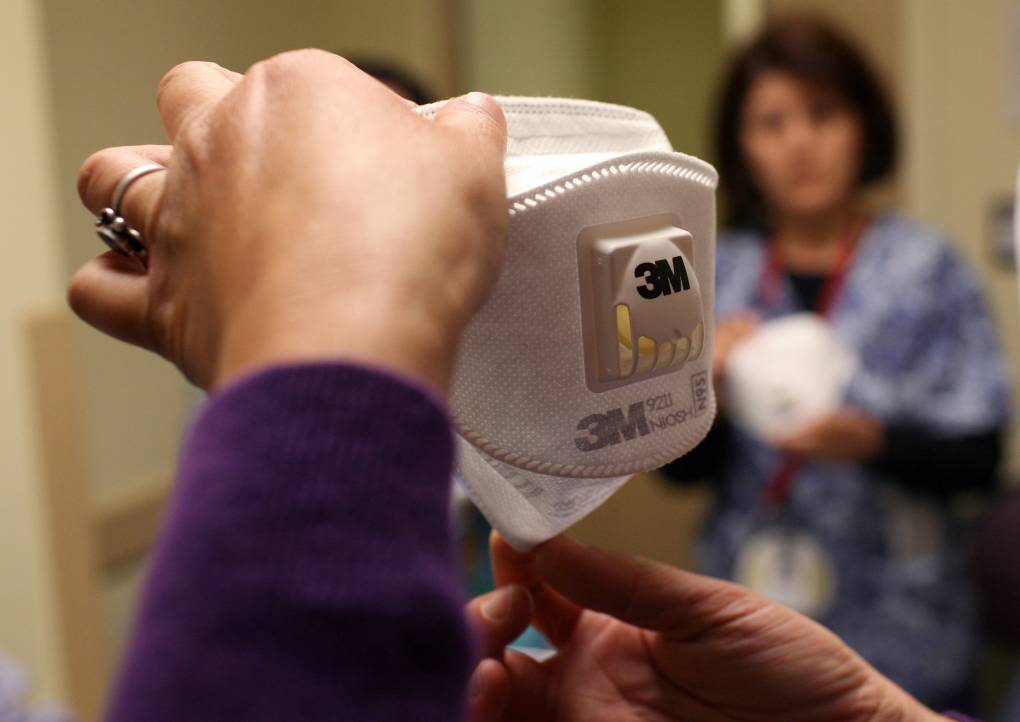
"caption": "Californians can donate unused N95 masks to several different Bay Area hospitals.",
"description": "Californians can donate unused N95 masks to several different Bay Area hospitals.",
"title": "Health Clinic Workers Train Staff For Dealing With Swine Flu Testing",
"credit": "Justin Sullivan/Getty Images",
"status": "inherit",
"isLoading": false,
"fetchFailed": false
},
"news_11808017": {
"type": "attachments",
"id": "news_11808017",
"meta": {
"index": "attachments_1716263798",
"site": "news",
"id": "11808017",
"found": true
},
"parent": 11807981,
"imgSizes": {
"apple_news_ca_landscape_5_5": {
"file": "https://ww2.kqed.org/app/uploads/sites/10/2020/03/RS7194_148129971-1-1044x783.jpg",
"width": 1044,
"mimeType": "image/jpeg",
"height": 783
},
"apple_news_ca_square_4_0": {
"file": "https://ww2.kqed.org/app/uploads/sites/10/2020/03/RS7194_148129971-1-470x470.jpg",
"width": 470,
"mimeType": "image/jpeg",
"height": 470
},
"twentyfourteen-full-width": {
"file": "https://ww2.kqed.org/app/uploads/sites/10/2020/03/RS7194_148129971-1-1038x576.jpg",
"width": 1038,
"mimeType": "image/jpeg",
"height": 576
},
"thumbnail": {
"file": "https://ww2.kqed.org/app/uploads/sites/10/2020/03/RS7194_148129971-1-160x96.jpg",
"width": 160,
"mimeType": "image/jpeg",
"height": 96
},
"post-thumbnail": {
"file": "https://ww2.kqed.org/app/uploads/sites/10/2020/03/RS7194_148129971-1-672x372.jpg",
"width": 672,
"mimeType": "image/jpeg",
"height": 372
},
"kqedFullSize": {
"file": "https://ww2.kqed.org/app/uploads/sites/10/2020/03/RS7194_148129971-1.jpg",
"width": 1920,
"height": 1151
},
"apple_news_ca_landscape_4_7": {
"file": "https://ww2.kqed.org/app/uploads/sites/10/2020/03/RS7194_148129971-1-632x474.jpg",
"width": 632,
"mimeType": "image/jpeg",
"height": 474
},
"large": {
"file": "https://ww2.kqed.org/app/uploads/sites/10/2020/03/RS7194_148129971-1-1020x611.jpg",
"width": 1020,
"mimeType": "image/jpeg",
"height": 611
},
"apple_news_ca_landscape_4_0": {
"file": "https://ww2.kqed.org/app/uploads/sites/10/2020/03/RS7194_148129971-1-536x402.jpg",
"width": 536,
"mimeType": "image/jpeg",
"height": 402
},
"apple_news_ca_portrait_12_9": {
"file": "https://ww2.kqed.org/app/uploads/sites/10/2020/03/RS7194_148129971-1-1122x1151.jpg",
"width": 1122,
"mimeType": "image/jpeg",
"height": 1151
},
"medium": {
"file": "https://ww2.kqed.org/app/uploads/sites/10/2020/03/RS7194_148129971-1-800x480.jpg",
"width": 800,
"mimeType": "image/jpeg",
"height": 480
},
"apple_news_ca_portrait_4_0": {
"file": "https://ww2.kqed.org/app/uploads/sites/10/2020/03/RS7194_148129971-1-354x472.jpg",
"width": 354,
"mimeType": "image/jpeg",
"height": 472
},
"apple_news_ca_portrait_9_7": {
"file": "https://ww2.kqed.org/app/uploads/sites/10/2020/03/RS7194_148129971-1-840x1120.jpg",
"width": 840,
"mimeType": "image/jpeg",
"height": 1120
},
"apple_news_ca_landscape_12_9": {
"file": "https://ww2.kqed.org/app/uploads/sites/10/2020/03/RS7194_148129971-1-1832x1151.jpg",
"width": 1832,
"mimeType": "image/jpeg",
"height": 1151
},
"apple_news_ca_square_9_7": {
"file": "https://ww2.kqed.org/app/uploads/sites/10/2020/03/RS7194_148129971-1-1104x1104.jpg",
"width": 1104,
"mimeType": "image/jpeg",
"height": 1104
},
"apple_news_ca_portrait_4_7": {
"file": "https://ww2.kqed.org/app/uploads/sites/10/2020/03/RS7194_148129971-1-414x552.jpg",
"width": 414,
"mimeType": "image/jpeg",
"height": 552
},
"apple_news_ca_square_12_9": {
"file": "https://ww2.kqed.org/app/uploads/sites/10/2020/03/RS7194_148129971-1-1472x1151.jpg",
"width": 1472,
"mimeType": "image/jpeg",
"height": 1151
},
"apple_news_ca_portrait_5_5": {
"file": "https://ww2.kqed.org/app/uploads/sites/10/2020/03/RS7194_148129971-1-687x916.jpg",
"width": 687,
"mimeType": "image/jpeg",
"height": 916
},
"full-width": {
"file": "https://ww2.kqed.org/app/uploads/sites/10/2020/03/RS7194_148129971-1-1920x1151.jpg",
"width": 1920,
"mimeType": "image/jpeg",
"height": 1151
},
"apple_news_ca_square_4_7": {
"file": "https://ww2.kqed.org/app/uploads/sites/10/2020/03/RS7194_148129971-1-550x550.jpg",
"width": 550,
"mimeType": "image/jpeg",
"height": 550
},
"apple_news_ca_landscape_9_7": {
"file": "https://ww2.kqed.org/app/uploads/sites/10/2020/03/RS7194_148129971-1-1376x1032.jpg",
"width": 1376,
"mimeType": "image/jpeg",
"height": 1032
},
"apple_news_ca_square_5_5": {
"file": "https://ww2.kqed.org/app/uploads/sites/10/2020/03/RS7194_148129971-1-912x912.jpg",
"width": 912,
"mimeType": "image/jpeg",
"height": 912
}
},
"publishDate": 1584760239,
"modified": 1584760275,
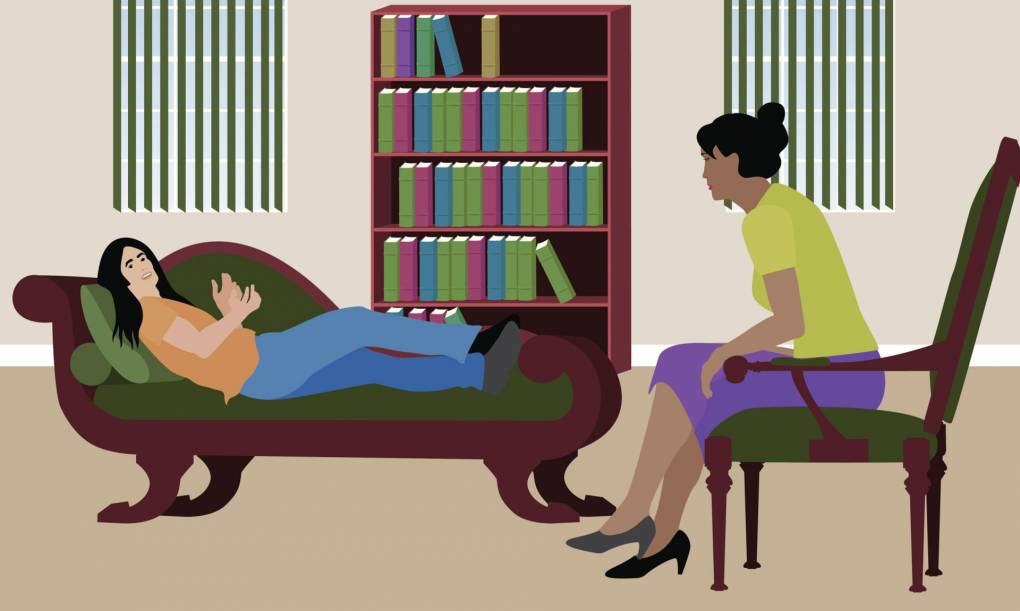
"caption": "Some therapists are shifting from in-person sessions to video conferencing in order to abide by the Bay Area's shelter-in-place order.",
"description": null,
"title": "RS7194_148129971",
"credit": "Getty Images",
"status": "inherit",
"isLoading": false,
"fetchFailed": false
},
"news_11806224": {
"type": "attachments",
"id": "news_11806224",
"meta": {
"index": "attachments_1716263798",
"site": "news",
"id": "11806224",
"found": true
},
"parent": 11806039,
"imgSizes": {
"apple_news_ca_landscape_5_5": {
"file": "https://ww2.kqed.org/app/uploads/sites/10/2020/03/iStock-637744750-1044x783.jpg",
"width": 1044,
"mimeType": "image/jpeg",
"height": 783
},
"apple_news_ca_square_4_0": {
"file": "https://ww2.kqed.org/app/uploads/sites/10/2020/03/iStock-637744750-470x470.jpg",
"width": 470,
"mimeType": "image/jpeg",
"height": 470
},
"twentyfourteen-full-width": {
"file": "https://ww2.kqed.org/app/uploads/sites/10/2020/03/iStock-637744750-1038x576.jpg",
"width": 1038,
"mimeType": "image/jpeg",
"height": 576
},
"thumbnail": {
"file": "https://ww2.kqed.org/app/uploads/sites/10/2020/03/iStock-637744750-160x96.jpg",
"width": 160,
"mimeType": "image/jpeg",
"height": 96
},
"post-thumbnail": {
"file": "https://ww2.kqed.org/app/uploads/sites/10/2020/03/iStock-637744750-672x372.jpg",
"width": 672,
"mimeType": "image/jpeg",
"height": 372
},
"kqedFullSize": {
"file": "https://ww2.kqed.org/app/uploads/sites/10/2020/03/iStock-637744750.jpg",
"width": 2235,
"height": 1341
},
"apple_news_ca_landscape_4_7": {
"file": "https://ww2.kqed.org/app/uploads/sites/10/2020/03/iStock-637744750-632x474.jpg",
"width": 632,
"mimeType": "image/jpeg",
"height": 474
},
"large": {
"file": "https://ww2.kqed.org/app/uploads/sites/10/2020/03/iStock-637744750-1020x612.jpg",
"width": 1020,
"mimeType": "image/jpeg",
"height": 612
},
"apple_news_ca_landscape_4_0": {
"file": "https://ww2.kqed.org/app/uploads/sites/10/2020/03/iStock-637744750-536x402.jpg",
"width": 536,
"mimeType": "image/jpeg",
"height": 402
},
"apple_news_ca_portrait_12_9": {
"file": "https://ww2.kqed.org/app/uploads/sites/10/2020/03/iStock-637744750-1122x1341.jpg",
"width": 1122,
"mimeType": "image/jpeg",
"height": 1341
},
"medium": {
"file": "https://ww2.kqed.org/app/uploads/sites/10/2020/03/iStock-637744750-800x480.jpg",
"width": 800,
"mimeType": "image/jpeg",
"height": 480
},
"apple_news_ca_portrait_4_0": {
"file": "https://ww2.kqed.org/app/uploads/sites/10/2020/03/iStock-637744750-354x472.jpg",
"width": 354,
"mimeType": "image/jpeg",
"height": 472
},
"apple_news_ca_portrait_9_7": {
"file": "https://ww2.kqed.org/app/uploads/sites/10/2020/03/iStock-637744750-840x1120.jpg",
"width": 840,
"mimeType": "image/jpeg",
"height": 1120
},
"apple_news_ca_landscape_12_9": {
"file": "https://ww2.kqed.org/app/uploads/sites/10/2020/03/iStock-637744750-1832x1341.jpg",
"width": 1832,
"mimeType": "image/jpeg",
"height": 1341
},
"apple_news_ca_square_9_7": {
"file": "https://ww2.kqed.org/app/uploads/sites/10/2020/03/iStock-637744750-1104x1104.jpg",
"width": 1104,
"mimeType": "image/jpeg",
"height": 1104
},
"apple_news_ca_portrait_4_7": {
"file": "https://ww2.kqed.org/app/uploads/sites/10/2020/03/iStock-637744750-414x552.jpg",
"width": 414,
"mimeType": "image/jpeg",
"height": 552
},
"apple_news_ca_square_12_9": {
"file": "https://ww2.kqed.org/app/uploads/sites/10/2020/03/iStock-637744750-1472x1341.jpg",
"width": 1472,
"mimeType": "image/jpeg",
"height": 1341
},
"apple_news_ca_portrait_5_5": {
"file": "https://ww2.kqed.org/app/uploads/sites/10/2020/03/iStock-637744750-687x916.jpg",
"width": 687,
"mimeType": "image/jpeg",
"height": 916
},
"full-width": {
"file": "https://ww2.kqed.org/app/uploads/sites/10/2020/03/iStock-637744750-1920x1152.jpg",
"width": 1920,
"mimeType": "image/jpeg",
"height": 1152
},
"apple_news_ca_square_4_7": {
"file": "https://ww2.kqed.org/app/uploads/sites/10/2020/03/iStock-637744750-550x550.jpg",
"width": 550,
"mimeType": "image/jpeg",
"height": 550
},
"apple_news_ca_landscape_9_7": {
"file": "https://ww2.kqed.org/app/uploads/sites/10/2020/03/iStock-637744750-1376x1032.jpg",
"width": 1376,
"mimeType": "image/jpeg",
"height": 1032
},
"apple_news_ca_square_5_5": {
"file": "https://ww2.kqed.org/app/uploads/sites/10/2020/03/iStock-637744750-912x912.jpg",
"width": 912,
"mimeType": "image/jpeg",
"height": 912
}
},
"publishDate": 1583960924,
"modified": 1583960956,
"caption": "Social media platforms struggle struggle to contain misinformation about COVID-19. The World Health Organization has dubbed the situation a global “infodemic.” ",
"description": "Social media platforms struggle struggle to contain misinformation about COVID-19. The World Health Organization has dubbed the situation a global “infodemic.” ",
"title": "Social media platforms struggle struggle to contain misinformation about COVID-19. The World Health Organization has dubbed the situation a global “infodemic.”",
"credit": "iStock",
"status": "inherit",
"isLoading": false,
"fetchFailed": false
},
"news_11806560": {
"type": "attachments",
"id": "news_11806560",
"meta": {
"index": "attachments_1716263798",
"site": "news",
"id": "11806560",
"found": true
},
"parent": 11806455,
"imgSizes": {
"apple_news_ca_landscape_5_5": {
"file": "https://ww2.kqed.org/app/uploads/sites/10/2020/03/RS41952_002_KQED_PublicTransit_03102020_6485-qut-1044x783.jpg",
"width": 1044,
"mimeType": "image/jpeg",
"height": 783
},
"apple_news_ca_square_4_0": {
"file": "https://ww2.kqed.org/app/uploads/sites/10/2020/03/RS41952_002_KQED_PublicTransit_03102020_6485-qut-470x470.jpg",
"width": 470,
"mimeType": "image/jpeg",
"height": 470
},
"twentyfourteen-full-width": {
"file": "https://ww2.kqed.org/app/uploads/sites/10/2020/03/RS41952_002_KQED_PublicTransit_03102020_6485-qut-1038x576.jpg",
"width": 1038,
"mimeType": "image/jpeg",
"height": 576
},
"thumbnail": {
"file": "https://ww2.kqed.org/app/uploads/sites/10/2020/03/RS41952_002_KQED_PublicTransit_03102020_6485-qut-160x107.jpg",
"width": 160,
"mimeType": "image/jpeg",
"height": 107
},
"post-thumbnail": {
"file": "https://ww2.kqed.org/app/uploads/sites/10/2020/03/RS41952_002_KQED_PublicTransit_03102020_6485-qut-672x372.jpg",
"width": 672,
"mimeType": "image/jpeg",
"height": 372
},
"kqedFullSize": {
"file": "https://ww2.kqed.org/app/uploads/sites/10/2020/03/RS41952_002_KQED_PublicTransit_03102020_6485-qut.jpg",
"width": 1920,
"height": 1280
},
"apple_news_ca_landscape_4_7": {
"file": "https://ww2.kqed.org/app/uploads/sites/10/2020/03/RS41952_002_KQED_PublicTransit_03102020_6485-qut-632x474.jpg",
"width": 632,
"mimeType": "image/jpeg",
"height": 474
},
"large": {
"file": "https://ww2.kqed.org/app/uploads/sites/10/2020/03/RS41952_002_KQED_PublicTransit_03102020_6485-qut-1020x680.jpg",
"width": 1020,
"mimeType": "image/jpeg",
"height": 680
},
"apple_news_ca_landscape_4_0": {
"file": "https://ww2.kqed.org/app/uploads/sites/10/2020/03/RS41952_002_KQED_PublicTransit_03102020_6485-qut-536x402.jpg",
"width": 536,
"mimeType": "image/jpeg",
"height": 402
},
"apple_news_ca_portrait_12_9": {
"file": "https://ww2.kqed.org/app/uploads/sites/10/2020/03/RS41952_002_KQED_PublicTransit_03102020_6485-qut-1122x1280.jpg",
"width": 1122,
"mimeType": "image/jpeg",
"height": 1280
},
"medium": {
"file": "https://ww2.kqed.org/app/uploads/sites/10/2020/03/RS41952_002_KQED_PublicTransit_03102020_6485-qut-800x533.jpg",
"width": 800,
"mimeType": "image/jpeg",
"height": 533
},
"apple_news_ca_portrait_4_0": {
"file": "https://ww2.kqed.org/app/uploads/sites/10/2020/03/RS41952_002_KQED_PublicTransit_03102020_6485-qut-354x472.jpg",
"width": 354,
"mimeType": "image/jpeg",
"height": 472
},
"apple_news_ca_portrait_9_7": {
"file": "https://ww2.kqed.org/app/uploads/sites/10/2020/03/RS41952_002_KQED_PublicTransit_03102020_6485-qut-840x1120.jpg",
"width": 840,
"mimeType": "image/jpeg",
"height": 1120
},
"apple_news_ca_landscape_12_9": {
"file": "https://ww2.kqed.org/app/uploads/sites/10/2020/03/RS41952_002_KQED_PublicTransit_03102020_6485-qut-1832x1280.jpg",
"width": 1832,
"mimeType": "image/jpeg",
"height": 1280
},
"apple_news_ca_square_9_7": {
"file": "https://ww2.kqed.org/app/uploads/sites/10/2020/03/RS41952_002_KQED_PublicTransit_03102020_6485-qut-1104x1104.jpg",
"width": 1104,
"mimeType": "image/jpeg",
"height": 1104
},
"apple_news_ca_portrait_4_7": {
"file": "https://ww2.kqed.org/app/uploads/sites/10/2020/03/RS41952_002_KQED_PublicTransit_03102020_6485-qut-414x552.jpg",
"width": 414,
"mimeType": "image/jpeg",
"height": 552
},
"apple_news_ca_square_12_9": {
"file": "https://ww2.kqed.org/app/uploads/sites/10/2020/03/RS41952_002_KQED_PublicTransit_03102020_6485-qut-1472x1280.jpg",
"width": 1472,
"mimeType": "image/jpeg",
"height": 1280
},
"apple_news_ca_portrait_5_5": {
"file": "https://ww2.kqed.org/app/uploads/sites/10/2020/03/RS41952_002_KQED_PublicTransit_03102020_6485-qut-687x916.jpg",
"width": 687,
"mimeType": "image/jpeg",
"height": 916
},
"full-width": {
"file": "https://ww2.kqed.org/app/uploads/sites/10/2020/03/RS41952_002_KQED_PublicTransit_03102020_6485-qut-1920x1280.jpg",
"width": 1920,
"mimeType": "image/jpeg",
"height": 1280
},
"apple_news_ca_square_4_7": {
"file": "https://ww2.kqed.org/app/uploads/sites/10/2020/03/RS41952_002_KQED_PublicTransit_03102020_6485-qut-550x550.jpg",
"width": 550,
"mimeType": "image/jpeg",
"height": 550
},
"apple_news_ca_landscape_9_7": {
"file": "https://ww2.kqed.org/app/uploads/sites/10/2020/03/RS41952_002_KQED_PublicTransit_03102020_6485-qut-1376x1032.jpg",
"width": 1376,
"mimeType": "image/jpeg",
"height": 1032
},
"apple_news_ca_square_5_5": {
"file": "https://ww2.kqed.org/app/uploads/sites/10/2020/03/RS41952_002_KQED_PublicTransit_03102020_6485-qut-912x912.jpg",
"width": 912,
"mimeType": "image/jpeg",
"height": 912
}
},
"publishDate": 1584060162,
"modified": 1584569087,
"caption": "A mostly empty BART train travels from Oakland to San Francisco on March 10, 2020.",
"description": "A mostly empty BART train travels from Oakland to San Francisco on Tuesday, Mar. 10, 2020.",
"title": "BART-COVID 19",
"credit": "Beth LaBerge/KQED",
"status": "inherit",
"isLoading": false,
"fetchFailed": false
},
"news_11806306": {
"type": "attachments",
"id": "news_11806306",
"meta": {
"index": "attachments_1716263798",
"site": "news",
"id": "11806306",
"found": true
},
"parent": 11806207,
"imgSizes": {
"apple_news_ca_landscape_5_5": {
"file": "https://ww2.kqed.org/app/uploads/sites/10/2020/03/RS41967_GettyImages-1210619679-qut-1044x783.jpg",
"width": 1044,
"mimeType": "image/jpeg",
"height": 783
},
"apple_news_ca_square_4_0": {
"file": "https://ww2.kqed.org/app/uploads/sites/10/2020/03/RS41967_GettyImages-1210619679-qut-470x470.jpg",
"width": 470,
"mimeType": "image/jpeg",
"height": 470
},
"twentyfourteen-full-width": {
"file": "https://ww2.kqed.org/app/uploads/sites/10/2020/03/RS41967_GettyImages-1210619679-qut-1038x576.jpg",
"width": 1038,
"mimeType": "image/jpeg",
"height": 576
},
"thumbnail": {
"file": "https://ww2.kqed.org/app/uploads/sites/10/2020/03/RS41967_GettyImages-1210619679-qut-160x103.jpg",
"width": 160,
"mimeType": "image/jpeg",
"height": 103
},
"post-thumbnail": {
"file": "https://ww2.kqed.org/app/uploads/sites/10/2020/03/RS41967_GettyImages-1210619679-qut-672x372.jpg",
"width": 672,
"mimeType": "image/jpeg",
"height": 372
},
"kqedFullSize": {
"file": "https://ww2.kqed.org/app/uploads/sites/10/2020/03/RS41967_GettyImages-1210619679-qut.jpg",
"width": 1920,
"height": 1238
},
"apple_news_ca_landscape_4_7": {
"file": "https://ww2.kqed.org/app/uploads/sites/10/2020/03/RS41967_GettyImages-1210619679-qut-632x474.jpg",
"width": 632,
"mimeType": "image/jpeg",
"height": 474
},
"large": {
"file": "https://ww2.kqed.org/app/uploads/sites/10/2020/03/RS41967_GettyImages-1210619679-qut-1020x658.jpg",
"width": 1020,
"mimeType": "image/jpeg",
"height": 658
},
"apple_news_ca_landscape_4_0": {
"file": "https://ww2.kqed.org/app/uploads/sites/10/2020/03/RS41967_GettyImages-1210619679-qut-536x402.jpg",
"width": 536,
"mimeType": "image/jpeg",
"height": 402
},
"apple_news_ca_portrait_12_9": {
"file": "https://ww2.kqed.org/app/uploads/sites/10/2020/03/RS41967_GettyImages-1210619679-qut-1122x1238.jpg",
"width": 1122,
"mimeType": "image/jpeg",
"height": 1238
},
"medium": {
"file": "https://ww2.kqed.org/app/uploads/sites/10/2020/03/RS41967_GettyImages-1210619679-qut-800x516.jpg",
"width": 800,
"mimeType": "image/jpeg",
"height": 516
},
"apple_news_ca_portrait_4_0": {
"file": "https://ww2.kqed.org/app/uploads/sites/10/2020/03/RS41967_GettyImages-1210619679-qut-354x472.jpg",
"width": 354,
"mimeType": "image/jpeg",
"height": 472
},
"apple_news_ca_portrait_9_7": {
"file": "https://ww2.kqed.org/app/uploads/sites/10/2020/03/RS41967_GettyImages-1210619679-qut-840x1120.jpg",
"width": 840,
"mimeType": "image/jpeg",
"height": 1120
},
"apple_news_ca_landscape_12_9": {
"file": "https://ww2.kqed.org/app/uploads/sites/10/2020/03/RS41967_GettyImages-1210619679-qut-1832x1238.jpg",
"width": 1832,
"mimeType": "image/jpeg",
"height": 1238
},
"apple_news_ca_square_9_7": {
"file": "https://ww2.kqed.org/app/uploads/sites/10/2020/03/RS41967_GettyImages-1210619679-qut-1104x1104.jpg",
"width": 1104,
"mimeType": "image/jpeg",
"height": 1104
},
"apple_news_ca_portrait_4_7": {
"file": "https://ww2.kqed.org/app/uploads/sites/10/2020/03/RS41967_GettyImages-1210619679-qut-414x552.jpg",
"width": 414,
"mimeType": "image/jpeg",
"height": 552
},
"apple_news_ca_square_12_9": {
"file": "https://ww2.kqed.org/app/uploads/sites/10/2020/03/RS41967_GettyImages-1210619679-qut-1472x1238.jpg",
"width": 1472,
"mimeType": "image/jpeg",
"height": 1238
},
"apple_news_ca_portrait_5_5": {
"file": "https://ww2.kqed.org/app/uploads/sites/10/2020/03/RS41967_GettyImages-1210619679-qut-687x916.jpg",
"width": 687,
"mimeType": "image/jpeg",
"height": 916
},
"full-width": {
"file": "https://ww2.kqed.org/app/uploads/sites/10/2020/03/RS41967_GettyImages-1210619679-qut-1920x1238.jpg",
"width": 1920,
"mimeType": "image/jpeg",
"height": 1238
},
"apple_news_ca_square_4_7": {
"file": "https://ww2.kqed.org/app/uploads/sites/10/2020/03/RS41967_GettyImages-1210619679-qut-550x550.jpg",
"width": 550,
"mimeType": "image/jpeg",
"height": 550
},
"apple_news_ca_landscape_9_7": {
"file": "https://ww2.kqed.org/app/uploads/sites/10/2020/03/RS41967_GettyImages-1210619679-qut-1376x1032.jpg",
"width": 1376,
"mimeType": "image/jpeg",
"height": 1032
},
"apple_news_ca_square_5_5": {
"file": "https://ww2.kqed.org/app/uploads/sites/10/2020/03/RS41967_GettyImages-1210619679-qut-912x912.jpg",
"width": 912,
"mimeType": "image/jpeg",
"height": 912
}
},
"publishDate": 1583973005,
"modified": 1583973129,
"caption": "Bonnie Castillo, executive director of National Nurses United, speaks during a news conference at the National Nurses United offices on March 05, 2020 in Oakland, California. ",
"description": null,
"title": "National Nurses United Speak To The Press On Coronavirus Preparedness",
"credit": "Justin Sullivan/Getty Images",
"status": "inherit",
"isLoading": false,
"fetchFailed": false
},
"news_11806313": {
"type": "attachments",
"id": "news_11806313",
"meta": {
"index": "attachments_1716263798",
"site": "news",
"id": "11806313",
"found": true
},
"parent": 11806115,
"imgSizes": {
"apple_news_ca_landscape_5_5": {
"file": "https://ww2.kqed.org/app/uploads/sites/10/2020/03/RS41948_005_KQED_SanFrancisco_GeneralHospital_03102020_6316-qut-1044x783.jpg",
"width": 1044,
"mimeType": "image/jpeg",
"height": 783
},
"apple_news_ca_square_4_0": {
"file": "https://ww2.kqed.org/app/uploads/sites/10/2020/03/RS41948_005_KQED_SanFrancisco_GeneralHospital_03102020_6316-qut-470x470.jpg",
"width": 470,
"mimeType": "image/jpeg",
"height": 470
},
"twentyfourteen-full-width": {
"file": "https://ww2.kqed.org/app/uploads/sites/10/2020/03/RS41948_005_KQED_SanFrancisco_GeneralHospital_03102020_6316-qut-1038x576.jpg",
"width": 1038,
"mimeType": "image/jpeg",
"height": 576
},
"thumbnail": {
"file": "https://ww2.kqed.org/app/uploads/sites/10/2020/03/RS41948_005_KQED_SanFrancisco_GeneralHospital_03102020_6316-qut-160x107.jpg",
"width": 160,
"mimeType": "image/jpeg",
"height": 107
},
"post-thumbnail": {
"file": "https://ww2.kqed.org/app/uploads/sites/10/2020/03/RS41948_005_KQED_SanFrancisco_GeneralHospital_03102020_6316-qut-672x372.jpg",
"width": 672,
"mimeType": "image/jpeg",
"height": 372
},
"kqedFullSize": {
"file": "https://ww2.kqed.org/app/uploads/sites/10/2020/03/RS41948_005_KQED_SanFrancisco_GeneralHospital_03102020_6316-qut.jpg",
"width": 1920,
"height": 1280
},
"apple_news_ca_landscape_4_7": {
"file": "https://ww2.kqed.org/app/uploads/sites/10/2020/03/RS41948_005_KQED_SanFrancisco_GeneralHospital_03102020_6316-qut-632x474.jpg",
"width": 632,
"mimeType": "image/jpeg",
"height": 474
},
"large": {
"file": "https://ww2.kqed.org/app/uploads/sites/10/2020/03/RS41948_005_KQED_SanFrancisco_GeneralHospital_03102020_6316-qut-1020x680.jpg",
"width": 1020,
"mimeType": "image/jpeg",
"height": 680
},
"apple_news_ca_landscape_4_0": {
"file": "https://ww2.kqed.org/app/uploads/sites/10/2020/03/RS41948_005_KQED_SanFrancisco_GeneralHospital_03102020_6316-qut-536x402.jpg",
"width": 536,
"mimeType": "image/jpeg",
"height": 402
},
"apple_news_ca_portrait_12_9": {
"file": "https://ww2.kqed.org/app/uploads/sites/10/2020/03/RS41948_005_KQED_SanFrancisco_GeneralHospital_03102020_6316-qut-1122x1280.jpg",
"width": 1122,
"mimeType": "image/jpeg",
"height": 1280
},
"medium": {
"file": "https://ww2.kqed.org/app/uploads/sites/10/2020/03/RS41948_005_KQED_SanFrancisco_GeneralHospital_03102020_6316-qut-800x533.jpg",
"width": 800,
"mimeType": "image/jpeg",
"height": 533
},
"apple_news_ca_portrait_4_0": {
"file": "https://ww2.kqed.org/app/uploads/sites/10/2020/03/RS41948_005_KQED_SanFrancisco_GeneralHospital_03102020_6316-qut-354x472.jpg",
"width": 354,
"mimeType": "image/jpeg",
"height": 472
},
"apple_news_ca_portrait_9_7": {
"file": "https://ww2.kqed.org/app/uploads/sites/10/2020/03/RS41948_005_KQED_SanFrancisco_GeneralHospital_03102020_6316-qut-840x1120.jpg",
"width": 840,
"mimeType": "image/jpeg",
"height": 1120
},
"apple_news_ca_landscape_12_9": {
"file": "https://ww2.kqed.org/app/uploads/sites/10/2020/03/RS41948_005_KQED_SanFrancisco_GeneralHospital_03102020_6316-qut-1832x1280.jpg",
"width": 1832,
"mimeType": "image/jpeg",
"height": 1280
},
"apple_news_ca_square_9_7": {
"file": "https://ww2.kqed.org/app/uploads/sites/10/2020/03/RS41948_005_KQED_SanFrancisco_GeneralHospital_03102020_6316-qut-1104x1104.jpg",
"width": 1104,
"mimeType": "image/jpeg",
"height": 1104
},
"apple_news_ca_portrait_4_7": {
"file": "https://ww2.kqed.org/app/uploads/sites/10/2020/03/RS41948_005_KQED_SanFrancisco_GeneralHospital_03102020_6316-qut-414x552.jpg",
"width": 414,
"mimeType": "image/jpeg",
"height": 552
},
"apple_news_ca_square_12_9": {
"file": "https://ww2.kqed.org/app/uploads/sites/10/2020/03/RS41948_005_KQED_SanFrancisco_GeneralHospital_03102020_6316-qut-1472x1280.jpg",
"width": 1472,
"mimeType": "image/jpeg",
"height": 1280
},
"apple_news_ca_portrait_5_5": {
"file": "https://ww2.kqed.org/app/uploads/sites/10/2020/03/RS41948_005_KQED_SanFrancisco_GeneralHospital_03102020_6316-qut-687x916.jpg",
"width": 687,
"mimeType": "image/jpeg",
"height": 916
},
"full-width": {
"file": "https://ww2.kqed.org/app/uploads/sites/10/2020/03/RS41948_005_KQED_SanFrancisco_GeneralHospital_03102020_6316-qut-1920x1280.jpg",
"width": 1920,
"mimeType": "image/jpeg",
"height": 1280
},
"apple_news_ca_square_4_7": {
"file": "https://ww2.kqed.org/app/uploads/sites/10/2020/03/RS41948_005_KQED_SanFrancisco_GeneralHospital_03102020_6316-qut-550x550.jpg",
"width": 550,
"mimeType": "image/jpeg",
"height": 550
},
"apple_news_ca_landscape_9_7": {
"file": "https://ww2.kqed.org/app/uploads/sites/10/2020/03/RS41948_005_KQED_SanFrancisco_GeneralHospital_03102020_6316-qut-1376x1032.jpg",
"width": 1376,
"mimeType": "image/jpeg",
"height": 1032
},
"apple_news_ca_square_5_5": {
"file": "https://ww2.kqed.org/app/uploads/sites/10/2020/03/RS41948_005_KQED_SanFrancisco_GeneralHospital_03102020_6316-qut-912x912.jpg",
"width": 912,
"mimeType": "image/jpeg",
"height": 912
}
},
"publishDate": 1583974250,
"modified": 1606831892,
"caption": null,
"description": "At Zuckerberg San Francisco General Hospital, officials said they're working to ensure that patients are routed to the right part of the hospital.",
"title": "RS41948_005_KQED_SanFrancisco_GeneralHospital_03102020_6316-qut",
"credit": "Beth LaBerge/KQED",
"status": "inherit",
"isLoading": false,
"fetchFailed": false
},
"news_11805715": {
"type": "attachments",
"id": "news_11805715",
"meta": {
"index": "attachments_1716263798",
"site": "news",
"id": "11805715",
"found": true
},
"parent": 11805713,
"imgSizes": {
"apple_news_ca_landscape_5_5": {
"file": "https://ww2.kqed.org/app/uploads/sites/10/2020/03/RS41883_009_KQED_Coronavirus_EmptyShelves_03052020_6163-qut-1044x783.jpg",
"width": 1044,
"mimeType": "image/jpeg",
"height": 783
},
"apple_news_ca_square_4_0": {
"file": "https://ww2.kqed.org/app/uploads/sites/10/2020/03/RS41883_009_KQED_Coronavirus_EmptyShelves_03052020_6163-qut-470x470.jpg",
"width": 470,
"mimeType": "image/jpeg",
"height": 470
},
"twentyfourteen-full-width": {
"file": "https://ww2.kqed.org/app/uploads/sites/10/2020/03/RS41883_009_KQED_Coronavirus_EmptyShelves_03052020_6163-qut-1038x576.jpg",
"width": 1038,
"mimeType": "image/jpeg",
"height": 576
},
"thumbnail": {
"file": "https://ww2.kqed.org/app/uploads/sites/10/2020/03/RS41883_009_KQED_Coronavirus_EmptyShelves_03052020_6163-qut-160x107.jpg",
"width": 160,
"mimeType": "image/jpeg",
"height": 107
},
"post-thumbnail": {
"file": "https://ww2.kqed.org/app/uploads/sites/10/2020/03/RS41883_009_KQED_Coronavirus_EmptyShelves_03052020_6163-qut-672x372.jpg",
"width": 672,
"mimeType": "image/jpeg",
"height": 372
},
"kqedFullSize": {
"file": "https://ww2.kqed.org/app/uploads/sites/10/2020/03/RS41883_009_KQED_Coronavirus_EmptyShelves_03052020_6163-qut.jpg",
"width": 1920,
"height": 1280
},
"apple_news_ca_landscape_4_7": {
"file": "https://ww2.kqed.org/app/uploads/sites/10/2020/03/RS41883_009_KQED_Coronavirus_EmptyShelves_03052020_6163-qut-632x474.jpg",
"width": 632,
"mimeType": "image/jpeg",
"height": 474
},
"large": {
"file": "https://ww2.kqed.org/app/uploads/sites/10/2020/03/RS41883_009_KQED_Coronavirus_EmptyShelves_03052020_6163-qut-1020x680.jpg",
"width": 1020,
"mimeType": "image/jpeg",
"height": 680
},
"apple_news_ca_landscape_4_0": {
"file": "https://ww2.kqed.org/app/uploads/sites/10/2020/03/RS41883_009_KQED_Coronavirus_EmptyShelves_03052020_6163-qut-536x402.jpg",
"width": 536,
"mimeType": "image/jpeg",
"height": 402
},
"apple_news_ca_portrait_12_9": {
"file": "https://ww2.kqed.org/app/uploads/sites/10/2020/03/RS41883_009_KQED_Coronavirus_EmptyShelves_03052020_6163-qut-1122x1280.jpg",
"width": 1122,
"mimeType": "image/jpeg",
"height": 1280
},
"medium": {
"file": "https://ww2.kqed.org/app/uploads/sites/10/2020/03/RS41883_009_KQED_Coronavirus_EmptyShelves_03052020_6163-qut-800x533.jpg",
"width": 800,
"mimeType": "image/jpeg",
"height": 533
},
"apple_news_ca_portrait_4_0": {
"file": "https://ww2.kqed.org/app/uploads/sites/10/2020/03/RS41883_009_KQED_Coronavirus_EmptyShelves_03052020_6163-qut-354x472.jpg",
"width": 354,
"mimeType": "image/jpeg",
"height": 472
},
"apple_news_ca_portrait_9_7": {
"file": "https://ww2.kqed.org/app/uploads/sites/10/2020/03/RS41883_009_KQED_Coronavirus_EmptyShelves_03052020_6163-qut-840x1120.jpg",
"width": 840,
"mimeType": "image/jpeg",
"height": 1120
},
"apple_news_ca_landscape_12_9": {
"file": "https://ww2.kqed.org/app/uploads/sites/10/2020/03/RS41883_009_KQED_Coronavirus_EmptyShelves_03052020_6163-qut-1832x1280.jpg",
"width": 1832,
"mimeType": "image/jpeg",
"height": 1280
},
"apple_news_ca_square_9_7": {
"file": "https://ww2.kqed.org/app/uploads/sites/10/2020/03/RS41883_009_KQED_Coronavirus_EmptyShelves_03052020_6163-qut-1104x1104.jpg",
"width": 1104,
"mimeType": "image/jpeg",
"height": 1104
},
"apple_news_ca_portrait_4_7": {
"file": "https://ww2.kqed.org/app/uploads/sites/10/2020/03/RS41883_009_KQED_Coronavirus_EmptyShelves_03052020_6163-qut-414x552.jpg",
"width": 414,
"mimeType": "image/jpeg",
"height": 552
},
"apple_news_ca_square_12_9": {
"file": "https://ww2.kqed.org/app/uploads/sites/10/2020/03/RS41883_009_KQED_Coronavirus_EmptyShelves_03052020_6163-qut-1472x1280.jpg",
"width": 1472,
"mimeType": "image/jpeg",
"height": 1280
},
"apple_news_ca_portrait_5_5": {
"file": "https://ww2.kqed.org/app/uploads/sites/10/2020/03/RS41883_009_KQED_Coronavirus_EmptyShelves_03052020_6163-qut-687x916.jpg",
"width": 687,
"mimeType": "image/jpeg",
"height": 916
},
"full-width": {
"file": "https://ww2.kqed.org/app/uploads/sites/10/2020/03/RS41883_009_KQED_Coronavirus_EmptyShelves_03052020_6163-qut-1920x1280.jpg",
"width": 1920,
"mimeType": "image/jpeg",
"height": 1280
},
"apple_news_ca_square_4_7": {
"file": "https://ww2.kqed.org/app/uploads/sites/10/2020/03/RS41883_009_KQED_Coronavirus_EmptyShelves_03052020_6163-qut-550x550.jpg",
"width": 550,
"mimeType": "image/jpeg",
"height": 550
},
"apple_news_ca_landscape_9_7": {
"file": "https://ww2.kqed.org/app/uploads/sites/10/2020/03/RS41883_009_KQED_Coronavirus_EmptyShelves_03052020_6163-qut-1376x1032.jpg",
"width": 1376,
"mimeType": "image/jpeg",
"height": 1032
},
"apple_news_ca_square_5_5": {
"file": "https://ww2.kqed.org/app/uploads/sites/10/2020/03/RS41883_009_KQED_Coronavirus_EmptyShelves_03052020_6163-qut-912x912.jpg",
"width": 912,
"mimeType": "image/jpeg",
"height": 912
}
},
"publishDate": 1583543956,
"modified": 1584062659,
"caption": "A sign outside of a CVS on South Van Ness in San Francisco reads, \"No more hand sanitizers and face masks\" on Thursday, Mar. 5, 2020.",
"description": "A sign outside of a CVS on South Van Ness in San Francisco reads, \"No more hand sanitizers and face masks\" on Thursday, Mar. 5, 2020.",
"title": "RS41883_009_KQED_Coronavirus_EmptyShelves_03052020_6163-qut",
"credit": "Beth LaBerge/KQED",
"status": "inherit",
"isLoading": false,
"fetchFailed": false
},
"news_11804292": {
"type": "attachments",
"id": "news_11804292",
"meta": {
"index": "attachments_1716263798",
"site": "news",
"id": "11804292",
"found": true
},
"parent": 11804290,
"imgSizes": {
"apple_news_ca_landscape_5_5": {
"file": "https://ww2.kqed.org/app/uploads/sites/10/2020/02/Mayor-Breed-Overdose-1044x783.jpg",
"width": 1044,
"mimeType": "image/jpeg",
"height": 783
},
"apple_news_ca_square_4_0": {
"file": "https://ww2.kqed.org/app/uploads/sites/10/2020/02/Mayor-Breed-Overdose-470x470.jpg",
"width": 470,
"mimeType": "image/jpeg",
"height": 470
},
"twentyfourteen-full-width": {
"file": "https://ww2.kqed.org/app/uploads/sites/10/2020/02/Mayor-Breed-Overdose-1038x576.jpg",
"width": 1038,
"mimeType": "image/jpeg",
"height": 576
},
"thumbnail": {
"file": "https://ww2.kqed.org/app/uploads/sites/10/2020/02/Mayor-Breed-Overdose-160x120.jpg",
"width": 160,
"mimeType": "image/jpeg",
"height": 120
},
"post-thumbnail": {
"file": "https://ww2.kqed.org/app/uploads/sites/10/2020/02/Mayor-Breed-Overdose-672x372.jpg",
"width": 672,
"mimeType": "image/jpeg",
"height": 372
},
"kqedFullSize": {
"file": "https://ww2.kqed.org/app/uploads/sites/10/2020/02/Mayor-Breed-Overdose-e1583373998769.jpg",
"width": 1920,
"height": 1436
},
"apple_news_ca_landscape_4_7": {
"file": "https://ww2.kqed.org/app/uploads/sites/10/2020/02/Mayor-Breed-Overdose-632x474.jpg",
"width": 632,
"mimeType": "image/jpeg",
"height": 474
},
"large": {
"file": "https://ww2.kqed.org/app/uploads/sites/10/2020/02/Mayor-Breed-Overdose-1020x763.jpg",
"width": 1020,
"mimeType": "image/jpeg",
"height": 763
},
"apple_news_ca_landscape_4_0": {
"file": "https://ww2.kqed.org/app/uploads/sites/10/2020/02/Mayor-Breed-Overdose-536x402.jpg",
"width": 536,
"mimeType": "image/jpeg",
"height": 402
},
"apple_news_ca_portrait_12_9": {
"file": "https://ww2.kqed.org/app/uploads/sites/10/2020/02/Mayor-Breed-Overdose-1122x1496.jpg",
"width": 1122,
"mimeType": "image/jpeg",
"height": 1496
},
"medium": {
"file": "https://ww2.kqed.org/app/uploads/sites/10/2020/02/Mayor-Breed-Overdose-800x598.jpg",
"width": 800,
"mimeType": "image/jpeg",
"height": 598
},
"apple_news_ca_portrait_4_0": {
"file": "https://ww2.kqed.org/app/uploads/sites/10/2020/02/Mayor-Breed-Overdose-354x472.jpg",
"width": 354,
"mimeType": "image/jpeg",
"height": 472
},
"apple_news_ca_portrait_9_7": {
"file": "https://ww2.kqed.org/app/uploads/sites/10/2020/02/Mayor-Breed-Overdose-840x1120.jpg",
"width": 840,
"mimeType": "image/jpeg",
"height": 1120
},
"apple_news_ca_landscape_12_9": {
"file": "https://ww2.kqed.org/app/uploads/sites/10/2020/02/Mayor-Breed-Overdose-1832x1374.jpg",
"width": 1832,
"mimeType": "image/jpeg",
"height": 1374
},
"apple_news_ca_square_9_7": {
"file": "https://ww2.kqed.org/app/uploads/sites/10/2020/02/Mayor-Breed-Overdose-1104x1104.jpg",
"width": 1104,
"mimeType": "image/jpeg",
"height": 1104
},
"apple_news_ca_portrait_4_7": {
"file": "https://ww2.kqed.org/app/uploads/sites/10/2020/02/Mayor-Breed-Overdose-414x552.jpg",
"width": 414,
"mimeType": "image/jpeg",
"height": 552
},
"apple_news_ca_square_12_9": {
"file": "https://ww2.kqed.org/app/uploads/sites/10/2020/02/Mayor-Breed-Overdose-1472x1472.jpg",
"width": 1472,
"mimeType": "image/jpeg",
"height": 1472
},
"apple_news_ca_portrait_5_5": {
"file": "https://ww2.kqed.org/app/uploads/sites/10/2020/02/Mayor-Breed-Overdose-687x916.jpg",
"width": 687,
"mimeType": "image/jpeg",
"height": 916
},
"full-width": {
"file": "https://ww2.kqed.org/app/uploads/sites/10/2020/02/Mayor-Breed-Overdose-1920x1436.jpg",
"width": 1920,
"mimeType": "image/jpeg",
"height": 1436
},
"apple_news_ca_square_4_7": {
"file": "https://ww2.kqed.org/app/uploads/sites/10/2020/02/Mayor-Breed-Overdose-550x550.jpg",
"width": 550,
"mimeType": "image/jpeg",
"height": 550
},
"apple_news_ca_landscape_9_7": {
"file": "https://ww2.kqed.org/app/uploads/sites/10/2020/02/Mayor-Breed-Overdose-1376x1032.jpg",
"width": 1376,
"mimeType": "image/jpeg",
"height": 1032
},
"apple_news_ca_square_5_5": {
"file": "https://ww2.kqed.org/app/uploads/sites/10/2020/02/Mayor-Breed-Overdose-912x912.jpg",
"width": 912,
"mimeType": "image/jpeg",
"height": 912
}
},
"publishDate": 1582936708,
"modified": 1583373991,
"caption": "Speaking to reporters at Glide Memorial Church in the Tenderloin District on Wed., Feb. 26, San Francisco Mayor London Breed and Supervisor Matt Haney discuss a proposal to open supervised injection sites in the city.",
"description": null,
"title": "Mayor Breed Overdose",
"credit": "Shannon Lin/KQED",
"status": "inherit",
"isLoading": false,
"fetchFailed": false
}
},
"audioPlayerReducer": {
"postId": "stream_live",
"isPaused": true,
"isPlaying": false,
"pfsActive": false,
"pledgeModalIsOpen": true,
"playerDrawerIsOpen": false,
"liveAudioPlayStartedAt": 0,
"liveAudioPlayContext": ""
},
"authorsReducer": {
"byline_news_11806207": {
"type": "authors",
"id": "byline_news_11806207",
"meta": {
"override": true
},
"slug": "byline_news_11806207",
"name": "\u003ca href=\"https://calmatters.org/author/anaibarra/\">Ana B. Ibarra\u003c/a>",
"isLoading": false
},
"ohubertallen": {
"type": "authors",
"id": "102",
"meta": {
"index": "authors_1716337520",
"id": "102",
"found": true
},
"name": "Olivia Allen-Price",
"firstName": "Olivia",
"lastName": "Allen-Price",
"slug": "ohubertallen",
"email": "oallenprice@kqed.org",
"display_author_email": false,
"staff_mastheads": [
"news"
],
"title": "Senior Editor",
"bio": "Olivia Allen-Price is senior editor and host of the award-winning Bay Curious podcast. Prior to joining KQED in 2013, Olivia worked at The Baltimore Sun and The Virginian-Pilot in Norfolk, Va. She holds degrees in journalism and political science from Elon University. Her work has earned awards from the Society of Professional Journalists, the Hearst Foundation and Hearken. She loves to talk about running and curly hair.\r\n\r\nFollow: \u003ca href=\"https://twitter.com/oallenprice\">@oallenprice\u003c/a>\r\nEmail: \u003ca href=\"mailto:oallenprice@kqed.org\">oallenprice@kqed.org\u003c/a>",
"avatar": "https://secure.gravatar.com/avatar/07f7803c1f6be56f3be58ef276dfa64dce898502e0554408ef4858451a8294f7?s=600&d=blank&r=g",
"twitter": "oallenprice",
"bluesky": null,
"facebook": null,
"instagram": null,
"linkedin": null,
"sites": [
{
"site": "",
"roles": [
"editor"
]
},
{
"site": "arts",
"roles": [
"subscriber"
]
},
{
"site": "news",
"roles": [
"administrator"
]
},
{
"site": "pop",
"roles": [
"administrator"
]
},
{
"site": "bayareabites",
"roles": [
"contributor"
]
},
{
"site": "stateofhealth",
"roles": [
"administrator"
]
},
{
"site": "science",
"roles": [
"editor"
]
}
],
"headData": {
"title": "Olivia Allen-Price | KQED",
"description": "Senior Editor",
"ogImgSrc": "https://secure.gravatar.com/avatar/07f7803c1f6be56f3be58ef276dfa64dce898502e0554408ef4858451a8294f7?s=600&d=blank&r=g",
"twImgSrc": "https://secure.gravatar.com/avatar/07f7803c1f6be56f3be58ef276dfa64dce898502e0554408ef4858451a8294f7?s=600&d=blank&r=g"
},
"isLoading": false,
"link": "/author/ohubertallen"
},
"rachael-myrow": {
"type": "authors",
"id": "251",
"meta": {
"index": "authors_1716337520",
"id": "251",
"found": true
},
"name": "Rachael Myrow",
"firstName": "Rachael",
"lastName": "Myrow",
"slug": "rachael-myrow",
"email": "rmyrow@kqed.org",
"display_author_email": true,
"staff_mastheads": [
"news"
],
"title": "Senior Editor of KQED's Silicon Valley News Desk",
"bio": "• I write and edit stories about how Silicon Valley power and policies shape everyday life in California. I’m also passionate about making Bay Area history and culture more accessible to a broad public. • I’ve been a journalist for most of my life, starting in high school with The Franklin Press in Los Angeles, where I grew up. While earning my first degree in English at UC Berkeley, I got my start in public radio at KALX-FM. After completing a second degree in journalism at Cal, I landed my first professional job at Marketplace, then moved on to KPCC (now LAist), and then KQED, where I hosted The California Report for more than seven years. • My reporting has appeared on NPR, The World, WBUR’s \u003ci>Here & Now\u003c/i>, and the BBC. I also guest host for KQED’s \u003ci>Forum\u003c/i>, as well as the Commonwealth Club in San Francisco. • I speak periodically on media, democracy and technology issues, and do voiceover work for documentaries and educational video projects. • Outside of the studio, you'll find me hiking Bay Area trails and whipping up Insta-ready meals in my kitchen. • I do not accept gifts, money, or favors from anyone connected to my reporting, I don't pay people for information, and I do not support or donate to political causes. • I strive to treat the people I report on with fairness, honesty, and respect. I also recognize there are often multiple sides to a story and work to verify information through multiple sources and documentation. If I get something wrong, I correct it.",
"avatar": "https://secure.gravatar.com/avatar/3ed8a3c5f26025e4a805ba634cda8cd764906b97438a6d9ce216b044e340da4e?s=600&d=blank&r=g",
"twitter": "rachaelmyrow",
"bluesky": null,
"facebook": null,
"instagram": null,
"linkedin": "https://www.linkedin.com/in/rachaelmyrow/",
"sites": [
{
"site": "arts",
"roles": [
"administrator"
]
},
{
"site": "news",
"roles": [
"edit_others_posts",
"editor"
]
},
{
"site": "futureofyou",
"roles": [
"editor"
]
},
{
"site": "bayareabites",
"roles": [
"editor"
]
},
{
"site": "stateofhealth",
"roles": [
"editor"
]
},
{
"site": "science",
"roles": [
"editor"
]
},
{
"site": "food",
"roles": [
"editor"
]
},
{
"site": "forum",
"roles": [
"editor"
]
},
{
"site": "liveblog",
"roles": [
"author"
]
}
],
"headData": {
"title": "Rachael Myrow | KQED",
"description": "Senior Editor of KQED's Silicon Valley News Desk",
"ogImgSrc": "https://secure.gravatar.com/avatar/3ed8a3c5f26025e4a805ba634cda8cd764906b97438a6d9ce216b044e340da4e?s=600&d=blank&r=g",
"twImgSrc": "https://secure.gravatar.com/avatar/3ed8a3c5f26025e4a805ba634cda8cd764906b97438a6d9ce216b044e340da4e?s=600&d=blank&r=g"
},
"isLoading": false,
"link": "/author/rachael-myrow"
},
"sasha-khokha": {
"type": "authors",
"id": "254",
"meta": {
"index": "authors_1716337520",
"id": "254",
"found": true
},
"name": "Sasha Khokha",
"firstName": "Sasha",
"lastName": "Khokha",
"slug": "sasha-khokha",
"email": "skhokha@kqed.org",
"display_author_email": true,
"staff_mastheads": [
"news"
],
"title": "Host, The California Report Magazine",
"bio": "Sasha Khokha is the host of \u003cem>The California Report's \u003c/em> weekly magazine program, which takes listeners on sound-rich excursions to meet the people that make the Golden State unique -- through audio documentaries and long-form stories. As \u003cem>The California Report's\u003c/em> Central Valley Bureau Chief based in Fresno for nearly a dozen years, Sasha brought the lives and concerns of rural Californians to listeners around the state. Her reporting helped expose the hidden price immigrant women janitors and farmworkers may pay to keep their jobs: sexual assault at work. It inspired two new California laws to protect them from sexual harassment. She was a key member of the reporting team for the Frontline film \u003cem>Rape on the Night Shift, \u003c/em>which was nominated for two national Emmys. Sasha has also won a national Edward R. Murrow and a national PRNDI award for investigative reporting, as well as multiple prizes from the Society for Professional Journalists. Sasha is a proud alum of the UC Berkeley Graduate School of Journalism and Brown University and a member of the South Asian Journalists Association.",
"avatar": "https://secure.gravatar.com/avatar/e4b5e1541aaeea2aa356aa1fb2a68950?s=600&d=blank&r=g",
"twitter": "KQEDSashaKhokha",
"facebook": null,
"instagram": null,
"linkedin": null,
"sites": [
{
"site": "news",
"roles": [
"editor"
]
},
{
"site": "stateofhealth",
"roles": [
"author"
]
},
{
"site": "science",
"roles": [
"author"
]
},
{
"site": "quest",
"roles": [
"subscriber"
]
}
],
"headData": {
"title": "Sasha Khokha | KQED",
"description": "Host, The California Report Magazine",
"ogImgSrc": "https://secure.gravatar.com/avatar/e4b5e1541aaeea2aa356aa1fb2a68950?s=600&d=blank&r=g",
"twImgSrc": "https://secure.gravatar.com/avatar/e4b5e1541aaeea2aa356aa1fb2a68950?s=600&d=blank&r=g"
},
"isLoading": false,
"link": "/author/sasha-khokha"
},
"adembosky": {
"type": "authors",
"id": "3205",
"meta": {
"index": "authors_1716337520",
"id": "3205",
"found": true
},
"name": "April Dembosky",
"firstName": "April",
"lastName": "Dembosky",
"slug": "adembosky",
"email": "adembosky@kqed.org",
"display_author_email": false,
"staff_mastheads": [
"news",
"science"
],
"title": "KQED Health Correspondent",
"bio": "April Dembosky is the health correspondent for KQED News and a regular contributor to NPR. She specializes in covering altered states of mind, from postpartum depression to methamphetamine-induced psychosis to the insanity defense. Her investigative series on insurance companies sidestepping mental health laws won multiple awards, including first place in beat reporting from the national Association of Health Care Journalists. She is the recipient of numerous other prizes and fellowships, including a national Edward R. Murrow award for investigative reporting, a Society of Professional Journalists award for long-form storytelling, and a Carter Center Fellowship for Mental Health Journalism.\r\n\r\nDembosky reported and produced \u003cem>Soundtrack of Silence\u003c/em>, an audio documentary about music and memory that is currently being made into a feature film by Paramount Pictures.\r\n\r\nBefore joining KQED in 2013, Dembosky covered technology and Silicon Valley for \u003cem>The Financial Times of London,\u003c/em> and contributed business and arts stories to \u003cem>Marketplace \u003c/em>and \u003cem>The New York Times.\u003c/em> She got her undergraduate degree in philosophy from Smith College and her master's in journalism from the University of California, Berkeley. She is a classically trained violinist and proud alum of the first symphony orchestra at Burning Man.",
"avatar": "https://secure.gravatar.com/avatar/ef92999be4ceb9ea60701e7dc276f813?s=600&d=blank&r=g",
"twitter": "adembosky",
"facebook": null,
"instagram": null,
"linkedin": null,
"sites": [
{
"site": "arts",
"roles": [
"author"
]
},
{
"site": "news",
"roles": [
"editor"
]
},
{
"site": "futureofyou",
"roles": [
"author"
]
},
{
"site": "stateofhealth",
"roles": [
"editor"
]
},
{
"site": "science",
"roles": [
"editor"
]
},
{
"site": "forum",
"roles": [
"editor"
]
}
],
"headData": {
"title": "April Dembosky | KQED",
"description": "KQED Health Correspondent",
"ogImgSrc": "https://secure.gravatar.com/avatar/ef92999be4ceb9ea60701e7dc276f813?s=600&d=blank&r=g",
"twImgSrc": "https://secure.gravatar.com/avatar/ef92999be4ceb9ea60701e7dc276f813?s=600&d=blank&r=g"
},
"isLoading": false,
"link": "/author/adembosky"
},
"shossaini": {
"type": "authors",
"id": "3214",
"meta": {
"index": "authors_1716337520",
"id": "3214",
"found": true
},
"name": "Sara Hossaini",
"firstName": "Sara",
"lastName": "Hossaini",
"slug": "shossaini",
"email": "shossaini@kqed.org",
"display_author_email": true,
"staff_mastheads": [
"news"
],
"title": "KQED Reporter",
"bio": "Sara Hossaini came to general assignment reporting at KQED in 2013 after two winters reporting at Wyoming Public Radio. She holds a bachelor's degree in broadcast journalism from the University of Nebraska-Lincoln. Her radio romance began after a bitter breakup with documentary film (Ok, maybe it's still complicated). Her first simultaneous jobs in San Francisco were as Associate Producer on a PBS film series through the Center for Asian American Media and as a butler. She likes to trot, plot and make things with her hands.",
"avatar": "https://secure.gravatar.com/avatar/060e9f56b9554e17942e89f413242774?s=600&d=blank&r=g",
"twitter": "mshossaini",
"facebook": null,
"instagram": null,
"linkedin": null,
"sites": [
{
"site": "news",
"roles": [
"author"
]
},
{
"site": "stateofhealth",
"roles": [
"author"
]
}
],
"headData": {
"title": "Sara Hossaini | KQED",
"description": "KQED Reporter",
"ogImgSrc": "https://secure.gravatar.com/avatar/060e9f56b9554e17942e89f413242774?s=600&d=blank&r=g",
"twImgSrc": "https://secure.gravatar.com/avatar/060e9f56b9554e17942e89f413242774?s=600&d=blank&r=g"
},
"isLoading": false,
"link": "/author/shossaini"
},
"dkatayama": {
"type": "authors",
"id": "7240",
"meta": {
"index": "authors_1716337520",
"id": "7240",
"found": true
},
"name": "Devin Katayama",
"firstName": "Devin",
"lastName": "Katayama",
"slug": "dkatayama",
"email": "dkatayama@kqed.org",
"display_author_email": true,
"staff_mastheads": [
"news"
],
"title": "Editor of Talent and Development",
"bio": "Devin Katayama is former Editor of Talent and Development for KQED. He supported our internship program and on-call staff by looking for equitable opportunities to improve the newsroom.\r\n\r\nHe previously hosted The Bay and American Suburb podcasts from KQED News. Prior to returning to the Bay Area in 2015, Devin was the education reporter for WFPL in Louisville and worked as a producer with radio stations in Chicago and Portland, OR. His work has appeared on NPR’s \u003cem>Morning Edition, All Things Considered, The Takeaway\u003c/em> and \u003cem>Here and Now.\u003c/em>\r\n\r\nDevin earned his MA in Journalism from Columbia College Chicago, where he was a Follett Fellow and the recipient of the 2011 Studs Terkel Community Media Workshop Scholarship for his story on Chicago's homeless youth. He won WBUR's 2014 Daniel Schorr award and a regional RTNDA Edward R. Murrow Award for his documentary \"At Risk\" that looked at issues facing some of Louisville's students. Devin has also received numerous local awards from the Associated Press and the Society of Professional Journalists.",
"avatar": "https://secure.gravatar.com/avatar/d0d2978a31002fb2de107921a8e18405?s=600&d=blank&r=g",
"twitter": "RadioDevin",
"facebook": null,
"instagram": null,
"linkedin": null,
"sites": [
{
"site": "arts",
"roles": []
},
{
"site": "news",
"roles": [
"author"
]
},
{
"site": "stateofhealth",
"roles": [
"author"
]
},
{
"site": "forum",
"roles": [
"editor"
]
},
{
"site": "perspectives",
"roles": [
"editor"
]
}
],
"headData": {
"title": "Devin Katayama | KQED",
"description": "Editor of Talent and Development",
"ogImgSrc": "https://secure.gravatar.com/avatar/d0d2978a31002fb2de107921a8e18405?s=600&d=blank&r=g",
"twImgSrc": "https://secure.gravatar.com/avatar/d0d2978a31002fb2de107921a8e18405?s=600&d=blank&r=g"
},
"isLoading": false,
"link": "/author/dkatayama"
},
"lklivans": {
"type": "authors",
"id": "8648",
"meta": {
"index": "authors_1716337520",
"id": "8648",
"found": true
},
"name": "Laura Klivans",
"firstName": "Laura",
"lastName": "Klivans",
"slug": "lklivans",
"email": "lklivans@kqed.org",
"display_author_email": true,
"staff_mastheads": [
"news",
"science"
],
"title": "Reporter",
"bio": "Laura Klivans is an award-winning science reporter for KQED News, where she covers climate change with an eye on both groundbreaking progress and gaps in action. She is the former host of KQED's blockbuster video series about tiny, amazing animals, \u003cem>Deep Look\u003c/em>. Her work reaches national audiences through NPR, \u003cem>Here & Now, \u003c/em>PRI, and other major outlets. \r\n\r\nLaura’s won five Northern California Area Emmy Awards for Deep Look and First Place in the Greater Bay Area Journalism Awards for a podcast exploring how one Oakland neighborhood teamed up to reduce planet-heating pollution.\r\n\r\nBeyond her reporting, she hosts and moderates events. In the past, she taught audio storytelling at the UC Berkeley Graduate School of Journalism, led international education programs, worked with immigrants and refugees along the Thai-Burmese border, taught high schoolers sex ed, and was an actress. \r\n\r\nShe's a former UC Berkeley Human Rights Fellow, USC Center for Health Journalism's California Fellow and Coro Fellow in Public Affairs. Laura has a master’s in journalism from UC Berkeley, a master’s in education from Harvard, and an undergraduate degree from Northwestern University.\r\n\r\nShe loves trying to riddle the meaning out of vanity license plates.",
"avatar": "https://secure.gravatar.com/avatar/2d2ecd1550a494cc10ad4a503406965585902124739e775a9b3817eebf1d88be?s=600&d=blank&r=g",
"twitter": "lauraklivans",
"bluesky": null,
"facebook": null,
"instagram": null,
"linkedin": null,
"sites": [
{
"site": "news",
"roles": [
"editor"
]
},
{
"site": "stateofhealth",
"roles": [
"contributor",
"editor"
]
},
{
"site": "science",
"roles": [
"editor"
]
},
{
"site": "forum",
"roles": [
"editor"
]
}
],
"headData": {
"title": "Laura Klivans | KQED",
"description": "Reporter",
"ogImgSrc": "https://secure.gravatar.com/avatar/2d2ecd1550a494cc10ad4a503406965585902124739e775a9b3817eebf1d88be?s=600&d=blank&r=g",
"twImgSrc": "https://secure.gravatar.com/avatar/2d2ecd1550a494cc10ad4a503406965585902124739e775a9b3817eebf1d88be?s=600&d=blank&r=g"
},
"isLoading": false,
"link": "/author/lklivans"
},
"ecruzguevarra": {
"type": "authors",
"id": "8654",
"meta": {
"index": "authors_1716337520",
"id": "8654",
"found": true
},
"name": "Ericka Cruz Guevarra",
"firstName": "Ericka",
"lastName": "Cruz Guevarra",
"slug": "ecruzguevarra",
"email": "ecruzguevarra@kqed.org",
"display_author_email": true,
"staff_mastheads": [
"news"
],
"title": "Producer, The Bay Podcast",
"bio": "Ericka Cruz Guevarra is host of \u003ca href=\"https://www.kqed.org/podcasts/thebay\">\u003cem>The Bay\u003c/em>\u003c/a> podcast at KQED. Before host, she was the show’s producer. Her work in that capacity includes a three-part reported series on policing in Vallejo, which won a 2020 excellence in journalism award from the Society of Professional Journalists. Ericka has worked as a breaking news reporter at Oregon Public Broadcasting, helped produce the Code Switch podcast, and was KQED’s inaugural Raul Ramirez Diversity Fund intern. She’s also an alumna of NPR’s Next Generation Radio program. Send her an email if you have strong feelings about whether Fairfield and Suisun City are the Bay. Ericka is represented by SAG-AFTRA.",
"avatar": "https://secure.gravatar.com/avatar/accefc1de4bafc7e234b69bcb9b6f6536c130fd84709bc3069ef11a78787e1bb?s=600&d=blank&r=g",
"twitter": "NotoriousECG",
"bluesky": null,
"facebook": null,
"instagram": null,
"linkedin": null,
"sites": [
{
"site": "arts",
"roles": [
"subscriber"
]
},
{
"site": "news",
"roles": [
"editor",
"manage_categories"
]
},
{
"site": "futureofyou",
"roles": [
"subscriber"
]
},
{
"site": "stateofhealth",
"roles": [
"subscriber"
]
},
{
"site": "science",
"roles": [
"editor"
]
},
{
"site": "forum",
"roles": [
"subscriber"
]
}
],
"headData": {
"title": "Ericka Cruz Guevarra | KQED",
"description": "Producer, The Bay Podcast",
"ogImgSrc": "https://secure.gravatar.com/avatar/accefc1de4bafc7e234b69bcb9b6f6536c130fd84709bc3069ef11a78787e1bb?s=600&d=blank&r=g",
"twImgSrc": "https://secure.gravatar.com/avatar/accefc1de4bafc7e234b69bcb9b6f6536c130fd84709bc3069ef11a78787e1bb?s=600&d=blank&r=g"
},
"isLoading": false,
"link": "/author/ecruzguevarra"
},
"dventon": {
"type": "authors",
"id": "11088",
"meta": {
"index": "authors_1716337520",
"id": "11088",
"found": true
},
"name": "Danielle Venton",
"firstName": "Danielle",
"lastName": "Venton",
"slug": "dventon",
"email": "dventon@kqed.org",
"display_author_email": true,
"staff_mastheads": [
"science"
],
"title": "Science reporter",
"bio": "Danielle Venton is a reporter for KQED Science. She covers wildfires, space and oceans (though she is prone to sea sickness).\r\n\r\nBefore joining KQED in 2015, Danielle was a staff reporter at KRCB in Sonoma County and a freelancer. She studied science communication at UC Santa Cruz and formerly worked at CERN in Geneva, Switzerland where she wrote about computing. She lives in Sonoma County and enjoys backpacking.",
"avatar": "https://secure.gravatar.com/avatar/37b292b5c40c8d93959c4f48d73b5286f41b7abd8588277e941905a3ed4c801c?s=600&d=blank&r=g",
"twitter": "DanielleVenton",
"bluesky": null,
"facebook": null,
"instagram": null,
"linkedin": null,
"sites": [
{
"site": "arts",
"roles": [
"contributor"
]
},
{
"site": "news",
"roles": [
"editor"
]
},
{
"site": "futureofyou",
"roles": [
"editor"
]
},
{
"site": "science",
"roles": [
"editor"
]
},
{
"site": "liveblog",
"roles": [
"contributor"
]
}
],
"headData": {
"title": "Danielle Venton | KQED",
"description": "Science reporter",
"ogImgSrc": "https://secure.gravatar.com/avatar/37b292b5c40c8d93959c4f48d73b5286f41b7abd8588277e941905a3ed4c801c?s=600&d=blank&r=g",
"twImgSrc": "https://secure.gravatar.com/avatar/37b292b5c40c8d93959c4f48d73b5286f41b7abd8588277e941905a3ed4c801c?s=600&d=blank&r=g"
},
"isLoading": false,
"link": "/author/dventon"
},
"bhernandez": {
"type": "authors",
"id": "11359",
"meta": {
"index": "authors_1716337520",
"id": "11359",
"found": true
},
"name": "Bianca Hernandez",
"firstName": "Bianca",
"lastName": "Hernandez",
"slug": "bhernandez",
"email": "bhernandez@kqed.org",
"display_author_email": false,
"staff_mastheads": [],
"title": "KQED Contributor",
"bio": "Bianca Hernandez is a former Interactive Producer for KQED. She has produced at KGPE, KSEE24 and Sierra Magazine. In 2011 she received an undergraduate degree in Journalism and Anthropology from CSU, Chico . She earned a Master's from the University of Southern California in 2013, where she completed a documentary on teenage farmworkers. She is an avid Jane Austen fan and takes lightsaber combat class for fun.",
"avatar": "https://secure.gravatar.com/avatar/75b3424851e2f9fa131f2cb6a051aeac?s=600&d=blank&r=g",
"twitter": "bookhoarding",
"facebook": null,
"instagram": null,
"linkedin": null,
"sites": [
{
"site": "arts",
"roles": []
},
{
"site": "news",
"roles": []
},
{
"site": "science",
"roles": []
},
{
"site": "forum",
"roles": []
}
],
"headData": {
"title": "Bianca Hernandez | KQED",
"description": "KQED Contributor",
"ogImgSrc": "https://secure.gravatar.com/avatar/75b3424851e2f9fa131f2cb6a051aeac?s=600&d=blank&r=g",
"twImgSrc": "https://secure.gravatar.com/avatar/75b3424851e2f9fa131f2cb6a051aeac?s=600&d=blank&r=g"
},
"isLoading": false,
"link": "/author/bhernandez"
},
"ahall": {
"type": "authors",
"id": "11490",
"meta": {
"index": "authors_1716337520",
"id": "11490",
"found": true
},
"name": "Alex Hall",
"firstName": "Alex",
"lastName": "Hall",
"slug": "ahall",
"email": "ahall@kqed.org",
"display_author_email": false,
"staff_mastheads": [
"news"
],
"title": "KQED Enterprise & Accountability Reporter",
"bio": "Alex Hall is KQED's Enterprise and Accountability Reporter. She previously covered the Central Valley for five years from KQED's bureau in Fresno. Before joining KQED, Alex was an investigative reporting fellow at Wisconsin Public Radio and the Wisconsin Center for Investigative Journalism. She has also worked as a bilingual producer for NPR's investigative unit and freelance video producer for Reuters TV on the Latin America desk. She got her start in journalism in South America, where she worked as a radio producer and Spanish-English translator for CNN Chile. Her documentary and investigation into the series of deadly COVID-19 outbreaks at Foster Farms won a national Edward R. Murrow award and was named an Investigative Reporters & Editors award finalist. Alex's reporting for Reveal on the Wisconsin dairy industry's reliance on undocumented immigrant labor was made into a film, Los Lecheros, which won a regional Edward R. Murrow award for best news documentary.",
"avatar": "https://secure.gravatar.com/avatar/defcbeb88b0bf591ff9af41f22644051?s=600&d=blank&r=g",
"twitter": "@chalexhall",
"facebook": null,
"instagram": null,
"linkedin": null,
"sites": [
{
"site": "news",
"roles": [
"editor"
]
},
{
"site": "liveblog",
"roles": [
"author"
]
}
],
"headData": {
"title": "Alex Hall | KQED",
"description": "KQED Enterprise & Accountability Reporter",
"ogImgSrc": "https://secure.gravatar.com/avatar/defcbeb88b0bf591ff9af41f22644051?s=600&d=blank&r=g",
"twImgSrc": "https://secure.gravatar.com/avatar/defcbeb88b0bf591ff9af41f22644051?s=600&d=blank&r=g"
},
"isLoading": false,
"link": "/author/ahall"
},
"mwiley": {
"type": "authors",
"id": "11526",
"meta": {
"index": "authors_1716337520",
"id": "11526",
"found": true
},
"name": "Michelle Wiley",
"firstName": "Michelle",
"lastName": "Wiley",
"slug": "mwiley",
"email": "mwiley@KQED.org",
"display_author_email": true,
"staff_mastheads": [],
"title": null,
"bio": "Michelle Wiley was the senior editor of weekends.",
"avatar": "https://secure.gravatar.com/avatar/3b897d82a09e8587e8e73fa69fbcc635?s=600&d=blank&r=g",
"twitter": "michelleewiley",
"facebook": null,
"instagram": null,
"linkedin": null,
"sites": [
{
"site": "",
"roles": [
"editor"
]
},
{
"site": "arts",
"roles": [
"editor"
]
},
{
"site": "news",
"roles": [
"subscriber"
]
},
{
"site": "lowdown",
"roles": [
"editor"
]
},
{
"site": "science",
"roles": [
"editor"
]
},
{
"site": "podcasts",
"roles": [
"editor"
]
}
],
"headData": {
"title": "Michelle Wiley | KQED",
"description": null,
"ogImgSrc": "https://secure.gravatar.com/avatar/3b897d82a09e8587e8e73fa69fbcc635?s=600&d=blank&r=g",
"twImgSrc": "https://secure.gravatar.com/avatar/3b897d82a09e8587e8e73fa69fbcc635?s=600&d=blank&r=g"
},
"isLoading": false,
"link": "/author/mwiley"
},
"lsarah": {
"type": "authors",
"id": "11626",
"meta": {
"index": "authors_1716337520",
"id": "11626",
"found": true
},
"name": "Lakshmi Sarah",
"firstName": "Lakshmi",
"lastName": "Sarah",
"slug": "lsarah",
"email": "lsarah@kqed.org",
"display_author_email": false,
"staff_mastheads": [],
"title": "Digital Producer",
"bio": "Lakshmi Sarah is an educator, author and journalist with a focus on innovative storytelling. She has worked with newspapers, radio and magazines from Ahmedabad, India to Los Angeles, California. She has written and produced for Die Zeit, Global Voices, AJ+, KQED, Fusion Media Group and the New York Times.",
"avatar": "https://secure.gravatar.com/avatar/652dcaecd8b28826fc17a8b2d6bb4e93?s=600&d=blank&r=g",
"twitter": "lakitalki",
"facebook": null,
"instagram": "https://www.instagram.com/laki.talki/",
"linkedin": "https://www.linkedin.com/in/lakisarah/",
"sites": [
{
"site": "arts",
"roles": []
},
{
"site": "news",
"roles": []
},
{
"site": "bayareabites",
"roles": []
},
{
"site": "science",
"roles": []
}
],
"headData": {
"title": "Lakshmi Sarah | KQED",
"description": "Digital Producer",
"ogImgSrc": "https://secure.gravatar.com/avatar/652dcaecd8b28826fc17a8b2d6bb4e93?s=600&d=blank&r=g",
"twImgSrc": "https://secure.gravatar.com/avatar/652dcaecd8b28826fc17a8b2d6bb4e93?s=600&d=blank&r=g"
},
"isLoading": false,
"link": "/author/lsarah"
},
"amontecillo": {
"type": "authors",
"id": "11649",
"meta": {
"index": "authors_1716337520",
"id": "11649",
"found": true
},
"name": "Alan Montecillo",
"firstName": "Alan",
"lastName": "Montecillo",
"slug": "amontecillo",
"email": "amontecillo@kqed.org",
"display_author_email": false,
"staff_mastheads": [
"news"
],
"title": "KQED Contributor",
"bio": "Alan Montecillo is the senior editor of \u003cem>\u003ca href=\"http://kqed.org/thebay\">The Bay\u003c/a>, \u003c/em> KQED's local news podcast. Before moving to the Bay Area, he worked as a senior talk show producer for WILL in Champaign-Urbana, Illinois and at Oregon Public Broadcasting in Portland, Oregon. He has won journalism awards from the Society of Professional Journalists Northern California, the Public Media Journalists Association, The Signal Awards, and has also received a regional Edward R. Murrow award. Alan is a Filipino American from Hong Kong and a graduate of Reed College.",
"avatar": "https://secure.gravatar.com/avatar/268f53a2066899ea9efdd8a5900218b17c822d9862cbc9326cccec53ef41d349?s=600&d=blank&r=g",
"twitter": "alanmontecillo",
"bluesky": null,
"facebook": null,
"instagram": null,
"linkedin": null,
"sites": [
{
"site": "",
"roles": [
"editor"
]
},
{
"site": "news",
"roles": [
"editor",
"manage_categories"
]
}
],
"headData": {
"title": "Alan Montecillo | KQED",
"description": "KQED Contributor",
"ogImgSrc": "https://secure.gravatar.com/avatar/268f53a2066899ea9efdd8a5900218b17c822d9862cbc9326cccec53ef41d349?s=600&d=blank&r=g",
"twImgSrc": "https://secure.gravatar.com/avatar/268f53a2066899ea9efdd8a5900218b17c822d9862cbc9326cccec53ef41d349?s=600&d=blank&r=g"
},
"isLoading": false,
"link": "/author/amontecillo"
},
"abandlamudi": {
"type": "authors",
"id": "11672",
"meta": {
"index": "authors_1716337520",
"id": "11672",
"found": true
},
"name": "Adhiti Bandlamudi",
"firstName": "Adhiti",
"lastName": "Bandlamudi",
"slug": "abandlamudi",
"email": "abandlamudi@kqed.org",
"display_author_email": false,
"staff_mastheads": [
"news"
],
"title": "KQED Housing Reporter",
"bio": "Adhiti Bandlamudi reports for KQED's Housing desk. She focuses on how housing gets built across the Bay Area. Before joining KQED in 2020, she reported for WUNC in Durham, North Carolina, WABE in Atlanta, Georgia and Capital Public Radio in Sacramento. In 2017, she was awarded a Kroc Fellowship at NPR where she reported on everything from sprinkles to the Golden State Killer's arrest. When she's not reporting, she's baking new recipes in her kitchen or watching movies with friends and family. She's originally from Georgia and has strong opinions about Great British Bake Off.",
"avatar": "https://secure.gravatar.com/avatar/868129c8b257bb99a3500e2c86a65400?s=600&d=mm&r=g",
"twitter": "oddity_adhiti",
"facebook": null,
"instagram": null,
"linkedin": null,
"sites": [
{
"site": "arts",
"roles": [
"author"
]
},
{
"site": "news",
"roles": [
"editor"
]
},
{
"site": "liveblog",
"roles": [
"author"
]
}
],
"headData": {
"title": "Adhiti Bandlamudi | KQED",
"description": "KQED Housing Reporter",
"ogImgSrc": "https://secure.gravatar.com/avatar/868129c8b257bb99a3500e2c86a65400?s=600&d=mm&r=g",
"twImgSrc": "https://secure.gravatar.com/avatar/868129c8b257bb99a3500e2c86a65400?s=600&d=mm&r=g"
},
"isLoading": false,
"link": "/author/abandlamudi"
},
"slin": {
"type": "authors",
"id": "11680",
"meta": {
"index": "authors_1716337520",
"id": "11680",
"found": true
},
"name": "Shannon Lin",
"firstName": "Shannon",
"lastName": "Lin",
"slug": "slin",
"email": "slin@KQED.org",
"display_author_email": false,
"staff_mastheads": [
"news"
],
"title": "KQED Contributor",
"bio": null,
"avatar": "https://secure.gravatar.com/avatar/933be81059ee104afe4b7976547cf552?s=600&d=blank&r=g",
"twitter": null,
"facebook": null,
"instagram": null,
"linkedin": null,
"sites": [
{
"site": "news",
"roles": [
"subscriber"
]
},
{
"site": "forum",
"roles": [
"editor"
]
}
],
"headData": {
"title": "Shannon Lin | KQED",
"description": "KQED Contributor",
"ogImgSrc": "https://secure.gravatar.com/avatar/933be81059ee104afe4b7976547cf552?s=600&d=blank&r=g",
"twImgSrc": "https://secure.gravatar.com/avatar/933be81059ee104afe4b7976547cf552?s=600&d=blank&r=g"
},
"isLoading": false,
"link": "/author/slin"
}
},
"pagesReducer": {
"news_tag_health": {
"type": "terms",
"id": "news_18543",
"meta": {
"index": "terms_1716263798",
"site": "news",
"id": "18543",
"score": 6.886699
},
"featImg": null,
"name": "Health",
"description": null,
"taxonomy": "tag",
"headData": {
"twImgId": null,
"twTitle": null,
"ogTitle": null,
"ogImgId": null,
"twDescription": null,
"description": null,
"title": "Health Archives | KQED News",
"ogDescription": null
},
"ttid": 466,
"slug": "health",
"isLoading": false,
"title": "Health",
"pageMeta": {
"site": "news",
"WpPageTemplate": "page-topic-editorial",
"currentPage": 76
},
"blocks": [
{
"blockName": "kqed/post-list",
"attrs": {
"layout": "cardArticle2",
"query": "posts/news?tag=health",
"seeMore": false,
"paginated": true,
"page": 76
}
},
{
"blockName": "kqed/ad"
}
]
}
},
"pfsSessionReducer": {},
"postsReducer": {
"stream_live": {
"type": "live",
"id": "stream_live",
"audioUrl": "https://streams.kqed.org/kqedradio",
"title": "Live Stream",
"excerpt": "Live Stream information currently unavailable.",
"link": "/radio",
"featImg": "",
"label": {
"name": "KQED Live",
"link": "/"
}
},
"stream_kqedNewscast": {
"type": "posts",
"id": "stream_kqedNewscast",
"audioUrl": "https://www.kqed.org/.stream/anon/radio/RDnews/newscast.mp3?_=1",
"title": "KQED Newscast",
"featImg": "",
"label": {
"name": "88.5 FM",
"link": "/"
}
},
"news_11808267": {
"type": "posts",
"id": "news_11808267",
"meta": {
"index": "posts_1716263798",
"site": "news",
"id": "11808267",
"score": null,
"sort": [
1585143310000
]
},
"guestAuthors": [],
"slug": "farmworkers-cant-pick-crops-remotely-how-can-they-stay-safe",
"title": "Farmworkers Can’t Pick Crops Remotely. How Can They Stay Safe?",
"publishDate": 1585143310,
"format": "audio",
"headTitle": "Farmworkers Can’t Pick Crops Remotely. How Can They Stay Safe? | KQED",
"labelTerm": {},
"content": "\u003cp>Maricruz Ladino spends long nights in a freezing lettuce cooler, inspecting and packaging pre-washed salad mixes. She usually starts her shift around 4 p.m., after the pickers are done in the fields, working until at least 2 or 3 in the morning.\u003c/p>\n\u003cp>“Imagine, what happens if one of us gets sick and we still have to work?” asked Ladino in Spanish. She worries about getting exposed to the coronavirus at the packing plant where she stands on a line only about a foot apart from other workers. They come into even closer contact when passing off packages.\u003c/p>\n\u003cp>Although farming and food production are considered “essential businesses” exempt from California’s statewide shelter-in-place order, agricultural employers are having a hard time navigating guidance from public health officials on how to keep workers safe.\u003c/p>\n\u003cp>Ladino said her boss held a meeting recently to remind workers to wash their hands more frequently. They need to wear gloves and a hair net as usual, but now they’re also wearing masks over their noses and mouths. Ladino said the truck drivers who transport the produce can’t come into the plant directly anymore but must wait outside in their trucks.\u003c/p>\n\u003cp>\u003cstrong>‘If They Get Sick … The Whole Country’s Going to Suffer’\u003c/strong>\u003c/p>\n\u003cp>California’s farm belt pumps out more than a third of the country’s vegetables and two-thirds of its fruits and nuts every year. But during the COVID-19 pandemic, employers who manage the state’s orchards, packing sheds and fields of row crops are faced with a dilemma: continue operating and hope that workers don’t get sick or shutter their doors, forcing workers to file for unemployment and putting the country’s food supply at risk.\u003c/p>\n\u003cp>The \u003ca href=\"https://www.fda.gov/food/food-safety-during-emergencies/food-safety-and-coronavirus-disease-2019-covid-19\">Food and Drug Administration is reassuring\u003c/a> consumers that there’s no evidence of COVID-19 transmission through food or food packaging. Another question, however, is how to keep farmworkers safe from exposure on the job when social distancing is often difficult.\u003c/p>\n\u003cp>[pullquote size=\"medium\" align=\"right\" citation=\"Miguel Arias, Fresno City Council president\"]“My biggest concern with the undocumented residents is that they’re going to be scared to come in and be checked and ask for a test, even though we know that they’re sick.”[/pullquote]\u003cbr>\nLupe Sandoval, managing director of the California Farm Labor Contractor Association, said guidelines released by agencies like the state’s Division of Occupational Safety and Health, the California Department of Public Health and the federal Centers for Disease Control and Prevention so far have been generic and lack the specific guidance agricultural employers need.\u003c/p>\n\u003cp>“How many industries do you see where the employer provides group transportation?” Sandoval said. “Ag is a little different. A lot of workers will get together in vans to drive to the job site. Or an employer will be registered with the federal government to bus workers to the job site. When you have 20-25 workers in a bus, or fewer in a van, it makes it difficult for social distancing and would entail more extensive disinfecting of common surfaces in vehicles before and after rides.”\u003c/p>\n\u003cp>Workers also often share drinking water dispensers in the fields and sometimes work in close proximity to one another, which can make social distancing a challenge.\u003c/p>\n\u003cp>Frank Polizzi, a spokesperson for the California Department of Industrial Relations (DIR), said the agency recently began working on industry-specific guidance for agricultural workers, after receiving questions from employers. DIR plans to publish the guidance in English this week and in Spanish soon after, Polizzi said.\u003c/p>\n\u003cp>Erica Rosasco, an agricultural employment attorney in Roseville, said she has received a flood of calls from employers with questions about how to comply with labor laws during the coronavirus outbreak.\u003c/p>\n\u003cp>“They want to know how to deal with the virus and how to deal with sick employees. I have had some clients whose employees are sick and they believe they do have the virus,” Rosasco said. “So, what are their responsibilities, what are their obligations, what’s best practice?”\u003c/p>\n\u003cfigure id=\"attachment_11808286\" class=\"wp-caption alignnone\" style=\"max-width: 800px\">\u003cimg loading=\"lazy\" decoding=\"async\" class=\"size-medium wp-image-11808286\" src=\"https://ww2.kqed.org/app/uploads/sites/10/2020/03/RS407_farmlabor20120427-800x437.jpg\" alt=\"Farmworkers harvest strawberries at a farm in Carlsbad, California, in April 2006.\" width=\"800\" height=\"437\" srcset=\"https://cdn.kqed.org/wp-content/uploads/sites/10/2020/03/RS407_farmlabor20120427-800x437.jpg 800w, https://cdn.kqed.org/wp-content/uploads/sites/10/2020/03/RS407_farmlabor20120427-160x87.jpg 160w, https://cdn.kqed.org/wp-content/uploads/sites/10/2020/03/RS407_farmlabor20120427-1020x558.jpg 1020w, https://cdn.kqed.org/wp-content/uploads/sites/10/2020/03/RS407_farmlabor20120427-1920x1050.jpg 1920w\" sizes=\"(max-width: 800px) 100vw, 800px\">\u003cfigcaption class=\"wp-caption-text\">Farmworkers harvest strawberries at a farm in Carlsbad, California, in April 2006. \u003ccite>(Sandy Huffaker/Getty Images)\u003c/cite>\u003c/figcaption>\u003c/figure>\n\u003cp>At least workers are unlikely to be laid off, Rosasco said. She said she is advising employers to move forward with agricultural work and give workers assurance they will continue to have a job during the pandemic.\u003c/p>\n\u003cp>“Because [workers are] nervous about the idea of the shelter-in-place orders, what’s going to happen to them? They live paycheck to paycheck. They’re worried about it,” Rosasco said.\u003c/p>\n\u003cp>“It’s part of the supply chain. If our ag workers don’t keep working, we’re not going to have fruits and veggies in the markets,” she added.\u003c/p>\n\u003cp>In fact, Fresno City Council President Miguel Arias said he’s worried about undocumented farmworkers who lack health care coverage and might wait as long as possible before seeking treatment.\u003c/p>\n\u003cp>“My biggest concern with the undocumented residents is that they’re going to be scared to come in and be checked and ask for a test, even though we know that they’re sick,” Arias said. “They’re so used to going to work, irrespective of their health conditions or whether they’re under the weather and running a fever, that once they begin to use our health care system for the coronavirus, our health care system will be overwhelmed.”\u003c/p>\n\u003cp>Last week, Fresno City Councilman Luis Chavez sent a letter to Democratic Fresno congressman Jim Costa requesting additional federal funding for protective gear for health workers and support for rural clinics to help treat a “potential overflow of patients.”\u003c/p>\n\u003cp>“That needs to be a part of this conversation as we’re preparing a response — to have [farmworkers] be prioritized,” Chavez said. “Because if they get sick and they’re not there, the whole country’s going to suffer.”\u003c/p>\n\u003cp>[aside tag=\"coronavirus\" label=\"more coronavirus coverage\"]\u003c/p>\n\u003cp>\u003cstrong>Workplace Benefits\u003c/strong>\u003c/p>\n\u003cp>State labor officials said they are committed to enforcing California law when it comes to protections for low-wage workers, including farmworkers who may be undocumented.\u003c/p>\n\u003cp>“The current public health crisis has really highlighted the differences between those workers who have ‘Cadillac’ operations and have protections and paid benefits, versus the majority of workers in California who do not have those protections or privileges,” said Lilia Garcia-Brower, California’s labor commissioner. Her staff of 700 investigates and adjudicates workplace violations ranging from unpaid wages to retaliation.\u003c/p>\n\u003cp>Garcia-Brower said her office is trying to “ensure that we reach the most vulnerable workers, those workers providing critical services, and that everyone understands that regardless of your immigration status, you do have basic protections for unpaid time, for paid sick leave and \u003ca href=\"https://www.dir.ca.gov/dlse/2019-Novel-Coronavirus.htm\">other protections in the labor code.\u003c/a>”\u003c/p>\n\u003cp>California law mandates three days of sick leave. Beyond that, workers can also apply for \u003ca href=\"https://www.kqed.org/news/11806938/how-to-file-for-unemployment-in-california-during-the-coronavirus-pandemic\">disability and paid family leave\u003c/a>.\u003c/p>\n\u003cp>But undocumented workers cannot collect unemployment. To qualify, workers must show legal work authorization and immigration status, said a spokesperson for California’s Economic Development Department (EDD) in an email. EDD also confirmed that it verifies immigration status with the Department of Homeland Security.\u003c/p>\n\u003cp>A Facebook poll conducted in early March by the United Farm Workers union found over 90% of roughly 270 respondents — the majority from California, Washington and Oregon — said they had not received any information about the coronavirus from their employer.\u003c/p>\n\u003cp>The UFW has \u003ca href=\"https://ufw.org/wp-content/uploads/2020/03/COVID-19-2020-Open-Letter-from-UFW-FINAL.pdf\">called on employers\u003c/a> to extend worker sick pay to 40 hours or more and to eliminate the 90-day waiting period for new employees to be eligible for sick pay, among other changes.\u003c/p>\n\u003cp>https://twitter.com/UFWupdates/status/1241726492717076482?ref_src=twsrc%5Etfw%7Ctwcamp%5Etweetembed&ref_url=https%3A%2F%2Fwww.kqed.org%2Fnews%2F11808267%2F11808267-autosave-v1\u003c/p>\n\u003cp>\u003cstrong>‘I’ll Pay for the Test’\u003c/strong>\u003c/p>\n\u003cp>Whether farmworkers get sick, have to stay home and care for children or can’t get a visa to work in the U.S., the coronavirus could threaten the country’s supply of farm labor.\u003c/p>\n\u003cp>U.S. farms have become \u003ca href=\"https://www.kqed.org/news/11778033/can-a-costly-guest-worker-program-meet-californias-need-for-farm-labor\">increasingly reliant\u003c/a> on the H-2A program over the years, which allows workers to come to the U.S. to plant, prune and harvest crops on a seasonal basis.\u003c/p>\n\u003cp>Last week, U.S. consulates in Mexico \u003ca href=\"https://mx.usembassy.gov/status-of-u-s-consular-operations-in-mexico-in-light-of-covid-19/?fbclid=IwAR2GCu9JbyZaV8Gj2jDnz_ZuXcu44so90R90tKNG1zUU_z5tfPKKpgkH6Rs\">announced\u003c/a> they would scale back their operations to maintain social distancing while prioritizing applications for returning H-2A guest workers who are eligible for an interview waiver.\u003c/p>\n\u003cp>[ad fullwidth]\u003c/p>\n\u003cp>In a statement, a spokesperson for the U.S. Department of Agriculture said the agency is “directly engaged with the State Department and working diligently to ensure minimal disruption in H-2A visa applications,” and that the Trump administration is “doing everything possible” to keep the program going.\u003c/p>\n\u003cp>“We’re all scared to death,” said Ileana Arvizu, a farm labor contractor and president of ISA Contracting Services based in Firebaugh, west of Fresno. “We need those workers.”\u003c/p>\n\u003cp>Arvizu said she would be willing to pay for H-2A workers to be tested for the coronavirus if it meant the workers would arrive in the U.S. in time for the season.\u003c/p>\n\u003cp>“If they decide that they want to make sure that they’re clear and safe, [that] they’re not coming in with the virus, I’ll pay for the test. Whether it’s in Mexico, before they actually depart, or at any point,” Arvizu said.\u003c/p>\n\u003cfigure id=\"attachment_11780792\" class=\"wp-caption alignnone\" style=\"max-width: 800px\">\u003cimg loading=\"lazy\" decoding=\"async\" class=\"size-medium wp-image-11780792\" src=\"https://ww2.kqed.org/app/uploads/sites/10/2019/10/RS18893_GettyImages-453973236-800x531.jpg\" alt=\"A worker harvests cantaloupes on a farm near Firebaugh, California, on August 22, 2014.\" width=\"800\" height=\"531\">\u003cfigcaption class=\"wp-caption-text\">A worker harvests cantaloupes on a farm near Firebaugh, California, on Aug. 22, 2014. \u003ccite>(Justin Sullivan/Getty Images)\u003c/cite>\u003c/figcaption>\u003c/figure>\n\u003cp>The degree of impact a loss of workers will have depends on how long the current restrictions stay in place, said Daniel Costa (no relation to Rep. Jim Costa), director of immigration law and policy research at the Economic Policy Institute, a think tank based in a Washington, D.C.\u003c/p>\n\u003cp>In a \u003ca href=\"https://www.epi.org/publication/coronavirus-and-farmworkers-h-2a/\">report\u003c/a> out Tuesday, Costa and UC Davis professor Philip Martin project that if only returning H-2A workers are processed for the next two months, the impact will likely be minor because farm employment in March and April is typically low.\u003c/p>\n\u003cp>“But if this practice stays in place for six months or more, during which no new applicants for H-2A visas can enter the United States,” Costa and Martin write, “the impact could be significant.”\u003c/p>\n\u003cp>If fewer guest workers are allowed into the U.S. and domestic farm workers get sick or have to stay home to care for children, farms will either have to pay overtime or recruit new workers. That means U.S.-born workers could be recruited to work in agriculture, Daniel Costa said.\u003c/p>\n\u003cp>[pullquote size=\"medium\" align=\"right\" citation=\"Maricruz Ladino, farmworker\"]“This crisis is going to touch all of us. It’s a time for reflecting, re-evaluating what’s important.”[/pullquote]\u003c/p>\n\u003cp>“That’s obviously the big question,” he said. “In California, there’s about to be 1.6 million unemployed workers. Will those workers take those jobs? It’s an experiment that’s about to happen.”\u003c/p>\n\u003cp>But farm labor contractor Jasmine Quintanilla said she thinks that’s unlikely, even if many people are out of a job due to the coronavirus.\u003c/p>\n\u003cp>Quintanilla said she tried hiring U.S.-born workers during past labor shortages, but they quit on their own after just a couple of hours. Workers who are new to agriculture lack experience, which presents a problem for labor contractors under pressure to work quickly and meet the expectations of growers, Quintanilla said.\u003c/p>\n\u003cp>“We can’t really afford new people … inexperienced people,” Quintanilla said. “People that have never worked in the field, they won’t even come out there. They’ll be like, ‘Heck no, this is too hard.’ ”\u003c/p>\n\u003cp>\u003cstrong>Uncertainty in the Fields\u003c/strong>\u003c/p>\n\u003cp>While many farms are scrambling to send more produce to supermarkets these days, farmworker Maricruz Ladino says her shifts at the packing house have become more irregular over the last week. Sometimes, there’s only a few hours of work, or workers are told to stand by to see if there will be shifts at all.\u003c/p>\n\u003cp>“We do see some hiccups … given the restaurant shutdowns across the country. Those orders have suddenly stopped,” said Dave Puglia, president and CEO of \u003ca href=\"https://www.wga.com/\">Western Growers\u003c/a>, representing fresh produce growers in California and Arizona.\u003c/p>\n\u003cp>“You would think that we could simply redirect those fresh produce crops into the retail sector, especially because we have shortages in stores. But it unfortunately isn’t that simple,” Puglia said.\u003c/p>\n\u003cp>That’s because farms have to work out new contracts, Puglia said, and figure out the capacity of shipping companies.\u003c/p>\n\u003cfigure id=\"attachment_11808285\" class=\"wp-caption alignnone\" style=\"max-width: 540px\">\u003cimg loading=\"lazy\" decoding=\"async\" class=\"size-full wp-image-11808285\" src=\"https://ww2.kqed.org/app/uploads/sites/10/2020/03/RS5166_5Maricruz-sfi.jpg\" alt=\"Maricruz Ladino inspecting lettuce at a Salinas packing plant. \" width=\"540\" height=\"360\" srcset=\"https://cdn.kqed.org/wp-content/uploads/sites/10/2020/03/RS5166_5Maricruz-sfi.jpg 540w, https://cdn.kqed.org/wp-content/uploads/sites/10/2020/03/RS5166_5Maricruz-sfi-160x107.jpg 160w\" sizes=\"(max-width: 540px) 100vw, 540px\">\u003cfigcaption class=\"wp-caption-text\">Maricruz Ladino inspecting lettuce at a Salinas packing plant. \u003ccite>(Andres Cediel/KQED)\u003c/cite>\u003c/figcaption>\u003c/figure>\n\u003cp>Ladino earns about $16 an hour as a supervisor in the packing cooler. Her rent on the one-bedroom she shares with her daughter in Salinas is $1,600. Every hour she’s not paid to work, she’s farther from making rent.\u003c/p>\n\u003cp>“It could get really tough. Work is how we feed our families. If things change, it’s so uncertain. How will we ever get ahead?” Ladino said.\u003c/p>\n\u003cp>A formerly undocumented immigrant, Ladino is also worried that the coronavirus will stall immigration reform.\u003c/p>\n\u003cp>“This crisis is going to touch all of us,” Ladino said. “It’s a time for reflecting, re-evaluating what’s important.”\u003c/p>\n\u003cp>\u003cem>KQED’s The California Report first profiled Ladino in 2013 for “Rape in the Fields,” a \u003ca href=\"https://www.pbs.org/wgbh/frontline/film/rape-in-the-fields/\">Frontline film\u003c/a> and \u003ca href=\"https://www.kqed.org/news/10341215/farmworkers-face-rape-and-a-system-that-doesnt-aid-them\">radio series\u003c/a> about farmworkers facing sexual harassment and assault, which was produced in collaboration with the Investigative Reporting Program at UC Berkeley and the Center for Investigative Reporting.\u003c/em>\u003c/p>\n\u003cp>[ad floatright]\u003c/p>\n",
"blocks": [],
"excerpt": "Agriculture is deemed an 'essential business, but farmworkers and employers are worried about the potential impact of the coronavirus on California’s food supply chain.",
"status": "publish",
"parent": 0,
"modified": 1721155244,
"stats": {
"hasAudio": false,
"hasVideo": false,
"hasChartOrMap": false,
"iframeSrcs": [],
"hasGoogleForm": false,
"hasGallery": false,
"hasHearkenModule": false,
"hasPolis": false,
"paragraphCount": 58,
"wordCount": 2381
},
"headData": {
"title": "Farmworkers Can’t Pick Crops Remotely. How Can They Stay Safe? | KQED",
"description": "Agriculture is deemed an 'essential business, but farmworkers and employers are worried about the potential impact of the coronavirus on California’s food supply chain.",
"ogTitle": "",
"ogDescription": "",
"ogImgId": "",
"twTitle": "",
"twDescription": "",
"twImgId": "",
"schema": {
"@context": "https://schema.org",
"@type": "NewsArticle",
"headline": "Farmworkers Can’t Pick Crops Remotely. How Can They Stay Safe?",
"datePublished": "2020-03-25T06:35:10-07:00",
"dateModified": "2024-07-16T11:40:44-07:00",
"image": "https://cdn.kqed.org/wp-content/uploads/2020/02/KQED-OG-Image@1x.png",
"isAccessibleForFree": "True",
"publisher": {
"@type": "NewsMediaOrganization",
"@id": "https://www.kqed.org/#organization",
"name": "KQED",
"logo": "https://cdn.kqed.org/wp-content/uploads/2020/02/KQED-OG-Image@1x.png",
"url": "https://www.kqed.org",
"sameAs": [
"https://www.facebook.com/KQED",
"https://twitter.com/KQED",
"https://www.instagram.com/kqed/",
"https://www.tiktok.com/@kqedofficial",
"https://www.linkedin.com/company/kqed",
"https://www.youtube.com/channel/UCeC0IOo7i1P_61zVUWbJ4nw"
]
}
}
},
"source": "Coronavirus",
"sourceUrl": "https://www.kqed.org/coronavirus",
"audioUrl": "https://www.kqed.org/.stream/anon/radio/tcrmag/2020/03/TCRFarmworkers.mp3",
"sticky": false,
"path": "/news/11808267/farmworkers-cant-pick-crops-remotely-how-can-they-stay-safe",
"audioTrackLength": null,
"parsedContent": [
{
"type": "contentString",
"content": "\u003cdiv class=\"post-body\">\u003cp>\u003cp>Maricruz Ladino spends long nights in a freezing lettuce cooler, inspecting and packaging pre-washed salad mixes. She usually starts her shift around 4 p.m., after the pickers are done in the fields, working until at least 2 or 3 in the morning.\u003c/p>\n\u003cp>“Imagine, what happens if one of us gets sick and we still have to work?” asked Ladino in Spanish. She worries about getting exposed to the coronavirus at the packing plant where she stands on a line only about a foot apart from other workers. They come into even closer contact when passing off packages.\u003c/p>\n\u003cp>Although farming and food production are considered “essential businesses” exempt from California’s statewide shelter-in-place order, agricultural employers are having a hard time navigating guidance from public health officials on how to keep workers safe.\u003c/p>\n\u003cp>Ladino said her boss held a meeting recently to remind workers to wash their hands more frequently. They need to wear gloves and a hair net as usual, but now they’re also wearing masks over their noses and mouths. Ladino said the truck drivers who transport the produce can’t come into the plant directly anymore but must wait outside in their trucks.\u003c/p>\n\u003cp>\u003cstrong>‘If They Get Sick … The Whole Country’s Going to Suffer’\u003c/strong>\u003c/p>\n\u003cp>California’s farm belt pumps out more than a third of the country’s vegetables and two-thirds of its fruits and nuts every year. But during the COVID-19 pandemic, employers who manage the state’s orchards, packing sheds and fields of row crops are faced with a dilemma: continue operating and hope that workers don’t get sick or shutter their doors, forcing workers to file for unemployment and putting the country’s food supply at risk.\u003c/p>\n\u003cp>The \u003ca href=\"https://www.fda.gov/food/food-safety-during-emergencies/food-safety-and-coronavirus-disease-2019-covid-19\">Food and Drug Administration is reassuring\u003c/a> consumers that there’s no evidence of COVID-19 transmission through food or food packaging. Another question, however, is how to keep farmworkers safe from exposure on the job when social distancing is often difficult.\u003c/p>\n\u003cp>\u003c/p>\u003c/div>",
"attributes": {
"named": {},
"numeric": []
}
},
{
"type": "component",
"content": "“My biggest concern with the undocumented residents is that they’re going to be scared to come in and be checked and ask for a test, even though we know that they’re sick.”",
"name": "pullquote",
"attributes": {
"named": {
"size": "medium",
"align": "right",
"citation": "Miguel Arias, Fresno City Council president",
"label": ""
},
"numeric": []
}
},
{
"type": "contentString",
"content": "\u003cdiv class=\"post-body\">\u003cp>\u003cbr>\nLupe Sandoval, managing director of the California Farm Labor Contractor Association, said guidelines released by agencies like the state’s Division of Occupational Safety and Health, the California Department of Public Health and the federal Centers for Disease Control and Prevention so far have been generic and lack the specific guidance agricultural employers need.\u003c/p>\n\u003cp>“How many industries do you see where the employer provides group transportation?” Sandoval said. “Ag is a little different. A lot of workers will get together in vans to drive to the job site. Or an employer will be registered with the federal government to bus workers to the job site. When you have 20-25 workers in a bus, or fewer in a van, it makes it difficult for social distancing and would entail more extensive disinfecting of common surfaces in vehicles before and after rides.”\u003c/p>\n\u003cp>Workers also often share drinking water dispensers in the fields and sometimes work in close proximity to one another, which can make social distancing a challenge.\u003c/p>\n\u003cp>Frank Polizzi, a spokesperson for the California Department of Industrial Relations (DIR), said the agency recently began working on industry-specific guidance for agricultural workers, after receiving questions from employers. DIR plans to publish the guidance in English this week and in Spanish soon after, Polizzi said.\u003c/p>\n\u003cp>Erica Rosasco, an agricultural employment attorney in Roseville, said she has received a flood of calls from employers with questions about how to comply with labor laws during the coronavirus outbreak.\u003c/p>\n\u003cp>“They want to know how to deal with the virus and how to deal with sick employees. I have had some clients whose employees are sick and they believe they do have the virus,” Rosasco said. “So, what are their responsibilities, what are their obligations, what’s best practice?”\u003c/p>\n\u003cfigure id=\"attachment_11808286\" class=\"wp-caption alignnone\" style=\"max-width: 800px\">\u003cimg loading=\"lazy\" decoding=\"async\" class=\"size-medium wp-image-11808286\" src=\"https://ww2.kqed.org/app/uploads/sites/10/2020/03/RS407_farmlabor20120427-800x437.jpg\" alt=\"Farmworkers harvest strawberries at a farm in Carlsbad, California, in April 2006.\" width=\"800\" height=\"437\" srcset=\"https://cdn.kqed.org/wp-content/uploads/sites/10/2020/03/RS407_farmlabor20120427-800x437.jpg 800w, https://cdn.kqed.org/wp-content/uploads/sites/10/2020/03/RS407_farmlabor20120427-160x87.jpg 160w, https://cdn.kqed.org/wp-content/uploads/sites/10/2020/03/RS407_farmlabor20120427-1020x558.jpg 1020w, https://cdn.kqed.org/wp-content/uploads/sites/10/2020/03/RS407_farmlabor20120427-1920x1050.jpg 1920w\" sizes=\"(max-width: 800px) 100vw, 800px\">\u003cfigcaption class=\"wp-caption-text\">Farmworkers harvest strawberries at a farm in Carlsbad, California, in April 2006. \u003ccite>(Sandy Huffaker/Getty Images)\u003c/cite>\u003c/figcaption>\u003c/figure>\n\u003cp>At least workers are unlikely to be laid off, Rosasco said. She said she is advising employers to move forward with agricultural work and give workers assurance they will continue to have a job during the pandemic.\u003c/p>\n\u003cp>“Because [workers are] nervous about the idea of the shelter-in-place orders, what’s going to happen to them? They live paycheck to paycheck. They’re worried about it,” Rosasco said.\u003c/p>\n\u003cp>“It’s part of the supply chain. If our ag workers don’t keep working, we’re not going to have fruits and veggies in the markets,” she added.\u003c/p>\n\u003cp>In fact, Fresno City Council President Miguel Arias said he’s worried about undocumented farmworkers who lack health care coverage and might wait as long as possible before seeking treatment.\u003c/p>\n\u003cp>“My biggest concern with the undocumented residents is that they’re going to be scared to come in and be checked and ask for a test, even though we know that they’re sick,” Arias said. “They’re so used to going to work, irrespective of their health conditions or whether they’re under the weather and running a fever, that once they begin to use our health care system for the coronavirus, our health care system will be overwhelmed.”\u003c/p>\n\u003cp>Last week, Fresno City Councilman Luis Chavez sent a letter to Democratic Fresno congressman Jim Costa requesting additional federal funding for protective gear for health workers and support for rural clinics to help treat a “potential overflow of patients.”\u003c/p>\n\u003cp>“That needs to be a part of this conversation as we’re preparing a response — to have [farmworkers] be prioritized,” Chavez said. “Because if they get sick and they’re not there, the whole country’s going to suffer.”\u003c/p>\n\u003cp>\u003c/p>\u003c/div>",
"attributes": {
"named": {},
"numeric": []
}
},
{
"type": "component",
"content": "",
"name": "aside",
"attributes": {
"named": {
"tag": "coronavirus",
"label": "more coronavirus coverage "
},
"numeric": []
}
},
{
"type": "contentString",
"content": "\u003cdiv class=\"post-body\">\u003cp>\u003c/p>\n\u003cp>\u003cstrong>Workplace Benefits\u003c/strong>\u003c/p>\n\u003cp>State labor officials said they are committed to enforcing California law when it comes to protections for low-wage workers, including farmworkers who may be undocumented.\u003c/p>\n\u003cp>“The current public health crisis has really highlighted the differences between those workers who have ‘Cadillac’ operations and have protections and paid benefits, versus the majority of workers in California who do not have those protections or privileges,” said Lilia Garcia-Brower, California’s labor commissioner. Her staff of 700 investigates and adjudicates workplace violations ranging from unpaid wages to retaliation.\u003c/p>\n\u003cp>Garcia-Brower said her office is trying to “ensure that we reach the most vulnerable workers, those workers providing critical services, and that everyone understands that regardless of your immigration status, you do have basic protections for unpaid time, for paid sick leave and \u003ca href=\"https://www.dir.ca.gov/dlse/2019-Novel-Coronavirus.htm\">other protections in the labor code.\u003c/a>”\u003c/p>\n\u003cp>California law mandates three days of sick leave. Beyond that, workers can also apply for \u003ca href=\"https://www.kqed.org/news/11806938/how-to-file-for-unemployment-in-california-during-the-coronavirus-pandemic\">disability and paid family leave\u003c/a>.\u003c/p>\n\u003cp>But undocumented workers cannot collect unemployment. To qualify, workers must show legal work authorization and immigration status, said a spokesperson for California’s Economic Development Department (EDD) in an email. EDD also confirmed that it verifies immigration status with the Department of Homeland Security.\u003c/p>\n\u003cp>A Facebook poll conducted in early March by the United Farm Workers union found over 90% of roughly 270 respondents — the majority from California, Washington and Oregon — said they had not received any information about the coronavirus from their employer.\u003c/p>\n\u003cp>The UFW has \u003ca href=\"https://ufw.org/wp-content/uploads/2020/03/COVID-19-2020-Open-Letter-from-UFW-FINAL.pdf\">called on employers\u003c/a> to extend worker sick pay to 40 hours or more and to eliminate the 90-day waiting period for new employees to be eligible for sick pay, among other changes.\u003c/p>\u003c/p>\u003c/div>",
"attributes": {
"named": {},
"numeric": []
}
},
{
"type": "component",
"content": "",
"name": "singleTwitterStatus",
"attributes": {
"named": {
"id": "1241726492717076482"
},
"numeric": []
}
},
{
"type": "contentString",
"content": "\u003cdiv class=\"post-body\">\u003cp>\n\u003cp>\u003cstrong>‘I’ll Pay for the Test’\u003c/strong>\u003c/p>\n\u003cp>Whether farmworkers get sick, have to stay home and care for children or can’t get a visa to work in the U.S., the coronavirus could threaten the country’s supply of farm labor.\u003c/p>\n\u003cp>U.S. farms have become \u003ca href=\"https://www.kqed.org/news/11778033/can-a-costly-guest-worker-program-meet-californias-need-for-farm-labor\">increasingly reliant\u003c/a> on the H-2A program over the years, which allows workers to come to the U.S. to plant, prune and harvest crops on a seasonal basis.\u003c/p>\n\u003cp>Last week, U.S. consulates in Mexico \u003ca href=\"https://mx.usembassy.gov/status-of-u-s-consular-operations-in-mexico-in-light-of-covid-19/?fbclid=IwAR2GCu9JbyZaV8Gj2jDnz_ZuXcu44so90R90tKNG1zUU_z5tfPKKpgkH6Rs\">announced\u003c/a> they would scale back their operations to maintain social distancing while prioritizing applications for returning H-2A guest workers who are eligible for an interview waiver.\u003c/p>\n\u003cp>\u003c/p>\u003c/div>",
"attributes": {
"named": {},
"numeric": []
}
},
{
"type": "component",
"content": "",
"name": "ad",
"attributes": {
"named": {
"label": "fullwidth"
},
"numeric": [
"fullwidth"
]
}
},
{
"type": "contentString",
"content": "\u003cdiv class=\"post-body\">\u003cp>\u003c/p>\n\u003cp>In a statement, a spokesperson for the U.S. Department of Agriculture said the agency is “directly engaged with the State Department and working diligently to ensure minimal disruption in H-2A visa applications,” and that the Trump administration is “doing everything possible” to keep the program going.\u003c/p>\n\u003cp>“We’re all scared to death,” said Ileana Arvizu, a farm labor contractor and president of ISA Contracting Services based in Firebaugh, west of Fresno. “We need those workers.”\u003c/p>\n\u003cp>Arvizu said she would be willing to pay for H-2A workers to be tested for the coronavirus if it meant the workers would arrive in the U.S. in time for the season.\u003c/p>\n\u003cp>“If they decide that they want to make sure that they’re clear and safe, [that] they’re not coming in with the virus, I’ll pay for the test. Whether it’s in Mexico, before they actually depart, or at any point,” Arvizu said.\u003c/p>\n\u003cfigure id=\"attachment_11780792\" class=\"wp-caption alignnone\" style=\"max-width: 800px\">\u003cimg loading=\"lazy\" decoding=\"async\" class=\"size-medium wp-image-11780792\" src=\"https://ww2.kqed.org/app/uploads/sites/10/2019/10/RS18893_GettyImages-453973236-800x531.jpg\" alt=\"A worker harvests cantaloupes on a farm near Firebaugh, California, on August 22, 2014.\" width=\"800\" height=\"531\">\u003cfigcaption class=\"wp-caption-text\">A worker harvests cantaloupes on a farm near Firebaugh, California, on Aug. 22, 2014. \u003ccite>(Justin Sullivan/Getty Images)\u003c/cite>\u003c/figcaption>\u003c/figure>\n\u003cp>The degree of impact a loss of workers will have depends on how long the current restrictions stay in place, said Daniel Costa (no relation to Rep. Jim Costa), director of immigration law and policy research at the Economic Policy Institute, a think tank based in a Washington, D.C.\u003c/p>\n\u003cp>In a \u003ca href=\"https://www.epi.org/publication/coronavirus-and-farmworkers-h-2a/\">report\u003c/a> out Tuesday, Costa and UC Davis professor Philip Martin project that if only returning H-2A workers are processed for the next two months, the impact will likely be minor because farm employment in March and April is typically low.\u003c/p>\n\u003cp>“But if this practice stays in place for six months or more, during which no new applicants for H-2A visas can enter the United States,” Costa and Martin write, “the impact could be significant.”\u003c/p>\n\u003cp>If fewer guest workers are allowed into the U.S. and domestic farm workers get sick or have to stay home to care for children, farms will either have to pay overtime or recruit new workers. That means U.S.-born workers could be recruited to work in agriculture, Daniel Costa said.\u003c/p>\n\u003cp>\u003c/p>\u003c/div>",
"attributes": {
"named": {},
"numeric": []
}
},
{
"type": "component",
"content": "“This crisis is going to touch all of us. It’s a time for reflecting, re-evaluating what’s important.”",
"name": "pullquote",
"attributes": {
"named": {
"size": "medium",
"align": "right",
"citation": "Maricruz Ladino, farmworker",
"label": ""
},
"numeric": []
}
},
{
"type": "contentString",
"content": "\u003cdiv class=\"post-body\">\u003cp>\u003c/p>\n\u003cp>“That’s obviously the big question,” he said. “In California, there’s about to be 1.6 million unemployed workers. Will those workers take those jobs? It’s an experiment that’s about to happen.”\u003c/p>\n\u003cp>But farm labor contractor Jasmine Quintanilla said she thinks that’s unlikely, even if many people are out of a job due to the coronavirus.\u003c/p>\n\u003cp>Quintanilla said she tried hiring U.S.-born workers during past labor shortages, but they quit on their own after just a couple of hours. Workers who are new to agriculture lack experience, which presents a problem for labor contractors under pressure to work quickly and meet the expectations of growers, Quintanilla said.\u003c/p>\n\u003cp>“We can’t really afford new people … inexperienced people,” Quintanilla said. “People that have never worked in the field, they won’t even come out there. They’ll be like, ‘Heck no, this is too hard.’ ”\u003c/p>\n\u003cp>\u003cstrong>Uncertainty in the Fields\u003c/strong>\u003c/p>\n\u003cp>While many farms are scrambling to send more produce to supermarkets these days, farmworker Maricruz Ladino says her shifts at the packing house have become more irregular over the last week. Sometimes, there’s only a few hours of work, or workers are told to stand by to see if there will be shifts at all.\u003c/p>\n\u003cp>“We do see some hiccups … given the restaurant shutdowns across the country. Those orders have suddenly stopped,” said Dave Puglia, president and CEO of \u003ca href=\"https://www.wga.com/\">Western Growers\u003c/a>, representing fresh produce growers in California and Arizona.\u003c/p>\n\u003cp>“You would think that we could simply redirect those fresh produce crops into the retail sector, especially because we have shortages in stores. But it unfortunately isn’t that simple,” Puglia said.\u003c/p>\n\u003cp>That’s because farms have to work out new contracts, Puglia said, and figure out the capacity of shipping companies.\u003c/p>\n\u003cfigure id=\"attachment_11808285\" class=\"wp-caption alignnone\" style=\"max-width: 540px\">\u003cimg loading=\"lazy\" decoding=\"async\" class=\"size-full wp-image-11808285\" src=\"https://ww2.kqed.org/app/uploads/sites/10/2020/03/RS5166_5Maricruz-sfi.jpg\" alt=\"Maricruz Ladino inspecting lettuce at a Salinas packing plant. \" width=\"540\" height=\"360\" srcset=\"https://cdn.kqed.org/wp-content/uploads/sites/10/2020/03/RS5166_5Maricruz-sfi.jpg 540w, https://cdn.kqed.org/wp-content/uploads/sites/10/2020/03/RS5166_5Maricruz-sfi-160x107.jpg 160w\" sizes=\"(max-width: 540px) 100vw, 540px\">\u003cfigcaption class=\"wp-caption-text\">Maricruz Ladino inspecting lettuce at a Salinas packing plant. \u003ccite>(Andres Cediel/KQED)\u003c/cite>\u003c/figcaption>\u003c/figure>\n\u003cp>Ladino earns about $16 an hour as a supervisor in the packing cooler. Her rent on the one-bedroom she shares with her daughter in Salinas is $1,600. Every hour she’s not paid to work, she’s farther from making rent.\u003c/p>\n\u003cp>“It could get really tough. Work is how we feed our families. If things change, it’s so uncertain. How will we ever get ahead?” Ladino said.\u003c/p>\n\u003cp>A formerly undocumented immigrant, Ladino is also worried that the coronavirus will stall immigration reform.\u003c/p>\n\u003cp>“This crisis is going to touch all of us,” Ladino said. “It’s a time for reflecting, re-evaluating what’s important.”\u003c/p>\n\u003cp>\u003cem>KQED’s The California Report first profiled Ladino in 2013 for “Rape in the Fields,” a \u003ca href=\"https://www.pbs.org/wgbh/frontline/film/rape-in-the-fields/\">Frontline film\u003c/a> and \u003ca href=\"https://www.kqed.org/news/10341215/farmworkers-face-rape-and-a-system-that-doesnt-aid-them\">radio series\u003c/a> about farmworkers facing sexual harassment and assault, which was produced in collaboration with the Investigative Reporting Program at UC Berkeley and the Center for Investigative Reporting.\u003c/em>\u003c/p>\n\u003cp>\u003c/p>\u003c/div>",
"attributes": {
"named": {},
"numeric": []
}
},
{
"type": "component",
"content": "",
"name": "ad",
"attributes": {
"named": {
"label": "floatright"
},
"numeric": [
"floatright"
]
}
},
{
"type": "contentString",
"content": "\u003cdiv class=\"post-body\">\u003cp>\u003c/p>\n\u003c/div>\u003c/p>",
"attributes": {
"named": {},
"numeric": []
}
}
],
"link": "/news/11808267/farmworkers-cant-pick-crops-remotely-how-can-they-stay-safe",
"authors": [
"254",
"11490"
],
"programs": [
"news_72",
"news_26731"
],
"categories": [
"news_24114",
"news_457",
"news_1169",
"news_8"
],
"tags": [
"news_311",
"news_27350",
"news_27504",
"news_18269",
"news_37",
"news_18543",
"news_27808",
"news_4889"
],
"featImg": "news_11808269",
"label": "source_news_11808267"
},
"news_11808531": {
"type": "posts",
"id": "news_11808531",
"meta": {
"index": "posts_1716263798",
"site": "news",
"id": "11808531",
"score": null,
"sort": [
1585141498000
]
},
"guestAuthors": [],
"slug": "what-happens-when-the-ventilators-run-out",
"title": "What Happens When the Ventilators Run Out?",
"publishDate": 1585141498,
"format": "audio",
"headTitle": "What Happens When the Ventilators Run Out? | KQED",
"labelTerm": {},
"content": "\u003cp>When Grace Taylor was in her first year of medical school, she took an ethics class with this hypothetical: You have two ventilators and three patients who need them. Who gets one?\u003c/p>\n\u003cp>“I remember thinking that was a classroom situation that would never come up in the real world,” says Taylor, who is now a third-year physician resident at San Francisco General Hospital. “And I really didn’t expect that that situation could be looming the way it is now.”\u003c/p>\n\u003cp>These are the kinds of decisions local and state officials are trying to avoid by ordering people to stay at home to \u003ca href=\"https://www.kqed.org/science/1958635/coronavirus-californias-best-response-may-be-to-flatten-the-curve-heres-what-that-means\" target=\"_blank\" rel=\"noopener noreferrer\">slow the spread of the coronavirus.\u003c/a> But just as hospitals across the Bay Area are preparing their supplies and facilities for a surge in sick patients, hospital ethics committees are still writing guidelines for the kinds of worst-case-scenarios that will arise when medical resources, especially ventilators, become scarce.\u003c/p>\n\u003cp>[pullquote size=\"medium\" align=\"right\" citation=\"Jessica Zitter, palliative care doctor\"]“I don’t know that this can be as much of a two-way conversation and a back and forth as it has been in this crisis period, because we just don’t have the resources. When you don’t have something, you don’t have it.”[/pullquote]\u003c/p>\n\u003cp>“So that no individual doctors or providers are making decisions about rationing, in the middle of the night, alone,” Taylor says, “both because it takes the moral distress off of the individual and also because it decreases the possibility of bias taking place.”\u003c/p>\n\u003cp>The U.S. ventilator supply was already limited before the coronavirus began to spread, with 70% to 80% of them already being used for flu, cancer and other patients, says David Magnus, a biomedical ethics professor at Stanford University and a member of the ethics committee at Stanford Hospital.\u003c/p>\n\u003cp>“Then you have this thing that comes along that might double or triple the number that are needed,” he says.\u003c/p>\n\u003cp>The coronavirus attacks the lungs, making it very difficult to breathe for some patients. Magnus says clinical data indicates these patients need to be put on ventilators sooner in the disease process than flu patients, further straining the supply. Intubating earlier happens for two reasons. First, COVID-19 patients tend to “crash” quickly, and it appears they may need ventilators sooner to be effective. Second, other types of intermediary respiratory support that health care providers usually turn to before ventilators, like oxygen delivered through a nasal cannula, put health care workers at risk of getting sick.\u003c/p>\n\u003cp>“That is very dangerous for everybody in the environment because you’re essentially aerosolizing their droplets and shooting them up into the atmosphere,” Magnus says.\u003c/p>\n\u003cp>Magnus says we will very likely reach the point where ventilators need to be rationed. This is a difficult concept for Americans in the U.S. health care system, who are used to getting whatever care they ask for, even at the end of life, when drastic treatments will not help at all.\u003c/p>\n\u003cp>“If families tell us, ‘We’re not ready to stop yet,’ even though the chances of a good outcome are really terrible, we will put patients on ventilators, send them to the ICU and essentially prolong the dying process in ICUs often for days, or weeks, sometimes even for months,” Magnus says. “But in circumstances of extreme scarcity, then we don’t do that.”\u003c/p>\n\u003cp>[ad fullwidth]\u003c/p>\n\u003cp>Magnus says, if care needs to be rationed, the guiding principle will be around who is most likely to benefit from the care. Patients with a less than 1% chance of benefiting from ventilator support, will not get it.\u003c/p>\n\u003cp>The more difficult decisions are for patients who have a 10%, 15% or 20% chance of benefitting. For these categories, doctors and researchers are turning to data from other countries hit by the virus, scouring the electronic medical records of patients to learn what characteristics of their health profile make them more or less likely to recover.\u003c/p>\n\u003cp>“The early data does seem to indicate that patients who have more than one organ system down are less likely to benefit, especially if they’re older,” Magnus says.\u003c/p>\n\u003cp>[aside tag=\"coronavirus, COVID-19\" label=\"More Coronavirus Coverage\"]\u003c/p>\n\u003cp>The biggest ethical responsibility for hospital staff will be communicating with patients and their families about exactly how and why certain decisions are being made. At Highland Hospital in Oakland, a lot of those conversations will fall to palliative care doctor \u003ca href=\"https://jessicazitter.com/\" target=\"_blank\" rel=\"noopener noreferrer\">Jessica Zitter\u003c/a>.\u003c/p>\n\u003cp>“We’ve never done this before,” she says. “This is completely uncharted territory.”\u003c/p>\n\u003cp>Conversations that are normally meant to empower patients to make their own decisions will be more focused on the public good.\u003c/p>\n\u003cp>“Ultimately, we want our conversations to be as filled with compassion and support and validation and reflection as we can for people and their families,” she says. “But I don’t know that this can be as much of a two-way conversation and a back and forth as it has been in this crisis period, because we just don’t have the resources. When you don’t have something, you don’t have it.”\u003c/p>\n\u003cp>Some ethicists in the U.S. are also considering talking to people who are in the category of 10% to 20% chance of benefit from treatment, early, right when they arrive at the hospital, to see if some of them might be willing to forego certain treatment.\u003c/p>\n\u003cp>“Really assessing if people are willing to voluntarily say, ‘Look, I don’t want to take up that resource.’ Or, ‘Look, I understand I may not get that resource and I’d rather really highly prioritize and focus on comfort,’ ” Zitter says.\u003c/p>\n\u003cp>But Zitter desperately wants to avoid having these conversations. She pleads with the public, everyone young and old, to stay home. Help slow the spread of this virus so doctors aren’t forced to make these difficult decisions.\u003c/p>\n\u003cp>\u003c/p>\n",
"blocks": [],
"excerpt": "Ethics committees at Bay Area hospitals are discussing how they will ration care if medical resources become scarce.",
"status": "publish",
"parent": 0,
"modified": 1738186620,
"stats": {
"hasAudio": false,
"hasVideo": false,
"hasChartOrMap": false,
"iframeSrcs": [],
"hasGoogleForm": false,
"hasGallery": false,
"hasHearkenModule": false,
"hasPolis": false,
"paragraphCount": 24,
"wordCount": 1033
},
"headData": {
"title": "What Happens When the Ventilators Run Out? | KQED",
"description": "Ethics committees at Bay Area hospitals are discussing how they will ration care if medical resources become scarce.",
"ogTitle": "",
"ogDescription": "",
"ogImgId": "",
"twTitle": "",
"twDescription": "",
"twImgId": "",
"schema": {
"@context": "https://schema.org",
"@type": "NewsArticle",
"headline": "What Happens When the Ventilators Run Out?",
"datePublished": "2020-03-25T06:04:58-07:00",
"dateModified": "2025-01-29T13:37:00-08:00",
"image": "https://cdn.kqed.org/wp-content/uploads/2020/02/KQED-OG-Image@1x.png",
"isAccessibleForFree": "True",
"publisher": {
"@type": "NewsMediaOrganization",
"@id": "https://www.kqed.org/#organization",
"name": "KQED",
"logo": "https://cdn.kqed.org/wp-content/uploads/2020/02/KQED-OG-Image@1x.png",
"url": "https://www.kqed.org",
"sameAs": [
"https://www.facebook.com/KQED",
"https://twitter.com/KQED",
"https://www.instagram.com/kqed/",
"https://www.tiktok.com/@kqedofficial",
"https://www.linkedin.com/company/kqed",
"https://www.youtube.com/channel/UCeC0IOo7i1P_61zVUWbJ4nw"
]
}
}
},
"source": "Coronavirus",
"sourceUrl": "https://www.kqed.org/coronavirus",
"audioUrl": "https://traffic.omny.fm/d/clips/0af137ef-751e-4b19-a055-aaef00d2d578/ffca7e9f-6831-41c5-bcaf-aaef00f5a073/7d09bead-1323-419c-98ff-ab8901370236/audio.mp3",
"sticky": false,
"path": "/news/11808531/what-happens-when-the-ventilators-run-out",
"audioTrackLength": null,
"parsedContent": [
{
"type": "contentString",
"content": "\u003cdiv class=\"post-body\">\u003cp>\u003cp>When Grace Taylor was in her first year of medical school, she took an ethics class with this hypothetical: You have two ventilators and three patients who need them. Who gets one?\u003c/p>\n\u003cp>“I remember thinking that was a classroom situation that would never come up in the real world,” says Taylor, who is now a third-year physician resident at San Francisco General Hospital. “And I really didn’t expect that that situation could be looming the way it is now.”\u003c/p>\n\u003cp>These are the kinds of decisions local and state officials are trying to avoid by ordering people to stay at home to \u003ca href=\"https://www.kqed.org/science/1958635/coronavirus-californias-best-response-may-be-to-flatten-the-curve-heres-what-that-means\" target=\"_blank\" rel=\"noopener noreferrer\">slow the spread of the coronavirus.\u003c/a> But just as hospitals across the Bay Area are preparing their supplies and facilities for a surge in sick patients, hospital ethics committees are still writing guidelines for the kinds of worst-case-scenarios that will arise when medical resources, especially ventilators, become scarce.\u003c/p>\n\u003cp>\u003c/p>\u003c/div>",
"attributes": {
"named": {},
"numeric": []
}
},
{
"type": "component",
"content": "“I don’t know that this can be as much of a two-way conversation and a back and forth as it has been in this crisis period, because we just don’t have the resources. When you don’t have something, you don’t have it.”",
"name": "pullquote",
"attributes": {
"named": {
"size": "medium",
"align": "right",
"citation": "Jessica Zitter, palliative care doctor",
"label": ""
},
"numeric": []
}
},
{
"type": "contentString",
"content": "\u003cdiv class=\"post-body\">\u003cp>\u003c/p>\n\u003cp>“So that no individual doctors or providers are making decisions about rationing, in the middle of the night, alone,” Taylor says, “both because it takes the moral distress off of the individual and also because it decreases the possibility of bias taking place.”\u003c/p>\n\u003cp>The U.S. ventilator supply was already limited before the coronavirus began to spread, with 70% to 80% of them already being used for flu, cancer and other patients, says David Magnus, a biomedical ethics professor at Stanford University and a member of the ethics committee at Stanford Hospital.\u003c/p>\n\u003cp>“Then you have this thing that comes along that might double or triple the number that are needed,” he says.\u003c/p>\n\u003cp>The coronavirus attacks the lungs, making it very difficult to breathe for some patients. Magnus says clinical data indicates these patients need to be put on ventilators sooner in the disease process than flu patients, further straining the supply. Intubating earlier happens for two reasons. First, COVID-19 patients tend to “crash” quickly, and it appears they may need ventilators sooner to be effective. Second, other types of intermediary respiratory support that health care providers usually turn to before ventilators, like oxygen delivered through a nasal cannula, put health care workers at risk of getting sick.\u003c/p>\n\u003cp>“That is very dangerous for everybody in the environment because you’re essentially aerosolizing their droplets and shooting them up into the atmosphere,” Magnus says.\u003c/p>\n\u003cp>Magnus says we will very likely reach the point where ventilators need to be rationed. This is a difficult concept for Americans in the U.S. health care system, who are used to getting whatever care they ask for, even at the end of life, when drastic treatments will not help at all.\u003c/p>\n\u003cp>“If families tell us, ‘We’re not ready to stop yet,’ even though the chances of a good outcome are really terrible, we will put patients on ventilators, send them to the ICU and essentially prolong the dying process in ICUs often for days, or weeks, sometimes even for months,” Magnus says. “But in circumstances of extreme scarcity, then we don’t do that.”\u003c/p>\n\u003cp>\u003c/p>\u003c/div>",
"attributes": {
"named": {},
"numeric": []
}
},
{
"type": "component",
"content": "",
"name": "ad",
"attributes": {
"named": {
"label": "fullwidth"
},
"numeric": [
"fullwidth"
]
}
},
{
"type": "contentString",
"content": "\u003cdiv class=\"post-body\">\u003cp>\u003c/p>\n\u003cp>Magnus says, if care needs to be rationed, the guiding principle will be around who is most likely to benefit from the care. Patients with a less than 1% chance of benefiting from ventilator support, will not get it.\u003c/p>\n\u003cp>The more difficult decisions are for patients who have a 10%, 15% or 20% chance of benefitting. For these categories, doctors and researchers are turning to data from other countries hit by the virus, scouring the electronic medical records of patients to learn what characteristics of their health profile make them more or less likely to recover.\u003c/p>\n\u003cp>“The early data does seem to indicate that patients who have more than one organ system down are less likely to benefit, especially if they’re older,” Magnus says.\u003c/p>\n\u003cp>\u003c/p>\u003c/div>",
"attributes": {
"named": {},
"numeric": []
}
},
{
"type": "component",
"content": "",
"name": "aside",
"attributes": {
"named": {
"tag": "coronavirus, COVID-19",
"label": "More Coronavirus Coverage "
},
"numeric": []
}
},
{
"type": "contentString",
"content": "\u003cdiv class=\"post-body\">\u003cp>\u003c/p>\n\u003cp>The biggest ethical responsibility for hospital staff will be communicating with patients and their families about exactly how and why certain decisions are being made. At Highland Hospital in Oakland, a lot of those conversations will fall to palliative care doctor \u003ca href=\"https://jessicazitter.com/\" target=\"_blank\" rel=\"noopener noreferrer\">Jessica Zitter\u003c/a>.\u003c/p>\n\u003cp>“We’ve never done this before,” she says. “This is completely uncharted territory.”\u003c/p>\n\u003cp>Conversations that are normally meant to empower patients to make their own decisions will be more focused on the public good.\u003c/p>\n\u003cp>“Ultimately, we want our conversations to be as filled with compassion and support and validation and reflection as we can for people and their families,” she says. “But I don’t know that this can be as much of a two-way conversation and a back and forth as it has been in this crisis period, because we just don’t have the resources. When you don’t have something, you don’t have it.”\u003c/p>\n\u003cp>Some ethicists in the U.S. are also considering talking to people who are in the category of 10% to 20% chance of benefit from treatment, early, right when they arrive at the hospital, to see if some of them might be willing to forego certain treatment.\u003c/p>\n\u003cp>“Really assessing if people are willing to voluntarily say, ‘Look, I don’t want to take up that resource.’ Or, ‘Look, I understand I may not get that resource and I’d rather really highly prioritize and focus on comfort,’ ” Zitter says.\u003c/p>\n\u003cp>But Zitter desperately wants to avoid having these conversations. She pleads with the public, everyone young and old, to stay home. Help slow the spread of this virus so doctors aren’t forced to make these difficult decisions.\u003c/p>\n\u003cp>\u003c/p>\n\u003c/div>\u003c/p>",
"attributes": {
"named": {},
"numeric": []
}
}
],
"link": "/news/11808531/what-happens-when-the-ventilators-run-out",
"authors": [
"3205"
],
"categories": [
"news_457",
"news_8"
],
"tags": [
"news_1386",
"news_27350",
"news_27504",
"news_27626",
"news_18543"
],
"featImg": "news_11808692",
"label": "source_news_11808531"
},
"news_11808116": {
"type": "posts",
"id": "news_11808116",
"meta": {
"index": "posts_1716263798",
"site": "news",
"id": "11808116",
"score": null,
"sort": [
1584970207000
]
},
"parent": 0,
"labelTerm": {
"site": "news"
},
"blocks": [],
"publishDate": 1584970207,
"format": "standard",
"disqusTitle": "Could a Wearable Health Device Predict Coronavirus?",
"title": "Could a Wearable Health Device Predict Coronavirus?",
"headTitle": "KQED News",
"content": "\u003cp>Doctors and nurses at UCSF and San Francisco General Hospital will begin testing a wearable health device Monday that could indicate they are becoming ill from the coronavirus even before they feel sick.\u003c/p>\n\u003cp>Researchers are hopeful that the Oura ring, which takes continuous readings of body temperature, heart rate and respiratory rate when worn on a person’s finger at night, could yield data that predicts illness. That would allow doctors more time to take precautions — like self-isolating — so they don’t infect other health care workers.\u003c/p>\n\u003cp>“Because they're the ones that we desperately need to keep well,” said Ashley Mason, a psychologist at UCSF who is leading the research. “If this tells us things about symptoms that we're going to get — before we get them, then we've got time to get ready and help ourselves be safe and help the people around us be safe.”\u003c/p>\n\u003cp>Mason usually studies depression. Most recently, she was examining how people with depression can have trouble regulating their body temperature and she devised a study to see if sauna treatments helped.\u003c/p>\n\u003cp>“What we think might be happening when we use hyperthermia, or these sauna sessions, is we're re-turning the system on in the body, so that people are able to do more temperature regulation,” she said, and maybe feel less depressed.\u003c/p>\n\u003cp>[aside tag=\"coronavirus\" label=\"More Coronavirus Coverage\"]\u003c/p>\n\u003cp>She had study participants wear the ring for a week before and a week after the treatments to measure their temperature. But when the coronavirus hit, UCSF, and many other universities, halted all non-essential research. Mason realized maybe the ring could be used for a different purpose.\u003c/p>\n\u003cp>“I got to thinking, ‘Wait a minute – we know that people who get COVID-19 are very likely to get a fever. That's one of the top symptoms,” she said.\u003c/p>\n\u003cp>UCSF gave her permission to do a new study to see if the ring can predict illness in the people who are most likely to get it: frontline health care providers.\u003c/p>\n\u003cp>Mason began recruiting her co-workers at UCSF, and in the coming weeks, more than 2,000 doctors, nurses and emergency responders will be wearing the ring, including ER doctor Robert Rodriguez. He says the continuous temperature readings are ideal, because fevers actually wax and wane.\u003c/p>\n\u003cp>“That's far superior than just isolated checks because you can miss a fever if you're only checking it once or twice a day,” he said, as doctors are currently told to monitor their health.\u003c/p>\n\u003cp>Plus, the additional data the device gathers is even more valuable.\u003c/p>\n\u003cp>“Elevated heart rate and elevated respiratory rate are even better predictors of disease than temperature,” he said.\u003c/p>\n\u003cp>The Oura ring is a consumer product and more than 100,000 people already own one. Researchers are inviting them to join the study, too – they can opt in through the app that records and organizes the data from the device.\u003c/p>\n\u003cp>Mason is excited about the potential of all that data, but she emphasizes the research is early. It will take months to determine if the device accurately predicts illness.\u003c/p>\n\u003cp>[ad fullwidth]\u003c/p>\n\u003cp>\u003c/p>\n",
"disqusIdentifier": "11808116 https://ww2.kqed.org/news/?p=11808116",
"disqusUrl": "https://ww2.kqed.org/news/2020/03/23/could-a-wearable-health-device-predict-coronavirus/",
"stats": {
"hasVideo": false,
"hasChartOrMap": false,
"hasAudio": false,
"hasPolis": false,
"wordCount": 542,
"hasGoogleForm": false,
"hasGallery": false,
"hasHearkenModule": false,
"iframeSrcs": [],
"paragraphCount": 17
},
"modified": 1584988728,
"excerpt": "Doctors and nurses at UCSF and San Francisco General Hospital will begin testing a wearable health device today that could indicate they are becoming ill from coronavirus even before they feel sick.",
"headData": {
"twImgId": "",
"twTitle": "",
"ogTitle": "",
"ogImgId": "",
"twDescription": "",
"description": "Doctors and nurses at UCSF and San Francisco General Hospital will begin testing a wearable health device today that could indicate they are becoming ill from coronavirus even before they feel sick.",
"title": "Could a Wearable Health Device Predict Coronavirus? | KQED",
"ogDescription": "",
"schema": {
"@context": "https://schema.org",
"@type": "NewsArticle",
"headline": "Could a Wearable Health Device Predict Coronavirus?",
"datePublished": "2020-03-23T06:30:07-07:00",
"dateModified": "2020-03-23T11:38:48-07:00",
"image": "https://cdn.kqed.org/wp-content/uploads/2020/02/KQED-OG-Image@1x.png",
"isAccessibleForFree": "True",
"publisher": {
"@type": "NewsMediaOrganization",
"@id": "https://www.kqed.org/#organization",
"name": "KQED",
"logo": "https://cdn.kqed.org/wp-content/uploads/2020/02/KQED-OG-Image@1x.png",
"url": "https://www.kqed.org",
"sameAs": [
"https://www.facebook.com/KQED",
"https://twitter.com/KQED",
"https://www.instagram.com/kqed/",
"https://www.tiktok.com/@kqedofficial",
"https://www.linkedin.com/company/kqed",
"https://www.youtube.com/channel/UCeC0IOo7i1P_61zVUWbJ4nw"
]
}
}
},
"guestAuthors": [],
"slug": "could-a-wearable-health-device-predict-coronavirus",
"status": "publish",
"path": "/news/11808116/could-a-wearable-health-device-predict-coronavirus",
"audioTrackLength": null,
"parsedContent": [
{
"type": "contentString",
"content": "\u003cdiv class=\"post-body\">\u003cp>\u003cp>Doctors and nurses at UCSF and San Francisco General Hospital will begin testing a wearable health device Monday that could indicate they are becoming ill from the coronavirus even before they feel sick.\u003c/p>\n\u003cp>Researchers are hopeful that the Oura ring, which takes continuous readings of body temperature, heart rate and respiratory rate when worn on a person’s finger at night, could yield data that predicts illness. That would allow doctors more time to take precautions — like self-isolating — so they don’t infect other health care workers.\u003c/p>\n\u003cp>“Because they're the ones that we desperately need to keep well,” said Ashley Mason, a psychologist at UCSF who is leading the research. “If this tells us things about symptoms that we're going to get — before we get them, then we've got time to get ready and help ourselves be safe and help the people around us be safe.”\u003c/p>\n\u003cp>Mason usually studies depression. Most recently, she was examining how people with depression can have trouble regulating their body temperature and she devised a study to see if sauna treatments helped.\u003c/p>\n\u003cp>“What we think might be happening when we use hyperthermia, or these sauna sessions, is we're re-turning the system on in the body, so that people are able to do more temperature regulation,” she said, and maybe feel less depressed.\u003c/p>\n\u003cp>\u003c/p>\u003c/div>",
"attributes": {
"named": {},
"numeric": []
}
},
{
"type": "component",
"content": "",
"name": "aside",
"attributes": {
"named": {
"tag": "coronavirus",
"label": "More Coronavirus Coverage "
},
"numeric": []
}
},
{
"type": "contentString",
"content": "\u003cdiv class=\"post-body\">\u003cp>\u003c/p>\n\u003cp>She had study participants wear the ring for a week before and a week after the treatments to measure their temperature. But when the coronavirus hit, UCSF, and many other universities, halted all non-essential research. Mason realized maybe the ring could be used for a different purpose.\u003c/p>\n\u003cp>“I got to thinking, ‘Wait a minute – we know that people who get COVID-19 are very likely to get a fever. That's one of the top symptoms,” she said.\u003c/p>\n\u003cp>UCSF gave her permission to do a new study to see if the ring can predict illness in the people who are most likely to get it: frontline health care providers.\u003c/p>\n\u003cp>Mason began recruiting her co-workers at UCSF, and in the coming weeks, more than 2,000 doctors, nurses and emergency responders will be wearing the ring, including ER doctor Robert Rodriguez. He says the continuous temperature readings are ideal, because fevers actually wax and wane.\u003c/p>\n\u003cp>“That's far superior than just isolated checks because you can miss a fever if you're only checking it once or twice a day,” he said, as doctors are currently told to monitor their health.\u003c/p>\n\u003cp>Plus, the additional data the device gathers is even more valuable.\u003c/p>\n\u003cp>“Elevated heart rate and elevated respiratory rate are even better predictors of disease than temperature,” he said.\u003c/p>\n\u003cp>The Oura ring is a consumer product and more than 100,000 people already own one. Researchers are inviting them to join the study, too – they can opt in through the app that records and organizes the data from the device.\u003c/p>\n\u003cp>Mason is excited about the potential of all that data, but she emphasizes the research is early. It will take months to determine if the device accurately predicts illness.\u003c/p>\n\u003cp>\u003c/p>\u003c/div>",
"attributes": {
"named": {},
"numeric": []
}
},
{
"type": "component",
"content": "",
"name": "ad",
"attributes": {
"named": {
"label": "fullwidth"
},
"numeric": [
"fullwidth"
]
}
},
{
"type": "contentString",
"content": "\u003cdiv class=\"post-body\">\u003cp>\u003c/p>\n\u003cp>\u003c/p>\n\u003c/div>\u003c/p>",
"attributes": {
"named": {},
"numeric": []
}
}
],
"link": "/news/11808116/could-a-wearable-health-device-predict-coronavirus",
"authors": [
"3205"
],
"categories": [
"news_457",
"news_8"
],
"tags": [
"news_1386",
"news_27350",
"news_27504",
"news_27626",
"news_18543"
],
"featImg": "news_11808120",
"label": "news"
},
"news_11808043": {
"type": "posts",
"id": "news_11808043",
"meta": {
"index": "posts_1716263798",
"site": "news",
"id": "11808043",
"score": null,
"sort": [
1584889848000
]
},
"guestAuthors": [],
"slug": "city-of-hayward-to-launch-coronavirus-testing-center-at-fire-department",
"title": "New Coronavirus Rapid-Testing Facility Up and Running at Hayward Fire Station",
"publishDate": 1584889848,
"format": "standard",
"headTitle": "New Coronavirus Rapid-Testing Facility Up and Running at Hayward Fire Station | KQED",
"labelTerm": {
"site": "news"
},
"content": "\u003cp>\u003cem>Updated March 23, 7:30 p.m.\u003c/em>\u003c/p>\n\u003cp>The Coronavirus-testing facility a Hayward fire station is now up and running.\u003c/p>\n\u003cp>The site is focused on first responders, healthcare workers, and members of the public who have potential coronavirus symptoms.\u003c/p>\n\u003cp>By midday Monday, Hayward Fire Chief Garrett Contreras said that fire station No. 7 had already screened about 500 people from across the Bay Area, and tested another 40.\u003c/p>\n\u003cp>Contreras hand-delivered the first batch of tests to Avellino Lab USA in Menlo Park. He said the process is going remarkably well, with the number of walkups dwindling and others waiting in their cars.\u003c/p>\n\u003cp>“The way I’m looking at the line right now, maybe multiple sites aren’t necessary and just staffing is the most appropriate,” Contraras said. He said tomorrow they would see if people are traveling from farther away to get tested.\u003c/p>\n\u003cp>Contreras said Fremont fire personnel were assisting efforts and he was expecting observers representing the City of Berkeley.\u003c/p>\n\u003cfigure id=\"attachment_11808382\" class=\"wp-caption alignnone\" style=\"max-width: 1920px\">\u003cimg loading=\"lazy\" decoding=\"async\" class=\"size-full wp-image-11808382\" src=\"https://ww2.kqed.org/app/uploads/sites/10/2020/03/RS42238_026_KQED_Hayward_CoronavirusTesting_03232020_9894-qut.jpg\" alt=\"\" width=\"1920\" height=\"1280\" srcset=\"https://cdn.kqed.org/wp-content/uploads/sites/10/2020/03/RS42238_026_KQED_Hayward_CoronavirusTesting_03232020_9894-qut.jpg 1920w, https://cdn.kqed.org/wp-content/uploads/sites/10/2020/03/RS42238_026_KQED_Hayward_CoronavirusTesting_03232020_9894-qut-160x107.jpg 160w, https://cdn.kqed.org/wp-content/uploads/sites/10/2020/03/RS42238_026_KQED_Hayward_CoronavirusTesting_03232020_9894-qut-800x533.jpg 800w, https://cdn.kqed.org/wp-content/uploads/sites/10/2020/03/RS42238_026_KQED_Hayward_CoronavirusTesting_03232020_9894-qut-1020x680.jpg 1020w\" sizes=\"(max-width: 1920px) 100vw, 1920px\">\u003cfigcaption class=\"wp-caption-text\">Medical personnel screen patients at a new testing facility at a Hayward fire station on March 23, 2020. \u003ccite>(Beth LaBerge/KQED)\u003c/cite>\u003c/figcaption>\u003c/figure>\n\u003ch3>City of Hayward to Launch Coronavirus Testing Center at Fire Department\u003c/h3>\n\u003cp>\u003cem>March 22, 8 a.m.\u003c/em>\u003c/p>\n\u003cp>When Hayward Fire Chief Garrett Contreras saw that \u003ca href=\"https://www.latimes.com/california/story/2020-03-18/coronavirus-outbreak-san-jose-fire-department-first-responders\" target=\"_blank\" rel=\"noopener noreferrer\">San Jose had to quarantine many of its firefighters\u003c/a> after they were exposed to the coronavirus, he thought it could happen to his city, too.\u003c/p>\n\u003cp>“We started to get concerned about taking care of our people,” Contreras said. “Once I realized that there was a lack of testing for sick people in general, I realized there was a broader problem.”\u003c/p>\n\u003cp>In response, Contreras has rallied community members and a private company to make sure Hayward is keeping track of its coronavirus outbreak. KQED has learned the city will open a testing facility tomorrow geared towards first responders and health care workers. They will also test members of the public who are symptomatic.\u003c/p>\n\u003cp>“Suppression through isolation after testing, or SIT, as we call it, is an approach that has proven to be most effective in countries on the leading edge of this pandemic,” Contreras said.\u003c/p>\n\u003cp>The effort, which is the brainchild of the chief, was inspired by the ongoing difficulty of getting Hayward’s firefighters tested after possible exposure.\u003c/p>\n\u003cp>On March 15, Contreras began sending out hundreds of emails and LinkedIn messages to city leaders and labs. He also became a “student” of the virus, observing how other countries, such as South Korea and Italy, varied in their responses to the crisis.\u003c/p>\n\u003cp>In days, he secured $500,000 from the city of Hayward and a partnership with Avellino Lab USA, Inc., based in Menlo Park — a company specializing in gene therapy, molecular diagnostics and medicine for eye care.\u003c/p>\n\u003cp>The center has enough test kits for up to 370 people a day, for about a month.\u003c/p>\n\u003cp>[pullquote]Contreras says his station is treating the effort as they would a natural disaster, with special strike teams that would go out on suspected coronavirus calls.[/pullquote]\u003c/p>\n\u003cp>The testing is free to the public and open to anyone, regardless of city, county or immigration status. Those who wish to be tested will first need to go through a screening process before a test is administered. The test involves swabbing of the nasal cavities and the back of the throat.\u003c/p>\n\u003cp>No referral from a medical doctor is required to be screened, and results will be available in as soon as six hours or the next day.\u003c/p>\n\u003cp>Contreras says his station is treating the effort as they would a natural disaster, with special strike teams that would go out on suspected coronavirus calls. Firefighters at the testing station are on duty for seven days, just like they would during a wildfire, after which they’ll be tested before taking a break and resuming another assignment.\u003c/p>\n\u003cp>If successful, Contreras hopes other cities and regions will follow suit. He said he’s already in talks with other cities about expanding the program to nearby fire departments.\u003c/p>\n\u003cp>“I believe that expertise is being underutilized right now because people don’t make the connection of the fire service to an event like this,” he said. “It’s seen as a health care problem and this is a disaster on par with a 7.0 earthquake.”\u003c/p>\n\u003cp>[aside tag=\"coronavirus\" label=\"More Coronavirus Coverage\"]\u003c/p>\n\u003cp>Contreras also sees the testing site as an effort to decrease the pressure on hospital emergency rooms.\u003c/p>\n\u003cp>“There is enough equipment out there,” he said. “My belief is it’s just not in the places it needs to [be] because it’s not organized the way that we would organize resources in [the case of a] fire.”\u003c/p>\n\u003cp>The testing center will operate seven days a week from 9 a.m. to 6 p.m. and will be staffed by the Hayward Fire Department with both firefighters and paramedics. It will also be supported by emergency medical technicians.\u003c/p>\n\u003cp>Hayward has a dedicated \u003ca href=\"https://www.hayward-ca.gov/fire-department/disaster-preparedness/covid-19-updates\">COVID-19 information page\u003c/a> and also runs a COVID-19 hotline: (510) 583-4949, which is staffed 8 a.m. to 5 p.m., seven days a week.\u003c/p>\n\u003cp>The COVID-19 testing center is located at Hayward Fire Station 7, 28270 Huntwood Ave.\u003c/p>\n\u003cp>[ad fullwidth]\u003c/p>\n\u003cp>\u003c/p>\n",
"blocks": [],
"excerpt": "Hayward's new testing center will be open to first-responders and frontline workers, as well as the public. ",
"status": "publish",
"parent": 0,
"modified": 1721117720,
"stats": {
"hasAudio": false,
"hasVideo": false,
"hasChartOrMap": false,
"iframeSrcs": [],
"hasGoogleForm": false,
"hasGallery": false,
"hasHearkenModule": false,
"hasPolis": false,
"paragraphCount": 30,
"wordCount": 891
},
"headData": {
"title": "New Coronavirus Rapid-Testing Facility Up and Running at Hayward Fire Station | KQED",
"description": "Hayward's new testing center will be open to first-responders and frontline workers, as well as the public. ",
"ogTitle": "",
"ogDescription": "",
"ogImgId": "",
"twTitle": "",
"twDescription": "",
"twImgId": "",
"schema": {
"@context": "https://schema.org",
"@type": "NewsArticle",
"headline": "New Coronavirus Rapid-Testing Facility Up and Running at Hayward Fire Station",
"datePublished": "2020-03-22T08:10:48-07:00",
"dateModified": "2024-07-16T01:15:20-07:00",
"image": "https://cdn.kqed.org/wp-content/uploads/2020/02/KQED-OG-Image@1x.png",
"isAccessibleForFree": "True",
"publisher": {
"@type": "NewsMediaOrganization",
"@id": "https://www.kqed.org/#organization",
"name": "KQED",
"logo": "https://cdn.kqed.org/wp-content/uploads/2020/02/KQED-OG-Image@1x.png",
"url": "https://www.kqed.org",
"sameAs": [
"https://www.facebook.com/KQED",
"https://twitter.com/KQED",
"https://www.instagram.com/kqed/",
"https://www.tiktok.com/@kqedofficial",
"https://www.linkedin.com/company/kqed",
"https://www.youtube.com/channel/UCeC0IOo7i1P_61zVUWbJ4nw"
]
}
}
},
"sticky": false,
"path": "/news/11808043/city-of-hayward-to-launch-coronavirus-testing-center-at-fire-department",
"audioTrackLength": null,
"parsedContent": [
{
"type": "contentString",
"content": "\u003cdiv class=\"post-body\">\u003cp>\u003cp>\u003cem>Updated March 23, 7:30 p.m.\u003c/em>\u003c/p>\n\u003cp>The Coronavirus-testing facility a Hayward fire station is now up and running.\u003c/p>\n\u003cp>The site is focused on first responders, healthcare workers, and members of the public who have potential coronavirus symptoms.\u003c/p>\n\u003cp>By midday Monday, Hayward Fire Chief Garrett Contreras said that fire station No. 7 had already screened about 500 people from across the Bay Area, and tested another 40.\u003c/p>\n\u003cp>Contreras hand-delivered the first batch of tests to Avellino Lab USA in Menlo Park. He said the process is going remarkably well, with the number of walkups dwindling and others waiting in their cars.\u003c/p>\n\u003cp>“The way I’m looking at the line right now, maybe multiple sites aren’t necessary and just staffing is the most appropriate,” Contraras said. He said tomorrow they would see if people are traveling from farther away to get tested.\u003c/p>\n\u003cp>Contreras said Fremont fire personnel were assisting efforts and he was expecting observers representing the City of Berkeley.\u003c/p>\n\u003cfigure id=\"attachment_11808382\" class=\"wp-caption alignnone\" style=\"max-width: 1920px\">\u003cimg loading=\"lazy\" decoding=\"async\" class=\"size-full wp-image-11808382\" src=\"https://ww2.kqed.org/app/uploads/sites/10/2020/03/RS42238_026_KQED_Hayward_CoronavirusTesting_03232020_9894-qut.jpg\" alt=\"\" width=\"1920\" height=\"1280\" srcset=\"https://cdn.kqed.org/wp-content/uploads/sites/10/2020/03/RS42238_026_KQED_Hayward_CoronavirusTesting_03232020_9894-qut.jpg 1920w, https://cdn.kqed.org/wp-content/uploads/sites/10/2020/03/RS42238_026_KQED_Hayward_CoronavirusTesting_03232020_9894-qut-160x107.jpg 160w, https://cdn.kqed.org/wp-content/uploads/sites/10/2020/03/RS42238_026_KQED_Hayward_CoronavirusTesting_03232020_9894-qut-800x533.jpg 800w, https://cdn.kqed.org/wp-content/uploads/sites/10/2020/03/RS42238_026_KQED_Hayward_CoronavirusTesting_03232020_9894-qut-1020x680.jpg 1020w\" sizes=\"(max-width: 1920px) 100vw, 1920px\">\u003cfigcaption class=\"wp-caption-text\">Medical personnel screen patients at a new testing facility at a Hayward fire station on March 23, 2020. \u003ccite>(Beth LaBerge/KQED)\u003c/cite>\u003c/figcaption>\u003c/figure>\n\u003ch3>City of Hayward to Launch Coronavirus Testing Center at Fire Department\u003c/h3>\n\u003cp>\u003cem>March 22, 8 a.m.\u003c/em>\u003c/p>\n\u003cp>When Hayward Fire Chief Garrett Contreras saw that \u003ca href=\"https://www.latimes.com/california/story/2020-03-18/coronavirus-outbreak-san-jose-fire-department-first-responders\" target=\"_blank\" rel=\"noopener noreferrer\">San Jose had to quarantine many of its firefighters\u003c/a> after they were exposed to the coronavirus, he thought it could happen to his city, too.\u003c/p>\n\u003cp>“We started to get concerned about taking care of our people,” Contreras said. “Once I realized that there was a lack of testing for sick people in general, I realized there was a broader problem.”\u003c/p>\n\u003cp>In response, Contreras has rallied community members and a private company to make sure Hayward is keeping track of its coronavirus outbreak. KQED has learned the city will open a testing facility tomorrow geared towards first responders and health care workers. They will also test members of the public who are symptomatic.\u003c/p>\n\u003cp>“Suppression through isolation after testing, or SIT, as we call it, is an approach that has proven to be most effective in countries on the leading edge of this pandemic,” Contreras said.\u003c/p>\n\u003cp>The effort, which is the brainchild of the chief, was inspired by the ongoing difficulty of getting Hayward’s firefighters tested after possible exposure.\u003c/p>\n\u003cp>On March 15, Contreras began sending out hundreds of emails and LinkedIn messages to city leaders and labs. He also became a “student” of the virus, observing how other countries, such as South Korea and Italy, varied in their responses to the crisis.\u003c/p>\n\u003cp>In days, he secured $500,000 from the city of Hayward and a partnership with Avellino Lab USA, Inc., based in Menlo Park — a company specializing in gene therapy, molecular diagnostics and medicine for eye care.\u003c/p>\n\u003cp>The center has enough test kits for up to 370 people a day, for about a month.\u003c/p>\n\u003cp>\u003c/p>\u003c/div>",
"attributes": {
"named": {},
"numeric": []
}
},
{
"type": "component",
"content": "Contreras says his station is treating the effort as they would a natural disaster, with special strike teams that would go out on suspected coronavirus calls.",
"name": "pullquote",
"attributes": {
"named": {
"label": ""
},
"numeric": []
}
},
{
"type": "contentString",
"content": "\u003cdiv class=\"post-body\">\u003cp>\u003c/p>\n\u003cp>The testing is free to the public and open to anyone, regardless of city, county or immigration status. Those who wish to be tested will first need to go through a screening process before a test is administered. The test involves swabbing of the nasal cavities and the back of the throat.\u003c/p>\n\u003cp>No referral from a medical doctor is required to be screened, and results will be available in as soon as six hours or the next day.\u003c/p>\n\u003cp>Contreras says his station is treating the effort as they would a natural disaster, with special strike teams that would go out on suspected coronavirus calls. Firefighters at the testing station are on duty for seven days, just like they would during a wildfire, after which they’ll be tested before taking a break and resuming another assignment.\u003c/p>\n\u003cp>If successful, Contreras hopes other cities and regions will follow suit. He said he’s already in talks with other cities about expanding the program to nearby fire departments.\u003c/p>\n\u003cp>“I believe that expertise is being underutilized right now because people don’t make the connection of the fire service to an event like this,” he said. “It’s seen as a health care problem and this is a disaster on par with a 7.0 earthquake.”\u003c/p>\n\u003cp>\u003c/p>\u003c/div>",
"attributes": {
"named": {},
"numeric": []
}
},
{
"type": "component",
"content": "",
"name": "aside",
"attributes": {
"named": {
"tag": "coronavirus",
"label": "More Coronavirus Coverage "
},
"numeric": []
}
},
{
"type": "contentString",
"content": "\u003cdiv class=\"post-body\">\u003cp>\u003c/p>\n\u003cp>Contreras also sees the testing site as an effort to decrease the pressure on hospital emergency rooms.\u003c/p>\n\u003cp>“There is enough equipment out there,” he said. “My belief is it’s just not in the places it needs to [be] because it’s not organized the way that we would organize resources in [the case of a] fire.”\u003c/p>\n\u003cp>The testing center will operate seven days a week from 9 a.m. to 6 p.m. and will be staffed by the Hayward Fire Department with both firefighters and paramedics. It will also be supported by emergency medical technicians.\u003c/p>\n\u003cp>Hayward has a dedicated \u003ca href=\"https://www.hayward-ca.gov/fire-department/disaster-preparedness/covid-19-updates\">COVID-19 information page\u003c/a> and also runs a COVID-19 hotline: (510) 583-4949, which is staffed 8 a.m. to 5 p.m., seven days a week.\u003c/p>\n\u003cp>The COVID-19 testing center is located at Hayward Fire Station 7, 28270 Huntwood Ave.\u003c/p>\n\u003cp>\u003c/p>\u003c/div>",
"attributes": {
"named": {},
"numeric": []
}
},
{
"type": "component",
"content": "",
"name": "ad",
"attributes": {
"named": {
"label": "fullwidth"
},
"numeric": [
"fullwidth"
]
}
},
{
"type": "contentString",
"content": "\u003cdiv class=\"post-body\">\u003cp>\u003c/p>\n\u003cp>\u003c/p>\n\u003c/div>\u003c/p>",
"attributes": {
"named": {},
"numeric": []
}
}
],
"link": "/news/11808043/city-of-hayward-to-launch-coronavirus-testing-center-at-fire-department",
"authors": [
"3214",
"11626"
],
"categories": [
"news_457",
"news_8"
],
"tags": [
"news_27350",
"news_27646",
"news_27504",
"news_27626",
"news_212",
"news_18543"
],
"featImg": "news_11808380",
"label": "news"
},
"news_11807823": {
"type": "posts",
"id": "news_11807823",
"meta": {
"index": "posts_1716263798",
"site": "news",
"id": "11807823",
"score": null,
"sort": [
1584810394000
]
},
"guestAuthors": [],
"slug": "where-to-donate-n95-masks-and-other-medical-supplies-in-the-bay-area",
"title": "Where to Donate N95 Masks and Other Medical Supplies in the Bay Area",
"publishDate": 1584810394,
"format": "standard",
"headTitle": "Where to Donate N95 Masks and Other Medical Supplies in the Bay Area | KQED",
"labelTerm": {},
"content": "\u003cp>\u003cem>Updated Friday, April 17, 4 p.m. to update contact information\u003c/em>\u003c/p>\n\u003cp>A shortage of medical supplies is leaving Bay Area hospitals scrambling as they contend with increasing numbers of COVID-19 patients.[aside tag=\"coronavirus\" label=\"More Related Stories\"] Doctors and nurses are reporting surgical masks and other personal protective equipment are running low at some facilities, and they are being asked to reuse supplies that are normally discarded after one use.\u003c/p>\n\u003cp>Dr. Alison Cooke, assistant chief of hospital medicine for Kaiser Permanente-San Francisco, warned recently that her institution had less than a week’s supply of medical masks for doctors and nurses. “If you have any masks or safety goggles at home, please consider giving them to your nurse and doctor neighbors,” she wrote on the neighborhood social networking site Nextdoor.\u003c/p>\n\u003cp>\u003ca href=\"https://twitter.com/PHEgov/status/1240764017330790400\" target=\"_blank\" rel=\"noopener noreferrer\">Officials are releasing\u003c/a> personal protective equipment — or PPE — from the Strategic National Stockpile, and manufacturers like Honeywell and 3M have boosted production of critical medical supplies.\u003c/p>\n\u003cp>But for now, that’s not enough. So charities, corporations and ordinary Americans are stepping up, donating everything from N95 masks to hospital gowns, disinfectant wipes and hand sanitizer. Californians may be especially well-stocked at home because of dealing with wildfire smoke in recent years, and some items are common in earthquake kits.\u003c/p>\n\u003cp>\u003cstrong>\u003ca href=\"https://getusppe.org/\" target=\"_blank\" rel=\"noopener noreferrer\">GetUsPPE.org\u003c/a>\u003c/strong> is connecting PPE donors with facilities and groups in need nationwide.\u003c/p>\n\u003ch3>\u003cstrong>Donation Opportunities KQED Has Confirmed:\u003c/strong>\u003c/h3>\n\u003cp>\u003ca href=\"https://scoutexplore.com/t/P7tYEpY96IPhIXT8VDxb/public\" target=\"_blank\" rel=\"noopener noreferrer\">\u003cem>Map view\u003c/em>\u003c/a>\u003c/p>\n\u003cul>\n\u003cli>\u003cstrong>Alameda Health System\u003c/strong> – Seeking PPE supplies. Drop off at Fairmont Campus, Central Supply Service, 15400 Foothill Blvd., San Leandro, CA 94578. Monday to Friday, 8 a.m. – 4 p.m. Central Supply Service is located between Building E and the cafeteria. For additional details or to make a monetary donation please email \u003ca href=\"mailto:AHSF.admin@alamedahealthsystem.org\">AHSF.admin@alamedahealthsystem.org\u003c/a> or call 510-271-2500.\u003c/li>\n\u003cli>\u003cstrong>Alto Pharmacy\u003c/strong> – (\u003ca href=\"https://alto.com/blog/post/help-bay-area-healthcare-workers-fight-covid-19\">Donation website\u003c/a>) Seeking masks (N95, surgical), disposable gloves, hand sanitizer, disinfectants, disinfectant wipes, goggles. \u003ca href=\"https://alto.com/blog/post/help-bay-area-healthcare-workers-fight-covid-19\">Request a donation pickup\u003c/a> and someone will be in touch.\u003c/li>\n\u003cli>\u003cstrong>Asian Health Services\u003c/strong> — Seeking non-sterile gloves, goggles, face shields (3/4 length or full length), hand sanitizer, surgical masks, wipes and gowns. Donations may be mailed to Asian Health Services, 101 8th St., Suite 100, Oakland, CA 94607 Attn: Vicky Mak or drop off between Monday to Friday 8 a.m. to 4 p.m. If you are dropping off items, please contact Vicky Mak at 510-735-3145, and the staff will come out to get the donations.\u003c/li>\n\u003cli>\u003cstrong>City of Berkeley\u003c/strong> — Seeking N95 (expired accepted), masks, gowns, gloves, hand sanitizer, disinfectant wipes and sprays, face shields, shoe covers, goggles/eye protection, Tyvek coveralls, touchless tympanic thermometers, new digital ear thermometer probe covers, new homemade cloth face masks. Fill out Berkeley’s \u003ca href=\"https://www.surveymonkey.com/r/H5625ZC\" target=\"_blank\" rel=\"noopener noreferrer\">supplies donation form\u003c/a> and they will follow up with next steps.\u003c/li>\n\u003cli>\u003cstrong>Contra Costa County\u003c/strong> — Seeking eye protection, antibacterial wipes (no baby wipes), unopened boxes of N95 and surgical masks, medical gowns. Donation centers will be open Monday – Friday, 10 a.m. – 2 p.m. Questions? Call 844-729-8410.\n\u003cul>\n\u003cli>West Contra Costa County: 151 Linus Pauling Dr., Hercules\u003c/li>\n\u003cli>Central Contra Costa County: 1750 Oak Park Blvd., Pleasant Hill\u003c/li>\n\u003cli>East Contra Costa County: 4545 Delta Fair Blvd., Antioch\u003c/li>\n\u003c/ul>\n\u003c/li>\n\u003cli>\u003cstrong>Disability Justice Culture Club\u003c/strong> — Seeking masks for distribution to disabled, unhoused, poor and other highly vulnerable people. Hand-sewn masks accepted. Drop-off location is near 87th and Bancroft avenues in Oakland. Please call in advance to arrange drop-off day/time and get the address: 301-741-6186.\u003c/li>\n\u003cli>\u003cstrong>El Camino Health\u003c/strong> — Seeking new, unopened gloves, isolation gowns, hard goggles, eye shields, shoe covers, nurse caps, germicidal disinfecting surface wipes, Clorox disinfecting wipes, masks. Please call the foundation at 650-940-7154 or email \u003ca href=\"mailto:foundation@elcaminohealth.org\">foundation@elcaminohealth.org\u003c/a> to make a donation.\u003c/li>\n\u003cli>\u003cstrong>Good Samaritan Hospital\u003c/strong> — Seeking masks (N95, surgical), disposable gloves, goggles, eye shields, industrial soap, antibacterial/disinfectant wipes. If you or your organization would like to make a donation, contact Susan Lauer, \u003ca href=\"mailto:susan.lauer@hcahealthcare.com\">susan.lauer@hcahealthcare.com\u003c/a>, 408-559-2344.\u003c/li>\n\u003cli>\u003cstrong>Hospice by the Bay\u003c/strong> — (\u003ca href=\"https://hospicebythebay.org/donors/donate-now/medical-supplies/\" target=\"_blank\" rel=\"noopener noreferrer\">Donation website\u003c/a>) Seeking non-vented googles, face shields, hand sanitizer, masks (N95, surgical, isolation), gowns. Donations can be mailed or dropped off Monday – Friday, 8:30 a.m. to 5 p.m.\n\u003cul>\n\u003cli>Larkspur: Hospice by the Bay, 17 E. Sir Francis Drake Blvd., Larkspur, CA 94939, Attention: PPE Donation\u003c/li>\n\u003cli>Sonoma: Hospice by the Bay, 355 West Napa St., Suite B, Sonoma, CA 95476, Attention: PPE Donation\u003c/li>\n\u003cli>San Francisco: Hospice by the Bay, 180 Redwood St., Suite 350, San Francisco, CA 94102, Attention: PPE Donation\u003c/li>\n\u003c/ul>\n\u003cp>If you are dropping off donations, please knock or use the intercom. A staff member will come out to accept your donation. If you have an unusually large donation please call 415-927-2273.\u003c/p>\u003c/li>\n\u003cli>\u003cstrong>John Muir Health\u003c/strong> — Seeking goggles (non-vented), face shields, hand sanitizer, masks (N95, surgical and isolation), isolation or surgical gowns, disinfecting wipes, eye shields, CAPR/PAPR machines and disposables. Drop off available at John Muir Health, Walnut Creek Medical Center, 175 La Casa Via, Walnut Creek, CA 94598, 8 a.m.- 6 p.m. daily. Questions or large donations? \u003ca href=\"mailto:JMHdonations@johnmuirhealth.com\">JMHdonations@johnmuirhealth.com\u003c/a>.\u003c/li>\n\u003cli>\u003cstrong>Kaiser Permanente Oakland\u003c/strong> — Seeking goggles (non-vented), face shields, hand sanitizer, masks (N95, surgical and isolation), Isolation or surgical gowns, Clorox or Sani-cloth wipes. Donations can be mailed to Kaiser Permanente, 275 West MacArthur Blvd., Oakland, CA 94611, Attention: Hospital Command Center. Drop off available at the Oakland Medical Center, 275 West MacArthur Blvd., Oakland, Monday – Friday: 8 a.m. – 5 p.m. It is a curb-side drop off along side the Oakland Hospital between Howe Street and Piedmont Avenue. A staff member will be present to accept your donation. If you have a large amount of goods to donate or need to make arrangements after hours call 510-545-3446.\u003c/li>\n\u003cli>\u003cstrong>Kaiser Permanente Richmond\u003c/strong> — Seeking goggles (non-vented), face shields, hand sanitizer, masks (N95, surgical and isolation), Isolation or surgical gowns, Clorox or Sani-cloth wipes. Drop off available at the Richmond Medical Center, 325 Harbour Way, Parking Lot, Richmond, Monday – Friday: 9 a.m. – 3 p.m. (Across from the Medical Center @ 901 Nevin Ave.) If you have a large amount of goods to donate or need to make arrangements after hours call 510-307-3094.\u003c/li>\n\u003cli>\u003cstrong>Kaiser Permanente San Francisco \u003c/strong> — Seeking goggles, face shields, hand sanitizer, masks (N95, surgical, and isolation masks), isolation or surgical gowns and wipes. Donations may be mailed to Kaiser Permanente, 2130 O’Farrell St., San Francisco, CA 94115 Attn: Hospital Command Center, or dropped off at the loading dock Monday to Friday 6 a.m. to 2:30 p.m at the address above. If you are dropping off donations, please call 415-833-2593 and a staff member will come to accept the donation. If you need to make arrangements after the loading dock closes at 2:30 p.m., contact the hospital operator at 415-833-2000 and you will be contacted within 24 hours to schedule a delivery.\u003c/li>\n\u003cli>\u003cstrong>Kaiser Permanente Santa Clara \u003c/strong> — Seeking unopened packages of goggles, face shields, hand sanitizer, masks (N95, surgical, and isolation masks), isolation or surgical gowns, swabs, disinfectants and wipes. Donations may be dropped off to the greeter table at the Homestead Hospital Entrance near ASU and Valet, 700 Lawrence Expy, Santa Clara, CA 95051, Monday – Friday, 8:00 a.m. – 4:30 p.m. Call 408-851-0660 and a staff member will come out to accept your donation. Print and fill out \u003ca href=\"https://protect-us.mimecast.com/s/58_6CpYzGlizjgxRsPC9qR?domain=dms.kp.org\" target=\"_blank\" rel=\"noopener noreferrer\">this form\u003c/a>.\u003c/li>\n\u003cli>\u003cstrong>Mills-Peninsula Medical Center\u003c/strong> — Seeking N95 masks, surgical masks, face shields, goggles, gowns, and nitrile gloves. Please bring them to the hospital front entrance between 9 a.m. – 5 p.m. on weekdays and 9 a.m. – noon on weekends. 1501 Trousdale Dr., Burlingame, CA 94010\u003c/li>\n\u003cli>\u003cstrong>Mission Neighborhood Health Center\u003c/strong> — Seeking masks (surgical, procedural, or N-95 masks for both adults and children), face shields, goggles, gowns, hand sanitizer, and wipes. Donations can be mailed to Mission Neighborhood Health Center, 240 Shotwell Street, San Francisco, CA 94110, Attn: Stephanie Furtado. Donations can be dropped off Monday through Friday from 8 a.m. to 5 p.m. To coordinate dropping off items, or if you have any questions, please send an email to \u003ca href=\"mailto:donations@mnhc.org\">donations@mnhc.org\u003c/a>.\u003c/li>\n\u003cli>\u003cstrong>North East Medical Services (NEMS) — \u003c/strong>Seeking gloves, goggles, face shields, hand sanitizer, surgical masks, N95 masks, wipes and gowns. Donations may be mailed to NEMS, 2171 Junipero Serra Blvd. Suite 310, Daly City, CA 94014 Attn: Andrey Chow. Questions? 415-352-5004 or info@nems.org. If you would like to drop off items at one of their clinics, please contact Andrey Chow to arrange for drop off during the week.\u003c/li>\n\u003cli>\u003cstrong>City of Oakland\u003c/strong> — Seeking new masks in sealed packages. Drop in a book drop at Oakland Public Library’s Main Branch at 125 14th St., Oakland.\u003c/li>\n\u003cli>\u003cstrong>Palo Alto Medical Foundation\u003c/strong> — Seeking N95 masks, surgical masks, goggles, face shields, gloves and other supplies. Drop off donations Monday – Friday from 9 a.m. to 5 p.m. at the following locations.\n\u003cul>\n\u003cli>San Carlos: Palo Alto Medical Foundation, 301 Industrial Road\u003c/li>\n\u003cli>Palo Alto: Palo Alto Medical Foundation, 795 El Camino Real\u003c/li>\n\u003c/ul>\n\u003cp>For larger donations please drop off at: Palo Alto Medical Foundation Warehouse, 3544 Bassett St. in Santa Clara. Donations can be made between 7 a.m. and 4 p.m. Monday to Friday. Questions? Email Luis Alvarez at \u003ca href=\"mailto:alvarel3@sutterhealth.org\">alvarel3@sutterhealth.org\u003c/a> or call 844-987-6099.\u003c/p>\u003c/li>\n\u003cli>\u003cstrong>San Francisco Center for Jewish Living\u003c/strong> — Seeking unopened and unused masks, gloves, protective goggles, gowns, swabs and viral transport. Accepting donations at 302 Silver Ave. 24 hours a day, 7 days a week. Questions? Email \u003ca href=\"mailto:PPE@sfcjl.org\">PPE@sfcjl.org\u003c/a> or call 415-469-2130.\u003c/li>\n\u003cli>\u003cstrong>San Mateo County\u003c/strong> — Seeking nitrile gloves, surgical masks, N95 masks, surgical gowns, fluid resistant gowns and other PPE. Donations can be dropped off at Maple Street Correctional Center, 1300 Maple St., Redwood City. Look for the “Donations” signs in the front parking lot where there will be staffers available to collect your donation from 9 a.m. to 5 p.m.\u003c/li>\n\u003cli>\u003cstrong>Santa Clara Valley Medical Foundation\u003c/strong> — (\u003ca href=\"http://vmcfoundation.org/covid19/\" target=\"_blank\" rel=\"noopener noreferrer\">Donation website\u003c/a>) Seeking N95 masks, hand sanitizer, gloves, goggles and more. \u003ca href=\"https://vmcfoundation.org/covid19list/\" target=\"_blank\" rel=\"noopener noreferrer\">Full list here\u003c/a>. Donations can be delivered between the hours of 8 a.m. to 5 p.m. at 2400 Clove Dr., San Jose (on the campus of Santa Clara Valley Medical Center). Please call 408-885-5299 before delivery. Questions? Call 408-885-5299 or email \u003ca href=\"mailto:vmcfoundation@hhs.sccgov.org\" target=\"_blank\" rel=\"noopener noreferrer\">vmcfoundation@hhs.sccgov.org\u003c/a>.\u003c/li>\n\u003cli>\u003cstrong>Stanford Health Care in Redwood City and Livermore — \u003c/strong> (\u003ca href=\"https://stanfordhealthcare.org/stanford-health-care-now/2020/novel-coronavirus/covid-19-supply-donation-guidelines.html\" target=\"_blank\" rel=\"noopener noreferrer\">Donation website\u003c/a>) Seeking masks, wipes, gowns, hand sanitizer and more. Donations may be dropped off in person or mailed.\n\u003cul>\n\u003cli>Redwood City: 550 Broadway St., 7 days a week, 8 a.m. to 10 a.m. and 3 p.m. to 5 p.m.\u003c/li>\n\u003cli>Livermore: 1119 E Stanley Blvd., Monday – Friday, 8 a.m. to 5 p.m.\u003c/li>\n\u003cli>Mail: Stanford Health Care, Attention: Supply Donations Center, 820 Quarry Rd. Extension, Palo Alto, CA 94304.\u003c/li>\n\u003c/ul>\n\u003c/li>\n\u003cli>\u003cstrong>Sutter Health — \u003c/strong>Seeking N95 masks, powered air-purifying respirator (PAPR) hoods, surgical and procedural masks, isolation gowns, paper masks, paper protective gowns, protective glasses/goggles, face shields, painters smocks (impermeable). Looking for new items in original packaging. Contact local Sutter affiliates or call 1-844-987-6099.\u003c/li>\n\u003cli>\u003cstrong>University of California, San Francisco (UCSF)\u003c/strong> – (\u003ca href=\"https://coronavirus.ucsf.edu/help?fbclid=IwAR2_ClG4Iw3hxc-eTN8ET-I0Dsi5tqrzduAN2mdyw4aJfKaXNpKgfTEqRGc\" target=\"_blank\" rel=\"noopener noreferrer\">Donation website\u003c/a>) Seeking N95 masks, gloves, goggles, face shields and other supplies. UCSF accepting donations at the following locations from 8 a.m. – 5 p.m. beginning on March 23:\n\u003cul>\n\u003cli>UCSF Mount Zion Medical Center: 1600 Divisadero St., San Francisco, Semicircle driveway\u003c/li>\n\u003cli>UCSF Mission Center Building: 1855 Folsom St., San Francisco, Entrance in the parking lot on Harrison at 15th Street\u003c/li>\n\u003cli>UCSF Benioff Children’s Hospital Oakland: 747 52nd St., Oakland, Ambassador Desk\u003c/li>\n\u003c/ul>\n\u003c/li>\n\u003cli>\u003cstrong>#GetMePPE Bay Area\u003c/strong> — Seeking N95 masks, gloves, eye protection. This volunteer group is donating to several Bay Area health care facilities, including Highland Hospital, Kaiser and UCSF. Volunteers are available for pick up and drop off. \u003ca href=\"https://docs.google.com/forms/d/e/1FAIpQLSeuvr5kbLRhG3c3Ht9fY-3ZrvMCJjyqqBeWUuulOGv6bu4lRw/viewform?fbclid=IwAR35bzlMHsAfS69jkygzebg60oRE3FWYbhdne3MIaVIK72G0-Dx6jgpX1ZM\" target=\"_blank\" rel=\"noopener noreferrer\">Fill out this form\u003c/a> and they’ll be in touch.\u003c/li>\n\u003c/ul>\n\u003ch3>Other resources:\u003c/h3>\n\u003cul>\n\u003cli>\u003cstrong>\u003ca href=\"https://getusppe.org/\" target=\"_blank\" rel=\"noopener noreferrer\">GetUsPPE.org\u003c/a>\u003c/strong> – Website connecting those in need of PPE with donors nationwide. Includes many Bay Area options.\u003c/li>\n\u003cli>\u003cstrong>\u003ca href=\"https://www.mask-match.com/\">Mask-Match.com\u003c/a>\u003c/strong> — helping match front-line health care workers with free N95 masks that people have in their homes.\u003c/li>\n\u003cli>\u003ca href=\"https://www.donateppe.org/\" target=\"_blank\" rel=\"noopener noreferrer\">\u003cstrong>DonatePPE.org\u003c/strong>\u003c/a> — a repository of Bay Area hospitals and their protocol for accepting donations.\u003c/li>\n\u003c/ul>\n\u003cp>\u003cem>Have something to add to the list? Let us know \u003ca href=\"mailto:mwiley@kqed.org\" target=\"_blank\" rel=\"noopener noreferrer\">mwiley@kqed.org\u003c/a>.\u003c/em>\u003c/p>\n\u003ch3>Why is there such a shortage of face masks and other protective gear?\u003c/h3>\n\u003cp>Fear of COVID-19 is generating demand that far outstrips supply. Because no one has immunity to the novel coronavirus, doctors and nurses are exercising caution by wearing protective gear when they see almost any patient with respiratory symptoms or a fever ― most of whom don’t have COVID-19.\u003c/p>\n\u003cp>At the same time, panic-buying of N95 face masks and other gear has reduced available supplies. Some people have even stolen surgical masks and hand sanitizer from clinics.\u003c/p>\n\u003cp>The supply chain for medical equipment \u003ca href=\"https://www.nytimes.com/2020/02/06/business/coronavirus-face-masks.html\" target=\"_blank\" rel=\"noopener noreferrer\">relies heavily on factories\u003c/a> overseas — mostly in China and Taiwan ― increasingly commandeered by governments for domestic use. And shortages of the fabric and other raw materials used to make masks are beginning to be a problem. The U.S. Centers for Disease Control and Prevention issued bleak \u003ca href=\"https://www.cdc.gov/coronavirus/2019-ncov/hcp/ppe-strategy/face-masks.html\" target=\"_blank\" rel=\"noopener noreferrer\">guidance\u003c/a> for hospitals facing shortages, including using homemade masks. The Deaconess Health System in Indiana \u003ca href=\"https://www.courierpress.com/story/news/2020/03/18/coronavirus-deaconess-ask-public-provide-medical-face-masks/2865273001/\" target=\"_blank\" rel=\"noopener noreferrer\">recently asked\u003c/a> the public to sew and donate masks that meet CDC protocols, as did \u003ca href=\"https://www.providence.org/lp/100m-masks\" target=\"_blank\" rel=\"noopener noreferrer\">Providence hospitals\u003c/a> in Washington state.\u003c/p>\n\u003cp>\u003cem>California Healthline contributed to this report. Read their full story: \u003ca href=\"https://californiahealthline.org/news/coronavirus-ppe-mask-shortage-donation-guide/\" target=\"_blank\" rel=\"noopener noreferrer\">With Medical Safety Gear Scarce, People Are Stepping Up. Here’s Help On Ways To Help.\u003c/a>\u003c/em>\u003c/p>\n\u003cp>[ad fullwidth]\u003c/p>\n\u003cp>[ad floatright]\u003c/p>\n",
"blocks": [],
"excerpt": "A shortage of medical supplies is leaving Bay Area hospitals scrambling to secure additional supplies. Leftover N95 masks from fire season can be donated at several locations.",
"status": "publish",
"parent": 0,
"modified": 1721118940,
"stats": {
"hasAudio": false,
"hasVideo": false,
"hasChartOrMap": false,
"iframeSrcs": [],
"hasGoogleForm": false,
"hasGallery": false,
"hasHearkenModule": false,
"hasPolis": false,
"paragraphCount": 16,
"wordCount": 2309
},
"headData": {
"title": "Where to Donate N95 Masks and Other Medical Supplies in the Bay Area | KQED",
"description": "A shortage of medical supplies is leaving Bay Area hospitals scrambling to secure additional supplies. Leftover N95 masks from fire season can be donated at several locations.",
"ogTitle": "",
"ogDescription": "",
"ogImgId": "",
"twTitle": "",
"twDescription": "",
"twImgId": "",
"schema": {
"@context": "https://schema.org",
"@type": "NewsArticle",
"headline": "Where to Donate N95 Masks and Other Medical Supplies in the Bay Area",
"datePublished": "2020-03-21T10:06:34-07:00",
"dateModified": "2024-07-16T01:35:40-07:00",
"image": "https://cdn.kqed.org/wp-content/uploads/2020/02/KQED-OG-Image@1x.png",
"isAccessibleForFree": "True",
"publisher": {
"@type": "NewsMediaOrganization",
"@id": "https://www.kqed.org/#organization",
"name": "KQED",
"logo": "https://cdn.kqed.org/wp-content/uploads/2020/02/KQED-OG-Image@1x.png",
"url": "https://www.kqed.org",
"sameAs": [
"https://www.facebook.com/KQED",
"https://twitter.com/KQED",
"https://www.instagram.com/kqed/",
"https://www.tiktok.com/@kqedofficial",
"https://www.linkedin.com/company/kqed",
"https://www.youtube.com/channel/UCeC0IOo7i1P_61zVUWbJ4nw"
]
}
}
},
"source": "Coronavirus",
"sourceUrl": "https://www.kqed.org/coronavirus",
"sticky": false,
"path": "/news/11807823/where-to-donate-n95-masks-and-other-medical-supplies-in-the-bay-area",
"audioTrackLength": null,
"parsedContent": [
{
"type": "contentString",
"content": "\u003cdiv class=\"post-body\">\u003cp>\u003cp>\u003cem>Updated Friday, April 17, 4 p.m. to update contact information\u003c/em>\u003c/p>\n\u003cp>A shortage of medical supplies is leaving Bay Area hospitals scrambling as they contend with increasing numbers of COVID-19 patients.\u003c/p>\u003c/div>",
"attributes": {
"named": {},
"numeric": []
}
},
{
"type": "component",
"content": "",
"name": "aside",
"attributes": {
"named": {
"tag": "coronavirus",
"label": "More Related Stories "
},
"numeric": []
}
},
{
"type": "contentString",
"content": "\u003cdiv class=\"post-body\">\u003cp> Doctors and nurses are reporting surgical masks and other personal protective equipment are running low at some facilities, and they are being asked to reuse supplies that are normally discarded after one use.\u003c/p>\n\u003cp>Dr. Alison Cooke, assistant chief of hospital medicine for Kaiser Permanente-San Francisco, warned recently that her institution had less than a week’s supply of medical masks for doctors and nurses. “If you have any masks or safety goggles at home, please consider giving them to your nurse and doctor neighbors,” she wrote on the neighborhood social networking site Nextdoor.\u003c/p>\n\u003cp>\u003ca href=\"https://twitter.com/PHEgov/status/1240764017330790400\" target=\"_blank\" rel=\"noopener noreferrer\">Officials are releasing\u003c/a> personal protective equipment — or PPE — from the Strategic National Stockpile, and manufacturers like Honeywell and 3M have boosted production of critical medical supplies.\u003c/p>\n\u003cp>But for now, that’s not enough. So charities, corporations and ordinary Americans are stepping up, donating everything from N95 masks to hospital gowns, disinfectant wipes and hand sanitizer. Californians may be especially well-stocked at home because of dealing with wildfire smoke in recent years, and some items are common in earthquake kits.\u003c/p>\n\u003cp>\u003cstrong>\u003ca href=\"https://getusppe.org/\" target=\"_blank\" rel=\"noopener noreferrer\">GetUsPPE.org\u003c/a>\u003c/strong> is connecting PPE donors with facilities and groups in need nationwide.\u003c/p>\n\u003ch3>\u003cstrong>Donation Opportunities KQED Has Confirmed:\u003c/strong>\u003c/h3>\n\u003cp>\u003ca href=\"https://scoutexplore.com/t/P7tYEpY96IPhIXT8VDxb/public\" target=\"_blank\" rel=\"noopener noreferrer\">\u003cem>Map view\u003c/em>\u003c/a>\u003c/p>\n\u003cul>\n\u003cli>\u003cstrong>Alameda Health System\u003c/strong> – Seeking PPE supplies. Drop off at Fairmont Campus, Central Supply Service, 15400 Foothill Blvd., San Leandro, CA 94578. Monday to Friday, 8 a.m. – 4 p.m. Central Supply Service is located between Building E and the cafeteria. For additional details or to make a monetary donation please email \u003ca href=\"mailto:AHSF.admin@alamedahealthsystem.org\">AHSF.admin@alamedahealthsystem.org\u003c/a> or call 510-271-2500.\u003c/li>\n\u003cli>\u003cstrong>Alto Pharmacy\u003c/strong> – (\u003ca href=\"https://alto.com/blog/post/help-bay-area-healthcare-workers-fight-covid-19\">Donation website\u003c/a>) Seeking masks (N95, surgical), disposable gloves, hand sanitizer, disinfectants, disinfectant wipes, goggles. \u003ca href=\"https://alto.com/blog/post/help-bay-area-healthcare-workers-fight-covid-19\">Request a donation pickup\u003c/a> and someone will be in touch.\u003c/li>\n\u003cli>\u003cstrong>Asian Health Services\u003c/strong> — Seeking non-sterile gloves, goggles, face shields (3/4 length or full length), hand sanitizer, surgical masks, wipes and gowns. Donations may be mailed to Asian Health Services, 101 8th St., Suite 100, Oakland, CA 94607 Attn: Vicky Mak or drop off between Monday to Friday 8 a.m. to 4 p.m. If you are dropping off items, please contact Vicky Mak at 510-735-3145, and the staff will come out to get the donations.\u003c/li>\n\u003cli>\u003cstrong>City of Berkeley\u003c/strong> — Seeking N95 (expired accepted), masks, gowns, gloves, hand sanitizer, disinfectant wipes and sprays, face shields, shoe covers, goggles/eye protection, Tyvek coveralls, touchless tympanic thermometers, new digital ear thermometer probe covers, new homemade cloth face masks. Fill out Berkeley’s \u003ca href=\"https://www.surveymonkey.com/r/H5625ZC\" target=\"_blank\" rel=\"noopener noreferrer\">supplies donation form\u003c/a> and they will follow up with next steps.\u003c/li>\n\u003cli>\u003cstrong>Contra Costa County\u003c/strong> — Seeking eye protection, antibacterial wipes (no baby wipes), unopened boxes of N95 and surgical masks, medical gowns. Donation centers will be open Monday – Friday, 10 a.m. – 2 p.m. Questions? Call 844-729-8410.\n\u003cul>\n\u003cli>West Contra Costa County: 151 Linus Pauling Dr., Hercules\u003c/li>\n\u003cli>Central Contra Costa County: 1750 Oak Park Blvd., Pleasant Hill\u003c/li>\n\u003cli>East Contra Costa County: 4545 Delta Fair Blvd., Antioch\u003c/li>\n\u003c/ul>\n\u003c/li>\n\u003cli>\u003cstrong>Disability Justice Culture Club\u003c/strong> — Seeking masks for distribution to disabled, unhoused, poor and other highly vulnerable people. Hand-sewn masks accepted. Drop-off location is near 87th and Bancroft avenues in Oakland. Please call in advance to arrange drop-off day/time and get the address: 301-741-6186.\u003c/li>\n\u003cli>\u003cstrong>El Camino Health\u003c/strong> — Seeking new, unopened gloves, isolation gowns, hard goggles, eye shields, shoe covers, nurse caps, germicidal disinfecting surface wipes, Clorox disinfecting wipes, masks. Please call the foundation at 650-940-7154 or email \u003ca href=\"mailto:foundation@elcaminohealth.org\">foundation@elcaminohealth.org\u003c/a> to make a donation.\u003c/li>\n\u003cli>\u003cstrong>Good Samaritan Hospital\u003c/strong> — Seeking masks (N95, surgical), disposable gloves, goggles, eye shields, industrial soap, antibacterial/disinfectant wipes. If you or your organization would like to make a donation, contact Susan Lauer, \u003ca href=\"mailto:susan.lauer@hcahealthcare.com\">susan.lauer@hcahealthcare.com\u003c/a>, 408-559-2344.\u003c/li>\n\u003cli>\u003cstrong>Hospice by the Bay\u003c/strong> — (\u003ca href=\"https://hospicebythebay.org/donors/donate-now/medical-supplies/\" target=\"_blank\" rel=\"noopener noreferrer\">Donation website\u003c/a>) Seeking non-vented googles, face shields, hand sanitizer, masks (N95, surgical, isolation), gowns. Donations can be mailed or dropped off Monday – Friday, 8:30 a.m. to 5 p.m.\n\u003cul>\n\u003cli>Larkspur: Hospice by the Bay, 17 E. Sir Francis Drake Blvd., Larkspur, CA 94939, Attention: PPE Donation\u003c/li>\n\u003cli>Sonoma: Hospice by the Bay, 355 West Napa St., Suite B, Sonoma, CA 95476, Attention: PPE Donation\u003c/li>\n\u003cli>San Francisco: Hospice by the Bay, 180 Redwood St., Suite 350, San Francisco, CA 94102, Attention: PPE Donation\u003c/li>\n\u003c/ul>\n\u003cp>If you are dropping off donations, please knock or use the intercom. A staff member will come out to accept your donation. If you have an unusually large donation please call 415-927-2273.\u003c/p>\u003c/li>\n\u003cli>\u003cstrong>John Muir Health\u003c/strong> — Seeking goggles (non-vented), face shields, hand sanitizer, masks (N95, surgical and isolation), isolation or surgical gowns, disinfecting wipes, eye shields, CAPR/PAPR machines and disposables. Drop off available at John Muir Health, Walnut Creek Medical Center, 175 La Casa Via, Walnut Creek, CA 94598, 8 a.m.- 6 p.m. daily. Questions or large donations? \u003ca href=\"mailto:JMHdonations@johnmuirhealth.com\">JMHdonations@johnmuirhealth.com\u003c/a>.\u003c/li>\n\u003cli>\u003cstrong>Kaiser Permanente Oakland\u003c/strong> — Seeking goggles (non-vented), face shields, hand sanitizer, masks (N95, surgical and isolation), Isolation or surgical gowns, Clorox or Sani-cloth wipes. Donations can be mailed to Kaiser Permanente, 275 West MacArthur Blvd., Oakland, CA 94611, Attention: Hospital Command Center. Drop off available at the Oakland Medical Center, 275 West MacArthur Blvd., Oakland, Monday – Friday: 8 a.m. – 5 p.m. It is a curb-side drop off along side the Oakland Hospital between Howe Street and Piedmont Avenue. A staff member will be present to accept your donation. If you have a large amount of goods to donate or need to make arrangements after hours call 510-545-3446.\u003c/li>\n\u003cli>\u003cstrong>Kaiser Permanente Richmond\u003c/strong> — Seeking goggles (non-vented), face shields, hand sanitizer, masks (N95, surgical and isolation), Isolation or surgical gowns, Clorox or Sani-cloth wipes. Drop off available at the Richmond Medical Center, 325 Harbour Way, Parking Lot, Richmond, Monday – Friday: 9 a.m. – 3 p.m. (Across from the Medical Center @ 901 Nevin Ave.) If you have a large amount of goods to donate or need to make arrangements after hours call 510-307-3094.\u003c/li>\n\u003cli>\u003cstrong>Kaiser Permanente San Francisco \u003c/strong> — Seeking goggles, face shields, hand sanitizer, masks (N95, surgical, and isolation masks), isolation or surgical gowns and wipes. Donations may be mailed to Kaiser Permanente, 2130 O’Farrell St., San Francisco, CA 94115 Attn: Hospital Command Center, or dropped off at the loading dock Monday to Friday 6 a.m. to 2:30 p.m at the address above. If you are dropping off donations, please call 415-833-2593 and a staff member will come to accept the donation. If you need to make arrangements after the loading dock closes at 2:30 p.m., contact the hospital operator at 415-833-2000 and you will be contacted within 24 hours to schedule a delivery.\u003c/li>\n\u003cli>\u003cstrong>Kaiser Permanente Santa Clara \u003c/strong> — Seeking unopened packages of goggles, face shields, hand sanitizer, masks (N95, surgical, and isolation masks), isolation or surgical gowns, swabs, disinfectants and wipes. Donations may be dropped off to the greeter table at the Homestead Hospital Entrance near ASU and Valet, 700 Lawrence Expy, Santa Clara, CA 95051, Monday – Friday, 8:00 a.m. – 4:30 p.m. Call 408-851-0660 and a staff member will come out to accept your donation. Print and fill out \u003ca href=\"https://protect-us.mimecast.com/s/58_6CpYzGlizjgxRsPC9qR?domain=dms.kp.org\" target=\"_blank\" rel=\"noopener noreferrer\">this form\u003c/a>.\u003c/li>\n\u003cli>\u003cstrong>Mills-Peninsula Medical Center\u003c/strong> — Seeking N95 masks, surgical masks, face shields, goggles, gowns, and nitrile gloves. Please bring them to the hospital front entrance between 9 a.m. – 5 p.m. on weekdays and 9 a.m. – noon on weekends. 1501 Trousdale Dr., Burlingame, CA 94010\u003c/li>\n\u003cli>\u003cstrong>Mission Neighborhood Health Center\u003c/strong> — Seeking masks (surgical, procedural, or N-95 masks for both adults and children), face shields, goggles, gowns, hand sanitizer, and wipes. Donations can be mailed to Mission Neighborhood Health Center, 240 Shotwell Street, San Francisco, CA 94110, Attn: Stephanie Furtado. Donations can be dropped off Monday through Friday from 8 a.m. to 5 p.m. To coordinate dropping off items, or if you have any questions, please send an email to \u003ca href=\"mailto:donations@mnhc.org\">donations@mnhc.org\u003c/a>.\u003c/li>\n\u003cli>\u003cstrong>North East Medical Services (NEMS) — \u003c/strong>Seeking gloves, goggles, face shields, hand sanitizer, surgical masks, N95 masks, wipes and gowns. Donations may be mailed to NEMS, 2171 Junipero Serra Blvd. Suite 310, Daly City, CA 94014 Attn: Andrey Chow. Questions? 415-352-5004 or info@nems.org. If you would like to drop off items at one of their clinics, please contact Andrey Chow to arrange for drop off during the week.\u003c/li>\n\u003cli>\u003cstrong>City of Oakland\u003c/strong> — Seeking new masks in sealed packages. Drop in a book drop at Oakland Public Library’s Main Branch at 125 14th St., Oakland.\u003c/li>\n\u003cli>\u003cstrong>Palo Alto Medical Foundation\u003c/strong> — Seeking N95 masks, surgical masks, goggles, face shields, gloves and other supplies. Drop off donations Monday – Friday from 9 a.m. to 5 p.m. at the following locations.\n\u003cul>\n\u003cli>San Carlos: Palo Alto Medical Foundation, 301 Industrial Road\u003c/li>\n\u003cli>Palo Alto: Palo Alto Medical Foundation, 795 El Camino Real\u003c/li>\n\u003c/ul>\n\u003cp>For larger donations please drop off at: Palo Alto Medical Foundation Warehouse, 3544 Bassett St. in Santa Clara. Donations can be made between 7 a.m. and 4 p.m. Monday to Friday. Questions? Email Luis Alvarez at \u003ca href=\"mailto:alvarel3@sutterhealth.org\">alvarel3@sutterhealth.org\u003c/a> or call 844-987-6099.\u003c/p>\u003c/li>\n\u003cli>\u003cstrong>San Francisco Center for Jewish Living\u003c/strong> — Seeking unopened and unused masks, gloves, protective goggles, gowns, swabs and viral transport. Accepting donations at 302 Silver Ave. 24 hours a day, 7 days a week. Questions? Email \u003ca href=\"mailto:PPE@sfcjl.org\">PPE@sfcjl.org\u003c/a> or call 415-469-2130.\u003c/li>\n\u003cli>\u003cstrong>San Mateo County\u003c/strong> — Seeking nitrile gloves, surgical masks, N95 masks, surgical gowns, fluid resistant gowns and other PPE. Donations can be dropped off at Maple Street Correctional Center, 1300 Maple St., Redwood City. Look for the “Donations” signs in the front parking lot where there will be staffers available to collect your donation from 9 a.m. to 5 p.m.\u003c/li>\n\u003cli>\u003cstrong>Santa Clara Valley Medical Foundation\u003c/strong> — (\u003ca href=\"http://vmcfoundation.org/covid19/\" target=\"_blank\" rel=\"noopener noreferrer\">Donation website\u003c/a>) Seeking N95 masks, hand sanitizer, gloves, goggles and more. \u003ca href=\"https://vmcfoundation.org/covid19list/\" target=\"_blank\" rel=\"noopener noreferrer\">Full list here\u003c/a>. Donations can be delivered between the hours of 8 a.m. to 5 p.m. at 2400 Clove Dr., San Jose (on the campus of Santa Clara Valley Medical Center). Please call 408-885-5299 before delivery. Questions? Call 408-885-5299 or email \u003ca href=\"mailto:vmcfoundation@hhs.sccgov.org\" target=\"_blank\" rel=\"noopener noreferrer\">vmcfoundation@hhs.sccgov.org\u003c/a>.\u003c/li>\n\u003cli>\u003cstrong>Stanford Health Care in Redwood City and Livermore — \u003c/strong> (\u003ca href=\"https://stanfordhealthcare.org/stanford-health-care-now/2020/novel-coronavirus/covid-19-supply-donation-guidelines.html\" target=\"_blank\" rel=\"noopener noreferrer\">Donation website\u003c/a>) Seeking masks, wipes, gowns, hand sanitizer and more. Donations may be dropped off in person or mailed.\n\u003cul>\n\u003cli>Redwood City: 550 Broadway St., 7 days a week, 8 a.m. to 10 a.m. and 3 p.m. to 5 p.m.\u003c/li>\n\u003cli>Livermore: 1119 E Stanley Blvd., Monday – Friday, 8 a.m. to 5 p.m.\u003c/li>\n\u003cli>Mail: Stanford Health Care, Attention: Supply Donations Center, 820 Quarry Rd. Extension, Palo Alto, CA 94304.\u003c/li>\n\u003c/ul>\n\u003c/li>\n\u003cli>\u003cstrong>Sutter Health — \u003c/strong>Seeking N95 masks, powered air-purifying respirator (PAPR) hoods, surgical and procedural masks, isolation gowns, paper masks, paper protective gowns, protective glasses/goggles, face shields, painters smocks (impermeable). Looking for new items in original packaging. Contact local Sutter affiliates or call 1-844-987-6099.\u003c/li>\n\u003cli>\u003cstrong>University of California, San Francisco (UCSF)\u003c/strong> – (\u003ca href=\"https://coronavirus.ucsf.edu/help?fbclid=IwAR2_ClG4Iw3hxc-eTN8ET-I0Dsi5tqrzduAN2mdyw4aJfKaXNpKgfTEqRGc\" target=\"_blank\" rel=\"noopener noreferrer\">Donation website\u003c/a>) Seeking N95 masks, gloves, goggles, face shields and other supplies. UCSF accepting donations at the following locations from 8 a.m. – 5 p.m. beginning on March 23:\n\u003cul>\n\u003cli>UCSF Mount Zion Medical Center: 1600 Divisadero St., San Francisco, Semicircle driveway\u003c/li>\n\u003cli>UCSF Mission Center Building: 1855 Folsom St., San Francisco, Entrance in the parking lot on Harrison at 15th Street\u003c/li>\n\u003cli>UCSF Benioff Children’s Hospital Oakland: 747 52nd St., Oakland, Ambassador Desk\u003c/li>\n\u003c/ul>\n\u003c/li>\n\u003cli>\u003cstrong>#GetMePPE Bay Area\u003c/strong> — Seeking N95 masks, gloves, eye protection. This volunteer group is donating to several Bay Area health care facilities, including Highland Hospital, Kaiser and UCSF. Volunteers are available for pick up and drop off. \u003ca href=\"https://docs.google.com/forms/d/e/1FAIpQLSeuvr5kbLRhG3c3Ht9fY-3ZrvMCJjyqqBeWUuulOGv6bu4lRw/viewform?fbclid=IwAR35bzlMHsAfS69jkygzebg60oRE3FWYbhdne3MIaVIK72G0-Dx6jgpX1ZM\" target=\"_blank\" rel=\"noopener noreferrer\">Fill out this form\u003c/a> and they’ll be in touch.\u003c/li>\n\u003c/ul>\n\u003ch3>Other resources:\u003c/h3>\n\u003cul>\n\u003cli>\u003cstrong>\u003ca href=\"https://getusppe.org/\" target=\"_blank\" rel=\"noopener noreferrer\">GetUsPPE.org\u003c/a>\u003c/strong> – Website connecting those in need of PPE with donors nationwide. Includes many Bay Area options.\u003c/li>\n\u003cli>\u003cstrong>\u003ca href=\"https://www.mask-match.com/\">Mask-Match.com\u003c/a>\u003c/strong> — helping match front-line health care workers with free N95 masks that people have in their homes.\u003c/li>\n\u003cli>\u003ca href=\"https://www.donateppe.org/\" target=\"_blank\" rel=\"noopener noreferrer\">\u003cstrong>DonatePPE.org\u003c/strong>\u003c/a> — a repository of Bay Area hospitals and their protocol for accepting donations.\u003c/li>\n\u003c/ul>\n\u003cp>\u003cem>Have something to add to the list? Let us know \u003ca href=\"mailto:mwiley@kqed.org\" target=\"_blank\" rel=\"noopener noreferrer\">mwiley@kqed.org\u003c/a>.\u003c/em>\u003c/p>\n\u003ch3>Why is there such a shortage of face masks and other protective gear?\u003c/h3>\n\u003cp>Fear of COVID-19 is generating demand that far outstrips supply. Because no one has immunity to the novel coronavirus, doctors and nurses are exercising caution by wearing protective gear when they see almost any patient with respiratory symptoms or a fever ― most of whom don’t have COVID-19.\u003c/p>\n\u003cp>At the same time, panic-buying of N95 face masks and other gear has reduced available supplies. Some people have even stolen surgical masks and hand sanitizer from clinics.\u003c/p>\n\u003cp>The supply chain for medical equipment \u003ca href=\"https://www.nytimes.com/2020/02/06/business/coronavirus-face-masks.html\" target=\"_blank\" rel=\"noopener noreferrer\">relies heavily on factories\u003c/a> overseas — mostly in China and Taiwan ― increasingly commandeered by governments for domestic use. And shortages of the fabric and other raw materials used to make masks are beginning to be a problem. The U.S. Centers for Disease Control and Prevention issued bleak \u003ca href=\"https://www.cdc.gov/coronavirus/2019-ncov/hcp/ppe-strategy/face-masks.html\" target=\"_blank\" rel=\"noopener noreferrer\">guidance\u003c/a> for hospitals facing shortages, including using homemade masks. The Deaconess Health System in Indiana \u003ca href=\"https://www.courierpress.com/story/news/2020/03/18/coronavirus-deaconess-ask-public-provide-medical-face-masks/2865273001/\" target=\"_blank\" rel=\"noopener noreferrer\">recently asked\u003c/a> the public to sew and donate masks that meet CDC protocols, as did \u003ca href=\"https://www.providence.org/lp/100m-masks\" target=\"_blank\" rel=\"noopener noreferrer\">Providence hospitals\u003c/a> in Washington state.\u003c/p>\n\u003cp>\u003cem>California Healthline contributed to this report. Read their full story: \u003ca href=\"https://californiahealthline.org/news/coronavirus-ppe-mask-shortage-donation-guide/\" target=\"_blank\" rel=\"noopener noreferrer\">With Medical Safety Gear Scarce, People Are Stepping Up. Here’s Help On Ways To Help.\u003c/a>\u003c/em>\u003c/p>\n\u003cp>\u003c/p>\u003c/div>",
"attributes": {
"named": {},
"numeric": []
}
},
{
"type": "component",
"content": "",
"name": "ad",
"attributes": {
"named": {
"label": "fullwidth"
},
"numeric": [
"fullwidth"
]
}
},
{
"type": "contentString",
"content": "\u003cdiv class=\"post-body\">\u003cp>\u003c/p>\n\u003cp>\u003c/p>\u003c/div>",
"attributes": {
"named": {},
"numeric": []
}
},
{
"type": "component",
"content": "",
"name": "ad",
"attributes": {
"named": {
"label": "floatright"
},
"numeric": [
"floatright"
]
}
},
{
"type": "contentString",
"content": "\u003cdiv class=\"post-body\">\u003cp>\u003c/p>\n\u003c/div>\u003c/p>",
"attributes": {
"named": {},
"numeric": []
}
}
],
"link": "/news/11807823/where-to-donate-n95-masks-and-other-medical-supplies-in-the-bay-area",
"authors": [
"102"
],
"categories": [
"news_457",
"news_8"
],
"tags": [
"news_1386",
"news_27350",
"news_27504",
"news_18543",
"news_21770",
"news_27651",
"news_27808"
],
"featImg": "news_11807856",
"label": "source_news_11807823"
},
"news_11807981": {
"type": "posts",
"id": "news_11807981",
"meta": {
"index": "posts_1716263798",
"site": "news",
"id": "11807981",
"score": null,
"sort": [
1584760833000
]
},
"guestAuthors": [],
"slug": "dealing-with-depression-and-anxiety-while-sheltering-in-place",
"title": "Dealing with Depression and Anxiety While Sheltering in Place",
"publishDate": 1584760833,
"format": "standard",
"headTitle": "Dealing with Depression and Anxiety While Sheltering in Place | KQED",
"labelTerm": {
"site": "news"
},
"content": "\u003cp>The global pandemic and the restrictions that have come with it have led to added stress for everyone, especially those dealing with depression and anxiety. On March 16, six Bay Area counties issued \u003ca href=\"https://www.sfdph.org/dph/alerts/files/HealthOrderC19-07-%20Shelter-in-Place.pdf\">shelter-in-place\u003c/a> orders, prohibiting people from leaving their homes except to receive or provide “essential services.”\u003c/p>\n\u003cp>\u003ca href=\"https://www.psychologytoday.com/us/therapists/liliya-george-san-jose-ca/351095\" target=\"_blank\" rel=\"noopener noreferrer\">Liliya George\u003c/a> is a marriage and family therapist based in San Jose, but she’s recently shifted her focus to those dealing with depression and anxiety because of coronavirus-related restrictions.\u003c/p>\n\u003cp>“People who are already struggling with mental health are going to be in a difficult situation right now because this is definitely exacerbating their symptoms,” George said. “And people who were fine, are now struggling with anxiety and worry about what’s going to happen.”\u003c/p>\n\u003ch3>Where to go for Therapy When you Can’t Leave the House\u003c/h3>\n\u003cp>Enter online therapy. George has been offering online therapy in her practice for a few years, but now she says it has become particularly helpful.\u003c/p>\n\u003cp>She offers therapy through Zoom, FaceTime and over the phone. “A lot of people are hesitant, but once they try it, they really like it.”\u003c/p>\n\u003ch3>Where to Find Affordable Therapy\u003c/h3>\n\u003cp>The \u003ca href=\"https://www.ciis.edu/counseling-and-acupuncture-clinics/center-for-somatic-psychotherapy\" target=\"_blank\" rel=\"noopener noreferrer\">Center for Somatic Psychotherapy\u003c/a> and the \u003ca href=\"https://openpathcollective.org/\" target=\"_blank\" rel=\"noopener noreferrer\">Open Path Collective\u003c/a> offer options for sliding scale therapy in the Bay Area. George and Irene Yaymadjian, a therapist based in \u003ca href=\"https://www.hillsidewellnesscenter.org/\">Hillside Wellness Clinic\u003c/a> southern California, both offer services through the Open Path Collective.\u003c/p>\n\u003cp>“Another option [to find affordable therapy] is to search for ‘affordable therapy in my area’,” Yaymadjian said. “Zoom and Facetime have really allowed us to connect with our patients. As long as you can find a safe space to talk, that’s all you really need.”\u003c/p>\n\u003cp>[aside postID=\"arts_13876619\" label=\"More Related Stories\"]\u003c/p>\n\u003cp>Yaymadjian and her colleagues are providing \u003ca href=\"https://www.instagram.com/p/B9-IEW1HbVF/\">free therapy\u003c/a> for those in need while COVID-19 restrictions are in place. George is working on her own solution: a website with affordable mental health resources.\u003c/p>\n\u003cp>“What we’re working on right now is providing a resource for people who need therapy and can’t afford the full fees. The website will list all the licensed mental health providers who are willing to provide pro-bono or reduced fee sessions right now — to clients in need,” George said.\u003c/p>\n\u003cp>The site, telementalhealthsupport.com, is set to launch next week, though George is still working out the details. In the meantime, George and Yaymadjian urge people who are feeling anxious to take a breather.\u003c/p>\n\u003cp>“Don’t have the news playing in the background. Make sure you’re eating, making sure you’re drinking water,” Yaymadjian said. “Take a breath and remind yourself that this is temporary and that you’re doing the best you can.”\u003c/p>\n\u003cp>[ad fullwidth]\u003c/p>\n\u003cp>\u003c/p>\n",
"blocks": [],
"excerpt": "For those feeling anxious, take a breather. Here are some suggestions on where to go for therapy when you can't leave the house, and where to find affordable resources. ",
"status": "publish",
"parent": 0,
"modified": 1721122180,
"stats": {
"hasAudio": false,
"hasVideo": false,
"hasChartOrMap": false,
"iframeSrcs": [],
"hasGoogleForm": false,
"hasGallery": false,
"hasHearkenModule": false,
"hasPolis": false,
"paragraphCount": 14,
"wordCount": 481
},
"headData": {
"title": "Dealing with Depression and Anxiety While Sheltering in Place | KQED",
"description": "For those feeling anxious, take a breather. Here are some suggestions on where to go for therapy when you can't leave the house, and where to find affordable resources. ",
"ogTitle": "",
"ogDescription": "",
"ogImgId": "",
"twTitle": "",
"twDescription": "",
"twImgId": "",
"schema": {
"@context": "https://schema.org",
"@type": "NewsArticle",
"headline": "Dealing with Depression and Anxiety While Sheltering in Place",
"datePublished": "2020-03-20T20:20:33-07:00",
"dateModified": "2024-07-16T02:29:40-07:00",
"image": "https://cdn.kqed.org/wp-content/uploads/2020/02/KQED-OG-Image@1x.png",
"isAccessibleForFree": "True",
"publisher": {
"@type": "NewsMediaOrganization",
"@id": "https://www.kqed.org/#organization",
"name": "KQED",
"logo": "https://cdn.kqed.org/wp-content/uploads/2020/02/KQED-OG-Image@1x.png",
"url": "https://www.kqed.org",
"sameAs": [
"https://www.facebook.com/KQED",
"https://twitter.com/KQED",
"https://www.instagram.com/kqed/",
"https://www.tiktok.com/@kqedofficial",
"https://www.linkedin.com/company/kqed",
"https://www.youtube.com/channel/UCeC0IOo7i1P_61zVUWbJ4nw"
]
}
}
},
"sticky": false,
"path": "/news/11807981/dealing-with-depression-and-anxiety-while-sheltering-in-place",
"audioTrackLength": null,
"parsedContent": [
{
"type": "contentString",
"content": "\u003cdiv class=\"post-body\">\u003cp>\u003cp>The global pandemic and the restrictions that have come with it have led to added stress for everyone, especially those dealing with depression and anxiety. On March 16, six Bay Area counties issued \u003ca href=\"https://www.sfdph.org/dph/alerts/files/HealthOrderC19-07-%20Shelter-in-Place.pdf\">shelter-in-place\u003c/a> orders, prohibiting people from leaving their homes except to receive or provide “essential services.”\u003c/p>\n\u003cp>\u003ca href=\"https://www.psychologytoday.com/us/therapists/liliya-george-san-jose-ca/351095\" target=\"_blank\" rel=\"noopener noreferrer\">Liliya George\u003c/a> is a marriage and family therapist based in San Jose, but she’s recently shifted her focus to those dealing with depression and anxiety because of coronavirus-related restrictions.\u003c/p>\n\u003cp>“People who are already struggling with mental health are going to be in a difficult situation right now because this is definitely exacerbating their symptoms,” George said. “And people who were fine, are now struggling with anxiety and worry about what’s going to happen.”\u003c/p>\n\u003ch3>Where to go for Therapy When you Can’t Leave the House\u003c/h3>\n\u003cp>Enter online therapy. George has been offering online therapy in her practice for a few years, but now she says it has become particularly helpful.\u003c/p>\n\u003cp>She offers therapy through Zoom, FaceTime and over the phone. “A lot of people are hesitant, but once they try it, they really like it.”\u003c/p>\n\u003ch3>Where to Find Affordable Therapy\u003c/h3>\n\u003cp>The \u003ca href=\"https://www.ciis.edu/counseling-and-acupuncture-clinics/center-for-somatic-psychotherapy\" target=\"_blank\" rel=\"noopener noreferrer\">Center for Somatic Psychotherapy\u003c/a> and the \u003ca href=\"https://openpathcollective.org/\" target=\"_blank\" rel=\"noopener noreferrer\">Open Path Collective\u003c/a> offer options for sliding scale therapy in the Bay Area. George and Irene Yaymadjian, a therapist based in \u003ca href=\"https://www.hillsidewellnesscenter.org/\">Hillside Wellness Clinic\u003c/a> southern California, both offer services through the Open Path Collective.\u003c/p>\n\u003cp>“Another option [to find affordable therapy] is to search for ‘affordable therapy in my area’,” Yaymadjian said. “Zoom and Facetime have really allowed us to connect with our patients. As long as you can find a safe space to talk, that’s all you really need.”\u003c/p>\n\u003cp>\u003c/p>\u003c/div>",
"attributes": {
"named": {},
"numeric": []
}
},
{
"type": "component",
"content": "",
"name": "aside",
"attributes": {
"named": {
"postid": "arts_13876619",
"label": "More Related Stories "
},
"numeric": []
}
},
{
"type": "contentString",
"content": "\u003cdiv class=\"post-body\">\u003cp>\u003c/p>\n\u003cp>Yaymadjian and her colleagues are providing \u003ca href=\"https://www.instagram.com/p/B9-IEW1HbVF/\">free therapy\u003c/a> for those in need while COVID-19 restrictions are in place. George is working on her own solution: a website with affordable mental health resources.\u003c/p>\n\u003cp>“What we’re working on right now is providing a resource for people who need therapy and can’t afford the full fees. The website will list all the licensed mental health providers who are willing to provide pro-bono or reduced fee sessions right now — to clients in need,” George said.\u003c/p>\n\u003cp>The site, telementalhealthsupport.com, is set to launch next week, though George is still working out the details. In the meantime, George and Yaymadjian urge people who are feeling anxious to take a breather.\u003c/p>\n\u003cp>“Don’t have the news playing in the background. Make sure you’re eating, making sure you’re drinking water,” Yaymadjian said. “Take a breath and remind yourself that this is temporary and that you’re doing the best you can.”\u003c/p>\n\u003cp>\u003c/p>\u003c/div>",
"attributes": {
"named": {},
"numeric": []
}
},
{
"type": "component",
"content": "",
"name": "ad",
"attributes": {
"named": {
"label": "fullwidth"
},
"numeric": [
"fullwidth"
]
}
},
{
"type": "contentString",
"content": "\u003cdiv class=\"post-body\">\u003cp>\u003c/p>\n\u003cp>\u003c/p>\n\u003c/div>\u003c/p>",
"attributes": {
"named": {},
"numeric": []
}
}
],
"link": "/news/11807981/dealing-with-depression-and-anxiety-while-sheltering-in-place",
"authors": [
"11672"
],
"categories": [
"news_457",
"news_8"
],
"tags": [
"news_25806",
"news_1386",
"news_27350",
"news_18543",
"news_27808",
"news_20782"
],
"featImg": "news_11808017",
"label": "news"
},
"news_11806039": {
"type": "posts",
"id": "news_11806039",
"meta": {
"index": "posts_1716263798",
"site": "news",
"id": "11806039",
"score": null,
"sort": [
1584104445000
]
},
"guestAuthors": [],
"slug": "coronavirus-conspiracies-and-misinformation-what-social-media-companies-are-doing-about-it",
"title": "Coronavirus Conspiracies and Misinformation: What Social Media Companies Are Doing About It",
"publishDate": 1584104445,
"format": "audio",
"headTitle": "Coronavirus Conspiracies and Misinformation: What Social Media Companies Are Doing About It | KQED",
"labelTerm": {},
"content": "\u003cp>Ideas we might normally dismiss out of hand, like how Microsoft co-founder and philanthropist \u003ca href=\"https://www.buzzfeednews.com/article/ryanhatesthis/for-the-last-year-youtube-has-been-cracking-down-on-hoaxes\" target=\"_blank\" rel=\"noopener noreferrer\">Bill Gates cooked up COVID-19\u003c/a> or \u003ca href=\"https://www.bbc.com/news/world-51735367\" target=\"_blank\" rel=\"noopener noreferrer\">that garlic can cure the disease\u003c/a>, can seem more credible during times of crisis or when we’re feeling unsure about information coming from experts and political authorities.\u003c/p>\n\u003cp>That is why social media platforms like Facebook, Google and Twitter are plowing ahead with efforts to emphasize real news and de-emphasize fake news surrounding the coronavirus as the pandemic intensifies. Is it working? Kind of.\u003c/p>\n\u003cp>They’ve been at it since January, in coordination with agencies like the \u003ca href=\"https://www.who.int/emergencies/diseases/novel-coronavirus-2019\" target=\"_blank\" rel=\"noopener noreferrer\">World Health Organization\u003c/a>, which declared the crisis a pandemic on Wednesday. But during public health emergencies, fear and cynicism have a way of amplifying fake news on the internet.\u003c/p>\n\u003cp>For instance, if you search for the word coronavirus on \u003ca href=\"https://about.fb.com/news/2020/01/coronavirus/\" target=\"_blank\" rel=\"noopener noreferrer\">Facebook\u003c/a>, you’ll see evidence of a new policy CEO Mark Zuckerberg announced last week. “A search for coronavirus on Facebook will surface a pop-up that directs you to the World Health Organization or your local health authority for the latest information,” the company wrote. “If you’re in a country where the WHO has reported person-to-person transmission, you’ll also see it in your News Feed.”\u003c/p>\n\u003cdiv class=\"text_exposed_show\">\u003cimg loading=\"lazy\" decoding=\"async\" class=\"aligncenter size-full wp-image-11806070\" src=\"https://ww2.kqed.org/app/uploads/sites/10/2020/03/Screen-Shot-2020-03-09-at-1.32.33-PM.png\" alt=\"\" width=\"1276\" height=\"1526\" srcset=\"https://cdn.kqed.org/wp-content/uploads/sites/10/2020/03/Screen-Shot-2020-03-09-at-1.32.33-PM.png 1276w, https://cdn.kqed.org/wp-content/uploads/sites/10/2020/03/Screen-Shot-2020-03-09-at-1.32.33-PM-160x191.png 160w, https://cdn.kqed.org/wp-content/uploads/sites/10/2020/03/Screen-Shot-2020-03-09-at-1.32.33-PM-800x957.png 800w, https://cdn.kqed.org/wp-content/uploads/sites/10/2020/03/Screen-Shot-2020-03-09-at-1.32.33-PM-1020x1220.png 1020w\" sizes=\"(max-width: 1276px) 100vw, 1276px\">\u003c/div>\n\u003cp>Facebook also said it is blocking content that could cause people harm, such as claims that discourage seeking treatment or taking appropriate precautions against the coronavirus. Posts and videos that shared conspiracy theories were clearly marked as false, once they had been reviewed by fact-checkers.\u003c/p>\n\u003cp>[ad fullwidth]\u003c/p>\n\u003cp>A similar situation is playing out on \u003ca href=\"https://blog.twitter.com/en_us/topics/company/2020/authoritative-information-about-novel-coronavirus.html\" target=\"_blank\" rel=\"noopener noreferrer\">Twitter\u003c/a>, where a simple search should also pull up information from credible sources. “In addition, we’re halting any auto-suggest results that are likely to direct individuals to non-credible content on Twitter,” the company \u003ca href=\"https://blog.twitter.com/en_us/topics/company/2020/authoritative-information-about-novel-coronavirus.html\">wrote\u003c/a>. “This is an expansion of our \u003ca href=\"https://blog.twitter.com/en_us/topics/company/2019/helping-you-find-reliable-public-health-information-on-twitter.html\">#KnowTheFacts\u003c/a> prompt, which we specifically put in place for the public to find clear, credible information on immunization and vaccination health.”\u003c/p>\n\u003cp>Twitter wants to go even farther by clearly labeling misinformation, according to \u003ca href=\"https://help.twitter.com/en/rules-and-policies/twitter-rules\">rules\u003c/a> announced in February by Del Harvey, Twitter’s vice president of trust and safety.\u003c/p>\n\u003cp>“Our new rule: You may not deceptively share synthetic or manipulated media that are likely to cause harm,” she wrote. “In addition, we may label Tweets containing synthetic and manipulated media to help people understand their authenticity and to provide context.”\u003c/p>\n\u003cp>https://twitter.com/delbius/status/1224802196283244545\u003c/p>\n\u003cp>“A critical part of this change was developing this with input from the public, civil society groups, and academic experts,” Harvey’s wrote on Twitter. “We received 6,500+ responses on our approach, and will continue to make changes like this openly and in consultation with people around the world.”\u003c/p>\n\u003cp>[aside label=\"Related stories\" tag=\"coronavirus\"]\u003c/p>\n\u003ch2>Why Misinformation Works\u003c/h2>\n\u003cp>Whether you’re confronting hucksters selling \u003ca href=\"https://www.nytimes.com/2020/03/09/health/fda-letter-coronavirus-cures.html\" target=\"_blank\" rel=\"noopener noreferrer\">silver as a cure for COVID-19\u003c/a> or hungry retailers trying to sell you overpriced face masks, your brain is partly to blame for why you feel compulsively led to click, comment and share — even if, on some level, you know the information is wrong or distorted.\u003c/p>\n\u003cp>“One of the biases in our brain is novelty bias,” said Subbu Vincent, director of the Journalism and Media Ethics program at Santa Clara University’s Markkula Center for Applied Ethics. “We’re susceptible to the latest novel-sounding development and are drawn toward it.”\u003c/p>\n\u003cp>He added, “Conspiracy theories exploit knowledge gaps in our minds between the world our brain sees and our fears. When we try to fill gaps quickly and simplistically, we can fall prey.”\u003c/p>\n\u003cp>Complex explanations, Vincent said, require cognitive effort, and the heavy lift can seem less appealing than the “easy” answer.\u003c/p>\n\u003cp>He added, though, that it’s the same social media platforms that have trained us to respond quickly (and potentially irrationally) to novel information.\u003c/p>\n\u003cp>And don’t be alarmed by the screenshot below. This is what you should see if YouTube is successfully shutting down videos with misinformation in them.\u003c/p>\n\u003cfigure id=\"attachment_11806149\" class=\"wp-caption aligncenter\" style=\"max-width: 1796px\">\u003cimg loading=\"lazy\" decoding=\"async\" class=\"wp-image-11806149 size-full\" src=\"https://ww2.kqed.org/app/uploads/sites/10/2020/03/Screen-Shot-2020-03-11-at-8.01.55-AM.png\" alt=\"If YouTube's content filters are working, you should see something like this when you click on misinformation about the coronavirus pandemic. \" width=\"1796\" height=\"1002\" srcset=\"https://cdn.kqed.org/wp-content/uploads/sites/10/2020/03/Screen-Shot-2020-03-11-at-8.01.55-AM.png 1796w, https://cdn.kqed.org/wp-content/uploads/sites/10/2020/03/Screen-Shot-2020-03-11-at-8.01.55-AM-160x89.png 160w, https://cdn.kqed.org/wp-content/uploads/sites/10/2020/03/Screen-Shot-2020-03-11-at-8.01.55-AM-800x446.png 800w, https://cdn.kqed.org/wp-content/uploads/sites/10/2020/03/Screen-Shot-2020-03-11-at-8.01.55-AM-1020x569.png 1020w\" sizes=\"(max-width: 1796px) 100vw, 1796px\">\u003cfigcaption class=\"wp-caption-text\">If YouTube’s content filters are working, you should see something like this when you click on misinformation about the coronavirus pandemic. \u003ccite>(Rachael Myrow/KQED)\u003c/cite>\u003c/figcaption>\u003c/figure>\n\u003ch2>The Dangers of Engaging\u003c/h2>\n\u003cp>There’s been a fair amount of news coverage about retailers like Amazon and eBay trying to cut down on price-gouging. But that’s only one form of profiteering during this pandemic.\u003c/p>\n\u003cp>In some cases, social media and phishing emails have led people to websites that promise information, a cure, or survival goods like face masks, and then proceed to steal credit card information and other personal details.\u003c/p>\n\u003cp>The cybersecurity firm \u003ca href=\"https://www.cybertalk.org/2020/03/06/coronavirus-themed-domains-50-more-likely-to-be-malicious-than-other-domains/\" target=\"_blank\" rel=\"noopener noreferrer\">Check Point\u003c/a> reported that coronavirus-themed domains are 50% more likely to be malicious than other domains. “Our \u003ca href=\"https://blog.checkpoint.com/2020/02/13/january-2020s-most-wanted-malware-coronavirus-themed-spam-spreads-malicious-emotet-malware/\" target=\"_blank\" rel=\"noopener noreferrer\">Global Threat Index for January 2020\u003c/a> shows that cyber criminals are exploiting interest in the global epidemic to spread malicious activity, with several spam campaigns related to the virus’s name,” the company wrote on its blog.\u003c/p>\n\u003cp>\u003ca href=\"https://news.sophos.com/en-us/2020/03/04/trickbot-campaign-targets-coronavirus-fears-in-italy/\" target=\"_blank\" rel=\"noopener noreferrer\">Sophos\u003c/a>, another cybersecurity company, found an uptick in so-called spear-phishing messages targeting people in Italy, where coronavirus infections have surged in recent weeks. Those messages, with the subject line “coronavirus: informazioni importanti su precauzioni,” include a link to a Microsoft Word document that claims to list cures for the virus. When downloaded, it installs malicious malware on people’s computers.\u003c/p>\n\u003cp>Most experts agree that in general, you should carefully consider the source of any information. If it’s not credible, take a moment to question the claim, and beware of clicking through.\u003c/p>\n\u003cp>\u003c/p>\n\u003cp>Sophos’ blog post concluded, “As with most viruses – digital or biological – this particular contagion can be prevented through good hygiene.”\u003c/p>\n\n",
"blocks": [],
"excerpt": "Despite efforts to contain the spread of misinformation, hucksters, scammers and conspiracy theorists persist in taking advantage of fears about coronavirus.",
"status": "publish",
"parent": 0,
"modified": 1729028596,
"stats": {
"hasAudio": false,
"hasVideo": false,
"hasChartOrMap": false,
"iframeSrcs": [],
"hasGoogleForm": false,
"hasGallery": false,
"hasHearkenModule": false,
"hasPolis": false,
"paragraphCount": 24,
"wordCount": 988
},
"headData": {
"title": "Coronavirus Conspiracies and Misinformation: What Social Media Companies Are Doing About It | KQED",
"description": "Despite efforts to contain the spread of misinformation, hucksters, scammers and conspiracy theorists persist in taking advantage of fears about coronavirus.",
"ogTitle": "",
"ogDescription": "",
"ogImgId": "",
"twTitle": "",
"twDescription": "",
"twImgId": "",
"schema": {
"@context": "https://schema.org",
"@type": "NewsArticle",
"headline": "Coronavirus Conspiracies and Misinformation: What Social Media Companies Are Doing About It",
"datePublished": "2020-03-13T06:00:45-07:00",
"dateModified": "2024-10-15T14:43:16-07:00",
"image": "https://cdn.kqed.org/wp-content/uploads/2020/02/KQED-OG-Image@1x.png",
"isAccessibleForFree": "True",
"publisher": {
"@type": "NewsMediaOrganization",
"@id": "https://www.kqed.org/#organization",
"name": "KQED",
"logo": "https://cdn.kqed.org/wp-content/uploads/2020/02/KQED-OG-Image@1x.png",
"url": "https://www.kqed.org",
"sameAs": [
"https://www.facebook.com/KQED",
"https://twitter.com/KQED",
"https://www.instagram.com/kqed/",
"https://www.tiktok.com/@kqedofficial",
"https://www.linkedin.com/company/kqed",
"https://www.youtube.com/channel/UCeC0IOo7i1P_61zVUWbJ4nw"
]
}
}
},
"source": "Coronavirus",
"sourceUrl": "https://www.kqed.org/coronavirus",
"audioUrl": "https://traffic.omny.fm/d/clips/0af137ef-751e-4b19-a055-aaef00d2d578/ffca7e9f-6831-41c5-bcaf-aaef00f5a073/e8611876-5846-42fc-ae9b-ab7a011ce971/audio.mp3",
"sticky": false,
"path": "/news/11806039/coronavirus-conspiracies-and-misinformation-what-social-media-companies-are-doing-about-it",
"audioTrackLength": null,
"parsedContent": [
{
"type": "contentString",
"content": "\u003cdiv class=\"post-body\">\u003cp>\u003cp>Ideas we might normally dismiss out of hand, like how Microsoft co-founder and philanthropist \u003ca href=\"https://www.buzzfeednews.com/article/ryanhatesthis/for-the-last-year-youtube-has-been-cracking-down-on-hoaxes\" target=\"_blank\" rel=\"noopener noreferrer\">Bill Gates cooked up COVID-19\u003c/a> or \u003ca href=\"https://www.bbc.com/news/world-51735367\" target=\"_blank\" rel=\"noopener noreferrer\">that garlic can cure the disease\u003c/a>, can seem more credible during times of crisis or when we’re feeling unsure about information coming from experts and political authorities.\u003c/p>\n\u003cp>That is why social media platforms like Facebook, Google and Twitter are plowing ahead with efforts to emphasize real news and de-emphasize fake news surrounding the coronavirus as the pandemic intensifies. Is it working? Kind of.\u003c/p>\n\u003cp>They’ve been at it since January, in coordination with agencies like the \u003ca href=\"https://www.who.int/emergencies/diseases/novel-coronavirus-2019\" target=\"_blank\" rel=\"noopener noreferrer\">World Health Organization\u003c/a>, which declared the crisis a pandemic on Wednesday. But during public health emergencies, fear and cynicism have a way of amplifying fake news on the internet.\u003c/p>\n\u003cp>For instance, if you search for the word coronavirus on \u003ca href=\"https://about.fb.com/news/2020/01/coronavirus/\" target=\"_blank\" rel=\"noopener noreferrer\">Facebook\u003c/a>, you’ll see evidence of a new policy CEO Mark Zuckerberg announced last week. “A search for coronavirus on Facebook will surface a pop-up that directs you to the World Health Organization or your local health authority for the latest information,” the company wrote. “If you’re in a country where the WHO has reported person-to-person transmission, you’ll also see it in your News Feed.”\u003c/p>\n\u003cdiv class=\"text_exposed_show\">\u003cimg loading=\"lazy\" decoding=\"async\" class=\"aligncenter size-full wp-image-11806070\" src=\"https://ww2.kqed.org/app/uploads/sites/10/2020/03/Screen-Shot-2020-03-09-at-1.32.33-PM.png\" alt=\"\" width=\"1276\" height=\"1526\" srcset=\"https://cdn.kqed.org/wp-content/uploads/sites/10/2020/03/Screen-Shot-2020-03-09-at-1.32.33-PM.png 1276w, https://cdn.kqed.org/wp-content/uploads/sites/10/2020/03/Screen-Shot-2020-03-09-at-1.32.33-PM-160x191.png 160w, https://cdn.kqed.org/wp-content/uploads/sites/10/2020/03/Screen-Shot-2020-03-09-at-1.32.33-PM-800x957.png 800w, https://cdn.kqed.org/wp-content/uploads/sites/10/2020/03/Screen-Shot-2020-03-09-at-1.32.33-PM-1020x1220.png 1020w\" sizes=\"(max-width: 1276px) 100vw, 1276px\">\u003c/div>\n\u003cp>Facebook also said it is blocking content that could cause people harm, such as claims that discourage seeking treatment or taking appropriate precautions against the coronavirus. Posts and videos that shared conspiracy theories were clearly marked as false, once they had been reviewed by fact-checkers.\u003c/p>\n\u003cp>\u003c/p>\u003c/div>",
"attributes": {
"named": {},
"numeric": []
}
},
{
"type": "component",
"content": "",
"name": "ad",
"attributes": {
"named": {
"label": "fullwidth"
},
"numeric": [
"fullwidth"
]
}
},
{
"type": "contentString",
"content": "\u003cdiv class=\"post-body\">\u003cp>\u003c/p>\n\u003cp>A similar situation is playing out on \u003ca href=\"https://blog.twitter.com/en_us/topics/company/2020/authoritative-information-about-novel-coronavirus.html\" target=\"_blank\" rel=\"noopener noreferrer\">Twitter\u003c/a>, where a simple search should also pull up information from credible sources. “In addition, we’re halting any auto-suggest results that are likely to direct individuals to non-credible content on Twitter,” the company \u003ca href=\"https://blog.twitter.com/en_us/topics/company/2020/authoritative-information-about-novel-coronavirus.html\">wrote\u003c/a>. “This is an expansion of our \u003ca href=\"https://blog.twitter.com/en_us/topics/company/2019/helping-you-find-reliable-public-health-information-on-twitter.html\">#KnowTheFacts\u003c/a> prompt, which we specifically put in place for the public to find clear, credible information on immunization and vaccination health.”\u003c/p>\n\u003cp>Twitter wants to go even farther by clearly labeling misinformation, according to \u003ca href=\"https://help.twitter.com/en/rules-and-policies/twitter-rules\">rules\u003c/a> announced in February by Del Harvey, Twitter’s vice president of trust and safety.\u003c/p>\n\u003cp>“Our new rule: You may not deceptively share synthetic or manipulated media that are likely to cause harm,” she wrote. “In addition, we may label Tweets containing synthetic and manipulated media to help people understand their authenticity and to provide context.”\u003c/p>\u003c/p>\u003c/div>",
"attributes": {
"named": {},
"numeric": []
}
},
{
"type": "component",
"content": "",
"name": "singleTwitterStatus",
"attributes": {
"named": {
"id": "1224802196283244545"
},
"numeric": []
}
},
{
"type": "contentString",
"content": "\u003cdiv class=\"post-body\">\u003cp>\n\u003cp>“A critical part of this change was developing this with input from the public, civil society groups, and academic experts,” Harvey’s wrote on Twitter. “We received 6,500+ responses on our approach, and will continue to make changes like this openly and in consultation with people around the world.”\u003c/p>\n\u003cp>\u003c/p>\u003c/div>",
"attributes": {
"named": {},
"numeric": []
}
},
{
"type": "component",
"content": "",
"name": "aside",
"attributes": {
"named": {
"label": "Related stories ",
"tag": "coronavirus"
},
"numeric": []
}
},
{
"type": "contentString",
"content": "\u003cdiv class=\"post-body\">\u003cp>\u003c/p>\n\u003ch2>Why Misinformation Works\u003c/h2>\n\u003cp>Whether you’re confronting hucksters selling \u003ca href=\"https://www.nytimes.com/2020/03/09/health/fda-letter-coronavirus-cures.html\" target=\"_blank\" rel=\"noopener noreferrer\">silver as a cure for COVID-19\u003c/a> or hungry retailers trying to sell you overpriced face masks, your brain is partly to blame for why you feel compulsively led to click, comment and share — even if, on some level, you know the information is wrong or distorted.\u003c/p>\n\u003cp>“One of the biases in our brain is novelty bias,” said Subbu Vincent, director of the Journalism and Media Ethics program at Santa Clara University’s Markkula Center for Applied Ethics. “We’re susceptible to the latest novel-sounding development and are drawn toward it.”\u003c/p>\n\u003cp>He added, “Conspiracy theories exploit knowledge gaps in our minds between the world our brain sees and our fears. When we try to fill gaps quickly and simplistically, we can fall prey.”\u003c/p>\n\u003cp>Complex explanations, Vincent said, require cognitive effort, and the heavy lift can seem less appealing than the “easy” answer.\u003c/p>\n\u003cp>He added, though, that it’s the same social media platforms that have trained us to respond quickly (and potentially irrationally) to novel information.\u003c/p>\n\u003cp>And don’t be alarmed by the screenshot below. This is what you should see if YouTube is successfully shutting down videos with misinformation in them.\u003c/p>\n\u003cfigure id=\"attachment_11806149\" class=\"wp-caption aligncenter\" style=\"max-width: 1796px\">\u003cimg loading=\"lazy\" decoding=\"async\" class=\"wp-image-11806149 size-full\" src=\"https://ww2.kqed.org/app/uploads/sites/10/2020/03/Screen-Shot-2020-03-11-at-8.01.55-AM.png\" alt=\"If YouTube's content filters are working, you should see something like this when you click on misinformation about the coronavirus pandemic. \" width=\"1796\" height=\"1002\" srcset=\"https://cdn.kqed.org/wp-content/uploads/sites/10/2020/03/Screen-Shot-2020-03-11-at-8.01.55-AM.png 1796w, https://cdn.kqed.org/wp-content/uploads/sites/10/2020/03/Screen-Shot-2020-03-11-at-8.01.55-AM-160x89.png 160w, https://cdn.kqed.org/wp-content/uploads/sites/10/2020/03/Screen-Shot-2020-03-11-at-8.01.55-AM-800x446.png 800w, https://cdn.kqed.org/wp-content/uploads/sites/10/2020/03/Screen-Shot-2020-03-11-at-8.01.55-AM-1020x569.png 1020w\" sizes=\"(max-width: 1796px) 100vw, 1796px\">\u003cfigcaption class=\"wp-caption-text\">If YouTube’s content filters are working, you should see something like this when you click on misinformation about the coronavirus pandemic. \u003ccite>(Rachael Myrow/KQED)\u003c/cite>\u003c/figcaption>\u003c/figure>\n\u003ch2>The Dangers of Engaging\u003c/h2>\n\u003cp>There’s been a fair amount of news coverage about retailers like Amazon and eBay trying to cut down on price-gouging. But that’s only one form of profiteering during this pandemic.\u003c/p>\n\u003cp>In some cases, social media and phishing emails have led people to websites that promise information, a cure, or survival goods like face masks, and then proceed to steal credit card information and other personal details.\u003c/p>\n\u003cp>The cybersecurity firm \u003ca href=\"https://www.cybertalk.org/2020/03/06/coronavirus-themed-domains-50-more-likely-to-be-malicious-than-other-domains/\" target=\"_blank\" rel=\"noopener noreferrer\">Check Point\u003c/a> reported that coronavirus-themed domains are 50% more likely to be malicious than other domains. “Our \u003ca href=\"https://blog.checkpoint.com/2020/02/13/january-2020s-most-wanted-malware-coronavirus-themed-spam-spreads-malicious-emotet-malware/\" target=\"_blank\" rel=\"noopener noreferrer\">Global Threat Index for January 2020\u003c/a> shows that cyber criminals are exploiting interest in the global epidemic to spread malicious activity, with several spam campaigns related to the virus’s name,” the company wrote on its blog.\u003c/p>\n\u003cp>\u003ca href=\"https://news.sophos.com/en-us/2020/03/04/trickbot-campaign-targets-coronavirus-fears-in-italy/\" target=\"_blank\" rel=\"noopener noreferrer\">Sophos\u003c/a>, another cybersecurity company, found an uptick in so-called spear-phishing messages targeting people in Italy, where coronavirus infections have surged in recent weeks. Those messages, with the subject line “coronavirus: informazioni importanti su precauzioni,” include a link to a Microsoft Word document that claims to list cures for the virus. When downloaded, it installs malicious malware on people’s computers.\u003c/p>\n\u003cp>Most experts agree that in general, you should carefully consider the source of any information. If it’s not credible, take a moment to question the claim, and beware of clicking through.\u003c/p>\n\u003cp>\u003c/p>\n\u003cp>Sophos’ blog post concluded, “As with most viruses – digital or biological – this particular contagion can be prevented through good hygiene.”\u003c/p>\n\n\u003c/div>\u003c/p>",
"attributes": {
"named": {},
"numeric": []
}
}
],
"link": "/news/11806039/coronavirus-conspiracies-and-misinformation-what-social-media-companies-are-doing-about-it",
"authors": [
"251"
],
"categories": [
"news_8",
"news_248"
],
"tags": [
"news_22221",
"news_23099",
"news_27350",
"news_27504",
"news_26706",
"news_249",
"news_93",
"news_18543",
"news_26264",
"news_2011",
"news_1631",
"news_346",
"news_22585"
],
"featImg": "news_11806224",
"label": "source_news_11806039"
},
"news_11806455": {
"type": "posts",
"id": "news_11806455",
"meta": {
"index": "posts_1716263798",
"site": "news",
"id": "11806455",
"score": null,
"sort": [
1584102628000
]
},
"parent": 0,
"labelTerm": {},
"blocks": [],
"publishDate": 1584102628,
"format": "standard",
"disqusTitle": "How Are You Helping Your Community Through the Coronavirus?",
"title": "How Are You Helping Your Community Through the Coronavirus?",
"headTitle": "KQED News",
"content": "\u003cp>With the precautions that many Bay Area cities, event spaces and businesses are taking around the novel coronavirus, residents are seeing fewer opportunities to interact with their communities. \u003c/p>\n\u003cp>[aside postID=arts_13876160 hero='https://cdn.kqed.org/wp-content/uploads/sites/2/2020/03/DaviesSymphonyHall.Piano_.jpg']\u003c/p>\n\u003cp>Since the coronavirus outbreak began, we've seen sporting events canceled, theater performances postponed and museums closed by what is now \u003ca href=\"https://www.kqed.org/science/1958628/coronavirus-covid-19-is-now-officially-a-pandemic-who-says\">officially a pandemic\u003c/a>.\u003c/p>\n\u003cp>And \u003ca href=\"http://www.cidrap.umn.edu/sites/default/files/public/php/185/185_factsheet_social_distancing.pdf\">social distancing measures\u003c/a> – meant to keep the virus from spreading more widely – have started to rule out even casual meetups for some people.\u003c/p>\n\u003cp>Now the question on a lot of people's minds is: How can I contribute to my community when I can't interact with my community?\u003c/p>\n\u003cp>We're collecting your tips and questions, and hope to share those ideas with other people trying to help — and stay connected to — their Bay Area communities.\u003c/p>\n\u003cp>[hearken id=\"5227\" src=\"https://modules.wearehearken.com/kqed/embed/5227.js\"]\u003c/p>\n\u003cp>[ad fullwidth]\u003c/p>\n\u003cp>\u003c/p>\n",
"disqusIdentifier": "11806455 https://ww2.kqed.org/news/?p=11806455",
"disqusUrl": "https://ww2.kqed.org/news/2020/03/13/how-are-you-helping-your-community-through-coronavirus/",
"stats": {
"hasVideo": false,
"hasChartOrMap": false,
"hasAudio": false,
"hasPolis": false,
"wordCount": 165,
"hasGoogleForm": false,
"hasGallery": false,
"hasHearkenModule": true,
"iframeSrcs": [],
"paragraphCount": 9
},
"modified": 1584134988,
"excerpt": "We're collecting your tips and questions on how to help your community, and stay connected, during the coronavirus outbreak.",
"headData": {
"twImgId": "",
"twTitle": "",
"ogTitle": "",
"ogImgId": "",
"twDescription": "",
"description": "We're collecting your tips and questions on how to help your community, and stay connected, during the coronavirus outbreak.",
"title": "How Are You Helping Your Community Through the Coronavirus? | KQED",
"ogDescription": "",
"schema": {
"@context": "https://schema.org",
"@type": "NewsArticle",
"headline": "How Are You Helping Your Community Through the Coronavirus?",
"datePublished": "2020-03-13T05:30:28-07:00",
"dateModified": "2020-03-13T14:29:48-07:00",
"image": "https://cdn.kqed.org/wp-content/uploads/2020/02/KQED-OG-Image@1x.png",
"isAccessibleForFree": "True",
"publisher": {
"@type": "NewsMediaOrganization",
"@id": "https://www.kqed.org/#organization",
"name": "KQED",
"logo": "https://cdn.kqed.org/wp-content/uploads/2020/02/KQED-OG-Image@1x.png",
"url": "https://www.kqed.org",
"sameAs": [
"https://www.facebook.com/KQED",
"https://twitter.com/KQED",
"https://www.instagram.com/kqed/",
"https://www.tiktok.com/@kqedofficial",
"https://www.linkedin.com/company/kqed",
"https://www.youtube.com/channel/UCeC0IOo7i1P_61zVUWbJ4nw"
]
}
}
},
"guestAuthors": [],
"slug": "how-are-you-helping-your-community-through-coronavirus",
"status": "publish",
"sourceUrl": "https://www.kqed.org/coronavirus",
"source": "Coronavirus",
"path": "/news/11806455/how-are-you-helping-your-community-through-coronavirus",
"audioTrackLength": null,
"parsedContent": [
{
"type": "contentString",
"content": "\u003cdiv class=\"post-body\">\u003cp>\u003cp>With the precautions that many Bay Area cities, event spaces and businesses are taking around the novel coronavirus, residents are seeing fewer opportunities to interact with their communities. \u003c/p>\n\u003cp>\u003c/p>\u003c/div>",
"attributes": {
"named": {},
"numeric": []
}
},
{
"type": "component",
"content": "",
"name": "aside",
"attributes": {
"named": {
"postid": "arts_13876160",
"hero": "https://cdn.kqed.org/wp-content/uploads/sites/2/2020/03/DaviesSymphonyHall.Piano_.jpg",
"label": ""
},
"numeric": []
}
},
{
"type": "contentString",
"content": "\u003cdiv class=\"post-body\">\u003cp>\u003c/p>\n\u003cp>Since the coronavirus outbreak began, we've seen sporting events canceled, theater performances postponed and museums closed by what is now \u003ca href=\"https://www.kqed.org/science/1958628/coronavirus-covid-19-is-now-officially-a-pandemic-who-says\">officially a pandemic\u003c/a>.\u003c/p>\n\u003cp>And \u003ca href=\"http://www.cidrap.umn.edu/sites/default/files/public/php/185/185_factsheet_social_distancing.pdf\">social distancing measures\u003c/a> – meant to keep the virus from spreading more widely – have started to rule out even casual meetups for some people.\u003c/p>\n\u003cp>Now the question on a lot of people's minds is: How can I contribute to my community when I can't interact with my community?\u003c/p>\n\u003cp>We're collecting your tips and questions, and hope to share those ideas with other people trying to help — and stay connected to — their Bay Area communities.\u003c/p>\n\u003cp>\u003c/p>\u003c/div>",
"attributes": {
"named": {},
"numeric": []
}
},
{
"type": "component",
"content": "",
"name": "hearken",
"attributes": {
"named": {
"id": "5227",
"src": "https://modules.wearehearken.com/kqed/embed/5227.js",
"label": ""
},
"numeric": []
}
},
{
"type": "contentString",
"content": "\u003cdiv class=\"post-body\">\u003cp>\u003c/p>\n\u003cp>\u003c/p>\u003c/div>",
"attributes": {
"named": {},
"numeric": []
}
},
{
"type": "component",
"content": "",
"name": "ad",
"attributes": {
"named": {
"label": "fullwidth"
},
"numeric": [
"fullwidth"
]
}
},
{
"type": "contentString",
"content": "\u003cdiv class=\"post-body\">\u003cp>\u003c/p>\n\u003cp>\u003c/p>\n\u003c/div>\u003c/p>",
"attributes": {
"named": {},
"numeric": []
}
}
],
"link": "/news/11806455/how-are-you-helping-your-community-through-coronavirus",
"authors": [
"11359",
"11526"
],
"categories": [
"news_457",
"news_8"
],
"tags": [
"news_27350",
"news_27504",
"news_18543"
],
"featImg": "news_11806560",
"label": "source_news_11806455"
},
"news_11806207": {
"type": "posts",
"id": "news_11806207",
"meta": {
"index": "posts_1716263798",
"site": "news",
"id": "11806207",
"score": null,
"sort": [
1584019811000
]
},
"parent": 0,
"labelTerm": {},
"blocks": [],
"publishDate": 1584019811,
"format": "standard",
"disqusTitle": "As Coronavirus Toll Rises, California Health Care Workers Sound Alarm for Their Safety",
"title": "As Coronavirus Toll Rises, California Health Care Workers Sound Alarm for Their Safety",
"headTitle": "CALmatters | KQED News",
"content": "\u003cp>When the novel coronavirus hit California, Jamille Cabacungan, a registered nurse at UCSF Medical Center, rushed to sign up as a volunteer to treat infected patients. She hesitated to answer, however, when asked recently about her preparation for that job. \u003c/p>\n\u003cp>The hospital is providing the necessary gear, she said, and more heightened training for some nurses. But not for all, and much of her training is coming from videos forwarded to her by the hospital, as opposed to hands-on learning-by-doing. Her colleagues are depending on her — “we don’t want to put our pregnant coworkers or those who live with elderly people at risk,” she added — but the preparation is less intense than she expected, considering the risk involved.\u003c/p>\n\u003cp>As \u003ca href=\"https://calmatters.org/multimedia/video/2020/03/california-coronavirus-response-cases-test-kits/\">California’s coronavirus strategy\u003c/a> has moved from containment to mitigation, the health care workers on the first line of response to the epidemic are also finding themselves on the front line of potential infection. From internal conversations to calls for action from their unions, nurses, first responders and hospital staffers have sounded the alarm, raising questions about the safety protocols and spotlighting flaws and lags in response, in this state and nationally.\u003c/p>\n\u003cp>“Nurses are eager to take care of patients and make sure that our communities are safe, but we need the right staffing, equipment, supplies, communication and training to do this safely,” Deborah Burger, president of the National Nurses United, which represents about 150,000 nurses around the country, said during a public health roundtable earlier this week. \u003c/p>\n\u003cp>“Put simply if we are not protected, our patients are at risk,” Burger said. \u003c/p>\n\u003cp>[ad fullwidth]\u003c/p>\n\u003cp>The union has asked the state to notify nurses when patients sickened by the virus are sent to their health care facilities. They are also petitioning the state to release a full account of the protective gear in stock statewide, including respirators and information about where these respirators are stored, citing concerns over a shortage of respirators and other personal protective equipment.\u003c/p>\n\u003cp>[pullquote size=\"medium\" align=\"right\" citation=\"Deborah Burger, National Nurses United\"]'Nurses are eager to take care of patients and make sure that our communities are safe, but we need the right staffing, equipment, supplies, communication and training to do this safely.'[/pullquote]\u003c/p>\n\u003cp>The nurses, who are staging a day of protest throughout California on Wednesday, say that some of the workplace safety guidelines for states recommended by the Centers for Disease Control and Prevention are not rigorous enough to sufficiently protect health care workers and their patients.\u003c/p>\n\u003cp>Earlier this month, the union released a \u003ca href=\"https://www.nationalnursesunited.org/press/survey-nations-frontline-registered-nurses-shows-hospitals-unprepared-covid-19\">nationwide survey\u003c/a> of 6,500 nurses in which only 29% said their hospitals had a plan in place to isolate potential coronavirus patients, and only 44% said they had gotten information from their employers about how to recognize and handle the virus.\u003c/p>\n\u003cp>As sick people turn up in emergency rooms, community clinics and school nurses’ offices, the workers who initially treat them run a high risk of infection. After a Vacaville hospital reported the first U.S. instance of community transmission and the patient was transferred to UC Davis Medical Center in Sacramento, for example, health care workers’ unions reported 124 workers were placed under quarantine. (UC Davis Medical Center later said that number was inaccurate but did not provide an estimate.) Concerns have also been raised about health care workers inadvertently spreading the virus.\u003c/p>\n\u003cp>Dr. Sonia Angell, director of the California Department of Public Health said her department is collaborating with all groups involved in response and checking regularly with hospitals and health care facilities to learn where their needs are. \u003c/p>\n\u003cp>Gov. Gavin Newsom said Tuesday that the collaboration has extended to health care workers’ unions. \u003c/p>\n\u003cp>“We certainly can strengthen those lines of communication but they are open lines of communication, very directly with the governor himself,” Newsom said. \u003c/p>\n\u003cp>SEIU-United Healthcare Workers West, which represents nearly 150,000 workers across California, is also asking the state to help increase access to coronavirus testing for both workers and the general public. Spokesman Sean Wherley said the union also wants hospitals to make it easier to track workers sent home for possible exposure to the virus, and to provide clearer follow-up.\u003c/p>\n\u003cp>“They were sent home as a precaution, but not all of them were tested before they were sent home, so what about the risk posed to their families?” Wherley said. \u003c/p>\n\u003cp>[aside label='Related Coverage' tag='coronavirus']In California and nationally, testing has been an ongoing issue. Though thousands of Californians are self-monitoring and self-quarantining, only 1,075 people have been tested in the state, with a backlog of about 200 tests, Newsom said Tuesday. Commercial labs are supposed to help relieve some of that load. \u003c/p>\n\u003cp>Workforce shortage is also a concern. “If each positive patient results in five to 10 workers being sent home, how many times can that happen before you have a staffing crisis?” Wherley said. \u003c/p>\n\u003cp>The California Hospital Association said health care staffing hasn’t become an issue at this point, “but it is certainly something everybody has to be cognizant of,” said Jan Emerson-Shea, spokesperson for the group.\u003c/p>\n\u003cp>“The discussion has moved from containment to accepting the fact that this virus is here, so there is certainly some concern about how it will affect staff and the ability to continue operating,” she said. \u003c/p>\n\u003cp>Newsom’s \u003ca href=\"https://www.gov.ca.gov/2020/03/04/governor-newsom-declares-state-of-emergency-to-help-state-prepare-for-broader-spread-of-covid-19/\">emergency declaration\u003c/a> earlier this month on coronavirus allows health care workers to come from out of state to fill any gaps should California experience a crisis in staffing. Still, state lawmakers — the majority of whom, like Newsom, were elected with the support of organized labor — have been sensitive to health care workplace concerns.\u003c/p>\n\u003cp>\u003c/p>\n\u003cp>“Making sure we protect health care workers is extremely critical because we depend on these very same health care workers to take care of the patients who may end up in the hospital,” said state Sen. Richard Pan, chair of the Senate Health Committee. “If there are any resources [state public health officials] need, the Legislature would want to make sure they have those resources.”\u003c/p>\n\n",
"disqusIdentifier": "11806207 https://ww2.kqed.org/news/?p=11806207",
"disqusUrl": "https://ww2.kqed.org/news/2020/03/12/as-coronavirus-toll-rises-california-health-care-workers-sound-alarm-for-their-safety/",
"stats": {
"hasVideo": false,
"hasChartOrMap": false,
"hasAudio": false,
"hasPolis": false,
"wordCount": 1038,
"hasGoogleForm": false,
"hasGallery": false,
"hasHearkenModule": false,
"iframeSrcs": [],
"paragraphCount": 23
},
"modified": 1584049996,
"excerpt": "Health care has become a high-risk job in the wake of the coronavirus, and workers are nervous. In California, unions are rallying to the cause.",
"headData": {
"twImgId": "",
"twTitle": "",
"ogTitle": "",
"ogImgId": "",
"twDescription": "",
"description": "Health care has become a high-risk job in the wake of the coronavirus, and workers are nervous. In California, unions are rallying to the cause.",
"title": "As Coronavirus Toll Rises, California Health Care Workers Sound Alarm for Their Safety | KQED",
"ogDescription": "",
"schema": {
"@context": "https://schema.org",
"@type": "NewsArticle",
"headline": "As Coronavirus Toll Rises, California Health Care Workers Sound Alarm for Their Safety",
"datePublished": "2020-03-12T06:30:11-07:00",
"dateModified": "2020-03-12T14:53:16-07:00",
"image": "https://cdn.kqed.org/wp-content/uploads/2020/02/KQED-OG-Image@1x.png",
"isAccessibleForFree": "True",
"publisher": {
"@type": "NewsMediaOrganization",
"@id": "https://www.kqed.org/#organization",
"name": "KQED",
"logo": "https://cdn.kqed.org/wp-content/uploads/2020/02/KQED-OG-Image@1x.png",
"url": "https://www.kqed.org",
"sameAs": [
"https://www.facebook.com/KQED",
"https://twitter.com/KQED",
"https://www.instagram.com/kqed/",
"https://www.tiktok.com/@kqedofficial",
"https://www.linkedin.com/company/kqed",
"https://www.youtube.com/channel/UCeC0IOo7i1P_61zVUWbJ4nw"
]
}
}
},
"guestAuthors": [],
"slug": "as-coronavirus-toll-rises-california-health-care-workers-sound-alarm-for-their-safety",
"status": "publish",
"sourceUrl": "https://calmatters.org/",
"nprByline": "\u003ca href=\"https://calmatters.org/author/anaibarra/\">Ana B. Ibarra\u003c/a>",
"source": "CalMatters",
"path": "/news/11806207/as-coronavirus-toll-rises-california-health-care-workers-sound-alarm-for-their-safety",
"audioTrackLength": null,
"parsedContent": [
{
"type": "contentString",
"content": "\u003cdiv class=\"post-body\">\u003cp>\u003cp>When the novel coronavirus hit California, Jamille Cabacungan, a registered nurse at UCSF Medical Center, rushed to sign up as a volunteer to treat infected patients. She hesitated to answer, however, when asked recently about her preparation for that job. \u003c/p>\n\u003cp>The hospital is providing the necessary gear, she said, and more heightened training for some nurses. But not for all, and much of her training is coming from videos forwarded to her by the hospital, as opposed to hands-on learning-by-doing. Her colleagues are depending on her — “we don’t want to put our pregnant coworkers or those who live with elderly people at risk,” she added — but the preparation is less intense than she expected, considering the risk involved.\u003c/p>\n\u003cp>As \u003ca href=\"https://calmatters.org/multimedia/video/2020/03/california-coronavirus-response-cases-test-kits/\">California’s coronavirus strategy\u003c/a> has moved from containment to mitigation, the health care workers on the first line of response to the epidemic are also finding themselves on the front line of potential infection. From internal conversations to calls for action from their unions, nurses, first responders and hospital staffers have sounded the alarm, raising questions about the safety protocols and spotlighting flaws and lags in response, in this state and nationally.\u003c/p>\n\u003cp>“Nurses are eager to take care of patients and make sure that our communities are safe, but we need the right staffing, equipment, supplies, communication and training to do this safely,” Deborah Burger, president of the National Nurses United, which represents about 150,000 nurses around the country, said during a public health roundtable earlier this week. \u003c/p>\n\u003cp>“Put simply if we are not protected, our patients are at risk,” Burger said. \u003c/p>\n\u003cp>\u003c/p>\u003c/div>",
"attributes": {
"named": {},
"numeric": []
}
},
{
"type": "component",
"content": "",
"name": "ad",
"attributes": {
"named": {
"label": "fullwidth"
},
"numeric": [
"fullwidth"
]
}
},
{
"type": "contentString",
"content": "\u003cdiv class=\"post-body\">\u003cp>\u003c/p>\n\u003cp>The union has asked the state to notify nurses when patients sickened by the virus are sent to their health care facilities. They are also petitioning the state to release a full account of the protective gear in stock statewide, including respirators and information about where these respirators are stored, citing concerns over a shortage of respirators and other personal protective equipment.\u003c/p>\n\u003cp>\u003c/p>\u003c/div>",
"attributes": {
"named": {},
"numeric": []
}
},
{
"type": "component",
"content": "'Nurses are eager to take care of patients and make sure that our communities are safe, but we need the right staffing, equipment, supplies, communication and training to do this safely.'",
"name": "pullquote",
"attributes": {
"named": {
"size": "medium",
"align": "right",
"citation": "Deborah Burger, National Nurses United",
"label": ""
},
"numeric": []
}
},
{
"type": "contentString",
"content": "\u003cdiv class=\"post-body\">\u003cp>\u003c/p>\n\u003cp>The nurses, who are staging a day of protest throughout California on Wednesday, say that some of the workplace safety guidelines for states recommended by the Centers for Disease Control and Prevention are not rigorous enough to sufficiently protect health care workers and their patients.\u003c/p>\n\u003cp>Earlier this month, the union released a \u003ca href=\"https://www.nationalnursesunited.org/press/survey-nations-frontline-registered-nurses-shows-hospitals-unprepared-covid-19\">nationwide survey\u003c/a> of 6,500 nurses in which only 29% said their hospitals had a plan in place to isolate potential coronavirus patients, and only 44% said they had gotten information from their employers about how to recognize and handle the virus.\u003c/p>\n\u003cp>As sick people turn up in emergency rooms, community clinics and school nurses’ offices, the workers who initially treat them run a high risk of infection. After a Vacaville hospital reported the first U.S. instance of community transmission and the patient was transferred to UC Davis Medical Center in Sacramento, for example, health care workers’ unions reported 124 workers were placed under quarantine. (UC Davis Medical Center later said that number was inaccurate but did not provide an estimate.) Concerns have also been raised about health care workers inadvertently spreading the virus.\u003c/p>\n\u003cp>Dr. Sonia Angell, director of the California Department of Public Health said her department is collaborating with all groups involved in response and checking regularly with hospitals and health care facilities to learn where their needs are. \u003c/p>\n\u003cp>Gov. Gavin Newsom said Tuesday that the collaboration has extended to health care workers’ unions. \u003c/p>\n\u003cp>“We certainly can strengthen those lines of communication but they are open lines of communication, very directly with the governor himself,” Newsom said. \u003c/p>\n\u003cp>SEIU-United Healthcare Workers West, which represents nearly 150,000 workers across California, is also asking the state to help increase access to coronavirus testing for both workers and the general public. Spokesman Sean Wherley said the union also wants hospitals to make it easier to track workers sent home for possible exposure to the virus, and to provide clearer follow-up.\u003c/p>\n\u003cp>“They were sent home as a precaution, but not all of them were tested before they were sent home, so what about the risk posed to their families?” Wherley said. \u003c/p>\n\u003cp>\u003c/p>\u003c/div>",
"attributes": {
"named": {},
"numeric": []
}
},
{
"type": "component",
"content": "",
"name": "aside",
"attributes": {
"named": {
"label": "Related Coverage ",
"tag": "coronavirus"
},
"numeric": []
}
},
{
"type": "contentString",
"content": "\u003cdiv class=\"post-body\">\u003cp>In California and nationally, testing has been an ongoing issue. Though thousands of Californians are self-monitoring and self-quarantining, only 1,075 people have been tested in the state, with a backlog of about 200 tests, Newsom said Tuesday. Commercial labs are supposed to help relieve some of that load. \u003c/p>\n\u003cp>Workforce shortage is also a concern. “If each positive patient results in five to 10 workers being sent home, how many times can that happen before you have a staffing crisis?” Wherley said. \u003c/p>\n\u003cp>The California Hospital Association said health care staffing hasn’t become an issue at this point, “but it is certainly something everybody has to be cognizant of,” said Jan Emerson-Shea, spokesperson for the group.\u003c/p>\n\u003cp>“The discussion has moved from containment to accepting the fact that this virus is here, so there is certainly some concern about how it will affect staff and the ability to continue operating,” she said. \u003c/p>\n\u003cp>Newsom’s \u003ca href=\"https://www.gov.ca.gov/2020/03/04/governor-newsom-declares-state-of-emergency-to-help-state-prepare-for-broader-spread-of-covid-19/\">emergency declaration\u003c/a> earlier this month on coronavirus allows health care workers to come from out of state to fill any gaps should California experience a crisis in staffing. Still, state lawmakers — the majority of whom, like Newsom, were elected with the support of organized labor — have been sensitive to health care workplace concerns.\u003c/p>\n\u003cp>\u003c/p>\n\u003cp>“Making sure we protect health care workers is extremely critical because we depend on these very same health care workers to take care of the patients who may end up in the hospital,” said state Sen. Richard Pan, chair of the Senate Health Committee. “If there are any resources [state public health officials] need, the Legislature would want to make sure they have those resources.”\u003c/p>\n\n\u003c/div>\u003c/p>",
"attributes": {
"named": {},
"numeric": []
}
}
],
"link": "/news/11806207/as-coronavirus-toll-rises-california-health-care-workers-sound-alarm-for-their-safety",
"authors": [
"byline_news_11806207"
],
"categories": [
"news_457",
"news_8",
"news_356"
],
"tags": [
"news_18538",
"news_27350",
"news_27504",
"news_18543"
],
"affiliates": [
"news_18481"
],
"featImg": "news_11806306",
"label": "source_news_11806207"
},
"news_11806115": {
"type": "posts",
"id": "news_11806115",
"meta": {
"index": "posts_1716263798",
"site": "news",
"id": "11806115",
"score": null,
"sort": [
1583976328000
]
},
"parent": 0,
"labelTerm": {},
"blocks": [],
"publishDate": 1583976328,
"format": "standard",
"disqusTitle": "Bay Area Hospitals Gear Up for Potential Surge in Coronavirus Cases",
"title": "Bay Area Hospitals Gear Up for Potential Surge in Coronavirus Cases",
"headTitle": "KQED News",
"content": "\u003cp>Canceling or postponing non-urgent appointments, seeing patients through remote tools like telehealth and, in some cases, locking up face masks so they don't go missing: These are just some of the ways that local hospitals are preparing for an influx of coronavirus cases in the Bay Area.\u003c/p>\n\u003cp>This comes as the Centers for Disease Control and Prevention (CDC) announced that \u003ca href=\"https://www.cdc.gov/coronavirus/2019-ncov/summary.html\">more cases of COVID-19\u003c/a> are likely to be identified and that widespread transmission could occur, which \"would translate into large numbers of people needing medical care at the same time.\"\u003c/p>\n\u003cp>\"I think what’s a little tricky now is it’s just not at all clear whether it’s going to be medium bad or quite terrible,\" said Dr. Robert Wachter, chair of the UCSF Department of Medicine. \"We don’t want to panic anyone and we don’t want to overreact, but we feel that under-reacting could be the greater sin.\"\u003c/p>\n\u003cp>On Wednesday, the World Health Organization (WHO) said that the COVID-19 viral disease is now officially considered a \u003ca href=\"https://www.kqed.org/science/1958628/coronavirus-covid-19-is-now-officially-a-pandemic-who-says\">pandemic\u003c/a>. [ad fullwidth]\u003c/p>\n\u003ch3>Zuckerberg San Francisco General Hospital\u003c/h3>\n\u003cp>At Zuckerberg San Francisco General Hospital (SFGH), officials said they're working to ensure that patients are routed to the right part of the hospital.\u003c/p>\n\u003cp>\"It's critically important that people aren't in the emergency department unless they absolutely need to be there,\" said SFGH CEO Susan Ehrlich. \"We have other resources for them on campus, including an urgent care clinic and a number of different primary care clinics and specialty clinics.\"\u003c/p>\n\u003cp>They're also canceling non-urgent medical appointments and conducting many appointments and evaluations over the phone.\u003c/p>\n\u003cp>Additionally, because California has declared a state of emergency over the coronavirus outbreak, Ehrlich said that the state Department of Public Health is now allowing the hospital more discretion over how the building can be used to better meet patient needs.\u003c/p>\n\u003cp>\"Each space in the hospital is licensed for a very particular use — for example, labor and delivery, medical surgical floors or critical care floors,\" Ehrlich explained. \"We have to use those spaces in those ways unless we have this special dispensation from the state to use them in different ways.\"\u003c/p>\n\u003cp>[aside tag=\"coronavirus\" label=\"more coverage\"]\u003c/p>\n\u003ch3>Stanford Health Care\u003c/h3>\n\u003cp>At Stanford Health Care systems, which are located in Santa Clara County — where most of the Bay Area's confirmed cases of COVID-19 have been located — staff have confined those patients to particular sections at each hospital.\u003c/p>\n\u003cp>Dr. Yvonne Maldonado, a professor of pediatrics and an infectious disease epidemiologist at Stanford University School of Medicine, said that selecting one particular location in each hospital for these patients has logistical advantages.\u003c/p>\n\u003cp>\"You can have one team that's going to clean those areas. One team is going to take care of those patients,\" she said.\u003c/p>\n\u003cp>Stanford hospitals' staff is currently conducting daily morning meetings, virtually or in-person, and having subcommittee meetings throughout the day to ensure that all their facilities are adequately staffed and have enough equipment.\u003c/p>\n\u003cp>Maldonado said they've also taken to locking away some of their protective gear, including N95 face masks, after some started going missing.\u003c/p>\n\u003cp>Maldonado said that people did not initially understand that N95 masks are not required for every patient, but only for a specific set of patients. \u003c/p>\n\u003cp>\"We're doing a lot of training about what kinds of isolation equipment should be used for what kinds of patients and restricting the use to just those patients,\" Maldonado said.\u003c/p>\n\u003cp>As for seeing patients through remote video connections or over the phone, Maldonado said Stanford had already been using some telemedicine before the outbreak and are working on building out those systems.\u003c/p>\n\u003cp>\"Obviously, you need to make sure that the facilities are sufficient on both ends,\" said Maldonado, referring as well to the ability of providers to work remotely. \"Some people may not need to come in, and can see patients from off-site as well. But, again, that all needs to be set up so it's compliant with all of our hospital and regulatory requirements.\"\u003c/p>\n\u003cfigure id=\"attachment_11806325\" class=\"wp-caption aligncenter\" style=\"max-width: 1920px\">\u003cimg class=\"size-full wp-image-11806325\" src=\"https://ww2.kqed.org/app/uploads/sites/10/2020/03/Image_from_iOS-4_1920x.jpg\" alt=\"\" width=\"1920\" height=\"1280\" srcset=\"https://ww2.kqed.org/app/uploads/sites/10/2020/03/Image_from_iOS-4_1920x.jpg 1920w, https://ww2.kqed.org/app/uploads/sites/10/2020/03/Image_from_iOS-4_1920x-160x107.jpg 160w, https://ww2.kqed.org/app/uploads/sites/10/2020/03/Image_from_iOS-4_1920x-800x533.jpg 800w, https://ww2.kqed.org/app/uploads/sites/10/2020/03/Image_from_iOS-4_1920x-1020x680.jpg 1020w\" sizes=\"(max-width: 1920px) 100vw, 1920px\">\u003cfigcaption class=\"wp-caption-text\">UCSF has set up a tent outside one of their main hospitals to triage patients with respiratory illness. \u003ccite>(Beth LaBerge/KQED)\u003c/cite>\u003c/figcaption>\u003c/figure>\n\u003ch3>UCSF\u003c/h3>\n\u003cp>While there haven't been as many confirmed cases of COVID-19 in San Francisco County as in places like Santa Clara County, officials at UCSF are also working on getting ready for the potential influx.\u003c/p>\n\u003cp>\"We have a hotline that patients are calling in on and we are trying to get the patients in who need to get in, but also giving information, advice to those who don't,\" said UCSF's Dr. Wachter. \"We're also markedly ramping up our telemedicine capabilities.\"\u003c/p>\n\u003cp>UCSF has set up a tent outside one of their main hospitals to triage patients with respiratory illness. Wachter said that under a worst-case scenario, they could limit staff vacation time and delay elective surgeries.\u003c/p>\n\u003cp>\u003c/p>\n",
"disqusIdentifier": "11806115 https://ww2.kqed.org/news/?p=11806115",
"disqusUrl": "https://ww2.kqed.org/news/2020/03/11/bay-area-hospitals-gear-up-for-potential-surge-in-coronavirus-cases/",
"stats": {
"hasVideo": false,
"hasChartOrMap": false,
"hasAudio": false,
"hasPolis": false,
"wordCount": 830,
"hasGoogleForm": false,
"hasGallery": false,
"hasHearkenModule": false,
"iframeSrcs": [],
"paragraphCount": 23
},
"modified": 1584043757,
"excerpt": "Hospitals are canceling non-urgent appointments, increasing the use of telemedicine and refining triage procedures in anticipation of a spike in coronavirus cases. ",
"headData": {
"twImgId": "",
"twTitle": "",
"ogTitle": "",
"ogImgId": "",
"twDescription": "",
"description": "Hospitals are canceling non-urgent appointments, increasing the use of telemedicine and refining triage procedures in anticipation of a spike in coronavirus cases. ",
"title": "Bay Area Hospitals Gear Up for Potential Surge in Coronavirus Cases | KQED",
"ogDescription": "",
"schema": {
"@context": "https://schema.org",
"@type": "NewsArticle",
"headline": "Bay Area Hospitals Gear Up for Potential Surge in Coronavirus Cases",
"datePublished": "2020-03-11T18:25:28-07:00",
"dateModified": "2020-03-12T13:09:17-07:00",
"image": "https://cdn.kqed.org/wp-content/uploads/2020/02/KQED-OG-Image@1x.png",
"isAccessibleForFree": "True",
"publisher": {
"@type": "NewsMediaOrganization",
"@id": "https://www.kqed.org/#organization",
"name": "KQED",
"logo": "https://cdn.kqed.org/wp-content/uploads/2020/02/KQED-OG-Image@1x.png",
"url": "https://www.kqed.org",
"sameAs": [
"https://www.facebook.com/KQED",
"https://twitter.com/KQED",
"https://www.instagram.com/kqed/",
"https://www.tiktok.com/@kqedofficial",
"https://www.linkedin.com/company/kqed",
"https://www.youtube.com/channel/UCeC0IOo7i1P_61zVUWbJ4nw"
]
}
}
},
"guestAuthors": [],
"slug": "bay-area-hospitals-gear-up-for-potential-surge-in-coronavirus-cases",
"status": "publish",
"sourceUrl": "https://www.kqed.org/coronavirus",
"templateType": "standard",
"featuredImageType": "standard",
"source": "Coronavirus",
"path": "/news/11806115/bay-area-hospitals-gear-up-for-potential-surge-in-coronavirus-cases",
"audioTrackLength": null,
"parsedContent": [
{
"type": "contentString",
"content": "\u003cdiv class=\"post-body\">\u003cp>\u003cp>Canceling or postponing non-urgent appointments, seeing patients through remote tools like telehealth and, in some cases, locking up face masks so they don't go missing: These are just some of the ways that local hospitals are preparing for an influx of coronavirus cases in the Bay Area.\u003c/p>\n\u003cp>This comes as the Centers for Disease Control and Prevention (CDC) announced that \u003ca href=\"https://www.cdc.gov/coronavirus/2019-ncov/summary.html\">more cases of COVID-19\u003c/a> are likely to be identified and that widespread transmission could occur, which \"would translate into large numbers of people needing medical care at the same time.\"\u003c/p>\n\u003cp>\"I think what’s a little tricky now is it’s just not at all clear whether it’s going to be medium bad or quite terrible,\" said Dr. Robert Wachter, chair of the UCSF Department of Medicine. \"We don’t want to panic anyone and we don’t want to overreact, but we feel that under-reacting could be the greater sin.\"\u003c/p>\n\u003cp>On Wednesday, the World Health Organization (WHO) said that the COVID-19 viral disease is now officially considered a \u003ca href=\"https://www.kqed.org/science/1958628/coronavirus-covid-19-is-now-officially-a-pandemic-who-says\">pandemic\u003c/a>. \u003c/p>\u003c/div>",
"attributes": {
"named": {},
"numeric": []
}
},
{
"type": "component",
"content": "",
"name": "ad",
"attributes": {
"named": {
"label": "fullwidth"
},
"numeric": [
"fullwidth"
]
}
},
{
"type": "contentString",
"content": "\u003cdiv class=\"post-body\">\u003cp>\u003c/p>\n\u003ch3>Zuckerberg San Francisco General Hospital\u003c/h3>\n\u003cp>At Zuckerberg San Francisco General Hospital (SFGH), officials said they're working to ensure that patients are routed to the right part of the hospital.\u003c/p>\n\u003cp>\"It's critically important that people aren't in the emergency department unless they absolutely need to be there,\" said SFGH CEO Susan Ehrlich. \"We have other resources for them on campus, including an urgent care clinic and a number of different primary care clinics and specialty clinics.\"\u003c/p>\n\u003cp>They're also canceling non-urgent medical appointments and conducting many appointments and evaluations over the phone.\u003c/p>\n\u003cp>Additionally, because California has declared a state of emergency over the coronavirus outbreak, Ehrlich said that the state Department of Public Health is now allowing the hospital more discretion over how the building can be used to better meet patient needs.\u003c/p>\n\u003cp>\"Each space in the hospital is licensed for a very particular use — for example, labor and delivery, medical surgical floors or critical care floors,\" Ehrlich explained. \"We have to use those spaces in those ways unless we have this special dispensation from the state to use them in different ways.\"\u003c/p>\n\u003cp>\u003c/p>\u003c/div>",
"attributes": {
"named": {},
"numeric": []
}
},
{
"type": "component",
"content": "",
"name": "aside",
"attributes": {
"named": {
"tag": "coronavirus",
"label": "more coverage "
},
"numeric": []
}
},
{
"type": "contentString",
"content": "\u003cdiv class=\"post-body\">\u003cp>\u003c/p>\n\u003ch3>Stanford Health Care\u003c/h3>\n\u003cp>At Stanford Health Care systems, which are located in Santa Clara County — where most of the Bay Area's confirmed cases of COVID-19 have been located — staff have confined those patients to particular sections at each hospital.\u003c/p>\n\u003cp>Dr. Yvonne Maldonado, a professor of pediatrics and an infectious disease epidemiologist at Stanford University School of Medicine, said that selecting one particular location in each hospital for these patients has logistical advantages.\u003c/p>\n\u003cp>\"You can have one team that's going to clean those areas. One team is going to take care of those patients,\" she said.\u003c/p>\n\u003cp>Stanford hospitals' staff is currently conducting daily morning meetings, virtually or in-person, and having subcommittee meetings throughout the day to ensure that all their facilities are adequately staffed and have enough equipment.\u003c/p>\n\u003cp>Maldonado said they've also taken to locking away some of their protective gear, including N95 face masks, after some started going missing.\u003c/p>\n\u003cp>Maldonado said that people did not initially understand that N95 masks are not required for every patient, but only for a specific set of patients. \u003c/p>\n\u003cp>\"We're doing a lot of training about what kinds of isolation equipment should be used for what kinds of patients and restricting the use to just those patients,\" Maldonado said.\u003c/p>\n\u003cp>As for seeing patients through remote video connections or over the phone, Maldonado said Stanford had already been using some telemedicine before the outbreak and are working on building out those systems.\u003c/p>\n\u003cp>\"Obviously, you need to make sure that the facilities are sufficient on both ends,\" said Maldonado, referring as well to the ability of providers to work remotely. \"Some people may not need to come in, and can see patients from off-site as well. But, again, that all needs to be set up so it's compliant with all of our hospital and regulatory requirements.\"\u003c/p>\n\u003cfigure id=\"attachment_11806325\" class=\"wp-caption aligncenter\" style=\"max-width: 1920px\">\u003cimg class=\"size-full wp-image-11806325\" src=\"https://ww2.kqed.org/app/uploads/sites/10/2020/03/Image_from_iOS-4_1920x.jpg\" alt=\"\" width=\"1920\" height=\"1280\" srcset=\"https://ww2.kqed.org/app/uploads/sites/10/2020/03/Image_from_iOS-4_1920x.jpg 1920w, https://ww2.kqed.org/app/uploads/sites/10/2020/03/Image_from_iOS-4_1920x-160x107.jpg 160w, https://ww2.kqed.org/app/uploads/sites/10/2020/03/Image_from_iOS-4_1920x-800x533.jpg 800w, https://ww2.kqed.org/app/uploads/sites/10/2020/03/Image_from_iOS-4_1920x-1020x680.jpg 1020w\" sizes=\"(max-width: 1920px) 100vw, 1920px\">\u003cfigcaption class=\"wp-caption-text\">UCSF has set up a tent outside one of their main hospitals to triage patients with respiratory illness. \u003ccite>(Beth LaBerge/KQED)\u003c/cite>\u003c/figcaption>\u003c/figure>\n\u003ch3>UCSF\u003c/h3>\n\u003cp>While there haven't been as many confirmed cases of COVID-19 in San Francisco County as in places like Santa Clara County, officials at UCSF are also working on getting ready for the potential influx.\u003c/p>\n\u003cp>\"We have a hotline that patients are calling in on and we are trying to get the patients in who need to get in, but also giving information, advice to those who don't,\" said UCSF's Dr. Wachter. \"We're also markedly ramping up our telemedicine capabilities.\"\u003c/p>\n\u003cp>UCSF has set up a tent outside one of their main hospitals to triage patients with respiratory illness. Wachter said that under a worst-case scenario, they could limit staff vacation time and delay elective surgeries.\u003c/p>\n\u003cp>\u003c/p>\n\u003c/div>\u003c/p>",
"attributes": {
"named": {},
"numeric": []
}
}
],
"link": "/news/11806115/bay-area-hospitals-gear-up-for-potential-surge-in-coronavirus-cases",
"authors": [
"11526",
"8648"
],
"categories": [
"news_457",
"news_8"
],
"tags": [
"news_27350",
"news_27504",
"news_19542",
"news_27626",
"news_18543",
"news_18659",
"news_20220",
"news_25434",
"news_20292"
],
"featImg": "news_11806313",
"label": "source_news_11806115"
},
"news_11805713": {
"type": "posts",
"id": "news_11805713",
"meta": {
"index": "posts_1716263798",
"site": "news",
"id": "11805713",
"score": null,
"sort": [
1583748027000
]
},
"parent": 0,
"labelTerm": {},
"blocks": [],
"publishDate": 1583748027,
"format": "audio",
"title": "The 'Disease Detectives' Tracing the Spread of the Coronavirus",
"headTitle": "The ‘Disease Detectives’ Tracing the Spread of the Coronavirus | KQED",
"content": "\u003cp>The first known case of community-contracted COVID-19 in the United States was in Solano County last month. When someone does show symptoms, public health officials go through a lengthy process to figure out who they’ve had contact with.\u003c/p>\n\u003cp>It’s something these epidemiologists have trained for. But the sheer scale of this outbreak is what’s new. Dr. Bela Matyas is one of these people tracing the path of the new coronavirus from Solano County.\u003c/p>\n\u003cp>\u003cstrong>Guest:\u003c/strong> \u003ca href=\"https://twitter.com/DanielleVenton\">Danielle Venton\u003c/a>, editor for KQED Science\u003c/p>\n\u003cp>\u003cem>Keep up to date on \u003ca href=\"https://www.kqed.org/science/1957877/live-updates-coronavirus-in-the-san-francisco-bay-area\">the latest Coronavirus news in the Bay Area here.\u003c/a>\u003c/em>\u003c/p>\n\u003cp>[ad fullwidth]\u003c/p>\u003cp>\u003c/p>\n",
"stats": {
"hasVideo": false,
"hasChartOrMap": false,
"hasAudio": false,
"hasPolis": false,
"wordCount": 104,
"hasGoogleForm": false,
"hasGallery": false,
"hasHearkenModule": false,
"iframeSrcs": [],
"paragraphCount": 6
},
"modified": 1700694403,
"excerpt": "Reported cases of the new coronavirus are increasing, and it's up to public health officials to try and figure out where those cases came from.",
"headData": {
"twImgId": "",
"twTitle": "",
"ogTitle": "",
"ogImgId": "",
"twDescription": "",
"description": "Reported cases of the new coronavirus are increasing, and it's up to public health officials to try and figure out where those cases came from.",
"title": "The 'Disease Detectives' Tracing the Spread of the Coronavirus | KQED",
"ogDescription": "",
"schema": {
"@context": "https://schema.org",
"@type": "NewsArticle",
"headline": "The 'Disease Detectives' Tracing the Spread of the Coronavirus",
"datePublished": "2020-03-09T03:00:27-07:00",
"dateModified": "2023-11-22T15:06:43-08:00",
"image": "https://cdn.kqed.org/wp-content/uploads/2020/02/KQED-OG-Image@1x.png",
"isAccessibleForFree": "True",
"publisher": {
"@type": "NewsMediaOrganization",
"@id": "https://www.kqed.org/#organization",
"name": "KQED",
"logo": "https://cdn.kqed.org/wp-content/uploads/2020/02/KQED-OG-Image@1x.png",
"url": "https://www.kqed.org",
"sameAs": [
"https://www.facebook.com/KQED",
"https://twitter.com/KQED",
"https://www.instagram.com/kqed/",
"https://www.tiktok.com/@kqedofficial",
"https://www.linkedin.com/company/kqed",
"https://www.youtube.com/channel/UCeC0IOo7i1P_61zVUWbJ4nw"
]
}
}
},
"guestAuthors": [],
"slug": "the-disease-detectives-tracing-the-spread-of-the-coronavirus",
"status": "publish",
"sourceUrl": "https://www.kqed.org/news/tag/the-bay/",
"audioUrl": "https://www.kqed.org/.stream/anon/radio/thebay/2020/03/CoronavirusTracking5mixdown.mp3",
"source": "The Bay",
"path": "/news/11805713/the-disease-detectives-tracing-the-spread-of-the-coronavirus",
"audioDuration": 568000,
"audioTrackLength": null,
"parsedContent": [
{
"type": "contentString",
"content": "\u003cdiv class=\"post-body\">\u003cp>\u003cp>The first known case of community-contracted COVID-19 in the United States was in Solano County last month. When someone does show symptoms, public health officials go through a lengthy process to figure out who they’ve had contact with.\u003c/p>\n\u003cp>It’s something these epidemiologists have trained for. But the sheer scale of this outbreak is what’s new. Dr. Bela Matyas is one of these people tracing the path of the new coronavirus from Solano County.\u003c/p>\n\u003cp>\u003cstrong>Guest:\u003c/strong> \u003ca href=\"https://twitter.com/DanielleVenton\">Danielle Venton\u003c/a>, editor for KQED Science\u003c/p>\n\u003cp>\u003cem>Keep up to date on \u003ca href=\"https://www.kqed.org/science/1957877/live-updates-coronavirus-in-the-san-francisco-bay-area\">the latest Coronavirus news in the Bay Area here.\u003c/a>\u003c/em>\u003c/p>\n\u003cp>\u003c/p>\u003c/div>",
"attributes": {
"named": {},
"numeric": []
}
},
{
"type": "component",
"content": "",
"name": "ad",
"attributes": {
"named": {
"label": "fullwidth"
},
"numeric": [
"fullwidth"
]
}
},
{
"type": "contentString",
"content": "\u003cdiv class=\"post-body\">\u003cp>\u003c/p>\u003cp>\u003c/p>\n\u003c/div>\u003c/p>",
"attributes": {
"named": {},
"numeric": []
}
}
],
"link": "/news/11805713/the-disease-detectives-tracing-the-spread-of-the-coronavirus",
"authors": [
"7240",
"11088",
"8654",
"11649"
],
"programs": [
"news_28779"
],
"categories": [
"news_457",
"news_33520"
],
"tags": [
"news_27350",
"news_27504",
"news_18543",
"news_22598"
],
"featImg": "news_11805715",
"label": "source_news_11805713"
},
"news_11804290": {
"type": "posts",
"id": "news_11804290",
"meta": {
"index": "posts_1716263798",
"site": "news",
"id": "11804290",
"score": null,
"sort": [
1583374218000
]
},
"guestAuthors": [],
"slug": "us-attorney-threatens-legal-action-if-san-francisco-opens-supervised-injection-sites",
"title": "US Attorney Threatens Legal Action if San Francisco Opens Supervised Injection Sites",
"publishDate": 1583374218,
"format": "standard",
"headTitle": "US Attorney Threatens Legal Action if San Francisco Opens Supervised Injection Sites | KQED",
"labelTerm": {
"site": "news"
},
"content": "\u003cp>The federal government threatened legal action against San Francisco on Tuesday if the city follows through on a proposal to open supervised drug injection sites.\u003c/p>\n\u003cp>“Facilitating or tolerating illicit intravenous drug use may feel compassionate in the moment, but it is not compassionate,” David Anderson, the U.S. Attorney for Northern District of California, said in a statement. “Adding medical supervision to such inherently destructive conduct does not change poison into medicine. The U.S. Attorney’s Office will respond to supervised injection sites by enforcing federal law.”\u003c/p>\n\u003cp>The warning comes in response to a bill recently proposed by San Francisco Mayor London Breed and Supervisor Matt Haney that would allow nonprofits in the city to open and operate the injection sites, where drug users could also receive medical assistance and rehabilitation services.\u003c/p>\n\u003cp>[aside label=\"related coverage\" tag=\"safe-injection-sites\"]Breed, who has long advocated for safe injection sites in the city, said she is “very clear” in understanding “the threat posed by the federal administration,” but still intends to move forward with the measure, which she formally introduced at a Board of Supervisors meeting Tuesday. Steps would be taken, she said, to shield city workers from any ramifications should the Trump administration pursue legal action.\u003c/p>\n\u003cp>“[This] is an opportunity to do something different that may make people uncomfortable but could actually turn things around for this city and for the people we’re trying to help,” Breed said during a press conference last Wednesday at Glide Memorial Church in the Tenderloin District.\u003c/p>\n\u003cp>But even if San Francisco passes the proposed measure, the city still can’t legally open any sites unless the state Legislature approves a separate bill — \u003ca href=\"https://leginfo.legislature.ca.gov/faces/billTextClient.xhtml?bill_id=201920200AB362\">AB 362\u003c/a> — that would grant legal protection to facility operators. That measure is expected to be taken up later this year.\u003c/p>\n\u003cp>The city’s legislation comes amid a notable uptick in drug overdose deaths in San Francisco, with a \u003ca href=\"https://www.sfdph.org/dph/hc/HCAgen/HCAgen2020/Feb%2018/0218%202020%20Health%20Commission%20Overdose%20FinalF.pdf\">27% increase\u003c/a> in 2019 over the previous year, according to the city’s Department of Public Health. Particularly alarming has been the spike in fatal heroin and fentanyl overdoses, which more than doubled — from 90 in 2018 to 234 last year, the \u003ca href=\"https://www.sfchronicle.com/bayarea/article/Fentanyl-heroin-overdoses-in-San-Francisco-more-14993628.php\">San Francisco Chronicle reported\u003c/a>, based on preliminary statistics from the city’s medical examiner’s office.\u003c/p>\n\u003cp>Roughly 24,500 people in San Francisco inject drugs, city officials estimate, many in public.\u003c/p>\n\u003cp>\u003ca href=\"https://www.ncbi.nlm.nih.gov/pubmed/9269214\" target=\"_blank\" rel=\"noopener noreferrer\">Multiple studies\u003c/a> have shown the effectiveness of supervised injection sites in reducing fatal drug overdoses and the spread of injection-related diseases. There are currently \u003ca href=\"https://www.npr.org/sections/health-shots/2018/09/07/645609248/whats-the-evidence-that-supervised-drug-injection-sites-save-lives\">at least 100 sites\u003c/a> worldwide — mostly in Europe — but none within the United States, where the treatment approach remains highly controversial and has been staunchly opposed by the Trump administration. Still, San Francisco is among at least a dozen cities that have considered opening supervised injection sites to stem recent jumps in overdose deaths.\u003c/p>\n\u003cp>[ad fullwidth]\u003c/p>\n\u003cp>San Francisco’s proposed legislation comes just days after a Philadelphia nonprofit \u003ca href=\"https://www.nbcphiladelphia.com/news/local/supervised-injection-site-no-longer-opening-at-south-philly-plaza/2309477/\">postponed plans\u003c/a> to open what would have been the first supervised injection site in the United States, amid \u003ca href=\"https://6abc.com/5978005/\">mounting pushback\u003c/a> from residents and local lawmakers.\u003c/p>\n\u003cp>The cancellation marks an about-face following a significant court ruling handed down by a federal judge in late February determining that the Philadelphia site would not violate federal drug laws, despite efforts by federal prosecutors to block it.\u003c/p>\n\u003cp>Corey Davis, director of the Harm Reduction Legal Project in Los Angeles, said the judge’s ruling may foreshadow what’s to come in California if federal prosecutors pursue litigation.\u003c/p>\n\u003cp>“Judges have found weight in precedent cases from their peers, so they may look to what fellow judges have ruled,” Davis said. He noted, however, that San Francisco’s district court would not be legally bound to the ruling in Philadelphia. “There is no clear legal answer as of yet.”\u003c/p>\n\u003cp>\u003c/p>\n",
"blocks": [],
"excerpt": "The warning comes in response to a recently proposed bill that would allow nonprofits in the city to open and operate the injection sites.",
"status": "publish",
"parent": 0,
"modified": 1721118285,
"stats": {
"hasAudio": false,
"hasVideo": false,
"hasChartOrMap": false,
"iframeSrcs": [],
"hasGoogleForm": false,
"hasGallery": false,
"hasHearkenModule": false,
"hasPolis": false,
"paragraphCount": 15,
"wordCount": 660
},
"headData": {
"title": "US Attorney Threatens Legal Action if San Francisco Opens Supervised Injection Sites | KQED",
"description": "The warning comes in response to a recently proposed bill that would allow nonprofits in the city to open and operate the injection sites.",
"ogTitle": "",
"ogDescription": "",
"ogImgId": "",
"twTitle": "",
"twDescription": "",
"twImgId": "",
"schema": {
"@context": "https://schema.org",
"@type": "NewsArticle",
"headline": "US Attorney Threatens Legal Action if San Francisco Opens Supervised Injection Sites",
"datePublished": "2020-03-04T18:10:18-08:00",
"dateModified": "2024-07-16T01:24:45-07:00",
"image": "https://cdn.kqed.org/wp-content/uploads/2020/02/KQED-OG-Image@1x.png",
"isAccessibleForFree": "True",
"publisher": {
"@type": "NewsMediaOrganization",
"@id": "https://www.kqed.org/#organization",
"name": "KQED",
"logo": "https://cdn.kqed.org/wp-content/uploads/2020/02/KQED-OG-Image@1x.png",
"url": "https://www.kqed.org",
"sameAs": [
"https://www.facebook.com/KQED",
"https://twitter.com/KQED",
"https://www.instagram.com/kqed/",
"https://www.tiktok.com/@kqedofficial",
"https://www.linkedin.com/company/kqed",
"https://www.youtube.com/channel/UCeC0IOo7i1P_61zVUWbJ4nw"
]
}
}
},
"sticky": false,
"path": "/news/11804290/us-attorney-threatens-legal-action-if-san-francisco-opens-supervised-injection-sites",
"audioUrl": "https://traffic.omny.fm/d/clips/0af137ef-751e-4b19-a055-aaef00d2d578/ffca7e9f-6831-41c5-bcaf-aaef00f5a073/a3cbcf44-0647-4cd6-92aa-ab73014481eb/audio.mp3",
"audioDuration": 68000,
"audioTrackLength": null,
"parsedContent": [
{
"type": "contentString",
"content": "\u003cdiv class=\"post-body\">\u003cp>\u003cp>The federal government threatened legal action against San Francisco on Tuesday if the city follows through on a proposal to open supervised drug injection sites.\u003c/p>\n\u003cp>“Facilitating or tolerating illicit intravenous drug use may feel compassionate in the moment, but it is not compassionate,” David Anderson, the U.S. Attorney for Northern District of California, said in a statement. “Adding medical supervision to such inherently destructive conduct does not change poison into medicine. The U.S. Attorney’s Office will respond to supervised injection sites by enforcing federal law.”\u003c/p>\n\u003cp>The warning comes in response to a bill recently proposed by San Francisco Mayor London Breed and Supervisor Matt Haney that would allow nonprofits in the city to open and operate the injection sites, where drug users could also receive medical assistance and rehabilitation services.\u003c/p>\n\u003cp>\u003c/p>\u003c/div>",
"attributes": {
"named": {},
"numeric": []
}
},
{
"type": "component",
"content": "",
"name": "aside",
"attributes": {
"named": {
"label": "related coverage ",
"tag": "safe-injection-sites"
},
"numeric": []
}
},
{
"type": "contentString",
"content": "\u003cdiv class=\"post-body\">\u003cp>Breed, who has long advocated for safe injection sites in the city, said she is “very clear” in understanding “the threat posed by the federal administration,” but still intends to move forward with the measure, which she formally introduced at a Board of Supervisors meeting Tuesday. Steps would be taken, she said, to shield city workers from any ramifications should the Trump administration pursue legal action.\u003c/p>\n\u003cp>“[This] is an opportunity to do something different that may make people uncomfortable but could actually turn things around for this city and for the people we’re trying to help,” Breed said during a press conference last Wednesday at Glide Memorial Church in the Tenderloin District.\u003c/p>\n\u003cp>But even if San Francisco passes the proposed measure, the city still can’t legally open any sites unless the state Legislature approves a separate bill — \u003ca href=\"https://leginfo.legislature.ca.gov/faces/billTextClient.xhtml?bill_id=201920200AB362\">AB 362\u003c/a> — that would grant legal protection to facility operators. That measure is expected to be taken up later this year.\u003c/p>\n\u003cp>The city’s legislation comes amid a notable uptick in drug overdose deaths in San Francisco, with a \u003ca href=\"https://www.sfdph.org/dph/hc/HCAgen/HCAgen2020/Feb%2018/0218%202020%20Health%20Commission%20Overdose%20FinalF.pdf\">27% increase\u003c/a> in 2019 over the previous year, according to the city’s Department of Public Health. Particularly alarming has been the spike in fatal heroin and fentanyl overdoses, which more than doubled — from 90 in 2018 to 234 last year, the \u003ca href=\"https://www.sfchronicle.com/bayarea/article/Fentanyl-heroin-overdoses-in-San-Francisco-more-14993628.php\">San Francisco Chronicle reported\u003c/a>, based on preliminary statistics from the city’s medical examiner’s office.\u003c/p>\n\u003cp>Roughly 24,500 people in San Francisco inject drugs, city officials estimate, many in public.\u003c/p>\n\u003cp>\u003ca href=\"https://www.ncbi.nlm.nih.gov/pubmed/9269214\" target=\"_blank\" rel=\"noopener noreferrer\">Multiple studies\u003c/a> have shown the effectiveness of supervised injection sites in reducing fatal drug overdoses and the spread of injection-related diseases. There are currently \u003ca href=\"https://www.npr.org/sections/health-shots/2018/09/07/645609248/whats-the-evidence-that-supervised-drug-injection-sites-save-lives\">at least 100 sites\u003c/a> worldwide — mostly in Europe — but none within the United States, where the treatment approach remains highly controversial and has been staunchly opposed by the Trump administration. Still, San Francisco is among at least a dozen cities that have considered opening supervised injection sites to stem recent jumps in overdose deaths.\u003c/p>\n\u003cp>\u003c/p>\u003c/div>",
"attributes": {
"named": {},
"numeric": []
}
},
{
"type": "component",
"content": "",
"name": "ad",
"attributes": {
"named": {
"label": "fullwidth"
},
"numeric": [
"fullwidth"
]
}
},
{
"type": "contentString",
"content": "\u003cdiv class=\"post-body\">\u003cp>\u003c/p>\n\u003cp>San Francisco’s proposed legislation comes just days after a Philadelphia nonprofit \u003ca href=\"https://www.nbcphiladelphia.com/news/local/supervised-injection-site-no-longer-opening-at-south-philly-plaza/2309477/\">postponed plans\u003c/a> to open what would have been the first supervised injection site in the United States, amid \u003ca href=\"https://6abc.com/5978005/\">mounting pushback\u003c/a> from residents and local lawmakers.\u003c/p>\n\u003cp>The cancellation marks an about-face following a significant court ruling handed down by a federal judge in late February determining that the Philadelphia site would not violate federal drug laws, despite efforts by federal prosecutors to block it.\u003c/p>\n\u003cp>Corey Davis, director of the Harm Reduction Legal Project in Los Angeles, said the judge’s ruling may foreshadow what’s to come in California if federal prosecutors pursue litigation.\u003c/p>\n\u003cp>“Judges have found weight in precedent cases from their peers, so they may look to what fellow judges have ruled,” Davis said. He noted, however, that San Francisco’s district court would not be legally bound to the ruling in Philadelphia. “There is no clear legal answer as of yet.”\u003c/p>\n\u003cp>\u003c/p>\n\u003c/div>\u003c/p>",
"attributes": {
"named": {},
"numeric": []
}
}
],
"link": "/news/11804290/us-attorney-threatens-legal-action-if-san-francisco-opens-supervised-injection-sites",
"authors": [
"11680"
],
"categories": [
"news_457",
"news_6188",
"news_8",
"news_13"
],
"tags": [
"news_18543",
"news_6931",
"news_25468",
"news_17968",
"news_24074"
],
"featImg": "news_11804292",
"label": "news"
}
},
"podcastsReducer": {
"isFetching": false,
"fetchFailed": false,
"hasFetched": false,
"podcasts": {}
},
"radioProgramsReducer": {
"isFetching": false,
"fetchFailed": false,
"hasFetched": false,
"radioPrograms": {}
},
"radioSearchSegmentsReducer": {},
"programsReducer": {
"all-things-considered": {
"id": "all-things-considered",
"title": "All Things Considered",
"info": "Every weekday, \u003cem>All Things Considered\u003c/em> hosts Robert Siegel, Audie Cornish, Ari Shapiro, and Kelly McEvers present the program's trademark mix of news, interviews, commentaries, reviews, and offbeat features. Michel Martin hosts on the weekends.",
"airtime": "MON-FRI 1pm-2pm, 4:30pm-6:30pm\u003cbr />SAT-SUN 5pm-6pm",
"imageSrc": "https://cdn.kqed.org/wp-content/uploads/2024/04/All-Things-Considered-Podcast-Tile-360x360-1.jpg",
"officialWebsiteLink": "https://www.npr.org/programs/all-things-considered/",
"meta": {
"site": "news",
"source": "npr"
},
"link": "/radio/program/all-things-considered"
},
"american-suburb-podcast": {
"id": "american-suburb-podcast",
"title": "American Suburb: The Podcast",
"tagline": "The flip side of gentrification, told through one town",
"info": "Gentrification is changing cities across America, forcing people from neighborhoods they have long called home. Call them the displaced. Now those priced out of the Bay Area are looking for a better life in an unlikely place. American Suburb follows this migration to one California town along the Delta, 45 miles from San Francisco. But is this once sleepy suburb ready for them?",
"imageSrc": "https://cdn.kqed.org/wp-content/uploads/2024/04/American-Suburb-Podcast-Tile-703x703-1.jpg",
"officialWebsiteLink": "/news/series/american-suburb-podcast",
"meta": {
"site": "news",
"source": "kqed",
"order": 19
},
"link": "/news/series/american-suburb-podcast/",
"subscribe": {
"npr": "https://rpb3r.app.goo.gl/RBrW",
"apple": "https://itunes.apple.com/WebObjects/MZStore.woa/wa/viewPodcast?mt=2&id=1287748328",
"tuneIn": "https://tunein.com/radio/American-Suburb-p1086805/",
"rss": "https://ww2.kqed.org/news/series/american-suburb-podcast/feed/podcast",
"google": "https://podcasts.google.com/feed/aHR0cHM6Ly9mZWVkcy5tZWdhcGhvbmUuZm0vS1FJTkMzMDExODgxNjA5"
}
},
"baycurious": {
"id": "baycurious",
"title": "Bay Curious",
"tagline": "Exploring the Bay Area, one question at a time",
"info": "KQED’s new podcast, Bay Curious, gets to the bottom of the mysteries — both profound and peculiar — that give the Bay Area its unique identity. And we’ll do it with your help! You ask the questions. You decide what Bay Curious investigates. And you join us on the journey to find the answers.",
"imageSrc": "https://cdn.kqed.org/wp-content/uploads/2024/04/Bay-Curious-Podcast-Tile-703x703-1.jpg",
"imageAlt": "KQED Bay Curious",
"officialWebsiteLink": "/news/series/baycurious",
"meta": {
"site": "news",
"source": "kqed",
"order": 3
},
"link": "/podcasts/baycurious",
"subscribe": {
"apple": "https://podcasts.apple.com/us/podcast/bay-curious/id1172473406",
"npr": "https://www.npr.org/podcasts/500557090/bay-curious",
"rss": "https://ww2.kqed.org/news/category/bay-curious-podcast/feed/podcast",
"amazon": "https://music.amazon.com/podcasts/9a90d476-aa04-455d-9a4c-0871ed6216d4/bay-curious",
"stitcher": "https://www.stitcher.com/podcast/kqed/bay-curious",
"spotify": "https://open.spotify.com/show/6O76IdmhixfijmhTZLIJ8k"
}
},
"bbc-world-service": {
"id": "bbc-world-service",
"title": "BBC World Service",
"info": "The day's top stories from BBC News compiled twice daily in the week, once at weekends.",
"airtime": "MON-FRI 9pm-10pm, TUE-FRI 1am-2am",
"imageSrc": "https://cdn.kqed.org/wp-content/uploads/2024/04/BBC-World-Service-Podcast-Tile-360x360-1.jpg",
"officialWebsiteLink": "https://www.bbc.co.uk/sounds/play/live:bbc_world_service",
"meta": {
"site": "news",
"source": "BBC World Service"
},
"link": "/radio/program/bbc-world-service",
"subscribe": {
"apple": "https://itunes.apple.com/us/podcast/global-news-podcast/id135067274?mt=2",
"tuneIn": "https://tunein.com/radio/BBC-World-Service-p455581/",
"rss": "https://podcasts.files.bbci.co.uk/p02nq0gn.rss"
}
},
"californiareport": {
"id": "californiareport",
"title": "The California Report",
"tagline": "California, day by day",
"info": "KQED’s statewide radio news program providing daily coverage of issues, trends and public policy decisions.",
"imageSrc": "https://cdn.kqed.org/wp-content/uploads/2024/04/The-California-Report-Podcast-Tile-703x703-1.jpg",
"imageAlt": "KQED The California Report",
"officialWebsiteLink": "/californiareport",
"meta": {
"site": "news",
"source": "kqed",
"order": 8
},
"link": "/californiareport",
"subscribe": {
"apple": "https://podcasts.apple.com/us/podcast/kqeds-the-california-report/id79681292",
"amazon": "https://music.amazon.com/podcasts/26099305-72af-4542-9dde-ac1807fe36d5/kqed-s-the-california-report",
"npr": "https://www.npr.org/podcasts/432285393/the-california-report",
"stitcher": "https://www.stitcher.com/podcast/kqedfm-kqeds-the-california-report-podcast-8838",
"rss": "https://ww2.kqed.org/news/tag/tcram/feed/podcast"
}
},
"californiareportmagazine": {
"id": "californiareportmagazine",
"title": "The California Report Magazine",
"tagline": "Your state, your stories",
"info": "Every week, The California Report Magazine takes you on a road trip for the ears: to visit the places and meet the people who make California unique. The in-depth storytelling podcast from the California Report.",
"airtime": "FRI 4:30pm-5pm, 6:30pm-7pm, 11pm-11:30pm",
"imageSrc": "https://cdn.kqed.org/wp-content/uploads/2024/04/The-California-Report-Magazine-Podcast-Tile-703x703-1.jpg",
"imageAlt": "KQED The California Report Magazine",
"officialWebsiteLink": "/californiareportmagazine",
"meta": {
"site": "news",
"source": "kqed",
"order": 10
},
"link": "/californiareportmagazine",
"subscribe": {
"apple": "https://podcasts.apple.com/us/podcast/the-california-report-magazine/id1314750545",
"google": "https://podcasts.google.com/feed/aHR0cHM6Ly9mZWVkcy5tZWdhcGhvbmUuZm0vS1FJTkM3NjkwNjk1OTAz",
"npr": "https://www.npr.org/podcasts/564733126/the-california-report-magazine",
"stitcher": "https://www.stitcher.com/podcast/kqed/the-california-report-magazine",
"rss": "https://ww2.kqed.org/news/tag/tcrmag/feed/podcast"
}
},
"city-arts": {
"id": "city-arts",
"title": "City Arts & Lectures",
"info": "A one-hour radio program to hear celebrated writers, artists and thinkers address contemporary ideas and values, often discussing the creative process. Please note: tapes or transcripts are not available",
"imageSrc": "https://ww2.kqed.org/radio/wp-content/uploads/sites/50/2018/05/cityartsandlecture-300x300.jpg",
"officialWebsiteLink": "https://www.cityarts.net/",
"airtime": "SUN 1pm-2pm, TUE 10pm, WED 1am",
"meta": {
"site": "news",
"source": "City Arts & Lectures"
},
"link": "https://www.cityarts.net",
"subscribe": {
"tuneIn": "https://tunein.com/radio/City-Arts-and-Lectures-p692/",
"rss": "https://www.cityarts.net/feed/"
}
},
"closealltabs": {
"id": "closealltabs",
"title": "Close All Tabs",
"tagline": "Your irreverent guide to the trends redefining our world",
"info": "Close All Tabs breaks down how digital culture shapes our world through thoughtful insights and irreverent humor.",
"imageSrc": "https://cdn.kqed.org/wp-content/uploads/2025/02/CAT_2_Tile-scaled.jpg",
"imageAlt": "KQED Close All Tabs",
"officialWebsiteLink": "/podcasts/closealltabs",
"meta": {
"site": "news",
"source": "kqed",
"order": 1
},
"link": "/podcasts/closealltabs",
"subscribe": {
"apple": "https://podcasts.apple.com/us/podcast/close-all-tabs/id214663465",
"rss": "https://feeds.megaphone.fm/KQINC6993880386",
"amazon": "https://music.amazon.com/podcasts/92d9d4ac-67a3-4eed-b10a-fb45d45b1ef2/close-all-tabs",
"spotify": "https://open.spotify.com/show/6LAJFHnGK1pYXYzv6SIol6?si=deb0cae19813417c"
}
},
"code-switch-life-kit": {
"id": "code-switch-life-kit",
"title": "Code Switch / Life Kit",
"info": "\u003cem>Code Switch\u003c/em>, which listeners will hear in the first part of the hour, has fearless and much-needed conversations about race. Hosted by journalists of color, the show tackles the subject of race head-on, exploring how it impacts every part of society — from politics and pop culture to history, sports and more.\u003cbr />\u003cbr />\u003cem>Life Kit\u003c/em>, which will be in the second part of the hour, guides you through spaces and feelings no one prepares you for — from finances to mental health, from workplace microaggressions to imposter syndrome, from relationships to parenting. The show features experts with real world experience and shares their knowledge. Because everyone needs a little help being human.\u003cbr />\u003cbr />\u003ca href=\"https://www.npr.org/podcasts/510312/codeswitch\">\u003cem>Code Switch\u003c/em> offical site and podcast\u003c/a>\u003cbr />\u003ca href=\"https://www.npr.org/lifekit\">\u003cem>Life Kit\u003c/em> offical site and podcast\u003c/a>\u003cbr />",
"airtime": "SUN 9pm-10pm",
"imageSrc": "https://cdn.kqed.org/wp-content/uploads/2024/04/Code-Switch-Life-Kit-Podcast-Tile-360x360-1.jpg",
"meta": {
"site": "radio",
"source": "npr"
},
"link": "/radio/program/code-switch-life-kit",
"subscribe": {
"apple": "https://podcasts.apple.com/podcast/1112190608?mt=2&at=11l79Y&ct=nprdirectory",
"google": "https://podcasts.google.com/feed/aHR0cHM6Ly93d3cubnByLm9yZy9yc3MvcG9kY2FzdC5waHA_aWQ9NTEwMzEy",
"spotify": "https://open.spotify.com/show/3bExJ9JQpkwNhoHvaIIuyV",
"rss": "https://feeds.npr.org/510312/podcast.xml"
}
},
"commonwealth-club": {
"id": "commonwealth-club",
"title": "Commonwealth Club of California Podcast",
"info": "The Commonwealth Club of California is the nation's oldest and largest public affairs forum. As a non-partisan forum, The Club brings to the public airwaves diverse viewpoints on important topics. The Club's weekly radio broadcast - the oldest in the U.S., dating back to 1924 - is carried across the nation on public radio stations and is now podcasting. Our website archive features audio of our recent programs, as well as selected speeches from our long and distinguished history. This podcast feed is usually updated twice a week and is always un-edited.",
"airtime": "THU 10pm, FRI 1am",
"imageSrc": "https://cdn.kqed.org/wp-content/uploads/2024/04/Commonwealth-Club-Podcast-Tile-360x360-1.jpg",
"officialWebsiteLink": "https://www.commonwealthclub.org/podcasts",
"meta": {
"site": "news",
"source": "Commonwealth Club of California"
},
"link": "/radio/program/commonwealth-club",
"subscribe": {
"apple": "https://itunes.apple.com/us/podcast/commonwealth-club-of-california-podcast/id976334034?mt=2",
"google": "https://podcasts.google.com/feed/aHR0cDovL3d3dy5jb21tb253ZWFsdGhjbHViLm9yZy9hdWRpby9wb2RjYXN0L3dlZWtseS54bWw",
"tuneIn": "https://tunein.com/radio/Commonwealth-Club-of-California-p1060/"
}
},
"forum": {
"id": "forum",
"title": "Forum",
"tagline": "The conversation starts here",
"info": "KQED’s live call-in program discussing local, state, national and international issues, as well as in-depth interviews.",
"airtime": "MON-FRI 9am-11am, 10pm-11pm",
"imageSrc": "https://cdn.kqed.org/wp-content/uploads/2024/04/Forum-Podcast-Tile-703x703-1.jpg",
"imageAlt": "KQED Forum with Mina Kim and Alexis Madrigal",
"officialWebsiteLink": "/forum",
"meta": {
"site": "news",
"source": "kqed",
"order": 9
},
"link": "/forum",
"subscribe": {
"apple": "https://podcasts.apple.com/us/podcast/kqeds-forum/id73329719",
"google": "https://podcasts.google.com/feed/aHR0cHM6Ly9mZWVkcy5tZWdhcGhvbmUuZm0vS1FJTkM5NTU3MzgxNjMz",
"npr": "https://www.npr.org/podcasts/432307980/forum",
"stitcher": "https://www.stitcher.com/podcast/kqedfm-kqeds-forum-podcast",
"rss": "https://feeds.megaphone.fm/KQINC9557381633"
}
},
"freakonomics-radio": {
"id": "freakonomics-radio",
"title": "Freakonomics Radio",
"info": "Freakonomics Radio is a one-hour award-winning podcast and public-radio project hosted by Stephen Dubner, with co-author Steve Levitt as a regular guest. It is produced in partnership with WNYC.",
"imageSrc": "https://ww2.kqed.org/news/wp-content/uploads/sites/10/2018/05/freakonomicsRadio.png",
"officialWebsiteLink": "http://freakonomics.com/",
"airtime": "SUN 1am-2am, SAT 3pm-4pm",
"meta": {
"site": "radio",
"source": "WNYC"
},
"link": "/radio/program/freakonomics-radio",
"subscribe": {
"npr": "https://rpb3r.app.goo.gl/4s8b",
"apple": "https://itunes.apple.com/us/podcast/freakonomics-radio/id354668519",
"tuneIn": "https://tunein.com/podcasts/WNYC-Podcasts/Freakonomics-Radio-p272293/",
"rss": "https://feeds.feedburner.com/freakonomicsradio"
}
},
"fresh-air": {
"id": "fresh-air",
"title": "Fresh Air",
"info": "Hosted by Terry Gross, \u003cem>Fresh Air from WHYY\u003c/em> is the Peabody Award-winning weekday magazine of contemporary arts and issues. One of public radio's most popular programs, Fresh Air features intimate conversations with today's biggest luminaries.",
"airtime": "MON-FRI 7pm-8pm",
"imageSrc": "https://cdn.kqed.org/wp-content/uploads/2024/04/Fresh-Air-Podcast-Tile-360x360-1.jpg",
"officialWebsiteLink": "https://www.npr.org/programs/fresh-air/",
"meta": {
"site": "radio",
"source": "npr"
},
"link": "/radio/program/fresh-air",
"subscribe": {
"npr": "https://rpb3r.app.goo.gl/4s8b",
"apple": "https://itunes.apple.com/WebObjects/MZStore.woa/wa/viewPodcast?s=143441&mt=2&id=214089682&at=11l79Y&ct=nprdirectory",
"tuneIn": "https://tunein.com/radio/Fresh-Air-p17/",
"rss": "https://feeds.npr.org/381444908/podcast.xml"
}
},
"here-and-now": {
"id": "here-and-now",
"title": "Here & Now",
"info": "A live production of NPR and WBUR Boston, in collaboration with stations across the country, Here & Now reflects the fluid world of news as it's happening in the middle of the day, with timely, in-depth news, interviews and conversation. Hosted by Robin Young, Jeremy Hobson and Tonya Mosley.",
"airtime": "MON-THU 11am-12pm",
"imageSrc": "https://cdn.kqed.org/wp-content/uploads/2024/04/Here-And-Now-Podcast-Tile-360x360-1.jpg",
"officialWebsiteLink": "http://www.wbur.org/hereandnow",
"meta": {
"site": "news",
"source": "npr"
},
"link": "/radio/program/here-and-now",
"subsdcribe": {
"apple": "https://itunes.apple.com/WebObjects/MZStore.woa/wa/viewPodcast?mt=2&id=426698661",
"tuneIn": "https://tunein.com/radio/Here--Now-p211/",
"rss": "https://feeds.npr.org/510051/podcast.xml"
}
},
"hidden-brain": {
"id": "hidden-brain",
"title": "Hidden Brain",
"info": "Shankar Vedantam uses science and storytelling to reveal the unconscious patterns that drive human behavior, shape our choices and direct our relationships.",
"imageSrc": "https://ww2.kqed.org/radio/wp-content/uploads/sites/50/2018/05/hiddenbrain.jpg",
"officialWebsiteLink": "https://www.npr.org/series/423302056/hidden-brain",
"airtime": "SUN 7pm-8pm",
"meta": {
"site": "news",
"source": "NPR"
},
"link": "/radio/program/hidden-brain",
"subscribe": {
"apple": "https://itunes.apple.com/us/podcast/hidden-brain/id1028908750?mt=2",
"tuneIn": "https://tunein.com/podcasts/Science-Podcasts/Hidden-Brain-p787503/",
"rss": "https://feeds.npr.org/510308/podcast.xml"
}
},
"how-i-built-this": {
"id": "how-i-built-this",
"title": "How I Built This with Guy Raz",
"info": "Guy Raz dives into the stories behind some of the world's best known companies. How I Built This weaves a narrative journey about innovators, entrepreneurs and idealists—and the movements they built.",
"imageSrc": "https://ww2.kqed.org/news/wp-content/uploads/sites/10/2018/05/howIBuiltThis.png",
"officialWebsiteLink": "https://www.npr.org/podcasts/510313/how-i-built-this",
"airtime": "SUN 7:30pm-8pm",
"meta": {
"site": "news",
"source": "npr"
},
"link": "/radio/program/how-i-built-this",
"subscribe": {
"npr": "https://rpb3r.app.goo.gl/3zxy",
"apple": "https://itunes.apple.com/us/podcast/how-i-built-this-with-guy-raz/id1150510297?mt=2",
"tuneIn": "https://tunein.com/podcasts/Arts--Culture-Podcasts/How-I-Built-This-p910896/",
"rss": "https://feeds.npr.org/510313/podcast.xml"
}
},
"hyphenacion": {
"id": "hyphenacion",
"title": "Hyphenación",
"tagline": "Where conversation and cultura meet",
"info": "What kind of no sabo word is Hyphenación? For us, it’s about living within a hyphenation. Like being a third-gen Mexican-American from the Texas border now living that Bay Area Chicano life. Like Xorje! Each week we bring together a couple of hyphenated Latinos to talk all about personal life choices: family, careers, relationships, belonging … everything is on the table. ",
"imageSrc": "https://cdn.kqed.org/wp-content/uploads/2025/03/Hyphenacion_FinalAssets_PodcastTile.png",
"imageAlt": "KQED Hyphenación",
"officialWebsiteLink": "/podcasts/hyphenacion",
"meta": {
"site": "news",
"source": "kqed",
"order": 15
},
"link": "/podcasts/hyphenacion",
"subscribe": {
"apple": "https://podcasts.apple.com/us/podcast/hyphenaci%C3%B3n/id1191591838",
"spotify": "https://open.spotify.com/show/2p3Fifq96nw9BPcmFdIq0o?si=39209f7b25774f38",
"youtube": "https://www.youtube.com/c/kqedarts",
"amazon": "https://music.amazon.com/podcasts/6c3dd23c-93fb-4aab-97ba-1725fa6315f1/hyphenaci%C3%B3n",
"rss": "https://feeds.megaphone.fm/KQINC2275451163"
}
},
"jerrybrown": {
"id": "jerrybrown",
"title": "The Political Mind of Jerry Brown",
"tagline": "Lessons from a lifetime in politics",
"info": "The Political Mind of Jerry Brown brings listeners the wisdom of the former Governor, Mayor, and presidential candidate. Scott Shafer interviewed Brown for more than 40 hours, covering the former governor's life and half-century in the political game – and Brown has some lessons he'd like to share. ",
"imageSrc": "https://cdn.kqed.org/wp-content/uploads/2024/04/The-Political-Mind-of-Jerry-Brown-Podcast-Tile-703x703-1.jpg",
"imageAlt": "KQED The Political Mind of Jerry Brown",
"officialWebsiteLink": "/podcasts/jerrybrown",
"meta": {
"site": "news",
"source": "kqed",
"order": 18
},
"link": "/podcasts/jerrybrown",
"subscribe": {
"npr": "https://www.npr.org/podcasts/790253322/the-political-mind-of-jerry-brown",
"apple": "https://itunes.apple.com/us/podcast/id1492194549",
"rss": "https://ww2.kqed.org/news/series/jerrybrown/feed/podcast/",
"tuneIn": "http://tun.in/pjGcK",
"stitcher": "https://www.stitcher.com/podcast/kqed/the-political-mind-of-jerry-brown",
"spotify": "https://open.spotify.com/show/54C1dmuyFyKMFttY6X2j6r?si=K8SgRCoISNK6ZbjpXrX5-w",
"amazon": "https://music.amazon.com/podcasts/44420f75-3b0e-4301-ab3b-16da6b09e543/the-political-mind-of-jerry-brown"
}
},
"latino-usa": {
"id": "latino-usa",
"title": "Latino USA",
"airtime": "MON 1am-2am, SUN 6pm-7pm",
"info": "Latino USA, the radio journal of news and culture, is the only national, English-language radio program produced from a Latino perspective.",
"imageSrc": "https://ww2.kqed.org/radio/wp-content/uploads/sites/50/2018/04/latinoUsa.jpg",
"officialWebsiteLink": "http://latinousa.org/",
"meta": {
"site": "news",
"source": "npr"
},
"link": "/radio/program/latino-usa",
"subscribe": {
"npr": "https://rpb3r.app.goo.gl/xtTd",
"apple": "https://itunes.apple.com/WebObjects/MZStore.woa/wa/viewPodcast?s=143441&mt=2&id=79681317&at=11l79Y&ct=nprdirectory",
"tuneIn": "https://tunein.com/radio/Latino-USA-p621/",
"rss": "https://feeds.npr.org/510016/podcast.xml"
}
},
"marketplace": {
"id": "marketplace",
"title": "Marketplace",
"info": "Our flagship program, helmed by Kai Ryssdal, examines what the day in money delivered, through stories, conversations, newsworthy numbers and more. Updated Monday through Friday at about 3:30 p.m. PT.",
"airtime": "MON-FRI 4pm-4:30pm, MON-WED 6:30pm-7pm",
"imageSrc": "https://cdn.kqed.org/wp-content/uploads/2024/04/Marketplace-Podcast-Tile-360x360-1.jpg",
"officialWebsiteLink": "https://www.marketplace.org/",
"meta": {
"site": "news",
"source": "American Public Media"
},
"link": "/radio/program/marketplace",
"subscribe": {
"apple": "https://itunes.apple.com/WebObjects/MZStore.woa/wa/viewPodcast?s=143441&mt=2&id=201853034&at=11l79Y&ct=nprdirectory",
"tuneIn": "https://tunein.com/radio/APM-Marketplace-p88/",
"rss": "https://feeds.publicradio.org/public_feeds/marketplace-pm/rss/rss"
}
},
"masters-of-scale": {
"id": "masters-of-scale",
"title": "Masters of Scale",
"info": "Masters of Scale is an original podcast in which LinkedIn co-founder and Greylock Partner Reid Hoffman sets out to describe and prove theories that explain how great entrepreneurs take their companies from zero to a gazillion in ingenious fashion.",
"airtime": "Every other Wednesday June 12 through October 16 at 8pm (repeats Thursdays at 2am)",
"imageSrc": "https://cdn.kqed.org/wp-content/uploads/2024/04/Masters-of-Scale-Podcast-Tile-360x360-1.jpg",
"officialWebsiteLink": "https://mastersofscale.com/",
"meta": {
"site": "radio",
"source": "WaitWhat"
},
"link": "/radio/program/masters-of-scale",
"subscribe": {
"apple": "http://mastersofscale.app.link/",
"rss": "https://rss.art19.com/masters-of-scale"
}
},
"mindshift": {
"id": "mindshift",
"title": "MindShift",
"tagline": "A podcast about the future of learning and how we raise our kids",
"info": "The MindShift podcast explores the innovations in education that are shaping how kids learn. Hosts Ki Sung and Katrina Schwartz introduce listeners to educators, researchers, parents and students who are developing effective ways to improve how kids learn. We cover topics like how fed-up administrators are developing surprising tactics to deal with classroom disruptions; how listening to podcasts are helping kids develop reading skills; the consequences of overparenting; and why interdisciplinary learning can engage students on all ends of the traditional achievement spectrum. This podcast is part of the MindShift education site, a division of KQED News. KQED is an NPR/PBS member station based in San Francisco. You can also visit the MindShift website for episodes and supplemental blog posts or tweet us \u003ca href=\"https://twitter.com/MindShiftKQED\">@MindShiftKQED\u003c/a> or visit us at \u003ca href=\"/mindshift\">MindShift.KQED.org\u003c/a>",
"imageSrc": "https://cdn.kqed.org/wp-content/uploads/2024/04/Mindshift-Podcast-Tile-703x703-1.jpg",
"imageAlt": "KQED MindShift: How We Will Learn",
"officialWebsiteLink": "/mindshift/",
"meta": {
"site": "news",
"source": "kqed",
"order": 12
},
"link": "/podcasts/mindshift",
"subscribe": {
"apple": "https://podcasts.apple.com/us/podcast/mindshift-podcast/id1078765985",
"google": "https://podcasts.google.com/feed/aHR0cHM6Ly9mZWVkcy5tZWdhcGhvbmUuZm0vS1FJTkM1NzY0NjAwNDI5",
"npr": "https://www.npr.org/podcasts/464615685/mind-shift-podcast",
"stitcher": "https://www.stitcher.com/podcast/kqed/stories-teachers-share",
"spotify": "https://open.spotify.com/show/0MxSpNYZKNprFLCl7eEtyx"
}
},
"morning-edition": {
"id": "morning-edition",
"title": "Morning Edition",
"info": "\u003cem>Morning Edition\u003c/em> takes listeners around the country and the world with multi-faceted stories and commentaries every weekday. Hosts Steve Inskeep, David Greene and Rachel Martin bring you the latest breaking news and features to prepare you for the day.",
"airtime": "MON-FRI 3am-9am",
"imageSrc": "https://cdn.kqed.org/wp-content/uploads/2024/04/Morning-Edition-Podcast-Tile-360x360-1.jpg",
"officialWebsiteLink": "https://www.npr.org/programs/morning-edition/",
"meta": {
"site": "news",
"source": "npr"
},
"link": "/radio/program/morning-edition"
},
"onourwatch": {
"id": "onourwatch",
"title": "On Our Watch",
"tagline": "Deeply-reported investigative journalism",
"info": "For decades, the process for how police police themselves has been inconsistent – if not opaque. In some states, like California, these proceedings were completely hidden. After a new police transparency law unsealed scores of internal affairs files, our reporters set out to examine these cases and the shadow world of police discipline. On Our Watch brings listeners into the rooms where officers are questioned and witnesses are interrogated to find out who this system is really protecting. Is it the officers, or the public they've sworn to serve?",
"imageSrc": "https://cdn.kqed.org/wp-content/uploads/2024/04/On-Our-Watch-Podcast-Tile-703x703-1.jpg",
"imageAlt": "On Our Watch from NPR and KQED",
"officialWebsiteLink": "/podcasts/onourwatch",
"meta": {
"site": "news",
"source": "kqed",
"order": 11
},
"link": "/podcasts/onourwatch",
"subscribe": {
"apple": "https://podcasts.apple.com/podcast/id1567098962",
"google": "https://podcasts.google.com/feed/aHR0cHM6Ly9mZWVkcy5ucHIub3JnLzUxMDM2MC9wb2RjYXN0LnhtbD9zYz1nb29nbGVwb2RjYXN0cw",
"npr": "https://rpb3r.app.goo.gl/onourwatch",
"spotify": "https://open.spotify.com/show/0OLWoyizopu6tY1XiuX70x",
"tuneIn": "https://tunein.com/radio/On-Our-Watch-p1436229/",
"stitcher": "https://www.stitcher.com/show/on-our-watch",
"rss": "https://feeds.npr.org/510360/podcast.xml"
}
},
"on-the-media": {
"id": "on-the-media",
"title": "On The Media",
"info": "Our weekly podcast explores how the media 'sausage' is made, casts an incisive eye on fluctuations in the marketplace of ideas, and examines threats to the freedom of information and expression in America and abroad. For one hour a week, the show tries to lift the veil from the process of \"making media,\" especially news media, because it's through that lens that we see the world and the world sees us",
"airtime": "SUN 2pm-3pm, MON 12am-1am",
"imageSrc": "https://ww2.kqed.org/radio/wp-content/uploads/sites/50/2018/04/onTheMedia.png",
"officialWebsiteLink": "https://www.wnycstudios.org/shows/otm",
"meta": {
"site": "news",
"source": "wnyc"
},
"link": "/radio/program/on-the-media",
"subscribe": {
"apple": "https://itunes.apple.com/us/podcast/on-the-media/id73330715?mt=2",
"tuneIn": "https://tunein.com/radio/On-the-Media-p69/",
"rss": "http://feeds.wnyc.org/onthemedia"
}
},
"pbs-newshour": {
"id": "pbs-newshour",
"title": "PBS NewsHour",
"info": "Analysis, background reports and updates from the PBS NewsHour putting today's news in context.",
"airtime": "MON-FRI 3pm-4pm",
"imageSrc": "https://cdn.kqed.org/wp-content/uploads/2024/04/PBS-News-Hour-Podcast-Tile-360x360-1.jpg",
"officialWebsiteLink": "https://www.pbs.org/newshour/",
"meta": {
"site": "news",
"source": "pbs"
},
"link": "/radio/program/pbs-newshour",
"subscribe": {
"apple": "https://itunes.apple.com/us/podcast/pbs-newshour-full-show/id394432287?mt=2",
"tuneIn": "https://tunein.com/radio/PBS-NewsHour---Full-Show-p425698/",
"rss": "https://www.pbs.org/newshour/feeds/rss/podcasts/show"
}
},
"perspectives": {
"id": "perspectives",
"title": "Perspectives",
"tagline": "KQED's series of daily listener commentaries since 1991",
"info": "KQED's series of daily listener commentaries since 1991.",
"imageSrc": "https://cdn.kqed.org/wp-content/uploads/2025/01/Perspectives_Tile_Final.jpg",
"imageAlt": "KQED Perspectives",
"officialWebsiteLink": "/perspectives/",
"meta": {
"site": "radio",
"source": "kqed",
"order": 14
},
"link": "/perspectives",
"subscribe": {
"apple": "https://podcasts.apple.com/us/podcast/id73801135",
"npr": "https://www.npr.org/podcasts/432309616/perspectives",
"rss": "https://ww2.kqed.org/perspectives/category/perspectives/feed/",
"google": "https://podcasts.google.com/feed/aHR0cHM6Ly93dzIua3FlZC5vcmcvcGVyc3BlY3RpdmVzL2NhdGVnb3J5L3BlcnNwZWN0aXZlcy9mZWVkLw"
}
},
"planet-money": {
"id": "planet-money",
"title": "Planet Money",
"info": "The economy explained. Imagine you could call up a friend and say, Meet me at the bar and tell me what's going on with the economy. Now imagine that's actually a fun evening.",
"airtime": "SUN 3pm-4pm",
"imageSrc": "https://ww2.kqed.org/radio/wp-content/uploads/sites/50/2018/04/planetmoney.jpg",
"officialWebsiteLink": "https://www.npr.org/sections/money/",
"meta": {
"site": "news",
"source": "npr"
},
"link": "/radio/program/planet-money",
"subscribe": {
"npr": "https://rpb3r.app.goo.gl/M4f5",
"apple": "https://itunes.apple.com/us/podcast/planet-money/id290783428?mt=2",
"tuneIn": "https://tunein.com/podcasts/Business--Economics-Podcasts/Planet-Money-p164680/",
"rss": "https://feeds.npr.org/510289/podcast.xml"
}
},
"politicalbreakdown": {
"id": "politicalbreakdown",
"title": "Political Breakdown",
"tagline": "Politics from a personal perspective",
"info": "Political Breakdown is a new series that explores the political intersection of California and the nation. Each week hosts Scott Shafer and Marisa Lagos are joined with a new special guest to unpack politics -- with personality — and offer an insider’s glimpse at how politics happens.",
"airtime": "THU 6:30pm-7pm",
"imageSrc": "https://cdn.kqed.org/wp-content/uploads/2024/04/Political-Breakdown-2024-Podcast-Tile-703x703-1.jpg",
"imageAlt": "KQED Political Breakdown",
"officialWebsiteLink": "/podcasts/politicalbreakdown",
"meta": {
"site": "radio",
"source": "kqed",
"order": 5
},
"link": "/podcasts/politicalbreakdown",
"subscribe": {
"apple": "https://podcasts.apple.com/us/podcast/political-breakdown/id1327641087",
"amazon": "https://music.amazon.com/podcasts/e0c2d153-ad36-4c8d-901d-f1da6a724824/political-breakdown",
"npr": "https://www.npr.org/podcasts/572155894/political-breakdown",
"stitcher": "https://www.stitcher.com/podcast/kqed/political-breakdown",
"spotify": "https://open.spotify.com/show/07RVyIjIdk2WDuVehvBMoN",
"rss": "https://ww2.kqed.org/news/tag/political-breakdown/feed/podcast"
}
},
"possible": {
"id": "possible",
"title": "Possible",
"info": "Possible is hosted by entrepreneur Reid Hoffman and writer Aria Finger. Together in Possible, Hoffman and Finger lead enlightening discussions about building a brighter collective future. The show features interviews with visionary guests like Trevor Noah, Sam Altman and Janette Sadik-Khan. Possible paints an optimistic portrait of the world we can create through science, policy, business, art and our shared humanity. It asks: What if everything goes right for once? How can we get there? Each episode also includes a short fiction story generated by advanced AI GPT-4, serving as a thought-provoking springboard to speculate how humanity could leverage technology for good.",
"airtime": "SUN 2pm",
"imageSrc": "https://cdn.kqed.org/wp-content/uploads/2024/04/Possible-Podcast-Tile-360x360-1.jpg",
"officialWebsiteLink": "https://www.possible.fm/",
"meta": {
"site": "news",
"source": "Possible"
},
"link": "/radio/program/possible",
"subscribe": {
"apple": "https://podcasts.apple.com/us/podcast/possible/id1677184070",
"spotify": "https://open.spotify.com/show/730YpdUSNlMyPQwNnyjp4k"
}
},
"pri-the-world": {
"id": "pri-the-world",
"title": "PRI's The World: Latest Edition",
"info": "Each weekday, host Marco Werman and his team of producers bring you the world's most interesting stories in an hour of radio that reminds us just how small our planet really is.",
"airtime": "MON-FRI 2pm-3pm",
"imageSrc": "https://cdn.kqed.org/wp-content/uploads/2024/04/The-World-Podcast-Tile-360x360-1.jpg",
"officialWebsiteLink": "https://www.pri.org/programs/the-world",
"meta": {
"site": "news",
"source": "PRI"
},
"link": "/radio/program/pri-the-world",
"subscribe": {
"apple": "https://itunes.apple.com/us/podcast/pris-the-world-latest-edition/id278196007?mt=2",
"tuneIn": "https://tunein.com/podcasts/News--Politics-Podcasts/PRIs-The-World-p24/",
"rss": "http://feeds.feedburner.com/pri/theworld"
}
},
"radiolab": {
"id": "radiolab",
"title": "Radiolab",
"info": "A two-time Peabody Award-winner, Radiolab is an investigation told through sounds and stories, and centered around one big idea. In the Radiolab world, information sounds like music and science and culture collide. Hosted by Jad Abumrad and Robert Krulwich, the show is designed for listeners who demand skepticism, but appreciate wonder. WNYC Studios is the producer of other leading podcasts including Freakonomics Radio, Death, Sex & Money, On the Media and many more.",
"airtime": "SUN 12am-1am, SAT 2pm-3pm",
"imageSrc": "https://ww2.kqed.org/radio/wp-content/uploads/sites/50/2018/04/radiolab1400.png",
"officialWebsiteLink": "https://www.wnycstudios.org/shows/radiolab/",
"meta": {
"site": "science",
"source": "WNYC"
},
"link": "/radio/program/radiolab",
"subscribe": {
"apple": "https://itunes.apple.com/us/podcast/radiolab/id152249110?mt=2",
"tuneIn": "https://tunein.com/radio/RadioLab-p68032/",
"rss": "https://feeds.wnyc.org/radiolab"
}
},
"reveal": {
"id": "reveal",
"title": "Reveal",
"info": "Created by The Center for Investigative Reporting and PRX, Reveal is public radios first one-hour weekly radio show and podcast dedicated to investigative reporting. Credible, fact based and without a partisan agenda, Reveal combines the power and artistry of driveway moment storytelling with data-rich reporting on critically important issues. The result is stories that inform and inspire, arming our listeners with information to right injustices, hold the powerful accountable and improve lives.Reveal is hosted by Al Letson and showcases the award-winning work of CIR and newsrooms large and small across the nation. In a radio and podcast market crowded with choices, Reveal focuses on important and often surprising stories that illuminate the world for our listeners.",
"airtime": "SAT 4pm-5pm",
"imageSrc": "https://ww2.kqed.org/radio/wp-content/uploads/sites/50/2018/04/reveal300px.png",
"officialWebsiteLink": "https://www.revealnews.org/episodes/",
"meta": {
"site": "news",
"source": "npr"
},
"link": "/radio/program/reveal",
"subscribe": {
"apple": "https://itunes.apple.com/us/podcast/reveal/id886009669",
"tuneIn": "https://tunein.com/radio/Reveal-p679597/",
"rss": "http://feeds.revealradio.org/revealpodcast"
}
},
"rightnowish": {
"id": "rightnowish",
"title": "Rightnowish",
"tagline": "Art is where you find it",
"info": "Rightnowish digs into life in the Bay Area right now… ish. Journalist Pendarvis Harshaw takes us to galleries painted on the sides of liquor stores in West Oakland. We'll dance in warehouses in the Bayview, make smoothies with kids in South Berkeley, and listen to classical music in a 1984 Cutlass Supreme in Richmond. Every week, Pen talks to movers and shakers about how the Bay Area shapes what they create, and how they shape the place we call home.",
"imageSrc": "https://cdn.kqed.org/wp-content/uploads/2024/04/Rightnowish-Podcast-Tile-500x500-1.jpg",
"imageAlt": "KQED Rightnowish with Pendarvis Harshaw",
"officialWebsiteLink": "/podcasts/rightnowish",
"meta": {
"site": "arts",
"source": "kqed",
"order": 16
},
"link": "/podcasts/rightnowish",
"subscribe": {
"npr": "https://www.npr.org/podcasts/721590300/rightnowish",
"rss": "https://ww2.kqed.org/arts/programs/rightnowish/feed/podcast",
"apple": "https://podcasts.apple.com/us/podcast/rightnowish/id1482187648",
"stitcher": "https://www.stitcher.com/podcast/kqed/rightnowish",
"google": "https://podcasts.google.com/feed/aHR0cHM6Ly9mZWVkcy5tZWdhcGhvbmUuZm0vS1FJTkMxMjU5MTY3NDc4",
"spotify": "https://open.spotify.com/show/7kEJuafTzTVan7B78ttz1I"
}
},
"science-friday": {
"id": "science-friday",
"title": "Science Friday",
"info": "Science Friday is a weekly science talk show, broadcast live over public radio stations nationwide. Each week, the show focuses on science topics that are in the news and tries to bring an educated, balanced discussion to bear on the scientific issues at hand. Panels of expert guests join host Ira Flatow, a veteran science journalist, to discuss science and to take questions from listeners during the call-in portion of the program.",
"airtime": "FRI 11am-1pm",
"imageSrc": "https://cdn.kqed.org/wp-content/uploads/2024/04/Science-Friday-Podcast-Tile-360x360-1.jpg",
"officialWebsiteLink": "https://www.wnycstudios.org/shows/science-friday",
"meta": {
"site": "news",
"source": "npr"
},
"link": "/radio/program/science-friday",
"subscribe": {
"apple": "https://itunes.apple.com/WebObjects/MZStore.woa/wa/viewPodcast?s=143441&mt=2&id=73329284&at=11l79Y&ct=nprdirectory",
"tuneIn": "https://tunein.com/radio/Science-Friday-p394/",
"rss": "http://feeds.wnyc.org/science-friday"
}
},
"snap-judgment": {
"id": "snap-judgment",
"title": "Snap Judgment",
"tagline": "Real stories with killer beats",
"info": "The Snap Judgment radio show and podcast mixes real stories with killer beats to produce cinematic, dramatic radio. Snap's musical brand of storytelling dares listeners to see the world through the eyes of another. This is storytelling... with a BEAT!! Snap first aired on public radio stations nationwide in July 2010. Today, Snap Judgment airs on over 450 public radio stations and is brought to the airwaves by KQED & PRX.",
"airtime": "SAT 1pm-2pm, 9pm-10pm",
"imageSrc": "https://cdn.kqed.org/wp-content/uploads/2024/05/Snap-Judgment-Podcast-Tile-703x703-1.jpg",
"imageAlt": "KQED Snap Judgment",
"officialWebsiteLink": "https://snapjudgment.org",
"meta": {
"site": "arts",
"source": "kqed",
"order": 4
},
"link": "https://snapjudgment.org",
"subscribe": {
"apple": "https://podcasts.apple.com/us/podcast/snap-judgment/id283657561",
"npr": "https://www.npr.org/podcasts/449018144/snap-judgment",
"stitcher": "https://www.pandora.com/podcast/snap-judgment/PC:241?source=stitcher-sunset",
"spotify": "https://open.spotify.com/show/3Cct7ZWmxHNAtLgBTqjC5v",
"rss": "https://snap.feed.snapjudgment.org/"
}
},
"soldout": {
"id": "soldout",
"title": "SOLD OUT: Rethinking Housing in America",
"tagline": "A new future for housing",
"info": "Sold Out: Rethinking Housing in America",
"imageSrc": "https://cdn.kqed.org/wp-content/uploads/2024/04/Sold-Out-Podcast-Tile-703x703-1.jpg",
"imageAlt": "KQED Sold Out: Rethinking Housing in America",
"officialWebsiteLink": "/podcasts/soldout",
"meta": {
"site": "news",
"source": "kqed",
"order": 13
},
"link": "/podcasts/soldout",
"subscribe": {
"npr": "https://www.npr.org/podcasts/911586047/s-o-l-d-o-u-t-a-new-future-for-housing",
"apple": "https://podcasts.apple.com/us/podcast/introducing-sold-out-rethinking-housing-in-america/id1531354937",
"rss": "https://feeds.megaphone.fm/soldout",
"spotify": "https://open.spotify.com/show/38dTBSk2ISFoPiyYNoKn1X",
"stitcher": "https://www.stitcher.com/podcast/kqed/sold-out-rethinking-housing-in-america",
"tunein": "https://tunein.com/radio/SOLD-OUT-Rethinking-Housing-in-America-p1365871/"
}
},
"spooked": {
"id": "spooked",
"title": "Spooked",
"tagline": "True-life supernatural stories",
"info": "",
"imageSrc": "https://cdn.kqed.org/wp-content/uploads/2024/10/Spooked-Podcast-Tile-703x703-1.jpg",
"imageAlt": "KQED Spooked",
"officialWebsiteLink": "https://spookedpodcast.org/",
"meta": {
"site": "news",
"source": "kqed",
"order": 7
},
"link": "https://spookedpodcast.org/",
"subscribe": {
"apple": "https://podcasts.apple.com/us/podcast/spooked/id1279361017",
"npr": "https://www.npr.org/podcasts/549547848/snap-judgment-presents-spooked",
"spotify": "https://open.spotify.com/show/76571Rfl3m7PLJQZKQIGCT",
"rss": "https://feeds.simplecast.com/TBotaapn"
}
},
"tech-nation": {
"id": "tech-nation",
"title": "Tech Nation Radio Podcast",
"info": "Tech Nation is a weekly public radio program, hosted by Dr. Moira Gunn. Founded in 1993, it has grown from a simple interview show to a multi-faceted production, featuring conversations with noted technology and science leaders, and a weekly science and technology-related commentary.",
"airtime": "FRI 10pm",
"imageSrc": "https://cdn.kqed.org/wp-content/uploads/2024/04/Tech-Nation-Radio-Podcast-Tile-360x360-1.jpg",
"officialWebsiteLink": "http://technation.podomatic.com/",
"meta": {
"site": "science",
"source": "Tech Nation Media"
},
"link": "/radio/program/tech-nation",
"subscribe": {
"rss": "https://technation.podomatic.com/rss2.xml"
}
},
"ted-radio-hour": {
"id": "ted-radio-hour",
"title": "TED Radio Hour",
"info": "The TED Radio Hour is a journey through fascinating ideas, astonishing inventions, fresh approaches to old problems, and new ways to think and create.",
"airtime": "SUN 3pm-4pm, SAT 10pm-11pm",
"imageSrc": "https://ww2.kqed.org/radio/wp-content/uploads/sites/50/2018/04/tedRadioHour.jpg",
"officialWebsiteLink": "https://www.npr.org/programs/ted-radio-hour/?showDate=2018-06-22",
"meta": {
"site": "news",
"source": "npr"
},
"link": "/radio/program/ted-radio-hour",
"subscribe": {
"npr": "https://rpb3r.app.goo.gl/8vsS",
"apple": "https://itunes.apple.com/WebObjects/MZStore.woa/wa/viewPodcast?s=143441&mt=2&id=523121474&at=11l79Y&ct=nprdirectory",
"tuneIn": "https://tunein.com/radio/TED-Radio-Hour-p418021/",
"rss": "https://feeds.npr.org/510298/podcast.xml"
}
},
"thebay": {
"id": "thebay",
"title": "The Bay",
"tagline": "Local news to keep you rooted",
"info": "Host Devin Katayama walks you through the biggest story of the day with reporters and newsmakers.",
"imageSrc": "https://cdn.kqed.org/wp-content/uploads/2024/04/The-Bay-Podcast-Tile-703x703-1.jpg",
"imageAlt": "KQED The Bay",
"officialWebsiteLink": "/podcasts/thebay",
"meta": {
"site": "radio",
"source": "kqed",
"order": 2
},
"link": "/podcasts/thebay",
"subscribe": {
"apple": "https://podcasts.apple.com/us/podcast/the-bay/id1350043452",
"amazon": "https://music.amazon.com/podcasts/d800ea4c-7a2c-42f2-b861-edaf78a5db0b/the-bay",
"npr": "https://www.npr.org/podcasts/586725995/the-bay",
"stitcher": "https://www.stitcher.com/podcast/kqed/the-bay",
"spotify": "https://open.spotify.com/show/4BIKBKIujizLHlIlBNaAqQ",
"rss": "https://feeds.megaphone.fm/KQINC8259786327"
}
},
"thelatest": {
"id": "thelatest",
"title": "The Latest",
"tagline": "Trusted local news in real time",
"info": "",
"imageSrc": "https://cdn.kqed.org/wp-content/uploads/2025/05/The-Latest-2025-Podcast-Tile-703x703-1.jpg",
"imageAlt": "KQED The Latest",
"officialWebsiteLink": "/thelatest",
"meta": {
"site": "news",
"source": "kqed",
"order": 6
},
"link": "/thelatest",
"subscribe": {
"apple": "https://podcasts.apple.com/us/podcast/the-latest-from-kqed/id1197721799",
"npr": "https://www.npr.org/podcasts/1257949365/the-latest-from-k-q-e-d",
"spotify": "https://open.spotify.com/show/5KIIXMgM9GTi5AepwOYvIZ?si=bd3053fec7244dba",
"rss": "https://feeds.megaphone.fm/KQINC9137121918"
}
},
"theleap": {
"id": "theleap",
"title": "The Leap",
"tagline": "What if you closed your eyes, and jumped?",
"info": "Stories about people making dramatic, risky changes, told by award-winning public radio reporter Judy Campbell.",
"imageSrc": "https://cdn.kqed.org/wp-content/uploads/2024/04/The-Leap-Podcast-Tile-703x703-1.jpg",
"imageAlt": "KQED The Leap",
"officialWebsiteLink": "/podcasts/theleap",
"meta": {
"site": "news",
"source": "kqed",
"order": 17
},
"link": "/podcasts/theleap",
"subscribe": {
"apple": "https://podcasts.apple.com/us/podcast/the-leap/id1046668171",
"npr": "https://www.npr.org/podcasts/447248267/the-leap",
"stitcher": "https://www.stitcher.com/podcast/kqed/the-leap",
"spotify": "https://open.spotify.com/show/3sSlVHHzU0ytLwuGs1SD1U",
"rss": "https://ww2.kqed.org/news/programs/the-leap/feed/podcast"
}
},
"the-moth-radio-hour": {
"id": "the-moth-radio-hour",
"title": "The Moth Radio Hour",
"info": "Since its launch in 1997, The Moth has presented thousands of true stories, told live and without notes, to standing-room-only crowds worldwide. Moth storytellers stand alone, under a spotlight, with only a microphone and a roomful of strangers. The storyteller and the audience embark on a high-wire act of shared experience which is both terrifying and exhilarating. Since 2008, The Moth podcast has featured many of our favorite stories told live on Moth stages around the country. For information on all of our programs and live events, visit themoth.org.",
"airtime": "SAT 8pm-9pm and SUN 11am-12pm",
"imageSrc": "https://ww2.kqed.org/radio/wp-content/uploads/sites/50/2018/04/theMoth.jpg",
"officialWebsiteLink": "https://themoth.org/",
"meta": {
"site": "arts",
"source": "prx"
},
"link": "/radio/program/the-moth-radio-hour",
"subscribe": {
"apple": "https://itunes.apple.com/us/podcast/the-moth-podcast/id275699983?mt=2",
"tuneIn": "https://tunein.com/radio/The-Moth-p273888/",
"rss": "http://feeds.themoth.org/themothpodcast"
}
},
"the-new-yorker-radio-hour": {
"id": "the-new-yorker-radio-hour",
"title": "The New Yorker Radio Hour",
"info": "The New Yorker Radio Hour is a weekly program presented by the magazine's editor, David Remnick, and produced by WNYC Studios and The New Yorker. Each episode features a diverse mix of interviews, profiles, storytelling, and an occasional burst of humor inspired by the magazine, and shaped by its writers, artists, and editors. This isn't a radio version of a magazine, but something all its own, reflecting the rich possibilities of audio storytelling and conversation. Theme music for the show was composed and performed by Merrill Garbus of tUnE-YArDs.",
"airtime": "SAT 10am-11am",
"imageSrc": "https://cdn.kqed.org/wp-content/uploads/2024/04/The-New-Yorker-Podcast-Tile-360x360-1.jpg",
"officialWebsiteLink": "https://www.wnycstudios.org/shows/tnyradiohour",
"meta": {
"site": "arts",
"source": "WNYC"
},
"link": "/radio/program/the-new-yorker-radio-hour",
"subscribe": {
"apple": "https://itunes.apple.com/us/podcast/id1050430296",
"tuneIn": "https://tunein.com/podcasts/WNYC-Podcasts/New-Yorker-Radio-Hour-p803804/",
"rss": "https://feeds.feedburner.com/newyorkerradiohour"
}
},
"the-sam-sanders-show": {
"id": "the-sam-sanders-show",
"title": "The Sam Sanders Show",
"info": "One of public radio's most dynamic voices, Sam Sanders helped launch The NPR Politics Podcast and hosted NPR's hit show It's Been A Minute. Now, the award-winning host returns with something brand new, The Sam Sanders Show. Every week, Sam Sanders and friends dig into the culture that shapes our lives: what's driving the biggest trends, how artists really think, and even the memes you can't stop scrolling past. Sam is beloved for his way of unpacking the world and bringing you up close to fresh currents and engaging conversations. The Sam Sanders Show is smart, funny and always a good time.",
"airtime": "FRI 12-1pm AND SAT 11am-12pm",
"imageSrc": "https://cdn.kqed.org/wp-content/uploads/2025/11/The-Sam-Sanders-Show-Podcast-Tile-400x400-1.jpg",
"officialWebsiteLink": "https://www.kcrw.com/shows/the-sam-sanders-show/latest",
"meta": {
"site": "arts",
"source": "KCRW"
},
"link": "https://www.kcrw.com/shows/the-sam-sanders-show/latest",
"subscribe": {
"rss": "https://feed.cdnstream1.com/zjb/feed/download/ac/28/59/ac28594c-e1d0-4231-8728-61865cdc80e8.xml"
}
},
"the-splendid-table": {
"id": "the-splendid-table",
"title": "The Splendid Table",
"info": "\u003cem>The Splendid Table\u003c/em> hosts our nation's conversations about cooking, sustainability and food culture.",
"imageSrc": "https://cdn.kqed.org/wp-content/uploads/2024/04/The-Splendid-Table-Podcast-Tile-360x360-1.jpg",
"officialWebsiteLink": "https://www.splendidtable.org/",
"airtime": "SUN 10-11 pm",
"meta": {
"site": "radio",
"source": "npr"
},
"link": "/radio/program/the-splendid-table"
},
"this-american-life": {
"id": "this-american-life",
"title": "This American Life",
"info": "This American Life is a weekly public radio show, heard by 2.2 million people on more than 500 stations. Another 2.5 million people download the weekly podcast. It is hosted by Ira Glass, produced in collaboration with Chicago Public Media, delivered to stations by PRX The Public Radio Exchange, and has won all of the major broadcasting awards.",
"airtime": "SAT 12pm-1pm, 7pm-8pm",
"imageSrc": "https://ww2.kqed.org/radio/wp-content/uploads/sites/50/2018/04/thisAmericanLife.png",
"officialWebsiteLink": "https://www.thisamericanlife.org/",
"meta": {
"site": "news",
"source": "wbez"
},
"link": "/radio/program/this-american-life",
"subscribe": {
"apple": "https://itunes.apple.com/WebObjects/MZStore.woa/wa/viewPodcast?s=143441&mt=2&id=201671138&at=11l79Y&ct=nprdirectory",
"rss": "https://www.thisamericanlife.org/podcast/rss.xml"
}
},
"tinydeskradio": {
"id": "tinydeskradio",
"title": "Tiny Desk Radio",
"info": "We're bringing the best of Tiny Desk to the airwaves, only on public radio.",
"airtime": "SUN 8pm and SAT 9pm",
"imageSrc": "https://cdn.kqed.org/wp-content/uploads/2025/04/300x300-For-Member-Station-Logo-Tiny-Desk-Radio-@2x.png",
"officialWebsiteLink": "https://www.npr.org/series/g-s1-52030/tiny-desk-radio",
"meta": {
"site": "news",
"source": "npr"
},
"link": "/radio/program/tinydeskradio",
"subscribe": {
"rss": "https://feeds.npr.org/g-s1-52030/rss.xml"
}
},
"wait-wait-dont-tell-me": {
"id": "wait-wait-dont-tell-me",
"title": "Wait Wait... Don't Tell Me!",
"info": "Peter Sagal and Bill Kurtis host the weekly NPR News quiz show alongside some of the best and brightest news and entertainment personalities.",
"airtime": "SUN 10am-11am, SAT 11am-12pm, SAT 6pm-7pm",
"imageSrc": "https://cdn.kqed.org/wp-content/uploads/2024/04/Wait-Wait-Podcast-Tile-300x300-1.jpg",
"officialWebsiteLink": "https://www.npr.org/programs/wait-wait-dont-tell-me/",
"meta": {
"site": "news",
"source": "npr"
},
"link": "/radio/program/wait-wait-dont-tell-me",
"subscribe": {
"npr": "https://rpb3r.app.goo.gl/Xogv",
"apple": "https://itunes.apple.com/WebObjects/MZStore.woa/wa/viewPodcast?s=143441&mt=2&id=121493804&at=11l79Y&ct=nprdirectory",
"tuneIn": "https://tunein.com/radio/Wait-Wait-Dont-Tell-Me-p46/",
"rss": "https://feeds.npr.org/344098539/podcast.xml"
}
},
"weekend-edition-saturday": {
"id": "weekend-edition-saturday",
"title": "Weekend Edition Saturday",
"info": "Weekend Edition Saturday wraps up the week's news and offers a mix of analysis and features on a wide range of topics, including arts, sports, entertainment, and human interest stories. The two-hour program is hosted by NPR's Peabody Award-winning Scott Simon.",
"airtime": "SAT 5am-10am",
"imageSrc": "https://cdn.kqed.org/wp-content/uploads/2024/04/Weekend-Edition-Podcast-Tile-360x360-1.jpg",
"officialWebsiteLink": "https://www.npr.org/programs/weekend-edition-saturday/",
"meta": {
"site": "news",
"source": "npr"
},
"link": "/radio/program/weekend-edition-saturday"
},
"weekend-edition-sunday": {
"id": "weekend-edition-sunday",
"title": "Weekend Edition Sunday",
"info": "Weekend Edition Sunday features interviews with newsmakers, artists, scientists, politicians, musicians, writers, theologians and historians. The program has covered news events from Nelson Mandela's 1990 release from a South African prison to the capture of Saddam Hussein.",
"airtime": "SUN 5am-10am",
"imageSrc": "https://cdn.kqed.org/wp-content/uploads/2024/04/Weekend-Edition-Podcast-Tile-360x360-1.jpg",
"officialWebsiteLink": "https://www.npr.org/programs/weekend-edition-sunday/",
"meta": {
"site": "news",
"source": "npr"
},
"link": "/radio/program/weekend-edition-sunday"
}
},
"racesReducer": {},
"racesGenElectionReducer": {},
"racesGenElection2026Reducer": {},
"radioSchedulesReducer": {},
"listsReducer": {
"posts/news?tag=health": {
"isFetching": false,
"latestQuery": {
"from": 900,
"size": 12
},
"vitalsOnly": false,
"totalRequested": 12,
"isLoading": false,
"isLoadingMore": true,
"total": {
"value": 1635,
"relation": "eq"
},
"items": [
"news_11808267",
"news_11808531",
"news_11808116",
"news_11808043",
"news_11807823",
"news_11807981",
"news_11806039",
"news_11806455",
"news_11806207",
"news_11806115",
"news_11805713",
"news_11804290"
],
"complete": true
}
},
"recallGuideReducer": {
"intros": {},
"policy": {},
"candidates": {}
},
"savedArticleReducer": {
"articles": [],
"status": {}
},
"newslettersReducer": {
"isFetching": false,
"fetchFailed": false,
"hasFetched": false,
"newsletters": {},
"isSubscribing": false,
"isUnsubscribing": false,
"subscribedNewsletters": {}
},
"termsReducer": {
"about": {
"name": "About",
"type": "terms",
"id": "about",
"slug": "about",
"link": "/about",
"taxonomy": "site"
},
"arts": {
"name": "Arts & Culture",
"grouping": [
"arts",
"pop",
"trulyca"
],
"description": "KQED Arts provides daily in-depth coverage of the Bay Area's music, art, film, performing arts, literature and arts news, as well as cultural commentary and criticism.",
"type": "terms",
"id": "arts",
"slug": "arts",
"link": "/arts",
"taxonomy": "site"
},
"artschool": {
"name": "Art School",
"parent": "arts",
"type": "terms",
"id": "artschool",
"slug": "artschool",
"link": "/artschool",
"taxonomy": "site"
},
"bayareabites": {
"name": "KQED food",
"grouping": [
"food",
"bayareabites",
"checkplease"
],
"parent": "food",
"type": "terms",
"id": "bayareabites",
"slug": "bayareabites",
"link": "/food",
"taxonomy": "site"
},
"bayareahiphop": {
"name": "Bay Area Hiphop",
"type": "terms",
"id": "bayareahiphop",
"slug": "bayareahiphop",
"link": "/bayareahiphop",
"taxonomy": "site"
},
"campaign21": {
"name": "Campaign 21",
"type": "terms",
"id": "campaign21",
"slug": "campaign21",
"link": "/campaign21",
"taxonomy": "site"
},
"careers": {
"name": "Careers",
"type": "terms",
"id": "careers",
"slug": "careers",
"link": "/careers",
"taxonomy": "site"
},
"checkplease": {
"name": "KQED food",
"grouping": [
"food",
"bayareabites",
"checkplease"
],
"parent": "food",
"type": "terms",
"id": "checkplease",
"slug": "checkplease",
"link": "/food",
"taxonomy": "site"
},
"education": {
"name": "Education",
"grouping": [
"education"
],
"type": "terms",
"id": "education",
"slug": "education",
"link": "/education",
"taxonomy": "site"
},
"elections": {
"name": "Elections",
"type": "terms",
"id": "elections",
"slug": "elections",
"link": "/elections",
"taxonomy": "site"
},
"events": {
"name": "Events",
"type": "terms",
"id": "events",
"slug": "events",
"link": "/events",
"taxonomy": "site"
},
"event": {
"name": "Event",
"alias": "events",
"type": "terms",
"id": "event",
"slug": "event",
"link": "/event",
"taxonomy": "site"
},
"filmschoolshorts": {
"name": "Film School Shorts",
"type": "terms",
"id": "filmschoolshorts",
"slug": "filmschoolshorts",
"link": "/filmschoolshorts",
"taxonomy": "site"
},
"food": {
"name": "KQED food",
"grouping": [
"food",
"bayareabites",
"checkplease"
],
"type": "terms",
"id": "food",
"slug": "food",
"link": "/food",
"taxonomy": "site"
},
"forum": {
"name": "Forum",
"relatedContentQuery": "posts/forum?",
"parent": "news",
"type": "terms",
"id": "forum",
"slug": "forum",
"link": "/forum",
"taxonomy": "site"
},
"futureofyou": {
"name": "Future of You",
"grouping": [
"science",
"futureofyou"
],
"parent": "science",
"type": "terms",
"id": "futureofyou",
"slug": "futureofyou",
"link": "/futureofyou",
"taxonomy": "site"
},
"jpepinheart": {
"name": "KQED food",
"relatedContentQuery": "posts/food,bayareabites,checkplease",
"parent": "food",
"type": "terms",
"id": "jpepinheart",
"slug": "jpepinheart",
"link": "/food",
"taxonomy": "site"
},
"liveblog": {
"name": "Live Blog",
"type": "terms",
"id": "liveblog",
"slug": "liveblog",
"link": "/liveblog",
"taxonomy": "site"
},
"livetv": {
"name": "Live TV",
"parent": "tv",
"type": "terms",
"id": "livetv",
"slug": "livetv",
"link": "/livetv",
"taxonomy": "site"
},
"lowdown": {
"name": "The Lowdown",
"relatedContentQuery": "posts/lowdown?",
"parent": "news",
"type": "terms",
"id": "lowdown",
"slug": "lowdown",
"link": "/lowdown",
"taxonomy": "site"
},
"mindshift": {
"name": "Mindshift",
"parent": "news",
"description": "MindShift explores the future of education by highlighting the innovative – and sometimes counterintuitive – ways educators and parents are helping all children succeed.",
"type": "terms",
"id": "mindshift",
"slug": "mindshift",
"link": "/mindshift",
"taxonomy": "site"
},
"news": {
"name": "News",
"grouping": [
"news",
"forum"
],
"type": "terms",
"id": "news",
"slug": "news",
"link": "/news",
"taxonomy": "site"
},
"newsletters": {
"name": "newsletters",
"type": "terms",
"id": "newsletters",
"slug": "newsletters",
"link": "/newsletters",
"taxonomy": "site"
},
"perspectives": {
"name": "Perspectives",
"parent": "radio",
"type": "terms",
"id": "perspectives",
"slug": "perspectives",
"link": "/perspectives",
"taxonomy": "site"
},
"podcasts": {
"name": "Podcasts",
"type": "terms",
"id": "podcasts",
"slug": "podcasts",
"link": "/podcasts",
"taxonomy": "site"
},
"pop": {
"name": "Pop",
"parent": "arts",
"type": "terms",
"id": "pop",
"slug": "pop",
"link": "/pop",
"taxonomy": "site"
},
"pressroom": {
"name": "Pressroom",
"type": "terms",
"id": "pressroom",
"slug": "pressroom",
"link": "/pressroom",
"taxonomy": "site"
},
"quest": {
"name": "Quest",
"parent": "science",
"type": "terms",
"id": "quest",
"slug": "quest",
"link": "/quest",
"taxonomy": "site"
},
"radio": {
"name": "Radio",
"grouping": [
"forum",
"perspectives"
],
"description": "Listen to KQED Public Radio – home of Forum and The California Report – on 88.5 FM in San Francisco, 89.3 FM in Sacramento, 88.3 FM in Santa Rosa and 88.1 FM in Martinez.",
"type": "terms",
"id": "radio",
"slug": "radio",
"link": "/radio",
"taxonomy": "site"
},
"root": {
"name": "KQED",
"image": "https://ww2.kqed.org/app/uploads/2020/02/KQED-OG-Image@1x.png",
"imageWidth": 1200,
"imageHeight": 630,
"headData": {
"title": "KQED | News, Radio, Podcasts, TV | Public Media for Northern California",
"description": "KQED provides public radio, television, and independent reporting on issues that matter to the Bay Area. We’re the NPR and PBS member station for Northern California."
},
"type": "terms",
"id": "root",
"slug": "root",
"link": "/root",
"taxonomy": "site"
},
"science": {
"name": "Science",
"grouping": [
"science",
"futureofyou"
],
"description": "KQED Science brings you award-winning science and environment coverage from the Bay Area and beyond.",
"type": "terms",
"id": "science",
"slug": "science",
"link": "/science",
"taxonomy": "site"
},
"stateofhealth": {
"name": "State of Health",
"parent": "science",
"type": "terms",
"id": "stateofhealth",
"slug": "stateofhealth",
"link": "/stateofhealth",
"taxonomy": "site"
},
"support": {
"name": "Support",
"type": "terms",
"id": "support",
"slug": "support",
"link": "/support",
"taxonomy": "site"
},
"thedolist": {
"name": "The Do List",
"parent": "arts",
"type": "terms",
"id": "thedolist",
"slug": "thedolist",
"link": "/thedolist",
"taxonomy": "site"
},
"trulyca": {
"name": "Truly CA",
"grouping": [
"arts",
"pop",
"trulyca"
],
"parent": "arts",
"type": "terms",
"id": "trulyca",
"slug": "trulyca",
"link": "/trulyca",
"taxonomy": "site"
},
"tv": {
"name": "TV",
"type": "terms",
"id": "tv",
"slug": "tv",
"link": "/tv",
"taxonomy": "site"
},
"voterguide": {
"name": "Voter Guide",
"parent": "elections",
"alias": "elections",
"type": "terms",
"id": "voterguide",
"slug": "voterguide",
"link": "/voterguide",
"taxonomy": "site"
},
"guiaelectoral": {
"name": "Guia Electoral",
"parent": "elections",
"alias": "elections",
"type": "terms",
"id": "guiaelectoral",
"slug": "guiaelectoral",
"link": "/guiaelectoral",
"taxonomy": "site"
},
"news_tag_health": {
"isLoading": true
},
"news_18543": {
"type": "terms",
"id": "news_18543",
"meta": {
"index": "terms_1716263798",
"site": "news",
"id": "18543",
"found": true
},
"relationships": {},
"featImg": null,
"name": "Health",
"description": null,
"taxonomy": "tag",
"headData": {
"twImgId": null,
"twTitle": null,
"ogTitle": null,
"ogImgId": null,
"twDescription": null,
"description": null,
"title": "Health Archives | KQED News",
"ogDescription": null
},
"ttid": 466,
"slug": "health",
"isLoading": false,
"link": "/news/tag/health"
},
"source_news_11808267": {
"type": "terms",
"id": "source_news_11808267",
"meta": {
"override": true
},
"name": "Coronavirus",
"link": "https://www.kqed.org/coronavirus",
"isLoading": false
},
"source_news_11808531": {
"type": "terms",
"id": "source_news_11808531",
"meta": {
"override": true
},
"name": "Coronavirus",
"link": "https://www.kqed.org/coronavirus",
"isLoading": false
},
"source_news_11807823": {
"type": "terms",
"id": "source_news_11807823",
"meta": {
"override": true
},
"name": "Coronavirus",
"link": "https://www.kqed.org/coronavirus",
"isLoading": false
},
"source_news_11806039": {
"type": "terms",
"id": "source_news_11806039",
"meta": {
"override": true
},
"name": "Coronavirus",
"link": "https://www.kqed.org/coronavirus",
"isLoading": false
},
"source_news_11806455": {
"type": "terms",
"id": "source_news_11806455",
"meta": {
"override": true
},
"name": "Coronavirus",
"link": "https://www.kqed.org/coronavirus",
"isLoading": false
},
"source_news_11806207": {
"type": "terms",
"id": "source_news_11806207",
"meta": {
"override": true
},
"name": "CalMatters",
"link": "https://calmatters.org/",
"isLoading": false
},
"source_news_11806115": {
"type": "terms",
"id": "source_news_11806115",
"meta": {
"override": true
},
"name": "Coronavirus",
"link": "https://www.kqed.org/coronavirus",
"isLoading": false
},
"source_news_11805713": {
"type": "terms",
"id": "source_news_11805713",
"meta": {
"override": true
},
"name": "The Bay",
"link": "https://www.kqed.org/news/tag/the-bay/",
"isLoading": false
},
"news_72": {
"type": "terms",
"id": "news_72",
"meta": {
"index": "terms_1716263798",
"site": "news",
"id": "72",
"found": true
},
"relationships": {},
"featImg": "https://ww2.kqed.org/app/uploads/sites/10/2014/10/TCR-2-Logo-Web-Banners-03.png",
"name": "The California Report",
"description": null,
"taxonomy": "program",
"headData": {
"twImgId": null,
"twTitle": null,
"ogTitle": null,
"ogImgId": null,
"twDescription": null,
"description": null,
"title": "The California Report Archives | KQED News",
"ogDescription": null
},
"ttid": 6969,
"slug": "the-california-report",
"isLoading": false,
"link": "/news/program/the-california-report"
},
"news_26731": {
"type": "terms",
"id": "news_26731",
"meta": {
"index": "terms_1716263798",
"site": "news",
"id": "26731",
"found": true
},
"relationships": {},
"featImg": null,
"name": "The California Report Magazine",
"description": null,
"taxonomy": "program",
"headData": {
"twImgId": null,
"twTitle": null,
"ogTitle": null,
"ogImgId": null,
"twDescription": null,
"description": null,
"title": "The California Report Magazine Archives | KQED News",
"ogDescription": null
},
"ttid": 26748,
"slug": "the-california-report-magazine",
"isLoading": false,
"link": "/news/program/the-california-report-magazine"
},
"news_24114": {
"type": "terms",
"id": "news_24114",
"meta": {
"index": "terms_1716263798",
"site": "news",
"id": "24114",
"found": true
},
"relationships": {},
"featImg": null,
"name": "Food",
"description": null,
"taxonomy": "category",
"headData": {
"twImgId": null,
"twTitle": null,
"ogTitle": null,
"ogImgId": null,
"twDescription": null,
"description": null,
"title": "Food Archives | KQED News",
"ogDescription": null
},
"ttid": 24131,
"slug": "food",
"isLoading": false,
"link": "/news/category/food"
},
"news_457": {
"type": "terms",
"id": "news_457",
"meta": {
"index": "terms_1716263798",
"site": "news",
"id": "457",
"found": true
},
"relationships": {},
"featImg": null,
"name": "Health",
"description": null,
"taxonomy": "category",
"headData": {
"twImgId": null,
"twTitle": null,
"ogTitle": null,
"ogImgId": null,
"twDescription": null,
"description": null,
"title": "Health Archives | KQED News",
"ogDescription": null
},
"ttid": 16998,
"slug": "health",
"isLoading": false,
"link": "/news/category/health"
},
"news_1169": {
"type": "terms",
"id": "news_1169",
"meta": {
"index": "terms_1716263798",
"site": "news",
"id": "1169",
"found": true
},
"relationships": {},
"featImg": null,
"name": "Immigration",
"description": null,
"taxonomy": "category",
"headData": {
"twImgId": null,
"twTitle": null,
"ogTitle": null,
"ogImgId": null,
"twDescription": null,
"description": null,
"title": "Immigration Archives | KQED News",
"ogDescription": null
},
"ttid": 1180,
"slug": "immigration",
"isLoading": false,
"link": "/news/category/immigration"
},
"news_8": {
"type": "terms",
"id": "news_8",
"meta": {
"index": "terms_1716263798",
"site": "news",
"id": "8",
"found": true
},
"relationships": {},
"featImg": null,
"name": "News",
"description": null,
"taxonomy": "category",
"headData": {
"twImgId": null,
"twTitle": null,
"ogTitle": null,
"ogImgId": null,
"twDescription": null,
"description": null,
"title": "News Archives | KQED News",
"ogDescription": null
},
"ttid": 8,
"slug": "news",
"isLoading": false,
"link": "/news/category/news"
},
"news_311": {
"type": "terms",
"id": "news_311",
"meta": {
"index": "terms_1716263798",
"site": "news",
"id": "311",
"found": true
},
"relationships": {},
"featImg": null,
"name": "Central Valley",
"description": null,
"taxonomy": "tag",
"headData": {
"twImgId": null,
"twTitle": null,
"ogTitle": null,
"ogImgId": null,
"twDescription": null,
"description": null,
"title": "Central Valley Archives | KQED News",
"ogDescription": null
},
"ttid": 319,
"slug": "central-valley",
"isLoading": false,
"link": "/news/tag/central-valley"
},
"news_27350": {
"type": "terms",
"id": "news_27350",
"meta": {
"index": "terms_1716263798",
"site": "news",
"id": "27350",
"found": true
},
"relationships": {},
"featImg": null,
"name": "coronavirus",
"description": null,
"taxonomy": "tag",
"headData": {
"twImgId": null,
"twTitle": null,
"ogTitle": null,
"ogImgId": null,
"twDescription": null,
"description": null,
"title": "coronavirus Archives | KQED News",
"ogDescription": null
},
"ttid": 27367,
"slug": "coronavirus",
"isLoading": false,
"link": "/news/tag/coronavirus"
},
"news_27504": {
"type": "terms",
"id": "news_27504",
"meta": {
"index": "terms_1716263798",
"site": "news",
"id": "27504",
"found": true
},
"relationships": {},
"featImg": null,
"name": "covid-19",
"description": null,
"taxonomy": "tag",
"headData": {
"twImgId": null,
"twTitle": null,
"ogTitle": null,
"ogImgId": null,
"twDescription": null,
"description": null,
"title": "covid-19 Archives | KQED News",
"ogDescription": null
},
"ttid": 27521,
"slug": "covid-19",
"isLoading": false,
"link": "/news/tag/covid-19"
},
"news_18269": {
"type": "terms",
"id": "news_18269",
"meta": {
"index": "terms_1716263798",
"site": "news",
"id": "18269",
"found": true
},
"relationships": {},
"featImg": null,
"name": "farmworkers",
"description": null,
"taxonomy": "tag",
"headData": {
"twImgId": null,
"twTitle": null,
"ogTitle": null,
"ogImgId": null,
"twDescription": null,
"description": null,
"title": "farmworkers Archives | KQED News",
"ogDescription": null
},
"ttid": 18303,
"slug": "farmworkers",
"isLoading": false,
"link": "/news/tag/farmworkers"
},
"news_37": {
"type": "terms",
"id": "news_37",
"meta": {
"index": "terms_1716263798",
"site": "news",
"id": "37",
"found": true
},
"relationships": {},
"featImg": null,
"name": "Fresno",
"description": null,
"taxonomy": "tag",
"headData": {
"twImgId": null,
"twTitle": null,
"ogTitle": null,
"ogImgId": null,
"twDescription": null,
"description": null,
"title": "Fresno Archives | KQED News",
"ogDescription": null
},
"ttid": 37,
"slug": "fresno",
"isLoading": false,
"link": "/news/tag/fresno"
},
"news_27808": {
"type": "terms",
"id": "news_27808",
"meta": {
"index": "terms_1716263798",
"site": "news",
"id": "27808",
"found": true
},
"relationships": {},
"featImg": null,
"name": "resource",
"description": null,
"taxonomy": "tag",
"headData": {
"twImgId": null,
"twTitle": null,
"ogTitle": null,
"ogImgId": null,
"twDescription": null,
"description": null,
"title": "resource Archives | KQED News",
"ogDescription": null
},
"ttid": 27825,
"slug": "resource",
"isLoading": false,
"link": "/news/tag/resource"
},
"news_4889": {
"type": "terms",
"id": "news_4889",
"meta": {
"index": "terms_1716263798",
"site": "news",
"id": "4889",
"found": true
},
"relationships": {},
"featImg": null,
"name": "Salinas",
"description": null,
"taxonomy": "tag",
"headData": {
"twImgId": null,
"twTitle": null,
"ogTitle": null,
"ogImgId": null,
"twDescription": null,
"description": null,
"title": "Salinas Archives | KQED News",
"ogDescription": null
},
"ttid": 4908,
"slug": "salinas",
"isLoading": false,
"link": "/news/tag/salinas"
},
"news_1386": {
"type": "terms",
"id": "news_1386",
"meta": {
"index": "terms_1716263798",
"site": "news",
"id": "1386",
"found": true
},
"relationships": {},
"featImg": null,
"name": "Bay Area",
"description": null,
"taxonomy": "tag",
"headData": {
"twImgId": null,
"twTitle": null,
"ogTitle": null,
"ogImgId": null,
"twDescription": null,
"description": null,
"title": "Bay Area Archives | KQED News",
"ogDescription": null
},
"ttid": 1398,
"slug": "bay-area",
"isLoading": false,
"link": "/news/tag/bay-area"
},
"news_27626": {
"type": "terms",
"id": "news_27626",
"meta": {
"index": "terms_1716263798",
"site": "news",
"id": "27626",
"found": true
},
"relationships": {},
"featImg": null,
"name": "featured-news",
"description": null,
"taxonomy": "tag",
"headData": {
"twImgId": null,
"twTitle": null,
"ogTitle": null,
"ogImgId": null,
"twDescription": null,
"description": null,
"title": "featured-news Archives | KQED News",
"ogDescription": null
},
"ttid": 27643,
"slug": "featured-news",
"isLoading": false,
"link": "/news/tag/featured-news"
},
"news_27646": {
"type": "terms",
"id": "news_27646",
"meta": {
"index": "terms_1716263798",
"site": "news",
"id": "27646",
"found": true
},
"relationships": {},
"featImg": null,
"name": "coronavirus testing",
"description": null,
"taxonomy": "tag",
"headData": {
"twImgId": null,
"twTitle": null,
"ogTitle": null,
"ogImgId": null,
"twDescription": null,
"description": null,
"title": "coronavirus testing Archives | KQED News",
"ogDescription": null
},
"ttid": 27663,
"slug": "coronavirus-testing",
"isLoading": false,
"link": "/news/tag/coronavirus-testing"
},
"news_212": {
"type": "terms",
"id": "news_212",
"meta": {
"index": "terms_1716263798",
"site": "news",
"id": "212",
"found": true
},
"relationships": {},
"featImg": null,
"name": "Fire",
"description": null,
"taxonomy": "tag",
"headData": {
"twImgId": null,
"twTitle": null,
"ogTitle": null,
"ogImgId": null,
"twDescription": null,
"description": null,
"title": "Fire Archives | KQED News",
"ogDescription": null
},
"ttid": 220,
"slug": "fire",
"isLoading": false,
"link": "/news/tag/fire"
},
"news_21770": {
"type": "terms",
"id": "news_21770",
"meta": {
"index": "terms_1716263798",
"site": "news",
"id": "21770",
"found": true
},
"relationships": {},
"featImg": null,
"name": "hospital",
"description": null,
"taxonomy": "tag",
"headData": {
"twImgId": null,
"twTitle": null,
"ogTitle": null,
"ogImgId": null,
"twDescription": null,
"description": null,
"title": "hospital Archives | KQED News",
"ogDescription": null
},
"ttid": 21787,
"slug": "hospital",
"isLoading": false,
"link": "/news/tag/hospital"
},
"news_27651": {
"type": "terms",
"id": "news_27651",
"meta": {
"index": "terms_1716263798",
"site": "news",
"id": "27651",
"found": true
},
"relationships": {},
"featImg": null,
"name": "masks",
"description": null,
"taxonomy": "tag",
"headData": {
"twImgId": null,
"twTitle": null,
"ogTitle": null,
"ogImgId": null,
"twDescription": null,
"description": null,
"title": "masks Archives | KQED News",
"ogDescription": null
},
"ttid": 27668,
"slug": "masks",
"isLoading": false,
"link": "/news/tag/masks"
},
"news_25806": {
"type": "terms",
"id": "news_25806",
"meta": {
"index": "terms_1716263798",
"site": "news",
"id": "25806",
"found": true
},
"relationships": {},
"featImg": null,
"name": "anxiety",
"description": null,
"taxonomy": "tag",
"headData": {
"twImgId": null,
"twTitle": null,
"ogTitle": null,
"ogImgId": null,
"twDescription": null,
"description": null,
"title": "anxiety Archives | KQED News",
"ogDescription": null
},
"ttid": 25823,
"slug": "anxiety",
"isLoading": false,
"link": "/news/tag/anxiety"
},
"news_20782": {
"type": "terms",
"id": "news_20782",
"meta": {
"index": "terms_1716263798",
"site": "news",
"id": "20782",
"found": true
},
"relationships": {},
"featImg": null,
"name": "therapy",
"description": null,
"taxonomy": "tag",
"headData": {
"twImgId": null,
"twTitle": null,
"ogTitle": null,
"ogImgId": null,
"twDescription": null,
"description": null,
"title": "therapy Archives | KQED News",
"ogDescription": null
},
"ttid": 20799,
"slug": "therapy",
"isLoading": false,
"link": "/news/tag/therapy"
},
"news_248": {
"type": "terms",
"id": "news_248",
"meta": {
"index": "terms_1716263798",
"site": "news",
"id": "248",
"found": true
},
"relationships": {},
"featImg": null,
"name": "Technology",
"description": null,
"taxonomy": "category",
"headData": {
"twImgId": null,
"twTitle": null,
"ogTitle": null,
"ogImgId": null,
"twDescription": null,
"description": null,
"title": "Technology Archives | KQED News",
"ogDescription": null
},
"ttid": 256,
"slug": "technology",
"isLoading": false,
"link": "/news/category/technology"
},
"news_22221": {
"type": "terms",
"id": "news_22221",
"meta": {
"index": "terms_1716263798",
"site": "news",
"id": "22221",
"found": true
},
"relationships": {},
"featImg": null,
"name": "cdc",
"description": null,
"taxonomy": "tag",
"headData": {
"twImgId": null,
"twTitle": null,
"ogTitle": null,
"ogImgId": null,
"twDescription": null,
"description": null,
"title": "cdc Archives | KQED News",
"ogDescription": null
},
"ttid": 22238,
"slug": "cdc",
"isLoading": false,
"link": "/news/tag/cdc"
},
"news_23099": {
"type": "terms",
"id": "news_23099",
"meta": {
"index": "terms_1716263798",
"site": "news",
"id": "23099",
"found": true
},
"relationships": {},
"featImg": null,
"name": "Centers for Disease Control and Prevention",
"description": null,
"taxonomy": "tag",
"headData": {
"twImgId": null,
"twTitle": null,
"ogTitle": null,
"ogImgId": null,
"twDescription": null,
"description": null,
"title": "Centers for Disease Control and Prevention Archives | KQED News",
"ogDescription": null
},
"ttid": 23116,
"slug": "centers-for-disease-control-and-prevention",
"isLoading": false,
"link": "/news/tag/centers-for-disease-control-and-prevention"
},
"news_26706": {
"type": "terms",
"id": "news_26706",
"meta": {
"index": "terms_1716263798",
"site": "news",
"id": "26706",
"found": true
},
"relationships": {},
"featImg": null,
"name": "disinformation",
"description": null,
"taxonomy": "tag",
"headData": {
"twImgId": null,
"twTitle": null,
"ogTitle": null,
"ogImgId": null,
"twDescription": null,
"description": null,
"title": "disinformation Archives | KQED News",
"ogDescription": null
},
"ttid": 26723,
"slug": "disinformation",
"isLoading": false,
"link": "/news/tag/disinformation"
},
"news_249": {
"type": "terms",
"id": "news_249",
"meta": {
"index": "terms_1716263798",
"site": "news",
"id": "249",
"found": true
},
"relationships": {},
"featImg": null,
"name": "Facebook",
"description": null,
"taxonomy": "tag",
"headData": {
"twImgId": null,
"twTitle": null,
"ogTitle": null,
"ogImgId": null,
"twDescription": null,
"description": null,
"title": "Facebook Archives | KQED News",
"ogDescription": null
},
"ttid": 257,
"slug": "facebook",
"isLoading": false,
"link": "/news/tag/facebook"
},
"news_93": {
"type": "terms",
"id": "news_93",
"meta": {
"index": "terms_1716263798",
"site": "news",
"id": "93",
"found": true
},
"relationships": {},
"featImg": null,
"name": "Google",
"description": null,
"taxonomy": "tag",
"headData": {
"twImgId": null,
"twTitle": null,
"ogTitle": null,
"ogImgId": null,
"twDescription": null,
"description": null,
"title": "Google Archives | KQED News",
"ogDescription": null
},
"ttid": 96,
"slug": "google",
"isLoading": false,
"link": "/news/tag/google"
},
"news_26264": {
"type": "terms",
"id": "news_26264",
"meta": {
"index": "terms_1716263798",
"site": "news",
"id": "26264",
"found": true
},
"relationships": {},
"featImg": null,
"name": "misinformation",
"description": null,
"taxonomy": "tag",
"headData": {
"twImgId": null,
"twTitle": null,
"ogTitle": null,
"ogImgId": null,
"twDescription": null,
"description": null,
"title": "misinformation Archives | KQED News",
"ogDescription": null
},
"ttid": 26281,
"slug": "misinformation",
"isLoading": false,
"link": "/news/tag/misinformation"
},
"news_2011": {
"type": "terms",
"id": "news_2011",
"meta": {
"index": "terms_1716263798",
"site": "news",
"id": "2011",
"found": true
},
"relationships": {},
"featImg": null,
"name": "Rachael Myrow",
"description": null,
"taxonomy": "tag",
"headData": {
"twImgId": null,
"twTitle": null,
"ogTitle": null,
"ogImgId": null,
"twDescription": null,
"description": null,
"title": "Rachael Myrow Archives | KQED News",
"ogDescription": null
},
"ttid": 2026,
"slug": "rachael-myrow-2",
"isLoading": false,
"link": "/news/tag/rachael-myrow-2"
},
"news_1631": {
"type": "terms",
"id": "news_1631",
"meta": {
"index": "terms_1716263798",
"site": "news",
"id": "1631",
"found": true
},
"relationships": {},
"name": "Technology",
"slug": "technology",
"taxonomy": "tag",
"description": null,
"featImg": null,
"headData": {
"title": "Technology | KQED News",
"description": null,
"ogTitle": null,
"ogDescription": null,
"ogImgId": null,
"twTitle": null,
"twDescription": null,
"twImgId": null
},
"ttid": 1643,
"isLoading": false,
"link": "/news/tag/technology"
},
"news_346": {
"type": "terms",
"id": "news_346",
"meta": {
"index": "terms_1716263798",
"site": "news",
"id": "346",
"found": true
},
"relationships": {},
"featImg": null,
"name": "Twitter",
"description": null,
"taxonomy": "tag",
"headData": {
"twImgId": null,
"twTitle": null,
"ogTitle": null,
"ogImgId": null,
"twDescription": null,
"description": null,
"title": "Twitter Archives | KQED News",
"ogDescription": null
},
"ttid": 354,
"slug": "twitter",
"isLoading": false,
"link": "/news/tag/twitter"
},
"news_22585": {
"type": "terms",
"id": "news_22585",
"meta": {
"index": "terms_1716263798",
"site": "news",
"id": "22585",
"found": true
},
"relationships": {},
"featImg": null,
"name": "YouTube",
"description": null,
"taxonomy": "tag",
"headData": {
"twImgId": null,
"twTitle": null,
"ogTitle": null,
"ogImgId": null,
"twDescription": null,
"description": null,
"title": "YouTube Archives | KQED News",
"ogDescription": null
},
"ttid": 22602,
"slug": "youtube",
"isLoading": false,
"link": "/news/tag/youtube"
},
"news_356": {
"type": "terms",
"id": "news_356",
"meta": {
"index": "terms_1716263798",
"site": "news",
"id": "356",
"found": true
},
"relationships": {},
"featImg": null,
"name": "Science",
"description": null,
"taxonomy": "category",
"headData": {
"twImgId": null,
"twTitle": null,
"ogTitle": null,
"ogImgId": null,
"twDescription": null,
"description": null,
"title": "Science Archives | KQED News",
"ogDescription": null
},
"ttid": 364,
"slug": "science",
"isLoading": false,
"link": "/news/category/science"
},
"news_18538": {
"type": "terms",
"id": "news_18538",
"meta": {
"index": "terms_1716263798",
"site": "news",
"id": "18538",
"found": true
},
"relationships": {},
"featImg": null,
"name": "California",
"description": null,
"taxonomy": "tag",
"headData": {
"twImgId": null,
"twTitle": null,
"ogTitle": null,
"ogImgId": null,
"twDescription": null,
"description": null,
"title": "California Archives | KQED News",
"ogDescription": null
},
"ttid": 31,
"slug": "california",
"isLoading": false,
"link": "/news/tag/california"
},
"news_18481": {
"type": "terms",
"id": "news_18481",
"meta": {
"index": "terms_1716263798",
"site": "news",
"id": "18481",
"found": true
},
"relationships": {},
"featImg": null,
"name": "CALmatters",
"description": null,
"taxonomy": "affiliate",
"headData": {
"twImgId": null,
"twTitle": null,
"ogTitle": null,
"ogImgId": null,
"twDescription": null,
"description": null,
"title": "CALmatters Archives | KQED Arts",
"ogDescription": null
},
"ttid": 18515,
"slug": "calmatters",
"isLoading": false,
"link": "/news/affiliate/calmatters"
},
"news_19542": {
"type": "terms",
"id": "news_19542",
"meta": {
"index": "terms_1716263798",
"site": "news",
"id": "19542",
"found": true
},
"relationships": {},
"featImg": null,
"name": "featured",
"description": null,
"taxonomy": "tag",
"headData": {
"twImgId": null,
"twTitle": null,
"ogTitle": null,
"ogImgId": null,
"twDescription": null,
"description": null,
"title": "featured Archives | KQED News",
"ogDescription": null
},
"ttid": 19559,
"slug": "featured",
"isLoading": false,
"link": "/news/tag/featured"
},
"news_18659": {
"type": "terms",
"id": "news_18659",
"meta": {
"index": "terms_1716263798",
"site": "news",
"id": "18659",
"found": true
},
"relationships": {},
"featImg": null,
"name": "hospitals",
"description": null,
"taxonomy": "tag",
"headData": {
"twImgId": null,
"twTitle": null,
"ogTitle": null,
"ogImgId": null,
"twDescription": null,
"description": null,
"title": "hospitals Archives | KQED News",
"ogDescription": null
},
"ttid": 18676,
"slug": "hospitals",
"isLoading": false,
"link": "/news/tag/hospitals"
},
"news_20220": {
"type": "terms",
"id": "news_20220",
"meta": {
"index": "terms_1716263798",
"site": "news",
"id": "20220",
"found": true
},
"relationships": {},
"featImg": null,
"name": "San Francisco General Hospital",
"description": null,
"taxonomy": "tag",
"headData": {
"twImgId": null,
"twTitle": null,
"ogTitle": null,
"ogImgId": null,
"twDescription": null,
"description": null,
"title": "San Francisco General Hospital Archives | KQED News",
"ogDescription": null
},
"ttid": 20237,
"slug": "san-francisco-general-hospital",
"isLoading": false,
"link": "/news/tag/san-francisco-general-hospital"
},
"news_25434": {
"type": "terms",
"id": "news_25434",
"meta": {
"index": "terms_1716263798",
"site": "news",
"id": "25434",
"found": true
},
"relationships": {},
"featImg": null,
"name": "Stanford Hospital",
"description": null,
"taxonomy": "tag",
"headData": {
"twImgId": null,
"twTitle": null,
"ogTitle": null,
"ogImgId": null,
"twDescription": null,
"description": null,
"title": "Stanford Hospital Archives | KQED News",
"ogDescription": null
},
"ttid": 25451,
"slug": "stanford-hospital",
"isLoading": false,
"link": "/news/tag/stanford-hospital"
},
"news_20292": {
"type": "terms",
"id": "news_20292",
"meta": {
"index": "terms_1716263798",
"site": "news",
"id": "20292",
"found": true
},
"relationships": {},
"featImg": null,
"name": "UC San Francisco",
"description": null,
"taxonomy": "tag",
"headData": {
"twImgId": null,
"twTitle": null,
"ogTitle": null,
"ogImgId": null,
"twDescription": null,
"description": null,
"title": "UC San Francisco Archives | KQED News",
"ogDescription": null
},
"ttid": 20309,
"slug": "uc-san-francisco",
"isLoading": false,
"link": "/news/tag/uc-san-francisco"
},
"news_28779": {
"type": "terms",
"id": "news_28779",
"meta": {
"index": "terms_1716263798",
"site": "news",
"id": "28779",
"found": true
},
"relationships": {},
"featImg": null,
"name": "The Bay",
"description": null,
"taxonomy": "program",
"headData": {
"twImgId": null,
"twTitle": null,
"ogTitle": null,
"ogImgId": null,
"twDescription": null,
"description": "The Bay is a daily news and culture program from KQED that covers the latest headlines, trends, and stories that matter to the Bay Area.",
"title": "The Bay Area Archives | KQED",
"ogDescription": null
},
"ttid": 28796,
"slug": "the-bay",
"isLoading": false,
"link": "/news/program/the-bay"
},
"news_33520": {
"type": "terms",
"id": "news_33520",
"meta": {
"index": "terms_1716263798",
"site": "news",
"id": "33520",
"found": true
},
"relationships": {},
"featImg": null,
"name": "Podcast",
"description": null,
"taxonomy": "category",
"headData": {
"twImgId": null,
"twTitle": null,
"ogTitle": null,
"ogImgId": null,
"twDescription": null,
"description": null,
"title": "Podcast Archives | KQED News",
"ogDescription": null
},
"ttid": 33537,
"slug": "podcast",
"isLoading": false,
"link": "/news/category/podcast"
},
"news_22598": {
"type": "terms",
"id": "news_22598",
"meta": {
"index": "terms_1716263798",
"site": "news",
"id": "22598",
"found": true
},
"relationships": {},
"featImg": null,
"name": "The Bay",
"description": "\u003cimg class=\"alignnone size-medium wp-image-11638190\" src=\"https://ww2.kqed.org/news/wp-content/uploads/sites/10/2018/02/TheBay_1200x6301.png\" alt=\"\" />\r\n\u003cbr/>\r\n\r\nEvery good story starts local. So that’s where we start. \u003ci>The Bay\u003c/i> is storytelling for daily news. KQED host Devin Katayama talks with reporters to help us make sense of what’s happening in the Bay Area. One story. One conversation. One idea.\r\n\r\n\u003cstrong>Subscribe to The Bay:\u003c/strong>\r\n\r\n\u003ca href=\"https://itunes.apple.com/us/podcast/the-bay/id1350043452?mt=2\">\u003cimg src=\"https://ww2.kqed.org/news/wp-content/uploads/sites/10/2018/01/Listen_on_Apple_Podcasts_sRGB_US-e1515635079510.png\" />\u003c/a>",
"taxonomy": "tag",
"headData": {
"twImgId": null,
"twTitle": null,
"ogTitle": null,
"ogImgId": null,
"twDescription": null,
"description": "Every good story starts local. So that’s where we start. The Bay is storytelling for daily news. KQED host Devin Katayama talks with reporters to help us make sense of what’s happening in the Bay Area. One story. One conversation. One idea. Subscribe to The Bay:",
"title": "The Bay Archives | KQED News",
"ogDescription": null
},
"ttid": 22615,
"slug": "the-bay",
"isLoading": false,
"link": "/news/tag/the-bay"
},
"news_6188": {
"type": "terms",
"id": "news_6188",
"meta": {
"index": "terms_1716263798",
"site": "news",
"id": "6188",
"found": true
},
"relationships": {},
"featImg": null,
"name": "Law and Justice",
"description": null,
"taxonomy": "category",
"headData": {
"twImgId": null,
"twTitle": null,
"ogTitle": null,
"ogImgId": null,
"twDescription": null,
"description": null,
"title": "Law and Justice Archives | KQED News",
"ogDescription": null
},
"ttid": 6212,
"slug": "law-and-justice",
"isLoading": false,
"link": "/news/category/law-and-justice"
},
"news_13": {
"type": "terms",
"id": "news_13",
"meta": {
"index": "terms_1716263798",
"site": "news",
"id": "13",
"found": true
},
"relationships": {},
"name": "Politics",
"slug": "politics",
"taxonomy": "category",
"description": null,
"featImg": null,
"headData": {
"title": "Politics | KQED News",
"description": null,
"ogTitle": null,
"ogDescription": null,
"ogImgId": null,
"twTitle": null,
"twDescription": null,
"twImgId": null
},
"ttid": 13,
"isLoading": false,
"link": "/news/category/politics"
},
"news_6931": {
"type": "terms",
"id": "news_6931",
"meta": {
"index": "terms_1716263798",
"site": "news",
"id": "6931",
"found": true
},
"relationships": {},
"featImg": null,
"name": "London Breed",
"description": null,
"taxonomy": "tag",
"headData": {
"twImgId": null,
"twTitle": null,
"ogTitle": null,
"ogImgId": null,
"twDescription": null,
"description": null,
"title": "London Breed Archives | KQED News",
"ogDescription": null
},
"ttid": 6955,
"slug": "london-breed",
"isLoading": false,
"link": "/news/tag/london-breed"
},
"news_25468": {
"type": "terms",
"id": "news_25468",
"meta": {
"index": "terms_1716263798",
"site": "news",
"id": "25468",
"found": true
},
"relationships": {},
"featImg": null,
"name": "Matt Haney",
"description": null,
"taxonomy": "tag",
"headData": {
"twImgId": null,
"twTitle": null,
"ogTitle": null,
"ogImgId": null,
"twDescription": null,
"description": null,
"title": "Matt Haney Archives | KQED News",
"ogDescription": null
},
"ttid": 25485,
"slug": "matt-haney",
"isLoading": false,
"link": "/news/tag/matt-haney"
},
"news_17968": {
"type": "terms",
"id": "news_17968",
"meta": {
"index": "terms_1716263798",
"site": "news",
"id": "17968",
"found": true
},
"relationships": {},
"name": "Politics",
"slug": "politics",
"taxonomy": "tag",
"description": null,
"featImg": null,
"headData": {
"title": "Politics | KQED News",
"description": null,
"ogTitle": null,
"ogDescription": null,
"ogImgId": null,
"twTitle": null,
"twDescription": null,
"twImgId": null
},
"ttid": 18002,
"isLoading": false,
"link": "/news/tag/politics"
},
"news_24074": {
"type": "terms",
"id": "news_24074",
"meta": {
"index": "terms_1716263798",
"site": "news",
"id": "24074",
"found": true
},
"relationships": {},
"featImg": null,
"name": "safe injection sites",
"description": null,
"taxonomy": "tag",
"headData": {
"twImgId": null,
"twTitle": null,
"ogTitle": null,
"ogImgId": null,
"twDescription": null,
"description": null,
"title": "safe injection sites Archives | KQED News",
"ogDescription": null
},
"ttid": 24091,
"slug": "safe-injection-sites",
"isLoading": false,
"link": "/news/tag/safe-injection-sites"
}
},
"userPermissionsReducer": {
"wpLoggedIn": false
},
"eventsReducer": {},
"fssReducer": {},
"tvDailyScheduleReducer": {},
"tvWeeklyScheduleReducer": {},
"tvPrimetimeScheduleReducer": {},
"tvMonthlyScheduleReducer": {},
"userAccountReducer": {
"user": {
"email": null,
"emailStatus": "EMAIL_UNVALIDATED",
"loggedStatus": "LOGGED_OUT",
"loggingChecked": false,
"articles": [],
"firstName": null,
"lastName": null,
"phoneNumber": null,
"fetchingMembership": false,
"membershipError": false,
"memberships": [
{
"id": null,
"startDate": null,
"firstName": null,
"lastName": null,
"familyNumber": null,
"memberNumber": null,
"memberSince": null,
"expirationDate": null,
"pfsEligible": false,
"isSustaining": false,
"membershipLevel": "Prospect",
"membershipStatus": "Non Member",
"lastGiftDate": null,
"renewalDate": null,
"lastDonationAmount": null
}
]
},
"authModal": {
"isOpen": false,
"view": "LANDING_VIEW"
},
"error": null
},
"youthMediaReducer": {},
"checkPleaseReducer": {
"filterData": {
"region": {
"key": "Restaurant Region",
"filters": [
"Any Region"
]
},
"cuisine": {
"key": "Restaurant Cuisine",
"filters": [
"Any Cuisine"
]
}
},
"restaurantDataById": {},
"restaurantIdsSorted": [],
"error": null
},
"userAgentReducer": {
"userAgent": "Mozilla/5.0 AppleWebKit/537.36 (KHTML, like Gecko; compatible; ClaudeBot/1.0; +claudebot@anthropic.com)",
"isBot": true
},
"requestOutcomesReducer": {
"notFound": []
}
}