window.__IS_SSR__=true
window.__INITIAL_STATE__={
"attachmentsReducer": {
"audio_0": {
"type": "attachments",
"id": "audio_0",
"imgSizes": {
"kqedFullSize": {
"file": "https://ww2.kqed.org/news/wp-content/themes/KQED-unified/img/audio_bgs/background0.jpg"
}
}
},
"audio_1": {
"type": "attachments",
"id": "audio_1",
"imgSizes": {
"kqedFullSize": {
"file": "https://ww2.kqed.org/news/wp-content/themes/KQED-unified/img/audio_bgs/background1.jpg"
}
}
},
"audio_2": {
"type": "attachments",
"id": "audio_2",
"imgSizes": {
"kqedFullSize": {
"file": "https://ww2.kqed.org/news/wp-content/themes/KQED-unified/img/audio_bgs/background2.jpg"
}
}
},
"audio_3": {
"type": "attachments",
"id": "audio_3",
"imgSizes": {
"kqedFullSize": {
"file": "https://ww2.kqed.org/news/wp-content/themes/KQED-unified/img/audio_bgs/background3.jpg"
}
}
},
"audio_4": {
"type": "attachments",
"id": "audio_4",
"imgSizes": {
"kqedFullSize": {
"file": "https://ww2.kqed.org/news/wp-content/themes/KQED-unified/img/audio_bgs/background4.jpg"
}
}
},
"placeholder": {
"type": "attachments",
"id": "placeholder",
"imgSizes": {
"thumbnail": {
"file": "https://cdn.kqed.org/wp-content/uploads/2024/12/KQED-Default-Image-816638274-2000x1333-1-160x107.jpg",
"width": 160,
"height": 107,
"mimeType": "image/jpeg"
},
"medium": {
"file": "https://cdn.kqed.org/wp-content/uploads/2024/12/KQED-Default-Image-816638274-2000x1333-1-800x533.jpg",
"width": 800,
"height": 533,
"mimeType": "image/jpeg"
},
"medium_large": {
"file": "https://cdn.kqed.org/wp-content/uploads/2024/12/KQED-Default-Image-816638274-2000x1333-1-768x512.jpg",
"width": 768,
"height": 512,
"mimeType": "image/jpeg"
},
"large": {
"file": "https://cdn.kqed.org/wp-content/uploads/2024/12/KQED-Default-Image-816638274-2000x1333-1-1020x680.jpg",
"width": 1020,
"height": 680,
"mimeType": "image/jpeg"
},
"1536x1536": {
"file": "https://cdn.kqed.org/wp-content/uploads/2024/12/KQED-Default-Image-816638274-2000x1333-1-1536x1024.jpg",
"width": 1536,
"height": 1024,
"mimeType": "image/jpeg"
},
"fd-lrg": {
"file": "https://cdn.kqed.org/wp-content/uploads/2024/12/KQED-Default-Image-816638274-2000x1333-1-1536x1024.jpg",
"width": 1536,
"height": 1024,
"mimeType": "image/jpeg"
},
"fd-med": {
"file": "https://cdn.kqed.org/wp-content/uploads/2024/12/KQED-Default-Image-816638274-2000x1333-1-1020x680.jpg",
"width": 1020,
"height": 680,
"mimeType": "image/jpeg"
},
"fd-sm": {
"file": "https://cdn.kqed.org/wp-content/uploads/2024/12/KQED-Default-Image-816638274-2000x1333-1-800x533.jpg",
"width": 800,
"height": 533,
"mimeType": "image/jpeg"
},
"post-thumbnail": {
"file": "https://cdn.kqed.org/wp-content/uploads/2024/12/KQED-Default-Image-816638274-2000x1333-1-672x372.jpg",
"width": 672,
"height": 372,
"mimeType": "image/jpeg"
},
"twentyfourteen-full-width": {
"file": "https://cdn.kqed.org/wp-content/uploads/2024/12/KQED-Default-Image-816638274-2000x1333-1-1038x576.jpg",
"width": 1038,
"height": 576,
"mimeType": "image/jpeg"
},
"xxsmall": {
"file": "https://cdn.kqed.org/wp-content/uploads/2024/12/KQED-Default-Image-816638274-2000x1333-1-160x107.jpg",
"width": 160,
"height": 107,
"mimeType": "image/jpeg"
},
"xsmall": {
"file": "https://cdn.kqed.org/wp-content/uploads/2024/12/KQED-Default-Image-816638274-2000x1333-1-672x372.jpg",
"width": 672,
"height": 372,
"mimeType": "image/jpeg"
},
"small": {
"file": "https://cdn.kqed.org/wp-content/uploads/2024/12/KQED-Default-Image-816638274-2000x1333-1-672x372.jpg",
"width": 672,
"height": 372,
"mimeType": "image/jpeg"
},
"xlarge": {
"file": "https://cdn.kqed.org/wp-content/uploads/2024/12/KQED-Default-Image-816638274-2000x1333-1-1020x680.jpg",
"width": 1020,
"height": 680,
"mimeType": "image/jpeg"
},
"full-width": {
"file": "https://cdn.kqed.org/wp-content/uploads/2024/12/KQED-Default-Image-816638274-2000x1333-1-1920x1280.jpg",
"width": 1920,
"height": 1280,
"mimeType": "image/jpeg"
},
"guest-author-32": {
"file": "https://cdn.kqed.org/wp-content/uploads/2025/01/KQED-Default-Image-816638274-1333x1333-1-160x160.jpg",
"width": 32,
"height": 32,
"mimeType": "image/jpeg"
},
"guest-author-50": {
"file": "https://cdn.kqed.org/wp-content/uploads/2025/01/KQED-Default-Image-816638274-1333x1333-1-160x160.jpg",
"width": 50,
"height": 50,
"mimeType": "image/jpeg"
},
"guest-author-64": {
"file": "https://cdn.kqed.org/wp-content/uploads/2025/01/KQED-Default-Image-816638274-1333x1333-1-160x160.jpg",
"width": 64,
"height": 64,
"mimeType": "image/jpeg"
},
"guest-author-96": {
"file": "https://cdn.kqed.org/wp-content/uploads/2025/01/KQED-Default-Image-816638274-1333x1333-1-160x160.jpg",
"width": 96,
"height": 96,
"mimeType": "image/jpeg"
},
"guest-author-128": {
"file": "https://cdn.kqed.org/wp-content/uploads/2025/01/KQED-Default-Image-816638274-1333x1333-1-160x160.jpg",
"width": 128,
"height": 128,
"mimeType": "image/jpeg"
},
"detail": {
"file": "https://cdn.kqed.org/wp-content/uploads/2025/01/KQED-Default-Image-816638274-1333x1333-1-160x160.jpg",
"width": 160,
"height": 160,
"mimeType": "image/jpeg"
},
"kqedFullSize": {
"file": "https://cdn.kqed.org/wp-content/uploads/2024/12/KQED-Default-Image-816638274-2000x1333-1.jpg",
"width": 2000,
"height": 1333
}
}
},
"news_11867225": {
"type": "attachments",
"id": "news_11867225",
"meta": {
"index": "attachments_1716263798",
"site": "news",
"id": "11867225",
"found": true
},
"parent": 11867087,
"imgSizes": {
"twentyfourteen-full-width": {
"file": "https://ww2.kqed.org/app/uploads/sites/10/2021/03/pexels-cottonbro-5054213-1038x576.jpg",
"width": 1038,
"mimeType": "image/jpeg",
"height": 576
},
"thumbnail": {
"file": "https://ww2.kqed.org/app/uploads/sites/10/2021/03/pexels-cottonbro-5054213-160x107.jpg",
"width": 160,
"mimeType": "image/jpeg",
"height": 107
},
"post-thumbnail": {
"file": "https://ww2.kqed.org/app/uploads/sites/10/2021/03/pexels-cottonbro-5054213-672x372.jpg",
"width": 672,
"mimeType": "image/jpeg",
"height": 372
},
"kqedFullSize": {
"file": "https://ww2.kqed.org/app/uploads/sites/10/2021/03/pexels-cottonbro-5054213-scaled-e1617913983516.jpg",
"width": 1920,
"height": 1280
},
"2048x2048": {
"file": "https://ww2.kqed.org/app/uploads/sites/10/2021/03/pexels-cottonbro-5054213-2048x1365.jpg",
"width": 2048,
"mimeType": "image/jpeg",
"height": 1365
},
"large": {
"file": "https://ww2.kqed.org/app/uploads/sites/10/2021/03/pexels-cottonbro-5054213-1020x680.jpg",
"width": 1020,
"mimeType": "image/jpeg",
"height": 680
},
"1536x1536": {
"file": "https://ww2.kqed.org/app/uploads/sites/10/2021/03/pexels-cottonbro-5054213-1536x1024.jpg",
"width": 1536,
"mimeType": "image/jpeg",
"height": 1024
},
"full-width": {
"file": "https://ww2.kqed.org/app/uploads/sites/10/2021/03/pexels-cottonbro-5054213-1920x1280.jpg",
"width": 1920,
"mimeType": "image/jpeg",
"height": 1280
},
"medium": {
"file": "https://ww2.kqed.org/app/uploads/sites/10/2021/03/pexels-cottonbro-5054213-800x533.jpg",
"width": 800,
"mimeType": "image/jpeg",
"height": 533
}
},
"publishDate": 1617149056,
"modified": 1631837557,
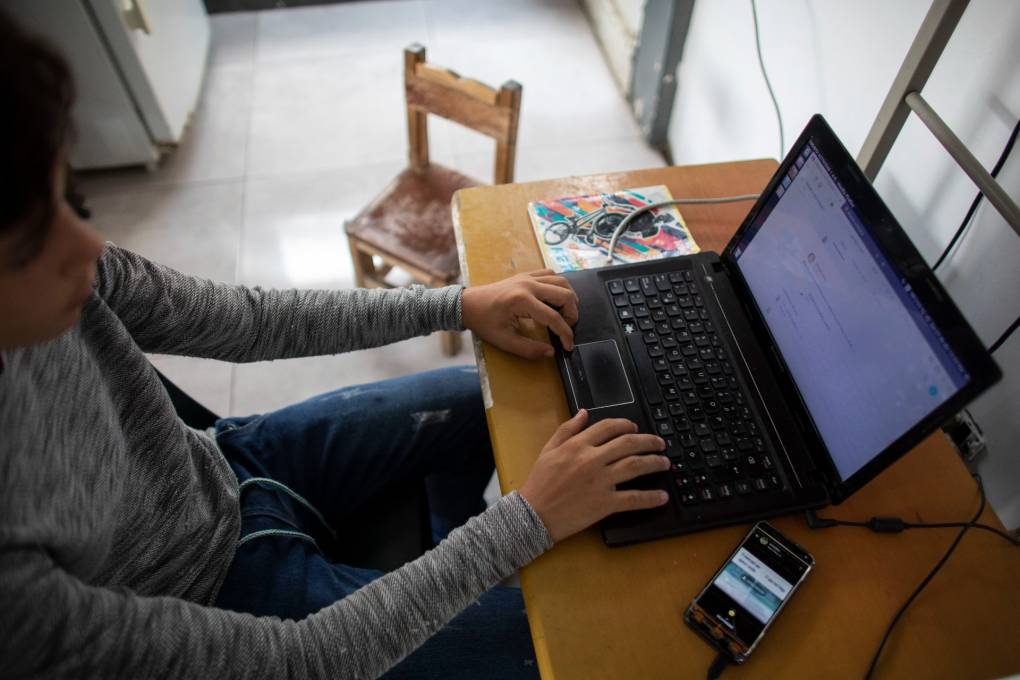
"caption": "What should you do if your pandemic unemployment benefits have stopped?",
"description": null,
"title": "pexels-cottonbro-5054213",
"credit": "Cottonbro/Pexels",
"status": "inherit",
"altTag": "Two hands type on a laptop in front of a window.",
"isLoading": false,
"fetchFailed": false
},
"news_11865987": {
"type": "attachments",
"id": "news_11865987",
"meta": {
"index": "attachments_1716263798",
"site": "news",
"id": "11865987",
"found": true
},
"parent": 11865975,
"imgSizes": {
"twentyfourteen-full-width": {
"file": "https://ww2.kqed.org/app/uploads/sites/10/2021/03/012321_NursingStudent_AB_01-1038x576.jpg",
"width": 1038,
"mimeType": "image/jpeg",
"height": 576
},
"thumbnail": {
"file": "https://ww2.kqed.org/app/uploads/sites/10/2021/03/012321_NursingStudent_AB_01-160x107.jpg",
"width": 160,
"mimeType": "image/jpeg",
"height": 107
},
"post-thumbnail": {
"file": "https://ww2.kqed.org/app/uploads/sites/10/2021/03/012321_NursingStudent_AB_01-672x372.jpg",
"width": 672,
"mimeType": "image/jpeg",
"height": 372
},
"kqedFullSize": {
"file": "https://ww2.kqed.org/app/uploads/sites/10/2021/03/012321_NursingStudent_AB_01.jpg",
"width": 1536,
"height": 1024
},
"large": {
"file": "https://ww2.kqed.org/app/uploads/sites/10/2021/03/012321_NursingStudent_AB_01-1020x680.jpg",
"width": 1020,
"mimeType": "image/jpeg",
"height": 680
},
"medium": {
"file": "https://ww2.kqed.org/app/uploads/sites/10/2021/03/012321_NursingStudent_AB_01-800x533.jpg",
"width": 800,
"mimeType": "image/jpeg",
"height": 533
}
},
"publishDate": 1616523397,
"modified": 1616523546,
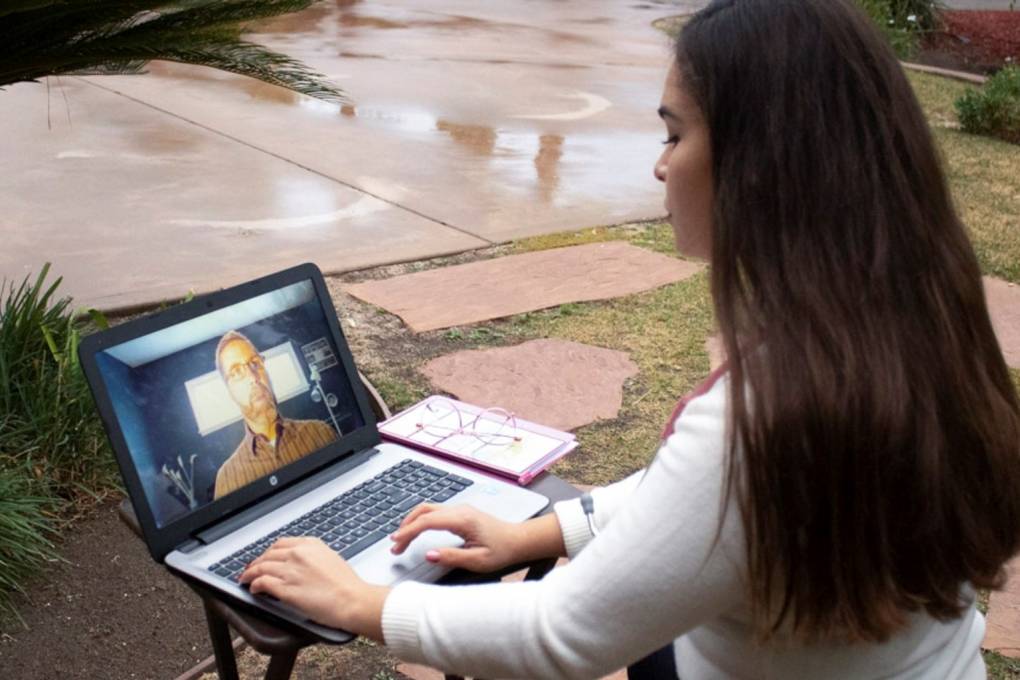
"caption": "Alexis Hawkins, a nursing student at Grossmont College in El Cajon, views an instructional video in the front yard of her home. Hawkins has been practicing her skills on family members while learning from home.",
"description": "A photo of Alexis Hawkins. Hawkins, a nursing student at Grossmont College in El Cajon, views an instructional video in the front yard of her home. Hawkins has been practicing her skills on family members while learning from home.",
"title": "012321_NursingStudent_AB_01",
"credit": "Arlene Banuelos for CalMatters",
"status": "inherit",
"altTag": null,
"isLoading": false,
"fetchFailed": false
},
"news_11865094": {
"type": "attachments",
"id": "news_11865094",
"meta": {
"index": "attachments_1716263798",
"site": "news",
"id": "11865094",
"found": true
},
"parent": 11865058,
"imgSizes": {
"twentyfourteen-full-width": {
"file": "https://ww2.kqed.org/app/uploads/sites/10/2021/03/GettyImages-1211223290-1-1038x576.jpg",
"width": 1038,
"mimeType": "image/jpeg",
"height": 576
},
"thumbnail": {
"file": "https://ww2.kqed.org/app/uploads/sites/10/2021/03/GettyImages-1211223290-1-160x107.jpg",
"width": 160,
"mimeType": "image/jpeg",
"height": 107
},
"post-thumbnail": {
"file": "https://ww2.kqed.org/app/uploads/sites/10/2021/03/GettyImages-1211223290-1-672x372.jpg",
"width": 672,
"mimeType": "image/jpeg",
"height": 372
},
"kqedFullSize": {
"file": "https://ww2.kqed.org/app/uploads/sites/10/2021/03/GettyImages-1211223290-1.jpg",
"width": 1920,
"height": 1280
},
"large": {
"file": "https://ww2.kqed.org/app/uploads/sites/10/2021/03/GettyImages-1211223290-1-1020x680.jpg",
"width": 1020,
"mimeType": "image/jpeg",
"height": 680
},
"1536x1536": {
"file": "https://ww2.kqed.org/app/uploads/sites/10/2021/03/GettyImages-1211223290-1-1536x1024.jpg",
"width": 1536,
"mimeType": "image/jpeg",
"height": 1024
},
"medium": {
"file": "https://ww2.kqed.org/app/uploads/sites/10/2021/03/GettyImages-1211223290-1-800x533.jpg",
"width": 800,
"mimeType": "image/jpeg",
"height": 533
}
},
"publishDate": 1615939857,
"modified": 1616175188,
"caption": "Health professionals are seeing a rise in teen mental health problems.",
"description": "Health professionals are seeing a rise in teen mental health problems.",
"title": "GettyImages-1211223290 (1)",
"credit": "Leonardo Fernandez Viloria/Getty Images",
"status": "inherit",
"altTag": null,
"isLoading": false,
"fetchFailed": false
},
"news_11865377": {
"type": "attachments",
"id": "news_11865377",
"meta": {
"index": "attachments_1716263798",
"site": "news",
"id": "11865377",
"found": true
},
"parent": 11865371,
"imgSizes": {
"twentyfourteen-full-width": {
"file": "https://ww2.kqed.org/app/uploads/sites/10/2021/03/GettyImages-1231365238-1024x576.jpg",
"width": 1024,
"mimeType": "image/jpeg",
"height": 576
},
"thumbnail": {
"file": "https://ww2.kqed.org/app/uploads/sites/10/2021/03/GettyImages-1231365238-160x107.jpg",
"width": 160,
"mimeType": "image/jpeg",
"height": 107
},
"post-thumbnail": {
"file": "https://ww2.kqed.org/app/uploads/sites/10/2021/03/GettyImages-1231365238-672x372.jpg",
"width": 672,
"mimeType": "image/jpeg",
"height": 372
},
"kqedFullSize": {
"file": "https://ww2.kqed.org/app/uploads/sites/10/2021/03/GettyImages-1231365238.jpg",
"width": 1024,
"height": 683
},
"large": {
"file": "https://ww2.kqed.org/app/uploads/sites/10/2021/03/GettyImages-1231365238-1020x680.jpg",
"width": 1020,
"mimeType": "image/jpeg",
"height": 680
},
"medium": {
"file": "https://ww2.kqed.org/app/uploads/sites/10/2021/03/GettyImages-1231365238-800x534.jpg",
"width": 800,
"mimeType": "image/jpeg",
"height": 534
}
},
"publishDate": 1616089042,
"modified": 1616089298,
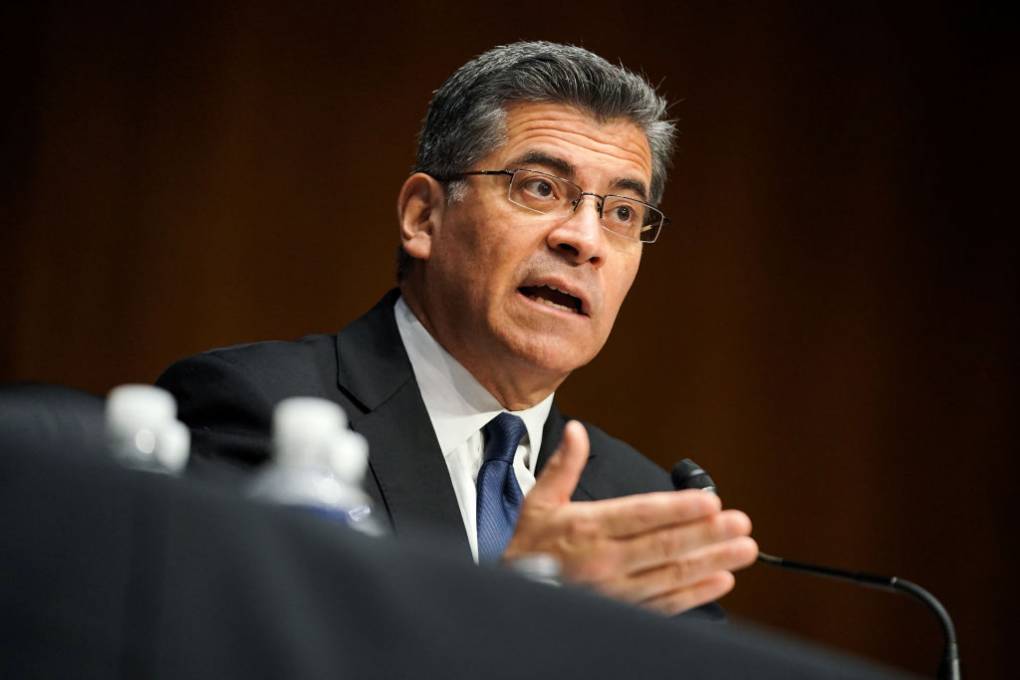
"caption": "California Attorney General Xavier Becerra answers questions during his confirmation hearing before the Senate Finance Committee on Feb. 24, 2021, in Washington, DC. Becerra was confirmed on March 18, as secretary of Health and Human Services, making him the first Latino to lead the department.",
"description": null,
"title": "Senate Finance Committee Considers Xavier Becerra For HHS Secretary",
"credit": "Greg Nash-Pool/Getty Images",
"status": "inherit",
"altTag": null,
"isLoading": false,
"fetchFailed": false
},
"news_11859089": {
"type": "attachments",
"id": "news_11859089",
"meta": {
"index": "attachments_1716263798",
"site": "news",
"id": "11859089",
"found": true
},
"parent": 11859088,
"imgSizes": {
"apple_news_ca_landscape_5_5": {
"file": "https://ww2.kqed.org/app/uploads/sites/10/2021/02/GettyImages-1230373813-copy-1044x783.jpg",
"width": 1044,
"mimeType": "image/jpeg",
"height": 783
},
"apple_news_ca_square_4_0": {
"file": "https://ww2.kqed.org/app/uploads/sites/10/2021/02/GettyImages-1230373813-copy-470x470.jpg",
"width": 470,
"mimeType": "image/jpeg",
"height": 470
},
"twentyfourteen-full-width": {
"file": "https://ww2.kqed.org/app/uploads/sites/10/2021/02/GettyImages-1230373813-copy-1038x576.jpg",
"width": 1038,
"mimeType": "image/jpeg",
"height": 576
},
"thumbnail": {
"file": "https://ww2.kqed.org/app/uploads/sites/10/2021/02/GettyImages-1230373813-copy-160x90.jpg",
"width": 160,
"mimeType": "image/jpeg",
"height": 90
},
"post-thumbnail": {
"file": "https://ww2.kqed.org/app/uploads/sites/10/2021/02/GettyImages-1230373813-copy-672x372.jpg",
"width": 672,
"mimeType": "image/jpeg",
"height": 372
},
"kqedFullSize": {
"file": "https://ww2.kqed.org/app/uploads/sites/10/2021/02/GettyImages-1230373813-copy-scaled.jpg",
"width": 2560,
"height": 1440
},
"2048x2048": {
"file": "https://ww2.kqed.org/app/uploads/sites/10/2021/02/GettyImages-1230373813-copy-2048x1152.jpg",
"width": 2048,
"mimeType": "image/jpeg",
"height": 1152
},
"apple_news_ca_landscape_4_7": {
"file": "https://ww2.kqed.org/app/uploads/sites/10/2021/02/GettyImages-1230373813-copy-632x474.jpg",
"width": 632,
"mimeType": "image/jpeg",
"height": 474
},
"large": {
"file": "https://ww2.kqed.org/app/uploads/sites/10/2021/02/GettyImages-1230373813-copy-1020x574.jpg",
"width": 1020,
"mimeType": "image/jpeg",
"height": 574
},
"apple_news_ca_landscape_4_0": {
"file": "https://ww2.kqed.org/app/uploads/sites/10/2021/02/GettyImages-1230373813-copy-536x402.jpg",
"width": 536,
"mimeType": "image/jpeg",
"height": 402
},
"apple_news_ca_portrait_12_9": {
"file": "https://ww2.kqed.org/app/uploads/sites/10/2021/02/GettyImages-1230373813-copy-1122x1496.jpg",
"width": 1122,
"mimeType": "image/jpeg",
"height": 1496
},
"medium": {
"file": "https://ww2.kqed.org/app/uploads/sites/10/2021/02/GettyImages-1230373813-copy-800x450.jpg",
"width": 800,
"mimeType": "image/jpeg",
"height": 450
},
"apple_news_ca_portrait_4_0": {
"file": "https://ww2.kqed.org/app/uploads/sites/10/2021/02/GettyImages-1230373813-copy-354x472.jpg",
"width": 354,
"mimeType": "image/jpeg",
"height": 472
},
"apple_news_ca_portrait_9_7": {
"file": "https://ww2.kqed.org/app/uploads/sites/10/2021/02/GettyImages-1230373813-copy-840x1120.jpg",
"width": 840,
"mimeType": "image/jpeg",
"height": 1120
},
"apple_news_ca_landscape_12_9": {
"file": "https://ww2.kqed.org/app/uploads/sites/10/2021/02/GettyImages-1230373813-copy-1832x1374.jpg",
"width": 1832,
"mimeType": "image/jpeg",
"height": 1374
},
"apple_news_ca_square_9_7": {
"file": "https://ww2.kqed.org/app/uploads/sites/10/2021/02/GettyImages-1230373813-copy-1104x1104.jpg",
"width": 1104,
"mimeType": "image/jpeg",
"height": 1104
},
"1536x1536": {
"file": "https://ww2.kqed.org/app/uploads/sites/10/2021/02/GettyImages-1230373813-copy-1536x864.jpg",
"width": 1536,
"mimeType": "image/jpeg",
"height": 864
},
"apple_news_ca_portrait_4_7": {
"file": "https://ww2.kqed.org/app/uploads/sites/10/2021/02/GettyImages-1230373813-copy-414x552.jpg",
"width": 414,
"mimeType": "image/jpeg",
"height": 552
},
"apple_news_ca_square_12_9": {
"file": "https://ww2.kqed.org/app/uploads/sites/10/2021/02/GettyImages-1230373813-copy-1472x1472.jpg",
"width": 1472,
"mimeType": "image/jpeg",
"height": 1472
},
"apple_news_ca_portrait_5_5": {
"file": "https://ww2.kqed.org/app/uploads/sites/10/2021/02/GettyImages-1230373813-copy-687x916.jpg",
"width": 687,
"mimeType": "image/jpeg",
"height": 916
},
"full-width": {
"file": "https://ww2.kqed.org/app/uploads/sites/10/2021/02/GettyImages-1230373813-copy-1920x1080.jpg",
"width": 1920,
"mimeType": "image/jpeg",
"height": 1080
},
"apple_news_ca_square_4_7": {
"file": "https://ww2.kqed.org/app/uploads/sites/10/2021/02/GettyImages-1230373813-copy-550x550.jpg",
"width": 550,
"mimeType": "image/jpeg",
"height": 550
},
"apple_news_ca_landscape_9_7": {
"file": "https://ww2.kqed.org/app/uploads/sites/10/2021/02/GettyImages-1230373813-copy-1376x1032.jpg",
"width": 1376,
"mimeType": "image/jpeg",
"height": 1032
},
"apple_news_ca_square_5_5": {
"file": "https://ww2.kqed.org/app/uploads/sites/10/2021/02/GettyImages-1230373813-copy-912x912.jpg",
"width": 912,
"mimeType": "image/jpeg",
"height": 912
}
},
"publishDate": 1612640926,
"modified": 1612641552,
"caption": "Maricela Arreguin Mejia (L) and her brother Nestor Arreguin mourn the death of their father Gilberto Arreguin Camacho, 58, due to COVID-19 during his burial at a cemetery on New Year's Eve, December 31, 2020. Gilberto Arreguin Camacho spent over three weeks in the hospital before his death, according to his son. \"He had so much love in his heart for his family,\" his son Nestor Arreguin said. \"He always had advice for you when you needed it. He was a really hard working man. He worked his whole life. Coming home late, working so hard to provide for his family. Im going to try and follow his legacy.\" ",
"description": null,
"title": "US-HEALTH-VIRUS-FUNERAL",
"credit": "Patrick T. Fallon / AFP via Getty Images",
"status": "inherit",
"altTag": "Maricela Arreguin Mejia (L) and her brother Nestor Arreguin mourn the death of their father Gilberto Arreguin Camacho, 58, due to COVID-19 during his burial at a cemetery on New Year's Eve, December 31, 2020.",
"isLoading": false,
"fetchFailed": false
},
"news_11864150": {
"type": "attachments",
"id": "news_11864150",
"meta": {
"index": "attachments_1716263798",
"site": "news",
"id": "11864150",
"found": true
},
"parent": 11864120,
"imgSizes": {
"twentyfourteen-full-width": {
"file": "https://ww2.kqed.org/app/uploads/sites/10/2021/03/GettyImages-1231635017-1-1038x576.jpg",
"width": 1038,
"mimeType": "image/jpeg",
"height": 576
},
"thumbnail": {
"file": "https://ww2.kqed.org/app/uploads/sites/10/2021/03/GettyImages-1231635017-1-160x119.jpg",
"width": 160,
"mimeType": "image/jpeg",
"height": 119
},
"post-thumbnail": {
"file": "https://ww2.kqed.org/app/uploads/sites/10/2021/03/GettyImages-1231635017-1-672x372.jpg",
"width": 672,
"mimeType": "image/jpeg",
"height": 372
},
"kqedFullSize": {
"file": "https://ww2.kqed.org/app/uploads/sites/10/2021/03/GettyImages-1231635017-1.jpg",
"width": 1920,
"height": 1433
},
"large": {
"file": "https://ww2.kqed.org/app/uploads/sites/10/2021/03/GettyImages-1231635017-1-1020x761.jpg",
"width": 1020,
"mimeType": "image/jpeg",
"height": 761
},
"1536x1536": {
"file": "https://ww2.kqed.org/app/uploads/sites/10/2021/03/GettyImages-1231635017-1-1536x1146.jpg",
"width": 1536,
"mimeType": "image/jpeg",
"height": 1146
},
"medium": {
"file": "https://ww2.kqed.org/app/uploads/sites/10/2021/03/GettyImages-1231635017-1-800x597.jpg",
"width": 800,
"mimeType": "image/jpeg",
"height": 597
}
},
"publishDate": 1615411630,
"modified": 1615415458,
"caption": "Speaker of the House Nancy Pelosi (L) and Senate Majority Leader Chuck Schumer sign the American Rescue Plan Act after the House Chamber voted on the final revised legislation of the $1.9 trillion Covid-19 relief plan, at the US Capitol on March 10, 2021 in Washington, DC. - The US Congress on Wednesday passed Joe Biden's enormous economic relief package, delivering a resounding victory for the US president and a desperately needed injection of cash to millions of families and businesses enduring the coronavirus pandemic. ",
"description": "Speaker of the House Nancy Pelosi (L) and Senate Majority Leader Chuck Schumer sign the American Rescue Plan Act after the House Chamber voted on the final revised legislation of the $1.9 trillion Covid-19 relief plan, at the US Capitol on March 10, 2021 in Washington, DC. - The US Congress on Wednesday passed Joe Biden's enormous economic relief package, delivering a resounding victory for the US president and a desperately needed injection of cash to millions of families and businesses enduring the coronavirus pandemic. ",
"title": "GettyImages-1231635017 (1)",
"credit": "Olivier Douliery/AFP via Getty Images",
"status": "inherit",
"altTag": "Pelosi and Schumer sitting with masks on, signing American Rescue Plan Act",
"isLoading": false,
"fetchFailed": false
},
"news_11863596": {
"type": "attachments",
"id": "news_11863596",
"meta": {
"index": "attachments_1716263798",
"site": "news",
"id": "11863596",
"found": true
},
"parent": 11863374,
"imgSizes": {
"apple_news_ca_landscape_5_5": {
"file": "https://ww2.kqed.org/app/uploads/sites/10/2020/03/WhitneyDwyer_01292021-qut-1044x783.jpg",
"width": 1044,
"mimeType": "image/jpeg",
"height": 783
},
"apple_news_ca_square_4_0": {
"file": "https://ww2.kqed.org/app/uploads/sites/10/2020/03/WhitneyDwyer_01292021-qut-470x470.jpg",
"width": 470,
"mimeType": "image/jpeg",
"height": 470
},
"twentyfourteen-full-width": {
"file": "https://ww2.kqed.org/app/uploads/sites/10/2020/03/WhitneyDwyer_01292021-qut-1038x576.jpg",
"width": 1038,
"mimeType": "image/jpeg",
"height": 576
},
"thumbnail": {
"file": "https://ww2.kqed.org/app/uploads/sites/10/2020/03/WhitneyDwyer_01292021-qut-160x107.jpg",
"width": 160,
"mimeType": "image/jpeg",
"height": 107
},
"post-thumbnail": {
"file": "https://ww2.kqed.org/app/uploads/sites/10/2020/03/WhitneyDwyer_01292021-qut-672x372.jpg",
"width": 672,
"mimeType": "image/jpeg",
"height": 372
},
"kqedFullSize": {
"file": "https://ww2.kqed.org/app/uploads/sites/10/2020/03/WhitneyDwyer_01292021-qut.jpg",
"width": 1920,
"height": 1280
},
"apple_news_ca_landscape_4_7": {
"file": "https://ww2.kqed.org/app/uploads/sites/10/2020/03/WhitneyDwyer_01292021-qut-632x474.jpg",
"width": 632,
"mimeType": "image/jpeg",
"height": 474
},
"large": {
"file": "https://ww2.kqed.org/app/uploads/sites/10/2020/03/WhitneyDwyer_01292021-qut-1020x680.jpg",
"width": 1020,
"mimeType": "image/jpeg",
"height": 680
},
"apple_news_ca_landscape_4_0": {
"file": "https://ww2.kqed.org/app/uploads/sites/10/2020/03/WhitneyDwyer_01292021-qut-536x402.jpg",
"width": 536,
"mimeType": "image/jpeg",
"height": 402
},
"apple_news_ca_portrait_12_9": {
"file": "https://ww2.kqed.org/app/uploads/sites/10/2020/03/WhitneyDwyer_01292021-qut-1122x1280.jpg",
"width": 1122,
"mimeType": "image/jpeg",
"height": 1280
},
"medium": {
"file": "https://ww2.kqed.org/app/uploads/sites/10/2020/03/WhitneyDwyer_01292021-qut-800x533.jpg",
"width": 800,
"mimeType": "image/jpeg",
"height": 533
},
"apple_news_ca_portrait_4_0": {
"file": "https://ww2.kqed.org/app/uploads/sites/10/2020/03/WhitneyDwyer_01292021-qut-354x472.jpg",
"width": 354,
"mimeType": "image/jpeg",
"height": 472
},
"apple_news_ca_portrait_9_7": {
"file": "https://ww2.kqed.org/app/uploads/sites/10/2020/03/WhitneyDwyer_01292021-qut-840x1120.jpg",
"width": 840,
"mimeType": "image/jpeg",
"height": 1120
},
"apple_news_ca_landscape_12_9": {
"file": "https://ww2.kqed.org/app/uploads/sites/10/2020/03/WhitneyDwyer_01292021-qut-1832x1280.jpg",
"width": 1832,
"mimeType": "image/jpeg",
"height": 1280
},
"apple_news_ca_square_9_7": {
"file": "https://ww2.kqed.org/app/uploads/sites/10/2020/03/WhitneyDwyer_01292021-qut-1104x1104.jpg",
"width": 1104,
"mimeType": "image/jpeg",
"height": 1104
},
"1536x1536": {
"file": "https://ww2.kqed.org/app/uploads/sites/10/2020/03/WhitneyDwyer_01292021-qut-1536x1024.jpg",
"width": 1536,
"mimeType": "image/jpeg",
"height": 1024
},
"apple_news_ca_portrait_4_7": {
"file": "https://ww2.kqed.org/app/uploads/sites/10/2020/03/WhitneyDwyer_01292021-qut-414x552.jpg",
"width": 414,
"mimeType": "image/jpeg",
"height": 552
},
"apple_news_ca_square_12_9": {
"file": "https://ww2.kqed.org/app/uploads/sites/10/2020/03/WhitneyDwyer_01292021-qut-1472x1280.jpg",
"width": 1472,
"mimeType": "image/jpeg",
"height": 1280
},
"apple_news_ca_portrait_5_5": {
"file": "https://ww2.kqed.org/app/uploads/sites/10/2020/03/WhitneyDwyer_01292021-qut-687x916.jpg",
"width": 687,
"mimeType": "image/jpeg",
"height": 916
},
"apple_news_ca_square_4_7": {
"file": "https://ww2.kqed.org/app/uploads/sites/10/2020/03/WhitneyDwyer_01292021-qut-550x550.jpg",
"width": 550,
"mimeType": "image/jpeg",
"height": 550
},
"apple_news_ca_landscape_9_7": {
"file": "https://ww2.kqed.org/app/uploads/sites/10/2020/03/WhitneyDwyer_01292021-qut-1376x1032.jpg",
"width": 1376,
"mimeType": "image/jpeg",
"height": 1032
},
"apple_news_ca_square_5_5": {
"file": "https://ww2.kqed.org/app/uploads/sites/10/2020/03/WhitneyDwyer_01292021-qut-912x912.jpg",
"width": 912,
"mimeType": "image/jpeg",
"height": 912
}
},
"publishDate": 1614990835,
"modified": 1614994300,
"caption": "Oakland Unified School District teacher Whitney Dwyer grades student's work in her backyard in Oakland on Jan. 29, 2021.",
"description": null,
"title": "WhitneyDwyer_01292021-qut",
"credit": "Beth LaBerge/KQED",
"status": "inherit",
"altTag": null,
"isLoading": false,
"fetchFailed": false
},
"news_11862765": {
"type": "attachments",
"id": "news_11862765",
"meta": {
"index": "attachments_1716263798",
"site": "news",
"id": "11862765",
"found": true
},
"parent": 11862764,
"imgSizes": {
"apple_news_ca_landscape_5_5": {
"file": "https://ww2.kqed.org/app/uploads/sites/10/2021/03/gettyimages-1228847717_wide-3ae9e0a6c8156eec376d4b6ca751f506300e60fc-1044x783.jpg",
"width": 1044,
"mimeType": "image/jpeg",
"height": 783
},
"apple_news_ca_square_4_0": {
"file": "https://ww2.kqed.org/app/uploads/sites/10/2021/03/gettyimages-1228847717_wide-3ae9e0a6c8156eec376d4b6ca751f506300e60fc-470x470.jpg",
"width": 470,
"mimeType": "image/jpeg",
"height": 470
},
"twentyfourteen-full-width": {
"file": "https://ww2.kqed.org/app/uploads/sites/10/2021/03/gettyimages-1228847717_wide-3ae9e0a6c8156eec376d4b6ca751f506300e60fc-1038x576.jpg",
"width": 1038,
"mimeType": "image/jpeg",
"height": 576
},
"thumbnail": {
"file": "https://ww2.kqed.org/app/uploads/sites/10/2021/03/gettyimages-1228847717_wide-3ae9e0a6c8156eec376d4b6ca751f506300e60fc-160x90.jpg",
"width": 160,
"mimeType": "image/jpeg",
"height": 90
},
"post-thumbnail": {
"file": "https://ww2.kqed.org/app/uploads/sites/10/2021/03/gettyimages-1228847717_wide-3ae9e0a6c8156eec376d4b6ca751f506300e60fc-672x372.jpg",
"width": 672,
"mimeType": "image/jpeg",
"height": 372
},
"kqedFullSize": {
"file": "https://ww2.kqed.org/app/uploads/sites/10/2021/03/gettyimages-1228847717_wide-3ae9e0a6c8156eec376d4b6ca751f506300e60fc-e1614710518819.jpg",
"width": 1920,
"height": 1080
},
"2048x2048": {
"file": "https://ww2.kqed.org/app/uploads/sites/10/2021/03/gettyimages-1228847717_wide-3ae9e0a6c8156eec376d4b6ca751f506300e60fc-2048x1152.jpg",
"width": 2048,
"mimeType": "image/jpeg",
"height": 1152
},
"apple_news_ca_landscape_4_7": {
"file": "https://ww2.kqed.org/app/uploads/sites/10/2021/03/gettyimages-1228847717_wide-3ae9e0a6c8156eec376d4b6ca751f506300e60fc-632x474.jpg",
"width": 632,
"mimeType": "image/jpeg",
"height": 474
},
"large": {
"file": "https://ww2.kqed.org/app/uploads/sites/10/2021/03/gettyimages-1228847717_wide-3ae9e0a6c8156eec376d4b6ca751f506300e60fc-1020x574.jpg",
"width": 1020,
"mimeType": "image/jpeg",
"height": 574
},
"apple_news_ca_landscape_4_0": {
"file": "https://ww2.kqed.org/app/uploads/sites/10/2021/03/gettyimages-1228847717_wide-3ae9e0a6c8156eec376d4b6ca751f506300e60fc-536x402.jpg",
"width": 536,
"mimeType": "image/jpeg",
"height": 402
},
"apple_news_ca_portrait_12_9": {
"file": "https://ww2.kqed.org/app/uploads/sites/10/2021/03/gettyimages-1228847717_wide-3ae9e0a6c8156eec376d4b6ca751f506300e60fc-1122x1396.jpg",
"width": 1122,
"mimeType": "image/jpeg",
"height": 1396
},
"medium": {
"file": "https://ww2.kqed.org/app/uploads/sites/10/2021/03/gettyimages-1228847717_wide-3ae9e0a6c8156eec376d4b6ca751f506300e60fc-800x450.jpg",
"width": 800,
"mimeType": "image/jpeg",
"height": 450
},
"apple_news_ca_portrait_4_0": {
"file": "https://ww2.kqed.org/app/uploads/sites/10/2021/03/gettyimages-1228847717_wide-3ae9e0a6c8156eec376d4b6ca751f506300e60fc-354x472.jpg",
"width": 354,
"mimeType": "image/jpeg",
"height": 472
},
"apple_news_ca_portrait_9_7": {
"file": "https://ww2.kqed.org/app/uploads/sites/10/2021/03/gettyimages-1228847717_wide-3ae9e0a6c8156eec376d4b6ca751f506300e60fc-840x1120.jpg",
"width": 840,
"mimeType": "image/jpeg",
"height": 1120
},
"apple_news_ca_landscape_12_9": {
"file": "https://ww2.kqed.org/app/uploads/sites/10/2021/03/gettyimages-1228847717_wide-3ae9e0a6c8156eec376d4b6ca751f506300e60fc-1832x1374.jpg",
"width": 1832,
"mimeType": "image/jpeg",
"height": 1374
},
"apple_news_ca_square_9_7": {
"file": "https://ww2.kqed.org/app/uploads/sites/10/2021/03/gettyimages-1228847717_wide-3ae9e0a6c8156eec376d4b6ca751f506300e60fc-1104x1104.jpg",
"width": 1104,
"mimeType": "image/jpeg",
"height": 1104
},
"1536x1536": {
"file": "https://ww2.kqed.org/app/uploads/sites/10/2021/03/gettyimages-1228847717_wide-3ae9e0a6c8156eec376d4b6ca751f506300e60fc-1536x864.jpg",
"width": 1536,
"mimeType": "image/jpeg",
"height": 864
},
"apple_news_ca_portrait_4_7": {
"file": "https://ww2.kqed.org/app/uploads/sites/10/2021/03/gettyimages-1228847717_wide-3ae9e0a6c8156eec376d4b6ca751f506300e60fc-414x552.jpg",
"width": 414,
"mimeType": "image/jpeg",
"height": 552
},
"apple_news_ca_square_12_9": {
"file": "https://ww2.kqed.org/app/uploads/sites/10/2021/03/gettyimages-1228847717_wide-3ae9e0a6c8156eec376d4b6ca751f506300e60fc-1472x1396.jpg",
"width": 1472,
"mimeType": "image/jpeg",
"height": 1396
},
"apple_news_ca_portrait_5_5": {
"file": "https://ww2.kqed.org/app/uploads/sites/10/2021/03/gettyimages-1228847717_wide-3ae9e0a6c8156eec376d4b6ca751f506300e60fc-687x916.jpg",
"width": 687,
"mimeType": "image/jpeg",
"height": 916
},
"full-width": {
"file": "https://ww2.kqed.org/app/uploads/sites/10/2021/03/gettyimages-1228847717_wide-3ae9e0a6c8156eec376d4b6ca751f506300e60fc-1920x1080.jpg",
"width": 1920,
"mimeType": "image/jpeg",
"height": 1080
},
"apple_news_ca_square_4_7": {
"file": "https://ww2.kqed.org/app/uploads/sites/10/2021/03/gettyimages-1228847717_wide-3ae9e0a6c8156eec376d4b6ca751f506300e60fc-550x550.jpg",
"width": 550,
"mimeType": "image/jpeg",
"height": 550
},
"apple_news_ca_landscape_9_7": {
"file": "https://ww2.kqed.org/app/uploads/sites/10/2021/03/gettyimages-1228847717_wide-3ae9e0a6c8156eec376d4b6ca751f506300e60fc-1376x1032.jpg",
"width": 1376,
"mimeType": "image/jpeg",
"height": 1032
},
"apple_news_ca_square_5_5": {
"file": "https://ww2.kqed.org/app/uploads/sites/10/2021/03/gettyimages-1228847717_wide-3ae9e0a6c8156eec376d4b6ca751f506300e60fc-912x912.jpg",
"width": 912,
"mimeType": "image/jpeg",
"height": 912
}
},
"publishDate": 1614710315,
"modified": 1614715610,
"caption": "Rep. James Clyburn, D-South Carolina, pictured last October, is chairman of the House Select Subcommittee on the Coronavirus Crisis, which is launching its own investigation into One Medical's vaccine practices.",
"description": "Rep. James Clyburn, pictured last October, is chairman of the House Select Subcommittee on the Coronavirus Crisis, which is launching its own investigation into One Medical's vaccine practices.",
"title": "Rep. James Clyburn, pictured last October, is chairman of the House Select Subcommittee on the Coronavirus Crisis, which is launching its own investigation into One Medical's vaccine practices.",
"credit": "Michael A. McCoy/Pool/Getty Images",
"status": "inherit",
"altTag": null,
"isLoading": false,
"fetchFailed": false
},
"news_11862440": {
"type": "attachments",
"id": "news_11862440",
"meta": {
"index": "attachments_1716263798",
"site": "news",
"id": "11862440",
"found": true
},
"parent": 11862434,
"imgSizes": {
"apple_news_ca_landscape_5_5": {
"file": "https://ww2.kqed.org/app/uploads/sites/10/2021/02/GettyImages-1230310748-1044x783.jpg",
"width": 1044,
"mimeType": "image/jpeg",
"height": 783
},
"apple_news_ca_square_4_0": {
"file": "https://ww2.kqed.org/app/uploads/sites/10/2021/02/GettyImages-1230310748-470x470.jpg",
"width": 470,
"mimeType": "image/jpeg",
"height": 470
},
"twentyfourteen-full-width": {
"file": "https://ww2.kqed.org/app/uploads/sites/10/2021/02/GettyImages-1230310748-1038x576.jpg",
"width": 1038,
"mimeType": "image/jpeg",
"height": 576
},
"thumbnail": {
"file": "https://ww2.kqed.org/app/uploads/sites/10/2021/02/GettyImages-1230310748-160x107.jpg",
"width": 160,
"mimeType": "image/jpeg",
"height": 107
},
"post-thumbnail": {
"file": "https://ww2.kqed.org/app/uploads/sites/10/2021/02/GettyImages-1230310748-672x372.jpg",
"width": 672,
"mimeType": "image/jpeg",
"height": 372
},
"kqedFullSize": {
"file": "https://ww2.kqed.org/app/uploads/sites/10/2021/02/GettyImages-1230310748-scaled.jpg",
"width": 2560,
"height": 1707
},
"2048x2048": {
"file": "https://ww2.kqed.org/app/uploads/sites/10/2021/02/GettyImages-1230310748-2048x1366.jpg",
"width": 2048,
"mimeType": "image/jpeg",
"height": 1366
},
"apple_news_ca_landscape_4_7": {
"file": "https://ww2.kqed.org/app/uploads/sites/10/2021/02/GettyImages-1230310748-632x474.jpg",
"width": 632,
"mimeType": "image/jpeg",
"height": 474
},
"large": {
"file": "https://ww2.kqed.org/app/uploads/sites/10/2021/02/GettyImages-1230310748-1020x680.jpg",
"width": 1020,
"mimeType": "image/jpeg",
"height": 680
},
"apple_news_ca_landscape_4_0": {
"file": "https://ww2.kqed.org/app/uploads/sites/10/2021/02/GettyImages-1230310748-536x402.jpg",
"width": 536,
"mimeType": "image/jpeg",
"height": 402
},
"apple_news_ca_portrait_12_9": {
"file": "https://ww2.kqed.org/app/uploads/sites/10/2021/02/GettyImages-1230310748-1122x1496.jpg",
"width": 1122,
"mimeType": "image/jpeg",
"height": 1496
},
"medium": {
"file": "https://ww2.kqed.org/app/uploads/sites/10/2021/02/GettyImages-1230310748-800x534.jpg",
"width": 800,
"mimeType": "image/jpeg",
"height": 534
},
"apple_news_ca_portrait_4_0": {
"file": "https://ww2.kqed.org/app/uploads/sites/10/2021/02/GettyImages-1230310748-354x472.jpg",
"width": 354,
"mimeType": "image/jpeg",
"height": 472
},
"apple_news_ca_portrait_9_7": {
"file": "https://ww2.kqed.org/app/uploads/sites/10/2021/02/GettyImages-1230310748-840x1120.jpg",
"width": 840,
"mimeType": "image/jpeg",
"height": 1120
},
"apple_news_ca_landscape_12_9": {
"file": "https://ww2.kqed.org/app/uploads/sites/10/2021/02/GettyImages-1230310748-1832x1374.jpg",
"width": 1832,
"mimeType": "image/jpeg",
"height": 1374
},
"apple_news_ca_square_9_7": {
"file": "https://ww2.kqed.org/app/uploads/sites/10/2021/02/GettyImages-1230310748-1104x1104.jpg",
"width": 1104,
"mimeType": "image/jpeg",
"height": 1104
},
"1536x1536": {
"file": "https://ww2.kqed.org/app/uploads/sites/10/2021/02/GettyImages-1230310748-1536x1024.jpg",
"width": 1536,
"mimeType": "image/jpeg",
"height": 1024
},
"apple_news_ca_portrait_4_7": {
"file": "https://ww2.kqed.org/app/uploads/sites/10/2021/02/GettyImages-1230310748-414x552.jpg",
"width": 414,
"mimeType": "image/jpeg",
"height": 552
},
"apple_news_ca_square_12_9": {
"file": "https://ww2.kqed.org/app/uploads/sites/10/2021/02/GettyImages-1230310748-1472x1472.jpg",
"width": 1472,
"mimeType": "image/jpeg",
"height": 1472
},
"apple_news_ca_portrait_5_5": {
"file": "https://ww2.kqed.org/app/uploads/sites/10/2021/02/GettyImages-1230310748-687x916.jpg",
"width": 687,
"mimeType": "image/jpeg",
"height": 916
},
"full-width": {
"file": "https://ww2.kqed.org/app/uploads/sites/10/2021/02/GettyImages-1230310748-1920x1280.jpg",
"width": 1920,
"mimeType": "image/jpeg",
"height": 1280
},
"apple_news_ca_square_4_7": {
"file": "https://ww2.kqed.org/app/uploads/sites/10/2021/02/GettyImages-1230310748-550x550.jpg",
"width": 550,
"mimeType": "image/jpeg",
"height": 550
},
"apple_news_ca_landscape_9_7": {
"file": "https://ww2.kqed.org/app/uploads/sites/10/2021/02/GettyImages-1230310748-1376x1032.jpg",
"width": 1376,
"mimeType": "image/jpeg",
"height": 1032
},
"apple_news_ca_square_5_5": {
"file": "https://ww2.kqed.org/app/uploads/sites/10/2021/02/GettyImages-1230310748-912x912.jpg",
"width": 912,
"mimeType": "image/jpeg",
"height": 912
}
},
"publishDate": 1614442834,
"modified": 1614622282,
"caption": "All but two House Democrats voted in favor of the $1.9 trillion relief package, with the final vote tally being 219 in favor and 212 against. No Republican supported the bill.",
"description": "The U.S. Capitol Building is seen past the Washington Monument as the sun sets on Dec. 26, 2020 in Washington, D.C.",
"title": "Sun Sets On Nation's Capital",
"credit": "Samuel Corum/Getty Images",
"status": "inherit",
"altTag": null,
"isLoading": false,
"fetchFailed": false
},
"news_11862266": {
"type": "attachments",
"id": "news_11862266",
"meta": {
"index": "attachments_1716263798",
"site": "news",
"id": "11862266",
"found": true
},
"parent": 11862264,
"imgSizes": {
"apple_news_ca_landscape_5_5": {
"file": "https://ww2.kqed.org/app/uploads/sites/10/2021/02/n0a2902_slide-1ea0145520dacad2e478d3dd60ac8c75e54d6c53-1044x783.jpg",
"width": 1044,
"mimeType": "image/jpeg",
"height": 783
},
"apple_news_ca_square_4_0": {
"file": "https://ww2.kqed.org/app/uploads/sites/10/2021/02/n0a2902_slide-1ea0145520dacad2e478d3dd60ac8c75e54d6c53-470x470.jpg",
"width": 470,
"mimeType": "image/jpeg",
"height": 470
},
"twentyfourteen-full-width": {
"file": "https://ww2.kqed.org/app/uploads/sites/10/2021/02/n0a2902_slide-1ea0145520dacad2e478d3dd60ac8c75e54d6c53-1038x576.jpg",
"width": 1038,
"mimeType": "image/jpeg",
"height": 576
},
"thumbnail": {
"file": "https://ww2.kqed.org/app/uploads/sites/10/2021/02/n0a2902_slide-1ea0145520dacad2e478d3dd60ac8c75e54d6c53-160x107.jpg",
"width": 160,
"mimeType": "image/jpeg",
"height": 107
},
"post-thumbnail": {
"file": "https://ww2.kqed.org/app/uploads/sites/10/2021/02/n0a2902_slide-1ea0145520dacad2e478d3dd60ac8c75e54d6c53-672x372.jpg",
"width": 672,
"mimeType": "image/jpeg",
"height": 372
},
"kqedFullSize": {
"file": "https://ww2.kqed.org/app/uploads/sites/10/2021/02/n0a2902_slide-1ea0145520dacad2e478d3dd60ac8c75e54d6c53-e1614367080669.jpg",
"width": 1920,
"height": 1279
},
"2048x2048": {
"file": "https://ww2.kqed.org/app/uploads/sites/10/2021/02/n0a2902_slide-1ea0145520dacad2e478d3dd60ac8c75e54d6c53-2048x1365.jpg",
"width": 2048,
"mimeType": "image/jpeg",
"height": 1365
},
"apple_news_ca_landscape_4_7": {
"file": "https://ww2.kqed.org/app/uploads/sites/10/2021/02/n0a2902_slide-1ea0145520dacad2e478d3dd60ac8c75e54d6c53-632x474.jpg",
"width": 632,
"mimeType": "image/jpeg",
"height": 474
},
"large": {
"file": "https://ww2.kqed.org/app/uploads/sites/10/2021/02/n0a2902_slide-1ea0145520dacad2e478d3dd60ac8c75e54d6c53-1020x680.jpg",
"width": 1020,
"mimeType": "image/jpeg",
"height": 680
},
"apple_news_ca_landscape_4_0": {
"file": "https://ww2.kqed.org/app/uploads/sites/10/2021/02/n0a2902_slide-1ea0145520dacad2e478d3dd60ac8c75e54d6c53-536x402.jpg",
"width": 536,
"mimeType": "image/jpeg",
"height": 402
},
"apple_news_ca_portrait_12_9": {
"file": "https://ww2.kqed.org/app/uploads/sites/10/2021/02/n0a2902_slide-1ea0145520dacad2e478d3dd60ac8c75e54d6c53-1122x1496.jpg",
"width": 1122,
"mimeType": "image/jpeg",
"height": 1496
},
"medium": {
"file": "https://ww2.kqed.org/app/uploads/sites/10/2021/02/n0a2902_slide-1ea0145520dacad2e478d3dd60ac8c75e54d6c53-800x533.jpg",
"width": 800,
"mimeType": "image/jpeg",
"height": 533
},
"apple_news_ca_portrait_4_0": {
"file": "https://ww2.kqed.org/app/uploads/sites/10/2021/02/n0a2902_slide-1ea0145520dacad2e478d3dd60ac8c75e54d6c53-354x472.jpg",
"width": 354,
"mimeType": "image/jpeg",
"height": 472
},
"apple_news_ca_portrait_9_7": {
"file": "https://ww2.kqed.org/app/uploads/sites/10/2021/02/n0a2902_slide-1ea0145520dacad2e478d3dd60ac8c75e54d6c53-840x1120.jpg",
"width": 840,
"mimeType": "image/jpeg",
"height": 1120
},
"apple_news_ca_landscape_12_9": {
"file": "https://ww2.kqed.org/app/uploads/sites/10/2021/02/n0a2902_slide-1ea0145520dacad2e478d3dd60ac8c75e54d6c53-1832x1374.jpg",
"width": 1832,
"mimeType": "image/jpeg",
"height": 1374
},
"apple_news_ca_square_9_7": {
"file": "https://ww2.kqed.org/app/uploads/sites/10/2021/02/n0a2902_slide-1ea0145520dacad2e478d3dd60ac8c75e54d6c53-1104x1104.jpg",
"width": 1104,
"mimeType": "image/jpeg",
"height": 1104
},
"1536x1536": {
"file": "https://ww2.kqed.org/app/uploads/sites/10/2021/02/n0a2902_slide-1ea0145520dacad2e478d3dd60ac8c75e54d6c53-1536x1024.jpg",
"width": 1536,
"mimeType": "image/jpeg",
"height": 1024
},
"apple_news_ca_portrait_4_7": {
"file": "https://ww2.kqed.org/app/uploads/sites/10/2021/02/n0a2902_slide-1ea0145520dacad2e478d3dd60ac8c75e54d6c53-414x552.jpg",
"width": 414,
"mimeType": "image/jpeg",
"height": 552
},
"apple_news_ca_square_12_9": {
"file": "https://ww2.kqed.org/app/uploads/sites/10/2021/02/n0a2902_slide-1ea0145520dacad2e478d3dd60ac8c75e54d6c53-1472x1472.jpg",
"width": 1472,
"mimeType": "image/jpeg",
"height": 1472
},
"apple_news_ca_portrait_5_5": {
"file": "https://ww2.kqed.org/app/uploads/sites/10/2021/02/n0a2902_slide-1ea0145520dacad2e478d3dd60ac8c75e54d6c53-687x916.jpg",
"width": 687,
"mimeType": "image/jpeg",
"height": 916
},
"full-width": {
"file": "https://ww2.kqed.org/app/uploads/sites/10/2021/02/n0a2902_slide-1ea0145520dacad2e478d3dd60ac8c75e54d6c53-1920x1279.jpg",
"width": 1920,
"mimeType": "image/jpeg",
"height": 1279
},
"apple_news_ca_square_4_7": {
"file": "https://ww2.kqed.org/app/uploads/sites/10/2021/02/n0a2902_slide-1ea0145520dacad2e478d3dd60ac8c75e54d6c53-550x550.jpg",
"width": 550,
"mimeType": "image/jpeg",
"height": 550
},
"apple_news_ca_landscape_9_7": {
"file": "https://ww2.kqed.org/app/uploads/sites/10/2021/02/n0a2902_slide-1ea0145520dacad2e478d3dd60ac8c75e54d6c53-1376x1032.jpg",
"width": 1376,
"mimeType": "image/jpeg",
"height": 1032
},
"apple_news_ca_square_5_5": {
"file": "https://ww2.kqed.org/app/uploads/sites/10/2021/02/n0a2902_slide-1ea0145520dacad2e478d3dd60ac8c75e54d6c53-912x912.jpg",
"width": 912,
"mimeType": "image/jpeg",
"height": 912
}
},
"publishDate": 1614366636,
"modified": 1614368721,
"caption": "Climate change is fueling more destructive, harder-to-control disasters like last year's massive wildfires. The mental and emotional toll for firefighters and first responders is alarming. “You just feel defeated. You know? The things that we used to do that worked 10 years ago are no longer working anymore,” CalFire Captain Matt Newberry said.",
"description": "Fire Captain Matt Newberry at the Napa County Fire Department Station 27 Greenwood Ranch where he works, Napa County, California, February 16th, 2021.\n\nClimate change is fueling more destructive, harder-to-control disasters like last year's massive wildfires. The mental and emotional toll for firefighters and first responders is alarming.\n\n NEWBERRY: You just feel defeated. You know? The things that we used to do that worked 10 years ago are no longer working anymore.",
"title": "CalFire Captain Matt Newberry has been fighting fire for more than two decades, but he and his crew hit a wall last year. Climate change is increasing the frequency, intensity and range of wildfires, putting psychological strain on those tasked with trying to contain them.",
"credit": "Talia Herman/NPR",
"status": "inherit",
"altTag": null,
"isLoading": false,
"fetchFailed": false
},
"news_11861981": {
"type": "attachments",
"id": "news_11861981",
"meta": {
"index": "attachments_1716263798",
"site": "news",
"id": "11861981",
"found": true
},
"parent": 11861972,
"imgSizes": {
"apple_news_ca_landscape_5_5": {
"file": "https://ww2.kqed.org/app/uploads/sites/10/2021/02/tierbridge_022421_final-1044x783.png",
"width": 1044,
"mimeType": "image/png",
"height": 783
},
"apple_news_ca_square_4_0": {
"file": "https://ww2.kqed.org/app/uploads/sites/10/2021/02/tierbridge_022421_final-470x470.png",
"width": 470,
"mimeType": "image/png",
"height": 470
},
"twentyfourteen-full-width": {
"file": "https://ww2.kqed.org/app/uploads/sites/10/2021/02/tierbridge_022421_final-1038x576.png",
"width": 1038,
"mimeType": "image/png",
"height": 576
},
"thumbnail": {
"file": "https://ww2.kqed.org/app/uploads/sites/10/2021/02/tierbridge_022421_final-160x109.png",
"width": 160,
"mimeType": "image/png",
"height": 109
},
"post-thumbnail": {
"file": "https://ww2.kqed.org/app/uploads/sites/10/2021/02/tierbridge_022421_final-672x372.png",
"width": 672,
"mimeType": "image/png",
"height": 372
},
"kqedFullSize": {
"file": "https://ww2.kqed.org/app/uploads/sites/10/2021/02/tierbridge_022421_final.png",
"width": 1920,
"height": 1313
},
"apple_news_ca_landscape_4_7": {
"file": "https://ww2.kqed.org/app/uploads/sites/10/2021/02/tierbridge_022421_final-632x474.png",
"width": 632,
"mimeType": "image/png",
"height": 474
},
"large": {
"file": "https://ww2.kqed.org/app/uploads/sites/10/2021/02/tierbridge_022421_final-1020x698.png",
"width": 1020,
"mimeType": "image/png",
"height": 698
},
"apple_news_ca_landscape_4_0": {
"file": "https://ww2.kqed.org/app/uploads/sites/10/2021/02/tierbridge_022421_final-536x402.png",
"width": 536,
"mimeType": "image/png",
"height": 402
},
"apple_news_ca_portrait_12_9": {
"file": "https://ww2.kqed.org/app/uploads/sites/10/2021/02/tierbridge_022421_final-1122x1313.png",
"width": 1122,
"mimeType": "image/png",
"height": 1313
},
"medium": {
"file": "https://ww2.kqed.org/app/uploads/sites/10/2021/02/tierbridge_022421_final-800x547.png",
"width": 800,
"mimeType": "image/png",
"height": 547
},
"apple_news_ca_portrait_4_0": {
"file": "https://ww2.kqed.org/app/uploads/sites/10/2021/02/tierbridge_022421_final-354x472.png",
"width": 354,
"mimeType": "image/png",
"height": 472
},
"apple_news_ca_portrait_9_7": {
"file": "https://ww2.kqed.org/app/uploads/sites/10/2021/02/tierbridge_022421_final-840x1120.png",
"width": 840,
"mimeType": "image/png",
"height": 1120
},
"apple_news_ca_landscape_12_9": {
"file": "https://ww2.kqed.org/app/uploads/sites/10/2021/02/tierbridge_022421_final-1832x1313.png",
"width": 1832,
"mimeType": "image/png",
"height": 1313
},
"apple_news_ca_square_9_7": {
"file": "https://ww2.kqed.org/app/uploads/sites/10/2021/02/tierbridge_022421_final-1104x1104.png",
"width": 1104,
"mimeType": "image/png",
"height": 1104
},
"1536x1536": {
"file": "https://ww2.kqed.org/app/uploads/sites/10/2021/02/tierbridge_022421_final-1536x1050.png",
"width": 1536,
"mimeType": "image/png",
"height": 1050
},
"apple_news_ca_portrait_4_7": {
"file": "https://ww2.kqed.org/app/uploads/sites/10/2021/02/tierbridge_022421_final-414x552.png",
"width": 414,
"mimeType": "image/png",
"height": 552
},
"apple_news_ca_square_12_9": {
"file": "https://ww2.kqed.org/app/uploads/sites/10/2021/02/tierbridge_022421_final-1472x1313.png",
"width": 1472,
"mimeType": "image/png",
"height": 1313
},
"apple_news_ca_portrait_5_5": {
"file": "https://ww2.kqed.org/app/uploads/sites/10/2021/02/tierbridge_022421_final-687x916.png",
"width": 687,
"mimeType": "image/png",
"height": 916
},
"apple_news_ca_square_4_7": {
"file": "https://ww2.kqed.org/app/uploads/sites/10/2021/02/tierbridge_022421_final-550x550.png",
"width": 550,
"mimeType": "image/png",
"height": 550
},
"apple_news_ca_landscape_9_7": {
"file": "https://ww2.kqed.org/app/uploads/sites/10/2021/02/tierbridge_022421_final-1376x1032.png",
"width": 1376,
"mimeType": "image/png",
"height": 1032
},
"apple_news_ca_square_5_5": {
"file": "https://ww2.kqed.org/app/uploads/sites/10/2021/02/tierbridge_022421_final-912x912.png",
"width": 912,
"mimeType": "image/png",
"height": 912
}
},
"publishDate": 1614207522,
"modified": 1614207684,
"caption": null,
"description": null,
"title": "tierbridge_022421_final",
"credit": null,
"status": "inherit",
"altTag": "A Mark Fiore cartoon showing the Golden Gate Bridge, half purple and half red to reflect the current reopening color tiers for COVID-19 restrictions.",
"isLoading": false,
"fetchFailed": false
},
"news_11861965": {
"type": "attachments",
"id": "news_11861965",
"meta": {
"index": "attachments_1716263798",
"site": "news",
"id": "11861965",
"found": true
},
"parent": 11861872,
"imgSizes": {
"apple_news_ca_landscape_5_5": {
"file": "https://ww2.kqed.org/app/uploads/sites/10/2021/02/IMG_2269-1044x783.png",
"width": 1044,
"mimeType": "image/png",
"height": 783
},
"apple_news_ca_square_4_0": {
"file": "https://ww2.kqed.org/app/uploads/sites/10/2021/02/IMG_2269-470x470.png",
"width": 470,
"mimeType": "image/png",
"height": 470
},
"twentyfourteen-full-width": {
"file": "https://ww2.kqed.org/app/uploads/sites/10/2021/02/IMG_2269-1038x576.png",
"width": 1038,
"mimeType": "image/png",
"height": 576
},
"thumbnail": {
"file": "https://ww2.kqed.org/app/uploads/sites/10/2021/02/IMG_2269-160x123.png",
"width": 160,
"mimeType": "image/png",
"height": 123
},
"post-thumbnail": {
"file": "https://ww2.kqed.org/app/uploads/sites/10/2021/02/IMG_2269-672x372.png",
"width": 672,
"mimeType": "image/png",
"height": 372
},
"kqedFullSize": {
"file": "https://ww2.kqed.org/app/uploads/sites/10/2021/02/IMG_2269-e1614205044382.png",
"width": 1920,
"height": 1475
},
"2048x2048": {
"file": "https://ww2.kqed.org/app/uploads/sites/10/2021/02/IMG_2269-2048x1573.png",
"width": 2048,
"mimeType": "image/png",
"height": 1573
},
"apple_news_ca_landscape_4_7": {
"file": "https://ww2.kqed.org/app/uploads/sites/10/2021/02/IMG_2269-632x474.png",
"width": 632,
"mimeType": "image/png",
"height": 474
},
"large": {
"file": "https://ww2.kqed.org/app/uploads/sites/10/2021/02/IMG_2269-1020x783.png",
"width": 1020,
"mimeType": "image/png",
"height": 783
},
"apple_news_ca_landscape_4_0": {
"file": "https://ww2.kqed.org/app/uploads/sites/10/2021/02/IMG_2269-536x402.png",
"width": 536,
"mimeType": "image/png",
"height": 402
},
"apple_news_ca_portrait_12_9": {
"file": "https://ww2.kqed.org/app/uploads/sites/10/2021/02/IMG_2269-1122x1496.png",
"width": 1122,
"mimeType": "image/png",
"height": 1496
},
"medium": {
"file": "https://ww2.kqed.org/app/uploads/sites/10/2021/02/IMG_2269-800x614.png",
"width": 800,
"mimeType": "image/png",
"height": 614
},
"apple_news_ca_portrait_4_0": {
"file": "https://ww2.kqed.org/app/uploads/sites/10/2021/02/IMG_2269-354x472.png",
"width": 354,
"mimeType": "image/png",
"height": 472
},
"apple_news_ca_portrait_9_7": {
"file": "https://ww2.kqed.org/app/uploads/sites/10/2021/02/IMG_2269-840x1120.png",
"width": 840,
"mimeType": "image/png",
"height": 1120
},
"apple_news_ca_landscape_12_9": {
"file": "https://ww2.kqed.org/app/uploads/sites/10/2021/02/IMG_2269-1832x1374.png",
"width": 1832,
"mimeType": "image/png",
"height": 1374
},
"apple_news_ca_square_9_7": {
"file": "https://ww2.kqed.org/app/uploads/sites/10/2021/02/IMG_2269-1104x1104.png",
"width": 1104,
"mimeType": "image/png",
"height": 1104
},
"1536x1536": {
"file": "https://ww2.kqed.org/app/uploads/sites/10/2021/02/IMG_2269-1536x1180.png",
"width": 1536,
"mimeType": "image/png",
"height": 1180
},
"apple_news_ca_portrait_4_7": {
"file": "https://ww2.kqed.org/app/uploads/sites/10/2021/02/IMG_2269-414x552.png",
"width": 414,
"mimeType": "image/png",
"height": 552
},
"apple_news_ca_square_12_9": {
"file": "https://ww2.kqed.org/app/uploads/sites/10/2021/02/IMG_2269-1472x1472.png",
"width": 1472,
"mimeType": "image/png",
"height": 1472
},
"apple_news_ca_portrait_5_5": {
"file": "https://ww2.kqed.org/app/uploads/sites/10/2021/02/IMG_2269-687x916.png",
"width": 687,
"mimeType": "image/png",
"height": 916
},
"full-width": {
"file": "https://ww2.kqed.org/app/uploads/sites/10/2021/02/IMG_2269-1920x1475.png",
"width": 1920,
"mimeType": "image/png",
"height": 1475
},
"apple_news_ca_square_4_7": {
"file": "https://ww2.kqed.org/app/uploads/sites/10/2021/02/IMG_2269-550x550.png",
"width": 550,
"mimeType": "image/png",
"height": 550
},
"apple_news_ca_landscape_9_7": {
"file": "https://ww2.kqed.org/app/uploads/sites/10/2021/02/IMG_2269-1376x1032.png",
"width": 1376,
"mimeType": "image/png",
"height": 1032
},
"apple_news_ca_square_5_5": {
"file": "https://ww2.kqed.org/app/uploads/sites/10/2021/02/IMG_2269-912x912.png",
"width": 912,
"mimeType": "image/png",
"height": 912
}
},
"publishDate": 1614204995,
"modified": 1614205152,
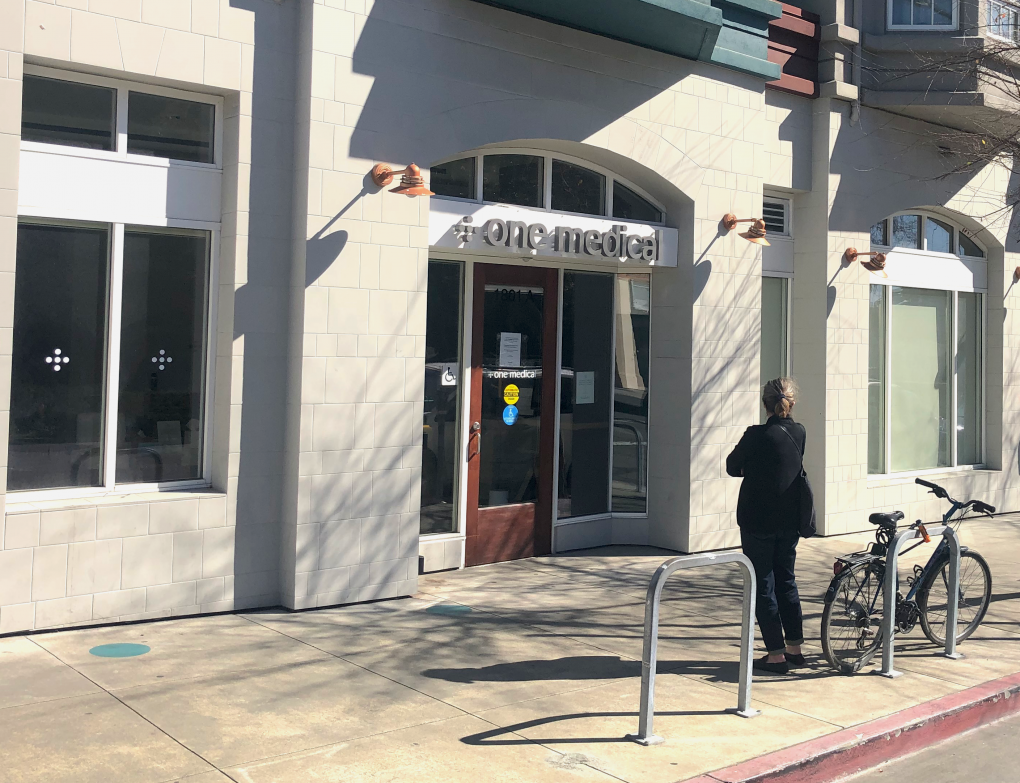
"caption": "A One Medical facility in North Berkeley on Feb. 24, 2021. The San Francisco-based primary health care provider was found to have administered the COVID-19 vaccine to certain well-connected patients who were not yet eligible to receive it.",
"description": null,
"title": "IMG_2269",
"credit": "Matthew Green/KQED",
"status": "inherit",
"altTag": null,
"isLoading": false,
"fetchFailed": false
}
},
"audioPlayerReducer": {
"postId": "stream_live",
"isPaused": true,
"isPlaying": false,
"pfsActive": false,
"pledgeModalIsOpen": true,
"playerDrawerIsOpen": false,
"liveAudioPlayStartedAt": 0,
"liveAudioPlayContext": ""
},
"authorsReducer": {
"byline_news_11865975": {
"type": "authors",
"id": "byline_news_11865975",
"meta": {
"override": true
},
"slug": "byline_news_11865975",
"name": "\u003ca href=\"https://calmatters.org/author/shehreen-karim/\">Shehreen Karim\u003c/a>",
"isLoading": false
},
"byline_news_11865371": {
"type": "authors",
"id": "byline_news_11865371",
"meta": {
"override": true
},
"slug": "byline_news_11865371",
"name": "Ricardo Alonso-Zaldivar\u003cbr>Associated Press",
"isLoading": false
},
"byline_news_11862764": {
"type": "authors",
"id": "byline_news_11862764",
"meta": {
"override": true
},
"slug": "byline_news_11862764",
"name": "\u003ca href=\"https://www.npr.org/people/577125263/tim-mak\">Tim Mak\u003c/a>",
"isLoading": false
},
"byline_news_11862434": {
"type": "authors",
"id": "byline_news_11862434",
"meta": {
"override": true
},
"slug": "byline_news_11862434",
"name": "\u003ca href=\"https://www.npr.org/people/728257568/chloee-weiner\">Chloee Weiner\u003c/a>",
"isLoading": false
},
"byline_news_11862264": {
"type": "authors",
"id": "byline_news_11862264",
"meta": {
"override": true
},
"slug": "byline_news_11862264",
"name": "\u003ca href=\"https://www.npr.org/people/348779465/nathan-rott\">Nathan Rott\u003c/a>",
"isLoading": false
},
"byline_news_11861872": {
"type": "authors",
"id": "byline_news_11861872",
"meta": {
"override": true
},
"slug": "byline_news_11861872",
"name": "Tim Mak",
"isLoading": false
},
"kqed": {
"type": "authors",
"id": "236",
"meta": {
"index": "authors_1716337520",
"id": "236",
"found": true
},
"name": "KQED News Staff",
"firstName": "KQED News Staff",
"lastName": null,
"slug": "kqed",
"email": "faq@kqed.org",
"display_author_email": false,
"staff_mastheads": [],
"title": null,
"bio": null,
"avatar": "https://secure.gravatar.com/avatar/ef0e801a68c4c54afa9180db14084167?s=600&d=blank&r=g",
"twitter": null,
"facebook": null,
"instagram": null,
"linkedin": null,
"sites": [
{
"site": "arts",
"roles": [
"contributor"
]
},
{
"site": "news",
"roles": [
"editor"
]
},
{
"site": "futureofyou",
"roles": [
"author"
]
}
],
"headData": {
"title": "KQED News Staff | KQED",
"description": null,
"ogImgSrc": "https://secure.gravatar.com/avatar/ef0e801a68c4c54afa9180db14084167?s=600&d=blank&r=g",
"twImgSrc": "https://secure.gravatar.com/avatar/ef0e801a68c4c54afa9180db14084167?s=600&d=blank&r=g"
},
"isLoading": false,
"link": "/author/kqed"
},
"kqednewsstaffandwires": {
"type": "authors",
"id": "237",
"meta": {
"index": "authors_1716337520",
"id": "237",
"found": true
},
"name": "KQED News Staff and Wires",
"firstName": "KQED News Staff and Wires",
"lastName": null,
"slug": "kqednewsstaffandwires",
"email": "onlinenewsstaff@kqed.org",
"display_author_email": false,
"staff_mastheads": [],
"title": null,
"bio": null,
"avatar": "https://secure.gravatar.com/avatar/72295af8ebbfbd19a4948f5271285664?s=600&d=blank&r=g",
"twitter": null,
"facebook": null,
"instagram": null,
"linkedin": null,
"sites": [
{
"site": "arts",
"roles": [
"contributor"
]
},
{
"site": "news",
"roles": [
"contributor"
]
},
{
"site": "lowdown",
"roles": [
"author"
]
},
{
"site": "stateofhealth",
"roles": [
"contributor"
]
},
{
"site": "food",
"roles": [
"author"
]
}
],
"headData": {
"title": "KQED News Staff and Wires | KQED",
"description": null,
"ogImgSrc": "https://secure.gravatar.com/avatar/72295af8ebbfbd19a4948f5271285664?s=600&d=blank&r=g",
"twImgSrc": "https://secure.gravatar.com/avatar/72295af8ebbfbd19a4948f5271285664?s=600&d=blank&r=g"
},
"isLoading": false,
"link": "/author/kqednewsstaffandwires"
},
"minakim": {
"type": "authors",
"id": "243",
"meta": {
"index": "authors_1716337520",
"id": "243",
"found": true
},
"name": "Mina Kim",
"firstName": "Mina",
"lastName": "Kim",
"slug": "minakim",
"email": "mkim@kqed.org",
"display_author_email": false,
"staff_mastheads": [
"news"
],
"title": "Host, Forum",
"bio": "Mina Kim is host of the 10 a.m. statewide hour of Forum; a live daily talk show for curious Californians on issues that matter to the state and nation, with a particular emphasis on race and equity.\r\n\r\nBefore joining the Forum team, Mina was KQED’s evening news anchor, and health reporter for The California Report. Her award-winning work has included natural disasters in Napa and gun violence in Oakland. Mina grew up in St. John’s, Newfoundland.",
"avatar": "https://secure.gravatar.com/avatar/145ce657a2d08cb86d93686beb958982?s=600&d=blank&r=g",
"twitter": "mkimreporter",
"facebook": null,
"instagram": null,
"linkedin": null,
"sites": [
{
"site": "news",
"roles": [
"contributor"
]
},
{
"site": "stateofhealth",
"roles": [
"author"
]
},
{
"site": "forum",
"roles": [
"editor"
]
}
],
"headData": {
"title": "Mina Kim | KQED",
"description": "Host, Forum",
"ogImgSrc": "https://secure.gravatar.com/avatar/145ce657a2d08cb86d93686beb958982?s=600&d=blank&r=g",
"twImgSrc": "https://secure.gravatar.com/avatar/145ce657a2d08cb86d93686beb958982?s=600&d=blank&r=g"
},
"isLoading": false,
"link": "/author/minakim"
},
"markfiore": {
"type": "authors",
"id": "3236",
"meta": {
"index": "authors_1716337520",
"id": "3236",
"found": true
},
"name": "Mark Fiore",
"firstName": "Mark",
"lastName": "Fiore",
"slug": "markfiore",
"email": "mark@markfiore.com",
"display_author_email": false,
"staff_mastheads": [
"news"
],
"title": "KQED News Cartoonist",
"bio": "\u003ca href=\"http://www.MarkFiore.com\">MarkFiore.com\u003c/a> | \u003ca href=\"https://twitter.com/markfiore\">Follow on Twitter\u003c/a> | \u003ca href=\"https://www.facebook.com/pages/Mark-Fiore-Animated-Political-Cartoons/94451707396?ref=bookmarks\">Facebook\u003c/a> | \u003ca href=\"mailto:mark@markfiore.com\">email\u003c/a>\r\n\r\nPulitzer Prize-winner, Mark Fiore, who the Wall Street Journal has called “the undisputed guru of the form,” creates animated political cartoons in San Francisco, where his work has been featured regularly on the San Francisco Chronicle’s web site, SFGate.com. His work has appeared on Newsweek.com, Slate.com, CBSNews.com, MotherJones.com, DailyKos.com and NPR’s web site. Fiore’s political animation has appeared on CNN, Frontline, Bill Moyers Journal, Salon.com and cable and broadcast outlets across the globe.\r\n\r\nBeginning his professional life by drawing traditional political cartoons for newspapers, Fiore’s work appeared in publications ranging from the Washington Post to the Los Angeles Times. In the late 1990s, he began to experiment with animating political cartoons and, after a short stint at the San Jose Mercury News as their staff cartoonist, Fiore devoted all his energies to animation.\r\nGrowing up in California, Fiore also spent a good portion of his life in the backwoods of Idaho. It was this combination that shaped him politically. Mark majored in political science at Colorado College, where, in a perfect send-off for a cartoonist, he received his diploma in 1991 as commencement speaker Dick Cheney smiled approvingly.\r\nMark Fiore was awarded the Pulitzer Prize for political cartooning in 2010, a Robert F. Kennedy Journalism Award in 2004 and has twice received an Online Journalism Award for commentary from the Online News Association (2002, 2008). Fiore has received two awards for his work in new media from the National Cartoonists Society (2001, 2002), and in 2006 received The James Madison Freedom of Information Award from The Society of Professional Journalists.",
"avatar": "https://secure.gravatar.com/avatar/fc4e2a612b15b67bad0c6f0e1db4ca9b?s=600&d=blank&r=g",
"twitter": "MarkFiore",
"facebook": null,
"instagram": "https://www.instagram.com/markfiore/?hl=en",
"linkedin": null,
"sites": [
{
"site": "arts",
"roles": [
"contributor"
]
},
{
"site": "news",
"roles": [
"editor"
]
},
{
"site": "futureofyou",
"roles": [
"editor"
]
},
{
"site": "science",
"roles": [
"editor"
]
}
],
"headData": {
"title": "Mark Fiore | KQED",
"description": "KQED News Cartoonist",
"ogImgSrc": "https://secure.gravatar.com/avatar/fc4e2a612b15b67bad0c6f0e1db4ca9b?s=600&d=blank&r=g",
"twImgSrc": "https://secure.gravatar.com/avatar/fc4e2a612b15b67bad0c6f0e1db4ca9b?s=600&d=blank&r=g"
},
"isLoading": false,
"link": "/author/markfiore"
},
"rdillon": {
"type": "authors",
"id": "11495",
"meta": {
"index": "authors_1716337520",
"id": "11495",
"found": true
},
"name": "Raquel Maria Dillon",
"firstName": "Raquel Maria",
"lastName": "Dillon",
"slug": "rdillon",
"email": "rdillon@kqed.org",
"display_author_email": false,
"staff_mastheads": [],
"title": null,
"bio": "Raquel Maria Dillon was a reporter and host for KQED News. Previously, she produced the daily statewide California Report, edited newscasts, and covered health and education stories. Before returning to the Bay Area in 2016, she worked in Los Angeles as a wire reporter and one-woman-band video journalist for the Associated Press, where she shot, edited and reported breaking news and features across the West. Her work has appeared online and in print around the globe, and also on NPR’s Morning Edition, All Things Considered, Here and Now, Marketplace, On The Media, and Studio 360. She previously edited and mentored up-and-coming reporters at KALW, produced social videos for Timeline.com, and was a local TV news videographer for KTVU and digital producer for KNTV. She got her start as a Radio News Trainee at KQED, produced a weekly public affairs roundtable show for OPB, and covered health and politics at New Hampshire Public Radio. She has a BA in political science from Barnard College and a MA in video journalism from UC Berkeley, where she was awarded the Faith Fancher Scholarship and a Student Emmy. She has received numerous local awards from the Associated Press and the Society of Professional Journalists.",
"avatar": "https://secure.gravatar.com/avatar/b8e02ae982913d0950df605910267c1b?s=600&d=blank&r=g",
"twitter": "RaquelMDillon",
"facebook": null,
"instagram": null,
"linkedin": null,
"sites": [
{
"site": "news",
"roles": [
"subscriber"
]
},
{
"site": "stateofhealth",
"roles": [
"editor"
]
},
{
"site": "science",
"roles": [
"editor"
]
},
{
"site": "forum",
"roles": [
"editor"
]
}
],
"headData": {
"title": "Raquel Maria Dillon | KQED",
"description": null,
"ogImgSrc": "https://secure.gravatar.com/avatar/b8e02ae982913d0950df605910267c1b?s=600&d=blank&r=g",
"twImgSrc": "https://secure.gravatar.com/avatar/b8e02ae982913d0950df605910267c1b?s=600&d=blank&r=g"
},
"isLoading": false,
"link": "/author/rdillon"
},
"mfharvin": {
"type": "authors",
"id": "11583",
"meta": {
"index": "authors_1716337520",
"id": "11583",
"found": true
},
"name": "Mary Franklin Harvin",
"firstName": "Mary Franklin",
"lastName": "Harvin",
"slug": "mfharvin",
"email": "mfharvin@KQED.org",
"display_author_email": false,
"staff_mastheads": [
"news"
],
"title": "KQED Contributor",
"bio": null,
"avatar": "https://secure.gravatar.com/avatar/0e53510a7d48cfbdebfc9b11357d845f?s=600&d=blank&r=g",
"twitter": "EmEffHarvin",
"facebook": null,
"instagram": null,
"linkedin": null,
"sites": [
{
"site": "news",
"roles": [
"author",
"edit_others_posts"
]
},
{
"site": "science",
"roles": [
"editor"
]
}
],
"headData": {
"title": "Mary Franklin Harvin | KQED",
"description": "KQED Contributor",
"ogImgSrc": "https://secure.gravatar.com/avatar/0e53510a7d48cfbdebfc9b11357d845f?s=600&d=blank&r=g",
"twImgSrc": "https://secure.gravatar.com/avatar/0e53510a7d48cfbdebfc9b11357d845f?s=600&d=blank&r=g"
},
"isLoading": false,
"link": "/author/mfharvin"
},
"lsarah": {
"type": "authors",
"id": "11626",
"meta": {
"index": "authors_1716337520",
"id": "11626",
"found": true
},
"name": "Lakshmi Sarah",
"firstName": "Lakshmi",
"lastName": "Sarah",
"slug": "lsarah",
"email": "lsarah@kqed.org",
"display_author_email": false,
"staff_mastheads": [],
"title": "Digital Producer",
"bio": "Lakshmi Sarah is an educator, author and journalist with a focus on innovative storytelling. She has worked with newspapers, radio and magazines from Ahmedabad, India to Los Angeles, California. She has written and produced for Die Zeit, Global Voices, AJ+, KQED, Fusion Media Group and the New York Times.",
"avatar": "https://secure.gravatar.com/avatar/652dcaecd8b28826fc17a8b2d6bb4e93?s=600&d=blank&r=g",
"twitter": "lakitalki",
"facebook": null,
"instagram": "https://www.instagram.com/laki.talki/",
"linkedin": "https://www.linkedin.com/in/lakisarah/",
"sites": [
{
"site": "arts",
"roles": []
},
{
"site": "news",
"roles": []
},
{
"site": "bayareabites",
"roles": []
},
{
"site": "science",
"roles": []
}
],
"headData": {
"title": "Lakshmi Sarah | KQED",
"description": "Digital Producer",
"ogImgSrc": "https://secure.gravatar.com/avatar/652dcaecd8b28826fc17a8b2d6bb4e93?s=600&d=blank&r=g",
"twImgSrc": "https://secure.gravatar.com/avatar/652dcaecd8b28826fc17a8b2d6bb4e93?s=600&d=blank&r=g"
},
"isLoading": false,
"link": "/author/lsarah"
},
"jrodriguez": {
"type": "authors",
"id": "11690",
"meta": {
"index": "authors_1716337520",
"id": "11690",
"found": true
},
"name": "Joe Fitzgerald Rodriguez",
"firstName": "Joe",
"lastName": "Fitzgerald Rodriguez",
"slug": "jrodriguez",
"email": "jrodriguez@kqed.org",
"display_author_email": true,
"staff_mastheads": [
"news"
],
"title": "Reporter and Producer",
"bio": "Joe Fitzgerald Rodriguez is a reporter and digital producer for KQED covering politics. Joe most recently wrote for the \u003cem>San Francisco Examiner\u003c/em> as a political columnist covering The City. He was raised in San Francisco and has spent his reporting career in his beloved, foggy, city by the bay. Joe was 12-years-old when he conducted his first interview in journalism, grilling former San Francisco Mayor Willie Brown for the Marina Middle School newspaper, \u003cem>The Penguin Press, \u003c/em>and he continues to report on the San Francisco Bay Area to this day.",
"avatar": "https://secure.gravatar.com/avatar/2247beb0564c1e9c62228d5649d2edac?s=600&d=blank&r=g",
"twitter": "FitztheReporter",
"facebook": null,
"instagram": "https://www.instagram.com/fitzthereporter/",
"linkedin": null,
"sites": [
{
"site": "",
"roles": [
"editor"
]
},
{
"site": "arts",
"roles": [
"editor"
]
},
{
"site": "news",
"roles": [
"editor"
]
},
{
"site": "science",
"roles": [
"editor"
]
},
{
"site": "elections",
"roles": [
"editor"
]
},
{
"site": "liveblog",
"roles": [
"editor"
]
}
],
"headData": {
"title": "Joe Fitzgerald Rodriguez | KQED",
"description": "Reporter and Producer",
"ogImgSrc": "https://secure.gravatar.com/avatar/2247beb0564c1e9c62228d5649d2edac?s=600&d=blank&r=g",
"twImgSrc": "https://secure.gravatar.com/avatar/2247beb0564c1e9c62228d5649d2edac?s=600&d=blank&r=g"
},
"isLoading": false,
"link": "/author/jrodriguez"
}
},
"pagesReducer": {
"news_tag_health": {
"type": "terms",
"id": "news_18543",
"meta": {
"index": "terms_1716263798",
"site": "news",
"id": "18543",
"score": 6.886699
},
"featImg": null,
"name": "Health",
"description": null,
"taxonomy": "tag",
"headData": {
"twImgId": null,
"twTitle": null,
"ogTitle": null,
"ogImgId": null,
"twDescription": null,
"description": null,
"title": "Health Archives | KQED News",
"ogDescription": null
},
"ttid": 466,
"slug": "health",
"isLoading": false,
"title": "Health",
"pageMeta": {
"site": "news",
"WpPageTemplate": "page-topic-editorial",
"currentPage": 67
},
"blocks": [
{
"blockName": "kqed/post-list",
"attrs": {
"layout": "cardArticle2",
"query": "posts/news?tag=health",
"seeMore": false,
"paginated": true,
"page": 67
}
},
{
"blockName": "kqed/ad"
}
]
}
},
"pfsSessionReducer": {},
"postsReducer": {
"stream_live": {
"type": "live",
"id": "stream_live",
"audioUrl": "https://streams.kqed.org/kqedradio",
"title": "Live Stream",
"excerpt": "Live Stream information currently unavailable.",
"link": "/radio",
"featImg": "",
"label": {
"name": "KQED Live",
"link": "/"
}
},
"stream_kqedNewscast": {
"type": "posts",
"id": "stream_kqedNewscast",
"audioUrl": "https://www.kqed.org/.stream/anon/radio/RDnews/newscast.mp3?_=1",
"title": "KQED Newscast",
"featImg": "",
"label": {
"name": "88.5 FM",
"link": "/"
}
},
"news_11867087": {
"type": "posts",
"id": "news_11867087",
"meta": {
"index": "posts_1716263798",
"site": "news",
"id": "11867087",
"score": null,
"sort": [
1617149937000
]
},
"guestAuthors": [],
"slug": "claiming-unemployment-in-california-what-to-know-about-edd-and-pandemic-federal-benefits",
"title": "Claiming Unemployment in California? What to Know About EDD and Pandemic Federal Benefits",
"publishDate": 1617149937,
"format": "image",
"headTitle": "Claiming Unemployment in California? What to Know About EDD and Pandemic Federal Benefits | KQED",
"labelTerm": {
"site": "news"
},
"content": "\u003cp>\u003cem>This story has been updated.\u003c/em>\u003c/p>\n\u003cp>\u003cstrong>Skip straight to:\u003c/strong>\u003c/p>\n\u003cul>\n\u003cli>\u003ca href=\"#automatic\">The federal benefits you may receive automatically\u003c/a>\u003c/li>\n\u003cli>\u003cstrong>\u003ca href=\"#applying\">What to know about reapplying for benefits\u003c/a>\u003c/strong>\u003c/li>\n\u003cli>\u003ca href=\"#noui\">Options for people not on regular unemployment\u003c/a>\u003c/li>\n\u003cli>\u003cstrong>\u003ca href=\"#reopening\">Reopening a claim vs. filing a new one\u003c/a>\u003c/strong>\u003c/li>\n\u003c/ul>\n\u003cp>We’re over a year into \u003ca href=\"https://edd.ca.gov/Newsroom/facts-and-stats/dashboard.htm#TotalUnemploymentClaims\">a deadly pandemic that has cost hundreds of thousands of Californians their jobs\u003c/a>, and caused claims for unemployment benefits to soar into the millions.\u003c/p>\n\u003cp>President Biden signed the \u003ca href=\"https://www.whitehouse.gov/american-rescue-plan/\">American Rescue Plan\u003c/a> into law in March 2021 to get more direct relief to people hit hardest by the pandemic and to help the economy. In addition to direct stimulus payments, the bill also extends federal unemployment support.\u003c/p>\n\u003cp>If you’re claiming unemployment insurance through the \u003ca href=\"https://edd.ca.gov/\">Employment Development Department\u003c/a> (EDD), the passing of this one-year milestone might mean you need to take action on your claim. But how do these pandemic federal benefits affect your California unemployment claims? And how can you make sure you’re getting the support you’re entitled to?\u003c/p>\n\u003cp>The most recent change: EDD has announced that starting June 5, some applicants who have passed the one-year mark on their claim who previously needed to refile now may no longer have to. \u003ca href=\"#applying\">Read more about this change.\u003c/a>\u003c/p>\n\u003cp>Please note that \u003ca href=\"https://www.kqed.org/news/11866438/after-a-string-of-bungled-tech-upgrades-california-tries-a-new-approach\">the EDD website has regularly been prone to glitches\u003c/a> for people trying to certify their claims for several months now. In addition, wait times for EDD’s \u003ca href=\"https://www.id.me/\">ID.me\u003c/a> identity verification platform can still be considerable. What’s more, the backlog of unemployment claims waiting on action from EDD continues to grow. These issues can mean that even if you do everything right, it still might be hard work to get your benefits.\u003cspan style=\"font-weight: 400;\">[aside postID=\"news_11870566\"]\u003c/span>\u003c/p>\n\u003cp>You’ll find \u003ca href=\"https://edd.ca.gov/about_edd/contact_edd.htm#:~:text=English%3A%201%2D800%2D480,480%2D3287)%20to%20the%20operator\">phone numbers to speak to EDD representatives here on their site.\u003c/a> But if you’re really struggling, you may find that contacting your legislator or a workers’ advocate group like the \u003ca href=\"https://www.rightscenter.org/\">Center for Workers’ Rights\u003c/a> could be a better bet than trying to call EDD customer service and waiting on the phone. We also have a list of \u003ca href=\"https://www.kqed.org/news/11860924/how-barriers-at-edd-keep-already-vulnerable-californians-from-their-benefits#resources\">multilingual resources for unemployment claimants.\u003c/a>\u003c/p>\n\u003cul>\n\u003cli>\u003cstrong>\u003ca href=\"https://www.edd.ca.gov/unemployment/pdf/benefit-flowchart.pdf\">Consult EDD’s California Unemployment Benefits Flowchart to See Your Eligibility\u003c/a> \u003c/strong>\u003c/li>\n\u003c/ul>\n\u003ch3>What Unemployment Benefits Are You Entitled to?\u003c/h3>\n\u003cp>\u003cstrong>\u003ca href=\"https://edd.ca.gov/unemployment/\">Unemployment Insurance\u003c/a>, or “Regular UI”:\u003c/strong> The state program that supports Californians with W-2 income who are fully or partially unemployed because of no fault of their own (including COVID-19, school closures or an expired unemployment claim).\u003c/p>\n\u003cp>\u003cstrong>\u003ca href=\"https://edd.ca.gov/about_edd/coronavirus-2019/pandemic-unemployment-assistance.htm\">Pandemic Unemployment Assistance\u003c/a>, or PUA:\u003c/strong> The federal program that supports business owners, independent contractors and self-employed workers. (If you only got a 1099 tax form, this is likely the program you’re on).\u003c/p>\n\u003cp>\u003cstrong>\u003ca href=\"https://www.edd.ca.gov/about_edd/coronavirus-2019/cares-act.htm#PEUC\">Pandemic Emergency Unemployment Compensation,\u003c/a> or PEUC:\u003c/strong> The federal program for people who were on regular unemployment but exhausted those funds. You can be put on PEUC more than once — but to qualify for a PEUC extension, your regular UI claim must have started on July 8, 2018 or after. Depending on when you filed your unemployment claim and if it has expired, you may need to reapply for unemployment.\u003cspan style=\"font-weight: 400;\">[aside postID=\"news_11862122\"]\u003c/span>\u003c/p>\n\u003cp>\u003cstrong>\u003ca href=\"https://www.edd.ca.gov/about_edd/coronavirus-2019/fed-ed.htm\">Federal-State Extended Duration\u003c/a>, or FED-ED:\u003c/strong> The federal program for people who’ve exhausted both regular UI and PEUC funds.\u003c/p>\n\u003cp>President Biden’s American Rescue Plan does the following:\u003c/p>\n\u003cul>\n\u003cli>Continues the federal increase for all unemployment benefits, which adds $300 to each week of benefits through Sept. 4, 2021.\u003c/li>\n\u003cli>Extends Pandemic Unemployment Assistance (PUA) and Pandemic Emergency Unemployment Compensation (PEUC) up to 29 weeks, through Sept. 4, 2021.\u003c/li>\n\u003cli>Continues the federally funded FED-ED through Sept. 11, 2021, providing up to 20 weeks of benefits.\u003c/li>\n\u003c/ul>\n\u003ch3>\u003ca id=\"automatic\">\u003c/a>Will I Get Any Federal Benefits Automatically?\u003c/h3>\n\u003cp>You might. For all applicants, for weeks of unemployment between Dec. 27, 2020 and Sept. 4, 2021, EDD will add $300 of federal Pandemic Additional Compensation (PAC) to benefit weeks, on top of the other benefits you certify for.\u003c/p>\n\u003cp>This money should come through automatically; applicants shouldn’t need to make any adjustments on their claims to get it.\u003c/p>\n\u003ch3>\u003ca id=\"applying\">\u003c/a>How Do I Know If I Need to Reapply For Benefits?\u003c/h3>\n\u003cp>\u003ca href=\"https://www.edd.ca.gov/about_edd/coronavirus-2019/benefit-year-end.htm\">Your benefits year ends 12 months after you first filed your claim. \u003c/a>Refiling usually means EDD can assess whether you are eligible for a new UI claim and, if you aren’t, decide which program makes most sense for you.\u003c/p>\n\u003cp>But starting June 5, some applicants who have passed the one-year mark on their claim who previously needed to refile now may no longer have to:\u003c/p>\n\u003cp>https://twitter.com/CA_EDD/status/1398763594788085760\u003c/p>\n\u003cp>If you haven’t made enough money in the last 18 months to warrant filing a new claim, \u003ca href=\"https://edd.ca.gov/About_EDD/pdf/news-21-34.pdf\">EDD now says it will process benefits, add a federal extension to an expired claim or continue an existing extension\u003c/a>. This system will apply to regular UI, federal extensions and PUA applications.\u003cspan style=\"font-weight: 400;\">[aside postID=\"news_11866438\"]\u003c/span>\u003c/p>\n\u003cp>EDD says this update to the reapplication process is in the name of “streamlining.” But Daniela Urban, executive director of the Center for Workers’ Rights, said she and other advocates are perplexed by this latest change, especially given that EDD had so recently released a video tutorial on how to reapply for unemployment.\u003c/p>\n\u003cp>Urban also warned unemployed Californians to be prepared for more updates from EDD in the wake of this transition.\u003c/p>\n\u003ch3>How Do I Know If I’m Eligible for a New Claim?\u003c/h3>\n\u003cp>According to Urban, in order to qualify for a new claim you have to have earned at least $1,300 in your \u003ca href=\"https://www.edd.ca.gov/pdf_pub_ctr/de8714ab.pdf\">base period\u003c/a> and made at least $1,250 since your last unemployment application. This figure, says Urban, represents “what’s considered ‘reattaching to the workforce.’ ”\u003c/p>\n\u003cp>If you have earned enough in the last 18 months to warrant a new claim, you do need to refile, even if you are on an extension. Once you do, EDD says it will establish a new regular UI claim or a federal extension for you. EDD says you will be notified by email, text and on UI Online if you need to reapply.\u003c/p>\n\u003cp>To figure out if you’ve made enough money that you’ll be required to reapply, log into UI Online and try to file a new claim. According to EDD, the new application process will only go forward if you need to refile.\u003c/p>\n\u003cp>If you haven’t worked at all throughout the pandemic, \u003ca href=\"https://www.edd.ca.gov/unemployment/pdf/benefit-flowchart.pdf\">EDD should automatically file a PEUC extension on your prior UI claim\u003c/a>, and you should be notified the agency has done this.\u003c/p>\n\u003cp>Though EDD suspended its work search requirement in March 2020 because of the COVID-19 pandemic, from July 2021 \u003ca href=\"https://www.kqed.org/coronavirusliveupdates/news/11878764/new-edd-requirement-may-clog-unemployment-claims-process-even-further-advocates-worry\">most unemployed Californians will need to show they are actively looking for work\u003c/a> to stay eligible for benefits.\u003c/p>\n\u003cp>https://twitter.com/CA_EDD/status/1407112356421947401\u003c/p>\n\u003cp>This means applicants will need to answer “Yes” on the \u003ca href=\"https://edd.ca.gov/Unemployment/Understanding_the_Continued_Claim_Certification_Questions.htm\">bi-weekly certification question\u003c/a> asking if they are looking for work. As one Twitter user succinctly put it, \u003ca href=\"https://twitter.com/HetJayfield/status/1405649751022870533\">“Just put ‘yes’ for number three and that’s it.”\u003c/a>\u003c/p>\n\u003cp>EDD spokesperson Loree Levy confirmed that applicants should start looking for work no later than July 11, and be prepared to declare that they are looking for work on their certification form starting July 18.\u003c/p>\n\u003cp>https://twitter.com/EmEffHarvin/status/1408506689125425154\u003c/p>\n\u003cp>What qualifies as “searching for work” will vary for those on regular unemployment or extensions versus those on Pandemic Unemployment Assistance (PUA.) That’s because PUA applicants are often self-employed and contract workers.\u003c/p>\n\u003cp>EDD says it will be sending notices to inform applicants what this reinstatement means for them, but \u003ca class=\"c-link\" href=\"https://edd.ca.gov/unemployment/return-to-work.htm\" target=\"_blank\" rel=\"noopener noreferrer\" data-stringify-link=\"https://edd.ca.gov/unemployment/return-to-work.htm\" data-sk=\"tooltip_parent\">a brief rundown can also be found on the agency’s website\u003c/a>.\u003c/p>\n\u003ch3>\u003ca id=\"noui\">\u003c/a>I’m Not on Regular UI. What Federal Support Does My Program Qualify Me for, and What Do I Need to Do to Get It?\u003c/h3>\n\u003cp>\u003cstrong>1. Existing and Exhausted PUA Claims \u003c/strong>\u003c/p>\n\u003cul>\n\u003cli>If you still had a balance remaining on your PUA claim on March 14, EDD says you should continue to get benefits without delays. EDD says around 95% of PUA recipients should be able to keep certifying without a break.\u003c/li>\n\u003cli>On a media call on March 26, EDD said everyone on existing PUA claims should have been able to start certifying for these benefits on Sunday, March 28.\u003c/li>\n\u003cli>For the around 5% of PUA recipients who exhausted all PUA benefits, EDD says you should be getting texts, UI Online notifications or mailed notices by April 10, 2021 — if not sooner — about when to certify for other benefits.\u003c/li>\n\u003c/ul>\n\u003cp>\u003cspan style=\"font-weight: 400;\">[aside postID=\"news_11860924\"]\u003c/span>\u003c/p>\n\u003cp>\u003cstrong>2. Existing and Exhausted PEUC claims\u003c/strong>\u003c/p>\n\u003cul>\n\u003cli>Still had a balance remaining on your PEUC claim on March 14? EDD says you should also continue to get benefits without delays. Around half of people with existing PEUC claims should be able to keep certifying without a break, says EDD.\u003c/li>\n\u003cli>For the other half of applicants who’ve exhausted all PEUC extensions, you could be eligible for another 20 weeks of benefits under FED-ED Extension. If you are, EDD will automatically file a FED-ED extension on your claim. EDD says it will phase in these benefits between April 10 and April 30, and will notify you in your UI online account when it does. Not everyone is eligible, though, so take a look at \u003ca href=\"https://www.edd.ca.gov/unemployment/pdf/benefit-flowchart.pdf\">EDD’s Unemployment Benefit Programs flowchart\u003c/a> to work out if you are.\u003c/li>\n\u003c/ul>\n\u003cp>\u003cstrong>3. Regular UI and Existing FED-ED claims\u003c/strong>\u003c/p>\n\u003cul>\n\u003cli>If you have \u003cem>not\u003c/em> reached the end of your benefits year, you should continue to be able to continue to certify, in addition to receiving the $300 federal PAC bump without interruption.\u003c/li>\n\u003c/ul>\n\u003cp>\u003cstrong>4. New PUA Claims\u003c/strong>\u003c/p>\n\u003cul>\n\u003cli>Need to file a new PUA claim? You should be able to do so, but you will currently only be paid at the minimum level of $167 per week, plus the extra $300 federal payment.\u003c/li>\n\u003cli>By April 10, applicants may become eligible for a higher weekly benefit amount based on income information reported on their application, and any shift in benefit amount will be applied retroactively.\u003c/li>\n\u003c/ul>\n\u003ch3>How Many Weeks Will These New Benefits Carry Me Over for?\u003c/h3>\n\u003cp>EDD has a breakdown of how long these federal benefits will extend your support for, and how many weeks of benefits you can ultimately receive. \u003ca href=\"https://www.edd.ca.gov/unemployment/pdf/unemployment-benefits-chart.pdf\">See the breakdown of benefit lengths\u003c/a>.\u003c/p>\n\u003cp>[ad fullwidth]\u003c/p>\n\u003ch3>\u003ca id=\"reopening\">\u003c/a>Reopening a Claim vs. Filing a New One\u003c/h3>\n\u003cp>According to Daniela Urban, applicants should be on the lookout on their own for the ability to file a new claim, even if their old claim is allowing them to recertify. Some peoples’ accounts just say pending for a long time, when really, it’s time for \u003cem>them\u003c/em> to refile. Even though that option may have already popped up on their account, they may be overlooking it.\u003c/p>\n\u003cp>The option to “Reopen Claim” online is supposed to appear if it’s been more than 30 days since you last certified for benefits. If your benefit year hasn’t expired, EDD will put your account into a semi-dormant mode, instead of closing out your account. (Think of it like your computer going into sleep mode, instead of shutting down.)\u003c/p>\n\u003cp>https://twitter.com/CA_EDD/status/1366909465040220160\u003c/p>\n\u003cp>That said, there \u003cem>have\u003c/em> been glitches in the past and people have gotten this notification when they shouldn’t have. So if you get this “Reopen Claim” notice, but you have been certifying regularly, don’t click on that option until you’ve gotten more information about why you’re getting this notice.\u003c/p>\n\u003cp>https://twitter.com/CA_EDD/status/1350208664699891715\u003c/p>\n\u003cp>If you \u003cem>do\u003c/em> actually need to reopen your claim, \u003ca href=\"https://www.youtube.com/watch?v=3XbPUBshbyI\">EDD has a step-by-step video guide\u003c/a>:\u003c/p>\n\u003cp>https://www.youtube.com/watch?v=3XbPUBshbyI\u003c/p>\n\u003cp>[ad floatright]\u003c/p>\n",
"blocks": [],
"excerpt": "If you're claiming unemployment benefits in California, what federal programs/support are you eligible for through EDD?",
"status": "publish",
"parent": 0,
"modified": 1721128782,
"stats": {
"hasAudio": false,
"hasVideo": true,
"hasChartOrMap": false,
"iframeSrcs": [],
"hasGoogleForm": false,
"hasGallery": false,
"hasHearkenModule": false,
"hasPolis": false,
"paragraphCount": 41,
"wordCount": 1981
},
"headData": {
"title": "Claiming Unemployment in California? What to Know About EDD and Pandemic Federal Benefits | KQED",
"description": "If you're claiming unemployment benefits in California, what federal programs/support are you eligible for through EDD?",
"ogTitle": "",
"ogDescription": "",
"ogImgId": "",
"twTitle": "",
"twDescription": "",
"twImgId": "",
"schema": {
"@context": "https://schema.org",
"@type": "NewsArticle",
"headline": "Claiming Unemployment in California? What to Know About EDD and Pandemic Federal Benefits",
"datePublished": "2021-03-30T17:18:57-07:00",
"dateModified": "2024-07-16T04:19:42-07:00",
"image": "https://cdn.kqed.org/wp-content/uploads/2020/02/KQED-OG-Image@1x.png",
"isAccessibleForFree": "True",
"publisher": {
"@type": "NewsMediaOrganization",
"@id": "https://www.kqed.org/#organization",
"name": "KQED",
"logo": "https://cdn.kqed.org/wp-content/uploads/2020/02/KQED-OG-Image@1x.png",
"url": "https://www.kqed.org",
"sameAs": [
"https://www.facebook.com/KQED",
"https://twitter.com/KQED",
"https://www.instagram.com/kqed/",
"https://www.tiktok.com/@kqedofficial",
"https://www.linkedin.com/company/kqed",
"https://www.youtube.com/channel/UCeC0IOo7i1P_61zVUWbJ4nw"
]
}
}
},
"sticky": false,
"path": "/news/11867087/claiming-unemployment-in-california-what-to-know-about-edd-and-pandemic-federal-benefits",
"audioTrackLength": null,
"parsedContent": [
{
"type": "contentString",
"content": "\u003cdiv class=\"post-body\">\u003cp>\u003cp>\u003cem>This story has been updated.\u003c/em>\u003c/p>\n\u003cp>\u003cstrong>Skip straight to:\u003c/strong>\u003c/p>\n\u003cul>\n\u003cli>\u003ca href=\"#automatic\">The federal benefits you may receive automatically\u003c/a>\u003c/li>\n\u003cli>\u003cstrong>\u003ca href=\"#applying\">What to know about reapplying for benefits\u003c/a>\u003c/strong>\u003c/li>\n\u003cli>\u003ca href=\"#noui\">Options for people not on regular unemployment\u003c/a>\u003c/li>\n\u003cli>\u003cstrong>\u003ca href=\"#reopening\">Reopening a claim vs. filing a new one\u003c/a>\u003c/strong>\u003c/li>\n\u003c/ul>\n\u003cp>We’re over a year into \u003ca href=\"https://edd.ca.gov/Newsroom/facts-and-stats/dashboard.htm#TotalUnemploymentClaims\">a deadly pandemic that has cost hundreds of thousands of Californians their jobs\u003c/a>, and caused claims for unemployment benefits to soar into the millions.\u003c/p>\n\u003cp>President Biden signed the \u003ca href=\"https://www.whitehouse.gov/american-rescue-plan/\">American Rescue Plan\u003c/a> into law in March 2021 to get more direct relief to people hit hardest by the pandemic and to help the economy. In addition to direct stimulus payments, the bill also extends federal unemployment support.\u003c/p>\n\u003cp>If you’re claiming unemployment insurance through the \u003ca href=\"https://edd.ca.gov/\">Employment Development Department\u003c/a> (EDD), the passing of this one-year milestone might mean you need to take action on your claim. But how do these pandemic federal benefits affect your California unemployment claims? And how can you make sure you’re getting the support you’re entitled to?\u003c/p>\n\u003cp>The most recent change: EDD has announced that starting June 5, some applicants who have passed the one-year mark on their claim who previously needed to refile now may no longer have to. \u003ca href=\"#applying\">Read more about this change.\u003c/a>\u003c/p>\n\u003cp>Please note that \u003ca href=\"https://www.kqed.org/news/11866438/after-a-string-of-bungled-tech-upgrades-california-tries-a-new-approach\">the EDD website has regularly been prone to glitches\u003c/a> for people trying to certify their claims for several months now. In addition, wait times for EDD’s \u003ca href=\"https://www.id.me/\">ID.me\u003c/a> identity verification platform can still be considerable. What’s more, the backlog of unemployment claims waiting on action from EDD continues to grow. These issues can mean that even if you do everything right, it still might be hard work to get your benefits.\u003cspan style=\"font-weight: 400;\">\u003c/p>\u003c/div>",
"attributes": {
"named": {},
"numeric": []
}
},
{
"type": "component",
"content": "",
"name": "aside",
"attributes": {
"named": {
"postid": "news_11870566",
"label": ""
},
"numeric": []
}
},
{
"type": "contentString",
"content": "\u003cdiv class=\"post-body\">\u003cp>\u003c/span>\u003c/p>\n\u003cp>You’ll find \u003ca href=\"https://edd.ca.gov/about_edd/contact_edd.htm#:~:text=English%3A%201%2D800%2D480,480%2D3287)%20to%20the%20operator\">phone numbers to speak to EDD representatives here on their site.\u003c/a> But if you’re really struggling, you may find that contacting your legislator or a workers’ advocate group like the \u003ca href=\"https://www.rightscenter.org/\">Center for Workers’ Rights\u003c/a> could be a better bet than trying to call EDD customer service and waiting on the phone. We also have a list of \u003ca href=\"https://www.kqed.org/news/11860924/how-barriers-at-edd-keep-already-vulnerable-californians-from-their-benefits#resources\">multilingual resources for unemployment claimants.\u003c/a>\u003c/p>\n\u003cul>\n\u003cli>\u003cstrong>\u003ca href=\"https://www.edd.ca.gov/unemployment/pdf/benefit-flowchart.pdf\">Consult EDD’s California Unemployment Benefits Flowchart to See Your Eligibility\u003c/a> \u003c/strong>\u003c/li>\n\u003c/ul>\n\u003ch3>What Unemployment Benefits Are You Entitled to?\u003c/h3>\n\u003cp>\u003cstrong>\u003ca href=\"https://edd.ca.gov/unemployment/\">Unemployment Insurance\u003c/a>, or “Regular UI”:\u003c/strong> The state program that supports Californians with W-2 income who are fully or partially unemployed because of no fault of their own (including COVID-19, school closures or an expired unemployment claim).\u003c/p>\n\u003cp>\u003cstrong>\u003ca href=\"https://edd.ca.gov/about_edd/coronavirus-2019/pandemic-unemployment-assistance.htm\">Pandemic Unemployment Assistance\u003c/a>, or PUA:\u003c/strong> The federal program that supports business owners, independent contractors and self-employed workers. (If you only got a 1099 tax form, this is likely the program you’re on).\u003c/p>\n\u003cp>\u003cstrong>\u003ca href=\"https://www.edd.ca.gov/about_edd/coronavirus-2019/cares-act.htm#PEUC\">Pandemic Emergency Unemployment Compensation,\u003c/a> or PEUC:\u003c/strong> The federal program for people who were on regular unemployment but exhausted those funds. You can be put on PEUC more than once — but to qualify for a PEUC extension, your regular UI claim must have started on July 8, 2018 or after. Depending on when you filed your unemployment claim and if it has expired, you may need to reapply for unemployment.\u003cspan style=\"font-weight: 400;\">\u003c/p>\u003c/div>",
"attributes": {
"named": {},
"numeric": []
}
},
{
"type": "component",
"content": "",
"name": "aside",
"attributes": {
"named": {
"postid": "news_11862122",
"label": ""
},
"numeric": []
}
},
{
"type": "contentString",
"content": "\u003cdiv class=\"post-body\">\u003cp>\u003c/span>\u003c/p>\n\u003cp>\u003cstrong>\u003ca href=\"https://www.edd.ca.gov/about_edd/coronavirus-2019/fed-ed.htm\">Federal-State Extended Duration\u003c/a>, or FED-ED:\u003c/strong> The federal program for people who’ve exhausted both regular UI and PEUC funds.\u003c/p>\n\u003cp>President Biden’s American Rescue Plan does the following:\u003c/p>\n\u003cul>\n\u003cli>Continues the federal increase for all unemployment benefits, which adds $300 to each week of benefits through Sept. 4, 2021.\u003c/li>\n\u003cli>Extends Pandemic Unemployment Assistance (PUA) and Pandemic Emergency Unemployment Compensation (PEUC) up to 29 weeks, through Sept. 4, 2021.\u003c/li>\n\u003cli>Continues the federally funded FED-ED through Sept. 11, 2021, providing up to 20 weeks of benefits.\u003c/li>\n\u003c/ul>\n\u003ch3>\u003ca id=\"automatic\">\u003c/a>Will I Get Any Federal Benefits Automatically?\u003c/h3>\n\u003cp>You might. For all applicants, for weeks of unemployment between Dec. 27, 2020 and Sept. 4, 2021, EDD will add $300 of federal Pandemic Additional Compensation (PAC) to benefit weeks, on top of the other benefits you certify for.\u003c/p>\n\u003cp>This money should come through automatically; applicants shouldn’t need to make any adjustments on their claims to get it.\u003c/p>\n\u003ch3>\u003ca id=\"applying\">\u003c/a>How Do I Know If I Need to Reapply For Benefits?\u003c/h3>\n\u003cp>\u003ca href=\"https://www.edd.ca.gov/about_edd/coronavirus-2019/benefit-year-end.htm\">Your benefits year ends 12 months after you first filed your claim. \u003c/a>Refiling usually means EDD can assess whether you are eligible for a new UI claim and, if you aren’t, decide which program makes most sense for you.\u003c/p>\n\u003cp>But starting June 5, some applicants who have passed the one-year mark on their claim who previously needed to refile now may no longer have to:\u003c/p>\u003c/p>\u003c/div>",
"attributes": {
"named": {},
"numeric": []
}
},
{
"type": "component",
"content": "",
"name": "singleTwitterStatus",
"attributes": {
"named": {
"id": "1398763594788085760"
},
"numeric": []
}
},
{
"type": "contentString",
"content": "\u003cdiv class=\"post-body\">\u003cp>\n\u003cp>If you haven’t made enough money in the last 18 months to warrant filing a new claim, \u003ca href=\"https://edd.ca.gov/About_EDD/pdf/news-21-34.pdf\">EDD now says it will process benefits, add a federal extension to an expired claim or continue an existing extension\u003c/a>. This system will apply to regular UI, federal extensions and PUA applications.\u003cspan style=\"font-weight: 400;\">\u003c/p>\u003c/div>",
"attributes": {
"named": {},
"numeric": []
}
},
{
"type": "component",
"content": "",
"name": "aside",
"attributes": {
"named": {
"postid": "news_11866438",
"label": ""
},
"numeric": []
}
},
{
"type": "contentString",
"content": "\u003cdiv class=\"post-body\">\u003cp>\u003c/span>\u003c/p>\n\u003cp>EDD says this update to the reapplication process is in the name of “streamlining.” But Daniela Urban, executive director of the Center for Workers’ Rights, said she and other advocates are perplexed by this latest change, especially given that EDD had so recently released a video tutorial on how to reapply for unemployment.\u003c/p>\n\u003cp>Urban also warned unemployed Californians to be prepared for more updates from EDD in the wake of this transition.\u003c/p>\n\u003ch3>How Do I Know If I’m Eligible for a New Claim?\u003c/h3>\n\u003cp>According to Urban, in order to qualify for a new claim you have to have earned at least $1,300 in your \u003ca href=\"https://www.edd.ca.gov/pdf_pub_ctr/de8714ab.pdf\">base period\u003c/a> and made at least $1,250 since your last unemployment application. This figure, says Urban, represents “what’s considered ‘reattaching to the workforce.’ ”\u003c/p>\n\u003cp>If you have earned enough in the last 18 months to warrant a new claim, you do need to refile, even if you are on an extension. Once you do, EDD says it will establish a new regular UI claim or a federal extension for you. EDD says you will be notified by email, text and on UI Online if you need to reapply.\u003c/p>\n\u003cp>To figure out if you’ve made enough money that you’ll be required to reapply, log into UI Online and try to file a new claim. According to EDD, the new application process will only go forward if you need to refile.\u003c/p>\n\u003cp>If you haven’t worked at all throughout the pandemic, \u003ca href=\"https://www.edd.ca.gov/unemployment/pdf/benefit-flowchart.pdf\">EDD should automatically file a PEUC extension on your prior UI claim\u003c/a>, and you should be notified the agency has done this.\u003c/p>\n\u003cp>Though EDD suspended its work search requirement in March 2020 because of the COVID-19 pandemic, from July 2021 \u003ca href=\"https://www.kqed.org/coronavirusliveupdates/news/11878764/new-edd-requirement-may-clog-unemployment-claims-process-even-further-advocates-worry\">most unemployed Californians will need to show they are actively looking for work\u003c/a> to stay eligible for benefits.\u003c/p>\u003c/p>\u003c/div>",
"attributes": {
"named": {},
"numeric": []
}
},
{
"type": "component",
"content": "",
"name": "singleTwitterStatus",
"attributes": {
"named": {
"id": "1407112356421947401"
},
"numeric": []
}
},
{
"type": "contentString",
"content": "\u003cdiv class=\"post-body\">\u003cp>\n\u003cp>This means applicants will need to answer “Yes” on the \u003ca href=\"https://edd.ca.gov/Unemployment/Understanding_the_Continued_Claim_Certification_Questions.htm\">bi-weekly certification question\u003c/a> asking if they are looking for work. As one Twitter user succinctly put it, \u003ca href=\"https://twitter.com/HetJayfield/status/1405649751022870533\">“Just put ‘yes’ for number three and that’s it.”\u003c/a>\u003c/p>\n\u003cp>EDD spokesperson Loree Levy confirmed that applicants should start looking for work no later than July 11, and be prepared to declare that they are looking for work on their certification form starting July 18.\u003c/p>\u003c/p>\u003c/div>",
"attributes": {
"named": {},
"numeric": []
}
},
{
"type": "component",
"content": "",
"name": "singleTwitterStatus",
"attributes": {
"named": {
"id": "1408506689125425154"
},
"numeric": []
}
},
{
"type": "contentString",
"content": "\u003cdiv class=\"post-body\">\u003cp>\n\u003cp>What qualifies as “searching for work” will vary for those on regular unemployment or extensions versus those on Pandemic Unemployment Assistance (PUA.) That’s because PUA applicants are often self-employed and contract workers.\u003c/p>\n\u003cp>EDD says it will be sending notices to inform applicants what this reinstatement means for them, but \u003ca class=\"c-link\" href=\"https://edd.ca.gov/unemployment/return-to-work.htm\" target=\"_blank\" rel=\"noopener noreferrer\" data-stringify-link=\"https://edd.ca.gov/unemployment/return-to-work.htm\" data-sk=\"tooltip_parent\">a brief rundown can also be found on the agency’s website\u003c/a>.\u003c/p>\n\u003ch3>\u003ca id=\"noui\">\u003c/a>I’m Not on Regular UI. What Federal Support Does My Program Qualify Me for, and What Do I Need to Do to Get It?\u003c/h3>\n\u003cp>\u003cstrong>1. Existing and Exhausted PUA Claims \u003c/strong>\u003c/p>\n\u003cul>\n\u003cli>If you still had a balance remaining on your PUA claim on March 14, EDD says you should continue to get benefits without delays. EDD says around 95% of PUA recipients should be able to keep certifying without a break.\u003c/li>\n\u003cli>On a media call on March 26, EDD said everyone on existing PUA claims should have been able to start certifying for these benefits on Sunday, March 28.\u003c/li>\n\u003cli>For the around 5% of PUA recipients who exhausted all PUA benefits, EDD says you should be getting texts, UI Online notifications or mailed notices by April 10, 2021 — if not sooner — about when to certify for other benefits.\u003c/li>\n\u003c/ul>\n\u003cp>\u003cspan style=\"font-weight: 400;\">\u003c/p>\u003c/div>",
"attributes": {
"named": {},
"numeric": []
}
},
{
"type": "component",
"content": "",
"name": "aside",
"attributes": {
"named": {
"postid": "news_11860924",
"label": ""
},
"numeric": []
}
},
{
"type": "contentString",
"content": "\u003cdiv class=\"post-body\">\u003cp>\u003c/span>\u003c/p>\n\u003cp>\u003cstrong>2. Existing and Exhausted PEUC claims\u003c/strong>\u003c/p>\n\u003cul>\n\u003cli>Still had a balance remaining on your PEUC claim on March 14? EDD says you should also continue to get benefits without delays. Around half of people with existing PEUC claims should be able to keep certifying without a break, says EDD.\u003c/li>\n\u003cli>For the other half of applicants who’ve exhausted all PEUC extensions, you could be eligible for another 20 weeks of benefits under FED-ED Extension. If you are, EDD will automatically file a FED-ED extension on your claim. EDD says it will phase in these benefits between April 10 and April 30, and will notify you in your UI online account when it does. Not everyone is eligible, though, so take a look at \u003ca href=\"https://www.edd.ca.gov/unemployment/pdf/benefit-flowchart.pdf\">EDD’s Unemployment Benefit Programs flowchart\u003c/a> to work out if you are.\u003c/li>\n\u003c/ul>\n\u003cp>\u003cstrong>3. Regular UI and Existing FED-ED claims\u003c/strong>\u003c/p>\n\u003cul>\n\u003cli>If you have \u003cem>not\u003c/em> reached the end of your benefits year, you should continue to be able to continue to certify, in addition to receiving the $300 federal PAC bump without interruption.\u003c/li>\n\u003c/ul>\n\u003cp>\u003cstrong>4. New PUA Claims\u003c/strong>\u003c/p>\n\u003cul>\n\u003cli>Need to file a new PUA claim? You should be able to do so, but you will currently only be paid at the minimum level of $167 per week, plus the extra $300 federal payment.\u003c/li>\n\u003cli>By April 10, applicants may become eligible for a higher weekly benefit amount based on income information reported on their application, and any shift in benefit amount will be applied retroactively.\u003c/li>\n\u003c/ul>\n\u003ch3>How Many Weeks Will These New Benefits Carry Me Over for?\u003c/h3>\n\u003cp>EDD has a breakdown of how long these federal benefits will extend your support for, and how many weeks of benefits you can ultimately receive. \u003ca href=\"https://www.edd.ca.gov/unemployment/pdf/unemployment-benefits-chart.pdf\">See the breakdown of benefit lengths\u003c/a>.\u003c/p>\n\u003cp>\u003c/p>\u003c/div>",
"attributes": {
"named": {},
"numeric": []
}
},
{
"type": "component",
"content": "",
"name": "ad",
"attributes": {
"named": {
"label": "fullwidth"
},
"numeric": [
"fullwidth"
]
}
},
{
"type": "contentString",
"content": "\u003cdiv class=\"post-body\">\u003cp>\u003c/p>\n\u003ch3>\u003ca id=\"reopening\">\u003c/a>Reopening a Claim vs. Filing a New One\u003c/h3>\n\u003cp>According to Daniela Urban, applicants should be on the lookout on their own for the ability to file a new claim, even if their old claim is allowing them to recertify. Some peoples’ accounts just say pending for a long time, when really, it’s time for \u003cem>them\u003c/em> to refile. Even though that option may have already popped up on their account, they may be overlooking it.\u003c/p>\n\u003cp>The option to “Reopen Claim” online is supposed to appear if it’s been more than 30 days since you last certified for benefits. If your benefit year hasn’t expired, EDD will put your account into a semi-dormant mode, instead of closing out your account. (Think of it like your computer going into sleep mode, instead of shutting down.)\u003c/p>\u003c/p>\u003c/div>",
"attributes": {
"named": {},
"numeric": []
}
},
{
"type": "component",
"content": "",
"name": "singleTwitterStatus",
"attributes": {
"named": {
"id": "1366909465040220160"
},
"numeric": []
}
},
{
"type": "contentString",
"content": "\u003cdiv class=\"post-body\">\u003cp>\n\u003cp>That said, there \u003cem>have\u003c/em> been glitches in the past and people have gotten this notification when they shouldn’t have. So if you get this “Reopen Claim” notice, but you have been certifying regularly, don’t click on that option until you’ve gotten more information about why you’re getting this notice.\u003c/p>\u003c/p>\u003c/div>",
"attributes": {
"named": {},
"numeric": []
}
},
{
"type": "component",
"content": "",
"name": "singleTwitterStatus",
"attributes": {
"named": {
"id": "1350208664699891715"
},
"numeric": []
}
},
{
"type": "contentString",
"content": "\u003cdiv class=\"post-body\">\u003cp>\n\u003cp>If you \u003cem>do\u003c/em> actually need to reopen your claim, \u003ca href=\"https://www.youtube.com/watch?v=3XbPUBshbyI\">EDD has a step-by-step video guide\u003c/a>:\u003c/p>\u003c/p>\u003cp>\u003cspan class='utils-parseShortcode-shortcodes-__youtubeShortcode__embedYoutube'>\n \u003cspan class='utils-parseShortcode-shortcodes-__youtubeShortcode__embedYoutubeInside'>\n \u003ciframe\n loading='lazy'\n class='utils-parseShortcode-shortcodes-__youtubeShortcode__youtubePlayer'\n type='text/html'\n src='//www.youtube.com/embed/3XbPUBshbyI'\n title='//www.youtube.com/embed/3XbPUBshbyI'\n allowfullscreen='true'\n style='border:0;'>\u003c/iframe>\n \u003c/span>\n \u003c/span>\u003c/p>\u003cp>\u003cp>\u003c/p>\u003c/div>",
"attributes": {
"named": {},
"numeric": []
}
},
{
"type": "component",
"content": "",
"name": "ad",
"attributes": {
"named": {
"label": "floatright"
},
"numeric": [
"floatright"
]
}
},
{
"type": "contentString",
"content": "\u003cdiv class=\"post-body\">\u003cp>\u003c/p>\n\u003c/div>\u003c/p>",
"attributes": {
"named": {},
"numeric": []
}
}
],
"link": "/news/11867087/claiming-unemployment-in-california-what-to-know-about-edd-and-pandemic-federal-benefits",
"authors": [
"11583"
],
"categories": [
"news_1758",
"news_8"
],
"tags": [
"news_29216",
"news_18538",
"news_27350",
"news_29029",
"news_29028",
"news_28339",
"news_28340",
"news_27626",
"news_18543",
"news_3530",
"news_631"
],
"featImg": "news_11867225",
"label": "news"
},
"news_11865975": {
"type": "posts",
"id": "news_11865975",
"meta": {
"index": "posts_1716263798",
"site": "news",
"id": "11865975",
"score": null,
"sort": [
1616528992000
]
},
"guestAuthors": [],
"slug": "nursing-schools-turned-to-computer-simulations-during-the-pandemic-are-students-learning",
"title": "Nursing Schools Turned to Computer Simulations During the Pandemic. Are Students Learning?",
"publishDate": 1616528992,
"format": "audio",
"headTitle": "Nursing Schools Turned to Computer Simulations During the Pandemic. Are Students Learning? | KQED",
"labelTerm": {},
"content": "\u003cp>Dressed in a white gown and hooked to an IV pump, Tina Jones was sitting on a hospital bed when nursing student Erin Abille greeted her.\u003c/p>\n\u003cp>Glancing at Jones’ chart, Abille saw that the patient came into the hospital for a foot infection and had a penicillin allergy.\u003c/p>\n\u003cp>“Are you in any pain?” Abille asked.\u003c/p>\n\u003cp>“Oh, OK,” Jones responded.\u003c/p>\n\u003cp>The bizarre response wasn’t the only unusual thing, Abille noted. The patient also had stilted facial and hand movements.\u003c/p>\n\u003cp>But those symptoms weren’t due to a medical condition — they were because Jones is not a real patient but a computer avatar in Shadow Health, a virtual simulation that has been widely adopted by nursing education programs across California since the start of the coronavirus pandemic.\u003c/p>\n\u003cp>The pandemic has restricted the number of clinical placements available to nursing students in hospitals, forcing them to practice their skills instead on mannequins, virtual patients like Jones, or at home with relatives and even stuffed animals.\u003c/p>\n\u003cp>California has relaxed regulations to allow for more virtual education, but some nursing students say they feel less confident in their skills, and others have had their graduation delayed, at a time when the state arguably needs nurses more than ever.\u003c/p>\n\u003cp>Hospitals have been reluctant to place nursing students at risk by having them enter a workplace filled with COVID patients, and more experienced nurses have been too busy with patient care to supervise them, said Loretta Melby, president of the California Board of Registered Nursing, a state agency that regulates nursing education.\u003c/p>\n\u003cp>“It was really difficult for all of our students when the facilities that they’ve relied on for years to do their clinical practice said, ‘We can’t have you here anymore,’ ” she said.\u003c/p>\n\u003ch3>What Practicing at Home Means\u003c/h3>\n\u003cfigure id=\"attachment_11866000\" class=\"wp-caption alignright\" style=\"max-width: 768px\">\u003cimg loading=\"lazy\" decoding=\"async\" class=\"size-full wp-image-11866000\" src=\"https://ww2.kqed.org/app/uploads/sites/10/2021/03/012321_NursingStudent_AB_10.jpg\" alt=\"\" width=\"768\" height=\"1152\" srcset=\"https://cdn.kqed.org/wp-content/uploads/sites/10/2021/03/012321_NursingStudent_AB_10.jpg 768w, https://cdn.kqed.org/wp-content/uploads/sites/10/2021/03/012321_NursingStudent_AB_10-160x240.jpg 160w\" sizes=\"(max-width: 768px) 100vw, 768px\">\u003cfigcaption class=\"wp-caption-text\">Nursing student Erin Abille finds new ways to learn medicine by practicing techniques on a stuffed animal in Mulberry Park in Chula Vista on Jan. 23, 2021. \u003ccite>(Arlene Banuelos for CalMatters)\u003c/cite>\u003c/figcaption>\u003c/figure>\n\u003cp>Prior to the pandemic, nursing students were required to spend at least 75% of their clinical time providing direct care to patients in hospitals. The Board of Registered Nursing \u003ca href=\"https://edsource.org/2020/new-california-nursing-waiver-will-allow-some-students-to-complete-training-but-leaves-others-out/628170\">relaxed its regulations\u003c/a> in April 2020 to allow students to fulfill half of their clinical hours in simulated scenarios, but said it will reverse that decision when the pandemic is over.\u003c/p>\n\u003cp>For Abille, that means that instead of checking her patients’ vital signs with her stethoscope and thermometer, she now relies on the electronic health records shown at the bottom of her laptop screen.\u003c/p>\n\u003cp>Caring for faux-patient Jones, she said, is a stark contrast to the close relationships she developed with patients when working as a certified nursing assistant at a skilled nursing facility. There, she had emotional conversations with elderly patients on the geriatrics floor, many of whom were reflecting on the choices they’d made in life as they neared its end.\u003c/p>\n\u003cp>Abille wasn’t able to do that with Jones. “I couldn’t pry into her personal life, I couldn’t pry into her worries, I couldn’t pry even into her pain,” she said.\u003c/p>\n\u003cp>Before the pandemic, Abille would have received one-on-one mentorship from a senior nurse on how to do sensitive procedures, such as inserting a catheter into a patient’s urethra. Now, with her college’s skills lab closed and even mannequins unavailable, she practices at home. A unicorn Pillow Pet stands in as her patient and she uses a water bottle to replicate the urethra.\u003c/p>\n\u003cp>Abille said she worries that she might accidentally reinforce mistakes because she doesn’t have her instructor to immediately correct her. Having a catheter inserted is a scary procedure for many patients, who often wonder whether the procedure will hurt. That’s not a conversation she can have with her unicorn.\u003c/p>\n\u003cp>In person, nursing students can use all of their senses when caring for patients, but with simulations, they miss out on the physical cues that patients give to signify pain or discomfort, said Melby of the BRN.\u003c/p>\n\u003cp>“When I worked in the ICU, I could smell various things like a gastrointestinal bleed,” she said. In a simulation, “you’re not getting that kind of input. Your mannequin can’t grimace.”\u003c/p>\n\u003cfigure id=\"attachment_11866001\" class=\"wp-caption alignnone\" style=\"max-width: 1024px\">\u003cimg loading=\"lazy\" decoding=\"async\" class=\"wp-image-11866001 size-full\" src=\"https://ww2.kqed.org/app/uploads/sites/10/2021/03/TINA-JONES.png\" alt=\"\" width=\"1024\" height=\"581\" srcset=\"https://cdn.kqed.org/wp-content/uploads/sites/10/2021/03/TINA-JONES.png 1024w, https://cdn.kqed.org/wp-content/uploads/sites/10/2021/03/TINA-JONES-800x454.png 800w, https://cdn.kqed.org/wp-content/uploads/sites/10/2021/03/TINA-JONES-1020x579.png 1020w, https://cdn.kqed.org/wp-content/uploads/sites/10/2021/03/TINA-JONES-160x91.png 160w\" sizes=\"(max-width: 1024px) 100vw, 1024px\">\u003cfigcaption class=\"wp-caption-text\">A screenshot from a simulated patient interaction in Shadow Health, a computer program that colleges are using to train nurses during the pandemic. \u003ccite>(CalMatters)\u003c/cite>\u003c/figcaption>\u003c/figure>\n\u003ch3>‘A Real-Life Situation in a Non-Threatening Environment’\u003c/h3>\n\u003cp>Despite the drawbacks, virtual simulations do have some upsides, said KT Waxman, director of the California Simulation Alliance at HealthImpact, a nonprofit focused on health workforce development.\u003c/p>\n\u003cp>Students can still develop their critical thinking and clinical judgement. When instructors create clinical scenarios over Zoom or show a video of a heart failure, debriefing allows students to grow more confident in their ability to handle those situations, Waxman said.\u003c/p>\n\u003cp>“You expose the students to a real-life situation in a non-threatening environment, where students know if they make a mistake that the life of the patient is not at stake,” said Salima Allahbachayo, director of the nursing program at Citrus College, which has relied on computer simulation to continue teaching during the pandemic.\u003c/p>\n\u003cp>She says her students were able to learn more through Zoom scenarios because repetition allows them to correct their mistakes.\u003c/p>\n\u003cp>Besides spurring a move toward more simulation, the pandemic has shrunk the number of available slots in colleges’ nursing programs, said Joanne Spetz, director of the Philip R. Lee Institute for Health Policy Studies at UCSF.\u003c/p>\n\u003cp>Some nursing programs in California didn’t admit any new students this year, at a time when the state is projected to have \u003ca href=\"https://bhw.hrsa.gov/sites/default/files/bureau-health-workforce/data-research/nchwa-hrsa-nursing-report.pdf\">a shortage of 44,500 full-time registered nurses by 2030\u003c/a>, according to the National Center for Health Workforce Analysis. And around one in 10 nursing programs in California has suspended admissions for 2021-2022, according to preliminary data from a survey Spetz is conducting.\u003c/p>\n\u003cp>“For those students, that’s another semester or quarter where they’re not able to get started,” said Spetz. “It slows down their graduation, and overall slows down the supply of nurses into our workforce.”\u003c/p>\n\u003cp>[ad fullwidth]\u003c/p>\n\u003ch3>A Growing Demand for Nurses\u003c/h3>\n\u003cp>Alexis Hawkins, a nursing student at Grossmont College in El Cajon, said her nursing program paused classes halfway through the spring 2020 semester. She had to redo the entire first semester online and missed out on learning how to give IV injections, a skill that’s only taught in person and that she should have learned her first year.\u003c/p>\n\u003cp>[pullquote align=\"right\" size=\"medium\" citation=\"Joanne Spetz, director of Philip R. Lee Institute for Health Policy Studies at UCSF\"]‘If we end up losing a bunch of nurses who are in their 30s, those are nurses who had another 20 or 30 years of working life available for us and that’s a much bigger loss for the workforce.’[/pullquote]Coming back for her second semester, she said, was like trying to keep up with a moving conveyor belt; she was expected to perform as if she’d had clinical rotations her first semester, and ended up quitting her job to study harder.\u003c/p>\n\u003cp>“I do feel that my education is compromised,” Hawkins said. “I’m not getting the best education that I think I would be getting if we were in person.”\u003c/p>\n\u003cp>Even before the pandemic, nursing programs were \u003ca href=\"https://hechingerreport.org/when-nurses-are-needed-most-nursing-programs-arent-keeping-up-with-demand/\">reporting record numbers of applicants\u003c/a> but struggling to accommodate more students.\u003c/p>\n\u003cp>“Nursing is a particularly resource-heavy field,” said Rehman Attar, director of health care workforce development at California State University. Colleges need to find space for labs, attract faculty away from other well-paying jobs and compete with other schools for limited clinical placements, Attar said.\u003c/p>\n\u003cp>At the same time, the last year on the front lines of COVID-19 has led many older nurses to retire early and younger nurses to quit. Spetz said hospital leaders are concerned that senior nurses currently in the workforce will burn out before new graduates can be hired.\u003c/p>\n\u003cp>“Hospitals are losing nurses close to retirement a few years early … but we knew that they were going to retire,” Spetz said. “But if we end up losing a bunch of nurses who are in their 30s, those are nurses who had another 20 or 30 years of working life available for us and that’s a much bigger loss for the workforce.”\u003c/p>\n\u003cp>The situation is more acute in high-demand areas such as the emergency room and intensive care unit, Spetz said. Those departments have been off-limits to nursing students during the pandemic — and that’s experience that can’t be replicated in a virtual scenario.\u003c/p>\n\u003ch3>‘You Cannot Simulate the Fear and Dread of Some People’\u003c/h3>\n\u003cp>Even with clinical experience, the transition from being a nursing student to being a nurse working in a hospital can be jarring, said Gerard Brogan, the director of nursing practice at the California Nurses Association, a labor union that represents registered nurses.\u003c/p>\n\u003cp>[aside label ='Related Coverage' tag='nurses']“Lack of access to these specialty units, and this more generic simulation-based education, is not going to prepare these nurses on their own for a major shock,” Brogan said. He likened it to soldiers learning warfare on simulators, which has been linked to significant increases in post-traumatic stress disorder.\u003c/p>\n\u003cp>Union members are also concerned that colleges will rely heavily on virtual simulations even after the pandemic because software is cheaper than staff, Brogan said. Instruction that doesn’t prepare students to connect with patients on a human level, he said, threatens to compromise safety.\u003c/p>\n\u003cp>“You cannot simulate the fear and dread of some people,” Brogan said. “And frankly, we’re worried about the attempt to do so.”\u003c/p>\n\u003cp>Experts say the availability of clinical placements has recently begun to increase in California as \u003ca href=\"https://calmatters.org/health/coronavirus/2021/03/california-milestone-reopening-today/\">more vaccines are distributed\u003c/a> and coronavirus cases decline.\u003c/p>\n\u003cp>But Waxman, of the nonprofit California Simulation Alliance, agreed that the state is likely to see an expanded use of technology in nurse training post-pandemic, including a wider adoption of virtual reality that will replace some clinical experience.\u003c/p>\n\u003cp>Though cost has limited the use of virtual reality in nursing programs — each headset costs around $300, not including the price of the software — it overcomes some of the shortcomings of the 2D virtual simulations that colleges currently use, Waxman said, because it is immersive and students can use their sense of touch when practicing physical assessments and hands-on skills such as immunization.\u003c/p>\n\u003cp>“Once the pandemic is over, I believe that students will need to get back into the hands-on skills lab. I don’t think that will go away,” Waxman said. “But education is going to change dramatically.”\u003c/p>\n\u003chr>\n\u003cp>\u003cem>\u003ca href=\"https://calmatters.org/author/shehreen-karim/\">Shehreen Karim\u003c/a> is a fellow with the \u003ca href=\"https://calmatters.org/projects/college-journalism-network/\">CalMatters College Journalism Network\u003c/a>, a collaboration between CalMatters and student journalists from across California. \u003ca href=\"https://calmatters.org/author/charlotte-west/\">Charlotte West\u003c/a> contributed reporting. This story and other higher education coverage are supported by the College Futures Foundation.\u003c/em>\u003cbr>\n[ad fullwidth]\u003c/p>\n\u003cp>[ad floatright]\u003c/p>\n",
"blocks": [],
"excerpt": "Nursing schools have turned to virtual simulations during the coronavirus pandemic to keep teaching. But students say this type of distance learning lacks many real-world elements.",
"status": "publish",
"parent": 0,
"modified": 1721124407,
"stats": {
"hasAudio": false,
"hasVideo": false,
"hasChartOrMap": false,
"iframeSrcs": [],
"hasGoogleForm": false,
"hasGallery": false,
"hasHearkenModule": false,
"hasPolis": false,
"paragraphCount": 44,
"wordCount": 1901
},
"headData": {
"title": "Nursing Schools Turned to Computer Simulations During the Pandemic. Are Students Learning? | KQED",
"description": "Nursing schools have turned to virtual simulations during the coronavirus pandemic to keep teaching. But students say this type of distance learning lacks many real-world elements.",
"ogTitle": "",
"ogDescription": "",
"ogImgId": "",
"twTitle": "",
"twDescription": "",
"twImgId": "",
"schema": {
"@context": "https://schema.org",
"@type": "NewsArticle",
"headline": "Nursing Schools Turned to Computer Simulations During the Pandemic. Are Students Learning?",
"datePublished": "2021-03-23T12:49:52-07:00",
"dateModified": "2024-07-16T03:06:47-07:00",
"image": "https://cdn.kqed.org/wp-content/uploads/2020/02/KQED-OG-Image@1x.png",
"isAccessibleForFree": "True",
"publisher": {
"@type": "NewsMediaOrganization",
"@id": "https://www.kqed.org/#organization",
"name": "KQED",
"logo": "https://cdn.kqed.org/wp-content/uploads/2020/02/KQED-OG-Image@1x.png",
"url": "https://www.kqed.org",
"sameAs": [
"https://www.facebook.com/KQED",
"https://twitter.com/KQED",
"https://www.instagram.com/kqed/",
"https://www.tiktok.com/@kqedofficial",
"https://www.linkedin.com/company/kqed",
"https://www.youtube.com/channel/UCeC0IOo7i1P_61zVUWbJ4nw"
]
}
}
},
"source": "CalMatters",
"sourceUrl": "https://calmatters.org/",
"audioUrl": "https://www.kqed.org/.stream/anon/radio//2021/03/ShehreenKarimNursingStudents.mp3",
"sticky": false,
"nprByline": "\u003ca href=\"https://calmatters.org/author/shehreen-karim/\">Shehreen Karim\u003c/a>",
"path": "/news/11865975/nursing-schools-turned-to-computer-simulations-during-the-pandemic-are-students-learning",
"audioTrackLength": null,
"parsedContent": [
{
"type": "contentString",
"content": "\u003cdiv class=\"post-body\">\u003cp>\u003cp>Dressed in a white gown and hooked to an IV pump, Tina Jones was sitting on a hospital bed when nursing student Erin Abille greeted her.\u003c/p>\n\u003cp>Glancing at Jones’ chart, Abille saw that the patient came into the hospital for a foot infection and had a penicillin allergy.\u003c/p>\n\u003cp>“Are you in any pain?” Abille asked.\u003c/p>\n\u003cp>“Oh, OK,” Jones responded.\u003c/p>\n\u003cp>The bizarre response wasn’t the only unusual thing, Abille noted. The patient also had stilted facial and hand movements.\u003c/p>\n\u003cp>But those symptoms weren’t due to a medical condition — they were because Jones is not a real patient but a computer avatar in Shadow Health, a virtual simulation that has been widely adopted by nursing education programs across California since the start of the coronavirus pandemic.\u003c/p>\n\u003cp>The pandemic has restricted the number of clinical placements available to nursing students in hospitals, forcing them to practice their skills instead on mannequins, virtual patients like Jones, or at home with relatives and even stuffed animals.\u003c/p>\n\u003cp>California has relaxed regulations to allow for more virtual education, but some nursing students say they feel less confident in their skills, and others have had their graduation delayed, at a time when the state arguably needs nurses more than ever.\u003c/p>\n\u003cp>Hospitals have been reluctant to place nursing students at risk by having them enter a workplace filled with COVID patients, and more experienced nurses have been too busy with patient care to supervise them, said Loretta Melby, president of the California Board of Registered Nursing, a state agency that regulates nursing education.\u003c/p>\n\u003cp>“It was really difficult for all of our students when the facilities that they’ve relied on for years to do their clinical practice said, ‘We can’t have you here anymore,’ ” she said.\u003c/p>\n\u003ch3>What Practicing at Home Means\u003c/h3>\n\u003cfigure id=\"attachment_11866000\" class=\"wp-caption alignright\" style=\"max-width: 768px\">\u003cimg loading=\"lazy\" decoding=\"async\" class=\"size-full wp-image-11866000\" src=\"https://ww2.kqed.org/app/uploads/sites/10/2021/03/012321_NursingStudent_AB_10.jpg\" alt=\"\" width=\"768\" height=\"1152\" srcset=\"https://cdn.kqed.org/wp-content/uploads/sites/10/2021/03/012321_NursingStudent_AB_10.jpg 768w, https://cdn.kqed.org/wp-content/uploads/sites/10/2021/03/012321_NursingStudent_AB_10-160x240.jpg 160w\" sizes=\"(max-width: 768px) 100vw, 768px\">\u003cfigcaption class=\"wp-caption-text\">Nursing student Erin Abille finds new ways to learn medicine by practicing techniques on a stuffed animal in Mulberry Park in Chula Vista on Jan. 23, 2021. \u003ccite>(Arlene Banuelos for CalMatters)\u003c/cite>\u003c/figcaption>\u003c/figure>\n\u003cp>Prior to the pandemic, nursing students were required to spend at least 75% of their clinical time providing direct care to patients in hospitals. The Board of Registered Nursing \u003ca href=\"https://edsource.org/2020/new-california-nursing-waiver-will-allow-some-students-to-complete-training-but-leaves-others-out/628170\">relaxed its regulations\u003c/a> in April 2020 to allow students to fulfill half of their clinical hours in simulated scenarios, but said it will reverse that decision when the pandemic is over.\u003c/p>\n\u003cp>For Abille, that means that instead of checking her patients’ vital signs with her stethoscope and thermometer, she now relies on the electronic health records shown at the bottom of her laptop screen.\u003c/p>\n\u003cp>Caring for faux-patient Jones, she said, is a stark contrast to the close relationships she developed with patients when working as a certified nursing assistant at a skilled nursing facility. There, she had emotional conversations with elderly patients on the geriatrics floor, many of whom were reflecting on the choices they’d made in life as they neared its end.\u003c/p>\n\u003cp>Abille wasn’t able to do that with Jones. “I couldn’t pry into her personal life, I couldn’t pry into her worries, I couldn’t pry even into her pain,” she said.\u003c/p>\n\u003cp>Before the pandemic, Abille would have received one-on-one mentorship from a senior nurse on how to do sensitive procedures, such as inserting a catheter into a patient’s urethra. Now, with her college’s skills lab closed and even mannequins unavailable, she practices at home. A unicorn Pillow Pet stands in as her patient and she uses a water bottle to replicate the urethra.\u003c/p>\n\u003cp>Abille said she worries that she might accidentally reinforce mistakes because she doesn’t have her instructor to immediately correct her. Having a catheter inserted is a scary procedure for many patients, who often wonder whether the procedure will hurt. That’s not a conversation she can have with her unicorn.\u003c/p>\n\u003cp>In person, nursing students can use all of their senses when caring for patients, but with simulations, they miss out on the physical cues that patients give to signify pain or discomfort, said Melby of the BRN.\u003c/p>\n\u003cp>“When I worked in the ICU, I could smell various things like a gastrointestinal bleed,” she said. In a simulation, “you’re not getting that kind of input. Your mannequin can’t grimace.”\u003c/p>\n\u003cfigure id=\"attachment_11866001\" class=\"wp-caption alignnone\" style=\"max-width: 1024px\">\u003cimg loading=\"lazy\" decoding=\"async\" class=\"wp-image-11866001 size-full\" src=\"https://ww2.kqed.org/app/uploads/sites/10/2021/03/TINA-JONES.png\" alt=\"\" width=\"1024\" height=\"581\" srcset=\"https://cdn.kqed.org/wp-content/uploads/sites/10/2021/03/TINA-JONES.png 1024w, https://cdn.kqed.org/wp-content/uploads/sites/10/2021/03/TINA-JONES-800x454.png 800w, https://cdn.kqed.org/wp-content/uploads/sites/10/2021/03/TINA-JONES-1020x579.png 1020w, https://cdn.kqed.org/wp-content/uploads/sites/10/2021/03/TINA-JONES-160x91.png 160w\" sizes=\"(max-width: 1024px) 100vw, 1024px\">\u003cfigcaption class=\"wp-caption-text\">A screenshot from a simulated patient interaction in Shadow Health, a computer program that colleges are using to train nurses during the pandemic. \u003ccite>(CalMatters)\u003c/cite>\u003c/figcaption>\u003c/figure>\n\u003ch3>‘A Real-Life Situation in a Non-Threatening Environment’\u003c/h3>\n\u003cp>Despite the drawbacks, virtual simulations do have some upsides, said KT Waxman, director of the California Simulation Alliance at HealthImpact, a nonprofit focused on health workforce development.\u003c/p>\n\u003cp>Students can still develop their critical thinking and clinical judgement. When instructors create clinical scenarios over Zoom or show a video of a heart failure, debriefing allows students to grow more confident in their ability to handle those situations, Waxman said.\u003c/p>\n\u003cp>“You expose the students to a real-life situation in a non-threatening environment, where students know if they make a mistake that the life of the patient is not at stake,” said Salima Allahbachayo, director of the nursing program at Citrus College, which has relied on computer simulation to continue teaching during the pandemic.\u003c/p>\n\u003cp>She says her students were able to learn more through Zoom scenarios because repetition allows them to correct their mistakes.\u003c/p>\n\u003cp>Besides spurring a move toward more simulation, the pandemic has shrunk the number of available slots in colleges’ nursing programs, said Joanne Spetz, director of the Philip R. Lee Institute for Health Policy Studies at UCSF.\u003c/p>\n\u003cp>Some nursing programs in California didn’t admit any new students this year, at a time when the state is projected to have \u003ca href=\"https://bhw.hrsa.gov/sites/default/files/bureau-health-workforce/data-research/nchwa-hrsa-nursing-report.pdf\">a shortage of 44,500 full-time registered nurses by 2030\u003c/a>, according to the National Center for Health Workforce Analysis. And around one in 10 nursing programs in California has suspended admissions for 2021-2022, according to preliminary data from a survey Spetz is conducting.\u003c/p>\n\u003cp>“For those students, that’s another semester or quarter where they’re not able to get started,” said Spetz. “It slows down their graduation, and overall slows down the supply of nurses into our workforce.”\u003c/p>\n\u003cp>\u003c/p>\u003c/div>",
"attributes": {
"named": {},
"numeric": []
}
},
{
"type": "component",
"content": "",
"name": "ad",
"attributes": {
"named": {
"label": "fullwidth"
},
"numeric": [
"fullwidth"
]
}
},
{
"type": "contentString",
"content": "\u003cdiv class=\"post-body\">\u003cp>\u003c/p>\n\u003ch3>A Growing Demand for Nurses\u003c/h3>\n\u003cp>Alexis Hawkins, a nursing student at Grossmont College in El Cajon, said her nursing program paused classes halfway through the spring 2020 semester. She had to redo the entire first semester online and missed out on learning how to give IV injections, a skill that’s only taught in person and that she should have learned her first year.\u003c/p>\n\u003cp>\u003c/p>\u003c/div>",
"attributes": {
"named": {},
"numeric": []
}
},
{
"type": "component",
"content": "‘If we end up losing a bunch of nurses who are in their 30s, those are nurses who had another 20 or 30 years of working life available for us and that’s a much bigger loss for the workforce.’",
"name": "pullquote",
"attributes": {
"named": {
"align": "right",
"size": "medium",
"citation": "Joanne Spetz, director of Philip R. Lee Institute for Health Policy Studies at UCSF",
"label": ""
},
"numeric": []
}
},
{
"type": "contentString",
"content": "\u003cdiv class=\"post-body\">\u003cp>Coming back for her second semester, she said, was like trying to keep up with a moving conveyor belt; she was expected to perform as if she’d had clinical rotations her first semester, and ended up quitting her job to study harder.\u003c/p>\n\u003cp>“I do feel that my education is compromised,” Hawkins said. “I’m not getting the best education that I think I would be getting if we were in person.”\u003c/p>\n\u003cp>Even before the pandemic, nursing programs were \u003ca href=\"https://hechingerreport.org/when-nurses-are-needed-most-nursing-programs-arent-keeping-up-with-demand/\">reporting record numbers of applicants\u003c/a> but struggling to accommodate more students.\u003c/p>\n\u003cp>“Nursing is a particularly resource-heavy field,” said Rehman Attar, director of health care workforce development at California State University. Colleges need to find space for labs, attract faculty away from other well-paying jobs and compete with other schools for limited clinical placements, Attar said.\u003c/p>\n\u003cp>At the same time, the last year on the front lines of COVID-19 has led many older nurses to retire early and younger nurses to quit. Spetz said hospital leaders are concerned that senior nurses currently in the workforce will burn out before new graduates can be hired.\u003c/p>\n\u003cp>“Hospitals are losing nurses close to retirement a few years early … but we knew that they were going to retire,” Spetz said. “But if we end up losing a bunch of nurses who are in their 30s, those are nurses who had another 20 or 30 years of working life available for us and that’s a much bigger loss for the workforce.”\u003c/p>\n\u003cp>The situation is more acute in high-demand areas such as the emergency room and intensive care unit, Spetz said. Those departments have been off-limits to nursing students during the pandemic — and that’s experience that can’t be replicated in a virtual scenario.\u003c/p>\n\u003ch3>‘You Cannot Simulate the Fear and Dread of Some People’\u003c/h3>\n\u003cp>Even with clinical experience, the transition from being a nursing student to being a nurse working in a hospital can be jarring, said Gerard Brogan, the director of nursing practice at the California Nurses Association, a labor union that represents registered nurses.\u003c/p>\n\u003cp>\u003c/p>\u003c/div>",
"attributes": {
"named": {},
"numeric": []
}
},
{
"type": "component",
"content": "",
"name": "aside",
"attributes": {
"named": {
"label": "Related Coverage ",
"tag": "nurses"
},
"numeric": []
}
},
{
"type": "contentString",
"content": "\u003cdiv class=\"post-body\">\u003cp>“Lack of access to these specialty units, and this more generic simulation-based education, is not going to prepare these nurses on their own for a major shock,” Brogan said. He likened it to soldiers learning warfare on simulators, which has been linked to significant increases in post-traumatic stress disorder.\u003c/p>\n\u003cp>Union members are also concerned that colleges will rely heavily on virtual simulations even after the pandemic because software is cheaper than staff, Brogan said. Instruction that doesn’t prepare students to connect with patients on a human level, he said, threatens to compromise safety.\u003c/p>\n\u003cp>“You cannot simulate the fear and dread of some people,” Brogan said. “And frankly, we’re worried about the attempt to do so.”\u003c/p>\n\u003cp>Experts say the availability of clinical placements has recently begun to increase in California as \u003ca href=\"https://calmatters.org/health/coronavirus/2021/03/california-milestone-reopening-today/\">more vaccines are distributed\u003c/a> and coronavirus cases decline.\u003c/p>\n\u003cp>But Waxman, of the nonprofit California Simulation Alliance, agreed that the state is likely to see an expanded use of technology in nurse training post-pandemic, including a wider adoption of virtual reality that will replace some clinical experience.\u003c/p>\n\u003cp>Though cost has limited the use of virtual reality in nursing programs — each headset costs around $300, not including the price of the software — it overcomes some of the shortcomings of the 2D virtual simulations that colleges currently use, Waxman said, because it is immersive and students can use their sense of touch when practicing physical assessments and hands-on skills such as immunization.\u003c/p>\n\u003cp>“Once the pandemic is over, I believe that students will need to get back into the hands-on skills lab. I don’t think that will go away,” Waxman said. “But education is going to change dramatically.”\u003c/p>\n\u003chr>\n\u003cp>\u003cem>\u003ca href=\"https://calmatters.org/author/shehreen-karim/\">Shehreen Karim\u003c/a> is a fellow with the \u003ca href=\"https://calmatters.org/projects/college-journalism-network/\">CalMatters College Journalism Network\u003c/a>, a collaboration between CalMatters and student journalists from across California. \u003ca href=\"https://calmatters.org/author/charlotte-west/\">Charlotte West\u003c/a> contributed reporting. This story and other higher education coverage are supported by the College Futures Foundation.\u003c/em>\u003cbr>\n\u003c/p>\u003c/div>",
"attributes": {
"named": {},
"numeric": []
}
},
{
"type": "component",
"content": "",
"name": "ad",
"attributes": {
"named": {
"label": "fullwidth"
},
"numeric": [
"fullwidth"
]
}
},
{
"type": "contentString",
"content": "\u003cdiv class=\"post-body\">\u003cp>\u003c/p>\n\u003cp>\u003c/p>\u003c/div>",
"attributes": {
"named": {},
"numeric": []
}
},
{
"type": "component",
"content": "",
"name": "ad",
"attributes": {
"named": {
"label": "floatright"
},
"numeric": [
"floatright"
]
}
},
{
"type": "contentString",
"content": "\u003cdiv class=\"post-body\">\u003cp>\u003c/p>\n\u003c/div>\u003c/p>",
"attributes": {
"named": {},
"numeric": []
}
}
],
"link": "/news/11865975/nursing-schools-turned-to-computer-simulations-during-the-pandemic-are-students-learning",
"authors": [
"byline_news_11865975"
],
"programs": [
"news_72"
],
"categories": [
"news_18540",
"news_457",
"news_8"
],
"tags": [
"news_18538",
"news_27350",
"news_27666",
"news_18543",
"news_19904",
"news_21789"
],
"affiliates": [
"news_18481"
],
"featImg": "news_11865987",
"label": "source_news_11865975"
},
"news_11865058": {
"type": "posts",
"id": "news_11865058",
"meta": {
"index": "posts_1716263798",
"site": "news",
"id": "11865058",
"score": null,
"sort": [
1616184944000
]
},
"guestAuthors": [],
"slug": "childrens-mental-health-still-big-concern-as-schools-begin-reopening",
"title": "Children's Mental Health Still Big Concern as Schools Begin Reopening",
"publishDate": 1616184944,
"format": "standard",
"headTitle": "Children’s Mental Health Still Big Concern as Schools Begin Reopening | KQED",
"labelTerm": {
"site": "news"
},
"content": "\u003cp>Mental health professionals say the toll of the pandemic on children and teenagers means schools will need extra resources to prepare for an influx of children in crisis as they reopen for in-person instruction.\u003c/p>\n\u003cp>“Reopening schools isn’t the answer,” to addressing the needs of kids experiencing mental health problems during the pandemic, said Marisol Cruz Romero, a psychologist at UCSF Benioff Children’s Hospital Oakland, where the number of suicide attempts coming into the emergency department doubled last fall compared to the previous year. [pullquote size=\"medium\" align=\"right\" citation=\"Marisol Cruz Romero, psychologist at UCSF Benioff Children’s Hospital Oakland\"]‘The stressors of the pandemic don’t go away when schools reopen. Schools need to be ready for dysregulation, depression, kids who can’t focus.’[/pullquote]\u003c/p>\n\u003cp>“The stressors of the pandemic don’t go away when schools reopen. Schools need to be ready for dysregulation, depression, kids who can’t focus,” Romero said.\u003c/p>\n\u003cp>Schools need to prepare and train their teachers and staff to recognize that some kids will need more help as they return to the routines of schooling, because distance learning was taxing and many families have suffered great losses from the virus, Romero said. She argues that schools should provide these mental health resources, but for children who are already in crisis, more targeted counseling services and psychiatric beds are needed.\u003c/p>\n\u003cp>Hospital beds, mental health programs, psychiatric beds and therapy services for young people were hard to find even before the pandemic, Romero said. Now the influx of children in crisis to hospital emergency rooms has put more pressure on a system that was already stretched thin.\u003c/p>\n\u003cp>[ad fullwidth]\u003c/p>\n\u003cp>Romero described a 6-year-old boy who recently spent hours in the emergency room while waiting for a placement in a psychiatric hospital. The waitlist was long and his family became homeless due to the pandemic. The hospital reminded him of the recent death of a family member. Waiting in a small hospital room with loud noises and people coming and going was triggering to the boy and also a challenge for providers, creating “a lot of additional stressors in providers and not knowing really how to access these resources or what to do to improve the system.”\u003c/p>\n\u003cp>Some children in crisis have to wait two months to see a psychiatrist, Romero said. Telehealth is an option but it doesn’t work for many children. Kids are experiencing loss, grief and economic uncertainty as they watch their family members get sick, lose work and even die. Because of social distancing, it’s also harder for children and their caregivers to take breaks by going to a relative’s home.\u003c/p>\n\u003cp>“A lot of kids fall into the gap between needing a couple weeks of inpatient care at a psychiatric hospital or just a weekly therapist visit,” or partial hospitalization or behavioral therapy, Romero said.\u003c/p>\n\u003cp>Many of the programs designed to fill that gap are built around in-person or group therapy, like the hospital’s 30-day after-school program for children recently released from the hospital after experiencing mental health crises. But Romero says those programs are now carried out primarily online, which can be less effective.\u003c/p>\n\u003cp>“The program is still going on, but it’s not as successful via telehealth,” Romero said. “Some kids do well with telehealth, others don’t — just like at school, just like adults at work.”\u003c/p>\n\u003cp>Romero said there is also a need for more psychiatric beds. “I wish we could focus on prevention. But the reality is kids are in crisis and we don’t have enough beds,” she said.\u003c/p>\n\u003cp>With these added stressors, Children’s Hospital emergency room staff have instituted universal screening, to make sure they ask directly about self-harm and suicidal thoughts. That’s something a teacher in an in-person classroom might help identify, but with kids taking online classes, those interactions are happening less frequently.\u003c/p>\n\u003cp>“Many of the primary care providers have expressed concerns and sometimes hesitation around asking about suicide directly because it might put [self-harm] in their head or because it’s a really hard conversation. I want to advocate that it is important to ask. The research does show that it does not increase the risk of suicide. It actually reduces it,” she said. [aside tag=\"education, mental health\" label=\"More Related Stories\"]\u003c/p>\n\u003cp>Romero and her colleagues are bracing themselves for an increase in referrals, which have been delayed because of distance learning. She’s encouraged to see many large school districts finally rolling out plans for children to return to in-person instruction, but there’s already a backlog of children waiting for appointments and services.\u003c/p>\n\u003cp>Schools are in the best position to help the most children, and screen those who need more intensive support. School-based mental health resources can provide “a safe space for kids to address their emotional challenges,” Romero said. Plus, they target some barriers to care, like lack of transportation or insurance. “If kids have trauma or abuse at home, they only say something if someone asks. There’s a space for that at school and with teachers.”\u003c/p>\n\u003cp>Finally, if young people are feeling sadness or overwhelmed, Romero encourages caretakers to find ways to help them stay connected and communicate. “The most important thing to keep note is that communication is key for our youth and providing them a safe space to express their emotions,” she said.\u003c/p>\n\u003cp>\u003c/p>\n\u003cp>\u003cem>To get help for a child or teenager in crisis, call the National Suicide Prevention Lifeline: 1-800-273-8255.\u003c/em>\u003c/p>\n\n",
"blocks": [],
"excerpt": "'The stressors of the pandemic don’t go away when schools reopen,' said a psychologist at UCSF Benioff Children’s Hospital Oakland. ",
"status": "publish",
"parent": 0,
"modified": 1721117179,
"stats": {
"hasAudio": false,
"hasVideo": false,
"hasChartOrMap": false,
"iframeSrcs": [],
"hasGoogleForm": false,
"hasGallery": false,
"hasHearkenModule": false,
"hasPolis": false,
"paragraphCount": 19,
"wordCount": 970
},
"headData": {
"title": "Children's Mental Health Still Big Concern as Schools Begin Reopening | KQED",
"description": "'The stressors of the pandemic don’t go away when schools reopen,' said a psychologist at UCSF Benioff Children’s Hospital Oakland. ",
"ogTitle": "",
"ogDescription": "",
"ogImgId": "",
"twTitle": "",
"twDescription": "",
"twImgId": "",
"schema": {
"@context": "https://schema.org",
"@type": "NewsArticle",
"headline": "Children's Mental Health Still Big Concern as Schools Begin Reopening",
"datePublished": "2021-03-19T13:15:44-07:00",
"dateModified": "2024-07-16T01:06:19-07:00",
"image": "https://cdn.kqed.org/wp-content/uploads/2020/02/KQED-OG-Image@1x.png",
"isAccessibleForFree": "True",
"publisher": {
"@type": "NewsMediaOrganization",
"@id": "https://www.kqed.org/#organization",
"name": "KQED",
"logo": "https://cdn.kqed.org/wp-content/uploads/2020/02/KQED-OG-Image@1x.png",
"url": "https://www.kqed.org",
"sameAs": [
"https://www.facebook.com/KQED",
"https://twitter.com/KQED",
"https://www.instagram.com/kqed/",
"https://www.tiktok.com/@kqedofficial",
"https://www.linkedin.com/company/kqed",
"https://www.youtube.com/channel/UCeC0IOo7i1P_61zVUWbJ4nw"
]
}
}
},
"sticky": false,
"path": "/news/11865058/childrens-mental-health-still-big-concern-as-schools-begin-reopening",
"audioTrackLength": null,
"parsedContent": [
{
"type": "contentString",
"content": "\u003cdiv class=\"post-body\">\u003cp>\u003cp>Mental health professionals say the toll of the pandemic on children and teenagers means schools will need extra resources to prepare for an influx of children in crisis as they reopen for in-person instruction.\u003c/p>\n\u003cp>“Reopening schools isn’t the answer,” to addressing the needs of kids experiencing mental health problems during the pandemic, said Marisol Cruz Romero, a psychologist at UCSF Benioff Children’s Hospital Oakland, where the number of suicide attempts coming into the emergency department doubled last fall compared to the previous year. \u003c/p>\u003c/div>",
"attributes": {
"named": {},
"numeric": []
}
},
{
"type": "component",
"content": "‘The stressors of the pandemic don’t go away when schools reopen. Schools need to be ready for dysregulation, depression, kids who can’t focus.’",
"name": "pullquote",
"attributes": {
"named": {
"size": "medium",
"align": "right",
"citation": "Marisol Cruz Romero, psychologist at UCSF Benioff Children’s Hospital Oakland",
"label": ""
},
"numeric": []
}
},
{
"type": "contentString",
"content": "\u003cdiv class=\"post-body\">\u003cp>\u003c/p>\n\u003cp>“The stressors of the pandemic don’t go away when schools reopen. Schools need to be ready for dysregulation, depression, kids who can’t focus,” Romero said.\u003c/p>\n\u003cp>Schools need to prepare and train their teachers and staff to recognize that some kids will need more help as they return to the routines of schooling, because distance learning was taxing and many families have suffered great losses from the virus, Romero said. She argues that schools should provide these mental health resources, but for children who are already in crisis, more targeted counseling services and psychiatric beds are needed.\u003c/p>\n\u003cp>Hospital beds, mental health programs, psychiatric beds and therapy services for young people were hard to find even before the pandemic, Romero said. Now the influx of children in crisis to hospital emergency rooms has put more pressure on a system that was already stretched thin.\u003c/p>\n\u003cp>\u003c/p>\u003c/div>",
"attributes": {
"named": {},
"numeric": []
}
},
{
"type": "component",
"content": "",
"name": "ad",
"attributes": {
"named": {
"label": "fullwidth"
},
"numeric": [
"fullwidth"
]
}
},
{
"type": "contentString",
"content": "\u003cdiv class=\"post-body\">\u003cp>\u003c/p>\n\u003cp>Romero described a 6-year-old boy who recently spent hours in the emergency room while waiting for a placement in a psychiatric hospital. The waitlist was long and his family became homeless due to the pandemic. The hospital reminded him of the recent death of a family member. Waiting in a small hospital room with loud noises and people coming and going was triggering to the boy and also a challenge for providers, creating “a lot of additional stressors in providers and not knowing really how to access these resources or what to do to improve the system.”\u003c/p>\n\u003cp>Some children in crisis have to wait two months to see a psychiatrist, Romero said. Telehealth is an option but it doesn’t work for many children. Kids are experiencing loss, grief and economic uncertainty as they watch their family members get sick, lose work and even die. Because of social distancing, it’s also harder for children and their caregivers to take breaks by going to a relative’s home.\u003c/p>\n\u003cp>“A lot of kids fall into the gap between needing a couple weeks of inpatient care at a psychiatric hospital or just a weekly therapist visit,” or partial hospitalization or behavioral therapy, Romero said.\u003c/p>\n\u003cp>Many of the programs designed to fill that gap are built around in-person or group therapy, like the hospital’s 30-day after-school program for children recently released from the hospital after experiencing mental health crises. But Romero says those programs are now carried out primarily online, which can be less effective.\u003c/p>\n\u003cp>“The program is still going on, but it’s not as successful via telehealth,” Romero said. “Some kids do well with telehealth, others don’t — just like at school, just like adults at work.”\u003c/p>\n\u003cp>Romero said there is also a need for more psychiatric beds. “I wish we could focus on prevention. But the reality is kids are in crisis and we don’t have enough beds,” she said.\u003c/p>\n\u003cp>With these added stressors, Children’s Hospital emergency room staff have instituted universal screening, to make sure they ask directly about self-harm and suicidal thoughts. That’s something a teacher in an in-person classroom might help identify, but with kids taking online classes, those interactions are happening less frequently.\u003c/p>\n\u003cp>“Many of the primary care providers have expressed concerns and sometimes hesitation around asking about suicide directly because it might put [self-harm] in their head or because it’s a really hard conversation. I want to advocate that it is important to ask. The research does show that it does not increase the risk of suicide. It actually reduces it,” she said. \u003c/p>\u003c/div>",
"attributes": {
"named": {},
"numeric": []
}
},
{
"type": "component",
"content": "",
"name": "aside",
"attributes": {
"named": {
"tag": "education, mental health",
"label": "More Related Stories "
},
"numeric": []
}
},
{
"type": "contentString",
"content": "\u003cdiv class=\"post-body\">\u003cp>\u003c/p>\n\u003cp>Romero and her colleagues are bracing themselves for an increase in referrals, which have been delayed because of distance learning. She’s encouraged to see many large school districts finally rolling out plans for children to return to in-person instruction, but there’s already a backlog of children waiting for appointments and services.\u003c/p>\n\u003cp>Schools are in the best position to help the most children, and screen those who need more intensive support. School-based mental health resources can provide “a safe space for kids to address their emotional challenges,” Romero said. Plus, they target some barriers to care, like lack of transportation or insurance. “If kids have trauma or abuse at home, they only say something if someone asks. There’s a space for that at school and with teachers.”\u003c/p>\n\u003cp>Finally, if young people are feeling sadness or overwhelmed, Romero encourages caretakers to find ways to help them stay connected and communicate. “The most important thing to keep note is that communication is key for our youth and providing them a safe space to express their emotions,” she said.\u003c/p>\n\u003cp>\u003c/p>\n\u003cp>\u003cem>To get help for a child or teenager in crisis, call the National Suicide Prevention Lifeline: 1-800-273-8255.\u003c/em>\u003c/p>\n\n\u003c/div>\u003c/p>",
"attributes": {
"named": {},
"numeric": []
}
}
],
"link": "/news/11865058/childrens-mental-health-still-big-concern-as-schools-begin-reopening",
"authors": [
"11495",
"11690"
],
"categories": [
"news_18540",
"news_8"
],
"tags": [
"news_18543",
"news_2109",
"news_27881",
"news_2998",
"news_2883",
"news_922"
],
"featImg": "news_11865094",
"label": "news"
},
"news_11865371": {
"type": "posts",
"id": "news_11865371",
"meta": {
"index": "posts_1716263798",
"site": "news",
"id": "11865371",
"score": null,
"sort": [
1616089461000
]
},
"guestAuthors": [],
"slug": "xavier-becerra-narrowly-confirmed-as-health-secretary-by-sharply-divided-senate",
"title": "Xavier Becerra Narrowly Confirmed as Health Secretary by Sharply Divided Senate",
"publishDate": 1616089461,
"format": "standard",
"headTitle": "Xavier Becerra Narrowly Confirmed as Health Secretary by Sharply Divided Senate | KQED",
"labelTerm": {
"site": "news"
},
"content": "\u003cp>The U.S. Senate on Thursday narrowly confirmed California Attorney General \u003ca href=\"https://apnews.com/article/joe-biden-politics-coronavirus-pandemic-california-xavier-becerra-23dfc30794f976ac9799b8ce04701068\">Xavier Becerra\u003c/a> as President Biden’s health secretary, filling a \u003ca href=\"https://apnews.com/article/joe-biden-biden-cabinet-coronavirus-pandemic-hispanics-california-3f3fbd24de4a57f324397d0d5b438cc8\">key position\u003c/a> in the administration’s coronavirus response and its ambitious push to lower drug costs, expand insurance coverage and eliminate racial disparities in medical care.\u003c/p>\n\u003cp>The 50-49 largely party-line vote — with just one Republican supporting his confirmation — makes the 63-year-old \u003ca href=\"https://oag.ca.gov/about\">Becerra\u003c/a> the first Latino to head the Department of Health and Human Services. The $1.4 trillion agency encompasses health insurance programs, drug safety and approvals, advanced medical research, substance abuse treatment, and the welfare of children, including \u003ca href=\"https://apnews.com/article/is-us-mexico-border-in-crisis-explained-aea57dde734f5cccb920e0d5d6111e65\">hundreds of Central American migrants now arriving daily\u003c/a> at the U.S.-Mexico border.\u003c/p>\n\u003cp>Becerra has been California’s attorney general since 2017. He sued the Trump administration 124 times on a range of policy issues, earning the ire of conservatives. Before that, he represented a Los Angeles-area district in the U.S. House for 24 years.\u003c/p>\n\u003cp>A lawyer, not a doctor, his main experience with the health care system came through helping to pass the Obama-era \u003ca href=\"https://www.healthcare.gov/glossary/affordable-care-act/\">Affordable Care Act\u003c/a> and defending it when Donald Trump was president.\u003c/p>\n\u003cp>[aside label=\"related coverage\" tag=\"xavier-becerra\"]Becerra\u003ca href=\"https://apnews.com/article/2a41bfdffd344b3a954a98bd44bd9ac9\"> comes from a working-class Mexican American family\u003c/a>; his father was in road construction and his mother was a secretary\u003ca href=\"https://apnews.com/article/2a41bfdffd344b3a954a98bd44bd9ac9\">.\u003c/a>\u003c/p>\n\u003cp>“I understand the enormous challenges before us and our solemn responsibility to be faithful stewards of an agency that touches almost every aspect of our lives,” he said recently at his confirmation hearing. “I’m humbled by the task, and I’m ready for it.”\u003c/p>\n\u003cp>Leading Republicans have dismissed Becerra as unfit. But the American Medical Association and the American Hospital Association supported his nomination. A powerful drug industry lobby, the Pharmaceutical Research and Manufacturers of America, congratulated Becerra on his confirmation and said it looks forward to a collaborative working relationship.\u003c/p>\n\u003cp>But to Senate Republican leader Mitch McConnell of Kentucky, “the distinguishing feature of this nominee’s resume is not his expertise in health, medicine or administration — that part of the resume is very brief. What stands out are Mr. Becerra’s commitment to partisan warfare and his far-left ideology.”\u003c/p>\n\u003cp>Although Becerra was reliably liberal in his nearly quarter-century stint in the House, he was not seen as a left-wing firebrand. His issues were education, immigration and equal treatment for minorities. His profile was of a low-key insider who could work with Republicans.\u003c/p>\n\u003cp>Senate Majority Leader Chuck Schumer, D-New York, said GOP arguments against Becerra “almost verge on the ridiculous.” Schumer said Republicans “complained loudly that he had no direct experience as a medical professional, even though Republicans voted in lockstep” to make pharmaceutical executive Alex Azar health secretary under Trump.\u003c/p>\n\u003cp>The Biden administration’s COVID-19 response is already in high gear, directed out of the White House. Biden has signed his $1.9 trillion relief bill into law and agencies are making announcements almost daily. But having a health secretary in the mix will make a big difference, said Kathleen Sebelius, who led HHS during much of President Barack Obama’s administration.\u003c/p>\n\u003cp>“Many of the assets that will be important to this effort are in HHS, and he’ll have the key coordinating role within the department,” Sebelius said. “It adds a force multiplier and expertise to the efforts already under way.”\u003c/p>\n\u003cp>[ad fullwidth]Core components of HHS are the boots on the ground of the coronavirus response.\u003c/p>\n\u003cp>The Food and Drug Administration oversees vaccines and treatments. Much of the underlying scientific and medical research comes from the National Institutes of Health. The Centers for Disease Control and Prevention takes the lead containing the spread of the virus and developing guidance to safely reopen schools and offices. The Centers for Medicare and Medicaid Services provides insurance coverage for more than 1 in 3 Americans, including vulnerable seniors, as well as many children and low-income people.\u003c/p>\n\u003cp>Becerra will also be the point man on Biden’s health care agenda, which includes insurance for all Americans, deputizing Medicare to negotiate prescription drug prices, and tackling persistent racial and ethnic disparities in the health care system.\u003c/p>\n\u003cp>Prescription drugs and health insurance will lead to major legislative battles. Democrats may have to go it alone and again use the special budget maneuver they relied on to muscle the COVID-19 relief bill through the Senate without Republican support.\u003c/p>\n\u003cp>Leslie Dach, a former senior adviser at HHS in the Obama administration, said Becerra appears poised to take advantage of a shift in the politics of health care.\u003c/p>\n\u003cp>“It’s a different time and it’s a time of tremendous opportunity in health care,” he said. “Whereas the Obama years were against a backdrop of tough politics and a [health care] law that still had to earn its stripes, he enters with a proven and popular law, an issue that won for the Democrats.” Dach now leads the advocacy group Protect Our Care, which pushes to expand coverage.\u003c/p>\n\u003cp>Becerra’s Senate confirmation was a defeat for religious and social conservatives who worked to derail it over his support for \u003ca href=\"https://apnews.com/article/xavier-becerra-health-secretary-nominee-abortion-rights-d62603802d5b5b5bcc752cf38ea953ee\">abortion rights\u003c/a>. During his confirmation hearings, Becerra tried to play down the issue, acknowledging Americans have deeply held differences on abortion and assuring senators that he would follow the law. The law says abortion is legal but also that taxpayer money cannot be used to pay for abortions except in cases of rape, incest or to save the life of the woman.\u003c/p>\n\u003cp>On the Senate floor Thursday, Republicans mostly closed ranks against Becerra. But during committee hearings, several indicated a willingness to work him with on prescription drugs, rural health care and other matters.\u003c/p>\n\u003cp>“Although there are issues where I strongly disagree with Mr. Becerra, I believe he merits confirmation as HHS secretary,” said Sen. Susan Collins, R-Maine, the only Republican to vote for him. “I look forward to working with the department to achieve bipartisan results on behalf of the American people.”\u003c/p>\n\u003cp>\u003c/p>\n",
"blocks": [],
"excerpt": "The 50-49 largely party-line vote makes the 63-year-old Becerra the first Latino to head the Department of Health and Human Services.",
"status": "publish",
"parent": 0,
"modified": 1738186554,
"stats": {
"hasAudio": false,
"hasVideo": false,
"hasChartOrMap": false,
"iframeSrcs": [],
"hasGoogleForm": false,
"hasGallery": false,
"hasHearkenModule": false,
"hasPolis": false,
"paragraphCount": 22,
"wordCount": 1044
},
"headData": {
"title": "Xavier Becerra Narrowly Confirmed as Health Secretary by Sharply Divided Senate | KQED",
"description": "The 50-49 largely party-line vote makes the 63-year-old Becerra the first Latino to head the Department of Health and Human Services.",
"ogTitle": "",
"ogDescription": "",
"ogImgId": "",
"twTitle": "",
"twDescription": "",
"twImgId": "",
"schema": {
"@context": "https://schema.org",
"@type": "NewsArticle",
"headline": "Xavier Becerra Narrowly Confirmed as Health Secretary by Sharply Divided Senate",
"datePublished": "2021-03-18T10:44:21-07:00",
"dateModified": "2025-01-29T13:35:54-08:00",
"image": "https://cdn.kqed.org/wp-content/uploads/2020/02/KQED-OG-Image@1x.png",
"isAccessibleForFree": "True",
"publisher": {
"@type": "NewsMediaOrganization",
"@id": "https://www.kqed.org/#organization",
"name": "KQED",
"logo": "https://cdn.kqed.org/wp-content/uploads/2020/02/KQED-OG-Image@1x.png",
"url": "https://www.kqed.org",
"sameAs": [
"https://www.facebook.com/KQED",
"https://twitter.com/KQED",
"https://www.instagram.com/kqed/",
"https://www.tiktok.com/@kqedofficial",
"https://www.linkedin.com/company/kqed",
"https://www.youtube.com/channel/UCeC0IOo7i1P_61zVUWbJ4nw"
]
}
}
},
"sticky": false,
"nprByline": "Ricardo Alonso-Zaldivar\u003cbr>Associated Press",
"path": "/news/11865371/xavier-becerra-narrowly-confirmed-as-health-secretary-by-sharply-divided-senate",
"audioTrackLength": null,
"parsedContent": [
{
"type": "contentString",
"content": "\u003cdiv class=\"post-body\">\u003cp>\u003cp>The U.S. Senate on Thursday narrowly confirmed California Attorney General \u003ca href=\"https://apnews.com/article/joe-biden-politics-coronavirus-pandemic-california-xavier-becerra-23dfc30794f976ac9799b8ce04701068\">Xavier Becerra\u003c/a> as President Biden’s health secretary, filling a \u003ca href=\"https://apnews.com/article/joe-biden-biden-cabinet-coronavirus-pandemic-hispanics-california-3f3fbd24de4a57f324397d0d5b438cc8\">key position\u003c/a> in the administration’s coronavirus response and its ambitious push to lower drug costs, expand insurance coverage and eliminate racial disparities in medical care.\u003c/p>\n\u003cp>The 50-49 largely party-line vote — with just one Republican supporting his confirmation — makes the 63-year-old \u003ca href=\"https://oag.ca.gov/about\">Becerra\u003c/a> the first Latino to head the Department of Health and Human Services. The $1.4 trillion agency encompasses health insurance programs, drug safety and approvals, advanced medical research, substance abuse treatment, and the welfare of children, including \u003ca href=\"https://apnews.com/article/is-us-mexico-border-in-crisis-explained-aea57dde734f5cccb920e0d5d6111e65\">hundreds of Central American migrants now arriving daily\u003c/a> at the U.S.-Mexico border.\u003c/p>\n\u003cp>Becerra has been California’s attorney general since 2017. He sued the Trump administration 124 times on a range of policy issues, earning the ire of conservatives. Before that, he represented a Los Angeles-area district in the U.S. House for 24 years.\u003c/p>\n\u003cp>A lawyer, not a doctor, his main experience with the health care system came through helping to pass the Obama-era \u003ca href=\"https://www.healthcare.gov/glossary/affordable-care-act/\">Affordable Care Act\u003c/a> and defending it when Donald Trump was president.\u003c/p>\n\u003cp>\u003c/p>\u003c/div>",
"attributes": {
"named": {},
"numeric": []
}
},
{
"type": "component",
"content": "",
"name": "aside",
"attributes": {
"named": {
"label": "related coverage ",
"tag": "xavier-becerra"
},
"numeric": []
}
},
{
"type": "contentString",
"content": "\u003cdiv class=\"post-body\">\u003cp>Becerra\u003ca href=\"https://apnews.com/article/2a41bfdffd344b3a954a98bd44bd9ac9\"> comes from a working-class Mexican American family\u003c/a>; his father was in road construction and his mother was a secretary\u003ca href=\"https://apnews.com/article/2a41bfdffd344b3a954a98bd44bd9ac9\">.\u003c/a>\u003c/p>\n\u003cp>“I understand the enormous challenges before us and our solemn responsibility to be faithful stewards of an agency that touches almost every aspect of our lives,” he said recently at his confirmation hearing. “I’m humbled by the task, and I’m ready for it.”\u003c/p>\n\u003cp>Leading Republicans have dismissed Becerra as unfit. But the American Medical Association and the American Hospital Association supported his nomination. A powerful drug industry lobby, the Pharmaceutical Research and Manufacturers of America, congratulated Becerra on his confirmation and said it looks forward to a collaborative working relationship.\u003c/p>\n\u003cp>But to Senate Republican leader Mitch McConnell of Kentucky, “the distinguishing feature of this nominee’s resume is not his expertise in health, medicine or administration — that part of the resume is very brief. What stands out are Mr. Becerra’s commitment to partisan warfare and his far-left ideology.”\u003c/p>\n\u003cp>Although Becerra was reliably liberal in his nearly quarter-century stint in the House, he was not seen as a left-wing firebrand. His issues were education, immigration and equal treatment for minorities. His profile was of a low-key insider who could work with Republicans.\u003c/p>\n\u003cp>Senate Majority Leader Chuck Schumer, D-New York, said GOP arguments against Becerra “almost verge on the ridiculous.” Schumer said Republicans “complained loudly that he had no direct experience as a medical professional, even though Republicans voted in lockstep” to make pharmaceutical executive Alex Azar health secretary under Trump.\u003c/p>\n\u003cp>The Biden administration’s COVID-19 response is already in high gear, directed out of the White House. Biden has signed his $1.9 trillion relief bill into law and agencies are making announcements almost daily. But having a health secretary in the mix will make a big difference, said Kathleen Sebelius, who led HHS during much of President Barack Obama’s administration.\u003c/p>\n\u003cp>“Many of the assets that will be important to this effort are in HHS, and he’ll have the key coordinating role within the department,” Sebelius said. “It adds a force multiplier and expertise to the efforts already under way.”\u003c/p>\n\u003cp>\u003c/p>\u003c/div>",
"attributes": {
"named": {},
"numeric": []
}
},
{
"type": "component",
"content": "",
"name": "ad",
"attributes": {
"named": {
"label": "fullwidth"
},
"numeric": [
"fullwidth"
]
}
},
{
"type": "contentString",
"content": "\u003cdiv class=\"post-body\">\u003cp>Core components of HHS are the boots on the ground of the coronavirus response.\u003c/p>\n\u003cp>The Food and Drug Administration oversees vaccines and treatments. Much of the underlying scientific and medical research comes from the National Institutes of Health. The Centers for Disease Control and Prevention takes the lead containing the spread of the virus and developing guidance to safely reopen schools and offices. The Centers for Medicare and Medicaid Services provides insurance coverage for more than 1 in 3 Americans, including vulnerable seniors, as well as many children and low-income people.\u003c/p>\n\u003cp>Becerra will also be the point man on Biden’s health care agenda, which includes insurance for all Americans, deputizing Medicare to negotiate prescription drug prices, and tackling persistent racial and ethnic disparities in the health care system.\u003c/p>\n\u003cp>Prescription drugs and health insurance will lead to major legislative battles. Democrats may have to go it alone and again use the special budget maneuver they relied on to muscle the COVID-19 relief bill through the Senate without Republican support.\u003c/p>\n\u003cp>Leslie Dach, a former senior adviser at HHS in the Obama administration, said Becerra appears poised to take advantage of a shift in the politics of health care.\u003c/p>\n\u003cp>“It’s a different time and it’s a time of tremendous opportunity in health care,” he said. “Whereas the Obama years were against a backdrop of tough politics and a [health care] law that still had to earn its stripes, he enters with a proven and popular law, an issue that won for the Democrats.” Dach now leads the advocacy group Protect Our Care, which pushes to expand coverage.\u003c/p>\n\u003cp>Becerra’s Senate confirmation was a defeat for religious and social conservatives who worked to derail it over his support for \u003ca href=\"https://apnews.com/article/xavier-becerra-health-secretary-nominee-abortion-rights-d62603802d5b5b5bcc752cf38ea953ee\">abortion rights\u003c/a>. During his confirmation hearings, Becerra tried to play down the issue, acknowledging Americans have deeply held differences on abortion and assuring senators that he would follow the law. The law says abortion is legal but also that taxpayer money cannot be used to pay for abortions except in cases of rape, incest or to save the life of the woman.\u003c/p>\n\u003cp>On the Senate floor Thursday, Republicans mostly closed ranks against Becerra. But during committee hearings, several indicated a willingness to work him with on prescription drugs, rural health care and other matters.\u003c/p>\n\u003cp>“Although there are issues where I strongly disagree with Mr. Becerra, I believe he merits confirmation as HHS secretary,” said Sen. Susan Collins, R-Maine, the only Republican to vote for him. “I look forward to working with the department to achieve bipartisan results on behalf of the American people.”\u003c/p>\n\u003cp>\u003c/p>\n\u003c/div>\u003c/p>",
"attributes": {
"named": {},
"numeric": []
}
}
],
"link": "/news/11865371/xavier-becerra-narrowly-confirmed-as-health-secretary-by-sharply-divided-senate",
"authors": [
"byline_news_11865371"
],
"categories": [
"news_8",
"news_13"
],
"tags": [
"news_29052",
"news_18543",
"news_24935",
"news_20378"
],
"featImg": "news_11865377",
"label": "news"
},
"news_11859088": {
"type": "posts",
"id": "news_11859088",
"meta": {
"index": "posts_1716263798",
"site": "news",
"id": "11859088",
"score": null,
"sort": [
1615813205000
]
},
"guestAuthors": [],
"slug": "covid-19-and-personal-grief-advice-from-experts",
"title": "COVID-19 and Personal Grief: Advice from Experts",
"publishDate": 1615813205,
"format": "standard",
"headTitle": "COVID-19 and Personal Grief: Advice from Experts | KQED",
"labelTerm": {
"site": "news"
},
"content": "\u003cp>\u003cem>Part of our series ‘\u003ca href=\"https://www.kqed.org/yearofcovid\">A Year of COVID\u003c/a>,’ marking a year of the coronavirus pandemic\u003c/em>\u003c/p>\n\u003cp>A year after the pandemic began, more than 2.6 million people globally have died from the coronavirus.\u003c/p>\n\u003cp>In the United States, COVID-19 has killed more than 530,000 people. And within California, more than 55,000 people have died.\u003c/p>\n\u003cp>These vast numbers remain hard to grasp — each one representing not just a person, but also a community of grieving friends and family.\u003c/p>\n\u003cp>Much has been written of both \u003ca href=\"https://www.npr.org/2021/01/01/949329416/steamrolled-us-in-every-direction-the-year-grief-hit-from-all-sides\" target=\"_blank\" rel=\"noopener noreferrer\">individual grief\u003c/a> and the ongoing feelings\u003ca href=\"https://www.theatlantic.com/ideas/archive/2020/04/were-not-ready-for-this-kind-of-grief/609856/\" target=\"_blank\" rel=\"noopener noreferrer\"> of collective loss during this period\u003c/a>. But what should be done about the indescribable brain fog and empty-heartedness that grief leaves a person with?\u003c/p>\n\u003cp>“All the ways that you cope and grieve with horrifying losses are kind of stripped during a crisis like this,” said journalist Sam Levin on \u003ca href=\"https://www.kqed.org/forum\" target=\"_blank\" rel=\"noopener noreferrer\">KQED Forum\u003c/a>‘s \u003ca href=\"https://www.kqed.org/forum/2010101881800/processing-the-grief-and-trauma-of-losing-a-loved-one-to-covid-19\">recent show dedicated to the grief and trauma\u003c/a> wrought by the COVID-19 death toll. “And it makes it just exponentially harder and really is sort of a trauma on top of trauma.”\u003c/p>\n\u003cp>Levin lost his grandmother, Debbie Hennessy, to COVID-19 in January, and wrote a \u003ca href=\"https://www.theguardian.com/us-news/2021/jan/31/my-grandmas-survival-in-america-defied-all-odds-then-covid-stole-her-from-us\">moving tribute to her in The Guardian\u003c/a>.\u003c/p>\n\u003cp>https://twitter.com/SamTLevin/status/1351590545836003328\u003c/p>\n\u003cp>For California Assemblyman James Ramos, D-Highland, who is the first Native American elected to the state Assembly, there’s a different sense of a loss when it comes to COVID-19 and elders.\u003c/p>\n\u003cp>“When we lose them, it’s a piece of our history and a piece of our knowledge that goes with them,” Ramos — a member of the of the Serrano/Cahuilla tribe in San Bernardino County — told KQED Forum.\u003cspan style=\"font-weight: 400;\">[aside postID=\"arts_13893843\"]\u003c/span>\u003c/p>\n\u003cp>“There’s things that aren’t written down,” Ramos said. And with each human loss, “a thread of the culture” is lost too, he said.\u003c/p>\n\u003cp>For those experiencing grief during the pandemic — and particularly Black and Indigenous people of color (BIPOC), \u003ca href=\"https://www.npr.org/sections/coronavirus-live-updates/2020/09/16/913365560/the-majority-of-children-who-die-from-covid-19-are-children-of-color\">who have been so disproportionately impacted by the coronavirus \u003c/a>— what are some concrete ways individuals can work through the enormity of losing someone to COVID-19?\u003c/p>\n\u003cp>KQED spoke with three experts who all professionally focus on end-of-life care and approach grieving from differing perspectives:\u003c/p>\n\u003cul>\n\u003cli>\u003ca href=\"https://www.oceanaendoflifedoula.com/end-of-life-doula\" target=\"_blank\" rel=\"noopener noreferrer\">Oceana Sawyer, \u003c/a>an end-of-life doula in the Bay Area,\u003c/li>\n\u003cli>\u003ca href=\"https://www.cardamomandkavate.com/\" target=\"_blank\" rel=\"noopener noreferrer\">Roshni Kavate, \u003c/a>healer and activist, and former palliative care nurse\u003c/li>\n\u003cli>\u003ca href=\"https://sbbh.net/provider/erika-felix/\" target=\"_blank\" rel=\"noopener noreferrer\">Erika Felix, \u003c/a>a licensed psychologist and associate professor of clinical psychology at UC Santa Barbara\u003c/li>\n\u003c/ul>\n\u003cp>And keep in mind when reading this: as Felix noted on KQED Forum, “grief is not a one size fits all thing.” Consider and take what works for you and leave the rest. Additional resources on processing grief \u003ca href=\"#anchor\">are listed at the bottom of this article\u003c/a>.\u003c/p>\n\u003ch3>Choose Someone You Can \u003cem>Really\u003c/em> Talk To\u003c/h3>\n\u003cp>“The first thing I would suggest is the person get themselves a therapist,” said \u003ca href=\"https://www.oceanaendoflifedoula.com/\" target=\"_blank\" rel=\"noopener noreferrer\">Oceana Sawyer, \u003c/a> who as an end-of-life doula provides supportive care to people during the dying process.\u003c/p>\n\u003cp>Sawyer hosts a virtual “death cafe” for the BIPOC community, as well as events focusing on grief and the Black experience. It’s important, Sawyer stresses, that the support you seek comes with the cultural competency you need. [pullquote size=\"medium\" align=\"right\" citation=\"Oceana Sawyer, death doula\"]‘You want to be able to communicate your experience to someone who can actually hear it and receive it and reflect it back to you in its entirety.’[/pullquote]\u003c/p>\n\u003cp>“You want to be able to communicate your experience to someone who can actually hear it and receive it, and reflect it back to you in its entirety,” Sawyer said — emphasizing the particular importance for BIPOC folks of doing so without the “need for code switching.” Ideally, anyone who is sharing their experiences should not be “impacted by microaggressions at a moment in time where you’re at your most vulnerable,” she added.\u003c/p>\n\u003cp>The importance of cultural competency in professional support was echoed on KQED Forum’s show by Los Angeles Times reporter Brittny Mejia, who has been personally been working through the death of her own loved ones from COVID-19 while simultaneously reporting on the pandemic in L.A.\u003c/p>\n\u003cp>Mejia said her therapist is also Mexican American, which has “been a huge help to me that she kind of understands my family dynamic.” “She gets it” Mejia said — emphasizing that “it makes a huge difference for me to have a therapist like her.”\u003c/p>\n\u003cp>All of this matters, Oceana Sawyer says, because the communities of color she works with have been dying from the virus at disproportionate rates. And that means their grief is also happening in “the context of medical racism, which doesn’t provide adequate care for Black and brown Indigenous bodies,” she says — and all amid the “ongoing racial oppression and white supremacy” in the United States.\u003c/p>\n\u003cp>“For us, it’s more complex,” Sawyer said. “All these different layers are happening.”\u003c/p>\n\u003cfigure id=\"attachment_11837589\" class=\"wp-caption alignnone\" style=\"max-width: 1900px\">\u003cimg loading=\"lazy\" decoding=\"async\" class=\"size-full wp-image-11837589\" src=\"https://ww2.kqed.org/app/uploads/sites/10/2020/09/therapy.png\" alt=\"\" width=\"1900\" height=\"1280\" srcset=\"https://cdn.kqed.org/wp-content/uploads/sites/10/2020/09/therapy.png 1900w, https://cdn.kqed.org/wp-content/uploads/sites/10/2020/09/therapy-800x539.png 800w, https://cdn.kqed.org/wp-content/uploads/sites/10/2020/09/therapy-1020x687.png 1020w, https://cdn.kqed.org/wp-content/uploads/sites/10/2020/09/therapy-160x108.png 160w, https://cdn.kqed.org/wp-content/uploads/sites/10/2020/09/therapy-1536x1035.png 1536w\" sizes=\"(max-width: 1900px) 100vw, 1900px\">\u003cfigcaption class=\"wp-caption-text\">Resources on finding culturally competent affordable therapy can be found below. \u003ccite>(Gender Spectrum Collection/Broadly)\u003c/cite>\u003c/figcaption>\u003c/figure>\n\u003ch3>Remember That Grief Might Not Feel (or Look) Like You Think\u003c/h3>\n\u003cp>Erika Felix echoes the importance of having a support system. “We all know that there’s no words that can take away such a profound loss,” she said — and still, she notes, we \u003cem>need\u003c/em> our networks.\u003c/p>\n\u003cp>If it’s someone close to you going through grief, Felix recommends checking in, but staying adaptable on the support you offer.\u003c/p>\n\u003cp>“Maybe they want to talk that day, maybe they don’t,” Felix said. “Maybe it just feels good to have somebody remember that they’re going through this and grieving.” And just knowing that you’re “willing to walk through it with them,” she added, is important for a person’s healing.\u003c/p>\n\u003cp>While the five stages of grief may be more well known — denial, anger, bargaining, depression, acceptance — the fact that everyone goes through them differently can be hard to reconcile with close family and friends.\u003c/p>\n\u003cp>“We might go through phases of depression and eventually come out at the other end with acceptance and being able to hold the memories and move forward,” said Felix.\u003c/p>\n\u003cp>But people also move \u003cem>in and out\u003c/em> of each stage in many different ways, Felix said. “Depending on somebody’s culture and family, and how they process emotions, even within families, grief can look very different,” she said.\u003c/p>\n\u003cp>Each person’s grief and each family’s grief may look different and go through many continual phases. If you’re the one experiencing grief, be aware of this and be kind to yourself. And if you’re the one offering support, know that a loved one’s grief might not take the form or process you anticipated.\u003c/p>\n\u003ch3>\u003cstrong>Allow Your Body to Feel Your Grief \u003c/strong>\u003c/h3>\n\u003cp>“Grief is a full-body sport,” says Roshni Kavate, who grew up in India and worked for several years as an ICU and palliative care nurse in the Bay Area. “It shows up in your body and in your heart.”\u003c/p>\n\u003cp>Kavate now focuses on reclaiming nourishing practices rooted in ancestral wisdom, often working with people who are experiencing grief by mixing art and ritual.\u003c/p>\n\u003cp>Kavate says she left nursing after 12 years because she wanted to see a greater sense of caring in the bereavement process. “I want to do it with beauty and intention; with celebrating,” she said. And creating or recreating personal rituals for your body and brain to enact can allow those experiencing grief to rethink the shattered sense of meaning in their lives and regain a sense of control, she says.\u003c/p>\n\u003cp>“You cannot control grief. It dictates when it’s going to show up,” Kavate said. But with ritual, she said, “you can get curious in that space.”\u003c/p>\n\u003cp>She also sees it as a cyclical process. Healing is often thought of with an endpoint, but as Kavate says, you don’t need to try to get to the end — since there \u003cem>is\u003c/em> no end. “If we can really feel the depth of emotion in our body,” she notes, that will help the process.\u003c/p>\n\u003cp>Oceana Sawyer also highlights how both movement and sound — known as somatic or vocal processing — can be a way of moving through grief. This can be particularly powerful for BIPOC grievers, she says.\u003c/p>\n\u003cp>“The whole thing about the full-body wailing — the singing, the moving, the dancing … It’s part of how Black bodies actually metabolize grief,” Sawyer said. “When you move your body in a certain way — that rocking, that swing, you add a hum to it — those things together actually calm the nervous system, and allow the body to process big emotional experiences.”\u003c/p>\n\u003cfigure id=\"attachment_11835632\" class=\"wp-caption alignnone\" style=\"max-width: 1900px\">\u003cimg loading=\"lazy\" decoding=\"async\" class=\"size-full wp-image-11835632\" src=\"https://ww2.kqed.org/app/uploads/sites/10/2020/08/stress-comp.png\" alt=\"\" width=\"1900\" height=\"1280\" srcset=\"https://cdn.kqed.org/wp-content/uploads/sites/10/2020/08/stress-comp.png 1900w, https://cdn.kqed.org/wp-content/uploads/sites/10/2020/08/stress-comp-800x539.png 800w, https://cdn.kqed.org/wp-content/uploads/sites/10/2020/08/stress-comp-1020x687.png 1020w, https://cdn.kqed.org/wp-content/uploads/sites/10/2020/08/stress-comp-160x108.png 160w, https://cdn.kqed.org/wp-content/uploads/sites/10/2020/08/stress-comp-1536x1035.png 1536w\" sizes=\"(max-width: 1900px) 100vw, 1900px\">\u003cfigcaption class=\"wp-caption-text\">Listen to how you speak to yourself. Are you showing the same understanding and compassion that you’d extend to a friend? \u003ccite>(Ketut Subiyanto/Pexels)\u003c/cite>\u003c/figcaption>\u003c/figure>\n\u003ch3>\u003cstrong>Move Your Body \u003cem>Into\u003c/em> Nature\u003c/strong>\u003c/h3>\n\u003cp>Paying attention to your grief through journaling or meditation has huge value, Sawyer said, “but I \u003cem>really\u003c/em> recommend that people start moving around: specifically for BIPOC folks.”\u003c/p>\n\u003cp>Sawyer recommends people notice and observe their body, “meditate, move — get out in nature and just start moving, noticing how it feels in your body, where the emotions are in your body,” she says.\u003c/p>\n\u003cp>Kavate agrees that nature is a wonderful remedy. This could be something as simple as taking care of a plant for a kitchen garden, taking a hike in nature, or a trip to the beach — anything you can do to tend to life, while going through loss.\u003c/p>\n\u003cp>“When [we] are grieving, we don’t take care of ourselves,” Kavate said. “An antidote to grief is life,” she said, and urges ways to find “a deeper kinship with living beings, and life.”\u003c/p>\n\u003ch3>\u003cstrong>Consider Connecting With Family and Ancestral Forms of Healing\u003c/strong>\u003c/h3>\n\u003cp>Delving deeper into ancestral wisdom can be useful for immigrants as well as first, second and third generation Americans, Kavate says. The question she advises asking: “What in your culture was medicine?”\u003c/p>\n\u003cp>If it was food-based, this could be answered by eating your grandmother’s favorite lamb meatballs, for example, or eating a mango. Kavate encourages people to particularly look into foods that bring you comfort — which could be traditional medicinal food, like stews, beans, rice and lentils. The smell of these foods, Kavate says, can also be powerful.\u003c/p>\n\u003cp>“Grief is really a calling for more joy and more life,” she said — and it’s important for people to “tend” to what is calling us and our bodies. “Our bodies are deeply intelligent and they have intelligence in how to navigate grief,” she adds.\u003c/p>\n\u003cp>[ad fullwidth]\u003c/p>\n\u003ch3>\u003cstrong>Finally, Say No to Guilt\u003c/strong>\u003c/h3>\n\u003cp>As Felix told KQED Forum, when it comes to housing inequities and work, sometimes people — particularly BIPOC folks — are given “impossible choices on survival” in terms of navigating exposure, work and a constantly changing and mutating viruses.\u003c/p>\n\u003cp>“You could do everything right, and somebody could still get it [COVID-19],” Felix said.\u003c/p>\n\u003cp>While guilt is understandable, Felix says it’s about not letting it stop a person moving forward. To reframe the perspective, Felix poses the question of how someone might treat a friend in a similar situation, — “what would they say to their best friend to comfort them?”\u003c/p>\n\u003cp>\u003ca id=\"anchor\">\u003c/a>\u003cbr>\n\u003cstrong>Resources:\u003c/strong>\u003c/p>\n\u003cul>\n\u003cli>\u003ca href=\"https://www.nctsn.org/\" target=\"_blank\" rel=\"noopener noreferrer\">National Child Traumatic Stress Network\u003c/a>\u003c/li>\n\u003cli>\u003ca href=\"https://www.apa.org/helpcenter\" target=\"_blank\" rel=\"noopener noreferrer\">American Psychological Association Help Center\u003c/a>\u003c/li>\n\u003cli>\u003ca href=\"https://www.nlpa.ws/find-an-expert#/\" target=\"_blank\" rel=\"noopener noreferrer\">National Latinx Psychological Association\u003c/a>\u003c/li>\n\u003cli>\u003ca href=\"https://abpsi.site-ym.com/search/custom.asp?id=5934\" target=\"_blank\" rel=\"noopener noreferrer\">Association of Black Psychologists, Find a Therapist\u003c/a>\u003c/li>\n\u003cli>\u003ca href=\"https://kara-grief.org/\" target=\"_blank\" rel=\"noopener noreferrer\">Kara Grief Support\u003c/a>\u003c/li>\n\u003cli>\u003ca href=\"https://www.facebook.com/groups/2032852766832910\" target=\"_blank\" rel=\"noopener noreferrer\">COVID-19 Loss Support Group for Young Adults, a Facebook group\u003c/a>\u003c/li>\n\u003cli>\u003ca href=\"https://www.facebook.com/groups/2032852766832910\" target=\"_blank\" rel=\"noopener noreferrer\">Motherless Daughters, Facebook group\u003c/a>\u003c/li>\n\u003cli>An \u003ca href=\"https://refugeingrief.com/helper-overview/\" target=\"_blank\" rel=\"noopener noreferrer\">overview on how to help a grieving friend\u003c/a> from Megan Devine\u003c/li>\n\u003cli>\u003ca href=\"https://www.covidgriefnetwork.org/\" target=\"_blank\" rel=\"noopener noreferrer\">The COVID Grief Network\u003c/a> offers free one-on-one and group grief support for young adults\u003c/li>\n\u003cli>More resources from \u003ca href=\"https://alicaforneret.com/aboutme\" target=\"_blank\" rel=\"noopener noreferrer\">Alica Forneret\u003c/a>, founder of Dead Mom’s Club\u003c/li>\n\u003cli>List of \u003ca href=\"https://bookshop.org/lists/books-for-a-grieving-friend\" target=\"_blank\" rel=\"noopener noreferrer\">books on grief,\u003c/a> curated by journalist Katie Hawkins-Garr\u003c/li>\n\u003cli>\u003ca href=\"https://letsreimagine.org/resources/\" target=\"_blank\" rel=\"noopener noreferrer\">Let’s Reimagine\u003c/a>, resources and community events\u003c/li>\n\u003cli>\u003ca href=\"https://open.spotify.com/show/75hicI0owzQKJmUuFwP4oc?si=oKkkEJ92TxWADTLrl2z2KQ\" target=\"_blank\" rel=\"noopener noreferrer\">Grief Out Loud\u003c/a>, a podcast on grief from \u003ca href=\"https://www.dougy.org/\" target=\"_blank\" rel=\"noopener noreferrer\">The Dougy Center\u003c/a>\u003c/li>\n\u003c/ul>\n\u003cp>[ad floatright]\u003c/p>\n",
"blocks": [],
"excerpt": "'Grief is not a one size fits all thing,' said Erika Felix, a psychologist and associate professor of clinical psychology at UC Santa Barbara. Here are some tips to support yourself and others working through grief.",
"status": "publish",
"parent": 0,
"modified": 1721156617,
"stats": {
"hasAudio": false,
"hasVideo": false,
"hasChartOrMap": false,
"iframeSrcs": [],
"hasGoogleForm": false,
"hasGallery": false,
"hasHearkenModule": false,
"hasPolis": false,
"paragraphCount": 47,
"wordCount": 2111
},
"headData": {
"title": "COVID-19 and Personal Grief: Advice from Experts | KQED",
"description": "'Grief is not a one size fits all thing,' said Erika Felix, a psychologist and associate professor of clinical psychology at UC Santa Barbara. Here are some tips to support yourself and others working through grief.",
"ogTitle": "",
"ogDescription": "",
"ogImgId": "",
"twTitle": "",
"twDescription": "",
"twImgId": "",
"schema": {
"@context": "https://schema.org",
"@type": "NewsArticle",
"headline": "COVID-19 and Personal Grief: Advice from Experts",
"datePublished": "2021-03-15T06:00:05-07:00",
"dateModified": "2024-07-16T12:03:37-07:00",
"image": "https://cdn.kqed.org/wp-content/uploads/2020/02/KQED-OG-Image@1x.png",
"isAccessibleForFree": "True",
"publisher": {
"@type": "NewsMediaOrganization",
"@id": "https://www.kqed.org/#organization",
"name": "KQED",
"logo": "https://cdn.kqed.org/wp-content/uploads/2020/02/KQED-OG-Image@1x.png",
"url": "https://www.kqed.org",
"sameAs": [
"https://www.facebook.com/KQED",
"https://twitter.com/KQED",
"https://www.instagram.com/kqed/",
"https://www.tiktok.com/@kqedofficial",
"https://www.linkedin.com/company/kqed",
"https://www.youtube.com/channel/UCeC0IOo7i1P_61zVUWbJ4nw"
]
}
}
},
"sticky": false,
"path": "/news/11859088/covid-19-and-personal-grief-advice-from-experts",
"audioTrackLength": null,
"parsedContent": [
{
"type": "contentString",
"content": "\u003cdiv class=\"post-body\">\u003cp>\u003cp>\u003cem>Part of our series ‘\u003ca href=\"https://www.kqed.org/yearofcovid\">A Year of COVID\u003c/a>,’ marking a year of the coronavirus pandemic\u003c/em>\u003c/p>\n\u003cp>A year after the pandemic began, more than 2.6 million people globally have died from the coronavirus.\u003c/p>\n\u003cp>In the United States, COVID-19 has killed more than 530,000 people. And within California, more than 55,000 people have died.\u003c/p>\n\u003cp>These vast numbers remain hard to grasp — each one representing not just a person, but also a community of grieving friends and family.\u003c/p>\n\u003cp>Much has been written of both \u003ca href=\"https://www.npr.org/2021/01/01/949329416/steamrolled-us-in-every-direction-the-year-grief-hit-from-all-sides\" target=\"_blank\" rel=\"noopener noreferrer\">individual grief\u003c/a> and the ongoing feelings\u003ca href=\"https://www.theatlantic.com/ideas/archive/2020/04/were-not-ready-for-this-kind-of-grief/609856/\" target=\"_blank\" rel=\"noopener noreferrer\"> of collective loss during this period\u003c/a>. But what should be done about the indescribable brain fog and empty-heartedness that grief leaves a person with?\u003c/p>\n\u003cp>“All the ways that you cope and grieve with horrifying losses are kind of stripped during a crisis like this,” said journalist Sam Levin on \u003ca href=\"https://www.kqed.org/forum\" target=\"_blank\" rel=\"noopener noreferrer\">KQED Forum\u003c/a>‘s \u003ca href=\"https://www.kqed.org/forum/2010101881800/processing-the-grief-and-trauma-of-losing-a-loved-one-to-covid-19\">recent show dedicated to the grief and trauma\u003c/a> wrought by the COVID-19 death toll. “And it makes it just exponentially harder and really is sort of a trauma on top of trauma.”\u003c/p>\n\u003cp>Levin lost his grandmother, Debbie Hennessy, to COVID-19 in January, and wrote a \u003ca href=\"https://www.theguardian.com/us-news/2021/jan/31/my-grandmas-survival-in-america-defied-all-odds-then-covid-stole-her-from-us\">moving tribute to her in The Guardian\u003c/a>.\u003c/p>\u003c/p>\u003c/div>",
"attributes": {
"named": {},
"numeric": []
}
},
{
"type": "component",
"content": "",
"name": "singleTwitterStatus",
"attributes": {
"named": {
"id": "1351590545836003328"
},
"numeric": []
}
},
{
"type": "contentString",
"content": "\u003cdiv class=\"post-body\">\u003cp>\n\u003cp>For California Assemblyman James Ramos, D-Highland, who is the first Native American elected to the state Assembly, there’s a different sense of a loss when it comes to COVID-19 and elders.\u003c/p>\n\u003cp>“When we lose them, it’s a piece of our history and a piece of our knowledge that goes with them,” Ramos — a member of the of the Serrano/Cahuilla tribe in San Bernardino County — told KQED Forum.\u003cspan style=\"font-weight: 400;\">\u003c/p>\u003c/div>",
"attributes": {
"named": {},
"numeric": []
}
},
{
"type": "component",
"content": "",
"name": "aside",
"attributes": {
"named": {
"postid": "arts_13893843",
"label": ""
},
"numeric": []
}
},
{
"type": "contentString",
"content": "\u003cdiv class=\"post-body\">\u003cp>\u003c/span>\u003c/p>\n\u003cp>“There’s things that aren’t written down,” Ramos said. And with each human loss, “a thread of the culture” is lost too, he said.\u003c/p>\n\u003cp>For those experiencing grief during the pandemic — and particularly Black and Indigenous people of color (BIPOC), \u003ca href=\"https://www.npr.org/sections/coronavirus-live-updates/2020/09/16/913365560/the-majority-of-children-who-die-from-covid-19-are-children-of-color\">who have been so disproportionately impacted by the coronavirus \u003c/a>— what are some concrete ways individuals can work through the enormity of losing someone to COVID-19?\u003c/p>\n\u003cp>KQED spoke with three experts who all professionally focus on end-of-life care and approach grieving from differing perspectives:\u003c/p>\n\u003cul>\n\u003cli>\u003ca href=\"https://www.oceanaendoflifedoula.com/end-of-life-doula\" target=\"_blank\" rel=\"noopener noreferrer\">Oceana Sawyer, \u003c/a>an end-of-life doula in the Bay Area,\u003c/li>\n\u003cli>\u003ca href=\"https://www.cardamomandkavate.com/\" target=\"_blank\" rel=\"noopener noreferrer\">Roshni Kavate, \u003c/a>healer and activist, and former palliative care nurse\u003c/li>\n\u003cli>\u003ca href=\"https://sbbh.net/provider/erika-felix/\" target=\"_blank\" rel=\"noopener noreferrer\">Erika Felix, \u003c/a>a licensed psychologist and associate professor of clinical psychology at UC Santa Barbara\u003c/li>\n\u003c/ul>\n\u003cp>And keep in mind when reading this: as Felix noted on KQED Forum, “grief is not a one size fits all thing.” Consider and take what works for you and leave the rest. Additional resources on processing grief \u003ca href=\"#anchor\">are listed at the bottom of this article\u003c/a>.\u003c/p>\n\u003ch3>Choose Someone You Can \u003cem>Really\u003c/em> Talk To\u003c/h3>\n\u003cp>“The first thing I would suggest is the person get themselves a therapist,” said \u003ca href=\"https://www.oceanaendoflifedoula.com/\" target=\"_blank\" rel=\"noopener noreferrer\">Oceana Sawyer, \u003c/a> who as an end-of-life doula provides supportive care to people during the dying process.\u003c/p>\n\u003cp>Sawyer hosts a virtual “death cafe” for the BIPOC community, as well as events focusing on grief and the Black experience. It’s important, Sawyer stresses, that the support you seek comes with the cultural competency you need. \u003c/p>\u003c/div>",
"attributes": {
"named": {},
"numeric": []
}
},
{
"type": "component",
"content": "‘You want to be able to communicate your experience to someone who can actually hear it and receive it and reflect it back to you in its entirety.’",
"name": "pullquote",
"attributes": {
"named": {
"size": "medium",
"align": "right",
"citation": "Oceana Sawyer, death doula",
"label": ""
},
"numeric": []
}
},
{
"type": "contentString",
"content": "\u003cdiv class=\"post-body\">\u003cp>\u003c/p>\n\u003cp>“You want to be able to communicate your experience to someone who can actually hear it and receive it, and reflect it back to you in its entirety,” Sawyer said — emphasizing the particular importance for BIPOC folks of doing so without the “need for code switching.” Ideally, anyone who is sharing their experiences should not be “impacted by microaggressions at a moment in time where you’re at your most vulnerable,” she added.\u003c/p>\n\u003cp>The importance of cultural competency in professional support was echoed on KQED Forum’s show by Los Angeles Times reporter Brittny Mejia, who has been personally been working through the death of her own loved ones from COVID-19 while simultaneously reporting on the pandemic in L.A.\u003c/p>\n\u003cp>Mejia said her therapist is also Mexican American, which has “been a huge help to me that she kind of understands my family dynamic.” “She gets it” Mejia said — emphasizing that “it makes a huge difference for me to have a therapist like her.”\u003c/p>\n\u003cp>All of this matters, Oceana Sawyer says, because the communities of color she works with have been dying from the virus at disproportionate rates. And that means their grief is also happening in “the context of medical racism, which doesn’t provide adequate care for Black and brown Indigenous bodies,” she says — and all amid the “ongoing racial oppression and white supremacy” in the United States.\u003c/p>\n\u003cp>“For us, it’s more complex,” Sawyer said. “All these different layers are happening.”\u003c/p>\n\u003cfigure id=\"attachment_11837589\" class=\"wp-caption alignnone\" style=\"max-width: 1900px\">\u003cimg loading=\"lazy\" decoding=\"async\" class=\"size-full wp-image-11837589\" src=\"https://ww2.kqed.org/app/uploads/sites/10/2020/09/therapy.png\" alt=\"\" width=\"1900\" height=\"1280\" srcset=\"https://cdn.kqed.org/wp-content/uploads/sites/10/2020/09/therapy.png 1900w, https://cdn.kqed.org/wp-content/uploads/sites/10/2020/09/therapy-800x539.png 800w, https://cdn.kqed.org/wp-content/uploads/sites/10/2020/09/therapy-1020x687.png 1020w, https://cdn.kqed.org/wp-content/uploads/sites/10/2020/09/therapy-160x108.png 160w, https://cdn.kqed.org/wp-content/uploads/sites/10/2020/09/therapy-1536x1035.png 1536w\" sizes=\"(max-width: 1900px) 100vw, 1900px\">\u003cfigcaption class=\"wp-caption-text\">Resources on finding culturally competent affordable therapy can be found below. \u003ccite>(Gender Spectrum Collection/Broadly)\u003c/cite>\u003c/figcaption>\u003c/figure>\n\u003ch3>Remember That Grief Might Not Feel (or Look) Like You Think\u003c/h3>\n\u003cp>Erika Felix echoes the importance of having a support system. “We all know that there’s no words that can take away such a profound loss,” she said — and still, she notes, we \u003cem>need\u003c/em> our networks.\u003c/p>\n\u003cp>If it’s someone close to you going through grief, Felix recommends checking in, but staying adaptable on the support you offer.\u003c/p>\n\u003cp>“Maybe they want to talk that day, maybe they don’t,” Felix said. “Maybe it just feels good to have somebody remember that they’re going through this and grieving.” And just knowing that you’re “willing to walk through it with them,” she added, is important for a person’s healing.\u003c/p>\n\u003cp>While the five stages of grief may be more well known — denial, anger, bargaining, depression, acceptance — the fact that everyone goes through them differently can be hard to reconcile with close family and friends.\u003c/p>\n\u003cp>“We might go through phases of depression and eventually come out at the other end with acceptance and being able to hold the memories and move forward,” said Felix.\u003c/p>\n\u003cp>But people also move \u003cem>in and out\u003c/em> of each stage in many different ways, Felix said. “Depending on somebody’s culture and family, and how they process emotions, even within families, grief can look very different,” she said.\u003c/p>\n\u003cp>Each person’s grief and each family’s grief may look different and go through many continual phases. If you’re the one experiencing grief, be aware of this and be kind to yourself. And if you’re the one offering support, know that a loved one’s grief might not take the form or process you anticipated.\u003c/p>\n\u003ch3>\u003cstrong>Allow Your Body to Feel Your Grief \u003c/strong>\u003c/h3>\n\u003cp>“Grief is a full-body sport,” says Roshni Kavate, who grew up in India and worked for several years as an ICU and palliative care nurse in the Bay Area. “It shows up in your body and in your heart.”\u003c/p>\n\u003cp>Kavate now focuses on reclaiming nourishing practices rooted in ancestral wisdom, often working with people who are experiencing grief by mixing art and ritual.\u003c/p>\n\u003cp>Kavate says she left nursing after 12 years because she wanted to see a greater sense of caring in the bereavement process. “I want to do it with beauty and intention; with celebrating,” she said. And creating or recreating personal rituals for your body and brain to enact can allow those experiencing grief to rethink the shattered sense of meaning in their lives and regain a sense of control, she says.\u003c/p>\n\u003cp>“You cannot control grief. It dictates when it’s going to show up,” Kavate said. But with ritual, she said, “you can get curious in that space.”\u003c/p>\n\u003cp>She also sees it as a cyclical process. Healing is often thought of with an endpoint, but as Kavate says, you don’t need to try to get to the end — since there \u003cem>is\u003c/em> no end. “If we can really feel the depth of emotion in our body,” she notes, that will help the process.\u003c/p>\n\u003cp>Oceana Sawyer also highlights how both movement and sound — known as somatic or vocal processing — can be a way of moving through grief. This can be particularly powerful for BIPOC grievers, she says.\u003c/p>\n\u003cp>“The whole thing about the full-body wailing — the singing, the moving, the dancing … It’s part of how Black bodies actually metabolize grief,” Sawyer said. “When you move your body in a certain way — that rocking, that swing, you add a hum to it — those things together actually calm the nervous system, and allow the body to process big emotional experiences.”\u003c/p>\n\u003cfigure id=\"attachment_11835632\" class=\"wp-caption alignnone\" style=\"max-width: 1900px\">\u003cimg loading=\"lazy\" decoding=\"async\" class=\"size-full wp-image-11835632\" src=\"https://ww2.kqed.org/app/uploads/sites/10/2020/08/stress-comp.png\" alt=\"\" width=\"1900\" height=\"1280\" srcset=\"https://cdn.kqed.org/wp-content/uploads/sites/10/2020/08/stress-comp.png 1900w, https://cdn.kqed.org/wp-content/uploads/sites/10/2020/08/stress-comp-800x539.png 800w, https://cdn.kqed.org/wp-content/uploads/sites/10/2020/08/stress-comp-1020x687.png 1020w, https://cdn.kqed.org/wp-content/uploads/sites/10/2020/08/stress-comp-160x108.png 160w, https://cdn.kqed.org/wp-content/uploads/sites/10/2020/08/stress-comp-1536x1035.png 1536w\" sizes=\"(max-width: 1900px) 100vw, 1900px\">\u003cfigcaption class=\"wp-caption-text\">Listen to how you speak to yourself. Are you showing the same understanding and compassion that you’d extend to a friend? \u003ccite>(Ketut Subiyanto/Pexels)\u003c/cite>\u003c/figcaption>\u003c/figure>\n\u003ch3>\u003cstrong>Move Your Body \u003cem>Into\u003c/em> Nature\u003c/strong>\u003c/h3>\n\u003cp>Paying attention to your grief through journaling or meditation has huge value, Sawyer said, “but I \u003cem>really\u003c/em> recommend that people start moving around: specifically for BIPOC folks.”\u003c/p>\n\u003cp>Sawyer recommends people notice and observe their body, “meditate, move — get out in nature and just start moving, noticing how it feels in your body, where the emotions are in your body,” she says.\u003c/p>\n\u003cp>Kavate agrees that nature is a wonderful remedy. This could be something as simple as taking care of a plant for a kitchen garden, taking a hike in nature, or a trip to the beach — anything you can do to tend to life, while going through loss.\u003c/p>\n\u003cp>“When [we] are grieving, we don’t take care of ourselves,” Kavate said. “An antidote to grief is life,” she said, and urges ways to find “a deeper kinship with living beings, and life.”\u003c/p>\n\u003ch3>\u003cstrong>Consider Connecting With Family and Ancestral Forms of Healing\u003c/strong>\u003c/h3>\n\u003cp>Delving deeper into ancestral wisdom can be useful for immigrants as well as first, second and third generation Americans, Kavate says. The question she advises asking: “What in your culture was medicine?”\u003c/p>\n\u003cp>If it was food-based, this could be answered by eating your grandmother’s favorite lamb meatballs, for example, or eating a mango. Kavate encourages people to particularly look into foods that bring you comfort — which could be traditional medicinal food, like stews, beans, rice and lentils. The smell of these foods, Kavate says, can also be powerful.\u003c/p>\n\u003cp>“Grief is really a calling for more joy and more life,” she said — and it’s important for people to “tend” to what is calling us and our bodies. “Our bodies are deeply intelligent and they have intelligence in how to navigate grief,” she adds.\u003c/p>\n\u003cp>\u003c/p>\u003c/div>",
"attributes": {
"named": {},
"numeric": []
}
},
{
"type": "component",
"content": "",
"name": "ad",
"attributes": {
"named": {
"label": "fullwidth"
},
"numeric": [
"fullwidth"
]
}
},
{
"type": "contentString",
"content": "\u003cdiv class=\"post-body\">\u003cp>\u003c/p>\n\u003ch3>\u003cstrong>Finally, Say No to Guilt\u003c/strong>\u003c/h3>\n\u003cp>As Felix told KQED Forum, when it comes to housing inequities and work, sometimes people — particularly BIPOC folks — are given “impossible choices on survival” in terms of navigating exposure, work and a constantly changing and mutating viruses.\u003c/p>\n\u003cp>“You could do everything right, and somebody could still get it [COVID-19],” Felix said.\u003c/p>\n\u003cp>While guilt is understandable, Felix says it’s about not letting it stop a person moving forward. To reframe the perspective, Felix poses the question of how someone might treat a friend in a similar situation, — “what would they say to their best friend to comfort them?”\u003c/p>\n\u003cp>\u003ca id=\"anchor\">\u003c/a>\u003cbr>\n\u003cstrong>Resources:\u003c/strong>\u003c/p>\n\u003cul>\n\u003cli>\u003ca href=\"https://www.nctsn.org/\" target=\"_blank\" rel=\"noopener noreferrer\">National Child Traumatic Stress Network\u003c/a>\u003c/li>\n\u003cli>\u003ca href=\"https://www.apa.org/helpcenter\" target=\"_blank\" rel=\"noopener noreferrer\">American Psychological Association Help Center\u003c/a>\u003c/li>\n\u003cli>\u003ca href=\"https://www.nlpa.ws/find-an-expert#/\" target=\"_blank\" rel=\"noopener noreferrer\">National Latinx Psychological Association\u003c/a>\u003c/li>\n\u003cli>\u003ca href=\"https://abpsi.site-ym.com/search/custom.asp?id=5934\" target=\"_blank\" rel=\"noopener noreferrer\">Association of Black Psychologists, Find a Therapist\u003c/a>\u003c/li>\n\u003cli>\u003ca href=\"https://kara-grief.org/\" target=\"_blank\" rel=\"noopener noreferrer\">Kara Grief Support\u003c/a>\u003c/li>\n\u003cli>\u003ca href=\"https://www.facebook.com/groups/2032852766832910\" target=\"_blank\" rel=\"noopener noreferrer\">COVID-19 Loss Support Group for Young Adults, a Facebook group\u003c/a>\u003c/li>\n\u003cli>\u003ca href=\"https://www.facebook.com/groups/2032852766832910\" target=\"_blank\" rel=\"noopener noreferrer\">Motherless Daughters, Facebook group\u003c/a>\u003c/li>\n\u003cli>An \u003ca href=\"https://refugeingrief.com/helper-overview/\" target=\"_blank\" rel=\"noopener noreferrer\">overview on how to help a grieving friend\u003c/a> from Megan Devine\u003c/li>\n\u003cli>\u003ca href=\"https://www.covidgriefnetwork.org/\" target=\"_blank\" rel=\"noopener noreferrer\">The COVID Grief Network\u003c/a> offers free one-on-one and group grief support for young adults\u003c/li>\n\u003cli>More resources from \u003ca href=\"https://alicaforneret.com/aboutme\" target=\"_blank\" rel=\"noopener noreferrer\">Alica Forneret\u003c/a>, founder of Dead Mom’s Club\u003c/li>\n\u003cli>List of \u003ca href=\"https://bookshop.org/lists/books-for-a-grieving-friend\" target=\"_blank\" rel=\"noopener noreferrer\">books on grief,\u003c/a> curated by journalist Katie Hawkins-Garr\u003c/li>\n\u003cli>\u003ca href=\"https://letsreimagine.org/resources/\" target=\"_blank\" rel=\"noopener noreferrer\">Let’s Reimagine\u003c/a>, resources and community events\u003c/li>\n\u003cli>\u003ca href=\"https://open.spotify.com/show/75hicI0owzQKJmUuFwP4oc?si=oKkkEJ92TxWADTLrl2z2KQ\" target=\"_blank\" rel=\"noopener noreferrer\">Grief Out Loud\u003c/a>, a podcast on grief from \u003ca href=\"https://www.dougy.org/\" target=\"_blank\" rel=\"noopener noreferrer\">The Dougy Center\u003c/a>\u003c/li>\n\u003c/ul>\n\u003cp>\u003c/p>\u003c/div>",
"attributes": {
"named": {},
"numeric": []
}
},
{
"type": "component",
"content": "",
"name": "ad",
"attributes": {
"named": {
"label": "floatright"
},
"numeric": [
"floatright"
]
}
},
{
"type": "contentString",
"content": "\u003cdiv class=\"post-body\">\u003cp>\u003c/p>\n\u003c/div>\u003c/p>",
"attributes": {
"named": {},
"numeric": []
}
}
],
"link": "/news/11859088/covid-19-and-personal-grief-advice-from-experts",
"authors": [
"11626",
"243"
],
"categories": [
"news_457",
"news_8"
],
"tags": [
"news_29216",
"news_27350",
"news_27980",
"news_29029",
"news_27504",
"news_22434",
"news_18543",
"news_2109"
],
"featImg": "news_11859089",
"label": "news"
},
"news_11864120": {
"type": "posts",
"id": "news_11864120",
"meta": {
"index": "posts_1716263798",
"site": "news",
"id": "11864120",
"score": null,
"sort": [
1615415489000
]
},
"guestAuthors": [],
"slug": "bay-area-leaders-applaud-passage-of-1-9-trillion-covid-relief-package-heres-whats-in-it",
"title": "Bay Area Leaders Applaud Passage of $1.9 Trillion COVID Relief Package. Here's What's in It",
"publishDate": 1615415489,
"format": "standard",
"headTitle": "Bay Area Leaders Applaud Passage of $1.9 Trillion COVID Relief Package. Here’s What’s in It | KQED",
"labelTerm": {
"site": "news"
},
"content": "\u003cp>House lawmakers on Wednesday gave final approval to President Biden’s $1.9 trillion coronavirus relief package, sending the legislation to Biden’s desk for his signature. The White House says Biden plans to sign it on Friday.\u003c/p>\n\u003cp>That’s welcome news to some Bay Area city leaders, who have advocated for more relief from the federal government.\u003c/p>\n\u003cp>San Francisco Mayor London Breed lauded the package, called the American Rescue Plan, for providing funding for vaccinations, direct support for families and people in need, and helping cities “maintain critical services and avoid layoffs.”\u003c/p>\n\u003cp>“This is what happens when we have a federal government that wants to invest in the success of states and cities,” Breed \u003ca href=\"https://twitter.com/LondonBreed/status/1369738349032828929?s=20\">said on Twitter\u003c/a> Wednesday. “The future of San Francisco and the country is brighter today as a result.”\u003c/p>\n\u003cp>San Jose Mayor Sam Liccardo and Oakland Mayor Libby Schaaf were also among Bay Area leaders pushing for more funding in the federal relief package.\u003c/p>\n\u003cp>“American cities like San Jose have been on the front lines of the #COVID19 pandemic & paid a steep price,” Liccardo \u003ca href=\"https://twitter.com/sliccardo/status/1364988774581592066?s=20\">tweeted\u003c/a> in February, joining more than 400 mayors across the United States calling on Congress to pass the relief plan.\u003c/p>\n\u003cp>The bill will direct a new round of aid to Americans — in the form of direct payments, extended unemployment benefits, an expanded child tax credit and more — almost a year after the pandemic first upended daily life in the United States.\u003c/p>\n\u003cp>https://twitter.com/LondonBreed/status/1369738349032828929\u003c/p>\n\u003cp>Biden said in remarks on Saturday at the White House that funding for the American Rescue Plan will “get the country in a place to get back to normal.”\u003c/p>\n\u003cp>“This plan puts us on a path to beating the virus,” he said, following the Senate’s vote. “This plan gives those families who are struggling the most the help and the breathing room they need to get through this moment.”\u003c/p>\n\u003cp>Biden also vowed to get the direct payments of up to $1,400 out the door starting “this month.”\u003c/p>\n\u003cp>[ad fullwidth]\u003c/p>\n\u003cp>The House voted 220-211 with no Republicans voting in favor of the bill, despite calls for bipartisan support from House Speaker Nancy Pelosi and other Democratic leaders. One Democrat, Rep. Jared Golden of Maine, voted against the bill.\u003c/p>\n\u003cp>The House passed a similar version of the plan last month, but had to approve changes to the legislation made by the Senate. One key difference is that the Senate’s version of the bill doesn’t include an increase to the federal minimum wage, a provision that was ruled out by the nonpartisan Senate parliamentarian.\u003c/p>\n\u003cp>[pullquote size=\"medium\" align=\"right\" citation=\"Sam Liccardo, mayor of San Jose\"]‘American cities like San Jose have been on the front lines of the [COVID-19] pandemic [and] paid a steep price.’[/pullquote]The Senate also tightened the caps for direct payments, narrowing who would qualify for them.\u003c/p>\n\u003cp>Beyond support for individuals and families — including an expanded child tax credit, the bill allocates billions of dollars to schools and to the distribution of COVID-19 vaccines, testing and supplies. \u003c/p>\n\u003cp>Though Republicans have largely opposed the plan since Biden introduced it in January, the budget reconciliation process allowed Democrats to push the bill forward without support from across the aisle.\u003c/p>\n\u003cp>The White House and congressional Democrats point to public opinion polls showing overwhelming support for the legislation, including the backing in some surveys from a majority of Republicans. While no GOP lawmakers in Congress voted for it, Democrats point out that some Republican state and local government officials are pressing for the aid.\u003c/p>\n\u003cp>Biden is expected to sign the bill swiftly; the current enhanced federal unemployment benefits expire Sunday. He’ll also deliver the first prime-time address of his term Thursday to mark the one-year anniversary of the pandemic.\u003c/p>\n\u003cp>Here’s a closer look at some of the big-ticket provisions in the Senate-amended bill:\u003c/p>\n\u003ch3>Direct Payments\u003c/h3>\n\u003cp>The bill allocates funds for a third economic impact payment to qualifying Americans.\u003c/p>\n\u003cp>Individuals earning up to $75,000 and couples earning up to $150,000 would receive the full direct payments of $1,400 per person. Individuals will also receive an additional $1,400 payment for each dependent claimed on their tax returns.\u003c/p>\n\u003cp>Senate Democrats agreed to lower the income cutoff at which payments phase out from $100,000 to $80,000 for individuals, and from $200,000 to $160,000 for couples filing jointly, following demands from \u003ca href=\"https://www.npr.org/2021/03/03/973367877/senate-democrats-white-house-agree-to-tighter-income-limits-for-stimulus-checks\">moderate Democrats\u003c/a>.\u003c/p>\n\u003ch3>Unemployment Benefits\u003c/h3>\n\u003cp>Under the Senate version, federal unemployment insurance payments will remain at $300 per week — \u003ca href=\"https://www.npr.org/2021/03/05/974020325/senate-democrats-agree-to-extend-unemployment-benefits-through-september\">down from $400 per week\u003c/a> in the earlier package passed by the House. The benefits will extend through Sept. 6. The Senate’s bill makes the first $10,200 in unemployment payments nontaxable for households with incomes under $150,000.\u003c/p>\n\u003ch3>Child Tax Credit\u003c/h3>\n\u003cp>The legislation would temporarily expand the \u003ca href=\"https://www.npr.org/2021/02/26/970999998/with-one-move-congress-could-lift-millions-of-children-out-of-poverty\">child tax credit\u003c/a>, increasing the amount to $3,000 for children ages 6 to 17 and $3,600 for children under age 6.\u003c/p>\n\u003cp>The amount is gradually reduced for couples earning over $150,000 and individuals earning over $75,000 per year. Families eligible for the full credit would get payments of up to $300 per child per month from July through the end of the year.\u003c/p>\n\u003cp>Congressional Democrats and the White House may want to figure out how to make the credit permanent.\u003c/p>\n\u003cp>[aside postID=news_11862122 hero='https://ww2.kqed.org/app/uploads/sites/10/2021/03/RS47577_iStock-915488206-qut-1020x538.jpg']\u003c/p>\n\u003ch3>Paycheck Protection Program\u003c/h3>\n\u003cp>The bill includes $7.25 billion in new money for the small-business loan program known as the Paycheck Protection Program and would allow more nonprofits to apply, including those groups that engage in advocacy and some limited lobbying. It also allows larger nonprofits to be eligible.\u003c/p>\n\u003ch3>Education\u003c/h3>\n\u003cp>There are over $128 billion in grants to state educational agencies, with 90% allocated to local educational agencies, plus $39 billion in grants to higher education institutions. Nearly $15 billion in funds are directed to the Child Care and Development Block Grant program to help support child care facilities, particularly in high-need areas.\u003c/p>\n\u003cp>The Senate version added a provision to make any student loan forgiveness passed between Dec. 31, 2020, and Jan. 1, 2026, tax-free — rather than having the forgiven debt be treated as taxable income.\u003c/p>\n\u003ch3>Support for Low-Income Families\u003c/h3>\n\u003cp>The bill includes $4.5 billion for the Low Income Home Energy Assistance Program, known as LIHEAP, to help families with home heating and cooling costs. One provision would give the agriculture secretary the authority and funding to temporarily boost the value of cash vouchers for the Special Supplemental Nutrition Program for Women, Infants, and Children (WIC) up to $35 per month for women and children for a four-month period during the pandemic.\u003c/p>\n\u003cp>There is $1.4 billion in funding for programs authorized under the Older Americans Act, including support for nutrition programs, community-based support programs and the National Family Caregiver Support Program.\u003c/p>\n\u003cp>The bill provides $37 million to the Commodity Supplemental Food Program for low-income seniors.\u003c/p>\n\u003ch3>Public Health\u003c/h3>\n\u003cp>The Centers for Disease Control and Prevention is set to receive $7.5 billion to track, administer and distribute COVID-19 vaccines. Another $46 billion would go toward diagnosing and tracing coronavirus infections, and $2 billion would go toward buying and distributing various testing supplies and personal protective equipment.\u003c/p>\n\u003cp>There’s a variety of provisions in the legislation to offer support to different industries. The Small Business Administration would get $25 billion for a new grant program for “restaurants and other food and drinking establishments.” Grants would be up to $10 million per entity and $5 million per physical location, with a maximum of 20 locations. The legislation sets aside $5 billion of the total money to be targeted to businesses with less than $500,000 in revenue in 2019. The bill includes another $1.25 billion for the Small Business Administration’s Shuttered Venue Operators Grant program.\u003c/p>\n\u003cp>To support the transportation sector, the bill allocates nearly $30 billion for transit costs, including payroll and personal protective equipment; $8 billion for airports; $3 billion for a temporary payroll support program to help support the aerospace manufacturing industry; and $1.5 billion to recall and pay Amtrak employees who were furloughed because of the pandemic and to restore various daily routes. Another $15 billion would also be allocated to support workers in the airline industry.\u003c/p>\n\u003ch3>Rental Assistance\u003c/h3>\n\u003cp>There is $25 billion for emergency rental assistance, including $5 billion for emergency housing vouchers for people experiencing homelessness, survivors of domestic violence and victims of human trafficking.\u003c/p>\n\u003cp>\u003cem>This story includes reporting from NPR’s \u003ca href=\"https://www.npr.org/people/728257568/chloee-weiner\">Chloee Weiner\u003c/a> and \u003ca href=\"https://www.npr.org/people/468259099/barbara-sprunt\">Barbara Sprunt\u003c/a>, and KQED’s \u003ca href=\"https://www.kqed.org/author/jrodriguez\">Joe Fitzgerald Rodriguez\u003c/a>.\u003c/em>\u003c/p>\n\u003cp>[ad floatright]\u003c/p>\n",
"blocks": [],
"excerpt": "In welcome news to Bay Area city leaders, the House on Wednesday gave final approval to President Biden's $1.9 trillion coronavirus relief package. Biden plans to sign it on Friday.",
"status": "publish",
"parent": 0,
"modified": 1721156548,
"stats": {
"hasAudio": false,
"hasVideo": false,
"hasChartOrMap": false,
"iframeSrcs": [],
"hasGoogleForm": false,
"hasGallery": false,
"hasHearkenModule": false,
"hasPolis": false,
"paragraphCount": 39,
"wordCount": 1489
},
"headData": {
"title": "Bay Area Leaders Applaud Passage of $1.9 Trillion COVID Relief Package. Here's What's in It | KQED",
"description": "In welcome news to Bay Area city leaders, the House on Wednesday gave final approval to President Biden's $1.9 trillion coronavirus relief package. Biden plans to sign it on Friday.",
"ogTitle": "",
"ogDescription": "",
"ogImgId": "",
"twTitle": "",
"twDescription": "",
"twImgId": "",
"schema": {
"@context": "https://schema.org",
"@type": "NewsArticle",
"headline": "Bay Area Leaders Applaud Passage of $1.9 Trillion COVID Relief Package. Here's What's in It",
"datePublished": "2021-03-10T14:31:29-08:00",
"dateModified": "2024-07-16T12:02:28-07:00",
"image": "https://cdn.kqed.org/wp-content/uploads/2020/02/KQED-OG-Image@1x.png",
"isAccessibleForFree": "True",
"publisher": {
"@type": "NewsMediaOrganization",
"@id": "https://www.kqed.org/#organization",
"name": "KQED",
"logo": "https://cdn.kqed.org/wp-content/uploads/2020/02/KQED-OG-Image@1x.png",
"url": "https://www.kqed.org",
"sameAs": [
"https://www.facebook.com/KQED",
"https://twitter.com/KQED",
"https://www.instagram.com/kqed/",
"https://www.tiktok.com/@kqedofficial",
"https://www.linkedin.com/company/kqed",
"https://www.youtube.com/channel/UCeC0IOo7i1P_61zVUWbJ4nw"
]
}
}
},
"sticky": false,
"path": "/news/11864120/bay-area-leaders-applaud-passage-of-1-9-trillion-covid-relief-package-heres-whats-in-it",
"audioTrackLength": null,
"parsedContent": [
{
"type": "contentString",
"content": "\u003cdiv class=\"post-body\">\u003cp>\u003cp>House lawmakers on Wednesday gave final approval to President Biden’s $1.9 trillion coronavirus relief package, sending the legislation to Biden’s desk for his signature. The White House says Biden plans to sign it on Friday.\u003c/p>\n\u003cp>That’s welcome news to some Bay Area city leaders, who have advocated for more relief from the federal government.\u003c/p>\n\u003cp>San Francisco Mayor London Breed lauded the package, called the American Rescue Plan, for providing funding for vaccinations, direct support for families and people in need, and helping cities “maintain critical services and avoid layoffs.”\u003c/p>\n\u003cp>“This is what happens when we have a federal government that wants to invest in the success of states and cities,” Breed \u003ca href=\"https://twitter.com/LondonBreed/status/1369738349032828929?s=20\">said on Twitter\u003c/a> Wednesday. “The future of San Francisco and the country is brighter today as a result.”\u003c/p>\n\u003cp>San Jose Mayor Sam Liccardo and Oakland Mayor Libby Schaaf were also among Bay Area leaders pushing for more funding in the federal relief package.\u003c/p>\n\u003cp>“American cities like San Jose have been on the front lines of the #COVID19 pandemic & paid a steep price,” Liccardo \u003ca href=\"https://twitter.com/sliccardo/status/1364988774581592066?s=20\">tweeted\u003c/a> in February, joining more than 400 mayors across the United States calling on Congress to pass the relief plan.\u003c/p>\n\u003cp>The bill will direct a new round of aid to Americans — in the form of direct payments, extended unemployment benefits, an expanded child tax credit and more — almost a year after the pandemic first upended daily life in the United States.\u003c/p>\u003c/p>\u003c/div>",
"attributes": {
"named": {},
"numeric": []
}
},
{
"type": "component",
"content": "",
"name": "singleTwitterStatus",
"attributes": {
"named": {
"id": "1369738349032828929"
},
"numeric": []
}
},
{
"type": "contentString",
"content": "\u003cdiv class=\"post-body\">\u003cp>\n\u003cp>Biden said in remarks on Saturday at the White House that funding for the American Rescue Plan will “get the country in a place to get back to normal.”\u003c/p>\n\u003cp>“This plan puts us on a path to beating the virus,” he said, following the Senate’s vote. “This plan gives those families who are struggling the most the help and the breathing room they need to get through this moment.”\u003c/p>\n\u003cp>Biden also vowed to get the direct payments of up to $1,400 out the door starting “this month.”\u003c/p>\n\u003cp>\u003c/p>\u003c/div>",
"attributes": {
"named": {},
"numeric": []
}
},
{
"type": "component",
"content": "",
"name": "ad",
"attributes": {
"named": {
"label": "fullwidth"
},
"numeric": [
"fullwidth"
]
}
},
{
"type": "contentString",
"content": "\u003cdiv class=\"post-body\">\u003cp>\u003c/p>\n\u003cp>The House voted 220-211 with no Republicans voting in favor of the bill, despite calls for bipartisan support from House Speaker Nancy Pelosi and other Democratic leaders. One Democrat, Rep. Jared Golden of Maine, voted against the bill.\u003c/p>\n\u003cp>The House passed a similar version of the plan last month, but had to approve changes to the legislation made by the Senate. One key difference is that the Senate’s version of the bill doesn’t include an increase to the federal minimum wage, a provision that was ruled out by the nonpartisan Senate parliamentarian.\u003c/p>\n\u003cp>\u003c/p>\u003c/div>",
"attributes": {
"named": {},
"numeric": []
}
},
{
"type": "component",
"content": "‘American cities like San Jose have been on the front lines of the [COVID-19] pandemic [and] paid a steep price.’",
"name": "pullquote",
"attributes": {
"named": {
"size": "medium",
"align": "right",
"citation": "Sam Liccardo, mayor of San Jose",
"label": ""
},
"numeric": []
}
},
{
"type": "contentString",
"content": "\u003cdiv class=\"post-body\">\u003cp>The Senate also tightened the caps for direct payments, narrowing who would qualify for them.\u003c/p>\n\u003cp>Beyond support for individuals and families — including an expanded child tax credit, the bill allocates billions of dollars to schools and to the distribution of COVID-19 vaccines, testing and supplies. \u003c/p>\n\u003cp>Though Republicans have largely opposed the plan since Biden introduced it in January, the budget reconciliation process allowed Democrats to push the bill forward without support from across the aisle.\u003c/p>\n\u003cp>The White House and congressional Democrats point to public opinion polls showing overwhelming support for the legislation, including the backing in some surveys from a majority of Republicans. While no GOP lawmakers in Congress voted for it, Democrats point out that some Republican state and local government officials are pressing for the aid.\u003c/p>\n\u003cp>Biden is expected to sign the bill swiftly; the current enhanced federal unemployment benefits expire Sunday. He’ll also deliver the first prime-time address of his term Thursday to mark the one-year anniversary of the pandemic.\u003c/p>\n\u003cp>Here’s a closer look at some of the big-ticket provisions in the Senate-amended bill:\u003c/p>\n\u003ch3>Direct Payments\u003c/h3>\n\u003cp>The bill allocates funds for a third economic impact payment to qualifying Americans.\u003c/p>\n\u003cp>Individuals earning up to $75,000 and couples earning up to $150,000 would receive the full direct payments of $1,400 per person. Individuals will also receive an additional $1,400 payment for each dependent claimed on their tax returns.\u003c/p>\n\u003cp>Senate Democrats agreed to lower the income cutoff at which payments phase out from $100,000 to $80,000 for individuals, and from $200,000 to $160,000 for couples filing jointly, following demands from \u003ca href=\"https://www.npr.org/2021/03/03/973367877/senate-democrats-white-house-agree-to-tighter-income-limits-for-stimulus-checks\">moderate Democrats\u003c/a>.\u003c/p>\n\u003ch3>Unemployment Benefits\u003c/h3>\n\u003cp>Under the Senate version, federal unemployment insurance payments will remain at $300 per week — \u003ca href=\"https://www.npr.org/2021/03/05/974020325/senate-democrats-agree-to-extend-unemployment-benefits-through-september\">down from $400 per week\u003c/a> in the earlier package passed by the House. The benefits will extend through Sept. 6. The Senate’s bill makes the first $10,200 in unemployment payments nontaxable for households with incomes under $150,000.\u003c/p>\n\u003ch3>Child Tax Credit\u003c/h3>\n\u003cp>The legislation would temporarily expand the \u003ca href=\"https://www.npr.org/2021/02/26/970999998/with-one-move-congress-could-lift-millions-of-children-out-of-poverty\">child tax credit\u003c/a>, increasing the amount to $3,000 for children ages 6 to 17 and $3,600 for children under age 6.\u003c/p>\n\u003cp>The amount is gradually reduced for couples earning over $150,000 and individuals earning over $75,000 per year. Families eligible for the full credit would get payments of up to $300 per child per month from July through the end of the year.\u003c/p>\n\u003cp>Congressional Democrats and the White House may want to figure out how to make the credit permanent.\u003c/p>\n\u003cp>\u003c/p>\u003c/div>",
"attributes": {
"named": {},
"numeric": []
}
},
{
"type": "component",
"content": "",
"name": "aside",
"attributes": {
"named": {
"postid": "news_11862122",
"hero": "https://ww2.kqed.org/app/uploads/sites/10/2021/03/RS47577_iStock-915488206-qut-1020x538.jpg",
"label": ""
},
"numeric": []
}
},
{
"type": "contentString",
"content": "\u003cdiv class=\"post-body\">\u003cp>\u003c/p>\n\u003ch3>Paycheck Protection Program\u003c/h3>\n\u003cp>The bill includes $7.25 billion in new money for the small-business loan program known as the Paycheck Protection Program and would allow more nonprofits to apply, including those groups that engage in advocacy and some limited lobbying. It also allows larger nonprofits to be eligible.\u003c/p>\n\u003ch3>Education\u003c/h3>\n\u003cp>There are over $128 billion in grants to state educational agencies, with 90% allocated to local educational agencies, plus $39 billion in grants to higher education institutions. Nearly $15 billion in funds are directed to the Child Care and Development Block Grant program to help support child care facilities, particularly in high-need areas.\u003c/p>\n\u003cp>The Senate version added a provision to make any student loan forgiveness passed between Dec. 31, 2020, and Jan. 1, 2026, tax-free — rather than having the forgiven debt be treated as taxable income.\u003c/p>\n\u003ch3>Support for Low-Income Families\u003c/h3>\n\u003cp>The bill includes $4.5 billion for the Low Income Home Energy Assistance Program, known as LIHEAP, to help families with home heating and cooling costs. One provision would give the agriculture secretary the authority and funding to temporarily boost the value of cash vouchers for the Special Supplemental Nutrition Program for Women, Infants, and Children (WIC) up to $35 per month for women and children for a four-month period during the pandemic.\u003c/p>\n\u003cp>There is $1.4 billion in funding for programs authorized under the Older Americans Act, including support for nutrition programs, community-based support programs and the National Family Caregiver Support Program.\u003c/p>\n\u003cp>The bill provides $37 million to the Commodity Supplemental Food Program for low-income seniors.\u003c/p>\n\u003ch3>Public Health\u003c/h3>\n\u003cp>The Centers for Disease Control and Prevention is set to receive $7.5 billion to track, administer and distribute COVID-19 vaccines. Another $46 billion would go toward diagnosing and tracing coronavirus infections, and $2 billion would go toward buying and distributing various testing supplies and personal protective equipment.\u003c/p>\n\u003cp>There’s a variety of provisions in the legislation to offer support to different industries. The Small Business Administration would get $25 billion for a new grant program for “restaurants and other food and drinking establishments.” Grants would be up to $10 million per entity and $5 million per physical location, with a maximum of 20 locations. The legislation sets aside $5 billion of the total money to be targeted to businesses with less than $500,000 in revenue in 2019. The bill includes another $1.25 billion for the Small Business Administration’s Shuttered Venue Operators Grant program.\u003c/p>\n\u003cp>To support the transportation sector, the bill allocates nearly $30 billion for transit costs, including payroll and personal protective equipment; $8 billion for airports; $3 billion for a temporary payroll support program to help support the aerospace manufacturing industry; and $1.5 billion to recall and pay Amtrak employees who were furloughed because of the pandemic and to restore various daily routes. Another $15 billion would also be allocated to support workers in the airline industry.\u003c/p>\n\u003ch3>Rental Assistance\u003c/h3>\n\u003cp>There is $25 billion for emergency rental assistance, including $5 billion for emergency housing vouchers for people experiencing homelessness, survivors of domestic violence and victims of human trafficking.\u003c/p>\n\u003cp>\u003cem>This story includes reporting from NPR’s \u003ca href=\"https://www.npr.org/people/728257568/chloee-weiner\">Chloee Weiner\u003c/a> and \u003ca href=\"https://www.npr.org/people/468259099/barbara-sprunt\">Barbara Sprunt\u003c/a>, and KQED’s \u003ca href=\"https://www.kqed.org/author/jrodriguez\">Joe Fitzgerald Rodriguez\u003c/a>.\u003c/em>\u003c/p>\n\u003cp>\u003c/p>\u003c/div>",
"attributes": {
"named": {},
"numeric": []
}
},
{
"type": "component",
"content": "",
"name": "ad",
"attributes": {
"named": {
"label": "floatright"
},
"numeric": [
"floatright"
]
}
},
{
"type": "contentString",
"content": "\u003cdiv class=\"post-body\">\u003cp>\u003c/p>\n\u003c/div>\u003c/p>",
"attributes": {
"named": {},
"numeric": []
}
}
],
"link": "/news/11864120/bay-area-leaders-applaud-passage-of-1-9-trillion-covid-relief-package-heres-whats-in-it",
"authors": [
"237"
],
"categories": [
"news_8",
"news_13"
],
"tags": [
"news_27350",
"news_27504",
"news_18543",
"news_717",
"news_177",
"news_17968"
],
"featImg": "news_11864150",
"label": "news"
},
"news_11863515": {
"type": "posts",
"id": "news_11863515",
"meta": {
"index": "posts_1716263798",
"site": "news",
"id": "11863515",
"score": null,
"sort": [
1614994248000
]
},
"guestAuthors": [],
"slug": "a-push-to-reopen-california-schools-and-a-day-in-the-pandemic-life-of-a-teacher",
"title": "A Push to Reopen California Schools and A Day in the Pandemic Life of a Teacher",
"publishDate": 1614994248,
"format": "audio",
"headTitle": "A Push to Reopen California Schools and A Day in the Pandemic Life of a Teacher | KQED",
"labelTerm": {
"term": 26731,
"site": "news"
},
"content": "\u003cp>\u003cem>\u003ca href=\"http://itunes.apple.com/us/podcast/the-california-report-magazine/id1314750545?mt=2\" target=\"_blank\" rel=\"noopener noreferrer\">Listen to this and more in-depth storytelling by subscribing to The California Report Magazine podcast.\u003c/a>\u003c/em>\u003c/p>\n\u003cp>We start the show with voices from California parents, teachers and students weighing in on the debate around schools reopening.\u003c/p>\n\u003ch2>\u003ca href=\"https://www.kqed.org/news/11863374/nightmares-of-black-zoom-boxes-a-day-in-the-life-of-an-oakland-remote-learning-teacher\">‘Nightmares’ of Black Zoom Boxes: A Day in the Life of an Oakland Remote Learning Teacher\u003c/a>\u003c/h2>\n\u003cp>It has been almost a year since schools shut down in-person classes, and distance learning is taking a toll on students and parents. It’s also taking a toll on teachers, especially those with their own kids at home. KQED’s Vanessa Rancaño asked one Oakland teacher to keep an audio diary for a day, documenting her every move.\u003c/p>\n\u003ch2>\u003ca href=\"https://www.kqed.org/news/11861142/hed-still-be-here-today-in-oakland-a-push-to-resume-school-sports-to-stem-rising-violence\">‘He’d Still Be Here Today’: In Oakland, a Push to Resume School Sports to Stem Rising Violence\u003c/a>\u003c/h2>\n\u003cp>California public health officials have given the green light for school sports to start up again, both outdoors and indoors, if they meet certain requirements. The pandemic had disrupted a lot of sports programs, some of which kept kids out of trouble. For some kids in Oakland, that sport was football. At the same time, 2020 marked one of the deadliest years on the streets of that city in the last decade. As KQED’s Marco Siler-Gonzales tells us, police officials and community activists say there’s a connection.\u003c/p>\n\u003ch2>\u003ca href=\"https://www.kqed.org/news/11861810/no-the-tuskegee-study-is-not-the-top-reason-some-black-americans-question-the-covid-19-vaccine\">No, the Tuskegee Study Is Not the Top Reason Some Black Americans Question the COVID-19 Vaccine\u003c/a>\u003c/h2>\n\u003cp>Surveys show that Black Californians are a lot more reluctant to get the coronavirus vaccine than white Californians. But most surveys don’t ask respondents why. The California Report’s health correspondent April Dembosky reports one hypothesis politicians and medical experts have widely embraced, may not be as widespread in the community.\u003c/p>\n\u003cp>[ad fullwidth]\u003c/p>\u003cp>\u003c/p>\n",
"blocks": [],
"excerpt": null,
"status": "publish",
"parent": 0,
"modified": 1738186559,
"stats": {
"hasAudio": false,
"hasVideo": false,
"hasChartOrMap": false,
"iframeSrcs": [],
"hasGoogleForm": false,
"hasGallery": false,
"hasHearkenModule": false,
"hasPolis": false,
"paragraphCount": 7,
"wordCount": 304
},
"headData": {
"title": "A Push to Reopen California Schools and A Day in the Pandemic Life of a Teacher | KQED",
"description": "Listen to this and more in-depth storytelling by subscribing to The California Report Magazine podcast. We start the show with voices from California parents, teachers and students weighing in on the debate around schools reopening. 'Nightmares' of Black Zoom Boxes: A Day in the Life of an Oakland Remote Learning Teacher It has been almost a year since schools shut down in-person classes, and distance learning is taking a toll on students and parents. It’s also taking a toll on teachers, especially those with their own kids at home. KQED’s Vanessa Rancaño asked one Oakland teacher to keep an audio",
"ogTitle": "",
"ogDescription": "",
"ogImgId": "",
"twTitle": "",
"twDescription": "",
"twImgId": "",
"schema": {
"@context": "https://schema.org",
"@type": "NewsArticle",
"headline": "A Push to Reopen California Schools and A Day in the Pandemic Life of a Teacher",
"datePublished": "2021-03-05T17:30:48-08:00",
"dateModified": "2025-01-29T13:35:59-08:00",
"image": "https://cdn.kqed.org/wp-content/uploads/2020/02/KQED-OG-Image@1x.png",
"isAccessibleForFree": "True",
"publisher": {
"@type": "NewsMediaOrganization",
"@id": "https://www.kqed.org/#organization",
"name": "KQED",
"logo": "https://cdn.kqed.org/wp-content/uploads/2020/02/KQED-OG-Image@1x.png",
"url": "https://www.kqed.org",
"sameAs": [
"https://www.facebook.com/KQED",
"https://twitter.com/KQED",
"https://www.instagram.com/kqed/",
"https://www.tiktok.com/@kqedofficial",
"https://www.linkedin.com/company/kqed",
"https://www.youtube.com/channel/UCeC0IOo7i1P_61zVUWbJ4nw"
]
}
}
},
"sourceUrl": "https://www.kqed.org/californiareportmagazine",
"audioUrl": "https://www.podtrac.com/pts/redirect.mp3/traffic.megaphone.fm/KQINC2759724221.mp3",
"sticky": false,
"path": "/news/11863515/a-push-to-reopen-california-schools-and-a-day-in-the-pandemic-life-of-a-teacher",
"audioTrackLength": null,
"parsedContent": [
{
"type": "contentString",
"content": "\u003cdiv class=\"post-body\">\u003cp>\u003cp>\u003cem>\u003ca href=\"http://itunes.apple.com/us/podcast/the-california-report-magazine/id1314750545?mt=2\" target=\"_blank\" rel=\"noopener noreferrer\">Listen to this and more in-depth storytelling by subscribing to The California Report Magazine podcast.\u003c/a>\u003c/em>\u003c/p>\n\u003cp>We start the show with voices from California parents, teachers and students weighing in on the debate around schools reopening.\u003c/p>\n\u003ch2>\u003ca href=\"https://www.kqed.org/news/11863374/nightmares-of-black-zoom-boxes-a-day-in-the-life-of-an-oakland-remote-learning-teacher\">‘Nightmares’ of Black Zoom Boxes: A Day in the Life of an Oakland Remote Learning Teacher\u003c/a>\u003c/h2>\n\u003cp>It has been almost a year since schools shut down in-person classes, and distance learning is taking a toll on students and parents. It’s also taking a toll on teachers, especially those with their own kids at home. KQED’s Vanessa Rancaño asked one Oakland teacher to keep an audio diary for a day, documenting her every move.\u003c/p>\n\u003ch2>\u003ca href=\"https://www.kqed.org/news/11861142/hed-still-be-here-today-in-oakland-a-push-to-resume-school-sports-to-stem-rising-violence\">‘He’d Still Be Here Today’: In Oakland, a Push to Resume School Sports to Stem Rising Violence\u003c/a>\u003c/h2>\n\u003cp>California public health officials have given the green light for school sports to start up again, both outdoors and indoors, if they meet certain requirements. The pandemic had disrupted a lot of sports programs, some of which kept kids out of trouble. For some kids in Oakland, that sport was football. At the same time, 2020 marked one of the deadliest years on the streets of that city in the last decade. As KQED’s Marco Siler-Gonzales tells us, police officials and community activists say there’s a connection.\u003c/p>\n\u003ch2>\u003ca href=\"https://www.kqed.org/news/11861810/no-the-tuskegee-study-is-not-the-top-reason-some-black-americans-question-the-covid-19-vaccine\">No, the Tuskegee Study Is Not the Top Reason Some Black Americans Question the COVID-19 Vaccine\u003c/a>\u003c/h2>\n\u003cp>Surveys show that Black Californians are a lot more reluctant to get the coronavirus vaccine than white Californians. But most surveys don’t ask respondents why. The California Report’s health correspondent April Dembosky reports one hypothesis politicians and medical experts have widely embraced, may not be as widespread in the community.\u003c/p>\n\u003cp>\u003c/p>\u003c/div>",
"attributes": {
"named": {},
"numeric": []
}
},
{
"type": "component",
"content": "",
"name": "ad",
"attributes": {
"named": {
"label": "fullwidth"
},
"numeric": [
"fullwidth"
]
}
},
{
"type": "contentString",
"content": "\u003cdiv class=\"post-body\">\u003cp>\u003c/p>\u003cp>\u003c/p>\n\u003c/div>\u003c/p>",
"attributes": {
"named": {},
"numeric": []
}
}
],
"link": "/news/11863515/a-push-to-reopen-california-schools-and-a-day-in-the-pandemic-life-of-a-teacher",
"authors": [
"236"
],
"programs": [
"news_72",
"news_26731"
],
"categories": [
"news_18540",
"news_33520",
"news_21291"
],
"tags": [
"news_2043",
"news_27504",
"news_20013",
"news_18543"
],
"featImg": "news_11863596",
"label": "news_26731"
},
"news_11862764": {
"type": "posts",
"id": "news_11862764",
"meta": {
"index": "posts_1716263798",
"site": "news",
"id": "11862764",
"score": null,
"sort": [
1614712456000
]
},
"guestAuthors": [],
"slug": "sf-based-one-medicals-coronavirus-vaccine-practices-spark-congressional-investigation",
"title": "SF-Based One Medical's Coronavirus Vaccine Practices Spark Congressional Investigation",
"publishDate": 1614712456,
"format": "standard",
"headTitle": "SF-Based One Medical’s Coronavirus Vaccine Practices Spark Congressional Investigation | KQED",
"labelTerm": {},
"content": "\u003cp>The consequences are deepening for San Francisco-based concierge health care provider One Medical following an \u003ca href=\"https://www.kqed.org/news/11861872/sf-based-one-medical-let-well-connected-patients-skip-covid-19-vaccine-line\">NPR investigation\u003c/a> that found the company administered COVID-19 vaccinations to those with connections to leadership, as well as ineligible patients.\u003c/p>\n\u003cp>The House Select Subcommittee on the Coronavirus Crisis is launching its own investigation into the company’s practices, NPR has learned. The probe has plunged the publicly traded company, whose business model depends on patients paying a $199 annual fee for VIP health care services, into damage control mode.\u003c/p>\n\u003cp>“Despite being warned that the company’s lax oversight of vaccine eligibility rules was allowing ineligible patients to jump the line, One Medical has reportedly failed to properly implement an effective protocol to verify eligibility and instructed staff not to police eligibility,” wrote subcommittee Chairman James Clyburn, D-South Carolina, in a letter sent to One Medical late Monday night.\u003c/p>\n\u003cp>Clyburn cited multiple news reports, including NPR’s investigation, to denounce One Medical’s “irresponsible practices,” adding that “prioritizing the vaccination of Americans who are at higher risk from the coronavirus is critical to saving lives and controlling the pandemic.”\u003c/p>\n\u003cp>The letter demands documents and information on One Medical’s COVID-19 vaccination practices within two weeks, with a deadline of March 15. Among other topics, it seeks demographic breakdowns of COVID-19 vaccines administered to date and communications related to vaccination appointments arranged for those close to the company’s executives.\u003c/p>\n\u003cp>[pullquote size=\"medium\" align=\"right\" citation=\"Rep. James Clyburn, chairman of the House Select Subcommittee on the Coronavirus Crisis\"]‘[One Medical] may be exploiting the federally funded vaccine rollout to increase membership rates and generate fees, regardless of whether prospective fee-paying members are actually eligible for vaccination.’[/pullquote]One Medical responded to news of the probe overnight: “We remain dedicated to lending our time and resources to providing equitable and accessible care for the communities we serve, and are confident that we will be able to clear up these misunderstandings.”\u003c/p>\n\u003cp>As the congressional investigation begins, numerous local public health departments have halted cooperation with One Medical based on investigations that found vaccination line-skipping. Additional anecdotal reports of ineligible vaccinations were also submitted to NPR from various cities.\u003c/p>\n\u003cp>After reviewing internal communications, \u003ca href=\"https://www.npr.org/2021/02/24/970176532/high-end-medical-provider-let-ineligible-people-skip-covid-19-vaccine-line\">NPR found multiple instances\u003c/a> across multiple states in which medical staffers working for One Medical sounded the alarm about improper procedures and lax oversight over eligibility requirements. “We are not policing,” a top One Medical staffer told doctors and other medical providers after they raised concerns. One Medical claims that it does not knowingly permit ineligible patients to be vaccinated.\u003c/p>\n\u003cp>[ad fullwidth]\u003c/p>\n\u003cp>Regulators have moved quickly. NPR contacted every jurisdiction in which One Medical has a location. At least eight local departments of health that were working with One Medical on COVID-19 vaccinations have suspended allocation of doses to the company or said they had no plans to provide any in the future. Santa Clara County, for example, said it had no plans to work with One Medical again on COVID-19 vaccination.\u003c/p>\n\u003cp>The Department of Public Health for San Francisco County, where One Medical is based, not only halted additional dosages of the vaccine to One Medical, but in a remarkable move demanded 1,620 doses back from the company. San Mateo County found that One Medical vaccinated 70 individuals who were not eligible for the vaccine, and it suspended work with the company, said Preston Merchant, a spokesperson for the county.\u003c/p>\n\u003cp>[aside postID=news_11861872 hero='https://ww2.kqed.org/app/uploads/sites/10/2021/02/IMG_2269-1020x783.png']Jurisdictions like Washington state and numerous Bay Area counties have stopped ongoing cooperation with One Medical on COVID-19 vaccine administration. Marin County spokesperson Laine Hendricks said the county has halted vaccine allocations to One Medical after reviewing data on the company’s vaccinations. “We have indefinitely suspended any further first dose allocations,” Hendricks said. “We have also removed One Medical from our website.”\u003c/p>\n\u003cp>Spokesperson Michael Workman said San Diego County stopped providing the vaccine to the company after “numerous complaints about charging for a membership to have access to vaccine appointments. We reported this to the state.”\u003c/p>\n\u003cp>One Medical has said that some of these objections from local departments of health are misunderstandings and that it was working to address any other concerns that have been raised. In some cases, the company claimed, they were not aware they had been cut off by counties until the press reported it. “We’re deeply disappointed, as many of the media reports about One Medical’s standing with departments of health are not reflective of our direct communication with our contacts at many of those departments,” said a company spokesperson.\u003c/p>\n\u003cp>One Medical claimed that the COVID-19 vaccinations of ineligible patients in San Mateo were done “in order to avoid spoilage” and that they were “not aware of any unresolved issues with the San Diego Department of Health prior to their statement to the media.” In San Francisco County, where the Department of Public Health said it had reason to believe that One Medical vaccinated ineligible patients, One Medical contradicted the county and said the county had only requested COVID-19 vaccinations back because One Medical’s “vaccine clinics were not in geographies that the DPH is currently considering the highest priority.”\u003c/p>\n\u003cp>One Medical also said it was not aware of any instances where “senior leadership … personally intervened to arrange for friends, family or business partners to receive vaccinations outside of eligibility requirements.”\u003c/p>\n\u003cp>Separately, there are also indications that One Medical is seeking a commercial benefit by collecting data from nonmembers it is vaccinating. In Washington, D.C., \u003ca href=\"https://www.popville.com/2021/02/dc-register-vaccine-one-medical/\">neighborhood blog PoPville\u003c/a> first gave voice to concerns that those who signed up for a vaccination site run by DC Health in conjunction with One Medical were pitched on a free trial membership with the concierge health care provider.\u003c/p>\n\u003cp>“There is very little clarity on the actual website. Instead, they make it appear as though you need a [One Medical] account or else your appointment will be canceled,” said Adam Peck, a D.C. resident who tried to navigate the system last week. “Needless to say, it’s resulted in a lot of confusion, and more than a few people who are signing up for [an account with] OM thinking that’s the only [way] to confirm their appointments.”\u003c/p>\n\u003cp>https://twitter.com/chaykak/status/1365309553089347585?s=20\u003c/p>\n\u003cp>This is one of the areas of the congressional probe. Chairman Clyburn wrote that he is concerned that One Medical “may be exploiting the federally funded vaccine rollout to increase membership rates and generate fees, regardless of whether prospective fee-paying members are actually eligible for vaccination.”\u003c/p>\n\u003cp>A One Medical spokesperson said that patients are asked to register on the company platform as a means to create a unique patient chart, akin to filling out paperwork in a doctor’s office. “We are not asking people to pay for a One Medical membership or asking them to register for a One Medical account to then convert them to annual dues-paying members. The primary focus is on a seamless care experience and NOT on converting people to annual paid members,” the spokesperson said. “That said, we do treat each of our vaccination patients just like any other patient who is new to One Medical by sharing information about our practice and about the benefits of our membership model so they can take full advantage if they’d like to.”\u003c/p>\n\u003cp>[aside label='Coronavirus Coverage' tag='coronavirus']One Medical has declined to acknowledge there is or was a problem with its COVID-19 vaccination procedures. Some of the rank and file are demoralized by this response.\u003c/p>\n\u003cp>“There is uniform agreement that what everyone has seen with their own eyes or read from colleagues … is in direct contrast with what OM leadership is saying now,” a One Medical staffer told NPR. “People found it demoralizing and frustrating that they are not owning the mistakes and instead … making excuses, and finger pointing (ranging from putting blame on DPHs to our patients).”\u003c/p>\n\u003cp>In an interview with NPR last week, One Medical Chief Medical Officer Andrew Diamond made a number of claims, then backtracked when presented with facts. Asked about being shut off from vaccine allocations in Alameda County, he said, “we continue to receive vaccine from Alameda County.”\u003c/p>\n\u003cp>Alameda County had earlier told NPR that it halted vaccine allocations to One Medical following a shipment in January, after the company indicated to the county that it had plans to vaccinate patients who were at that time ineligible to receive it. Informed of this, Diamond backpedaled from his prior statement that they “continue” to receive the vaccine from the county.\u003c/p>\n\u003cp>MAK: “You told me that the allocation is ongoing. Is it ongoing?”\u003c/p>\n\u003cp>DIAMOND: “Our understanding absolutely is that, I mean, we have not received any communication … to suggest that they don’t intend to fill any future orders.”\u003c/p>\n\u003cp>Later, Diamond said, “There was no guidance [to our staff] that said, ‘do not verify.’ That would be counter to our principles.” When told NPR had obtained \u003ca href=\"https://www.npr.org/2021/02/24/970176532/high-end-medical-provider-let-ineligible-people-skip-covid-19-vaccine-line\">internal communications\u003c/a> showing that medical staff were told not to verify eligibility requirements, Diamond responded, “That’s clearly not the guidance, nor is that the intent of the guidance. But we’ve been far clearer since then.”\u003c/p>\n\u003cp>One Medical CEO Amir Dan Rubin made no apologies when asked about the situation on a call with investors. He did not specifically address the allegations or describe how he might fix these problems. “Regarding the stories, we strongly refute these gross mischaracterizations. Any assertions that we broadly and knowingly disregard eligibility guidelines are not true, and in contradiction to our actual approach,” he said. \u003c/p>\n\u003cdiv class=\"fullattribution\">Copyright 2021 NPR. To see more, visit \u003ca href=\"https://www.npr.org\">NPR.org\u003c/a>.\u003cimg decoding=\"async\" src=\"https://www.google-analytics.com/__utm.gif?utmac=UA-5828686-4&utmdt=One+Medical%27s+Coronavirus+Vaccine+Practices+Spark+Congressional+Investigation&utme=8(APIKey)9(MDAxOTAwOTE4MDEyMTkxMDAzNjczZDljZA004)\">\u003c/div>\n\u003cp>[ad floatright]\u003c/p>\n",
"blocks": [],
"excerpt": "The House Select Subcommittee on the Coronavirus Crisis is investigating after NPR reported that the boutique health care provider allowed ineligible patients to skip the COVID-19 vaccine line.",
"status": "publish",
"parent": 0,
"modified": 1721128682,
"stats": {
"hasAudio": false,
"hasVideo": false,
"hasChartOrMap": false,
"iframeSrcs": [],
"hasGoogleForm": false,
"hasGallery": false,
"hasHearkenModule": false,
"hasPolis": false,
"paragraphCount": 29,
"wordCount": 1706
},
"headData": {
"title": "SF-Based One Medical's Coronavirus Vaccine Practices Spark Congressional Investigation | KQED",
"description": "The House Select Subcommittee on the Coronavirus Crisis is investigating after NPR reported that the boutique health care provider allowed ineligible patients to skip the COVID-19 vaccine line.",
"ogTitle": "",
"ogDescription": "",
"ogImgId": "",
"twTitle": "",
"twDescription": "",
"twImgId": "",
"schema": {
"@context": "https://schema.org",
"@type": "NewsArticle",
"headline": "SF-Based One Medical's Coronavirus Vaccine Practices Spark Congressional Investigation",
"datePublished": "2021-03-02T11:14:16-08:00",
"dateModified": "2024-07-16T04:18:02-07:00",
"image": "https://cdn.kqed.org/wp-content/uploads/2020/02/KQED-OG-Image@1x.png",
"isAccessibleForFree": "True",
"publisher": {
"@type": "NewsMediaOrganization",
"@id": "https://www.kqed.org/#organization",
"name": "KQED",
"logo": "https://cdn.kqed.org/wp-content/uploads/2020/02/KQED-OG-Image@1x.png",
"url": "https://www.kqed.org",
"sameAs": [
"https://www.facebook.com/KQED",
"https://twitter.com/KQED",
"https://www.instagram.com/kqed/",
"https://www.tiktok.com/@kqedofficial",
"https://www.linkedin.com/company/kqed",
"https://www.youtube.com/channel/UCeC0IOo7i1P_61zVUWbJ4nw"
]
}
}
},
"source": "NPR",
"sourceUrl": "https://www.npr.org/",
"sticky": false,
"nprImageCredit": "Michael A. McCoy",
"nprByline": "\u003ca href=\"https://www.npr.org/people/577125263/tim-mak\">Tim Mak\u003c/a>",
"nprImageAgency": "Pool/Getty Images",
"nprStoryId": "972534630",
"nprApiLink": "http://api.npr.org/query?id=972534630&apiKey=MDAxOTAwOTE4MDEyMTkxMDAzNjczZDljZA004",
"nprHtmlLink": "https://www.npr.org/2021/03/02/972534630/one-medicals-coronavirus-vaccine-practices-spark-congressional-investigation?ft=nprml&f=972534630",
"nprRetrievedStory": "1",
"nprPubDate": "Tue, 02 Mar 2021 11:56:00 -0500",
"nprStoryDate": "Tue, 02 Mar 2021 05:04:00 -0500",
"nprLastModifiedDate": "Tue, 02 Mar 2021 09:29:26 -0500",
"nprAudio": "https://ondemand.npr.org/anon.npr-mp3/npr/me/2021/03/20210302_me_one_medicals_coronavirus_vaccine_practices_spark_congressional_investigation.mp3?orgId=1&topicId=1150&aggIds=812054919&d=223&p=3&story=972534630&ft=nprml&f=972534630",
"nprAudioM3u": "http://api.npr.org/m3u/1972742675-3ab538.m3u?orgId=1&topicId=1150&aggIds=812054919&d=223&p=3&story=972534630&ft=nprml&f=972534630",
"path": "/news/11862764/sf-based-one-medicals-coronavirus-vaccine-practices-spark-congressional-investigation",
"audioUrl": "https://ondemand.npr.org/anon.npr-mp3/npr/me/2021/03/20210302_me_one_medicals_coronavirus_vaccine_practices_spark_congressional_investigation.mp3?orgId=1&topicId=1150&aggIds=812054919&d=223&p=3&story=972534630&ft=nprml&f=972534630",
"audioTrackLength": null,
"parsedContent": [
{
"type": "contentString",
"content": "\u003cdiv class=\"post-body\">\u003cp>\u003cp>The consequences are deepening for San Francisco-based concierge health care provider One Medical following an \u003ca href=\"https://www.kqed.org/news/11861872/sf-based-one-medical-let-well-connected-patients-skip-covid-19-vaccine-line\">NPR investigation\u003c/a> that found the company administered COVID-19 vaccinations to those with connections to leadership, as well as ineligible patients.\u003c/p>\n\u003cp>The House Select Subcommittee on the Coronavirus Crisis is launching its own investigation into the company’s practices, NPR has learned. The probe has plunged the publicly traded company, whose business model depends on patients paying a $199 annual fee for VIP health care services, into damage control mode.\u003c/p>\n\u003cp>“Despite being warned that the company’s lax oversight of vaccine eligibility rules was allowing ineligible patients to jump the line, One Medical has reportedly failed to properly implement an effective protocol to verify eligibility and instructed staff not to police eligibility,” wrote subcommittee Chairman James Clyburn, D-South Carolina, in a letter sent to One Medical late Monday night.\u003c/p>\n\u003cp>Clyburn cited multiple news reports, including NPR’s investigation, to denounce One Medical’s “irresponsible practices,” adding that “prioritizing the vaccination of Americans who are at higher risk from the coronavirus is critical to saving lives and controlling the pandemic.”\u003c/p>\n\u003cp>The letter demands documents and information on One Medical’s COVID-19 vaccination practices within two weeks, with a deadline of March 15. Among other topics, it seeks demographic breakdowns of COVID-19 vaccines administered to date and communications related to vaccination appointments arranged for those close to the company’s executives.\u003c/p>\n\u003cp>\u003c/p>\u003c/div>",
"attributes": {
"named": {},
"numeric": []
}
},
{
"type": "component",
"content": "‘[One Medical] may be exploiting the federally funded vaccine rollout to increase membership rates and generate fees, regardless of whether prospective fee-paying members are actually eligible for vaccination.’",
"name": "pullquote",
"attributes": {
"named": {
"size": "medium",
"align": "right",
"citation": "Rep. James Clyburn, chairman of the House Select Subcommittee on the Coronavirus Crisis",
"label": ""
},
"numeric": []
}
},
{
"type": "contentString",
"content": "\u003cdiv class=\"post-body\">\u003cp>One Medical responded to news of the probe overnight: “We remain dedicated to lending our time and resources to providing equitable and accessible care for the communities we serve, and are confident that we will be able to clear up these misunderstandings.”\u003c/p>\n\u003cp>As the congressional investigation begins, numerous local public health departments have halted cooperation with One Medical based on investigations that found vaccination line-skipping. Additional anecdotal reports of ineligible vaccinations were also submitted to NPR from various cities.\u003c/p>\n\u003cp>After reviewing internal communications, \u003ca href=\"https://www.npr.org/2021/02/24/970176532/high-end-medical-provider-let-ineligible-people-skip-covid-19-vaccine-line\">NPR found multiple instances\u003c/a> across multiple states in which medical staffers working for One Medical sounded the alarm about improper procedures and lax oversight over eligibility requirements. “We are not policing,” a top One Medical staffer told doctors and other medical providers after they raised concerns. One Medical claims that it does not knowingly permit ineligible patients to be vaccinated.\u003c/p>\n\u003cp>\u003c/p>\u003c/div>",
"attributes": {
"named": {},
"numeric": []
}
},
{
"type": "component",
"content": "",
"name": "ad",
"attributes": {
"named": {
"label": "fullwidth"
},
"numeric": [
"fullwidth"
]
}
},
{
"type": "contentString",
"content": "\u003cdiv class=\"post-body\">\u003cp>\u003c/p>\n\u003cp>Regulators have moved quickly. NPR contacted every jurisdiction in which One Medical has a location. At least eight local departments of health that were working with One Medical on COVID-19 vaccinations have suspended allocation of doses to the company or said they had no plans to provide any in the future. Santa Clara County, for example, said it had no plans to work with One Medical again on COVID-19 vaccination.\u003c/p>\n\u003cp>The Department of Public Health for San Francisco County, where One Medical is based, not only halted additional dosages of the vaccine to One Medical, but in a remarkable move demanded 1,620 doses back from the company. San Mateo County found that One Medical vaccinated 70 individuals who were not eligible for the vaccine, and it suspended work with the company, said Preston Merchant, a spokesperson for the county.\u003c/p>\n\u003cp>\u003c/p>\u003c/div>",
"attributes": {
"named": {},
"numeric": []
}
},
{
"type": "component",
"content": "",
"name": "aside",
"attributes": {
"named": {
"postid": "news_11861872",
"hero": "https://ww2.kqed.org/app/uploads/sites/10/2021/02/IMG_2269-1020x783.png",
"label": ""
},
"numeric": []
}
},
{
"type": "contentString",
"content": "\u003cdiv class=\"post-body\">\u003cp>Jurisdictions like Washington state and numerous Bay Area counties have stopped ongoing cooperation with One Medical on COVID-19 vaccine administration. Marin County spokesperson Laine Hendricks said the county has halted vaccine allocations to One Medical after reviewing data on the company’s vaccinations. “We have indefinitely suspended any further first dose allocations,” Hendricks said. “We have also removed One Medical from our website.”\u003c/p>\n\u003cp>Spokesperson Michael Workman said San Diego County stopped providing the vaccine to the company after “numerous complaints about charging for a membership to have access to vaccine appointments. We reported this to the state.”\u003c/p>\n\u003cp>One Medical has said that some of these objections from local departments of health are misunderstandings and that it was working to address any other concerns that have been raised. In some cases, the company claimed, they were not aware they had been cut off by counties until the press reported it. “We’re deeply disappointed, as many of the media reports about One Medical’s standing with departments of health are not reflective of our direct communication with our contacts at many of those departments,” said a company spokesperson.\u003c/p>\n\u003cp>One Medical claimed that the COVID-19 vaccinations of ineligible patients in San Mateo were done “in order to avoid spoilage” and that they were “not aware of any unresolved issues with the San Diego Department of Health prior to their statement to the media.” In San Francisco County, where the Department of Public Health said it had reason to believe that One Medical vaccinated ineligible patients, One Medical contradicted the county and said the county had only requested COVID-19 vaccinations back because One Medical’s “vaccine clinics were not in geographies that the DPH is currently considering the highest priority.”\u003c/p>\n\u003cp>One Medical also said it was not aware of any instances where “senior leadership … personally intervened to arrange for friends, family or business partners to receive vaccinations outside of eligibility requirements.”\u003c/p>\n\u003cp>Separately, there are also indications that One Medical is seeking a commercial benefit by collecting data from nonmembers it is vaccinating. In Washington, D.C., \u003ca href=\"https://www.popville.com/2021/02/dc-register-vaccine-one-medical/\">neighborhood blog PoPville\u003c/a> first gave voice to concerns that those who signed up for a vaccination site run by DC Health in conjunction with One Medical were pitched on a free trial membership with the concierge health care provider.\u003c/p>\n\u003cp>“There is very little clarity on the actual website. Instead, they make it appear as though you need a [One Medical] account or else your appointment will be canceled,” said Adam Peck, a D.C. resident who tried to navigate the system last week. “Needless to say, it’s resulted in a lot of confusion, and more than a few people who are signing up for [an account with] OM thinking that’s the only [way] to confirm their appointments.”\u003c/p>\u003c/p>\u003c/div>",
"attributes": {
"named": {},
"numeric": []
}
},
{
"type": "component",
"content": "",
"name": "singleTwitterStatus",
"attributes": {
"named": {
"id": "1365309553089347585"
},
"numeric": []
}
},
{
"type": "contentString",
"content": "\u003cdiv class=\"post-body\">\u003cp>\n\u003cp>This is one of the areas of the congressional probe. Chairman Clyburn wrote that he is concerned that One Medical “may be exploiting the federally funded vaccine rollout to increase membership rates and generate fees, regardless of whether prospective fee-paying members are actually eligible for vaccination.”\u003c/p>\n\u003cp>A One Medical spokesperson said that patients are asked to register on the company platform as a means to create a unique patient chart, akin to filling out paperwork in a doctor’s office. “We are not asking people to pay for a One Medical membership or asking them to register for a One Medical account to then convert them to annual dues-paying members. The primary focus is on a seamless care experience and NOT on converting people to annual paid members,” the spokesperson said. “That said, we do treat each of our vaccination patients just like any other patient who is new to One Medical by sharing information about our practice and about the benefits of our membership model so they can take full advantage if they’d like to.”\u003c/p>\n\u003cp>\u003c/p>\u003c/div>",
"attributes": {
"named": {},
"numeric": []
}
},
{
"type": "component",
"content": "",
"name": "aside",
"attributes": {
"named": {
"label": "Coronavirus Coverage ",
"tag": "coronavirus"
},
"numeric": []
}
},
{
"type": "contentString",
"content": "\u003cdiv class=\"post-body\">\u003cp>One Medical has declined to acknowledge there is or was a problem with its COVID-19 vaccination procedures. Some of the rank and file are demoralized by this response.\u003c/p>\n\u003cp>“There is uniform agreement that what everyone has seen with their own eyes or read from colleagues … is in direct contrast with what OM leadership is saying now,” a One Medical staffer told NPR. “People found it demoralizing and frustrating that they are not owning the mistakes and instead … making excuses, and finger pointing (ranging from putting blame on DPHs to our patients).”\u003c/p>\n\u003cp>In an interview with NPR last week, One Medical Chief Medical Officer Andrew Diamond made a number of claims, then backtracked when presented with facts. Asked about being shut off from vaccine allocations in Alameda County, he said, “we continue to receive vaccine from Alameda County.”\u003c/p>\n\u003cp>Alameda County had earlier told NPR that it halted vaccine allocations to One Medical following a shipment in January, after the company indicated to the county that it had plans to vaccinate patients who were at that time ineligible to receive it. Informed of this, Diamond backpedaled from his prior statement that they “continue” to receive the vaccine from the county.\u003c/p>\n\u003cp>MAK: “You told me that the allocation is ongoing. Is it ongoing?”\u003c/p>\n\u003cp>DIAMOND: “Our understanding absolutely is that, I mean, we have not received any communication … to suggest that they don’t intend to fill any future orders.”\u003c/p>\n\u003cp>Later, Diamond said, “There was no guidance [to our staff] that said, ‘do not verify.’ That would be counter to our principles.” When told NPR had obtained \u003ca href=\"https://www.npr.org/2021/02/24/970176532/high-end-medical-provider-let-ineligible-people-skip-covid-19-vaccine-line\">internal communications\u003c/a> showing that medical staff were told not to verify eligibility requirements, Diamond responded, “That’s clearly not the guidance, nor is that the intent of the guidance. But we’ve been far clearer since then.”\u003c/p>\n\u003cp>One Medical CEO Amir Dan Rubin made no apologies when asked about the situation on a call with investors. He did not specifically address the allegations or describe how he might fix these problems. “Regarding the stories, we strongly refute these gross mischaracterizations. Any assertions that we broadly and knowingly disregard eligibility guidelines are not true, and in contradiction to our actual approach,” he said. \u003c/p>\n\u003cdiv class=\"fullattribution\">Copyright 2021 NPR. To see more, visit \u003ca href=\"https://www.npr.org\">NPR.org\u003c/a>.\u003cimg decoding=\"async\" src=\"https://www.google-analytics.com/__utm.gif?utmac=UA-5828686-4&utmdt=One+Medical%27s+Coronavirus+Vaccine+Practices+Spark+Congressional+Investigation&utme=8(APIKey)9(MDAxOTAwOTE4MDEyMTkxMDAzNjczZDljZA004)\">\u003c/div>\n\u003cp>\u003c/p>\u003c/div>",
"attributes": {
"named": {},
"numeric": []
}
},
{
"type": "component",
"content": "",
"name": "ad",
"attributes": {
"named": {
"label": "floatright"
},
"numeric": [
"floatright"
]
}
},
{
"type": "contentString",
"content": "\u003cdiv class=\"post-body\">\u003cp>\u003c/p>\n\u003c/div>\u003c/p>",
"attributes": {
"named": {},
"numeric": []
}
}
],
"link": "/news/11862764/sf-based-one-medicals-coronavirus-vaccine-practices-spark-congressional-investigation",
"authors": [
"byline_news_11862764"
],
"categories": [
"news_457",
"news_27809",
"news_8",
"news_13"
],
"tags": [
"news_27350",
"news_27504",
"news_18543",
"news_38"
],
"featImg": "news_11862765",
"label": "source_news_11862764"
},
"news_11862434": {
"type": "posts",
"id": "news_11862434",
"meta": {
"index": "posts_1716263798",
"site": "news",
"id": "11862434",
"score": null,
"sort": [
1614443033000
]
},
"guestAuthors": [],
"slug": "house-approves-1-9-trillion-covid-19-relief-package-without-minimum-wage-hike",
"title": "House Approves $1.9 Trillion COVID-19 Relief Package Without Minimum Wage Hike",
"publishDate": 1614443033,
"format": "standard",
"headTitle": "House Approves $1.9 Trillion COVID-19 Relief Package Without Minimum Wage Hike | KQED",
"labelTerm": {},
"content": "\u003cp>House lawmakers on Friday approved President Biden’s $1.9 trillion coronavirus relief package, advancing the legislation to the Senate.\u003c/p>\n\u003cp>The vote came days after the United States surpassed 500,000 deaths from COVID-19.\u003c/p>\n\u003cp>The proposal would provide\u003ca href=\"https://www.npr.org/2021/02/22/970122376/highlights-from-the-house-covid-bill\"> a new round of financial support\u003c/a> for workers, families and businesses, including direct payments of up to $1,400 for eligible individuals and couples, an expansion and extension of supplemental unemployment benefits and an increase to the child tax credit.\u003c/p>\n\u003cp>Also in the bill is $25 billion for emergency rental assistance and an expanded tax credit for low-income workers without children.\u003c/p>\n\u003cp>The Senate will have just over two weeks to make changes to the bill before current federal unemployment benefits expire on March 14. No Republicans in the Senate are expected to support the legislation, having balked at the price tag.\u003c/p>\n\u003cp>“We already know what is the best stimulus plan out there,” House Minority Leader Kevin McCarthy said at a press conference Friday. “It’s to fully reopen our economy. To do that, we need our economy to go back to work, back to school and back to health.”\u003c/p>\n\u003cp>While the budget reconciliation process enables Senate Democrats to approve the package without Republican backing, Democrats will need support from all 50 of its members to deliver on the Biden administration’s first major legislative priority.\u003c/p>\n\u003cp>“I know some in Congress think we’ve already done enough to deal with the crisis in the country,” Biden said when he announced the plan at the White House earlier this month. “That’s not what I see. I see enormous pain in this country.”\u003c/p>\n\u003cp>In addition to financial assistance for individuals and families, the bill would also direct relief to businesses. That includes $25 billion to the Small Business Administration for a new grant program that targets bars and restaurants and additional funding for a program that assists shuttered venues.\u003c/p>\n\u003cp>[aside label ='Related Coverage' tag='minimum-wage']The package is also expected to set aside more than $128 billion in grants to help K-12 schools reopen and $39 billion for higher education institutions.\u003c/p>\n\u003cp>Previously, the bill had included a provision that would gradually increase the federal minimum wage to $15 an hour by 2025. But on Thursday evening, the \u003ca href=\"https://www.npr.org/2021/02/25/970637190/senate-cant-vote-on-15-minimum-wage-parliamentarian-rules\">nonpartisan Senate parliamentarian ruled\u003c/a> that including this provision violated budgetary rules. While the ruling disappointed some progressives, the decision spared Democrats in the Senate from internal conflict over whether a $15 minimum wage is too high.\u003c/p>\n\u003cp>Biden said he was also disappointed, but respected the parliamentarian’s decision and urged Congress to quickly pass the relief package.\u003c/p>\n\u003cp>[ad fullwidth]\u003c/p>\n\u003cp>\u003c/p>\n",
"blocks": [],
"excerpt": "The proposal would provide a new round of financial support for workers, families and businesses, including direct payments of up to $1,400 for eligible individuals and couples, an expansion and extension of supplemental unemployment benefits and an increase to the child tax credit.",
"status": "publish",
"parent": 0,
"modified": 1729801609,
"stats": {
"hasAudio": false,
"hasVideo": false,
"hasChartOrMap": false,
"iframeSrcs": [],
"hasGoogleForm": false,
"hasGallery": false,
"hasHearkenModule": false,
"hasPolis": false,
"paragraphCount": 14,
"wordCount": 450
},
"headData": {
"title": "House Approves $1.9 Trillion COVID-19 Relief Package Without Minimum Wage Hike | KQED",
"description": "The proposal would provide a new round of financial support for workers, families and businesses, including direct payments of up to $1,400 for eligible individuals and couples, an expansion and extension of supplemental unemployment benefits and an increase to the child tax credit.",
"ogTitle": "",
"ogDescription": "",
"ogImgId": "",
"twTitle": "",
"twDescription": "",
"twImgId": "",
"schema": {
"@context": "https://schema.org",
"@type": "NewsArticle",
"headline": "House Approves $1.9 Trillion COVID-19 Relief Package Without Minimum Wage Hike",
"datePublished": "2021-02-27T08:23:53-08:00",
"dateModified": "2024-10-24T13:26:49-07:00",
"image": "https://cdn.kqed.org/wp-content/uploads/2020/02/KQED-OG-Image@1x.png",
"isAccessibleForFree": "True",
"publisher": {
"@type": "NewsMediaOrganization",
"@id": "https://www.kqed.org/#organization",
"name": "KQED",
"logo": "https://cdn.kqed.org/wp-content/uploads/2020/02/KQED-OG-Image@1x.png",
"url": "https://www.kqed.org",
"sameAs": [
"https://www.facebook.com/KQED",
"https://twitter.com/KQED",
"https://www.instagram.com/kqed/",
"https://www.tiktok.com/@kqedofficial",
"https://www.linkedin.com/company/kqed",
"https://www.youtube.com/channel/UCeC0IOo7i1P_61zVUWbJ4nw"
]
}
}
},
"source": "NPR",
"sourceUrl": "https://www.npr.org/",
"sticky": false,
"nprByline": "\u003ca href=\"https://www.npr.org/people/728257568/chloee-weiner\">Chloee Weiner\u003c/a>",
"path": "/news/11862434/house-approves-1-9-trillion-covid-19-relief-package-without-minimum-wage-hike",
"audioTrackLength": null,
"parsedContent": [
{
"type": "contentString",
"content": "\u003cdiv class=\"post-body\">\u003cp>\u003cp>House lawmakers on Friday approved President Biden’s $1.9 trillion coronavirus relief package, advancing the legislation to the Senate.\u003c/p>\n\u003cp>The vote came days after the United States surpassed 500,000 deaths from COVID-19.\u003c/p>\n\u003cp>The proposal would provide\u003ca href=\"https://www.npr.org/2021/02/22/970122376/highlights-from-the-house-covid-bill\"> a new round of financial support\u003c/a> for workers, families and businesses, including direct payments of up to $1,400 for eligible individuals and couples, an expansion and extension of supplemental unemployment benefits and an increase to the child tax credit.\u003c/p>\n\u003cp>Also in the bill is $25 billion for emergency rental assistance and an expanded tax credit for low-income workers without children.\u003c/p>\n\u003cp>The Senate will have just over two weeks to make changes to the bill before current federal unemployment benefits expire on March 14. No Republicans in the Senate are expected to support the legislation, having balked at the price tag.\u003c/p>\n\u003cp>“We already know what is the best stimulus plan out there,” House Minority Leader Kevin McCarthy said at a press conference Friday. “It’s to fully reopen our economy. To do that, we need our economy to go back to work, back to school and back to health.”\u003c/p>\n\u003cp>While the budget reconciliation process enables Senate Democrats to approve the package without Republican backing, Democrats will need support from all 50 of its members to deliver on the Biden administration’s first major legislative priority.\u003c/p>\n\u003cp>“I know some in Congress think we’ve already done enough to deal with the crisis in the country,” Biden said when he announced the plan at the White House earlier this month. “That’s not what I see. I see enormous pain in this country.”\u003c/p>\n\u003cp>In addition to financial assistance for individuals and families, the bill would also direct relief to businesses. That includes $25 billion to the Small Business Administration for a new grant program that targets bars and restaurants and additional funding for a program that assists shuttered venues.\u003c/p>\n\u003cp>\u003c/p>\u003c/div>",
"attributes": {
"named": {},
"numeric": []
}
},
{
"type": "component",
"content": "",
"name": "aside",
"attributes": {
"named": {
"label": "Related Coverage ",
"tag": "minimum-wage"
},
"numeric": []
}
},
{
"type": "contentString",
"content": "\u003cdiv class=\"post-body\">\u003cp>The package is also expected to set aside more than $128 billion in grants to help K-12 schools reopen and $39 billion for higher education institutions.\u003c/p>\n\u003cp>Previously, the bill had included a provision that would gradually increase the federal minimum wage to $15 an hour by 2025. But on Thursday evening, the \u003ca href=\"https://www.npr.org/2021/02/25/970637190/senate-cant-vote-on-15-minimum-wage-parliamentarian-rules\">nonpartisan Senate parliamentarian ruled\u003c/a> that including this provision violated budgetary rules. While the ruling disappointed some progressives, the decision spared Democrats in the Senate from internal conflict over whether a $15 minimum wage is too high.\u003c/p>\n\u003cp>Biden said he was also disappointed, but respected the parliamentarian’s decision and urged Congress to quickly pass the relief package.\u003c/p>\n\u003cp>\u003c/p>\u003c/div>",
"attributes": {
"named": {},
"numeric": []
}
},
{
"type": "component",
"content": "",
"name": "ad",
"attributes": {
"named": {
"label": "fullwidth"
},
"numeric": [
"fullwidth"
]
}
},
{
"type": "contentString",
"content": "\u003cdiv class=\"post-body\">\u003cp>\u003c/p>\n\u003cp>\u003c/p>\n\u003c/div>\u003c/p>",
"attributes": {
"named": {},
"numeric": []
}
}
],
"link": "/news/11862434/house-approves-1-9-trillion-covid-19-relief-package-without-minimum-wage-hike",
"authors": [
"byline_news_11862434"
],
"categories": [
"news_8"
],
"tags": [
"news_20149",
"news_27350",
"news_27504",
"news_18543",
"news_17968",
"news_397",
"news_387"
],
"featImg": "news_11862440",
"label": "source_news_11862434"
},
"news_11862264": {
"type": "posts",
"id": "news_11862264",
"meta": {
"index": "posts_1716263798",
"site": "news",
"id": "11862264",
"score": null,
"sort": [
1614373221000
]
},
"guestAuthors": [],
"slug": "as-fires-worsen-a-mental-health-crisis-for-those-battling-them",
"title": "As Fires Worsen, a Mental Health Crisis for Those Battling Them",
"publishDate": 1614373221,
"format": "standard",
"headTitle": "As Fires Worsen, a Mental Health Crisis for Those Battling Them | KQED",
"labelTerm": {},
"content": "\u003cp>Somewhere near his 56th straight hour of chasing flames, Cal Fire Capt. Matt Newberry and his crew were hitting a wall. They’d been dispatched to the wildfire days earlier in the middle of the night. By the next morning, the fire had already ripped across 11,000 acres of Napa County, tearing even through the night the way fires do now.\u003c/p>\n\u003cp>[pullquote size=\"medium\" align=\"right\" citation=\"Christine Eriksen, social impacts of wildfire researcher\"]‘Many of these firefighters who are often portrayed as heroes in media reportage, they don’t feel like heroes. They feel like they failed.’[/pullquote]\u003cbr>\nDespite everything they’d done, hundreds of homes were in smolders.\u003c/p>\n\u003cp>A good friend and fellow firefighter, “one of the toughest dudes in our unit,” Newberry said, broke down. “Just fall to his knees and cry. He couldn’t do it anymore.”\u003c/p>\n\u003cp>Newberry had been there himself: Exhausted. Exasperated. Overwhelmed.\u003c/p>\n\u003cp>Firefighting has always been hard work. But each year fires just seem to get worse. \u003ca href=\"https://www.npr.org/2020/10/07/921209244/four-million-acres-have-burned-in-california-why-thats-the-wrong-number-to-focus\" target=\"_blank\" rel=\"noopener noreferrer\">Four million acres\u003c/a> in California. Millions more in \u003ca href=\"https://www.opb.org/article/2020/09/21/oregon-wildfires-climate-change-role/\" target=\"_blank\" rel=\"noopener noreferrer\">Oregon\u003c/a>, Washington and\u003ca href=\"https://www.cpr.org/2021/01/25/colorados-east-troublesome-wildfire-may-signal-a-new-era-of-big-fire-blow-ups/\" target=\"_blank\" rel=\"noopener noreferrer\"> Colorado\u003c/a>. Flames sweeping across\u003ca href=\"https://www.npr.org/2020/03/28/820294861/fires-where-they-are-not-supposed-to-happen-in-australia-s-ancient-rainforest\" target=\"_blank\" rel=\"noopener noreferrer\"> Eastern Australia\u003c/a>, the \u003ca href=\"https://www.npr.org/2020/08/14/902659716/brazils-environmentalists-worry-fire-season-will-worsen-amazons-deforestation\" target=\"_blank\" rel=\"noopener noreferrer\">Amazon\u003c/a> and\u003ca href=\"https://www.npr.org/2020/12/18/943219856/2020-may-be-the-hottest-year-on-record-heres-the-damage-it-did\" target=\"_blank\" rel=\"noopener noreferrer\"> the Arctic\u003c/a>. Thousands of homes destroyed. Lives lost.\u003c/p>\n\u003cp>[ad fullwidth]\u003c/p>\n\u003cp>“You just feel defeated,” said Newberry, who’s been fighting fire for more than 20 years. “The things that we used to do that worked 10 years ago are no longer working anymore.”\u003c/p>\n\u003cfigure id=\"attachment_11862267\" class=\"wp-caption alignnone\" style=\"max-width: 800px\">\u003cimg loading=\"lazy\" decoding=\"async\" class=\"size-medium wp-image-11862267\" src=\"https://ww2.kqed.org/app/uploads/sites/10/2021/02/gettyimages-1228838218_custom-205ab31c5bf27c86c7ba965eed53535d4821c2d6-800x476.jpg\" alt=\"\" width=\"800\" height=\"476\">\u003cfigcaption class=\"wp-caption-text\">Firefighters work the scene as the Glass Fire continues to burn in Calistoga, California, on Oct. 1, 2020. The United States’ west coast experienced a record-breaking fire season, with five of the state’s six biggest blazes in history burning simultaneously, and nearly 4 million acres scorched. \u003ccite>(Josh Edelson/AFP via Getty Images)\u003c/cite>\u003c/figcaption>\u003c/figure>\n\u003cp>The warming climate is making fire seasons longer, and increasing the frequency, intensity and range of wildfires around the world. That’s put a growing psychological strain on the people tasked with trying to contain them. Society still expects firefighters to put fires out — a conviction demonstrated every time \u003ca href=\"https://www.pnas.org/content/115/13/3314\" target=\"_blank\" rel=\"noopener noreferrer\">a new subdivision or home\u003c/a> is built in a fire-prone area. Firefighters still expect to corral flames and protect homes.\u003c/p>\n\u003cp>“That becomes a very difficult tradition to uphold when something like climate change is completely obliterating all of the parameters that they used to live within,” said Christine Eriksen, a researcher who focuses on the social impacts of wildfire.\u003c/p>\n\u003cp>Overnight lows are getting hotter, \u003ca href=\"https://www.scientificamerican.com/article/one-climate-change-wildfire-risk-lurks-in-the-dark/\" target=\"_blank\" rel=\"noopener noreferrer\">fueling more active fires at night\u003c/a>. Warming temperatures and human development are making \u003ca href=\"https://www.npr.org/2020/03/28/820294861/fires-where-they-are-not-supposed-to-happen-in-australia-s-ancient-rainforest\" target=\"_blank\" rel=\"noopener noreferrer\">more parts of the world\u003c/a> susceptible to flame. Big fires, 10,000 acres and up, used to happen on Newberry’s unit a few times a year. “Now we’re burning 10,000 acres in a couple hours,” he said.\u003c/p>\n\u003cp>The change is unsettling.\u003c/p>\n\u003cfigure id=\"attachment_11857060\" class=\"wp-caption alignnone\" style=\"max-width: 800px\">\u003cimg loading=\"lazy\" decoding=\"async\" class=\"size-medium wp-image-11857060\" src=\"https://ww2.kqed.org/app/uploads/sites/10/2021/01/RS44829_021_KQED_BigBasin_Fire_09102020-qut-800x533.jpg\" alt=\"\" width=\"800\" height=\"533\" srcset=\"https://cdn.kqed.org/wp-content/uploads/sites/10/2021/01/RS44829_021_KQED_BigBasin_Fire_09102020-qut-800x533.jpg 800w, https://cdn.kqed.org/wp-content/uploads/sites/10/2021/01/RS44829_021_KQED_BigBasin_Fire_09102020-qut-1020x679.jpg 1020w, https://cdn.kqed.org/wp-content/uploads/sites/10/2021/01/RS44829_021_KQED_BigBasin_Fire_09102020-qut-160x107.jpg 160w, https://cdn.kqed.org/wp-content/uploads/sites/10/2021/01/RS44829_021_KQED_BigBasin_Fire_09102020-qut-1536x1022.jpg 1536w, https://cdn.kqed.org/wp-content/uploads/sites/10/2021/01/RS44829_021_KQED_BigBasin_Fire_09102020-qut.jpg 1920w\" sizes=\"(max-width: 800px) 100vw, 800px\">\u003cfigcaption class=\"wp-caption-text\">Redwood trees after the CZU Lightning Complex wildfires burned much of the area at Big Basin Redwoods State Park on Sept. 10, 2020. \u003ccite>(Beth LaBerge/KQED)\u003c/cite>\u003c/figcaption>\u003c/figure>\n\u003cp>“Many of these firefighters who are often portrayed as heroes in media reportage, they don’t feel like heroes. They feel like they failed,” Eriksen said. “So there are some real issues going on in terms of their well being.”\u003c/p>\n\u003cp>Firefighters are more likely to die from suicide than in the line of duty, according to the Firefighter Behavioral Health Alliance, a nonprofit that tracks first responder suicides in the U.S. and offers support to their families. Depression, addiction, anxiety, post-traumatic stress disorder aren’t uncommon. At times, the symptoms reveal themselves during fire season. More often, it’s in the weeks and months after the smoke has cleared.\u003c/p>\n\u003cp>[aside tag=\"wildfires\" label=\"More wildfire coverage\"]For Steve Hillyar, a volunteer firefighter in Australia’s New South Wales, it was sleepless nights and smoke detectors that got to him.\u003c/p>\n\u003cp>“Most people don’t realize that when a house is on fire, or multiple houses, that’s all you hear,” he said, standing by the charred wreckage of his home. “Smoke detectors.”\u003c/p>\n\u003cp>Sophie Taylor was having trouble sleeping, too. She’d been made a brigade captain on Australia’s South Coast just months before the historic wildfires chased people in her area from mountains to beach. Without the adrenaline rush, she said, “You just feel flat all the time.”\u003c/p>\n\u003cp>Ian Spall, a chaplain with New South Wales’ Rural Fire Service, was grappling with his faith after spending a summer talking to the families of dead and injured firefighters.\u003c/p>\n\u003cp>“From a spiritual and psychological perspective I found this space very confronting, because I have faith that God intervenes and I had faith that God would intervene,” Spall said. “And then it didn’t happen.”\u003c/p>\n\u003cfigure id=\"attachment_11862269\" class=\"wp-caption alignnone\" style=\"max-width: 800px\">\u003cimg loading=\"lazy\" decoding=\"async\" class=\"size-medium wp-image-11862269\" src=\"https://ww2.kqed.org/app/uploads/sites/10/2021/02/dsc03113-edit_custom-3366a60d8f67df975beee1a1650613ba1d1d38cf-800x533.jpg\" alt=\"\" width=\"800\" height=\"533\">\u003cfigcaption class=\"wp-caption-text\">Sophie Taylor was made a brigade captain on Australia’s South Coast just months before historic wildfires chased people from mountains to the beach. She says she feels flat without the adrenaline rush of fighting an active fire. \u003ccite>(Nathan Rott/NPR)\u003c/cite>\u003c/figcaption>\u003c/figure>\n\u003ch3>\u003cstrong>‘I Crumbled’\u003c/strong>\u003c/h3>\n\u003cp>For Newberry, it was an accumulation of events. He’d be shook up after a call, but just “sucked it up,” he said. “Because that’s how it’s been for 100 years.” Then in 2015, four firefighters, local guys, were badly burnt on the\u003ca href=\"https://www.pressdemocrat.com/article/news/burned-firefighters-were-out-gunned-by-valley-fire/?gallery=BA691395-0402-4683-9FE9-EA33C4981D37\" target=\"_blank\" rel=\"noopener noreferrer\"> Valley Fire\u003c/a>. One was a good friend. The next summer, on \u003ca href=\"https://www.kqed.org/news/11405049/widow-of-bulldozer-operator-killed-in-soberanes-fire-struggles-to-get-by\" target=\"_blank\" rel=\"noopener noreferrer\">the Soberanes Fire\u003c/a>, a bulldozer drove off a steep embankment right near Newberry, pinning its driver to the ground and killing him.\u003c/p>\n\u003cp>“At that point, I just wanted to quit,” Newberry said. “I crumbled.”\u003c/p>\n\u003cp>He started drinking and using drugs. His marriage was falling apart, as was his relationship with his four daughters. All of the joy he took from firefighting was gone.\u003c/p>\n\u003cp>His employer, California’s fire agency, helped check him into a post-trauma retreat for first responders, where he underwent a week of intense psychotherapy. “It probably saved my life,” Newberry said. “It definitely saved my marriage and my career.”\u003c/p>\n\u003cfigure id=\"attachment_11862270\" class=\"wp-caption alignnone\" style=\"max-width: 800px\">\u003cimg loading=\"lazy\" decoding=\"async\" class=\"size-medium wp-image-11862270\" src=\"https://ww2.kqed.org/app/uploads/sites/10/2021/02/n0a2836_custom-6285c0700303ef18a67549e18bdaf986681a51d8-800x533.jpg\" alt=\"\" width=\"800\" height=\"533\">\u003cfigcaption class=\"wp-caption-text\">For Newberry, it was an accumulation of events. He’d be shook up after a call, but just “sucked it up,” he said. “Because that’s how it’s been for 100 years.” \u003ccite>(Talia Herman/NPR)\u003c/cite>\u003c/figcaption>\u003c/figure>\n\u003cp>Demand is growing for post-traumatic retreats for firefighters and first responders as awareness of mental health issues grows and fires worsen. Newberry guesses at least 40 people from his unit alone have been to a similar program.\u003c/p>\n\u003cp>During last year’s unprecedented fires in California, Newberry, who now doubles as a peer counselor, said he was taking three or four calls a day from colleagues looking for help. The calls continued weeks after fire season officially ended in December.\u003c/p>\n\u003cp>Men and women were having trouble adjusting to life back home after being away in some cases for more than a month. “You always think, ‘Oh yeah, it’ll be the same as it was before I left for work,’ ” Newberry said. “And it’s not. S… happened.”\u003c/p>\n\u003cp>For seasonal and volunteer firefighters, the offseason can bring isolation. They’re no longer with their crew; no longer around a community of people with shared experiences. Finances can grow tight. No fires, no money. Beneath all of it can be the post-adrenaline feeling of flatness that Taylor experienced.\u003c/p>\n\u003cp>Good statistics on firefighter mental health are hard to find. But a \u003ca href=\"https://www.samhsa.gov/sites/default/files/dtac/supplementalresearchbulletin-firstresponders-may2018.pdf\" target=\"_blank\" rel=\"noopener noreferrer\">recent research bulletin \u003c/a>posted by the U.S. Department of Health and Human Services says that firefighters are more likely than the public to suffer from depression, stress, substance abuse, post-traumatic stress disorder and suicidal thoughts.\u003c/p>\n\u003cfigure id=\"attachment_11862271\" class=\"wp-caption alignnone\" style=\"max-width: 800px\">\u003cimg loading=\"lazy\" decoding=\"async\" class=\"size-medium wp-image-11862271\" src=\"https://ww2.kqed.org/app/uploads/sites/10/2021/02/n0a2764_custom-30c43087ec6fdf3e216da75d4b934e1d540998f2-800x533.jpg\" alt=\"\" width=\"800\" height=\"533\">\u003cfigcaption class=\"wp-caption-text\">California’s fire agency helped check Newberry into a post-trauma retreat for first responders, where he underwent a week of intense psychotherapy. ‘It probably saved my life,’ he said. \u003ccite>(Talia Herman/NPR)\u003c/cite>\u003c/figcaption>\u003c/figure>\n\u003cp>A \u003ca href=\"https://pubmed.ncbi.nlm.nih.gov/29573853/\" target=\"_blank\" rel=\"noopener noreferrer\">2018 study\u003c/a> out of Florida State University, which surveyed a small number of wildland firefighters, found that they experienced an even higher risk of suicide than their urban counterparts. The concern is that worsening fire seasons will only amplify the problem.\u003c/p>\n\u003cp>Mike Ming, the head of Cal Fire’s Employee Support Services, which focuses on the mental and physical health of the state’s roughly 8,000 firefighters, said the last three to five years — some of the worst fire seasons in state history — have been particularly bad.\u003c/p>\n\u003cp>They’ve seen increases in firefighters suffering from burnout, PTSD, depression, anxiety, domestic violence and divorce. The pandemic, he said, is only making all of those things worse.\u003c/p>\n\u003cp>“Even your 30-year veterans,” Ming said. “They’re being brought to their knees by the stuff that we’re seeing that’s atypical in our careers.”\u003c/p>\n\u003ch3>\u003cstrong>Support Expands as Demand Grows\u003c/strong>\u003c/h3>\n\u003cp>A decade ago there were four people in Ming’s health and wellness program. Today, they have 26 permanent positions, on top of peer support members and others.\u003c/p>\n\u003cp>The idea of the program is to not only help California firefighters get the support or counseling they need \u003cem>after\u003c/em> an incident, but to give them the tools they need to better process what they’re experiencing in the moment. They’re taught mindfulness and wellness, breathing techniques that are used by Navy SEALs.\u003c/p>\n\u003cp>“We tell them Navy SEALs do this and then they’re like, ‘OK cool, we can do that. You’re cool? I’m cool,’ ” Ming said.\u003c/p>\n\u003cfigure id=\"attachment_11862272\" class=\"wp-caption alignnone\" style=\"max-width: 800px\">\u003cimg loading=\"lazy\" decoding=\"async\" class=\"size-medium wp-image-11862272\" src=\"https://ww2.kqed.org/app/uploads/sites/10/2021/02/n0a2419_custom-7242f70fda11bc53d00952c6b32e9aa84b26c5fe-800x533.jpg\" alt=\"\" width=\"800\" height=\"533\">\u003cfigcaption class=\"wp-caption-text\">Members of the Napa County Fire Rescue Team participate in training in Yountville. Demand is growing for post-traumatic retreats for firefighters and first responders as awareness of mental health issues grows and fires worsen. \u003ccite>(Talia Herman/NPR)\u003c/cite>\u003c/figcaption>\u003c/figure>\n\u003cp>There can be grumblings from older veterans. In both Australia and California, firefighters talked about an old guard — veteran firefighters who aren’t keen to share feelings or put up with people who do.\u003c/p>\n\u003cp>Ming thinks they’ve broken through that stigma at Cal Fire. Older veterans, shaken by recent fires, are more willing to listen. Younger recruits are open to the conversation from the start.\u003c/p>\n\u003cp>Bodie Ronk, the national system coordinator for fire at the Bureau of Land Management, said the same is true for their firefighters. The Bureau of Land Management and U.S. Forest Service are adding mental fitness to their preseason training regimens. It’s now a priority. A push, Ronk said, that was prompted by suicides.\u003c/p>\n\u003cp>“[We’re] really focusing time on having these conversations, and stressing the importance of [firefighters] being able to have those conversations amongst each other,” Ronk said.\u003c/p>\n\u003cp>The National Wildfire Coordinating Group, which coordinates federal, state, tribal and private firefighting groups, selected \u003ca href=\"https://www.nwcg.gov/sites/default/files/committee/docs/mhsc-newsletter-burnout-2021.pdf\" target=\"_blank\" rel=\"noopener noreferrer\">burnout as the topic \u003c/a>of its first newsletter in 2021.\u003c/p>\n\u003cp>“Burnout might occur if your work seems meaningless or if there is no end in sight under difficult work conditions,” it wrote.\u003c/p>\n\u003cp>A Forest Service employee who identifies as a smokejumper and former Hotshot wrote \u003ca href=\"https://www.change.org/p/united-states-department-of-agriculture-usda-improve-wildland-firefighter-mental-health-and-lower-our-suicide-rates?redirect=false\" target=\"_blank\" rel=\"noopener noreferrer\">a petition on the website Change.org\u003c/a>, asking Congress to address the issue by — among other things — hiring psychologists for every national forest.\u003c/p>\n\u003cfigure id=\"attachment_11862273\" class=\"wp-caption alignnone\" style=\"max-width: 800px\">\u003cimg loading=\"lazy\" decoding=\"async\" class=\"size-medium wp-image-11862273\" src=\"https://ww2.kqed.org/app/uploads/sites/10/2021/02/n0a2259_custom-1fa7fba7bc35d4701d558e2847a8006b6a6ca2d9-800x533.jpg\" alt=\"\" width=\"800\" height=\"533\">\u003cfigcaption class=\"wp-caption-text\">Newberry (center) attends a training with his Napa County Fire Rescue Team. The wellness program aims to not only provide support after an incident, but also help firefighters better process what they experience in the moment. \u003ccite>(Talia Herman/NPR)\u003c/cite>\u003c/figcaption>\u003c/figure>\n\u003cp>“Don’t call us ‘Heroes’ either because when divorces, mental health problems and declining wages are the reality, we don’t feel like heroes at all,” the smokejumper wrote.\u003c/p>\n\u003cp>Researcher Eriksen, who’s worked with firefighters in the U.S. and Australia, agrees that more resources would help, especially as climate change makes wildfire seasons more difficult to manage. But she said there are also things everyone can do.\u003c/p>\n\u003cp>[ad floatright]\u003c/p>\n\u003cp>“As a society we really need to step up and become more emotionally literate and more emotionally intelligent in the way that we deal with the fright of these types of events,” Eriksen said. “We need to step up and provide avenues for people to say, ‘I’m not coping. I need help.’ ”\u003c/p>\n\u003cdiv class=\"fullattribution\">Copyright 2021 NPR. To see more, visit https://www.npr.org.\u003cimg decoding=\"async\" src=\"https://www.google-analytics.com/__utm.gif?utmac=UA-5828686-4&utmdt=As+Fires+Worsen%2C+A+Mental+Health+Crisis+For+Those+Battling+Them&utme=8(APIKey)9(MDAxOTAwOTE4MDEyMTkxMDAzNjczZDljZA004)\">\u003c/div>\n\n",
"blocks": [],
"excerpt": "Wildfires are burning more frequently and intensely in a warming world, making them harder to put out. Some fire agencies are expanding support as they see increased cases of anxiety and depression.",
"status": "publish",
"parent": 0,
"modified": 1726001077,
"stats": {
"hasAudio": false,
"hasVideo": false,
"hasChartOrMap": false,
"iframeSrcs": [],
"hasGoogleForm": false,
"hasGallery": false,
"hasHearkenModule": false,
"hasPolis": false,
"paragraphCount": 45,
"wordCount": 2096
},
"headData": {
"title": "As Fires Worsen, a Mental Health Crisis for Those Battling Them | KQED",
"description": "Wildfires are burning more frequently and intensely in a warming world, making them harder to put out. Some fire agencies are expanding support as they see increased cases of anxiety and depression.",
"ogTitle": "",
"ogDescription": "",
"ogImgId": "",
"twTitle": "",
"twDescription": "",
"twImgId": "",
"schema": {
"@context": "https://schema.org",
"@type": "NewsArticle",
"headline": "As Fires Worsen, a Mental Health Crisis for Those Battling Them",
"datePublished": "2021-02-26T13:00:21-08:00",
"dateModified": "2024-09-10T13:44:37-07:00",
"image": "https://cdn.kqed.org/wp-content/uploads/2020/02/KQED-OG-Image@1x.png",
"isAccessibleForFree": "True",
"publisher": {
"@type": "NewsMediaOrganization",
"@id": "https://www.kqed.org/#organization",
"name": "KQED",
"logo": "https://cdn.kqed.org/wp-content/uploads/2020/02/KQED-OG-Image@1x.png",
"url": "https://www.kqed.org",
"sameAs": [
"https://www.facebook.com/KQED",
"https://twitter.com/KQED",
"https://www.instagram.com/kqed/",
"https://www.tiktok.com/@kqedofficial",
"https://www.linkedin.com/company/kqed",
"https://www.youtube.com/channel/UCeC0IOo7i1P_61zVUWbJ4nw"
]
}
}
},
"source": "NPR",
"sourceUrl": "https://www.npr.org/",
"sticky": false,
"nprByline": "\u003ca href=\"https://www.npr.org/people/348779465/nathan-rott\">Nathan Rott\u003c/a>",
"nprImageAgency": "Talia Herman for NPR",
"nprStoryId": "968391523",
"nprApiLink": "http://api.npr.org/query?id=968391523&apiKey=MDAxOTAwOTE4MDEyMTkxMDAzNjczZDljZA004",
"nprHtmlLink": "https://www.npr.org/2021/02/26/968391523/as-fires-worsen-a-mental-health-crisis-for-those-battling-them?ft=nprml&f=968391523",
"nprRetrievedStory": "1",
"nprPubDate": "Fri, 26 Feb 2021 14:01:00 -0500",
"nprStoryDate": "Fri, 26 Feb 2021 05:00:12 -0500",
"nprLastModifiedDate": "Fri, 26 Feb 2021 14:01:08 -0500",
"nprAudio": "https://ondemand.npr.org/anon.npr-mp3/npr/me/2021/02/20210216_me_why_firefighters_are_facing_a_growing_mental_health_challenge.mp3?orgId=1&topicId=1029&aggIds=571910677&d=419&story=968391523&ft=nprml&f=968391523",
"nprAudioM3u": "http://api.npr.org/m3u/1971857169-d98136.m3u?orgId=1&topicId=1029&aggIds=571910677&d=419&story=968391523&ft=nprml&f=968391523",
"path": "/news/11862264/as-fires-worsen-a-mental-health-crisis-for-those-battling-them",
"audioUrl": "https://ondemand.npr.org/anon.npr-mp3/npr/me/2021/02/20210216_me_why_firefighters_are_facing_a_growing_mental_health_challenge.mp3?orgId=1&topicId=1029&aggIds=571910677&d=419&story=968391523&ft=nprml&f=968391523",
"audioTrackLength": null,
"parsedContent": [
{
"type": "contentString",
"content": "\u003cdiv class=\"post-body\">\u003cp>\u003cp>Somewhere near his 56th straight hour of chasing flames, Cal Fire Capt. Matt Newberry and his crew were hitting a wall. They’d been dispatched to the wildfire days earlier in the middle of the night. By the next morning, the fire had already ripped across 11,000 acres of Napa County, tearing even through the night the way fires do now.\u003c/p>\n\u003cp>\u003c/p>\u003c/div>",
"attributes": {
"named": {},
"numeric": []
}
},
{
"type": "component",
"content": "‘Many of these firefighters who are often portrayed as heroes in media reportage, they don’t feel like heroes. They feel like they failed.’",
"name": "pullquote",
"attributes": {
"named": {
"size": "medium",
"align": "right",
"citation": "Christine Eriksen, social impacts of wildfire researcher",
"label": ""
},
"numeric": []
}
},
{
"type": "contentString",
"content": "\u003cdiv class=\"post-body\">\u003cp>\u003cbr>\nDespite everything they’d done, hundreds of homes were in smolders.\u003c/p>\n\u003cp>A good friend and fellow firefighter, “one of the toughest dudes in our unit,” Newberry said, broke down. “Just fall to his knees and cry. He couldn’t do it anymore.”\u003c/p>\n\u003cp>Newberry had been there himself: Exhausted. Exasperated. Overwhelmed.\u003c/p>\n\u003cp>Firefighting has always been hard work. But each year fires just seem to get worse. \u003ca href=\"https://www.npr.org/2020/10/07/921209244/four-million-acres-have-burned-in-california-why-thats-the-wrong-number-to-focus\" target=\"_blank\" rel=\"noopener noreferrer\">Four million acres\u003c/a> in California. Millions more in \u003ca href=\"https://www.opb.org/article/2020/09/21/oregon-wildfires-climate-change-role/\" target=\"_blank\" rel=\"noopener noreferrer\">Oregon\u003c/a>, Washington and\u003ca href=\"https://www.cpr.org/2021/01/25/colorados-east-troublesome-wildfire-may-signal-a-new-era-of-big-fire-blow-ups/\" target=\"_blank\" rel=\"noopener noreferrer\"> Colorado\u003c/a>. Flames sweeping across\u003ca href=\"https://www.npr.org/2020/03/28/820294861/fires-where-they-are-not-supposed-to-happen-in-australia-s-ancient-rainforest\" target=\"_blank\" rel=\"noopener noreferrer\"> Eastern Australia\u003c/a>, the \u003ca href=\"https://www.npr.org/2020/08/14/902659716/brazils-environmentalists-worry-fire-season-will-worsen-amazons-deforestation\" target=\"_blank\" rel=\"noopener noreferrer\">Amazon\u003c/a> and\u003ca href=\"https://www.npr.org/2020/12/18/943219856/2020-may-be-the-hottest-year-on-record-heres-the-damage-it-did\" target=\"_blank\" rel=\"noopener noreferrer\"> the Arctic\u003c/a>. Thousands of homes destroyed. Lives lost.\u003c/p>\n\u003cp>\u003c/p>\u003c/div>",
"attributes": {
"named": {},
"numeric": []
}
},
{
"type": "component",
"content": "",
"name": "ad",
"attributes": {
"named": {
"label": "fullwidth"
},
"numeric": [
"fullwidth"
]
}
},
{
"type": "contentString",
"content": "\u003cdiv class=\"post-body\">\u003cp>\u003c/p>\n\u003cp>“You just feel defeated,” said Newberry, who’s been fighting fire for more than 20 years. “The things that we used to do that worked 10 years ago are no longer working anymore.”\u003c/p>\n\u003cfigure id=\"attachment_11862267\" class=\"wp-caption alignnone\" style=\"max-width: 800px\">\u003cimg loading=\"lazy\" decoding=\"async\" class=\"size-medium wp-image-11862267\" src=\"https://ww2.kqed.org/app/uploads/sites/10/2021/02/gettyimages-1228838218_custom-205ab31c5bf27c86c7ba965eed53535d4821c2d6-800x476.jpg\" alt=\"\" width=\"800\" height=\"476\">\u003cfigcaption class=\"wp-caption-text\">Firefighters work the scene as the Glass Fire continues to burn in Calistoga, California, on Oct. 1, 2020. The United States’ west coast experienced a record-breaking fire season, with five of the state’s six biggest blazes in history burning simultaneously, and nearly 4 million acres scorched. \u003ccite>(Josh Edelson/AFP via Getty Images)\u003c/cite>\u003c/figcaption>\u003c/figure>\n\u003cp>The warming climate is making fire seasons longer, and increasing the frequency, intensity and range of wildfires around the world. That’s put a growing psychological strain on the people tasked with trying to contain them. Society still expects firefighters to put fires out — a conviction demonstrated every time \u003ca href=\"https://www.pnas.org/content/115/13/3314\" target=\"_blank\" rel=\"noopener noreferrer\">a new subdivision or home\u003c/a> is built in a fire-prone area. Firefighters still expect to corral flames and protect homes.\u003c/p>\n\u003cp>“That becomes a very difficult tradition to uphold when something like climate change is completely obliterating all of the parameters that they used to live within,” said Christine Eriksen, a researcher who focuses on the social impacts of wildfire.\u003c/p>\n\u003cp>Overnight lows are getting hotter, \u003ca href=\"https://www.scientificamerican.com/article/one-climate-change-wildfire-risk-lurks-in-the-dark/\" target=\"_blank\" rel=\"noopener noreferrer\">fueling more active fires at night\u003c/a>. Warming temperatures and human development are making \u003ca href=\"https://www.npr.org/2020/03/28/820294861/fires-where-they-are-not-supposed-to-happen-in-australia-s-ancient-rainforest\" target=\"_blank\" rel=\"noopener noreferrer\">more parts of the world\u003c/a> susceptible to flame. Big fires, 10,000 acres and up, used to happen on Newberry’s unit a few times a year. “Now we’re burning 10,000 acres in a couple hours,” he said.\u003c/p>\n\u003cp>The change is unsettling.\u003c/p>\n\u003cfigure id=\"attachment_11857060\" class=\"wp-caption alignnone\" style=\"max-width: 800px\">\u003cimg loading=\"lazy\" decoding=\"async\" class=\"size-medium wp-image-11857060\" src=\"https://ww2.kqed.org/app/uploads/sites/10/2021/01/RS44829_021_KQED_BigBasin_Fire_09102020-qut-800x533.jpg\" alt=\"\" width=\"800\" height=\"533\" srcset=\"https://cdn.kqed.org/wp-content/uploads/sites/10/2021/01/RS44829_021_KQED_BigBasin_Fire_09102020-qut-800x533.jpg 800w, https://cdn.kqed.org/wp-content/uploads/sites/10/2021/01/RS44829_021_KQED_BigBasin_Fire_09102020-qut-1020x679.jpg 1020w, https://cdn.kqed.org/wp-content/uploads/sites/10/2021/01/RS44829_021_KQED_BigBasin_Fire_09102020-qut-160x107.jpg 160w, https://cdn.kqed.org/wp-content/uploads/sites/10/2021/01/RS44829_021_KQED_BigBasin_Fire_09102020-qut-1536x1022.jpg 1536w, https://cdn.kqed.org/wp-content/uploads/sites/10/2021/01/RS44829_021_KQED_BigBasin_Fire_09102020-qut.jpg 1920w\" sizes=\"(max-width: 800px) 100vw, 800px\">\u003cfigcaption class=\"wp-caption-text\">Redwood trees after the CZU Lightning Complex wildfires burned much of the area at Big Basin Redwoods State Park on Sept. 10, 2020. \u003ccite>(Beth LaBerge/KQED)\u003c/cite>\u003c/figcaption>\u003c/figure>\n\u003cp>“Many of these firefighters who are often portrayed as heroes in media reportage, they don’t feel like heroes. They feel like they failed,” Eriksen said. “So there are some real issues going on in terms of their well being.”\u003c/p>\n\u003cp>Firefighters are more likely to die from suicide than in the line of duty, according to the Firefighter Behavioral Health Alliance, a nonprofit that tracks first responder suicides in the U.S. and offers support to their families. Depression, addiction, anxiety, post-traumatic stress disorder aren’t uncommon. At times, the symptoms reveal themselves during fire season. More often, it’s in the weeks and months after the smoke has cleared.\u003c/p>\n\u003cp>\u003c/p>\u003c/div>",
"attributes": {
"named": {},
"numeric": []
}
},
{
"type": "component",
"content": "",
"name": "aside",
"attributes": {
"named": {
"tag": "wildfires",
"label": "More wildfire coverage "
},
"numeric": []
}
},
{
"type": "contentString",
"content": "\u003cdiv class=\"post-body\">\u003cp>For Steve Hillyar, a volunteer firefighter in Australia’s New South Wales, it was sleepless nights and smoke detectors that got to him.\u003c/p>\n\u003cp>“Most people don’t realize that when a house is on fire, or multiple houses, that’s all you hear,” he said, standing by the charred wreckage of his home. “Smoke detectors.”\u003c/p>\n\u003cp>Sophie Taylor was having trouble sleeping, too. She’d been made a brigade captain on Australia’s South Coast just months before the historic wildfires chased people in her area from mountains to beach. Without the adrenaline rush, she said, “You just feel flat all the time.”\u003c/p>\n\u003cp>Ian Spall, a chaplain with New South Wales’ Rural Fire Service, was grappling with his faith after spending a summer talking to the families of dead and injured firefighters.\u003c/p>\n\u003cp>“From a spiritual and psychological perspective I found this space very confronting, because I have faith that God intervenes and I had faith that God would intervene,” Spall said. “And then it didn’t happen.”\u003c/p>\n\u003cfigure id=\"attachment_11862269\" class=\"wp-caption alignnone\" style=\"max-width: 800px\">\u003cimg loading=\"lazy\" decoding=\"async\" class=\"size-medium wp-image-11862269\" src=\"https://ww2.kqed.org/app/uploads/sites/10/2021/02/dsc03113-edit_custom-3366a60d8f67df975beee1a1650613ba1d1d38cf-800x533.jpg\" alt=\"\" width=\"800\" height=\"533\">\u003cfigcaption class=\"wp-caption-text\">Sophie Taylor was made a brigade captain on Australia’s South Coast just months before historic wildfires chased people from mountains to the beach. She says she feels flat without the adrenaline rush of fighting an active fire. \u003ccite>(Nathan Rott/NPR)\u003c/cite>\u003c/figcaption>\u003c/figure>\n\u003ch3>\u003cstrong>‘I Crumbled’\u003c/strong>\u003c/h3>\n\u003cp>For Newberry, it was an accumulation of events. He’d be shook up after a call, but just “sucked it up,” he said. “Because that’s how it’s been for 100 years.” Then in 2015, four firefighters, local guys, were badly burnt on the\u003ca href=\"https://www.pressdemocrat.com/article/news/burned-firefighters-were-out-gunned-by-valley-fire/?gallery=BA691395-0402-4683-9FE9-EA33C4981D37\" target=\"_blank\" rel=\"noopener noreferrer\"> Valley Fire\u003c/a>. One was a good friend. The next summer, on \u003ca href=\"https://www.kqed.org/news/11405049/widow-of-bulldozer-operator-killed-in-soberanes-fire-struggles-to-get-by\" target=\"_blank\" rel=\"noopener noreferrer\">the Soberanes Fire\u003c/a>, a bulldozer drove off a steep embankment right near Newberry, pinning its driver to the ground and killing him.\u003c/p>\n\u003cp>“At that point, I just wanted to quit,” Newberry said. “I crumbled.”\u003c/p>\n\u003cp>He started drinking and using drugs. His marriage was falling apart, as was his relationship with his four daughters. All of the joy he took from firefighting was gone.\u003c/p>\n\u003cp>His employer, California’s fire agency, helped check him into a post-trauma retreat for first responders, where he underwent a week of intense psychotherapy. “It probably saved my life,” Newberry said. “It definitely saved my marriage and my career.”\u003c/p>\n\u003cfigure id=\"attachment_11862270\" class=\"wp-caption alignnone\" style=\"max-width: 800px\">\u003cimg loading=\"lazy\" decoding=\"async\" class=\"size-medium wp-image-11862270\" src=\"https://ww2.kqed.org/app/uploads/sites/10/2021/02/n0a2836_custom-6285c0700303ef18a67549e18bdaf986681a51d8-800x533.jpg\" alt=\"\" width=\"800\" height=\"533\">\u003cfigcaption class=\"wp-caption-text\">For Newberry, it was an accumulation of events. He’d be shook up after a call, but just “sucked it up,” he said. “Because that’s how it’s been for 100 years.” \u003ccite>(Talia Herman/NPR)\u003c/cite>\u003c/figcaption>\u003c/figure>\n\u003cp>Demand is growing for post-traumatic retreats for firefighters and first responders as awareness of mental health issues grows and fires worsen. Newberry guesses at least 40 people from his unit alone have been to a similar program.\u003c/p>\n\u003cp>During last year’s unprecedented fires in California, Newberry, who now doubles as a peer counselor, said he was taking three or four calls a day from colleagues looking for help. The calls continued weeks after fire season officially ended in December.\u003c/p>\n\u003cp>Men and women were having trouble adjusting to life back home after being away in some cases for more than a month. “You always think, ‘Oh yeah, it’ll be the same as it was before I left for work,’ ” Newberry said. “And it’s not. S… happened.”\u003c/p>\n\u003cp>For seasonal and volunteer firefighters, the offseason can bring isolation. They’re no longer with their crew; no longer around a community of people with shared experiences. Finances can grow tight. No fires, no money. Beneath all of it can be the post-adrenaline feeling of flatness that Taylor experienced.\u003c/p>\n\u003cp>Good statistics on firefighter mental health are hard to find. But a \u003ca href=\"https://www.samhsa.gov/sites/default/files/dtac/supplementalresearchbulletin-firstresponders-may2018.pdf\" target=\"_blank\" rel=\"noopener noreferrer\">recent research bulletin \u003c/a>posted by the U.S. Department of Health and Human Services says that firefighters are more likely than the public to suffer from depression, stress, substance abuse, post-traumatic stress disorder and suicidal thoughts.\u003c/p>\n\u003cfigure id=\"attachment_11862271\" class=\"wp-caption alignnone\" style=\"max-width: 800px\">\u003cimg loading=\"lazy\" decoding=\"async\" class=\"size-medium wp-image-11862271\" src=\"https://ww2.kqed.org/app/uploads/sites/10/2021/02/n0a2764_custom-30c43087ec6fdf3e216da75d4b934e1d540998f2-800x533.jpg\" alt=\"\" width=\"800\" height=\"533\">\u003cfigcaption class=\"wp-caption-text\">California’s fire agency helped check Newberry into a post-trauma retreat for first responders, where he underwent a week of intense psychotherapy. ‘It probably saved my life,’ he said. \u003ccite>(Talia Herman/NPR)\u003c/cite>\u003c/figcaption>\u003c/figure>\n\u003cp>A \u003ca href=\"https://pubmed.ncbi.nlm.nih.gov/29573853/\" target=\"_blank\" rel=\"noopener noreferrer\">2018 study\u003c/a> out of Florida State University, which surveyed a small number of wildland firefighters, found that they experienced an even higher risk of suicide than their urban counterparts. The concern is that worsening fire seasons will only amplify the problem.\u003c/p>\n\u003cp>Mike Ming, the head of Cal Fire’s Employee Support Services, which focuses on the mental and physical health of the state’s roughly 8,000 firefighters, said the last three to five years — some of the worst fire seasons in state history — have been particularly bad.\u003c/p>\n\u003cp>They’ve seen increases in firefighters suffering from burnout, PTSD, depression, anxiety, domestic violence and divorce. The pandemic, he said, is only making all of those things worse.\u003c/p>\n\u003cp>“Even your 30-year veterans,” Ming said. “They’re being brought to their knees by the stuff that we’re seeing that’s atypical in our careers.”\u003c/p>\n\u003ch3>\u003cstrong>Support Expands as Demand Grows\u003c/strong>\u003c/h3>\n\u003cp>A decade ago there were four people in Ming’s health and wellness program. Today, they have 26 permanent positions, on top of peer support members and others.\u003c/p>\n\u003cp>The idea of the program is to not only help California firefighters get the support or counseling they need \u003cem>after\u003c/em> an incident, but to give them the tools they need to better process what they’re experiencing in the moment. They’re taught mindfulness and wellness, breathing techniques that are used by Navy SEALs.\u003c/p>\n\u003cp>“We tell them Navy SEALs do this and then they’re like, ‘OK cool, we can do that. You’re cool? I’m cool,’ ” Ming said.\u003c/p>\n\u003cfigure id=\"attachment_11862272\" class=\"wp-caption alignnone\" style=\"max-width: 800px\">\u003cimg loading=\"lazy\" decoding=\"async\" class=\"size-medium wp-image-11862272\" src=\"https://ww2.kqed.org/app/uploads/sites/10/2021/02/n0a2419_custom-7242f70fda11bc53d00952c6b32e9aa84b26c5fe-800x533.jpg\" alt=\"\" width=\"800\" height=\"533\">\u003cfigcaption class=\"wp-caption-text\">Members of the Napa County Fire Rescue Team participate in training in Yountville. Demand is growing for post-traumatic retreats for firefighters and first responders as awareness of mental health issues grows and fires worsen. \u003ccite>(Talia Herman/NPR)\u003c/cite>\u003c/figcaption>\u003c/figure>\n\u003cp>There can be grumblings from older veterans. In both Australia and California, firefighters talked about an old guard — veteran firefighters who aren’t keen to share feelings or put up with people who do.\u003c/p>\n\u003cp>Ming thinks they’ve broken through that stigma at Cal Fire. Older veterans, shaken by recent fires, are more willing to listen. Younger recruits are open to the conversation from the start.\u003c/p>\n\u003cp>Bodie Ronk, the national system coordinator for fire at the Bureau of Land Management, said the same is true for their firefighters. The Bureau of Land Management and U.S. Forest Service are adding mental fitness to their preseason training regimens. It’s now a priority. A push, Ronk said, that was prompted by suicides.\u003c/p>\n\u003cp>“[We’re] really focusing time on having these conversations, and stressing the importance of [firefighters] being able to have those conversations amongst each other,” Ronk said.\u003c/p>\n\u003cp>The National Wildfire Coordinating Group, which coordinates federal, state, tribal and private firefighting groups, selected \u003ca href=\"https://www.nwcg.gov/sites/default/files/committee/docs/mhsc-newsletter-burnout-2021.pdf\" target=\"_blank\" rel=\"noopener noreferrer\">burnout as the topic \u003c/a>of its first newsletter in 2021.\u003c/p>\n\u003cp>“Burnout might occur if your work seems meaningless or if there is no end in sight under difficult work conditions,” it wrote.\u003c/p>\n\u003cp>A Forest Service employee who identifies as a smokejumper and former Hotshot wrote \u003ca href=\"https://www.change.org/p/united-states-department-of-agriculture-usda-improve-wildland-firefighter-mental-health-and-lower-our-suicide-rates?redirect=false\" target=\"_blank\" rel=\"noopener noreferrer\">a petition on the website Change.org\u003c/a>, asking Congress to address the issue by — among other things — hiring psychologists for every national forest.\u003c/p>\n\u003cfigure id=\"attachment_11862273\" class=\"wp-caption alignnone\" style=\"max-width: 800px\">\u003cimg loading=\"lazy\" decoding=\"async\" class=\"size-medium wp-image-11862273\" src=\"https://ww2.kqed.org/app/uploads/sites/10/2021/02/n0a2259_custom-1fa7fba7bc35d4701d558e2847a8006b6a6ca2d9-800x533.jpg\" alt=\"\" width=\"800\" height=\"533\">\u003cfigcaption class=\"wp-caption-text\">Newberry (center) attends a training with his Napa County Fire Rescue Team. The wellness program aims to not only provide support after an incident, but also help firefighters better process what they experience in the moment. \u003ccite>(Talia Herman/NPR)\u003c/cite>\u003c/figcaption>\u003c/figure>\n\u003cp>“Don’t call us ‘Heroes’ either because when divorces, mental health problems and declining wages are the reality, we don’t feel like heroes at all,” the smokejumper wrote.\u003c/p>\n\u003cp>Researcher Eriksen, who’s worked with firefighters in the U.S. and Australia, agrees that more resources would help, especially as climate change makes wildfire seasons more difficult to manage. But she said there are also things everyone can do.\u003c/p>\n\u003cp>\u003c/p>\u003c/div>",
"attributes": {
"named": {},
"numeric": []
}
},
{
"type": "component",
"content": "",
"name": "ad",
"attributes": {
"named": {
"label": "floatright"
},
"numeric": [
"floatright"
]
}
},
{
"type": "contentString",
"content": "\u003cdiv class=\"post-body\">\u003cp>\u003c/p>\n\u003cp>“As a society we really need to step up and become more emotionally literate and more emotionally intelligent in the way that we deal with the fright of these types of events,” Eriksen said. “We need to step up and provide avenues for people to say, ‘I’m not coping. I need help.’ ”\u003c/p>\n\u003cdiv class=\"fullattribution\">Copyright 2021 NPR. To see more, visit https://www.npr.org.\u003cimg decoding=\"async\" src=\"https://www.google-analytics.com/__utm.gif?utmac=UA-5828686-4&utmdt=As+Fires+Worsen%2C+A+Mental+Health+Crisis+For+Those+Battling+Them&utme=8(APIKey)9(MDAxOTAwOTE4MDEyMTkxMDAzNjczZDljZA004)\">\u003c/div>\n\n\u003c/div>\u003c/p>",
"attributes": {
"named": {},
"numeric": []
}
}
],
"link": "/news/11862264/as-fires-worsen-a-mental-health-crisis-for-those-battling-them",
"authors": [
"byline_news_11862264"
],
"categories": [
"news_34165",
"news_19906",
"news_457",
"news_8"
],
"tags": [
"news_255",
"news_20023",
"news_212",
"news_18512",
"news_28600",
"news_18543",
"news_2109",
"news_4463"
],
"featImg": "news_11862266",
"label": "source_news_11862264"
},
"news_11861972": {
"type": "posts",
"id": "news_11861972",
"meta": {
"index": "posts_1716263798",
"site": "news",
"id": "11861972",
"score": null,
"sort": [
1614208443000
]
},
"guestAuthors": [],
"slug": "not-quite-golden",
"title": "Not Quite Golden",
"publishDate": 1614208443,
"format": "standard",
"headTitle": "Not Quite Golden | KQED",
"labelTerm": {
"term": 18515,
"site": "news"
},
"content": "\u003cp>Color tiers are finally going in the right direction as two Bay Area counties \u003ca href=\"http://bit.ly/fiorepurpletored\">moved from the purple tier\u003c/a> to less restrictive red on Wednesday. \u003c/p>\n\u003cp>The California Department of Public Health moved Marin and San Mateo counties to the red tier, which indicates “moderate” spread of COVID-19.\u003c/p>\n\u003cp>Moderate spread still sounds bad but it sure beats “widespread” virus transmission designated in the purple tier.\u003c/p>\n\u003cp>San Francisco is still in that purple tier – but signs point to the city and county joining the red tier next week.\u003c/p>\n\u003cp>[ad fullwidth]\u003c/p>\n\u003cp>\u003c/p>\n",
"blocks": [],
"excerpt": "Color tiers are finally going in the right direction as two Bay Area counties moved from the purple tier to less-restrictive red on Wednesday.",
"status": "publish",
"parent": 0,
"modified": 1721156911,
"stats": {
"hasAudio": false,
"hasVideo": false,
"hasChartOrMap": false,
"iframeSrcs": [],
"hasGoogleForm": false,
"hasGallery": false,
"hasHearkenModule": false,
"hasPolis": false,
"paragraphCount": 6,
"wordCount": 94
},
"headData": {
"title": "Not Quite Golden | KQED",
"description": "Color tiers are finally going in the right direction as two Bay Area counties moved from the purple tier to less-restrictive red on Wednesday.",
"ogTitle": "",
"ogDescription": "",
"ogImgId": "",
"twTitle": "",
"twDescription": "",
"twImgId": "",
"schema": {
"@context": "https://schema.org",
"@type": "NewsArticle",
"headline": "Not Quite Golden",
"datePublished": "2021-02-24T15:14:03-08:00",
"dateModified": "2024-07-16T12:08:31-07:00",
"image": "https://cdn.kqed.org/wp-content/uploads/2020/02/KQED-OG-Image@1x.png",
"isAccessibleForFree": "True",
"publisher": {
"@type": "NewsMediaOrganization",
"@id": "https://www.kqed.org/#organization",
"name": "KQED",
"logo": "https://cdn.kqed.org/wp-content/uploads/2020/02/KQED-OG-Image@1x.png",
"url": "https://www.kqed.org",
"sameAs": [
"https://www.facebook.com/KQED",
"https://twitter.com/KQED",
"https://www.instagram.com/kqed/",
"https://www.tiktok.com/@kqedofficial",
"https://www.linkedin.com/company/kqed",
"https://www.youtube.com/channel/UCeC0IOo7i1P_61zVUWbJ4nw"
]
}
}
},
"sticky": false,
"path": "/news/11861972/not-quite-golden",
"audioTrackLength": null,
"parsedContent": [
{
"type": "contentString",
"content": "\u003cdiv class=\"post-body\">\u003cp>\u003cp>Color tiers are finally going in the right direction as two Bay Area counties \u003ca href=\"http://bit.ly/fiorepurpletored\">moved from the purple tier\u003c/a> to less restrictive red on Wednesday. \u003c/p>\n\u003cp>The California Department of Public Health moved Marin and San Mateo counties to the red tier, which indicates “moderate” spread of COVID-19.\u003c/p>\n\u003cp>Moderate spread still sounds bad but it sure beats “widespread” virus transmission designated in the purple tier.\u003c/p>\n\u003cp>San Francisco is still in that purple tier – but signs point to the city and county joining the red tier next week.\u003c/p>\n\u003cp>\u003c/p>\u003c/div>",
"attributes": {
"named": {},
"numeric": []
}
},
{
"type": "component",
"content": "",
"name": "ad",
"attributes": {
"named": {
"label": "fullwidth"
},
"numeric": [
"fullwidth"
]
}
},
{
"type": "contentString",
"content": "\u003cdiv class=\"post-body\">\u003cp>\u003c/p>\n\u003cp>\u003c/p>\n\u003c/div>\u003c/p>",
"attributes": {
"named": {},
"numeric": []
}
}
],
"link": "/news/11861972/not-quite-golden",
"authors": [
"3236"
],
"series": [
"news_18515"
],
"categories": [
"news_18540",
"news_457"
],
"tags": [
"news_27504",
"news_18543",
"news_20949",
"news_27881"
],
"featImg": "news_11861981",
"label": "news_18515"
},
"news_11861872": {
"type": "posts",
"id": "news_11861872",
"meta": {
"index": "posts_1716263798",
"site": "news",
"id": "11861872",
"score": null,
"sort": [
1614193262000
]
},
"guestAuthors": [],
"slug": "sf-based-one-medical-let-well-connected-patients-skip-covid-19-vaccine-line",
"title": "SF-Based One Medical Let Well-Connected Patients Skip COVID-19 Vaccine Line",
"publishDate": 1614193262,
"format": "standard",
"headTitle": "SF-Based One Medical Let Well-Connected Patients Skip COVID-19 Vaccine Line | KQED",
"labelTerm": {},
"content": "\u003cp>A national health care provider has administered COVID-19 vaccinations to patients not yet eligible for the scarce vaccine, including those with connections to company leaders and customers of its concierge medical service, according to internal communications leaked to NPR.\u003c/p>\n\u003cp>San Francisco-based One Medical has been allocated thousands of vaccine doses by local health departments in some of the areas they provide medical services. People with connections to company leadership were set up with vaccine appointments, despite not yet being eligible under local public health guidelines, and some patients were permitted to skip the line ahead of other high-risk patients.\u003c/p>\n\u003cp>[aside postID=\"news_11855623\" hero=\"https://ww2.kqed.org/app/uploads/sites/10/2021/01/GettyImages-1230603226-1020x605.jpg\"]The problems have occurred in numerous company locations across several states. The Washington State Department of Health, citing a complaint it received this month, told NPR it had halted COVID-19 vaccine distribution to the company. Other regulators have also received complaints or stopped providing the vaccine.\u003c/p>\n\u003cp>One Medical brands itself a high-end health care provider serving a relatively affluent clientele that pays a $199 fee annually to receive easy online access to appointments, telemedicine and access to a streamlined, tech-focused medical experience. The company went public with an IPO in January 2020, with a valuation in the billions.\u003c/p>\n\u003cp>One Medical’s shortcomings take place amid broader anecdotal evidence that suggests patients of various health care providers throughout the country are \u003ca href=\"https://www.npr.org/sections/health-shots/2021/02/09/965841419/does-loose-enforcement-of-vaccine-eligibility-rules-encourage-line-jumping\">skipping the line\u003c/a> due in part to loose enforcement. The situation highlights a \u003ca href=\"https://www.npr.org/sections/health-shots/2021/02/06/964139633/is-it-ever-ok-to-jump-ahead-in-the-vaccine-line\">serious ethical issue\u003c/a>: determining who is entitled to a vaccine at a time of scarce availability and who is responsible for enforcing eligibility rules.\u003c/p>\n\u003cp>[ad fullwidth]\u003c/p>\n\u003cp>Experts say an appropriate system for vaccine distribution focuses on first targeting those most at risk for serious consequences from COVID-19. “We’re trying to focus on those individuals who are most likely to develop severe illness or death, and to most likely be exposed to the virus,” said Gabriel Lázaro-Muñoz, who teaches medical ethics and health policy at the Baylor College of Medicine in Houston. “The overall goal is to save as many lives as possible, and with that we are not valuing any life over another.”\u003c/p>\n\u003cp>One Medical claims it does not allow for ineligible patients to be vaccinated knowingly, and that it was confident that it was “doing everything reasonably in our power to ensure … our adherence to state and local department of health vaccine eligibility guidelines.” But NPR obtained internal communications that tell a different story.\u003c/p>\n\u003ch3>\u003cstrong>‘We Are Not Policing’\u003c/strong>\u003c/h3>\n\u003cp>Messages between doctors, medical practitioners, administrative staff and leadership show that multiple staffers across One Medical locations in several states — Washington, Oregon and California — privately raised the alarm about what they believed were lax oversight and inappropriate practices within the organization. They also show what appear to be favors done for those close to the organization’s senior staff.\u003c/p>\n\u003cp>“It seems if you don’t screen out those jumping the [queue], then many will jump in the line and push those that need the vaccine further behind, delaying a potentially life saving injection. This could impact MANY members,” one doctor in California wrote to his colleagues in January, according to the internal documents.\u003c/p>\n\u003cp>“I have had two [patients] today, both in their 20-30s without risk factors and are tech workers who have gotten their covid vaccines. One was thru us,” wrote another One Medical doctor in Washington state. “I’m curious how these [people] are able to sign up for vaccines when we have a long list of higher priority [patients]? … I just want to understand how they can be prioritized for a vaccine when those at higher tiers have to wait.”\u003c/p>\n\u003cp>These internal communications indicate that ineligible friends and family of One Medical leadership were vaccinated, as were work-from-home administrative, support and IT staff at the company’s headquarters in San Francisco. While health care workers waited in line in January, One Medical made the decision to offer the vaccine to any of its San Francisco staff, regardless of whether they were front-line workers.\u003c/p>\n\u003cp>Lázaro-Muñoz, the ethics professor, said that offering the vaccine to all staff regardless of whether they see patients was unethical.\u003c/p>\n\u003cp>“There might not be regulations stopping this company from giving [the COVID vaccine] to their employees. But from an ethical standpoint, when you look at what is right and wrong, this is wrong,” Lázaro-Muñoz told NPR. “Your life and the life of your co-workers and those who work in this company is not any more valuable than the life of the elderly people that are not getting access to that vaccine, thanks to your criteria and system of distributing that vaccine.”\u003c/p>\n\u003cp>One Medical said that it had asked some of its staff to volunteer time in their clinics. However, all of its staff in San Francisco were provided an opportunity to receive the vaccine, regardless of the nature of their job.\u003c/p>\n\u003cp>[pullquote align=\"right\" size=\"medium\" citation=\"Gabriel Lázaro-Muñoz, Baylor College of Medicine ethics professor\"]‘There might not be regulations stopping this company from giving [the COVID vaccine] to their employees. But from an ethical standpoint, when you look at what is right and wrong, this is wrong.’[/pullquote]Further, patients of One Medical who were ineligible to be vaccinated based on local guidelines were also permitted to book vaccination appointments through an online portal. So was at least one executive of a partner organization with One Medical. Internal communications show that providers trying to get eligible health care workers vaccinated were instead told to put them on a waitlist.\u003c/p>\n\u003cp>“Why are young patients without health problems, on a trial membership … allowed to book and receive a covid vaccine while health care workers are being waitlisted?” one medical professional asked in January. “I just saw two appointments for such.”\u003c/p>\n\u003cp>There were also shortcomings with the company’s vaccine sign-up system. A question asking patients whether they were in an eligible category was not added to the online portal until Jan. 14, though One Medical started vaccinating patients on Jan. 1. During this two-week period, \u003ca href=\"https://www.npr.org/sections/health-shots/2021/01/21/958870301/the-current-deadly-u-s-coronavirus-surge-has-peaked-researchers-say\">COVID-19 cases\u003c/a> in the United States reached their highest peak.\u003c/p>\n\u003cp>Following this, the internal documents show that in January, even if patients noted that they were not in an eligible category for vaccination, some could continue to book an appointment for the COVID-19 vaccine. Suggestions on how the tech-heavy company could use algorithms to scan for ineligible patients were turned down.\u003c/p>\n\u003cp>One Medical said that blocking ineligible patients from booking vaccination appointments would have called for a complete overhaul of their system and was too technologically difficult to rebuild in the required time frame.\u003c/p>\n\u003cp>The documents also show that in January, One Medical was not verifying the eligibility of patients it vaccinated by requiring ID or other evidence at the point of vaccine administration.\u003c/p>\n\u003cp>“I have questions about our approach of not requiring [patients] to bring proof of vaccine eligibility,” said a One Medical staffer. “A quick Google search indicates that this is not consistent with many states’ requirements. … I am concerned about advertising an overly permissive approach.”\u003c/p>\n\u003cp>As ineligible patients began to get vaccines, staff started raising concerns that word was spreading about One Medical’s lax enforcement of eligibility requirements.\u003c/p>\n\u003cp>“I’ve had a few patients straight up tell me that once they realized there was no screening that they would be telling their friends,” another medical provider in California wrote. “My partner and I were shocked when we got ours through One Med … that at no point were we asked if we met criteria — let alone asked to prove it.”\u003c/p>\n\u003cp>Employees were told not to try to enforce the rules barring ineligible patients. “Scanning schedules and cancelling appointments [for ineligible patients] is not recommended,” Spencer Blackman, the director of clinical education at the company said in a communication to a range of staff. He added in another note to a doctor, “If this person sees themself in a tier that is being vaccinated they can attest to that and make an appointment. You don’t get to make the decision if someone ‘gets’ [a] vaccine or not.”\u003c/p>\n\u003cp>“We are not policing,” Blackman wrote in January, setting off objections in internal company communications.\u003c/p>\n\u003cp>When asked why One Medical did not verify eligibility, Chief Medical Officer Andrew Diamond said, “There was never guidance that said ‘do not verify’… that would be counter to our principles.” When told NPR was in possession of communications that indicated otherwise, he responded, “That’s clearly not the guidance, nor is that the intent of the guidance. We’ve been far clearer since then.”\u003c/p>\n\u003cp>In fact, many localities require medical providers to check for eligibility documentation. In Los Angeles County, where One Medical has been provided thousands of doses, vaccination is limited currently to health care workers, long-term care facility residents and persons over the age of 65. Proper documentation of eligibility is required for vaccination. “Providers are then responsible for confirming eligibility responses and requesting accepted documentation of eligibility, once [the patient] arrives for onsite appointment,” an L.A. County Department of Public Health spokesperson said.\u003c/p>\n\u003cp>And in Alameda County, where the company was given close to 1,000 doses, the public health department said that personal ID and proof of a health care role is “required” for the vaccine doses that One Medical received.\u003c/p>\n\u003cp>As Forbes was preparing \u003ca href=\"https://www.forbes.com/sites/leahrosenbaum/2021/02/03/one-medical-let-people-jump-the-line-for-covid-19-vaccines/?sh=3de7af892350\">a story about One Medical’s practices\u003c/a>, One Medical leadership sent out a note to staff warning of consequences, threatening them with “disciplinary action, up to and including termination” if they leaked internal communications. One Medical disputed this characterization. “One Medical is not, and has never been an organization that threatens its staff,” a spokesperson said, characterizing the note as merely “reminders about our business code of conduct.”\u003c/p>\n\u003ch3>Regulators Take Action\u003c/h3>\n\u003cp>It is not clear how many ineligible vaccine doses were distributed, and One Medical declined to provide a figure on how many total doses it had administered. But the company has likely provided tens of thousands of doses: Of the few jurisdictions that produced information on the doses it allocated to One Medical, San Francisco said it had provided the company with 12,000 doses, while Los Angeles County said it had provided them nearly 6,000 doses.\u003c/p>\n\u003cp>[aside label=\"related coverage\" tag=\"vaccines\"]One Medical’s practices have not gone unnoticed by state and local regulators. The Washington State Department of Health told NPR that they had halted allocation of vaccine doses to One Medical due to a complaint received on Feb. 10. “We are currently in communication with One Medical regarding the complaint we received,” a state spokesperson said. “We are removing them from the state’s Vaccine Locations webpage and One Medical will not be receiving vaccine from us until this issue is resolved.” One Medical disputed the reason for the halt, and said that it was a misunderstanding.\u003c/p>\n\u003cp>Bob Ferguson, the attorney general of Washington state, is also concerned about the wider issue of ineligible patients receiving COVID-19 vaccinations. While not commenting on whether or not there were any ongoing investigations into the topic, or on any individual company, a spokesperson for the attorney general said that Ferguson was “extremely concerned. And he has had conversations with his team about this issue.”\u003c/p>\n\u003cp>Los Angeles County’s Department of Public Health has also received a complaint about One Medical — and has reached out to express a warning by phone and email. “Public Health told One Medical if there are breaches and they are not holding tight to our priority groups, and checking and validating groups, we could not allocate vaccine to them any longer,” a spokesperson said. “We reinforced the fact that we could not provide vaccine to any entity not following our partner guidance for checking and ensuring people getting vaccinated are part of our priority groups.” One Medical claimed that complaints and warnings are both common for medical providers.\u003c/p>\n\u003cp>The Alameda County Public Health Department said One Medical offices in the county had received 975 doses of the COVID-19 vaccine, but received no more after the health care company indicated its desire to vaccinate ineligible patients. “Alameda County did not fulfill One Medical’s next request in early February for additional doses when they indicated that they planned to vaccinate more than their health care workers (who were the only approved group prioritized for vaccinations at the time),” said a county spokesperson. One Medical said that this explanation was “categorically untrue,” but did not contest that their vaccine allocation has not continued beyond the original 975 doses.\u003c/p>\n\u003cp>The San Francisco Department of Public Health stressed, “One Medical was engaged primarily to provide vaccine to in-home support services (IHSS), other in-home care providers and health care workers … SF DPH expects all its vaccine provider partners to follow State and SF DPH vaccination eligibility guidelines.”\u003c/p>\n\u003cp>One Medical contested several elements of this story, claiming that it “does not allow for ineligible persons to be vaccinated knowingly.” It also said that it had fired several members of its clinical staff due to disregard for eligibility requirements.\u003c/p>\n\u003cp>[ad floatright]\u003c/p>\n\u003cp>“We are doing absolutely everything in our power to vaccinate as many eligible people as possible,” said Diamond, the chief medical officer of One Medical, attributing difficulties to the “fog of war” that occurs during a period of “myriad uncertainties, conflicting jurisdictional guidance and profound public anxieties.”\u003c/p>\n\u003cdiv class=\"fullattribution\">Copyright 2021 NPR. To see more, visit https://www.npr.org.\u003cimg decoding=\"async\" src=\"https://www.google-analytics.com/__utm.gif?utmac=UA-5828686-4&utmdt=High-End+Medical+Provider+Let+Ineligible+People+Skip+COVID-19+Vaccine+Line&utme=8(APIKey)9(MDAxOTAwOTE4MDEyMTkxMDAzNjczZDljZA004)\">\u003c/div>\n\n",
"blocks": [],
"excerpt": "The concierge health care provider offered appointments to people with connections to company leadership who were not yet eligible to receive the vaccine, according to internal documents obtained by NPR. ",
"status": "publish",
"parent": 0,
"modified": 1740614503,
"stats": {
"hasAudio": false,
"hasVideo": false,
"hasChartOrMap": false,
"iframeSrcs": [],
"hasGoogleForm": false,
"hasGallery": false,
"hasHearkenModule": false,
"hasPolis": false,
"paragraphCount": 39,
"wordCount": 2385
},
"headData": {
"title": "SF-Based One Medical Let Well-Connected Patients Skip COVID-19 Vaccine Line | KQED",
"description": "The concierge health care provider offered appointments to people with connections to company leadership who were not yet eligible to receive the vaccine, according to internal documents obtained by NPR. ",
"ogTitle": "",
"ogDescription": "",
"ogImgId": "",
"twTitle": "",
"twDescription": "",
"twImgId": "",
"schema": {
"@context": "https://schema.org",
"@type": "NewsArticle",
"headline": "SF-Based One Medical Let Well-Connected Patients Skip COVID-19 Vaccine Line",
"datePublished": "2021-02-24T11:01:02-08:00",
"dateModified": "2025-02-26T16:01:43-08:00",
"image": "https://cdn.kqed.org/wp-content/uploads/2020/02/KQED-OG-Image@1x.png",
"isAccessibleForFree": "True",
"publisher": {
"@type": "NewsMediaOrganization",
"@id": "https://www.kqed.org/#organization",
"name": "KQED",
"logo": "https://cdn.kqed.org/wp-content/uploads/2020/02/KQED-OG-Image@1x.png",
"url": "https://www.kqed.org",
"sameAs": [
"https://www.facebook.com/KQED",
"https://twitter.com/KQED",
"https://www.instagram.com/kqed/",
"https://www.tiktok.com/@kqedofficial",
"https://www.linkedin.com/company/kqed",
"https://www.youtube.com/channel/UCeC0IOo7i1P_61zVUWbJ4nw"
]
}
}
},
"source": "NPR",
"sourceUrl": "https://www.npr.org/",
"sticky": false,
"nprImageCredit": "Smith Collection/Gado",
"nprByline": "Tim Mak",
"nprImageAgency": "Getty Images",
"nprStoryId": "970176532",
"nprApiLink": "http://api.npr.org/query?id=970176532&apiKey=MDAxOTAwOTE4MDEyMTkxMDAzNjczZDljZA004",
"nprHtmlLink": "https://www.npr.org/2021/02/24/970176532/high-end-medical-provider-let-ineligible-people-skip-covid-19-vaccine-line?ft=nprml&f=970176532",
"nprRetrievedStory": "1",
"nprPubDate": "Wed, 24 Feb 2021 10:00:00 -0500",
"nprStoryDate": "Wed, 24 Feb 2021 05:01:00 -0500",
"nprLastModifiedDate": "Wed, 24 Feb 2021 08:29:03 -0500",
"nprAudio": "https://ondemand.npr.org/anon.npr-mp3/npr/me/2021/02/20210224_me_high-end_medical_provider_let_ineligible_people_skip_covid-19_vaccine_line.mp3?orgId=1&topicId=1150&aggIds=812054919&d=268&p=3&story=970176532&ft=nprml&f=970176532",
"nprAudioM3u": "http://api.npr.org/m3u/1970846508-8de404.m3u?orgId=1&topicId=1150&aggIds=812054919&d=268&p=3&story=970176532&ft=nprml&f=970176532",
"path": "/news/11861872/sf-based-one-medical-let-well-connected-patients-skip-covid-19-vaccine-line",
"audioUrl": "https://ondemand.npr.org/anon.npr-mp3/npr/me/2021/02/20210224_me_high-end_medical_provider_let_ineligible_people_skip_covid-19_vaccine_line.mp3?orgId=1&topicId=1150&aggIds=812054919&d=268&p=3&story=970176532&ft=nprml&f=970176532",
"audioTrackLength": null,
"parsedContent": [
{
"type": "contentString",
"content": "\u003cdiv class=\"post-body\">\u003cp>\u003cp>A national health care provider has administered COVID-19 vaccinations to patients not yet eligible for the scarce vaccine, including those with connections to company leaders and customers of its concierge medical service, according to internal communications leaked to NPR.\u003c/p>\n\u003cp>San Francisco-based One Medical has been allocated thousands of vaccine doses by local health departments in some of the areas they provide medical services. People with connections to company leadership were set up with vaccine appointments, despite not yet being eligible under local public health guidelines, and some patients were permitted to skip the line ahead of other high-risk patients.\u003c/p>\n\u003cp>\u003c/p>\u003c/div>",
"attributes": {
"named": {},
"numeric": []
}
},
{
"type": "component",
"content": "",
"name": "aside",
"attributes": {
"named": {
"postid": "news_11855623",
"hero": "https://ww2.kqed.org/app/uploads/sites/10/2021/01/GettyImages-1230603226-1020x605.jpg",
"label": ""
},
"numeric": []
}
},
{
"type": "contentString",
"content": "\u003cdiv class=\"post-body\">\u003cp>The problems have occurred in numerous company locations across several states. The Washington State Department of Health, citing a complaint it received this month, told NPR it had halted COVID-19 vaccine distribution to the company. Other regulators have also received complaints or stopped providing the vaccine.\u003c/p>\n\u003cp>One Medical brands itself a high-end health care provider serving a relatively affluent clientele that pays a $199 fee annually to receive easy online access to appointments, telemedicine and access to a streamlined, tech-focused medical experience. The company went public with an IPO in January 2020, with a valuation in the billions.\u003c/p>\n\u003cp>One Medical’s shortcomings take place amid broader anecdotal evidence that suggests patients of various health care providers throughout the country are \u003ca href=\"https://www.npr.org/sections/health-shots/2021/02/09/965841419/does-loose-enforcement-of-vaccine-eligibility-rules-encourage-line-jumping\">skipping the line\u003c/a> due in part to loose enforcement. The situation highlights a \u003ca href=\"https://www.npr.org/sections/health-shots/2021/02/06/964139633/is-it-ever-ok-to-jump-ahead-in-the-vaccine-line\">serious ethical issue\u003c/a>: determining who is entitled to a vaccine at a time of scarce availability and who is responsible for enforcing eligibility rules.\u003c/p>\n\u003cp>\u003c/p>\u003c/div>",
"attributes": {
"named": {},
"numeric": []
}
},
{
"type": "component",
"content": "",
"name": "ad",
"attributes": {
"named": {
"label": "fullwidth"
},
"numeric": [
"fullwidth"
]
}
},
{
"type": "contentString",
"content": "\u003cdiv class=\"post-body\">\u003cp>\u003c/p>\n\u003cp>Experts say an appropriate system for vaccine distribution focuses on first targeting those most at risk for serious consequences from COVID-19. “We’re trying to focus on those individuals who are most likely to develop severe illness or death, and to most likely be exposed to the virus,” said Gabriel Lázaro-Muñoz, who teaches medical ethics and health policy at the Baylor College of Medicine in Houston. “The overall goal is to save as many lives as possible, and with that we are not valuing any life over another.”\u003c/p>\n\u003cp>One Medical claims it does not allow for ineligible patients to be vaccinated knowingly, and that it was confident that it was “doing everything reasonably in our power to ensure … our adherence to state and local department of health vaccine eligibility guidelines.” But NPR obtained internal communications that tell a different story.\u003c/p>\n\u003ch3>\u003cstrong>‘We Are Not Policing’\u003c/strong>\u003c/h3>\n\u003cp>Messages between doctors, medical practitioners, administrative staff and leadership show that multiple staffers across One Medical locations in several states — Washington, Oregon and California — privately raised the alarm about what they believed were lax oversight and inappropriate practices within the organization. They also show what appear to be favors done for those close to the organization’s senior staff.\u003c/p>\n\u003cp>“It seems if you don’t screen out those jumping the [queue], then many will jump in the line and push those that need the vaccine further behind, delaying a potentially life saving injection. This could impact MANY members,” one doctor in California wrote to his colleagues in January, according to the internal documents.\u003c/p>\n\u003cp>“I have had two [patients] today, both in their 20-30s without risk factors and are tech workers who have gotten their covid vaccines. One was thru us,” wrote another One Medical doctor in Washington state. “I’m curious how these [people] are able to sign up for vaccines when we have a long list of higher priority [patients]? … I just want to understand how they can be prioritized for a vaccine when those at higher tiers have to wait.”\u003c/p>\n\u003cp>These internal communications indicate that ineligible friends and family of One Medical leadership were vaccinated, as were work-from-home administrative, support and IT staff at the company’s headquarters in San Francisco. While health care workers waited in line in January, One Medical made the decision to offer the vaccine to any of its San Francisco staff, regardless of whether they were front-line workers.\u003c/p>\n\u003cp>Lázaro-Muñoz, the ethics professor, said that offering the vaccine to all staff regardless of whether they see patients was unethical.\u003c/p>\n\u003cp>“There might not be regulations stopping this company from giving [the COVID vaccine] to their employees. But from an ethical standpoint, when you look at what is right and wrong, this is wrong,” Lázaro-Muñoz told NPR. “Your life and the life of your co-workers and those who work in this company is not any more valuable than the life of the elderly people that are not getting access to that vaccine, thanks to your criteria and system of distributing that vaccine.”\u003c/p>\n\u003cp>One Medical said that it had asked some of its staff to volunteer time in their clinics. However, all of its staff in San Francisco were provided an opportunity to receive the vaccine, regardless of the nature of their job.\u003c/p>\n\u003cp>\u003c/p>\u003c/div>",
"attributes": {
"named": {},
"numeric": []
}
},
{
"type": "component",
"content": "‘There might not be regulations stopping this company from giving [the COVID vaccine] to their employees. But from an ethical standpoint, when you look at what is right and wrong, this is wrong.’",
"name": "pullquote",
"attributes": {
"named": {
"align": "right",
"size": "medium",
"citation": "Gabriel Lázaro-Muñoz, Baylor College of Medicine ethics professor",
"label": ""
},
"numeric": []
}
},
{
"type": "contentString",
"content": "\u003cdiv class=\"post-body\">\u003cp>Further, patients of One Medical who were ineligible to be vaccinated based on local guidelines were also permitted to book vaccination appointments through an online portal. So was at least one executive of a partner organization with One Medical. Internal communications show that providers trying to get eligible health care workers vaccinated were instead told to put them on a waitlist.\u003c/p>\n\u003cp>“Why are young patients without health problems, on a trial membership … allowed to book and receive a covid vaccine while health care workers are being waitlisted?” one medical professional asked in January. “I just saw two appointments for such.”\u003c/p>\n\u003cp>There were also shortcomings with the company’s vaccine sign-up system. A question asking patients whether they were in an eligible category was not added to the online portal until Jan. 14, though One Medical started vaccinating patients on Jan. 1. During this two-week period, \u003ca href=\"https://www.npr.org/sections/health-shots/2021/01/21/958870301/the-current-deadly-u-s-coronavirus-surge-has-peaked-researchers-say\">COVID-19 cases\u003c/a> in the United States reached their highest peak.\u003c/p>\n\u003cp>Following this, the internal documents show that in January, even if patients noted that they were not in an eligible category for vaccination, some could continue to book an appointment for the COVID-19 vaccine. Suggestions on how the tech-heavy company could use algorithms to scan for ineligible patients were turned down.\u003c/p>\n\u003cp>One Medical said that blocking ineligible patients from booking vaccination appointments would have called for a complete overhaul of their system and was too technologically difficult to rebuild in the required time frame.\u003c/p>\n\u003cp>The documents also show that in January, One Medical was not verifying the eligibility of patients it vaccinated by requiring ID or other evidence at the point of vaccine administration.\u003c/p>\n\u003cp>“I have questions about our approach of not requiring [patients] to bring proof of vaccine eligibility,” said a One Medical staffer. “A quick Google search indicates that this is not consistent with many states’ requirements. … I am concerned about advertising an overly permissive approach.”\u003c/p>\n\u003cp>As ineligible patients began to get vaccines, staff started raising concerns that word was spreading about One Medical’s lax enforcement of eligibility requirements.\u003c/p>\n\u003cp>“I’ve had a few patients straight up tell me that once they realized there was no screening that they would be telling their friends,” another medical provider in California wrote. “My partner and I were shocked when we got ours through One Med … that at no point were we asked if we met criteria — let alone asked to prove it.”\u003c/p>\n\u003cp>Employees were told not to try to enforce the rules barring ineligible patients. “Scanning schedules and cancelling appointments [for ineligible patients] is not recommended,” Spencer Blackman, the director of clinical education at the company said in a communication to a range of staff. He added in another note to a doctor, “If this person sees themself in a tier that is being vaccinated they can attest to that and make an appointment. You don’t get to make the decision if someone ‘gets’ [a] vaccine or not.”\u003c/p>\n\u003cp>“We are not policing,” Blackman wrote in January, setting off objections in internal company communications.\u003c/p>\n\u003cp>When asked why One Medical did not verify eligibility, Chief Medical Officer Andrew Diamond said, “There was never guidance that said ‘do not verify’… that would be counter to our principles.” When told NPR was in possession of communications that indicated otherwise, he responded, “That’s clearly not the guidance, nor is that the intent of the guidance. We’ve been far clearer since then.”\u003c/p>\n\u003cp>In fact, many localities require medical providers to check for eligibility documentation. In Los Angeles County, where One Medical has been provided thousands of doses, vaccination is limited currently to health care workers, long-term care facility residents and persons over the age of 65. Proper documentation of eligibility is required for vaccination. “Providers are then responsible for confirming eligibility responses and requesting accepted documentation of eligibility, once [the patient] arrives for onsite appointment,” an L.A. County Department of Public Health spokesperson said.\u003c/p>\n\u003cp>And in Alameda County, where the company was given close to 1,000 doses, the public health department said that personal ID and proof of a health care role is “required” for the vaccine doses that One Medical received.\u003c/p>\n\u003cp>As Forbes was preparing \u003ca href=\"https://www.forbes.com/sites/leahrosenbaum/2021/02/03/one-medical-let-people-jump-the-line-for-covid-19-vaccines/?sh=3de7af892350\">a story about One Medical’s practices\u003c/a>, One Medical leadership sent out a note to staff warning of consequences, threatening them with “disciplinary action, up to and including termination” if they leaked internal communications. One Medical disputed this characterization. “One Medical is not, and has never been an organization that threatens its staff,” a spokesperson said, characterizing the note as merely “reminders about our business code of conduct.”\u003c/p>\n\u003ch3>Regulators Take Action\u003c/h3>\n\u003cp>It is not clear how many ineligible vaccine doses were distributed, and One Medical declined to provide a figure on how many total doses it had administered. But the company has likely provided tens of thousands of doses: Of the few jurisdictions that produced information on the doses it allocated to One Medical, San Francisco said it had provided the company with 12,000 doses, while Los Angeles County said it had provided them nearly 6,000 doses.\u003c/p>\n\u003cp>\u003c/p>\u003c/div>",
"attributes": {
"named": {},
"numeric": []
}
},
{
"type": "component",
"content": "",
"name": "aside",
"attributes": {
"named": {
"label": "related coverage ",
"tag": "vaccines"
},
"numeric": []
}
},
{
"type": "contentString",
"content": "\u003cdiv class=\"post-body\">\u003cp>One Medical’s practices have not gone unnoticed by state and local regulators. The Washington State Department of Health told NPR that they had halted allocation of vaccine doses to One Medical due to a complaint received on Feb. 10. “We are currently in communication with One Medical regarding the complaint we received,” a state spokesperson said. “We are removing them from the state’s Vaccine Locations webpage and One Medical will not be receiving vaccine from us until this issue is resolved.” One Medical disputed the reason for the halt, and said that it was a misunderstanding.\u003c/p>\n\u003cp>Bob Ferguson, the attorney general of Washington state, is also concerned about the wider issue of ineligible patients receiving COVID-19 vaccinations. While not commenting on whether or not there were any ongoing investigations into the topic, or on any individual company, a spokesperson for the attorney general said that Ferguson was “extremely concerned. And he has had conversations with his team about this issue.”\u003c/p>\n\u003cp>Los Angeles County’s Department of Public Health has also received a complaint about One Medical — and has reached out to express a warning by phone and email. “Public Health told One Medical if there are breaches and they are not holding tight to our priority groups, and checking and validating groups, we could not allocate vaccine to them any longer,” a spokesperson said. “We reinforced the fact that we could not provide vaccine to any entity not following our partner guidance for checking and ensuring people getting vaccinated are part of our priority groups.” One Medical claimed that complaints and warnings are both common for medical providers.\u003c/p>\n\u003cp>The Alameda County Public Health Department said One Medical offices in the county had received 975 doses of the COVID-19 vaccine, but received no more after the health care company indicated its desire to vaccinate ineligible patients. “Alameda County did not fulfill One Medical’s next request in early February for additional doses when they indicated that they planned to vaccinate more than their health care workers (who were the only approved group prioritized for vaccinations at the time),” said a county spokesperson. One Medical said that this explanation was “categorically untrue,” but did not contest that their vaccine allocation has not continued beyond the original 975 doses.\u003c/p>\n\u003cp>The San Francisco Department of Public Health stressed, “One Medical was engaged primarily to provide vaccine to in-home support services (IHSS), other in-home care providers and health care workers … SF DPH expects all its vaccine provider partners to follow State and SF DPH vaccination eligibility guidelines.”\u003c/p>\n\u003cp>One Medical contested several elements of this story, claiming that it “does not allow for ineligible persons to be vaccinated knowingly.” It also said that it had fired several members of its clinical staff due to disregard for eligibility requirements.\u003c/p>\n\u003cp>\u003c/p>\u003c/div>",
"attributes": {
"named": {},
"numeric": []
}
},
{
"type": "component",
"content": "",
"name": "ad",
"attributes": {
"named": {
"label": "floatright"
},
"numeric": [
"floatright"
]
}
},
{
"type": "contentString",
"content": "\u003cdiv class=\"post-body\">\u003cp>\u003c/p>\n\u003cp>“We are doing absolutely everything in our power to vaccinate as many eligible people as possible,” said Diamond, the chief medical officer of One Medical, attributing difficulties to the “fog of war” that occurs during a period of “myriad uncertainties, conflicting jurisdictional guidance and profound public anxieties.”\u003c/p>\n\u003cdiv class=\"fullattribution\">Copyright 2021 NPR. To see more, visit https://www.npr.org.\u003cimg decoding=\"async\" src=\"https://www.google-analytics.com/__utm.gif?utmac=UA-5828686-4&utmdt=High-End+Medical+Provider+Let+Ineligible+People+Skip+COVID-19+Vaccine+Line&utme=8(APIKey)9(MDAxOTAwOTE4MDEyMTkxMDAzNjczZDljZA004)\">\u003c/div>\n\n\u003c/div>\u003c/p>",
"attributes": {
"named": {},
"numeric": []
}
}
],
"link": "/news/11861872/sf-based-one-medical-let-well-connected-patients-skip-covid-19-vaccine-line",
"authors": [
"byline_news_11861872"
],
"categories": [
"news_457",
"news_8"
],
"tags": [
"news_27350",
"news_28801",
"news_27504",
"news_18543"
],
"featImg": "news_11861965",
"label": "source_news_11861872"
}
},
"podcastsReducer": {
"isFetching": false,
"fetchFailed": false,
"hasFetched": false,
"podcasts": {}
},
"radioProgramsReducer": {
"isFetching": false,
"fetchFailed": false,
"hasFetched": false,
"radioPrograms": {}
},
"radioSearchSegmentsReducer": {},
"programsReducer": {
"all-things-considered": {
"id": "all-things-considered",
"title": "All Things Considered",
"info": "Every weekday, \u003cem>All Things Considered\u003c/em> hosts Robert Siegel, Audie Cornish, Ari Shapiro, and Kelly McEvers present the program's trademark mix of news, interviews, commentaries, reviews, and offbeat features. Michel Martin hosts on the weekends.",
"airtime": "MON-FRI 1pm-2pm, 4:30pm-6:30pm\u003cbr />SAT-SUN 5pm-6pm",
"imageSrc": "https://cdn.kqed.org/wp-content/uploads/2024/04/All-Things-Considered-Podcast-Tile-360x360-1.jpg",
"officialWebsiteLink": "https://www.npr.org/programs/all-things-considered/",
"meta": {
"site": "news",
"source": "npr"
},
"link": "/radio/program/all-things-considered"
},
"american-suburb-podcast": {
"id": "american-suburb-podcast",
"title": "American Suburb: The Podcast",
"tagline": "The flip side of gentrification, told through one town",
"info": "Gentrification is changing cities across America, forcing people from neighborhoods they have long called home. Call them the displaced. Now those priced out of the Bay Area are looking for a better life in an unlikely place. American Suburb follows this migration to one California town along the Delta, 45 miles from San Francisco. But is this once sleepy suburb ready for them?",
"imageSrc": "https://cdn.kqed.org/wp-content/uploads/2024/04/American-Suburb-Podcast-Tile-703x703-1.jpg",
"officialWebsiteLink": "/news/series/american-suburb-podcast",
"meta": {
"site": "news",
"source": "kqed",
"order": 19
},
"link": "/news/series/american-suburb-podcast/",
"subscribe": {
"npr": "https://rpb3r.app.goo.gl/RBrW",
"apple": "https://itunes.apple.com/WebObjects/MZStore.woa/wa/viewPodcast?mt=2&id=1287748328",
"tuneIn": "https://tunein.com/radio/American-Suburb-p1086805/",
"rss": "https://ww2.kqed.org/news/series/american-suburb-podcast/feed/podcast",
"google": "https://podcasts.google.com/feed/aHR0cHM6Ly9mZWVkcy5tZWdhcGhvbmUuZm0vS1FJTkMzMDExODgxNjA5"
}
},
"baycurious": {
"id": "baycurious",
"title": "Bay Curious",
"tagline": "Exploring the Bay Area, one question at a time",
"info": "KQED’s new podcast, Bay Curious, gets to the bottom of the mysteries — both profound and peculiar — that give the Bay Area its unique identity. And we’ll do it with your help! You ask the questions. You decide what Bay Curious investigates. And you join us on the journey to find the answers.",
"imageSrc": "https://cdn.kqed.org/wp-content/uploads/2024/04/Bay-Curious-Podcast-Tile-703x703-1.jpg",
"imageAlt": "KQED Bay Curious",
"officialWebsiteLink": "/news/series/baycurious",
"meta": {
"site": "news",
"source": "kqed",
"order": 3
},
"link": "/podcasts/baycurious",
"subscribe": {
"apple": "https://podcasts.apple.com/us/podcast/bay-curious/id1172473406",
"npr": "https://www.npr.org/podcasts/500557090/bay-curious",
"rss": "https://ww2.kqed.org/news/category/bay-curious-podcast/feed/podcast",
"amazon": "https://music.amazon.com/podcasts/9a90d476-aa04-455d-9a4c-0871ed6216d4/bay-curious",
"stitcher": "https://www.stitcher.com/podcast/kqed/bay-curious",
"spotify": "https://open.spotify.com/show/6O76IdmhixfijmhTZLIJ8k"
}
},
"bbc-world-service": {
"id": "bbc-world-service",
"title": "BBC World Service",
"info": "The day's top stories from BBC News compiled twice daily in the week, once at weekends.",
"airtime": "MON-FRI 9pm-10pm, TUE-FRI 1am-2am",
"imageSrc": "https://cdn.kqed.org/wp-content/uploads/2024/04/BBC-World-Service-Podcast-Tile-360x360-1.jpg",
"officialWebsiteLink": "https://www.bbc.co.uk/sounds/play/live:bbc_world_service",
"meta": {
"site": "news",
"source": "BBC World Service"
},
"link": "/radio/program/bbc-world-service",
"subscribe": {
"apple": "https://itunes.apple.com/us/podcast/global-news-podcast/id135067274?mt=2",
"tuneIn": "https://tunein.com/radio/BBC-World-Service-p455581/",
"rss": "https://podcasts.files.bbci.co.uk/p02nq0gn.rss"
}
},
"californiareport": {
"id": "californiareport",
"title": "The California Report",
"tagline": "California, day by day",
"info": "KQED’s statewide radio news program providing daily coverage of issues, trends and public policy decisions.",
"imageSrc": "https://cdn.kqed.org/wp-content/uploads/2024/04/The-California-Report-Podcast-Tile-703x703-1.jpg",
"imageAlt": "KQED The California Report",
"officialWebsiteLink": "/californiareport",
"meta": {
"site": "news",
"source": "kqed",
"order": 8
},
"link": "/californiareport",
"subscribe": {
"apple": "https://podcasts.apple.com/us/podcast/kqeds-the-california-report/id79681292",
"amazon": "https://music.amazon.com/podcasts/26099305-72af-4542-9dde-ac1807fe36d5/kqed-s-the-california-report",
"npr": "https://www.npr.org/podcasts/432285393/the-california-report",
"stitcher": "https://www.stitcher.com/podcast/kqedfm-kqeds-the-california-report-podcast-8838",
"rss": "https://ww2.kqed.org/news/tag/tcram/feed/podcast"
}
},
"californiareportmagazine": {
"id": "californiareportmagazine",
"title": "The California Report Magazine",
"tagline": "Your state, your stories",
"info": "Every week, The California Report Magazine takes you on a road trip for the ears: to visit the places and meet the people who make California unique. The in-depth storytelling podcast from the California Report.",
"airtime": "FRI 4:30pm-5pm, 6:30pm-7pm, 11pm-11:30pm",
"imageSrc": "https://cdn.kqed.org/wp-content/uploads/2024/04/The-California-Report-Magazine-Podcast-Tile-703x703-1.jpg",
"imageAlt": "KQED The California Report Magazine",
"officialWebsiteLink": "/californiareportmagazine",
"meta": {
"site": "news",
"source": "kqed",
"order": 10
},
"link": "/californiareportmagazine",
"subscribe": {
"apple": "https://podcasts.apple.com/us/podcast/the-california-report-magazine/id1314750545",
"google": "https://podcasts.google.com/feed/aHR0cHM6Ly9mZWVkcy5tZWdhcGhvbmUuZm0vS1FJTkM3NjkwNjk1OTAz",
"npr": "https://www.npr.org/podcasts/564733126/the-california-report-magazine",
"stitcher": "https://www.stitcher.com/podcast/kqed/the-california-report-magazine",
"rss": "https://ww2.kqed.org/news/tag/tcrmag/feed/podcast"
}
},
"city-arts": {
"id": "city-arts",
"title": "City Arts & Lectures",
"info": "A one-hour radio program to hear celebrated writers, artists and thinkers address contemporary ideas and values, often discussing the creative process. Please note: tapes or transcripts are not available",
"imageSrc": "https://ww2.kqed.org/radio/wp-content/uploads/sites/50/2018/05/cityartsandlecture-300x300.jpg",
"officialWebsiteLink": "https://www.cityarts.net/",
"airtime": "SUN 1pm-2pm, TUE 10pm, WED 1am",
"meta": {
"site": "news",
"source": "City Arts & Lectures"
},
"link": "https://www.cityarts.net",
"subscribe": {
"tuneIn": "https://tunein.com/radio/City-Arts-and-Lectures-p692/",
"rss": "https://www.cityarts.net/feed/"
}
},
"closealltabs": {
"id": "closealltabs",
"title": "Close All Tabs",
"tagline": "Your irreverent guide to the trends redefining our world",
"info": "Close All Tabs breaks down how digital culture shapes our world through thoughtful insights and irreverent humor.",
"imageSrc": "https://cdn.kqed.org/wp-content/uploads/2025/02/CAT_2_Tile-scaled.jpg",
"imageAlt": "KQED Close All Tabs",
"officialWebsiteLink": "/podcasts/closealltabs",
"meta": {
"site": "news",
"source": "kqed",
"order": 1
},
"link": "/podcasts/closealltabs",
"subscribe": {
"apple": "https://podcasts.apple.com/us/podcast/close-all-tabs/id214663465",
"rss": "https://feeds.megaphone.fm/KQINC6993880386",
"amazon": "https://music.amazon.com/podcasts/92d9d4ac-67a3-4eed-b10a-fb45d45b1ef2/close-all-tabs",
"spotify": "https://open.spotify.com/show/6LAJFHnGK1pYXYzv6SIol6?si=deb0cae19813417c"
}
},
"code-switch-life-kit": {
"id": "code-switch-life-kit",
"title": "Code Switch / Life Kit",
"info": "\u003cem>Code Switch\u003c/em>, which listeners will hear in the first part of the hour, has fearless and much-needed conversations about race. Hosted by journalists of color, the show tackles the subject of race head-on, exploring how it impacts every part of society — from politics and pop culture to history, sports and more.\u003cbr />\u003cbr />\u003cem>Life Kit\u003c/em>, which will be in the second part of the hour, guides you through spaces and feelings no one prepares you for — from finances to mental health, from workplace microaggressions to imposter syndrome, from relationships to parenting. The show features experts with real world experience and shares their knowledge. Because everyone needs a little help being human.\u003cbr />\u003cbr />\u003ca href=\"https://www.npr.org/podcasts/510312/codeswitch\">\u003cem>Code Switch\u003c/em> offical site and podcast\u003c/a>\u003cbr />\u003ca href=\"https://www.npr.org/lifekit\">\u003cem>Life Kit\u003c/em> offical site and podcast\u003c/a>\u003cbr />",
"airtime": "SUN 9pm-10pm",
"imageSrc": "https://cdn.kqed.org/wp-content/uploads/2024/04/Code-Switch-Life-Kit-Podcast-Tile-360x360-1.jpg",
"meta": {
"site": "radio",
"source": "npr"
},
"link": "/radio/program/code-switch-life-kit",
"subscribe": {
"apple": "https://podcasts.apple.com/podcast/1112190608?mt=2&at=11l79Y&ct=nprdirectory",
"google": "https://podcasts.google.com/feed/aHR0cHM6Ly93d3cubnByLm9yZy9yc3MvcG9kY2FzdC5waHA_aWQ9NTEwMzEy",
"spotify": "https://open.spotify.com/show/3bExJ9JQpkwNhoHvaIIuyV",
"rss": "https://feeds.npr.org/510312/podcast.xml"
}
},
"commonwealth-club": {
"id": "commonwealth-club",
"title": "Commonwealth Club of California Podcast",
"info": "The Commonwealth Club of California is the nation's oldest and largest public affairs forum. As a non-partisan forum, The Club brings to the public airwaves diverse viewpoints on important topics. The Club's weekly radio broadcast - the oldest in the U.S., dating back to 1924 - is carried across the nation on public radio stations and is now podcasting. Our website archive features audio of our recent programs, as well as selected speeches from our long and distinguished history. This podcast feed is usually updated twice a week and is always un-edited.",
"airtime": "THU 10pm, FRI 1am",
"imageSrc": "https://cdn.kqed.org/wp-content/uploads/2024/04/Commonwealth-Club-Podcast-Tile-360x360-1.jpg",
"officialWebsiteLink": "https://www.commonwealthclub.org/podcasts",
"meta": {
"site": "news",
"source": "Commonwealth Club of California"
},
"link": "/radio/program/commonwealth-club",
"subscribe": {
"apple": "https://itunes.apple.com/us/podcast/commonwealth-club-of-california-podcast/id976334034?mt=2",
"google": "https://podcasts.google.com/feed/aHR0cDovL3d3dy5jb21tb253ZWFsdGhjbHViLm9yZy9hdWRpby9wb2RjYXN0L3dlZWtseS54bWw",
"tuneIn": "https://tunein.com/radio/Commonwealth-Club-of-California-p1060/"
}
},
"forum": {
"id": "forum",
"title": "Forum",
"tagline": "The conversation starts here",
"info": "KQED’s live call-in program discussing local, state, national and international issues, as well as in-depth interviews.",
"airtime": "MON-FRI 9am-11am, 10pm-11pm",
"imageSrc": "https://cdn.kqed.org/wp-content/uploads/2024/04/Forum-Podcast-Tile-703x703-1.jpg",
"imageAlt": "KQED Forum with Mina Kim and Alexis Madrigal",
"officialWebsiteLink": "/forum",
"meta": {
"site": "news",
"source": "kqed",
"order": 9
},
"link": "/forum",
"subscribe": {
"apple": "https://podcasts.apple.com/us/podcast/kqeds-forum/id73329719",
"google": "https://podcasts.google.com/feed/aHR0cHM6Ly9mZWVkcy5tZWdhcGhvbmUuZm0vS1FJTkM5NTU3MzgxNjMz",
"npr": "https://www.npr.org/podcasts/432307980/forum",
"stitcher": "https://www.stitcher.com/podcast/kqedfm-kqeds-forum-podcast",
"rss": "https://feeds.megaphone.fm/KQINC9557381633"
}
},
"freakonomics-radio": {
"id": "freakonomics-radio",
"title": "Freakonomics Radio",
"info": "Freakonomics Radio is a one-hour award-winning podcast and public-radio project hosted by Stephen Dubner, with co-author Steve Levitt as a regular guest. It is produced in partnership with WNYC.",
"imageSrc": "https://ww2.kqed.org/news/wp-content/uploads/sites/10/2018/05/freakonomicsRadio.png",
"officialWebsiteLink": "http://freakonomics.com/",
"airtime": "SUN 1am-2am, SAT 3pm-4pm",
"meta": {
"site": "radio",
"source": "WNYC"
},
"link": "/radio/program/freakonomics-radio",
"subscribe": {
"npr": "https://rpb3r.app.goo.gl/4s8b",
"apple": "https://itunes.apple.com/us/podcast/freakonomics-radio/id354668519",
"tuneIn": "https://tunein.com/podcasts/WNYC-Podcasts/Freakonomics-Radio-p272293/",
"rss": "https://feeds.feedburner.com/freakonomicsradio"
}
},
"fresh-air": {
"id": "fresh-air",
"title": "Fresh Air",
"info": "Hosted by Terry Gross, \u003cem>Fresh Air from WHYY\u003c/em> is the Peabody Award-winning weekday magazine of contemporary arts and issues. One of public radio's most popular programs, Fresh Air features intimate conversations with today's biggest luminaries.",
"airtime": "MON-FRI 7pm-8pm",
"imageSrc": "https://cdn.kqed.org/wp-content/uploads/2024/04/Fresh-Air-Podcast-Tile-360x360-1.jpg",
"officialWebsiteLink": "https://www.npr.org/programs/fresh-air/",
"meta": {
"site": "radio",
"source": "npr"
},
"link": "/radio/program/fresh-air",
"subscribe": {
"npr": "https://rpb3r.app.goo.gl/4s8b",
"apple": "https://itunes.apple.com/WebObjects/MZStore.woa/wa/viewPodcast?s=143441&mt=2&id=214089682&at=11l79Y&ct=nprdirectory",
"tuneIn": "https://tunein.com/radio/Fresh-Air-p17/",
"rss": "https://feeds.npr.org/381444908/podcast.xml"
}
},
"here-and-now": {
"id": "here-and-now",
"title": "Here & Now",
"info": "A live production of NPR and WBUR Boston, in collaboration with stations across the country, Here & Now reflects the fluid world of news as it's happening in the middle of the day, with timely, in-depth news, interviews and conversation. Hosted by Robin Young, Jeremy Hobson and Tonya Mosley.",
"airtime": "MON-THU 11am-12pm",
"imageSrc": "https://cdn.kqed.org/wp-content/uploads/2024/04/Here-And-Now-Podcast-Tile-360x360-1.jpg",
"officialWebsiteLink": "http://www.wbur.org/hereandnow",
"meta": {
"site": "news",
"source": "npr"
},
"link": "/radio/program/here-and-now",
"subsdcribe": {
"apple": "https://itunes.apple.com/WebObjects/MZStore.woa/wa/viewPodcast?mt=2&id=426698661",
"tuneIn": "https://tunein.com/radio/Here--Now-p211/",
"rss": "https://feeds.npr.org/510051/podcast.xml"
}
},
"hidden-brain": {
"id": "hidden-brain",
"title": "Hidden Brain",
"info": "Shankar Vedantam uses science and storytelling to reveal the unconscious patterns that drive human behavior, shape our choices and direct our relationships.",
"imageSrc": "https://ww2.kqed.org/radio/wp-content/uploads/sites/50/2018/05/hiddenbrain.jpg",
"officialWebsiteLink": "https://www.npr.org/series/423302056/hidden-brain",
"airtime": "SUN 7pm-8pm",
"meta": {
"site": "news",
"source": "NPR"
},
"link": "/radio/program/hidden-brain",
"subscribe": {
"apple": "https://itunes.apple.com/us/podcast/hidden-brain/id1028908750?mt=2",
"tuneIn": "https://tunein.com/podcasts/Science-Podcasts/Hidden-Brain-p787503/",
"rss": "https://feeds.npr.org/510308/podcast.xml"
}
},
"how-i-built-this": {
"id": "how-i-built-this",
"title": "How I Built This with Guy Raz",
"info": "Guy Raz dives into the stories behind some of the world's best known companies. How I Built This weaves a narrative journey about innovators, entrepreneurs and idealists—and the movements they built.",
"imageSrc": "https://ww2.kqed.org/news/wp-content/uploads/sites/10/2018/05/howIBuiltThis.png",
"officialWebsiteLink": "https://www.npr.org/podcasts/510313/how-i-built-this",
"airtime": "SUN 7:30pm-8pm",
"meta": {
"site": "news",
"source": "npr"
},
"link": "/radio/program/how-i-built-this",
"subscribe": {
"npr": "https://rpb3r.app.goo.gl/3zxy",
"apple": "https://itunes.apple.com/us/podcast/how-i-built-this-with-guy-raz/id1150510297?mt=2",
"tuneIn": "https://tunein.com/podcasts/Arts--Culture-Podcasts/How-I-Built-This-p910896/",
"rss": "https://feeds.npr.org/510313/podcast.xml"
}
},
"hyphenacion": {
"id": "hyphenacion",
"title": "Hyphenación",
"tagline": "Where conversation and cultura meet",
"info": "What kind of no sabo word is Hyphenación? For us, it’s about living within a hyphenation. Like being a third-gen Mexican-American from the Texas border now living that Bay Area Chicano life. Like Xorje! Each week we bring together a couple of hyphenated Latinos to talk all about personal life choices: family, careers, relationships, belonging … everything is on the table. ",
"imageSrc": "https://cdn.kqed.org/wp-content/uploads/2025/03/Hyphenacion_FinalAssets_PodcastTile.png",
"imageAlt": "KQED Hyphenación",
"officialWebsiteLink": "/podcasts/hyphenacion",
"meta": {
"site": "news",
"source": "kqed",
"order": 15
},
"link": "/podcasts/hyphenacion",
"subscribe": {
"apple": "https://podcasts.apple.com/us/podcast/hyphenaci%C3%B3n/id1191591838",
"spotify": "https://open.spotify.com/show/2p3Fifq96nw9BPcmFdIq0o?si=39209f7b25774f38",
"youtube": "https://www.youtube.com/c/kqedarts",
"amazon": "https://music.amazon.com/podcasts/6c3dd23c-93fb-4aab-97ba-1725fa6315f1/hyphenaci%C3%B3n",
"rss": "https://feeds.megaphone.fm/KQINC2275451163"
}
},
"jerrybrown": {
"id": "jerrybrown",
"title": "The Political Mind of Jerry Brown",
"tagline": "Lessons from a lifetime in politics",
"info": "The Political Mind of Jerry Brown brings listeners the wisdom of the former Governor, Mayor, and presidential candidate. Scott Shafer interviewed Brown for more than 40 hours, covering the former governor's life and half-century in the political game – and Brown has some lessons he'd like to share. ",
"imageSrc": "https://cdn.kqed.org/wp-content/uploads/2024/04/The-Political-Mind-of-Jerry-Brown-Podcast-Tile-703x703-1.jpg",
"imageAlt": "KQED The Political Mind of Jerry Brown",
"officialWebsiteLink": "/podcasts/jerrybrown",
"meta": {
"site": "news",
"source": "kqed",
"order": 18
},
"link": "/podcasts/jerrybrown",
"subscribe": {
"npr": "https://www.npr.org/podcasts/790253322/the-political-mind-of-jerry-brown",
"apple": "https://itunes.apple.com/us/podcast/id1492194549",
"rss": "https://ww2.kqed.org/news/series/jerrybrown/feed/podcast/",
"tuneIn": "http://tun.in/pjGcK",
"stitcher": "https://www.stitcher.com/podcast/kqed/the-political-mind-of-jerry-brown",
"spotify": "https://open.spotify.com/show/54C1dmuyFyKMFttY6X2j6r?si=K8SgRCoISNK6ZbjpXrX5-w",
"amazon": "https://music.amazon.com/podcasts/44420f75-3b0e-4301-ab3b-16da6b09e543/the-political-mind-of-jerry-brown"
}
},
"latino-usa": {
"id": "latino-usa",
"title": "Latino USA",
"airtime": "MON 1am-2am, SUN 6pm-7pm",
"info": "Latino USA, the radio journal of news and culture, is the only national, English-language radio program produced from a Latino perspective.",
"imageSrc": "https://ww2.kqed.org/radio/wp-content/uploads/sites/50/2018/04/latinoUsa.jpg",
"officialWebsiteLink": "http://latinousa.org/",
"meta": {
"site": "news",
"source": "npr"
},
"link": "/radio/program/latino-usa",
"subscribe": {
"npr": "https://rpb3r.app.goo.gl/xtTd",
"apple": "https://itunes.apple.com/WebObjects/MZStore.woa/wa/viewPodcast?s=143441&mt=2&id=79681317&at=11l79Y&ct=nprdirectory",
"tuneIn": "https://tunein.com/radio/Latino-USA-p621/",
"rss": "https://feeds.npr.org/510016/podcast.xml"
}
},
"marketplace": {
"id": "marketplace",
"title": "Marketplace",
"info": "Our flagship program, helmed by Kai Ryssdal, examines what the day in money delivered, through stories, conversations, newsworthy numbers and more. Updated Monday through Friday at about 3:30 p.m. PT.",
"airtime": "MON-FRI 4pm-4:30pm, MON-WED 6:30pm-7pm",
"imageSrc": "https://cdn.kqed.org/wp-content/uploads/2024/04/Marketplace-Podcast-Tile-360x360-1.jpg",
"officialWebsiteLink": "https://www.marketplace.org/",
"meta": {
"site": "news",
"source": "American Public Media"
},
"link": "/radio/program/marketplace",
"subscribe": {
"apple": "https://itunes.apple.com/WebObjects/MZStore.woa/wa/viewPodcast?s=143441&mt=2&id=201853034&at=11l79Y&ct=nprdirectory",
"tuneIn": "https://tunein.com/radio/APM-Marketplace-p88/",
"rss": "https://feeds.publicradio.org/public_feeds/marketplace-pm/rss/rss"
}
},
"masters-of-scale": {
"id": "masters-of-scale",
"title": "Masters of Scale",
"info": "Masters of Scale is an original podcast in which LinkedIn co-founder and Greylock Partner Reid Hoffman sets out to describe and prove theories that explain how great entrepreneurs take their companies from zero to a gazillion in ingenious fashion.",
"airtime": "Every other Wednesday June 12 through October 16 at 8pm (repeats Thursdays at 2am)",
"imageSrc": "https://cdn.kqed.org/wp-content/uploads/2024/04/Masters-of-Scale-Podcast-Tile-360x360-1.jpg",
"officialWebsiteLink": "https://mastersofscale.com/",
"meta": {
"site": "radio",
"source": "WaitWhat"
},
"link": "/radio/program/masters-of-scale",
"subscribe": {
"apple": "http://mastersofscale.app.link/",
"rss": "https://rss.art19.com/masters-of-scale"
}
},
"mindshift": {
"id": "mindshift",
"title": "MindShift",
"tagline": "A podcast about the future of learning and how we raise our kids",
"info": "The MindShift podcast explores the innovations in education that are shaping how kids learn. Hosts Ki Sung and Katrina Schwartz introduce listeners to educators, researchers, parents and students who are developing effective ways to improve how kids learn. We cover topics like how fed-up administrators are developing surprising tactics to deal with classroom disruptions; how listening to podcasts are helping kids develop reading skills; the consequences of overparenting; and why interdisciplinary learning can engage students on all ends of the traditional achievement spectrum. This podcast is part of the MindShift education site, a division of KQED News. KQED is an NPR/PBS member station based in San Francisco. You can also visit the MindShift website for episodes and supplemental blog posts or tweet us \u003ca href=\"https://twitter.com/MindShiftKQED\">@MindShiftKQED\u003c/a> or visit us at \u003ca href=\"/mindshift\">MindShift.KQED.org\u003c/a>",
"imageSrc": "https://cdn.kqed.org/wp-content/uploads/2024/04/Mindshift-Podcast-Tile-703x703-1.jpg",
"imageAlt": "KQED MindShift: How We Will Learn",
"officialWebsiteLink": "/mindshift/",
"meta": {
"site": "news",
"source": "kqed",
"order": 12
},
"link": "/podcasts/mindshift",
"subscribe": {
"apple": "https://podcasts.apple.com/us/podcast/mindshift-podcast/id1078765985",
"google": "https://podcasts.google.com/feed/aHR0cHM6Ly9mZWVkcy5tZWdhcGhvbmUuZm0vS1FJTkM1NzY0NjAwNDI5",
"npr": "https://www.npr.org/podcasts/464615685/mind-shift-podcast",
"stitcher": "https://www.stitcher.com/podcast/kqed/stories-teachers-share",
"spotify": "https://open.spotify.com/show/0MxSpNYZKNprFLCl7eEtyx"
}
},
"morning-edition": {
"id": "morning-edition",
"title": "Morning Edition",
"info": "\u003cem>Morning Edition\u003c/em> takes listeners around the country and the world with multi-faceted stories and commentaries every weekday. Hosts Steve Inskeep, David Greene and Rachel Martin bring you the latest breaking news and features to prepare you for the day.",
"airtime": "MON-FRI 3am-9am",
"imageSrc": "https://cdn.kqed.org/wp-content/uploads/2024/04/Morning-Edition-Podcast-Tile-360x360-1.jpg",
"officialWebsiteLink": "https://www.npr.org/programs/morning-edition/",
"meta": {
"site": "news",
"source": "npr"
},
"link": "/radio/program/morning-edition"
},
"onourwatch": {
"id": "onourwatch",
"title": "On Our Watch",
"tagline": "Deeply-reported investigative journalism",
"info": "For decades, the process for how police police themselves has been inconsistent – if not opaque. In some states, like California, these proceedings were completely hidden. After a new police transparency law unsealed scores of internal affairs files, our reporters set out to examine these cases and the shadow world of police discipline. On Our Watch brings listeners into the rooms where officers are questioned and witnesses are interrogated to find out who this system is really protecting. Is it the officers, or the public they've sworn to serve?",
"imageSrc": "https://cdn.kqed.org/wp-content/uploads/2024/04/On-Our-Watch-Podcast-Tile-703x703-1.jpg",
"imageAlt": "On Our Watch from NPR and KQED",
"officialWebsiteLink": "/podcasts/onourwatch",
"meta": {
"site": "news",
"source": "kqed",
"order": 11
},
"link": "/podcasts/onourwatch",
"subscribe": {
"apple": "https://podcasts.apple.com/podcast/id1567098962",
"google": "https://podcasts.google.com/feed/aHR0cHM6Ly9mZWVkcy5ucHIub3JnLzUxMDM2MC9wb2RjYXN0LnhtbD9zYz1nb29nbGVwb2RjYXN0cw",
"npr": "https://rpb3r.app.goo.gl/onourwatch",
"spotify": "https://open.spotify.com/show/0OLWoyizopu6tY1XiuX70x",
"tuneIn": "https://tunein.com/radio/On-Our-Watch-p1436229/",
"stitcher": "https://www.stitcher.com/show/on-our-watch",
"rss": "https://feeds.npr.org/510360/podcast.xml"
}
},
"on-the-media": {
"id": "on-the-media",
"title": "On The Media",
"info": "Our weekly podcast explores how the media 'sausage' is made, casts an incisive eye on fluctuations in the marketplace of ideas, and examines threats to the freedom of information and expression in America and abroad. For one hour a week, the show tries to lift the veil from the process of \"making media,\" especially news media, because it's through that lens that we see the world and the world sees us",
"airtime": "SUN 2pm-3pm, MON 12am-1am",
"imageSrc": "https://ww2.kqed.org/radio/wp-content/uploads/sites/50/2018/04/onTheMedia.png",
"officialWebsiteLink": "https://www.wnycstudios.org/shows/otm",
"meta": {
"site": "news",
"source": "wnyc"
},
"link": "/radio/program/on-the-media",
"subscribe": {
"apple": "https://itunes.apple.com/us/podcast/on-the-media/id73330715?mt=2",
"tuneIn": "https://tunein.com/radio/On-the-Media-p69/",
"rss": "http://feeds.wnyc.org/onthemedia"
}
},
"pbs-newshour": {
"id": "pbs-newshour",
"title": "PBS NewsHour",
"info": "Analysis, background reports and updates from the PBS NewsHour putting today's news in context.",
"airtime": "MON-FRI 3pm-4pm",
"imageSrc": "https://cdn.kqed.org/wp-content/uploads/2024/04/PBS-News-Hour-Podcast-Tile-360x360-1.jpg",
"officialWebsiteLink": "https://www.pbs.org/newshour/",
"meta": {
"site": "news",
"source": "pbs"
},
"link": "/radio/program/pbs-newshour",
"subscribe": {
"apple": "https://itunes.apple.com/us/podcast/pbs-newshour-full-show/id394432287?mt=2",
"tuneIn": "https://tunein.com/radio/PBS-NewsHour---Full-Show-p425698/",
"rss": "https://www.pbs.org/newshour/feeds/rss/podcasts/show"
}
},
"perspectives": {
"id": "perspectives",
"title": "Perspectives",
"tagline": "KQED's series of daily listener commentaries since 1991",
"info": "KQED's series of daily listener commentaries since 1991.",
"imageSrc": "https://cdn.kqed.org/wp-content/uploads/2025/01/Perspectives_Tile_Final.jpg",
"imageAlt": "KQED Perspectives",
"officialWebsiteLink": "/perspectives/",
"meta": {
"site": "radio",
"source": "kqed",
"order": 14
},
"link": "/perspectives",
"subscribe": {
"apple": "https://podcasts.apple.com/us/podcast/id73801135",
"npr": "https://www.npr.org/podcasts/432309616/perspectives",
"rss": "https://ww2.kqed.org/perspectives/category/perspectives/feed/",
"google": "https://podcasts.google.com/feed/aHR0cHM6Ly93dzIua3FlZC5vcmcvcGVyc3BlY3RpdmVzL2NhdGVnb3J5L3BlcnNwZWN0aXZlcy9mZWVkLw"
}
},
"planet-money": {
"id": "planet-money",
"title": "Planet Money",
"info": "The economy explained. Imagine you could call up a friend and say, Meet me at the bar and tell me what's going on with the economy. Now imagine that's actually a fun evening.",
"airtime": "SUN 3pm-4pm",
"imageSrc": "https://ww2.kqed.org/radio/wp-content/uploads/sites/50/2018/04/planetmoney.jpg",
"officialWebsiteLink": "https://www.npr.org/sections/money/",
"meta": {
"site": "news",
"source": "npr"
},
"link": "/radio/program/planet-money",
"subscribe": {
"npr": "https://rpb3r.app.goo.gl/M4f5",
"apple": "https://itunes.apple.com/us/podcast/planet-money/id290783428?mt=2",
"tuneIn": "https://tunein.com/podcasts/Business--Economics-Podcasts/Planet-Money-p164680/",
"rss": "https://feeds.npr.org/510289/podcast.xml"
}
},
"politicalbreakdown": {
"id": "politicalbreakdown",
"title": "Political Breakdown",
"tagline": "Politics from a personal perspective",
"info": "Political Breakdown is a new series that explores the political intersection of California and the nation. Each week hosts Scott Shafer and Marisa Lagos are joined with a new special guest to unpack politics -- with personality — and offer an insider’s glimpse at how politics happens.",
"airtime": "THU 6:30pm-7pm",
"imageSrc": "https://cdn.kqed.org/wp-content/uploads/2024/04/Political-Breakdown-2024-Podcast-Tile-703x703-1.jpg",
"imageAlt": "KQED Political Breakdown",
"officialWebsiteLink": "/podcasts/politicalbreakdown",
"meta": {
"site": "radio",
"source": "kqed",
"order": 5
},
"link": "/podcasts/politicalbreakdown",
"subscribe": {
"apple": "https://podcasts.apple.com/us/podcast/political-breakdown/id1327641087",
"amazon": "https://music.amazon.com/podcasts/e0c2d153-ad36-4c8d-901d-f1da6a724824/political-breakdown",
"npr": "https://www.npr.org/podcasts/572155894/political-breakdown",
"stitcher": "https://www.stitcher.com/podcast/kqed/political-breakdown",
"spotify": "https://open.spotify.com/show/07RVyIjIdk2WDuVehvBMoN",
"rss": "https://ww2.kqed.org/news/tag/political-breakdown/feed/podcast"
}
},
"possible": {
"id": "possible",
"title": "Possible",
"info": "Possible is hosted by entrepreneur Reid Hoffman and writer Aria Finger. Together in Possible, Hoffman and Finger lead enlightening discussions about building a brighter collective future. The show features interviews with visionary guests like Trevor Noah, Sam Altman and Janette Sadik-Khan. Possible paints an optimistic portrait of the world we can create through science, policy, business, art and our shared humanity. It asks: What if everything goes right for once? How can we get there? Each episode also includes a short fiction story generated by advanced AI GPT-4, serving as a thought-provoking springboard to speculate how humanity could leverage technology for good.",
"airtime": "SUN 2pm",
"imageSrc": "https://cdn.kqed.org/wp-content/uploads/2024/04/Possible-Podcast-Tile-360x360-1.jpg",
"officialWebsiteLink": "https://www.possible.fm/",
"meta": {
"site": "news",
"source": "Possible"
},
"link": "/radio/program/possible",
"subscribe": {
"apple": "https://podcasts.apple.com/us/podcast/possible/id1677184070",
"spotify": "https://open.spotify.com/show/730YpdUSNlMyPQwNnyjp4k"
}
},
"pri-the-world": {
"id": "pri-the-world",
"title": "PRI's The World: Latest Edition",
"info": "Each weekday, host Marco Werman and his team of producers bring you the world's most interesting stories in an hour of radio that reminds us just how small our planet really is.",
"airtime": "MON-FRI 2pm-3pm",
"imageSrc": "https://cdn.kqed.org/wp-content/uploads/2024/04/The-World-Podcast-Tile-360x360-1.jpg",
"officialWebsiteLink": "https://www.pri.org/programs/the-world",
"meta": {
"site": "news",
"source": "PRI"
},
"link": "/radio/program/pri-the-world",
"subscribe": {
"apple": "https://itunes.apple.com/us/podcast/pris-the-world-latest-edition/id278196007?mt=2",
"tuneIn": "https://tunein.com/podcasts/News--Politics-Podcasts/PRIs-The-World-p24/",
"rss": "http://feeds.feedburner.com/pri/theworld"
}
},
"radiolab": {
"id": "radiolab",
"title": "Radiolab",
"info": "A two-time Peabody Award-winner, Radiolab is an investigation told through sounds and stories, and centered around one big idea. In the Radiolab world, information sounds like music and science and culture collide. Hosted by Jad Abumrad and Robert Krulwich, the show is designed for listeners who demand skepticism, but appreciate wonder. WNYC Studios is the producer of other leading podcasts including Freakonomics Radio, Death, Sex & Money, On the Media and many more.",
"airtime": "SUN 12am-1am, SAT 2pm-3pm",
"imageSrc": "https://ww2.kqed.org/radio/wp-content/uploads/sites/50/2018/04/radiolab1400.png",
"officialWebsiteLink": "https://www.wnycstudios.org/shows/radiolab/",
"meta": {
"site": "science",
"source": "WNYC"
},
"link": "/radio/program/radiolab",
"subscribe": {
"apple": "https://itunes.apple.com/us/podcast/radiolab/id152249110?mt=2",
"tuneIn": "https://tunein.com/radio/RadioLab-p68032/",
"rss": "https://feeds.wnyc.org/radiolab"
}
},
"reveal": {
"id": "reveal",
"title": "Reveal",
"info": "Created by The Center for Investigative Reporting and PRX, Reveal is public radios first one-hour weekly radio show and podcast dedicated to investigative reporting. Credible, fact based and without a partisan agenda, Reveal combines the power and artistry of driveway moment storytelling with data-rich reporting on critically important issues. The result is stories that inform and inspire, arming our listeners with information to right injustices, hold the powerful accountable and improve lives.Reveal is hosted by Al Letson and showcases the award-winning work of CIR and newsrooms large and small across the nation. In a radio and podcast market crowded with choices, Reveal focuses on important and often surprising stories that illuminate the world for our listeners.",
"airtime": "SAT 4pm-5pm",
"imageSrc": "https://ww2.kqed.org/radio/wp-content/uploads/sites/50/2018/04/reveal300px.png",
"officialWebsiteLink": "https://www.revealnews.org/episodes/",
"meta": {
"site": "news",
"source": "npr"
},
"link": "/radio/program/reveal",
"subscribe": {
"apple": "https://itunes.apple.com/us/podcast/reveal/id886009669",
"tuneIn": "https://tunein.com/radio/Reveal-p679597/",
"rss": "http://feeds.revealradio.org/revealpodcast"
}
},
"rightnowish": {
"id": "rightnowish",
"title": "Rightnowish",
"tagline": "Art is where you find it",
"info": "Rightnowish digs into life in the Bay Area right now… ish. Journalist Pendarvis Harshaw takes us to galleries painted on the sides of liquor stores in West Oakland. We'll dance in warehouses in the Bayview, make smoothies with kids in South Berkeley, and listen to classical music in a 1984 Cutlass Supreme in Richmond. Every week, Pen talks to movers and shakers about how the Bay Area shapes what they create, and how they shape the place we call home.",
"imageSrc": "https://cdn.kqed.org/wp-content/uploads/2024/04/Rightnowish-Podcast-Tile-500x500-1.jpg",
"imageAlt": "KQED Rightnowish with Pendarvis Harshaw",
"officialWebsiteLink": "/podcasts/rightnowish",
"meta": {
"site": "arts",
"source": "kqed",
"order": 16
},
"link": "/podcasts/rightnowish",
"subscribe": {
"npr": "https://www.npr.org/podcasts/721590300/rightnowish",
"rss": "https://ww2.kqed.org/arts/programs/rightnowish/feed/podcast",
"apple": "https://podcasts.apple.com/us/podcast/rightnowish/id1482187648",
"stitcher": "https://www.stitcher.com/podcast/kqed/rightnowish",
"google": "https://podcasts.google.com/feed/aHR0cHM6Ly9mZWVkcy5tZWdhcGhvbmUuZm0vS1FJTkMxMjU5MTY3NDc4",
"spotify": "https://open.spotify.com/show/7kEJuafTzTVan7B78ttz1I"
}
},
"science-friday": {
"id": "science-friday",
"title": "Science Friday",
"info": "Science Friday is a weekly science talk show, broadcast live over public radio stations nationwide. Each week, the show focuses on science topics that are in the news and tries to bring an educated, balanced discussion to bear on the scientific issues at hand. Panels of expert guests join host Ira Flatow, a veteran science journalist, to discuss science and to take questions from listeners during the call-in portion of the program.",
"airtime": "FRI 11am-1pm",
"imageSrc": "https://cdn.kqed.org/wp-content/uploads/2024/04/Science-Friday-Podcast-Tile-360x360-1.jpg",
"officialWebsiteLink": "https://www.wnycstudios.org/shows/science-friday",
"meta": {
"site": "news",
"source": "npr"
},
"link": "/radio/program/science-friday",
"subscribe": {
"apple": "https://itunes.apple.com/WebObjects/MZStore.woa/wa/viewPodcast?s=143441&mt=2&id=73329284&at=11l79Y&ct=nprdirectory",
"tuneIn": "https://tunein.com/radio/Science-Friday-p394/",
"rss": "http://feeds.wnyc.org/science-friday"
}
},
"snap-judgment": {
"id": "snap-judgment",
"title": "Snap Judgment",
"tagline": "Real stories with killer beats",
"info": "The Snap Judgment radio show and podcast mixes real stories with killer beats to produce cinematic, dramatic radio. Snap's musical brand of storytelling dares listeners to see the world through the eyes of another. This is storytelling... with a BEAT!! Snap first aired on public radio stations nationwide in July 2010. Today, Snap Judgment airs on over 450 public radio stations and is brought to the airwaves by KQED & PRX.",
"airtime": "SAT 1pm-2pm, 9pm-10pm",
"imageSrc": "https://cdn.kqed.org/wp-content/uploads/2024/05/Snap-Judgment-Podcast-Tile-703x703-1.jpg",
"imageAlt": "KQED Snap Judgment",
"officialWebsiteLink": "https://snapjudgment.org",
"meta": {
"site": "arts",
"source": "kqed",
"order": 4
},
"link": "https://snapjudgment.org",
"subscribe": {
"apple": "https://podcasts.apple.com/us/podcast/snap-judgment/id283657561",
"npr": "https://www.npr.org/podcasts/449018144/snap-judgment",
"stitcher": "https://www.pandora.com/podcast/snap-judgment/PC:241?source=stitcher-sunset",
"spotify": "https://open.spotify.com/show/3Cct7ZWmxHNAtLgBTqjC5v",
"rss": "https://snap.feed.snapjudgment.org/"
}
},
"soldout": {
"id": "soldout",
"title": "SOLD OUT: Rethinking Housing in America",
"tagline": "A new future for housing",
"info": "Sold Out: Rethinking Housing in America",
"imageSrc": "https://cdn.kqed.org/wp-content/uploads/2024/04/Sold-Out-Podcast-Tile-703x703-1.jpg",
"imageAlt": "KQED Sold Out: Rethinking Housing in America",
"officialWebsiteLink": "/podcasts/soldout",
"meta": {
"site": "news",
"source": "kqed",
"order": 13
},
"link": "/podcasts/soldout",
"subscribe": {
"npr": "https://www.npr.org/podcasts/911586047/s-o-l-d-o-u-t-a-new-future-for-housing",
"apple": "https://podcasts.apple.com/us/podcast/introducing-sold-out-rethinking-housing-in-america/id1531354937",
"rss": "https://feeds.megaphone.fm/soldout",
"spotify": "https://open.spotify.com/show/38dTBSk2ISFoPiyYNoKn1X",
"stitcher": "https://www.stitcher.com/podcast/kqed/sold-out-rethinking-housing-in-america",
"tunein": "https://tunein.com/radio/SOLD-OUT-Rethinking-Housing-in-America-p1365871/"
}
},
"spooked": {
"id": "spooked",
"title": "Spooked",
"tagline": "True-life supernatural stories",
"info": "",
"imageSrc": "https://cdn.kqed.org/wp-content/uploads/2024/10/Spooked-Podcast-Tile-703x703-1.jpg",
"imageAlt": "KQED Spooked",
"officialWebsiteLink": "https://spookedpodcast.org/",
"meta": {
"site": "news",
"source": "kqed",
"order": 7
},
"link": "https://spookedpodcast.org/",
"subscribe": {
"apple": "https://podcasts.apple.com/us/podcast/spooked/id1279361017",
"npr": "https://www.npr.org/podcasts/549547848/snap-judgment-presents-spooked",
"spotify": "https://open.spotify.com/show/76571Rfl3m7PLJQZKQIGCT",
"rss": "https://feeds.simplecast.com/TBotaapn"
}
},
"tech-nation": {
"id": "tech-nation",
"title": "Tech Nation Radio Podcast",
"info": "Tech Nation is a weekly public radio program, hosted by Dr. Moira Gunn. Founded in 1993, it has grown from a simple interview show to a multi-faceted production, featuring conversations with noted technology and science leaders, and a weekly science and technology-related commentary.",
"airtime": "FRI 10pm",
"imageSrc": "https://cdn.kqed.org/wp-content/uploads/2024/04/Tech-Nation-Radio-Podcast-Tile-360x360-1.jpg",
"officialWebsiteLink": "http://technation.podomatic.com/",
"meta": {
"site": "science",
"source": "Tech Nation Media"
},
"link": "/radio/program/tech-nation",
"subscribe": {
"rss": "https://technation.podomatic.com/rss2.xml"
}
},
"ted-radio-hour": {
"id": "ted-radio-hour",
"title": "TED Radio Hour",
"info": "The TED Radio Hour is a journey through fascinating ideas, astonishing inventions, fresh approaches to old problems, and new ways to think and create.",
"airtime": "SUN 3pm-4pm, SAT 10pm-11pm",
"imageSrc": "https://ww2.kqed.org/radio/wp-content/uploads/sites/50/2018/04/tedRadioHour.jpg",
"officialWebsiteLink": "https://www.npr.org/programs/ted-radio-hour/?showDate=2018-06-22",
"meta": {
"site": "news",
"source": "npr"
},
"link": "/radio/program/ted-radio-hour",
"subscribe": {
"npr": "https://rpb3r.app.goo.gl/8vsS",
"apple": "https://itunes.apple.com/WebObjects/MZStore.woa/wa/viewPodcast?s=143441&mt=2&id=523121474&at=11l79Y&ct=nprdirectory",
"tuneIn": "https://tunein.com/radio/TED-Radio-Hour-p418021/",
"rss": "https://feeds.npr.org/510298/podcast.xml"
}
},
"thebay": {
"id": "thebay",
"title": "The Bay",
"tagline": "Local news to keep you rooted",
"info": "Host Devin Katayama walks you through the biggest story of the day with reporters and newsmakers.",
"imageSrc": "https://cdn.kqed.org/wp-content/uploads/2024/04/The-Bay-Podcast-Tile-703x703-1.jpg",
"imageAlt": "KQED The Bay",
"officialWebsiteLink": "/podcasts/thebay",
"meta": {
"site": "radio",
"source": "kqed",
"order": 2
},
"link": "/podcasts/thebay",
"subscribe": {
"apple": "https://podcasts.apple.com/us/podcast/the-bay/id1350043452",
"amazon": "https://music.amazon.com/podcasts/d800ea4c-7a2c-42f2-b861-edaf78a5db0b/the-bay",
"npr": "https://www.npr.org/podcasts/586725995/the-bay",
"stitcher": "https://www.stitcher.com/podcast/kqed/the-bay",
"spotify": "https://open.spotify.com/show/4BIKBKIujizLHlIlBNaAqQ",
"rss": "https://feeds.megaphone.fm/KQINC8259786327"
}
},
"thelatest": {
"id": "thelatest",
"title": "The Latest",
"tagline": "Trusted local news in real time",
"info": "",
"imageSrc": "https://cdn.kqed.org/wp-content/uploads/2025/05/The-Latest-2025-Podcast-Tile-703x703-1.jpg",
"imageAlt": "KQED The Latest",
"officialWebsiteLink": "/thelatest",
"meta": {
"site": "news",
"source": "kqed",
"order": 6
},
"link": "/thelatest",
"subscribe": {
"apple": "https://podcasts.apple.com/us/podcast/the-latest-from-kqed/id1197721799",
"npr": "https://www.npr.org/podcasts/1257949365/the-latest-from-k-q-e-d",
"spotify": "https://open.spotify.com/show/5KIIXMgM9GTi5AepwOYvIZ?si=bd3053fec7244dba",
"rss": "https://feeds.megaphone.fm/KQINC9137121918"
}
},
"theleap": {
"id": "theleap",
"title": "The Leap",
"tagline": "What if you closed your eyes, and jumped?",
"info": "Stories about people making dramatic, risky changes, told by award-winning public radio reporter Judy Campbell.",
"imageSrc": "https://cdn.kqed.org/wp-content/uploads/2024/04/The-Leap-Podcast-Tile-703x703-1.jpg",
"imageAlt": "KQED The Leap",
"officialWebsiteLink": "/podcasts/theleap",
"meta": {
"site": "news",
"source": "kqed",
"order": 17
},
"link": "/podcasts/theleap",
"subscribe": {
"apple": "https://podcasts.apple.com/us/podcast/the-leap/id1046668171",
"npr": "https://www.npr.org/podcasts/447248267/the-leap",
"stitcher": "https://www.stitcher.com/podcast/kqed/the-leap",
"spotify": "https://open.spotify.com/show/3sSlVHHzU0ytLwuGs1SD1U",
"rss": "https://ww2.kqed.org/news/programs/the-leap/feed/podcast"
}
},
"the-moth-radio-hour": {
"id": "the-moth-radio-hour",
"title": "The Moth Radio Hour",
"info": "Since its launch in 1997, The Moth has presented thousands of true stories, told live and without notes, to standing-room-only crowds worldwide. Moth storytellers stand alone, under a spotlight, with only a microphone and a roomful of strangers. The storyteller and the audience embark on a high-wire act of shared experience which is both terrifying and exhilarating. Since 2008, The Moth podcast has featured many of our favorite stories told live on Moth stages around the country. For information on all of our programs and live events, visit themoth.org.",
"airtime": "SAT 8pm-9pm and SUN 11am-12pm",
"imageSrc": "https://ww2.kqed.org/radio/wp-content/uploads/sites/50/2018/04/theMoth.jpg",
"officialWebsiteLink": "https://themoth.org/",
"meta": {
"site": "arts",
"source": "prx"
},
"link": "/radio/program/the-moth-radio-hour",
"subscribe": {
"apple": "https://itunes.apple.com/us/podcast/the-moth-podcast/id275699983?mt=2",
"tuneIn": "https://tunein.com/radio/The-Moth-p273888/",
"rss": "http://feeds.themoth.org/themothpodcast"
}
},
"the-new-yorker-radio-hour": {
"id": "the-new-yorker-radio-hour",
"title": "The New Yorker Radio Hour",
"info": "The New Yorker Radio Hour is a weekly program presented by the magazine's editor, David Remnick, and produced by WNYC Studios and The New Yorker. Each episode features a diverse mix of interviews, profiles, storytelling, and an occasional burst of humor inspired by the magazine, and shaped by its writers, artists, and editors. This isn't a radio version of a magazine, but something all its own, reflecting the rich possibilities of audio storytelling and conversation. Theme music for the show was composed and performed by Merrill Garbus of tUnE-YArDs.",
"airtime": "SAT 10am-11am",
"imageSrc": "https://cdn.kqed.org/wp-content/uploads/2024/04/The-New-Yorker-Podcast-Tile-360x360-1.jpg",
"officialWebsiteLink": "https://www.wnycstudios.org/shows/tnyradiohour",
"meta": {
"site": "arts",
"source": "WNYC"
},
"link": "/radio/program/the-new-yorker-radio-hour",
"subscribe": {
"apple": "https://itunes.apple.com/us/podcast/id1050430296",
"tuneIn": "https://tunein.com/podcasts/WNYC-Podcasts/New-Yorker-Radio-Hour-p803804/",
"rss": "https://feeds.feedburner.com/newyorkerradiohour"
}
},
"the-sam-sanders-show": {
"id": "the-sam-sanders-show",
"title": "The Sam Sanders Show",
"info": "One of public radio's most dynamic voices, Sam Sanders helped launch The NPR Politics Podcast and hosted NPR's hit show It's Been A Minute. Now, the award-winning host returns with something brand new, The Sam Sanders Show. Every week, Sam Sanders and friends dig into the culture that shapes our lives: what's driving the biggest trends, how artists really think, and even the memes you can't stop scrolling past. Sam is beloved for his way of unpacking the world and bringing you up close to fresh currents and engaging conversations. The Sam Sanders Show is smart, funny and always a good time.",
"airtime": "FRI 12-1pm AND SAT 11am-12pm",
"imageSrc": "https://cdn.kqed.org/wp-content/uploads/2025/11/The-Sam-Sanders-Show-Podcast-Tile-400x400-1.jpg",
"officialWebsiteLink": "https://www.kcrw.com/shows/the-sam-sanders-show/latest",
"meta": {
"site": "arts",
"source": "KCRW"
},
"link": "https://www.kcrw.com/shows/the-sam-sanders-show/latest",
"subscribe": {
"rss": "https://feed.cdnstream1.com/zjb/feed/download/ac/28/59/ac28594c-e1d0-4231-8728-61865cdc80e8.xml"
}
},
"the-splendid-table": {
"id": "the-splendid-table",
"title": "The Splendid Table",
"info": "\u003cem>The Splendid Table\u003c/em> hosts our nation's conversations about cooking, sustainability and food culture.",
"imageSrc": "https://cdn.kqed.org/wp-content/uploads/2024/04/The-Splendid-Table-Podcast-Tile-360x360-1.jpg",
"officialWebsiteLink": "https://www.splendidtable.org/",
"airtime": "SUN 10-11 pm",
"meta": {
"site": "radio",
"source": "npr"
},
"link": "/radio/program/the-splendid-table"
},
"this-american-life": {
"id": "this-american-life",
"title": "This American Life",
"info": "This American Life is a weekly public radio show, heard by 2.2 million people on more than 500 stations. Another 2.5 million people download the weekly podcast. It is hosted by Ira Glass, produced in collaboration with Chicago Public Media, delivered to stations by PRX The Public Radio Exchange, and has won all of the major broadcasting awards.",
"airtime": "SAT 12pm-1pm, 7pm-8pm",
"imageSrc": "https://ww2.kqed.org/radio/wp-content/uploads/sites/50/2018/04/thisAmericanLife.png",
"officialWebsiteLink": "https://www.thisamericanlife.org/",
"meta": {
"site": "news",
"source": "wbez"
},
"link": "/radio/program/this-american-life",
"subscribe": {
"apple": "https://itunes.apple.com/WebObjects/MZStore.woa/wa/viewPodcast?s=143441&mt=2&id=201671138&at=11l79Y&ct=nprdirectory",
"rss": "https://www.thisamericanlife.org/podcast/rss.xml"
}
},
"tinydeskradio": {
"id": "tinydeskradio",
"title": "Tiny Desk Radio",
"info": "We're bringing the best of Tiny Desk to the airwaves, only on public radio.",
"airtime": "SUN 8pm and SAT 9pm",
"imageSrc": "https://cdn.kqed.org/wp-content/uploads/2025/04/300x300-For-Member-Station-Logo-Tiny-Desk-Radio-@2x.png",
"officialWebsiteLink": "https://www.npr.org/series/g-s1-52030/tiny-desk-radio",
"meta": {
"site": "news",
"source": "npr"
},
"link": "/radio/program/tinydeskradio",
"subscribe": {
"rss": "https://feeds.npr.org/g-s1-52030/rss.xml"
}
},
"wait-wait-dont-tell-me": {
"id": "wait-wait-dont-tell-me",
"title": "Wait Wait... Don't Tell Me!",
"info": "Peter Sagal and Bill Kurtis host the weekly NPR News quiz show alongside some of the best and brightest news and entertainment personalities.",
"airtime": "SUN 10am-11am, SAT 11am-12pm, SAT 6pm-7pm",
"imageSrc": "https://cdn.kqed.org/wp-content/uploads/2024/04/Wait-Wait-Podcast-Tile-300x300-1.jpg",
"officialWebsiteLink": "https://www.npr.org/programs/wait-wait-dont-tell-me/",
"meta": {
"site": "news",
"source": "npr"
},
"link": "/radio/program/wait-wait-dont-tell-me",
"subscribe": {
"npr": "https://rpb3r.app.goo.gl/Xogv",
"apple": "https://itunes.apple.com/WebObjects/MZStore.woa/wa/viewPodcast?s=143441&mt=2&id=121493804&at=11l79Y&ct=nprdirectory",
"tuneIn": "https://tunein.com/radio/Wait-Wait-Dont-Tell-Me-p46/",
"rss": "https://feeds.npr.org/344098539/podcast.xml"
}
},
"weekend-edition-saturday": {
"id": "weekend-edition-saturday",
"title": "Weekend Edition Saturday",
"info": "Weekend Edition Saturday wraps up the week's news and offers a mix of analysis and features on a wide range of topics, including arts, sports, entertainment, and human interest stories. The two-hour program is hosted by NPR's Peabody Award-winning Scott Simon.",
"airtime": "SAT 5am-10am",
"imageSrc": "https://cdn.kqed.org/wp-content/uploads/2024/04/Weekend-Edition-Podcast-Tile-360x360-1.jpg",
"officialWebsiteLink": "https://www.npr.org/programs/weekend-edition-saturday/",
"meta": {
"site": "news",
"source": "npr"
},
"link": "/radio/program/weekend-edition-saturday"
},
"weekend-edition-sunday": {
"id": "weekend-edition-sunday",
"title": "Weekend Edition Sunday",
"info": "Weekend Edition Sunday features interviews with newsmakers, artists, scientists, politicians, musicians, writers, theologians and historians. The program has covered news events from Nelson Mandela's 1990 release from a South African prison to the capture of Saddam Hussein.",
"airtime": "SUN 5am-10am",
"imageSrc": "https://cdn.kqed.org/wp-content/uploads/2024/04/Weekend-Edition-Podcast-Tile-360x360-1.jpg",
"officialWebsiteLink": "https://www.npr.org/programs/weekend-edition-sunday/",
"meta": {
"site": "news",
"source": "npr"
},
"link": "/radio/program/weekend-edition-sunday"
}
},
"racesReducer": {},
"racesGenElectionReducer": {},
"racesGenElection2026Reducer": {},
"radioSchedulesReducer": {},
"listsReducer": {
"posts/news?tag=health": {
"isFetching": false,
"latestQuery": {
"from": 792,
"size": 12
},
"vitalsOnly": false,
"totalRequested": 12,
"isLoading": false,
"isLoadingMore": true,
"total": {
"value": 1635,
"relation": "eq"
},
"items": [
"news_11867087",
"news_11865975",
"news_11865058",
"news_11865371",
"news_11859088",
"news_11864120",
"news_11863515",
"news_11862764",
"news_11862434",
"news_11862264",
"news_11861972",
"news_11861872"
],
"complete": true
}
},
"recallGuideReducer": {
"intros": {},
"policy": {},
"candidates": {}
},
"savedArticleReducer": {
"articles": [],
"status": {}
},
"newslettersReducer": {
"isFetching": false,
"fetchFailed": false,
"hasFetched": false,
"newsletters": {},
"isSubscribing": false,
"isUnsubscribing": false,
"subscribedNewsletters": {}
},
"termsReducer": {
"about": {
"name": "About",
"type": "terms",
"id": "about",
"slug": "about",
"link": "/about",
"taxonomy": "site"
},
"arts": {
"name": "Arts & Culture",
"grouping": [
"arts",
"pop",
"trulyca"
],
"description": "KQED Arts provides daily in-depth coverage of the Bay Area's music, art, film, performing arts, literature and arts news, as well as cultural commentary and criticism.",
"type": "terms",
"id": "arts",
"slug": "arts",
"link": "/arts",
"taxonomy": "site"
},
"artschool": {
"name": "Art School",
"parent": "arts",
"type": "terms",
"id": "artschool",
"slug": "artschool",
"link": "/artschool",
"taxonomy": "site"
},
"bayareabites": {
"name": "KQED food",
"grouping": [
"food",
"bayareabites",
"checkplease"
],
"parent": "food",
"type": "terms",
"id": "bayareabites",
"slug": "bayareabites",
"link": "/food",
"taxonomy": "site"
},
"bayareahiphop": {
"name": "Bay Area Hiphop",
"type": "terms",
"id": "bayareahiphop",
"slug": "bayareahiphop",
"link": "/bayareahiphop",
"taxonomy": "site"
},
"campaign21": {
"name": "Campaign 21",
"type": "terms",
"id": "campaign21",
"slug": "campaign21",
"link": "/campaign21",
"taxonomy": "site"
},
"careers": {
"name": "Careers",
"type": "terms",
"id": "careers",
"slug": "careers",
"link": "/careers",
"taxonomy": "site"
},
"checkplease": {
"name": "KQED food",
"grouping": [
"food",
"bayareabites",
"checkplease"
],
"parent": "food",
"type": "terms",
"id": "checkplease",
"slug": "checkplease",
"link": "/food",
"taxonomy": "site"
},
"education": {
"name": "Education",
"grouping": [
"education"
],
"type": "terms",
"id": "education",
"slug": "education",
"link": "/education",
"taxonomy": "site"
},
"elections": {
"name": "Elections",
"type": "terms",
"id": "elections",
"slug": "elections",
"link": "/elections",
"taxonomy": "site"
},
"events": {
"name": "Events",
"type": "terms",
"id": "events",
"slug": "events",
"link": "/events",
"taxonomy": "site"
},
"event": {
"name": "Event",
"alias": "events",
"type": "terms",
"id": "event",
"slug": "event",
"link": "/event",
"taxonomy": "site"
},
"filmschoolshorts": {
"name": "Film School Shorts",
"type": "terms",
"id": "filmschoolshorts",
"slug": "filmschoolshorts",
"link": "/filmschoolshorts",
"taxonomy": "site"
},
"food": {
"name": "KQED food",
"grouping": [
"food",
"bayareabites",
"checkplease"
],
"type": "terms",
"id": "food",
"slug": "food",
"link": "/food",
"taxonomy": "site"
},
"forum": {
"name": "Forum",
"relatedContentQuery": "posts/forum?",
"parent": "news",
"type": "terms",
"id": "forum",
"slug": "forum",
"link": "/forum",
"taxonomy": "site"
},
"futureofyou": {
"name": "Future of You",
"grouping": [
"science",
"futureofyou"
],
"parent": "science",
"type": "terms",
"id": "futureofyou",
"slug": "futureofyou",
"link": "/futureofyou",
"taxonomy": "site"
},
"jpepinheart": {
"name": "KQED food",
"relatedContentQuery": "posts/food,bayareabites,checkplease",
"parent": "food",
"type": "terms",
"id": "jpepinheart",
"slug": "jpepinheart",
"link": "/food",
"taxonomy": "site"
},
"liveblog": {
"name": "Live Blog",
"type": "terms",
"id": "liveblog",
"slug": "liveblog",
"link": "/liveblog",
"taxonomy": "site"
},
"livetv": {
"name": "Live TV",
"parent": "tv",
"type": "terms",
"id": "livetv",
"slug": "livetv",
"link": "/livetv",
"taxonomy": "site"
},
"lowdown": {
"name": "The Lowdown",
"relatedContentQuery": "posts/lowdown?",
"parent": "news",
"type": "terms",
"id": "lowdown",
"slug": "lowdown",
"link": "/lowdown",
"taxonomy": "site"
},
"mindshift": {
"name": "Mindshift",
"parent": "news",
"description": "MindShift explores the future of education by highlighting the innovative – and sometimes counterintuitive – ways educators and parents are helping all children succeed.",
"type": "terms",
"id": "mindshift",
"slug": "mindshift",
"link": "/mindshift",
"taxonomy": "site"
},
"news": {
"name": "News",
"grouping": [
"news",
"forum"
],
"type": "terms",
"id": "news",
"slug": "news",
"link": "/news",
"taxonomy": "site"
},
"newsletters": {
"name": "newsletters",
"type": "terms",
"id": "newsletters",
"slug": "newsletters",
"link": "/newsletters",
"taxonomy": "site"
},
"perspectives": {
"name": "Perspectives",
"parent": "radio",
"type": "terms",
"id": "perspectives",
"slug": "perspectives",
"link": "/perspectives",
"taxonomy": "site"
},
"podcasts": {
"name": "Podcasts",
"type": "terms",
"id": "podcasts",
"slug": "podcasts",
"link": "/podcasts",
"taxonomy": "site"
},
"pop": {
"name": "Pop",
"parent": "arts",
"type": "terms",
"id": "pop",
"slug": "pop",
"link": "/pop",
"taxonomy": "site"
},
"pressroom": {
"name": "Pressroom",
"type": "terms",
"id": "pressroom",
"slug": "pressroom",
"link": "/pressroom",
"taxonomy": "site"
},
"quest": {
"name": "Quest",
"parent": "science",
"type": "terms",
"id": "quest",
"slug": "quest",
"link": "/quest",
"taxonomy": "site"
},
"radio": {
"name": "Radio",
"grouping": [
"forum",
"perspectives"
],
"description": "Listen to KQED Public Radio – home of Forum and The California Report – on 88.5 FM in San Francisco, 89.3 FM in Sacramento, 88.3 FM in Santa Rosa and 88.1 FM in Martinez.",
"type": "terms",
"id": "radio",
"slug": "radio",
"link": "/radio",
"taxonomy": "site"
},
"root": {
"name": "KQED",
"image": "https://ww2.kqed.org/app/uploads/2020/02/KQED-OG-Image@1x.png",
"imageWidth": 1200,
"imageHeight": 630,
"headData": {
"title": "KQED | News, Radio, Podcasts, TV | Public Media for Northern California",
"description": "KQED provides public radio, television, and independent reporting on issues that matter to the Bay Area. We’re the NPR and PBS member station for Northern California."
},
"type": "terms",
"id": "root",
"slug": "root",
"link": "/root",
"taxonomy": "site"
},
"science": {
"name": "Science",
"grouping": [
"science",
"futureofyou"
],
"description": "KQED Science brings you award-winning science and environment coverage from the Bay Area and beyond.",
"type": "terms",
"id": "science",
"slug": "science",
"link": "/science",
"taxonomy": "site"
},
"stateofhealth": {
"name": "State of Health",
"parent": "science",
"type": "terms",
"id": "stateofhealth",
"slug": "stateofhealth",
"link": "/stateofhealth",
"taxonomy": "site"
},
"support": {
"name": "Support",
"type": "terms",
"id": "support",
"slug": "support",
"link": "/support",
"taxonomy": "site"
},
"thedolist": {
"name": "The Do List",
"parent": "arts",
"type": "terms",
"id": "thedolist",
"slug": "thedolist",
"link": "/thedolist",
"taxonomy": "site"
},
"trulyca": {
"name": "Truly CA",
"grouping": [
"arts",
"pop",
"trulyca"
],
"parent": "arts",
"type": "terms",
"id": "trulyca",
"slug": "trulyca",
"link": "/trulyca",
"taxonomy": "site"
},
"tv": {
"name": "TV",
"type": "terms",
"id": "tv",
"slug": "tv",
"link": "/tv",
"taxonomy": "site"
},
"voterguide": {
"name": "Voter Guide",
"parent": "elections",
"alias": "elections",
"type": "terms",
"id": "voterguide",
"slug": "voterguide",
"link": "/voterguide",
"taxonomy": "site"
},
"guiaelectoral": {
"name": "Guia Electoral",
"parent": "elections",
"alias": "elections",
"type": "terms",
"id": "guiaelectoral",
"slug": "guiaelectoral",
"link": "/guiaelectoral",
"taxonomy": "site"
},
"news_tag_health": {
"isLoading": true
},
"news_18543": {
"type": "terms",
"id": "news_18543",
"meta": {
"index": "terms_1716263798",
"site": "news",
"id": "18543",
"found": true
},
"relationships": {},
"featImg": null,
"name": "Health",
"description": null,
"taxonomy": "tag",
"headData": {
"twImgId": null,
"twTitle": null,
"ogTitle": null,
"ogImgId": null,
"twDescription": null,
"description": null,
"title": "Health Archives | KQED News",
"ogDescription": null
},
"ttid": 466,
"slug": "health",
"isLoading": false,
"link": "/news/tag/health"
},
"source_news_11865975": {
"type": "terms",
"id": "source_news_11865975",
"meta": {
"override": true
},
"name": "CalMatters",
"link": "https://calmatters.org/",
"isLoading": false
},
"source_news_11862764": {
"type": "terms",
"id": "source_news_11862764",
"meta": {
"override": true
},
"name": "NPR",
"link": "https://www.npr.org/",
"isLoading": false
},
"source_news_11862434": {
"type": "terms",
"id": "source_news_11862434",
"meta": {
"override": true
},
"name": "NPR",
"link": "https://www.npr.org/",
"isLoading": false
},
"source_news_11862264": {
"type": "terms",
"id": "source_news_11862264",
"meta": {
"override": true
},
"name": "NPR",
"link": "https://www.npr.org/",
"isLoading": false
},
"source_news_11861872": {
"type": "terms",
"id": "source_news_11861872",
"meta": {
"override": true
},
"name": "NPR",
"link": "https://www.npr.org/",
"isLoading": false
},
"news_1758": {
"type": "terms",
"id": "news_1758",
"meta": {
"index": "terms_1716263798",
"site": "news",
"id": "1758",
"found": true
},
"relationships": {},
"featImg": null,
"name": "Economy",
"description": null,
"taxonomy": "category",
"headData": {
"twImgId": null,
"twTitle": null,
"ogTitle": null,
"ogImgId": null,
"twDescription": null,
"description": "Full coverage of the economy",
"title": "Economy Archives | KQED News",
"ogDescription": null
},
"ttid": 2648,
"slug": "economy",
"isLoading": false,
"link": "/news/category/economy"
},
"news_8": {
"type": "terms",
"id": "news_8",
"meta": {
"index": "terms_1716263798",
"site": "news",
"id": "8",
"found": true
},
"relationships": {},
"featImg": null,
"name": "News",
"description": null,
"taxonomy": "category",
"headData": {
"twImgId": null,
"twTitle": null,
"ogTitle": null,
"ogImgId": null,
"twDescription": null,
"description": null,
"title": "News Archives | KQED News",
"ogDescription": null
},
"ttid": 8,
"slug": "news",
"isLoading": false,
"link": "/news/category/news"
},
"news_29216": {
"type": "terms",
"id": "news_29216",
"meta": {
"index": "terms_1716263798",
"site": "news",
"id": "29216",
"found": true
},
"relationships": {},
"name": "A Year of COVID",
"slug": "a-year-of-covid",
"taxonomy": "tag",
"description": null,
"featImg": null,
"headData": {
"title": "A Year of COVID | KQED News",
"description": null,
"ogTitle": null,
"ogDescription": null,
"ogImgId": null,
"twTitle": null,
"twDescription": null,
"twImgId": null,
"metaRobotsNoIndex": "noindex"
},
"ttid": 29233,
"isLoading": false,
"link": "/news/tag/a-year-of-covid"
},
"news_18538": {
"type": "terms",
"id": "news_18538",
"meta": {
"index": "terms_1716263798",
"site": "news",
"id": "18538",
"found": true
},
"relationships": {},
"featImg": null,
"name": "California",
"description": null,
"taxonomy": "tag",
"headData": {
"twImgId": null,
"twTitle": null,
"ogTitle": null,
"ogImgId": null,
"twDescription": null,
"description": null,
"title": "California Archives | KQED News",
"ogDescription": null
},
"ttid": 31,
"slug": "california",
"isLoading": false,
"link": "/news/tag/california"
},
"news_27350": {
"type": "terms",
"id": "news_27350",
"meta": {
"index": "terms_1716263798",
"site": "news",
"id": "27350",
"found": true
},
"relationships": {},
"featImg": null,
"name": "coronavirus",
"description": null,
"taxonomy": "tag",
"headData": {
"twImgId": null,
"twTitle": null,
"ogTitle": null,
"ogImgId": null,
"twDescription": null,
"description": null,
"title": "coronavirus Archives | KQED News",
"ogDescription": null
},
"ttid": 27367,
"slug": "coronavirus",
"isLoading": false,
"link": "/news/tag/coronavirus"
},
"news_29029": {
"type": "terms",
"id": "news_29029",
"meta": {
"index": "terms_1716263798",
"site": "news",
"id": "29029",
"found": true
},
"relationships": {},
"featImg": null,
"name": "Coronavirus Resources and Explainers",
"description": null,
"taxonomy": "tag",
"headData": {
"twImgId": null,
"twTitle": null,
"ogTitle": null,
"ogImgId": null,
"twDescription": null,
"description": null,
"title": "Coronavirus Resources and Explainers Archives | KQED News",
"ogDescription": null
},
"ttid": 29046,
"slug": "coronavirus-resources-and-explainers",
"isLoading": false,
"link": "/news/tag/coronavirus-resources-and-explainers"
},
"news_29028": {
"type": "terms",
"id": "news_29028",
"meta": {
"index": "terms_1716263798",
"site": "news",
"id": "29028",
"found": true
},
"relationships": {},
"featImg": null,
"name": "Coronavirus-Explainers-and-Resources",
"description": null,
"taxonomy": "tag",
"headData": {
"twImgId": null,
"twTitle": null,
"ogTitle": null,
"ogImgId": null,
"twDescription": null,
"description": null,
"title": "Coronavirus-Explainers-and-Resources Archives | KQED News",
"ogDescription": null
},
"ttid": 29045,
"slug": "coronavirus-explainers-and-resources",
"isLoading": false,
"link": "/news/tag/coronavirus-explainers-and-resources"
},
"news_28339": {
"type": "terms",
"id": "news_28339",
"meta": {
"index": "terms_1716263798",
"site": "news",
"id": "28339",
"found": true
},
"relationships": {},
"featImg": null,
"name": "EDD",
"description": null,
"taxonomy": "tag",
"headData": {
"twImgId": null,
"twTitle": null,
"ogTitle": null,
"ogImgId": null,
"twDescription": null,
"description": null,
"title": "EDD Archives | KQED News",
"ogDescription": null
},
"ttid": 28356,
"slug": "edd",
"isLoading": false,
"link": "/news/tag/edd"
},
"news_28340": {
"type": "terms",
"id": "news_28340",
"meta": {
"index": "terms_1716263798",
"site": "news",
"id": "28340",
"found": true
},
"relationships": {},
"featImg": null,
"name": "Employment Development Department",
"description": null,
"taxonomy": "tag",
"headData": {
"twImgId": null,
"twTitle": null,
"ogTitle": null,
"ogImgId": null,
"twDescription": null,
"description": null,
"title": "Employment Development Department Archives | KQED News",
"ogDescription": null
},
"ttid": 28357,
"slug": "employment-development-department",
"isLoading": false,
"link": "/news/tag/employment-development-department"
},
"news_27626": {
"type": "terms",
"id": "news_27626",
"meta": {
"index": "terms_1716263798",
"site": "news",
"id": "27626",
"found": true
},
"relationships": {},
"featImg": null,
"name": "featured-news",
"description": null,
"taxonomy": "tag",
"headData": {
"twImgId": null,
"twTitle": null,
"ogTitle": null,
"ogImgId": null,
"twDescription": null,
"description": null,
"title": "featured-news Archives | KQED News",
"ogDescription": null
},
"ttid": 27643,
"slug": "featured-news",
"isLoading": false,
"link": "/news/tag/featured-news"
},
"news_3530": {
"type": "terms",
"id": "news_3530",
"meta": {
"index": "terms_1716263798",
"site": "news",
"id": "3530",
"found": true
},
"relationships": {},
"featImg": null,
"name": "jobless benefits",
"description": null,
"taxonomy": "tag",
"headData": {
"twImgId": null,
"twTitle": null,
"ogTitle": null,
"ogImgId": null,
"twDescription": null,
"description": null,
"title": "jobless benefits Archives | KQED News",
"ogDescription": null
},
"ttid": 3548,
"slug": "jobless-benefits",
"isLoading": false,
"link": "/news/tag/jobless-benefits"
},
"news_631": {
"type": "terms",
"id": "news_631",
"meta": {
"index": "terms_1716263798",
"site": "news",
"id": "631",
"found": true
},
"relationships": {},
"featImg": null,
"name": "unemployment",
"description": null,
"taxonomy": "tag",
"headData": {
"twImgId": null,
"twTitle": null,
"ogTitle": null,
"ogImgId": null,
"twDescription": null,
"description": null,
"title": "unemployment Archives | KQED News",
"ogDescription": null
},
"ttid": 640,
"slug": "unemployment",
"isLoading": false,
"link": "/news/tag/unemployment"
},
"news_72": {
"type": "terms",
"id": "news_72",
"meta": {
"index": "terms_1716263798",
"site": "news",
"id": "72",
"found": true
},
"relationships": {},
"featImg": "https://ww2.kqed.org/app/uploads/sites/10/2014/10/TCR-2-Logo-Web-Banners-03.png",
"name": "The California Report",
"description": null,
"taxonomy": "program",
"headData": {
"twImgId": null,
"twTitle": null,
"ogTitle": null,
"ogImgId": null,
"twDescription": null,
"description": null,
"title": "The California Report Archives | KQED News",
"ogDescription": null
},
"ttid": 6969,
"slug": "the-california-report",
"isLoading": false,
"link": "/news/program/the-california-report"
},
"news_18540": {
"type": "terms",
"id": "news_18540",
"meta": {
"index": "terms_1716263798",
"site": "news",
"id": "18540",
"found": true
},
"relationships": {},
"featImg": null,
"name": "Education",
"description": null,
"taxonomy": "category",
"headData": {
"twImgId": null,
"twTitle": null,
"ogTitle": null,
"ogImgId": null,
"twDescription": null,
"description": null,
"title": "Education Archives | KQED News",
"ogDescription": null
},
"ttid": 2595,
"slug": "education",
"isLoading": false,
"link": "/news/category/education"
},
"news_457": {
"type": "terms",
"id": "news_457",
"meta": {
"index": "terms_1716263798",
"site": "news",
"id": "457",
"found": true
},
"relationships": {},
"featImg": null,
"name": "Health",
"description": null,
"taxonomy": "category",
"headData": {
"twImgId": null,
"twTitle": null,
"ogTitle": null,
"ogImgId": null,
"twDescription": null,
"description": null,
"title": "Health Archives | KQED News",
"ogDescription": null
},
"ttid": 16998,
"slug": "health",
"isLoading": false,
"link": "/news/category/health"
},
"news_27666": {
"type": "terms",
"id": "news_27666",
"meta": {
"index": "terms_1716263798",
"site": "news",
"id": "27666",
"found": true
},
"relationships": {},
"featImg": null,
"name": "distance learning",
"description": null,
"taxonomy": "tag",
"headData": {
"twImgId": null,
"twTitle": null,
"ogTitle": null,
"ogImgId": null,
"twDescription": null,
"description": null,
"title": "distance learning Archives | KQED News",
"ogDescription": null
},
"ttid": 27683,
"slug": "distance-learning",
"isLoading": false,
"link": "/news/tag/distance-learning"
},
"news_19904": {
"type": "terms",
"id": "news_19904",
"meta": {
"index": "terms_1716263798",
"site": "news",
"id": "19904",
"found": true
},
"relationships": {},
"name": "Labor",
"slug": "labor",
"taxonomy": "tag",
"description": null,
"featImg": null,
"headData": {
"title": "Labor | KQED News",
"description": null,
"ogTitle": null,
"ogDescription": null,
"ogImgId": null,
"twTitle": null,
"twDescription": null,
"twImgId": null
},
"ttid": 19921,
"isLoading": false,
"link": "/news/tag/labor"
},
"news_21789": {
"type": "terms",
"id": "news_21789",
"meta": {
"index": "terms_1716263798",
"site": "news",
"id": "21789",
"found": true
},
"relationships": {},
"featImg": null,
"name": "nurses",
"description": null,
"taxonomy": "tag",
"headData": {
"twImgId": null,
"twTitle": null,
"ogTitle": null,
"ogImgId": null,
"twDescription": null,
"description": null,
"title": "nurses Archives | KQED News",
"ogDescription": null
},
"ttid": 21806,
"slug": "nurses",
"isLoading": false,
"link": "/news/tag/nurses"
},
"news_18481": {
"type": "terms",
"id": "news_18481",
"meta": {
"index": "terms_1716263798",
"site": "news",
"id": "18481",
"found": true
},
"relationships": {},
"featImg": null,
"name": "CALmatters",
"description": null,
"taxonomy": "affiliate",
"headData": {
"twImgId": null,
"twTitle": null,
"ogTitle": null,
"ogImgId": null,
"twDescription": null,
"description": null,
"title": "CALmatters Archives | KQED Arts",
"ogDescription": null
},
"ttid": 18515,
"slug": "calmatters",
"isLoading": false,
"link": "/news/affiliate/calmatters"
},
"news_2109": {
"type": "terms",
"id": "news_2109",
"meta": {
"index": "terms_1716263798",
"site": "news",
"id": "2109",
"found": true
},
"relationships": {},
"featImg": null,
"name": "mental health",
"description": null,
"taxonomy": "tag",
"headData": {
"twImgId": null,
"twTitle": null,
"ogTitle": null,
"ogImgId": null,
"twDescription": null,
"description": null,
"title": "mental health Archives | KQED News",
"ogDescription": null
},
"ttid": 2124,
"slug": "mental-health",
"isLoading": false,
"link": "/news/tag/mental-health"
},
"news_27881": {
"type": "terms",
"id": "news_27881",
"meta": {
"index": "terms_1716263798",
"site": "news",
"id": "27881",
"found": true
},
"relationships": {},
"featImg": null,
"name": "reopening",
"description": null,
"taxonomy": "tag",
"headData": {
"twImgId": null,
"twTitle": null,
"ogTitle": null,
"ogImgId": null,
"twDescription": null,
"description": null,
"title": "reopening Archives | KQED News",
"ogDescription": null
},
"ttid": 27898,
"slug": "reopening",
"isLoading": false,
"link": "/news/tag/reopening"
},
"news_2998": {
"type": "terms",
"id": "news_2998",
"meta": {
"index": "terms_1716263798",
"site": "news",
"id": "2998",
"found": true
},
"relationships": {},
"featImg": null,
"name": "schools",
"description": null,
"taxonomy": "tag",
"headData": {
"twImgId": null,
"twTitle": null,
"ogTitle": null,
"ogImgId": null,
"twDescription": null,
"description": null,
"title": "schools Archives | KQED News",
"ogDescription": null
},
"ttid": 3016,
"slug": "schools",
"isLoading": false,
"link": "/news/tag/schools"
},
"news_2883": {
"type": "terms",
"id": "news_2883",
"meta": {
"index": "terms_1716263798",
"site": "news",
"id": "2883",
"found": true
},
"relationships": {},
"featImg": null,
"name": "suicide",
"description": null,
"taxonomy": "tag",
"headData": {
"twImgId": null,
"twTitle": null,
"ogTitle": null,
"ogImgId": null,
"twDescription": null,
"description": null,
"title": "suicide Archives | KQED News",
"ogDescription": null
},
"ttid": 2901,
"slug": "suicide",
"isLoading": false,
"link": "/news/tag/suicide"
},
"news_922": {
"type": "terms",
"id": "news_922",
"meta": {
"index": "terms_1716263798",
"site": "news",
"id": "922",
"found": true
},
"relationships": {},
"featImg": null,
"name": "ucsf",
"description": null,
"taxonomy": "tag",
"headData": {
"twImgId": null,
"twTitle": null,
"ogTitle": null,
"ogImgId": null,
"twDescription": null,
"description": null,
"title": "ucsf Archives | KQED News",
"ogDescription": null
},
"ttid": 932,
"slug": "ucsf",
"isLoading": false,
"link": "/news/tag/ucsf"
},
"news_13": {
"type": "terms",
"id": "news_13",
"meta": {
"index": "terms_1716263798",
"site": "news",
"id": "13",
"found": true
},
"relationships": {},
"name": "Politics",
"slug": "politics",
"taxonomy": "category",
"description": null,
"featImg": null,
"headData": {
"title": "Politics | KQED News",
"description": null,
"ogTitle": null,
"ogDescription": null,
"ogImgId": null,
"twTitle": null,
"twDescription": null,
"twImgId": null
},
"ttid": 13,
"isLoading": false,
"link": "/news/category/politics"
},
"news_29052": {
"type": "terms",
"id": "news_29052",
"meta": {
"index": "terms_1716263798",
"site": "news",
"id": "29052",
"found": true
},
"relationships": {},
"featImg": null,
"name": "biden administration",
"description": null,
"taxonomy": "tag",
"headData": {
"twImgId": null,
"twTitle": null,
"ogTitle": null,
"ogImgId": null,
"twDescription": null,
"description": null,
"title": "biden administration Archives | KQED News",
"ogDescription": null
},
"ttid": 29069,
"slug": "biden-administration",
"isLoading": false,
"link": "/news/tag/biden-administration"
},
"news_24935": {
"type": "terms",
"id": "news_24935",
"meta": {
"index": "terms_1716263798",
"site": "news",
"id": "24935",
"found": true
},
"relationships": {},
"featImg": null,
"name": "U.S. Department of Health and Human Services",
"description": null,
"taxonomy": "tag",
"headData": {
"twImgId": null,
"twTitle": null,
"ogTitle": null,
"ogImgId": null,
"twDescription": null,
"description": null,
"title": "U.S. Department of Health and Human Services Archives | KQED News",
"ogDescription": null
},
"ttid": 24952,
"slug": "u-s-department-of-health-and-human-services",
"isLoading": false,
"link": "/news/tag/u-s-department-of-health-and-human-services"
},
"news_20378": {
"type": "terms",
"id": "news_20378",
"meta": {
"index": "terms_1716263798",
"site": "news",
"id": "20378",
"found": true
},
"relationships": {},
"featImg": null,
"name": "Xavier Becerra",
"description": null,
"taxonomy": "tag",
"headData": {
"twImgId": null,
"twTitle": null,
"ogTitle": null,
"ogImgId": null,
"twDescription": null,
"description": null,
"title": "Xavier Becerra Archives | KQED News",
"ogDescription": null
},
"ttid": 20395,
"slug": "xavier-becerra",
"isLoading": false,
"link": "/news/tag/xavier-becerra"
},
"news_27980": {
"type": "terms",
"id": "news_27980",
"meta": {
"index": "terms_1716263798",
"site": "news",
"id": "27980",
"found": true
},
"relationships": {},
"featImg": null,
"name": "Coronavirus deaths",
"description": null,
"taxonomy": "tag",
"headData": {
"twImgId": null,
"twTitle": null,
"ogTitle": null,
"ogImgId": null,
"twDescription": null,
"description": null,
"title": "Coronavirus deaths Archives | KQED News",
"ogDescription": null
},
"ttid": 27997,
"slug": "coronavirus-deaths",
"isLoading": false,
"link": "/news/tag/coronavirus-deaths"
},
"news_27504": {
"type": "terms",
"id": "news_27504",
"meta": {
"index": "terms_1716263798",
"site": "news",
"id": "27504",
"found": true
},
"relationships": {},
"featImg": null,
"name": "covid-19",
"description": null,
"taxonomy": "tag",
"headData": {
"twImgId": null,
"twTitle": null,
"ogTitle": null,
"ogImgId": null,
"twDescription": null,
"description": null,
"title": "covid-19 Archives | KQED News",
"ogDescription": null
},
"ttid": 27521,
"slug": "covid-19",
"isLoading": false,
"link": "/news/tag/covid-19"
},
"news_22434": {
"type": "terms",
"id": "news_22434",
"meta": {
"index": "terms_1716263798",
"site": "news",
"id": "22434",
"found": true
},
"relationships": {},
"featImg": null,
"name": "death",
"description": null,
"taxonomy": "tag",
"headData": {
"twImgId": null,
"twTitle": null,
"ogTitle": null,
"ogImgId": null,
"twDescription": null,
"description": null,
"title": "death Archives | KQED News",
"ogDescription": null
},
"ttid": 22451,
"slug": "death",
"isLoading": false,
"link": "/news/tag/death"
},
"news_717": {
"type": "terms",
"id": "news_717",
"meta": {
"index": "terms_1716263798",
"site": "news",
"id": "717",
"found": true
},
"relationships": {},
"featImg": null,
"name": "Joe Biden",
"description": null,
"taxonomy": "tag",
"headData": {
"twImgId": null,
"twTitle": null,
"ogTitle": null,
"ogImgId": null,
"twDescription": null,
"description": null,
"title": "Joe Biden Archives | KQED News",
"ogDescription": null
},
"ttid": 726,
"slug": "joe-biden",
"isLoading": false,
"link": "/news/tag/joe-biden"
},
"news_177": {
"type": "terms",
"id": "news_177",
"meta": {
"index": "terms_1716263798",
"site": "news",
"id": "177",
"found": true
},
"relationships": {},
"featImg": null,
"name": "Nancy Pelosi",
"description": null,
"taxonomy": "tag",
"headData": {
"twImgId": null,
"twTitle": null,
"ogTitle": null,
"ogImgId": null,
"twDescription": null,
"description": null,
"title": "Nancy Pelosi Archives | KQED News",
"ogDescription": null
},
"ttid": 184,
"slug": "nancy-pelosi",
"isLoading": false,
"link": "/news/tag/nancy-pelosi"
},
"news_17968": {
"type": "terms",
"id": "news_17968",
"meta": {
"index": "terms_1716263798",
"site": "news",
"id": "17968",
"found": true
},
"relationships": {},
"name": "Politics",
"slug": "politics",
"taxonomy": "tag",
"description": null,
"featImg": null,
"headData": {
"title": "Politics | KQED News",
"description": null,
"ogTitle": null,
"ogDescription": null,
"ogImgId": null,
"twTitle": null,
"twDescription": null,
"twImgId": null
},
"ttid": 18002,
"isLoading": false,
"link": "/news/tag/politics"
},
"news_26731": {
"type": "terms",
"id": "news_26731",
"meta": {
"index": "terms_1716263798",
"site": "news",
"id": "26731",
"found": true
},
"relationships": {},
"featImg": null,
"name": "The California Report Magazine",
"description": null,
"taxonomy": "program",
"headData": {
"twImgId": null,
"twTitle": null,
"ogTitle": null,
"ogImgId": null,
"twDescription": null,
"description": null,
"title": "The California Report Magazine Archives | KQED News",
"ogDescription": null
},
"ttid": 26748,
"slug": "the-california-report-magazine",
"isLoading": false,
"link": "/news/program/the-california-report-magazine"
},
"news_33520": {
"type": "terms",
"id": "news_33520",
"meta": {
"index": "terms_1716263798",
"site": "news",
"id": "33520",
"found": true
},
"relationships": {},
"featImg": null,
"name": "Podcast",
"description": null,
"taxonomy": "category",
"headData": {
"twImgId": null,
"twTitle": null,
"ogTitle": null,
"ogImgId": null,
"twDescription": null,
"description": null,
"title": "Podcast Archives | KQED News",
"ogDescription": null
},
"ttid": 33537,
"slug": "podcast",
"isLoading": false,
"link": "/news/category/podcast"
},
"news_21291": {
"type": "terms",
"id": "news_21291",
"meta": {
"index": "terms_1716263798",
"site": "news",
"id": "21291",
"found": true
},
"relationships": {},
"featImg": null,
"name": "Uncategorized",
"description": null,
"taxonomy": "category",
"headData": {
"twImgId": null,
"twTitle": null,
"ogTitle": null,
"ogImgId": null,
"twDescription": null,
"description": null,
"title": "Uncategorized Archives | KQED News",
"ogDescription": null
},
"ttid": 21308,
"slug": "uncategorized",
"isLoading": false,
"link": "/news/category/uncategorized"
},
"news_2043": {
"type": "terms",
"id": "news_2043",
"meta": {
"index": "terms_1716263798",
"site": "news",
"id": "2043",
"found": true
},
"relationships": {},
"featImg": null,
"name": "children",
"description": null,
"taxonomy": "tag",
"headData": {
"twImgId": null,
"twTitle": null,
"ogTitle": null,
"ogImgId": null,
"twDescription": null,
"description": null,
"title": "children Archives | KQED News",
"ogDescription": null
},
"ttid": 2058,
"slug": "children",
"isLoading": false,
"link": "/news/tag/children"
},
"news_20013": {
"type": "terms",
"id": "news_20013",
"meta": {
"index": "terms_1716263798",
"site": "news",
"id": "20013",
"found": true
},
"relationships": {},
"featImg": null,
"name": "education",
"description": null,
"taxonomy": "tag",
"headData": {
"twImgId": null,
"twTitle": null,
"ogTitle": null,
"ogImgId": null,
"twDescription": null,
"description": null,
"title": "education Archives | KQED News",
"ogDescription": null
},
"ttid": 20030,
"slug": "education",
"isLoading": false,
"link": "/news/tag/education"
},
"news_27809": {
"type": "terms",
"id": "news_27809",
"meta": {
"index": "terms_1716263798",
"site": "news",
"id": "27809",
"found": true
},
"relationships": {},
"featImg": null,
"name": "Live Updates",
"description": null,
"taxonomy": "category",
"headData": {
"twImgId": null,
"twTitle": null,
"ogTitle": null,
"ogImgId": null,
"twDescription": null,
"description": null,
"title": "Live Updates Archives | KQED News",
"ogDescription": null
},
"ttid": 27826,
"slug": "live-updates",
"isLoading": false,
"link": "/news/category/live-updates"
},
"news_38": {
"type": "terms",
"id": "news_38",
"meta": {
"index": "terms_1716263798",
"site": "news",
"id": "38",
"found": true
},
"relationships": {},
"featImg": null,
"name": "San Francisco",
"description": null,
"taxonomy": "tag",
"headData": {
"twImgId": null,
"twTitle": null,
"ogTitle": null,
"ogImgId": null,
"twDescription": null,
"description": null,
"title": "San Francisco Archives | KQED News",
"ogDescription": null
},
"ttid": 58,
"slug": "san-francisco",
"isLoading": false,
"link": "/news/tag/san-francisco"
},
"news_20149": {
"type": "terms",
"id": "news_20149",
"meta": {
"index": "terms_1716263798",
"site": "news",
"id": "20149",
"found": true
},
"relationships": {},
"featImg": null,
"name": "Congress",
"description": null,
"taxonomy": "tag",
"headData": {
"twImgId": null,
"twTitle": null,
"ogTitle": null,
"ogImgId": null,
"twDescription": null,
"description": null,
"title": "Congress Archives | KQED News",
"ogDescription": null
},
"ttid": 20166,
"slug": "congress",
"isLoading": false,
"link": "/news/tag/congress"
},
"news_397": {
"type": "terms",
"id": "news_397",
"meta": {
"index": "terms_1716263798",
"site": "news",
"id": "397",
"found": true
},
"relationships": {},
"featImg": null,
"name": "stimulus",
"description": null,
"taxonomy": "tag",
"headData": {
"twImgId": null,
"twTitle": null,
"ogTitle": null,
"ogImgId": null,
"twDescription": null,
"description": null,
"title": "stimulus Archives | KQED News",
"ogDescription": null
},
"ttid": 405,
"slug": "stimulus",
"isLoading": false,
"link": "/news/tag/stimulus"
},
"news_387": {
"type": "terms",
"id": "news_387",
"meta": {
"index": "terms_1716263798",
"site": "news",
"id": "387",
"found": true
},
"relationships": {},
"featImg": null,
"name": "U.S. House of Representatives",
"description": null,
"taxonomy": "tag",
"headData": {
"twImgId": null,
"twTitle": null,
"ogTitle": null,
"ogImgId": null,
"twDescription": null,
"description": null,
"title": "U.S. House of Representatives Archives | KQED News",
"ogDescription": null
},
"ttid": 395,
"slug": "u-s-house-of-representatives",
"isLoading": false,
"link": "/news/tag/u-s-house-of-representatives"
},
"news_34165": {
"type": "terms",
"id": "news_34165",
"meta": {
"index": "terms_1716263798",
"site": "news",
"id": "34165",
"found": true
},
"relationships": {},
"name": "Climate",
"slug": "climate",
"taxonomy": "category",
"description": null,
"featImg": null,
"headData": {
"title": "Climate Archives | KQED News",
"description": null,
"ogTitle": null,
"ogDescription": null,
"ogImgId": null,
"twTitle": null,
"twDescription": null,
"twImgId": null
},
"ttid": 34182,
"isLoading": false,
"link": "/news/category/climate"
},
"news_19906": {
"type": "terms",
"id": "news_19906",
"meta": {
"index": "terms_1716263798",
"site": "news",
"id": "19906",
"found": true
},
"relationships": {},
"featImg": null,
"name": "Environment",
"description": null,
"taxonomy": "category",
"headData": {
"twImgId": null,
"twTitle": null,
"ogTitle": null,
"ogImgId": null,
"twDescription": null,
"description": null,
"title": "Environment Archives | KQED News",
"ogDescription": null
},
"ttid": 19923,
"slug": "environment",
"isLoading": false,
"link": "/news/category/environment"
},
"news_255": {
"type": "terms",
"id": "news_255",
"meta": {
"index": "terms_1716263798",
"site": "news",
"id": "255",
"found": true
},
"relationships": {},
"featImg": null,
"name": "climate change",
"description": null,
"taxonomy": "tag",
"headData": {
"twImgId": null,
"twTitle": null,
"ogTitle": null,
"ogImgId": null,
"twDescription": null,
"description": null,
"title": "climate change Archives | KQED News",
"ogDescription": null
},
"ttid": 263,
"slug": "climate-change",
"isLoading": false,
"link": "/news/tag/climate-change"
},
"news_20023": {
"type": "terms",
"id": "news_20023",
"meta": {
"index": "terms_1716263798",
"site": "news",
"id": "20023",
"found": true
},
"relationships": {},
"featImg": null,
"name": "environment",
"description": null,
"taxonomy": "tag",
"headData": {
"twImgId": null,
"twTitle": null,
"ogTitle": null,
"ogImgId": null,
"twDescription": null,
"description": null,
"title": "environment Archives | KQED News",
"ogDescription": null
},
"ttid": 20040,
"slug": "environment",
"isLoading": false,
"link": "/news/tag/environment"
},
"news_212": {
"type": "terms",
"id": "news_212",
"meta": {
"index": "terms_1716263798",
"site": "news",
"id": "212",
"found": true
},
"relationships": {},
"featImg": null,
"name": "Fire",
"description": null,
"taxonomy": "tag",
"headData": {
"twImgId": null,
"twTitle": null,
"ogTitle": null,
"ogImgId": null,
"twDescription": null,
"description": null,
"title": "Fire Archives | KQED News",
"ogDescription": null
},
"ttid": 220,
"slug": "fire",
"isLoading": false,
"link": "/news/tag/fire"
},
"news_18512": {
"type": "terms",
"id": "news_18512",
"meta": {
"index": "terms_1716263798",
"site": "news",
"id": "18512",
"found": true
},
"relationships": {},
"featImg": null,
"name": "firefighters",
"description": null,
"taxonomy": "tag",
"headData": {
"twImgId": null,
"twTitle": null,
"ogTitle": null,
"ogImgId": null,
"twDescription": null,
"description": null,
"title": "firefighters Archives | KQED News",
"ogDescription": null
},
"ttid": 18546,
"slug": "firefighters",
"isLoading": false,
"link": "/news/tag/firefighters"
},
"news_28600": {
"type": "terms",
"id": "news_28600",
"meta": {
"index": "terms_1716263798",
"site": "news",
"id": "28600",
"found": true
},
"relationships": {},
"featImg": null,
"name": "glass fire",
"description": null,
"taxonomy": "tag",
"headData": {
"twImgId": null,
"twTitle": null,
"ogTitle": null,
"ogImgId": null,
"twDescription": null,
"description": null,
"title": "glass fire Archives | KQED News",
"ogDescription": null
},
"ttid": 28617,
"slug": "glass-fire",
"isLoading": false,
"link": "/news/tag/glass-fire"
},
"news_4463": {
"type": "terms",
"id": "news_4463",
"meta": {
"index": "terms_1716263798",
"site": "news",
"id": "4463",
"found": true
},
"relationships": {},
"featImg": null,
"name": "wildfires",
"description": null,
"taxonomy": "tag",
"headData": {
"twImgId": null,
"twTitle": null,
"ogTitle": null,
"ogImgId": null,
"twDescription": null,
"description": null,
"title": "wildfires Archives | KQED News",
"ogDescription": null
},
"ttid": 4482,
"slug": "wildfires",
"isLoading": false,
"link": "/news/tag/wildfires"
},
"news_18515": {
"type": "terms",
"id": "news_18515",
"meta": {
"index": "terms_1716263798",
"site": "news",
"id": "18515",
"found": true
},
"relationships": {},
"featImg": "https://ww2.kqed.org/app/uploads/sites/10/2015/09/DrawnBayHeader.jpg",
"name": "Mark Fiore: Drawn to the Bay",
"description": "\"Mark Fiore: Drawn to the Bay\" is a look at the Bay Area through the eyes of a longtime local cartoonist. Sometimes current, sometimes quirky, always interesting and engaging, you can find Drawn to the Bay here and on KQED’s Facebook, Twitter and Instagram feeds Monday through Friday. Mark Fiore is a Pulitzer Prize-winning political animator and cartoonist who hatched in California before the Intertubes were even invented.\r\n",
"taxonomy": "series",
"headData": {
"twImgId": null,
"twTitle": null,
"ogTitle": null,
"ogImgId": null,
"twDescription": null,
"description": "\"Mark Fiore: Drawn to the Bay\" is a look at the Bay Area through the eyes of a longtime local cartoonist. Sometimes current, sometimes quirky, always interesting and engaging, you can find Drawn to the Bay here and on KQED’s Facebook, Twitter and Instagram feeds Monday through Friday. Mark Fiore is a Pulitzer Prize-winning political animator and cartoonist who hatched in California before the Intertubes were even invented.",
"title": "Mark Fiore: Drawn to the Bay Archives | KQED News",
"ogDescription": null
},
"ttid": 18549,
"slug": "mark-fiore-drawn-to-the-bay",
"isLoading": false,
"link": "/news/series/mark-fiore-drawn-to-the-bay"
},
"news_20949": {
"type": "terms",
"id": "news_20949",
"meta": {
"index": "terms_1716263798",
"site": "news",
"id": "20949",
"found": true
},
"relationships": {},
"featImg": null,
"name": "mark-fiore-drawn-to-the-bay-featured",
"description": null,
"taxonomy": "tag",
"headData": {
"twImgId": null,
"twTitle": null,
"ogTitle": null,
"ogImgId": null,
"twDescription": null,
"description": null,
"title": "mark-fiore-drawn-to-the-bay-featured Archives | KQED News",
"ogDescription": null
},
"ttid": 20966,
"slug": "mark-fiore-drawn-to-the-bay-featured",
"isLoading": false,
"link": "/news/tag/mark-fiore-drawn-to-the-bay-featured"
},
"news_28801": {
"type": "terms",
"id": "news_28801",
"meta": {
"index": "terms_1716263798",
"site": "news",
"id": "28801",
"found": true
},
"relationships": {},
"name": "COVID vaccines",
"slug": "covid-vaccines",
"taxonomy": "tag",
"description": null,
"featImg": null,
"headData": {
"title": "COVID vaccines | KQED News",
"description": null,
"ogTitle": null,
"ogDescription": null,
"ogImgId": null,
"twTitle": null,
"twDescription": null,
"twImgId": null
},
"ttid": 28818,
"isLoading": false,
"link": "/news/tag/covid-vaccines"
}
},
"userPermissionsReducer": {
"wpLoggedIn": false
},
"eventsReducer": {},
"fssReducer": {},
"tvDailyScheduleReducer": {},
"tvWeeklyScheduleReducer": {},
"tvPrimetimeScheduleReducer": {},
"tvMonthlyScheduleReducer": {},
"userAccountReducer": {
"user": {
"email": null,
"emailStatus": "EMAIL_UNVALIDATED",
"loggedStatus": "LOGGED_OUT",
"loggingChecked": false,
"articles": [],
"firstName": null,
"lastName": null,
"phoneNumber": null,
"fetchingMembership": false,
"membershipError": false,
"memberships": [
{
"id": null,
"startDate": null,
"firstName": null,
"lastName": null,
"familyNumber": null,
"memberNumber": null,
"memberSince": null,
"expirationDate": null,
"pfsEligible": false,
"isSustaining": false,
"membershipLevel": "Prospect",
"membershipStatus": "Non Member",
"lastGiftDate": null,
"renewalDate": null,
"lastDonationAmount": null
}
]
},
"authModal": {
"isOpen": false,
"view": "LANDING_VIEW"
},
"error": null
},
"youthMediaReducer": {},
"checkPleaseReducer": {
"filterData": {
"region": {
"key": "Restaurant Region",
"filters": [
"Any Region"
]
},
"cuisine": {
"key": "Restaurant Cuisine",
"filters": [
"Any Cuisine"
]
}
},
"restaurantDataById": {},
"restaurantIdsSorted": [],
"error": null
},
"userAgentReducer": {
"userAgent": "Mozilla/5.0 AppleWebKit/537.36 (KHTML, like Gecko; compatible; ClaudeBot/1.0; +claudebot@anthropic.com)",
"isBot": true
},
"requestOutcomesReducer": {
"notFound": []
}
}