window.__IS_SSR__=true
window.__INITIAL_STATE__={
"attachmentsReducer": {
"audio_0": {
"type": "attachments",
"id": "audio_0",
"imgSizes": {
"kqedFullSize": {
"file": "https://ww2.kqed.org/news/wp-content/themes/KQED-unified/img/audio_bgs/background0.jpg"
}
}
},
"audio_1": {
"type": "attachments",
"id": "audio_1",
"imgSizes": {
"kqedFullSize": {
"file": "https://ww2.kqed.org/news/wp-content/themes/KQED-unified/img/audio_bgs/background1.jpg"
}
}
},
"audio_2": {
"type": "attachments",
"id": "audio_2",
"imgSizes": {
"kqedFullSize": {
"file": "https://ww2.kqed.org/news/wp-content/themes/KQED-unified/img/audio_bgs/background2.jpg"
}
}
},
"audio_3": {
"type": "attachments",
"id": "audio_3",
"imgSizes": {
"kqedFullSize": {
"file": "https://ww2.kqed.org/news/wp-content/themes/KQED-unified/img/audio_bgs/background3.jpg"
}
}
},
"audio_4": {
"type": "attachments",
"id": "audio_4",
"imgSizes": {
"kqedFullSize": {
"file": "https://ww2.kqed.org/news/wp-content/themes/KQED-unified/img/audio_bgs/background4.jpg"
}
}
},
"placeholder": {
"type": "attachments",
"id": "placeholder",
"imgSizes": {
"thumbnail": {
"file": "https://cdn.kqed.org/wp-content/uploads/2024/12/KQED-Default-Image-816638274-2000x1333-1-160x107.jpg",
"width": 160,
"height": 107,
"mimeType": "image/jpeg"
},
"medium": {
"file": "https://cdn.kqed.org/wp-content/uploads/2024/12/KQED-Default-Image-816638274-2000x1333-1-800x533.jpg",
"width": 800,
"height": 533,
"mimeType": "image/jpeg"
},
"medium_large": {
"file": "https://cdn.kqed.org/wp-content/uploads/2024/12/KQED-Default-Image-816638274-2000x1333-1-768x512.jpg",
"width": 768,
"height": 512,
"mimeType": "image/jpeg"
},
"large": {
"file": "https://cdn.kqed.org/wp-content/uploads/2024/12/KQED-Default-Image-816638274-2000x1333-1-1020x680.jpg",
"width": 1020,
"height": 680,
"mimeType": "image/jpeg"
},
"1536x1536": {
"file": "https://cdn.kqed.org/wp-content/uploads/2024/12/KQED-Default-Image-816638274-2000x1333-1-1536x1024.jpg",
"width": 1536,
"height": 1024,
"mimeType": "image/jpeg"
},
"fd-lrg": {
"file": "https://cdn.kqed.org/wp-content/uploads/2024/12/KQED-Default-Image-816638274-2000x1333-1-1536x1024.jpg",
"width": 1536,
"height": 1024,
"mimeType": "image/jpeg"
},
"fd-med": {
"file": "https://cdn.kqed.org/wp-content/uploads/2024/12/KQED-Default-Image-816638274-2000x1333-1-1020x680.jpg",
"width": 1020,
"height": 680,
"mimeType": "image/jpeg"
},
"fd-sm": {
"file": "https://cdn.kqed.org/wp-content/uploads/2024/12/KQED-Default-Image-816638274-2000x1333-1-800x533.jpg",
"width": 800,
"height": 533,
"mimeType": "image/jpeg"
},
"post-thumbnail": {
"file": "https://cdn.kqed.org/wp-content/uploads/2024/12/KQED-Default-Image-816638274-2000x1333-1-672x372.jpg",
"width": 672,
"height": 372,
"mimeType": "image/jpeg"
},
"twentyfourteen-full-width": {
"file": "https://cdn.kqed.org/wp-content/uploads/2024/12/KQED-Default-Image-816638274-2000x1333-1-1038x576.jpg",
"width": 1038,
"height": 576,
"mimeType": "image/jpeg"
},
"xxsmall": {
"file": "https://cdn.kqed.org/wp-content/uploads/2024/12/KQED-Default-Image-816638274-2000x1333-1-160x107.jpg",
"width": 160,
"height": 107,
"mimeType": "image/jpeg"
},
"xsmall": {
"file": "https://cdn.kqed.org/wp-content/uploads/2024/12/KQED-Default-Image-816638274-2000x1333-1-672x372.jpg",
"width": 672,
"height": 372,
"mimeType": "image/jpeg"
},
"small": {
"file": "https://cdn.kqed.org/wp-content/uploads/2024/12/KQED-Default-Image-816638274-2000x1333-1-672x372.jpg",
"width": 672,
"height": 372,
"mimeType": "image/jpeg"
},
"xlarge": {
"file": "https://cdn.kqed.org/wp-content/uploads/2024/12/KQED-Default-Image-816638274-2000x1333-1-1020x680.jpg",
"width": 1020,
"height": 680,
"mimeType": "image/jpeg"
},
"full-width": {
"file": "https://cdn.kqed.org/wp-content/uploads/2024/12/KQED-Default-Image-816638274-2000x1333-1-1920x1280.jpg",
"width": 1920,
"height": 1280,
"mimeType": "image/jpeg"
},
"guest-author-32": {
"file": "https://cdn.kqed.org/wp-content/uploads/2025/01/KQED-Default-Image-816638274-1333x1333-1-160x160.jpg",
"width": 32,
"height": 32,
"mimeType": "image/jpeg"
},
"guest-author-50": {
"file": "https://cdn.kqed.org/wp-content/uploads/2025/01/KQED-Default-Image-816638274-1333x1333-1-160x160.jpg",
"width": 50,
"height": 50,
"mimeType": "image/jpeg"
},
"guest-author-64": {
"file": "https://cdn.kqed.org/wp-content/uploads/2025/01/KQED-Default-Image-816638274-1333x1333-1-160x160.jpg",
"width": 64,
"height": 64,
"mimeType": "image/jpeg"
},
"guest-author-96": {
"file": "https://cdn.kqed.org/wp-content/uploads/2025/01/KQED-Default-Image-816638274-1333x1333-1-160x160.jpg",
"width": 96,
"height": 96,
"mimeType": "image/jpeg"
},
"guest-author-128": {
"file": "https://cdn.kqed.org/wp-content/uploads/2025/01/KQED-Default-Image-816638274-1333x1333-1-160x160.jpg",
"width": 128,
"height": 128,
"mimeType": "image/jpeg"
},
"detail": {
"file": "https://cdn.kqed.org/wp-content/uploads/2025/01/KQED-Default-Image-816638274-1333x1333-1-160x160.jpg",
"width": 160,
"height": 160,
"mimeType": "image/jpeg"
},
"kqedFullSize": {
"file": "https://cdn.kqed.org/wp-content/uploads/2024/12/KQED-Default-Image-816638274-2000x1333-1.jpg",
"width": 2000,
"height": 1333
}
}
},
"news_11924205": {
"type": "attachments",
"id": "news_11924205",
"meta": {
"index": "attachments_1716263798",
"site": "news",
"id": "11924205",
"found": true
},
"parent": 11924117,
"imgSizes": {
"twentyfourteen-full-width": {
"file": "https://ww2.kqed.org/app/uploads/sites/10/2022/08/RS58238_GettyImages-1238594058-qut-1038x576.jpg",
"width": 1038,
"mimeType": "image/jpeg",
"height": 576
},
"thumbnail": {
"file": "https://ww2.kqed.org/app/uploads/sites/10/2022/08/RS58238_GettyImages-1238594058-qut-160x107.jpg",
"width": 160,
"mimeType": "image/jpeg",
"height": 107
},
"post-thumbnail": {
"file": "https://ww2.kqed.org/app/uploads/sites/10/2022/08/RS58238_GettyImages-1238594058-qut-672x372.jpg",
"width": 672,
"mimeType": "image/jpeg",
"height": 372
},
"kqedFullSize": {
"file": "https://ww2.kqed.org/app/uploads/sites/10/2022/08/RS58238_GettyImages-1238594058-qut.jpg",
"width": 1920,
"height": 1280
},
"large": {
"file": "https://ww2.kqed.org/app/uploads/sites/10/2022/08/RS58238_GettyImages-1238594058-qut-1020x680.jpg",
"width": 1020,
"mimeType": "image/jpeg",
"height": 680
},
"1536x1536": {
"file": "https://ww2.kqed.org/app/uploads/sites/10/2022/08/RS58238_GettyImages-1238594058-qut-1536x1024.jpg",
"width": 1536,
"mimeType": "image/jpeg",
"height": 1024
},
"medium": {
"file": "https://ww2.kqed.org/app/uploads/sites/10/2022/08/RS58238_GettyImages-1238594058-qut-800x533.jpg",
"width": 800,
"mimeType": "image/jpeg",
"height": 533
}
},
"publishDate": 1661963945,
"modified": 1685626707,
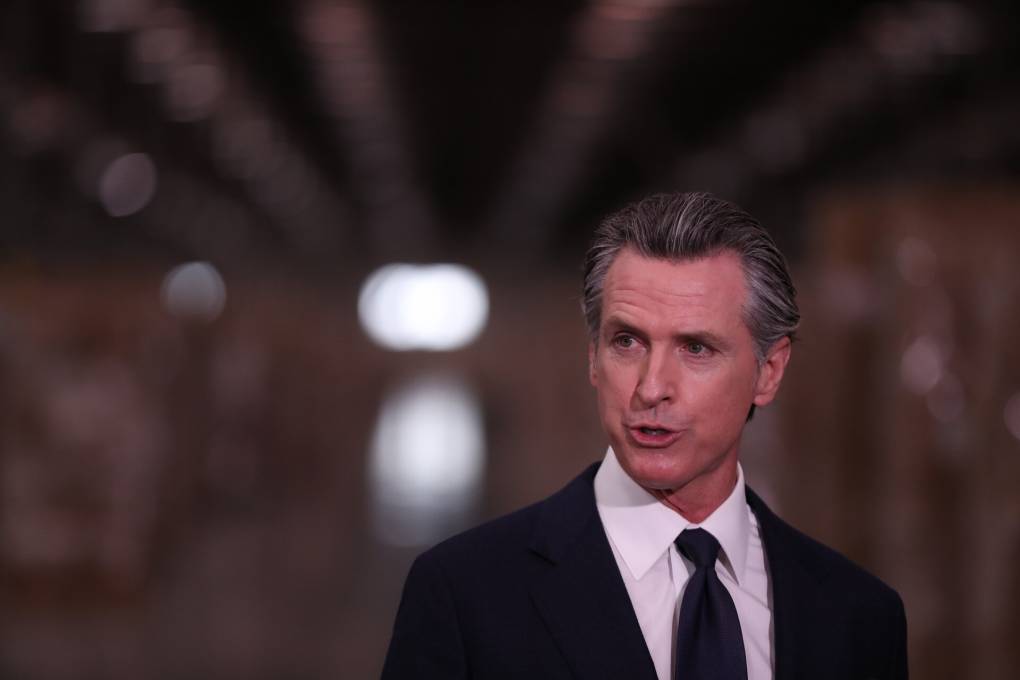
"caption": "Gov. Gavin Newsom signs legislation to institute CARE Court, his plan to overhaul the state's approach to mental health care for people diagnosed with schizophrenia and other psychotic disorders.",
"description": null,
"title": "Governor Gavin Newsom speaks during a press conference to unveil the next phase of California's pandemic response",
"credit": "Allen J. Schaben/Los Angeles Times via Getty Images",
"status": "inherit",
"altTag": "Gavin Newsom speaks at a press conference",
"isLoading": false,
"fetchFailed": false
},
"news_11925437": {
"type": "attachments",
"id": "news_11925437",
"meta": {
"index": "attachments_1716263798",
"site": "news",
"id": "11925437",
"found": true
},
"parent": 11925423,
"imgSizes": {
"twentyfourteen-full-width": {
"file": "https://ww2.kqed.org/app/uploads/sites/10/2022/09/Screen-Shot-2022-09-12-at-4.31.00-PM-1038x576.png",
"width": 1038,
"mimeType": "image/png",
"height": 576
},
"thumbnail": {
"file": "https://ww2.kqed.org/app/uploads/sites/10/2022/09/Screen-Shot-2022-09-12-at-4.31.00-PM-160x85.png",
"width": 160,
"mimeType": "image/png",
"height": 85
},
"post-thumbnail": {
"file": "https://ww2.kqed.org/app/uploads/sites/10/2022/09/Screen-Shot-2022-09-12-at-4.31.00-PM-672x372.png",
"width": 672,
"mimeType": "image/png",
"height": 372
},
"kqedFullSize": {
"file": "https://ww2.kqed.org/app/uploads/sites/10/2022/09/Screen-Shot-2022-09-12-at-4.31.00-PM.png",
"width": 1164,
"height": 622
},
"large": {
"file": "https://ww2.kqed.org/app/uploads/sites/10/2022/09/Screen-Shot-2022-09-12-at-4.31.00-PM-1020x545.png",
"width": 1020,
"mimeType": "image/png",
"height": 545
},
"medium": {
"file": "https://ww2.kqed.org/app/uploads/sites/10/2022/09/Screen-Shot-2022-09-12-at-4.31.00-PM-800x427.png",
"width": 800,
"mimeType": "image/png",
"height": 427
}
},
"publishDate": 1663025525,
"modified": 1663095150,
"caption": "Mendez High School in Boyle Heights, Los Angeles, unveiled a new 6,500-square-foot health clinic on campus last month.",
"description": "Mendez High School in Boyle Heights, L.A., unveiled a new 6,500-square-foot health clinic on campus last month. ",
"title": "school health",
"credit": "Kate Valdez/Boyle Heights Beat",
"status": "inherit",
"altTag": "The image shows a brick-red building with tall windows. On the left of the building, black lettering reads \"St. John's Community Health\" with the \"O\" as a smiley face. On the right side of the building, white lettering reads, \"Sylvia Mendez Student and Family Wellness Center.\"",
"isLoading": false,
"fetchFailed": false
},
"news_11911802": {
"type": "attachments",
"id": "news_11911802",
"meta": {
"index": "attachments_1716263798",
"site": "news",
"id": "11911802",
"found": true
},
"parent": 11910500,
"imgSizes": {
"twentyfourteen-full-width": {
"file": "https://ww2.kqed.org/app/uploads/sites/10/2022/04/RS54979_010_KQED_TraceyHeltonMitchell_04052022-qut-1038x576.jpg",
"width": 1038,
"mimeType": "image/jpeg",
"height": 576
},
"thumbnail": {
"file": "https://ww2.kqed.org/app/uploads/sites/10/2022/04/RS54979_010_KQED_TraceyHeltonMitchell_04052022-qut-160x107.jpg",
"width": 160,
"mimeType": "image/jpeg",
"height": 107
},
"post-thumbnail": {
"file": "https://ww2.kqed.org/app/uploads/sites/10/2022/04/RS54979_010_KQED_TraceyHeltonMitchell_04052022-qut-672x372.jpg",
"width": 672,
"mimeType": "image/jpeg",
"height": 372
},
"kqedFullSize": {
"file": "https://ww2.kqed.org/app/uploads/sites/10/2022/04/RS54979_010_KQED_TraceyHeltonMitchell_04052022-qut.jpg",
"width": 1920,
"height": 1280
},
"large": {
"file": "https://ww2.kqed.org/app/uploads/sites/10/2022/04/RS54979_010_KQED_TraceyHeltonMitchell_04052022-qut-1020x680.jpg",
"width": 1020,
"mimeType": "image/jpeg",
"height": 680
},
"1536x1536": {
"file": "https://ww2.kqed.org/app/uploads/sites/10/2022/04/RS54979_010_KQED_TraceyHeltonMitchell_04052022-qut-1536x1024.jpg",
"width": 1536,
"mimeType": "image/jpeg",
"height": 1024
},
"medium": {
"file": "https://ww2.kqed.org/app/uploads/sites/10/2022/04/RS54979_010_KQED_TraceyHeltonMitchell_04052022-qut-800x533.jpg",
"width": 800,
"mimeType": "image/jpeg",
"height": 533
}
},
"publishDate": 1650541788,
"modified": 1663005569,
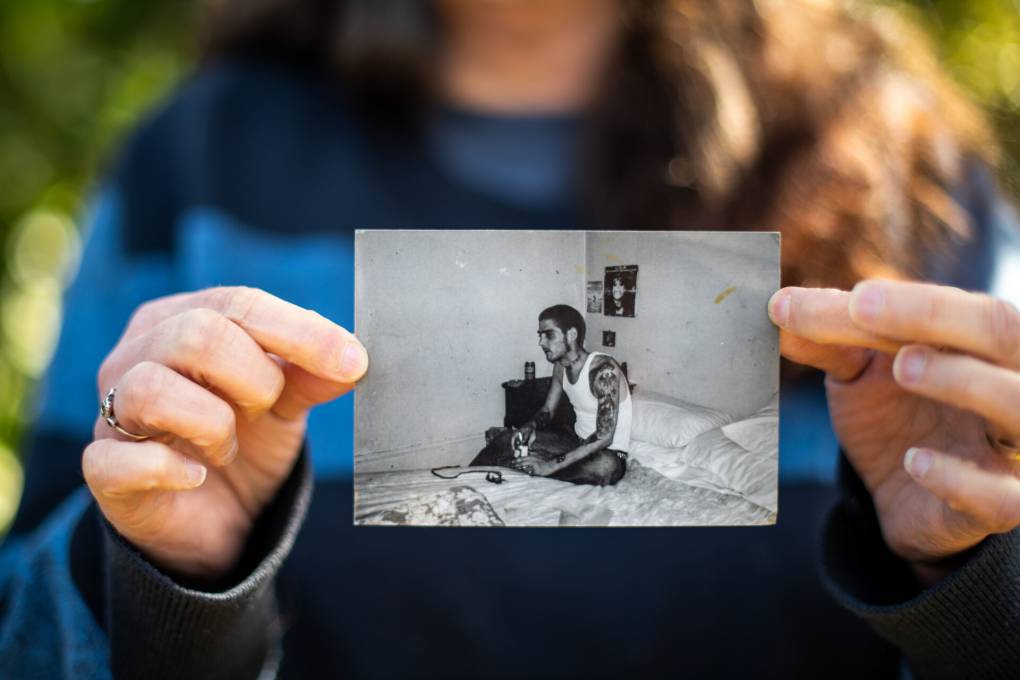
"caption": "Tracey Helton Mitchell holds a photo of her ex-boyfriend, who passed away from a heroin overdose, at her home in Daly City on April 5, 2022.",
"description": null,
"title": "RS54979_010_KQED_TraceyHeltonMitchell_04052022-qut",
"credit": "Beth LaBerge/KQED",
"status": "inherit",
"altTag": null,
"isLoading": false,
"fetchFailed": false
},
"news_11925013": {
"type": "attachments",
"id": "news_11925013",
"meta": {
"index": "attachments_1716263798",
"site": "news",
"id": "11925013",
"found": true
},
"parent": 11924980,
"imgSizes": {
"twentyfourteen-full-width": {
"file": "https://ww2.kqed.org/app/uploads/sites/10/2022/09/Mental-Health-Feature-1038x576.jpg",
"width": 1038,
"mimeType": "image/jpeg",
"height": 576
},
"thumbnail": {
"file": "https://ww2.kqed.org/app/uploads/sites/10/2022/09/Mental-Health-Feature-160x80.jpg",
"width": 160,
"mimeType": "image/jpeg",
"height": 80
},
"post-thumbnail": {
"file": "https://ww2.kqed.org/app/uploads/sites/10/2022/09/Mental-Health-Feature-672x372.jpg",
"width": 672,
"mimeType": "image/jpeg",
"height": 372
},
"kqedFullSize": {
"file": "https://ww2.kqed.org/app/uploads/sites/10/2022/09/Mental-Health-Feature-e1662671428167.jpg",
"width": 1980,
"height": 990
},
"large": {
"file": "https://ww2.kqed.org/app/uploads/sites/10/2022/09/Mental-Health-Feature-1020x510.jpg",
"width": 1020,
"mimeType": "image/jpeg",
"height": 510
},
"1536x1536": {
"file": "https://ww2.kqed.org/app/uploads/sites/10/2022/09/Mental-Health-Feature-1536x768.jpg",
"width": 1536,
"mimeType": "image/jpeg",
"height": 768
},
"full-width": {
"file": "https://ww2.kqed.org/app/uploads/sites/10/2022/09/Mental-Health-Feature-1920x960.jpg",
"width": 1920,
"mimeType": "image/jpeg",
"height": 960
},
"medium": {
"file": "https://ww2.kqed.org/app/uploads/sites/10/2022/09/Mental-Health-Feature-800x400.jpg",
"width": 800,
"mimeType": "image/jpeg",
"height": 400
}
},
"publishDate": 1662671342,
"modified": 1662671476,
"caption": null,
"description": null,
"title": "Mental Health Feature",
"credit": "Chanelle Nibbelink/CalMatters",
"status": "inherit",
"altTag": null,
"isLoading": false,
"fetchFailed": false
},
"news_11924336": {
"type": "attachments",
"id": "news_11924336",
"meta": {
"index": "attachments_1716263798",
"site": "news",
"id": "11924336",
"found": true
},
"parent": 11924322,
"imgSizes": {
"twentyfourteen-full-width": {
"file": "https://ww2.kqed.org/app/uploads/sites/10/2022/08/Teen-Vaccine-1038x576.jpg",
"width": 1038,
"mimeType": "image/jpeg",
"height": 576
},
"thumbnail": {
"file": "https://ww2.kqed.org/app/uploads/sites/10/2022/08/Teen-Vaccine-160x107.jpg",
"width": 160,
"mimeType": "image/jpeg",
"height": 107
},
"post-thumbnail": {
"file": "https://ww2.kqed.org/app/uploads/sites/10/2022/08/Teen-Vaccine-672x372.jpg",
"width": 672,
"mimeType": "image/jpeg",
"height": 372
},
"kqedFullSize": {
"file": "https://ww2.kqed.org/app/uploads/sites/10/2022/08/Teen-Vaccine.jpg",
"width": 1980,
"height": 1320
},
"large": {
"file": "https://ww2.kqed.org/app/uploads/sites/10/2022/08/Teen-Vaccine-1020x680.jpg",
"width": 1020,
"mimeType": "image/jpeg",
"height": 680
},
"1536x1536": {
"file": "https://ww2.kqed.org/app/uploads/sites/10/2022/08/Teen-Vaccine-1536x1024.jpg",
"width": 1536,
"mimeType": "image/jpeg",
"height": 1024
},
"full-width": {
"file": "https://ww2.kqed.org/app/uploads/sites/10/2022/08/Teen-Vaccine-1920x1280.jpg",
"width": 1920,
"mimeType": "image/jpeg",
"height": 1280
},
"medium": {
"file": "https://ww2.kqed.org/app/uploads/sites/10/2022/08/Teen-Vaccine-800x533.jpg",
"width": 800,
"mimeType": "image/jpeg",
"height": 533
}
},
"publishDate": 1661989566,
"modified": 1661993993,
"caption": "Audrey Romero, 16, receives a first dose of the Pfizer COVID-19 vaccine at a mobile vaccination clinic at the Weingart East Los Angeles YMCA on May 14, 2021, in Los Angeles. ",
"description": "Audrey Romero, 16, receives a first dose of the Pfizer Covid-19 vaccine at a mobile vaccination clinic at the Weingart East Los Angeles YMCA on May 14, 2021 in Los Angeles, California. ",
"title": "Teen Vaccine",
"credit": "Patrick T. Fallon/AFP via Getty Images",
"status": "inherit",
"altTag": null,
"isLoading": false,
"fetchFailed": false
},
"news_11924264": {
"type": "attachments",
"id": "news_11924264",
"meta": {
"index": "attachments_1716263798",
"site": "news",
"id": "11924264",
"found": true
},
"parent": 11924263,
"imgSizes": {
"twentyfourteen-full-width": {
"file": "https://ww2.kqed.org/app/uploads/sites/10/2022/08/gettyimages-1341189407_custom-230b451a2827615f1a80b049306fa9a21c15152c-1038x576.jpg",
"width": 1038,
"mimeType": "image/jpeg",
"height": 576
},
"thumbnail": {
"file": "https://ww2.kqed.org/app/uploads/sites/10/2022/08/gettyimages-1341189407_custom-230b451a2827615f1a80b049306fa9a21c15152c-160x107.jpg",
"width": 160,
"mimeType": "image/jpeg",
"height": 107
},
"post-thumbnail": {
"file": "https://ww2.kqed.org/app/uploads/sites/10/2022/08/gettyimages-1341189407_custom-230b451a2827615f1a80b049306fa9a21c15152c-672x372.jpg",
"width": 672,
"mimeType": "image/jpeg",
"height": 372
},
"kqedFullSize": {
"file": "https://ww2.kqed.org/app/uploads/sites/10/2022/08/gettyimages-1341189407_custom-230b451a2827615f1a80b049306fa9a21c15152c-scaled.jpg",
"width": 2560,
"height": 1705
},
"2048x2048": {
"file": "https://ww2.kqed.org/app/uploads/sites/10/2022/08/gettyimages-1341189407_custom-230b451a2827615f1a80b049306fa9a21c15152c-2048x1364.jpg",
"width": 2048,
"mimeType": "image/jpeg",
"height": 1364
},
"large": {
"file": "https://ww2.kqed.org/app/uploads/sites/10/2022/08/gettyimages-1341189407_custom-230b451a2827615f1a80b049306fa9a21c15152c-1020x679.jpg",
"width": 1020,
"mimeType": "image/jpeg",
"height": 679
},
"1536x1536": {
"file": "https://ww2.kqed.org/app/uploads/sites/10/2022/08/gettyimages-1341189407_custom-230b451a2827615f1a80b049306fa9a21c15152c-1536x1023.jpg",
"width": 1536,
"mimeType": "image/jpeg",
"height": 1023
},
"full-width": {
"file": "https://ww2.kqed.org/app/uploads/sites/10/2022/08/gettyimages-1341189407_custom-230b451a2827615f1a80b049306fa9a21c15152c-1920x1279.jpg",
"width": 1920,
"mimeType": "image/jpeg",
"height": 1279
},
"medium": {
"file": "https://ww2.kqed.org/app/uploads/sites/10/2022/08/gettyimages-1341189407_custom-230b451a2827615f1a80b049306fa9a21c15152c-800x533.jpg",
"width": 800,
"mimeType": "image/jpeg",
"height": 533
}
},
"publishDate": 1661973363,
"modified": 1661980232,
"caption": "Visitors walk through 'In America: Remember,' a public art installation commemorating all the Americans who have died due to COVID-19 near the Washington Monument, on Sept. 18, 2021, in Washington, D.C. The concept of artist Suzanne Brennan Firstenberg, the installation includes more than 660,000 small plastic flags, some with personal messages to those who have died, planted in 20 acres of the National Mall.",
"description": null,
"title": "Flags at the Washington Monument commemorate Americans who died from COVID-19. In 2021, life expectancy in the U.S. fell for the second year in a row.",
"credit": "Spencer Platt/Getty Images",
"status": "inherit",
"altTag": null,
"isLoading": false,
"fetchFailed": false
},
"news_11921897": {
"type": "attachments",
"id": "news_11921897",
"meta": {
"index": "attachments_1716263798",
"site": "news",
"id": "11921897",
"found": true
},
"parent": 11921896,
"imgSizes": {
"twentyfourteen-full-width": {
"file": "https://ww2.kqed.org/app/uploads/sites/10/2022/08/IMG_9387-1038x576.jpg",
"width": 1038,
"mimeType": "image/jpeg",
"height": 576
},
"thumbnail": {
"file": "https://ww2.kqed.org/app/uploads/sites/10/2022/08/IMG_9387-160x108.jpg",
"width": 160,
"mimeType": "image/jpeg",
"height": 108
},
"post-thumbnail": {
"file": "https://ww2.kqed.org/app/uploads/sites/10/2022/08/IMG_9387-672x372.jpg",
"width": 672,
"mimeType": "image/jpeg",
"height": 372
},
"kqedFullSize": {
"file": "https://ww2.kqed.org/app/uploads/sites/10/2022/08/IMG_9387.jpg",
"width": 1818,
"height": 1228
},
"large": {
"file": "https://ww2.kqed.org/app/uploads/sites/10/2022/08/IMG_9387-1020x689.jpg",
"width": 1020,
"mimeType": "image/jpeg",
"height": 689
},
"1536x1536": {
"file": "https://ww2.kqed.org/app/uploads/sites/10/2022/08/IMG_9387-1536x1038.jpg",
"width": 1536,
"mimeType": "image/jpeg",
"height": 1038
},
"medium": {
"file": "https://ww2.kqed.org/app/uploads/sites/10/2022/08/IMG_9387-800x540.jpg",
"width": 800,
"mimeType": "image/jpeg",
"height": 540
}
},
"publishDate": 1659745910,
"modified": 1659745966,
"caption": "Ericka Cruz Guevarra stands at the beach at Kirby Cove in the Marin Headlands in March 2021.",
"description": null,
"title": "IMG_9387",
"credit": null,
"status": "inherit",
"altTag": null,
"isLoading": false,
"fetchFailed": false
},
"news_11923342": {
"type": "attachments",
"id": "news_11923342",
"meta": {
"index": "attachments_1716263798",
"site": "news",
"id": "11923342",
"found": true
},
"title": "Drug related deaths are up on the West Coast",
"publishDate": 1661312825,
"status": "inherit",
"parent": 11923303,
"modified": 1731978560,
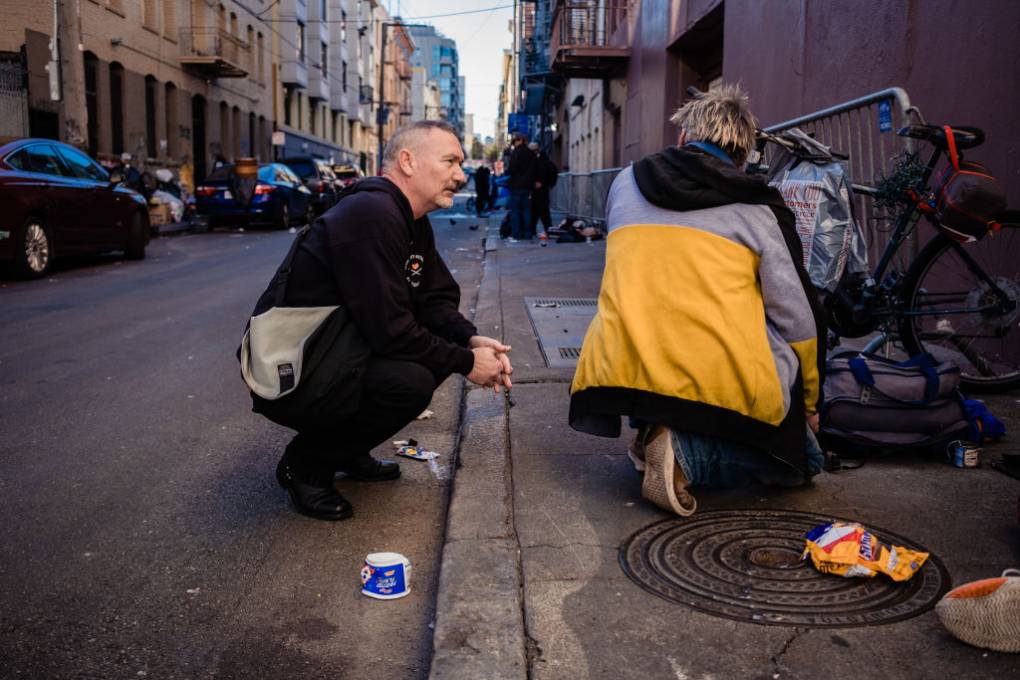
"caption": "Paul Harkin, director of harm reduction at GLIDE, hands out Narcan, fentanyl detection packets and tinfoil to drug users in an alley in San Francisco's Tenderloin neighborhood on Feb. 3, 2020.",
"credit": "Nick Otto for the Washington Post via Getty Images",
"altTag": "A man crouches down to speak to another person kneeling on the sidewalk in an alley.",
"description": null,
"imgSizes": {
"medium": {
"file": "https://cdn.kqed.org/wp-content/uploads/sites/10/2022/08/GettyImages-1201746556-800x534.jpg",
"width": 800,
"height": 534,
"mimeType": "image/jpeg"
},
"large": {
"file": "https://cdn.kqed.org/wp-content/uploads/sites/10/2022/08/GettyImages-1201746556-1020x680.jpg",
"width": 1020,
"height": 680,
"mimeType": "image/jpeg"
},
"thumbnail": {
"file": "https://cdn.kqed.org/wp-content/uploads/sites/10/2022/08/GettyImages-1201746556-160x107.jpg",
"width": 160,
"height": 107,
"mimeType": "image/jpeg"
},
"post-thumbnail": {
"file": "https://cdn.kqed.org/wp-content/uploads/sites/10/2022/08/GettyImages-1201746556-672x372.jpg",
"width": 672,
"height": 372,
"mimeType": "image/jpeg"
},
"twentyfourteen-full-width": {
"file": "https://cdn.kqed.org/wp-content/uploads/sites/10/2022/08/GettyImages-1201746556-1024x576.jpg",
"width": 1024,
"height": 576,
"mimeType": "image/jpeg"
},
"kqedFullSize": {
"file": "https://cdn.kqed.org/wp-content/uploads/sites/10/2022/08/GettyImages-1201746556.jpg",
"width": 1024,
"height": 683
}
},
"isLoading": false,
"fetchFailed": false
},
"news_11923168": {
"type": "attachments",
"id": "news_11923168",
"meta": {
"index": "attachments_1716263798",
"site": "news",
"id": "11923168",
"found": true
},
"parent": 11923167,
"imgSizes": {
"twentyfourteen-full-width": {
"file": "https://ww2.kqed.org/app/uploads/sites/10/2022/08/fauci_custom-afdd76aca4d8617d59ac7dd07d7b0e36806edf06-1-1038x576.jpg",
"width": 1038,
"mimeType": "image/jpeg",
"height": 576
},
"thumbnail": {
"file": "https://ww2.kqed.org/app/uploads/sites/10/2022/08/fauci_custom-afdd76aca4d8617d59ac7dd07d7b0e36806edf06-1-160x107.jpg",
"width": 160,
"mimeType": "image/jpeg",
"height": 107
},
"post-thumbnail": {
"file": "https://ww2.kqed.org/app/uploads/sites/10/2022/08/fauci_custom-afdd76aca4d8617d59ac7dd07d7b0e36806edf06-1-672x372.jpg",
"width": 672,
"mimeType": "image/jpeg",
"height": 372
},
"kqedFullSize": {
"file": "https://ww2.kqed.org/app/uploads/sites/10/2022/08/fauci_custom-afdd76aca4d8617d59ac7dd07d7b0e36806edf06-1.jpg",
"width": 2000,
"height": 1332
},
"large": {
"file": "https://ww2.kqed.org/app/uploads/sites/10/2022/08/fauci_custom-afdd76aca4d8617d59ac7dd07d7b0e36806edf06-1-1020x679.jpg",
"width": 1020,
"mimeType": "image/jpeg",
"height": 679
},
"1536x1536": {
"file": "https://ww2.kqed.org/app/uploads/sites/10/2022/08/fauci_custom-afdd76aca4d8617d59ac7dd07d7b0e36806edf06-1-1536x1023.jpg",
"width": 1536,
"mimeType": "image/jpeg",
"height": 1023
},
"full-width": {
"file": "https://ww2.kqed.org/app/uploads/sites/10/2022/08/fauci_custom-afdd76aca4d8617d59ac7dd07d7b0e36806edf06-1-1920x1279.jpg",
"width": 1920,
"mimeType": "image/jpeg",
"height": 1279
},
"medium": {
"file": "https://ww2.kqed.org/app/uploads/sites/10/2022/08/fauci_custom-afdd76aca4d8617d59ac7dd07d7b0e36806edf06-1-800x533.jpg",
"width": 800,
"mimeType": "image/jpeg",
"height": 533
}
},
"publishDate": 1661203458,
"modified": 1661203699,
"caption": "Dr. Anthony Fauci, director of the National Institute of Allergy and Infectious Diseases listens as then-U.S. President Donald Trump answers questions in the press briefing room with members of the White House Coronavirus Task Force on April 4, 2020, in Washington, DC.",
"description": null,
"title": "Dr. Anthony Fauci, Director of the National Institute of Allergy and Infectious Diseases listens as U.S. President Donald Trump answers questions in the press briefing room with members of the White House Coronavirus Task Force.",
"credit": "Sarah Silbiger/Getty Images",
"status": "inherit",
"altTag": "Dr. Anthony Fauci, looking downward.",
"isLoading": false,
"fetchFailed": false
},
"news_11923074": {
"type": "attachments",
"id": "news_11923074",
"meta": {
"index": "attachments_1716263798",
"site": "news",
"id": "11923074",
"found": true
},
"parent": 11923034,
"imgSizes": {
"twentyfourteen-full-width": {
"file": "https://ww2.kqed.org/app/uploads/sites/10/2022/08/RS57894_032_KQED_KaiserStrikeOakland_08192022-qut-1038x576.jpg",
"width": 1038,
"mimeType": "image/jpeg",
"height": 576
},
"thumbnail": {
"file": "https://ww2.kqed.org/app/uploads/sites/10/2022/08/RS57894_032_KQED_KaiserStrikeOakland_08192022-qut-160x107.jpg",
"width": 160,
"mimeType": "image/jpeg",
"height": 107
},
"post-thumbnail": {
"file": "https://ww2.kqed.org/app/uploads/sites/10/2022/08/RS57894_032_KQED_KaiserStrikeOakland_08192022-qut-672x372.jpg",
"width": 672,
"mimeType": "image/jpeg",
"height": 372
},
"kqedFullSize": {
"file": "https://ww2.kqed.org/app/uploads/sites/10/2022/08/RS57894_032_KQED_KaiserStrikeOakland_08192022-qut.jpg",
"width": 1920,
"height": 1280
},
"large": {
"file": "https://ww2.kqed.org/app/uploads/sites/10/2022/08/RS57894_032_KQED_KaiserStrikeOakland_08192022-qut-1020x680.jpg",
"width": 1020,
"mimeType": "image/jpeg",
"height": 680
},
"1536x1536": {
"file": "https://ww2.kqed.org/app/uploads/sites/10/2022/08/RS57894_032_KQED_KaiserStrikeOakland_08192022-qut-1536x1024.jpg",
"width": 1536,
"mimeType": "image/jpeg",
"height": 1024
},
"medium": {
"file": "https://ww2.kqed.org/app/uploads/sites/10/2022/08/RS57894_032_KQED_KaiserStrikeOakland_08192022-qut-800x533.jpg",
"width": 800,
"mimeType": "image/jpeg",
"height": 533
}
},
"publishDate": 1660951150,
"modified": 1660951188,
"caption": "Kaiser mental health care workers and supporters march from Oakland Kaiser Medical Center to Kaiser's corporate headquarters on Friday, Aug. 19, 2022, the fifth day of an open-ended strike.",
"description": null,
"title": "RS57894_032_KQED_KaiserStrikeOakland_08192022-qut",
"credit": "Beth LaBerge/KQED",
"status": "inherit",
"altTag": "people in red shirts carrying signs that read \"patients over profits\"",
"isLoading": false,
"fetchFailed": false
},
"news_11922835": {
"type": "attachments",
"id": "news_11922835",
"meta": {
"index": "attachments_1716263798",
"site": "news",
"id": "11922835",
"found": true
},
"parent": 11922748,
"imgSizes": {
"twentyfourteen-full-width": {
"file": "https://ww2.kqed.org/app/uploads/sites/10/2022/08/KaiserOak-1-1038x576.jpg",
"width": 1038,
"mimeType": "image/jpeg",
"height": 576
},
"thumbnail": {
"file": "https://ww2.kqed.org/app/uploads/sites/10/2022/08/KaiserOak-1-160x120.jpg",
"width": 160,
"mimeType": "image/jpeg",
"height": 120
},
"post-thumbnail": {
"file": "https://ww2.kqed.org/app/uploads/sites/10/2022/08/KaiserOak-1-672x372.jpg",
"width": 672,
"mimeType": "image/jpeg",
"height": 372
},
"kqedFullSize": {
"file": "https://ww2.kqed.org/app/uploads/sites/10/2022/08/KaiserOak-1.jpg",
"width": 1920,
"height": 1440
},
"large": {
"file": "https://ww2.kqed.org/app/uploads/sites/10/2022/08/KaiserOak-1-1020x765.jpg",
"width": 1020,
"mimeType": "image/jpeg",
"height": 765
},
"1536x1536": {
"file": "https://ww2.kqed.org/app/uploads/sites/10/2022/08/KaiserOak-1-1536x1152.jpg",
"width": 1536,
"mimeType": "image/jpeg",
"height": 1152
},
"medium": {
"file": "https://ww2.kqed.org/app/uploads/sites/10/2022/08/KaiserOak-1-800x600.jpg",
"width": 800,
"mimeType": "image/jpeg",
"height": 600
}
},
"publishDate": 1660765977,
"modified": 1660767107,
"caption": "Kaiser mental health care workers hold signs on the picket line outside one of the health care giant's facilities in Oakland on Tuesday, Aug. 16, 2022, the second day of an open-ended strike. Those participating said a staffing shortage and unfair wages have led to 'dangerous' wait times for people seeking treatment.",
"description": null,
"title": "KaiserOak",
"credit": "Lesley McClurg/KQED",
"status": "inherit",
"altTag": "A line of people in red shirts march down a street, carrying signs at a picket line that say 'NUHW on strike.'",
"isLoading": false,
"fetchFailed": false
},
"news_11922568": {
"type": "attachments",
"id": "news_11922568",
"meta": {
"index": "attachments_1716263798",
"site": "news",
"id": "11922568",
"found": true
},
"parent": 11922524,
"imgSizes": {
"twentyfourteen-full-width": {
"file": "https://ww2.kqed.org/app/uploads/sites/10/2022/08/Image-from-iOS-2-1-1038x576.jpg",
"width": 1038,
"mimeType": "image/jpeg",
"height": 576
},
"thumbnail": {
"file": "https://ww2.kqed.org/app/uploads/sites/10/2022/08/Image-from-iOS-2-1-160x120.jpg",
"width": 160,
"mimeType": "image/jpeg",
"height": 120
},
"post-thumbnail": {
"file": "https://ww2.kqed.org/app/uploads/sites/10/2022/08/Image-from-iOS-2-1-672x372.jpg",
"width": 672,
"mimeType": "image/jpeg",
"height": 372
},
"kqedFullSize": {
"file": "https://ww2.kqed.org/app/uploads/sites/10/2022/08/Image-from-iOS-2-1-scaled.jpg",
"width": 2560,
"height": 1920
},
"2048x2048": {
"file": "https://ww2.kqed.org/app/uploads/sites/10/2022/08/Image-from-iOS-2-1-2048x1536.jpg",
"width": 2048,
"mimeType": "image/jpeg",
"height": 1536
},
"large": {
"file": "https://ww2.kqed.org/app/uploads/sites/10/2022/08/Image-from-iOS-2-1-1020x765.jpg",
"width": 1020,
"mimeType": "image/jpeg",
"height": 765
},
"1536x1536": {
"file": "https://ww2.kqed.org/app/uploads/sites/10/2022/08/Image-from-iOS-2-1-1536x1152.jpg",
"width": 1536,
"mimeType": "image/jpeg",
"height": 1152
},
"full-width": {
"file": "https://ww2.kqed.org/app/uploads/sites/10/2022/08/Image-from-iOS-2-1-1920x1440.jpg",
"width": 1920,
"mimeType": "image/jpeg",
"height": 1440
},
"medium": {
"file": "https://ww2.kqed.org/app/uploads/sites/10/2022/08/Image-from-iOS-2-1-800x600.jpg",
"width": 800,
"mimeType": "image/jpeg",
"height": 600
}
},
"publishDate": 1660596698,
"modified": 1660605596,
"caption": "Kaiser Permanente mental health workers march on the picket line on Aug. 15, 2022, outside the Kaiser Permanente Medical Center on Geary Blvd. in San Francisco. Monday is the first day of what union organizers are calling an 'open-ended strike,' in a push for the health care giant to hire more mental health staff.",
"description": null,
"title": "Image from iOS (2)",
"credit": "Lesley McClurg/KQED",
"status": "inherit",
"altTag": "Workers in red shirts holding signs that say 'NUHW on strike' march on a picket line in front of a large building, with one person talking into a bull horn",
"isLoading": false,
"fetchFailed": false
}
},
"audioPlayerReducer": {
"postId": "stream_live",
"isPaused": true,
"isPlaying": false,
"pfsActive": false,
"pledgeModalIsOpen": true,
"playerDrawerIsOpen": false,
"liveAudioPlayStartedAt": 0,
"liveAudioPlayContext": ""
},
"authorsReducer": {
"byline_news_11925423": {
"type": "authors",
"id": "byline_news_11925423",
"meta": {
"override": true
},
"slug": "byline_news_11925423",
"name": "Carolyn Jones",
"isLoading": false
},
"byline_news_11924980": {
"type": "authors",
"id": "byline_news_11924980",
"meta": {
"override": true
},
"slug": "byline_news_11924980",
"name": "Jocelyn Wiener",
"isLoading": false
},
"byline_news_11924322": {
"type": "authors",
"id": "byline_news_11924322",
"meta": {
"override": true
},
"slug": "byline_news_11924322",
"name": "Don Thompson, Associated Press",
"isLoading": false
},
"byline_news_11924263": {
"type": "authors",
"id": "byline_news_11924263",
"meta": {
"override": true
},
"slug": "byline_news_11924263",
"name": "Selena Simmons-Duffin",
"isLoading": false
},
"byline_news_11923167": {
"type": "authors",
"id": "byline_news_11923167",
"meta": {
"override": true
},
"slug": "byline_news_11923167",
"name": "Richard Harris and Carmel Wroth",
"isLoading": false
},
"kqednewsstaffandwires": {
"type": "authors",
"id": "237",
"meta": {
"index": "authors_1716337520",
"id": "237",
"found": true
},
"name": "KQED News Staff and Wires",
"firstName": "KQED News Staff and Wires",
"lastName": null,
"slug": "kqednewsstaffandwires",
"email": "onlinenewsstaff@kqed.org",
"display_author_email": false,
"staff_mastheads": [],
"title": null,
"bio": null,
"avatar": "https://secure.gravatar.com/avatar/72295af8ebbfbd19a4948f5271285664?s=600&d=blank&r=g",
"twitter": null,
"facebook": null,
"instagram": null,
"linkedin": null,
"sites": [
{
"site": "arts",
"roles": [
"contributor"
]
},
{
"site": "news",
"roles": [
"contributor"
]
},
{
"site": "lowdown",
"roles": [
"author"
]
},
{
"site": "stateofhealth",
"roles": [
"contributor"
]
},
{
"site": "food",
"roles": [
"author"
]
}
],
"headData": {
"title": "KQED News Staff and Wires | KQED",
"description": null,
"ogImgSrc": "https://secure.gravatar.com/avatar/72295af8ebbfbd19a4948f5271285664?s=600&d=blank&r=g",
"twImgSrc": "https://secure.gravatar.com/avatar/72295af8ebbfbd19a4948f5271285664?s=600&d=blank&r=g"
},
"isLoading": false,
"link": "/author/kqednewsstaffandwires"
},
"esilvers": {
"type": "authors",
"id": "7237",
"meta": {
"index": "authors_1716337520",
"id": "7237",
"found": true
},
"name": "Emma Silvers",
"firstName": "Emma",
"lastName": "Silvers",
"slug": "esilvers",
"email": "esilvers@kqed.org",
"display_author_email": false,
"staff_mastheads": [],
"title": "KQED Contributor",
"bio": "Emma Silvers is an editor at KQED Arts and a former digital producer at KQED News. Born and raised in the Bay Area, she has previously been an arts and entertainment editor at the \u003cem>San Francisco Chronicle\u003c/em>, \u003cem>SF Weekly\u003c/em> and the \u003cem>San Francisco Bay Guardian.\u003c/em> \u003ca href=\"https://www.emmasilvers.com\">Her work\u003c/a> has also appeared in \u003cem>Rolling Stone\u003c/em>, Pitchfork and \u003cem>Mother Jones\u003c/em>. In 2017 she was the recipient of the Society of Professional Journalists-Northern California's award for arts and culture reporting. In 1993 she \u003ca href=\"https://www.kqed.org/pop/16759/wait-what-my-coworker-was-a-voice-over-hyperventilator-for-jurassic-park\">hyperventilated in \u003cem>Jurassic Park\u003c/em>\u003c/a>.",
"avatar": "https://secure.gravatar.com/avatar/247beada39b88ea5759db1f51dba05cf?s=600&d=blank&r=g",
"twitter": "emmaruthless",
"facebook": null,
"instagram": null,
"linkedin": null,
"sites": [
{
"site": "arts",
"roles": [
"editor"
]
},
{
"site": "news",
"roles": [
"editor"
]
},
{
"site": "pop",
"roles": [
"contributor"
]
},
{
"site": "bayareabites",
"roles": [
"editor"
]
},
{
"site": "food",
"roles": [
"contributor"
]
},
{
"site": "liveblog",
"roles": [
"editor"
]
}
],
"headData": {
"title": "Emma Silvers | KQED",
"description": "KQED Contributor",
"ogImgSrc": "https://secure.gravatar.com/avatar/247beada39b88ea5759db1f51dba05cf?s=600&d=blank&r=g",
"twImgSrc": "https://secure.gravatar.com/avatar/247beada39b88ea5759db1f51dba05cf?s=600&d=blank&r=g"
},
"isLoading": false,
"link": "/author/esilvers"
},
"ecruzguevarra": {
"type": "authors",
"id": "8654",
"meta": {
"index": "authors_1716337520",
"id": "8654",
"found": true
},
"name": "Ericka Cruz Guevarra",
"firstName": "Ericka",
"lastName": "Cruz Guevarra",
"slug": "ecruzguevarra",
"email": "ecruzguevarra@kqed.org",
"display_author_email": true,
"staff_mastheads": [
"news"
],
"title": "Producer, The Bay Podcast",
"bio": "Ericka Cruz Guevarra is host of \u003ca href=\"https://www.kqed.org/podcasts/thebay\">\u003cem>The Bay\u003c/em>\u003c/a> podcast at KQED. Before host, she was the show’s producer. Her work in that capacity includes a three-part reported series on policing in Vallejo, which won a 2020 excellence in journalism award from the Society of Professional Journalists. Ericka has worked as a breaking news reporter at Oregon Public Broadcasting, helped produce the Code Switch podcast, and was KQED’s inaugural Raul Ramirez Diversity Fund intern. She’s also an alumna of NPR’s Next Generation Radio program. Send her an email if you have strong feelings about whether Fairfield and Suisun City are the Bay. Ericka is represented by SAG-AFTRA.",
"avatar": "https://secure.gravatar.com/avatar/accefc1de4bafc7e234b69bcb9b6f6536c130fd84709bc3069ef11a78787e1bb?s=600&d=blank&r=g",
"twitter": "NotoriousECG",
"bluesky": null,
"facebook": null,
"instagram": null,
"linkedin": null,
"sites": [
{
"site": "arts",
"roles": [
"subscriber"
]
},
{
"site": "news",
"roles": [
"editor",
"manage_categories"
]
},
{
"site": "futureofyou",
"roles": [
"subscriber"
]
},
{
"site": "stateofhealth",
"roles": [
"subscriber"
]
},
{
"site": "science",
"roles": [
"editor"
]
},
{
"site": "forum",
"roles": [
"subscriber"
]
}
],
"headData": {
"title": "Ericka Cruz Guevarra | KQED",
"description": "Producer, The Bay Podcast",
"ogImgSrc": "https://secure.gravatar.com/avatar/accefc1de4bafc7e234b69bcb9b6f6536c130fd84709bc3069ef11a78787e1bb?s=600&d=blank&r=g",
"twImgSrc": "https://secure.gravatar.com/avatar/accefc1de4bafc7e234b69bcb9b6f6536c130fd84709bc3069ef11a78787e1bb?s=600&d=blank&r=g"
},
"isLoading": false,
"link": "/author/ecruzguevarra"
},
"lesleymcclurg": {
"type": "authors",
"id": "11229",
"meta": {
"index": "authors_1716337520",
"id": "11229",
"found": true
},
"name": "Lesley McClurg",
"firstName": "Lesley",
"lastName": "McClurg",
"slug": "lesleymcclurg",
"email": "lmcclurg@KQED.org",
"display_author_email": false,
"staff_mastheads": [
"news",
"science"
],
"title": "KQED Health Correspondent",
"bio": "Lesley McClurg is a health correspondent and fill-in host whose work is regularly rebroadcast on NPR and PBS programs. She’s earned multiple regional Emmy awards, a national and a regional Edward R. Murrow award, and was named Best Beat Reporter by the Association of Health Care Journalists. The Society of Professional Journalists has recognized her work several times, and the Society of Environmental Journalists spotlighted her coverage of California’s historic drought.\r\n\r\nBefore joining KQED in 2016, Lesley covered food and sustainability for Capital Public Radio, environmental issues for Colorado Public Radio, and reported for KUOW and KCTS 9 in Seattle. Away from the newsroom, she loves skiing with her daughter, mountain biking with her partner, and playing with Ollie, the family’s goldendoodle. On deadline, she runs almost entirely on chocolate chips.\r\n\r\n ",
"avatar": "https://secure.gravatar.com/avatar/bab49e972ea10c774fe0f5e29dba1722b158f7c0d58a360923d1389d380b2978?s=600&d=blank&r=g",
"twitter": "lesleywmcclurg",
"bluesky": null,
"facebook": null,
"instagram": null,
"linkedin": null,
"sites": [
{
"site": "arts",
"roles": [
"author"
]
},
{
"site": "news",
"roles": [
"editor"
]
},
{
"site": "futureofyou",
"roles": [
"editor"
]
},
{
"site": "stateofhealth",
"roles": [
"author"
]
},
{
"site": "science",
"roles": [
"editor"
]
},
{
"site": "quest",
"roles": [
"subscriber"
]
},
{
"site": "forum",
"roles": [
"administrator"
]
},
{
"site": "liveblog",
"roles": [
"author"
]
}
],
"headData": {
"title": "Lesley McClurg | KQED",
"description": "KQED Health Correspondent",
"ogImgSrc": "https://secure.gravatar.com/avatar/bab49e972ea10c774fe0f5e29dba1722b158f7c0d58a360923d1389d380b2978?s=600&d=blank&r=g",
"twImgSrc": "https://secure.gravatar.com/avatar/bab49e972ea10c774fe0f5e29dba1722b158f7c0d58a360923d1389d380b2978?s=600&d=blank&r=g"
},
"isLoading": false,
"link": "/author/lesleymcclurg"
},
"kevinstark": {
"type": "authors",
"id": "11608",
"meta": {
"index": "authors_1716337520",
"id": "11608",
"found": true
},
"name": "Kevin Stark",
"firstName": "Kevin",
"lastName": "Stark",
"slug": "kevinstark",
"email": "kstark@kqed.org",
"display_author_email": true,
"staff_mastheads": [
"science"
],
"title": "Senior Editor",
"bio": "Kevin is a senior editor for KQED Science, managing the station's health and climate desks. His journalism career began in the Pacific Northwest, and he later became a lead reporter for the San Francisco Public Press. His work has appeared in Pacific Standard magazine, the Energy News Network, the Center for Investigative Reporting's Reveal and WBEZ in Chicago. Kevin joined KQED in 2019, and has covered issues related to energy, wildfire, climate change and the environment.",
"avatar": "https://secure.gravatar.com/avatar/365aaa4b597d3a8374f67504ff0facd323d7906e8eb4be0a7efd2427408e802c?s=600&d=blank&r=g",
"twitter": "starkkev",
"bluesky": null,
"facebook": null,
"instagram": null,
"linkedin": null,
"sites": [
{
"site": "",
"roles": [
"editor"
]
},
{
"site": "news",
"roles": [
"editor"
]
},
{
"site": "science",
"roles": [
"administrator"
]
}
],
"headData": {
"title": "Kevin Stark | KQED",
"description": "Senior Editor",
"ogImgSrc": "https://secure.gravatar.com/avatar/365aaa4b597d3a8374f67504ff0facd323d7906e8eb4be0a7efd2427408e802c?s=600&d=blank&r=g",
"twImgSrc": "https://secure.gravatar.com/avatar/365aaa4b597d3a8374f67504ff0facd323d7906e8eb4be0a7efd2427408e802c?s=600&d=blank&r=g"
},
"isLoading": false,
"link": "/author/kevinstark"
},
"hmcdede": {
"type": "authors",
"id": "11635",
"meta": {
"index": "authors_1716337520",
"id": "11635",
"found": true
},
"name": "Holly McDede",
"firstName": "Holly",
"lastName": "McDede",
"slug": "hmcdede",
"email": "hmcdede@KQED.org",
"display_author_email": false,
"staff_mastheads": [],
"title": "KQED Contributor",
"bio": null,
"avatar": "https://secure.gravatar.com/avatar/999d9bf31bb3a2f0511932d99526cb3e?s=600&d=blank&r=g",
"twitter": null,
"facebook": null,
"instagram": null,
"linkedin": null,
"sites": [
{
"site": "arts",
"roles": [
"editor"
]
},
{
"site": "news",
"roles": [
"edit_others_posts",
"editor"
]
},
{
"site": "science",
"roles": [
"editor"
]
},
{
"site": "forum",
"roles": [
"editor"
]
},
{
"site": "perspectives",
"roles": [
"administrator"
]
}
],
"headData": {
"title": "Holly McDede | KQED",
"description": "KQED Contributor",
"ogImgSrc": "https://secure.gravatar.com/avatar/999d9bf31bb3a2f0511932d99526cb3e?s=600&d=blank&r=g",
"twImgSrc": "https://secure.gravatar.com/avatar/999d9bf31bb3a2f0511932d99526cb3e?s=600&d=blank&r=g"
},
"isLoading": false,
"link": "/author/hmcdede"
},
"ebaldassari": {
"type": "authors",
"id": "11652",
"meta": {
"index": "authors_1716337520",
"id": "11652",
"found": true
},
"name": "Erin Baldassari",
"firstName": "Erin",
"lastName": "Baldassari",
"slug": "ebaldassari",
"email": "ebaldassari@KQED.org",
"display_author_email": true,
"staff_mastheads": [
"news"
],
"title": "Staff Writer",
"bio": "Erin Baldassari covers housing for KQED. She's a former print journalist and most recently worked as the transportation reporter for the \u003cem>Mercury News\u003c/em> and \u003cem>East Bay Times. \u003c/em>There, she focused on how the Bay Area’s housing shortage has changed the way people move around the region. She also served on the \u003cem>East Bay Times\u003c/em>’ 2017 Pulitzer Prize-winning team for coverage of the Ghost Ship Fire in Oakland. Prior to that, Erin worked as a breaking news and general assignment reporter for a variety of outlets in the Bay Area and the greater Boston area. A Tufts University alumna, Erin grew up in the foothills of the Sierra Nevada mountains and in Sonoma County. She is a life-long KQED listener.",
"avatar": "https://secure.gravatar.com/avatar/5e95cad64a8ca08288082212e199d2b0cbeb4fd8e8ef5339395f361032bbe005?s=600&d=blank&r=g",
"twitter": "e_baldi",
"bluesky": null,
"facebook": null,
"instagram": null,
"linkedin": null,
"sites": [
{
"site": "news",
"roles": [
"edit_others_posts",
"editor"
]
},
{
"site": "science",
"roles": [
"editor"
]
},
{
"site": "liveblog",
"roles": [
"editor"
]
}
],
"headData": {
"title": "Erin Baldassari | KQED",
"description": "Staff Writer",
"ogImgSrc": "https://secure.gravatar.com/avatar/5e95cad64a8ca08288082212e199d2b0cbeb4fd8e8ef5339395f361032bbe005?s=600&d=blank&r=g",
"twImgSrc": "https://secure.gravatar.com/avatar/5e95cad64a8ca08288082212e199d2b0cbeb4fd8e8ef5339395f361032bbe005?s=600&d=blank&r=g"
},
"isLoading": false,
"link": "/author/ebaldassari"
}
},
"pagesReducer": {
"news_tag_health": {
"type": "terms",
"id": "news_18543",
"meta": {
"index": "terms_1716263798",
"site": "news",
"id": "18543",
"score": 6.886699
},
"featImg": null,
"name": "Health",
"description": null,
"taxonomy": "tag",
"headData": {
"twImgId": null,
"twTitle": null,
"ogTitle": null,
"ogImgId": null,
"twDescription": null,
"description": null,
"title": "Health Archives | KQED News",
"ogDescription": null
},
"ttid": 466,
"slug": "health",
"isLoading": false,
"title": "Health",
"pageMeta": {
"site": "news",
"WpPageTemplate": "page-topic-editorial",
"currentPage": 51
},
"blocks": [
{
"blockName": "kqed/post-list",
"attrs": {
"layout": "cardArticle2",
"query": "posts/news?tag=health",
"seeMore": false,
"paginated": true,
"page": 51
}
},
{
"blockName": "kqed/ad"
}
]
}
},
"pfsSessionReducer": {},
"postsReducer": {
"stream_live": {
"type": "live",
"id": "stream_live",
"audioUrl": "https://streams.kqed.org/kqedradio",
"title": "Live Stream",
"excerpt": "Live Stream information currently unavailable.",
"link": "/radio",
"featImg": "",
"label": {
"name": "KQED Live",
"link": "/"
}
},
"stream_kqedNewscast": {
"type": "posts",
"id": "stream_kqedNewscast",
"audioUrl": "https://www.kqed.org/.stream/anon/radio/RDnews/newscast.mp3?_=1",
"title": "KQED Newscast",
"featImg": "",
"label": {
"name": "88.5 FM",
"link": "/"
}
},
"news_11924117": {
"type": "posts",
"id": "news_11924117",
"meta": {
"index": "posts_1716263798",
"site": "news",
"id": "11924117",
"score": null,
"sort": [
1663192821000
]
},
"guestAuthors": [],
"slug": "governors-care-court-plan-passes-assembly-clearing-way-to-become-law",
"title": "Newsom Signs 'CARE Court' Plan, Overhauling Mental Health Care in California",
"publishDate": 1663192821,
"format": "standard",
"headTitle": "Newsom Signs ‘CARE Court’ Plan, Overhauling Mental Health Care in California | KQED",
"labelTerm": {
"site": "news"
},
"content": "\u003cp>\u003cem>Updated Wednesday 2 p.m.\u003c/em>\u003c/p>\n\u003cp>Gov. Gavin Newsom signed a controversial bill Wednesday overhauling the state’s approach to mental health care for people diagnosed with schizophrenia and other psychotic disorders.\u003c/p>\n\u003cp>\u003cspan style=\"font-weight: 400\">The state Senate last month approved the\u003c/span> Community Assistance, Recovery and Empowerment Act, which will allow family members and first responders to ask a judge to draw up a treatment plan for people deemed to be suffering from those disorders. Those who refuse could be placed under a conservatorship and ordered to comply.\u003c/p>\n\u003cp>Currently, unhoused people with severe mental health disorders can be held against their will at psychiatric hospitals, but must be released after three days if they promise to follow up with other services and take prescribed medication.\u003c/p>\n\u003cp>The new law will let a court order a treatment plan for up to two years, which may include medication, housing and therapy.\u003cspan style=\"font-weight: 400\"> Participants will have access to a public defender and an advocate to help make decisions about treatment programs and housing. In turn, the behavioral health department in that county would be compelled to provide treatment.\u003c/span>\u003c/p>\n\u003cp>While it shares some elements of mental health programs in some other states, California’s new system will be the first of its kind in the country, according to state Sen. Tom Umberg, D-Santa Ana, who co-authored the law.\u003c/p>\n\u003cp>\u003cspan style=\"font-weight: 400\">Standing outside Momentum for Health, a nonprofit mental health care provider in San José, Newsom on Wednesday said the bill was about redesigning a broken system \u003c/span>\u003cspan style=\"font-weight: 400\">that often leaves people cycling among homelessness, jail and emergency rooms. \u003c/span>\u003c/p>\n\u003cp>“I’m not interested in the status quo,” he said. “I’m not interested in the compassionless-ness of the approach we have today of people moralizing and normalizing that suffering on the streets and sidewalks.”\u003c/p>\n\u003cp>\u003cspan style=\"font-weight: 400\">But critics of the bill say it coerces people into care, which is less effective than voluntary treatment, and doesn’t provide the necessary health and housing resources.\u003c/span>\u003c/p>\n\u003cp>\u003cspan style=\"font-weight: 400\">James Burch, deputy director of the Anti Police-Terror Project, which is part of a statewide coalition opposing CARE Court, called the bill’s signing “devastating.”\u003c/span>\u003c/p>\n\u003cp>\u003cspan style=\"font-weight: 400\">“It ignores the very stark reality that we’re living in in this moment,” he said. “We are tens of thousands of beds short in the Bay Area of the permanent housing that we need. … And we are woefully short on voluntary treatment programs.”\u003c/span>\u003c/p>\n\u003cp>[aside postID=news_11914873 hero='https://ww2.kqed.org/app/uploads/sites/10/2022/05/RS16522_GettyImages-73453883-qut-1020x682.jpg']\u003cspan style=\"font-weight: 400\">Gov. Gavin Newsom introduced the proposal in March. \u003c/span>It passed the Legislature with overwhelming support, despite vehement opposition from disability rights and homeless advocates.\u003c/p>\n\u003cp>“It was just a matter of months ago that we stood right here and we laid out a vision,” Newsom said Wednesday. “And here we are. We’ve made it a reality, and that is rare in politics, particularly on issues as vexing and challenging as this issue.”\u003c/p>\n\u003cp>\u003cspan style=\"font-weight: 400\">Santa Clara County Superior Court Judge Stephen Manley said every day he sees people caught in a cycle of homelessness, jail and emergency rooms, without ever getting the adequate care or housing they need. Manley oversees a \u003ca href=\"https://steinberginstitute.org/champion/stephen-v-manley/\" target=\"_blank\" rel=\"noopener noreferrer\">mental health care diversion court\u003c/a> for people awaiting trial for suspected crimes. \u003c/span>\u003c/p>\n\u003cp>“I think this is a major step towards building a system that is going to be effective, as opposed to the present system,” Manley said, “where these individuals simply cycle through our jails over to the emergency room of a hospital, back to the streets, back to the jail, back to the hospital. And it doesn’t stop.”\u003c/p>\n\u003cp>Assemblymember Suzette Martinez Valladares, R-Santa Clarita, said CARE Court was coming 10 years too late. She shared the story of her cousin, a Vietnam veteran, who was homeless and living in an encampment for five years before he died.\u003c/p>\n\u003cp>“I wish that my family had the tools that this bill is going to bring forward so that he might still be alive and with us,” she said, adding, “But there’s more work to be done. This bill is great, but we need resources for the programs, for the services, for the workforce that doesn’t currently exist.”\u003c/p>\n\u003cp>\u003cspan style=\"font-weight: 400\">The state faces a shortage of not only \u003c/span>\u003ca href=\"https://www.rand.org/pubs/research_reports/RRA1824-1-v2.html\">\u003cspan style=\"font-weight: 400\">psychiatric facilities\u003c/span>\u003c/a>\u003cspan style=\"font-weight: 400\">, but also the \u003c/span>\u003ca href=\"https://healthforce.ucsf.edu/sites/healthforce.ucsf.edu/files/publication-pdf/California%E2%80%99s%20Current%20and%20Future%20Behavioral%20Health%20Workforce.pdf\">\u003cspan style=\"font-weight: 400\">health care staff\u003c/span>\u003c/a>\u003cspan style=\"font-weight: 400\"> needed to operate those facilities. And Newsom’s administration estimates that between 7,000 and 12,000 people across the state will be eligible for CARE Court. \u003c/span>\u003c/p>\n\u003cp>\u003cspan style=\"font-weight: 400\">“We’re guessing there will be demand for this,” said Michelle Doty Cabrera, executive director of the County Behavioral Health Directors Association of California. “There’s not a lot of give in terms of our workforce currently.”\u003c/span>\u003c/p>\n\u003cp>[ad fullwidth]\u003c/p>\n\u003cp>\u003cspan style=\"font-weight: 400\">The state is allocating $65 million to implement CARE Court within the judicial system, as well as additional money for county behavioral health care agencies, which would manage cases. To help pay for start-up and training costs, the first seven counties to implement CARE Court will receive $26 million, with another $31 million going to counties across the state, Doty Cabrera said.\u003c/span>\u003c/p>\n\u003cp>\u003cspan style=\"font-weight: 400\">Those first seven counties are Glenn, Orange, Riverside, San Diego, Stanislaus, Tuolumne and San Francisco, which will implement CARE Courts by Oct. 1, 2023. The remaining counties would have until Dec. 1, 2024.\u003c/span>\u003c/p>\n\u003cp>\u003cspan style=\"font-weight: 400\">“And, there’s an ongoing conversation around long-term funding,” Doty Cabrera said. The bill now requires the state to provide funding to county behavioral health care agencies for programs and services before counties are required to implement CARE Court. “What that is, what it looks like, how much — all of that is still to be worked out between counties and the state,” she said.\u003c/span>\u003c/p>\n\u003cp>[aside postID=news_11916040 hero='https://ww2.kqed.org/app/uploads/sites/10/2022/02/GettyImages-1236267426-1020x680.jpg']The other looming question is housing. \u003cspan style=\"font-weight: 400\">The current version of the bill allows judges to order other government agencies, such as housing authorities, to prioritize CARE Court participants for housing. But in more rural parts of the state, housing with the appropriate services just doesn’t exist, Doty Cabrera added. \u003c/span>\u003c/p>\n\u003cp>“Who exactly are we going to pull into the order?” she said. “No one. There is nothing.”\u003c/p>\n\u003cp>Last year, nearly 14,000 people experiencing homelessness voluntarily sought mental health services, but only half were placed into housing, according to a survey conducted earlier this year by the County Behavioral Health Directors Association of California.\u003c/p>\n\u003cp>Beyond the logistics, members of the Assembly grappled with CARE Court’s reliance on the judicial system. Although voluntary, the legislation also comes with a threat: Continued refusal could be used as a justification for conservatorship, where people could be forced into care against their will.\u003c/p>\n\u003cp>\u003cspan style=\"font-weight: 400\">“At what point does compassion end and our desire to just get people off the streets and out of public sight begin?” said Assemblymember Al Muratsuchi, D-Torrance. “\u003c/span>I don’t think this is a great bill, but it seems to be the best idea that we have at this point to try to improve a god-awful situation.”\u003c/p>\n\u003cp>Others worry whether it will do more harm than good, by disproportionately affecting \u003cspan style=\"font-weight: 400\">Black residents in the state, who are diagnosed with schizophrenia, on average, \u003c/span>\u003ca href=\"https://www.ncbi.nlm.nih.gov/pmc/articles/PMC4274585/\">\u003cspan style=\"font-weight: 400\">three to four times more often\u003c/span>\u003c/a>\u003cspan style=\"font-weight: 400\"> than white residents. Black residents also represent\u003c/span>\u003ca href=\"https://files.hudexchange.info/reports/published/CoC_PopSub_State_CA_2020.pdf\">\u003cspan style=\"font-weight: 400\"> 30% of those experiencing homelessness\u003c/span>\u003c/a>\u003cspan style=\"font-weight: 400\"> in the state, but only 6.5% of the general population. \u003c/span>\u003c/p>\n\u003cp>\u003cspan style=\"font-weight: 400\">“It’s Black men, Black trans folks, Black folks in general who will be the ones who are disproportionately forced into CARE Court and disproportionately affected by this horribly myopic legislation,” said Burch, of the Anti Police-Terror Project. \u003c/span>\u003c/p>\n\u003cp>\u003cspan style=\"font-weight: 400\">The bill requires an annual report on CARE Court, along with an independent, research-based entity to evaluate the effectiveness of the program, including “through the lens of health equity” to identify racial bias. \u003c/span>\u003c/p>\n\u003cp>\u003cspan style=\"font-weight: 400\">Now that CARE Court has been signed into law, Doty Cabrera said it will be critical to keep those concerns in mind as counties try to imagine all of the program’s “unknown variables.”\u003c/span>\u003c/p>\n\u003cp>\u003cspan style=\"font-weight: 400\">“This is sort of like Chapter One of a novel,” she said. “We’ll be working on this for a long time to come.”\u003c/span>\u003c/p>\n\u003cp>[ad floatright]\u003c/p>\n",
"blocks": [],
"excerpt": "The governor signed into law his controversial plan to implement a new civil court system to oversee treatment for people diagnosed with schizophrenia and other psychotic disorders.",
"status": "publish",
"parent": 0,
"modified": 1726005612,
"stats": {
"hasAudio": false,
"hasVideo": false,
"hasChartOrMap": false,
"iframeSrcs": [],
"hasGoogleForm": false,
"hasGallery": false,
"hasHearkenModule": false,
"hasPolis": false,
"paragraphCount": 34,
"wordCount": 1425
},
"headData": {
"title": "Newsom Signs 'CARE Court' Plan, Overhauling Mental Health Care in California | KQED",
"description": "The governor signed into law his controversial plan to implement a new civil court system to oversee treatment for people diagnosed with schizophrenia and other psychotic disorders.",
"ogTitle": "",
"ogDescription": "",
"ogImgId": "",
"twTitle": "",
"twDescription": "",
"twImgId": "",
"schema": {
"@context": "https://schema.org",
"@type": "NewsArticle",
"headline": "Newsom Signs 'CARE Court' Plan, Overhauling Mental Health Care in California",
"datePublished": "2022-09-14T15:00:21-07:00",
"dateModified": "2024-09-10T15:00:12-07:00",
"image": "https://cdn.kqed.org/wp-content/uploads/2020/02/KQED-OG-Image@1x.png",
"isAccessibleForFree": "True",
"publisher": {
"@type": "NewsMediaOrganization",
"@id": "https://www.kqed.org/#organization",
"name": "KQED",
"logo": "https://cdn.kqed.org/wp-content/uploads/2020/02/KQED-OG-Image@1x.png",
"url": "https://www.kqed.org",
"sameAs": [
"https://www.facebook.com/KQED",
"https://twitter.com/KQED",
"https://www.instagram.com/kqed/",
"https://www.tiktok.com/@kqedofficial",
"https://www.linkedin.com/company/kqed",
"https://www.youtube.com/channel/UCeC0IOo7i1P_61zVUWbJ4nw"
]
}
}
},
"sticky": false,
"excludeFromSiteSearch": "Include",
"path": "/news/11924117/governors-care-court-plan-passes-assembly-clearing-way-to-become-law",
"audioTrackLength": null,
"parsedContent": [
{
"type": "contentString",
"content": "\u003cdiv class=\"post-body\">\u003cp>\u003cp>\u003cem>Updated Wednesday 2 p.m.\u003c/em>\u003c/p>\n\u003cp>Gov. Gavin Newsom signed a controversial bill Wednesday overhauling the state’s approach to mental health care for people diagnosed with schizophrenia and other psychotic disorders.\u003c/p>\n\u003cp>\u003cspan style=\"font-weight: 400\">The state Senate last month approved the\u003c/span> Community Assistance, Recovery and Empowerment Act, which will allow family members and first responders to ask a judge to draw up a treatment plan for people deemed to be suffering from those disorders. Those who refuse could be placed under a conservatorship and ordered to comply.\u003c/p>\n\u003cp>Currently, unhoused people with severe mental health disorders can be held against their will at psychiatric hospitals, but must be released after three days if they promise to follow up with other services and take prescribed medication.\u003c/p>\n\u003cp>The new law will let a court order a treatment plan for up to two years, which may include medication, housing and therapy.\u003cspan style=\"font-weight: 400\"> Participants will have access to a public defender and an advocate to help make decisions about treatment programs and housing. In turn, the behavioral health department in that county would be compelled to provide treatment.\u003c/span>\u003c/p>\n\u003cp>While it shares some elements of mental health programs in some other states, California’s new system will be the first of its kind in the country, according to state Sen. Tom Umberg, D-Santa Ana, who co-authored the law.\u003c/p>\n\u003cp>\u003cspan style=\"font-weight: 400\">Standing outside Momentum for Health, a nonprofit mental health care provider in San José, Newsom on Wednesday said the bill was about redesigning a broken system \u003c/span>\u003cspan style=\"font-weight: 400\">that often leaves people cycling among homelessness, jail and emergency rooms. \u003c/span>\u003c/p>\n\u003cp>“I’m not interested in the status quo,” he said. “I’m not interested in the compassionless-ness of the approach we have today of people moralizing and normalizing that suffering on the streets and sidewalks.”\u003c/p>\n\u003cp>\u003cspan style=\"font-weight: 400\">But critics of the bill say it coerces people into care, which is less effective than voluntary treatment, and doesn’t provide the necessary health and housing resources.\u003c/span>\u003c/p>\n\u003cp>\u003cspan style=\"font-weight: 400\">James Burch, deputy director of the Anti Police-Terror Project, which is part of a statewide coalition opposing CARE Court, called the bill’s signing “devastating.”\u003c/span>\u003c/p>\n\u003cp>\u003cspan style=\"font-weight: 400\">“It ignores the very stark reality that we’re living in in this moment,” he said. “We are tens of thousands of beds short in the Bay Area of the permanent housing that we need. … And we are woefully short on voluntary treatment programs.”\u003c/span>\u003c/p>\n\u003cp>\u003c/p>\u003c/div>",
"attributes": {
"named": {},
"numeric": []
}
},
{
"type": "component",
"content": "",
"name": "aside",
"attributes": {
"named": {
"postid": "news_11914873",
"hero": "https://ww2.kqed.org/app/uploads/sites/10/2022/05/RS16522_GettyImages-73453883-qut-1020x682.jpg",
"label": ""
},
"numeric": []
}
},
{
"type": "contentString",
"content": "\u003cdiv class=\"post-body\">\u003cp>\u003cspan style=\"font-weight: 400\">Gov. Gavin Newsom introduced the proposal in March. \u003c/span>It passed the Legislature with overwhelming support, despite vehement opposition from disability rights and homeless advocates.\u003c/p>\n\u003cp>“It was just a matter of months ago that we stood right here and we laid out a vision,” Newsom said Wednesday. “And here we are. We’ve made it a reality, and that is rare in politics, particularly on issues as vexing and challenging as this issue.”\u003c/p>\n\u003cp>\u003cspan style=\"font-weight: 400\">Santa Clara County Superior Court Judge Stephen Manley said every day he sees people caught in a cycle of homelessness, jail and emergency rooms, without ever getting the adequate care or housing they need. Manley oversees a \u003ca href=\"https://steinberginstitute.org/champion/stephen-v-manley/\" target=\"_blank\" rel=\"noopener noreferrer\">mental health care diversion court\u003c/a> for people awaiting trial for suspected crimes. \u003c/span>\u003c/p>\n\u003cp>“I think this is a major step towards building a system that is going to be effective, as opposed to the present system,” Manley said, “where these individuals simply cycle through our jails over to the emergency room of a hospital, back to the streets, back to the jail, back to the hospital. And it doesn’t stop.”\u003c/p>\n\u003cp>Assemblymember Suzette Martinez Valladares, R-Santa Clarita, said CARE Court was coming 10 years too late. She shared the story of her cousin, a Vietnam veteran, who was homeless and living in an encampment for five years before he died.\u003c/p>\n\u003cp>“I wish that my family had the tools that this bill is going to bring forward so that he might still be alive and with us,” she said, adding, “But there’s more work to be done. This bill is great, but we need resources for the programs, for the services, for the workforce that doesn’t currently exist.”\u003c/p>\n\u003cp>\u003cspan style=\"font-weight: 400\">The state faces a shortage of not only \u003c/span>\u003ca href=\"https://www.rand.org/pubs/research_reports/RRA1824-1-v2.html\">\u003cspan style=\"font-weight: 400\">psychiatric facilities\u003c/span>\u003c/a>\u003cspan style=\"font-weight: 400\">, but also the \u003c/span>\u003ca href=\"https://healthforce.ucsf.edu/sites/healthforce.ucsf.edu/files/publication-pdf/California%E2%80%99s%20Current%20and%20Future%20Behavioral%20Health%20Workforce.pdf\">\u003cspan style=\"font-weight: 400\">health care staff\u003c/span>\u003c/a>\u003cspan style=\"font-weight: 400\"> needed to operate those facilities. And Newsom’s administration estimates that between 7,000 and 12,000 people across the state will be eligible for CARE Court. \u003c/span>\u003c/p>\n\u003cp>\u003cspan style=\"font-weight: 400\">“We’re guessing there will be demand for this,” said Michelle Doty Cabrera, executive director of the County Behavioral Health Directors Association of California. “There’s not a lot of give in terms of our workforce currently.”\u003c/span>\u003c/p>\n\u003cp>\u003c/p>\u003c/div>",
"attributes": {
"named": {},
"numeric": []
}
},
{
"type": "component",
"content": "",
"name": "ad",
"attributes": {
"named": {
"label": "fullwidth"
},
"numeric": [
"fullwidth"
]
}
},
{
"type": "contentString",
"content": "\u003cdiv class=\"post-body\">\u003cp>\u003c/p>\n\u003cp>\u003cspan style=\"font-weight: 400\">The state is allocating $65 million to implement CARE Court within the judicial system, as well as additional money for county behavioral health care agencies, which would manage cases. To help pay for start-up and training costs, the first seven counties to implement CARE Court will receive $26 million, with another $31 million going to counties across the state, Doty Cabrera said.\u003c/span>\u003c/p>\n\u003cp>\u003cspan style=\"font-weight: 400\">Those first seven counties are Glenn, Orange, Riverside, San Diego, Stanislaus, Tuolumne and San Francisco, which will implement CARE Courts by Oct. 1, 2023. The remaining counties would have until Dec. 1, 2024.\u003c/span>\u003c/p>\n\u003cp>\u003cspan style=\"font-weight: 400\">“And, there’s an ongoing conversation around long-term funding,” Doty Cabrera said. The bill now requires the state to provide funding to county behavioral health care agencies for programs and services before counties are required to implement CARE Court. “What that is, what it looks like, how much — all of that is still to be worked out between counties and the state,” she said.\u003c/span>\u003c/p>\n\u003cp>\u003c/p>\u003c/div>",
"attributes": {
"named": {},
"numeric": []
}
},
{
"type": "component",
"content": "",
"name": "aside",
"attributes": {
"named": {
"postid": "news_11916040",
"hero": "https://ww2.kqed.org/app/uploads/sites/10/2022/02/GettyImages-1236267426-1020x680.jpg",
"label": ""
},
"numeric": []
}
},
{
"type": "contentString",
"content": "\u003cdiv class=\"post-body\">\u003cp>The other looming question is housing. \u003cspan style=\"font-weight: 400\">The current version of the bill allows judges to order other government agencies, such as housing authorities, to prioritize CARE Court participants for housing. But in more rural parts of the state, housing with the appropriate services just doesn’t exist, Doty Cabrera added. \u003c/span>\u003c/p>\n\u003cp>“Who exactly are we going to pull into the order?” she said. “No one. There is nothing.”\u003c/p>\n\u003cp>Last year, nearly 14,000 people experiencing homelessness voluntarily sought mental health services, but only half were placed into housing, according to a survey conducted earlier this year by the County Behavioral Health Directors Association of California.\u003c/p>\n\u003cp>Beyond the logistics, members of the Assembly grappled with CARE Court’s reliance on the judicial system. Although voluntary, the legislation also comes with a threat: Continued refusal could be used as a justification for conservatorship, where people could be forced into care against their will.\u003c/p>\n\u003cp>\u003cspan style=\"font-weight: 400\">“At what point does compassion end and our desire to just get people off the streets and out of public sight begin?” said Assemblymember Al Muratsuchi, D-Torrance. “\u003c/span>I don’t think this is a great bill, but it seems to be the best idea that we have at this point to try to improve a god-awful situation.”\u003c/p>\n\u003cp>Others worry whether it will do more harm than good, by disproportionately affecting \u003cspan style=\"font-weight: 400\">Black residents in the state, who are diagnosed with schizophrenia, on average, \u003c/span>\u003ca href=\"https://www.ncbi.nlm.nih.gov/pmc/articles/PMC4274585/\">\u003cspan style=\"font-weight: 400\">three to four times more often\u003c/span>\u003c/a>\u003cspan style=\"font-weight: 400\"> than white residents. Black residents also represent\u003c/span>\u003ca href=\"https://files.hudexchange.info/reports/published/CoC_PopSub_State_CA_2020.pdf\">\u003cspan style=\"font-weight: 400\"> 30% of those experiencing homelessness\u003c/span>\u003c/a>\u003cspan style=\"font-weight: 400\"> in the state, but only 6.5% of the general population. \u003c/span>\u003c/p>\n\u003cp>\u003cspan style=\"font-weight: 400\">“It’s Black men, Black trans folks, Black folks in general who will be the ones who are disproportionately forced into CARE Court and disproportionately affected by this horribly myopic legislation,” said Burch, of the Anti Police-Terror Project. \u003c/span>\u003c/p>\n\u003cp>\u003cspan style=\"font-weight: 400\">The bill requires an annual report on CARE Court, along with an independent, research-based entity to evaluate the effectiveness of the program, including “through the lens of health equity” to identify racial bias. \u003c/span>\u003c/p>\n\u003cp>\u003cspan style=\"font-weight: 400\">Now that CARE Court has been signed into law, Doty Cabrera said it will be critical to keep those concerns in mind as counties try to imagine all of the program’s “unknown variables.”\u003c/span>\u003c/p>\n\u003cp>\u003cspan style=\"font-weight: 400\">“This is sort of like Chapter One of a novel,” she said. “We’ll be working on this for a long time to come.”\u003c/span>\u003c/p>\n\u003cp>\u003c/p>\u003c/div>",
"attributes": {
"named": {},
"numeric": []
}
},
{
"type": "component",
"content": "",
"name": "ad",
"attributes": {
"named": {
"label": "floatright"
},
"numeric": [
"floatright"
]
}
},
{
"type": "contentString",
"content": "\u003cdiv class=\"post-body\">\u003cp>\u003c/p>\n\u003c/div>\u003c/p>",
"attributes": {
"named": {},
"numeric": []
}
}
],
"link": "/news/11924117/governors-care-court-plan-passes-assembly-clearing-way-to-become-law",
"authors": [
"11652"
],
"categories": [
"news_1758",
"news_457",
"news_6266",
"news_8"
],
"tags": [
"news_31336",
"news_27626",
"news_16",
"news_18543",
"news_4020",
"news_1775"
],
"featImg": "news_11924205",
"label": "news"
},
"news_11925423": {
"type": "posts",
"id": "news_11925423",
"meta": {
"index": "posts_1716263798",
"site": "news",
"id": "11925423",
"score": null,
"sort": [
1663093324000
]
},
"guestAuthors": [],
"slug": "bill-that-would-expand-school-health-clinics-heads-to-gov-funding-isnt-included-this-year",
"title": "CA Legislature Approves Bill to Expand School Health Clinics, but Without Funding This Year",
"publishDate": 1663093324,
"format": "standard",
"headTitle": "CA Legislature Approves Bill to Expand School Health Clinics, but Without Funding This Year | KQED",
"labelTerm": {},
"content": "\u003cp>A bill that would double the number of health clinics on K-12 school campuses is headed to Gov. Gavin Newsom for approval amid objections from anti-abortion-rights groups that claim the clinics would make it easier for students to end pregnancies.\u003c/p>\n\u003cp>\u003ca class=\"external\" href=\"https://leginfo.legislature.ca.gov/faces/billNavClient.xhtml?bill_id=202120220AB1940\" target=\"_blank\" rel=\"noopener noreferrer\">Assembly Bill 1940\u003c/a> would set aside $100 million for schools to build or expand an estimated 200 health clinics offering free medical care, dental services, mental health counseling, reproductive health care and other services for students and, in some cases, the surrounding community.\u003c/p>\n\u003cp>“There’s so much urgency, so much passion and need for this right now,” said Gabrielle Tilley, senior policy manager at the Los Angeles Trust for Children’s Health, one of the organizations supporting the bill. “We have the money, and we have a new awareness of the massive inequities in our state. This seems like a perfect time to make this happen.”\u003c/p>\n\u003cp>[aside postID='mindshift_59323,news_11924343']The current state budget does not include money for AB 1940, so the state would have to fund the bill in next year’s budget. Advocates are hopeful because it could bolster Newsom’s other priorities, including \u003ca href=\"https://edsource.org/2022/california-set-to-launch-hundreds-of-community-schools-with-635-million-in-grants/672246\">community schools\u003c/a>, the \u003ca href=\"https://edsource.org/2021/newsom-proposes-major-funding-increase-for-student-mental-health-services/654742\">Children and Youth Behavioral Health Initiative\u003c/a> and efforts to streamline Medi-Cal benefits — all of which are well funded in this year’s budget.\u003c/p>\n\u003cp>Advocates have been pushing for school-based health centers for decades. A similar law was passed in 2006 but was never funded, leaving districts to find alternative ways to pay for the infrastructure and services needed to create full-service health centers on K-12 campuses. Of the estimated 200 clinics that already exist, some are operated by school districts, and some are run by outside agencies, such as Planned Parenthood or St. John’s Community Health in Los Angeles.\u003c/p>\n\u003cp>[ad fullwidth]\u003c/p>\n\u003cp>Research shows that on-campus health clinics can have wide-reaching benefits for students as well as their families. \u003ca class=\"external\" href=\"https://static1.squarespace.com/static/610c101c733e257fb271ce0f/t/627a993193af0212875f1c2a/1652201780668/2022+SBHC+Impact+Report.pdf\" target=\"_blank\" rel=\"noopener noreferrer\">School attendance for students who visited their campus health clinic rose five to seven days per year\u003c/a>, even when their attendance was declining prior to their first visit, according to a study of 23 school-based health centers in Los Angeles Unified School District. Good attendance is linked to higher graduation rates and better academic performance.\u003c/p>\n\u003cp>Students who visited school clinics also had lower discipline rates and were less likely to drop out of school, according to the California School-Based Health Alliance. The clinics also lowered health care costs generally, with fewer patients going to the emergency room or developing serious, preventable conditions.\u003c/p>\n\u003cp>According to the report, which was complied by the Los Angeles Trust for Children’s Health, the most common reasons students visited their campus health clinics were for vaccines, help to manage their weight, testing and treatment for sexually transmitted diseases, contraception, mental health counseling, help with substance abuse and treatment for chronic conditions such as asthma and diabetes.\u003c/p>\n\u003cp>Advocates say there is widespread support for the idea of basic medical care for children being available free at school. But some groups oppose clinics that provide reproductive health services for students under age 18, especially considering that \u003ca href=\"http://teenhealthlaw.org/wp-content/uploads/2019/08/2019CaMinorConsentConfChartFull.pdf\">California law allows minors to obtain treatment for sexual and reproductive health, substance abuse and mental health services without permission\u003c/a> from — or notification of — their parents.\u003c/p>\n\u003cp>[aside postID='education_535891,mindshift_59753']Their fear is that clinics will dispense pills that end a pregnancy, or refer pregnant students to outside clinics that provide surgical abortions, without parents’ knowledge or permission and paid for with public dollars.\u003c/p>\n\u003cp>“Public schools should not be places where children can get an abortion,” said Susan Swift, vice president of legal affairs for the Right to Life League, which seeks to ban abortions. “This is yet another attempt to separate parents and children, and they’re using the state Department of Education to do it. … This is a huge deal.”\u003c/p>\n\u003cp>As an alternative, Swift’s group would like to see schools notify parents immediately if a student is pregnant, refer students to prenatal care and offer information about adoption and parenting.\u003c/p>\n\u003cp>In light of the Supreme Court’s recent overturn of Roe v. Wade, Swift is hopeful that legislators will reconsider efforts to provide reproductive health services on campus, even in left-leaning California.\u003c/p>\n\u003cp>Services at school health clinics vary depending on the school, district and outside agency providing care, but in general, school-based health clinics do not provide abortions on campus, said Lisa Eisenberg, director of policy and external affairs for the California School-Based Health Alliance. If a pregnant student comes to a school-based health center, staff are likely to offer counseling and support and refer them to other resources, though each clinic is free to operate as it sees fit.\u003c/p>\n\u003cp>Meanwhile, in Los Angeles, \u003ca class=\"external\" href=\"https://boyleheightsbeat.com/wellness-center-at-mendez-high-will-benefit-students-and-the-community/\" target=\"_blank\" rel=\"noopener noreferrer\">Mendez High School in Boyle Heights last month unveiled a new, 6,500-square-foot health clinic\u003c/a> on campus. The largest such health center in LAUSD, the clinic has 12 rooms for medical, dental, optical and mental health visits. The center has two entrances — one for students and one for the public — and is expected to be a hub in the predominantly lower-income Latino community.\u003c/p>\n\u003cp>It’s also expected to aid students’ education and career planning by offering internships for students who hope to enter the medical field.\u003c/p>\n\u003cp>“The opening of the Sylvia Mendez Wellness Center will mark a historic milestone for the Boyle Heights community,” said Maria Brenes, executive director for InnerCity Struggle, a local community group, according to \u003ca href=\"https://achieve.lausd.net/site/default.aspx?PageType=3&DomainID=4&ModuleInstanceID=4466&ViewID=6446EE88-D30C-497E-9316-3F8874B3E108&RenderLoc=0&FlexDataID=117629&PageID=0\">a release from the district\u003c/a>. “After many years of organizing and advocacy by students, families, school leadership and community residents, the Wellness Center will be a reality that will serve as a much-needed health resource for our community.”\u003c/p>\n\u003cp>The district also opened a new wellness center that will serve two high schools in the San Fernando Valley. The $11.31 million Balboa Student and Family Wellness Center will provide medical and mental health services to students as well as their families and members of the community.\u003c/p>\n\u003cp>\u003c/p>\n\u003cp>\u003ca href=\"https://edsource.org/2022/bill-would-help-more-california-schools-open-health-clinics-despite-opposition-from-anti-abortion-groups/677708\">\u003ci>\u003cspan style=\"font-weight: 400\">This story was first published by EdSource. \u003c/span>\u003c/i>\u003c/a>\u003c/p>\n\n",
"blocks": [],
"excerpt": "Anti-abortion-rights groups oppose the bill, saying it would become easier for teens to get birth control without their parents' knowledge.",
"status": "publish",
"parent": 0,
"modified": 1726005616,
"stats": {
"hasAudio": false,
"hasVideo": false,
"hasChartOrMap": false,
"iframeSrcs": [],
"hasGoogleForm": false,
"hasGallery": false,
"hasHearkenModule": false,
"hasPolis": false,
"paragraphCount": 21,
"wordCount": 1042
},
"headData": {
"title": "CA Legislature Approves Bill to Expand School Health Clinics, but Without Funding This Year | KQED",
"description": "Anti-abortion-rights groups oppose the bill, saying it would become easier for teens to get birth control without their parents' knowledge.",
"ogTitle": "",
"ogDescription": "",
"ogImgId": "",
"twTitle": "",
"twDescription": "",
"twImgId": "",
"schema": {
"@context": "https://schema.org",
"@type": "NewsArticle",
"headline": "CA Legislature Approves Bill to Expand School Health Clinics, but Without Funding This Year",
"datePublished": "2022-09-13T11:22:04-07:00",
"dateModified": "2024-09-10T15:00:16-07:00",
"image": "https://cdn.kqed.org/wp-content/uploads/2020/02/KQED-OG-Image@1x.png",
"isAccessibleForFree": "True",
"publisher": {
"@type": "NewsMediaOrganization",
"@id": "https://www.kqed.org/#organization",
"name": "KQED",
"logo": "https://cdn.kqed.org/wp-content/uploads/2020/02/KQED-OG-Image@1x.png",
"url": "https://www.kqed.org",
"sameAs": [
"https://www.facebook.com/KQED",
"https://twitter.com/KQED",
"https://www.instagram.com/kqed/",
"https://www.tiktok.com/@kqedofficial",
"https://www.linkedin.com/company/kqed",
"https://www.youtube.com/channel/UCeC0IOo7i1P_61zVUWbJ4nw"
]
}
}
},
"source": "EdSource",
"sourceUrl": "https://edsource.org/",
"sticky": false,
"nprByline": "Carolyn Jones",
"excludeFromSiteSearch": "Include",
"showOnAuthorArchivePages": "No",
"path": "/news/11925423/bill-that-would-expand-school-health-clinics-heads-to-gov-funding-isnt-included-this-year",
"audioTrackLength": null,
"parsedContent": [
{
"type": "contentString",
"content": "\u003cdiv class=\"post-body\">\u003cp>\u003cp>A bill that would double the number of health clinics on K-12 school campuses is headed to Gov. Gavin Newsom for approval amid objections from anti-abortion-rights groups that claim the clinics would make it easier for students to end pregnancies.\u003c/p>\n\u003cp>\u003ca class=\"external\" href=\"https://leginfo.legislature.ca.gov/faces/billNavClient.xhtml?bill_id=202120220AB1940\" target=\"_blank\" rel=\"noopener noreferrer\">Assembly Bill 1940\u003c/a> would set aside $100 million for schools to build or expand an estimated 200 health clinics offering free medical care, dental services, mental health counseling, reproductive health care and other services for students and, in some cases, the surrounding community.\u003c/p>\n\u003cp>“There’s so much urgency, so much passion and need for this right now,” said Gabrielle Tilley, senior policy manager at the Los Angeles Trust for Children’s Health, one of the organizations supporting the bill. “We have the money, and we have a new awareness of the massive inequities in our state. This seems like a perfect time to make this happen.”\u003c/p>\n\u003cp>\u003c/p>\u003c/div>",
"attributes": {
"named": {},
"numeric": []
}
},
{
"type": "component",
"content": "",
"name": "aside",
"attributes": {
"named": {
"postid": "mindshift_59323,news_11924343",
"label": ""
},
"numeric": []
}
},
{
"type": "contentString",
"content": "\u003cdiv class=\"post-body\">\u003cp>The current state budget does not include money for AB 1940, so the state would have to fund the bill in next year’s budget. Advocates are hopeful because it could bolster Newsom’s other priorities, including \u003ca href=\"https://edsource.org/2022/california-set-to-launch-hundreds-of-community-schools-with-635-million-in-grants/672246\">community schools\u003c/a>, the \u003ca href=\"https://edsource.org/2021/newsom-proposes-major-funding-increase-for-student-mental-health-services/654742\">Children and Youth Behavioral Health Initiative\u003c/a> and efforts to streamline Medi-Cal benefits — all of which are well funded in this year’s budget.\u003c/p>\n\u003cp>Advocates have been pushing for school-based health centers for decades. A similar law was passed in 2006 but was never funded, leaving districts to find alternative ways to pay for the infrastructure and services needed to create full-service health centers on K-12 campuses. Of the estimated 200 clinics that already exist, some are operated by school districts, and some are run by outside agencies, such as Planned Parenthood or St. John’s Community Health in Los Angeles.\u003c/p>\n\u003cp>\u003c/p>\u003c/div>",
"attributes": {
"named": {},
"numeric": []
}
},
{
"type": "component",
"content": "",
"name": "ad",
"attributes": {
"named": {
"label": "fullwidth"
},
"numeric": [
"fullwidth"
]
}
},
{
"type": "contentString",
"content": "\u003cdiv class=\"post-body\">\u003cp>\u003c/p>\n\u003cp>Research shows that on-campus health clinics can have wide-reaching benefits for students as well as their families. \u003ca class=\"external\" href=\"https://static1.squarespace.com/static/610c101c733e257fb271ce0f/t/627a993193af0212875f1c2a/1652201780668/2022+SBHC+Impact+Report.pdf\" target=\"_blank\" rel=\"noopener noreferrer\">School attendance for students who visited their campus health clinic rose five to seven days per year\u003c/a>, even when their attendance was declining prior to their first visit, according to a study of 23 school-based health centers in Los Angeles Unified School District. Good attendance is linked to higher graduation rates and better academic performance.\u003c/p>\n\u003cp>Students who visited school clinics also had lower discipline rates and were less likely to drop out of school, according to the California School-Based Health Alliance. The clinics also lowered health care costs generally, with fewer patients going to the emergency room or developing serious, preventable conditions.\u003c/p>\n\u003cp>According to the report, which was complied by the Los Angeles Trust for Children’s Health, the most common reasons students visited their campus health clinics were for vaccines, help to manage their weight, testing and treatment for sexually transmitted diseases, contraception, mental health counseling, help with substance abuse and treatment for chronic conditions such as asthma and diabetes.\u003c/p>\n\u003cp>Advocates say there is widespread support for the idea of basic medical care for children being available free at school. But some groups oppose clinics that provide reproductive health services for students under age 18, especially considering that \u003ca href=\"http://teenhealthlaw.org/wp-content/uploads/2019/08/2019CaMinorConsentConfChartFull.pdf\">California law allows minors to obtain treatment for sexual and reproductive health, substance abuse and mental health services without permission\u003c/a> from — or notification of — their parents.\u003c/p>\n\u003cp>\u003c/p>\u003c/div>",
"attributes": {
"named": {},
"numeric": []
}
},
{
"type": "component",
"content": "",
"name": "aside",
"attributes": {
"named": {
"postid": "education_535891,mindshift_59753",
"label": ""
},
"numeric": []
}
},
{
"type": "contentString",
"content": "\u003cdiv class=\"post-body\">\u003cp>Their fear is that clinics will dispense pills that end a pregnancy, or refer pregnant students to outside clinics that provide surgical abortions, without parents’ knowledge or permission and paid for with public dollars.\u003c/p>\n\u003cp>“Public schools should not be places where children can get an abortion,” said Susan Swift, vice president of legal affairs for the Right to Life League, which seeks to ban abortions. “This is yet another attempt to separate parents and children, and they’re using the state Department of Education to do it. … This is a huge deal.”\u003c/p>\n\u003cp>As an alternative, Swift’s group would like to see schools notify parents immediately if a student is pregnant, refer students to prenatal care and offer information about adoption and parenting.\u003c/p>\n\u003cp>In light of the Supreme Court’s recent overturn of Roe v. Wade, Swift is hopeful that legislators will reconsider efforts to provide reproductive health services on campus, even in left-leaning California.\u003c/p>\n\u003cp>Services at school health clinics vary depending on the school, district and outside agency providing care, but in general, school-based health clinics do not provide abortions on campus, said Lisa Eisenberg, director of policy and external affairs for the California School-Based Health Alliance. If a pregnant student comes to a school-based health center, staff are likely to offer counseling and support and refer them to other resources, though each clinic is free to operate as it sees fit.\u003c/p>\n\u003cp>Meanwhile, in Los Angeles, \u003ca class=\"external\" href=\"https://boyleheightsbeat.com/wellness-center-at-mendez-high-will-benefit-students-and-the-community/\" target=\"_blank\" rel=\"noopener noreferrer\">Mendez High School in Boyle Heights last month unveiled a new, 6,500-square-foot health clinic\u003c/a> on campus. The largest such health center in LAUSD, the clinic has 12 rooms for medical, dental, optical and mental health visits. The center has two entrances — one for students and one for the public — and is expected to be a hub in the predominantly lower-income Latino community.\u003c/p>\n\u003cp>It’s also expected to aid students’ education and career planning by offering internships for students who hope to enter the medical field.\u003c/p>\n\u003cp>“The opening of the Sylvia Mendez Wellness Center will mark a historic milestone for the Boyle Heights community,” said Maria Brenes, executive director for InnerCity Struggle, a local community group, according to \u003ca href=\"https://achieve.lausd.net/site/default.aspx?PageType=3&DomainID=4&ModuleInstanceID=4466&ViewID=6446EE88-D30C-497E-9316-3F8874B3E108&RenderLoc=0&FlexDataID=117629&PageID=0\">a release from the district\u003c/a>. “After many years of organizing and advocacy by students, families, school leadership and community residents, the Wellness Center will be a reality that will serve as a much-needed health resource for our community.”\u003c/p>\n\u003cp>The district also opened a new wellness center that will serve two high schools in the San Fernando Valley. The $11.31 million Balboa Student and Family Wellness Center will provide medical and mental health services to students as well as their families and members of the community.\u003c/p>\n\u003cp>\u003c/p>\n\u003cp>\u003ca href=\"https://edsource.org/2022/bill-would-help-more-california-schools-open-health-clinics-despite-opposition-from-anti-abortion-groups/677708\">\u003ci>\u003cspan style=\"font-weight: 400\">This story was first published by EdSource. \u003c/span>\u003c/i>\u003c/a>\u003c/p>\n\n\u003c/div>\u003c/p>",
"attributes": {
"named": {},
"numeric": []
}
}
],
"link": "/news/11925423/bill-that-would-expand-school-health-clinics-heads-to-gov-funding-isnt-included-this-year",
"authors": [
"byline_news_11925423"
],
"categories": [
"news_18540",
"news_457",
"news_8",
"news_13"
],
"tags": [
"news_29886",
"news_18543"
],
"featImg": "news_11925437",
"label": "source_news_11925423"
},
"news_11910500": {
"type": "posts",
"id": "news_11910500",
"meta": {
"index": "posts_1716263798",
"site": "news",
"id": "11910500",
"score": null,
"sort": [
1662930097000
]
},
"guestAuthors": [],
"slug": "advocacy-or-exploitation-the-ethical-concerns-around-posting-images-of-poverty-and-addiction-in-the-tenderloin",
"title": "Advocacy or Exploitation? The Ethical Concerns Around Posting Images of Poverty and Addiction in the Tenderloin",
"publishDate": 1662930097,
"format": "standard",
"headTitle": "Advocacy or Exploitation? The Ethical Concerns Around Posting Images of Poverty and Addiction in the Tenderloin | KQED",
"labelTerm": {
"site": "news"
},
"content": "\u003cp>Local, national and international media have \u003ca href=\"https://www.dailymail.co.uk/news/article-10439965/Photos-new-linkage-SF-facility-populated-drug-users-shooting-broad-daylight.html\">documented unhoused people using drugs in San Francisco’s Tenderloin\u003c/a> for decades, and residents critical of how the city is addressing drug use regularly share images of people using on social media.\u003c/p>\n\u003cp>Those images tend to swell in number as discussion of the Tenderloin and public drug use grows, like the public debate surrounding the supervised injection site bill recently vetoed by Gov. Gavin Newsom. Recent videos of people living on the streets shared by Michael Shellenberger, \u003ca href=\"https://calmatters.org/california-voter-guide-2022/governor/michael-shellenberger/\">a frequent critic of the city\u003c/a>, who wrote a book called “San Fransicko,” \u003ca href=\"https://mobile.twitter.com/ShellenbergerMD/status/1568237548274864128\">racked up millions of views\u003c/a>.\u003c/p>\n\u003cp>But sharing videos and photos of people who may be living in poverty, struggling with mental illness, or dealing with addiction has also raised ethical and privacy concerns with some advocates. After being seen on social media living on the streets and using drugs, people risk added difficulties getting jobs, or being seen by people they’re trying to escape.[pullquote size=\"medium\" align=\"right\" citation=\"Tracey Helton Mitchell, Daly City resident\"]‘The pictures that you really see a lot of are people just suffering, just suffering. If you really cared about them, you could black out their faces.’[/pullquote]\u003c/p>\n\u003cp>Tracey Helton Mitchell knows what it’s like to be shown on film in her worst moments. In the late ’90s, Mitchell was living in San Francisco and deep in the throes of a heroin addiction.\u003c/p>\n\u003cp>It’s a painful part of her past that millions of people have also seen. That experience was documented in Steven Okazaki’s documentary film “\u003ca href=\"https://www.youtube.com/watch?v=um4iziAIZck&t=1s\">Black Tar Heroin: The Dark End of the Street\u003c/a>.”\u003c/p>\n\u003cp>She agreed to participate in the film because she was convinced she was going to die of an overdose anonymously in a hotel or an alleyway somewhere in San Francisco.\u003cbr>\n\u003cb>\u003cbr>\n\u003c/b>“I was on heroin the whole time, really on heroin. There’s a part of the film where [the filmmaker] shows me doing laundry and I’d asked him, like, ‘Why was I doing laundry?’ Because I never did laundry,” Mitchell said. “And he said, ‘Because you always shot heroin. We had to film you doing something else.'”\u003c/p>\n\u003cp>Mitchell was sober by the time the film premiered in 1999. But she did not expect how popular it would be, or that she would lose her privacy.\u003c/p>\n\u003cp>“People were offering me drugs. People fell in love with this [person], you know, they had this relationship with this person that was in this movie,” she said. “And I do mean fall in love. I had weird stalkers, like I’m not exaggerating. And it has sort of a cult following now, people contact me every week about it still.”\u003c/p>\n\u003cp>Now more than two decades after the premiere of the documentary that changed Mitchell’s life, images, photos and videos of San Franciscans using drugs, or passed out, are regularly shared on social media.\u003c/p>\n\u003cp>Mitchell can understand why people want to capture what they see on the streets of San Francisco, because those images are one way to get the attention of political leaders.\u003c/p>\n\u003cp>But she’s also troubled that people seem to be using images for their own political gain without considering the person’s humanity.\u003c/p>\n\u003cp>“The pictures that you really see a lot of are people just suffering, just suffering. If you really cared about them, you could black out their faces,” Mitchell said. “It very simply boils down to, ‘Are we dehumanizing people by highlighting them at the worst moments of their life?'”\u003c/p>\n\u003cp>Navigating issues around social media and informed consent can also be complicated, Mitchell said. Someone might agree to be photographed one day, go into rehab, and no longer want the image online for the public to see. Family members might want the photos taken down.\u003c/p>\n\u003cp>It is \u003ca href=\"https://www.acludc.org/en/know-your-rights/know-your-rights-if-stopped-photographing-public\">generally legal to take photographs of people in public settings without their consent\u003c/a>. But advocates for people who are unhoused or use drugs say there are also privacy and ethical concerns when images of people are shared widely.\u003c/p>\n\u003cfigure id=\"attachment_11911803\" class=\"wp-caption alignnone\" style=\"max-width: 800px\">\u003cimg loading=\"lazy\" decoding=\"async\" class=\"size-medium wp-image-11911803\" src=\"https://ww2.kqed.org/app/uploads/sites/10/2022/04/RS54977_004_KQED_TraceyHeltonMitchell_04052022-qut-800x533.jpg\" alt=\"\" width=\"800\" height=\"533\" srcset=\"https://cdn.kqed.org/wp-content/uploads/sites/10/2022/04/RS54977_004_KQED_TraceyHeltonMitchell_04052022-qut-800x533.jpg 800w, https://cdn.kqed.org/wp-content/uploads/sites/10/2022/04/RS54977_004_KQED_TraceyHeltonMitchell_04052022-qut-1020x680.jpg 1020w, https://cdn.kqed.org/wp-content/uploads/sites/10/2022/04/RS54977_004_KQED_TraceyHeltonMitchell_04052022-qut-160x107.jpg 160w, https://cdn.kqed.org/wp-content/uploads/sites/10/2022/04/RS54977_004_KQED_TraceyHeltonMitchell_04052022-qut-1536x1024.jpg 1536w, https://cdn.kqed.org/wp-content/uploads/sites/10/2022/04/RS54977_004_KQED_TraceyHeltonMitchell_04052022-qut.jpg 1920w\" sizes=\"(max-width: 800px) 100vw, 800px\">\u003cfigcaption class=\"wp-caption-text\">Tracey Helton Mitchell talks with her son in their backyard in Daly City on April 5, 2022. \u003ccite>(Beth LaBerge/KQED)\u003c/cite>\u003c/figcaption>\u003c/figure>\n\u003cp>People in the images could be fleeing domestic violence or other dangerous situations, said Jennifer Friedenbach, executive director of the Coalition on Homelessness.\u003c/p>\n\u003cp>Friedenbach said the way images are used to call for more criminalization of people who use drugs feels exploitative, like trolling.\u003c/p>\n\u003cp>“That could negatively impact them as they walk through life having better moments or [when they] are trying to get work,” Friedenbach said. “I just don’t think it’s ethical to do that to people.”\u003c/p>\n\u003cp>Ricci Wynne, who describes himself as in recovery, shared a video on Twitter in July showing kids getting off a bus amid a scene of apparent drug use in the Tenderloin. He said in an interview with CBS Bay Area that he was angered by what he saw and wants city leaders to take action.\u003c/p>\n\u003cp>The video garnered over 10,000 likes, and was featured in the Daily Mail tabloid in the U.K. and TMZ. Other accounts that regularly post videos showing despair on San Francisco streets focus on specific blocks or neighborhoods.\u003c/p>\n\u003cp>Adam Mesnick, who runs a controversial Twitter account called @bettersoma, said images are a way to bring attention to an ongoing problem.\u003c/p>\n\u003cp>He’s posted or shared videos of people using drugs, and people lying on the streets and suffering. Mesnick said he understands the criticism but his Twitter account is not the problem.\u003c/p>\n\u003cp>“It is a very valid opinion that you have a problem with the photo. But I have a bigger problem with the way the situation is being handled now,” he said.\u003c/p>\n\u003cp>Mesnick said the images he photographs are what he sees every day in San Francisco, and he gives people 10 dollars to take their photos and often tries to have conversations with them.\u003c/p>\n\u003cp>He said that personal interaction is more than what he’s seen a lot of the public do.\u003c/p>\n\u003cp>“I probably check on every single person underneath a blanket that I’ve ever seen in San Francisco since as far as I can remember backwards. And the reality is people just walk right by,” he said.\u003c/p>\n\u003cp>There are \u003ca href=\"https://niemanreports.org/articles/images-of-addiction-and-recovery/\">ways to ethically photograph or film people\u003c/a> who use drugs, said Graham MacIndoe, a photographer and teacher who documented his own active heroin addiction in a series of self-portraits entitled “\u003ca href=\"https://www.grahammacindoe.com/SOCIAL-JUSTICE/Coming-Clean/17\">Coming Clean\u003c/a>.” He said when asking for consent, it’s important to use plain language explaining how the photograph will be used and what it is for.\u003c/p>\n\u003cp>“I do think we should show all sides of the war on drugs and the crisis that’s happening right now,” he said, adding that that should include giving agency to people who use drugs or who are in treatment, and asking them what the solutions are.\u003c/p>\n\u003cp>“We’ve all seen those pictures, we’ve all seen people … in the Tenderloin or wherever, lying in corners, homeless, using drugs, whatever,” he said. “You add another picture to that pile of pictures and what does it do? Nothing. It just reinforces that there’s a problem. But it doesn’t bring us closer to a solution.”\u003c/p>\n\u003cp>He said too few photographs focus on solutions, particularly given that the country is far past the point of needing photos to raise awareness about the epidemic.\u003c/p>\n\u003cp>After the premiere of “Black Tar Heroin,” Tracey Helton Mitchell focused on caring for and treating people who use drugs. She went on to write a memoir, “\u003ca href=\"https://www.sealpress.com/titles/tracey-helton-mitchell/the-big-fix/9781580056045/\">The Big Fix: Hope After Heroin\u003c/a>,” and said she doesn’t regret being in the film because it helped so many people.\u003c/p>\n\u003cp>And she also doesn’t have many photos to remember that time in her life, which is why it’s also important to ask people being photographed if they’d like copies of their own images. People who are homeless often get their belongings stolen or thrown away, and lose everything.\u003c/p>\n\u003cp>The people Mitchell knew who took photos of her during that time in her life are no longer alive.\u003c/p>\n\u003cp>“The only pictures I have from the age of 18 to the age of 27 are mug shots and [photos from] ‘Black Tar Heroin.’ That’s it,” she said. “If I didn’t have that, it would be almost like I didn’t exist for 10 years\u003ci>.” \u003c/i>\u003c/p>\n\u003cp>[ad fullwidth]\u003c/p>\n\u003cp>[ad floatright]\u003c/p>\n",
"blocks": [],
"excerpt": "After being seen on social media living on the streets and using drugs, people risk added difficulties getting jobs, or being seen by abusers they're trying to escape.",
"status": "publish",
"parent": 0,
"modified": 1726005619,
"stats": {
"hasAudio": false,
"hasVideo": false,
"hasChartOrMap": false,
"iframeSrcs": [],
"hasGoogleForm": false,
"hasGallery": false,
"hasHearkenModule": false,
"hasPolis": false,
"paragraphCount": 35,
"wordCount": 1478
},
"headData": {
"title": "Advocacy or Exploitation? The Ethical Concerns Around Posting Images of Poverty and Addiction in the Tenderloin | KQED",
"description": "After being seen on social media living on the streets and using drugs, people risk added difficulties getting jobs, or being seen by abusers they're trying to escape.",
"ogTitle": "",
"ogDescription": "",
"ogImgId": "",
"twTitle": "",
"twDescription": "",
"twImgId": "",
"schema": {
"@context": "https://schema.org",
"@type": "NewsArticle",
"headline": "Advocacy or Exploitation? The Ethical Concerns Around Posting Images of Poverty and Addiction in the Tenderloin",
"datePublished": "2022-09-11T14:01:37-07:00",
"dateModified": "2024-09-10T15:00:19-07:00",
"image": "https://cdn.kqed.org/wp-content/uploads/2020/02/KQED-OG-Image@1x.png",
"isAccessibleForFree": "True",
"publisher": {
"@type": "NewsMediaOrganization",
"@id": "https://www.kqed.org/#organization",
"name": "KQED",
"logo": "https://cdn.kqed.org/wp-content/uploads/2020/02/KQED-OG-Image@1x.png",
"url": "https://www.kqed.org",
"sameAs": [
"https://www.facebook.com/KQED",
"https://twitter.com/KQED",
"https://www.instagram.com/kqed/",
"https://www.tiktok.com/@kqedofficial",
"https://www.linkedin.com/company/kqed",
"https://www.youtube.com/channel/UCeC0IOo7i1P_61zVUWbJ4nw"
]
}
}
},
"audioUrl": "https://traffic.omny.fm/d/clips/0af137ef-751e-4b19-a055-aaef00d2d578/ffca7e9f-6831-41c5-bcaf-aaef00f5a073/2385eeb3-f8c3-484c-9e37-af0c0163077b/audio.mp3",
"sticky": false,
"excludeFromSiteSearch": "Include",
"path": "/news/11910500/advocacy-or-exploitation-the-ethical-concerns-around-posting-images-of-poverty-and-addiction-in-the-tenderloin",
"audioTrackLength": null,
"parsedContent": [
{
"type": "contentString",
"content": "\u003cdiv class=\"post-body\">\u003cp>\u003cp>Local, national and international media have \u003ca href=\"https://www.dailymail.co.uk/news/article-10439965/Photos-new-linkage-SF-facility-populated-drug-users-shooting-broad-daylight.html\">documented unhoused people using drugs in San Francisco’s Tenderloin\u003c/a> for decades, and residents critical of how the city is addressing drug use regularly share images of people using on social media.\u003c/p>\n\u003cp>Those images tend to swell in number as discussion of the Tenderloin and public drug use grows, like the public debate surrounding the supervised injection site bill recently vetoed by Gov. Gavin Newsom. Recent videos of people living on the streets shared by Michael Shellenberger, \u003ca href=\"https://calmatters.org/california-voter-guide-2022/governor/michael-shellenberger/\">a frequent critic of the city\u003c/a>, who wrote a book called “San Fransicko,” \u003ca href=\"https://mobile.twitter.com/ShellenbergerMD/status/1568237548274864128\">racked up millions of views\u003c/a>.\u003c/p>\n\u003cp>But sharing videos and photos of people who may be living in poverty, struggling with mental illness, or dealing with addiction has also raised ethical and privacy concerns with some advocates. After being seen on social media living on the streets and using drugs, people risk added difficulties getting jobs, or being seen by people they’re trying to escape.\u003c/p>\u003c/div>",
"attributes": {
"named": {},
"numeric": []
}
},
{
"type": "component",
"content": "‘The pictures that you really see a lot of are people just suffering, just suffering. If you really cared about them, you could black out their faces.’",
"name": "pullquote",
"attributes": {
"named": {
"size": "medium",
"align": "right",
"citation": "Tracey Helton Mitchell, Daly City resident",
"label": ""
},
"numeric": []
}
},
{
"type": "contentString",
"content": "\u003cdiv class=\"post-body\">\u003cp>\u003c/p>\n\u003cp>Tracey Helton Mitchell knows what it’s like to be shown on film in her worst moments. In the late ’90s, Mitchell was living in San Francisco and deep in the throes of a heroin addiction.\u003c/p>\n\u003cp>It’s a painful part of her past that millions of people have also seen. That experience was documented in Steven Okazaki’s documentary film “\u003ca href=\"https://www.youtube.com/watch?v=um4iziAIZck&t=1s\">Black Tar Heroin: The Dark End of the Street\u003c/a>.”\u003c/p>\n\u003cp>She agreed to participate in the film because she was convinced she was going to die of an overdose anonymously in a hotel or an alleyway somewhere in San Francisco.\u003cbr>\n\u003cb>\u003cbr>\n\u003c/b>“I was on heroin the whole time, really on heroin. There’s a part of the film where [the filmmaker] shows me doing laundry and I’d asked him, like, ‘Why was I doing laundry?’ Because I never did laundry,” Mitchell said. “And he said, ‘Because you always shot heroin. We had to film you doing something else.'”\u003c/p>\n\u003cp>Mitchell was sober by the time the film premiered in 1999. But she did not expect how popular it would be, or that she would lose her privacy.\u003c/p>\n\u003cp>“People were offering me drugs. People fell in love with this [person], you know, they had this relationship with this person that was in this movie,” she said. “And I do mean fall in love. I had weird stalkers, like I’m not exaggerating. And it has sort of a cult following now, people contact me every week about it still.”\u003c/p>\n\u003cp>Now more than two decades after the premiere of the documentary that changed Mitchell’s life, images, photos and videos of San Franciscans using drugs, or passed out, are regularly shared on social media.\u003c/p>\n\u003cp>Mitchell can understand why people want to capture what they see on the streets of San Francisco, because those images are one way to get the attention of political leaders.\u003c/p>\n\u003cp>But she’s also troubled that people seem to be using images for their own political gain without considering the person’s humanity.\u003c/p>\n\u003cp>“The pictures that you really see a lot of are people just suffering, just suffering. If you really cared about them, you could black out their faces,” Mitchell said. “It very simply boils down to, ‘Are we dehumanizing people by highlighting them at the worst moments of their life?'”\u003c/p>\n\u003cp>Navigating issues around social media and informed consent can also be complicated, Mitchell said. Someone might agree to be photographed one day, go into rehab, and no longer want the image online for the public to see. Family members might want the photos taken down.\u003c/p>\n\u003cp>It is \u003ca href=\"https://www.acludc.org/en/know-your-rights/know-your-rights-if-stopped-photographing-public\">generally legal to take photographs of people in public settings without their consent\u003c/a>. But advocates for people who are unhoused or use drugs say there are also privacy and ethical concerns when images of people are shared widely.\u003c/p>\n\u003cfigure id=\"attachment_11911803\" class=\"wp-caption alignnone\" style=\"max-width: 800px\">\u003cimg loading=\"lazy\" decoding=\"async\" class=\"size-medium wp-image-11911803\" src=\"https://ww2.kqed.org/app/uploads/sites/10/2022/04/RS54977_004_KQED_TraceyHeltonMitchell_04052022-qut-800x533.jpg\" alt=\"\" width=\"800\" height=\"533\" srcset=\"https://cdn.kqed.org/wp-content/uploads/sites/10/2022/04/RS54977_004_KQED_TraceyHeltonMitchell_04052022-qut-800x533.jpg 800w, https://cdn.kqed.org/wp-content/uploads/sites/10/2022/04/RS54977_004_KQED_TraceyHeltonMitchell_04052022-qut-1020x680.jpg 1020w, https://cdn.kqed.org/wp-content/uploads/sites/10/2022/04/RS54977_004_KQED_TraceyHeltonMitchell_04052022-qut-160x107.jpg 160w, https://cdn.kqed.org/wp-content/uploads/sites/10/2022/04/RS54977_004_KQED_TraceyHeltonMitchell_04052022-qut-1536x1024.jpg 1536w, https://cdn.kqed.org/wp-content/uploads/sites/10/2022/04/RS54977_004_KQED_TraceyHeltonMitchell_04052022-qut.jpg 1920w\" sizes=\"(max-width: 800px) 100vw, 800px\">\u003cfigcaption class=\"wp-caption-text\">Tracey Helton Mitchell talks with her son in their backyard in Daly City on April 5, 2022. \u003ccite>(Beth LaBerge/KQED)\u003c/cite>\u003c/figcaption>\u003c/figure>\n\u003cp>People in the images could be fleeing domestic violence or other dangerous situations, said Jennifer Friedenbach, executive director of the Coalition on Homelessness.\u003c/p>\n\u003cp>Friedenbach said the way images are used to call for more criminalization of people who use drugs feels exploitative, like trolling.\u003c/p>\n\u003cp>“That could negatively impact them as they walk through life having better moments or [when they] are trying to get work,” Friedenbach said. “I just don’t think it’s ethical to do that to people.”\u003c/p>\n\u003cp>Ricci Wynne, who describes himself as in recovery, shared a video on Twitter in July showing kids getting off a bus amid a scene of apparent drug use in the Tenderloin. He said in an interview with CBS Bay Area that he was angered by what he saw and wants city leaders to take action.\u003c/p>\n\u003cp>The video garnered over 10,000 likes, and was featured in the Daily Mail tabloid in the U.K. and TMZ. Other accounts that regularly post videos showing despair on San Francisco streets focus on specific blocks or neighborhoods.\u003c/p>\n\u003cp>Adam Mesnick, who runs a controversial Twitter account called @bettersoma, said images are a way to bring attention to an ongoing problem.\u003c/p>\n\u003cp>He’s posted or shared videos of people using drugs, and people lying on the streets and suffering. Mesnick said he understands the criticism but his Twitter account is not the problem.\u003c/p>\n\u003cp>“It is a very valid opinion that you have a problem with the photo. But I have a bigger problem with the way the situation is being handled now,” he said.\u003c/p>\n\u003cp>Mesnick said the images he photographs are what he sees every day in San Francisco, and he gives people 10 dollars to take their photos and often tries to have conversations with them.\u003c/p>\n\u003cp>He said that personal interaction is more than what he’s seen a lot of the public do.\u003c/p>\n\u003cp>“I probably check on every single person underneath a blanket that I’ve ever seen in San Francisco since as far as I can remember backwards. And the reality is people just walk right by,” he said.\u003c/p>\n\u003cp>There are \u003ca href=\"https://niemanreports.org/articles/images-of-addiction-and-recovery/\">ways to ethically photograph or film people\u003c/a> who use drugs, said Graham MacIndoe, a photographer and teacher who documented his own active heroin addiction in a series of self-portraits entitled “\u003ca href=\"https://www.grahammacindoe.com/SOCIAL-JUSTICE/Coming-Clean/17\">Coming Clean\u003c/a>.” He said when asking for consent, it’s important to use plain language explaining how the photograph will be used and what it is for.\u003c/p>\n\u003cp>“I do think we should show all sides of the war on drugs and the crisis that’s happening right now,” he said, adding that that should include giving agency to people who use drugs or who are in treatment, and asking them what the solutions are.\u003c/p>\n\u003cp>“We’ve all seen those pictures, we’ve all seen people … in the Tenderloin or wherever, lying in corners, homeless, using drugs, whatever,” he said. “You add another picture to that pile of pictures and what does it do? Nothing. It just reinforces that there’s a problem. But it doesn’t bring us closer to a solution.”\u003c/p>\n\u003cp>He said too few photographs focus on solutions, particularly given that the country is far past the point of needing photos to raise awareness about the epidemic.\u003c/p>\n\u003cp>After the premiere of “Black Tar Heroin,” Tracey Helton Mitchell focused on caring for and treating people who use drugs. She went on to write a memoir, “\u003ca href=\"https://www.sealpress.com/titles/tracey-helton-mitchell/the-big-fix/9781580056045/\">The Big Fix: Hope After Heroin\u003c/a>,” and said she doesn’t regret being in the film because it helped so many people.\u003c/p>\n\u003cp>And she also doesn’t have many photos to remember that time in her life, which is why it’s also important to ask people being photographed if they’d like copies of their own images. People who are homeless often get their belongings stolen or thrown away, and lose everything.\u003c/p>\n\u003cp>The people Mitchell knew who took photos of her during that time in her life are no longer alive.\u003c/p>\n\u003cp>“The only pictures I have from the age of 18 to the age of 27 are mug shots and [photos from] ‘Black Tar Heroin.’ That’s it,” she said. “If I didn’t have that, it would be almost like I didn’t exist for 10 years\u003ci>.” \u003c/i>\u003c/p>\n\u003cp>\u003c/p>\u003c/div>",
"attributes": {
"named": {},
"numeric": []
}
},
{
"type": "component",
"content": "",
"name": "ad",
"attributes": {
"named": {
"label": "fullwidth"
},
"numeric": [
"fullwidth"
]
}
},
{
"type": "contentString",
"content": "\u003cdiv class=\"post-body\">\u003cp>\u003c/p>\n\u003cp>\u003c/p>\u003c/div>",
"attributes": {
"named": {},
"numeric": []
}
},
{
"type": "component",
"content": "",
"name": "ad",
"attributes": {
"named": {
"label": "floatright"
},
"numeric": [
"floatright"
]
}
},
{
"type": "contentString",
"content": "\u003cdiv class=\"post-body\">\u003cp>\u003c/p>\n\u003c/div>\u003c/p>",
"attributes": {
"named": {},
"numeric": []
}
}
],
"link": "/news/11910500/advocacy-or-exploitation-the-ethical-concerns-around-posting-images-of-poverty-and-addiction-in-the-tenderloin",
"authors": [
"11635"
],
"categories": [
"news_457",
"news_8"
],
"tags": [
"news_2587",
"news_18543",
"news_24074"
],
"featImg": "news_11911802",
"label": "news"
},
"news_11924980": {
"type": "posts",
"id": "news_11924980",
"meta": {
"index": "posts_1716263798",
"site": "news",
"id": "11924980",
"score": null,
"sort": [
1662681077000
]
},
"guestAuthors": [],
"slug": "why-california-is-facing-a-mental-health-care-worker-shortage",
"title": "Why California Is Facing a Mental Health Care Worker Shortage",
"publishDate": 1662681077,
"format": "standard",
"headTitle": "Why California Is Facing a Mental Health Care Worker Shortage | KQED",
"labelTerm": {
"term": 18481,
"site": "news"
},
"content": "\u003cp>The need for therapists, social workers, psychologists and psychiatrists is greater than ever. Under relentless pressure from the pandemic and inflation, wildfires, gun violence, racism and war, Californians are crying out for help.\u003c/p>\n\u003cp>But that doesn’t mean they can get it.\u003c/p>\n\u003cp>In every corner of mental health right now, a similar story is being told: There simply aren’t enough providers.\u003c/p>\n\u003cp>Patients receive lists of names from their insurers, only to learn none of the therapists on these so-called “ghost lists” will see them. Clinicians who do offer a spot often only accept cash.\u003c/p>\n\u003cp>Nonprofit mental health care providers report needing to have an offer letter ready at a job interview, fearing applicants will take another position if they wait.\u003c/p>\n\u003cp>[ad fullwidth]\u003c/p>\n\u003cp>Kaiser mental health care clinicians have been \u003ca href=\"https://www.kqed.org/news/11923034/were-drowning-why-kaiser-mental-health-workers-are-striking\">out on strike for weeks\u003c/a> now in Northern California, describing exhausting working conditions and long delays in care for their patients. Kaiser, for its part, points a finger at a familiar culprit: the mental health care provider shortage.\u003c/p>\n\u003cp>CalMatters spoke with more than two dozen mental health experts, public officials and providers around California to ask about the impacts of the mental health care provider shortage, and what can be done about it. Their responses ranged from desperate to hopeful.\u003c/p>\n\u003cp>All agree we are at a pivotal movement.\u003c/p>\n\u003cp>In part, that’s because Gov. Gavin Newsom’s administration is investing heavily in overhauling the state’s mental health care system. At the same time, the state recently enacted laws requiring insurers to provide timely access to mental health care. Some worry a lack of providers could jeopardize these bold new initiatives. Others see this as an opportunity to reimagine how mental health care in the state is delivered.\u003c/p>\n\u003cp>Here’s what the experts had to say:\u003c/p>\n\u003ch2>How big is the provider shortage problem?\u003c/h2>\n\u003cp>It depends on what part of the elephant you’re looking at, said Catherine Teare, associate director of the California Health Care Foundation’s People-Centered Care team. County mental health departments are struggling to hire. So are commercial health plans. So are nonprofits.\u003c/p>\n\u003cp>At the same time, she said, “the level of mental distress is increased.”\u003c/p>\n\u003cp>“For children or adults who need a lot, or need it urgently, it’s a scary time,” she said.\u003c/p>\n\u003cp>Dr. Mark Ghaly, secretary of the California Health and Human Services Agency, told CalMatters that the number of licensed behavioral health care providers in the state increased by 20% between 2016 and 2020. But, that’s been offset by an increase in demand he calls “really unprecedented.”\u003c/p>\n\u003cp>For patients, how bad the shortage is depends, in part, on where you live, your insurance, your income, your age, the care you need and whether you want a clinician of color or one who speaks a language other than English.\u003c/p>\n\u003cp>\u003ca href=\"https://www.chcf.org/publication/californias-current-future-behavioral-health-workforce/\">A report\u003c/a> published by the University of California, San Francisco in 2018 — even before the \u003ca href=\"https://www.healthmanagement.com/wp-content/uploads/HMA-NCMW-Issue-Brief-10-27-21.pdf\">pandemic sent need skyrocketing\u003c/a> — predicted that by 2028, demand for psychologists and other therapists would be 40% more than supply. For kids, the shortage is especially dire: Close to a third of California’s 58 counties have \u003ca href=\"https://www.aacap.org/aacap/Advocacy/Federal_and_State_Initiatives/Workforce_Maps/Home.aspx\">no child and adolescent psychiatrists at all\u003c/a>, according to the American Academy of Child and Adolescent Psychiatry.[aside label=\"Related Stories\" postID=\"news_11924343,news_11924117,news_11923034\"]\u003ca href=\"https://www.chcf.org/wp-content/uploads/2022/07/MentalHealthAlmanac2022.pdf\">A new report\u003c/a> from the California Health Care Foundation shows that the Bay Area has 19 licensed psychiatrists and 73 licensed psychologists per 100,000 people — significantly more than the state averages of 12 and 44. At the other end of the spectrum, the San Joaquin Valley has six psychiatrists and 16 psychologists for the equivalent number of people.\u003c/p>\n\u003cp>Jessica Dominguez, a licensed marriage and family therapist at Kaiser Richmond who is currently on strike, said the Bay Area has plenty of providers.\u003c/p>\n\u003cp>“Throw a rock, you’re going to hit a therapist,” said Dominguez, who said she plans to leave the organization.\u003c/p>\n\u003cp>But others who work in the region, including Matthew Madaus, executive director of the Behavioral Health Collaborative of Alameda County, said “100% absolutely” there’s a shortage even in the Bay Area.\u003c/p>\n\u003cp>If you search for a behavioral health clinician on Indeed.com, Madaus said, it comes up with thousands of open positions within a 25-mile radius.\u003c/p>\n\u003cp>“It’s extraordinary the level of demand,” he said.\u003c/p>\n\u003cp>One problem: It’s difficult to capture how many clinicians don’t accept any insurance at all, and thus aren’t accessible to the vast majority of patients who can’t pay out of pocket.\u003c/p>\n\u003cp>What we do know: We need more and better data. For instance, some experts say the increase described by Ghaly does not reflect how many licensed providers are actually seeing patients, nor does it capture how many are seeing people who are uninsured or on Medi-Cal.\u003c/p>\n\u003cp>Democratic state Sen. Scott Wiener of San Francisco authored\u003ca href=\"https://leginfo.legislature.ca.gov/faces/billTextClient.xhtml?bill_id=202120220SB964\"> a bill\u003c/a> this year that would require the Department of Health Care Access and Information to prepare a report for the Legislature by Jan. 1, 2024, describing the state of California’s behavioral health workforce, and how best to address the shortage. Senate Bill 964 is on the governor’s desk.\u003c/p>\n\u003cp>\u003ca href=\"https://workforce.org/wp-content/uploads/2022/08/San-Diego-Behavioral-Health-Workforce-Report-.pdf\">San Diego County has already researched the shortage.\u003c/a> Officials there estimate they currently have 17,000 behavioral health care workers and need an additional 8,100 to meet current demand. In the next five years, they anticipate needing another 10,000 workers, in part because so many will be retiring.\u003c/p>\n\u003ch2>What’s causing the shortage?\u003c/h2>\n\u003cp>Mental health care leaders will tell you the shortage itself is nothing new. But the pandemic has aggravated the problems. More providers have left their jobs, citing burnout. Or they’ve left the state, citing cost of living. New telehealth start-ups specializing in mental health treatment offer good pay and flexible hours; many experts said they have added to the demand by siphoning off providers from the public sector.[pullquote align=\"right\" size=\"medium\" citation=\"Catherine Teare, associate director of People-Centered Care, California Health Care Foundation\"]‘For children or adults who need a lot, or need it urgently, it’s a scary time.’[/pullquote]In a 2018 report on the \u003ca href=\"https://healthforce.ucsf.edu/publications/california-s-current-and-future-behavioral-health-workforce\">behavioral health workforce shortage\u003c/a>, Janet Coffman of UCSF also raised the concern that 45% of psychiatrists and 37% of psychologists would likely be retiring within a decade. The pandemic has accelerated this trend, she said.\u003c/p>\n\u003cp>Many clinicians say they’re simply exhausted. It’s not just that more people need help, but that many of them are coming in sicker, with mental health issues that have gone untreated.\u003c/p>\n\u003cp>“Our patient population has become so much more difficult to work with than it used to be a decade ago,” said Randall Hagar, legislative advocate and policy consultant for the Psychiatric Physicians Alliance of California.\u003c/p>\n\u003cp>As openings go unfilled, those who remain are left to carry more of the weight, he said.\u003c/p>\n\u003cp>Another problem Hagar and others mention: paperwork. Doctors spend some 40% of their time on paperwork, he said.\u003c/p>\n\u003cp>Many clinicians, especially providers of color, also say they are simply not getting enough emotional support from their employers. Dominguez, the Kaiser therapist, said she founded La Clinica, a nationally recognized pilot program to serve Spanish-speaking clients, in 2016. When tragedies happen in the community, she said, they affect clinicians, too. But, “you’re just expected to plug along and keep going,” she said.\u003c/p>\n\u003cp>Continually witnessing trauma can be exhausting, said Jeff Capps, a social worker with Pacific Clinics in Los Angeles. He emphasizes the need to make the work more sustainable for clinicians. That includes better pay.\u003c/p>\n\u003cp>“Sometimes in our field, the assumption is that since you get value out of your work, you don’t need to be as compensated,” he said.\u003c/p>\n\u003cp>A 2019 report by the health care consulting firm Milliman found that commercial plans in California, when setting rates, \u003ca href=\"https://www.milliman.com/en/insight/addiction-and-mental-health-vs-physical-health-widening-disparities-in-network-use-and-p\">pay primary care providers an average 15% more\u003c/a> than they pay behavioral health care providers.\u003c/p>\n\u003cp>Luke Bergmann, San Diego County’s director of behavioral health, said his county’s report on the provider shortage showed that, in some cases, people chose to work at Panda Express instead of substance use disorder clinics “because they simply cannot make as much.”\u003c/p>\n\u003cp>“People talk about loving the work,” he said. “For people to leave this work is an incredible emotional sacrifice.”\u003c/p>\n\u003cp>Candy Curiel, clinical director of Pacific Clinics for the Inland Empire, said inflation is making the situation even worse.\u003c/p>\n\u003cp>“Everything is so costly at this point, people feel they need to seek more money,” she said.\u003c/p>\n\u003ch2>Everyone is competing with everyone else. Is this a zero-sum game?\u003c/h2>\n\u003cp>Michelle Cabrera, executive director of the County Behavioral Health Directors Association of California, said the state’s mental health care system is so overwhelmed, everyone is poaching from each other.\u003c/p>\n\u003cp>“Let me be clear: It is a zero-sum game,” she said. “There’s only so many licensed or competent professionals in the state of California to do these jobs.”\u003c/p>\n\u003cp>In August, state Superintendent of Public Instruction Tony Thurmond announced that he had secured funding to \u003ca href=\"https://www.cde.ca.gov/nr/ne/yr22/yr22rel39.asp\">hire 10,000 additional mental health clinicians\u003c/a> to serve the state’s students. That effort is key to the Department of Education’s push to increase mental health care provided in schools.\u003c/p>\n\u003cp>Adrienne Shilton, senior policy advocate for the California Alliance of Child and Family Services, called the $200 million to establish a new scholarship program for master’s-level clinicians “a big win.”\u003c/p>\n\u003cp>But for Cabrera, the announcement “just puts fear at the heart of county behavioral health.”\u003c/p>\n\u003cp>She wonders how counties can possibly compete.\u003c/p>\n\u003cp>“I don’t know that we’ve really had a reckoning yet on the degree to which demand so far exceeds the available supply of providers in our state,” she said.[pullquote align=\"right\" size=\"medium\" citation=\"Karen Larsen, CEO, Steinberg Institute\"]‘We finally have all of this money and transformation coming. All these amazing things … and it couldn’t come at a worse time in terms of our workforce.’[/pullquote]This is the vicious circle for workers who are salaried. Nonprofit providers often pay less than schools and counties. Schools and counties, in turn, pay less than Kaiser and some of the new telehealth start-ups.\u003c/p>\n\u003cp>Nonprofit jobs that used to attract 40 or 50 applicants might only get two or three now, said Madaus, of the Behavioral Health Collaborative of Alameda County. Some nonprofits are looking at the possibility of providing free housing as an incentive, he said.\u003c/p>\n\u003cp>Even as it contributes to burnout, the increasing demand has, in some ways, opened new doors for clinicians.\u003c/p>\n\u003cp>Michael Torres, child and family clinical psychologist for Kaiser in San Leandro who is currently on strike, said that of 15 people on his team, six have left in the past year. Some are leaving to do telehealth, or to work in the private sector. Those positions can offer better work-life balance and more flexibility, he said. They also allow clinicians to see patients weekly or biweekly, he said, instead of every four to six weeks as often happens at Kaiser.\u003c/p>\n\u003cfigure id=\"attachment_11923074\" class=\"wp-caption alignnone\" style=\"max-width: 800px\">\u003cimg loading=\"lazy\" decoding=\"async\" class=\"size-medium wp-image-11923074\" src=\"https://ww2.kqed.org/app/uploads/sites/10/2022/08/RS57894_032_KQED_KaiserStrikeOakland_08192022-qut-800x533.jpg\" alt='people in red shirts carrying signs that read \"patients over profits\"' width=\"800\" height=\"533\" srcset=\"https://cdn.kqed.org/wp-content/uploads/sites/10/2022/08/RS57894_032_KQED_KaiserStrikeOakland_08192022-qut-800x533.jpg 800w, https://cdn.kqed.org/wp-content/uploads/sites/10/2022/08/RS57894_032_KQED_KaiserStrikeOakland_08192022-qut-1020x680.jpg 1020w, https://cdn.kqed.org/wp-content/uploads/sites/10/2022/08/RS57894_032_KQED_KaiserStrikeOakland_08192022-qut-160x107.jpg 160w, https://cdn.kqed.org/wp-content/uploads/sites/10/2022/08/RS57894_032_KQED_KaiserStrikeOakland_08192022-qut-1536x1024.jpg 1536w, https://cdn.kqed.org/wp-content/uploads/sites/10/2022/08/RS57894_032_KQED_KaiserStrikeOakland_08192022-qut.jpg 1920w\" sizes=\"(max-width: 800px) 100vw, 800px\">\u003cfigcaption class=\"wp-caption-text\">Kaiser mental health care workers and supporters march from Oakland Kaiser Medical Center to Kaiser’s corporate headquarters on Friday, Aug. 19, 2022, the fifth day of an open-ended strike. \u003ccite>(Beth LaBerge/KQED)\u003c/cite>\u003c/figcaption>\u003c/figure>\n\u003ch2>How will the provider shortage affect the Newsom administration’s big mental health care initiatives?\u003c/h2>\n\u003cp>Coming into office, Newsom made clear that he wanted to prioritize mental health. Over the past few years, his administration has championed a number of bold new initiatives. These include:\u003c/p>\n\u003cul>\n\u003cli>The \u003ca href=\"https://www.chhs.ca.gov/wp-content/uploads/2021/12/Children-and-Youth-Behavioral-Health-Initiative-Brief.pdf\">Children and Youth Behavioral Health Initiative\u003c/a>, a \u003ca href=\"https://www.gov.ca.gov/wp-content/uploads/2022/08/KidsMentalHealthMasterPlan_8.18.22.pdf?emrc=6d3847\">$4.7 billion investment\u003c/a> meant to transform the children’s mental health care system.\u003c/li>\n\u003cli>CalAIM, a major transformation of the state’s Medi-Cal system.\u003c/li>\n\u003cli>\u003ca href=\"https://www.kqed.org/news/11924117/governors-care-court-plan-passes-assembly-clearing-way-to-become-law\">CARE Court\u003c/a>, a controversial proposal to compel people with serious mental illness into care and housing.\u003c/li>\n\u003c/ul>\n\u003cp>Lawmakers in recent years strengthened requirements that private insurers adhere to federal and state mental health parity laws — which require equal treatment of mental and physical health concerns.\u003c/p>\n\u003cp>But many of those tasked with implementing these efforts say they are worried.\u003c/p>\n\u003cp>“We have that conversation all the time,” said Madaus, of the Behavioral Health Collaborative of Alameda County. As new funding sources come online, he said, nonprofit executives consistently tell him: “I can’t take any more funding because I can’t hire more staff.”\u003c/p>\n\u003cp>Karen Larsen, chief executive officer of the Steinberg Institute, a nonprofit that advocates on mental health care policy, is also concerned. Prior to assuming her current role, Larsen spent two decades as head of Yolo County’s behavioral health department.\u003c/p>\n\u003cp>“We finally have all of this money and transformation coming,” she said. “All these amazing things … and it couldn’t come at a worse time in terms of our workforce.”\u003c/p>\n\u003cp>Ghaly says he shares that concern. But he adds that “incredible investments have been made,” not just in innovative programs, but in addressing the workforce shortage head-on.\u003c/p>\n\u003ch2>How do we increase the number of providers?\u003c/h2>\n\u003cp>Earlier this year, Josh Leonard, executive director of the East Bay Agency for Children, was struggling to fill openings for mental health clinicians. Over several months, the nonprofit — anticipating a bump in its contract with Alameda County — raised all clinicians’ salaries by at least 15%.\u003c/p>\n\u003cp>It worked. At least for now.\u003c/p>\n\u003cp>While Leonard’s not considering the workforce crisis over, he knows that decision was important.\u003c/p>\n\u003cp>Jessica Hernandez, a clinician there, agrees.\u003c/p>\n\u003cp>“For me it has helped out tremendously,” she said. “Now I want to stay longer.”[pullquote align=\"right\" size=\"medium\" citation=\"Janet Coffman, University of California San Francisco\"]‘We’re making much bigger investments in the behavioral health workforce than we have since I started engaging in this field in the ’90s.’[/pullquote]To make the work more appealing and sustainable, providers say a lot needs to change. Besides pay, other factors are also critical, including reducing paperwork, offering more flexibility and providing more support to therapists.\u003c/p>\n\u003cp>That last one has been key for Hernandez.\u003c/p>\n\u003cp>“They’re acknowledging that it’s really, really tough,” she said.\u003c/p>\n\u003cp>To meet growing need, new providers also must be brought in. Scholarships and loan repayment programs are helpful, but universities need more spots to train new clinicians.\u003c/p>\n\u003cp>Coffman, of UCSF, calls herself “cautiously optimistic.”\u003c/p>\n\u003cp>“We’re making much bigger investments in the behavioral health workforce than we have since I started engaging in this field in the ’90s,” she said.\u003c/p>\n\u003cp>This year’s budget allocates more than $360 million for the state to spend over the next three years on everything from recruiting high schoolers into behavioral health to expanding social work slots at public universities and helping psychiatry students with loan repayment.\u003c/p>\n\u003cp>Gov. Newsom also emphasized workforce development in his recent \u003ca href=\"https://www.gov.ca.gov/wp-content/uploads/2022/08/KidsMentalHealthMasterPlan_8.18.22.pdf?emrc=6d3847\">master plan for kids’ mental health\u003c/a>. Some of the $4.7 billion will go toward bringing in 40,000 new mental health care workers, he said.\u003c/p>\n\u003ch2>Can we reimagine how mental health care is provided?\u003c/h2>\n\u003cp>Ultimately, getting mental health care to everyone who needs it is going to require both expanding our idea of who should provide that care — and how they should do it.\u003c/p>\n\u003cp>“If you only see the system in the context of what it currently is, yeah, we’re stuck by the provider shortage,” said Alex Briscoe, head of California Children’s Trust, an initiative to change the state’s mental health care system for children.\u003c/p>\n\u003cp>“But I would say that we can’t let that stop us, and I actually think it represents an opportunity,” Briscoe said.\u003c/p>\n\u003cp>For Briscoe, this includes team-based models — already used by some nonprofits — involving a therapist, a case worker, a parenting coach or housing or employment specialist, and a peer provider who has lived with mental illness and is uniquely positioned to support others in crisis.\u003c/p>\n\u003cp>It includes more people with shared life experiences and those who live in the local community, he said.\u003c/p>\n\u003cp>Mental health care workers are often middle-class white women, while many of the people they serve — especially on Medi-Cal — are lower-income people of color, said Dr. Rhea Boyd, a pediatrician and public health advocate who works with Briscoe at the California Children’s Trust. She wonders: What if we expanded the provider class so that it included the people who cut or braid your hair? What if the people who offered you mental health care lived on your block?\u003c/p>\n\u003cp>A lot of these things already exist informally, she said. What’s needed is a way to pay for them.\u003c/p>\n\u003cp>That’s starting to emerge.\u003c/p>\n\u003cp>Two years ago, the state finally authorized a pathway to \u003ca href=\"https://calmatters.org/health/2020/09/california-peer-mental-health/\">certify peer providers\u003c/a>, allowing organizations that employ them to bill Medi-Cal. California was the 49th state to do so.\u003c/p>\n\u003cp>Other new categories of workers are also being proposed. CalAIM created a job description called “community health workers,” trusted residents who do outreach in their own communities. And the state’s Children and Youth Behavioral Health Initiative is developing the role of behavioral health coaches, who work with young people on school campuses. Both would work in team-based models under the supervision of licensed providers.\u003c/p>\n\u003cp>Coffman and others say it’s also important to invest in career ladders, so people who enter the field as peer providers have the option to earn more advanced degrees.\u003c/p>\n\u003cp>[ad floatright]\u003c/p>\n\u003cp>“This is the opportunity California has in front of it,” said Ghaly, secretary of the California Health and Human Services Agency. “And it’s going to start by how transformative, innovative and successful we are in creating not just the workforce that we know but the workforce that we’ve yet to discover.”\u003c/p>\n\n",
"blocks": [],
"excerpt": "Experts say behavioral health care providers are in short supply in California, causing long delays for patients in need.",
"status": "publish",
"parent": 0,
"modified": 1726005623,
"stats": {
"hasAudio": false,
"hasVideo": false,
"hasChartOrMap": false,
"iframeSrcs": [],
"hasGoogleForm": false,
"hasGallery": false,
"hasHearkenModule": false,
"hasPolis": false,
"paragraphCount": 81,
"wordCount": 3088
},
"headData": {
"title": "Why California Is Facing a Mental Health Care Worker Shortage | KQED",
"description": "Experts say behavioral health care providers are in short supply in California, causing long delays for patients in need.",
"ogTitle": "",
"ogDescription": "",
"ogImgId": "",
"twTitle": "",
"twDescription": "",
"twImgId": "",
"schema": {
"@context": "https://schema.org",
"@type": "NewsArticle",
"headline": "Why California Is Facing a Mental Health Care Worker Shortage",
"datePublished": "2022-09-08T16:51:17-07:00",
"dateModified": "2024-09-10T15:00:23-07:00",
"image": "https://cdn.kqed.org/wp-content/uploads/2020/02/KQED-OG-Image@1x.png",
"isAccessibleForFree": "True",
"publisher": {
"@type": "NewsMediaOrganization",
"@id": "https://www.kqed.org/#organization",
"name": "KQED",
"logo": "https://cdn.kqed.org/wp-content/uploads/2020/02/KQED-OG-Image@1x.png",
"url": "https://www.kqed.org",
"sameAs": [
"https://www.facebook.com/KQED",
"https://twitter.com/KQED",
"https://www.instagram.com/kqed/",
"https://www.tiktok.com/@kqedofficial",
"https://www.linkedin.com/company/kqed",
"https://www.youtube.com/channel/UCeC0IOo7i1P_61zVUWbJ4nw"
]
}
}
},
"sticky": false,
"nprByline": "Jocelyn Wiener",
"excludeFromSiteSearch": "Include",
"showOnAuthorArchivePages": "No",
"path": "/news/11924980/why-california-is-facing-a-mental-health-care-worker-shortage",
"audioTrackLength": null,
"parsedContent": [
{
"type": "contentString",
"content": "\u003cdiv class=\"post-body\">\u003cp>\u003cp>The need for therapists, social workers, psychologists and psychiatrists is greater than ever. Under relentless pressure from the pandemic and inflation, wildfires, gun violence, racism and war, Californians are crying out for help.\u003c/p>\n\u003cp>But that doesn’t mean they can get it.\u003c/p>\n\u003cp>In every corner of mental health right now, a similar story is being told: There simply aren’t enough providers.\u003c/p>\n\u003cp>Patients receive lists of names from their insurers, only to learn none of the therapists on these so-called “ghost lists” will see them. Clinicians who do offer a spot often only accept cash.\u003c/p>\n\u003cp>Nonprofit mental health care providers report needing to have an offer letter ready at a job interview, fearing applicants will take another position if they wait.\u003c/p>\n\u003cp>\u003c/p>\u003c/div>",
"attributes": {
"named": {},
"numeric": []
}
},
{
"type": "component",
"content": "",
"name": "ad",
"attributes": {
"named": {
"label": "fullwidth"
},
"numeric": [
"fullwidth"
]
}
},
{
"type": "contentString",
"content": "\u003cdiv class=\"post-body\">\u003cp>\u003c/p>\n\u003cp>Kaiser mental health care clinicians have been \u003ca href=\"https://www.kqed.org/news/11923034/were-drowning-why-kaiser-mental-health-workers-are-striking\">out on strike for weeks\u003c/a> now in Northern California, describing exhausting working conditions and long delays in care for their patients. Kaiser, for its part, points a finger at a familiar culprit: the mental health care provider shortage.\u003c/p>\n\u003cp>CalMatters spoke with more than two dozen mental health experts, public officials and providers around California to ask about the impacts of the mental health care provider shortage, and what can be done about it. Their responses ranged from desperate to hopeful.\u003c/p>\n\u003cp>All agree we are at a pivotal movement.\u003c/p>\n\u003cp>In part, that’s because Gov. Gavin Newsom’s administration is investing heavily in overhauling the state’s mental health care system. At the same time, the state recently enacted laws requiring insurers to provide timely access to mental health care. Some worry a lack of providers could jeopardize these bold new initiatives. Others see this as an opportunity to reimagine how mental health care in the state is delivered.\u003c/p>\n\u003cp>Here’s what the experts had to say:\u003c/p>\n\u003ch2>How big is the provider shortage problem?\u003c/h2>\n\u003cp>It depends on what part of the elephant you’re looking at, said Catherine Teare, associate director of the California Health Care Foundation’s People-Centered Care team. County mental health departments are struggling to hire. So are commercial health plans. So are nonprofits.\u003c/p>\n\u003cp>At the same time, she said, “the level of mental distress is increased.”\u003c/p>\n\u003cp>“For children or adults who need a lot, or need it urgently, it’s a scary time,” she said.\u003c/p>\n\u003cp>Dr. Mark Ghaly, secretary of the California Health and Human Services Agency, told CalMatters that the number of licensed behavioral health care providers in the state increased by 20% between 2016 and 2020. But, that’s been offset by an increase in demand he calls “really unprecedented.”\u003c/p>\n\u003cp>For patients, how bad the shortage is depends, in part, on where you live, your insurance, your income, your age, the care you need and whether you want a clinician of color or one who speaks a language other than English.\u003c/p>\n\u003cp>\u003ca href=\"https://www.chcf.org/publication/californias-current-future-behavioral-health-workforce/\">A report\u003c/a> published by the University of California, San Francisco in 2018 — even before the \u003ca href=\"https://www.healthmanagement.com/wp-content/uploads/HMA-NCMW-Issue-Brief-10-27-21.pdf\">pandemic sent need skyrocketing\u003c/a> — predicted that by 2028, demand for psychologists and other therapists would be 40% more than supply. For kids, the shortage is especially dire: Close to a third of California’s 58 counties have \u003ca href=\"https://www.aacap.org/aacap/Advocacy/Federal_and_State_Initiatives/Workforce_Maps/Home.aspx\">no child and adolescent psychiatrists at all\u003c/a>, according to the American Academy of Child and Adolescent Psychiatry.\u003c/p>\u003c/div>",
"attributes": {
"named": {},
"numeric": []
}
},
{
"type": "component",
"content": "",
"name": "aside",
"attributes": {
"named": {
"label": "Related Stories ",
"postid": "news_11924343,news_11924117,news_11923034"
},
"numeric": []
}
},
{
"type": "contentString",
"content": "\u003cdiv class=\"post-body\">\u003cp>\u003ca href=\"https://www.chcf.org/wp-content/uploads/2022/07/MentalHealthAlmanac2022.pdf\">A new report\u003c/a> from the California Health Care Foundation shows that the Bay Area has 19 licensed psychiatrists and 73 licensed psychologists per 100,000 people — significantly more than the state averages of 12 and 44. At the other end of the spectrum, the San Joaquin Valley has six psychiatrists and 16 psychologists for the equivalent number of people.\u003c/p>\n\u003cp>Jessica Dominguez, a licensed marriage and family therapist at Kaiser Richmond who is currently on strike, said the Bay Area has plenty of providers.\u003c/p>\n\u003cp>“Throw a rock, you’re going to hit a therapist,” said Dominguez, who said she plans to leave the organization.\u003c/p>\n\u003cp>But others who work in the region, including Matthew Madaus, executive director of the Behavioral Health Collaborative of Alameda County, said “100% absolutely” there’s a shortage even in the Bay Area.\u003c/p>\n\u003cp>If you search for a behavioral health clinician on Indeed.com, Madaus said, it comes up with thousands of open positions within a 25-mile radius.\u003c/p>\n\u003cp>“It’s extraordinary the level of demand,” he said.\u003c/p>\n\u003cp>One problem: It’s difficult to capture how many clinicians don’t accept any insurance at all, and thus aren’t accessible to the vast majority of patients who can’t pay out of pocket.\u003c/p>\n\u003cp>What we do know: We need more and better data. For instance, some experts say the increase described by Ghaly does not reflect how many licensed providers are actually seeing patients, nor does it capture how many are seeing people who are uninsured or on Medi-Cal.\u003c/p>\n\u003cp>Democratic state Sen. Scott Wiener of San Francisco authored\u003ca href=\"https://leginfo.legislature.ca.gov/faces/billTextClient.xhtml?bill_id=202120220SB964\"> a bill\u003c/a> this year that would require the Department of Health Care Access and Information to prepare a report for the Legislature by Jan. 1, 2024, describing the state of California’s behavioral health workforce, and how best to address the shortage. Senate Bill 964 is on the governor’s desk.\u003c/p>\n\u003cp>\u003ca href=\"https://workforce.org/wp-content/uploads/2022/08/San-Diego-Behavioral-Health-Workforce-Report-.pdf\">San Diego County has already researched the shortage.\u003c/a> Officials there estimate they currently have 17,000 behavioral health care workers and need an additional 8,100 to meet current demand. In the next five years, they anticipate needing another 10,000 workers, in part because so many will be retiring.\u003c/p>\n\u003ch2>What’s causing the shortage?\u003c/h2>\n\u003cp>Mental health care leaders will tell you the shortage itself is nothing new. But the pandemic has aggravated the problems. More providers have left their jobs, citing burnout. Or they’ve left the state, citing cost of living. New telehealth start-ups specializing in mental health treatment offer good pay and flexible hours; many experts said they have added to the demand by siphoning off providers from the public sector.\u003c/p>\u003c/div>",
"attributes": {
"named": {},
"numeric": []
}
},
{
"type": "component",
"content": "‘For children or adults who need a lot, or need it urgently, it’s a scary time.’",
"name": "pullquote",
"attributes": {
"named": {
"align": "right",
"size": "medium",
"citation": "Catherine Teare, associate director of People-Centered Care, California Health Care Foundation",
"label": ""
},
"numeric": []
}
},
{
"type": "contentString",
"content": "\u003cdiv class=\"post-body\">\u003cp>In a 2018 report on the \u003ca href=\"https://healthforce.ucsf.edu/publications/california-s-current-and-future-behavioral-health-workforce\">behavioral health workforce shortage\u003c/a>, Janet Coffman of UCSF also raised the concern that 45% of psychiatrists and 37% of psychologists would likely be retiring within a decade. The pandemic has accelerated this trend, she said.\u003c/p>\n\u003cp>Many clinicians say they’re simply exhausted. It’s not just that more people need help, but that many of them are coming in sicker, with mental health issues that have gone untreated.\u003c/p>\n\u003cp>“Our patient population has become so much more difficult to work with than it used to be a decade ago,” said Randall Hagar, legislative advocate and policy consultant for the Psychiatric Physicians Alliance of California.\u003c/p>\n\u003cp>As openings go unfilled, those who remain are left to carry more of the weight, he said.\u003c/p>\n\u003cp>Another problem Hagar and others mention: paperwork. Doctors spend some 40% of their time on paperwork, he said.\u003c/p>\n\u003cp>Many clinicians, especially providers of color, also say they are simply not getting enough emotional support from their employers. Dominguez, the Kaiser therapist, said she founded La Clinica, a nationally recognized pilot program to serve Spanish-speaking clients, in 2016. When tragedies happen in the community, she said, they affect clinicians, too. But, “you’re just expected to plug along and keep going,” she said.\u003c/p>\n\u003cp>Continually witnessing trauma can be exhausting, said Jeff Capps, a social worker with Pacific Clinics in Los Angeles. He emphasizes the need to make the work more sustainable for clinicians. That includes better pay.\u003c/p>\n\u003cp>“Sometimes in our field, the assumption is that since you get value out of your work, you don’t need to be as compensated,” he said.\u003c/p>\n\u003cp>A 2019 report by the health care consulting firm Milliman found that commercial plans in California, when setting rates, \u003ca href=\"https://www.milliman.com/en/insight/addiction-and-mental-health-vs-physical-health-widening-disparities-in-network-use-and-p\">pay primary care providers an average 15% more\u003c/a> than they pay behavioral health care providers.\u003c/p>\n\u003cp>Luke Bergmann, San Diego County’s director of behavioral health, said his county’s report on the provider shortage showed that, in some cases, people chose to work at Panda Express instead of substance use disorder clinics “because they simply cannot make as much.”\u003c/p>\n\u003cp>“People talk about loving the work,” he said. “For people to leave this work is an incredible emotional sacrifice.”\u003c/p>\n\u003cp>Candy Curiel, clinical director of Pacific Clinics for the Inland Empire, said inflation is making the situation even worse.\u003c/p>\n\u003cp>“Everything is so costly at this point, people feel they need to seek more money,” she said.\u003c/p>\n\u003ch2>Everyone is competing with everyone else. Is this a zero-sum game?\u003c/h2>\n\u003cp>Michelle Cabrera, executive director of the County Behavioral Health Directors Association of California, said the state’s mental health care system is so overwhelmed, everyone is poaching from each other.\u003c/p>\n\u003cp>“Let me be clear: It is a zero-sum game,” she said. “There’s only so many licensed or competent professionals in the state of California to do these jobs.”\u003c/p>\n\u003cp>In August, state Superintendent of Public Instruction Tony Thurmond announced that he had secured funding to \u003ca href=\"https://www.cde.ca.gov/nr/ne/yr22/yr22rel39.asp\">hire 10,000 additional mental health clinicians\u003c/a> to serve the state’s students. That effort is key to the Department of Education’s push to increase mental health care provided in schools.\u003c/p>\n\u003cp>Adrienne Shilton, senior policy advocate for the California Alliance of Child and Family Services, called the $200 million to establish a new scholarship program for master’s-level clinicians “a big win.”\u003c/p>\n\u003cp>But for Cabrera, the announcement “just puts fear at the heart of county behavioral health.”\u003c/p>\n\u003cp>She wonders how counties can possibly compete.\u003c/p>\n\u003cp>“I don’t know that we’ve really had a reckoning yet on the degree to which demand so far exceeds the available supply of providers in our state,” she said.\u003c/p>\u003c/div>",
"attributes": {
"named": {},
"numeric": []
}
},
{
"type": "component",
"content": "‘We finally have all of this money and transformation coming. All these amazing things … and it couldn’t come at a worse time in terms of our workforce.’",
"name": "pullquote",
"attributes": {
"named": {
"align": "right",
"size": "medium",
"citation": "Karen Larsen, CEO, Steinberg Institute",
"label": ""
},
"numeric": []
}
},
{
"type": "contentString",
"content": "\u003cdiv class=\"post-body\">\u003cp>This is the vicious circle for workers who are salaried. Nonprofit providers often pay less than schools and counties. Schools and counties, in turn, pay less than Kaiser and some of the new telehealth start-ups.\u003c/p>\n\u003cp>Nonprofit jobs that used to attract 40 or 50 applicants might only get two or three now, said Madaus, of the Behavioral Health Collaborative of Alameda County. Some nonprofits are looking at the possibility of providing free housing as an incentive, he said.\u003c/p>\n\u003cp>Even as it contributes to burnout, the increasing demand has, in some ways, opened new doors for clinicians.\u003c/p>\n\u003cp>Michael Torres, child and family clinical psychologist for Kaiser in San Leandro who is currently on strike, said that of 15 people on his team, six have left in the past year. Some are leaving to do telehealth, or to work in the private sector. Those positions can offer better work-life balance and more flexibility, he said. They also allow clinicians to see patients weekly or biweekly, he said, instead of every four to six weeks as often happens at Kaiser.\u003c/p>\n\u003cfigure id=\"attachment_11923074\" class=\"wp-caption alignnone\" style=\"max-width: 800px\">\u003cimg loading=\"lazy\" decoding=\"async\" class=\"size-medium wp-image-11923074\" src=\"https://ww2.kqed.org/app/uploads/sites/10/2022/08/RS57894_032_KQED_KaiserStrikeOakland_08192022-qut-800x533.jpg\" alt='people in red shirts carrying signs that read \"patients over profits\"' width=\"800\" height=\"533\" srcset=\"https://cdn.kqed.org/wp-content/uploads/sites/10/2022/08/RS57894_032_KQED_KaiserStrikeOakland_08192022-qut-800x533.jpg 800w, https://cdn.kqed.org/wp-content/uploads/sites/10/2022/08/RS57894_032_KQED_KaiserStrikeOakland_08192022-qut-1020x680.jpg 1020w, https://cdn.kqed.org/wp-content/uploads/sites/10/2022/08/RS57894_032_KQED_KaiserStrikeOakland_08192022-qut-160x107.jpg 160w, https://cdn.kqed.org/wp-content/uploads/sites/10/2022/08/RS57894_032_KQED_KaiserStrikeOakland_08192022-qut-1536x1024.jpg 1536w, https://cdn.kqed.org/wp-content/uploads/sites/10/2022/08/RS57894_032_KQED_KaiserStrikeOakland_08192022-qut.jpg 1920w\" sizes=\"(max-width: 800px) 100vw, 800px\">\u003cfigcaption class=\"wp-caption-text\">Kaiser mental health care workers and supporters march from Oakland Kaiser Medical Center to Kaiser’s corporate headquarters on Friday, Aug. 19, 2022, the fifth day of an open-ended strike. \u003ccite>(Beth LaBerge/KQED)\u003c/cite>\u003c/figcaption>\u003c/figure>\n\u003ch2>How will the provider shortage affect the Newsom administration’s big mental health care initiatives?\u003c/h2>\n\u003cp>Coming into office, Newsom made clear that he wanted to prioritize mental health. Over the past few years, his administration has championed a number of bold new initiatives. These include:\u003c/p>\n\u003cul>\n\u003cli>The \u003ca href=\"https://www.chhs.ca.gov/wp-content/uploads/2021/12/Children-and-Youth-Behavioral-Health-Initiative-Brief.pdf\">Children and Youth Behavioral Health Initiative\u003c/a>, a \u003ca href=\"https://www.gov.ca.gov/wp-content/uploads/2022/08/KidsMentalHealthMasterPlan_8.18.22.pdf?emrc=6d3847\">$4.7 billion investment\u003c/a> meant to transform the children’s mental health care system.\u003c/li>\n\u003cli>CalAIM, a major transformation of the state’s Medi-Cal system.\u003c/li>\n\u003cli>\u003ca href=\"https://www.kqed.org/news/11924117/governors-care-court-plan-passes-assembly-clearing-way-to-become-law\">CARE Court\u003c/a>, a controversial proposal to compel people with serious mental illness into care and housing.\u003c/li>\n\u003c/ul>\n\u003cp>Lawmakers in recent years strengthened requirements that private insurers adhere to federal and state mental health parity laws — which require equal treatment of mental and physical health concerns.\u003c/p>\n\u003cp>But many of those tasked with implementing these efforts say they are worried.\u003c/p>\n\u003cp>“We have that conversation all the time,” said Madaus, of the Behavioral Health Collaborative of Alameda County. As new funding sources come online, he said, nonprofit executives consistently tell him: “I can’t take any more funding because I can’t hire more staff.”\u003c/p>\n\u003cp>Karen Larsen, chief executive officer of the Steinberg Institute, a nonprofit that advocates on mental health care policy, is also concerned. Prior to assuming her current role, Larsen spent two decades as head of Yolo County’s behavioral health department.\u003c/p>\n\u003cp>“We finally have all of this money and transformation coming,” she said. “All these amazing things … and it couldn’t come at a worse time in terms of our workforce.”\u003c/p>\n\u003cp>Ghaly says he shares that concern. But he adds that “incredible investments have been made,” not just in innovative programs, but in addressing the workforce shortage head-on.\u003c/p>\n\u003ch2>How do we increase the number of providers?\u003c/h2>\n\u003cp>Earlier this year, Josh Leonard, executive director of the East Bay Agency for Children, was struggling to fill openings for mental health clinicians. Over several months, the nonprofit — anticipating a bump in its contract with Alameda County — raised all clinicians’ salaries by at least 15%.\u003c/p>\n\u003cp>It worked. At least for now.\u003c/p>\n\u003cp>While Leonard’s not considering the workforce crisis over, he knows that decision was important.\u003c/p>\n\u003cp>Jessica Hernandez, a clinician there, agrees.\u003c/p>\n\u003cp>“For me it has helped out tremendously,” she said. “Now I want to stay longer.”\u003c/p>\u003c/div>",
"attributes": {
"named": {},
"numeric": []
}
},
{
"type": "component",
"content": "‘We’re making much bigger investments in the behavioral health workforce than we have since I started engaging in this field in the ’90s.’",
"name": "pullquote",
"attributes": {
"named": {
"align": "right",
"size": "medium",
"citation": "Janet Coffman, University of California San Francisco",
"label": ""
},
"numeric": []
}
},
{
"type": "contentString",
"content": "\u003cdiv class=\"post-body\">\u003cp>To make the work more appealing and sustainable, providers say a lot needs to change. Besides pay, other factors are also critical, including reducing paperwork, offering more flexibility and providing more support to therapists.\u003c/p>\n\u003cp>That last one has been key for Hernandez.\u003c/p>\n\u003cp>“They’re acknowledging that it’s really, really tough,” she said.\u003c/p>\n\u003cp>To meet growing need, new providers also must be brought in. Scholarships and loan repayment programs are helpful, but universities need more spots to train new clinicians.\u003c/p>\n\u003cp>Coffman, of UCSF, calls herself “cautiously optimistic.”\u003c/p>\n\u003cp>“We’re making much bigger investments in the behavioral health workforce than we have since I started engaging in this field in the ’90s,” she said.\u003c/p>\n\u003cp>This year’s budget allocates more than $360 million for the state to spend over the next three years on everything from recruiting high schoolers into behavioral health to expanding social work slots at public universities and helping psychiatry students with loan repayment.\u003c/p>\n\u003cp>Gov. Newsom also emphasized workforce development in his recent \u003ca href=\"https://www.gov.ca.gov/wp-content/uploads/2022/08/KidsMentalHealthMasterPlan_8.18.22.pdf?emrc=6d3847\">master plan for kids’ mental health\u003c/a>. Some of the $4.7 billion will go toward bringing in 40,000 new mental health care workers, he said.\u003c/p>\n\u003ch2>Can we reimagine how mental health care is provided?\u003c/h2>\n\u003cp>Ultimately, getting mental health care to everyone who needs it is going to require both expanding our idea of who should provide that care — and how they should do it.\u003c/p>\n\u003cp>“If you only see the system in the context of what it currently is, yeah, we’re stuck by the provider shortage,” said Alex Briscoe, head of California Children’s Trust, an initiative to change the state’s mental health care system for children.\u003c/p>\n\u003cp>“But I would say that we can’t let that stop us, and I actually think it represents an opportunity,” Briscoe said.\u003c/p>\n\u003cp>For Briscoe, this includes team-based models — already used by some nonprofits — involving a therapist, a case worker, a parenting coach or housing or employment specialist, and a peer provider who has lived with mental illness and is uniquely positioned to support others in crisis.\u003c/p>\n\u003cp>It includes more people with shared life experiences and those who live in the local community, he said.\u003c/p>\n\u003cp>Mental health care workers are often middle-class white women, while many of the people they serve — especially on Medi-Cal — are lower-income people of color, said Dr. Rhea Boyd, a pediatrician and public health advocate who works with Briscoe at the California Children’s Trust. She wonders: What if we expanded the provider class so that it included the people who cut or braid your hair? What if the people who offered you mental health care lived on your block?\u003c/p>\n\u003cp>A lot of these things already exist informally, she said. What’s needed is a way to pay for them.\u003c/p>\n\u003cp>That’s starting to emerge.\u003c/p>\n\u003cp>Two years ago, the state finally authorized a pathway to \u003ca href=\"https://calmatters.org/health/2020/09/california-peer-mental-health/\">certify peer providers\u003c/a>, allowing organizations that employ them to bill Medi-Cal. California was the 49th state to do so.\u003c/p>\n\u003cp>Other new categories of workers are also being proposed. CalAIM created a job description called “community health workers,” trusted residents who do outreach in their own communities. And the state’s Children and Youth Behavioral Health Initiative is developing the role of behavioral health coaches, who work with young people on school campuses. Both would work in team-based models under the supervision of licensed providers.\u003c/p>\n\u003cp>Coffman and others say it’s also important to invest in career ladders, so people who enter the field as peer providers have the option to earn more advanced degrees.\u003c/p>\n\u003cp>\u003c/p>\u003c/div>",
"attributes": {
"named": {},
"numeric": []
}
},
{
"type": "component",
"content": "",
"name": "ad",
"attributes": {
"named": {
"label": "floatright"
},
"numeric": [
"floatright"
]
}
},
{
"type": "contentString",
"content": "\u003cdiv class=\"post-body\">\u003cp>\u003c/p>\n\u003cp>“This is the opportunity California has in front of it,” said Ghaly, secretary of the California Health and Human Services Agency. “And it’s going to start by how transformative, innovative and successful we are in creating not just the workforce that we know but the workforce that we’ve yet to discover.”\u003c/p>\n\n\u003c/div>\u003c/p>",
"attributes": {
"named": {},
"numeric": []
}
}
],
"link": "/news/11924980/why-california-is-facing-a-mental-health-care-worker-shortage",
"authors": [
"byline_news_11924980"
],
"categories": [
"news_1758",
"news_457",
"news_8"
],
"tags": [
"news_18538",
"news_18543",
"news_19904",
"news_2109"
],
"affiliates": [
"news_18481"
],
"featImg": "news_11925013",
"label": "news_18481"
},
"news_11924322": {
"type": "posts",
"id": "news_11924322",
"meta": {
"index": "posts_1716263798",
"site": "news",
"id": "11924322",
"score": null,
"sort": [
1661994173000
]
},
"guestAuthors": [],
"slug": "california-wont-expand-vaccines-for-minors-without-parental-ok",
"title": "California Won't Expand Vaccines for Minors Without Parental OK",
"publishDate": 1661994173,
"format": "standard",
"headTitle": "California Won’t Expand Vaccines for Minors Without Parental OK | KQED",
"labelTerm": {
"site": "news"
},
"content": "\u003cp>California won’t allow teens age 15 and up to be vaccinated against the coronavirus without their parents’ consent.\u003c/p>\n\u003cp>State Sen. Scott Wiener, the bill’s author, announced Wednesday \u003ca href=\"https://sd11.senate.ca.gov/news/20220831-senator-wiener%E2%80%99s-statement-decision-pull-sb-866-teens-choose-vaccines-act\">he won’t put the measure up for a vote\u003c/a> in the state Assembly because it doesn’t have enough support to pass.\u003c/p>\n\u003cp>Minors age 12 to 17 in California already can receive vaccinations for hepatitis B and HPV, which prevent sexually transmitted diseases, without permission from their parents or guardians. The bill would have allowed teens 15 and older to receive any vaccine that has been approved by the U.S. Food and Drug Administration and Centers for Disease Control and Prevention, even if their parents objected.[aside label=\"Related Stories\" postID=\"education_534972,news_11911266,news_11918778\"]Wiener, a Democrat from San Francisco, blamed the lack of support on “months of harassment and misinformation” by “a small but highly vocal and organized minority of anti-vaxxers.”\u003c/p>\n\u003cp>“The anti-vaxxers may have prevailed in this particular fight, but the broader fight for science and health continues,” he said in a statement.\u003c/p>\n\u003cp>A coalition of groups opposed to vaccine mandates called it a “blatant, dangerous trampling of California parents’ and guardians’ ability to protect and care for their children.”\u003c/p>\n\u003cp>[ad fullwidth]\u003c/p>\n\u003cp>A Voice for Choice Advocacy said minors may not know their full medical history and the potential risks. And if they don’t tell their parents that they obtained the vaccine on their own, the group said parents may not know what’s wrong if their child has an adverse reaction.\u003c/p>\n\u003cp>Vaccine consent ages vary across the country. Alabama allows children to consent to vaccines starting at age 14, Oregon at 15 and Rhode Island and South Carolina at 16. Cities including Philadelphia and Washington, D.C., allow children age 11 and up to consent to COVID-19 vaccines, and in San Francisco the age is 12 and older.\u003c/p>\n\u003cp>The teen consent bill was one of several coronavirus-related bills that faced heavy opposition.\u003c/p>\n\u003cp>Gov. Gavin Newsom and Democratic Sen. Richard Pan both delayed until next year measures relating to school vaccinations, while Democratic Assemblymember Buffy Wicks withdrew her bill that would have forced all California businesses to require coronavirus vaccines for their employees.\u003c/p>\n\u003cp>Another bill from Pan still moving forward \u003ca href=\"https://leginfo.legislature.ca.gov/faces/billTextClient.xhtml?bill_id=202120220SB1479\">would require that schools create COVID-19 testing plans\u003c/a>.\u003c/p>\n\u003cp>\u003c/p>\n\u003cp>Also still under consideration are a bill by Democratic Assemblymember Evan Low that \u003ca href=\"https://leginfo.legislature.ca.gov/faces/billHistoryClient.xhtml?bill_id=202120220AB2098\">would make doctors spreading coronavirus misinformation or disinformation subject to discipline\u003c/a> for professional misconduct, and one by Democratic Assemblymember Akilah Weber that \u003ca href=\"https://leginfo.legislature.ca.gov/faces/billTextClient.xhtml?bill_id=202120220AB1797\">would require health care providers, schools, child care facilities and others to disclose certain patient information\u003c/a> to the California Department of Public Health and local health officials.\u003c/p>\n\n",
"blocks": [],
"excerpt": "Under the bill, teens 15 and older would have been able to receive any vaccine approved by the FDA and CDC.",
"status": "publish",
"parent": 0,
"modified": 1726005626,
"stats": {
"hasAudio": false,
"hasVideo": false,
"hasChartOrMap": false,
"iframeSrcs": [],
"hasGoogleForm": false,
"hasGallery": false,
"hasHearkenModule": false,
"hasPolis": false,
"paragraphCount": 13,
"wordCount": 466
},
"headData": {
"title": "California Won't Expand Vaccines for Minors Without Parental OK | KQED",
"description": "Under the bill, teens 15 and older would have been able to receive any vaccine approved by the FDA and CDC.",
"ogTitle": "",
"ogDescription": "",
"ogImgId": "",
"twTitle": "",
"twDescription": "",
"twImgId": "",
"schema": {
"@context": "https://schema.org",
"@type": "NewsArticle",
"headline": "California Won't Expand Vaccines for Minors Without Parental OK",
"datePublished": "2022-08-31T18:02:53-07:00",
"dateModified": "2024-09-10T15:00:26-07:00",
"image": "https://cdn.kqed.org/wp-content/uploads/2020/02/KQED-OG-Image@1x.png",
"isAccessibleForFree": "True",
"publisher": {
"@type": "NewsMediaOrganization",
"@id": "https://www.kqed.org/#organization",
"name": "KQED",
"logo": "https://cdn.kqed.org/wp-content/uploads/2020/02/KQED-OG-Image@1x.png",
"url": "https://www.kqed.org",
"sameAs": [
"https://www.facebook.com/KQED",
"https://twitter.com/KQED",
"https://www.instagram.com/kqed/",
"https://www.tiktok.com/@kqedofficial",
"https://www.linkedin.com/company/kqed",
"https://www.youtube.com/channel/UCeC0IOo7i1P_61zVUWbJ4nw"
]
}
}
},
"sticky": false,
"nprByline": "Don Thompson, Associated Press",
"excludeFromSiteSearch": "Include",
"showOnAuthorArchivePages": "No",
"path": "/news/11924322/california-wont-expand-vaccines-for-minors-without-parental-ok",
"audioTrackLength": null,
"parsedContent": [
{
"type": "contentString",
"content": "\u003cdiv class=\"post-body\">\u003cp>\u003cp>California won’t allow teens age 15 and up to be vaccinated against the coronavirus without their parents’ consent.\u003c/p>\n\u003cp>State Sen. Scott Wiener, the bill’s author, announced Wednesday \u003ca href=\"https://sd11.senate.ca.gov/news/20220831-senator-wiener%E2%80%99s-statement-decision-pull-sb-866-teens-choose-vaccines-act\">he won’t put the measure up for a vote\u003c/a> in the state Assembly because it doesn’t have enough support to pass.\u003c/p>\n\u003cp>Minors age 12 to 17 in California already can receive vaccinations for hepatitis B and HPV, which prevent sexually transmitted diseases, without permission from their parents or guardians. The bill would have allowed teens 15 and older to receive any vaccine that has been approved by the U.S. Food and Drug Administration and Centers for Disease Control and Prevention, even if their parents objected.\u003c/p>\u003c/div>",
"attributes": {
"named": {},
"numeric": []
}
},
{
"type": "component",
"content": "",
"name": "aside",
"attributes": {
"named": {
"label": "Related Stories ",
"postid": "education_534972,news_11911266,news_11918778"
},
"numeric": []
}
},
{
"type": "contentString",
"content": "\u003cdiv class=\"post-body\">\u003cp>Wiener, a Democrat from San Francisco, blamed the lack of support on “months of harassment and misinformation” by “a small but highly vocal and organized minority of anti-vaxxers.”\u003c/p>\n\u003cp>“The anti-vaxxers may have prevailed in this particular fight, but the broader fight for science and health continues,” he said in a statement.\u003c/p>\n\u003cp>A coalition of groups opposed to vaccine mandates called it a “blatant, dangerous trampling of California parents’ and guardians’ ability to protect and care for their children.”\u003c/p>\n\u003cp>\u003c/p>\u003c/div>",
"attributes": {
"named": {},
"numeric": []
}
},
{
"type": "component",
"content": "",
"name": "ad",
"attributes": {
"named": {
"label": "fullwidth"
},
"numeric": [
"fullwidth"
]
}
},
{
"type": "contentString",
"content": "\u003cdiv class=\"post-body\">\u003cp>\u003c/p>\n\u003cp>A Voice for Choice Advocacy said minors may not know their full medical history and the potential risks. And if they don’t tell their parents that they obtained the vaccine on their own, the group said parents may not know what’s wrong if their child has an adverse reaction.\u003c/p>\n\u003cp>Vaccine consent ages vary across the country. Alabama allows children to consent to vaccines starting at age 14, Oregon at 15 and Rhode Island and South Carolina at 16. Cities including Philadelphia and Washington, D.C., allow children age 11 and up to consent to COVID-19 vaccines, and in San Francisco the age is 12 and older.\u003c/p>\n\u003cp>The teen consent bill was one of several coronavirus-related bills that faced heavy opposition.\u003c/p>\n\u003cp>Gov. Gavin Newsom and Democratic Sen. Richard Pan both delayed until next year measures relating to school vaccinations, while Democratic Assemblymember Buffy Wicks withdrew her bill that would have forced all California businesses to require coronavirus vaccines for their employees.\u003c/p>\n\u003cp>Another bill from Pan still moving forward \u003ca href=\"https://leginfo.legislature.ca.gov/faces/billTextClient.xhtml?bill_id=202120220SB1479\">would require that schools create COVID-19 testing plans\u003c/a>.\u003c/p>\n\u003cp>\u003c/p>\n\u003cp>Also still under consideration are a bill by Democratic Assemblymember Evan Low that \u003ca href=\"https://leginfo.legislature.ca.gov/faces/billHistoryClient.xhtml?bill_id=202120220AB2098\">would make doctors spreading coronavirus misinformation or disinformation subject to discipline\u003c/a> for professional misconduct, and one by Democratic Assemblymember Akilah Weber that \u003ca href=\"https://leginfo.legislature.ca.gov/faces/billTextClient.xhtml?bill_id=202120220AB1797\">would require health care providers, schools, child care facilities and others to disclose certain patient information\u003c/a> to the California Department of Public Health and local health officials.\u003c/p>\n\n\u003c/div>\u003c/p>",
"attributes": {
"named": {},
"numeric": []
}
}
],
"link": "/news/11924322/california-wont-expand-vaccines-for-minors-without-parental-ok",
"authors": [
"byline_news_11924322"
],
"categories": [
"news_457",
"news_8",
"news_13"
],
"tags": [
"news_21405",
"news_18543",
"news_981"
],
"featImg": "news_11924336",
"label": "news"
},
"news_11924263": {
"type": "posts",
"id": "news_11924263",
"meta": {
"index": "posts_1716263798",
"site": "news",
"id": "11924263",
"score": null,
"sort": [
1661975062000
]
},
"guestAuthors": [],
"slug": "life-expectancy-in-the-us-continues-to-drop-driven-by-covid-19",
"title": "Life Expectancy in the US Continues to Drop, Driven by COVID-19",
"publishDate": 1661975062,
"format": "standard",
"headTitle": "Life Expectancy in the US Continues to Drop, Driven by COVID-19 | KQED",
"labelTerm": {
"term": 253,
"site": "news"
},
"content": "\u003cp>Life expectancy in the U.S. fell in 2021, for the second year in a row. It was the biggest drop in almost 100 years.\u003c/p>\n\u003cp>In 2019, someone born in the U.S. had a life expectancy of nearly 80 years. In 202o, because of the pandemic, that dropped to 77 years. In 2021 life-span dropped again — to 76.1 years. And \u003ca href=\"https://www.cdc.gov/nchs/data/vsrr/vsrr023.pdf\">for some Americans, life expectancy is even lower, according to a provisional analysis\u003c/a> from the Centers for Disease Control and Prevention.\u003c/p>\n\u003cp>“The results of this study are very disturbing,” says \u003ca href=\"https://familymedicine.vcu.edu/about/directories/steven-woolf-md-mph.html\">Dr. Steven Woolf,\u003c/a> a professor of population health and health equity at Virginia Commonwealth University. “This shows that U.S. life expectancy in 2021 was even lower than in 2020,” he says.\u003c/p>\n\u003cp>Other high-income countries have seen a rebound in life expectancy, which Woolf says makes the U.S. results, “all the more tragic.”\u003c/p>\n\u003cp>One of the most dramatic drops in life expectancy in 2021 was among American Indian and Alaskan Native people. Between 2020 and 2021 the life expectancy for this group fell by almost two years, from 67.1 in 2020 to 65.2 in 2021.\u003c/p>\n\u003cp>“That’s horrific,” Woolf says. “The losses in the Native American population have been terrible during the COVID-19 pandemic. And it reflects a lot of barriers that tribal communities face in getting access to care,” he says.\u003c/p>\n\u003cp>White Americans also saw a larger decrease in life expectancy in 2021 than Black and Hispanic Americans. This was the reverse of what happened in 2020 when Hispanic Americans saw a 4 year decline and Black Americans saw a 3 year drop. Life expectancy for white Americans declined by a year in 2021 to 76.4. Black Americans saw a 0.7 year decline to 70.8 years, Hispanic Americans saw a 0.2 year decline to 77.7 years. Asian Americans saw a 0.1 year decline to 83.5 years.\u003c/p>\n\u003cp>Woolf says the greater drop in life expectancy for white Americans could reflect attitudes in some parts of the country to vaccines and pandemic control measures. The U.S. health care system is fragmented he points out — public health is determined by the states, which means there were 50 different pandemic response plans. The states which were more relaxed about COVID restrictions and have lower vaccination rates saw higher excess deaths during the delta and omicron surges than states which had more aggressive vaccination campaigns, masking and other mitigation requirements.\u003c/p>\n\u003cp>\u003ca href=\"https://www.npr.org/2022/05/19/1098543849/pro-trump-counties-continue-to-suffer-far-higher-covid-death-tolls\">Death rates from COVID-19 in counties that went heavily for Donald Trump saw higher death rates\u003c/a> than counties that favored President Biden, according to \u003ca href=\"https://www.npr.org/2022/05/19/1098543849/pro-trump-counties-continue-to-suffer-far-higher-covid-death-tolls\">an NPR analysis\u003c/a>.\u003c/p>\n\u003cp>Injuries, heart disease, chronic liver disease and cirrhosis and suicide also contributed to the life expectancy decline. Increases in unintentional injuries in 2021 were largely driven by \u003ca href=\"https://www.npr.org/sections/health-shots/2022/07/20/1112331075/u-s-death-toll-from-drug-overdoses-is-rising-fast-among-black-and-indigenous-peo\">drug overdose deaths which increased during the pandemic\u003c/a>.\u003c/p>\n\u003cp>“The COVID-19 pandemic has in effect wiped out the health gains that the U.S. has made in the 20th century,” says John Haaga, a member of Maryland’s Commission on Aging. “To have this second year of crash basically wiping out the meager gains made during the century is really pretty shocking,” he says.\u003c/p>\n\u003cp>[ad fullwidth]\u003c/p>\n\u003cp>The U.S. has been lagging for years in making improvements in things like heart disease — the country’s number one killer — and the life expectancy gap between the U.S. and other countries has been growing for decades, Haaga says.\u003c/p>\n\u003cp>“A lot of much poorer countries do much better than us in life expectancy,” he says. “It’s not genetics, it’s that we have been falling behind for 50 years.”\u003c/p>\n\u003cdiv class=\"fullattribution\">Copyright 2022 NPR. To see more, visit https://www.npr.org.\u003cimg decoding=\"async\" src=\"https://www.google-analytics.com/__utm.gif?utmac=UA-5828686-4&utmdt=Life+expectancy+in+the+U.S.+continues+to+drop%2C+driven+by+COVID-19&utme=8(APIKey)9(MDAxOTAwOTE4MDEyMTkxMDAzNjczZDljZA004)\">\u003c/div>\n\u003cp>\u003c/p>\n",
"blocks": [],
"excerpt": "Americans' life expectancy dropped for the second year in a row and is the biggest drop since the 1920s. COVID-19 is driving the downward trend, according to CDC data.",
"status": "publish",
"parent": 0,
"modified": 1726005629,
"stats": {
"hasAudio": false,
"hasVideo": false,
"hasChartOrMap": false,
"iframeSrcs": [],
"hasGoogleForm": false,
"hasGallery": false,
"hasHearkenModule": false,
"hasPolis": false,
"paragraphCount": 15,
"wordCount": 640
},
"headData": {
"title": "Life Expectancy in the US Continues to Drop, Driven by COVID-19 | KQED",
"description": "Americans' life expectancy dropped for the second year in a row and is the biggest drop since the 1920s. COVID-19 is driving the downward trend, according to CDC data.",
"ogTitle": "",
"ogDescription": "",
"ogImgId": "",
"twTitle": "",
"twDescription": "",
"twImgId": "",
"schema": {
"@context": "https://schema.org",
"@type": "NewsArticle",
"headline": "Life Expectancy in the US Continues to Drop, Driven by COVID-19",
"datePublished": "2022-08-31T12:44:22-07:00",
"dateModified": "2024-09-10T15:00:29-07:00",
"image": "https://cdn.kqed.org/wp-content/uploads/2020/02/KQED-OG-Image@1x.png",
"isAccessibleForFree": "True",
"publisher": {
"@type": "NewsMediaOrganization",
"@id": "https://www.kqed.org/#organization",
"name": "KQED",
"logo": "https://cdn.kqed.org/wp-content/uploads/2020/02/KQED-OG-Image@1x.png",
"url": "https://www.kqed.org",
"sameAs": [
"https://www.facebook.com/KQED",
"https://twitter.com/KQED",
"https://www.instagram.com/kqed/",
"https://www.tiktok.com/@kqedofficial",
"https://www.linkedin.com/company/kqed",
"https://www.youtube.com/channel/UCeC0IOo7i1P_61zVUWbJ4nw"
]
}
}
},
"sticky": false,
"nprImageCredit": "Spencer Platt",
"nprByline": "Selena Simmons-Duffin",
"nprImageAgency": "Getty Images",
"nprStoryId": "1120192583",
"nprApiLink": "http://api.npr.org/query?id=1120192583&apiKey=MDAxOTAwOTE4MDEyMTkxMDAzNjczZDljZA004",
"nprHtmlLink": "https://www.npr.org/sections/health-shots/2022/08/31/1120192583/life-expectancy-in-the-u-s-continues-to-drop-driven-by-covid-19?ft=nprml&f=1120192583",
"nprRetrievedStory": "1",
"nprPubDate": "Wed, 31 Aug 2022 11:03:00 -0400",
"nprStoryDate": "Wed, 31 Aug 2022 01:37:39 -0400",
"nprLastModifiedDate": "Wed, 31 Aug 2022 11:03:14 -0400",
"excludeFromSiteSearch": "Include",
"showOnAuthorArchivePages": "No",
"path": "/news/11924263/life-expectancy-in-the-us-continues-to-drop-driven-by-covid-19",
"audioTrackLength": null,
"parsedContent": [
{
"type": "contentString",
"content": "\u003cdiv class=\"post-body\">\u003cp>\u003cp>Life expectancy in the U.S. fell in 2021, for the second year in a row. It was the biggest drop in almost 100 years.\u003c/p>\n\u003cp>In 2019, someone born in the U.S. had a life expectancy of nearly 80 years. In 202o, because of the pandemic, that dropped to 77 years. In 2021 life-span dropped again — to 76.1 years. And \u003ca href=\"https://www.cdc.gov/nchs/data/vsrr/vsrr023.pdf\">for some Americans, life expectancy is even lower, according to a provisional analysis\u003c/a> from the Centers for Disease Control and Prevention.\u003c/p>\n\u003cp>“The results of this study are very disturbing,” says \u003ca href=\"https://familymedicine.vcu.edu/about/directories/steven-woolf-md-mph.html\">Dr. Steven Woolf,\u003c/a> a professor of population health and health equity at Virginia Commonwealth University. “This shows that U.S. life expectancy in 2021 was even lower than in 2020,” he says.\u003c/p>\n\u003cp>Other high-income countries have seen a rebound in life expectancy, which Woolf says makes the U.S. results, “all the more tragic.”\u003c/p>\n\u003cp>One of the most dramatic drops in life expectancy in 2021 was among American Indian and Alaskan Native people. Between 2020 and 2021 the life expectancy for this group fell by almost two years, from 67.1 in 2020 to 65.2 in 2021.\u003c/p>\n\u003cp>“That’s horrific,” Woolf says. “The losses in the Native American population have been terrible during the COVID-19 pandemic. And it reflects a lot of barriers that tribal communities face in getting access to care,” he says.\u003c/p>\n\u003cp>White Americans also saw a larger decrease in life expectancy in 2021 than Black and Hispanic Americans. This was the reverse of what happened in 2020 when Hispanic Americans saw a 4 year decline and Black Americans saw a 3 year drop. Life expectancy for white Americans declined by a year in 2021 to 76.4. Black Americans saw a 0.7 year decline to 70.8 years, Hispanic Americans saw a 0.2 year decline to 77.7 years. Asian Americans saw a 0.1 year decline to 83.5 years.\u003c/p>\n\u003cp>Woolf says the greater drop in life expectancy for white Americans could reflect attitudes in some parts of the country to vaccines and pandemic control measures. The U.S. health care system is fragmented he points out — public health is determined by the states, which means there were 50 different pandemic response plans. The states which were more relaxed about COVID restrictions and have lower vaccination rates saw higher excess deaths during the delta and omicron surges than states which had more aggressive vaccination campaigns, masking and other mitigation requirements.\u003c/p>\n\u003cp>\u003ca href=\"https://www.npr.org/2022/05/19/1098543849/pro-trump-counties-continue-to-suffer-far-higher-covid-death-tolls\">Death rates from COVID-19 in counties that went heavily for Donald Trump saw higher death rates\u003c/a> than counties that favored President Biden, according to \u003ca href=\"https://www.npr.org/2022/05/19/1098543849/pro-trump-counties-continue-to-suffer-far-higher-covid-death-tolls\">an NPR analysis\u003c/a>.\u003c/p>\n\u003cp>Injuries, heart disease, chronic liver disease and cirrhosis and suicide also contributed to the life expectancy decline. Increases in unintentional injuries in 2021 were largely driven by \u003ca href=\"https://www.npr.org/sections/health-shots/2022/07/20/1112331075/u-s-death-toll-from-drug-overdoses-is-rising-fast-among-black-and-indigenous-peo\">drug overdose deaths which increased during the pandemic\u003c/a>.\u003c/p>\n\u003cp>“The COVID-19 pandemic has in effect wiped out the health gains that the U.S. has made in the 20th century,” says John Haaga, a member of Maryland’s Commission on Aging. “To have this second year of crash basically wiping out the meager gains made during the century is really pretty shocking,” he says.\u003c/p>\n\u003cp>\u003c/p>\u003c/div>",
"attributes": {
"named": {},
"numeric": []
}
},
{
"type": "component",
"content": "",
"name": "ad",
"attributes": {
"named": {
"label": "fullwidth"
},
"numeric": [
"fullwidth"
]
}
},
{
"type": "contentString",
"content": "\u003cdiv class=\"post-body\">\u003cp>\u003c/p>\n\u003cp>The U.S. has been lagging for years in making improvements in things like heart disease — the country’s number one killer — and the life expectancy gap between the U.S. and other countries has been growing for decades, Haaga says.\u003c/p>\n\u003cp>“A lot of much poorer countries do much better than us in life expectancy,” he says. “It’s not genetics, it’s that we have been falling behind for 50 years.”\u003c/p>\n\u003cdiv class=\"fullattribution\">Copyright 2022 NPR. To see more, visit https://www.npr.org.\u003cimg decoding=\"async\" src=\"https://www.google-analytics.com/__utm.gif?utmac=UA-5828686-4&utmdt=Life+expectancy+in+the+U.S.+continues+to+drop%2C+driven+by+COVID-19&utme=8(APIKey)9(MDAxOTAwOTE4MDEyMTkxMDAzNjczZDljZA004)\">\u003c/div>\n\u003cp>\u003c/p>\n\u003c/div>\u003c/p>",
"attributes": {
"named": {},
"numeric": []
}
}
],
"link": "/news/11924263/life-expectancy-in-the-us-continues-to-drop-driven-by-covid-19",
"authors": [
"byline_news_11924263"
],
"categories": [
"news_457",
"news_8"
],
"tags": [
"news_27350",
"news_27989",
"news_18543",
"news_18542",
"news_19960"
],
"affiliates": [
"news_253"
],
"featImg": "news_11924264",
"label": "news_253"
},
"news_11921896": {
"type": "posts",
"id": "news_11921896",
"meta": {
"index": "posts_1716263798",
"site": "news",
"id": "11921896",
"score": null,
"sort": [
1661540420000
]
},
"guestAuthors": [],
"slug": "remembering-joy-a-personal-story-from-ecg",
"title": "Remembering Joy: A Personal Story From ECG",
"publishDate": 1661540420,
"format": "audio",
"headTitle": "Remembering Joy: A Personal Story From ECG | KQED",
"labelTerm": {},
"content": "\u003cp>\u003cem>This story, from The Bay podcast, originally dropped and published on Aug. 8, 2022.\u003c/em>\u003c/p>\n\u003cp>\u003cspan style=\"font-weight: 400\">Ericka here, bringing you all something different for today’s episode. \u003c/span>\u003c/p>\n\u003cp>\u003cspan style=\"font-weight: 400\">Every week, our job here at The Bay is to tell stories about this place and the people in it. \u003c/span>\u003cspan style=\"font-weight: 400\">But recently, I got the chance to tell a different kind of story: one about … me. \u003c/span>\u003c/p>\n\u003cp>\u003cspan style=\"font-weight: 400\">Earlier this summer, the San Francisco chapter of the Asian American Journalists Association hosted a live storytelling event at KQED called “\u003c/span>\u003cspan style=\"font-weight: 400\">Hella Asian\u003c/span>\u003cspan style=\"font-weight: 400\">.” It was a gathering of local journalists and storytellers sharing reflections on how we come back as a community after the last two and a half years.\u003c/span>\u003c/p>\n\u003cp>\u003cspan style=\"font-weight: 400\">I told a story about a camping trip I went on with my best friend during the pandemic. It’s a story about friendship and photography. It’s also a story about the mental impact of journalism and the news, especially on journalists of color like myself. The story shows how my work has affected me and my sense of safety after covering the pandemic and hate against the Asian community. And that’s the story we’re sharing with you today. \u003c/span>\u003c/p>\n\u003cp>[ad fullwidth]\u003c/p>\n\u003cp>\u003c/p>\n\u003cp>\u003ca href=\"https://bit.ly/3d85sA1\">\u003cem>Read the transcript.\u003c/em>\u003c/a>\u003c/p>\n\u003cdiv class=\"card card--enclosed grey\">\n\u003cp id=\"embed-code\" class=\"inconsolata\">\n\u003c!-- iframe plugin v.4.3 wordpress.org/plugins/iframe/ -->\u003cbr>\n\u003ciframe loading=\"lazy\" frameborder=\"0\" height=\"200\" scrolling=\"no\" src=\"https://playlist.megaphone.fm?e=KQINC7092566319&light=true\" width=\"100%\" class=\"iframe-class\">\u003c/iframe>\n\u003c/p>\n\u003c/div>\n\u003cul>\n\u003cli>\u003ca href=\"https://www.youtube.com/watch?v=TV8_sAl_qco\">Hella Asian: The Comeback\u003c/a>\u003c/li>\n\u003c/ul>\n\n",
"blocks": [],
"excerpt": "KQED's The Bay host Ericka Cruz Guevarra describes a pandemic camping trip that highlighted the power of friendship and photography and the often overlooked psychological impact — especially on journalists of color — of covering news during trying times.",
"status": "publish",
"parent": 0,
"modified": 1726005631,
"stats": {
"hasAudio": true,
"hasVideo": false,
"hasChartOrMap": false,
"iframeSrcs": [],
"hasGoogleForm": false,
"hasGallery": false,
"hasHearkenModule": false,
"hasPolis": false,
"paragraphCount": 8,
"wordCount": 213
},
"headData": {
"title": "Remembering Joy: A Personal Story From ECG | KQED",
"description": "KQED's The Bay host Ericka Cruz Guevarra describes a pandemic camping trip that highlighted the power of friendship and photography and the often overlooked psychological impact — especially on journalists of color — of covering news during trying times.",
"ogTitle": "",
"ogDescription": "",
"ogImgId": "",
"twTitle": "",
"twDescription": "",
"twImgId": "",
"schema": {
"@context": "https://schema.org",
"@type": "NewsArticle",
"headline": "Remembering Joy: A Personal Story From ECG",
"datePublished": "2022-08-26T12:00:20-07:00",
"dateModified": "2024-09-10T15:00:31-07:00",
"image": "https://cdn.kqed.org/wp-content/uploads/2020/02/KQED-OG-Image@1x.png",
"isAccessibleForFree": "True",
"publisher": {
"@type": "NewsMediaOrganization",
"@id": "https://www.kqed.org/#organization",
"name": "KQED",
"logo": "https://cdn.kqed.org/wp-content/uploads/2020/02/KQED-OG-Image@1x.png",
"url": "https://www.kqed.org",
"sameAs": [
"https://www.facebook.com/KQED",
"https://twitter.com/KQED",
"https://www.instagram.com/kqed/",
"https://www.tiktok.com/@kqedofficial",
"https://www.linkedin.com/company/kqed",
"https://www.youtube.com/channel/UCeC0IOo7i1P_61zVUWbJ4nw"
]
}
}
},
"source": "The Bay",
"sourceUrl": "https://www.kqed.org/thebay",
"audioUrl": "https://www.podtrac.com/pts/redirect.mp3/traffic.megaphone.fm/KQINC7092566319.mp3",
"sticky": false,
"excludeFromSiteSearch": "Include",
"articleAge": "0",
"path": "/news/11921896/remembering-joy-a-personal-story-from-ecg",
"audioTrackLength": null,
"parsedContent": [
{
"type": "contentString",
"content": "\u003cdiv class=\"post-body\">\u003cp>\u003cp>\u003cem>This story, from The Bay podcast, originally dropped and published on Aug. 8, 2022.\u003c/em>\u003c/p>\n\u003cp>\u003cspan style=\"font-weight: 400\">Ericka here, bringing you all something different for today’s episode. \u003c/span>\u003c/p>\n\u003cp>\u003cspan style=\"font-weight: 400\">Every week, our job here at The Bay is to tell stories about this place and the people in it. \u003c/span>\u003cspan style=\"font-weight: 400\">But recently, I got the chance to tell a different kind of story: one about … me. \u003c/span>\u003c/p>\n\u003cp>\u003cspan style=\"font-weight: 400\">Earlier this summer, the San Francisco chapter of the Asian American Journalists Association hosted a live storytelling event at KQED called “\u003c/span>\u003cspan style=\"font-weight: 400\">Hella Asian\u003c/span>\u003cspan style=\"font-weight: 400\">.” It was a gathering of local journalists and storytellers sharing reflections on how we come back as a community after the last two and a half years.\u003c/span>\u003c/p>\n\u003cp>\u003cspan style=\"font-weight: 400\">I told a story about a camping trip I went on with my best friend during the pandemic. It’s a story about friendship and photography. It’s also a story about the mental impact of journalism and the news, especially on journalists of color like myself. The story shows how my work has affected me and my sense of safety after covering the pandemic and hate against the Asian community. And that’s the story we’re sharing with you today. \u003c/span>\u003c/p>\n\u003cp>\u003c/p>\u003c/div>",
"attributes": {
"named": {},
"numeric": []
}
},
{
"type": "component",
"content": "",
"name": "ad",
"attributes": {
"named": {
"label": "fullwidth"
},
"numeric": [
"fullwidth"
]
}
},
{
"type": "contentString",
"content": "\u003cdiv class=\"post-body\">\u003cp>\u003c/p>\n\u003cp>\u003c/p>\n\u003cp>\u003ca href=\"https://bit.ly/3d85sA1\">\u003cem>Read the transcript.\u003c/em>\u003c/a>\u003c/p>\n\u003cdiv class=\"card card--enclosed grey\">\n\u003cp id=\"embed-code\" class=\"inconsolata\">\n\u003c!-- iframe plugin v.4.3 wordpress.org/plugins/iframe/ -->\u003cbr>\n\u003ciframe loading=\"lazy\" frameborder=\"0\" height=\"200\" scrolling=\"no\" src=\"https://playlist.megaphone.fm?e=KQINC7092566319&light=true\" width=\"100%\" class=\"iframe-class\">\u003c/iframe>\n\u003c/p>\n\u003c/div>\n\u003cul>\n\u003cli>\u003ca href=\"https://www.youtube.com/watch?v=TV8_sAl_qco\">Hella Asian: The Comeback\u003c/a>\u003c/li>\n\u003c/ul>\n\n\u003c/div>\u003c/p>",
"attributes": {
"named": {},
"numeric": []
}
}
],
"link": "/news/11921896/remembering-joy-a-personal-story-from-ecg",
"authors": [
"8654"
],
"programs": [
"news_28779"
],
"categories": [
"news_457",
"news_8",
"news_33520"
],
"tags": [
"news_27350",
"news_27504",
"news_18543",
"news_27660",
"news_31168",
"news_22598"
],
"featImg": "news_11921897",
"label": "source_news_11921896"
},
"news_11923303": {
"type": "posts",
"id": "news_11923303",
"meta": {
"index": "posts_1716263798",
"site": "news",
"id": "11923303",
"score": null,
"sort": [
1661299869000
]
},
"guestAuthors": [],
"slug": "sf-health-groups-determined-to-forge-ahead-with-safe-consumption-site-despite-newsoms-veto",
"title": "SF Health Groups Determined to Forge Ahead With Safe Consumption Site, Despite Newsom's Veto",
"publishDate": 1661299869,
"format": "standard",
"headTitle": "SF Health Groups Determined to Forge Ahead With Safe Consumption Site, Despite Newsom’s Veto | KQED",
"labelTerm": {
"site": "news"
},
"content": "\u003cp>San Francisco health clinic leaders are livid with Gov. Gavin Newsom over \u003ca href=\"https://www.kqed.org/science/1980034/california-allows-supervised-illicit-drug-use-to-prevent-overdoses\">his veto Monday of a safe-drug-consumption bill\u003c/a> that would have piloted sites where people could use illegal drugs under the supervision of health care workers.\u003c/p>\n\u003cp>“Newsom owns every overdose death in San Francisco, Oakland and Los Angeles,” said Vitka Eisen, CEO of HealthRIGHT 360, a San Francisco community health care nonprofit, referencing the three cities that would have participated in the pilot program.\u003c/p>\n\u003cp>Despite Newsom’s veto, HealthRIGHT 360 and the San Francisco AIDS Foundation say they will move to set up at least one safe consumption site in the city. [pullquote size=\"medium\" align=\"right\" citation=\"David Chiu, SF city attorney\"]‘Every day we don’t act, two more people will die tragically on our streets.’[/pullquote]\u003c/p>\n\u003cp>“We are ready, we’ve done the work,” said Laura Thomas, director of harm reduction policy at the SF AIDS Foundation, the city’s largest provider of harm-reduction services.\u003c/p>\n\u003cp>It’s unclear when a site would open, however, as the groups still need to find a location and seek out funding to run it.\u003c/p>\n\u003cp>If Newsom had signed SB 57, it would have provided legal protections for health care workers who operate the sites. But the two organizations are confident they can run the clinic without interference from law enforcement, after City Attorney David Chiu on Monday pledged his support for such a site.\u003c/p>\n\u003cp>“The tragedies on our streets have to stop,” Chiu told KQED. “We have to stop the deaths.”\u003c/p>\n\u003cp>“Every day we don’t act, two more people will die tragically on our streets,” he added. “Overdose prevention programs have been proven in over 100 places around the world. There have been 22 studies of these sites that have found that they reduce deaths and improve access to care while not increasing public safety issues to the surrounding community.”\u003c/p>\n\u003cp>\u003ca href=\"https://sf.gov/resource/2020/ocme-accidental-overdose-reports\">More than 1,700 people have fatally overdosed in San Francisco\u003c/a> since 2020, often after inadvertently consuming fentanyl, a synthetic opioid up to 50 times stronger than heroin, according to the latest figures from San Francisco’s medical examiner — far outpacing the number of residents in the city who have died from COVID-19.\u003c/p>\n\u003cp>Federal law still prohibits operating, owning or renting a location for the purpose of using illegal drugs. But the U.S. Department of Justice has allowed two supervised consumption sites to operate in New York, and \u003ca href=\"https://apnews.com/article/business-health-new-york-c4e6d999583d7b7abce2189fba095011\">Attorney General Merrick Garland’s office has said it is “evaluating” the idea\u003c/a> and talking with regulators about “appropriate guardrails.”\u003c/p>\n\u003cp>San Francisco wouldn’t fund or operate a site in the city, Chiu told KQED. But he wouldn’t stop one either, he said, pointing to the model currently in operation in New York, where city leaders authorized the \u003ca href=\"https://www.nytimes.com/2021/11/30/nyregion/supervised-injection-sites-nyc.html\">New York Harm Reduction Educators and Washington Heights Corner Project to run two sites\u003c/a>.\u003c/p>\n\u003cp>Newsom’s veto message said the unlimited number of sites authorized by SB 57 could create a “world of unintended consequences” and exacerbate current drug problems.[aside label=\"related coverage\" tag=\"fentanyl\"]Jerry Brown vetoed a similar bill in 2018.\u003c/p>\n\u003cp>Newsom, however, still voiced some support for the idea, but in a more limited form, and directed the state’s health agency to study the issue through a working group.\u003c/p>\n\u003cp>But many local leaders say that’s too little, too late.\u003c/p>\n\u003cp>“We don’t need a working group,” said state Sen. Scott Wiener, a San Francisco Democrat who introduced the legislation. The state, he said “lost a huge opportunity” to address one of its most deadly problems.\u003c/p>\n\u003cp>“This coalition has been working to get state legislation passed that does nothing more than give permission to cities to open these sites,” Wiener told KQED. “It’s just very, very devastating to have yet another gubernatorial veto as so many people die on our streets, two people a day in San Francisco alone.”\u003cbr>\n\u003ci>\u003cbr>\n\u003c/i>In Newsom’s veto statement, the governor said he first wanted to see “strong, engaged local leadership and well-documented, vetted, and thoughtful operational and sustainability plans” before throwing his support behind these sites.\u003c/p>\n\u003cp>That statement, in particular, seems to have hit a nerve with San Francisco community health organizers.\u003c/p>\n\u003cp>The AIDS Foundation’s Thomas called it “disingenuous and insulting.”\u003c/p>\n\u003cp>“It clearly wasn’t motivated by a desire to save lives,” she said.\u003c/p>\n\u003cp>“We spent 20 months working on this bill in the Legislature,” Thomas added. “Multiple meetings with the governor’s staff. They never raised any concerns. There was no substance to any of the concerns he raised in the veto. It was entirely a political maneuver.”\u003c/p>\n\u003cp>[ad fullwidth]\u003c/p>\n\u003cp>\u003c/p>\n",
"blocks": [],
"excerpt": "HealthRIGHT 360 and the San Francisco AIDS Foundation say they will move to set up at least one safe consumption site in San Francisco, after City Attorney David Chiu voiced his support for them.",
"status": "publish",
"parent": 0,
"modified": 1726005635,
"stats": {
"hasAudio": false,
"hasVideo": false,
"hasChartOrMap": false,
"iframeSrcs": [],
"hasGoogleForm": false,
"hasGallery": false,
"hasHearkenModule": false,
"hasPolis": false,
"paragraphCount": 22,
"wordCount": 826
},
"headData": {
"title": "SF Health Groups Determined to Forge Ahead With Safe Consumption Site, Despite Newsom's Veto | KQED",
"description": "HealthRIGHT 360 and the San Francisco AIDS Foundation say they will move to set up at least one safe consumption site in San Francisco, after City Attorney David Chiu voiced his support for them.",
"ogTitle": "",
"ogDescription": "",
"ogImgId": "",
"twTitle": "",
"twDescription": "",
"twImgId": "",
"schema": {
"@context": "https://schema.org",
"@type": "NewsArticle",
"headline": "SF Health Groups Determined to Forge Ahead With Safe Consumption Site, Despite Newsom's Veto",
"datePublished": "2022-08-23T17:11:09-07:00",
"dateModified": "2024-09-10T15:00:35-07:00",
"image": "https://cdn.kqed.org/wp-content/uploads/2020/02/KQED-OG-Image@1x.png",
"isAccessibleForFree": "True",
"publisher": {
"@type": "NewsMediaOrganization",
"@id": "https://www.kqed.org/#organization",
"name": "KQED",
"logo": "https://cdn.kqed.org/wp-content/uploads/2020/02/KQED-OG-Image@1x.png",
"url": "https://www.kqed.org",
"sameAs": [
"https://www.facebook.com/KQED",
"https://twitter.com/KQED",
"https://www.instagram.com/kqed/",
"https://www.tiktok.com/@kqedofficial",
"https://www.linkedin.com/company/kqed",
"https://www.youtube.com/channel/UCeC0IOo7i1P_61zVUWbJ4nw"
]
}
}
},
"sticky": false,
"excludeFromSiteSearch": "Include",
"path": "/news/11923303/sf-health-groups-determined-to-forge-ahead-with-safe-consumption-site-despite-newsoms-veto",
"audioTrackLength": null,
"parsedContent": [
{
"type": "contentString",
"content": "\u003cdiv class=\"post-body\">\u003cp>\u003cp>San Francisco health clinic leaders are livid with Gov. Gavin Newsom over \u003ca href=\"https://www.kqed.org/science/1980034/california-allows-supervised-illicit-drug-use-to-prevent-overdoses\">his veto Monday of a safe-drug-consumption bill\u003c/a> that would have piloted sites where people could use illegal drugs under the supervision of health care workers.\u003c/p>\n\u003cp>“Newsom owns every overdose death in San Francisco, Oakland and Los Angeles,” said Vitka Eisen, CEO of HealthRIGHT 360, a San Francisco community health care nonprofit, referencing the three cities that would have participated in the pilot program.\u003c/p>\n\u003cp>Despite Newsom’s veto, HealthRIGHT 360 and the San Francisco AIDS Foundation say they will move to set up at least one safe consumption site in the city. \u003c/p>\u003c/div>",
"attributes": {
"named": {},
"numeric": []
}
},
{
"type": "component",
"content": "‘Every day we don’t act, two more people will die tragically on our streets.’",
"name": "pullquote",
"attributes": {
"named": {
"size": "medium",
"align": "right",
"citation": "David Chiu, SF city attorney",
"label": ""
},
"numeric": []
}
},
{
"type": "contentString",
"content": "\u003cdiv class=\"post-body\">\u003cp>\u003c/p>\n\u003cp>“We are ready, we’ve done the work,” said Laura Thomas, director of harm reduction policy at the SF AIDS Foundation, the city’s largest provider of harm-reduction services.\u003c/p>\n\u003cp>It’s unclear when a site would open, however, as the groups still need to find a location and seek out funding to run it.\u003c/p>\n\u003cp>If Newsom had signed SB 57, it would have provided legal protections for health care workers who operate the sites. But the two organizations are confident they can run the clinic without interference from law enforcement, after City Attorney David Chiu on Monday pledged his support for such a site.\u003c/p>\n\u003cp>“The tragedies on our streets have to stop,” Chiu told KQED. “We have to stop the deaths.”\u003c/p>\n\u003cp>“Every day we don’t act, two more people will die tragically on our streets,” he added. “Overdose prevention programs have been proven in over 100 places around the world. There have been 22 studies of these sites that have found that they reduce deaths and improve access to care while not increasing public safety issues to the surrounding community.”\u003c/p>\n\u003cp>\u003ca href=\"https://sf.gov/resource/2020/ocme-accidental-overdose-reports\">More than 1,700 people have fatally overdosed in San Francisco\u003c/a> since 2020, often after inadvertently consuming fentanyl, a synthetic opioid up to 50 times stronger than heroin, according to the latest figures from San Francisco’s medical examiner — far outpacing the number of residents in the city who have died from COVID-19.\u003c/p>\n\u003cp>Federal law still prohibits operating, owning or renting a location for the purpose of using illegal drugs. But the U.S. Department of Justice has allowed two supervised consumption sites to operate in New York, and \u003ca href=\"https://apnews.com/article/business-health-new-york-c4e6d999583d7b7abce2189fba095011\">Attorney General Merrick Garland’s office has said it is “evaluating” the idea\u003c/a> and talking with regulators about “appropriate guardrails.”\u003c/p>\n\u003cp>San Francisco wouldn’t fund or operate a site in the city, Chiu told KQED. But he wouldn’t stop one either, he said, pointing to the model currently in operation in New York, where city leaders authorized the \u003ca href=\"https://www.nytimes.com/2021/11/30/nyregion/supervised-injection-sites-nyc.html\">New York Harm Reduction Educators and Washington Heights Corner Project to run two sites\u003c/a>.\u003c/p>\n\u003cp>Newsom’s veto message said the unlimited number of sites authorized by SB 57 could create a “world of unintended consequences” and exacerbate current drug problems.\u003c/p>\u003c/div>",
"attributes": {
"named": {},
"numeric": []
}
},
{
"type": "component",
"content": "",
"name": "aside",
"attributes": {
"named": {
"label": "related coverage ",
"tag": "fentanyl"
},
"numeric": []
}
},
{
"type": "contentString",
"content": "\u003cdiv class=\"post-body\">\u003cp>Jerry Brown vetoed a similar bill in 2018.\u003c/p>\n\u003cp>Newsom, however, still voiced some support for the idea, but in a more limited form, and directed the state’s health agency to study the issue through a working group.\u003c/p>\n\u003cp>But many local leaders say that’s too little, too late.\u003c/p>\n\u003cp>“We don’t need a working group,” said state Sen. Scott Wiener, a San Francisco Democrat who introduced the legislation. The state, he said “lost a huge opportunity” to address one of its most deadly problems.\u003c/p>\n\u003cp>“This coalition has been working to get state legislation passed that does nothing more than give permission to cities to open these sites,” Wiener told KQED. “It’s just very, very devastating to have yet another gubernatorial veto as so many people die on our streets, two people a day in San Francisco alone.”\u003cbr>\n\u003ci>\u003cbr>\n\u003c/i>In Newsom’s veto statement, the governor said he first wanted to see “strong, engaged local leadership and well-documented, vetted, and thoughtful operational and sustainability plans” before throwing his support behind these sites.\u003c/p>\n\u003cp>That statement, in particular, seems to have hit a nerve with San Francisco community health organizers.\u003c/p>\n\u003cp>The AIDS Foundation’s Thomas called it “disingenuous and insulting.”\u003c/p>\n\u003cp>“It clearly wasn’t motivated by a desire to save lives,” she said.\u003c/p>\n\u003cp>“We spent 20 months working on this bill in the Legislature,” Thomas added. “Multiple meetings with the governor’s staff. They never raised any concerns. There was no substance to any of the concerns he raised in the veto. It was entirely a political maneuver.”\u003c/p>\n\u003cp>\u003c/p>\u003c/div>",
"attributes": {
"named": {},
"numeric": []
}
},
{
"type": "component",
"content": "",
"name": "ad",
"attributes": {
"named": {
"label": "fullwidth"
},
"numeric": [
"fullwidth"
]
}
},
{
"type": "contentString",
"content": "\u003cdiv class=\"post-body\">\u003cp>\u003c/p>\n\u003cp>\u003c/p>\n\u003c/div>\u003c/p>",
"attributes": {
"named": {},
"numeric": []
}
}
],
"link": "/news/11923303/sf-health-groups-determined-to-forge-ahead-with-safe-consumption-site-despite-newsoms-veto",
"authors": [
"11608"
],
"categories": [
"news_457",
"news_8",
"news_356"
],
"tags": [
"news_27626",
"news_23051",
"news_16",
"news_18543",
"news_24074"
],
"featImg": "news_11923342",
"label": "news"
},
"news_11923167": {
"type": "posts",
"id": "news_11923167",
"meta": {
"index": "posts_1716263798",
"site": "news",
"id": "11923167",
"score": null,
"sort": [
1661203892000
]
},
"guestAuthors": [],
"slug": "fauci-to-step-down-in-december-after-decades-of-public-service",
"title": "Fauci to Step Down in December After Decades of Public Service",
"publishDate": 1661203892,
"format": "standard",
"headTitle": "Fauci to Step Down in December After Decades of Public Service | KQED",
"labelTerm": {
"term": 253,
"site": "news"
},
"content": "\u003cp>Dr. Anthony Fauci, who played a critical role in steering humanity through the two pandemics of our time, AIDS and COVID-19, announced Monday he is stepping down from his role in the federal government.\u003c/p>\n\u003cp>As of December, he will leave the position he’s held for 38 years as the director of the National Institute of Allergy and Infectious Diseases, as well as his job as chief of the NIAID Laboratory of Immunoregulation, and his role as Chief Medical Advisor to President Joe Biden.\u003c/p>\n\u003cp>The straight-talking scientist and physician was the government’s top infectious disease doctor for decades, and one of the few scientists that many Americans knew by name.\u003c/p>\n\u003cp>Fauci, 81, served under seven U.S. presidents and helped lead the country through numerous health crises. He was instrumental in combatting the AIDS epidemic, starting as the youthful director of NIAID in the early 1980s. He also took center stage in a politically fraught response to the nation’s COVID-19 pandemic, and he was both praised and assailed for his tell-it-like-it-is philosophy.\u003c/p>\n\u003cp>President Biden hailed him as a “dedicated public servant” in a statement issued Monday. “Because of Dr. Fauci’s many contributions to public health, lives here in the United States and around the world have been saved,” the President said.\u003c/p>\n\u003cp>Department of Health and Human Services secretary Xavier Becerra, who took leadership of the agency a year into the COVID pandemic, said he relied on Fauci’s counsel and praised him for “his ability to break down complex science in simple terms to the American people to save lives.”\u003c/p>\n\u003ch2>As AIDS crisis grew, he led by listening\u003c/h2>\n\u003cp>Fauci’s actions during the AIDS epidemic helped marshal a scientific and government response that saved millions of lives. His approach to engaging AIDS activists also transformed the way patients and activists interacted with medical science for many diseases.\u003c/p>\n\u003cp>“Tony Fauci is a really interesting character in the history of the AIDS epidemic,” says Jon Cohen, a journalist at \u003cem>Science\u003c/em> magazine who wrote \u003ca href=\"https://www.google.com/books/edition/Shots_in_the_Dark/sSt25bOlGgYC?hl=en&gbpv=1&printsec=frontcover\">a book\u003c/a> about Fauci’s passionate but ultimately unsuccessful effort to develop an AIDS vaccine. “He becomes the voice of science, he can translate science into English better than anyone, and he can speak to every president, every congressperson, every world leader, and he can speak to patients,” Cohen said in an interview.\u003c/p>\n\u003cp>[aside label=\"related coverage\" tag=\"anthony-fauci\"]Those abilities emerged during the earliest days of the AIDS epidemic, when the Reagan administration tried to downplay or ignore the deadly disease afflicting particularly gay men and users of drugs by injection, as well as people with hemophilia who died because their medication was derived from contaminated blood products.\u003c/p>\n\u003cp>Part of Fauci’s strategy was to engage the patients and activists who were demanding not only answers but a rapid federal response.\u003c/p>\n\u003cp>“He was one of the few [powerful people in Washington] that opened his doors early to us to listen and to hear us out,” said Peter Staley, one of the founding members of Act Up New York, a prominent AIDS activist group. “And he was one of the few that wasn’t afraid of us, and thought we had something to bring to the table.”\u003c/p>\n\u003cp>Staley recalls regular dinners that Fauci held in the home of a gay man who worked in his office. Those dinners “would last for many hours over many bottles of wine, and we debated these issues, and it would sometimes get very heated,” Staley said. They didn’t always agree, “but I came to respect the man intensely during that period.”\u003c/p>\n\u003cp>The AIDS activists pushed for being part of the research and having a seat at the table, as scientists and government officials figured out how to develop drugs and test vaccines to control the AIDS epidemic.\u003c/p>\n\u003ch2>A gifted communicator\u003c/h2>\n\u003cp>Fauci also oversaw a laboratory at the NIH and saw patients throughout his long career, keeping connected to the science as well as the human dimensions of infectious disease.\u003c/p>\n\u003cp>“Tony won the respect of the angriest, most frustrated people because they saw him as an ally and because he listened to them and he incorporated them — he made them part of finding solutions,” Cohen said. And that approach “radically overhauled how we think about disease and research and patients, not just AIDS.”\u003c/p>\n\u003cp>Breast cancer activists adopted this cooperative approach and many other disease advocates followed suit.\u003c/p>\n\u003cp>Fauci was also instrumental in an effort, undertaken by the George W. Bush administration, to make AIDS medicines available globally. The multi-billion-dollar program, called the President’s Emergency Plan for AIDS Relief, or PEPFAR, \u003ca href=\"https://www.ft.com/content/72424694-a86e-11e9-984c-fac8325aaa04\">has saved millions of lives\u003c/a>, primarily in Africa.\u003c/p>\n\u003cp>Fauci’s gift for communication put him at the center of many public health crises, in Republican as well as Democratic administrations. Those included viral outbreaks ranging from Zika and West Nile disease to the annual flu. To help calm a jittery American public during the Ebola scare in 2014, Fauci stepped up to the cameras and \u003ca href=\"https://www.npr.org/sections/goatsandsoda/2014/10/24/358593823/fighting-the-stigma-of-ebola-with-hugs\">embraced an Ebola patient\u003c/a> – a nurse, Nina Pham — who had been treated at the NIH.\u003c/p>\n\u003cp>“I want to tell you what a great pleasure, and in many respects a privilege it has been for me and the staff here… to have had the opportunity to treat and care for and get to know such an extraordinarily courageous and lovely person,” he said in his distinctive Brooklyn accent.\u003c/p>\n\u003cp>His political acumen stood him in good stead with seven presidential administrations, starting with Ronald Reagan. No other leading federal scientist in modern times held a top position for as many years as Fauci did.\u003c/p>\n\u003cp>Fauci even got a shout-out from George H.W. Bush during a 1988 vice-presidential debate. The candidates had been asked to name their heroes, and Bush included Fauci in his list. “You probably never heard of him,” Bush said. “He’s a very fine researcher, top doctor at the National Institute[s] of Health. Working hard, doing something about research on this disease of AIDS.”\u003c/p>\n\u003ch2>Diplomacy and politics in the early days of COVID\u003c/h2>\n\u003cp>Fauci’s biggest political challenge came during the Trump administration. Early in the COVID-19 pandemic, Trump frequently brought Fauci to the White House as a member of the Coronavirus Task Force, to participate in meetings and press conferences. But as the disease spiraled out of control, the president tired of Fauci’s warnings. Fauci found diplomatic ways to correct the president’s often errant statements about the coronavirus, for example when Trump wondered whether COVID-19 could be treated with bleach injections or by shining ultraviolet light into people.\u003c/p>\n\u003cp>The relationship hit a low point a few days before Election Day, 2020, when a crowd at a Trump campaign rally in Opa-Locka, Fla., started changing “Fire Fauci! Fire Fauci!”\u003c/p>\n\u003cp>Trump replied, “Don’t tell anybody, but let me wait until a little bit after the election. I appreciate the advice. He’s been wrong on a lot,” Trump continued. “He’s a nice man but he’s been wrong on a lot.”\u003c/p>\n\u003cp>Trump did not fire Fauci, who had made some missteps during the early days of the pandemic.\u003c/p>\n\u003cp>At first, scientists didn’t fully understand how the virus spread or how to contain it. Fauci initially misjudged the degree to which the virus spread from people who had no symptoms of disease. He quickly changed his view as scientists learned more. Like many scientists, he was also uncertain about the value of masks early on.\u003c/p>\n\u003cp>But he never wavered in his view that people needed to stop gathering in large numbers, to wash their hands, isolate if ill and otherwise to take personal responsibility to avoid spreading the virus. Those positions earned him the ire of some Americans, who felt public health guidance infringed on their personal freedom. It was also inconsistent with Trump’s false claim that the pandemic was being overblown.\u003c/p>\n\u003cp>Fauci had amassed a powerful following among people committed to a science-based response to COVID-19. His face popped up on T-shirts, coffee mugs and yard signs – and on Tony Fauci bobbleheads.\u003c/p>\n\u003cp>He was even invited to throw the ceremonial first pitch at the start of the Washington Nationals’ 2020 home-opener, five months short of his 80\u003csup>th\u003c/sup> birthday. Suffice it to say it was outside the strike zone, a fact which the president noted among his complaints about Fauci’s performance. (He redeemed himself two years later throwing a cleaner pitch this month in game between the Seattle Mariners and the New York Yankees, in Seattle.)\u003c/p>\n\u003cp>With Joe Biden’s election, Fauci became the president’s chief medical adviser. Fauci admitted in the administration’s very first press briefing that it was a relief to work for a president who took the science seriously.\u003c/p>\n\u003cp>“I can tell you I take no pleasure at all in being in a situation of contradicting the president,” he said. “So, it was really something that you really feel you couldn’t say something and there wouldn’t be any repercussions. The idea that you can get up here and talk about what you know, and what the science is and that’s it. Let the science speak. It is somewhat of a liberating feeling.”\u003c/p>\n\u003cp>Fauci’s gift for communication made him a media star and a household name.\u003c/p>\n\u003cp>[ad fullwidth]\u003c/p>\n\u003cp>But his fame also made him a target for critics of the federal government’s COVID response and even for death threats. In January, at a Senate hearing on COVID, \u003ca href=\"https://www.npr.org/2022/01/11/1072110378/dr-fauci-says-gop-sen-pauls-false-accusations-have-sparked-death-threats\">Fauci blamed rhetoric\u003c/a> from Sen. Rand Paul, R-Ky., for sparking death threats against him and his family.\u003c/p>\n\u003cp>Paul, and other Congressional Republicans, have \u003ca href=\"https://thehill.com/policy/healthcare/3571232-gop-plots-fauci-probe-after-midterms/\">raised the idea\u003c/a> of investigating Fauci after the midterm elections, if they win back control of the House or Senate.\u003c/p>\n\u003ch2>A scientist ‘in his very soul’\u003c/h2>\n\u003cp>Throughout the COVID pandemic, and the nonstop media attention he received, Fauci continued to run one of the major institutes at the NIH.\u003c/p>\n\u003cp>“He in his very soul was a laboratorian, was a bench scientist,” said Dr. Georges Benjamin, longtime head of the American Public Health Association. “Here was a guy who loved that kind of work. And while he handled the administration and the bureaucracy well, that wasn’t necessarily what he got up for every morning to do.”\u003c/p>\n\u003cp>Indeed, under Fauci’s guidance, scientists at his institute aggressively pursued a vaccine for COVID-19. And, in an astonishing span of less than a year, they brought one into being, in partnership with the drug company Moderna. It was even more effective than Fauci had dared hope, achieving an efficacy of over 90%.\u003c/p>\n\u003cp>“He was giddy with laughter,” Benjamin recalls. “I remember watching him on TV with the joy of a new parent who has something that’s just precious, and understood just how valuable that vaccine was going to be.”\u003c/p>\n\u003cp>\u003ca href=\"https://www.nih.gov/news-events/news-releases/statement-anthony-s-fauci-md\">In a statement,\u003c/a> Fauci said it had been “the honor of a lifetime to have led the NIAID.” He said he’ll continue to work after departing from his current government positions.\u003c/p>\n\u003cp>“After more than 50 years of government service, I plan to pursue the next phase of my career while I still have so much energy and passion for my field,” he said.\u003c/p>\n\u003cdiv class=\"fullattribution\">Copyright 2022 NPR. To see more, visit https://www.npr.org.\u003cimg decoding=\"async\" src=\"https://www.google-analytics.com/__utm.gif?utmac=UA-5828686-4&utmdt=Fauci+to+step+down+in+December+after+decades+of+public+service&utme=8(APIKey)9(MDAxOTAwOTE4MDEyMTkxMDAzNjczZDljZA004)\">\u003c/div>\n\u003cp>[ad floatright]\u003c/p>\n",
"blocks": [],
"excerpt": "Dr. Anthony Fauci helped guide the U.S. through the COVID crisis, and earlier in his career played a key role in the response to AIDS. He has served under seven presidents.",
"status": "publish",
"parent": 0,
"modified": 1726005638,
"stats": {
"hasAudio": false,
"hasVideo": false,
"hasChartOrMap": false,
"iframeSrcs": [],
"hasGoogleForm": false,
"hasGallery": false,
"hasHearkenModule": false,
"hasPolis": false,
"paragraphCount": 42,
"wordCount": 1981
},
"headData": {
"title": "Fauci to Step Down in December After Decades of Public Service | KQED",
"description": "Dr. Anthony Fauci helped guide the U.S. through the COVID crisis, and earlier in his career played a key role in the response to AIDS. He has served under seven presidents.",
"ogTitle": "",
"ogDescription": "",
"ogImgId": "",
"twTitle": "",
"twDescription": "",
"twImgId": "",
"schema": {
"@context": "https://schema.org",
"@type": "NewsArticle",
"headline": "Fauci to Step Down in December After Decades of Public Service",
"datePublished": "2022-08-22T14:31:32-07:00",
"dateModified": "2024-09-10T15:00:38-07:00",
"image": "https://cdn.kqed.org/wp-content/uploads/2020/02/KQED-OG-Image@1x.png",
"isAccessibleForFree": "True",
"publisher": {
"@type": "NewsMediaOrganization",
"@id": "https://www.kqed.org/#organization",
"name": "KQED",
"logo": "https://cdn.kqed.org/wp-content/uploads/2020/02/KQED-OG-Image@1x.png",
"url": "https://www.kqed.org",
"sameAs": [
"https://www.facebook.com/KQED",
"https://twitter.com/KQED",
"https://www.instagram.com/kqed/",
"https://www.tiktok.com/@kqedofficial",
"https://www.linkedin.com/company/kqed",
"https://www.youtube.com/channel/UCeC0IOo7i1P_61zVUWbJ4nw"
]
}
}
},
"sticky": false,
"nprImageCredit": "Sarah Silbiger",
"nprByline": "Richard Harris and Carmel Wroth",
"nprImageAgency": "Getty Images",
"nprStoryId": "930873868",
"nprApiLink": "http://api.npr.org/query?id=930873868&apiKey=MDAxOTAwOTE4MDEyMTkxMDAzNjczZDljZA004",
"nprHtmlLink": "https://www.npr.org/sections/health-shots/2022/08/22/930873868/fauci-to-step-down-in-december-after-decades-of-public-service?ft=nprml&f=930873868",
"nprRetrievedStory": "1",
"nprPubDate": "Mon, 22 Aug 2022 14:50:00 -0400",
"nprStoryDate": "Mon, 22 Aug 2022 11:50:04 -0400",
"nprLastModifiedDate": "Mon, 22 Aug 2022 14:50:14 -0400",
"excludeFromSiteSearch": "Include",
"showOnAuthorArchivePages": "No",
"path": "/news/11923167/fauci-to-step-down-in-december-after-decades-of-public-service",
"audioTrackLength": null,
"parsedContent": [
{
"type": "contentString",
"content": "\u003cdiv class=\"post-body\">\u003cp>\u003cp>Dr. Anthony Fauci, who played a critical role in steering humanity through the two pandemics of our time, AIDS and COVID-19, announced Monday he is stepping down from his role in the federal government.\u003c/p>\n\u003cp>As of December, he will leave the position he’s held for 38 years as the director of the National Institute of Allergy and Infectious Diseases, as well as his job as chief of the NIAID Laboratory of Immunoregulation, and his role as Chief Medical Advisor to President Joe Biden.\u003c/p>\n\u003cp>The straight-talking scientist and physician was the government’s top infectious disease doctor for decades, and one of the few scientists that many Americans knew by name.\u003c/p>\n\u003cp>Fauci, 81, served under seven U.S. presidents and helped lead the country through numerous health crises. He was instrumental in combatting the AIDS epidemic, starting as the youthful director of NIAID in the early 1980s. He also took center stage in a politically fraught response to the nation’s COVID-19 pandemic, and he was both praised and assailed for his tell-it-like-it-is philosophy.\u003c/p>\n\u003cp>President Biden hailed him as a “dedicated public servant” in a statement issued Monday. “Because of Dr. Fauci’s many contributions to public health, lives here in the United States and around the world have been saved,” the President said.\u003c/p>\n\u003cp>Department of Health and Human Services secretary Xavier Becerra, who took leadership of the agency a year into the COVID pandemic, said he relied on Fauci’s counsel and praised him for “his ability to break down complex science in simple terms to the American people to save lives.”\u003c/p>\n\u003ch2>As AIDS crisis grew, he led by listening\u003c/h2>\n\u003cp>Fauci’s actions during the AIDS epidemic helped marshal a scientific and government response that saved millions of lives. His approach to engaging AIDS activists also transformed the way patients and activists interacted with medical science for many diseases.\u003c/p>\n\u003cp>“Tony Fauci is a really interesting character in the history of the AIDS epidemic,” says Jon Cohen, a journalist at \u003cem>Science\u003c/em> magazine who wrote \u003ca href=\"https://www.google.com/books/edition/Shots_in_the_Dark/sSt25bOlGgYC?hl=en&gbpv=1&printsec=frontcover\">a book\u003c/a> about Fauci’s passionate but ultimately unsuccessful effort to develop an AIDS vaccine. “He becomes the voice of science, he can translate science into English better than anyone, and he can speak to every president, every congressperson, every world leader, and he can speak to patients,” Cohen said in an interview.\u003c/p>\n\u003cp>\u003c/p>\u003c/div>",
"attributes": {
"named": {},
"numeric": []
}
},
{
"type": "component",
"content": "",
"name": "aside",
"attributes": {
"named": {
"label": "related coverage ",
"tag": "anthony-fauci"
},
"numeric": []
}
},
{
"type": "contentString",
"content": "\u003cdiv class=\"post-body\">\u003cp>Those abilities emerged during the earliest days of the AIDS epidemic, when the Reagan administration tried to downplay or ignore the deadly disease afflicting particularly gay men and users of drugs by injection, as well as people with hemophilia who died because their medication was derived from contaminated blood products.\u003c/p>\n\u003cp>Part of Fauci’s strategy was to engage the patients and activists who were demanding not only answers but a rapid federal response.\u003c/p>\n\u003cp>“He was one of the few [powerful people in Washington] that opened his doors early to us to listen and to hear us out,” said Peter Staley, one of the founding members of Act Up New York, a prominent AIDS activist group. “And he was one of the few that wasn’t afraid of us, and thought we had something to bring to the table.”\u003c/p>\n\u003cp>Staley recalls regular dinners that Fauci held in the home of a gay man who worked in his office. Those dinners “would last for many hours over many bottles of wine, and we debated these issues, and it would sometimes get very heated,” Staley said. They didn’t always agree, “but I came to respect the man intensely during that period.”\u003c/p>\n\u003cp>The AIDS activists pushed for being part of the research and having a seat at the table, as scientists and government officials figured out how to develop drugs and test vaccines to control the AIDS epidemic.\u003c/p>\n\u003ch2>A gifted communicator\u003c/h2>\n\u003cp>Fauci also oversaw a laboratory at the NIH and saw patients throughout his long career, keeping connected to the science as well as the human dimensions of infectious disease.\u003c/p>\n\u003cp>“Tony won the respect of the angriest, most frustrated people because they saw him as an ally and because he listened to them and he incorporated them — he made them part of finding solutions,” Cohen said. And that approach “radically overhauled how we think about disease and research and patients, not just AIDS.”\u003c/p>\n\u003cp>Breast cancer activists adopted this cooperative approach and many other disease advocates followed suit.\u003c/p>\n\u003cp>Fauci was also instrumental in an effort, undertaken by the George W. Bush administration, to make AIDS medicines available globally. The multi-billion-dollar program, called the President’s Emergency Plan for AIDS Relief, or PEPFAR, \u003ca href=\"https://www.ft.com/content/72424694-a86e-11e9-984c-fac8325aaa04\">has saved millions of lives\u003c/a>, primarily in Africa.\u003c/p>\n\u003cp>Fauci’s gift for communication put him at the center of many public health crises, in Republican as well as Democratic administrations. Those included viral outbreaks ranging from Zika and West Nile disease to the annual flu. To help calm a jittery American public during the Ebola scare in 2014, Fauci stepped up to the cameras and \u003ca href=\"https://www.npr.org/sections/goatsandsoda/2014/10/24/358593823/fighting-the-stigma-of-ebola-with-hugs\">embraced an Ebola patient\u003c/a> – a nurse, Nina Pham — who had been treated at the NIH.\u003c/p>\n\u003cp>“I want to tell you what a great pleasure, and in many respects a privilege it has been for me and the staff here… to have had the opportunity to treat and care for and get to know such an extraordinarily courageous and lovely person,” he said in his distinctive Brooklyn accent.\u003c/p>\n\u003cp>His political acumen stood him in good stead with seven presidential administrations, starting with Ronald Reagan. No other leading federal scientist in modern times held a top position for as many years as Fauci did.\u003c/p>\n\u003cp>Fauci even got a shout-out from George H.W. Bush during a 1988 vice-presidential debate. The candidates had been asked to name their heroes, and Bush included Fauci in his list. “You probably never heard of him,” Bush said. “He’s a very fine researcher, top doctor at the National Institute[s] of Health. Working hard, doing something about research on this disease of AIDS.”\u003c/p>\n\u003ch2>Diplomacy and politics in the early days of COVID\u003c/h2>\n\u003cp>Fauci’s biggest political challenge came during the Trump administration. Early in the COVID-19 pandemic, Trump frequently brought Fauci to the White House as a member of the Coronavirus Task Force, to participate in meetings and press conferences. But as the disease spiraled out of control, the president tired of Fauci’s warnings. Fauci found diplomatic ways to correct the president’s often errant statements about the coronavirus, for example when Trump wondered whether COVID-19 could be treated with bleach injections or by shining ultraviolet light into people.\u003c/p>\n\u003cp>The relationship hit a low point a few days before Election Day, 2020, when a crowd at a Trump campaign rally in Opa-Locka, Fla., started changing “Fire Fauci! Fire Fauci!”\u003c/p>\n\u003cp>Trump replied, “Don’t tell anybody, but let me wait until a little bit after the election. I appreciate the advice. He’s been wrong on a lot,” Trump continued. “He’s a nice man but he’s been wrong on a lot.”\u003c/p>\n\u003cp>Trump did not fire Fauci, who had made some missteps during the early days of the pandemic.\u003c/p>\n\u003cp>At first, scientists didn’t fully understand how the virus spread or how to contain it. Fauci initially misjudged the degree to which the virus spread from people who had no symptoms of disease. He quickly changed his view as scientists learned more. Like many scientists, he was also uncertain about the value of masks early on.\u003c/p>\n\u003cp>But he never wavered in his view that people needed to stop gathering in large numbers, to wash their hands, isolate if ill and otherwise to take personal responsibility to avoid spreading the virus. Those positions earned him the ire of some Americans, who felt public health guidance infringed on their personal freedom. It was also inconsistent with Trump’s false claim that the pandemic was being overblown.\u003c/p>\n\u003cp>Fauci had amassed a powerful following among people committed to a science-based response to COVID-19. His face popped up on T-shirts, coffee mugs and yard signs – and on Tony Fauci bobbleheads.\u003c/p>\n\u003cp>He was even invited to throw the ceremonial first pitch at the start of the Washington Nationals’ 2020 home-opener, five months short of his 80\u003csup>th\u003c/sup> birthday. Suffice it to say it was outside the strike zone, a fact which the president noted among his complaints about Fauci’s performance. (He redeemed himself two years later throwing a cleaner pitch this month in game between the Seattle Mariners and the New York Yankees, in Seattle.)\u003c/p>\n\u003cp>With Joe Biden’s election, Fauci became the president’s chief medical adviser. Fauci admitted in the administration’s very first press briefing that it was a relief to work for a president who took the science seriously.\u003c/p>\n\u003cp>“I can tell you I take no pleasure at all in being in a situation of contradicting the president,” he said. “So, it was really something that you really feel you couldn’t say something and there wouldn’t be any repercussions. The idea that you can get up here and talk about what you know, and what the science is and that’s it. Let the science speak. It is somewhat of a liberating feeling.”\u003c/p>\n\u003cp>Fauci’s gift for communication made him a media star and a household name.\u003c/p>\n\u003cp>\u003c/p>\u003c/div>",
"attributes": {
"named": {},
"numeric": []
}
},
{
"type": "component",
"content": "",
"name": "ad",
"attributes": {
"named": {
"label": "fullwidth"
},
"numeric": [
"fullwidth"
]
}
},
{
"type": "contentString",
"content": "\u003cdiv class=\"post-body\">\u003cp>\u003c/p>\n\u003cp>But his fame also made him a target for critics of the federal government’s COVID response and even for death threats. In January, at a Senate hearing on COVID, \u003ca href=\"https://www.npr.org/2022/01/11/1072110378/dr-fauci-says-gop-sen-pauls-false-accusations-have-sparked-death-threats\">Fauci blamed rhetoric\u003c/a> from Sen. Rand Paul, R-Ky., for sparking death threats against him and his family.\u003c/p>\n\u003cp>Paul, and other Congressional Republicans, have \u003ca href=\"https://thehill.com/policy/healthcare/3571232-gop-plots-fauci-probe-after-midterms/\">raised the idea\u003c/a> of investigating Fauci after the midterm elections, if they win back control of the House or Senate.\u003c/p>\n\u003ch2>A scientist ‘in his very soul’\u003c/h2>\n\u003cp>Throughout the COVID pandemic, and the nonstop media attention he received, Fauci continued to run one of the major institutes at the NIH.\u003c/p>\n\u003cp>“He in his very soul was a laboratorian, was a bench scientist,” said Dr. Georges Benjamin, longtime head of the American Public Health Association. “Here was a guy who loved that kind of work. And while he handled the administration and the bureaucracy well, that wasn’t necessarily what he got up for every morning to do.”\u003c/p>\n\u003cp>Indeed, under Fauci’s guidance, scientists at his institute aggressively pursued a vaccine for COVID-19. And, in an astonishing span of less than a year, they brought one into being, in partnership with the drug company Moderna. It was even more effective than Fauci had dared hope, achieving an efficacy of over 90%.\u003c/p>\n\u003cp>“He was giddy with laughter,” Benjamin recalls. “I remember watching him on TV with the joy of a new parent who has something that’s just precious, and understood just how valuable that vaccine was going to be.”\u003c/p>\n\u003cp>\u003ca href=\"https://www.nih.gov/news-events/news-releases/statement-anthony-s-fauci-md\">In a statement,\u003c/a> Fauci said it had been “the honor of a lifetime to have led the NIAID.” He said he’ll continue to work after departing from his current government positions.\u003c/p>\n\u003cp>“After more than 50 years of government service, I plan to pursue the next phase of my career while I still have so much energy and passion for my field,” he said.\u003c/p>\n\u003cdiv class=\"fullattribution\">Copyright 2022 NPR. To see more, visit https://www.npr.org.\u003cimg decoding=\"async\" src=\"https://www.google-analytics.com/__utm.gif?utmac=UA-5828686-4&utmdt=Fauci+to+step+down+in+December+after+decades+of+public+service&utme=8(APIKey)9(MDAxOTAwOTE4MDEyMTkxMDAzNjczZDljZA004)\">\u003c/div>\n\u003cp>\u003c/p>\u003c/div>",
"attributes": {
"named": {},
"numeric": []
}
},
{
"type": "component",
"content": "",
"name": "ad",
"attributes": {
"named": {
"label": "floatright"
},
"numeric": [
"floatright"
]
}
},
{
"type": "contentString",
"content": "\u003cdiv class=\"post-body\">\u003cp>\u003c/p>\n\u003c/div>\u003c/p>",
"attributes": {
"named": {},
"numeric": []
}
}
],
"link": "/news/11923167/fauci-to-step-down-in-december-after-decades-of-public-service",
"authors": [
"byline_news_11923167"
],
"categories": [
"news_457",
"news_8"
],
"tags": [
"news_27350",
"news_27504",
"news_18543",
"news_24935"
],
"affiliates": [
"news_253"
],
"featImg": "news_11923168",
"label": "news_253"
},
"news_11923034": {
"type": "posts",
"id": "news_11923034",
"meta": {
"index": "posts_1716263798",
"site": "news",
"id": "11923034",
"score": null,
"sort": [
1661013005000
]
},
"guestAuthors": [],
"slug": "were-drowning-why-kaiser-mental-health-workers-are-striking",
"title": "'We're Drowning': Why Kaiser Mental Health Workers Are Striking",
"publishDate": 1661013005,
"format": "standard",
"headTitle": "‘We’re Drowning’: Why Kaiser Mental Health Workers Are Striking | KQED",
"labelTerm": {
"site": "news"
},
"content": "\u003cp>On Friday, the fifth day of an open-ended strike by Kaiser Permanente mental health workers across Northern California, some 200 employees and supporters marched to the health care giant’s Oakland headquarters, demanding that management increase staffing and resources.\u003c/p>\n\u003cp>They were among the roughly 2,000 Kaiser therapists, social workers and other mental health care staffers across Northern California — represented by the National Union of Healthcare Workers — who formed picket lines outside Kaiser facilities this week, after negotiations with management ended without resolution last weekend. Those striking said employee morale is dangerously low and patient care has become substandard due to long wait times for treatment. [aside label=\"Related Stories\" postID=\"news_11922524,news_11922748,news_11921580\"] Kaiser officials have called the strike unethical to patients and counterproductive, pointing to the shortage of mental health professionals nationwide. A company representative declined to participate in an interview, citing ongoing negotiations.\u003c/p>\n\u003cp class=\"p1\">But in a statement issued Friday, Deb Catsavas, senior vice president of human resources at Kaiser Permanente Northern California, reiterated the company’s stance that the strike and “disruption to patient care” were unnecessary.\u003c/p>\n\u003cp class=\"p1\">“While [the National Union of Healthcare Workers] claims it is fighting for increased access to care, its primary demand is for union members to spend less time seeing patients,” said Catsavas. “Our patients cannot afford a proposal that significantly reduces the time available to care for our patients and their mental health needs.”\u003c/p>\n\u003cp>The strike comes amid what the White House has described as an unprecedented mental health crisis among Americans of all ages.\u003c/p>\n\u003ch2>Why are Kaiser mental health care workers striking?\u003c/h2>\n\u003cp>“We’re striking because it’s demoralizing to work for a company that actively does things to capitalize on burnout,” Naomi Johnson, an associate clinical social worker for Kaiser, told KQED Forum. “We’re really working very hard as clinicians to try to see patients as frequently as we can, and to provide the care that we’re trained [for] and good at providing. And we’re not supported in doing that by the company.”\u003c/p>\n\u003cp>[ad fullwidth]\u003c/p>\n\u003cp>Kaiser tells patients that “if you have any sort of concerns or you want to come to therapy, please reach out,” added Johnson. “And then as providers, we’re told, ‘Only treat people who meet medical necessity.’ So it’s really difficult because we have this huge influx of people trying to seek services, but there aren’t enough of us to actually meet the demand, so we’re just completely overwhelmed. … We’re drowning, as clinicians.”\u003c/p>\n\u003cfigure id=\"attachment_11923078\" class=\"wp-caption aligncenter\" style=\"max-width: 1920px\">\u003ca href=\"https://ww2.kqed.org/app/uploads/sites/10/2022/08/RS57886_021_KQED_KaiserStrikeOakland_08192022-qut.jpg\">\u003cimg loading=\"lazy\" decoding=\"async\" class=\"size-full wp-image-11923078\" src=\"https://ww2.kqed.org/app/uploads/sites/10/2022/08/RS57886_021_KQED_KaiserStrikeOakland_08192022-qut.jpg\" alt=\"a protest\" width=\"1920\" height=\"1280\" srcset=\"https://cdn.kqed.org/wp-content/uploads/sites/10/2022/08/RS57886_021_KQED_KaiserStrikeOakland_08192022-qut.jpg 1920w, https://cdn.kqed.org/wp-content/uploads/sites/10/2022/08/RS57886_021_KQED_KaiserStrikeOakland_08192022-qut-800x533.jpg 800w, https://cdn.kqed.org/wp-content/uploads/sites/10/2022/08/RS57886_021_KQED_KaiserStrikeOakland_08192022-qut-1020x680.jpg 1020w, https://cdn.kqed.org/wp-content/uploads/sites/10/2022/08/RS57886_021_KQED_KaiserStrikeOakland_08192022-qut-160x107.jpg 160w, https://cdn.kqed.org/wp-content/uploads/sites/10/2022/08/RS57886_021_KQED_KaiserStrikeOakland_08192022-qut-1536x1024.jpg 1536w\" sizes=\"auto, (max-width: 1920px) 100vw, 1920px\">\u003c/a>\u003cfigcaption class=\"wp-caption-text\">Kaiser mental health care workers rally before a march from Oakland Kaiser Medical Center to Kaiser’s corporate headquarters on Friday, Aug. 19, 2022, the fifth day of an open-ended strike. \u003ccite>(Beth LaBerge/KQED)\u003c/cite>\u003c/figcaption>\u003c/figure>\n\u003ch2>How does understaffing affect patients seeking treatment?\u003c/h2>\n\u003cp>“There are currently 2,600 Kaiser patients for every mental health worker in (the) Northern California Kaiser system,” Ilana Marcucci-Morris, a licensed clinical social worker in Kaiser’s psychiatry department in Oakland, told Forum. That means the average Kaiser therapist sees between seven and 12 patients per day, while someone in private practice might see between three and six. After a series of initial intake calls, the majority of Kaiser patients calling with a “nonurgent” need wait between two and three months to see a therapist.\u003c/p>\n\u003cp>The National Union of Healthcare Workers points to \u003ca href=\"https://nuhw.org/more-than-2000-kaiser-permanente-mental-health-clinicians-to-start-open-ended-strike-august-15/\">internal Kaiser documents illustrating\u003c/a> that “patients who received an initial mental health assessment on June 13 weren’t scheduled for follow-up appointments for a month in San Francisco, more than two months in Sacramento and three months or more in other parts of Northern California.” That length of time, experts say, does a disservice to those who have already taken the often-difficult first step of seeking support.\u003c/p>\n\u003cp>“The goal is to help people get better and terminate,” said Marcucci-Morris. “But the system within Kaiser does not allow for that. It’s the opposite. People are waiting longer, and deteriorating to where they either give up and pay [for therapy] out of pocket, which sets up a system for folks who have those resources to pay a private practice therapist and get better.” She said people who can’t afford private therapy and insurance premiums aren’t able to get better. “They get worse and they stay in Kaiser and they just stay sick,” she said.\u003c/p>\n\u003cfigure id=\"attachment_11923083\" class=\"wp-caption aligncenter\" style=\"max-width: 1920px\">\u003ca href=\"https://ww2.kqed.org/app/uploads/sites/10/2022/08/RS57866_005_KQED_KaiserStrikeOakland_08192022-qut.jpg\">\u003cimg loading=\"lazy\" decoding=\"async\" class=\"size-full wp-image-11923083\" src=\"https://ww2.kqed.org/app/uploads/sites/10/2022/08/RS57866_005_KQED_KaiserStrikeOakland_08192022-qut.jpg\" alt=\"protestors reflected in a bus window\" width=\"1920\" height=\"1280\" srcset=\"https://cdn.kqed.org/wp-content/uploads/sites/10/2022/08/RS57866_005_KQED_KaiserStrikeOakland_08192022-qut.jpg 1920w, https://cdn.kqed.org/wp-content/uploads/sites/10/2022/08/RS57866_005_KQED_KaiserStrikeOakland_08192022-qut-800x533.jpg 800w, https://cdn.kqed.org/wp-content/uploads/sites/10/2022/08/RS57866_005_KQED_KaiserStrikeOakland_08192022-qut-1020x680.jpg 1020w, https://cdn.kqed.org/wp-content/uploads/sites/10/2022/08/RS57866_005_KQED_KaiserStrikeOakland_08192022-qut-160x107.jpg 160w, https://cdn.kqed.org/wp-content/uploads/sites/10/2022/08/RS57866_005_KQED_KaiserStrikeOakland_08192022-qut-1536x1024.jpg 1536w\" sizes=\"auto, (max-width: 1920px) 100vw, 1920px\">\u003c/a>\u003cfigcaption class=\"wp-caption-text\">Kaiser mental health care workers and supporters hold signs on the picket line outside Oakland Kaiser Medical Center. \u003ccite>(Beth LaBerge/KQED)\u003c/cite>\u003c/figcaption>\u003c/figure>\n\u003ch2>What is causing the understaffing?\u003c/h2>\n\u003cp>Kaiser administrators point to what they describe as a nationwide staffing shortage. “Across the country, there are not enough mental health care professionals to meet the increased demand for care,” said Kaiser’s Catsavas in an Aug. 15 statement. “This has created challenges for Kaiser Permanente and mental health care providers everywhere.”\u003c/p>\n\u003cp>Company administrators say they have worked to combat the shortage by hiring new mental health clinicians, including nearly 200 new clinicians since January 2021; improving mental health care access through virtual care; and launching a $500,000 initiative to recruit new employees.[pullquote align=\"right\" size=\"medium\" citation=\"Ilana Marcucci-Morris, Kaiser psychiatrist\"]‘There isn’t a shortage of clinicians. There’s only a shortage of clinicians that want to work for Kaiser.’[/pullquote]But those on strike said the severity of the shortage is specific to Kaiser, and that burnout and poor working conditions are contributing to low retention of existing employees, and making it difficult for the company to recruit new ones.\u003c/p>\n\u003cp>“There isn’t a shortage of clinicians. There’s only a shortage of clinicians that want to work for Kaiser,” said Marcucci-Morris. “We get into this field to help people, and it’s hard to recruit therapists when Kaiser’s reputation is known to make people wait so long for therapy sessions. It’s really, really not ethical. And I personally have a handful of colleagues and friends who are therapists with time in their schedules who I’ve tried to recruit for Kaiser. But the reputation is just so poor.”\u003c/p>\n\u003cp>It’s more appealing, said those striking, for qualified therapists to work for a private practice. “Workers just don’t want to work for Kaiser anymore, and that’s the real crisis we’re facing,” said Marcucci-Morris.\u003c/p>\n\u003cp>The union said the rate at which mental health clinicians are leaving Kaiser nearly doubled in the past year, with 668 clinicians leaving between June 2021 and May 2022, compared to 335 clinicians the previous year. In a union survey of 200 of those departing clinicians, 85% said they were leaving because their workload was unsustainable or because they felt they did not have enough time to complete the work, and 76% said they were unable to “treat patients in line with standards of care and medical necessity.”\u003c/p>\n\u003cp>“We need to grow the mental health workforce, there’s no doubt about that,” California state Senator Scott Wiener told KQED Forum. “It is also the case that the shortage is not as severe right now as the health plans say … health plans can take steps to expand their workforce, including paying better, providing better reimbursements to private providers, and those are investments that they should be making that they have not made.”\u003c/p>\n\u003cp>“I don’t think it’s the case that they can just throw up their hands and say, we have some challenges with the workforce, and so therefore, we’re going to make people wait three months,” he added. “We have real shortages of physical health care providers, but we don’t tolerate around physical health what we have long tolerated around mental health, which is effectively denying people access to lifesaving care.”\u003c/p>\n\u003cfigure id=\"attachment_11923080\" class=\"wp-caption aligncenter\" style=\"max-width: 1920px\">\u003ca href=\"https://ww2.kqed.org/app/uploads/sites/10/2022/08/RS57907_044_KQED_KaiserStrikeOakland_08192022-qut.jpg\">\u003cimg loading=\"lazy\" decoding=\"async\" class=\"size-full wp-image-11923080\" src=\"https://ww2.kqed.org/app/uploads/sites/10/2022/08/RS57907_044_KQED_KaiserStrikeOakland_08192022-qut.jpg\" alt=\"a baby in a stroller as part of a protest \" width=\"1920\" height=\"1280\" srcset=\"https://cdn.kqed.org/wp-content/uploads/sites/10/2022/08/RS57907_044_KQED_KaiserStrikeOakland_08192022-qut.jpg 1920w, https://cdn.kqed.org/wp-content/uploads/sites/10/2022/08/RS57907_044_KQED_KaiserStrikeOakland_08192022-qut-800x533.jpg 800w, https://cdn.kqed.org/wp-content/uploads/sites/10/2022/08/RS57907_044_KQED_KaiserStrikeOakland_08192022-qut-1020x680.jpg 1020w, https://cdn.kqed.org/wp-content/uploads/sites/10/2022/08/RS57907_044_KQED_KaiserStrikeOakland_08192022-qut-160x107.jpg 160w, https://cdn.kqed.org/wp-content/uploads/sites/10/2022/08/RS57907_044_KQED_KaiserStrikeOakland_08192022-qut-1536x1024.jpg 1536w\" sizes=\"auto, (max-width: 1920px) 100vw, 1920px\">\u003c/a>\u003cfigcaption class=\"wp-caption-text\">Kaiser mental health care workers carry signs on the picket line outside Oakland Kaiser Medical Center on Friday, Aug. 19, 2022, the fifth day of an open-ended strike. \u003ccite>(Beth LaBerge/KQED)\u003c/cite>\u003c/figcaption>\u003c/figure>\n\u003ch2>Has California passed any recent laws to address this shortage?\u003c/h2>\n\u003cp>\u003ca href=\"https://openstates.org/ca/bills/20212022/SB221/\">Senate Bill 221\u003c/a>, which passed in 2021 and went into effect July 1, 2022, said that “health plans, including Kaiser, must provide timely access to mental health and addiction treatment,” Senator Wiener told Forum. “And that means a prompt first visit.”\u003c/p>\n\u003cp>The law codifies existing regulations from the Department of Managed Health Care and the Department of Insurance that require a health care service plan or an insurer to ensure that “for an enrollee requesting a non-urgent appointment with a non-physician mental health care provider … appointments are offered within 10 business days of the request for an appointment.” Follow-up visits have to happen within two weeks, added Wiener.\u003c/p>\n\u003cp>\u003ca href=\"https://leginfo.legislature.ca.gov/faces/billVotesClient.xhtml?bill_id=202120220SB858\" target=\"_blank\" rel=\"noopener noreferrer\">Senate Bill 858\u003c/a>, which recently passed on the California State Assembly floor and will now move to Gov. Gavin Newsom’s desk, would update the way health insurance companies are fined for violations, something that hasn’t been updated or even adjusted for inflation since the 1970s, said Wiener. Currently, the maximum fine possible stands at $2,500 per violation; the bill, if passed, would increase that amount to $25,000.\u003c/p>\n\u003cp>“We think that will create a much larger incentive to actually follow the law and provide people with timely and appropriate access to health care,” he said.\u003c/p>\n\u003ch2>What exactly are the strikers asking for? What’s the current status of negotiations?\u003c/h2>\n\u003cp>In negotiations that led up to the strike, the National Union of Healthcare Workers accepted Kaiser’s wage-increase offer. But the union held fast on its demand that nine hours per week — up from the current six hours — be allotted for administrative work. Kaiser rejected that demand, arguing it would not leave adequate time to see patients. The company’s counteroffer, of an additional 1.2 hours for that work, was flatly rejected.\u003c/p>\n\u003cp>“We wouldn’t be striking right now if money was the primary [issue],” said Marcucci-Morris, pointing to burnout, retention issues and poor morale — as well as what the union describes as the lack of a clear plan for how the company is going to meet the requirements laid out by SB 221.\u003c/p>\n\u003cp>“It’s not going to fix the problems to buy the therapists out and pay us more,” she said. “What good is more pay when you’re drowning and can’t come up for air?”\u003c/p>\n\u003ch2>How is the strike affecting patients in need of care?\u003c/h2>\n\u003cp>Kaiser is legally obligated to continue providing care for its members during a labor strike.\u003c/p>\n\u003cp>[ad floatright]\u003c/p>\n\u003cp>“Beginning this week, our patients will receive care from those mental health clinicians who choose patient needs over the strike, as well as from our psychiatrists, clinical managers, and other licensed professionals,” said Catsavas in a statement on the first day of the strike, while noting that “some nonurgent appointments may need to be rescheduled” and that patients whose appointments might be affected “will be directly contacted prior to the date of the appointment to ensure they receive the care they need.”\u003c/p>\n\n",
"blocks": [],
"excerpt": "On the fifth day of an open-ended strike, Kaiser mental health workers gathered in Oakland to protest outside the health care giant's corporate headquarters. Here's what they're marching for.",
"status": "publish",
"parent": 0,
"modified": 1738186438,
"stats": {
"hasAudio": false,
"hasVideo": false,
"hasChartOrMap": false,
"iframeSrcs": [],
"hasGoogleForm": false,
"hasGallery": false,
"hasHearkenModule": false,
"hasPolis": false,
"paragraphCount": 26,
"wordCount": 1937
},
"headData": {
"title": "'We're Drowning': Why Kaiser Mental Health Workers Are Striking | KQED",
"description": "On the fifth day of an open-ended strike, Kaiser mental health workers gathered in Oakland to protest outside the health care giant's corporate headquarters. Here's what they're marching for.",
"ogTitle": "",
"ogDescription": "",
"ogImgId": "",
"twTitle": "",
"twDescription": "",
"twImgId": "",
"schema": {
"@context": "https://schema.org",
"@type": "NewsArticle",
"headline": "'We're Drowning': Why Kaiser Mental Health Workers Are Striking",
"datePublished": "2022-08-20T09:30:05-07:00",
"dateModified": "2025-01-29T13:33:58-08:00",
"image": "https://cdn.kqed.org/wp-content/uploads/2020/02/KQED-OG-Image@1x.png",
"isAccessibleForFree": "True",
"publisher": {
"@type": "NewsMediaOrganization",
"@id": "https://www.kqed.org/#organization",
"name": "KQED",
"logo": "https://cdn.kqed.org/wp-content/uploads/2020/02/KQED-OG-Image@1x.png",
"url": "https://www.kqed.org",
"sameAs": [
"https://www.facebook.com/KQED",
"https://twitter.com/KQED",
"https://www.instagram.com/kqed/",
"https://www.tiktok.com/@kqedofficial",
"https://www.linkedin.com/company/kqed",
"https://www.youtube.com/channel/UCeC0IOo7i1P_61zVUWbJ4nw"
]
}
}
},
"audioUrl": "https://www.podtrac.com/pts/redirect.mp3/traffic.megaphone.fm/KQINC7467692553.mp3?updated=1660932881",
"sticky": false,
"excludeFromSiteSearch": "Include",
"path": "/news/11923034/were-drowning-why-kaiser-mental-health-workers-are-striking",
"audioTrackLength": null,
"parsedContent": [
{
"type": "contentString",
"content": "\u003cdiv class=\"post-body\">\u003cp>\u003cp>On Friday, the fifth day of an open-ended strike by Kaiser Permanente mental health workers across Northern California, some 200 employees and supporters marched to the health care giant’s Oakland headquarters, demanding that management increase staffing and resources.\u003c/p>\n\u003cp>They were among the roughly 2,000 Kaiser therapists, social workers and other mental health care staffers across Northern California — represented by the National Union of Healthcare Workers — who formed picket lines outside Kaiser facilities this week, after negotiations with management ended without resolution last weekend. Those striking said employee morale is dangerously low and patient care has become substandard due to long wait times for treatment. \u003c/p>\u003c/div>",
"attributes": {
"named": {},
"numeric": []
}
},
{
"type": "component",
"content": "",
"name": "aside",
"attributes": {
"named": {
"label": "Related Stories ",
"postid": "news_11922524,news_11922748,news_11921580"
},
"numeric": []
}
},
{
"type": "contentString",
"content": "\u003cdiv class=\"post-body\">\u003cp> Kaiser officials have called the strike unethical to patients and counterproductive, pointing to the shortage of mental health professionals nationwide. A company representative declined to participate in an interview, citing ongoing negotiations.\u003c/p>\n\u003cp class=\"p1\">But in a statement issued Friday, Deb Catsavas, senior vice president of human resources at Kaiser Permanente Northern California, reiterated the company’s stance that the strike and “disruption to patient care” were unnecessary.\u003c/p>\n\u003cp class=\"p1\">“While [the National Union of Healthcare Workers] claims it is fighting for increased access to care, its primary demand is for union members to spend less time seeing patients,” said Catsavas. “Our patients cannot afford a proposal that significantly reduces the time available to care for our patients and their mental health needs.”\u003c/p>\n\u003cp>The strike comes amid what the White House has described as an unprecedented mental health crisis among Americans of all ages.\u003c/p>\n\u003ch2>Why are Kaiser mental health care workers striking?\u003c/h2>\n\u003cp>“We’re striking because it’s demoralizing to work for a company that actively does things to capitalize on burnout,” Naomi Johnson, an associate clinical social worker for Kaiser, told KQED Forum. “We’re really working very hard as clinicians to try to see patients as frequently as we can, and to provide the care that we’re trained [for] and good at providing. And we’re not supported in doing that by the company.”\u003c/p>\n\u003cp>\u003c/p>\u003c/div>",
"attributes": {
"named": {},
"numeric": []
}
},
{
"type": "component",
"content": "",
"name": "ad",
"attributes": {
"named": {
"label": "fullwidth"
},
"numeric": [
"fullwidth"
]
}
},
{
"type": "contentString",
"content": "\u003cdiv class=\"post-body\">\u003cp>\u003c/p>\n\u003cp>Kaiser tells patients that “if you have any sort of concerns or you want to come to therapy, please reach out,” added Johnson. “And then as providers, we’re told, ‘Only treat people who meet medical necessity.’ So it’s really difficult because we have this huge influx of people trying to seek services, but there aren’t enough of us to actually meet the demand, so we’re just completely overwhelmed. … We’re drowning, as clinicians.”\u003c/p>\n\u003cfigure id=\"attachment_11923078\" class=\"wp-caption aligncenter\" style=\"max-width: 1920px\">\u003ca href=\"https://ww2.kqed.org/app/uploads/sites/10/2022/08/RS57886_021_KQED_KaiserStrikeOakland_08192022-qut.jpg\">\u003cimg loading=\"lazy\" decoding=\"async\" class=\"size-full wp-image-11923078\" src=\"https://ww2.kqed.org/app/uploads/sites/10/2022/08/RS57886_021_KQED_KaiserStrikeOakland_08192022-qut.jpg\" alt=\"a protest\" width=\"1920\" height=\"1280\" srcset=\"https://cdn.kqed.org/wp-content/uploads/sites/10/2022/08/RS57886_021_KQED_KaiserStrikeOakland_08192022-qut.jpg 1920w, https://cdn.kqed.org/wp-content/uploads/sites/10/2022/08/RS57886_021_KQED_KaiserStrikeOakland_08192022-qut-800x533.jpg 800w, https://cdn.kqed.org/wp-content/uploads/sites/10/2022/08/RS57886_021_KQED_KaiserStrikeOakland_08192022-qut-1020x680.jpg 1020w, https://cdn.kqed.org/wp-content/uploads/sites/10/2022/08/RS57886_021_KQED_KaiserStrikeOakland_08192022-qut-160x107.jpg 160w, https://cdn.kqed.org/wp-content/uploads/sites/10/2022/08/RS57886_021_KQED_KaiserStrikeOakland_08192022-qut-1536x1024.jpg 1536w\" sizes=\"auto, (max-width: 1920px) 100vw, 1920px\">\u003c/a>\u003cfigcaption class=\"wp-caption-text\">Kaiser mental health care workers rally before a march from Oakland Kaiser Medical Center to Kaiser’s corporate headquarters on Friday, Aug. 19, 2022, the fifth day of an open-ended strike. \u003ccite>(Beth LaBerge/KQED)\u003c/cite>\u003c/figcaption>\u003c/figure>\n\u003ch2>How does understaffing affect patients seeking treatment?\u003c/h2>\n\u003cp>“There are currently 2,600 Kaiser patients for every mental health worker in (the) Northern California Kaiser system,” Ilana Marcucci-Morris, a licensed clinical social worker in Kaiser’s psychiatry department in Oakland, told Forum. That means the average Kaiser therapist sees between seven and 12 patients per day, while someone in private practice might see between three and six. After a series of initial intake calls, the majority of Kaiser patients calling with a “nonurgent” need wait between two and three months to see a therapist.\u003c/p>\n\u003cp>The National Union of Healthcare Workers points to \u003ca href=\"https://nuhw.org/more-than-2000-kaiser-permanente-mental-health-clinicians-to-start-open-ended-strike-august-15/\">internal Kaiser documents illustrating\u003c/a> that “patients who received an initial mental health assessment on June 13 weren’t scheduled for follow-up appointments for a month in San Francisco, more than two months in Sacramento and three months or more in other parts of Northern California.” That length of time, experts say, does a disservice to those who have already taken the often-difficult first step of seeking support.\u003c/p>\n\u003cp>“The goal is to help people get better and terminate,” said Marcucci-Morris. “But the system within Kaiser does not allow for that. It’s the opposite. People are waiting longer, and deteriorating to where they either give up and pay [for therapy] out of pocket, which sets up a system for folks who have those resources to pay a private practice therapist and get better.” She said people who can’t afford private therapy and insurance premiums aren’t able to get better. “They get worse and they stay in Kaiser and they just stay sick,” she said.\u003c/p>\n\u003cfigure id=\"attachment_11923083\" class=\"wp-caption aligncenter\" style=\"max-width: 1920px\">\u003ca href=\"https://ww2.kqed.org/app/uploads/sites/10/2022/08/RS57866_005_KQED_KaiserStrikeOakland_08192022-qut.jpg\">\u003cimg loading=\"lazy\" decoding=\"async\" class=\"size-full wp-image-11923083\" src=\"https://ww2.kqed.org/app/uploads/sites/10/2022/08/RS57866_005_KQED_KaiserStrikeOakland_08192022-qut.jpg\" alt=\"protestors reflected in a bus window\" width=\"1920\" height=\"1280\" srcset=\"https://cdn.kqed.org/wp-content/uploads/sites/10/2022/08/RS57866_005_KQED_KaiserStrikeOakland_08192022-qut.jpg 1920w, https://cdn.kqed.org/wp-content/uploads/sites/10/2022/08/RS57866_005_KQED_KaiserStrikeOakland_08192022-qut-800x533.jpg 800w, https://cdn.kqed.org/wp-content/uploads/sites/10/2022/08/RS57866_005_KQED_KaiserStrikeOakland_08192022-qut-1020x680.jpg 1020w, https://cdn.kqed.org/wp-content/uploads/sites/10/2022/08/RS57866_005_KQED_KaiserStrikeOakland_08192022-qut-160x107.jpg 160w, https://cdn.kqed.org/wp-content/uploads/sites/10/2022/08/RS57866_005_KQED_KaiserStrikeOakland_08192022-qut-1536x1024.jpg 1536w\" sizes=\"auto, (max-width: 1920px) 100vw, 1920px\">\u003c/a>\u003cfigcaption class=\"wp-caption-text\">Kaiser mental health care workers and supporters hold signs on the picket line outside Oakland Kaiser Medical Center. \u003ccite>(Beth LaBerge/KQED)\u003c/cite>\u003c/figcaption>\u003c/figure>\n\u003ch2>What is causing the understaffing?\u003c/h2>\n\u003cp>Kaiser administrators point to what they describe as a nationwide staffing shortage. “Across the country, there are not enough mental health care professionals to meet the increased demand for care,” said Kaiser’s Catsavas in an Aug. 15 statement. “This has created challenges for Kaiser Permanente and mental health care providers everywhere.”\u003c/p>\n\u003cp>Company administrators say they have worked to combat the shortage by hiring new mental health clinicians, including nearly 200 new clinicians since January 2021; improving mental health care access through virtual care; and launching a $500,000 initiative to recruit new employees.\u003c/p>\u003c/div>",
"attributes": {
"named": {},
"numeric": []
}
},
{
"type": "component",
"content": "‘There isn’t a shortage of clinicians. There’s only a shortage of clinicians that want to work for Kaiser.’",
"name": "pullquote",
"attributes": {
"named": {
"align": "right",
"size": "medium",
"citation": "Ilana Marcucci-Morris, Kaiser psychiatrist",
"label": ""
},
"numeric": []
}
},
{
"type": "contentString",
"content": "\u003cdiv class=\"post-body\">\u003cp>But those on strike said the severity of the shortage is specific to Kaiser, and that burnout and poor working conditions are contributing to low retention of existing employees, and making it difficult for the company to recruit new ones.\u003c/p>\n\u003cp>“There isn’t a shortage of clinicians. There’s only a shortage of clinicians that want to work for Kaiser,” said Marcucci-Morris. “We get into this field to help people, and it’s hard to recruit therapists when Kaiser’s reputation is known to make people wait so long for therapy sessions. It’s really, really not ethical. And I personally have a handful of colleagues and friends who are therapists with time in their schedules who I’ve tried to recruit for Kaiser. But the reputation is just so poor.”\u003c/p>\n\u003cp>It’s more appealing, said those striking, for qualified therapists to work for a private practice. “Workers just don’t want to work for Kaiser anymore, and that’s the real crisis we’re facing,” said Marcucci-Morris.\u003c/p>\n\u003cp>The union said the rate at which mental health clinicians are leaving Kaiser nearly doubled in the past year, with 668 clinicians leaving between June 2021 and May 2022, compared to 335 clinicians the previous year. In a union survey of 200 of those departing clinicians, 85% said they were leaving because their workload was unsustainable or because they felt they did not have enough time to complete the work, and 76% said they were unable to “treat patients in line with standards of care and medical necessity.”\u003c/p>\n\u003cp>“We need to grow the mental health workforce, there’s no doubt about that,” California state Senator Scott Wiener told KQED Forum. “It is also the case that the shortage is not as severe right now as the health plans say … health plans can take steps to expand their workforce, including paying better, providing better reimbursements to private providers, and those are investments that they should be making that they have not made.”\u003c/p>\n\u003cp>“I don’t think it’s the case that they can just throw up their hands and say, we have some challenges with the workforce, and so therefore, we’re going to make people wait three months,” he added. “We have real shortages of physical health care providers, but we don’t tolerate around physical health what we have long tolerated around mental health, which is effectively denying people access to lifesaving care.”\u003c/p>\n\u003cfigure id=\"attachment_11923080\" class=\"wp-caption aligncenter\" style=\"max-width: 1920px\">\u003ca href=\"https://ww2.kqed.org/app/uploads/sites/10/2022/08/RS57907_044_KQED_KaiserStrikeOakland_08192022-qut.jpg\">\u003cimg loading=\"lazy\" decoding=\"async\" class=\"size-full wp-image-11923080\" src=\"https://ww2.kqed.org/app/uploads/sites/10/2022/08/RS57907_044_KQED_KaiserStrikeOakland_08192022-qut.jpg\" alt=\"a baby in a stroller as part of a protest \" width=\"1920\" height=\"1280\" srcset=\"https://cdn.kqed.org/wp-content/uploads/sites/10/2022/08/RS57907_044_KQED_KaiserStrikeOakland_08192022-qut.jpg 1920w, https://cdn.kqed.org/wp-content/uploads/sites/10/2022/08/RS57907_044_KQED_KaiserStrikeOakland_08192022-qut-800x533.jpg 800w, https://cdn.kqed.org/wp-content/uploads/sites/10/2022/08/RS57907_044_KQED_KaiserStrikeOakland_08192022-qut-1020x680.jpg 1020w, https://cdn.kqed.org/wp-content/uploads/sites/10/2022/08/RS57907_044_KQED_KaiserStrikeOakland_08192022-qut-160x107.jpg 160w, https://cdn.kqed.org/wp-content/uploads/sites/10/2022/08/RS57907_044_KQED_KaiserStrikeOakland_08192022-qut-1536x1024.jpg 1536w\" sizes=\"auto, (max-width: 1920px) 100vw, 1920px\">\u003c/a>\u003cfigcaption class=\"wp-caption-text\">Kaiser mental health care workers carry signs on the picket line outside Oakland Kaiser Medical Center on Friday, Aug. 19, 2022, the fifth day of an open-ended strike. \u003ccite>(Beth LaBerge/KQED)\u003c/cite>\u003c/figcaption>\u003c/figure>\n\u003ch2>Has California passed any recent laws to address this shortage?\u003c/h2>\n\u003cp>\u003ca href=\"https://openstates.org/ca/bills/20212022/SB221/\">Senate Bill 221\u003c/a>, which passed in 2021 and went into effect July 1, 2022, said that “health plans, including Kaiser, must provide timely access to mental health and addiction treatment,” Senator Wiener told Forum. “And that means a prompt first visit.”\u003c/p>\n\u003cp>The law codifies existing regulations from the Department of Managed Health Care and the Department of Insurance that require a health care service plan or an insurer to ensure that “for an enrollee requesting a non-urgent appointment with a non-physician mental health care provider … appointments are offered within 10 business days of the request for an appointment.” Follow-up visits have to happen within two weeks, added Wiener.\u003c/p>\n\u003cp>\u003ca href=\"https://leginfo.legislature.ca.gov/faces/billVotesClient.xhtml?bill_id=202120220SB858\" target=\"_blank\" rel=\"noopener noreferrer\">Senate Bill 858\u003c/a>, which recently passed on the California State Assembly floor and will now move to Gov. Gavin Newsom’s desk, would update the way health insurance companies are fined for violations, something that hasn’t been updated or even adjusted for inflation since the 1970s, said Wiener. Currently, the maximum fine possible stands at $2,500 per violation; the bill, if passed, would increase that amount to $25,000.\u003c/p>\n\u003cp>“We think that will create a much larger incentive to actually follow the law and provide people with timely and appropriate access to health care,” he said.\u003c/p>\n\u003ch2>What exactly are the strikers asking for? What’s the current status of negotiations?\u003c/h2>\n\u003cp>In negotiations that led up to the strike, the National Union of Healthcare Workers accepted Kaiser’s wage-increase offer. But the union held fast on its demand that nine hours per week — up from the current six hours — be allotted for administrative work. Kaiser rejected that demand, arguing it would not leave adequate time to see patients. The company’s counteroffer, of an additional 1.2 hours for that work, was flatly rejected.\u003c/p>\n\u003cp>“We wouldn’t be striking right now if money was the primary [issue],” said Marcucci-Morris, pointing to burnout, retention issues and poor morale — as well as what the union describes as the lack of a clear plan for how the company is going to meet the requirements laid out by SB 221.\u003c/p>\n\u003cp>“It’s not going to fix the problems to buy the therapists out and pay us more,” she said. “What good is more pay when you’re drowning and can’t come up for air?”\u003c/p>\n\u003ch2>How is the strike affecting patients in need of care?\u003c/h2>\n\u003cp>Kaiser is legally obligated to continue providing care for its members during a labor strike.\u003c/p>\n\u003cp>\u003c/p>\u003c/div>",
"attributes": {
"named": {},
"numeric": []
}
},
{
"type": "component",
"content": "",
"name": "ad",
"attributes": {
"named": {
"label": "floatright"
},
"numeric": [
"floatright"
]
}
},
{
"type": "contentString",
"content": "\u003cdiv class=\"post-body\">\u003cp>\u003c/p>\n\u003cp>“Beginning this week, our patients will receive care from those mental health clinicians who choose patient needs over the strike, as well as from our psychiatrists, clinical managers, and other licensed professionals,” said Catsavas in a statement on the first day of the strike, while noting that “some nonurgent appointments may need to be rescheduled” and that patients whose appointments might be affected “will be directly contacted prior to the date of the appointment to ensure they receive the care they need.”\u003c/p>\n\n\u003c/div>\u003c/p>",
"attributes": {
"named": {},
"numeric": []
}
}
],
"link": "/news/11923034/were-drowning-why-kaiser-mental-health-workers-are-striking",
"authors": [
"7237",
"11229"
],
"categories": [
"news_34551",
"news_8"
],
"tags": [
"news_27626",
"news_18543",
"news_421",
"news_6637",
"news_19904",
"news_24590",
"news_2109",
"news_1217"
],
"featImg": "news_11923074",
"label": "news"
},
"news_11922748": {
"type": "posts",
"id": "news_11922748",
"meta": {
"index": "posts_1716263798",
"site": "news",
"id": "11922748",
"score": null,
"sort": [
1660767352000
]
},
"guestAuthors": [],
"slug": "kaiser-mental-health-workers-strike-for-third-day-in-fight-for-increased-staffing-and-wages",
"title": "Kaiser Mental Health Workers Strike for Third Day in Fight for Increased Staffing and Wages",
"publishDate": 1660767352,
"format": "standard",
"headTitle": "Kaiser Mental Health Workers Strike for Third Day in Fight for Increased Staffing and Wages | KQED",
"labelTerm": {
"site": "news"
},
"content": "\u003cp>Thousands of mental health care workers maintained picket lines Wednesday in front of Kaiser Permanente facilities in the Bay Area and Central Valley, the third day of an open-ended strike to demand the health care giant increase mental health staffing and wages.\u003c/p>\n\u003cp>“This strike is a long time coming,” said state Sen. Scott Wiener, D-San Francisco, among a growing number of state legislative leaders backing the workers. “There have been major issues at Kaiser in terms of providing people with timely access or any access to mental health and addiction treatment and the workers have been advocating for years to have more staffing and compliance with the law and that hasn’t happened.”\u003c/p>\n\u003cp>Jason Lechner, a therapist focused on addiction services for youth, was among a throng of protesters outside a Kaiser Oakland facility on Tuesday, where workers chanted, “What do we want? Patient care. When do we want it? Now!”\u003c/p>\n\u003cp>Lechner said Kaiser doesn’t offer him enough time to carry out essential tasks like answering phone calls and emails, or referring patients to other experts, forcing him and his colleagues to regularly work extra hours in order to complete crucial administrative tasks.\u003c/p>\n\u003cp>“If I need to communicate with your primary care physician about what substances you’re abusing, where’s my time to do that?” he said.[aside label=\"Related Stories\" postID=\"news_11922524,forum_2010101884368,stateofhealth_21358\"]The National Union of Healthcare Workers, which represents Kaiser psychologists, therapists, social workers and chemical dependency counselors in Northern California, is in the thick of negotiating a new contract with Kaiser, and demanding the company hire more mental health workers to ease the burden placed on current staff. The union said negotiations with management this weekend ended without resolution, with Kaiser rejecting the union’s “proposals to increase staffing and end dangerously long waits for mental health therapy appointments.”\u003c/p>\n\u003cp>Nicole Riddle, a labor and delivery nurse, said she has experienced the consequences of staffing shortages, not only as a health care worker, but also as a Kaiser member who has tried to access mental health services for herself.\u003c/p>\n\u003cp>“I’ve had my own experiences, both trying to advocate for myself throughout really traumatic birth experiences, postpartum depression, and then for my own child,” she said. “And I feel like Kaiser kind of banks on people being burnt out enough to not keep escalating and advocating for themselves. And then those who are privileged enough to do so pay out of pocket.”\u003c/p>\n\u003cp>“We deserve a better situation,” she added.\u003c/p>\n\u003cp>\u003ca href=\"https://about.kaiserpermanente.org/who-we-are/labor-relations/committed-to-reaching-a-fair-and-equitable-agreement\">In a statement\u003c/a> issued Sunday, after negotiations stalled, Deb Catsavas, Kaiser’s regional senior vice president of human resources, said the Oakland-based company has “the deepest appreciation and gratitude for our mental health professionals and the extraordinary care they provide to our members.” But, she noted, “there are not enough mental health care professionals to meet the increased demand for care,” both locally and nationwide.\u003c/p>\n\u003cp>The company has hired “nearly 200 new clinicians since January 2021” and launched a $500,000 initiative to recruit new mental health practitioners, Catsavas added.\u003c/p>\n\u003cp>“Despite the union’s harmful tactics, we remain committed to bargaining in good faith to reach a fair and equitable agreement that is good for our therapists and our patients,” she said.\u003c/p>\n\u003cp>In negotiations, the union accepted Kaiser’s wage-increase offer, but held fast on its demand that nine hours per week — up from the current six hours — be allotted for administrative work. Kaiser, however, rejected that demand, arguing it would not leave adequate time to see patients. Its counteroffer, of an additional 1.2 hours for that work, was flatly rejected.\u003c/p>\n\u003cp>California law requires health care providers like Kaiser to offer patients timely care even during labor strikes, and state regulators say they are closely monitoring consumer complaints about the company’s compliance. Kaiser has said it will prioritize urgent mental health situations, but may have to reschedule some ongoing appointments.\u003c/p>\n\u003cp>Oakland City Councilmember Dan Kalb, who joined Oakland staffers on the picket line on Tuesday, said mental health care has been undervalued for far too long.\u003c/p>\n\u003cp>“Mental health care is health care. And (it) needs to stop being seen as the stepchild of health care,” Kalb said, pointing to the longstanding demand for services that has only further escalated since the start of the COVID-19 pandemic. “Kaiser should be ashamed of themselves for not staffing up the mental health care clinicians that they need and not paying them a fair wage. It’s inexcusable.”\u003c/p>\n\u003cp>Kalb called for “unanimous support” for mental health workers, not just at Kaiser, but in all health care settings “to make sure that there are enough health care workers everywhere to meet the needs that people have.”\u003c/p>\n\u003cp>\u003cem>KQED’s Matthew Green contributed reporting.\u003c/em> [ad fullwidth]\u003c/p>\n\u003cp>\u003c/p>\n",
"blocks": [],
"excerpt": "Thousands of Kaiser psychologists, therapists and social workers picketed for a third day outside Kaiser facilities in Northern California, after negotiations with management broke down over the weekend.",
"status": "publish",
"parent": 0,
"modified": 1726005642,
"stats": {
"hasAudio": false,
"hasVideo": false,
"hasChartOrMap": false,
"iframeSrcs": [],
"hasGoogleForm": false,
"hasGallery": false,
"hasHearkenModule": false,
"hasPolis": false,
"paragraphCount": 18,
"wordCount": 837
},
"headData": {
"title": "Kaiser Mental Health Workers Strike for Third Day in Fight for Increased Staffing and Wages | KQED",
"description": "Thousands of Kaiser psychologists, therapists and social workers picketed for a third day outside Kaiser facilities in Northern California, after negotiations with management broke down over the weekend.",
"ogTitle": "",
"ogDescription": "",
"ogImgId": "",
"twTitle": "",
"twDescription": "",
"twImgId": "",
"schema": {
"@context": "https://schema.org",
"@type": "NewsArticle",
"headline": "Kaiser Mental Health Workers Strike for Third Day in Fight for Increased Staffing and Wages",
"datePublished": "2022-08-17T13:15:52-07:00",
"dateModified": "2024-09-10T15:00:42-07:00",
"image": "https://cdn.kqed.org/wp-content/uploads/2020/02/KQED-OG-Image@1x.png",
"isAccessibleForFree": "True",
"publisher": {
"@type": "NewsMediaOrganization",
"@id": "https://www.kqed.org/#organization",
"name": "KQED",
"logo": "https://cdn.kqed.org/wp-content/uploads/2020/02/KQED-OG-Image@1x.png",
"url": "https://www.kqed.org",
"sameAs": [
"https://www.facebook.com/KQED",
"https://twitter.com/KQED",
"https://www.instagram.com/kqed/",
"https://www.tiktok.com/@kqedofficial",
"https://www.linkedin.com/company/kqed",
"https://www.youtube.com/channel/UCeC0IOo7i1P_61zVUWbJ4nw"
]
}
}
},
"audioUrl": "https://traffic.omny.fm/d/clips/0af137ef-751e-4b19-a055-aaef00d2d578/ffca7e9f-6831-41c5-bcaf-aaef00f5a073/f75f5fcb-c6e6-4a43-9e1f-aef4011082a5/audio.mp3",
"sticky": false,
"excludeFromSiteSearch": "Include",
"path": "/news/11922748/kaiser-mental-health-workers-strike-for-third-day-in-fight-for-increased-staffing-and-wages",
"audioTrackLength": null,
"parsedContent": [
{
"type": "contentString",
"content": "\u003cdiv class=\"post-body\">\u003cp>\u003cp>Thousands of mental health care workers maintained picket lines Wednesday in front of Kaiser Permanente facilities in the Bay Area and Central Valley, the third day of an open-ended strike to demand the health care giant increase mental health staffing and wages.\u003c/p>\n\u003cp>“This strike is a long time coming,” said state Sen. Scott Wiener, D-San Francisco, among a growing number of state legislative leaders backing the workers. “There have been major issues at Kaiser in terms of providing people with timely access or any access to mental health and addiction treatment and the workers have been advocating for years to have more staffing and compliance with the law and that hasn’t happened.”\u003c/p>\n\u003cp>Jason Lechner, a therapist focused on addiction services for youth, was among a throng of protesters outside a Kaiser Oakland facility on Tuesday, where workers chanted, “What do we want? Patient care. When do we want it? Now!”\u003c/p>\n\u003cp>Lechner said Kaiser doesn’t offer him enough time to carry out essential tasks like answering phone calls and emails, or referring patients to other experts, forcing him and his colleagues to regularly work extra hours in order to complete crucial administrative tasks.\u003c/p>\n\u003cp>“If I need to communicate with your primary care physician about what substances you’re abusing, where’s my time to do that?” he said.\u003c/p>\u003c/div>",
"attributes": {
"named": {},
"numeric": []
}
},
{
"type": "component",
"content": "",
"name": "aside",
"attributes": {
"named": {
"label": "Related Stories ",
"postid": "news_11922524,forum_2010101884368,stateofhealth_21358"
},
"numeric": []
}
},
{
"type": "contentString",
"content": "\u003cdiv class=\"post-body\">\u003cp>The National Union of Healthcare Workers, which represents Kaiser psychologists, therapists, social workers and chemical dependency counselors in Northern California, is in the thick of negotiating a new contract with Kaiser, and demanding the company hire more mental health workers to ease the burden placed on current staff. The union said negotiations with management this weekend ended without resolution, with Kaiser rejecting the union’s “proposals to increase staffing and end dangerously long waits for mental health therapy appointments.”\u003c/p>\n\u003cp>Nicole Riddle, a labor and delivery nurse, said she has experienced the consequences of staffing shortages, not only as a health care worker, but also as a Kaiser member who has tried to access mental health services for herself.\u003c/p>\n\u003cp>“I’ve had my own experiences, both trying to advocate for myself throughout really traumatic birth experiences, postpartum depression, and then for my own child,” she said. “And I feel like Kaiser kind of banks on people being burnt out enough to not keep escalating and advocating for themselves. And then those who are privileged enough to do so pay out of pocket.”\u003c/p>\n\u003cp>“We deserve a better situation,” she added.\u003c/p>\n\u003cp>\u003ca href=\"https://about.kaiserpermanente.org/who-we-are/labor-relations/committed-to-reaching-a-fair-and-equitable-agreement\">In a statement\u003c/a> issued Sunday, after negotiations stalled, Deb Catsavas, Kaiser’s regional senior vice president of human resources, said the Oakland-based company has “the deepest appreciation and gratitude for our mental health professionals and the extraordinary care they provide to our members.” But, she noted, “there are not enough mental health care professionals to meet the increased demand for care,” both locally and nationwide.\u003c/p>\n\u003cp>The company has hired “nearly 200 new clinicians since January 2021” and launched a $500,000 initiative to recruit new mental health practitioners, Catsavas added.\u003c/p>\n\u003cp>“Despite the union’s harmful tactics, we remain committed to bargaining in good faith to reach a fair and equitable agreement that is good for our therapists and our patients,” she said.\u003c/p>\n\u003cp>In negotiations, the union accepted Kaiser’s wage-increase offer, but held fast on its demand that nine hours per week — up from the current six hours — be allotted for administrative work. Kaiser, however, rejected that demand, arguing it would not leave adequate time to see patients. Its counteroffer, of an additional 1.2 hours for that work, was flatly rejected.\u003c/p>\n\u003cp>California law requires health care providers like Kaiser to offer patients timely care even during labor strikes, and state regulators say they are closely monitoring consumer complaints about the company’s compliance. Kaiser has said it will prioritize urgent mental health situations, but may have to reschedule some ongoing appointments.\u003c/p>\n\u003cp>Oakland City Councilmember Dan Kalb, who joined Oakland staffers on the picket line on Tuesday, said mental health care has been undervalued for far too long.\u003c/p>\n\u003cp>“Mental health care is health care. And (it) needs to stop being seen as the stepchild of health care,” Kalb said, pointing to the longstanding demand for services that has only further escalated since the start of the COVID-19 pandemic. “Kaiser should be ashamed of themselves for not staffing up the mental health care clinicians that they need and not paying them a fair wage. It’s inexcusable.”\u003c/p>\n\u003cp>Kalb called for “unanimous support” for mental health workers, not just at Kaiser, but in all health care settings “to make sure that there are enough health care workers everywhere to meet the needs that people have.”\u003c/p>\n\u003cp>\u003cem>KQED’s Matthew Green contributed reporting.\u003c/em> \u003c/p>\u003c/div>",
"attributes": {
"named": {},
"numeric": []
}
},
{
"type": "component",
"content": "",
"name": "ad",
"attributes": {
"named": {
"label": "fullwidth"
},
"numeric": [
"fullwidth"
]
}
},
{
"type": "contentString",
"content": "\u003cdiv class=\"post-body\">\u003cp>\u003c/p>\n\u003cp>\u003c/p>\n\u003c/div>\u003c/p>",
"attributes": {
"named": {},
"numeric": []
}
}
],
"link": "/news/11922748/kaiser-mental-health-workers-strike-for-third-day-in-fight-for-increased-staffing-and-wages",
"authors": [
"11229",
"7237"
],
"categories": [
"news_457",
"news_8"
],
"tags": [
"news_18543",
"news_421",
"news_6637",
"news_19904",
"news_24590",
"news_2109"
],
"featImg": "news_11922835",
"label": "news"
},
"news_11922524": {
"type": "posts",
"id": "news_11922524",
"meta": {
"index": "posts_1716263798",
"site": "news",
"id": "11922524",
"score": null,
"sort": [
1660600064000
]
},
"guestAuthors": [],
"slug": "kaiser-mental-health-workers-in-northern-california-begin-open-ended-strike-over-staffing-shortages",
"title": "Kaiser Mental Health Workers in Northern California Begin 'Open-Ended' Strike Over Staffing Shortages",
"publishDate": 1660600064,
"format": "standard",
"headTitle": "Kaiser Mental Health Workers in Northern California Begin ‘Open-Ended’ Strike Over Staffing Shortages | KQED",
"labelTerm": {
"site": "news"
},
"content": "\u003cp>Some 2,000 Kaiser Permanente psychologists, therapists, social workers and chemical dependency counselors in Northern California began what they called an “open-ended” strike Monday over staffing shortages that their union said have overwhelmed workers and resulted in patients waiting months to get help. Workers formed picket lines at Kaiser facilities in San Francisco, San José, Fresno and Sacramento.\u003c/p>\n\u003cp>The National Union of Healthcare Workers, which represents the workers, is negotiating a new contract with the Oakland-based health care giant, and demanding the company hire more mental health workers to ease the burden placed on current staff. The union said negotiations with management ended without resolution this weekend.\u003c/p>\n\u003cp>Kaiser rejected “union proposals to increase staffing and end dangerously long waits for mental health therapy appointments,” organizers said in a statement Sunday.\u003c/p>\n\u003cp>“We’ve been telling Kaiser executives since Day One that this isn’t about money,” said Jennifer Browning, a Kaiser social worker in Roseville, and part of the union’s bargaining team, noting that organizers did accept Kaiser’s wage-increase offer. “It’s about our professional integrity and our ability to provide care that will help patients get better.”\u003c/p>\n\u003cp>At a picket line outside a Kaiser center in San Francisco on Monday, employees held signs that read “patients over profits.”\u003c/p>\n\u003cp>[ad fullwidth]\u003c/p>\n\u003cp>Jeffery Chen-Harding, a clinical social worker with Kaiser who was picketing there, said his patients are having to wait longer and longer for care.\u003c/p>\n\u003cp>[aside postID=\"news_11921580\" hero='https://ww2.kqed.org/app/uploads/sites/10/2022/08/RS40555_KAISER-MENTAL-HEALTH-CASES-photo-qut-1020x680.jpg']“We have people waiting six to eight weeks to get an appointment,” he said.\u003c/p>\n\u003cp>Petaluma clinical psychologist Alexis Petrakis, also picketing in San Francisco, echoed Chen-Harding’s comments about the wait times, describing her caseloads as unrelenting.\u003c/p>\n\u003cp>“I meet somebody new, they tell me their story, and maybe they even are honest about trauma that they’ve experienced,” she said. “I try to find a 30-minute phone call just to check in, but it’s not the care that I know that they deserve.”\u003c/p>\n\u003cp>Deb Catsavas, Kaiser’s senior vice president of human resources in Northern California, said in a statement Sunday that \u003ca href=\"https://about.kaiserpermanente.org/who-we-are/labor-relations/committed-to-reaching-a-fair-and-equitable-agreement\">the company has hired hundreds of new mental health workers\u003c/a>, including 200 since January 2021. She also pointed out that the shortage in mental health care professionals is happening nationwide.\u003c/p>\n\u003cp>There are two main issues, Catsavas noted. “One is wage increases and the other is the union’s demand to increase the time therapists spend on tasks other than seeing patients,” she said. “The primary role — and essential need — for our therapists is to provide mental health care and treat our patients.”\u003c/p>\n\u003cp>The union is demanding that nine hours per week be allotted for administrative work, which would leave only 31 hours to see patients, the company said. It said it proposed increasing the time for administrative tasks from 6 to 7.2 hours, leaving 32.8 hours to see patients.\u003c/p>\n\u003cp>“Our patients cannot afford a proposal that significantly reduces the time available to care for them and their mental health needs,” Catsavas said. “In recognition of our therapists’ concerns and priorities, we have proposed an increase in the scheduled time allocated to administrative tasks, but the union is demanding still more administrative time.”\u003c/p>\n\u003cp>But Chen-Harding argued that the time in question is actually important work related to patient care.\u003c/p>\n\u003cp>“What they’re calling administrative time, it’s actually time when I am calling people who are in a crisis. It may be time when I am learning about the patient that I’m about to meet with,” he said.\u003c/p>\n\u003cp>A shortage in mental health clinicians has been a sticking point between the company and the union for years. In December 2019, Kaiser mental health care workers held a five-day strike over staffing shortages.\u003c/p>\n\u003cp>Catsavas said Kaiser recently reached an agreement with the same union in Southern California, representing about 1,900 mental health professionals.\u003c/p>\n\u003cp>Kaiser said some clinicians will remain on the job during the strike. It also has expanded its network of “high-quality community providers and will continue to prioritize urgent and emergency care” through the duration of the strike, it said, adding that some nonurgent appointments may need to be rescheduled and patients whose appointments may be affected will be contacted directly prior to the date of the appointment.\u003c/p>\n\u003cp>The union said state law requires Kaiser to pay for out-of-network services if it’s unable to provide urgent mental health appointments within 48 hours, and nonurgent appointments within 10 business days, unless the therapist determines that a longer wait would not be detrimental to the patient’s health.\u003c/p>\n\u003cp>No date has been set for further negotiations.\u003c/p>\n\u003cp>\u003c/p>\n\u003cp>\u003cem>This story includes reporting from The Associated Press, Bay City News and KQED’s Lesley McClurg.\u003c/em>\u003c/p>\n\n",
"blocks": [],
"excerpt": "The National Union of Healthcare Workers, which represents Kaiser mental health employees, is demanding the company hire more personnel to ease the burden on current staff and lessen appointment wait times for patients.",
"status": "publish",
"parent": 0,
"modified": 1726005645,
"stats": {
"hasAudio": false,
"hasVideo": false,
"hasChartOrMap": false,
"iframeSrcs": [],
"hasGoogleForm": false,
"hasGallery": false,
"hasHearkenModule": false,
"hasPolis": false,
"paragraphCount": 23,
"wordCount": 855
},
"headData": {
"title": "Kaiser Mental Health Workers in Northern California Begin 'Open-Ended' Strike Over Staffing Shortages | KQED",
"description": "The National Union of Healthcare Workers, which represents Kaiser mental health employees, is demanding the company hire more personnel to ease the burden on current staff and lessen appointment wait times for patients.",
"ogTitle": "",
"ogDescription": "",
"ogImgId": "",
"twTitle": "",
"twDescription": "",
"twImgId": "",
"schema": {
"@context": "https://schema.org",
"@type": "NewsArticle",
"headline": "Kaiser Mental Health Workers in Northern California Begin 'Open-Ended' Strike Over Staffing Shortages",
"datePublished": "2022-08-15T14:47:44-07:00",
"dateModified": "2024-09-10T15:00:45-07:00",
"image": "https://cdn.kqed.org/wp-content/uploads/2020/02/KQED-OG-Image@1x.png",
"isAccessibleForFree": "True",
"publisher": {
"@type": "NewsMediaOrganization",
"@id": "https://www.kqed.org/#organization",
"name": "KQED",
"logo": "https://cdn.kqed.org/wp-content/uploads/2020/02/KQED-OG-Image@1x.png",
"url": "https://www.kqed.org",
"sameAs": [
"https://www.facebook.com/KQED",
"https://twitter.com/KQED",
"https://www.instagram.com/kqed/",
"https://www.tiktok.com/@kqedofficial",
"https://www.linkedin.com/company/kqed",
"https://www.youtube.com/channel/UCeC0IOo7i1P_61zVUWbJ4nw"
]
}
}
},
"audioUrl": "https://traffic.omny.fm/d/clips/0af137ef-751e-4b19-a055-aaef00d2d578/ffca7e9f-6831-41c5-bcaf-aaef00f5a073/c41f1fe3-b54c-4746-8104-aef3011dce63/audio.mp3",
"sticky": false,
"excludeFromSiteSearch": "Include",
"showOnAuthorArchivePages": "No",
"path": "/news/11922524/kaiser-mental-health-workers-in-northern-california-begin-open-ended-strike-over-staffing-shortages",
"audioTrackLength": null,
"parsedContent": [
{
"type": "contentString",
"content": "\u003cdiv class=\"post-body\">\u003cp>\u003cp>Some 2,000 Kaiser Permanente psychologists, therapists, social workers and chemical dependency counselors in Northern California began what they called an “open-ended” strike Monday over staffing shortages that their union said have overwhelmed workers and resulted in patients waiting months to get help. Workers formed picket lines at Kaiser facilities in San Francisco, San José, Fresno and Sacramento.\u003c/p>\n\u003cp>The National Union of Healthcare Workers, which represents the workers, is negotiating a new contract with the Oakland-based health care giant, and demanding the company hire more mental health workers to ease the burden placed on current staff. The union said negotiations with management ended without resolution this weekend.\u003c/p>\n\u003cp>Kaiser rejected “union proposals to increase staffing and end dangerously long waits for mental health therapy appointments,” organizers said in a statement Sunday.\u003c/p>\n\u003cp>“We’ve been telling Kaiser executives since Day One that this isn’t about money,” said Jennifer Browning, a Kaiser social worker in Roseville, and part of the union’s bargaining team, noting that organizers did accept Kaiser’s wage-increase offer. “It’s about our professional integrity and our ability to provide care that will help patients get better.”\u003c/p>\n\u003cp>At a picket line outside a Kaiser center in San Francisco on Monday, employees held signs that read “patients over profits.”\u003c/p>\n\u003cp>\u003c/p>\u003c/div>",
"attributes": {
"named": {},
"numeric": []
}
},
{
"type": "component",
"content": "",
"name": "ad",
"attributes": {
"named": {
"label": "fullwidth"
},
"numeric": [
"fullwidth"
]
}
},
{
"type": "contentString",
"content": "\u003cdiv class=\"post-body\">\u003cp>\u003c/p>\n\u003cp>Jeffery Chen-Harding, a clinical social worker with Kaiser who was picketing there, said his patients are having to wait longer and longer for care.\u003c/p>\n\u003cp>\u003c/p>\u003c/div>",
"attributes": {
"named": {},
"numeric": []
}
},
{
"type": "component",
"content": "",
"name": "aside",
"attributes": {
"named": {
"postid": "news_11921580",
"hero": "https://ww2.kqed.org/app/uploads/sites/10/2022/08/RS40555_KAISER-MENTAL-HEALTH-CASES-photo-qut-1020x680.jpg",
"label": ""
},
"numeric": []
}
},
{
"type": "contentString",
"content": "\u003cdiv class=\"post-body\">\u003cp>“We have people waiting six to eight weeks to get an appointment,” he said.\u003c/p>\n\u003cp>Petaluma clinical psychologist Alexis Petrakis, also picketing in San Francisco, echoed Chen-Harding’s comments about the wait times, describing her caseloads as unrelenting.\u003c/p>\n\u003cp>“I meet somebody new, they tell me their story, and maybe they even are honest about trauma that they’ve experienced,” she said. “I try to find a 30-minute phone call just to check in, but it’s not the care that I know that they deserve.”\u003c/p>\n\u003cp>Deb Catsavas, Kaiser’s senior vice president of human resources in Northern California, said in a statement Sunday that \u003ca href=\"https://about.kaiserpermanente.org/who-we-are/labor-relations/committed-to-reaching-a-fair-and-equitable-agreement\">the company has hired hundreds of new mental health workers\u003c/a>, including 200 since January 2021. She also pointed out that the shortage in mental health care professionals is happening nationwide.\u003c/p>\n\u003cp>There are two main issues, Catsavas noted. “One is wage increases and the other is the union’s demand to increase the time therapists spend on tasks other than seeing patients,” she said. “The primary role — and essential need — for our therapists is to provide mental health care and treat our patients.”\u003c/p>\n\u003cp>The union is demanding that nine hours per week be allotted for administrative work, which would leave only 31 hours to see patients, the company said. It said it proposed increasing the time for administrative tasks from 6 to 7.2 hours, leaving 32.8 hours to see patients.\u003c/p>\n\u003cp>“Our patients cannot afford a proposal that significantly reduces the time available to care for them and their mental health needs,” Catsavas said. “In recognition of our therapists’ concerns and priorities, we have proposed an increase in the scheduled time allocated to administrative tasks, but the union is demanding still more administrative time.”\u003c/p>\n\u003cp>But Chen-Harding argued that the time in question is actually important work related to patient care.\u003c/p>\n\u003cp>“What they’re calling administrative time, it’s actually time when I am calling people who are in a crisis. It may be time when I am learning about the patient that I’m about to meet with,” he said.\u003c/p>\n\u003cp>A shortage in mental health clinicians has been a sticking point between the company and the union for years. In December 2019, Kaiser mental health care workers held a five-day strike over staffing shortages.\u003c/p>\n\u003cp>Catsavas said Kaiser recently reached an agreement with the same union in Southern California, representing about 1,900 mental health professionals.\u003c/p>\n\u003cp>Kaiser said some clinicians will remain on the job during the strike. It also has expanded its network of “high-quality community providers and will continue to prioritize urgent and emergency care” through the duration of the strike, it said, adding that some nonurgent appointments may need to be rescheduled and patients whose appointments may be affected will be contacted directly prior to the date of the appointment.\u003c/p>\n\u003cp>The union said state law requires Kaiser to pay for out-of-network services if it’s unable to provide urgent mental health appointments within 48 hours, and nonurgent appointments within 10 business days, unless the therapist determines that a longer wait would not be detrimental to the patient’s health.\u003c/p>\n\u003cp>No date has been set for further negotiations.\u003c/p>\n\u003cp>\u003c/p>\n\u003cp>\u003cem>This story includes reporting from The Associated Press, Bay City News and KQED’s Lesley McClurg.\u003c/em>\u003c/p>\n\n\u003c/div>\u003c/p>",
"attributes": {
"named": {},
"numeric": []
}
}
],
"link": "/news/11922524/kaiser-mental-health-workers-in-northern-california-begin-open-ended-strike-over-staffing-shortages",
"authors": [
"237"
],
"categories": [
"news_457",
"news_8"
],
"tags": [
"news_18543",
"news_421",
"news_6637",
"news_2109"
],
"featImg": "news_11922568",
"label": "news"
}
},
"podcastsReducer": {
"isFetching": false,
"fetchFailed": false,
"hasFetched": false,
"podcasts": {}
},
"radioProgramsReducer": {
"isFetching": false,
"fetchFailed": false,
"hasFetched": false,
"radioPrograms": {}
},
"radioSearchSegmentsReducer": {},
"programsReducer": {
"all-things-considered": {
"id": "all-things-considered",
"title": "All Things Considered",
"info": "Every weekday, \u003cem>All Things Considered\u003c/em> hosts Robert Siegel, Audie Cornish, Ari Shapiro, and Kelly McEvers present the program's trademark mix of news, interviews, commentaries, reviews, and offbeat features. Michel Martin hosts on the weekends.",
"airtime": "MON-FRI 1pm-2pm, 4:30pm-6:30pm\u003cbr />SAT-SUN 5pm-6pm",
"imageSrc": "https://cdn.kqed.org/wp-content/uploads/2024/04/All-Things-Considered-Podcast-Tile-360x360-1.jpg",
"officialWebsiteLink": "https://www.npr.org/programs/all-things-considered/",
"meta": {
"site": "news",
"source": "npr"
},
"link": "/radio/program/all-things-considered"
},
"american-suburb-podcast": {
"id": "american-suburb-podcast",
"title": "American Suburb: The Podcast",
"tagline": "The flip side of gentrification, told through one town",
"info": "Gentrification is changing cities across America, forcing people from neighborhoods they have long called home. Call them the displaced. Now those priced out of the Bay Area are looking for a better life in an unlikely place. American Suburb follows this migration to one California town along the Delta, 45 miles from San Francisco. But is this once sleepy suburb ready for them?",
"imageSrc": "https://cdn.kqed.org/wp-content/uploads/2024/04/American-Suburb-Podcast-Tile-703x703-1.jpg",
"officialWebsiteLink": "/news/series/american-suburb-podcast",
"meta": {
"site": "news",
"source": "kqed",
"order": 19
},
"link": "/news/series/american-suburb-podcast/",
"subscribe": {
"npr": "https://rpb3r.app.goo.gl/RBrW",
"apple": "https://itunes.apple.com/WebObjects/MZStore.woa/wa/viewPodcast?mt=2&id=1287748328",
"tuneIn": "https://tunein.com/radio/American-Suburb-p1086805/",
"rss": "https://ww2.kqed.org/news/series/american-suburb-podcast/feed/podcast",
"google": "https://podcasts.google.com/feed/aHR0cHM6Ly9mZWVkcy5tZWdhcGhvbmUuZm0vS1FJTkMzMDExODgxNjA5"
}
},
"baycurious": {
"id": "baycurious",
"title": "Bay Curious",
"tagline": "Exploring the Bay Area, one question at a time",
"info": "KQED’s new podcast, Bay Curious, gets to the bottom of the mysteries — both profound and peculiar — that give the Bay Area its unique identity. And we’ll do it with your help! You ask the questions. You decide what Bay Curious investigates. And you join us on the journey to find the answers.",
"imageSrc": "https://cdn.kqed.org/wp-content/uploads/2024/04/Bay-Curious-Podcast-Tile-703x703-1.jpg",
"imageAlt": "KQED Bay Curious",
"officialWebsiteLink": "/news/series/baycurious",
"meta": {
"site": "news",
"source": "kqed",
"order": 3
},
"link": "/podcasts/baycurious",
"subscribe": {
"apple": "https://podcasts.apple.com/us/podcast/bay-curious/id1172473406",
"npr": "https://www.npr.org/podcasts/500557090/bay-curious",
"rss": "https://ww2.kqed.org/news/category/bay-curious-podcast/feed/podcast",
"amazon": "https://music.amazon.com/podcasts/9a90d476-aa04-455d-9a4c-0871ed6216d4/bay-curious",
"stitcher": "https://www.stitcher.com/podcast/kqed/bay-curious",
"spotify": "https://open.spotify.com/show/6O76IdmhixfijmhTZLIJ8k"
}
},
"bbc-world-service": {
"id": "bbc-world-service",
"title": "BBC World Service",
"info": "The day's top stories from BBC News compiled twice daily in the week, once at weekends.",
"airtime": "MON-FRI 9pm-10pm, TUE-FRI 1am-2am",
"imageSrc": "https://cdn.kqed.org/wp-content/uploads/2024/04/BBC-World-Service-Podcast-Tile-360x360-1.jpg",
"officialWebsiteLink": "https://www.bbc.co.uk/sounds/play/live:bbc_world_service",
"meta": {
"site": "news",
"source": "BBC World Service"
},
"link": "/radio/program/bbc-world-service",
"subscribe": {
"apple": "https://itunes.apple.com/us/podcast/global-news-podcast/id135067274?mt=2",
"tuneIn": "https://tunein.com/radio/BBC-World-Service-p455581/",
"rss": "https://podcasts.files.bbci.co.uk/p02nq0gn.rss"
}
},
"californiareport": {
"id": "californiareport",
"title": "The California Report",
"tagline": "California, day by day",
"info": "KQED’s statewide radio news program providing daily coverage of issues, trends and public policy decisions.",
"imageSrc": "https://cdn.kqed.org/wp-content/uploads/2024/04/The-California-Report-Podcast-Tile-703x703-1.jpg",
"imageAlt": "KQED The California Report",
"officialWebsiteLink": "/californiareport",
"meta": {
"site": "news",
"source": "kqed",
"order": 8
},
"link": "/californiareport",
"subscribe": {
"apple": "https://podcasts.apple.com/us/podcast/kqeds-the-california-report/id79681292",
"amazon": "https://music.amazon.com/podcasts/26099305-72af-4542-9dde-ac1807fe36d5/kqed-s-the-california-report",
"npr": "https://www.npr.org/podcasts/432285393/the-california-report",
"stitcher": "https://www.stitcher.com/podcast/kqedfm-kqeds-the-california-report-podcast-8838",
"rss": "https://ww2.kqed.org/news/tag/tcram/feed/podcast"
}
},
"californiareportmagazine": {
"id": "californiareportmagazine",
"title": "The California Report Magazine",
"tagline": "Your state, your stories",
"info": "Every week, The California Report Magazine takes you on a road trip for the ears: to visit the places and meet the people who make California unique. The in-depth storytelling podcast from the California Report.",
"airtime": "FRI 4:30pm-5pm, 6:30pm-7pm, 11pm-11:30pm",
"imageSrc": "https://cdn.kqed.org/wp-content/uploads/2024/04/The-California-Report-Magazine-Podcast-Tile-703x703-1.jpg",
"imageAlt": "KQED The California Report Magazine",
"officialWebsiteLink": "/californiareportmagazine",
"meta": {
"site": "news",
"source": "kqed",
"order": 10
},
"link": "/californiareportmagazine",
"subscribe": {
"apple": "https://podcasts.apple.com/us/podcast/the-california-report-magazine/id1314750545",
"google": "https://podcasts.google.com/feed/aHR0cHM6Ly9mZWVkcy5tZWdhcGhvbmUuZm0vS1FJTkM3NjkwNjk1OTAz",
"npr": "https://www.npr.org/podcasts/564733126/the-california-report-magazine",
"stitcher": "https://www.stitcher.com/podcast/kqed/the-california-report-magazine",
"rss": "https://ww2.kqed.org/news/tag/tcrmag/feed/podcast"
}
},
"city-arts": {
"id": "city-arts",
"title": "City Arts & Lectures",
"info": "A one-hour radio program to hear celebrated writers, artists and thinkers address contemporary ideas and values, often discussing the creative process. Please note: tapes or transcripts are not available",
"imageSrc": "https://ww2.kqed.org/radio/wp-content/uploads/sites/50/2018/05/cityartsandlecture-300x300.jpg",
"officialWebsiteLink": "https://www.cityarts.net/",
"airtime": "SUN 1pm-2pm, TUE 10pm, WED 1am",
"meta": {
"site": "news",
"source": "City Arts & Lectures"
},
"link": "https://www.cityarts.net",
"subscribe": {
"tuneIn": "https://tunein.com/radio/City-Arts-and-Lectures-p692/",
"rss": "https://www.cityarts.net/feed/"
}
},
"closealltabs": {
"id": "closealltabs",
"title": "Close All Tabs",
"tagline": "Your irreverent guide to the trends redefining our world",
"info": "Close All Tabs breaks down how digital culture shapes our world through thoughtful insights and irreverent humor.",
"imageSrc": "https://cdn.kqed.org/wp-content/uploads/2025/02/CAT_2_Tile-scaled.jpg",
"imageAlt": "KQED Close All Tabs",
"officialWebsiteLink": "/podcasts/closealltabs",
"meta": {
"site": "news",
"source": "kqed",
"order": 1
},
"link": "/podcasts/closealltabs",
"subscribe": {
"apple": "https://podcasts.apple.com/us/podcast/close-all-tabs/id214663465",
"rss": "https://feeds.megaphone.fm/KQINC6993880386",
"amazon": "https://music.amazon.com/podcasts/92d9d4ac-67a3-4eed-b10a-fb45d45b1ef2/close-all-tabs",
"spotify": "https://open.spotify.com/show/6LAJFHnGK1pYXYzv6SIol6?si=deb0cae19813417c"
}
},
"code-switch-life-kit": {
"id": "code-switch-life-kit",
"title": "Code Switch / Life Kit",
"info": "\u003cem>Code Switch\u003c/em>, which listeners will hear in the first part of the hour, has fearless and much-needed conversations about race. Hosted by journalists of color, the show tackles the subject of race head-on, exploring how it impacts every part of society — from politics and pop culture to history, sports and more.\u003cbr />\u003cbr />\u003cem>Life Kit\u003c/em>, which will be in the second part of the hour, guides you through spaces and feelings no one prepares you for — from finances to mental health, from workplace microaggressions to imposter syndrome, from relationships to parenting. The show features experts with real world experience and shares their knowledge. Because everyone needs a little help being human.\u003cbr />\u003cbr />\u003ca href=\"https://www.npr.org/podcasts/510312/codeswitch\">\u003cem>Code Switch\u003c/em> offical site and podcast\u003c/a>\u003cbr />\u003ca href=\"https://www.npr.org/lifekit\">\u003cem>Life Kit\u003c/em> offical site and podcast\u003c/a>\u003cbr />",
"airtime": "SUN 9pm-10pm",
"imageSrc": "https://cdn.kqed.org/wp-content/uploads/2024/04/Code-Switch-Life-Kit-Podcast-Tile-360x360-1.jpg",
"meta": {
"site": "radio",
"source": "npr"
},
"link": "/radio/program/code-switch-life-kit",
"subscribe": {
"apple": "https://podcasts.apple.com/podcast/1112190608?mt=2&at=11l79Y&ct=nprdirectory",
"google": "https://podcasts.google.com/feed/aHR0cHM6Ly93d3cubnByLm9yZy9yc3MvcG9kY2FzdC5waHA_aWQ9NTEwMzEy",
"spotify": "https://open.spotify.com/show/3bExJ9JQpkwNhoHvaIIuyV",
"rss": "https://feeds.npr.org/510312/podcast.xml"
}
},
"commonwealth-club": {
"id": "commonwealth-club",
"title": "Commonwealth Club of California Podcast",
"info": "The Commonwealth Club of California is the nation's oldest and largest public affairs forum. As a non-partisan forum, The Club brings to the public airwaves diverse viewpoints on important topics. The Club's weekly radio broadcast - the oldest in the U.S., dating back to 1924 - is carried across the nation on public radio stations and is now podcasting. Our website archive features audio of our recent programs, as well as selected speeches from our long and distinguished history. This podcast feed is usually updated twice a week and is always un-edited.",
"airtime": "THU 10pm, FRI 1am",
"imageSrc": "https://cdn.kqed.org/wp-content/uploads/2024/04/Commonwealth-Club-Podcast-Tile-360x360-1.jpg",
"officialWebsiteLink": "https://www.commonwealthclub.org/podcasts",
"meta": {
"site": "news",
"source": "Commonwealth Club of California"
},
"link": "/radio/program/commonwealth-club",
"subscribe": {
"apple": "https://itunes.apple.com/us/podcast/commonwealth-club-of-california-podcast/id976334034?mt=2",
"google": "https://podcasts.google.com/feed/aHR0cDovL3d3dy5jb21tb253ZWFsdGhjbHViLm9yZy9hdWRpby9wb2RjYXN0L3dlZWtseS54bWw",
"tuneIn": "https://tunein.com/radio/Commonwealth-Club-of-California-p1060/"
}
},
"forum": {
"id": "forum",
"title": "Forum",
"tagline": "The conversation starts here",
"info": "KQED’s live call-in program discussing local, state, national and international issues, as well as in-depth interviews.",
"airtime": "MON-FRI 9am-11am, 10pm-11pm",
"imageSrc": "https://cdn.kqed.org/wp-content/uploads/2024/04/Forum-Podcast-Tile-703x703-1.jpg",
"imageAlt": "KQED Forum with Mina Kim and Alexis Madrigal",
"officialWebsiteLink": "/forum",
"meta": {
"site": "news",
"source": "kqed",
"order": 9
},
"link": "/forum",
"subscribe": {
"apple": "https://podcasts.apple.com/us/podcast/kqeds-forum/id73329719",
"google": "https://podcasts.google.com/feed/aHR0cHM6Ly9mZWVkcy5tZWdhcGhvbmUuZm0vS1FJTkM5NTU3MzgxNjMz",
"npr": "https://www.npr.org/podcasts/432307980/forum",
"stitcher": "https://www.stitcher.com/podcast/kqedfm-kqeds-forum-podcast",
"rss": "https://feeds.megaphone.fm/KQINC9557381633"
}
},
"freakonomics-radio": {
"id": "freakonomics-radio",
"title": "Freakonomics Radio",
"info": "Freakonomics Radio is a one-hour award-winning podcast and public-radio project hosted by Stephen Dubner, with co-author Steve Levitt as a regular guest. It is produced in partnership with WNYC.",
"imageSrc": "https://ww2.kqed.org/news/wp-content/uploads/sites/10/2018/05/freakonomicsRadio.png",
"officialWebsiteLink": "http://freakonomics.com/",
"airtime": "SUN 1am-2am, SAT 3pm-4pm",
"meta": {
"site": "radio",
"source": "WNYC"
},
"link": "/radio/program/freakonomics-radio",
"subscribe": {
"npr": "https://rpb3r.app.goo.gl/4s8b",
"apple": "https://itunes.apple.com/us/podcast/freakonomics-radio/id354668519",
"tuneIn": "https://tunein.com/podcasts/WNYC-Podcasts/Freakonomics-Radio-p272293/",
"rss": "https://feeds.feedburner.com/freakonomicsradio"
}
},
"fresh-air": {
"id": "fresh-air",
"title": "Fresh Air",
"info": "Hosted by Terry Gross, \u003cem>Fresh Air from WHYY\u003c/em> is the Peabody Award-winning weekday magazine of contemporary arts and issues. One of public radio's most popular programs, Fresh Air features intimate conversations with today's biggest luminaries.",
"airtime": "MON-FRI 7pm-8pm",
"imageSrc": "https://cdn.kqed.org/wp-content/uploads/2024/04/Fresh-Air-Podcast-Tile-360x360-1.jpg",
"officialWebsiteLink": "https://www.npr.org/programs/fresh-air/",
"meta": {
"site": "radio",
"source": "npr"
},
"link": "/radio/program/fresh-air",
"subscribe": {
"npr": "https://rpb3r.app.goo.gl/4s8b",
"apple": "https://itunes.apple.com/WebObjects/MZStore.woa/wa/viewPodcast?s=143441&mt=2&id=214089682&at=11l79Y&ct=nprdirectory",
"tuneIn": "https://tunein.com/radio/Fresh-Air-p17/",
"rss": "https://feeds.npr.org/381444908/podcast.xml"
}
},
"here-and-now": {
"id": "here-and-now",
"title": "Here & Now",
"info": "A live production of NPR and WBUR Boston, in collaboration with stations across the country, Here & Now reflects the fluid world of news as it's happening in the middle of the day, with timely, in-depth news, interviews and conversation. Hosted by Robin Young, Jeremy Hobson and Tonya Mosley.",
"airtime": "MON-THU 11am-12pm",
"imageSrc": "https://cdn.kqed.org/wp-content/uploads/2024/04/Here-And-Now-Podcast-Tile-360x360-1.jpg",
"officialWebsiteLink": "http://www.wbur.org/hereandnow",
"meta": {
"site": "news",
"source": "npr"
},
"link": "/radio/program/here-and-now",
"subsdcribe": {
"apple": "https://itunes.apple.com/WebObjects/MZStore.woa/wa/viewPodcast?mt=2&id=426698661",
"tuneIn": "https://tunein.com/radio/Here--Now-p211/",
"rss": "https://feeds.npr.org/510051/podcast.xml"
}
},
"hidden-brain": {
"id": "hidden-brain",
"title": "Hidden Brain",
"info": "Shankar Vedantam uses science and storytelling to reveal the unconscious patterns that drive human behavior, shape our choices and direct our relationships.",
"imageSrc": "https://ww2.kqed.org/radio/wp-content/uploads/sites/50/2018/05/hiddenbrain.jpg",
"officialWebsiteLink": "https://www.npr.org/series/423302056/hidden-brain",
"airtime": "SUN 7pm-8pm",
"meta": {
"site": "news",
"source": "NPR"
},
"link": "/radio/program/hidden-brain",
"subscribe": {
"apple": "https://itunes.apple.com/us/podcast/hidden-brain/id1028908750?mt=2",
"tuneIn": "https://tunein.com/podcasts/Science-Podcasts/Hidden-Brain-p787503/",
"rss": "https://feeds.npr.org/510308/podcast.xml"
}
},
"how-i-built-this": {
"id": "how-i-built-this",
"title": "How I Built This with Guy Raz",
"info": "Guy Raz dives into the stories behind some of the world's best known companies. How I Built This weaves a narrative journey about innovators, entrepreneurs and idealists—and the movements they built.",
"imageSrc": "https://ww2.kqed.org/news/wp-content/uploads/sites/10/2018/05/howIBuiltThis.png",
"officialWebsiteLink": "https://www.npr.org/podcasts/510313/how-i-built-this",
"airtime": "SUN 7:30pm-8pm",
"meta": {
"site": "news",
"source": "npr"
},
"link": "/radio/program/how-i-built-this",
"subscribe": {
"npr": "https://rpb3r.app.goo.gl/3zxy",
"apple": "https://itunes.apple.com/us/podcast/how-i-built-this-with-guy-raz/id1150510297?mt=2",
"tuneIn": "https://tunein.com/podcasts/Arts--Culture-Podcasts/How-I-Built-This-p910896/",
"rss": "https://feeds.npr.org/510313/podcast.xml"
}
},
"hyphenacion": {
"id": "hyphenacion",
"title": "Hyphenación",
"tagline": "Where conversation and cultura meet",
"info": "What kind of no sabo word is Hyphenación? For us, it’s about living within a hyphenation. Like being a third-gen Mexican-American from the Texas border now living that Bay Area Chicano life. Like Xorje! Each week we bring together a couple of hyphenated Latinos to talk all about personal life choices: family, careers, relationships, belonging … everything is on the table. ",
"imageSrc": "https://cdn.kqed.org/wp-content/uploads/2025/03/Hyphenacion_FinalAssets_PodcastTile.png",
"imageAlt": "KQED Hyphenación",
"officialWebsiteLink": "/podcasts/hyphenacion",
"meta": {
"site": "news",
"source": "kqed",
"order": 15
},
"link": "/podcasts/hyphenacion",
"subscribe": {
"apple": "https://podcasts.apple.com/us/podcast/hyphenaci%C3%B3n/id1191591838",
"spotify": "https://open.spotify.com/show/2p3Fifq96nw9BPcmFdIq0o?si=39209f7b25774f38",
"youtube": "https://www.youtube.com/c/kqedarts",
"amazon": "https://music.amazon.com/podcasts/6c3dd23c-93fb-4aab-97ba-1725fa6315f1/hyphenaci%C3%B3n",
"rss": "https://feeds.megaphone.fm/KQINC2275451163"
}
},
"jerrybrown": {
"id": "jerrybrown",
"title": "The Political Mind of Jerry Brown",
"tagline": "Lessons from a lifetime in politics",
"info": "The Political Mind of Jerry Brown brings listeners the wisdom of the former Governor, Mayor, and presidential candidate. Scott Shafer interviewed Brown for more than 40 hours, covering the former governor's life and half-century in the political game – and Brown has some lessons he'd like to share. ",
"imageSrc": "https://cdn.kqed.org/wp-content/uploads/2024/04/The-Political-Mind-of-Jerry-Brown-Podcast-Tile-703x703-1.jpg",
"imageAlt": "KQED The Political Mind of Jerry Brown",
"officialWebsiteLink": "/podcasts/jerrybrown",
"meta": {
"site": "news",
"source": "kqed",
"order": 18
},
"link": "/podcasts/jerrybrown",
"subscribe": {
"npr": "https://www.npr.org/podcasts/790253322/the-political-mind-of-jerry-brown",
"apple": "https://itunes.apple.com/us/podcast/id1492194549",
"rss": "https://ww2.kqed.org/news/series/jerrybrown/feed/podcast/",
"tuneIn": "http://tun.in/pjGcK",
"stitcher": "https://www.stitcher.com/podcast/kqed/the-political-mind-of-jerry-brown",
"spotify": "https://open.spotify.com/show/54C1dmuyFyKMFttY6X2j6r?si=K8SgRCoISNK6ZbjpXrX5-w",
"amazon": "https://music.amazon.com/podcasts/44420f75-3b0e-4301-ab3b-16da6b09e543/the-political-mind-of-jerry-brown"
}
},
"latino-usa": {
"id": "latino-usa",
"title": "Latino USA",
"airtime": "MON 1am-2am, SUN 6pm-7pm",
"info": "Latino USA, the radio journal of news and culture, is the only national, English-language radio program produced from a Latino perspective.",
"imageSrc": "https://ww2.kqed.org/radio/wp-content/uploads/sites/50/2018/04/latinoUsa.jpg",
"officialWebsiteLink": "http://latinousa.org/",
"meta": {
"site": "news",
"source": "npr"
},
"link": "/radio/program/latino-usa",
"subscribe": {
"npr": "https://rpb3r.app.goo.gl/xtTd",
"apple": "https://itunes.apple.com/WebObjects/MZStore.woa/wa/viewPodcast?s=143441&mt=2&id=79681317&at=11l79Y&ct=nprdirectory",
"tuneIn": "https://tunein.com/radio/Latino-USA-p621/",
"rss": "https://feeds.npr.org/510016/podcast.xml"
}
},
"marketplace": {
"id": "marketplace",
"title": "Marketplace",
"info": "Our flagship program, helmed by Kai Ryssdal, examines what the day in money delivered, through stories, conversations, newsworthy numbers and more. Updated Monday through Friday at about 3:30 p.m. PT.",
"airtime": "MON-FRI 4pm-4:30pm, MON-WED 6:30pm-7pm",
"imageSrc": "https://cdn.kqed.org/wp-content/uploads/2024/04/Marketplace-Podcast-Tile-360x360-1.jpg",
"officialWebsiteLink": "https://www.marketplace.org/",
"meta": {
"site": "news",
"source": "American Public Media"
},
"link": "/radio/program/marketplace",
"subscribe": {
"apple": "https://itunes.apple.com/WebObjects/MZStore.woa/wa/viewPodcast?s=143441&mt=2&id=201853034&at=11l79Y&ct=nprdirectory",
"tuneIn": "https://tunein.com/radio/APM-Marketplace-p88/",
"rss": "https://feeds.publicradio.org/public_feeds/marketplace-pm/rss/rss"
}
},
"masters-of-scale": {
"id": "masters-of-scale",
"title": "Masters of Scale",
"info": "Masters of Scale is an original podcast in which LinkedIn co-founder and Greylock Partner Reid Hoffman sets out to describe and prove theories that explain how great entrepreneurs take their companies from zero to a gazillion in ingenious fashion.",
"airtime": "Every other Wednesday June 12 through October 16 at 8pm (repeats Thursdays at 2am)",
"imageSrc": "https://cdn.kqed.org/wp-content/uploads/2024/04/Masters-of-Scale-Podcast-Tile-360x360-1.jpg",
"officialWebsiteLink": "https://mastersofscale.com/",
"meta": {
"site": "radio",
"source": "WaitWhat"
},
"link": "/radio/program/masters-of-scale",
"subscribe": {
"apple": "http://mastersofscale.app.link/",
"rss": "https://rss.art19.com/masters-of-scale"
}
},
"mindshift": {
"id": "mindshift",
"title": "MindShift",
"tagline": "A podcast about the future of learning and how we raise our kids",
"info": "The MindShift podcast explores the innovations in education that are shaping how kids learn. Hosts Ki Sung and Katrina Schwartz introduce listeners to educators, researchers, parents and students who are developing effective ways to improve how kids learn. We cover topics like how fed-up administrators are developing surprising tactics to deal with classroom disruptions; how listening to podcasts are helping kids develop reading skills; the consequences of overparenting; and why interdisciplinary learning can engage students on all ends of the traditional achievement spectrum. This podcast is part of the MindShift education site, a division of KQED News. KQED is an NPR/PBS member station based in San Francisco. You can also visit the MindShift website for episodes and supplemental blog posts or tweet us \u003ca href=\"https://twitter.com/MindShiftKQED\">@MindShiftKQED\u003c/a> or visit us at \u003ca href=\"/mindshift\">MindShift.KQED.org\u003c/a>",
"imageSrc": "https://cdn.kqed.org/wp-content/uploads/2024/04/Mindshift-Podcast-Tile-703x703-1.jpg",
"imageAlt": "KQED MindShift: How We Will Learn",
"officialWebsiteLink": "/mindshift/",
"meta": {
"site": "news",
"source": "kqed",
"order": 12
},
"link": "/podcasts/mindshift",
"subscribe": {
"apple": "https://podcasts.apple.com/us/podcast/mindshift-podcast/id1078765985",
"google": "https://podcasts.google.com/feed/aHR0cHM6Ly9mZWVkcy5tZWdhcGhvbmUuZm0vS1FJTkM1NzY0NjAwNDI5",
"npr": "https://www.npr.org/podcasts/464615685/mind-shift-podcast",
"stitcher": "https://www.stitcher.com/podcast/kqed/stories-teachers-share",
"spotify": "https://open.spotify.com/show/0MxSpNYZKNprFLCl7eEtyx"
}
},
"morning-edition": {
"id": "morning-edition",
"title": "Morning Edition",
"info": "\u003cem>Morning Edition\u003c/em> takes listeners around the country and the world with multi-faceted stories and commentaries every weekday. Hosts Steve Inskeep, David Greene and Rachel Martin bring you the latest breaking news and features to prepare you for the day.",
"airtime": "MON-FRI 3am-9am",
"imageSrc": "https://cdn.kqed.org/wp-content/uploads/2024/04/Morning-Edition-Podcast-Tile-360x360-1.jpg",
"officialWebsiteLink": "https://www.npr.org/programs/morning-edition/",
"meta": {
"site": "news",
"source": "npr"
},
"link": "/radio/program/morning-edition"
},
"onourwatch": {
"id": "onourwatch",
"title": "On Our Watch",
"tagline": "Deeply-reported investigative journalism",
"info": "For decades, the process for how police police themselves has been inconsistent – if not opaque. In some states, like California, these proceedings were completely hidden. After a new police transparency law unsealed scores of internal affairs files, our reporters set out to examine these cases and the shadow world of police discipline. On Our Watch brings listeners into the rooms where officers are questioned and witnesses are interrogated to find out who this system is really protecting. Is it the officers, or the public they've sworn to serve?",
"imageSrc": "https://cdn.kqed.org/wp-content/uploads/2024/04/On-Our-Watch-Podcast-Tile-703x703-1.jpg",
"imageAlt": "On Our Watch from NPR and KQED",
"officialWebsiteLink": "/podcasts/onourwatch",
"meta": {
"site": "news",
"source": "kqed",
"order": 11
},
"link": "/podcasts/onourwatch",
"subscribe": {
"apple": "https://podcasts.apple.com/podcast/id1567098962",
"google": "https://podcasts.google.com/feed/aHR0cHM6Ly9mZWVkcy5ucHIub3JnLzUxMDM2MC9wb2RjYXN0LnhtbD9zYz1nb29nbGVwb2RjYXN0cw",
"npr": "https://rpb3r.app.goo.gl/onourwatch",
"spotify": "https://open.spotify.com/show/0OLWoyizopu6tY1XiuX70x",
"tuneIn": "https://tunein.com/radio/On-Our-Watch-p1436229/",
"stitcher": "https://www.stitcher.com/show/on-our-watch",
"rss": "https://feeds.npr.org/510360/podcast.xml"
}
},
"on-the-media": {
"id": "on-the-media",
"title": "On The Media",
"info": "Our weekly podcast explores how the media 'sausage' is made, casts an incisive eye on fluctuations in the marketplace of ideas, and examines threats to the freedom of information and expression in America and abroad. For one hour a week, the show tries to lift the veil from the process of \"making media,\" especially news media, because it's through that lens that we see the world and the world sees us",
"airtime": "SUN 2pm-3pm, MON 12am-1am",
"imageSrc": "https://ww2.kqed.org/radio/wp-content/uploads/sites/50/2018/04/onTheMedia.png",
"officialWebsiteLink": "https://www.wnycstudios.org/shows/otm",
"meta": {
"site": "news",
"source": "wnyc"
},
"link": "/radio/program/on-the-media",
"subscribe": {
"apple": "https://itunes.apple.com/us/podcast/on-the-media/id73330715?mt=2",
"tuneIn": "https://tunein.com/radio/On-the-Media-p69/",
"rss": "http://feeds.wnyc.org/onthemedia"
}
},
"pbs-newshour": {
"id": "pbs-newshour",
"title": "PBS NewsHour",
"info": "Analysis, background reports and updates from the PBS NewsHour putting today's news in context.",
"airtime": "MON-FRI 3pm-4pm",
"imageSrc": "https://cdn.kqed.org/wp-content/uploads/2024/04/PBS-News-Hour-Podcast-Tile-360x360-1.jpg",
"officialWebsiteLink": "https://www.pbs.org/newshour/",
"meta": {
"site": "news",
"source": "pbs"
},
"link": "/radio/program/pbs-newshour",
"subscribe": {
"apple": "https://itunes.apple.com/us/podcast/pbs-newshour-full-show/id394432287?mt=2",
"tuneIn": "https://tunein.com/radio/PBS-NewsHour---Full-Show-p425698/",
"rss": "https://www.pbs.org/newshour/feeds/rss/podcasts/show"
}
},
"perspectives": {
"id": "perspectives",
"title": "Perspectives",
"tagline": "KQED's series of daily listener commentaries since 1991",
"info": "KQED's series of daily listener commentaries since 1991.",
"imageSrc": "https://cdn.kqed.org/wp-content/uploads/2025/01/Perspectives_Tile_Final.jpg",
"imageAlt": "KQED Perspectives",
"officialWebsiteLink": "/perspectives/",
"meta": {
"site": "radio",
"source": "kqed",
"order": 14
},
"link": "/perspectives",
"subscribe": {
"apple": "https://podcasts.apple.com/us/podcast/id73801135",
"npr": "https://www.npr.org/podcasts/432309616/perspectives",
"rss": "https://ww2.kqed.org/perspectives/category/perspectives/feed/",
"google": "https://podcasts.google.com/feed/aHR0cHM6Ly93dzIua3FlZC5vcmcvcGVyc3BlY3RpdmVzL2NhdGVnb3J5L3BlcnNwZWN0aXZlcy9mZWVkLw"
}
},
"planet-money": {
"id": "planet-money",
"title": "Planet Money",
"info": "The economy explained. Imagine you could call up a friend and say, Meet me at the bar and tell me what's going on with the economy. Now imagine that's actually a fun evening.",
"airtime": "SUN 3pm-4pm",
"imageSrc": "https://ww2.kqed.org/radio/wp-content/uploads/sites/50/2018/04/planetmoney.jpg",
"officialWebsiteLink": "https://www.npr.org/sections/money/",
"meta": {
"site": "news",
"source": "npr"
},
"link": "/radio/program/planet-money",
"subscribe": {
"npr": "https://rpb3r.app.goo.gl/M4f5",
"apple": "https://itunes.apple.com/us/podcast/planet-money/id290783428?mt=2",
"tuneIn": "https://tunein.com/podcasts/Business--Economics-Podcasts/Planet-Money-p164680/",
"rss": "https://feeds.npr.org/510289/podcast.xml"
}
},
"politicalbreakdown": {
"id": "politicalbreakdown",
"title": "Political Breakdown",
"tagline": "Politics from a personal perspective",
"info": "Political Breakdown is a new series that explores the political intersection of California and the nation. Each week hosts Scott Shafer and Marisa Lagos are joined with a new special guest to unpack politics -- with personality — and offer an insider’s glimpse at how politics happens.",
"airtime": "THU 6:30pm-7pm",
"imageSrc": "https://cdn.kqed.org/wp-content/uploads/2024/04/Political-Breakdown-2024-Podcast-Tile-703x703-1.jpg",
"imageAlt": "KQED Political Breakdown",
"officialWebsiteLink": "/podcasts/politicalbreakdown",
"meta": {
"site": "radio",
"source": "kqed",
"order": 5
},
"link": "/podcasts/politicalbreakdown",
"subscribe": {
"apple": "https://podcasts.apple.com/us/podcast/political-breakdown/id1327641087",
"amazon": "https://music.amazon.com/podcasts/e0c2d153-ad36-4c8d-901d-f1da6a724824/political-breakdown",
"npr": "https://www.npr.org/podcasts/572155894/political-breakdown",
"stitcher": "https://www.stitcher.com/podcast/kqed/political-breakdown",
"spotify": "https://open.spotify.com/show/07RVyIjIdk2WDuVehvBMoN",
"rss": "https://ww2.kqed.org/news/tag/political-breakdown/feed/podcast"
}
},
"possible": {
"id": "possible",
"title": "Possible",
"info": "Possible is hosted by entrepreneur Reid Hoffman and writer Aria Finger. Together in Possible, Hoffman and Finger lead enlightening discussions about building a brighter collective future. The show features interviews with visionary guests like Trevor Noah, Sam Altman and Janette Sadik-Khan. Possible paints an optimistic portrait of the world we can create through science, policy, business, art and our shared humanity. It asks: What if everything goes right for once? How can we get there? Each episode also includes a short fiction story generated by advanced AI GPT-4, serving as a thought-provoking springboard to speculate how humanity could leverage technology for good.",
"airtime": "SUN 2pm",
"imageSrc": "https://cdn.kqed.org/wp-content/uploads/2024/04/Possible-Podcast-Tile-360x360-1.jpg",
"officialWebsiteLink": "https://www.possible.fm/",
"meta": {
"site": "news",
"source": "Possible"
},
"link": "/radio/program/possible",
"subscribe": {
"apple": "https://podcasts.apple.com/us/podcast/possible/id1677184070",
"spotify": "https://open.spotify.com/show/730YpdUSNlMyPQwNnyjp4k"
}
},
"pri-the-world": {
"id": "pri-the-world",
"title": "PRI's The World: Latest Edition",
"info": "Each weekday, host Marco Werman and his team of producers bring you the world's most interesting stories in an hour of radio that reminds us just how small our planet really is.",
"airtime": "MON-FRI 2pm-3pm",
"imageSrc": "https://cdn.kqed.org/wp-content/uploads/2024/04/The-World-Podcast-Tile-360x360-1.jpg",
"officialWebsiteLink": "https://www.pri.org/programs/the-world",
"meta": {
"site": "news",
"source": "PRI"
},
"link": "/radio/program/pri-the-world",
"subscribe": {
"apple": "https://itunes.apple.com/us/podcast/pris-the-world-latest-edition/id278196007?mt=2",
"tuneIn": "https://tunein.com/podcasts/News--Politics-Podcasts/PRIs-The-World-p24/",
"rss": "http://feeds.feedburner.com/pri/theworld"
}
},
"radiolab": {
"id": "radiolab",
"title": "Radiolab",
"info": "A two-time Peabody Award-winner, Radiolab is an investigation told through sounds and stories, and centered around one big idea. In the Radiolab world, information sounds like music and science and culture collide. Hosted by Jad Abumrad and Robert Krulwich, the show is designed for listeners who demand skepticism, but appreciate wonder. WNYC Studios is the producer of other leading podcasts including Freakonomics Radio, Death, Sex & Money, On the Media and many more.",
"airtime": "SUN 12am-1am, SAT 2pm-3pm",
"imageSrc": "https://ww2.kqed.org/radio/wp-content/uploads/sites/50/2018/04/radiolab1400.png",
"officialWebsiteLink": "https://www.wnycstudios.org/shows/radiolab/",
"meta": {
"site": "science",
"source": "WNYC"
},
"link": "/radio/program/radiolab",
"subscribe": {
"apple": "https://itunes.apple.com/us/podcast/radiolab/id152249110?mt=2",
"tuneIn": "https://tunein.com/radio/RadioLab-p68032/",
"rss": "https://feeds.wnyc.org/radiolab"
}
},
"reveal": {
"id": "reveal",
"title": "Reveal",
"info": "Created by The Center for Investigative Reporting and PRX, Reveal is public radios first one-hour weekly radio show and podcast dedicated to investigative reporting. Credible, fact based and without a partisan agenda, Reveal combines the power and artistry of driveway moment storytelling with data-rich reporting on critically important issues. The result is stories that inform and inspire, arming our listeners with information to right injustices, hold the powerful accountable and improve lives.Reveal is hosted by Al Letson and showcases the award-winning work of CIR and newsrooms large and small across the nation. In a radio and podcast market crowded with choices, Reveal focuses on important and often surprising stories that illuminate the world for our listeners.",
"airtime": "SAT 4pm-5pm",
"imageSrc": "https://ww2.kqed.org/radio/wp-content/uploads/sites/50/2018/04/reveal300px.png",
"officialWebsiteLink": "https://www.revealnews.org/episodes/",
"meta": {
"site": "news",
"source": "npr"
},
"link": "/radio/program/reveal",
"subscribe": {
"apple": "https://itunes.apple.com/us/podcast/reveal/id886009669",
"tuneIn": "https://tunein.com/radio/Reveal-p679597/",
"rss": "http://feeds.revealradio.org/revealpodcast"
}
},
"rightnowish": {
"id": "rightnowish",
"title": "Rightnowish",
"tagline": "Art is where you find it",
"info": "Rightnowish digs into life in the Bay Area right now… ish. Journalist Pendarvis Harshaw takes us to galleries painted on the sides of liquor stores in West Oakland. We'll dance in warehouses in the Bayview, make smoothies with kids in South Berkeley, and listen to classical music in a 1984 Cutlass Supreme in Richmond. Every week, Pen talks to movers and shakers about how the Bay Area shapes what they create, and how they shape the place we call home.",
"imageSrc": "https://cdn.kqed.org/wp-content/uploads/2024/04/Rightnowish-Podcast-Tile-500x500-1.jpg",
"imageAlt": "KQED Rightnowish with Pendarvis Harshaw",
"officialWebsiteLink": "/podcasts/rightnowish",
"meta": {
"site": "arts",
"source": "kqed",
"order": 16
},
"link": "/podcasts/rightnowish",
"subscribe": {
"npr": "https://www.npr.org/podcasts/721590300/rightnowish",
"rss": "https://ww2.kqed.org/arts/programs/rightnowish/feed/podcast",
"apple": "https://podcasts.apple.com/us/podcast/rightnowish/id1482187648",
"stitcher": "https://www.stitcher.com/podcast/kqed/rightnowish",
"google": "https://podcasts.google.com/feed/aHR0cHM6Ly9mZWVkcy5tZWdhcGhvbmUuZm0vS1FJTkMxMjU5MTY3NDc4",
"spotify": "https://open.spotify.com/show/7kEJuafTzTVan7B78ttz1I"
}
},
"science-friday": {
"id": "science-friday",
"title": "Science Friday",
"info": "Science Friday is a weekly science talk show, broadcast live over public radio stations nationwide. Each week, the show focuses on science topics that are in the news and tries to bring an educated, balanced discussion to bear on the scientific issues at hand. Panels of expert guests join host Ira Flatow, a veteran science journalist, to discuss science and to take questions from listeners during the call-in portion of the program.",
"airtime": "FRI 11am-1pm",
"imageSrc": "https://cdn.kqed.org/wp-content/uploads/2024/04/Science-Friday-Podcast-Tile-360x360-1.jpg",
"officialWebsiteLink": "https://www.wnycstudios.org/shows/science-friday",
"meta": {
"site": "news",
"source": "npr"
},
"link": "/radio/program/science-friday",
"subscribe": {
"apple": "https://itunes.apple.com/WebObjects/MZStore.woa/wa/viewPodcast?s=143441&mt=2&id=73329284&at=11l79Y&ct=nprdirectory",
"tuneIn": "https://tunein.com/radio/Science-Friday-p394/",
"rss": "http://feeds.wnyc.org/science-friday"
}
},
"snap-judgment": {
"id": "snap-judgment",
"title": "Snap Judgment",
"tagline": "Real stories with killer beats",
"info": "The Snap Judgment radio show and podcast mixes real stories with killer beats to produce cinematic, dramatic radio. Snap's musical brand of storytelling dares listeners to see the world through the eyes of another. This is storytelling... with a BEAT!! Snap first aired on public radio stations nationwide in July 2010. Today, Snap Judgment airs on over 450 public radio stations and is brought to the airwaves by KQED & PRX.",
"airtime": "SAT 1pm-2pm, 9pm-10pm",
"imageSrc": "https://cdn.kqed.org/wp-content/uploads/2024/05/Snap-Judgment-Podcast-Tile-703x703-1.jpg",
"imageAlt": "KQED Snap Judgment",
"officialWebsiteLink": "https://snapjudgment.org",
"meta": {
"site": "arts",
"source": "kqed",
"order": 4
},
"link": "https://snapjudgment.org",
"subscribe": {
"apple": "https://podcasts.apple.com/us/podcast/snap-judgment/id283657561",
"npr": "https://www.npr.org/podcasts/449018144/snap-judgment",
"stitcher": "https://www.pandora.com/podcast/snap-judgment/PC:241?source=stitcher-sunset",
"spotify": "https://open.spotify.com/show/3Cct7ZWmxHNAtLgBTqjC5v",
"rss": "https://snap.feed.snapjudgment.org/"
}
},
"soldout": {
"id": "soldout",
"title": "SOLD OUT: Rethinking Housing in America",
"tagline": "A new future for housing",
"info": "Sold Out: Rethinking Housing in America",
"imageSrc": "https://cdn.kqed.org/wp-content/uploads/2024/04/Sold-Out-Podcast-Tile-703x703-1.jpg",
"imageAlt": "KQED Sold Out: Rethinking Housing in America",
"officialWebsiteLink": "/podcasts/soldout",
"meta": {
"site": "news",
"source": "kqed",
"order": 13
},
"link": "/podcasts/soldout",
"subscribe": {
"npr": "https://www.npr.org/podcasts/911586047/s-o-l-d-o-u-t-a-new-future-for-housing",
"apple": "https://podcasts.apple.com/us/podcast/introducing-sold-out-rethinking-housing-in-america/id1531354937",
"rss": "https://feeds.megaphone.fm/soldout",
"spotify": "https://open.spotify.com/show/38dTBSk2ISFoPiyYNoKn1X",
"stitcher": "https://www.stitcher.com/podcast/kqed/sold-out-rethinking-housing-in-america",
"tunein": "https://tunein.com/radio/SOLD-OUT-Rethinking-Housing-in-America-p1365871/"
}
},
"spooked": {
"id": "spooked",
"title": "Spooked",
"tagline": "True-life supernatural stories",
"info": "",
"imageSrc": "https://cdn.kqed.org/wp-content/uploads/2024/10/Spooked-Podcast-Tile-703x703-1.jpg",
"imageAlt": "KQED Spooked",
"officialWebsiteLink": "https://spookedpodcast.org/",
"meta": {
"site": "news",
"source": "kqed",
"order": 7
},
"link": "https://spookedpodcast.org/",
"subscribe": {
"apple": "https://podcasts.apple.com/us/podcast/spooked/id1279361017",
"npr": "https://www.npr.org/podcasts/549547848/snap-judgment-presents-spooked",
"spotify": "https://open.spotify.com/show/76571Rfl3m7PLJQZKQIGCT",
"rss": "https://feeds.simplecast.com/TBotaapn"
}
},
"tech-nation": {
"id": "tech-nation",
"title": "Tech Nation Radio Podcast",
"info": "Tech Nation is a weekly public radio program, hosted by Dr. Moira Gunn. Founded in 1993, it has grown from a simple interview show to a multi-faceted production, featuring conversations with noted technology and science leaders, and a weekly science and technology-related commentary.",
"airtime": "FRI 10pm",
"imageSrc": "https://cdn.kqed.org/wp-content/uploads/2024/04/Tech-Nation-Radio-Podcast-Tile-360x360-1.jpg",
"officialWebsiteLink": "http://technation.podomatic.com/",
"meta": {
"site": "science",
"source": "Tech Nation Media"
},
"link": "/radio/program/tech-nation",
"subscribe": {
"rss": "https://technation.podomatic.com/rss2.xml"
}
},
"ted-radio-hour": {
"id": "ted-radio-hour",
"title": "TED Radio Hour",
"info": "The TED Radio Hour is a journey through fascinating ideas, astonishing inventions, fresh approaches to old problems, and new ways to think and create.",
"airtime": "SUN 3pm-4pm, SAT 10pm-11pm",
"imageSrc": "https://ww2.kqed.org/radio/wp-content/uploads/sites/50/2018/04/tedRadioHour.jpg",
"officialWebsiteLink": "https://www.npr.org/programs/ted-radio-hour/?showDate=2018-06-22",
"meta": {
"site": "news",
"source": "npr"
},
"link": "/radio/program/ted-radio-hour",
"subscribe": {
"npr": "https://rpb3r.app.goo.gl/8vsS",
"apple": "https://itunes.apple.com/WebObjects/MZStore.woa/wa/viewPodcast?s=143441&mt=2&id=523121474&at=11l79Y&ct=nprdirectory",
"tuneIn": "https://tunein.com/radio/TED-Radio-Hour-p418021/",
"rss": "https://feeds.npr.org/510298/podcast.xml"
}
},
"thebay": {
"id": "thebay",
"title": "The Bay",
"tagline": "Local news to keep you rooted",
"info": "Host Devin Katayama walks you through the biggest story of the day with reporters and newsmakers.",
"imageSrc": "https://cdn.kqed.org/wp-content/uploads/2024/04/The-Bay-Podcast-Tile-703x703-1.jpg",
"imageAlt": "KQED The Bay",
"officialWebsiteLink": "/podcasts/thebay",
"meta": {
"site": "radio",
"source": "kqed",
"order": 2
},
"link": "/podcasts/thebay",
"subscribe": {
"apple": "https://podcasts.apple.com/us/podcast/the-bay/id1350043452",
"amazon": "https://music.amazon.com/podcasts/d800ea4c-7a2c-42f2-b861-edaf78a5db0b/the-bay",
"npr": "https://www.npr.org/podcasts/586725995/the-bay",
"stitcher": "https://www.stitcher.com/podcast/kqed/the-bay",
"spotify": "https://open.spotify.com/show/4BIKBKIujizLHlIlBNaAqQ",
"rss": "https://feeds.megaphone.fm/KQINC8259786327"
}
},
"thelatest": {
"id": "thelatest",
"title": "The Latest",
"tagline": "Trusted local news in real time",
"info": "",
"imageSrc": "https://cdn.kqed.org/wp-content/uploads/2025/05/The-Latest-2025-Podcast-Tile-703x703-1.jpg",
"imageAlt": "KQED The Latest",
"officialWebsiteLink": "/thelatest",
"meta": {
"site": "news",
"source": "kqed",
"order": 6
},
"link": "/thelatest",
"subscribe": {
"apple": "https://podcasts.apple.com/us/podcast/the-latest-from-kqed/id1197721799",
"npr": "https://www.npr.org/podcasts/1257949365/the-latest-from-k-q-e-d",
"spotify": "https://open.spotify.com/show/5KIIXMgM9GTi5AepwOYvIZ?si=bd3053fec7244dba",
"rss": "https://feeds.megaphone.fm/KQINC9137121918"
}
},
"theleap": {
"id": "theleap",
"title": "The Leap",
"tagline": "What if you closed your eyes, and jumped?",
"info": "Stories about people making dramatic, risky changes, told by award-winning public radio reporter Judy Campbell.",
"imageSrc": "https://cdn.kqed.org/wp-content/uploads/2024/04/The-Leap-Podcast-Tile-703x703-1.jpg",
"imageAlt": "KQED The Leap",
"officialWebsiteLink": "/podcasts/theleap",
"meta": {
"site": "news",
"source": "kqed",
"order": 17
},
"link": "/podcasts/theleap",
"subscribe": {
"apple": "https://podcasts.apple.com/us/podcast/the-leap/id1046668171",
"npr": "https://www.npr.org/podcasts/447248267/the-leap",
"stitcher": "https://www.stitcher.com/podcast/kqed/the-leap",
"spotify": "https://open.spotify.com/show/3sSlVHHzU0ytLwuGs1SD1U",
"rss": "https://ww2.kqed.org/news/programs/the-leap/feed/podcast"
}
},
"the-moth-radio-hour": {
"id": "the-moth-radio-hour",
"title": "The Moth Radio Hour",
"info": "Since its launch in 1997, The Moth has presented thousands of true stories, told live and without notes, to standing-room-only crowds worldwide. Moth storytellers stand alone, under a spotlight, with only a microphone and a roomful of strangers. The storyteller and the audience embark on a high-wire act of shared experience which is both terrifying and exhilarating. Since 2008, The Moth podcast has featured many of our favorite stories told live on Moth stages around the country. For information on all of our programs and live events, visit themoth.org.",
"airtime": "SAT 8pm-9pm and SUN 11am-12pm",
"imageSrc": "https://ww2.kqed.org/radio/wp-content/uploads/sites/50/2018/04/theMoth.jpg",
"officialWebsiteLink": "https://themoth.org/",
"meta": {
"site": "arts",
"source": "prx"
},
"link": "/radio/program/the-moth-radio-hour",
"subscribe": {
"apple": "https://itunes.apple.com/us/podcast/the-moth-podcast/id275699983?mt=2",
"tuneIn": "https://tunein.com/radio/The-Moth-p273888/",
"rss": "http://feeds.themoth.org/themothpodcast"
}
},
"the-new-yorker-radio-hour": {
"id": "the-new-yorker-radio-hour",
"title": "The New Yorker Radio Hour",
"info": "The New Yorker Radio Hour is a weekly program presented by the magazine's editor, David Remnick, and produced by WNYC Studios and The New Yorker. Each episode features a diverse mix of interviews, profiles, storytelling, and an occasional burst of humor inspired by the magazine, and shaped by its writers, artists, and editors. This isn't a radio version of a magazine, but something all its own, reflecting the rich possibilities of audio storytelling and conversation. Theme music for the show was composed and performed by Merrill Garbus of tUnE-YArDs.",
"airtime": "SAT 10am-11am",
"imageSrc": "https://cdn.kqed.org/wp-content/uploads/2024/04/The-New-Yorker-Podcast-Tile-360x360-1.jpg",
"officialWebsiteLink": "https://www.wnycstudios.org/shows/tnyradiohour",
"meta": {
"site": "arts",
"source": "WNYC"
},
"link": "/radio/program/the-new-yorker-radio-hour",
"subscribe": {
"apple": "https://itunes.apple.com/us/podcast/id1050430296",
"tuneIn": "https://tunein.com/podcasts/WNYC-Podcasts/New-Yorker-Radio-Hour-p803804/",
"rss": "https://feeds.feedburner.com/newyorkerradiohour"
}
},
"the-sam-sanders-show": {
"id": "the-sam-sanders-show",
"title": "The Sam Sanders Show",
"info": "One of public radio's most dynamic voices, Sam Sanders helped launch The NPR Politics Podcast and hosted NPR's hit show It's Been A Minute. Now, the award-winning host returns with something brand new, The Sam Sanders Show. Every week, Sam Sanders and friends dig into the culture that shapes our lives: what's driving the biggest trends, how artists really think, and even the memes you can't stop scrolling past. Sam is beloved for his way of unpacking the world and bringing you up close to fresh currents and engaging conversations. The Sam Sanders Show is smart, funny and always a good time.",
"airtime": "FRI 12-1pm AND SAT 11am-12pm",
"imageSrc": "https://cdn.kqed.org/wp-content/uploads/2025/11/The-Sam-Sanders-Show-Podcast-Tile-400x400-1.jpg",
"officialWebsiteLink": "https://www.kcrw.com/shows/the-sam-sanders-show/latest",
"meta": {
"site": "arts",
"source": "KCRW"
},
"link": "https://www.kcrw.com/shows/the-sam-sanders-show/latest",
"subscribe": {
"rss": "https://feed.cdnstream1.com/zjb/feed/download/ac/28/59/ac28594c-e1d0-4231-8728-61865cdc80e8.xml"
}
},
"the-splendid-table": {
"id": "the-splendid-table",
"title": "The Splendid Table",
"info": "\u003cem>The Splendid Table\u003c/em> hosts our nation's conversations about cooking, sustainability and food culture.",
"imageSrc": "https://cdn.kqed.org/wp-content/uploads/2024/04/The-Splendid-Table-Podcast-Tile-360x360-1.jpg",
"officialWebsiteLink": "https://www.splendidtable.org/",
"airtime": "SUN 10-11 pm",
"meta": {
"site": "radio",
"source": "npr"
},
"link": "/radio/program/the-splendid-table"
},
"this-american-life": {
"id": "this-american-life",
"title": "This American Life",
"info": "This American Life is a weekly public radio show, heard by 2.2 million people on more than 500 stations. Another 2.5 million people download the weekly podcast. It is hosted by Ira Glass, produced in collaboration with Chicago Public Media, delivered to stations by PRX The Public Radio Exchange, and has won all of the major broadcasting awards.",
"airtime": "SAT 12pm-1pm, 7pm-8pm",
"imageSrc": "https://ww2.kqed.org/radio/wp-content/uploads/sites/50/2018/04/thisAmericanLife.png",
"officialWebsiteLink": "https://www.thisamericanlife.org/",
"meta": {
"site": "news",
"source": "wbez"
},
"link": "/radio/program/this-american-life",
"subscribe": {
"apple": "https://itunes.apple.com/WebObjects/MZStore.woa/wa/viewPodcast?s=143441&mt=2&id=201671138&at=11l79Y&ct=nprdirectory",
"rss": "https://www.thisamericanlife.org/podcast/rss.xml"
}
},
"tinydeskradio": {
"id": "tinydeskradio",
"title": "Tiny Desk Radio",
"info": "We're bringing the best of Tiny Desk to the airwaves, only on public radio.",
"airtime": "SUN 8pm and SAT 9pm",
"imageSrc": "https://cdn.kqed.org/wp-content/uploads/2025/04/300x300-For-Member-Station-Logo-Tiny-Desk-Radio-@2x.png",
"officialWebsiteLink": "https://www.npr.org/series/g-s1-52030/tiny-desk-radio",
"meta": {
"site": "news",
"source": "npr"
},
"link": "/radio/program/tinydeskradio",
"subscribe": {
"rss": "https://feeds.npr.org/g-s1-52030/rss.xml"
}
},
"wait-wait-dont-tell-me": {
"id": "wait-wait-dont-tell-me",
"title": "Wait Wait... Don't Tell Me!",
"info": "Peter Sagal and Bill Kurtis host the weekly NPR News quiz show alongside some of the best and brightest news and entertainment personalities.",
"airtime": "SUN 10am-11am, SAT 11am-12pm, SAT 6pm-7pm",
"imageSrc": "https://cdn.kqed.org/wp-content/uploads/2024/04/Wait-Wait-Podcast-Tile-300x300-1.jpg",
"officialWebsiteLink": "https://www.npr.org/programs/wait-wait-dont-tell-me/",
"meta": {
"site": "news",
"source": "npr"
},
"link": "/radio/program/wait-wait-dont-tell-me",
"subscribe": {
"npr": "https://rpb3r.app.goo.gl/Xogv",
"apple": "https://itunes.apple.com/WebObjects/MZStore.woa/wa/viewPodcast?s=143441&mt=2&id=121493804&at=11l79Y&ct=nprdirectory",
"tuneIn": "https://tunein.com/radio/Wait-Wait-Dont-Tell-Me-p46/",
"rss": "https://feeds.npr.org/344098539/podcast.xml"
}
},
"weekend-edition-saturday": {
"id": "weekend-edition-saturday",
"title": "Weekend Edition Saturday",
"info": "Weekend Edition Saturday wraps up the week's news and offers a mix of analysis and features on a wide range of topics, including arts, sports, entertainment, and human interest stories. The two-hour program is hosted by NPR's Peabody Award-winning Scott Simon.",
"airtime": "SAT 5am-10am",
"imageSrc": "https://cdn.kqed.org/wp-content/uploads/2024/04/Weekend-Edition-Podcast-Tile-360x360-1.jpg",
"officialWebsiteLink": "https://www.npr.org/programs/weekend-edition-saturday/",
"meta": {
"site": "news",
"source": "npr"
},
"link": "/radio/program/weekend-edition-saturday"
},
"weekend-edition-sunday": {
"id": "weekend-edition-sunday",
"title": "Weekend Edition Sunday",
"info": "Weekend Edition Sunday features interviews with newsmakers, artists, scientists, politicians, musicians, writers, theologians and historians. The program has covered news events from Nelson Mandela's 1990 release from a South African prison to the capture of Saddam Hussein.",
"airtime": "SUN 5am-10am",
"imageSrc": "https://cdn.kqed.org/wp-content/uploads/2024/04/Weekend-Edition-Podcast-Tile-360x360-1.jpg",
"officialWebsiteLink": "https://www.npr.org/programs/weekend-edition-sunday/",
"meta": {
"site": "news",
"source": "npr"
},
"link": "/radio/program/weekend-edition-sunday"
}
},
"racesReducer": {},
"racesGenElectionReducer": {},
"racesGenElection2026Reducer": {},
"radioSchedulesReducer": {},
"listsReducer": {
"posts/news?tag=health": {
"isFetching": false,
"latestQuery": {
"from": 600,
"size": 12
},
"vitalsOnly": false,
"totalRequested": 12,
"isLoading": false,
"isLoadingMore": true,
"total": {
"value": 1634,
"relation": "eq"
},
"items": [
"news_11924117",
"news_11925423",
"news_11910500",
"news_11924980",
"news_11924322",
"news_11924263",
"news_11921896",
"news_11923303",
"news_11923167",
"news_11923034",
"news_11922748",
"news_11922524"
],
"complete": true
}
},
"recallGuideReducer": {
"intros": {},
"policy": {},
"candidates": {}
},
"savedArticleReducer": {
"articles": [],
"status": {}
},
"newslettersReducer": {
"isFetching": false,
"fetchFailed": false,
"hasFetched": false,
"newsletters": {},
"isSubscribing": false,
"isUnsubscribing": false,
"subscribedNewsletters": {}
},
"termsReducer": {
"about": {
"name": "About",
"type": "terms",
"id": "about",
"slug": "about",
"link": "/about",
"taxonomy": "site"
},
"arts": {
"name": "Arts & Culture",
"grouping": [
"arts",
"pop",
"trulyca"
],
"description": "KQED Arts provides daily in-depth coverage of the Bay Area's music, art, film, performing arts, literature and arts news, as well as cultural commentary and criticism.",
"type": "terms",
"id": "arts",
"slug": "arts",
"link": "/arts",
"taxonomy": "site"
},
"artschool": {
"name": "Art School",
"parent": "arts",
"type": "terms",
"id": "artschool",
"slug": "artschool",
"link": "/artschool",
"taxonomy": "site"
},
"bayareabites": {
"name": "KQED food",
"grouping": [
"food",
"bayareabites",
"checkplease"
],
"parent": "food",
"type": "terms",
"id": "bayareabites",
"slug": "bayareabites",
"link": "/food",
"taxonomy": "site"
},
"bayareahiphop": {
"name": "Bay Area Hiphop",
"type": "terms",
"id": "bayareahiphop",
"slug": "bayareahiphop",
"link": "/bayareahiphop",
"taxonomy": "site"
},
"campaign21": {
"name": "Campaign 21",
"type": "terms",
"id": "campaign21",
"slug": "campaign21",
"link": "/campaign21",
"taxonomy": "site"
},
"careers": {
"name": "Careers",
"type": "terms",
"id": "careers",
"slug": "careers",
"link": "/careers",
"taxonomy": "site"
},
"checkplease": {
"name": "KQED food",
"grouping": [
"food",
"bayareabites",
"checkplease"
],
"parent": "food",
"type": "terms",
"id": "checkplease",
"slug": "checkplease",
"link": "/food",
"taxonomy": "site"
},
"education": {
"name": "Education",
"grouping": [
"education"
],
"type": "terms",
"id": "education",
"slug": "education",
"link": "/education",
"taxonomy": "site"
},
"elections": {
"name": "Elections",
"type": "terms",
"id": "elections",
"slug": "elections",
"link": "/elections",
"taxonomy": "site"
},
"events": {
"name": "Events",
"type": "terms",
"id": "events",
"slug": "events",
"link": "/events",
"taxonomy": "site"
},
"event": {
"name": "Event",
"alias": "events",
"type": "terms",
"id": "event",
"slug": "event",
"link": "/event",
"taxonomy": "site"
},
"filmschoolshorts": {
"name": "Film School Shorts",
"type": "terms",
"id": "filmschoolshorts",
"slug": "filmschoolshorts",
"link": "/filmschoolshorts",
"taxonomy": "site"
},
"food": {
"name": "KQED food",
"grouping": [
"food",
"bayareabites",
"checkplease"
],
"type": "terms",
"id": "food",
"slug": "food",
"link": "/food",
"taxonomy": "site"
},
"forum": {
"name": "Forum",
"relatedContentQuery": "posts/forum?",
"parent": "news",
"type": "terms",
"id": "forum",
"slug": "forum",
"link": "/forum",
"taxonomy": "site"
},
"futureofyou": {
"name": "Future of You",
"grouping": [
"science",
"futureofyou"
],
"parent": "science",
"type": "terms",
"id": "futureofyou",
"slug": "futureofyou",
"link": "/futureofyou",
"taxonomy": "site"
},
"jpepinheart": {
"name": "KQED food",
"relatedContentQuery": "posts/food,bayareabites,checkplease",
"parent": "food",
"type": "terms",
"id": "jpepinheart",
"slug": "jpepinheart",
"link": "/food",
"taxonomy": "site"
},
"liveblog": {
"name": "Live Blog",
"type": "terms",
"id": "liveblog",
"slug": "liveblog",
"link": "/liveblog",
"taxonomy": "site"
},
"livetv": {
"name": "Live TV",
"parent": "tv",
"type": "terms",
"id": "livetv",
"slug": "livetv",
"link": "/livetv",
"taxonomy": "site"
},
"lowdown": {
"name": "The Lowdown",
"relatedContentQuery": "posts/lowdown?",
"parent": "news",
"type": "terms",
"id": "lowdown",
"slug": "lowdown",
"link": "/lowdown",
"taxonomy": "site"
},
"mindshift": {
"name": "Mindshift",
"parent": "news",
"description": "MindShift explores the future of education by highlighting the innovative – and sometimes counterintuitive – ways educators and parents are helping all children succeed.",
"type": "terms",
"id": "mindshift",
"slug": "mindshift",
"link": "/mindshift",
"taxonomy": "site"
},
"news": {
"name": "News",
"grouping": [
"news",
"forum"
],
"type": "terms",
"id": "news",
"slug": "news",
"link": "/news",
"taxonomy": "site"
},
"newsletters": {
"name": "newsletters",
"type": "terms",
"id": "newsletters",
"slug": "newsletters",
"link": "/newsletters",
"taxonomy": "site"
},
"perspectives": {
"name": "Perspectives",
"parent": "radio",
"type": "terms",
"id": "perspectives",
"slug": "perspectives",
"link": "/perspectives",
"taxonomy": "site"
},
"podcasts": {
"name": "Podcasts",
"type": "terms",
"id": "podcasts",
"slug": "podcasts",
"link": "/podcasts",
"taxonomy": "site"
},
"pop": {
"name": "Pop",
"parent": "arts",
"type": "terms",
"id": "pop",
"slug": "pop",
"link": "/pop",
"taxonomy": "site"
},
"pressroom": {
"name": "Pressroom",
"type": "terms",
"id": "pressroom",
"slug": "pressroom",
"link": "/pressroom",
"taxonomy": "site"
},
"quest": {
"name": "Quest",
"parent": "science",
"type": "terms",
"id": "quest",
"slug": "quest",
"link": "/quest",
"taxonomy": "site"
},
"radio": {
"name": "Radio",
"grouping": [
"forum",
"perspectives"
],
"description": "Listen to KQED Public Radio – home of Forum and The California Report – on 88.5 FM in San Francisco, 89.3 FM in Sacramento, 88.3 FM in Santa Rosa and 88.1 FM in Martinez.",
"type": "terms",
"id": "radio",
"slug": "radio",
"link": "/radio",
"taxonomy": "site"
},
"root": {
"name": "KQED",
"image": "https://ww2.kqed.org/app/uploads/2020/02/KQED-OG-Image@1x.png",
"imageWidth": 1200,
"imageHeight": 630,
"headData": {
"title": "KQED | News, Radio, Podcasts, TV | Public Media for Northern California",
"description": "KQED provides public radio, television, and independent reporting on issues that matter to the Bay Area. We’re the NPR and PBS member station for Northern California."
},
"type": "terms",
"id": "root",
"slug": "root",
"link": "/root",
"taxonomy": "site"
},
"science": {
"name": "Science",
"grouping": [
"science",
"futureofyou"
],
"description": "KQED Science brings you award-winning science and environment coverage from the Bay Area and beyond.",
"type": "terms",
"id": "science",
"slug": "science",
"link": "/science",
"taxonomy": "site"
},
"stateofhealth": {
"name": "State of Health",
"parent": "science",
"type": "terms",
"id": "stateofhealth",
"slug": "stateofhealth",
"link": "/stateofhealth",
"taxonomy": "site"
},
"support": {
"name": "Support",
"type": "terms",
"id": "support",
"slug": "support",
"link": "/support",
"taxonomy": "site"
},
"thedolist": {
"name": "The Do List",
"parent": "arts",
"type": "terms",
"id": "thedolist",
"slug": "thedolist",
"link": "/thedolist",
"taxonomy": "site"
},
"trulyca": {
"name": "Truly CA",
"grouping": [
"arts",
"pop",
"trulyca"
],
"parent": "arts",
"type": "terms",
"id": "trulyca",
"slug": "trulyca",
"link": "/trulyca",
"taxonomy": "site"
},
"tv": {
"name": "TV",
"type": "terms",
"id": "tv",
"slug": "tv",
"link": "/tv",
"taxonomy": "site"
},
"voterguide": {
"name": "Voter Guide",
"parent": "elections",
"alias": "elections",
"type": "terms",
"id": "voterguide",
"slug": "voterguide",
"link": "/voterguide",
"taxonomy": "site"
},
"guiaelectoral": {
"name": "Guia Electoral",
"parent": "elections",
"alias": "elections",
"type": "terms",
"id": "guiaelectoral",
"slug": "guiaelectoral",
"link": "/guiaelectoral",
"taxonomy": "site"
},
"news_tag_health": {
"isLoading": true
},
"news_18543": {
"type": "terms",
"id": "news_18543",
"meta": {
"index": "terms_1716263798",
"site": "news",
"id": "18543",
"found": true
},
"relationships": {},
"featImg": null,
"name": "Health",
"description": null,
"taxonomy": "tag",
"headData": {
"twImgId": null,
"twTitle": null,
"ogTitle": null,
"ogImgId": null,
"twDescription": null,
"description": null,
"title": "Health Archives | KQED News",
"ogDescription": null
},
"ttid": 466,
"slug": "health",
"isLoading": false,
"link": "/news/tag/health"
},
"source_news_11925423": {
"type": "terms",
"id": "source_news_11925423",
"meta": {
"override": true
},
"name": "EdSource",
"link": "https://edsource.org/",
"isLoading": false
},
"source_news_11921896": {
"type": "terms",
"id": "source_news_11921896",
"meta": {
"override": true
},
"name": "The Bay",
"link": "https://www.kqed.org/thebay",
"isLoading": false
},
"news_1758": {
"type": "terms",
"id": "news_1758",
"meta": {
"index": "terms_1716263798",
"site": "news",
"id": "1758",
"found": true
},
"relationships": {},
"featImg": null,
"name": "Economy",
"description": null,
"taxonomy": "category",
"headData": {
"twImgId": null,
"twTitle": null,
"ogTitle": null,
"ogImgId": null,
"twDescription": null,
"description": "Full coverage of the economy",
"title": "Economy Archives | KQED News",
"ogDescription": null
},
"ttid": 2648,
"slug": "economy",
"isLoading": false,
"link": "/news/category/economy"
},
"news_457": {
"type": "terms",
"id": "news_457",
"meta": {
"index": "terms_1716263798",
"site": "news",
"id": "457",
"found": true
},
"relationships": {},
"featImg": null,
"name": "Health",
"description": null,
"taxonomy": "category",
"headData": {
"twImgId": null,
"twTitle": null,
"ogTitle": null,
"ogImgId": null,
"twDescription": null,
"description": null,
"title": "Health Archives | KQED News",
"ogDescription": null
},
"ttid": 16998,
"slug": "health",
"isLoading": false,
"link": "/news/category/health"
},
"news_6266": {
"type": "terms",
"id": "news_6266",
"meta": {
"index": "terms_1716263798",
"site": "news",
"id": "6266",
"found": true
},
"relationships": {},
"featImg": null,
"name": "Housing",
"description": null,
"taxonomy": "category",
"headData": {
"twImgId": null,
"twTitle": null,
"ogTitle": null,
"ogImgId": null,
"twDescription": null,
"description": null,
"title": "Housing Archives | KQED News",
"ogDescription": null
},
"ttid": 6290,
"slug": "housing",
"isLoading": false,
"link": "/news/category/housing"
},
"news_8": {
"type": "terms",
"id": "news_8",
"meta": {
"index": "terms_1716263798",
"site": "news",
"id": "8",
"found": true
},
"relationships": {},
"featImg": null,
"name": "News",
"description": null,
"taxonomy": "category",
"headData": {
"twImgId": null,
"twTitle": null,
"ogTitle": null,
"ogImgId": null,
"twDescription": null,
"description": null,
"title": "News Archives | KQED News",
"ogDescription": null
},
"ttid": 8,
"slug": "news",
"isLoading": false,
"link": "/news/category/news"
},
"news_31336": {
"type": "terms",
"id": "news_31336",
"meta": {
"index": "terms_1716263798",
"site": "news",
"id": "31336",
"found": true
},
"relationships": {},
"featImg": null,
"name": "CARE court",
"description": null,
"taxonomy": "tag",
"headData": {
"twImgId": null,
"twTitle": null,
"ogTitle": null,
"ogImgId": null,
"twDescription": null,
"description": null,
"title": "CARE court Archives | KQED News",
"ogDescription": null
},
"ttid": 31353,
"slug": "care-court",
"isLoading": false,
"link": "/news/tag/care-court"
},
"news_27626": {
"type": "terms",
"id": "news_27626",
"meta": {
"index": "terms_1716263798",
"site": "news",
"id": "27626",
"found": true
},
"relationships": {},
"featImg": null,
"name": "featured-news",
"description": null,
"taxonomy": "tag",
"headData": {
"twImgId": null,
"twTitle": null,
"ogTitle": null,
"ogImgId": null,
"twDescription": null,
"description": null,
"title": "featured-news Archives | KQED News",
"ogDescription": null
},
"ttid": 27643,
"slug": "featured-news",
"isLoading": false,
"link": "/news/tag/featured-news"
},
"news_16": {
"type": "terms",
"id": "news_16",
"meta": {
"index": "terms_1716263798",
"site": "news",
"id": "16",
"found": true
},
"relationships": {},
"featImg": null,
"name": "Gavin Newsom",
"description": null,
"taxonomy": "tag",
"headData": {
"twImgId": null,
"twTitle": null,
"ogTitle": null,
"ogImgId": null,
"twDescription": null,
"description": null,
"title": "Gavin Newsom Archives | KQED News",
"ogDescription": null
},
"ttid": 16,
"slug": "gavin-newsom",
"isLoading": false,
"link": "/news/tag/gavin-newsom"
},
"news_4020": {
"type": "terms",
"id": "news_4020",
"meta": {
"index": "terms_1716263798",
"site": "news",
"id": "4020",
"found": true
},
"relationships": {},
"name": "Homelessness",
"slug": "homelessness",
"taxonomy": "tag",
"description": null,
"featImg": null,
"headData": {
"title": "Homelessness | KQED News",
"description": null,
"ogTitle": null,
"ogDescription": null,
"ogImgId": null,
"twTitle": null,
"twDescription": null,
"twImgId": null,
"metaRobotsNoIndex": "index"
},
"ttid": 4039,
"isLoading": false,
"link": "/news/tag/homelessness"
},
"news_1775": {
"type": "terms",
"id": "news_1775",
"meta": {
"index": "terms_1716263798",
"site": "news",
"id": "1775",
"found": true
},
"relationships": {},
"featImg": null,
"name": "housing",
"description": null,
"taxonomy": "tag",
"headData": {
"twImgId": null,
"twTitle": null,
"ogTitle": null,
"ogImgId": null,
"twDescription": null,
"description": null,
"title": "housing Archives | KQED News",
"ogDescription": null
},
"ttid": 1790,
"slug": "housing",
"isLoading": false,
"link": "/news/tag/housing"
},
"news_18540": {
"type": "terms",
"id": "news_18540",
"meta": {
"index": "terms_1716263798",
"site": "news",
"id": "18540",
"found": true
},
"relationships": {},
"featImg": null,
"name": "Education",
"description": null,
"taxonomy": "category",
"headData": {
"twImgId": null,
"twTitle": null,
"ogTitle": null,
"ogImgId": null,
"twDescription": null,
"description": null,
"title": "Education Archives | KQED News",
"ogDescription": null
},
"ttid": 2595,
"slug": "education",
"isLoading": false,
"link": "/news/category/education"
},
"news_13": {
"type": "terms",
"id": "news_13",
"meta": {
"index": "terms_1716263798",
"site": "news",
"id": "13",
"found": true
},
"relationships": {},
"name": "Politics",
"slug": "politics",
"taxonomy": "category",
"description": null,
"featImg": null,
"headData": {
"title": "Politics | KQED News",
"description": null,
"ogTitle": null,
"ogDescription": null,
"ogImgId": null,
"twTitle": null,
"twDescription": null,
"twImgId": null
},
"ttid": 13,
"isLoading": false,
"link": "/news/category/politics"
},
"news_29886": {
"type": "terms",
"id": "news_29886",
"meta": {
"index": "terms_1716263798",
"site": "news",
"id": "29886",
"found": true
},
"relationships": {},
"featImg": null,
"name": "children's health",
"description": null,
"taxonomy": "tag",
"headData": {
"twImgId": null,
"twTitle": null,
"ogTitle": null,
"ogImgId": null,
"twDescription": null,
"description": null,
"title": "children's health Archives | KQED News",
"ogDescription": null
},
"ttid": 29903,
"slug": "childrens-health",
"isLoading": false,
"link": "/news/tag/childrens-health"
},
"news_2587": {
"type": "terms",
"id": "news_2587",
"meta": {
"index": "terms_1716263798",
"site": "news",
"id": "2587",
"found": true
},
"relationships": {},
"featImg": null,
"name": "drugs",
"description": null,
"taxonomy": "tag",
"headData": {
"twImgId": null,
"twTitle": null,
"ogTitle": null,
"ogImgId": null,
"twDescription": null,
"description": null,
"title": "drugs Archives | KQED News",
"ogDescription": null
},
"ttid": 2603,
"slug": "drugs",
"isLoading": false,
"link": "/news/tag/drugs"
},
"news_24074": {
"type": "terms",
"id": "news_24074",
"meta": {
"index": "terms_1716263798",
"site": "news",
"id": "24074",
"found": true
},
"relationships": {},
"featImg": null,
"name": "safe injection sites",
"description": null,
"taxonomy": "tag",
"headData": {
"twImgId": null,
"twTitle": null,
"ogTitle": null,
"ogImgId": null,
"twDescription": null,
"description": null,
"title": "safe injection sites Archives | KQED News",
"ogDescription": null
},
"ttid": 24091,
"slug": "safe-injection-sites",
"isLoading": false,
"link": "/news/tag/safe-injection-sites"
},
"news_18538": {
"type": "terms",
"id": "news_18538",
"meta": {
"index": "terms_1716263798",
"site": "news",
"id": "18538",
"found": true
},
"relationships": {},
"featImg": null,
"name": "California",
"description": null,
"taxonomy": "tag",
"headData": {
"twImgId": null,
"twTitle": null,
"ogTitle": null,
"ogImgId": null,
"twDescription": null,
"description": null,
"title": "California Archives | KQED News",
"ogDescription": null
},
"ttid": 31,
"slug": "california",
"isLoading": false,
"link": "/news/tag/california"
},
"news_19904": {
"type": "terms",
"id": "news_19904",
"meta": {
"index": "terms_1716263798",
"site": "news",
"id": "19904",
"found": true
},
"relationships": {},
"name": "Labor",
"slug": "labor",
"taxonomy": "tag",
"description": null,
"featImg": null,
"headData": {
"title": "Labor | KQED News",
"description": null,
"ogTitle": null,
"ogDescription": null,
"ogImgId": null,
"twTitle": null,
"twDescription": null,
"twImgId": null
},
"ttid": 19921,
"isLoading": false,
"link": "/news/tag/labor"
},
"news_2109": {
"type": "terms",
"id": "news_2109",
"meta": {
"index": "terms_1716263798",
"site": "news",
"id": "2109",
"found": true
},
"relationships": {},
"featImg": null,
"name": "mental health",
"description": null,
"taxonomy": "tag",
"headData": {
"twImgId": null,
"twTitle": null,
"ogTitle": null,
"ogImgId": null,
"twDescription": null,
"description": null,
"title": "mental health Archives | KQED News",
"ogDescription": null
},
"ttid": 2124,
"slug": "mental-health",
"isLoading": false,
"link": "/news/tag/mental-health"
},
"news_18481": {
"type": "terms",
"id": "news_18481",
"meta": {
"index": "terms_1716263798",
"site": "news",
"id": "18481",
"found": true
},
"relationships": {},
"featImg": null,
"name": "CALmatters",
"description": null,
"taxonomy": "affiliate",
"headData": {
"twImgId": null,
"twTitle": null,
"ogTitle": null,
"ogImgId": null,
"twDescription": null,
"description": null,
"title": "CALmatters Archives | KQED Arts",
"ogDescription": null
},
"ttid": 18515,
"slug": "calmatters",
"isLoading": false,
"link": "/news/affiliate/calmatters"
},
"news_21405": {
"type": "terms",
"id": "news_21405",
"meta": {
"index": "terms_1716263798",
"site": "news",
"id": "21405",
"found": true
},
"relationships": {},
"featImg": null,
"name": "equity",
"description": null,
"taxonomy": "tag",
"headData": {
"twImgId": null,
"twTitle": null,
"ogTitle": null,
"ogImgId": null,
"twDescription": null,
"description": null,
"title": "equity Archives | KQED News",
"ogDescription": null
},
"ttid": 21422,
"slug": "equity",
"isLoading": false,
"link": "/news/tag/equity"
},
"news_981": {
"type": "terms",
"id": "news_981",
"meta": {
"index": "terms_1716263798",
"site": "news",
"id": "981",
"found": true
},
"relationships": {},
"name": "Vaccines",
"slug": "vaccines",
"taxonomy": "tag",
"description": null,
"featImg": null,
"headData": {
"title": "Vaccines | KQED News",
"description": null,
"ogTitle": null,
"ogDescription": null,
"ogImgId": null,
"twTitle": null,
"twDescription": null,
"twImgId": null
},
"ttid": 991,
"isLoading": false,
"link": "/news/tag/vaccines"
},
"news_27350": {
"type": "terms",
"id": "news_27350",
"meta": {
"index": "terms_1716263798",
"site": "news",
"id": "27350",
"found": true
},
"relationships": {},
"featImg": null,
"name": "coronavirus",
"description": null,
"taxonomy": "tag",
"headData": {
"twImgId": null,
"twTitle": null,
"ogTitle": null,
"ogImgId": null,
"twDescription": null,
"description": null,
"title": "coronavirus Archives | KQED News",
"ogDescription": null
},
"ttid": 27367,
"slug": "coronavirus",
"isLoading": false,
"link": "/news/tag/coronavirus"
},
"news_27989": {
"type": "terms",
"id": "news_27989",
"meta": {
"index": "terms_1716263798",
"site": "news",
"id": "27989",
"found": true
},
"relationships": {},
"featImg": null,
"name": "covid",
"description": null,
"taxonomy": "tag",
"headData": {
"twImgId": null,
"twTitle": null,
"ogTitle": null,
"ogImgId": null,
"twDescription": null,
"description": null,
"title": "covid Archives | KQED News",
"ogDescription": null
},
"ttid": 28006,
"slug": "covid",
"isLoading": false,
"link": "/news/tag/covid"
},
"news_18542": {
"type": "terms",
"id": "news_18542",
"meta": {
"index": "terms_1716263798",
"site": "news",
"id": "18542",
"found": true
},
"relationships": {},
"featImg": null,
"name": "NPR",
"description": null,
"taxonomy": "tag",
"headData": {
"twImgId": null,
"twTitle": null,
"ogTitle": null,
"ogImgId": null,
"twDescription": null,
"description": null,
"title": "NPR Archives | KQED News",
"ogDescription": null
},
"ttid": 261,
"slug": "npr",
"isLoading": false,
"link": "/news/tag/npr"
},
"news_19960": {
"type": "terms",
"id": "news_19960",
"meta": {
"index": "terms_1716263798",
"site": "news",
"id": "19960",
"found": true
},
"relationships": {},
"featImg": null,
"name": "public health",
"description": null,
"taxonomy": "tag",
"headData": {
"twImgId": null,
"twTitle": null,
"ogTitle": null,
"ogImgId": null,
"twDescription": null,
"description": null,
"title": "public health Archives | KQED News",
"ogDescription": null
},
"ttid": 19977,
"slug": "public-health",
"isLoading": false,
"link": "/news/tag/public-health"
},
"news_253": {
"type": "terms",
"id": "news_253",
"meta": {
"index": "terms_1716263798",
"site": "news",
"id": "253",
"found": true
},
"relationships": {},
"featImg": null,
"name": "NPR",
"description": null,
"taxonomy": "affiliate",
"headData": {
"twImgId": null,
"twTitle": null,
"ogTitle": null,
"ogImgId": null,
"twDescription": null,
"description": "KQED is the NPR station for the Bay Area, providing award-winning news, programming, and community engagement.",
"title": "NPR Archives - Get the Latest News and Reports from California | KQED",
"ogDescription": null
},
"ttid": 7083,
"slug": "npr",
"isLoading": false,
"link": "/news/affiliate/npr"
},
"news_28779": {
"type": "terms",
"id": "news_28779",
"meta": {
"index": "terms_1716263798",
"site": "news",
"id": "28779",
"found": true
},
"relationships": {},
"featImg": null,
"name": "The Bay",
"description": null,
"taxonomy": "program",
"headData": {
"twImgId": null,
"twTitle": null,
"ogTitle": null,
"ogImgId": null,
"twDescription": null,
"description": "The Bay is a daily news and culture program from KQED that covers the latest headlines, trends, and stories that matter to the Bay Area.",
"title": "The Bay Area Archives | KQED",
"ogDescription": null
},
"ttid": 28796,
"slug": "the-bay",
"isLoading": false,
"link": "/news/program/the-bay"
},
"news_33520": {
"type": "terms",
"id": "news_33520",
"meta": {
"index": "terms_1716263798",
"site": "news",
"id": "33520",
"found": true
},
"relationships": {},
"featImg": null,
"name": "Podcast",
"description": null,
"taxonomy": "category",
"headData": {
"twImgId": null,
"twTitle": null,
"ogTitle": null,
"ogImgId": null,
"twDescription": null,
"description": null,
"title": "Podcast Archives | KQED News",
"ogDescription": null
},
"ttid": 33537,
"slug": "podcast",
"isLoading": false,
"link": "/news/category/podcast"
},
"news_27504": {
"type": "terms",
"id": "news_27504",
"meta": {
"index": "terms_1716263798",
"site": "news",
"id": "27504",
"found": true
},
"relationships": {},
"featImg": null,
"name": "covid-19",
"description": null,
"taxonomy": "tag",
"headData": {
"twImgId": null,
"twTitle": null,
"ogTitle": null,
"ogImgId": null,
"twDescription": null,
"description": null,
"title": "covid-19 Archives | KQED News",
"ogDescription": null
},
"ttid": 27521,
"slug": "covid-19",
"isLoading": false,
"link": "/news/tag/covid-19"
},
"news_27660": {
"type": "terms",
"id": "news_27660",
"meta": {
"index": "terms_1716263798",
"site": "news",
"id": "27660",
"found": true
},
"relationships": {},
"featImg": null,
"name": "pandemic",
"description": null,
"taxonomy": "tag",
"headData": {
"twImgId": null,
"twTitle": null,
"ogTitle": null,
"ogImgId": null,
"twDescription": null,
"description": null,
"title": "pandemic Archives | KQED News",
"ogDescription": null
},
"ttid": 27677,
"slug": "pandemic",
"isLoading": false,
"link": "/news/tag/pandemic"
},
"news_31168": {
"type": "terms",
"id": "news_31168",
"meta": {
"index": "terms_1716263798",
"site": "news",
"id": "31168",
"found": true
},
"relationships": {},
"name": "Stop Asian Hate",
"slug": "stop-asian-hate",
"taxonomy": "tag",
"description": null,
"featImg": null,
"headData": {
"title": "Stop Asian Hate | KQED News",
"description": null,
"ogTitle": null,
"ogDescription": null,
"ogImgId": null,
"twTitle": null,
"twDescription": null,
"twImgId": null,
"metaRobotsNoIndex": "noindex"
},
"ttid": 31185,
"isLoading": false,
"link": "/news/tag/stop-asian-hate"
},
"news_22598": {
"type": "terms",
"id": "news_22598",
"meta": {
"index": "terms_1716263798",
"site": "news",
"id": "22598",
"found": true
},
"relationships": {},
"featImg": null,
"name": "The Bay",
"description": "\u003cimg class=\"alignnone size-medium wp-image-11638190\" src=\"https://ww2.kqed.org/news/wp-content/uploads/sites/10/2018/02/TheBay_1200x6301.png\" alt=\"\" />\r\n\u003cbr/>\r\n\r\nEvery good story starts local. So that’s where we start. \u003ci>The Bay\u003c/i> is storytelling for daily news. KQED host Devin Katayama talks with reporters to help us make sense of what’s happening in the Bay Area. One story. One conversation. One idea.\r\n\r\n\u003cstrong>Subscribe to The Bay:\u003c/strong>\r\n\r\n\u003ca href=\"https://itunes.apple.com/us/podcast/the-bay/id1350043452?mt=2\">\u003cimg src=\"https://ww2.kqed.org/news/wp-content/uploads/sites/10/2018/01/Listen_on_Apple_Podcasts_sRGB_US-e1515635079510.png\" />\u003c/a>",
"taxonomy": "tag",
"headData": {
"twImgId": null,
"twTitle": null,
"ogTitle": null,
"ogImgId": null,
"twDescription": null,
"description": "Every good story starts local. So that’s where we start. The Bay is storytelling for daily news. KQED host Devin Katayama talks with reporters to help us make sense of what’s happening in the Bay Area. One story. One conversation. One idea. Subscribe to The Bay:",
"title": "The Bay Archives | KQED News",
"ogDescription": null
},
"ttid": 22615,
"slug": "the-bay",
"isLoading": false,
"link": "/news/tag/the-bay"
},
"news_356": {
"type": "terms",
"id": "news_356",
"meta": {
"index": "terms_1716263798",
"site": "news",
"id": "356",
"found": true
},
"relationships": {},
"featImg": null,
"name": "Science",
"description": null,
"taxonomy": "category",
"headData": {
"twImgId": null,
"twTitle": null,
"ogTitle": null,
"ogImgId": null,
"twDescription": null,
"description": null,
"title": "Science Archives | KQED News",
"ogDescription": null
},
"ttid": 364,
"slug": "science",
"isLoading": false,
"link": "/news/category/science"
},
"news_23051": {
"type": "terms",
"id": "news_23051",
"meta": {
"index": "terms_1716263798",
"site": "news",
"id": "23051",
"found": true
},
"relationships": {},
"featImg": null,
"name": "fentanyl",
"description": null,
"taxonomy": "tag",
"headData": {
"twImgId": null,
"twTitle": null,
"ogTitle": null,
"ogImgId": null,
"twDescription": null,
"description": null,
"title": "fentanyl Archives | KQED News",
"ogDescription": null
},
"ttid": 23068,
"slug": "fentanyl",
"isLoading": false,
"link": "/news/tag/fentanyl"
},
"news_24935": {
"type": "terms",
"id": "news_24935",
"meta": {
"index": "terms_1716263798",
"site": "news",
"id": "24935",
"found": true
},
"relationships": {},
"featImg": null,
"name": "U.S. Department of Health and Human Services",
"description": null,
"taxonomy": "tag",
"headData": {
"twImgId": null,
"twTitle": null,
"ogTitle": null,
"ogImgId": null,
"twDescription": null,
"description": null,
"title": "U.S. Department of Health and Human Services Archives | KQED News",
"ogDescription": null
},
"ttid": 24952,
"slug": "u-s-department-of-health-and-human-services",
"isLoading": false,
"link": "/news/tag/u-s-department-of-health-and-human-services"
},
"news_34551": {
"type": "terms",
"id": "news_34551",
"meta": {
"index": "terms_1716263798",
"site": "news",
"id": "34551",
"found": true
},
"relationships": {},
"name": "Labor",
"slug": "labor",
"taxonomy": "category",
"description": "We examine worker safety, workplace regulation, employment trends and union organizing.",
"featImg": null,
"headData": {
"title": "Labor | KQED News",
"description": "We examine worker safety, workplace regulation, employment trends and union organizing.",
"ogTitle": null,
"ogDescription": null,
"ogImgId": null,
"twTitle": null,
"twDescription": null,
"twImgId": null
},
"ttid": 34568,
"isLoading": false,
"link": "/news/category/labor"
},
"news_421": {
"type": "terms",
"id": "news_421",
"meta": {
"index": "terms_1716263798",
"site": "news",
"id": "421",
"found": true
},
"relationships": {},
"featImg": null,
"name": "Kaiser Permanente",
"description": null,
"taxonomy": "tag",
"headData": {
"twImgId": null,
"twTitle": null,
"ogTitle": null,
"ogImgId": null,
"twDescription": null,
"description": null,
"title": "Kaiser Permanente Archives | KQED News",
"ogDescription": null
},
"ttid": 430,
"slug": "kaiser-permanente",
"isLoading": false,
"link": "/news/tag/kaiser-permanente"
},
"news_6637": {
"type": "terms",
"id": "news_6637",
"meta": {
"index": "terms_1716263798",
"site": "news",
"id": "6637",
"found": true
},
"relationships": {},
"featImg": null,
"name": "Kaiser Permanente mental health",
"description": null,
"taxonomy": "tag",
"headData": {
"twImgId": null,
"twTitle": null,
"ogTitle": null,
"ogImgId": null,
"twDescription": null,
"description": null,
"title": "Kaiser Permanente mental health Archives | KQED News",
"ogDescription": null
},
"ttid": 6661,
"slug": "kaiser-permanente-mental-health",
"isLoading": false,
"link": "/news/tag/kaiser-permanente-mental-health"
},
"news_24590": {
"type": "terms",
"id": "news_24590",
"meta": {
"index": "terms_1716263798",
"site": "news",
"id": "24590",
"found": true
},
"relationships": {},
"featImg": null,
"name": "labor strikes",
"description": null,
"taxonomy": "tag",
"headData": {
"twImgId": null,
"twTitle": null,
"ogTitle": null,
"ogImgId": null,
"twDescription": null,
"description": null,
"title": "labor strikes Archives | KQED News",
"ogDescription": null
},
"ttid": 24607,
"slug": "labor-strikes",
"isLoading": false,
"link": "/news/tag/labor-strikes"
},
"news_1217": {
"type": "terms",
"id": "news_1217",
"meta": {
"index": "terms_1716263798",
"site": "news",
"id": "1217",
"found": true
},
"relationships": {},
"featImg": null,
"name": "Scott Wiener",
"description": null,
"taxonomy": "tag",
"headData": {
"twImgId": null,
"twTitle": null,
"ogTitle": null,
"ogImgId": null,
"twDescription": null,
"description": null,
"title": "Scott Wiener Archives | KQED News",
"ogDescription": null
},
"ttid": 1229,
"slug": "scott-wiener",
"isLoading": false,
"link": "/news/tag/scott-wiener"
}
},
"userPermissionsReducer": {
"wpLoggedIn": false
},
"eventsReducer": {},
"fssReducer": {},
"tvDailyScheduleReducer": {},
"tvWeeklyScheduleReducer": {},
"tvPrimetimeScheduleReducer": {},
"tvMonthlyScheduleReducer": {},
"userAccountReducer": {
"user": {
"email": null,
"emailStatus": "EMAIL_UNVALIDATED",
"loggedStatus": "LOGGED_OUT",
"loggingChecked": false,
"articles": [],
"firstName": null,
"lastName": null,
"phoneNumber": null,
"fetchingMembership": false,
"membershipError": false,
"memberships": [
{
"id": null,
"startDate": null,
"firstName": null,
"lastName": null,
"familyNumber": null,
"memberNumber": null,
"memberSince": null,
"expirationDate": null,
"pfsEligible": false,
"isSustaining": false,
"membershipLevel": "Prospect",
"membershipStatus": "Non Member",
"lastGiftDate": null,
"renewalDate": null,
"lastDonationAmount": null
}
]
},
"authModal": {
"isOpen": false,
"view": "LANDING_VIEW"
},
"error": null
},
"youthMediaReducer": {},
"checkPleaseReducer": {
"filterData": {
"region": {
"key": "Restaurant Region",
"filters": [
"Any Region"
]
},
"cuisine": {
"key": "Restaurant Cuisine",
"filters": [
"Any Cuisine"
]
}
},
"restaurantDataById": {},
"restaurantIdsSorted": [],
"error": null
},
"userAgentReducer": {
"userAgent": "Mozilla/5.0 AppleWebKit/537.36 (KHTML, like Gecko; compatible; ClaudeBot/1.0; +claudebot@anthropic.com)",
"isBot": true
},
"requestOutcomesReducer": {
"notFound": []
}
}