window.__IS_SSR__=true
window.__INITIAL_STATE__={
"attachmentsReducer": {
"audio_0": {
"type": "attachments",
"id": "audio_0",
"imgSizes": {
"kqedFullSize": {
"file": "https://ww2.kqed.org/news/wp-content/themes/KQED-unified/img/audio_bgs/background0.jpg"
}
}
},
"audio_1": {
"type": "attachments",
"id": "audio_1",
"imgSizes": {
"kqedFullSize": {
"file": "https://ww2.kqed.org/news/wp-content/themes/KQED-unified/img/audio_bgs/background1.jpg"
}
}
},
"audio_2": {
"type": "attachments",
"id": "audio_2",
"imgSizes": {
"kqedFullSize": {
"file": "https://ww2.kqed.org/news/wp-content/themes/KQED-unified/img/audio_bgs/background2.jpg"
}
}
},
"audio_3": {
"type": "attachments",
"id": "audio_3",
"imgSizes": {
"kqedFullSize": {
"file": "https://ww2.kqed.org/news/wp-content/themes/KQED-unified/img/audio_bgs/background3.jpg"
}
}
},
"audio_4": {
"type": "attachments",
"id": "audio_4",
"imgSizes": {
"kqedFullSize": {
"file": "https://ww2.kqed.org/news/wp-content/themes/KQED-unified/img/audio_bgs/background4.jpg"
}
}
},
"placeholder": {
"type": "attachments",
"id": "placeholder",
"imgSizes": {
"thumbnail": {
"file": "https://cdn.kqed.org/wp-content/uploads/2024/12/KQED-Default-Image-816638274-2000x1333-1-160x107.jpg",
"width": 160,
"height": 107,
"mimeType": "image/jpeg"
},
"medium": {
"file": "https://cdn.kqed.org/wp-content/uploads/2024/12/KQED-Default-Image-816638274-2000x1333-1-800x533.jpg",
"width": 800,
"height": 533,
"mimeType": "image/jpeg"
},
"medium_large": {
"file": "https://cdn.kqed.org/wp-content/uploads/2024/12/KQED-Default-Image-816638274-2000x1333-1-768x512.jpg",
"width": 768,
"height": 512,
"mimeType": "image/jpeg"
},
"large": {
"file": "https://cdn.kqed.org/wp-content/uploads/2024/12/KQED-Default-Image-816638274-2000x1333-1-1020x680.jpg",
"width": 1020,
"height": 680,
"mimeType": "image/jpeg"
},
"1536x1536": {
"file": "https://cdn.kqed.org/wp-content/uploads/2024/12/KQED-Default-Image-816638274-2000x1333-1-1536x1024.jpg",
"width": 1536,
"height": 1024,
"mimeType": "image/jpeg"
},
"fd-lrg": {
"file": "https://cdn.kqed.org/wp-content/uploads/2024/12/KQED-Default-Image-816638274-2000x1333-1-1536x1024.jpg",
"width": 1536,
"height": 1024,
"mimeType": "image/jpeg"
},
"fd-med": {
"file": "https://cdn.kqed.org/wp-content/uploads/2024/12/KQED-Default-Image-816638274-2000x1333-1-1020x680.jpg",
"width": 1020,
"height": 680,
"mimeType": "image/jpeg"
},
"fd-sm": {
"file": "https://cdn.kqed.org/wp-content/uploads/2024/12/KQED-Default-Image-816638274-2000x1333-1-800x533.jpg",
"width": 800,
"height": 533,
"mimeType": "image/jpeg"
},
"post-thumbnail": {
"file": "https://cdn.kqed.org/wp-content/uploads/2024/12/KQED-Default-Image-816638274-2000x1333-1-672x372.jpg",
"width": 672,
"height": 372,
"mimeType": "image/jpeg"
},
"twentyfourteen-full-width": {
"file": "https://cdn.kqed.org/wp-content/uploads/2024/12/KQED-Default-Image-816638274-2000x1333-1-1038x576.jpg",
"width": 1038,
"height": 576,
"mimeType": "image/jpeg"
},
"xxsmall": {
"file": "https://cdn.kqed.org/wp-content/uploads/2024/12/KQED-Default-Image-816638274-2000x1333-1-160x107.jpg",
"width": 160,
"height": 107,
"mimeType": "image/jpeg"
},
"xsmall": {
"file": "https://cdn.kqed.org/wp-content/uploads/2024/12/KQED-Default-Image-816638274-2000x1333-1-672x372.jpg",
"width": 672,
"height": 372,
"mimeType": "image/jpeg"
},
"small": {
"file": "https://cdn.kqed.org/wp-content/uploads/2024/12/KQED-Default-Image-816638274-2000x1333-1-672x372.jpg",
"width": 672,
"height": 372,
"mimeType": "image/jpeg"
},
"xlarge": {
"file": "https://cdn.kqed.org/wp-content/uploads/2024/12/KQED-Default-Image-816638274-2000x1333-1-1020x680.jpg",
"width": 1020,
"height": 680,
"mimeType": "image/jpeg"
},
"full-width": {
"file": "https://cdn.kqed.org/wp-content/uploads/2024/12/KQED-Default-Image-816638274-2000x1333-1-1920x1280.jpg",
"width": 1920,
"height": 1280,
"mimeType": "image/jpeg"
},
"guest-author-32": {
"file": "https://cdn.kqed.org/wp-content/uploads/2025/01/KQED-Default-Image-816638274-1333x1333-1-160x160.jpg",
"width": 32,
"height": 32,
"mimeType": "image/jpeg"
},
"guest-author-50": {
"file": "https://cdn.kqed.org/wp-content/uploads/2025/01/KQED-Default-Image-816638274-1333x1333-1-160x160.jpg",
"width": 50,
"height": 50,
"mimeType": "image/jpeg"
},
"guest-author-64": {
"file": "https://cdn.kqed.org/wp-content/uploads/2025/01/KQED-Default-Image-816638274-1333x1333-1-160x160.jpg",
"width": 64,
"height": 64,
"mimeType": "image/jpeg"
},
"guest-author-96": {
"file": "https://cdn.kqed.org/wp-content/uploads/2025/01/KQED-Default-Image-816638274-1333x1333-1-160x160.jpg",
"width": 96,
"height": 96,
"mimeType": "image/jpeg"
},
"guest-author-128": {
"file": "https://cdn.kqed.org/wp-content/uploads/2025/01/KQED-Default-Image-816638274-1333x1333-1-160x160.jpg",
"width": 128,
"height": 128,
"mimeType": "image/jpeg"
},
"detail": {
"file": "https://cdn.kqed.org/wp-content/uploads/2025/01/KQED-Default-Image-816638274-1333x1333-1-160x160.jpg",
"width": 160,
"height": 160,
"mimeType": "image/jpeg"
},
"kqedFullSize": {
"file": "https://cdn.kqed.org/wp-content/uploads/2024/12/KQED-Default-Image-816638274-2000x1333-1.jpg",
"width": 2000,
"height": 1333
}
}
},
"news_11922419": {
"type": "attachments",
"id": "news_11922419",
"meta": {
"index": "attachments_1716263798",
"site": "news",
"id": "11922419",
"found": true
},
"parent": 11922286,
"imgSizes": {
"twentyfourteen-full-width": {
"file": "https://ww2.kqed.org/app/uploads/sites/10/2022/08/pexels-polina-tankilevitch-4440608-1038x576.jpg",
"width": 1038,
"mimeType": "image/jpeg",
"height": 576
},
"thumbnail": {
"file": "https://ww2.kqed.org/app/uploads/sites/10/2022/08/pexels-polina-tankilevitch-4440608-160x107.jpg",
"width": 160,
"mimeType": "image/jpeg",
"height": 107
},
"post-thumbnail": {
"file": "https://ww2.kqed.org/app/uploads/sites/10/2022/08/pexels-polina-tankilevitch-4440608-672x372.jpg",
"width": 672,
"mimeType": "image/jpeg",
"height": 372
},
"kqedFullSize": {
"file": "https://ww2.kqed.org/app/uploads/sites/10/2022/08/pexels-polina-tankilevitch-4440608-scaled.jpg",
"width": 2560,
"height": 1707
},
"2048x2048": {
"file": "https://ww2.kqed.org/app/uploads/sites/10/2022/08/pexels-polina-tankilevitch-4440608-2048x1365.jpg",
"width": 2048,
"mimeType": "image/jpeg",
"height": 1365
},
"large": {
"file": "https://ww2.kqed.org/app/uploads/sites/10/2022/08/pexels-polina-tankilevitch-4440608-1020x680.jpg",
"width": 1020,
"mimeType": "image/jpeg",
"height": 680
},
"1536x1536": {
"file": "https://ww2.kqed.org/app/uploads/sites/10/2022/08/pexels-polina-tankilevitch-4440608-1536x1024.jpg",
"width": 1536,
"mimeType": "image/jpeg",
"height": 1024
},
"full-width": {
"file": "https://ww2.kqed.org/app/uploads/sites/10/2022/08/pexels-polina-tankilevitch-4440608-1920x1280.jpg",
"width": 1920,
"mimeType": "image/jpeg",
"height": 1280
},
"medium": {
"file": "https://ww2.kqed.org/app/uploads/sites/10/2022/08/pexels-polina-tankilevitch-4440608-800x533.jpg",
"width": 800,
"mimeType": "image/jpeg",
"height": 533
}
},
"publishDate": 1660340477,
"modified": 1660340623,
"caption": "If you’re sharing a home with someone with an active monkeypox infection — or if you yourself have monkeypox and want to keep those you live with safe — being aware of how monkeypox can spread within a home and taking the appropriate measures is the best way to stop the virus spreading.",
"description": "If you’re sharing a home with someone with an active monkeypox infection — or if you yourself have monkeypox and want to keep those you live with safe — being aware of how monkeypox can spread within a home and taking the appropriate measures is the best way to stop the virus spreading.",
"title": "pexels-polina-tankilevitch-4440608",
"credit": "Polina Tankilevitch/Pexels",
"status": "inherit",
"altTag": "A person cleans a table with a rag in an indoor space and holds a spray nozzle with their other hand.",
"isLoading": false,
"fetchFailed": false
},
"news_11922334": {
"type": "attachments",
"id": "news_11922334",
"meta": {
"index": "attachments_1716263798",
"site": "news",
"id": "11922334",
"found": true
},
"parent": 11922301,
"imgSizes": {
"twentyfourteen-full-width": {
"file": "https://ww2.kqed.org/app/uploads/sites/10/2022/08/Needle-1038x576.jpg",
"width": 1038,
"mimeType": "image/jpeg",
"height": 576
},
"thumbnail": {
"file": "https://ww2.kqed.org/app/uploads/sites/10/2022/08/Needle-160x105.jpg",
"width": 160,
"mimeType": "image/jpeg",
"height": 105
},
"post-thumbnail": {
"file": "https://ww2.kqed.org/app/uploads/sites/10/2022/08/Needle-672x372.jpg",
"width": 672,
"mimeType": "image/jpeg",
"height": 372
},
"kqedFullSize": {
"file": "https://ww2.kqed.org/app/uploads/sites/10/2022/08/Needle.jpg",
"width": 1980,
"height": 1301
},
"large": {
"file": "https://ww2.kqed.org/app/uploads/sites/10/2022/08/Needle-1020x670.jpg",
"width": 1020,
"mimeType": "image/jpeg",
"height": 670
},
"1536x1536": {
"file": "https://ww2.kqed.org/app/uploads/sites/10/2022/08/Needle-1536x1009.jpg",
"width": 1536,
"mimeType": "image/jpeg",
"height": 1009
},
"full-width": {
"file": "https://ww2.kqed.org/app/uploads/sites/10/2022/08/Needle-1920x1262.jpg",
"width": 1920,
"mimeType": "image/jpeg",
"height": 1262
},
"medium": {
"file": "https://ww2.kqed.org/app/uploads/sites/10/2022/08/Needle-800x526.jpg",
"width": 800,
"mimeType": "image/jpeg",
"height": 526
}
},
"publishDate": 1660263326,
"modified": 1661200290,
"caption": "A syringe is seen discarded near a homeless encampment along Berry St. south of Market Street in San Francisco on Tuesday November 1, 2016.",
"description": "A syringe is seen discarded near a homeless encampment along Berry St. south of Market Street in San Francisco, California, on Tuesday November 1, 2016.",
"title": "Needle",
"credit": "Michael Macor/San Francisco Chronicle via Getty Images",
"status": "inherit",
"altTag": "A syringe is seen discarded near a homeless encampment along Berry St. south of Market Street in San Francisco, California, on Tuesday November 1, 2016.",
"isLoading": false,
"fetchFailed": false
},
"news_11921735": {
"type": "attachments",
"id": "news_11921735",
"meta": {
"index": "attachments_1716263798",
"site": "news",
"id": "11921735",
"found": true
},
"parent": 11921717,
"imgSizes": {
"twentyfourteen-full-width": {
"file": "https://ww2.kqed.org/app/uploads/sites/10/2022/08/Laguna-Honda-GettyImages-1216233107-1038x576.jpg",
"width": 1038,
"mimeType": "image/jpeg",
"height": 576
},
"thumbnail": {
"file": "https://ww2.kqed.org/app/uploads/sites/10/2022/08/Laguna-Honda-GettyImages-1216233107-160x107.jpg",
"width": 160,
"mimeType": "image/jpeg",
"height": 107
},
"post-thumbnail": {
"file": "https://ww2.kqed.org/app/uploads/sites/10/2022/08/Laguna-Honda-GettyImages-1216233107-672x372.jpg",
"width": 672,
"mimeType": "image/jpeg",
"height": 372
},
"kqedFullSize": {
"file": "https://ww2.kqed.org/app/uploads/sites/10/2022/08/Laguna-Honda-GettyImages-1216233107.jpg",
"width": 1920,
"height": 1280
},
"large": {
"file": "https://ww2.kqed.org/app/uploads/sites/10/2022/08/Laguna-Honda-GettyImages-1216233107-1020x680.jpg",
"width": 1020,
"mimeType": "image/jpeg",
"height": 680
},
"1536x1536": {
"file": "https://ww2.kqed.org/app/uploads/sites/10/2022/08/Laguna-Honda-GettyImages-1216233107-1536x1024.jpg",
"width": 1536,
"mimeType": "image/jpeg",
"height": 1024
},
"medium": {
"file": "https://ww2.kqed.org/app/uploads/sites/10/2022/08/Laguna-Honda-GettyImages-1216233107-800x533.jpg",
"width": 800,
"mimeType": "image/jpeg",
"height": 533
}
},
"publishDate": 1659661156,
"modified": 1675197585,
"caption": "Laguna Honda Hospital in San Francisco was decertified last year, and began transferring its patients to other skilled nursing facilities, after state and federal regulators found a series of safety violations.",
"description": null,
"title": "Laguna-Honda-GettyImages-1216233107",
"credit": "Santiago Mejia/The San Francisco Chronicle/Getty Images",
"status": "inherit",
"altTag": "Aerial view of the Laguna Honda Hospital",
"isLoading": false,
"fetchFailed": false
},
"news_11921619": {
"type": "attachments",
"id": "news_11921619",
"meta": {
"index": "attachments_1716263798",
"site": "news",
"id": "11921619",
"found": true
},
"parent": 11921618,
"imgSizes": {
"twentyfourteen-full-width": {
"file": "https://ww2.kqed.org/app/uploads/sites/10/2022/08/gettyimages-14127573261_custom-08d5a5ff4a4cb124ab63f489d9c13ae55d9fce02-1038x576.jpg",
"width": 1038,
"mimeType": "image/jpeg",
"height": 576
},
"thumbnail": {
"file": "https://ww2.kqed.org/app/uploads/sites/10/2022/08/gettyimages-14127573261_custom-08d5a5ff4a4cb124ab63f489d9c13ae55d9fce02-160x110.jpg",
"width": 160,
"mimeType": "image/jpeg",
"height": 110
},
"post-thumbnail": {
"file": "https://ww2.kqed.org/app/uploads/sites/10/2022/08/gettyimages-14127573261_custom-08d5a5ff4a4cb124ab63f489d9c13ae55d9fce02-672x372.jpg",
"width": 672,
"mimeType": "image/jpeg",
"height": 372
},
"kqedFullSize": {
"file": "https://ww2.kqed.org/app/uploads/sites/10/2022/08/gettyimages-14127573261_custom-08d5a5ff4a4cb124ab63f489d9c13ae55d9fce02-scaled.jpg",
"width": 2560,
"height": 1762
},
"2048x2048": {
"file": "https://ww2.kqed.org/app/uploads/sites/10/2022/08/gettyimages-14127573261_custom-08d5a5ff4a4cb124ab63f489d9c13ae55d9fce02-2048x1409.jpg",
"width": 2048,
"mimeType": "image/jpeg",
"height": 1409
},
"large": {
"file": "https://ww2.kqed.org/app/uploads/sites/10/2022/08/gettyimages-14127573261_custom-08d5a5ff4a4cb124ab63f489d9c13ae55d9fce02-1020x702.jpg",
"width": 1020,
"mimeType": "image/jpeg",
"height": 702
},
"1536x1536": {
"file": "https://ww2.kqed.org/app/uploads/sites/10/2022/08/gettyimages-14127573261_custom-08d5a5ff4a4cb124ab63f489d9c13ae55d9fce02-1536x1057.jpg",
"width": 1536,
"mimeType": "image/jpeg",
"height": 1057
},
"full-width": {
"file": "https://ww2.kqed.org/app/uploads/sites/10/2022/08/gettyimages-14127573261_custom-08d5a5ff4a4cb124ab63f489d9c13ae55d9fce02-1920x1321.jpg",
"width": 1920,
"mimeType": "image/jpeg",
"height": 1321
},
"medium": {
"file": "https://ww2.kqed.org/app/uploads/sites/10/2022/08/gettyimages-14127573261_custom-08d5a5ff4a4cb124ab63f489d9c13ae55d9fce02-800x551.jpg",
"width": 800,
"mimeType": "image/jpeg",
"height": 551
}
},
"publishDate": 1659644150,
"modified": 1659981606,
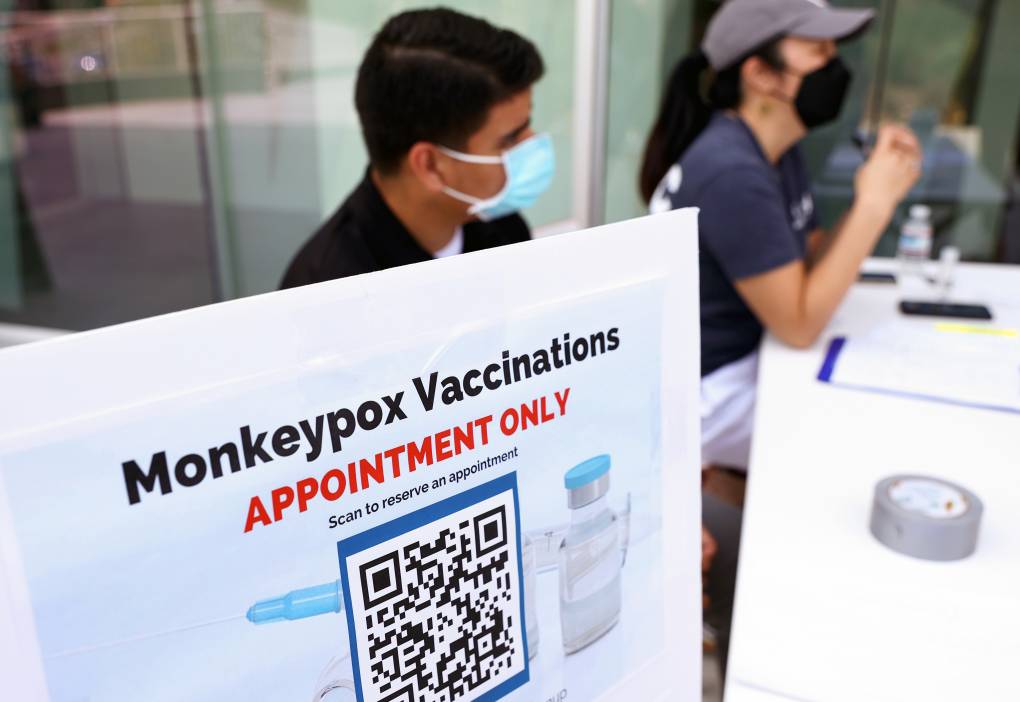
"caption": "Health workers sit at a check-in table at a pop-up monkeypox vaccination clinic which opened today by the Los Angeles County Department of Public Health at the West Hollywood Library on August 3, 2022 in West Hollywood, California. California Governor Gavin Newsom declared a state of emergency on August 1st over the monkeypox outbreak which continues to grow globally. ",
"description": null,
"title": "An emergency declaration frees up resources to help fight the monkeypox outbreak. There are currently more than 6,600 cases in the U.S.",
"credit": "Mario Tama/Getty Images",
"status": "inherit",
"altTag": null,
"isLoading": false,
"fetchFailed": false
},
"news_11921194": {
"type": "attachments",
"id": "news_11921194",
"meta": {
"index": "attachments_1716263798",
"site": "news",
"id": "11921194",
"found": true
},
"parent": 11921185,
"imgSizes": {
"twentyfourteen-full-width": {
"file": "https://ww2.kqed.org/app/uploads/sites/10/2022/08/RS57498_005_KQED_MonkeypoxVaccineLineSFGen_08012022-qut-1038x576.jpg",
"width": 1038,
"mimeType": "image/jpeg",
"height": 576
},
"thumbnail": {
"file": "https://ww2.kqed.org/app/uploads/sites/10/2022/08/RS57498_005_KQED_MonkeypoxVaccineLineSFGen_08012022-qut-160x107.jpg",
"width": 160,
"mimeType": "image/jpeg",
"height": 107
},
"post-thumbnail": {
"file": "https://ww2.kqed.org/app/uploads/sites/10/2022/08/RS57498_005_KQED_MonkeypoxVaccineLineSFGen_08012022-qut-672x372.jpg",
"width": 672,
"mimeType": "image/jpeg",
"height": 372
},
"kqedFullSize": {
"file": "https://ww2.kqed.org/app/uploads/sites/10/2022/08/RS57498_005_KQED_MonkeypoxVaccineLineSFGen_08012022-qut.jpg",
"width": 1920,
"height": 1280
},
"large": {
"file": "https://ww2.kqed.org/app/uploads/sites/10/2022/08/RS57498_005_KQED_MonkeypoxVaccineLineSFGen_08012022-qut-1020x680.jpg",
"width": 1020,
"mimeType": "image/jpeg",
"height": 680
},
"1536x1536": {
"file": "https://ww2.kqed.org/app/uploads/sites/10/2022/08/RS57498_005_KQED_MonkeypoxVaccineLineSFGen_08012022-qut-1536x1024.jpg",
"width": 1536,
"mimeType": "image/jpeg",
"height": 1024
},
"medium": {
"file": "https://ww2.kqed.org/app/uploads/sites/10/2022/08/RS57498_005_KQED_MonkeypoxVaccineLineSFGen_08012022-qut-800x533.jpg",
"width": 800,
"mimeType": "image/jpeg",
"height": 533
}
},
"publishDate": 1659404546,
"modified": 1659404632,
"caption": "Hundreds of people wait in a walk-in line for a the monkeypox vaccine at Zuckerberg San Francisco General Hospital on Aug. 1, 2022.",
"description": null,
"title": "RS57498_005_KQED_MonkeypoxVaccineLineSFGen_08012022-qut",
"credit": "Beth LaBerge/KQED",
"status": "inherit",
"altTag": "A long line of men wait in line in front of a Zuckerberg San Francisco General Hospital",
"isLoading": false,
"fetchFailed": false
},
"news_11920956": {
"type": "attachments",
"id": "news_11920956",
"meta": {
"index": "attachments_1716263798",
"site": "news",
"id": "11920956",
"found": true
},
"parent": 11920913,
"imgSizes": {
"twentyfourteen-full-width": {
"file": "https://ww2.kqed.org/app/uploads/sites/10/2022/07/RS18780_Screen-Shot-2015-06-25-at-4.30.35-PM-qut-1038x576.jpg",
"width": 1038,
"mimeType": "image/jpeg",
"height": 576
},
"thumbnail": {
"file": "https://ww2.kqed.org/app/uploads/sites/10/2022/07/RS18780_Screen-Shot-2015-06-25-at-4.30.35-PM-qut-160x90.jpg",
"width": 160,
"mimeType": "image/jpeg",
"height": 90
},
"post-thumbnail": {
"file": "https://ww2.kqed.org/app/uploads/sites/10/2022/07/RS18780_Screen-Shot-2015-06-25-at-4.30.35-PM-qut-672x372.jpg",
"width": 672,
"mimeType": "image/jpeg",
"height": 372
},
"kqedFullSize": {
"file": "https://ww2.kqed.org/app/uploads/sites/10/2022/07/RS18780_Screen-Shot-2015-06-25-at-4.30.35-PM-qut.jpg",
"width": 1920,
"height": 1080
},
"large": {
"file": "https://ww2.kqed.org/app/uploads/sites/10/2022/07/RS18780_Screen-Shot-2015-06-25-at-4.30.35-PM-qut-1020x574.jpg",
"width": 1020,
"mimeType": "image/jpeg",
"height": 574
},
"1536x1536": {
"file": "https://ww2.kqed.org/app/uploads/sites/10/2022/07/RS18780_Screen-Shot-2015-06-25-at-4.30.35-PM-qut-1536x864.jpg",
"width": 1536,
"mimeType": "image/jpeg",
"height": 864
},
"medium": {
"file": "https://ww2.kqed.org/app/uploads/sites/10/2022/07/RS18780_Screen-Shot-2015-06-25-at-4.30.35-PM-qut-800x450.jpg",
"width": 800,
"mimeType": "image/jpeg",
"height": 450
}
},
"publishDate": 1659127540,
"modified": 1659142194,
"caption": "Children play at a Bay Area elementary school. Despite tiny numbers of infections in children, the risk of monkeypox to kids may naturally be on the minds of parents and caregivers across the country.",
"description": null,
"title": "RS18780_Screen Shot 2015-06-25 at 4.30.35 PM-qut",
"credit": "Adam Grossberg/KQED",
"status": "inherit",
"altTag": "four children run across a playground, photographed from behind, with no faces visible",
"isLoading": false,
"fetchFailed": false
},
"news_11920957": {
"type": "attachments",
"id": "news_11920957",
"meta": {
"index": "attachments_1716263798",
"site": "news",
"id": "11920957",
"found": true
},
"parent": 11920898,
"imgSizes": {
"twentyfourteen-full-width": {
"file": "https://ww2.kqed.org/app/uploads/sites/10/2022/07/GettyImages-1197447255-1038x576.jpg",
"width": 1038,
"mimeType": "image/jpeg",
"height": 576
},
"thumbnail": {
"file": "https://ww2.kqed.org/app/uploads/sites/10/2022/07/GettyImages-1197447255-160x107.jpg",
"width": 160,
"mimeType": "image/jpeg",
"height": 107
},
"post-thumbnail": {
"file": "https://ww2.kqed.org/app/uploads/sites/10/2022/07/GettyImages-1197447255-672x372.jpg",
"width": 672,
"mimeType": "image/jpeg",
"height": 372
},
"kqedFullSize": {
"file": "https://ww2.kqed.org/app/uploads/sites/10/2022/07/GettyImages-1197447255-scaled.jpg",
"width": 2560,
"height": 1707
},
"2048x2048": {
"file": "https://ww2.kqed.org/app/uploads/sites/10/2022/07/GettyImages-1197447255-2048x1365.jpg",
"width": 2048,
"mimeType": "image/jpeg",
"height": 1365
},
"large": {
"file": "https://ww2.kqed.org/app/uploads/sites/10/2022/07/GettyImages-1197447255-1020x680.jpg",
"width": 1020,
"mimeType": "image/jpeg",
"height": 680
},
"1536x1536": {
"file": "https://ww2.kqed.org/app/uploads/sites/10/2022/07/GettyImages-1197447255-1536x1024.jpg",
"width": 1536,
"mimeType": "image/jpeg",
"height": 1024
},
"full-width": {
"file": "https://ww2.kqed.org/app/uploads/sites/10/2022/07/GettyImages-1197447255-1920x1280.jpg",
"width": 1920,
"mimeType": "image/jpeg",
"height": 1280
},
"medium": {
"file": "https://ww2.kqed.org/app/uploads/sites/10/2022/07/GettyImages-1197447255-800x533.jpg",
"width": 800,
"mimeType": "image/jpeg",
"height": 533
}
},
"publishDate": 1659127739,
"modified": 1659131480,
"caption": "Alexis Stanley displays her insulin kit. Gov. Gavin Newsom announced this month that California would invest $100 million to develop three types of insulin products and a manufacturing facility.",
"description": null,
"title": "DOUNIAMAG-US-CANADA-POLITICS-HEALTH-INSURANCE",
"credit": "Kerem Yucel/AFP via Getty Images",
"status": "inherit",
"altTag": "Someone holds an insulin kit.",
"isLoading": false,
"fetchFailed": false
},
"news_11920790": {
"type": "attachments",
"id": "news_11920790",
"meta": {
"index": "attachments_1716263798",
"site": "news",
"id": "11920790",
"found": true
},
"parent": 0,
"imgSizes": {
"twentyfourteen-full-width": {
"file": "https://ww2.kqed.org/app/uploads/sites/10/2022/07/GettyImages-1242153755-1024x576.jpg",
"width": 1024,
"mimeType": "image/jpeg",
"height": 576
},
"thumbnail": {
"file": "https://ww2.kqed.org/app/uploads/sites/10/2022/07/GettyImages-1242153755-160x107.jpg",
"width": 160,
"mimeType": "image/jpeg",
"height": 107
},
"post-thumbnail": {
"file": "https://ww2.kqed.org/app/uploads/sites/10/2022/07/GettyImages-1242153755-672x372.jpg",
"width": 672,
"mimeType": "image/jpeg",
"height": 372
},
"kqedFullSize": {
"file": "https://ww2.kqed.org/app/uploads/sites/10/2022/07/GettyImages-1242153755.jpg",
"width": 1024,
"height": 683
},
"large": {
"file": "https://ww2.kqed.org/app/uploads/sites/10/2022/07/GettyImages-1242153755-1020x680.jpg",
"width": 1020,
"mimeType": "image/jpeg",
"height": 680
},
"medium": {
"file": "https://ww2.kqed.org/app/uploads/sites/10/2022/07/GettyImages-1242153755-800x534.jpg",
"width": 800,
"mimeType": "image/jpeg",
"height": 534
}
},
"publishDate": 1659051771,
"modified": 1659066273,
"caption": "Demonstrators rally outside the San Francisco Federal Building on July 18, 2022, to demand a faster federal response to the recent monkeypox outbreak in the city, where vaccines and testing have been in short supply.",
"description": null,
"title": "MONKEYPOX",
"credit": "Marlena Sloss for The Washington Post via Getty Images",
"status": "inherit",
"altTag": "Demonstrators standing outside a large building holds signs that say 'Nurses demand action' and 'Monkeypox is not just a gay thing'.",
"isLoading": false,
"fetchFailed": false
},
"news_11919128": {
"type": "attachments",
"id": "news_11919128",
"meta": {
"index": "attachments_1716263798",
"site": "news",
"id": "11919128",
"found": true
},
"parent": 11922286,
"imgSizes": {
"twentyfourteen-full-width": {
"file": "https://ww2.kqed.org/app/uploads/sites/10/2022/07/RS57170_GettyImages-1401390462-qut-1038x576.jpg",
"width": 1038,
"mimeType": "image/jpeg",
"height": 576
},
"thumbnail": {
"file": "https://ww2.kqed.org/app/uploads/sites/10/2022/07/RS57170_GettyImages-1401390462-qut-160x98.jpg",
"width": 160,
"mimeType": "image/jpeg",
"height": 98
},
"post-thumbnail": {
"file": "https://ww2.kqed.org/app/uploads/sites/10/2022/07/RS57170_GettyImages-1401390462-qut-672x372.jpg",
"width": 672,
"mimeType": "image/jpeg",
"height": 372
},
"kqedFullSize": {
"file": "https://ww2.kqed.org/app/uploads/sites/10/2022/07/RS57170_GettyImages-1401390462-qut.jpg",
"width": 1920,
"height": 1177
},
"large": {
"file": "https://ww2.kqed.org/app/uploads/sites/10/2022/07/RS57170_GettyImages-1401390462-qut-1020x625.jpg",
"width": 1020,
"mimeType": "image/jpeg",
"height": 625
},
"1536x1536": {
"file": "https://ww2.kqed.org/app/uploads/sites/10/2022/07/RS57170_GettyImages-1401390462-qut-1536x942.jpg",
"width": 1536,
"mimeType": "image/jpeg",
"height": 942
},
"medium": {
"file": "https://ww2.kqed.org/app/uploads/sites/10/2022/07/RS57170_GettyImages-1401390462-qut-800x490.jpg",
"width": 800,
"mimeType": "image/jpeg",
"height": 490
}
},
"publishDate": 1657316456,
"modified": 1663178399,
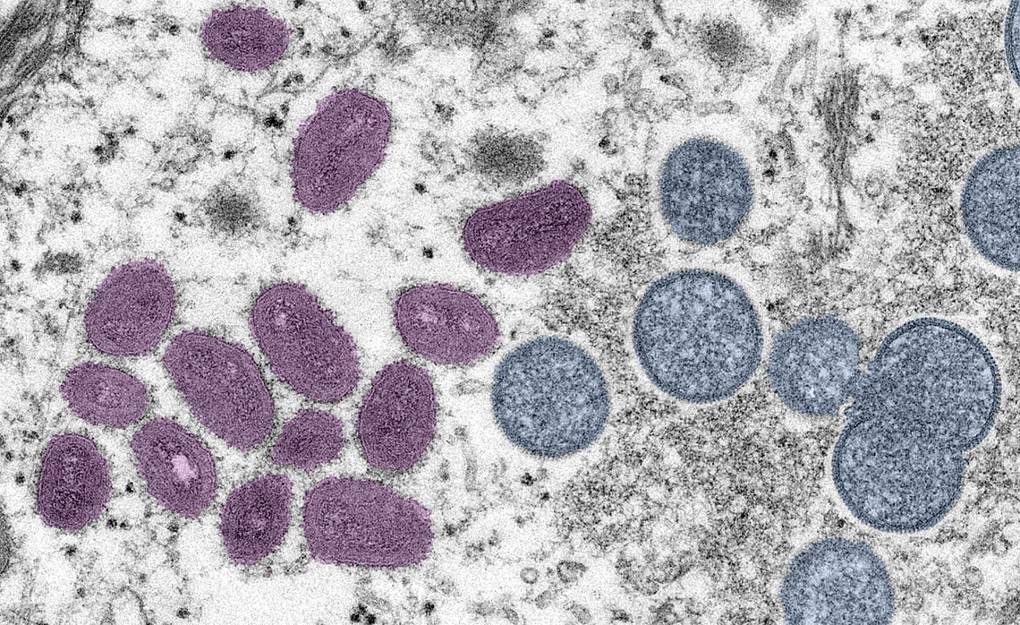
"caption": "Digitally colorized electron microscopic (EM) image depicting an MPX virion (virus particle).",
"description": null,
"title": "Monkeypox-Symptoms",
"credit": "Smith Collection/Gado/Getty Images",
"status": "inherit",
"altTag": null,
"isLoading": false,
"fetchFailed": false
},
"news_11920715": {
"type": "attachments",
"id": "news_11920715",
"meta": {
"index": "attachments_1716263798",
"site": "news",
"id": "11920715",
"found": true
},
"parent": 11920714,
"imgSizes": {
"twentyfourteen-full-width": {
"file": "https://ww2.kqed.org/app/uploads/sites/10/2022/07/ap22074669160101_wide-8033a7fafc90be24c6478af644a7f553c6e4da97-1038x576.jpg",
"width": 1038,
"mimeType": "image/jpeg",
"height": 576
},
"thumbnail": {
"file": "https://ww2.kqed.org/app/uploads/sites/10/2022/07/ap22074669160101_wide-8033a7fafc90be24c6478af644a7f553c6e4da97-160x90.jpg",
"width": 160,
"mimeType": "image/jpeg",
"height": 90
},
"post-thumbnail": {
"file": "https://ww2.kqed.org/app/uploads/sites/10/2022/07/ap22074669160101_wide-8033a7fafc90be24c6478af644a7f553c6e4da97-672x372.jpg",
"width": 672,
"mimeType": "image/jpeg",
"height": 372
},
"kqedFullSize": {
"file": "https://ww2.kqed.org/app/uploads/sites/10/2022/07/ap22074669160101_wide-8033a7fafc90be24c6478af644a7f553c6e4da97-scaled.jpg",
"width": 2560,
"height": 1440
},
"2048x2048": {
"file": "https://ww2.kqed.org/app/uploads/sites/10/2022/07/ap22074669160101_wide-8033a7fafc90be24c6478af644a7f553c6e4da97-2048x1152.jpg",
"width": 2048,
"mimeType": "image/jpeg",
"height": 1152
},
"large": {
"file": "https://ww2.kqed.org/app/uploads/sites/10/2022/07/ap22074669160101_wide-8033a7fafc90be24c6478af644a7f553c6e4da97-1020x574.jpg",
"width": 1020,
"mimeType": "image/jpeg",
"height": 574
},
"1536x1536": {
"file": "https://ww2.kqed.org/app/uploads/sites/10/2022/07/ap22074669160101_wide-8033a7fafc90be24c6478af644a7f553c6e4da97-1536x864.jpg",
"width": 1536,
"mimeType": "image/jpeg",
"height": 864
},
"full-width": {
"file": "https://ww2.kqed.org/app/uploads/sites/10/2022/07/ap22074669160101_wide-8033a7fafc90be24c6478af644a7f553c6e4da97-1920x1080.jpg",
"width": 1920,
"mimeType": "image/jpeg",
"height": 1080
},
"medium": {
"file": "https://ww2.kqed.org/app/uploads/sites/10/2022/07/ap22074669160101_wide-8033a7fafc90be24c6478af644a7f553c6e4da97-800x450.jpg",
"width": 800,
"mimeType": "image/jpeg",
"height": 450
}
},
"publishDate": 1659027449,
"modified": 1659027531,
"caption": "Sen. Joe Manchin, D-W.Va., talks with Senate Majority Leader Chuck Schumer of N.Y., before an event in the Indian Treaty Room in the Eisenhower Executive Office Building on the White House Campus in Washington, Tuesday, March 15, 2022.",
"description": "Sen. Joe Manchin, D-W.Va., talks with Senate Majority Leader Chuck Schumer of N.Y., before an event in the Indian Treaty Room in the Eisenhower Executive Office Building on the White House Campus in Washington, Tuesday, March 15, 2022. (AP Photo/Patrick Semansky)",
"title": "Sen. Joe Manchin, D-W.Va., talks with Senate Majority Leader Chuck Schumer of N.Y., on March 15, 2022.",
"credit": "Patrick Semansky/AP Photo",
"status": "inherit",
"altTag": "Two men in suits have their backs turned looking at each other.",
"isLoading": false,
"fetchFailed": false
},
"news_11920443": {
"type": "attachments",
"id": "news_11920443",
"meta": {
"index": "attachments_1716263798",
"site": "news",
"id": "11920443",
"found": true
},
"parent": 11920442,
"imgSizes": {
"twentyfourteen-full-width": {
"file": "https://ww2.kqed.org/app/uploads/sites/10/2022/07/gettyimages-1241959554_custom-c889848f164398c6aa67f644e31d745d8e040607-1038x576.jpg",
"width": 1038,
"mimeType": "image/jpeg",
"height": 576
},
"thumbnail": {
"file": "https://ww2.kqed.org/app/uploads/sites/10/2022/07/gettyimages-1241959554_custom-c889848f164398c6aa67f644e31d745d8e040607-160x101.jpg",
"width": 160,
"mimeType": "image/jpeg",
"height": 101
},
"post-thumbnail": {
"file": "https://ww2.kqed.org/app/uploads/sites/10/2022/07/gettyimages-1241959554_custom-c889848f164398c6aa67f644e31d745d8e040607-672x372.jpg",
"width": 672,
"mimeType": "image/jpeg",
"height": 372
},
"kqedFullSize": {
"file": "https://ww2.kqed.org/app/uploads/sites/10/2022/07/gettyimages-1241959554_custom-c889848f164398c6aa67f644e31d745d8e040607-scaled.jpg",
"width": 2560,
"height": 1619
},
"2048x2048": {
"file": "https://ww2.kqed.org/app/uploads/sites/10/2022/07/gettyimages-1241959554_custom-c889848f164398c6aa67f644e31d745d8e040607-2048x1295.jpg",
"width": 2048,
"mimeType": "image/jpeg",
"height": 1295
},
"large": {
"file": "https://ww2.kqed.org/app/uploads/sites/10/2022/07/gettyimages-1241959554_custom-c889848f164398c6aa67f644e31d745d8e040607-1020x645.jpg",
"width": 1020,
"mimeType": "image/jpeg",
"height": 645
},
"1536x1536": {
"file": "https://ww2.kqed.org/app/uploads/sites/10/2022/07/gettyimages-1241959554_custom-c889848f164398c6aa67f644e31d745d8e040607-1536x971.jpg",
"width": 1536,
"mimeType": "image/jpeg",
"height": 971
},
"full-width": {
"file": "https://ww2.kqed.org/app/uploads/sites/10/2022/07/gettyimages-1241959554_custom-c889848f164398c6aa67f644e31d745d8e040607-1920x1214.jpg",
"width": 1920,
"mimeType": "image/jpeg",
"height": 1214
},
"medium": {
"file": "https://ww2.kqed.org/app/uploads/sites/10/2022/07/gettyimages-1241959554_custom-c889848f164398c6aa67f644e31d745d8e040607-800x506.jpg",
"width": 800,
"mimeType": "image/jpeg",
"height": 506
}
},
"publishDate": 1658782724,
"modified": 1658783350,
"caption": null,
"description": "People wait in line to recieve the Monkeypox vaccine before the opening of a new mass vaccination site at the Bushwick Education Campus in Brooklyn on July 17, 2022, in New York City. - New York, on the US East Coast, has already either administered or scheduled 21,500 vaccines and hopes to speed up the process, promising more than 30,000 jabs for the whole state. ",
"title": "People wait in line to receive the monkeypox vaccine in Brooklyn.",
"credit": "Kena Betancur / AFP via Getty Images",
"status": "inherit",
"altTag": "Four people stand in a line wearing masks.",
"isLoading": false,
"fetchFailed": false
},
"news_11919823": {
"type": "attachments",
"id": "news_11919823",
"meta": {
"index": "attachments_1716263798",
"site": "news",
"id": "11919823",
"found": true
},
"parent": 11919816,
"imgSizes": {
"twentyfourteen-full-width": {
"file": "https://ww2.kqed.org/app/uploads/sites/10/2022/07/Screen-Shot-2022-07-18-at-3.14.19-PM-1038x576.png",
"width": 1038,
"mimeType": "image/png",
"height": 576
},
"thumbnail": {
"file": "https://ww2.kqed.org/app/uploads/sites/10/2022/07/Screen-Shot-2022-07-18-at-3.14.19-PM-160x106.png",
"width": 160,
"mimeType": "image/png",
"height": 106
},
"post-thumbnail": {
"file": "https://ww2.kqed.org/app/uploads/sites/10/2022/07/Screen-Shot-2022-07-18-at-3.14.19-PM-672x372.png",
"width": 672,
"mimeType": "image/png",
"height": 372
},
"kqedFullSize": {
"file": "https://ww2.kqed.org/app/uploads/sites/10/2022/07/Screen-Shot-2022-07-18-at-3.14.19-PM.png",
"width": 1552,
"height": 1030
},
"large": {
"file": "https://ww2.kqed.org/app/uploads/sites/10/2022/07/Screen-Shot-2022-07-18-at-3.14.19-PM-1020x677.png",
"width": 1020,
"mimeType": "image/png",
"height": 677
},
"1536x1536": {
"file": "https://ww2.kqed.org/app/uploads/sites/10/2022/07/Screen-Shot-2022-07-18-at-3.14.19-PM-1536x1019.png",
"width": 1536,
"mimeType": "image/png",
"height": 1019
},
"medium": {
"file": "https://ww2.kqed.org/app/uploads/sites/10/2022/07/Screen-Shot-2022-07-18-at-3.14.19-PM-800x531.png",
"width": 800,
"mimeType": "image/png",
"height": 531
}
},
"publishDate": 1658185058,
"modified": 1658187481,
"caption": "Terry Fiscus, a counselor at Turning Point Community Programs, sits in his office in Sacramento on June 23, 2022.",
"description": null,
"title": "Screen Shot 2022-07-18 at 3.14.19 PM",
"credit": "Nina Riggio/CalMatters",
"status": "inherit",
"altTag": "A man wearing a black t-shirt sits in an office with a computer monitor and shelves behind him.",
"isLoading": false,
"fetchFailed": false
}
},
"audioPlayerReducer": {
"postId": "stream_live",
"isPaused": true,
"isPlaying": false,
"pfsActive": false,
"pledgeModalIsOpen": true,
"playerDrawerIsOpen": false,
"liveAudioPlayStartedAt": 0,
"liveAudioPlayContext": ""
},
"authorsReducer": {
"byline_news_11922301": {
"type": "authors",
"id": "byline_news_11922301",
"meta": {
"override": true
},
"slug": "byline_news_11922301",
"name": "Ana B. Ibarra",
"isLoading": false
},
"byline_news_11921717": {
"type": "authors",
"id": "byline_news_11921717",
"meta": {
"override": true
},
"slug": "byline_news_11921717",
"name": "The Associated Press",
"isLoading": false
},
"byline_news_11921618": {
"type": "authors",
"id": "byline_news_11921618",
"meta": {
"override": true
},
"slug": "byline_news_11921618",
"name": "Jane Greenhalgh",
"isLoading": false
},
"byline_news_11920898": {
"type": "authors",
"id": "byline_news_11920898",
"meta": {
"override": true
},
"slug": "byline_news_11920898",
"name": "Adam Beam\u003cbr>The Associated Press",
"isLoading": false
},
"byline_news_11920714": {
"type": "authors",
"id": "byline_news_11920714",
"meta": {
"override": true
},
"slug": "byline_news_11920714",
"name": "Kelsey Snell",
"isLoading": false
},
"byline_news_11920442": {
"type": "authors",
"id": "byline_news_11920442",
"meta": {
"override": true
},
"slug": "byline_news_11920442",
"name": "Becky Sullivan",
"isLoading": false
},
"byline_news_11919816": {
"type": "authors",
"id": "byline_news_11919816",
"meta": {
"override": true
},
"slug": "byline_news_11919816",
"name": "\u003ca href=\"https://calmatters.org/author/jocelyn-wiener/\">Jocelyn Wiener\u003c/a> and \u003ca href=\"https://calmatters.org/author/manuela-tobias/\">Manuela Tobias\u003c/a>",
"isLoading": false
},
"kqednewsstaffandwires": {
"type": "authors",
"id": "237",
"meta": {
"index": "authors_1716337520",
"id": "237",
"found": true
},
"name": "KQED News Staff and Wires",
"firstName": "KQED News Staff and Wires",
"lastName": null,
"slug": "kqednewsstaffandwires",
"email": "onlinenewsstaff@kqed.org",
"display_author_email": false,
"staff_mastheads": [],
"title": null,
"bio": null,
"avatar": "https://secure.gravatar.com/avatar/72295af8ebbfbd19a4948f5271285664?s=600&d=blank&r=g",
"twitter": null,
"facebook": null,
"instagram": null,
"linkedin": null,
"sites": [
{
"site": "arts",
"roles": [
"contributor"
]
},
{
"site": "news",
"roles": [
"contributor"
]
},
{
"site": "lowdown",
"roles": [
"author"
]
},
{
"site": "stateofhealth",
"roles": [
"contributor"
]
},
{
"site": "food",
"roles": [
"author"
]
}
],
"headData": {
"title": "KQED News Staff and Wires | KQED",
"description": null,
"ogImgSrc": "https://secure.gravatar.com/avatar/72295af8ebbfbd19a4948f5271285664?s=600&d=blank&r=g",
"twImgSrc": "https://secure.gravatar.com/avatar/72295af8ebbfbd19a4948f5271285664?s=600&d=blank&r=g"
},
"isLoading": false,
"link": "/author/kqednewsstaffandwires"
},
"matthewgreen": {
"type": "authors",
"id": "1263",
"meta": {
"index": "authors_1716337520",
"id": "1263",
"found": true
},
"name": "Matthew Green",
"firstName": "Matthew",
"lastName": "Green",
"slug": "matthewgreen",
"email": "mgreen@kqed.org",
"display_author_email": false,
"staff_mastheads": [],
"title": "KQED Editor/Reporter",
"bio": "Matthew Green is a digital media producer for KQED News. He previously produced \u003ca href=\"http://www.kqed.org/lowdown\">The Lowdown\u003c/a>, KQED’s multimedia news education blog. Matthew's written for numerous Bay Area publications, including the Oakland Tribune and San Francisco Chronicle. He also taught journalism classes at Fremont High School in East Oakland.\r\n\r\nEmail: mgreen@kqed.org; Twitter: @MGreenKQED",
"avatar": "https://secure.gravatar.com/avatar/3bf498d1267ca02c8494f33d8cfc575e?s=600&d=blank&r=g",
"twitter": "MGreenKQED",
"facebook": null,
"instagram": null,
"linkedin": null,
"sites": [
{
"site": "news",
"roles": []
},
{
"site": "lowdown",
"roles": []
},
{
"site": "science",
"roles": []
},
{
"site": "education",
"roles": []
},
{
"site": "quest",
"roles": []
},
{
"site": "liveblog",
"roles": []
}
],
"headData": {
"title": "Matthew Green | KQED",
"description": "KQED Editor/Reporter",
"ogImgSrc": "https://secure.gravatar.com/avatar/3bf498d1267ca02c8494f33d8cfc575e?s=600&d=blank&r=g",
"twImgSrc": "https://secure.gravatar.com/avatar/3bf498d1267ca02c8494f33d8cfc575e?s=600&d=blank&r=g"
},
"isLoading": false,
"link": "/author/matthewgreen"
},
"carlysevern": {
"type": "authors",
"id": "3243",
"meta": {
"index": "authors_1716337520",
"id": "3243",
"found": true
},
"name": "Carly Severn",
"firstName": "Carly",
"lastName": "Severn",
"slug": "carlysevern",
"email": "csevern@kqed.org",
"display_author_email": false,
"staff_mastheads": [
"news"
],
"title": "Senior Editor, Audience News ",
"bio": "Carly is KQED's Senior Editor of Audience News on the Digital News team, and has reported for the California Report Magazine, Bay Curious and KQED Arts. She's formerly the host of \u003ca href=\"http://ww2.kqed.org/pop/category/the-cooler/\" rel=\"noopener noreferrer\">The Cooler\u003c/a> podcast.",
"avatar": "https://secure.gravatar.com/avatar/54037bf5c128fe678f0ef26cec97a93f2e7f220a22d7285703328f12c42c1b1d?s=600&d=blank&r=g",
"twitter": "teacupinthebay",
"bluesky": null,
"facebook": null,
"instagram": null,
"linkedin": null,
"sites": [
{
"site": "",
"roles": [
"editor"
]
},
{
"site": "arts",
"roles": [
"editor"
]
},
{
"site": "news",
"roles": [
"administrator"
]
},
{
"site": "pop",
"roles": [
"editor"
]
},
{
"site": "futureofyou",
"roles": [
"editor"
]
},
{
"site": "about",
"roles": [
"administrator"
]
},
{
"site": "mindshift",
"roles": [
"editor"
]
},
{
"site": "bayareabites",
"roles": [
"editor"
]
},
{
"site": "stateofhealth",
"roles": [
"editor"
]
},
{
"site": "science",
"roles": [
"editor"
]
},
{
"site": "food",
"roles": [
"contributor"
]
},
{
"site": "forum",
"roles": [
"editor"
]
},
{
"site": "perspectives",
"roles": [
"administrator"
]
},
{
"site": "liveblog",
"roles": [
"editor"
]
}
],
"headData": {
"title": "Carly Severn | KQED",
"description": "Senior Editor, Audience News ",
"ogImgSrc": "https://secure.gravatar.com/avatar/54037bf5c128fe678f0ef26cec97a93f2e7f220a22d7285703328f12c42c1b1d?s=600&d=blank&r=g",
"twImgSrc": "https://secure.gravatar.com/avatar/54037bf5c128fe678f0ef26cec97a93f2e7f220a22d7285703328f12c42c1b1d?s=600&d=blank&r=g"
},
"isLoading": false,
"link": "/author/carlysevern"
},
"ccabreralomeli": {
"type": "authors",
"id": "11708",
"meta": {
"index": "authors_1716337520",
"id": "11708",
"found": true
},
"name": "Carlos Cabrera-Lomelí",
"firstName": "Carlos",
"lastName": "Cabrera-Lomelí",
"slug": "ccabreralomeli",
"email": "ccabreralomeli@KQED.org",
"display_author_email": true,
"staff_mastheads": [
"news"
],
"title": "Community Reporter",
"bio": "Carlos Cabrera-Lomelí is a community reporter with KQED's digital engagement team. He also reports and co-produces for KQED's bilingual news hub KQED en Español. He grew up in San Francisco's Mission District and has previously worked with Univision, 48 Hills and REFORMA in Mexico City.",
"avatar": "https://secure.gravatar.com/avatar/c309be9665e484f887b818c89e273ecc673004f426f36b24d00a4d813a2e0518?s=600&d=blank&r=g",
"twitter": "@LomeliCabrera",
"bluesky": null,
"facebook": null,
"instagram": null,
"linkedin": null,
"sites": [
{
"site": "arts",
"roles": [
"editor"
]
},
{
"site": "news",
"roles": [
"editor"
]
},
{
"site": "about",
"roles": [
"editor"
]
},
{
"site": "science",
"roles": [
"editor"
]
},
{
"site": "perspectives",
"roles": [
"editor"
]
},
{
"site": "elections",
"roles": [
"editor"
]
},
{
"site": "liveblog",
"roles": [
"contributor"
]
}
],
"headData": {
"title": "Carlos Cabrera-Lomelí | KQED",
"description": "Community Reporter",
"ogImgSrc": "https://secure.gravatar.com/avatar/c309be9665e484f887b818c89e273ecc673004f426f36b24d00a4d813a2e0518?s=600&d=blank&r=g",
"twImgSrc": "https://secure.gravatar.com/avatar/c309be9665e484f887b818c89e273ecc673004f426f36b24d00a4d813a2e0518?s=600&d=blank&r=g"
},
"isLoading": false,
"link": "/author/ccabreralomeli"
},
"nnavarro": {
"type": "authors",
"id": "11756",
"meta": {
"index": "authors_1716337520",
"id": "11756",
"found": true
},
"name": "Natalia Navarro",
"firstName": "Natalia",
"lastName": "Navarro",
"slug": "nnavarro",
"email": "nnavarro@kqed.org",
"display_author_email": true,
"staff_mastheads": [
"news"
],
"title": "Afternoon News Anchor",
"bio": "Natalia Navarro is KQED's afternoon radio news anchor. She came to KQED in 2021 from Colorado Public Radio, where she was a reporter and host. She has received several awards for her work covering daily and breaking news from professional organizations such as the San Francisco Press Club, Society of Professional Journalists and the Colorado Broadcasters Association. Natalia is originally from Tucson, Arizona, where she got her start in journalism writing for the Arizona Daily Star, Arizona Public Media and the Tucson Weekly. Natalia earned her bachelor's degree in journalism and economics, and her master's degree in journalism from the University of Arizona.",
"avatar": "https://secure.gravatar.com/avatar/a2bdb19fd9520bdea295a2d5f9b2ad65ec51cf0bf559fb1cc041d3a0a04d62ad?s=600&d=blank&r=g",
"twitter": "@NataliaVNavarro",
"bluesky": null,
"facebook": null,
"instagram": null,
"linkedin": null,
"sites": [
{
"site": "news",
"roles": [
"editor"
]
}
],
"headData": {
"title": "Natalia Navarro | KQED",
"description": "Afternoon News Anchor",
"ogImgSrc": "https://secure.gravatar.com/avatar/a2bdb19fd9520bdea295a2d5f9b2ad65ec51cf0bf559fb1cc041d3a0a04d62ad?s=600&d=blank&r=g",
"twImgSrc": "https://secure.gravatar.com/avatar/a2bdb19fd9520bdea295a2d5f9b2ad65ec51cf0bf559fb1cc041d3a0a04d62ad?s=600&d=blank&r=g"
},
"isLoading": false,
"link": "/author/nnavarro"
}
},
"pagesReducer": {
"news_tag_health": {
"type": "terms",
"id": "news_18543",
"meta": {
"index": "terms_1716263798",
"site": "news",
"id": "18543",
"score": 6.886699
},
"featImg": null,
"name": "Health",
"description": null,
"taxonomy": "tag",
"headData": {
"twImgId": null,
"twTitle": null,
"ogTitle": null,
"ogImgId": null,
"twDescription": null,
"description": null,
"title": "Health Archives | KQED News",
"ogDescription": null
},
"ttid": 466,
"slug": "health",
"isLoading": false,
"title": "Health",
"pageMeta": {
"site": "news",
"WpPageTemplate": "page-topic-editorial",
"currentPage": 52
},
"blocks": [
{
"blockName": "kqed/post-list",
"attrs": {
"layout": "cardArticle2",
"query": "posts/news?tag=health",
"seeMore": false,
"paginated": true,
"page": 52
}
},
{
"blockName": "kqed/ad"
}
]
}
},
"pfsSessionReducer": {},
"postsReducer": {
"stream_live": {
"type": "live",
"id": "stream_live",
"audioUrl": "https://streams.kqed.org/kqedradio",
"title": "Live Stream",
"excerpt": "Live Stream information currently unavailable.",
"link": "/radio",
"featImg": "",
"label": {
"name": "KQED Live",
"link": "/"
}
},
"stream_kqedNewscast": {
"type": "posts",
"id": "stream_kqedNewscast",
"audioUrl": "https://www.kqed.org/.stream/anon/radio/RDnews/newscast.mp3?_=1",
"title": "KQED Newscast",
"featImg": "",
"label": {
"name": "88.5 FM",
"link": "/"
}
},
"news_11922286": {
"type": "posts",
"id": "news_11922286",
"meta": {
"index": "posts_1716263798",
"site": "news",
"id": "11922286",
"score": null,
"sort": [
1660341629000
]
},
"guestAuthors": [],
"slug": "monkeypox-surfaces-air-transmission",
"title": "Monkeypox Spreads on Surfaces Only in Certain Cases — Here's What to Know",
"publishDate": 1660341629,
"format": "standard",
"headTitle": "Monkeypox Spreads on Surfaces Only in Certain Cases — Here’s What to Know | KQED",
"labelTerm": {
"site": "news"
},
"content": "\u003cp>We’ve been asking KQED readers and listeners \u003ca href=\"https://www.kqed.org/news/11921709/tell-us-what-do-you-need-to-know-about-monkeypox\">“what do you need to know about monkeypox?”\u003c/a>\u003c/p>\n\u003cp>Although monkeypox has existed among humans for over 50 years, this most recent outbreak in the United States has seen a significant amount of misinformation online about the disease and how it spreads. And one of the biggest questions we’ve gotten from our audience: Do I need to worry about the risks of monkeypox and surfaces?\u003c/p>\n\u003cp>Anyone, regardless of sexual orientation or preference, can get monkeypox. Right now, the monkeypox outbreak in the United States \u003ca href=\"https://www.who.int/publications/m/item/monkeypox-public-health-advice-for-men-who-have-sex-with-men\">is particularly affecting communities of gay and bisexual men\u003c/a>, and men who have sex with men, and the World Health Organization notes that \u003ca href=\"https://www.who.int/news/item/25-05-2022-monkeypox--public-health-advice-for-gay--bisexual-and-other-men-who-have-sex-with-men\">trans people and gender-diverse people “may also be more vulnerable in the context of the current outbreak.”\u003c/a>\u003c/p>\n\u003cp>The main way that the virus spreads is via close, skin-to-skin contact with a person who’s infected with monkeypox — which includes sexual contact but is not limited to it. Monkeypox can also spread via respiratory droplets through very close, sustained face-to-face contact. Another way monkeypox can be transmitted that’s far less common than skin-to-skin contact is on shared surfaces and items.[aside postID='news_11920455,news_11919070,news_11920913' label='More monkeypox resources']So \u003cem>how\u003c/em> worried should you be about the risk of monkeypox spreading through surfaces or through the air?\u003c/p>\n\u003cp>The short answer: your risk of catching monkeypox from surfaces is highest if you’re sharing a home with a person who has monkeypox. Keep reading for what you need to know about the risks of monkeypox and surfaces.\u003c/p>\n\u003cp>Also, please remember that the advice that follows is based on what information we currently know and the data experts have right now about monkeypox. As with COVID, you may find that advice and best practices around monkeypox evolve and shift as more scientific information becomes available.\u003c/p>\n\u003cp>Don’t see your question answered below, or in \u003ca href=\"https://www.kqed.org/monkeypox\">our other guides covering monkeypox\u003c/a>? Send us your \u003cstrong>\u003ca href=\"#monkeypoxquestions\">question and tell us what to cover.\u003c/a>\u003c/strong>\u003c/p>\n\u003ch2>Monkeypox can live on surfaces — but your risk of being infected this way is low\u003c/h2>\n\u003cp>According to the Centers for Disease Control and Prevention, one scientific study found that \u003ca href=\"https://www.cdc.gov/poxvirus/monkeypox/specific-settings/home-disinfection.html\">the monkeypox virus can live on surfaces for up to 15 days\u003c/a>. Yes, that may sound pretty alarming, but the most recent data actually shows that monkeypox doesn’t do so well spreading through routes that don’t involve close physical or intimate contact.\u003c/p>\n\u003cp>Last week, the World Health Organization reported \u003ca href=\"https://www.npr.org/sections/goatsandsoda/2022/08/05/1115859376/clearing-up-some-of-the-myths-that-have-popped-up-about-monkeypox\">only around 0.2% of people infected are thought to have caught the virus from a contaminated surface\u003c/a> in this current outbreak.\u003cstrong> \u003c/strong>\u003cspan style=\"font-weight: 400\">[pullquote size='medium' align='right']A note: You might hear people also referring to surface transmission as “fomites.” A fomite is an object that could be contaminated with an infectious virus or bacteria, and that helps spread it.[/pullquote]\u003c/span>Syra Madad, an infectious disease epidemiologist at Harvard’s Belfer Center, recently told Slate that\u003ca href=\"https://slate.com/technology/2022/08/monkeypox-spread-misconceptions-surfaces-sex.html\"> “just because you have viral particles on a surface doesn’t mean (they’re) going to cause infection in another person.”\u003c/a> That is, it’s not enough for that virus to be present — there also needs to be enough of that virus getting transferred first onto the surface by an infected person, and then onto the skin of someone who isn’t infected. “It’s not as easy as ‘I’m going to touch this doorknob and somebody with monkeypox just touched it so I’m going to get infected,’ ” she says.\u003c/p>\n\u003cp>Dr. Peter Chin-Hong, an infectious disease specialist at UCSF, says that clothing, materials and surfaces are most likely to be a method of virus transmission within the home of someone \u003cem>with\u003c/em> monkeypox, specifically when someone else is having sustained contact with those items, rather than brief contact.\u003c/p>\n\u003cp>But going to the thrift store or purchasing bedding at Bed Bath & Beyond? “That’s very, very low risk,” he said.\u003c/p>\n\u003cp>What about being in shared, high-touch public spaces like a gym or a pool? “It’s very, very low risk to get monkeypox in a swimming pool,” says Dr. Chin-Hong. “The risk of just touching objects in the gym or in the yoga studio is very, very small. It’s really in the context of a household where you’re touching the same things multiple times over and over again for multiple hours.”\u003cspan style=\"font-weight: 400\">[pullquote size='medium' align='right' citation=\"Dr. Peter Chin-Hong, infectious disease specialist at UCSF\"]‘It’s very, very low risk to get monkeypox in a swimming pool.’[/pullquote]\u003c/span>Even when you’re armed with the facts, the thought of monkeypox virus being on shared spaces in the outside world — on door handles, public transit or clothing in a store — still feels unsettling, especially if you’re being bombarded with headlines and TikToks on the subject. But remember: what gains traction online isn’t always reliable or fact-checked — and rare instances don’t equal a widespread risk.\u003c/p>\n\u003cp>Infectious disease doctor Susan McLellan at the University of Texas Medical Branch in Galveston, Texas, offered this perspective to NPR: \u003ca href=\"https://www.npr.org/sections/goatsandsoda/2022/08/05/1115859376/clearing-up-some-of-the-myths-that-have-popped-up-about-monkeypox\">“During this outbreak, there will probably be at least one random case where somebody gets it on a bus,”\u003c/a> she said. “But, you know, that’s going to be profoundly rare, probably less likely than being hit by that bus.”\u003c/p>\n\u003cp>“If monkeypox were easily transmitted on the subway, on buses, we would be seeing it among a very different population than almost purely among the population where transmission is occurring mostly during close, intimate contact,” she noted.\u003c/p>\n\u003cp>[ad fullwidth]\u003c/p>\n\u003ch2>Monkeypox can live in the air — but only briefly\u003c/h2>\n\u003cp>The monkeypox virus can also spread through respiratory droplets that a person infected with monkeypox breathes out onto another person. This contact would have to be very close and sustained — a lengthy face-to-face conversation or kissing are some examples — for the virus to spread this way.\u003c/p>\n\u003cp>This means yes, monkeypox can live in the air — but not in the way you might be imagining. The idea of whether you can catch monkeypox from the air is “probably one of the most controversial areas right now,” says Dr. Chin-Hong — and he stresses that it’s important to understand what we mean by “airborne.”\u003c/p>\n\u003cp>Unlike COVID, monkeypox virus is not thought to linger in the air for a sustained period of time. That is, if someone with COVID breathes out respiratory droplets, those droplets can hang in the air for some time, and could expose the next person who steps into that space to the coronavirus. The monkeypox virus doesn’t operate the same way, says Dr. Chin-Hong. “COVID is a respiratory virus by its definition,” he notes. “Monkeypox is not.”\u003c/p>\n\u003cp>“In general, it’s not going to be the same way we think about ‘droplets’ or ‘airborne’ and COVID,” he says. You can’t get monkeypox from casual conversations, or by passing someone with monkeypox — say, in a store.\u003c/p>\n\u003cp>So how else could you theoretically catch monkeypox “in the air,” if not through very close conversations or kissing? This is where sharing a home with someone who has monkeypox definitely presents the virus with more opportunities for transmission.\u003c/p>\n\u003cp>Dr. Chin-Hong points to the example of a person with monkeypox sleeping in a bed, and their monkeypox rash shedding scabs onto the bedsheets. If another person comes in the next morning and changes those sheets, waving them around into the air, “these little scabs are filled with a virus which can survive for some time, but then go in the air, and if you inhale it, you can be afflicted with monkeypox.”\u003c/p>\n\u003cp>Some individuals have absolutely gotten monkeypox that way within households, says Dr. Chin-Hong — but “only because these small scabs are floating in the air temporarily.” For this reason, \u003ca href=\"https://sf.gov/information/monkeypox-faq\">the San Francisco Department of Public Health explicitly warns against shaking out bedding and towels\u003c/a> that have been used by someone with monkeypox.\u003c/p>\n\u003cfigure id=\"attachment_11919128\" class=\"wp-caption alignnone\" style=\"max-width: 1920px\">\u003cimg loading=\"lazy\" decoding=\"async\" class=\"size-full wp-image-11919128\" src=\"https://ww2.kqed.org/app/uploads/sites/10/2022/07/RS57170_GettyImages-1401390462-qut.jpg\" alt=\"\" width=\"1920\" height=\"1177\" srcset=\"https://cdn.kqed.org/wp-content/uploads/sites/10/2022/07/RS57170_GettyImages-1401390462-qut.jpg 1920w, https://cdn.kqed.org/wp-content/uploads/sites/10/2022/07/RS57170_GettyImages-1401390462-qut-800x490.jpg 800w, https://cdn.kqed.org/wp-content/uploads/sites/10/2022/07/RS57170_GettyImages-1401390462-qut-1020x625.jpg 1020w, https://cdn.kqed.org/wp-content/uploads/sites/10/2022/07/RS57170_GettyImages-1401390462-qut-160x98.jpg 160w, https://cdn.kqed.org/wp-content/uploads/sites/10/2022/07/RS57170_GettyImages-1401390462-qut-1536x942.jpg 1536w\" sizes=\"auto, (max-width: 1920px) 100vw, 1920px\">\u003cfigcaption class=\"wp-caption-text\">Digitally colorized electron microscopic (EM) image depicting a monkeypox virion (virus particle). \u003ccite>(Smith Collection/Gado/Getty Images)\u003c/cite>\u003c/figcaption>\u003c/figure>\n\u003cp>If you’re sharing a home with someone who has monkeypox, worrying about virus on shared surfaces is justified — but there are steps you can take.\u003c/p>\n\u003cp>If you’re sharing a home with someone with an active monkeypox infection — or if you yourself have monkeypox and want to keep those you live with safe — being aware of how monkeypox can spread within a home and taking the appropriate measures is the best way to stop the virus spreading.\u003c/p>\n\u003ch2>If someone in your home has monkeypox …\u003c/h2>\n\u003cp>You should not be sharing materials like bedding, clothing and towels. You should also not be sharing cooking or eating utensils.\u003c/p>\n\u003cp>As with COVID, it’s ideal that someone isolating with monkeypox uses their own bathroom exclusively, away from the rest of the household. But depending on your home setup, this may not be possible.\u003c/p>\n\u003cp>\u003cstrong>Be particularly careful around laundry, especially bedding\u003c/strong>\u003c/p>\n\u003cp>As Dr. Chin-Hong says above, bedding and laundry can pose a particular risk because of how a person’s lesions with active monkeypox virus can rub onto those materials. Ideally, a person with monkeypox should do their own laundry and change their own bedding. Sheets and laundry should not be shaken out, in case scabs are thrown into the air and inhaled.\u003c/p>\n\u003cp>If you have to do laundry or change the bedding of someone with monkeypox, consider wearing a mask and eye protection to avoid this kind of contamination, and wash your hands very thoroughly after.\u003c/p>\n\u003cp>If you have monkeypox and can’t avoid being in the same room as other people, the WHO advises you to keep any rashes or lesions covered with clothing or a bandage. This way, there’s far less chance of the virus shedding onto shared materials or surfaces within a home.\u003c/p>\n\u003cfigure id=\"attachment_11922424\" class=\"wp-caption aligncenter\" style=\"max-width: 2560px\">\u003cimg loading=\"lazy\" decoding=\"async\" class=\"size-full wp-image-11922424\" src=\"https://ww2.kqed.org/app/uploads/sites/10/2022/08/pexels-matilda-wormwood-4099467-scaled.jpg\" alt=\"A person wearing personal protective equipment wipes down a table in an indoor setting.\" width=\"2560\" height=\"1709\" srcset=\"https://cdn.kqed.org/wp-content/uploads/sites/10/2022/08/pexels-matilda-wormwood-4099467-scaled.jpg 2560w, https://cdn.kqed.org/wp-content/uploads/sites/10/2022/08/pexels-matilda-wormwood-4099467-800x534.jpg 800w, https://cdn.kqed.org/wp-content/uploads/sites/10/2022/08/pexels-matilda-wormwood-4099467-1020x681.jpg 1020w, https://cdn.kqed.org/wp-content/uploads/sites/10/2022/08/pexels-matilda-wormwood-4099467-160x107.jpg 160w, https://cdn.kqed.org/wp-content/uploads/sites/10/2022/08/pexels-matilda-wormwood-4099467-1536x1025.jpg 1536w, https://cdn.kqed.org/wp-content/uploads/sites/10/2022/08/pexels-matilda-wormwood-4099467-2048x1367.jpg 2048w, https://cdn.kqed.org/wp-content/uploads/sites/10/2022/08/pexels-matilda-wormwood-4099467-1920x1281.jpg 1920w\" sizes=\"auto, (max-width: 2560px) 100vw, 2560px\">\u003cfigcaption class=\"wp-caption-text\">Health experts say that bedding and laundry can pose a particular risk for monkeypox transmission in situations involving someone with an active monkeypox infection. If you have to do laundry or change the bedding of someone with monkeypox, consider wearing a mask and eye protection to avoid this kind of contamination, and wash your hands very thoroughly after. \u003ccite>(Matilda Wormwood/KQED)\u003c/cite>\u003c/figcaption>\u003c/figure>\n\u003cp>\u003cstrong>Anyone who thinks they’ve been exposed to monkeypox in the home, or through their networks, should seek a vaccine.\u003c/strong>\u003c/p>\n\u003cp>\u003ca href=\"https://www.cdc.gov/poxvirus/monkeypox/considerations-for-monkeypox-vaccination.html\">The CDC recommends that the monkeypox vaccine be given to a person within four days\u003c/a> of the date they were exposed to monkeypox, for the best chance of preventing onset of the disease.\u003c/p>\n\u003cp>If a person gets the vaccine between 4 and 14 days of being exposed, the vaccine may reduce the symptoms of monkeypox, but may not prevent the disease altogether.\u003ca href=\"https://www.kqed.org/news/11920455/where-can-i-find-a-monkeypox-vaccine-near-me\"> Read more on how to find a monkeypox vaccine near you.\u003c/a>\u003c/p>\n\u003cp>\u003cstrong>Follow cleaning protocols to reduce the risk of spread\u003c/strong>\u003c/p>\n\u003cp>Yes, monkeypox can live on shared surfaces, and potentially spread through them as a result of repeated contact. But as Harvard’s Syra Madad told Slate, \u003ca href=\"https://slate.com/technology/2022/08/monkeypox-spread-misconceptions-surfaces-sex.html\">“the monkeypox virus is a DNA-based virus and is a bit of a wimpy virus\u003c/a> in that you can actually kill it with household disinfectants and UV light and the like.”\u003c/p>\n\u003cp>\u003ca href=\"https://www.cdc.gov/poxvirus/monkeypox/pdf/Monkeypox-Interim-Guidance-for-Household-Disinfection-508.pdf\">The CDC recommends regularly cleaning and disinfecting your household spaces\u003c/a> to prevent the spread of monkeypox. The Environmental Protection Agency has a list of \u003ca href=\"https://www.epa.gov/pesticide-registration/disinfectants-emerging-viral-pathogens-evps-list-q\">approved cleaning products and disinfectants for monkeypox\u003c/a>, which includes common items you might already own like Lysol and Clorox. If you don’t have those products already in your home and you’re isolating with monkeypox, consider exploring home delivery options or asking friends or family to deliver cleaning products to your home.\u003c/p>\n\u003cp>\u003ca href=\"https://www.cdc.gov/poxvirus/monkeypox/pdf/Monkeypox-Interim-Guidance-for-Household-Disinfection-508.pdf\">Even if you’re isolating with monkeypox alone in your home\u003c/a>, the CDC still recommends regularly cleaning and disinfecting your spaces if you’re able to, to limit household contamination for anyone that does enter your home later.\u003c/p>\n\u003cp>Read the CDC’s \u003ca href=\"https://www.cdc.gov/poxvirus/monkeypox/pdf/Monkeypox-Interim-Guidance-for-Household-Disinfection-508.pdf\">full guide to cleaning and disinfecting your home during a monkeypox infection.\u003c/a>\u003c/p>\n\u003cfigure id=\"attachment_11921619\" class=\"wp-caption alignnone\" style=\"max-width: 2560px\">\u003cimg loading=\"lazy\" decoding=\"async\" class=\"size-full wp-image-11921619\" src=\"https://ww2.kqed.org/app/uploads/sites/10/2022/08/gettyimages-14127573261_custom-08d5a5ff4a4cb124ab63f489d9c13ae55d9fce02-scaled.jpg\" alt=\"\" width=\"2560\" height=\"1762\" srcset=\"https://cdn.kqed.org/wp-content/uploads/sites/10/2022/08/gettyimages-14127573261_custom-08d5a5ff4a4cb124ab63f489d9c13ae55d9fce02-scaled.jpg 2560w, https://cdn.kqed.org/wp-content/uploads/sites/10/2022/08/gettyimages-14127573261_custom-08d5a5ff4a4cb124ab63f489d9c13ae55d9fce02-800x551.jpg 800w, https://cdn.kqed.org/wp-content/uploads/sites/10/2022/08/gettyimages-14127573261_custom-08d5a5ff4a4cb124ab63f489d9c13ae55d9fce02-1020x702.jpg 1020w, https://cdn.kqed.org/wp-content/uploads/sites/10/2022/08/gettyimages-14127573261_custom-08d5a5ff4a4cb124ab63f489d9c13ae55d9fce02-160x110.jpg 160w, https://cdn.kqed.org/wp-content/uploads/sites/10/2022/08/gettyimages-14127573261_custom-08d5a5ff4a4cb124ab63f489d9c13ae55d9fce02-1536x1057.jpg 1536w, https://cdn.kqed.org/wp-content/uploads/sites/10/2022/08/gettyimages-14127573261_custom-08d5a5ff4a4cb124ab63f489d9c13ae55d9fce02-2048x1409.jpg 2048w, https://cdn.kqed.org/wp-content/uploads/sites/10/2022/08/gettyimages-14127573261_custom-08d5a5ff4a4cb124ab63f489d9c13ae55d9fce02-1920x1321.jpg 1920w\" sizes=\"auto, (max-width: 2560px) 100vw, 2560px\">\u003cfigcaption class=\"wp-caption-text\">Health workers sit at a check-in table at a pop-up monkeypox vaccination clinic which opened today by the Los Angeles County Department of Public Health at the West Hollywood Library on August 3, 2022 in West Hollywood, Los Angeles. Gov. Newsom declared a state of emergency on August 1st over the monkeypox outbreak which continues to grow globally. \u003ccite>(Mario Tama/Getty Images)\u003c/cite>\u003c/figcaption>\u003c/figure>\n\u003ch2>Monkeypox sounds scary — but don’t let fear of transmission distract you from COVID\u003c/h2>\n\u003cp>Monkeypox can seem frightening. Especially if you’re part of a community that’s been particularly impacted by the spread of the virus.\u003c/p>\n\u003cp>But despite these natural fears, Dr. Chin-Hong wants to remind you that “at this point, you’re much more likely to get something like COVID than monkeypox. Although I know it’s really scary to people.” Monkeypox is not nearly as contagious as COVID-19.\u003c/p>\n\u003cp>You shouldn’t feel ashamed for worrying about how the monkeypox virus spreads. It’s an understandable fear — not least because we’ve been here before, with COVID.\u003c/p>\n\u003cp>Two years ago, the idea of surface transmission for the coronavirus was very much in the popular consciousness, as early public health messaging around COVID-19 laid heavy emphasis on strong hand-washing and sanitation practices, and videos like \u003ca href=\"https://www.youtube.com/watch?v=TKx-F4AKteE\">“How to Safely Grocery Shop During Coronavirus”\u003c/a> racked up huge views. And while good hygiene practices remain important around the coronavirus, more recent and complete data has taught us that respiratory transmission between people poses a far greater risk.\u003c/p>\n\u003cp>Nonetheless, it’s hard not to hear fears about monkeypox and fomites without being transported back to those first unsettling months of the COVID pandemic — a pandemic we’re still very much in, even as we work to keep our communities safe from the new public health threat in monkeypox.\u003c/p>\n\u003ch2>\u003ca id=\"monkeypoxquestions\">\u003c/a>What other questions do you have about monkeypox?\u003c/h2>\n\u003cp>If you have more questions about monkeypox, we want to hear them. If you can’t find an answer in this post, or in \u003ca href=\"https://www.kqed.org/news/11919070/monkeypox-in-the-bay-area-from-symptoms-to-how-to-find-a-vaccine-heres-what-we-know\">our guide on what monkeypox symptoms are\u003c/a> or in \u003ca href=\"https://www.kqed.org/news/11920455/where-can-i-find-a-monkeypox-vaccine-near-me\">our guide on how to find a monkeypox vaccine near you\u003c/a>, you can use the box below to submit your question. What you send us will make our reporting on monkeypox stronger, and help us decide what to cover here on our site and on KQED Public Radio.\u003c/p>\n\u003cp>Please know that we can’t reach back out directly to everyone who asks a question, and we can’t give out individual medical advice. If you’re concerned about monkeypox or another health matter, we urge you to reach out to your health care provider, or a local community clinic if you don’t have insurance. (\u003ca href=\"https://www.kqed.org/news/11920455/where-can-i-find-a-monkeypox-vaccine-near-me#wheremonkeypoxvaccinenearme\">See our list of community clinics in your county.\u003c/a>)\u003c/p>\n\u003cp>[hearken id=\"9840\" src=\"https://modules.wearehearken.com/kqed/embed/9840.js\"]\u003c/p>\n\u003cp>[ad floatright]\u003c/p>\n",
"blocks": [],
"excerpt": "Can monkeypox spread on surfaces? Does monkeypox spread through the air? KQED spoke to the experts to learn how monkeypox transmits and what you can do to protect yourself and your family.",
"status": "publish",
"parent": 0,
"modified": 1738185754,
"stats": {
"hasAudio": false,
"hasVideo": false,
"hasChartOrMap": false,
"iframeSrcs": [],
"hasGoogleForm": false,
"hasGallery": false,
"hasHearkenModule": true,
"hasPolis": false,
"paragraphCount": 47,
"wordCount": 2593
},
"headData": {
"title": "Monkeypox Spreads on Surfaces Only in Certain Cases — Here's What to Know | KQED",
"description": "Can monkeypox spread on surfaces? Does monkeypox spread through the air? KQED spoke to the experts to learn how monkeypox transmits and what you can do to protect yourself and your family.",
"ogTitle": "",
"ogDescription": "",
"ogImgId": "",
"twTitle": "",
"twDescription": "",
"twImgId": "",
"schema": {
"@context": "https://schema.org",
"@type": "NewsArticle",
"headline": "Monkeypox Spreads on Surfaces Only in Certain Cases — Here's What to Know",
"datePublished": "2022-08-12T15:00:29-07:00",
"dateModified": "2025-01-29T13:22:34-08:00",
"image": "https://cdn.kqed.org/wp-content/uploads/2020/02/KQED-OG-Image@1x.png",
"isAccessibleForFree": "True",
"publisher": {
"@type": "NewsMediaOrganization",
"@id": "https://www.kqed.org/#organization",
"name": "KQED",
"logo": "https://cdn.kqed.org/wp-content/uploads/2020/02/KQED-OG-Image@1x.png",
"url": "https://www.kqed.org",
"sameAs": [
"https://www.facebook.com/KQED",
"https://twitter.com/KQED",
"https://www.instagram.com/kqed/",
"https://www.tiktok.com/@kqedofficial",
"https://www.linkedin.com/company/kqed",
"https://www.youtube.com/channel/UCeC0IOo7i1P_61zVUWbJ4nw"
]
}
}
},
"sticky": false,
"WpOldSlug": "monkeypox-only-spreads-on-surfaces-in-certain-cases-heres-what-to-know",
"excludeFromSiteSearch": "Include",
"path": "/news/11922286/monkeypox-surfaces-air-transmission",
"audioTrackLength": null,
"parsedContent": [
{
"type": "contentString",
"content": "\u003cdiv class=\"post-body\">\u003cp>\u003cp>We’ve been asking KQED readers and listeners \u003ca href=\"https://www.kqed.org/news/11921709/tell-us-what-do-you-need-to-know-about-monkeypox\">“what do you need to know about monkeypox?”\u003c/a>\u003c/p>\n\u003cp>Although monkeypox has existed among humans for over 50 years, this most recent outbreak in the United States has seen a significant amount of misinformation online about the disease and how it spreads. And one of the biggest questions we’ve gotten from our audience: Do I need to worry about the risks of monkeypox and surfaces?\u003c/p>\n\u003cp>Anyone, regardless of sexual orientation or preference, can get monkeypox. Right now, the monkeypox outbreak in the United States \u003ca href=\"https://www.who.int/publications/m/item/monkeypox-public-health-advice-for-men-who-have-sex-with-men\">is particularly affecting communities of gay and bisexual men\u003c/a>, and men who have sex with men, and the World Health Organization notes that \u003ca href=\"https://www.who.int/news/item/25-05-2022-monkeypox--public-health-advice-for-gay--bisexual-and-other-men-who-have-sex-with-men\">trans people and gender-diverse people “may also be more vulnerable in the context of the current outbreak.”\u003c/a>\u003c/p>\n\u003cp>The main way that the virus spreads is via close, skin-to-skin contact with a person who’s infected with monkeypox — which includes sexual contact but is not limited to it. Monkeypox can also spread via respiratory droplets through very close, sustained face-to-face contact. Another way monkeypox can be transmitted that’s far less common than skin-to-skin contact is on shared surfaces and items.\u003c/p>\u003c/div>",
"attributes": {
"named": {},
"numeric": []
}
},
{
"type": "component",
"content": "",
"name": "aside",
"attributes": {
"named": {
"postid": "news_11920455,news_11919070,news_11920913",
"label": "More monkeypox resources "
},
"numeric": []
}
},
{
"type": "contentString",
"content": "\u003cdiv class=\"post-body\">\u003cp>So \u003cem>how\u003c/em> worried should you be about the risk of monkeypox spreading through surfaces or through the air?\u003c/p>\n\u003cp>The short answer: your risk of catching monkeypox from surfaces is highest if you’re sharing a home with a person who has monkeypox. Keep reading for what you need to know about the risks of monkeypox and surfaces.\u003c/p>\n\u003cp>Also, please remember that the advice that follows is based on what information we currently know and the data experts have right now about monkeypox. As with COVID, you may find that advice and best practices around monkeypox evolve and shift as more scientific information becomes available.\u003c/p>\n\u003cp>Don’t see your question answered below, or in \u003ca href=\"https://www.kqed.org/monkeypox\">our other guides covering monkeypox\u003c/a>? Send us your \u003cstrong>\u003ca href=\"#monkeypoxquestions\">question and tell us what to cover.\u003c/a>\u003c/strong>\u003c/p>\n\u003ch2>Monkeypox can live on surfaces — but your risk of being infected this way is low\u003c/h2>\n\u003cp>According to the Centers for Disease Control and Prevention, one scientific study found that \u003ca href=\"https://www.cdc.gov/poxvirus/monkeypox/specific-settings/home-disinfection.html\">the monkeypox virus can live on surfaces for up to 15 days\u003c/a>. Yes, that may sound pretty alarming, but the most recent data actually shows that monkeypox doesn’t do so well spreading through routes that don’t involve close physical or intimate contact.\u003c/p>\n\u003cp>Last week, the World Health Organization reported \u003ca href=\"https://www.npr.org/sections/goatsandsoda/2022/08/05/1115859376/clearing-up-some-of-the-myths-that-have-popped-up-about-monkeypox\">only around 0.2% of people infected are thought to have caught the virus from a contaminated surface\u003c/a> in this current outbreak.\u003cstrong> \u003c/strong>\u003cspan style=\"font-weight: 400\">\u003c/p>\u003c/div>",
"attributes": {
"named": {},
"numeric": []
}
},
{
"type": "component",
"content": "A note: You might hear people also referring to surface transmission as “fomites.” A fomite is an object that could be contaminated with an infectious virus or bacteria, and that helps spread it.",
"name": "pullquote",
"attributes": {
"named": {
"size": "medium",
"align": "right",
"label": ""
},
"numeric": []
}
},
{
"type": "contentString",
"content": "\u003cdiv class=\"post-body\">\u003cp>\u003c/span>Syra Madad, an infectious disease epidemiologist at Harvard’s Belfer Center, recently told Slate that\u003ca href=\"https://slate.com/technology/2022/08/monkeypox-spread-misconceptions-surfaces-sex.html\"> “just because you have viral particles on a surface doesn’t mean (they’re) going to cause infection in another person.”\u003c/a> That is, it’s not enough for that virus to be present — there also needs to be enough of that virus getting transferred first onto the surface by an infected person, and then onto the skin of someone who isn’t infected. “It’s not as easy as ‘I’m going to touch this doorknob and somebody with monkeypox just touched it so I’m going to get infected,’ ” she says.\u003c/p>\n\u003cp>Dr. Peter Chin-Hong, an infectious disease specialist at UCSF, says that clothing, materials and surfaces are most likely to be a method of virus transmission within the home of someone \u003cem>with\u003c/em> monkeypox, specifically when someone else is having sustained contact with those items, rather than brief contact.\u003c/p>\n\u003cp>But going to the thrift store or purchasing bedding at Bed Bath & Beyond? “That’s very, very low risk,” he said.\u003c/p>\n\u003cp>What about being in shared, high-touch public spaces like a gym or a pool? “It’s very, very low risk to get monkeypox in a swimming pool,” says Dr. Chin-Hong. “The risk of just touching objects in the gym or in the yoga studio is very, very small. It’s really in the context of a household where you’re touching the same things multiple times over and over again for multiple hours.”\u003cspan style=\"font-weight: 400\">\u003c/p>\u003c/div>",
"attributes": {
"named": {},
"numeric": []
}
},
{
"type": "component",
"content": "‘It’s very, very low risk to get monkeypox in a swimming pool.’",
"name": "pullquote",
"attributes": {
"named": {
"size": "medium",
"align": "right",
"citation": "Dr. Peter Chin-Hong, infectious disease specialist at UCSF",
"label": ""
},
"numeric": []
}
},
{
"type": "contentString",
"content": "\u003cdiv class=\"post-body\">\u003cp>\u003c/span>Even when you’re armed with the facts, the thought of monkeypox virus being on shared spaces in the outside world — on door handles, public transit or clothing in a store — still feels unsettling, especially if you’re being bombarded with headlines and TikToks on the subject. But remember: what gains traction online isn’t always reliable or fact-checked — and rare instances don’t equal a widespread risk.\u003c/p>\n\u003cp>Infectious disease doctor Susan McLellan at the University of Texas Medical Branch in Galveston, Texas, offered this perspective to NPR: \u003ca href=\"https://www.npr.org/sections/goatsandsoda/2022/08/05/1115859376/clearing-up-some-of-the-myths-that-have-popped-up-about-monkeypox\">“During this outbreak, there will probably be at least one random case where somebody gets it on a bus,”\u003c/a> she said. “But, you know, that’s going to be profoundly rare, probably less likely than being hit by that bus.”\u003c/p>\n\u003cp>“If monkeypox were easily transmitted on the subway, on buses, we would be seeing it among a very different population than almost purely among the population where transmission is occurring mostly during close, intimate contact,” she noted.\u003c/p>\n\u003cp>\u003c/p>\u003c/div>",
"attributes": {
"named": {},
"numeric": []
}
},
{
"type": "component",
"content": "",
"name": "ad",
"attributes": {
"named": {
"label": "fullwidth"
},
"numeric": [
"fullwidth"
]
}
},
{
"type": "contentString",
"content": "\u003cdiv class=\"post-body\">\u003cp>\u003c/p>\n\u003ch2>Monkeypox can live in the air — but only briefly\u003c/h2>\n\u003cp>The monkeypox virus can also spread through respiratory droplets that a person infected with monkeypox breathes out onto another person. This contact would have to be very close and sustained — a lengthy face-to-face conversation or kissing are some examples — for the virus to spread this way.\u003c/p>\n\u003cp>This means yes, monkeypox can live in the air — but not in the way you might be imagining. The idea of whether you can catch monkeypox from the air is “probably one of the most controversial areas right now,” says Dr. Chin-Hong — and he stresses that it’s important to understand what we mean by “airborne.”\u003c/p>\n\u003cp>Unlike COVID, monkeypox virus is not thought to linger in the air for a sustained period of time. That is, if someone with COVID breathes out respiratory droplets, those droplets can hang in the air for some time, and could expose the next person who steps into that space to the coronavirus. The monkeypox virus doesn’t operate the same way, says Dr. Chin-Hong. “COVID is a respiratory virus by its definition,” he notes. “Monkeypox is not.”\u003c/p>\n\u003cp>“In general, it’s not going to be the same way we think about ‘droplets’ or ‘airborne’ and COVID,” he says. You can’t get monkeypox from casual conversations, or by passing someone with monkeypox — say, in a store.\u003c/p>\n\u003cp>So how else could you theoretically catch monkeypox “in the air,” if not through very close conversations or kissing? This is where sharing a home with someone who has monkeypox definitely presents the virus with more opportunities for transmission.\u003c/p>\n\u003cp>Dr. Chin-Hong points to the example of a person with monkeypox sleeping in a bed, and their monkeypox rash shedding scabs onto the bedsheets. If another person comes in the next morning and changes those sheets, waving them around into the air, “these little scabs are filled with a virus which can survive for some time, but then go in the air, and if you inhale it, you can be afflicted with monkeypox.”\u003c/p>\n\u003cp>Some individuals have absolutely gotten monkeypox that way within households, says Dr. Chin-Hong — but “only because these small scabs are floating in the air temporarily.” For this reason, \u003ca href=\"https://sf.gov/information/monkeypox-faq\">the San Francisco Department of Public Health explicitly warns against shaking out bedding and towels\u003c/a> that have been used by someone with monkeypox.\u003c/p>\n\u003cfigure id=\"attachment_11919128\" class=\"wp-caption alignnone\" style=\"max-width: 1920px\">\u003cimg loading=\"lazy\" decoding=\"async\" class=\"size-full wp-image-11919128\" src=\"https://ww2.kqed.org/app/uploads/sites/10/2022/07/RS57170_GettyImages-1401390462-qut.jpg\" alt=\"\" width=\"1920\" height=\"1177\" srcset=\"https://cdn.kqed.org/wp-content/uploads/sites/10/2022/07/RS57170_GettyImages-1401390462-qut.jpg 1920w, https://cdn.kqed.org/wp-content/uploads/sites/10/2022/07/RS57170_GettyImages-1401390462-qut-800x490.jpg 800w, https://cdn.kqed.org/wp-content/uploads/sites/10/2022/07/RS57170_GettyImages-1401390462-qut-1020x625.jpg 1020w, https://cdn.kqed.org/wp-content/uploads/sites/10/2022/07/RS57170_GettyImages-1401390462-qut-160x98.jpg 160w, https://cdn.kqed.org/wp-content/uploads/sites/10/2022/07/RS57170_GettyImages-1401390462-qut-1536x942.jpg 1536w\" sizes=\"auto, (max-width: 1920px) 100vw, 1920px\">\u003cfigcaption class=\"wp-caption-text\">Digitally colorized electron microscopic (EM) image depicting a monkeypox virion (virus particle). \u003ccite>(Smith Collection/Gado/Getty Images)\u003c/cite>\u003c/figcaption>\u003c/figure>\n\u003cp>If you’re sharing a home with someone who has monkeypox, worrying about virus on shared surfaces is justified — but there are steps you can take.\u003c/p>\n\u003cp>If you’re sharing a home with someone with an active monkeypox infection — or if you yourself have monkeypox and want to keep those you live with safe — being aware of how monkeypox can spread within a home and taking the appropriate measures is the best way to stop the virus spreading.\u003c/p>\n\u003ch2>If someone in your home has monkeypox …\u003c/h2>\n\u003cp>You should not be sharing materials like bedding, clothing and towels. You should also not be sharing cooking or eating utensils.\u003c/p>\n\u003cp>As with COVID, it’s ideal that someone isolating with monkeypox uses their own bathroom exclusively, away from the rest of the household. But depending on your home setup, this may not be possible.\u003c/p>\n\u003cp>\u003cstrong>Be particularly careful around laundry, especially bedding\u003c/strong>\u003c/p>\n\u003cp>As Dr. Chin-Hong says above, bedding and laundry can pose a particular risk because of how a person’s lesions with active monkeypox virus can rub onto those materials. Ideally, a person with monkeypox should do their own laundry and change their own bedding. Sheets and laundry should not be shaken out, in case scabs are thrown into the air and inhaled.\u003c/p>\n\u003cp>If you have to do laundry or change the bedding of someone with monkeypox, consider wearing a mask and eye protection to avoid this kind of contamination, and wash your hands very thoroughly after.\u003c/p>\n\u003cp>If you have monkeypox and can’t avoid being in the same room as other people, the WHO advises you to keep any rashes or lesions covered with clothing or a bandage. This way, there’s far less chance of the virus shedding onto shared materials or surfaces within a home.\u003c/p>\n\u003cfigure id=\"attachment_11922424\" class=\"wp-caption aligncenter\" style=\"max-width: 2560px\">\u003cimg loading=\"lazy\" decoding=\"async\" class=\"size-full wp-image-11922424\" src=\"https://ww2.kqed.org/app/uploads/sites/10/2022/08/pexels-matilda-wormwood-4099467-scaled.jpg\" alt=\"A person wearing personal protective equipment wipes down a table in an indoor setting.\" width=\"2560\" height=\"1709\" srcset=\"https://cdn.kqed.org/wp-content/uploads/sites/10/2022/08/pexels-matilda-wormwood-4099467-scaled.jpg 2560w, https://cdn.kqed.org/wp-content/uploads/sites/10/2022/08/pexels-matilda-wormwood-4099467-800x534.jpg 800w, https://cdn.kqed.org/wp-content/uploads/sites/10/2022/08/pexels-matilda-wormwood-4099467-1020x681.jpg 1020w, https://cdn.kqed.org/wp-content/uploads/sites/10/2022/08/pexels-matilda-wormwood-4099467-160x107.jpg 160w, https://cdn.kqed.org/wp-content/uploads/sites/10/2022/08/pexels-matilda-wormwood-4099467-1536x1025.jpg 1536w, https://cdn.kqed.org/wp-content/uploads/sites/10/2022/08/pexels-matilda-wormwood-4099467-2048x1367.jpg 2048w, https://cdn.kqed.org/wp-content/uploads/sites/10/2022/08/pexels-matilda-wormwood-4099467-1920x1281.jpg 1920w\" sizes=\"auto, (max-width: 2560px) 100vw, 2560px\">\u003cfigcaption class=\"wp-caption-text\">Health experts say that bedding and laundry can pose a particular risk for monkeypox transmission in situations involving someone with an active monkeypox infection. If you have to do laundry or change the bedding of someone with monkeypox, consider wearing a mask and eye protection to avoid this kind of contamination, and wash your hands very thoroughly after. \u003ccite>(Matilda Wormwood/KQED)\u003c/cite>\u003c/figcaption>\u003c/figure>\n\u003cp>\u003cstrong>Anyone who thinks they’ve been exposed to monkeypox in the home, or through their networks, should seek a vaccine.\u003c/strong>\u003c/p>\n\u003cp>\u003ca href=\"https://www.cdc.gov/poxvirus/monkeypox/considerations-for-monkeypox-vaccination.html\">The CDC recommends that the monkeypox vaccine be given to a person within four days\u003c/a> of the date they were exposed to monkeypox, for the best chance of preventing onset of the disease.\u003c/p>\n\u003cp>If a person gets the vaccine between 4 and 14 days of being exposed, the vaccine may reduce the symptoms of monkeypox, but may not prevent the disease altogether.\u003ca href=\"https://www.kqed.org/news/11920455/where-can-i-find-a-monkeypox-vaccine-near-me\"> Read more on how to find a monkeypox vaccine near you.\u003c/a>\u003c/p>\n\u003cp>\u003cstrong>Follow cleaning protocols to reduce the risk of spread\u003c/strong>\u003c/p>\n\u003cp>Yes, monkeypox can live on shared surfaces, and potentially spread through them as a result of repeated contact. But as Harvard’s Syra Madad told Slate, \u003ca href=\"https://slate.com/technology/2022/08/monkeypox-spread-misconceptions-surfaces-sex.html\">“the monkeypox virus is a DNA-based virus and is a bit of a wimpy virus\u003c/a> in that you can actually kill it with household disinfectants and UV light and the like.”\u003c/p>\n\u003cp>\u003ca href=\"https://www.cdc.gov/poxvirus/monkeypox/pdf/Monkeypox-Interim-Guidance-for-Household-Disinfection-508.pdf\">The CDC recommends regularly cleaning and disinfecting your household spaces\u003c/a> to prevent the spread of monkeypox. The Environmental Protection Agency has a list of \u003ca href=\"https://www.epa.gov/pesticide-registration/disinfectants-emerging-viral-pathogens-evps-list-q\">approved cleaning products and disinfectants for monkeypox\u003c/a>, which includes common items you might already own like Lysol and Clorox. If you don’t have those products already in your home and you’re isolating with monkeypox, consider exploring home delivery options or asking friends or family to deliver cleaning products to your home.\u003c/p>\n\u003cp>\u003ca href=\"https://www.cdc.gov/poxvirus/monkeypox/pdf/Monkeypox-Interim-Guidance-for-Household-Disinfection-508.pdf\">Even if you’re isolating with monkeypox alone in your home\u003c/a>, the CDC still recommends regularly cleaning and disinfecting your spaces if you’re able to, to limit household contamination for anyone that does enter your home later.\u003c/p>\n\u003cp>Read the CDC’s \u003ca href=\"https://www.cdc.gov/poxvirus/monkeypox/pdf/Monkeypox-Interim-Guidance-for-Household-Disinfection-508.pdf\">full guide to cleaning and disinfecting your home during a monkeypox infection.\u003c/a>\u003c/p>\n\u003cfigure id=\"attachment_11921619\" class=\"wp-caption alignnone\" style=\"max-width: 2560px\">\u003cimg loading=\"lazy\" decoding=\"async\" class=\"size-full wp-image-11921619\" src=\"https://ww2.kqed.org/app/uploads/sites/10/2022/08/gettyimages-14127573261_custom-08d5a5ff4a4cb124ab63f489d9c13ae55d9fce02-scaled.jpg\" alt=\"\" width=\"2560\" height=\"1762\" srcset=\"https://cdn.kqed.org/wp-content/uploads/sites/10/2022/08/gettyimages-14127573261_custom-08d5a5ff4a4cb124ab63f489d9c13ae55d9fce02-scaled.jpg 2560w, https://cdn.kqed.org/wp-content/uploads/sites/10/2022/08/gettyimages-14127573261_custom-08d5a5ff4a4cb124ab63f489d9c13ae55d9fce02-800x551.jpg 800w, https://cdn.kqed.org/wp-content/uploads/sites/10/2022/08/gettyimages-14127573261_custom-08d5a5ff4a4cb124ab63f489d9c13ae55d9fce02-1020x702.jpg 1020w, https://cdn.kqed.org/wp-content/uploads/sites/10/2022/08/gettyimages-14127573261_custom-08d5a5ff4a4cb124ab63f489d9c13ae55d9fce02-160x110.jpg 160w, https://cdn.kqed.org/wp-content/uploads/sites/10/2022/08/gettyimages-14127573261_custom-08d5a5ff4a4cb124ab63f489d9c13ae55d9fce02-1536x1057.jpg 1536w, https://cdn.kqed.org/wp-content/uploads/sites/10/2022/08/gettyimages-14127573261_custom-08d5a5ff4a4cb124ab63f489d9c13ae55d9fce02-2048x1409.jpg 2048w, https://cdn.kqed.org/wp-content/uploads/sites/10/2022/08/gettyimages-14127573261_custom-08d5a5ff4a4cb124ab63f489d9c13ae55d9fce02-1920x1321.jpg 1920w\" sizes=\"auto, (max-width: 2560px) 100vw, 2560px\">\u003cfigcaption class=\"wp-caption-text\">Health workers sit at a check-in table at a pop-up monkeypox vaccination clinic which opened today by the Los Angeles County Department of Public Health at the West Hollywood Library on August 3, 2022 in West Hollywood, Los Angeles. Gov. Newsom declared a state of emergency on August 1st over the monkeypox outbreak which continues to grow globally. \u003ccite>(Mario Tama/Getty Images)\u003c/cite>\u003c/figcaption>\u003c/figure>\n\u003ch2>Monkeypox sounds scary — but don’t let fear of transmission distract you from COVID\u003c/h2>\n\u003cp>Monkeypox can seem frightening. Especially if you’re part of a community that’s been particularly impacted by the spread of the virus.\u003c/p>\n\u003cp>But despite these natural fears, Dr. Chin-Hong wants to remind you that “at this point, you’re much more likely to get something like COVID than monkeypox. Although I know it’s really scary to people.” Monkeypox is not nearly as contagious as COVID-19.\u003c/p>\n\u003cp>You shouldn’t feel ashamed for worrying about how the monkeypox virus spreads. It’s an understandable fear — not least because we’ve been here before, with COVID.\u003c/p>\n\u003cp>Two years ago, the idea of surface transmission for the coronavirus was very much in the popular consciousness, as early public health messaging around COVID-19 laid heavy emphasis on strong hand-washing and sanitation practices, and videos like \u003ca href=\"https://www.youtube.com/watch?v=TKx-F4AKteE\">“How to Safely Grocery Shop During Coronavirus”\u003c/a> racked up huge views. And while good hygiene practices remain important around the coronavirus, more recent and complete data has taught us that respiratory transmission between people poses a far greater risk.\u003c/p>\n\u003cp>Nonetheless, it’s hard not to hear fears about monkeypox and fomites without being transported back to those first unsettling months of the COVID pandemic — a pandemic we’re still very much in, even as we work to keep our communities safe from the new public health threat in monkeypox.\u003c/p>\n\u003ch2>\u003ca id=\"monkeypoxquestions\">\u003c/a>What other questions do you have about monkeypox?\u003c/h2>\n\u003cp>If you have more questions about monkeypox, we want to hear them. If you can’t find an answer in this post, or in \u003ca href=\"https://www.kqed.org/news/11919070/monkeypox-in-the-bay-area-from-symptoms-to-how-to-find-a-vaccine-heres-what-we-know\">our guide on what monkeypox symptoms are\u003c/a> or in \u003ca href=\"https://www.kqed.org/news/11920455/where-can-i-find-a-monkeypox-vaccine-near-me\">our guide on how to find a monkeypox vaccine near you\u003c/a>, you can use the box below to submit your question. What you send us will make our reporting on monkeypox stronger, and help us decide what to cover here on our site and on KQED Public Radio.\u003c/p>\n\u003cp>Please know that we can’t reach back out directly to everyone who asks a question, and we can’t give out individual medical advice. If you’re concerned about monkeypox or another health matter, we urge you to reach out to your health care provider, or a local community clinic if you don’t have insurance. (\u003ca href=\"https://www.kqed.org/news/11920455/where-can-i-find-a-monkeypox-vaccine-near-me#wheremonkeypoxvaccinenearme\">See our list of community clinics in your county.\u003c/a>)\u003c/p>\n\u003cp>\u003c/p>\u003c/div>",
"attributes": {
"named": {},
"numeric": []
}
},
{
"type": "component",
"content": "",
"name": "hearken",
"attributes": {
"named": {
"id": "9840",
"src": "https://modules.wearehearken.com/kqed/embed/9840.js",
"label": ""
},
"numeric": []
}
},
{
"type": "contentString",
"content": "\u003cdiv class=\"post-body\">\u003cp>\u003c/p>\n\u003cp>\u003c/p>\u003c/div>",
"attributes": {
"named": {},
"numeric": []
}
},
{
"type": "component",
"content": "",
"name": "ad",
"attributes": {
"named": {
"label": "floatright"
},
"numeric": [
"floatright"
]
}
},
{
"type": "contentString",
"content": "\u003cdiv class=\"post-body\">\u003cp>\u003c/p>\n\u003c/div>\u003c/p>",
"attributes": {
"named": {},
"numeric": []
}
}
],
"link": "/news/11922286/monkeypox-surfaces-air-transmission",
"authors": [
"3243"
],
"categories": [
"news_457",
"news_8",
"news_356"
],
"tags": [
"news_18543",
"news_31133",
"news_31382",
"news_31325",
"news_922",
"news_981"
],
"featImg": "news_11922419",
"label": "news"
},
"news_11922301": {
"type": "posts",
"id": "news_11922301",
"meta": {
"index": "posts_1716263798",
"site": "news",
"id": "11922301",
"score": null,
"sort": [
1660263402000
]
},
"guestAuthors": [],
"slug": "newsom-may-soon-approve-supervised-drug-injection-sites-how-will-they-work",
"title": "Newsom May Soon Approve Supervised Drug Injection Sites. How Will They Work?",
"publishDate": 1660263402,
"format": "standard",
"headTitle": "Newsom May Soon Approve Supervised Drug Injection Sites. How Will They Work? | KQED",
"labelTerm": {
"term": 18481,
"site": "news"
},
"content": "\u003cp>Establishing supervised drug injection sites has been a long-standing goal for some progressive California leaders looking to address the burgeoning overdose crisis. Efforts to launch such programs have come close, but never to the finish line.\u003c/p>\n\u003cp>Now, as the latest legislation seeking to sanction these sites heads to the governor’s desk, proponents are gearing up to make these injection sites a reality — and, they hope, a success — in the Golden State.\u003c/p>\n\u003cp>Senate Bill 57 would authorize these overdose prevention pilot programs in Oakland, San Francisco and Los Angeles, which would operate through Jan. 1, 2028.\u003c/p>\n\u003cp>While former \u003ca href=\"https://www.kqed.org/news/11695653/brown-rejects-supervised-injection-site-for-san-francisco\">Gov. Jerry Brown rejected similar legislation in 2018\u003c/a>, supporters are hopeful Gov. Gavin Newsom will sign this one after he said he was open to the idea during his campaign for governor.\u003c/p>\n\u003cp>“We have been engaging with the governor’s office for the past four years on this measure. We haven’t heard that he’s not going to sign it, so we’re hopeful that he’ll stick to his word from 2018,” said Jeannette Zanipatin, California state director of the Drug Policy Alliance, an advocacy group that works to decriminalize drugs and a co-sponsor of the bill.\u003c/p>\n\u003cp>[ad fullwidth]\u003c/p>\n\u003cp>Alex Stack, a spokesperson for the governor’s office, said they don’t comment on pending legislation.\u003c/p>\n\u003cp>But if Newsom does sign it, what exactly would these sites look like? Who would be responsible for staffing them and how will they be funded? The details and logistics will be left to local officials.[pullquote align=\"right\" size=\"medium\" citation=\"State Senator Scott Wiener\"]‘They are asking us to help them address the escalations and crisis of overdose deaths that we’re experiencing in California’[/pullquote]Because San Francisco has been considering this idea for almost a decade, it would likely be the first city ready to launch a program in early 2023, Zanipatin said. Supervised injection sites could cost a couple of million dollars per year to run, and cities and counties that choose to establish these programs will have to find their own source of funding.\u003c/p>\n\u003cp>Last year, New York City became the first to establish supervised injection sites in the U.S. Cities in other countries have operated such centers for years, including \u003ca href=\"http://www.vch.ca/public-health/harm-reduction/supervised-consumption-sites\">Vancouver\u003c/a>, \u003ca href=\"https://www.eluniversal.com.mx/english/mexicali-offers-safe-spot-for-heroin-addicts\">Mexicali\u003c/a> and \u003ca href=\"https://ssir.org/articles/entry/Wary_of_an_Opioid_Epidemic_Europe_Pushes_Safe_Sites_for_Drug_Use#\">Barcelona\u003c/a>. The Vancouver site is often \u003ca href=\"https://www.rti.org/impact/cost-benefit-analysis-opening-safe-consumption-site-san-francisco\">referenced as a model\u003c/a> — with about 1,700 individuals using it each month, the center is credited with \u003ca href=\"https://www.thelancet.com/journals/lancet/article/PIIS0140-6736(10)62353-7/fulltext\">reducing overdose deaths\u003c/a> in its neighborhood and city. Switzerland was the first country to open a supervised injection site in 1986.\u003c/p>\n\u003cp>The goal of these programs, supporters say, is to provide drug users a safe, hygienic space where they can get clean needles and administer their own drugs under the supervision of trained staff. Staff members would monitor users and be ready to administer overdose reversal medications if needed, which could ultimately save lives. Medical groups in support of these programs have pointed out injection sites could also \u003ca href=\"https://www.aafp.org/pubs/afp/issues/2022/0500/p454.html\">help reduce the risk of Hepatitis C and HIV infections\u003c/a> associated with intravenous drug use.\u003c/p>\n\u003cp>Sen. Scott Wiener, author of the bill, said the jurisdictions that would pilot the programs asked to be included in the bill. “They are asking us to help them address the escalations and crisis of overdose deaths that we’re experiencing in California,” Wiener, a San Francisco Democrat, said during an Aug. 1 legislative hearing.\u003c/p>\n\u003cp>Those in opposition to Wiener’s bill, including Republican legislators and law enforcement groups, argue these programs are a type of addiction maintenance that normalize illegal behavior.\u003c/p>\n\u003cp>Before setting up their overdose prevention programs, the cities and counties must provide local health and law enforcement officials the opportunity to weigh in. Once set up, these centers must make referrals to substance-use-disorder treatment programs and other social services if the user wishes to access them. The bill would also protect people from criminal charges for using the sites.\u003c/p>\n\u003cp>The overdose crisis has become one of the most pressing public health issues, with deaths and emergency room visits spiking in recent years, in large part due to the infiltration of the synthetic opioid fentanyl. Overdose deaths from fentanyl jumped from 1,603 in 2019 to 3,946 in 2020, and then to 5,722 in 2021, according to the \u003ca href=\"https://skylab.cdph.ca.gov/ODdash/?tab=Home\">California Opioid Overdose Surveillance Dashboard\u003c/a>.\u003c/p>\n\u003cp>\u003c!-- iframe plugin v.4.3 wordpress.org/plugins/iframe/ -->\u003cbr>\n\u003ciframe loading=\"lazy\" src=\"https://e.infogram.com/d37b51d7-b97d-4947-b813-0653e3bf0ff7?src=embed\" title=\"overdose deaths - all drugs\" width=\"550\" height=\"820\" scrolling=\"no\" frameborder=\"0\" style=\"border:none;\" allowfullscreen=\"allowfullscreen\" class=\"iframe-class\">\u003c/iframe>\u003c/p>\n\u003cp>California’s second swing at this policy comes as the \u003ca href=\"https://www.whitehouse.gov/ondcp/briefing-room/2022/03/28/president-biden-calls-for-increased-funding-to-address-addiction-and-the-overdose-epidemic/\">Biden administration is also embracing “harm reduction” strategies\u003c/a> — which focus on keeping drug users alive and safe rather than punishing them. Needle exchange programs and programs that distribute the overdose reversal drug naloxone are some examples.\u003c/p>\n\u003cp>Among those urging the governor to veto the bill is the Senate Republican Caucus. “Fueling the drug epidemic with drug dens and needle supplies is like pouring gasoline on a forest fire. It merely worsens the problem,” the caucus wrote in an \u003ca href=\"https://cssrc.us/sites/default/files/SB%2057%20%28Wiener%29%20Senate%20Republican%20Caucus%20Veto%20Letter%20FINAL.pdf\">Aug. 1 letter to Newsom\u003c/a>.\u003c/p>\n\u003cp>Law enforcement organizations have stated their opposition to the bill, saying it sends the wrong message to the public and fails to address addiction at its root.\u003c/p>\n\u003cp>Wiener and supporters of the bill say supervised injection sites will not solve the overdose crisis. Rather, the goal is to prevent deaths.\u003c/p>\n\u003cp>Opponents have also raised concerns about the bill not providing a “cognizable strategy for figuring out how to get the addict to the injection site,” John Lovell, a lobbyist with the California Narcotic Officers’ Association, said during last week’s hearing. “What injection sites do is there is a magnet effect so that people come into the area,” but that doesn’t mean they will actually go inside the facility, he said.\u003c/p>\n\u003cp>Laura Thomas, director of HIV and harm reduction policy at the San Francisco AIDS Foundation, another co-sponsor of the bill, said she doesn’t think getting people into these centers will be a challenge. “Overwhelmingly, people would prefer to use in a clean space. No one wants to be using drugs on the sidewalk. If we give people a better option they will use it,” she said.\u003c/p>\n\u003cp>An often-referenced \u003ca href=\"https://www.ncbi.nlm.nih.gov/pmc/articles/PMC2885552/\">survey of 602 injection drug users in San Francisco\u003c/a> showed that 85% would use a supervised injection site. About 75% of them said they would use it at least three days per week.\u003cspan style=\"font-weight: 400\">[aside label=\"Related Stories\" postID=\"news_11909484,news_11910405,news_11922249\" align=\"left\"]\u003c/span>The idea, according to supporters, is to build trust with people who come in, prompting them to spread the word and eventually link people to treatment when they are ready. These centers often look like a clinic, and people usually go through a brief interview when they first walk in.\u003c/p>\n\u003cp>Thomas said that while it would be ideal for such centers to be open 24/7, realistically, hours of operation would be dependent on funding. That same San Francisco study showed that 62% of the drug users surveyed preferred a supervised injection site to be open from 8 a.m. to 4 p.m.\u003c/p>\n\u003cp>Funding could prove to be a challenge in the long term. In New York City, where two safe injection sites opened last fall, \u003ca href=\"https://www.npr.org/2022/06/04/1103114131/supervised-injection-sites-in-nyc-have-saved-lives-but-officials-wont-provide-fu\">the city and state do not pay for them\u003c/a>. The nonprofits running the programs seek private donations, making it difficult for the centers to extend their hours or expand into other neighborhoods.\u003c/p>\n\u003cp>A supervised injection site in San Francisco is \u003ca href=\"https://www.rti.org/impact/cost-benefit-analysis-opening-safe-consumption-site-san-francisco\">estimated to cost about $2.6 million a year\u003c/a>, according to RTI International, a nonprofit research institute.\u003c/p>\n\u003cp>Thomas said California community organizations that already work in the field of substance use disorders would be best-equipped to run the programs, but funding should come from public health departments because they are a public benefit.\u003c/p>\n\u003cp>Some of the cities and counties included in the bill have potential public funding streams. For example, Los Angeles County \u003ca href=\"https://ceo.lacounty.gov/wp-content/uploads/2021/06/Updated_MeasureJ_Report-Revised-06.14.21.pdf\">voters in 2020 passed Measure J\u003c/a>, which allows the county to use at least 10% of its locally generated, unrestricted funding for community investment programs, which could include overdose prevention programs.\u003c/p>\n\u003cp>“We’re also hoping that these pilot projects serve as a catalyst and identify some private-public partnerships,” Zanipatin said.\u003c/p>\n\u003cp>[ad floatright]\u003c/p>\n\u003cp>\u003ca href=\"https://calmatters.org/addiction/2022/08/supervised-injection-sites/\">This story first appeared in CalMatters.\u003c/a>\u003c/p>\n\n",
"blocks": [],
"excerpt": "Local officials will have much discretion in how they run injection sites if Newson signs the legislation",
"status": "publish",
"parent": 0,
"modified": 1726005652,
"stats": {
"hasAudio": false,
"hasVideo": false,
"hasChartOrMap": true,
"iframeSrcs": [
"https://e.infogram.com/d37b51d7-b97d-4947-b813-0653e3bf0ff7"
],
"hasGoogleForm": false,
"hasGallery": false,
"hasHearkenModule": false,
"hasPolis": false,
"paragraphCount": 30,
"wordCount": 1383
},
"headData": {
"title": "Newsom May Soon Approve Supervised Drug Injection Sites. How Will They Work? | KQED",
"description": "Local officials will have much discretion in how they run injection sites if Newson signs the legislation",
"ogTitle": "",
"ogDescription": "",
"ogImgId": "",
"twTitle": "",
"twDescription": "",
"twImgId": "",
"schema": {
"@context": "https://schema.org",
"@type": "NewsArticle",
"headline": "Newsom May Soon Approve Supervised Drug Injection Sites. How Will They Work?",
"datePublished": "2022-08-11T17:16:42-07:00",
"dateModified": "2024-09-10T15:00:52-07:00",
"image": "https://cdn.kqed.org/wp-content/uploads/2020/02/KQED-OG-Image@1x.png",
"isAccessibleForFree": "True",
"publisher": {
"@type": "NewsMediaOrganization",
"@id": "https://www.kqed.org/#organization",
"name": "KQED",
"logo": "https://cdn.kqed.org/wp-content/uploads/2020/02/KQED-OG-Image@1x.png",
"url": "https://www.kqed.org",
"sameAs": [
"https://www.facebook.com/KQED",
"https://twitter.com/KQED",
"https://www.instagram.com/kqed/",
"https://www.tiktok.com/@kqedofficial",
"https://www.linkedin.com/company/kqed",
"https://www.youtube.com/channel/UCeC0IOo7i1P_61zVUWbJ4nw"
]
}
}
},
"sticky": false,
"nprByline": "Ana B. Ibarra",
"excludeFromSiteSearch": "Include",
"showOnAuthorArchivePages": "No",
"path": "/news/11922301/newsom-may-soon-approve-supervised-drug-injection-sites-how-will-they-work",
"audioTrackLength": null,
"parsedContent": [
{
"type": "contentString",
"content": "\u003cdiv class=\"post-body\">\u003cp>\u003cp>Establishing supervised drug injection sites has been a long-standing goal for some progressive California leaders looking to address the burgeoning overdose crisis. Efforts to launch such programs have come close, but never to the finish line.\u003c/p>\n\u003cp>Now, as the latest legislation seeking to sanction these sites heads to the governor’s desk, proponents are gearing up to make these injection sites a reality — and, they hope, a success — in the Golden State.\u003c/p>\n\u003cp>Senate Bill 57 would authorize these overdose prevention pilot programs in Oakland, San Francisco and Los Angeles, which would operate through Jan. 1, 2028.\u003c/p>\n\u003cp>While former \u003ca href=\"https://www.kqed.org/news/11695653/brown-rejects-supervised-injection-site-for-san-francisco\">Gov. Jerry Brown rejected similar legislation in 2018\u003c/a>, supporters are hopeful Gov. Gavin Newsom will sign this one after he said he was open to the idea during his campaign for governor.\u003c/p>\n\u003cp>“We have been engaging with the governor’s office for the past four years on this measure. We haven’t heard that he’s not going to sign it, so we’re hopeful that he’ll stick to his word from 2018,” said Jeannette Zanipatin, California state director of the Drug Policy Alliance, an advocacy group that works to decriminalize drugs and a co-sponsor of the bill.\u003c/p>\n\u003cp>\u003c/p>\u003c/div>",
"attributes": {
"named": {},
"numeric": []
}
},
{
"type": "component",
"content": "",
"name": "ad",
"attributes": {
"named": {
"label": "fullwidth"
},
"numeric": [
"fullwidth"
]
}
},
{
"type": "contentString",
"content": "\u003cdiv class=\"post-body\">\u003cp>\u003c/p>\n\u003cp>Alex Stack, a spokesperson for the governor’s office, said they don’t comment on pending legislation.\u003c/p>\n\u003cp>But if Newsom does sign it, what exactly would these sites look like? Who would be responsible for staffing them and how will they be funded? The details and logistics will be left to local officials.\u003c/p>\u003c/div>",
"attributes": {
"named": {},
"numeric": []
}
},
{
"type": "component",
"content": "‘They are asking us to help them address the escalations and crisis of overdose deaths that we’re experiencing in California’",
"name": "pullquote",
"attributes": {
"named": {
"align": "right",
"size": "medium",
"citation": "State Senator Scott Wiener",
"label": ""
},
"numeric": []
}
},
{
"type": "contentString",
"content": "\u003cdiv class=\"post-body\">\u003cp>Because San Francisco has been considering this idea for almost a decade, it would likely be the first city ready to launch a program in early 2023, Zanipatin said. Supervised injection sites could cost a couple of million dollars per year to run, and cities and counties that choose to establish these programs will have to find their own source of funding.\u003c/p>\n\u003cp>Last year, New York City became the first to establish supervised injection sites in the U.S. Cities in other countries have operated such centers for years, including \u003ca href=\"http://www.vch.ca/public-health/harm-reduction/supervised-consumption-sites\">Vancouver\u003c/a>, \u003ca href=\"https://www.eluniversal.com.mx/english/mexicali-offers-safe-spot-for-heroin-addicts\">Mexicali\u003c/a> and \u003ca href=\"https://ssir.org/articles/entry/Wary_of_an_Opioid_Epidemic_Europe_Pushes_Safe_Sites_for_Drug_Use#\">Barcelona\u003c/a>. The Vancouver site is often \u003ca href=\"https://www.rti.org/impact/cost-benefit-analysis-opening-safe-consumption-site-san-francisco\">referenced as a model\u003c/a> — with about 1,700 individuals using it each month, the center is credited with \u003ca href=\"https://www.thelancet.com/journals/lancet/article/PIIS0140-6736(10)62353-7/fulltext\">reducing overdose deaths\u003c/a> in its neighborhood and city. Switzerland was the first country to open a supervised injection site in 1986.\u003c/p>\n\u003cp>The goal of these programs, supporters say, is to provide drug users a safe, hygienic space where they can get clean needles and administer their own drugs under the supervision of trained staff. Staff members would monitor users and be ready to administer overdose reversal medications if needed, which could ultimately save lives. Medical groups in support of these programs have pointed out injection sites could also \u003ca href=\"https://www.aafp.org/pubs/afp/issues/2022/0500/p454.html\">help reduce the risk of Hepatitis C and HIV infections\u003c/a> associated with intravenous drug use.\u003c/p>\n\u003cp>Sen. Scott Wiener, author of the bill, said the jurisdictions that would pilot the programs asked to be included in the bill. “They are asking us to help them address the escalations and crisis of overdose deaths that we’re experiencing in California,” Wiener, a San Francisco Democrat, said during an Aug. 1 legislative hearing.\u003c/p>\n\u003cp>Those in opposition to Wiener’s bill, including Republican legislators and law enforcement groups, argue these programs are a type of addiction maintenance that normalize illegal behavior.\u003c/p>\n\u003cp>Before setting up their overdose prevention programs, the cities and counties must provide local health and law enforcement officials the opportunity to weigh in. Once set up, these centers must make referrals to substance-use-disorder treatment programs and other social services if the user wishes to access them. The bill would also protect people from criminal charges for using the sites.\u003c/p>\n\u003cp>The overdose crisis has become one of the most pressing public health issues, with deaths and emergency room visits spiking in recent years, in large part due to the infiltration of the synthetic opioid fentanyl. Overdose deaths from fentanyl jumped from 1,603 in 2019 to 3,946 in 2020, and then to 5,722 in 2021, according to the \u003ca href=\"https://skylab.cdph.ca.gov/ODdash/?tab=Home\">California Opioid Overdose Surveillance Dashboard\u003c/a>.\u003c/p>\n\u003cp>\u003c!-- iframe plugin v.4.3 wordpress.org/plugins/iframe/ -->\u003cbr>\n\u003ciframe loading=\"lazy\" src=\"https://e.infogram.com/d37b51d7-b97d-4947-b813-0653e3bf0ff7?src=embed\" title=\"overdose deaths - all drugs\" width=\"550\" height=\"820\" scrolling=\"no\" frameborder=\"0\" style=\"border:none;\" allowfullscreen=\"allowfullscreen\" class=\"iframe-class\">\u003c/iframe>\u003c/p>\n\u003cp>California’s second swing at this policy comes as the \u003ca href=\"https://www.whitehouse.gov/ondcp/briefing-room/2022/03/28/president-biden-calls-for-increased-funding-to-address-addiction-and-the-overdose-epidemic/\">Biden administration is also embracing “harm reduction” strategies\u003c/a> — which focus on keeping drug users alive and safe rather than punishing them. Needle exchange programs and programs that distribute the overdose reversal drug naloxone are some examples.\u003c/p>\n\u003cp>Among those urging the governor to veto the bill is the Senate Republican Caucus. “Fueling the drug epidemic with drug dens and needle supplies is like pouring gasoline on a forest fire. It merely worsens the problem,” the caucus wrote in an \u003ca href=\"https://cssrc.us/sites/default/files/SB%2057%20%28Wiener%29%20Senate%20Republican%20Caucus%20Veto%20Letter%20FINAL.pdf\">Aug. 1 letter to Newsom\u003c/a>.\u003c/p>\n\u003cp>Law enforcement organizations have stated their opposition to the bill, saying it sends the wrong message to the public and fails to address addiction at its root.\u003c/p>\n\u003cp>Wiener and supporters of the bill say supervised injection sites will not solve the overdose crisis. Rather, the goal is to prevent deaths.\u003c/p>\n\u003cp>Opponents have also raised concerns about the bill not providing a “cognizable strategy for figuring out how to get the addict to the injection site,” John Lovell, a lobbyist with the California Narcotic Officers’ Association, said during last week’s hearing. “What injection sites do is there is a magnet effect so that people come into the area,” but that doesn’t mean they will actually go inside the facility, he said.\u003c/p>\n\u003cp>Laura Thomas, director of HIV and harm reduction policy at the San Francisco AIDS Foundation, another co-sponsor of the bill, said she doesn’t think getting people into these centers will be a challenge. “Overwhelmingly, people would prefer to use in a clean space. No one wants to be using drugs on the sidewalk. If we give people a better option they will use it,” she said.\u003c/p>\n\u003cp>An often-referenced \u003ca href=\"https://www.ncbi.nlm.nih.gov/pmc/articles/PMC2885552/\">survey of 602 injection drug users in San Francisco\u003c/a> showed that 85% would use a supervised injection site. About 75% of them said they would use it at least three days per week.\u003cspan style=\"font-weight: 400\">\u003c/p>\u003c/div>",
"attributes": {
"named": {},
"numeric": []
}
},
{
"type": "component",
"content": "",
"name": "aside",
"attributes": {
"named": {
"label": "Related Stories ",
"postid": "news_11909484,news_11910405,news_11922249",
"align": "left"
},
"numeric": []
}
},
{
"type": "contentString",
"content": "\u003cdiv class=\"post-body\">\u003cp>\u003c/span>The idea, according to supporters, is to build trust with people who come in, prompting them to spread the word and eventually link people to treatment when they are ready. These centers often look like a clinic, and people usually go through a brief interview when they first walk in.\u003c/p>\n\u003cp>Thomas said that while it would be ideal for such centers to be open 24/7, realistically, hours of operation would be dependent on funding. That same San Francisco study showed that 62% of the drug users surveyed preferred a supervised injection site to be open from 8 a.m. to 4 p.m.\u003c/p>\n\u003cp>Funding could prove to be a challenge in the long term. In New York City, where two safe injection sites opened last fall, \u003ca href=\"https://www.npr.org/2022/06/04/1103114131/supervised-injection-sites-in-nyc-have-saved-lives-but-officials-wont-provide-fu\">the city and state do not pay for them\u003c/a>. The nonprofits running the programs seek private donations, making it difficult for the centers to extend their hours or expand into other neighborhoods.\u003c/p>\n\u003cp>A supervised injection site in San Francisco is \u003ca href=\"https://www.rti.org/impact/cost-benefit-analysis-opening-safe-consumption-site-san-francisco\">estimated to cost about $2.6 million a year\u003c/a>, according to RTI International, a nonprofit research institute.\u003c/p>\n\u003cp>Thomas said California community organizations that already work in the field of substance use disorders would be best-equipped to run the programs, but funding should come from public health departments because they are a public benefit.\u003c/p>\n\u003cp>Some of the cities and counties included in the bill have potential public funding streams. For example, Los Angeles County \u003ca href=\"https://ceo.lacounty.gov/wp-content/uploads/2021/06/Updated_MeasureJ_Report-Revised-06.14.21.pdf\">voters in 2020 passed Measure J\u003c/a>, which allows the county to use at least 10% of its locally generated, unrestricted funding for community investment programs, which could include overdose prevention programs.\u003c/p>\n\u003cp>“We’re also hoping that these pilot projects serve as a catalyst and identify some private-public partnerships,” Zanipatin said.\u003c/p>\n\u003cp>\u003c/p>\u003c/div>",
"attributes": {
"named": {},
"numeric": []
}
},
{
"type": "component",
"content": "",
"name": "ad",
"attributes": {
"named": {
"label": "floatright"
},
"numeric": [
"floatright"
]
}
},
{
"type": "contentString",
"content": "\u003cdiv class=\"post-body\">\u003cp>\u003c/p>\n\u003cp>\u003ca href=\"https://calmatters.org/addiction/2022/08/supervised-injection-sites/\">This story first appeared in CalMatters.\u003c/a>\u003c/p>\n\n\u003c/div>\u003c/p>",
"attributes": {
"named": {},
"numeric": []
}
}
],
"link": "/news/11922301/newsom-may-soon-approve-supervised-drug-injection-sites-how-will-they-work",
"authors": [
"byline_news_11922301"
],
"categories": [
"news_457",
"news_6188",
"news_8",
"news_13"
],
"tags": [
"news_30249",
"news_23051",
"news_16",
"news_18543",
"news_29747",
"news_24074",
"news_1217"
],
"affiliates": [
"news_18481"
],
"featImg": "news_11922334",
"label": "news_18481"
},
"news_11921717": {
"type": "posts",
"id": "news_11921717",
"meta": {
"index": "posts_1716263798",
"site": "news",
"id": "11921717",
"score": null,
"sort": [
1659663717000
]
},
"guestAuthors": [],
"slug": "san-francisco-sues-feds-over-forced-closure-of-laguna-honda-hospital",
"title": "San Francisco Sues Feds Over Forced Closure of Laguna Honda Hospital",
"publishDate": 1659663717,
"format": "standard",
"headTitle": "San Francisco Sues Feds Over Forced Closure of Laguna Honda Hospital | KQED",
"labelTerm": {
"site": "news"
},
"content": "\u003cp>\u003cstrong>Update, 5 p.m. Wednesday, Oct. 12\u003c/strong>\u003cstrong>: \u003c/strong>Federal regulators have reached an agreement with California and San Francisco health officials to continue funding the Laguna Honda Hospital & Rehabilitation Center until November of next year. The agreement, announced Wednesday, comes after the San Francisco city attorney filed a lawsuit in August against the federal government for its closure plan for the facility, claiming it was an “unworkable” plan that “denied due process” and put the facility’s 600-plus patients at risk.\u003c/p>\n\u003cp>San Francisco City Attorney David Chiu agreed to drop his lawsuit against the U.S. Department of Health and Human Services after it allowed the facility to receive funding through Nov. 13, 2023, and agreed to halt relocation proceedings until next February.\u003c/p>\n\u003cp>Officials on the local, state and federal levels released a joint statement following the agreement, saying they are committed to ensuring people in nursing homes “are receiving safe, high-quality services and support.”\u003c/p>\n\u003cp>“We are all focused on resident wellbeing while Laguna Honda continues to provide critically needed health care services for hundreds of residents” the statement said.\u003c/p>\n\u003cp>Laguna Honda agreed to meet requirements set to improve health and safety conditions at the facility, and may be able to reapply for federal funding in the future. The deadline for transfers and discharges of residents could possibly be extended if the facility meets its obligations, according to the agreement.\u003c/p>\n\u003cp>\u003cstrong>Original story, 5:30 p.m. Aug. 4: \u003c/strong>San Francisco officials said Thursday they have filed a lawsuit against the federal government over its decision to cut funding to a nursing home run by the city and the tight deadline it set to move all patients out of the facility that state and federal officials deemed was providing “substandard care.”\u003c/p>\n\u003cp>San Francisco City Attorney David Chiu said the order by the federal government to transfer or discharge all patients out of Laguna Honda Hospital by Sept. 13 has denied the city due process and put patients at risk. He said at least nine patients have died days or weeks after being transferred or discharged and that at least three ended up in homeless shelters.\u003c/p>\n\u003cp>“We’re asking the federal government to exert compassion and common sense,” Chiu said during a Thursday press conference. “Between the huge shortage of skilled nursing facility beds, we see potentially very negative consequences” if the facility closes. “Individuals will become homeless. These people have nowhere to go.”\u003c/p>\n\u003cp>[ad fullwidth]\u003c/p>\n\u003cp>The city’s lawsuit filed Wednesday against the U.S. Department of Health and Human Services and Health and Human Services Secretary Xavier Becerra alleges the Centers for Medicare and Medicaid Services (CMS) imposed an arbitrary closure, requiring the facility to shut down before San Francisco’s administrative appeals can be decided.\u003c/p>\n\u003cp>Chiu said filing the lawsuit is “the last thing any of us wanted to do.”\u003c/p>\n\u003cp>“But after months of our attempts at engagement, the federal government has left us with no choice but legal action,” he said. “Our profound hope is that CMS will come to the table, will work with us on a plan that protects the remaining 610 patients, preserving an institution that has been the last safety net for so many for our patients.”\u003c/p>\n\u003cp>Mayor London Breed called the lawsuit “a matter of life or death.”\u003c/p>\n\u003cp>“Now, look at where we are, forced to move patients, to move patients to homeless shelters outside of the county where their families can’t visit,” Breed said. “We know that this creates trauma.”\u003c/p>\n\u003cp>Former City Attorney Louise Renne also filed a class action lawsuit against the state and federal government on behalf of Laguna Honda patients and families [aside postID=\"news_11920121\" hero='https://cdn.kqed.org/wp-content/uploads/sites/10/2022/07/RS57392_GettyImages-1216234763-qut-1020x680.jpg'] Last week, \u003ca href=\"https://apnews.com/article/health-california-public-san-francisco-medicaid-db6837ba531aae2dca3cf3560177446a\">federal regulators agreed to pause the transfers\u003c/a> after several patients died within days or weeks of being moved from the hospital and rehabilitation center but the deadline to shut down the hospital remains.\u003c/p>\n\u003cp>Speaking at the press conference, Renne urged CMS to “come to your senses.”\u003c/p>\n\u003cp>“How much longer are we going to keep this up before more deaths occur?” Renne said.\u003c/p>\n\u003cp>CMS terminated its payments to Laguna Honda in April after two patients had nonfatal overdoses at the facility in 2021, and inspectors with the California Department of Public Health declared it to be “in a state of substandard care.”\u003c/p>\n\u003cp>The federal agency, which pays for care for the majority of the nursing home’s 700 patients, also ordered the facility to start discharging or transferring its patients ahead of a mid-September mandated closure.\u003c/p>\n\u003cp>Founded in 1866, the sprawling facility serves people who need long-term care but who can’t afford private nursing homes. Many of the patients have dementia, drug addiction and other complex medical needs.\u003c/p>\n\u003cp>City officials say patients and their families are the ones suffering the most because of the forced closure. Debra Bauer spoke Thursday about how the facility has helped her son, who has a traumatic brain injury, and has been a resident at the hospital for about 20 years.\u003c/p>\n\u003cp>”My son feels safe there, I don’t want that taken away from him,“ she said. “I don’t want it taken away from him or any of the other residents that I see and we wave to in the hallways.”\u003c/p>\n\u003cp>\u003cem>This story includes reporting from Bay City News’ Olivia Wynkoop.\u003c/em>\u003c/p>\n\u003cp>\u003c/p>\n",
"blocks": [],
"excerpt": "San Francisco's city attorney said the order by the federal government to transfer or discharge all patients out of Laguna Honda Hospital by Sept. 13 has denied the city due process and put patients at risk.",
"status": "publish",
"parent": 0,
"modified": 1738186448,
"stats": {
"hasAudio": false,
"hasVideo": false,
"hasChartOrMap": false,
"iframeSrcs": [],
"hasGoogleForm": false,
"hasGallery": false,
"hasHearkenModule": false,
"hasPolis": false,
"paragraphCount": 24,
"wordCount": 947
},
"headData": {
"title": "San Francisco Sues Feds Over Forced Closure of Laguna Honda Hospital | KQED",
"description": "San Francisco's city attorney said the order by the federal government to transfer or discharge all patients out of Laguna Honda Hospital by Sept. 13 has denied the city due process and put patients at risk.",
"ogTitle": "",
"ogDescription": "",
"ogImgId": "",
"twTitle": "",
"twDescription": "",
"twImgId": "",
"schema": {
"@context": "https://schema.org",
"@type": "NewsArticle",
"headline": "San Francisco Sues Feds Over Forced Closure of Laguna Honda Hospital",
"datePublished": "2022-08-04T18:41:57-07:00",
"dateModified": "2025-01-29T13:34:08-08:00",
"image": "https://cdn.kqed.org/wp-content/uploads/2020/02/KQED-OG-Image@1x.png",
"isAccessibleForFree": "True",
"publisher": {
"@type": "NewsMediaOrganization",
"@id": "https://www.kqed.org/#organization",
"name": "KQED",
"logo": "https://cdn.kqed.org/wp-content/uploads/2020/02/KQED-OG-Image@1x.png",
"url": "https://www.kqed.org",
"sameAs": [
"https://www.facebook.com/KQED",
"https://twitter.com/KQED",
"https://www.instagram.com/kqed/",
"https://www.tiktok.com/@kqedofficial",
"https://www.linkedin.com/company/kqed",
"https://www.youtube.com/channel/UCeC0IOo7i1P_61zVUWbJ4nw"
]
}
}
},
"sticky": false,
"nprByline": "The Associated Press",
"excludeFromSiteSearch": "Include",
"showOnAuthorArchivePages": "No",
"path": "/news/11921717/san-francisco-sues-feds-over-forced-closure-of-laguna-honda-hospital",
"audioTrackLength": null,
"parsedContent": [
{
"type": "contentString",
"content": "\u003cdiv class=\"post-body\">\u003cp>\u003cp>\u003cstrong>Update, 5 p.m. Wednesday, Oct. 12\u003c/strong>\u003cstrong>: \u003c/strong>Federal regulators have reached an agreement with California and San Francisco health officials to continue funding the Laguna Honda Hospital & Rehabilitation Center until November of next year. The agreement, announced Wednesday, comes after the San Francisco city attorney filed a lawsuit in August against the federal government for its closure plan for the facility, claiming it was an “unworkable” plan that “denied due process” and put the facility’s 600-plus patients at risk.\u003c/p>\n\u003cp>San Francisco City Attorney David Chiu agreed to drop his lawsuit against the U.S. Department of Health and Human Services after it allowed the facility to receive funding through Nov. 13, 2023, and agreed to halt relocation proceedings until next February.\u003c/p>\n\u003cp>Officials on the local, state and federal levels released a joint statement following the agreement, saying they are committed to ensuring people in nursing homes “are receiving safe, high-quality services and support.”\u003c/p>\n\u003cp>“We are all focused on resident wellbeing while Laguna Honda continues to provide critically needed health care services for hundreds of residents” the statement said.\u003c/p>\n\u003cp>Laguna Honda agreed to meet requirements set to improve health and safety conditions at the facility, and may be able to reapply for federal funding in the future. The deadline for transfers and discharges of residents could possibly be extended if the facility meets its obligations, according to the agreement.\u003c/p>\n\u003cp>\u003cstrong>Original story, 5:30 p.m. Aug. 4: \u003c/strong>San Francisco officials said Thursday they have filed a lawsuit against the federal government over its decision to cut funding to a nursing home run by the city and the tight deadline it set to move all patients out of the facility that state and federal officials deemed was providing “substandard care.”\u003c/p>\n\u003cp>San Francisco City Attorney David Chiu said the order by the federal government to transfer or discharge all patients out of Laguna Honda Hospital by Sept. 13 has denied the city due process and put patients at risk. He said at least nine patients have died days or weeks after being transferred or discharged and that at least three ended up in homeless shelters.\u003c/p>\n\u003cp>“We’re asking the federal government to exert compassion and common sense,” Chiu said during a Thursday press conference. “Between the huge shortage of skilled nursing facility beds, we see potentially very negative consequences” if the facility closes. “Individuals will become homeless. These people have nowhere to go.”\u003c/p>\n\u003cp>\u003c/p>\u003c/div>",
"attributes": {
"named": {},
"numeric": []
}
},
{
"type": "component",
"content": "",
"name": "ad",
"attributes": {
"named": {
"label": "fullwidth"
},
"numeric": [
"fullwidth"
]
}
},
{
"type": "contentString",
"content": "\u003cdiv class=\"post-body\">\u003cp>\u003c/p>\n\u003cp>The city’s lawsuit filed Wednesday against the U.S. Department of Health and Human Services and Health and Human Services Secretary Xavier Becerra alleges the Centers for Medicare and Medicaid Services (CMS) imposed an arbitrary closure, requiring the facility to shut down before San Francisco’s administrative appeals can be decided.\u003c/p>\n\u003cp>Chiu said filing the lawsuit is “the last thing any of us wanted to do.”\u003c/p>\n\u003cp>“But after months of our attempts at engagement, the federal government has left us with no choice but legal action,” he said. “Our profound hope is that CMS will come to the table, will work with us on a plan that protects the remaining 610 patients, preserving an institution that has been the last safety net for so many for our patients.”\u003c/p>\n\u003cp>Mayor London Breed called the lawsuit “a matter of life or death.”\u003c/p>\n\u003cp>“Now, look at where we are, forced to move patients, to move patients to homeless shelters outside of the county where their families can’t visit,” Breed said. “We know that this creates trauma.”\u003c/p>\n\u003cp>Former City Attorney Louise Renne also filed a class action lawsuit against the state and federal government on behalf of Laguna Honda patients and families \u003c/p>\u003c/div>",
"attributes": {
"named": {},
"numeric": []
}
},
{
"type": "component",
"content": "",
"name": "aside",
"attributes": {
"named": {
"postid": "news_11920121",
"hero": "https://cdn.kqed.org/wp-content/uploads/sites/10/2022/07/RS57392_GettyImages-1216234763-qut-1020x680.jpg",
"label": ""
},
"numeric": []
}
},
{
"type": "contentString",
"content": "\u003cdiv class=\"post-body\">\u003cp> Last week, \u003ca href=\"https://apnews.com/article/health-california-public-san-francisco-medicaid-db6837ba531aae2dca3cf3560177446a\">federal regulators agreed to pause the transfers\u003c/a> after several patients died within days or weeks of being moved from the hospital and rehabilitation center but the deadline to shut down the hospital remains.\u003c/p>\n\u003cp>Speaking at the press conference, Renne urged CMS to “come to your senses.”\u003c/p>\n\u003cp>“How much longer are we going to keep this up before more deaths occur?” Renne said.\u003c/p>\n\u003cp>CMS terminated its payments to Laguna Honda in April after two patients had nonfatal overdoses at the facility in 2021, and inspectors with the California Department of Public Health declared it to be “in a state of substandard care.”\u003c/p>\n\u003cp>The federal agency, which pays for care for the majority of the nursing home’s 700 patients, also ordered the facility to start discharging or transferring its patients ahead of a mid-September mandated closure.\u003c/p>\n\u003cp>Founded in 1866, the sprawling facility serves people who need long-term care but who can’t afford private nursing homes. Many of the patients have dementia, drug addiction and other complex medical needs.\u003c/p>\n\u003cp>City officials say patients and their families are the ones suffering the most because of the forced closure. Debra Bauer spoke Thursday about how the facility has helped her son, who has a traumatic brain injury, and has been a resident at the hospital for about 20 years.\u003c/p>\n\u003cp>”My son feels safe there, I don’t want that taken away from him,“ she said. “I don’t want it taken away from him or any of the other residents that I see and we wave to in the hallways.”\u003c/p>\n\u003cp>\u003cem>This story includes reporting from Bay City News’ Olivia Wynkoop.\u003c/em>\u003c/p>\n\u003cp>\u003c/p>\n\u003c/div>\u003c/p>",
"attributes": {
"named": {},
"numeric": []
}
}
],
"link": "/news/11921717/san-francisco-sues-feds-over-forced-closure-of-laguna-honda-hospital",
"authors": [
"byline_news_11921717"
],
"categories": [
"news_457",
"news_8"
],
"tags": [
"news_18543",
"news_26092",
"news_38"
],
"featImg": "news_11921735",
"label": "news"
},
"news_11921618": {
"type": "posts",
"id": "news_11921618",
"meta": {
"index": "posts_1716263798",
"site": "news",
"id": "11921618",
"score": null,
"sort": [
1659644473000
]
},
"guestAuthors": [],
"slug": "white-house-declares-monkeypox-a-public-health-emergency",
"title": "White House Declares Monkeypox a Public Health Emergency",
"publishDate": 1659644473,
"format": "standard",
"headTitle": "White House Declares Monkeypox a Public Health Emergency | KQED",
"labelTerm": {},
"content": "\u003cp>The White House today declared monkeypox a public health emergency.\u003c/p>\n\u003cp>“We are prepared to take our response to the next level in addressing this virus and we urge every American to take monkeypox seriously,” Health and Human Services Secretary Xavier Becerra said to reporters during a briefing on Thursday.\u003c/p>\n\u003cp>A public health emergency can trigger grant funding and open up more resources for various aspects of a federal response. It also allows the Secretary to enter into contracts for treatments and other necessary medical supplies and equipment, as well as support emergency hospital services, among other things. Public health emergencies last for 90 days but can be extended by the Secretary.\u003c/p>\n\u003cp>[aside postID=news_11919070 hero=\"\u003ca href=\"https://ww2.kqed.org/app/uploads/sites/10/2022/07/RS57170_GettyImages-1401390462-qut-1038x576.jpg\">RS57170_GettyImages-1401390462-qut-1038x576.jpg\"\u003c/a>]CDC Director Rochelle Walensky, said the declaration will provide resources and increase access to care. She also said it will expand the CDC’s ability to share data.\u003c/p>\n\u003cp>Some have been calling for a federal public health emergency saying it will signal to the country that this is a serious outbreak.\u003c/p>\n\u003cp>So far, there have been more than \u003ca href=\"https://www.cdc.gov/poxvirus/monkeypox/response/2022/us-map.html\">6,616 cases\u003c/a> detected in the U.S., but that is likely an undercount. Most cases in the U.S. are concentrated in the gay and queer community, primarily among men who have sex with men.\u003c/p>\n\u003cp>[aside label='Monkeypox Resources' tag='monkeypox-resources-and-explainers']In the current outbreak, the vast majority of people appear to be catching the virus from sexual contact. However, it’s possible for the virus to spread in other ways — including through face-to-face interactions with someone or from touching a contaminated surface — but data show this is exceptionally rare and occurs primarily in households. Experts say it takes prolonged interaction or a lot of the virus to contract the disease this way.\u003c/p>\n\u003cp>Scientists are also looking at evidence that suggests the virus can be spread through semen.\u003c/p>\n\u003cp>The focus of the Biden Administration’s response to the outbreak has been to vaccinate those at high risk of contracting the disease, but critics say vaccine availability has been limited and slow to come online.\u003c/p>\n\u003cp>The Administration says it has made more than one million doses of the JYNNEOS vaccine available to states and territories to order.\u003c/p>\n\u003cp>Governors in California, New York and Illinois have already declared states of emergency in response to the monkeypox outbreak. Some cities, including New York City and San Francisco, have also made their own emergency declarations.\u003c/p>\n\u003cp>The World Health Organization has already declared the monkeypox outbreak a Public Health Emergency of International Concern. There are currently more than 26,000 cases worldwide.\u003c/p>\n\u003cdiv class=\"fullattribution\">Copyright 2022 NPR. To see more, visit https://www.npr.org.\u003cimg decoding=\"async\" src=\"https://www.google-analytics.com/__utm.gif?utmac=UA-5828686-4&utmdt=White+House+declares+monkeypox+a+public+health+emergency&utme=8(APIKey)9(MDAxOTAwOTE4MDEyMTkxMDAzNjczZDljZA004)\">\u003c/div>\n\u003cdiv>[ad fullwidth]\u003c/div>\n\u003cp>\u003c/p>\n",
"blocks": [],
"excerpt": "Declaring a public health emergency can free up resources to help the administration respond to the monkeypox outbreak. So far more than 6,000 people in the U.S. have been infected.",
"status": "publish",
"parent": 0,
"modified": 1726005658,
"stats": {
"hasAudio": false,
"hasVideo": false,
"hasChartOrMap": false,
"iframeSrcs": [],
"hasGoogleForm": false,
"hasGallery": false,
"hasHearkenModule": false,
"hasPolis": false,
"paragraphCount": 13,
"wordCount": 451
},
"headData": {
"title": "White House Declares Monkeypox a Public Health Emergency | KQED",
"description": "Declaring a public health emergency can free up resources to help the administration respond to the monkeypox outbreak. So far more than 6,000 people in the U.S. have been infected.",
"ogTitle": "",
"ogDescription": "",
"ogImgId": "",
"twTitle": "",
"twDescription": "",
"twImgId": "",
"schema": {
"@context": "https://schema.org",
"@type": "NewsArticle",
"headline": "White House Declares Monkeypox a Public Health Emergency",
"datePublished": "2022-08-04T13:21:13-07:00",
"dateModified": "2024-09-10T15:00:58-07:00",
"image": "https://cdn.kqed.org/wp-content/uploads/2020/02/KQED-OG-Image@1x.png",
"isAccessibleForFree": "True",
"publisher": {
"@type": "NewsMediaOrganization",
"@id": "https://www.kqed.org/#organization",
"name": "KQED",
"logo": "https://cdn.kqed.org/wp-content/uploads/2020/02/KQED-OG-Image@1x.png",
"url": "https://www.kqed.org",
"sameAs": [
"https://www.facebook.com/KQED",
"https://twitter.com/KQED",
"https://www.instagram.com/kqed/",
"https://www.tiktok.com/@kqedofficial",
"https://www.linkedin.com/company/kqed",
"https://www.youtube.com/channel/UCeC0IOo7i1P_61zVUWbJ4nw"
]
}
}
},
"source": "NPR",
"sourceUrl": "http://www.npr.org",
"sticky": false,
"nprImageCredit": "Mario Tama",
"nprByline": "Jane Greenhalgh",
"nprImageAgency": "Getty Images",
"nprStoryId": "1115676160",
"nprApiLink": "http://api.npr.org/query?id=1115676160&apiKey=MDAxOTAwOTE4MDEyMTkxMDAzNjczZDljZA004",
"nprHtmlLink": "https://www.npr.org/sections/health-shots/2022/08/04/1115676160/white-house-declares-monkeypox-a-public-health-emergency?ft=nprml&f=1115676160",
"nprRetrievedStory": "1",
"nprPubDate": "Thu, 04 Aug 2022 15:05:00 -0400",
"nprStoryDate": "Thu, 04 Aug 2022 14:45:07 -0400",
"nprLastModifiedDate": "Thu, 04 Aug 2022 15:05:04 -0400",
"excludeFromSiteSearch": "Include",
"showOnAuthorArchivePages": "No",
"path": "/news/11921618/white-house-declares-monkeypox-a-public-health-emergency",
"audioTrackLength": null,
"parsedContent": [
{
"type": "contentString",
"content": "\u003cdiv class=\"post-body\">\u003cp>\u003cp>The White House today declared monkeypox a public health emergency.\u003c/p>\n\u003cp>“We are prepared to take our response to the next level in addressing this virus and we urge every American to take monkeypox seriously,” Health and Human Services Secretary Xavier Becerra said to reporters during a briefing on Thursday.\u003c/p>\n\u003cp>A public health emergency can trigger grant funding and open up more resources for various aspects of a federal response. It also allows the Secretary to enter into contracts for treatments and other necessary medical supplies and equipment, as well as support emergency hospital services, among other things. Public health emergencies last for 90 days but can be extended by the Secretary.\u003c/p>\n\u003cp>\u003c/p>\u003c/div>",
"attributes": {
"named": {},
"numeric": []
}
},
{
"type": "component",
"content": "",
"name": "aside",
"attributes": {
"named": {
"postid": "news_11919070",
"label": "hero=\"\u003ca href=\"https://ww2.kqed.org/app/uploads/sites/10/2022/07/RS57170_GettyImages-1401390462-qut-1038x576.jpg\">RS57170_GettyImages-1401390462-qut-1038x576.jpg\"\u003c/a>"
},
"numeric": [
"hero=\"\u003ca",
"href=\"https://ww2.kqed.org/app/uploads/sites/10/2022/07/RS57170_GettyImages-1401390462-qut-1038x576.jpg\">RS57170_GettyImages-1401390462-qut-1038x576.jpg\"\u003c/a>"
]
}
},
{
"type": "contentString",
"content": "\u003cdiv class=\"post-body\">\u003cp>CDC Director Rochelle Walensky, said the declaration will provide resources and increase access to care. She also said it will expand the CDC’s ability to share data.\u003c/p>\n\u003cp>Some have been calling for a federal public health emergency saying it will signal to the country that this is a serious outbreak.\u003c/p>\n\u003cp>So far, there have been more than \u003ca href=\"https://www.cdc.gov/poxvirus/monkeypox/response/2022/us-map.html\">6,616 cases\u003c/a> detected in the U.S., but that is likely an undercount. Most cases in the U.S. are concentrated in the gay and queer community, primarily among men who have sex with men.\u003c/p>\n\u003cp>\u003c/p>\u003c/div>",
"attributes": {
"named": {},
"numeric": []
}
},
{
"type": "component",
"content": "",
"name": "aside",
"attributes": {
"named": {
"label": "Monkeypox Resources ",
"tag": "monkeypox-resources-and-explainers"
},
"numeric": []
}
},
{
"type": "contentString",
"content": "\u003cdiv class=\"post-body\">\u003cp>In the current outbreak, the vast majority of people appear to be catching the virus from sexual contact. However, it’s possible for the virus to spread in other ways — including through face-to-face interactions with someone or from touching a contaminated surface — but data show this is exceptionally rare and occurs primarily in households. Experts say it takes prolonged interaction or a lot of the virus to contract the disease this way.\u003c/p>\n\u003cp>Scientists are also looking at evidence that suggests the virus can be spread through semen.\u003c/p>\n\u003cp>The focus of the Biden Administration’s response to the outbreak has been to vaccinate those at high risk of contracting the disease, but critics say vaccine availability has been limited and slow to come online.\u003c/p>\n\u003cp>The Administration says it has made more than one million doses of the JYNNEOS vaccine available to states and territories to order.\u003c/p>\n\u003cp>Governors in California, New York and Illinois have already declared states of emergency in response to the monkeypox outbreak. Some cities, including New York City and San Francisco, have also made their own emergency declarations.\u003c/p>\n\u003cp>The World Health Organization has already declared the monkeypox outbreak a Public Health Emergency of International Concern. There are currently more than 26,000 cases worldwide.\u003c/p>\n\u003cdiv class=\"fullattribution\">Copyright 2022 NPR. To see more, visit https://www.npr.org.\u003cimg decoding=\"async\" src=\"https://www.google-analytics.com/__utm.gif?utmac=UA-5828686-4&utmdt=White+House+declares+monkeypox+a+public+health+emergency&utme=8(APIKey)9(MDAxOTAwOTE4MDEyMTkxMDAzNjczZDljZA004)\">\u003c/div>\n\u003cdiv>\u003c/p>\u003c/div>",
"attributes": {
"named": {},
"numeric": []
}
},
{
"type": "component",
"content": "",
"name": "ad",
"attributes": {
"named": {
"label": "fullwidth"
},
"numeric": [
"fullwidth"
]
}
},
{
"type": "contentString",
"content": "\u003cdiv class=\"post-body\">\u003cp>\u003c/div>\n\u003cp>\u003c/p>\n\u003c/div>\u003c/p>",
"attributes": {
"named": {},
"numeric": []
}
}
],
"link": "/news/11921618/white-house-declares-monkeypox-a-public-health-emergency",
"authors": [
"byline_news_11921618"
],
"categories": [
"news_457",
"news_8",
"news_356"
],
"tags": [
"news_27626",
"news_28199",
"news_18543",
"news_31133"
],
"featImg": "news_11921619",
"label": "source_news_11921618"
},
"news_11921185": {
"type": "posts",
"id": "news_11921185",
"meta": {
"index": "posts_1716263798",
"site": "news",
"id": "11921185",
"score": null,
"sort": [
1659405095000
]
},
"guestAuthors": [],
"slug": "newsom-declares-statewide-emergency-amid-rapid-spread-of-monkeypox-virus",
"title": "Newsom Declares Statewide Emergency Amid Rapid Spread of Monkeypox Virus",
"publishDate": 1659405095,
"format": "standard",
"headTitle": "Newsom Declares Statewide Emergency Amid Rapid Spread of Monkeypox Virus | KQED",
"labelTerm": {
"site": "news"
},
"content": "\u003cp>Gov. Gavin Newsom declared a public health state of emergency Monday to boost California’s monkeypox vaccination efforts as the virus continues its rapid spread in the state.\u003c/p>\n\u003cp>The governor said the declaration will help California coordinate a government-wide response, acquire and distribute more vaccines and steer outreach efforts.\u003c/p>\n\u003cp>“California is working urgently across all levels of government to slow the spread of monkeypox, leveraging our robust testing, contact tracing and community partnerships strengthened during the pandemic to ensure that those most at risk are our focus for vaccines, treatment and outreach,” Newsom said in a statement. “We’ll continue to work with the federal government to secure more vaccines, raise awareness about reducing risk, and stand with the LGBTQ community fighting stigmatization.”\u003c/p>\n\u003cp>https://twitter.com/KQEDnews/status/1554527744767041537\u003c/p>\n\u003cp>The proclamation comes amid a spike in monkeypox cases in recent weeks. As of July 28, \u003ca href=\"https://www.cdph.ca.gov/Programs/CID/DCDC/Pages/Monkeypox.aspx\">786 people in California\u003c/a> had tested positive for the virus. More than 98% of them have been men, and the vast majority live in San Francisco and Los Angeles, according to state health officials.\u003c/p>\n\u003cp>[aside label=\"related coverage\" tag=\"monkeypox\"]In San Francisco alone, the case count had \u003ca href=\"https://sf.gov/information/monkeypox-cases\">risen to 310\u003c/a> as of Monday, accounting for nearly 40% of the state’s total.\u003c/p>\n\u003cp>The monkeypox virus spreads through prolonged and close skin-to-skin contact, which can include hugging, cuddling and kissing, as well as through the sharing of bedding, towels and clothing. It has so far overwhelmingly spread among men who have sex with men, and disproportionately impacted young Latino men, recent state data shows, though health officials stress that anyone can be infected.\u003c/p>\n\u003cp>The type of monkeypox virus identified in this outbreak is rarely fatal, and people usually recover within weeks. But the lesions and blisters caused by the virus are painful, and can prevent swallowing or bowel movements if they develop in the throat or anus.\u003c/p>\n\u003cp>\u003ca href=\"https://www.gov.ca.gov/wp-content/uploads/2022/08/8.1.22-Monkeypox-SOE-signed.pdf?emrc=2a3e09\">Newsom’s proclamation\u003c/a> allows emergency medical personnel to administer federally approved monkeypox vaccines.\u003c/p>\n\u003cp>That’s similar to a recent law that allows pharmacists to administer vaccines, the governor’s office said. The state’s response, it noted, is building on steps developed during the coronavirus pandemic to set up vaccination clinics and make sure outreach is available to vulnerable populations in coordination with local and community-based organizations.\u003c/p>\n\u003cp>California’s declaration follows an equivalent measure \u003ca href=\"https://apnews.com/article/health-africa-new-york-city-public-ee7bdc51b22ebe65a92f3056feceb3b9\">announced in New York state\u003c/a> on Saturday, and \u003ca href=\"https://www.kqed.org/news/11920764/an-epicenter-for-the-country-san-francisco-declares-state-of-emergency-over-monkeypox-outbreak\">one in San Francisco on Thursday\u003c/a>. Illinois on Monday also \u003ca href=\"https://www.npr.org/2022/08/02/1115104209/california-illinois-state-of-emergency-monkeypox\">proclaimed a state of emergency\u003c/a> over the virus.\u003c/p>\n\u003cp>Newsom’s administration had said as recently as Friday that it was too soon for such a declaration.\u003c/p>\n\u003cp>After pressing for Newsom to make the move, Democratic state Sen. Scott Wiener of San Francisco hailed the governor’s decision.\u003c/p>\n\u003cp>“The monkeypox outbreak is an emergency, and we need to use every tool we have to control it,” Wiener said.\u003c/p>\n\u003cfigure id=\"attachment_11921210\" class=\"wp-caption aligncenter\" style=\"max-width: 1920px\">\u003ca href=\"https://ww2.kqed.org/app/uploads/sites/10/2022/08/RS57504_008_KQED_MonkeypoxVaccineLineSFGen_08012022-qut.jpg\">\u003cimg loading=\"lazy\" decoding=\"async\" class=\"size-full wp-image-11921210\" src=\"https://ww2.kqed.org/app/uploads/sites/10/2022/08/RS57504_008_KQED_MonkeypoxVaccineLineSFGen_08012022-qut.jpg\" alt=\"Men wait in a long line on the street.\" width=\"1920\" height=\"1280\" srcset=\"https://cdn.kqed.org/wp-content/uploads/sites/10/2022/08/RS57504_008_KQED_MonkeypoxVaccineLineSFGen_08012022-qut.jpg 1920w, https://cdn.kqed.org/wp-content/uploads/sites/10/2022/08/RS57504_008_KQED_MonkeypoxVaccineLineSFGen_08012022-qut-800x533.jpg 800w, https://cdn.kqed.org/wp-content/uploads/sites/10/2022/08/RS57504_008_KQED_MonkeypoxVaccineLineSFGen_08012022-qut-1020x680.jpg 1020w, https://cdn.kqed.org/wp-content/uploads/sites/10/2022/08/RS57504_008_KQED_MonkeypoxVaccineLineSFGen_08012022-qut-160x107.jpg 160w, https://cdn.kqed.org/wp-content/uploads/sites/10/2022/08/RS57504_008_KQED_MonkeypoxVaccineLineSFGen_08012022-qut-1536x1024.jpg 1536w\" sizes=\"(max-width: 1920px) 100vw, 1920px\">\u003c/a>\u003cfigcaption class=\"wp-caption-text\">The line to receive a monkeypox vaccine stretches for multiple blocks, outside San Francisco General Hospital on Monday, Aug. 1, 2022. \u003ccite>(Beth LaBerge/KQED)\u003c/cite>\u003c/figcaption>\u003c/figure>\n\u003cp>California has received more than 61,000 vaccine doses and distributed more than 25,000 doses, officials said. And as of last week, the state had expanded its testing capacity to process more than 1,000 tests a week.\u003c/p>\n\u003cp>But state and federal health officials have come under fire for what many say has been a lackluster response to the outbreak, with vaccines still in short supply despite rapidly rising demand.\u003c/p>\n\u003cp>On Monday, Peter Tran was among hundreds who lined up sometimes for hours to receive the monkeypox vaccine at the Zuckerberg San Francisco General Hospital (ZSFG) after the clinic was forced to close last week because it did not receive enough doses.\u003c/p>\n\u003cp>“It’s horrible. Like this is a vaccine that’s been out for such a long time. And like, it’s not even a deadly disease. It’s harder to be transmitted than COVID. But the rollout of the vaccines throughout this nation is absolutely horrible,” Tran said.\u003c/p>\n\u003cp>“I think the science shows that protection is greatly improved with the vaccine. So that’s why I’m doing it,” he added. “And I honestly just don’t want the lesions on my body. I heard the lesions are painful and leave scarring. So I think that’s another motivation to go out and get it.”\u003c/p>\n\u003cp>The city received about 4,000 doses on Friday and hopes to administer them by mid-week, said Dr. Lukejohn Day, chief medical officer at ZSFG.\u003c/p>\n\u003cp>\u003cem>This post includes reporting from Don Thompson of The Associated Press and KQED’s Matthew Green.\u003c/em>\u003cbr>\n[ad fullwidth]\u003c/p>\n\u003cp>\u003c/p>\n",
"blocks": [],
"excerpt": "The declaration, which comes just days after a similar action in New York state, is intended to boost California's vaccination and outreach efforts, allowing emergency medical personnel to administer federally approved monkeypox vaccines.",
"status": "publish",
"parent": 0,
"modified": 1726005661,
"stats": {
"hasAudio": false,
"hasVideo": false,
"hasChartOrMap": false,
"iframeSrcs": [],
"hasGoogleForm": false,
"hasGallery": false,
"hasHearkenModule": false,
"hasPolis": false,
"paragraphCount": 21,
"wordCount": 795
},
"headData": {
"title": "Newsom Declares Statewide Emergency Amid Rapid Spread of Monkeypox Virus | KQED",
"description": "The declaration, which comes just days after a similar action in New York state, is intended to boost California's vaccination and outreach efforts, allowing emergency medical personnel to administer federally approved monkeypox vaccines.",
"ogTitle": "",
"ogDescription": "",
"ogImgId": "",
"twTitle": "",
"twDescription": "",
"twImgId": "",
"schema": {
"@context": "https://schema.org",
"@type": "NewsArticle",
"headline": "Newsom Declares Statewide Emergency Amid Rapid Spread of Monkeypox Virus",
"datePublished": "2022-08-01T18:51:35-07:00",
"dateModified": "2024-09-10T15:01:01-07:00",
"image": "https://cdn.kqed.org/wp-content/uploads/2020/02/KQED-OG-Image@1x.png",
"isAccessibleForFree": "True",
"publisher": {
"@type": "NewsMediaOrganization",
"@id": "https://www.kqed.org/#organization",
"name": "KQED",
"logo": "https://cdn.kqed.org/wp-content/uploads/2020/02/KQED-OG-Image@1x.png",
"url": "https://www.kqed.org",
"sameAs": [
"https://www.facebook.com/KQED",
"https://twitter.com/KQED",
"https://www.instagram.com/kqed/",
"https://www.tiktok.com/@kqedofficial",
"https://www.linkedin.com/company/kqed",
"https://www.youtube.com/channel/UCeC0IOo7i1P_61zVUWbJ4nw"
]
}
}
},
"sticky": false,
"excludeFromSiteSearch": "Include",
"path": "/news/11921185/newsom-declares-statewide-emergency-amid-rapid-spread-of-monkeypox-virus",
"audioTrackLength": null,
"parsedContent": [
{
"type": "contentString",
"content": "\u003cdiv class=\"post-body\">\u003cp>\u003cp>Gov. Gavin Newsom declared a public health state of emergency Monday to boost California’s monkeypox vaccination efforts as the virus continues its rapid spread in the state.\u003c/p>\n\u003cp>The governor said the declaration will help California coordinate a government-wide response, acquire and distribute more vaccines and steer outreach efforts.\u003c/p>\n\u003cp>“California is working urgently across all levels of government to slow the spread of monkeypox, leveraging our robust testing, contact tracing and community partnerships strengthened during the pandemic to ensure that those most at risk are our focus for vaccines, treatment and outreach,” Newsom said in a statement. “We’ll continue to work with the federal government to secure more vaccines, raise awareness about reducing risk, and stand with the LGBTQ community fighting stigmatization.”\u003c/p>\u003c/p>\u003c/div>",
"attributes": {
"named": {},
"numeric": []
}
},
{
"type": "component",
"content": "",
"name": "singleTwitterStatus",
"attributes": {
"named": {
"id": "1554527744767041537"
},
"numeric": []
}
},
{
"type": "contentString",
"content": "\u003cdiv class=\"post-body\">\u003cp>\n\u003cp>The proclamation comes amid a spike in monkeypox cases in recent weeks. As of July 28, \u003ca href=\"https://www.cdph.ca.gov/Programs/CID/DCDC/Pages/Monkeypox.aspx\">786 people in California\u003c/a> had tested positive for the virus. More than 98% of them have been men, and the vast majority live in San Francisco and Los Angeles, according to state health officials.\u003c/p>\n\u003cp>\u003c/p>\u003c/div>",
"attributes": {
"named": {},
"numeric": []
}
},
{
"type": "component",
"content": "",
"name": "aside",
"attributes": {
"named": {
"label": "related coverage ",
"tag": "monkeypox"
},
"numeric": []
}
},
{
"type": "contentString",
"content": "\u003cdiv class=\"post-body\">\u003cp>In San Francisco alone, the case count had \u003ca href=\"https://sf.gov/information/monkeypox-cases\">risen to 310\u003c/a> as of Monday, accounting for nearly 40% of the state’s total.\u003c/p>\n\u003cp>The monkeypox virus spreads through prolonged and close skin-to-skin contact, which can include hugging, cuddling and kissing, as well as through the sharing of bedding, towels and clothing. It has so far overwhelmingly spread among men who have sex with men, and disproportionately impacted young Latino men, recent state data shows, though health officials stress that anyone can be infected.\u003c/p>\n\u003cp>The type of monkeypox virus identified in this outbreak is rarely fatal, and people usually recover within weeks. But the lesions and blisters caused by the virus are painful, and can prevent swallowing or bowel movements if they develop in the throat or anus.\u003c/p>\n\u003cp>\u003ca href=\"https://www.gov.ca.gov/wp-content/uploads/2022/08/8.1.22-Monkeypox-SOE-signed.pdf?emrc=2a3e09\">Newsom’s proclamation\u003c/a> allows emergency medical personnel to administer federally approved monkeypox vaccines.\u003c/p>\n\u003cp>That’s similar to a recent law that allows pharmacists to administer vaccines, the governor’s office said. The state’s response, it noted, is building on steps developed during the coronavirus pandemic to set up vaccination clinics and make sure outreach is available to vulnerable populations in coordination with local and community-based organizations.\u003c/p>\n\u003cp>California’s declaration follows an equivalent measure \u003ca href=\"https://apnews.com/article/health-africa-new-york-city-public-ee7bdc51b22ebe65a92f3056feceb3b9\">announced in New York state\u003c/a> on Saturday, and \u003ca href=\"https://www.kqed.org/news/11920764/an-epicenter-for-the-country-san-francisco-declares-state-of-emergency-over-monkeypox-outbreak\">one in San Francisco on Thursday\u003c/a>. Illinois on Monday also \u003ca href=\"https://www.npr.org/2022/08/02/1115104209/california-illinois-state-of-emergency-monkeypox\">proclaimed a state of emergency\u003c/a> over the virus.\u003c/p>\n\u003cp>Newsom’s administration had said as recently as Friday that it was too soon for such a declaration.\u003c/p>\n\u003cp>After pressing for Newsom to make the move, Democratic state Sen. Scott Wiener of San Francisco hailed the governor’s decision.\u003c/p>\n\u003cp>“The monkeypox outbreak is an emergency, and we need to use every tool we have to control it,” Wiener said.\u003c/p>\n\u003cfigure id=\"attachment_11921210\" class=\"wp-caption aligncenter\" style=\"max-width: 1920px\">\u003ca href=\"https://ww2.kqed.org/app/uploads/sites/10/2022/08/RS57504_008_KQED_MonkeypoxVaccineLineSFGen_08012022-qut.jpg\">\u003cimg loading=\"lazy\" decoding=\"async\" class=\"size-full wp-image-11921210\" src=\"https://ww2.kqed.org/app/uploads/sites/10/2022/08/RS57504_008_KQED_MonkeypoxVaccineLineSFGen_08012022-qut.jpg\" alt=\"Men wait in a long line on the street.\" width=\"1920\" height=\"1280\" srcset=\"https://cdn.kqed.org/wp-content/uploads/sites/10/2022/08/RS57504_008_KQED_MonkeypoxVaccineLineSFGen_08012022-qut.jpg 1920w, https://cdn.kqed.org/wp-content/uploads/sites/10/2022/08/RS57504_008_KQED_MonkeypoxVaccineLineSFGen_08012022-qut-800x533.jpg 800w, https://cdn.kqed.org/wp-content/uploads/sites/10/2022/08/RS57504_008_KQED_MonkeypoxVaccineLineSFGen_08012022-qut-1020x680.jpg 1020w, https://cdn.kqed.org/wp-content/uploads/sites/10/2022/08/RS57504_008_KQED_MonkeypoxVaccineLineSFGen_08012022-qut-160x107.jpg 160w, https://cdn.kqed.org/wp-content/uploads/sites/10/2022/08/RS57504_008_KQED_MonkeypoxVaccineLineSFGen_08012022-qut-1536x1024.jpg 1536w\" sizes=\"(max-width: 1920px) 100vw, 1920px\">\u003c/a>\u003cfigcaption class=\"wp-caption-text\">The line to receive a monkeypox vaccine stretches for multiple blocks, outside San Francisco General Hospital on Monday, Aug. 1, 2022. \u003ccite>(Beth LaBerge/KQED)\u003c/cite>\u003c/figcaption>\u003c/figure>\n\u003cp>California has received more than 61,000 vaccine doses and distributed more than 25,000 doses, officials said. And as of last week, the state had expanded its testing capacity to process more than 1,000 tests a week.\u003c/p>\n\u003cp>But state and federal health officials have come under fire for what many say has been a lackluster response to the outbreak, with vaccines still in short supply despite rapidly rising demand.\u003c/p>\n\u003cp>On Monday, Peter Tran was among hundreds who lined up sometimes for hours to receive the monkeypox vaccine at the Zuckerberg San Francisco General Hospital (ZSFG) after the clinic was forced to close last week because it did not receive enough doses.\u003c/p>\n\u003cp>“It’s horrible. Like this is a vaccine that’s been out for such a long time. And like, it’s not even a deadly disease. It’s harder to be transmitted than COVID. But the rollout of the vaccines throughout this nation is absolutely horrible,” Tran said.\u003c/p>\n\u003cp>“I think the science shows that protection is greatly improved with the vaccine. So that’s why I’m doing it,” he added. “And I honestly just don’t want the lesions on my body. I heard the lesions are painful and leave scarring. So I think that’s another motivation to go out and get it.”\u003c/p>\n\u003cp>The city received about 4,000 doses on Friday and hopes to administer them by mid-week, said Dr. Lukejohn Day, chief medical officer at ZSFG.\u003c/p>\n\u003cp>\u003cem>This post includes reporting from Don Thompson of The Associated Press and KQED’s Matthew Green.\u003c/em>\u003cbr>\n\u003c/p>\u003c/div>",
"attributes": {
"named": {},
"numeric": []
}
},
{
"type": "component",
"content": "",
"name": "ad",
"attributes": {
"named": {
"label": "fullwidth"
},
"numeric": [
"fullwidth"
]
}
},
{
"type": "contentString",
"content": "\u003cdiv class=\"post-body\">\u003cp>\u003c/p>\n\u003cp>\u003c/p>\n\u003c/div>\u003c/p>",
"attributes": {
"named": {},
"numeric": []
}
}
],
"link": "/news/11921185/newsom-declares-statewide-emergency-amid-rapid-spread-of-monkeypox-virus",
"authors": [
"237"
],
"categories": [
"news_457",
"news_8"
],
"tags": [
"news_27626",
"news_16",
"news_18543",
"news_31133",
"news_32353"
],
"featImg": "news_11921194",
"label": "news"
},
"news_11920913": {
"type": "posts",
"id": "news_11920913",
"meta": {
"index": "posts_1716263798",
"site": "news",
"id": "11920913",
"score": null,
"sort": [
1659133213000
]
},
"guestAuthors": [],
"slug": "can-kids-get-monkeypox-what-we-know-right-now-for-parents-and-caregivers",
"title": "Can Kids Get Monkeypox? What We Know Right Now, for Parents and Caregivers",
"publishDate": 1659133213,
"format": "standard",
"headTitle": "Can Kids Get Monkeypox? What We Know Right Now, for Parents and Caregivers | KQED",
"labelTerm": {
"site": "news"
},
"content": "\u003cp>Monkeypox has existed for decades, but we’re now seeing multiple outbreaks across the United States. According to the Centers for Disease Control and Prevention, over 4,600 cases have been detected nationwide.\u003c/p>\n\u003cp>Monkeypox is related to the smallpox virus, but it’s generally less severe and “much less contagious” than smallpox, according to the California Department of Public Health. While the symptoms — including a rash that causes lesions — can be very painful, the CDC says monkeypox is “rarely fatal,” and that “over 99% of people who get this form of the disease are likely to survive.” Being sick with monkeypox typically lasts 2-4 weeks.\u003c/p>\n\u003cp>As of July 25, there were \u003ca href=\"https://www.cnn.com/2022/07/22/health/monkeypox-children-vaccine/index.html\">only two known cases of monkeypox in kids in the United States\u003c/a>. One of those children diagnosed with monkeypox is a California toddler. And despite these very small numbers, the risk of monkeypox to kids might naturally be on the minds of some parents and caregivers across the country.\u003c/p>\n\u003cp>KQED spoke to Dr. Yvonne Maldonado, professor of pediatrics and infectious diseases at Stanford University, about what you need to know about monkeypox in children at the moment. Her overarching message: “We shouldn’t panic” about monkeypox and kids right now.\u003c/p>\n\u003cp>“I think it’s really helpful for families to just know what the facts are at this point,” says Maldonado.\u003c/p>\n\u003cp>[ad fullwidth]\u003c/p>\n\u003ch2>Anyone can get monkeypox, but right now, the risk to kids looks small\u003c/h2>\n\u003cp>“There’s no major risk for children” right now, says Maldonado.\u003c/p>\n\u003cp>Maldonado stresses there’s still just so much we don’t know, and can’t accurately predict yet. But because adults have been impacted by the monkeypox outbreak, “it’s not unreasonable to expect that there may be some spread into household contacts, especially children,” she says.\u003c/p>\n\u003cp>Monkeypox spreads from close physical contact with an infected person, including sustained face-to-face exposure via respiratory droplets. It also spreads through contact with items that have previously touched the rash or fluids of an infected person, which could include touching or sharing clothes, bedsheets or towels.\u003c/p>\n\u003cp>Monkeypox is not a sexually transmitted infection (STI). You cannot get monkeypox from casual conversations, or by passing someone with monkeypox (say, in a store) or briefly touching surfaces like doorknobs.\u003c/p>\n\u003cp>All of this means that “better containment” for people who may have been infected with monkeypox — isolating from other family members, for example — is one of the ways we can prevent the spread of monkeypox, along with better access to monkeypox vaccines.\u003c/p>\n\u003cp>Anyone can get monkeypox, but as we learn more about the current outbreak in the U.S., we’re seeing that infections are particularly affecting communities of gay and bisexual men, and men who have sex with men. The World Health Organization notes that trans people and gender-diverse people “may also be more vulnerable in the context of the current outbreak.”\u003c/p>\n\u003cp>“We are hoping that we can contain this, but there will still be some spread for an unknown period of time,” says Maldonado.\u003c/p>\n\u003cp>[aside label='Monkeypox Resources' tag='monkeypox-resources-and-explainers']\u003c/p>\n\u003ch2>It’s possible to mistake many common rashes in kids for monkeypox\u003c/h2>\n\u003cp>Parents and caregivers know that rashes can be common in kids, and that figuring out what a particular rash could be — and if it’s a cause for real worry or necessitates a call to a pediatrician — can be hard. Adding concerns about monkeypox into that mix, especially at this time of year, could only make things tougher.\u003c/p>\n\u003cp>“This is summer virus season and there’s just a lot of viruses out there that cause fevers and rashes in little kids,” says Maldonado. “This is the bread and butter of pediatrics, seeing kids with colds, rashes, fevers. That’s very, very common.”\u003c/p>\n\u003cp>Maldonado says that when she first saw pictures of monkeypox rashes from this current outbreak, “some of the lesions — the less serious ones — really look like virus lesions that little kids can get. And I was worried that parents would just get panicked if they thought their kid had monkeypox, but probably it’s just a local virus.”\u003c/p>\n\u003cp>“The main message right now is that it’s rare in kids,” says Maldonado. “It still is much rarer than just being around a bunch of other kids and catching a summer virus.”\u003c/p>\n\u003cp>Despite what the name might suggest, monkeypox is not related to chickenpox at all — so your child’s chickenpox vaccination will not offer any protection against monkeypox. (If you personally got a smallpox vaccination as a kid before routine smallpox vaccines ended in 1972 in the U.S., that could be a different story. \u003ca href=\"https://www.kqed.org/news/11920455/where-can-i-find-a-monkeypox-vaccine-near-me#smallpoxvaccinechild\">Read more about smallpox vaccines and monkeypox.\u003c/a>)\u003c/p>\n\u003cp>Get more information with \u003ca href=\"https://www.nhs.uk/conditions/rashes-babies-and-children/\">this visual guide to rashes in children and babies from the U.K. National Health Service\u003c/a>, and also \u003ca href=\"https://www.sutterhealth.org/health/childrens-health/common-rashes-in-kids-what-to-know\">this pediatric rash explainer from Sutter Health\u003c/a>.\u003c/p>\n\u003ch2>We don’t know a lot yet about how monkeypox affects kids\u003c/h2>\n\u003cp>Monkeypox has existed for decades, with the first case among humans registered in 1970. (The disease is called monkeypox because it was first found in 1958 in monkeys.)\u003c/p>\n\u003cp>“There’s two major strains that we know of, and it’s really been hard to get a lot of information about childhood disease,” says Maldonado. “But we do know that children under 8, at least with the previous strains of monkeypox — not necessarily with the current strain that we’re seeing circulate around the world, but those previous strains — seem to (be showing) more severe disease compared to adults.” Kids older than 8 years old, she says, “tend not to have as severe disease.”\u003c/p>\n\u003cp>Monkeypox is rarely fatal, and Maldonado says that in the context of this particular outbreak, the “major concern” for patients seems to be the rash the disease causes, and the painful nature of those lesions or pustules. And certainly, people who’ve had the disease recently \u003ca href=\"https://laist.com/news/health/lesions-debilitating-pain-monkeypox-experience\">have spoken about the often intense pain they’ve experienced during their infections\u003c/a>.\u003c/p>\n\u003cp>“But fortunately, we haven’t seen terribly severe disease, and I think that’s really important to remember,” says Maldonado.\u003c/p>\n\u003ch2>Kids could have options for monkeypox vaccines and treatment if needed\u003c/h2>\n\u003cp>The monkeypox vaccine being offered in the United States right now is called Jynneos — a two-dose vaccine that’s also used to prevent smallpox.\u003c/p>\n\u003cp>Right now, Jynneos is only generally available for people age 18 and older, although “the CDC does have a special approval for giving the vaccine to children under 18,” says Maldonado. “But that needs to be given with some paperwork involved, because it’s really not officially released by the FDA for general use.”\u003c/p>\n\u003cp>The CDC recommends that the vaccine be given to a person within four days of the date they were exposed to monkeypox, for the best chance of preventing onset of the disease. If a person gets the vaccine between four and 14 days of being exposed, the vaccine may reduce the symptoms of monkeypox, but may not prevent the disease altogether.\u003c/p>\n\u003cp>Supplies of the monkeypox vaccine in the Bay Area are distributed directly from the California Department of Public Health, who get their supply from the federal government. And right now, availability is still very limited and demand is high.\u003c/p>\n\u003cfigure id=\"attachment_11919138\" class=\"wp-caption aligncenter\" style=\"max-width: 1920px\">\u003cimg loading=\"lazy\" decoding=\"async\" class=\"size-full wp-image-11919138\" src=\"https://ww2.kqed.org/app/uploads/sites/10/2022/07/RS57175_GettyImages-1241638108-qut.jpg\" alt=\"\" width=\"1920\" height=\"1378\" srcset=\"https://cdn.kqed.org/wp-content/uploads/sites/10/2022/07/RS57175_GettyImages-1241638108-qut.jpg 1920w, https://cdn.kqed.org/wp-content/uploads/sites/10/2022/07/RS57175_GettyImages-1241638108-qut-800x574.jpg 800w, https://cdn.kqed.org/wp-content/uploads/sites/10/2022/07/RS57175_GettyImages-1241638108-qut-1020x732.jpg 1020w, https://cdn.kqed.org/wp-content/uploads/sites/10/2022/07/RS57175_GettyImages-1241638108-qut-160x115.jpg 160w, https://cdn.kqed.org/wp-content/uploads/sites/10/2022/07/RS57175_GettyImages-1241638108-qut-1536x1102.jpg 1536w\" sizes=\"(max-width: 1920px) 100vw, 1920px\">\u003cfigcaption class=\"wp-caption-text\">A vial of the Jynneos monkeypox vaccine. \u003ccite>(Bill O'Leary/The Washington Post via Getty Images)\u003c/cite>\u003c/figcaption>\u003c/figure>\n\u003cp>Currently, the antiviral drug Tecovirimat (also known as TPOXX or ST-246) is being used to treat those experiencing severe monkeypox. The FDA already has approved Tecovirimat to treat smallpox, and has recently expanded its use for monkeypox among adults and children.\u003c/p>\n\u003cp>But as with giving the Jynneos vaccine to kids, treating children – and adults, in fact — with TPOXX also gets complicated because of regulation. Maldonado says this treatment similarly has “some paperwork involved, because it’s really not officially released by the FDA for general use” for monkeypox, because it’s licensed for smallpox.\u003c/p>\n\u003cp>“That doesn’t mean it can’t be used,” she says, but if a provider wants to use TPOXX to treat monkeypox, “there need to be forms that are filled out, going over the risks and benefits of the drug and the fact that they’d have to be informed consent.”\u003c/p>\n\u003cp>“So it is a little bit harder administratively to get a hold of, but there is that drug available — and it’s available for all age groups,” says Maldonado.\u003c/p>\n\u003ch2>You’ll see monkeypox symptoms — and that’s a good thing\u003c/h2>\n\u003cp>Unlike COVID, monkeypox “isn’t one of those diseases where you can be asymptomatic,” notes Maldonado.\u003c/p>\n\u003cp>She says it’s “very unlikely” we’ll see cases where a child is infectious but has no symptoms. “We have not seen that, for example, yet in the adults.”\u003c/p>\n\u003cp>This means that if a family is concerned their child might have monkeypox, “it would have to be most likely because they knew either that somebody very close to them or in the family was infected, or that somebody close to them or in the family was exposed, or that their child had symptoms that were similar to monkeypox,” says Maldonado. And unlike COVID, the visible symptoms of monkeypox mean it’s far more likely a person will realize they have it.\u003c/p>\n\u003ch2>Schools might see a renewed focus on hygiene and sanitation\u003c/h2>\n\u003cp>Maldonado emphasizes that it’s “really too early to tell what’s going to happen in schools” when kids return after the summer break.\u003c/p>\n\u003cp>But she already suspects that heightened sanitary practices “are just going to be very helpful here” — and that the experience and familiarity that students and school officials already have with these practices because of COVID could be beneficial.\u003c/p>\n\u003cp>“This is really a disease that’s transmitted by very close skin-to-skin contact, by very close and long-duration respiratory contact, as well as contact with contaminated clothing or other materials,” says Maldonado. “So those are things that I think we can control better in school settings than, for example, just coughing or breathing on each other [as with COVID]. That’s a lot harder to control.”\u003c/p>\n\u003cp>Ultimately, “I suspect we’ll just have to wait and see,” she says.\u003c/p>\n\u003ch2>As with COVID, sick kids should be kept away from group settings\u003c/h2>\n\u003cp>Schools might also think about keeping kids who have symptoms or a potential exposure to monkeypox away from the school setting temporarily, and away from other students, says Maldonado.\u003c/p>\n\u003cp>As for other settings in which kids will have physical contact, such as athletic leagues, Maldonado says the people running those organizations should keep doing what they’ve hopefully been doing through COVID, and continue to ask parents and caregivers not to bring their kids into these settings if they suspect they’re sick.\u003c/p>\n\u003cp>“We should always say that ‘no matter where you are and what you think you’re sick with, you shouldn’t really be in large gatherings if you have active respiratory or other illnesses,’” says Maldonado. “And so that would be the same.”\u003c/p>\n\u003cp>[ad floatright]\u003c/p>\n",
"blocks": [],
"excerpt": "Despite tiny numbers of infections in children, the risk of monkeypox to kids may naturally be on the minds of parents and caregivers across the country. Here's what we know so far.",
"status": "publish",
"parent": 0,
"modified": 1726005664,
"stats": {
"hasAudio": false,
"hasVideo": false,
"hasChartOrMap": false,
"iframeSrcs": [],
"hasGoogleForm": false,
"hasGallery": false,
"hasHearkenModule": false,
"hasPolis": false,
"paragraphCount": 43,
"wordCount": 1964
},
"headData": {
"title": "Can Kids Get Monkeypox? What We Know Right Now, for Parents and Caregivers | KQED",
"description": "Despite tiny numbers of infections in children, the risk of monkeypox to kids may naturally be on the minds of parents and caregivers across the country. Here's what we know so far.",
"ogTitle": "",
"ogDescription": "",
"ogImgId": "",
"twTitle": "",
"twDescription": "",
"twImgId": "",
"schema": {
"@context": "https://schema.org",
"@type": "NewsArticle",
"headline": "Can Kids Get Monkeypox? What We Know Right Now, for Parents and Caregivers",
"datePublished": "2022-07-29T15:20:13-07:00",
"dateModified": "2024-09-10T15:01:04-07:00",
"image": "https://cdn.kqed.org/wp-content/uploads/2020/02/KQED-OG-Image@1x.png",
"isAccessibleForFree": "True",
"publisher": {
"@type": "NewsMediaOrganization",
"@id": "https://www.kqed.org/#organization",
"name": "KQED",
"logo": "https://cdn.kqed.org/wp-content/uploads/2020/02/KQED-OG-Image@1x.png",
"url": "https://www.kqed.org",
"sameAs": [
"https://www.facebook.com/KQED",
"https://twitter.com/KQED",
"https://www.instagram.com/kqed/",
"https://www.tiktok.com/@kqedofficial",
"https://www.linkedin.com/company/kqed",
"https://www.youtube.com/channel/UCeC0IOo7i1P_61zVUWbJ4nw"
]
}
}
},
"audioUrl": "https://traffic.omny.fm/d/clips/0af137ef-751e-4b19-a055-aaef00d2d578/ffca7e9f-6831-41c5-bcaf-aaef00f5a073/660f040d-2f95-4702-9b28-aedf018b7b2c/audio.mp3",
"sticky": false,
"excludeFromSiteSearch": "Include",
"path": "/news/11920913/can-kids-get-monkeypox-what-we-know-right-now-for-parents-and-caregivers",
"audioTrackLength": null,
"parsedContent": [
{
"type": "contentString",
"content": "\u003cdiv class=\"post-body\">\u003cp>\u003cp>Monkeypox has existed for decades, but we’re now seeing multiple outbreaks across the United States. According to the Centers for Disease Control and Prevention, over 4,600 cases have been detected nationwide.\u003c/p>\n\u003cp>Monkeypox is related to the smallpox virus, but it’s generally less severe and “much less contagious” than smallpox, according to the California Department of Public Health. While the symptoms — including a rash that causes lesions — can be very painful, the CDC says monkeypox is “rarely fatal,” and that “over 99% of people who get this form of the disease are likely to survive.” Being sick with monkeypox typically lasts 2-4 weeks.\u003c/p>\n\u003cp>As of July 25, there were \u003ca href=\"https://www.cnn.com/2022/07/22/health/monkeypox-children-vaccine/index.html\">only two known cases of monkeypox in kids in the United States\u003c/a>. One of those children diagnosed with monkeypox is a California toddler. And despite these very small numbers, the risk of monkeypox to kids might naturally be on the minds of some parents and caregivers across the country.\u003c/p>\n\u003cp>KQED spoke to Dr. Yvonne Maldonado, professor of pediatrics and infectious diseases at Stanford University, about what you need to know about monkeypox in children at the moment. Her overarching message: “We shouldn’t panic” about monkeypox and kids right now.\u003c/p>\n\u003cp>“I think it’s really helpful for families to just know what the facts are at this point,” says Maldonado.\u003c/p>\n\u003cp>\u003c/p>\u003c/div>",
"attributes": {
"named": {},
"numeric": []
}
},
{
"type": "component",
"content": "",
"name": "ad",
"attributes": {
"named": {
"label": "fullwidth"
},
"numeric": [
"fullwidth"
]
}
},
{
"type": "contentString",
"content": "\u003cdiv class=\"post-body\">\u003cp>\u003c/p>\n\u003ch2>Anyone can get monkeypox, but right now, the risk to kids looks small\u003c/h2>\n\u003cp>“There’s no major risk for children” right now, says Maldonado.\u003c/p>\n\u003cp>Maldonado stresses there’s still just so much we don’t know, and can’t accurately predict yet. But because adults have been impacted by the monkeypox outbreak, “it’s not unreasonable to expect that there may be some spread into household contacts, especially children,” she says.\u003c/p>\n\u003cp>Monkeypox spreads from close physical contact with an infected person, including sustained face-to-face exposure via respiratory droplets. It also spreads through contact with items that have previously touched the rash or fluids of an infected person, which could include touching or sharing clothes, bedsheets or towels.\u003c/p>\n\u003cp>Monkeypox is not a sexually transmitted infection (STI). You cannot get monkeypox from casual conversations, or by passing someone with monkeypox (say, in a store) or briefly touching surfaces like doorknobs.\u003c/p>\n\u003cp>All of this means that “better containment” for people who may have been infected with monkeypox — isolating from other family members, for example — is one of the ways we can prevent the spread of monkeypox, along with better access to monkeypox vaccines.\u003c/p>\n\u003cp>Anyone can get monkeypox, but as we learn more about the current outbreak in the U.S., we’re seeing that infections are particularly affecting communities of gay and bisexual men, and men who have sex with men. The World Health Organization notes that trans people and gender-diverse people “may also be more vulnerable in the context of the current outbreak.”\u003c/p>\n\u003cp>“We are hoping that we can contain this, but there will still be some spread for an unknown period of time,” says Maldonado.\u003c/p>\n\u003cp>\u003c/p>\u003c/div>",
"attributes": {
"named": {},
"numeric": []
}
},
{
"type": "component",
"content": "",
"name": "aside",
"attributes": {
"named": {
"label": "Monkeypox Resources ",
"tag": "monkeypox-resources-and-explainers"
},
"numeric": []
}
},
{
"type": "contentString",
"content": "\u003cdiv class=\"post-body\">\u003cp>\u003c/p>\n\u003ch2>It’s possible to mistake many common rashes in kids for monkeypox\u003c/h2>\n\u003cp>Parents and caregivers know that rashes can be common in kids, and that figuring out what a particular rash could be — and if it’s a cause for real worry or necessitates a call to a pediatrician — can be hard. Adding concerns about monkeypox into that mix, especially at this time of year, could only make things tougher.\u003c/p>\n\u003cp>“This is summer virus season and there’s just a lot of viruses out there that cause fevers and rashes in little kids,” says Maldonado. “This is the bread and butter of pediatrics, seeing kids with colds, rashes, fevers. That’s very, very common.”\u003c/p>\n\u003cp>Maldonado says that when she first saw pictures of monkeypox rashes from this current outbreak, “some of the lesions — the less serious ones — really look like virus lesions that little kids can get. And I was worried that parents would just get panicked if they thought their kid had monkeypox, but probably it’s just a local virus.”\u003c/p>\n\u003cp>“The main message right now is that it’s rare in kids,” says Maldonado. “It still is much rarer than just being around a bunch of other kids and catching a summer virus.”\u003c/p>\n\u003cp>Despite what the name might suggest, monkeypox is not related to chickenpox at all — so your child’s chickenpox vaccination will not offer any protection against monkeypox. (If you personally got a smallpox vaccination as a kid before routine smallpox vaccines ended in 1972 in the U.S., that could be a different story. \u003ca href=\"https://www.kqed.org/news/11920455/where-can-i-find-a-monkeypox-vaccine-near-me#smallpoxvaccinechild\">Read more about smallpox vaccines and monkeypox.\u003c/a>)\u003c/p>\n\u003cp>Get more information with \u003ca href=\"https://www.nhs.uk/conditions/rashes-babies-and-children/\">this visual guide to rashes in children and babies from the U.K. National Health Service\u003c/a>, and also \u003ca href=\"https://www.sutterhealth.org/health/childrens-health/common-rashes-in-kids-what-to-know\">this pediatric rash explainer from Sutter Health\u003c/a>.\u003c/p>\n\u003ch2>We don’t know a lot yet about how monkeypox affects kids\u003c/h2>\n\u003cp>Monkeypox has existed for decades, with the first case among humans registered in 1970. (The disease is called monkeypox because it was first found in 1958 in monkeys.)\u003c/p>\n\u003cp>“There’s two major strains that we know of, and it’s really been hard to get a lot of information about childhood disease,” says Maldonado. “But we do know that children under 8, at least with the previous strains of monkeypox — not necessarily with the current strain that we’re seeing circulate around the world, but those previous strains — seem to (be showing) more severe disease compared to adults.” Kids older than 8 years old, she says, “tend not to have as severe disease.”\u003c/p>\n\u003cp>Monkeypox is rarely fatal, and Maldonado says that in the context of this particular outbreak, the “major concern” for patients seems to be the rash the disease causes, and the painful nature of those lesions or pustules. And certainly, people who’ve had the disease recently \u003ca href=\"https://laist.com/news/health/lesions-debilitating-pain-monkeypox-experience\">have spoken about the often intense pain they’ve experienced during their infections\u003c/a>.\u003c/p>\n\u003cp>“But fortunately, we haven’t seen terribly severe disease, and I think that’s really important to remember,” says Maldonado.\u003c/p>\n\u003ch2>Kids could have options for monkeypox vaccines and treatment if needed\u003c/h2>\n\u003cp>The monkeypox vaccine being offered in the United States right now is called Jynneos — a two-dose vaccine that’s also used to prevent smallpox.\u003c/p>\n\u003cp>Right now, Jynneos is only generally available for people age 18 and older, although “the CDC does have a special approval for giving the vaccine to children under 18,” says Maldonado. “But that needs to be given with some paperwork involved, because it’s really not officially released by the FDA for general use.”\u003c/p>\n\u003cp>The CDC recommends that the vaccine be given to a person within four days of the date they were exposed to monkeypox, for the best chance of preventing onset of the disease. If a person gets the vaccine between four and 14 days of being exposed, the vaccine may reduce the symptoms of monkeypox, but may not prevent the disease altogether.\u003c/p>\n\u003cp>Supplies of the monkeypox vaccine in the Bay Area are distributed directly from the California Department of Public Health, who get their supply from the federal government. And right now, availability is still very limited and demand is high.\u003c/p>\n\u003cfigure id=\"attachment_11919138\" class=\"wp-caption aligncenter\" style=\"max-width: 1920px\">\u003cimg loading=\"lazy\" decoding=\"async\" class=\"size-full wp-image-11919138\" src=\"https://ww2.kqed.org/app/uploads/sites/10/2022/07/RS57175_GettyImages-1241638108-qut.jpg\" alt=\"\" width=\"1920\" height=\"1378\" srcset=\"https://cdn.kqed.org/wp-content/uploads/sites/10/2022/07/RS57175_GettyImages-1241638108-qut.jpg 1920w, https://cdn.kqed.org/wp-content/uploads/sites/10/2022/07/RS57175_GettyImages-1241638108-qut-800x574.jpg 800w, https://cdn.kqed.org/wp-content/uploads/sites/10/2022/07/RS57175_GettyImages-1241638108-qut-1020x732.jpg 1020w, https://cdn.kqed.org/wp-content/uploads/sites/10/2022/07/RS57175_GettyImages-1241638108-qut-160x115.jpg 160w, https://cdn.kqed.org/wp-content/uploads/sites/10/2022/07/RS57175_GettyImages-1241638108-qut-1536x1102.jpg 1536w\" sizes=\"(max-width: 1920px) 100vw, 1920px\">\u003cfigcaption class=\"wp-caption-text\">A vial of the Jynneos monkeypox vaccine. \u003ccite>(Bill O'Leary/The Washington Post via Getty Images)\u003c/cite>\u003c/figcaption>\u003c/figure>\n\u003cp>Currently, the antiviral drug Tecovirimat (also known as TPOXX or ST-246) is being used to treat those experiencing severe monkeypox. The FDA already has approved Tecovirimat to treat smallpox, and has recently expanded its use for monkeypox among adults and children.\u003c/p>\n\u003cp>But as with giving the Jynneos vaccine to kids, treating children – and adults, in fact — with TPOXX also gets complicated because of regulation. Maldonado says this treatment similarly has “some paperwork involved, because it’s really not officially released by the FDA for general use” for monkeypox, because it’s licensed for smallpox.\u003c/p>\n\u003cp>“That doesn’t mean it can’t be used,” she says, but if a provider wants to use TPOXX to treat monkeypox, “there need to be forms that are filled out, going over the risks and benefits of the drug and the fact that they’d have to be informed consent.”\u003c/p>\n\u003cp>“So it is a little bit harder administratively to get a hold of, but there is that drug available — and it’s available for all age groups,” says Maldonado.\u003c/p>\n\u003ch2>You’ll see monkeypox symptoms — and that’s a good thing\u003c/h2>\n\u003cp>Unlike COVID, monkeypox “isn’t one of those diseases where you can be asymptomatic,” notes Maldonado.\u003c/p>\n\u003cp>She says it’s “very unlikely” we’ll see cases where a child is infectious but has no symptoms. “We have not seen that, for example, yet in the adults.”\u003c/p>\n\u003cp>This means that if a family is concerned their child might have monkeypox, “it would have to be most likely because they knew either that somebody very close to them or in the family was infected, or that somebody close to them or in the family was exposed, or that their child had symptoms that were similar to monkeypox,” says Maldonado. And unlike COVID, the visible symptoms of monkeypox mean it’s far more likely a person will realize they have it.\u003c/p>\n\u003ch2>Schools might see a renewed focus on hygiene and sanitation\u003c/h2>\n\u003cp>Maldonado emphasizes that it’s “really too early to tell what’s going to happen in schools” when kids return after the summer break.\u003c/p>\n\u003cp>But she already suspects that heightened sanitary practices “are just going to be very helpful here” — and that the experience and familiarity that students and school officials already have with these practices because of COVID could be beneficial.\u003c/p>\n\u003cp>“This is really a disease that’s transmitted by very close skin-to-skin contact, by very close and long-duration respiratory contact, as well as contact with contaminated clothing or other materials,” says Maldonado. “So those are things that I think we can control better in school settings than, for example, just coughing or breathing on each other [as with COVID]. That’s a lot harder to control.”\u003c/p>\n\u003cp>Ultimately, “I suspect we’ll just have to wait and see,” she says.\u003c/p>\n\u003ch2>As with COVID, sick kids should be kept away from group settings\u003c/h2>\n\u003cp>Schools might also think about keeping kids who have symptoms or a potential exposure to monkeypox away from the school setting temporarily, and away from other students, says Maldonado.\u003c/p>\n\u003cp>As for other settings in which kids will have physical contact, such as athletic leagues, Maldonado says the people running those organizations should keep doing what they’ve hopefully been doing through COVID, and continue to ask parents and caregivers not to bring their kids into these settings if they suspect they’re sick.\u003c/p>\n\u003cp>“We should always say that ‘no matter where you are and what you think you’re sick with, you shouldn’t really be in large gatherings if you have active respiratory or other illnesses,’” says Maldonado. “And so that would be the same.”\u003c/p>\n\u003cp>\u003c/p>\u003c/div>",
"attributes": {
"named": {},
"numeric": []
}
},
{
"type": "component",
"content": "",
"name": "ad",
"attributes": {
"named": {
"label": "floatright"
},
"numeric": [
"floatright"
]
}
},
{
"type": "contentString",
"content": "\u003cdiv class=\"post-body\">\u003cp>\u003c/p>\n\u003c/div>\u003c/p>",
"attributes": {
"named": {},
"numeric": []
}
}
],
"link": "/news/11920913/can-kids-get-monkeypox-what-we-know-right-now-for-parents-and-caregivers",
"authors": [
"3243",
"11756"
],
"categories": [
"news_457",
"news_8",
"news_356"
],
"tags": [
"news_18538",
"news_2043",
"news_18543",
"news_31133",
"news_31382",
"news_31325"
],
"featImg": "news_11920956",
"label": "news"
},
"news_11920898": {
"type": "posts",
"id": "news_11920898",
"meta": {
"index": "posts_1716263798",
"site": "news",
"id": "11920898",
"score": null,
"sort": [
1659132018000
]
},
"guestAuthors": [],
"slug": "to-make-insulin-affordable-california-aims-to-create-its-own-brand",
"title": "To Make Insulin Affordable, California Aims to Create Its Own Brand",
"publishDate": 1659132018,
"format": "standard",
"headTitle": "To Make Insulin Affordable, California Aims to Create Its Own Brand | KQED",
"labelTerm": {
"site": "news"
},
"content": "\u003cp>A vial of insulin cost $25 in 1995, back when Chris Noble was 5 years old and just learning how to manage his Type 1 diabetes with the help of his parents and his doctors.\u003c/p>\n\u003cp>Nearly three decades later, Noble says that same vial of insulin costs more than $300 — a 12-fold increase for something he and millions like him can’t live without.\u003c/p>\n\u003cp>“It’s as essential as water,” Noble said.\u003c/p>\n\u003cp>Health care advocates have bemoaned for years that insulin, while inexpensive to produce, is held hostage by a U.S. health care system stubbornly resistant to reforms as companies monopolize and maximize profits.\u003c/p>\n\u003cp class=\"p1\">Now, with several insulin patents nearing their expiration dates, California is looking to disrupt that market by making its own insulin and selling it for a much cheaper price. Last month, after a few years of study, state lawmakers approved $100 million for the project, with $50 million dedicated to developing three types of insulin and the rest set aside to invest in a manufacturing facility.\u003c/p>\n\u003cp>[ad fullwidth]\u003c/p>\n\u003cp>Gov. Gavin Newsom and state lawmakers still have many details to work out, including contracting with a private company to do most of the work. But the budget was a put-his-money-where-his-mouth-is moment for Newsom, who has been calling for the state to launch its own brand of generic drugs to lower the overall price of medication.\u003c/p>\n\u003cp>“Nothing epitomizes market failures more than the cost of insulin,” Newsom said in a video posted to his Twitter account. “California is now taking matters into our own hands.”\u003c/p>\n\u003cp>https://twitter.com/GavinNewsom/status/1545122879649374209\u003c/p>\n\u003cp>This wouldn’t be the first time California has made its own medicine. In 1990, about half of all cases of infant botulism — a rare illness that affects the large intestine — were in California. The California Department of Public Health got a federal grant to develop and test a treatment. The treatment won federal approval in 2003, and California has been making it ever since.\u003c/p>\n\u003cp>But the market for infant botulism treatments is small, with about 110 cases reported each year, according to the U.S. Centers for Disease Control and Prevention. One course of California’s botulism treatment costs more than $57,000, according to a legislative analysis.\u003c/p>\n\u003cp>Meanwhile, about 7 million people in the United States require insulin to manage their diabetes. The human body converts most of the food we eat into sugar. The pancreas then produces insulin, which converts that sugar into energy. People who have diabetes don’t produce enough insulin. People with Type 1 diabetes must take insulin every day to survive.[aside label=\"Related Stories\" postID=\"stateofhealth_24623,news_11026460\"]Insulin was first discovered in the 1920s by a team of Canadian scientists. They sold the patent to the University of Toronto for just $1, hoping the school would license the product to multiple companies to prevent a monopoly that would lead to high prices.\u003c/p>\n\u003cp>But over time, the insulin market was slowly cornered. Today, just three companies produce most of the world’s insulin. In the United States, the line between an insulin manufacturer and a patient is not straight. It zigs and zags between insurance companies and pharmacy benefit managers — third parties that manage prescription drug benefits for health plans.\u003c/p>\n\u003cp>It’s that system that has kept the cost of insulin much higher in the United States than in other countries, as more companies benefit from the higher price tag, said Kasia Lipska, an associate professor at the Yale School of Medicine.\u003c/p>\n\u003cp>“It creates this really weird incentive,” Lipska said.\u003c/p>\n\u003cp>California will try to break that incentive. The reason more companies haven’t entered the insulin market is because if they did, the established manufacturers would just undercut them, making it impossible to recoup their investment, said Anthony Wright, executive director of Health Access California, a consumer advocacy group.\u003c/p>\n\u003cp>But California is in a different position because aside from selling insulin, it also buys the product every year for the millions of people on its publicly funded health plans. That means if California’s product drives down the price of insulin across the market, the state would still benefit.\u003c/p>\n\u003cp>“That’s why California’s market power matters,” Wright said. “To a Wall Street investor, driving down the cost of insulin means you might not be able to get your investment back. To California, driving down the price of insulin is a real savings to both taxpayers as well as to our residents.”\u003c/p>\n\u003cp>Still, there’s no guarantee California’s plan will work. For one thing, insurers and pharmacy benefit managers might not cover California’s insulin products, making it more difficult for patients to get them.\u003c/p>\n\u003cp>Sarah Sutton, director of public affairs for Pharmaceutical Research and Manufacturers of America, said a better idea would be for California to focus on “commonsense solutions” to address the role pharmacy benefit managers play in insulin pricing.\u003c/p>\n\u003cp>“That would bring real relief to patients right now,” she said.\u003c/p>\n\u003cp>Dr. Mark Ghaly, secretary of the California Health and Human Services Agency, said he hopes a state as large as California making its own insulin would significantly diminish the role of pharmacy benefit managers in insulin pricing.\u003c/p>\n\u003cp>If successful, Ghaly said, he thinks the price of California-branded insulin would be so competitive that patients could buy it off the shelf cheaper than going through their insurance plan.\u003c/p>\n\u003cp>\u003c/p>\n\u003cp>“We expect to save hundreds of millions of dollars for California because of this,” Ghaly said. “This gives us an opportunity to create a blueprint for health care affordability that has been so far out of reach for states and, frankly, the federal government, and it’s really exciting to see where it can go.”\u003c/p>\n\n",
"blocks": [],
"excerpt": "State lawmakers approved $100 million to develop three types of insulin products and invest in a manufacturing facility.",
"status": "publish",
"parent": 0,
"modified": 1726005668,
"stats": {
"hasAudio": false,
"hasVideo": false,
"hasChartOrMap": false,
"iframeSrcs": [],
"hasGoogleForm": false,
"hasGallery": false,
"hasHearkenModule": false,
"hasPolis": false,
"paragraphCount": 23,
"wordCount": 994
},
"headData": {
"title": "To Make Insulin Affordable, California Aims to Create Its Own Brand | KQED",
"description": "State lawmakers approved $100 million to develop three types of insulin products and invest in a manufacturing facility.",
"ogTitle": "",
"ogDescription": "",
"ogImgId": "",
"twTitle": "",
"twDescription": "",
"twImgId": "",
"schema": {
"@context": "https://schema.org",
"@type": "NewsArticle",
"headline": "To Make Insulin Affordable, California Aims to Create Its Own Brand",
"datePublished": "2022-07-29T15:00:18-07:00",
"dateModified": "2024-09-10T15:01:08-07:00",
"image": "https://cdn.kqed.org/wp-content/uploads/2020/02/KQED-OG-Image@1x.png",
"isAccessibleForFree": "True",
"publisher": {
"@type": "NewsMediaOrganization",
"@id": "https://www.kqed.org/#organization",
"name": "KQED",
"logo": "https://cdn.kqed.org/wp-content/uploads/2020/02/KQED-OG-Image@1x.png",
"url": "https://www.kqed.org",
"sameAs": [
"https://www.facebook.com/KQED",
"https://twitter.com/KQED",
"https://www.instagram.com/kqed/",
"https://www.tiktok.com/@kqedofficial",
"https://www.linkedin.com/company/kqed",
"https://www.youtube.com/channel/UCeC0IOo7i1P_61zVUWbJ4nw"
]
}
}
},
"sticky": false,
"nprByline": "Adam Beam\u003cbr>The Associated Press",
"excludeFromSiteSearch": "Include",
"showOnAuthorArchivePages": "No",
"path": "/news/11920898/to-make-insulin-affordable-california-aims-to-create-its-own-brand",
"audioTrackLength": null,
"parsedContent": [
{
"type": "contentString",
"content": "\u003cdiv class=\"post-body\">\u003cp>\u003cp>A vial of insulin cost $25 in 1995, back when Chris Noble was 5 years old and just learning how to manage his Type 1 diabetes with the help of his parents and his doctors.\u003c/p>\n\u003cp>Nearly three decades later, Noble says that same vial of insulin costs more than $300 — a 12-fold increase for something he and millions like him can’t live without.\u003c/p>\n\u003cp>“It’s as essential as water,” Noble said.\u003c/p>\n\u003cp>Health care advocates have bemoaned for years that insulin, while inexpensive to produce, is held hostage by a U.S. health care system stubbornly resistant to reforms as companies monopolize and maximize profits.\u003c/p>\n\u003cp class=\"p1\">Now, with several insulin patents nearing their expiration dates, California is looking to disrupt that market by making its own insulin and selling it for a much cheaper price. Last month, after a few years of study, state lawmakers approved $100 million for the project, with $50 million dedicated to developing three types of insulin and the rest set aside to invest in a manufacturing facility.\u003c/p>\n\u003cp>\u003c/p>\u003c/div>",
"attributes": {
"named": {},
"numeric": []
}
},
{
"type": "component",
"content": "",
"name": "ad",
"attributes": {
"named": {
"label": "fullwidth"
},
"numeric": [
"fullwidth"
]
}
},
{
"type": "contentString",
"content": "\u003cdiv class=\"post-body\">\u003cp>\u003c/p>\n\u003cp>Gov. Gavin Newsom and state lawmakers still have many details to work out, including contracting with a private company to do most of the work. But the budget was a put-his-money-where-his-mouth-is moment for Newsom, who has been calling for the state to launch its own brand of generic drugs to lower the overall price of medication.\u003c/p>\n\u003cp>“Nothing epitomizes market failures more than the cost of insulin,” Newsom said in a video posted to his Twitter account. “California is now taking matters into our own hands.”\u003c/p>\u003c/p>\u003c/div>",
"attributes": {
"named": {},
"numeric": []
}
},
{
"type": "component",
"content": "",
"name": "singleTwitterStatus",
"attributes": {
"named": {
"id": "1545122879649374209"
},
"numeric": []
}
},
{
"type": "contentString",
"content": "\u003cdiv class=\"post-body\">\u003cp>\n\u003cp>This wouldn’t be the first time California has made its own medicine. In 1990, about half of all cases of infant botulism — a rare illness that affects the large intestine — were in California. The California Department of Public Health got a federal grant to develop and test a treatment. The treatment won federal approval in 2003, and California has been making it ever since.\u003c/p>\n\u003cp>But the market for infant botulism treatments is small, with about 110 cases reported each year, according to the U.S. Centers for Disease Control and Prevention. One course of California’s botulism treatment costs more than $57,000, according to a legislative analysis.\u003c/p>\n\u003cp>Meanwhile, about 7 million people in the United States require insulin to manage their diabetes. The human body converts most of the food we eat into sugar. The pancreas then produces insulin, which converts that sugar into energy. People who have diabetes don’t produce enough insulin. People with Type 1 diabetes must take insulin every day to survive.\u003c/p>\u003c/div>",
"attributes": {
"named": {},
"numeric": []
}
},
{
"type": "component",
"content": "",
"name": "aside",
"attributes": {
"named": {
"label": "Related Stories ",
"postid": "stateofhealth_24623,news_11026460"
},
"numeric": []
}
},
{
"type": "contentString",
"content": "\u003cdiv class=\"post-body\">\u003cp>Insulin was first discovered in the 1920s by a team of Canadian scientists. They sold the patent to the University of Toronto for just $1, hoping the school would license the product to multiple companies to prevent a monopoly that would lead to high prices.\u003c/p>\n\u003cp>But over time, the insulin market was slowly cornered. Today, just three companies produce most of the world’s insulin. In the United States, the line between an insulin manufacturer and a patient is not straight. It zigs and zags between insurance companies and pharmacy benefit managers — third parties that manage prescription drug benefits for health plans.\u003c/p>\n\u003cp>It’s that system that has kept the cost of insulin much higher in the United States than in other countries, as more companies benefit from the higher price tag, said Kasia Lipska, an associate professor at the Yale School of Medicine.\u003c/p>\n\u003cp>“It creates this really weird incentive,” Lipska said.\u003c/p>\n\u003cp>California will try to break that incentive. The reason more companies haven’t entered the insulin market is because if they did, the established manufacturers would just undercut them, making it impossible to recoup their investment, said Anthony Wright, executive director of Health Access California, a consumer advocacy group.\u003c/p>\n\u003cp>But California is in a different position because aside from selling insulin, it also buys the product every year for the millions of people on its publicly funded health plans. That means if California’s product drives down the price of insulin across the market, the state would still benefit.\u003c/p>\n\u003cp>“That’s why California’s market power matters,” Wright said. “To a Wall Street investor, driving down the cost of insulin means you might not be able to get your investment back. To California, driving down the price of insulin is a real savings to both taxpayers as well as to our residents.”\u003c/p>\n\u003cp>Still, there’s no guarantee California’s plan will work. For one thing, insurers and pharmacy benefit managers might not cover California’s insulin products, making it more difficult for patients to get them.\u003c/p>\n\u003cp>Sarah Sutton, director of public affairs for Pharmaceutical Research and Manufacturers of America, said a better idea would be for California to focus on “commonsense solutions” to address the role pharmacy benefit managers play in insulin pricing.\u003c/p>\n\u003cp>“That would bring real relief to patients right now,” she said.\u003c/p>\n\u003cp>Dr. Mark Ghaly, secretary of the California Health and Human Services Agency, said he hopes a state as large as California making its own insulin would significantly diminish the role of pharmacy benefit managers in insulin pricing.\u003c/p>\n\u003cp>If successful, Ghaly said, he thinks the price of California-branded insulin would be so competitive that patients could buy it off the shelf cheaper than going through their insurance plan.\u003c/p>\n\u003cp>\u003c/p>\n\u003cp>“We expect to save hundreds of millions of dollars for California because of this,” Ghaly said. “This gives us an opportunity to create a blueprint for health care affordability that has been so far out of reach for states and, frankly, the federal government, and it’s really exciting to see where it can go.”\u003c/p>\n\n\u003c/div>\u003c/p>",
"attributes": {
"named": {},
"numeric": []
}
}
],
"link": "/news/11920898/to-make-insulin-affordable-california-aims-to-create-its-own-brand",
"authors": [
"byline_news_11920898"
],
"categories": [
"news_457",
"news_8"
],
"tags": [
"news_18538",
"news_16",
"news_18543"
],
"featImg": "news_11920957",
"label": "news"
},
"news_11920764": {
"type": "posts",
"id": "news_11920764",
"meta": {
"index": "posts_1716263798",
"site": "news",
"id": "11920764",
"score": null,
"sort": [
1659053162000
]
},
"guestAuthors": [],
"slug": "an-epicenter-for-the-country-san-francisco-declares-state-of-emergency-over-monkeypox-outbreak",
"title": "Monkeypox in San Francisco: City Declares State of Emergency As 'Epicenter for the Country'",
"publishDate": 1659053162,
"format": "standard",
"headTitle": "Monkeypox in San Francisco: City Declares State of Emergency As ‘Epicenter for the Country’ | KQED",
"labelTerm": {
"site": "news"
},
"content": "\u003cp>San Francisco Mayor London Breed announced a state of emergency Thursday over the rapidly growing number of monkeypox cases in the city.\u003c/p>\n\u003cp>The legal action, which goes into effect Monday, allows officials to mobilize personnel and resources and cut through red tape to get ahead of the mounting public health crisis. City officials hope that the declaration will also pressure the federal government to increase the available supply of the monkeypox vaccine.\u003c/p>\n\u003cp>“We are at a very scary place,” Breed said at a press conference held at City Hall on Thursday. “We don’t want to be ignored by the federal government.”\u003c/p>\n\u003cp>Earlier this week, San Francisco had to shut down its primary monkeypox vaccination clinic at SF General Hospital for the second time this month after it again ran out of doses, turning away long lines of people. The San Francisco Department of Public Health (SFDPH) said it was expecting to receive an additional 4,220 doses of the vaccine this week, bringing the total number of vaccines received to roughly 12,000 — about a third of the supply they’ve requested from the federal government.\u003c/p>\n\u003cp>“We have a solution in the vaccines and we want to make sure that everyone who is requesting a vaccine gets one,” Breed said.\u003c/p>\n\u003cp>News of the declaration — which comes amid the ongoing COVID-19 pandemic — was welcomed by LGBTQ+ advocates who have grown increasingly frustrated by what they call a lackluster response from the city and the federal government to a virus that can infect anyone, but has so far primarily affected communities of gay and bisexual men, and men who have sex with men.\u003c/p>\n\u003cp>“We know the challenges of what happens in San Francisco when we put public health on the back burner,” said Breed. “During the AIDS crisis … San Francisco was virtually left on its own to fend for itself.”\u003c/p>\n\u003cp>During the initial onset of the HIV/AIDS crisis in San Francisco during the 1980s, the majority of infections were among gay and bisexual men, and men who have sex with men. City Health Director Dr. Grant Colfax praised the way local care providers reacted to HIV/AIDS back then and said that response has informed the way San Francisco is responding to monkeypox now.\u003c/p>\n\u003cp>“As a gay man who came out and did my medical training during the peak of the AIDS epidemic,” Colfax said, “I personally and professionally experienced the indifference, the homophobia and the stigma by the medical and public health institutions in regard to prioritizing HIV prevention and care.”\u003c/p>\n\u003cp>“But San Francisco’s community-driven and responsive care systems were a notable exception.”\u003c/p>\n\u003cp>[ad fullwidth]\u003c/p>\n\u003cp>As of Thursday, \u003ca href=\"https://sf.gov/information/monkeypox-cases#:~:text=On%20July%2022%2C%202022%2C%20SFDPH,for%20Disease%20Control%20and%20Prevention.\">the SFDPH reported a total of 281 confirmed and probable cases\u003c/a> — more than a third of all reported cases statewide — with officials noting that actual case counts are likely higher, given the lack of testing availability. Nationwide, there are more than 4,600 reported cases, and 19,000 globally (in 76 countries), according to the Centers for Disease Control and Prevention (CDC).\u003c/p>\n\u003cp>Roughly a third of the cases in California have been detected in San Francisco, according to local health officials.\u003c/p>\n\u003cp>Members of the city’s LGBTQ+ community expressed anger and frustration last week at a Board of Supervisors’ Government Audit and Oversight Committee hearing on the monkeypox response, saying they were relying on social media because San Francisco health officials had not dispensed basic information on testing or vaccine availability.\u003c/p>\n\u003cp>[aside label=\"related coverage\" tag=\"monkeypox-resources-and-explainers\"]Much of the consternation stems from the dearth of available vaccines and testing capacity. Unlike COVID, the two-shot monkeypox vaccine has existed for years, but remains in extremely short supply nationwide, leaving disproportionately affected cities like San Francisco and New York unable to meet growing demand.\u003c/p>\n\u003cp>Supervisor Rafael Mandelman excoriated the department at the hearing, saying it was unclear why it could not staff phone lines, especially after telling people to call those phone numbers for information, even as the San Francisco AIDS Foundation was able to quickly staff an information hotline.\u003c/p>\n\u003cp>“It’s a bad look for San Francisco,” he said.\u003c/p>\n\u003cp>“San Francisco in the ’80s pioneered a national model for the response to the AIDS crisis. We pioneered a model for the COVID crisis. But we are not pioneering a response to the monkeypox crisis,” said Tom Temprano, political director for Equality California, a statewide LBGTQ+ civil rights organization, at the hearing.\u003c/p>\n\u003cp>Monkeypox spreads through prolonged skin-to-skin contact, which can include sex, kissing, breathing at very close range and sharing bedding and clothing, officials said. It’s related to smallpox, but is much less severe and “rarely fatal,” according to the CDC, which says “\u003ca href=\"https://www.cdc.gov/poxvirus/monkeypox/faq.html\">over 99% of people who get this form of the disease are likely to survive\u003c/a>.”\u003c/p>\n\u003cp>Monkeypox symptoms are similar to those of smallpox, but generally much milder — often manifesting in painful skin lesions that can last from two to four weeks, according to the CDC.\u003c/p>\n\u003cp>Breed’s public health declaration comes less than a week after the \u003ca href=\"https://www.nytimes.com/2022/07/23/health/monkeypox-pandemic-who.html\">World Health Organization declared the disease a public health emergency\u003c/a>, a designation it’s only used to describe two other diseases: COVID-19 and polio. The Biden administration \u003ca href=\"https://www.politico.com/news/2022/07/27/biden-admin-monkeypox-health-emergency-00048333\">is expected to follow suit\u003c/a> in the coming days.\u003c/p>\n\u003cp>“San Francisco was at the forefront of the public health responses to HIV and COVID-19, and we will be at the forefront when it comes to monkeypox,” said state Sen. Scott Wiener, a Democrat who represents San Francisco. “We can’t and won’t leave the LGTBQ community out to dry.”\u003c/p>\n\u003cp>\u003cem>This story includes reporting from The Associated Press.\u003c/em>\u003c/p>\n\u003cp>\u003c/p>\n",
"blocks": [],
"excerpt": "The legal action comes as monkeypox cases in the city have increased rapidly, with vaccines and testing capacity in short supply.",
"status": "publish",
"parent": 0,
"modified": 1726005671,
"stats": {
"hasAudio": false,
"hasVideo": false,
"hasChartOrMap": false,
"iframeSrcs": [],
"hasGoogleForm": false,
"hasGallery": false,
"hasHearkenModule": false,
"hasPolis": false,
"paragraphCount": 24,
"wordCount": 982
},
"headData": {
"title": "Monkeypox in San Francisco: City Declares State of Emergency As 'Epicenter for the Country' | KQED",
"description": "The legal action comes as monkeypox cases in the city have increased rapidly, with vaccines and testing capacity in short supply.",
"ogTitle": "",
"ogDescription": "",
"ogImgId": "",
"twTitle": "",
"twDescription": "",
"twImgId": "",
"schema": {
"@context": "https://schema.org",
"@type": "NewsArticle",
"headline": "Monkeypox in San Francisco: City Declares State of Emergency As 'Epicenter for the Country'",
"datePublished": "2022-07-28T17:06:02-07:00",
"dateModified": "2024-09-10T15:01:11-07:00",
"image": "https://cdn.kqed.org/wp-content/uploads/2020/02/KQED-OG-Image@1x.png",
"isAccessibleForFree": "True",
"publisher": {
"@type": "NewsMediaOrganization",
"@id": "https://www.kqed.org/#organization",
"name": "KQED",
"logo": "https://cdn.kqed.org/wp-content/uploads/2020/02/KQED-OG-Image@1x.png",
"url": "https://www.kqed.org",
"sameAs": [
"https://www.facebook.com/KQED",
"https://twitter.com/KQED",
"https://www.instagram.com/kqed/",
"https://www.tiktok.com/@kqedofficial",
"https://www.linkedin.com/company/kqed",
"https://www.youtube.com/channel/UCeC0IOo7i1P_61zVUWbJ4nw"
]
}
}
},
"sticky": false,
"excludeFromSiteSearch": "Include",
"path": "/news/11920764/an-epicenter-for-the-country-san-francisco-declares-state-of-emergency-over-monkeypox-outbreak",
"audioTrackLength": null,
"parsedContent": [
{
"type": "contentString",
"content": "\u003cdiv class=\"post-body\">\u003cp>\u003cp>San Francisco Mayor London Breed announced a state of emergency Thursday over the rapidly growing number of monkeypox cases in the city.\u003c/p>\n\u003cp>The legal action, which goes into effect Monday, allows officials to mobilize personnel and resources and cut through red tape to get ahead of the mounting public health crisis. City officials hope that the declaration will also pressure the federal government to increase the available supply of the monkeypox vaccine.\u003c/p>\n\u003cp>“We are at a very scary place,” Breed said at a press conference held at City Hall on Thursday. “We don’t want to be ignored by the federal government.”\u003c/p>\n\u003cp>Earlier this week, San Francisco had to shut down its primary monkeypox vaccination clinic at SF General Hospital for the second time this month after it again ran out of doses, turning away long lines of people. The San Francisco Department of Public Health (SFDPH) said it was expecting to receive an additional 4,220 doses of the vaccine this week, bringing the total number of vaccines received to roughly 12,000 — about a third of the supply they’ve requested from the federal government.\u003c/p>\n\u003cp>“We have a solution in the vaccines and we want to make sure that everyone who is requesting a vaccine gets one,” Breed said.\u003c/p>\n\u003cp>News of the declaration — which comes amid the ongoing COVID-19 pandemic — was welcomed by LGBTQ+ advocates who have grown increasingly frustrated by what they call a lackluster response from the city and the federal government to a virus that can infect anyone, but has so far primarily affected communities of gay and bisexual men, and men who have sex with men.\u003c/p>\n\u003cp>“We know the challenges of what happens in San Francisco when we put public health on the back burner,” said Breed. “During the AIDS crisis … San Francisco was virtually left on its own to fend for itself.”\u003c/p>\n\u003cp>During the initial onset of the HIV/AIDS crisis in San Francisco during the 1980s, the majority of infections were among gay and bisexual men, and men who have sex with men. City Health Director Dr. Grant Colfax praised the way local care providers reacted to HIV/AIDS back then and said that response has informed the way San Francisco is responding to monkeypox now.\u003c/p>\n\u003cp>“As a gay man who came out and did my medical training during the peak of the AIDS epidemic,” Colfax said, “I personally and professionally experienced the indifference, the homophobia and the stigma by the medical and public health institutions in regard to prioritizing HIV prevention and care.”\u003c/p>\n\u003cp>“But San Francisco’s community-driven and responsive care systems were a notable exception.”\u003c/p>\n\u003cp>\u003c/p>\u003c/div>",
"attributes": {
"named": {},
"numeric": []
}
},
{
"type": "component",
"content": "",
"name": "ad",
"attributes": {
"named": {
"label": "fullwidth"
},
"numeric": [
"fullwidth"
]
}
},
{
"type": "contentString",
"content": "\u003cdiv class=\"post-body\">\u003cp>\u003c/p>\n\u003cp>As of Thursday, \u003ca href=\"https://sf.gov/information/monkeypox-cases#:~:text=On%20July%2022%2C%202022%2C%20SFDPH,for%20Disease%20Control%20and%20Prevention.\">the SFDPH reported a total of 281 confirmed and probable cases\u003c/a> — more than a third of all reported cases statewide — with officials noting that actual case counts are likely higher, given the lack of testing availability. Nationwide, there are more than 4,600 reported cases, and 19,000 globally (in 76 countries), according to the Centers for Disease Control and Prevention (CDC).\u003c/p>\n\u003cp>Roughly a third of the cases in California have been detected in San Francisco, according to local health officials.\u003c/p>\n\u003cp>Members of the city’s LGBTQ+ community expressed anger and frustration last week at a Board of Supervisors’ Government Audit and Oversight Committee hearing on the monkeypox response, saying they were relying on social media because San Francisco health officials had not dispensed basic information on testing or vaccine availability.\u003c/p>\n\u003cp>\u003c/p>\u003c/div>",
"attributes": {
"named": {},
"numeric": []
}
},
{
"type": "component",
"content": "",
"name": "aside",
"attributes": {
"named": {
"label": "related coverage ",
"tag": "monkeypox-resources-and-explainers"
},
"numeric": []
}
},
{
"type": "contentString",
"content": "\u003cdiv class=\"post-body\">\u003cp>Much of the consternation stems from the dearth of available vaccines and testing capacity. Unlike COVID, the two-shot monkeypox vaccine has existed for years, but remains in extremely short supply nationwide, leaving disproportionately affected cities like San Francisco and New York unable to meet growing demand.\u003c/p>\n\u003cp>Supervisor Rafael Mandelman excoriated the department at the hearing, saying it was unclear why it could not staff phone lines, especially after telling people to call those phone numbers for information, even as the San Francisco AIDS Foundation was able to quickly staff an information hotline.\u003c/p>\n\u003cp>“It’s a bad look for San Francisco,” he said.\u003c/p>\n\u003cp>“San Francisco in the ’80s pioneered a national model for the response to the AIDS crisis. We pioneered a model for the COVID crisis. But we are not pioneering a response to the monkeypox crisis,” said Tom Temprano, political director for Equality California, a statewide LBGTQ+ civil rights organization, at the hearing.\u003c/p>\n\u003cp>Monkeypox spreads through prolonged skin-to-skin contact, which can include sex, kissing, breathing at very close range and sharing bedding and clothing, officials said. It’s related to smallpox, but is much less severe and “rarely fatal,” according to the CDC, which says “\u003ca href=\"https://www.cdc.gov/poxvirus/monkeypox/faq.html\">over 99% of people who get this form of the disease are likely to survive\u003c/a>.”\u003c/p>\n\u003cp>Monkeypox symptoms are similar to those of smallpox, but generally much milder — often manifesting in painful skin lesions that can last from two to four weeks, according to the CDC.\u003c/p>\n\u003cp>Breed’s public health declaration comes less than a week after the \u003ca href=\"https://www.nytimes.com/2022/07/23/health/monkeypox-pandemic-who.html\">World Health Organization declared the disease a public health emergency\u003c/a>, a designation it’s only used to describe two other diseases: COVID-19 and polio. The Biden administration \u003ca href=\"https://www.politico.com/news/2022/07/27/biden-admin-monkeypox-health-emergency-00048333\">is expected to follow suit\u003c/a> in the coming days.\u003c/p>\n\u003cp>“San Francisco was at the forefront of the public health responses to HIV and COVID-19, and we will be at the forefront when it comes to monkeypox,” said state Sen. Scott Wiener, a Democrat who represents San Francisco. “We can’t and won’t leave the LGTBQ community out to dry.”\u003c/p>\n\u003cp>\u003cem>This story includes reporting from The Associated Press.\u003c/em>\u003c/p>\n\u003cp>\u003c/p>\n\u003c/div>\u003c/p>",
"attributes": {
"named": {},
"numeric": []
}
}
],
"link": "/news/11920764/an-epicenter-for-the-country-san-francisco-declares-state-of-emergency-over-monkeypox-outbreak",
"authors": [
"1263",
"11708"
],
"categories": [
"news_457",
"news_8"
],
"tags": [
"news_27626",
"news_18543",
"news_6931",
"news_31133",
"news_38"
],
"featImg": "news_11920790",
"label": "news"
},
"news_11919070": {
"type": "posts",
"id": "news_11919070",
"meta": {
"index": "posts_1716263798",
"site": "news",
"id": "11919070",
"score": null,
"sort": [
1659051309000
]
},
"guestAuthors": [],
"slug": "monkeypox-in-the-bay-area-from-symptoms-to-how-to-find-a-vaccine-heres-what-we-know",
"title": "Mpox in the San Francisco Bay Area: What We Know About Symptoms, Cases and Spread",
"publishDate": 1659051309,
"format": "image",
"headTitle": "Mpox in the San Francisco Bay Area: What We Know About Symptoms, Cases and Spread | KQED",
"labelTerm": {
"site": "news"
},
"content": "\u003cp>\u003cstrong>Update, 12:20 p.m. October 20: \u003c/strong>The San Francisco Department of Public Health has announced it will end the city’s state of emergency around monkeypox (MPX) on October 31.\u003c/p>\n\u003cp>SF health officials said that MPX cases “have slowed to less than one case per day,” and that more than 27,000 city residents have now received the MPX vaccine.\u003c/p>\n\u003cp>San Francisco originally declared this public health emergency for MPX back in July, and was the first U.S. city to do so.\u003c/p>\n\u003cp>\u003cstrong>Original post:\u003c/strong>\u003c/p>\n\u003cp>\u003cstrong>A note: Several public health organizations, including the California Department of Public Health, have chosen to refer to monkeypox as “MPX” (pronounced “em-pox”) with the aim of \u003ca href=\"https://www.latimes.com/science/story/2022-08-26/many-say-the-name-is-racist-so-what-do-you-call-monkeypox\">reducing homophobic and racial stigma surrounding the virus\u003c/a>. For the rest of this story, we use “MPX” for these reasons, except in direct quotes or other cases where it would confuse readers.\u003c/strong>\u003c/p>\n\u003cp>Back on August 4, \u003ca href=\"https://www.kqed.org/news/11921618/white-house-declares-monkeypox-a-public-health-emergency\">the White House declared MPX a public health emergency\u003c/a>. At the time of this announcement, there were more than 6,616 cases reported in the U.S.\u003c/p>\n\u003cp>As of Sept. 14, \u003ca href=\"https://www.cdc.gov/poxvirus/monkeypox/response/2022/us-map.html\">the CDC now reports 22,630 cases nationwide\u003c/a>. And because of limited testing, this figure most likely still represents something of an undercount.\u003c/p>\n\u003cul>\n\u003cli>\u003cstrong>Looking for where to find an MPX vaccine near you? \u003ca href=\"https://www.kqed.org/news/11920455/where-can-i-find-a-monkeypox-vaccine-near-me\">Read our full guide to the MPX vaccine in the Bay Area.\u003c/a>\u003c/strong>\u003c/li>\n\u003c/ul>\n\u003cp>“We are prepared to take our response to the next level in addressing this virus and we urge every American to take monkeypox seriously,” Health and Human Services Secretary Xavier Becerra said. Read more about \u003ca href=\"https://www.kqed.org/news/11921618/white-house-declares-monkeypox-a-public-health-emergency\">what the public health emergency means.\u003c/a>\u003c/p>\n\u003cp>On August 1, Gov. Gavin Newsom \u003ca href=\"https://www.kqed.org/news/11921185/newsom-declares-statewide-emergency-amid-rapid-spread-of-monkeypox-virus\">declared a State of Emergency over the MPX outbreak in California\u003c/a>. A week prior, \u003ca href=\"https://www.kqed.org/news/11920764/an-epicenter-for-the-country-san-francisco-declares-state-of-emergency-over-monkeypox-outbreak\">San Francisco had declared its own state of emergency over MPX\u003c/a>. State and local health officials have affirmed that cases are rapidly rising and have asked the federal government to make MPX vaccines more widely available.\u003c/p>\n\u003cp>\u003cstrong>Jump to a specific answer:\u003c/strong>\u003c/p>\n\u003cul>\n\u003cli>\u003cstrong>\u003ca href=\"#monkeypoxsymptoms\">What are the symptoms of MPX?\u003c/a>\u003c/strong>\u003c/li>\n\u003cli>\u003cstrong>\u003ca href=\"#monkeypoxcases\">How many MPX cases are in the Bay Area?\u003c/a>\u003c/strong>\u003c/li>\n\u003cli>\u003cstrong>\u003ca href=\"#monkeypoxtreament\">What should I do if I think I have MPX?\u003c/a>\u003c/strong>\u003c/li>\n\u003cli>\u003cstrong>\u003ca href=\"#monkeypoxprevention\">How can I prevent being infected with MPX?\u003c/a>\u003c/strong>\u003c/li>\n\u003c/ul>\n\u003cp>MPX has existed for decades — the first case among humans was registered in 1970 — but we’re now seeing multiple outbreaks across the U.S. \u003ca href=\"https://www.cdc.gov/poxvirus/monkeypox/response/2022/us-map.html\">See how many cases have now been reported nationwide according to the Centers for Disease Control and Prevention.\u003c/a>\u003c/p>\n\u003cp>The majority of infections have been detected among gay and bisexual men, but public health experts have made it clear that MPX is an “equal opportunity disease,” meaning that anybody, regardless of sexual orientation, race, class or other demographic categories, is susceptible to infection.[aside postID=news_11920455 hero='https://ww2.kqed.org/app/uploads/sites/10/2022/07/RS57399_GettyImages-1408879341-qut-1020x765.jpg']\u003c/p>\n\u003cp>However, public health organizations that serve the LGBTQ+ community in the Bay Area are still advising residents to learn more about MPX and how it spreads, particularly in the context of large public events in San Francisco celebrated by the queer community like Pride (the weekend of June 25), Dore Alley Weekend (the weekend of July 30) and Folsom Street Fair (the weekend of September 24) that take place in the summer and fall. \u003ca href=\"https://www.kqed.org/news/11920764/an-epicenter-for-the-country-san-francisco-declares-state-of-emergency-over-monkeypox-outbreak\">San Francisco formally declared the outbreak a public health emergency back on July 28.\u003c/a>\u003c/p>\n\u003cp>KQED spoke to physicians, public health officials and LGBTQ+ health groups to create this guide that includes the latest information on the disease, its transmission and available treatment, and what to do if you become infected. And if you’re looking for vaccine details specifically, you can \u003ca href=\"https://www.kqed.org/news/11920455/where-can-i-find-a-monkeypox-vaccine-near-me\">read our full guide to where to find a MPX vaccine near you.\u003c/a>\u003c/p>\n\u003ch2>What is MPX?\u003c/h2>\n\u003cp>\u003ca href=\"https://sf.gov/information/monkeypox\">MPX is a disease that is caused when a person is infected with the MPX virus\u003c/a>. As the name might suggest, the virus is related to the smallpox virus but it’s generally less severe and “much less contagious” than smallpox, according to the California Department of Public Health (CDPH).\u003c/p>\n\u003cp>Although you might assume MPX is also related to chickenpox, it’s not.\u003c/p>\n\u003ch3>How did MPX get its name?\u003c/h3>\n\u003cp>The disease was called “monkeypox” because \u003ca href=\"https://www.cdc.gov/poxvirus/monkeypox/about.html\">it was first found in 1958 in monkeys\u003c/a>. The Centers for Disease Control and Prevention say that the first human case of MPX was recorded in 1970.\u003c/p>\n\u003cp>Several public health bodies, including the California Department of Public Health and the San Francisco Department of Public Health, have now chosen to refer to the virus as “MPX” to address concerns that \u003ca href=\"https://www.latimes.com/science/story/2022-08-26/many-say-the-name-is-racist-so-what-do-you-call-monkeypox\">the original name furthers both racist and homophobic stigma\u003c/a> around the disease and those who contract it.\u003c/p>\n\u003cp>In speech, MPX is usually pronounced “em-pox,” or the initials “em-pee-ecks.”\u003c/p>\n\u003cp>You may often see “monkeypox” on first usage, and “MPX” thereafter throughout an article or a resource from a public agency. Some official resources may also use “MPOX”. Rest assured these names are referring to the same disease.\u003c/p>\n\u003ch2>How dangerous is MPX?\u003c/h2>\n\u003cp>While it’s less severe than smallpox, MPX can still be a serious disease. The good news is that according to the CDC, MPX is “rarely fatal” — and that “\u003ca href=\"https://www.cdc.gov/poxvirus/monkeypox/faq.html\">over 99% of people who get this form of the disease are likely to survive\u003c/a>.”\u003c/p>\n\u003cp>However, “people with weakened immune systems, children under 8 years of age, people with a history of eczema, and people who are pregnant or breastfeeding may be more likely to get seriously ill or die.”\u003c/p>\n\u003cp>Being sick with MPX typically lasts 2-4 weeks. The symptoms of MPX are similar to smallpox symptoms, but luckily are milder.\u003c/p>\n\u003ch2>\u003ca id=\"monkeypoxcases\">\u003c/a>How many MPX cases are in California and the Bay Area right now?\u003c/h2>\n\u003cp>See \u003ca href=\"https://www.cdph.ca.gov/Programs/CID/DCDC/Pages/monkeypox.aspx\">the number of probable and confirmed MPX cases reported in California right now\u003c/a>, via the California Department of Public Health.\u003c/p>\n\u003cp>See \u003ca href=\"https://sf.gov/information/monkeypox-cases\">the current number of probable and confirmed cases of MPX in San Francisco\u003c/a>, via the San Francisco Public Health Department.\u003c/p>\n\u003cp>See \u003ca href=\"https://www.cdc.gov/poxvirus/monkeypox/response/2022/us-map.html\">the number of nationwide MPX cases state-by-state\u003c/a>, according to the CDC’s map.\u003c/p>\n\u003cfigure id=\"attachment_11919133\" class=\"wp-caption alignnone\" style=\"max-width: 1920px\">\u003cimg loading=\"lazy\" decoding=\"async\" class=\"size-full wp-image-11919133\" src=\"https://ww2.kqed.org/app/uploads/sites/10/2022/07/RS57172_GettyImages-1400054668-qut.jpg\" alt=\"A woman wearing a white lab coat and blue surgical gloves is photographed from behind over her left shoulder as she prepared a medical sample on a white table.\" width=\"1920\" height=\"1280\" srcset=\"https://cdn.kqed.org/wp-content/uploads/sites/10/2022/07/RS57172_GettyImages-1400054668-qut.jpg 1920w, https://cdn.kqed.org/wp-content/uploads/sites/10/2022/07/RS57172_GettyImages-1400054668-qut-800x533.jpg 800w, https://cdn.kqed.org/wp-content/uploads/sites/10/2022/07/RS57172_GettyImages-1400054668-qut-1020x680.jpg 1020w, https://cdn.kqed.org/wp-content/uploads/sites/10/2022/07/RS57172_GettyImages-1400054668-qut-160x107.jpg 160w, https://cdn.kqed.org/wp-content/uploads/sites/10/2022/07/RS57172_GettyImages-1400054668-qut-1536x1024.jpg 1536w\" sizes=\"(max-width: 1920px) 100vw, 1920px\">\u003cfigcaption class=\"wp-caption-text\">A nurse prepares a PCR test for MPX testing. \u003ccite>(Carlos Lujan/Europa Press via Getty Images)\u003c/cite>\u003c/figcaption>\u003c/figure>\n\u003ch2>\u003ca id=\"monkeypoxsymptoms\">\u003c/a>What are the symptoms of MPX?\u003c/h2>\n\u003cp>According to the World Health Organization, \u003ca href=\"https://www.who.int/news-room/fact-sheets/detail/monkeypox\">the incubation period of MPX\u003c/a>— that is, the amount of time between getting infected with MPX and actually developing the symptoms — is usually from six to 13 days. It can, however, range from five to 21 days.\u003c/p>\n\u003cp>The CDC says that \u003ca href=\"https://www.cdc.gov/poxvirus/monkeypox/clinicians/clinical-recognition.html\">you aren’t contagious during this incubation period.\u003c/a>\u003c/p>\n\u003cp>After that initial incubation period, a person who’s infected with MPX will start to develop symptoms and become contagious to others. The CDC says that symptoms of MPX can include:\u003c/p>\n\u003cul>\n\u003cli>A rash (also known as lesions) that can look like pimples or blisters that appears on the face, inside the mouth, and on other parts of the body, like the hands, feet, chest, genitals or anus. The rash goes through different stages before healing completely.\u003c/li>\n\u003cli>Fever\u003c/li>\n\u003cli>Headache\u003c/li>\n\u003cli>Muscle aches and backache\u003c/li>\n\u003cli>Swollen lymph nodes\u003c/li>\n\u003cli>Chills\u003c/li>\n\u003cli>Exhaustion\u003c/li>\n\u003c/ul>\n\u003cp>Much like with COVID, symptoms can present quite differently in different people. According to the CDC, some people get a rash first, and other symptoms follow. Other folks will only experience the rash itself.\u003c/p>\n\u003cp>The symptoms of MPX that aren’t the rash — like chills, fatigue and headache — are similar to symptoms of COVID. This means it’s entirely possible you could initially mistake a MPX infection for a COVID infection (or you could assume it’s another illness entirely, if you then test for COVID and get a negative result). This is why watching out for a rash is really important.\u003c/p>\n\u003cp>The San Francisco Department of Public Health says that usually, that \u003ca href=\"https://sf.gov/information/monkeypox\">MPX rash will start in the form of red, flat spots\u003c/a>, which then become bumps. The bumps then become filled with fluid, which will then break and crust over into a scab.\u003c/p>\n\u003cp>In addition to the itch they can cause, MPX lesions can be very painful, especially in genital areas or the anus. The CDC notes that people also can have permanent scarring after the rash.\u003c/p>\n\u003cp>\u003ca href=\"https://www.who.int/news-room/fact-sheets/detail/monkeypox\">The symptoms of MPX can last two to four weeks.\u003c/a> This means that, with an incubation period that could be as short as five days or as long as 21 days, a person could be dealing with an MPX infection for anywhere from under three weeks to almost two months.\u003c/p>\n\u003ch2>Who can get MPX?\u003c/h2>\n\u003cp>Anyone can get MPX.\u003c/p>\n\u003cp>As more details emerge of the outbreak in the U.S., it appears that \u003ca href=\"https://www.who.int/publications/m/item/monkeypox-public-health-advice-for-men-who-have-sex-with-men\">MPX infections are particularly affecting communities of gay and bisexual men\u003c/a>, and men who have sex with men.\u003c/p>\n\u003cp>The World Health Organization notes that \u003ca href=\"https://www.who.int/news/item/25-05-2022-monkeypox--public-health-advice-for-gay--bisexual-and-other-men-who-have-sex-with-men\">trans people and gender-diverse people “may also be more vulnerable\u003c/a> in the context of the current outbreak.”\u003c/p>\n\u003cp>San Francisco Health Officer Susan Philip says that LGBTQ+ folks currently being at higher risk for MPX has “nothing to do with sexual orientation or gender identity,” but is more about “being part of these networks and having close contact within those networks.” People in these networks “will likely then have expanded eligibility, expanded access to [an MPX] vaccine,” she says.\u003c/p>\n\u003cp>[ad fullwidth]\u003c/p>\n\u003ch2>How does MPX spread?\u003c/h2>\n\u003cp>According to the CDC, the MPX virus can spread from person to person in the following ways:\u003c/p>\n\u003cp>\u003cstrong>From contact with an infected person:\u003c/strong>\u003cbr>\nThis could be direct contact with the infectious rash, scabs or body fluids, or during intimate physical contact, such as kissing, cuddling or sex. It could also spread via respiratory droplets during prolonged, face-to-face contact (even talking with someone at very close range).\u003c/p>\n\u003cp>The CDC says that right now, it’s “not known” if MPX can spread through semen or vaginal fluids.\u003c/p>\n\u003cp>\u003cstrong>From contact with an item that’s previously touched the rash or fluids of an infected person:\u003c/strong>\u003cbr>\nThis could include touching or sharing clothes, bedsheets or towels. SFDPH notes that according to the CDC, studies show the MPX virus can live on surfaces for as long as 15 days and still infect someone — but that you’d need to touch that surface “for a pretty long time.”\u003c/p>\n\u003cp>You can get MPX from an infected animal, either through a scratch or bite, or by preparing or eating meat or products from an infected animal. Pregnant people also can spread the virus to their fetus.\u003c/p>\n\u003cp>\u003cstrong>How you \u003cem>cannot\u003c/em> get MPX: \u003c/strong>\u003cbr>\nFrom casual conversations, or by passing someone with MPX (say, in a store) or briefly touching surfaces like doorknobs.\u003c/p>\n\u003cfigure id=\"attachment_11919136\" class=\"wp-caption alignnone\" style=\"max-width: 1920px\">\u003cimg loading=\"lazy\" decoding=\"async\" class=\"size-full wp-image-11919136\" src=\"https://ww2.kqed.org/app/uploads/sites/10/2022/07/RS57173_A-couple-holding-hands-on-a-couch-qut-1.jpg\" alt=\"A seated couple holding hands. One person wears a dark plaid shirt, the other person wears dark blue jeans. Both of their faces are obscured.\" width=\"1920\" height=\"1282\" srcset=\"https://cdn.kqed.org/wp-content/uploads/sites/10/2022/07/RS57173_A-couple-holding-hands-on-a-couch-qut-1.jpg 1920w, https://cdn.kqed.org/wp-content/uploads/sites/10/2022/07/RS57173_A-couple-holding-hands-on-a-couch-qut-1-800x534.jpg 800w, https://cdn.kqed.org/wp-content/uploads/sites/10/2022/07/RS57173_A-couple-holding-hands-on-a-couch-qut-1-1020x681.jpg 1020w, https://cdn.kqed.org/wp-content/uploads/sites/10/2022/07/RS57173_A-couple-holding-hands-on-a-couch-qut-1-160x107.jpg 160w, https://cdn.kqed.org/wp-content/uploads/sites/10/2022/07/RS57173_A-couple-holding-hands-on-a-couch-qut-1-1536x1026.jpg 1536w\" sizes=\"(max-width: 1920px) 100vw, 1920px\">\u003cfigcaption class=\"wp-caption-text\">Talking about health, and especially sexual health, is paramount. \u003ccite>(Zackary Drucker/The Gender Spectrum Collection via Creative Commons)\u003c/cite>\u003c/figcaption>\u003c/figure>\n\u003ch2>How contagious is MPX?\u003c/h2>\n\u003cp>The California Department of Public Health says that MPX is “far less contagious” than COVID.\u003c/p>\n\u003cp>You can be contagious with MPX — meaning you can spread the virus to another person — from the time your symptoms start until the time any scabs have fully dropped off and the rash has fully healed (i.e., until a fresh layer of skin has formed over them). The illness typically lasts 2-4 weeks.\u003c/p>\n\u003cp>Can you have — and spread — MPX without having symptoms (also known as being asymptomatic)? This is an area where what we know about MPX is still evolving.\u003c/p>\n\u003cp>The CDC’s current guidance says that people who don’t have MPX symptoms cannot spread the virus to others. But the World Health Organization also says “the extent to which asymptomatic infection may occur is unknown.”\u003c/p>\n\u003ch2>Is MPX a sexually transmitted infection/disease (STI/STD)?\u003c/h2>\n\u003cp>MPX is not strictly an STI.\u003c/p>\n\u003cp>MPX can spread through close, skin-to-skin contact and \u003ca href=\"https://www.cdc.gov/poxvirus/monkeypox/symptoms.html\">coming into contact with objects and fabrics used by somebody infected with MPX\u003c/a>. This also includes coming into contact with the rashes and sores that can develop on an infected person’s skin and even inside their mouth. The virus can also spread through respiratory droplets and saliva.\u003c/p>\n\u003cp>This makes it possible for MPX to spread during sex and other intimate actions, like kissing and cuddling. But it can also spread through nonsexual behavior, like using a towel or bedsheets previously used by an infected person that have not been washed yet.\u003c/p>\n\u003cp>When someone tests positive for MPX, health officials will work with them to contact their close contacts, similar to the contact tracing method used for sexually transmitted infection, says Dr. Peter Chin-Hong, an infectious disease specialist at UCSF.\u003c/p>\n\u003cp>“That’s the highest priority for vaccines right now,” he says, “the contacts of people who are known cases.”\u003c/p>\n\u003cp>Chin-Hong also encourages sexual partners to talk about MPX before having sex.\u003c/p>\n\u003cp>“Whenever you have a new partner, you should have a very frank and open conversation that’s health-positive, and open-ended,” he explains. This can include things like possible HIV exposures and HIV test results, and asking about any potential MPX symptoms.\u003c/p>\n\u003cp>“‘Have you noticed any rash or anything like that recently or have you been in contact with anyone [with symptoms]?’,” he suggests as possible questions. “They are the people who are weighing the risks and benefits in different ways. So I think that … open and honest conversation is really important, not just to MPX, but just as a good practice in general.”\u003c/p>\n\u003ch2>\u003ca id=\"monkeypoxtreament\">\u003c/a>What should I do if I suspect I have MPX?\u003c/h2>\n\u003cp>If you’re experiencing the \u003ca href=\"#monkeypoxsymptoms\">symptoms of MPX\u003c/a>, or you’ve been informed you could have been exposed to MPX, it’s important you take action as soon as possible. Here are the steps:\u003c/p>\n\u003cp>\u003cstrong>Contact a health care provider right away\u003c/strong>\u003c/p>\n\u003cp>If you have health insurance, reach out to your regular provider ASAP, or call your provider’s medical hotline if they have one.\u003c/p>\n\u003cp>If you don’t have health insurance, you should contact your county’s public health department to ask for their guidance:\u003c/p>\n\u003cul>\n\u003cli>\u003ca href=\"https://sf.gov/information/monkeypox\">San Francisco community clinics\u003c/a>\u003c/li>\n\u003cli>\u003ca href=\"https://acphd.org/clinics/\">Alameda County community clinics\u003c/a>\u003c/li>\n\u003cli>\u003ca href=\"https://cchealth.org/centers-clinics/\">Contra Costa County community clinics\u003c/a>, or call Contra Costa Public Health at (925) 313-6740\u003c/li>\n\u003cli>\u003ca href=\"https://sonomacounty.ca.gov/health-and-human-services/health-services/divisions/public-health/disease-control/immunizations/community-clinics\">Sonoma County community clinics\u003c/a>\u003c/li>\n\u003cli>\u003ca href=\"https://www.smchealth.org/smmc-find-location\">San Mateo County community clinics\u003c/a>\u003c/li>\n\u003cli>\u003ca href=\"https://www.solanocounty.com/depts/ph/fhs/primary_care_clinics/default.asp\">Solano County community clinics\u003c/a>\u003c/li>\n\u003cli>\u003ca href=\"https://www.marinhhs.org/community-resource-guide/marin-community-clinics-5-locations-larkspur-novato-san-rafael\">Marin County community clinics\u003c/a>\u003c/li>\n\u003cli>\u003ca href=\"https://chpscc.org/member-clinics/\">Santa Clara community clinics\u003c/a>, or call the County Patient Access Department at (866) 967-4677\u003c/li>\n\u003cli>\u003ca href=\"https://www.rchc.net/napa-county-health-centers/\">Napa County community clinics\u003c/a>, or call Napa County Public Health at (707) 253-4270\u003c/li>\n\u003c/ul>\n\u003cp>The San Francisco Department of Public Health recommends that if you live in the city and you don’t have a provider, or have difficulty scheduling an appointment, you can be seen at SF City Clinic at 7th Street (628-217-6600) or at Strut at 470 Castro Street (415-581-1600).\u003c/p>\n\u003cp>\u003cstrong>Learn whether you can get tested for MPX\u003c/strong>\u003c/p>\n\u003cp>The test for MPX is a swab test, in which a swab is rubbed on your skin and then sent to a specialized laboratory.\u003c/p>\n\u003cp>The test results will take a few days, during which period you should isolate from other people and animals, and take steps to reduce the chances of spreading the disease yourself.\u003c/p>\n\u003cp>But right now, you may need to meet certain criteria to get a MPX test — San Francisco, for example, says that \u003ca href=\"https://sf.gov/information/monkeypox-faq\">SF residents must have a rash or spots present to get a MPX test\u003c/a>.\u003c/p>\n\u003cp>“Monkeypox is circulating here in our community,” says Tyler TerMeer, CEO of the San Francisco AIDS Foundation, but he stresses that testing isn’t available for everyone who wants it — yet. “This is different than some other viral infections,” says TerMeer. “You actually have to have an active lesion or rash that we can take a sample from in order to test to confirm whether it’s monkeypox or not.”\u003c/p>\n\u003cp>\u003cstrong>Find out whether you can get a MPX vaccine\u003c/strong>\u003c/p>\n\u003cp>A vaccine for MPX is being offered to people who may have been exposed to the virus, which is most effective given within the first four days of infection. \u003ca href=\"https://www.kqed.org/news/11920455/where-can-i-find-a-monkeypox-vaccine-near-me\">Read our full guide to how to find a MPX vaccine near you. \u003c/a>\u003c/p>\n\u003cp>\u003cstrong>Contact anyone you’ve had close physical contact with\u003c/strong>\u003c/p>\n\u003cp>Ask health providers about formal contact tracing, but in the meantime, reach out by calling or texting anyone you’ve been physically close to since your symptoms started.\u003c/p>\n\u003cp>\u003cstrong>Do what you can to manage your symptoms \u003c/strong>\u003c/p>\n\u003cp>The World Health Organization says that the symptoms of MPX, while often painful, normally get better on their own without the need for treatment — but that you should ultimately follow the advice of a health care provider. \u003ca href=\"#monkeypoxtreatment\">Jump to more information about what treatments are available for MPX.\u003c/a>\u003c/p>\n\u003cp>\u003ca href=\"https://www.who.int/news-room/questions-and-answers/item/monkeypox\">The WHO says that medication for pain (analgesics) and fever (antipyretics) can be used\u003c/a> to relieve some symptoms if needed, and that lidocaine can be applied to oral and perianal lesions to relieve pain. Talk to a health care provider about taking these kinds of medications.\u003c/p>\n\u003cp>The WHO also gives these tips for \u003ca href=\"https://www.who.int/news-room/questions-and-answers/item/monkeypox\">managing the symptoms of MPX at home\u003c/a>:\u003c/p>\n\u003cul>\n\u003cli>Avoid scratching your skin.\u003c/li>\n\u003cli>Clean hands before and after touching lesions.\u003c/li>\n\u003cli>Keep your skin dry and uncovered.\u003c/li>\n\u003cli>Keep your rash clean with sterilized water or antiseptic.\u003c/li>\n\u003cli>If you have lesions on your body, take a warm bath with baking soda and Epsom salts.\u003c/li>\n\u003cli>Use saltwater rinses for lesions in your mouth.\u003c/li>\n\u003cli>Stay hydrated, eat well and get enough sleep.\u003c/li>\n\u003c/ul>\n\u003cp>\u003cstrong>Isolate yourself as much as possible\u003c/strong>\u003c/p>\n\u003cp>To avoid infecting other people, isolate yourself from others as much as possible. Avoid sharing your bedding, towels or clothing, as well as utensils and cups. Jump to \u003ca href=\"#monkeypoxprevention\">more information about reducing the spread of MPX\u003c/a>.\u003c/p>\n\u003cp>If you can’t avoid being in the same room as other people, the WHO advises you to keep your rash or lesions covered with clothing or a bandage. The organization also recommends \u003ca href=\"https://www.who.int/news-room/questions-and-answers/item/monkeypox\">keeping your own mental health in mind if you’re self-isolating\u003c/a>, by staying connected to others using technology, and exercising if you feel well enough.\u003c/p>\n\u003cfigure id=\"attachment_11919132\" class=\"wp-caption aligncenter\" style=\"max-width: 1920px\">\u003cimg loading=\"lazy\" decoding=\"async\" class=\"size-full wp-image-11919132\" src=\"https://ww2.kqed.org/app/uploads/sites/10/2022/07/RS57171_GettyImages-1401335558-qut.jpg\" alt=\"The right, blue-gloved hand of a medical technician holds a small vial, into which their other hand (offcamera) is dispensing liquid sample from a long white tool. The cap of the vial is bright green, and there are six vials in the background out of focus, with purple caps.\" width=\"1920\" height=\"1280\" srcset=\"https://cdn.kqed.org/wp-content/uploads/sites/10/2022/07/RS57171_GettyImages-1401335558-qut.jpg 1920w, https://cdn.kqed.org/wp-content/uploads/sites/10/2022/07/RS57171_GettyImages-1401335558-qut-800x533.jpg 800w, https://cdn.kqed.org/wp-content/uploads/sites/10/2022/07/RS57171_GettyImages-1401335558-qut-1020x680.jpg 1020w, https://cdn.kqed.org/wp-content/uploads/sites/10/2022/07/RS57171_GettyImages-1401335558-qut-160x107.jpg 160w, https://cdn.kqed.org/wp-content/uploads/sites/10/2022/07/RS57171_GettyImages-1401335558-qut-1536x1024.jpg 1536w\" sizes=\"(max-width: 1920px) 100vw, 1920px\">\u003cfigcaption class=\"wp-caption-text\">A medical laboratory technician inactivates suspected MPX samples to be PCR-tested in a microbiology laboratory. \u003ccite>(Pablo Blazquez Dominguez/Getty Images)\u003c/cite>\u003c/figcaption>\u003c/figure>\n\u003ch2>\u003ca id=\"monkeypoxvaccine\">\u003c/a>What is the MPX vaccine, and how can I get it?\u003c/h2>\n\u003cp>The MPX vaccine being offered in the United States right now is called Jynneos. This vaccine is also used to prevent smallpox.\u003c/p>\n\u003cp>The CDC recommends that the MPX vaccine be given to a person within four days of the date they were exposed to MPX, for the best chance of preventing onset of the disease.\u003c/p>\n\u003cp>If a person gets the vaccine between four and 14 days of being exposed, the vaccine may reduce the symptoms of MPX, but may not prevent the disease altogether. This timeliness is another reason it’s important to stay vigilant for possible exposure to MPX and watch for symptoms — and to act quickly.\u003c/p>\n\u003cp>\u003cstrong>\u003ca href=\"https://www.kqed.org/news/11920455/where-can-i-find-a-monkeypox-vaccine-near-me\">Read our full guide to the MPX vaccine in the Bay Area.\u003c/a>\u003c/strong>\u003c/p>\n\u003ch2>\u003ca id=\"monkeypoxtreatment\">\u003c/a>What MPX treatments are available?\u003c/h2>\n\u003cp>Currently, the drug Tecovirimat (also known as TPOXX or ST-246) is being used to treat those experiencing severe MPX. The Food and Drug Administration already has approved Tecovirimat to treat smallpox, and has recently expanded its use for MPX among adults and children.\u003c/p>\n\u003cp>Tecovirimat is usually a two-week treatment and can be administered either through a capsule or an intravenous (IV) injection. The drug works by making it harder for the virus to infect new cells, therefore limiting the infection growth.\u003c/p>\n\u003cp>“Most people will get better on their own but some people will require treatment,” says Chin-Hong of UCSF. Those considered for treatment include immunocompromised people, pregnant people and children under 8.\u003c/p>\n\u003cp>People who don’t have those particular risk factors but still develop severe MPX also can receive treatment, Chin-Hong says. This includes those who develop extensive oral disease, as that makes it very difficult to eat and drink. “It’s like having a bunch of ulcers in your mouth,” he says. Those who develop the disease extensively in the rectal area or near the eyes also can receive treatment.\u003c/p>\n\u003cp>The blisters and sores that develop can be quite painful, he adds: “Treatment is not only about vaccines and drug treatments but also about what specific symptoms the patient’s having.”\u003c/p>\n\u003cp>He recommends talking to your physician about what pain you’re feeling and where. If the disease is in the rectal area, it can be painful to defecate. But there are many options available that can alleviate, or at least reduce, the pain you may be feeling.\u003c/p>\n\u003cp>The MPX vaccine also can act as a sort of treatment, he says, but only when someone receives it shortly after being exposed. “In MPX, the incubation period is longer,” he explains. “So that means if you got a vaccine shortly after exposure — some people think within four days — it can impact and stop you from getting disease, even though you might have been exposed to an infection.”\u003c/p>\n\u003cp>“If you get the vaccine within 14 days of exposure, even though you might get the rash or disease, it will reduce your symptoms.”\u003c/p>\n\u003cfigure id=\"attachment_11919138\" class=\"wp-caption alignnone\" style=\"max-width: 1920px\">\u003cimg loading=\"lazy\" decoding=\"async\" class=\"size-full wp-image-11919138\" src=\"https://ww2.kqed.org/app/uploads/sites/10/2022/07/RS57175_GettyImages-1241638108-qut.jpg\" alt=\"\" width=\"1920\" height=\"1378\" srcset=\"https://cdn.kqed.org/wp-content/uploads/sites/10/2022/07/RS57175_GettyImages-1241638108-qut.jpg 1920w, https://cdn.kqed.org/wp-content/uploads/sites/10/2022/07/RS57175_GettyImages-1241638108-qut-800x574.jpg 800w, https://cdn.kqed.org/wp-content/uploads/sites/10/2022/07/RS57175_GettyImages-1241638108-qut-1020x732.jpg 1020w, https://cdn.kqed.org/wp-content/uploads/sites/10/2022/07/RS57175_GettyImages-1241638108-qut-160x115.jpg 160w, https://cdn.kqed.org/wp-content/uploads/sites/10/2022/07/RS57175_GettyImages-1241638108-qut-1536x1102.jpg 1536w\" sizes=\"(max-width: 1920px) 100vw, 1920px\">\u003cfigcaption class=\"wp-caption-text\">A vial of the Jynneos MPX vaccine. \u003ccite>(Bill O'Leary/The Washington Post via Getty Images)\u003c/cite>\u003c/figcaption>\u003c/figure>\n\u003ch2>Do we know how MPX interacts with COVID?\u003c/h2>\n\u003cp>The California Department of Public Health stresses that MPX is “a completely different disease” from COVID, and that this outbreak is unrelated to COVID.\u003c/p>\n\u003cp>MPX is much less contagious than COVID and the way it spreads also is very different. SFDPH says this is “partly because people with MPX are generally thought to be contagious to people with whom they’ve had very close contact over a long period of time, and when they have symptoms like a rash.” COVID, on the other hand, spreads through the air and can be spread even when people do not have COVID symptoms.\u003c/p>\n\u003cp>However, UCSF’s Chin-Hong affirms that it’s completely possible to contract COVID-19 and MPX at the same time and adds that the impact that a double infection has on the body is still being studied.\u003c/p>\n\u003ch2>\u003ca id=\"monkeypoxprevention\">\u003c/a>How can folks protect themselves against contracting MPX?\u003c/h2>\n\u003cp>The CDC says the following activities will increase your risk for being infected with MPX, and should be avoided to reduce the risk of infection:\u003c/p>\n\u003cul>\n\u003cli>Close, skin-to-skin contact with someone’s MPX rash\u003c/li>\n\u003cli>Touching the rash or scabs of someone with MPX\u003c/li>\n\u003cli>Kissing, hugging, cuddling or having sex with someone who has MPX\u003c/li>\n\u003cli>Sharing eating utensils or cups\u003c/li>\n\u003cli>Handling or touch the bedding, towels or clothing of someone with MPX\u003c/li>\n\u003c/ul>\n\u003cp>Wash your hands often with soap and water or use an alcohol-based hand sanitizer, especially after contact with people who’ve been infected with MPX. \u003ca href=\"https://www.cdc.gov/poxvirus/monkeypox/pdf/Monkeypox-Interim-Guidance-for-Household-Disinfection-508.pdf\">Read the CDC’s guide to disinfecting spaces to prevent the spread of MPX.\u003c/a>\u003c/p>\n\u003cp>Additionally, the San Francisco Department of Public Health advises you cover exposed skin in crowded settings (whether that’s indoors, like in a bar, or outdoors at a festival or a parade).\u003c/p>\n\u003cp>They also recommend you don’t share bedding or clothing with others generally, even if you aren’t sure if they have MPX, and talk to your close physical and sexual contacts about their health generally, including whether they’re seeing recent rashes or sores on their body.\u003c/p>\n\u003ch2>What are health officials doing to prevent and combat stigma about MPX?\u003c/h2>\n\u003cp>San Francisco AIDS Foundation CEO TerMeer says that vaccine equity is also very much on the minds of advocates right now, “ensuring that we don’t repeat any mistakes of the past so that communities of color or other communities that have traditionally been furthest from access and opportunity in the health care space don’t get left out of the conversation.”\u003c/p>\n\u003cp>“Our predominant advocacy at the moment is just ‘we need vaccines and we need them now,’” says TerMeer. “We are really pushing to try and get at least 1,000 doses of vaccine in the next 30 days so that we can get ahead of the issue and are really hoping to be able to respond effectively, before it grows into a larger issue.”\u003c/p>\n\u003cp>If you are looking for additional health advice on MPX, you also can access:\u003c/p>\n\u003cul>\n\u003cli>\u003cstrong>\u003ca href=\"https://www.sfaf.org/monkeypox/\">Magnet Sexual Health Clinic at Strut\u003c/a> (San Francisco AIDS Foundation): (415) 581-1600\u003c/strong>\u003c/li>\n\u003cli>\u003cstrong>San Francisco Department of Public Health \u003ca href=\"https://sf.gov/information/monkeypox\">info page about MPX\u003c/a>\u003c/strong>\u003c/li>\n\u003cli>\u003cstrong>\u003ca href=\"https://www.cdph.ca.gov/Programs/CID/DCDC/Pages/Monkeypox-Questions-and-Answers.aspx\">California Department of Public Health MPX FAQ\u003c/a>\u003c/strong>\u003c/li>\n\u003c/ul>\n\u003cp>\u003cem>This post includes reporting by KQED’s Vanessa Rancaño, Juan Carlos Lara and Matthew Green. A version of this story was published on July 8.\u003c/em>\u003c/p>\n\u003cp>[ad floatright]\u003c/p>\n",
"blocks": [],
"excerpt": "What is monkeypox? What are the symptoms, how does it spread and how many cases do we know of in the Bay Area? Our guide has answers.",
"status": "publish",
"parent": 0,
"modified": 1726005675,
"stats": {
"hasAudio": false,
"hasVideo": false,
"hasChartOrMap": false,
"iframeSrcs": [],
"hasGoogleForm": false,
"hasGallery": false,
"hasHearkenModule": false,
"hasPolis": false,
"paragraphCount": 102,
"wordCount": 4186
},
"headData": {
"title": "Mpox in the San Francisco Bay Area: What We Know About Symptoms, Cases and Spread | KQED",
"description": "What is monkeypox? What are the symptoms, how does it spread and how many cases do we know of in the Bay Area? Our guide has answers.",
"ogTitle": "",
"ogDescription": "",
"ogImgId": "",
"twTitle": "",
"twDescription": "",
"twImgId": "",
"schema": {
"@context": "https://schema.org",
"@type": "NewsArticle",
"headline": "Mpox in the San Francisco Bay Area: What We Know About Symptoms, Cases and Spread",
"datePublished": "2022-07-28T16:35:09-07:00",
"dateModified": "2024-09-10T15:01:15-07:00",
"image": "https://cdn.kqed.org/wp-content/uploads/2020/02/KQED-OG-Image@1x.png",
"isAccessibleForFree": "True",
"publisher": {
"@type": "NewsMediaOrganization",
"@id": "https://www.kqed.org/#organization",
"name": "KQED",
"logo": "https://cdn.kqed.org/wp-content/uploads/2020/02/KQED-OG-Image@1x.png",
"url": "https://www.kqed.org",
"sameAs": [
"https://www.facebook.com/KQED",
"https://twitter.com/KQED",
"https://www.instagram.com/kqed/",
"https://www.tiktok.com/@kqedofficial",
"https://www.linkedin.com/company/kqed",
"https://www.youtube.com/channel/UCeC0IOo7i1P_61zVUWbJ4nw"
]
}
}
},
"sticky": false,
"excludeFromSiteSearch": "Include",
"articleAge": "0",
"path": "/news/11919070/monkeypox-in-the-bay-area-from-symptoms-to-how-to-find-a-vaccine-heres-what-we-know",
"audioTrackLength": null,
"parsedContent": [
{
"type": "contentString",
"content": "\u003cdiv class=\"post-body\">\u003cp>\u003cp>\u003cstrong>Update, 12:20 p.m. October 20: \u003c/strong>The San Francisco Department of Public Health has announced it will end the city’s state of emergency around monkeypox (MPX) on October 31.\u003c/p>\n\u003cp>SF health officials said that MPX cases “have slowed to less than one case per day,” and that more than 27,000 city residents have now received the MPX vaccine.\u003c/p>\n\u003cp>San Francisco originally declared this public health emergency for MPX back in July, and was the first U.S. city to do so.\u003c/p>\n\u003cp>\u003cstrong>Original post:\u003c/strong>\u003c/p>\n\u003cp>\u003cstrong>A note: Several public health organizations, including the California Department of Public Health, have chosen to refer to monkeypox as “MPX” (pronounced “em-pox”) with the aim of \u003ca href=\"https://www.latimes.com/science/story/2022-08-26/many-say-the-name-is-racist-so-what-do-you-call-monkeypox\">reducing homophobic and racial stigma surrounding the virus\u003c/a>. For the rest of this story, we use “MPX” for these reasons, except in direct quotes or other cases where it would confuse readers.\u003c/strong>\u003c/p>\n\u003cp>Back on August 4, \u003ca href=\"https://www.kqed.org/news/11921618/white-house-declares-monkeypox-a-public-health-emergency\">the White House declared MPX a public health emergency\u003c/a>. At the time of this announcement, there were more than 6,616 cases reported in the U.S.\u003c/p>\n\u003cp>As of Sept. 14, \u003ca href=\"https://www.cdc.gov/poxvirus/monkeypox/response/2022/us-map.html\">the CDC now reports 22,630 cases nationwide\u003c/a>. And because of limited testing, this figure most likely still represents something of an undercount.\u003c/p>\n\u003cul>\n\u003cli>\u003cstrong>Looking for where to find an MPX vaccine near you? \u003ca href=\"https://www.kqed.org/news/11920455/where-can-i-find-a-monkeypox-vaccine-near-me\">Read our full guide to the MPX vaccine in the Bay Area.\u003c/a>\u003c/strong>\u003c/li>\n\u003c/ul>\n\u003cp>“We are prepared to take our response to the next level in addressing this virus and we urge every American to take monkeypox seriously,” Health and Human Services Secretary Xavier Becerra said. Read more about \u003ca href=\"https://www.kqed.org/news/11921618/white-house-declares-monkeypox-a-public-health-emergency\">what the public health emergency means.\u003c/a>\u003c/p>\n\u003cp>On August 1, Gov. Gavin Newsom \u003ca href=\"https://www.kqed.org/news/11921185/newsom-declares-statewide-emergency-amid-rapid-spread-of-monkeypox-virus\">declared a State of Emergency over the MPX outbreak in California\u003c/a>. A week prior, \u003ca href=\"https://www.kqed.org/news/11920764/an-epicenter-for-the-country-san-francisco-declares-state-of-emergency-over-monkeypox-outbreak\">San Francisco had declared its own state of emergency over MPX\u003c/a>. State and local health officials have affirmed that cases are rapidly rising and have asked the federal government to make MPX vaccines more widely available.\u003c/p>\n\u003cp>\u003cstrong>Jump to a specific answer:\u003c/strong>\u003c/p>\n\u003cul>\n\u003cli>\u003cstrong>\u003ca href=\"#monkeypoxsymptoms\">What are the symptoms of MPX?\u003c/a>\u003c/strong>\u003c/li>\n\u003cli>\u003cstrong>\u003ca href=\"#monkeypoxcases\">How many MPX cases are in the Bay Area?\u003c/a>\u003c/strong>\u003c/li>\n\u003cli>\u003cstrong>\u003ca href=\"#monkeypoxtreament\">What should I do if I think I have MPX?\u003c/a>\u003c/strong>\u003c/li>\n\u003cli>\u003cstrong>\u003ca href=\"#monkeypoxprevention\">How can I prevent being infected with MPX?\u003c/a>\u003c/strong>\u003c/li>\n\u003c/ul>\n\u003cp>MPX has existed for decades — the first case among humans was registered in 1970 — but we’re now seeing multiple outbreaks across the U.S. \u003ca href=\"https://www.cdc.gov/poxvirus/monkeypox/response/2022/us-map.html\">See how many cases have now been reported nationwide according to the Centers for Disease Control and Prevention.\u003c/a>\u003c/p>\n\u003cp>The majority of infections have been detected among gay and bisexual men, but public health experts have made it clear that MPX is an “equal opportunity disease,” meaning that anybody, regardless of sexual orientation, race, class or other demographic categories, is susceptible to infection.\u003c/p>\u003c/div>",
"attributes": {
"named": {},
"numeric": []
}
},
{
"type": "component",
"content": "",
"name": "aside",
"attributes": {
"named": {
"postid": "news_11920455",
"hero": "https://ww2.kqed.org/app/uploads/sites/10/2022/07/RS57399_GettyImages-1408879341-qut-1020x765.jpg",
"label": ""
},
"numeric": []
}
},
{
"type": "contentString",
"content": "\u003cdiv class=\"post-body\">\u003cp>\u003c/p>\n\u003cp>However, public health organizations that serve the LGBTQ+ community in the Bay Area are still advising residents to learn more about MPX and how it spreads, particularly in the context of large public events in San Francisco celebrated by the queer community like Pride (the weekend of June 25), Dore Alley Weekend (the weekend of July 30) and Folsom Street Fair (the weekend of September 24) that take place in the summer and fall. \u003ca href=\"https://www.kqed.org/news/11920764/an-epicenter-for-the-country-san-francisco-declares-state-of-emergency-over-monkeypox-outbreak\">San Francisco formally declared the outbreak a public health emergency back on July 28.\u003c/a>\u003c/p>\n\u003cp>KQED spoke to physicians, public health officials and LGBTQ+ health groups to create this guide that includes the latest information on the disease, its transmission and available treatment, and what to do if you become infected. And if you’re looking for vaccine details specifically, you can \u003ca href=\"https://www.kqed.org/news/11920455/where-can-i-find-a-monkeypox-vaccine-near-me\">read our full guide to where to find a MPX vaccine near you.\u003c/a>\u003c/p>\n\u003ch2>What is MPX?\u003c/h2>\n\u003cp>\u003ca href=\"https://sf.gov/information/monkeypox\">MPX is a disease that is caused when a person is infected with the MPX virus\u003c/a>. As the name might suggest, the virus is related to the smallpox virus but it’s generally less severe and “much less contagious” than smallpox, according to the California Department of Public Health (CDPH).\u003c/p>\n\u003cp>Although you might assume MPX is also related to chickenpox, it’s not.\u003c/p>\n\u003ch3>How did MPX get its name?\u003c/h3>\n\u003cp>The disease was called “monkeypox” because \u003ca href=\"https://www.cdc.gov/poxvirus/monkeypox/about.html\">it was first found in 1958 in monkeys\u003c/a>. The Centers for Disease Control and Prevention say that the first human case of MPX was recorded in 1970.\u003c/p>\n\u003cp>Several public health bodies, including the California Department of Public Health and the San Francisco Department of Public Health, have now chosen to refer to the virus as “MPX” to address concerns that \u003ca href=\"https://www.latimes.com/science/story/2022-08-26/many-say-the-name-is-racist-so-what-do-you-call-monkeypox\">the original name furthers both racist and homophobic stigma\u003c/a> around the disease and those who contract it.\u003c/p>\n\u003cp>In speech, MPX is usually pronounced “em-pox,” or the initials “em-pee-ecks.”\u003c/p>\n\u003cp>You may often see “monkeypox” on first usage, and “MPX” thereafter throughout an article or a resource from a public agency. Some official resources may also use “MPOX”. Rest assured these names are referring to the same disease.\u003c/p>\n\u003ch2>How dangerous is MPX?\u003c/h2>\n\u003cp>While it’s less severe than smallpox, MPX can still be a serious disease. The good news is that according to the CDC, MPX is “rarely fatal” — and that “\u003ca href=\"https://www.cdc.gov/poxvirus/monkeypox/faq.html\">over 99% of people who get this form of the disease are likely to survive\u003c/a>.”\u003c/p>\n\u003cp>However, “people with weakened immune systems, children under 8 years of age, people with a history of eczema, and people who are pregnant or breastfeeding may be more likely to get seriously ill or die.”\u003c/p>\n\u003cp>Being sick with MPX typically lasts 2-4 weeks. The symptoms of MPX are similar to smallpox symptoms, but luckily are milder.\u003c/p>\n\u003ch2>\u003ca id=\"monkeypoxcases\">\u003c/a>How many MPX cases are in California and the Bay Area right now?\u003c/h2>\n\u003cp>See \u003ca href=\"https://www.cdph.ca.gov/Programs/CID/DCDC/Pages/monkeypox.aspx\">the number of probable and confirmed MPX cases reported in California right now\u003c/a>, via the California Department of Public Health.\u003c/p>\n\u003cp>See \u003ca href=\"https://sf.gov/information/monkeypox-cases\">the current number of probable and confirmed cases of MPX in San Francisco\u003c/a>, via the San Francisco Public Health Department.\u003c/p>\n\u003cp>See \u003ca href=\"https://www.cdc.gov/poxvirus/monkeypox/response/2022/us-map.html\">the number of nationwide MPX cases state-by-state\u003c/a>, according to the CDC’s map.\u003c/p>\n\u003cfigure id=\"attachment_11919133\" class=\"wp-caption alignnone\" style=\"max-width: 1920px\">\u003cimg loading=\"lazy\" decoding=\"async\" class=\"size-full wp-image-11919133\" src=\"https://ww2.kqed.org/app/uploads/sites/10/2022/07/RS57172_GettyImages-1400054668-qut.jpg\" alt=\"A woman wearing a white lab coat and blue surgical gloves is photographed from behind over her left shoulder as she prepared a medical sample on a white table.\" width=\"1920\" height=\"1280\" srcset=\"https://cdn.kqed.org/wp-content/uploads/sites/10/2022/07/RS57172_GettyImages-1400054668-qut.jpg 1920w, https://cdn.kqed.org/wp-content/uploads/sites/10/2022/07/RS57172_GettyImages-1400054668-qut-800x533.jpg 800w, https://cdn.kqed.org/wp-content/uploads/sites/10/2022/07/RS57172_GettyImages-1400054668-qut-1020x680.jpg 1020w, https://cdn.kqed.org/wp-content/uploads/sites/10/2022/07/RS57172_GettyImages-1400054668-qut-160x107.jpg 160w, https://cdn.kqed.org/wp-content/uploads/sites/10/2022/07/RS57172_GettyImages-1400054668-qut-1536x1024.jpg 1536w\" sizes=\"(max-width: 1920px) 100vw, 1920px\">\u003cfigcaption class=\"wp-caption-text\">A nurse prepares a PCR test for MPX testing. \u003ccite>(Carlos Lujan/Europa Press via Getty Images)\u003c/cite>\u003c/figcaption>\u003c/figure>\n\u003ch2>\u003ca id=\"monkeypoxsymptoms\">\u003c/a>What are the symptoms of MPX?\u003c/h2>\n\u003cp>According to the World Health Organization, \u003ca href=\"https://www.who.int/news-room/fact-sheets/detail/monkeypox\">the incubation period of MPX\u003c/a>— that is, the amount of time between getting infected with MPX and actually developing the symptoms — is usually from six to 13 days. It can, however, range from five to 21 days.\u003c/p>\n\u003cp>The CDC says that \u003ca href=\"https://www.cdc.gov/poxvirus/monkeypox/clinicians/clinical-recognition.html\">you aren’t contagious during this incubation period.\u003c/a>\u003c/p>\n\u003cp>After that initial incubation period, a person who’s infected with MPX will start to develop symptoms and become contagious to others. The CDC says that symptoms of MPX can include:\u003c/p>\n\u003cul>\n\u003cli>A rash (also known as lesions) that can look like pimples or blisters that appears on the face, inside the mouth, and on other parts of the body, like the hands, feet, chest, genitals or anus. The rash goes through different stages before healing completely.\u003c/li>\n\u003cli>Fever\u003c/li>\n\u003cli>Headache\u003c/li>\n\u003cli>Muscle aches and backache\u003c/li>\n\u003cli>Swollen lymph nodes\u003c/li>\n\u003cli>Chills\u003c/li>\n\u003cli>Exhaustion\u003c/li>\n\u003c/ul>\n\u003cp>Much like with COVID, symptoms can present quite differently in different people. According to the CDC, some people get a rash first, and other symptoms follow. Other folks will only experience the rash itself.\u003c/p>\n\u003cp>The symptoms of MPX that aren’t the rash — like chills, fatigue and headache — are similar to symptoms of COVID. This means it’s entirely possible you could initially mistake a MPX infection for a COVID infection (or you could assume it’s another illness entirely, if you then test for COVID and get a negative result). This is why watching out for a rash is really important.\u003c/p>\n\u003cp>The San Francisco Department of Public Health says that usually, that \u003ca href=\"https://sf.gov/information/monkeypox\">MPX rash will start in the form of red, flat spots\u003c/a>, which then become bumps. The bumps then become filled with fluid, which will then break and crust over into a scab.\u003c/p>\n\u003cp>In addition to the itch they can cause, MPX lesions can be very painful, especially in genital areas or the anus. The CDC notes that people also can have permanent scarring after the rash.\u003c/p>\n\u003cp>\u003ca href=\"https://www.who.int/news-room/fact-sheets/detail/monkeypox\">The symptoms of MPX can last two to four weeks.\u003c/a> This means that, with an incubation period that could be as short as five days or as long as 21 days, a person could be dealing with an MPX infection for anywhere from under three weeks to almost two months.\u003c/p>\n\u003ch2>Who can get MPX?\u003c/h2>\n\u003cp>Anyone can get MPX.\u003c/p>\n\u003cp>As more details emerge of the outbreak in the U.S., it appears that \u003ca href=\"https://www.who.int/publications/m/item/monkeypox-public-health-advice-for-men-who-have-sex-with-men\">MPX infections are particularly affecting communities of gay and bisexual men\u003c/a>, and men who have sex with men.\u003c/p>\n\u003cp>The World Health Organization notes that \u003ca href=\"https://www.who.int/news/item/25-05-2022-monkeypox--public-health-advice-for-gay--bisexual-and-other-men-who-have-sex-with-men\">trans people and gender-diverse people “may also be more vulnerable\u003c/a> in the context of the current outbreak.”\u003c/p>\n\u003cp>San Francisco Health Officer Susan Philip says that LGBTQ+ folks currently being at higher risk for MPX has “nothing to do with sexual orientation or gender identity,” but is more about “being part of these networks and having close contact within those networks.” People in these networks “will likely then have expanded eligibility, expanded access to [an MPX] vaccine,” she says.\u003c/p>\n\u003cp>\u003c/p>\u003c/div>",
"attributes": {
"named": {},
"numeric": []
}
},
{
"type": "component",
"content": "",
"name": "ad",
"attributes": {
"named": {
"label": "fullwidth"
},
"numeric": [
"fullwidth"
]
}
},
{
"type": "contentString",
"content": "\u003cdiv class=\"post-body\">\u003cp>\u003c/p>\n\u003ch2>How does MPX spread?\u003c/h2>\n\u003cp>According to the CDC, the MPX virus can spread from person to person in the following ways:\u003c/p>\n\u003cp>\u003cstrong>From contact with an infected person:\u003c/strong>\u003cbr>\nThis could be direct contact with the infectious rash, scabs or body fluids, or during intimate physical contact, such as kissing, cuddling or sex. It could also spread via respiratory droplets during prolonged, face-to-face contact (even talking with someone at very close range).\u003c/p>\n\u003cp>The CDC says that right now, it’s “not known” if MPX can spread through semen or vaginal fluids.\u003c/p>\n\u003cp>\u003cstrong>From contact with an item that’s previously touched the rash or fluids of an infected person:\u003c/strong>\u003cbr>\nThis could include touching or sharing clothes, bedsheets or towels. SFDPH notes that according to the CDC, studies show the MPX virus can live on surfaces for as long as 15 days and still infect someone — but that you’d need to touch that surface “for a pretty long time.”\u003c/p>\n\u003cp>You can get MPX from an infected animal, either through a scratch or bite, or by preparing or eating meat or products from an infected animal. Pregnant people also can spread the virus to their fetus.\u003c/p>\n\u003cp>\u003cstrong>How you \u003cem>cannot\u003c/em> get MPX: \u003c/strong>\u003cbr>\nFrom casual conversations, or by passing someone with MPX (say, in a store) or briefly touching surfaces like doorknobs.\u003c/p>\n\u003cfigure id=\"attachment_11919136\" class=\"wp-caption alignnone\" style=\"max-width: 1920px\">\u003cimg loading=\"lazy\" decoding=\"async\" class=\"size-full wp-image-11919136\" src=\"https://ww2.kqed.org/app/uploads/sites/10/2022/07/RS57173_A-couple-holding-hands-on-a-couch-qut-1.jpg\" alt=\"A seated couple holding hands. One person wears a dark plaid shirt, the other person wears dark blue jeans. Both of their faces are obscured.\" width=\"1920\" height=\"1282\" srcset=\"https://cdn.kqed.org/wp-content/uploads/sites/10/2022/07/RS57173_A-couple-holding-hands-on-a-couch-qut-1.jpg 1920w, https://cdn.kqed.org/wp-content/uploads/sites/10/2022/07/RS57173_A-couple-holding-hands-on-a-couch-qut-1-800x534.jpg 800w, https://cdn.kqed.org/wp-content/uploads/sites/10/2022/07/RS57173_A-couple-holding-hands-on-a-couch-qut-1-1020x681.jpg 1020w, https://cdn.kqed.org/wp-content/uploads/sites/10/2022/07/RS57173_A-couple-holding-hands-on-a-couch-qut-1-160x107.jpg 160w, https://cdn.kqed.org/wp-content/uploads/sites/10/2022/07/RS57173_A-couple-holding-hands-on-a-couch-qut-1-1536x1026.jpg 1536w\" sizes=\"(max-width: 1920px) 100vw, 1920px\">\u003cfigcaption class=\"wp-caption-text\">Talking about health, and especially sexual health, is paramount. \u003ccite>(Zackary Drucker/The Gender Spectrum Collection via Creative Commons)\u003c/cite>\u003c/figcaption>\u003c/figure>\n\u003ch2>How contagious is MPX?\u003c/h2>\n\u003cp>The California Department of Public Health says that MPX is “far less contagious” than COVID.\u003c/p>\n\u003cp>You can be contagious with MPX — meaning you can spread the virus to another person — from the time your symptoms start until the time any scabs have fully dropped off and the rash has fully healed (i.e., until a fresh layer of skin has formed over them). The illness typically lasts 2-4 weeks.\u003c/p>\n\u003cp>Can you have — and spread — MPX without having symptoms (also known as being asymptomatic)? This is an area where what we know about MPX is still evolving.\u003c/p>\n\u003cp>The CDC’s current guidance says that people who don’t have MPX symptoms cannot spread the virus to others. But the World Health Organization also says “the extent to which asymptomatic infection may occur is unknown.”\u003c/p>\n\u003ch2>Is MPX a sexually transmitted infection/disease (STI/STD)?\u003c/h2>\n\u003cp>MPX is not strictly an STI.\u003c/p>\n\u003cp>MPX can spread through close, skin-to-skin contact and \u003ca href=\"https://www.cdc.gov/poxvirus/monkeypox/symptoms.html\">coming into contact with objects and fabrics used by somebody infected with MPX\u003c/a>. This also includes coming into contact with the rashes and sores that can develop on an infected person’s skin and even inside their mouth. The virus can also spread through respiratory droplets and saliva.\u003c/p>\n\u003cp>This makes it possible for MPX to spread during sex and other intimate actions, like kissing and cuddling. But it can also spread through nonsexual behavior, like using a towel or bedsheets previously used by an infected person that have not been washed yet.\u003c/p>\n\u003cp>When someone tests positive for MPX, health officials will work with them to contact their close contacts, similar to the contact tracing method used for sexually transmitted infection, says Dr. Peter Chin-Hong, an infectious disease specialist at UCSF.\u003c/p>\n\u003cp>“That’s the highest priority for vaccines right now,” he says, “the contacts of people who are known cases.”\u003c/p>\n\u003cp>Chin-Hong also encourages sexual partners to talk about MPX before having sex.\u003c/p>\n\u003cp>“Whenever you have a new partner, you should have a very frank and open conversation that’s health-positive, and open-ended,” he explains. This can include things like possible HIV exposures and HIV test results, and asking about any potential MPX symptoms.\u003c/p>\n\u003cp>“‘Have you noticed any rash or anything like that recently or have you been in contact with anyone [with symptoms]?’,” he suggests as possible questions. “They are the people who are weighing the risks and benefits in different ways. So I think that … open and honest conversation is really important, not just to MPX, but just as a good practice in general.”\u003c/p>\n\u003ch2>\u003ca id=\"monkeypoxtreament\">\u003c/a>What should I do if I suspect I have MPX?\u003c/h2>\n\u003cp>If you’re experiencing the \u003ca href=\"#monkeypoxsymptoms\">symptoms of MPX\u003c/a>, or you’ve been informed you could have been exposed to MPX, it’s important you take action as soon as possible. Here are the steps:\u003c/p>\n\u003cp>\u003cstrong>Contact a health care provider right away\u003c/strong>\u003c/p>\n\u003cp>If you have health insurance, reach out to your regular provider ASAP, or call your provider’s medical hotline if they have one.\u003c/p>\n\u003cp>If you don’t have health insurance, you should contact your county’s public health department to ask for their guidance:\u003c/p>\n\u003cul>\n\u003cli>\u003ca href=\"https://sf.gov/information/monkeypox\">San Francisco community clinics\u003c/a>\u003c/li>\n\u003cli>\u003ca href=\"https://acphd.org/clinics/\">Alameda County community clinics\u003c/a>\u003c/li>\n\u003cli>\u003ca href=\"https://cchealth.org/centers-clinics/\">Contra Costa County community clinics\u003c/a>, or call Contra Costa Public Health at (925) 313-6740\u003c/li>\n\u003cli>\u003ca href=\"https://sonomacounty.ca.gov/health-and-human-services/health-services/divisions/public-health/disease-control/immunizations/community-clinics\">Sonoma County community clinics\u003c/a>\u003c/li>\n\u003cli>\u003ca href=\"https://www.smchealth.org/smmc-find-location\">San Mateo County community clinics\u003c/a>\u003c/li>\n\u003cli>\u003ca href=\"https://www.solanocounty.com/depts/ph/fhs/primary_care_clinics/default.asp\">Solano County community clinics\u003c/a>\u003c/li>\n\u003cli>\u003ca href=\"https://www.marinhhs.org/community-resource-guide/marin-community-clinics-5-locations-larkspur-novato-san-rafael\">Marin County community clinics\u003c/a>\u003c/li>\n\u003cli>\u003ca href=\"https://chpscc.org/member-clinics/\">Santa Clara community clinics\u003c/a>, or call the County Patient Access Department at (866) 967-4677\u003c/li>\n\u003cli>\u003ca href=\"https://www.rchc.net/napa-county-health-centers/\">Napa County community clinics\u003c/a>, or call Napa County Public Health at (707) 253-4270\u003c/li>\n\u003c/ul>\n\u003cp>The San Francisco Department of Public Health recommends that if you live in the city and you don’t have a provider, or have difficulty scheduling an appointment, you can be seen at SF City Clinic at 7th Street (628-217-6600) or at Strut at 470 Castro Street (415-581-1600).\u003c/p>\n\u003cp>\u003cstrong>Learn whether you can get tested for MPX\u003c/strong>\u003c/p>\n\u003cp>The test for MPX is a swab test, in which a swab is rubbed on your skin and then sent to a specialized laboratory.\u003c/p>\n\u003cp>The test results will take a few days, during which period you should isolate from other people and animals, and take steps to reduce the chances of spreading the disease yourself.\u003c/p>\n\u003cp>But right now, you may need to meet certain criteria to get a MPX test — San Francisco, for example, says that \u003ca href=\"https://sf.gov/information/monkeypox-faq\">SF residents must have a rash or spots present to get a MPX test\u003c/a>.\u003c/p>\n\u003cp>“Monkeypox is circulating here in our community,” says Tyler TerMeer, CEO of the San Francisco AIDS Foundation, but he stresses that testing isn’t available for everyone who wants it — yet. “This is different than some other viral infections,” says TerMeer. “You actually have to have an active lesion or rash that we can take a sample from in order to test to confirm whether it’s monkeypox or not.”\u003c/p>\n\u003cp>\u003cstrong>Find out whether you can get a MPX vaccine\u003c/strong>\u003c/p>\n\u003cp>A vaccine for MPX is being offered to people who may have been exposed to the virus, which is most effective given within the first four days of infection. \u003ca href=\"https://www.kqed.org/news/11920455/where-can-i-find-a-monkeypox-vaccine-near-me\">Read our full guide to how to find a MPX vaccine near you. \u003c/a>\u003c/p>\n\u003cp>\u003cstrong>Contact anyone you’ve had close physical contact with\u003c/strong>\u003c/p>\n\u003cp>Ask health providers about formal contact tracing, but in the meantime, reach out by calling or texting anyone you’ve been physically close to since your symptoms started.\u003c/p>\n\u003cp>\u003cstrong>Do what you can to manage your symptoms \u003c/strong>\u003c/p>\n\u003cp>The World Health Organization says that the symptoms of MPX, while often painful, normally get better on their own without the need for treatment — but that you should ultimately follow the advice of a health care provider. \u003ca href=\"#monkeypoxtreatment\">Jump to more information about what treatments are available for MPX.\u003c/a>\u003c/p>\n\u003cp>\u003ca href=\"https://www.who.int/news-room/questions-and-answers/item/monkeypox\">The WHO says that medication for pain (analgesics) and fever (antipyretics) can be used\u003c/a> to relieve some symptoms if needed, and that lidocaine can be applied to oral and perianal lesions to relieve pain. Talk to a health care provider about taking these kinds of medications.\u003c/p>\n\u003cp>The WHO also gives these tips for \u003ca href=\"https://www.who.int/news-room/questions-and-answers/item/monkeypox\">managing the symptoms of MPX at home\u003c/a>:\u003c/p>\n\u003cul>\n\u003cli>Avoid scratching your skin.\u003c/li>\n\u003cli>Clean hands before and after touching lesions.\u003c/li>\n\u003cli>Keep your skin dry and uncovered.\u003c/li>\n\u003cli>Keep your rash clean with sterilized water or antiseptic.\u003c/li>\n\u003cli>If you have lesions on your body, take a warm bath with baking soda and Epsom salts.\u003c/li>\n\u003cli>Use saltwater rinses for lesions in your mouth.\u003c/li>\n\u003cli>Stay hydrated, eat well and get enough sleep.\u003c/li>\n\u003c/ul>\n\u003cp>\u003cstrong>Isolate yourself as much as possible\u003c/strong>\u003c/p>\n\u003cp>To avoid infecting other people, isolate yourself from others as much as possible. Avoid sharing your bedding, towels or clothing, as well as utensils and cups. Jump to \u003ca href=\"#monkeypoxprevention\">more information about reducing the spread of MPX\u003c/a>.\u003c/p>\n\u003cp>If you can’t avoid being in the same room as other people, the WHO advises you to keep your rash or lesions covered with clothing or a bandage. The organization also recommends \u003ca href=\"https://www.who.int/news-room/questions-and-answers/item/monkeypox\">keeping your own mental health in mind if you’re self-isolating\u003c/a>, by staying connected to others using technology, and exercising if you feel well enough.\u003c/p>\n\u003cfigure id=\"attachment_11919132\" class=\"wp-caption aligncenter\" style=\"max-width: 1920px\">\u003cimg loading=\"lazy\" decoding=\"async\" class=\"size-full wp-image-11919132\" src=\"https://ww2.kqed.org/app/uploads/sites/10/2022/07/RS57171_GettyImages-1401335558-qut.jpg\" alt=\"The right, blue-gloved hand of a medical technician holds a small vial, into which their other hand (offcamera) is dispensing liquid sample from a long white tool. The cap of the vial is bright green, and there are six vials in the background out of focus, with purple caps.\" width=\"1920\" height=\"1280\" srcset=\"https://cdn.kqed.org/wp-content/uploads/sites/10/2022/07/RS57171_GettyImages-1401335558-qut.jpg 1920w, https://cdn.kqed.org/wp-content/uploads/sites/10/2022/07/RS57171_GettyImages-1401335558-qut-800x533.jpg 800w, https://cdn.kqed.org/wp-content/uploads/sites/10/2022/07/RS57171_GettyImages-1401335558-qut-1020x680.jpg 1020w, https://cdn.kqed.org/wp-content/uploads/sites/10/2022/07/RS57171_GettyImages-1401335558-qut-160x107.jpg 160w, https://cdn.kqed.org/wp-content/uploads/sites/10/2022/07/RS57171_GettyImages-1401335558-qut-1536x1024.jpg 1536w\" sizes=\"(max-width: 1920px) 100vw, 1920px\">\u003cfigcaption class=\"wp-caption-text\">A medical laboratory technician inactivates suspected MPX samples to be PCR-tested in a microbiology laboratory. \u003ccite>(Pablo Blazquez Dominguez/Getty Images)\u003c/cite>\u003c/figcaption>\u003c/figure>\n\u003ch2>\u003ca id=\"monkeypoxvaccine\">\u003c/a>What is the MPX vaccine, and how can I get it?\u003c/h2>\n\u003cp>The MPX vaccine being offered in the United States right now is called Jynneos. This vaccine is also used to prevent smallpox.\u003c/p>\n\u003cp>The CDC recommends that the MPX vaccine be given to a person within four days of the date they were exposed to MPX, for the best chance of preventing onset of the disease.\u003c/p>\n\u003cp>If a person gets the vaccine between four and 14 days of being exposed, the vaccine may reduce the symptoms of MPX, but may not prevent the disease altogether. This timeliness is another reason it’s important to stay vigilant for possible exposure to MPX and watch for symptoms — and to act quickly.\u003c/p>\n\u003cp>\u003cstrong>\u003ca href=\"https://www.kqed.org/news/11920455/where-can-i-find-a-monkeypox-vaccine-near-me\">Read our full guide to the MPX vaccine in the Bay Area.\u003c/a>\u003c/strong>\u003c/p>\n\u003ch2>\u003ca id=\"monkeypoxtreatment\">\u003c/a>What MPX treatments are available?\u003c/h2>\n\u003cp>Currently, the drug Tecovirimat (also known as TPOXX or ST-246) is being used to treat those experiencing severe MPX. The Food and Drug Administration already has approved Tecovirimat to treat smallpox, and has recently expanded its use for MPX among adults and children.\u003c/p>\n\u003cp>Tecovirimat is usually a two-week treatment and can be administered either through a capsule or an intravenous (IV) injection. The drug works by making it harder for the virus to infect new cells, therefore limiting the infection growth.\u003c/p>\n\u003cp>“Most people will get better on their own but some people will require treatment,” says Chin-Hong of UCSF. Those considered for treatment include immunocompromised people, pregnant people and children under 8.\u003c/p>\n\u003cp>People who don’t have those particular risk factors but still develop severe MPX also can receive treatment, Chin-Hong says. This includes those who develop extensive oral disease, as that makes it very difficult to eat and drink. “It’s like having a bunch of ulcers in your mouth,” he says. Those who develop the disease extensively in the rectal area or near the eyes also can receive treatment.\u003c/p>\n\u003cp>The blisters and sores that develop can be quite painful, he adds: “Treatment is not only about vaccines and drug treatments but also about what specific symptoms the patient’s having.”\u003c/p>\n\u003cp>He recommends talking to your physician about what pain you’re feeling and where. If the disease is in the rectal area, it can be painful to defecate. But there are many options available that can alleviate, or at least reduce, the pain you may be feeling.\u003c/p>\n\u003cp>The MPX vaccine also can act as a sort of treatment, he says, but only when someone receives it shortly after being exposed. “In MPX, the incubation period is longer,” he explains. “So that means if you got a vaccine shortly after exposure — some people think within four days — it can impact and stop you from getting disease, even though you might have been exposed to an infection.”\u003c/p>\n\u003cp>“If you get the vaccine within 14 days of exposure, even though you might get the rash or disease, it will reduce your symptoms.”\u003c/p>\n\u003cfigure id=\"attachment_11919138\" class=\"wp-caption alignnone\" style=\"max-width: 1920px\">\u003cimg loading=\"lazy\" decoding=\"async\" class=\"size-full wp-image-11919138\" src=\"https://ww2.kqed.org/app/uploads/sites/10/2022/07/RS57175_GettyImages-1241638108-qut.jpg\" alt=\"\" width=\"1920\" height=\"1378\" srcset=\"https://cdn.kqed.org/wp-content/uploads/sites/10/2022/07/RS57175_GettyImages-1241638108-qut.jpg 1920w, https://cdn.kqed.org/wp-content/uploads/sites/10/2022/07/RS57175_GettyImages-1241638108-qut-800x574.jpg 800w, https://cdn.kqed.org/wp-content/uploads/sites/10/2022/07/RS57175_GettyImages-1241638108-qut-1020x732.jpg 1020w, https://cdn.kqed.org/wp-content/uploads/sites/10/2022/07/RS57175_GettyImages-1241638108-qut-160x115.jpg 160w, https://cdn.kqed.org/wp-content/uploads/sites/10/2022/07/RS57175_GettyImages-1241638108-qut-1536x1102.jpg 1536w\" sizes=\"(max-width: 1920px) 100vw, 1920px\">\u003cfigcaption class=\"wp-caption-text\">A vial of the Jynneos MPX vaccine. \u003ccite>(Bill O'Leary/The Washington Post via Getty Images)\u003c/cite>\u003c/figcaption>\u003c/figure>\n\u003ch2>Do we know how MPX interacts with COVID?\u003c/h2>\n\u003cp>The California Department of Public Health stresses that MPX is “a completely different disease” from COVID, and that this outbreak is unrelated to COVID.\u003c/p>\n\u003cp>MPX is much less contagious than COVID and the way it spreads also is very different. SFDPH says this is “partly because people with MPX are generally thought to be contagious to people with whom they’ve had very close contact over a long period of time, and when they have symptoms like a rash.” COVID, on the other hand, spreads through the air and can be spread even when people do not have COVID symptoms.\u003c/p>\n\u003cp>However, UCSF’s Chin-Hong affirms that it’s completely possible to contract COVID-19 and MPX at the same time and adds that the impact that a double infection has on the body is still being studied.\u003c/p>\n\u003ch2>\u003ca id=\"monkeypoxprevention\">\u003c/a>How can folks protect themselves against contracting MPX?\u003c/h2>\n\u003cp>The CDC says the following activities will increase your risk for being infected with MPX, and should be avoided to reduce the risk of infection:\u003c/p>\n\u003cul>\n\u003cli>Close, skin-to-skin contact with someone’s MPX rash\u003c/li>\n\u003cli>Touching the rash or scabs of someone with MPX\u003c/li>\n\u003cli>Kissing, hugging, cuddling or having sex with someone who has MPX\u003c/li>\n\u003cli>Sharing eating utensils or cups\u003c/li>\n\u003cli>Handling or touch the bedding, towels or clothing of someone with MPX\u003c/li>\n\u003c/ul>\n\u003cp>Wash your hands often with soap and water or use an alcohol-based hand sanitizer, especially after contact with people who’ve been infected with MPX. \u003ca href=\"https://www.cdc.gov/poxvirus/monkeypox/pdf/Monkeypox-Interim-Guidance-for-Household-Disinfection-508.pdf\">Read the CDC’s guide to disinfecting spaces to prevent the spread of MPX.\u003c/a>\u003c/p>\n\u003cp>Additionally, the San Francisco Department of Public Health advises you cover exposed skin in crowded settings (whether that’s indoors, like in a bar, or outdoors at a festival or a parade).\u003c/p>\n\u003cp>They also recommend you don’t share bedding or clothing with others generally, even if you aren’t sure if they have MPX, and talk to your close physical and sexual contacts about their health generally, including whether they’re seeing recent rashes or sores on their body.\u003c/p>\n\u003ch2>What are health officials doing to prevent and combat stigma about MPX?\u003c/h2>\n\u003cp>San Francisco AIDS Foundation CEO TerMeer says that vaccine equity is also very much on the minds of advocates right now, “ensuring that we don’t repeat any mistakes of the past so that communities of color or other communities that have traditionally been furthest from access and opportunity in the health care space don’t get left out of the conversation.”\u003c/p>\n\u003cp>“Our predominant advocacy at the moment is just ‘we need vaccines and we need them now,’” says TerMeer. “We are really pushing to try and get at least 1,000 doses of vaccine in the next 30 days so that we can get ahead of the issue and are really hoping to be able to respond effectively, before it grows into a larger issue.”\u003c/p>\n\u003cp>If you are looking for additional health advice on MPX, you also can access:\u003c/p>\n\u003cul>\n\u003cli>\u003cstrong>\u003ca href=\"https://www.sfaf.org/monkeypox/\">Magnet Sexual Health Clinic at Strut\u003c/a> (San Francisco AIDS Foundation): (415) 581-1600\u003c/strong>\u003c/li>\n\u003cli>\u003cstrong>San Francisco Department of Public Health \u003ca href=\"https://sf.gov/information/monkeypox\">info page about MPX\u003c/a>\u003c/strong>\u003c/li>\n\u003cli>\u003cstrong>\u003ca href=\"https://www.cdph.ca.gov/Programs/CID/DCDC/Pages/Monkeypox-Questions-and-Answers.aspx\">California Department of Public Health MPX FAQ\u003c/a>\u003c/strong>\u003c/li>\n\u003c/ul>\n\u003cp>\u003cem>This post includes reporting by KQED’s Vanessa Rancaño, Juan Carlos Lara and Matthew Green. A version of this story was published on July 8.\u003c/em>\u003c/p>\n\u003cp>\u003c/p>\u003c/div>",
"attributes": {
"named": {},
"numeric": []
}
},
{
"type": "component",
"content": "",
"name": "ad",
"attributes": {
"named": {
"label": "floatright"
},
"numeric": [
"floatright"
]
}
},
{
"type": "contentString",
"content": "\u003cdiv class=\"post-body\">\u003cp>\u003c/p>\n\u003c/div>\u003c/p>",
"attributes": {
"named": {},
"numeric": []
}
}
],
"link": "/news/11919070/monkeypox-in-the-bay-area-from-symptoms-to-how-to-find-a-vaccine-heres-what-we-know",
"authors": [
"3243",
"11708"
],
"categories": [
"news_457",
"news_8",
"news_356"
],
"tags": [
"news_22221",
"news_29029",
"news_27989",
"news_18543",
"news_82",
"news_20004",
"news_20003",
"news_31133",
"news_31382",
"news_32353",
"news_38"
],
"featImg": "news_11919128",
"label": "news"
},
"news_11920714": {
"type": "posts",
"id": "news_11920714",
"meta": {
"index": "posts_1716263798",
"site": "news",
"id": "11920714",
"score": null,
"sort": [
1659027780000
]
},
"guestAuthors": [],
"slug": "after-spiking-earlier-talks-manchin-agrees-to-a-new-deal-on-climate-and-taxes",
"title": "After Spiking Earlier Talks, Manchin Agrees to a New Deal on Climate and Taxes",
"publishDate": 1659027780,
"format": "standard",
"headTitle": "After Spiking Earlier Talks, Manchin Agrees to a New Deal on Climate and Taxes | KQED",
"labelTerm": {
"term": 253,
"site": "news"
},
"content": "\u003cdiv class=\"storyMajorUpdateDate\">\u003cstrong>Updated July 27, 2022 at 9:00 PM ET\u003c/strong>\u003c/div>\n\u003cp>Senate Majority Leader Chuck Schumer, D-N.Y., and Sen. Joe Manchin, D-W.Va., have released preliminary details of a bill to address climate change, taxes, health care and inflation.\u003c/p>\n\u003cp>The agreement is a major reversal for Democrats, who had narrowed their ambitions for the package to address looming lapses in the Affordable Care Act and changes to prescription drug prices after Manchin raised concerns over approving more spending during record inflation.\u003c/p>\n\u003cp>“\u003ca href=\"https://www.npr.org/2022/07/15/1111675233/manchin-rejects-climate-and-tax-provisions-in-democrats-spending-package\">After many months of negotiations\u003c/a>, we have finalized legislative text that will invest approximately $300 billion in Deficit Reduction and $369.75 billion in \u003ca href=\"https://www.democrats.senate.gov/imo/media/doc/summary_of_the_energy_security_and_climate_change_investments_in_the_inflation_reduction_act_of_2022.pdf\">Energy Security and Climate Change\u003c/a> programs over the next 10 years,” the senators said in a joint statement. “The investments will be fully paid for by closing tax loopholes on wealthy individuals and corporations.”\u003c/p>\n\u003cp>The legislation — called the \u003ca href=\"https://urldefense.com/v3/__https:/www.democrats.senate.gov/inflation-reduction-act-one-page-summary__;!!Iwwt!T_erBxxpsxo0-Hmp8mN0_yyTMtr1hHNdwOqioGHm_BFtSoENMuYlN1rZvJA_mG15UD3A3FfsnoGpEzSZAONcKbXVivzI8w%24\">Inflation Reduction Act of 2022\u003c/a> — would also continue expansions to the Affordable Care Act that passed during the pandemic through 2025 and allow Medicare to pursue \u003ca href=\"https://urldefense.com/v3/__https:/www.democrats.senate.gov/topline-messages-for-senate-prescription-drug-pricing-reforms_fy22-budget-reconciliation__;!!Iwwt!T_erBxxpsxo0-Hmp8mN0_yyTMtr1hHNdwOqioGHm_BFtSoENMuYlN1rZvJA_mG15UD3A3FfsnoGpEzSZAONcKbWWL0vaEQ%24\">lower drug costs\u003c/a> by negotiating directly with drug companies. Democrats say the plan \u003ca href=\"https://urldefense.com/v3/__https:/www.democrats.senate.gov/summary-closing-tax-loopholes-in-the-inflation-reduction-act-of-2022__;!!Iwwt!T_erBxxpsxo0-Hmp8mN0_yyTMtr1hHNdwOqioGHm_BFtSoENMuYlN1rZvJA_mG15UD3A3FfsnoGpEzSZAONcKbXlchQO-A%24\">avoids any new taxes\u003c/a> on families making $400,000 or less and does not include any new taxes on small businesses.\u003c/p>\n\u003cp>Read the bill \u003ca href=\"https://www.democrats.senate.gov/imo/media/doc/inflation_reduction_act_of_2022.pdf\">here\u003c/a>.\u003c/p>\n\u003cp>[ad fullwidth]\u003c/p>\n\u003cp>The new agreement aims to “reduce carbon emissions by roughly 40% by 2030” and address inflation while also reducing the deficit, according to documents released by Schumer and Manchin. Schumer planned to submit the bill to the Senate parliamentarian for review on Wednesday night in order to start votes on the bill next week. Democrats plan to pass the bill using the budget process known as reconciliation to avoid a Republican filibuster, provided the legislation has unanimous support among Senate Democrats.\u003c/p>\n\u003cp>[aside label=\"related coverage\" tag=\"climate-change\"]Manchin and Schumer say they have also reached an agreement with House Speaker Nancy Pelosi, D-Calif., and President Biden to pass a permitting reform bill by the end of the year, with the goal of easing permits for domestic energy production and transmission.\u003c/p>\n\u003cp>The agreement is a significant expansion of the very narrow bill Democrats had hoped to pass through reconciliation before the midterm elections, though it still falls far short of the broader Build Back Better plan they began negotiating last year. That proposal initially included massive domestic spending to address climate, taxes, health care and social programs.\u003c/p>\n\u003cp>Manchin became the leading voice of opposition to major spending as inflation concerns grew in the country. He was able to single-handedly drive the talks because Democrats need unanimous support to pass the bill in the evenly divided Senate.\u003c/p>\n\u003cp>The agreement comes hours after the Senate passed a major bipartisan bill to expand domestic production of critical semiconductor chips that have been in short supply, leading to delays in the delivery of new cars and supply chain issues for smartphones, computers and medical equipment. Senate Minority Leader Mitch McConnell, R-Ky., had threatened to block the semiconductor bill, known as CHIPS, if Democrats continued to pursue climate and tax legislation.\u003c/p>\n\u003cp>\u003ca href=\"https://www.npr.org/2022/07/26/1113470753/chip-production-semiconductor-senate\">Finalizing the CHIPS bill\u003c/a> paved the way for Democrats to reach a deal without the threat of losing support for the semiconductor bill they viewed as a critical economic and political achievement.\u003c/p>\n\u003cp>The next step will be for the Senate parliamentarian to assess whether the proposals meet strict Senate budget rules that govern the reconciliation process. Once that is done, it will go through a vote-a-rama, a process that would serve to circumvent the 60-vote threshold that bills normally must cross in order to be passed. The House must then pass a similar bill before Biden signs it into law.\u003c/p>\n\u003cp>In a statement after the deal was announced, Biden praised it as “the action the American people have been waiting for.”\u003c/p>\n\u003cp>\u003c/p>\n\u003cp>“This addresses the problems of today — high health care costs and overall inflation — as well as investments in our energy security for the future,” he said.\u003c/p>\n\u003cdiv class=\"fullattribution\">Copyright 2022 NPR. To see more, visit https://www.npr.org.\u003cimg decoding=\"async\" src=\"https://www.google-analytics.com/__utm.gif?utmac=UA-5828686-4&utmdt=After+spiking+earlier+talks%2C+Manchin+agrees+to+a+new+deal+on+climate+and+taxes&utme=8(APIKey)9(MDAxOTAwOTE4MDEyMTkxMDAzNjczZDljZA004)\">\u003c/div>\n\n",
"blocks": [],
"excerpt": "The agreement is a major reversal for Democrats who had narrowed their ambitions for the package to addressing looming lapses in the Affordable Care Act and changes to prescription drug prices.",
"status": "publish",
"parent": 0,
"modified": 1738186453,
"stats": {
"hasAudio": false,
"hasVideo": false,
"hasChartOrMap": false,
"iframeSrcs": [],
"hasGoogleForm": false,
"hasGallery": false,
"hasHearkenModule": false,
"hasPolis": false,
"paragraphCount": 16,
"wordCount": 684
},
"headData": {
"title": "After Spiking Earlier Talks, Manchin Agrees to a New Deal on Climate and Taxes | KQED",
"description": "The agreement is a major reversal for Democrats who had narrowed their ambitions for the package to addressing looming lapses in the Affordable Care Act and changes to prescription drug prices.",
"ogTitle": "",
"ogDescription": "",
"ogImgId": "",
"twTitle": "",
"twDescription": "",
"twImgId": "",
"schema": {
"@context": "https://schema.org",
"@type": "NewsArticle",
"headline": "After Spiking Earlier Talks, Manchin Agrees to a New Deal on Climate and Taxes",
"datePublished": "2022-07-28T10:03:00-07:00",
"dateModified": "2025-01-29T13:34:13-08:00",
"image": "https://cdn.kqed.org/wp-content/uploads/2020/02/KQED-OG-Image@1x.png",
"isAccessibleForFree": "True",
"publisher": {
"@type": "NewsMediaOrganization",
"@id": "https://www.kqed.org/#organization",
"name": "KQED",
"logo": "https://cdn.kqed.org/wp-content/uploads/2020/02/KQED-OG-Image@1x.png",
"url": "https://www.kqed.org",
"sameAs": [
"https://www.facebook.com/KQED",
"https://twitter.com/KQED",
"https://www.instagram.com/kqed/",
"https://www.tiktok.com/@kqedofficial",
"https://www.linkedin.com/company/kqed",
"https://www.youtube.com/channel/UCeC0IOo7i1P_61zVUWbJ4nw"
]
}
}
},
"sticky": false,
"nprImageCredit": "Patrick Semansky",
"nprByline": "Kelsey Snell",
"nprImageAgency": "AP",
"nprStoryId": "1114108340",
"nprApiLink": "http://api.npr.org/query?id=1114108340&apiKey=MDAxOTAwOTE4MDEyMTkxMDAzNjczZDljZA004",
"nprHtmlLink": "https://www.npr.org/2022/07/27/1114108340/manchin-deal-inflation-reduction-act?ft=nprml&f=1114108340",
"nprRetrievedStory": "1",
"nprPubDate": "Thu, 28 Jul 2022 12:56:00 -0400",
"nprStoryDate": "Wed, 27 Jul 2022 17:27:00 -0400",
"nprLastModifiedDate": "Thu, 28 Jul 2022 12:56:41 -0400",
"nprAudio": "https://ondemand.npr.org/anon.npr-mp3/npr/atc/2022/07/20220727_atc_dems_revive_climate_and_tax_deal.mp3?orgId=1&topicId=1014&d=226&p=2&story=1114108340&ft=nprml&f=1114108340",
"nprAudioM3u": "http://api.npr.org/m3u/11114167227-e5e34f.m3u?orgId=1&topicId=1014&d=226&p=2&story=1114108340&ft=nprml&f=1114108340",
"excludeFromSiteSearch": "Include",
"showOnAuthorArchivePages": "No",
"path": "/news/11920714/after-spiking-earlier-talks-manchin-agrees-to-a-new-deal-on-climate-and-taxes",
"audioUrl": "https://ondemand.npr.org/anon.npr-mp3/npr/atc/2022/07/20220727_atc_dems_revive_climate_and_tax_deal.mp3?orgId=1&topicId=1014&d=226&p=2&story=1114108340&ft=nprml&f=1114108340",
"audioTrackLength": null,
"parsedContent": [
{
"type": "contentString",
"content": "\u003cdiv class=\"post-body\">\u003cp>\u003cdiv class=\"storyMajorUpdateDate\">\u003cstrong>Updated July 27, 2022 at 9:00 PM ET\u003c/strong>\u003c/div>\n\u003cp>Senate Majority Leader Chuck Schumer, D-N.Y., and Sen. Joe Manchin, D-W.Va., have released preliminary details of a bill to address climate change, taxes, health care and inflation.\u003c/p>\n\u003cp>The agreement is a major reversal for Democrats, who had narrowed their ambitions for the package to address looming lapses in the Affordable Care Act and changes to prescription drug prices after Manchin raised concerns over approving more spending during record inflation.\u003c/p>\n\u003cp>“\u003ca href=\"https://www.npr.org/2022/07/15/1111675233/manchin-rejects-climate-and-tax-provisions-in-democrats-spending-package\">After many months of negotiations\u003c/a>, we have finalized legislative text that will invest approximately $300 billion in Deficit Reduction and $369.75 billion in \u003ca href=\"https://www.democrats.senate.gov/imo/media/doc/summary_of_the_energy_security_and_climate_change_investments_in_the_inflation_reduction_act_of_2022.pdf\">Energy Security and Climate Change\u003c/a> programs over the next 10 years,” the senators said in a joint statement. “The investments will be fully paid for by closing tax loopholes on wealthy individuals and corporations.”\u003c/p>\n\u003cp>The legislation — called the \u003ca href=\"https://urldefense.com/v3/__https:/www.democrats.senate.gov/inflation-reduction-act-one-page-summary__;!!Iwwt!T_erBxxpsxo0-Hmp8mN0_yyTMtr1hHNdwOqioGHm_BFtSoENMuYlN1rZvJA_mG15UD3A3FfsnoGpEzSZAONcKbXVivzI8w%24\">Inflation Reduction Act of 2022\u003c/a> — would also continue expansions to the Affordable Care Act that passed during the pandemic through 2025 and allow Medicare to pursue \u003ca href=\"https://urldefense.com/v3/__https:/www.democrats.senate.gov/topline-messages-for-senate-prescription-drug-pricing-reforms_fy22-budget-reconciliation__;!!Iwwt!T_erBxxpsxo0-Hmp8mN0_yyTMtr1hHNdwOqioGHm_BFtSoENMuYlN1rZvJA_mG15UD3A3FfsnoGpEzSZAONcKbWWL0vaEQ%24\">lower drug costs\u003c/a> by negotiating directly with drug companies. Democrats say the plan \u003ca href=\"https://urldefense.com/v3/__https:/www.democrats.senate.gov/summary-closing-tax-loopholes-in-the-inflation-reduction-act-of-2022__;!!Iwwt!T_erBxxpsxo0-Hmp8mN0_yyTMtr1hHNdwOqioGHm_BFtSoENMuYlN1rZvJA_mG15UD3A3FfsnoGpEzSZAONcKbXlchQO-A%24\">avoids any new taxes\u003c/a> on families making $400,000 or less and does not include any new taxes on small businesses.\u003c/p>\n\u003cp>Read the bill \u003ca href=\"https://www.democrats.senate.gov/imo/media/doc/inflation_reduction_act_of_2022.pdf\">here\u003c/a>.\u003c/p>\n\u003cp>\u003c/p>\u003c/div>",
"attributes": {
"named": {},
"numeric": []
}
},
{
"type": "component",
"content": "",
"name": "ad",
"attributes": {
"named": {
"label": "fullwidth"
},
"numeric": [
"fullwidth"
]
}
},
{
"type": "contentString",
"content": "\u003cdiv class=\"post-body\">\u003cp>\u003c/p>\n\u003cp>The new agreement aims to “reduce carbon emissions by roughly 40% by 2030” and address inflation while also reducing the deficit, according to documents released by Schumer and Manchin. Schumer planned to submit the bill to the Senate parliamentarian for review on Wednesday night in order to start votes on the bill next week. Democrats plan to pass the bill using the budget process known as reconciliation to avoid a Republican filibuster, provided the legislation has unanimous support among Senate Democrats.\u003c/p>\n\u003cp>\u003c/p>\u003c/div>",
"attributes": {
"named": {},
"numeric": []
}
},
{
"type": "component",
"content": "",
"name": "aside",
"attributes": {
"named": {
"label": "related coverage ",
"tag": "climate-change"
},
"numeric": []
}
},
{
"type": "contentString",
"content": "\u003cdiv class=\"post-body\">\u003cp>Manchin and Schumer say they have also reached an agreement with House Speaker Nancy Pelosi, D-Calif., and President Biden to pass a permitting reform bill by the end of the year, with the goal of easing permits for domestic energy production and transmission.\u003c/p>\n\u003cp>The agreement is a significant expansion of the very narrow bill Democrats had hoped to pass through reconciliation before the midterm elections, though it still falls far short of the broader Build Back Better plan they began negotiating last year. That proposal initially included massive domestic spending to address climate, taxes, health care and social programs.\u003c/p>\n\u003cp>Manchin became the leading voice of opposition to major spending as inflation concerns grew in the country. He was able to single-handedly drive the talks because Democrats need unanimous support to pass the bill in the evenly divided Senate.\u003c/p>\n\u003cp>The agreement comes hours after the Senate passed a major bipartisan bill to expand domestic production of critical semiconductor chips that have been in short supply, leading to delays in the delivery of new cars and supply chain issues for smartphones, computers and medical equipment. Senate Minority Leader Mitch McConnell, R-Ky., had threatened to block the semiconductor bill, known as CHIPS, if Democrats continued to pursue climate and tax legislation.\u003c/p>\n\u003cp>\u003ca href=\"https://www.npr.org/2022/07/26/1113470753/chip-production-semiconductor-senate\">Finalizing the CHIPS bill\u003c/a> paved the way for Democrats to reach a deal without the threat of losing support for the semiconductor bill they viewed as a critical economic and political achievement.\u003c/p>\n\u003cp>The next step will be for the Senate parliamentarian to assess whether the proposals meet strict Senate budget rules that govern the reconciliation process. Once that is done, it will go through a vote-a-rama, a process that would serve to circumvent the 60-vote threshold that bills normally must cross in order to be passed. The House must then pass a similar bill before Biden signs it into law.\u003c/p>\n\u003cp>In a statement after the deal was announced, Biden praised it as “the action the American people have been waiting for.”\u003c/p>\n\u003cp>\u003c/p>\n\u003cp>“This addresses the problems of today — high health care costs and overall inflation — as well as investments in our energy security for the future,” he said.\u003c/p>\n\u003cdiv class=\"fullattribution\">Copyright 2022 NPR. To see more, visit https://www.npr.org.\u003cimg decoding=\"async\" src=\"https://www.google-analytics.com/__utm.gif?utmac=UA-5828686-4&utmdt=After+spiking+earlier+talks%2C+Manchin+agrees+to+a+new+deal+on+climate+and+taxes&utme=8(APIKey)9(MDAxOTAwOTE4MDEyMTkxMDAzNjczZDljZA004)\">\u003c/div>\n\n\u003c/div>\u003c/p>",
"attributes": {
"named": {},
"numeric": []
}
}
],
"link": "/news/11920714/after-spiking-earlier-talks-manchin-agrees-to-a-new-deal-on-climate-and-taxes",
"authors": [
"byline_news_11920714"
],
"categories": [
"news_34165",
"news_8"
],
"tags": [
"news_23716",
"news_19204",
"news_27626",
"news_18543",
"news_30877",
"news_423"
],
"affiliates": [
"news_253"
],
"featImg": "news_11920715",
"label": "news_253"
},
"news_11920442": {
"type": "posts",
"id": "news_11920442",
"meta": {
"index": "posts_1716263798",
"site": "news",
"id": "11920442",
"score": null,
"sort": [
1658790425000
]
},
"guestAuthors": [],
"slug": "epidemiologists-warn-the-u-s-reaches-a-critical-moment-to-contain-monkeypox",
"title": "Epidemiologists Warn the US Reaches a Critical Moment to Contain Monkeypox",
"publishDate": 1658790425,
"format": "standard",
"headTitle": "Epidemiologists Warn the US Reaches a Critical Moment to Contain Monkeypox | KQED",
"labelTerm": {},
"content": "\u003cp>On the heels of a public health emergency declaration from the World Health Organization, epidemiologists and public health experts warn the U.S. is running out of time to contain a monkeypox outbreak that has infected nearly 3,000 Americans.\u003c/p>\n\u003cp>“We’re losing daylight,” UCLA epidemiologist Anne Rimoin, who has studied monkeypox for decades, told NPR. “Every day that we aren’t continuing to push forward on all fronts, the less likely it is that we will be able to contain it.”\u003c/p>\n\u003cp>U.S. officials have \u003ca href=\"https://www.npr.org/2022/07/19/1112043780/monkeypox-keeps-spreading-heres-what-authorities-are-doing-to-stop-it\">already expanded testing\u003c/a>, made tens of thousands of vaccines available and made \u003ca href=\"https://www.whitehouse.gov/briefing-room/statements-releases/2022/06/28/fact-sheet-biden-harris-administrations-monkeypox-outbreak-response/\">plans to release another 1.6 million doses\u003c/a> in the coming months.\u003c/p>\n\u003cp>But the limited supplies have not matched demand, \u003ca href=\"https://www.npr.org/2022/07/09/1110667122/there-has-been-a-shortage-of-testing-and-vaccines-for-monkeypox\">some health officials have reported\u003c/a>. And despite limited testing, case numbers have grown so rapidly in recent weeks that a larger response may be necessary to contain the outbreak, experts say – if containment is still possible.[pullquote size=\"medium\" align=\"right\" citation=\"Anne Rimoin, UCLA epidemiologist\"]‘I absolutely think that it can be contained. But whether it will be depends upon the resources dedicated to doing this and the speed with which we can act.’[/pullquote]\u003c/p>\n\u003cp>“It’s going to be tough, but that needs to still be the goal,” Dr. Preeti Malani, an infectious disease specialist at the University of Michigan, told NPR. “What we do in the coming days and weeks will really determine where we are a few months from now.”\u003c/p>\n\u003ch2>The U.S. is closing in on 3,000 cases of monkeypox\u003c/h2>\n\u003cp>Over the weekend, \u003ca href=\"https://www.npr.org/2022/07/23/1113183728/monkeypox-global-health-emergency-who\">the World Health Organization declared the outbreak a public health emergency\u003c/a>. Biden administration officials have said they are discussing whether to declare an emergency in the U.S.\u003c/p>\n\u003cp>[ad fullwidth]\u003c/p>\n\u003cp>The discussions represent a change of tone from \u003ca href=\"https://www.npr.org/sections/goatsandsoda/2022/05/18/927043767/rare-monkeypox-outbreak-in-u-k-and-europe-what-is-it-and-should-we-worry\">the beginning of the outbreak in May\u003c/a>. Then, there were only a handful of cases outside of Africa, where the disease is endemic, and health officials in the U.S. and around the world expressed confidence that the disease was containable.\u003c/p>\n\u003cp>As of Friday afternoon, \u003ca href=\"https://www.cdc.gov/poxvirus/monkeypox/response/2022/us-map.html\">the CDC had reported\u003c/a> 2,891 cases of monkeypox in the U.S. – a number \u003ca href=\"https://www.npr.org/sections/health-shots/2022/06/25/1107416457/monkeypox-outbreak-in-us\">more than 10 times higher than a month ago\u003c/a>.\u003c/p>\n\u003cp>The CDC had tests available before this outbreak began – a significant difference from COVID-19 – but \u003ca href=\"https://www.npr.org/sections/health-shots/2022/06/25/1107416457/monkeypox-outbreak-in-us\">experts have complained that the agency is testing cases at too slow a pace\u003c/a>. The Biden administration began shipping tests to commercial laboratories \u003ca href=\"https://www.hhs.gov/about/news/2022/06/22/hhs-expanding-monkeypox-testing-capacity-five-commercial-laboratory-companies.html\">in late June\u003c/a>, with the expectation that testing capacity would be “ramped up” through the month of July.\u003c/p>\n\u003cp>“We are way behind in a lot of aspects, including rapid testing and access to treatment for those patients who might need treatment,” Malani said.\u003c/p>\n\u003cp>More robust contact tracing, too, could help combat the virus.\u003c/p>\n\u003cp>“Ultimately, we cannot vaccinate and treat our way out of monkeypox,” Malani said. “Prevention is critical.”\u003c/p>\n\u003cp>Monkeypox has a long incubation period, she said. After an initial exposure, it can be weeks before symptoms develop. An early heads-up from a robust contact tracing effort could help people exposed to monkeypox isolate and seek tests or vaccines before symptoms appear.\u003c/p>\n\u003cp>The virus most often spreads through prolonged physical contact. It is not a sexually transmitted disease; it can spread through non-sexual physical contact, or by handling clothes or bedding used by an infected person. The disease can also spread via respiratory droplets.\u003c/p>\n\u003cp>Like in other Western countries, the outbreak in the U.S. has mostly affected men who have sex with other men. But the CDC has also reported infections in \u003ca href=\"https://emergency.cdc.gov/coca/ppt/2022/062922_slides.pdf\">a small number of cisgender women\u003c/a>. And on Friday, the agency announced the outbreak’s first documented cases in children – a toddler in California and an infant whose family was traveling in Washington, D.C.\u003c/p>\n\u003ch2>Lessons from COVID-19\u003c/h2>\n\u003cp>The monkeypox outbreak arrived at a time when public awareness of infectious disease is high, experts pointed out. The COVID pandemic has made Americans familiar with public health concepts like isolation, rapid testing and contact tracing.\u003c/p>\n\u003cp>But other lessons from COVID have seemingly not stuck – like how early and how forcefully to take action when an outbreak is still constrained to a handful of people.\u003c/p>\n\u003cp>“I hate to say this, but I feel like ‘here we go again,'” Rebecca Fischer, an infectious disease specialist at Texas A&M University, told NPR.\u003c/p>\n\u003cp>Researchers are quick to point out that \u003ca href=\"https://www.npr.org/2022/05/24/1101003523/monkeypox-covid-19-differences\">the two diseases are very different\u003c/a>. They belong to different families of virus and require different levels of contact to spread. Overall, COVID is more transmissible.\u003c/p>\n\u003cp>[aside label=\"More monkeypox coverage\" tag=\"monkeypox\"] Many of COVID’s lessons could be applied to any infectious disease, Fischer said.\u003c/p>\n\u003cp>“Public health thought that we had learned this great thing – that we need to respond aggressively up front, and with a lot of resources and a lot of attention up front, if we hope to curtail and contain,” Fischer said. “And I get the sense that sort of aggressive upfront action didn’t really happen.”\u003c/p>\n\u003cp>Still, public health officials and epidemiologists alike say that containment could be within reach.\u003c/p>\n\u003cp>Unlike COVID, monkeypox was already a known quantity to researchers before the current outbreak. The disease was first discovered in humans more than 50 years ago, and its similarity to smallpox means smallpox treatments and vaccines are also effective against monkeypox. The U.S. has millions of doses already stockpiled.\u003c/p>\n\u003cp>\u003c/p>\n\u003cp>“I absolutely think that it can be contained. But whether it will be depends upon the resources dedicated to doing this and the speed with which we can act,” said Rimoin of UCLA. “It really will require a major concerted effort locally, nationally and globally.”\u003c/p>\n\u003cdiv class=\"fullattribution\">Copyright 2022 NPR. To see more, visit \u003ca href=\"https://www.npr.org\">NPR.org\u003c/a>.\u003cimg decoding=\"async\" src=\"https://www.google-analytics.com/__utm.gif?utmac=UA-5828686-4&utmdt=Epidemiologists+warn+the+U.S.+reaches+a+critical+moment+to+contain+monkeypox&utme=8(APIKey)9(MDAxOTAwOTE4MDEyMTkxMDAzNjczZDljZA004)\">\u003c/div>\n\n",
"blocks": [],
"excerpt": "Cases in the U.S. are 10 times higher than they were a month ago. Researchers advise that the coming days and weeks will be crucial as to whether the outbreak can be contained. ",
"status": "publish",
"parent": 0,
"modified": 1726005680,
"stats": {
"hasAudio": false,
"hasVideo": false,
"hasChartOrMap": false,
"iframeSrcs": [],
"hasGoogleForm": false,
"hasGallery": false,
"hasHearkenModule": false,
"hasPolis": false,
"paragraphCount": 26,
"wordCount": 988
},
"headData": {
"title": "Epidemiologists Warn the US Reaches a Critical Moment to Contain Monkeypox | KQED",
"description": "Cases in the U.S. are 10 times higher than they were a month ago. Researchers advise that the coming days and weeks will be crucial as to whether the outbreak can be contained. ",
"ogTitle": "",
"ogDescription": "",
"ogImgId": "",
"twTitle": "",
"twDescription": "",
"twImgId": "",
"schema": {
"@context": "https://schema.org",
"@type": "NewsArticle",
"headline": "Epidemiologists Warn the US Reaches a Critical Moment to Contain Monkeypox",
"datePublished": "2022-07-25T16:07:05-07:00",
"dateModified": "2024-09-10T15:01:20-07:00",
"image": "https://cdn.kqed.org/wp-content/uploads/2020/02/KQED-OG-Image@1x.png",
"isAccessibleForFree": "True",
"publisher": {
"@type": "NewsMediaOrganization",
"@id": "https://www.kqed.org/#organization",
"name": "KQED",
"logo": "https://cdn.kqed.org/wp-content/uploads/2020/02/KQED-OG-Image@1x.png",
"url": "https://www.kqed.org",
"sameAs": [
"https://www.facebook.com/KQED",
"https://twitter.com/KQED",
"https://www.instagram.com/kqed/",
"https://www.tiktok.com/@kqedofficial",
"https://www.linkedin.com/company/kqed",
"https://www.youtube.com/channel/UCeC0IOo7i1P_61zVUWbJ4nw"
]
}
}
},
"source": "NPR",
"sourceUrl": "https://www.npr.org/",
"sticky": false,
"nprImageCredit": "Kena Betancur",
"nprByline": "Becky Sullivan",
"nprImageAgency": "AFP via Getty Images",
"nprStoryId": "1113282334",
"nprApiLink": "http://api.npr.org/query?id=1113282334&apiKey=MDAxOTAwOTE4MDEyMTkxMDAzNjczZDljZA004",
"nprHtmlLink": "https://www.npr.org/2022/07/25/1113282334/monkeypox-outbreak-covid-lessons-epidemiologists?ft=nprml&f=1113282334",
"nprRetrievedStory": "1",
"nprPubDate": "Mon, 25 Jul 2022 05:01:00 -0400",
"nprStoryDate": "Mon, 25 Jul 2022 05:01:46 -0400",
"nprLastModifiedDate": "Mon, 25 Jul 2022 05:01:46 -0400",
"excludeFromSiteSearch": "Include",
"showOnAuthorArchivePages": "No",
"path": "/news/11920442/epidemiologists-warn-the-u-s-reaches-a-critical-moment-to-contain-monkeypox",
"audioTrackLength": null,
"parsedContent": [
{
"type": "contentString",
"content": "\u003cdiv class=\"post-body\">\u003cp>\u003cp>On the heels of a public health emergency declaration from the World Health Organization, epidemiologists and public health experts warn the U.S. is running out of time to contain a monkeypox outbreak that has infected nearly 3,000 Americans.\u003c/p>\n\u003cp>“We’re losing daylight,” UCLA epidemiologist Anne Rimoin, who has studied monkeypox for decades, told NPR. “Every day that we aren’t continuing to push forward on all fronts, the less likely it is that we will be able to contain it.”\u003c/p>\n\u003cp>U.S. officials have \u003ca href=\"https://www.npr.org/2022/07/19/1112043780/monkeypox-keeps-spreading-heres-what-authorities-are-doing-to-stop-it\">already expanded testing\u003c/a>, made tens of thousands of vaccines available and made \u003ca href=\"https://www.whitehouse.gov/briefing-room/statements-releases/2022/06/28/fact-sheet-biden-harris-administrations-monkeypox-outbreak-response/\">plans to release another 1.6 million doses\u003c/a> in the coming months.\u003c/p>\n\u003cp>But the limited supplies have not matched demand, \u003ca href=\"https://www.npr.org/2022/07/09/1110667122/there-has-been-a-shortage-of-testing-and-vaccines-for-monkeypox\">some health officials have reported\u003c/a>. And despite limited testing, case numbers have grown so rapidly in recent weeks that a larger response may be necessary to contain the outbreak, experts say – if containment is still possible.\u003c/p>\u003c/div>",
"attributes": {
"named": {},
"numeric": []
}
},
{
"type": "component",
"content": "‘I absolutely think that it can be contained. But whether it will be depends upon the resources dedicated to doing this and the speed with which we can act.’",
"name": "pullquote",
"attributes": {
"named": {
"size": "medium",
"align": "right",
"citation": "Anne Rimoin, UCLA epidemiologist",
"label": ""
},
"numeric": []
}
},
{
"type": "contentString",
"content": "\u003cdiv class=\"post-body\">\u003cp>\u003c/p>\n\u003cp>“It’s going to be tough, but that needs to still be the goal,” Dr. Preeti Malani, an infectious disease specialist at the University of Michigan, told NPR. “What we do in the coming days and weeks will really determine where we are a few months from now.”\u003c/p>\n\u003ch2>The U.S. is closing in on 3,000 cases of monkeypox\u003c/h2>\n\u003cp>Over the weekend, \u003ca href=\"https://www.npr.org/2022/07/23/1113183728/monkeypox-global-health-emergency-who\">the World Health Organization declared the outbreak a public health emergency\u003c/a>. Biden administration officials have said they are discussing whether to declare an emergency in the U.S.\u003c/p>\n\u003cp>\u003c/p>\u003c/div>",
"attributes": {
"named": {},
"numeric": []
}
},
{
"type": "component",
"content": "",
"name": "ad",
"attributes": {
"named": {
"label": "fullwidth"
},
"numeric": [
"fullwidth"
]
}
},
{
"type": "contentString",
"content": "\u003cdiv class=\"post-body\">\u003cp>\u003c/p>\n\u003cp>The discussions represent a change of tone from \u003ca href=\"https://www.npr.org/sections/goatsandsoda/2022/05/18/927043767/rare-monkeypox-outbreak-in-u-k-and-europe-what-is-it-and-should-we-worry\">the beginning of the outbreak in May\u003c/a>. Then, there were only a handful of cases outside of Africa, where the disease is endemic, and health officials in the U.S. and around the world expressed confidence that the disease was containable.\u003c/p>\n\u003cp>As of Friday afternoon, \u003ca href=\"https://www.cdc.gov/poxvirus/monkeypox/response/2022/us-map.html\">the CDC had reported\u003c/a> 2,891 cases of monkeypox in the U.S. – a number \u003ca href=\"https://www.npr.org/sections/health-shots/2022/06/25/1107416457/monkeypox-outbreak-in-us\">more than 10 times higher than a month ago\u003c/a>.\u003c/p>\n\u003cp>The CDC had tests available before this outbreak began – a significant difference from COVID-19 – but \u003ca href=\"https://www.npr.org/sections/health-shots/2022/06/25/1107416457/monkeypox-outbreak-in-us\">experts have complained that the agency is testing cases at too slow a pace\u003c/a>. The Biden administration began shipping tests to commercial laboratories \u003ca href=\"https://www.hhs.gov/about/news/2022/06/22/hhs-expanding-monkeypox-testing-capacity-five-commercial-laboratory-companies.html\">in late June\u003c/a>, with the expectation that testing capacity would be “ramped up” through the month of July.\u003c/p>\n\u003cp>“We are way behind in a lot of aspects, including rapid testing and access to treatment for those patients who might need treatment,” Malani said.\u003c/p>\n\u003cp>More robust contact tracing, too, could help combat the virus.\u003c/p>\n\u003cp>“Ultimately, we cannot vaccinate and treat our way out of monkeypox,” Malani said. “Prevention is critical.”\u003c/p>\n\u003cp>Monkeypox has a long incubation period, she said. After an initial exposure, it can be weeks before symptoms develop. An early heads-up from a robust contact tracing effort could help people exposed to monkeypox isolate and seek tests or vaccines before symptoms appear.\u003c/p>\n\u003cp>The virus most often spreads through prolonged physical contact. It is not a sexually transmitted disease; it can spread through non-sexual physical contact, or by handling clothes or bedding used by an infected person. The disease can also spread via respiratory droplets.\u003c/p>\n\u003cp>Like in other Western countries, the outbreak in the U.S. has mostly affected men who have sex with other men. But the CDC has also reported infections in \u003ca href=\"https://emergency.cdc.gov/coca/ppt/2022/062922_slides.pdf\">a small number of cisgender women\u003c/a>. And on Friday, the agency announced the outbreak’s first documented cases in children – a toddler in California and an infant whose family was traveling in Washington, D.C.\u003c/p>\n\u003ch2>Lessons from COVID-19\u003c/h2>\n\u003cp>The monkeypox outbreak arrived at a time when public awareness of infectious disease is high, experts pointed out. The COVID pandemic has made Americans familiar with public health concepts like isolation, rapid testing and contact tracing.\u003c/p>\n\u003cp>But other lessons from COVID have seemingly not stuck – like how early and how forcefully to take action when an outbreak is still constrained to a handful of people.\u003c/p>\n\u003cp>“I hate to say this, but I feel like ‘here we go again,'” Rebecca Fischer, an infectious disease specialist at Texas A&M University, told NPR.\u003c/p>\n\u003cp>Researchers are quick to point out that \u003ca href=\"https://www.npr.org/2022/05/24/1101003523/monkeypox-covid-19-differences\">the two diseases are very different\u003c/a>. They belong to different families of virus and require different levels of contact to spread. Overall, COVID is more transmissible.\u003c/p>\n\u003cp>\u003c/p>\u003c/div>",
"attributes": {
"named": {},
"numeric": []
}
},
{
"type": "component",
"content": "",
"name": "aside",
"attributes": {
"named": {
"label": "More monkeypox coverage ",
"tag": "monkeypox"
},
"numeric": []
}
},
{
"type": "contentString",
"content": "\u003cdiv class=\"post-body\">\u003cp> Many of COVID’s lessons could be applied to any infectious disease, Fischer said.\u003c/p>\n\u003cp>“Public health thought that we had learned this great thing – that we need to respond aggressively up front, and with a lot of resources and a lot of attention up front, if we hope to curtail and contain,” Fischer said. “And I get the sense that sort of aggressive upfront action didn’t really happen.”\u003c/p>\n\u003cp>Still, public health officials and epidemiologists alike say that containment could be within reach.\u003c/p>\n\u003cp>Unlike COVID, monkeypox was already a known quantity to researchers before the current outbreak. The disease was first discovered in humans more than 50 years ago, and its similarity to smallpox means smallpox treatments and vaccines are also effective against monkeypox. The U.S. has millions of doses already stockpiled.\u003c/p>\n\u003cp>\u003c/p>\n\u003cp>“I absolutely think that it can be contained. But whether it will be depends upon the resources dedicated to doing this and the speed with which we can act,” said Rimoin of UCLA. “It really will require a major concerted effort locally, nationally and globally.”\u003c/p>\n\u003cdiv class=\"fullattribution\">Copyright 2022 NPR. To see more, visit \u003ca href=\"https://www.npr.org\">NPR.org\u003c/a>.\u003cimg decoding=\"async\" src=\"https://www.google-analytics.com/__utm.gif?utmac=UA-5828686-4&utmdt=Epidemiologists+warn+the+U.S.+reaches+a+critical+moment+to+contain+monkeypox&utme=8(APIKey)9(MDAxOTAwOTE4MDEyMTkxMDAzNjczZDljZA004)\">\u003c/div>\n\n\u003c/div>\u003c/p>",
"attributes": {
"named": {},
"numeric": []
}
}
],
"link": "/news/11920442/epidemiologists-warn-the-u-s-reaches-a-critical-moment-to-contain-monkeypox",
"authors": [
"byline_news_11920442"
],
"categories": [
"news_457",
"news_8"
],
"tags": [
"news_27626",
"news_18543",
"news_31133",
"news_981"
],
"featImg": "news_11920443",
"label": "source_news_11920442"
},
"news_11919816": {
"type": "posts",
"id": "news_11919816",
"meta": {
"index": "posts_1716263798",
"site": "news",
"id": "11919816",
"score": null,
"sort": [
1658189075000
]
},
"guestAuthors": [],
"slug": "county-officials-are-skeptical-over-gov-newsoms-care-court-program",
"title": "County Officials Are Skeptical Over Gov. Newsom's CARE Court Program",
"publishDate": 1658189075,
"format": "standard",
"headTitle": "County Officials Are Skeptical Over Gov. Newsom’s CARE Court Program | KQED",
"labelTerm": {},
"content": "\u003cp>In early March, Gov. Gavin Newsom unveiled a controversial proposal to compel people with serious mental health issues into care and housing.\u003c/p>\n\u003cp>Mental health advocates, mayors and family members who stood alongside him at the press conference at a San José behavioral health treatment program heralded the plan, known as CARE Court, as a visionary move.\u003c/p>\n\u003cp>But some county officials say they were stunned.\u003c/p>\n\u003cp>“They really sprung it on everybody,” said Farah McDaid Ting, public affairs director at the California State Association of Counties, who said lawmakers didn’t consult with or even give her organization a heads-up.[pullquote size=\"medium\" align=\"right\" citation=\"Margot Kushel, director, Benioff Homelessness and Housing Initiative, Zuckerberg San Francisco General Hospital and Trauma Center\"]‘I worry if it houses some but leaves others out, are we just reshuffling things?’[/pullquote]\u003c/p>\n\u003cp>Four months later, the bill to establish CARE Court has sailed through all of its policy committees in the Legislature, secured unanimous approval from the Senate in May and is widely expected to become law later this summer. CARE Court — short for \u003ca href=\"https://www.gov.ca.gov/2022/03/03/governor-newsom-launches-new-plan-to-help-californians-struggling-with-mental-health-challenges-homelessness/\">Community Assistance, Recovery and Empowerment Court\u003c/a> — has garnered enthusiastic support from leaders of more than 45 cities, many of whom face fiery criticism over their handling of homelessness. Many family members, who for decades have felt stymied by strict eligibility rules for conservatorship, also are celebrating the new plan.\u003c/p>\n\u003cp>But county representatives continue to ring alarm bells about their ability to implement the proposal, especially as an aggressive timeline comes into focus. A handful of counties have registered support for the proposal, including Marin, Contra Costa and San Diego.\u003c/p>\n\u003cp>Many of the counties’ concerns come in the form of questions: Will the necessary housing be available? Where can they find the outreach workers and therapists needed to serve the population, given massive statewide shortages of both? What happens to all the struggling people who want housing and treatment, and already can’t get it?\u003c/p>\n\u003cp>Disability rights advocates are raising fundamental questions about the very premise of CARE Court: Is it effective to compel people into care? Is involuntary treatment a violation of their civil rights?\u003c/p>\n\u003cp>But many of those who support the concept say the more practical questions feel especially pressing right now, as the Legislature continues its deliberations. While many details are still in flux, the gist of the proposal remains the same as initially outlined. Anyone from family members to first responders could petition a civil court to create a court-ordered care plan for people who meet specific criteria.\u003c/p>\n\u003cp>These include a diagnosis of schizophrenia or other psychotic disorders, along with being at risk of harming themselves or others or being unlikely to survive on their own. Participants would receive legal counsel and a range of mental health services, medication and supportive housing. Following a series of check-ins during a yearlong period, the participant could either graduate or be referred to an additional year of treatment. If a person refuses to comply, or “fails out,” they could be considered by the court for \u003ca href=\"https://calmatters.org/justice/2021/07/britney-spears-conservatorship/\">conservatorship\u003c/a>.\u003c/p>\n\u003cp>Conversations about CARE Court have been peppered with frequent references to people living on California’s sidewalks and under its freeway overpasses. But the administration hasn’t been clear about how much of a dent the proposal would make in the state’s massive homelessness crisis. Prior to the pandemic, more than 161,000 people in the state were estimated to be homeless on any given night; that number has likely grown since. The administration says the program will serve 7,000 to 12,000 people with the most acute mental health needs. Homelessness isn’t a prerequisite to participate.[aside postID=\"news_11916040,news_11914873\" label=\"Related Posts\"]The administration also says the proposal represents a crucial step toward addressing one of the state’s great moral and policy failings: the vast ranks of unhoused people languishing with serious mental illness and without care.\u003c/p>\n\u003cp>“What CARE Court is saying is we must create a pathway wherein these individuals that live in the shadows and often die in the shadows become a priority group,” said Dr. Mark Ghaly, secretary of the California Health and Human Services Agency, who has been championing the program on behalf of the Newsom administration.\u003c/p>\n\u003cp>CARE Court’s supporters say no more time can be wasted. Judge Stephen Manley, who started the state’s first mental health court in Santa Clara County nearly 25 years ago, notes the growing percentage of people in local jails and prisons with serious mental illnesses. Only by mandating that counties prioritize this population, he said, will anything change.\u003c/p>\n\u003cp>“People are always telling me it can’t be done,” he said. “To me it is a tragedy that we repeatedly, year after year after year after year, talk about this issue, do nothing, and all these individuals end up in the criminal justice system.”\u003c/p>\n\u003ch2>Is there enough housing or will there be?\u003c/h2>\n\u003cp>Perhaps the most prominent question that has emerged among legislators and advocates is whether there is enough housing available to get the CARE Court program started.\u003c/p>\n\u003cp>Short answer: No.\u003c/p>\n\u003cp>But the state believes that bringing CARE Court participants to the front of the line, along with making unprecedented investments in housing this year, will allow counties to meet the needs of this population. Opponents fear others awaiting voluntary services will be bumped to the back of the line, leaving their needs to intensify.\u003c/p>\n\u003cp>“I worry if it houses some but leaves others out, are we just reshuffling things?” said Margot Kushel, director of the Benioff Homelessness and Housing Initiative at Zuckerberg San Francisco General Hospital and Trauma Center.\u003c/p>\n\u003cp>While the new budget deal includes $65 million this year and $49 million in ongoing annual funding to cover training, court costs and legal representation, counties say the proposal doesn’t include any new funding for housing or services.\u003c/p>\n\u003cp>“There’s a new door being built onto a small house,” Ting said. “There’s no square footage, there’s no nothing, just a new door. That’s what’s kind of frustrating about the premise.”\u003c/p>\n\u003cp>The administration points skeptics to a $14 billion multiyear homelessness budget put together before the proposal’s announcement — which includes about $5 billion to build thousands of mental health treatment beds and homeless housing. This year’s budget includes $1.5 billion for interim treatment beds to hold patients over while permanent units come online. In response to counties’ concerns that even the bridge beds won’t be ready in time, the bill’s authors recently said counties would be phased into the program over two years, starting in July 2023.\u003c/p>\n\u003cp>Sen. Susan Talamantes Eggman, the bill’s co-author and a Stockton Democrat, says she believes counties are unhappy with the proposal because it finally holds them to account. It requires that they provide the care and housing a participant needs and, if they don’t, face court fines of $1,000 per day. The money, collected by the state treasury, would eventually fund local services for the people CARE Court targets.\u003c/p>\n\u003cp>“We’re not just saying the person has the obligation to accept, we’re saying the system has the obligation to treat,” Eggman said during a recent hearing.\u003c/p>\n\u003cp>Counties counter that these penalties will only take away from their already limited resources to treat people.\u003c/p>\n\u003cp>While the bill says a county has to provide services during the program, courts can’t enforce a participant’s post-graduation plans. Advocates worry that without guaranteed housing, people will wind up back on the streets, in emergency rooms and county jails.\u003c/p>\n\u003cp>“We’re going to release them back into the streets but we expect them to continue to adhere to the care plan and continue to be taking medication,” said Shonique Williams, a statewide organizer for Dignity and Power Now, who opposes the proposal. “But they’re going back into survival mode.”\u003c/p>\n\u003cp>The state doesn’t keep any sort of waitlist or even a count of treatment beds and housing that’s available to people exiting homelessness. As a result, it’s impossible to gauge the exact shortage in each county.\u003c/p>\n\u003cp>But a state-commissioned report released in January found that \u003ca href=\"https://www.dhcs.ca.gov/Pages/Assessing-the-Continuum-of-Care-for-Behavioral-Health-Services-in-California.aspx\">more than 80% of counties need more mental health treatment beds and homeless housing\u003c/a>. A 2021 study from the RAND Corporation, a nonprofit think tank\u003cstrong>,\u003c/strong> showed \u003ca href=\"https://www.rand.org/pubs/research_reports/RRA1824-1-v2.html\">the state lacks 5,000 psychiatric hospital beds and another 3,000 beds at residential treatment facilities and board-and-care homes\u003c/a>. The shortage is most pronounced in the San Joaquin Valley and for patients with additional medical needs.\u003c/p>\n\u003cp>Michelle Doty Cabrera, executive director of the California Behavioral Health Directors Association, said one recent survey showed counties had 14,000 unhoused individuals with serious mental illnesses voluntarily participating in full service partnership programs. But they couldn’t find housing for more than half of these individuals, in part because many were screened out for reasons related to their mental health conditions, she said.\u003c/p>\n\u003cp>In Sacramento County, beds are increasingly rare at board-and-care facilities, where residents receive housing, 24-hour care and three daily meals.\u003c/p>\n\u003cp>“It is a needle in a haystack right now,” said Terry Fiscus, a behavioral health worker at Turning Point, which contracts with the county.\u003c/p>\n\u003cp>The less calm and rule-abiding the patient, the less chance they have of getting or keeping a spot, he said. On top of that, \u003ca href=\"https://calmatters.org/projects/board-and-care-homes-closing-in-california-mental-health-crisis/\">facilities have been closing at a rapid clip\u003c/a> as housing prices soar and government-set reimbursement rates remain stagnant.\u003c/p>\n\u003cp>“There are a lot of people that want to come in all the time. We cannot take them,” said Jeanny Leung, who runs a board-and-care home in Sacramento.\u003c/p>\n\u003cfigure id=\"attachment_11919832\" class=\"wp-caption aligncenter\" style=\"max-width: 800px\">\u003ca href=\"https://ww2.kqed.org/app/uploads/sites/10/2022/07/Screen-Shot-2022-07-18-at-4.32.06-PM.png\">\u003cimg loading=\"lazy\" decoding=\"async\" class=\"size-medium wp-image-11919832\" src=\"https://ww2.kqed.org/app/uploads/sites/10/2022/07/Screen-Shot-2022-07-18-at-4.32.06-PM-800x526.png\" alt=\"A woman wearing a purple/pink shirt with designs stands outside with bushes behind her.\" width=\"800\" height=\"526\" srcset=\"https://cdn.kqed.org/wp-content/uploads/sites/10/2022/07/Screen-Shot-2022-07-18-at-4.32.06-PM-800x526.png 800w, https://cdn.kqed.org/wp-content/uploads/sites/10/2022/07/Screen-Shot-2022-07-18-at-4.32.06-PM-1020x671.png 1020w, https://cdn.kqed.org/wp-content/uploads/sites/10/2022/07/Screen-Shot-2022-07-18-at-4.32.06-PM-160x105.png 160w, https://cdn.kqed.org/wp-content/uploads/sites/10/2022/07/Screen-Shot-2022-07-18-at-4.32.06-PM-1536x1011.png 1536w, https://cdn.kqed.org/wp-content/uploads/sites/10/2022/07/Screen-Shot-2022-07-18-at-4.32.06-PM.png 1544w\" sizes=\"(max-width: 800px) 100vw, 800px\">\u003c/a>\u003cfigcaption class=\"wp-caption-text\">Jeanny Leung outside Praise Care Home in Sacramento on Thursday, June 23, 2022. \u003ccite>(Nina Riggio/CalMatters)\u003c/cite>\u003c/figcaption>\u003c/figure>\n\u003ch2>‘Squeezing blood from a turnip’\u003c/h2>\n\u003cp>Housing isn’t the only big concern counties are raising. To run, CARE Court requires staff and resources.\u003c/p>\n\u003cp>Some counties say they fear that, without new funding, the program will end up draining resources from other populations, potentially including children and youth.\u003c/p>\n\u003cp>Cabrera, of the California Behavioral Health Directors Association, uses phrases like “squeezing blood from a turnip” and “robbing Peter to pay Paul.”\u003c/p>\n\u003cp>“We’re at our limit in terms of what we can do,” she said. “We need more resources to do more.”\u003c/p>\n\u003cp>The proposal’s proponents argue that there’s plenty of money to get things up and running. They say county mental health systems have had a huge influx of taxpayer dollars in the past two years, thanks to the Mental Health Services Act, a 1% tax on incomes over $1 million that was enacted in 2004.\u003c/p>\n\u003cp>“Our millionaires in California seem to be doing very well for themselves,” said Karen Larsen, CEO of the Steinberg Institute, a nonprofit focusing on mental health policy, which supports the proposal. She notes that revenues from the tax have hit historic highs — they were at more than $4 billion this past year.\u003c/p>\n\u003cp>For two decades prior to assuming her current role, Larsen served as director of Yolo County’s Health and Human Services Agency. She believes counties can afford the costs of the new program.\u003c/p>\n\u003cp>“If they can prove they don’t have enough resources, I’d love to see it,” she said.\u003c/p>\n\u003cp>Phebe Bell, Nevada County’s behavioral health director, said she was indeed able to tap the influx of Mental Health Services Act funding to purchase a new house, providing beds for six people who were unhoused. But strict rules often limit what that pot of money can be used for, she said.\u003c/p>\n\u003cp>If the county has to pivot to focus on CARE Court mandates, she worries about who won’t be served.\u003c/p>\n\u003cp>“Many of our people are only stable because we have someone coming twice a day to deliver their meds and check in with them and make sure their furniture is upright,” she said.\u003c/p>\n\u003cp>When her county examined their full service partnership program, they found that more than a third of the 78 people in their program at any given moment were inadequately housed, with many sleeping on the streets.\u003c/p>\n\u003cp>“I don’t have a single empty bed in our system of care,” she said. “Who exactly are we incorrectly prioritizing in our work right now?”\u003c/p>\n\u003cp>Both sides agree on one specific challenge: a massive shortage of mental health providers.\u003c/p>\n\u003cp>At the beginning of the pandemic, many counties worried they’d face significant shortfalls and preemptively laid off mental health workers.\u003c/p>\n\u003cp>Now, as need surges, staffing has simply not kept pace. Counties are finding themselves losing bidding wars for therapists being courted by everyone from school districts to telehealth start-ups to major providers like Kaiser. Burnout is driving others from the field entirely.\u003c/p>\n\u003cp>Some counties now face vacancy rates of 30% to 40% in their behavioral health workforce, and many of the nonprofits they contract with are in the same situation, Larsen said.\u003c/p>\n\u003cp>“I think it’s the biggest issue we face in mental health and substance use right now,” she said.\u003c/p>\n\u003cp>This year’s budget includes $1.5 billion to build out the state’s entire health care workforce, including hundreds of millions that target behavioral health.\u003c/p>\n\u003cp>The state’s public guardians and conservators also have eyed the CARE Court proposal warily. While they are not officially affected by the proposal, they say they expect the program could lead to a surge in new referrals.\u003c/p>\n\u003cp>The programs are already severely underfunded and understaffed, said Scarlet Hughes, executive director of the California State Association of Public Administrators, Public Guardians, and Public Conservators. Right now, caseloads hover at 65 to 85 individuals per caseworker, though in some counties they’re as high as 135. That translates into visiting a client every three or four months, she said.\u003c/p>\n\u003cp>“Any impact to our members is going to be significant because they’re underwater already,” she said.\u003c/p>\n\u003ch2>What’s next?\u003c/h2>\n\u003cp>Questions over implementation, in addition to the ongoing debate over civil liberties, have been woven through CARE Court’s journey from the start. That hasn’t stopped the Legislature from voting overwhelmingly in the bill’s favor. It is expected to easily clear its final hurdles: an appropriations vote later this summer, a floor-wide vote in the Assembly and a signature from the author, the governor himself.\u003c/p>\n\u003cp>But despite their ongoing questions, counties have conceded that CARE Court is coming whether they like it or not. They know they’re not likely getting any more money for housing and staffing. For now, they’re using the appropriations process to \u003ca href=\"https://www.counties.org/sites/main/files/file-attachments/sb_1338_joint_concerns_asm_approps_letter_7-13-22.pdf?1657743565\">petition for more time and tools\u003c/a> to implement the program.\u003c/p>\n\u003cp>The administration acknowledges that counties around the state face severe shortages. But it remains committed to the idea of a better way to serve the people who are struggling the most.\u003c/p>\n\u003cp>“California has done this before,” Ghaly said. “We’ve stepped up for the most vulnerable, the most overlooked many, many times. And we can do it again.”\u003c/p>\n\u003cp>[ad fullwidth]\u003c/p>\n\u003cp>[ad floatright]\u003c/p>\n",
"blocks": [],
"excerpt": "While lawmakers are still enthusiastic about Gov. Gavin Newsom's CARE Court, county officials are worried they don't have the resources to implement the idea.",
"status": "publish",
"parent": 0,
"modified": 1726005683,
"stats": {
"hasAudio": false,
"hasVideo": false,
"hasChartOrMap": false,
"iframeSrcs": [],
"hasGoogleForm": false,
"hasGallery": false,
"hasHearkenModule": false,
"hasPolis": false,
"paragraphCount": 61,
"wordCount": 2625
},
"headData": {
"title": "County Officials Are Skeptical Over Gov. Newsom's CARE Court Program | KQED",
"description": "While lawmakers are still enthusiastic about Gov. Gavin Newsom's CARE Court, county officials are worried they don't have the resources to implement the idea.",
"ogTitle": "",
"ogDescription": "",
"ogImgId": "",
"twTitle": "",
"twDescription": "",
"twImgId": "",
"schema": {
"@context": "https://schema.org",
"@type": "NewsArticle",
"headline": "County Officials Are Skeptical Over Gov. Newsom's CARE Court Program",
"datePublished": "2022-07-18T17:04:35-07:00",
"dateModified": "2024-09-10T15:01:23-07:00",
"image": "https://cdn.kqed.org/wp-content/uploads/2020/02/KQED-OG-Image@1x.png",
"isAccessibleForFree": "True",
"publisher": {
"@type": "NewsMediaOrganization",
"@id": "https://www.kqed.org/#organization",
"name": "KQED",
"logo": "https://cdn.kqed.org/wp-content/uploads/2020/02/KQED-OG-Image@1x.png",
"url": "https://www.kqed.org",
"sameAs": [
"https://www.facebook.com/KQED",
"https://twitter.com/KQED",
"https://www.instagram.com/kqed/",
"https://www.tiktok.com/@kqedofficial",
"https://www.linkedin.com/company/kqed",
"https://www.youtube.com/channel/UCeC0IOo7i1P_61zVUWbJ4nw"
]
}
}
},
"source": "CalMatters",
"sourceUrl": "https://calmatters.org/",
"sticky": false,
"nprByline": "\u003ca href=\"https://calmatters.org/author/jocelyn-wiener/\">Jocelyn Wiener\u003c/a> and \u003ca href=\"https://calmatters.org/author/manuela-tobias/\">Manuela Tobias\u003c/a>",
"excludeFromSiteSearch": "Include",
"showOnAuthorArchivePages": "No",
"path": "/news/11919816/county-officials-are-skeptical-over-gov-newsoms-care-court-program",
"audioTrackLength": null,
"parsedContent": [
{
"type": "contentString",
"content": "\u003cdiv class=\"post-body\">\u003cp>\u003cp>In early March, Gov. Gavin Newsom unveiled a controversial proposal to compel people with serious mental health issues into care and housing.\u003c/p>\n\u003cp>Mental health advocates, mayors and family members who stood alongside him at the press conference at a San José behavioral health treatment program heralded the plan, known as CARE Court, as a visionary move.\u003c/p>\n\u003cp>But some county officials say they were stunned.\u003c/p>\n\u003cp>“They really sprung it on everybody,” said Farah McDaid Ting, public affairs director at the California State Association of Counties, who said lawmakers didn’t consult with or even give her organization a heads-up.\u003c/p>\u003c/div>",
"attributes": {
"named": {},
"numeric": []
}
},
{
"type": "component",
"content": "‘I worry if it houses some but leaves others out, are we just reshuffling things?’",
"name": "pullquote",
"attributes": {
"named": {
"size": "medium",
"align": "right",
"citation": "Margot Kushel, director, Benioff Homelessness and Housing Initiative, Zuckerberg San Francisco General Hospital and Trauma Center",
"label": ""
},
"numeric": []
}
},
{
"type": "contentString",
"content": "\u003cdiv class=\"post-body\">\u003cp>\u003c/p>\n\u003cp>Four months later, the bill to establish CARE Court has sailed through all of its policy committees in the Legislature, secured unanimous approval from the Senate in May and is widely expected to become law later this summer. CARE Court — short for \u003ca href=\"https://www.gov.ca.gov/2022/03/03/governor-newsom-launches-new-plan-to-help-californians-struggling-with-mental-health-challenges-homelessness/\">Community Assistance, Recovery and Empowerment Court\u003c/a> — has garnered enthusiastic support from leaders of more than 45 cities, many of whom face fiery criticism over their handling of homelessness. Many family members, who for decades have felt stymied by strict eligibility rules for conservatorship, also are celebrating the new plan.\u003c/p>\n\u003cp>But county representatives continue to ring alarm bells about their ability to implement the proposal, especially as an aggressive timeline comes into focus. A handful of counties have registered support for the proposal, including Marin, Contra Costa and San Diego.\u003c/p>\n\u003cp>Many of the counties’ concerns come in the form of questions: Will the necessary housing be available? Where can they find the outreach workers and therapists needed to serve the population, given massive statewide shortages of both? What happens to all the struggling people who want housing and treatment, and already can’t get it?\u003c/p>\n\u003cp>Disability rights advocates are raising fundamental questions about the very premise of CARE Court: Is it effective to compel people into care? Is involuntary treatment a violation of their civil rights?\u003c/p>\n\u003cp>But many of those who support the concept say the more practical questions feel especially pressing right now, as the Legislature continues its deliberations. While many details are still in flux, the gist of the proposal remains the same as initially outlined. Anyone from family members to first responders could petition a civil court to create a court-ordered care plan for people who meet specific criteria.\u003c/p>\n\u003cp>These include a diagnosis of schizophrenia or other psychotic disorders, along with being at risk of harming themselves or others or being unlikely to survive on their own. Participants would receive legal counsel and a range of mental health services, medication and supportive housing. Following a series of check-ins during a yearlong period, the participant could either graduate or be referred to an additional year of treatment. If a person refuses to comply, or “fails out,” they could be considered by the court for \u003ca href=\"https://calmatters.org/justice/2021/07/britney-spears-conservatorship/\">conservatorship\u003c/a>.\u003c/p>\n\u003cp>Conversations about CARE Court have been peppered with frequent references to people living on California’s sidewalks and under its freeway overpasses. But the administration hasn’t been clear about how much of a dent the proposal would make in the state’s massive homelessness crisis. Prior to the pandemic, more than 161,000 people in the state were estimated to be homeless on any given night; that number has likely grown since. The administration says the program will serve 7,000 to 12,000 people with the most acute mental health needs. Homelessness isn’t a prerequisite to participate.\u003c/p>\u003c/div>",
"attributes": {
"named": {},
"numeric": []
}
},
{
"type": "component",
"content": "",
"name": "aside",
"attributes": {
"named": {
"postid": "news_11916040,news_11914873",
"label": "Related Posts "
},
"numeric": []
}
},
{
"type": "contentString",
"content": "\u003cdiv class=\"post-body\">\u003cp>The administration also says the proposal represents a crucial step toward addressing one of the state’s great moral and policy failings: the vast ranks of unhoused people languishing with serious mental illness and without care.\u003c/p>\n\u003cp>“What CARE Court is saying is we must create a pathway wherein these individuals that live in the shadows and often die in the shadows become a priority group,” said Dr. Mark Ghaly, secretary of the California Health and Human Services Agency, who has been championing the program on behalf of the Newsom administration.\u003c/p>\n\u003cp>CARE Court’s supporters say no more time can be wasted. Judge Stephen Manley, who started the state’s first mental health court in Santa Clara County nearly 25 years ago, notes the growing percentage of people in local jails and prisons with serious mental illnesses. Only by mandating that counties prioritize this population, he said, will anything change.\u003c/p>\n\u003cp>“People are always telling me it can’t be done,” he said. “To me it is a tragedy that we repeatedly, year after year after year after year, talk about this issue, do nothing, and all these individuals end up in the criminal justice system.”\u003c/p>\n\u003ch2>Is there enough housing or will there be?\u003c/h2>\n\u003cp>Perhaps the most prominent question that has emerged among legislators and advocates is whether there is enough housing available to get the CARE Court program started.\u003c/p>\n\u003cp>Short answer: No.\u003c/p>\n\u003cp>But the state believes that bringing CARE Court participants to the front of the line, along with making unprecedented investments in housing this year, will allow counties to meet the needs of this population. Opponents fear others awaiting voluntary services will be bumped to the back of the line, leaving their needs to intensify.\u003c/p>\n\u003cp>“I worry if it houses some but leaves others out, are we just reshuffling things?” said Margot Kushel, director of the Benioff Homelessness and Housing Initiative at Zuckerberg San Francisco General Hospital and Trauma Center.\u003c/p>\n\u003cp>While the new budget deal includes $65 million this year and $49 million in ongoing annual funding to cover training, court costs and legal representation, counties say the proposal doesn’t include any new funding for housing or services.\u003c/p>\n\u003cp>“There’s a new door being built onto a small house,” Ting said. “There’s no square footage, there’s no nothing, just a new door. That’s what’s kind of frustrating about the premise.”\u003c/p>\n\u003cp>The administration points skeptics to a $14 billion multiyear homelessness budget put together before the proposal’s announcement — which includes about $5 billion to build thousands of mental health treatment beds and homeless housing. This year’s budget includes $1.5 billion for interim treatment beds to hold patients over while permanent units come online. In response to counties’ concerns that even the bridge beds won’t be ready in time, the bill’s authors recently said counties would be phased into the program over two years, starting in July 2023.\u003c/p>\n\u003cp>Sen. Susan Talamantes Eggman, the bill’s co-author and a Stockton Democrat, says she believes counties are unhappy with the proposal because it finally holds them to account. It requires that they provide the care and housing a participant needs and, if they don’t, face court fines of $1,000 per day. The money, collected by the state treasury, would eventually fund local services for the people CARE Court targets.\u003c/p>\n\u003cp>“We’re not just saying the person has the obligation to accept, we’re saying the system has the obligation to treat,” Eggman said during a recent hearing.\u003c/p>\n\u003cp>Counties counter that these penalties will only take away from their already limited resources to treat people.\u003c/p>\n\u003cp>While the bill says a county has to provide services during the program, courts can’t enforce a participant’s post-graduation plans. Advocates worry that without guaranteed housing, people will wind up back on the streets, in emergency rooms and county jails.\u003c/p>\n\u003cp>“We’re going to release them back into the streets but we expect them to continue to adhere to the care plan and continue to be taking medication,” said Shonique Williams, a statewide organizer for Dignity and Power Now, who opposes the proposal. “But they’re going back into survival mode.”\u003c/p>\n\u003cp>The state doesn’t keep any sort of waitlist or even a count of treatment beds and housing that’s available to people exiting homelessness. As a result, it’s impossible to gauge the exact shortage in each county.\u003c/p>\n\u003cp>But a state-commissioned report released in January found that \u003ca href=\"https://www.dhcs.ca.gov/Pages/Assessing-the-Continuum-of-Care-for-Behavioral-Health-Services-in-California.aspx\">more than 80% of counties need more mental health treatment beds and homeless housing\u003c/a>. A 2021 study from the RAND Corporation, a nonprofit think tank\u003cstrong>,\u003c/strong> showed \u003ca href=\"https://www.rand.org/pubs/research_reports/RRA1824-1-v2.html\">the state lacks 5,000 psychiatric hospital beds and another 3,000 beds at residential treatment facilities and board-and-care homes\u003c/a>. The shortage is most pronounced in the San Joaquin Valley and for patients with additional medical needs.\u003c/p>\n\u003cp>Michelle Doty Cabrera, executive director of the California Behavioral Health Directors Association, said one recent survey showed counties had 14,000 unhoused individuals with serious mental illnesses voluntarily participating in full service partnership programs. But they couldn’t find housing for more than half of these individuals, in part because many were screened out for reasons related to their mental health conditions, she said.\u003c/p>\n\u003cp>In Sacramento County, beds are increasingly rare at board-and-care facilities, where residents receive housing, 24-hour care and three daily meals.\u003c/p>\n\u003cp>“It is a needle in a haystack right now,” said Terry Fiscus, a behavioral health worker at Turning Point, which contracts with the county.\u003c/p>\n\u003cp>The less calm and rule-abiding the patient, the less chance they have of getting or keeping a spot, he said. On top of that, \u003ca href=\"https://calmatters.org/projects/board-and-care-homes-closing-in-california-mental-health-crisis/\">facilities have been closing at a rapid clip\u003c/a> as housing prices soar and government-set reimbursement rates remain stagnant.\u003c/p>\n\u003cp>“There are a lot of people that want to come in all the time. We cannot take them,” said Jeanny Leung, who runs a board-and-care home in Sacramento.\u003c/p>\n\u003cfigure id=\"attachment_11919832\" class=\"wp-caption aligncenter\" style=\"max-width: 800px\">\u003ca href=\"https://ww2.kqed.org/app/uploads/sites/10/2022/07/Screen-Shot-2022-07-18-at-4.32.06-PM.png\">\u003cimg loading=\"lazy\" decoding=\"async\" class=\"size-medium wp-image-11919832\" src=\"https://ww2.kqed.org/app/uploads/sites/10/2022/07/Screen-Shot-2022-07-18-at-4.32.06-PM-800x526.png\" alt=\"A woman wearing a purple/pink shirt with designs stands outside with bushes behind her.\" width=\"800\" height=\"526\" srcset=\"https://cdn.kqed.org/wp-content/uploads/sites/10/2022/07/Screen-Shot-2022-07-18-at-4.32.06-PM-800x526.png 800w, https://cdn.kqed.org/wp-content/uploads/sites/10/2022/07/Screen-Shot-2022-07-18-at-4.32.06-PM-1020x671.png 1020w, https://cdn.kqed.org/wp-content/uploads/sites/10/2022/07/Screen-Shot-2022-07-18-at-4.32.06-PM-160x105.png 160w, https://cdn.kqed.org/wp-content/uploads/sites/10/2022/07/Screen-Shot-2022-07-18-at-4.32.06-PM-1536x1011.png 1536w, https://cdn.kqed.org/wp-content/uploads/sites/10/2022/07/Screen-Shot-2022-07-18-at-4.32.06-PM.png 1544w\" sizes=\"(max-width: 800px) 100vw, 800px\">\u003c/a>\u003cfigcaption class=\"wp-caption-text\">Jeanny Leung outside Praise Care Home in Sacramento on Thursday, June 23, 2022. \u003ccite>(Nina Riggio/CalMatters)\u003c/cite>\u003c/figcaption>\u003c/figure>\n\u003ch2>‘Squeezing blood from a turnip’\u003c/h2>\n\u003cp>Housing isn’t the only big concern counties are raising. To run, CARE Court requires staff and resources.\u003c/p>\n\u003cp>Some counties say they fear that, without new funding, the program will end up draining resources from other populations, potentially including children and youth.\u003c/p>\n\u003cp>Cabrera, of the California Behavioral Health Directors Association, uses phrases like “squeezing blood from a turnip” and “robbing Peter to pay Paul.”\u003c/p>\n\u003cp>“We’re at our limit in terms of what we can do,” she said. “We need more resources to do more.”\u003c/p>\n\u003cp>The proposal’s proponents argue that there’s plenty of money to get things up and running. They say county mental health systems have had a huge influx of taxpayer dollars in the past two years, thanks to the Mental Health Services Act, a 1% tax on incomes over $1 million that was enacted in 2004.\u003c/p>\n\u003cp>“Our millionaires in California seem to be doing very well for themselves,” said Karen Larsen, CEO of the Steinberg Institute, a nonprofit focusing on mental health policy, which supports the proposal. She notes that revenues from the tax have hit historic highs — they were at more than $4 billion this past year.\u003c/p>\n\u003cp>For two decades prior to assuming her current role, Larsen served as director of Yolo County’s Health and Human Services Agency. She believes counties can afford the costs of the new program.\u003c/p>\n\u003cp>“If they can prove they don’t have enough resources, I’d love to see it,” she said.\u003c/p>\n\u003cp>Phebe Bell, Nevada County’s behavioral health director, said she was indeed able to tap the influx of Mental Health Services Act funding to purchase a new house, providing beds for six people who were unhoused. But strict rules often limit what that pot of money can be used for, she said.\u003c/p>\n\u003cp>If the county has to pivot to focus on CARE Court mandates, she worries about who won’t be served.\u003c/p>\n\u003cp>“Many of our people are only stable because we have someone coming twice a day to deliver their meds and check in with them and make sure their furniture is upright,” she said.\u003c/p>\n\u003cp>When her county examined their full service partnership program, they found that more than a third of the 78 people in their program at any given moment were inadequately housed, with many sleeping on the streets.\u003c/p>\n\u003cp>“I don’t have a single empty bed in our system of care,” she said. “Who exactly are we incorrectly prioritizing in our work right now?”\u003c/p>\n\u003cp>Both sides agree on one specific challenge: a massive shortage of mental health providers.\u003c/p>\n\u003cp>At the beginning of the pandemic, many counties worried they’d face significant shortfalls and preemptively laid off mental health workers.\u003c/p>\n\u003cp>Now, as need surges, staffing has simply not kept pace. Counties are finding themselves losing bidding wars for therapists being courted by everyone from school districts to telehealth start-ups to major providers like Kaiser. Burnout is driving others from the field entirely.\u003c/p>\n\u003cp>Some counties now face vacancy rates of 30% to 40% in their behavioral health workforce, and many of the nonprofits they contract with are in the same situation, Larsen said.\u003c/p>\n\u003cp>“I think it’s the biggest issue we face in mental health and substance use right now,” she said.\u003c/p>\n\u003cp>This year’s budget includes $1.5 billion to build out the state’s entire health care workforce, including hundreds of millions that target behavioral health.\u003c/p>\n\u003cp>The state’s public guardians and conservators also have eyed the CARE Court proposal warily. While they are not officially affected by the proposal, they say they expect the program could lead to a surge in new referrals.\u003c/p>\n\u003cp>The programs are already severely underfunded and understaffed, said Scarlet Hughes, executive director of the California State Association of Public Administrators, Public Guardians, and Public Conservators. Right now, caseloads hover at 65 to 85 individuals per caseworker, though in some counties they’re as high as 135. That translates into visiting a client every three or four months, she said.\u003c/p>\n\u003cp>“Any impact to our members is going to be significant because they’re underwater already,” she said.\u003c/p>\n\u003ch2>What’s next?\u003c/h2>\n\u003cp>Questions over implementation, in addition to the ongoing debate over civil liberties, have been woven through CARE Court’s journey from the start. That hasn’t stopped the Legislature from voting overwhelmingly in the bill’s favor. It is expected to easily clear its final hurdles: an appropriations vote later this summer, a floor-wide vote in the Assembly and a signature from the author, the governor himself.\u003c/p>\n\u003cp>But despite their ongoing questions, counties have conceded that CARE Court is coming whether they like it or not. They know they’re not likely getting any more money for housing and staffing. For now, they’re using the appropriations process to \u003ca href=\"https://www.counties.org/sites/main/files/file-attachments/sb_1338_joint_concerns_asm_approps_letter_7-13-22.pdf?1657743565\">petition for more time and tools\u003c/a> to implement the program.\u003c/p>\n\u003cp>The administration acknowledges that counties around the state face severe shortages. But it remains committed to the idea of a better way to serve the people who are struggling the most.\u003c/p>\n\u003cp>“California has done this before,” Ghaly said. “We’ve stepped up for the most vulnerable, the most overlooked many, many times. And we can do it again.”\u003c/p>\n\u003cp>\u003c/p>\u003c/div>",
"attributes": {
"named": {},
"numeric": []
}
},
{
"type": "component",
"content": "",
"name": "ad",
"attributes": {
"named": {
"label": "fullwidth"
},
"numeric": [
"fullwidth"
]
}
},
{
"type": "contentString",
"content": "\u003cdiv class=\"post-body\">\u003cp>\u003c/p>\n\u003cp>\u003c/p>\u003c/div>",
"attributes": {
"named": {},
"numeric": []
}
},
{
"type": "component",
"content": "",
"name": "ad",
"attributes": {
"named": {
"label": "floatright"
},
"numeric": [
"floatright"
]
}
},
{
"type": "contentString",
"content": "\u003cdiv class=\"post-body\">\u003cp>\u003c/p>\n\u003c/div>\u003c/p>",
"attributes": {
"named": {},
"numeric": []
}
}
],
"link": "/news/11919816/county-officials-are-skeptical-over-gov-newsoms-care-court-program",
"authors": [
"byline_news_11919816"
],
"categories": [
"news_457",
"news_8"
],
"tags": [
"news_31336",
"news_18543",
"news_2109"
],
"featImg": "news_11919823",
"label": "source_news_11919816"
}
},
"podcastsReducer": {
"isFetching": false,
"fetchFailed": false,
"hasFetched": false,
"podcasts": {}
},
"radioProgramsReducer": {
"isFetching": false,
"fetchFailed": false,
"hasFetched": false,
"radioPrograms": {}
},
"radioSearchSegmentsReducer": {},
"programsReducer": {
"all-things-considered": {
"id": "all-things-considered",
"title": "All Things Considered",
"info": "Every weekday, \u003cem>All Things Considered\u003c/em> hosts Robert Siegel, Audie Cornish, Ari Shapiro, and Kelly McEvers present the program's trademark mix of news, interviews, commentaries, reviews, and offbeat features. Michel Martin hosts on the weekends.",
"airtime": "MON-FRI 1pm-2pm, 4:30pm-6:30pm\u003cbr />SAT-SUN 5pm-6pm",
"imageSrc": "https://cdn.kqed.org/wp-content/uploads/2024/04/All-Things-Considered-Podcast-Tile-360x360-1.jpg",
"officialWebsiteLink": "https://www.npr.org/programs/all-things-considered/",
"meta": {
"site": "news",
"source": "npr"
},
"link": "/radio/program/all-things-considered"
},
"american-suburb-podcast": {
"id": "american-suburb-podcast",
"title": "American Suburb: The Podcast",
"tagline": "The flip side of gentrification, told through one town",
"info": "Gentrification is changing cities across America, forcing people from neighborhoods they have long called home. Call them the displaced. Now those priced out of the Bay Area are looking for a better life in an unlikely place. American Suburb follows this migration to one California town along the Delta, 45 miles from San Francisco. But is this once sleepy suburb ready for them?",
"imageSrc": "https://cdn.kqed.org/wp-content/uploads/2024/04/American-Suburb-Podcast-Tile-703x703-1.jpg",
"officialWebsiteLink": "/news/series/american-suburb-podcast",
"meta": {
"site": "news",
"source": "kqed",
"order": 19
},
"link": "/news/series/american-suburb-podcast/",
"subscribe": {
"npr": "https://rpb3r.app.goo.gl/RBrW",
"apple": "https://itunes.apple.com/WebObjects/MZStore.woa/wa/viewPodcast?mt=2&id=1287748328",
"tuneIn": "https://tunein.com/radio/American-Suburb-p1086805/",
"rss": "https://ww2.kqed.org/news/series/american-suburb-podcast/feed/podcast",
"google": "https://podcasts.google.com/feed/aHR0cHM6Ly9mZWVkcy5tZWdhcGhvbmUuZm0vS1FJTkMzMDExODgxNjA5"
}
},
"baycurious": {
"id": "baycurious",
"title": "Bay Curious",
"tagline": "Exploring the Bay Area, one question at a time",
"info": "KQED’s new podcast, Bay Curious, gets to the bottom of the mysteries — both profound and peculiar — that give the Bay Area its unique identity. And we’ll do it with your help! You ask the questions. You decide what Bay Curious investigates. And you join us on the journey to find the answers.",
"imageSrc": "https://cdn.kqed.org/wp-content/uploads/2024/04/Bay-Curious-Podcast-Tile-703x703-1.jpg",
"imageAlt": "KQED Bay Curious",
"officialWebsiteLink": "/news/series/baycurious",
"meta": {
"site": "news",
"source": "kqed",
"order": 3
},
"link": "/podcasts/baycurious",
"subscribe": {
"apple": "https://podcasts.apple.com/us/podcast/bay-curious/id1172473406",
"npr": "https://www.npr.org/podcasts/500557090/bay-curious",
"rss": "https://ww2.kqed.org/news/category/bay-curious-podcast/feed/podcast",
"amazon": "https://music.amazon.com/podcasts/9a90d476-aa04-455d-9a4c-0871ed6216d4/bay-curious",
"stitcher": "https://www.stitcher.com/podcast/kqed/bay-curious",
"spotify": "https://open.spotify.com/show/6O76IdmhixfijmhTZLIJ8k"
}
},
"bbc-world-service": {
"id": "bbc-world-service",
"title": "BBC World Service",
"info": "The day's top stories from BBC News compiled twice daily in the week, once at weekends.",
"airtime": "MON-FRI 9pm-10pm, TUE-FRI 1am-2am",
"imageSrc": "https://cdn.kqed.org/wp-content/uploads/2024/04/BBC-World-Service-Podcast-Tile-360x360-1.jpg",
"officialWebsiteLink": "https://www.bbc.co.uk/sounds/play/live:bbc_world_service",
"meta": {
"site": "news",
"source": "BBC World Service"
},
"link": "/radio/program/bbc-world-service",
"subscribe": {
"apple": "https://itunes.apple.com/us/podcast/global-news-podcast/id135067274?mt=2",
"tuneIn": "https://tunein.com/radio/BBC-World-Service-p455581/",
"rss": "https://podcasts.files.bbci.co.uk/p02nq0gn.rss"
}
},
"californiareport": {
"id": "californiareport",
"title": "The California Report",
"tagline": "California, day by day",
"info": "KQED’s statewide radio news program providing daily coverage of issues, trends and public policy decisions.",
"imageSrc": "https://cdn.kqed.org/wp-content/uploads/2024/04/The-California-Report-Podcast-Tile-703x703-1.jpg",
"imageAlt": "KQED The California Report",
"officialWebsiteLink": "/californiareport",
"meta": {
"site": "news",
"source": "kqed",
"order": 8
},
"link": "/californiareport",
"subscribe": {
"apple": "https://podcasts.apple.com/us/podcast/kqeds-the-california-report/id79681292",
"amazon": "https://music.amazon.com/podcasts/26099305-72af-4542-9dde-ac1807fe36d5/kqed-s-the-california-report",
"npr": "https://www.npr.org/podcasts/432285393/the-california-report",
"stitcher": "https://www.stitcher.com/podcast/kqedfm-kqeds-the-california-report-podcast-8838",
"rss": "https://ww2.kqed.org/news/tag/tcram/feed/podcast"
}
},
"californiareportmagazine": {
"id": "californiareportmagazine",
"title": "The California Report Magazine",
"tagline": "Your state, your stories",
"info": "Every week, The California Report Magazine takes you on a road trip for the ears: to visit the places and meet the people who make California unique. The in-depth storytelling podcast from the California Report.",
"airtime": "FRI 4:30pm-5pm, 6:30pm-7pm, 11pm-11:30pm",
"imageSrc": "https://cdn.kqed.org/wp-content/uploads/2024/04/The-California-Report-Magazine-Podcast-Tile-703x703-1.jpg",
"imageAlt": "KQED The California Report Magazine",
"officialWebsiteLink": "/californiareportmagazine",
"meta": {
"site": "news",
"source": "kqed",
"order": 10
},
"link": "/californiareportmagazine",
"subscribe": {
"apple": "https://podcasts.apple.com/us/podcast/the-california-report-magazine/id1314750545",
"google": "https://podcasts.google.com/feed/aHR0cHM6Ly9mZWVkcy5tZWdhcGhvbmUuZm0vS1FJTkM3NjkwNjk1OTAz",
"npr": "https://www.npr.org/podcasts/564733126/the-california-report-magazine",
"stitcher": "https://www.stitcher.com/podcast/kqed/the-california-report-magazine",
"rss": "https://ww2.kqed.org/news/tag/tcrmag/feed/podcast"
}
},
"city-arts": {
"id": "city-arts",
"title": "City Arts & Lectures",
"info": "A one-hour radio program to hear celebrated writers, artists and thinkers address contemporary ideas and values, often discussing the creative process. Please note: tapes or transcripts are not available",
"imageSrc": "https://ww2.kqed.org/radio/wp-content/uploads/sites/50/2018/05/cityartsandlecture-300x300.jpg",
"officialWebsiteLink": "https://www.cityarts.net/",
"airtime": "SUN 1pm-2pm, TUE 10pm, WED 1am",
"meta": {
"site": "news",
"source": "City Arts & Lectures"
},
"link": "https://www.cityarts.net",
"subscribe": {
"tuneIn": "https://tunein.com/radio/City-Arts-and-Lectures-p692/",
"rss": "https://www.cityarts.net/feed/"
}
},
"closealltabs": {
"id": "closealltabs",
"title": "Close All Tabs",
"tagline": "Your irreverent guide to the trends redefining our world",
"info": "Close All Tabs breaks down how digital culture shapes our world through thoughtful insights and irreverent humor.",
"imageSrc": "https://cdn.kqed.org/wp-content/uploads/2025/02/CAT_2_Tile-scaled.jpg",
"imageAlt": "KQED Close All Tabs",
"officialWebsiteLink": "/podcasts/closealltabs",
"meta": {
"site": "news",
"source": "kqed",
"order": 1
},
"link": "/podcasts/closealltabs",
"subscribe": {
"apple": "https://podcasts.apple.com/us/podcast/close-all-tabs/id214663465",
"rss": "https://feeds.megaphone.fm/KQINC6993880386",
"amazon": "https://music.amazon.com/podcasts/92d9d4ac-67a3-4eed-b10a-fb45d45b1ef2/close-all-tabs",
"spotify": "https://open.spotify.com/show/6LAJFHnGK1pYXYzv6SIol6?si=deb0cae19813417c"
}
},
"code-switch-life-kit": {
"id": "code-switch-life-kit",
"title": "Code Switch / Life Kit",
"info": "\u003cem>Code Switch\u003c/em>, which listeners will hear in the first part of the hour, has fearless and much-needed conversations about race. Hosted by journalists of color, the show tackles the subject of race head-on, exploring how it impacts every part of society — from politics and pop culture to history, sports and more.\u003cbr />\u003cbr />\u003cem>Life Kit\u003c/em>, which will be in the second part of the hour, guides you through spaces and feelings no one prepares you for — from finances to mental health, from workplace microaggressions to imposter syndrome, from relationships to parenting. The show features experts with real world experience and shares their knowledge. Because everyone needs a little help being human.\u003cbr />\u003cbr />\u003ca href=\"https://www.npr.org/podcasts/510312/codeswitch\">\u003cem>Code Switch\u003c/em> offical site and podcast\u003c/a>\u003cbr />\u003ca href=\"https://www.npr.org/lifekit\">\u003cem>Life Kit\u003c/em> offical site and podcast\u003c/a>\u003cbr />",
"airtime": "SUN 9pm-10pm",
"imageSrc": "https://cdn.kqed.org/wp-content/uploads/2024/04/Code-Switch-Life-Kit-Podcast-Tile-360x360-1.jpg",
"meta": {
"site": "radio",
"source": "npr"
},
"link": "/radio/program/code-switch-life-kit",
"subscribe": {
"apple": "https://podcasts.apple.com/podcast/1112190608?mt=2&at=11l79Y&ct=nprdirectory",
"google": "https://podcasts.google.com/feed/aHR0cHM6Ly93d3cubnByLm9yZy9yc3MvcG9kY2FzdC5waHA_aWQ9NTEwMzEy",
"spotify": "https://open.spotify.com/show/3bExJ9JQpkwNhoHvaIIuyV",
"rss": "https://feeds.npr.org/510312/podcast.xml"
}
},
"commonwealth-club": {
"id": "commonwealth-club",
"title": "Commonwealth Club of California Podcast",
"info": "The Commonwealth Club of California is the nation's oldest and largest public affairs forum. As a non-partisan forum, The Club brings to the public airwaves diverse viewpoints on important topics. The Club's weekly radio broadcast - the oldest in the U.S., dating back to 1924 - is carried across the nation on public radio stations and is now podcasting. Our website archive features audio of our recent programs, as well as selected speeches from our long and distinguished history. This podcast feed is usually updated twice a week and is always un-edited.",
"airtime": "THU 10pm, FRI 1am",
"imageSrc": "https://cdn.kqed.org/wp-content/uploads/2024/04/Commonwealth-Club-Podcast-Tile-360x360-1.jpg",
"officialWebsiteLink": "https://www.commonwealthclub.org/podcasts",
"meta": {
"site": "news",
"source": "Commonwealth Club of California"
},
"link": "/radio/program/commonwealth-club",
"subscribe": {
"apple": "https://itunes.apple.com/us/podcast/commonwealth-club-of-california-podcast/id976334034?mt=2",
"google": "https://podcasts.google.com/feed/aHR0cDovL3d3dy5jb21tb253ZWFsdGhjbHViLm9yZy9hdWRpby9wb2RjYXN0L3dlZWtseS54bWw",
"tuneIn": "https://tunein.com/radio/Commonwealth-Club-of-California-p1060/"
}
},
"forum": {
"id": "forum",
"title": "Forum",
"tagline": "The conversation starts here",
"info": "KQED’s live call-in program discussing local, state, national and international issues, as well as in-depth interviews.",
"airtime": "MON-FRI 9am-11am, 10pm-11pm",
"imageSrc": "https://cdn.kqed.org/wp-content/uploads/2024/04/Forum-Podcast-Tile-703x703-1.jpg",
"imageAlt": "KQED Forum with Mina Kim and Alexis Madrigal",
"officialWebsiteLink": "/forum",
"meta": {
"site": "news",
"source": "kqed",
"order": 9
},
"link": "/forum",
"subscribe": {
"apple": "https://podcasts.apple.com/us/podcast/kqeds-forum/id73329719",
"google": "https://podcasts.google.com/feed/aHR0cHM6Ly9mZWVkcy5tZWdhcGhvbmUuZm0vS1FJTkM5NTU3MzgxNjMz",
"npr": "https://www.npr.org/podcasts/432307980/forum",
"stitcher": "https://www.stitcher.com/podcast/kqedfm-kqeds-forum-podcast",
"rss": "https://feeds.megaphone.fm/KQINC9557381633"
}
},
"freakonomics-radio": {
"id": "freakonomics-radio",
"title": "Freakonomics Radio",
"info": "Freakonomics Radio is a one-hour award-winning podcast and public-radio project hosted by Stephen Dubner, with co-author Steve Levitt as a regular guest. It is produced in partnership with WNYC.",
"imageSrc": "https://ww2.kqed.org/news/wp-content/uploads/sites/10/2018/05/freakonomicsRadio.png",
"officialWebsiteLink": "http://freakonomics.com/",
"airtime": "SUN 1am-2am, SAT 3pm-4pm",
"meta": {
"site": "radio",
"source": "WNYC"
},
"link": "/radio/program/freakonomics-radio",
"subscribe": {
"npr": "https://rpb3r.app.goo.gl/4s8b",
"apple": "https://itunes.apple.com/us/podcast/freakonomics-radio/id354668519",
"tuneIn": "https://tunein.com/podcasts/WNYC-Podcasts/Freakonomics-Radio-p272293/",
"rss": "https://feeds.feedburner.com/freakonomicsradio"
}
},
"fresh-air": {
"id": "fresh-air",
"title": "Fresh Air",
"info": "Hosted by Terry Gross, \u003cem>Fresh Air from WHYY\u003c/em> is the Peabody Award-winning weekday magazine of contemporary arts and issues. One of public radio's most popular programs, Fresh Air features intimate conversations with today's biggest luminaries.",
"airtime": "MON-FRI 7pm-8pm",
"imageSrc": "https://cdn.kqed.org/wp-content/uploads/2024/04/Fresh-Air-Podcast-Tile-360x360-1.jpg",
"officialWebsiteLink": "https://www.npr.org/programs/fresh-air/",
"meta": {
"site": "radio",
"source": "npr"
},
"link": "/radio/program/fresh-air",
"subscribe": {
"npr": "https://rpb3r.app.goo.gl/4s8b",
"apple": "https://itunes.apple.com/WebObjects/MZStore.woa/wa/viewPodcast?s=143441&mt=2&id=214089682&at=11l79Y&ct=nprdirectory",
"tuneIn": "https://tunein.com/radio/Fresh-Air-p17/",
"rss": "https://feeds.npr.org/381444908/podcast.xml"
}
},
"here-and-now": {
"id": "here-and-now",
"title": "Here & Now",
"info": "A live production of NPR and WBUR Boston, in collaboration with stations across the country, Here & Now reflects the fluid world of news as it's happening in the middle of the day, with timely, in-depth news, interviews and conversation. Hosted by Robin Young, Jeremy Hobson and Tonya Mosley.",
"airtime": "MON-THU 11am-12pm",
"imageSrc": "https://cdn.kqed.org/wp-content/uploads/2024/04/Here-And-Now-Podcast-Tile-360x360-1.jpg",
"officialWebsiteLink": "http://www.wbur.org/hereandnow",
"meta": {
"site": "news",
"source": "npr"
},
"link": "/radio/program/here-and-now",
"subsdcribe": {
"apple": "https://itunes.apple.com/WebObjects/MZStore.woa/wa/viewPodcast?mt=2&id=426698661",
"tuneIn": "https://tunein.com/radio/Here--Now-p211/",
"rss": "https://feeds.npr.org/510051/podcast.xml"
}
},
"hidden-brain": {
"id": "hidden-brain",
"title": "Hidden Brain",
"info": "Shankar Vedantam uses science and storytelling to reveal the unconscious patterns that drive human behavior, shape our choices and direct our relationships.",
"imageSrc": "https://ww2.kqed.org/radio/wp-content/uploads/sites/50/2018/05/hiddenbrain.jpg",
"officialWebsiteLink": "https://www.npr.org/series/423302056/hidden-brain",
"airtime": "SUN 7pm-8pm",
"meta": {
"site": "news",
"source": "NPR"
},
"link": "/radio/program/hidden-brain",
"subscribe": {
"apple": "https://itunes.apple.com/us/podcast/hidden-brain/id1028908750?mt=2",
"tuneIn": "https://tunein.com/podcasts/Science-Podcasts/Hidden-Brain-p787503/",
"rss": "https://feeds.npr.org/510308/podcast.xml"
}
},
"how-i-built-this": {
"id": "how-i-built-this",
"title": "How I Built This with Guy Raz",
"info": "Guy Raz dives into the stories behind some of the world's best known companies. How I Built This weaves a narrative journey about innovators, entrepreneurs and idealists—and the movements they built.",
"imageSrc": "https://ww2.kqed.org/news/wp-content/uploads/sites/10/2018/05/howIBuiltThis.png",
"officialWebsiteLink": "https://www.npr.org/podcasts/510313/how-i-built-this",
"airtime": "SUN 7:30pm-8pm",
"meta": {
"site": "news",
"source": "npr"
},
"link": "/radio/program/how-i-built-this",
"subscribe": {
"npr": "https://rpb3r.app.goo.gl/3zxy",
"apple": "https://itunes.apple.com/us/podcast/how-i-built-this-with-guy-raz/id1150510297?mt=2",
"tuneIn": "https://tunein.com/podcasts/Arts--Culture-Podcasts/How-I-Built-This-p910896/",
"rss": "https://feeds.npr.org/510313/podcast.xml"
}
},
"hyphenacion": {
"id": "hyphenacion",
"title": "Hyphenación",
"tagline": "Where conversation and cultura meet",
"info": "What kind of no sabo word is Hyphenación? For us, it’s about living within a hyphenation. Like being a third-gen Mexican-American from the Texas border now living that Bay Area Chicano life. Like Xorje! Each week we bring together a couple of hyphenated Latinos to talk all about personal life choices: family, careers, relationships, belonging … everything is on the table. ",
"imageSrc": "https://cdn.kqed.org/wp-content/uploads/2025/03/Hyphenacion_FinalAssets_PodcastTile.png",
"imageAlt": "KQED Hyphenación",
"officialWebsiteLink": "/podcasts/hyphenacion",
"meta": {
"site": "news",
"source": "kqed",
"order": 15
},
"link": "/podcasts/hyphenacion",
"subscribe": {
"apple": "https://podcasts.apple.com/us/podcast/hyphenaci%C3%B3n/id1191591838",
"spotify": "https://open.spotify.com/show/2p3Fifq96nw9BPcmFdIq0o?si=39209f7b25774f38",
"youtube": "https://www.youtube.com/c/kqedarts",
"amazon": "https://music.amazon.com/podcasts/6c3dd23c-93fb-4aab-97ba-1725fa6315f1/hyphenaci%C3%B3n",
"rss": "https://feeds.megaphone.fm/KQINC2275451163"
}
},
"jerrybrown": {
"id": "jerrybrown",
"title": "The Political Mind of Jerry Brown",
"tagline": "Lessons from a lifetime in politics",
"info": "The Political Mind of Jerry Brown brings listeners the wisdom of the former Governor, Mayor, and presidential candidate. Scott Shafer interviewed Brown for more than 40 hours, covering the former governor's life and half-century in the political game – and Brown has some lessons he'd like to share. ",
"imageSrc": "https://cdn.kqed.org/wp-content/uploads/2024/04/The-Political-Mind-of-Jerry-Brown-Podcast-Tile-703x703-1.jpg",
"imageAlt": "KQED The Political Mind of Jerry Brown",
"officialWebsiteLink": "/podcasts/jerrybrown",
"meta": {
"site": "news",
"source": "kqed",
"order": 18
},
"link": "/podcasts/jerrybrown",
"subscribe": {
"npr": "https://www.npr.org/podcasts/790253322/the-political-mind-of-jerry-brown",
"apple": "https://itunes.apple.com/us/podcast/id1492194549",
"rss": "https://ww2.kqed.org/news/series/jerrybrown/feed/podcast/",
"tuneIn": "http://tun.in/pjGcK",
"stitcher": "https://www.stitcher.com/podcast/kqed/the-political-mind-of-jerry-brown",
"spotify": "https://open.spotify.com/show/54C1dmuyFyKMFttY6X2j6r?si=K8SgRCoISNK6ZbjpXrX5-w",
"amazon": "https://music.amazon.com/podcasts/44420f75-3b0e-4301-ab3b-16da6b09e543/the-political-mind-of-jerry-brown"
}
},
"latino-usa": {
"id": "latino-usa",
"title": "Latino USA",
"airtime": "MON 1am-2am, SUN 6pm-7pm",
"info": "Latino USA, the radio journal of news and culture, is the only national, English-language radio program produced from a Latino perspective.",
"imageSrc": "https://ww2.kqed.org/radio/wp-content/uploads/sites/50/2018/04/latinoUsa.jpg",
"officialWebsiteLink": "http://latinousa.org/",
"meta": {
"site": "news",
"source": "npr"
},
"link": "/radio/program/latino-usa",
"subscribe": {
"npr": "https://rpb3r.app.goo.gl/xtTd",
"apple": "https://itunes.apple.com/WebObjects/MZStore.woa/wa/viewPodcast?s=143441&mt=2&id=79681317&at=11l79Y&ct=nprdirectory",
"tuneIn": "https://tunein.com/radio/Latino-USA-p621/",
"rss": "https://feeds.npr.org/510016/podcast.xml"
}
},
"marketplace": {
"id": "marketplace",
"title": "Marketplace",
"info": "Our flagship program, helmed by Kai Ryssdal, examines what the day in money delivered, through stories, conversations, newsworthy numbers and more. Updated Monday through Friday at about 3:30 p.m. PT.",
"airtime": "MON-FRI 4pm-4:30pm, MON-WED 6:30pm-7pm",
"imageSrc": "https://cdn.kqed.org/wp-content/uploads/2024/04/Marketplace-Podcast-Tile-360x360-1.jpg",
"officialWebsiteLink": "https://www.marketplace.org/",
"meta": {
"site": "news",
"source": "American Public Media"
},
"link": "/radio/program/marketplace",
"subscribe": {
"apple": "https://itunes.apple.com/WebObjects/MZStore.woa/wa/viewPodcast?s=143441&mt=2&id=201853034&at=11l79Y&ct=nprdirectory",
"tuneIn": "https://tunein.com/radio/APM-Marketplace-p88/",
"rss": "https://feeds.publicradio.org/public_feeds/marketplace-pm/rss/rss"
}
},
"masters-of-scale": {
"id": "masters-of-scale",
"title": "Masters of Scale",
"info": "Masters of Scale is an original podcast in which LinkedIn co-founder and Greylock Partner Reid Hoffman sets out to describe and prove theories that explain how great entrepreneurs take their companies from zero to a gazillion in ingenious fashion.",
"airtime": "Every other Wednesday June 12 through October 16 at 8pm (repeats Thursdays at 2am)",
"imageSrc": "https://cdn.kqed.org/wp-content/uploads/2024/04/Masters-of-Scale-Podcast-Tile-360x360-1.jpg",
"officialWebsiteLink": "https://mastersofscale.com/",
"meta": {
"site": "radio",
"source": "WaitWhat"
},
"link": "/radio/program/masters-of-scale",
"subscribe": {
"apple": "http://mastersofscale.app.link/",
"rss": "https://rss.art19.com/masters-of-scale"
}
},
"mindshift": {
"id": "mindshift",
"title": "MindShift",
"tagline": "A podcast about the future of learning and how we raise our kids",
"info": "The MindShift podcast explores the innovations in education that are shaping how kids learn. Hosts Ki Sung and Katrina Schwartz introduce listeners to educators, researchers, parents and students who are developing effective ways to improve how kids learn. We cover topics like how fed-up administrators are developing surprising tactics to deal with classroom disruptions; how listening to podcasts are helping kids develop reading skills; the consequences of overparenting; and why interdisciplinary learning can engage students on all ends of the traditional achievement spectrum. This podcast is part of the MindShift education site, a division of KQED News. KQED is an NPR/PBS member station based in San Francisco. You can also visit the MindShift website for episodes and supplemental blog posts or tweet us \u003ca href=\"https://twitter.com/MindShiftKQED\">@MindShiftKQED\u003c/a> or visit us at \u003ca href=\"/mindshift\">MindShift.KQED.org\u003c/a>",
"imageSrc": "https://cdn.kqed.org/wp-content/uploads/2024/04/Mindshift-Podcast-Tile-703x703-1.jpg",
"imageAlt": "KQED MindShift: How We Will Learn",
"officialWebsiteLink": "/mindshift/",
"meta": {
"site": "news",
"source": "kqed",
"order": 12
},
"link": "/podcasts/mindshift",
"subscribe": {
"apple": "https://podcasts.apple.com/us/podcast/mindshift-podcast/id1078765985",
"google": "https://podcasts.google.com/feed/aHR0cHM6Ly9mZWVkcy5tZWdhcGhvbmUuZm0vS1FJTkM1NzY0NjAwNDI5",
"npr": "https://www.npr.org/podcasts/464615685/mind-shift-podcast",
"stitcher": "https://www.stitcher.com/podcast/kqed/stories-teachers-share",
"spotify": "https://open.spotify.com/show/0MxSpNYZKNprFLCl7eEtyx"
}
},
"morning-edition": {
"id": "morning-edition",
"title": "Morning Edition",
"info": "\u003cem>Morning Edition\u003c/em> takes listeners around the country and the world with multi-faceted stories and commentaries every weekday. Hosts Steve Inskeep, David Greene and Rachel Martin bring you the latest breaking news and features to prepare you for the day.",
"airtime": "MON-FRI 3am-9am",
"imageSrc": "https://cdn.kqed.org/wp-content/uploads/2024/04/Morning-Edition-Podcast-Tile-360x360-1.jpg",
"officialWebsiteLink": "https://www.npr.org/programs/morning-edition/",
"meta": {
"site": "news",
"source": "npr"
},
"link": "/radio/program/morning-edition"
},
"onourwatch": {
"id": "onourwatch",
"title": "On Our Watch",
"tagline": "Deeply-reported investigative journalism",
"info": "For decades, the process for how police police themselves has been inconsistent – if not opaque. In some states, like California, these proceedings were completely hidden. After a new police transparency law unsealed scores of internal affairs files, our reporters set out to examine these cases and the shadow world of police discipline. On Our Watch brings listeners into the rooms where officers are questioned and witnesses are interrogated to find out who this system is really protecting. Is it the officers, or the public they've sworn to serve?",
"imageSrc": "https://cdn.kqed.org/wp-content/uploads/2024/04/On-Our-Watch-Podcast-Tile-703x703-1.jpg",
"imageAlt": "On Our Watch from NPR and KQED",
"officialWebsiteLink": "/podcasts/onourwatch",
"meta": {
"site": "news",
"source": "kqed",
"order": 11
},
"link": "/podcasts/onourwatch",
"subscribe": {
"apple": "https://podcasts.apple.com/podcast/id1567098962",
"google": "https://podcasts.google.com/feed/aHR0cHM6Ly9mZWVkcy5ucHIub3JnLzUxMDM2MC9wb2RjYXN0LnhtbD9zYz1nb29nbGVwb2RjYXN0cw",
"npr": "https://rpb3r.app.goo.gl/onourwatch",
"spotify": "https://open.spotify.com/show/0OLWoyizopu6tY1XiuX70x",
"tuneIn": "https://tunein.com/radio/On-Our-Watch-p1436229/",
"stitcher": "https://www.stitcher.com/show/on-our-watch",
"rss": "https://feeds.npr.org/510360/podcast.xml"
}
},
"on-the-media": {
"id": "on-the-media",
"title": "On The Media",
"info": "Our weekly podcast explores how the media 'sausage' is made, casts an incisive eye on fluctuations in the marketplace of ideas, and examines threats to the freedom of information and expression in America and abroad. For one hour a week, the show tries to lift the veil from the process of \"making media,\" especially news media, because it's through that lens that we see the world and the world sees us",
"airtime": "SUN 2pm-3pm, MON 12am-1am",
"imageSrc": "https://ww2.kqed.org/radio/wp-content/uploads/sites/50/2018/04/onTheMedia.png",
"officialWebsiteLink": "https://www.wnycstudios.org/shows/otm",
"meta": {
"site": "news",
"source": "wnyc"
},
"link": "/radio/program/on-the-media",
"subscribe": {
"apple": "https://itunes.apple.com/us/podcast/on-the-media/id73330715?mt=2",
"tuneIn": "https://tunein.com/radio/On-the-Media-p69/",
"rss": "http://feeds.wnyc.org/onthemedia"
}
},
"pbs-newshour": {
"id": "pbs-newshour",
"title": "PBS NewsHour",
"info": "Analysis, background reports and updates from the PBS NewsHour putting today's news in context.",
"airtime": "MON-FRI 3pm-4pm",
"imageSrc": "https://cdn.kqed.org/wp-content/uploads/2024/04/PBS-News-Hour-Podcast-Tile-360x360-1.jpg",
"officialWebsiteLink": "https://www.pbs.org/newshour/",
"meta": {
"site": "news",
"source": "pbs"
},
"link": "/radio/program/pbs-newshour",
"subscribe": {
"apple": "https://itunes.apple.com/us/podcast/pbs-newshour-full-show/id394432287?mt=2",
"tuneIn": "https://tunein.com/radio/PBS-NewsHour---Full-Show-p425698/",
"rss": "https://www.pbs.org/newshour/feeds/rss/podcasts/show"
}
},
"perspectives": {
"id": "perspectives",
"title": "Perspectives",
"tagline": "KQED's series of daily listener commentaries since 1991",
"info": "KQED's series of daily listener commentaries since 1991.",
"imageSrc": "https://cdn.kqed.org/wp-content/uploads/2025/01/Perspectives_Tile_Final.jpg",
"imageAlt": "KQED Perspectives",
"officialWebsiteLink": "/perspectives/",
"meta": {
"site": "radio",
"source": "kqed",
"order": 14
},
"link": "/perspectives",
"subscribe": {
"apple": "https://podcasts.apple.com/us/podcast/id73801135",
"npr": "https://www.npr.org/podcasts/432309616/perspectives",
"rss": "https://ww2.kqed.org/perspectives/category/perspectives/feed/",
"google": "https://podcasts.google.com/feed/aHR0cHM6Ly93dzIua3FlZC5vcmcvcGVyc3BlY3RpdmVzL2NhdGVnb3J5L3BlcnNwZWN0aXZlcy9mZWVkLw"
}
},
"planet-money": {
"id": "planet-money",
"title": "Planet Money",
"info": "The economy explained. Imagine you could call up a friend and say, Meet me at the bar and tell me what's going on with the economy. Now imagine that's actually a fun evening.",
"airtime": "SUN 3pm-4pm",
"imageSrc": "https://ww2.kqed.org/radio/wp-content/uploads/sites/50/2018/04/planetmoney.jpg",
"officialWebsiteLink": "https://www.npr.org/sections/money/",
"meta": {
"site": "news",
"source": "npr"
},
"link": "/radio/program/planet-money",
"subscribe": {
"npr": "https://rpb3r.app.goo.gl/M4f5",
"apple": "https://itunes.apple.com/us/podcast/planet-money/id290783428?mt=2",
"tuneIn": "https://tunein.com/podcasts/Business--Economics-Podcasts/Planet-Money-p164680/",
"rss": "https://feeds.npr.org/510289/podcast.xml"
}
},
"politicalbreakdown": {
"id": "politicalbreakdown",
"title": "Political Breakdown",
"tagline": "Politics from a personal perspective",
"info": "Political Breakdown is a new series that explores the political intersection of California and the nation. Each week hosts Scott Shafer and Marisa Lagos are joined with a new special guest to unpack politics -- with personality — and offer an insider’s glimpse at how politics happens.",
"airtime": "THU 6:30pm-7pm",
"imageSrc": "https://cdn.kqed.org/wp-content/uploads/2024/04/Political-Breakdown-2024-Podcast-Tile-703x703-1.jpg",
"imageAlt": "KQED Political Breakdown",
"officialWebsiteLink": "/podcasts/politicalbreakdown",
"meta": {
"site": "radio",
"source": "kqed",
"order": 5
},
"link": "/podcasts/politicalbreakdown",
"subscribe": {
"apple": "https://podcasts.apple.com/us/podcast/political-breakdown/id1327641087",
"amazon": "https://music.amazon.com/podcasts/e0c2d153-ad36-4c8d-901d-f1da6a724824/political-breakdown",
"npr": "https://www.npr.org/podcasts/572155894/political-breakdown",
"stitcher": "https://www.stitcher.com/podcast/kqed/political-breakdown",
"spotify": "https://open.spotify.com/show/07RVyIjIdk2WDuVehvBMoN",
"rss": "https://ww2.kqed.org/news/tag/political-breakdown/feed/podcast"
}
},
"possible": {
"id": "possible",
"title": "Possible",
"info": "Possible is hosted by entrepreneur Reid Hoffman and writer Aria Finger. Together in Possible, Hoffman and Finger lead enlightening discussions about building a brighter collective future. The show features interviews with visionary guests like Trevor Noah, Sam Altman and Janette Sadik-Khan. Possible paints an optimistic portrait of the world we can create through science, policy, business, art and our shared humanity. It asks: What if everything goes right for once? How can we get there? Each episode also includes a short fiction story generated by advanced AI GPT-4, serving as a thought-provoking springboard to speculate how humanity could leverage technology for good.",
"airtime": "SUN 2pm",
"imageSrc": "https://cdn.kqed.org/wp-content/uploads/2024/04/Possible-Podcast-Tile-360x360-1.jpg",
"officialWebsiteLink": "https://www.possible.fm/",
"meta": {
"site": "news",
"source": "Possible"
},
"link": "/radio/program/possible",
"subscribe": {
"apple": "https://podcasts.apple.com/us/podcast/possible/id1677184070",
"spotify": "https://open.spotify.com/show/730YpdUSNlMyPQwNnyjp4k"
}
},
"pri-the-world": {
"id": "pri-the-world",
"title": "PRI's The World: Latest Edition",
"info": "Each weekday, host Marco Werman and his team of producers bring you the world's most interesting stories in an hour of radio that reminds us just how small our planet really is.",
"airtime": "MON-FRI 2pm-3pm",
"imageSrc": "https://cdn.kqed.org/wp-content/uploads/2024/04/The-World-Podcast-Tile-360x360-1.jpg",
"officialWebsiteLink": "https://www.pri.org/programs/the-world",
"meta": {
"site": "news",
"source": "PRI"
},
"link": "/radio/program/pri-the-world",
"subscribe": {
"apple": "https://itunes.apple.com/us/podcast/pris-the-world-latest-edition/id278196007?mt=2",
"tuneIn": "https://tunein.com/podcasts/News--Politics-Podcasts/PRIs-The-World-p24/",
"rss": "http://feeds.feedburner.com/pri/theworld"
}
},
"radiolab": {
"id": "radiolab",
"title": "Radiolab",
"info": "A two-time Peabody Award-winner, Radiolab is an investigation told through sounds and stories, and centered around one big idea. In the Radiolab world, information sounds like music and science and culture collide. Hosted by Jad Abumrad and Robert Krulwich, the show is designed for listeners who demand skepticism, but appreciate wonder. WNYC Studios is the producer of other leading podcasts including Freakonomics Radio, Death, Sex & Money, On the Media and many more.",
"airtime": "SUN 12am-1am, SAT 2pm-3pm",
"imageSrc": "https://ww2.kqed.org/radio/wp-content/uploads/sites/50/2018/04/radiolab1400.png",
"officialWebsiteLink": "https://www.wnycstudios.org/shows/radiolab/",
"meta": {
"site": "science",
"source": "WNYC"
},
"link": "/radio/program/radiolab",
"subscribe": {
"apple": "https://itunes.apple.com/us/podcast/radiolab/id152249110?mt=2",
"tuneIn": "https://tunein.com/radio/RadioLab-p68032/",
"rss": "https://feeds.wnyc.org/radiolab"
}
},
"reveal": {
"id": "reveal",
"title": "Reveal",
"info": "Created by The Center for Investigative Reporting and PRX, Reveal is public radios first one-hour weekly radio show and podcast dedicated to investigative reporting. Credible, fact based and without a partisan agenda, Reveal combines the power and artistry of driveway moment storytelling with data-rich reporting on critically important issues. The result is stories that inform and inspire, arming our listeners with information to right injustices, hold the powerful accountable and improve lives.Reveal is hosted by Al Letson and showcases the award-winning work of CIR and newsrooms large and small across the nation. In a radio and podcast market crowded with choices, Reveal focuses on important and often surprising stories that illuminate the world for our listeners.",
"airtime": "SAT 4pm-5pm",
"imageSrc": "https://ww2.kqed.org/radio/wp-content/uploads/sites/50/2018/04/reveal300px.png",
"officialWebsiteLink": "https://www.revealnews.org/episodes/",
"meta": {
"site": "news",
"source": "npr"
},
"link": "/radio/program/reveal",
"subscribe": {
"apple": "https://itunes.apple.com/us/podcast/reveal/id886009669",
"tuneIn": "https://tunein.com/radio/Reveal-p679597/",
"rss": "http://feeds.revealradio.org/revealpodcast"
}
},
"rightnowish": {
"id": "rightnowish",
"title": "Rightnowish",
"tagline": "Art is where you find it",
"info": "Rightnowish digs into life in the Bay Area right now… ish. Journalist Pendarvis Harshaw takes us to galleries painted on the sides of liquor stores in West Oakland. We'll dance in warehouses in the Bayview, make smoothies with kids in South Berkeley, and listen to classical music in a 1984 Cutlass Supreme in Richmond. Every week, Pen talks to movers and shakers about how the Bay Area shapes what they create, and how they shape the place we call home.",
"imageSrc": "https://cdn.kqed.org/wp-content/uploads/2024/04/Rightnowish-Podcast-Tile-500x500-1.jpg",
"imageAlt": "KQED Rightnowish with Pendarvis Harshaw",
"officialWebsiteLink": "/podcasts/rightnowish",
"meta": {
"site": "arts",
"source": "kqed",
"order": 16
},
"link": "/podcasts/rightnowish",
"subscribe": {
"npr": "https://www.npr.org/podcasts/721590300/rightnowish",
"rss": "https://ww2.kqed.org/arts/programs/rightnowish/feed/podcast",
"apple": "https://podcasts.apple.com/us/podcast/rightnowish/id1482187648",
"stitcher": "https://www.stitcher.com/podcast/kqed/rightnowish",
"google": "https://podcasts.google.com/feed/aHR0cHM6Ly9mZWVkcy5tZWdhcGhvbmUuZm0vS1FJTkMxMjU5MTY3NDc4",
"spotify": "https://open.spotify.com/show/7kEJuafTzTVan7B78ttz1I"
}
},
"science-friday": {
"id": "science-friday",
"title": "Science Friday",
"info": "Science Friday is a weekly science talk show, broadcast live over public radio stations nationwide. Each week, the show focuses on science topics that are in the news and tries to bring an educated, balanced discussion to bear on the scientific issues at hand. Panels of expert guests join host Ira Flatow, a veteran science journalist, to discuss science and to take questions from listeners during the call-in portion of the program.",
"airtime": "FRI 11am-1pm",
"imageSrc": "https://cdn.kqed.org/wp-content/uploads/2024/04/Science-Friday-Podcast-Tile-360x360-1.jpg",
"officialWebsiteLink": "https://www.wnycstudios.org/shows/science-friday",
"meta": {
"site": "news",
"source": "npr"
},
"link": "/radio/program/science-friday",
"subscribe": {
"apple": "https://itunes.apple.com/WebObjects/MZStore.woa/wa/viewPodcast?s=143441&mt=2&id=73329284&at=11l79Y&ct=nprdirectory",
"tuneIn": "https://tunein.com/radio/Science-Friday-p394/",
"rss": "http://feeds.wnyc.org/science-friday"
}
},
"snap-judgment": {
"id": "snap-judgment",
"title": "Snap Judgment",
"tagline": "Real stories with killer beats",
"info": "The Snap Judgment radio show and podcast mixes real stories with killer beats to produce cinematic, dramatic radio. Snap's musical brand of storytelling dares listeners to see the world through the eyes of another. This is storytelling... with a BEAT!! Snap first aired on public radio stations nationwide in July 2010. Today, Snap Judgment airs on over 450 public radio stations and is brought to the airwaves by KQED & PRX.",
"airtime": "SAT 1pm-2pm, 9pm-10pm",
"imageSrc": "https://cdn.kqed.org/wp-content/uploads/2024/05/Snap-Judgment-Podcast-Tile-703x703-1.jpg",
"imageAlt": "KQED Snap Judgment",
"officialWebsiteLink": "https://snapjudgment.org",
"meta": {
"site": "arts",
"source": "kqed",
"order": 4
},
"link": "https://snapjudgment.org",
"subscribe": {
"apple": "https://podcasts.apple.com/us/podcast/snap-judgment/id283657561",
"npr": "https://www.npr.org/podcasts/449018144/snap-judgment",
"stitcher": "https://www.pandora.com/podcast/snap-judgment/PC:241?source=stitcher-sunset",
"spotify": "https://open.spotify.com/show/3Cct7ZWmxHNAtLgBTqjC5v",
"rss": "https://snap.feed.snapjudgment.org/"
}
},
"soldout": {
"id": "soldout",
"title": "SOLD OUT: Rethinking Housing in America",
"tagline": "A new future for housing",
"info": "Sold Out: Rethinking Housing in America",
"imageSrc": "https://cdn.kqed.org/wp-content/uploads/2024/04/Sold-Out-Podcast-Tile-703x703-1.jpg",
"imageAlt": "KQED Sold Out: Rethinking Housing in America",
"officialWebsiteLink": "/podcasts/soldout",
"meta": {
"site": "news",
"source": "kqed",
"order": 13
},
"link": "/podcasts/soldout",
"subscribe": {
"npr": "https://www.npr.org/podcasts/911586047/s-o-l-d-o-u-t-a-new-future-for-housing",
"apple": "https://podcasts.apple.com/us/podcast/introducing-sold-out-rethinking-housing-in-america/id1531354937",
"rss": "https://feeds.megaphone.fm/soldout",
"spotify": "https://open.spotify.com/show/38dTBSk2ISFoPiyYNoKn1X",
"stitcher": "https://www.stitcher.com/podcast/kqed/sold-out-rethinking-housing-in-america",
"tunein": "https://tunein.com/radio/SOLD-OUT-Rethinking-Housing-in-America-p1365871/"
}
},
"spooked": {
"id": "spooked",
"title": "Spooked",
"tagline": "True-life supernatural stories",
"info": "",
"imageSrc": "https://cdn.kqed.org/wp-content/uploads/2024/10/Spooked-Podcast-Tile-703x703-1.jpg",
"imageAlt": "KQED Spooked",
"officialWebsiteLink": "https://spookedpodcast.org/",
"meta": {
"site": "news",
"source": "kqed",
"order": 7
},
"link": "https://spookedpodcast.org/",
"subscribe": {
"apple": "https://podcasts.apple.com/us/podcast/spooked/id1279361017",
"npr": "https://www.npr.org/podcasts/549547848/snap-judgment-presents-spooked",
"spotify": "https://open.spotify.com/show/76571Rfl3m7PLJQZKQIGCT",
"rss": "https://feeds.simplecast.com/TBotaapn"
}
},
"tech-nation": {
"id": "tech-nation",
"title": "Tech Nation Radio Podcast",
"info": "Tech Nation is a weekly public radio program, hosted by Dr. Moira Gunn. Founded in 1993, it has grown from a simple interview show to a multi-faceted production, featuring conversations with noted technology and science leaders, and a weekly science and technology-related commentary.",
"airtime": "FRI 10pm",
"imageSrc": "https://cdn.kqed.org/wp-content/uploads/2024/04/Tech-Nation-Radio-Podcast-Tile-360x360-1.jpg",
"officialWebsiteLink": "http://technation.podomatic.com/",
"meta": {
"site": "science",
"source": "Tech Nation Media"
},
"link": "/radio/program/tech-nation",
"subscribe": {
"rss": "https://technation.podomatic.com/rss2.xml"
}
},
"ted-radio-hour": {
"id": "ted-radio-hour",
"title": "TED Radio Hour",
"info": "The TED Radio Hour is a journey through fascinating ideas, astonishing inventions, fresh approaches to old problems, and new ways to think and create.",
"airtime": "SUN 3pm-4pm, SAT 10pm-11pm",
"imageSrc": "https://ww2.kqed.org/radio/wp-content/uploads/sites/50/2018/04/tedRadioHour.jpg",
"officialWebsiteLink": "https://www.npr.org/programs/ted-radio-hour/?showDate=2018-06-22",
"meta": {
"site": "news",
"source": "npr"
},
"link": "/radio/program/ted-radio-hour",
"subscribe": {
"npr": "https://rpb3r.app.goo.gl/8vsS",
"apple": "https://itunes.apple.com/WebObjects/MZStore.woa/wa/viewPodcast?s=143441&mt=2&id=523121474&at=11l79Y&ct=nprdirectory",
"tuneIn": "https://tunein.com/radio/TED-Radio-Hour-p418021/",
"rss": "https://feeds.npr.org/510298/podcast.xml"
}
},
"thebay": {
"id": "thebay",
"title": "The Bay",
"tagline": "Local news to keep you rooted",
"info": "Host Devin Katayama walks you through the biggest story of the day with reporters and newsmakers.",
"imageSrc": "https://cdn.kqed.org/wp-content/uploads/2024/04/The-Bay-Podcast-Tile-703x703-1.jpg",
"imageAlt": "KQED The Bay",
"officialWebsiteLink": "/podcasts/thebay",
"meta": {
"site": "radio",
"source": "kqed",
"order": 2
},
"link": "/podcasts/thebay",
"subscribe": {
"apple": "https://podcasts.apple.com/us/podcast/the-bay/id1350043452",
"amazon": "https://music.amazon.com/podcasts/d800ea4c-7a2c-42f2-b861-edaf78a5db0b/the-bay",
"npr": "https://www.npr.org/podcasts/586725995/the-bay",
"stitcher": "https://www.stitcher.com/podcast/kqed/the-bay",
"spotify": "https://open.spotify.com/show/4BIKBKIujizLHlIlBNaAqQ",
"rss": "https://feeds.megaphone.fm/KQINC8259786327"
}
},
"thelatest": {
"id": "thelatest",
"title": "The Latest",
"tagline": "Trusted local news in real time",
"info": "",
"imageSrc": "https://cdn.kqed.org/wp-content/uploads/2025/05/The-Latest-2025-Podcast-Tile-703x703-1.jpg",
"imageAlt": "KQED The Latest",
"officialWebsiteLink": "/thelatest",
"meta": {
"site": "news",
"source": "kqed",
"order": 6
},
"link": "/thelatest",
"subscribe": {
"apple": "https://podcasts.apple.com/us/podcast/the-latest-from-kqed/id1197721799",
"npr": "https://www.npr.org/podcasts/1257949365/the-latest-from-k-q-e-d",
"spotify": "https://open.spotify.com/show/5KIIXMgM9GTi5AepwOYvIZ?si=bd3053fec7244dba",
"rss": "https://feeds.megaphone.fm/KQINC9137121918"
}
},
"theleap": {
"id": "theleap",
"title": "The Leap",
"tagline": "What if you closed your eyes, and jumped?",
"info": "Stories about people making dramatic, risky changes, told by award-winning public radio reporter Judy Campbell.",
"imageSrc": "https://cdn.kqed.org/wp-content/uploads/2024/04/The-Leap-Podcast-Tile-703x703-1.jpg",
"imageAlt": "KQED The Leap",
"officialWebsiteLink": "/podcasts/theleap",
"meta": {
"site": "news",
"source": "kqed",
"order": 17
},
"link": "/podcasts/theleap",
"subscribe": {
"apple": "https://podcasts.apple.com/us/podcast/the-leap/id1046668171",
"npr": "https://www.npr.org/podcasts/447248267/the-leap",
"stitcher": "https://www.stitcher.com/podcast/kqed/the-leap",
"spotify": "https://open.spotify.com/show/3sSlVHHzU0ytLwuGs1SD1U",
"rss": "https://ww2.kqed.org/news/programs/the-leap/feed/podcast"
}
},
"the-moth-radio-hour": {
"id": "the-moth-radio-hour",
"title": "The Moth Radio Hour",
"info": "Since its launch in 1997, The Moth has presented thousands of true stories, told live and without notes, to standing-room-only crowds worldwide. Moth storytellers stand alone, under a spotlight, with only a microphone and a roomful of strangers. The storyteller and the audience embark on a high-wire act of shared experience which is both terrifying and exhilarating. Since 2008, The Moth podcast has featured many of our favorite stories told live on Moth stages around the country. For information on all of our programs and live events, visit themoth.org.",
"airtime": "SAT 8pm-9pm and SUN 11am-12pm",
"imageSrc": "https://ww2.kqed.org/radio/wp-content/uploads/sites/50/2018/04/theMoth.jpg",
"officialWebsiteLink": "https://themoth.org/",
"meta": {
"site": "arts",
"source": "prx"
},
"link": "/radio/program/the-moth-radio-hour",
"subscribe": {
"apple": "https://itunes.apple.com/us/podcast/the-moth-podcast/id275699983?mt=2",
"tuneIn": "https://tunein.com/radio/The-Moth-p273888/",
"rss": "http://feeds.themoth.org/themothpodcast"
}
},
"the-new-yorker-radio-hour": {
"id": "the-new-yorker-radio-hour",
"title": "The New Yorker Radio Hour",
"info": "The New Yorker Radio Hour is a weekly program presented by the magazine's editor, David Remnick, and produced by WNYC Studios and The New Yorker. Each episode features a diverse mix of interviews, profiles, storytelling, and an occasional burst of humor inspired by the magazine, and shaped by its writers, artists, and editors. This isn't a radio version of a magazine, but something all its own, reflecting the rich possibilities of audio storytelling and conversation. Theme music for the show was composed and performed by Merrill Garbus of tUnE-YArDs.",
"airtime": "SAT 10am-11am",
"imageSrc": "https://cdn.kqed.org/wp-content/uploads/2024/04/The-New-Yorker-Podcast-Tile-360x360-1.jpg",
"officialWebsiteLink": "https://www.wnycstudios.org/shows/tnyradiohour",
"meta": {
"site": "arts",
"source": "WNYC"
},
"link": "/radio/program/the-new-yorker-radio-hour",
"subscribe": {
"apple": "https://itunes.apple.com/us/podcast/id1050430296",
"tuneIn": "https://tunein.com/podcasts/WNYC-Podcasts/New-Yorker-Radio-Hour-p803804/",
"rss": "https://feeds.feedburner.com/newyorkerradiohour"
}
},
"the-sam-sanders-show": {
"id": "the-sam-sanders-show",
"title": "The Sam Sanders Show",
"info": "One of public radio's most dynamic voices, Sam Sanders helped launch The NPR Politics Podcast and hosted NPR's hit show It's Been A Minute. Now, the award-winning host returns with something brand new, The Sam Sanders Show. Every week, Sam Sanders and friends dig into the culture that shapes our lives: what's driving the biggest trends, how artists really think, and even the memes you can't stop scrolling past. Sam is beloved for his way of unpacking the world and bringing you up close to fresh currents and engaging conversations. The Sam Sanders Show is smart, funny and always a good time.",
"airtime": "FRI 12-1pm AND SAT 11am-12pm",
"imageSrc": "https://cdn.kqed.org/wp-content/uploads/2025/11/The-Sam-Sanders-Show-Podcast-Tile-400x400-1.jpg",
"officialWebsiteLink": "https://www.kcrw.com/shows/the-sam-sanders-show/latest",
"meta": {
"site": "arts",
"source": "KCRW"
},
"link": "https://www.kcrw.com/shows/the-sam-sanders-show/latest",
"subscribe": {
"rss": "https://feed.cdnstream1.com/zjb/feed/download/ac/28/59/ac28594c-e1d0-4231-8728-61865cdc80e8.xml"
}
},
"the-splendid-table": {
"id": "the-splendid-table",
"title": "The Splendid Table",
"info": "\u003cem>The Splendid Table\u003c/em> hosts our nation's conversations about cooking, sustainability and food culture.",
"imageSrc": "https://cdn.kqed.org/wp-content/uploads/2024/04/The-Splendid-Table-Podcast-Tile-360x360-1.jpg",
"officialWebsiteLink": "https://www.splendidtable.org/",
"airtime": "SUN 10-11 pm",
"meta": {
"site": "radio",
"source": "npr"
},
"link": "/radio/program/the-splendid-table"
},
"this-american-life": {
"id": "this-american-life",
"title": "This American Life",
"info": "This American Life is a weekly public radio show, heard by 2.2 million people on more than 500 stations. Another 2.5 million people download the weekly podcast. It is hosted by Ira Glass, produced in collaboration with Chicago Public Media, delivered to stations by PRX The Public Radio Exchange, and has won all of the major broadcasting awards.",
"airtime": "SAT 12pm-1pm, 7pm-8pm",
"imageSrc": "https://ww2.kqed.org/radio/wp-content/uploads/sites/50/2018/04/thisAmericanLife.png",
"officialWebsiteLink": "https://www.thisamericanlife.org/",
"meta": {
"site": "news",
"source": "wbez"
},
"link": "/radio/program/this-american-life",
"subscribe": {
"apple": "https://itunes.apple.com/WebObjects/MZStore.woa/wa/viewPodcast?s=143441&mt=2&id=201671138&at=11l79Y&ct=nprdirectory",
"rss": "https://www.thisamericanlife.org/podcast/rss.xml"
}
},
"tinydeskradio": {
"id": "tinydeskradio",
"title": "Tiny Desk Radio",
"info": "We're bringing the best of Tiny Desk to the airwaves, only on public radio.",
"airtime": "SUN 8pm and SAT 9pm",
"imageSrc": "https://cdn.kqed.org/wp-content/uploads/2025/04/300x300-For-Member-Station-Logo-Tiny-Desk-Radio-@2x.png",
"officialWebsiteLink": "https://www.npr.org/series/g-s1-52030/tiny-desk-radio",
"meta": {
"site": "news",
"source": "npr"
},
"link": "/radio/program/tinydeskradio",
"subscribe": {
"rss": "https://feeds.npr.org/g-s1-52030/rss.xml"
}
},
"wait-wait-dont-tell-me": {
"id": "wait-wait-dont-tell-me",
"title": "Wait Wait... Don't Tell Me!",
"info": "Peter Sagal and Bill Kurtis host the weekly NPR News quiz show alongside some of the best and brightest news and entertainment personalities.",
"airtime": "SUN 10am-11am, SAT 11am-12pm, SAT 6pm-7pm",
"imageSrc": "https://cdn.kqed.org/wp-content/uploads/2024/04/Wait-Wait-Podcast-Tile-300x300-1.jpg",
"officialWebsiteLink": "https://www.npr.org/programs/wait-wait-dont-tell-me/",
"meta": {
"site": "news",
"source": "npr"
},
"link": "/radio/program/wait-wait-dont-tell-me",
"subscribe": {
"npr": "https://rpb3r.app.goo.gl/Xogv",
"apple": "https://itunes.apple.com/WebObjects/MZStore.woa/wa/viewPodcast?s=143441&mt=2&id=121493804&at=11l79Y&ct=nprdirectory",
"tuneIn": "https://tunein.com/radio/Wait-Wait-Dont-Tell-Me-p46/",
"rss": "https://feeds.npr.org/344098539/podcast.xml"
}
},
"weekend-edition-saturday": {
"id": "weekend-edition-saturday",
"title": "Weekend Edition Saturday",
"info": "Weekend Edition Saturday wraps up the week's news and offers a mix of analysis and features on a wide range of topics, including arts, sports, entertainment, and human interest stories. The two-hour program is hosted by NPR's Peabody Award-winning Scott Simon.",
"airtime": "SAT 5am-10am",
"imageSrc": "https://cdn.kqed.org/wp-content/uploads/2024/04/Weekend-Edition-Podcast-Tile-360x360-1.jpg",
"officialWebsiteLink": "https://www.npr.org/programs/weekend-edition-saturday/",
"meta": {
"site": "news",
"source": "npr"
},
"link": "/radio/program/weekend-edition-saturday"
},
"weekend-edition-sunday": {
"id": "weekend-edition-sunday",
"title": "Weekend Edition Sunday",
"info": "Weekend Edition Sunday features interviews with newsmakers, artists, scientists, politicians, musicians, writers, theologians and historians. The program has covered news events from Nelson Mandela's 1990 release from a South African prison to the capture of Saddam Hussein.",
"airtime": "SUN 5am-10am",
"imageSrc": "https://cdn.kqed.org/wp-content/uploads/2024/04/Weekend-Edition-Podcast-Tile-360x360-1.jpg",
"officialWebsiteLink": "https://www.npr.org/programs/weekend-edition-sunday/",
"meta": {
"site": "news",
"source": "npr"
},
"link": "/radio/program/weekend-edition-sunday"
}
},
"racesReducer": {},
"racesGenElectionReducer": {},
"racesGenElection2026Reducer": {},
"radioSchedulesReducer": {},
"listsReducer": {
"posts/news?tag=health": {
"isFetching": false,
"latestQuery": {
"from": 612,
"size": 12
},
"vitalsOnly": false,
"totalRequested": 12,
"isLoading": false,
"isLoadingMore": true,
"total": {
"value": 1634,
"relation": "eq"
},
"items": [
"news_11922286",
"news_11922301",
"news_11921717",
"news_11921618",
"news_11921185",
"news_11920913",
"news_11920898",
"news_11920764",
"news_11919070",
"news_11920714",
"news_11920442",
"news_11919816"
],
"complete": true
}
},
"recallGuideReducer": {
"intros": {},
"policy": {},
"candidates": {}
},
"savedArticleReducer": {
"articles": [],
"status": {}
},
"newslettersReducer": {
"isFetching": false,
"fetchFailed": false,
"hasFetched": false,
"newsletters": {},
"isSubscribing": false,
"isUnsubscribing": false,
"subscribedNewsletters": {}
},
"termsReducer": {
"about": {
"name": "About",
"type": "terms",
"id": "about",
"slug": "about",
"link": "/about",
"taxonomy": "site"
},
"arts": {
"name": "Arts & Culture",
"grouping": [
"arts",
"pop",
"trulyca"
],
"description": "KQED Arts provides daily in-depth coverage of the Bay Area's music, art, film, performing arts, literature and arts news, as well as cultural commentary and criticism.",
"type": "terms",
"id": "arts",
"slug": "arts",
"link": "/arts",
"taxonomy": "site"
},
"artschool": {
"name": "Art School",
"parent": "arts",
"type": "terms",
"id": "artschool",
"slug": "artschool",
"link": "/artschool",
"taxonomy": "site"
},
"bayareabites": {
"name": "KQED food",
"grouping": [
"food",
"bayareabites",
"checkplease"
],
"parent": "food",
"type": "terms",
"id": "bayareabites",
"slug": "bayareabites",
"link": "/food",
"taxonomy": "site"
},
"bayareahiphop": {
"name": "Bay Area Hiphop",
"type": "terms",
"id": "bayareahiphop",
"slug": "bayareahiphop",
"link": "/bayareahiphop",
"taxonomy": "site"
},
"campaign21": {
"name": "Campaign 21",
"type": "terms",
"id": "campaign21",
"slug": "campaign21",
"link": "/campaign21",
"taxonomy": "site"
},
"careers": {
"name": "Careers",
"type": "terms",
"id": "careers",
"slug": "careers",
"link": "/careers",
"taxonomy": "site"
},
"checkplease": {
"name": "KQED food",
"grouping": [
"food",
"bayareabites",
"checkplease"
],
"parent": "food",
"type": "terms",
"id": "checkplease",
"slug": "checkplease",
"link": "/food",
"taxonomy": "site"
},
"education": {
"name": "Education",
"grouping": [
"education"
],
"type": "terms",
"id": "education",
"slug": "education",
"link": "/education",
"taxonomy": "site"
},
"elections": {
"name": "Elections",
"type": "terms",
"id": "elections",
"slug": "elections",
"link": "/elections",
"taxonomy": "site"
},
"events": {
"name": "Events",
"type": "terms",
"id": "events",
"slug": "events",
"link": "/events",
"taxonomy": "site"
},
"event": {
"name": "Event",
"alias": "events",
"type": "terms",
"id": "event",
"slug": "event",
"link": "/event",
"taxonomy": "site"
},
"filmschoolshorts": {
"name": "Film School Shorts",
"type": "terms",
"id": "filmschoolshorts",
"slug": "filmschoolshorts",
"link": "/filmschoolshorts",
"taxonomy": "site"
},
"food": {
"name": "KQED food",
"grouping": [
"food",
"bayareabites",
"checkplease"
],
"type": "terms",
"id": "food",
"slug": "food",
"link": "/food",
"taxonomy": "site"
},
"forum": {
"name": "Forum",
"relatedContentQuery": "posts/forum?",
"parent": "news",
"type": "terms",
"id": "forum",
"slug": "forum",
"link": "/forum",
"taxonomy": "site"
},
"futureofyou": {
"name": "Future of You",
"grouping": [
"science",
"futureofyou"
],
"parent": "science",
"type": "terms",
"id": "futureofyou",
"slug": "futureofyou",
"link": "/futureofyou",
"taxonomy": "site"
},
"jpepinheart": {
"name": "KQED food",
"relatedContentQuery": "posts/food,bayareabites,checkplease",
"parent": "food",
"type": "terms",
"id": "jpepinheart",
"slug": "jpepinheart",
"link": "/food",
"taxonomy": "site"
},
"liveblog": {
"name": "Live Blog",
"type": "terms",
"id": "liveblog",
"slug": "liveblog",
"link": "/liveblog",
"taxonomy": "site"
},
"livetv": {
"name": "Live TV",
"parent": "tv",
"type": "terms",
"id": "livetv",
"slug": "livetv",
"link": "/livetv",
"taxonomy": "site"
},
"lowdown": {
"name": "The Lowdown",
"relatedContentQuery": "posts/lowdown?",
"parent": "news",
"type": "terms",
"id": "lowdown",
"slug": "lowdown",
"link": "/lowdown",
"taxonomy": "site"
},
"mindshift": {
"name": "Mindshift",
"parent": "news",
"description": "MindShift explores the future of education by highlighting the innovative – and sometimes counterintuitive – ways educators and parents are helping all children succeed.",
"type": "terms",
"id": "mindshift",
"slug": "mindshift",
"link": "/mindshift",
"taxonomy": "site"
},
"news": {
"name": "News",
"grouping": [
"news",
"forum"
],
"type": "terms",
"id": "news",
"slug": "news",
"link": "/news",
"taxonomy": "site"
},
"newsletters": {
"name": "newsletters",
"type": "terms",
"id": "newsletters",
"slug": "newsletters",
"link": "/newsletters",
"taxonomy": "site"
},
"perspectives": {
"name": "Perspectives",
"parent": "radio",
"type": "terms",
"id": "perspectives",
"slug": "perspectives",
"link": "/perspectives",
"taxonomy": "site"
},
"podcasts": {
"name": "Podcasts",
"type": "terms",
"id": "podcasts",
"slug": "podcasts",
"link": "/podcasts",
"taxonomy": "site"
},
"pop": {
"name": "Pop",
"parent": "arts",
"type": "terms",
"id": "pop",
"slug": "pop",
"link": "/pop",
"taxonomy": "site"
},
"pressroom": {
"name": "Pressroom",
"type": "terms",
"id": "pressroom",
"slug": "pressroom",
"link": "/pressroom",
"taxonomy": "site"
},
"quest": {
"name": "Quest",
"parent": "science",
"type": "terms",
"id": "quest",
"slug": "quest",
"link": "/quest",
"taxonomy": "site"
},
"radio": {
"name": "Radio",
"grouping": [
"forum",
"perspectives"
],
"description": "Listen to KQED Public Radio – home of Forum and The California Report – on 88.5 FM in San Francisco, 89.3 FM in Sacramento, 88.3 FM in Santa Rosa and 88.1 FM in Martinez.",
"type": "terms",
"id": "radio",
"slug": "radio",
"link": "/radio",
"taxonomy": "site"
},
"root": {
"name": "KQED",
"image": "https://ww2.kqed.org/app/uploads/2020/02/KQED-OG-Image@1x.png",
"imageWidth": 1200,
"imageHeight": 630,
"headData": {
"title": "KQED | News, Radio, Podcasts, TV | Public Media for Northern California",
"description": "KQED provides public radio, television, and independent reporting on issues that matter to the Bay Area. We’re the NPR and PBS member station for Northern California."
},
"type": "terms",
"id": "root",
"slug": "root",
"link": "/root",
"taxonomy": "site"
},
"science": {
"name": "Science",
"grouping": [
"science",
"futureofyou"
],
"description": "KQED Science brings you award-winning science and environment coverage from the Bay Area and beyond.",
"type": "terms",
"id": "science",
"slug": "science",
"link": "/science",
"taxonomy": "site"
},
"stateofhealth": {
"name": "State of Health",
"parent": "science",
"type": "terms",
"id": "stateofhealth",
"slug": "stateofhealth",
"link": "/stateofhealth",
"taxonomy": "site"
},
"support": {
"name": "Support",
"type": "terms",
"id": "support",
"slug": "support",
"link": "/support",
"taxonomy": "site"
},
"thedolist": {
"name": "The Do List",
"parent": "arts",
"type": "terms",
"id": "thedolist",
"slug": "thedolist",
"link": "/thedolist",
"taxonomy": "site"
},
"trulyca": {
"name": "Truly CA",
"grouping": [
"arts",
"pop",
"trulyca"
],
"parent": "arts",
"type": "terms",
"id": "trulyca",
"slug": "trulyca",
"link": "/trulyca",
"taxonomy": "site"
},
"tv": {
"name": "TV",
"type": "terms",
"id": "tv",
"slug": "tv",
"link": "/tv",
"taxonomy": "site"
},
"voterguide": {
"name": "Voter Guide",
"parent": "elections",
"alias": "elections",
"type": "terms",
"id": "voterguide",
"slug": "voterguide",
"link": "/voterguide",
"taxonomy": "site"
},
"guiaelectoral": {
"name": "Guia Electoral",
"parent": "elections",
"alias": "elections",
"type": "terms",
"id": "guiaelectoral",
"slug": "guiaelectoral",
"link": "/guiaelectoral",
"taxonomy": "site"
},
"news_tag_health": {
"isLoading": true
},
"news_18543": {
"type": "terms",
"id": "news_18543",
"meta": {
"index": "terms_1716263798",
"site": "news",
"id": "18543",
"found": true
},
"relationships": {},
"featImg": null,
"name": "Health",
"description": null,
"taxonomy": "tag",
"headData": {
"twImgId": null,
"twTitle": null,
"ogTitle": null,
"ogImgId": null,
"twDescription": null,
"description": null,
"title": "Health Archives | KQED News",
"ogDescription": null
},
"ttid": 466,
"slug": "health",
"isLoading": false,
"link": "/news/tag/health"
},
"source_news_11921618": {
"type": "terms",
"id": "source_news_11921618",
"meta": {
"override": true
},
"name": "NPR",
"link": "http://www.npr.org",
"isLoading": false
},
"source_news_11920442": {
"type": "terms",
"id": "source_news_11920442",
"meta": {
"override": true
},
"name": "NPR",
"link": "https://www.npr.org/",
"isLoading": false
},
"source_news_11919816": {
"type": "terms",
"id": "source_news_11919816",
"meta": {
"override": true
},
"name": "CalMatters",
"link": "https://calmatters.org/",
"isLoading": false
},
"news_457": {
"type": "terms",
"id": "news_457",
"meta": {
"index": "terms_1716263798",
"site": "news",
"id": "457",
"found": true
},
"relationships": {},
"featImg": null,
"name": "Health",
"description": null,
"taxonomy": "category",
"headData": {
"twImgId": null,
"twTitle": null,
"ogTitle": null,
"ogImgId": null,
"twDescription": null,
"description": null,
"title": "Health Archives | KQED News",
"ogDescription": null
},
"ttid": 16998,
"slug": "health",
"isLoading": false,
"link": "/news/category/health"
},
"news_8": {
"type": "terms",
"id": "news_8",
"meta": {
"index": "terms_1716263798",
"site": "news",
"id": "8",
"found": true
},
"relationships": {},
"featImg": null,
"name": "News",
"description": null,
"taxonomy": "category",
"headData": {
"twImgId": null,
"twTitle": null,
"ogTitle": null,
"ogImgId": null,
"twDescription": null,
"description": null,
"title": "News Archives | KQED News",
"ogDescription": null
},
"ttid": 8,
"slug": "news",
"isLoading": false,
"link": "/news/category/news"
},
"news_356": {
"type": "terms",
"id": "news_356",
"meta": {
"index": "terms_1716263798",
"site": "news",
"id": "356",
"found": true
},
"relationships": {},
"featImg": null,
"name": "Science",
"description": null,
"taxonomy": "category",
"headData": {
"twImgId": null,
"twTitle": null,
"ogTitle": null,
"ogImgId": null,
"twDescription": null,
"description": null,
"title": "Science Archives | KQED News",
"ogDescription": null
},
"ttid": 364,
"slug": "science",
"isLoading": false,
"link": "/news/category/science"
},
"news_31133": {
"type": "terms",
"id": "news_31133",
"meta": {
"index": "terms_1716263798",
"site": "news",
"id": "31133",
"found": true
},
"relationships": {},
"featImg": null,
"name": "Monkeypox",
"description": null,
"taxonomy": "tag",
"headData": {
"twImgId": null,
"twTitle": null,
"ogTitle": null,
"ogImgId": null,
"twDescription": null,
"description": null,
"title": "Monkeypox Archives | KQED News",
"ogDescription": null
},
"ttid": 31150,
"slug": "monkeypox",
"isLoading": false,
"link": "/news/tag/monkeypox"
},
"news_31382": {
"type": "terms",
"id": "news_31382",
"meta": {
"index": "terms_1716263798",
"site": "news",
"id": "31382",
"found": true
},
"relationships": {},
"featImg": null,
"name": "monkeypox resources and explainers",
"description": null,
"taxonomy": "tag",
"headData": {
"twImgId": null,
"twTitle": null,
"ogTitle": null,
"ogImgId": null,
"twDescription": null,
"description": null,
"title": "monkeypox resources and explainers Archives | KQED News",
"ogDescription": null
},
"ttid": 31399,
"slug": "monkeypox-resources-and-explainers",
"isLoading": false,
"link": "/news/tag/monkeypox-resources-and-explainers"
},
"news_31325": {
"type": "terms",
"id": "news_31325",
"meta": {
"index": "terms_1716263798",
"site": "news",
"id": "31325",
"found": true
},
"relationships": {},
"name": "Mpox vaccine",
"slug": "mpox-vaccine",
"taxonomy": "tag",
"description": null,
"featImg": null,
"headData": {
"title": "Mpox vaccine | KQED News",
"description": null,
"ogTitle": null,
"ogDescription": null,
"ogImgId": null,
"twTitle": null,
"twDescription": null,
"twImgId": null
},
"ttid": 31342,
"isLoading": false,
"link": "/news/tag/mpox-vaccine"
},
"news_922": {
"type": "terms",
"id": "news_922",
"meta": {
"index": "terms_1716263798",
"site": "news",
"id": "922",
"found": true
},
"relationships": {},
"featImg": null,
"name": "ucsf",
"description": null,
"taxonomy": "tag",
"headData": {
"twImgId": null,
"twTitle": null,
"ogTitle": null,
"ogImgId": null,
"twDescription": null,
"description": null,
"title": "ucsf Archives | KQED News",
"ogDescription": null
},
"ttid": 932,
"slug": "ucsf",
"isLoading": false,
"link": "/news/tag/ucsf"
},
"news_981": {
"type": "terms",
"id": "news_981",
"meta": {
"index": "terms_1716263798",
"site": "news",
"id": "981",
"found": true
},
"relationships": {},
"name": "Vaccines",
"slug": "vaccines",
"taxonomy": "tag",
"description": null,
"featImg": null,
"headData": {
"title": "Vaccines | KQED News",
"description": null,
"ogTitle": null,
"ogDescription": null,
"ogImgId": null,
"twTitle": null,
"twDescription": null,
"twImgId": null
},
"ttid": 991,
"isLoading": false,
"link": "/news/tag/vaccines"
},
"news_6188": {
"type": "terms",
"id": "news_6188",
"meta": {
"index": "terms_1716263798",
"site": "news",
"id": "6188",
"found": true
},
"relationships": {},
"featImg": null,
"name": "Law and Justice",
"description": null,
"taxonomy": "category",
"headData": {
"twImgId": null,
"twTitle": null,
"ogTitle": null,
"ogImgId": null,
"twDescription": null,
"description": null,
"title": "Law and Justice Archives | KQED News",
"ogDescription": null
},
"ttid": 6212,
"slug": "law-and-justice",
"isLoading": false,
"link": "/news/category/law-and-justice"
},
"news_13": {
"type": "terms",
"id": "news_13",
"meta": {
"index": "terms_1716263798",
"site": "news",
"id": "13",
"found": true
},
"relationships": {},
"name": "Politics",
"slug": "politics",
"taxonomy": "category",
"description": null,
"featImg": null,
"headData": {
"title": "Politics | KQED News",
"description": null,
"ogTitle": null,
"ogDescription": null,
"ogImgId": null,
"twTitle": null,
"twDescription": null,
"twImgId": null
},
"ttid": 13,
"isLoading": false,
"link": "/news/category/politics"
},
"news_30249": {
"type": "terms",
"id": "news_30249",
"meta": {
"index": "terms_1716263798",
"site": "news",
"id": "30249",
"found": true
},
"relationships": {},
"featImg": null,
"name": "drug overdoses",
"description": null,
"taxonomy": "tag",
"headData": {
"twImgId": null,
"twTitle": null,
"ogTitle": null,
"ogImgId": null,
"twDescription": null,
"description": null,
"title": "drug overdoses Archives | KQED News",
"ogDescription": null
},
"ttid": 30266,
"slug": "drug-overdoses",
"isLoading": false,
"link": "/news/tag/drug-overdoses"
},
"news_23051": {
"type": "terms",
"id": "news_23051",
"meta": {
"index": "terms_1716263798",
"site": "news",
"id": "23051",
"found": true
},
"relationships": {},
"featImg": null,
"name": "fentanyl",
"description": null,
"taxonomy": "tag",
"headData": {
"twImgId": null,
"twTitle": null,
"ogTitle": null,
"ogImgId": null,
"twDescription": null,
"description": null,
"title": "fentanyl Archives | KQED News",
"ogDescription": null
},
"ttid": 23068,
"slug": "fentanyl",
"isLoading": false,
"link": "/news/tag/fentanyl"
},
"news_16": {
"type": "terms",
"id": "news_16",
"meta": {
"index": "terms_1716263798",
"site": "news",
"id": "16",
"found": true
},
"relationships": {},
"featImg": null,
"name": "Gavin Newsom",
"description": null,
"taxonomy": "tag",
"headData": {
"twImgId": null,
"twTitle": null,
"ogTitle": null,
"ogImgId": null,
"twDescription": null,
"description": null,
"title": "Gavin Newsom Archives | KQED News",
"ogDescription": null
},
"ttid": 16,
"slug": "gavin-newsom",
"isLoading": false,
"link": "/news/tag/gavin-newsom"
},
"news_29747": {
"type": "terms",
"id": "news_29747",
"meta": {
"index": "terms_1716263798",
"site": "news",
"id": "29747",
"found": true
},
"relationships": {},
"featImg": null,
"name": "overdose deaths",
"description": null,
"taxonomy": "tag",
"headData": {
"twImgId": null,
"twTitle": null,
"ogTitle": null,
"ogImgId": null,
"twDescription": null,
"description": null,
"title": "overdose deaths Archives | KQED News",
"ogDescription": null
},
"ttid": 29764,
"slug": "overdose-deaths",
"isLoading": false,
"link": "/news/tag/overdose-deaths"
},
"news_24074": {
"type": "terms",
"id": "news_24074",
"meta": {
"index": "terms_1716263798",
"site": "news",
"id": "24074",
"found": true
},
"relationships": {},
"featImg": null,
"name": "safe injection sites",
"description": null,
"taxonomy": "tag",
"headData": {
"twImgId": null,
"twTitle": null,
"ogTitle": null,
"ogImgId": null,
"twDescription": null,
"description": null,
"title": "safe injection sites Archives | KQED News",
"ogDescription": null
},
"ttid": 24091,
"slug": "safe-injection-sites",
"isLoading": false,
"link": "/news/tag/safe-injection-sites"
},
"news_1217": {
"type": "terms",
"id": "news_1217",
"meta": {
"index": "terms_1716263798",
"site": "news",
"id": "1217",
"found": true
},
"relationships": {},
"featImg": null,
"name": "Scott Wiener",
"description": null,
"taxonomy": "tag",
"headData": {
"twImgId": null,
"twTitle": null,
"ogTitle": null,
"ogImgId": null,
"twDescription": null,
"description": null,
"title": "Scott Wiener Archives | KQED News",
"ogDescription": null
},
"ttid": 1229,
"slug": "scott-wiener",
"isLoading": false,
"link": "/news/tag/scott-wiener"
},
"news_18481": {
"type": "terms",
"id": "news_18481",
"meta": {
"index": "terms_1716263798",
"site": "news",
"id": "18481",
"found": true
},
"relationships": {},
"featImg": null,
"name": "CALmatters",
"description": null,
"taxonomy": "affiliate",
"headData": {
"twImgId": null,
"twTitle": null,
"ogTitle": null,
"ogImgId": null,
"twDescription": null,
"description": null,
"title": "CALmatters Archives | KQED Arts",
"ogDescription": null
},
"ttid": 18515,
"slug": "calmatters",
"isLoading": false,
"link": "/news/affiliate/calmatters"
},
"news_26092": {
"type": "terms",
"id": "news_26092",
"meta": {
"index": "terms_1716263798",
"site": "news",
"id": "26092",
"found": true
},
"relationships": {},
"featImg": null,
"name": "laguna honda hospital",
"description": null,
"taxonomy": "tag",
"headData": {
"twImgId": null,
"twTitle": null,
"ogTitle": null,
"ogImgId": null,
"twDescription": null,
"description": null,
"title": "laguna honda hospital Archives | KQED News",
"ogDescription": null
},
"ttid": 26109,
"slug": "laguna-honda-hospital",
"isLoading": false,
"link": "/news/tag/laguna-honda-hospital"
},
"news_38": {
"type": "terms",
"id": "news_38",
"meta": {
"index": "terms_1716263798",
"site": "news",
"id": "38",
"found": true
},
"relationships": {},
"featImg": null,
"name": "San Francisco",
"description": null,
"taxonomy": "tag",
"headData": {
"twImgId": null,
"twTitle": null,
"ogTitle": null,
"ogImgId": null,
"twDescription": null,
"description": null,
"title": "San Francisco Archives | KQED News",
"ogDescription": null
},
"ttid": 58,
"slug": "san-francisco",
"isLoading": false,
"link": "/news/tag/san-francisco"
},
"news_27626": {
"type": "terms",
"id": "news_27626",
"meta": {
"index": "terms_1716263798",
"site": "news",
"id": "27626",
"found": true
},
"relationships": {},
"featImg": null,
"name": "featured-news",
"description": null,
"taxonomy": "tag",
"headData": {
"twImgId": null,
"twTitle": null,
"ogTitle": null,
"ogImgId": null,
"twDescription": null,
"description": null,
"title": "featured-news Archives | KQED News",
"ogDescription": null
},
"ttid": 27643,
"slug": "featured-news",
"isLoading": false,
"link": "/news/tag/featured-news"
},
"news_28199": {
"type": "terms",
"id": "news_28199",
"meta": {
"index": "terms_1716263798",
"site": "news",
"id": "28199",
"found": true
},
"relationships": {},
"featImg": null,
"name": "featured-science",
"description": null,
"taxonomy": "tag",
"headData": {
"twImgId": null,
"twTitle": null,
"ogTitle": null,
"ogImgId": null,
"twDescription": null,
"description": null,
"title": "featured-science Archives | KQED News",
"ogDescription": null
},
"ttid": 28216,
"slug": "featured-science",
"isLoading": false,
"link": "/news/tag/featured-science"
},
"news_32353": {
"type": "terms",
"id": "news_32353",
"meta": {
"index": "terms_1716263798",
"site": "news",
"id": "32353",
"found": true
},
"relationships": {},
"featImg": null,
"name": "mpox",
"description": null,
"taxonomy": "tag",
"headData": {
"twImgId": null,
"twTitle": null,
"ogTitle": null,
"ogImgId": null,
"twDescription": null,
"description": null,
"title": "mpox Archives | KQED News",
"ogDescription": null
},
"ttid": 32370,
"slug": "mpox",
"isLoading": false,
"link": "/news/tag/mpox"
},
"news_18538": {
"type": "terms",
"id": "news_18538",
"meta": {
"index": "terms_1716263798",
"site": "news",
"id": "18538",
"found": true
},
"relationships": {},
"featImg": null,
"name": "California",
"description": null,
"taxonomy": "tag",
"headData": {
"twImgId": null,
"twTitle": null,
"ogTitle": null,
"ogImgId": null,
"twDescription": null,
"description": null,
"title": "California Archives | KQED News",
"ogDescription": null
},
"ttid": 31,
"slug": "california",
"isLoading": false,
"link": "/news/tag/california"
},
"news_2043": {
"type": "terms",
"id": "news_2043",
"meta": {
"index": "terms_1716263798",
"site": "news",
"id": "2043",
"found": true
},
"relationships": {},
"featImg": null,
"name": "children",
"description": null,
"taxonomy": "tag",
"headData": {
"twImgId": null,
"twTitle": null,
"ogTitle": null,
"ogImgId": null,
"twDescription": null,
"description": null,
"title": "children Archives | KQED News",
"ogDescription": null
},
"ttid": 2058,
"slug": "children",
"isLoading": false,
"link": "/news/tag/children"
},
"news_6931": {
"type": "terms",
"id": "news_6931",
"meta": {
"index": "terms_1716263798",
"site": "news",
"id": "6931",
"found": true
},
"relationships": {},
"featImg": null,
"name": "London Breed",
"description": null,
"taxonomy": "tag",
"headData": {
"twImgId": null,
"twTitle": null,
"ogTitle": null,
"ogImgId": null,
"twDescription": null,
"description": null,
"title": "London Breed Archives | KQED News",
"ogDescription": null
},
"ttid": 6955,
"slug": "london-breed",
"isLoading": false,
"link": "/news/tag/london-breed"
},
"news_22221": {
"type": "terms",
"id": "news_22221",
"meta": {
"index": "terms_1716263798",
"site": "news",
"id": "22221",
"found": true
},
"relationships": {},
"featImg": null,
"name": "cdc",
"description": null,
"taxonomy": "tag",
"headData": {
"twImgId": null,
"twTitle": null,
"ogTitle": null,
"ogImgId": null,
"twDescription": null,
"description": null,
"title": "cdc Archives | KQED News",
"ogDescription": null
},
"ttid": 22238,
"slug": "cdc",
"isLoading": false,
"link": "/news/tag/cdc"
},
"news_29029": {
"type": "terms",
"id": "news_29029",
"meta": {
"index": "terms_1716263798",
"site": "news",
"id": "29029",
"found": true
},
"relationships": {},
"featImg": null,
"name": "Coronavirus Resources and Explainers",
"description": null,
"taxonomy": "tag",
"headData": {
"twImgId": null,
"twTitle": null,
"ogTitle": null,
"ogImgId": null,
"twDescription": null,
"description": null,
"title": "Coronavirus Resources and Explainers Archives | KQED News",
"ogDescription": null
},
"ttid": 29046,
"slug": "coronavirus-resources-and-explainers",
"isLoading": false,
"link": "/news/tag/coronavirus-resources-and-explainers"
},
"news_27989": {
"type": "terms",
"id": "news_27989",
"meta": {
"index": "terms_1716263798",
"site": "news",
"id": "27989",
"found": true
},
"relationships": {},
"featImg": null,
"name": "covid",
"description": null,
"taxonomy": "tag",
"headData": {
"twImgId": null,
"twTitle": null,
"ogTitle": null,
"ogImgId": null,
"twDescription": null,
"description": null,
"title": "covid Archives | KQED News",
"ogDescription": null
},
"ttid": 28006,
"slug": "covid",
"isLoading": false,
"link": "/news/tag/covid"
},
"news_82": {
"type": "terms",
"id": "news_82",
"meta": {
"index": "terms_1716263798",
"site": "news",
"id": "82",
"found": true
},
"relationships": {},
"featImg": null,
"name": "LGBT",
"description": null,
"taxonomy": "tag",
"headData": {
"twImgId": null,
"twTitle": null,
"ogTitle": null,
"ogImgId": null,
"twDescription": null,
"description": null,
"title": "LGBT Archives | KQED News",
"ogDescription": null
},
"ttid": 83,
"slug": "lgbt",
"isLoading": false,
"link": "/news/tag/lgbt"
},
"news_20004": {
"type": "terms",
"id": "news_20004",
"meta": {
"index": "terms_1716263798",
"site": "news",
"id": "20004",
"found": true
},
"relationships": {},
"featImg": null,
"name": "LGBTQ",
"description": null,
"taxonomy": "tag",
"headData": {
"twImgId": null,
"twTitle": null,
"ogTitle": null,
"ogImgId": null,
"twDescription": null,
"description": null,
"title": "LGBTQ Archives | KQED News",
"ogDescription": null
},
"ttid": 20021,
"slug": "lgbtq",
"isLoading": false,
"link": "/news/tag/lgbtq"
},
"news_20003": {
"type": "terms",
"id": "news_20003",
"meta": {
"index": "terms_1716263798",
"site": "news",
"id": "20003",
"found": true
},
"relationships": {},
"featImg": null,
"name": "LGBTQ community",
"description": null,
"taxonomy": "tag",
"headData": {
"twImgId": null,
"twTitle": null,
"ogTitle": null,
"ogImgId": null,
"twDescription": null,
"description": null,
"title": "LGBTQ community Archives | KQED News",
"ogDescription": null
},
"ttid": 20020,
"slug": "lgbtq-community",
"isLoading": false,
"link": "/news/tag/lgbtq-community"
},
"news_34165": {
"type": "terms",
"id": "news_34165",
"meta": {
"index": "terms_1716263798",
"site": "news",
"id": "34165",
"found": true
},
"relationships": {},
"name": "Climate",
"slug": "climate",
"taxonomy": "category",
"description": null,
"featImg": null,
"headData": {
"title": "Climate Archives | KQED News",
"description": null,
"ogTitle": null,
"ogDescription": null,
"ogImgId": null,
"twTitle": null,
"twDescription": null,
"twImgId": null
},
"ttid": 34182,
"isLoading": false,
"link": "/news/category/climate"
},
"news_23716": {
"type": "terms",
"id": "news_23716",
"meta": {
"index": "terms_1716263798",
"site": "news",
"id": "23716",
"found": true
},
"relationships": {},
"featImg": null,
"name": "carbon emissions",
"description": null,
"taxonomy": "tag",
"headData": {
"twImgId": null,
"twTitle": null,
"ogTitle": null,
"ogImgId": null,
"twDescription": null,
"description": null,
"title": "carbon emissions Archives | KQED News",
"ogDescription": null
},
"ttid": 23733,
"slug": "carbon-emissions",
"isLoading": false,
"link": "/news/tag/carbon-emissions"
},
"news_19204": {
"type": "terms",
"id": "news_19204",
"meta": {
"index": "terms_1716263798",
"site": "news",
"id": "19204",
"found": true
},
"relationships": {},
"featImg": null,
"name": "climate",
"description": null,
"taxonomy": "tag",
"headData": {
"twImgId": null,
"twTitle": null,
"ogTitle": null,
"ogImgId": null,
"twDescription": null,
"description": null,
"title": "climate Archives | KQED News",
"ogDescription": null
},
"ttid": 19221,
"slug": "climate",
"isLoading": false,
"link": "/news/tag/climate"
},
"news_30877": {
"type": "terms",
"id": "news_30877",
"meta": {
"index": "terms_1716263798",
"site": "news",
"id": "30877",
"found": true
},
"relationships": {},
"featImg": null,
"name": "inflation",
"description": null,
"taxonomy": "tag",
"headData": {
"twImgId": null,
"twTitle": null,
"ogTitle": null,
"ogImgId": null,
"twDescription": null,
"description": null,
"title": "inflation Archives | KQED News",
"ogDescription": null
},
"ttid": 30894,
"slug": "inflation",
"isLoading": false,
"link": "/news/tag/inflation"
},
"news_423": {
"type": "terms",
"id": "news_423",
"meta": {
"index": "terms_1716263798",
"site": "news",
"id": "423",
"found": true
},
"relationships": {},
"featImg": null,
"name": "taxes",
"description": null,
"taxonomy": "tag",
"headData": {
"twImgId": null,
"twTitle": null,
"ogTitle": null,
"ogImgId": null,
"twDescription": null,
"description": null,
"title": "taxes Archives | KQED News",
"ogDescription": null
},
"ttid": 432,
"slug": "taxes",
"isLoading": false,
"link": "/news/tag/taxes"
},
"news_253": {
"type": "terms",
"id": "news_253",
"meta": {
"index": "terms_1716263798",
"site": "news",
"id": "253",
"found": true
},
"relationships": {},
"featImg": null,
"name": "NPR",
"description": null,
"taxonomy": "affiliate",
"headData": {
"twImgId": null,
"twTitle": null,
"ogTitle": null,
"ogImgId": null,
"twDescription": null,
"description": "KQED is the NPR station for the Bay Area, providing award-winning news, programming, and community engagement.",
"title": "NPR Archives - Get the Latest News and Reports from California | KQED",
"ogDescription": null
},
"ttid": 7083,
"slug": "npr",
"isLoading": false,
"link": "/news/affiliate/npr"
},
"news_31336": {
"type": "terms",
"id": "news_31336",
"meta": {
"index": "terms_1716263798",
"site": "news",
"id": "31336",
"found": true
},
"relationships": {},
"featImg": null,
"name": "CARE court",
"description": null,
"taxonomy": "tag",
"headData": {
"twImgId": null,
"twTitle": null,
"ogTitle": null,
"ogImgId": null,
"twDescription": null,
"description": null,
"title": "CARE court Archives | KQED News",
"ogDescription": null
},
"ttid": 31353,
"slug": "care-court",
"isLoading": false,
"link": "/news/tag/care-court"
},
"news_2109": {
"type": "terms",
"id": "news_2109",
"meta": {
"index": "terms_1716263798",
"site": "news",
"id": "2109",
"found": true
},
"relationships": {},
"featImg": null,
"name": "mental health",
"description": null,
"taxonomy": "tag",
"headData": {
"twImgId": null,
"twTitle": null,
"ogTitle": null,
"ogImgId": null,
"twDescription": null,
"description": null,
"title": "mental health Archives | KQED News",
"ogDescription": null
},
"ttid": 2124,
"slug": "mental-health",
"isLoading": false,
"link": "/news/tag/mental-health"
}
},
"userPermissionsReducer": {
"wpLoggedIn": false
},
"eventsReducer": {},
"fssReducer": {},
"tvDailyScheduleReducer": {},
"tvWeeklyScheduleReducer": {},
"tvPrimetimeScheduleReducer": {},
"tvMonthlyScheduleReducer": {},
"userAccountReducer": {
"user": {
"email": null,
"emailStatus": "EMAIL_UNVALIDATED",
"loggedStatus": "LOGGED_OUT",
"loggingChecked": false,
"articles": [],
"firstName": null,
"lastName": null,
"phoneNumber": null,
"fetchingMembership": false,
"membershipError": false,
"memberships": [
{
"id": null,
"startDate": null,
"firstName": null,
"lastName": null,
"familyNumber": null,
"memberNumber": null,
"memberSince": null,
"expirationDate": null,
"pfsEligible": false,
"isSustaining": false,
"membershipLevel": "Prospect",
"membershipStatus": "Non Member",
"lastGiftDate": null,
"renewalDate": null,
"lastDonationAmount": null
}
]
},
"authModal": {
"isOpen": false,
"view": "LANDING_VIEW"
},
"error": null
},
"youthMediaReducer": {},
"checkPleaseReducer": {
"filterData": {
"region": {
"key": "Restaurant Region",
"filters": [
"Any Region"
]
},
"cuisine": {
"key": "Restaurant Cuisine",
"filters": [
"Any Cuisine"
]
}
},
"restaurantDataById": {},
"restaurantIdsSorted": [],
"error": null
},
"userAgentReducer": {
"userAgent": "Mozilla/5.0 AppleWebKit/537.36 (KHTML, like Gecko; compatible; ClaudeBot/1.0; +claudebot@anthropic.com)",
"isBot": true
},
"requestOutcomesReducer": {
"notFound": []
}
}