window.__IS_SSR__=true
window.__INITIAL_STATE__={
"attachmentsReducer": {
"audio_0": {
"type": "attachments",
"id": "audio_0",
"imgSizes": {
"kqedFullSize": {
"file": "https://ww2.kqed.org/news/wp-content/themes/KQED-unified/img/audio_bgs/background0.jpg"
}
}
},
"audio_1": {
"type": "attachments",
"id": "audio_1",
"imgSizes": {
"kqedFullSize": {
"file": "https://ww2.kqed.org/news/wp-content/themes/KQED-unified/img/audio_bgs/background1.jpg"
}
}
},
"audio_2": {
"type": "attachments",
"id": "audio_2",
"imgSizes": {
"kqedFullSize": {
"file": "https://ww2.kqed.org/news/wp-content/themes/KQED-unified/img/audio_bgs/background2.jpg"
}
}
},
"audio_3": {
"type": "attachments",
"id": "audio_3",
"imgSizes": {
"kqedFullSize": {
"file": "https://ww2.kqed.org/news/wp-content/themes/KQED-unified/img/audio_bgs/background3.jpg"
}
}
},
"audio_4": {
"type": "attachments",
"id": "audio_4",
"imgSizes": {
"kqedFullSize": {
"file": "https://ww2.kqed.org/news/wp-content/themes/KQED-unified/img/audio_bgs/background4.jpg"
}
}
},
"placeholder": {
"type": "attachments",
"id": "placeholder",
"imgSizes": {
"thumbnail": {
"file": "https://cdn.kqed.org/wp-content/uploads/2024/12/KQED-Default-Image-816638274-2000x1333-1-160x107.jpg",
"width": 160,
"height": 107,
"mimeType": "image/jpeg"
},
"medium": {
"file": "https://cdn.kqed.org/wp-content/uploads/2024/12/KQED-Default-Image-816638274-2000x1333-1-800x533.jpg",
"width": 800,
"height": 533,
"mimeType": "image/jpeg"
},
"medium_large": {
"file": "https://cdn.kqed.org/wp-content/uploads/2024/12/KQED-Default-Image-816638274-2000x1333-1-768x512.jpg",
"width": 768,
"height": 512,
"mimeType": "image/jpeg"
},
"large": {
"file": "https://cdn.kqed.org/wp-content/uploads/2024/12/KQED-Default-Image-816638274-2000x1333-1-1020x680.jpg",
"width": 1020,
"height": 680,
"mimeType": "image/jpeg"
},
"1536x1536": {
"file": "https://cdn.kqed.org/wp-content/uploads/2024/12/KQED-Default-Image-816638274-2000x1333-1-1536x1024.jpg",
"width": 1536,
"height": 1024,
"mimeType": "image/jpeg"
},
"fd-lrg": {
"file": "https://cdn.kqed.org/wp-content/uploads/2024/12/KQED-Default-Image-816638274-2000x1333-1-1536x1024.jpg",
"width": 1536,
"height": 1024,
"mimeType": "image/jpeg"
},
"fd-med": {
"file": "https://cdn.kqed.org/wp-content/uploads/2024/12/KQED-Default-Image-816638274-2000x1333-1-1020x680.jpg",
"width": 1020,
"height": 680,
"mimeType": "image/jpeg"
},
"fd-sm": {
"file": "https://cdn.kqed.org/wp-content/uploads/2024/12/KQED-Default-Image-816638274-2000x1333-1-800x533.jpg",
"width": 800,
"height": 533,
"mimeType": "image/jpeg"
},
"post-thumbnail": {
"file": "https://cdn.kqed.org/wp-content/uploads/2024/12/KQED-Default-Image-816638274-2000x1333-1-672x372.jpg",
"width": 672,
"height": 372,
"mimeType": "image/jpeg"
},
"twentyfourteen-full-width": {
"file": "https://cdn.kqed.org/wp-content/uploads/2024/12/KQED-Default-Image-816638274-2000x1333-1-1038x576.jpg",
"width": 1038,
"height": 576,
"mimeType": "image/jpeg"
},
"xxsmall": {
"file": "https://cdn.kqed.org/wp-content/uploads/2024/12/KQED-Default-Image-816638274-2000x1333-1-160x107.jpg",
"width": 160,
"height": 107,
"mimeType": "image/jpeg"
},
"xsmall": {
"file": "https://cdn.kqed.org/wp-content/uploads/2024/12/KQED-Default-Image-816638274-2000x1333-1-672x372.jpg",
"width": 672,
"height": 372,
"mimeType": "image/jpeg"
},
"small": {
"file": "https://cdn.kqed.org/wp-content/uploads/2024/12/KQED-Default-Image-816638274-2000x1333-1-672x372.jpg",
"width": 672,
"height": 372,
"mimeType": "image/jpeg"
},
"xlarge": {
"file": "https://cdn.kqed.org/wp-content/uploads/2024/12/KQED-Default-Image-816638274-2000x1333-1-1020x680.jpg",
"width": 1020,
"height": 680,
"mimeType": "image/jpeg"
},
"full-width": {
"file": "https://cdn.kqed.org/wp-content/uploads/2024/12/KQED-Default-Image-816638274-2000x1333-1-1920x1280.jpg",
"width": 1920,
"height": 1280,
"mimeType": "image/jpeg"
},
"guest-author-32": {
"file": "https://cdn.kqed.org/wp-content/uploads/2025/01/KQED-Default-Image-816638274-1333x1333-1-160x160.jpg",
"width": 32,
"height": 32,
"mimeType": "image/jpeg"
},
"guest-author-50": {
"file": "https://cdn.kqed.org/wp-content/uploads/2025/01/KQED-Default-Image-816638274-1333x1333-1-160x160.jpg",
"width": 50,
"height": 50,
"mimeType": "image/jpeg"
},
"guest-author-64": {
"file": "https://cdn.kqed.org/wp-content/uploads/2025/01/KQED-Default-Image-816638274-1333x1333-1-160x160.jpg",
"width": 64,
"height": 64,
"mimeType": "image/jpeg"
},
"guest-author-96": {
"file": "https://cdn.kqed.org/wp-content/uploads/2025/01/KQED-Default-Image-816638274-1333x1333-1-160x160.jpg",
"width": 96,
"height": 96,
"mimeType": "image/jpeg"
},
"guest-author-128": {
"file": "https://cdn.kqed.org/wp-content/uploads/2025/01/KQED-Default-Image-816638274-1333x1333-1-160x160.jpg",
"width": 128,
"height": 128,
"mimeType": "image/jpeg"
},
"detail": {
"file": "https://cdn.kqed.org/wp-content/uploads/2025/01/KQED-Default-Image-816638274-1333x1333-1-160x160.jpg",
"width": 160,
"height": 160,
"mimeType": "image/jpeg"
},
"kqedFullSize": {
"file": "https://cdn.kqed.org/wp-content/uploads/2024/12/KQED-Default-Image-816638274-2000x1333-1.jpg",
"width": 2000,
"height": 1333
}
}
},
"news_11914425": {
"type": "attachments",
"id": "news_11914425",
"meta": {
"index": "attachments_1716263798",
"site": "news",
"id": "11914425",
"found": true
},
"parent": 11914384,
"imgSizes": {
"twentyfourteen-full-width": {
"file": "https://ww2.kqed.org/app/uploads/sites/10/2022/05/RS52489_013_SanFrancisco_UnitedinHealthKidsCOVIDVaccination_11092021-qut-1038x576.jpg",
"width": 1038,
"mimeType": "image/jpeg",
"height": 576
},
"thumbnail": {
"file": "https://ww2.kqed.org/app/uploads/sites/10/2022/05/RS52489_013_SanFrancisco_UnitedinHealthKidsCOVIDVaccination_11092021-qut-160x107.jpg",
"width": 160,
"mimeType": "image/jpeg",
"height": 107
},
"post-thumbnail": {
"file": "https://ww2.kqed.org/app/uploads/sites/10/2022/05/RS52489_013_SanFrancisco_UnitedinHealthKidsCOVIDVaccination_11092021-qut-672x372.jpg",
"width": 672,
"mimeType": "image/jpeg",
"height": 372
},
"kqedFullSize": {
"file": "https://ww2.kqed.org/app/uploads/sites/10/2022/05/RS52489_013_SanFrancisco_UnitedinHealthKidsCOVIDVaccination_11092021-qut.jpg",
"width": 1920,
"height": 1280
},
"large": {
"file": "https://ww2.kqed.org/app/uploads/sites/10/2022/05/RS52489_013_SanFrancisco_UnitedinHealthKidsCOVIDVaccination_11092021-qut-1020x680.jpg",
"width": 1020,
"mimeType": "image/jpeg",
"height": 680
},
"1536x1536": {
"file": "https://ww2.kqed.org/app/uploads/sites/10/2022/05/RS52489_013_SanFrancisco_UnitedinHealthKidsCOVIDVaccination_11092021-qut-1536x1024.jpg",
"width": 1536,
"mimeType": "image/jpeg",
"height": 1024
},
"medium": {
"file": "https://ww2.kqed.org/app/uploads/sites/10/2022/05/RS52489_013_SanFrancisco_UnitedinHealthKidsCOVIDVaccination_11092021-qut-800x533.jpg",
"width": 800,
"mimeType": "image/jpeg",
"height": 533
}
},
"publishDate": 1652826747,
"modified": 1652826818,
"caption": "A medical assistant administers a COVID-19 vaccine to Remy, 6, while his mother holds his hand at the United in Health vaccine site in San Francisco's Mission District on Nov. 9, 2021.",
"description": "A medical assistant administers a COVID-19 vaccine to Remy, 6, while his mother holds his hand at the United in Health vaccine site in San Francisco's Mission District on Nov. 9, 2021.",
"title": "Photojournalist",
"credit": "Beth LaBerge/KQED",
"status": "inherit",
"altTag": null,
"isLoading": false,
"fetchFailed": false
},
"news_11933875": {
"type": "attachments",
"id": "news_11933875",
"meta": {
"index": "attachments_1716263798",
"site": "news",
"id": "11933875",
"found": true
},
"parent": 11919089,
"imgSizes": {
"twentyfourteen-full-width": {
"file": "https://ww2.kqed.org/app/uploads/sites/10/2022/07/Screen-Shot-2022-12-02-at-12.17.21-PM-1038x576.png",
"width": 1038,
"mimeType": "image/png",
"height": 576
},
"thumbnail": {
"file": "https://ww2.kqed.org/app/uploads/sites/10/2022/07/Screen-Shot-2022-12-02-at-12.17.21-PM-160x101.png",
"width": 160,
"mimeType": "image/png",
"height": 101
},
"post-thumbnail": {
"file": "https://ww2.kqed.org/app/uploads/sites/10/2022/07/Screen-Shot-2022-12-02-at-12.17.21-PM-672x372.png",
"width": 672,
"mimeType": "image/png",
"height": 372
},
"kqedFullSize": {
"file": "https://ww2.kqed.org/app/uploads/sites/10/2022/07/Screen-Shot-2022-12-02-at-12.17.21-PM.png",
"width": 2096,
"height": 1324
},
"2048x2048": {
"file": "https://ww2.kqed.org/app/uploads/sites/10/2022/07/Screen-Shot-2022-12-02-at-12.17.21-PM-2048x1294.png",
"width": 2048,
"mimeType": "image/png",
"height": 1294
},
"large": {
"file": "https://ww2.kqed.org/app/uploads/sites/10/2022/07/Screen-Shot-2022-12-02-at-12.17.21-PM-1020x644.png",
"width": 1020,
"mimeType": "image/png",
"height": 644
},
"1536x1536": {
"file": "https://ww2.kqed.org/app/uploads/sites/10/2022/07/Screen-Shot-2022-12-02-at-12.17.21-PM-1536x970.png",
"width": 1536,
"mimeType": "image/png",
"height": 970
},
"full-width": {
"file": "https://ww2.kqed.org/app/uploads/sites/10/2022/07/Screen-Shot-2022-12-02-at-12.17.21-PM-1920x1213.png",
"width": 1920,
"mimeType": "image/png",
"height": 1213
},
"medium": {
"file": "https://ww2.kqed.org/app/uploads/sites/10/2022/07/Screen-Shot-2022-12-02-at-12.17.21-PM-800x505.png",
"width": 800,
"mimeType": "image/png",
"height": 505
}
},
"publishDate": 1670012272,
"modified": 1670012308,
"caption": "A static image from an interactive map showing COVID case rates for all nine Bay Area counties.",
"description": null,
"title": "Screen Shot 2022-12-02 at 12.17.21 PM",
"credit": "Matthew Green/KQED",
"status": "inherit",
"altTag": "a multicolored map indicating COVID rates in all 9 Bay Area counties",
"isLoading": false,
"fetchFailed": false
},
"news_11919572": {
"type": "attachments",
"id": "news_11919572",
"meta": {
"index": "attachments_1716263798",
"site": "news",
"id": "11919572",
"found": true
},
"parent": 11919553,
"imgSizes": {
"thumbnail": {
"file": "https://ww2.kqed.org/app/uploads/sites/10/2022/07/SCRT-call-14_0-160x89.png",
"width": 160,
"mimeType": "image/png",
"height": 89
},
"post-thumbnail": {
"file": "https://ww2.kqed.org/app/uploads/sites/10/2022/07/SCRT-call-14_0-672x372.png",
"width": 672,
"mimeType": "image/png",
"height": 372
},
"kqedFullSize": {
"file": "https://ww2.kqed.org/app/uploads/sites/10/2022/07/SCRT-call-14_0.png",
"width": 900,
"height": 500
},
"medium": {
"file": "https://ww2.kqed.org/app/uploads/sites/10/2022/07/SCRT-call-14_0-800x444.png",
"width": 800,
"mimeType": "image/png",
"height": 444
}
},
"publishDate": 1657759872,
"modified": 1657763528,
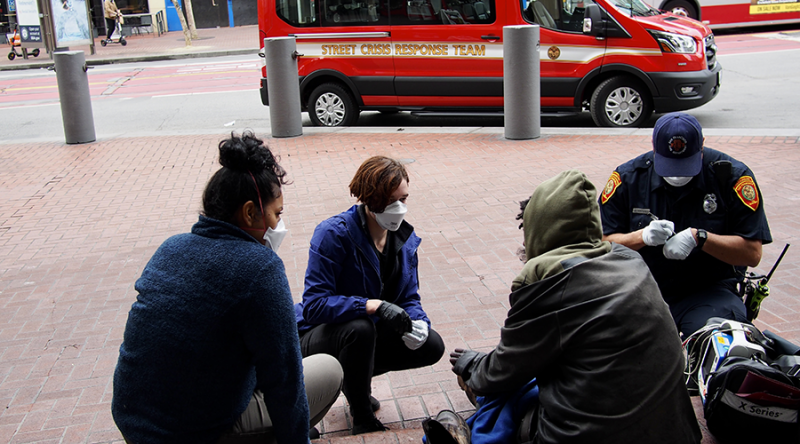
"caption": "Members of San Francisco's Street Crisis Response Team attend to a person sitting on the sidewalk in downtown San Francisco. The team, which responds to mental health crises experienced by people on the street, is intended as an alternative response to law enforcement.",
"description": null,
"title": "SCRT call 14_0",
"credit": "Courtesy of the \u003ca href=\"https://sf.gov/street-crisis-response-team\">San Francisco Street Crisis Response Team\u003c/a>",
"status": "inherit",
"altTag": "A group of mental health staff and first responders kneel around a person sitting on the sidewalk.",
"isLoading": false,
"fetchFailed": false
},
"news_11919472": {
"type": "attachments",
"id": "news_11919472",
"meta": {
"index": "attachments_1716263798",
"site": "news",
"id": "11919472",
"found": true
},
"parent": 11919397,
"imgSizes": {
"twentyfourteen-full-width": {
"file": "https://ww2.kqed.org/app/uploads/sites/10/2022/07/Old-German-hospital-sm-1038x576.jpg",
"width": 1038,
"mimeType": "image/jpeg",
"height": 576
},
"thumbnail": {
"file": "https://ww2.kqed.org/app/uploads/sites/10/2022/07/Old-German-hospital-sm-160x62.jpg",
"width": 160,
"mimeType": "image/jpeg",
"height": 62
},
"post-thumbnail": {
"file": "https://ww2.kqed.org/app/uploads/sites/10/2022/07/Old-German-hospital-sm-672x372.jpg",
"width": 672,
"mimeType": "image/jpeg",
"height": 372
},
"kqedFullSize": {
"file": "https://ww2.kqed.org/app/uploads/sites/10/2022/07/Old-German-hospital-sm.jpg",
"width": 1920,
"height": 744
},
"large": {
"file": "https://ww2.kqed.org/app/uploads/sites/10/2022/07/Old-German-hospital-sm-1020x395.jpg",
"width": 1020,
"mimeType": "image/jpeg",
"height": 395
},
"1536x1536": {
"file": "https://ww2.kqed.org/app/uploads/sites/10/2022/07/Old-German-hospital-sm-1536x595.jpg",
"width": 1536,
"mimeType": "image/jpeg",
"height": 595
},
"medium": {
"file": "https://ww2.kqed.org/app/uploads/sites/10/2022/07/Old-German-hospital-sm-800x310.jpg",
"width": 800,
"mimeType": "image/jpeg",
"height": 310
}
},
"publishDate": 1657728831,
"modified": 1657759867,
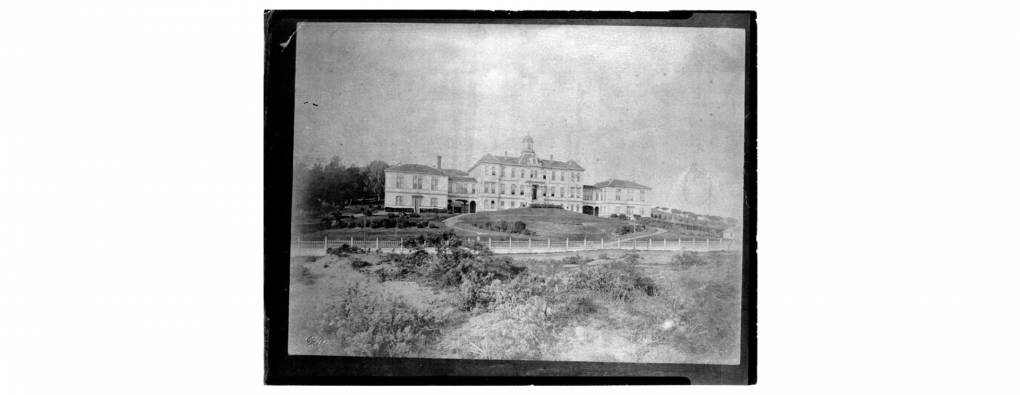
"caption": "The German Benevolent Society laid the cornerstone of its first hospital on Brannon Street between Third and Fourth in 1857. That hospital burned down in 1876 and the society rebuilt at 14th and Noe in 1904.",
"description": null,
"title": "Old-German-hospital-sm",
"credit": "San Francisco History Center, San Francisco Public Library",
"status": "inherit",
"altTag": "An old black and white photo of a large institutional looking building on a hill with open fields around it",
"isLoading": false,
"fetchFailed": false
},
"news_11919236": {
"type": "attachments",
"id": "news_11919236",
"meta": {
"index": "attachments_1716263798",
"site": "news",
"id": "11919236",
"found": true
},
"parent": 11919233,
"imgSizes": {
"twentyfourteen-full-width": {
"file": "https://ww2.kqed.org/app/uploads/sites/10/2022/07/Screen-Shot-2022-07-10-at-5.32.46-PM-1038x576.png",
"width": 1038,
"mimeType": "image/png",
"height": 576
},
"thumbnail": {
"file": "https://ww2.kqed.org/app/uploads/sites/10/2022/07/Screen-Shot-2022-07-10-at-5.32.46-PM-160x106.png",
"width": 160,
"mimeType": "image/png",
"height": 106
},
"post-thumbnail": {
"file": "https://ww2.kqed.org/app/uploads/sites/10/2022/07/Screen-Shot-2022-07-10-at-5.32.46-PM-672x372.png",
"width": 672,
"mimeType": "image/png",
"height": 372
},
"kqedFullSize": {
"file": "https://ww2.kqed.org/app/uploads/sites/10/2022/07/Screen-Shot-2022-07-10-at-5.32.46-PM.png",
"width": 1566,
"height": 1038
},
"large": {
"file": "https://ww2.kqed.org/app/uploads/sites/10/2022/07/Screen-Shot-2022-07-10-at-5.32.46-PM-1020x676.png",
"width": 1020,
"mimeType": "image/png",
"height": 676
},
"1536x1536": {
"file": "https://ww2.kqed.org/app/uploads/sites/10/2022/07/Screen-Shot-2022-07-10-at-5.32.46-PM-1536x1018.png",
"width": 1536,
"mimeType": "image/png",
"height": 1018
},
"medium": {
"file": "https://ww2.kqed.org/app/uploads/sites/10/2022/07/Screen-Shot-2022-07-10-at-5.32.46-PM-800x530.png",
"width": 800,
"mimeType": "image/png",
"height": 530
}
},
"publishDate": 1657500152,
"modified": 1657500211,
"caption": "George Dowell is vaccinated against COVID-19 at Umoja Health pop-up clinic in Oakland on Feb. 2, 2022.",
"description": null,
"title": "Screen Shot 2022-07-10 at 5.32.46 PM",
"credit": "Marissa Leshnov/CalMatters",
"status": "inherit",
"altTag": "A man wearing a hat and white masks sits as another places a needle in his arm.",
"isLoading": false,
"fetchFailed": false
},
"news_11917846": {
"type": "attachments",
"id": "news_11917846",
"meta": {
"index": "attachments_1716263798",
"site": "news",
"id": "11917846",
"found": true
},
"parent": 11916950,
"imgSizes": {
"thumbnail": {
"file": "https://ww2.kqed.org/app/uploads/sites/10/2022/06/RS56800_GettyImages-1404906099-qut-160x107.jpg",
"width": 160,
"mimeType": "image/jpeg",
"height": 107
},
"kqedFullSize": {
"file": "https://ww2.kqed.org/app/uploads/sites/10/2022/06/RS56800_GettyImages-1404906099-qut.jpg",
"width": 1920,
"height": 1280
},
"large": {
"file": "https://ww2.kqed.org/app/uploads/sites/10/2022/06/RS56800_GettyImages-1404906099-qut-1020x680.jpg",
"width": 1020,
"mimeType": "image/jpeg",
"height": 680
},
"medium": {
"file": "https://ww2.kqed.org/app/uploads/sites/10/2022/06/RS56800_GettyImages-1404906099-qut-800x533.jpg",
"width": 800,
"mimeType": "image/jpeg",
"height": 533
}
},
"publishDate": 1656094055,
"modified": 1656094334,
"caption": "People protest in response to the Dobbs v Jackson Women's Health Organization ruling in front of the U.S. Supreme Court on June 24, 2022 in Washington, DC. ",
"description": null,
"title": "overturned-roe-wade-abortion",
"credit": "Brandon Bell/Getty Images",
"status": "inherit",
"altTag": "The front of the U.S. Supreme Court, under a dark grey and blue cloud sky, with a crowd of people protesting outside and holding up signs.",
"isLoading": false,
"fetchFailed": false
},
"news_11917265": {
"type": "attachments",
"id": "news_11917265",
"meta": {
"index": "attachments_1716263798",
"site": "news",
"id": "11917265",
"found": true
},
"parent": 0,
"imgSizes": {
"twentyfourteen-full-width": {
"file": "https://ww2.kqed.org/app/uploads/sites/10/2022/06/abortion-illodraft3-1038x576.jpg",
"width": 1038,
"mimeType": "image/jpeg",
"height": 576
},
"thumbnail": {
"file": "https://ww2.kqed.org/app/uploads/sites/10/2022/06/abortion-illodraft3-160x104.jpg",
"width": 160,
"mimeType": "image/jpeg",
"height": 104
},
"post-thumbnail": {
"file": "https://ww2.kqed.org/app/uploads/sites/10/2022/06/abortion-illodraft3-672x372.jpg",
"width": 672,
"mimeType": "image/jpeg",
"height": 372
},
"kqedFullSize": {
"file": "https://ww2.kqed.org/app/uploads/sites/10/2022/06/abortion-illodraft3.jpg",
"width": 1920,
"height": 1242
},
"large": {
"file": "https://ww2.kqed.org/app/uploads/sites/10/2022/06/abortion-illodraft3-1020x660.jpg",
"width": 1020,
"mimeType": "image/jpeg",
"height": 660
},
"1536x1536": {
"file": "https://ww2.kqed.org/app/uploads/sites/10/2022/06/abortion-illodraft3-1536x994.jpg",
"width": 1536,
"mimeType": "image/jpeg",
"height": 994
},
"medium": {
"file": "https://ww2.kqed.org/app/uploads/sites/10/2022/06/abortion-illodraft3-800x518.jpg",
"width": 800,
"mimeType": "image/jpeg",
"height": 518
}
},
"publishDate": 1655333420,
"modified": 1656086784,
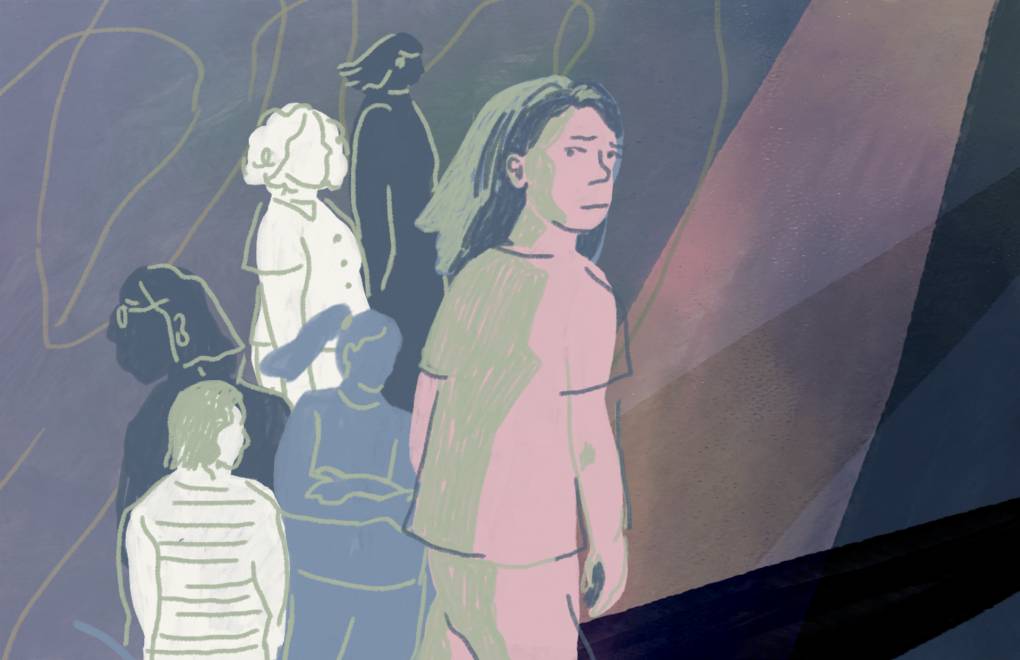
"caption": "The end of Roe v. Wade doesn't mean the end of legal abortion access in California. But it will allow other states to dramatically restrict or ban abortion.",
"description": null,
"title": "roe-v-wade-overturned",
"credit": "Anna Vignet/KQED",
"status": "inherit",
"altTag": "Pink and blue toned illustration, showing a variety of figures in silhouette, with one central figure in pink turning to look apprehensively at the viewer as they walk into a darker side of the frame.",
"isLoading": false,
"fetchFailed": false
},
"news_11917693": {
"type": "attachments",
"id": "news_11917693",
"meta": {
"index": "attachments_1716263798",
"site": "news",
"id": "11917693",
"found": true
},
"parent": 11917692,
"imgSizes": {
"twentyfourteen-full-width": {
"file": "https://ww2.kqed.org/app/uploads/sites/10/2022/06/gettyimages-1186179674_slide-51e2cdf6a2115a286e888823de970c5027d6fd93-1-1038x576.jpg",
"width": 1038,
"mimeType": "image/jpeg",
"height": 576
},
"thumbnail": {
"file": "https://ww2.kqed.org/app/uploads/sites/10/2022/06/gettyimages-1186179674_slide-51e2cdf6a2115a286e888823de970c5027d6fd93-1-160x107.jpg",
"width": 160,
"mimeType": "image/jpeg",
"height": 107
},
"post-thumbnail": {
"file": "https://ww2.kqed.org/app/uploads/sites/10/2022/06/gettyimages-1186179674_slide-51e2cdf6a2115a286e888823de970c5027d6fd93-1-672x372.jpg",
"width": 672,
"mimeType": "image/jpeg",
"height": 372
},
"kqedFullSize": {
"file": "https://ww2.kqed.org/app/uploads/sites/10/2022/06/gettyimages-1186179674_slide-51e2cdf6a2115a286e888823de970c5027d6fd93-1-scaled.jpg",
"width": 2560,
"height": 1707
},
"2048x2048": {
"file": "https://ww2.kqed.org/app/uploads/sites/10/2022/06/gettyimages-1186179674_slide-51e2cdf6a2115a286e888823de970c5027d6fd93-1-2048x1365.jpg",
"width": 2048,
"mimeType": "image/jpeg",
"height": 1365
},
"large": {
"file": "https://ww2.kqed.org/app/uploads/sites/10/2022/06/gettyimages-1186179674_slide-51e2cdf6a2115a286e888823de970c5027d6fd93-1-1020x680.jpg",
"width": 1020,
"mimeType": "image/jpeg",
"height": 680
},
"1536x1536": {
"file": "https://ww2.kqed.org/app/uploads/sites/10/2022/06/gettyimages-1186179674_slide-51e2cdf6a2115a286e888823de970c5027d6fd93-1-1536x1024.jpg",
"width": 1536,
"mimeType": "image/jpeg",
"height": 1024
},
"full-width": {
"file": "https://ww2.kqed.org/app/uploads/sites/10/2022/06/gettyimages-1186179674_slide-51e2cdf6a2115a286e888823de970c5027d6fd93-1-1920x1280.jpg",
"width": 1920,
"mimeType": "image/jpeg",
"height": 1280
},
"medium": {
"file": "https://ww2.kqed.org/app/uploads/sites/10/2022/06/gettyimages-1186179674_slide-51e2cdf6a2115a286e888823de970c5027d6fd93-1-800x533.jpg",
"width": 800,
"mimeType": "image/jpeg",
"height": 533
}
},
"publishDate": 1656009771,
"modified": 1656011169,
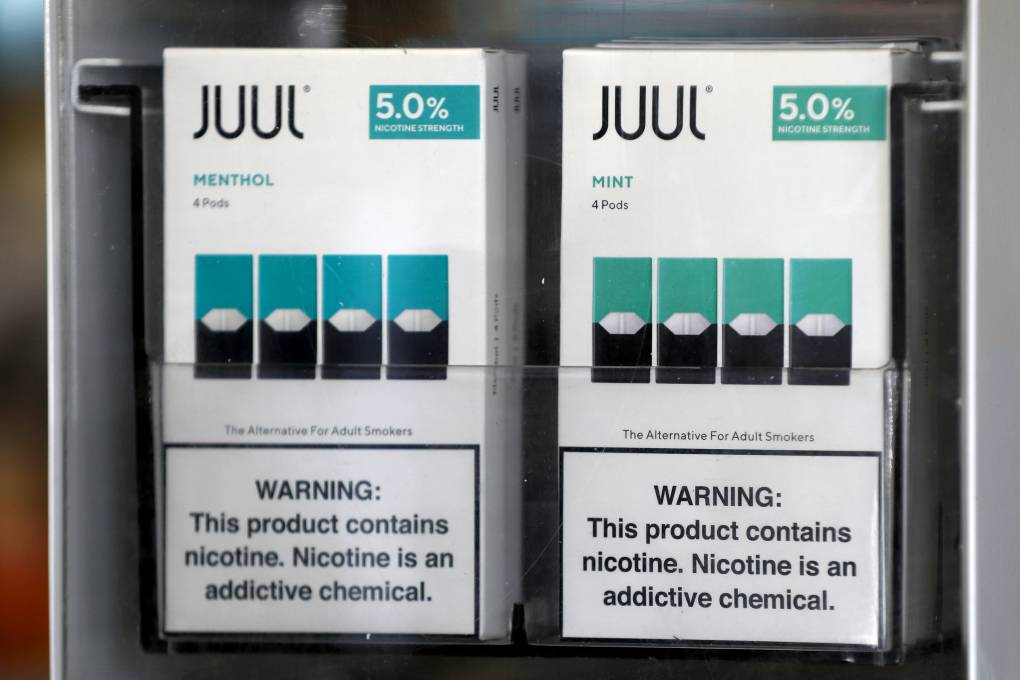
"caption": "Packages of Juul mint-flavored e-cigarettes are displayed at a smoke shop in 2019.",
"description": null,
"title": "Packages of Juul mint-flavored e-cigarettes are displayed at a smoke shop in 2019.",
"credit": "Justin Sullivan/Getty Images",
"status": "inherit",
"altTag": null,
"isLoading": false,
"fetchFailed": false
},
"news_11916007": {
"type": "attachments",
"id": "news_11916007",
"meta": {
"index": "attachments_1716263798",
"site": "news",
"id": "11916007",
"found": true
},
"parent": 11915870,
"imgSizes": {
"twentyfourteen-full-width": {
"file": "https://ww2.kqed.org/app/uploads/sites/10/2022/06/IMG_1179-1020x765-1-942x576.jpg",
"width": 942,
"mimeType": "image/jpeg",
"height": 576
},
"thumbnail": {
"file": "https://ww2.kqed.org/app/uploads/sites/10/2022/06/IMG_1179-1020x765-1-160x114.jpg",
"width": 160,
"mimeType": "image/jpeg",
"height": 114
},
"post-thumbnail": {
"file": "https://ww2.kqed.org/app/uploads/sites/10/2022/06/IMG_1179-1020x765-1-672x372.jpg",
"width": 672,
"mimeType": "image/jpeg",
"height": 372
},
"kqedFullSize": {
"file": "https://ww2.kqed.org/app/uploads/sites/10/2022/06/IMG_1179-1020x765-1.jpg",
"width": 942,
"height": 673
},
"medium": {
"file": "https://ww2.kqed.org/app/uploads/sites/10/2022/06/IMG_1179-1020x765-1-800x572.jpg",
"width": 800,
"mimeType": "image/jpeg",
"height": 572
}
},
"publishDate": 1654290538,
"modified": 1654291346,
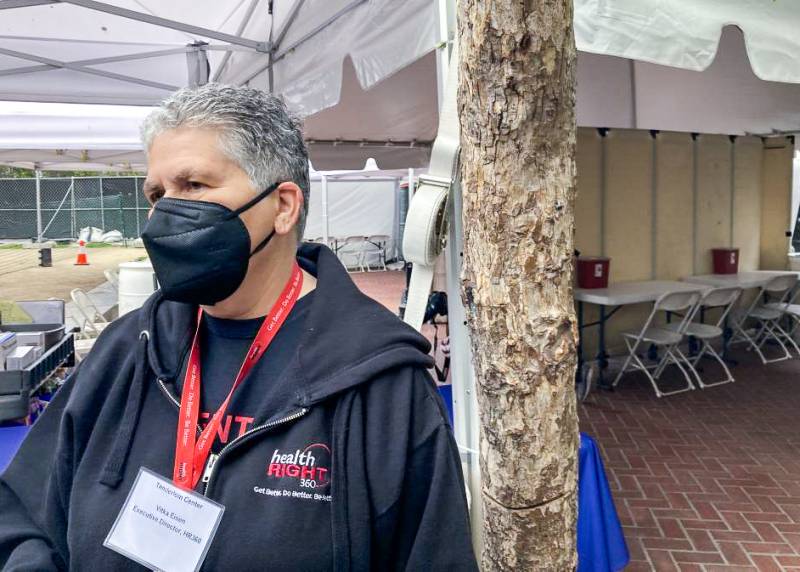
"caption": "Vitka Eisen, president and CEO of HealthRIGHT 360, a nonprofit health provider that offers harm-reduction services at the Tenderloin Center, speaks to reporters during a media tour on Thursday.",
"description": null,
"title": "IMG_1179-1020x765",
"credit": "Holly McDede/KQED",
"status": "inherit",
"altTag": "Person wearing mask and lanyard with outdoor tent and plastic chairs in background",
"isLoading": false,
"fetchFailed": false
},
"news_11915794": {
"type": "attachments",
"id": "news_11915794",
"meta": {
"index": "attachments_1716263798",
"site": "news",
"id": "11915794",
"found": true
},
"parent": 11915788,
"imgSizes": {
"twentyfourteen-full-width": {
"file": "https://ww2.kqed.org/app/uploads/sites/10/2022/06/AIDS-grove1-1038x576.jpg",
"width": 1038,
"mimeType": "image/jpeg",
"height": 576
},
"thumbnail": {
"file": "https://ww2.kqed.org/app/uploads/sites/10/2022/06/AIDS-grove1-160x90.jpg",
"width": 160,
"mimeType": "image/jpeg",
"height": 90
},
"post-thumbnail": {
"file": "https://ww2.kqed.org/app/uploads/sites/10/2022/06/AIDS-grove1-672x372.jpg",
"width": 672,
"mimeType": "image/jpeg",
"height": 372
},
"kqedFullSize": {
"file": "https://ww2.kqed.org/app/uploads/sites/10/2022/06/AIDS-grove1.jpg",
"width": 1920,
"height": 1080
},
"large": {
"file": "https://ww2.kqed.org/app/uploads/sites/10/2022/06/AIDS-grove1-1020x574.jpg",
"width": 1020,
"mimeType": "image/jpeg",
"height": 574
},
"1536x1536": {
"file": "https://ww2.kqed.org/app/uploads/sites/10/2022/06/AIDS-grove1-1536x864.jpg",
"width": 1536,
"mimeType": "image/jpeg",
"height": 864
},
"medium": {
"file": "https://ww2.kqed.org/app/uploads/sites/10/2022/06/AIDS-grove1-800x450.jpg",
"width": 800,
"mimeType": "image/jpeg",
"height": 450
}
},
"publishDate": 1654131434,
"modified": 1654284508,
"caption": "A stone marks the entrance of the AIDS Memorial Grove. Visitors walk down a set of long stairs, through the trees and into the dell.",
"description": null,
"title": "AIDS-grove1",
"credit": "Courtesy of National AIDS Memorial",
"status": "inherit",
"altTag": "In the middle of a grassy knoll, flanked by tall trees, a stone proclaims \"National AIDS Memorial Grove.\"",
"isLoading": false,
"fetchFailed": false
},
"news_11915006": {
"type": "attachments",
"id": "news_11915006",
"meta": {
"index": "attachments_1716263798",
"site": "news",
"id": "11915006",
"found": true
},
"parent": 11915004,
"imgSizes": {
"twentyfourteen-full-width": {
"file": "https://ww2.kqed.org/app/uploads/sites/10/2022/05/RS33218_10122018_AW_RYSE_01-qut-1180x875-1-1038x576.jpeg",
"width": 1038,
"mimeType": "image/jpeg",
"height": 576
},
"thumbnail": {
"file": "https://ww2.kqed.org/app/uploads/sites/10/2022/05/RS33218_10122018_AW_RYSE_01-qut-1180x875-1-160x119.jpeg",
"width": 160,
"mimeType": "image/jpeg",
"height": 119
},
"post-thumbnail": {
"file": "https://ww2.kqed.org/app/uploads/sites/10/2022/05/RS33218_10122018_AW_RYSE_01-qut-1180x875-1-672x372.jpeg",
"width": 672,
"mimeType": "image/jpeg",
"height": 372
},
"kqedFullSize": {
"file": "https://ww2.kqed.org/app/uploads/sites/10/2022/05/RS33218_10122018_AW_RYSE_01-qut-1180x875-1.jpeg",
"width": 1180,
"height": 875
},
"large": {
"file": "https://ww2.kqed.org/app/uploads/sites/10/2022/05/RS33218_10122018_AW_RYSE_01-qut-1180x875-1-1020x756.jpeg",
"width": 1020,
"mimeType": "image/jpeg",
"height": 756
},
"medium": {
"file": "https://ww2.kqed.org/app/uploads/sites/10/2022/05/RS33218_10122018_AW_RYSE_01-qut-1180x875-1-800x593.jpeg",
"width": 800,
"mimeType": "image/jpeg",
"height": 593
}
},
"publishDate": 1653434744,
"modified": 1653434757,
"caption": "Gemikia Henderson and Dalia Ramos at RYSE Center in Richmond, California. ",
"description": null,
"title": "RS33218_10122018_AW_RYSE_01-qut-1180x875",
"credit": "Anne Wernikoff/KQED",
"status": "inherit",
"altTag": null,
"isLoading": false,
"fetchFailed": false
},
"news_11914926": {
"type": "attachments",
"id": "news_11914926",
"meta": {
"index": "attachments_1716263798",
"site": "news",
"id": "11914926",
"found": true
},
"parent": 11914925,
"imgSizes": {
"twentyfourteen-full-width": {
"file": "https://ww2.kqed.org/app/uploads/sites/10/2022/05/gettyimages-2067974_custom-d27e6ddaebbe2cc433c2bad354fe7b3d729c027b-1038x576.jpg",
"width": 1038,
"mimeType": "image/jpeg",
"height": 576
},
"thumbnail": {
"file": "https://ww2.kqed.org/app/uploads/sites/10/2022/05/gettyimages-2067974_custom-d27e6ddaebbe2cc433c2bad354fe7b3d729c027b-160x107.jpg",
"width": 160,
"mimeType": "image/jpeg",
"height": 107
},
"post-thumbnail": {
"file": "https://ww2.kqed.org/app/uploads/sites/10/2022/05/gettyimages-2067974_custom-d27e6ddaebbe2cc433c2bad354fe7b3d729c027b-672x372.jpg",
"width": 672,
"mimeType": "image/jpeg",
"height": 372
},
"kqedFullSize": {
"file": "https://ww2.kqed.org/app/uploads/sites/10/2022/05/gettyimages-2067974_custom-d27e6ddaebbe2cc433c2bad354fe7b3d729c027b-scaled.jpg",
"width": 2560,
"height": 1705
},
"2048x2048": {
"file": "https://ww2.kqed.org/app/uploads/sites/10/2022/05/gettyimages-2067974_custom-d27e6ddaebbe2cc433c2bad354fe7b3d729c027b-2048x1364.jpg",
"width": 2048,
"mimeType": "image/jpeg",
"height": 1364
},
"large": {
"file": "https://ww2.kqed.org/app/uploads/sites/10/2022/05/gettyimages-2067974_custom-d27e6ddaebbe2cc433c2bad354fe7b3d729c027b-1020x679.jpg",
"width": 1020,
"mimeType": "image/jpeg",
"height": 679
},
"1536x1536": {
"file": "https://ww2.kqed.org/app/uploads/sites/10/2022/05/gettyimages-2067974_custom-d27e6ddaebbe2cc433c2bad354fe7b3d729c027b-1536x1023.jpg",
"width": 1536,
"mimeType": "image/jpeg",
"height": 1023
},
"full-width": {
"file": "https://ww2.kqed.org/app/uploads/sites/10/2022/05/gettyimages-2067974_custom-d27e6ddaebbe2cc433c2bad354fe7b3d729c027b-1920x1279.jpg",
"width": 1920,
"mimeType": "image/jpeg",
"height": 1279
},
"medium": {
"file": "https://ww2.kqed.org/app/uploads/sites/10/2022/05/gettyimages-2067974_custom-d27e6ddaebbe2cc433c2bad354fe7b3d729c027b-800x533.jpg",
"width": 800,
"mimeType": "image/jpeg",
"height": 533
}
},
"publishDate": 1653412605,
"modified": 1653414546,
"caption": "Symptoms of the monkeypox virus are shown on a patient's hand, from a 2003 case in the United States. In most instances, the disease causes fever and painful, pus-filled blisters. New cases in the United Kingdom, Spain and Portugal are spreading possibly through sexual contact, which had not previously been linked to monkeypox transmission.",
"description": "In this Centers for Disease Control and Prevention handout graphic, symptoms of one of the first known cases of the monkeypox virus are shown on a patient?s hand May 27, 2003. The CDC said the viral disease monkeypox, thought to be spread by prairie dogs, has been detected in the Americas for the first time with about 20 cases reported in Wisconsin, Illinois, and Indiana. ",
"title": "Symptoms of the monkeypox virus are shown on a patient's hand, from a 2003 case in the United States. In most instances, the disease causes fever and painful, pus-filled blisters. New cases in the United Kingdom, Spain and Portugal are spreading possibly through sexual contact, which had not previously been linked to monkeypox transmission.",
"credit": "Photo Courtesy of CDC/Getty Images",
"status": "inherit",
"altTag": "Symptoms of the monkeypox virus are shown on a patient's hand, from a 2003 case in the United States. In most instances, the disease causes fever and painful, pus-filled blisters. The image is a close up of a hand and the yellow and red blisters.",
"isLoading": false,
"fetchFailed": false
}
},
"audioPlayerReducer": {
"postId": "stream_live",
"isPaused": true,
"isPlaying": false,
"pfsActive": false,
"pledgeModalIsOpen": true,
"playerDrawerIsOpen": false,
"liveAudioPlayStartedAt": 0,
"liveAudioPlayContext": ""
},
"authorsReducer": {
"byline_news_11919233": {
"type": "authors",
"id": "byline_news_11919233",
"meta": {
"override": true
},
"slug": "byline_news_11919233",
"name": "Jeanne Kuang",
"isLoading": false
},
"byline_news_11917692": {
"type": "authors",
"id": "byline_news_11917692",
"meta": {
"override": true
},
"slug": "byline_news_11917692",
"name": "Bill Chappell",
"isLoading": false
},
"byline_news_11914928": {
"type": "authors",
"id": "byline_news_11914928",
"meta": {
"override": true
},
"slug": "byline_news_11914928",
"name": "Michaeleen Doucleff",
"isLoading": false
},
"astupi": {
"type": "authors",
"id": "70",
"meta": {
"index": "authors_1716337520",
"id": "70",
"found": true
},
"name": "Amanda Stupi",
"firstName": "Amanda",
"lastName": "Stupi",
"slug": "astupi",
"email": "astupi@kqed.org",
"display_author_email": false,
"staff_mastheads": [],
"title": "Senior Engagement Producer",
"bio": "Amanda joined KQED Science’s engagement team as a Senior Audience Engagement Strategist in the spring of 2019. She has helped craft messaging around wildfires, the coronavirus pandemic, climate change and many other stories. She has also brought KQED Science to new platforms such as Reddit’s Ask Me Anything series. Prior to joining KQED Science, Amanda spent seven years as an engagement producer with Forum, KQED’s daily live call-in show. She got her start in radio at KALW's weekly call in show, City Visions, before going on to an internship and stint at NPR's Talk of the Nation.\r\n\r\nPrior to journalism, Amanda taught English at Lowell High School. She's a native of Petaluma and currently lives under the \"South San Francisco the Industrial City\" sign in South City. She believes that engagement is vital to news’s future and that good journalism listens as much as it asks questions.",
"avatar": "https://secure.gravatar.com/avatar/e981c503e5c162da701dcaccfbf87e35?s=600&d=blank&r=g",
"twitter": null,
"facebook": null,
"instagram": null,
"linkedin": null,
"sites": [
{
"site": "arts",
"roles": [
"Contributor"
]
},
{
"site": "news",
"roles": [
"editor"
]
},
{
"site": "pop",
"roles": [
"contributor"
]
},
{
"site": "stateofhealth",
"roles": [
"editor"
]
},
{
"site": "science",
"roles": []
},
{
"site": "perspectives",
"roles": [
"editor"
]
}
],
"headData": {
"title": "Amanda Stupi | KQED",
"description": "Senior Engagement Producer",
"ogImgSrc": "https://secure.gravatar.com/avatar/e981c503e5c162da701dcaccfbf87e35?s=600&d=blank&r=g",
"twImgSrc": "https://secure.gravatar.com/avatar/e981c503e5c162da701dcaccfbf87e35?s=600&d=blank&r=g"
},
"isLoading": false,
"link": "/author/astupi"
},
"katrinaschwartz": {
"type": "authors",
"id": "234",
"meta": {
"index": "authors_1716337520",
"id": "234",
"found": true
},
"name": "Katrina Schwartz",
"firstName": "Katrina",
"lastName": "Schwartz",
"slug": "katrinaschwartz",
"email": "kschwartz@kqed.org",
"display_author_email": false,
"staff_mastheads": [
"news"
],
"title": "Producer",
"bio": "Katrina Schwartz is a journalist based in San Francisco. She's worked at KPCC public radio in LA and has reported on air and online for KQED since 2010. She covered how teaching and learning is changing for MindShift between 2012 and 2020. She is the co-host of the MindShift podcast and now produces KQED's Bay Curious podcast.",
"avatar": "https://secure.gravatar.com/avatar/edb4ee79070447a018538c9aae6eeecf28786515b8a0c30e43b6b7dce5aa44c8?s=600&d=blank&r=g",
"twitter": "kschwart",
"bluesky": null,
"facebook": null,
"instagram": null,
"linkedin": null,
"sites": [
{
"site": "",
"roles": [
"editor"
]
},
{
"site": "news",
"roles": [
"editor"
]
},
{
"site": "mindshift",
"roles": [
"administrator"
]
},
{
"site": "stateofhealth",
"roles": [
"author"
]
},
{
"site": "science",
"roles": [
"editor"
]
}
],
"headData": {
"title": "Katrina Schwartz | KQED",
"description": "Producer",
"ogImgSrc": "https://secure.gravatar.com/avatar/edb4ee79070447a018538c9aae6eeecf28786515b8a0c30e43b6b7dce5aa44c8?s=600&d=blank&r=g",
"twImgSrc": "https://secure.gravatar.com/avatar/edb4ee79070447a018538c9aae6eeecf28786515b8a0c30e43b6b7dce5aa44c8?s=600&d=blank&r=g"
},
"isLoading": false,
"link": "/author/katrinaschwartz"
},
"kqed": {
"type": "authors",
"id": "236",
"meta": {
"index": "authors_1716337520",
"id": "236",
"found": true
},
"name": "KQED News Staff",
"firstName": "KQED News Staff",
"lastName": null,
"slug": "kqed",
"email": "faq@kqed.org",
"display_author_email": false,
"staff_mastheads": [],
"title": null,
"bio": null,
"avatar": "https://secure.gravatar.com/avatar/ef0e801a68c4c54afa9180db14084167?s=600&d=blank&r=g",
"twitter": null,
"facebook": null,
"instagram": null,
"linkedin": null,
"sites": [
{
"site": "arts",
"roles": [
"contributor"
]
},
{
"site": "news",
"roles": [
"editor"
]
},
{
"site": "futureofyou",
"roles": [
"author"
]
}
],
"headData": {
"title": "KQED News Staff | KQED",
"description": null,
"ogImgSrc": "https://secure.gravatar.com/avatar/ef0e801a68c4c54afa9180db14084167?s=600&d=blank&r=g",
"twImgSrc": "https://secure.gravatar.com/avatar/ef0e801a68c4c54afa9180db14084167?s=600&d=blank&r=g"
},
"isLoading": false,
"link": "/author/kqed"
},
"matthewgreen": {
"type": "authors",
"id": "1263",
"meta": {
"index": "authors_1716337520",
"id": "1263",
"found": true
},
"name": "Matthew Green",
"firstName": "Matthew",
"lastName": "Green",
"slug": "matthewgreen",
"email": "mgreen@kqed.org",
"display_author_email": false,
"staff_mastheads": [],
"title": "KQED Editor/Reporter",
"bio": "Matthew Green is a digital media producer for KQED News. He previously produced \u003ca href=\"http://www.kqed.org/lowdown\">The Lowdown\u003c/a>, KQED’s multimedia news education blog. Matthew's written for numerous Bay Area publications, including the Oakland Tribune and San Francisco Chronicle. He also taught journalism classes at Fremont High School in East Oakland.\r\n\r\nEmail: mgreen@kqed.org; Twitter: @MGreenKQED",
"avatar": "https://secure.gravatar.com/avatar/3bf498d1267ca02c8494f33d8cfc575e?s=600&d=blank&r=g",
"twitter": "MGreenKQED",
"facebook": null,
"instagram": null,
"linkedin": null,
"sites": [
{
"site": "news",
"roles": []
},
{
"site": "lowdown",
"roles": []
},
{
"site": "science",
"roles": []
},
{
"site": "education",
"roles": []
},
{
"site": "quest",
"roles": []
},
{
"site": "liveblog",
"roles": []
}
],
"headData": {
"title": "Matthew Green | KQED",
"description": "KQED Editor/Reporter",
"ogImgSrc": "https://secure.gravatar.com/avatar/3bf498d1267ca02c8494f33d8cfc575e?s=600&d=blank&r=g",
"twImgSrc": "https://secure.gravatar.com/avatar/3bf498d1267ca02c8494f33d8cfc575e?s=600&d=blank&r=g"
},
"isLoading": false,
"link": "/author/matthewgreen"
},
"adembosky": {
"type": "authors",
"id": "3205",
"meta": {
"index": "authors_1716337520",
"id": "3205",
"found": true
},
"name": "April Dembosky",
"firstName": "April",
"lastName": "Dembosky",
"slug": "adembosky",
"email": "adembosky@kqed.org",
"display_author_email": false,
"staff_mastheads": [
"news",
"science"
],
"title": "KQED Health Correspondent",
"bio": "April Dembosky is the health correspondent for KQED News and a regular contributor to NPR. She specializes in covering altered states of mind, from postpartum depression to methamphetamine-induced psychosis to the insanity defense. Her investigative series on insurance companies sidestepping mental health laws won multiple awards, including first place in beat reporting from the national Association of Health Care Journalists. She is the recipient of numerous other prizes and fellowships, including a national Edward R. Murrow award for investigative reporting, a Society of Professional Journalists award for long-form storytelling, and a Carter Center Fellowship for Mental Health Journalism.\r\n\r\nDembosky reported and produced \u003cem>Soundtrack of Silence\u003c/em>, an audio documentary about music and memory that is currently being made into a feature film by Paramount Pictures.\r\n\r\nBefore joining KQED in 2013, Dembosky covered technology and Silicon Valley for \u003cem>The Financial Times of London,\u003c/em> and contributed business and arts stories to \u003cem>Marketplace \u003c/em>and \u003cem>The New York Times.\u003c/em> She got her undergraduate degree in philosophy from Smith College and her master's in journalism from the University of California, Berkeley. She is a classically trained violinist and proud alum of the first symphony orchestra at Burning Man.",
"avatar": "https://secure.gravatar.com/avatar/ef92999be4ceb9ea60701e7dc276f813?s=600&d=blank&r=g",
"twitter": "adembosky",
"facebook": null,
"instagram": null,
"linkedin": null,
"sites": [
{
"site": "arts",
"roles": [
"author"
]
},
{
"site": "news",
"roles": [
"editor"
]
},
{
"site": "futureofyou",
"roles": [
"author"
]
},
{
"site": "stateofhealth",
"roles": [
"editor"
]
},
{
"site": "science",
"roles": [
"editor"
]
},
{
"site": "forum",
"roles": [
"editor"
]
}
],
"headData": {
"title": "April Dembosky | KQED",
"description": "KQED Health Correspondent",
"ogImgSrc": "https://secure.gravatar.com/avatar/ef92999be4ceb9ea60701e7dc276f813?s=600&d=blank&r=g",
"twImgSrc": "https://secure.gravatar.com/avatar/ef92999be4ceb9ea60701e7dc276f813?s=600&d=blank&r=g"
},
"isLoading": false,
"link": "/author/adembosky"
},
"carlysevern": {
"type": "authors",
"id": "3243",
"meta": {
"index": "authors_1716337520",
"id": "3243",
"found": true
},
"name": "Carly Severn",
"firstName": "Carly",
"lastName": "Severn",
"slug": "carlysevern",
"email": "csevern@kqed.org",
"display_author_email": false,
"staff_mastheads": [
"news"
],
"title": "Senior Editor, Audience News ",
"bio": "Carly is KQED's Senior Editor of Audience News on the Digital News team, and has reported for the California Report Magazine, Bay Curious and KQED Arts. She's formerly the host of \u003ca href=\"http://ww2.kqed.org/pop/category/the-cooler/\" rel=\"noopener noreferrer\">The Cooler\u003c/a> podcast.",
"avatar": "https://secure.gravatar.com/avatar/54037bf5c128fe678f0ef26cec97a93f2e7f220a22d7285703328f12c42c1b1d?s=600&d=blank&r=g",
"twitter": "teacupinthebay",
"bluesky": null,
"facebook": null,
"instagram": null,
"linkedin": null,
"sites": [
{
"site": "",
"roles": [
"editor"
]
},
{
"site": "arts",
"roles": [
"editor"
]
},
{
"site": "news",
"roles": [
"administrator"
]
},
{
"site": "pop",
"roles": [
"editor"
]
},
{
"site": "futureofyou",
"roles": [
"editor"
]
},
{
"site": "about",
"roles": [
"administrator"
]
},
{
"site": "mindshift",
"roles": [
"editor"
]
},
{
"site": "bayareabites",
"roles": [
"editor"
]
},
{
"site": "stateofhealth",
"roles": [
"editor"
]
},
{
"site": "science",
"roles": [
"editor"
]
},
{
"site": "food",
"roles": [
"contributor"
]
},
{
"site": "forum",
"roles": [
"editor"
]
},
{
"site": "perspectives",
"roles": [
"administrator"
]
},
{
"site": "liveblog",
"roles": [
"editor"
]
}
],
"headData": {
"title": "Carly Severn | KQED",
"description": "Senior Editor, Audience News ",
"ogImgSrc": "https://secure.gravatar.com/avatar/54037bf5c128fe678f0ef26cec97a93f2e7f220a22d7285703328f12c42c1b1d?s=600&d=blank&r=g",
"twImgSrc": "https://secure.gravatar.com/avatar/54037bf5c128fe678f0ef26cec97a93f2e7f220a22d7285703328f12c42c1b1d?s=600&d=blank&r=g"
},
"isLoading": false,
"link": "/author/carlysevern"
},
"ecruzguevarra": {
"type": "authors",
"id": "8654",
"meta": {
"index": "authors_1716337520",
"id": "8654",
"found": true
},
"name": "Ericka Cruz Guevarra",
"firstName": "Ericka",
"lastName": "Cruz Guevarra",
"slug": "ecruzguevarra",
"email": "ecruzguevarra@kqed.org",
"display_author_email": true,
"staff_mastheads": [
"news"
],
"title": "Producer, The Bay Podcast",
"bio": "Ericka Cruz Guevarra is host of \u003ca href=\"https://www.kqed.org/podcasts/thebay\">\u003cem>The Bay\u003c/em>\u003c/a> podcast at KQED. Before host, she was the show’s producer. Her work in that capacity includes a three-part reported series on policing in Vallejo, which won a 2020 excellence in journalism award from the Society of Professional Journalists. Ericka has worked as a breaking news reporter at Oregon Public Broadcasting, helped produce the Code Switch podcast, and was KQED’s inaugural Raul Ramirez Diversity Fund intern. She’s also an alumna of NPR’s Next Generation Radio program. Send her an email if you have strong feelings about whether Fairfield and Suisun City are the Bay. Ericka is represented by SAG-AFTRA.",
"avatar": "https://secure.gravatar.com/avatar/accefc1de4bafc7e234b69bcb9b6f6536c130fd84709bc3069ef11a78787e1bb?s=600&d=blank&r=g",
"twitter": "NotoriousECG",
"bluesky": null,
"facebook": null,
"instagram": null,
"linkedin": null,
"sites": [
{
"site": "arts",
"roles": [
"subscriber"
]
},
{
"site": "news",
"roles": [
"editor",
"manage_categories"
]
},
{
"site": "futureofyou",
"roles": [
"subscriber"
]
},
{
"site": "stateofhealth",
"roles": [
"subscriber"
]
},
{
"site": "science",
"roles": [
"editor"
]
},
{
"site": "forum",
"roles": [
"subscriber"
]
}
],
"headData": {
"title": "Ericka Cruz Guevarra | KQED",
"description": "Producer, The Bay Podcast",
"ogImgSrc": "https://secure.gravatar.com/avatar/accefc1de4bafc7e234b69bcb9b6f6536c130fd84709bc3069ef11a78787e1bb?s=600&d=blank&r=g",
"twImgSrc": "https://secure.gravatar.com/avatar/accefc1de4bafc7e234b69bcb9b6f6536c130fd84709bc3069ef11a78787e1bb?s=600&d=blank&r=g"
},
"isLoading": false,
"link": "/author/ecruzguevarra"
},
"lesleymcclurg": {
"type": "authors",
"id": "11229",
"meta": {
"index": "authors_1716337520",
"id": "11229",
"found": true
},
"name": "Lesley McClurg",
"firstName": "Lesley",
"lastName": "McClurg",
"slug": "lesleymcclurg",
"email": "lmcclurg@KQED.org",
"display_author_email": false,
"staff_mastheads": [
"news",
"science"
],
"title": "KQED Health Correspondent",
"bio": "Lesley McClurg is a health correspondent and fill-in host whose work is regularly rebroadcast on NPR and PBS programs. She’s earned multiple regional Emmy awards, a national and a regional Edward R. Murrow award, and was named Best Beat Reporter by the Association of Health Care Journalists. The Society of Professional Journalists has recognized her work several times, and the Society of Environmental Journalists spotlighted her coverage of California’s historic drought.\r\n\r\nBefore joining KQED in 2016, Lesley covered food and sustainability for Capital Public Radio, environmental issues for Colorado Public Radio, and reported for KUOW and KCTS 9 in Seattle. Away from the newsroom, she loves skiing with her daughter, mountain biking with her partner, and playing with Ollie, the family’s goldendoodle. On deadline, she runs almost entirely on chocolate chips.\r\n\r\n ",
"avatar": "https://secure.gravatar.com/avatar/bab49e972ea10c774fe0f5e29dba1722b158f7c0d58a360923d1389d380b2978?s=600&d=blank&r=g",
"twitter": "lesleywmcclurg",
"bluesky": null,
"facebook": null,
"instagram": null,
"linkedin": null,
"sites": [
{
"site": "arts",
"roles": [
"author"
]
},
{
"site": "news",
"roles": [
"editor"
]
},
{
"site": "futureofyou",
"roles": [
"editor"
]
},
{
"site": "stateofhealth",
"roles": [
"author"
]
},
{
"site": "science",
"roles": [
"editor"
]
},
{
"site": "quest",
"roles": [
"subscriber"
]
},
{
"site": "forum",
"roles": [
"administrator"
]
},
{
"site": "liveblog",
"roles": [
"author"
]
}
],
"headData": {
"title": "Lesley McClurg | KQED",
"description": "KQED Health Correspondent",
"ogImgSrc": "https://secure.gravatar.com/avatar/bab49e972ea10c774fe0f5e29dba1722b158f7c0d58a360923d1389d380b2978?s=600&d=blank&r=g",
"twImgSrc": "https://secure.gravatar.com/avatar/bab49e972ea10c774fe0f5e29dba1722b158f7c0d58a360923d1389d380b2978?s=600&d=blank&r=g"
},
"isLoading": false,
"link": "/author/lesleymcclurg"
},
"ralexandra": {
"type": "authors",
"id": "11242",
"meta": {
"index": "authors_1716337520",
"id": "11242",
"found": true
},
"name": "Rae Alexandra",
"firstName": "Rae",
"lastName": "Alexandra",
"slug": "ralexandra",
"email": "ralexandra@kqed.org",
"display_author_email": true,
"staff_mastheads": [],
"title": "Reporter/Producer",
"bio": "Rae Alexandra is a Reporter/Producer for KQED Arts & Culture, and the creator/author of the \u003ca href=\"https://www.kqed.org/arts/program/rebel-girls-from-bay-area-history\">Rebel Girls From Bay Area History\u003c/a> and \u003ca href=\"https://www.kqed.org/bizarrebayarea\">Bizarre Bay Area\u003c/a> series. Her debut book, \u003ca href=\"https://citylights.com/politics-current-events-history/unsung-heroines35-women-who-changed/\">Unsung Heroines: 35 Women Who Changed the Bay Area\u003c/a> was published by City Lights in March 2026. In 2023, Rae was awarded an SPJ Excellence in Journalism Award for Arts & Culture. Rae was born and raised in Wales and subsequently — even after two decades in Northern California — still uses phrases that regularly baffle her coworkers.",
"avatar": "https://secure.gravatar.com/avatar/edfee8176c80cc0a382b051190f5341997df378a934a5774dcb0977732dfd401?s=600&d=blank&r=g",
"twitter": null,
"bluesky": null,
"facebook": null,
"instagram": null,
"linkedin": null,
"sites": [
{
"site": "arts",
"roles": [
"subscriber"
]
},
{
"site": "news",
"roles": [
"subscriber"
]
},
{
"site": "pop",
"roles": [
"subscriber"
]
},
{
"site": "bayareabites",
"roles": [
"subscriber"
]
},
{
"site": "science",
"roles": [
"subscriber"
]
}
],
"headData": {
"title": "Rae Alexandra | KQED",
"description": "Reporter/Producer",
"ogImgSrc": "https://secure.gravatar.com/avatar/edfee8176c80cc0a382b051190f5341997df378a934a5774dcb0977732dfd401?s=600&d=blank&r=g",
"twImgSrc": "https://secure.gravatar.com/avatar/edfee8176c80cc0a382b051190f5341997df378a934a5774dcb0977732dfd401?s=600&d=blank&r=g"
},
"isLoading": false,
"link": "/author/ralexandra"
},
"hmcdede": {
"type": "authors",
"id": "11635",
"meta": {
"index": "authors_1716337520",
"id": "11635",
"found": true
},
"name": "Holly McDede",
"firstName": "Holly",
"lastName": "McDede",
"slug": "hmcdede",
"email": "hmcdede@KQED.org",
"display_author_email": false,
"staff_mastheads": [],
"title": "KQED Contributor",
"bio": null,
"avatar": "https://secure.gravatar.com/avatar/999d9bf31bb3a2f0511932d99526cb3e?s=600&d=blank&r=g",
"twitter": null,
"facebook": null,
"instagram": null,
"linkedin": null,
"sites": [
{
"site": "arts",
"roles": [
"editor"
]
},
{
"site": "news",
"roles": [
"edit_others_posts",
"editor"
]
},
{
"site": "science",
"roles": [
"editor"
]
},
{
"site": "forum",
"roles": [
"editor"
]
},
{
"site": "perspectives",
"roles": [
"administrator"
]
}
],
"headData": {
"title": "Holly McDede | KQED",
"description": "KQED Contributor",
"ogImgSrc": "https://secure.gravatar.com/avatar/999d9bf31bb3a2f0511932d99526cb3e?s=600&d=blank&r=g",
"twImgSrc": "https://secure.gravatar.com/avatar/999d9bf31bb3a2f0511932d99526cb3e?s=600&d=blank&r=g"
},
"isLoading": false,
"link": "/author/hmcdede"
},
"amadrigal": {
"type": "authors",
"id": "11757",
"meta": {
"index": "authors_1716337520",
"id": "11757",
"found": true
},
"name": "Alexis Madrigal",
"firstName": "Alexis",
"lastName": "Madrigal",
"slug": "amadrigal",
"email": "amadrigal@kqed.org",
"display_author_email": true,
"staff_mastheads": [],
"title": "Co-Host Forum",
"bio": "Alexis Madrigal is the co-host of Forum. He is also a contributing writer at \u003cem>The Atlantic \u003c/em>and the co-founder of the COVID Tracking Project. He's the creator of the podcast, \u003cem>Containers\u003c/em>, and has been a staff writer at \u003cem>Wired. \u003c/em>He was a visiting scholar at UC Berkeley's Information School, and is working on a book about Oakland and the Bay Area's revolutionary ideas.",
"avatar": "https://secure.gravatar.com/avatar/ffeee1fe99a3e31957381f377ca63502bdcc0c3dbccaaa701e579a10aa0c5e1f?s=600&d=blank&r=g",
"twitter": "alexismadrigal",
"bluesky": null,
"facebook": null,
"instagram": null,
"linkedin": null,
"sites": [
{
"site": "arts",
"roles": [
"editor"
]
},
{
"site": "news",
"roles": [
"editor"
]
},
{
"site": "forum",
"roles": [
"editor"
]
}
],
"headData": {
"title": "Alexis Madrigal | KQED",
"description": "Co-Host Forum",
"ogImgSrc": "https://secure.gravatar.com/avatar/ffeee1fe99a3e31957381f377ca63502bdcc0c3dbccaaa701e579a10aa0c5e1f?s=600&d=blank&r=g",
"twImgSrc": "https://secure.gravatar.com/avatar/ffeee1fe99a3e31957381f377ca63502bdcc0c3dbccaaa701e579a10aa0c5e1f?s=600&d=blank&r=g"
},
"isLoading": false,
"link": "/author/amadrigal"
}
},
"pagesReducer": {
"news_tag_health": {
"type": "terms",
"id": "news_18543",
"meta": {
"index": "terms_1716263798",
"site": "news",
"id": "18543",
"score": 6.886699
},
"featImg": null,
"name": "Health",
"description": null,
"taxonomy": "tag",
"headData": {
"twImgId": null,
"twTitle": null,
"ogTitle": null,
"ogImgId": null,
"twDescription": null,
"description": null,
"title": "Health Archives | KQED News",
"ogDescription": null
},
"ttid": 466,
"slug": "health",
"isLoading": false,
"title": "Health",
"pageMeta": {
"site": "news",
"WpPageTemplate": "page-topic-editorial",
"currentPage": 53
},
"blocks": [
{
"blockName": "kqed/post-list",
"attrs": {
"layout": "cardArticle2",
"query": "posts/news?tag=health",
"seeMore": false,
"paginated": true,
"page": 53
}
},
{
"blockName": "kqed/ad"
}
]
}
},
"pfsSessionReducer": {},
"postsReducer": {
"stream_live": {
"type": "live",
"id": "stream_live",
"audioUrl": "https://streams.kqed.org/kqedradio",
"title": "Live Stream",
"excerpt": "Live Stream information currently unavailable.",
"link": "/radio",
"featImg": "",
"label": {
"name": "KQED Live",
"link": "/"
}
},
"stream_kqedNewscast": {
"type": "posts",
"id": "stream_kqedNewscast",
"audioUrl": "https://www.kqed.org/.stream/anon/radio/RDnews/newscast.mp3?_=1",
"title": "KQED Newscast",
"featImg": "",
"label": {
"name": "88.5 FM",
"link": "/"
}
},
"news_11919429": {
"type": "posts",
"id": "news_11919429",
"meta": {
"index": "posts_1716263798",
"site": "news",
"id": "11919429",
"score": null,
"sort": [
1657921762000
]
},
"guestAuthors": [],
"slug": "still-a-public-health-emergency-with-ba-5-covid-variant-on-rise-heres-what-you-need-to-know",
"title": "'Still a Public Health Emergency': With BA.5 COVID Variant On Rise, Here's What You Need to Know",
"publishDate": 1657921762,
"format": "standard",
"headTitle": "‘Still a Public Health Emergency’: With BA.5 COVID Variant On Rise, Here’s What You Need to Know | KQED",
"labelTerm": {
"site": "news"
},
"content": "\u003cp>The Bay Area is finally trying to have a normal, pandemic-free summer. And we seem to be inching closer. But it’s still not quite working out as planned.\u003c/p>\n\u003cp>The most recent culprit: the highly transmissible \u003ca href=\"https://www.npr.org/2022/07/11/1110804098/omicron-ba5-variant-covid-reinfections\">BA.5 omicron subvariant\u003c/a>, now \u003ca href=\"https://covid.cdc.gov/covid-data-tracker/#variant-proportions\">the dominant strain of COVID-19\u003c/a> across the country and the region. Unlike other strains, this one appears to be largely impervious to the antibodies that people may have gained from previous COVID infections, resulting in noticeably higher rates of reinfection.\u003c/p>\n\u003cp>BA.5 is also four times more resistant to COVID-19 vaccines, according to a new\u003ca href=\"https://newsnetwork.mayoclinic.org/discussion/what-you-need-to-know-about-the-ba-5-omicron-variant/\"> Mayo Clinic study\u003c/a>, which categorizes the variant as “hypercontagious.” (Vaccines, however, still provide people with \u003ca href=\"https://www.npr.org/2022/07/15/1111648759/covid-19-coronavirus-omicron-variant-ba5-cdc-vaccines-masks-mayo-clinic\">much better protection\u003c/a>.)\u003c/p>\n\u003cp>That, in turn, has sparked a moderate surge in cases and hospitalizations in the Bay Area and beyond — nothing like the one we experienced last winter, but still enough to stoke some concern and warrant a heightened degree of caution.\u003c/p>\n\u003cp>To make some sense of the latest phase in this seemingly endless pandemic, Forum host Alexis Madrigal spoke earlier this week with Dr. Bob Wachter, chair of the UCSF Department of Medicine, and Dr. Yvonne “Bonnie” Maldonado, a professor of pediatrics and epidemiology at Stanford University School of Medicine. The two medical experts spent the hour answering a slew of questions from listeners, some of which are highlighted below.\u003c/p>\n\u003cp>[ad fullwidth]\u003c/p>\n\u003cp>\u003cem>The following has been edited for brevity and clarity.\u003c/em>\u003c/p>\n\u003ch2>On what has — and hasn’t — changed\u003c/h2>\n\u003cp>\u003cb>More than two years into this thing, what \u003c/b>\u003cem style=\"font-weight: bold\">hasn’t\u003c/em>\u003cb> changed about the pandemic and our response to it?\u003c/b>[pullquote align=\"right\" size=\"medium\" citation=\"Dr. Bob Wachter, UCSF\"]‘We’ve never seen anything quite like this virus before. Everyone is at some level of risk. Everybody has to do this three-dimensional chess game pretty much every day to try to figure out what’s safe to do, what’s not safe to do.’[/pullquote]\u003cstrong>Dr. Bob Wachter\u003c/strong>: We’ve never seen anything quite like this virus before. Everyone is at some level of risk. Everybody has to do this three-dimensional chess game pretty much every day to try to figure out what’s safe to do, what’s not safe to do. It’s causing massive disruption of our society and a lot of anxiety. So that hasn’t changed.\u003c/p>\n\u003cp>But a lot of the aspects of the virus have changed in terms of how infectious it is, how our immunity is working against it, and how severe it is. I think it’s very hard for people to process all of this, in part because we came to some of these understandings kind of the hard way. And once you’ve come to them, it’s hard to give them up as the facts change on the ground — and a lot of the facts have changed.\u003c/p>\n\u003cp>\u003cstrong>Dr. Yvonne Maldonado\u003c/strong>: This is still a public health emergency. As you know, the Biden administration just decided to extend our public health emergency that started in January 2020. That situation is not different. It is still a very deadly disease when you compare it to any other circulating viral illness that we see today.\u003c/p>\n\u003cp>It’s still worse than, say, our annual influenza epidemic. So it’s still a force to be dealt with.\u003c/p>\n\u003cp>Unfortunately, what has changed is our risk perception. We’re very good at getting used to lots of things that we feel like we can’t control. And that’s the problem. We think we can’t control this and we really can. We need to keep it high on the list of things you should do to keep yourself and your loved ones healthy.\u003c/p>\n\u003ch2>On kids and school\u003c/h2>\n\u003cp>\u003cstrong>What do we know now about kids and COVID that maybe we didn’t understand earlier in the pandemic?\u003c/strong>\u003c/p>\n\u003cp>\u003cstrong>Dr. Maldonado\u003c/strong>: We heard initially that children don’t get infected. That’s not true. That they don’t get sick. That’s also not true. And that they can’t transmit to others. That’s also not true.\u003c/p>\n\u003cp>Almost every single day since the beginning of the pandemic we’ve had children admitted to our hospital, not just with COVID [discovered after they’re admitted for something else], but \u003cem>for\u003c/em> COVID. And so it’s a serious disease — and not just runny noses and coughs.\u003c/p>\n\u003cp>Unfortunately, what we’re seeing in kids is over 13 million cases with tens of thousands of hospitalizations since the beginning of the pandemic, just in the United States. And over 1,500 children who have died.\u003c/p>\n\u003cp>Some people say that, you know, that pales in comparison to deaths in adults. But still, this virus is in the top five causes of death right now in the U.S. for every single age group under 18. So when you break down the cases, it may be that the numbers look small, but they are the most preventable causes of death that we have right now in children.\u003c/p>\n\u003cp>\u003cstrong>What advice do you have for parents about how to safely send their kids back to school this fall? \u003c/strong>\u003c/p>\n\u003cp>\u003cb>Dr. \u003cstrong>Maldonado\u003c/strong>\u003c/b>: Let me just start off by saying that what’s really changed is we have lots of vaccine options now for children. The FDA and the CDC just approved vaccines for everybody six months of age and older, similar to the flu.[pullquote align=\"right\" size=\"medium\" citation=\"Dr. Yvonne Maldonado, Stanford University School of Medicine\"]‘Everybody now who is in school should be able to be vaccinated, and that is going to be really a great way to get kids back in, get them learning again.’[/pullquote]I would even make it a rule that classrooms should be, if not enforcing vaccinations, at least tracking them, masking, and other kinds of mitigation in the classroom. Because we know that these vaccines can maybe not fully prevent infections, but can prevent serious complications.\u003c/p>\n\u003cp>And the other issue, as we heard before, is that BA.5 is very infectious. We don’t know what’s going to happen in the fall. We think there’s a new variant now called BA.2.75 that seems to be working its way across the world and appears to be \u003cem>even more\u003c/em> contagious. And it also actually has a number of more mutations in the spike protein that attaches to human cells. So it could also have more immune evasion.\u003c/p>\n\u003cp>So I can’t imagine there wouldn’t be new variants coming along in the fall. Just make sure kids are masked when they’re in school, make sure ventilation works in classrooms. Everybody now who is in school should be able to be vaccinated, and that is going to be really a great way to get kids back in, get them learning again.\u003c/p>\n\u003ch2>On boosters, antivirals and other drugs\u003c/h2>\n\u003cp>\u003cb>Should I get the second booster now, or wait for the new ones that may be available this fall? \u003c/b>\u003c/p>\n\u003cp>\u003cstrong>Dr. Wachter\u003c/strong>: Yes, I think you should get it now [even if you’ve recently recovered from COVID]. The data on the value of the second booster is more and more persuasive. A recent study showed that the mortality rate was one-fourth if you’ve gotten the second booster versus the first. That first booster was incredibly valuable and you definitely need to get the first one. But if you got it more than six months ago, its efficacy has waned in the face of the new variant that evades immunity better. So I’m recommending that people get it.\u003c/p>\n\u003cp>We’re also not sure how much better the rejiggered booster will be in the fall. And I can’t see a circumstance where you get boosted this week with booster No. 2 and somehow you’re not then able to get a better booster that comes out in November. So I think for anybody over 50, definitely get it.\u003c/p>\n\u003cp>\u003cstrong>What are your current thoughts about Paxlovid, the antiviral therapy? Some people have reported a “Paxlovid rebound,” in which they take it, it appears to work quite well and then they end up testing positive for a long time. \u003c/strong>\u003c/p>\n\u003cp>\u003cstrong>Dr. Wachter\u003c/strong>: Yes, I’m still prescribing it. Yes, I think it’s a useful drug, even though it seems like this rebound is happening all over the place.\u003c/p>\n\u003cp>What it is: You test positive, you start on this antiviral drug, Paxlovid. You take it for five days, you turn negative, you feel better. And then sometimes, a few days later, you often start feeling crummy again and you test positive again.[aside label=\"related coverage\" tag=\"covid\"]The good news about it is in pretty much every case I’ve heard of, it only lasts for four, five, six days. I’ve not heard of a severe rebound case, meaning that someone got so sick on that rebound that they needed to go to the hospital.\u003c/p>\n\u003cp>You \u003cem>are\u003c/em> infectious during the rebound. I definitely know of cases where people have infected other folks, so you have to go back into isolation.\u003c/p>\n\u003cp>Why it’s happening, nobody knows exactly. How to prevent it, nobody knows that either.\u003c/p>\n\u003cp>And is it bad enough to not use the drug? I still think that the best clinical trial of the drug said it lowers the hospitalization rate among high-risk people by 90%. So for someone who’s at higher risk, I would definitely use it. I’m a little bit on the fence for a fully vaccinated boosted person who, let’s say, is younger than about 60. I probably wouldn’t. I’m 64. If I got COVID today, I probably would.\u003c/p>\n\u003cp>Long answer: I think I’d still use it, but I’m a little bit more concerned about it than I was before.\u003c/p>\n\u003cp>\u003cstrong>What’s your advice now for people with specific underlying immune conditions?\u003c/strong>\u003c/p>\n\u003cp>\u003cstrong>Dr. Maldonado\u003c/strong>: A monoclonal antibody combination called \u003ca href=\"https://www.fda.gov/news-events/press-announcements/coronavirus-covid-19-update-fda-authorizes-new-long-acting-monoclonal-antibodies-pre-exposure\">Evusheld\u003c/a> is available. We know there’s plenty of supply. It’s available for people who have underlying specific immune conditions that don’t allow them to make a good antibody response, whether they’re vaccinated or not, or for people who can’t get vaccinated, which is less common.\u003c/p>\n\u003cp>That antibody combination is extremely effective at protecting people. It’s an injection that they can get once every six months or so, and that can be highly protective. So on top of mitigation, I do think people should consult their providers. And if their providers are not aware of Evusheld, they should ask them to seek counsel from, say, a public health agency or a specialist who knows about it. Because it’s highly efficient in protecting people and being able to let them and their families go out and live their lives.\u003c/p>\n\u003ch2>On travel, recreation and invincibility\u003c/h2>\n\u003cp>\u003cstrong>I’m 71 with no co-morbidities, and have a trip planned to Morocco and Italy in the fall. Do I go?\u003c/strong>\u003c/p>\n\u003cp>\u003cstrong>Dr. Wachter\u003c/strong>: Yes. I think that this virus is going to be with us for the foreseeable future. I think limiting your life in terms of not traveling, I don’t think makes any sense — especially if you’re going places where the prevalence is less than it is in California. I think traveling is fine.[pullquote align=\"right\" size=\"medium\" citation=\"Dr. Bob Wachter, UCSF\"]‘I think that this virus is going to be with us for the foreseeable future. I think limiting your life in terms of not traveling, I don’t think makes any sense.’[/pullquote]I think that wherever you are, whether you’re in San Francisco or in Morocco, being in a crowded indoor space where there’s a lot of virus around, you should wear a good mask. When you can eat outside rather than inside, you should. Traveling is not the main risk. It really is how much virus there is in the community. And there’s really no place you can go where you \u003cem>can’t\u003c/em> keep yourself safe if you’re vaccinated, boosted and are careful when you’re in crowded indoor spaces.\u003c/p>\n\u003cp>\u003cstrong>How safe is swimming in an outdoor public pool?\u003c/strong>\u003c/p>\n\u003cp>\u003cstrong>Dr. Wachter\u003c/strong>: I’m pretty sure it’s totally safe. I’ve not heard of a case transmitted that way, and I wouldn’t worry about that at all.\u003c/p>\n\u003cp>\u003cstrong>Is outdoor transmissibility more of a concern with BA.5?\u003cbr>\n\u003c/strong>\u003c/p>\n\u003cp>\u003cstrong>Dr. Maldonado\u003c/strong>: No question. We know that with what we call the immediate reproductive number — the ability to infect others — the original virus was probably around the order of 1 to 2. This virus, the BA.4 and BA.5, is at a rate of about 3 to 4. So this virus can really infect almost twice as many people as the original virus did. And it’s not only more transmissible, but also can escape prior immunity. So I do think that it could be acquired at a farmers market if you’re around a lot of people.\u003c/p>\n\u003cp>\u003cstrong>Why do some people seem good at being able to avoid getting COVID, even after multiple exposures?\u003c/strong>\u003c/p>\n\u003cp>\u003cb>Dr. Wachter\u003c/b>: It’s probably some combination of your immune system, things we don’t understand, and luck. The household attack rate — that is, the chances you’ll get COVID if a member of your household has it — is probably 30% to 40%, maybe a little higher now with the more infectious variant.\u003c/p>\n\u003cp>So, people sometimes believe, “I must have some immunity superpower because my partner had it and I didn’t get it.” That’s just the way it goes. And there’s a level of randomness that we don’t understand. But there’s also probably something about individual immune systems that make a difference.\u003c/p>\n\u003cp>I’ve been fairly careful, but my wife had it three months ago. I was exposed to her for a full day before we knew that she had it. And I managed to dodge the bullet. So I’ve never been prouder of my immune system, but I assume most of that was luck. And if I had enough exposures like that, eventually I would get it.\u003c/p>\n\u003ch2>On risk for seniors\u003c/h2>\n\u003cp>\u003cstrong>Given how dangerous loneliness can be for elderly people, should retirement communities and nursing homes still continue to shut down communal dining and other activities when new COVID cases are reported?\u003c/strong>\u003c/p>\n\u003cp>\u003cb>Dr. Wachter\u003c/b>: I spoke last night at a multilevel retirement community in San Francisco that has seen a fair amount of COVID, but where not many people have gotten very sick. And they’ve kept the communal dining open.\u003c/p>\n\u003cp>The point I made is that life is short and we have to try to figure out what’s the balance between the things that we do that give us pleasure and prevent isolation in settings like that, and the risk. And I said, you are taking a risk, particularly with this virus being so prevalent. If you’re in a restaurant with a hundred people, it’s a near guarantee that someone there has COVID, and feels fine. On the other hand, you then have to weigh the risk of isolation for what may be, you know, several months, who knows?[pullquote align=\"right\" size=\"medium\" citation=\"Dr. Yvonne Maldonado, Stanford University School of Medicine\"]‘We’re very good at getting used to lots of things that we feel like we can’t control. And that’s the problem. We think we can’t control this and we really can.’[/pullquote]And so I said, if it were me and I was running the place, I would not ban the communal dining, but I would do everything I could to make it as safe as possible: people wearing masks on their way in and out, spacing tables a little further apart, and really focusing on ventilation.\u003c/p>\n\u003cp>You can’t make it zero risk. But there is a cost and a consequence of saying to people who are living in that kind of setting, “You’re not going to see anyone for several months.” And we shouldn’t minimize that. It’s a very, very tough call.\u003c/p>\n\u003cp>\u003cstrong>How big a deal is getting reinfected with COVID, especially for seniors?\u003c/strong>\u003c/p>\n\u003cp>\u003cb>Dr. Wachter\u003c/b>: I don’t think there’s good data on that. You would expect in some ways that it would be less severe because your immunity is better because of the first infection. But there just was a study that came out that showed that the long-term consequences seemed to be greater in people who had recurrent infections.\u003c/p>\n\u003cp>[ad floatright]\u003c/p>\n\u003cp>So to me, the bottom line is, the old saw that “you’ve had a first infection and now you’re good to go and don’t worry about it” is no longer true. You should continue to try to avoid getting reinfected. I think getting another booster is a good idea. And while I don’t think there’s any evidence that the second infection is likely to be worse than the first infection, I still think you would like to avoid it if you can.\u003c/p>\n\n",
"blocks": [],
"excerpt": "To make some sense of the latest phase in this seemingly endless pandemic, two infectious disease experts joined KQED's Forum to answer a slew of questions from callers.",
"status": "publish",
"parent": 0,
"modified": 1726005687,
"stats": {
"hasAudio": false,
"hasVideo": false,
"hasChartOrMap": false,
"iframeSrcs": [],
"hasGoogleForm": false,
"hasGallery": false,
"hasHearkenModule": false,
"hasPolis": false,
"paragraphCount": 52,
"wordCount": 2981
},
"headData": {
"title": "'Still a Public Health Emergency': With BA.5 COVID Variant On Rise, Here's What You Need to Know | KQED",
"description": "To make some sense of the latest phase in this seemingly endless pandemic, two infectious disease experts joined KQED's Forum to answer a slew of questions from callers.",
"ogTitle": "",
"ogDescription": "",
"ogImgId": "",
"twTitle": "",
"twDescription": "",
"twImgId": "",
"schema": {
"@context": "https://schema.org",
"@type": "NewsArticle",
"headline": "'Still a Public Health Emergency': With BA.5 COVID Variant On Rise, Here's What You Need to Know",
"datePublished": "2022-07-15T14:49:22-07:00",
"dateModified": "2024-09-10T15:01:27-07:00",
"image": "https://cdn.kqed.org/wp-content/uploads/2020/02/KQED-OG-Image@1x.png",
"isAccessibleForFree": "True",
"publisher": {
"@type": "NewsMediaOrganization",
"@id": "https://www.kqed.org/#organization",
"name": "KQED",
"logo": "https://cdn.kqed.org/wp-content/uploads/2020/02/KQED-OG-Image@1x.png",
"url": "https://www.kqed.org",
"sameAs": [
"https://www.facebook.com/KQED",
"https://twitter.com/KQED",
"https://www.instagram.com/kqed/",
"https://www.tiktok.com/@kqedofficial",
"https://www.linkedin.com/company/kqed",
"https://www.youtube.com/channel/UCeC0IOo7i1P_61zVUWbJ4nw"
]
}
}
},
"sticky": false,
"excludeFromSiteSearch": "Include",
"path": "/news/11919429/still-a-public-health-emergency-with-ba-5-covid-variant-on-rise-heres-what-you-need-to-know",
"audioTrackLength": null,
"parsedContent": [
{
"type": "contentString",
"content": "\u003cdiv class=\"post-body\">\u003cp>\u003cp>The Bay Area is finally trying to have a normal, pandemic-free summer. And we seem to be inching closer. But it’s still not quite working out as planned.\u003c/p>\n\u003cp>The most recent culprit: the highly transmissible \u003ca href=\"https://www.npr.org/2022/07/11/1110804098/omicron-ba5-variant-covid-reinfections\">BA.5 omicron subvariant\u003c/a>, now \u003ca href=\"https://covid.cdc.gov/covid-data-tracker/#variant-proportions\">the dominant strain of COVID-19\u003c/a> across the country and the region. Unlike other strains, this one appears to be largely impervious to the antibodies that people may have gained from previous COVID infections, resulting in noticeably higher rates of reinfection.\u003c/p>\n\u003cp>BA.5 is also four times more resistant to COVID-19 vaccines, according to a new\u003ca href=\"https://newsnetwork.mayoclinic.org/discussion/what-you-need-to-know-about-the-ba-5-omicron-variant/\"> Mayo Clinic study\u003c/a>, which categorizes the variant as “hypercontagious.” (Vaccines, however, still provide people with \u003ca href=\"https://www.npr.org/2022/07/15/1111648759/covid-19-coronavirus-omicron-variant-ba5-cdc-vaccines-masks-mayo-clinic\">much better protection\u003c/a>.)\u003c/p>\n\u003cp>That, in turn, has sparked a moderate surge in cases and hospitalizations in the Bay Area and beyond — nothing like the one we experienced last winter, but still enough to stoke some concern and warrant a heightened degree of caution.\u003c/p>\n\u003cp>To make some sense of the latest phase in this seemingly endless pandemic, Forum host Alexis Madrigal spoke earlier this week with Dr. Bob Wachter, chair of the UCSF Department of Medicine, and Dr. Yvonne “Bonnie” Maldonado, a professor of pediatrics and epidemiology at Stanford University School of Medicine. The two medical experts spent the hour answering a slew of questions from listeners, some of which are highlighted below.\u003c/p>\n\u003cp>\u003c/p>\u003c/div>",
"attributes": {
"named": {},
"numeric": []
}
},
{
"type": "component",
"content": "",
"name": "ad",
"attributes": {
"named": {
"label": "fullwidth"
},
"numeric": [
"fullwidth"
]
}
},
{
"type": "contentString",
"content": "\u003cdiv class=\"post-body\">\u003cp>\u003c/p>\n\u003cp>\u003cem>The following has been edited for brevity and clarity.\u003c/em>\u003c/p>\n\u003ch2>On what has — and hasn’t — changed\u003c/h2>\n\u003cp>\u003cb>More than two years into this thing, what \u003c/b>\u003cem style=\"font-weight: bold\">hasn’t\u003c/em>\u003cb> changed about the pandemic and our response to it?\u003c/b>\u003c/p>\u003c/div>",
"attributes": {
"named": {},
"numeric": []
}
},
{
"type": "component",
"content": "‘We’ve never seen anything quite like this virus before. Everyone is at some level of risk. Everybody has to do this three-dimensional chess game pretty much every day to try to figure out what’s safe to do, what’s not safe to do.’",
"name": "pullquote",
"attributes": {
"named": {
"align": "right",
"size": "medium",
"citation": "Dr. Bob Wachter, UCSF",
"label": ""
},
"numeric": []
}
},
{
"type": "contentString",
"content": "\u003cdiv class=\"post-body\">\u003cp>\u003cstrong>Dr. Bob Wachter\u003c/strong>: We’ve never seen anything quite like this virus before. Everyone is at some level of risk. Everybody has to do this three-dimensional chess game pretty much every day to try to figure out what’s safe to do, what’s not safe to do. It’s causing massive disruption of our society and a lot of anxiety. So that hasn’t changed.\u003c/p>\n\u003cp>But a lot of the aspects of the virus have changed in terms of how infectious it is, how our immunity is working against it, and how severe it is. I think it’s very hard for people to process all of this, in part because we came to some of these understandings kind of the hard way. And once you’ve come to them, it’s hard to give them up as the facts change on the ground — and a lot of the facts have changed.\u003c/p>\n\u003cp>\u003cstrong>Dr. Yvonne Maldonado\u003c/strong>: This is still a public health emergency. As you know, the Biden administration just decided to extend our public health emergency that started in January 2020. That situation is not different. It is still a very deadly disease when you compare it to any other circulating viral illness that we see today.\u003c/p>\n\u003cp>It’s still worse than, say, our annual influenza epidemic. So it’s still a force to be dealt with.\u003c/p>\n\u003cp>Unfortunately, what has changed is our risk perception. We’re very good at getting used to lots of things that we feel like we can’t control. And that’s the problem. We think we can’t control this and we really can. We need to keep it high on the list of things you should do to keep yourself and your loved ones healthy.\u003c/p>\n\u003ch2>On kids and school\u003c/h2>\n\u003cp>\u003cstrong>What do we know now about kids and COVID that maybe we didn’t understand earlier in the pandemic?\u003c/strong>\u003c/p>\n\u003cp>\u003cstrong>Dr. Maldonado\u003c/strong>: We heard initially that children don’t get infected. That’s not true. That they don’t get sick. That’s also not true. And that they can’t transmit to others. That’s also not true.\u003c/p>\n\u003cp>Almost every single day since the beginning of the pandemic we’ve had children admitted to our hospital, not just with COVID [discovered after they’re admitted for something else], but \u003cem>for\u003c/em> COVID. And so it’s a serious disease — and not just runny noses and coughs.\u003c/p>\n\u003cp>Unfortunately, what we’re seeing in kids is over 13 million cases with tens of thousands of hospitalizations since the beginning of the pandemic, just in the United States. And over 1,500 children who have died.\u003c/p>\n\u003cp>Some people say that, you know, that pales in comparison to deaths in adults. But still, this virus is in the top five causes of death right now in the U.S. for every single age group under 18. So when you break down the cases, it may be that the numbers look small, but they are the most preventable causes of death that we have right now in children.\u003c/p>\n\u003cp>\u003cstrong>What advice do you have for parents about how to safely send their kids back to school this fall? \u003c/strong>\u003c/p>\n\u003cp>\u003cb>Dr. \u003cstrong>Maldonado\u003c/strong>\u003c/b>: Let me just start off by saying that what’s really changed is we have lots of vaccine options now for children. The FDA and the CDC just approved vaccines for everybody six months of age and older, similar to the flu.\u003c/p>\u003c/div>",
"attributes": {
"named": {},
"numeric": []
}
},
{
"type": "component",
"content": "‘Everybody now who is in school should be able to be vaccinated, and that is going to be really a great way to get kids back in, get them learning again.’",
"name": "pullquote",
"attributes": {
"named": {
"align": "right",
"size": "medium",
"citation": "Dr. Yvonne Maldonado, Stanford University School of Medicine",
"label": ""
},
"numeric": []
}
},
{
"type": "contentString",
"content": "\u003cdiv class=\"post-body\">\u003cp>I would even make it a rule that classrooms should be, if not enforcing vaccinations, at least tracking them, masking, and other kinds of mitigation in the classroom. Because we know that these vaccines can maybe not fully prevent infections, but can prevent serious complications.\u003c/p>\n\u003cp>And the other issue, as we heard before, is that BA.5 is very infectious. We don’t know what’s going to happen in the fall. We think there’s a new variant now called BA.2.75 that seems to be working its way across the world and appears to be \u003cem>even more\u003c/em> contagious. And it also actually has a number of more mutations in the spike protein that attaches to human cells. So it could also have more immune evasion.\u003c/p>\n\u003cp>So I can’t imagine there wouldn’t be new variants coming along in the fall. Just make sure kids are masked when they’re in school, make sure ventilation works in classrooms. Everybody now who is in school should be able to be vaccinated, and that is going to be really a great way to get kids back in, get them learning again.\u003c/p>\n\u003ch2>On boosters, antivirals and other drugs\u003c/h2>\n\u003cp>\u003cb>Should I get the second booster now, or wait for the new ones that may be available this fall? \u003c/b>\u003c/p>\n\u003cp>\u003cstrong>Dr. Wachter\u003c/strong>: Yes, I think you should get it now [even if you’ve recently recovered from COVID]. The data on the value of the second booster is more and more persuasive. A recent study showed that the mortality rate was one-fourth if you’ve gotten the second booster versus the first. That first booster was incredibly valuable and you definitely need to get the first one. But if you got it more than six months ago, its efficacy has waned in the face of the new variant that evades immunity better. So I’m recommending that people get it.\u003c/p>\n\u003cp>We’re also not sure how much better the rejiggered booster will be in the fall. And I can’t see a circumstance where you get boosted this week with booster No. 2 and somehow you’re not then able to get a better booster that comes out in November. So I think for anybody over 50, definitely get it.\u003c/p>\n\u003cp>\u003cstrong>What are your current thoughts about Paxlovid, the antiviral therapy? Some people have reported a “Paxlovid rebound,” in which they take it, it appears to work quite well and then they end up testing positive for a long time. \u003c/strong>\u003c/p>\n\u003cp>\u003cstrong>Dr. Wachter\u003c/strong>: Yes, I’m still prescribing it. Yes, I think it’s a useful drug, even though it seems like this rebound is happening all over the place.\u003c/p>\n\u003cp>What it is: You test positive, you start on this antiviral drug, Paxlovid. You take it for five days, you turn negative, you feel better. And then sometimes, a few days later, you often start feeling crummy again and you test positive again.\u003c/p>\u003c/div>",
"attributes": {
"named": {},
"numeric": []
}
},
{
"type": "component",
"content": "",
"name": "aside",
"attributes": {
"named": {
"label": "related coverage ",
"tag": "covid"
},
"numeric": []
}
},
{
"type": "contentString",
"content": "\u003cdiv class=\"post-body\">\u003cp>The good news about it is in pretty much every case I’ve heard of, it only lasts for four, five, six days. I’ve not heard of a severe rebound case, meaning that someone got so sick on that rebound that they needed to go to the hospital.\u003c/p>\n\u003cp>You \u003cem>are\u003c/em> infectious during the rebound. I definitely know of cases where people have infected other folks, so you have to go back into isolation.\u003c/p>\n\u003cp>Why it’s happening, nobody knows exactly. How to prevent it, nobody knows that either.\u003c/p>\n\u003cp>And is it bad enough to not use the drug? I still think that the best clinical trial of the drug said it lowers the hospitalization rate among high-risk people by 90%. So for someone who’s at higher risk, I would definitely use it. I’m a little bit on the fence for a fully vaccinated boosted person who, let’s say, is younger than about 60. I probably wouldn’t. I’m 64. If I got COVID today, I probably would.\u003c/p>\n\u003cp>Long answer: I think I’d still use it, but I’m a little bit more concerned about it than I was before.\u003c/p>\n\u003cp>\u003cstrong>What’s your advice now for people with specific underlying immune conditions?\u003c/strong>\u003c/p>\n\u003cp>\u003cstrong>Dr. Maldonado\u003c/strong>: A monoclonal antibody combination called \u003ca href=\"https://www.fda.gov/news-events/press-announcements/coronavirus-covid-19-update-fda-authorizes-new-long-acting-monoclonal-antibodies-pre-exposure\">Evusheld\u003c/a> is available. We know there’s plenty of supply. It’s available for people who have underlying specific immune conditions that don’t allow them to make a good antibody response, whether they’re vaccinated or not, or for people who can’t get vaccinated, which is less common.\u003c/p>\n\u003cp>That antibody combination is extremely effective at protecting people. It’s an injection that they can get once every six months or so, and that can be highly protective. So on top of mitigation, I do think people should consult their providers. And if their providers are not aware of Evusheld, they should ask them to seek counsel from, say, a public health agency or a specialist who knows about it. Because it’s highly efficient in protecting people and being able to let them and their families go out and live their lives.\u003c/p>\n\u003ch2>On travel, recreation and invincibility\u003c/h2>\n\u003cp>\u003cstrong>I’m 71 with no co-morbidities, and have a trip planned to Morocco and Italy in the fall. Do I go?\u003c/strong>\u003c/p>\n\u003cp>\u003cstrong>Dr. Wachter\u003c/strong>: Yes. I think that this virus is going to be with us for the foreseeable future. I think limiting your life in terms of not traveling, I don’t think makes any sense — especially if you’re going places where the prevalence is less than it is in California. I think traveling is fine.\u003c/p>\u003c/div>",
"attributes": {
"named": {},
"numeric": []
}
},
{
"type": "component",
"content": "‘I think that this virus is going to be with us for the foreseeable future. I think limiting your life in terms of not traveling, I don’t think makes any sense.’",
"name": "pullquote",
"attributes": {
"named": {
"align": "right",
"size": "medium",
"citation": "Dr. Bob Wachter, UCSF",
"label": ""
},
"numeric": []
}
},
{
"type": "contentString",
"content": "\u003cdiv class=\"post-body\">\u003cp>I think that wherever you are, whether you’re in San Francisco or in Morocco, being in a crowded indoor space where there’s a lot of virus around, you should wear a good mask. When you can eat outside rather than inside, you should. Traveling is not the main risk. It really is how much virus there is in the community. And there’s really no place you can go where you \u003cem>can’t\u003c/em> keep yourself safe if you’re vaccinated, boosted and are careful when you’re in crowded indoor spaces.\u003c/p>\n\u003cp>\u003cstrong>How safe is swimming in an outdoor public pool?\u003c/strong>\u003c/p>\n\u003cp>\u003cstrong>Dr. Wachter\u003c/strong>: I’m pretty sure it’s totally safe. I’ve not heard of a case transmitted that way, and I wouldn’t worry about that at all.\u003c/p>\n\u003cp>\u003cstrong>Is outdoor transmissibility more of a concern with BA.5?\u003cbr>\n\u003c/strong>\u003c/p>\n\u003cp>\u003cstrong>Dr. Maldonado\u003c/strong>: No question. We know that with what we call the immediate reproductive number — the ability to infect others — the original virus was probably around the order of 1 to 2. This virus, the BA.4 and BA.5, is at a rate of about 3 to 4. So this virus can really infect almost twice as many people as the original virus did. And it’s not only more transmissible, but also can escape prior immunity. So I do think that it could be acquired at a farmers market if you’re around a lot of people.\u003c/p>\n\u003cp>\u003cstrong>Why do some people seem good at being able to avoid getting COVID, even after multiple exposures?\u003c/strong>\u003c/p>\n\u003cp>\u003cb>Dr. Wachter\u003c/b>: It’s probably some combination of your immune system, things we don’t understand, and luck. The household attack rate — that is, the chances you’ll get COVID if a member of your household has it — is probably 30% to 40%, maybe a little higher now with the more infectious variant.\u003c/p>\n\u003cp>So, people sometimes believe, “I must have some immunity superpower because my partner had it and I didn’t get it.” That’s just the way it goes. And there’s a level of randomness that we don’t understand. But there’s also probably something about individual immune systems that make a difference.\u003c/p>\n\u003cp>I’ve been fairly careful, but my wife had it three months ago. I was exposed to her for a full day before we knew that she had it. And I managed to dodge the bullet. So I’ve never been prouder of my immune system, but I assume most of that was luck. And if I had enough exposures like that, eventually I would get it.\u003c/p>\n\u003ch2>On risk for seniors\u003c/h2>\n\u003cp>\u003cstrong>Given how dangerous loneliness can be for elderly people, should retirement communities and nursing homes still continue to shut down communal dining and other activities when new COVID cases are reported?\u003c/strong>\u003c/p>\n\u003cp>\u003cb>Dr. Wachter\u003c/b>: I spoke last night at a multilevel retirement community in San Francisco that has seen a fair amount of COVID, but where not many people have gotten very sick. And they’ve kept the communal dining open.\u003c/p>\n\u003cp>The point I made is that life is short and we have to try to figure out what’s the balance between the things that we do that give us pleasure and prevent isolation in settings like that, and the risk. And I said, you are taking a risk, particularly with this virus being so prevalent. If you’re in a restaurant with a hundred people, it’s a near guarantee that someone there has COVID, and feels fine. On the other hand, you then have to weigh the risk of isolation for what may be, you know, several months, who knows?\u003c/p>\u003c/div>",
"attributes": {
"named": {},
"numeric": []
}
},
{
"type": "component",
"content": "‘We’re very good at getting used to lots of things that we feel like we can’t control. And that’s the problem. We think we can’t control this and we really can.’",
"name": "pullquote",
"attributes": {
"named": {
"align": "right",
"size": "medium",
"citation": "Dr. Yvonne Maldonado, Stanford University School of Medicine",
"label": ""
},
"numeric": []
}
},
{
"type": "contentString",
"content": "\u003cdiv class=\"post-body\">\u003cp>And so I said, if it were me and I was running the place, I would not ban the communal dining, but I would do everything I could to make it as safe as possible: people wearing masks on their way in and out, spacing tables a little further apart, and really focusing on ventilation.\u003c/p>\n\u003cp>You can’t make it zero risk. But there is a cost and a consequence of saying to people who are living in that kind of setting, “You’re not going to see anyone for several months.” And we shouldn’t minimize that. It’s a very, very tough call.\u003c/p>\n\u003cp>\u003cstrong>How big a deal is getting reinfected with COVID, especially for seniors?\u003c/strong>\u003c/p>\n\u003cp>\u003cb>Dr. Wachter\u003c/b>: I don’t think there’s good data on that. You would expect in some ways that it would be less severe because your immunity is better because of the first infection. But there just was a study that came out that showed that the long-term consequences seemed to be greater in people who had recurrent infections.\u003c/p>\n\u003cp>\u003c/p>\u003c/div>",
"attributes": {
"named": {},
"numeric": []
}
},
{
"type": "component",
"content": "",
"name": "ad",
"attributes": {
"named": {
"label": "floatright"
},
"numeric": [
"floatright"
]
}
},
{
"type": "contentString",
"content": "\u003cdiv class=\"post-body\">\u003cp>\u003c/p>\n\u003cp>So to me, the bottom line is, the old saw that “you’ve had a first infection and now you’re good to go and don’t worry about it” is no longer true. You should continue to try to avoid getting reinfected. I think getting another booster is a good idea. And while I don’t think there’s any evidence that the second infection is likely to be worse than the first infection, I still think you would like to avoid it if you can.\u003c/p>\n\n\u003c/div>\u003c/p>",
"attributes": {
"named": {},
"numeric": []
}
}
],
"link": "/news/11919429/still-a-public-health-emergency-with-ba-5-covid-variant-on-rise-heres-what-you-need-to-know",
"authors": [
"11757",
"1263"
],
"categories": [
"news_457",
"news_8"
],
"tags": [
"news_28629",
"news_27350",
"news_31331",
"news_27504",
"news_18543",
"news_27660"
],
"featImg": "news_11914425",
"label": "news"
},
"news_11919089": {
"type": "posts",
"id": "news_11919089",
"meta": {
"index": "posts_1716263798",
"site": "news",
"id": "11919089",
"score": null,
"sort": [
1657838932000
]
},
"guestAuthors": [],
"slug": "with-ba-5-on-the-rise-heres-where-covid-rates-stand-in-your-county",
"title": "Here's Where COVID Rates and Hospitalizations Stand in California",
"publishDate": 1657838932,
"format": "aside",
"headTitle": "Here’s Where COVID Rates and Hospitalizations Stand in California | KQED",
"labelTerm": {
"site": "news"
},
"content": "\u003cp>Explore our updated visualizations showing daily case rates averages over a seven-day period (through May 30), current hospitalizations and cumulative cases and deaths since the pandemic began for every Bay Area county.\u003c/p>\n\u003cp>\u003c!-- iframe plugin v.4.3 wordpress.org/plugins/iframe/ -->\u003cbr>\n\u003ciframe loading=\"lazy\" title=\"California COVID-19 Case Rates\" aria-label=\"Interactive line chart\" id=\"datawrapper-chart-lnfNR3\" src=\"https://datawrapper.dwcdn.net/lnfNR/4/\" scrolling=\"no\" frameborder=\"0\" style=\"border: none;\" width=\"1000\" height=\"672\" class=\"iframe-class\">\u003c/iframe>\u003c/p>\n\u003cp>\u003c!-- iframe plugin v.4.3 wordpress.org/plugins/iframe/ -->\u003cbr>\n\u003ciframe loading=\"lazy\" title=\"Confirmed COVID Cases in California Hospitals and ICUs\" aria-label=\"Interactive line chart\" id=\"datawrapper-chart-yrtI1\" src=\"https://datawrapper.dwcdn.net/yrtI1/10/\" scrolling=\"no\" frameborder=\"0\" style=\"border: none;\" width=\"1000\" height=\"672\" class=\"iframe-class\">\u003c/iframe>\u003c/p>\n\u003cp>[ad fullwidth]\u003c/p>\n\u003cp>\u003c/p>\n",
"blocks": [],
"excerpt": "Explore a series of automatically updated graphics showing case rates and hospitalizations across the Bay Area.",
"status": "publish",
"parent": 0,
"modified": 1726005691,
"stats": {
"hasAudio": false,
"hasVideo": false,
"hasChartOrMap": true,
"iframeSrcs": [
"https://datawrapper.dwcdn.net/lnfNR/4/",
"https://datawrapper.dwcdn.net/yrtI1/10/"
],
"hasGoogleForm": false,
"hasGallery": false,
"hasHearkenModule": false,
"hasPolis": false,
"paragraphCount": 5,
"wordCount": 35
},
"headData": {
"title": "Here's Where COVID Rates and Hospitalizations Stand in California | KQED",
"description": "Explore a series of automatically updated graphics showing case rates and hospitalizations across the Bay Area.",
"ogTitle": "",
"ogDescription": "",
"ogImgId": "",
"twTitle": "",
"twDescription": "",
"twImgId": "",
"schema": {
"@context": "https://schema.org",
"@type": "NewsArticle",
"headline": "Here's Where COVID Rates and Hospitalizations Stand in California",
"datePublished": "2022-07-14T15:48:52-07:00",
"dateModified": "2024-09-10T15:01:31-07:00",
"image": "https://cdn.kqed.org/wp-content/uploads/2020/02/KQED-OG-Image@1x.png",
"isAccessibleForFree": "True",
"publisher": {
"@type": "NewsMediaOrganization",
"@id": "https://www.kqed.org/#organization",
"name": "KQED",
"logo": "https://cdn.kqed.org/wp-content/uploads/2020/02/KQED-OG-Image@1x.png",
"url": "https://www.kqed.org",
"sameAs": [
"https://www.facebook.com/KQED",
"https://twitter.com/KQED",
"https://www.instagram.com/kqed/",
"https://www.tiktok.com/@kqedofficial",
"https://www.linkedin.com/company/kqed",
"https://www.youtube.com/channel/UCeC0IOo7i1P_61zVUWbJ4nw"
]
}
}
},
"sticky": false,
"excludeFromSiteSearch": "Include",
"articleAge": "0",
"path": "/news/11919089/with-ba-5-on-the-rise-heres-where-covid-rates-stand-in-your-county",
"audioTrackLength": null,
"parsedContent": [
{
"type": "contentString",
"content": "\u003cdiv class=\"post-body\">\u003cp>\u003cp>Explore our updated visualizations showing daily case rates averages over a seven-day period (through May 30), current hospitalizations and cumulative cases and deaths since the pandemic began for every Bay Area county.\u003c/p>\n\u003cp>\u003c!-- iframe plugin v.4.3 wordpress.org/plugins/iframe/ -->\u003cbr>\n\u003ciframe loading=\"lazy\" title=\"California COVID-19 Case Rates\" aria-label=\"Interactive line chart\" id=\"datawrapper-chart-lnfNR3\" src=\"https://datawrapper.dwcdn.net/lnfNR/4/\" scrolling=\"no\" frameborder=\"0\" style=\"border: none;\" width=\"1000\" height=\"672\" class=\"iframe-class\">\u003c/iframe>\u003c/p>\n\u003cp>\u003c!-- iframe plugin v.4.3 wordpress.org/plugins/iframe/ -->\u003cbr>\n\u003ciframe loading=\"lazy\" title=\"Confirmed COVID Cases in California Hospitals and ICUs\" aria-label=\"Interactive line chart\" id=\"datawrapper-chart-yrtI1\" src=\"https://datawrapper.dwcdn.net/yrtI1/10/\" scrolling=\"no\" frameborder=\"0\" style=\"border: none;\" width=\"1000\" height=\"672\" class=\"iframe-class\">\u003c/iframe>\u003c/p>\n\u003cp>\u003c/p>\u003c/div>",
"attributes": {
"named": {},
"numeric": []
}
},
{
"type": "component",
"content": "",
"name": "ad",
"attributes": {
"named": {
"label": "fullwidth"
},
"numeric": [
"fullwidth"
]
}
},
{
"type": "contentString",
"content": "\u003cdiv class=\"post-body\">\u003cp>\u003c/p>\n\u003cp>\u003c/p>\n\u003c/div>\u003c/p>",
"attributes": {
"named": {},
"numeric": []
}
}
],
"link": "/news/11919089/with-ba-5-on-the-rise-heres-where-covid-rates-stand-in-your-county",
"authors": [
"1263"
],
"categories": [
"news_457",
"news_8",
"news_356"
],
"tags": [
"news_18538",
"news_27350",
"news_27989",
"news_27504",
"news_18543",
"news_30305"
],
"featImg": "news_11933875",
"label": "news"
},
"news_11919553": {
"type": "posts",
"id": "news_11919553",
"meta": {
"index": "posts_1716263798",
"site": "news",
"id": "11919553",
"score": null,
"sort": [
1657803610000
]
},
"guestAuthors": [],
"slug": "a-new-mental-health-crisis-line-launches-on-saturday-is-california-ready-to-operate-it",
"title": "A New Mental Health Crisis Line Launches on Saturday. Is California Ready to Operate It?",
"publishDate": 1657803610,
"format": "standard",
"headTitle": "A New Mental Health Crisis Line Launches on Saturday. Is California Ready to Operate It? | KQED",
"labelTerm": {
"site": "news"
},
"content": "\u003cp>A new three-digit mental health crisis line goes live in California and across the country on Saturday, July 16, offering help to people who are feeling suicidal or anxious, or are hearing voices.\u003c/p>\n\u003cp>The new, easier-to-remember number — 988 — will officially replace the longstanding 10-digit 800 number for the \u003ca href=\"https://988lifeline.org/current-events/the-lifeline-and-988/\">National Suicide Prevention Lifeline\u003c/a>. And in California, it will connect callers to one of 13 call centers in the state.\u003c/p>\n\u003cp>In addition to offering emotional support from trained counselors by phone or text, as the Lifeline has traditionally done for years, 988 also is intended to replace 911 for psychiatric emergencies — in which mental health staff, rather than police, would respond in person. The capacity to facilitate that by the upcoming launch date, however, will vary widely by region.\u003c/p>\n\u003cp>[pullquote align=\"right\" size=\"medium\" citation=\"Angela Kimball, senior vice president of policy and advocacy, Inseparable\"]‘Will it work perfectly? No, because changing crisis response won’t happen overnight. And it won’t happen without all of us demanding that policymakers at every level of government step up and invest.’[/pullquote]“Will it work perfectly? No, because changing crisis response won’t happen overnight,” says Angela Kimball, who directs advocacy at \u003ca href=\"https://www.inseparable.us/who-we-are/\">Inseparable\u003c/a>, a mental health policy coalition. “And it won’t happen without all of us demanding that policymakers at every level of government step up and invest.”\u003c/p>\n\u003cp>Rather than treating mental health crises as public safety issues warranting law enforcement — many of which have ended tragically — Kimball believes that the compassionate help her son, Alex, received in 2017 during a manic episode he was having should serve as a model for effective crisis response.\u003c/p>\n\u003cp>[ad fullwidth]\u003c/p>\n\u003cp>“He’d ripped out cabinets in his house. He’d smashed the stove into pieces with a sledgehammer,” Kimball said during a recent webinar on the 988 rollout. “He was telling me that soap was poison and that he was being surveilled. He accused me of conspiring with the government against him.”\u003c/p>\n\u003cp>With help from a friend, Kimball got through to a local mental health crisis line in Portland, Oregon, where Alex lives. A mobile team came to his house, calmed him down and convinced him to go to the hospital.\u003c/p>\n\u003cp>“An incredibly kind and wise clinician spoke gently and respectfully to Alex,” Kimball says. “They didn’t talk in terms that were clinical, like paranoia, delusions or rapid cycling, bipolar. Instead, the lead clinician said, ‘Alex, I’m hearing that you haven’t slept for days and that things are getting kind of intense. Am I getting that right?’”\u003c/p>\n\u003cp>While this is an ideal scenario for how the new crisis line could eventually work, it won’t be the reality in many counties in California for at least a few years. Some cities and counties, including a handful in the Bay Area, \u003ca href=\"https://myusf.usfca.edu/caps/self-help-resources/mobile-crisis\">have already started to build mobile crisis response teams\u003c/a>, but those vary widely in terms of capacity, hours of availability and the types of calls they respond to. Other areas of the state, though, have little or nothing in place, due in part to delays in federal funding. And that means that many callers who need immediate in-person help likely will be routed back to 911.\u003c/p>\n\u003cp>But such 911 intervention will be still be rare, says Michelle Doty Cabrera, executive director of the \u003ca href=\"https://static1.squarespace.com/static/5b1065c375f9ee699734d898/t/623e553b9b30c457a57fa405/1648252219303/CBHDA_988_Overview_March2022.pdf\">County Behavioral Health Directors Association of California\u003c/a>.\u003c/p>\n\u003cp>“When a person calls 911, they are expecting help to come to them,” she says. “If a person’s calling a national suicide prevention hotline for emotional support, they may not want anyone to know who they are, let alone where they’re at in that moment.”\u003c/p>\n\u003cp>For now, Cabrera adds, volunteers and staff at the call centers won’t be able to figure out where callers are located, even if they want to, because the system is organized by area code, not geographic location.\u003c/p>\n\u003cp>“So let’s say you moved to California from Washington, D.C., and you decided to keep your D.C. cellphone number,” Cabrera says. “You would be routed to the Washington, D.C., 988 call center, not to the one where you live, here in California. D.C. is not going to know anything about what local resources exist for you here and vice versa.”\u003c/p>\n\u003cp>[aside label=\"related coverage\" tag=\"mental-health\"]The 988 crisis line was created through \u003ca href=\"https://www.npr.org/sections/health-shots/2020/10/19/925447354/new-law-creates-988-hotline-for-mental-health-emergencies\">rare bipartisan federal legislation\u003c/a> enacted in October 2020, with the goal of improving access to suicide prevention and crisis resources. But the bill allocated only a minimal amount of funding for states to implement it. In December 2021, President Biden allocated $284 million to states for start-up costs like upgrading telephone infrastructure and hiring more staff for call centers. Some federal money also will be available next year through Medicaid to help build mobile crisis response teams.\u003c/p>\n\u003cp>For its part, California already has earmarked $28 million in the state budget to get the call centers ready. But like most other states, it will have to figure out how to sustain the service in the long term.\u003c/p>\n\u003cp>Under one recently introduced state bill — \u003ca href=\"https://leginfo.legislature.ca.gov/faces/billVotesClient.xhtml?bill_id=202120220AB988\">AB 988\u003c/a> — landline and mobile phone users in California would initially pay an additional $0.08 per line, per month, and up to $0.30 per month in future years. The telecom industry, however, opposes the bill, and its fate is unclear.\u003c/p>\n\u003cp>Some mental health advocates also argue investing money in the crisis line is not the best use of scarce mental health dollars. They say the government is placing too much attention on crisis response and not enough on crisis prevention — akin to pouring resources into treating heart attacks without doing enough to help people lower their cholesterol and blood pressure to prevent the heart attack in the first place.\u003c/p>\n\u003cp>“I have such a concern that we are creating a crisis-system-industrial-complex,” Keris Myrick, an advocate who has schizophrenia, says on an episode of her mental health podcast \u003ca href=\"https://unapologeticallyblackunicorns.podbean.com/\">Unapologetically Black Unicorns\u003c/a>.\u003c/p>\n\u003cp>It doesn’t make sense to wait until someone is about to fall off a cliff to help them, Myrick says, arguing that government programs and health systems need to intervene more effectively in the earlier stages of mental illness.\u003c/p>\n\u003cp>[ad floatright]\u003c/p>\n\u003cp>Crisis is more tangible, and easier for people to hold on to, she adds, saying, “And that’s maybe easier to resolve in the short term than the prevention stuff that becomes about fixing a lot of social ills.”\u003c/p>\n\n",
"blocks": [],
"excerpt": "The new 988 line, which replaces the longstanding National Suicide Prevention Lifeline, will connect California callers to one of 13 call centers in the state. But some advocates say the program needs more dedicated funding to be more effective in the long term.",
"status": "publish",
"parent": 0,
"modified": 1726005694,
"stats": {
"hasAudio": false,
"hasVideo": false,
"hasChartOrMap": false,
"iframeSrcs": [],
"hasGoogleForm": false,
"hasGallery": false,
"hasHearkenModule": false,
"hasPolis": false,
"paragraphCount": 22,
"wordCount": 1125
},
"headData": {
"title": "A New Mental Health Crisis Line Launches on Saturday. Is California Ready to Operate It? | KQED",
"description": "The new 988 line, which replaces the longstanding National Suicide Prevention Lifeline, will connect California callers to one of 13 call centers in the state. But some advocates say the program needs more dedicated funding to be more effective in the long term.",
"ogTitle": "",
"ogDescription": "",
"ogImgId": "",
"twTitle": "",
"twDescription": "",
"twImgId": "",
"schema": {
"@context": "https://schema.org",
"@type": "NewsArticle",
"headline": "A New Mental Health Crisis Line Launches on Saturday. Is California Ready to Operate It?",
"datePublished": "2022-07-14T06:00:10-07:00",
"dateModified": "2024-09-10T15:01:34-07:00",
"image": "https://cdn.kqed.org/wp-content/uploads/2020/02/KQED-OG-Image@1x.png",
"isAccessibleForFree": "True",
"publisher": {
"@type": "NewsMediaOrganization",
"@id": "https://www.kqed.org/#organization",
"name": "KQED",
"logo": "https://cdn.kqed.org/wp-content/uploads/2020/02/KQED-OG-Image@1x.png",
"url": "https://www.kqed.org",
"sameAs": [
"https://www.facebook.com/KQED",
"https://twitter.com/KQED",
"https://www.instagram.com/kqed/",
"https://www.tiktok.com/@kqedofficial",
"https://www.linkedin.com/company/kqed",
"https://www.youtube.com/channel/UCeC0IOo7i1P_61zVUWbJ4nw"
]
}
}
},
"audioUrl": "https://traffic.omny.fm/d/clips/0af137ef-751e-4b19-a055-aaef00d2d578/ffca7e9f-6831-41c5-bcaf-aaef00f5a073/2f64bdc8-bfa4-4ebe-a8ec-aed201210fa4/audio.mp3",
"sticky": false,
"excludeFromSiteSearch": "Include",
"path": "/news/11919553/a-new-mental-health-crisis-line-launches-on-saturday-is-california-ready-to-operate-it",
"audioTrackLength": null,
"parsedContent": [
{
"type": "contentString",
"content": "\u003cdiv class=\"post-body\">\u003cp>\u003cp>A new three-digit mental health crisis line goes live in California and across the country on Saturday, July 16, offering help to people who are feeling suicidal or anxious, or are hearing voices.\u003c/p>\n\u003cp>The new, easier-to-remember number — 988 — will officially replace the longstanding 10-digit 800 number for the \u003ca href=\"https://988lifeline.org/current-events/the-lifeline-and-988/\">National Suicide Prevention Lifeline\u003c/a>. And in California, it will connect callers to one of 13 call centers in the state.\u003c/p>\n\u003cp>In addition to offering emotional support from trained counselors by phone or text, as the Lifeline has traditionally done for years, 988 also is intended to replace 911 for psychiatric emergencies — in which mental health staff, rather than police, would respond in person. The capacity to facilitate that by the upcoming launch date, however, will vary widely by region.\u003c/p>\n\u003cp>\u003c/p>\u003c/div>",
"attributes": {
"named": {},
"numeric": []
}
},
{
"type": "component",
"content": "‘Will it work perfectly? No, because changing crisis response won’t happen overnight. And it won’t happen without all of us demanding that policymakers at every level of government step up and invest.’",
"name": "pullquote",
"attributes": {
"named": {
"align": "right",
"size": "medium",
"citation": "Angela Kimball, senior vice president of policy and advocacy, Inseparable",
"label": ""
},
"numeric": []
}
},
{
"type": "contentString",
"content": "\u003cdiv class=\"post-body\">\u003cp>“Will it work perfectly? No, because changing crisis response won’t happen overnight,” says Angela Kimball, who directs advocacy at \u003ca href=\"https://www.inseparable.us/who-we-are/\">Inseparable\u003c/a>, a mental health policy coalition. “And it won’t happen without all of us demanding that policymakers at every level of government step up and invest.”\u003c/p>\n\u003cp>Rather than treating mental health crises as public safety issues warranting law enforcement — many of which have ended tragically — Kimball believes that the compassionate help her son, Alex, received in 2017 during a manic episode he was having should serve as a model for effective crisis response.\u003c/p>\n\u003cp>\u003c/p>\u003c/div>",
"attributes": {
"named": {},
"numeric": []
}
},
{
"type": "component",
"content": "",
"name": "ad",
"attributes": {
"named": {
"label": "fullwidth"
},
"numeric": [
"fullwidth"
]
}
},
{
"type": "contentString",
"content": "\u003cdiv class=\"post-body\">\u003cp>\u003c/p>\n\u003cp>“He’d ripped out cabinets in his house. He’d smashed the stove into pieces with a sledgehammer,” Kimball said during a recent webinar on the 988 rollout. “He was telling me that soap was poison and that he was being surveilled. He accused me of conspiring with the government against him.”\u003c/p>\n\u003cp>With help from a friend, Kimball got through to a local mental health crisis line in Portland, Oregon, where Alex lives. A mobile team came to his house, calmed him down and convinced him to go to the hospital.\u003c/p>\n\u003cp>“An incredibly kind and wise clinician spoke gently and respectfully to Alex,” Kimball says. “They didn’t talk in terms that were clinical, like paranoia, delusions or rapid cycling, bipolar. Instead, the lead clinician said, ‘Alex, I’m hearing that you haven’t slept for days and that things are getting kind of intense. Am I getting that right?’”\u003c/p>\n\u003cp>While this is an ideal scenario for how the new crisis line could eventually work, it won’t be the reality in many counties in California for at least a few years. Some cities and counties, including a handful in the Bay Area, \u003ca href=\"https://myusf.usfca.edu/caps/self-help-resources/mobile-crisis\">have already started to build mobile crisis response teams\u003c/a>, but those vary widely in terms of capacity, hours of availability and the types of calls they respond to. Other areas of the state, though, have little or nothing in place, due in part to delays in federal funding. And that means that many callers who need immediate in-person help likely will be routed back to 911.\u003c/p>\n\u003cp>But such 911 intervention will be still be rare, says Michelle Doty Cabrera, executive director of the \u003ca href=\"https://static1.squarespace.com/static/5b1065c375f9ee699734d898/t/623e553b9b30c457a57fa405/1648252219303/CBHDA_988_Overview_March2022.pdf\">County Behavioral Health Directors Association of California\u003c/a>.\u003c/p>\n\u003cp>“When a person calls 911, they are expecting help to come to them,” she says. “If a person’s calling a national suicide prevention hotline for emotional support, they may not want anyone to know who they are, let alone where they’re at in that moment.”\u003c/p>\n\u003cp>For now, Cabrera adds, volunteers and staff at the call centers won’t be able to figure out where callers are located, even if they want to, because the system is organized by area code, not geographic location.\u003c/p>\n\u003cp>“So let’s say you moved to California from Washington, D.C., and you decided to keep your D.C. cellphone number,” Cabrera says. “You would be routed to the Washington, D.C., 988 call center, not to the one where you live, here in California. D.C. is not going to know anything about what local resources exist for you here and vice versa.”\u003c/p>\n\u003cp>\u003c/p>\u003c/div>",
"attributes": {
"named": {},
"numeric": []
}
},
{
"type": "component",
"content": "",
"name": "aside",
"attributes": {
"named": {
"label": "related coverage ",
"tag": "mental-health"
},
"numeric": []
}
},
{
"type": "contentString",
"content": "\u003cdiv class=\"post-body\">\u003cp>The 988 crisis line was created through \u003ca href=\"https://www.npr.org/sections/health-shots/2020/10/19/925447354/new-law-creates-988-hotline-for-mental-health-emergencies\">rare bipartisan federal legislation\u003c/a> enacted in October 2020, with the goal of improving access to suicide prevention and crisis resources. But the bill allocated only a minimal amount of funding for states to implement it. In December 2021, President Biden allocated $284 million to states for start-up costs like upgrading telephone infrastructure and hiring more staff for call centers. Some federal money also will be available next year through Medicaid to help build mobile crisis response teams.\u003c/p>\n\u003cp>For its part, California already has earmarked $28 million in the state budget to get the call centers ready. But like most other states, it will have to figure out how to sustain the service in the long term.\u003c/p>\n\u003cp>Under one recently introduced state bill — \u003ca href=\"https://leginfo.legislature.ca.gov/faces/billVotesClient.xhtml?bill_id=202120220AB988\">AB 988\u003c/a> — landline and mobile phone users in California would initially pay an additional $0.08 per line, per month, and up to $0.30 per month in future years. The telecom industry, however, opposes the bill, and its fate is unclear.\u003c/p>\n\u003cp>Some mental health advocates also argue investing money in the crisis line is not the best use of scarce mental health dollars. They say the government is placing too much attention on crisis response and not enough on crisis prevention — akin to pouring resources into treating heart attacks without doing enough to help people lower their cholesterol and blood pressure to prevent the heart attack in the first place.\u003c/p>\n\u003cp>“I have such a concern that we are creating a crisis-system-industrial-complex,” Keris Myrick, an advocate who has schizophrenia, says on an episode of her mental health podcast \u003ca href=\"https://unapologeticallyblackunicorns.podbean.com/\">Unapologetically Black Unicorns\u003c/a>.\u003c/p>\n\u003cp>It doesn’t make sense to wait until someone is about to fall off a cliff to help them, Myrick says, arguing that government programs and health systems need to intervene more effectively in the earlier stages of mental illness.\u003c/p>\n\u003cp>\u003c/p>\u003c/div>",
"attributes": {
"named": {},
"numeric": []
}
},
{
"type": "component",
"content": "",
"name": "ad",
"attributes": {
"named": {
"label": "floatright"
},
"numeric": [
"floatright"
]
}
},
{
"type": "contentString",
"content": "\u003cdiv class=\"post-body\">\u003cp>\u003c/p>\n\u003cp>Crisis is more tangible, and easier for people to hold on to, she adds, saying, “And that’s maybe easier to resolve in the short term than the prevention stuff that becomes about fixing a lot of social ills.”\u003c/p>\n\n\u003c/div>\u003c/p>",
"attributes": {
"named": {},
"numeric": []
}
}
],
"link": "/news/11919553/a-new-mental-health-crisis-line-launches-on-saturday-is-california-ready-to-operate-it",
"authors": [
"3205"
],
"categories": [
"news_457",
"news_8"
],
"tags": [
"news_18543",
"news_2109",
"news_6616"
],
"featImg": "news_11919572",
"label": "news"
},
"news_11919397": {
"type": "posts",
"id": "news_11919397",
"meta": {
"index": "posts_1716263798",
"site": "news",
"id": "11919397",
"score": null,
"sort": [
1657792885000
]
},
"guestAuthors": [],
"slug": "why-were-many-sf-hospitals-once-affiliated-with-ethnic-groups",
"title": "Why Were Many SF Hospitals Once Affiliated With Ethnic Groups?",
"publishDate": 1657792885,
"format": "standard",
"headTitle": "Why Were Many SF Hospitals Once Affiliated With Ethnic Groups? | KQED",
"labelTerm": {},
"content": "\u003cp>San Francisco has some of the country’s premier hospitals. Big providers like Kaiser, Sutter Health and UCSF Medical Center operate here, part of a vast and complicated system of health care that can feel byzantine in complexity. So it’s hard to believe that hospitals here were once a lot simpler: people with ethnic or religious affinities taking care of one another. Bay Curious listener Ken Katz saw hints of this history and wanted to know more.\u003c/p>\n\u003cp>“I work at Kaiser Permanente in San Francisco, and one of our campuses is the French campus,” Ken said. “Only recently did I learn that the reason it’s called the French campus is it’s the site of the former French hospital.”\u003c/p>\n\u003cfigure id=\"attachment_11919479\" class=\"wp-caption aligncenter\" style=\"max-width: 1920px\">\u003cimg loading=\"lazy\" decoding=\"async\" class=\"size-full wp-image-11919479\" src=\"https://ww2.kqed.org/app/uploads/sites/10/2022/07/vestiges-french-hospital-sm.jpg\" alt=\"A mosaic is inlaid in the ground showing a blue, white and red crest depicting a syringe\" width=\"1920\" height=\"1920\" srcset=\"https://cdn.kqed.org/wp-content/uploads/sites/10/2022/07/vestiges-french-hospital-sm.jpg 1920w, https://cdn.kqed.org/wp-content/uploads/sites/10/2022/07/vestiges-french-hospital-sm-800x800.jpg 800w, https://cdn.kqed.org/wp-content/uploads/sites/10/2022/07/vestiges-french-hospital-sm-1020x1020.jpg 1020w, https://cdn.kqed.org/wp-content/uploads/sites/10/2022/07/vestiges-french-hospital-sm-160x160.jpg 160w, https://cdn.kqed.org/wp-content/uploads/sites/10/2022/07/vestiges-french-hospital-sm-1536x1536.jpg 1536w\" sizes=\"(max-width: 1920px) 100vw, 1920px\">\u003cfigcaption class=\"wp-caption-text\">Vestiges of the old French hospital still remain at the Kaiser Permanente French Campus on 6th Avenue and Geary Streets. \u003ccite>(Courtesy Ken Katz)\u003c/cite>\u003c/figcaption>\u003c/figure>\n\u003cp>Then he remembered that when visiting California Pacific Medical Center Davies, in the Castro, he’d once seen an exhibit showcasing the building’s history. It was once known as “the German Hospital.” Two hospitals named after ethnic identities seemed like an unlikely coincidence to Ken.\u003c/p>\n\u003cp>[baycuriouspodcastinfo]\u003c/p>\n\u003cp>“So I’m wondering, when did this pattern of ethnic hospitals in San Francisco begin? What was the impetus for it? And when did they start losing their ethnic orientation? Or, maybe some, like the Chinese Hospital, haven’t yet,” he said.\u003c/p>\n\u003cp>[ad fullwidth]\u003c/p>\n\u003cp>Ken’s question sparked the curiosity of other Bay Curious fans and \u003ca href=\"https://www.kqed.org/podcasts/baycurious\">won a voting round\u003c/a>. The answer, like so many things, goes back to the Gold Rush, when thousands of people poured into the region, multiplying the city’s population several times over in a matter of months.\u003c/p>\n\u003ch2>When care was provided at home\u003c/h2>\n\u003cp>People lived in the Bay Area long before the Gold Rush, of course. The smattering of colonizers, Mexican ranchers and native peoples would have relied on herbal remedies when they got ill. At that time, San Francisco was a sleepy town with few amenities. It was unprepared for the surge of gold seekers from all over the world that descended after news spread that \u003ca href=\"https://www.loc.gov/item/today-in-history/january-24/\">gold had been found near Coloma in 1848\u003c/a>.\u003c/p>\n\u003cp>Many fortune hunters were men who came expecting to prospect for gold, strike it rich and return home. Most did not bring their families with them, which was a problem when they got sick.\u003c/p>\n\u003cp>“The primary source of care before hospitals was in the home,” said Aaron Jackson, a doctoral candidate in the department of health sciences at UCSF. His research focuses on the evolution of care for veterans and intersects with the general history of hospitals in America.\u003c/p>\n\u003cp>[baycuriousbug]\u003c/p>\n\u003cp>The first doctors in San Francisco came for the same reason as everyone else — to prospect for gold. But, when it started to become clear that gold mining wasn’t as easy as it sounded, some of those doctors returned to their prior profession. The quality of their services varied widely, but all of them would have attended patients in their homes. That model didn’t work as well for people who didn’t have families to care for them.\u003c/p>\n\u003cp>\u003ca href=\"https://en.wikipedia.org/wiki/Marine_Hospital_Service\">Maritime hospitals were the first institutions to address this structural problem\u003c/a>.\u003c/p>\n\u003cp>“Sailors are obviously away from their families,” Jackson said. “Some of these sailing expeditions could last years, and if they got sick, well, the ship would have to still continue on, but the sailor would have to have a place to stay.”\u003c/p>\n\u003cp>The maritime hospital mostly provided sailors a roof, food and a bed in which to recover. At this point in history, hospitals were less focused on medicine and more on providing general care, the kind that would normally have been offered at home. Even the word “hospital” comes from the same root as “hospice,” Jackson said, meaning “to care.”\u003c/p>\n\u003cp>But the maritime hospital served only a small portion of the population. With so many people jammed into San Francisco, it was only a matter of time until diseases like cholera and smallpox started to spread. Many people were getting sick and had no one to care for them. That’s when churches and benevolent societies got involved.\u003c/p>\n\u003ch2>A proliferation of hospitals\u003c/h2>\n\u003cp>“The hospital being attached to the religious element or to the ethnic group is something that goes back centuries in Western Europe,” Jackson said. “And that was inherited by the United States from the earliest days of colonialism.”\u003c/p>\n\u003cp>Many religions included charity as part of their missions, so it made sense that they would be involved in early health care.\u003c/p>\n\u003cp>But to understand the ethnic origins, it’s important to know that many early San Franciscans did not yet identify as “American.” They considered themselves to be French, German, Chinese, Mexican or Spanish, to name just a few. And people in these groups stuck together. They created benevolent societies that acted as social safety nets. And they funded hospitals, formed welcoming committees for new arrivals, cared for widows and orphans, and even provided undertaking services.[emailsignup newslettername=\"baycurious\" align=\"right\"]The French Benevolent Society established the first private hospital in San Francisco in 1851, known as the French Hospital. The Catholic Church sent a group of Irish nuns in 1854 who would eventually establish Sisters of Mercy, later known as St. Mary’s. Many immigrants to San Francisco found it comforting to receive care that adhered to their cultural or religious values and that was delivered in their home languages.\u003c/p>\n\u003cp>There was a public hospital, but by all accounts the care there was terrible and corruption rampant. So, many more ethnic and religiously affiliated institutions opened in the 1880s and ’90s as people realized how bad the public care was.\u003c/p>\n\u003ch2>San Francisco’s wealthy show off\u003c/h2>\n\u003cp>The city’s early hospitals may have started as a stop-gap measure to care for people without families, but they soon became places that mostly cared for the poor. It became prudent for newly wealthy San Franciscans to donate money to their home-country benevolent society or church to show off their social standing.\u003c/p>\n\u003cp>“The Jews have a unique experience here,” said Judi Leff, a teacher and historian of San Francisco’s Jewish community. The first Jewish people to immigrate to San Francisco were from Bavaria, Germany. They experienced religious discrimination in Europe, where they had few professional or social opportunities and were limited to making their livings as traders, traveling salesmen and money lenders. They came to California, like so many, for better opportunities.\u003c/p>\n\u003cp>“What they discover is that these miners have a lot of needs,” Leff said.\u003c/p>\n\u003cp>The mining industry sprang up almost overnight. Men working in mining camps out in the hills needed food, supplies and tools. The Jewish arrivals were poised to start successful businesses.\u003c/p>\n\u003cp>“The very things that they are limited to in Europe allow them to become successful rather quickly out here in California,” Leff said.\u003c/p>\n\u003cp>Think of Levi Strauss providing clothing to the miners.\u003c/p>\n\u003cp>And, because San Francisco was a young city, building itself up quickly, the Jewish community did not experience the same level of religious discrimination as they did in Eastern cities like New York and Boston. It helped that they were perceived as white, and so did not face the racial bias non-white groups, like the Chinese, endured.\u003c/p>\n\u003cp>“You don’t have a lot of religion and you don’t have a lot of law,” Leff said. “So yeah, it’s just like, ‘Can you do the work or can you help us do the work? Great.'”\u003c/p>\n\u003cp>Once established, the Jewish community started giving back to the city that had provided them with so many opportunities. Look around San Francisco today and you’ll see the legacy of Jewish philanthropy throughout the city including Fleishhacker Zoo and Pool, Stern Grove, Steinhart Aquarium at the California Academy of Sciences and Hellman Hollow in Golden Gate Park.\u003c/p>\n\u003cp>“They also want the reputation of the Jewish community to be held in high esteem,” Leff said. “This is very important to the Jews because this is a new experience for them to be in San Francisco and to be regarded so well. They want to keep up appearances.”\u003c/p>\n\u003ch2>The founding of Mount Zion Hospital\u003c/h2>\n\u003cp>The Jewish community’s first priorities when they arrived in San Francisco were to meet the specific needs of their community. They established sources of kosher food, built synagogues to worship in, raised funds to support widows and orphans, and established religiously appropriate burial services. But by 1887, they turned their attention to health care. The story goes that a prominent Jewish businessman, Frederick Castle, had recently lost his son to smallpox at the poorly run county hospital.\u003c/p>\n\u003cp>“And something like 43 Jews get together and they decide that there’s going to be a hospital, but it’s going to be nonsectarian,” Leff said.\u003c/p>\n\u003cfigure id=\"attachment_11919487\" class=\"wp-caption aligncenter\" style=\"max-width: 1920px\">\u003ca href=\"https://digitalsf.org/islandora/object/islandora%3A140136?solr_nav%5Bid%5D=d9f56cb4a776c0091569&solr_nav%5Bpage%5D=0&solr_nav%5Boffset%5D=1\">\u003cimg loading=\"lazy\" decoding=\"async\" class=\"size-full wp-image-11919487\" src=\"https://ww2.kqed.org/app/uploads/sites/10/2022/07/Mt-Zion-sm.jpg\" alt=\"Black and white photo of an imposing building. A sign nearby says Mount Zion Hospital\" width=\"1920\" height=\"668\" srcset=\"https://cdn.kqed.org/wp-content/uploads/sites/10/2022/07/Mt-Zion-sm.jpg 1920w, https://cdn.kqed.org/wp-content/uploads/sites/10/2022/07/Mt-Zion-sm-800x278.jpg 800w, https://cdn.kqed.org/wp-content/uploads/sites/10/2022/07/Mt-Zion-sm-1020x355.jpg 1020w, https://cdn.kqed.org/wp-content/uploads/sites/10/2022/07/Mt-Zion-sm-160x56.jpg 160w, https://cdn.kqed.org/wp-content/uploads/sites/10/2022/07/Mt-Zion-sm-1536x534.jpg 1536w\" sizes=\"(max-width: 1920px) 100vw, 1920px\">\u003c/a>\u003cfigcaption class=\"wp-caption-text\">Mount Zion Hospital circa 1931. \u003ccite>(San Francisco History Center, San Francisco Public Library)\u003c/cite>\u003c/figcaption>\u003c/figure>\n\u003cp>The Jewish community had a debate over whether the new hospital should serve only California’s Jewish population, but ultimately influential rabbis like Jacob Voorsanger of Temple Emanu-El, Jacob Nieto of Sherith Israel, and Myer S. Levy of Neth Israel won out. They argued that a hospital that served San Franciscans of all faiths would be a better tribute to the city. Mount Zion hospital opened in 1897 with just 12 beds.\u003c/p>\n\u003cp>Fairly quickly, the Mount Zion Hospital Association \u003ca href=\"https://www.foundsf.org/index.php?title=Mt._Zion_Nursing_School\">realized they should train nurses\u003c/a> to help provide higher-quality, more consistent care. When \u003ca href=\"https://history.library.ucsf.edu/1868_hospitals.html\">UCSF medical school\u003c/a> wanted to partner with Mount Zion to become a teaching hospital in the 1920s, it was a natural fit. Over time, as the medical school became more established, it took over Mount Zion hospital entirely.\u003c/p>\n\u003cfigure id=\"attachment_11919515\" class=\"wp-caption aligncenter\" style=\"max-width: 1920px\">\u003ca href=\"https://digitalsf.org/islandora/object/islandora%3A140154?solr_nav%5Bid%5D=d9f56cb4a776c0091569&solr_nav%5Bpage%5D=0&solr_nav%5Boffset%5D=11\">\u003cimg loading=\"lazy\" decoding=\"async\" class=\"size-full wp-image-11919515\" src=\"https://ww2.kqed.org/app/uploads/sites/10/2022/07/Mt-zion-nurse-sm.jpg\" alt=\"In the foreground three empty hospital beds are lined up against a wall. By the last bed is a nurse in an old fashioned uniform\" width=\"1920\" height=\"668\" srcset=\"https://cdn.kqed.org/wp-content/uploads/sites/10/2022/07/Mt-zion-nurse-sm.jpg 1920w, https://cdn.kqed.org/wp-content/uploads/sites/10/2022/07/Mt-zion-nurse-sm-800x278.jpg 800w, https://cdn.kqed.org/wp-content/uploads/sites/10/2022/07/Mt-zion-nurse-sm-1020x355.jpg 1020w, https://cdn.kqed.org/wp-content/uploads/sites/10/2022/07/Mt-zion-nurse-sm-160x56.jpg 160w, https://cdn.kqed.org/wp-content/uploads/sites/10/2022/07/Mt-zion-nurse-sm-1536x534.jpg 1536w\" sizes=\"(max-width: 1920px) 100vw, 1920px\">\u003c/a>\u003cfigcaption class=\"wp-caption-text\">A nurse working in the Mount Zion maternity ward circa 1952. This photo was used as part of a news story promoting more modern hospitals like Mount Zion. \u003ccite>(Courtesy San Francisco History Center/San Francisco Public Library)\u003c/cite>\u003c/figcaption>\u003c/figure>\n\u003ch2>Chinese Hospital represents another reason for ethnic hospitals\u003c/h2>\n\u003cp>While hospitals affiliated with ethnic groups from Europe flourished and new immigrants built wealth and power by becoming benefactors, the same was not true for the Chinese community, who also came to San Francisco during the Gold Rush. Chinese miners experienced harsh racism in the mining camps and in communities around California. When they got sick, most hospitals refused to care for them. To make matters worse, many white San Franciscans wrongly blamed the Chinese population for spreading disease.\u003c/p>\n\u003cp>Chinese community leaders repeatedly asked the city for better health care and were denied. Finally, members of six prominent benevolent Chinese societies, known collectively as the Six Companies, raised enough money to build. But before they could do so, white people living near the proposed site in Portola mounted a campaign to stop the project, using racist arguments that the presence of a Chinese hospital near their homes would lower property values.\u003c/p>\n\u003cp>The Board of Supervisors sided with the white neighbors and the hospital planned for Portola was never built. Instead, the Tung Wah dispensary — a clinic, not a hospital — opened in Chinatown in 1900. It was a forerunner of the Chinese Hospital, was staffed by Christian missionaries and pioneered a blend of Eastern and Western medical practices. Only six years later, the dispensary burned down during the 1906 earthquake and fire, and the community had to begin fundraising once again. This time they’d take \u003ca href=\"https://www.history.com/the-promised-land/the-chinese-photographs.html\">nothing less than a modern hospital\u003c/a>.\u003c/p>\n\u003cp>The first Chinese hospital in the country opened in San Francisco in 1925 with 60 beds. The community raised funds from all over the country and world. Celebrations lasted 11 days and included a festival queen, parade, and ball.\u003c/p>\n\u003cfigure id=\"attachment_11919492\" class=\"wp-caption aligncenter\" style=\"max-width: 1920px\">\u003ca href=\"https://digitalsf.org/islandora/object/islandora%3A126950?solr_nav%5Bid%5D=be87150be9690f86127c&solr_nav%5Bpage%5D=1&solr_nav%5Boffset%5D=0\">\u003cimg loading=\"lazy\" decoding=\"async\" class=\"size-full wp-image-11919492\" src=\"https://ww2.kqed.org/app/uploads/sites/10/2022/07/Lena-Leung-festivalqueen-sm.jpg\" alt=\"Black and white posed photo of a carefully put together Asian woman from the 1920s. She has a wave in her hair and wears a long sleeve white shirt.\" width=\"1920\" height=\"668\" srcset=\"https://cdn.kqed.org/wp-content/uploads/sites/10/2022/07/Lena-Leung-festivalqueen-sm.jpg 1920w, https://cdn.kqed.org/wp-content/uploads/sites/10/2022/07/Lena-Leung-festivalqueen-sm-800x278.jpg 800w, https://cdn.kqed.org/wp-content/uploads/sites/10/2022/07/Lena-Leung-festivalqueen-sm-1020x355.jpg 1020w, https://cdn.kqed.org/wp-content/uploads/sites/10/2022/07/Lena-Leung-festivalqueen-sm-160x56.jpg 160w, https://cdn.kqed.org/wp-content/uploads/sites/10/2022/07/Lena-Leung-festivalqueen-sm-1536x534.jpg 1536w\" sizes=\"(max-width: 1920px) 100vw, 1920px\">\u003c/a>\u003cfigcaption class=\"wp-caption-text\">Lena Leong was elected Queen of the Chinese Hospital Carnival in 1925. At 17, she was the first Chinese festival queen in the US. \u003ccite>(San Francisco History Center, San Francisco Public LIbrary)\u003c/cite>\u003c/figcaption>\u003c/figure>\n\u003ch2>What happened to ethnically affiliated hospitals?\u003c/h2>\n\u003cp>Providing care to poor people has always been an expensive proposition. Many of San Francisco’s early hospitals struggled to cover their costs, developing elaborate fundraising schemes to keep money coming in the door. Each local hospital with ethnic or religious roots has its own unique story of how it lost its orientation, but there were some larger trends that also played a role.\u003c/p>\n\u003cp>Global events like World War I and the 1918 flu pandemic led to many more people needing medical care all at once. There wasn’t enough existing hospital space, and cities like San Francisco had to scramble to convert gyms and churches into care facilities.\u003c/p>\n\u003cp>Meanwhile, as more hospitals became associated with medical schools, the hospital as an institution became more prestigious.\u003c/p>\n\u003cp>These developments led cities to take an interest in funding hospitals. It became a point of civic pride to have a world-class hospital, and it made more sense to take over existing hospitals than to build new ones. Over time, municipalities started to contract out their hospital services to private companies because it was cheaper. And ultimately that’s why the old French hospital is part of Kaiser, the old German hospital is part of Sutter Health, Mount Zion is part of UCSF, and St. Mary’s is part of Dignity Health.\u003c/p>\n\u003ch2>Chinese Hospital remains\u003c/h2>\n\u003cfigure id=\"attachment_11919525\" class=\"wp-caption aligncenter\" style=\"max-width: 1920px\">\u003ca href=\"https://commons.wikimedia.org/wiki/File:San_Francisco_Chinese_Hospital,_Jackson_Street_entrance,_2017.jpg\">\u003cimg loading=\"lazy\" decoding=\"async\" class=\"size-full wp-image-11919525\" src=\"https://ww2.kqed.org/app/uploads/sites/10/2022/07/new-Chinese_Hospital_2017.jpg\" alt=\"The ground floor of a sleek, modern hospital. Emergency room can be seen in ready lettering above one door\" width=\"1920\" height=\"1440\" srcset=\"https://cdn.kqed.org/wp-content/uploads/sites/10/2022/07/new-Chinese_Hospital_2017.jpg 1920w, https://cdn.kqed.org/wp-content/uploads/sites/10/2022/07/new-Chinese_Hospital_2017-800x600.jpg 800w, https://cdn.kqed.org/wp-content/uploads/sites/10/2022/07/new-Chinese_Hospital_2017-1020x765.jpg 1020w, https://cdn.kqed.org/wp-content/uploads/sites/10/2022/07/new-Chinese_Hospital_2017-160x120.jpg 160w, https://cdn.kqed.org/wp-content/uploads/sites/10/2022/07/new-Chinese_Hospital_2017-1536x1152.jpg 1536w\" sizes=\"(max-width: 1920px) 100vw, 1920px\">\u003c/a>\u003cfigcaption class=\"wp-caption-text\">Chinese Hospital opened a new modern facility in 2016 on the site of the 1925 building. It still serves the Chinatown community, but also has clinics in other parts of the city. \u003ccite>(HaeB/Wikimedia Commons)\u003c/cite>\u003c/figcaption>\u003c/figure>\n\u003cp>Chinese Hospital is the only ethnically oriented hospital that continues to operate independently in San Francisco. That’s in large part because much of the racism and exclusion that spurred its development is still pervasive.\u003c/p>\n\u003cp>Dr. Jian Zhang, CEO of Chinese Hospital, said several of her employees have been physically and verbally attacked since the coronavirus pandemic began. Some people blame the Chinese community in San Francisco for bringing the disease to the U.S. and spreading it, an unsettling reminder of the exact same rationale used by white San Franciscans against the Chinese community in the 1800s.\u003c/p>\n\u003cp>The rise of anti-Asian hate makes Zhang angry, but she tries to stay focused on the important role Chinese Hospital plays in the community.\u003c/p>\n\u003cp>“We still have a lot of monolingual immigrants and low-income living in Chinatown,” said Zhang. The hospital now has satellite clinics outside of Chinatown and serves people all over the Bay Area, but their mission still stands: to provide culturally appropriate care to the community.\u003c/p>\n\u003cp>“Think about it — you can go in and talk to a provider who can speak your language and understand your culture,” Zhang said. “It makes a huge difference. That’s what a lot of patients told me, and a lot of doctors told me, too.”\u003c/p>\n\u003cp>The longevity of Chinese Hospital has made it a point of pride in the community. Even lower-income patients donated money to the hospital’s fundraising campaign. And they treat it like their own, too. Before the coronavirus pandemic changed the rules, many people living in the community would bring their breakfasts and newspapers and read in the lobby of the hospital.\u003c/p>\n\u003cp>“It’s a community place for them. It’s safe,” Zhang said.\u003c/p>\n\u003cp>[ad floatright]\u003c/p>\n\u003cp>[baycuriousquestion]\u003c/p>\n\n",
"blocks": [],
"excerpt": "San Francisco during the Gold Rush didn't have a lot of public services. So people from the same country of origin would get together to help each other with things like housing, health care and burial services. Those 'benevolent societies' founded some of the city's first hospitals.",
"status": "publish",
"parent": 0,
"modified": 1726005697,
"stats": {
"hasAudio": false,
"hasVideo": false,
"hasChartOrMap": false,
"iframeSrcs": [],
"hasGoogleForm": false,
"hasGallery": false,
"hasHearkenModule": true,
"hasPolis": false,
"paragraphCount": 51,
"wordCount": 2618
},
"headData": {
"title": "Why Were Many SF Hospitals Once Affiliated With Ethnic Groups? | KQED",
"description": "San Francisco during the Gold Rush didn't have a lot of public services. So people from the same country of origin would get together to help each other with things like housing, health care and burial services. Those 'benevolent societies' founded some of the city's first hospitals.",
"ogTitle": "",
"ogDescription": "",
"ogImgId": "",
"twTitle": "",
"twDescription": "",
"twImgId": "",
"schema": {
"@context": "https://schema.org",
"@type": "NewsArticle",
"headline": "Why Were Many SF Hospitals Once Affiliated With Ethnic Groups?",
"datePublished": "2022-07-14T03:01:25-07:00",
"dateModified": "2024-09-10T15:01:37-07:00",
"image": "https://cdn.kqed.org/wp-content/uploads/2020/02/KQED-OG-Image@1x.png",
"isAccessibleForFree": "True",
"publisher": {
"@type": "NewsMediaOrganization",
"@id": "https://www.kqed.org/#organization",
"name": "KQED",
"logo": "https://cdn.kqed.org/wp-content/uploads/2020/02/KQED-OG-Image@1x.png",
"url": "https://www.kqed.org",
"sameAs": [
"https://www.facebook.com/KQED",
"https://twitter.com/KQED",
"https://www.instagram.com/kqed/",
"https://www.tiktok.com/@kqedofficial",
"https://www.linkedin.com/company/kqed",
"https://www.youtube.com/channel/UCeC0IOo7i1P_61zVUWbJ4nw"
]
}
}
},
"source": "Bay Curious",
"sourceUrl": "https://www.kqed.org/podcasts/baycurious",
"audioUrl": "https://dcs.megaphone.fm/KQINC2340466949.mp3?key=caf7d2996eb75d1fb4096384a4eb97c2",
"sticky": false,
"subhead": "How Jewish, Chinese, French and German benevolent societies founded hospitals in San Francisco.",
"excludeFromSiteSearch": "Include",
"path": "/news/11919397/why-were-many-sf-hospitals-once-affiliated-with-ethnic-groups",
"audioTrackLength": null,
"parsedContent": [
{
"type": "contentString",
"content": "\u003cdiv class=\"post-body\">\u003cp>\u003cp>San Francisco has some of the country’s premier hospitals. Big providers like Kaiser, Sutter Health and UCSF Medical Center operate here, part of a vast and complicated system of health care that can feel byzantine in complexity. So it’s hard to believe that hospitals here were once a lot simpler: people with ethnic or religious affinities taking care of one another. Bay Curious listener Ken Katz saw hints of this history and wanted to know more.\u003c/p>\n\u003cp>“I work at Kaiser Permanente in San Francisco, and one of our campuses is the French campus,” Ken said. “Only recently did I learn that the reason it’s called the French campus is it’s the site of the former French hospital.”\u003c/p>\n\u003cfigure id=\"attachment_11919479\" class=\"wp-caption aligncenter\" style=\"max-width: 1920px\">\u003cimg loading=\"lazy\" decoding=\"async\" class=\"size-full wp-image-11919479\" src=\"https://ww2.kqed.org/app/uploads/sites/10/2022/07/vestiges-french-hospital-sm.jpg\" alt=\"A mosaic is inlaid in the ground showing a blue, white and red crest depicting a syringe\" width=\"1920\" height=\"1920\" srcset=\"https://cdn.kqed.org/wp-content/uploads/sites/10/2022/07/vestiges-french-hospital-sm.jpg 1920w, https://cdn.kqed.org/wp-content/uploads/sites/10/2022/07/vestiges-french-hospital-sm-800x800.jpg 800w, https://cdn.kqed.org/wp-content/uploads/sites/10/2022/07/vestiges-french-hospital-sm-1020x1020.jpg 1020w, https://cdn.kqed.org/wp-content/uploads/sites/10/2022/07/vestiges-french-hospital-sm-160x160.jpg 160w, https://cdn.kqed.org/wp-content/uploads/sites/10/2022/07/vestiges-french-hospital-sm-1536x1536.jpg 1536w\" sizes=\"(max-width: 1920px) 100vw, 1920px\">\u003cfigcaption class=\"wp-caption-text\">Vestiges of the old French hospital still remain at the Kaiser Permanente French Campus on 6th Avenue and Geary Streets. \u003ccite>(Courtesy Ken Katz)\u003c/cite>\u003c/figcaption>\u003c/figure>\n\u003cp>Then he remembered that when visiting California Pacific Medical Center Davies, in the Castro, he’d once seen an exhibit showcasing the building’s history. It was once known as “the German Hospital.” Two hospitals named after ethnic identities seemed like an unlikely coincidence to Ken.\u003c/p>\n\u003cp>\u003c/p>\u003cp>\u003caside class=\"alignleft utils-parseShortcode-shortcodes-__bayCuriousPodcastShortcode__bayCurious\">\u003cimg src=https://cdn.kqed.org/wp-content/uploads/2023/02/bayCuriousLogo.png alt=\"Bay Curious Podcast\" loading=\"lazy\" />\n \u003ca href=\"/news/series/baycurious\">Bay Curious\u003c/a> is a podcast that answers your questions about the Bay Area.\n Subscribe on \u003ca href=\"https://itunes.apple.com/us/podcast/bay-curious/id1172473406\" target=\"_blank\" rel=\"noopener noreferrer\">Apple Podcasts\u003c/a>,\n \u003ca href=\"http://www.npr.org/podcasts/500557090/bay-curious\" target=\"_blank\" rel=\"noopener noreferrer\">NPR One\u003c/a> or your favorite podcast platform.\u003c/aside>\u003c/p>\u003cp>\u003c/p>\n\u003cp>“So I’m wondering, when did this pattern of ethnic hospitals in San Francisco begin? What was the impetus for it? And when did they start losing their ethnic orientation? Or, maybe some, like the Chinese Hospital, haven’t yet,” he said.\u003c/p>\n\u003cp>\u003c/p>\u003c/div>",
"attributes": {
"named": {},
"numeric": []
}
},
{
"type": "component",
"content": "",
"name": "ad",
"attributes": {
"named": {
"label": "fullwidth"
},
"numeric": [
"fullwidth"
]
}
},
{
"type": "contentString",
"content": "\u003cdiv class=\"post-body\">\u003cp>\u003c/p>\n\u003cp>Ken’s question sparked the curiosity of other Bay Curious fans and \u003ca href=\"https://www.kqed.org/podcasts/baycurious\">won a voting round\u003c/a>. The answer, like so many things, goes back to the Gold Rush, when thousands of people poured into the region, multiplying the city’s population several times over in a matter of months.\u003c/p>\n\u003ch2>When care was provided at home\u003c/h2>\n\u003cp>People lived in the Bay Area long before the Gold Rush, of course. The smattering of colonizers, Mexican ranchers and native peoples would have relied on herbal remedies when they got ill. At that time, San Francisco was a sleepy town with few amenities. It was unprepared for the surge of gold seekers from all over the world that descended after news spread that \u003ca href=\"https://www.loc.gov/item/today-in-history/january-24/\">gold had been found near Coloma in 1848\u003c/a>.\u003c/p>\n\u003cp>Many fortune hunters were men who came expecting to prospect for gold, strike it rich and return home. Most did not bring their families with them, which was a problem when they got sick.\u003c/p>\n\u003cp>“The primary source of care before hospitals was in the home,” said Aaron Jackson, a doctoral candidate in the department of health sciences at UCSF. His research focuses on the evolution of care for veterans and intersects with the general history of hospitals in America.\u003c/p>\n\u003cp>\u003c/p>\u003cp>\u003caside class=\"alignleft utils-parseShortcode-shortcodes-__bayCuriousPodcastShortcode__bayCurious\">\u003cimg src=https://cdn.kqed.org/wp-content/uploads/2023/02/bayCuriousLogo.png alt=\"Bay Curious Podcast\" loading=\"lazy\" />\n What do you wonder about the Bay Area, its culture or people that you want KQED to investigate?\n \u003ca href=\"/news/series/baycurious\">Ask Bay Curious.\u003c/a>\u003c/aside>\u003c/p>\u003cp>\u003c/p>\n\u003cp>The first doctors in San Francisco came for the same reason as everyone else — to prospect for gold. But, when it started to become clear that gold mining wasn’t as easy as it sounded, some of those doctors returned to their prior profession. The quality of their services varied widely, but all of them would have attended patients in their homes. That model didn’t work as well for people who didn’t have families to care for them.\u003c/p>\n\u003cp>\u003ca href=\"https://en.wikipedia.org/wiki/Marine_Hospital_Service\">Maritime hospitals were the first institutions to address this structural problem\u003c/a>.\u003c/p>\n\u003cp>“Sailors are obviously away from their families,” Jackson said. “Some of these sailing expeditions could last years, and if they got sick, well, the ship would have to still continue on, but the sailor would have to have a place to stay.”\u003c/p>\n\u003cp>The maritime hospital mostly provided sailors a roof, food and a bed in which to recover. At this point in history, hospitals were less focused on medicine and more on providing general care, the kind that would normally have been offered at home. Even the word “hospital” comes from the same root as “hospice,” Jackson said, meaning “to care.”\u003c/p>\n\u003cp>But the maritime hospital served only a small portion of the population. With so many people jammed into San Francisco, it was only a matter of time until diseases like cholera and smallpox started to spread. Many people were getting sick and had no one to care for them. That’s when churches and benevolent societies got involved.\u003c/p>\n\u003ch2>A proliferation of hospitals\u003c/h2>\n\u003cp>“The hospital being attached to the religious element or to the ethnic group is something that goes back centuries in Western Europe,” Jackson said. “And that was inherited by the United States from the earliest days of colonialism.”\u003c/p>\n\u003cp>Many religions included charity as part of their missions, so it made sense that they would be involved in early health care.\u003c/p>\n\u003cp>But to understand the ethnic origins, it’s important to know that many early San Franciscans did not yet identify as “American.” They considered themselves to be French, German, Chinese, Mexican or Spanish, to name just a few. And people in these groups stuck together. They created benevolent societies that acted as social safety nets. And they funded hospitals, formed welcoming committees for new arrivals, cared for widows and orphans, and even provided undertaking services.\u003c/p>\u003c/div>",
"attributes": {
"named": {},
"numeric": []
}
},
{
"type": "component",
"content": "",
"name": "emailsignup",
"attributes": {
"named": {
"newslettername": "baycurious",
"align": "right",
"label": ""
},
"numeric": []
}
},
{
"type": "contentString",
"content": "\u003cdiv class=\"post-body\">\u003cp>The French Benevolent Society established the first private hospital in San Francisco in 1851, known as the French Hospital. The Catholic Church sent a group of Irish nuns in 1854 who would eventually establish Sisters of Mercy, later known as St. Mary’s. Many immigrants to San Francisco found it comforting to receive care that adhered to their cultural or religious values and that was delivered in their home languages.\u003c/p>\n\u003cp>There was a public hospital, but by all accounts the care there was terrible and corruption rampant. So, many more ethnic and religiously affiliated institutions opened in the 1880s and ’90s as people realized how bad the public care was.\u003c/p>\n\u003ch2>San Francisco’s wealthy show off\u003c/h2>\n\u003cp>The city’s early hospitals may have started as a stop-gap measure to care for people without families, but they soon became places that mostly cared for the poor. It became prudent for newly wealthy San Franciscans to donate money to their home-country benevolent society or church to show off their social standing.\u003c/p>\n\u003cp>“The Jews have a unique experience here,” said Judi Leff, a teacher and historian of San Francisco’s Jewish community. The first Jewish people to immigrate to San Francisco were from Bavaria, Germany. They experienced religious discrimination in Europe, where they had few professional or social opportunities and were limited to making their livings as traders, traveling salesmen and money lenders. They came to California, like so many, for better opportunities.\u003c/p>\n\u003cp>“What they discover is that these miners have a lot of needs,” Leff said.\u003c/p>\n\u003cp>The mining industry sprang up almost overnight. Men working in mining camps out in the hills needed food, supplies and tools. The Jewish arrivals were poised to start successful businesses.\u003c/p>\n\u003cp>“The very things that they are limited to in Europe allow them to become successful rather quickly out here in California,” Leff said.\u003c/p>\n\u003cp>Think of Levi Strauss providing clothing to the miners.\u003c/p>\n\u003cp>And, because San Francisco was a young city, building itself up quickly, the Jewish community did not experience the same level of religious discrimination as they did in Eastern cities like New York and Boston. It helped that they were perceived as white, and so did not face the racial bias non-white groups, like the Chinese, endured.\u003c/p>\n\u003cp>“You don’t have a lot of religion and you don’t have a lot of law,” Leff said. “So yeah, it’s just like, ‘Can you do the work or can you help us do the work? Great.'”\u003c/p>\n\u003cp>Once established, the Jewish community started giving back to the city that had provided them with so many opportunities. Look around San Francisco today and you’ll see the legacy of Jewish philanthropy throughout the city including Fleishhacker Zoo and Pool, Stern Grove, Steinhart Aquarium at the California Academy of Sciences and Hellman Hollow in Golden Gate Park.\u003c/p>\n\u003cp>“They also want the reputation of the Jewish community to be held in high esteem,” Leff said. “This is very important to the Jews because this is a new experience for them to be in San Francisco and to be regarded so well. They want to keep up appearances.”\u003c/p>\n\u003ch2>The founding of Mount Zion Hospital\u003c/h2>\n\u003cp>The Jewish community’s first priorities when they arrived in San Francisco were to meet the specific needs of their community. They established sources of kosher food, built synagogues to worship in, raised funds to support widows and orphans, and established religiously appropriate burial services. But by 1887, they turned their attention to health care. The story goes that a prominent Jewish businessman, Frederick Castle, had recently lost his son to smallpox at the poorly run county hospital.\u003c/p>\n\u003cp>“And something like 43 Jews get together and they decide that there’s going to be a hospital, but it’s going to be nonsectarian,” Leff said.\u003c/p>\n\u003cfigure id=\"attachment_11919487\" class=\"wp-caption aligncenter\" style=\"max-width: 1920px\">\u003ca href=\"https://digitalsf.org/islandora/object/islandora%3A140136?solr_nav%5Bid%5D=d9f56cb4a776c0091569&solr_nav%5Bpage%5D=0&solr_nav%5Boffset%5D=1\">\u003cimg loading=\"lazy\" decoding=\"async\" class=\"size-full wp-image-11919487\" src=\"https://ww2.kqed.org/app/uploads/sites/10/2022/07/Mt-Zion-sm.jpg\" alt=\"Black and white photo of an imposing building. A sign nearby says Mount Zion Hospital\" width=\"1920\" height=\"668\" srcset=\"https://cdn.kqed.org/wp-content/uploads/sites/10/2022/07/Mt-Zion-sm.jpg 1920w, https://cdn.kqed.org/wp-content/uploads/sites/10/2022/07/Mt-Zion-sm-800x278.jpg 800w, https://cdn.kqed.org/wp-content/uploads/sites/10/2022/07/Mt-Zion-sm-1020x355.jpg 1020w, https://cdn.kqed.org/wp-content/uploads/sites/10/2022/07/Mt-Zion-sm-160x56.jpg 160w, https://cdn.kqed.org/wp-content/uploads/sites/10/2022/07/Mt-Zion-sm-1536x534.jpg 1536w\" sizes=\"(max-width: 1920px) 100vw, 1920px\">\u003c/a>\u003cfigcaption class=\"wp-caption-text\">Mount Zion Hospital circa 1931. \u003ccite>(San Francisco History Center, San Francisco Public Library)\u003c/cite>\u003c/figcaption>\u003c/figure>\n\u003cp>The Jewish community had a debate over whether the new hospital should serve only California’s Jewish population, but ultimately influential rabbis like Jacob Voorsanger of Temple Emanu-El, Jacob Nieto of Sherith Israel, and Myer S. Levy of Neth Israel won out. They argued that a hospital that served San Franciscans of all faiths would be a better tribute to the city. Mount Zion hospital opened in 1897 with just 12 beds.\u003c/p>\n\u003cp>Fairly quickly, the Mount Zion Hospital Association \u003ca href=\"https://www.foundsf.org/index.php?title=Mt._Zion_Nursing_School\">realized they should train nurses\u003c/a> to help provide higher-quality, more consistent care. When \u003ca href=\"https://history.library.ucsf.edu/1868_hospitals.html\">UCSF medical school\u003c/a> wanted to partner with Mount Zion to become a teaching hospital in the 1920s, it was a natural fit. Over time, as the medical school became more established, it took over Mount Zion hospital entirely.\u003c/p>\n\u003cfigure id=\"attachment_11919515\" class=\"wp-caption aligncenter\" style=\"max-width: 1920px\">\u003ca href=\"https://digitalsf.org/islandora/object/islandora%3A140154?solr_nav%5Bid%5D=d9f56cb4a776c0091569&solr_nav%5Bpage%5D=0&solr_nav%5Boffset%5D=11\">\u003cimg loading=\"lazy\" decoding=\"async\" class=\"size-full wp-image-11919515\" src=\"https://ww2.kqed.org/app/uploads/sites/10/2022/07/Mt-zion-nurse-sm.jpg\" alt=\"In the foreground three empty hospital beds are lined up against a wall. By the last bed is a nurse in an old fashioned uniform\" width=\"1920\" height=\"668\" srcset=\"https://cdn.kqed.org/wp-content/uploads/sites/10/2022/07/Mt-zion-nurse-sm.jpg 1920w, https://cdn.kqed.org/wp-content/uploads/sites/10/2022/07/Mt-zion-nurse-sm-800x278.jpg 800w, https://cdn.kqed.org/wp-content/uploads/sites/10/2022/07/Mt-zion-nurse-sm-1020x355.jpg 1020w, https://cdn.kqed.org/wp-content/uploads/sites/10/2022/07/Mt-zion-nurse-sm-160x56.jpg 160w, https://cdn.kqed.org/wp-content/uploads/sites/10/2022/07/Mt-zion-nurse-sm-1536x534.jpg 1536w\" sizes=\"(max-width: 1920px) 100vw, 1920px\">\u003c/a>\u003cfigcaption class=\"wp-caption-text\">A nurse working in the Mount Zion maternity ward circa 1952. This photo was used as part of a news story promoting more modern hospitals like Mount Zion. \u003ccite>(Courtesy San Francisco History Center/San Francisco Public Library)\u003c/cite>\u003c/figcaption>\u003c/figure>\n\u003ch2>Chinese Hospital represents another reason for ethnic hospitals\u003c/h2>\n\u003cp>While hospitals affiliated with ethnic groups from Europe flourished and new immigrants built wealth and power by becoming benefactors, the same was not true for the Chinese community, who also came to San Francisco during the Gold Rush. Chinese miners experienced harsh racism in the mining camps and in communities around California. When they got sick, most hospitals refused to care for them. To make matters worse, many white San Franciscans wrongly blamed the Chinese population for spreading disease.\u003c/p>\n\u003cp>Chinese community leaders repeatedly asked the city for better health care and were denied. Finally, members of six prominent benevolent Chinese societies, known collectively as the Six Companies, raised enough money to build. But before they could do so, white people living near the proposed site in Portola mounted a campaign to stop the project, using racist arguments that the presence of a Chinese hospital near their homes would lower property values.\u003c/p>\n\u003cp>The Board of Supervisors sided with the white neighbors and the hospital planned for Portola was never built. Instead, the Tung Wah dispensary — a clinic, not a hospital — opened in Chinatown in 1900. It was a forerunner of the Chinese Hospital, was staffed by Christian missionaries and pioneered a blend of Eastern and Western medical practices. Only six years later, the dispensary burned down during the 1906 earthquake and fire, and the community had to begin fundraising once again. This time they’d take \u003ca href=\"https://www.history.com/the-promised-land/the-chinese-photographs.html\">nothing less than a modern hospital\u003c/a>.\u003c/p>\n\u003cp>The first Chinese hospital in the country opened in San Francisco in 1925 with 60 beds. The community raised funds from all over the country and world. Celebrations lasted 11 days and included a festival queen, parade, and ball.\u003c/p>\n\u003cfigure id=\"attachment_11919492\" class=\"wp-caption aligncenter\" style=\"max-width: 1920px\">\u003ca href=\"https://digitalsf.org/islandora/object/islandora%3A126950?solr_nav%5Bid%5D=be87150be9690f86127c&solr_nav%5Bpage%5D=1&solr_nav%5Boffset%5D=0\">\u003cimg loading=\"lazy\" decoding=\"async\" class=\"size-full wp-image-11919492\" src=\"https://ww2.kqed.org/app/uploads/sites/10/2022/07/Lena-Leung-festivalqueen-sm.jpg\" alt=\"Black and white posed photo of a carefully put together Asian woman from the 1920s. She has a wave in her hair and wears a long sleeve white shirt.\" width=\"1920\" height=\"668\" srcset=\"https://cdn.kqed.org/wp-content/uploads/sites/10/2022/07/Lena-Leung-festivalqueen-sm.jpg 1920w, https://cdn.kqed.org/wp-content/uploads/sites/10/2022/07/Lena-Leung-festivalqueen-sm-800x278.jpg 800w, https://cdn.kqed.org/wp-content/uploads/sites/10/2022/07/Lena-Leung-festivalqueen-sm-1020x355.jpg 1020w, https://cdn.kqed.org/wp-content/uploads/sites/10/2022/07/Lena-Leung-festivalqueen-sm-160x56.jpg 160w, https://cdn.kqed.org/wp-content/uploads/sites/10/2022/07/Lena-Leung-festivalqueen-sm-1536x534.jpg 1536w\" sizes=\"(max-width: 1920px) 100vw, 1920px\">\u003c/a>\u003cfigcaption class=\"wp-caption-text\">Lena Leong was elected Queen of the Chinese Hospital Carnival in 1925. At 17, she was the first Chinese festival queen in the US. \u003ccite>(San Francisco History Center, San Francisco Public LIbrary)\u003c/cite>\u003c/figcaption>\u003c/figure>\n\u003ch2>What happened to ethnically affiliated hospitals?\u003c/h2>\n\u003cp>Providing care to poor people has always been an expensive proposition. Many of San Francisco’s early hospitals struggled to cover their costs, developing elaborate fundraising schemes to keep money coming in the door. Each local hospital with ethnic or religious roots has its own unique story of how it lost its orientation, but there were some larger trends that also played a role.\u003c/p>\n\u003cp>Global events like World War I and the 1918 flu pandemic led to many more people needing medical care all at once. There wasn’t enough existing hospital space, and cities like San Francisco had to scramble to convert gyms and churches into care facilities.\u003c/p>\n\u003cp>Meanwhile, as more hospitals became associated with medical schools, the hospital as an institution became more prestigious.\u003c/p>\n\u003cp>These developments led cities to take an interest in funding hospitals. It became a point of civic pride to have a world-class hospital, and it made more sense to take over existing hospitals than to build new ones. Over time, municipalities started to contract out their hospital services to private companies because it was cheaper. And ultimately that’s why the old French hospital is part of Kaiser, the old German hospital is part of Sutter Health, Mount Zion is part of UCSF, and St. Mary’s is part of Dignity Health.\u003c/p>\n\u003ch2>Chinese Hospital remains\u003c/h2>\n\u003cfigure id=\"attachment_11919525\" class=\"wp-caption aligncenter\" style=\"max-width: 1920px\">\u003ca href=\"https://commons.wikimedia.org/wiki/File:San_Francisco_Chinese_Hospital,_Jackson_Street_entrance,_2017.jpg\">\u003cimg loading=\"lazy\" decoding=\"async\" class=\"size-full wp-image-11919525\" src=\"https://ww2.kqed.org/app/uploads/sites/10/2022/07/new-Chinese_Hospital_2017.jpg\" alt=\"The ground floor of a sleek, modern hospital. Emergency room can be seen in ready lettering above one door\" width=\"1920\" height=\"1440\" srcset=\"https://cdn.kqed.org/wp-content/uploads/sites/10/2022/07/new-Chinese_Hospital_2017.jpg 1920w, https://cdn.kqed.org/wp-content/uploads/sites/10/2022/07/new-Chinese_Hospital_2017-800x600.jpg 800w, https://cdn.kqed.org/wp-content/uploads/sites/10/2022/07/new-Chinese_Hospital_2017-1020x765.jpg 1020w, https://cdn.kqed.org/wp-content/uploads/sites/10/2022/07/new-Chinese_Hospital_2017-160x120.jpg 160w, https://cdn.kqed.org/wp-content/uploads/sites/10/2022/07/new-Chinese_Hospital_2017-1536x1152.jpg 1536w\" sizes=\"(max-width: 1920px) 100vw, 1920px\">\u003c/a>\u003cfigcaption class=\"wp-caption-text\">Chinese Hospital opened a new modern facility in 2016 on the site of the 1925 building. It still serves the Chinatown community, but also has clinics in other parts of the city. \u003ccite>(HaeB/Wikimedia Commons)\u003c/cite>\u003c/figcaption>\u003c/figure>\n\u003cp>Chinese Hospital is the only ethnically oriented hospital that continues to operate independently in San Francisco. That’s in large part because much of the racism and exclusion that spurred its development is still pervasive.\u003c/p>\n\u003cp>Dr. Jian Zhang, CEO of Chinese Hospital, said several of her employees have been physically and verbally attacked since the coronavirus pandemic began. Some people blame the Chinese community in San Francisco for bringing the disease to the U.S. and spreading it, an unsettling reminder of the exact same rationale used by white San Franciscans against the Chinese community in the 1800s.\u003c/p>\n\u003cp>The rise of anti-Asian hate makes Zhang angry, but she tries to stay focused on the important role Chinese Hospital plays in the community.\u003c/p>\n\u003cp>“We still have a lot of monolingual immigrants and low-income living in Chinatown,” said Zhang. The hospital now has satellite clinics outside of Chinatown and serves people all over the Bay Area, but their mission still stands: to provide culturally appropriate care to the community.\u003c/p>\n\u003cp>“Think about it — you can go in and talk to a provider who can speak your language and understand your culture,” Zhang said. “It makes a huge difference. That’s what a lot of patients told me, and a lot of doctors told me, too.”\u003c/p>\n\u003cp>The longevity of Chinese Hospital has made it a point of pride in the community. Even lower-income patients donated money to the hospital’s fundraising campaign. And they treat it like their own, too. Before the coronavirus pandemic changed the rules, many people living in the community would bring their breakfasts and newspapers and read in the lobby of the hospital.\u003c/p>\n\u003cp>“It’s a community place for them. It’s safe,” Zhang said.\u003c/p>\n\u003cp>\u003c/p>\u003c/div>",
"attributes": {
"named": {},
"numeric": []
}
},
{
"type": "component",
"content": "",
"name": "ad",
"attributes": {
"named": {
"label": "floatright"
},
"numeric": [
"floatright"
]
}
},
{
"type": "contentString",
"content": "\u003cdiv class=\"post-body\">\u003cp>\u003c/p>\n\u003cp>\u003c/p>\u003c/div>",
"attributes": {
"named": {},
"numeric": []
}
},
{
"type": "component",
"content": "",
"name": "baycuriousquestion",
"attributes": {
"named": {
"label": ""
},
"numeric": []
}
},
{
"type": "contentString",
"content": "\u003cdiv class=\"post-body\">\u003cp>\u003c/p>\n\n\u003c/div>\u003c/p>",
"attributes": {
"named": {},
"numeric": []
}
}
],
"link": "/news/11919397/why-were-many-sf-hospitals-once-affiliated-with-ethnic-groups",
"authors": [
"234"
],
"programs": [
"news_33523"
],
"series": [
"news_17986"
],
"categories": [
"news_457",
"news_8",
"news_33520"
],
"tags": [
"news_27626",
"news_18543",
"news_6627"
],
"featImg": "news_11919472",
"label": "source_news_11919397"
},
"news_11919233": {
"type": "posts",
"id": "news_11919233",
"meta": {
"index": "posts_1716263798",
"site": "news",
"id": "11919233",
"score": null,
"sort": [
1657501265000
]
},
"guestAuthors": [],
"slug": "researchers-found-covid-disproportionately-decreased-life-expectancy-for-latino-black-and-asian-populations",
"title": "Researchers Find COVID Disproportionately Decreased Life Expectancy for Latino, Black and Asian Californians",
"publishDate": 1657501265,
"format": "standard",
"headTitle": "Researchers Find COVID Disproportionately Decreased Life Expectancy for Latino, Black and Asian Californians | KQED",
"labelTerm": {},
"content": "\u003cp>Racial and economic health disparities exposed by the pandemic have factored into \u003ca href=\"https://jamanetwork.com/journals/jama/fullarticle/2794146?guestAccessKey=acd69ea5-6be4-4e56-9486-17878426d1b9&utm_source=For_The_Media&utm_medium=referral&utm_campaign=ftm_links&utm_content=tfl&utm_term=070722\">a widening gap in Californians’ life expectancies\u003c/a>, according to a study published today in the Journal of the American Medical Association.\u003c/p>\n\u003cp>Researchers found that between 2019 and 2021, the life expectancy for Latino Californians fell by almost six years — from 82.5 years to 76.8. That plunge is twice the average decline of about three years for all Californians and three times more than the decrease for white Californians of close to two years.\u003c/p>\n\u003cp>Prior to the pandemic, white Californians had a lower life expectancy than Latinos of 80.5 years. In 2021 the expected life span of whites had decreased to 78.6 years.[pullquote size=\"medium\" align=\"right\" citation=\"Till von Wachter, economics professor, UCLA, and faculty director, California Policy Lab\"]‘Our findings are another troubling sign of how the pandemic’s impact was not felt evenly across all communities.’[/pullquote]\u003c/p>\n\u003cp>Life expectancy is a hypothetical measure of how long those born in a specific year will live based on that year’s mortality rates. It is not a measure of actual life spans, but researchers use it to understand loss of life within various populations, according to the California Policy Lab.\u003c/p>\n\u003cp>It decreased by nearly four years for Black Californians, from 74.8 years to 71, and by three years for Asian Californians, from 86.6 years to 83.5, the study says.\u003c/p>\n\u003cp>“Our findings are another troubling sign of how the pandemic’s impact was not felt evenly across all communities,” said Till von Wachter, a UCLA economics professor and California Policy Lab faculty director, who is one of the report’s co-authors.\u003c/p>\n\u003ch2>Increased risks of exposure\u003c/h2>\n\u003cp>The researchers wrote that the disproportionately large decreases in life expectancy among Latino and Black populations reflected their greater exposure to COVID-19 infection, reflected in higher hospitalization and death rates.\u003c/p>\n\u003cp>Latino and Black people were more likely to work frontline jobs and rely on transportation and housing that increased the risks of exposure, researchers said, and they were more likely to encounter barriers to health care. They also were likely to have medical conditions and socioeconomic challenges that jeopardized their health.\u003c/p>\n\u003cp>The study also showed that a life expectancy gap increased between the rich and the poor.\u003c/p>\n\u003cp>Before the pandemic, researchers found, residents in the state’s poorest 1% of census tracts could be expected to live to nearly 76 years, about 11.5 fewer years than those in the richest 1% of tracts. In 2021 that gap grew to 15.5 fewer years of life.\u003c/p>\n\u003cp>Disparities in life expectancy by neighborhood \u003ca href=\"https://www.ncbi.nlm.nih.gov/pmc/articles/PMC4866586/#:~:text=The%20gap%20in%20life%20expectancy,life%20expectancy%20increased%20over%20time.\">and income\u003c/a> have \u003ca href=\"https://www.pnas.org/doi/10.1073/pnas.2003719117\">been well-documented nationwide\u003c/a>. The researchers of the new study believe it is the first study to find that this gap worsened during the pandemic.\u003c/p>\n\u003cp>State data show \u003ca href=\"https://www.cdph.ca.gov/Programs/CID/DCDC/Pages/COVID-19/Age-Race-Ethnicity.aspx\">Latinos experiencing COVID cases and deaths at a rate far exceeding their 38% share of the population\u003c/a>. Latinos made up 46% of COVID cases and 43% of deaths overall, according to the state’s COVID dashboard.\u003c/p>\n\u003cp>Black people, who make up 6% of the population, accounted for 5% of cases but 7% of deaths.\u003cstrong> \u003c/strong>\u003c/p>\n\u003ch2>Setting priorities\u003c/h2>\n\u003cp>The researchers did not offer policy recommendations but noted that they studied life expectancy based on incomes of neighborhoods. Household and geographic factors, such as local job opportunities, quality of schools and environmental conditions, shape health disparities, they said.\u003c/p>\n\u003cp>“Documenting area-based health disparities can help inform policy development and set priorities for targeting resources and investments to marginalized communities,” they wrote.\u003c/p>\n\u003cp>Gov. Gavin Newsom and state lawmakers recently passed \u003ca href=\"https://calmatters.org/politics/2022/06/california-budget-deal-2/\">a major expansion of the state’s health safety net\u003c/a>, budgeting funds to open Medi-Cal coverage to all income-eligible undocumented immigrants regardless of age. Past expansions included immigrants who were young adults or older than 55.\u003c/p>\n\u003cp>[ad fullwidth]\u003c/p>\n\u003cp>\u003c/p>\n",
"blocks": [],
"excerpt": "A new study says life expectancy for California's Latinos fell by six years, more than other populations during the pandemic.",
"status": "publish",
"parent": 0,
"modified": 1726005700,
"stats": {
"hasAudio": false,
"hasVideo": false,
"hasChartOrMap": false,
"iframeSrcs": [],
"hasGoogleForm": false,
"hasGallery": false,
"hasHearkenModule": false,
"hasPolis": false,
"paragraphCount": 18,
"wordCount": 659
},
"headData": {
"title": "Researchers Find COVID Disproportionately Decreased Life Expectancy for Latino, Black and Asian Californians | KQED",
"description": "A new study says life expectancy for California's Latinos fell by six years, more than other populations during the pandemic.",
"ogTitle": "",
"ogDescription": "",
"ogImgId": "",
"twTitle": "",
"twDescription": "",
"twImgId": "",
"schema": {
"@context": "https://schema.org",
"@type": "NewsArticle",
"headline": "Researchers Find COVID Disproportionately Decreased Life Expectancy for Latino, Black and Asian Californians",
"datePublished": "2022-07-10T18:01:05-07:00",
"dateModified": "2024-09-10T15:01:40-07:00",
"image": "https://cdn.kqed.org/wp-content/uploads/2020/02/KQED-OG-Image@1x.png",
"isAccessibleForFree": "True",
"publisher": {
"@type": "NewsMediaOrganization",
"@id": "https://www.kqed.org/#organization",
"name": "KQED",
"logo": "https://cdn.kqed.org/wp-content/uploads/2020/02/KQED-OG-Image@1x.png",
"url": "https://www.kqed.org",
"sameAs": [
"https://www.facebook.com/KQED",
"https://twitter.com/KQED",
"https://www.instagram.com/kqed/",
"https://www.tiktok.com/@kqedofficial",
"https://www.linkedin.com/company/kqed",
"https://www.youtube.com/channel/UCeC0IOo7i1P_61zVUWbJ4nw"
]
}
}
},
"source": "CalMatters",
"sourceUrl": "https://calmatters.org/",
"sticky": false,
"nprByline": "Jeanne Kuang",
"excludeFromSiteSearch": "Include",
"showOnAuthorArchivePages": "No",
"path": "/news/11919233/researchers-found-covid-disproportionately-decreased-life-expectancy-for-latino-black-and-asian-populations",
"audioTrackLength": null,
"parsedContent": [
{
"type": "contentString",
"content": "\u003cdiv class=\"post-body\">\u003cp>\u003cp>Racial and economic health disparities exposed by the pandemic have factored into \u003ca href=\"https://jamanetwork.com/journals/jama/fullarticle/2794146?guestAccessKey=acd69ea5-6be4-4e56-9486-17878426d1b9&utm_source=For_The_Media&utm_medium=referral&utm_campaign=ftm_links&utm_content=tfl&utm_term=070722\">a widening gap in Californians’ life expectancies\u003c/a>, according to a study published today in the Journal of the American Medical Association.\u003c/p>\n\u003cp>Researchers found that between 2019 and 2021, the life expectancy for Latino Californians fell by almost six years — from 82.5 years to 76.8. That plunge is twice the average decline of about three years for all Californians and three times more than the decrease for white Californians of close to two years.\u003c/p>\n\u003cp>Prior to the pandemic, white Californians had a lower life expectancy than Latinos of 80.5 years. In 2021 the expected life span of whites had decreased to 78.6 years.\u003c/p>\u003c/div>",
"attributes": {
"named": {},
"numeric": []
}
},
{
"type": "component",
"content": "‘Our findings are another troubling sign of how the pandemic’s impact was not felt evenly across all communities.’",
"name": "pullquote",
"attributes": {
"named": {
"size": "medium",
"align": "right",
"citation": "Till von Wachter, economics professor, UCLA, and faculty director, California Policy Lab",
"label": ""
},
"numeric": []
}
},
{
"type": "contentString",
"content": "\u003cdiv class=\"post-body\">\u003cp>\u003c/p>\n\u003cp>Life expectancy is a hypothetical measure of how long those born in a specific year will live based on that year’s mortality rates. It is not a measure of actual life spans, but researchers use it to understand loss of life within various populations, according to the California Policy Lab.\u003c/p>\n\u003cp>It decreased by nearly four years for Black Californians, from 74.8 years to 71, and by three years for Asian Californians, from 86.6 years to 83.5, the study says.\u003c/p>\n\u003cp>“Our findings are another troubling sign of how the pandemic’s impact was not felt evenly across all communities,” said Till von Wachter, a UCLA economics professor and California Policy Lab faculty director, who is one of the report’s co-authors.\u003c/p>\n\u003ch2>Increased risks of exposure\u003c/h2>\n\u003cp>The researchers wrote that the disproportionately large decreases in life expectancy among Latino and Black populations reflected their greater exposure to COVID-19 infection, reflected in higher hospitalization and death rates.\u003c/p>\n\u003cp>Latino and Black people were more likely to work frontline jobs and rely on transportation and housing that increased the risks of exposure, researchers said, and they were more likely to encounter barriers to health care. They also were likely to have medical conditions and socioeconomic challenges that jeopardized their health.\u003c/p>\n\u003cp>The study also showed that a life expectancy gap increased between the rich and the poor.\u003c/p>\n\u003cp>Before the pandemic, researchers found, residents in the state’s poorest 1% of census tracts could be expected to live to nearly 76 years, about 11.5 fewer years than those in the richest 1% of tracts. In 2021 that gap grew to 15.5 fewer years of life.\u003c/p>\n\u003cp>Disparities in life expectancy by neighborhood \u003ca href=\"https://www.ncbi.nlm.nih.gov/pmc/articles/PMC4866586/#:~:text=The%20gap%20in%20life%20expectancy,life%20expectancy%20increased%20over%20time.\">and income\u003c/a> have \u003ca href=\"https://www.pnas.org/doi/10.1073/pnas.2003719117\">been well-documented nationwide\u003c/a>. The researchers of the new study believe it is the first study to find that this gap worsened during the pandemic.\u003c/p>\n\u003cp>State data show \u003ca href=\"https://www.cdph.ca.gov/Programs/CID/DCDC/Pages/COVID-19/Age-Race-Ethnicity.aspx\">Latinos experiencing COVID cases and deaths at a rate far exceeding their 38% share of the population\u003c/a>. Latinos made up 46% of COVID cases and 43% of deaths overall, according to the state’s COVID dashboard.\u003c/p>\n\u003cp>Black people, who make up 6% of the population, accounted for 5% of cases but 7% of deaths.\u003cstrong> \u003c/strong>\u003c/p>\n\u003ch2>Setting priorities\u003c/h2>\n\u003cp>The researchers did not offer policy recommendations but noted that they studied life expectancy based on incomes of neighborhoods. Household and geographic factors, such as local job opportunities, quality of schools and environmental conditions, shape health disparities, they said.\u003c/p>\n\u003cp>“Documenting area-based health disparities can help inform policy development and set priorities for targeting resources and investments to marginalized communities,” they wrote.\u003c/p>\n\u003cp>Gov. Gavin Newsom and state lawmakers recently passed \u003ca href=\"https://calmatters.org/politics/2022/06/california-budget-deal-2/\">a major expansion of the state’s health safety net\u003c/a>, budgeting funds to open Medi-Cal coverage to all income-eligible undocumented immigrants regardless of age. Past expansions included immigrants who were young adults or older than 55.\u003c/p>\n\u003cp>\u003c/p>\u003c/div>",
"attributes": {
"named": {},
"numeric": []
}
},
{
"type": "component",
"content": "",
"name": "ad",
"attributes": {
"named": {
"label": "fullwidth"
},
"numeric": [
"fullwidth"
]
}
},
{
"type": "contentString",
"content": "\u003cdiv class=\"post-body\">\u003cp>\u003c/p>\n\u003cp>\u003c/p>\n\u003c/div>\u003c/p>",
"attributes": {
"named": {},
"numeric": []
}
}
],
"link": "/news/11919233/researchers-found-covid-disproportionately-decreased-life-expectancy-for-latino-black-and-asian-populations",
"authors": [
"byline_news_11919233"
],
"categories": [
"news_457",
"news_8"
],
"tags": [
"news_27989",
"news_18543",
"news_25409"
],
"featImg": "news_11919236",
"label": "source_news_11919233"
},
"news_11916950": {
"type": "posts",
"id": "news_11916950",
"meta": {
"index": "posts_1716263798",
"site": "news",
"id": "11916950",
"score": null,
"sort": [
1656094634000
]
},
"guestAuthors": [],
"slug": "roe-v-wade-overturned-your-questions",
"title": "What Do You Need to Know About the End of Roe v. Wade?",
"publishDate": 1656094634,
"format": "standard",
"headTitle": "What Do You Need to Know About the End of Roe v. Wade? | KQED",
"labelTerm": {
"site": "news"
},
"content": "\u003cp>As many across the U.S. feared since \u003ca href=\"https://www.kqed.org/news/11913033/heres-what-could-happen-if-roe-v-wade-is-overturned\">a Supreme Court draft opinion was leaked in May\u003c/a>, \u003ca href=\"https://www.kqed.org/news/11917776/supreme-court-overturns-roe-v-wade\">Friday’s decision in Dobbs v. Jackson Women’s Health Organization has struck down Roe v. Wade\u003c/a>.\u003c/p>\n\u003cp>Now, without the constitutionally protected right to abortion access, \u003ca href=\"https://www.kqed.org/news/11913033/heres-what-could-happen-if-roe-v-wade-is-overturned\">individual states have the power to ban any and all abortion procedures\u003c/a>. California guarantees the right to abortion in statute and the state constitution, which remains unchanged, and \u003ca href=\"https://www.kqed.org/news/11912134/we-fill-the-gaps-california-preps-to-be-a-haven-for-abortion-rights\">the state already has been preparing to be a haven for abortion access\u003c/a> for people elsewhere in the U.S.\u003c/p>\n\u003ch2>What do you need to know right now?\u003c/h2>\n\u003cp>We know this news is affecting many of you greatly — perhaps sparking anger, fear and confusion. And we want to be able to provide you with the information you need.\u003c/p>\n\u003cp>If you have a question about Roe v. Wade being overturned — whether it’s what losing Roe means for the United States, how you can personally take action in support of abortion access or what this ruling means for California — \u003cstrong>send us your question below, via this comment box:\u003c/strong>\u003c/p>\n\u003cp>[hearken id=\"9626\" src=\"https://modules.wearehearken.com/kqed/embed/9626.js\"]\u003c/p>\n\u003cp>We may not be able to reach out directly to everyone who asks a question. But what you submit will make our reporting on abortion access stronger, and help us decide what to cover here on our site, and on KQED Public Radio.\u003c/p>\n\u003ch2>Abortion access resources for right now\u003c/h2>\n\u003cp>How to act:\u003c/p>\n\u003cul>\n\u003cli>\u003cstrong>\u003ca href=\"https://www.kqed.org/arts/13912860/roe-v-wade-where-to-donate-abortion-reproductive-rights-supreme-court\">Concerned About Access to Abortion? Here’s How to Help\u003c/a>\u003c/strong>\u003c/li>\n\u003cli>\u003cstrong>\u003ca href=\"https://www.kqed.org/news/11821950/how-to-safely-attend-a-protest-in-the-bay-area\">How to Attend a Rally Safely in the Bay Area\u003c/a>\u003c/strong>\u003c/li>\n\u003c/ul>\n\u003cp>Abortion access in California:\u003c/p>\n\u003cul>\n\u003cli>\u003cstrong>\u003ca href=\"https://www.kqed.org/news/11917111/even-without-roe-v-wade-abortion-is-still-legal-in-california-heres-what-you-need-to-know\">Even Without Roe v. Wade, Abortion is Still Legal in California. Here’s What You Need to Know\u003c/a>\u003c/strong>\u003c/li>\n\u003cli>\u003cstrong>\u003ca href=\"https://www.kqed.org/news/11912134/we-fill-the-gaps-california-preps-to-be-a-haven-for-abortion-rights\">‘We Fill the Gaps’: California Preps to Be a Haven for Abortion Rights\u003c/a>\u003c/strong>\u003c/li>\n\u003cli>\u003ca href=\"https://www.kqed.org/news/11913011/california-will-fight-like-hell-to-protect-abortion-rights-if-roe-v-wade-overturned-newsom-says\">\u003cstrong>California Will ‘Fight Like Hell’ to Protect Abortion Rights If Roe V. Wade Overturned, Newsom Says\u003c/strong>\u003c/a>\u003c/li>\n\u003c/ul>\n\u003cp>[ad fullwidth]\u003c/p>\n\u003ch2>How to share your longer thoughts with us\u003c/h2>\n\u003cp>If you’re looking for a wider space to share your thoughts, or tell your own story about abortion, KQED Public Radio’s \u003ca href=\"https://www.kqed.org/perspectives\">Perspectives\u003c/a> series — our morning series that lets listeners have their say in their own words — also wants to hear from you:\u003c/p>\n\u003cp>\u003cstrong>How do you feel about living in a nation without Roe v. Wade?\u003c/strong>\u003c/p>\n\u003cp>Share your thoughts in the form below, and we may be in touch to talk about featuring your story, told by you in your own voice, on air. You can also email \u003ca href=\"mailto:mtrautwein@kqed.org\" rel=\"noopener noreferrer\">mtrautwein@kqed.org\u003c/a> or call (415) 553-2108 and leave us a message.\u003c/p>\n\u003cp>https://docs.google.com/forms/d/e/1FAIpQLScCV-FMA3W1019BmzePKn_0BQkcSy8Bfluu3ZP_ZcOt-oDHAA/viewform?embedded=true\u003c/p>\n\u003cp>\u003c/p>\n",
"blocks": [],
"excerpt": "If you have questions about the end of Roe v. Wade in the United States, we want to get you the information you need. Here's how to send us your questions.",
"status": "publish",
"parent": 0,
"modified": 1738185345,
"stats": {
"hasAudio": false,
"hasVideo": false,
"hasChartOrMap": false,
"iframeSrcs": [],
"hasGoogleForm": true,
"hasGallery": false,
"hasHearkenModule": true,
"hasPolis": false,
"paragraphCount": 13,
"wordCount": 454
},
"headData": {
"title": "What Do You Need to Know About the End of Roe v. Wade? | KQED",
"description": "If you have questions about the end of Roe v. Wade in the United States, we want to get you the information you need. Here's how to send us your questions.",
"ogTitle": "",
"ogDescription": "",
"ogImgId": "",
"twTitle": "",
"twDescription": "",
"twImgId": "",
"schema": {
"@context": "https://schema.org",
"@type": "NewsArticle",
"headline": "What Do You Need to Know About the End of Roe v. Wade?",
"datePublished": "2022-06-24T11:17:14-07:00",
"dateModified": "2025-01-29T13:15:45-08:00",
"image": "https://cdn.kqed.org/wp-content/uploads/2020/02/KQED-OG-Image@1x.png",
"isAccessibleForFree": "True",
"publisher": {
"@type": "NewsMediaOrganization",
"@id": "https://www.kqed.org/#organization",
"name": "KQED",
"logo": "https://cdn.kqed.org/wp-content/uploads/2020/02/KQED-OG-Image@1x.png",
"url": "https://www.kqed.org",
"sameAs": [
"https://www.facebook.com/KQED",
"https://twitter.com/KQED",
"https://www.instagram.com/kqed/",
"https://www.tiktok.com/@kqedofficial",
"https://www.linkedin.com/company/kqed",
"https://www.youtube.com/channel/UCeC0IOo7i1P_61zVUWbJ4nw"
]
}
}
},
"sticky": false,
"excludeFromSiteSearch": "Include",
"path": "/news/11916950/roe-v-wade-overturned-your-questions",
"audioTrackLength": null,
"parsedContent": [
{
"type": "contentString",
"content": "\u003cdiv class=\"post-body\">\u003cp>\u003cp>As many across the U.S. feared since \u003ca href=\"https://www.kqed.org/news/11913033/heres-what-could-happen-if-roe-v-wade-is-overturned\">a Supreme Court draft opinion was leaked in May\u003c/a>, \u003ca href=\"https://www.kqed.org/news/11917776/supreme-court-overturns-roe-v-wade\">Friday’s decision in Dobbs v. Jackson Women’s Health Organization has struck down Roe v. Wade\u003c/a>.\u003c/p>\n\u003cp>Now, without the constitutionally protected right to abortion access, \u003ca href=\"https://www.kqed.org/news/11913033/heres-what-could-happen-if-roe-v-wade-is-overturned\">individual states have the power to ban any and all abortion procedures\u003c/a>. California guarantees the right to abortion in statute and the state constitution, which remains unchanged, and \u003ca href=\"https://www.kqed.org/news/11912134/we-fill-the-gaps-california-preps-to-be-a-haven-for-abortion-rights\">the state already has been preparing to be a haven for abortion access\u003c/a> for people elsewhere in the U.S.\u003c/p>\n\u003ch2>What do you need to know right now?\u003c/h2>\n\u003cp>We know this news is affecting many of you greatly — perhaps sparking anger, fear and confusion. And we want to be able to provide you with the information you need.\u003c/p>\n\u003cp>If you have a question about Roe v. Wade being overturned — whether it’s what losing Roe means for the United States, how you can personally take action in support of abortion access or what this ruling means for California — \u003cstrong>send us your question below, via this comment box:\u003c/strong>\u003c/p>\n\u003cp>\u003c/p>\u003c/div>",
"attributes": {
"named": {},
"numeric": []
}
},
{
"type": "component",
"content": "",
"name": "hearken",
"attributes": {
"named": {
"id": "9626",
"src": "https://modules.wearehearken.com/kqed/embed/9626.js",
"label": ""
},
"numeric": []
}
},
{
"type": "contentString",
"content": "\u003cdiv class=\"post-body\">\u003cp>\u003c/p>\n\u003cp>We may not be able to reach out directly to everyone who asks a question. But what you submit will make our reporting on abortion access stronger, and help us decide what to cover here on our site, and on KQED Public Radio.\u003c/p>\n\u003ch2>Abortion access resources for right now\u003c/h2>\n\u003cp>How to act:\u003c/p>\n\u003cul>\n\u003cli>\u003cstrong>\u003ca href=\"https://www.kqed.org/arts/13912860/roe-v-wade-where-to-donate-abortion-reproductive-rights-supreme-court\">Concerned About Access to Abortion? Here’s How to Help\u003c/a>\u003c/strong>\u003c/li>\n\u003cli>\u003cstrong>\u003ca href=\"https://www.kqed.org/news/11821950/how-to-safely-attend-a-protest-in-the-bay-area\">How to Attend a Rally Safely in the Bay Area\u003c/a>\u003c/strong>\u003c/li>\n\u003c/ul>\n\u003cp>Abortion access in California:\u003c/p>\n\u003cul>\n\u003cli>\u003cstrong>\u003ca href=\"https://www.kqed.org/news/11917111/even-without-roe-v-wade-abortion-is-still-legal-in-california-heres-what-you-need-to-know\">Even Without Roe v. Wade, Abortion is Still Legal in California. Here’s What You Need to Know\u003c/a>\u003c/strong>\u003c/li>\n\u003cli>\u003cstrong>\u003ca href=\"https://www.kqed.org/news/11912134/we-fill-the-gaps-california-preps-to-be-a-haven-for-abortion-rights\">‘We Fill the Gaps’: California Preps to Be a Haven for Abortion Rights\u003c/a>\u003c/strong>\u003c/li>\n\u003cli>\u003ca href=\"https://www.kqed.org/news/11913011/california-will-fight-like-hell-to-protect-abortion-rights-if-roe-v-wade-overturned-newsom-says\">\u003cstrong>California Will ‘Fight Like Hell’ to Protect Abortion Rights If Roe V. Wade Overturned, Newsom Says\u003c/strong>\u003c/a>\u003c/li>\n\u003c/ul>\n\u003cp>\u003c/p>\u003c/div>",
"attributes": {
"named": {},
"numeric": []
}
},
{
"type": "component",
"content": "",
"name": "ad",
"attributes": {
"named": {
"label": "fullwidth"
},
"numeric": [
"fullwidth"
]
}
},
{
"type": "contentString",
"content": "\u003cdiv class=\"post-body\">\u003cp>\u003c/p>\n\u003ch2>How to share your longer thoughts with us\u003c/h2>\n\u003cp>If you’re looking for a wider space to share your thoughts, or tell your own story about abortion, KQED Public Radio’s \u003ca href=\"https://www.kqed.org/perspectives\">Perspectives\u003c/a> series — our morning series that lets listeners have their say in their own words — also wants to hear from you:\u003c/p>\n\u003cp>\u003cstrong>How do you feel about living in a nation without Roe v. Wade?\u003c/strong>\u003c/p>\n\u003cp>Share your thoughts in the form below, and we may be in touch to talk about featuring your story, told by you in your own voice, on air. You can also email \u003ca href=\"mailto:mtrautwein@kqed.org\" rel=\"noopener noreferrer\">mtrautwein@kqed.org\u003c/a> or call (415) 553-2108 and leave us a message.\u003c/p>\u003c/p>\u003cp>\u003cdiv class='utils-parseShortcode-shortcodes-__shortcodes__shortcodeWrapper'>\n \u003ciframe\n src='https://docs.google.com/forms/d/e/1FAIpQLScCV-FMA3W1019BmzePKn_0BQkcSy8Bfluu3ZP_ZcOt-oDHAA/viewform?embedded=true?embedded=true'\n title='https://docs.google.com/forms/d/e/1FAIpQLScCV-FMA3W1019BmzePKn_0BQkcSy8Bfluu3ZP_ZcOt-oDHAA/viewform?embedded=true'\n width='760' height='500'\n frameborder='0'\n marginheight='0' marginwidth='0'>\u003c/iframe>\u003c/div>\u003c/p>\u003cp>\u003cp>\u003c/p>\n\u003c/div>\u003c/p>",
"attributes": {
"named": {},
"numeric": []
}
}
],
"link": "/news/11916950/roe-v-wade-overturned-your-questions",
"authors": [
"236"
],
"categories": [
"news_8"
],
"tags": [
"news_866",
"news_30251",
"news_18543",
"news_23688",
"news_932"
],
"featImg": "news_11917846",
"label": "news"
},
"news_11916720": {
"type": "posts",
"id": "news_11916720",
"meta": {
"index": "posts_1716263798",
"site": "news",
"id": "11916720",
"score": null,
"sort": [
1656090787000
]
},
"guestAuthors": [],
"slug": "roe-v-wade-overturned-share-your-voice",
"title": "Share Your Voice: With Roe Gone, Now What?",
"publishDate": 1656090787,
"format": "standard",
"headTitle": "Share Your Voice: With Roe Gone, Now What? | KQED",
"labelTerm": {
"term": 26731,
"site": "news"
},
"content": "\u003cp>\u003ca href=\"https://www.kqed.org/news/11917776/supreme-court-overturns-roe-v-wade\">Roe v. Wade — the 1973 United States Supreme Court decision that guaranteed at least some degree of abortion access in the U.S. — is gone.\u003c/a>\u003c/p>\n\u003cp>On Friday, the Supreme Court announced its decision in Dobbs v. Jackson Women’s Health Organization, \u003ca href=\"https://www.supremecourt.gov/search.aspx?filename=/docket/docketfiles/html/public/19-1392.html\">a case from Mississippi that weighed whether bans on abortion before fetal viability are constitutional\u003c/a>. As many across the U.S. feared since \u003ca href=\"https://www.kqed.org/news/11913033/heres-what-could-happen-if-roe-v-wade-is-overturned\">a draft opinion of a decision in the case leaked in May\u003c/a>, June 24’s majority has struck down Roe v. Wade, and effectively reversed nearly 50 years of legal standing, \u003ca href=\"https://www.kqed.org/news/11913033/heres-what-could-happen-if-roe-v-wade-is-overturned\">giving individual states the power to ban any and all abortion procedures\u003c/a>.\u003c/p>\n\u003ch2>Share your voice with us\u003c/h2>\n\u003cp>If you’re looking to take action, \u003ca href=\"https://www.kqed.org/arts/13912860/roe-v-wade-where-to-donate-abortion-reproductive-rights-supreme-court\">learn about ways to support abortion access now\u003c/a>, within California and further afield, in this \u003ca href=\"https://www.kqed.org/arts/13912860/roe-v-wade-where-to-donate-abortion-reproductive-rights-supreme-court\">guide from KQED Arts and Culture\u003c/a>.\u003c/p>\n\u003cp>If you’re looking for a space to share your thoughts, or tell your own story about abortion, KQED Public Radio’s \u003ca href=\"https://www.kqed.org/perspectives\">Perspectives\u003c/a> series — our morning series that lets listeners have their say in their own words — wants to hear from you:\u003c/p>\n\u003cp>\u003cstrong>How do you feel about living in a nation without Roe v. Wade?\u003c/strong>\u003c/p>\n\u003cp>Share your thoughts in the form below, and we may be in touch to talk about featuring your story, told by you in your own voice, on air. You can also email \u003ca href=\"mailto:mtrautwein@kqed.org\" rel=\"noopener noreferrer\">mtrautwein@kqed.org\u003c/a> or call (415) 553-2108 and leave us a message.\u003c/p>\n\u003cp>(If you prefer to just ask us a question about what this means for the U.S. and California, \u003ca href=\"#ask\">you can send us your question here\u003c/a>.)\u003c/p>\n\u003cp>https://docs.google.com/forms/d/e/1FAIpQLScCV-FMA3W1019BmzePKn_0BQkcSy8Bfluu3ZP_ZcOt-oDHAA/viewform?embedded=true\u003c/p>\n\u003ch2>Remembering the reality before Roe\u003c/h2>\n\u003cp>Ever since May’s \u003ca href=\"https://www.npr.org/2022/05/02/1096053620/supreme-court-roe-wade-leaked-draft-opinion-politico\" target=\"_blank\" rel=\"noopener noreferrer\">leak of Justice Alito’s draft opinion\u003c/a>, people around the state have feared the official fall of Roe: how it will affect the lives of people needing abortions around the nation, and how this new reality might harken back to the time before Roe. And many have been compelled to share their personal experiences with abortion — some for the very first time.\u003c/p>\n\u003cp>KQED’s Lesley McClurg spoke with \u003ca href=\"https://www.npr.org/2022/05/29/1101973218/women-share-their-experience-of-getting-an-abortion-before-roe-made-it-legal\">several women who ended their pregnancies before Roe v. Wade\u003c/a>. For many, the memories of their illegal abortions were traumatic.\u003c/p>\n\u003cp>These women included Pearl Lipner, who sought an abortion in 1963 when she was 18 years old and using the birth control pill. For $1,500 in cash, she was given an abortion using the dangerous technique of packing the uterus with gauze, used back then by unskilled abortion providers.\u003c/p>\n\u003cp>“If something happened, I was not to go to the hospital because I’d be immediately arrested,” said Lipner. Twenty-four hours later, she was alone and in excruciating pain, and passed out as she began hemorrhaging. Hours later, a friend arranged for a former Vietnam medic to visit her home to give Lipner a blood transfusion — with likely stolen blood.\u003c/p>\n\u003cp>McClurg also spoke with her own mother, Jan, whom she says opened the conversation by saying, “You know, you might not be here today if I hadn’t had an abortion in 1968.”\u003c/p>\n\u003cp>Jan McClurg related how after her own illegal abortion in Mexico City, she began bleeding heavily — “I remember just being terrified” — but, like Lipner, didn’t dare go to the hospital for fear of the legal repercussions. She recovered quickly but said, “I go years and don’t even think about it. And then when I do, I still get so emotional.”\u003c/p>\n\u003cp>She told her daughter she has no regrets. “There was no way on Earth that I was prepared for motherhood. It was not meant to be,” she said.\u003c/p>\n\u003cp>Listen to the full story from \u003ca href=\"https://www.kqed.org/californiareportmagazine\">The California Report Magazine\u003c/a>:\u003c/p>\n\u003cp>\u003ciframe loading=\"lazy\" title=\"Women Share Their Experience of Getting an Abortion Before Roe Made it Legal\" src=\"https://omny.fm/shows/kqed-segmented-audio/mcclurg-abortionmag/embed?style=artwork\" width=\"100%\" height=\"180\" frameborder=\"0\">\u003c/iframe>\u003c/p>\n\u003ch2>More Californians share their abortion stories\u003c/h2>\n\u003cp>In anticipation of Friday’s decision, \u003ca href=\"https://www.kqed.org/forum/2010101889084/women-who-have-had-abortions-reflect-on-a-world-without-roe\" target=\"_blank\" rel=\"noopener noreferrer\">KQED Forum discussed the implications of a world without Roe\u003c/a>, and invited listeners to call in and share their personal experiences with abortion.\u003c/p>\n\u003cp>The outpouring of responses reflected both the weight and trauma of unwanted pregnancy, and the liberation granted by laws that support bodily autonomy. You can read those listener accounts in our article \u003ca href=\"https://www.kqed.org/news/11914690\">‘The Decision That Was Right for Me’: Advocates and KQED Listeners Share Their Abortion Stories\u003c/a>.\u003c/p>\n\u003cp>So many people reached out to Forum to share their stories that not all could be featured in \u003ca href=\"https://www.kqed.org/forum/2010101889084/women-who-have-had-abortions-reflect-on-a-world-without-roe\">the hour-long show\u003c/a>. But as Roe is struck down, and California grapples with the reality of a nation with no guaranteed abortion access, we’re bringing their stories to you now:\u003c/p>\n\u003cp>\u003cstrong>\u003ca href=\"http://www.carolebumpus.com\" target=\"_blank\" rel=\"noopener noreferrer\">Carole Bumpus:\u003c/a> \u003c/strong>“When I became pregnant while unmarried and in college, I chose to deliver my baby and give her up for adoption. This was in 1967 and during the Vietnam war. The father of the baby was unwilling to accept responsibility, my own father was an Anglican [Episcopal] priest, and I didn’t want to bring shame to our family. I went far, far away to deliver in a state where I knew no one.\u003c/p>\n\u003cp>“Fifteen years later, when I was ending a brutal marriage, I found I was pregnant again. I chose abortion and have never felt one moment of regret. I couldn’t abide staying in the marriage and had two other children to take care of and raise while working two jobs. I wanted to give my living children what energy I had left for them. One of the reasons I went ahead with the abortion was because it was so painful to lose my first baby to adoption. When that sweet child reached the age of 25, she reached out to me and we have been connected ever since — but not without the residual loss of sharing her life before our meeting.\u003c/p>\n\u003cp>“Since then I became a family therapist working with juveniles who ended up in detention. The legal term that was given to many of them was ‘throwaway children’ and were exactly the ones whose parents could not take care of them. This increased my belief that babies who are chosen will have a better life. Our stories do not end with the abortion, but become part of a bigger story.”\u003c/p>\n\u003cp>\u003cstrong>Forum listener:\u003c/strong> “For me at 29 years old, [abortion] was a difficult choice.\u003c/p>\n\u003cp>“But I was single, traveled for work, wanted a child but not without a partner. I did not feel I could be a single mother, and it was important to me to bring a child into a loving family. Without a willing partner, I could not bring a child into that life. I knew I could never have given birth and given the child away for adoption — that would have destroyed me emotionally and mentally.\u003c/p>\n\u003cp>“[I’m] now 65 years old, still with the same man, still not married, never had children. It was the right decision at the time and I have never regretted the choice. So grateful for having the choice.”\u003c/p>\n\u003cp>\u003cstrong>Domenica Devine:\u003c/strong> “I was 15 when I got pregnant. I did drugs and drank and had sex with multiple men — boys really. I thought I was so smart, but emotionally I had not a clue. The only smart thing I did was to get an abortion. It was not a decision I took lightly. It was a misery trying to decide what to do. I had plenty of examples of what solo motherhood looked like in my neighborhood and that frightened me. It looked dismal and not what I wanted for myself. Without my high school diploma and no way to support myself, I can’t imagine what my life would have looked like.\u003c/p>\n\u003cp>“I hurt. I remember how much the procedure hurt, too. No anesthesia. I’ve recently had the same procedure, for obviously different reasons, and they knocked me out. I wonder now if the procedure was meant to hurt. As if the physical pain was necessary. I wonder about that.\u003c/p>\n\u003cp>“At 17, having moved from home, with my own job and my own life, I was on the pill. And though I was diligent, perhaps I missed one, or I was the 1% breakthrough. I don’t suppose I’ll ever know. But I knew that I was not grown up enough to take on that responsibility. I could barely make rent. I wasn’t doing a great job of taking care of myself. So I had my second abortion. That decision was not easy either, but it was thoughtful, considered and deliberate.\u003c/p>\n\u003cp>“I don’t think I would have accomplished much had I had children at that age. I got married — 33 years now. Besides my stepson, children were not in the cards for us. My husband and I traveled, lived in a few different cities, and I got the education I wanted. I found my bliss in science and I finally got my doctorate in education. I have had a wonderful life and wouldn’t change a minute. What I have is a life lived fully. Which would not have been, had I not made the decision to have two abortions. I suppose if I had been forced to raise two children without any support, my life might have been all right, but I doubt it. The social safety net for single mothers just doesn’t exist.”\u003c/p>\n\u003cp>\u003cstrong>Forum listener: \u003c/strong>“When I was 19 in 1991, I became pregnant. I was in my sophomore year in college and I wasn’t even sure which sexual partner I had gotten pregnant with, my boyfriend or my ex-boyfriend. I loved my ex-boyfriend, but he was completely unstable, later diagnosed as bipolar and a heavy cocaine user. I was not even sure that I wanted children.\u003c/p>\n\u003cp>“I talked to my mom and she helped me realize I was not ready to be a mother. It was a lifetime commitment. How could I afford a child? I decided to have an abortion. Afterwards, in the recovery room, the girl next to me tried to make small talk, but I told her I couldn’t speak right then. I was thinking about what I had done. I felt slightly sad, but mostly relieved.\u003c/p>\n\u003cp>“I went on to graduate with a master’s degree and have a fulfilling professional life. Additionally, I worked as an abortion counselor at the Knoxville Center for Reproductive Health in Tennessee for four years. I saw so many women with their own personal stories. Some wanted to discuss it, others insisted they didn’t need to speak about their decision. I held the hand of hundreds of women while they were going through the procedure. It was meaningful work and was the best job that I ever had. I was helping women and some teenagers through a difficult decision.”\u003c/p>\n\u003ch3>\u003ca id=\"ask\">\u003c/a>Send us your questions about the end of Roe\u003c/h3>\n\u003cp>If you want to ask us a question — whether it’s what losing Roe v. Wade means for the United States, how you can personally take action in support of abortion access or what this ruling means for California — you can do so through this comment box:\u003cbr>\n[hearken id=\"9626\" src=\"https://modules.wearehearken.com/kqed/embed/9626.js\"]\u003c/p>\n\u003cp>We may not be able to reach directly back out to everyone who asks a question, but what you submit will make our reporting on abortion access stronger, and help us decide what to cover on KQED Public Radio and here on our site.\u003cbr>\n[ad fullwidth]\u003c/p>\n\u003cp>[ad floatright]\u003c/p>\n",
"blocks": [],
"excerpt": null,
"status": "publish",
"parent": 0,
"modified": 1726005704,
"stats": {
"hasAudio": false,
"hasVideo": false,
"hasChartOrMap": false,
"iframeSrcs": [],
"hasGoogleForm": true,
"hasGallery": false,
"hasHearkenModule": true,
"hasPolis": false,
"paragraphCount": 35,
"wordCount": 1971
},
"headData": {
"title": "Share Your Voice: With Roe Gone, Now What? | KQED",
"description": "Roe v. Wade — the 1973 United States Supreme Court decision that guaranteed at least some degree of abortion access in the U.S. — is gone. On Friday, the Supreme Court announced its decision in Dobbs v. Jackson Women's Health Organization, a case from Mississippi that weighed whether bans on abortion before fetal viability are constitutional. As many across the U.S. feared since a draft opinion of a decision in the case leaked in May, June 24's majority has struck down Roe v. Wade, and effectively reversed nearly 50 years of legal standing, giving individual states the power to ban",
"ogTitle": "",
"ogDescription": "",
"ogImgId": "",
"twTitle": "",
"twDescription": "",
"twImgId": "",
"schema": {
"@context": "https://schema.org",
"@type": "NewsArticle",
"headline": "Share Your Voice: With Roe Gone, Now What?",
"datePublished": "2022-06-24T10:13:07-07:00",
"dateModified": "2024-09-10T15:01:44-07:00",
"image": "https://cdn.kqed.org/wp-content/uploads/2020/02/KQED-OG-Image@1x.png",
"isAccessibleForFree": "True",
"publisher": {
"@type": "NewsMediaOrganization",
"@id": "https://www.kqed.org/#organization",
"name": "KQED",
"logo": "https://cdn.kqed.org/wp-content/uploads/2020/02/KQED-OG-Image@1x.png",
"url": "https://www.kqed.org",
"sameAs": [
"https://www.facebook.com/KQED",
"https://twitter.com/KQED",
"https://www.instagram.com/kqed/",
"https://www.tiktok.com/@kqedofficial",
"https://www.linkedin.com/company/kqed",
"https://www.youtube.com/channel/UCeC0IOo7i1P_61zVUWbJ4nw"
]
}
}
},
"sticky": false,
"excludeFromSiteSearch": "Include",
"path": "/news/11916720/roe-v-wade-overturned-share-your-voice",
"audioTrackLength": null,
"parsedContent": [
{
"type": "contentString",
"content": "\u003cdiv class=\"post-body\">\u003cp>\u003cp>\u003ca href=\"https://www.kqed.org/news/11917776/supreme-court-overturns-roe-v-wade\">Roe v. Wade — the 1973 United States Supreme Court decision that guaranteed at least some degree of abortion access in the U.S. — is gone.\u003c/a>\u003c/p>\n\u003cp>On Friday, the Supreme Court announced its decision in Dobbs v. Jackson Women’s Health Organization, \u003ca href=\"https://www.supremecourt.gov/search.aspx?filename=/docket/docketfiles/html/public/19-1392.html\">a case from Mississippi that weighed whether bans on abortion before fetal viability are constitutional\u003c/a>. As many across the U.S. feared since \u003ca href=\"https://www.kqed.org/news/11913033/heres-what-could-happen-if-roe-v-wade-is-overturned\">a draft opinion of a decision in the case leaked in May\u003c/a>, June 24’s majority has struck down Roe v. Wade, and effectively reversed nearly 50 years of legal standing, \u003ca href=\"https://www.kqed.org/news/11913033/heres-what-could-happen-if-roe-v-wade-is-overturned\">giving individual states the power to ban any and all abortion procedures\u003c/a>.\u003c/p>\n\u003ch2>Share your voice with us\u003c/h2>\n\u003cp>If you’re looking to take action, \u003ca href=\"https://www.kqed.org/arts/13912860/roe-v-wade-where-to-donate-abortion-reproductive-rights-supreme-court\">learn about ways to support abortion access now\u003c/a>, within California and further afield, in this \u003ca href=\"https://www.kqed.org/arts/13912860/roe-v-wade-where-to-donate-abortion-reproductive-rights-supreme-court\">guide from KQED Arts and Culture\u003c/a>.\u003c/p>\n\u003cp>If you’re looking for a space to share your thoughts, or tell your own story about abortion, KQED Public Radio’s \u003ca href=\"https://www.kqed.org/perspectives\">Perspectives\u003c/a> series — our morning series that lets listeners have their say in their own words — wants to hear from you:\u003c/p>\n\u003cp>\u003cstrong>How do you feel about living in a nation without Roe v. Wade?\u003c/strong>\u003c/p>\n\u003cp>Share your thoughts in the form below, and we may be in touch to talk about featuring your story, told by you in your own voice, on air. You can also email \u003ca href=\"mailto:mtrautwein@kqed.org\" rel=\"noopener noreferrer\">mtrautwein@kqed.org\u003c/a> or call (415) 553-2108 and leave us a message.\u003c/p>\n\u003cp>(If you prefer to just ask us a question about what this means for the U.S. and California, \u003ca href=\"#ask\">you can send us your question here\u003c/a>.)\u003c/p>\u003c/p>\u003cp>\u003cdiv class='utils-parseShortcode-shortcodes-__shortcodes__shortcodeWrapper'>\n \u003ciframe\n src='https://docs.google.com/forms/d/e/1FAIpQLScCV-FMA3W1019BmzePKn_0BQkcSy8Bfluu3ZP_ZcOt-oDHAA/viewform?embedded=true?embedded=true'\n title='https://docs.google.com/forms/d/e/1FAIpQLScCV-FMA3W1019BmzePKn_0BQkcSy8Bfluu3ZP_ZcOt-oDHAA/viewform?embedded=true'\n width='760' height='500'\n frameborder='0'\n marginheight='0' marginwidth='0'>\u003c/iframe>\u003c/div>\u003c/p>\u003cp>\u003ch2>Remembering the reality before Roe\u003c/h2>\n\u003cp>Ever since May’s \u003ca href=\"https://www.npr.org/2022/05/02/1096053620/supreme-court-roe-wade-leaked-draft-opinion-politico\" target=\"_blank\" rel=\"noopener noreferrer\">leak of Justice Alito’s draft opinion\u003c/a>, people around the state have feared the official fall of Roe: how it will affect the lives of people needing abortions around the nation, and how this new reality might harken back to the time before Roe. And many have been compelled to share their personal experiences with abortion — some for the very first time.\u003c/p>\n\u003cp>KQED’s Lesley McClurg spoke with \u003ca href=\"https://www.npr.org/2022/05/29/1101973218/women-share-their-experience-of-getting-an-abortion-before-roe-made-it-legal\">several women who ended their pregnancies before Roe v. Wade\u003c/a>. For many, the memories of their illegal abortions were traumatic.\u003c/p>\n\u003cp>These women included Pearl Lipner, who sought an abortion in 1963 when she was 18 years old and using the birth control pill. For $1,500 in cash, she was given an abortion using the dangerous technique of packing the uterus with gauze, used back then by unskilled abortion providers.\u003c/p>\n\u003cp>“If something happened, I was not to go to the hospital because I’d be immediately arrested,” said Lipner. Twenty-four hours later, she was alone and in excruciating pain, and passed out as she began hemorrhaging. Hours later, a friend arranged for a former Vietnam medic to visit her home to give Lipner a blood transfusion — with likely stolen blood.\u003c/p>\n\u003cp>McClurg also spoke with her own mother, Jan, whom she says opened the conversation by saying, “You know, you might not be here today if I hadn’t had an abortion in 1968.”\u003c/p>\n\u003cp>Jan McClurg related how after her own illegal abortion in Mexico City, she began bleeding heavily — “I remember just being terrified” — but, like Lipner, didn’t dare go to the hospital for fear of the legal repercussions. She recovered quickly but said, “I go years and don’t even think about it. And then when I do, I still get so emotional.”\u003c/p>\n\u003cp>She told her daughter she has no regrets. “There was no way on Earth that I was prepared for motherhood. It was not meant to be,” she said.\u003c/p>\n\u003cp>Listen to the full story from \u003ca href=\"https://www.kqed.org/californiareportmagazine\">The California Report Magazine\u003c/a>:\u003c/p>\n\u003cp>\u003ciframe loading=\"lazy\" title=\"Women Share Their Experience of Getting an Abortion Before Roe Made it Legal\" src=\"https://omny.fm/shows/kqed-segmented-audio/mcclurg-abortionmag/embed?style=artwork\" width=\"100%\" height=\"180\" frameborder=\"0\">\u003c/iframe>\u003c/p>\n\u003ch2>More Californians share their abortion stories\u003c/h2>\n\u003cp>In anticipation of Friday’s decision, \u003ca href=\"https://www.kqed.org/forum/2010101889084/women-who-have-had-abortions-reflect-on-a-world-without-roe\" target=\"_blank\" rel=\"noopener noreferrer\">KQED Forum discussed the implications of a world without Roe\u003c/a>, and invited listeners to call in and share their personal experiences with abortion.\u003c/p>\n\u003cp>The outpouring of responses reflected both the weight and trauma of unwanted pregnancy, and the liberation granted by laws that support bodily autonomy. You can read those listener accounts in our article \u003ca href=\"https://www.kqed.org/news/11914690\">‘The Decision That Was Right for Me’: Advocates and KQED Listeners Share Their Abortion Stories\u003c/a>.\u003c/p>\n\u003cp>So many people reached out to Forum to share their stories that not all could be featured in \u003ca href=\"https://www.kqed.org/forum/2010101889084/women-who-have-had-abortions-reflect-on-a-world-without-roe\">the hour-long show\u003c/a>. But as Roe is struck down, and California grapples with the reality of a nation with no guaranteed abortion access, we’re bringing their stories to you now:\u003c/p>\n\u003cp>\u003cstrong>\u003ca href=\"http://www.carolebumpus.com\" target=\"_blank\" rel=\"noopener noreferrer\">Carole Bumpus:\u003c/a> \u003c/strong>“When I became pregnant while unmarried and in college, I chose to deliver my baby and give her up for adoption. This was in 1967 and during the Vietnam war. The father of the baby was unwilling to accept responsibility, my own father was an Anglican [Episcopal] priest, and I didn’t want to bring shame to our family. I went far, far away to deliver in a state where I knew no one.\u003c/p>\n\u003cp>“Fifteen years later, when I was ending a brutal marriage, I found I was pregnant again. I chose abortion and have never felt one moment of regret. I couldn’t abide staying in the marriage and had two other children to take care of and raise while working two jobs. I wanted to give my living children what energy I had left for them. One of the reasons I went ahead with the abortion was because it was so painful to lose my first baby to adoption. When that sweet child reached the age of 25, she reached out to me and we have been connected ever since — but not without the residual loss of sharing her life before our meeting.\u003c/p>\n\u003cp>“Since then I became a family therapist working with juveniles who ended up in detention. The legal term that was given to many of them was ‘throwaway children’ and were exactly the ones whose parents could not take care of them. This increased my belief that babies who are chosen will have a better life. Our stories do not end with the abortion, but become part of a bigger story.”\u003c/p>\n\u003cp>\u003cstrong>Forum listener:\u003c/strong> “For me at 29 years old, [abortion] was a difficult choice.\u003c/p>\n\u003cp>“But I was single, traveled for work, wanted a child but not without a partner. I did not feel I could be a single mother, and it was important to me to bring a child into a loving family. Without a willing partner, I could not bring a child into that life. I knew I could never have given birth and given the child away for adoption — that would have destroyed me emotionally and mentally.\u003c/p>\n\u003cp>“[I’m] now 65 years old, still with the same man, still not married, never had children. It was the right decision at the time and I have never regretted the choice. So grateful for having the choice.”\u003c/p>\n\u003cp>\u003cstrong>Domenica Devine:\u003c/strong> “I was 15 when I got pregnant. I did drugs and drank and had sex with multiple men — boys really. I thought I was so smart, but emotionally I had not a clue. The only smart thing I did was to get an abortion. It was not a decision I took lightly. It was a misery trying to decide what to do. I had plenty of examples of what solo motherhood looked like in my neighborhood and that frightened me. It looked dismal and not what I wanted for myself. Without my high school diploma and no way to support myself, I can’t imagine what my life would have looked like.\u003c/p>\n\u003cp>“I hurt. I remember how much the procedure hurt, too. No anesthesia. I’ve recently had the same procedure, for obviously different reasons, and they knocked me out. I wonder now if the procedure was meant to hurt. As if the physical pain was necessary. I wonder about that.\u003c/p>\n\u003cp>“At 17, having moved from home, with my own job and my own life, I was on the pill. And though I was diligent, perhaps I missed one, or I was the 1% breakthrough. I don’t suppose I’ll ever know. But I knew that I was not grown up enough to take on that responsibility. I could barely make rent. I wasn’t doing a great job of taking care of myself. So I had my second abortion. That decision was not easy either, but it was thoughtful, considered and deliberate.\u003c/p>\n\u003cp>“I don’t think I would have accomplished much had I had children at that age. I got married — 33 years now. Besides my stepson, children were not in the cards for us. My husband and I traveled, lived in a few different cities, and I got the education I wanted. I found my bliss in science and I finally got my doctorate in education. I have had a wonderful life and wouldn’t change a minute. What I have is a life lived fully. Which would not have been, had I not made the decision to have two abortions. I suppose if I had been forced to raise two children without any support, my life might have been all right, but I doubt it. The social safety net for single mothers just doesn’t exist.”\u003c/p>\n\u003cp>\u003cstrong>Forum listener: \u003c/strong>“When I was 19 in 1991, I became pregnant. I was in my sophomore year in college and I wasn’t even sure which sexual partner I had gotten pregnant with, my boyfriend or my ex-boyfriend. I loved my ex-boyfriend, but he was completely unstable, later diagnosed as bipolar and a heavy cocaine user. I was not even sure that I wanted children.\u003c/p>\n\u003cp>“I talked to my mom and she helped me realize I was not ready to be a mother. It was a lifetime commitment. How could I afford a child? I decided to have an abortion. Afterwards, in the recovery room, the girl next to me tried to make small talk, but I told her I couldn’t speak right then. I was thinking about what I had done. I felt slightly sad, but mostly relieved.\u003c/p>\n\u003cp>“I went on to graduate with a master’s degree and have a fulfilling professional life. Additionally, I worked as an abortion counselor at the Knoxville Center for Reproductive Health in Tennessee for four years. I saw so many women with their own personal stories. Some wanted to discuss it, others insisted they didn’t need to speak about their decision. I held the hand of hundreds of women while they were going through the procedure. It was meaningful work and was the best job that I ever had. I was helping women and some teenagers through a difficult decision.”\u003c/p>\n\u003ch3>\u003ca id=\"ask\">\u003c/a>Send us your questions about the end of Roe\u003c/h3>\n\u003cp>If you want to ask us a question — whether it’s what losing Roe v. Wade means for the United States, how you can personally take action in support of abortion access or what this ruling means for California — you can do so through this comment box:\u003cbr>\n\u003c/p>\u003c/div>",
"attributes": {
"named": {},
"numeric": []
}
},
{
"type": "component",
"content": "",
"name": "hearken",
"attributes": {
"named": {
"id": "9626",
"src": "https://modules.wearehearken.com/kqed/embed/9626.js",
"label": ""
},
"numeric": []
}
},
{
"type": "contentString",
"content": "\u003cdiv class=\"post-body\">\u003cp>\u003c/p>\n\u003cp>We may not be able to reach directly back out to everyone who asks a question, but what you submit will make our reporting on abortion access stronger, and help us decide what to cover on KQED Public Radio and here on our site.\u003cbr>\n\u003c/p>\u003c/div>",
"attributes": {
"named": {},
"numeric": []
}
},
{
"type": "component",
"content": "",
"name": "ad",
"attributes": {
"named": {
"label": "fullwidth"
},
"numeric": [
"fullwidth"
]
}
},
{
"type": "contentString",
"content": "\u003cdiv class=\"post-body\">\u003cp>\u003c/p>\n\u003cp>\u003c/p>\u003c/div>",
"attributes": {
"named": {},
"numeric": []
}
},
{
"type": "component",
"content": "",
"name": "ad",
"attributes": {
"named": {
"label": "floatright"
},
"numeric": [
"floatright"
]
}
},
{
"type": "contentString",
"content": "\u003cdiv class=\"post-body\">\u003cp>\u003c/p>\n\u003c/div>\u003c/p>",
"attributes": {
"named": {},
"numeric": []
}
}
],
"link": "/news/11916720/roe-v-wade-overturned-share-your-voice",
"authors": [
"11242",
"11229",
"3243"
],
"programs": [
"news_72",
"news_26731"
],
"categories": [
"news_29992",
"news_223",
"news_457",
"news_8"
],
"tags": [
"news_866",
"news_18543",
"news_23688",
"news_201"
],
"featImg": "news_11917265",
"label": "news_26731"
},
"news_11917692": {
"type": "posts",
"id": "news_11917692",
"meta": {
"index": "posts_1716263798",
"site": "news",
"id": "11917692",
"score": null,
"sort": [
1656010727000
]
},
"guestAuthors": [],
"slug": "the-fda-orders-juul-to-pull-all-of-its-vaping-products-from-the-u-s-market",
"title": "The FDA Orders Juul to Pull All of its Vaping Products From the U.S. Market",
"publishDate": 1656010727,
"format": "standard",
"headTitle": "The FDA Orders Juul to Pull All of its Vaping Products From the U.S. Market | KQED",
"labelTerm": {},
"content": "\u003cp>The Food and Drug Administration has issued a marketing denial order to Juul, \u003ca href=\"https://www.fda.gov/news-events/press-announcements/fda-denies-authorization-market-juul-products\">telling the company to remove its e-cigarettes from the U.S. marketplace\u003c/a> — a decision that promises to shake up the vaping market.\u003c/p>\n\u003cp>The decision applies to “all of their products currently marketed in the United States,” the FDA said.\u003c/p>\n\u003cp>Citing the FDA’s review of Juul, which accounts for a large portion of the U.S. e-cigarette market, \u003ca href=\"https://www.fda.gov/news-events/press-announcements/fda-denies-authorization-market-juul-products\">FDA Commissioner Robert M. Califf stated\u003c/a>, “We recognize these make up a significant part of the available products and many have played a disproportionate role in the rise in youth vaping.”\u003c/p>\n\u003cp>In response, a Juul representative said the company will fight the decision.\u003c/p>\n\u003cp>“We respectfully disagree with the FDA’s findings and decision,” Joe Murillo, Juul Labs’ chief regulatory officer, said in a statement sent to NPR.\u003c/p>\n\u003cp>“We intend to seek a stay and are exploring all of our options under the FDA’s regulations and the law,” Murillo said, “including appealing the decision and engaging with our regulator.”\u003c/p>\n\u003cp>[ad fullwidth]\u003c/p>\n\u003ch2>The FDA ruling sparks strong reactions from both sides\u003c/h2>\n\u003cp>The decision comes nearly two years after Juul \u003ca href=\"https://www.juullabs.com/juul-labs-submits-premarket-tobacco-product-application/\">submitted its application to the FDA\u003c/a>, hoping to continue selling its products.\u003c/p>\n\u003cp>News of the FDA’s decision initially emerged in preliminary reports on Wednesday. It was welcomed by the advocacy group PAVe, or Parents Against Vaping e-cigarettes.\u003c/p>\n\u003cp>“JUUL will finally be held accountable for creating the youth vaping epidemic, and igniting a new industry of highly-addictive flavored products that are harming millions of American kids,” the group’s founders, Meredith Berkman and Dorian Fuhrman, told NPR via email.\u003c/p>\n\u003cp>“This is an enormous step in the right direction,” they added.\u003c/p>\n\u003cp>But word of the decision incensed Amanda Wheeler, the president of the American Vapor Manufacturers Association.\u003c/p>\n\u003cp>Wheeler accused the FDA of waging a “campaign of regulatory arson against the nicotine vaping products that millions of Americans rely on as an alternative to cigarettes.” It was a sign, she said, of the FDA’s “staggering indifference to ordinary Americans and their right to switch” to vaping.\u003c/p>\n\u003ch2>Vaping is seen as a potential aid for adults, and a risk for kids\u003c/h2>\n\u003cp>The FDA’s denial could signal a dramatic shift in how regulators view e-cigarettes. Their supporters credit Juul and other vape companies with offering addicted smokers a less harmful alternative to cigarettes.\u003c/p>\n\u003cp>\u003ca href=\"https://www.fda.gov/news-events/press-announcements/fda-issues-decisions-additional-e-cigarette-products\">The FDA itself acknowledges that potential\u003c/a>. In recent months, \u003ca href=\"https://www.fda.gov/tobacco-products/premarket-tobacco-product-applications/premarket-tobacco-product-marketing-granted-orders\">it has authorized other companies’ vape devices and products\u003c/a> — but only after the agency became convinced the companies are doing enough to steer clear of youths.\u003c/p>\n\u003cp>In March, for instance, the FDA stated that in one case it reviewed, “the likely benefit for adult smokers who significantly reduce their cigarette use … outweighs the risk to youth, provided that the company follows postmarketing requirements to reduce youth access and youth exposure to their marketing.”\u003c/p>\n\u003cp>But critics say the process of vaping highly addictive nicotine brings its own health risks — and they’ve accused Juul of targeting minors through its marketing practices and youth-friendly flavors. In recent years, the pushback prompted Juul to eliminate flavors such as mango and crème. \u003ca href=\"https://www.juul.com/discontinued-flavors\">It now sells just two variations\u003c/a>: tobacco and menthol.\u003c/p>\n\u003cp>\u003ca href=\"https://www.fda.gov/news-events/press-announcements/fda-announces-plans-proposed-rule-reduce-addictiveness-cigarettes-and-other-combusted-tobacco\">According to the FDA\u003c/a>, nearly 10.7 million young people from 12-17 years old have used e-cigarettes or are open to trying them.\u003c/p>\n\u003cdiv class=\"fullattribution\">Copyright 2022 NPR. To see more, visit \u003ca href=\"https://www.npr.org\">NPR.org\u003c/a>.\u003cimg decoding=\"async\" src=\"https://www.google-analytics.com/__utm.gif?utmac=UA-5828686-4&utmdt=The+FDA+orders+Juul+to+pull+all+of+its+vaping+products+from+the+U.S.+market&utme=8(APIKey)9(MDAxOTAwOTE4MDEyMTkxMDAzNjczZDljZA004)\">\u003c/div>\n\u003cp>\u003c/p>\n",
"blocks": [],
"excerpt": "The company 'will finally be held accountable for creating the youth vaping epidemic,' the advocacy group Parents Against Vaping e-cigarettes told NPR. Juul said it plans to fight the decision.",
"status": "publish",
"parent": 0,
"modified": 1726005708,
"stats": {
"hasAudio": false,
"hasVideo": false,
"hasChartOrMap": false,
"iframeSrcs": [],
"hasGoogleForm": false,
"hasGallery": false,
"hasHearkenModule": false,
"hasPolis": false,
"paragraphCount": 19,
"wordCount": 602
},
"headData": {
"title": "The FDA Orders Juul to Pull All of its Vaping Products From the U.S. Market | KQED",
"description": "The company 'will finally be held accountable for creating the youth vaping epidemic,' the advocacy group Parents Against Vaping e-cigarettes told NPR. Juul said it plans to fight the decision.",
"ogTitle": "",
"ogDescription": "",
"ogImgId": "",
"twTitle": "",
"twDescription": "",
"twImgId": "",
"schema": {
"@context": "https://schema.org",
"@type": "NewsArticle",
"headline": "The FDA Orders Juul to Pull All of its Vaping Products From the U.S. Market",
"datePublished": "2022-06-23T11:58:47-07:00",
"dateModified": "2024-09-10T15:01:48-07:00",
"image": "https://cdn.kqed.org/wp-content/uploads/2020/02/KQED-OG-Image@1x.png",
"isAccessibleForFree": "True",
"publisher": {
"@type": "NewsMediaOrganization",
"@id": "https://www.kqed.org/#organization",
"name": "KQED",
"logo": "https://cdn.kqed.org/wp-content/uploads/2020/02/KQED-OG-Image@1x.png",
"url": "https://www.kqed.org",
"sameAs": [
"https://www.facebook.com/KQED",
"https://twitter.com/KQED",
"https://www.instagram.com/kqed/",
"https://www.tiktok.com/@kqedofficial",
"https://www.linkedin.com/company/kqed",
"https://www.youtube.com/channel/UCeC0IOo7i1P_61zVUWbJ4nw"
]
}
}
},
"source": "NPR",
"sourceUrl": "https://www.npr.org/",
"sticky": false,
"nprImageCredit": "Justin Sullivan",
"nprByline": "Bill Chappell",
"nprImageAgency": "Getty Images",
"nprStoryId": "1106846310",
"nprApiLink": "http://api.npr.org/query?id=1106846310&apiKey=MDAxOTAwOTE4MDEyMTkxMDAzNjczZDljZA004",
"nprHtmlLink": "https://www.npr.org/2022/06/23/1106846310/juul-fda-vaping-e-cigarettes?ft=nprml&f=1106846310",
"nprRetrievedStory": "1",
"nprPubDate": "Thu, 23 Jun 2022 13:21:00 -0400",
"nprStoryDate": "Thu, 23 Jun 2022 10:52:42 -0400",
"nprLastModifiedDate": "Thu, 23 Jun 2022 13:21:36 -0400",
"excludeFromSiteSearch": "Include",
"showOnAuthorArchivePages": "No",
"path": "/news/11917692/the-fda-orders-juul-to-pull-all-of-its-vaping-products-from-the-u-s-market",
"audioTrackLength": null,
"parsedContent": [
{
"type": "contentString",
"content": "\u003cdiv class=\"post-body\">\u003cp>\u003cp>The Food and Drug Administration has issued a marketing denial order to Juul, \u003ca href=\"https://www.fda.gov/news-events/press-announcements/fda-denies-authorization-market-juul-products\">telling the company to remove its e-cigarettes from the U.S. marketplace\u003c/a> — a decision that promises to shake up the vaping market.\u003c/p>\n\u003cp>The decision applies to “all of their products currently marketed in the United States,” the FDA said.\u003c/p>\n\u003cp>Citing the FDA’s review of Juul, which accounts for a large portion of the U.S. e-cigarette market, \u003ca href=\"https://www.fda.gov/news-events/press-announcements/fda-denies-authorization-market-juul-products\">FDA Commissioner Robert M. Califf stated\u003c/a>, “We recognize these make up a significant part of the available products and many have played a disproportionate role in the rise in youth vaping.”\u003c/p>\n\u003cp>In response, a Juul representative said the company will fight the decision.\u003c/p>\n\u003cp>“We respectfully disagree with the FDA’s findings and decision,” Joe Murillo, Juul Labs’ chief regulatory officer, said in a statement sent to NPR.\u003c/p>\n\u003cp>“We intend to seek a stay and are exploring all of our options under the FDA’s regulations and the law,” Murillo said, “including appealing the decision and engaging with our regulator.”\u003c/p>\n\u003cp>\u003c/p>\u003c/div>",
"attributes": {
"named": {},
"numeric": []
}
},
{
"type": "component",
"content": "",
"name": "ad",
"attributes": {
"named": {
"label": "fullwidth"
},
"numeric": [
"fullwidth"
]
}
},
{
"type": "contentString",
"content": "\u003cdiv class=\"post-body\">\u003cp>\u003c/p>\n\u003ch2>The FDA ruling sparks strong reactions from both sides\u003c/h2>\n\u003cp>The decision comes nearly two years after Juul \u003ca href=\"https://www.juullabs.com/juul-labs-submits-premarket-tobacco-product-application/\">submitted its application to the FDA\u003c/a>, hoping to continue selling its products.\u003c/p>\n\u003cp>News of the FDA’s decision initially emerged in preliminary reports on Wednesday. It was welcomed by the advocacy group PAVe, or Parents Against Vaping e-cigarettes.\u003c/p>\n\u003cp>“JUUL will finally be held accountable for creating the youth vaping epidemic, and igniting a new industry of highly-addictive flavored products that are harming millions of American kids,” the group’s founders, Meredith Berkman and Dorian Fuhrman, told NPR via email.\u003c/p>\n\u003cp>“This is an enormous step in the right direction,” they added.\u003c/p>\n\u003cp>But word of the decision incensed Amanda Wheeler, the president of the American Vapor Manufacturers Association.\u003c/p>\n\u003cp>Wheeler accused the FDA of waging a “campaign of regulatory arson against the nicotine vaping products that millions of Americans rely on as an alternative to cigarettes.” It was a sign, she said, of the FDA’s “staggering indifference to ordinary Americans and their right to switch” to vaping.\u003c/p>\n\u003ch2>Vaping is seen as a potential aid for adults, and a risk for kids\u003c/h2>\n\u003cp>The FDA’s denial could signal a dramatic shift in how regulators view e-cigarettes. Their supporters credit Juul and other vape companies with offering addicted smokers a less harmful alternative to cigarettes.\u003c/p>\n\u003cp>\u003ca href=\"https://www.fda.gov/news-events/press-announcements/fda-issues-decisions-additional-e-cigarette-products\">The FDA itself acknowledges that potential\u003c/a>. In recent months, \u003ca href=\"https://www.fda.gov/tobacco-products/premarket-tobacco-product-applications/premarket-tobacco-product-marketing-granted-orders\">it has authorized other companies’ vape devices and products\u003c/a> — but only after the agency became convinced the companies are doing enough to steer clear of youths.\u003c/p>\n\u003cp>In March, for instance, the FDA stated that in one case it reviewed, “the likely benefit for adult smokers who significantly reduce their cigarette use … outweighs the risk to youth, provided that the company follows postmarketing requirements to reduce youth access and youth exposure to their marketing.”\u003c/p>\n\u003cp>But critics say the process of vaping highly addictive nicotine brings its own health risks — and they’ve accused Juul of targeting minors through its marketing practices and youth-friendly flavors. In recent years, the pushback prompted Juul to eliminate flavors such as mango and crème. \u003ca href=\"https://www.juul.com/discontinued-flavors\">It now sells just two variations\u003c/a>: tobacco and menthol.\u003c/p>\n\u003cp>\u003ca href=\"https://www.fda.gov/news-events/press-announcements/fda-announces-plans-proposed-rule-reduce-addictiveness-cigarettes-and-other-combusted-tobacco\">According to the FDA\u003c/a>, nearly 10.7 million young people from 12-17 years old have used e-cigarettes or are open to trying them.\u003c/p>\n\u003cdiv class=\"fullattribution\">Copyright 2022 NPR. To see more, visit \u003ca href=\"https://www.npr.org\">NPR.org\u003c/a>.\u003cimg decoding=\"async\" src=\"https://www.google-analytics.com/__utm.gif?utmac=UA-5828686-4&utmdt=The+FDA+orders+Juul+to+pull+all+of+its+vaping+products+from+the+U.S.+market&utme=8(APIKey)9(MDAxOTAwOTE4MDEyMTkxMDAzNjczZDljZA004)\">\u003c/div>\n\u003cp>\u003c/p>\n\u003c/div>\u003c/p>",
"attributes": {
"named": {},
"numeric": []
}
}
],
"link": "/news/11917692/the-fda-orders-juul-to-pull-all-of-its-vaping-products-from-the-u-s-market",
"authors": [
"byline_news_11917692"
],
"categories": [
"news_457",
"news_8"
],
"tags": [
"news_20402",
"news_18543",
"news_22857"
],
"affiliates": [
"news_253"
],
"featImg": "news_11917693",
"label": "source_news_11917692"
},
"news_11915870": {
"type": "posts",
"id": "news_11915870",
"meta": {
"index": "posts_1716263798",
"site": "news",
"id": "11915870",
"score": null,
"sort": [
1654291981000
]
},
"guestAuthors": [],
"slug": "inside-san-franciscos-tenderloin-center-that-serves-hundreds-every-day",
"title": "Inside San Francisco's Tenderloin Center, Which Serves Hundreds Every Day",
"publishDate": 1654291981,
"format": "standard",
"headTitle": "Inside San Francisco’s Tenderloin Center, Which Serves Hundreds Every Day | KQED",
"labelTerm": {
"site": "news"
},
"content": "\u003cp>The Tenderloin Center, formerly known as the Tenderloin Linkage Center, opened in January as part of San Francisco Mayor London Breed’s \u003ca href=\"https://www.kqed.org/news/11899726/sf-mayor-breed-declares-state-of-emergency-in-tenderloin\">emergency declaration\u003c/a> to reduce overdose deaths in the neighborhood. Members of the media have not been allowed inside the Civic Center Plaza facility, which offers food and showers along with referrals for housing, jobs, drug treatment and a range of other services.\u003c/p>\n\u003cp>That changed on Thursday, with a morning press tour of the offices where housing referrals are made, the living room where guests come to relax and the outdoor area where people play games and do their laundry.\u003c/p>\n\u003cp>The tour wasn’t the full picture, because hundreds of people access the site’s services every day, and the space was closed to guests when the media tour occurred. But it offered a glimpse into how the city is tackling issues around poverty, homelessness and drug use in the Tenderloin.\u003c/p>\n\u003cp>[ad fullwidth]\u003c/p>\n\u003cp>Juliana McNeil greeted reporters in what’s known as the living room, a tranquil space with yellow walls where people use computers, read books and unwind.\u003c/p>\n\u003cp>She was there as a kind of ambassador for the visitors who come in regularly, and had glowing reviews of her experience at the Tenderloin Center.\u003c/p>\n\u003cp>McNeil said she had been sleeping on the streets in Oakland before she arrived at the site. She said staff helped her find housing, mental health support and mentors.\u003c/p>\n\u003cp>“Places like this need to exist in other counties because when you’re homeless, you feel like you have nothing,” she said. “They got me not only a hot meal, they gave me a hygiene kit, clothes. They basically linked me back up to where I’m building myself again, my trust with people.”\u003c/p>\n\u003cfigure id=\"attachment_11916009\" class=\"wp-caption aligncenter\" style=\"max-width: 978px\">\u003cimg loading=\"lazy\" decoding=\"async\" class=\"size-full wp-image-11916009\" src=\"https://ww2.kqed.org/app/uploads/sites/10/2022/06/IMG_1160-1020x765-1.jpg\" alt=\"\" width=\"978\" height=\"699\" srcset=\"https://cdn.kqed.org/wp-content/uploads/sites/10/2022/06/IMG_1160-1020x765-1.jpg 978w, https://cdn.kqed.org/wp-content/uploads/sites/10/2022/06/IMG_1160-1020x765-1-800x572.jpg 800w, https://cdn.kqed.org/wp-content/uploads/sites/10/2022/06/IMG_1160-1020x765-1-160x114.jpg 160w\" sizes=\"(max-width: 978px) 100vw, 978px\">\u003cfigcaption class=\"wp-caption-text\">Juliana McNeil told members of the media she lived on the streets of Oakland before finding support at the Tenderloin Center. \u003ccite>(Holly McDede/KQED)\u003c/cite>\u003c/figcaption>\u003c/figure>\n\u003cp>Donna Hilliard, executive director of Code Tenderloin, took reporters to the courtyard.\u003c/p>\n\u003cp>“What we tell people is, ‘Welcome to grandmother’s backyard,'” she said.\u003c/p>\n\u003cp>She pointed toward a mobile shower and laundry station.\u003c/p>\n\u003cp>“You can come in smelling like pee, but guess what, we have a shower, and we’re going to give it with care,” she said.\u003c/p>\n\u003cp>Hilliard nodded toward the game area and where guests can get coffee, and gray-and-blue reclining chairs arranged in a circle where people wait for services or nap.\u003c/p>\n\u003cp>Then reporters were escorted to what staff called “the overdose prevention area.”\u003c/p>\n\u003cp>The area is pretty basic. Plastic tables and chairs are set up for people to use drugs with relative privacy, while staff are nearby to reverse overdoses.\u003c/p>\n\u003cp>“There are people we don’t see in treatment, people who leave treatment and have reoccurrence of drug use. And for those people, we believe we have an obligation to care for them so they don’t die of a drug overdose,” said Vitka Eisen, president and CEO of HealthRIGHT 360, a nonprofit health provider that offers harm-reduction services at the Tenderloin Center.\u003c/p>\n\u003cfigure id=\"attachment_11916013\" class=\"wp-caption aligncenter\" style=\"max-width: 907px\">\u003cimg loading=\"lazy\" decoding=\"async\" class=\"size-full wp-image-11916013\" src=\"https://ww2.kqed.org/app/uploads/sites/10/2022/06/IMG_1178-1020x765-1.jpg\" alt=\"plastic chairs sit empty outside under a large tent awning\" width=\"907\" height=\"648\" srcset=\"https://cdn.kqed.org/wp-content/uploads/sites/10/2022/06/IMG_1178-1020x765-1.jpg 907w, https://cdn.kqed.org/wp-content/uploads/sites/10/2022/06/IMG_1178-1020x765-1-800x572.jpg 800w, https://cdn.kqed.org/wp-content/uploads/sites/10/2022/06/IMG_1178-1020x765-1-160x114.jpg 160w\" sizes=\"(max-width: 907px) 100vw, 907px\">\u003cfigcaption class=\"wp-caption-text\">On a typical day, in this outdoor lounge area at the Tenderloin Center, guests wait for services. Vitka Eisen with HealthRIGHT 360 said staff have reversed overdoses at this spot and that naloxone is readily available when needed. \u003ccite>(Holly McDede/KQED)\u003c/cite>\u003c/figcaption>\u003c/figure>\n\u003cp>Naloxone, the drug used to reverse overdoses, and clean needles are at the ready. No one has fatally overdosed at the Tenderloin Center, and staff have reversed over 90 overdoses since the site opened in January, according to data from the San Francisco Public Health Department.\u003c/p>\n\u003cp>Eisen disagreed that the site is a safe consumption site, however, and preferred to call it an overdose prevention site.\u003c/p>\n\u003cp>“The safe consumption sites are typically indoors. They have nursing staff, a medical model, and this is outdoors in a tent,” she said. “It’s rugged.”\u003c/p>\n\u003cp>[aside postID=news_11909484 hero='https://ww2.kqed.org/app/uploads/sites/10/2022/04/001_SanFranciscoTenderloinLinkageCenter_02082022-1020x680.jpg']Alex Kral, an epidemiologist with RTI International, said the distinction between safe consumption sites and overdose prevention sites is less important than what happens there.\u003c/p>\n\u003cp>“They’re providing services for people who use drugs,” he said of both kinds of site. “[Staff] are prepared to help them out in case there’s an overdose or other kind of medical emergency.”\u003c/p>\n\u003cp>But spaces where drug use is allowed and staff are reversing overdoses are still limited in the staff they can bring on until the state legalizes them, Kral said.\u003c/p>\n\u003cp>A bill from State Sen. Scott Wiener (D-San Francisco), \u003ca href=\"https://leginfo.legislature.ca.gov/faces/billTextClient.xhtml?bill_id=202120220SB57\">SB 57\u003c/a>, would set up a pilot program to allow certain cities, including San Francisco, to open supervised consumption sites. It passed a California Assembly committee this week, and now heads to the full Assembly.\u003c/p>\n\u003cp>But regardless of the bill’s fate, the Tenderloin Center will stay open until at least the end of the year. Hundreds of people continue to show up daily, and many use drugs.\u003c/p>\n\u003cp>So far the site has reported zero overdose deaths.\u003c/p>\n\u003cp>\u003c/p>\n",
"blocks": [],
"excerpt": "The site formerly known as the Tenderloin Linkage Center opened in January as part of Mayor London Breed's emergency declaration to reduce overdose deaths. It wasn't until Thursday, during a press tour, that reporters finally had the chance to go inside.",
"status": "publish",
"parent": 0,
"modified": 1726005712,
"stats": {
"hasAudio": false,
"hasVideo": false,
"hasChartOrMap": false,
"iframeSrcs": [],
"hasGoogleForm": false,
"hasGallery": false,
"hasHearkenModule": false,
"hasPolis": false,
"paragraphCount": 26,
"wordCount": 865
},
"headData": {
"title": "Inside San Francisco's Tenderloin Center, Which Serves Hundreds Every Day | KQED",
"description": "The site formerly known as the Tenderloin Linkage Center opened in January as part of Mayor London Breed's emergency declaration to reduce overdose deaths. It wasn't until Thursday, during a press tour, that reporters finally had the chance to go inside.",
"ogTitle": "",
"ogDescription": "",
"ogImgId": "",
"twTitle": "",
"twDescription": "",
"twImgId": "",
"schema": {
"@context": "https://schema.org",
"@type": "NewsArticle",
"headline": "Inside San Francisco's Tenderloin Center, Which Serves Hundreds Every Day",
"datePublished": "2022-06-03T14:33:01-07:00",
"dateModified": "2024-09-10T15:01:52-07:00",
"image": "https://cdn.kqed.org/wp-content/uploads/2020/02/KQED-OG-Image@1x.png",
"isAccessibleForFree": "True",
"publisher": {
"@type": "NewsMediaOrganization",
"@id": "https://www.kqed.org/#organization",
"name": "KQED",
"logo": "https://cdn.kqed.org/wp-content/uploads/2020/02/KQED-OG-Image@1x.png",
"url": "https://www.kqed.org",
"sameAs": [
"https://www.facebook.com/KQED",
"https://twitter.com/KQED",
"https://www.instagram.com/kqed/",
"https://www.tiktok.com/@kqedofficial",
"https://www.linkedin.com/company/kqed",
"https://www.youtube.com/channel/UCeC0IOo7i1P_61zVUWbJ4nw"
]
}
}
},
"audioUrl": "https://traffic.omny.fm/d/clips/0af137ef-751e-4b19-a055-aaef00d2d578/ffca7e9f-6831-41c5-bcaf-aaef00f5a073/86e9306f-202c-4a59-ac2c-aea9016f7c88/audio.mp3",
"sticky": false,
"excludeFromSiteSearch": "Include",
"path": "/news/11915870/inside-san-franciscos-tenderloin-center-that-serves-hundreds-every-day",
"audioTrackLength": null,
"parsedContent": [
{
"type": "contentString",
"content": "\u003cdiv class=\"post-body\">\u003cp>\u003cp>The Tenderloin Center, formerly known as the Tenderloin Linkage Center, opened in January as part of San Francisco Mayor London Breed’s \u003ca href=\"https://www.kqed.org/news/11899726/sf-mayor-breed-declares-state-of-emergency-in-tenderloin\">emergency declaration\u003c/a> to reduce overdose deaths in the neighborhood. Members of the media have not been allowed inside the Civic Center Plaza facility, which offers food and showers along with referrals for housing, jobs, drug treatment and a range of other services.\u003c/p>\n\u003cp>That changed on Thursday, with a morning press tour of the offices where housing referrals are made, the living room where guests come to relax and the outdoor area where people play games and do their laundry.\u003c/p>\n\u003cp>The tour wasn’t the full picture, because hundreds of people access the site’s services every day, and the space was closed to guests when the media tour occurred. But it offered a glimpse into how the city is tackling issues around poverty, homelessness and drug use in the Tenderloin.\u003c/p>\n\u003cp>\u003c/p>\u003c/div>",
"attributes": {
"named": {},
"numeric": []
}
},
{
"type": "component",
"content": "",
"name": "ad",
"attributes": {
"named": {
"label": "fullwidth"
},
"numeric": [
"fullwidth"
]
}
},
{
"type": "contentString",
"content": "\u003cdiv class=\"post-body\">\u003cp>\u003c/p>\n\u003cp>Juliana McNeil greeted reporters in what’s known as the living room, a tranquil space with yellow walls where people use computers, read books and unwind.\u003c/p>\n\u003cp>She was there as a kind of ambassador for the visitors who come in regularly, and had glowing reviews of her experience at the Tenderloin Center.\u003c/p>\n\u003cp>McNeil said she had been sleeping on the streets in Oakland before she arrived at the site. She said staff helped her find housing, mental health support and mentors.\u003c/p>\n\u003cp>“Places like this need to exist in other counties because when you’re homeless, you feel like you have nothing,” she said. “They got me not only a hot meal, they gave me a hygiene kit, clothes. They basically linked me back up to where I’m building myself again, my trust with people.”\u003c/p>\n\u003cfigure id=\"attachment_11916009\" class=\"wp-caption aligncenter\" style=\"max-width: 978px\">\u003cimg loading=\"lazy\" decoding=\"async\" class=\"size-full wp-image-11916009\" src=\"https://ww2.kqed.org/app/uploads/sites/10/2022/06/IMG_1160-1020x765-1.jpg\" alt=\"\" width=\"978\" height=\"699\" srcset=\"https://cdn.kqed.org/wp-content/uploads/sites/10/2022/06/IMG_1160-1020x765-1.jpg 978w, https://cdn.kqed.org/wp-content/uploads/sites/10/2022/06/IMG_1160-1020x765-1-800x572.jpg 800w, https://cdn.kqed.org/wp-content/uploads/sites/10/2022/06/IMG_1160-1020x765-1-160x114.jpg 160w\" sizes=\"(max-width: 978px) 100vw, 978px\">\u003cfigcaption class=\"wp-caption-text\">Juliana McNeil told members of the media she lived on the streets of Oakland before finding support at the Tenderloin Center. \u003ccite>(Holly McDede/KQED)\u003c/cite>\u003c/figcaption>\u003c/figure>\n\u003cp>Donna Hilliard, executive director of Code Tenderloin, took reporters to the courtyard.\u003c/p>\n\u003cp>“What we tell people is, ‘Welcome to grandmother’s backyard,'” she said.\u003c/p>\n\u003cp>She pointed toward a mobile shower and laundry station.\u003c/p>\n\u003cp>“You can come in smelling like pee, but guess what, we have a shower, and we’re going to give it with care,” she said.\u003c/p>\n\u003cp>Hilliard nodded toward the game area and where guests can get coffee, and gray-and-blue reclining chairs arranged in a circle where people wait for services or nap.\u003c/p>\n\u003cp>Then reporters were escorted to what staff called “the overdose prevention area.”\u003c/p>\n\u003cp>The area is pretty basic. Plastic tables and chairs are set up for people to use drugs with relative privacy, while staff are nearby to reverse overdoses.\u003c/p>\n\u003cp>“There are people we don’t see in treatment, people who leave treatment and have reoccurrence of drug use. And for those people, we believe we have an obligation to care for them so they don’t die of a drug overdose,” said Vitka Eisen, president and CEO of HealthRIGHT 360, a nonprofit health provider that offers harm-reduction services at the Tenderloin Center.\u003c/p>\n\u003cfigure id=\"attachment_11916013\" class=\"wp-caption aligncenter\" style=\"max-width: 907px\">\u003cimg loading=\"lazy\" decoding=\"async\" class=\"size-full wp-image-11916013\" src=\"https://ww2.kqed.org/app/uploads/sites/10/2022/06/IMG_1178-1020x765-1.jpg\" alt=\"plastic chairs sit empty outside under a large tent awning\" width=\"907\" height=\"648\" srcset=\"https://cdn.kqed.org/wp-content/uploads/sites/10/2022/06/IMG_1178-1020x765-1.jpg 907w, https://cdn.kqed.org/wp-content/uploads/sites/10/2022/06/IMG_1178-1020x765-1-800x572.jpg 800w, https://cdn.kqed.org/wp-content/uploads/sites/10/2022/06/IMG_1178-1020x765-1-160x114.jpg 160w\" sizes=\"(max-width: 907px) 100vw, 907px\">\u003cfigcaption class=\"wp-caption-text\">On a typical day, in this outdoor lounge area at the Tenderloin Center, guests wait for services. Vitka Eisen with HealthRIGHT 360 said staff have reversed overdoses at this spot and that naloxone is readily available when needed. \u003ccite>(Holly McDede/KQED)\u003c/cite>\u003c/figcaption>\u003c/figure>\n\u003cp>Naloxone, the drug used to reverse overdoses, and clean needles are at the ready. No one has fatally overdosed at the Tenderloin Center, and staff have reversed over 90 overdoses since the site opened in January, according to data from the San Francisco Public Health Department.\u003c/p>\n\u003cp>Eisen disagreed that the site is a safe consumption site, however, and preferred to call it an overdose prevention site.\u003c/p>\n\u003cp>“The safe consumption sites are typically indoors. They have nursing staff, a medical model, and this is outdoors in a tent,” she said. “It’s rugged.”\u003c/p>\n\u003cp>\u003c/p>\u003c/div>",
"attributes": {
"named": {},
"numeric": []
}
},
{
"type": "component",
"content": "",
"name": "aside",
"attributes": {
"named": {
"postid": "news_11909484",
"hero": "https://ww2.kqed.org/app/uploads/sites/10/2022/04/001_SanFranciscoTenderloinLinkageCenter_02082022-1020x680.jpg",
"label": ""
},
"numeric": []
}
},
{
"type": "contentString",
"content": "\u003cdiv class=\"post-body\">\u003cp>Alex Kral, an epidemiologist with RTI International, said the distinction between safe consumption sites and overdose prevention sites is less important than what happens there.\u003c/p>\n\u003cp>“They’re providing services for people who use drugs,” he said of both kinds of site. “[Staff] are prepared to help them out in case there’s an overdose or other kind of medical emergency.”\u003c/p>\n\u003cp>But spaces where drug use is allowed and staff are reversing overdoses are still limited in the staff they can bring on until the state legalizes them, Kral said.\u003c/p>\n\u003cp>A bill from State Sen. Scott Wiener (D-San Francisco), \u003ca href=\"https://leginfo.legislature.ca.gov/faces/billTextClient.xhtml?bill_id=202120220SB57\">SB 57\u003c/a>, would set up a pilot program to allow certain cities, including San Francisco, to open supervised consumption sites. It passed a California Assembly committee this week, and now heads to the full Assembly.\u003c/p>\n\u003cp>But regardless of the bill’s fate, the Tenderloin Center will stay open until at least the end of the year. Hundreds of people continue to show up daily, and many use drugs.\u003c/p>\n\u003cp>So far the site has reported zero overdose deaths.\u003c/p>\n\u003cp>\u003c/p>\n\u003c/div>\u003c/p>",
"attributes": {
"named": {},
"numeric": []
}
}
],
"link": "/news/11915870/inside-san-franciscos-tenderloin-center-that-serves-hundreds-every-day",
"authors": [
"11635"
],
"categories": [
"news_457",
"news_6266",
"news_8"
],
"tags": [
"news_26003",
"news_30249",
"news_18543",
"news_4020",
"news_6931",
"news_38"
],
"featImg": "news_11916007",
"label": "news"
},
"news_11915788": {
"type": "posts",
"id": "news_11915788",
"meta": {
"index": "posts_1716263798",
"site": "news",
"id": "11915788",
"score": null,
"sort": [
1654250480000
]
},
"guestAuthors": [],
"slug": "healing-in-nature-at-the-aids-memorial-grove",
"title": "Healing Through Nature at the National AIDS Memorial Grove",
"publishDate": 1654250480,
"format": "standard",
"headTitle": "Healing Through Nature at the National AIDS Memorial Grove | KQED",
"labelTerm": {},
"content": "\u003cp>\u003cem>This story is part of the Bay Curious series “\u003ca href=\"https://www.kqed.org/news/11915065/take-a-very-curious-golden-gate-park-walking-tour\">A Very Curious Walking Tour of Golden Gate Park\u003c/a>.”\u003c/em>\u003c/p>\n\u003cp>Visit the AIDS Memorial Grove at Golden Gate Park’s eastern end and you’ll see tall redwoods, green ferns, an open field and evidence of lots of loving care. Descending into the grove is like entering a different world, a calmer place than the hustle and bustle of the street above.\u003c/p>\n\u003cp>When Tom Jensen first came to the National AIDS Memorial Grove in 2002, he had no idea how much it would change his life.\u003c/p>\n\u003cp>[baycuriouspodcastinfo]\u003c/p>\n\u003cp>“My plan was to come and work off [to] the sidelines,” Jensen said. “I didn’t really want to be with people.”\u003c/p>\n\u003cp>A self-described introvert, Jensen had just lost his longtime partner, Bobby Hilliard, to AIDS. He decided to volunteer at one of the Grove’s monthly work days. Jensen says that his grief was so strong he was worried he would “start calling in sick days if I didn’t make a move to engage in life and take my grief somewhere.”\u003c/p>\n\u003cfigure id=\"attachment_11915795\" class=\"wp-caption aligncenter\" style=\"max-width: 2560px\">\u003cimg loading=\"lazy\" decoding=\"async\" class=\"size-full wp-image-11915795\" src=\"https://ww2.kqed.org/app/uploads/sites/10/2022/06/Tom-Bobby-scaled.jpg\" alt=\"Two men wearing 1980s style clothes stand on a hiking path in the woods. The two are hugging, one slightly leaning into the other.\" width=\"2560\" height=\"1800\" srcset=\"https://cdn.kqed.org/wp-content/uploads/sites/10/2022/06/Tom-Bobby-scaled.jpg 2560w, https://cdn.kqed.org/wp-content/uploads/sites/10/2022/06/Tom-Bobby-800x563.jpg 800w, https://cdn.kqed.org/wp-content/uploads/sites/10/2022/06/Tom-Bobby-1020x717.jpg 1020w, https://cdn.kqed.org/wp-content/uploads/sites/10/2022/06/Tom-Bobby-160x113.jpg 160w, https://cdn.kqed.org/wp-content/uploads/sites/10/2022/06/Tom-Bobby-1536x1080.jpg 1536w, https://cdn.kqed.org/wp-content/uploads/sites/10/2022/06/Tom-Bobby-2048x1440.jpg 2048w, https://cdn.kqed.org/wp-content/uploads/sites/10/2022/06/Tom-Bobby-1920x1350.jpg 1920w\" sizes=\"(max-width: 2560px) 100vw, 2560px\">\u003cfigcaption class=\"wp-caption-text\">Tom Jensen and his longtime partner Bobby Hilliard on a hike in Yosemite National Park. \u003ccite>(Courtesy Tom Jensen)\u003c/cite>\u003c/figcaption>\u003c/figure>\n\u003cp>Even though Jensen didn’t anticipate taking on a leadership role, he knew that he could contribute to the Grove. He grew up learning about plants from his father, and when Bobby started taking botany classes, Jensen went on field trips with him all over California.\u003c/p>\n\u003cp>Jensen proved so useful that first day he was asked to be on a committee. And the Grove and its community made such an impression on Jensen that he’s currently serving his second stint on the board of directors for the National AIDS Memorial, which includes the Grove, the AIDS Memorial Quilt (which will be \u003ca href=\"https://www.aidsmemorial.org/quilt35\">displayed in Golden Gate Park on June 11-12 in Robin Williams Meadow\u003c/a>) and numerous educational programs.\u003c/p>\n\u003cp>“This is just such a huge family,” said Jensen. “I was transformed by being here and by getting involved.”\u003c/p>\n\u003cp>[ad fullwidth]\u003c/p>\n\u003ch2>San Francisco in the 1980s\u003c/h2>\n\u003cp>Jensen moved to San Francisco’s Castro neighborhood in 1978. He described it as “a playland and a wonderland,” full of “freedom and liberation.” He felt like he was part of a community and a generation that could change the world.\u003c/p>\n\u003cp>But within four years, death was all around him as San Francisco’s gay community began to feel the impact of the AIDS epidemic. It was common to see people he worked out with at the gym looking like “emaciated old men” in a matter of weeks.\u003c/p>\n\u003cp>“They were covered with Kaposi’s sarcoma lesions and walking on canes and in wheelchairs,” he said.\u003c/p>\n\u003cp>Between \u003ca href=\"https://wonder.cdc.gov/controller/saved/D12/D293F286\" target=\"_blank\" rel=\"noopener noreferrer\">1981 and 1994, more than 15,000 San Franciscans died of AIDS\u003c/a>. \u003ca href=\"https://www.cdc.gov/mmwr//preview/mmwrhtml/00001477.htm\">By 1988, the CDC had recorded more than 80,000 cases of AIDS\u003c/a> in the United States. Of those, more than half were fatal.\u003c/p>\n\u003ch2>The community advocates for and supports itself\u003c/h2>\n\u003cp>San Francisco’s gay community was hit early and hard by the AIDS epidemic in the 1980s, as were intravenous drug users and hemophiliacs who depended on blood transfusions. White gay men received the most media attention, but the disease has always disproportionately affected communities of color.\u003c/p>\n\u003cp>Homophobia and racism shaped how the federal government and public health institutions responded. \u003ca href=\"https://www.theatlantic.com/politics/archive/2021/04/full-story-nancy-reagan-and-aids-crisis/618552/\">President Ronald Reagan didn’t publicly mention the disease until 1985.\u003c/a> Meanwhile his administration cut funding for federal public health organizations, including what was then known as the Centers for Disease Control, which published \u003ca href=\"https://www.cdc.gov/mmwr/preview/mmwrhtml/mm5021a1.htm#:%7e:text=Twenty%20years%20ago%2C%20on%20June,homosexuals%22%3B%20two%20had%20died.\">the first report on what would come to be known as AIDS in 1981\u003c/a>. The media dubbed the disease the “gay plague,” and the \u003ca href=\"https://www.theatlantic.com/politics/archive/2021/04/full-story-nancy-reagan-and-aids-crisis/618552/\">White House spokesperson joked about it when reporters brought up the skyrocketing death rate\u003c/a> in press conferences.\u003c/p>\n\u003cfigure id=\"attachment_11915798\" class=\"wp-caption aligncenter\" style=\"max-width: 1920px\">\u003cimg loading=\"lazy\" decoding=\"async\" class=\"size-full wp-image-11915798\" src=\"https://ww2.kqed.org/app/uploads/sites/10/2022/06/CircleofFriends-AIDS3.jpg\" alt=\"Orange flowers sit in the center of a stone circle. Around the flowers names are carved into the stone, spiraling outward.\" width=\"1920\" height=\"1778\" srcset=\"https://cdn.kqed.org/wp-content/uploads/sites/10/2022/06/CircleofFriends-AIDS3.jpg 1920w, https://cdn.kqed.org/wp-content/uploads/sites/10/2022/06/CircleofFriends-AIDS3-800x741.jpg 800w, https://cdn.kqed.org/wp-content/uploads/sites/10/2022/06/CircleofFriends-AIDS3-1020x945.jpg 1020w, https://cdn.kqed.org/wp-content/uploads/sites/10/2022/06/CircleofFriends-AIDS3-160x148.jpg 160w, https://cdn.kqed.org/wp-content/uploads/sites/10/2022/06/CircleofFriends-AIDS3-1536x1422.jpg 1536w\" sizes=\"(max-width: 1920px) 100vw, 1920px\">\u003cfigcaption class=\"wp-caption-text\">The Circle of Friends is a centerpiece of the Grove. The names of those who have died of AIDS-related complications or who have been affected by AIDS are carved there. \u003ccite>(Courtesy National AIDS Memorial)\u003c/cite>\u003c/figcaption>\u003c/figure>\n\u003cp>“Many of these people may not have died if our government and a majority of society had cared more about them,” said Steve Sagaser, a senior program manager with the National AIDS Memorial.\u003c/p>\n\u003cp>As a result, early in the epidemic, people with AIDS were largely left to fend for themselves.\u003c/p>\n\u003cp>“That’s how the response to AIDS in the first decade happened,” Jensen said. “People making food for their neighbors and having that grow into \u003ca href=\"https://www.openhand.org/\">Project Open Hand\u003c/a>. It’s just \u003ca href=\"https://www.kqed.org/pop/103422/rebel-girls-from-bay-area-history-ruth-brinker-aids-activist\">Ruth Brinker\u003c/a> [founder of Project Open Hand] saying, ‘Everyone in my building has AIDS’ and making dinner for 12 units.”\u003c/p>\n\u003cp>\u003ca href=\"https://www.newyorker.com/magazine/2021/06/14/how-act-up-changed-america\">Activists pushed the government to act faster\u003c/a>, fund research and develop treatments, but it took years of in-your-face advocacy to get the federal government to act.\u003c/p>\n\u003ch2>A different way to grieve\u003c/h2>\n\u003cp>Sagaser says that in the 1980s many people in San Francisco were experiencing “loss after loss at such a rate that it was impossible to complete the grieving process for one person and you’d already lost another.”\u003c/p>\n\u003cp>In 1987, against this setting, a small group of San Francisco residents, including several with backgrounds in landscaping and architecture, started talking about the possibility of having a dedicated space to grieve those who died from AIDS.\u003c/p>\n\u003cp>The founders of the Grove envisioned “solace through life and plants,” said Jensen. They wanted an alternative to a cemetery or a church — something in nature, with life running through it.\u003c/p>\n\u003cp>[baycuriousbug]\u003c/p>\n\u003cp>In 1988, the group asked the San Francisco Recreation and Parks Department for some land to use for the memorial. The city offered the de Laveaga Dell, a 7.5-acre bowl-like valley that budget cuts and neglect had led to degeneration into an overgrown, swampy mess. But the Grove’s founders saw potential there.\u003c/p>\n\u003cp>Landscape architects and designers volunteered their time to craft plans for the Grove. They aimed to create a space with the sanctity of a cathedral but that was welcoming to everyone. After a collaborative process the planners agreed on a design that highlighted the dramatic contrast of light and dark in the valley.\u003c/p>\n\u003cp>They also created spots in the Grove that lent themselves toward individual reflection but made sure the Grove could also accommodate groups. Plants and trees were chosen so there would always be something blooming, no matter the season.\u003c/p>\n\u003cp>Sagaser calls The Circle of Friends the “heart of the Grove.” It’s a circular flagstone area where close to 3,000 names are carved, spiraling outward. Close to 80% of the names are of individuals who died from AIDS, while others are people who have been affected by the disease. Sagaser says the Grove gets around 100 requests a year for new names to be carved.\u003c/p>\n\u003cp>On Sept. 21, 1991, volunteers broke ground on the Grove. It took them three years to remove trash. In 1996, Bill Clinton signed legislation, championed by Rep. Nancy Pelosi, granting the Grove national memorial status. It is the nation’s first and only federally designated memorial to those who have died of AIDS.\u003c/p>\n\u003cp>“It’s not just about remembering the [people] who have died, but remembering the activism that was associated with it,” Sagaser said. “The activism was necessary because [the] government wasn’t doing anything about it because it was hitting a group of people who were already demonized or stigmatized.”\u003c/p>\n\u003cp>Despite the federal designation as a national memorial, the Grove receives no federal funding. Its operating costs are covered by the \u003ca href=\"https://www.aidsmemorial.org/\">National AIDS Memorial nonprofit\u003c/a>.\u003c/p>\n\u003ch2>Volunteers are the lifeblood of the Grove\u003c/h2>\n\u003cp>The volunteer energy behind the Grove hasn’t dropped off since shovels started digging in 1991.\u003c/p>\n\u003cfigure id=\"attachment_11915799\" class=\"wp-caption aligncenter\" style=\"max-width: 1920px\">\u003cimg loading=\"lazy\" decoding=\"async\" class=\"size-full wp-image-11915799\" src=\"https://ww2.kqed.org/app/uploads/sites/10/2022/06/VolunteerDay-AIDS4.jpg\" alt='A group of five people lean into a hillside, working with the plants in the ground. A sixth man walks towards us wearing a shirt that says \"volunteer.\"' width=\"1920\" height=\"1080\" srcset=\"https://cdn.kqed.org/wp-content/uploads/sites/10/2022/06/VolunteerDay-AIDS4.jpg 1920w, https://cdn.kqed.org/wp-content/uploads/sites/10/2022/06/VolunteerDay-AIDS4-800x450.jpg 800w, https://cdn.kqed.org/wp-content/uploads/sites/10/2022/06/VolunteerDay-AIDS4-1020x574.jpg 1020w, https://cdn.kqed.org/wp-content/uploads/sites/10/2022/06/VolunteerDay-AIDS4-160x90.jpg 160w, https://cdn.kqed.org/wp-content/uploads/sites/10/2022/06/VolunteerDay-AIDS4-1536x864.jpg 1536w\" sizes=\"(max-width: 1920px) 100vw, 1920px\">\u003cfigcaption class=\"wp-caption-text\">Volunteers at a work day in July 2015. \u003ccite>(Courtesy National AIDS Memorial)\u003c/cite>\u003c/figcaption>\u003c/figure>\n\u003cp>Every year, nearly 2,000 volunteers contribute about 4,500 hours of work, according to Phil Ginsburg, general manager of the San Francisco Recreation and Parks Department. That adds up to over a quarter of a million volunteer hours in the Grove’s 31-year lifespan.\u003c/p>\n\u003cp>A significant portion of that labor occurs during the Grove’s work days. They happen every third Saturday and still follow the same format as the first one in 1991: Breakfast at 8:30, welcome and announcements at 9:00, several hours of work, and then a healing circle at noon.\u003c/p>\n\u003cp>To close out the day, everyone gathers at The Circle of Friends. They join hands, ring a Tibetan bell, “and then we say out loud the names of people we’ve lost to AIDS or people who just need that healing energy,” Sagaser said. “It’s our tradition. It’s been happening for 31 years. We never miss it.”\u003c/p>\n\u003cfigure id=\"attachment_11915796\" class=\"wp-caption aligncenter\" style=\"max-width: 1920px\">\u003cimg loading=\"lazy\" decoding=\"async\" class=\"size-full wp-image-11915796\" src=\"https://ww2.kqed.org/app/uploads/sites/10/2022/06/healing-circle-AIDS2.jpg\" alt=\"A group of about fifty people stand in a circle holding hands in a brightly lit grassy area.\" width=\"1920\" height=\"1080\" srcset=\"https://cdn.kqed.org/wp-content/uploads/sites/10/2022/06/healing-circle-AIDS2.jpg 1920w, https://cdn.kqed.org/wp-content/uploads/sites/10/2022/06/healing-circle-AIDS2-800x450.jpg 800w, https://cdn.kqed.org/wp-content/uploads/sites/10/2022/06/healing-circle-AIDS2-1020x574.jpg 1020w, https://cdn.kqed.org/wp-content/uploads/sites/10/2022/06/healing-circle-AIDS2-160x90.jpg 160w, https://cdn.kqed.org/wp-content/uploads/sites/10/2022/06/healing-circle-AIDS2-1536x864.jpg 1536w\" sizes=\"(max-width: 1920px) 100vw, 1920px\">\u003cfigcaption class=\"wp-caption-text\">Every volunteer work day at the AIDS Memorial Grove ends with a healing circle where participants link hands and say the names of loved ones lost to AIDS. \u003ccite>(Courtesy National AIDS Memorial)\u003c/cite>\u003c/figcaption>\u003c/figure>\n\u003ch2>An ever-evolving space\u003c/h2>\n\u003cp>The Grove has gradually grown from its original 7.5 acres to 10 and has added features to recognize the breadth of people affected by the epidemic. In 2017 the Hemophilia Circle was dedicated to honor those with the blood disease who have died from AIDS. Tainted blood transfusions were an early spreader of HIV.\u003c/p>\n\u003cp>The Grove is never complete, by design. Tending to the space is part of the healing process for volunteers. The work offers people a way to move through their grief.\u003c/p>\n\u003cp>And like the garden, the epidemic has changed over the years. Life-saving treatments now allow HIV-positive people to live long, full lives. But new cases still occur, and access to preventive drugs and treatment are unequal. Communities of color have always been most affected by the disease, and \u003ca href=\"https://www.cdc.gov/hiv/basics/statistics.html\">recent CDC numbers show that more than half of new cases are among Black and Latino people\u003c/a>.\u003c/p>\n\u003cp>There’s still work to be done.\u003c/p>\n\u003cp>[baycuriousquestion]\u003c/p>\n\u003cp>[ad floatright]\u003c/p>\n",
"blocks": [],
"excerpt": "The National AIDS Memorial Grove is the first and only federally designated memorial to those lost to AIDS. Its creator envisioned a welcoming, cathedral-like space where anyone could come and grieve. Thousands of people have volunteered over the years to make the Grove the peaceful place it has become.",
"status": "publish",
"parent": 0,
"modified": 1726005714,
"stats": {
"hasAudio": false,
"hasVideo": false,
"hasChartOrMap": false,
"iframeSrcs": [],
"hasGoogleForm": false,
"hasGallery": false,
"hasHearkenModule": true,
"hasPolis": false,
"paragraphCount": 41,
"wordCount": 1704
},
"headData": {
"title": "Healing Through Nature at the National AIDS Memorial Grove | KQED",
"description": "The National AIDS Memorial Grove is the first and only federally designated memorial to those lost to AIDS. Its creator envisioned a welcoming, cathedral-like space where anyone could come and grieve. Thousands of people have volunteered over the years to make the Grove the peaceful place it has become.",
"ogTitle": "",
"ogDescription": "",
"ogImgId": "",
"twTitle": "",
"twDescription": "",
"twImgId": "",
"schema": {
"@context": "https://schema.org",
"@type": "NewsArticle",
"headline": "Healing Through Nature at the National AIDS Memorial Grove",
"datePublished": "2022-06-03T03:01:20-07:00",
"dateModified": "2024-09-10T15:01:54-07:00",
"image": "https://cdn.kqed.org/wp-content/uploads/2020/02/KQED-OG-Image@1x.png",
"isAccessibleForFree": "True",
"publisher": {
"@type": "NewsMediaOrganization",
"@id": "https://www.kqed.org/#organization",
"name": "KQED",
"logo": "https://cdn.kqed.org/wp-content/uploads/2020/02/KQED-OG-Image@1x.png",
"url": "https://www.kqed.org",
"sameAs": [
"https://www.facebook.com/KQED",
"https://twitter.com/KQED",
"https://www.instagram.com/kqed/",
"https://www.tiktok.com/@kqedofficial",
"https://www.linkedin.com/company/kqed",
"https://www.youtube.com/channel/UCeC0IOo7i1P_61zVUWbJ4nw"
]
}
}
},
"source": "Food",
"sourceUrl": "/food/",
"audioUrl": "https://dcs.megaphone.fm/KQINC6215992288.mp3?key=ce1b8ddb65c48479f2aa0f9673971758",
"sticky": false,
"excludeFromSiteSearch": "Include",
"path": "/news/11915788/healing-in-nature-at-the-aids-memorial-grove",
"audioTrackLength": null,
"parsedContent": [
{
"type": "contentString",
"content": "\u003cdiv class=\"post-body\">\u003cp>\u003cp>\u003cem>This story is part of the Bay Curious series “\u003ca href=\"https://www.kqed.org/news/11915065/take-a-very-curious-golden-gate-park-walking-tour\">A Very Curious Walking Tour of Golden Gate Park\u003c/a>.”\u003c/em>\u003c/p>\n\u003cp>Visit the AIDS Memorial Grove at Golden Gate Park’s eastern end and you’ll see tall redwoods, green ferns, an open field and evidence of lots of loving care. Descending into the grove is like entering a different world, a calmer place than the hustle and bustle of the street above.\u003c/p>\n\u003cp>When Tom Jensen first came to the National AIDS Memorial Grove in 2002, he had no idea how much it would change his life.\u003c/p>\n\u003cp>\u003c/p>\u003cp>\u003caside class=\"alignleft utils-parseShortcode-shortcodes-__bayCuriousPodcastShortcode__bayCurious\">\u003cimg src=https://cdn.kqed.org/wp-content/uploads/2023/02/bayCuriousLogo.png alt=\"Bay Curious Podcast\" loading=\"lazy\" />\n \u003ca href=\"/news/series/baycurious\">Bay Curious\u003c/a> is a podcast that answers your questions about the Bay Area.\n Subscribe on \u003ca href=\"https://itunes.apple.com/us/podcast/bay-curious/id1172473406\" target=\"_blank\" rel=\"noopener noreferrer\">Apple Podcasts\u003c/a>,\n \u003ca href=\"http://www.npr.org/podcasts/500557090/bay-curious\" target=\"_blank\" rel=\"noopener noreferrer\">NPR One\u003c/a> or your favorite podcast platform.\u003c/aside>\u003c/p>\u003cp>\u003c/p>\n\u003cp>“My plan was to come and work off [to] the sidelines,” Jensen said. “I didn’t really want to be with people.”\u003c/p>\n\u003cp>A self-described introvert, Jensen had just lost his longtime partner, Bobby Hilliard, to AIDS. He decided to volunteer at one of the Grove’s monthly work days. Jensen says that his grief was so strong he was worried he would “start calling in sick days if I didn’t make a move to engage in life and take my grief somewhere.”\u003c/p>\n\u003cfigure id=\"attachment_11915795\" class=\"wp-caption aligncenter\" style=\"max-width: 2560px\">\u003cimg loading=\"lazy\" decoding=\"async\" class=\"size-full wp-image-11915795\" src=\"https://ww2.kqed.org/app/uploads/sites/10/2022/06/Tom-Bobby-scaled.jpg\" alt=\"Two men wearing 1980s style clothes stand on a hiking path in the woods. The two are hugging, one slightly leaning into the other.\" width=\"2560\" height=\"1800\" srcset=\"https://cdn.kqed.org/wp-content/uploads/sites/10/2022/06/Tom-Bobby-scaled.jpg 2560w, https://cdn.kqed.org/wp-content/uploads/sites/10/2022/06/Tom-Bobby-800x563.jpg 800w, https://cdn.kqed.org/wp-content/uploads/sites/10/2022/06/Tom-Bobby-1020x717.jpg 1020w, https://cdn.kqed.org/wp-content/uploads/sites/10/2022/06/Tom-Bobby-160x113.jpg 160w, https://cdn.kqed.org/wp-content/uploads/sites/10/2022/06/Tom-Bobby-1536x1080.jpg 1536w, https://cdn.kqed.org/wp-content/uploads/sites/10/2022/06/Tom-Bobby-2048x1440.jpg 2048w, https://cdn.kqed.org/wp-content/uploads/sites/10/2022/06/Tom-Bobby-1920x1350.jpg 1920w\" sizes=\"(max-width: 2560px) 100vw, 2560px\">\u003cfigcaption class=\"wp-caption-text\">Tom Jensen and his longtime partner Bobby Hilliard on a hike in Yosemite National Park. \u003ccite>(Courtesy Tom Jensen)\u003c/cite>\u003c/figcaption>\u003c/figure>\n\u003cp>Even though Jensen didn’t anticipate taking on a leadership role, he knew that he could contribute to the Grove. He grew up learning about plants from his father, and when Bobby started taking botany classes, Jensen went on field trips with him all over California.\u003c/p>\n\u003cp>Jensen proved so useful that first day he was asked to be on a committee. And the Grove and its community made such an impression on Jensen that he’s currently serving his second stint on the board of directors for the National AIDS Memorial, which includes the Grove, the AIDS Memorial Quilt (which will be \u003ca href=\"https://www.aidsmemorial.org/quilt35\">displayed in Golden Gate Park on June 11-12 in Robin Williams Meadow\u003c/a>) and numerous educational programs.\u003c/p>\n\u003cp>“This is just such a huge family,” said Jensen. “I was transformed by being here and by getting involved.”\u003c/p>\n\u003cp>\u003c/p>\u003c/div>",
"attributes": {
"named": {},
"numeric": []
}
},
{
"type": "component",
"content": "",
"name": "ad",
"attributes": {
"named": {
"label": "fullwidth"
},
"numeric": [
"fullwidth"
]
}
},
{
"type": "contentString",
"content": "\u003cdiv class=\"post-body\">\u003cp>\u003c/p>\n\u003ch2>San Francisco in the 1980s\u003c/h2>\n\u003cp>Jensen moved to San Francisco’s Castro neighborhood in 1978. He described it as “a playland and a wonderland,” full of “freedom and liberation.” He felt like he was part of a community and a generation that could change the world.\u003c/p>\n\u003cp>But within four years, death was all around him as San Francisco’s gay community began to feel the impact of the AIDS epidemic. It was common to see people he worked out with at the gym looking like “emaciated old men” in a matter of weeks.\u003c/p>\n\u003cp>“They were covered with Kaposi’s sarcoma lesions and walking on canes and in wheelchairs,” he said.\u003c/p>\n\u003cp>Between \u003ca href=\"https://wonder.cdc.gov/controller/saved/D12/D293F286\" target=\"_blank\" rel=\"noopener noreferrer\">1981 and 1994, more than 15,000 San Franciscans died of AIDS\u003c/a>. \u003ca href=\"https://www.cdc.gov/mmwr//preview/mmwrhtml/00001477.htm\">By 1988, the CDC had recorded more than 80,000 cases of AIDS\u003c/a> in the United States. Of those, more than half were fatal.\u003c/p>\n\u003ch2>The community advocates for and supports itself\u003c/h2>\n\u003cp>San Francisco’s gay community was hit early and hard by the AIDS epidemic in the 1980s, as were intravenous drug users and hemophiliacs who depended on blood transfusions. White gay men received the most media attention, but the disease has always disproportionately affected communities of color.\u003c/p>\n\u003cp>Homophobia and racism shaped how the federal government and public health institutions responded. \u003ca href=\"https://www.theatlantic.com/politics/archive/2021/04/full-story-nancy-reagan-and-aids-crisis/618552/\">President Ronald Reagan didn’t publicly mention the disease until 1985.\u003c/a> Meanwhile his administration cut funding for federal public health organizations, including what was then known as the Centers for Disease Control, which published \u003ca href=\"https://www.cdc.gov/mmwr/preview/mmwrhtml/mm5021a1.htm#:%7e:text=Twenty%20years%20ago%2C%20on%20June,homosexuals%22%3B%20two%20had%20died.\">the first report on what would come to be known as AIDS in 1981\u003c/a>. The media dubbed the disease the “gay plague,” and the \u003ca href=\"https://www.theatlantic.com/politics/archive/2021/04/full-story-nancy-reagan-and-aids-crisis/618552/\">White House spokesperson joked about it when reporters brought up the skyrocketing death rate\u003c/a> in press conferences.\u003c/p>\n\u003cfigure id=\"attachment_11915798\" class=\"wp-caption aligncenter\" style=\"max-width: 1920px\">\u003cimg loading=\"lazy\" decoding=\"async\" class=\"size-full wp-image-11915798\" src=\"https://ww2.kqed.org/app/uploads/sites/10/2022/06/CircleofFriends-AIDS3.jpg\" alt=\"Orange flowers sit in the center of a stone circle. Around the flowers names are carved into the stone, spiraling outward.\" width=\"1920\" height=\"1778\" srcset=\"https://cdn.kqed.org/wp-content/uploads/sites/10/2022/06/CircleofFriends-AIDS3.jpg 1920w, https://cdn.kqed.org/wp-content/uploads/sites/10/2022/06/CircleofFriends-AIDS3-800x741.jpg 800w, https://cdn.kqed.org/wp-content/uploads/sites/10/2022/06/CircleofFriends-AIDS3-1020x945.jpg 1020w, https://cdn.kqed.org/wp-content/uploads/sites/10/2022/06/CircleofFriends-AIDS3-160x148.jpg 160w, https://cdn.kqed.org/wp-content/uploads/sites/10/2022/06/CircleofFriends-AIDS3-1536x1422.jpg 1536w\" sizes=\"(max-width: 1920px) 100vw, 1920px\">\u003cfigcaption class=\"wp-caption-text\">The Circle of Friends is a centerpiece of the Grove. The names of those who have died of AIDS-related complications or who have been affected by AIDS are carved there. \u003ccite>(Courtesy National AIDS Memorial)\u003c/cite>\u003c/figcaption>\u003c/figure>\n\u003cp>“Many of these people may not have died if our government and a majority of society had cared more about them,” said Steve Sagaser, a senior program manager with the National AIDS Memorial.\u003c/p>\n\u003cp>As a result, early in the epidemic, people with AIDS were largely left to fend for themselves.\u003c/p>\n\u003cp>“That’s how the response to AIDS in the first decade happened,” Jensen said. “People making food for their neighbors and having that grow into \u003ca href=\"https://www.openhand.org/\">Project Open Hand\u003c/a>. It’s just \u003ca href=\"https://www.kqed.org/pop/103422/rebel-girls-from-bay-area-history-ruth-brinker-aids-activist\">Ruth Brinker\u003c/a> [founder of Project Open Hand] saying, ‘Everyone in my building has AIDS’ and making dinner for 12 units.”\u003c/p>\n\u003cp>\u003ca href=\"https://www.newyorker.com/magazine/2021/06/14/how-act-up-changed-america\">Activists pushed the government to act faster\u003c/a>, fund research and develop treatments, but it took years of in-your-face advocacy to get the federal government to act.\u003c/p>\n\u003ch2>A different way to grieve\u003c/h2>\n\u003cp>Sagaser says that in the 1980s many people in San Francisco were experiencing “loss after loss at such a rate that it was impossible to complete the grieving process for one person and you’d already lost another.”\u003c/p>\n\u003cp>In 1987, against this setting, a small group of San Francisco residents, including several with backgrounds in landscaping and architecture, started talking about the possibility of having a dedicated space to grieve those who died from AIDS.\u003c/p>\n\u003cp>The founders of the Grove envisioned “solace through life and plants,” said Jensen. They wanted an alternative to a cemetery or a church — something in nature, with life running through it.\u003c/p>\n\u003cp>\u003c/p>\u003cp>\u003caside class=\"alignleft utils-parseShortcode-shortcodes-__bayCuriousPodcastShortcode__bayCurious\">\u003cimg src=https://cdn.kqed.org/wp-content/uploads/2023/02/bayCuriousLogo.png alt=\"Bay Curious Podcast\" loading=\"lazy\" />\n What do you wonder about the Bay Area, its culture or people that you want KQED to investigate?\n \u003ca href=\"/news/series/baycurious\">Ask Bay Curious.\u003c/a>\u003c/aside>\u003c/p>\u003cp>\u003c/p>\n\u003cp>In 1988, the group asked the San Francisco Recreation and Parks Department for some land to use for the memorial. The city offered the de Laveaga Dell, a 7.5-acre bowl-like valley that budget cuts and neglect had led to degeneration into an overgrown, swampy mess. But the Grove’s founders saw potential there.\u003c/p>\n\u003cp>Landscape architects and designers volunteered their time to craft plans for the Grove. They aimed to create a space with the sanctity of a cathedral but that was welcoming to everyone. After a collaborative process the planners agreed on a design that highlighted the dramatic contrast of light and dark in the valley.\u003c/p>\n\u003cp>They also created spots in the Grove that lent themselves toward individual reflection but made sure the Grove could also accommodate groups. Plants and trees were chosen so there would always be something blooming, no matter the season.\u003c/p>\n\u003cp>Sagaser calls The Circle of Friends the “heart of the Grove.” It’s a circular flagstone area where close to 3,000 names are carved, spiraling outward. Close to 80% of the names are of individuals who died from AIDS, while others are people who have been affected by the disease. Sagaser says the Grove gets around 100 requests a year for new names to be carved.\u003c/p>\n\u003cp>On Sept. 21, 1991, volunteers broke ground on the Grove. It took them three years to remove trash. In 1996, Bill Clinton signed legislation, championed by Rep. Nancy Pelosi, granting the Grove national memorial status. It is the nation’s first and only federally designated memorial to those who have died of AIDS.\u003c/p>\n\u003cp>“It’s not just about remembering the [people] who have died, but remembering the activism that was associated with it,” Sagaser said. “The activism was necessary because [the] government wasn’t doing anything about it because it was hitting a group of people who were already demonized or stigmatized.”\u003c/p>\n\u003cp>Despite the federal designation as a national memorial, the Grove receives no federal funding. Its operating costs are covered by the \u003ca href=\"https://www.aidsmemorial.org/\">National AIDS Memorial nonprofit\u003c/a>.\u003c/p>\n\u003ch2>Volunteers are the lifeblood of the Grove\u003c/h2>\n\u003cp>The volunteer energy behind the Grove hasn’t dropped off since shovels started digging in 1991.\u003c/p>\n\u003cfigure id=\"attachment_11915799\" class=\"wp-caption aligncenter\" style=\"max-width: 1920px\">\u003cimg loading=\"lazy\" decoding=\"async\" class=\"size-full wp-image-11915799\" src=\"https://ww2.kqed.org/app/uploads/sites/10/2022/06/VolunteerDay-AIDS4.jpg\" alt='A group of five people lean into a hillside, working with the plants in the ground. A sixth man walks towards us wearing a shirt that says \"volunteer.\"' width=\"1920\" height=\"1080\" srcset=\"https://cdn.kqed.org/wp-content/uploads/sites/10/2022/06/VolunteerDay-AIDS4.jpg 1920w, https://cdn.kqed.org/wp-content/uploads/sites/10/2022/06/VolunteerDay-AIDS4-800x450.jpg 800w, https://cdn.kqed.org/wp-content/uploads/sites/10/2022/06/VolunteerDay-AIDS4-1020x574.jpg 1020w, https://cdn.kqed.org/wp-content/uploads/sites/10/2022/06/VolunteerDay-AIDS4-160x90.jpg 160w, https://cdn.kqed.org/wp-content/uploads/sites/10/2022/06/VolunteerDay-AIDS4-1536x864.jpg 1536w\" sizes=\"(max-width: 1920px) 100vw, 1920px\">\u003cfigcaption class=\"wp-caption-text\">Volunteers at a work day in July 2015. \u003ccite>(Courtesy National AIDS Memorial)\u003c/cite>\u003c/figcaption>\u003c/figure>\n\u003cp>Every year, nearly 2,000 volunteers contribute about 4,500 hours of work, according to Phil Ginsburg, general manager of the San Francisco Recreation and Parks Department. That adds up to over a quarter of a million volunteer hours in the Grove’s 31-year lifespan.\u003c/p>\n\u003cp>A significant portion of that labor occurs during the Grove’s work days. They happen every third Saturday and still follow the same format as the first one in 1991: Breakfast at 8:30, welcome and announcements at 9:00, several hours of work, and then a healing circle at noon.\u003c/p>\n\u003cp>To close out the day, everyone gathers at The Circle of Friends. They join hands, ring a Tibetan bell, “and then we say out loud the names of people we’ve lost to AIDS or people who just need that healing energy,” Sagaser said. “It’s our tradition. It’s been happening for 31 years. We never miss it.”\u003c/p>\n\u003cfigure id=\"attachment_11915796\" class=\"wp-caption aligncenter\" style=\"max-width: 1920px\">\u003cimg loading=\"lazy\" decoding=\"async\" class=\"size-full wp-image-11915796\" src=\"https://ww2.kqed.org/app/uploads/sites/10/2022/06/healing-circle-AIDS2.jpg\" alt=\"A group of about fifty people stand in a circle holding hands in a brightly lit grassy area.\" width=\"1920\" height=\"1080\" srcset=\"https://cdn.kqed.org/wp-content/uploads/sites/10/2022/06/healing-circle-AIDS2.jpg 1920w, https://cdn.kqed.org/wp-content/uploads/sites/10/2022/06/healing-circle-AIDS2-800x450.jpg 800w, https://cdn.kqed.org/wp-content/uploads/sites/10/2022/06/healing-circle-AIDS2-1020x574.jpg 1020w, https://cdn.kqed.org/wp-content/uploads/sites/10/2022/06/healing-circle-AIDS2-160x90.jpg 160w, https://cdn.kqed.org/wp-content/uploads/sites/10/2022/06/healing-circle-AIDS2-1536x864.jpg 1536w\" sizes=\"(max-width: 1920px) 100vw, 1920px\">\u003cfigcaption class=\"wp-caption-text\">Every volunteer work day at the AIDS Memorial Grove ends with a healing circle where participants link hands and say the names of loved ones lost to AIDS. \u003ccite>(Courtesy National AIDS Memorial)\u003c/cite>\u003c/figcaption>\u003c/figure>\n\u003ch2>An ever-evolving space\u003c/h2>\n\u003cp>The Grove has gradually grown from its original 7.5 acres to 10 and has added features to recognize the breadth of people affected by the epidemic. In 2017 the Hemophilia Circle was dedicated to honor those with the blood disease who have died from AIDS. Tainted blood transfusions were an early spreader of HIV.\u003c/p>\n\u003cp>The Grove is never complete, by design. Tending to the space is part of the healing process for volunteers. The work offers people a way to move through their grief.\u003c/p>\n\u003cp>And like the garden, the epidemic has changed over the years. Life-saving treatments now allow HIV-positive people to live long, full lives. But new cases still occur, and access to preventive drugs and treatment are unequal. Communities of color have always been most affected by the disease, and \u003ca href=\"https://www.cdc.gov/hiv/basics/statistics.html\">recent CDC numbers show that more than half of new cases are among Black and Latino people\u003c/a>.\u003c/p>\n\u003cp>There’s still work to be done.\u003c/p>\n\u003cp>\u003c/p>\u003c/div>",
"attributes": {
"named": {},
"numeric": []
}
},
{
"type": "component",
"content": "",
"name": "baycuriousquestion",
"attributes": {
"named": {
"label": ""
},
"numeric": []
}
},
{
"type": "contentString",
"content": "\u003cdiv class=\"post-body\">\u003cp>\u003c/p>\n\u003cp>\u003c/p>\u003c/div>",
"attributes": {
"named": {},
"numeric": []
}
},
{
"type": "component",
"content": "",
"name": "ad",
"attributes": {
"named": {
"label": "floatright"
},
"numeric": [
"floatright"
]
}
},
{
"type": "contentString",
"content": "\u003cdiv class=\"post-body\">\u003cp>\u003c/p>\n\u003c/div>\u003c/p>",
"attributes": {
"named": {},
"numeric": []
}
}
],
"link": "/news/11915788/healing-in-nature-at-the-aids-memorial-grove",
"authors": [
"70"
],
"programs": [
"news_33523"
],
"series": [
"news_17986"
],
"categories": [
"news_457",
"news_8",
"news_33520"
],
"tags": [
"news_823",
"news_18543",
"news_29548",
"news_31170"
],
"featImg": "news_11915794",
"label": "source_news_11915788"
},
"news_11915004": {
"type": "posts",
"id": "news_11915004",
"meta": {
"index": "posts_1716263798",
"site": "news",
"id": "11915004",
"score": null,
"sort": [
1653472803000
]
},
"guestAuthors": [],
"slug": "the-role-of-community-in-creating-and-healing-trauma-in-kids",
"title": "Mindshift: Community, Trauma, and Helping Children Heal",
"publishDate": 1653472803,
"format": "audio",
"headTitle": "Mindshift: Community, Trauma, and Helping Children Heal | KQED",
"labelTerm": {},
"content": "\u003cp>On Tuesday, an armed gunman killed at least 18 children and 3 adults at Robb Elementary School in Uvalde, Texas.\u003c/p>\n\u003cp>\u003cspan style=\"font-weight: 400\">There’s still a lot of questions about what happened. But here’s what we do know: That Robb Elementary is 90% Hispanic. That the students’ last day of school was scheduled for Thursday. And that\u003c/span>\u003cspan style=\"font-weight: 400\"> when the camera crews move on, and the national media leave, this community will be coping with this for the rest of their lives.\u003c/span>\u003c/p>\n\u003cp>Because we as a nation have done so little to stop gun violence, this kind of trauma is a reality for millions of surviving families and children.\u003c/p>\n\u003cp>\u003cspan style=\"font-weight: 400\">So today, instead of our usual coverage of local news, we’re sharing an episode by KQED’s Mindshift podcast from back in 2018. It’s set in Richmond, and it’s about how people in the community provide love and support to kids who’ve experienced trauma, especially from violence.\u003c/span>\u003c/p>\n\u003cdiv class=\"card card--enclosed grey\">\n\u003cp id=\"embed-code\" class=\"inconsolata\">\n\u003c!-- iframe plugin v.4.3 wordpress.org/plugins/iframe/ -->\u003cbr>\n\u003ciframe loading=\"lazy\" frameborder=\"0\" height=\"200\" scrolling=\"no\" src=\"https://playlist.megaphone.fm?e=KQINC6136622361&light=true\" width=\"100%\" class=\"iframe-class\">\u003c/iframe>\n\u003c/p>\n\u003c/div>\n\u003cp>\u003cem>This episode first aired on Oct. 23, 2018.\u003c/em>\u003c/p>\n\u003cp>[ad fullwidth]\u003c/p>\u003cp>\u003c/p>\n",
"blocks": [],
"excerpt": null,
"status": "publish",
"parent": 0,
"modified": 1726005717,
"stats": {
"hasAudio": true,
"hasVideo": false,
"hasChartOrMap": false,
"iframeSrcs": [],
"hasGoogleForm": false,
"hasGallery": false,
"hasHearkenModule": false,
"hasPolis": false,
"paragraphCount": 7,
"wordCount": 177
},
"headData": {
"title": "Mindshift: Community, Trauma, and Helping Children Heal | KQED",
"description": "On Tuesday, an armed gunman killed at least 18 children and 3 adults at Robb Elementary School in Uvalde, Texas. There’s still a lot of questions about what happened. But here’s what we do know: That Robb Elementary is 90% Hispanic. That the students’ last day of school was scheduled for Thursday. And that when the camera crews move on, and the national media leave, this community will be coping with this for the rest of their lives. Because we as a nation have done so little to stop gun violence, this kind of trauma is a reality for millions of",
"ogTitle": "",
"ogDescription": "",
"ogImgId": "",
"twTitle": "",
"twDescription": "",
"twImgId": "",
"schema": {
"@context": "https://schema.org",
"@type": "NewsArticle",
"headline": "Mindshift: Community, Trauma, and Helping Children Heal",
"datePublished": "2022-05-25T03:00:03-07:00",
"dateModified": "2024-09-10T15:01:57-07:00",
"image": "https://cdn.kqed.org/wp-content/uploads/2020/02/KQED-OG-Image@1x.png",
"isAccessibleForFree": "True",
"publisher": {
"@type": "NewsMediaOrganization",
"@id": "https://www.kqed.org/#organization",
"name": "KQED",
"logo": "https://cdn.kqed.org/wp-content/uploads/2020/02/KQED-OG-Image@1x.png",
"url": "https://www.kqed.org",
"sameAs": [
"https://www.facebook.com/KQED",
"https://twitter.com/KQED",
"https://www.instagram.com/kqed/",
"https://www.tiktok.com/@kqedofficial",
"https://www.linkedin.com/company/kqed",
"https://www.youtube.com/channel/UCeC0IOo7i1P_61zVUWbJ4nw"
]
}
}
},
"source": "The Bay",
"sourceUrl": "https://www.kqed.org/podcasts/thebay",
"audioUrl": "https://www.podtrac.com/pts/redirect.mp3/traffic.megaphone.fm/KQINC6136622361.mp3?updated=1653435166",
"sticky": false,
"excludeFromSiteSearch": "Include",
"path": "/news/11915004/the-role-of-community-in-creating-and-healing-trauma-in-kids",
"audioTrackLength": null,
"parsedContent": [
{
"type": "contentString",
"content": "\u003cdiv class=\"post-body\">\u003cp>\u003cp>On Tuesday, an armed gunman killed at least 18 children and 3 adults at Robb Elementary School in Uvalde, Texas.\u003c/p>\n\u003cp>\u003cspan style=\"font-weight: 400\">There’s still a lot of questions about what happened. But here’s what we do know: That Robb Elementary is 90% Hispanic. That the students’ last day of school was scheduled for Thursday. And that\u003c/span>\u003cspan style=\"font-weight: 400\"> when the camera crews move on, and the national media leave, this community will be coping with this for the rest of their lives.\u003c/span>\u003c/p>\n\u003cp>Because we as a nation have done so little to stop gun violence, this kind of trauma is a reality for millions of surviving families and children.\u003c/p>\n\u003cp>\u003cspan style=\"font-weight: 400\">So today, instead of our usual coverage of local news, we’re sharing an episode by KQED’s Mindshift podcast from back in 2018. It’s set in Richmond, and it’s about how people in the community provide love and support to kids who’ve experienced trauma, especially from violence.\u003c/span>\u003c/p>\n\u003cdiv class=\"card card--enclosed grey\">\n\u003cp id=\"embed-code\" class=\"inconsolata\">\n\u003c!-- iframe plugin v.4.3 wordpress.org/plugins/iframe/ -->\u003cbr>\n\u003ciframe loading=\"lazy\" frameborder=\"0\" height=\"200\" scrolling=\"no\" src=\"https://playlist.megaphone.fm?e=KQINC6136622361&light=true\" width=\"100%\" class=\"iframe-class\">\u003c/iframe>\n\u003c/p>\n\u003c/div>\n\u003cp>\u003cem>This episode first aired on Oct. 23, 2018.\u003c/em>\u003c/p>\n\u003cp>\u003c/p>\u003c/div>",
"attributes": {
"named": {},
"numeric": []
}
},
{
"type": "component",
"content": "",
"name": "ad",
"attributes": {
"named": {
"label": "fullwidth"
},
"numeric": [
"fullwidth"
]
}
},
{
"type": "contentString",
"content": "\u003cdiv class=\"post-body\">\u003cp>\u003c/p>\u003cp>\u003c/p>\n\u003c/div>\u003c/p>",
"attributes": {
"named": {},
"numeric": []
}
}
],
"link": "/news/11915004/the-role-of-community-in-creating-and-healing-trauma-in-kids",
"authors": [
"8654"
],
"programs": [
"news_28779"
],
"categories": [
"news_457",
"news_8",
"news_33520"
],
"tags": [
"news_18543",
"news_21721",
"news_22598",
"news_31135"
],
"featImg": "news_11915006",
"label": "source_news_11915004"
},
"news_11914928": {
"type": "posts",
"id": "news_11914928",
"meta": {
"index": "posts_1716263798",
"site": "news",
"id": "11914928",
"score": null,
"sort": [
1653414730000
]
},
"guestAuthors": [],
"slug": "monkeypox-sacramento-california",
"title": "Rare Monkeypox Outbreak in U.K., Europe and U.S.: What Is It and Should We Worry?",
"publishDate": 1653414730,
"format": "standard",
"headTitle": "Rare Monkeypox Outbreak in U.K., Europe and U.S.: What Is It and Should We Worry? | KQED",
"labelTerm": {
"term": 253,
"site": "news"
},
"content": "\u003cdiv class=\"storyMajorUpdateDate\">\u003cstrong>Updated May 20, 2022 at 9:29 a.m. PT\u003c/strong>\u003c/div>\n\u003cp>\u003cem>Editor’s note: This story was updated on May 23 to reflect the latest case counts.\u003c/em>\u003c/p>\n\u003cp>There’s a monkeypox outbreak in the United Kingdom, Portugal, Spain and other European countries. The outbreak is small — so far about 80 suspected cases in England, Spain and Canada as well as Portugal, Sweden, Italy and France. Two suspected cases have also been reported in the U.S.\u003c/p>\n\u003cp>But health officials have little clue where people caught the monkeypox virus. And there’s concern the virus may be spreading through the community — undetected — and possibly through a new route of transmission.\u003cspan style=\"font-weight: 400;\">[aside label=\"Suspected Monkeypox in California\" link1=\"https://www.capradio.org/articles/2022/05/24/suspected-monkeypox-case-reported-in-sacramento-county/,CapRadio: Suspected monkeypox case reported in Sacramento County\"]\u003c/span>\u003c/p>\n\u003cp>“This [outbreak] is rare and unusual,” \u003ca href=\"https://www.gov.uk/government/news/monkeypox-cases-confirmed-in-england-latest-updates\">epidemiologist Susan Hopkins, who’s the chief medical adviser of the U.K. Health Security Agency (UKHSA), said in a statement on Monday.\u003c/a>\u003c/p>\n\u003cp>“Exactly where and how they [the people] acquired their infections remains under urgent investigation,” the agency said in the statement.\u003c/p>\n\u003cp>Monkeypox can be a nasty illness; it causes fever, body aches, enlarged lymph nodes and eventually “pox,” or painful, fluid-filled blisters on the face, hands and feet. One version of monkeypox is quite deadly and kills up to 10% of people infected. The version currently in England is milder. Its fatality rate is less than 1%. A case generally resolves in two to four weeks.\u003c/p>\n\u003cp>Typically, people catch monkeypox from animals in West Africa or central Africa and import the virus to other countries. Person-to-person transmission isn’t common, as it requires close contact with bodily fluids, such as saliva from coughing or pus from the lesions. So the risk to the general population is low, the U.K. health agency notes.\u003c/p>\n\u003cp>But in England, the vast majority of the 50-plus cases don’t involve recent travel to Africa, suggesting the patients involved in those cases caught the virus in England.\u003c/p>\n\u003cp>“Presumably this is cryptic spread from an imported case(s),” \u003ca href=\"https://twitter.com/angie_rasmussen/status/1526279350793936896\">virologist Angie Rasmussen of the Vaccine and Infectious Disease Organization tweeted on Monday.\u003c/a>\u003c/p>\n\u003cp>In the U.S., one patient, in Massachusetts, had not recently traveled to countries where the disease occurs but had visited Canada.\u003c/p>\n\u003cp>In addition, there’s evidence the virus could be spreading through a new route: sexual contact. “What is even more bizarre is finding cases that appear to have acquired the infection via sexual contact,” \u003ca href=\"https://twitter.com/teozka/status/1526505308700434433\">epidemiologist Mateo Prochazka at the UKHSA tweeted.\u003c/a> “This is a novel route of transmission that will have implications for outbreak response and control.”\u003c/p>\n\u003cp>“We are particularly urging men who are gay and bisexual to be aware of any unusual rashes or lesions and to contact a sexual health service without delay,” epidemiologist Hopkins said in the UKHSA’s statement.\u003c/p>\n\u003cp>Scientists at the U.S. Centers for Disease Control and Prevention are watching the outbreak in Europe closely. “We do have a level of concern that this is very different than what we typically think of from monkeypox,” \u003ca href=\"https://www.statnews.com/2022/05/18/spain-portugal-report-monkeypox-cases-raising-specter-of-wider-outbreak/\">Jennifer McQuiston, a senior CDC official, told health news site STAT\u003c/a> on Tuesday.\u003c/p>\n\u003cp>In 2019, \u003ca href=\"https://www.fda.gov/news-events/press-announcements/fda-approves-first-live-non-replicating-vaccine-prevent-smallpox-and-monkeypox\">the U.S. Food and Drug Administration approved the first vaccine for monkeypox\u003c/a>, which also protects against smallpox. “This vaccine is also part of the Strategic National Stockpile (SNS), the nation’s largest supply of potentially life-saving pharmaceuticals and medical supplies for use in a public health emergency that is severe enough to cause local supplies to be depleted,” the agency said in a news release.\u003c/p>\n\u003ch3>A primer on monkeypox\u003c/h3>\n\u003cp>So just what is known about monkeypox? And how threatening is it compared with other emerging viruses?\u003c/p>\n\u003cp>In 2017, \u003cem>Goats and Soda\u003c/em> interviewed two monkeypox experts — \u003ca href=\"http://www.ph.ucla.edu/epi/faculty/rimoin/rimoin.html\">Anne Rimoin of the University of California, Los Angeles\u003c/a>, and Jay Hooper of the U.S. Army Medical Research Institute of Infectious Diseases — to find out.\u003c/p>\n\u003cp>Here are some of the questions we asked and some of their surprising answers, updated in light of the current cases.\u003c/p>\n\u003cp>\u003cstrong>Where does it come from? Monkeys?\u003c/strong>\u003c/p>\n\u003cp>No!\u003c/p>\n\u003cp>“The name is actually a little bit of a misnomer,” Rimoin says. Perhaps it should be called “rodentpox” instead.\u003c/p>\n\u003cp>The name “monkeypox” comes from the first documented cases of the illness, in 1958, \u003ca href=\"https://www.cdc.gov/poxvirus/monkeypox/about.html\">when two outbreaks occurred in colonies of monkeys kept for research, the CDC says on its website.\u003c/a>\u003c/p>\n\u003cp>But monkeys aren’t major carriers. Instead, the virus likely persists in squirrels, pouched rats, dormice or another rodent.\u003c/p>\n\u003cp>\u003cstrong>How do you catch it?\u003c/strong>\u003c/p>\n\u003cp>Primarily, from an animal bite, scratch or contact with the animal’s bodily fluid. Then the virus can spread to other people through coughing and sneezing or contact with pus from the lesions.\u003c/p>\n\u003cp>The lesions from monkeypox are similar to those from a smallpox infection.\u003c/p>\n\u003cp>“But it doesn’t spread very well between people,” Hooper says. “Its infection rate is much lower than that of smallpox.” In many cases, people don’t spread the virus to anyone else.\u003c/p>\n\u003cp>Up until this current outbreak, a person sick with monkeypox spread the virus to between zero and one person, on average. So all previous outbreaks (up until now) burned themselves out quickly.\u003c/p>\n\u003cp>“You have primary cases, in which people get monkeypox from an animal, and they may transmit the disease a few generations — but then that’s it,” she says. “The outbreaks tend to be self-limiting.”\u003c/p>\n\u003cp>\u003ca href=\"https://www.afro.who.int/countries/health-topics?country=874\">“There is no evidence, to date, that person-to-person transmission alone can sustain monkeypox infections in the human population,” the World Health Organization’s website says.\u003c/a>\u003c/p>\n\u003cp>Scientists don’t know yet if the rate of transmission has increased in this current outbreak. If there is enhanced transmission, that could be one reason the current outbreak appears to have spread through the community in three cities.\u003c/p>\n\u003cp>\u003cstrong>Has there ever been an outbreak in the U.S.? \u003c/strong>\u003c/p>\n\u003cp>“There already was!” Hooper says. “But it was quickly contained.”\u003c/p>\n\u003cp>In 2003, monkeypox hitched a ride with a shipment of animals from Ghana to Illinois. \u003ca href=\"https://www.cdc.gov/poxvirus/monkeypox/outbreak.html\">Several giant pouched rats and squirrels tested positive for the virus and eventually spread it to prairie dogs being sold as pets in multiple Midwestern states, the CDC says on its website.\u003c/a>\u003c/p>\n\u003cp>Forty-seven people caught the disease from the prairie dogs. Everyone recovered. And no one spread the disease to another person.\u003c/p>\n\u003cp>\u003cstrong>Is monkeypox a “new” virus?\u003c/strong>\u003c/p>\n\u003cp>No. The virus has likely been infecting people for centuries, even millennia, Rimoin says. But for a long time, doctors missed the cases.\u003c/p>\n\u003cp>Monkeypox is closely related to smallpox. “They are clinically indistinguishable,” Rimoin says. “So for centuries, doctors have likely mistaken monkeypox for smallpox.”\u003c/p>\n\u003cp>Then in the 1970s, the world was close to eradicating smallpox. Cases plummeted. And doctors in central Africa started noticing another disease that looked like smallpox but didn’t spread as well between people. It was monkeypox.\u003c/p>\n\u003cp>There are several other viruses related to smallpox, including cowpox and camelpox. “I would be more worried about camelpox than monkeypox,” Rimoin says, “because that’s closer on the genetic tree to smallpox.”\u003c/p>\n\u003cp>\u003cstrong>Is the disease actually a rising threat? Or are we just better at detecting it?\u003c/strong>\u003c/p>\n\u003cp>A little bit of both, Rimoin says.\u003c/p>\n\u003cp>Back in 2010, Rimoin and her colleagues reported that monkeypox had increased 14-fold in the Democratic Republic of Congo since the 1980s. Incidence rose from less than 1 case per 10,000 people to about 14 cases per 10,000 people.\u003c/p>\n\u003cp>And the reason for this bump is ironic: the eradication of smallpox.\u003c/p>\n\u003cp>The smallpox vaccine actually works quite well to protect people against monkeypox. It’s about 85% effective (although the smallpox vaccine does have some safety concerns, Hooper points out: “It’s a live virus and can cause a deadly infection in people with severely compromised immune systems”).\u003c/p>\n\u003cp>But after the world eradicated smallpox, countries stopped vaccinating kids. And for those who were vaccinated years earlier, their protection has likely waned over time, Hooper says.\u003c/p>\n\u003cp>“So now there’s this growing population of people who don’t have immunity to monkeypox,” he says. “And when you do have a outbreak, it’s likely to be bigger because less people in the community are protected.”\u003c/p>\n\u003cp>That means small monkeypox outbreaks in West Africa and central Africa now involve dozens of cases instead of just one or two, Hooper says.\u003c/p>\n\u003cp>And in the Democratic Republic of Congo, annual cases have shot up into the thousands. \u003ca href=\"https://journals.plos.org/plosntds/article?id=10.1371/journal.pntd.0010141\">In 2020, there were nearly 4,600 suspected cases, according to a study published in February.\u003c/a>\u003c/p>\n\u003cp>\u003cstrong>Could the virus become more transmissible and thus more of a global threat?\u003c/strong>\u003c/p>\n\u003cp>“Oh, yes,” Hooper says. “Every time there’s an outbreak — and the more people get infected — the more chances monkeypox has to adapt to people,” he says.\u003c/p>\n\u003cp>In other words, the more time the virus spends inside people, the more time it has to evolve. It could possibly figure out how to spread more quickly among people.\u003c/p>\n\u003cp>So scientists are keeping a close eye on the virus and outbreaks that occur — especially if the virus appears to change its route of transmission, as may be happening in the current outbreak.\u003c/p>\n\u003cp>“We didn’t think Ebola spread very easily between people,” Hooper adds. “And we were all surprised that health care workers could catch it even though they were wearing protective gear.”\u003c/p>\n\u003cp>And of course, many scientists didn’t think SARS-CoV-2, the coronavirus that causes the disease COVID-19, would mutate to become more contagious, but that’s exactly what has happened in the past two years. SARS-CoV-2 evolved from a virus just about as contagious as the flu virus into one that’s almost as contagious as the far more transmissible chickenpox virus.\u003c/p>\n\u003cp>“With viruses that spill over from animals, you just never know what’s going to happen,” Hooper says.\u003c/p>\n\u003cp>And indeed, this new outbreak in Europe may be a sign that the virus has changed — even if just a bit — and may be increasing its ability to spread among people.\u003c/p>\n\u003cp>[ad fullwidth]\u003c/p>\n\u003cdiv class=\"fullattribution\">Copyright 2022 NPR. To see more, visit https://www.npr.org.\u003cimg decoding=\"async\" src=\"https://www.google-analytics.com/__utm.gif?utmac=UA-5828686-4&utmdt=Rare+monkeypox+outbreak+in+U.K.%2C+Europe+and+U.S.%3A+What+is+it+and+should+we+worry%3F&utme=8(APIKey)9(MDAxOTAwOTE4MDEyMTkxMDAzNjczZDljZA004)\">\u003c/div>\n\u003cp>[ad floatright]\u003c/p>\n",
"blocks": [],
"excerpt": "The cases point to possible sexual transmission of this cousin of smallpox — a previously unknown method of spread for monkeypox.",
"status": "publish",
"parent": 0,
"modified": 1726005720,
"stats": {
"hasAudio": false,
"hasVideo": false,
"hasChartOrMap": false,
"iframeSrcs": [],
"hasGoogleForm": false,
"hasGallery": false,
"hasHearkenModule": false,
"hasPolis": false,
"paragraphCount": 58,
"wordCount": 1789
},
"headData": {
"title": "Rare Monkeypox Outbreak in U.K., Europe and U.S.: What Is It and Should We Worry? | KQED",
"description": "The cases point to possible sexual transmission of this cousin of smallpox — a previously unknown method of spread for monkeypox.",
"ogTitle": "",
"ogDescription": "",
"ogImgId": "",
"twTitle": "",
"twDescription": "",
"twImgId": "",
"schema": {
"@context": "https://schema.org",
"@type": "NewsArticle",
"headline": "Rare Monkeypox Outbreak in U.K., Europe and U.S.: What Is It and Should We Worry?",
"datePublished": "2022-05-24T10:52:10-07:00",
"dateModified": "2024-09-10T15:02:00-07:00",
"image": "https://cdn.kqed.org/wp-content/uploads/2020/02/KQED-OG-Image@1x.png",
"isAccessibleForFree": "True",
"publisher": {
"@type": "NewsMediaOrganization",
"@id": "https://www.kqed.org/#organization",
"name": "KQED",
"logo": "https://cdn.kqed.org/wp-content/uploads/2020/02/KQED-OG-Image@1x.png",
"url": "https://www.kqed.org",
"sameAs": [
"https://www.facebook.com/KQED",
"https://twitter.com/KQED",
"https://www.instagram.com/kqed/",
"https://www.tiktok.com/@kqedofficial",
"https://www.linkedin.com/company/kqed",
"https://www.youtube.com/channel/UCeC0IOo7i1P_61zVUWbJ4nw"
]
}
}
},
"sticky": false,
"nprByline": "Michaeleen Doucleff",
"nprStoryId": "927043767",
"nprApiLink": "http://api.npr.org/query?id=927043767&apiKey=MDAxOTAwOTE4MDEyMTkxMDAzNjczZDljZA004",
"nprHtmlLink": "https://www.npr.org/sections/goatsandsoda/2022/05/18/927043767/rare-monkeypox-outbreak-in-u-k-and-europe-what-is-it-and-should-we-worry?ft=nprml&f=927043767",
"nprRetrievedStory": "1",
"nprPubDate": "Mon, 23 May 2022 18:20:00 -0400",
"nprStoryDate": "Wed, 18 May 2022 16:14:55 -0400",
"nprLastModifiedDate": "Mon, 23 May 2022 18:20:36 -0400",
"nprAudio": "https://ondemand.npr.org/anon.npr-mp3/npr/atc/2022/05/20220520_atc_web_-_927043767_monkeypox_outbreak.mp3?orgId=1&topicId=1031&d=184&p=2&story=927043767&ft=nprml&f=927043767",
"nprAudioM3u": "http://api.npr.org/m3u/11100504808-685363.m3u?orgId=1&topicId=1031&d=184&p=2&story=927043767&ft=nprml&f=927043767",
"excludeFromSiteSearch": "Include",
"showOnAuthorArchivePages": "No",
"path": "/news/11914928/monkeypox-sacramento-california",
"audioUrl": "https://ondemand.npr.org/anon.npr-mp3/npr/atc/2022/05/20220520_atc_web_-_927043767_monkeypox_outbreak.mp3?orgId=1&topicId=1031&d=184&p=2&story=927043767&ft=nprml&f=927043767",
"audioTrackLength": null,
"parsedContent": [
{
"type": "contentString",
"content": "\u003cdiv class=\"post-body\">\u003cp>\u003cdiv class=\"storyMajorUpdateDate\">\u003cstrong>Updated May 20, 2022 at 9:29 a.m. PT\u003c/strong>\u003c/div>\n\u003cp>\u003cem>Editor’s note: This story was updated on May 23 to reflect the latest case counts.\u003c/em>\u003c/p>\n\u003cp>There’s a monkeypox outbreak in the United Kingdom, Portugal, Spain and other European countries. The outbreak is small — so far about 80 suspected cases in England, Spain and Canada as well as Portugal, Sweden, Italy and France. Two suspected cases have also been reported in the U.S.\u003c/p>\n\u003cp>But health officials have little clue where people caught the monkeypox virus. And there’s concern the virus may be spreading through the community — undetected — and possibly through a new route of transmission.\u003cspan style=\"font-weight: 400;\">\u003c/p>\u003c/div>",
"attributes": {
"named": {},
"numeric": []
}
},
{
"type": "component",
"content": "",
"name": "aside",
"attributes": {
"named": {
"label": "Suspected Monkeypox in California ",
"link1": "https://www.capradio.org/articles/2022/05/24/suspected-monkeypox-case-reported-in-sacramento-county/,CapRadio: Suspected monkeypox case reported in Sacramento County"
},
"numeric": []
}
},
{
"type": "contentString",
"content": "\u003cdiv class=\"post-body\">\u003cp>\u003c/span>\u003c/p>\n\u003cp>“This [outbreak] is rare and unusual,” \u003ca href=\"https://www.gov.uk/government/news/monkeypox-cases-confirmed-in-england-latest-updates\">epidemiologist Susan Hopkins, who’s the chief medical adviser of the U.K. Health Security Agency (UKHSA), said in a statement on Monday.\u003c/a>\u003c/p>\n\u003cp>“Exactly where and how they [the people] acquired their infections remains under urgent investigation,” the agency said in the statement.\u003c/p>\n\u003cp>Monkeypox can be a nasty illness; it causes fever, body aches, enlarged lymph nodes and eventually “pox,” or painful, fluid-filled blisters on the face, hands and feet. One version of monkeypox is quite deadly and kills up to 10% of people infected. The version currently in England is milder. Its fatality rate is less than 1%. A case generally resolves in two to four weeks.\u003c/p>\n\u003cp>Typically, people catch monkeypox from animals in West Africa or central Africa and import the virus to other countries. Person-to-person transmission isn’t common, as it requires close contact with bodily fluids, such as saliva from coughing or pus from the lesions. So the risk to the general population is low, the U.K. health agency notes.\u003c/p>\n\u003cp>But in England, the vast majority of the 50-plus cases don’t involve recent travel to Africa, suggesting the patients involved in those cases caught the virus in England.\u003c/p>\n\u003cp>“Presumably this is cryptic spread from an imported case(s),” \u003ca href=\"https://twitter.com/angie_rasmussen/status/1526279350793936896\">virologist Angie Rasmussen of the Vaccine and Infectious Disease Organization tweeted on Monday.\u003c/a>\u003c/p>\n\u003cp>In the U.S., one patient, in Massachusetts, had not recently traveled to countries where the disease occurs but had visited Canada.\u003c/p>\n\u003cp>In addition, there’s evidence the virus could be spreading through a new route: sexual contact. “What is even more bizarre is finding cases that appear to have acquired the infection via sexual contact,” \u003ca href=\"https://twitter.com/teozka/status/1526505308700434433\">epidemiologist Mateo Prochazka at the UKHSA tweeted.\u003c/a> “This is a novel route of transmission that will have implications for outbreak response and control.”\u003c/p>\n\u003cp>“We are particularly urging men who are gay and bisexual to be aware of any unusual rashes or lesions and to contact a sexual health service without delay,” epidemiologist Hopkins said in the UKHSA’s statement.\u003c/p>\n\u003cp>Scientists at the U.S. Centers for Disease Control and Prevention are watching the outbreak in Europe closely. “We do have a level of concern that this is very different than what we typically think of from monkeypox,” \u003ca href=\"https://www.statnews.com/2022/05/18/spain-portugal-report-monkeypox-cases-raising-specter-of-wider-outbreak/\">Jennifer McQuiston, a senior CDC official, told health news site STAT\u003c/a> on Tuesday.\u003c/p>\n\u003cp>In 2019, \u003ca href=\"https://www.fda.gov/news-events/press-announcements/fda-approves-first-live-non-replicating-vaccine-prevent-smallpox-and-monkeypox\">the U.S. Food and Drug Administration approved the first vaccine for monkeypox\u003c/a>, which also protects against smallpox. “This vaccine is also part of the Strategic National Stockpile (SNS), the nation’s largest supply of potentially life-saving pharmaceuticals and medical supplies for use in a public health emergency that is severe enough to cause local supplies to be depleted,” the agency said in a news release.\u003c/p>\n\u003ch3>A primer on monkeypox\u003c/h3>\n\u003cp>So just what is known about monkeypox? And how threatening is it compared with other emerging viruses?\u003c/p>\n\u003cp>In 2017, \u003cem>Goats and Soda\u003c/em> interviewed two monkeypox experts — \u003ca href=\"http://www.ph.ucla.edu/epi/faculty/rimoin/rimoin.html\">Anne Rimoin of the University of California, Los Angeles\u003c/a>, and Jay Hooper of the U.S. Army Medical Research Institute of Infectious Diseases — to find out.\u003c/p>\n\u003cp>Here are some of the questions we asked and some of their surprising answers, updated in light of the current cases.\u003c/p>\n\u003cp>\u003cstrong>Where does it come from? Monkeys?\u003c/strong>\u003c/p>\n\u003cp>No!\u003c/p>\n\u003cp>“The name is actually a little bit of a misnomer,” Rimoin says. Perhaps it should be called “rodentpox” instead.\u003c/p>\n\u003cp>The name “monkeypox” comes from the first documented cases of the illness, in 1958, \u003ca href=\"https://www.cdc.gov/poxvirus/monkeypox/about.html\">when two outbreaks occurred in colonies of monkeys kept for research, the CDC says on its website.\u003c/a>\u003c/p>\n\u003cp>But monkeys aren’t major carriers. Instead, the virus likely persists in squirrels, pouched rats, dormice or another rodent.\u003c/p>\n\u003cp>\u003cstrong>How do you catch it?\u003c/strong>\u003c/p>\n\u003cp>Primarily, from an animal bite, scratch or contact with the animal’s bodily fluid. Then the virus can spread to other people through coughing and sneezing or contact with pus from the lesions.\u003c/p>\n\u003cp>The lesions from monkeypox are similar to those from a smallpox infection.\u003c/p>\n\u003cp>“But it doesn’t spread very well between people,” Hooper says. “Its infection rate is much lower than that of smallpox.” In many cases, people don’t spread the virus to anyone else.\u003c/p>\n\u003cp>Up until this current outbreak, a person sick with monkeypox spread the virus to between zero and one person, on average. So all previous outbreaks (up until now) burned themselves out quickly.\u003c/p>\n\u003cp>“You have primary cases, in which people get monkeypox from an animal, and they may transmit the disease a few generations — but then that’s it,” she says. “The outbreaks tend to be self-limiting.”\u003c/p>\n\u003cp>\u003ca href=\"https://www.afro.who.int/countries/health-topics?country=874\">“There is no evidence, to date, that person-to-person transmission alone can sustain monkeypox infections in the human population,” the World Health Organization’s website says.\u003c/a>\u003c/p>\n\u003cp>Scientists don’t know yet if the rate of transmission has increased in this current outbreak. If there is enhanced transmission, that could be one reason the current outbreak appears to have spread through the community in three cities.\u003c/p>\n\u003cp>\u003cstrong>Has there ever been an outbreak in the U.S.? \u003c/strong>\u003c/p>\n\u003cp>“There already was!” Hooper says. “But it was quickly contained.”\u003c/p>\n\u003cp>In 2003, monkeypox hitched a ride with a shipment of animals from Ghana to Illinois. \u003ca href=\"https://www.cdc.gov/poxvirus/monkeypox/outbreak.html\">Several giant pouched rats and squirrels tested positive for the virus and eventually spread it to prairie dogs being sold as pets in multiple Midwestern states, the CDC says on its website.\u003c/a>\u003c/p>\n\u003cp>Forty-seven people caught the disease from the prairie dogs. Everyone recovered. And no one spread the disease to another person.\u003c/p>\n\u003cp>\u003cstrong>Is monkeypox a “new” virus?\u003c/strong>\u003c/p>\n\u003cp>No. The virus has likely been infecting people for centuries, even millennia, Rimoin says. But for a long time, doctors missed the cases.\u003c/p>\n\u003cp>Monkeypox is closely related to smallpox. “They are clinically indistinguishable,” Rimoin says. “So for centuries, doctors have likely mistaken monkeypox for smallpox.”\u003c/p>\n\u003cp>Then in the 1970s, the world was close to eradicating smallpox. Cases plummeted. And doctors in central Africa started noticing another disease that looked like smallpox but didn’t spread as well between people. It was monkeypox.\u003c/p>\n\u003cp>There are several other viruses related to smallpox, including cowpox and camelpox. “I would be more worried about camelpox than monkeypox,” Rimoin says, “because that’s closer on the genetic tree to smallpox.”\u003c/p>\n\u003cp>\u003cstrong>Is the disease actually a rising threat? Or are we just better at detecting it?\u003c/strong>\u003c/p>\n\u003cp>A little bit of both, Rimoin says.\u003c/p>\n\u003cp>Back in 2010, Rimoin and her colleagues reported that monkeypox had increased 14-fold in the Democratic Republic of Congo since the 1980s. Incidence rose from less than 1 case per 10,000 people to about 14 cases per 10,000 people.\u003c/p>\n\u003cp>And the reason for this bump is ironic: the eradication of smallpox.\u003c/p>\n\u003cp>The smallpox vaccine actually works quite well to protect people against monkeypox. It’s about 85% effective (although the smallpox vaccine does have some safety concerns, Hooper points out: “It’s a live virus and can cause a deadly infection in people with severely compromised immune systems”).\u003c/p>\n\u003cp>But after the world eradicated smallpox, countries stopped vaccinating kids. And for those who were vaccinated years earlier, their protection has likely waned over time, Hooper says.\u003c/p>\n\u003cp>“So now there’s this growing population of people who don’t have immunity to monkeypox,” he says. “And when you do have a outbreak, it’s likely to be bigger because less people in the community are protected.”\u003c/p>\n\u003cp>That means small monkeypox outbreaks in West Africa and central Africa now involve dozens of cases instead of just one or two, Hooper says.\u003c/p>\n\u003cp>And in the Democratic Republic of Congo, annual cases have shot up into the thousands. \u003ca href=\"https://journals.plos.org/plosntds/article?id=10.1371/journal.pntd.0010141\">In 2020, there were nearly 4,600 suspected cases, according to a study published in February.\u003c/a>\u003c/p>\n\u003cp>\u003cstrong>Could the virus become more transmissible and thus more of a global threat?\u003c/strong>\u003c/p>\n\u003cp>“Oh, yes,” Hooper says. “Every time there’s an outbreak — and the more people get infected — the more chances monkeypox has to adapt to people,” he says.\u003c/p>\n\u003cp>In other words, the more time the virus spends inside people, the more time it has to evolve. It could possibly figure out how to spread more quickly among people.\u003c/p>\n\u003cp>So scientists are keeping a close eye on the virus and outbreaks that occur — especially if the virus appears to change its route of transmission, as may be happening in the current outbreak.\u003c/p>\n\u003cp>“We didn’t think Ebola spread very easily between people,” Hooper adds. “And we were all surprised that health care workers could catch it even though they were wearing protective gear.”\u003c/p>\n\u003cp>And of course, many scientists didn’t think SARS-CoV-2, the coronavirus that causes the disease COVID-19, would mutate to become more contagious, but that’s exactly what has happened in the past two years. SARS-CoV-2 evolved from a virus just about as contagious as the flu virus into one that’s almost as contagious as the far more transmissible chickenpox virus.\u003c/p>\n\u003cp>“With viruses that spill over from animals, you just never know what’s going to happen,” Hooper says.\u003c/p>\n\u003cp>And indeed, this new outbreak in Europe may be a sign that the virus has changed — even if just a bit — and may be increasing its ability to spread among people.\u003c/p>\n\u003cp>\u003c/p>\u003c/div>",
"attributes": {
"named": {},
"numeric": []
}
},
{
"type": "component",
"content": "",
"name": "ad",
"attributes": {
"named": {
"label": "fullwidth"
},
"numeric": [
"fullwidth"
]
}
},
{
"type": "contentString",
"content": "\u003cdiv class=\"post-body\">\u003cp>\u003c/p>\n\u003cdiv class=\"fullattribution\">Copyright 2022 NPR. To see more, visit https://www.npr.org.\u003cimg decoding=\"async\" src=\"https://www.google-analytics.com/__utm.gif?utmac=UA-5828686-4&utmdt=Rare+monkeypox+outbreak+in+U.K.%2C+Europe+and+U.S.%3A+What+is+it+and+should+we+worry%3F&utme=8(APIKey)9(MDAxOTAwOTE4MDEyMTkxMDAzNjczZDljZA004)\">\u003c/div>\n\u003cp>\u003c/p>\u003c/div>",
"attributes": {
"named": {},
"numeric": []
}
},
{
"type": "component",
"content": "",
"name": "ad",
"attributes": {
"named": {
"label": "floatright"
},
"numeric": [
"floatright"
]
}
},
{
"type": "contentString",
"content": "\u003cdiv class=\"post-body\">\u003cp>\u003c/p>\n\u003c/div>\u003c/p>",
"attributes": {
"named": {},
"numeric": []
}
}
],
"link": "/news/11914928/monkeypox-sacramento-california",
"authors": [
"byline_news_11914928"
],
"categories": [
"news_457",
"news_8"
],
"tags": [
"news_18543",
"news_31133",
"news_95"
],
"affiliates": [
"news_253"
],
"featImg": "news_11914926",
"label": "news_253"
}
},
"podcastsReducer": {
"isFetching": false,
"fetchFailed": false,
"hasFetched": false,
"podcasts": {}
},
"radioProgramsReducer": {
"isFetching": false,
"fetchFailed": false,
"hasFetched": false,
"radioPrograms": {}
},
"radioSearchSegmentsReducer": {},
"programsReducer": {
"all-things-considered": {
"id": "all-things-considered",
"title": "All Things Considered",
"info": "Every weekday, \u003cem>All Things Considered\u003c/em> hosts Robert Siegel, Audie Cornish, Ari Shapiro, and Kelly McEvers present the program's trademark mix of news, interviews, commentaries, reviews, and offbeat features. Michel Martin hosts on the weekends.",
"airtime": "MON-FRI 1pm-2pm, 4:30pm-6:30pm\u003cbr />SAT-SUN 5pm-6pm",
"imageSrc": "https://cdn.kqed.org/wp-content/uploads/2024/04/All-Things-Considered-Podcast-Tile-360x360-1.jpg",
"officialWebsiteLink": "https://www.npr.org/programs/all-things-considered/",
"meta": {
"site": "news",
"source": "npr"
},
"link": "/radio/program/all-things-considered"
},
"american-suburb-podcast": {
"id": "american-suburb-podcast",
"title": "American Suburb: The Podcast",
"tagline": "The flip side of gentrification, told through one town",
"info": "Gentrification is changing cities across America, forcing people from neighborhoods they have long called home. Call them the displaced. Now those priced out of the Bay Area are looking for a better life in an unlikely place. American Suburb follows this migration to one California town along the Delta, 45 miles from San Francisco. But is this once sleepy suburb ready for them?",
"imageSrc": "https://cdn.kqed.org/wp-content/uploads/2024/04/American-Suburb-Podcast-Tile-703x703-1.jpg",
"officialWebsiteLink": "/news/series/american-suburb-podcast",
"meta": {
"site": "news",
"source": "kqed",
"order": 19
},
"link": "/news/series/american-suburb-podcast/",
"subscribe": {
"npr": "https://rpb3r.app.goo.gl/RBrW",
"apple": "https://itunes.apple.com/WebObjects/MZStore.woa/wa/viewPodcast?mt=2&id=1287748328",
"tuneIn": "https://tunein.com/radio/American-Suburb-p1086805/",
"rss": "https://ww2.kqed.org/news/series/american-suburb-podcast/feed/podcast",
"google": "https://podcasts.google.com/feed/aHR0cHM6Ly9mZWVkcy5tZWdhcGhvbmUuZm0vS1FJTkMzMDExODgxNjA5"
}
},
"baycurious": {
"id": "baycurious",
"title": "Bay Curious",
"tagline": "Exploring the Bay Area, one question at a time",
"info": "KQED’s new podcast, Bay Curious, gets to the bottom of the mysteries — both profound and peculiar — that give the Bay Area its unique identity. And we’ll do it with your help! You ask the questions. You decide what Bay Curious investigates. And you join us on the journey to find the answers.",
"imageSrc": "https://cdn.kqed.org/wp-content/uploads/2024/04/Bay-Curious-Podcast-Tile-703x703-1.jpg",
"imageAlt": "KQED Bay Curious",
"officialWebsiteLink": "/news/series/baycurious",
"meta": {
"site": "news",
"source": "kqed",
"order": 3
},
"link": "/podcasts/baycurious",
"subscribe": {
"apple": "https://podcasts.apple.com/us/podcast/bay-curious/id1172473406",
"npr": "https://www.npr.org/podcasts/500557090/bay-curious",
"rss": "https://ww2.kqed.org/news/category/bay-curious-podcast/feed/podcast",
"amazon": "https://music.amazon.com/podcasts/9a90d476-aa04-455d-9a4c-0871ed6216d4/bay-curious",
"stitcher": "https://www.stitcher.com/podcast/kqed/bay-curious",
"spotify": "https://open.spotify.com/show/6O76IdmhixfijmhTZLIJ8k"
}
},
"bbc-world-service": {
"id": "bbc-world-service",
"title": "BBC World Service",
"info": "The day's top stories from BBC News compiled twice daily in the week, once at weekends.",
"airtime": "MON-FRI 9pm-10pm, TUE-FRI 1am-2am",
"imageSrc": "https://cdn.kqed.org/wp-content/uploads/2024/04/BBC-World-Service-Podcast-Tile-360x360-1.jpg",
"officialWebsiteLink": "https://www.bbc.co.uk/sounds/play/live:bbc_world_service",
"meta": {
"site": "news",
"source": "BBC World Service"
},
"link": "/radio/program/bbc-world-service",
"subscribe": {
"apple": "https://itunes.apple.com/us/podcast/global-news-podcast/id135067274?mt=2",
"tuneIn": "https://tunein.com/radio/BBC-World-Service-p455581/",
"rss": "https://podcasts.files.bbci.co.uk/p02nq0gn.rss"
}
},
"californiareport": {
"id": "californiareport",
"title": "The California Report",
"tagline": "California, day by day",
"info": "KQED’s statewide radio news program providing daily coverage of issues, trends and public policy decisions.",
"imageSrc": "https://cdn.kqed.org/wp-content/uploads/2024/04/The-California-Report-Podcast-Tile-703x703-1.jpg",
"imageAlt": "KQED The California Report",
"officialWebsiteLink": "/californiareport",
"meta": {
"site": "news",
"source": "kqed",
"order": 8
},
"link": "/californiareport",
"subscribe": {
"apple": "https://podcasts.apple.com/us/podcast/kqeds-the-california-report/id79681292",
"amazon": "https://music.amazon.com/podcasts/26099305-72af-4542-9dde-ac1807fe36d5/kqed-s-the-california-report",
"npr": "https://www.npr.org/podcasts/432285393/the-california-report",
"stitcher": "https://www.stitcher.com/podcast/kqedfm-kqeds-the-california-report-podcast-8838",
"rss": "https://ww2.kqed.org/news/tag/tcram/feed/podcast"
}
},
"californiareportmagazine": {
"id": "californiareportmagazine",
"title": "The California Report Magazine",
"tagline": "Your state, your stories",
"info": "Every week, The California Report Magazine takes you on a road trip for the ears: to visit the places and meet the people who make California unique. The in-depth storytelling podcast from the California Report.",
"airtime": "FRI 4:30pm-5pm, 6:30pm-7pm, 11pm-11:30pm",
"imageSrc": "https://cdn.kqed.org/wp-content/uploads/2024/04/The-California-Report-Magazine-Podcast-Tile-703x703-1.jpg",
"imageAlt": "KQED The California Report Magazine",
"officialWebsiteLink": "/californiareportmagazine",
"meta": {
"site": "news",
"source": "kqed",
"order": 10
},
"link": "/californiareportmagazine",
"subscribe": {
"apple": "https://podcasts.apple.com/us/podcast/the-california-report-magazine/id1314750545",
"google": "https://podcasts.google.com/feed/aHR0cHM6Ly9mZWVkcy5tZWdhcGhvbmUuZm0vS1FJTkM3NjkwNjk1OTAz",
"npr": "https://www.npr.org/podcasts/564733126/the-california-report-magazine",
"stitcher": "https://www.stitcher.com/podcast/kqed/the-california-report-magazine",
"rss": "https://ww2.kqed.org/news/tag/tcrmag/feed/podcast"
}
},
"city-arts": {
"id": "city-arts",
"title": "City Arts & Lectures",
"info": "A one-hour radio program to hear celebrated writers, artists and thinkers address contemporary ideas and values, often discussing the creative process. Please note: tapes or transcripts are not available",
"imageSrc": "https://ww2.kqed.org/radio/wp-content/uploads/sites/50/2018/05/cityartsandlecture-300x300.jpg",
"officialWebsiteLink": "https://www.cityarts.net/",
"airtime": "SUN 1pm-2pm, TUE 10pm, WED 1am",
"meta": {
"site": "news",
"source": "City Arts & Lectures"
},
"link": "https://www.cityarts.net",
"subscribe": {
"tuneIn": "https://tunein.com/radio/City-Arts-and-Lectures-p692/",
"rss": "https://www.cityarts.net/feed/"
}
},
"closealltabs": {
"id": "closealltabs",
"title": "Close All Tabs",
"tagline": "Your irreverent guide to the trends redefining our world",
"info": "Close All Tabs breaks down how digital culture shapes our world through thoughtful insights and irreverent humor.",
"imageSrc": "https://cdn.kqed.org/wp-content/uploads/2025/02/CAT_2_Tile-scaled.jpg",
"imageAlt": "KQED Close All Tabs",
"officialWebsiteLink": "/podcasts/closealltabs",
"meta": {
"site": "news",
"source": "kqed",
"order": 1
},
"link": "/podcasts/closealltabs",
"subscribe": {
"apple": "https://podcasts.apple.com/us/podcast/close-all-tabs/id214663465",
"rss": "https://feeds.megaphone.fm/KQINC6993880386",
"amazon": "https://music.amazon.com/podcasts/92d9d4ac-67a3-4eed-b10a-fb45d45b1ef2/close-all-tabs",
"spotify": "https://open.spotify.com/show/6LAJFHnGK1pYXYzv6SIol6?si=deb0cae19813417c"
}
},
"code-switch-life-kit": {
"id": "code-switch-life-kit",
"title": "Code Switch / Life Kit",
"info": "\u003cem>Code Switch\u003c/em>, which listeners will hear in the first part of the hour, has fearless and much-needed conversations about race. Hosted by journalists of color, the show tackles the subject of race head-on, exploring how it impacts every part of society — from politics and pop culture to history, sports and more.\u003cbr />\u003cbr />\u003cem>Life Kit\u003c/em>, which will be in the second part of the hour, guides you through spaces and feelings no one prepares you for — from finances to mental health, from workplace microaggressions to imposter syndrome, from relationships to parenting. The show features experts with real world experience and shares their knowledge. Because everyone needs a little help being human.\u003cbr />\u003cbr />\u003ca href=\"https://www.npr.org/podcasts/510312/codeswitch\">\u003cem>Code Switch\u003c/em> offical site and podcast\u003c/a>\u003cbr />\u003ca href=\"https://www.npr.org/lifekit\">\u003cem>Life Kit\u003c/em> offical site and podcast\u003c/a>\u003cbr />",
"airtime": "SUN 9pm-10pm",
"imageSrc": "https://cdn.kqed.org/wp-content/uploads/2024/04/Code-Switch-Life-Kit-Podcast-Tile-360x360-1.jpg",
"meta": {
"site": "radio",
"source": "npr"
},
"link": "/radio/program/code-switch-life-kit",
"subscribe": {
"apple": "https://podcasts.apple.com/podcast/1112190608?mt=2&at=11l79Y&ct=nprdirectory",
"google": "https://podcasts.google.com/feed/aHR0cHM6Ly93d3cubnByLm9yZy9yc3MvcG9kY2FzdC5waHA_aWQ9NTEwMzEy",
"spotify": "https://open.spotify.com/show/3bExJ9JQpkwNhoHvaIIuyV",
"rss": "https://feeds.npr.org/510312/podcast.xml"
}
},
"commonwealth-club": {
"id": "commonwealth-club",
"title": "Commonwealth Club of California Podcast",
"info": "The Commonwealth Club of California is the nation's oldest and largest public affairs forum. As a non-partisan forum, The Club brings to the public airwaves diverse viewpoints on important topics. The Club's weekly radio broadcast - the oldest in the U.S., dating back to 1924 - is carried across the nation on public radio stations and is now podcasting. Our website archive features audio of our recent programs, as well as selected speeches from our long and distinguished history. This podcast feed is usually updated twice a week and is always un-edited.",
"airtime": "THU 10pm, FRI 1am",
"imageSrc": "https://cdn.kqed.org/wp-content/uploads/2024/04/Commonwealth-Club-Podcast-Tile-360x360-1.jpg",
"officialWebsiteLink": "https://www.commonwealthclub.org/podcasts",
"meta": {
"site": "news",
"source": "Commonwealth Club of California"
},
"link": "/radio/program/commonwealth-club",
"subscribe": {
"apple": "https://itunes.apple.com/us/podcast/commonwealth-club-of-california-podcast/id976334034?mt=2",
"google": "https://podcasts.google.com/feed/aHR0cDovL3d3dy5jb21tb253ZWFsdGhjbHViLm9yZy9hdWRpby9wb2RjYXN0L3dlZWtseS54bWw",
"tuneIn": "https://tunein.com/radio/Commonwealth-Club-of-California-p1060/"
}
},
"forum": {
"id": "forum",
"title": "Forum",
"tagline": "The conversation starts here",
"info": "KQED’s live call-in program discussing local, state, national and international issues, as well as in-depth interviews.",
"airtime": "MON-FRI 9am-11am, 10pm-11pm",
"imageSrc": "https://cdn.kqed.org/wp-content/uploads/2024/04/Forum-Podcast-Tile-703x703-1.jpg",
"imageAlt": "KQED Forum with Mina Kim and Alexis Madrigal",
"officialWebsiteLink": "/forum",
"meta": {
"site": "news",
"source": "kqed",
"order": 9
},
"link": "/forum",
"subscribe": {
"apple": "https://podcasts.apple.com/us/podcast/kqeds-forum/id73329719",
"google": "https://podcasts.google.com/feed/aHR0cHM6Ly9mZWVkcy5tZWdhcGhvbmUuZm0vS1FJTkM5NTU3MzgxNjMz",
"npr": "https://www.npr.org/podcasts/432307980/forum",
"stitcher": "https://www.stitcher.com/podcast/kqedfm-kqeds-forum-podcast",
"rss": "https://feeds.megaphone.fm/KQINC9557381633"
}
},
"freakonomics-radio": {
"id": "freakonomics-radio",
"title": "Freakonomics Radio",
"info": "Freakonomics Radio is a one-hour award-winning podcast and public-radio project hosted by Stephen Dubner, with co-author Steve Levitt as a regular guest. It is produced in partnership with WNYC.",
"imageSrc": "https://ww2.kqed.org/news/wp-content/uploads/sites/10/2018/05/freakonomicsRadio.png",
"officialWebsiteLink": "http://freakonomics.com/",
"airtime": "SUN 1am-2am, SAT 3pm-4pm",
"meta": {
"site": "radio",
"source": "WNYC"
},
"link": "/radio/program/freakonomics-radio",
"subscribe": {
"npr": "https://rpb3r.app.goo.gl/4s8b",
"apple": "https://itunes.apple.com/us/podcast/freakonomics-radio/id354668519",
"tuneIn": "https://tunein.com/podcasts/WNYC-Podcasts/Freakonomics-Radio-p272293/",
"rss": "https://feeds.feedburner.com/freakonomicsradio"
}
},
"fresh-air": {
"id": "fresh-air",
"title": "Fresh Air",
"info": "Hosted by Terry Gross, \u003cem>Fresh Air from WHYY\u003c/em> is the Peabody Award-winning weekday magazine of contemporary arts and issues. One of public radio's most popular programs, Fresh Air features intimate conversations with today's biggest luminaries.",
"airtime": "MON-FRI 7pm-8pm",
"imageSrc": "https://cdn.kqed.org/wp-content/uploads/2024/04/Fresh-Air-Podcast-Tile-360x360-1.jpg",
"officialWebsiteLink": "https://www.npr.org/programs/fresh-air/",
"meta": {
"site": "radio",
"source": "npr"
},
"link": "/radio/program/fresh-air",
"subscribe": {
"npr": "https://rpb3r.app.goo.gl/4s8b",
"apple": "https://itunes.apple.com/WebObjects/MZStore.woa/wa/viewPodcast?s=143441&mt=2&id=214089682&at=11l79Y&ct=nprdirectory",
"tuneIn": "https://tunein.com/radio/Fresh-Air-p17/",
"rss": "https://feeds.npr.org/381444908/podcast.xml"
}
},
"here-and-now": {
"id": "here-and-now",
"title": "Here & Now",
"info": "A live production of NPR and WBUR Boston, in collaboration with stations across the country, Here & Now reflects the fluid world of news as it's happening in the middle of the day, with timely, in-depth news, interviews and conversation. Hosted by Robin Young, Jeremy Hobson and Tonya Mosley.",
"airtime": "MON-THU 11am-12pm",
"imageSrc": "https://cdn.kqed.org/wp-content/uploads/2024/04/Here-And-Now-Podcast-Tile-360x360-1.jpg",
"officialWebsiteLink": "http://www.wbur.org/hereandnow",
"meta": {
"site": "news",
"source": "npr"
},
"link": "/radio/program/here-and-now",
"subsdcribe": {
"apple": "https://itunes.apple.com/WebObjects/MZStore.woa/wa/viewPodcast?mt=2&id=426698661",
"tuneIn": "https://tunein.com/radio/Here--Now-p211/",
"rss": "https://feeds.npr.org/510051/podcast.xml"
}
},
"hidden-brain": {
"id": "hidden-brain",
"title": "Hidden Brain",
"info": "Shankar Vedantam uses science and storytelling to reveal the unconscious patterns that drive human behavior, shape our choices and direct our relationships.",
"imageSrc": "https://ww2.kqed.org/radio/wp-content/uploads/sites/50/2018/05/hiddenbrain.jpg",
"officialWebsiteLink": "https://www.npr.org/series/423302056/hidden-brain",
"airtime": "SUN 7pm-8pm",
"meta": {
"site": "news",
"source": "NPR"
},
"link": "/radio/program/hidden-brain",
"subscribe": {
"apple": "https://itunes.apple.com/us/podcast/hidden-brain/id1028908750?mt=2",
"tuneIn": "https://tunein.com/podcasts/Science-Podcasts/Hidden-Brain-p787503/",
"rss": "https://feeds.npr.org/510308/podcast.xml"
}
},
"how-i-built-this": {
"id": "how-i-built-this",
"title": "How I Built This with Guy Raz",
"info": "Guy Raz dives into the stories behind some of the world's best known companies. How I Built This weaves a narrative journey about innovators, entrepreneurs and idealists—and the movements they built.",
"imageSrc": "https://ww2.kqed.org/news/wp-content/uploads/sites/10/2018/05/howIBuiltThis.png",
"officialWebsiteLink": "https://www.npr.org/podcasts/510313/how-i-built-this",
"airtime": "SUN 7:30pm-8pm",
"meta": {
"site": "news",
"source": "npr"
},
"link": "/radio/program/how-i-built-this",
"subscribe": {
"npr": "https://rpb3r.app.goo.gl/3zxy",
"apple": "https://itunes.apple.com/us/podcast/how-i-built-this-with-guy-raz/id1150510297?mt=2",
"tuneIn": "https://tunein.com/podcasts/Arts--Culture-Podcasts/How-I-Built-This-p910896/",
"rss": "https://feeds.npr.org/510313/podcast.xml"
}
},
"hyphenacion": {
"id": "hyphenacion",
"title": "Hyphenación",
"tagline": "Where conversation and cultura meet",
"info": "What kind of no sabo word is Hyphenación? For us, it’s about living within a hyphenation. Like being a third-gen Mexican-American from the Texas border now living that Bay Area Chicano life. Like Xorje! Each week we bring together a couple of hyphenated Latinos to talk all about personal life choices: family, careers, relationships, belonging … everything is on the table. ",
"imageSrc": "https://cdn.kqed.org/wp-content/uploads/2025/03/Hyphenacion_FinalAssets_PodcastTile.png",
"imageAlt": "KQED Hyphenación",
"officialWebsiteLink": "/podcasts/hyphenacion",
"meta": {
"site": "news",
"source": "kqed",
"order": 15
},
"link": "/podcasts/hyphenacion",
"subscribe": {
"apple": "https://podcasts.apple.com/us/podcast/hyphenaci%C3%B3n/id1191591838",
"spotify": "https://open.spotify.com/show/2p3Fifq96nw9BPcmFdIq0o?si=39209f7b25774f38",
"youtube": "https://www.youtube.com/c/kqedarts",
"amazon": "https://music.amazon.com/podcasts/6c3dd23c-93fb-4aab-97ba-1725fa6315f1/hyphenaci%C3%B3n",
"rss": "https://feeds.megaphone.fm/KQINC2275451163"
}
},
"jerrybrown": {
"id": "jerrybrown",
"title": "The Political Mind of Jerry Brown",
"tagline": "Lessons from a lifetime in politics",
"info": "The Political Mind of Jerry Brown brings listeners the wisdom of the former Governor, Mayor, and presidential candidate. Scott Shafer interviewed Brown for more than 40 hours, covering the former governor's life and half-century in the political game – and Brown has some lessons he'd like to share. ",
"imageSrc": "https://cdn.kqed.org/wp-content/uploads/2024/04/The-Political-Mind-of-Jerry-Brown-Podcast-Tile-703x703-1.jpg",
"imageAlt": "KQED The Political Mind of Jerry Brown",
"officialWebsiteLink": "/podcasts/jerrybrown",
"meta": {
"site": "news",
"source": "kqed",
"order": 18
},
"link": "/podcasts/jerrybrown",
"subscribe": {
"npr": "https://www.npr.org/podcasts/790253322/the-political-mind-of-jerry-brown",
"apple": "https://itunes.apple.com/us/podcast/id1492194549",
"rss": "https://ww2.kqed.org/news/series/jerrybrown/feed/podcast/",
"tuneIn": "http://tun.in/pjGcK",
"stitcher": "https://www.stitcher.com/podcast/kqed/the-political-mind-of-jerry-brown",
"spotify": "https://open.spotify.com/show/54C1dmuyFyKMFttY6X2j6r?si=K8SgRCoISNK6ZbjpXrX5-w",
"amazon": "https://music.amazon.com/podcasts/44420f75-3b0e-4301-ab3b-16da6b09e543/the-political-mind-of-jerry-brown"
}
},
"latino-usa": {
"id": "latino-usa",
"title": "Latino USA",
"airtime": "MON 1am-2am, SUN 6pm-7pm",
"info": "Latino USA, the radio journal of news and culture, is the only national, English-language radio program produced from a Latino perspective.",
"imageSrc": "https://ww2.kqed.org/radio/wp-content/uploads/sites/50/2018/04/latinoUsa.jpg",
"officialWebsiteLink": "http://latinousa.org/",
"meta": {
"site": "news",
"source": "npr"
},
"link": "/radio/program/latino-usa",
"subscribe": {
"npr": "https://rpb3r.app.goo.gl/xtTd",
"apple": "https://itunes.apple.com/WebObjects/MZStore.woa/wa/viewPodcast?s=143441&mt=2&id=79681317&at=11l79Y&ct=nprdirectory",
"tuneIn": "https://tunein.com/radio/Latino-USA-p621/",
"rss": "https://feeds.npr.org/510016/podcast.xml"
}
},
"marketplace": {
"id": "marketplace",
"title": "Marketplace",
"info": "Our flagship program, helmed by Kai Ryssdal, examines what the day in money delivered, through stories, conversations, newsworthy numbers and more. Updated Monday through Friday at about 3:30 p.m. PT.",
"airtime": "MON-FRI 4pm-4:30pm, MON-WED 6:30pm-7pm",
"imageSrc": "https://cdn.kqed.org/wp-content/uploads/2024/04/Marketplace-Podcast-Tile-360x360-1.jpg",
"officialWebsiteLink": "https://www.marketplace.org/",
"meta": {
"site": "news",
"source": "American Public Media"
},
"link": "/radio/program/marketplace",
"subscribe": {
"apple": "https://itunes.apple.com/WebObjects/MZStore.woa/wa/viewPodcast?s=143441&mt=2&id=201853034&at=11l79Y&ct=nprdirectory",
"tuneIn": "https://tunein.com/radio/APM-Marketplace-p88/",
"rss": "https://feeds.publicradio.org/public_feeds/marketplace-pm/rss/rss"
}
},
"masters-of-scale": {
"id": "masters-of-scale",
"title": "Masters of Scale",
"info": "Masters of Scale is an original podcast in which LinkedIn co-founder and Greylock Partner Reid Hoffman sets out to describe and prove theories that explain how great entrepreneurs take their companies from zero to a gazillion in ingenious fashion.",
"airtime": "Every other Wednesday June 12 through October 16 at 8pm (repeats Thursdays at 2am)",
"imageSrc": "https://cdn.kqed.org/wp-content/uploads/2024/04/Masters-of-Scale-Podcast-Tile-360x360-1.jpg",
"officialWebsiteLink": "https://mastersofscale.com/",
"meta": {
"site": "radio",
"source": "WaitWhat"
},
"link": "/radio/program/masters-of-scale",
"subscribe": {
"apple": "http://mastersofscale.app.link/",
"rss": "https://rss.art19.com/masters-of-scale"
}
},
"mindshift": {
"id": "mindshift",
"title": "MindShift",
"tagline": "A podcast about the future of learning and how we raise our kids",
"info": "The MindShift podcast explores the innovations in education that are shaping how kids learn. Hosts Ki Sung and Katrina Schwartz introduce listeners to educators, researchers, parents and students who are developing effective ways to improve how kids learn. We cover topics like how fed-up administrators are developing surprising tactics to deal with classroom disruptions; how listening to podcasts are helping kids develop reading skills; the consequences of overparenting; and why interdisciplinary learning can engage students on all ends of the traditional achievement spectrum. This podcast is part of the MindShift education site, a division of KQED News. KQED is an NPR/PBS member station based in San Francisco. You can also visit the MindShift website for episodes and supplemental blog posts or tweet us \u003ca href=\"https://twitter.com/MindShiftKQED\">@MindShiftKQED\u003c/a> or visit us at \u003ca href=\"/mindshift\">MindShift.KQED.org\u003c/a>",
"imageSrc": "https://cdn.kqed.org/wp-content/uploads/2024/04/Mindshift-Podcast-Tile-703x703-1.jpg",
"imageAlt": "KQED MindShift: How We Will Learn",
"officialWebsiteLink": "/mindshift/",
"meta": {
"site": "news",
"source": "kqed",
"order": 12
},
"link": "/podcasts/mindshift",
"subscribe": {
"apple": "https://podcasts.apple.com/us/podcast/mindshift-podcast/id1078765985",
"google": "https://podcasts.google.com/feed/aHR0cHM6Ly9mZWVkcy5tZWdhcGhvbmUuZm0vS1FJTkM1NzY0NjAwNDI5",
"npr": "https://www.npr.org/podcasts/464615685/mind-shift-podcast",
"stitcher": "https://www.stitcher.com/podcast/kqed/stories-teachers-share",
"spotify": "https://open.spotify.com/show/0MxSpNYZKNprFLCl7eEtyx"
}
},
"morning-edition": {
"id": "morning-edition",
"title": "Morning Edition",
"info": "\u003cem>Morning Edition\u003c/em> takes listeners around the country and the world with multi-faceted stories and commentaries every weekday. Hosts Steve Inskeep, David Greene and Rachel Martin bring you the latest breaking news and features to prepare you for the day.",
"airtime": "MON-FRI 3am-9am",
"imageSrc": "https://cdn.kqed.org/wp-content/uploads/2024/04/Morning-Edition-Podcast-Tile-360x360-1.jpg",
"officialWebsiteLink": "https://www.npr.org/programs/morning-edition/",
"meta": {
"site": "news",
"source": "npr"
},
"link": "/radio/program/morning-edition"
},
"onourwatch": {
"id": "onourwatch",
"title": "On Our Watch",
"tagline": "Deeply-reported investigative journalism",
"info": "For decades, the process for how police police themselves has been inconsistent – if not opaque. In some states, like California, these proceedings were completely hidden. After a new police transparency law unsealed scores of internal affairs files, our reporters set out to examine these cases and the shadow world of police discipline. On Our Watch brings listeners into the rooms where officers are questioned and witnesses are interrogated to find out who this system is really protecting. Is it the officers, or the public they've sworn to serve?",
"imageSrc": "https://cdn.kqed.org/wp-content/uploads/2024/04/On-Our-Watch-Podcast-Tile-703x703-1.jpg",
"imageAlt": "On Our Watch from NPR and KQED",
"officialWebsiteLink": "/podcasts/onourwatch",
"meta": {
"site": "news",
"source": "kqed",
"order": 11
},
"link": "/podcasts/onourwatch",
"subscribe": {
"apple": "https://podcasts.apple.com/podcast/id1567098962",
"google": "https://podcasts.google.com/feed/aHR0cHM6Ly9mZWVkcy5ucHIub3JnLzUxMDM2MC9wb2RjYXN0LnhtbD9zYz1nb29nbGVwb2RjYXN0cw",
"npr": "https://rpb3r.app.goo.gl/onourwatch",
"spotify": "https://open.spotify.com/show/0OLWoyizopu6tY1XiuX70x",
"tuneIn": "https://tunein.com/radio/On-Our-Watch-p1436229/",
"stitcher": "https://www.stitcher.com/show/on-our-watch",
"rss": "https://feeds.npr.org/510360/podcast.xml"
}
},
"on-the-media": {
"id": "on-the-media",
"title": "On The Media",
"info": "Our weekly podcast explores how the media 'sausage' is made, casts an incisive eye on fluctuations in the marketplace of ideas, and examines threats to the freedom of information and expression in America and abroad. For one hour a week, the show tries to lift the veil from the process of \"making media,\" especially news media, because it's through that lens that we see the world and the world sees us",
"airtime": "SUN 2pm-3pm, MON 12am-1am",
"imageSrc": "https://ww2.kqed.org/radio/wp-content/uploads/sites/50/2018/04/onTheMedia.png",
"officialWebsiteLink": "https://www.wnycstudios.org/shows/otm",
"meta": {
"site": "news",
"source": "wnyc"
},
"link": "/radio/program/on-the-media",
"subscribe": {
"apple": "https://itunes.apple.com/us/podcast/on-the-media/id73330715?mt=2",
"tuneIn": "https://tunein.com/radio/On-the-Media-p69/",
"rss": "http://feeds.wnyc.org/onthemedia"
}
},
"pbs-newshour": {
"id": "pbs-newshour",
"title": "PBS NewsHour",
"info": "Analysis, background reports and updates from the PBS NewsHour putting today's news in context.",
"airtime": "MON-FRI 3pm-4pm",
"imageSrc": "https://cdn.kqed.org/wp-content/uploads/2024/04/PBS-News-Hour-Podcast-Tile-360x360-1.jpg",
"officialWebsiteLink": "https://www.pbs.org/newshour/",
"meta": {
"site": "news",
"source": "pbs"
},
"link": "/radio/program/pbs-newshour",
"subscribe": {
"apple": "https://itunes.apple.com/us/podcast/pbs-newshour-full-show/id394432287?mt=2",
"tuneIn": "https://tunein.com/radio/PBS-NewsHour---Full-Show-p425698/",
"rss": "https://www.pbs.org/newshour/feeds/rss/podcasts/show"
}
},
"perspectives": {
"id": "perspectives",
"title": "Perspectives",
"tagline": "KQED's series of daily listener commentaries since 1991",
"info": "KQED's series of daily listener commentaries since 1991.",
"imageSrc": "https://cdn.kqed.org/wp-content/uploads/2025/01/Perspectives_Tile_Final.jpg",
"imageAlt": "KQED Perspectives",
"officialWebsiteLink": "/perspectives/",
"meta": {
"site": "radio",
"source": "kqed",
"order": 14
},
"link": "/perspectives",
"subscribe": {
"apple": "https://podcasts.apple.com/us/podcast/id73801135",
"npr": "https://www.npr.org/podcasts/432309616/perspectives",
"rss": "https://ww2.kqed.org/perspectives/category/perspectives/feed/",
"google": "https://podcasts.google.com/feed/aHR0cHM6Ly93dzIua3FlZC5vcmcvcGVyc3BlY3RpdmVzL2NhdGVnb3J5L3BlcnNwZWN0aXZlcy9mZWVkLw"
}
},
"planet-money": {
"id": "planet-money",
"title": "Planet Money",
"info": "The economy explained. Imagine you could call up a friend and say, Meet me at the bar and tell me what's going on with the economy. Now imagine that's actually a fun evening.",
"airtime": "SUN 3pm-4pm",
"imageSrc": "https://ww2.kqed.org/radio/wp-content/uploads/sites/50/2018/04/planetmoney.jpg",
"officialWebsiteLink": "https://www.npr.org/sections/money/",
"meta": {
"site": "news",
"source": "npr"
},
"link": "/radio/program/planet-money",
"subscribe": {
"npr": "https://rpb3r.app.goo.gl/M4f5",
"apple": "https://itunes.apple.com/us/podcast/planet-money/id290783428?mt=2",
"tuneIn": "https://tunein.com/podcasts/Business--Economics-Podcasts/Planet-Money-p164680/",
"rss": "https://feeds.npr.org/510289/podcast.xml"
}
},
"politicalbreakdown": {
"id": "politicalbreakdown",
"title": "Political Breakdown",
"tagline": "Politics from a personal perspective",
"info": "Political Breakdown is a new series that explores the political intersection of California and the nation. Each week hosts Scott Shafer and Marisa Lagos are joined with a new special guest to unpack politics -- with personality — and offer an insider’s glimpse at how politics happens.",
"airtime": "THU 6:30pm-7pm",
"imageSrc": "https://cdn.kqed.org/wp-content/uploads/2024/04/Political-Breakdown-2024-Podcast-Tile-703x703-1.jpg",
"imageAlt": "KQED Political Breakdown",
"officialWebsiteLink": "/podcasts/politicalbreakdown",
"meta": {
"site": "radio",
"source": "kqed",
"order": 5
},
"link": "/podcasts/politicalbreakdown",
"subscribe": {
"apple": "https://podcasts.apple.com/us/podcast/political-breakdown/id1327641087",
"amazon": "https://music.amazon.com/podcasts/e0c2d153-ad36-4c8d-901d-f1da6a724824/political-breakdown",
"npr": "https://www.npr.org/podcasts/572155894/political-breakdown",
"stitcher": "https://www.stitcher.com/podcast/kqed/political-breakdown",
"spotify": "https://open.spotify.com/show/07RVyIjIdk2WDuVehvBMoN",
"rss": "https://ww2.kqed.org/news/tag/political-breakdown/feed/podcast"
}
},
"possible": {
"id": "possible",
"title": "Possible",
"info": "Possible is hosted by entrepreneur Reid Hoffman and writer Aria Finger. Together in Possible, Hoffman and Finger lead enlightening discussions about building a brighter collective future. The show features interviews with visionary guests like Trevor Noah, Sam Altman and Janette Sadik-Khan. Possible paints an optimistic portrait of the world we can create through science, policy, business, art and our shared humanity. It asks: What if everything goes right for once? How can we get there? Each episode also includes a short fiction story generated by advanced AI GPT-4, serving as a thought-provoking springboard to speculate how humanity could leverage technology for good.",
"airtime": "SUN 2pm",
"imageSrc": "https://cdn.kqed.org/wp-content/uploads/2024/04/Possible-Podcast-Tile-360x360-1.jpg",
"officialWebsiteLink": "https://www.possible.fm/",
"meta": {
"site": "news",
"source": "Possible"
},
"link": "/radio/program/possible",
"subscribe": {
"apple": "https://podcasts.apple.com/us/podcast/possible/id1677184070",
"spotify": "https://open.spotify.com/show/730YpdUSNlMyPQwNnyjp4k"
}
},
"pri-the-world": {
"id": "pri-the-world",
"title": "PRI's The World: Latest Edition",
"info": "Each weekday, host Marco Werman and his team of producers bring you the world's most interesting stories in an hour of radio that reminds us just how small our planet really is.",
"airtime": "MON-FRI 2pm-3pm",
"imageSrc": "https://cdn.kqed.org/wp-content/uploads/2024/04/The-World-Podcast-Tile-360x360-1.jpg",
"officialWebsiteLink": "https://www.pri.org/programs/the-world",
"meta": {
"site": "news",
"source": "PRI"
},
"link": "/radio/program/pri-the-world",
"subscribe": {
"apple": "https://itunes.apple.com/us/podcast/pris-the-world-latest-edition/id278196007?mt=2",
"tuneIn": "https://tunein.com/podcasts/News--Politics-Podcasts/PRIs-The-World-p24/",
"rss": "http://feeds.feedburner.com/pri/theworld"
}
},
"radiolab": {
"id": "radiolab",
"title": "Radiolab",
"info": "A two-time Peabody Award-winner, Radiolab is an investigation told through sounds and stories, and centered around one big idea. In the Radiolab world, information sounds like music and science and culture collide. Hosted by Jad Abumrad and Robert Krulwich, the show is designed for listeners who demand skepticism, but appreciate wonder. WNYC Studios is the producer of other leading podcasts including Freakonomics Radio, Death, Sex & Money, On the Media and many more.",
"airtime": "SUN 12am-1am, SAT 2pm-3pm",
"imageSrc": "https://ww2.kqed.org/radio/wp-content/uploads/sites/50/2018/04/radiolab1400.png",
"officialWebsiteLink": "https://www.wnycstudios.org/shows/radiolab/",
"meta": {
"site": "science",
"source": "WNYC"
},
"link": "/radio/program/radiolab",
"subscribe": {
"apple": "https://itunes.apple.com/us/podcast/radiolab/id152249110?mt=2",
"tuneIn": "https://tunein.com/radio/RadioLab-p68032/",
"rss": "https://feeds.wnyc.org/radiolab"
}
},
"reveal": {
"id": "reveal",
"title": "Reveal",
"info": "Created by The Center for Investigative Reporting and PRX, Reveal is public radios first one-hour weekly radio show and podcast dedicated to investigative reporting. Credible, fact based and without a partisan agenda, Reveal combines the power and artistry of driveway moment storytelling with data-rich reporting on critically important issues. The result is stories that inform and inspire, arming our listeners with information to right injustices, hold the powerful accountable and improve lives.Reveal is hosted by Al Letson and showcases the award-winning work of CIR and newsrooms large and small across the nation. In a radio and podcast market crowded with choices, Reveal focuses on important and often surprising stories that illuminate the world for our listeners.",
"airtime": "SAT 4pm-5pm",
"imageSrc": "https://ww2.kqed.org/radio/wp-content/uploads/sites/50/2018/04/reveal300px.png",
"officialWebsiteLink": "https://www.revealnews.org/episodes/",
"meta": {
"site": "news",
"source": "npr"
},
"link": "/radio/program/reveal",
"subscribe": {
"apple": "https://itunes.apple.com/us/podcast/reveal/id886009669",
"tuneIn": "https://tunein.com/radio/Reveal-p679597/",
"rss": "http://feeds.revealradio.org/revealpodcast"
}
},
"rightnowish": {
"id": "rightnowish",
"title": "Rightnowish",
"tagline": "Art is where you find it",
"info": "Rightnowish digs into life in the Bay Area right now… ish. Journalist Pendarvis Harshaw takes us to galleries painted on the sides of liquor stores in West Oakland. We'll dance in warehouses in the Bayview, make smoothies with kids in South Berkeley, and listen to classical music in a 1984 Cutlass Supreme in Richmond. Every week, Pen talks to movers and shakers about how the Bay Area shapes what they create, and how they shape the place we call home.",
"imageSrc": "https://cdn.kqed.org/wp-content/uploads/2024/04/Rightnowish-Podcast-Tile-500x500-1.jpg",
"imageAlt": "KQED Rightnowish with Pendarvis Harshaw",
"officialWebsiteLink": "/podcasts/rightnowish",
"meta": {
"site": "arts",
"source": "kqed",
"order": 16
},
"link": "/podcasts/rightnowish",
"subscribe": {
"npr": "https://www.npr.org/podcasts/721590300/rightnowish",
"rss": "https://ww2.kqed.org/arts/programs/rightnowish/feed/podcast",
"apple": "https://podcasts.apple.com/us/podcast/rightnowish/id1482187648",
"stitcher": "https://www.stitcher.com/podcast/kqed/rightnowish",
"google": "https://podcasts.google.com/feed/aHR0cHM6Ly9mZWVkcy5tZWdhcGhvbmUuZm0vS1FJTkMxMjU5MTY3NDc4",
"spotify": "https://open.spotify.com/show/7kEJuafTzTVan7B78ttz1I"
}
},
"science-friday": {
"id": "science-friday",
"title": "Science Friday",
"info": "Science Friday is a weekly science talk show, broadcast live over public radio stations nationwide. Each week, the show focuses on science topics that are in the news and tries to bring an educated, balanced discussion to bear on the scientific issues at hand. Panels of expert guests join host Ira Flatow, a veteran science journalist, to discuss science and to take questions from listeners during the call-in portion of the program.",
"airtime": "FRI 11am-1pm",
"imageSrc": "https://cdn.kqed.org/wp-content/uploads/2024/04/Science-Friday-Podcast-Tile-360x360-1.jpg",
"officialWebsiteLink": "https://www.wnycstudios.org/shows/science-friday",
"meta": {
"site": "news",
"source": "npr"
},
"link": "/radio/program/science-friday",
"subscribe": {
"apple": "https://itunes.apple.com/WebObjects/MZStore.woa/wa/viewPodcast?s=143441&mt=2&id=73329284&at=11l79Y&ct=nprdirectory",
"tuneIn": "https://tunein.com/radio/Science-Friday-p394/",
"rss": "http://feeds.wnyc.org/science-friday"
}
},
"snap-judgment": {
"id": "snap-judgment",
"title": "Snap Judgment",
"tagline": "Real stories with killer beats",
"info": "The Snap Judgment radio show and podcast mixes real stories with killer beats to produce cinematic, dramatic radio. Snap's musical brand of storytelling dares listeners to see the world through the eyes of another. This is storytelling... with a BEAT!! Snap first aired on public radio stations nationwide in July 2010. Today, Snap Judgment airs on over 450 public radio stations and is brought to the airwaves by KQED & PRX.",
"airtime": "SAT 1pm-2pm, 9pm-10pm",
"imageSrc": "https://cdn.kqed.org/wp-content/uploads/2024/05/Snap-Judgment-Podcast-Tile-703x703-1.jpg",
"imageAlt": "KQED Snap Judgment",
"officialWebsiteLink": "https://snapjudgment.org",
"meta": {
"site": "arts",
"source": "kqed",
"order": 4
},
"link": "https://snapjudgment.org",
"subscribe": {
"apple": "https://podcasts.apple.com/us/podcast/snap-judgment/id283657561",
"npr": "https://www.npr.org/podcasts/449018144/snap-judgment",
"stitcher": "https://www.pandora.com/podcast/snap-judgment/PC:241?source=stitcher-sunset",
"spotify": "https://open.spotify.com/show/3Cct7ZWmxHNAtLgBTqjC5v",
"rss": "https://snap.feed.snapjudgment.org/"
}
},
"soldout": {
"id": "soldout",
"title": "SOLD OUT: Rethinking Housing in America",
"tagline": "A new future for housing",
"info": "Sold Out: Rethinking Housing in America",
"imageSrc": "https://cdn.kqed.org/wp-content/uploads/2024/04/Sold-Out-Podcast-Tile-703x703-1.jpg",
"imageAlt": "KQED Sold Out: Rethinking Housing in America",
"officialWebsiteLink": "/podcasts/soldout",
"meta": {
"site": "news",
"source": "kqed",
"order": 13
},
"link": "/podcasts/soldout",
"subscribe": {
"npr": "https://www.npr.org/podcasts/911586047/s-o-l-d-o-u-t-a-new-future-for-housing",
"apple": "https://podcasts.apple.com/us/podcast/introducing-sold-out-rethinking-housing-in-america/id1531354937",
"rss": "https://feeds.megaphone.fm/soldout",
"spotify": "https://open.spotify.com/show/38dTBSk2ISFoPiyYNoKn1X",
"stitcher": "https://www.stitcher.com/podcast/kqed/sold-out-rethinking-housing-in-america",
"tunein": "https://tunein.com/radio/SOLD-OUT-Rethinking-Housing-in-America-p1365871/"
}
},
"spooked": {
"id": "spooked",
"title": "Spooked",
"tagline": "True-life supernatural stories",
"info": "",
"imageSrc": "https://cdn.kqed.org/wp-content/uploads/2024/10/Spooked-Podcast-Tile-703x703-1.jpg",
"imageAlt": "KQED Spooked",
"officialWebsiteLink": "https://spookedpodcast.org/",
"meta": {
"site": "news",
"source": "kqed",
"order": 7
},
"link": "https://spookedpodcast.org/",
"subscribe": {
"apple": "https://podcasts.apple.com/us/podcast/spooked/id1279361017",
"npr": "https://www.npr.org/podcasts/549547848/snap-judgment-presents-spooked",
"spotify": "https://open.spotify.com/show/76571Rfl3m7PLJQZKQIGCT",
"rss": "https://feeds.simplecast.com/TBotaapn"
}
},
"tech-nation": {
"id": "tech-nation",
"title": "Tech Nation Radio Podcast",
"info": "Tech Nation is a weekly public radio program, hosted by Dr. Moira Gunn. Founded in 1993, it has grown from a simple interview show to a multi-faceted production, featuring conversations with noted technology and science leaders, and a weekly science and technology-related commentary.",
"airtime": "FRI 10pm",
"imageSrc": "https://cdn.kqed.org/wp-content/uploads/2024/04/Tech-Nation-Radio-Podcast-Tile-360x360-1.jpg",
"officialWebsiteLink": "http://technation.podomatic.com/",
"meta": {
"site": "science",
"source": "Tech Nation Media"
},
"link": "/radio/program/tech-nation",
"subscribe": {
"rss": "https://technation.podomatic.com/rss2.xml"
}
},
"ted-radio-hour": {
"id": "ted-radio-hour",
"title": "TED Radio Hour",
"info": "The TED Radio Hour is a journey through fascinating ideas, astonishing inventions, fresh approaches to old problems, and new ways to think and create.",
"airtime": "SUN 3pm-4pm, SAT 10pm-11pm",
"imageSrc": "https://ww2.kqed.org/radio/wp-content/uploads/sites/50/2018/04/tedRadioHour.jpg",
"officialWebsiteLink": "https://www.npr.org/programs/ted-radio-hour/?showDate=2018-06-22",
"meta": {
"site": "news",
"source": "npr"
},
"link": "/radio/program/ted-radio-hour",
"subscribe": {
"npr": "https://rpb3r.app.goo.gl/8vsS",
"apple": "https://itunes.apple.com/WebObjects/MZStore.woa/wa/viewPodcast?s=143441&mt=2&id=523121474&at=11l79Y&ct=nprdirectory",
"tuneIn": "https://tunein.com/radio/TED-Radio-Hour-p418021/",
"rss": "https://feeds.npr.org/510298/podcast.xml"
}
},
"thebay": {
"id": "thebay",
"title": "The Bay",
"tagline": "Local news to keep you rooted",
"info": "Host Devin Katayama walks you through the biggest story of the day with reporters and newsmakers.",
"imageSrc": "https://cdn.kqed.org/wp-content/uploads/2024/04/The-Bay-Podcast-Tile-703x703-1.jpg",
"imageAlt": "KQED The Bay",
"officialWebsiteLink": "/podcasts/thebay",
"meta": {
"site": "radio",
"source": "kqed",
"order": 2
},
"link": "/podcasts/thebay",
"subscribe": {
"apple": "https://podcasts.apple.com/us/podcast/the-bay/id1350043452",
"amazon": "https://music.amazon.com/podcasts/d800ea4c-7a2c-42f2-b861-edaf78a5db0b/the-bay",
"npr": "https://www.npr.org/podcasts/586725995/the-bay",
"stitcher": "https://www.stitcher.com/podcast/kqed/the-bay",
"spotify": "https://open.spotify.com/show/4BIKBKIujizLHlIlBNaAqQ",
"rss": "https://feeds.megaphone.fm/KQINC8259786327"
}
},
"thelatest": {
"id": "thelatest",
"title": "The Latest",
"tagline": "Trusted local news in real time",
"info": "",
"imageSrc": "https://cdn.kqed.org/wp-content/uploads/2025/05/The-Latest-2025-Podcast-Tile-703x703-1.jpg",
"imageAlt": "KQED The Latest",
"officialWebsiteLink": "/thelatest",
"meta": {
"site": "news",
"source": "kqed",
"order": 6
},
"link": "/thelatest",
"subscribe": {
"apple": "https://podcasts.apple.com/us/podcast/the-latest-from-kqed/id1197721799",
"npr": "https://www.npr.org/podcasts/1257949365/the-latest-from-k-q-e-d",
"spotify": "https://open.spotify.com/show/5KIIXMgM9GTi5AepwOYvIZ?si=bd3053fec7244dba",
"rss": "https://feeds.megaphone.fm/KQINC9137121918"
}
},
"theleap": {
"id": "theleap",
"title": "The Leap",
"tagline": "What if you closed your eyes, and jumped?",
"info": "Stories about people making dramatic, risky changes, told by award-winning public radio reporter Judy Campbell.",
"imageSrc": "https://cdn.kqed.org/wp-content/uploads/2024/04/The-Leap-Podcast-Tile-703x703-1.jpg",
"imageAlt": "KQED The Leap",
"officialWebsiteLink": "/podcasts/theleap",
"meta": {
"site": "news",
"source": "kqed",
"order": 17
},
"link": "/podcasts/theleap",
"subscribe": {
"apple": "https://podcasts.apple.com/us/podcast/the-leap/id1046668171",
"npr": "https://www.npr.org/podcasts/447248267/the-leap",
"stitcher": "https://www.stitcher.com/podcast/kqed/the-leap",
"spotify": "https://open.spotify.com/show/3sSlVHHzU0ytLwuGs1SD1U",
"rss": "https://ww2.kqed.org/news/programs/the-leap/feed/podcast"
}
},
"the-moth-radio-hour": {
"id": "the-moth-radio-hour",
"title": "The Moth Radio Hour",
"info": "Since its launch in 1997, The Moth has presented thousands of true stories, told live and without notes, to standing-room-only crowds worldwide. Moth storytellers stand alone, under a spotlight, with only a microphone and a roomful of strangers. The storyteller and the audience embark on a high-wire act of shared experience which is both terrifying and exhilarating. Since 2008, The Moth podcast has featured many of our favorite stories told live on Moth stages around the country. For information on all of our programs and live events, visit themoth.org.",
"airtime": "SAT 8pm-9pm and SUN 11am-12pm",
"imageSrc": "https://ww2.kqed.org/radio/wp-content/uploads/sites/50/2018/04/theMoth.jpg",
"officialWebsiteLink": "https://themoth.org/",
"meta": {
"site": "arts",
"source": "prx"
},
"link": "/radio/program/the-moth-radio-hour",
"subscribe": {
"apple": "https://itunes.apple.com/us/podcast/the-moth-podcast/id275699983?mt=2",
"tuneIn": "https://tunein.com/radio/The-Moth-p273888/",
"rss": "http://feeds.themoth.org/themothpodcast"
}
},
"the-new-yorker-radio-hour": {
"id": "the-new-yorker-radio-hour",
"title": "The New Yorker Radio Hour",
"info": "The New Yorker Radio Hour is a weekly program presented by the magazine's editor, David Remnick, and produced by WNYC Studios and The New Yorker. Each episode features a diverse mix of interviews, profiles, storytelling, and an occasional burst of humor inspired by the magazine, and shaped by its writers, artists, and editors. This isn't a radio version of a magazine, but something all its own, reflecting the rich possibilities of audio storytelling and conversation. Theme music for the show was composed and performed by Merrill Garbus of tUnE-YArDs.",
"airtime": "SAT 10am-11am",
"imageSrc": "https://cdn.kqed.org/wp-content/uploads/2024/04/The-New-Yorker-Podcast-Tile-360x360-1.jpg",
"officialWebsiteLink": "https://www.wnycstudios.org/shows/tnyradiohour",
"meta": {
"site": "arts",
"source": "WNYC"
},
"link": "/radio/program/the-new-yorker-radio-hour",
"subscribe": {
"apple": "https://itunes.apple.com/us/podcast/id1050430296",
"tuneIn": "https://tunein.com/podcasts/WNYC-Podcasts/New-Yorker-Radio-Hour-p803804/",
"rss": "https://feeds.feedburner.com/newyorkerradiohour"
}
},
"the-sam-sanders-show": {
"id": "the-sam-sanders-show",
"title": "The Sam Sanders Show",
"info": "One of public radio's most dynamic voices, Sam Sanders helped launch The NPR Politics Podcast and hosted NPR's hit show It's Been A Minute. Now, the award-winning host returns with something brand new, The Sam Sanders Show. Every week, Sam Sanders and friends dig into the culture that shapes our lives: what's driving the biggest trends, how artists really think, and even the memes you can't stop scrolling past. Sam is beloved for his way of unpacking the world and bringing you up close to fresh currents and engaging conversations. The Sam Sanders Show is smart, funny and always a good time.",
"airtime": "FRI 12-1pm AND SAT 11am-12pm",
"imageSrc": "https://cdn.kqed.org/wp-content/uploads/2025/11/The-Sam-Sanders-Show-Podcast-Tile-400x400-1.jpg",
"officialWebsiteLink": "https://www.kcrw.com/shows/the-sam-sanders-show/latest",
"meta": {
"site": "arts",
"source": "KCRW"
},
"link": "https://www.kcrw.com/shows/the-sam-sanders-show/latest",
"subscribe": {
"rss": "https://feed.cdnstream1.com/zjb/feed/download/ac/28/59/ac28594c-e1d0-4231-8728-61865cdc80e8.xml"
}
},
"the-splendid-table": {
"id": "the-splendid-table",
"title": "The Splendid Table",
"info": "\u003cem>The Splendid Table\u003c/em> hosts our nation's conversations about cooking, sustainability and food culture.",
"imageSrc": "https://cdn.kqed.org/wp-content/uploads/2024/04/The-Splendid-Table-Podcast-Tile-360x360-1.jpg",
"officialWebsiteLink": "https://www.splendidtable.org/",
"airtime": "SUN 10-11 pm",
"meta": {
"site": "radio",
"source": "npr"
},
"link": "/radio/program/the-splendid-table"
},
"this-american-life": {
"id": "this-american-life",
"title": "This American Life",
"info": "This American Life is a weekly public radio show, heard by 2.2 million people on more than 500 stations. Another 2.5 million people download the weekly podcast. It is hosted by Ira Glass, produced in collaboration with Chicago Public Media, delivered to stations by PRX The Public Radio Exchange, and has won all of the major broadcasting awards.",
"airtime": "SAT 12pm-1pm, 7pm-8pm",
"imageSrc": "https://ww2.kqed.org/radio/wp-content/uploads/sites/50/2018/04/thisAmericanLife.png",
"officialWebsiteLink": "https://www.thisamericanlife.org/",
"meta": {
"site": "news",
"source": "wbez"
},
"link": "/radio/program/this-american-life",
"subscribe": {
"apple": "https://itunes.apple.com/WebObjects/MZStore.woa/wa/viewPodcast?s=143441&mt=2&id=201671138&at=11l79Y&ct=nprdirectory",
"rss": "https://www.thisamericanlife.org/podcast/rss.xml"
}
},
"tinydeskradio": {
"id": "tinydeskradio",
"title": "Tiny Desk Radio",
"info": "We're bringing the best of Tiny Desk to the airwaves, only on public radio.",
"airtime": "SUN 8pm and SAT 9pm",
"imageSrc": "https://cdn.kqed.org/wp-content/uploads/2025/04/300x300-For-Member-Station-Logo-Tiny-Desk-Radio-@2x.png",
"officialWebsiteLink": "https://www.npr.org/series/g-s1-52030/tiny-desk-radio",
"meta": {
"site": "news",
"source": "npr"
},
"link": "/radio/program/tinydeskradio",
"subscribe": {
"rss": "https://feeds.npr.org/g-s1-52030/rss.xml"
}
},
"wait-wait-dont-tell-me": {
"id": "wait-wait-dont-tell-me",
"title": "Wait Wait... Don't Tell Me!",
"info": "Peter Sagal and Bill Kurtis host the weekly NPR News quiz show alongside some of the best and brightest news and entertainment personalities.",
"airtime": "SUN 10am-11am, SAT 11am-12pm, SAT 6pm-7pm",
"imageSrc": "https://cdn.kqed.org/wp-content/uploads/2024/04/Wait-Wait-Podcast-Tile-300x300-1.jpg",
"officialWebsiteLink": "https://www.npr.org/programs/wait-wait-dont-tell-me/",
"meta": {
"site": "news",
"source": "npr"
},
"link": "/radio/program/wait-wait-dont-tell-me",
"subscribe": {
"npr": "https://rpb3r.app.goo.gl/Xogv",
"apple": "https://itunes.apple.com/WebObjects/MZStore.woa/wa/viewPodcast?s=143441&mt=2&id=121493804&at=11l79Y&ct=nprdirectory",
"tuneIn": "https://tunein.com/radio/Wait-Wait-Dont-Tell-Me-p46/",
"rss": "https://feeds.npr.org/344098539/podcast.xml"
}
},
"weekend-edition-saturday": {
"id": "weekend-edition-saturday",
"title": "Weekend Edition Saturday",
"info": "Weekend Edition Saturday wraps up the week's news and offers a mix of analysis and features on a wide range of topics, including arts, sports, entertainment, and human interest stories. The two-hour program is hosted by NPR's Peabody Award-winning Scott Simon.",
"airtime": "SAT 5am-10am",
"imageSrc": "https://cdn.kqed.org/wp-content/uploads/2024/04/Weekend-Edition-Podcast-Tile-360x360-1.jpg",
"officialWebsiteLink": "https://www.npr.org/programs/weekend-edition-saturday/",
"meta": {
"site": "news",
"source": "npr"
},
"link": "/radio/program/weekend-edition-saturday"
},
"weekend-edition-sunday": {
"id": "weekend-edition-sunday",
"title": "Weekend Edition Sunday",
"info": "Weekend Edition Sunday features interviews with newsmakers, artists, scientists, politicians, musicians, writers, theologians and historians. The program has covered news events from Nelson Mandela's 1990 release from a South African prison to the capture of Saddam Hussein.",
"airtime": "SUN 5am-10am",
"imageSrc": "https://cdn.kqed.org/wp-content/uploads/2024/04/Weekend-Edition-Podcast-Tile-360x360-1.jpg",
"officialWebsiteLink": "https://www.npr.org/programs/weekend-edition-sunday/",
"meta": {
"site": "news",
"source": "npr"
},
"link": "/radio/program/weekend-edition-sunday"
}
},
"racesReducer": {},
"racesGenElectionReducer": {},
"racesGenElection2026Reducer": {},
"radioSchedulesReducer": {},
"listsReducer": {
"posts/news?tag=health": {
"isFetching": false,
"latestQuery": {
"from": 624,
"size": 12
},
"vitalsOnly": false,
"totalRequested": 12,
"isLoading": false,
"isLoadingMore": true,
"total": {
"value": 1634,
"relation": "eq"
},
"items": [
"news_11919429",
"news_11919089",
"news_11919553",
"news_11919397",
"news_11919233",
"news_11916950",
"news_11916720",
"news_11917692",
"news_11915870",
"news_11915788",
"news_11915004",
"news_11914928"
],
"complete": true
}
},
"recallGuideReducer": {
"intros": {},
"policy": {},
"candidates": {}
},
"savedArticleReducer": {
"articles": [],
"status": {}
},
"newslettersReducer": {
"isFetching": false,
"fetchFailed": false,
"hasFetched": false,
"newsletters": {},
"isSubscribing": false,
"isUnsubscribing": false,
"subscribedNewsletters": {}
},
"termsReducer": {
"about": {
"name": "About",
"type": "terms",
"id": "about",
"slug": "about",
"link": "/about",
"taxonomy": "site"
},
"arts": {
"name": "Arts & Culture",
"grouping": [
"arts",
"pop",
"trulyca"
],
"description": "KQED Arts provides daily in-depth coverage of the Bay Area's music, art, film, performing arts, literature and arts news, as well as cultural commentary and criticism.",
"type": "terms",
"id": "arts",
"slug": "arts",
"link": "/arts",
"taxonomy": "site"
},
"artschool": {
"name": "Art School",
"parent": "arts",
"type": "terms",
"id": "artschool",
"slug": "artschool",
"link": "/artschool",
"taxonomy": "site"
},
"bayareabites": {
"name": "KQED food",
"grouping": [
"food",
"bayareabites",
"checkplease"
],
"parent": "food",
"type": "terms",
"id": "bayareabites",
"slug": "bayareabites",
"link": "/food",
"taxonomy": "site"
},
"bayareahiphop": {
"name": "Bay Area Hiphop",
"type": "terms",
"id": "bayareahiphop",
"slug": "bayareahiphop",
"link": "/bayareahiphop",
"taxonomy": "site"
},
"campaign21": {
"name": "Campaign 21",
"type": "terms",
"id": "campaign21",
"slug": "campaign21",
"link": "/campaign21",
"taxonomy": "site"
},
"careers": {
"name": "Careers",
"type": "terms",
"id": "careers",
"slug": "careers",
"link": "/careers",
"taxonomy": "site"
},
"checkplease": {
"name": "KQED food",
"grouping": [
"food",
"bayareabites",
"checkplease"
],
"parent": "food",
"type": "terms",
"id": "checkplease",
"slug": "checkplease",
"link": "/food",
"taxonomy": "site"
},
"education": {
"name": "Education",
"grouping": [
"education"
],
"type": "terms",
"id": "education",
"slug": "education",
"link": "/education",
"taxonomy": "site"
},
"elections": {
"name": "Elections",
"type": "terms",
"id": "elections",
"slug": "elections",
"link": "/elections",
"taxonomy": "site"
},
"events": {
"name": "Events",
"type": "terms",
"id": "events",
"slug": "events",
"link": "/events",
"taxonomy": "site"
},
"event": {
"name": "Event",
"alias": "events",
"type": "terms",
"id": "event",
"slug": "event",
"link": "/event",
"taxonomy": "site"
},
"filmschoolshorts": {
"name": "Film School Shorts",
"type": "terms",
"id": "filmschoolshorts",
"slug": "filmschoolshorts",
"link": "/filmschoolshorts",
"taxonomy": "site"
},
"food": {
"name": "KQED food",
"grouping": [
"food",
"bayareabites",
"checkplease"
],
"type": "terms",
"id": "food",
"slug": "food",
"link": "/food",
"taxonomy": "site"
},
"forum": {
"name": "Forum",
"relatedContentQuery": "posts/forum?",
"parent": "news",
"type": "terms",
"id": "forum",
"slug": "forum",
"link": "/forum",
"taxonomy": "site"
},
"futureofyou": {
"name": "Future of You",
"grouping": [
"science",
"futureofyou"
],
"parent": "science",
"type": "terms",
"id": "futureofyou",
"slug": "futureofyou",
"link": "/futureofyou",
"taxonomy": "site"
},
"jpepinheart": {
"name": "KQED food",
"relatedContentQuery": "posts/food,bayareabites,checkplease",
"parent": "food",
"type": "terms",
"id": "jpepinheart",
"slug": "jpepinheart",
"link": "/food",
"taxonomy": "site"
},
"liveblog": {
"name": "Live Blog",
"type": "terms",
"id": "liveblog",
"slug": "liveblog",
"link": "/liveblog",
"taxonomy": "site"
},
"livetv": {
"name": "Live TV",
"parent": "tv",
"type": "terms",
"id": "livetv",
"slug": "livetv",
"link": "/livetv",
"taxonomy": "site"
},
"lowdown": {
"name": "The Lowdown",
"relatedContentQuery": "posts/lowdown?",
"parent": "news",
"type": "terms",
"id": "lowdown",
"slug": "lowdown",
"link": "/lowdown",
"taxonomy": "site"
},
"mindshift": {
"name": "Mindshift",
"parent": "news",
"description": "MindShift explores the future of education by highlighting the innovative – and sometimes counterintuitive – ways educators and parents are helping all children succeed.",
"type": "terms",
"id": "mindshift",
"slug": "mindshift",
"link": "/mindshift",
"taxonomy": "site"
},
"news": {
"name": "News",
"grouping": [
"news",
"forum"
],
"type": "terms",
"id": "news",
"slug": "news",
"link": "/news",
"taxonomy": "site"
},
"newsletters": {
"name": "newsletters",
"type": "terms",
"id": "newsletters",
"slug": "newsletters",
"link": "/newsletters",
"taxonomy": "site"
},
"perspectives": {
"name": "Perspectives",
"parent": "radio",
"type": "terms",
"id": "perspectives",
"slug": "perspectives",
"link": "/perspectives",
"taxonomy": "site"
},
"podcasts": {
"name": "Podcasts",
"type": "terms",
"id": "podcasts",
"slug": "podcasts",
"link": "/podcasts",
"taxonomy": "site"
},
"pop": {
"name": "Pop",
"parent": "arts",
"type": "terms",
"id": "pop",
"slug": "pop",
"link": "/pop",
"taxonomy": "site"
},
"pressroom": {
"name": "Pressroom",
"type": "terms",
"id": "pressroom",
"slug": "pressroom",
"link": "/pressroom",
"taxonomy": "site"
},
"quest": {
"name": "Quest",
"parent": "science",
"type": "terms",
"id": "quest",
"slug": "quest",
"link": "/quest",
"taxonomy": "site"
},
"radio": {
"name": "Radio",
"grouping": [
"forum",
"perspectives"
],
"description": "Listen to KQED Public Radio – home of Forum and The California Report – on 88.5 FM in San Francisco, 89.3 FM in Sacramento, 88.3 FM in Santa Rosa and 88.1 FM in Martinez.",
"type": "terms",
"id": "radio",
"slug": "radio",
"link": "/radio",
"taxonomy": "site"
},
"root": {
"name": "KQED",
"image": "https://ww2.kqed.org/app/uploads/2020/02/KQED-OG-Image@1x.png",
"imageWidth": 1200,
"imageHeight": 630,
"headData": {
"title": "KQED | News, Radio, Podcasts, TV | Public Media for Northern California",
"description": "KQED provides public radio, television, and independent reporting on issues that matter to the Bay Area. We’re the NPR and PBS member station for Northern California."
},
"type": "terms",
"id": "root",
"slug": "root",
"link": "/root",
"taxonomy": "site"
},
"science": {
"name": "Science",
"grouping": [
"science",
"futureofyou"
],
"description": "KQED Science brings you award-winning science and environment coverage from the Bay Area and beyond.",
"type": "terms",
"id": "science",
"slug": "science",
"link": "/science",
"taxonomy": "site"
},
"stateofhealth": {
"name": "State of Health",
"parent": "science",
"type": "terms",
"id": "stateofhealth",
"slug": "stateofhealth",
"link": "/stateofhealth",
"taxonomy": "site"
},
"support": {
"name": "Support",
"type": "terms",
"id": "support",
"slug": "support",
"link": "/support",
"taxonomy": "site"
},
"thedolist": {
"name": "The Do List",
"parent": "arts",
"type": "terms",
"id": "thedolist",
"slug": "thedolist",
"link": "/thedolist",
"taxonomy": "site"
},
"trulyca": {
"name": "Truly CA",
"grouping": [
"arts",
"pop",
"trulyca"
],
"parent": "arts",
"type": "terms",
"id": "trulyca",
"slug": "trulyca",
"link": "/trulyca",
"taxonomy": "site"
},
"tv": {
"name": "TV",
"type": "terms",
"id": "tv",
"slug": "tv",
"link": "/tv",
"taxonomy": "site"
},
"voterguide": {
"name": "Voter Guide",
"parent": "elections",
"alias": "elections",
"type": "terms",
"id": "voterguide",
"slug": "voterguide",
"link": "/voterguide",
"taxonomy": "site"
},
"guiaelectoral": {
"name": "Guia Electoral",
"parent": "elections",
"alias": "elections",
"type": "terms",
"id": "guiaelectoral",
"slug": "guiaelectoral",
"link": "/guiaelectoral",
"taxonomy": "site"
},
"news_tag_health": {
"isLoading": true
},
"news_18543": {
"type": "terms",
"id": "news_18543",
"meta": {
"index": "terms_1716263798",
"site": "news",
"id": "18543",
"found": true
},
"relationships": {},
"featImg": null,
"name": "Health",
"description": null,
"taxonomy": "tag",
"headData": {
"twImgId": null,
"twTitle": null,
"ogTitle": null,
"ogImgId": null,
"twDescription": null,
"description": null,
"title": "Health Archives | KQED News",
"ogDescription": null
},
"ttid": 466,
"slug": "health",
"isLoading": false,
"link": "/news/tag/health"
},
"source_news_11919397": {
"type": "terms",
"id": "source_news_11919397",
"meta": {
"override": true
},
"name": "Bay Curious",
"link": "https://www.kqed.org/podcasts/baycurious",
"isLoading": false
},
"source_news_11919233": {
"type": "terms",
"id": "source_news_11919233",
"meta": {
"override": true
},
"name": "CalMatters",
"link": "https://calmatters.org/",
"isLoading": false
},
"source_news_11917692": {
"type": "terms",
"id": "source_news_11917692",
"meta": {
"override": true
},
"name": "NPR",
"link": "https://www.npr.org/",
"isLoading": false
},
"source_news_11915788": {
"type": "terms",
"id": "source_news_11915788",
"meta": {
"override": true
},
"name": "Food",
"link": "/food/",
"isLoading": false
},
"source_news_11915004": {
"type": "terms",
"id": "source_news_11915004",
"meta": {
"override": true
},
"name": "The Bay",
"link": "https://www.kqed.org/podcasts/thebay",
"isLoading": false
},
"news_457": {
"type": "terms",
"id": "news_457",
"meta": {
"index": "terms_1716263798",
"site": "news",
"id": "457",
"found": true
},
"relationships": {},
"featImg": null,
"name": "Health",
"description": null,
"taxonomy": "category",
"headData": {
"twImgId": null,
"twTitle": null,
"ogTitle": null,
"ogImgId": null,
"twDescription": null,
"description": null,
"title": "Health Archives | KQED News",
"ogDescription": null
},
"ttid": 16998,
"slug": "health",
"isLoading": false,
"link": "/news/category/health"
},
"news_8": {
"type": "terms",
"id": "news_8",
"meta": {
"index": "terms_1716263798",
"site": "news",
"id": "8",
"found": true
},
"relationships": {},
"featImg": null,
"name": "News",
"description": null,
"taxonomy": "category",
"headData": {
"twImgId": null,
"twTitle": null,
"ogTitle": null,
"ogImgId": null,
"twDescription": null,
"description": null,
"title": "News Archives | KQED News",
"ogDescription": null
},
"ttid": 8,
"slug": "news",
"isLoading": false,
"link": "/news/category/news"
},
"news_28629": {
"type": "terms",
"id": "news_28629",
"meta": {
"index": "terms_1716263798",
"site": "news",
"id": "28629",
"found": true
},
"relationships": {},
"name": "Bob Wachter",
"slug": "bob-wachter",
"taxonomy": "tag",
"description": null,
"featImg": null,
"headData": {
"title": "Bob Wachter | KQED News",
"description": null,
"ogTitle": null,
"ogDescription": null,
"ogImgId": null,
"twTitle": null,
"twDescription": null,
"twImgId": null,
"metaRobotsNoIndex": "noindex"
},
"ttid": 28646,
"isLoading": false,
"link": "/news/tag/bob-wachter"
},
"news_27350": {
"type": "terms",
"id": "news_27350",
"meta": {
"index": "terms_1716263798",
"site": "news",
"id": "27350",
"found": true
},
"relationships": {},
"featImg": null,
"name": "coronavirus",
"description": null,
"taxonomy": "tag",
"headData": {
"twImgId": null,
"twTitle": null,
"ogTitle": null,
"ogImgId": null,
"twDescription": null,
"description": null,
"title": "coronavirus Archives | KQED News",
"ogDescription": null
},
"ttid": 27367,
"slug": "coronavirus",
"isLoading": false,
"link": "/news/tag/coronavirus"
},
"news_31331": {
"type": "terms",
"id": "news_31331",
"meta": {
"index": "terms_1716263798",
"site": "news",
"id": "31331",
"found": true
},
"relationships": {},
"name": "covid surge",
"slug": "covid-surge",
"taxonomy": "tag",
"description": null,
"featImg": null,
"headData": {
"title": "covid surge | KQED News",
"description": null,
"ogTitle": null,
"ogDescription": null,
"ogImgId": null,
"twTitle": null,
"twDescription": null,
"twImgId": null,
"metaRobotsNoIndex": "noindex"
},
"ttid": 31348,
"isLoading": false,
"link": "/news/tag/covid-surge"
},
"news_27504": {
"type": "terms",
"id": "news_27504",
"meta": {
"index": "terms_1716263798",
"site": "news",
"id": "27504",
"found": true
},
"relationships": {},
"featImg": null,
"name": "covid-19",
"description": null,
"taxonomy": "tag",
"headData": {
"twImgId": null,
"twTitle": null,
"ogTitle": null,
"ogImgId": null,
"twDescription": null,
"description": null,
"title": "covid-19 Archives | KQED News",
"ogDescription": null
},
"ttid": 27521,
"slug": "covid-19",
"isLoading": false,
"link": "/news/tag/covid-19"
},
"news_27660": {
"type": "terms",
"id": "news_27660",
"meta": {
"index": "terms_1716263798",
"site": "news",
"id": "27660",
"found": true
},
"relationships": {},
"featImg": null,
"name": "pandemic",
"description": null,
"taxonomy": "tag",
"headData": {
"twImgId": null,
"twTitle": null,
"ogTitle": null,
"ogImgId": null,
"twDescription": null,
"description": null,
"title": "pandemic Archives | KQED News",
"ogDescription": null
},
"ttid": 27677,
"slug": "pandemic",
"isLoading": false,
"link": "/news/tag/pandemic"
},
"news_356": {
"type": "terms",
"id": "news_356",
"meta": {
"index": "terms_1716263798",
"site": "news",
"id": "356",
"found": true
},
"relationships": {},
"featImg": null,
"name": "Science",
"description": null,
"taxonomy": "category",
"headData": {
"twImgId": null,
"twTitle": null,
"ogTitle": null,
"ogImgId": null,
"twDescription": null,
"description": null,
"title": "Science Archives | KQED News",
"ogDescription": null
},
"ttid": 364,
"slug": "science",
"isLoading": false,
"link": "/news/category/science"
},
"news_18538": {
"type": "terms",
"id": "news_18538",
"meta": {
"index": "terms_1716263798",
"site": "news",
"id": "18538",
"found": true
},
"relationships": {},
"featImg": null,
"name": "California",
"description": null,
"taxonomy": "tag",
"headData": {
"twImgId": null,
"twTitle": null,
"ogTitle": null,
"ogImgId": null,
"twDescription": null,
"description": null,
"title": "California Archives | KQED News",
"ogDescription": null
},
"ttid": 31,
"slug": "california",
"isLoading": false,
"link": "/news/tag/california"
},
"news_27989": {
"type": "terms",
"id": "news_27989",
"meta": {
"index": "terms_1716263798",
"site": "news",
"id": "27989",
"found": true
},
"relationships": {},
"featImg": null,
"name": "covid",
"description": null,
"taxonomy": "tag",
"headData": {
"twImgId": null,
"twTitle": null,
"ogTitle": null,
"ogImgId": null,
"twDescription": null,
"description": null,
"title": "covid Archives | KQED News",
"ogDescription": null
},
"ttid": 28006,
"slug": "covid",
"isLoading": false,
"link": "/news/tag/covid"
},
"news_30305": {
"type": "terms",
"id": "news_30305",
"meta": {
"index": "terms_1716263798",
"site": "news",
"id": "30305",
"found": true
},
"relationships": {},
"featImg": null,
"name": "omicron",
"description": null,
"taxonomy": "tag",
"headData": {
"twImgId": null,
"twTitle": null,
"ogTitle": null,
"ogImgId": null,
"twDescription": null,
"description": null,
"title": "omicron Archives | KQED News",
"ogDescription": null
},
"ttid": 30322,
"slug": "omicron",
"isLoading": false,
"link": "/news/tag/omicron"
},
"news_2109": {
"type": "terms",
"id": "news_2109",
"meta": {
"index": "terms_1716263798",
"site": "news",
"id": "2109",
"found": true
},
"relationships": {},
"featImg": null,
"name": "mental health",
"description": null,
"taxonomy": "tag",
"headData": {
"twImgId": null,
"twTitle": null,
"ogTitle": null,
"ogImgId": null,
"twDescription": null,
"description": null,
"title": "mental health Archives | KQED News",
"ogDescription": null
},
"ttid": 2124,
"slug": "mental-health",
"isLoading": false,
"link": "/news/tag/mental-health"
},
"news_6616": {
"type": "terms",
"id": "news_6616",
"meta": {
"index": "terms_1716263798",
"site": "news",
"id": "6616",
"found": true
},
"relationships": {},
"featImg": null,
"name": "suicide prevention",
"description": null,
"taxonomy": "tag",
"headData": {
"twImgId": null,
"twTitle": null,
"ogTitle": null,
"ogImgId": null,
"twDescription": null,
"description": null,
"title": "suicide prevention Archives | KQED News",
"ogDescription": null
},
"ttid": 6640,
"slug": "suicide-prevention",
"isLoading": false,
"link": "/news/tag/suicide-prevention"
},
"news_33523": {
"type": "terms",
"id": "news_33523",
"meta": {
"index": "terms_1716263798",
"site": "news",
"id": "33523",
"found": true
},
"relationships": {},
"featImg": null,
"name": "Bay Curious",
"description": null,
"taxonomy": "program",
"headData": {
"twImgId": null,
"twTitle": null,
"ogTitle": null,
"ogImgId": null,
"twDescription": null,
"description": null,
"title": "Bay Curious Archives | KQED News",
"ogDescription": null
},
"ttid": 33540,
"slug": "bay-curious",
"isLoading": false,
"link": "/news/program/bay-curious"
},
"news_17986": {
"type": "terms",
"id": "news_17986",
"meta": {
"index": "terms_1716263798",
"site": "news",
"id": "17986",
"found": true
},
"relationships": {},
"featImg": "https://ww2.kqed.org/app/uploads/sites/10/2016/11/BayCuriousLogoFinal01-e1493662037229.png",
"name": "Bay Curious",
"description": "\u003ch2>A podcast exploring the Bay Area one question at a time\u003c/h2>\r\n\r\n\u003caside>\r\n\u003cdiv style=\"width: 100%; padding-right: 20px;\">\r\n\r\nKQED’s \u003cstrong>Bay Curious\u003c/strong> gets to the bottom of the mysteries — both profound and peculiar — that give the Bay Area its unique identity. And we’ll do it with your help! You ask the questions. You decide what Bay Curious investigates. And you join us on the journey to find the answers.\r\n\u003cbr />\r\n\u003cspan class=\"alignleft\">\u003ca href=\"https://itunes.apple.com/us/podcast/id1172473406\">\u003cimg width=\"75px\" src=\"https://ww2.kqed.org/news/wp-content/uploads/sites/10/2016/11/DownloadOniTunes_100x100.png\">\u003c/a> \u003ca href=\"https://goo.gl/app/playmusic?ibi=com.google.PlayMusic&isi=691797987&ius=googleplaymusic&link=https://play.google.com/music/m/Ipi2mc5aqfen4nr2daayiziiyuy?t%3DBay_Curious\">\u003cimg width=\"75px\" src=\"https://ww2.kqed.org/news/wp-content/uploads/sites/10/2016/11/Google_Play_100x100.png\">\u003c/a>\u003c/span>\u003c/div>\r\n\u003c/aside> \r\n\u003ch2>What's your question?\u003c/h2>\r\n\u003cdiv id=\"huxq6\" class=\"curiosity-module\" data-pym-src=\"//modules.wearehearken.com/kqed/curiosity_modules/133\">\u003c/div>\r\n\u003cscript src=\"//assets.wearehearken.com/production/thirdparty/p.m.js\">\u003c/script>\r\n\u003ch2>Bay Curious monthly newsletter\u003c/h2>\r\nWe're launching it soon! \u003ca href=\"https://docs.google.com/forms/d/e/1FAIpQLSdEtzbyNbSQkRHCCAkKhoGiAl3Bd0zWxhk0ZseJ1KH_o_ZDjQ/viewform\" target=\"_blank\">Sign up\u003c/a> so you don't miss it when it drops.\r\n",
"taxonomy": "series",
"headData": {
"twImgId": null,
"twTitle": null,
"ogTitle": null,
"ogImgId": null,
"twDescription": null,
"description": "A podcast exploring the Bay Area one question at a time KQED’s Bay Curious gets to the bottom of the mysteries — both profound and peculiar — that give the Bay Area its unique identity. And we’ll do it with your help! You ask the questions. You decide what Bay Curious investigates. And you join us on the journey to find the answers. What's your question? Bay Curious monthly newsletter We're launching it soon! Sign up so you don't miss it when it drops.",
"title": "Bay Curious Archives | KQED News",
"ogDescription": null
},
"ttid": 18020,
"slug": "baycurious",
"isLoading": false,
"link": "/news/series/baycurious"
},
"news_33520": {
"type": "terms",
"id": "news_33520",
"meta": {
"index": "terms_1716263798",
"site": "news",
"id": "33520",
"found": true
},
"relationships": {},
"featImg": null,
"name": "Podcast",
"description": null,
"taxonomy": "category",
"headData": {
"twImgId": null,
"twTitle": null,
"ogTitle": null,
"ogImgId": null,
"twDescription": null,
"description": null,
"title": "Podcast Archives | KQED News",
"ogDescription": null
},
"ttid": 33537,
"slug": "podcast",
"isLoading": false,
"link": "/news/category/podcast"
},
"news_27626": {
"type": "terms",
"id": "news_27626",
"meta": {
"index": "terms_1716263798",
"site": "news",
"id": "27626",
"found": true
},
"relationships": {},
"featImg": null,
"name": "featured-news",
"description": null,
"taxonomy": "tag",
"headData": {
"twImgId": null,
"twTitle": null,
"ogTitle": null,
"ogImgId": null,
"twDescription": null,
"description": null,
"title": "featured-news Archives | KQED News",
"ogDescription": null
},
"ttid": 27643,
"slug": "featured-news",
"isLoading": false,
"link": "/news/tag/featured-news"
},
"news_6627": {
"type": "terms",
"id": "news_6627",
"meta": {
"index": "terms_1716263798",
"site": "news",
"id": "6627",
"found": true
},
"relationships": {},
"featImg": null,
"name": "San Francisco history",
"description": null,
"taxonomy": "tag",
"headData": {
"twImgId": null,
"twTitle": null,
"ogTitle": null,
"ogImgId": null,
"twDescription": null,
"description": null,
"title": "San Francisco history Archives | KQED News",
"ogDescription": null
},
"ttid": 6651,
"slug": "san-francisco-history",
"isLoading": false,
"link": "/news/tag/san-francisco-history"
},
"news_25409": {
"type": "terms",
"id": "news_25409",
"meta": {
"index": "terms_1716263798",
"site": "news",
"id": "25409",
"found": true
},
"relationships": {},
"featImg": null,
"name": "Latinx",
"description": null,
"taxonomy": "tag",
"headData": {
"twImgId": null,
"twTitle": null,
"ogTitle": null,
"ogImgId": null,
"twDescription": null,
"description": null,
"title": "Latinx Archives | KQED News",
"ogDescription": null
},
"ttid": 25426,
"slug": "latinx",
"isLoading": false,
"link": "/news/tag/latinx"
},
"news_866": {
"type": "terms",
"id": "news_866",
"meta": {
"index": "terms_1716263798",
"site": "news",
"id": "866",
"found": true
},
"relationships": {},
"featImg": null,
"name": "abortion",
"description": null,
"taxonomy": "tag",
"headData": {
"twImgId": null,
"twTitle": null,
"ogTitle": null,
"ogImgId": null,
"twDescription": null,
"description": null,
"title": "abortion Archives | KQED News",
"ogDescription": null
},
"ttid": 876,
"slug": "abortion",
"isLoading": false,
"link": "/news/tag/abortion"
},
"news_30251": {
"type": "terms",
"id": "news_30251",
"meta": {
"index": "terms_1716263798",
"site": "news",
"id": "30251",
"found": true
},
"relationships": {},
"featImg": null,
"name": "abortion access",
"description": null,
"taxonomy": "tag",
"headData": {
"twImgId": null,
"twTitle": null,
"ogTitle": null,
"ogImgId": null,
"twDescription": null,
"description": null,
"title": "abortion access Archives | KQED News",
"ogDescription": null
},
"ttid": 30268,
"slug": "abortion-access",
"isLoading": false,
"link": "/news/tag/abortion-access"
},
"news_23688": {
"type": "terms",
"id": "news_23688",
"meta": {
"index": "terms_1716263798",
"site": "news",
"id": "23688",
"found": true
},
"relationships": {},
"featImg": null,
"name": "roe v. wade",
"description": null,
"taxonomy": "tag",
"headData": {
"twImgId": null,
"twTitle": null,
"ogTitle": null,
"ogImgId": null,
"twDescription": null,
"description": null,
"title": "roe v. wade Archives | KQED News",
"ogDescription": null
},
"ttid": 23705,
"slug": "roe-v-wade",
"isLoading": false,
"link": "/news/tag/roe-v-wade"
},
"news_932": {
"type": "terms",
"id": "news_932",
"meta": {
"index": "terms_1716263798",
"site": "news",
"id": "932",
"found": true
},
"relationships": {},
"featImg": null,
"name": "supreme court",
"description": null,
"taxonomy": "tag",
"headData": {
"twImgId": null,
"twTitle": null,
"ogTitle": null,
"ogImgId": null,
"twDescription": null,
"description": null,
"title": "supreme court Archives | KQED News",
"ogDescription": null
},
"ttid": 942,
"slug": "supreme-court",
"isLoading": false,
"link": "/news/tag/supreme-court"
},
"news_72": {
"type": "terms",
"id": "news_72",
"meta": {
"index": "terms_1716263798",
"site": "news",
"id": "72",
"found": true
},
"relationships": {},
"featImg": "https://ww2.kqed.org/app/uploads/sites/10/2014/10/TCR-2-Logo-Web-Banners-03.png",
"name": "The California Report",
"description": null,
"taxonomy": "program",
"headData": {
"twImgId": null,
"twTitle": null,
"ogTitle": null,
"ogImgId": null,
"twDescription": null,
"description": null,
"title": "The California Report Archives | KQED News",
"ogDescription": null
},
"ttid": 6969,
"slug": "the-california-report",
"isLoading": false,
"link": "/news/program/the-california-report"
},
"news_26731": {
"type": "terms",
"id": "news_26731",
"meta": {
"index": "terms_1716263798",
"site": "news",
"id": "26731",
"found": true
},
"relationships": {},
"featImg": null,
"name": "The California Report Magazine",
"description": null,
"taxonomy": "program",
"headData": {
"twImgId": null,
"twTitle": null,
"ogTitle": null,
"ogImgId": null,
"twDescription": null,
"description": null,
"title": "The California Report Magazine Archives | KQED News",
"ogDescription": null
},
"ttid": 26748,
"slug": "the-california-report-magazine",
"isLoading": false,
"link": "/news/program/the-california-report-magazine"
},
"news_29992": {
"type": "terms",
"id": "news_29992",
"meta": {
"index": "terms_1716263798",
"site": "news",
"id": "29992",
"found": true
},
"relationships": {},
"featImg": null,
"name": "Arts",
"description": null,
"taxonomy": "category",
"headData": {
"twImgId": null,
"twTitle": null,
"ogTitle": null,
"ogImgId": null,
"twDescription": null,
"description": null,
"title": "Arts Archives | KQED News",
"ogDescription": null
},
"ttid": 30009,
"slug": "arts",
"isLoading": false,
"link": "/news/category/arts"
},
"news_223": {
"type": "terms",
"id": "news_223",
"meta": {
"index": "terms_1716263798",
"site": "news",
"id": "223",
"found": true
},
"relationships": {},
"featImg": null,
"name": "Arts and Culture",
"description": null,
"taxonomy": "category",
"headData": {
"twImgId": null,
"twTitle": null,
"ogTitle": null,
"ogImgId": null,
"twDescription": null,
"description": null,
"title": "Arts and Culture Archives | KQED News",
"ogDescription": null
},
"ttid": 231,
"slug": "arts-and-culture",
"isLoading": false,
"link": "/news/category/arts-and-culture"
},
"news_201": {
"type": "terms",
"id": "news_201",
"meta": {
"index": "terms_1716263798",
"site": "news",
"id": "201",
"found": true
},
"relationships": {},
"featImg": null,
"name": "SCOTUS",
"description": null,
"taxonomy": "tag",
"headData": {
"twImgId": null,
"twTitle": null,
"ogTitle": null,
"ogImgId": null,
"twDescription": null,
"description": null,
"title": "SCOTUS Archives | KQED News",
"ogDescription": null
},
"ttid": 209,
"slug": "scotus",
"isLoading": false,
"link": "/news/tag/scotus"
},
"news_20402": {
"type": "terms",
"id": "news_20402",
"meta": {
"index": "terms_1716263798",
"site": "news",
"id": "20402",
"found": true
},
"relationships": {},
"featImg": null,
"name": "FDA",
"description": null,
"taxonomy": "tag",
"headData": {
"twImgId": null,
"twTitle": null,
"ogTitle": null,
"ogImgId": null,
"twDescription": null,
"description": null,
"title": "FDA Archives | KQED News",
"ogDescription": null
},
"ttid": 20419,
"slug": "fda",
"isLoading": false,
"link": "/news/tag/fda"
},
"news_22857": {
"type": "terms",
"id": "news_22857",
"meta": {
"index": "terms_1716263798",
"site": "news",
"id": "22857",
"found": true
},
"relationships": {},
"featImg": null,
"name": "vaping",
"description": null,
"taxonomy": "tag",
"headData": {
"twImgId": null,
"twTitle": null,
"ogTitle": null,
"ogImgId": null,
"twDescription": null,
"description": null,
"title": "vaping Archives | KQED News",
"ogDescription": null
},
"ttid": 22874,
"slug": "vaping",
"isLoading": false,
"link": "/news/tag/vaping"
},
"news_253": {
"type": "terms",
"id": "news_253",
"meta": {
"index": "terms_1716263798",
"site": "news",
"id": "253",
"found": true
},
"relationships": {},
"featImg": null,
"name": "NPR",
"description": null,
"taxonomy": "affiliate",
"headData": {
"twImgId": null,
"twTitle": null,
"ogTitle": null,
"ogImgId": null,
"twDescription": null,
"description": "KQED is the NPR station for the Bay Area, providing award-winning news, programming, and community engagement.",
"title": "NPR Archives - Get the Latest News and Reports from California | KQED",
"ogDescription": null
},
"ttid": 7083,
"slug": "npr",
"isLoading": false,
"link": "/news/affiliate/npr"
},
"news_6266": {
"type": "terms",
"id": "news_6266",
"meta": {
"index": "terms_1716263798",
"site": "news",
"id": "6266",
"found": true
},
"relationships": {},
"featImg": null,
"name": "Housing",
"description": null,
"taxonomy": "category",
"headData": {
"twImgId": null,
"twTitle": null,
"ogTitle": null,
"ogImgId": null,
"twDescription": null,
"description": null,
"title": "Housing Archives | KQED News",
"ogDescription": null
},
"ttid": 6290,
"slug": "housing",
"isLoading": false,
"link": "/news/category/housing"
},
"news_26003": {
"type": "terms",
"id": "news_26003",
"meta": {
"index": "terms_1716263798",
"site": "news",
"id": "26003",
"found": true
},
"relationships": {},
"featImg": null,
"name": "drug overdose",
"description": null,
"taxonomy": "tag",
"headData": {
"twImgId": null,
"twTitle": null,
"ogTitle": null,
"ogImgId": null,
"twDescription": null,
"description": null,
"title": "drug overdose Archives | KQED News",
"ogDescription": null
},
"ttid": 26020,
"slug": "drug-overdose",
"isLoading": false,
"link": "/news/tag/drug-overdose"
},
"news_30249": {
"type": "terms",
"id": "news_30249",
"meta": {
"index": "terms_1716263798",
"site": "news",
"id": "30249",
"found": true
},
"relationships": {},
"featImg": null,
"name": "drug overdoses",
"description": null,
"taxonomy": "tag",
"headData": {
"twImgId": null,
"twTitle": null,
"ogTitle": null,
"ogImgId": null,
"twDescription": null,
"description": null,
"title": "drug overdoses Archives | KQED News",
"ogDescription": null
},
"ttid": 30266,
"slug": "drug-overdoses",
"isLoading": false,
"link": "/news/tag/drug-overdoses"
},
"news_4020": {
"type": "terms",
"id": "news_4020",
"meta": {
"index": "terms_1716263798",
"site": "news",
"id": "4020",
"found": true
},
"relationships": {},
"name": "Homelessness",
"slug": "homelessness",
"taxonomy": "tag",
"description": null,
"featImg": null,
"headData": {
"title": "Homelessness | KQED News",
"description": null,
"ogTitle": null,
"ogDescription": null,
"ogImgId": null,
"twTitle": null,
"twDescription": null,
"twImgId": null,
"metaRobotsNoIndex": "index"
},
"ttid": 4039,
"isLoading": false,
"link": "/news/tag/homelessness"
},
"news_6931": {
"type": "terms",
"id": "news_6931",
"meta": {
"index": "terms_1716263798",
"site": "news",
"id": "6931",
"found": true
},
"relationships": {},
"featImg": null,
"name": "London Breed",
"description": null,
"taxonomy": "tag",
"headData": {
"twImgId": null,
"twTitle": null,
"ogTitle": null,
"ogImgId": null,
"twDescription": null,
"description": null,
"title": "London Breed Archives | KQED News",
"ogDescription": null
},
"ttid": 6955,
"slug": "london-breed",
"isLoading": false,
"link": "/news/tag/london-breed"
},
"news_38": {
"type": "terms",
"id": "news_38",
"meta": {
"index": "terms_1716263798",
"site": "news",
"id": "38",
"found": true
},
"relationships": {},
"featImg": null,
"name": "San Francisco",
"description": null,
"taxonomy": "tag",
"headData": {
"twImgId": null,
"twTitle": null,
"ogTitle": null,
"ogImgId": null,
"twDescription": null,
"description": null,
"title": "San Francisco Archives | KQED News",
"ogDescription": null
},
"ttid": 58,
"slug": "san-francisco",
"isLoading": false,
"link": "/news/tag/san-francisco"
},
"news_823": {
"type": "terms",
"id": "news_823",
"meta": {
"index": "terms_1716263798",
"site": "news",
"id": "823",
"found": true
},
"relationships": {},
"featImg": null,
"name": "Golden Gate Park",
"description": null,
"taxonomy": "tag",
"headData": {
"twImgId": null,
"twTitle": null,
"ogTitle": null,
"ogImgId": null,
"twDescription": null,
"description": null,
"title": "Golden Gate Park Archives | KQED News",
"ogDescription": null
},
"ttid": 833,
"slug": "golden-gate-park",
"isLoading": false,
"link": "/news/tag/golden-gate-park"
},
"news_29548": {
"type": "terms",
"id": "news_29548",
"meta": {
"index": "terms_1716263798",
"site": "news",
"id": "29548",
"found": true
},
"relationships": {},
"featImg": null,
"name": "HIV/AIDS",
"description": null,
"taxonomy": "tag",
"headData": {
"twImgId": null,
"twTitle": null,
"ogTitle": null,
"ogImgId": null,
"twDescription": null,
"description": null,
"title": "HIV/AIDS Archives | KQED News",
"ogDescription": null
},
"ttid": 29565,
"slug": "hiv-aids",
"isLoading": false,
"link": "/news/tag/hiv-aids"
},
"news_31170": {
"type": "terms",
"id": "news_31170",
"meta": {
"index": "terms_1716263798",
"site": "news",
"id": "31170",
"found": true
},
"relationships": {},
"name": "National AIDS Memorial Grove",
"slug": "national-aids-memorial-grove",
"taxonomy": "tag",
"description": null,
"featImg": null,
"headData": {
"title": "National AIDS Memorial Grove | KQED News",
"description": null,
"ogTitle": null,
"ogDescription": null,
"ogImgId": null,
"twTitle": null,
"twDescription": null,
"twImgId": null,
"metaRobotsNoIndex": "noindex"
},
"ttid": 31187,
"isLoading": false,
"link": "/news/tag/national-aids-memorial-grove"
},
"news_28779": {
"type": "terms",
"id": "news_28779",
"meta": {
"index": "terms_1716263798",
"site": "news",
"id": "28779",
"found": true
},
"relationships": {},
"featImg": null,
"name": "The Bay",
"description": null,
"taxonomy": "program",
"headData": {
"twImgId": null,
"twTitle": null,
"ogTitle": null,
"ogImgId": null,
"twDescription": null,
"description": "The Bay is a daily news and culture program from KQED that covers the latest headlines, trends, and stories that matter to the Bay Area.",
"title": "The Bay Area Archives | KQED",
"ogDescription": null
},
"ttid": 28796,
"slug": "the-bay",
"isLoading": false,
"link": "/news/program/the-bay"
},
"news_21721": {
"type": "terms",
"id": "news_21721",
"meta": {
"index": "terms_1716263798",
"site": "news",
"id": "21721",
"found": true
},
"relationships": {},
"featImg": null,
"name": "mass shooting",
"description": null,
"taxonomy": "tag",
"headData": {
"twImgId": null,
"twTitle": null,
"ogTitle": null,
"ogImgId": null,
"twDescription": null,
"description": null,
"title": "mass shooting Archives | KQED News",
"ogDescription": null
},
"ttid": 21738,
"slug": "mass-shooting",
"isLoading": false,
"link": "/news/tag/mass-shooting"
},
"news_22598": {
"type": "terms",
"id": "news_22598",
"meta": {
"index": "terms_1716263798",
"site": "news",
"id": "22598",
"found": true
},
"relationships": {},
"featImg": null,
"name": "The Bay",
"description": "\u003cimg class=\"alignnone size-medium wp-image-11638190\" src=\"https://ww2.kqed.org/news/wp-content/uploads/sites/10/2018/02/TheBay_1200x6301.png\" alt=\"\" />\r\n\u003cbr/>\r\n\r\nEvery good story starts local. So that’s where we start. \u003ci>The Bay\u003c/i> is storytelling for daily news. KQED host Devin Katayama talks with reporters to help us make sense of what’s happening in the Bay Area. One story. One conversation. One idea.\r\n\r\n\u003cstrong>Subscribe to The Bay:\u003c/strong>\r\n\r\n\u003ca href=\"https://itunes.apple.com/us/podcast/the-bay/id1350043452?mt=2\">\u003cimg src=\"https://ww2.kqed.org/news/wp-content/uploads/sites/10/2018/01/Listen_on_Apple_Podcasts_sRGB_US-e1515635079510.png\" />\u003c/a>",
"taxonomy": "tag",
"headData": {
"twImgId": null,
"twTitle": null,
"ogTitle": null,
"ogImgId": null,
"twDescription": null,
"description": "Every good story starts local. So that’s where we start. The Bay is storytelling for daily news. KQED host Devin Katayama talks with reporters to help us make sense of what’s happening in the Bay Area. One story. One conversation. One idea. Subscribe to The Bay:",
"title": "The Bay Archives | KQED News",
"ogDescription": null
},
"ttid": 22615,
"slug": "the-bay",
"isLoading": false,
"link": "/news/tag/the-bay"
},
"news_31135": {
"type": "terms",
"id": "news_31135",
"meta": {
"index": "terms_1716263798",
"site": "news",
"id": "31135",
"found": true
},
"relationships": {},
"featImg": null,
"name": "uvalde",
"description": null,
"taxonomy": "tag",
"headData": {
"twImgId": null,
"twTitle": null,
"ogTitle": null,
"ogImgId": null,
"twDescription": null,
"description": null,
"title": "uvalde Archives | KQED News",
"ogDescription": null
},
"ttid": 31152,
"slug": "uvalde",
"isLoading": false,
"link": "/news/tag/uvalde"
},
"news_31133": {
"type": "terms",
"id": "news_31133",
"meta": {
"index": "terms_1716263798",
"site": "news",
"id": "31133",
"found": true
},
"relationships": {},
"featImg": null,
"name": "Monkeypox",
"description": null,
"taxonomy": "tag",
"headData": {
"twImgId": null,
"twTitle": null,
"ogTitle": null,
"ogImgId": null,
"twDescription": null,
"description": null,
"title": "Monkeypox Archives | KQED News",
"ogDescription": null
},
"ttid": 31150,
"slug": "monkeypox",
"isLoading": false,
"link": "/news/tag/monkeypox"
},
"news_95": {
"type": "terms",
"id": "news_95",
"meta": {
"index": "terms_1716263798",
"site": "news",
"id": "95",
"found": true
},
"relationships": {},
"featImg": null,
"name": "Sacramento",
"description": null,
"taxonomy": "tag",
"headData": {
"twImgId": null,
"twTitle": null,
"ogTitle": null,
"ogImgId": null,
"twDescription": null,
"description": null,
"title": "Sacramento Archives | KQED News",
"ogDescription": null
},
"ttid": 411,
"slug": "sacramento",
"isLoading": false,
"link": "/news/tag/sacramento"
}
},
"userPermissionsReducer": {
"wpLoggedIn": false
},
"eventsReducer": {},
"fssReducer": {},
"tvDailyScheduleReducer": {},
"tvWeeklyScheduleReducer": {},
"tvPrimetimeScheduleReducer": {},
"tvMonthlyScheduleReducer": {},
"userAccountReducer": {
"user": {
"email": null,
"emailStatus": "EMAIL_UNVALIDATED",
"loggedStatus": "LOGGED_OUT",
"loggingChecked": false,
"articles": [],
"firstName": null,
"lastName": null,
"phoneNumber": null,
"fetchingMembership": false,
"membershipError": false,
"memberships": [
{
"id": null,
"startDate": null,
"firstName": null,
"lastName": null,
"familyNumber": null,
"memberNumber": null,
"memberSince": null,
"expirationDate": null,
"pfsEligible": false,
"isSustaining": false,
"membershipLevel": "Prospect",
"membershipStatus": "Non Member",
"lastGiftDate": null,
"renewalDate": null,
"lastDonationAmount": null
}
]
},
"authModal": {
"isOpen": false,
"view": "LANDING_VIEW"
},
"error": null
},
"youthMediaReducer": {},
"checkPleaseReducer": {
"filterData": {
"region": {
"key": "Restaurant Region",
"filters": [
"Any Region"
]
},
"cuisine": {
"key": "Restaurant Cuisine",
"filters": [
"Any Cuisine"
]
}
},
"restaurantDataById": {},
"restaurantIdsSorted": [],
"error": null
},
"userAgentReducer": {
"userAgent": "Mozilla/5.0 AppleWebKit/537.36 (KHTML, like Gecko; compatible; ClaudeBot/1.0; +claudebot@anthropic.com)",
"isBot": true
},
"requestOutcomesReducer": {
"notFound": []
}
}