window.__IS_SSR__=true
window.__INITIAL_STATE__={
"attachmentsReducer": {
"audio_0": {
"type": "attachments",
"id": "audio_0",
"imgSizes": {
"kqedFullSize": {
"file": "https://ww2.kqed.org/news/wp-content/themes/KQED-unified/img/audio_bgs/background0.jpg"
}
}
},
"audio_1": {
"type": "attachments",
"id": "audio_1",
"imgSizes": {
"kqedFullSize": {
"file": "https://ww2.kqed.org/news/wp-content/themes/KQED-unified/img/audio_bgs/background1.jpg"
}
}
},
"audio_2": {
"type": "attachments",
"id": "audio_2",
"imgSizes": {
"kqedFullSize": {
"file": "https://ww2.kqed.org/news/wp-content/themes/KQED-unified/img/audio_bgs/background2.jpg"
}
}
},
"audio_3": {
"type": "attachments",
"id": "audio_3",
"imgSizes": {
"kqedFullSize": {
"file": "https://ww2.kqed.org/news/wp-content/themes/KQED-unified/img/audio_bgs/background3.jpg"
}
}
},
"audio_4": {
"type": "attachments",
"id": "audio_4",
"imgSizes": {
"kqedFullSize": {
"file": "https://ww2.kqed.org/news/wp-content/themes/KQED-unified/img/audio_bgs/background4.jpg"
}
}
},
"placeholder": {
"type": "attachments",
"id": "placeholder",
"imgSizes": {
"thumbnail": {
"file": "https://cdn.kqed.org/wp-content/uploads/2024/12/KQED-Default-Image-816638274-2000x1333-1-160x107.jpg",
"width": 160,
"height": 107,
"mimeType": "image/jpeg"
},
"medium": {
"file": "https://cdn.kqed.org/wp-content/uploads/2024/12/KQED-Default-Image-816638274-2000x1333-1-800x533.jpg",
"width": 800,
"height": 533,
"mimeType": "image/jpeg"
},
"medium_large": {
"file": "https://cdn.kqed.org/wp-content/uploads/2024/12/KQED-Default-Image-816638274-2000x1333-1-768x512.jpg",
"width": 768,
"height": 512,
"mimeType": "image/jpeg"
},
"large": {
"file": "https://cdn.kqed.org/wp-content/uploads/2024/12/KQED-Default-Image-816638274-2000x1333-1-1020x680.jpg",
"width": 1020,
"height": 680,
"mimeType": "image/jpeg"
},
"1536x1536": {
"file": "https://cdn.kqed.org/wp-content/uploads/2024/12/KQED-Default-Image-816638274-2000x1333-1-1536x1024.jpg",
"width": 1536,
"height": 1024,
"mimeType": "image/jpeg"
},
"fd-lrg": {
"file": "https://cdn.kqed.org/wp-content/uploads/2024/12/KQED-Default-Image-816638274-2000x1333-1-1536x1024.jpg",
"width": 1536,
"height": 1024,
"mimeType": "image/jpeg"
},
"fd-med": {
"file": "https://cdn.kqed.org/wp-content/uploads/2024/12/KQED-Default-Image-816638274-2000x1333-1-1020x680.jpg",
"width": 1020,
"height": 680,
"mimeType": "image/jpeg"
},
"fd-sm": {
"file": "https://cdn.kqed.org/wp-content/uploads/2024/12/KQED-Default-Image-816638274-2000x1333-1-800x533.jpg",
"width": 800,
"height": 533,
"mimeType": "image/jpeg"
},
"post-thumbnail": {
"file": "https://cdn.kqed.org/wp-content/uploads/2024/12/KQED-Default-Image-816638274-2000x1333-1-672x372.jpg",
"width": 672,
"height": 372,
"mimeType": "image/jpeg"
},
"twentyfourteen-full-width": {
"file": "https://cdn.kqed.org/wp-content/uploads/2024/12/KQED-Default-Image-816638274-2000x1333-1-1038x576.jpg",
"width": 1038,
"height": 576,
"mimeType": "image/jpeg"
},
"xxsmall": {
"file": "https://cdn.kqed.org/wp-content/uploads/2024/12/KQED-Default-Image-816638274-2000x1333-1-160x107.jpg",
"width": 160,
"height": 107,
"mimeType": "image/jpeg"
},
"xsmall": {
"file": "https://cdn.kqed.org/wp-content/uploads/2024/12/KQED-Default-Image-816638274-2000x1333-1-672x372.jpg",
"width": 672,
"height": 372,
"mimeType": "image/jpeg"
},
"small": {
"file": "https://cdn.kqed.org/wp-content/uploads/2024/12/KQED-Default-Image-816638274-2000x1333-1-672x372.jpg",
"width": 672,
"height": 372,
"mimeType": "image/jpeg"
},
"xlarge": {
"file": "https://cdn.kqed.org/wp-content/uploads/2024/12/KQED-Default-Image-816638274-2000x1333-1-1020x680.jpg",
"width": 1020,
"height": 680,
"mimeType": "image/jpeg"
},
"full-width": {
"file": "https://cdn.kqed.org/wp-content/uploads/2024/12/KQED-Default-Image-816638274-2000x1333-1-1920x1280.jpg",
"width": 1920,
"height": 1280,
"mimeType": "image/jpeg"
},
"guest-author-32": {
"file": "https://cdn.kqed.org/wp-content/uploads/2025/01/KQED-Default-Image-816638274-1333x1333-1-160x160.jpg",
"width": 32,
"height": 32,
"mimeType": "image/jpeg"
},
"guest-author-50": {
"file": "https://cdn.kqed.org/wp-content/uploads/2025/01/KQED-Default-Image-816638274-1333x1333-1-160x160.jpg",
"width": 50,
"height": 50,
"mimeType": "image/jpeg"
},
"guest-author-64": {
"file": "https://cdn.kqed.org/wp-content/uploads/2025/01/KQED-Default-Image-816638274-1333x1333-1-160x160.jpg",
"width": 64,
"height": 64,
"mimeType": "image/jpeg"
},
"guest-author-96": {
"file": "https://cdn.kqed.org/wp-content/uploads/2025/01/KQED-Default-Image-816638274-1333x1333-1-160x160.jpg",
"width": 96,
"height": 96,
"mimeType": "image/jpeg"
},
"guest-author-128": {
"file": "https://cdn.kqed.org/wp-content/uploads/2025/01/KQED-Default-Image-816638274-1333x1333-1-160x160.jpg",
"width": 128,
"height": 128,
"mimeType": "image/jpeg"
},
"detail": {
"file": "https://cdn.kqed.org/wp-content/uploads/2025/01/KQED-Default-Image-816638274-1333x1333-1-160x160.jpg",
"width": 160,
"height": 160,
"mimeType": "image/jpeg"
},
"kqedFullSize": {
"file": "https://cdn.kqed.org/wp-content/uploads/2024/12/KQED-Default-Image-816638274-2000x1333-1.jpg",
"width": 2000,
"height": 1333
}
}
},
"news_11884191": {
"type": "attachments",
"id": "news_11884191",
"meta": {
"index": "attachments_1716263798",
"site": "news",
"id": "11884191",
"found": true
},
"parent": 11884028,
"imgSizes": {
"twentyfourteen-full-width": {
"file": "https://ww2.kqed.org/app/uploads/sites/10/2021/08/RS50553_Kiley-Gov-qut-1038x576.jpg",
"width": 1038,
"mimeType": "image/jpeg",
"height": 576
},
"thumbnail": {
"file": "https://ww2.kqed.org/app/uploads/sites/10/2021/08/RS50553_Kiley-Gov-qut-160x107.jpg",
"width": 160,
"mimeType": "image/jpeg",
"height": 107
},
"post-thumbnail": {
"file": "https://ww2.kqed.org/app/uploads/sites/10/2021/08/RS50553_Kiley-Gov-qut-672x372.jpg",
"width": 672,
"mimeType": "image/jpeg",
"height": 372
},
"kqedFullSize": {
"file": "https://ww2.kqed.org/app/uploads/sites/10/2021/08/RS50553_Kiley-Gov-qut.jpg",
"width": 1920,
"height": 1280
},
"large": {
"file": "https://ww2.kqed.org/app/uploads/sites/10/2021/08/RS50553_Kiley-Gov-qut-1020x680.jpg",
"width": 1020,
"mimeType": "image/jpeg",
"height": 680
},
"1536x1536": {
"file": "https://ww2.kqed.org/app/uploads/sites/10/2021/08/RS50553_Kiley-Gov-qut-1536x1024.jpg",
"width": 1536,
"mimeType": "image/jpeg",
"height": 1024
},
"medium": {
"file": "https://ww2.kqed.org/app/uploads/sites/10/2021/08/RS50553_Kiley-Gov-qut-800x533.jpg",
"width": 800,
"mimeType": "image/jpeg",
"height": 533
}
},
"publishDate": 1628286757,
"modified": 1663264558,
"caption": "Assemblyman Kevin Kiley, R-Rocklin, campaigns for governor ahead of the California's Sept. 14 recall election. ",
"description": "Assemblyman Kevin Kiley, R-Rocklin, campaigns for governor ahead of the California's September 14th recall election. ",
"title": "RS50553_Kiley Gov-qut",
"credit": "Diana Martinez/Kiley for California campaign",
"status": "inherit",
"altTag": null,
"isLoading": false,
"fetchFailed": false
},
"news_11873705": {
"type": "attachments",
"id": "news_11873705",
"meta": {
"index": "attachments_1716263798",
"site": "news",
"id": "11873705",
"found": true
},
"parent": 11873677,
"imgSizes": {
"twentyfourteen-full-width": {
"file": "https://ww2.kqed.org/app/uploads/sites/10/2021/05/RS48059_003_SanFrancisco_NewsomBontaPressConference_03242021-qut-1038x576.jpg",
"width": 1038,
"mimeType": "image/jpeg",
"height": 576
},
"thumbnail": {
"file": "https://ww2.kqed.org/app/uploads/sites/10/2021/05/RS48059_003_SanFrancisco_NewsomBontaPressConference_03242021-qut-160x107.jpg",
"width": 160,
"mimeType": "image/jpeg",
"height": 107
},
"post-thumbnail": {
"file": "https://ww2.kqed.org/app/uploads/sites/10/2021/05/RS48059_003_SanFrancisco_NewsomBontaPressConference_03242021-qut-672x372.jpg",
"width": 672,
"mimeType": "image/jpeg",
"height": 372
},
"kqedFullSize": {
"file": "https://ww2.kqed.org/app/uploads/sites/10/2021/05/RS48059_003_SanFrancisco_NewsomBontaPressConference_03242021-qut.jpg",
"width": 1920,
"height": 1278
},
"large": {
"file": "https://ww2.kqed.org/app/uploads/sites/10/2021/05/RS48059_003_SanFrancisco_NewsomBontaPressConference_03242021-qut-1020x679.jpg",
"width": 1020,
"mimeType": "image/jpeg",
"height": 679
},
"1536x1536": {
"file": "https://ww2.kqed.org/app/uploads/sites/10/2021/05/RS48059_003_SanFrancisco_NewsomBontaPressConference_03242021-qut-1536x1022.jpg",
"width": 1536,
"mimeType": "image/jpeg",
"height": 1022
},
"medium": {
"file": "https://ww2.kqed.org/app/uploads/sites/10/2021/05/RS48059_003_SanFrancisco_NewsomBontaPressConference_03242021-qut-800x533.jpg",
"width": 800,
"mimeType": "image/jpeg",
"height": 533
}
},
"publishDate": 1621017733,
"modified": 1621027502,
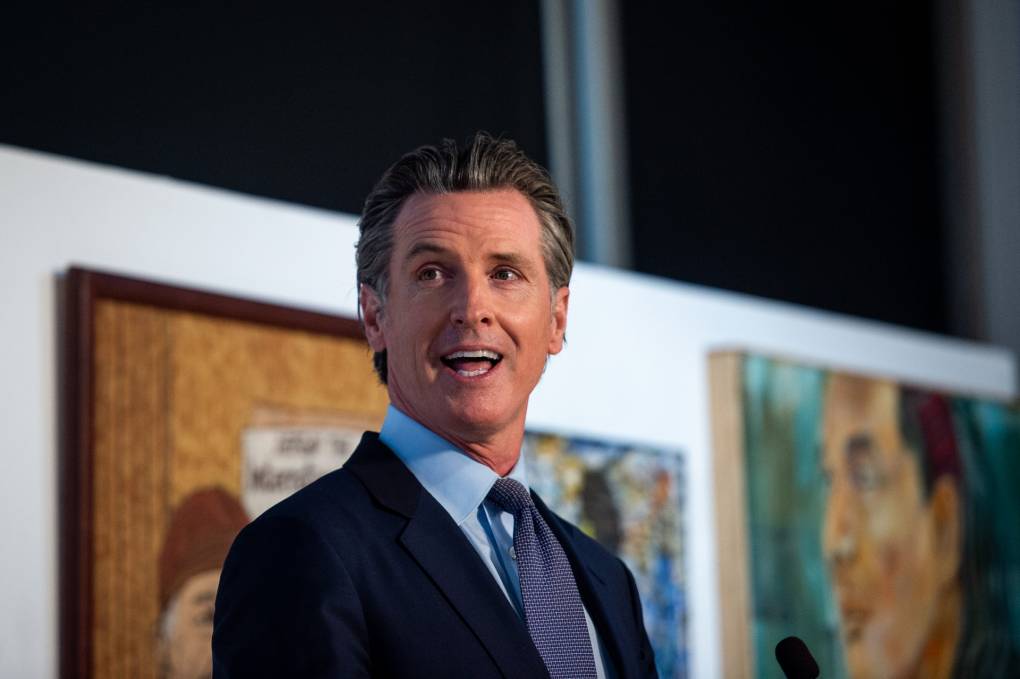
"caption": "Gov. Gavin Newsom speaks at a press conference to introduce his nominee for California attorney general, Assemblyman Rob Bonta, at the International Hotel Manilatown Center in San Francisco on March 24, 2021.",
"description": null,
"title": "RS48059_003_SanFrancisco_NewsomBontaPressConference_03242021-qut",
"credit": "Beth LaBerge/KQED",
"status": "inherit",
"altTag": null,
"isLoading": false,
"fetchFailed": false
},
"news_11882970": {
"type": "attachments",
"id": "news_11882970",
"meta": {
"index": "attachments_1716263798",
"site": "news",
"id": "11882970",
"found": true
},
"parent": 11882945,
"imgSizes": {
"twentyfourteen-full-width": {
"file": "https://ww2.kqed.org/app/uploads/sites/10/2021/07/illustration_NewsomFunders_v1-1038x576.jpeg",
"width": 1038,
"mimeType": "image/jpeg",
"height": 576
},
"thumbnail": {
"file": "https://ww2.kqed.org/app/uploads/sites/10/2021/07/illustration_NewsomFunders_v1-160x106.jpeg",
"width": 160,
"mimeType": "image/jpeg",
"height": 106
},
"post-thumbnail": {
"file": "https://ww2.kqed.org/app/uploads/sites/10/2021/07/illustration_NewsomFunders_v1-672x372.jpeg",
"width": 672,
"mimeType": "image/jpeg",
"height": 372
},
"kqedFullSize": {
"file": "https://ww2.kqed.org/app/uploads/sites/10/2021/07/illustration_NewsomFunders_v1.jpeg",
"width": 1200,
"height": 798
},
"large": {
"file": "https://ww2.kqed.org/app/uploads/sites/10/2021/07/illustration_NewsomFunders_v1-1020x678.jpeg",
"width": 1020,
"mimeType": "image/jpeg",
"height": 678
},
"medium": {
"file": "https://ww2.kqed.org/app/uploads/sites/10/2021/07/illustration_NewsomFunders_v1-800x532.jpeg",
"width": 800,
"mimeType": "image/jpeg",
"height": 532
}
},
"publishDate": 1627585482,
"modified": 1627585498,
"caption": null,
"description": null,
"title": "illustration_NewsomFunders_v1",
"credit": "Illustration by Anne Wernikoff, CalMatters; Shae Hammond, CalMatters; iStock",
"status": "inherit",
"altTag": null,
"isLoading": false,
"fetchFailed": false
},
"news_11882903": {
"type": "attachments",
"id": "news_11882903",
"meta": {
"index": "attachments_1716263798",
"site": "news",
"id": "11882903",
"found": true
},
"parent": 11882852,
"imgSizes": {
"twentyfourteen-full-width": {
"file": "https://ww2.kqed.org/app/uploads/sites/10/2021/07/GettyImages-1231929300-1-1038x576.jpg",
"width": 1038,
"mimeType": "image/jpeg",
"height": 576
},
"thumbnail": {
"file": "https://ww2.kqed.org/app/uploads/sites/10/2021/07/GettyImages-1231929300-1-160x107.jpg",
"width": 160,
"mimeType": "image/jpeg",
"height": 107
},
"post-thumbnail": {
"file": "https://ww2.kqed.org/app/uploads/sites/10/2021/07/GettyImages-1231929300-1-672x372.jpg",
"width": 672,
"mimeType": "image/jpeg",
"height": 372
},
"kqedFullSize": {
"file": "https://ww2.kqed.org/app/uploads/sites/10/2021/07/GettyImages-1231929300-1-scaled.jpg",
"width": 2560,
"height": 1707
},
"2048x2048": {
"file": "https://ww2.kqed.org/app/uploads/sites/10/2021/07/GettyImages-1231929300-1-2048x1365.jpg",
"width": 2048,
"mimeType": "image/jpeg",
"height": 1365
},
"large": {
"file": "https://ww2.kqed.org/app/uploads/sites/10/2021/07/GettyImages-1231929300-1-1020x680.jpg",
"width": 1020,
"mimeType": "image/jpeg",
"height": 680
},
"1536x1536": {
"file": "https://ww2.kqed.org/app/uploads/sites/10/2021/07/GettyImages-1231929300-1-1536x1024.jpg",
"width": 1536,
"mimeType": "image/jpeg",
"height": 1024
},
"full-width": {
"file": "https://ww2.kqed.org/app/uploads/sites/10/2021/07/GettyImages-1231929300-1-1920x1280.jpg",
"width": 1920,
"mimeType": "image/jpeg",
"height": 1280
},
"medium": {
"file": "https://ww2.kqed.org/app/uploads/sites/10/2021/07/GettyImages-1231929300-1-800x533.jpg",
"width": 800,
"mimeType": "image/jpeg",
"height": 533
}
},
"publishDate": 1627520588,
"modified": 1627520632,
"caption": "A nurse administers a COVID-19 vaccine to a woman at a vaccine rollout targeting immigrants and the undocumented organized by the St. John's Well Child and Family Center in Los Angeles on March 25, 2021. Undocumented immigrants 50 or older will soon be eligible for Medi-Cal, thanks to a legislation signed by Gov. Gavin Newsom this Tuesday.",
"description": "A nurse administers a COVID-19 vaccine to a woman at a vaccine rollout targeting immigrants and the undocumented organized by the St. John's Well Child and Family Center in Los Angeles on March 25, 2021.",
"title": "US-HEALTH-VIRUS-IMMIGRATION",
"credit": "Frederic J. Brown/AFP via Getty Images",
"status": "inherit",
"altTag": "A nurse wearing glasses with their hair tied up administers a vaccine into a person's left arm.",
"isLoading": false,
"fetchFailed": false
},
"news_11882778": {
"type": "attachments",
"id": "news_11882778",
"meta": {
"index": "attachments_1716263798",
"site": "news",
"id": "11882778",
"found": true
},
"parent": 11882764,
"imgSizes": {
"twentyfourteen-full-width": {
"file": "https://ww2.kqed.org/app/uploads/sites/10/2021/07/E7ZuXYXUUAETbzK-1038x576.jpg",
"width": 1038,
"mimeType": "image/jpeg",
"height": 576
},
"thumbnail": {
"file": "https://ww2.kqed.org/app/uploads/sites/10/2021/07/E7ZuXYXUUAETbzK-160x107.jpg",
"width": 160,
"mimeType": "image/jpeg",
"height": 107
},
"post-thumbnail": {
"file": "https://ww2.kqed.org/app/uploads/sites/10/2021/07/E7ZuXYXUUAETbzK-672x372.jpg",
"width": 672,
"mimeType": "image/jpeg",
"height": 372
},
"kqedFullSize": {
"file": "https://ww2.kqed.org/app/uploads/sites/10/2021/07/E7ZuXYXUUAETbzK.jpg",
"width": 2048,
"height": 1365
},
"large": {
"file": "https://ww2.kqed.org/app/uploads/sites/10/2021/07/E7ZuXYXUUAETbzK-1020x680.jpg",
"width": 1020,
"mimeType": "image/jpeg",
"height": 680
},
"1536x1536": {
"file": "https://ww2.kqed.org/app/uploads/sites/10/2021/07/E7ZuXYXUUAETbzK-1536x1024.jpg",
"width": 1536,
"mimeType": "image/jpeg",
"height": 1024
},
"full-width": {
"file": "https://ww2.kqed.org/app/uploads/sites/10/2021/07/E7ZuXYXUUAETbzK-1920x1280.jpg",
"width": 1920,
"mimeType": "image/jpeg",
"height": 1280
},
"medium": {
"file": "https://ww2.kqed.org/app/uploads/sites/10/2021/07/E7ZuXYXUUAETbzK-800x533.jpg",
"width": 800,
"mimeType": "image/jpeg",
"height": 533
}
},
"publishDate": 1627498455,
"modified": 1627505301,
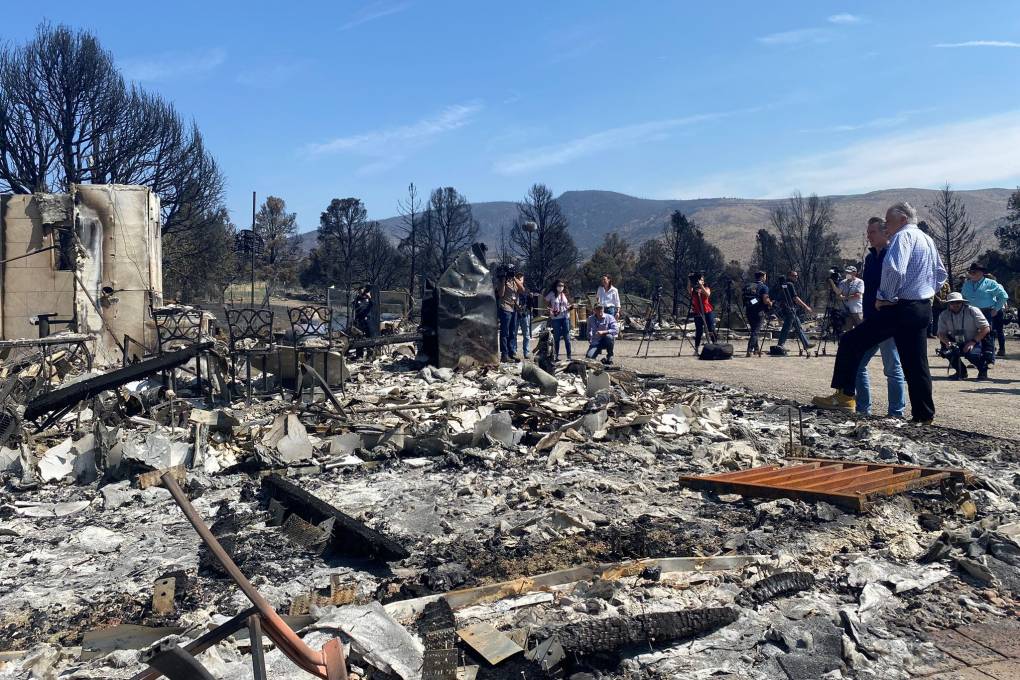
"caption": "California Gov. Gavin Newsom and Nevada Gov. Steve Sisolak tour some of the areas affected by the Tamarack Fire south of Lake Tahoe, near the California-Nevada border. Both governors stressed the role climate change has had in worsening fire season across the Western United States.",
"description": "California Governor Gavin Newsom and Nevada Governor Steve Sisolak tour some of the areas affected by the Tamarack Fire south of Lake Tahoe, near the California-Nevada border.",
"title": "E7ZuXYXUUAETbzK",
"credit": "Courtesy of the Office of Gov. Steve Sisolak",
"status": "inherit",
"altTag": "The image centers on the burnt remains of several homes. A fire has just passed by. To the right, two figures are visible observing the ruins. They are California Governor Gavin Newsom and Nevada Governor Steve Sisolak.",
"isLoading": false,
"fetchFailed": false
},
"news_11882669": {
"type": "attachments",
"id": "news_11882669",
"meta": {
"index": "attachments_1716263798",
"site": "news",
"id": "11882669",
"found": true
},
"parent": 11882650,
"imgSizes": {
"twentyfourteen-full-width": {
"file": "https://ww2.kqed.org/app/uploads/sites/10/2021/07/thechoice_072721_final-1038x576.png",
"width": 1038,
"mimeType": "image/png",
"height": 576
},
"thumbnail": {
"file": "https://ww2.kqed.org/app/uploads/sites/10/2021/07/thechoice_072721_final-160x105.png",
"width": 160,
"mimeType": "image/png",
"height": 105
},
"post-thumbnail": {
"file": "https://ww2.kqed.org/app/uploads/sites/10/2021/07/thechoice_072721_final-672x372.png",
"width": 672,
"mimeType": "image/png",
"height": 372
},
"kqedFullSize": {
"file": "https://ww2.kqed.org/app/uploads/sites/10/2021/07/thechoice_072721_final.png",
"width": 1920,
"height": 1256
},
"large": {
"file": "https://ww2.kqed.org/app/uploads/sites/10/2021/07/thechoice_072721_final-1020x667.png",
"width": 1020,
"mimeType": "image/png",
"height": 667
},
"1536x1536": {
"file": "https://ww2.kqed.org/app/uploads/sites/10/2021/07/thechoice_072721_final-1536x1005.png",
"width": 1536,
"mimeType": "image/png",
"height": 1005
},
"medium": {
"file": "https://ww2.kqed.org/app/uploads/sites/10/2021/07/thechoice_072721_final-800x523.png",
"width": 800,
"mimeType": "image/png",
"height": 523
}
},
"publishDate": 1627424389,
"modified": 1627424464,
"caption": null,
"description": null,
"title": "thechoice_072721_final",
"credit": null,
"status": "inherit",
"altTag": "A Mark Fiore cartoon titled, \"The Choice\" that shows rising vaccinations on the left side while the right side shows rising hospitalizations, testing, deaths, masks forever and a plummeting economy.",
"isLoading": false,
"fetchFailed": false
},
"news_11882098": {
"type": "attachments",
"id": "news_11882098",
"meta": {
"index": "attachments_1716263798",
"site": "news",
"id": "11882098",
"found": true
},
"parent": 11881766,
"imgSizes": {
"twentyfourteen-full-width": {
"file": "https://ww2.kqed.org/app/uploads/sites/10/2021/07/RS50344_GettyImages-1317323951-qut-1038x576.jpg",
"width": 1038,
"mimeType": "image/jpeg",
"height": 576
},
"thumbnail": {
"file": "https://ww2.kqed.org/app/uploads/sites/10/2021/07/RS50344_GettyImages-1317323951-qut-160x107.jpg",
"width": 160,
"mimeType": "image/jpeg",
"height": 107
},
"post-thumbnail": {
"file": "https://ww2.kqed.org/app/uploads/sites/10/2021/07/RS50344_GettyImages-1317323951-qut-672x372.jpg",
"width": 672,
"mimeType": "image/jpeg",
"height": 372
},
"kqedFullSize": {
"file": "https://ww2.kqed.org/app/uploads/sites/10/2021/07/RS50344_GettyImages-1317323951-qut.jpg",
"width": 1920,
"height": 1287
},
"large": {
"file": "https://ww2.kqed.org/app/uploads/sites/10/2021/07/RS50344_GettyImages-1317323951-qut-1020x684.jpg",
"width": 1020,
"mimeType": "image/jpeg",
"height": 684
},
"1536x1536": {
"file": "https://ww2.kqed.org/app/uploads/sites/10/2021/07/RS50344_GettyImages-1317323951-qut-1536x1030.jpg",
"width": 1536,
"mimeType": "image/jpeg",
"height": 1030
},
"medium": {
"file": "https://ww2.kqed.org/app/uploads/sites/10/2021/07/RS50344_GettyImages-1317323951-qut-800x536.jpg",
"width": 800,
"mimeType": "image/jpeg",
"height": 536
}
},
"publishDate": 1626971018,
"modified": 1627410308,
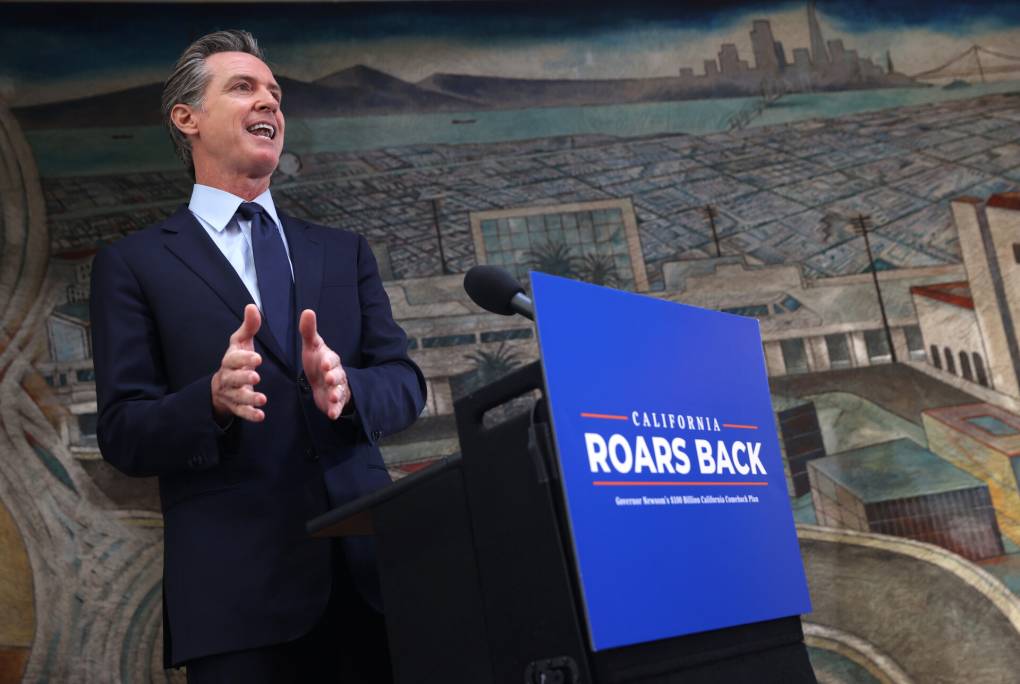
"caption": "California Gov. Gavin Newsom announces a $100 billion economic recovery proposal for the state during a press conference at The Unity Council on May 10, 2021 in Oakland, California.",
"description": null,
"title": "California Governor Newsom Unveils His Economic Recovery Package For The State",
"credit": "Justin Sullivan/Getty Images",
"status": "inherit",
"altTag": null,
"isLoading": false,
"fetchFailed": false
},
"news_11882472": {
"type": "attachments",
"id": "news_11882472",
"meta": {
"index": "attachments_1716263798",
"site": "news",
"id": "11882472",
"found": true
},
"parent": 11882436,
"imgSizes": {
"twentyfourteen-full-width": {
"file": "https://ww2.kqed.org/app/uploads/sites/10/2021/07/GettyImages-1311148803-scaled-1-1038x576.jpeg",
"width": 1038,
"mimeType": "image/jpeg",
"height": 576
},
"thumbnail": {
"file": "https://ww2.kqed.org/app/uploads/sites/10/2021/07/GettyImages-1311148803-scaled-1-160x107.jpeg",
"width": 160,
"mimeType": "image/jpeg",
"height": 107
},
"post-thumbnail": {
"file": "https://ww2.kqed.org/app/uploads/sites/10/2021/07/GettyImages-1311148803-scaled-1-672x372.jpeg",
"width": 672,
"mimeType": "image/jpeg",
"height": 372
},
"kqedFullSize": {
"file": "https://ww2.kqed.org/app/uploads/sites/10/2021/07/GettyImages-1311148803-scaled-1.jpeg",
"width": 2560,
"height": 1709
},
"2048x2048": {
"file": "https://ww2.kqed.org/app/uploads/sites/10/2021/07/GettyImages-1311148803-scaled-1-2048x1367.jpeg",
"width": 2048,
"mimeType": "image/jpeg",
"height": 1367
},
"large": {
"file": "https://ww2.kqed.org/app/uploads/sites/10/2021/07/GettyImages-1311148803-scaled-1-1020x681.jpeg",
"width": 1020,
"mimeType": "image/jpeg",
"height": 681
},
"1536x1536": {
"file": "https://ww2.kqed.org/app/uploads/sites/10/2021/07/GettyImages-1311148803-scaled-1-1536x1025.jpeg",
"width": 1536,
"mimeType": "image/jpeg",
"height": 1025
},
"full-width": {
"file": "https://ww2.kqed.org/app/uploads/sites/10/2021/07/GettyImages-1311148803-scaled-1-1920x1282.jpeg",
"width": 1920,
"mimeType": "image/jpeg",
"height": 1282
},
"medium": {
"file": "https://ww2.kqed.org/app/uploads/sites/10/2021/07/GettyImages-1311148803-scaled-1-800x534.jpeg",
"width": 800,
"mimeType": "image/jpeg",
"height": 534
}
},
"publishDate": 1627337029,
"modified": 1627339264,
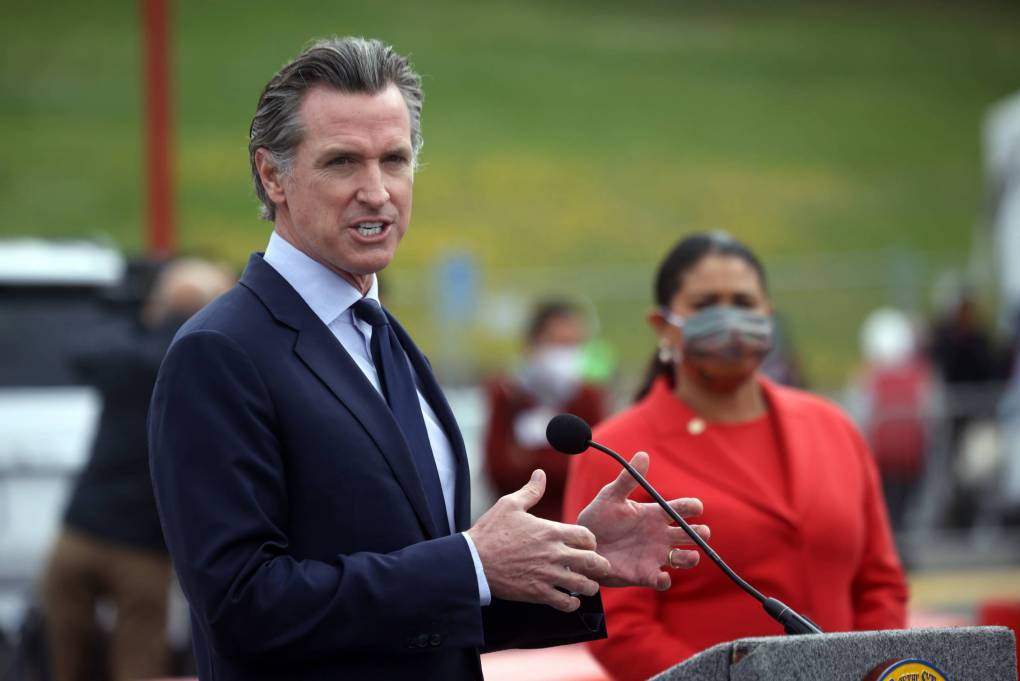
"caption": "California Gov. Gavin Newsom (L) speaks during a news conference after touring the vaccination clinic at City College of San Francisco with San Francisco Mayor London Breed (R) on April 6, 2021 in San Francisco. ",
"description": "California Gov. Gavin Newsom (L) speaks during a news conference after touring the vaccination clinic at City College of San Francisco with San Francisco Mayor London Breed (R) on April 06, 2021 in San Francisco, California. ",
"title": "GettyImages-1311148803-scaled",
"credit": "Justin Sullivan/Getty Images",
"status": "inherit",
"altTag": "Gov. Gavin Newsom at a conference.",
"isLoading": false,
"fetchFailed": false
},
"news_11881845": {
"type": "attachments",
"id": "news_11881845",
"meta": {
"index": "attachments_1716263798",
"site": "news",
"id": "11881845",
"found": true
},
"parent": 11881811,
"imgSizes": {
"twentyfourteen-full-width": {
"file": "https://ww2.kqed.org/app/uploads/sites/10/2021/07/RS50312_GettyImages-1302667624-qut-1038x576.jpg",
"width": 1038,
"mimeType": "image/jpeg",
"height": 576
},
"thumbnail": {
"file": "https://ww2.kqed.org/app/uploads/sites/10/2021/07/RS50312_GettyImages-1302667624-qut-160x107.jpg",
"width": 160,
"mimeType": "image/jpeg",
"height": 107
},
"post-thumbnail": {
"file": "https://ww2.kqed.org/app/uploads/sites/10/2021/07/RS50312_GettyImages-1302667624-qut-672x372.jpg",
"width": 672,
"mimeType": "image/jpeg",
"height": 372
},
"kqedFullSize": {
"file": "https://ww2.kqed.org/app/uploads/sites/10/2021/07/RS50312_GettyImages-1302667624-qut.jpg",
"width": 1920,
"height": 1280
},
"large": {
"file": "https://ww2.kqed.org/app/uploads/sites/10/2021/07/RS50312_GettyImages-1302667624-qut-1020x680.jpg",
"width": 1020,
"mimeType": "image/jpeg",
"height": 680
},
"1536x1536": {
"file": "https://ww2.kqed.org/app/uploads/sites/10/2021/07/RS50312_GettyImages-1302667624-qut-1536x1024.jpg",
"width": 1536,
"mimeType": "image/jpeg",
"height": 1024
},
"medium": {
"file": "https://ww2.kqed.org/app/uploads/sites/10/2021/07/RS50312_GettyImages-1302667624-qut-800x533.jpg",
"width": 800,
"mimeType": "image/jpeg",
"height": 533
}
},
"publishDate": 1626823865,
"modified": 1626825747,
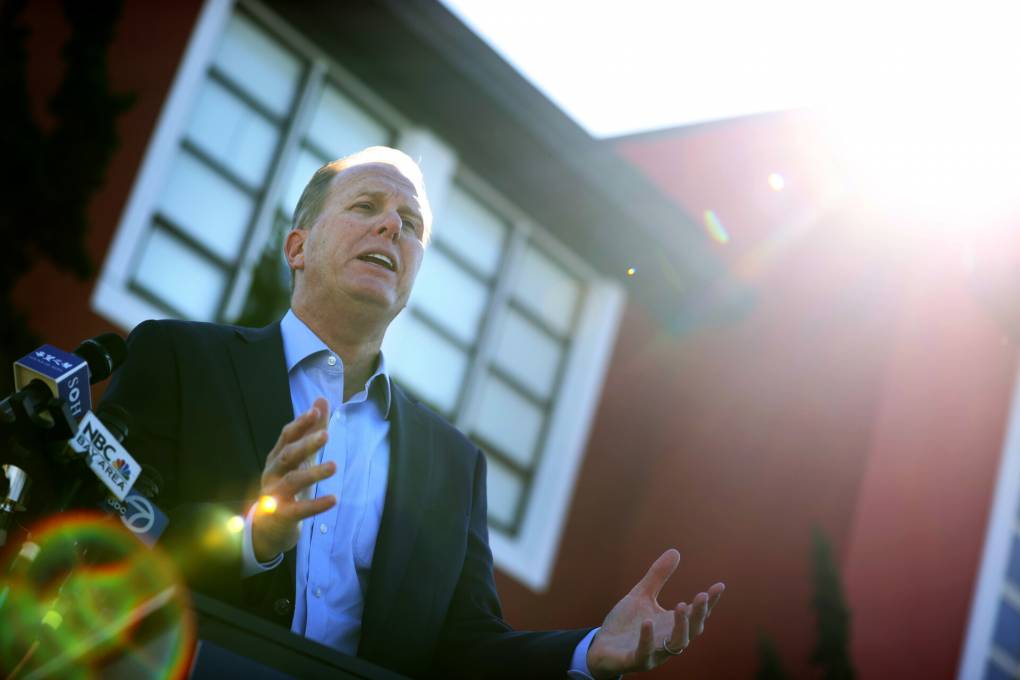
"caption": "Former San Diego Mayor Kevin Faulconer, a GOP candidate to replace Gov. Gavin Newsom — along with talk show host and fellow Republican gubernatorial candidate Larry Elder — is suing Secretary of State Shirley Weber over ballot issues.",
"description": "Former San Diego Mayor Kevin Faulconer, a GOP candidate to replace Gov. Gavin Newsom - along with talk show host and fellow Republican gubernatorial candidate Larry Elder – is suing Secretary of State Shirley Weber over ballot issues.",
"title": "Former San Diego Mayor Kevin Faulconer Campaigns For California Governor As Newsom Faces Possible Recall",
"credit": "Justin Sullivan/Getty Images",
"status": "inherit",
"altTag": null,
"isLoading": false,
"fetchFailed": false
},
"news_11876538": {
"type": "attachments",
"id": "news_11876538",
"meta": {
"index": "attachments_1716263798",
"site": "news",
"id": "11876538",
"found": true
},
"parent": 11876535,
"imgSizes": {
"twentyfourteen-full-width": {
"file": "https://ww2.kqed.org/app/uploads/sites/10/2021/06/RS31296_GettyImages-968048630-qut-1038x576.jpg",
"width": 1038,
"mimeType": "image/jpeg",
"height": 576
},
"thumbnail": {
"file": "https://ww2.kqed.org/app/uploads/sites/10/2021/06/RS31296_GettyImages-968048630-qut-160x107.jpg",
"width": 160,
"mimeType": "image/jpeg",
"height": 107
},
"post-thumbnail": {
"file": "https://ww2.kqed.org/app/uploads/sites/10/2021/06/RS31296_GettyImages-968048630-qut-672x372.jpg",
"width": 672,
"mimeType": "image/jpeg",
"height": 372
},
"kqedFullSize": {
"file": "https://ww2.kqed.org/app/uploads/sites/10/2021/06/RS31296_GettyImages-968048630-qut.jpg",
"width": 1920,
"height": 1280
},
"large": {
"file": "https://ww2.kqed.org/app/uploads/sites/10/2021/06/RS31296_GettyImages-968048630-qut-1020x680.jpg",
"width": 1020,
"mimeType": "image/jpeg",
"height": 680
},
"1536x1536": {
"file": "https://ww2.kqed.org/app/uploads/sites/10/2021/06/RS31296_GettyImages-968048630-qut-1536x1024.jpg",
"width": 1536,
"mimeType": "image/jpeg",
"height": 1024
},
"medium": {
"file": "https://ww2.kqed.org/app/uploads/sites/10/2021/06/RS31296_GettyImages-968048630-qut-800x533.jpg",
"width": 800,
"mimeType": "image/jpeg",
"height": 533
}
},
"publishDate": 1622744958,
"modified": 1673047047,
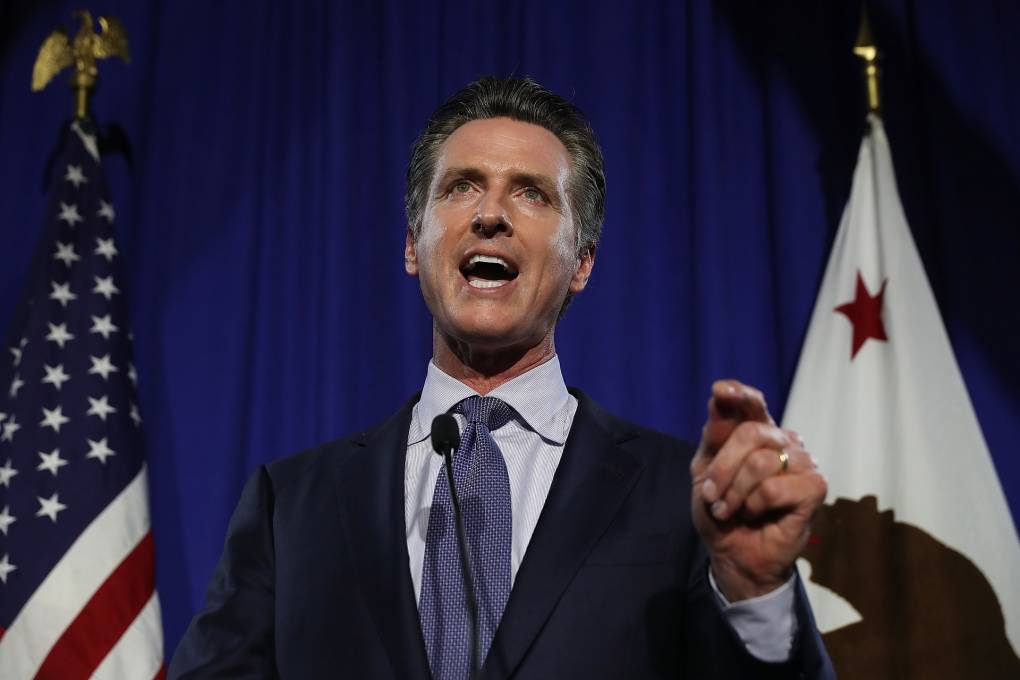
"caption": "Gov. Gavin Newsom speaks during his primary election night gathering on June 5, 2018, in San Francisco.",
"description": null,
"title": "California Gubernatorial Candidate Gavin Newsom Holds Primary Night Event In San Francisco",
"credit": "Justin Sullivan/Getty Images",
"status": "inherit",
"altTag": "A white man in a blue suit and blue tie flanked by the US flag and the California flag points his finger as he speaks.",
"isLoading": false,
"fetchFailed": false
},
"news_11881337": {
"type": "attachments",
"id": "news_11881337",
"meta": {
"index": "attachments_1716263798",
"site": "news",
"id": "11881337",
"found": true
},
"parent": 11881314,
"imgSizes": {
"twentyfourteen-full-width": {
"file": "https://ww2.kqed.org/app/uploads/sites/10/2021/07/28090518140_9304c72ab9_k-1-1038x576.jpg",
"width": 1038,
"mimeType": "image/jpeg",
"height": 576
},
"thumbnail": {
"file": "https://ww2.kqed.org/app/uploads/sites/10/2021/07/28090518140_9304c72ab9_k-1-160x107.jpg",
"width": 160,
"mimeType": "image/jpeg",
"height": 107
},
"post-thumbnail": {
"file": "https://ww2.kqed.org/app/uploads/sites/10/2021/07/28090518140_9304c72ab9_k-1-672x372.jpg",
"width": 672,
"mimeType": "image/jpeg",
"height": 372
},
"kqedFullSize": {
"file": "https://ww2.kqed.org/app/uploads/sites/10/2021/07/28090518140_9304c72ab9_k-1.jpg",
"width": 1920,
"height": 1280
},
"large": {
"file": "https://ww2.kqed.org/app/uploads/sites/10/2021/07/28090518140_9304c72ab9_k-1-1020x680.jpg",
"width": 1020,
"mimeType": "image/jpeg",
"height": 680
},
"1536x1536": {
"file": "https://ww2.kqed.org/app/uploads/sites/10/2021/07/28090518140_9304c72ab9_k-1-1536x1024.jpg",
"width": 1536,
"mimeType": "image/jpeg",
"height": 1024
},
"medium": {
"file": "https://ww2.kqed.org/app/uploads/sites/10/2021/07/28090518140_9304c72ab9_k-1-800x533.jpg",
"width": 800,
"mimeType": "image/jpeg",
"height": 533
}
},
"publishDate": 1626391091,
"modified": 1626391171,
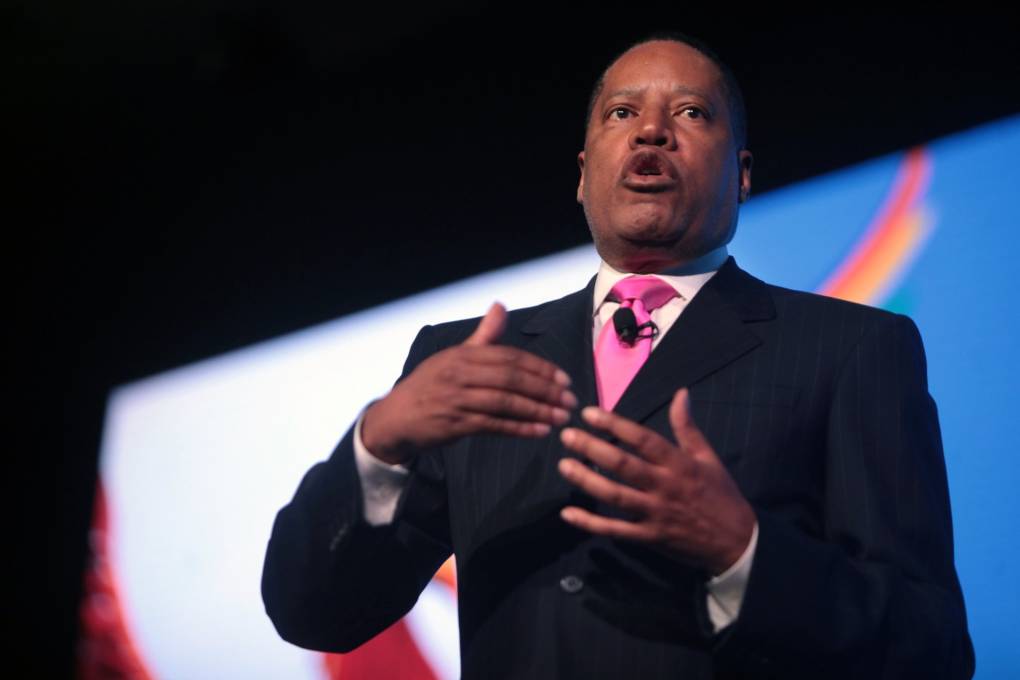
"caption": "Larry Elder speaking at the 2016 FreedomFest at Planet Hollywood in Las Vegas, Nevada. The radio talk show host is running for California governor as a Republican.",
"description": "Larry Elder speaking at the 2016 FreedomFest at Planet Hollywood in Las Vegas, Nevada. The radio talk show host is running for California governor as a Republican.",
"title": "28090518140_9304c72ab9_k (1)",
"credit": "Gage Skidmore/Flickr",
"status": "inherit",
"altTag": null,
"isLoading": false,
"fetchFailed": false
}
},
"audioPlayerReducer": {
"postId": "stream_live",
"isPaused": true,
"isPlaying": false,
"pfsActive": false,
"pledgeModalIsOpen": true,
"playerDrawerIsOpen": false,
"liveAudioPlayStartedAt": 0,
"liveAudioPlayContext": ""
},
"authorsReducer": {
"byline_news_11883475": {
"type": "authors",
"id": "byline_news_11883475",
"meta": {
"override": true
},
"slug": "byline_news_11883475",
"name": "Kathleen Ronayne and Michael R. Blood \u003cbr> The Associated Press",
"isLoading": false
},
"byline_news_11882945": {
"type": "authors",
"id": "byline_news_11882945",
"meta": {
"override": true
},
"slug": "byline_news_11882945",
"name": "Ben Christopher",
"isLoading": false
},
"byline_news_11882764": {
"type": "authors",
"id": "byline_news_11882764",
"meta": {
"override": true
},
"slug": "byline_news_11882764",
"name": "The Associated Press",
"isLoading": false
},
"byline_news_11882436": {
"type": "authors",
"id": "byline_news_11882436",
"meta": {
"override": true
},
"slug": "byline_news_11882436",
"name": "Ana B. Ibarra\u003cbr>CalMatters",
"isLoading": false
},
"gmarzorati": {
"type": "authors",
"id": "227",
"meta": {
"index": "authors_1716337520",
"id": "227",
"found": true
},
"name": "Guy Marzorati",
"firstName": "Guy",
"lastName": "Marzorati",
"slug": "gmarzorati",
"email": "gmarzorati@KQED.org",
"display_author_email": true,
"staff_mastheads": [
"news"
],
"title": "Correspondent",
"bio": "Guy Marzorati is a correspondent on KQED's California Politics and Government Desk, based in San Jose. A graduate of Santa Clara University, Guy joined KQED in 2013. He reports on state and local politics and produces KQED's digital voter guide.",
"avatar": "https://secure.gravatar.com/avatar/e7038b8dbfd55b104369b76b1cd0b9de?s=600&d=blank&r=g",
"twitter": "guymarzorati",
"facebook": null,
"instagram": null,
"linkedin": null,
"sites": [
{
"site": "",
"roles": [
"editor"
]
},
{
"site": "news",
"roles": [
"editor"
]
},
{
"site": "science",
"roles": [
"editor"
]
},
{
"site": "forum",
"roles": [
"editor"
]
},
{
"site": "elections",
"roles": [
"editor"
]
},
{
"site": "liveblog",
"roles": [
"editor"
]
}
],
"headData": {
"title": "Guy Marzorati | KQED",
"description": "Correspondent",
"ogImgSrc": "https://secure.gravatar.com/avatar/e7038b8dbfd55b104369b76b1cd0b9de?s=600&d=blank&r=g",
"twImgSrc": "https://secure.gravatar.com/avatar/e7038b8dbfd55b104369b76b1cd0b9de?s=600&d=blank&r=g"
},
"isLoading": false,
"link": "/author/gmarzorati"
},
"kqednewsstaffandwires": {
"type": "authors",
"id": "237",
"meta": {
"index": "authors_1716337520",
"id": "237",
"found": true
},
"name": "KQED News Staff and Wires",
"firstName": "KQED News Staff and Wires",
"lastName": null,
"slug": "kqednewsstaffandwires",
"email": "onlinenewsstaff@kqed.org",
"display_author_email": false,
"staff_mastheads": [],
"title": null,
"bio": null,
"avatar": "https://secure.gravatar.com/avatar/72295af8ebbfbd19a4948f5271285664?s=600&d=blank&r=g",
"twitter": null,
"facebook": null,
"instagram": null,
"linkedin": null,
"sites": [
{
"site": "arts",
"roles": [
"contributor"
]
},
{
"site": "news",
"roles": [
"contributor"
]
},
{
"site": "lowdown",
"roles": [
"author"
]
},
{
"site": "stateofhealth",
"roles": [
"contributor"
]
},
{
"site": "food",
"roles": [
"author"
]
}
],
"headData": {
"title": "KQED News Staff and Wires | KQED",
"description": null,
"ogImgSrc": "https://secure.gravatar.com/avatar/72295af8ebbfbd19a4948f5271285664?s=600&d=blank&r=g",
"twImgSrc": "https://secure.gravatar.com/avatar/72295af8ebbfbd19a4948f5271285664?s=600&d=blank&r=g"
},
"isLoading": false,
"link": "/author/kqednewsstaffandwires"
},
"scottshafer": {
"type": "authors",
"id": "255",
"meta": {
"index": "authors_1716337520",
"id": "255",
"found": true
},
"name": "Scott Shafer",
"firstName": "Scott",
"lastName": "Shafer",
"slug": "scottshafer",
"email": "sshafer@kqed.org",
"display_author_email": false,
"staff_mastheads": [
"news"
],
"title": "KQED Contributor",
"bio": "Scott Shafer is a senior editor with the KQED Politics and Government desk. He is co-host of Political Breakdown, the award-winning radio show and podcast with a personal take on the world of politics. Scott came to KQED in 1998 to host the statewide\u003cem> California Report\u003c/em>. Prior to that he had extended stints in politics and government\u003cem>.\u003c/em> He uses that inside experience at KQED in his, reporting, hosting and analysis for the politics desk. Scott collaborated \u003cem>Political Breakdown a\u003c/em>nd on \u003cem>The Political Mind of Jerry Brown, \u003c/em>an eight-part series about the life and extraordinary political career of the former governor. For fun, he plays water polo with the San Francisco Tsunami.",
"avatar": "https://secure.gravatar.com/avatar/a62ebae45b79d7aed1a39a0e3bf68104?s=600&d=blank&r=g",
"twitter": "scottshafer",
"bluesky": null,
"facebook": null,
"instagram": null,
"linkedin": null,
"sites": [
{
"site": "news",
"roles": [
"editor"
]
},
{
"site": "stateofhealth",
"roles": [
"author"
]
},
{
"site": "science",
"roles": [
"author"
]
},
{
"site": "forum",
"roles": [
"subscriber"
]
},
{
"site": "liveblog",
"roles": [
"author"
]
}
],
"headData": {
"title": "Scott Shafer | KQED",
"description": "KQED Contributor",
"ogImgSrc": "https://secure.gravatar.com/avatar/a62ebae45b79d7aed1a39a0e3bf68104?s=600&d=blank&r=g",
"twImgSrc": "https://secure.gravatar.com/avatar/a62ebae45b79d7aed1a39a0e3bf68104?s=600&d=blank&r=g"
},
"isLoading": false,
"link": "/author/scottshafer"
},
"markfiore": {
"type": "authors",
"id": "3236",
"meta": {
"index": "authors_1716337520",
"id": "3236",
"found": true
},
"name": "Mark Fiore",
"firstName": "Mark",
"lastName": "Fiore",
"slug": "markfiore",
"email": "mark@markfiore.com",
"display_author_email": false,
"staff_mastheads": [
"news"
],
"title": "KQED News Cartoonist",
"bio": "\u003ca href=\"http://www.MarkFiore.com\">MarkFiore.com\u003c/a> | \u003ca href=\"https://twitter.com/markfiore\">Follow on Twitter\u003c/a> | \u003ca href=\"https://www.facebook.com/pages/Mark-Fiore-Animated-Political-Cartoons/94451707396?ref=bookmarks\">Facebook\u003c/a> | \u003ca href=\"mailto:mark@markfiore.com\">email\u003c/a>\r\n\r\nPulitzer Prize-winner, Mark Fiore, who the Wall Street Journal has called “the undisputed guru of the form,” creates animated political cartoons in San Francisco, where his work has been featured regularly on the San Francisco Chronicle’s web site, SFGate.com. His work has appeared on Newsweek.com, Slate.com, CBSNews.com, MotherJones.com, DailyKos.com and NPR’s web site. Fiore’s political animation has appeared on CNN, Frontline, Bill Moyers Journal, Salon.com and cable and broadcast outlets across the globe.\r\n\r\nBeginning his professional life by drawing traditional political cartoons for newspapers, Fiore’s work appeared in publications ranging from the Washington Post to the Los Angeles Times. In the late 1990s, he began to experiment with animating political cartoons and, after a short stint at the San Jose Mercury News as their staff cartoonist, Fiore devoted all his energies to animation.\r\nGrowing up in California, Fiore also spent a good portion of his life in the backwoods of Idaho. It was this combination that shaped him politically. Mark majored in political science at Colorado College, where, in a perfect send-off for a cartoonist, he received his diploma in 1991 as commencement speaker Dick Cheney smiled approvingly.\r\nMark Fiore was awarded the Pulitzer Prize for political cartooning in 2010, a Robert F. Kennedy Journalism Award in 2004 and has twice received an Online Journalism Award for commentary from the Online News Association (2002, 2008). Fiore has received two awards for his work in new media from the National Cartoonists Society (2001, 2002), and in 2006 received The James Madison Freedom of Information Award from The Society of Professional Journalists.",
"avatar": "https://secure.gravatar.com/avatar/fc4e2a612b15b67bad0c6f0e1db4ca9b?s=600&d=blank&r=g",
"twitter": "MarkFiore",
"facebook": null,
"instagram": "https://www.instagram.com/markfiore/?hl=en",
"linkedin": null,
"sites": [
{
"site": "arts",
"roles": [
"contributor"
]
},
{
"site": "news",
"roles": [
"editor"
]
},
{
"site": "futureofyou",
"roles": [
"editor"
]
},
{
"site": "science",
"roles": [
"editor"
]
}
],
"headData": {
"title": "Mark Fiore | KQED",
"description": "KQED News Cartoonist",
"ogImgSrc": "https://secure.gravatar.com/avatar/fc4e2a612b15b67bad0c6f0e1db4ca9b?s=600&d=blank&r=g",
"twImgSrc": "https://secure.gravatar.com/avatar/fc4e2a612b15b67bad0c6f0e1db4ca9b?s=600&d=blank&r=g"
},
"isLoading": false,
"link": "/author/markfiore"
},
"korr": {
"type": "authors",
"id": "11200",
"meta": {
"index": "authors_1716337520",
"id": "11200",
"found": true
},
"name": "Katie Orr",
"firstName": "Katie",
"lastName": "Orr",
"slug": "korr",
"email": "korr@kqed.org",
"display_author_email": false,
"staff_mastheads": [],
"title": "KQED Contributor",
"bio": "Katie Orr was a Sacramento-based reporter for KQED's Politics and Government Desk, covering the state Capitol and a variety of issues including women in politics, voting and elections and legislation. Prior to joining KQED in 2016, Katie was state government reporter for Capital Public Radio in Sacramento. She's also worked for KPBS in San Diego, where she covered City Hall.\r\n\r\nKatie received her masters degree in political science from San Diego State University and holds a Bachelors degree in broadcast journalism from Arizona State University.\r\n\r\nIn 2015 Katie won a national Clarion Award for a series of stories she did on women in California politics. She's been honored by the Society for Professional Journalists and, in 2013, was named by \u003cem>The Washington Post\u003c/em> as one of the country's top state Capitol reporters. She's also reported for the award-winning documentary series \u003cem>The View from Here \u003c/em>and was part of the team that won national PRNDI and Gabriel Awards in 2015. She lives in Sacramento with her husband. Twitter: @1KatieOrr",
"avatar": "https://secure.gravatar.com/avatar/41a40b25845adc78f50808670860449e?s=600&d=blank&r=g",
"twitter": "1katieorr",
"facebook": null,
"instagram": null,
"linkedin": null,
"sites": [
{
"site": "news",
"roles": [
"subscriber"
]
},
{
"site": "stateofhealth",
"roles": [
"author"
]
},
{
"site": "forum",
"roles": [
"author"
]
}
],
"headData": {
"title": "Katie Orr | KQED",
"description": "KQED Contributor",
"ogImgSrc": "https://secure.gravatar.com/avatar/41a40b25845adc78f50808670860449e?s=600&d=blank&r=g",
"twImgSrc": "https://secure.gravatar.com/avatar/41a40b25845adc78f50808670860449e?s=600&d=blank&r=g"
},
"isLoading": false,
"link": "/author/korr"
}
},
"pagesReducer": {
"news_tag_gavin-newsom": {
"type": "terms",
"id": "news_16",
"meta": {
"index": "terms_1716263798",
"site": "news",
"id": "16",
"score": 8.937016
},
"featImg": null,
"name": "Gavin Newsom",
"description": null,
"taxonomy": "tag",
"headData": {
"twImgId": null,
"twTitle": null,
"ogTitle": null,
"ogImgId": null,
"twDescription": null,
"description": null,
"title": "Gavin Newsom Archives | KQED News",
"ogDescription": null
},
"ttid": 16,
"slug": "gavin-newsom",
"isLoading": false,
"title": "Gavin Newsom",
"pageMeta": {
"site": "news",
"WpPageTemplate": "page-topic-editorial",
"currentPage": 57
},
"blocks": [
{
"blockName": "kqed/post-list",
"attrs": {
"layout": "cardArticle2",
"query": "posts/news?tag=gavin-newsom",
"seeMore": false,
"paginated": true,
"page": 57
}
},
{
"blockName": "kqed/ad"
}
]
}
},
"pfsSessionReducer": {},
"postsReducer": {
"stream_live": {
"type": "live",
"id": "stream_live",
"audioUrl": "https://streams.kqed.org/kqedradio",
"title": "Live Stream",
"excerpt": "Live Stream information currently unavailable.",
"link": "/radio",
"featImg": "",
"label": {
"name": "KQED Live",
"link": "/"
}
},
"stream_kqedNewscast": {
"type": "posts",
"id": "stream_kqedNewscast",
"audioUrl": "https://www.kqed.org/.stream/anon/radio/RDnews/newscast.mp3?_=1",
"title": "KQED Newscast",
"featImg": "",
"label": {
"name": "88.5 FM",
"link": "/"
}
},
"news_11884028": {
"type": "posts",
"id": "news_11884028",
"meta": {
"index": "posts_1716263798",
"site": "news",
"id": "11884028",
"score": null,
"sort": [
1628290205000
]
},
"guestAuthors": [],
"slug": "kevin-kiley-bets-parent-frustration-can-drive-his-recall-campaign",
"title": "Kevin Kiley Bets Parent Frustration Can Drive His Recall Campaign",
"publishDate": 1628290205,
"format": "standard",
"headTitle": "Kevin Kiley Bets Parent Frustration Can Drive His Recall Campaign | KQED",
"labelTerm": {
"site": "news"
},
"content": "\u003cp>The last time a Republican was swept into California’s governor’s office as a result of a recall election, Kevin Kiley had a front-row seat.\u003c/p>\n\u003cp>In early 2004, Kiley, having just wrapped up his freshman year of college, worked as an intern in the governor’s office as Arnold Schwarzenegger assumed the reigns of state government following his victory in the 2003 recall.\u003c/p>\n\u003cp>“I kind of had a firsthand view of this effort to get a government up and running after a kind of unexpected change in personnel,” Kiley remembers.\u003c/p>\n\u003cp>Now, Kiley is hoping another unexpected change will land him in the governor’s office. Kiley, three-term state assemblymember representing Rocklin, is one of the leading candidates to potentially replace Gov. Gavin Newsom in the Sept. 14 recall election. The only member of the state Legislature on the ballot, Kiley says Newsom’s response to the COVID-19 pandemic has been marked by executive overreach.\u003c/p>\n\u003cp>\u003ca href=\"https://www.kqed.org/news/11883011/kevin-kiley-on-his-recall-bid-and-plans-for-california-schools\">In an interview with KQED’s \u003cem>Political Breakdown\u003c/em>\u003c/a>, Kiley laid out his case against Newsom, and argued his experience in state government will allow him to move quickly in pursuit of an agenda that includes a move away from mask and vaccine requirements, and education policies that favor charter schools and a school voucher program.\u003c/p>\n\u003cp>[ad fullwidth]\u003c/p>\n\u003cp>“Having spent five years at the Capitol, I know exactly how broken our state government is,” he said. “I know exactly what the problems are and how I go about fixing them on day one.”\u003c/p>\n\u003cp>In the Legislature, Kiley has emerged as a leading critic of Newsom’s pandemic response. He filed suit against Newsom to curtail some of the governor’s executive actions (a court of appeal disagreed with his claims), and he even wrote a book laying out his case for the recall.\u003c/p>\n\u003cp>Kiley now says Newsom is overreaching with his \u003ca href=\"https://www.kqed.org/news/11883989/california-to-require-all-health-workers-be-fully-vaccinated-against-covid-19-by-end-of-september\" target=\"_blank\" rel=\"noopener noreferrer\">push to require vaccinations\u003c/a> for public employees and health care workers. State officials say the rules are needed because infections are on the rise among health care workers, despite their early access to the vaccine.\u003c/p>\n\u003cp>[aside tag=\"recall\" label=\"More Recall Coverage\"]\u003c/p>\n\u003cp>“People can make the choice for themselves as to whether they and their families do want to get vaccinated,” Kiley said.\u003c/p>\n\u003cp>Kiley said his path into politics was shaped by a stint at Manual Arts High School in Los Angeles, where he taught 10th grade English and started a debate team while in the Teach for America program.\u003c/p>\n\u003cp>“I had a really amazing experience, but I also saw how much our public education system is failing a lot of our kids,” he said. “The 10th graders that I taught would on average be at a fifth grade reading level when they came into my class.”\u003c/p>\n\u003cp>In the Assembly, Kiley serves as the top Republican on the Education Committee. He has been a vocal opponent of Newsom’s education policies, including a 2019 law that \u003ca href=\"https://www.gov.ca.gov/2019/10/03/governor-newsom-signs-charter-school-legislation-10-3-19/\" target=\"_blank\" rel=\"noopener noreferrer\">overhauled the state’s rules\u003c/a> governing charter schools. The changes, \u003ca href=\"https://leginfo.legislature.ca.gov/faces/billVotesClient.xhtml?bill_id=201920200AB1505\" target=\"_blank\" rel=\"noopener noreferrer\">which Kiley voted against\u003c/a>, allowed school officials to consider a district’s finances when weighing whether to approve a new charter school and placed a moratorium on non-classroom-based charter schools.\u003c/p>\n\u003cp>This past year, Kiley has aimed his ire at the governor’s handling of school reopenings, pointing to California’s slow return to in-person education as the “most egregious example” of Newsom’s failings as governor.\u003c/p>\n\u003cp>“This governor inflicted untold harm on a generation of young people while his own kids were in private school,” Kiley said.\u003c/p>\n\u003cp>While Republicans have traditionally preferred school decisions be left to local officials, Kiley said state leaders should have stepped in when some districts were slow to return kids to in-person learning.\u003c/p>\n\u003cp>In March, Newsom and legislative leaders struck a deal \u003ca href=\"https://www.kqed.org/news/11863208/california-legislature-approves-plan-to-reopen-schools\" target=\"_blank\" rel=\"noopener noreferrer\">to incentivize a return to classroom instruction, \u003c/a>sending billions of dollars to local districts. Most Republicans in the Legislature supported the move, but Kiley \u003ca href=\"https://leginfo.legislature.ca.gov/faces/billVotesClient.xhtml?bill_id=202120220AB86\" target=\"_blank\" rel=\"noopener noreferrer\">voted against the bill\u003c/a>, arguing it didn’t go far enough to mandate an end to distance learning.\u003c/p>\n\u003cp>“Responsible leadership on the part of our state government would have said ‘you need to open,’ ” he said. “Local control does not extend to whether you have school at all.”\u003c/p>\n\u003cp>While a statewide survey\u003ca href=\"https://www.ppic.org/publication/ppic-statewide-survey-californians-and-education-april-2021/\" target=\"_blank\" rel=\"noopener noreferrer\"> found positive marks\u003c/a> for Newsom’s handling of school reopenings, Kiley is convinced the underlying anger of some parents will open the door to sweeping changes to education policy in California.\u003c/p>\n\u003cp>To that end, Kiley is sponsoring a 2022 ballot initiative to create a school voucher system, allowing public school students to spend their allotment of state education funding on the school of their choice.\u003c/p>\n\u003cp>[pullquote size=\"medium\" align=\"right\" citation=\"Assemblymember Kevin Kiley, R-Rocklin\"]‘People can make the choice for themselves as to whether they and their families do want to get vaccinated.’[/pullquote]\u003c/p>\n\u003cp>The measure, Kiley said, “will not only empower families to do what’s right for their own kids and find the best fit for them, but also give incentives to the traditional public schools to, if they’re not serving students well, to get their act together in order to retain students.”\u003c/p>\n\u003cp>Previous \u003ca href=\"https://ballotpedia.org/California_Proposition_174,_School_Vouchers_(1993)\" target=\"_blank\" rel=\"noopener noreferrer\">school voucher initiatives\u003c/a> have \u003ca href=\"https://ballotpedia.org/California_Proposition_38,_School_Vouchers_Initiative_(2000)\" target=\"_blank\" rel=\"noopener noreferrer\">been trounced\u003c/a> by California voters (though the last was on the ballot in 2000), and critics of the idea argue that a system in which taxpayer dollars are funneled into private schools will lack any oversight and accountability.\u003c/p>\n\u003cp>While polls on the recall question have tightened in recent weeks, Kiley has lagged behind a handful of other potential replacement candidates. A \u003ca href=\"https://escholarship.org/uc/item/27x9k5qt\" target=\"_blank\" rel=\"noopener noreferrer\">survey from the UC Berkeley Institute of Governmental Studies\u003c/a> found him behind fellow Republicans Larry Elder, Kevin Faulconer and John Cox, with the backing of 5% of likely voters. An \u003ca href=\"https://emersonpolling.reportablenews.com/pr/newsom-clings-to-lead-in-recall-while-crime-becomes-a-top-issue-for-ca-voters\" target=\"_blank\" rel=\"noopener noreferrer\">Emerson College poll\u003c/a> also found him attracting support from 5% of the likely electorate.\u003c/p>\n\u003cp>Kiley has promised to move quickly if he is elected to replace Newsom in the recall election — even \u003ca href=\"https://twitter.com/KevinKileyCA/status/1423131908062388225?s=20\" target=\"_blank\" rel=\"noopener noreferrer\">joking that his rapid-fire delivery\u003c/a> at Wednesday’s candidate debate reflected his desired pace of change.\u003c/p>\n\u003cp>[ad floatright]\u003c/p>\n\u003cp>“By the time the recall is over, the Legislature will be adjourned for the year, but I’ll summon a special session,” Kiley said. “I’ll throw down the gantlet and say we need to pass sweeping reform on these key challenges facing the state: our failing public schools, homelessness, crime, the soaring cost of living.”\u003c/p>\n\n",
"blocks": [],
"excerpt": "State Assemblymember Kevin Kiley, R-Rocklin, is a leading candidate in the Sept. 14 recall election hoping to unseat Gov. Gavin Newsom. ",
"status": "publish",
"parent": 0,
"modified": 1721130219,
"stats": {
"hasAudio": false,
"hasVideo": false,
"hasChartOrMap": false,
"iframeSrcs": [],
"hasGoogleForm": false,
"hasGallery": false,
"hasHearkenModule": false,
"hasPolis": false,
"paragraphCount": 28,
"wordCount": 1104
},
"headData": {
"title": "Kevin Kiley Bets Parent Frustration Can Drive His Recall Campaign | KQED",
"description": "State Assemblymember Kevin Kiley, R-Rocklin, is a leading candidate in the Sept. 14 recall election hoping to unseat Gov. Gavin Newsom. ",
"ogTitle": "",
"ogDescription": "",
"ogImgId": "",
"twTitle": "",
"twDescription": "",
"twImgId": "",
"schema": {
"@context": "https://schema.org",
"@type": "NewsArticle",
"headline": "Kevin Kiley Bets Parent Frustration Can Drive His Recall Campaign",
"datePublished": "2021-08-06T15:50:05-07:00",
"dateModified": "2024-07-16T04:43:39-07:00",
"image": "https://cdn.kqed.org/wp-content/uploads/2020/02/KQED-OG-Image@1x.png",
"isAccessibleForFree": "True",
"publisher": {
"@type": "NewsMediaOrganization",
"@id": "https://www.kqed.org/#organization",
"name": "KQED",
"logo": "https://cdn.kqed.org/wp-content/uploads/2020/02/KQED-OG-Image@1x.png",
"url": "https://www.kqed.org",
"sameAs": [
"https://www.facebook.com/KQED",
"https://twitter.com/KQED",
"https://www.instagram.com/kqed/",
"https://www.tiktok.com/@kqedofficial",
"https://www.linkedin.com/company/kqed",
"https://www.youtube.com/channel/UCeC0IOo7i1P_61zVUWbJ4nw"
]
}
}
},
"sticky": false,
"excludeFromSiteSearch": "Include",
"path": "/news/11884028/kevin-kiley-bets-parent-frustration-can-drive-his-recall-campaign",
"audioTrackLength": null,
"parsedContent": [
{
"type": "contentString",
"content": "\u003cdiv class=\"post-body\">\u003cp>\u003cp>The last time a Republican was swept into California’s governor’s office as a result of a recall election, Kevin Kiley had a front-row seat.\u003c/p>\n\u003cp>In early 2004, Kiley, having just wrapped up his freshman year of college, worked as an intern in the governor’s office as Arnold Schwarzenegger assumed the reigns of state government following his victory in the 2003 recall.\u003c/p>\n\u003cp>“I kind of had a firsthand view of this effort to get a government up and running after a kind of unexpected change in personnel,” Kiley remembers.\u003c/p>\n\u003cp>Now, Kiley is hoping another unexpected change will land him in the governor’s office. Kiley, three-term state assemblymember representing Rocklin, is one of the leading candidates to potentially replace Gov. Gavin Newsom in the Sept. 14 recall election. The only member of the state Legislature on the ballot, Kiley says Newsom’s response to the COVID-19 pandemic has been marked by executive overreach.\u003c/p>\n\u003cp>\u003ca href=\"https://www.kqed.org/news/11883011/kevin-kiley-on-his-recall-bid-and-plans-for-california-schools\">In an interview with KQED’s \u003cem>Political Breakdown\u003c/em>\u003c/a>, Kiley laid out his case against Newsom, and argued his experience in state government will allow him to move quickly in pursuit of an agenda that includes a move away from mask and vaccine requirements, and education policies that favor charter schools and a school voucher program.\u003c/p>\n\u003cp>\u003c/p>\u003c/div>",
"attributes": {
"named": {},
"numeric": []
}
},
{
"type": "component",
"content": "",
"name": "ad",
"attributes": {
"named": {
"label": "fullwidth"
},
"numeric": [
"fullwidth"
]
}
},
{
"type": "contentString",
"content": "\u003cdiv class=\"post-body\">\u003cp>\u003c/p>\n\u003cp>“Having spent five years at the Capitol, I know exactly how broken our state government is,” he said. “I know exactly what the problems are and how I go about fixing them on day one.”\u003c/p>\n\u003cp>In the Legislature, Kiley has emerged as a leading critic of Newsom’s pandemic response. He filed suit against Newsom to curtail some of the governor’s executive actions (a court of appeal disagreed with his claims), and he even wrote a book laying out his case for the recall.\u003c/p>\n\u003cp>Kiley now says Newsom is overreaching with his \u003ca href=\"https://www.kqed.org/news/11883989/california-to-require-all-health-workers-be-fully-vaccinated-against-covid-19-by-end-of-september\" target=\"_blank\" rel=\"noopener noreferrer\">push to require vaccinations\u003c/a> for public employees and health care workers. State officials say the rules are needed because infections are on the rise among health care workers, despite their early access to the vaccine.\u003c/p>\n\u003cp>\u003c/p>\u003c/div>",
"attributes": {
"named": {},
"numeric": []
}
},
{
"type": "component",
"content": "",
"name": "aside",
"attributes": {
"named": {
"tag": "recall",
"label": "More Recall Coverage "
},
"numeric": []
}
},
{
"type": "contentString",
"content": "\u003cdiv class=\"post-body\">\u003cp>\u003c/p>\n\u003cp>“People can make the choice for themselves as to whether they and their families do want to get vaccinated,” Kiley said.\u003c/p>\n\u003cp>Kiley said his path into politics was shaped by a stint at Manual Arts High School in Los Angeles, where he taught 10th grade English and started a debate team while in the Teach for America program.\u003c/p>\n\u003cp>“I had a really amazing experience, but I also saw how much our public education system is failing a lot of our kids,” he said. “The 10th graders that I taught would on average be at a fifth grade reading level when they came into my class.”\u003c/p>\n\u003cp>In the Assembly, Kiley serves as the top Republican on the Education Committee. He has been a vocal opponent of Newsom’s education policies, including a 2019 law that \u003ca href=\"https://www.gov.ca.gov/2019/10/03/governor-newsom-signs-charter-school-legislation-10-3-19/\" target=\"_blank\" rel=\"noopener noreferrer\">overhauled the state’s rules\u003c/a> governing charter schools. The changes, \u003ca href=\"https://leginfo.legislature.ca.gov/faces/billVotesClient.xhtml?bill_id=201920200AB1505\" target=\"_blank\" rel=\"noopener noreferrer\">which Kiley voted against\u003c/a>, allowed school officials to consider a district’s finances when weighing whether to approve a new charter school and placed a moratorium on non-classroom-based charter schools.\u003c/p>\n\u003cp>This past year, Kiley has aimed his ire at the governor’s handling of school reopenings, pointing to California’s slow return to in-person education as the “most egregious example” of Newsom’s failings as governor.\u003c/p>\n\u003cp>“This governor inflicted untold harm on a generation of young people while his own kids were in private school,” Kiley said.\u003c/p>\n\u003cp>While Republicans have traditionally preferred school decisions be left to local officials, Kiley said state leaders should have stepped in when some districts were slow to return kids to in-person learning.\u003c/p>\n\u003cp>In March, Newsom and legislative leaders struck a deal \u003ca href=\"https://www.kqed.org/news/11863208/california-legislature-approves-plan-to-reopen-schools\" target=\"_blank\" rel=\"noopener noreferrer\">to incentivize a return to classroom instruction, \u003c/a>sending billions of dollars to local districts. Most Republicans in the Legislature supported the move, but Kiley \u003ca href=\"https://leginfo.legislature.ca.gov/faces/billVotesClient.xhtml?bill_id=202120220AB86\" target=\"_blank\" rel=\"noopener noreferrer\">voted against the bill\u003c/a>, arguing it didn’t go far enough to mandate an end to distance learning.\u003c/p>\n\u003cp>“Responsible leadership on the part of our state government would have said ‘you need to open,’ ” he said. “Local control does not extend to whether you have school at all.”\u003c/p>\n\u003cp>While a statewide survey\u003ca href=\"https://www.ppic.org/publication/ppic-statewide-survey-californians-and-education-april-2021/\" target=\"_blank\" rel=\"noopener noreferrer\"> found positive marks\u003c/a> for Newsom’s handling of school reopenings, Kiley is convinced the underlying anger of some parents will open the door to sweeping changes to education policy in California.\u003c/p>\n\u003cp>To that end, Kiley is sponsoring a 2022 ballot initiative to create a school voucher system, allowing public school students to spend their allotment of state education funding on the school of their choice.\u003c/p>\n\u003cp>\u003c/p>\u003c/div>",
"attributes": {
"named": {},
"numeric": []
}
},
{
"type": "component",
"content": "‘People can make the choice for themselves as to whether they and their families do want to get vaccinated.’",
"name": "pullquote",
"attributes": {
"named": {
"size": "medium",
"align": "right",
"citation": "Assemblymember Kevin Kiley, R-Rocklin",
"label": ""
},
"numeric": []
}
},
{
"type": "contentString",
"content": "\u003cdiv class=\"post-body\">\u003cp>\u003c/p>\n\u003cp>The measure, Kiley said, “will not only empower families to do what’s right for their own kids and find the best fit for them, but also give incentives to the traditional public schools to, if they’re not serving students well, to get their act together in order to retain students.”\u003c/p>\n\u003cp>Previous \u003ca href=\"https://ballotpedia.org/California_Proposition_174,_School_Vouchers_(1993)\" target=\"_blank\" rel=\"noopener noreferrer\">school voucher initiatives\u003c/a> have \u003ca href=\"https://ballotpedia.org/California_Proposition_38,_School_Vouchers_Initiative_(2000)\" target=\"_blank\" rel=\"noopener noreferrer\">been trounced\u003c/a> by California voters (though the last was on the ballot in 2000), and critics of the idea argue that a system in which taxpayer dollars are funneled into private schools will lack any oversight and accountability.\u003c/p>\n\u003cp>While polls on the recall question have tightened in recent weeks, Kiley has lagged behind a handful of other potential replacement candidates. A \u003ca href=\"https://escholarship.org/uc/item/27x9k5qt\" target=\"_blank\" rel=\"noopener noreferrer\">survey from the UC Berkeley Institute of Governmental Studies\u003c/a> found him behind fellow Republicans Larry Elder, Kevin Faulconer and John Cox, with the backing of 5% of likely voters. An \u003ca href=\"https://emersonpolling.reportablenews.com/pr/newsom-clings-to-lead-in-recall-while-crime-becomes-a-top-issue-for-ca-voters\" target=\"_blank\" rel=\"noopener noreferrer\">Emerson College poll\u003c/a> also found him attracting support from 5% of the likely electorate.\u003c/p>\n\u003cp>Kiley has promised to move quickly if he is elected to replace Newsom in the recall election — even \u003ca href=\"https://twitter.com/KevinKileyCA/status/1423131908062388225?s=20\" target=\"_blank\" rel=\"noopener noreferrer\">joking that his rapid-fire delivery\u003c/a> at Wednesday’s candidate debate reflected his desired pace of change.\u003c/p>\n\u003cp>\u003c/p>\u003c/div>",
"attributes": {
"named": {},
"numeric": []
}
},
{
"type": "component",
"content": "",
"name": "ad",
"attributes": {
"named": {
"label": "floatright"
},
"numeric": [
"floatright"
]
}
},
{
"type": "contentString",
"content": "\u003cdiv class=\"post-body\">\u003cp>\u003c/p>\n\u003cp>“By the time the recall is over, the Legislature will be adjourned for the year, but I’ll summon a special session,” Kiley said. “I’ll throw down the gantlet and say we need to pass sweeping reform on these key challenges facing the state: our failing public schools, homelessness, crime, the soaring cost of living.”\u003c/p>\n\n\u003c/div>\u003c/p>",
"attributes": {
"named": {},
"numeric": []
}
}
],
"link": "/news/11884028/kevin-kiley-bets-parent-frustration-can-drive-his-recall-campaign",
"authors": [
"227"
],
"categories": [
"news_8"
],
"tags": [
"news_16",
"news_29774",
"news_27947",
"news_28988",
"news_21509"
],
"featImg": "news_11884191",
"label": "news"
},
"news_11883475": {
"type": "posts",
"id": "news_11883475",
"meta": {
"index": "posts_1716263798",
"site": "news",
"id": "11883475",
"score": null,
"sort": [
1627950070000
]
},
"parent": 0,
"labelTerm": {
"site": "news"
},
"blocks": [],
"publishDate": 1627950070,
"format": "standard",
"disqusTitle": "What Election? California Democrats Worry Over Recall Apathy",
"title": "What Election? California Democrats Worry Over Recall Apathy",
"headTitle": "KQED News",
"content": "\u003cp>California Gov. Gavin Newsom has a simple way to beat back the recall election that could force him out of his job: Get Democrats to vote.\u003c/p>\n\u003cp>But it may not be as easy as it sounds. Democratic registration almost doubles that of Republicans in the state, but party leaders are alarmed because Republicans appear more eager to vote, which \u003ca href=\"https://www.kqed.org/forum/2010101884707/new-poll-of-likely-voters-shows-newsom-recall-vote-is-close\">is backed up by polling\u003c/a>. Some Democrats might not be paying attention because they are convinced Newsom is headed toward an easy victory.\u003c/p>\n\u003cp>The kind of voter Newsom needs to connect with is 37-year-old barber Dwayne Speed of Sacramento, who is a registered Democrat but has been thinking about switching to independent. He felt Newsom “pushed his own personal agenda” during the pandemic. But he isn’t convinced by recall supporters either and hasn't decided how he will vote.\u003c/p>\n\u003cp>“I want to know every single basis that they’re trying to recall him on,” Speed said. “Nobody’s going to have a job and do it 100% perfectly.”\u003c/p>\n\u003cp>Interviews with about 20 voters across Sacramento, Fresno and Los Angeles reveal the challenges Newsom faces just two weeks before ballots start arriving in voters' mailboxes ahead of the Sept. 14 contest. While a handful of voters had decisive plans to vote for Newsom, many were aware of the recall but hadn't yet formed an opinion, did not know when the election was scheduled or were lukewarm on Newsom.\u003c/p>\n\u003cp>[ad fullwidth]\u003c/p>\n\u003cp>Among Newsom’s challenges: Voters aren’t used to elections in odd-numbered years, and certainly not in September. Many voters have turned away from television platforms that carry ads, and resurgent coronavirus rates could make people unwilling to answer a knock at the door from a campaign worker. But every voter will get a ballot in the mail, giving them an easy opportunity to participate.\u003c/p>\n\u003cp>The recall effort was launched by novice Republican activists last year before the pandemic took hold, and they successfully gathered more than the 1.5 million signatures required by state law to place it on the ballot. Their effort was initially seen as a long shot that drew little attention. But signatures spiked after Newsom was caught dining out at the high-end French Laundry restaurant in Northern California for a birthday party while urging people to stay home and avoid gatherings.\u003c/p>\n\u003cp>In Los Angeles, 24-year-old Nick Yi, a registered independent who is between jobs, said he hasn’t been paying much attention to the recall, in part because he has been staying away from news to avoid accounts of Asian hate crimes, which he finds upsetting.\u003c/p>\n\u003cp>[aside postID=\"news_11881560\" label=\"More Recall Coverage\"]\u003c/p>\n\u003cp>He expects to vote and tends to lean Democratic. But he doesn’t have a strong impression of Newsom, calling him someone who is passionate and “Republicans don’t like.”\u003c/p>\n\u003cp>As Newsom's team looks to engage voters like Yi, they are spending significant time \u003ca href=\"https://www.kqed.org/news/11882945/recall-money-wars-what-do-newsoms-million-dollar-donors-want\">branding the effort as a partisan contest\u003c/a>. The majority of his TV ads have made a case against the recall rather than one for Newsom, branding it as a “Republican power grab.\"\u003c/p>\n\u003cp>One ad shows video of people storming the U.S. Capitol on Jan. 6. In another, Sen. Elizabeth Warren of Massachusetts tells voters “we've seen Trump Republicans across the country attacking election results and the right to vote. Now they're coming to grab power in California.\"\u003c/p>\n\u003cp>Democrats are openly sounding the alarm. Juan Rodriguez, campaign manager of the anti-recall effort, told The Associated Press he is “very concerned\" about turnout. In an interview with editorial boards for McClatchy’s California newspapers, Newsom warned that the recall would have “profound consequences\" heading into the 2022 midterm elections. The campaign has already sent 14 million text messages to voters, and Rodriguez said enthusiasm is increasing as Democrats learn more about the race.\u003c/p>\n\u003cp>Three months ago, Myra Coble of Fresno was a Democrat who was convinced Newsom couldn't be recalled. Now she's a volunteer with the county party trying to convince other Democrats not to rest on that assumption.\u003c/p>\n\u003cp>“Our fear is that in this election, Republicans will turn out and Democrats will be complacent because they think it can’t happen,” she said.\u003c/p>\n\u003cp>President Biden won Fresno County with 53% of the vote in the 2020 presidential election. Though Fresno and other counties in the Central Valley are home to fewer voters than population power centers like San Diego and Los Angeles, Newsom has touted his commitment to the region throughout his governorship and traveled there regularly.\u003c/p>\n\u003cp>But his message doesn't always break through. Curtis Selland and Leslie Pugsley are two Fresno County Democrats who will vote to keep Newsom but aren't his biggest fans.\u003c/p>\n\u003cp>Pugsley, 57, applauded the job Newsom did during the early months of coronavirus when he acted quickly to shut down schools\u003ca href=\"https://www.kqed.org/news/11881766/facing-recall-anger-from-shop-owners-newsom-touts-small-business-roots\"> and businesses\u003c/a>. But she thinks he comes off as a “snooty San Francisco liberal” who isn’t genuine.\u003c/p>\n\u003cp>[pullquote size=\"medium\" align=\"medium\" citation=\"Myra Coble, Democratic Party volunteer\"]'Our fear is that in this election, Republicans will turn out and Democrats will be complacent because they think it can’t happen.’[/pullquote]\u003c/p>\n\u003cp>On the opposite end, Christina Grout, 37, is a Democrat and mother of two from Sacramento who is excited to support Newsom.\u003c/p>\n\u003cp>A disability justice advocate, she pays close attention to state politics and appreciated Newsom's handling of the pandemic. If anything, she would have liked to see him be more aggressive by keeping the state's mask mandate in place longer. The state dropped its mandate for vaccinated people on June 15. But on Wednesday, state officials began recommending people wear masks indoors again.\u003c/p>\n\u003cp>“I feel proud to be a Californian,” Grout said.\u003c/p>\n\u003cp>Los Angeles County, meanwhile, could present Newsom's biggest challenge. It is home to more than 3 million Democrats and is a place where statewide elections can be won or lost. But voters often shrug at politics and can be especially difficult to get to the polls, even during a routine November election.\u003c/p>\n\u003cp>Outside a local library, independent Jonathan Montes, 22, said he plans to vote but is undecided about Newsom. He is troubled by climbing rents and the unchecked spread of homelessness -– people could be seen slumped in doorways nearby, or splayed beneath trees.\u003c/p>\n\u003cp>He’s going to give Newsom a close look before making a decision, but at this point “I would like to see someone else,” Montes said. Newsom “hasn’t lived up to expectations.”\u003c/p>\n\u003cp>[ad floatright]\u003c/p>\n\u003cp>\u003cem>Michael R. Blood reported from Los Angeles.\u003c/em>\u003c/p>\n\n",
"disqusIdentifier": "11883475 https://ww2.kqed.org/news/?p=11883475",
"disqusUrl": "https://ww2.kqed.org/news/2021/08/02/what-election-california-democrats-worry-over-recall-apathy/",
"stats": {
"hasVideo": false,
"hasChartOrMap": false,
"hasAudio": false,
"hasPolis": false,
"wordCount": 1135,
"hasGoogleForm": false,
"hasGallery": false,
"hasHearkenModule": false,
"iframeSrcs": [],
"paragraphCount": 28
},
"modified": 1627952736,
"excerpt": "Interviews with about 20 voters across Sacramento, Fresno and Los Angeles reveal the challenges Newsom faces just two weeks before ballots start arriving in voters' mailboxes ahead of the Sept. 14 contest.",
"headData": {
"twImgId": "",
"twTitle": "",
"ogTitle": "",
"ogImgId": "",
"twDescription": "",
"description": "Interviews with about 20 voters across Sacramento, Fresno and Los Angeles reveal the challenges Newsom faces just two weeks before ballots start arriving in voters' mailboxes ahead of the Sept. 14 contest.",
"title": "What Election? California Democrats Worry Over Recall Apathy | KQED",
"ogDescription": "",
"schema": {
"@context": "https://schema.org",
"@type": "NewsArticle",
"headline": "What Election? California Democrats Worry Over Recall Apathy",
"datePublished": "2021-08-02T17:21:10-07:00",
"dateModified": "2021-08-02T18:05:36-07:00",
"image": "https://cdn.kqed.org/wp-content/uploads/2020/02/KQED-OG-Image@1x.png",
"isAccessibleForFree": "True",
"publisher": {
"@type": "NewsMediaOrganization",
"@id": "https://www.kqed.org/#organization",
"name": "KQED",
"logo": "https://cdn.kqed.org/wp-content/uploads/2020/02/KQED-OG-Image@1x.png",
"url": "https://www.kqed.org",
"sameAs": [
"https://www.facebook.com/KQED",
"https://twitter.com/KQED",
"https://www.instagram.com/kqed/",
"https://www.tiktok.com/@kqedofficial",
"https://www.linkedin.com/company/kqed",
"https://www.youtube.com/channel/UCeC0IOo7i1P_61zVUWbJ4nw"
]
}
}
},
"guestAuthors": [],
"slug": "what-election-california-democrats-worry-over-recall-apathy",
"status": "publish",
"nprByline": "Kathleen Ronayne and Michael R. Blood \u003cbr> The Associated Press",
"path": "/news/11883475/what-election-california-democrats-worry-over-recall-apathy",
"audioTrackLength": null,
"parsedContent": [
{
"type": "contentString",
"content": "\u003cdiv class=\"post-body\">\u003cp>\u003cp>California Gov. Gavin Newsom has a simple way to beat back the recall election that could force him out of his job: Get Democrats to vote.\u003c/p>\n\u003cp>But it may not be as easy as it sounds. Democratic registration almost doubles that of Republicans in the state, but party leaders are alarmed because Republicans appear more eager to vote, which \u003ca href=\"https://www.kqed.org/forum/2010101884707/new-poll-of-likely-voters-shows-newsom-recall-vote-is-close\">is backed up by polling\u003c/a>. Some Democrats might not be paying attention because they are convinced Newsom is headed toward an easy victory.\u003c/p>\n\u003cp>The kind of voter Newsom needs to connect with is 37-year-old barber Dwayne Speed of Sacramento, who is a registered Democrat but has been thinking about switching to independent. He felt Newsom “pushed his own personal agenda” during the pandemic. But he isn’t convinced by recall supporters either and hasn't decided how he will vote.\u003c/p>\n\u003cp>“I want to know every single basis that they’re trying to recall him on,” Speed said. “Nobody’s going to have a job and do it 100% perfectly.”\u003c/p>\n\u003cp>Interviews with about 20 voters across Sacramento, Fresno and Los Angeles reveal the challenges Newsom faces just two weeks before ballots start arriving in voters' mailboxes ahead of the Sept. 14 contest. While a handful of voters had decisive plans to vote for Newsom, many were aware of the recall but hadn't yet formed an opinion, did not know when the election was scheduled or were lukewarm on Newsom.\u003c/p>\n\u003cp>\u003c/p>\u003c/div>",
"attributes": {
"named": {},
"numeric": []
}
},
{
"type": "component",
"content": "",
"name": "ad",
"attributes": {
"named": {
"label": "fullwidth"
},
"numeric": [
"fullwidth"
]
}
},
{
"type": "contentString",
"content": "\u003cdiv class=\"post-body\">\u003cp>\u003c/p>\n\u003cp>Among Newsom’s challenges: Voters aren’t used to elections in odd-numbered years, and certainly not in September. Many voters have turned away from television platforms that carry ads, and resurgent coronavirus rates could make people unwilling to answer a knock at the door from a campaign worker. But every voter will get a ballot in the mail, giving them an easy opportunity to participate.\u003c/p>\n\u003cp>The recall effort was launched by novice Republican activists last year before the pandemic took hold, and they successfully gathered more than the 1.5 million signatures required by state law to place it on the ballot. Their effort was initially seen as a long shot that drew little attention. But signatures spiked after Newsom was caught dining out at the high-end French Laundry restaurant in Northern California for a birthday party while urging people to stay home and avoid gatherings.\u003c/p>\n\u003cp>In Los Angeles, 24-year-old Nick Yi, a registered independent who is between jobs, said he hasn’t been paying much attention to the recall, in part because he has been staying away from news to avoid accounts of Asian hate crimes, which he finds upsetting.\u003c/p>\n\u003cp>\u003c/p>\u003c/div>",
"attributes": {
"named": {},
"numeric": []
}
},
{
"type": "component",
"content": "",
"name": "aside",
"attributes": {
"named": {
"postid": "news_11881560",
"label": "More Recall Coverage "
},
"numeric": []
}
},
{
"type": "contentString",
"content": "\u003cdiv class=\"post-body\">\u003cp>\u003c/p>\n\u003cp>He expects to vote and tends to lean Democratic. But he doesn’t have a strong impression of Newsom, calling him someone who is passionate and “Republicans don’t like.”\u003c/p>\n\u003cp>As Newsom's team looks to engage voters like Yi, they are spending significant time \u003ca href=\"https://www.kqed.org/news/11882945/recall-money-wars-what-do-newsoms-million-dollar-donors-want\">branding the effort as a partisan contest\u003c/a>. The majority of his TV ads have made a case against the recall rather than one for Newsom, branding it as a “Republican power grab.\"\u003c/p>\n\u003cp>One ad shows video of people storming the U.S. Capitol on Jan. 6. In another, Sen. Elizabeth Warren of Massachusetts tells voters “we've seen Trump Republicans across the country attacking election results and the right to vote. Now they're coming to grab power in California.\"\u003c/p>\n\u003cp>Democrats are openly sounding the alarm. Juan Rodriguez, campaign manager of the anti-recall effort, told The Associated Press he is “very concerned\" about turnout. In an interview with editorial boards for McClatchy’s California newspapers, Newsom warned that the recall would have “profound consequences\" heading into the 2022 midterm elections. The campaign has already sent 14 million text messages to voters, and Rodriguez said enthusiasm is increasing as Democrats learn more about the race.\u003c/p>\n\u003cp>Three months ago, Myra Coble of Fresno was a Democrat who was convinced Newsom couldn't be recalled. Now she's a volunteer with the county party trying to convince other Democrats not to rest on that assumption.\u003c/p>\n\u003cp>“Our fear is that in this election, Republicans will turn out and Democrats will be complacent because they think it can’t happen,” she said.\u003c/p>\n\u003cp>President Biden won Fresno County with 53% of the vote in the 2020 presidential election. Though Fresno and other counties in the Central Valley are home to fewer voters than population power centers like San Diego and Los Angeles, Newsom has touted his commitment to the region throughout his governorship and traveled there regularly.\u003c/p>\n\u003cp>But his message doesn't always break through. Curtis Selland and Leslie Pugsley are two Fresno County Democrats who will vote to keep Newsom but aren't his biggest fans.\u003c/p>\n\u003cp>Pugsley, 57, applauded the job Newsom did during the early months of coronavirus when he acted quickly to shut down schools\u003ca href=\"https://www.kqed.org/news/11881766/facing-recall-anger-from-shop-owners-newsom-touts-small-business-roots\"> and businesses\u003c/a>. But she thinks he comes off as a “snooty San Francisco liberal” who isn’t genuine.\u003c/p>\n\u003cp>\u003c/p>\u003c/div>",
"attributes": {
"named": {},
"numeric": []
}
},
{
"type": "component",
"content": "'Our fear is that in this election, Republicans will turn out and Democrats will be complacent because they think it can’t happen.’",
"name": "pullquote",
"attributes": {
"named": {
"size": "medium",
"align": "medium",
"citation": "Myra Coble, Democratic Party volunteer",
"label": ""
},
"numeric": []
}
},
{
"type": "contentString",
"content": "\u003cdiv class=\"post-body\">\u003cp>\u003c/p>\n\u003cp>On the opposite end, Christina Grout, 37, is a Democrat and mother of two from Sacramento who is excited to support Newsom.\u003c/p>\n\u003cp>A disability justice advocate, she pays close attention to state politics and appreciated Newsom's handling of the pandemic. If anything, she would have liked to see him be more aggressive by keeping the state's mask mandate in place longer. The state dropped its mandate for vaccinated people on June 15. But on Wednesday, state officials began recommending people wear masks indoors again.\u003c/p>\n\u003cp>“I feel proud to be a Californian,” Grout said.\u003c/p>\n\u003cp>Los Angeles County, meanwhile, could present Newsom's biggest challenge. It is home to more than 3 million Democrats and is a place where statewide elections can be won or lost. But voters often shrug at politics and can be especially difficult to get to the polls, even during a routine November election.\u003c/p>\n\u003cp>Outside a local library, independent Jonathan Montes, 22, said he plans to vote but is undecided about Newsom. He is troubled by climbing rents and the unchecked spread of homelessness -– people could be seen slumped in doorways nearby, or splayed beneath trees.\u003c/p>\n\u003cp>He’s going to give Newsom a close look before making a decision, but at this point “I would like to see someone else,” Montes said. Newsom “hasn’t lived up to expectations.”\u003c/p>\n\u003cp>\u003c/p>\u003c/div>",
"attributes": {
"named": {},
"numeric": []
}
},
{
"type": "component",
"content": "",
"name": "ad",
"attributes": {
"named": {
"label": "floatright"
},
"numeric": [
"floatright"
]
}
},
{
"type": "contentString",
"content": "\u003cdiv class=\"post-body\">\u003cp>\u003c/p>\n\u003cp>\u003cem>Michael R. Blood reported from Los Angeles.\u003c/em>\u003c/p>\n\n\u003c/div>\u003c/p>",
"attributes": {
"named": {},
"numeric": []
}
}
],
"link": "/news/11883475/what-election-california-democrats-worry-over-recall-apathy",
"authors": [
"byline_news_11883475"
],
"categories": [
"news_8",
"news_13"
],
"tags": [
"news_16",
"news_21509",
"news_29647"
],
"featImg": "news_11873705",
"label": "news"
},
"news_11882945": {
"type": "posts",
"id": "news_11882945",
"meta": {
"index": "posts_1716263798",
"site": "news",
"id": "11882945",
"score": null,
"sort": [
1627598228000
]
},
"guestAuthors": [],
"slug": "recall-money-wars-what-do-newsoms-million-dollar-donors-want",
"title": "Recall Money Wars: What do Newsom’s Million-Dollar Donors Want?",
"publishDate": 1627598228,
"format": "standard",
"headTitle": "Recall Money Wars: What do Newsom’s Million-Dollar Donors Want? | KQED",
"labelTerm": {},
"content": "\u003cp>Gov. Gavin Newsom may be fighting for his political life amid a \u003ca href=\"https://calmatters.org/health/coronavirus/2021/07/california-covid-mask-guidelines/\" target=\"_blank\" rel=\"noopener noreferrer\">fourth wave of COVID\u003c/a>, a \u003ca href=\"https://calmatters.org/environment/2021/05/unprepared-california-drought-2021-lessons-learned/\" target=\"_blank\" rel=\"noopener noreferrer\">drought without modern precedent\u003c/a>, \u003ca href=\"https://www.kqed.org/science/1975814/a-punishing-california-fire-season-is-here-fueled-by-historic-drought\" target=\"_blank\" rel=\"noopener noreferrer\">another horrific fire season\u003c/a>, a \u003ca href=\"https://www.latimes.com/california/story/2021-07-01/california-homicides-jump-31-in-2020-the-most-in-13-years\" target=\"_blank\" rel=\"noopener noreferrer\">spiking murder rate\u003c/a> and an \u003ca href=\"https://escholarship.org/uc/item/27x9k5qt\" target=\"_blank\" rel=\"noopener noreferrer\">increasingly credible-seeming\u003c/a> recall.\u003c/p>\n\u003cp>But at least he has a lot of really rich political allies.\u003c/p>\n\u003cp>At last count, the main committee tasked with defending the governor against the \u003ca href=\"https://calmatters.org/gavin-newsom-recall-election/\" target=\"_blank\" rel=\"noopener noreferrer\">Sept. 14 recall\u003c/a> has \u003ca href=\"https://calmatters.org/politics/2021/05/gavin-newsom-recall-money/\" target=\"_blank\" rel=\"noopener noreferrer\">raised some $39 million\u003c/a>. Another allied committee and Newsom’s own 2022 campaign account, which state law allows him to draw upon this year, add another $4 million to that war chest.\u003c/p>\n\u003cp>That’s more than double all the cash raised by the committees campaigning for his ouster and the \u003ca href=\"https://calmatters.org/explainers/newsom-recall-candidates/\" target=\"_blank\" rel=\"noopener noreferrer\">46 candidates hoping to replace him\u003c/a>, combined.\u003c/p>\n\u003cp>It also represents the generosity — or perhaps the strategic expenditure — of a broad coalition of some unlikely allies.\u003c/p>\n\u003cp>[ad fullwidth]\u003c/p>\n\u003cp>They include California’s largest teachers union and its most vocal charter school advocates; nurses and the hospitals they sometimes clash with; Realtors, developers, building trades unions and corporate landlords who have \u003ca href=\"https://calmatters.org/multimedia/podcasts/california-state-of-mind-show/2021/07/podcast-a-closer-look-at-the-competing-interests-of-californias-housing-crisis/\" target=\"_blank\" rel=\"noopener noreferrer\">differing views on the housing crisis\u003c/a>; defense contractors at Lockheed Martin; abortion rights advocates; new car dealers; and the financier-turned-liberal-megadonor George Soros. All have found common cause in keeping Newsom in his job.\u003c/p>\n\u003cp>A new CalMatters analysis of the donors to the main anti-recall committee found that organized labor threw Newsom the largest financial lifeline — roughly 45% of the total, including $1.8 million from the teachers union and $1.75 million from the prison guards this week.\u003c/p>\n\u003cp>Companies and individuals hailing from the state’s business community coughed up another 36% of the $39 million. The remainder came from an assortment of ideological interest groups, tribal governments, the California Democratic Party and small-dollar contributors. (\u003ca href=\"https://calmatters.org/politics/2021/05/gavin-newsom-recall-money/\" target=\"_blank\" rel=\"noopener noreferrer\">CalMatters’ recall money tracker now shows\u003c/a> where donations from a wide range of industries are going.)\u003c/p>\n\u003ch3>Newsom’s Financial Defenders\u003c/h3>\n\u003cp>Campaign contributions to committees fighting the recall. Click a bubble to zoom in and see individual contributors, click the arrow to zoom back out.\u003c/p>\n\u003cp>\u003c!-- iframe plugin v.4.3 wordpress.org/plugins/iframe/ -->\u003cbr>\n\u003ciframe loading=\"lazy\" scrolling=\"no\" frameborder=\"0\" title=\"Interactive or visual content\" sandbox=\"allow-same-origin allow-forms allow-scripts allow-downloads allow-popups allow-popups-to-escape-sandbox allow-top-navigation-by-user-activation\" style=\"width: 100%; height: 1050px;\" src=\"https://flo.uri.sh/visualisation/6812210/embed?auto=1\" height=\"1050\" width=\"100%\" class=\"iframe-class\">\u003c/iframe>\u003c/p>\n\u003cp>If political contributions are a vote of confidence, the votes of the well-heeled, powerful and influential are overwhelmingly in the incumbent governor’s camp.\u003c/p>\n\u003cp>Newsom’s current haul isn’t quite the \u003ca href=\"https://www.latimes.com/projects/la-pol-ca-california-governor-2018-money/\" target=\"_blank\" rel=\"noopener noreferrer\">$58 million\u003c/a> that he raised during the 2018 race. And it’s dwarfed by recent \u003ca href=\"https://calmatters.org/newsletters/whatmatters/2020/10/california-ballot-campaigns-record/\" target=\"_blank\" rel=\"noopener noreferrer\">corporate-backed ballot measure fights\u003c/a> that have hit the 9-digit mark.\u003c/p>\n\u003cp>But if donations were votes, Newsom would defeat the recall in a landslide. The political reality could be far different: A \u003ca href=\"https://escholarship.org/uc/item/27x9k5qt\" target=\"_blank\" rel=\"noopener noreferrer\">new UC Berkeley Institute of Governmental Studies poll\u003c/a> found pro- and anti-recall sentiment in a virtual dead heat among likely voters. That could provide Newsom’s allies with fresh incentive to pony up — and his campaign more reason to solicit money for the campaign ahead, especially to increase awareness and enthusiasm among Democrats.\u003c/p>\n\u003cp>The governor’s campaign seems to be taking the threat seriously. In a TV spot that hit the state’s airwaves Wednesday night, U.S. Sen. Elizabeth Warren of Massachusetts, a progressive icon, implored the electorate to vote no “\u003ca href=\"https://www.youtube.com/watch?v=G4vWWUbuUjA\" target=\"_blank\" rel=\"noopener noreferrer\">to protect California and our democracy\u003c/a>.”\u003c/p>\n\u003cp>Neither a boatload of money nor a crowded roster of well-financed supporters, however, is a sure recipe of electoral success. Last year, a campaign to \u003ca href=\"https://calmatters.org/election-2020-guide/proposition-16-affirmative-action/\" target=\"_blank\" rel=\"noopener noreferrer\">repeal state restrictions on affirmative action\u003c/a> outraised the opposition nearly 17-to-1, while racking up endorsements from every corner of California power and influence. It failed by 14 percentage points.[pullquote size=\"medium\" align=\"right\" citation=\"Dan Schnur, Former Chairperson of California’s Fair Political Practices Commission\"]‘This is a relatively painless way to strengthen your relationship with an incumbent governor.’[/pullquote]\u003c/p>\n\u003cp>But there’s another, even more important reason for many to give, said Dan Schnur, former chairperson of California’s Fair Political Practices Commission and a past strategist for Republican politicians: “This is a relatively painless way to strengthen your relationship with an incumbent governor.”\u003c/p>\n\u003cp>California \u003ca href=\"https://www.fppc.ca.gov/content/dam/fppc/NS-Documents/TAD/Campaign%20Documents/StateContributionVolunExpenditureLimites/2021%20Contribution%20Limits%20Chart.pdf\" target=\"_blank\" rel=\"noopener noreferrer\">campaign finance regulations\u003c/a> cap the amount of money that gubernatorial candidates can raise at $32,400 per person — a limit that covers the challengers seeking to replace Newsom. But no such limits apply to committees raising money for a general cause — like the one defending Newsom against the recall. That difference is allowing individuals and groups to write million-dollar checks to help the governor.\u003c/p>\n\u003cp>\u003c!-- iframe plugin v.4.3 wordpress.org/plugins/iframe/ -->\u003cbr>\n\u003ciframe loading=\"lazy\" scrolling=\"no\" frameborder=\"0\" title=\"Interactive or visual content\" sandbox=\"allow-same-origin allow-forms allow-scripts allow-downloads allow-popups allow-popups-to-escape-sandbox allow-top-navigation-by-user-activation\" style=\"width: 100%; height: 1050px;\" src=\"https://flo.uri.sh/visualisation/6857914/embed\" height=\"1050\" width=\"100%\" class=\"iframe-class\">\u003c/iframe>\u003c/p>\n\u003ch3>Organized Labor to the Rescue\u003c/h3>\n\u003cp>Just as the news of the surprisingly grim Berkeley poll was percolating through the California political universe, two more public employee unions — both political forces in their own right and conspicuously absent from the governor’s campaign finance filings — announced this week that they were opening up their coffers.\u003c/p>\n\u003cp>First, the California Correctional Peace Officers Association threw in $1.75 million. Then came the California Teachers Association with $1.8 million.\u003c/p>\n\u003cp>Though the teachers were the largest funder of Newsom’s 2018 campaign, that relationship got complicated last spring as Newsom and the union sparred first over when teachers \u003ca href=\"https://edsource.org/2021/california-teachers-union-wants-schools-in-purple-counties-to-stay-closed-for-100-days-vaccinations-for-staff/647866\" target=\"_blank\" rel=\"noopener noreferrer\">would get vaccines\u003c/a>, then \u003ca href=\"https://abc7news.com/school-reopenings-california-schools-when-will-reopen-lausd/10214385/\" target=\"_blank\" rel=\"noopener noreferrer\">how quickly schools should reopen\u003c/a>.\u003c/p>\n\u003cp>But now, Newsom “is facing opponents who are funded by a network that wants to dismantle public education. The choice is stark and clear,” union president E. Toby Boyd said in a statement Wednesday.\u003c/p>\n\u003cp>Many of the \u003ca href=\"https://calmatters.org/education/2021/07/newsom-recall-candidates-education/\" target=\"_blank\" rel=\"noopener noreferrer\">top Republicans vying to take Newsom’s place\u003c/a> in the governor’s office support bolstering charter schools, allowing families to spend publicly-funded vouchers on private education and making it easier to fire teachers deemed to be underperforming. [pullquote size=\"medium\" align=\"right\" citation=\"E. Toby Boyd, President of the California Teachers Association, which Gave $1.8 Million\"]‘Newsom is facing opponents who are funded by a network that wants to dismantle public education. The choice is stark and clear.’[/pullquote]\u003c/p>\n\u003cp>The teachers and correctional officers join a financial field fighting the Newsom recall that is crowded with other organized labor groups, including other public employees, construction workers, nurses and other health care workers and food pickers and processors.\u003c/p>\n\u003cp>Service Employees International Union California, one of the state’s most influential organized labor groups, has kicked in $5.5 million through its various locals. The largest single contribution came from Local 2015, which represents nursing home employees and other long-term care workers.\u003c/p>\n\u003cp>Local 2015 president April Verrett declined an interview request, but emphasized in a statement that the union’s support is more than just financial: “We plan to mobilize our predominantly Black, brown, and immigrant caregivers, who have been on the front lines of this pandemic, to make their voices heard as we go door to door, over the phone and online encouraging a vote against the recall.”\u003c/p>\n\u003cp>For many labor groups, supporting Newsom in his time of need is an investment in the future. One of the governor’s \u003ca href=\"https://calmatters.org/health/2021/07/california-health-newsom/\" target=\"_blank\" rel=\"noopener noreferrer\">longstanding health policy goals\u003c/a> is to implement what he has called a “master plan on aging” to beef up the state’s patchwork system of elder care. The idea is still in blueprint form, but the promised overhaul would require a massive increase in state funding for health care and long-term care programs.\u003c/p>\n\u003cp>For other unions, supporting Newsom now looks a bit more like a thank you card. Prison guards, for example, \u003ca href=\"https://calmatters.org/politics/post-it/2020/09/california-prison-guards-ad-democratic-legislator/\" target=\"_blank\" rel=\"noopener noreferrer\">aren’t reliable Democratic allies\u003c/a>. But earlier this year, they scored a \u003ca href=\"https://www.sacbee.com/news/politics-government/the-state-worker/article252432088.html\" target=\"_blank\" rel=\"noopener noreferrer\">major pay hike\u003c/a> from the governor and lawmakers over the \u003ca href=\"https://lao.ca.gov/Publications/Report/4446#unit-6-corrections\" target=\"_blank\" rel=\"noopener noreferrer\">objections of the state’s Legislative Analyst’s Office\u003c/a>.\u003c/p>\n\u003cp>And the alternatives to Newsom on the recall ballot? For most labor groups, there are few appealing options: When he was mayor of San Diego, Kevin Faulconer made \u003ca href=\"https://www.cbs8.com/article/news/faulconer-other-officials-back-pension-overhaul-initiative/509-714e8b4c-2182-4f1c-9165-03b1f1cc4a1d\" target=\"_blank\" rel=\"noopener noreferrer\">overhauling the pension system\u003c/a> for former city employees a top priority. John Cox has \u003ca href=\"https://www.sandiegouniontribune.com/opinion/commentary/sd-john-cox-interview-20180510-htmlstory.html\" target=\"_blank\" rel=\"noopener noreferrer\">repeatedly railed\u003c/a> against the political influence of prison guards. And conservative radio show host Larry Elder \u003ca href=\"https://www.youtube.com/watch?v=mNXSBTNTyLY\" target=\"_blank\" rel=\"noopener noreferrer\">opposes the minimum wage\u003c/a>.\u003c/p>\n\u003ch3>Familiar Financiers\u003c/h3>\n\u003cp>But unions make up less than a majority of the contributors to the Newsom cause. The rest of the list is full of regular large donors to California political campaigns, including \u003ca href=\"https://calmatters.org/politics/california-election-2020/2020/10/california-lawmakers-big-donors-special-interest-independent-expenditures/\" target=\"_blank\" rel=\"noopener noreferrer\">special interests\u003c/a> and more than a few billionaires.\u003c/p>\n\u003cp>Netflix CEO Reed Hastings — a notable charter school advocate who \u003ca href=\"https://www.sfchronicle.com/politics/article/Big-money-for-Villaraigosa-could-jolt-California-12833419.php\" target=\"_blank\" rel=\"noopener noreferrer\">supported Antonio Villaraigosa over Newsom\u003c/a> in the first half of the 2018 campaign — gave the governor’s committee its largest single contribution of $3 million.\u003c/p>\n\u003cp>Other titans of Silicon Valley have lined up to back Newsom. In a public letter published in March, Laurene Powell Jobs, founder of the Emerson Collective and widow of Apple’s Steve Jobs; prominent Bay Area angel investor Ron Conway; and former Google CEO Eric Schmidt were among executives and venture capitalists to close ranks behind the governor. Since then donors from the tech sector have given nearly $1.4 million.\u003c/p>\n\u003cp>Another $1 million came from George Marcus, a Bay Area real estate mogul with a history of backing moderate Democrats and opposing rent control measures. More than $500,000 was donated by hedge fund heir Liz Simons, who in recent years has contributed millions to criminal reform justice efforts and progressive prosecutors, including Attorney General Rob Bonta.\u003c/p>\n\u003cp>And whatever Newsom’s conservative critics might say about his anti-business policies, there are plenty of proud capitalists on his roster of defenders. That includes typical big spenders such as the California Realtors, dentists and the building industry.[aside tag=\"newsom, recall\" label=\"More Related Stories\"]\u003c/p>\n\u003cp>Unlike other sectors, which have \u003ca href=\"https://calmatters.org/politics/2021/05/gavin-newsom-recall-money/\" target=\"_blank\" rel=\"noopener noreferrer\">largely consolidated in one camp\u003c/a> or the other, developers are divided. While individual real estate titans including \u003ca href=\"https://www.latimes.com/projects/2020-election-trump-top-california-donors/\" target=\"_blank\" rel=\"noopener noreferrer\">GOP mega donor Geoffrey Palmer\u003c/a> support the recall, the California Building Industry Association, which lobbies in the state Capitol, is backing the governor.\u003c/p>\n\u003cp>Association President Dan Dunmoyer, who served as cabinet secretary to Arnold Schwarzenegger after he became governor in the 2003 recall, said that on policy, the governor has said \u003ca href=\"https://www.latimes.com/politics/la-pol-ca-new-home-building-goal-governor-candidates-20180306-story.html\" target=\"_blank\" rel=\"noopener noreferrer\">many of the right things\u003c/a>. Even if he hasn’t been \u003ca href=\"https://calmatters.org/explainers/newsom-recall-report-card/\" target=\"_blank\" rel=\"noopener noreferrer\">able to deliver on those lofty goals\u003c/a>, Dunmoyer said he wants to give the governor another year to “prove himself” before the next regularly scheduled election in 2022.\u003c/p>\n\u003cp>He said his group’s support for Newsom is also partly about timing. When so much is uncertain in California, a little stability might do developers good, he said.\u003c/p>\n\u003cp>Removing a governor, he said, is “just not really logical, especially in the middle of a pandemic, fire, housing, homeless crisis.”\u003c/p>\n\u003cp>\u003cem>CalMatters data reporter Jeremia Kimelman and editorial intern Danise Kuang contributed to this story.\u003c/em>\u003c/p>\n\u003cp>[ad floatright]\u003c/p>\n\u003cp>\u003cem>Editor’s note: The Emerson Collective is a financial supporter of CalMatters. All major donors sign a policy to ensure they have no influence over editorial decisions. Find a full \u003ca href=\"https://calmatters.org/about/supporters/\" target=\"_blank\" rel=\"noopener noreferrer\">list of CalMatters’ major donors here\u003c/a>.\u003c/em>\u003c/p>\n\n",
"blocks": [],
"excerpt": "A new CalMatters analysis shows which of the governor’s big financial backers are coming to his rescue in his hour of need for the California recall election. They include the unions for teachers and prison guards.",
"status": "publish",
"parent": 0,
"modified": 1723498402,
"stats": {
"hasAudio": false,
"hasVideo": false,
"hasChartOrMap": true,
"iframeSrcs": [
"https://flo.uri.sh/visualisation/6812210/embed",
"https://flo.uri.sh/visualisation/6857914/embed"
],
"hasGoogleForm": false,
"hasGallery": false,
"hasHearkenModule": false,
"hasPolis": false,
"paragraphCount": 42,
"wordCount": 1814
},
"headData": {
"title": "Recall Money Wars: What do Newsom’s Million-Dollar Donors Want? | KQED",
"description": "A new CalMatters analysis shows which of the governor’s big financial backers are coming to his rescue in his hour of need for the California recall election. They include the unions for teachers and prison guards.",
"ogTitle": "",
"ogDescription": "",
"ogImgId": "",
"twTitle": "",
"twDescription": "",
"twImgId": "",
"schema": {
"@context": "https://schema.org",
"@type": "NewsArticle",
"headline": "Recall Money Wars: What do Newsom’s Million-Dollar Donors Want?",
"datePublished": "2021-07-29T15:37:08-07:00",
"dateModified": "2024-08-12T14:33:22-07:00",
"image": "https://cdn.kqed.org/wp-content/uploads/2020/02/KQED-OG-Image@1x.png",
"isAccessibleForFree": "True",
"publisher": {
"@type": "NewsMediaOrganization",
"@id": "https://www.kqed.org/#organization",
"name": "KQED",
"logo": "https://cdn.kqed.org/wp-content/uploads/2020/02/KQED-OG-Image@1x.png",
"url": "https://www.kqed.org",
"sameAs": [
"https://www.facebook.com/KQED",
"https://twitter.com/KQED",
"https://www.instagram.com/kqed/",
"https://www.tiktok.com/@kqedofficial",
"https://www.linkedin.com/company/kqed",
"https://www.youtube.com/channel/UCeC0IOo7i1P_61zVUWbJ4nw"
]
}
}
},
"source": "Calmatters",
"sourceUrl": "https://calmatters.org/",
"sticky": false,
"nprByline": "Ben Christopher",
"path": "/news/11882945/recall-money-wars-what-do-newsoms-million-dollar-donors-want",
"audioTrackLength": null,
"parsedContent": [
{
"type": "contentString",
"content": "\u003cdiv class=\"post-body\">\u003cp>\u003cp>Gov. Gavin Newsom may be fighting for his political life amid a \u003ca href=\"https://calmatters.org/health/coronavirus/2021/07/california-covid-mask-guidelines/\" target=\"_blank\" rel=\"noopener noreferrer\">fourth wave of COVID\u003c/a>, a \u003ca href=\"https://calmatters.org/environment/2021/05/unprepared-california-drought-2021-lessons-learned/\" target=\"_blank\" rel=\"noopener noreferrer\">drought without modern precedent\u003c/a>, \u003ca href=\"https://www.kqed.org/science/1975814/a-punishing-california-fire-season-is-here-fueled-by-historic-drought\" target=\"_blank\" rel=\"noopener noreferrer\">another horrific fire season\u003c/a>, a \u003ca href=\"https://www.latimes.com/california/story/2021-07-01/california-homicides-jump-31-in-2020-the-most-in-13-years\" target=\"_blank\" rel=\"noopener noreferrer\">spiking murder rate\u003c/a> and an \u003ca href=\"https://escholarship.org/uc/item/27x9k5qt\" target=\"_blank\" rel=\"noopener noreferrer\">increasingly credible-seeming\u003c/a> recall.\u003c/p>\n\u003cp>But at least he has a lot of really rich political allies.\u003c/p>\n\u003cp>At last count, the main committee tasked with defending the governor against the \u003ca href=\"https://calmatters.org/gavin-newsom-recall-election/\" target=\"_blank\" rel=\"noopener noreferrer\">Sept. 14 recall\u003c/a> has \u003ca href=\"https://calmatters.org/politics/2021/05/gavin-newsom-recall-money/\" target=\"_blank\" rel=\"noopener noreferrer\">raised some $39 million\u003c/a>. Another allied committee and Newsom’s own 2022 campaign account, which state law allows him to draw upon this year, add another $4 million to that war chest.\u003c/p>\n\u003cp>That’s more than double all the cash raised by the committees campaigning for his ouster and the \u003ca href=\"https://calmatters.org/explainers/newsom-recall-candidates/\" target=\"_blank\" rel=\"noopener noreferrer\">46 candidates hoping to replace him\u003c/a>, combined.\u003c/p>\n\u003cp>It also represents the generosity — or perhaps the strategic expenditure — of a broad coalition of some unlikely allies.\u003c/p>\n\u003cp>\u003c/p>\u003c/div>",
"attributes": {
"named": {},
"numeric": []
}
},
{
"type": "component",
"content": "",
"name": "ad",
"attributes": {
"named": {
"label": "fullwidth"
},
"numeric": [
"fullwidth"
]
}
},
{
"type": "contentString",
"content": "\u003cdiv class=\"post-body\">\u003cp>\u003c/p>\n\u003cp>They include California’s largest teachers union and its most vocal charter school advocates; nurses and the hospitals they sometimes clash with; Realtors, developers, building trades unions and corporate landlords who have \u003ca href=\"https://calmatters.org/multimedia/podcasts/california-state-of-mind-show/2021/07/podcast-a-closer-look-at-the-competing-interests-of-californias-housing-crisis/\" target=\"_blank\" rel=\"noopener noreferrer\">differing views on the housing crisis\u003c/a>; defense contractors at Lockheed Martin; abortion rights advocates; new car dealers; and the financier-turned-liberal-megadonor George Soros. All have found common cause in keeping Newsom in his job.\u003c/p>\n\u003cp>A new CalMatters analysis of the donors to the main anti-recall committee found that organized labor threw Newsom the largest financial lifeline — roughly 45% of the total, including $1.8 million from the teachers union and $1.75 million from the prison guards this week.\u003c/p>\n\u003cp>Companies and individuals hailing from the state’s business community coughed up another 36% of the $39 million. The remainder came from an assortment of ideological interest groups, tribal governments, the California Democratic Party and small-dollar contributors. (\u003ca href=\"https://calmatters.org/politics/2021/05/gavin-newsom-recall-money/\" target=\"_blank\" rel=\"noopener noreferrer\">CalMatters’ recall money tracker now shows\u003c/a> where donations from a wide range of industries are going.)\u003c/p>\n\u003ch3>Newsom’s Financial Defenders\u003c/h3>\n\u003cp>Campaign contributions to committees fighting the recall. Click a bubble to zoom in and see individual contributors, click the arrow to zoom back out.\u003c/p>\n\u003cp>\u003c!-- iframe plugin v.4.3 wordpress.org/plugins/iframe/ -->\u003cbr>\n\u003ciframe loading=\"lazy\" scrolling=\"no\" frameborder=\"0\" title=\"Interactive or visual content\" sandbox=\"allow-same-origin allow-forms allow-scripts allow-downloads allow-popups allow-popups-to-escape-sandbox allow-top-navigation-by-user-activation\" style=\"width: 100%; height: 1050px;\" src=\"https://flo.uri.sh/visualisation/6812210/embed?auto=1\" height=\"1050\" width=\"100%\" class=\"iframe-class\">\u003c/iframe>\u003c/p>\n\u003cp>If political contributions are a vote of confidence, the votes of the well-heeled, powerful and influential are overwhelmingly in the incumbent governor’s camp.\u003c/p>\n\u003cp>Newsom’s current haul isn’t quite the \u003ca href=\"https://www.latimes.com/projects/la-pol-ca-california-governor-2018-money/\" target=\"_blank\" rel=\"noopener noreferrer\">$58 million\u003c/a> that he raised during the 2018 race. And it’s dwarfed by recent \u003ca href=\"https://calmatters.org/newsletters/whatmatters/2020/10/california-ballot-campaigns-record/\" target=\"_blank\" rel=\"noopener noreferrer\">corporate-backed ballot measure fights\u003c/a> that have hit the 9-digit mark.\u003c/p>\n\u003cp>But if donations were votes, Newsom would defeat the recall in a landslide. The political reality could be far different: A \u003ca href=\"https://escholarship.org/uc/item/27x9k5qt\" target=\"_blank\" rel=\"noopener noreferrer\">new UC Berkeley Institute of Governmental Studies poll\u003c/a> found pro- and anti-recall sentiment in a virtual dead heat among likely voters. That could provide Newsom’s allies with fresh incentive to pony up — and his campaign more reason to solicit money for the campaign ahead, especially to increase awareness and enthusiasm among Democrats.\u003c/p>\n\u003cp>The governor’s campaign seems to be taking the threat seriously. In a TV spot that hit the state’s airwaves Wednesday night, U.S. Sen. Elizabeth Warren of Massachusetts, a progressive icon, implored the electorate to vote no “\u003ca href=\"https://www.youtube.com/watch?v=G4vWWUbuUjA\" target=\"_blank\" rel=\"noopener noreferrer\">to protect California and our democracy\u003c/a>.”\u003c/p>\n\u003cp>Neither a boatload of money nor a crowded roster of well-financed supporters, however, is a sure recipe of electoral success. Last year, a campaign to \u003ca href=\"https://calmatters.org/election-2020-guide/proposition-16-affirmative-action/\" target=\"_blank\" rel=\"noopener noreferrer\">repeal state restrictions on affirmative action\u003c/a> outraised the opposition nearly 17-to-1, while racking up endorsements from every corner of California power and influence. It failed by 14 percentage points.\u003c/p>\u003c/div>",
"attributes": {
"named": {},
"numeric": []
}
},
{
"type": "component",
"content": "‘This is a relatively painless way to strengthen your relationship with an incumbent governor.’",
"name": "pullquote",
"attributes": {
"named": {
"size": "medium",
"align": "right",
"citation": "Dan Schnur, Former Chairperson of California’s Fair Political Practices Commission",
"label": ""
},
"numeric": []
}
},
{
"type": "contentString",
"content": "\u003cdiv class=\"post-body\">\u003cp>\u003c/p>\n\u003cp>But there’s another, even more important reason for many to give, said Dan Schnur, former chairperson of California’s Fair Political Practices Commission and a past strategist for Republican politicians: “This is a relatively painless way to strengthen your relationship with an incumbent governor.”\u003c/p>\n\u003cp>California \u003ca href=\"https://www.fppc.ca.gov/content/dam/fppc/NS-Documents/TAD/Campaign%20Documents/StateContributionVolunExpenditureLimites/2021%20Contribution%20Limits%20Chart.pdf\" target=\"_blank\" rel=\"noopener noreferrer\">campaign finance regulations\u003c/a> cap the amount of money that gubernatorial candidates can raise at $32,400 per person — a limit that covers the challengers seeking to replace Newsom. But no such limits apply to committees raising money for a general cause — like the one defending Newsom against the recall. That difference is allowing individuals and groups to write million-dollar checks to help the governor.\u003c/p>\n\u003cp>\u003c!-- iframe plugin v.4.3 wordpress.org/plugins/iframe/ -->\u003cbr>\n\u003ciframe loading=\"lazy\" scrolling=\"no\" frameborder=\"0\" title=\"Interactive or visual content\" sandbox=\"allow-same-origin allow-forms allow-scripts allow-downloads allow-popups allow-popups-to-escape-sandbox allow-top-navigation-by-user-activation\" style=\"width: 100%; height: 1050px;\" src=\"https://flo.uri.sh/visualisation/6857914/embed\" height=\"1050\" width=\"100%\" class=\"iframe-class\">\u003c/iframe>\u003c/p>\n\u003ch3>Organized Labor to the Rescue\u003c/h3>\n\u003cp>Just as the news of the surprisingly grim Berkeley poll was percolating through the California political universe, two more public employee unions — both political forces in their own right and conspicuously absent from the governor’s campaign finance filings — announced this week that they were opening up their coffers.\u003c/p>\n\u003cp>First, the California Correctional Peace Officers Association threw in $1.75 million. Then came the California Teachers Association with $1.8 million.\u003c/p>\n\u003cp>Though the teachers were the largest funder of Newsom’s 2018 campaign, that relationship got complicated last spring as Newsom and the union sparred first over when teachers \u003ca href=\"https://edsource.org/2021/california-teachers-union-wants-schools-in-purple-counties-to-stay-closed-for-100-days-vaccinations-for-staff/647866\" target=\"_blank\" rel=\"noopener noreferrer\">would get vaccines\u003c/a>, then \u003ca href=\"https://abc7news.com/school-reopenings-california-schools-when-will-reopen-lausd/10214385/\" target=\"_blank\" rel=\"noopener noreferrer\">how quickly schools should reopen\u003c/a>.\u003c/p>\n\u003cp>But now, Newsom “is facing opponents who are funded by a network that wants to dismantle public education. The choice is stark and clear,” union president E. Toby Boyd said in a statement Wednesday.\u003c/p>\n\u003cp>Many of the \u003ca href=\"https://calmatters.org/education/2021/07/newsom-recall-candidates-education/\" target=\"_blank\" rel=\"noopener noreferrer\">top Republicans vying to take Newsom’s place\u003c/a> in the governor’s office support bolstering charter schools, allowing families to spend publicly-funded vouchers on private education and making it easier to fire teachers deemed to be underperforming. \u003c/p>\u003c/div>",
"attributes": {
"named": {},
"numeric": []
}
},
{
"type": "component",
"content": "‘Newsom is facing opponents who are funded by a network that wants to dismantle public education. The choice is stark and clear.’",
"name": "pullquote",
"attributes": {
"named": {
"size": "medium",
"align": "right",
"citation": "E. Toby Boyd, President of the California Teachers Association, which Gave $1.8 Million",
"label": ""
},
"numeric": []
}
},
{
"type": "contentString",
"content": "\u003cdiv class=\"post-body\">\u003cp>\u003c/p>\n\u003cp>The teachers and correctional officers join a financial field fighting the Newsom recall that is crowded with other organized labor groups, including other public employees, construction workers, nurses and other health care workers and food pickers and processors.\u003c/p>\n\u003cp>Service Employees International Union California, one of the state’s most influential organized labor groups, has kicked in $5.5 million through its various locals. The largest single contribution came from Local 2015, which represents nursing home employees and other long-term care workers.\u003c/p>\n\u003cp>Local 2015 president April Verrett declined an interview request, but emphasized in a statement that the union’s support is more than just financial: “We plan to mobilize our predominantly Black, brown, and immigrant caregivers, who have been on the front lines of this pandemic, to make their voices heard as we go door to door, over the phone and online encouraging a vote against the recall.”\u003c/p>\n\u003cp>For many labor groups, supporting Newsom in his time of need is an investment in the future. One of the governor’s \u003ca href=\"https://calmatters.org/health/2021/07/california-health-newsom/\" target=\"_blank\" rel=\"noopener noreferrer\">longstanding health policy goals\u003c/a> is to implement what he has called a “master plan on aging” to beef up the state’s patchwork system of elder care. The idea is still in blueprint form, but the promised overhaul would require a massive increase in state funding for health care and long-term care programs.\u003c/p>\n\u003cp>For other unions, supporting Newsom now looks a bit more like a thank you card. Prison guards, for example, \u003ca href=\"https://calmatters.org/politics/post-it/2020/09/california-prison-guards-ad-democratic-legislator/\" target=\"_blank\" rel=\"noopener noreferrer\">aren’t reliable Democratic allies\u003c/a>. But earlier this year, they scored a \u003ca href=\"https://www.sacbee.com/news/politics-government/the-state-worker/article252432088.html\" target=\"_blank\" rel=\"noopener noreferrer\">major pay hike\u003c/a> from the governor and lawmakers over the \u003ca href=\"https://lao.ca.gov/Publications/Report/4446#unit-6-corrections\" target=\"_blank\" rel=\"noopener noreferrer\">objections of the state’s Legislative Analyst’s Office\u003c/a>.\u003c/p>\n\u003cp>And the alternatives to Newsom on the recall ballot? For most labor groups, there are few appealing options: When he was mayor of San Diego, Kevin Faulconer made \u003ca href=\"https://www.cbs8.com/article/news/faulconer-other-officials-back-pension-overhaul-initiative/509-714e8b4c-2182-4f1c-9165-03b1f1cc4a1d\" target=\"_blank\" rel=\"noopener noreferrer\">overhauling the pension system\u003c/a> for former city employees a top priority. John Cox has \u003ca href=\"https://www.sandiegouniontribune.com/opinion/commentary/sd-john-cox-interview-20180510-htmlstory.html\" target=\"_blank\" rel=\"noopener noreferrer\">repeatedly railed\u003c/a> against the political influence of prison guards. And conservative radio show host Larry Elder \u003ca href=\"https://www.youtube.com/watch?v=mNXSBTNTyLY\" target=\"_blank\" rel=\"noopener noreferrer\">opposes the minimum wage\u003c/a>.\u003c/p>\n\u003ch3>Familiar Financiers\u003c/h3>\n\u003cp>But unions make up less than a majority of the contributors to the Newsom cause. The rest of the list is full of regular large donors to California political campaigns, including \u003ca href=\"https://calmatters.org/politics/california-election-2020/2020/10/california-lawmakers-big-donors-special-interest-independent-expenditures/\" target=\"_blank\" rel=\"noopener noreferrer\">special interests\u003c/a> and more than a few billionaires.\u003c/p>\n\u003cp>Netflix CEO Reed Hastings — a notable charter school advocate who \u003ca href=\"https://www.sfchronicle.com/politics/article/Big-money-for-Villaraigosa-could-jolt-California-12833419.php\" target=\"_blank\" rel=\"noopener noreferrer\">supported Antonio Villaraigosa over Newsom\u003c/a> in the first half of the 2018 campaign — gave the governor’s committee its largest single contribution of $3 million.\u003c/p>\n\u003cp>Other titans of Silicon Valley have lined up to back Newsom. In a public letter published in March, Laurene Powell Jobs, founder of the Emerson Collective and widow of Apple’s Steve Jobs; prominent Bay Area angel investor Ron Conway; and former Google CEO Eric Schmidt were among executives and venture capitalists to close ranks behind the governor. Since then donors from the tech sector have given nearly $1.4 million.\u003c/p>\n\u003cp>Another $1 million came from George Marcus, a Bay Area real estate mogul with a history of backing moderate Democrats and opposing rent control measures. More than $500,000 was donated by hedge fund heir Liz Simons, who in recent years has contributed millions to criminal reform justice efforts and progressive prosecutors, including Attorney General Rob Bonta.\u003c/p>\n\u003cp>And whatever Newsom’s conservative critics might say about his anti-business policies, there are plenty of proud capitalists on his roster of defenders. That includes typical big spenders such as the California Realtors, dentists and the building industry.\u003c/p>\u003c/div>",
"attributes": {
"named": {},
"numeric": []
}
},
{
"type": "component",
"content": "",
"name": "aside",
"attributes": {
"named": {
"tag": "newsom, recall",
"label": "More Related Stories "
},
"numeric": []
}
},
{
"type": "contentString",
"content": "\u003cdiv class=\"post-body\">\u003cp>\u003c/p>\n\u003cp>Unlike other sectors, which have \u003ca href=\"https://calmatters.org/politics/2021/05/gavin-newsom-recall-money/\" target=\"_blank\" rel=\"noopener noreferrer\">largely consolidated in one camp\u003c/a> or the other, developers are divided. While individual real estate titans including \u003ca href=\"https://www.latimes.com/projects/2020-election-trump-top-california-donors/\" target=\"_blank\" rel=\"noopener noreferrer\">GOP mega donor Geoffrey Palmer\u003c/a> support the recall, the California Building Industry Association, which lobbies in the state Capitol, is backing the governor.\u003c/p>\n\u003cp>Association President Dan Dunmoyer, who served as cabinet secretary to Arnold Schwarzenegger after he became governor in the 2003 recall, said that on policy, the governor has said \u003ca href=\"https://www.latimes.com/politics/la-pol-ca-new-home-building-goal-governor-candidates-20180306-story.html\" target=\"_blank\" rel=\"noopener noreferrer\">many of the right things\u003c/a>. Even if he hasn’t been \u003ca href=\"https://calmatters.org/explainers/newsom-recall-report-card/\" target=\"_blank\" rel=\"noopener noreferrer\">able to deliver on those lofty goals\u003c/a>, Dunmoyer said he wants to give the governor another year to “prove himself” before the next regularly scheduled election in 2022.\u003c/p>\n\u003cp>He said his group’s support for Newsom is also partly about timing. When so much is uncertain in California, a little stability might do developers good, he said.\u003c/p>\n\u003cp>Removing a governor, he said, is “just not really logical, especially in the middle of a pandemic, fire, housing, homeless crisis.”\u003c/p>\n\u003cp>\u003cem>CalMatters data reporter Jeremia Kimelman and editorial intern Danise Kuang contributed to this story.\u003c/em>\u003c/p>\n\u003cp>\u003c/p>\u003c/div>",
"attributes": {
"named": {},
"numeric": []
}
},
{
"type": "component",
"content": "",
"name": "ad",
"attributes": {
"named": {
"label": "floatright"
},
"numeric": [
"floatright"
]
}
},
{
"type": "contentString",
"content": "\u003cdiv class=\"post-body\">\u003cp>\u003c/p>\n\u003cp>\u003cem>Editor’s note: The Emerson Collective is a financial supporter of CalMatters. All major donors sign a policy to ensure they have no influence over editorial decisions. Find a full \u003ca href=\"https://calmatters.org/about/supporters/\" target=\"_blank\" rel=\"noopener noreferrer\">list of CalMatters’ major donors here\u003c/a>.\u003c/em>\u003c/p>\n\n\u003c/div>\u003c/p>",
"attributes": {
"named": {},
"numeric": []
}
}
],
"link": "/news/11882945/recall-money-wars-what-do-newsoms-million-dollar-donors-want",
"authors": [
"byline_news_11882945"
],
"categories": [
"news_8",
"news_13"
],
"tags": [
"news_18538",
"news_16",
"news_17968",
"news_21509"
],
"featImg": "news_11882970",
"label": "source_news_11882945"
},
"news_11882852": {
"type": "posts",
"id": "news_11882852",
"meta": {
"index": "posts_1716263798",
"site": "news",
"id": "11882852",
"score": null,
"sort": [
1627520108000
]
},
"guestAuthors": [],
"slug": "how-california-will-expand-medi-cal-to-include-more-low-income-immigrants",
"title": "How California Will Expand Medi-Cal to Include More Low-Income Immigrants",
"publishDate": 1627520108,
"format": "standard",
"headTitle": "How California Will Expand Medi-Cal to Include More Low-Income Immigrants | KQED",
"labelTerm": {
"site": "news"
},
"content": "\u003cp>Californians who are at least 50 and living in the country without permission are newly eligible for state health care coverage under legislation signed by Gov. Gavin Newsom on Tuesday, part of a record state budget that includes major investments in mental health, homelessness and housing.\u003c/p>\n\u003cp>The legislation to expand Medi-Cal coverage to low-income adults regardless of immigration status builds upon proposals pushed by Democrats to extend the state’s version of federal Medicaid to children in 2016 and to young adults under 26 in 2020.\u003c/p>\n\u003cp>Around 235,000 people are expected to benefit from this legislation.\u003c/p>\n\u003cul>\n\u003cli>\u003ca href=\"https://www.coveredca.com/health/medi-cal/\">\u003cstrong>Information on who qualifies for Medi-Cal and what are the steps needed to apply.\u003c/strong>\u003c/a>\u003c/li>\n\u003c/ul>\n\u003cp>“It’s a point of pride, it’s a point of principle, and it’s what marks our values here in the state of California,” Newsom said at the Clinica Sierra Vista Elm Community Health Center in Fresno.\u003c/p>\n\u003cp>“We believe in living together, and advancing and prospering together across every conceivable difference.”\u003c/p>\n\u003cp>The program will begin in May 2022. The income threshold to qualify for Medi-Cal is 138% of the federal poverty level or lower. To be eligible, individuals must earn less than $17,609 a year and $36,100 for a family of four.\u003c/p>\n\u003cp>Newsom added that the expansion will have an initial cost of $48 million and eventually cost $1.3 billion per year when the program is fully up and running\u003c/p>\n\u003cp>[pullquote align=\"right\" size=\"medium\" citation=\"Beatriz Hernandez, California Immigrant Policy Center\"]‘We all need this access to health care now and when we recover from the pandemic … we all contribute to the social fabric of this state.’[/pullquote]About 3.2 million people in the state of nearly 40 million are projected to not have health insurance next year, according to the Labor Center at the University of California, Berkeley. Roughly 1.5 million are unauthorized immigrants, making them \u003ca href=\"https://laborcenter.berkeley.edu/ca-coverage-gains-to-erode-without-further-state-action/\">the largest uninsured group in the state\u003c/a>.\u003c/p>\n\u003cp>California is among a small, but growing, group of states that are expanding health coverage to immigrants without legal status. Advocates of expanded coverage say that health care is a basic need and that the coronavirus pandemic underscored just how essential immigrants are in agriculture, food processing and other critical industries.\u003c/p>\n\u003cp>Detractors say taxpayer money should not be spent on unauthorized immigrants.\u003c/p>\n\u003cp>But immigrants residing without authorization in the United States \u003ca href=\"https://www.americanimmigrationcouncil.org/topics/tax-contributions\">pay billions of dollars in taxes\u003c/a> and often do \u003ca href=\"https://www.fwd.us/news/immigrant-essential-workers/\">essential work\u003c/a> in agriculture, food services, health care and other industries.\u003c/p>\n\u003cp>This population is also excluded from the Affordable Care Act and many \u003ca href=\"https://www.kqed.org/news/11874637/the-stimulus-gap-why-many-undocumented-immigrants-arent-getting-the-golden-state-stimulus-theyre-entitled-to\">missed out on pandemic-related stimulus checks\u003c/a> because they file federal taxes using what’s called an Individual Taxpayer Identification Number and not through a Social Security number.\u003c/p>\n\u003cp>Advocates also \u003ca href=\"https://www.kqed.org/news/11876312/activists-stage-die-in-at-newsom-residence-to-demand-more-relief-for-immigrant-workers\">point out\u003c/a> that throughout the pandemic, immigrants residing in the country without authorization, many of them above 50, have served in essential occupations that put them at greater risk of contracting COVID-19.\u003c/p>\n\u003cp>[aside label ='Related Coverage' tag='immigration']In recent years, the state began offering full-scope Medi-Cal — covering doctor’s visits, prescriptions, eye and dental care and other services — to low-income undocumented children and young adults up to age 26. But older immigrants have only been eligible for limited Medi-Cal, which only covers prenatal care and health emergencies.\u003c/p>\n\u003cp>Beatriz Hernandez, a fellow with the California Immigrant Policy Center, said at the signing event that she is undocumented and knows what it feels like to be denied health care. She is grateful for the new policy.\u003c/p>\n\u003cp>“We all need this access to health care now and when we recover from the pandemic. It doesn’t matter the color of our skin, or where we were born. We all deserve this, and we all contribute to the social fabric of this state,” she said.\u003c/p>\n\u003cp>\u003cem>While this specific Medi-Cal expansion does not begin till May 2022, you can review how to apply for Medi-Cal through the Covered California website in \u003ca href=\"https://www.coveredca.com/health/medi-cal/\">English\u003c/a>, \u003ca href=\"https://www.coveredca.com/espanol/health/medi-cal/\">Spanish\u003c/a>, \u003ca href=\"https://www.coveredca.com/chinese/\">Chinese\u003c/a> and \u003ca href=\"https://www.coveredca.com/tagalog/\">Tagalog\u003c/a>. Other languages are also available.\u003c/em>\u003c/p>\n\u003chr>\n\u003cp>\u003cem>This post includes reporting by KQED’s \u003ca href=\"https://www.kqed.org/author/fjhabvala\">Farida Jhabvala Romero\u003c/a> and The Associated Press.\u003c/em>\u003cbr>\n[ad fullwidth]\u003c/p>\n\u003cp>\u003c/p>\n",
"blocks": [],
"excerpt": "Undocumented immigrants over 50 will be eligible for Medi-Cal starting spring of 2022, which could benefit hundreds of thousands of seniors that meet the income requirements.",
"status": "publish",
"parent": 0,
"modified": 1738185393,
"stats": {
"hasAudio": false,
"hasVideo": false,
"hasChartOrMap": false,
"iframeSrcs": [],
"hasGoogleForm": false,
"hasGallery": false,
"hasHearkenModule": false,
"hasPolis": false,
"paragraphCount": 19,
"wordCount": 711
},
"headData": {
"title": "How California Will Expand Medi-Cal to Include More Low-Income Immigrants | KQED",
"description": "Undocumented immigrants over 50 will be eligible for Medi-Cal starting spring of 2022, which could benefit hundreds of thousands of seniors that meet the income requirements.",
"ogTitle": "",
"ogDescription": "",
"ogImgId": "news_11882903",
"twTitle": "",
"twDescription": "",
"twImgId": "news_11882903",
"schema": {
"@context": "https://schema.org",
"@type": "NewsArticle",
"headline": "How California Will Expand Medi-Cal to Include More Low-Income Immigrants",
"datePublished": "2021-07-28T17:55:08-07:00",
"dateModified": "2025-01-29T13:16:33-08:00",
"image": "https://cdn.kqed.org/wp-content/uploads/2020/02/KQED-OG-Image@1x.png",
"isAccessibleForFree": "True",
"publisher": {
"@type": "NewsMediaOrganization",
"@id": "https://www.kqed.org/#organization",
"name": "KQED",
"logo": "https://cdn.kqed.org/wp-content/uploads/2020/02/KQED-OG-Image@1x.png",
"url": "https://www.kqed.org",
"sameAs": [
"https://www.facebook.com/KQED",
"https://twitter.com/KQED",
"https://www.instagram.com/kqed/",
"https://www.tiktok.com/@kqedofficial",
"https://www.linkedin.com/company/kqed",
"https://www.youtube.com/channel/UCeC0IOo7i1P_61zVUWbJ4nw"
]
}
}
},
"sticky": false,
"path": "/news/11882852/how-california-will-expand-medi-cal-to-include-more-low-income-immigrants",
"audioTrackLength": null,
"parsedContent": [
{
"type": "contentString",
"content": "\u003cdiv class=\"post-body\">\u003cp>\u003cp>Californians who are at least 50 and living in the country without permission are newly eligible for state health care coverage under legislation signed by Gov. Gavin Newsom on Tuesday, part of a record state budget that includes major investments in mental health, homelessness and housing.\u003c/p>\n\u003cp>The legislation to expand Medi-Cal coverage to low-income adults regardless of immigration status builds upon proposals pushed by Democrats to extend the state’s version of federal Medicaid to children in 2016 and to young adults under 26 in 2020.\u003c/p>\n\u003cp>Around 235,000 people are expected to benefit from this legislation.\u003c/p>\n\u003cul>\n\u003cli>\u003ca href=\"https://www.coveredca.com/health/medi-cal/\">\u003cstrong>Information on who qualifies for Medi-Cal and what are the steps needed to apply.\u003c/strong>\u003c/a>\u003c/li>\n\u003c/ul>\n\u003cp>“It’s a point of pride, it’s a point of principle, and it’s what marks our values here in the state of California,” Newsom said at the Clinica Sierra Vista Elm Community Health Center in Fresno.\u003c/p>\n\u003cp>“We believe in living together, and advancing and prospering together across every conceivable difference.”\u003c/p>\n\u003cp>The program will begin in May 2022. The income threshold to qualify for Medi-Cal is 138% of the federal poverty level or lower. To be eligible, individuals must earn less than $17,609 a year and $36,100 for a family of four.\u003c/p>\n\u003cp>Newsom added that the expansion will have an initial cost of $48 million and eventually cost $1.3 billion per year when the program is fully up and running\u003c/p>\n\u003cp>\u003c/p>\u003c/div>",
"attributes": {
"named": {},
"numeric": []
}
},
{
"type": "component",
"content": "‘We all need this access to health care now and when we recover from the pandemic … we all contribute to the social fabric of this state.’",
"name": "pullquote",
"attributes": {
"named": {
"align": "right",
"size": "medium",
"citation": "Beatriz Hernandez, California Immigrant Policy Center",
"label": ""
},
"numeric": []
}
},
{
"type": "contentString",
"content": "\u003cdiv class=\"post-body\">\u003cp>About 3.2 million people in the state of nearly 40 million are projected to not have health insurance next year, according to the Labor Center at the University of California, Berkeley. Roughly 1.5 million are unauthorized immigrants, making them \u003ca href=\"https://laborcenter.berkeley.edu/ca-coverage-gains-to-erode-without-further-state-action/\">the largest uninsured group in the state\u003c/a>.\u003c/p>\n\u003cp>California is among a small, but growing, group of states that are expanding health coverage to immigrants without legal status. Advocates of expanded coverage say that health care is a basic need and that the coronavirus pandemic underscored just how essential immigrants are in agriculture, food processing and other critical industries.\u003c/p>\n\u003cp>Detractors say taxpayer money should not be spent on unauthorized immigrants.\u003c/p>\n\u003cp>But immigrants residing without authorization in the United States \u003ca href=\"https://www.americanimmigrationcouncil.org/topics/tax-contributions\">pay billions of dollars in taxes\u003c/a> and often do \u003ca href=\"https://www.fwd.us/news/immigrant-essential-workers/\">essential work\u003c/a> in agriculture, food services, health care and other industries.\u003c/p>\n\u003cp>This population is also excluded from the Affordable Care Act and many \u003ca href=\"https://www.kqed.org/news/11874637/the-stimulus-gap-why-many-undocumented-immigrants-arent-getting-the-golden-state-stimulus-theyre-entitled-to\">missed out on pandemic-related stimulus checks\u003c/a> because they file federal taxes using what’s called an Individual Taxpayer Identification Number and not through a Social Security number.\u003c/p>\n\u003cp>Advocates also \u003ca href=\"https://www.kqed.org/news/11876312/activists-stage-die-in-at-newsom-residence-to-demand-more-relief-for-immigrant-workers\">point out\u003c/a> that throughout the pandemic, immigrants residing in the country without authorization, many of them above 50, have served in essential occupations that put them at greater risk of contracting COVID-19.\u003c/p>\n\u003cp>\u003c/p>\u003c/div>",
"attributes": {
"named": {},
"numeric": []
}
},
{
"type": "component",
"content": "",
"name": "aside",
"attributes": {
"named": {
"label": "Related Coverage ",
"tag": "immigration"
},
"numeric": []
}
},
{
"type": "contentString",
"content": "\u003cdiv class=\"post-body\">\u003cp>In recent years, the state began offering full-scope Medi-Cal — covering doctor’s visits, prescriptions, eye and dental care and other services — to low-income undocumented children and young adults up to age 26. But older immigrants have only been eligible for limited Medi-Cal, which only covers prenatal care and health emergencies.\u003c/p>\n\u003cp>Beatriz Hernandez, a fellow with the California Immigrant Policy Center, said at the signing event that she is undocumented and knows what it feels like to be denied health care. She is grateful for the new policy.\u003c/p>\n\u003cp>“We all need this access to health care now and when we recover from the pandemic. It doesn’t matter the color of our skin, or where we were born. We all deserve this, and we all contribute to the social fabric of this state,” she said.\u003c/p>\n\u003cp>\u003cem>While this specific Medi-Cal expansion does not begin till May 2022, you can review how to apply for Medi-Cal through the Covered California website in \u003ca href=\"https://www.coveredca.com/health/medi-cal/\">English\u003c/a>, \u003ca href=\"https://www.coveredca.com/espanol/health/medi-cal/\">Spanish\u003c/a>, \u003ca href=\"https://www.coveredca.com/chinese/\">Chinese\u003c/a> and \u003ca href=\"https://www.coveredca.com/tagalog/\">Tagalog\u003c/a>. Other languages are also available.\u003c/em>\u003c/p>\n\u003chr>\n\u003cp>\u003cem>This post includes reporting by KQED’s \u003ca href=\"https://www.kqed.org/author/fjhabvala\">Farida Jhabvala Romero\u003c/a> and The Associated Press.\u003c/em>\u003cbr>\n\u003c/p>\u003c/div>",
"attributes": {
"named": {},
"numeric": []
}
},
{
"type": "component",
"content": "",
"name": "ad",
"attributes": {
"named": {
"label": "fullwidth"
},
"numeric": [
"fullwidth"
]
}
},
{
"type": "contentString",
"content": "\u003cdiv class=\"post-body\">\u003cp>\u003c/p>\n\u003cp>\u003c/p>\n\u003c/div>\u003c/p>",
"attributes": {
"named": {},
"numeric": []
}
}
],
"link": "/news/11882852/how-california-will-expand-medi-cal-to-include-more-low-income-immigrants",
"authors": [
"237"
],
"categories": [
"news_457",
"news_1169",
"news_8"
],
"tags": [
"news_27350",
"news_16",
"news_18543",
"news_20202",
"news_2605",
"news_244"
],
"featImg": "news_11882903",
"label": "news"
},
"news_11882764": {
"type": "posts",
"id": "news_11882764",
"meta": {
"index": "posts_1716263798",
"site": "news",
"id": "11882764",
"score": null,
"sort": [
1627503647000
]
},
"guestAuthors": [],
"slug": "newsom-tours-site-of-tamarack-wildfire-near-california-nevada-border",
"title": "Newsom Tours Site of Tamarack Wildfire Near California-Nevada Border",
"publishDate": 1627503647,
"format": "standard",
"headTitle": "Newsom Tours Site of Tamarack Wildfire Near California-Nevada Border | KQED",
"labelTerm": {
"site": "news"
},
"content": "\u003cp>California Gov. Gavin Newsom and Nevada Gov. Steve Sisolak on Wednesday toured the state line area blackened by the Tamarack Fire, one of several massive wildfires that have destroyed dozens of homes in the West.\u003c/p>\n\u003cp>Cooler weather and even some rain helped in the battle against some of the largest blazes but fire officials warned that hotter, drier weather will return later in the week and could pose a threat of renewed fire ferocity.\u003c/p>\n\u003cp>[pullquote align=\"right\" size=\"medium\" citation=\"Steve Sisolak, governor of Nevada\"]‘We don’t have enough resources … It’s a simple mathematical equation.’[/pullquote]The 106-square-mile blaze was approximately 59% contained as of Wednesday. At least 23 buildings have burned since lightning sparked the fire on July 4. Evacuation orders for about 2,000 residents on both sides of the state line were lifted earlier in the week.\u003c/p>\n\u003cp>Newsom touted the partnerships between Western states as key in preparing for what could be a record-breaking fire season. “California and Nevada have long-standing partnerships that are well established,” he said. “It’s all about mutual aid.”\u003c/p>\n\u003cp>However, both Newsom and Sisolak stressed that greater federal support is needed. “It’s not an indictment, it’s not finger-pointing, it’s not novel, it’s not new to the Biden administration or even the previous administration,” Newsom said, adding that the federal approach toward wildfires needs to be reworked to meet the demands of a hotter climate.\u003c/p>\n\u003cp>“We don’t have enough resources,” said Sisolak. “It’s a simple mathematical equation. We’ve got these many hundreds of thousands acres of land to protect, we need more bodies and we need more air support to be effective at this.”\u003c/p>\n\u003cblockquote class=\"twitter-tweet\">\n\u003cp dir=\"ltr\" lang=\"en\">Climate change has led to more wildfires, drought & extreme heat affecting millions of Americans that we can clearly see from the \u003ca href=\"https://twitter.com/hashtag/TamarackFire?src=hash&ref_src=twsrc%5Etfw\">#TamarackFire\u003c/a>‘s destruction.\u003c/p>\n\u003cp>Thank you \u003ca href=\"https://twitter.com/CAL_FIRE?ref_src=twsrc%5Etfw\">@CAL_FIRE\u003c/a> & local firefighters for their heroic efforts to protect our communities. \u003ca href=\"https://t.co/v6rRRUx9Bf\">pic.twitter.com/v6rRRUx9Bf\u003c/a>\u003c/p>\n\u003cp>— Office of the Governor of California (@CAgovernor) \u003ca href=\"https://twitter.com/CAgovernor/status/1420470647268855810?ref_src=twsrc%5Etfw\">July 28, 2021\u003c/a>\u003c/p>\u003c/blockquote>\n\u003cp>Several fires raging through the West at this moment, including the massive Dixie Fire, which has already burned through more than 217,000 acres (339 square miles), have \u003ca href=\"https://www.kqed.org/news/11882554/aided-by-small-changes-in-weather-firefighters-continue-to-battle-dixie-fire\">consumed large tracts of federal land\u003c/a> in California. More than 10,000 homies in the region about 175 miles northeast of San Francisco are still threatened by its flames.\u003c/p>\n\u003cp>Tuesday saw thunderstorms that brought some rain and cooler and more humid weather that made grass and brushy areas less prone to burning, fire officials said. The chance of thunderstorms with some rain, possibly heavy at times, was expected to continue through Friday.\u003c/p>\n\u003cp>“This wet stuff fell out of the sky yesterday that I barely remembered and recognized,” Dan Dallas, an incident commander for the fire, said Tuesday evening at a briefing.\u003c/p>\n\u003cp>It fell gently overnight over the whole fire, and coupled with firefighter efforts, moderated the ferocity of the blaze.\u003c/p>\n\u003cp>“We’re not doing hand-to-hand combat” on the blaze, he said.\u003c/p>\n\u003cp>It was a welcome relief from the fiercely dry, hot weather that had scorched much of the West only a week or two earlier, when flames feeding on bone-dry fuel raged through a dozen states.\u003c/p>\n\u003cp>A historic drought and recent heat waves tied to climate change have made wildfires harder to fight in the American West. Scientists say climate change has made the region much warmer and drier in the past 30 years and will continue to make weather more extreme and wildfires more frequent and destructive.\u003c/p>\n\u003cp>In neighboring Oregon, rain also fell Tuesday morning over the three-week-old Bootleg Fire, which has destroyed 161 homes, 247 outbuildings and 342 vehicles in Klamath and Lake counties.\u003c/p>\n\u003cp>Crews hoped to get a break from cooler temperatures and a chance of isolated thunderstorms through Wednesday before hotter, drier weather returned, officials said.\u003c/p>\n\u003cp>Crews had the lightning-caused fire more than halfway contained after it scorched nearly 646 square miles of remote land.\u003c/p>\n\u003cp>On July 18, a day of especially extreme fire activity, the blaze spawned a fire tornado in the Fremont-Winema National Forest, scientists said. The phenomenon occurred when smoke rose nearly 6 miles into the sky and formed giant clouds, Bruno Rodriguez, a meteorologist assigned to the Bootleg Fire, told the Herald and News of Klamath Falls, Oregon.\u003c/p>\n\u003cp>[aside label ='Related Coverage' tag='2021-wildfires']Neil Lareau, a professor of atmospheric science at the University of Nevada, told the newspaper that extensive tree damage, scoured road surfaces and damage to the soil indicated wind speeds between 111 mph and 135 mph.\u003c/p>\n\u003cp>“Prior to last year, there had only been two well-documented tornado-strength vortices generated by fires,” said Lareau, who began studying the phenomenon after fire-generated tornadoes occurred last fall. “A decade ago, we could not have even imagined this. But here we are.”\u003c/p>\n\u003cp>Nearly 80 large, active wildfires that have blackened more than 2,300 square miles continued to burn through 11 Western states, according to the National Interagency Fire Center.\u003c/p>\n\u003cp>On Tuesday, record-breaking heat hammered the northern Rockies and smoke from dozens of large wildfires as far away as California drove pollution to unhealthy levels.\u003c/p>\n\u003cp>Unhealthy air was recorded around most of Montana’s larger cities — Billings, Butte, Bozeman and Missoula — and in portions of northern Wyoming and eastern Idaho, according data from U.S. government air monitoring stations.\u003c/p>\n\u003chr>\n\u003cp>\u003cem>KQED’s \u003ca href=\"https://www.kqed.org/author/ccabreralomeli\">Carlos Cabrera-Lomelí\u003c/a> contributed to this post.\u003c/em>\u003cbr>\n[ad fullwidth]\u003c/p>\n\u003cp>\u003c/p>\n",
"blocks": [],
"excerpt": "The Tamarack Fire has burned through more than 100 square miles in the area near the California-Nevada border, threatening hundreds of homes. Gov. Gavin Newsom toured some of the area.",
"status": "publish",
"parent": 0,
"modified": 1722631794,
"stats": {
"hasAudio": false,
"hasVideo": false,
"hasChartOrMap": false,
"iframeSrcs": [],
"hasGoogleForm": false,
"hasGallery": false,
"hasHearkenModule": false,
"hasPolis": false,
"paragraphCount": 26,
"wordCount": 945
},
"headData": {
"title": "Newsom Tours Site of Tamarack Wildfire Near California-Nevada Border | KQED",
"description": "The Tamarack Fire has burned through more than 100 square miles in the area near the California-Nevada border, threatening hundreds of homes. Gov. Gavin Newsom toured some of the area.",
"ogTitle": "",
"ogDescription": "",
"ogImgId": "",
"twTitle": "",
"twDescription": "",
"twImgId": "",
"schema": {
"@context": "https://schema.org",
"@type": "NewsArticle",
"headline": "Newsom Tours Site of Tamarack Wildfire Near California-Nevada Border",
"datePublished": "2021-07-28T13:20:47-07:00",
"dateModified": "2024-08-02T13:49:54-07:00",
"image": "https://cdn.kqed.org/wp-content/uploads/2020/02/KQED-OG-Image@1x.png",
"isAccessibleForFree": "True",
"publisher": {
"@type": "NewsMediaOrganization",
"@id": "https://www.kqed.org/#organization",
"name": "KQED",
"logo": "https://cdn.kqed.org/wp-content/uploads/2020/02/KQED-OG-Image@1x.png",
"url": "https://www.kqed.org",
"sameAs": [
"https://www.facebook.com/KQED",
"https://twitter.com/KQED",
"https://www.instagram.com/kqed/",
"https://www.tiktok.com/@kqedofficial",
"https://www.linkedin.com/company/kqed",
"https://www.youtube.com/channel/UCeC0IOo7i1P_61zVUWbJ4nw"
]
}
}
},
"sticky": false,
"nprByline": "The Associated Press",
"path": "/news/11882764/newsom-tours-site-of-tamarack-wildfire-near-california-nevada-border",
"audioTrackLength": null,
"parsedContent": [
{
"type": "contentString",
"content": "\u003cdiv class=\"post-body\">\u003cp>\u003cp>California Gov. Gavin Newsom and Nevada Gov. Steve Sisolak on Wednesday toured the state line area blackened by the Tamarack Fire, one of several massive wildfires that have destroyed dozens of homes in the West.\u003c/p>\n\u003cp>Cooler weather and even some rain helped in the battle against some of the largest blazes but fire officials warned that hotter, drier weather will return later in the week and could pose a threat of renewed fire ferocity.\u003c/p>\n\u003cp>\u003c/p>\u003c/div>",
"attributes": {
"named": {},
"numeric": []
}
},
{
"type": "component",
"content": "‘We don’t have enough resources … It’s a simple mathematical equation.’",
"name": "pullquote",
"attributes": {
"named": {
"align": "right",
"size": "medium",
"citation": "Steve Sisolak, governor of Nevada",
"label": ""
},
"numeric": []
}
},
{
"type": "contentString",
"content": "\u003cdiv class=\"post-body\">\u003cp>The 106-square-mile blaze was approximately 59% contained as of Wednesday. At least 23 buildings have burned since lightning sparked the fire on July 4. Evacuation orders for about 2,000 residents on both sides of the state line were lifted earlier in the week.\u003c/p>\n\u003cp>Newsom touted the partnerships between Western states as key in preparing for what could be a record-breaking fire season. “California and Nevada have long-standing partnerships that are well established,” he said. “It’s all about mutual aid.”\u003c/p>\n\u003cp>However, both Newsom and Sisolak stressed that greater federal support is needed. “It’s not an indictment, it’s not finger-pointing, it’s not novel, it’s not new to the Biden administration or even the previous administration,” Newsom said, adding that the federal approach toward wildfires needs to be reworked to meet the demands of a hotter climate.\u003c/p>\n\u003cp>“We don’t have enough resources,” said Sisolak. “It’s a simple mathematical equation. We’ve got these many hundreds of thousands acres of land to protect, we need more bodies and we need more air support to be effective at this.”\u003c/p>\n\u003cblockquote class=\"twitter-tweet\">\n\u003cp dir=\"ltr\" lang=\"en\">Climate change has led to more wildfires, drought & extreme heat affecting millions of Americans that we can clearly see from the \u003ca href=\"https://twitter.com/hashtag/TamarackFire?src=hash&ref_src=twsrc%5Etfw\">#TamarackFire\u003c/a>‘s destruction.\u003c/p>\n\u003cp>Thank you \u003ca href=\"https://twitter.com/CAL_FIRE?ref_src=twsrc%5Etfw\">@CAL_FIRE\u003c/a> & local firefighters for their heroic efforts to protect our communities. \u003ca href=\"https://t.co/v6rRRUx9Bf\">pic.twitter.com/v6rRRUx9Bf\u003c/a>\u003c/p>\n\u003cp>— Office of the Governor of California (@CAgovernor) \u003ca href=\"https://twitter.com/CAgovernor/status/1420470647268855810?ref_src=twsrc%5Etfw\">July 28, 2021\u003c/a>\u003c/p>\u003c/blockquote>\n\u003cp>Several fires raging through the West at this moment, including the massive Dixie Fire, which has already burned through more than 217,000 acres (339 square miles), have \u003ca href=\"https://www.kqed.org/news/11882554/aided-by-small-changes-in-weather-firefighters-continue-to-battle-dixie-fire\">consumed large tracts of federal land\u003c/a> in California. More than 10,000 homies in the region about 175 miles northeast of San Francisco are still threatened by its flames.\u003c/p>\n\u003cp>Tuesday saw thunderstorms that brought some rain and cooler and more humid weather that made grass and brushy areas less prone to burning, fire officials said. The chance of thunderstorms with some rain, possibly heavy at times, was expected to continue through Friday.\u003c/p>\n\u003cp>“This wet stuff fell out of the sky yesterday that I barely remembered and recognized,” Dan Dallas, an incident commander for the fire, said Tuesday evening at a briefing.\u003c/p>\n\u003cp>It fell gently overnight over the whole fire, and coupled with firefighter efforts, moderated the ferocity of the blaze.\u003c/p>\n\u003cp>“We’re not doing hand-to-hand combat” on the blaze, he said.\u003c/p>\n\u003cp>It was a welcome relief from the fiercely dry, hot weather that had scorched much of the West only a week or two earlier, when flames feeding on bone-dry fuel raged through a dozen states.\u003c/p>\n\u003cp>A historic drought and recent heat waves tied to climate change have made wildfires harder to fight in the American West. Scientists say climate change has made the region much warmer and drier in the past 30 years and will continue to make weather more extreme and wildfires more frequent and destructive.\u003c/p>\n\u003cp>In neighboring Oregon, rain also fell Tuesday morning over the three-week-old Bootleg Fire, which has destroyed 161 homes, 247 outbuildings and 342 vehicles in Klamath and Lake counties.\u003c/p>\n\u003cp>Crews hoped to get a break from cooler temperatures and a chance of isolated thunderstorms through Wednesday before hotter, drier weather returned, officials said.\u003c/p>\n\u003cp>Crews had the lightning-caused fire more than halfway contained after it scorched nearly 646 square miles of remote land.\u003c/p>\n\u003cp>On July 18, a day of especially extreme fire activity, the blaze spawned a fire tornado in the Fremont-Winema National Forest, scientists said. The phenomenon occurred when smoke rose nearly 6 miles into the sky and formed giant clouds, Bruno Rodriguez, a meteorologist assigned to the Bootleg Fire, told the Herald and News of Klamath Falls, Oregon.\u003c/p>\n\u003cp>\u003c/p>\u003c/div>",
"attributes": {
"named": {},
"numeric": []
}
},
{
"type": "component",
"content": "",
"name": "aside",
"attributes": {
"named": {
"label": "Related Coverage ",
"tag": "2021-wildfires"
},
"numeric": []
}
},
{
"type": "contentString",
"content": "\u003cdiv class=\"post-body\">\u003cp>Neil Lareau, a professor of atmospheric science at the University of Nevada, told the newspaper that extensive tree damage, scoured road surfaces and damage to the soil indicated wind speeds between 111 mph and 135 mph.\u003c/p>\n\u003cp>“Prior to last year, there had only been two well-documented tornado-strength vortices generated by fires,” said Lareau, who began studying the phenomenon after fire-generated tornadoes occurred last fall. “A decade ago, we could not have even imagined this. But here we are.”\u003c/p>\n\u003cp>Nearly 80 large, active wildfires that have blackened more than 2,300 square miles continued to burn through 11 Western states, according to the National Interagency Fire Center.\u003c/p>\n\u003cp>On Tuesday, record-breaking heat hammered the northern Rockies and smoke from dozens of large wildfires as far away as California drove pollution to unhealthy levels.\u003c/p>\n\u003cp>Unhealthy air was recorded around most of Montana’s larger cities — Billings, Butte, Bozeman and Missoula — and in portions of northern Wyoming and eastern Idaho, according data from U.S. government air monitoring stations.\u003c/p>\n\u003chr>\n\u003cp>\u003cem>KQED’s \u003ca href=\"https://www.kqed.org/author/ccabreralomeli\">Carlos Cabrera-Lomelí\u003c/a> contributed to this post.\u003c/em>\u003cbr>\n\u003c/p>\u003c/div>",
"attributes": {
"named": {},
"numeric": []
}
},
{
"type": "component",
"content": "",
"name": "ad",
"attributes": {
"named": {
"label": "fullwidth"
},
"numeric": [
"fullwidth"
]
}
},
{
"type": "contentString",
"content": "\u003cdiv class=\"post-body\">\u003cp>\u003c/p>\n\u003cp>\u003c/p>\n\u003c/div>\u003c/p>",
"attributes": {
"named": {},
"numeric": []
}
}
],
"link": "/news/11882764/newsom-tours-site-of-tamarack-wildfire-near-california-nevada-border",
"authors": [
"byline_news_11882764"
],
"categories": [
"news_19906",
"news_8"
],
"tags": [
"news_29684",
"news_16",
"news_1430",
"news_3034",
"news_4463"
],
"featImg": "news_11882778",
"label": "news"
},
"news_11882650": {
"type": "posts",
"id": "news_11882650",
"meta": {
"index": "posts_1716263798",
"site": "news",
"id": "11882650",
"score": null,
"sort": [
1627425173000
]
},
"guestAuthors": [],
"slug": "hint-choose-the-shot",
"title": "Hint: Choose the Shot",
"publishDate": 1627425173,
"format": "aside",
"headTitle": "Hint: Choose the Shot | KQED",
"labelTerm": {
"term": 18515,
"site": "news"
},
"content": "\u003cp>\u003ca href=\"https://ww2.kqed.org/app/uploads/sites/10/2021/07/thechoice_072721_final.png\">\u003cimg loading=\"lazy\" decoding=\"async\" class=\"alignnone size-full wp-image-11882669\" src=\"https://ww2.kqed.org/app/uploads/sites/10/2021/07/thechoice_072721_final.png\" alt='A Mark Fiore cartoon titled, \"The Choice\" that shows rising vaccinations on the left side while the right side shows rising hospitalizations, testing, deaths, masks forever and a plummeting economy.' width=\"1920\" height=\"1256\" srcset=\"https://cdn.kqed.org/wp-content/uploads/sites/10/2021/07/thechoice_072721_final.png 1920w, https://cdn.kqed.org/wp-content/uploads/sites/10/2021/07/thechoice_072721_final-800x523.png 800w, https://cdn.kqed.org/wp-content/uploads/sites/10/2021/07/thechoice_072721_final-1020x667.png 1020w, https://cdn.kqed.org/wp-content/uploads/sites/10/2021/07/thechoice_072721_final-160x105.png 160w, https://cdn.kqed.org/wp-content/uploads/sites/10/2021/07/thechoice_072721_final-1536x1005.png 1536w\" sizes=\"auto, (max-width: 1920px) 100vw, 1920px\">\u003c/a>\u003c/p>\n\u003cp>Requiring proof of vaccine is becoming more commonplace. On Monday, Gov. Gavin Newsom announced state employees and health care workers \u003ca href=\"https://bit.ly/fioreCAvaccineproof\">must be vaccinated\u003c/a> or tested weekly for COVID-19.\u003c/p>\n\u003cp>As the delta variant runs rampant among the unvaccinated, it’s about time cities, counties and \u003ca href=\"https://www.kqed.org/news/11882487/carded-sf-bar-group-to-require-proof-of-covid-vaccination-or-negative-test-result-to-drink-indoors\">even bars\u003c/a> require proof of vaccine.\u003c/p>\n\u003cp>We need to do all we can to encourage — and, yes, mandate — that as many people as possible get vaccinated.\u003c/p>\n\u003cp>People who are standing up for bogus Fox News-style “freedom,” or who just haven’t quite gotten around to getting their shot, are endangering their own lives, the lives of people with medical conditions who can’t get the vaccine and the lives of all children under 12 years old.\u003c/p>\n\u003cp>[ad fullwidth]\u003c/p>\n\u003cp>\u003c/p>\n",
"blocks": [],
"excerpt": "Requiring a proof of vaccine is becoming more commonplace as Gov. Gavin Newsom announced state employees and health care workers must be vaccinated or be tested weekly for COVID-19. ",
"status": "publish",
"parent": 0,
"modified": 1740615503,
"stats": {
"hasAudio": false,
"hasVideo": false,
"hasChartOrMap": false,
"iframeSrcs": [],
"hasGoogleForm": false,
"hasGallery": false,
"hasHearkenModule": false,
"hasPolis": false,
"paragraphCount": 7,
"wordCount": 131
},
"headData": {
"title": "Hint: Choose the Shot | KQED",
"description": "Requiring a proof of vaccine is becoming more commonplace as Gov. Gavin Newsom announced state employees and health care workers must be vaccinated or be tested weekly for COVID-19. ",
"ogTitle": "",
"ogDescription": "",
"ogImgId": "",
"twTitle": "",
"twDescription": "",
"twImgId": "",
"schema": {
"@context": "https://schema.org",
"@type": "NewsArticle",
"headline": "Hint: Choose the Shot",
"datePublished": "2021-07-27T15:32:53-07:00",
"dateModified": "2025-02-26T16:18:23-08:00",
"image": "https://cdn.kqed.org/wp-content/uploads/2020/02/KQED-OG-Image@1x.png",
"isAccessibleForFree": "True",
"publisher": {
"@type": "NewsMediaOrganization",
"@id": "https://www.kqed.org/#organization",
"name": "KQED",
"logo": "https://cdn.kqed.org/wp-content/uploads/2020/02/KQED-OG-Image@1x.png",
"url": "https://www.kqed.org",
"sameAs": [
"https://www.facebook.com/KQED",
"https://twitter.com/KQED",
"https://www.instagram.com/kqed/",
"https://www.tiktok.com/@kqedofficial",
"https://www.linkedin.com/company/kqed",
"https://www.youtube.com/channel/UCeC0IOo7i1P_61zVUWbJ4nw"
]
}
}
},
"sticky": false,
"path": "/news/11882650/hint-choose-the-shot",
"audioTrackLength": null,
"parsedContent": [
{
"type": "contentString",
"content": "\u003cdiv class=\"post-body\">\u003cp>\u003cp>\u003ca href=\"https://ww2.kqed.org/app/uploads/sites/10/2021/07/thechoice_072721_final.png\">\u003cimg loading=\"lazy\" decoding=\"async\" class=\"alignnone size-full wp-image-11882669\" src=\"https://ww2.kqed.org/app/uploads/sites/10/2021/07/thechoice_072721_final.png\" alt='A Mark Fiore cartoon titled, \"The Choice\" that shows rising vaccinations on the left side while the right side shows rising hospitalizations, testing, deaths, masks forever and a plummeting economy.' width=\"1920\" height=\"1256\" srcset=\"https://cdn.kqed.org/wp-content/uploads/sites/10/2021/07/thechoice_072721_final.png 1920w, https://cdn.kqed.org/wp-content/uploads/sites/10/2021/07/thechoice_072721_final-800x523.png 800w, https://cdn.kqed.org/wp-content/uploads/sites/10/2021/07/thechoice_072721_final-1020x667.png 1020w, https://cdn.kqed.org/wp-content/uploads/sites/10/2021/07/thechoice_072721_final-160x105.png 160w, https://cdn.kqed.org/wp-content/uploads/sites/10/2021/07/thechoice_072721_final-1536x1005.png 1536w\" sizes=\"auto, (max-width: 1920px) 100vw, 1920px\">\u003c/a>\u003c/p>\n\u003cp>Requiring proof of vaccine is becoming more commonplace. On Monday, Gov. Gavin Newsom announced state employees and health care workers \u003ca href=\"https://bit.ly/fioreCAvaccineproof\">must be vaccinated\u003c/a> or tested weekly for COVID-19.\u003c/p>\n\u003cp>As the delta variant runs rampant among the unvaccinated, it’s about time cities, counties and \u003ca href=\"https://www.kqed.org/news/11882487/carded-sf-bar-group-to-require-proof-of-covid-vaccination-or-negative-test-result-to-drink-indoors\">even bars\u003c/a> require proof of vaccine.\u003c/p>\n\u003cp>We need to do all we can to encourage — and, yes, mandate — that as many people as possible get vaccinated.\u003c/p>\n\u003cp>People who are standing up for bogus Fox News-style “freedom,” or who just haven’t quite gotten around to getting their shot, are endangering their own lives, the lives of people with medical conditions who can’t get the vaccine and the lives of all children under 12 years old.\u003c/p>\n\u003cp>\u003c/p>\u003c/div>",
"attributes": {
"named": {},
"numeric": []
}
},
{
"type": "component",
"content": "",
"name": "ad",
"attributes": {
"named": {
"label": "fullwidth"
},
"numeric": [
"fullwidth"
]
}
},
{
"type": "contentString",
"content": "\u003cdiv class=\"post-body\">\u003cp>\u003c/p>\n\u003cp>\u003c/p>\n\u003c/div>\u003c/p>",
"attributes": {
"named": {},
"numeric": []
}
}
],
"link": "/news/11882650/hint-choose-the-shot",
"authors": [
"3236"
],
"series": [
"news_18515"
],
"categories": [
"news_457",
"news_13"
],
"tags": [
"news_29120",
"news_27350",
"news_28801",
"news_27504",
"news_16",
"news_20949",
"news_27660",
"news_981"
],
"featImg": "news_11882669",
"label": "news_18515"
},
"news_11882496": {
"type": "posts",
"id": "news_11882496",
"meta": {
"index": "posts_1716263798",
"site": "news",
"id": "11882496",
"score": null,
"sort": [
1627389032000
]
},
"guestAuthors": [],
"slug": "new-poll-shows-potential-problems-for-newsom-heading-into-recall",
"title": "New Poll Shows Potential Problems for Newsom Heading Into Recall",
"publishDate": 1627389032,
"format": "standard",
"headTitle": "New Poll Shows Potential Problems for Newsom Heading Into Recall | KQED",
"labelTerm": {
"site": "news"
},
"content": "\u003cp>A new poll out Tuesday shows potential trouble for Gov. Gavin Newsom in the upcoming recall election.\u003c/p>\n\u003cp>The latest survey, from the UC Berkeley Institute of Governmental Studies, still finds just 36% of all registered voters support removing Newsom from office — a number that hasn’t much budged since January. But among voters most likely to participate in the September election, support for the recall jumps to 47%, the poll finds.\u003c/p>\n\u003cp>Poll Director Mark DiCamillo said the numbers show Newsom must work hard to motivate his voters.\u003c/p>\n\u003cp>“We’re finding that there’s much higher likelihood of Republicans turning out, at least at this point in time,” he said.\u003c/p>\n\u003cp>[ad fullwidth]\u003c/p>\n\u003cp>The ballot that voters will get in the mail next month will ask whether they support the recall, and who they’d like to see replace Newsom if he is removed.\u003c/p>\n\u003cp>Voter complacency could become an issue for the governor. The poll found 70% of Democrats expect Newsom to beat the recall. And DiCamillo said “no party preference” voters also overwhelmingly believe Newsom will survive. And, with no other major Democrat running should Newsom be ousted, many of the governor’s supporters may sit out this election.\u003c/p>\n\u003cp>[aside label=\"More recall coverage\" tag=\"newsom-recall\"] “What you’re seeing is the Republican voters actually have a greater incentive to participate,” DiCamillo said. “Not only do most of the Republicans want to recall the governor, but they, by and large, want to put in place one of their preferred candidates as the new governor.”\u003c/p>\n\u003cp>Among those running to replace Newsom, conservative talk show host Larry Elder is the leading choice of voters who say they’ll vote for a replacement candidate. Elder gets 18%, followed by businessman John Cox and former San Diego Mayor Kevin Faulconer, both with 10%. DiCamillo said Elder’s lead is significant.\u003c/p>\n\u003cp>“Most of that support is coming from the Republican rank-and-file voters who are likely to be voting,” he said.\u003c/p>\n\u003cp>Still, DiCamillo notes, 40% remain undecided about who they’ll pick.\u003c/p>\n\u003cp>The poll was administered online in English and Spanish between July 18 and July 24, 2021. It was given to 5,795 registered voters. Results from the sample of voters considered most likely to participate in the election are based on the responses of 3,266 of these voters.\u003c/p>\n\u003cp>\u003c/p>\n",
"blocks": [],
"excerpt": "The latest survey finds just 36% of all registered voters support removing Newsom from office. But, when the poll considers only those who are most likely to vote in the September election, support for the recall jumps to 47%.\r\n",
"status": "publish",
"parent": 0,
"modified": 1722644466,
"stats": {
"hasAudio": false,
"hasVideo": false,
"hasChartOrMap": false,
"iframeSrcs": [],
"hasGoogleForm": false,
"hasGallery": false,
"hasHearkenModule": false,
"hasPolis": false,
"paragraphCount": 13,
"wordCount": 409
},
"headData": {
"title": "New Poll Shows Potential Problems for Newsom Heading Into Recall | KQED",
"description": "The latest survey finds just 36% of all registered voters support removing Newsom from office. But, when the poll considers only those who are most likely to vote in the September election, support for the recall jumps to 47%.\r\n",
"ogTitle": "",
"ogDescription": "",
"ogImgId": "",
"twTitle": "",
"twDescription": "",
"twImgId": "",
"schema": {
"@context": "https://schema.org",
"@type": "NewsArticle",
"headline": "New Poll Shows Potential Problems for Newsom Heading Into Recall",
"datePublished": "2021-07-27T05:30:32-07:00",
"dateModified": "2024-08-02T17:21:06-07:00",
"image": "https://cdn.kqed.org/wp-content/uploads/2020/02/KQED-OG-Image@1x.png",
"isAccessibleForFree": "True",
"publisher": {
"@type": "NewsMediaOrganization",
"@id": "https://www.kqed.org/#organization",
"name": "KQED",
"logo": "https://cdn.kqed.org/wp-content/uploads/2020/02/KQED-OG-Image@1x.png",
"url": "https://www.kqed.org",
"sameAs": [
"https://www.facebook.com/KQED",
"https://twitter.com/KQED",
"https://www.instagram.com/kqed/",
"https://www.tiktok.com/@kqedofficial",
"https://www.linkedin.com/company/kqed",
"https://www.youtube.com/channel/UCeC0IOo7i1P_61zVUWbJ4nw"
]
}
}
},
"sticky": false,
"path": "/news/11882496/new-poll-shows-potential-problems-for-newsom-heading-into-recall",
"audioTrackLength": null,
"parsedContent": [
{
"type": "contentString",
"content": "\u003cdiv class=\"post-body\">\u003cp>\u003cp>A new poll out Tuesday shows potential trouble for Gov. Gavin Newsom in the upcoming recall election.\u003c/p>\n\u003cp>The latest survey, from the UC Berkeley Institute of Governmental Studies, still finds just 36% of all registered voters support removing Newsom from office — a number that hasn’t much budged since January. But among voters most likely to participate in the September election, support for the recall jumps to 47%, the poll finds.\u003c/p>\n\u003cp>Poll Director Mark DiCamillo said the numbers show Newsom must work hard to motivate his voters.\u003c/p>\n\u003cp>“We’re finding that there’s much higher likelihood of Republicans turning out, at least at this point in time,” he said.\u003c/p>\n\u003cp>\u003c/p>\u003c/div>",
"attributes": {
"named": {},
"numeric": []
}
},
{
"type": "component",
"content": "",
"name": "ad",
"attributes": {
"named": {
"label": "fullwidth"
},
"numeric": [
"fullwidth"
]
}
},
{
"type": "contentString",
"content": "\u003cdiv class=\"post-body\">\u003cp>\u003c/p>\n\u003cp>The ballot that voters will get in the mail next month will ask whether they support the recall, and who they’d like to see replace Newsom if he is removed.\u003c/p>\n\u003cp>Voter complacency could become an issue for the governor. The poll found 70% of Democrats expect Newsom to beat the recall. And DiCamillo said “no party preference” voters also overwhelmingly believe Newsom will survive. And, with no other major Democrat running should Newsom be ousted, many of the governor’s supporters may sit out this election.\u003c/p>\n\u003cp>\u003c/p>\u003c/div>",
"attributes": {
"named": {},
"numeric": []
}
},
{
"type": "component",
"content": "",
"name": "aside",
"attributes": {
"named": {
"label": "More recall coverage ",
"tag": "newsom-recall"
},
"numeric": []
}
},
{
"type": "contentString",
"content": "\u003cdiv class=\"post-body\">\u003cp> “What you’re seeing is the Republican voters actually have a greater incentive to participate,” DiCamillo said. “Not only do most of the Republicans want to recall the governor, but they, by and large, want to put in place one of their preferred candidates as the new governor.”\u003c/p>\n\u003cp>Among those running to replace Newsom, conservative talk show host Larry Elder is the leading choice of voters who say they’ll vote for a replacement candidate. Elder gets 18%, followed by businessman John Cox and former San Diego Mayor Kevin Faulconer, both with 10%. DiCamillo said Elder’s lead is significant.\u003c/p>\n\u003cp>“Most of that support is coming from the Republican rank-and-file voters who are likely to be voting,” he said.\u003c/p>\n\u003cp>Still, DiCamillo notes, 40% remain undecided about who they’ll pick.\u003c/p>\n\u003cp>The poll was administered online in English and Spanish between July 18 and July 24, 2021. It was given to 5,795 registered voters. Results from the sample of voters considered most likely to participate in the election are based on the responses of 3,266 of these voters.\u003c/p>\n\u003cp>\u003c/p>\n\u003c/div>\u003c/p>",
"attributes": {
"named": {},
"numeric": []
}
}
],
"link": "/news/11882496/new-poll-shows-potential-problems-for-newsom-heading-into-recall",
"authors": [
"11200"
],
"categories": [
"news_8",
"news_13"
],
"tags": [
"news_29713",
"news_29465",
"news_27626",
"news_16",
"news_28988",
"news_29647"
],
"featImg": "news_11882098",
"label": "news"
},
"news_11882436": {
"type": "posts",
"id": "news_11882436",
"meta": {
"index": "posts_1716263798",
"site": "news",
"id": "11882436",
"score": null,
"sort": [
1627337439000
]
},
"guestAuthors": [],
"slug": "california-requiring-proof-of-vaccine-or-weekly-testing-for-health-workers-and-state-employees",
"title": "California Requiring Proof of Vaccine or Weekly Testing for Health Workers and State Employees",
"publishDate": 1627337439,
"format": "standard",
"headTitle": "California Requiring Proof of Vaccine or Weekly Testing for Health Workers and State Employees | KQED",
"labelTerm": {},
"content": "\u003cp>Amid an uptick in COVID-19 cases and hospitalizations, California Gov. Gavin Newsom \u003ca href=\"https://twitter.com/GavinNewsom/status/1419715050529460225?s=20\">announced\u003c/a> Monday that health care workers and state employees must be vaccinated or undergo weekly testing and wear masks.\u003c/p>\n\u003cp>Employees of hospitals, nursing homes, dentists’ offices, doctors’ offices and other health care settings will have to comply with the requirements by Aug. 23. In addition, all employees of state agencies will be subjected to a verification process that will be mostly in place by Aug. 2. \u003c/p>\n\u003cp>Short of a vaccination mandate, the new policy comes as the delta variant has become the dominant strain in California — approximately 80% of the COVID-19 cases sequenced were of the delta type, according to the state. Experts say the delta variant is \u003ca href=\"https://health.ucdavis.edu/coronavirus/covid-19-information/delta-variant.html\">highly contagious and poses a serious threat\u003c/a> to unvaccinated people.\u003c/p>\n\u003cp>More than 3,000 people infected with COVID-19 are hospitalized in California, which is comparable to late October 2020, before the vaccine was available. \u003c/p>\n\u003cp>“We are at a point in this pandemic where individuals’ choice to not get vaccinated is now impacting the rest of us in a profound, devastating and deadly way,” Newsom said during his announcement. \u003c/p>\n\u003cp>[ad fullwidth]\u003c/p>\n\u003cp>The California Hospital Association voiced strong support for the governor’s order, calling the requirements “important and necessary steps that must be taken in this extraordinary situation.” \u003c/p>\n\u003cp>But one of the state’s largest health care unions declined to comment directly on the new policy. The union prefers “education and outreach” over mandatory vaccination or testing, said Renée Saldaña, press secretary for SEIU-UHW, which represents about 100,000 California health care workers, including certified nursing assistants, respiratory therapists, hospital cooks and janitors.\u003c/p>\n\u003cp>Saldaña also declined to comment on what the union would do if health care providers require mandatory vaccinations for workers, as \u003ca href=\"https://www.beckershospitalreview.com/workforce/hospitals-health-systems-mandating-vaccines-for-workersjune17.html\">some hospital systems have done\u003c/a>.\u003c/p>\n\u003cp>[pullquote size='medium' align='right' citation=\"Assemblymember Buffy Wicks, D-Oakland\"]‘Our education leaders, our religious leaders, they should say, ‘We’re going to require this’ … same thing with gyms, that’s an obvious place we should be doing it.’[/pullquote]\u003c/p>\n\u003cp>The Department of Veterans Affairs on Monday said \u003ca href=\"https://www.nytimes.com/2021/07/26/us/politics/veterans-affairs-coronavirus-covid-19.html\">it would require COVID-19 vaccinations\u003c/a> for some of its workers, including doctors and nurses. It is the first federal agency to do so.\u003c/p>\n\u003cp>Assemblymember Buffy Wicks, an Oakland Democrat, said she is exploring legislation to clarify that employers can mandate that their workers get shots. Experts say it’s a tough ask, but not impossible or illegal. Employers can require vaccines, but \u003ca href=\"https://www.dfeh.ca.gov/wp-content/uploads/sites/32/2020/03/DFEH-Employment-Information-on-COVID-19-FAQ_ENG.pdf\">cannot discriminate\u003c/a> against people who aren’t vaccinated because of a disability or religion, according to the state’s Department of Fair Employment and Housing.\u003c/p>\n\u003cp>Wicks said she’s heard from small businesses owners who are interested in mandating vaccines among their employees but are afraid of being sued. \u003c/p>\n\u003cp>“Beyond legislation, I think what we need is a cultural shift around this idea of proof of vaccination,” Wicks said. “Our education leaders, our religious leaders, they should say, ‘We’re going to require this’ … same thing with gyms, that’s an obvious place we should be doing it.”\u003c/p>\n\u003cp>California eliminated its colored-tier system for businesses when it reopened on June 15. An \u003ca href=\"https://www.mercurynews.com/2021/07/19/californias-delta-covid-surge-would-vault-a-dozen-or-more-counties-to-widespread-purple-tier/\">analysis\u003c/a> by the San Francisco Chronicle estimated that about a dozen counties would be in the most restrictive “purple” tier if those rules still applied. \u003c/p>\n\u003cp>“The idea that we would be in a purple tier, which means schools and indoor dining would be closed, to me that was very alarming, it was a wake-up call,” Wicks said. “We need to consider further measures to ensure people are getting vaccinated.” \u003c/p>\n\u003cp>Shira Shafir, a professor of epidemiology at UCLA, said from a public health perspective, it is extremely valuable for employers to require their workers to get vaccinated.\u003c/p>\n\u003cp>“Given the risk of transmission, it is really important to use all public health prevention measures we have at our disposal,” she said. “Vaccines protect against the delta variant, but they only work if people get them.”\u003c/p>\n\u003cp>[pullquote size='medium' align='right' citation=\"Shira Shafir, UCLA\"]‘Given the risk of transmission, it is really important to use all public health prevention measures we have at our disposal.’[/pullquote]\u003c/p>\n\u003cp>Requiring — or in the case of the state, strongly encouraging — health workers to get vaccinated helps protect people who are immunocompromised or older, because even if vaccinated, their bodies may not be able to build strong protection, Shafir said. It also helps protect children under 12 who cannot yet be vaccinated.\u003c/p>\n\u003cp>About 5.3% of all COVID-19 tests are coming back positive as of Monday; about six weeks ago, the state reopened its economy with a positivity rate under 1%. \u003c/p>\n\u003cp>Conversations around stricter vaccination policies and mandates in the workplace have been gaining traction in California. At least two Bay Area counties, San Francisco and Santa Clara, had already announced \u003ca href=\"https://www.sfchronicle.com/bayarea/article/Santa-Clara-to-require-county-workers-to-get-16335632.php\">plans to require vaccinations among county workers\u003c/a>. San Francisco is also requiring that workers in high-risk settings, including hospitals, nursing homes and jails, be vaccinated by Sept. 15. \u003c/p>\n\u003cp>Last week, three public health officials in the Bay Area announced their \u003ca href=\"https://www.latimes.com/california/story/2021-07-23/bay-area-health-officials-urge-employers-to-require-workers-to-be-vaccinated\">support for private employers\u003c/a> to also require vaccination among their workers.\u003c/p>\n\u003cp>Another large employer, the University of California system, recently \u003ca href=\"https://edsource.org/2021/university-of-california-finalizes-plan-to-require-vaccines-regardless-of-full-fda-approval/658134\">finalized its vaccination policy\u003c/a>, which will require that students, staff and faculty be fully vaccinated before the start of fall classes. \u003c/p>\n\u003cp>\u003c/p>\n\u003cp>\u003cem>CalMatters’ Barbara Feder Ostrov contributed to this report.\u003c/em>\u003c/p>\n\n",
"blocks": [],
"excerpt": "The vaccination verification process will begin for health care workers on Aug. 23. All state employees also must be vaccinated or undergo weekly tests.",
"status": "publish",
"parent": 0,
"modified": 1740614821,
"stats": {
"hasAudio": false,
"hasVideo": false,
"hasChartOrMap": false,
"iframeSrcs": [],
"hasGoogleForm": false,
"hasGallery": false,
"hasHearkenModule": false,
"hasPolis": false,
"paragraphCount": 26,
"wordCount": 946
},
"headData": {
"title": "California Requiring Proof of Vaccine or Weekly Testing for Health Workers and State Employees | KQED",
"description": "The vaccination verification process will begin for health care workers on Aug. 23. All state employees also must be vaccinated or undergo weekly tests.",
"ogTitle": "",
"ogDescription": "",
"ogImgId": "",
"twTitle": "",
"twDescription": "",
"twImgId": "",
"schema": {
"@context": "https://schema.org",
"@type": "NewsArticle",
"headline": "California Requiring Proof of Vaccine or Weekly Testing for Health Workers and State Employees",
"datePublished": "2021-07-26T15:10:39-07:00",
"dateModified": "2025-02-26T16:07:01-08:00",
"image": "https://cdn.kqed.org/wp-content/uploads/2020/02/KQED-OG-Image@1x.png",
"isAccessibleForFree": "True",
"publisher": {
"@type": "NewsMediaOrganization",
"@id": "https://www.kqed.org/#organization",
"name": "KQED",
"logo": "https://cdn.kqed.org/wp-content/uploads/2020/02/KQED-OG-Image@1x.png",
"url": "https://www.kqed.org",
"sameAs": [
"https://www.facebook.com/KQED",
"https://twitter.com/KQED",
"https://www.instagram.com/kqed/",
"https://www.tiktok.com/@kqedofficial",
"https://www.linkedin.com/company/kqed",
"https://www.youtube.com/channel/UCeC0IOo7i1P_61zVUWbJ4nw"
]
}
}
},
"source": "Calmatters",
"sourceUrl": "https://calmatters.org/health/2021/07/california-vaccine-requirements-workers/",
"sticky": false,
"nprByline": "Ana B. Ibarra\u003cbr>CalMatters",
"path": "/news/11882436/california-requiring-proof-of-vaccine-or-weekly-testing-for-health-workers-and-state-employees",
"audioTrackLength": null,
"parsedContent": [
{
"type": "contentString",
"content": "\u003cdiv class=\"post-body\">\u003cp>\u003cp>Amid an uptick in COVID-19 cases and hospitalizations, California Gov. Gavin Newsom \u003ca href=\"https://twitter.com/GavinNewsom/status/1419715050529460225?s=20\">announced\u003c/a> Monday that health care workers and state employees must be vaccinated or undergo weekly testing and wear masks.\u003c/p>\n\u003cp>Employees of hospitals, nursing homes, dentists’ offices, doctors’ offices and other health care settings will have to comply with the requirements by Aug. 23. In addition, all employees of state agencies will be subjected to a verification process that will be mostly in place by Aug. 2. \u003c/p>\n\u003cp>Short of a vaccination mandate, the new policy comes as the delta variant has become the dominant strain in California — approximately 80% of the COVID-19 cases sequenced were of the delta type, according to the state. Experts say the delta variant is \u003ca href=\"https://health.ucdavis.edu/coronavirus/covid-19-information/delta-variant.html\">highly contagious and poses a serious threat\u003c/a> to unvaccinated people.\u003c/p>\n\u003cp>More than 3,000 people infected with COVID-19 are hospitalized in California, which is comparable to late October 2020, before the vaccine was available. \u003c/p>\n\u003cp>“We are at a point in this pandemic where individuals’ choice to not get vaccinated is now impacting the rest of us in a profound, devastating and deadly way,” Newsom said during his announcement. \u003c/p>\n\u003cp>\u003c/p>\u003c/div>",
"attributes": {
"named": {},
"numeric": []
}
},
{
"type": "component",
"content": "",
"name": "ad",
"attributes": {
"named": {
"label": "fullwidth"
},
"numeric": [
"fullwidth"
]
}
},
{
"type": "contentString",
"content": "\u003cdiv class=\"post-body\">\u003cp>\u003c/p>\n\u003cp>The California Hospital Association voiced strong support for the governor’s order, calling the requirements “important and necessary steps that must be taken in this extraordinary situation.” \u003c/p>\n\u003cp>But one of the state’s largest health care unions declined to comment directly on the new policy. The union prefers “education and outreach” over mandatory vaccination or testing, said Renée Saldaña, press secretary for SEIU-UHW, which represents about 100,000 California health care workers, including certified nursing assistants, respiratory therapists, hospital cooks and janitors.\u003c/p>\n\u003cp>Saldaña also declined to comment on what the union would do if health care providers require mandatory vaccinations for workers, as \u003ca href=\"https://www.beckershospitalreview.com/workforce/hospitals-health-systems-mandating-vaccines-for-workersjune17.html\">some hospital systems have done\u003c/a>.\u003c/p>\n\u003cp>\u003c/p>\u003c/div>",
"attributes": {
"named": {},
"numeric": []
}
},
{
"type": "component",
"content": "‘Our education leaders, our religious leaders, they should say, ‘We’re going to require this’ … same thing with gyms, that’s an obvious place we should be doing it.’",
"name": "pullquote",
"attributes": {
"named": {
"size": "medium",
"align": "right",
"citation": "Assemblymember Buffy Wicks, D-Oakland",
"label": ""
},
"numeric": []
}
},
{
"type": "contentString",
"content": "\u003cdiv class=\"post-body\">\u003cp>\u003c/p>\n\u003cp>The Department of Veterans Affairs on Monday said \u003ca href=\"https://www.nytimes.com/2021/07/26/us/politics/veterans-affairs-coronavirus-covid-19.html\">it would require COVID-19 vaccinations\u003c/a> for some of its workers, including doctors and nurses. It is the first federal agency to do so.\u003c/p>\n\u003cp>Assemblymember Buffy Wicks, an Oakland Democrat, said she is exploring legislation to clarify that employers can mandate that their workers get shots. Experts say it’s a tough ask, but not impossible or illegal. Employers can require vaccines, but \u003ca href=\"https://www.dfeh.ca.gov/wp-content/uploads/sites/32/2020/03/DFEH-Employment-Information-on-COVID-19-FAQ_ENG.pdf\">cannot discriminate\u003c/a> against people who aren’t vaccinated because of a disability or religion, according to the state’s Department of Fair Employment and Housing.\u003c/p>\n\u003cp>Wicks said she’s heard from small businesses owners who are interested in mandating vaccines among their employees but are afraid of being sued. \u003c/p>\n\u003cp>“Beyond legislation, I think what we need is a cultural shift around this idea of proof of vaccination,” Wicks said. “Our education leaders, our religious leaders, they should say, ‘We’re going to require this’ … same thing with gyms, that’s an obvious place we should be doing it.”\u003c/p>\n\u003cp>California eliminated its colored-tier system for businesses when it reopened on June 15. An \u003ca href=\"https://www.mercurynews.com/2021/07/19/californias-delta-covid-surge-would-vault-a-dozen-or-more-counties-to-widespread-purple-tier/\">analysis\u003c/a> by the San Francisco Chronicle estimated that about a dozen counties would be in the most restrictive “purple” tier if those rules still applied. \u003c/p>\n\u003cp>“The idea that we would be in a purple tier, which means schools and indoor dining would be closed, to me that was very alarming, it was a wake-up call,” Wicks said. “We need to consider further measures to ensure people are getting vaccinated.” \u003c/p>\n\u003cp>Shira Shafir, a professor of epidemiology at UCLA, said from a public health perspective, it is extremely valuable for employers to require their workers to get vaccinated.\u003c/p>\n\u003cp>“Given the risk of transmission, it is really important to use all public health prevention measures we have at our disposal,” she said. “Vaccines protect against the delta variant, but they only work if people get them.”\u003c/p>\n\u003cp>\u003c/p>\u003c/div>",
"attributes": {
"named": {},
"numeric": []
}
},
{
"type": "component",
"content": "‘Given the risk of transmission, it is really important to use all public health prevention measures we have at our disposal.’",
"name": "pullquote",
"attributes": {
"named": {
"size": "medium",
"align": "right",
"citation": "Shira Shafir, UCLA",
"label": ""
},
"numeric": []
}
},
{
"type": "contentString",
"content": "\u003cdiv class=\"post-body\">\u003cp>\u003c/p>\n\u003cp>Requiring — or in the case of the state, strongly encouraging — health workers to get vaccinated helps protect people who are immunocompromised or older, because even if vaccinated, their bodies may not be able to build strong protection, Shafir said. It also helps protect children under 12 who cannot yet be vaccinated.\u003c/p>\n\u003cp>About 5.3% of all COVID-19 tests are coming back positive as of Monday; about six weeks ago, the state reopened its economy with a positivity rate under 1%. \u003c/p>\n\u003cp>Conversations around stricter vaccination policies and mandates in the workplace have been gaining traction in California. At least two Bay Area counties, San Francisco and Santa Clara, had already announced \u003ca href=\"https://www.sfchronicle.com/bayarea/article/Santa-Clara-to-require-county-workers-to-get-16335632.php\">plans to require vaccinations among county workers\u003c/a>. San Francisco is also requiring that workers in high-risk settings, including hospitals, nursing homes and jails, be vaccinated by Sept. 15. \u003c/p>\n\u003cp>Last week, three public health officials in the Bay Area announced their \u003ca href=\"https://www.latimes.com/california/story/2021-07-23/bay-area-health-officials-urge-employers-to-require-workers-to-be-vaccinated\">support for private employers\u003c/a> to also require vaccination among their workers.\u003c/p>\n\u003cp>Another large employer, the University of California system, recently \u003ca href=\"https://edsource.org/2021/university-of-california-finalizes-plan-to-require-vaccines-regardless-of-full-fda-approval/658134\">finalized its vaccination policy\u003c/a>, which will require that students, staff and faculty be fully vaccinated before the start of fall classes. \u003c/p>\n\u003cp>\u003c/p>\n\u003cp>\u003cem>CalMatters’ Barbara Feder Ostrov contributed to this report.\u003c/em>\u003c/p>\n\n\u003c/div>\u003c/p>",
"attributes": {
"named": {},
"numeric": []
}
}
],
"link": "/news/11882436/california-requiring-proof-of-vaccine-or-weekly-testing-for-health-workers-and-state-employees",
"authors": [
"byline_news_11882436"
],
"categories": [
"news_1758",
"news_457",
"news_8",
"news_13"
],
"tags": [
"news_27350",
"news_28801",
"news_29644",
"news_27626",
"news_16",
"news_3228"
],
"featImg": "news_11882472",
"label": "source_news_11882436"
},
"news_11881766": {
"type": "posts",
"id": "news_11881766",
"meta": {
"index": "posts_1716263798",
"site": "news",
"id": "11881766",
"score": null,
"sort": [
1626987084000
]
},
"parent": 0,
"labelTerm": {
"site": "news",
"term": 72
},
"blocks": [],
"publishDate": 1626987084,
"format": "audio",
"disqusTitle": "Facing Recall Anger From Shop Owners, Newsom Touts Small Business Roots",
"title": "Facing Recall Anger From Shop Owners, Newsom Touts Small Business Roots",
"headTitle": "The California Report | KQED News",
"content": "\u003cp>Moments after Gavin Newsom was sworn into a seat on the San Francisco Board of Supervisors in February of 1997, he promised that his experience running a small business would be the north star for his new life in politics.\u003c/p>\n\u003cp>\"I have a unique perspective standing before you today,\" said the 29-year-old supervisor who \"pledged to bring the board the benefit of his business background,\" as reported by the San Francisco Examiner at the time.\u003c/p>\n\u003cp>Newsom's experience running a wine store and restaurants are central to the political origin story California's governor still tells about himself today: the tale of an aspiring entrepreneur who railed against a stifling bureaucracy, until San Francisco's mayor at the time figured it would be better to have Newsom's persuasiveness and ingenuity inside the tent rather than outside complaining.\u003c/p>\n\u003cp>\"That guy Willie Brown was angry with me and shut me up by making me chair of the Parking and Traffic Commission, and here I am, it's all damn connected,\" said Newsom, at a press conference on small business relief held last month in Oakland.\u003c/p>\n\u003cp>Even after decades in politics, Newsom maintained that \"my identity is probably more, in terms of my own consciousness, in the context of right out of college opening a small business.\"\u003c/p>\n\u003cp>[ad fullwidth]\u003c/p>\n\u003cp>But nearly a quarter-century after Willie Brown appointed his protégé to the Board of Supervisors, launching his ultimate ascent to the governorship, Newsom is facing perhaps the most serious test of his political career. A recall election to remove him from office will take place on Sept. 14, driven in part by small business owners who say the governor treated their survival as an afterthought during his response to the COVID-19 pandemic.\u003c/p>\n\u003ch3>Small Business a 'Driving Force' in Recall\u003c/h3>\n\u003cp>In the campaign to get the recall question on the ballot and passed, \"small business owners have been a driving force,\" said Orrin Heatlie, the former Yolo County sheriff's sergeant who started the recall petition in early 2020. \"They’ve been shut out and put out of business.\"\u003c/p>\n\u003cp>Heatlie said independent shops around California served as designated locations for petition-signing, helping qualify the recall. And videos of anguished shop owners, like \u003ca href=\"https://laist.com/news/entertainment/why-are-film-shoots-allowed-when-outdoor-dining-isnt\" target=\"_blank\" rel=\"noopener noreferrer\">Sherman Oaks restauranteur Angela Marsden\u003c/a>, became viral symbols of anti-Newsom anger.\u003c/p>\n\u003cp>[pullquote size=\"medium\" align=\"right\" citation=\"Gretel Tiscornia, Calaveras County small business owner\"]'I don't know if Newsom ever can be considered one of us.'[/pullquote]As he campaigns to fight off the recall attempt, Newsom hopes his relief plans can ease the pain of proprietors who are struggling to stay on their feet after a year of closures and restrictions.\u003c/p>\n\u003cp>“The COVID-19 crisis has absolutely decimated small businesses all across the state,\" said Assemblywoman Cottie Petrie-Norris, D-Laguna Beach, chair of the Select Committee on Small Business and Entrepreneurship, at a hearing last week. \"Thousands of California small businesses have closed their doors forever, thousands more are teetering on the brink.”\u003c/p>\n\u003cp>Newsom's pandemic restrictions \u003ca href=\"https://www.kqed.org/news/11878318/california-and-florida-took-dramatically-divergent-pandemic-paths-who-did-better\" target=\"_blank\" rel=\"noopener noreferrer\">have been credited with saving thousands of lives\u003c/a>, and giving California a lower death rate than comparable states which had more open economies.\u003c/p>\n\u003cp>But many small businesses were left on shaky footing through multiple rounds of tightening rules and a tiered reopening plan that some found difficult to plan around.\u003c/p>\n\u003cp>“We’ve had a lot of sputtering — starting and stopping and then starting again and stopping,\" Dr. Robert Fairlie, professor of economics at UC Santa Cruz, told the committee. \"That’s been really difficult for small businesses and we had not seen that [in previous economic downturns].\"\u003c/p>\n\u003ch3>Calaveras County Shops Open Doors to Recall\u003c/h3>\n\u003cp>In addition to the feeling of whiplash, business owners like Gretel Tiscornia, of Calaveras County, thought the state's rules were giving big business a leg up early in the pandemic.\u003c/p>\n\u003cp>\"You have places like Walmart and Costco that are open all the time, serving hundreds of people in a short amount of time,\" she said. \"Super contradictory.\"\u003c/p>\n\u003cfigure id=\"attachment_11882106\" class=\"wp-caption alignnone\" style=\"max-width: 800px\">\u003cimg class=\"wp-image-11882106 size-medium\" src=\"https://ww2.kqed.org/app/uploads/sites/10/2021/07/RS50342_IMG_3172-qut-e1626973364627-800x600.jpg\" alt=\"\" width=\"800\" height=\"600\" srcset=\"https://ww2.kqed.org/app/uploads/sites/10/2021/07/RS50342_IMG_3172-qut-e1626973364627-800x600.jpg 800w, https://ww2.kqed.org/app/uploads/sites/10/2021/07/RS50342_IMG_3172-qut-e1626973364627-1020x765.jpg 1020w, https://ww2.kqed.org/app/uploads/sites/10/2021/07/RS50342_IMG_3172-qut-e1626973364627-160x120.jpg 160w, https://ww2.kqed.org/app/uploads/sites/10/2021/07/RS50342_IMG_3172-qut-e1626973364627-1536x1152.jpg 1536w, https://ww2.kqed.org/app/uploads/sites/10/2021/07/RS50342_IMG_3172-qut-e1626973364627.jpg 1920w\" sizes=\"(max-width: 800px) 100vw, 800px\">\u003cfigcaption class=\"wp-caption-text\">Gretel Tiscornia, owner of The Pickle Patch restaurant and Mingos on Main. 'I don't know if Newsom ever can be considered one of us,' she said. \u003ccite>(Guy Marzorati/KQED)\u003c/cite>\u003c/figcaption>\u003c/figure>\n\u003cp>Tiscornia runs The Pickle Patch, a restaurant in San Andreas, and Mingos on Main, a gift store in Angels Camp, where the historic main street of 19th century buildings with rhyolite walls evokes the region's Gold Rush legacy.\u003c/p>\n\u003cp>When Newsom announced a second stay-at-home order in December, Tiscornia ignored it — keeping her restaurant open for outdoor dining. As anti-Newsom sentiment rose in the weeks after the governor violated his own guidance by \u003ca href=\"https://www.kqed.org/news/11847570/gov-newsom-went-to-party-violated-own-virus-rules\" target=\"_blank\" rel=\"noopener noreferrer\">dining at The French Laundry restaurant\u003c/a>, Tiscornia made the recall petition available to customers at her stores.\u003c/p>\n\u003cp>\"Sometimes they came in just to sign that, they didn't have lunch, they didn't buy anything,\" said Tiscornia, who now serves on the Angels Camp City Council.\u003c/p>\n\u003cp>[aside label='More Recall Coverage' tag='newsom-recall']Eight miles to the northeast, in the bustling village of Murphys, Russell Irish is seeing visitors steadily return to his wine tasting room, Irish Vineyards. But things looked bleak last winter, when the shutdown order came just as Russell was catching up on his back rent payments.\u003c/p>\n\u003cp>Another closure would have meant potential bankruptcy, and a likely move out of the state, said Russell. Like Tiscornia and other local shop owners, he kept his doors open, and served as a hub for recall petition signing.\u003c/p>\n\u003cp>\"I just wanted to be part of the recall,\" he said. \"You can’t get a recall done or anything else done politically unless you have help. And for us to be a base for that help — where anybody from this area could come sign a petition — that’s where I felt like, sure, open my doors, come on in, sign it.\"\u003c/p>\n\u003cp>Recall organizers say roughly 900 business owners across California hosted petition-signing in their shops, helping fuel the grassroots movement against a governor who they feel abandoned his small business roots.\u003c/p>\n\u003cp>\"I don't know if Newsom ever can be considered one of us,\" Tiscornia said.\u003c/p>\n\u003ch3>A 'Point of Pride' for the Governor\u003c/h3>\n\u003cp>In recent weeks, as Newsom has traveled across the state to pitch his small businesses relief plan, he's argued that his personal history makes him uniquely qualified to help store owners recover from the recession.\u003c/p>\n\u003cp>After all, to find California's last governor who jumped from running a business into politics, you'd have to go back to James Rolph, the shipping and banking entrepreneur who was elected mayor of San Francisco, and then governor, in 1930.\u003c/p>\n\u003cp>\"It’s a big point of pride, it’s personal for me,\" said Newsom, after a visit to a San Francisco restaurant in June. \"I can’t express to you how many extraordinary things have happened in my life because I had the privilege to be behind a counter, serving other people.\"\u003c/p>\n\u003cp>Political consultant Ellie Schafer, who ran Newsom's first ever campaign in 1998, for supervisor, remembers a candidate intent on bringing relief to small business owners butting heads with city bureaucracy.\u003c/p>\n\u003cp>\"His focus was on small business, and that was really something that he ran strong on,\" said Schafer, founder and president of South Lawn Strategies.\u003c/p>\n\u003cp>Unlike your average shop owner, Newsom had well-publicized connections to some of San Francisco's elite families. Oil heir Gordon Getty was among the early investors in Newsom's first shop, PlumpJack Wine & Spirits. But Schafer said Newsom still dealt with bureaucratic hurdles in getting his early businesses off the ground.\u003c/p>\n\u003cfigure id=\"attachment_11882107\" class=\"wp-caption alignnone\" style=\"max-width: 765px\">\u003cimg class=\"size-full wp-image-11882107\" src=\"https://ww2.kqed.org/app/uploads/sites/10/2021/07/RS50346_IMG_3231-qut.jpg\" alt=\"\" width=\"765\" height=\"784\" srcset=\"https://ww2.kqed.org/app/uploads/sites/10/2021/07/RS50346_IMG_3231-qut.jpg 765w, https://ww2.kqed.org/app/uploads/sites/10/2021/07/RS50346_IMG_3231-qut-160x164.jpg 160w\" sizes=\"(max-width: 765px) 100vw, 765px\">\u003cfigcaption class=\"wp-caption-text\">In a mailer for his 1998 campaign for supervisor, Newsom promises to bring 'customer service' to city government.\u003c/figcaption>\u003c/figure>\n\u003cp>\"His philosophy at the time was like, 'If I'm running up against these roadblocks and I have the leg up that I have, what are other people who don't have these advantages running up against?' \" Schafer recalled. \"And he really, truly wanted to make their lives better.\"\u003c/p>\n\u003cp>In that first campaign, Newsom even saw fixes to the city's Muni metro system – the \u003ca href=\"https://www.sfgate.com/politics/article/Muni-Is-Top-Issue-In-Campaigns-for-S-F-2985652.php\" target=\"_blank\" rel=\"noopener noreferrer\">top issue for voters\u003c/a> – through an entrepreneurial lens. He wrote a ballot measure requiring city departments to create annual \"customer service plans,\" an idea which \u003ca href=\"https://sfelections.sfgov.org/november-3-1998-consolidated-general-election%E2%80%8B\" target=\"_blank\" rel=\"noopener noreferrer\">was approved by voters\u003c/a> as Newsom won a full-term on the board.\u003c/p>\n\u003cp>Now, as a governor presiding over California's flush budget coffers, Newsom is directing relief checks to businesses and waiving regulations in hopes of spurring a small business recovery.\u003c/p>\n\u003ch3>Can Grants to Businesses Spur Recovery?\u003c/h3>\n\u003cp>This spring, the governor signed executive orders extending the allowance of parklets for outdoor dining and the sale of alcoholic beverages to-go — and approved a tax cut for shops that received federal loans.\u003c/p>\n\u003cp>And the state budget he approved earlier this month added $1.5 billion to a small business grant program that his administration launched in December — making a total of $4 billion in grants available to companies making less than $2.5 million in annual revenue. So far, 155,471 small businesses and nonprofits have received over $1.8 billion in grants.\u003c/p>\n\u003cp>[pullquote size=\"medium\" align=\"right\" citation=\"Tyranny Allen, co-owner of BeastMode Barbershop in Oakland\"]'We shouldn’t blame the government, we shouldn’t blame Gavin Newsom, can’t blame the president. We have to come together.'[/pullquote]\"California is leading the nation in this type of relief grant program for small businesses,\" Tara Lynn Gray, director of California’s Office of the Small Business Advocate, told assemblymembers last week.\u003c/p>\n\u003cp>Tyranny Allen, co-owner of BeastMode Barbershop in Oakland, is among the entrepreneurs applauding Newsom's investment in small businesses. His barbershop, created in partnership with NFL running back Marshawn Lynch, opened just before the pandemic hit and was closed for 11 months. Because the shop's barbers are independent contractors, not employees, the business was ineligible for federal loans.\u003c/p>\n\u003cfigure id=\"attachment_11882110\" class=\"wp-caption alignnone\" style=\"max-width: 800px\">\u003cimg class=\"size-medium wp-image-11882110\" src=\"https://ww2.kqed.org/app/uploads/sites/10/2021/07/RS50343_IMG_3100-qut-800x709.jpg\" alt=\"\" width=\"800\" height=\"709\" srcset=\"https://ww2.kqed.org/app/uploads/sites/10/2021/07/RS50343_IMG_3100-qut-800x709.jpg 800w, https://ww2.kqed.org/app/uploads/sites/10/2021/07/RS50343_IMG_3100-qut-1020x904.jpg 1020w, https://ww2.kqed.org/app/uploads/sites/10/2021/07/RS50343_IMG_3100-qut-160x142.jpg 160w, https://ww2.kqed.org/app/uploads/sites/10/2021/07/RS50343_IMG_3100-qut-1536x1361.jpg 1536w, https://ww2.kqed.org/app/uploads/sites/10/2021/07/RS50343_IMG_3100-qut.jpg 1920w\" sizes=\"(max-width: 800px) 100vw, 800px\">\u003cfigcaption class=\"wp-caption-text\">Tyranny Allen, co-owner of BeastMode Barbershop in Oakland. 'We shouldn’t blame Gavin Newsom,' he said. 'We have to come together.' \u003ccite>(Guy Marzorati/KQED)\u003c/cite>\u003c/figcaption>\u003c/figure>\n\u003cp>Despite the closure, Allen said he doesn't harbor any resentment toward Newsom, who visited his shop last month on a tour of local small businesses.\u003c/p>\n\u003cp>\"We shouldn’t blame the government, we shouldn’t blame Gavin Newsom, can’t blame the president,\" Allen said. \"We have to come together and I think that’s the most important thing for us to do is come together as far as businesses are concerned.\"\u003c/p>\n\u003cp>Even with the state relief, the road to recovery will not be smooth for all business owners across the state. Advocates for independent store owners say Newsom will need to commit to boosting small businesses, even if he puts the recall in the rear view mirror.\u003c/p>\n\u003cp>One looming concern: commercial rent bills. During the pandemic shutdowns, most small businesses were only given a rent deferment by their landlords, not a reduction, said Mike Daniel, regional director of the Orange County Inland Empire Small Business Development Center, at the Assembly committee hearing.\u003c/p>\n\u003cp>[ad floatright]\u003c/p>\n\u003cp>\"That’s where most businesses are at right now, is that deferment is now coming due,\" he said. \"As [grants] start to subside and go away, what is next?\"\u003c/p>\n\n",
"disqusIdentifier": "11881766 https://ww2.kqed.org/news/?p=11881766",
"disqusUrl": "https://ww2.kqed.org/news/2021/07/22/facing-recall-anger-from-shop-owners-newsom-touts-small-business-roots/",
"stats": {
"hasVideo": false,
"hasChartOrMap": false,
"hasAudio": false,
"hasPolis": false,
"wordCount": 1897,
"hasGoogleForm": false,
"hasGallery": false,
"hasHearkenModule": false,
"iframeSrcs": [],
"paragraphCount": 43
},
"modified": 1627060916,
"excerpt": "Small businesses owners are a 'driving force' in the effort to recall Gov. Gavin Newsom. Can he win back their trust?",
"headData": {
"twImgId": "",
"twTitle": "",
"ogTitle": "",
"ogImgId": "",
"twDescription": "",
"description": "Small businesses owners are a 'driving force' in the effort to recall Gov. Gavin Newsom. Can he win back their trust?",
"title": "Facing Recall Anger From Shop Owners, Newsom Touts Small Business Roots | KQED",
"ogDescription": "",
"schema": {
"@context": "https://schema.org",
"@type": "NewsArticle",
"headline": "Facing Recall Anger From Shop Owners, Newsom Touts Small Business Roots",
"datePublished": "2021-07-22T13:51:24-07:00",
"dateModified": "2021-07-23T10:21:56-07:00",
"image": "https://cdn.kqed.org/wp-content/uploads/2020/02/KQED-OG-Image@1x.png",
"isAccessibleForFree": "True",
"publisher": {
"@type": "NewsMediaOrganization",
"@id": "https://www.kqed.org/#organization",
"name": "KQED",
"logo": "https://cdn.kqed.org/wp-content/uploads/2020/02/KQED-OG-Image@1x.png",
"url": "https://www.kqed.org",
"sameAs": [
"https://www.facebook.com/KQED",
"https://twitter.com/KQED",
"https://www.instagram.com/kqed/",
"https://www.tiktok.com/@kqedofficial",
"https://www.linkedin.com/company/kqed",
"https://www.youtube.com/channel/UCeC0IOo7i1P_61zVUWbJ4nw"
]
}
}
},
"guestAuthors": [],
"slug": "facing-recall-anger-from-shop-owners-newsom-touts-small-business-roots",
"status": "publish",
"audioUrl": "https://traffic.omny.fm/d/clips/0af137ef-751e-4b19-a055-aaef00d2d578/ffca7e9f-6831-41c5-bcaf-aaef00f5a073/dfa363d9-cf6c-4a91-adb0-ad6b010bf920/audio.mp3",
"path": "/news/11881766/facing-recall-anger-from-shop-owners-newsom-touts-small-business-roots",
"audioDuration": 273000,
"audioTrackLength": null,
"parsedContent": [
{
"type": "contentString",
"content": "\u003cdiv class=\"post-body\">\u003cp>\u003cp>Moments after Gavin Newsom was sworn into a seat on the San Francisco Board of Supervisors in February of 1997, he promised that his experience running a small business would be the north star for his new life in politics.\u003c/p>\n\u003cp>\"I have a unique perspective standing before you today,\" said the 29-year-old supervisor who \"pledged to bring the board the benefit of his business background,\" as reported by the San Francisco Examiner at the time.\u003c/p>\n\u003cp>Newsom's experience running a wine store and restaurants are central to the political origin story California's governor still tells about himself today: the tale of an aspiring entrepreneur who railed against a stifling bureaucracy, until San Francisco's mayor at the time figured it would be better to have Newsom's persuasiveness and ingenuity inside the tent rather than outside complaining.\u003c/p>\n\u003cp>\"That guy Willie Brown was angry with me and shut me up by making me chair of the Parking and Traffic Commission, and here I am, it's all damn connected,\" said Newsom, at a press conference on small business relief held last month in Oakland.\u003c/p>\n\u003cp>Even after decades in politics, Newsom maintained that \"my identity is probably more, in terms of my own consciousness, in the context of right out of college opening a small business.\"\u003c/p>\n\u003cp>\u003c/p>\u003c/div>",
"attributes": {
"named": {},
"numeric": []
}
},
{
"type": "component",
"content": "",
"name": "ad",
"attributes": {
"named": {
"label": "fullwidth"
},
"numeric": [
"fullwidth"
]
}
},
{
"type": "contentString",
"content": "\u003cdiv class=\"post-body\">\u003cp>\u003c/p>\n\u003cp>But nearly a quarter-century after Willie Brown appointed his protégé to the Board of Supervisors, launching his ultimate ascent to the governorship, Newsom is facing perhaps the most serious test of his political career. A recall election to remove him from office will take place on Sept. 14, driven in part by small business owners who say the governor treated their survival as an afterthought during his response to the COVID-19 pandemic.\u003c/p>\n\u003ch3>Small Business a 'Driving Force' in Recall\u003c/h3>\n\u003cp>In the campaign to get the recall question on the ballot and passed, \"small business owners have been a driving force,\" said Orrin Heatlie, the former Yolo County sheriff's sergeant who started the recall petition in early 2020. \"They’ve been shut out and put out of business.\"\u003c/p>\n\u003cp>Heatlie said independent shops around California served as designated locations for petition-signing, helping qualify the recall. And videos of anguished shop owners, like \u003ca href=\"https://laist.com/news/entertainment/why-are-film-shoots-allowed-when-outdoor-dining-isnt\" target=\"_blank\" rel=\"noopener noreferrer\">Sherman Oaks restauranteur Angela Marsden\u003c/a>, became viral symbols of anti-Newsom anger.\u003c/p>\n\u003cp>\u003c/p>\u003c/div>",
"attributes": {
"named": {},
"numeric": []
}
},
{
"type": "component",
"content": "'I don't know if Newsom ever can be considered one of us.'",
"name": "pullquote",
"attributes": {
"named": {
"size": "medium",
"align": "right",
"citation": "Gretel Tiscornia, Calaveras County small business owner",
"label": ""
},
"numeric": []
}
},
{
"type": "contentString",
"content": "\u003cdiv class=\"post-body\">\u003cp>As he campaigns to fight off the recall attempt, Newsom hopes his relief plans can ease the pain of proprietors who are struggling to stay on their feet after a year of closures and restrictions.\u003c/p>\n\u003cp>“The COVID-19 crisis has absolutely decimated small businesses all across the state,\" said Assemblywoman Cottie Petrie-Norris, D-Laguna Beach, chair of the Select Committee on Small Business and Entrepreneurship, at a hearing last week. \"Thousands of California small businesses have closed their doors forever, thousands more are teetering on the brink.”\u003c/p>\n\u003cp>Newsom's pandemic restrictions \u003ca href=\"https://www.kqed.org/news/11878318/california-and-florida-took-dramatically-divergent-pandemic-paths-who-did-better\" target=\"_blank\" rel=\"noopener noreferrer\">have been credited with saving thousands of lives\u003c/a>, and giving California a lower death rate than comparable states which had more open economies.\u003c/p>\n\u003cp>But many small businesses were left on shaky footing through multiple rounds of tightening rules and a tiered reopening plan that some found difficult to plan around.\u003c/p>\n\u003cp>“We’ve had a lot of sputtering — starting and stopping and then starting again and stopping,\" Dr. Robert Fairlie, professor of economics at UC Santa Cruz, told the committee. \"That’s been really difficult for small businesses and we had not seen that [in previous economic downturns].\"\u003c/p>\n\u003ch3>Calaveras County Shops Open Doors to Recall\u003c/h3>\n\u003cp>In addition to the feeling of whiplash, business owners like Gretel Tiscornia, of Calaveras County, thought the state's rules were giving big business a leg up early in the pandemic.\u003c/p>\n\u003cp>\"You have places like Walmart and Costco that are open all the time, serving hundreds of people in a short amount of time,\" she said. \"Super contradictory.\"\u003c/p>\n\u003cfigure id=\"attachment_11882106\" class=\"wp-caption alignnone\" style=\"max-width: 800px\">\u003cimg class=\"wp-image-11882106 size-medium\" src=\"https://ww2.kqed.org/app/uploads/sites/10/2021/07/RS50342_IMG_3172-qut-e1626973364627-800x600.jpg\" alt=\"\" width=\"800\" height=\"600\" srcset=\"https://ww2.kqed.org/app/uploads/sites/10/2021/07/RS50342_IMG_3172-qut-e1626973364627-800x600.jpg 800w, https://ww2.kqed.org/app/uploads/sites/10/2021/07/RS50342_IMG_3172-qut-e1626973364627-1020x765.jpg 1020w, https://ww2.kqed.org/app/uploads/sites/10/2021/07/RS50342_IMG_3172-qut-e1626973364627-160x120.jpg 160w, https://ww2.kqed.org/app/uploads/sites/10/2021/07/RS50342_IMG_3172-qut-e1626973364627-1536x1152.jpg 1536w, https://ww2.kqed.org/app/uploads/sites/10/2021/07/RS50342_IMG_3172-qut-e1626973364627.jpg 1920w\" sizes=\"(max-width: 800px) 100vw, 800px\">\u003cfigcaption class=\"wp-caption-text\">Gretel Tiscornia, owner of The Pickle Patch restaurant and Mingos on Main. 'I don't know if Newsom ever can be considered one of us,' she said. \u003ccite>(Guy Marzorati/KQED)\u003c/cite>\u003c/figcaption>\u003c/figure>\n\u003cp>Tiscornia runs The Pickle Patch, a restaurant in San Andreas, and Mingos on Main, a gift store in Angels Camp, where the historic main street of 19th century buildings with rhyolite walls evokes the region's Gold Rush legacy.\u003c/p>\n\u003cp>When Newsom announced a second stay-at-home order in December, Tiscornia ignored it — keeping her restaurant open for outdoor dining. As anti-Newsom sentiment rose in the weeks after the governor violated his own guidance by \u003ca href=\"https://www.kqed.org/news/11847570/gov-newsom-went-to-party-violated-own-virus-rules\" target=\"_blank\" rel=\"noopener noreferrer\">dining at The French Laundry restaurant\u003c/a>, Tiscornia made the recall petition available to customers at her stores.\u003c/p>\n\u003cp>\"Sometimes they came in just to sign that, they didn't have lunch, they didn't buy anything,\" said Tiscornia, who now serves on the Angels Camp City Council.\u003c/p>\n\u003cp>\u003c/p>\u003c/div>",
"attributes": {
"named": {},
"numeric": []
}
},
{
"type": "component",
"content": "",
"name": "aside",
"attributes": {
"named": {
"label": "More Recall Coverage ",
"tag": "newsom-recall"
},
"numeric": []
}
},
{
"type": "contentString",
"content": "\u003cdiv class=\"post-body\">\u003cp>Eight miles to the northeast, in the bustling village of Murphys, Russell Irish is seeing visitors steadily return to his wine tasting room, Irish Vineyards. But things looked bleak last winter, when the shutdown order came just as Russell was catching up on his back rent payments.\u003c/p>\n\u003cp>Another closure would have meant potential bankruptcy, and a likely move out of the state, said Russell. Like Tiscornia and other local shop owners, he kept his doors open, and served as a hub for recall petition signing.\u003c/p>\n\u003cp>\"I just wanted to be part of the recall,\" he said. \"You can’t get a recall done or anything else done politically unless you have help. And for us to be a base for that help — where anybody from this area could come sign a petition — that’s where I felt like, sure, open my doors, come on in, sign it.\"\u003c/p>\n\u003cp>Recall organizers say roughly 900 business owners across California hosted petition-signing in their shops, helping fuel the grassroots movement against a governor who they feel abandoned his small business roots.\u003c/p>\n\u003cp>\"I don't know if Newsom ever can be considered one of us,\" Tiscornia said.\u003c/p>\n\u003ch3>A 'Point of Pride' for the Governor\u003c/h3>\n\u003cp>In recent weeks, as Newsom has traveled across the state to pitch his small businesses relief plan, he's argued that his personal history makes him uniquely qualified to help store owners recover from the recession.\u003c/p>\n\u003cp>After all, to find California's last governor who jumped from running a business into politics, you'd have to go back to James Rolph, the shipping and banking entrepreneur who was elected mayor of San Francisco, and then governor, in 1930.\u003c/p>\n\u003cp>\"It’s a big point of pride, it’s personal for me,\" said Newsom, after a visit to a San Francisco restaurant in June. \"I can’t express to you how many extraordinary things have happened in my life because I had the privilege to be behind a counter, serving other people.\"\u003c/p>\n\u003cp>Political consultant Ellie Schafer, who ran Newsom's first ever campaign in 1998, for supervisor, remembers a candidate intent on bringing relief to small business owners butting heads with city bureaucracy.\u003c/p>\n\u003cp>\"His focus was on small business, and that was really something that he ran strong on,\" said Schafer, founder and president of South Lawn Strategies.\u003c/p>\n\u003cp>Unlike your average shop owner, Newsom had well-publicized connections to some of San Francisco's elite families. Oil heir Gordon Getty was among the early investors in Newsom's first shop, PlumpJack Wine & Spirits. But Schafer said Newsom still dealt with bureaucratic hurdles in getting his early businesses off the ground.\u003c/p>\n\u003cfigure id=\"attachment_11882107\" class=\"wp-caption alignnone\" style=\"max-width: 765px\">\u003cimg class=\"size-full wp-image-11882107\" src=\"https://ww2.kqed.org/app/uploads/sites/10/2021/07/RS50346_IMG_3231-qut.jpg\" alt=\"\" width=\"765\" height=\"784\" srcset=\"https://ww2.kqed.org/app/uploads/sites/10/2021/07/RS50346_IMG_3231-qut.jpg 765w, https://ww2.kqed.org/app/uploads/sites/10/2021/07/RS50346_IMG_3231-qut-160x164.jpg 160w\" sizes=\"(max-width: 765px) 100vw, 765px\">\u003cfigcaption class=\"wp-caption-text\">In a mailer for his 1998 campaign for supervisor, Newsom promises to bring 'customer service' to city government.\u003c/figcaption>\u003c/figure>\n\u003cp>\"His philosophy at the time was like, 'If I'm running up against these roadblocks and I have the leg up that I have, what are other people who don't have these advantages running up against?' \" Schafer recalled. \"And he really, truly wanted to make their lives better.\"\u003c/p>\n\u003cp>In that first campaign, Newsom even saw fixes to the city's Muni metro system – the \u003ca href=\"https://www.sfgate.com/politics/article/Muni-Is-Top-Issue-In-Campaigns-for-S-F-2985652.php\" target=\"_blank\" rel=\"noopener noreferrer\">top issue for voters\u003c/a> – through an entrepreneurial lens. He wrote a ballot measure requiring city departments to create annual \"customer service plans,\" an idea which \u003ca href=\"https://sfelections.sfgov.org/november-3-1998-consolidated-general-election%E2%80%8B\" target=\"_blank\" rel=\"noopener noreferrer\">was approved by voters\u003c/a> as Newsom won a full-term on the board.\u003c/p>\n\u003cp>Now, as a governor presiding over California's flush budget coffers, Newsom is directing relief checks to businesses and waiving regulations in hopes of spurring a small business recovery.\u003c/p>\n\u003ch3>Can Grants to Businesses Spur Recovery?\u003c/h3>\n\u003cp>This spring, the governor signed executive orders extending the allowance of parklets for outdoor dining and the sale of alcoholic beverages to-go — and approved a tax cut for shops that received federal loans.\u003c/p>\n\u003cp>And the state budget he approved earlier this month added $1.5 billion to a small business grant program that his administration launched in December — making a total of $4 billion in grants available to companies making less than $2.5 million in annual revenue. So far, 155,471 small businesses and nonprofits have received over $1.8 billion in grants.\u003c/p>\n\u003cp>\u003c/p>\u003c/div>",
"attributes": {
"named": {},
"numeric": []
}
},
{
"type": "component",
"content": "'We shouldn’t blame the government, we shouldn’t blame Gavin Newsom, can’t blame the president. We have to come together.'",
"name": "pullquote",
"attributes": {
"named": {
"size": "medium",
"align": "right",
"citation": "Tyranny Allen, co-owner of BeastMode Barbershop in Oakland",
"label": ""
},
"numeric": []
}
},
{
"type": "contentString",
"content": "\u003cdiv class=\"post-body\">\u003cp>\"California is leading the nation in this type of relief grant program for small businesses,\" Tara Lynn Gray, director of California’s Office of the Small Business Advocate, told assemblymembers last week.\u003c/p>\n\u003cp>Tyranny Allen, co-owner of BeastMode Barbershop in Oakland, is among the entrepreneurs applauding Newsom's investment in small businesses. His barbershop, created in partnership with NFL running back Marshawn Lynch, opened just before the pandemic hit and was closed for 11 months. Because the shop's barbers are independent contractors, not employees, the business was ineligible for federal loans.\u003c/p>\n\u003cfigure id=\"attachment_11882110\" class=\"wp-caption alignnone\" style=\"max-width: 800px\">\u003cimg class=\"size-medium wp-image-11882110\" src=\"https://ww2.kqed.org/app/uploads/sites/10/2021/07/RS50343_IMG_3100-qut-800x709.jpg\" alt=\"\" width=\"800\" height=\"709\" srcset=\"https://ww2.kqed.org/app/uploads/sites/10/2021/07/RS50343_IMG_3100-qut-800x709.jpg 800w, https://ww2.kqed.org/app/uploads/sites/10/2021/07/RS50343_IMG_3100-qut-1020x904.jpg 1020w, https://ww2.kqed.org/app/uploads/sites/10/2021/07/RS50343_IMG_3100-qut-160x142.jpg 160w, https://ww2.kqed.org/app/uploads/sites/10/2021/07/RS50343_IMG_3100-qut-1536x1361.jpg 1536w, https://ww2.kqed.org/app/uploads/sites/10/2021/07/RS50343_IMG_3100-qut.jpg 1920w\" sizes=\"(max-width: 800px) 100vw, 800px\">\u003cfigcaption class=\"wp-caption-text\">Tyranny Allen, co-owner of BeastMode Barbershop in Oakland. 'We shouldn’t blame Gavin Newsom,' he said. 'We have to come together.' \u003ccite>(Guy Marzorati/KQED)\u003c/cite>\u003c/figcaption>\u003c/figure>\n\u003cp>Despite the closure, Allen said he doesn't harbor any resentment toward Newsom, who visited his shop last month on a tour of local small businesses.\u003c/p>\n\u003cp>\"We shouldn’t blame the government, we shouldn’t blame Gavin Newsom, can’t blame the president,\" Allen said. \"We have to come together and I think that’s the most important thing for us to do is come together as far as businesses are concerned.\"\u003c/p>\n\u003cp>Even with the state relief, the road to recovery will not be smooth for all business owners across the state. Advocates for independent store owners say Newsom will need to commit to boosting small businesses, even if he puts the recall in the rear view mirror.\u003c/p>\n\u003cp>One looming concern: commercial rent bills. During the pandemic shutdowns, most small businesses were only given a rent deferment by their landlords, not a reduction, said Mike Daniel, regional director of the Orange County Inland Empire Small Business Development Center, at the Assembly committee hearing.\u003c/p>\n\u003cp>\u003c/p>\u003c/div>",
"attributes": {
"named": {},
"numeric": []
}
},
{
"type": "component",
"content": "",
"name": "ad",
"attributes": {
"named": {
"label": "floatright"
},
"numeric": [
"floatright"
]
}
},
{
"type": "contentString",
"content": "\u003cdiv class=\"post-body\">\u003cp>\u003c/p>\n\u003cp>\"That’s where most businesses are at right now, is that deferment is now coming due,\" he said. \"As [grants] start to subside and go away, what is next?\"\u003c/p>\n\n\u003c/div>\u003c/p>",
"attributes": {
"named": {},
"numeric": []
}
}
],
"link": "/news/11881766/facing-recall-anger-from-shop-owners-newsom-touts-small-business-roots",
"authors": [
"227"
],
"programs": [
"news_72"
],
"categories": [
"news_1758",
"news_8",
"news_13"
],
"tags": [
"news_18538",
"news_29465",
"news_16",
"news_28988",
"news_17968",
"news_21509",
"news_29647",
"news_20920",
"news_27734"
],
"featImg": "news_11882098",
"label": "news_72"
},
"news_11881811": {
"type": "posts",
"id": "news_11881811",
"meta": {
"index": "posts_1716263798",
"site": "news",
"id": "11881811",
"score": null,
"sort": [
1626824526000
]
},
"parent": 0,
"labelTerm": {
"site": "news",
"term": 72
},
"blocks": [],
"publishDate": 1626824526,
"format": "audio",
"disqusTitle": "Candidates Hoping to Replace Newsom Sue Secretary of State Over Ballot Issues",
"title": "Candidates Hoping to Replace Newsom Sue Secretary of State Over Ballot Issues",
"headTitle": "The California Report | KQED News",
"content": "\u003cp>Two high-profile Republican candidates for governor in the state's upcoming recall election – talk show host Larry Elder and former San Diego Mayor Kevin Faulconer – have each filed lawsuits over different decisions made by California's top election official, Secretary of State Shirley Weber.\u003c/p>\n\u003cp>It's par for the course that candidates and campaigns file lawsuits against state officials in hopes of affecting how they or their issues are described in the election guide sent to every voter. But the high stakes and compressed calendar leading up to the Sept. 14 recall election are triggering a number of pivotal lawsuits with little time to spare.\u003c/p>\n\u003cp>In Faulconer's case, he's suing over Weber's rejection of his preferred three-word ballot description next to his name: \"Retired San Diego Mayor.\" (City names count as one word).\u003c/p>\n\u003cp>In a letter to Faulconer, an attorney in Weber's office wrote that \"it is our understanding that you were unable to run for another term due to terms limits. As such you did not voluntarily retire, thus making your proposed ballot designation unacceptable.\"\u003c/p>\n\u003cp>\"Candidacies really live and die on those three words of what's on the ballot,\" said elections law expert Jessica Levinson from Loyola Law School in Los Angeles.\u003c/p>\n\u003cp>[ad fullwidth]\u003c/p>\n\u003cp>Levinson notes that while the secretary of state's office is technically correct, Faulconer \"wasn't ousted by a recall. His term didn't end other than for reasons of term limits. So it's not clear what the better option here is.\"\u003c/p>\n\u003cp>Levinson noted that the election code very much limits the ways candidates can describe themselves in three words. \"You can't say 'termed out' because it's too many words. We know you can't say 'former.' We know you can't say 'ex-.' So what's the better option?\"\u003c/p>\n\u003cp>Candidates are allowed up to two alternative ballot designations in case their first choice is rejected. Faulconer offered just one: \"Businessman/Educator.\"\u003c/p>\n\u003cp>On Twitter, political insiders offered several tongue-in-cheek options, including \"Emeritus Mayor San Diego,\" \"Erstwhile Mayor San Diego\" and \"Usetabee Mayor San Diego.\"\u003c/p>\n\u003cp>https://twitter.com/scottshafer/status/1417591552684085249\u003c/p>\n\u003cp>In Elder's case, his name was excluded altogether by the secretary of state when the \u003ca href=\"https://www.kqed.org/news/11881560/its-official-41-republicans-vie-to-topple-newsom\">list of candidates who had filed the proper paperwork\u003c/a> was released Saturday night. The state indicated there was a problem with either the five years of personal income taxes Elder filed or the redacted version to be made public.\u003c/p>\n\u003cp>[aside postID=news_11881314 hero='https://ww2.kqed.org/app/uploads/sites/10/2021/07/28090518140_9304c72ab9_k-1-1020x680.jpg']Elder \u003ca href=\"http://tinyurl.com/bmnhjc3k\" target=\"_blank\" rel=\"noopener noreferrer\">filed a lawsuit\u003c/a> to compel Weber to place his name on the ballot using several arguments, including that state law says the secretary of state is required to fix any redaction errors.\u003c/p>\n\u003cp>Election attorney Bradley Hertz, whose firm represents candidates on ballot designation disputes, says the court will weigh whether Elder tried to substantially comply with the law.\u003c/p>\n\u003cp>\"So if the judge sees this as a technicality or as something that the secretary of state is overreaching with regard to Larry Elder, I would think a judge would not be reluctant to order Mr. Elder's name to be on the ballot,\" Hertz said, who is not working for any of the candidates.\u003c/p>\n\u003cp>Elder also claims that the secretary of state had no basis for requiring recall candidates to release five years of personal income taxes.\u003c/p>\n\u003cp>\"He has another claim here that the secretary of state shouldn't even be requiring these tax returns,\" said Levinson. \"And again, I think he has a pretty good claim based on the legislative language,\" which refers to primary elections, not recall elections.\u003c/p>\n\u003cp>A similar legal argument is made by another lawsuit filed Tuesday on Elder's behalf by former Monterey Park Mayor Judy Chu. \u003c/p>\n\u003cp>\"My lawsuit is to protect the constitutional rights of all Californians to vote for a qualified candidate who is being kept off the ballot contrary to state law,\" Chu said.\u003c/p>\n\u003cp>[aside label='More Recall Coverage' tag='newsom-recall']In a video message released last weekend, Elder, wearing his signature white robe, said, \"I don't have any real concerns that I'm going to be off the ballot come Wednesday,\" which is the final deadline for candidate certification.\u003c/p>\n\u003cp>Occasionally campaigns file lawsuits like these just to make a point or generate headlines. But election attorney Hertz said that does not seem to be the case here.\u003c/p>\n\u003cp>\"In both of these lawsuits, it would seem to me they are in it to win it,\" he said.\u003c/p>\n\u003cp>These are not the first lawsuits filed against the secretary of state over the recall. Last month, Gov. Gavin Newsom himself sued Weber — who he appointed to the job – seeking to compel her to note Newsom’s Democratic Party affiliation next to his name on the ballot, even though Newsom’s attorneys missed the deadline. \u003c/p>\n\u003cp>\u003c/p>\n\u003cp>The judge \u003ca href=\"https://www.kqed.org/news/11880918/judge-denies-newsoms-request-to-identify-himself-as-a-democratic-on-recall-ballot\">rejected\u003c/a> Newsom’s arguments.\u003c/p>\n\n",
"disqusIdentifier": "11881811 https://ww2.kqed.org/news/?p=11881811",
"disqusUrl": "https://ww2.kqed.org/news/2021/07/20/candidates-hoping-to-replace-newsom-sue-secretary-of-state-over-ballot-issues/",
"stats": {
"hasVideo": false,
"hasChartOrMap": false,
"hasAudio": false,
"hasPolis": false,
"wordCount": 829,
"hasGoogleForm": false,
"hasGallery": false,
"hasHearkenModule": false,
"iframeSrcs": [],
"paragraphCount": 24
},
"modified": 1626886559,
"excerpt": "At stake is what Californians will see in the highly influential ballot guide sent to every registered voter for the upcoming recall election.",
"headData": {
"twImgId": "",
"twTitle": "",
"ogTitle": "",
"ogImgId": "",
"twDescription": "",
"description": "At stake is what Californians will see in the highly influential ballot guide sent to every registered voter for the upcoming recall election.",
"title": "Candidates Hoping to Replace Newsom Sue Secretary of State Over Ballot Issues | KQED",
"ogDescription": "",
"schema": {
"@context": "https://schema.org",
"@type": "NewsArticle",
"headline": "Candidates Hoping to Replace Newsom Sue Secretary of State Over Ballot Issues",
"datePublished": "2021-07-20T16:42:06-07:00",
"dateModified": "2021-07-21T09:55:59-07:00",
"image": "https://cdn.kqed.org/wp-content/uploads/2020/02/KQED-OG-Image@1x.png",
"isAccessibleForFree": "True",
"publisher": {
"@type": "NewsMediaOrganization",
"@id": "https://www.kqed.org/#organization",
"name": "KQED",
"logo": "https://cdn.kqed.org/wp-content/uploads/2020/02/KQED-OG-Image@1x.png",
"url": "https://www.kqed.org",
"sameAs": [
"https://www.facebook.com/KQED",
"https://twitter.com/KQED",
"https://www.instagram.com/kqed/",
"https://www.tiktok.com/@kqedofficial",
"https://www.linkedin.com/company/kqed",
"https://www.youtube.com/channel/UCeC0IOo7i1P_61zVUWbJ4nw"
]
}
}
},
"guestAuthors": [],
"slug": "candidates-hoping-to-replace-newsom-sue-secretary-of-state-over-ballot-issues",
"status": "publish",
"audioUrl": "https://traffic.omny.fm/d/clips/0af137ef-751e-4b19-a055-aaef00d2d578/ffca7e9f-6831-41c5-bcaf-aaef00f5a073/14ca6aa8-3b10-431a-834f-ad6c0110592a/audio.mp3",
"path": "/news/11881811/candidates-hoping-to-replace-newsom-sue-secretary-of-state-over-ballot-issues",
"audioDuration": 128000,
"audioTrackLength": null,
"parsedContent": [
{
"type": "contentString",
"content": "\u003cdiv class=\"post-body\">\u003cp>\u003cp>Two high-profile Republican candidates for governor in the state's upcoming recall election – talk show host Larry Elder and former San Diego Mayor Kevin Faulconer – have each filed lawsuits over different decisions made by California's top election official, Secretary of State Shirley Weber.\u003c/p>\n\u003cp>It's par for the course that candidates and campaigns file lawsuits against state officials in hopes of affecting how they or their issues are described in the election guide sent to every voter. But the high stakes and compressed calendar leading up to the Sept. 14 recall election are triggering a number of pivotal lawsuits with little time to spare.\u003c/p>\n\u003cp>In Faulconer's case, he's suing over Weber's rejection of his preferred three-word ballot description next to his name: \"Retired San Diego Mayor.\" (City names count as one word).\u003c/p>\n\u003cp>In a letter to Faulconer, an attorney in Weber's office wrote that \"it is our understanding that you were unable to run for another term due to terms limits. As such you did not voluntarily retire, thus making your proposed ballot designation unacceptable.\"\u003c/p>\n\u003cp>\"Candidacies really live and die on those three words of what's on the ballot,\" said elections law expert Jessica Levinson from Loyola Law School in Los Angeles.\u003c/p>\n\u003cp>\u003c/p>\u003c/div>",
"attributes": {
"named": {},
"numeric": []
}
},
{
"type": "component",
"content": "",
"name": "ad",
"attributes": {
"named": {
"label": "fullwidth"
},
"numeric": [
"fullwidth"
]
}
},
{
"type": "contentString",
"content": "\u003cdiv class=\"post-body\">\u003cp>\u003c/p>\n\u003cp>Levinson notes that while the secretary of state's office is technically correct, Faulconer \"wasn't ousted by a recall. His term didn't end other than for reasons of term limits. So it's not clear what the better option here is.\"\u003c/p>\n\u003cp>Levinson noted that the election code very much limits the ways candidates can describe themselves in three words. \"You can't say 'termed out' because it's too many words. We know you can't say 'former.' We know you can't say 'ex-.' So what's the better option?\"\u003c/p>\n\u003cp>Candidates are allowed up to two alternative ballot designations in case their first choice is rejected. Faulconer offered just one: \"Businessman/Educator.\"\u003c/p>\n\u003cp>On Twitter, political insiders offered several tongue-in-cheek options, including \"Emeritus Mayor San Diego,\" \"Erstwhile Mayor San Diego\" and \"Usetabee Mayor San Diego.\"\u003c/p>\u003c/p>\u003c/div>",
"attributes": {
"named": {},
"numeric": []
}
},
{
"type": "component",
"content": "",
"name": "singleTwitterStatus",
"attributes": {
"named": {
"id": "1417591552684085249"
},
"numeric": []
}
},
{
"type": "contentString",
"content": "\u003cdiv class=\"post-body\">\u003cp>\n\u003cp>In Elder's case, his name was excluded altogether by the secretary of state when the \u003ca href=\"https://www.kqed.org/news/11881560/its-official-41-republicans-vie-to-topple-newsom\">list of candidates who had filed the proper paperwork\u003c/a> was released Saturday night. The state indicated there was a problem with either the five years of personal income taxes Elder filed or the redacted version to be made public.\u003c/p>\n\u003cp>\u003c/p>\u003c/div>",
"attributes": {
"named": {},
"numeric": []
}
},
{
"type": "component",
"content": "",
"name": "aside",
"attributes": {
"named": {
"postid": "news_11881314",
"hero": "https://ww2.kqed.org/app/uploads/sites/10/2021/07/28090518140_9304c72ab9_k-1-1020x680.jpg",
"label": ""
},
"numeric": []
}
},
{
"type": "contentString",
"content": "\u003cdiv class=\"post-body\">\u003cp>Elder \u003ca href=\"http://tinyurl.com/bmnhjc3k\" target=\"_blank\" rel=\"noopener noreferrer\">filed a lawsuit\u003c/a> to compel Weber to place his name on the ballot using several arguments, including that state law says the secretary of state is required to fix any redaction errors.\u003c/p>\n\u003cp>Election attorney Bradley Hertz, whose firm represents candidates on ballot designation disputes, says the court will weigh whether Elder tried to substantially comply with the law.\u003c/p>\n\u003cp>\"So if the judge sees this as a technicality or as something that the secretary of state is overreaching with regard to Larry Elder, I would think a judge would not be reluctant to order Mr. Elder's name to be on the ballot,\" Hertz said, who is not working for any of the candidates.\u003c/p>\n\u003cp>Elder also claims that the secretary of state had no basis for requiring recall candidates to release five years of personal income taxes.\u003c/p>\n\u003cp>\"He has another claim here that the secretary of state shouldn't even be requiring these tax returns,\" said Levinson. \"And again, I think he has a pretty good claim based on the legislative language,\" which refers to primary elections, not recall elections.\u003c/p>\n\u003cp>A similar legal argument is made by another lawsuit filed Tuesday on Elder's behalf by former Monterey Park Mayor Judy Chu. \u003c/p>\n\u003cp>\"My lawsuit is to protect the constitutional rights of all Californians to vote for a qualified candidate who is being kept off the ballot contrary to state law,\" Chu said.\u003c/p>\n\u003cp>\u003c/p>\u003c/div>",
"attributes": {
"named": {},
"numeric": []
}
},
{
"type": "component",
"content": "",
"name": "aside",
"attributes": {
"named": {
"label": "More Recall Coverage ",
"tag": "newsom-recall"
},
"numeric": []
}
},
{
"type": "contentString",
"content": "\u003cdiv class=\"post-body\">\u003cp>In a video message released last weekend, Elder, wearing his signature white robe, said, \"I don't have any real concerns that I'm going to be off the ballot come Wednesday,\" which is the final deadline for candidate certification.\u003c/p>\n\u003cp>Occasionally campaigns file lawsuits like these just to make a point or generate headlines. But election attorney Hertz said that does not seem to be the case here.\u003c/p>\n\u003cp>\"In both of these lawsuits, it would seem to me they are in it to win it,\" he said.\u003c/p>\n\u003cp>These are not the first lawsuits filed against the secretary of state over the recall. Last month, Gov. Gavin Newsom himself sued Weber — who he appointed to the job – seeking to compel her to note Newsom’s Democratic Party affiliation next to his name on the ballot, even though Newsom’s attorneys missed the deadline. \u003c/p>\n\u003cp>\u003c/p>\n\u003cp>The judge \u003ca href=\"https://www.kqed.org/news/11880918/judge-denies-newsoms-request-to-identify-himself-as-a-democratic-on-recall-ballot\">rejected\u003c/a> Newsom’s arguments.\u003c/p>\n\n\u003c/div>\u003c/p>",
"attributes": {
"named": {},
"numeric": []
}
}
],
"link": "/news/11881811/candidates-hoping-to-replace-newsom-sue-secretary-of-state-over-ballot-issues",
"authors": [
"255"
],
"programs": [
"news_72"
],
"categories": [
"news_8",
"news_13"
],
"tags": [
"news_18538",
"news_29465",
"news_16",
"news_5973",
"news_29678",
"news_28988",
"news_17968",
"news_29647"
],
"featImg": "news_11881845",
"label": "news_72"
},
"news_11881560": {
"type": "posts",
"id": "news_11881560",
"meta": {
"index": "posts_1716263798",
"site": "news",
"id": "11881560",
"score": null,
"sort": [
1626644389000
]
},
"parent": 0,
"labelTerm": {
"site": "news",
"term": 72
},
"blocks": [],
"publishDate": 1626644389,
"format": "audio",
"disqusTitle": "It's Official: 41 Candidates Vie to Replace Newsom",
"title": "It's Official: 41 Candidates Vie to Replace Newsom",
"headTitle": "The California Report | KQED News",
"content": "\u003cp>\u003cem>\u003cstrong>Update 7:18 p.m.:\u003c/strong> This article has been updated to clarify the requirements for talk show host Larry Elder to be placed on the list of certified candidates for governor.\u003c/em>\u003c/p>\n\u003cp>California’s top election official has released the list of candidates who filed to run for governor in the September recall election.\u003c/p>\n\u003cp>Secretary of State Shirley Weber says a total of 41 people filed the paperwork needed to run for governor by the Friday afternoon deadline — far fewer than the 135 who ran in 2003, when Gov. Gray Davis was recalled and replaced by Arnold Schwarzenegger.\u003c/p>\n\u003cp>No prominent Democrats are running, but among the top Republicans are former San Diego Mayor Kevin Faulconer, Assemblyman Kevin Kiley, businessman John Cox, former Congressman Doug Ose and reality TV star Caitlyn Jenner.\u003c/p>\n\u003cp>Political consultants to conservative talk show host Larry Elder said he filed the papers, but his name did not appear on the list. None of the candidates will become governor unless a majority of voters decide to recall Gov. Gavin Newsom in September.\u003c/p>\n\u003cp>[ad fullwidth]\u003c/p>\n\u003cp>Elder, a Republican and regular guest on Fox News, announced his candidacy on July 12, bringing a well-known voice on the political right to a Republican field trying to oust Newsom.\u003c/p>\n\u003cp>But he wasn’t on the list released by the secretary of state of candidates who met the requirements to be placed on the Sept. 14 ballot.\u003c/p>\n\u003cp>\"Calm down, that list was not certified, I fully expect to be on the ballot when the certified list comes out,\" Elder said in a pre-recorded video statement on Twitter.\u003c/p>\n\u003cp>While Elder’s campaign team expects him to be on the final list of certified candidates, the secretary of state’s office indicated it would take a court order to overturn Weber’s determination that Elder failed to submit all of the required paperwork related to his personal income tax filings.\u003c/p>\n\u003cp>https://twitter.com/larryelder/status/1416760877643042818\u003c/p>\n\u003cp>And the smaller-than-expected number of Republican candidates could be a setback for recall supporters who had hoped for a large, prominent field to attract voters for the first, crucial question: Should Newsom be recalled, yes or no? If that question fails, the recall is over and Newsom remains in office, with the potential replacement candidates on the second ballot rendered irrelevant.\u003c/p>\n\u003cp>If Newsom is recalled, then whoever on the list of potential replacements gets the most votes is the new governor of the nation’s most populous state. With numerous candidates and no clear front-runner, it’s possible the winner might get less than 25% of the votes.\u003c/p>\n\u003cp>The recall date was set earlier this month after Republican organizers easily cleared the required 1.5 million petition signatures needed to place the proposal on the ballot. The push to oust Newsom is largely rooted in frustration with long-running school and business closures during the pandemic that overturned daily life for millions of Californians.\u003c/p>\n\u003cp>Some of the leading Republican candidates have been campaigning for months, but no Democrat with political stature decided to run, giving Newsom what amounted to an important, incremental victory. In 2003, Arnold Schwarzenegger, a Republican, was elected after voters recalled Democratic then-Gov. Gray Davis. Many believe Davis was damaged when a fellow Democrat, Lt. Gov. Cruz Bustamante, entered the race.[aside tag=\"recall\" label=\"More recall coverage\"]\u003c/p>\n\u003cp>But that could also backfire. Polls have shown Newsom would beat back the recall. But should he lose in an upset, there would be no established Democrat among replacement candidates, potentially opening the way for a Republican to take the seat.\u003c/p>\n\u003cp>While there are some notable personalities, this year’s list lacks the panache of contenders in the state’s circus-like 2003 recall. Among the 135 names on the ballot that year were former child star Gary Coleman, pornographer Larry Flynt, former baseball Commissioner Peter Ueberroth and political pundit Arianna Huffington, who dropped out shortly before the election.\u003c/p>\n\u003cp>Polls have shown many voters are ignoring this year’s contest, and there were no new candidates who emerged Saturday who appeared to have the potential to reorder the trajectory of the race.\u003c/p>\n\u003cp>When it comes to requirements to run, the bar is relatively low. A candidate must be a citizen, registered or qualified to vote in California and not be convicted of felony bribery or theft of public money. Candidates must pay a filing fee of about $4,200 and submit at least 65 valid nomination signatures with their declaration of candidacy. They must also file copies of federal tax returns for the previous five years.\u003c/p>\n\u003cfigure id=\"attachment_11879531\" class=\"wp-caption alignnone\" style=\"max-width: 2560px\">\u003cimg class=\"size-full wp-image-11879531\" src=\"https://ww2.kqed.org/app/uploads/sites/10/2021/06/GettyImages-1302667642-scaled.jpg\" alt=\"\" width=\"2560\" height=\"1699\" srcset=\"https://ww2.kqed.org/app/uploads/sites/10/2021/06/GettyImages-1302667642-scaled.jpg 2560w, https://ww2.kqed.org/app/uploads/sites/10/2021/06/GettyImages-1302667642-800x531.jpg 800w, https://ww2.kqed.org/app/uploads/sites/10/2021/06/GettyImages-1302667642-1020x677.jpg 1020w, https://ww2.kqed.org/app/uploads/sites/10/2021/06/GettyImages-1302667642-160x106.jpg 160w, https://ww2.kqed.org/app/uploads/sites/10/2021/06/GettyImages-1302667642-1536x1019.jpg 1536w, https://ww2.kqed.org/app/uploads/sites/10/2021/06/GettyImages-1302667642-2048x1359.jpg 2048w, https://ww2.kqed.org/app/uploads/sites/10/2021/06/GettyImages-1302667642-1920x1274.jpg 1920w\" sizes=\"(max-width: 2560px) 100vw, 2560px\">\u003cfigcaption class=\"wp-caption-text\">Kevin Faulconer, former mayor of San Diego and a Republican candidate for California governor, speaks during a news conference in front of Abraham Lincoln High School on Feb. 17, 2021 in San Francisco. Faulconer held a news conference in front of the San Francisco high school to demand that California Gov. Gavin Newsom reopen schools in the state. \u003ccite>(Justin Sullivan/Getty Images)\u003c/cite>\u003c/figcaption>\u003c/figure>\n\u003cp>A certified list — the one voters will see — will be released Wednesday, and changes are possible. According to the secretary of state’s office, candidates who have filed the required paperwork include:\u003c/p>\n\u003cp>\u003cstrong>Kevin Paffrath\u003c/strong>, 29, is a YouTuber who gives financial advice to his 1.7 million subscribers. The Democrat says his lack of “political baggage” is a good thing. Anyone who wins the recall election would be governor for just over a year before the next election, which Paffrath likened to a trial run. His proposals include building underground tunnels for new roadways and cutting income taxes. The multimillionaire denies his run for office is a ploy to generate more publicity.\u003c/p>\n\u003cp>\u003cstrong>Jeff Hewitt\u003c/strong>, 68, is a Riverside County supervisor. He wrote in The Orange County Register that he was entering the race because “this state no longer accommodates dreams, fosters ideas or solves problems.” He argues the state needs a new approach and, as a Libertarian, he is positioned to work with Democrats and Republicans.\u003c/p>\n\u003cp>\u003cstrong>Joel Ventresca\u003c/strong>, 69, is a Democrat though says he’s further to the left than Newsom and even Vermont Sen. Bernie Sanders on some issues. “I consider Newsom a corporate, establishment, insider Democrat,” he says. Ventresca’s main campaign platform is providing free health care and education “cradle to grave” for everyone in California. He retired in 2018 from the San Francisco International Airport, where he held multiple roles, and he ran for mayor of San Francisco in 2019. He got 7% of the vote.\u003c/p>\n\u003cp>\u003cstrong>Sam Gallucci\u003c/strong>, 60, a Republican, is a former technology executive who is senior pastor at Embrace! Church in Oxnard, California. He also runs services that provide assistance for at-risk women and children and migrants. In his tech career, he rose through the corporate ranks to become an executive vice president and general manager for software maker PeopleSoft. Oracle acquired the company for $10.3 billion in 2004. He says “the soul of our state has been lost.”\u003c/p>\n\u003cp>\u003cstrong>Caitlyn Jenner\u003c/strong>, 71, is a lifelong Republican trying to parlay her celebrity into a surprise win. She won the men’s decathlon gold medal at the 1976 Olympics, married into the Kardashian family and with them became reality TV stars, and then came out as a transgender woman in 2015. She has described herself as a fiscal conservative who is liberal on social issues. But she’s proven gaffe-prone in interviews and a sprinkle of polling has suggested she’s no Arnold Schwarzenegger, who used the power of his celebrity to become California governor in a 2003 recall election.\u003c/p>\n\u003cp>\u003cstrong>John Cox\u003c/strong>, 66, was the Republican nominee for governor in 2018 and lost to Newsom in a landslide. This time around the multimillionaire businessman has displayed a showman’s instincts, campaigning at one point with a Kodiak bear to show he wants to make “beastly” changes to California. He’s long sought public office. Starting in 2000, Cox ran for the U.S. House and twice for the U.S. Senate in his old home state of Illinois, but fell short in crowded Republican primaries. He also ran a largely unnoticed campaign for the 2008 Republican presidential nomination.\u003c/p>\n\u003cp>\u003cstrong>Doug Ose\u003c/strong>, 66, is a multimillionaire businessman and former Republican congressman who represented a Sacramento-area district from 1999 to 2005. Ose says he’s ready to work across party lines to reopen schools and get the economy back at full strength. He calls Sacramento broken, pointing to the homeless crisis, climbing gas taxes and increasing crime rates. He’s been calling for regional debates. “Californians are tired of having a governor whose operating themes are hypocrisy, self-interest, half-truths and mediocrity,” Ose says. He briefly ran for governor in 2018.[aside tag=\"politics\" label=\"More Political Coverage\"]\u003c/p>\n\u003cp>\u003cstrong>Jacqueline McGowan\u003c/strong>, 46, a Democrat, is a former stockbroker turned cannabis policy reform advocate. She’s running to bring attention to what she calls a crisis in the legal cannabis market, which has struggled to get on its feet amid heavy regulation and taxes while facing stiff competition from the thriving underground market. Legal marijuana is not available in many parts of the state. She says the state has largely turned its back on the industry’s troubles. She would slash pot taxes and push communities that have not set up local markets to open the door for legal sales.\u003c/p>\n\u003cp>\u003cstrong>Kevin Faulconer\u003c/strong>, 54, is a Republican who was twice elected mayor of Democratic-leaning San Diego and left office last year. He was an early entrant in the recall race and has long been seen as a potential statewide candidate given his centrist credentials in strongly Democratic California. He’s presented himself as a problem-solver who can work across the political aisle and has touted his work keeping homeless encampments off streets while they spread unchecked in Los Angeles and San Francisco.\u003c/p>\n\u003cp>\u003cstrong>Steve Chavez Lodge\u003c/strong>, 62, is a retired homicide detective and small business owner. He gained notoriety when he got engaged to reality TV personality Vicki Gunvalson, who appeared on the “Real Housewives of Orange County” for 15 years. The Republican says “California is completely broken” and is promising to “get government out of our lives ... and out of our wallets.” He also has served on local government commissions.\u003c/p>\n\u003cp>\u003cstrong>Kevin Kiley\u003c/strong>, 36, is a Republican state assemblyman from the Sacramento area who emerged as a favorite among GOP volunteers who gathered petition signatures for the recall. He built a reputation as a strong conservative and one of Newsom’s most vocal critics, and is seen as a rising personality in the California GOP.\u003c/p>\n\u003cp>[ad floatright]\u003c/p>\n\u003cp>\u003cem>KQED Politics editor \u003ca href=\"https://www.kqed.org/author/scottshafer\">Scott Shafer \u003c/a>contributed to this report. Reporting from The Associated Press' \u003ca href=\"https://apnews.com/article/entertainment-health-government-and-politics-elections-california-c5eedc7f144b2e7baa5745b800e67709\">Michael R. Blood and Kathleen Ronayne\u003c/a> was also used in this report. \u003c/em>\u003c/p>\n\n",
"disqusIdentifier": "11881560 https://ww2.kqed.org/news/?p=11881560",
"disqusUrl": "https://ww2.kqed.org/news/2021/07/18/its-official-41-republicans-vie-to-topple-newsom/",
"stats": {
"hasVideo": false,
"hasChartOrMap": false,
"hasAudio": false,
"hasPolis": false,
"wordCount": 1832,
"hasGoogleForm": false,
"hasGallery": false,
"hasHearkenModule": false,
"iframeSrcs": [],
"paragraphCount": 32
},
"modified": 1626889182,
"excerpt": "That list of candidates does not include conservative talk show host Larry Elder, who publicly announced his run previously, and said he filed papers to run for governor.",
"headData": {
"twImgId": "",
"twTitle": "It's Official: 41 Candidates Vie to Replace Newsom",
"ogTitle": "It's Official: 41 Candidates Vie to Replace Newsom",
"ogImgId": "",
"twDescription": "",
"description": "That list of candidates does not include conservative talk show host Larry Elder, who publicly announced his run previously, and said he filed papers to run for governor.",
"title": "It's Official: 41 Candidates Vie to Replace Newsom | KQED",
"ogDescription": "",
"schema": {
"@context": "https://schema.org",
"@type": "NewsArticle",
"headline": "It's Official: 41 Candidates Vie to Replace Newsom",
"datePublished": "2021-07-18T14:39:49-07:00",
"dateModified": "2021-07-21T10:39:42-07:00",
"image": "https://cdn.kqed.org/wp-content/uploads/2020/02/KQED-OG-Image@1x.png",
"isAccessibleForFree": "True",
"publisher": {
"@type": "NewsMediaOrganization",
"@id": "https://www.kqed.org/#organization",
"name": "KQED",
"logo": "https://cdn.kqed.org/wp-content/uploads/2020/02/KQED-OG-Image@1x.png",
"url": "https://www.kqed.org",
"sameAs": [
"https://www.facebook.com/KQED",
"https://twitter.com/KQED",
"https://www.instagram.com/kqed/",
"https://www.tiktok.com/@kqedofficial",
"https://www.linkedin.com/company/kqed",
"https://www.youtube.com/channel/UCeC0IOo7i1P_61zVUWbJ4nw"
]
}
}
},
"guestAuthors": [],
"slug": "its-official-41-republicans-vie-to-topple-newsom",
"status": "publish",
"audioUrl": "https://traffic.omny.fm/d/clips/0af137ef-751e-4b19-a055-aaef00d2d578/ffca7e9f-6831-41c5-bcaf-aaef00f5a073/123045b5-96ad-4042-a429-ad6a010f1201/audio.mp3",
"path": "/news/11881560/its-official-41-republicans-vie-to-topple-newsom",
"audioDuration": 55000,
"audioTrackLength": null,
"parsedContent": [
{
"type": "contentString",
"content": "\u003cdiv class=\"post-body\">\u003cp>\u003cp>\u003cem>\u003cstrong>Update 7:18 p.m.:\u003c/strong> This article has been updated to clarify the requirements for talk show host Larry Elder to be placed on the list of certified candidates for governor.\u003c/em>\u003c/p>\n\u003cp>California’s top election official has released the list of candidates who filed to run for governor in the September recall election.\u003c/p>\n\u003cp>Secretary of State Shirley Weber says a total of 41 people filed the paperwork needed to run for governor by the Friday afternoon deadline — far fewer than the 135 who ran in 2003, when Gov. Gray Davis was recalled and replaced by Arnold Schwarzenegger.\u003c/p>\n\u003cp>No prominent Democrats are running, but among the top Republicans are former San Diego Mayor Kevin Faulconer, Assemblyman Kevin Kiley, businessman John Cox, former Congressman Doug Ose and reality TV star Caitlyn Jenner.\u003c/p>\n\u003cp>Political consultants to conservative talk show host Larry Elder said he filed the papers, but his name did not appear on the list. None of the candidates will become governor unless a majority of voters decide to recall Gov. Gavin Newsom in September.\u003c/p>\n\u003cp>\u003c/p>\u003c/div>",
"attributes": {
"named": {},
"numeric": []
}
},
{
"type": "component",
"content": "",
"name": "ad",
"attributes": {
"named": {
"label": "fullwidth"
},
"numeric": [
"fullwidth"
]
}
},
{
"type": "contentString",
"content": "\u003cdiv class=\"post-body\">\u003cp>\u003c/p>\n\u003cp>Elder, a Republican and regular guest on Fox News, announced his candidacy on July 12, bringing a well-known voice on the political right to a Republican field trying to oust Newsom.\u003c/p>\n\u003cp>But he wasn’t on the list released by the secretary of state of candidates who met the requirements to be placed on the Sept. 14 ballot.\u003c/p>\n\u003cp>\"Calm down, that list was not certified, I fully expect to be on the ballot when the certified list comes out,\" Elder said in a pre-recorded video statement on Twitter.\u003c/p>\n\u003cp>While Elder’s campaign team expects him to be on the final list of certified candidates, the secretary of state’s office indicated it would take a court order to overturn Weber’s determination that Elder failed to submit all of the required paperwork related to his personal income tax filings.\u003c/p>\u003c/p>\u003c/div>",
"attributes": {
"named": {},
"numeric": []
}
},
{
"type": "component",
"content": "",
"name": "singleTwitterStatus",
"attributes": {
"named": {
"id": "1416760877643042818"
},
"numeric": []
}
},
{
"type": "contentString",
"content": "\u003cdiv class=\"post-body\">\u003cp>\n\u003cp>And the smaller-than-expected number of Republican candidates could be a setback for recall supporters who had hoped for a large, prominent field to attract voters for the first, crucial question: Should Newsom be recalled, yes or no? If that question fails, the recall is over and Newsom remains in office, with the potential replacement candidates on the second ballot rendered irrelevant.\u003c/p>\n\u003cp>If Newsom is recalled, then whoever on the list of potential replacements gets the most votes is the new governor of the nation’s most populous state. With numerous candidates and no clear front-runner, it’s possible the winner might get less than 25% of the votes.\u003c/p>\n\u003cp>The recall date was set earlier this month after Republican organizers easily cleared the required 1.5 million petition signatures needed to place the proposal on the ballot. The push to oust Newsom is largely rooted in frustration with long-running school and business closures during the pandemic that overturned daily life for millions of Californians.\u003c/p>\n\u003cp>Some of the leading Republican candidates have been campaigning for months, but no Democrat with political stature decided to run, giving Newsom what amounted to an important, incremental victory. In 2003, Arnold Schwarzenegger, a Republican, was elected after voters recalled Democratic then-Gov. Gray Davis. Many believe Davis was damaged when a fellow Democrat, Lt. Gov. Cruz Bustamante, entered the race.\u003c/p>\u003c/div>",
"attributes": {
"named": {},
"numeric": []
}
},
{
"type": "component",
"content": "",
"name": "aside",
"attributes": {
"named": {
"tag": "recall",
"label": "More recall coverage "
},
"numeric": []
}
},
{
"type": "contentString",
"content": "\u003cdiv class=\"post-body\">\u003cp>\u003c/p>\n\u003cp>But that could also backfire. Polls have shown Newsom would beat back the recall. But should he lose in an upset, there would be no established Democrat among replacement candidates, potentially opening the way for a Republican to take the seat.\u003c/p>\n\u003cp>While there are some notable personalities, this year’s list lacks the panache of contenders in the state’s circus-like 2003 recall. Among the 135 names on the ballot that year were former child star Gary Coleman, pornographer Larry Flynt, former baseball Commissioner Peter Ueberroth and political pundit Arianna Huffington, who dropped out shortly before the election.\u003c/p>\n\u003cp>Polls have shown many voters are ignoring this year’s contest, and there were no new candidates who emerged Saturday who appeared to have the potential to reorder the trajectory of the race.\u003c/p>\n\u003cp>When it comes to requirements to run, the bar is relatively low. A candidate must be a citizen, registered or qualified to vote in California and not be convicted of felony bribery or theft of public money. Candidates must pay a filing fee of about $4,200 and submit at least 65 valid nomination signatures with their declaration of candidacy. They must also file copies of federal tax returns for the previous five years.\u003c/p>\n\u003cfigure id=\"attachment_11879531\" class=\"wp-caption alignnone\" style=\"max-width: 2560px\">\u003cimg class=\"size-full wp-image-11879531\" src=\"https://ww2.kqed.org/app/uploads/sites/10/2021/06/GettyImages-1302667642-scaled.jpg\" alt=\"\" width=\"2560\" height=\"1699\" srcset=\"https://ww2.kqed.org/app/uploads/sites/10/2021/06/GettyImages-1302667642-scaled.jpg 2560w, https://ww2.kqed.org/app/uploads/sites/10/2021/06/GettyImages-1302667642-800x531.jpg 800w, https://ww2.kqed.org/app/uploads/sites/10/2021/06/GettyImages-1302667642-1020x677.jpg 1020w, https://ww2.kqed.org/app/uploads/sites/10/2021/06/GettyImages-1302667642-160x106.jpg 160w, https://ww2.kqed.org/app/uploads/sites/10/2021/06/GettyImages-1302667642-1536x1019.jpg 1536w, https://ww2.kqed.org/app/uploads/sites/10/2021/06/GettyImages-1302667642-2048x1359.jpg 2048w, https://ww2.kqed.org/app/uploads/sites/10/2021/06/GettyImages-1302667642-1920x1274.jpg 1920w\" sizes=\"(max-width: 2560px) 100vw, 2560px\">\u003cfigcaption class=\"wp-caption-text\">Kevin Faulconer, former mayor of San Diego and a Republican candidate for California governor, speaks during a news conference in front of Abraham Lincoln High School on Feb. 17, 2021 in San Francisco. Faulconer held a news conference in front of the San Francisco high school to demand that California Gov. Gavin Newsom reopen schools in the state. \u003ccite>(Justin Sullivan/Getty Images)\u003c/cite>\u003c/figcaption>\u003c/figure>\n\u003cp>A certified list — the one voters will see — will be released Wednesday, and changes are possible. According to the secretary of state’s office, candidates who have filed the required paperwork include:\u003c/p>\n\u003cp>\u003cstrong>Kevin Paffrath\u003c/strong>, 29, is a YouTuber who gives financial advice to his 1.7 million subscribers. The Democrat says his lack of “political baggage” is a good thing. Anyone who wins the recall election would be governor for just over a year before the next election, which Paffrath likened to a trial run. His proposals include building underground tunnels for new roadways and cutting income taxes. The multimillionaire denies his run for office is a ploy to generate more publicity.\u003c/p>\n\u003cp>\u003cstrong>Jeff Hewitt\u003c/strong>, 68, is a Riverside County supervisor. He wrote in The Orange County Register that he was entering the race because “this state no longer accommodates dreams, fosters ideas or solves problems.” He argues the state needs a new approach and, as a Libertarian, he is positioned to work with Democrats and Republicans.\u003c/p>\n\u003cp>\u003cstrong>Joel Ventresca\u003c/strong>, 69, is a Democrat though says he’s further to the left than Newsom and even Vermont Sen. Bernie Sanders on some issues. “I consider Newsom a corporate, establishment, insider Democrat,” he says. Ventresca’s main campaign platform is providing free health care and education “cradle to grave” for everyone in California. He retired in 2018 from the San Francisco International Airport, where he held multiple roles, and he ran for mayor of San Francisco in 2019. He got 7% of the vote.\u003c/p>\n\u003cp>\u003cstrong>Sam Gallucci\u003c/strong>, 60, a Republican, is a former technology executive who is senior pastor at Embrace! Church in Oxnard, California. He also runs services that provide assistance for at-risk women and children and migrants. In his tech career, he rose through the corporate ranks to become an executive vice president and general manager for software maker PeopleSoft. Oracle acquired the company for $10.3 billion in 2004. He says “the soul of our state has been lost.”\u003c/p>\n\u003cp>\u003cstrong>Caitlyn Jenner\u003c/strong>, 71, is a lifelong Republican trying to parlay her celebrity into a surprise win. She won the men’s decathlon gold medal at the 1976 Olympics, married into the Kardashian family and with them became reality TV stars, and then came out as a transgender woman in 2015. She has described herself as a fiscal conservative who is liberal on social issues. But she’s proven gaffe-prone in interviews and a sprinkle of polling has suggested she’s no Arnold Schwarzenegger, who used the power of his celebrity to become California governor in a 2003 recall election.\u003c/p>\n\u003cp>\u003cstrong>John Cox\u003c/strong>, 66, was the Republican nominee for governor in 2018 and lost to Newsom in a landslide. This time around the multimillionaire businessman has displayed a showman’s instincts, campaigning at one point with a Kodiak bear to show he wants to make “beastly” changes to California. He’s long sought public office. Starting in 2000, Cox ran for the U.S. House and twice for the U.S. Senate in his old home state of Illinois, but fell short in crowded Republican primaries. He also ran a largely unnoticed campaign for the 2008 Republican presidential nomination.\u003c/p>\n\u003cp>\u003cstrong>Doug Ose\u003c/strong>, 66, is a multimillionaire businessman and former Republican congressman who represented a Sacramento-area district from 1999 to 2005. Ose says he’s ready to work across party lines to reopen schools and get the economy back at full strength. He calls Sacramento broken, pointing to the homeless crisis, climbing gas taxes and increasing crime rates. He’s been calling for regional debates. “Californians are tired of having a governor whose operating themes are hypocrisy, self-interest, half-truths and mediocrity,” Ose says. He briefly ran for governor in 2018.\u003c/p>\u003c/div>",
"attributes": {
"named": {},
"numeric": []
}
},
{
"type": "component",
"content": "",
"name": "aside",
"attributes": {
"named": {
"tag": "politics",
"label": "More Political Coverage "
},
"numeric": []
}
},
{
"type": "contentString",
"content": "\u003cdiv class=\"post-body\">\u003cp>\u003c/p>\n\u003cp>\u003cstrong>Jacqueline McGowan\u003c/strong>, 46, a Democrat, is a former stockbroker turned cannabis policy reform advocate. She’s running to bring attention to what she calls a crisis in the legal cannabis market, which has struggled to get on its feet amid heavy regulation and taxes while facing stiff competition from the thriving underground market. Legal marijuana is not available in many parts of the state. She says the state has largely turned its back on the industry’s troubles. She would slash pot taxes and push communities that have not set up local markets to open the door for legal sales.\u003c/p>\n\u003cp>\u003cstrong>Kevin Faulconer\u003c/strong>, 54, is a Republican who was twice elected mayor of Democratic-leaning San Diego and left office last year. He was an early entrant in the recall race and has long been seen as a potential statewide candidate given his centrist credentials in strongly Democratic California. He’s presented himself as a problem-solver who can work across the political aisle and has touted his work keeping homeless encampments off streets while they spread unchecked in Los Angeles and San Francisco.\u003c/p>\n\u003cp>\u003cstrong>Steve Chavez Lodge\u003c/strong>, 62, is a retired homicide detective and small business owner. He gained notoriety when he got engaged to reality TV personality Vicki Gunvalson, who appeared on the “Real Housewives of Orange County” for 15 years. The Republican says “California is completely broken” and is promising to “get government out of our lives ... and out of our wallets.” He also has served on local government commissions.\u003c/p>\n\u003cp>\u003cstrong>Kevin Kiley\u003c/strong>, 36, is a Republican state assemblyman from the Sacramento area who emerged as a favorite among GOP volunteers who gathered petition signatures for the recall. He built a reputation as a strong conservative and one of Newsom’s most vocal critics, and is seen as a rising personality in the California GOP.\u003c/p>\n\u003cp>\u003c/p>\u003c/div>",
"attributes": {
"named": {},
"numeric": []
}
},
{
"type": "component",
"content": "",
"name": "ad",
"attributes": {
"named": {
"label": "floatright"
},
"numeric": [
"floatright"
]
}
},
{
"type": "contentString",
"content": "\u003cdiv class=\"post-body\">\u003cp>\u003c/p>\n\u003cp>\u003cem>KQED Politics editor \u003ca href=\"https://www.kqed.org/author/scottshafer\">Scott Shafer \u003c/a>contributed to this report. Reporting from The Associated Press' \u003ca href=\"https://apnews.com/article/entertainment-health-government-and-politics-elections-california-c5eedc7f144b2e7baa5745b800e67709\">Michael R. Blood and Kathleen Ronayne\u003c/a> was also used in this report. \u003c/em>\u003c/p>\n\n\u003c/div>\u003c/p>",
"attributes": {
"named": {},
"numeric": []
}
}
],
"link": "/news/11881560/its-official-41-republicans-vie-to-topple-newsom",
"authors": [
"237"
],
"programs": [
"news_72"
],
"categories": [
"news_8",
"news_13"
],
"tags": [
"news_18538",
"news_23420",
"news_27626",
"news_16",
"news_29678",
"news_17968",
"news_21509"
],
"featImg": "news_11876538",
"label": "news_72"
},
"news_11881314": {
"type": "posts",
"id": "news_11881314",
"meta": {
"index": "posts_1716263798",
"site": "news",
"id": "11881314",
"score": null,
"sort": [
1626391383000
]
},
"parent": 0,
"labelTerm": {
"site": "news"
},
"blocks": [],
"publishDate": 1626391383,
"format": "standard",
"disqusTitle": "Zero Political Experience Makes Me a 'Great' Candidate for Governor, Says Talk Show Host",
"title": "Zero Political Experience Makes Me a 'Great' Candidate for Governor, Says Talk Show Host",
"headTitle": "KQED News",
"content": "\u003cp>Talk show host Larry Elder, the so-called “\u003ca href=\"https://larryelder.com/larrys-column/\">Sage from South Central,\u003c/a>” is the latest Republican to throw his hat in the ring in the recall election to replace Gov. Gavin Newsom.\u003c/p>\n\u003cp>Born in Los Angeles, Elder is the son of a Marine who grew up in the Jim Crow South. He describes himself as “fiscally conservative and socially moderate,” but is also a big supporter of Donald Trump and \u003ca href=\"https://www.foxnews.com/person/e/larry-elder\">a regular commentator on Fox News\u003c/a>. Supporters say Elder can parlay his larger social media presence and lively personality to become a top-tier candidate on the second half of the recall ballot. Elder was in San Francisco this week and spoke to KQED Politics Editor Scott Shafer about his candidacy.\u003c/p>\n\u003cp>\u003cem>This interview was edited for length and clarity.\u003c/em>\u003c/p>\n\u003cp>\u003cstrong>Scott Shafer:\u003c/strong> \u003cstrong>What brings you to San Francisco?\u003c/strong>\u003c/p>\n\u003cp>\u003cstrong>Larry Elder:\u003c/strong> Well, I'm going to go up and down the state. I'm going to go to Sacramento. I'm going to the Central Valley. I'm going to go to San Diego. I'm going to be the governor of California. And as a result, I don't want to be perceived as just an Angelino. I care about the entire state.\u003c/p>\n\u003cp>[ad fullwidth]\u003c/p>\n\u003cp>\u003cstrong>On your website, you're referred to as the “Sage from South Central.” What does that mean to you?\u003c/strong>\u003c/p>\n\u003cp>It means great alliteration! I actually gave myself that name. It’s just kind of a tongue-in-cheek kind of thing. I think that I've got common sense. I think I've got good judgment.\u003c/p>\n\u003cp>\u003cstrong>You were born and raised in LA. You're African American. How would those experiences affect the kind of governor you'd be?\u003c/strong>\u003c/p>\n\u003cp>One reason I'm running is because I went to Crenshaw High School (in LA). And when I went there, everybody graduated on time. I'm not saying everybody could do math at grade level, but I didn't know anybody who couldn't. I picked up the L.A. Times a couple of years ago, (there was a) front-page article about Crenshaw High. Only 3% of kids can do math at grade level. Yet you are mandated if you're within a geographical area of that school to send your kid to a school where only 3% of kids can do math at grade level. It's ridiculous.\u003cbr>\nI support school choice. And the studies on school choice have shown that it certainly improves the education of the student, the graduation rates of the student improves the reading scores and math scores. It even improves the quality of the public schools because they don't want to lose the students. So that's one of my big issues, school choice.\u003c/p>\n\u003cp>And this governor is totally beholden to the teachers union. They're the largest under his campaign. They adamantly oppose school choice. And you add to that the rising crime, the rising homelessness. And I had to get into this. Maybe, just maybe I can do something about this.\u003c/p>\n\u003cp>[aside tag=\"recall\" label=\"More on the recall\"]\u003c/p>\n\u003cp>\u003cstrong>You're a political novice and I'm wondering why you think someone like you who has, as far as I know, no experience in government is …\u003c/strong>\u003c/p>\n\u003cp>Hold on Scott. I ran for a fifth-grade class president and I carried three out of four rows! I'm going to get a guy named William Moore. They're still cleaning up the blood!\u003c/p>\n\u003cp>Seriously though, Ronald Reagan had no experience. He was a great governor. And this governor was what, mayor? He was lieutenant governor for eight years and has been governor for two years. And look at what he's done. So experience with our common sense and good judgment is pretty useless in my opinion.\u003c/p>\n\u003cp>\u003cstrong>The last governor who had no experience governing was Arnold Schwarzenegger. How do you think he did as governor?\u003c/strong>\u003c/p>\n\u003cp>I thought he was lousy, a disaster. I felt that if he had put the hammer down when he got elected, he could have done something. He could have reined in some of these expenses. And then he shifted left, became a “green guy,\" became an environmental climate change alarmist. I don't know what the hell happened to him, but I was very disappointed in him and I was disappointed that I encouraged people to vote for him. Looking back at it. I wish I supported somebody like Tom McClintock. He was a disaster. He didn’t have to be.\u003c/p>\n\u003cp>\u003cstrong>You used the phrase “climate change alarmist.” I mean, if you were governor, what changes would you make to California's policies around lowering carbon emissions and that kind of thing?\u003c/strong>\u003c/p>\n\u003cp>Well, I don't want bad air, I don't want to drink bad water. And I’m OK with reasonable environmental standards, but everything has a trade-off. California is just one state. Meanwhile, India and China are still putting out all sorts of bad stuff. I don't understand why Californians are the canary in the coal mine on the issue of climate change, when no matter what we do, it's not going to have any real measurable effect on the climate in the country and the climate in the world. It’s ridiculous.\u003c/p>\n\u003cp>\u003cstrong>You and the other Republicans running for governor have been very critical of Gavin Newsom the way he's handled the pandemic. But we have the lowest or one of the lowest COVID rates in the country. We have one of the highest vaccination rates in the country. Would you say that some of that economic pain was worth it given where we are today on the pandemic?\u003c/strong>\u003c/p>\n\u003cp>No, I don’t. I think he did not follow science. He shut down the schools, even though the CDC said schools could open. We lost an entire year of education because of the way in which he shut down schools against science. And I think people are stupid. I don't want to catch COVID, I got my shots. You don't have to tell people what to do this way. I think businesses could have reasonably remained open with precautions.\u003c/p>\n\u003cp>I just don't believe you had to lock down the state the way he did.\u003cbr>\nSo this governor made a lot of mistakes. I think what you tell people, give people the truth, give people the science, and allow people to make their own decisions, treat people like adults. He didn't. He treated us like children.\u003c/p>\n\u003cp>\u003cstrong>What would you as governor do in terms of encouraging people to get vaccinated?\u003c/strong>\u003c/p>\n\u003cp>I would tell people that I, Larry, got vaccinated. The studies show that people who are vaccinated are less likely to contract coronavirus and then leave it up to them. I think they ought to be able to weigh the costs and benefits of that for their own individual lives.\u003c/p>\n\u003cp>\u003cstrong>Turning to the budget, the $263 billion budget, That's a big document. But big picture — are the priorities, wrong or right, from your perspective?\u003c/strong>\u003c/p>\n\u003cp>Well, it isn't so much that the budget is too big, it's that the vision of our politicians in Sacramento is too small. We are under-investing, investing in the state.\u003c/p>\n\u003cp>We haven't had any significant additions to the structure for water, underground storage, that kind of thing when it rains, in almost 40 years.\u003c/p>\n\u003cp>We have this CEQA, California Environmental Control (sic) Act that basically allows anybody to stop anything for any reason for an indefinite period of time. And as a result, we're not investing properly in our state's infrastructure.\u003c/p>\n\u003cp>I would declare a statewide emergency and suspend some of the CEQA laws so that we can encourage the construction of not only homes, but also the construction of more infrastructure. I believe droughts are God-made, but shortages are man-made. We should be planning better and we're not doing it.\u003c/p>\n\u003cp>\u003cstrong>If you were to become governor, you would still have to deal with a supermajority Democratic legislature. How would you navigate that? How would you get anything done?\u003c/strong>\u003c/p>\n\u003cp>This governor has been quite generous in issuing executive orders by claiming that coronavirus is a statewide emergency. And I would use some of those same powers. But also, there's a big thing called the bully pulpit. If I am elected governor, it will be because a whole bunch of people, including independents and Democrats, got fed up with this governor and have changed their mind. And I believe that I can make the argument that there's a connection between rising cost of living and bad government policies in Sacramento, there’s a connection between rising crime and bad policies in Sacramento. There's a connection between homelessness and bad policies in Sacramento. And if I can do that, they'll put pressure on their politicians to go along with some of the ideas that I have.\u003c/p>\n\u003cp>\u003cstrong>What would you do if you were king for a day or had executive authority? How would you change the policies that exist now?\u003c/strong>\u003c/p>\n\u003cp>I would look at rolling back the gas tax. And I would look again at all of the construction projects that have been stopped as a result. Environmentalists who claim that this, that, or the other is going to endanger this species or that species, because, again, we have to look at tradeoffs. We have to look at jobs. We have to look at the high cost of living that is higher and higher because we basically have stopped virtually any project for any reason. Because of all these environmental regulations, we are chasing away the young people for the first time in our state's history. And I would do something about that by using my emergency powers to suspend some of these rules that supposedly keep our environment pristine but also cost us jobs.\u003c/p>\n\u003cp>[aside tag=\"politics\" label=\"More political coverage\"]\u003c/p>\n\u003cp>\u003cstrong>You've supported Donald Trump and Trump lost by five million votes in California. So how would you expect to win, given how the state feels about Trump and apparently Republicans in general?\u003c/strong>\u003c/p>\n\u003cp>Gavin Newsom is not running against Trump. He's running against Larry Elder. I'm a Republican. I voted for the standard-bearer in 2020. I'll vote for the standard-bearer in 2024, no matter who he or she is. I don't understand why that's so surprising to people. Trump was his own man. I'm my own man. I'm a fresh face, frankly, for politics. I can make my case that will appeal to independents and to Democrats. My mother was a lifelong Democrat. My brother was a lifelong Democrat. I was able to convince my family anyway to reconsider their vote, not their party affiliation. And the beauty of America is we have a private ballot so people can go in there and vote for Larry Elder without telling anybody that they did.\u003c/p>\n\u003cp>\u003cstrong>I believe you describe yourself as a fiscal conservative and a social liberal. What does that mean?\u003c/strong>\u003c/p>\n\u003cp>I would say social moderate would be the way, I'm personally pro-life. I'm opposed to Roe v. Wade. I think it was one of the worst decisions that the (U.S.) Supreme Court ever handed down, except maybe since Dred Scott, and nullified anti-abortion laws in all 50 states. This should be an issue that should be done on a state-by-state basis. And I'm a realist enough to know that California is a pro-choice state. No matter how I feel, that's not going to change.\u003c/p>\n\u003cp>There have been a couple of initiatives that restricted abortion rights, one of which was parental notification. I voted for it. It was overwhelmingly defeated. And I'm a realist enough to know that that's the case regarding things like same-sex marriage. It's in the law. It's not going to be one of my issues. My issue is crime. My issue is homelessness. My issue is the rising cost of living. My issue is the arrogant way he (handled) the coronavirus, by imposing the most severe mandates of any of the 50 states. Those are my issues.\u003c/p>\n\u003cp>\u003cstrong>What else should voters know about you?\u003c/strong>\u003c/p>\n\u003cp>I've written half a dozen books. Not a single one of them has been reviewed by the L.A. Times, even though two of them made the L.A. Times bestseller list. I got on The Jay Leno Show for crying out loud about my book. L.A. Times never, ever, ever reviewed it.\u003c/p>\n\u003cp>\u003ca href=\"https://larryelder.com/larrys-column/\">I'm a syndicated columnist\u003c/a>. I've been writing a column since 1998 about all the ideas you and I have discussed. The (Los Angeles) Daily News carries my column. The Orange County Register carries my column. The L.A. Times has not published a single one of my one thousand columns.\u003c/p>\n\u003cp>[ad floatright]\u003c/p>\n\u003cp>So the average Californian is unaware of some of these ideas, and if the average Californian, in my opinion, had fair media in the LA area, maybe, just maybe, I wouldn't seem so weird.\u003c/p>\n\n",
"disqusIdentifier": "11881314 https://ww2.kqed.org/news/?p=11881314",
"disqusUrl": "https://ww2.kqed.org/news/2021/07/15/zero-political-experience-makes-me-a-great-candidate-for-governor-says-talk-show-host/",
"stats": {
"hasVideo": false,
"hasChartOrMap": false,
"hasAudio": false,
"hasPolis": false,
"wordCount": 2210,
"hasGoogleForm": false,
"hasGallery": false,
"hasHearkenModule": false,
"iframeSrcs": [],
"paragraphCount": 44
},
"modified": 1626397365,
"excerpt": "LA-born talk show host Larry Elder, the so-called “Sage from South Central,” is the latest Republican to throw his hat in the ring in the recall election to replace Gov. Gavin Newsom.",
"headData": {
"twImgId": "",
"twTitle": "",
"ogTitle": "",
"ogImgId": "",
"twDescription": "",
"description": "LA-born talk show host Larry Elder, the so-called “Sage from South Central,” is the latest Republican to throw his hat in the ring in the recall election to replace Gov. Gavin Newsom.",
"title": "Zero Political Experience Makes Me a 'Great' Candidate for Governor, Says Talk Show Host | KQED",
"ogDescription": "",
"schema": {
"@context": "https://schema.org",
"@type": "NewsArticle",
"headline": "Zero Political Experience Makes Me a 'Great' Candidate for Governor, Says Talk Show Host",
"datePublished": "2021-07-15T16:23:03-07:00",
"dateModified": "2021-07-15T18:02:45-07:00",
"image": "https://cdn.kqed.org/wp-content/uploads/2020/02/KQED-OG-Image@1x.png",
"isAccessibleForFree": "True",
"publisher": {
"@type": "NewsMediaOrganization",
"@id": "https://www.kqed.org/#organization",
"name": "KQED",
"logo": "https://cdn.kqed.org/wp-content/uploads/2020/02/KQED-OG-Image@1x.png",
"url": "https://www.kqed.org",
"sameAs": [
"https://www.facebook.com/KQED",
"https://twitter.com/KQED",
"https://www.instagram.com/kqed/",
"https://www.tiktok.com/@kqedofficial",
"https://www.linkedin.com/company/kqed",
"https://www.youtube.com/channel/UCeC0IOo7i1P_61zVUWbJ4nw"
]
}
}
},
"guestAuthors": [],
"slug": "zero-political-experience-makes-me-a-great-candidate-for-governor-says-talk-show-host",
"status": "publish",
"path": "/news/11881314/zero-political-experience-makes-me-a-great-candidate-for-governor-says-talk-show-host",
"audioTrackLength": null,
"parsedContent": [
{
"type": "contentString",
"content": "\u003cdiv class=\"post-body\">\u003cp>\u003cp>Talk show host Larry Elder, the so-called “\u003ca href=\"https://larryelder.com/larrys-column/\">Sage from South Central,\u003c/a>” is the latest Republican to throw his hat in the ring in the recall election to replace Gov. Gavin Newsom.\u003c/p>\n\u003cp>Born in Los Angeles, Elder is the son of a Marine who grew up in the Jim Crow South. He describes himself as “fiscally conservative and socially moderate,” but is also a big supporter of Donald Trump and \u003ca href=\"https://www.foxnews.com/person/e/larry-elder\">a regular commentator on Fox News\u003c/a>. Supporters say Elder can parlay his larger social media presence and lively personality to become a top-tier candidate on the second half of the recall ballot. Elder was in San Francisco this week and spoke to KQED Politics Editor Scott Shafer about his candidacy.\u003c/p>\n\u003cp>\u003cem>This interview was edited for length and clarity.\u003c/em>\u003c/p>\n\u003cp>\u003cstrong>Scott Shafer:\u003c/strong> \u003cstrong>What brings you to San Francisco?\u003c/strong>\u003c/p>\n\u003cp>\u003cstrong>Larry Elder:\u003c/strong> Well, I'm going to go up and down the state. I'm going to go to Sacramento. I'm going to the Central Valley. I'm going to go to San Diego. I'm going to be the governor of California. And as a result, I don't want to be perceived as just an Angelino. I care about the entire state.\u003c/p>\n\u003cp>\u003c/p>\u003c/div>",
"attributes": {
"named": {},
"numeric": []
}
},
{
"type": "component",
"content": "",
"name": "ad",
"attributes": {
"named": {
"label": "fullwidth"
},
"numeric": [
"fullwidth"
]
}
},
{
"type": "contentString",
"content": "\u003cdiv class=\"post-body\">\u003cp>\u003c/p>\n\u003cp>\u003cstrong>On your website, you're referred to as the “Sage from South Central.” What does that mean to you?\u003c/strong>\u003c/p>\n\u003cp>It means great alliteration! I actually gave myself that name. It’s just kind of a tongue-in-cheek kind of thing. I think that I've got common sense. I think I've got good judgment.\u003c/p>\n\u003cp>\u003cstrong>You were born and raised in LA. You're African American. How would those experiences affect the kind of governor you'd be?\u003c/strong>\u003c/p>\n\u003cp>One reason I'm running is because I went to Crenshaw High School (in LA). And when I went there, everybody graduated on time. I'm not saying everybody could do math at grade level, but I didn't know anybody who couldn't. I picked up the L.A. Times a couple of years ago, (there was a) front-page article about Crenshaw High. Only 3% of kids can do math at grade level. Yet you are mandated if you're within a geographical area of that school to send your kid to a school where only 3% of kids can do math at grade level. It's ridiculous.\u003cbr>\nI support school choice. And the studies on school choice have shown that it certainly improves the education of the student, the graduation rates of the student improves the reading scores and math scores. It even improves the quality of the public schools because they don't want to lose the students. So that's one of my big issues, school choice.\u003c/p>\n\u003cp>And this governor is totally beholden to the teachers union. They're the largest under his campaign. They adamantly oppose school choice. And you add to that the rising crime, the rising homelessness. And I had to get into this. Maybe, just maybe I can do something about this.\u003c/p>\n\u003cp>\u003c/p>\u003c/div>",
"attributes": {
"named": {},
"numeric": []
}
},
{
"type": "component",
"content": "",
"name": "aside",
"attributes": {
"named": {
"tag": "recall",
"label": "More on the recall "
},
"numeric": []
}
},
{
"type": "contentString",
"content": "\u003cdiv class=\"post-body\">\u003cp>\u003c/p>\n\u003cp>\u003cstrong>You're a political novice and I'm wondering why you think someone like you who has, as far as I know, no experience in government is …\u003c/strong>\u003c/p>\n\u003cp>Hold on Scott. I ran for a fifth-grade class president and I carried three out of four rows! I'm going to get a guy named William Moore. They're still cleaning up the blood!\u003c/p>\n\u003cp>Seriously though, Ronald Reagan had no experience. He was a great governor. And this governor was what, mayor? He was lieutenant governor for eight years and has been governor for two years. And look at what he's done. So experience with our common sense and good judgment is pretty useless in my opinion.\u003c/p>\n\u003cp>\u003cstrong>The last governor who had no experience governing was Arnold Schwarzenegger. How do you think he did as governor?\u003c/strong>\u003c/p>\n\u003cp>I thought he was lousy, a disaster. I felt that if he had put the hammer down when he got elected, he could have done something. He could have reined in some of these expenses. And then he shifted left, became a “green guy,\" became an environmental climate change alarmist. I don't know what the hell happened to him, but I was very disappointed in him and I was disappointed that I encouraged people to vote for him. Looking back at it. I wish I supported somebody like Tom McClintock. He was a disaster. He didn’t have to be.\u003c/p>\n\u003cp>\u003cstrong>You used the phrase “climate change alarmist.” I mean, if you were governor, what changes would you make to California's policies around lowering carbon emissions and that kind of thing?\u003c/strong>\u003c/p>\n\u003cp>Well, I don't want bad air, I don't want to drink bad water. And I’m OK with reasonable environmental standards, but everything has a trade-off. California is just one state. Meanwhile, India and China are still putting out all sorts of bad stuff. I don't understand why Californians are the canary in the coal mine on the issue of climate change, when no matter what we do, it's not going to have any real measurable effect on the climate in the country and the climate in the world. It’s ridiculous.\u003c/p>\n\u003cp>\u003cstrong>You and the other Republicans running for governor have been very critical of Gavin Newsom the way he's handled the pandemic. But we have the lowest or one of the lowest COVID rates in the country. We have one of the highest vaccination rates in the country. Would you say that some of that economic pain was worth it given where we are today on the pandemic?\u003c/strong>\u003c/p>\n\u003cp>No, I don’t. I think he did not follow science. He shut down the schools, even though the CDC said schools could open. We lost an entire year of education because of the way in which he shut down schools against science. And I think people are stupid. I don't want to catch COVID, I got my shots. You don't have to tell people what to do this way. I think businesses could have reasonably remained open with precautions.\u003c/p>\n\u003cp>I just don't believe you had to lock down the state the way he did.\u003cbr>\nSo this governor made a lot of mistakes. I think what you tell people, give people the truth, give people the science, and allow people to make their own decisions, treat people like adults. He didn't. He treated us like children.\u003c/p>\n\u003cp>\u003cstrong>What would you as governor do in terms of encouraging people to get vaccinated?\u003c/strong>\u003c/p>\n\u003cp>I would tell people that I, Larry, got vaccinated. The studies show that people who are vaccinated are less likely to contract coronavirus and then leave it up to them. I think they ought to be able to weigh the costs and benefits of that for their own individual lives.\u003c/p>\n\u003cp>\u003cstrong>Turning to the budget, the $263 billion budget, That's a big document. But big picture — are the priorities, wrong or right, from your perspective?\u003c/strong>\u003c/p>\n\u003cp>Well, it isn't so much that the budget is too big, it's that the vision of our politicians in Sacramento is too small. We are under-investing, investing in the state.\u003c/p>\n\u003cp>We haven't had any significant additions to the structure for water, underground storage, that kind of thing when it rains, in almost 40 years.\u003c/p>\n\u003cp>We have this CEQA, California Environmental Control (sic) Act that basically allows anybody to stop anything for any reason for an indefinite period of time. And as a result, we're not investing properly in our state's infrastructure.\u003c/p>\n\u003cp>I would declare a statewide emergency and suspend some of the CEQA laws so that we can encourage the construction of not only homes, but also the construction of more infrastructure. I believe droughts are God-made, but shortages are man-made. We should be planning better and we're not doing it.\u003c/p>\n\u003cp>\u003cstrong>If you were to become governor, you would still have to deal with a supermajority Democratic legislature. How would you navigate that? How would you get anything done?\u003c/strong>\u003c/p>\n\u003cp>This governor has been quite generous in issuing executive orders by claiming that coronavirus is a statewide emergency. And I would use some of those same powers. But also, there's a big thing called the bully pulpit. If I am elected governor, it will be because a whole bunch of people, including independents and Democrats, got fed up with this governor and have changed their mind. And I believe that I can make the argument that there's a connection between rising cost of living and bad government policies in Sacramento, there’s a connection between rising crime and bad policies in Sacramento. There's a connection between homelessness and bad policies in Sacramento. And if I can do that, they'll put pressure on their politicians to go along with some of the ideas that I have.\u003c/p>\n\u003cp>\u003cstrong>What would you do if you were king for a day or had executive authority? How would you change the policies that exist now?\u003c/strong>\u003c/p>\n\u003cp>I would look at rolling back the gas tax. And I would look again at all of the construction projects that have been stopped as a result. Environmentalists who claim that this, that, or the other is going to endanger this species or that species, because, again, we have to look at tradeoffs. We have to look at jobs. We have to look at the high cost of living that is higher and higher because we basically have stopped virtually any project for any reason. Because of all these environmental regulations, we are chasing away the young people for the first time in our state's history. And I would do something about that by using my emergency powers to suspend some of these rules that supposedly keep our environment pristine but also cost us jobs.\u003c/p>\n\u003cp>\u003c/p>\u003c/div>",
"attributes": {
"named": {},
"numeric": []
}
},
{
"type": "component",
"content": "",
"name": "aside",
"attributes": {
"named": {
"tag": "politics",
"label": "More political coverage "
},
"numeric": []
}
},
{
"type": "contentString",
"content": "\u003cdiv class=\"post-body\">\u003cp>\u003c/p>\n\u003cp>\u003cstrong>You've supported Donald Trump and Trump lost by five million votes in California. So how would you expect to win, given how the state feels about Trump and apparently Republicans in general?\u003c/strong>\u003c/p>\n\u003cp>Gavin Newsom is not running against Trump. He's running against Larry Elder. I'm a Republican. I voted for the standard-bearer in 2020. I'll vote for the standard-bearer in 2024, no matter who he or she is. I don't understand why that's so surprising to people. Trump was his own man. I'm my own man. I'm a fresh face, frankly, for politics. I can make my case that will appeal to independents and to Democrats. My mother was a lifelong Democrat. My brother was a lifelong Democrat. I was able to convince my family anyway to reconsider their vote, not their party affiliation. And the beauty of America is we have a private ballot so people can go in there and vote for Larry Elder without telling anybody that they did.\u003c/p>\n\u003cp>\u003cstrong>I believe you describe yourself as a fiscal conservative and a social liberal. What does that mean?\u003c/strong>\u003c/p>\n\u003cp>I would say social moderate would be the way, I'm personally pro-life. I'm opposed to Roe v. Wade. I think it was one of the worst decisions that the (U.S.) Supreme Court ever handed down, except maybe since Dred Scott, and nullified anti-abortion laws in all 50 states. This should be an issue that should be done on a state-by-state basis. And I'm a realist enough to know that California is a pro-choice state. No matter how I feel, that's not going to change.\u003c/p>\n\u003cp>There have been a couple of initiatives that restricted abortion rights, one of which was parental notification. I voted for it. It was overwhelmingly defeated. And I'm a realist enough to know that that's the case regarding things like same-sex marriage. It's in the law. It's not going to be one of my issues. My issue is crime. My issue is homelessness. My issue is the rising cost of living. My issue is the arrogant way he (handled) the coronavirus, by imposing the most severe mandates of any of the 50 states. Those are my issues.\u003c/p>\n\u003cp>\u003cstrong>What else should voters know about you?\u003c/strong>\u003c/p>\n\u003cp>I've written half a dozen books. Not a single one of them has been reviewed by the L.A. Times, even though two of them made the L.A. Times bestseller list. I got on The Jay Leno Show for crying out loud about my book. L.A. Times never, ever, ever reviewed it.\u003c/p>\n\u003cp>\u003ca href=\"https://larryelder.com/larrys-column/\">I'm a syndicated columnist\u003c/a>. I've been writing a column since 1998 about all the ideas you and I have discussed. The (Los Angeles) Daily News carries my column. The Orange County Register carries my column. The L.A. Times has not published a single one of my one thousand columns.\u003c/p>\n\u003cp>\u003c/p>\u003c/div>",
"attributes": {
"named": {},
"numeric": []
}
},
{
"type": "component",
"content": "",
"name": "ad",
"attributes": {
"named": {
"label": "floatright"
},
"numeric": [
"floatright"
]
}
},
{
"type": "contentString",
"content": "\u003cdiv class=\"post-body\">\u003cp>\u003c/p>\n\u003cp>So the average Californian is unaware of some of these ideas, and if the average Californian, in my opinion, had fair media in the LA area, maybe, just maybe, I wouldn't seem so weird.\u003c/p>\n\n\u003c/div>\u003c/p>",
"attributes": {
"named": {},
"numeric": []
}
}
],
"link": "/news/11881314/zero-political-experience-makes-me-a-great-candidate-for-governor-says-talk-show-host",
"authors": [
"255"
],
"categories": [
"news_8",
"news_13"
],
"tags": [
"news_16",
"news_29678",
"news_17968",
"news_21509",
"news_29647"
],
"featImg": "news_11881337",
"label": "news"
}
},
"podcastsReducer": {
"isFetching": false,
"fetchFailed": false,
"hasFetched": false,
"podcasts": {}
},
"radioProgramsReducer": {
"isFetching": false,
"fetchFailed": false,
"hasFetched": false,
"radioPrograms": {}
},
"radioSearchSegmentsReducer": {},
"programsReducer": {
"all-things-considered": {
"id": "all-things-considered",
"title": "All Things Considered",
"info": "Every weekday, \u003cem>All Things Considered\u003c/em> hosts Robert Siegel, Audie Cornish, Ari Shapiro, and Kelly McEvers present the program's trademark mix of news, interviews, commentaries, reviews, and offbeat features. Michel Martin hosts on the weekends.",
"airtime": "MON-FRI 1pm-2pm, 4:30pm-6:30pm\u003cbr />SAT-SUN 5pm-6pm",
"imageSrc": "https://cdn.kqed.org/wp-content/uploads/2024/04/All-Things-Considered-Podcast-Tile-360x360-1.jpg",
"officialWebsiteLink": "https://www.npr.org/programs/all-things-considered/",
"meta": {
"site": "news",
"source": "npr"
},
"link": "/radio/program/all-things-considered"
},
"american-suburb-podcast": {
"id": "american-suburb-podcast",
"title": "American Suburb: The Podcast",
"tagline": "The flip side of gentrification, told through one town",
"info": "Gentrification is changing cities across America, forcing people from neighborhoods they have long called home. Call them the displaced. Now those priced out of the Bay Area are looking for a better life in an unlikely place. American Suburb follows this migration to one California town along the Delta, 45 miles from San Francisco. But is this once sleepy suburb ready for them?",
"imageSrc": "https://cdn.kqed.org/wp-content/uploads/2024/04/American-Suburb-Podcast-Tile-703x703-1.jpg",
"officialWebsiteLink": "/news/series/american-suburb-podcast",
"meta": {
"site": "news",
"source": "kqed",
"order": 19
},
"link": "/news/series/american-suburb-podcast/",
"subscribe": {
"npr": "https://rpb3r.app.goo.gl/RBrW",
"apple": "https://itunes.apple.com/WebObjects/MZStore.woa/wa/viewPodcast?mt=2&id=1287748328",
"tuneIn": "https://tunein.com/radio/American-Suburb-p1086805/",
"rss": "https://ww2.kqed.org/news/series/american-suburb-podcast/feed/podcast",
"google": "https://podcasts.google.com/feed/aHR0cHM6Ly9mZWVkcy5tZWdhcGhvbmUuZm0vS1FJTkMzMDExODgxNjA5"
}
},
"baycurious": {
"id": "baycurious",
"title": "Bay Curious",
"tagline": "Exploring the Bay Area, one question at a time",
"info": "KQED’s new podcast, Bay Curious, gets to the bottom of the mysteries — both profound and peculiar — that give the Bay Area its unique identity. And we’ll do it with your help! You ask the questions. You decide what Bay Curious investigates. And you join us on the journey to find the answers.",
"imageSrc": "https://cdn.kqed.org/wp-content/uploads/2024/04/Bay-Curious-Podcast-Tile-703x703-1.jpg",
"imageAlt": "KQED Bay Curious",
"officialWebsiteLink": "/news/series/baycurious",
"meta": {
"site": "news",
"source": "kqed",
"order": 3
},
"link": "/podcasts/baycurious",
"subscribe": {
"apple": "https://podcasts.apple.com/us/podcast/bay-curious/id1172473406",
"npr": "https://www.npr.org/podcasts/500557090/bay-curious",
"rss": "https://ww2.kqed.org/news/category/bay-curious-podcast/feed/podcast",
"amazon": "https://music.amazon.com/podcasts/9a90d476-aa04-455d-9a4c-0871ed6216d4/bay-curious",
"stitcher": "https://www.stitcher.com/podcast/kqed/bay-curious",
"spotify": "https://open.spotify.com/show/6O76IdmhixfijmhTZLIJ8k"
}
},
"bbc-world-service": {
"id": "bbc-world-service",
"title": "BBC World Service",
"info": "The day's top stories from BBC News compiled twice daily in the week, once at weekends.",
"airtime": "MON-FRI 9pm-10pm, TUE-FRI 1am-2am",
"imageSrc": "https://cdn.kqed.org/wp-content/uploads/2024/04/BBC-World-Service-Podcast-Tile-360x360-1.jpg",
"officialWebsiteLink": "https://www.bbc.co.uk/sounds/play/live:bbc_world_service",
"meta": {
"site": "news",
"source": "BBC World Service"
},
"link": "/radio/program/bbc-world-service",
"subscribe": {
"apple": "https://itunes.apple.com/us/podcast/global-news-podcast/id135067274?mt=2",
"tuneIn": "https://tunein.com/radio/BBC-World-Service-p455581/",
"rss": "https://podcasts.files.bbci.co.uk/p02nq0gn.rss"
}
},
"californiareport": {
"id": "californiareport",
"title": "The California Report",
"tagline": "California, day by day",
"info": "KQED’s statewide radio news program providing daily coverage of issues, trends and public policy decisions.",
"imageSrc": "https://cdn.kqed.org/wp-content/uploads/2024/04/The-California-Report-Podcast-Tile-703x703-1.jpg",
"imageAlt": "KQED The California Report",
"officialWebsiteLink": "/californiareport",
"meta": {
"site": "news",
"source": "kqed",
"order": 8
},
"link": "/californiareport",
"subscribe": {
"apple": "https://podcasts.apple.com/us/podcast/kqeds-the-california-report/id79681292",
"amazon": "https://music.amazon.com/podcasts/26099305-72af-4542-9dde-ac1807fe36d5/kqed-s-the-california-report",
"npr": "https://www.npr.org/podcasts/432285393/the-california-report",
"stitcher": "https://www.stitcher.com/podcast/kqedfm-kqeds-the-california-report-podcast-8838",
"rss": "https://ww2.kqed.org/news/tag/tcram/feed/podcast"
}
},
"californiareportmagazine": {
"id": "californiareportmagazine",
"title": "The California Report Magazine",
"tagline": "Your state, your stories",
"info": "Every week, The California Report Magazine takes you on a road trip for the ears: to visit the places and meet the people who make California unique. The in-depth storytelling podcast from the California Report.",
"airtime": "FRI 4:30pm-5pm, 6:30pm-7pm, 11pm-11:30pm",
"imageSrc": "https://cdn.kqed.org/wp-content/uploads/2024/04/The-California-Report-Magazine-Podcast-Tile-703x703-1.jpg",
"imageAlt": "KQED The California Report Magazine",
"officialWebsiteLink": "/californiareportmagazine",
"meta": {
"site": "news",
"source": "kqed",
"order": 10
},
"link": "/californiareportmagazine",
"subscribe": {
"apple": "https://podcasts.apple.com/us/podcast/the-california-report-magazine/id1314750545",
"google": "https://podcasts.google.com/feed/aHR0cHM6Ly9mZWVkcy5tZWdhcGhvbmUuZm0vS1FJTkM3NjkwNjk1OTAz",
"npr": "https://www.npr.org/podcasts/564733126/the-california-report-magazine",
"stitcher": "https://www.stitcher.com/podcast/kqed/the-california-report-magazine",
"rss": "https://ww2.kqed.org/news/tag/tcrmag/feed/podcast"
}
},
"city-arts": {
"id": "city-arts",
"title": "City Arts & Lectures",
"info": "A one-hour radio program to hear celebrated writers, artists and thinkers address contemporary ideas and values, often discussing the creative process. Please note: tapes or transcripts are not available",
"imageSrc": "https://ww2.kqed.org/radio/wp-content/uploads/sites/50/2018/05/cityartsandlecture-300x300.jpg",
"officialWebsiteLink": "https://www.cityarts.net/",
"airtime": "SUN 1pm-2pm, TUE 10pm, WED 1am",
"meta": {
"site": "news",
"source": "City Arts & Lectures"
},
"link": "https://www.cityarts.net",
"subscribe": {
"tuneIn": "https://tunein.com/radio/City-Arts-and-Lectures-p692/",
"rss": "https://www.cityarts.net/feed/"
}
},
"closealltabs": {
"id": "closealltabs",
"title": "Close All Tabs",
"tagline": "Your irreverent guide to the trends redefining our world",
"info": "Close All Tabs breaks down how digital culture shapes our world through thoughtful insights and irreverent humor.",
"imageSrc": "https://cdn.kqed.org/wp-content/uploads/2025/02/CAT_2_Tile-scaled.jpg",
"imageAlt": "KQED Close All Tabs",
"officialWebsiteLink": "/podcasts/closealltabs",
"meta": {
"site": "news",
"source": "kqed",
"order": 1
},
"link": "/podcasts/closealltabs",
"subscribe": {
"apple": "https://podcasts.apple.com/us/podcast/close-all-tabs/id214663465",
"rss": "https://feeds.megaphone.fm/KQINC6993880386",
"amazon": "https://music.amazon.com/podcasts/92d9d4ac-67a3-4eed-b10a-fb45d45b1ef2/close-all-tabs",
"spotify": "https://open.spotify.com/show/6LAJFHnGK1pYXYzv6SIol6?si=deb0cae19813417c"
}
},
"code-switch-life-kit": {
"id": "code-switch-life-kit",
"title": "Code Switch / Life Kit",
"info": "\u003cem>Code Switch\u003c/em>, which listeners will hear in the first part of the hour, has fearless and much-needed conversations about race. Hosted by journalists of color, the show tackles the subject of race head-on, exploring how it impacts every part of society — from politics and pop culture to history, sports and more.\u003cbr />\u003cbr />\u003cem>Life Kit\u003c/em>, which will be in the second part of the hour, guides you through spaces and feelings no one prepares you for — from finances to mental health, from workplace microaggressions to imposter syndrome, from relationships to parenting. The show features experts with real world experience and shares their knowledge. Because everyone needs a little help being human.\u003cbr />\u003cbr />\u003ca href=\"https://www.npr.org/podcasts/510312/codeswitch\">\u003cem>Code Switch\u003c/em> offical site and podcast\u003c/a>\u003cbr />\u003ca href=\"https://www.npr.org/lifekit\">\u003cem>Life Kit\u003c/em> offical site and podcast\u003c/a>\u003cbr />",
"airtime": "SUN 9pm-10pm",
"imageSrc": "https://cdn.kqed.org/wp-content/uploads/2024/04/Code-Switch-Life-Kit-Podcast-Tile-360x360-1.jpg",
"meta": {
"site": "radio",
"source": "npr"
},
"link": "/radio/program/code-switch-life-kit",
"subscribe": {
"apple": "https://podcasts.apple.com/podcast/1112190608?mt=2&at=11l79Y&ct=nprdirectory",
"google": "https://podcasts.google.com/feed/aHR0cHM6Ly93d3cubnByLm9yZy9yc3MvcG9kY2FzdC5waHA_aWQ9NTEwMzEy",
"spotify": "https://open.spotify.com/show/3bExJ9JQpkwNhoHvaIIuyV",
"rss": "https://feeds.npr.org/510312/podcast.xml"
}
},
"commonwealth-club": {
"id": "commonwealth-club",
"title": "Commonwealth Club of California Podcast",
"info": "The Commonwealth Club of California is the nation's oldest and largest public affairs forum. As a non-partisan forum, The Club brings to the public airwaves diverse viewpoints on important topics. The Club's weekly radio broadcast - the oldest in the U.S., dating back to 1924 - is carried across the nation on public radio stations and is now podcasting. Our website archive features audio of our recent programs, as well as selected speeches from our long and distinguished history. This podcast feed is usually updated twice a week and is always un-edited.",
"airtime": "THU 10pm, FRI 1am",
"imageSrc": "https://cdn.kqed.org/wp-content/uploads/2024/04/Commonwealth-Club-Podcast-Tile-360x360-1.jpg",
"officialWebsiteLink": "https://www.commonwealthclub.org/podcasts",
"meta": {
"site": "news",
"source": "Commonwealth Club of California"
},
"link": "/radio/program/commonwealth-club",
"subscribe": {
"apple": "https://itunes.apple.com/us/podcast/commonwealth-club-of-california-podcast/id976334034?mt=2",
"google": "https://podcasts.google.com/feed/aHR0cDovL3d3dy5jb21tb253ZWFsdGhjbHViLm9yZy9hdWRpby9wb2RjYXN0L3dlZWtseS54bWw",
"tuneIn": "https://tunein.com/radio/Commonwealth-Club-of-California-p1060/"
}
},
"forum": {
"id": "forum",
"title": "Forum",
"tagline": "The conversation starts here",
"info": "KQED’s live call-in program discussing local, state, national and international issues, as well as in-depth interviews.",
"airtime": "MON-FRI 9am-11am, 10pm-11pm",
"imageSrc": "https://cdn.kqed.org/wp-content/uploads/2024/04/Forum-Podcast-Tile-703x703-1.jpg",
"imageAlt": "KQED Forum with Mina Kim and Alexis Madrigal",
"officialWebsiteLink": "/forum",
"meta": {
"site": "news",
"source": "kqed",
"order": 9
},
"link": "/forum",
"subscribe": {
"apple": "https://podcasts.apple.com/us/podcast/kqeds-forum/id73329719",
"google": "https://podcasts.google.com/feed/aHR0cHM6Ly9mZWVkcy5tZWdhcGhvbmUuZm0vS1FJTkM5NTU3MzgxNjMz",
"npr": "https://www.npr.org/podcasts/432307980/forum",
"stitcher": "https://www.stitcher.com/podcast/kqedfm-kqeds-forum-podcast",
"rss": "https://feeds.megaphone.fm/KQINC9557381633"
}
},
"freakonomics-radio": {
"id": "freakonomics-radio",
"title": "Freakonomics Radio",
"info": "Freakonomics Radio is a one-hour award-winning podcast and public-radio project hosted by Stephen Dubner, with co-author Steve Levitt as a regular guest. It is produced in partnership with WNYC.",
"imageSrc": "https://ww2.kqed.org/news/wp-content/uploads/sites/10/2018/05/freakonomicsRadio.png",
"officialWebsiteLink": "http://freakonomics.com/",
"airtime": "SUN 1am-2am, SAT 3pm-4pm",
"meta": {
"site": "radio",
"source": "WNYC"
},
"link": "/radio/program/freakonomics-radio",
"subscribe": {
"npr": "https://rpb3r.app.goo.gl/4s8b",
"apple": "https://itunes.apple.com/us/podcast/freakonomics-radio/id354668519",
"tuneIn": "https://tunein.com/podcasts/WNYC-Podcasts/Freakonomics-Radio-p272293/",
"rss": "https://feeds.feedburner.com/freakonomicsradio"
}
},
"fresh-air": {
"id": "fresh-air",
"title": "Fresh Air",
"info": "Hosted by Terry Gross, \u003cem>Fresh Air from WHYY\u003c/em> is the Peabody Award-winning weekday magazine of contemporary arts and issues. One of public radio's most popular programs, Fresh Air features intimate conversations with today's biggest luminaries.",
"airtime": "MON-FRI 7pm-8pm",
"imageSrc": "https://cdn.kqed.org/wp-content/uploads/2024/04/Fresh-Air-Podcast-Tile-360x360-1.jpg",
"officialWebsiteLink": "https://www.npr.org/programs/fresh-air/",
"meta": {
"site": "radio",
"source": "npr"
},
"link": "/radio/program/fresh-air",
"subscribe": {
"npr": "https://rpb3r.app.goo.gl/4s8b",
"apple": "https://itunes.apple.com/WebObjects/MZStore.woa/wa/viewPodcast?s=143441&mt=2&id=214089682&at=11l79Y&ct=nprdirectory",
"tuneIn": "https://tunein.com/radio/Fresh-Air-p17/",
"rss": "https://feeds.npr.org/381444908/podcast.xml"
}
},
"here-and-now": {
"id": "here-and-now",
"title": "Here & Now",
"info": "A live production of NPR and WBUR Boston, in collaboration with stations across the country, Here & Now reflects the fluid world of news as it's happening in the middle of the day, with timely, in-depth news, interviews and conversation. Hosted by Robin Young, Jeremy Hobson and Tonya Mosley.",
"airtime": "MON-THU 11am-12pm",
"imageSrc": "https://cdn.kqed.org/wp-content/uploads/2024/04/Here-And-Now-Podcast-Tile-360x360-1.jpg",
"officialWebsiteLink": "http://www.wbur.org/hereandnow",
"meta": {
"site": "news",
"source": "npr"
},
"link": "/radio/program/here-and-now",
"subsdcribe": {
"apple": "https://itunes.apple.com/WebObjects/MZStore.woa/wa/viewPodcast?mt=2&id=426698661",
"tuneIn": "https://tunein.com/radio/Here--Now-p211/",
"rss": "https://feeds.npr.org/510051/podcast.xml"
}
},
"hidden-brain": {
"id": "hidden-brain",
"title": "Hidden Brain",
"info": "Shankar Vedantam uses science and storytelling to reveal the unconscious patterns that drive human behavior, shape our choices and direct our relationships.",
"imageSrc": "https://ww2.kqed.org/radio/wp-content/uploads/sites/50/2018/05/hiddenbrain.jpg",
"officialWebsiteLink": "https://www.npr.org/series/423302056/hidden-brain",
"airtime": "SUN 7pm-8pm",
"meta": {
"site": "news",
"source": "NPR"
},
"link": "/radio/program/hidden-brain",
"subscribe": {
"apple": "https://itunes.apple.com/us/podcast/hidden-brain/id1028908750?mt=2",
"tuneIn": "https://tunein.com/podcasts/Science-Podcasts/Hidden-Brain-p787503/",
"rss": "https://feeds.npr.org/510308/podcast.xml"
}
},
"how-i-built-this": {
"id": "how-i-built-this",
"title": "How I Built This with Guy Raz",
"info": "Guy Raz dives into the stories behind some of the world's best known companies. How I Built This weaves a narrative journey about innovators, entrepreneurs and idealists—and the movements they built.",
"imageSrc": "https://ww2.kqed.org/news/wp-content/uploads/sites/10/2018/05/howIBuiltThis.png",
"officialWebsiteLink": "https://www.npr.org/podcasts/510313/how-i-built-this",
"airtime": "SUN 7:30pm-8pm",
"meta": {
"site": "news",
"source": "npr"
},
"link": "/radio/program/how-i-built-this",
"subscribe": {
"npr": "https://rpb3r.app.goo.gl/3zxy",
"apple": "https://itunes.apple.com/us/podcast/how-i-built-this-with-guy-raz/id1150510297?mt=2",
"tuneIn": "https://tunein.com/podcasts/Arts--Culture-Podcasts/How-I-Built-This-p910896/",
"rss": "https://feeds.npr.org/510313/podcast.xml"
}
},
"hyphenacion": {
"id": "hyphenacion",
"title": "Hyphenación",
"tagline": "Where conversation and cultura meet",
"info": "What kind of no sabo word is Hyphenación? For us, it’s about living within a hyphenation. Like being a third-gen Mexican-American from the Texas border now living that Bay Area Chicano life. Like Xorje! Each week we bring together a couple of hyphenated Latinos to talk all about personal life choices: family, careers, relationships, belonging … everything is on the table. ",
"imageSrc": "https://cdn.kqed.org/wp-content/uploads/2025/03/Hyphenacion_FinalAssets_PodcastTile.png",
"imageAlt": "KQED Hyphenación",
"officialWebsiteLink": "/podcasts/hyphenacion",
"meta": {
"site": "news",
"source": "kqed",
"order": 15
},
"link": "/podcasts/hyphenacion",
"subscribe": {
"apple": "https://podcasts.apple.com/us/podcast/hyphenaci%C3%B3n/id1191591838",
"spotify": "https://open.spotify.com/show/2p3Fifq96nw9BPcmFdIq0o?si=39209f7b25774f38",
"youtube": "https://www.youtube.com/c/kqedarts",
"amazon": "https://music.amazon.com/podcasts/6c3dd23c-93fb-4aab-97ba-1725fa6315f1/hyphenaci%C3%B3n",
"rss": "https://feeds.megaphone.fm/KQINC2275451163"
}
},
"jerrybrown": {
"id": "jerrybrown",
"title": "The Political Mind of Jerry Brown",
"tagline": "Lessons from a lifetime in politics",
"info": "The Political Mind of Jerry Brown brings listeners the wisdom of the former Governor, Mayor, and presidential candidate. Scott Shafer interviewed Brown for more than 40 hours, covering the former governor's life and half-century in the political game – and Brown has some lessons he'd like to share. ",
"imageSrc": "https://cdn.kqed.org/wp-content/uploads/2024/04/The-Political-Mind-of-Jerry-Brown-Podcast-Tile-703x703-1.jpg",
"imageAlt": "KQED The Political Mind of Jerry Brown",
"officialWebsiteLink": "/podcasts/jerrybrown",
"meta": {
"site": "news",
"source": "kqed",
"order": 18
},
"link": "/podcasts/jerrybrown",
"subscribe": {
"npr": "https://www.npr.org/podcasts/790253322/the-political-mind-of-jerry-brown",
"apple": "https://itunes.apple.com/us/podcast/id1492194549",
"rss": "https://ww2.kqed.org/news/series/jerrybrown/feed/podcast/",
"tuneIn": "http://tun.in/pjGcK",
"stitcher": "https://www.stitcher.com/podcast/kqed/the-political-mind-of-jerry-brown",
"spotify": "https://open.spotify.com/show/54C1dmuyFyKMFttY6X2j6r?si=K8SgRCoISNK6ZbjpXrX5-w",
"amazon": "https://music.amazon.com/podcasts/44420f75-3b0e-4301-ab3b-16da6b09e543/the-political-mind-of-jerry-brown"
}
},
"latino-usa": {
"id": "latino-usa",
"title": "Latino USA",
"airtime": "MON 1am-2am, SUN 6pm-7pm",
"info": "Latino USA, the radio journal of news and culture, is the only national, English-language radio program produced from a Latino perspective.",
"imageSrc": "https://ww2.kqed.org/radio/wp-content/uploads/sites/50/2018/04/latinoUsa.jpg",
"officialWebsiteLink": "http://latinousa.org/",
"meta": {
"site": "news",
"source": "npr"
},
"link": "/radio/program/latino-usa",
"subscribe": {
"npr": "https://rpb3r.app.goo.gl/xtTd",
"apple": "https://itunes.apple.com/WebObjects/MZStore.woa/wa/viewPodcast?s=143441&mt=2&id=79681317&at=11l79Y&ct=nprdirectory",
"tuneIn": "https://tunein.com/radio/Latino-USA-p621/",
"rss": "https://feeds.npr.org/510016/podcast.xml"
}
},
"marketplace": {
"id": "marketplace",
"title": "Marketplace",
"info": "Our flagship program, helmed by Kai Ryssdal, examines what the day in money delivered, through stories, conversations, newsworthy numbers and more. Updated Monday through Friday at about 3:30 p.m. PT.",
"airtime": "MON-FRI 4pm-4:30pm, MON-WED 6:30pm-7pm",
"imageSrc": "https://cdn.kqed.org/wp-content/uploads/2024/04/Marketplace-Podcast-Tile-360x360-1.jpg",
"officialWebsiteLink": "https://www.marketplace.org/",
"meta": {
"site": "news",
"source": "American Public Media"
},
"link": "/radio/program/marketplace",
"subscribe": {
"apple": "https://itunes.apple.com/WebObjects/MZStore.woa/wa/viewPodcast?s=143441&mt=2&id=201853034&at=11l79Y&ct=nprdirectory",
"tuneIn": "https://tunein.com/radio/APM-Marketplace-p88/",
"rss": "https://feeds.publicradio.org/public_feeds/marketplace-pm/rss/rss"
}
},
"masters-of-scale": {
"id": "masters-of-scale",
"title": "Masters of Scale",
"info": "Masters of Scale is an original podcast in which LinkedIn co-founder and Greylock Partner Reid Hoffman sets out to describe and prove theories that explain how great entrepreneurs take their companies from zero to a gazillion in ingenious fashion.",
"airtime": "Every other Wednesday June 12 through October 16 at 8pm (repeats Thursdays at 2am)",
"imageSrc": "https://cdn.kqed.org/wp-content/uploads/2024/04/Masters-of-Scale-Podcast-Tile-360x360-1.jpg",
"officialWebsiteLink": "https://mastersofscale.com/",
"meta": {
"site": "radio",
"source": "WaitWhat"
},
"link": "/radio/program/masters-of-scale",
"subscribe": {
"apple": "http://mastersofscale.app.link/",
"rss": "https://rss.art19.com/masters-of-scale"
}
},
"mindshift": {
"id": "mindshift",
"title": "MindShift",
"tagline": "A podcast about the future of learning and how we raise our kids",
"info": "The MindShift podcast explores the innovations in education that are shaping how kids learn. Hosts Ki Sung and Katrina Schwartz introduce listeners to educators, researchers, parents and students who are developing effective ways to improve how kids learn. We cover topics like how fed-up administrators are developing surprising tactics to deal with classroom disruptions; how listening to podcasts are helping kids develop reading skills; the consequences of overparenting; and why interdisciplinary learning can engage students on all ends of the traditional achievement spectrum. This podcast is part of the MindShift education site, a division of KQED News. KQED is an NPR/PBS member station based in San Francisco. You can also visit the MindShift website for episodes and supplemental blog posts or tweet us \u003ca href=\"https://twitter.com/MindShiftKQED\">@MindShiftKQED\u003c/a> or visit us at \u003ca href=\"/mindshift\">MindShift.KQED.org\u003c/a>",
"imageSrc": "https://cdn.kqed.org/wp-content/uploads/2024/04/Mindshift-Podcast-Tile-703x703-1.jpg",
"imageAlt": "KQED MindShift: How We Will Learn",
"officialWebsiteLink": "/mindshift/",
"meta": {
"site": "news",
"source": "kqed",
"order": 12
},
"link": "/podcasts/mindshift",
"subscribe": {
"apple": "https://podcasts.apple.com/us/podcast/mindshift-podcast/id1078765985",
"google": "https://podcasts.google.com/feed/aHR0cHM6Ly9mZWVkcy5tZWdhcGhvbmUuZm0vS1FJTkM1NzY0NjAwNDI5",
"npr": "https://www.npr.org/podcasts/464615685/mind-shift-podcast",
"stitcher": "https://www.stitcher.com/podcast/kqed/stories-teachers-share",
"spotify": "https://open.spotify.com/show/0MxSpNYZKNprFLCl7eEtyx"
}
},
"morning-edition": {
"id": "morning-edition",
"title": "Morning Edition",
"info": "\u003cem>Morning Edition\u003c/em> takes listeners around the country and the world with multi-faceted stories and commentaries every weekday. Hosts Steve Inskeep, David Greene and Rachel Martin bring you the latest breaking news and features to prepare you for the day.",
"airtime": "MON-FRI 3am-9am",
"imageSrc": "https://cdn.kqed.org/wp-content/uploads/2024/04/Morning-Edition-Podcast-Tile-360x360-1.jpg",
"officialWebsiteLink": "https://www.npr.org/programs/morning-edition/",
"meta": {
"site": "news",
"source": "npr"
},
"link": "/radio/program/morning-edition"
},
"onourwatch": {
"id": "onourwatch",
"title": "On Our Watch",
"tagline": "Deeply-reported investigative journalism",
"info": "For decades, the process for how police police themselves has been inconsistent – if not opaque. In some states, like California, these proceedings were completely hidden. After a new police transparency law unsealed scores of internal affairs files, our reporters set out to examine these cases and the shadow world of police discipline. On Our Watch brings listeners into the rooms where officers are questioned and witnesses are interrogated to find out who this system is really protecting. Is it the officers, or the public they've sworn to serve?",
"imageSrc": "https://cdn.kqed.org/wp-content/uploads/2024/04/On-Our-Watch-Podcast-Tile-703x703-1.jpg",
"imageAlt": "On Our Watch from NPR and KQED",
"officialWebsiteLink": "/podcasts/onourwatch",
"meta": {
"site": "news",
"source": "kqed",
"order": 11
},
"link": "/podcasts/onourwatch",
"subscribe": {
"apple": "https://podcasts.apple.com/podcast/id1567098962",
"google": "https://podcasts.google.com/feed/aHR0cHM6Ly9mZWVkcy5ucHIub3JnLzUxMDM2MC9wb2RjYXN0LnhtbD9zYz1nb29nbGVwb2RjYXN0cw",
"npr": "https://rpb3r.app.goo.gl/onourwatch",
"spotify": "https://open.spotify.com/show/0OLWoyizopu6tY1XiuX70x",
"tuneIn": "https://tunein.com/radio/On-Our-Watch-p1436229/",
"stitcher": "https://www.stitcher.com/show/on-our-watch",
"rss": "https://feeds.npr.org/510360/podcast.xml"
}
},
"on-the-media": {
"id": "on-the-media",
"title": "On The Media",
"info": "Our weekly podcast explores how the media 'sausage' is made, casts an incisive eye on fluctuations in the marketplace of ideas, and examines threats to the freedom of information and expression in America and abroad. For one hour a week, the show tries to lift the veil from the process of \"making media,\" especially news media, because it's through that lens that we see the world and the world sees us",
"airtime": "SUN 2pm-3pm, MON 12am-1am",
"imageSrc": "https://ww2.kqed.org/radio/wp-content/uploads/sites/50/2018/04/onTheMedia.png",
"officialWebsiteLink": "https://www.wnycstudios.org/shows/otm",
"meta": {
"site": "news",
"source": "wnyc"
},
"link": "/radio/program/on-the-media",
"subscribe": {
"apple": "https://itunes.apple.com/us/podcast/on-the-media/id73330715?mt=2",
"tuneIn": "https://tunein.com/radio/On-the-Media-p69/",
"rss": "http://feeds.wnyc.org/onthemedia"
}
},
"pbs-newshour": {
"id": "pbs-newshour",
"title": "PBS NewsHour",
"info": "Analysis, background reports and updates from the PBS NewsHour putting today's news in context.",
"airtime": "MON-FRI 3pm-4pm",
"imageSrc": "https://cdn.kqed.org/wp-content/uploads/2024/04/PBS-News-Hour-Podcast-Tile-360x360-1.jpg",
"officialWebsiteLink": "https://www.pbs.org/newshour/",
"meta": {
"site": "news",
"source": "pbs"
},
"link": "/radio/program/pbs-newshour",
"subscribe": {
"apple": "https://itunes.apple.com/us/podcast/pbs-newshour-full-show/id394432287?mt=2",
"tuneIn": "https://tunein.com/radio/PBS-NewsHour---Full-Show-p425698/",
"rss": "https://www.pbs.org/newshour/feeds/rss/podcasts/show"
}
},
"perspectives": {
"id": "perspectives",
"title": "Perspectives",
"tagline": "KQED's series of daily listener commentaries since 1991",
"info": "KQED's series of daily listener commentaries since 1991.",
"imageSrc": "https://cdn.kqed.org/wp-content/uploads/2025/01/Perspectives_Tile_Final.jpg",
"imageAlt": "KQED Perspectives",
"officialWebsiteLink": "/perspectives/",
"meta": {
"site": "radio",
"source": "kqed",
"order": 14
},
"link": "/perspectives",
"subscribe": {
"apple": "https://podcasts.apple.com/us/podcast/id73801135",
"npr": "https://www.npr.org/podcasts/432309616/perspectives",
"rss": "https://ww2.kqed.org/perspectives/category/perspectives/feed/",
"google": "https://podcasts.google.com/feed/aHR0cHM6Ly93dzIua3FlZC5vcmcvcGVyc3BlY3RpdmVzL2NhdGVnb3J5L3BlcnNwZWN0aXZlcy9mZWVkLw"
}
},
"planet-money": {
"id": "planet-money",
"title": "Planet Money",
"info": "The economy explained. Imagine you could call up a friend and say, Meet me at the bar and tell me what's going on with the economy. Now imagine that's actually a fun evening.",
"airtime": "SUN 3pm-4pm",
"imageSrc": "https://ww2.kqed.org/radio/wp-content/uploads/sites/50/2018/04/planetmoney.jpg",
"officialWebsiteLink": "https://www.npr.org/sections/money/",
"meta": {
"site": "news",
"source": "npr"
},
"link": "/radio/program/planet-money",
"subscribe": {
"npr": "https://rpb3r.app.goo.gl/M4f5",
"apple": "https://itunes.apple.com/us/podcast/planet-money/id290783428?mt=2",
"tuneIn": "https://tunein.com/podcasts/Business--Economics-Podcasts/Planet-Money-p164680/",
"rss": "https://feeds.npr.org/510289/podcast.xml"
}
},
"politicalbreakdown": {
"id": "politicalbreakdown",
"title": "Political Breakdown",
"tagline": "Politics from a personal perspective",
"info": "Political Breakdown is a new series that explores the political intersection of California and the nation. Each week hosts Scott Shafer and Marisa Lagos are joined with a new special guest to unpack politics -- with personality — and offer an insider’s glimpse at how politics happens.",
"airtime": "THU 6:30pm-7pm",
"imageSrc": "https://cdn.kqed.org/wp-content/uploads/2024/04/Political-Breakdown-2024-Podcast-Tile-703x703-1.jpg",
"imageAlt": "KQED Political Breakdown",
"officialWebsiteLink": "/podcasts/politicalbreakdown",
"meta": {
"site": "radio",
"source": "kqed",
"order": 5
},
"link": "/podcasts/politicalbreakdown",
"subscribe": {
"apple": "https://podcasts.apple.com/us/podcast/political-breakdown/id1327641087",
"amazon": "https://music.amazon.com/podcasts/e0c2d153-ad36-4c8d-901d-f1da6a724824/political-breakdown",
"npr": "https://www.npr.org/podcasts/572155894/political-breakdown",
"stitcher": "https://www.stitcher.com/podcast/kqed/political-breakdown",
"spotify": "https://open.spotify.com/show/07RVyIjIdk2WDuVehvBMoN",
"rss": "https://ww2.kqed.org/news/tag/political-breakdown/feed/podcast"
}
},
"possible": {
"id": "possible",
"title": "Possible",
"info": "Possible is hosted by entrepreneur Reid Hoffman and writer Aria Finger. Together in Possible, Hoffman and Finger lead enlightening discussions about building a brighter collective future. The show features interviews with visionary guests like Trevor Noah, Sam Altman and Janette Sadik-Khan. Possible paints an optimistic portrait of the world we can create through science, policy, business, art and our shared humanity. It asks: What if everything goes right for once? How can we get there? Each episode also includes a short fiction story generated by advanced AI GPT-4, serving as a thought-provoking springboard to speculate how humanity could leverage technology for good.",
"airtime": "SUN 2pm",
"imageSrc": "https://cdn.kqed.org/wp-content/uploads/2024/04/Possible-Podcast-Tile-360x360-1.jpg",
"officialWebsiteLink": "https://www.possible.fm/",
"meta": {
"site": "news",
"source": "Possible"
},
"link": "/radio/program/possible",
"subscribe": {
"apple": "https://podcasts.apple.com/us/podcast/possible/id1677184070",
"spotify": "https://open.spotify.com/show/730YpdUSNlMyPQwNnyjp4k"
}
},
"pri-the-world": {
"id": "pri-the-world",
"title": "PRI's The World: Latest Edition",
"info": "Each weekday, host Marco Werman and his team of producers bring you the world's most interesting stories in an hour of radio that reminds us just how small our planet really is.",
"airtime": "MON-FRI 2pm-3pm",
"imageSrc": "https://cdn.kqed.org/wp-content/uploads/2024/04/The-World-Podcast-Tile-360x360-1.jpg",
"officialWebsiteLink": "https://www.pri.org/programs/the-world",
"meta": {
"site": "news",
"source": "PRI"
},
"link": "/radio/program/pri-the-world",
"subscribe": {
"apple": "https://itunes.apple.com/us/podcast/pris-the-world-latest-edition/id278196007?mt=2",
"tuneIn": "https://tunein.com/podcasts/News--Politics-Podcasts/PRIs-The-World-p24/",
"rss": "http://feeds.feedburner.com/pri/theworld"
}
},
"radiolab": {
"id": "radiolab",
"title": "Radiolab",
"info": "A two-time Peabody Award-winner, Radiolab is an investigation told through sounds and stories, and centered around one big idea. In the Radiolab world, information sounds like music and science and culture collide. Hosted by Jad Abumrad and Robert Krulwich, the show is designed for listeners who demand skepticism, but appreciate wonder. WNYC Studios is the producer of other leading podcasts including Freakonomics Radio, Death, Sex & Money, On the Media and many more.",
"airtime": "SUN 12am-1am, SAT 2pm-3pm",
"imageSrc": "https://ww2.kqed.org/radio/wp-content/uploads/sites/50/2018/04/radiolab1400.png",
"officialWebsiteLink": "https://www.wnycstudios.org/shows/radiolab/",
"meta": {
"site": "science",
"source": "WNYC"
},
"link": "/radio/program/radiolab",
"subscribe": {
"apple": "https://itunes.apple.com/us/podcast/radiolab/id152249110?mt=2",
"tuneIn": "https://tunein.com/radio/RadioLab-p68032/",
"rss": "https://feeds.wnyc.org/radiolab"
}
},
"reveal": {
"id": "reveal",
"title": "Reveal",
"info": "Created by The Center for Investigative Reporting and PRX, Reveal is public radios first one-hour weekly radio show and podcast dedicated to investigative reporting. Credible, fact based and without a partisan agenda, Reveal combines the power and artistry of driveway moment storytelling with data-rich reporting on critically important issues. The result is stories that inform and inspire, arming our listeners with information to right injustices, hold the powerful accountable and improve lives.Reveal is hosted by Al Letson and showcases the award-winning work of CIR and newsrooms large and small across the nation. In a radio and podcast market crowded with choices, Reveal focuses on important and often surprising stories that illuminate the world for our listeners.",
"airtime": "SAT 4pm-5pm",
"imageSrc": "https://ww2.kqed.org/radio/wp-content/uploads/sites/50/2018/04/reveal300px.png",
"officialWebsiteLink": "https://www.revealnews.org/episodes/",
"meta": {
"site": "news",
"source": "npr"
},
"link": "/radio/program/reveal",
"subscribe": {
"apple": "https://itunes.apple.com/us/podcast/reveal/id886009669",
"tuneIn": "https://tunein.com/radio/Reveal-p679597/",
"rss": "http://feeds.revealradio.org/revealpodcast"
}
},
"rightnowish": {
"id": "rightnowish",
"title": "Rightnowish",
"tagline": "Art is where you find it",
"info": "Rightnowish digs into life in the Bay Area right now… ish. Journalist Pendarvis Harshaw takes us to galleries painted on the sides of liquor stores in West Oakland. We'll dance in warehouses in the Bayview, make smoothies with kids in South Berkeley, and listen to classical music in a 1984 Cutlass Supreme in Richmond. Every week, Pen talks to movers and shakers about how the Bay Area shapes what they create, and how they shape the place we call home.",
"imageSrc": "https://cdn.kqed.org/wp-content/uploads/2024/04/Rightnowish-Podcast-Tile-500x500-1.jpg",
"imageAlt": "KQED Rightnowish with Pendarvis Harshaw",
"officialWebsiteLink": "/podcasts/rightnowish",
"meta": {
"site": "arts",
"source": "kqed",
"order": 16
},
"link": "/podcasts/rightnowish",
"subscribe": {
"npr": "https://www.npr.org/podcasts/721590300/rightnowish",
"rss": "https://ww2.kqed.org/arts/programs/rightnowish/feed/podcast",
"apple": "https://podcasts.apple.com/us/podcast/rightnowish/id1482187648",
"stitcher": "https://www.stitcher.com/podcast/kqed/rightnowish",
"google": "https://podcasts.google.com/feed/aHR0cHM6Ly9mZWVkcy5tZWdhcGhvbmUuZm0vS1FJTkMxMjU5MTY3NDc4",
"spotify": "https://open.spotify.com/show/7kEJuafTzTVan7B78ttz1I"
}
},
"science-friday": {
"id": "science-friday",
"title": "Science Friday",
"info": "Science Friday is a weekly science talk show, broadcast live over public radio stations nationwide. Each week, the show focuses on science topics that are in the news and tries to bring an educated, balanced discussion to bear on the scientific issues at hand. Panels of expert guests join host Ira Flatow, a veteran science journalist, to discuss science and to take questions from listeners during the call-in portion of the program.",
"airtime": "FRI 11am-1pm",
"imageSrc": "https://cdn.kqed.org/wp-content/uploads/2024/04/Science-Friday-Podcast-Tile-360x360-1.jpg",
"officialWebsiteLink": "https://www.wnycstudios.org/shows/science-friday",
"meta": {
"site": "news",
"source": "npr"
},
"link": "/radio/program/science-friday",
"subscribe": {
"apple": "https://itunes.apple.com/WebObjects/MZStore.woa/wa/viewPodcast?s=143441&mt=2&id=73329284&at=11l79Y&ct=nprdirectory",
"tuneIn": "https://tunein.com/radio/Science-Friday-p394/",
"rss": "http://feeds.wnyc.org/science-friday"
}
},
"snap-judgment": {
"id": "snap-judgment",
"title": "Snap Judgment",
"tagline": "Real stories with killer beats",
"info": "The Snap Judgment radio show and podcast mixes real stories with killer beats to produce cinematic, dramatic radio. Snap's musical brand of storytelling dares listeners to see the world through the eyes of another. This is storytelling... with a BEAT!! Snap first aired on public radio stations nationwide in July 2010. Today, Snap Judgment airs on over 450 public radio stations and is brought to the airwaves by KQED & PRX.",
"airtime": "SAT 1pm-2pm, 9pm-10pm",
"imageSrc": "https://cdn.kqed.org/wp-content/uploads/2024/05/Snap-Judgment-Podcast-Tile-703x703-1.jpg",
"imageAlt": "KQED Snap Judgment",
"officialWebsiteLink": "https://snapjudgment.org",
"meta": {
"site": "arts",
"source": "kqed",
"order": 4
},
"link": "https://snapjudgment.org",
"subscribe": {
"apple": "https://podcasts.apple.com/us/podcast/snap-judgment/id283657561",
"npr": "https://www.npr.org/podcasts/449018144/snap-judgment",
"stitcher": "https://www.pandora.com/podcast/snap-judgment/PC:241?source=stitcher-sunset",
"spotify": "https://open.spotify.com/show/3Cct7ZWmxHNAtLgBTqjC5v",
"rss": "https://snap.feed.snapjudgment.org/"
}
},
"soldout": {
"id": "soldout",
"title": "SOLD OUT: Rethinking Housing in America",
"tagline": "A new future for housing",
"info": "Sold Out: Rethinking Housing in America",
"imageSrc": "https://cdn.kqed.org/wp-content/uploads/2024/04/Sold-Out-Podcast-Tile-703x703-1.jpg",
"imageAlt": "KQED Sold Out: Rethinking Housing in America",
"officialWebsiteLink": "/podcasts/soldout",
"meta": {
"site": "news",
"source": "kqed",
"order": 13
},
"link": "/podcasts/soldout",
"subscribe": {
"npr": "https://www.npr.org/podcasts/911586047/s-o-l-d-o-u-t-a-new-future-for-housing",
"apple": "https://podcasts.apple.com/us/podcast/introducing-sold-out-rethinking-housing-in-america/id1531354937",
"rss": "https://feeds.megaphone.fm/soldout",
"spotify": "https://open.spotify.com/show/38dTBSk2ISFoPiyYNoKn1X",
"stitcher": "https://www.stitcher.com/podcast/kqed/sold-out-rethinking-housing-in-america",
"tunein": "https://tunein.com/radio/SOLD-OUT-Rethinking-Housing-in-America-p1365871/"
}
},
"spooked": {
"id": "spooked",
"title": "Spooked",
"tagline": "True-life supernatural stories",
"info": "",
"imageSrc": "https://cdn.kqed.org/wp-content/uploads/2024/10/Spooked-Podcast-Tile-703x703-1.jpg",
"imageAlt": "KQED Spooked",
"officialWebsiteLink": "https://spookedpodcast.org/",
"meta": {
"site": "news",
"source": "kqed",
"order": 7
},
"link": "https://spookedpodcast.org/",
"subscribe": {
"apple": "https://podcasts.apple.com/us/podcast/spooked/id1279361017",
"npr": "https://www.npr.org/podcasts/549547848/snap-judgment-presents-spooked",
"spotify": "https://open.spotify.com/show/76571Rfl3m7PLJQZKQIGCT",
"rss": "https://feeds.simplecast.com/TBotaapn"
}
},
"tech-nation": {
"id": "tech-nation",
"title": "Tech Nation Radio Podcast",
"info": "Tech Nation is a weekly public radio program, hosted by Dr. Moira Gunn. Founded in 1993, it has grown from a simple interview show to a multi-faceted production, featuring conversations with noted technology and science leaders, and a weekly science and technology-related commentary.",
"airtime": "FRI 10pm",
"imageSrc": "https://cdn.kqed.org/wp-content/uploads/2024/04/Tech-Nation-Radio-Podcast-Tile-360x360-1.jpg",
"officialWebsiteLink": "http://technation.podomatic.com/",
"meta": {
"site": "science",
"source": "Tech Nation Media"
},
"link": "/radio/program/tech-nation",
"subscribe": {
"rss": "https://technation.podomatic.com/rss2.xml"
}
},
"ted-radio-hour": {
"id": "ted-radio-hour",
"title": "TED Radio Hour",
"info": "The TED Radio Hour is a journey through fascinating ideas, astonishing inventions, fresh approaches to old problems, and new ways to think and create.",
"airtime": "SUN 3pm-4pm, SAT 10pm-11pm",
"imageSrc": "https://ww2.kqed.org/radio/wp-content/uploads/sites/50/2018/04/tedRadioHour.jpg",
"officialWebsiteLink": "https://www.npr.org/programs/ted-radio-hour/?showDate=2018-06-22",
"meta": {
"site": "news",
"source": "npr"
},
"link": "/radio/program/ted-radio-hour",
"subscribe": {
"npr": "https://rpb3r.app.goo.gl/8vsS",
"apple": "https://itunes.apple.com/WebObjects/MZStore.woa/wa/viewPodcast?s=143441&mt=2&id=523121474&at=11l79Y&ct=nprdirectory",
"tuneIn": "https://tunein.com/radio/TED-Radio-Hour-p418021/",
"rss": "https://feeds.npr.org/510298/podcast.xml"
}
},
"thebay": {
"id": "thebay",
"title": "The Bay",
"tagline": "Local news to keep you rooted",
"info": "Host Devin Katayama walks you through the biggest story of the day with reporters and newsmakers.",
"imageSrc": "https://cdn.kqed.org/wp-content/uploads/2024/04/The-Bay-Podcast-Tile-703x703-1.jpg",
"imageAlt": "KQED The Bay",
"officialWebsiteLink": "/podcasts/thebay",
"meta": {
"site": "radio",
"source": "kqed",
"order": 2
},
"link": "/podcasts/thebay",
"subscribe": {
"apple": "https://podcasts.apple.com/us/podcast/the-bay/id1350043452",
"amazon": "https://music.amazon.com/podcasts/d800ea4c-7a2c-42f2-b861-edaf78a5db0b/the-bay",
"npr": "https://www.npr.org/podcasts/586725995/the-bay",
"stitcher": "https://www.stitcher.com/podcast/kqed/the-bay",
"spotify": "https://open.spotify.com/show/4BIKBKIujizLHlIlBNaAqQ",
"rss": "https://feeds.megaphone.fm/KQINC8259786327"
}
},
"thelatest": {
"id": "thelatest",
"title": "The Latest",
"tagline": "Trusted local news in real time",
"info": "",
"imageSrc": "https://cdn.kqed.org/wp-content/uploads/2025/05/The-Latest-2025-Podcast-Tile-703x703-1.jpg",
"imageAlt": "KQED The Latest",
"officialWebsiteLink": "/thelatest",
"meta": {
"site": "news",
"source": "kqed",
"order": 6
},
"link": "/thelatest",
"subscribe": {
"apple": "https://podcasts.apple.com/us/podcast/the-latest-from-kqed/id1197721799",
"npr": "https://www.npr.org/podcasts/1257949365/the-latest-from-k-q-e-d",
"spotify": "https://open.spotify.com/show/5KIIXMgM9GTi5AepwOYvIZ?si=bd3053fec7244dba",
"rss": "https://feeds.megaphone.fm/KQINC9137121918"
}
},
"theleap": {
"id": "theleap",
"title": "The Leap",
"tagline": "What if you closed your eyes, and jumped?",
"info": "Stories about people making dramatic, risky changes, told by award-winning public radio reporter Judy Campbell.",
"imageSrc": "https://cdn.kqed.org/wp-content/uploads/2024/04/The-Leap-Podcast-Tile-703x703-1.jpg",
"imageAlt": "KQED The Leap",
"officialWebsiteLink": "/podcasts/theleap",
"meta": {
"site": "news",
"source": "kqed",
"order": 17
},
"link": "/podcasts/theleap",
"subscribe": {
"apple": "https://podcasts.apple.com/us/podcast/the-leap/id1046668171",
"npr": "https://www.npr.org/podcasts/447248267/the-leap",
"stitcher": "https://www.stitcher.com/podcast/kqed/the-leap",
"spotify": "https://open.spotify.com/show/3sSlVHHzU0ytLwuGs1SD1U",
"rss": "https://ww2.kqed.org/news/programs/the-leap/feed/podcast"
}
},
"the-moth-radio-hour": {
"id": "the-moth-radio-hour",
"title": "The Moth Radio Hour",
"info": "Since its launch in 1997, The Moth has presented thousands of true stories, told live and without notes, to standing-room-only crowds worldwide. Moth storytellers stand alone, under a spotlight, with only a microphone and a roomful of strangers. The storyteller and the audience embark on a high-wire act of shared experience which is both terrifying and exhilarating. Since 2008, The Moth podcast has featured many of our favorite stories told live on Moth stages around the country. For information on all of our programs and live events, visit themoth.org.",
"airtime": "SAT 8pm-9pm and SUN 11am-12pm",
"imageSrc": "https://ww2.kqed.org/radio/wp-content/uploads/sites/50/2018/04/theMoth.jpg",
"officialWebsiteLink": "https://themoth.org/",
"meta": {
"site": "arts",
"source": "prx"
},
"link": "/radio/program/the-moth-radio-hour",
"subscribe": {
"apple": "https://itunes.apple.com/us/podcast/the-moth-podcast/id275699983?mt=2",
"tuneIn": "https://tunein.com/radio/The-Moth-p273888/",
"rss": "http://feeds.themoth.org/themothpodcast"
}
},
"the-new-yorker-radio-hour": {
"id": "the-new-yorker-radio-hour",
"title": "The New Yorker Radio Hour",
"info": "The New Yorker Radio Hour is a weekly program presented by the magazine's editor, David Remnick, and produced by WNYC Studios and The New Yorker. Each episode features a diverse mix of interviews, profiles, storytelling, and an occasional burst of humor inspired by the magazine, and shaped by its writers, artists, and editors. This isn't a radio version of a magazine, but something all its own, reflecting the rich possibilities of audio storytelling and conversation. Theme music for the show was composed and performed by Merrill Garbus of tUnE-YArDs.",
"airtime": "SAT 10am-11am",
"imageSrc": "https://cdn.kqed.org/wp-content/uploads/2024/04/The-New-Yorker-Podcast-Tile-360x360-1.jpg",
"officialWebsiteLink": "https://www.wnycstudios.org/shows/tnyradiohour",
"meta": {
"site": "arts",
"source": "WNYC"
},
"link": "/radio/program/the-new-yorker-radio-hour",
"subscribe": {
"apple": "https://itunes.apple.com/us/podcast/id1050430296",
"tuneIn": "https://tunein.com/podcasts/WNYC-Podcasts/New-Yorker-Radio-Hour-p803804/",
"rss": "https://feeds.feedburner.com/newyorkerradiohour"
}
},
"the-sam-sanders-show": {
"id": "the-sam-sanders-show",
"title": "The Sam Sanders Show",
"info": "One of public radio's most dynamic voices, Sam Sanders helped launch The NPR Politics Podcast and hosted NPR's hit show It's Been A Minute. Now, the award-winning host returns with something brand new, The Sam Sanders Show. Every week, Sam Sanders and friends dig into the culture that shapes our lives: what's driving the biggest trends, how artists really think, and even the memes you can't stop scrolling past. Sam is beloved for his way of unpacking the world and bringing you up close to fresh currents and engaging conversations. The Sam Sanders Show is smart, funny and always a good time.",
"airtime": "FRI 12-1pm AND SAT 11am-12pm",
"imageSrc": "https://cdn.kqed.org/wp-content/uploads/2025/11/The-Sam-Sanders-Show-Podcast-Tile-400x400-1.jpg",
"officialWebsiteLink": "https://www.kcrw.com/shows/the-sam-sanders-show/latest",
"meta": {
"site": "arts",
"source": "KCRW"
},
"link": "https://www.kcrw.com/shows/the-sam-sanders-show/latest",
"subscribe": {
"rss": "https://feed.cdnstream1.com/zjb/feed/download/ac/28/59/ac28594c-e1d0-4231-8728-61865cdc80e8.xml"
}
},
"the-splendid-table": {
"id": "the-splendid-table",
"title": "The Splendid Table",
"info": "\u003cem>The Splendid Table\u003c/em> hosts our nation's conversations about cooking, sustainability and food culture.",
"imageSrc": "https://cdn.kqed.org/wp-content/uploads/2024/04/The-Splendid-Table-Podcast-Tile-360x360-1.jpg",
"officialWebsiteLink": "https://www.splendidtable.org/",
"airtime": "SUN 10-11 pm",
"meta": {
"site": "radio",
"source": "npr"
},
"link": "/radio/program/the-splendid-table"
},
"this-american-life": {
"id": "this-american-life",
"title": "This American Life",
"info": "This American Life is a weekly public radio show, heard by 2.2 million people on more than 500 stations. Another 2.5 million people download the weekly podcast. It is hosted by Ira Glass, produced in collaboration with Chicago Public Media, delivered to stations by PRX The Public Radio Exchange, and has won all of the major broadcasting awards.",
"airtime": "SAT 12pm-1pm, 7pm-8pm",
"imageSrc": "https://ww2.kqed.org/radio/wp-content/uploads/sites/50/2018/04/thisAmericanLife.png",
"officialWebsiteLink": "https://www.thisamericanlife.org/",
"meta": {
"site": "news",
"source": "wbez"
},
"link": "/radio/program/this-american-life",
"subscribe": {
"apple": "https://itunes.apple.com/WebObjects/MZStore.woa/wa/viewPodcast?s=143441&mt=2&id=201671138&at=11l79Y&ct=nprdirectory",
"rss": "https://www.thisamericanlife.org/podcast/rss.xml"
}
},
"tinydeskradio": {
"id": "tinydeskradio",
"title": "Tiny Desk Radio",
"info": "We're bringing the best of Tiny Desk to the airwaves, only on public radio.",
"airtime": "SUN 8pm and SAT 9pm",
"imageSrc": "https://cdn.kqed.org/wp-content/uploads/2025/04/300x300-For-Member-Station-Logo-Tiny-Desk-Radio-@2x.png",
"officialWebsiteLink": "https://www.npr.org/series/g-s1-52030/tiny-desk-radio",
"meta": {
"site": "news",
"source": "npr"
},
"link": "/radio/program/tinydeskradio",
"subscribe": {
"rss": "https://feeds.npr.org/g-s1-52030/rss.xml"
}
},
"wait-wait-dont-tell-me": {
"id": "wait-wait-dont-tell-me",
"title": "Wait Wait... Don't Tell Me!",
"info": "Peter Sagal and Bill Kurtis host the weekly NPR News quiz show alongside some of the best and brightest news and entertainment personalities.",
"airtime": "SUN 10am-11am, SAT 11am-12pm, SAT 6pm-7pm",
"imageSrc": "https://cdn.kqed.org/wp-content/uploads/2024/04/Wait-Wait-Podcast-Tile-300x300-1.jpg",
"officialWebsiteLink": "https://www.npr.org/programs/wait-wait-dont-tell-me/",
"meta": {
"site": "news",
"source": "npr"
},
"link": "/radio/program/wait-wait-dont-tell-me",
"subscribe": {
"npr": "https://rpb3r.app.goo.gl/Xogv",
"apple": "https://itunes.apple.com/WebObjects/MZStore.woa/wa/viewPodcast?s=143441&mt=2&id=121493804&at=11l79Y&ct=nprdirectory",
"tuneIn": "https://tunein.com/radio/Wait-Wait-Dont-Tell-Me-p46/",
"rss": "https://feeds.npr.org/344098539/podcast.xml"
}
},
"weekend-edition-saturday": {
"id": "weekend-edition-saturday",
"title": "Weekend Edition Saturday",
"info": "Weekend Edition Saturday wraps up the week's news and offers a mix of analysis and features on a wide range of topics, including arts, sports, entertainment, and human interest stories. The two-hour program is hosted by NPR's Peabody Award-winning Scott Simon.",
"airtime": "SAT 5am-10am",
"imageSrc": "https://cdn.kqed.org/wp-content/uploads/2024/04/Weekend-Edition-Podcast-Tile-360x360-1.jpg",
"officialWebsiteLink": "https://www.npr.org/programs/weekend-edition-saturday/",
"meta": {
"site": "news",
"source": "npr"
},
"link": "/radio/program/weekend-edition-saturday"
},
"weekend-edition-sunday": {
"id": "weekend-edition-sunday",
"title": "Weekend Edition Sunday",
"info": "Weekend Edition Sunday features interviews with newsmakers, artists, scientists, politicians, musicians, writers, theologians and historians. The program has covered news events from Nelson Mandela's 1990 release from a South African prison to the capture of Saddam Hussein.",
"airtime": "SUN 5am-10am",
"imageSrc": "https://cdn.kqed.org/wp-content/uploads/2024/04/Weekend-Edition-Podcast-Tile-360x360-1.jpg",
"officialWebsiteLink": "https://www.npr.org/programs/weekend-edition-sunday/",
"meta": {
"site": "news",
"source": "npr"
},
"link": "/radio/program/weekend-edition-sunday"
}
},
"racesReducer": {},
"racesGenElectionReducer": {},
"racesGenElection2026Reducer": {},
"radioSchedulesReducer": {},
"listsReducer": {
"posts/news?tag=gavin-newsom": {
"isFetching": false,
"latestQuery": {
"from": 672,
"size": 12
},
"vitalsOnly": false,
"totalRequested": 12,
"isLoading": false,
"isLoadingMore": true,
"total": {
"value": 1221,
"relation": "eq"
},
"items": [
"news_11884028",
"news_11883475",
"news_11882945",
"news_11882852",
"news_11882764",
"news_11882650",
"news_11882496",
"news_11882436",
"news_11881766",
"news_11881811",
"news_11881560",
"news_11881314"
],
"complete": true
}
},
"recallGuideReducer": {
"intros": {},
"policy": {},
"candidates": {}
},
"savedArticleReducer": {
"articles": [],
"status": {}
},
"newslettersReducer": {
"isFetching": false,
"fetchFailed": false,
"hasFetched": false,
"newsletters": {},
"isSubscribing": false,
"isUnsubscribing": false,
"subscribedNewsletters": {}
},
"termsReducer": {
"about": {
"name": "About",
"type": "terms",
"id": "about",
"slug": "about",
"link": "/about",
"taxonomy": "site"
},
"arts": {
"name": "Arts & Culture",
"grouping": [
"arts",
"pop",
"trulyca"
],
"description": "KQED Arts provides daily in-depth coverage of the Bay Area's music, art, film, performing arts, literature and arts news, as well as cultural commentary and criticism.",
"type": "terms",
"id": "arts",
"slug": "arts",
"link": "/arts",
"taxonomy": "site"
},
"artschool": {
"name": "Art School",
"parent": "arts",
"type": "terms",
"id": "artschool",
"slug": "artschool",
"link": "/artschool",
"taxonomy": "site"
},
"bayareabites": {
"name": "KQED food",
"grouping": [
"food",
"bayareabites",
"checkplease"
],
"parent": "food",
"type": "terms",
"id": "bayareabites",
"slug": "bayareabites",
"link": "/food",
"taxonomy": "site"
},
"bayareahiphop": {
"name": "Bay Area Hiphop",
"type": "terms",
"id": "bayareahiphop",
"slug": "bayareahiphop",
"link": "/bayareahiphop",
"taxonomy": "site"
},
"campaign21": {
"name": "Campaign 21",
"type": "terms",
"id": "campaign21",
"slug": "campaign21",
"link": "/campaign21",
"taxonomy": "site"
},
"careers": {
"name": "Careers",
"type": "terms",
"id": "careers",
"slug": "careers",
"link": "/careers",
"taxonomy": "site"
},
"checkplease": {
"name": "KQED food",
"grouping": [
"food",
"bayareabites",
"checkplease"
],
"parent": "food",
"type": "terms",
"id": "checkplease",
"slug": "checkplease",
"link": "/food",
"taxonomy": "site"
},
"education": {
"name": "Education",
"grouping": [
"education"
],
"type": "terms",
"id": "education",
"slug": "education",
"link": "/education",
"taxonomy": "site"
},
"elections": {
"name": "Elections",
"type": "terms",
"id": "elections",
"slug": "elections",
"link": "/elections",
"taxonomy": "site"
},
"events": {
"name": "Events",
"type": "terms",
"id": "events",
"slug": "events",
"link": "/events",
"taxonomy": "site"
},
"event": {
"name": "Event",
"alias": "events",
"type": "terms",
"id": "event",
"slug": "event",
"link": "/event",
"taxonomy": "site"
},
"filmschoolshorts": {
"name": "Film School Shorts",
"type": "terms",
"id": "filmschoolshorts",
"slug": "filmschoolshorts",
"link": "/filmschoolshorts",
"taxonomy": "site"
},
"food": {
"name": "KQED food",
"grouping": [
"food",
"bayareabites",
"checkplease"
],
"type": "terms",
"id": "food",
"slug": "food",
"link": "/food",
"taxonomy": "site"
},
"forum": {
"name": "Forum",
"relatedContentQuery": "posts/forum?",
"parent": "news",
"type": "terms",
"id": "forum",
"slug": "forum",
"link": "/forum",
"taxonomy": "site"
},
"futureofyou": {
"name": "Future of You",
"grouping": [
"science",
"futureofyou"
],
"parent": "science",
"type": "terms",
"id": "futureofyou",
"slug": "futureofyou",
"link": "/futureofyou",
"taxonomy": "site"
},
"jpepinheart": {
"name": "KQED food",
"relatedContentQuery": "posts/food,bayareabites,checkplease",
"parent": "food",
"type": "terms",
"id": "jpepinheart",
"slug": "jpepinheart",
"link": "/food",
"taxonomy": "site"
},
"liveblog": {
"name": "Live Blog",
"type": "terms",
"id": "liveblog",
"slug": "liveblog",
"link": "/liveblog",
"taxonomy": "site"
},
"livetv": {
"name": "Live TV",
"parent": "tv",
"type": "terms",
"id": "livetv",
"slug": "livetv",
"link": "/livetv",
"taxonomy": "site"
},
"lowdown": {
"name": "The Lowdown",
"relatedContentQuery": "posts/lowdown?",
"parent": "news",
"type": "terms",
"id": "lowdown",
"slug": "lowdown",
"link": "/lowdown",
"taxonomy": "site"
},
"mindshift": {
"name": "Mindshift",
"parent": "news",
"description": "MindShift explores the future of education by highlighting the innovative – and sometimes counterintuitive – ways educators and parents are helping all children succeed.",
"type": "terms",
"id": "mindshift",
"slug": "mindshift",
"link": "/mindshift",
"taxonomy": "site"
},
"news": {
"name": "News",
"grouping": [
"news",
"forum"
],
"type": "terms",
"id": "news",
"slug": "news",
"link": "/news",
"taxonomy": "site"
},
"newsletters": {
"name": "newsletters",
"type": "terms",
"id": "newsletters",
"slug": "newsletters",
"link": "/newsletters",
"taxonomy": "site"
},
"perspectives": {
"name": "Perspectives",
"parent": "radio",
"type": "terms",
"id": "perspectives",
"slug": "perspectives",
"link": "/perspectives",
"taxonomy": "site"
},
"podcasts": {
"name": "Podcasts",
"type": "terms",
"id": "podcasts",
"slug": "podcasts",
"link": "/podcasts",
"taxonomy": "site"
},
"pop": {
"name": "Pop",
"parent": "arts",
"type": "terms",
"id": "pop",
"slug": "pop",
"link": "/pop",
"taxonomy": "site"
},
"pressroom": {
"name": "Pressroom",
"type": "terms",
"id": "pressroom",
"slug": "pressroom",
"link": "/pressroom",
"taxonomy": "site"
},
"quest": {
"name": "Quest",
"parent": "science",
"type": "terms",
"id": "quest",
"slug": "quest",
"link": "/quest",
"taxonomy": "site"
},
"radio": {
"name": "Radio",
"grouping": [
"forum",
"perspectives"
],
"description": "Listen to KQED Public Radio – home of Forum and The California Report – on 88.5 FM in San Francisco, 89.3 FM in Sacramento, 88.3 FM in Santa Rosa and 88.1 FM in Martinez.",
"type": "terms",
"id": "radio",
"slug": "radio",
"link": "/radio",
"taxonomy": "site"
},
"root": {
"name": "KQED",
"image": "https://ww2.kqed.org/app/uploads/2020/02/KQED-OG-Image@1x.png",
"imageWidth": 1200,
"imageHeight": 630,
"headData": {
"title": "KQED | News, Radio, Podcasts, TV | Public Media for Northern California",
"description": "KQED provides public radio, television, and independent reporting on issues that matter to the Bay Area. We’re the NPR and PBS member station for Northern California."
},
"type": "terms",
"id": "root",
"slug": "root",
"link": "/root",
"taxonomy": "site"
},
"science": {
"name": "Science",
"grouping": [
"science",
"futureofyou"
],
"description": "KQED Science brings you award-winning science and environment coverage from the Bay Area and beyond.",
"type": "terms",
"id": "science",
"slug": "science",
"link": "/science",
"taxonomy": "site"
},
"stateofhealth": {
"name": "State of Health",
"parent": "science",
"type": "terms",
"id": "stateofhealth",
"slug": "stateofhealth",
"link": "/stateofhealth",
"taxonomy": "site"
},
"support": {
"name": "Support",
"type": "terms",
"id": "support",
"slug": "support",
"link": "/support",
"taxonomy": "site"
},
"thedolist": {
"name": "The Do List",
"parent": "arts",
"type": "terms",
"id": "thedolist",
"slug": "thedolist",
"link": "/thedolist",
"taxonomy": "site"
},
"trulyca": {
"name": "Truly CA",
"grouping": [
"arts",
"pop",
"trulyca"
],
"parent": "arts",
"type": "terms",
"id": "trulyca",
"slug": "trulyca",
"link": "/trulyca",
"taxonomy": "site"
},
"tv": {
"name": "TV",
"type": "terms",
"id": "tv",
"slug": "tv",
"link": "/tv",
"taxonomy": "site"
},
"voterguide": {
"name": "Voter Guide",
"parent": "elections",
"alias": "elections",
"type": "terms",
"id": "voterguide",
"slug": "voterguide",
"link": "/voterguide",
"taxonomy": "site"
},
"guiaelectoral": {
"name": "Guia Electoral",
"parent": "elections",
"alias": "elections",
"type": "terms",
"id": "guiaelectoral",
"slug": "guiaelectoral",
"link": "/guiaelectoral",
"taxonomy": "site"
},
"news_tag_gavin-newsom": {
"isLoading": true
},
"news_16": {
"type": "terms",
"id": "news_16",
"meta": {
"index": "terms_1716263798",
"site": "news",
"id": "16",
"found": true
},
"relationships": {},
"featImg": null,
"name": "Gavin Newsom",
"description": null,
"taxonomy": "tag",
"headData": {
"twImgId": null,
"twTitle": null,
"ogTitle": null,
"ogImgId": null,
"twDescription": null,
"description": null,
"title": "Gavin Newsom Archives | KQED News",
"ogDescription": null
},
"ttid": 16,
"slug": "gavin-newsom",
"isLoading": false,
"link": "/news/tag/gavin-newsom"
},
"source_news_11882945": {
"type": "terms",
"id": "source_news_11882945",
"meta": {
"override": true
},
"name": "Calmatters",
"link": "https://calmatters.org/",
"isLoading": false
},
"source_news_11882436": {
"type": "terms",
"id": "source_news_11882436",
"meta": {
"override": true
},
"name": "Calmatters",
"link": "https://calmatters.org/health/2021/07/california-vaccine-requirements-workers/",
"isLoading": false
},
"news_8": {
"type": "terms",
"id": "news_8",
"meta": {
"index": "terms_1716263798",
"site": "news",
"id": "8",
"found": true
},
"relationships": {},
"featImg": null,
"name": "News",
"description": null,
"taxonomy": "category",
"headData": {
"twImgId": null,
"twTitle": null,
"ogTitle": null,
"ogImgId": null,
"twDescription": null,
"description": null,
"title": "News Archives | KQED News",
"ogDescription": null
},
"ttid": 8,
"slug": "news",
"isLoading": false,
"link": "/news/category/news"
},
"news_29774": {
"type": "terms",
"id": "news_29774",
"meta": {
"index": "terms_1716263798",
"site": "news",
"id": "29774",
"found": true
},
"relationships": {},
"featImg": null,
"name": "Governor's race",
"description": null,
"taxonomy": "tag",
"headData": {
"twImgId": null,
"twTitle": null,
"ogTitle": null,
"ogImgId": null,
"twDescription": null,
"description": null,
"title": "Governor's race Archives | KQED News",
"ogDescription": null
},
"ttid": 29791,
"slug": "governors-race",
"isLoading": false,
"link": "/news/tag/governors-race"
},
"news_27947": {
"type": "terms",
"id": "news_27947",
"meta": {
"index": "terms_1716263798",
"site": "news",
"id": "27947",
"found": true
},
"relationships": {},
"featImg": null,
"name": "Kevin Kiley",
"description": null,
"taxonomy": "tag",
"headData": {
"twImgId": null,
"twTitle": null,
"ogTitle": null,
"ogImgId": null,
"twDescription": null,
"description": null,
"title": "Kevin Kiley Archives | KQED News",
"ogDescription": null
},
"ttid": 27964,
"slug": "kevin-kiley",
"isLoading": false,
"link": "/news/tag/kevin-kiley"
},
"news_28988": {
"type": "terms",
"id": "news_28988",
"meta": {
"index": "terms_1716263798",
"site": "news",
"id": "28988",
"found": true
},
"relationships": {},
"featImg": null,
"name": "Newsom Recall",
"description": "KQED's coverage of the 2021 recall election.",
"taxonomy": "tag",
"headData": {
"twImgId": null,
"twTitle": null,
"ogTitle": null,
"ogImgId": null,
"twDescription": null,
"description": "KQED's coverage of the 2021 recall election.",
"title": "Newsom Recall Archives | KQED News",
"ogDescription": null
},
"ttid": 29005,
"slug": "newsom-recall",
"isLoading": false,
"link": "/news/tag/newsom-recall"
},
"news_21509": {
"type": "terms",
"id": "news_21509",
"meta": {
"index": "terms_1716263798",
"site": "news",
"id": "21509",
"found": true
},
"relationships": {},
"featImg": null,
"name": "recall",
"description": null,
"taxonomy": "tag",
"headData": {
"twImgId": null,
"twTitle": null,
"ogTitle": null,
"ogImgId": null,
"twDescription": null,
"description": null,
"title": "recall Archives | KQED News",
"ogDescription": null
},
"ttid": 21526,
"slug": "recall",
"isLoading": false,
"link": "/news/tag/recall"
},
"news_13": {
"type": "terms",
"id": "news_13",
"meta": {
"index": "terms_1716263798",
"site": "news",
"id": "13",
"found": true
},
"relationships": {},
"name": "Politics",
"slug": "politics",
"taxonomy": "category",
"description": null,
"featImg": null,
"headData": {
"title": "Politics | KQED News",
"description": null,
"ogTitle": null,
"ogDescription": null,
"ogImgId": null,
"twTitle": null,
"twDescription": null,
"twImgId": null
},
"ttid": 13,
"isLoading": false,
"link": "/news/category/politics"
},
"news_29647": {
"type": "terms",
"id": "news_29647",
"meta": {
"index": "terms_1716263798",
"site": "news",
"id": "29647",
"found": true
},
"relationships": {},
"featImg": null,
"name": "Recall election",
"description": null,
"taxonomy": "tag",
"headData": {
"twImgId": null,
"twTitle": null,
"ogTitle": null,
"ogImgId": null,
"twDescription": null,
"description": null,
"title": "Recall election Archives | KQED News",
"ogDescription": null
},
"ttid": 29664,
"slug": "recall-election",
"isLoading": false,
"link": "/news/tag/recall-election"
},
"news_18538": {
"type": "terms",
"id": "news_18538",
"meta": {
"index": "terms_1716263798",
"site": "news",
"id": "18538",
"found": true
},
"relationships": {},
"featImg": null,
"name": "California",
"description": null,
"taxonomy": "tag",
"headData": {
"twImgId": null,
"twTitle": null,
"ogTitle": null,
"ogImgId": null,
"twDescription": null,
"description": null,
"title": "California Archives | KQED News",
"ogDescription": null
},
"ttid": 31,
"slug": "california",
"isLoading": false,
"link": "/news/tag/california"
},
"news_17968": {
"type": "terms",
"id": "news_17968",
"meta": {
"index": "terms_1716263798",
"site": "news",
"id": "17968",
"found": true
},
"relationships": {},
"name": "Politics",
"slug": "politics",
"taxonomy": "tag",
"description": null,
"featImg": null,
"headData": {
"title": "Politics | KQED News",
"description": null,
"ogTitle": null,
"ogDescription": null,
"ogImgId": null,
"twTitle": null,
"twDescription": null,
"twImgId": null
},
"ttid": 18002,
"isLoading": false,
"link": "/news/tag/politics"
},
"news_457": {
"type": "terms",
"id": "news_457",
"meta": {
"index": "terms_1716263798",
"site": "news",
"id": "457",
"found": true
},
"relationships": {},
"featImg": null,
"name": "Health",
"description": null,
"taxonomy": "category",
"headData": {
"twImgId": null,
"twTitle": null,
"ogTitle": null,
"ogImgId": null,
"twDescription": null,
"description": null,
"title": "Health Archives | KQED News",
"ogDescription": null
},
"ttid": 16998,
"slug": "health",
"isLoading": false,
"link": "/news/category/health"
},
"news_1169": {
"type": "terms",
"id": "news_1169",
"meta": {
"index": "terms_1716263798",
"site": "news",
"id": "1169",
"found": true
},
"relationships": {},
"featImg": null,
"name": "Immigration",
"description": null,
"taxonomy": "category",
"headData": {
"twImgId": null,
"twTitle": null,
"ogTitle": null,
"ogImgId": null,
"twDescription": null,
"description": null,
"title": "Immigration Archives | KQED News",
"ogDescription": null
},
"ttid": 1180,
"slug": "immigration",
"isLoading": false,
"link": "/news/category/immigration"
},
"news_27350": {
"type": "terms",
"id": "news_27350",
"meta": {
"index": "terms_1716263798",
"site": "news",
"id": "27350",
"found": true
},
"relationships": {},
"featImg": null,
"name": "coronavirus",
"description": null,
"taxonomy": "tag",
"headData": {
"twImgId": null,
"twTitle": null,
"ogTitle": null,
"ogImgId": null,
"twDescription": null,
"description": null,
"title": "coronavirus Archives | KQED News",
"ogDescription": null
},
"ttid": 27367,
"slug": "coronavirus",
"isLoading": false,
"link": "/news/tag/coronavirus"
},
"news_18543": {
"type": "terms",
"id": "news_18543",
"meta": {
"index": "terms_1716263798",
"site": "news",
"id": "18543",
"found": true
},
"relationships": {},
"featImg": null,
"name": "Health",
"description": null,
"taxonomy": "tag",
"headData": {
"twImgId": null,
"twTitle": null,
"ogTitle": null,
"ogImgId": null,
"twDescription": null,
"description": null,
"title": "Health Archives | KQED News",
"ogDescription": null
},
"ttid": 466,
"slug": "health",
"isLoading": false,
"link": "/news/tag/health"
},
"news_20202": {
"type": "terms",
"id": "news_20202",
"meta": {
"index": "terms_1716263798",
"site": "news",
"id": "20202",
"found": true
},
"relationships": {},
"featImg": null,
"name": "immigration",
"description": null,
"taxonomy": "tag",
"headData": {
"twImgId": null,
"twTitle": null,
"ogTitle": null,
"ogImgId": null,
"twDescription": null,
"description": null,
"title": "immigration Archives | KQED News",
"ogDescription": null
},
"ttid": 20219,
"slug": "immigration",
"isLoading": false,
"link": "/news/tag/immigration"
},
"news_2605": {
"type": "terms",
"id": "news_2605",
"meta": {
"index": "terms_1716263798",
"site": "news",
"id": "2605",
"found": true
},
"relationships": {},
"featImg": null,
"name": "Medi-Cal",
"description": null,
"taxonomy": "tag",
"headData": {
"twImgId": null,
"twTitle": null,
"ogTitle": null,
"ogImgId": null,
"twDescription": null,
"description": null,
"title": "Medi-Cal Archives | KQED News",
"ogDescription": null
},
"ttid": 2621,
"slug": "medi-cal",
"isLoading": false,
"link": "/news/tag/medi-cal"
},
"news_244": {
"type": "terms",
"id": "news_244",
"meta": {
"index": "terms_1716263798",
"site": "news",
"id": "244",
"found": true
},
"relationships": {},
"featImg": null,
"name": "undocumented immigrants",
"description": null,
"taxonomy": "tag",
"headData": {
"twImgId": null,
"twTitle": null,
"ogTitle": null,
"ogImgId": null,
"twDescription": null,
"description": null,
"title": "undocumented immigrants Archives | KQED News",
"ogDescription": null
},
"ttid": 252,
"slug": "undocumented-immigrants",
"isLoading": false,
"link": "/news/tag/undocumented-immigrants"
},
"news_19906": {
"type": "terms",
"id": "news_19906",
"meta": {
"index": "terms_1716263798",
"site": "news",
"id": "19906",
"found": true
},
"relationships": {},
"featImg": null,
"name": "Environment",
"description": null,
"taxonomy": "category",
"headData": {
"twImgId": null,
"twTitle": null,
"ogTitle": null,
"ogImgId": null,
"twDescription": null,
"description": null,
"title": "Environment Archives | KQED News",
"ogDescription": null
},
"ttid": 19923,
"slug": "environment",
"isLoading": false,
"link": "/news/category/environment"
},
"news_29684": {
"type": "terms",
"id": "news_29684",
"meta": {
"index": "terms_1716263798",
"site": "news",
"id": "29684",
"found": true
},
"relationships": {},
"featImg": null,
"name": "Dixie Fire",
"description": null,
"taxonomy": "tag",
"headData": {
"twImgId": null,
"twTitle": null,
"ogTitle": null,
"ogImgId": null,
"twDescription": null,
"description": null,
"title": "Dixie Fire Archives | KQED News",
"ogDescription": null
},
"ttid": 29701,
"slug": "dixie-fire",
"isLoading": false,
"link": "/news/tag/dixie-fire"
},
"news_1430": {
"type": "terms",
"id": "news_1430",
"meta": {
"index": "terms_1716263798",
"site": "news",
"id": "1430",
"found": true
},
"relationships": {},
"featImg": null,
"name": "Lake Tahoe",
"description": null,
"taxonomy": "tag",
"headData": {
"twImgId": null,
"twTitle": null,
"ogTitle": null,
"ogImgId": null,
"twDescription": null,
"description": null,
"title": "Lake Tahoe Archives | KQED News",
"ogDescription": null
},
"ttid": 1442,
"slug": "lake-tahoe",
"isLoading": false,
"link": "/news/tag/lake-tahoe"
},
"news_3034": {
"type": "terms",
"id": "news_3034",
"meta": {
"index": "terms_1716263798",
"site": "news",
"id": "3034",
"found": true
},
"relationships": {},
"featImg": null,
"name": "Nevada",
"description": null,
"taxonomy": "tag",
"headData": {
"twImgId": null,
"twTitle": null,
"ogTitle": null,
"ogImgId": null,
"twDescription": null,
"description": null,
"title": "Nevada Archives | KQED News",
"ogDescription": null
},
"ttid": 3052,
"slug": "nevada",
"isLoading": false,
"link": "/news/tag/nevada"
},
"news_4463": {
"type": "terms",
"id": "news_4463",
"meta": {
"index": "terms_1716263798",
"site": "news",
"id": "4463",
"found": true
},
"relationships": {},
"featImg": null,
"name": "wildfires",
"description": null,
"taxonomy": "tag",
"headData": {
"twImgId": null,
"twTitle": null,
"ogTitle": null,
"ogImgId": null,
"twDescription": null,
"description": null,
"title": "wildfires Archives | KQED News",
"ogDescription": null
},
"ttid": 4482,
"slug": "wildfires",
"isLoading": false,
"link": "/news/tag/wildfires"
},
"news_18515": {
"type": "terms",
"id": "news_18515",
"meta": {
"index": "terms_1716263798",
"site": "news",
"id": "18515",
"found": true
},
"relationships": {},
"featImg": "https://ww2.kqed.org/app/uploads/sites/10/2015/09/DrawnBayHeader.jpg",
"name": "Mark Fiore: Drawn to the Bay",
"description": "\"Mark Fiore: Drawn to the Bay\" is a look at the Bay Area through the eyes of a longtime local cartoonist. Sometimes current, sometimes quirky, always interesting and engaging, you can find Drawn to the Bay here and on KQED’s Facebook, Twitter and Instagram feeds Monday through Friday. Mark Fiore is a Pulitzer Prize-winning political animator and cartoonist who hatched in California before the Intertubes were even invented.\r\n",
"taxonomy": "series",
"headData": {
"twImgId": null,
"twTitle": null,
"ogTitle": null,
"ogImgId": null,
"twDescription": null,
"description": "\"Mark Fiore: Drawn to the Bay\" is a look at the Bay Area through the eyes of a longtime local cartoonist. Sometimes current, sometimes quirky, always interesting and engaging, you can find Drawn to the Bay here and on KQED’s Facebook, Twitter and Instagram feeds Monday through Friday. Mark Fiore is a Pulitzer Prize-winning political animator and cartoonist who hatched in California before the Intertubes were even invented.",
"title": "Mark Fiore: Drawn to the Bay Archives | KQED News",
"ogDescription": null
},
"ttid": 18549,
"slug": "mark-fiore-drawn-to-the-bay",
"isLoading": false,
"link": "/news/series/mark-fiore-drawn-to-the-bay"
},
"news_29120": {
"type": "terms",
"id": "news_29120",
"meta": {
"index": "terms_1716263798",
"site": "news",
"id": "29120",
"found": true
},
"relationships": {},
"featImg": null,
"name": "anti-vaxxers",
"description": null,
"taxonomy": "tag",
"headData": {
"twImgId": null,
"twTitle": null,
"ogTitle": null,
"ogImgId": null,
"twDescription": null,
"description": null,
"title": "anti-vaxxers Archives | KQED News",
"ogDescription": null
},
"ttid": 29137,
"slug": "anti-vaxxers",
"isLoading": false,
"link": "/news/tag/anti-vaxxers"
},
"news_28801": {
"type": "terms",
"id": "news_28801",
"meta": {
"index": "terms_1716263798",
"site": "news",
"id": "28801",
"found": true
},
"relationships": {},
"name": "COVID vaccines",
"slug": "covid-vaccines",
"taxonomy": "tag",
"description": null,
"featImg": null,
"headData": {
"title": "COVID vaccines | KQED News",
"description": null,
"ogTitle": null,
"ogDescription": null,
"ogImgId": null,
"twTitle": null,
"twDescription": null,
"twImgId": null
},
"ttid": 28818,
"isLoading": false,
"link": "/news/tag/covid-vaccines"
},
"news_27504": {
"type": "terms",
"id": "news_27504",
"meta": {
"index": "terms_1716263798",
"site": "news",
"id": "27504",
"found": true
},
"relationships": {},
"featImg": null,
"name": "covid-19",
"description": null,
"taxonomy": "tag",
"headData": {
"twImgId": null,
"twTitle": null,
"ogTitle": null,
"ogImgId": null,
"twDescription": null,
"description": null,
"title": "covid-19 Archives | KQED News",
"ogDescription": null
},
"ttid": 27521,
"slug": "covid-19",
"isLoading": false,
"link": "/news/tag/covid-19"
},
"news_20949": {
"type": "terms",
"id": "news_20949",
"meta": {
"index": "terms_1716263798",
"site": "news",
"id": "20949",
"found": true
},
"relationships": {},
"featImg": null,
"name": "mark-fiore-drawn-to-the-bay-featured",
"description": null,
"taxonomy": "tag",
"headData": {
"twImgId": null,
"twTitle": null,
"ogTitle": null,
"ogImgId": null,
"twDescription": null,
"description": null,
"title": "mark-fiore-drawn-to-the-bay-featured Archives | KQED News",
"ogDescription": null
},
"ttid": 20966,
"slug": "mark-fiore-drawn-to-the-bay-featured",
"isLoading": false,
"link": "/news/tag/mark-fiore-drawn-to-the-bay-featured"
},
"news_27660": {
"type": "terms",
"id": "news_27660",
"meta": {
"index": "terms_1716263798",
"site": "news",
"id": "27660",
"found": true
},
"relationships": {},
"featImg": null,
"name": "pandemic",
"description": null,
"taxonomy": "tag",
"headData": {
"twImgId": null,
"twTitle": null,
"ogTitle": null,
"ogImgId": null,
"twDescription": null,
"description": null,
"title": "pandemic Archives | KQED News",
"ogDescription": null
},
"ttid": 27677,
"slug": "pandemic",
"isLoading": false,
"link": "/news/tag/pandemic"
},
"news_981": {
"type": "terms",
"id": "news_981",
"meta": {
"index": "terms_1716263798",
"site": "news",
"id": "981",
"found": true
},
"relationships": {},
"name": "Vaccines",
"slug": "vaccines",
"taxonomy": "tag",
"description": null,
"featImg": null,
"headData": {
"title": "Vaccines | KQED News",
"description": null,
"ogTitle": null,
"ogDescription": null,
"ogImgId": null,
"twTitle": null,
"twDescription": null,
"twImgId": null
},
"ttid": 991,
"isLoading": false,
"link": "/news/tag/vaccines"
},
"news_29713": {
"type": "terms",
"id": "news_29713",
"meta": {
"index": "terms_1716263798",
"site": "news",
"id": "29713",
"found": true
},
"relationships": {},
"name": "Berkeley IGS Poll",
"slug": "berkeley-igs-poll",
"taxonomy": "tag",
"description": null,
"featImg": null,
"headData": {
"title": "Berkeley IGS Poll | KQED News",
"description": null,
"ogTitle": null,
"ogDescription": null,
"ogImgId": null,
"twTitle": null,
"twDescription": null,
"twImgId": null,
"metaRobotsNoIndex": "noindex"
},
"ttid": 29730,
"isLoading": false,
"link": "/news/tag/berkeley-igs-poll"
},
"news_29465": {
"type": "terms",
"id": "news_29465",
"meta": {
"index": "terms_1716263798",
"site": "news",
"id": "29465",
"found": true
},
"relationships": {},
"featImg": null,
"name": "california recall",
"description": null,
"taxonomy": "tag",
"headData": {
"twImgId": null,
"twTitle": null,
"ogTitle": null,
"ogImgId": null,
"twDescription": null,
"description": null,
"title": "california recall Archives | KQED News",
"ogDescription": null
},
"ttid": 29482,
"slug": "california-recall",
"isLoading": false,
"link": "/news/tag/california-recall"
},
"news_27626": {
"type": "terms",
"id": "news_27626",
"meta": {
"index": "terms_1716263798",
"site": "news",
"id": "27626",
"found": true
},
"relationships": {},
"featImg": null,
"name": "featured-news",
"description": null,
"taxonomy": "tag",
"headData": {
"twImgId": null,
"twTitle": null,
"ogTitle": null,
"ogImgId": null,
"twDescription": null,
"description": null,
"title": "featured-news Archives | KQED News",
"ogDescription": null
},
"ttid": 27643,
"slug": "featured-news",
"isLoading": false,
"link": "/news/tag/featured-news"
},
"news_1758": {
"type": "terms",
"id": "news_1758",
"meta": {
"index": "terms_1716263798",
"site": "news",
"id": "1758",
"found": true
},
"relationships": {},
"featImg": null,
"name": "Economy",
"description": null,
"taxonomy": "category",
"headData": {
"twImgId": null,
"twTitle": null,
"ogTitle": null,
"ogImgId": null,
"twDescription": null,
"description": "Full coverage of the economy",
"title": "Economy Archives | KQED News",
"ogDescription": null
},
"ttid": 2648,
"slug": "economy",
"isLoading": false,
"link": "/news/category/economy"
},
"news_29644": {
"type": "terms",
"id": "news_29644",
"meta": {
"index": "terms_1716263798",
"site": "news",
"id": "29644",
"found": true
},
"relationships": {},
"featImg": null,
"name": "delta variant",
"description": null,
"taxonomy": "tag",
"headData": {
"twImgId": null,
"twTitle": null,
"ogTitle": null,
"ogImgId": null,
"twDescription": null,
"description": null,
"title": "delta variant Archives | KQED News",
"ogDescription": null
},
"ttid": 29661,
"slug": "delta-variant",
"isLoading": false,
"link": "/news/tag/delta-variant"
},
"news_3228": {
"type": "terms",
"id": "news_3228",
"meta": {
"index": "terms_1716263798",
"site": "news",
"id": "3228",
"found": true
},
"relationships": {},
"featImg": null,
"name": "vaccination",
"description": null,
"taxonomy": "tag",
"headData": {
"twImgId": null,
"twTitle": null,
"ogTitle": null,
"ogImgId": null,
"twDescription": null,
"description": null,
"title": "vaccination Archives | KQED News",
"ogDescription": null
},
"ttid": 3246,
"slug": "vaccination",
"isLoading": false,
"link": "/news/tag/vaccination"
},
"news_72": {
"type": "terms",
"id": "news_72",
"meta": {
"index": "terms_1716263798",
"site": "news",
"id": "72",
"found": true
},
"relationships": {},
"featImg": "https://ww2.kqed.org/app/uploads/sites/10/2014/10/TCR-2-Logo-Web-Banners-03.png",
"name": "The California Report",
"description": null,
"taxonomy": "program",
"headData": {
"twImgId": null,
"twTitle": null,
"ogTitle": null,
"ogImgId": null,
"twDescription": null,
"description": null,
"title": "The California Report Archives | KQED News",
"ogDescription": null
},
"ttid": 6969,
"slug": "the-california-report",
"isLoading": false,
"link": "/news/program/the-california-report"
},
"news_20920": {
"type": "terms",
"id": "news_20920",
"meta": {
"index": "terms_1716263798",
"site": "news",
"id": "20920",
"found": true
},
"relationships": {},
"featImg": null,
"name": "small business",
"description": null,
"taxonomy": "tag",
"headData": {
"twImgId": null,
"twTitle": null,
"ogTitle": null,
"ogImgId": null,
"twDescription": null,
"description": null,
"title": "small business Archives | KQED News",
"ogDescription": null
},
"ttid": 20937,
"slug": "small-business",
"isLoading": false,
"link": "/news/tag/small-business"
},
"news_27734": {
"type": "terms",
"id": "news_27734",
"meta": {
"index": "terms_1716263798",
"site": "news",
"id": "27734",
"found": true
},
"relationships": {},
"featImg": null,
"name": "small businesses",
"description": null,
"taxonomy": "tag",
"headData": {
"twImgId": null,
"twTitle": null,
"ogTitle": null,
"ogImgId": null,
"twDescription": null,
"description": null,
"title": "small businesses Archives | KQED News",
"ogDescription": null
},
"ttid": 27751,
"slug": "small-businesses",
"isLoading": false,
"link": "/news/tag/small-businesses"
},
"news_5973": {
"type": "terms",
"id": "news_5973",
"meta": {
"index": "terms_1716263798",
"site": "news",
"id": "5973",
"found": true
},
"relationships": {},
"featImg": null,
"name": "Kevin Faulconer",
"description": null,
"taxonomy": "tag",
"headData": {
"twImgId": null,
"twTitle": null,
"ogTitle": null,
"ogImgId": null,
"twDescription": null,
"description": null,
"title": "Kevin Faulconer Archives | KQED News",
"ogDescription": null
},
"ttid": 5997,
"slug": "kevin-faulconer",
"isLoading": false,
"link": "/news/tag/kevin-faulconer"
},
"news_29678": {
"type": "terms",
"id": "news_29678",
"meta": {
"index": "terms_1716263798",
"site": "news",
"id": "29678",
"found": true
},
"relationships": {},
"featImg": null,
"name": "Larry Elder",
"description": null,
"taxonomy": "tag",
"headData": {
"twImgId": null,
"twTitle": null,
"ogTitle": null,
"ogImgId": null,
"twDescription": null,
"description": null,
"title": "Larry Elder Archives | KQED News",
"ogDescription": null
},
"ttid": 29695,
"slug": "larry-elder",
"isLoading": false,
"link": "/news/tag/larry-elder"
}
},
"userPermissionsReducer": {
"wpLoggedIn": false
},
"eventsReducer": {},
"fssReducer": {},
"tvDailyScheduleReducer": {},
"tvWeeklyScheduleReducer": {},
"tvPrimetimeScheduleReducer": {},
"tvMonthlyScheduleReducer": {},
"userAccountReducer": {
"user": {
"email": null,
"emailStatus": "EMAIL_UNVALIDATED",
"loggedStatus": "LOGGED_OUT",
"loggingChecked": false,
"articles": [],
"firstName": null,
"lastName": null,
"phoneNumber": null,
"fetchingMembership": false,
"membershipError": false,
"memberships": [
{
"id": null,
"startDate": null,
"firstName": null,
"lastName": null,
"familyNumber": null,
"memberNumber": null,
"memberSince": null,
"expirationDate": null,
"pfsEligible": false,
"isSustaining": false,
"membershipLevel": "Prospect",
"membershipStatus": "Non Member",
"lastGiftDate": null,
"renewalDate": null,
"lastDonationAmount": null
}
]
},
"authModal": {
"isOpen": false,
"view": "LANDING_VIEW"
},
"error": null
},
"youthMediaReducer": {},
"checkPleaseReducer": {
"filterData": {
"region": {
"key": "Restaurant Region",
"filters": [
"Any Region"
]
},
"cuisine": {
"key": "Restaurant Cuisine",
"filters": [
"Any Cuisine"
]
}
},
"restaurantDataById": {},
"restaurantIdsSorted": [],
"error": null
},
"userAgentReducer": {
"userAgent": "Mozilla/5.0 AppleWebKit/537.36 (KHTML, like Gecko; compatible; ClaudeBot/1.0; +claudebot@anthropic.com)",
"isBot": true
},
"requestOutcomesReducer": {
"notFound": []
}
}