window.__IS_SSR__=true
window.__INITIAL_STATE__={
"attachmentsReducer": {
"audio_0": {
"type": "attachments",
"id": "audio_0",
"imgSizes": {
"kqedFullSize": {
"file": "https://ww2.kqed.org/news/wp-content/themes/KQED-unified/img/audio_bgs/background0.jpg"
}
}
},
"audio_1": {
"type": "attachments",
"id": "audio_1",
"imgSizes": {
"kqedFullSize": {
"file": "https://ww2.kqed.org/news/wp-content/themes/KQED-unified/img/audio_bgs/background1.jpg"
}
}
},
"audio_2": {
"type": "attachments",
"id": "audio_2",
"imgSizes": {
"kqedFullSize": {
"file": "https://ww2.kqed.org/news/wp-content/themes/KQED-unified/img/audio_bgs/background2.jpg"
}
}
},
"audio_3": {
"type": "attachments",
"id": "audio_3",
"imgSizes": {
"kqedFullSize": {
"file": "https://ww2.kqed.org/news/wp-content/themes/KQED-unified/img/audio_bgs/background3.jpg"
}
}
},
"audio_4": {
"type": "attachments",
"id": "audio_4",
"imgSizes": {
"kqedFullSize": {
"file": "https://ww2.kqed.org/news/wp-content/themes/KQED-unified/img/audio_bgs/background4.jpg"
}
}
},
"placeholder": {
"type": "attachments",
"id": "placeholder",
"imgSizes": {
"thumbnail": {
"file": "https://cdn.kqed.org/wp-content/uploads/2024/12/KQED-Default-Image-816638274-2000x1333-1-160x107.jpg",
"width": 160,
"height": 107,
"mimeType": "image/jpeg"
},
"medium": {
"file": "https://cdn.kqed.org/wp-content/uploads/2024/12/KQED-Default-Image-816638274-2000x1333-1-800x533.jpg",
"width": 800,
"height": 533,
"mimeType": "image/jpeg"
},
"medium_large": {
"file": "https://cdn.kqed.org/wp-content/uploads/2024/12/KQED-Default-Image-816638274-2000x1333-1-768x512.jpg",
"width": 768,
"height": 512,
"mimeType": "image/jpeg"
},
"large": {
"file": "https://cdn.kqed.org/wp-content/uploads/2024/12/KQED-Default-Image-816638274-2000x1333-1-1020x680.jpg",
"width": 1020,
"height": 680,
"mimeType": "image/jpeg"
},
"1536x1536": {
"file": "https://cdn.kqed.org/wp-content/uploads/2024/12/KQED-Default-Image-816638274-2000x1333-1-1536x1024.jpg",
"width": 1536,
"height": 1024,
"mimeType": "image/jpeg"
},
"fd-lrg": {
"file": "https://cdn.kqed.org/wp-content/uploads/2024/12/KQED-Default-Image-816638274-2000x1333-1-1536x1024.jpg",
"width": 1536,
"height": 1024,
"mimeType": "image/jpeg"
},
"fd-med": {
"file": "https://cdn.kqed.org/wp-content/uploads/2024/12/KQED-Default-Image-816638274-2000x1333-1-1020x680.jpg",
"width": 1020,
"height": 680,
"mimeType": "image/jpeg"
},
"fd-sm": {
"file": "https://cdn.kqed.org/wp-content/uploads/2024/12/KQED-Default-Image-816638274-2000x1333-1-800x533.jpg",
"width": 800,
"height": 533,
"mimeType": "image/jpeg"
},
"post-thumbnail": {
"file": "https://cdn.kqed.org/wp-content/uploads/2024/12/KQED-Default-Image-816638274-2000x1333-1-672x372.jpg",
"width": 672,
"height": 372,
"mimeType": "image/jpeg"
},
"twentyfourteen-full-width": {
"file": "https://cdn.kqed.org/wp-content/uploads/2024/12/KQED-Default-Image-816638274-2000x1333-1-1038x576.jpg",
"width": 1038,
"height": 576,
"mimeType": "image/jpeg"
},
"xxsmall": {
"file": "https://cdn.kqed.org/wp-content/uploads/2024/12/KQED-Default-Image-816638274-2000x1333-1-160x107.jpg",
"width": 160,
"height": 107,
"mimeType": "image/jpeg"
},
"xsmall": {
"file": "https://cdn.kqed.org/wp-content/uploads/2024/12/KQED-Default-Image-816638274-2000x1333-1-672x372.jpg",
"width": 672,
"height": 372,
"mimeType": "image/jpeg"
},
"small": {
"file": "https://cdn.kqed.org/wp-content/uploads/2024/12/KQED-Default-Image-816638274-2000x1333-1-672x372.jpg",
"width": 672,
"height": 372,
"mimeType": "image/jpeg"
},
"xlarge": {
"file": "https://cdn.kqed.org/wp-content/uploads/2024/12/KQED-Default-Image-816638274-2000x1333-1-1020x680.jpg",
"width": 1020,
"height": 680,
"mimeType": "image/jpeg"
},
"full-width": {
"file": "https://cdn.kqed.org/wp-content/uploads/2024/12/KQED-Default-Image-816638274-2000x1333-1-1920x1280.jpg",
"width": 1920,
"height": 1280,
"mimeType": "image/jpeg"
},
"guest-author-32": {
"file": "https://cdn.kqed.org/wp-content/uploads/2025/01/KQED-Default-Image-816638274-1333x1333-1-160x160.jpg",
"width": 32,
"height": 32,
"mimeType": "image/jpeg"
},
"guest-author-50": {
"file": "https://cdn.kqed.org/wp-content/uploads/2025/01/KQED-Default-Image-816638274-1333x1333-1-160x160.jpg",
"width": 50,
"height": 50,
"mimeType": "image/jpeg"
},
"guest-author-64": {
"file": "https://cdn.kqed.org/wp-content/uploads/2025/01/KQED-Default-Image-816638274-1333x1333-1-160x160.jpg",
"width": 64,
"height": 64,
"mimeType": "image/jpeg"
},
"guest-author-96": {
"file": "https://cdn.kqed.org/wp-content/uploads/2025/01/KQED-Default-Image-816638274-1333x1333-1-160x160.jpg",
"width": 96,
"height": 96,
"mimeType": "image/jpeg"
},
"guest-author-128": {
"file": "https://cdn.kqed.org/wp-content/uploads/2025/01/KQED-Default-Image-816638274-1333x1333-1-160x160.jpg",
"width": 128,
"height": 128,
"mimeType": "image/jpeg"
},
"detail": {
"file": "https://cdn.kqed.org/wp-content/uploads/2025/01/KQED-Default-Image-816638274-1333x1333-1-160x160.jpg",
"width": 160,
"height": 160,
"mimeType": "image/jpeg"
},
"kqedFullSize": {
"file": "https://cdn.kqed.org/wp-content/uploads/2024/12/KQED-Default-Image-816638274-2000x1333-1.jpg",
"width": 2000,
"height": 1333
}
}
},
"news_11898671": {
"type": "attachments",
"id": "news_11898671",
"meta": {
"index": "attachments_1716263798",
"site": "news",
"id": "11898671",
"found": true
},
"parent": 11898640,
"imgSizes": {
"twentyfourteen-full-width": {
"file": "https://ww2.kqed.org/app/uploads/sites/10/2021/12/RS48070_014_SanFrancisco_NewsomBontaPressConference_03242021-qut-1038x576.jpg",
"width": 1038,
"mimeType": "image/jpeg",
"height": 576
},
"thumbnail": {
"file": "https://ww2.kqed.org/app/uploads/sites/10/2021/12/RS48070_014_SanFrancisco_NewsomBontaPressConference_03242021-qut-160x107.jpg",
"width": 160,
"mimeType": "image/jpeg",
"height": 107
},
"post-thumbnail": {
"file": "https://ww2.kqed.org/app/uploads/sites/10/2021/12/RS48070_014_SanFrancisco_NewsomBontaPressConference_03242021-qut-672x372.jpg",
"width": 672,
"mimeType": "image/jpeg",
"height": 372
},
"kqedFullSize": {
"file": "https://ww2.kqed.org/app/uploads/sites/10/2021/12/RS48070_014_SanFrancisco_NewsomBontaPressConference_03242021-qut.jpg",
"width": 1920,
"height": 1278
},
"large": {
"file": "https://ww2.kqed.org/app/uploads/sites/10/2021/12/RS48070_014_SanFrancisco_NewsomBontaPressConference_03242021-qut-1020x679.jpg",
"width": 1020,
"mimeType": "image/jpeg",
"height": 679
},
"1536x1536": {
"file": "https://ww2.kqed.org/app/uploads/sites/10/2021/12/RS48070_014_SanFrancisco_NewsomBontaPressConference_03242021-qut-1536x1022.jpg",
"width": 1536,
"mimeType": "image/jpeg",
"height": 1022
},
"medium": {
"file": "https://ww2.kqed.org/app/uploads/sites/10/2021/12/RS48070_014_SanFrancisco_NewsomBontaPressConference_03242021-qut-800x533.jpg",
"width": 800,
"mimeType": "image/jpeg",
"height": 533
}
},
"publishDate": 1639096282,
"modified": 1639096298,
"caption": "Governor Gavin Newsom and Assemblyman Rob Bonta elbow bump during a press conference in San Francisco on March 24, 2021, where Governor Gavin Newsom announced Bonta's nomination for California attorney general.",
"description": null,
"title": "RS48070_014_SanFrancisco_NewsomBontaPressConference_03242021-qut",
"credit": "Beth LaBerge/KQED",
"status": "inherit",
"altTag": null,
"isLoading": false,
"fetchFailed": false
},
"news_11897664": {
"type": "attachments",
"id": "news_11897664",
"meta": {
"index": "attachments_1716263798",
"site": "news",
"id": "11897664",
"found": true
},
"parent": 11897663,
"imgSizes": {
"twentyfourteen-full-width": {
"file": "https://ww2.kqed.org/app/uploads/sites/10/2021/11/GettyImages-1145344131-1038x576.jpg",
"width": 1038,
"mimeType": "image/jpeg",
"height": 576
},
"thumbnail": {
"file": "https://ww2.kqed.org/app/uploads/sites/10/2021/11/GettyImages-1145344131-160x107.jpg",
"width": 160,
"mimeType": "image/jpeg",
"height": 107
},
"post-thumbnail": {
"file": "https://ww2.kqed.org/app/uploads/sites/10/2021/11/GettyImages-1145344131-672x372.jpg",
"width": 672,
"mimeType": "image/jpeg",
"height": 372
},
"kqedFullSize": {
"file": "https://ww2.kqed.org/app/uploads/sites/10/2021/11/GettyImages-1145344131-scaled.jpg",
"width": 2560,
"height": 1707
},
"2048x2048": {
"file": "https://ww2.kqed.org/app/uploads/sites/10/2021/11/GettyImages-1145344131-2048x1366.jpg",
"width": 2048,
"mimeType": "image/jpeg",
"height": 1366
},
"large": {
"file": "https://ww2.kqed.org/app/uploads/sites/10/2021/11/GettyImages-1145344131-1020x680.jpg",
"width": 1020,
"mimeType": "image/jpeg",
"height": 680
},
"1536x1536": {
"file": "https://ww2.kqed.org/app/uploads/sites/10/2021/11/GettyImages-1145344131-1536x1024.jpg",
"width": 1536,
"mimeType": "image/jpeg",
"height": 1024
},
"full-width": {
"file": "https://ww2.kqed.org/app/uploads/sites/10/2021/11/GettyImages-1145344131-1920x1280.jpg",
"width": 1920,
"mimeType": "image/jpeg",
"height": 1280
},
"medium": {
"file": "https://ww2.kqed.org/app/uploads/sites/10/2021/11/GettyImages-1145344131-800x533.jpg",
"width": 800,
"mimeType": "image/jpeg",
"height": 533
}
},
"publishDate": 1638285277,
"modified": 1651587197,
"caption": null,
"description": "Abortion-rights advocates in West Hollywood rally on May 21, 2019, in a protest against the many states seeking to restrict access to the procedure.",
"title": "Abortion CA",
"credit": "Robyn Beck/AFP/Getty Images",
"status": "inherit",
"altTag": "A person holds a sign that says 'PROTECT SAFE, LEGAL ABORTIONS'",
"isLoading": false,
"fetchFailed": false
},
"news_11897612": {
"type": "attachments",
"id": "news_11897612",
"meta": {
"index": "attachments_1716263798",
"site": "news",
"id": "11897612",
"found": true
},
"parent": 11897603,
"imgSizes": {
"twentyfourteen-full-width": {
"file": "https://ww2.kqed.org/app/uploads/sites/10/2021/11/amicus_112921_final-1038x576.png",
"width": 1038,
"mimeType": "image/png",
"height": 576
},
"thumbnail": {
"file": "https://ww2.kqed.org/app/uploads/sites/10/2021/11/amicus_112921_final-160x103.png",
"width": 160,
"mimeType": "image/png",
"height": 103
},
"post-thumbnail": {
"file": "https://ww2.kqed.org/app/uploads/sites/10/2021/11/amicus_112921_final-672x372.png",
"width": 672,
"mimeType": "image/png",
"height": 372
},
"kqedFullSize": {
"file": "https://ww2.kqed.org/app/uploads/sites/10/2021/11/amicus_112921_final.png",
"width": 1920,
"height": 1231
},
"large": {
"file": "https://ww2.kqed.org/app/uploads/sites/10/2021/11/amicus_112921_final-1020x654.png",
"width": 1020,
"mimeType": "image/png",
"height": 654
},
"1536x1536": {
"file": "https://ww2.kqed.org/app/uploads/sites/10/2021/11/amicus_112921_final-1536x985.png",
"width": 1536,
"mimeType": "image/png",
"height": 985
},
"medium": {
"file": "https://ww2.kqed.org/app/uploads/sites/10/2021/11/amicus_112921_final-800x513.png",
"width": 800,
"mimeType": "image/png",
"height": 513
}
},
"publishDate": 1638224217,
"modified": 1638224297,
"caption": null,
"description": null,
"title": "amicus_112921_final",
"credit": null,
"status": "inherit",
"altTag": "Cartoon: a prison guard holding a \"no vax mandate\" sign is arm in arm with a COVID-19 character and Gov. Newsom. The governor holds a briefcase of money from the prison guards union. Caption is \"Amicus Covidae, friend of covid.\"",
"isLoading": false,
"fetchFailed": false
},
"news_11897453": {
"type": "attachments",
"id": "news_11897453",
"meta": {
"index": "attachments_1716263798",
"site": "news",
"id": "11897453",
"found": true
},
"parent": 11897450,
"imgSizes": {
"twentyfourteen-full-width": {
"file": "https://ww2.kqed.org/app/uploads/sites/10/2021/11/GettyImages-480341053-1038x576.jpg",
"width": 1038,
"mimeType": "image/jpeg",
"height": 576
},
"thumbnail": {
"file": "https://ww2.kqed.org/app/uploads/sites/10/2021/11/GettyImages-480341053-160x107.jpg",
"width": 160,
"mimeType": "image/jpeg",
"height": 107
},
"post-thumbnail": {
"file": "https://ww2.kqed.org/app/uploads/sites/10/2021/11/GettyImages-480341053-672x372.jpg",
"width": 672,
"mimeType": "image/jpeg",
"height": 372
},
"kqedFullSize": {
"file": "https://ww2.kqed.org/app/uploads/sites/10/2021/11/GettyImages-480341053-scaled.jpg",
"width": 2560,
"height": 1708
},
"2048x2048": {
"file": "https://ww2.kqed.org/app/uploads/sites/10/2021/11/GettyImages-480341053-2048x1366.jpg",
"width": 2048,
"mimeType": "image/jpeg",
"height": 1366
},
"large": {
"file": "https://ww2.kqed.org/app/uploads/sites/10/2021/11/GettyImages-480341053-1020x680.jpg",
"width": 1020,
"mimeType": "image/jpeg",
"height": 680
},
"1536x1536": {
"file": "https://ww2.kqed.org/app/uploads/sites/10/2021/11/GettyImages-480341053-1536x1025.jpg",
"width": 1536,
"mimeType": "image/jpeg",
"height": 1025
},
"full-width": {
"file": "https://ww2.kqed.org/app/uploads/sites/10/2021/11/GettyImages-480341053-1920x1281.jpg",
"width": 1920,
"mimeType": "image/jpeg",
"height": 1281
},
"medium": {
"file": "https://ww2.kqed.org/app/uploads/sites/10/2021/11/GettyImages-480341053-800x534.jpg",
"width": 800,
"mimeType": "image/jpeg",
"height": 534
}
},
"publishDate": 1637893278,
"modified": 1638211238,
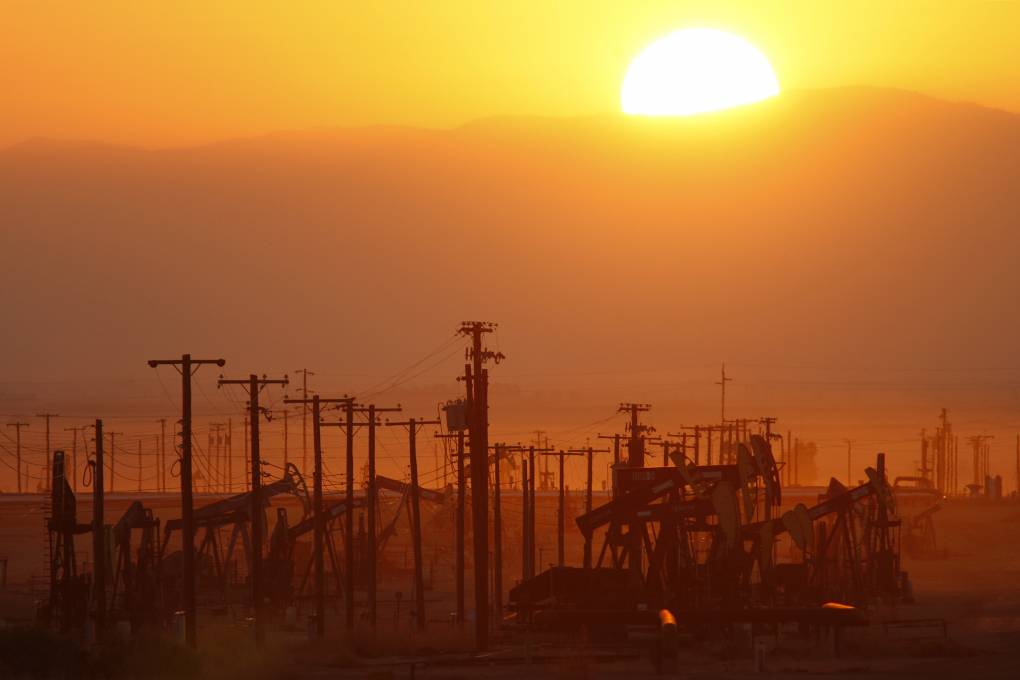
"caption": "The sun rises over an oil field over the Monterey shale formation on March 24, 2014, near Lost Hills in Kern County. Kern County, where most fracking in California occurs, and the Western States Petroleum Association have sued the state over the recent denial of fracking permits.",
"description": "The sun rises over an oil field over the Monterey Shale formation on March 24, 2014 near Lost Hills, in Kern County.",
"title": "Fracking In California Under Spotlight As Some Local Municipalities Issue Bans",
"credit": "David McNew/Getty Images",
"status": "inherit",
"altTag": "The oil field is located in a desolate and arid plot of of land.",
"isLoading": false,
"fetchFailed": false
},
"news_11896628": {
"type": "attachments",
"id": "news_11896628",
"meta": {
"index": "attachments_1716263798",
"site": "news",
"id": "11896628",
"found": true
},
"parent": 11896625,
"imgSizes": {
"twentyfourteen-full-width": {
"file": "https://ww2.kqed.org/app/uploads/sites/10/2021/11/RS50344_GettyImages-1317323951-qut-1038x576.jpg",
"width": 1038,
"mimeType": "image/jpeg",
"height": 576
},
"thumbnail": {
"file": "https://ww2.kqed.org/app/uploads/sites/10/2021/11/RS50344_GettyImages-1317323951-qut-160x107.jpg",
"width": 160,
"mimeType": "image/jpeg",
"height": 107
},
"post-thumbnail": {
"file": "https://ww2.kqed.org/app/uploads/sites/10/2021/11/RS50344_GettyImages-1317323951-qut-672x372.jpg",
"width": 672,
"mimeType": "image/jpeg",
"height": 372
},
"kqedFullSize": {
"file": "https://ww2.kqed.org/app/uploads/sites/10/2021/11/RS50344_GettyImages-1317323951-qut.jpg",
"width": 1920,
"height": 1287
},
"large": {
"file": "https://ww2.kqed.org/app/uploads/sites/10/2021/11/RS50344_GettyImages-1317323951-qut-1020x684.jpg",
"width": 1020,
"mimeType": "image/jpeg",
"height": 684
},
"1536x1536": {
"file": "https://ww2.kqed.org/app/uploads/sites/10/2021/11/RS50344_GettyImages-1317323951-qut-1536x1030.jpg",
"width": 1536,
"mimeType": "image/jpeg",
"height": 1030
},
"medium": {
"file": "https://ww2.kqed.org/app/uploads/sites/10/2021/11/RS50344_GettyImages-1317323951-qut-800x536.jpg",
"width": 800,
"mimeType": "image/jpeg",
"height": 536
}
},
"publishDate": 1637202892,
"modified": 1637202972,
"caption": "Gov. Gavin Newsom speaks during a press conference at The Unity Council on May 10, 2021 in Oakland.",
"description": null,
"title": "California Governor Newsom Unveils His Economic Recovery Package For The State",
"credit": "Justin Sullivan/Getty Images",
"status": "inherit",
"altTag": "A man in a business suit stands at a podium with a blue sign on the front that reads \"California roars back.\"",
"isLoading": false,
"fetchFailed": false
},
"news_11896552": {
"type": "attachments",
"id": "news_11896552",
"meta": {
"index": "attachments_1716263798",
"site": "news",
"id": "11896552",
"found": true
},
"parent": 11896531,
"imgSizes": {
"twentyfourteen-full-width": {
"file": "https://ww2.kqed.org/app/uploads/sites/10/2021/11/Screen-Shot-2021-11-17-at-12.15.43-PM-1038x576.png",
"width": 1038,
"mimeType": "image/png",
"height": 576
},
"thumbnail": {
"file": "https://ww2.kqed.org/app/uploads/sites/10/2021/11/Screen-Shot-2021-11-17-at-12.15.43-PM-160x106.png",
"width": 160,
"mimeType": "image/png",
"height": 106
},
"post-thumbnail": {
"file": "https://ww2.kqed.org/app/uploads/sites/10/2021/11/Screen-Shot-2021-11-17-at-12.15.43-PM-672x372.png",
"width": 672,
"mimeType": "image/png",
"height": 372
},
"kqedFullSize": {
"file": "https://ww2.kqed.org/app/uploads/sites/10/2021/11/Screen-Shot-2021-11-17-at-12.15.43-PM.png",
"width": 2390,
"height": 1590
},
"2048x2048": {
"file": "https://ww2.kqed.org/app/uploads/sites/10/2021/11/Screen-Shot-2021-11-17-at-12.15.43-PM-2048x1362.png",
"width": 2048,
"mimeType": "image/png",
"height": 1362
},
"large": {
"file": "https://ww2.kqed.org/app/uploads/sites/10/2021/11/Screen-Shot-2021-11-17-at-12.15.43-PM-1020x679.png",
"width": 1020,
"mimeType": "image/png",
"height": 679
},
"1536x1536": {
"file": "https://ww2.kqed.org/app/uploads/sites/10/2021/11/Screen-Shot-2021-11-17-at-12.15.43-PM-1536x1022.png",
"width": 1536,
"mimeType": "image/png",
"height": 1022
},
"full-width": {
"file": "https://ww2.kqed.org/app/uploads/sites/10/2021/11/Screen-Shot-2021-11-17-at-12.15.43-PM-1920x1277.png",
"width": 1920,
"mimeType": "image/png",
"height": 1277
},
"medium": {
"file": "https://ww2.kqed.org/app/uploads/sites/10/2021/11/Screen-Shot-2021-11-17-at-12.15.43-PM-800x532.png",
"width": 800,
"mimeType": "image/png",
"height": 532
}
},
"publishDate": 1637180254,
"modified": 1637180575,
"caption": "William Brown, right, and Josh Lowe with his dog near the encampment where they both were staying before it was cleared by Caltrans in San Clemente.",
"description": null,
"title": "Screen Shot 2021-11-17 at 12.15.43 PM",
"credit": "Ariana Drehsler/CalMatters",
"status": "inherit",
"altTag": "Two men wearing jackets and a dog are seen behind a chain link fence. The man on the left is wearing a backpack and hat. The man on the right is extending his hand towards the dog with a black and blue backpack in between them.",
"isLoading": false,
"fetchFailed": false
},
"news_11895999": {
"type": "attachments",
"id": "news_11895999",
"meta": {
"index": "attachments_1716263798",
"site": "news",
"id": "11895999",
"found": true
},
"parent": 11895998,
"imgSizes": {
"twentyfourteen-full-width": {
"file": "https://ww2.kqed.org/app/uploads/sites/10/2021/11/GettyImages-1217663387-1038x576.jpg",
"width": 1038,
"mimeType": "image/jpeg",
"height": 576
},
"thumbnail": {
"file": "https://ww2.kqed.org/app/uploads/sites/10/2021/11/GettyImages-1217663387-160x107.jpg",
"width": 160,
"mimeType": "image/jpeg",
"height": 107
},
"post-thumbnail": {
"file": "https://ww2.kqed.org/app/uploads/sites/10/2021/11/GettyImages-1217663387-672x372.jpg",
"width": 672,
"mimeType": "image/jpeg",
"height": 372
},
"kqedFullSize": {
"file": "https://ww2.kqed.org/app/uploads/sites/10/2021/11/GettyImages-1217663387-scaled.jpg",
"width": 2560,
"height": 1706
},
"2048x2048": {
"file": "https://ww2.kqed.org/app/uploads/sites/10/2021/11/GettyImages-1217663387-2048x1365.jpg",
"width": 2048,
"mimeType": "image/jpeg",
"height": 1365
},
"large": {
"file": "https://ww2.kqed.org/app/uploads/sites/10/2021/11/GettyImages-1217663387-1020x680.jpg",
"width": 1020,
"mimeType": "image/jpeg",
"height": 680
},
"1536x1536": {
"file": "https://ww2.kqed.org/app/uploads/sites/10/2021/11/GettyImages-1217663387-1536x1024.jpg",
"width": 1536,
"mimeType": "image/jpeg",
"height": 1024
},
"full-width": {
"file": "https://ww2.kqed.org/app/uploads/sites/10/2021/11/GettyImages-1217663387-1920x1280.jpg",
"width": 1920,
"mimeType": "image/jpeg",
"height": 1280
},
"medium": {
"file": "https://ww2.kqed.org/app/uploads/sites/10/2021/11/GettyImages-1217663387-800x533.jpg",
"width": 800,
"mimeType": "image/jpeg",
"height": 533
}
},
"publishDate": 1636669306,
"modified": 1636781274,
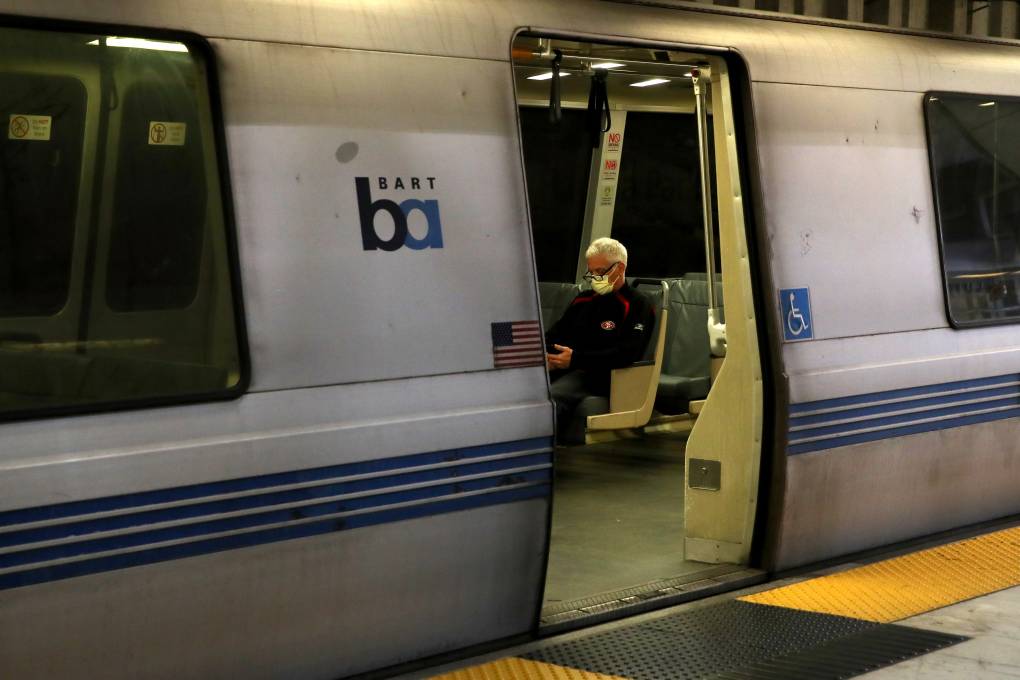
"caption": "A BART passenger rides in an empty train car on April 8, 2020, in San Francisco. At the start of the pandemic, BART announced that it would slash daily service as ridership dramatically dropped due to the COVID-19 shelter-in-place order.",
"description": "A BART passenger rides in an empty train car on April 8, 2020 in San Francisco.",
"title": "BART Cuts Train Service In Bay Area During Coronavirus Shutdown",
"credit": "Justin Sullivan/Getty Images",
"status": "inherit",
"altTag": "The BART passenger wears a facemask and is the only passenger visible within the train.",
"isLoading": false,
"fetchFailed": false
},
"news_10392151": {
"type": "attachments",
"id": "news_10392151",
"meta": {
"index": "attachments_1716263798",
"site": "news",
"id": "10392151",
"found": true
},
"parent": 10392127,
"imgSizes": {
"twentyfourteen-full-width": {
"file": "https://ww2.kqed.org/app/uploads/sites/10/2014/12/bay-bridge-concerns-1038x576.jpg",
"width": 1038,
"mimeType": "image/jpeg",
"height": 576
},
"thumbnail": {
"file": "https://ww2.kqed.org/app/uploads/sites/10/2014/12/bay-bridge-concerns-400x252.jpg",
"width": 400,
"mimeType": "image/jpeg",
"height": 252
},
"post-thumbnail": {
"file": "https://ww2.kqed.org/app/uploads/sites/10/2014/12/bay-bridge-concerns-672x372.jpg",
"width": 672,
"mimeType": "image/jpeg",
"height": 372
},
"kqedFullSize": {
"file": "https://ww2.kqed.org/app/uploads/sites/10/2014/12/bay-bridge-concerns.jpg",
"width": 1440,
"height": 909
},
"guest-author-96": {
"file": "https://ww2.kqed.org/app/uploads/sites/10/2014/12/bay-bridge-concerns-96x96.jpg",
"width": 96,
"mimeType": "image/jpeg",
"height": 96
},
"medium": {
"file": "https://ww2.kqed.org/app/uploads/sites/10/2014/12/bay-bridge-concerns-800x505.jpg",
"width": 800,
"mimeType": "image/jpeg",
"height": 505
},
"guest-author-64": {
"file": "https://ww2.kqed.org/app/uploads/sites/10/2014/12/bay-bridge-concerns-64x64.jpg",
"width": 64,
"mimeType": "image/jpeg",
"height": 64
},
"detail": {
"file": "https://ww2.kqed.org/app/uploads/sites/10/2014/12/bay-bridge-concerns-75x75.jpg",
"width": 75,
"mimeType": "image/jpeg",
"height": 75
},
"guest-author-32": {
"file": "https://ww2.kqed.org/app/uploads/sites/10/2014/12/bay-bridge-concerns-32x32.jpg",
"width": 32,
"mimeType": "image/jpeg",
"height": 32
},
"guest-author-128": {
"file": "https://ww2.kqed.org/app/uploads/sites/10/2014/12/bay-bridge-concerns-128x128.jpg",
"width": 128,
"mimeType": "image/jpeg",
"height": 128
}
},
"publishDate": 1419880200,
"modified": 1636657073,
"caption": "A worker walks on the bike path on the Bay Bridge's eastern span on Aug. 26, 2013.",
"description": "SAN FRANCISCO, CA - AUGUST 26: A worker walks on the bike path next to the new Bay Bridge Self-Anchored Suspension (SAS) tower on August 26, 2013 in San Francisco, California. After nearly 12 years of construction and an estimated price tag of $6.4 billion, the new eastern span of the Bay Bridge is set to open on September 3. The bridge will be the world's tallest Self-Anchored Suspension (SAS) tower once completed. (Photo by Justin Sullivan/Getty Images)",
"title": "Construction Continues On Bay Bridge Ahead Of Opening Of Eastern Span",
"credit": "Justin Sullivan/Getty Images",
"status": "inherit",
"altTag": "A worker in a flourescent yellow safety vest stands on the Eastern Bay Bridge span bike path, with a towering white spire and support cables in front of him.",
"isLoading": false,
"fetchFailed": false
},
"news_11894398": {
"type": "attachments",
"id": "news_11894398",
"meta": {
"index": "attachments_1716263798",
"site": "news",
"id": "11894398",
"found": true
},
"parent": 11894391,
"imgSizes": {
"twentyfourteen-full-width": {
"file": "https://ww2.kqed.org/app/uploads/sites/10/2021/10/GettyImages-1344323430-1024x576.jpg",
"width": 1024,
"mimeType": "image/jpeg",
"height": 576
},
"thumbnail": {
"file": "https://ww2.kqed.org/app/uploads/sites/10/2021/10/GettyImages-1344323430-160x115.jpg",
"width": 160,
"mimeType": "image/jpeg",
"height": 115
},
"post-thumbnail": {
"file": "https://ww2.kqed.org/app/uploads/sites/10/2021/10/GettyImages-1344323430-672x372.jpg",
"width": 672,
"mimeType": "image/jpeg",
"height": 372
},
"kqedFullSize": {
"file": "https://ww2.kqed.org/app/uploads/sites/10/2021/10/GettyImages-1344323430.jpg",
"width": 1024,
"height": 739
},
"large": {
"file": "https://ww2.kqed.org/app/uploads/sites/10/2021/10/GettyImages-1344323430-1020x736.jpg",
"width": 1020,
"mimeType": "image/jpeg",
"height": 736
},
"medium": {
"file": "https://ww2.kqed.org/app/uploads/sites/10/2021/10/GettyImages-1344323430-800x577.jpg",
"width": 800,
"mimeType": "image/jpeg",
"height": 577
}
},
"publishDate": 1635541672,
"modified": 1646751034,
"caption": null,
"description": "Gov. Gavin Newsom speaks during a news conference after meeting with students at James Denman Middle School on Oct. 1, 2021 in San Francisco.",
"title": "Governor Gavin Newsom",
"credit": "Justin Sullivan/Getty Images",
"status": "inherit",
"altTag": "Gov. Gavin Newsom with his hands up.",
"isLoading": false,
"fetchFailed": false
},
"news_11894103": {
"type": "attachments",
"id": "news_11894103",
"meta": {
"index": "attachments_1716263798",
"site": "news",
"id": "11894103",
"found": true
},
"parent": 11894030,
"imgSizes": {
"thumbnail": {
"file": "https://ww2.kqed.org/app/uploads/sites/10/2021/10/GettyImages-1232872825-1-160x90.jpg",
"width": 160,
"mimeType": "image/jpeg",
"height": 90
},
"post-thumbnail": {
"file": "https://ww2.kqed.org/app/uploads/sites/10/2021/10/GettyImages-1232872825-1-672x372.jpg",
"width": 672,
"mimeType": "image/jpeg",
"height": 372
},
"kqedFullSize": {
"file": "https://ww2.kqed.org/app/uploads/sites/10/2021/10/GettyImages-1232872825-1.jpg",
"width": 1024,
"height": 576
},
"large": {
"file": "https://ww2.kqed.org/app/uploads/sites/10/2021/10/GettyImages-1232872825-1-1020x574.jpg",
"width": 1020,
"mimeType": "image/jpeg",
"height": 574
},
"medium": {
"file": "https://ww2.kqed.org/app/uploads/sites/10/2021/10/GettyImages-1232872825-1-800x450.jpg",
"width": 800,
"mimeType": "image/jpeg",
"height": 450
}
},
"publishDate": 1635380581,
"modified": 1635384673,
"caption": "Andrew Lai, 12, receives his COVID-19 vaccine administered by a medical assistant from St. John's Well Child & Family Center at Abraham Lincoln High School in Los Angeles on May 13, 2021, on the first day of availability of the vaccine for the 12- to 15-year-old age group.",
"description": null,
"title": "US-HEALTH-VIRUS-VACCINE",
"credit": "Frederic J. Brown/AFP via Getty Images",
"status": "inherit",
"altTag": "A boy wearing a mask and sitting along a wall with student work displayed looks at his shoulder as someone wearing purple gloves injects his shoulder.",
"isLoading": false,
"fetchFailed": false
},
"news_11878784": {
"type": "attachments",
"id": "news_11878784",
"meta": {
"index": "attachments_1716263798",
"site": "news",
"id": "11878784",
"found": true
},
"parent": 11878764,
"imgSizes": {
"twentyfourteen-full-width": {
"file": "https://ww2.kqed.org/app/uploads/sites/10/2021/06/RS42105_001_KQED_EDD_UnemploymentApplication_03162020_8404-qut-1038x576.jpg",
"width": 1038,
"mimeType": "image/jpeg",
"height": 576
},
"thumbnail": {
"file": "https://ww2.kqed.org/app/uploads/sites/10/2021/06/RS42105_001_KQED_EDD_UnemploymentApplication_03162020_8404-qut-160x107.jpg",
"width": 160,
"mimeType": "image/jpeg",
"height": 107
},
"post-thumbnail": {
"file": "https://ww2.kqed.org/app/uploads/sites/10/2021/06/RS42105_001_KQED_EDD_UnemploymentApplication_03162020_8404-qut-672x372.jpg",
"width": 672,
"mimeType": "image/jpeg",
"height": 372
},
"kqedFullSize": {
"file": "https://ww2.kqed.org/app/uploads/sites/10/2021/06/RS42105_001_KQED_EDD_UnemploymentApplication_03162020_8404-qut.jpg",
"width": 1920,
"height": 1280
},
"large": {
"file": "https://ww2.kqed.org/app/uploads/sites/10/2021/06/RS42105_001_KQED_EDD_UnemploymentApplication_03162020_8404-qut-1020x680.jpg",
"width": 1020,
"mimeType": "image/jpeg",
"height": 680
},
"1536x1536": {
"file": "https://ww2.kqed.org/app/uploads/sites/10/2021/06/RS42105_001_KQED_EDD_UnemploymentApplication_03162020_8404-qut-1536x1024.jpg",
"width": 1536,
"mimeType": "image/jpeg",
"height": 1024
},
"medium": {
"file": "https://ww2.kqed.org/app/uploads/sites/10/2021/06/RS42105_001_KQED_EDD_UnemploymentApplication_03162020_8404-qut-800x533.jpg",
"width": 800,
"mimeType": "image/jpeg",
"height": 533
}
},
"publishDate": 1624303696,
"modified": 1635280346,
"caption": "A woman looks at the Employment Development Department website, where Californians can file for unemployment benefits, on March 16, 2020.",
"description": "A woman looks at the Employment Development Department (EDD) website, where Californians can file for unemployment benefits, on Mar. 16, 2020.",
"title": "RS42105_001_KQED_EDD_UnemploymentApplication_03162020_8404-qut",
"credit": "Beth LaBerge/KQED",
"status": "inherit",
"altTag": "The shoulder, arm and hand of a person wearing a beige sweater reaches toward a laptop showing the EDD website.",
"isLoading": false,
"fetchFailed": false
},
"news_11893222": {
"type": "attachments",
"id": "news_11893222",
"meta": {
"index": "attachments_1716263798",
"site": "news",
"id": "11893222",
"found": true
},
"parent": 11893200,
"imgSizes": {
"twentyfourteen-full-width": {
"file": "https://ww2.kqed.org/app/uploads/sites/10/2021/10/GettyImages-1220020585-1-1038x576.jpg",
"width": 1038,
"mimeType": "image/jpeg",
"height": 576
},
"thumbnail": {
"file": "https://ww2.kqed.org/app/uploads/sites/10/2021/10/GettyImages-1220020585-1-160x103.jpg",
"width": 160,
"mimeType": "image/jpeg",
"height": 103
},
"post-thumbnail": {
"file": "https://ww2.kqed.org/app/uploads/sites/10/2021/10/GettyImages-1220020585-1-672x372.jpg",
"width": 672,
"mimeType": "image/jpeg",
"height": 372
},
"kqedFullSize": {
"file": "https://ww2.kqed.org/app/uploads/sites/10/2021/10/GettyImages-1220020585-1.jpg",
"width": 1920,
"height": 1233
},
"large": {
"file": "https://ww2.kqed.org/app/uploads/sites/10/2021/10/GettyImages-1220020585-1-1020x655.jpg",
"width": 1020,
"mimeType": "image/jpeg",
"height": 655
},
"1536x1536": {
"file": "https://ww2.kqed.org/app/uploads/sites/10/2021/10/GettyImages-1220020585-1-1536x986.jpg",
"width": 1536,
"mimeType": "image/jpeg",
"height": 986
},
"medium": {
"file": "https://ww2.kqed.org/app/uploads/sites/10/2021/10/GettyImages-1220020585-1-800x514.jpg",
"width": 800,
"mimeType": "image/jpeg",
"height": 514
}
},
"publishDate": 1634839761,
"modified": 1634856576,
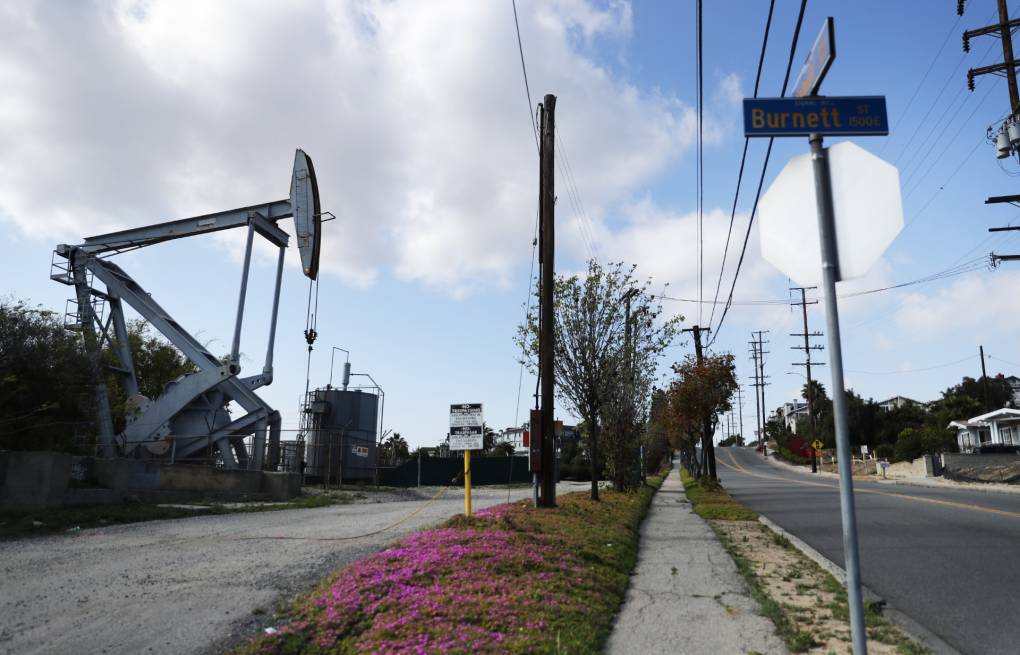
"caption": "An oil pumping jack stands idle during the coronavirus pandemic on April 20, 2020, in Signal Hill, California.",
"description": null,
"title": "GettyImages-1220020585 (1)",
"credit": "Mario Tama/Getty Images",
"status": "inherit",
"altTag": "An oil drill stands still on the left; across the street to the right are homes.",
"isLoading": false,
"fetchFailed": false
}
},
"audioPlayerReducer": {
"postId": "stream_live",
"isPaused": true,
"isPlaying": false,
"pfsActive": false,
"pledgeModalIsOpen": true,
"playerDrawerIsOpen": false,
"liveAudioPlayStartedAt": 0,
"liveAudioPlayContext": ""
},
"authorsReducer": {
"byline_news_11897450": {
"type": "authors",
"id": "byline_news_11897450",
"meta": {
"override": true
},
"slug": "byline_news_11897450",
"name": "The Associated Press",
"isLoading": false
},
"byline_news_11896625": {
"type": "authors",
"id": "byline_news_11896625",
"meta": {
"override": true
},
"slug": "byline_news_11896625",
"name": "Adam Beam\u003cbr>The Associated Press",
"isLoading": false
},
"byline_news_11896531": {
"type": "authors",
"id": "byline_news_11896531",
"meta": {
"override": true
},
"slug": "byline_news_11896531",
"name": "\u003ca href=\"https://calmatters.org/author/manuela-tobias/\">Manuela Tobias\u003c/a>",
"isLoading": false
},
"byline_news_11895998": {
"type": "authors",
"id": "byline_news_11895998",
"meta": {
"override": true
},
"slug": "byline_news_11895998",
"name": "The Associated Press",
"isLoading": false
},
"byline_news_11894391": {
"type": "authors",
"id": "byline_news_11894391",
"meta": {
"override": true
},
"slug": "byline_news_11894391",
"name": "Adam Beam and Kathleen Ronayne\u003cbr>Associated Press",
"isLoading": false
},
"byline_news_11893715": {
"type": "authors",
"id": "byline_news_11893715",
"meta": {
"override": true
},
"slug": "byline_news_11893715",
"name": "Adam Beam\u003cbr>Associated Press",
"isLoading": false
},
"kqednewsstaffandwires": {
"type": "authors",
"id": "237",
"meta": {
"index": "authors_1716337520",
"id": "237",
"found": true
},
"name": "KQED News Staff and Wires",
"firstName": "KQED News Staff and Wires",
"lastName": null,
"slug": "kqednewsstaffandwires",
"email": "onlinenewsstaff@kqed.org",
"display_author_email": false,
"staff_mastheads": [],
"title": null,
"bio": null,
"avatar": "https://secure.gravatar.com/avatar/72295af8ebbfbd19a4948f5271285664?s=600&d=blank&r=g",
"twitter": null,
"facebook": null,
"instagram": null,
"linkedin": null,
"sites": [
{
"site": "arts",
"roles": [
"contributor"
]
},
{
"site": "news",
"roles": [
"contributor"
]
},
{
"site": "lowdown",
"roles": [
"author"
]
},
{
"site": "stateofhealth",
"roles": [
"contributor"
]
},
{
"site": "food",
"roles": [
"author"
]
}
],
"headData": {
"title": "KQED News Staff and Wires | KQED",
"description": null,
"ogImgSrc": "https://secure.gravatar.com/avatar/72295af8ebbfbd19a4948f5271285664?s=600&d=blank&r=g",
"twImgSrc": "https://secure.gravatar.com/avatar/72295af8ebbfbd19a4948f5271285664?s=600&d=blank&r=g"
},
"isLoading": false,
"link": "/author/kqednewsstaffandwires"
},
"scottshafer": {
"type": "authors",
"id": "255",
"meta": {
"index": "authors_1716337520",
"id": "255",
"found": true
},
"name": "Scott Shafer",
"firstName": "Scott",
"lastName": "Shafer",
"slug": "scottshafer",
"email": "sshafer@kqed.org",
"display_author_email": false,
"staff_mastheads": [
"news"
],
"title": "KQED Contributor",
"bio": "Scott Shafer is a senior editor with the KQED Politics and Government desk. He is co-host of Political Breakdown, the award-winning radio show and podcast with a personal take on the world of politics. Scott came to KQED in 1998 to host the statewide\u003cem> California Report\u003c/em>. Prior to that he had extended stints in politics and government\u003cem>.\u003c/em> He uses that inside experience at KQED in his, reporting, hosting and analysis for the politics desk. Scott collaborated \u003cem>Political Breakdown a\u003c/em>nd on \u003cem>The Political Mind of Jerry Brown, \u003c/em>an eight-part series about the life and extraordinary political career of the former governor. For fun, he plays water polo with the San Francisco Tsunami.",
"avatar": "https://secure.gravatar.com/avatar/a62ebae45b79d7aed1a39a0e3bf68104?s=600&d=blank&r=g",
"twitter": "scottshafer",
"bluesky": null,
"facebook": null,
"instagram": null,
"linkedin": null,
"sites": [
{
"site": "news",
"roles": [
"editor"
]
},
{
"site": "stateofhealth",
"roles": [
"author"
]
},
{
"site": "science",
"roles": [
"author"
]
},
{
"site": "forum",
"roles": [
"subscriber"
]
},
{
"site": "liveblog",
"roles": [
"author"
]
}
],
"headData": {
"title": "Scott Shafer | KQED",
"description": "KQED Contributor",
"ogImgSrc": "https://secure.gravatar.com/avatar/a62ebae45b79d7aed1a39a0e3bf68104?s=600&d=blank&r=g",
"twImgSrc": "https://secure.gravatar.com/avatar/a62ebae45b79d7aed1a39a0e3bf68104?s=600&d=blank&r=g"
},
"isLoading": false,
"link": "/author/scottshafer"
},
"markfiore": {
"type": "authors",
"id": "3236",
"meta": {
"index": "authors_1716337520",
"id": "3236",
"found": true
},
"name": "Mark Fiore",
"firstName": "Mark",
"lastName": "Fiore",
"slug": "markfiore",
"email": "mark@markfiore.com",
"display_author_email": false,
"staff_mastheads": [
"news"
],
"title": "KQED News Cartoonist",
"bio": "\u003ca href=\"http://www.MarkFiore.com\">MarkFiore.com\u003c/a> | \u003ca href=\"https://twitter.com/markfiore\">Follow on Twitter\u003c/a> | \u003ca href=\"https://www.facebook.com/pages/Mark-Fiore-Animated-Political-Cartoons/94451707396?ref=bookmarks\">Facebook\u003c/a> | \u003ca href=\"mailto:mark@markfiore.com\">email\u003c/a>\r\n\r\nPulitzer Prize-winner, Mark Fiore, who the Wall Street Journal has called “the undisputed guru of the form,” creates animated political cartoons in San Francisco, where his work has been featured regularly on the San Francisco Chronicle’s web site, SFGate.com. His work has appeared on Newsweek.com, Slate.com, CBSNews.com, MotherJones.com, DailyKos.com and NPR’s web site. Fiore’s political animation has appeared on CNN, Frontline, Bill Moyers Journal, Salon.com and cable and broadcast outlets across the globe.\r\n\r\nBeginning his professional life by drawing traditional political cartoons for newspapers, Fiore’s work appeared in publications ranging from the Washington Post to the Los Angeles Times. In the late 1990s, he began to experiment with animating political cartoons and, after a short stint at the San Jose Mercury News as their staff cartoonist, Fiore devoted all his energies to animation.\r\nGrowing up in California, Fiore also spent a good portion of his life in the backwoods of Idaho. It was this combination that shaped him politically. Mark majored in political science at Colorado College, where, in a perfect send-off for a cartoonist, he received his diploma in 1991 as commencement speaker Dick Cheney smiled approvingly.\r\nMark Fiore was awarded the Pulitzer Prize for political cartooning in 2010, a Robert F. Kennedy Journalism Award in 2004 and has twice received an Online Journalism Award for commentary from the Online News Association (2002, 2008). Fiore has received two awards for his work in new media from the National Cartoonists Society (2001, 2002), and in 2006 received The James Madison Freedom of Information Award from The Society of Professional Journalists.",
"avatar": "https://secure.gravatar.com/avatar/fc4e2a612b15b67bad0c6f0e1db4ca9b?s=600&d=blank&r=g",
"twitter": "MarkFiore",
"facebook": null,
"instagram": "https://www.instagram.com/markfiore/?hl=en",
"linkedin": null,
"sites": [
{
"site": "arts",
"roles": [
"contributor"
]
},
{
"site": "news",
"roles": [
"editor"
]
},
{
"site": "futureofyou",
"roles": [
"editor"
]
},
{
"site": "science",
"roles": [
"editor"
]
}
],
"headData": {
"title": "Mark Fiore | KQED",
"description": "KQED News Cartoonist",
"ogImgSrc": "https://secure.gravatar.com/avatar/fc4e2a612b15b67bad0c6f0e1db4ca9b?s=600&d=blank&r=g",
"twImgSrc": "https://secure.gravatar.com/avatar/fc4e2a612b15b67bad0c6f0e1db4ca9b?s=600&d=blank&r=g"
},
"isLoading": false,
"link": "/author/markfiore"
},
"mlagos": {
"type": "authors",
"id": "3239",
"meta": {
"index": "authors_1716337520",
"id": "3239",
"found": true
},
"name": "Marisa Lagos",
"firstName": "Marisa",
"lastName": "Lagos",
"slug": "mlagos",
"email": "mlagos@kqed.org",
"display_author_email": false,
"staff_mastheads": [
"news"
],
"title": "KQED Contributor",
"bio": "Marisa Lagos is a correspondent for KQED’s California Politics and Government Desk and co-hosts the award-winning show and podcast, Political Breakdown. At KQED, Lagos also conducts reporting, analysis and investigations into state, local and national politics for radio, TV, online and onstage. In 2022, she and co-host, Scott Shafer, moderated the only gubernatorial debate in California. In 2020, the \u003ci>Washington Post\u003c/i> named her one of the top political journalists in California; she was nominated for a Peabody and won several other awards for her work investigating the 2017 California wildfires. She has worked at the \u003ci>San Francisco Chronicle\u003c/i>, \u003ci>San Francisco Examiner\u003c/i> and \u003ci>Los Angeles Times\u003c/i>. A UC Santa Barbara graduate, she lives in San Francisco with her two sons and husband.",
"avatar": "https://secure.gravatar.com/avatar/a261a0d3696fc066871ef96b85b5e7d2?s=600&d=blank&r=g",
"twitter": "@mlagos",
"facebook": null,
"instagram": null,
"linkedin": null,
"sites": [
{
"site": "arts",
"roles": [
"author"
]
},
{
"site": "news",
"roles": [
"editor"
]
},
{
"site": "science",
"roles": [
"editor"
]
},
{
"site": "forum",
"roles": [
"author"
]
},
{
"site": "liveblog",
"roles": [
"author"
]
}
],
"headData": {
"title": "Marisa Lagos | KQED",
"description": "KQED Contributor",
"ogImgSrc": "https://secure.gravatar.com/avatar/a261a0d3696fc066871ef96b85b5e7d2?s=600&d=blank&r=g",
"twImgSrc": "https://secure.gravatar.com/avatar/a261a0d3696fc066871ef96b85b5e7d2?s=600&d=blank&r=g"
},
"isLoading": false,
"link": "/author/mlagos"
},
"korr": {
"type": "authors",
"id": "11200",
"meta": {
"index": "authors_1716337520",
"id": "11200",
"found": true
},
"name": "Katie Orr",
"firstName": "Katie",
"lastName": "Orr",
"slug": "korr",
"email": "korr@kqed.org",
"display_author_email": false,
"staff_mastheads": [],
"title": "KQED Contributor",
"bio": "Katie Orr was a Sacramento-based reporter for KQED's Politics and Government Desk, covering the state Capitol and a variety of issues including women in politics, voting and elections and legislation. Prior to joining KQED in 2016, Katie was state government reporter for Capital Public Radio in Sacramento. She's also worked for KPBS in San Diego, where she covered City Hall.\r\n\r\nKatie received her masters degree in political science from San Diego State University and holds a Bachelors degree in broadcast journalism from Arizona State University.\r\n\r\nIn 2015 Katie won a national Clarion Award for a series of stories she did on women in California politics. She's been honored by the Society for Professional Journalists and, in 2013, was named by \u003cem>The Washington Post\u003c/em> as one of the country's top state Capitol reporters. She's also reported for the award-winning documentary series \u003cem>The View from Here \u003c/em>and was part of the team that won national PRNDI and Gabriel Awards in 2015. She lives in Sacramento with her husband. Twitter: @1KatieOrr",
"avatar": "https://secure.gravatar.com/avatar/41a40b25845adc78f50808670860449e?s=600&d=blank&r=g",
"twitter": "1katieorr",
"facebook": null,
"instagram": null,
"linkedin": null,
"sites": [
{
"site": "news",
"roles": [
"subscriber"
]
},
{
"site": "stateofhealth",
"roles": [
"author"
]
},
{
"site": "forum",
"roles": [
"author"
]
}
],
"headData": {
"title": "Katie Orr | KQED",
"description": "KQED Contributor",
"ogImgSrc": "https://secure.gravatar.com/avatar/41a40b25845adc78f50808670860449e?s=600&d=blank&r=g",
"twImgSrc": "https://secure.gravatar.com/avatar/41a40b25845adc78f50808670860449e?s=600&d=blank&r=g"
},
"isLoading": false,
"link": "/author/korr"
},
"rdillon": {
"type": "authors",
"id": "11495",
"meta": {
"index": "authors_1716337520",
"id": "11495",
"found": true
},
"name": "Raquel Maria Dillon",
"firstName": "Raquel Maria",
"lastName": "Dillon",
"slug": "rdillon",
"email": "rdillon@kqed.org",
"display_author_email": false,
"staff_mastheads": [],
"title": null,
"bio": "Raquel Maria Dillon was a reporter and host for KQED News. Previously, she produced the daily statewide California Report, edited newscasts, and covered health and education stories. Before returning to the Bay Area in 2016, she worked in Los Angeles as a wire reporter and one-woman-band video journalist for the Associated Press, where she shot, edited and reported breaking news and features across the West. Her work has appeared online and in print around the globe, and also on NPR’s Morning Edition, All Things Considered, Here and Now, Marketplace, On The Media, and Studio 360. She previously edited and mentored up-and-coming reporters at KALW, produced social videos for Timeline.com, and was a local TV news videographer for KTVU and digital producer for KNTV. She got her start as a Radio News Trainee at KQED, produced a weekly public affairs roundtable show for OPB, and covered health and politics at New Hampshire Public Radio. She has a BA in political science from Barnard College and a MA in video journalism from UC Berkeley, where she was awarded the Faith Fancher Scholarship and a Student Emmy. She has received numerous local awards from the Associated Press and the Society of Professional Journalists.",
"avatar": "https://secure.gravatar.com/avatar/b8e02ae982913d0950df605910267c1b?s=600&d=blank&r=g",
"twitter": "RaquelMDillon",
"facebook": null,
"instagram": null,
"linkedin": null,
"sites": [
{
"site": "news",
"roles": [
"subscriber"
]
},
{
"site": "stateofhealth",
"roles": [
"editor"
]
},
{
"site": "science",
"roles": [
"editor"
]
},
{
"site": "forum",
"roles": [
"editor"
]
}
],
"headData": {
"title": "Raquel Maria Dillon | KQED",
"description": null,
"ogImgSrc": "https://secure.gravatar.com/avatar/b8e02ae982913d0950df605910267c1b?s=600&d=blank&r=g",
"twImgSrc": "https://secure.gravatar.com/avatar/b8e02ae982913d0950df605910267c1b?s=600&d=blank&r=g"
},
"isLoading": false,
"link": "/author/rdillon"
},
"swhitney": {
"type": "authors",
"id": "11784",
"meta": {
"index": "authors_1716337520",
"id": "11784",
"found": true
},
"name": "Spencer Whitney",
"firstName": "Spencer",
"lastName": "Whitney",
"slug": "swhitney",
"email": "swhitney@kqed.org",
"display_author_email": false,
"staff_mastheads": [],
"title": "KQED Digital Editor",
"bio": "Spencer Whitney is currently a Digital Editor for KQED News. Prior to joining KQED News, Spencer worked as the Multimedia Editor at the Oakland Post and an Assistant Editor in the Editorial department at the San Francisco Chronicle. He attended Howard University as an undergraduate and interned with SiriusXM. He also attended UC Berkeley's Graduate School of Journalism and had the opportunity to write for the hyperlocal news sites Richmond Confidential and Oakland North.",
"avatar": "https://secure.gravatar.com/avatar/e33ff4fd8b8f0d2796f36472fb32607ca8fc46ef5e537dcfdbdee688d8ea5b80?s=600&d=mm&r=g",
"twitter": null,
"bluesky": null,
"facebook": null,
"instagram": null,
"linkedin": null,
"sites": [
{
"site": "arts",
"roles": [
"editor"
]
},
{
"site": "news",
"roles": [
"editor"
]
},
{
"site": "science",
"roles": [
"editor"
]
},
{
"site": "perspectives",
"roles": [
"editor"
]
}
],
"headData": {
"title": "Spencer Whitney | KQED",
"description": "KQED Digital Editor",
"ogImgSrc": "https://secure.gravatar.com/avatar/e33ff4fd8b8f0d2796f36472fb32607ca8fc46ef5e537dcfdbdee688d8ea5b80?s=600&d=mm&r=g",
"twImgSrc": "https://secure.gravatar.com/avatar/e33ff4fd8b8f0d2796f36472fb32607ca8fc46ef5e537dcfdbdee688d8ea5b80?s=600&d=mm&r=g"
},
"isLoading": false,
"link": "/author/swhitney"
}
},
"pagesReducer": {
"news_tag_gavin-newsom": {
"type": "terms",
"id": "news_16",
"meta": {
"index": "terms_1716263798",
"site": "news",
"id": "16",
"score": 8.937016
},
"featImg": null,
"name": "Gavin Newsom",
"description": null,
"taxonomy": "tag",
"headData": {
"twImgId": null,
"twTitle": null,
"ogTitle": null,
"ogImgId": null,
"twDescription": null,
"description": null,
"title": "Gavin Newsom Archives | KQED News",
"ogDescription": null
},
"ttid": 16,
"slug": "gavin-newsom",
"isLoading": false,
"title": "Gavin Newsom",
"pageMeta": {
"site": "news",
"WpPageTemplate": "page-topic-editorial",
"currentPage": 52
},
"blocks": [
{
"blockName": "kqed/post-list",
"attrs": {
"layout": "cardArticle2",
"query": "posts/news?tag=gavin-newsom",
"seeMore": false,
"paginated": true,
"page": 52
}
},
{
"blockName": "kqed/ad"
}
]
}
},
"pfsSessionReducer": {},
"postsReducer": {
"stream_live": {
"type": "live",
"id": "stream_live",
"audioUrl": "https://streams.kqed.org/kqedradio",
"title": "Live Stream",
"excerpt": "Live Stream information currently unavailable.",
"link": "/radio",
"featImg": "",
"label": {
"name": "KQED Live",
"link": "/"
}
},
"stream_kqedNewscast": {
"type": "posts",
"id": "stream_kqedNewscast",
"audioUrl": "https://www.kqed.org/.stream/anon/radio/RDnews/newscast.mp3?_=1",
"title": "KQED Newscast",
"featImg": "",
"label": {
"name": "88.5 FM",
"link": "/"
}
},
"news_11898640": {
"type": "posts",
"id": "news_11898640",
"meta": {
"index": "posts_1716263798",
"site": "news",
"id": "11898640",
"score": null,
"sort": [
1639103140000
]
},
"parent": 0,
"labelTerm": {},
"blocks": [],
"publishDate": 1639103140,
"format": "audio",
"title": "Gavin Newsom and Rob Bonta on Crime in California",
"headTitle": "Gavin Newsom and Rob Bonta on Crime in California | KQED",
"content": "\u003cp>Gov. Gavin Newsom joins Marisa and Scott to talk about “Ben and Emma’s Big Hit,” his picture book about a child with dyslexia, before discussing how he deals with dyslexia in his daily life. Newsom also responds to large retail thefts in the state and critiques of Proposition 47, the 2014 criminal justice reform measure. Then, Attorney General Rob Bonta joins to discuss his parents’ activism in the farmworker movement, how his office is responding to retail crimes and whether he’ll work to reduce sentences of inmates on death row.\u003c/p>\n\u003cp>[ad fullwidth]\u003c/p>\u003cp>\u003c/p>\n",
"stats": {
"hasVideo": false,
"hasChartOrMap": false,
"hasAudio": false,
"hasPolis": false,
"wordCount": 99,
"hasGoogleForm": false,
"hasGallery": false,
"hasHearkenModule": false,
"iframeSrcs": [],
"paragraphCount": 3
},
"modified": 1700875210,
"excerpt": null,
"headData": {
"twImgId": "",
"twTitle": "",
"ogTitle": "",
"ogImgId": "",
"twDescription": "",
"description": "Gov. Gavin Newsom joins Marisa and Scott to talk about "Ben and Emma's Big Hit," his picture book about a child with dyslexia, before discussing how he deals with dyslexia in his daily life. Newsom also responds to large retail thefts in the state and critiques of Proposition 47, the 2014 criminal justice reform measure.",
"title": "Gavin Newsom and Rob Bonta on Crime in California | KQED",
"ogDescription": "",
"schema": {
"@context": "https://schema.org",
"@type": "NewsArticle",
"headline": "Gavin Newsom and Rob Bonta on Crime in California",
"datePublished": "2021-12-09T18:25:40-08:00",
"dateModified": "2023-11-24T17:20:10-08:00",
"image": "https://cdn.kqed.org/wp-content/uploads/2020/02/KQED-OG-Image@1x.png",
"isAccessibleForFree": "True",
"publisher": {
"@type": "NewsMediaOrganization",
"@id": "https://www.kqed.org/#organization",
"name": "KQED",
"logo": "https://cdn.kqed.org/wp-content/uploads/2020/02/KQED-OG-Image@1x.png",
"url": "https://www.kqed.org",
"sameAs": [
"https://www.facebook.com/KQED",
"https://twitter.com/KQED",
"https://www.instagram.com/kqed/",
"https://www.tiktok.com/@kqedofficial",
"https://www.linkedin.com/company/kqed",
"https://www.youtube.com/channel/UCeC0IOo7i1P_61zVUWbJ4nw"
]
}
}
},
"guestAuthors": [],
"slug": "gavin-newsom-and-rob-bonta-on-crime-in-california",
"status": "publish",
"audioUrl": "https://www.podtrac.com/pts/redirect.mp3/traffic.megaphone.fm/KQINC6762415054.mp3",
"excludeFromSiteSearch": "Include",
"source": "Political Breakdown",
"path": "/news/11898640/gavin-newsom-and-rob-bonta-on-crime-in-california",
"audioDuration": 1694000,
"audioTrackLength": null,
"parsedContent": [
{
"type": "contentString",
"content": "\u003cdiv class=\"post-body\">\u003cp>\u003cp>Gov. Gavin Newsom joins Marisa and Scott to talk about “Ben and Emma’s Big Hit,” his picture book about a child with dyslexia, before discussing how he deals with dyslexia in his daily life. Newsom also responds to large retail thefts in the state and critiques of Proposition 47, the 2014 criminal justice reform measure. Then, Attorney General Rob Bonta joins to discuss his parents’ activism in the farmworker movement, how his office is responding to retail crimes and whether he’ll work to reduce sentences of inmates on death row.\u003c/p>\n\u003cp>\u003c/p>\u003c/div>",
"attributes": {
"named": {},
"numeric": []
}
},
{
"type": "component",
"content": "",
"name": "ad",
"attributes": {
"named": {
"label": "fullwidth"
},
"numeric": [
"fullwidth"
]
}
},
{
"type": "contentString",
"content": "\u003cdiv class=\"post-body\">\u003cp>\u003c/p>\u003cp>\u003c/p>\n\u003c/div>\u003c/p>",
"attributes": {
"named": {},
"numeric": []
}
}
],
"link": "/news/11898640/gavin-newsom-and-rob-bonta-on-crime-in-california",
"authors": [
"3239",
"255"
],
"programs": [
"news_33544"
],
"categories": [
"news_8",
"news_33520"
],
"tags": [
"news_16",
"news_22235",
"news_3674"
],
"featImg": "news_11898671",
"label": "source_news_11898640"
},
"news_11898317": {
"type": "posts",
"id": "news_11898317",
"meta": {
"index": "posts_1716263798",
"site": "news",
"id": "11898317",
"score": null,
"sort": [
1638982819000
]
},
"guestAuthors": [],
"slug": "with-abortion-rights-threatened-45-recommendations-for-improving-access-in-california",
"title": "State Council Recommends Making California an Abortion 'Sanctuary' if Supreme Court Overturns Roe",
"publishDate": 1638982819,
"format": "standard",
"headTitle": "State Council Recommends Making California an Abortion ‘Sanctuary’ if Supreme Court Overturns Roe | KQED",
"labelTerm": {
"term": 72,
"site": "news"
},
"content": "\u003cp>If people can’t access abortion services in their own states, California should help fund their travel here to get the services they need.\u003c/p>\n\u003cp>That’s according to \u003ca href=\"https://www.plannedparenthoodaction.org/uploads/filer_public/d8/e1/d8e17825-72e0-4f6f-9c57-7549bb54261e/ca_fab_council_report_.pdf\">a report released Wednesday\u003c/a> by a council convened by Gov. Gavin Newsom, which issued 45 recommendations for expanding abortion access both for California residents and those living elsewhere.\u003c/p>\n\u003cp>With more than two dozen states poised to ban abortion next year if the U.S. Supreme Court overturns Roe v. Wade, California clinics and their allies in the state Legislature are pushing to make the state a “sanctuary” for people seeking reproductive care, including possibly paying for travel, lodging and procedures for out-of-state patients.\u003c/p>\n\u003cp>Earlier this month, \u003ca href=\"https://www.nytimes.com/live/2021/12/01/us/abortion-mississippi-supreme-court\">the court heard oral arguments\u003c/a> in a case questioning whether a Mississippi state ban on abortions after 15 weeks of pregnancy is constitutional. The court appears likely to rule in favor of Mississippi, effectively overturning Roe, which allows for abortion procedures up until a fetus is deemed viable — usually around 24 weeks.\u003c/p>\n\u003cp>Recognizing there could soon be an estimated \u003ca href=\"https://states.guttmacher.org/#california\">3,000% increase in people from out of state traveling to California for abortions\u003c/a> — from about 46,000 now to an anticipated 1.4 million, according to one analysis — the report also recommends steeply increasing funding for abortion clinics across the state.\u003c/p>\n\u003cp>[ad fullwidth]\u003c/p>\n\u003cp>“That will definitely destabilize the abortion provider network,” said Fabiola Carrión, interim director for reproductive and sexual health at the National Health Law Program.\u003c/p>\n\u003cp>The recommendations from the California Future of Abortion Council, which Newsom convened earlier this year, likely will carry weight in a state with a Democratic supermajority that has already expanded abortion access multiple times.\u003c/p>\n\u003cp>In an interview last week with The Associated Press, Newsom said some of the report’s details will be included in his budget proposal in January.\u003c/p>\n\u003cp>“We’ll be a sanctuary,” he said. “We are looking at ways to support that inevitability and looking at ways to expand our protections.”\u003c/p>\n\u003cp>California already pays for abortions for many lower-income residents through Medi-Cal, the state’s Medicaid program, and is one of six states that require private insurance companies to cover abortions — although many patients still end up paying high deductibles and co-payments.\u003c/p>\n\u003cp>Jodi Hicks, the president and CEO of Planned Parenthood Affiliates of California, which was involved in the council, said California abortion clinics already have seen an increase in patients from Texas, since that state recently\u003ca href=\"https://www.texastribune.org/2021/05/18/texas-heartbeat-bill-abortions-law/\"> implemented a ban on abortions after six weeks of pregnancy\u003c/a>.\u003c/p>\n\u003cp>“In September, once SB 8 [in Texas] went into effect, we realized that California was already seeing the impact and the effects of just one state banning access to abortion,” she said. “We know at Planned Parenthood, we were receiving an average of one to two patients [from Texas] a day.”\u003c/p>\n\u003cp>[aside label=\"related coverage\" tag=\"abortion\"]Because of the sheer number of states likely to ban abortions, Hicks said, the council is also recommending stronger legal protections for patients and providers — particularly out of concern that some states may seek to punish patients traveling to California.\u003c/p>\n\u003cp>“If we’re imagining a scenario where 26 states are going to craft abortion bans in very different ways, it was important that our providers had legal protections in place,” Hicks said, noting that some changes can be implemented as budget requests while others will need to be enacted through legislation.\u003c/p>\n\u003cp>“We’re looking at how to build capacity and build workforce,” she added. “It will take a partnership and investment with the state.”\u003c/p>\n\u003cp>The council also recommends increasing training opportunities for reproductive health clinics to ensure that more of them can actually perform abortions.\u003c/p>\n\u003cp>Additionally, the report highlights the need to increase abortion training for people of color and those in other marginalized communities who have historically faced barriers in becoming abortion providers, and suggests steps to expand training opportunities.\u003c/p>\n\u003cp>Hicks said the council’s recommendations include a mix of immediate actions and longer-term proposals.\u003c/p>\n\u003cp>“We tried to make this really aspirational, not just to meet an immediate need, but to really look to the future, and [identify] barriers that have existed for quite some time, even within California,” she said, “and how we can address all of those.”\u003c/p>\n\u003cp>Abortion-rights opponents in California, meanwhile, also are preparing for a potential surge of patients from other states seeking the procedure — only they hope to convince them not to do it.\u003c/p>\n\u003cp>Jonathan Keller, president and CEO of the California Family Council, said California has about 160 pregnancy resource centers whose aim is to convince people not to get abortions. He said about half of those centers are medical clinics, while the rest are faith-based counseling centers.\u003c/p>\n\u003cp>Many of the centers are located near abortion clinics as part of a strategy to entice people to seek their counsel before opting to end pregnancies. Keller said many of these centers are already planning on increasing their staffing if there is a sharp increase in patients coming to California.\u003c/p>\n\u003cp>“Even if we are not facing any immediate legislative opportunities or legislative victories, it’s a reminder that the work of changing hearts and minds and also providing real support and resources to women facing unplanned pregnancies — that work will always continue,” he said.\u003c/p>\n\u003cp>\u003c/p>\n\u003cp>\u003cem>This post includes reporting from Adam Beam of The Associated Press.\u003c/em>\u003c/p>\n\n",
"blocks": [],
"excerpt": "The council, convened by Gov. Gavin Newsom, issued 45 recommendations for expanding abortion access both for California residents and those living in states where the procedure may soon be banned or severely limited.",
"status": "publish",
"parent": 0,
"modified": 1721131497,
"stats": {
"hasAudio": false,
"hasVideo": false,
"hasChartOrMap": false,
"iframeSrcs": [],
"hasGoogleForm": false,
"hasGallery": false,
"hasHearkenModule": false,
"hasPolis": false,
"paragraphCount": 26,
"wordCount": 928
},
"headData": {
"title": "State Council Recommends Making California an Abortion 'Sanctuary' if Supreme Court Overturns Roe | KQED",
"description": "The council, convened by Gov. Gavin Newsom, issued 45 recommendations for expanding abortion access both for California residents and those living in states where the procedure may soon be banned or severely limited.",
"ogTitle": "",
"ogDescription": "",
"ogImgId": "",
"twTitle": "",
"twDescription": "",
"twImgId": "",
"schema": {
"@context": "https://schema.org",
"@type": "NewsArticle",
"headline": "State Council Recommends Making California an Abortion 'Sanctuary' if Supreme Court Overturns Roe",
"datePublished": "2021-12-08T09:00:19-08:00",
"dateModified": "2024-07-16T05:04:57-07:00",
"image": "https://cdn.kqed.org/wp-content/uploads/2020/02/KQED-OG-Image@1x.png",
"isAccessibleForFree": "True",
"publisher": {
"@type": "NewsMediaOrganization",
"@id": "https://www.kqed.org/#organization",
"name": "KQED",
"logo": "https://cdn.kqed.org/wp-content/uploads/2020/02/KQED-OG-Image@1x.png",
"url": "https://www.kqed.org",
"sameAs": [
"https://www.facebook.com/KQED",
"https://twitter.com/KQED",
"https://www.instagram.com/kqed/",
"https://www.tiktok.com/@kqedofficial",
"https://www.linkedin.com/company/kqed",
"https://www.youtube.com/channel/UCeC0IOo7i1P_61zVUWbJ4nw"
]
}
}
},
"sticky": false,
"excludeFromSiteSearch": "Include",
"path": "/news/11898317/with-abortion-rights-threatened-45-recommendations-for-improving-access-in-california",
"audioTrackLength": null,
"parsedContent": [
{
"type": "contentString",
"content": "\u003cdiv class=\"post-body\">\u003cp>\u003cp>If people can’t access abortion services in their own states, California should help fund their travel here to get the services they need.\u003c/p>\n\u003cp>That’s according to \u003ca href=\"https://www.plannedparenthoodaction.org/uploads/filer_public/d8/e1/d8e17825-72e0-4f6f-9c57-7549bb54261e/ca_fab_council_report_.pdf\">a report released Wednesday\u003c/a> by a council convened by Gov. Gavin Newsom, which issued 45 recommendations for expanding abortion access both for California residents and those living elsewhere.\u003c/p>\n\u003cp>With more than two dozen states poised to ban abortion next year if the U.S. Supreme Court overturns Roe v. Wade, California clinics and their allies in the state Legislature are pushing to make the state a “sanctuary” for people seeking reproductive care, including possibly paying for travel, lodging and procedures for out-of-state patients.\u003c/p>\n\u003cp>Earlier this month, \u003ca href=\"https://www.nytimes.com/live/2021/12/01/us/abortion-mississippi-supreme-court\">the court heard oral arguments\u003c/a> in a case questioning whether a Mississippi state ban on abortions after 15 weeks of pregnancy is constitutional. The court appears likely to rule in favor of Mississippi, effectively overturning Roe, which allows for abortion procedures up until a fetus is deemed viable — usually around 24 weeks.\u003c/p>\n\u003cp>Recognizing there could soon be an estimated \u003ca href=\"https://states.guttmacher.org/#california\">3,000% increase in people from out of state traveling to California for abortions\u003c/a> — from about 46,000 now to an anticipated 1.4 million, according to one analysis — the report also recommends steeply increasing funding for abortion clinics across the state.\u003c/p>\n\u003cp>\u003c/p>\u003c/div>",
"attributes": {
"named": {},
"numeric": []
}
},
{
"type": "component",
"content": "",
"name": "ad",
"attributes": {
"named": {
"label": "fullwidth"
},
"numeric": [
"fullwidth"
]
}
},
{
"type": "contentString",
"content": "\u003cdiv class=\"post-body\">\u003cp>\u003c/p>\n\u003cp>“That will definitely destabilize the abortion provider network,” said Fabiola Carrión, interim director for reproductive and sexual health at the National Health Law Program.\u003c/p>\n\u003cp>The recommendations from the California Future of Abortion Council, which Newsom convened earlier this year, likely will carry weight in a state with a Democratic supermajority that has already expanded abortion access multiple times.\u003c/p>\n\u003cp>In an interview last week with The Associated Press, Newsom said some of the report’s details will be included in his budget proposal in January.\u003c/p>\n\u003cp>“We’ll be a sanctuary,” he said. “We are looking at ways to support that inevitability and looking at ways to expand our protections.”\u003c/p>\n\u003cp>California already pays for abortions for many lower-income residents through Medi-Cal, the state’s Medicaid program, and is one of six states that require private insurance companies to cover abortions — although many patients still end up paying high deductibles and co-payments.\u003c/p>\n\u003cp>Jodi Hicks, the president and CEO of Planned Parenthood Affiliates of California, which was involved in the council, said California abortion clinics already have seen an increase in patients from Texas, since that state recently\u003ca href=\"https://www.texastribune.org/2021/05/18/texas-heartbeat-bill-abortions-law/\"> implemented a ban on abortions after six weeks of pregnancy\u003c/a>.\u003c/p>\n\u003cp>“In September, once SB 8 [in Texas] went into effect, we realized that California was already seeing the impact and the effects of just one state banning access to abortion,” she said. “We know at Planned Parenthood, we were receiving an average of one to two patients [from Texas] a day.”\u003c/p>\n\u003cp>\u003c/p>\u003c/div>",
"attributes": {
"named": {},
"numeric": []
}
},
{
"type": "component",
"content": "",
"name": "aside",
"attributes": {
"named": {
"label": "related coverage ",
"tag": "abortion"
},
"numeric": []
}
},
{
"type": "contentString",
"content": "\u003cdiv class=\"post-body\">\u003cp>Because of the sheer number of states likely to ban abortions, Hicks said, the council is also recommending stronger legal protections for patients and providers — particularly out of concern that some states may seek to punish patients traveling to California.\u003c/p>\n\u003cp>“If we’re imagining a scenario where 26 states are going to craft abortion bans in very different ways, it was important that our providers had legal protections in place,” Hicks said, noting that some changes can be implemented as budget requests while others will need to be enacted through legislation.\u003c/p>\n\u003cp>“We’re looking at how to build capacity and build workforce,” she added. “It will take a partnership and investment with the state.”\u003c/p>\n\u003cp>The council also recommends increasing training opportunities for reproductive health clinics to ensure that more of them can actually perform abortions.\u003c/p>\n\u003cp>Additionally, the report highlights the need to increase abortion training for people of color and those in other marginalized communities who have historically faced barriers in becoming abortion providers, and suggests steps to expand training opportunities.\u003c/p>\n\u003cp>Hicks said the council’s recommendations include a mix of immediate actions and longer-term proposals.\u003c/p>\n\u003cp>“We tried to make this really aspirational, not just to meet an immediate need, but to really look to the future, and [identify] barriers that have existed for quite some time, even within California,” she said, “and how we can address all of those.”\u003c/p>\n\u003cp>Abortion-rights opponents in California, meanwhile, also are preparing for a potential surge of patients from other states seeking the procedure — only they hope to convince them not to do it.\u003c/p>\n\u003cp>Jonathan Keller, president and CEO of the California Family Council, said California has about 160 pregnancy resource centers whose aim is to convince people not to get abortions. He said about half of those centers are medical clinics, while the rest are faith-based counseling centers.\u003c/p>\n\u003cp>Many of the centers are located near abortion clinics as part of a strategy to entice people to seek their counsel before opting to end pregnancies. Keller said many of these centers are already planning on increasing their staffing if there is a sharp increase in patients coming to California.\u003c/p>\n\u003cp>“Even if we are not facing any immediate legislative opportunities or legislative victories, it’s a reminder that the work of changing hearts and minds and also providing real support and resources to women facing unplanned pregnancies — that work will always continue,” he said.\u003c/p>\n\u003cp>\u003c/p>\n\u003cp>\u003cem>This post includes reporting from Adam Beam of The Associated Press.\u003c/em>\u003c/p>\n\n\u003c/div>\u003c/p>",
"attributes": {
"named": {},
"numeric": []
}
}
],
"link": "/news/11898317/with-abortion-rights-threatened-45-recommendations-for-improving-access-in-california",
"authors": [
"11200"
],
"programs": [
"news_72"
],
"categories": [
"news_8",
"news_13"
],
"tags": [
"news_866",
"news_30251",
"news_30275",
"news_16",
"news_20296",
"news_23688"
],
"featImg": "news_11897664",
"label": "news_72"
},
"news_11897603": {
"type": "posts",
"id": "news_11897603",
"meta": {
"index": "posts_1716263798",
"site": "news",
"id": "11897603",
"score": null,
"sort": [
1638230738000
]
},
"guestAuthors": [],
"slug": "courtroom-bffs",
"title": "Courtroom BFFs",
"publishDate": 1638230738,
"format": "aside",
"headTitle": "Courtroom BFFs | KQED",
"labelTerm": {
"term": 18515,
"site": "news"
},
"content": "\u003cp>\u003ca href=\"https://ww2.kqed.org/app/uploads/sites/10/2021/11/amicus_112921_final.png\">\u003cimg loading=\"lazy\" decoding=\"async\" class=\"alignnone size-full wp-image-11897612\" src=\"https://ww2.kqed.org/app/uploads/sites/10/2021/11/amicus_112921_final.png\" alt='Cartoon: a prison guard holding a \"no vax mandate\" sign is arm in arm with a COVID-19 character and Gov. Newsom. The governor holds a briefcase of money from the prison guards union. Caption is \"Amicus Covidae, friend of covid.\"' width=\"1920\" height=\"1231\" srcset=\"https://cdn.kqed.org/wp-content/uploads/sites/10/2021/11/amicus_112921_final.png 1920w, https://cdn.kqed.org/wp-content/uploads/sites/10/2021/11/amicus_112921_final-800x513.png 800w, https://cdn.kqed.org/wp-content/uploads/sites/10/2021/11/amicus_112921_final-1020x654.png 1020w, https://cdn.kqed.org/wp-content/uploads/sites/10/2021/11/amicus_112921_final-160x103.png 160w, https://cdn.kqed.org/wp-content/uploads/sites/10/2021/11/amicus_112921_final-1536x985.png 1536w\" sizes=\"auto, (max-width: 1920px) 100vw, 1920px\">\u003c/a>\u003c/p>\n\u003cp>Handing Gov. Gavin Newsom and the prison guards union a temporary victory, the \u003ca href=\"https://bit.ly/fioreprisonvaccinemandate\">9th Circuit Court of Appeals on Friday blocked a COVID-19 vaccine mandate for prison workers\u003c/a> from taking effect.\u003c/p>\n\u003cp>You read that right: Newsom and the California Correctional Peace Officers Association have been on the same side in court, fighting against mandatory vaccines for people who work in prisons — even as the virus has infected more than half of the state’s incarcerated population since the pandemic began last year.\u003c/p>\n\u003cp>Meanwhile, our pro-science governor has pushed vaccine mandates … unless you’re in the \u003ca href=\"https://calmatters.org/justice/criminal-justice/2021/09/covid-vaccine-mandate-prison-guards-california/?mc_cid=0ef88bd688&mc_eid=d3b9709405\">union that oh-so-coincidentally gave him a million and a half dollars\u003c/a> to fend off the recent effort to recall him.\u003c/p>\n\u003cp>How’s that for some clear (as mud) public health messaging?\u003c/p>\n\u003cp>[ad fullwidth]\u003c/p>\n\u003cp>\u003c/p>\n",
"blocks": [],
"excerpt": "Handing Gov. Gavin Newsom and the prison guards union a temporary victory, the 9th Circuit Court of Appeals on Friday blocked a vaccine mandate for prison workers from taking effect.",
"status": "publish",
"parent": 0,
"modified": 1740615368,
"stats": {
"hasAudio": false,
"hasVideo": false,
"hasChartOrMap": false,
"iframeSrcs": [],
"hasGoogleForm": false,
"hasGallery": false,
"hasHearkenModule": false,
"hasPolis": false,
"paragraphCount": 7,
"wordCount": 137
},
"headData": {
"title": "Courtroom BFFs | KQED",
"description": "Handing Gov. Gavin Newsom and the prison guards union a temporary victory, the 9th Circuit Court of Appeals on Friday blocked a vaccine mandate for prison workers from taking effect.",
"ogTitle": "",
"ogDescription": "",
"ogImgId": "",
"twTitle": "",
"twDescription": "",
"twImgId": "",
"schema": {
"@context": "https://schema.org",
"@type": "NewsArticle",
"headline": "Courtroom BFFs",
"datePublished": "2021-11-29T16:05:38-08:00",
"dateModified": "2025-02-26T16:16:08-08:00",
"image": "https://cdn.kqed.org/wp-content/uploads/2020/02/KQED-OG-Image@1x.png",
"isAccessibleForFree": "True",
"publisher": {
"@type": "NewsMediaOrganization",
"@id": "https://www.kqed.org/#organization",
"name": "KQED",
"logo": "https://cdn.kqed.org/wp-content/uploads/2020/02/KQED-OG-Image@1x.png",
"url": "https://www.kqed.org",
"sameAs": [
"https://www.facebook.com/KQED",
"https://twitter.com/KQED",
"https://www.instagram.com/kqed/",
"https://www.tiktok.com/@kqedofficial",
"https://www.linkedin.com/company/kqed",
"https://www.youtube.com/channel/UCeC0IOo7i1P_61zVUWbJ4nw"
]
}
}
},
"sticky": false,
"excludeFromSiteSearch": "Include",
"path": "/news/11897603/courtroom-bffs",
"audioTrackLength": null,
"parsedContent": [
{
"type": "contentString",
"content": "\u003cdiv class=\"post-body\">\u003cp>\u003cp>\u003ca href=\"https://ww2.kqed.org/app/uploads/sites/10/2021/11/amicus_112921_final.png\">\u003cimg loading=\"lazy\" decoding=\"async\" class=\"alignnone size-full wp-image-11897612\" src=\"https://ww2.kqed.org/app/uploads/sites/10/2021/11/amicus_112921_final.png\" alt='Cartoon: a prison guard holding a \"no vax mandate\" sign is arm in arm with a COVID-19 character and Gov. Newsom. The governor holds a briefcase of money from the prison guards union. Caption is \"Amicus Covidae, friend of covid.\"' width=\"1920\" height=\"1231\" srcset=\"https://cdn.kqed.org/wp-content/uploads/sites/10/2021/11/amicus_112921_final.png 1920w, https://cdn.kqed.org/wp-content/uploads/sites/10/2021/11/amicus_112921_final-800x513.png 800w, https://cdn.kqed.org/wp-content/uploads/sites/10/2021/11/amicus_112921_final-1020x654.png 1020w, https://cdn.kqed.org/wp-content/uploads/sites/10/2021/11/amicus_112921_final-160x103.png 160w, https://cdn.kqed.org/wp-content/uploads/sites/10/2021/11/amicus_112921_final-1536x985.png 1536w\" sizes=\"auto, (max-width: 1920px) 100vw, 1920px\">\u003c/a>\u003c/p>\n\u003cp>Handing Gov. Gavin Newsom and the prison guards union a temporary victory, the \u003ca href=\"https://bit.ly/fioreprisonvaccinemandate\">9th Circuit Court of Appeals on Friday blocked a COVID-19 vaccine mandate for prison workers\u003c/a> from taking effect.\u003c/p>\n\u003cp>You read that right: Newsom and the California Correctional Peace Officers Association have been on the same side in court, fighting against mandatory vaccines for people who work in prisons — even as the virus has infected more than half of the state’s incarcerated population since the pandemic began last year.\u003c/p>\n\u003cp>Meanwhile, our pro-science governor has pushed vaccine mandates … unless you’re in the \u003ca href=\"https://calmatters.org/justice/criminal-justice/2021/09/covid-vaccine-mandate-prison-guards-california/?mc_cid=0ef88bd688&mc_eid=d3b9709405\">union that oh-so-coincidentally gave him a million and a half dollars\u003c/a> to fend off the recent effort to recall him.\u003c/p>\n\u003cp>How’s that for some clear (as mud) public health messaging?\u003c/p>\n\u003cp>\u003c/p>\u003c/div>",
"attributes": {
"named": {},
"numeric": []
}
},
{
"type": "component",
"content": "",
"name": "ad",
"attributes": {
"named": {
"label": "fullwidth"
},
"numeric": [
"fullwidth"
]
}
},
{
"type": "contentString",
"content": "\u003cdiv class=\"post-body\">\u003cp>\u003c/p>\n\u003cp>\u003c/p>\n\u003c/div>\u003c/p>",
"attributes": {
"named": {},
"numeric": []
}
}
],
"link": "/news/11897603/courtroom-bffs",
"authors": [
"3236"
],
"series": [
"news_18515"
],
"categories": [
"news_34167",
"news_457",
"news_6188",
"news_8",
"news_13"
],
"tags": [
"news_26658",
"news_1628",
"news_616",
"news_1629",
"news_27350",
"news_28801",
"news_27504",
"news_17725",
"news_16",
"news_20949",
"news_27660",
"news_1471"
],
"featImg": "news_11897612",
"label": "news_18515"
},
"news_11897450": {
"type": "posts",
"id": "news_11897450",
"meta": {
"index": "posts_1716263798",
"site": "news",
"id": "11897450",
"score": null,
"sort": [
1637894704000
]
},
"parent": 0,
"labelTerm": {
"site": "news"
},
"blocks": [],
"publishDate": 1637894704,
"format": "standard",
"disqusTitle": "California Has Rejected Dozens of Fracking Permits. But One County Is Now Suing the State Over the Denials",
"title": "California Has Rejected Dozens of Fracking Permits. But One County Is Now Suing the State Over the Denials",
"headTitle": "KQED News",
"content": "\u003cp>California regulators haven’t approved permits for the controversial oil and gas extraction process known as fracking since February, effectively phasing out the process ahead of Gov. Gavin Newsom’s 2024 deadline to end it.\u003c/p>\n\u003cp>The state’s Geologic Energy Management Division, known as CalGEM, \u003ca href=\"https://www.sfchronicle.com/politics/article/Citing-climate-risks-California-is-denying-16643010.php\">has rejected an unprecedented 109 fracking permits in 2021, The San Francisco Chronicle reported\u003c/a>. That’s the most denials the division has issued in a single year since California \u003ca href=\"https://www.conservation.ca.gov/calgem/Pages/Well-Stim-National-Lab-Scientific-Review.aspx\">began permitting fracking in 2015\u003c/a>. Fifty of the permits, mostly from Bakersfield-based Aera Energy, were denied based solely on climate change concerns.\u003c/p>\n\u003cp>[aside postID=\"news_11897239\" hero=\"https://ww2.kqed.org/app/uploads/sites/10/2021/11/GettyImages-110400756-1020x680.jpg\"]State oil and gas supervisor Uduak-Joe Ntuk wrote in a September letter to Aera that he could “not in good conscience” grant the permits “given the increasingly urgent climate effects of fossil-fuel production” and “the continuing impacts of climate change and hydraulic fracturing on public health and natural resources.”\u003c/p>\n\u003cp>Newsom called in 2020 for state lawmakers to ban the practice by 2024. But a proposal before lawmakers failed, leading Newsom to direct CalGEM to proceed with the timeline on its own. It’s only one piece of Newsom’s climate change agenda, which includes a complete end to oil and gas production in the state by 2045, long after he’s left office.\u003c/p>\n\u003cp>[ad fullwidth]\u003c/p>\n\u003cp>Kern County, where most fracking in the state occurs, and the Western States Petroleum Association have sued the state over the denials. WSPA’s lawsuit, filed in October, argues state law requires CalGEM to permit fracking if it meets technical requirements and that the denials amount to a de facto ban on the process that hasn’t been approved by the Legislature.\u003c/p>\n\u003cp>A hearing in the Kern case is scheduled for Monday and the state must respond to WSPA’s lawsuit by Dec. 2.\u003c/p>\n\u003cp>[aside postID=\"science_1977748\" hero=\"https://ww2.kqed.org/app/uploads/sites/35/2021/11/003_SanFrancisco_YouthClimateStrike_10292021-1020x680.jpg\"]Fracking is the process of injecting a high-pressure mix of mostly water with some sand and chemical additives into rock to create or expand fractures that allow for the extraction of oil and gas. Permitted fracking operations account for just 2% of oil production in California. But the practice is controversial due to concerns about the chemicals used in the fracking fluid contaminating groundwater.\u003c/p>\n\u003cp>Environmental justice organizations representing lower-income communities and communities of color — typically the most affected — have protested fracking for its potential water contamination and the methane released by the process. Methane is a highly potent greenhouse gas.\u003c/p>\n\u003cp>Juan Flores, a community organizer based in Kern County with the \u003ca href=\"https://crpe-ej.org/\">Center on Race, Poverty and the Environment\u003c/a>, said by denying the permits Newsom and his administration are living up to expectations set by voters.\u003c/p>\n\u003cp>“This is a type of action that we expected,” he said.\u003c/p>\n\u003cp>WSPA said in its lawsuit that the state’s permitting process includes stringent requirements designed to protect public health and safety.\u003c/p>\n\u003cp>These actions “don’t really deliver the positive benefits for a fight against climate change, but what they do is impose big impacts on Californians — to their finances, to their freedoms and, essentially, how they live and work every single day,” WSPA President Catherine Reheis-Boyd told the Chronicle.\u003c/p>\n\u003cp>[aside label ='Related Coverage' tag='environment']CalGEM has approved just 12 fracking permits this year, down from 83 in 2020 and 220 in 2019.\u003c/p>\n\u003cp>In his letter to Aera explaining why the state denied permit applications, Ntuk cited extreme heat, drought and wildfires as examples of the dangers caused by climate change. He argued that CalGEM must ensure the activities it regulates match the state’s environmental, public health and climate change goals. He said a 2014 law that gave the agency permitting power over fracking does not require the state to approve permits even if applications are complete.\u003c/p>\n\u003cp>Kathy Miller, an Aera spokesperson, did not respond to an email seeking comment.\u003cbr>\n[ad fullwidth]\u003c/p>\n\u003cp>\u003c/p>\n",
"disqusIdentifier": "11897450 https://ww2.kqed.org/news/?p=11897450",
"disqusUrl": "https://ww2.kqed.org/news/2021/11/25/california-has-rejected-dozens-of-fracking-permits-but-one-county-is-now-suing-the-state-over-the-denials/",
"stats": {
"hasVideo": false,
"hasChartOrMap": false,
"hasAudio": false,
"hasPolis": false,
"wordCount": 691,
"hasGoogleForm": false,
"hasGallery": false,
"hasHearkenModule": false,
"iframeSrcs": [],
"paragraphCount": 17
},
"modified": 1638211297,
"excerpt": "California regulators haven't approved fracking permits since February, effectively phasing out the process ahead of Gov. Gavin Newsom's 2024 deadline to end it.",
"headData": {
"twImgId": "",
"twTitle": "",
"ogTitle": "",
"ogImgId": "",
"twDescription": "",
"description": "California regulators haven't approved fracking permits since February, effectively phasing out the process ahead of Gov. Gavin Newsom's 2024 deadline to end it.",
"title": "California Has Rejected Dozens of Fracking Permits. But One County Is Now Suing the State Over the Denials | KQED",
"ogDescription": "",
"schema": {
"@context": "https://schema.org",
"@type": "NewsArticle",
"headline": "California Has Rejected Dozens of Fracking Permits. But One County Is Now Suing the State Over the Denials",
"datePublished": "2021-11-25T18:45:04-08:00",
"dateModified": "2021-11-29T10:41:37-08:00",
"image": "https://cdn.kqed.org/wp-content/uploads/2020/02/KQED-OG-Image@1x.png",
"isAccessibleForFree": "True",
"publisher": {
"@type": "NewsMediaOrganization",
"@id": "https://www.kqed.org/#organization",
"name": "KQED",
"logo": "https://cdn.kqed.org/wp-content/uploads/2020/02/KQED-OG-Image@1x.png",
"url": "https://www.kqed.org",
"sameAs": [
"https://www.facebook.com/KQED",
"https://twitter.com/KQED",
"https://www.instagram.com/kqed/",
"https://www.tiktok.com/@kqedofficial",
"https://www.linkedin.com/company/kqed",
"https://www.youtube.com/channel/UCeC0IOo7i1P_61zVUWbJ4nw"
]
}
}
},
"guestAuthors": [],
"slug": "california-has-rejected-dozens-of-fracking-permits-but-one-county-is-now-suing-the-state-over-the-denials",
"status": "publish",
"nprByline": "The Associated Press",
"excludeFromSiteSearch": "Include",
"showOnAuthorArchivePages": "No",
"path": "/news/11897450/california-has-rejected-dozens-of-fracking-permits-but-one-county-is-now-suing-the-state-over-the-denials",
"audioTrackLength": null,
"parsedContent": [
{
"type": "contentString",
"content": "\u003cdiv class=\"post-body\">\u003cp>\u003cp>California regulators haven’t approved permits for the controversial oil and gas extraction process known as fracking since February, effectively phasing out the process ahead of Gov. Gavin Newsom’s 2024 deadline to end it.\u003c/p>\n\u003cp>The state’s Geologic Energy Management Division, known as CalGEM, \u003ca href=\"https://www.sfchronicle.com/politics/article/Citing-climate-risks-California-is-denying-16643010.php\">has rejected an unprecedented 109 fracking permits in 2021, The San Francisco Chronicle reported\u003c/a>. That’s the most denials the division has issued in a single year since California \u003ca href=\"https://www.conservation.ca.gov/calgem/Pages/Well-Stim-National-Lab-Scientific-Review.aspx\">began permitting fracking in 2015\u003c/a>. Fifty of the permits, mostly from Bakersfield-based Aera Energy, were denied based solely on climate change concerns.\u003c/p>\n\u003cp>\u003c/p>\u003c/div>",
"attributes": {
"named": {},
"numeric": []
}
},
{
"type": "component",
"content": "",
"name": "aside",
"attributes": {
"named": {
"postid": "news_11897239",
"hero": "https://ww2.kqed.org/app/uploads/sites/10/2021/11/GettyImages-110400756-1020x680.jpg",
"label": ""
},
"numeric": []
}
},
{
"type": "contentString",
"content": "\u003cdiv class=\"post-body\">\u003cp>State oil and gas supervisor Uduak-Joe Ntuk wrote in a September letter to Aera that he could “not in good conscience” grant the permits “given the increasingly urgent climate effects of fossil-fuel production” and “the continuing impacts of climate change and hydraulic fracturing on public health and natural resources.”\u003c/p>\n\u003cp>Newsom called in 2020 for state lawmakers to ban the practice by 2024. But a proposal before lawmakers failed, leading Newsom to direct CalGEM to proceed with the timeline on its own. It’s only one piece of Newsom’s climate change agenda, which includes a complete end to oil and gas production in the state by 2045, long after he’s left office.\u003c/p>\n\u003cp>\u003c/p>\u003c/div>",
"attributes": {
"named": {},
"numeric": []
}
},
{
"type": "component",
"content": "",
"name": "ad",
"attributes": {
"named": {
"label": "fullwidth"
},
"numeric": [
"fullwidth"
]
}
},
{
"type": "contentString",
"content": "\u003cdiv class=\"post-body\">\u003cp>\u003c/p>\n\u003cp>Kern County, where most fracking in the state occurs, and the Western States Petroleum Association have sued the state over the denials. WSPA’s lawsuit, filed in October, argues state law requires CalGEM to permit fracking if it meets technical requirements and that the denials amount to a de facto ban on the process that hasn’t been approved by the Legislature.\u003c/p>\n\u003cp>A hearing in the Kern case is scheduled for Monday and the state must respond to WSPA’s lawsuit by Dec. 2.\u003c/p>\n\u003cp>\u003c/p>\u003c/div>",
"attributes": {
"named": {},
"numeric": []
}
},
{
"type": "component",
"content": "",
"name": "aside",
"attributes": {
"named": {
"postid": "science_1977748",
"hero": "https://ww2.kqed.org/app/uploads/sites/35/2021/11/003_SanFrancisco_YouthClimateStrike_10292021-1020x680.jpg",
"label": ""
},
"numeric": []
}
},
{
"type": "contentString",
"content": "\u003cdiv class=\"post-body\">\u003cp>Fracking is the process of injecting a high-pressure mix of mostly water with some sand and chemical additives into rock to create or expand fractures that allow for the extraction of oil and gas. Permitted fracking operations account for just 2% of oil production in California. But the practice is controversial due to concerns about the chemicals used in the fracking fluid contaminating groundwater.\u003c/p>\n\u003cp>Environmental justice organizations representing lower-income communities and communities of color — typically the most affected — have protested fracking for its potential water contamination and the methane released by the process. Methane is a highly potent greenhouse gas.\u003c/p>\n\u003cp>Juan Flores, a community organizer based in Kern County with the \u003ca href=\"https://crpe-ej.org/\">Center on Race, Poverty and the Environment\u003c/a>, said by denying the permits Newsom and his administration are living up to expectations set by voters.\u003c/p>\n\u003cp>“This is a type of action that we expected,” he said.\u003c/p>\n\u003cp>WSPA said in its lawsuit that the state’s permitting process includes stringent requirements designed to protect public health and safety.\u003c/p>\n\u003cp>These actions “don’t really deliver the positive benefits for a fight against climate change, but what they do is impose big impacts on Californians — to their finances, to their freedoms and, essentially, how they live and work every single day,” WSPA President Catherine Reheis-Boyd told the Chronicle.\u003c/p>\n\u003cp>\u003c/p>\u003c/div>",
"attributes": {
"named": {},
"numeric": []
}
},
{
"type": "component",
"content": "",
"name": "aside",
"attributes": {
"named": {
"label": "Related Coverage ",
"tag": "environment"
},
"numeric": []
}
},
{
"type": "contentString",
"content": "\u003cdiv class=\"post-body\">\u003cp>CalGEM has approved just 12 fracking permits this year, down from 83 in 2020 and 220 in 2019.\u003c/p>\n\u003cp>In his letter to Aera explaining why the state denied permit applications, Ntuk cited extreme heat, drought and wildfires as examples of the dangers caused by climate change. He argued that CalGEM must ensure the activities it regulates match the state’s environmental, public health and climate change goals. He said a 2014 law that gave the agency permitting power over fracking does not require the state to approve permits even if applications are complete.\u003c/p>\n\u003cp>Kathy Miller, an Aera spokesperson, did not respond to an email seeking comment.\u003cbr>\n\u003c/p>\u003c/div>",
"attributes": {
"named": {},
"numeric": []
}
},
{
"type": "component",
"content": "",
"name": "ad",
"attributes": {
"named": {
"label": "fullwidth"
},
"numeric": [
"fullwidth"
]
}
},
{
"type": "contentString",
"content": "\u003cdiv class=\"post-body\">\u003cp>\u003c/p>\n\u003cp>\u003c/p>\n\u003c/div>\u003c/p>",
"attributes": {
"named": {},
"numeric": []
}
}
],
"link": "/news/11897450/california-has-rejected-dozens-of-fracking-permits-but-one-county-is-now-suing-the-state-over-the-denials",
"authors": [
"byline_news_11897450"
],
"categories": [
"news_19906",
"news_8",
"news_356"
],
"tags": [
"news_28708",
"news_3605",
"news_16",
"news_30303",
"news_20320",
"news_21390",
"news_226"
],
"featImg": "news_11897453",
"label": "news"
},
"news_11896625": {
"type": "posts",
"id": "news_11896625",
"meta": {
"index": "posts_1716263798",
"site": "news",
"id": "11896625",
"score": null,
"sort": [
1637203525000
]
},
"guestAuthors": [],
"slug": "analyst-predicts-a-31-billion-budget-surplus-for-california",
"title": "California Projected to Have $31 Billion Budget Surplus",
"publishDate": 1637203525,
"format": "standard",
"headTitle": "California Projected to Have $31 Billion Budget Surplus | KQED",
"labelTerm": {
"site": "news"
},
"content": "\u003cp>California is on track to have so much money that state officials will likely have to give even more of it back to taxpayers to meet constitutional limits on state spending, according to a new forecast from the state’s independent Legislative Analyst’s Office.\u003c/p>\n\u003cp>The state’s annual “Fiscal Outlook,” released Wednesday, predicts a $31 billion surplus for the 2022 budget year that begins July 1. The analyst’s office says state is on pace to have so much money that it could exceed a constitutional limit on state spending by $26 billion over three years. That could require Gov. Gavin Newsom and state lawmakers to either cut taxes, spend more money on infrastructure or — perhaps the most popular choice in an election year — give rebates to taxpayers and spend more on public schools.\u003c/p>\n\u003cp>“We think it will … turn out to be a pretty significant issue for the Legislature to consider in this coming budget process,” Legislative Analyst Gabe Petek said.\u003c/p>\n\u003cp>Newsom won’t reveal his budget proposal until January. But on Wednesday, the governor indicated his favored giving some of the money back to taxpayers. That’s what he and the state Legislature did earlier this year, approving rebates totaling $12 billion for some taxpayers in a state budget that was also projected to exceed the spending limit.\u003c/p>\n\u003cp>“How we framed that historic surplus last year, similarly, we will frame our approach this year,” Newsom said during a news conference at the Port of Long Beach. “I’m very proud of the historic tax rebate last year, and I look forward to making the decision that I think is in the best interests of 40 million Californians.”\u003c/p>\n\u003cp>California’s tax collections have continued to soar despite the pandemic. From April through June of this year, California businesses reported a record high $216.8 billion in taxable sales — a 38.8% increase over the same period in 2020 and a 17.4% increase over those months in pre-pandemic 2019. Nick Maduros, director of the California Department of Tax and Fee Administration, said it is “a sign that business owners found creative ways to adapt during a difficult year.”\u003c/p>\n\u003cp>In September, collections from taxes on income, sales and corporations were 40% higher than September of last year and almost 60% higher than September 2019. That’s because retail sales have seen double digit-growth this year and stock prices have doubled from their low point at the start of the pandemic last spring.[pullquote size='medium' align='right' citation='Gov. Gavin Newsom']‘I’m very proud of the historic tax rebate last year, and I look forward to making the decision that I think is in the best interests of 40 million Californians.’[/pullquote]\u003c/p>\n\u003cp>But the LAO said it’s impossible to know whether these gains are sustainable. Prices for goods and services are going up because of inflation. In October, the nationwide growth in retail sales of 1.7% was mostly because prices rose 0.9% during that same time period, according to new data from the U.S. Census Bureau. Gas prices grew even faster.\u003c/p>\n\u003cp>While most of the state’s wealthier workers kept their jobs and kept paying taxes during the pandemic, the state’s lower-wage workers were hit hard by government-ordered closures of restaurants and other public spaces. More than 18 months into the pandemic, California is tied for the highest unemployment rate in the nation at 7.5%.\u003c/p>\n\u003cp>“There’s something wrong when the state is flush with extra cash — $750 for every man, woman and child — while ordinary people have to choose between putting food on the table and filling their gas tank,” Assembly Republican Leader Marie Waldron said.\u003c/p>\n\u003cp>California’s “budget year” runs from July 1 to June 30. During the first three months of this budget year, California tax collections are more than $10 billion ahead of projections. The LAO predicts that by June 2022, California will have collected $28 billion more in taxes and transfers than officials had expected.\u003c/p>\n\u003cp>This means there will likely be a significant increase in spending on public schools. The state Constitution requires lawmakers to spend about 40% of state tax collections on public education each year. The LAO said Wednesday that means public schools and community colleges could see an $11 billion increase.[aside postID='news_11876711,news_11874125' label='Related Posts']\u003c/p>\n\u003cp>“California’s strong fiscal health is not an accident. It is the direct result of a decade of responsible budgeting by Democratic legislators and governors that enabled the state to survive the pandemic downturn,” said state Senate President Pro Tempore Toni Atkins, a Democrat from San Diego.\u003c/p>\n\u003cp>Despite California’s wealth, Atkins said “too many families struggle just to get by.” She said the Legislature will “work to craft transformative priorities that put California’s wealth to work building a more equitable economy and a stronger middle class.”\u003cbr>\nNewsom said Wednesday he’d like to put most of the surplus either in the state’s savings account or spend it on one-time items that don’t require ongoing funding “so that we’re not caught flat-footed when the economy contracts, when the markets begin to adjust.”\u003c/p>\n\u003cp>“We are going to substantially increase our one-time investments in infrastructure,” Newsom said. “That’s one (budget) preview you can count on.”\u003c/p>\n\u003cp>The Legislative Analyst’s Office says most economic forecasters predict inflation will slow down by next year but conceded that prediction “comes with significant uncertainty.” While the LAO is predicting a $31 billion surplus, it could be as low as $10 billion or as high as $60 billion depending on how much money the state collects from taxes.\u003c/p>\n\u003cp>If the numbers hold, the LAO says California could have as much as $21 billion in its main savings account, or about 10% of all general fund revenues and transfers.\u003c/p>\n\u003cp>\u003ci>Associated Press writer Michael R. Blood contributed from Long Beach.\u003c/i>\u003c/p>\n\u003cp>[ad fullwidth]\u003c/p>\n\u003cp>\u003c/p>\n",
"blocks": [],
"excerpt": "California's independent Legislative Analyst's Office is forecasting that the state will have a $31 billion budget surplus next year. That could require Gov. Gavin Newsom and state lawmakers to either cut taxes, spend more money on infrastructure or give rebates to taxpayers.",
"status": "publish",
"parent": 0,
"modified": 1721124685,
"stats": {
"hasAudio": false,
"hasVideo": false,
"hasChartOrMap": false,
"iframeSrcs": [],
"hasGoogleForm": false,
"hasGallery": false,
"hasHearkenModule": false,
"hasPolis": false,
"paragraphCount": 20,
"wordCount": 1047
},
"headData": {
"title": "California Projected to Have $31 Billion Budget Surplus | KQED",
"description": "California's independent Legislative Analyst's Office is forecasting that the state will have a $31 billion budget surplus next year. That could require Gov. Gavin Newsom and state lawmakers to either cut taxes, spend more money on infrastructure or give rebates to taxpayers.",
"ogTitle": "",
"ogDescription": "",
"ogImgId": "",
"twTitle": "",
"twDescription": "",
"twImgId": "",
"schema": {
"@context": "https://schema.org",
"@type": "NewsArticle",
"headline": "California Projected to Have $31 Billion Budget Surplus",
"datePublished": "2021-11-17T18:45:25-08:00",
"dateModified": "2024-07-16T03:11:25-07:00",
"image": "https://cdn.kqed.org/wp-content/uploads/2020/02/KQED-OG-Image@1x.png",
"isAccessibleForFree": "True",
"publisher": {
"@type": "NewsMediaOrganization",
"@id": "https://www.kqed.org/#organization",
"name": "KQED",
"logo": "https://cdn.kqed.org/wp-content/uploads/2020/02/KQED-OG-Image@1x.png",
"url": "https://www.kqed.org",
"sameAs": [
"https://www.facebook.com/KQED",
"https://twitter.com/KQED",
"https://www.instagram.com/kqed/",
"https://www.tiktok.com/@kqedofficial",
"https://www.linkedin.com/company/kqed",
"https://www.youtube.com/channel/UCeC0IOo7i1P_61zVUWbJ4nw"
]
}
}
},
"sticky": false,
"nprByline": "Adam Beam\u003cbr>The Associated Press",
"excludeFromSiteSearch": "Include",
"path": "/news/11896625/analyst-predicts-a-31-billion-budget-surplus-for-california",
"audioTrackLength": null,
"parsedContent": [
{
"type": "contentString",
"content": "\u003cdiv class=\"post-body\">\u003cp>\u003cp>California is on track to have so much money that state officials will likely have to give even more of it back to taxpayers to meet constitutional limits on state spending, according to a new forecast from the state’s independent Legislative Analyst’s Office.\u003c/p>\n\u003cp>The state’s annual “Fiscal Outlook,” released Wednesday, predicts a $31 billion surplus for the 2022 budget year that begins July 1. The analyst’s office says state is on pace to have so much money that it could exceed a constitutional limit on state spending by $26 billion over three years. That could require Gov. Gavin Newsom and state lawmakers to either cut taxes, spend more money on infrastructure or — perhaps the most popular choice in an election year — give rebates to taxpayers and spend more on public schools.\u003c/p>\n\u003cp>“We think it will … turn out to be a pretty significant issue for the Legislature to consider in this coming budget process,” Legislative Analyst Gabe Petek said.\u003c/p>\n\u003cp>Newsom won’t reveal his budget proposal until January. But on Wednesday, the governor indicated his favored giving some of the money back to taxpayers. That’s what he and the state Legislature did earlier this year, approving rebates totaling $12 billion for some taxpayers in a state budget that was also projected to exceed the spending limit.\u003c/p>\n\u003cp>“How we framed that historic surplus last year, similarly, we will frame our approach this year,” Newsom said during a news conference at the Port of Long Beach. “I’m very proud of the historic tax rebate last year, and I look forward to making the decision that I think is in the best interests of 40 million Californians.”\u003c/p>\n\u003cp>California’s tax collections have continued to soar despite the pandemic. From April through June of this year, California businesses reported a record high $216.8 billion in taxable sales — a 38.8% increase over the same period in 2020 and a 17.4% increase over those months in pre-pandemic 2019. Nick Maduros, director of the California Department of Tax and Fee Administration, said it is “a sign that business owners found creative ways to adapt during a difficult year.”\u003c/p>\n\u003cp>In September, collections from taxes on income, sales and corporations were 40% higher than September of last year and almost 60% higher than September 2019. That’s because retail sales have seen double digit-growth this year and stock prices have doubled from their low point at the start of the pandemic last spring.\u003c/p>\u003c/div>",
"attributes": {
"named": {},
"numeric": []
}
},
{
"type": "component",
"content": "‘I’m very proud of the historic tax rebate last year, and I look forward to making the decision that I think is in the best interests of 40 million Californians.’",
"name": "pullquote",
"attributes": {
"named": {
"size": "medium",
"align": "right",
"citation": "Gov. Gavin Newsom",
"label": ""
},
"numeric": []
}
},
{
"type": "contentString",
"content": "\u003cdiv class=\"post-body\">\u003cp>\u003c/p>\n\u003cp>But the LAO said it’s impossible to know whether these gains are sustainable. Prices for goods and services are going up because of inflation. In October, the nationwide growth in retail sales of 1.7% was mostly because prices rose 0.9% during that same time period, according to new data from the U.S. Census Bureau. Gas prices grew even faster.\u003c/p>\n\u003cp>While most of the state’s wealthier workers kept their jobs and kept paying taxes during the pandemic, the state’s lower-wage workers were hit hard by government-ordered closures of restaurants and other public spaces. More than 18 months into the pandemic, California is tied for the highest unemployment rate in the nation at 7.5%.\u003c/p>\n\u003cp>“There’s something wrong when the state is flush with extra cash — $750 for every man, woman and child — while ordinary people have to choose between putting food on the table and filling their gas tank,” Assembly Republican Leader Marie Waldron said.\u003c/p>\n\u003cp>California’s “budget year” runs from July 1 to June 30. During the first three months of this budget year, California tax collections are more than $10 billion ahead of projections. The LAO predicts that by June 2022, California will have collected $28 billion more in taxes and transfers than officials had expected.\u003c/p>\n\u003cp>This means there will likely be a significant increase in spending on public schools. The state Constitution requires lawmakers to spend about 40% of state tax collections on public education each year. The LAO said Wednesday that means public schools and community colleges could see an $11 billion increase.\u003c/p>\u003c/div>",
"attributes": {
"named": {},
"numeric": []
}
},
{
"type": "component",
"content": "",
"name": "aside",
"attributes": {
"named": {
"postid": "news_11876711,news_11874125",
"label": "Related Posts "
},
"numeric": []
}
},
{
"type": "contentString",
"content": "\u003cdiv class=\"post-body\">\u003cp>\u003c/p>\n\u003cp>“California’s strong fiscal health is not an accident. It is the direct result of a decade of responsible budgeting by Democratic legislators and governors that enabled the state to survive the pandemic downturn,” said state Senate President Pro Tempore Toni Atkins, a Democrat from San Diego.\u003c/p>\n\u003cp>Despite California’s wealth, Atkins said “too many families struggle just to get by.” She said the Legislature will “work to craft transformative priorities that put California’s wealth to work building a more equitable economy and a stronger middle class.”\u003cbr>\nNewsom said Wednesday he’d like to put most of the surplus either in the state’s savings account or spend it on one-time items that don’t require ongoing funding “so that we’re not caught flat-footed when the economy contracts, when the markets begin to adjust.”\u003c/p>\n\u003cp>“We are going to substantially increase our one-time investments in infrastructure,” Newsom said. “That’s one (budget) preview you can count on.”\u003c/p>\n\u003cp>The Legislative Analyst’s Office says most economic forecasters predict inflation will slow down by next year but conceded that prediction “comes with significant uncertainty.” While the LAO is predicting a $31 billion surplus, it could be as low as $10 billion or as high as $60 billion depending on how much money the state collects from taxes.\u003c/p>\n\u003cp>If the numbers hold, the LAO says California could have as much as $21 billion in its main savings account, or about 10% of all general fund revenues and transfers.\u003c/p>\n\u003cp>\u003ci>Associated Press writer Michael R. Blood contributed from Long Beach.\u003c/i>\u003c/p>\n\u003cp>\u003c/p>\u003c/div>",
"attributes": {
"named": {},
"numeric": []
}
},
{
"type": "component",
"content": "",
"name": "ad",
"attributes": {
"named": {
"label": "fullwidth"
},
"numeric": [
"fullwidth"
]
}
},
{
"type": "contentString",
"content": "\u003cdiv class=\"post-body\">\u003cp>\u003c/p>\n\u003cp>\u003c/p>\n\u003c/div>\u003c/p>",
"attributes": {
"named": {},
"numeric": []
}
}
],
"link": "/news/11896625/analyst-predicts-a-31-billion-budget-surplus-for-california",
"authors": [
"byline_news_11896625"
],
"categories": [
"news_8",
"news_13"
],
"tags": [
"news_29447",
"news_16",
"news_17968"
],
"featImg": "news_11896628",
"label": "news"
},
"news_11896531": {
"type": "posts",
"id": "news_11896531",
"meta": {
"index": "posts_1716263798",
"site": "news",
"id": "11896531",
"score": null,
"sort": [
1637187676000
]
},
"guestAuthors": [],
"slug": "no-end-in-sight-california-struggles-to-shelter-growing-unhoused-population",
"title": "'No End in Sight': California Struggles to Shelter Growing Unhoused Population",
"publishDate": 1637187676,
"format": "standard",
"headTitle": "‘No End in Sight’: California Struggles to Shelter Growing Unhoused Population | KQED",
"labelTerm": {},
"content": "\u003cp>The first time William Joseph Brown filled out a survey to try to get into permanent housing, he was living beside a highway. That was December 2019.\u003c/p>\n\u003cp>In late August this year, when California’s transportation agency cleared him from the same strip of land tucked behind the San Clemente off-ramp on the northbound Interstate 5, he still had nowhere to live.\u003c/p>\n\u003cp>Caltrans removed Brown and about 20 other campers due to the “immediate safety threat of fire,” as they were “using open flames to cook near dry vegetation,” a spokesperson told CalMatters.\u003c/p>\n\u003cp>The agency said six of those people were matched to permanent housing. Brown said he got a voucher for a hotel room for about a week, and then another, which recently expired.\u003c/p>\n\u003cp>But he’s still waiting on the permanent housing voucher he was promised two years ago. Brown said none of his friends exited homelessness since they were removed from the camp, either: “They’re just in a different place.”\u003c/p>\n\u003cp>“We were on the off-ramp because we were out of the way,” he said. “People don’t want to see homeless people. A lot of us were there because that was the last place to go.”\u003c/p>\n\u003cfigure id=\"attachment_11896553\" class=\"wp-caption aligncenter\" style=\"max-width: 1556px\">\u003ca href=\"https://ww2.kqed.org/app/uploads/sites/10/2021/11/Screen-Shot-2021-11-17-at-12.16.17-PM.png\">\u003cimg loading=\"lazy\" decoding=\"async\" class=\"size-full wp-image-11896553\" src=\"https://ww2.kqed.org/app/uploads/sites/10/2021/11/Screen-Shot-2021-11-17-at-12.16.17-PM.png\" alt=\"A man stands wearing a backpack and jacket around his next while holding a pole outdoors.\" width=\"1556\" height=\"1034\" srcset=\"https://cdn.kqed.org/wp-content/uploads/sites/10/2021/11/Screen-Shot-2021-11-17-at-12.16.17-PM.png 1556w, https://cdn.kqed.org/wp-content/uploads/sites/10/2021/11/Screen-Shot-2021-11-17-at-12.16.17-PM-800x532.png 800w, https://cdn.kqed.org/wp-content/uploads/sites/10/2021/11/Screen-Shot-2021-11-17-at-12.16.17-PM-1020x678.png 1020w, https://cdn.kqed.org/wp-content/uploads/sites/10/2021/11/Screen-Shot-2021-11-17-at-12.16.17-PM-160x106.png 160w, https://cdn.kqed.org/wp-content/uploads/sites/10/2021/11/Screen-Shot-2021-11-17-at-12.16.17-PM-1536x1021.png 1536w\" sizes=\"(max-width: 1556px) 100vw, 1556px\">\u003c/a>\u003cfigcaption class=\"wp-caption-text\">William Brown, 42 , in the woods in San Clemente on Nov. 6, 2021. Brown said he lost $1,000 worth of belongings while being removed from an encampment on Caltrans property and was left with only a backpack and bag. \u003ccite>(Ariana Drehsler/CalMatters)\u003c/cite>\u003c/figcaption>\u003c/figure>\n\u003cp>California is spending more than ever before on homelessness — \u003ca href=\"https://www.ebudget.ca.gov/2021-22/pdf/Enacted/BudgetSummary/HousingandHomelessness.pdf\">$12 billion between 2021 and 2023\u003c/a> — which also means there’s more pressure to make an impact. The bulk of that money will go to creating more living spaces and providing mental health resources for people who are now on the streets.\u003c/p>\n\u003cp>But some of the money is being used by Caltrans in a ramped-up effort to move people like Brown off the state’s bustling freeways in the name of safety.\u003c/p>\n\u003cp>“We’ve got to deal with homelessness,” Gov. Gavin Newsom said at the 2021 California Economic Summit in Monterey on Nov. 9. “We’ve got to deal with cleaning the state, the streets, cleaning up our thoroughfares, our underpasses, our overpasses, removing graffiti, dealing with encampments.”\u003c/p>\n\u003cp>[aside label=\"related coverage\" tag=homelessness\"]Reducing homelessness is \u003ca href=\"https://www.ppic.org/publication/ppic-statewide-survey-californians-and-their-government-september-2021/\">top of mind for many voters.\u003c/a> And it’s likely to be a big campaign issue in 2022, as it was \u003ca href=\"https://calmatters.org/politics/2021/07/newsom-recall-republicans-homelessness/\">for the Sept. 14 election on whether to recall Newsom.\u003c/a>\u003c/p>\n\u003cp>But while it may be good politics to move homeless people out of visible public locations, experts say it’s just moving the problem somewhere else.\u003c/p>\n\u003cp>“Spending state money on harassing people who are struggling under the impacts of local, state and federal policy failures is counterproductive,” said Margot Kushel, director of the Benioff Homelessness and Housing Initiative at the University of California, San Francisco. “I would present the radical idea of taking the perspective of the people living there.”\u003c/p>\n\u003cp>\u003cstrong>There aren’t enough beds\u003c/strong>\u003c/p>\n\u003cp>The last time volunteers and local officials counted the number of \u003ca href=\"https://calmatters.org/explainers/californias-homelessness-crisis-explained/\">people experiencing homelessness in California\u003c/a> was on a January night in 2020. They came across more than 161,000 people, in and out of shelters. That is the largest number in the nation, but the tally is \u003ca href=\"https://calmatters.org/housing/homeless/2020/01/homeless-point-in-time-count-california-inaccurate-politicized-fresno/\">widely considered an underestimate,\u003c/a> and it doesn’t take into account the economic devastation brought on by the COVID-19 pandemic that started two months later.\u003c/p>\n\u003cp>About 36% of those people had been \u003ca href=\"https://www.huduser.gov/portal/sites/default/files/pdf/2020-AHAR-Part-1.pdf\">homeless for at least a year,\u003c/a> which means the other two-thirds were newly homeless, according to federal data.\u003c/p>\n\u003cp>\u003c!-- iframe plugin v.4.3 wordpress.org/plugins/iframe/ -->\u003cbr>\n\u003ciframe loading=\"lazy\" title=\"No beds for the night?\" aria-label=\"Map\" id=\"datawrapper-chart-F8U77\" src=\"https://datawrapper.dwcdn.net/F8U77/8/\" scrolling=\"no\" frameborder=\"0\" style=\"width: 0px; border: none; min-width: 100% !important; width: 800;\" height=\"800\" width=\"100%\" class=\"iframe-class\">\u003c/iframe>\u003c/p>\n\u003cp>Meanwhile, cities and counties across California reported last year a little more than \u003ca href=\"https://files.hudexchange.info/reports/published/CoC_HIC_State_CA_2020.pdf\">53,000 beds in either an emergency shelter or transitional housing\u003c/a> — or fewer than one bed for every three people. In some areas, the ratio is as high as five people per bed; no county has at least one full bed per person.\u003c/p>\n\u003cp>There are, however, some shelter beds — in churches for example — that aren’t counted in these official statistics because they don’t receive any money from the federal government.\u003c/p>\n\u003cp>A lot more beds became available in California during the pandemic \u003ca href=\"https://calmatters.org/housing/homeless/2021/05/newsom-end-homelessness-pandemic-lessons/\">in hotel and motel rooms leased or bought by the state\u003c/a> at a record clip. Project Roomkey has provided temporary shelter to \u003ca href=\"https://www.politico.com/news/2021/11/04/main-recoverylab-cities-la-sros-518602?utm_source=pocket_mylist\">more than 48,000 people\u003c/a> during the pandemic, and Project Homekey temporarily sheltered thousands more across 94 hotels that created about 6,000 permanent housing units.\u003c/p>\n\u003cp>Funding for the latter program was tripled in the most recent budget, from $846 million to $2.75 billion. Another $2.2 billion over the next three years will go to create behavioral health facilities.\u003c/p>\n\u003cp>In Los Angeles, officials found that between the loss in warehouse-style shelter capacity brought on by COVID safety measures, and the gain mostly in motel rooms made available by the state, total shelter capacity in the city \u003ca href=\"https://www.lahsa.org/documents?id=5503-2021-hic-and-shelter-count-presentation\">didn’t vary significantly between 2020 and 2021.\u003c/a>\u003c/p>\n\u003cp>But advocates say achieving a one-to-one ratio on shelter beds for people shouldn’t be the ultimate goal. Running shelters can be very expensive, and while it treats the problem temporarily, it can be a dead end when there’s no permanent housing on the other side. The Los Angeles Housing Authority, for example, found it \u003ca href=\"https://www.lahsa.org/documents?id=5503-2021-hic-and-shelter-count-presentation\">needed more than triple\u003c/a> the existing permanent supportive housing supply to match demand.\u003c/p>\n\u003cp>Besides, many people say they don’t want to go into congregate shelters, where they often are not only \u003ca href=\"https://archive.kpcc.org/news/2018/05/09/82908/rats-roaches-bedbugs-mold-why-thousands-of-las-hom/\">exposed to substandard living conditions,\u003c/a> but potential assault.\u003c/p>\n\u003cp>“If you offer traumatized people to be in a huge shelter where there can be violence, where there can be no end in sight, where your things will get stolen, or could get stolen, that’s not really an offer,” Kushel said.\u003c/p>\n\u003cp>At Brown’s camp by I-5, he said he and two other campers were offered a shelter bed, but turned it down. He suffers from a degenerative eye condition that blocks his peripheral vision, and said he had his belongings stolen multiple times at shelters.\u003c/p>\n\u003cp>\u003cstrong>What’s in the budget for Caltrans?\u003c/strong>\u003c/p>\n\u003cp>The budget includes \u003ca href=\"https://www.ebudget.ca.gov/2021-22/pdf/Enacted/BudgetSummary/Transportation.pdf\">$1.1 billion for a project called Clean California,\u003c/a> with most of the money going to litter pickup and beautification. Newsom has said it will add \u003ca href=\"https://www.latimes.com/california/story/2021-07-08/newsom-1-billion-statewide-cleanup-plan\">about 11,000 jobs over three years,\u003c/a> with at-risk youth and people who were formerly homeless or incarcerated getting priority. Caltrans is also using a small portion of the funding to clear homeless encampments.\u003c/p>\n\u003cp>“The situation with encampments in California is unacceptable,” Newsom said in a recent statement. “I refuse to accept the status quo — our fellow Californians suffering in tents, under highway overpasses, exposed to the elements, and living in unsanitary conditions.”\u003c/p>\n\u003cp>During the economic summit, the governor said that his office had identified 100 encampments as top priorities and was working with Caltrans to clear them “in a thoughtful and strategic way” — a promise he has \u003ca href=\"https://www.youtube.com/watch?v=RBWHkjlIsbk\">made multiple times.\u003c/a>[pullquote size='medium' align='right' citation='Gov. Gavin Newsom at the Nov. 9 Economic Summit']‘We’ve got to deal with cleaning the state, the streets, cleaning up our thoroughfares, our underpasses, our overpasses, removing graffiti, dealing with encampments.’[/pullquote]But so far his office and Caltrans have declined to identify the locations, citing privacy and security concerns for the campers.\u003c/p>\n\u003cp>“How are we supposed to know what’s happening with these resources?” asked Christopher Martin, policy director at Housing California, a nonprofit advocacy group. “It’s very behind closed doors, and I think that’s a little bit frightening because we need some accountability.”\u003c/p>\n\u003cp>Caltrans also got an additional $2.7 million this fiscal year for homeless coordinators to mitigate safety risks at encampments, clean trash and debris, and connect people living in these camps to support services and housing.\u003c/p>\n\u003cp>In a statement to CalMatters, Caltrans said it spent more than $15 million in the fiscal year that ended Sept. 30 and projects to spend nearly $36 million in the next year specifically on homeless camp cleanups. It conducted just 19 encampment relocations in all of 2020, when federal health officials advised against them during the pandemic. This year, Caltrans has completed 347 through mid-October.\u003c/p>\n\u003cp>When asked how the agency deals with the shortage of shelter and housing units, Caltrans officials said they “coordinate with cities and social service providers, which can connect people experiencing homelessness with services. However, on high priority encampments where an immediate threat to safety or to essential infrastructure has been identified, the department must proceed with the encampment clearing.”\u003c/p>\n\u003cp>At the same time, there’s \u003ca href=\"https://www.gov.ca.gov/2021/10/29/california-launches-encampment-resolution-grant-program/\">$50 million in new grants\u003c/a> to help local governments deal with encampments. The \u003ca href=\"https://www.bcsh.ca.gov/hcfc/documents/encampment_rfa.pdf\">applications opened recently,\u003c/a> and the money will be distributed next summer.\u003c/p>\n\u003cp>None of that money will fund encampment clearings, according to Russ Heimerich, a spokesman for the California Business, Consumer Services and Housing Agency. Instead, he said, grantees will get funds to provide services tailored to the needs of people in those camps.\u003c/p>\n\u003cp>Heimerich directed any questions about the Caltrans cleanups to the transportation agency, while Caltrans directed questions about the encampment service programs to the California Homeless Coordinating and Financing Council. Both declined multiple requests for phone interviews.\u003c/p>\n\u003cp>Martin said the apparent lack of coordination between the programs was “a little concerning.”\u003c/p>\n\u003cp>California’s state auditor in February \u003ca href=\"https://www.auditor.ca.gov/reports/2020-112/index.html\">raised concerns about a lack of coordination\u003c/a> between the multiple agencies dealing with homelessness in California: “At least nine state agencies administer and oversee 41 different programs that provide funding to mitigate homelessness, yet no single entity oversees the State’s efforts or is responsible for developing a statewide strategic plan.”\u003c/p>\n\u003cp>The new programs raise a bigger question for Josh Barocas, an associate professor of medicine at the University of Colorado who studies homelessness and substance use: Why is transportation money going toward clearing homeless camps?\u003c/p>\n\u003cp>“It doesn’t actually take into account the long-term health effects of those being displaced and doing the displacement, and their future needs,” he said.\u003c/p>\n\u003cp>Through a computer modeling study that did not undergo peer review, Barocas found that in Boston, disbanding a homeless camp was more likely to drive up overdoses, hospitalizations and mortality.\u003c/p>\n\u003cp>“It’s what I would call social theater,” he said. “It’s showing your neighborhood that you are trying to do something by literally sweeping the problem away….The only way to actually fix this problem is to get at the social and structural issues that are perpetuating poverty, perpetuating homelessness in the city.”\u003c/p>\n\u003cp>While Barocas doesn’t believe in clearing encampments, he said there is value in continued community outreach, even when the housing isn’t there yet. “Bringing resources to where people are, and literally meeting them where they’re at, never loses utility,” he said.\u003c/p>\n\u003cp>Eve Garrow, a homelessness policy analyst and advocate at the ACLU of Southern California, said many of the people now camping alongside California’s highways were originally in safer spots such as parks with restrooms. But they’ve moved into the fringes because of law enforcement harassment, often brought on by calls to service made by their housed neighbors.\u003c/p>\n\u003cp>“The answer is simple,” she said. “Stop criminalizing people.”[pullquote size='medium' align='right' citation='Josh Barocas, an associate professor of medicine at the University of Colorado']‘It’s what I would call social theater.It’s showing your neighborhood that you are trying to do something by literally sweeping the problem away.’[/pullquote]In a \u003ca href=\"https://www.aclusocal.org/sites/default/files/outsidethelaw-aclufdnsca-report.pdf\">recent report,\u003c/a> Garrow and her colleagues argue housing status should be a protected social group, a policy Martin’s group and the Western Center on Law and Poverty hope to advance in the Legislature’s next session.\u003c/p>\n\u003cp>\u003cstrong>Seeking stable shelter\u003c/strong>\u003c/p>\n\u003cp>Brown, who is 42, said he had worked with several county health workers to get on the waitlist for a permanent housing voucher, but all of them had since quit. “It just seems like nobody can even give me an answer as to why it’s not moving forward,” he said.\u003c/p>\n\u003cp>The voucher would subsidize Brown’s housing so he has to spend only a third of his disability check on rent. But he’ll still need to find a landlord willing to rent to a man who’s been homeless for more than five years.\u003c/p>\n\u003cp>Eventually, he wants to be able to host his grandmother, which he couldn’t do on the side of a freeway. He also wants a cure for his vision; he learned about a clinical trial when he was living in the camp, but said it was very difficult for him to consider the option if he had to take medication, as it would likely get stolen. And he wants to stop worrying about getting his stuff stolen every night, when he can barely see.\u003c/p>\n\u003cfigure id=\"attachment_11896555\" class=\"wp-caption aligncenter\" style=\"max-width: 1552px\">\u003ca href=\"https://ww2.kqed.org/app/uploads/sites/10/2021/11/Screen-Shot-2021-11-17-at-12.16.44-PM.png\">\u003cimg loading=\"lazy\" decoding=\"async\" class=\"size-full wp-image-11896555\" src=\"https://ww2.kqed.org/app/uploads/sites/10/2021/11/Screen-Shot-2021-11-17-at-12.16.44-PM.png\" alt=\"A man wearing a hat and backpack with a sheath for a knife holds a paddle while kneeling on a raft on a creek.\" width=\"1552\" height=\"1034\" srcset=\"https://cdn.kqed.org/wp-content/uploads/sites/10/2021/11/Screen-Shot-2021-11-17-at-12.16.44-PM.png 1552w, https://cdn.kqed.org/wp-content/uploads/sites/10/2021/11/Screen-Shot-2021-11-17-at-12.16.44-PM-800x533.png 800w, https://cdn.kqed.org/wp-content/uploads/sites/10/2021/11/Screen-Shot-2021-11-17-at-12.16.44-PM-1020x680.png 1020w, https://cdn.kqed.org/wp-content/uploads/sites/10/2021/11/Screen-Shot-2021-11-17-at-12.16.44-PM-160x107.png 160w, https://cdn.kqed.org/wp-content/uploads/sites/10/2021/11/Screen-Shot-2021-11-17-at-12.16.44-PM-1536x1023.png 1536w\" sizes=\"(max-width: 1552px) 100vw, 1552px\">\u003c/a>\u003cfigcaption class=\"wp-caption-text\">Josh Lowe, 32, made a raft out of longboards and wood to cross the San Mateo Creek and reach where he has been staying in San Clemente. Lowe moved to the woods with his dog after an encampment on Caltrans property was removed on Aug. 27. \u003ccite>(Ariana Drehsler/CalMatters)\u003c/cite>\u003c/figcaption>\u003c/figure>\n\u003cp>Since getting kicked out of the camp, Brown connected with another service provider who’s scheduled to call him to sort out his case. Staying in a hotel with his friend, Megan, provided some much-needed stability. “I got very used to that, and then we were told we had to leave.”\u003c/p>\n\u003cp>Brown and three of his fellow campers wrote a letter urging elected leaders, public officials, and service providers involved in the camp clearing to be honest about the plight of many homeless people:\u003c/p>\n\u003cp>“Admit that the process of getting assistance is lengthy, that there is not enough housing for everyone who qualifies for it, and that there are people on the street who do want help and are doing what they’re supposed to do to receive it.”\u003c/p>\n\u003cp>[ad fullwidth]\u003c/p>\n\u003cp>[ad floatright]\u003c/p>\n",
"blocks": [],
"excerpt": "Gov. Newsom says the situation with homeless encampments is unacceptable. The state housing agency is funding more services, while Caltrans is clearing some camps. But advocates are wary.",
"status": "publish",
"parent": 0,
"modified": 1725925250,
"stats": {
"hasAudio": false,
"hasVideo": false,
"hasChartOrMap": true,
"iframeSrcs": [
"https://datawrapper.dwcdn.net/F8U77/8/"
],
"hasGoogleForm": false,
"hasGallery": false,
"hasHearkenModule": false,
"hasPolis": false,
"paragraphCount": 54,
"wordCount": 2422
},
"headData": {
"title": "'No End in Sight': California Struggles to Shelter Growing Unhoused Population | KQED",
"description": "Gov. Newsom says the situation with homeless encampments is unacceptable. The state housing agency is funding more services, while Caltrans is clearing some camps. But advocates are wary.",
"ogTitle": "",
"ogDescription": "",
"ogImgId": "",
"twTitle": "",
"twDescription": "",
"twImgId": "",
"schema": {
"@context": "https://schema.org",
"@type": "NewsArticle",
"headline": "'No End in Sight': California Struggles to Shelter Growing Unhoused Population",
"datePublished": "2021-11-17T14:21:16-08:00",
"dateModified": "2024-09-09T16:40:50-07:00",
"image": "https://cdn.kqed.org/wp-content/uploads/2020/02/KQED-OG-Image@1x.png",
"isAccessibleForFree": "True",
"publisher": {
"@type": "NewsMediaOrganization",
"@id": "https://www.kqed.org/#organization",
"name": "KQED",
"logo": "https://cdn.kqed.org/wp-content/uploads/2020/02/KQED-OG-Image@1x.png",
"url": "https://www.kqed.org",
"sameAs": [
"https://www.facebook.com/KQED",
"https://twitter.com/KQED",
"https://www.instagram.com/kqed/",
"https://www.tiktok.com/@kqedofficial",
"https://www.linkedin.com/company/kqed",
"https://www.youtube.com/channel/UCeC0IOo7i1P_61zVUWbJ4nw"
]
}
}
},
"source": "CalMatters",
"sourceUrl": "https://calmatters.org",
"sticky": false,
"nprByline": "\u003ca href=\"https://calmatters.org/author/manuela-tobias/\">Manuela Tobias\u003c/a>",
"excludeFromSiteSearch": "Include",
"path": "/news/11896531/no-end-in-sight-california-struggles-to-shelter-growing-unhoused-population",
"audioTrackLength": null,
"parsedContent": [
{
"type": "contentString",
"content": "\u003cdiv class=\"post-body\">\u003cp>\u003cp>The first time William Joseph Brown filled out a survey to try to get into permanent housing, he was living beside a highway. That was December 2019.\u003c/p>\n\u003cp>In late August this year, when California’s transportation agency cleared him from the same strip of land tucked behind the San Clemente off-ramp on the northbound Interstate 5, he still had nowhere to live.\u003c/p>\n\u003cp>Caltrans removed Brown and about 20 other campers due to the “immediate safety threat of fire,” as they were “using open flames to cook near dry vegetation,” a spokesperson told CalMatters.\u003c/p>\n\u003cp>The agency said six of those people were matched to permanent housing. Brown said he got a voucher for a hotel room for about a week, and then another, which recently expired.\u003c/p>\n\u003cp>But he’s still waiting on the permanent housing voucher he was promised two years ago. Brown said none of his friends exited homelessness since they were removed from the camp, either: “They’re just in a different place.”\u003c/p>\n\u003cp>“We were on the off-ramp because we were out of the way,” he said. “People don’t want to see homeless people. A lot of us were there because that was the last place to go.”\u003c/p>\n\u003cfigure id=\"attachment_11896553\" class=\"wp-caption aligncenter\" style=\"max-width: 1556px\">\u003ca href=\"https://ww2.kqed.org/app/uploads/sites/10/2021/11/Screen-Shot-2021-11-17-at-12.16.17-PM.png\">\u003cimg loading=\"lazy\" decoding=\"async\" class=\"size-full wp-image-11896553\" src=\"https://ww2.kqed.org/app/uploads/sites/10/2021/11/Screen-Shot-2021-11-17-at-12.16.17-PM.png\" alt=\"A man stands wearing a backpack and jacket around his next while holding a pole outdoors.\" width=\"1556\" height=\"1034\" srcset=\"https://cdn.kqed.org/wp-content/uploads/sites/10/2021/11/Screen-Shot-2021-11-17-at-12.16.17-PM.png 1556w, https://cdn.kqed.org/wp-content/uploads/sites/10/2021/11/Screen-Shot-2021-11-17-at-12.16.17-PM-800x532.png 800w, https://cdn.kqed.org/wp-content/uploads/sites/10/2021/11/Screen-Shot-2021-11-17-at-12.16.17-PM-1020x678.png 1020w, https://cdn.kqed.org/wp-content/uploads/sites/10/2021/11/Screen-Shot-2021-11-17-at-12.16.17-PM-160x106.png 160w, https://cdn.kqed.org/wp-content/uploads/sites/10/2021/11/Screen-Shot-2021-11-17-at-12.16.17-PM-1536x1021.png 1536w\" sizes=\"(max-width: 1556px) 100vw, 1556px\">\u003c/a>\u003cfigcaption class=\"wp-caption-text\">William Brown, 42 , in the woods in San Clemente on Nov. 6, 2021. Brown said he lost $1,000 worth of belongings while being removed from an encampment on Caltrans property and was left with only a backpack and bag. \u003ccite>(Ariana Drehsler/CalMatters)\u003c/cite>\u003c/figcaption>\u003c/figure>\n\u003cp>California is spending more than ever before on homelessness — \u003ca href=\"https://www.ebudget.ca.gov/2021-22/pdf/Enacted/BudgetSummary/HousingandHomelessness.pdf\">$12 billion between 2021 and 2023\u003c/a> — which also means there’s more pressure to make an impact. The bulk of that money will go to creating more living spaces and providing mental health resources for people who are now on the streets.\u003c/p>\n\u003cp>But some of the money is being used by Caltrans in a ramped-up effort to move people like Brown off the state’s bustling freeways in the name of safety.\u003c/p>\n\u003cp>“We’ve got to deal with homelessness,” Gov. Gavin Newsom said at the 2021 California Economic Summit in Monterey on Nov. 9. “We’ve got to deal with cleaning the state, the streets, cleaning up our thoroughfares, our underpasses, our overpasses, removing graffiti, dealing with encampments.”\u003c/p>\n\u003cp>\u003c/p>\u003c/div>",
"attributes": {
"named": {},
"numeric": []
}
},
{
"type": "component",
"content": "",
"name": "aside",
"attributes": {
"named": {
"label": "related coverage tag=homelessness\""
},
"numeric": [
"tag=homelessness\""
]
}
},
{
"type": "contentString",
"content": "\u003cdiv class=\"post-body\">\u003cp>Reducing homelessness is \u003ca href=\"https://www.ppic.org/publication/ppic-statewide-survey-californians-and-their-government-september-2021/\">top of mind for many voters.\u003c/a> And it’s likely to be a big campaign issue in 2022, as it was \u003ca href=\"https://calmatters.org/politics/2021/07/newsom-recall-republicans-homelessness/\">for the Sept. 14 election on whether to recall Newsom.\u003c/a>\u003c/p>\n\u003cp>But while it may be good politics to move homeless people out of visible public locations, experts say it’s just moving the problem somewhere else.\u003c/p>\n\u003cp>“Spending state money on harassing people who are struggling under the impacts of local, state and federal policy failures is counterproductive,” said Margot Kushel, director of the Benioff Homelessness and Housing Initiative at the University of California, San Francisco. “I would present the radical idea of taking the perspective of the people living there.”\u003c/p>\n\u003cp>\u003cstrong>There aren’t enough beds\u003c/strong>\u003c/p>\n\u003cp>The last time volunteers and local officials counted the number of \u003ca href=\"https://calmatters.org/explainers/californias-homelessness-crisis-explained/\">people experiencing homelessness in California\u003c/a> was on a January night in 2020. They came across more than 161,000 people, in and out of shelters. That is the largest number in the nation, but the tally is \u003ca href=\"https://calmatters.org/housing/homeless/2020/01/homeless-point-in-time-count-california-inaccurate-politicized-fresno/\">widely considered an underestimate,\u003c/a> and it doesn’t take into account the economic devastation brought on by the COVID-19 pandemic that started two months later.\u003c/p>\n\u003cp>About 36% of those people had been \u003ca href=\"https://www.huduser.gov/portal/sites/default/files/pdf/2020-AHAR-Part-1.pdf\">homeless for at least a year,\u003c/a> which means the other two-thirds were newly homeless, according to federal data.\u003c/p>\n\u003cp>\u003c!-- iframe plugin v.4.3 wordpress.org/plugins/iframe/ -->\u003cbr>\n\u003ciframe loading=\"lazy\" title=\"No beds for the night?\" aria-label=\"Map\" id=\"datawrapper-chart-F8U77\" src=\"https://datawrapper.dwcdn.net/F8U77/8/\" scrolling=\"no\" frameborder=\"0\" style=\"width: 0px; border: none; min-width: 100% !important; width: 800;\" height=\"800\" width=\"100%\" class=\"iframe-class\">\u003c/iframe>\u003c/p>\n\u003cp>Meanwhile, cities and counties across California reported last year a little more than \u003ca href=\"https://files.hudexchange.info/reports/published/CoC_HIC_State_CA_2020.pdf\">53,000 beds in either an emergency shelter or transitional housing\u003c/a> — or fewer than one bed for every three people. In some areas, the ratio is as high as five people per bed; no county has at least one full bed per person.\u003c/p>\n\u003cp>There are, however, some shelter beds — in churches for example — that aren’t counted in these official statistics because they don’t receive any money from the federal government.\u003c/p>\n\u003cp>A lot more beds became available in California during the pandemic \u003ca href=\"https://calmatters.org/housing/homeless/2021/05/newsom-end-homelessness-pandemic-lessons/\">in hotel and motel rooms leased or bought by the state\u003c/a> at a record clip. Project Roomkey has provided temporary shelter to \u003ca href=\"https://www.politico.com/news/2021/11/04/main-recoverylab-cities-la-sros-518602?utm_source=pocket_mylist\">more than 48,000 people\u003c/a> during the pandemic, and Project Homekey temporarily sheltered thousands more across 94 hotels that created about 6,000 permanent housing units.\u003c/p>\n\u003cp>Funding for the latter program was tripled in the most recent budget, from $846 million to $2.75 billion. Another $2.2 billion over the next three years will go to create behavioral health facilities.\u003c/p>\n\u003cp>In Los Angeles, officials found that between the loss in warehouse-style shelter capacity brought on by COVID safety measures, and the gain mostly in motel rooms made available by the state, total shelter capacity in the city \u003ca href=\"https://www.lahsa.org/documents?id=5503-2021-hic-and-shelter-count-presentation\">didn’t vary significantly between 2020 and 2021.\u003c/a>\u003c/p>\n\u003cp>But advocates say achieving a one-to-one ratio on shelter beds for people shouldn’t be the ultimate goal. Running shelters can be very expensive, and while it treats the problem temporarily, it can be a dead end when there’s no permanent housing on the other side. The Los Angeles Housing Authority, for example, found it \u003ca href=\"https://www.lahsa.org/documents?id=5503-2021-hic-and-shelter-count-presentation\">needed more than triple\u003c/a> the existing permanent supportive housing supply to match demand.\u003c/p>\n\u003cp>Besides, many people say they don’t want to go into congregate shelters, where they often are not only \u003ca href=\"https://archive.kpcc.org/news/2018/05/09/82908/rats-roaches-bedbugs-mold-why-thousands-of-las-hom/\">exposed to substandard living conditions,\u003c/a> but potential assault.\u003c/p>\n\u003cp>“If you offer traumatized people to be in a huge shelter where there can be violence, where there can be no end in sight, where your things will get stolen, or could get stolen, that’s not really an offer,” Kushel said.\u003c/p>\n\u003cp>At Brown’s camp by I-5, he said he and two other campers were offered a shelter bed, but turned it down. He suffers from a degenerative eye condition that blocks his peripheral vision, and said he had his belongings stolen multiple times at shelters.\u003c/p>\n\u003cp>\u003cstrong>What’s in the budget for Caltrans?\u003c/strong>\u003c/p>\n\u003cp>The budget includes \u003ca href=\"https://www.ebudget.ca.gov/2021-22/pdf/Enacted/BudgetSummary/Transportation.pdf\">$1.1 billion for a project called Clean California,\u003c/a> with most of the money going to litter pickup and beautification. Newsom has said it will add \u003ca href=\"https://www.latimes.com/california/story/2021-07-08/newsom-1-billion-statewide-cleanup-plan\">about 11,000 jobs over three years,\u003c/a> with at-risk youth and people who were formerly homeless or incarcerated getting priority. Caltrans is also using a small portion of the funding to clear homeless encampments.\u003c/p>\n\u003cp>“The situation with encampments in California is unacceptable,” Newsom said in a recent statement. “I refuse to accept the status quo — our fellow Californians suffering in tents, under highway overpasses, exposed to the elements, and living in unsanitary conditions.”\u003c/p>\n\u003cp>During the economic summit, the governor said that his office had identified 100 encampments as top priorities and was working with Caltrans to clear them “in a thoughtful and strategic way” — a promise he has \u003ca href=\"https://www.youtube.com/watch?v=RBWHkjlIsbk\">made multiple times.\u003c/a>\u003c/p>\u003c/div>",
"attributes": {
"named": {},
"numeric": []
}
},
{
"type": "component",
"content": "‘We’ve got to deal with cleaning the state, the streets, cleaning up our thoroughfares, our underpasses, our overpasses, removing graffiti, dealing with encampments.’",
"name": "pullquote",
"attributes": {
"named": {
"size": "medium",
"align": "right",
"citation": "Gov. Gavin Newsom at the Nov. 9 Economic Summit",
"label": ""
},
"numeric": []
}
},
{
"type": "contentString",
"content": "\u003cdiv class=\"post-body\">\u003cp>But so far his office and Caltrans have declined to identify the locations, citing privacy and security concerns for the campers.\u003c/p>\n\u003cp>“How are we supposed to know what’s happening with these resources?” asked Christopher Martin, policy director at Housing California, a nonprofit advocacy group. “It’s very behind closed doors, and I think that’s a little bit frightening because we need some accountability.”\u003c/p>\n\u003cp>Caltrans also got an additional $2.7 million this fiscal year for homeless coordinators to mitigate safety risks at encampments, clean trash and debris, and connect people living in these camps to support services and housing.\u003c/p>\n\u003cp>In a statement to CalMatters, Caltrans said it spent more than $15 million in the fiscal year that ended Sept. 30 and projects to spend nearly $36 million in the next year specifically on homeless camp cleanups. It conducted just 19 encampment relocations in all of 2020, when federal health officials advised against them during the pandemic. This year, Caltrans has completed 347 through mid-October.\u003c/p>\n\u003cp>When asked how the agency deals with the shortage of shelter and housing units, Caltrans officials said they “coordinate with cities and social service providers, which can connect people experiencing homelessness with services. However, on high priority encampments where an immediate threat to safety or to essential infrastructure has been identified, the department must proceed with the encampment clearing.”\u003c/p>\n\u003cp>At the same time, there’s \u003ca href=\"https://www.gov.ca.gov/2021/10/29/california-launches-encampment-resolution-grant-program/\">$50 million in new grants\u003c/a> to help local governments deal with encampments. The \u003ca href=\"https://www.bcsh.ca.gov/hcfc/documents/encampment_rfa.pdf\">applications opened recently,\u003c/a> and the money will be distributed next summer.\u003c/p>\n\u003cp>None of that money will fund encampment clearings, according to Russ Heimerich, a spokesman for the California Business, Consumer Services and Housing Agency. Instead, he said, grantees will get funds to provide services tailored to the needs of people in those camps.\u003c/p>\n\u003cp>Heimerich directed any questions about the Caltrans cleanups to the transportation agency, while Caltrans directed questions about the encampment service programs to the California Homeless Coordinating and Financing Council. Both declined multiple requests for phone interviews.\u003c/p>\n\u003cp>Martin said the apparent lack of coordination between the programs was “a little concerning.”\u003c/p>\n\u003cp>California’s state auditor in February \u003ca href=\"https://www.auditor.ca.gov/reports/2020-112/index.html\">raised concerns about a lack of coordination\u003c/a> between the multiple agencies dealing with homelessness in California: “At least nine state agencies administer and oversee 41 different programs that provide funding to mitigate homelessness, yet no single entity oversees the State’s efforts or is responsible for developing a statewide strategic plan.”\u003c/p>\n\u003cp>The new programs raise a bigger question for Josh Barocas, an associate professor of medicine at the University of Colorado who studies homelessness and substance use: Why is transportation money going toward clearing homeless camps?\u003c/p>\n\u003cp>“It doesn’t actually take into account the long-term health effects of those being displaced and doing the displacement, and their future needs,” he said.\u003c/p>\n\u003cp>Through a computer modeling study that did not undergo peer review, Barocas found that in Boston, disbanding a homeless camp was more likely to drive up overdoses, hospitalizations and mortality.\u003c/p>\n\u003cp>“It’s what I would call social theater,” he said. “It’s showing your neighborhood that you are trying to do something by literally sweeping the problem away….The only way to actually fix this problem is to get at the social and structural issues that are perpetuating poverty, perpetuating homelessness in the city.”\u003c/p>\n\u003cp>While Barocas doesn’t believe in clearing encampments, he said there is value in continued community outreach, even when the housing isn’t there yet. “Bringing resources to where people are, and literally meeting them where they’re at, never loses utility,” he said.\u003c/p>\n\u003cp>Eve Garrow, a homelessness policy analyst and advocate at the ACLU of Southern California, said many of the people now camping alongside California’s highways were originally in safer spots such as parks with restrooms. But they’ve moved into the fringes because of law enforcement harassment, often brought on by calls to service made by their housed neighbors.\u003c/p>\n\u003cp>“The answer is simple,” she said. “Stop criminalizing people.”\u003c/p>\u003c/div>",
"attributes": {
"named": {},
"numeric": []
}
},
{
"type": "component",
"content": "‘It’s what I would call social theater.It’s showing your neighborhood that you are trying to do something by literally sweeping the problem away.’",
"name": "pullquote",
"attributes": {
"named": {
"size": "medium",
"align": "right",
"citation": "Josh Barocas, an associate professor of medicine at the University of Colorado",
"label": ""
},
"numeric": []
}
},
{
"type": "contentString",
"content": "\u003cdiv class=\"post-body\">\u003cp>In a \u003ca href=\"https://www.aclusocal.org/sites/default/files/outsidethelaw-aclufdnsca-report.pdf\">recent report,\u003c/a> Garrow and her colleagues argue housing status should be a protected social group, a policy Martin’s group and the Western Center on Law and Poverty hope to advance in the Legislature’s next session.\u003c/p>\n\u003cp>\u003cstrong>Seeking stable shelter\u003c/strong>\u003c/p>\n\u003cp>Brown, who is 42, said he had worked with several county health workers to get on the waitlist for a permanent housing voucher, but all of them had since quit. “It just seems like nobody can even give me an answer as to why it’s not moving forward,” he said.\u003c/p>\n\u003cp>The voucher would subsidize Brown’s housing so he has to spend only a third of his disability check on rent. But he’ll still need to find a landlord willing to rent to a man who’s been homeless for more than five years.\u003c/p>\n\u003cp>Eventually, he wants to be able to host his grandmother, which he couldn’t do on the side of a freeway. He also wants a cure for his vision; he learned about a clinical trial when he was living in the camp, but said it was very difficult for him to consider the option if he had to take medication, as it would likely get stolen. And he wants to stop worrying about getting his stuff stolen every night, when he can barely see.\u003c/p>\n\u003cfigure id=\"attachment_11896555\" class=\"wp-caption aligncenter\" style=\"max-width: 1552px\">\u003ca href=\"https://ww2.kqed.org/app/uploads/sites/10/2021/11/Screen-Shot-2021-11-17-at-12.16.44-PM.png\">\u003cimg loading=\"lazy\" decoding=\"async\" class=\"size-full wp-image-11896555\" src=\"https://ww2.kqed.org/app/uploads/sites/10/2021/11/Screen-Shot-2021-11-17-at-12.16.44-PM.png\" alt=\"A man wearing a hat and backpack with a sheath for a knife holds a paddle while kneeling on a raft on a creek.\" width=\"1552\" height=\"1034\" srcset=\"https://cdn.kqed.org/wp-content/uploads/sites/10/2021/11/Screen-Shot-2021-11-17-at-12.16.44-PM.png 1552w, https://cdn.kqed.org/wp-content/uploads/sites/10/2021/11/Screen-Shot-2021-11-17-at-12.16.44-PM-800x533.png 800w, https://cdn.kqed.org/wp-content/uploads/sites/10/2021/11/Screen-Shot-2021-11-17-at-12.16.44-PM-1020x680.png 1020w, https://cdn.kqed.org/wp-content/uploads/sites/10/2021/11/Screen-Shot-2021-11-17-at-12.16.44-PM-160x107.png 160w, https://cdn.kqed.org/wp-content/uploads/sites/10/2021/11/Screen-Shot-2021-11-17-at-12.16.44-PM-1536x1023.png 1536w\" sizes=\"(max-width: 1552px) 100vw, 1552px\">\u003c/a>\u003cfigcaption class=\"wp-caption-text\">Josh Lowe, 32, made a raft out of longboards and wood to cross the San Mateo Creek and reach where he has been staying in San Clemente. Lowe moved to the woods with his dog after an encampment on Caltrans property was removed on Aug. 27. \u003ccite>(Ariana Drehsler/CalMatters)\u003c/cite>\u003c/figcaption>\u003c/figure>\n\u003cp>Since getting kicked out of the camp, Brown connected with another service provider who’s scheduled to call him to sort out his case. Staying in a hotel with his friend, Megan, provided some much-needed stability. “I got very used to that, and then we were told we had to leave.”\u003c/p>\n\u003cp>Brown and three of his fellow campers wrote a letter urging elected leaders, public officials, and service providers involved in the camp clearing to be honest about the plight of many homeless people:\u003c/p>\n\u003cp>“Admit that the process of getting assistance is lengthy, that there is not enough housing for everyone who qualifies for it, and that there are people on the street who do want help and are doing what they’re supposed to do to receive it.”\u003c/p>\n\u003cp>\u003c/p>\u003c/div>",
"attributes": {
"named": {},
"numeric": []
}
},
{
"type": "component",
"content": "",
"name": "ad",
"attributes": {
"named": {
"label": "fullwidth"
},
"numeric": [
"fullwidth"
]
}
},
{
"type": "contentString",
"content": "\u003cdiv class=\"post-body\">\u003cp>\u003c/p>\n\u003cp>\u003c/p>\u003c/div>",
"attributes": {
"named": {},
"numeric": []
}
},
{
"type": "component",
"content": "",
"name": "ad",
"attributes": {
"named": {
"label": "floatright"
},
"numeric": [
"floatright"
]
}
},
{
"type": "contentString",
"content": "\u003cdiv class=\"post-body\">\u003cp>\u003c/p>\n\u003c/div>\u003c/p>",
"attributes": {
"named": {},
"numeric": []
}
}
],
"link": "/news/11896531/no-end-in-sight-california-struggles-to-shelter-growing-unhoused-population",
"authors": [
"byline_news_11896531"
],
"categories": [
"news_6266",
"news_8"
],
"tags": [
"news_27017",
"news_16",
"news_21214",
"news_4020"
],
"featImg": "news_11896552",
"label": "source_news_11896531"
},
"news_11895998": {
"type": "posts",
"id": "news_11895998",
"meta": {
"index": "posts_1716263798",
"site": "news",
"id": "11895998",
"score": null,
"sort": [
1636671607000
]
},
"guestAuthors": [],
"slug": "federal-government-blocks-billions-in-public-transit-relief-funds-for-california-over-pension-dispute",
"title": "Federal Government Blocks Billions in Public Transit Relief Funds for California Over Pension Dispute",
"publishDate": 1636671607,
"format": "standard",
"headTitle": "Federal Government Blocks Billions in Public Transit Relief Funds for California Over Pension Dispute | KQED",
"labelTerm": {
"site": "news"
},
"content": "\u003cp>The federal government says California is ineligible for about $12 billion in public transit funding because of a long-running dispute over changes to the state’s public pension law that the Biden administration recently determined are improper.\u003c/p>\n\u003cp>Federal law says state and local agencies must protect the interests of their employees to be eligible for federal public transit grants. A \u003ca href=\"https://www.calpers.ca.gov/page/about/laws-legislation-regulations/public-employees-pension-reform-act\">state law that took effect in 2013\u003c/a> made changes to California’s public pension system, including making pensions less generous for new employees.\u003c/p>\n\u003cp>[pullquote align=\"right\" size=\"medium\" citation=\"Michael Pimentel, California Transit Association\"]‘In the absence of these federal dollars flowing to California transit agencies, we will absolutely see a reduction in service.’[/pullquote]The Sacramento Bee reports the \u003ca href=\"https://www.sacbee.com/news/politics-government/the-state-worker/article255720896.html?ac_cid=DM561699&ac_bid=-1997988967\">U.S. Department of Labor recently determined those changes were improper\u003c/a> because they were imposed by law instead of collectively bargained with public employee unions.\u003c/p>\n\u003cp>The federal government’s latest decision means the state would be ineligible for about $9.5 billion in money set aside for California public transit agencies in the infrastructure bill Congress approved last week. California would also forfeit about $2.5 billion in grants for public transit that were part of the most recent federal coronavirus relief legislation.\u003c/p>\n\u003cp>“This relief funding has served as a lifeline for them, and in the absence of these federal dollars flowing to California transit agencies, we will absolutely see a reduction in service and losses in our workforce, making it more difficult for agencies to rebound,” said Michael Pimentel, executive director of the California Transit Association, a nonprofit representing public transit agencies in the state.\u003c/p>\n\u003cp>[aside postID=\"news_11895470\" hero=\"https://ww2.kqed.org/app/uploads/sites/10/2014/12/bay-bridge-concerns.jpg\"]Across the state, \u003ca href=\"https://www.kqed.org/news//what-bidens-congressional-infrastructure-bill-might-help-fund-in-california\">16% of transit vehicles are past their useful lives\u003c/a> but still in use. In San Francisco, MUNI’s parent agency, SFMTA, has more than $3 billion worth of needs identified for a five-year period through 2023, and more than $30 billion in infrastructure needs over the next 20 years. The Bay Area is host to 27 transit agencies.\u003c/p>\n\u003cp>State and federal officials have been arguing over this funding since the pension law was passed nearly a decade ago. After former President Barack Obama’s administration blocked grant funding for two California transit agencies, the state sued and won. But that decision only applied to the Sacramento Regional Transit District and Monterey-Salinas Transit.\u003c/p>\n\u003cp>In 2019, former Republican President Donald Trump’s administration ruled the state’s pension law did not make it ineligible for public transit grants. But Democratic President Joe Biden’s administration reversed that decision on Oct. 28.\u003c/p>\n\u003cp>[aside label ='Related Coverage' tag='public-transit']California U.S. Sens. Dianne Feinstein and Alex Padilla, both Democrats, have urged the Biden administration to overturn the decision, saying it was “at odds with multiple state and federal court decisions and past Labor Department precedent.”\u003c/p>\n\u003cp>California Gov. Gavin Newsom, a Democrat, called the Labor Department’s decision “extremely concerning.” In a letter to U.S. Labor Secretary Marty Walsh on Wednesday, Newsom argued the pension changes did not impede labor unions’ collective bargaining rights, noting unions have negotiated new contracts since the 2013 state law took effect.\u003c/p>\n\u003cp>A letter from the U.S. Department of Labor says the state pension law “continues to interfere with the collective bargaining process regardless of the specific terms of workers’ collective bargaining agreements now in existence.”\u003cbr>\n[ad fullwidth]\u003c/p>\n\u003cp>\u003c/p>\n",
"blocks": [],
"excerpt": "The Biden administration recently determined that changes to California's public pension law are improper and the state is no longer eligible for about $12 billion in public transit relief funding from the recently approved infrastructure bill.",
"status": "publish",
"parent": 0,
"modified": 1721131430,
"stats": {
"hasAudio": false,
"hasVideo": false,
"hasChartOrMap": false,
"iframeSrcs": [],
"hasGoogleForm": false,
"hasGallery": false,
"hasHearkenModule": false,
"hasPolis": false,
"paragraphCount": 12,
"wordCount": 593
},
"headData": {
"title": "Federal Government Blocks Billions in Public Transit Relief Funds for California Over Pension Dispute | KQED",
"description": "The Biden administration recently determined that changes to California's public pension law are improper and the state is no longer eligible for about $12 billion in public transit relief funding from the recently approved infrastructure bill.",
"ogTitle": "Feds Block Billions in Public Transit Relief Funds for California Over Pension Dispute",
"ogDescription": "",
"ogImgId": "",
"twTitle": "Feds Block Billions in Public Transit Relief Funds for California Over Pension Dispute",
"twDescription": "",
"twImgId": "",
"schema": {
"@context": "https://schema.org",
"@type": "NewsArticle",
"headline": "Federal Government Blocks Billions in Public Transit Relief Funds for California Over Pension Dispute",
"datePublished": "2021-11-11T15:00:07-08:00",
"dateModified": "2024-07-16T05:03:50-07:00",
"image": "https://cdn.kqed.org/wp-content/uploads/2020/02/KQED-OG-Image@1x.png",
"isAccessibleForFree": "True",
"publisher": {
"@type": "NewsMediaOrganization",
"@id": "https://www.kqed.org/#organization",
"name": "KQED",
"logo": "https://cdn.kqed.org/wp-content/uploads/2020/02/KQED-OG-Image@1x.png",
"url": "https://www.kqed.org",
"sameAs": [
"https://www.facebook.com/KQED",
"https://twitter.com/KQED",
"https://www.instagram.com/kqed/",
"https://www.tiktok.com/@kqedofficial",
"https://www.linkedin.com/company/kqed",
"https://www.youtube.com/channel/UCeC0IOo7i1P_61zVUWbJ4nw"
]
}
}
},
"sticky": false,
"nprByline": "The Associated Press",
"excludeFromSiteSearch": "Include",
"path": "/news/11895998/federal-government-blocks-billions-in-public-transit-relief-funds-for-california-over-pension-dispute",
"audioTrackLength": null,
"parsedContent": [
{
"type": "contentString",
"content": "\u003cdiv class=\"post-body\">\u003cp>\u003cp>The federal government says California is ineligible for about $12 billion in public transit funding because of a long-running dispute over changes to the state’s public pension law that the Biden administration recently determined are improper.\u003c/p>\n\u003cp>Federal law says state and local agencies must protect the interests of their employees to be eligible for federal public transit grants. A \u003ca href=\"https://www.calpers.ca.gov/page/about/laws-legislation-regulations/public-employees-pension-reform-act\">state law that took effect in 2013\u003c/a> made changes to California’s public pension system, including making pensions less generous for new employees.\u003c/p>\n\u003cp>\u003c/p>\u003c/div>",
"attributes": {
"named": {},
"numeric": []
}
},
{
"type": "component",
"content": "‘In the absence of these federal dollars flowing to California transit agencies, we will absolutely see a reduction in service.’",
"name": "pullquote",
"attributes": {
"named": {
"align": "right",
"size": "medium",
"citation": "Michael Pimentel, California Transit Association",
"label": ""
},
"numeric": []
}
},
{
"type": "contentString",
"content": "\u003cdiv class=\"post-body\">\u003cp>The Sacramento Bee reports the \u003ca href=\"https://www.sacbee.com/news/politics-government/the-state-worker/article255720896.html?ac_cid=DM561699&ac_bid=-1997988967\">U.S. Department of Labor recently determined those changes were improper\u003c/a> because they were imposed by law instead of collectively bargained with public employee unions.\u003c/p>\n\u003cp>The federal government’s latest decision means the state would be ineligible for about $9.5 billion in money set aside for California public transit agencies in the infrastructure bill Congress approved last week. California would also forfeit about $2.5 billion in grants for public transit that were part of the most recent federal coronavirus relief legislation.\u003c/p>\n\u003cp>“This relief funding has served as a lifeline for them, and in the absence of these federal dollars flowing to California transit agencies, we will absolutely see a reduction in service and losses in our workforce, making it more difficult for agencies to rebound,” said Michael Pimentel, executive director of the California Transit Association, a nonprofit representing public transit agencies in the state.\u003c/p>\n\u003cp>\u003c/p>\u003c/div>",
"attributes": {
"named": {},
"numeric": []
}
},
{
"type": "component",
"content": "",
"name": "aside",
"attributes": {
"named": {
"postid": "news_11895470",
"hero": "https://ww2.kqed.org/app/uploads/sites/10/2014/12/bay-bridge-concerns.jpg",
"label": ""
},
"numeric": []
}
},
{
"type": "contentString",
"content": "\u003cdiv class=\"post-body\">\u003cp>Across the state, \u003ca href=\"https://www.kqed.org/news//what-bidens-congressional-infrastructure-bill-might-help-fund-in-california\">16% of transit vehicles are past their useful lives\u003c/a> but still in use. In San Francisco, MUNI’s parent agency, SFMTA, has more than $3 billion worth of needs identified for a five-year period through 2023, and more than $30 billion in infrastructure needs over the next 20 years. The Bay Area is host to 27 transit agencies.\u003c/p>\n\u003cp>State and federal officials have been arguing over this funding since the pension law was passed nearly a decade ago. After former President Barack Obama’s administration blocked grant funding for two California transit agencies, the state sued and won. But that decision only applied to the Sacramento Regional Transit District and Monterey-Salinas Transit.\u003c/p>\n\u003cp>In 2019, former Republican President Donald Trump’s administration ruled the state’s pension law did not make it ineligible for public transit grants. But Democratic President Joe Biden’s administration reversed that decision on Oct. 28.\u003c/p>\n\u003cp>\u003c/p>\u003c/div>",
"attributes": {
"named": {},
"numeric": []
}
},
{
"type": "component",
"content": "",
"name": "aside",
"attributes": {
"named": {
"label": "Related Coverage ",
"tag": "public-transit"
},
"numeric": []
}
},
{
"type": "contentString",
"content": "\u003cdiv class=\"post-body\">\u003cp>California U.S. Sens. Dianne Feinstein and Alex Padilla, both Democrats, have urged the Biden administration to overturn the decision, saying it was “at odds with multiple state and federal court decisions and past Labor Department precedent.”\u003c/p>\n\u003cp>California Gov. Gavin Newsom, a Democrat, called the Labor Department’s decision “extremely concerning.” In a letter to U.S. Labor Secretary Marty Walsh on Wednesday, Newsom argued the pension changes did not impede labor unions’ collective bargaining rights, noting unions have negotiated new contracts since the 2013 state law took effect.\u003c/p>\n\u003cp>A letter from the U.S. Department of Labor says the state pension law “continues to interfere with the collective bargaining process regardless of the specific terms of workers’ collective bargaining agreements now in existence.”\u003cbr>\n\u003c/p>\u003c/div>",
"attributes": {
"named": {},
"numeric": []
}
},
{
"type": "component",
"content": "",
"name": "ad",
"attributes": {
"named": {
"label": "fullwidth"
},
"numeric": [
"fullwidth"
]
}
},
{
"type": "contentString",
"content": "\u003cdiv class=\"post-body\">\u003cp>\u003c/p>\n\u003cp>\u003c/p>\n\u003c/div>\u003c/p>",
"attributes": {
"named": {},
"numeric": []
}
}
],
"link": "/news/11895998/federal-government-blocks-billions-in-public-transit-relief-funds-for-california-over-pension-dispute",
"authors": [
"byline_news_11895998"
],
"categories": [
"news_8"
],
"tags": [
"news_20546",
"news_16",
"news_320",
"news_908",
"news_1764",
"news_1533",
"news_1334",
"news_20517"
],
"featImg": "news_11895999",
"label": "news"
},
"news_11895470": {
"type": "posts",
"id": "news_11895470",
"meta": {
"index": "posts_1716263798",
"site": "news",
"id": "11895470",
"score": null,
"sort": [
1636417740000
]
},
"guestAuthors": [],
"slug": "what-bidens-congressional-infrastructure-bill-might-help-fund-in-california",
"title": "What Biden's Huge Infrastructure Bill Will Help Fund in California",
"publishDate": 1636417740,
"format": "standard",
"headTitle": "What Biden’s Huge Infrastructure Bill Will Help Fund in California | KQED",
"labelTerm": {
"site": "news"
},
"content": "\u003cp>Congress last week passed a massive \u003ca href=\"https://www.npr.org/2021/11/05/1050012853/the-house-has-passed-the-1-trillion-infrastructure-plan-sending-it-to-bidens-des\" target=\"_blank\" rel=\"noopener noreferrer\">bipartisan infrastructure bill\u003c/a>, a much-needed political win for President Biden.\u003c/p>\n\u003cp>The package calls for more than $550 billion in new spending over five years, with a sizable chunk earmarked for California infrastructure projects, including work on roads, bridges, transit systems, cyberattack prevention and increased access to high-speed internet service.\u003c/p>\n\u003cp>The bill will fund projects across the Bay Area, including $24 million toward restoring the region’s wetlands, said Democratic Rep. Jackie Speier, who represents parts of San Francisco and San Mateo counties.\u003c/p>\n\u003cp>“We’ve lost almost 90% of the wetlands in the San Francisco Bay Estuary over the last 100 years. This is going to be an effort to help us restore much of those wetlands and allow us to continue to enjoy the Bay,” Speier told KQED on Sunday.\u003c/p>\n\u003cp>The House passed the measure 228-206 late Friday night, largely along party lines, prompting prolonged cheers from the relieved Democratic side of the chamber. Just 13 mostly moderate Republicans supported the legislation. The \u003ca href=\"https://www.nbcnews.com/politics/congress/senate-vote-massive-infrastructure-package-centerpiece-biden-agenda-n1276134\" target=\"_blank\" rel=\"noopener noreferrer\">Senate had approved a version of the bill\u003c/a> in August, but it then was held up for months as House progressives clashed with Democratic centrists over funding priorities.\u003c/p>\n\u003cp>The package is financed through a combination of funds, including repurposing unspent emergency relief money from the COVID-19 pandemic and strengthening tax enforcement for cryptocurrencies. While negotiators said that the cost of the plan would be offset entirely, the Congressional Budget Office predicted \u003ca href=\"https://www.cnn.com/2021/08/05/politics/bipartisan-infrastructure-plan-senate-cbo-score/index.html\">it would add about $256 billion to projected deficits over 10 years\u003c/a>.\u003c/p>\n\u003cp>[aside label=\"related coverage\" tag=\"infrastructure\"]The infrastructure package, which Biden called a “blue-collar blueprint to rebuilding America,” is a historic investment by any measure, the breadth of which he compared to the building of the interstate highway system over the last century, or the transcontinental railroad the century before that.\u003c/p>\n\u003cp>Yet despite the win, Democrats were dealt a major setback when they were forced to postpone a vote on a second, even larger bill until later this month. That 10-year, $1.85 trillion measure, bolstering health, family and climate change programs — which Biden refers to as “human infrastructure” — was sidetracked after Democratic moderates demanded a cost estimate on the measure from the nonpartisan Congressional Budget Office. The postponement dashed hopes that the day would produce a double-barreled win for Biden with passage of both bills.\u003c/p>\n\u003cp>Notwithstanding those setbacks, California officials are still hailing the historic investment in local transit and highways.\u003c/p>\n\u003ch3>Modernizing California’s infrastructure\u003c/h3>\n\u003cp>\u003ca href=\"https://www.gov.ca.gov/2021/11/06/governor-newsom-statement-on-passage-of-1-2-trillion-infrastructure-investment-and-jobs-act-by-congress/\">Gov. Gavin Newsom issued a statement Saturday lauding the House’s passage of the bill\u003c/a>, saying it will help create quality jobs for Californians and support the modernization of state infrastructure.\u003c/p>\n\u003cp>“The infrastructure package passed by Congress builds on California’s unprecedented investments to maintain and modernize the state,” he said. “This historic infrastructure package stands to accelerate investments in our clean transportation infrastructure, help mitigate some of the worst impacts of climate change and accelerate new projects that will create thousands of jobs.”\u003c/p>\n\u003cp>The Bay Area’s Metropolitan Transportation Commission Chair Alfredo Pedroza, who is also a Napa County supervisor, said the infrastructure package will help fund long-term regional plans to revamp transportation and housing.\u003c/p>\n\u003cp>“Not only will the big increase in transit capital funding help modernize our existing transit network to serve a new generation of customers but expansion of the discretionary grant programs will allow the Bay Area to compete for money that can move big new projects from the plan to reality,” he said in a statement.\u003c/p>\n\u003cp>According to the governor’s office, California expects to receive:\u003c/p>\n\u003cul>\n\u003cli>\u003cstrong>Federal-aid highway apportioned programs: $25.3 billion, with $4.2 billion for bridge replacement and repairs.\u003c/strong> California has 1,536 bridges and more than 14,000 miles of highway in poor condition, according to the governor’s office. California commute times have increased by 14.6% in the state, with drivers paying nearly $800 a month due to driving on roads needing repair. The governor’s office said this investment will be the “single-largest dedicated bridge investment” in California since the construction of the interstate highway system. Exactly which bridges would net that funding is still an open question: The MTC said they would “compete for funds” in the multibillion-dollar set-aside.\u003c/li>\n\u003c/ul>\n\u003cul>\n\u003cli>\u003cstrong>Improved public transportation: $9.45 billion.\u003c/strong> That may aid many people of color across the state: Non-white households are 1.6 times more likely to commute via public transit in California, according to the governor’s office. And in California, 16% of transit vehicles are past their useful lives, but still in use. Still, the amount may not make a dent in overall transit needs in the Bay Area — Muni’s parent agency, the San Francisco Municipal Transportation Agency, \u003ca href=\"https://www.sfmta.com/sites/default/files/reports-and-documents/2021/07/7-20-21_mtab_item_17_state_of_good_repair_-_report.pdf\">has more than $3 billion worth of needs identified for a five-year period through 2023\u003c/a>, and more than $30 billion in infrastructure needs over the next 20 years. The Bay Area is host to 27 transit agencies.\u003c/li>\n\u003c/ul>\n\u003cul>\n\u003cli>\u003cstrong>Expansion of an EV charging network: $384 million, and the opportunity to apply for the $2.5 billion in grant funding dedicated to EV charging.\u003c/strong> The investment is part of Biden’s effort to boost plug-in electric vehicle sales by building out a \u003ca href=\"https://www.whitehouse.gov/wp-content/uploads/2021/08/CALIFORNIA_The-Infrastructure-Investment-and-Jobs-Act-State-Fact-Sheet.pdf\">“first-ever national network of EV chargers” in the U.S.\u003c/a>, according to a statement from the White House.\u003c/li>\n\u003c/ul>\n\u003cul>\n\u003cli>\u003cstrong>Broadband coverage across the state: $100 million. \u003c/strong>About 545,000 Californians don’t have access to broadband internet, and under the new infrastructure bill, some 10 million Californians in lower-income households will be eligible for a benefit to afford internet access. In July, California lawmakers passed a \u003ca href=\"https://www.gov.ca.gov/2021/07/20/governor-newsom-signs-historic-broadband-legislation-to-help-bridge-digital-divide/\">$6 billion investment to expand broadband coverage\u003c/a>, including building out new high-speed fiber lines, connecting rural homes to internet access, and creating a new broadband lead position in the state’s Department of Technology.\u003c/li>\n\u003c/ul>\n\u003cul>\n\u003cli>\u003cstrong>Protection against wildfires: $84 million.\u003c/strong> Californians are no strangers to wildfire’s devastating impacts, which have displaced residents from Paradise to Tahoe and beyond, costing the state an estimated $50 billion to $100 billion in damages, according to the White House. Newsom’s investment strategy also includes $2 billion toward the purchase of new firefighting equipment like air tankers and helicopters, as well as supporting forest and wildfire resilience strategies across the state. Still, Newsom’s recent budgets have pledged hundreds of millions less toward wildfire prevention than what he had initially proposed. \u003ca href=\"https://www.kqed.org/news/11879034/newsom-misled-the-public-about-wildfire-prevention-efforts-ahead-of-worst-fire-season-on-record\">NPR’s California Newsroom recently published an investigation\u003c/a> — led by CapRadio — reporting that the governor has overstated, by 690%, the number of acres treated with fuel breaks and prescribed burns in projects he said needed to be prioritized.\u003c/li>\n\u003c/ul>\n\u003cul>\n\u003cli>\u003cstrong>Improvements to water infrastructure and clean drinking water: $3.5 billion. \u003c/strong>That investment includes funding toward water recycling and ecosystem restoration in California (like the Bay Area’s wetlands), according to the MTC.\u003c/li>\n\u003c/ul>\n\u003cul>\n\u003cli>\u003cstrong>Infrastructure development for airports: $1.5 billion.\u003c/strong>\u003c/li>\n\u003c/ul>\n\u003cp>\u003cem>This post includes reporting from Bay City News, The Associated Press, NPR’s Barbara Sprunt and KQED’s Cesar Saldaña, Joe Fitzgerald Rodriguez and Lakshmi Sarah. \u003c/em>\u003c/p>\n\u003cp>[ad fullwidth]\u003c/p>\n\u003cp>[ad floatright]\u003c/p>\n",
"blocks": [],
"excerpt": "With President Biden's new infrastructure bill, tens of billions of dollars in funding will go to California to improve transit, highways, bridges, waterways, high-speed internet and more.",
"status": "publish",
"parent": 0,
"modified": 1721109932,
"stats": {
"hasAudio": false,
"hasVideo": false,
"hasChartOrMap": false,
"iframeSrcs": [],
"hasGoogleForm": false,
"hasGallery": false,
"hasHearkenModule": false,
"hasPolis": false,
"paragraphCount": 17,
"wordCount": 1226
},
"headData": {
"title": "What Biden's Huge Infrastructure Bill Will Help Fund in California | KQED",
"description": "With President Biden's new infrastructure bill, tens of billions of dollars in funding will go to California to improve transit, highways, bridges, waterways, high-speed internet and more.",
"ogTitle": "",
"ogDescription": "",
"ogImgId": "",
"twTitle": "",
"twDescription": "",
"twImgId": "",
"schema": {
"@context": "https://schema.org",
"@type": "NewsArticle",
"headline": "What Biden's Huge Infrastructure Bill Will Help Fund in California",
"datePublished": "2021-11-08T16:29:00-08:00",
"dateModified": "2024-07-15T23:05:32-07:00",
"image": "https://cdn.kqed.org/wp-content/uploads/2020/02/KQED-OG-Image@1x.png",
"isAccessibleForFree": "True",
"publisher": {
"@type": "NewsMediaOrganization",
"@id": "https://www.kqed.org/#organization",
"name": "KQED",
"logo": "https://cdn.kqed.org/wp-content/uploads/2020/02/KQED-OG-Image@1x.png",
"url": "https://www.kqed.org",
"sameAs": [
"https://www.facebook.com/KQED",
"https://twitter.com/KQED",
"https://www.instagram.com/kqed/",
"https://www.tiktok.com/@kqedofficial",
"https://www.linkedin.com/company/kqed",
"https://www.youtube.com/channel/UCeC0IOo7i1P_61zVUWbJ4nw"
]
}
}
},
"sticky": false,
"excludeFromSiteSearch": "Include",
"path": "/news/11895470/what-bidens-congressional-infrastructure-bill-might-help-fund-in-california",
"audioTrackLength": null,
"parsedContent": [
{
"type": "contentString",
"content": "\u003cdiv class=\"post-body\">\u003cp>\u003cp>Congress last week passed a massive \u003ca href=\"https://www.npr.org/2021/11/05/1050012853/the-house-has-passed-the-1-trillion-infrastructure-plan-sending-it-to-bidens-des\" target=\"_blank\" rel=\"noopener noreferrer\">bipartisan infrastructure bill\u003c/a>, a much-needed political win for President Biden.\u003c/p>\n\u003cp>The package calls for more than $550 billion in new spending over five years, with a sizable chunk earmarked for California infrastructure projects, including work on roads, bridges, transit systems, cyberattack prevention and increased access to high-speed internet service.\u003c/p>\n\u003cp>The bill will fund projects across the Bay Area, including $24 million toward restoring the region’s wetlands, said Democratic Rep. Jackie Speier, who represents parts of San Francisco and San Mateo counties.\u003c/p>\n\u003cp>“We’ve lost almost 90% of the wetlands in the San Francisco Bay Estuary over the last 100 years. This is going to be an effort to help us restore much of those wetlands and allow us to continue to enjoy the Bay,” Speier told KQED on Sunday.\u003c/p>\n\u003cp>The House passed the measure 228-206 late Friday night, largely along party lines, prompting prolonged cheers from the relieved Democratic side of the chamber. Just 13 mostly moderate Republicans supported the legislation. The \u003ca href=\"https://www.nbcnews.com/politics/congress/senate-vote-massive-infrastructure-package-centerpiece-biden-agenda-n1276134\" target=\"_blank\" rel=\"noopener noreferrer\">Senate had approved a version of the bill\u003c/a> in August, but it then was held up for months as House progressives clashed with Democratic centrists over funding priorities.\u003c/p>\n\u003cp>The package is financed through a combination of funds, including repurposing unspent emergency relief money from the COVID-19 pandemic and strengthening tax enforcement for cryptocurrencies. While negotiators said that the cost of the plan would be offset entirely, the Congressional Budget Office predicted \u003ca href=\"https://www.cnn.com/2021/08/05/politics/bipartisan-infrastructure-plan-senate-cbo-score/index.html\">it would add about $256 billion to projected deficits over 10 years\u003c/a>.\u003c/p>\n\u003cp>\u003c/p>\u003c/div>",
"attributes": {
"named": {},
"numeric": []
}
},
{
"type": "component",
"content": "",
"name": "aside",
"attributes": {
"named": {
"label": "related coverage ",
"tag": "infrastructure"
},
"numeric": []
}
},
{
"type": "contentString",
"content": "\u003cdiv class=\"post-body\">\u003cp>The infrastructure package, which Biden called a “blue-collar blueprint to rebuilding America,” is a historic investment by any measure, the breadth of which he compared to the building of the interstate highway system over the last century, or the transcontinental railroad the century before that.\u003c/p>\n\u003cp>Yet despite the win, Democrats were dealt a major setback when they were forced to postpone a vote on a second, even larger bill until later this month. That 10-year, $1.85 trillion measure, bolstering health, family and climate change programs — which Biden refers to as “human infrastructure” — was sidetracked after Democratic moderates demanded a cost estimate on the measure from the nonpartisan Congressional Budget Office. The postponement dashed hopes that the day would produce a double-barreled win for Biden with passage of both bills.\u003c/p>\n\u003cp>Notwithstanding those setbacks, California officials are still hailing the historic investment in local transit and highways.\u003c/p>\n\u003ch3>Modernizing California’s infrastructure\u003c/h3>\n\u003cp>\u003ca href=\"https://www.gov.ca.gov/2021/11/06/governor-newsom-statement-on-passage-of-1-2-trillion-infrastructure-investment-and-jobs-act-by-congress/\">Gov. Gavin Newsom issued a statement Saturday lauding the House’s passage of the bill\u003c/a>, saying it will help create quality jobs for Californians and support the modernization of state infrastructure.\u003c/p>\n\u003cp>“The infrastructure package passed by Congress builds on California’s unprecedented investments to maintain and modernize the state,” he said. “This historic infrastructure package stands to accelerate investments in our clean transportation infrastructure, help mitigate some of the worst impacts of climate change and accelerate new projects that will create thousands of jobs.”\u003c/p>\n\u003cp>The Bay Area’s Metropolitan Transportation Commission Chair Alfredo Pedroza, who is also a Napa County supervisor, said the infrastructure package will help fund long-term regional plans to revamp transportation and housing.\u003c/p>\n\u003cp>“Not only will the big increase in transit capital funding help modernize our existing transit network to serve a new generation of customers but expansion of the discretionary grant programs will allow the Bay Area to compete for money that can move big new projects from the plan to reality,” he said in a statement.\u003c/p>\n\u003cp>According to the governor’s office, California expects to receive:\u003c/p>\n\u003cul>\n\u003cli>\u003cstrong>Federal-aid highway apportioned programs: $25.3 billion, with $4.2 billion for bridge replacement and repairs.\u003c/strong> California has 1,536 bridges and more than 14,000 miles of highway in poor condition, according to the governor’s office. California commute times have increased by 14.6% in the state, with drivers paying nearly $800 a month due to driving on roads needing repair. The governor’s office said this investment will be the “single-largest dedicated bridge investment” in California since the construction of the interstate highway system. Exactly which bridges would net that funding is still an open question: The MTC said they would “compete for funds” in the multibillion-dollar set-aside.\u003c/li>\n\u003c/ul>\n\u003cul>\n\u003cli>\u003cstrong>Improved public transportation: $9.45 billion.\u003c/strong> That may aid many people of color across the state: Non-white households are 1.6 times more likely to commute via public transit in California, according to the governor’s office. And in California, 16% of transit vehicles are past their useful lives, but still in use. Still, the amount may not make a dent in overall transit needs in the Bay Area — Muni’s parent agency, the San Francisco Municipal Transportation Agency, \u003ca href=\"https://www.sfmta.com/sites/default/files/reports-and-documents/2021/07/7-20-21_mtab_item_17_state_of_good_repair_-_report.pdf\">has more than $3 billion worth of needs identified for a five-year period through 2023\u003c/a>, and more than $30 billion in infrastructure needs over the next 20 years. The Bay Area is host to 27 transit agencies.\u003c/li>\n\u003c/ul>\n\u003cul>\n\u003cli>\u003cstrong>Expansion of an EV charging network: $384 million, and the opportunity to apply for the $2.5 billion in grant funding dedicated to EV charging.\u003c/strong> The investment is part of Biden’s effort to boost plug-in electric vehicle sales by building out a \u003ca href=\"https://www.whitehouse.gov/wp-content/uploads/2021/08/CALIFORNIA_The-Infrastructure-Investment-and-Jobs-Act-State-Fact-Sheet.pdf\">“first-ever national network of EV chargers” in the U.S.\u003c/a>, according to a statement from the White House.\u003c/li>\n\u003c/ul>\n\u003cul>\n\u003cli>\u003cstrong>Broadband coverage across the state: $100 million. \u003c/strong>About 545,000 Californians don’t have access to broadband internet, and under the new infrastructure bill, some 10 million Californians in lower-income households will be eligible for a benefit to afford internet access. In July, California lawmakers passed a \u003ca href=\"https://www.gov.ca.gov/2021/07/20/governor-newsom-signs-historic-broadband-legislation-to-help-bridge-digital-divide/\">$6 billion investment to expand broadband coverage\u003c/a>, including building out new high-speed fiber lines, connecting rural homes to internet access, and creating a new broadband lead position in the state’s Department of Technology.\u003c/li>\n\u003c/ul>\n\u003cul>\n\u003cli>\u003cstrong>Protection against wildfires: $84 million.\u003c/strong> Californians are no strangers to wildfire’s devastating impacts, which have displaced residents from Paradise to Tahoe and beyond, costing the state an estimated $50 billion to $100 billion in damages, according to the White House. Newsom’s investment strategy also includes $2 billion toward the purchase of new firefighting equipment like air tankers and helicopters, as well as supporting forest and wildfire resilience strategies across the state. Still, Newsom’s recent budgets have pledged hundreds of millions less toward wildfire prevention than what he had initially proposed. \u003ca href=\"https://www.kqed.org/news/11879034/newsom-misled-the-public-about-wildfire-prevention-efforts-ahead-of-worst-fire-season-on-record\">NPR’s California Newsroom recently published an investigation\u003c/a> — led by CapRadio — reporting that the governor has overstated, by 690%, the number of acres treated with fuel breaks and prescribed burns in projects he said needed to be prioritized.\u003c/li>\n\u003c/ul>\n\u003cul>\n\u003cli>\u003cstrong>Improvements to water infrastructure and clean drinking water: $3.5 billion. \u003c/strong>That investment includes funding toward water recycling and ecosystem restoration in California (like the Bay Area’s wetlands), according to the MTC.\u003c/li>\n\u003c/ul>\n\u003cul>\n\u003cli>\u003cstrong>Infrastructure development for airports: $1.5 billion.\u003c/strong>\u003c/li>\n\u003c/ul>\n\u003cp>\u003cem>This post includes reporting from Bay City News, The Associated Press, NPR’s Barbara Sprunt and KQED’s Cesar Saldaña, Joe Fitzgerald Rodriguez and Lakshmi Sarah. \u003c/em>\u003c/p>\n\u003cp>\u003c/p>\u003c/div>",
"attributes": {
"named": {},
"numeric": []
}
},
{
"type": "component",
"content": "",
"name": "ad",
"attributes": {
"named": {
"label": "fullwidth"
},
"numeric": [
"fullwidth"
]
}
},
{
"type": "contentString",
"content": "\u003cdiv class=\"post-body\">\u003cp>\u003c/p>\n\u003cp>\u003c/p>\u003c/div>",
"attributes": {
"named": {},
"numeric": []
}
},
{
"type": "component",
"content": "",
"name": "ad",
"attributes": {
"named": {
"label": "floatright"
},
"numeric": [
"floatright"
]
}
},
{
"type": "contentString",
"content": "\u003cdiv class=\"post-body\">\u003cp>\u003c/p>\n\u003c/div>\u003c/p>",
"attributes": {
"named": {},
"numeric": []
}
}
],
"link": "/news/11895470/what-bidens-congressional-infrastructure-bill-might-help-fund-in-california",
"authors": [
"237"
],
"categories": [
"news_8",
"news_13"
],
"tags": [
"news_18538",
"news_20149",
"news_16",
"news_1730",
"news_717",
"news_3532",
"news_1631",
"news_2684"
],
"featImg": "news_10392151",
"label": "news"
},
"news_11894391": {
"type": "posts",
"id": "news_11894391",
"meta": {
"index": "posts_1716263798",
"site": "news",
"id": "11894391",
"score": null,
"sort": [
1635541757000
]
},
"guestAuthors": [],
"slug": "gov-newsom-abruptly-cancels-trip-to-un-climate-conference",
"title": "Gov. Newsom Abruptly Cancels Trip to UN Climate Conference",
"publishDate": 1635541757,
"format": "standard",
"headTitle": "Gov. Newsom Abruptly Cancels Trip to UN Climate Conference | KQED",
"labelTerm": {
"site": "news"
},
"content": "\u003cp>Gov. Gavin Newsom on Friday abruptly canceled his trip to the United Nations Climate Change Conference, just two days before it begins, forgoing a much-anticipated chance to appear on an international stage devoted to one of his signature issues.\u003c/p>\n\u003cp>Newsom, who has four children ages 5 to 12, won’t go because of “family obligations,” his spokesperson Erin Mellon said without elaborating. Instead, Newsom will participate virtually.\u003c/p>\n\u003cp>Lt. Gov. Eleni Kounalakis, a fellow Democrat, will lead California’s delegation to Glasgow, Scotland, in Newsom’s place. In an interview with The Associated Press, Kounalakis said she spoke to Newsom on Thursday and had a sense she might be asked to go.\u003c/p>\n\u003cp>“The governor has a young family and we should all be understanding, especially those of us who have been there,” said Kounalakis, who has two grown sons.\u003c/p>\n\u003cp>California has long been a global leader on climate issues, dating back to the 1970s when the federal government gave the state permission to set its own, tougher, emission standards for cars and trucks. While President Donald Trump was in office, California filed more than 100 lawsuits against the federal government, mostly over environmental issues.\u003c/p>\n\u003cp>[ad fullwidth]\u003c/p>\n\u003cp>Newsom has sought to extend California’s influence further through a series of ambitious executive orders, that should they survive a lengthy and contentious rule-making process, could fundamentally change how people live. So far, Newsom has proposed a bans on the sale of all new \u003ca href=\"https://apnews.com/article/technology-gavin-newsom-california-4956d87b72b000a917eed27392d16d8b\">gas-powered cars\u003c/a> in California by 2035, \u003ca href=\"https://apnews.com/article/business-government-and-politics-california-238524dd70f11e3754858197b8efeeb3\">all oil drilling \u003c/a>by 2045, and the sale of \u003ca href=\"https://apnews.com/article/business-gavin-newsom-california-pollution-environment-and-nature-a0110d773785d920558134c0009ba694\">gas-powered lawn equipment\u003c/a> by 2024 or whenever state regulators determine that is feasible.\u003c/p>\n\u003cp>[aside label=\"related coverage\" tag=\"gavin-newsom\"]Most recently, Newsom proposed a \u003ca href=\"https://apnews.com/article/climate-business-environment-and-nature-california-environment-bb336e5c302811249b97c17431b325f4\">ban on new oil and gas drilling\u003c/a> within 3,200 feet of schools, homes and hospitals in what would be the largest buffer zone in the U.S. in a state that is the country’s seventh-largest oil producer.\u003c/p>\n\u003cp>Newsom easily defeated a Republican-backed recall election last month that sought to remove him from office, solidifying his power in the nation’s most populous state. Newsom’s trip to Scotland would have been his most significant international trip as governor so far, providing him a global platform to highlight his agenda while pushing world leaders to do the same.\u003c/p>\n\u003cp>“Coming off after beating the recall, he’s got a buzz and of course he’s going to move on from governor to something else [someday]. It is a missed opportunity, so of course you have to think it’s something serious with his family,” said Shaun Bowler, a UC Riverside political science professor. “That’s what these events do, they give you good press at home.”\u003c/p>\n\u003cp>Newsom is up for reelection in 2022 and is a heavy favorite to remain in office for a second term. Under California law, governors are limited to two terms.\u003c/p>\n\u003cp>Newsom had only recently decided to attend the conference, which starts Sunday, sending staff, media organizations and other lawmakers scrambling to prepare for the trip without much notice. His decision not to go was equally abrupt and more surprising.\u003c/p>\n\u003cp>“I don’t think we want to read something into it,” said state Senate Majority Leader Bob Hertzberg, D-Van Nuys, who is attending the conference. “My sense is the person who’s probably most disappointed that he’s not going is Gavin Newsom, because I don’t think I’ve ever walked into his office without him talking about climate change. He loves this issue, he cares about it a lot. It’s a big deal to him, and I’m sure he desperately wanted to go.”\u003c/p>\n\u003cp>Hertzberg credited Newsom for putting his children first, while noting that the governor’s plan to attend virtually has become far more common since it became all but standard during the worst of the coronavirus pandemic.\u003c/p>\n\u003cp>Nor will it be too costly politically, Hertzberg said.\u003c/p>\n\u003cp>“Maybe he might miss some photo ops that might be happening,” he said. “The fact that he’s there or not there doesn’t impact California’s importance in this discussion on the one hand, and certainly doesn’t impact the political aspects in California, where he has to get reelected in the primary and the general [election].”\u003c/p>\n\u003cp>\u003c/p>\n\u003cp>“At some point, as much as we want to be out there in politics, you’re a human being. You’ve got to take care of your family,” Hertzberg said. And he’s doing it, and I think that’s a good thing.”\u003c/p>\n\n",
"blocks": [],
"excerpt": "In canceling his trip just two days before the start of the conference, Gov. Gavin Newsom is forgoing a much-anticipated chance to appear on an international stage devoted to one of his signature issues.\r\n",
"status": "publish",
"parent": 0,
"modified": 1727905325,
"stats": {
"hasAudio": false,
"hasVideo": false,
"hasChartOrMap": false,
"iframeSrcs": [],
"hasGoogleForm": false,
"hasGallery": false,
"hasHearkenModule": false,
"hasPolis": false,
"paragraphCount": 18,
"wordCount": 803
},
"headData": {
"title": "Gov. Newsom Abruptly Cancels Trip to UN Climate Conference | KQED",
"description": "In canceling his trip just two days before the start of the conference, Gov. Gavin Newsom is forgoing a much-anticipated chance to appear on an international stage devoted to one of his signature issues.\r\n",
"ogTitle": "",
"ogDescription": "",
"ogImgId": "",
"twTitle": "",
"twDescription": "",
"twImgId": "",
"schema": {
"@context": "https://schema.org",
"@type": "NewsArticle",
"headline": "Gov. Newsom Abruptly Cancels Trip to UN Climate Conference",
"datePublished": "2021-10-29T14:09:17-07:00",
"dateModified": "2024-10-02T14:42:05-07:00",
"image": "https://cdn.kqed.org/wp-content/uploads/2020/02/KQED-OG-Image@1x.png",
"isAccessibleForFree": "True",
"publisher": {
"@type": "NewsMediaOrganization",
"@id": "https://www.kqed.org/#organization",
"name": "KQED",
"logo": "https://cdn.kqed.org/wp-content/uploads/2020/02/KQED-OG-Image@1x.png",
"url": "https://www.kqed.org",
"sameAs": [
"https://www.facebook.com/KQED",
"https://twitter.com/KQED",
"https://www.instagram.com/kqed/",
"https://www.tiktok.com/@kqedofficial",
"https://www.linkedin.com/company/kqed",
"https://www.youtube.com/channel/UCeC0IOo7i1P_61zVUWbJ4nw"
]
}
}
},
"sticky": false,
"nprByline": "Adam Beam and Kathleen Ronayne\u003cbr>Associated Press",
"excludeFromSiteSearch": "Include",
"path": "/news/11894391/gov-newsom-abruptly-cancels-trip-to-un-climate-conference",
"audioTrackLength": null,
"parsedContent": [
{
"type": "contentString",
"content": "\u003cdiv class=\"post-body\">\u003cp>\u003cp>Gov. Gavin Newsom on Friday abruptly canceled his trip to the United Nations Climate Change Conference, just two days before it begins, forgoing a much-anticipated chance to appear on an international stage devoted to one of his signature issues.\u003c/p>\n\u003cp>Newsom, who has four children ages 5 to 12, won’t go because of “family obligations,” his spokesperson Erin Mellon said without elaborating. Instead, Newsom will participate virtually.\u003c/p>\n\u003cp>Lt. Gov. Eleni Kounalakis, a fellow Democrat, will lead California’s delegation to Glasgow, Scotland, in Newsom’s place. In an interview with The Associated Press, Kounalakis said she spoke to Newsom on Thursday and had a sense she might be asked to go.\u003c/p>\n\u003cp>“The governor has a young family and we should all be understanding, especially those of us who have been there,” said Kounalakis, who has two grown sons.\u003c/p>\n\u003cp>California has long been a global leader on climate issues, dating back to the 1970s when the federal government gave the state permission to set its own, tougher, emission standards for cars and trucks. While President Donald Trump was in office, California filed more than 100 lawsuits against the federal government, mostly over environmental issues.\u003c/p>\n\u003cp>\u003c/p>\u003c/div>",
"attributes": {
"named": {},
"numeric": []
}
},
{
"type": "component",
"content": "",
"name": "ad",
"attributes": {
"named": {
"label": "fullwidth"
},
"numeric": [
"fullwidth"
]
}
},
{
"type": "contentString",
"content": "\u003cdiv class=\"post-body\">\u003cp>\u003c/p>\n\u003cp>Newsom has sought to extend California’s influence further through a series of ambitious executive orders, that should they survive a lengthy and contentious rule-making process, could fundamentally change how people live. So far, Newsom has proposed a bans on the sale of all new \u003ca href=\"https://apnews.com/article/technology-gavin-newsom-california-4956d87b72b000a917eed27392d16d8b\">gas-powered cars\u003c/a> in California by 2035, \u003ca href=\"https://apnews.com/article/business-government-and-politics-california-238524dd70f11e3754858197b8efeeb3\">all oil drilling \u003c/a>by 2045, and the sale of \u003ca href=\"https://apnews.com/article/business-gavin-newsom-california-pollution-environment-and-nature-a0110d773785d920558134c0009ba694\">gas-powered lawn equipment\u003c/a> by 2024 or whenever state regulators determine that is feasible.\u003c/p>\n\u003cp>\u003c/p>\u003c/div>",
"attributes": {
"named": {},
"numeric": []
}
},
{
"type": "component",
"content": "",
"name": "aside",
"attributes": {
"named": {
"label": "related coverage ",
"tag": "gavin-newsom"
},
"numeric": []
}
},
{
"type": "contentString",
"content": "\u003cdiv class=\"post-body\">\u003cp>Most recently, Newsom proposed a \u003ca href=\"https://apnews.com/article/climate-business-environment-and-nature-california-environment-bb336e5c302811249b97c17431b325f4\">ban on new oil and gas drilling\u003c/a> within 3,200 feet of schools, homes and hospitals in what would be the largest buffer zone in the U.S. in a state that is the country’s seventh-largest oil producer.\u003c/p>\n\u003cp>Newsom easily defeated a Republican-backed recall election last month that sought to remove him from office, solidifying his power in the nation’s most populous state. Newsom’s trip to Scotland would have been his most significant international trip as governor so far, providing him a global platform to highlight his agenda while pushing world leaders to do the same.\u003c/p>\n\u003cp>“Coming off after beating the recall, he’s got a buzz and of course he’s going to move on from governor to something else [someday]. It is a missed opportunity, so of course you have to think it’s something serious with his family,” said Shaun Bowler, a UC Riverside political science professor. “That’s what these events do, they give you good press at home.”\u003c/p>\n\u003cp>Newsom is up for reelection in 2022 and is a heavy favorite to remain in office for a second term. Under California law, governors are limited to two terms.\u003c/p>\n\u003cp>Newsom had only recently decided to attend the conference, which starts Sunday, sending staff, media organizations and other lawmakers scrambling to prepare for the trip without much notice. His decision not to go was equally abrupt and more surprising.\u003c/p>\n\u003cp>“I don’t think we want to read something into it,” said state Senate Majority Leader Bob Hertzberg, D-Van Nuys, who is attending the conference. “My sense is the person who’s probably most disappointed that he’s not going is Gavin Newsom, because I don’t think I’ve ever walked into his office without him talking about climate change. He loves this issue, he cares about it a lot. It’s a big deal to him, and I’m sure he desperately wanted to go.”\u003c/p>\n\u003cp>Hertzberg credited Newsom for putting his children first, while noting that the governor’s plan to attend virtually has become far more common since it became all but standard during the worst of the coronavirus pandemic.\u003c/p>\n\u003cp>Nor will it be too costly politically, Hertzberg said.\u003c/p>\n\u003cp>“Maybe he might miss some photo ops that might be happening,” he said. “The fact that he’s there or not there doesn’t impact California’s importance in this discussion on the one hand, and certainly doesn’t impact the political aspects in California, where he has to get reelected in the primary and the general [election].”\u003c/p>\n\u003cp>\u003c/p>\n\u003cp>“At some point, as much as we want to be out there in politics, you’re a human being. You’ve got to take care of your family,” Hertzberg said. And he’s doing it, and I think that’s a good thing.”\u003c/p>\n\n\u003c/div>\u003c/p>",
"attributes": {
"named": {},
"numeric": []
}
}
],
"link": "/news/11894391/gov-newsom-abruptly-cancels-trip-to-un-climate-conference",
"authors": [
"byline_news_11894391"
],
"categories": [
"news_34165",
"news_19906",
"news_8",
"news_13"
],
"tags": [
"news_19204",
"news_255",
"news_16"
],
"featImg": "news_11894398",
"label": "news"
},
"news_11894030": {
"type": "posts",
"id": "news_11894030",
"meta": {
"index": "posts_1716263798",
"site": "news",
"id": "11894030",
"score": null,
"sort": [
1635380137000
]
},
"guestAuthors": [],
"slug": "california-prepares-for-rollout-of-pfizer-vaccine-for-younger-kids-ahead-of-likely-cdc-approval",
"title": "California Prepares for Rollout of Pfizer Vaccine for Younger Kids Ahead of Likely CDC Approval",
"publishDate": 1635380137,
"format": "standard",
"headTitle": "California Prepares for Rollout of Pfizer Vaccine for Younger Kids Ahead of Likely CDC Approval | KQED",
"labelTerm": {
"site": "news"
},
"content": "\u003cp>California has preordered 1.2 million doses of Pfizer-BioNTech’s pediatric COVID-19 vaccine, and 4,000 medical providers are ready to administer the shots once they’re approved by the Centers for Disease Control and Prevention, state public health officials said Wednesday.\u003c/p>\n\u003cp>The announcement was made a day after \u003ca href=\"https://www.kqed.org/news/11893828/fda-panel-endorses-pfizer-covid-vaccine-for-kids-ages-5-11\">a Food and Drug Administration advisory panel voted\u003c/a> to recommend a lower dose of the vaccine for emergency use authorization in young children.\u003c/p>\n\u003cp>State epidemiologist Dr. Erica Pan said the state’s 3.5 million children age 5-11 deserve to be protected from COVID-19 and added that vaccine doses will be ready to distribute within the first week after the shots get approved.\u003c/p>\n\u003cp>[pullquote size=\"medium\" align=\"right\" citation=\"Dr. Erica Pan, state epidemiologist \"]‘They’ve weathered remote learning, adapted to wearing masks, put birthday parties and playdates on hold. These young heroes want to fully participate in life again with holiday gatherings and festivities approaching. Vaccine authorization could not come at a better time.’[/pullquote]\u003c/p>\n\u003cp>“They’ve weathered remote learning, adapted to wearing masks, put birthday parties and playdates on hold,” Pan said. “These young heroes want to fully participate in life again with holiday gatherings and festivities approaching. Vaccine authorization could not come at a better time.”\u003c/p>\n\u003cp>According to Pan, vaccinating all those schoolchildren, who she said are 9% of the state’s population, would give families and schools peace of mind and a sense of normalcy.\u003c/p>\n\u003cp>Public health officials acknowledged that reaching all eligible children will require offering shots at schools and doing outreach to some communities.\u003c/p>\n\u003ch3>A change in approach to vaccinating kids\u003c/h3>\n\u003cp>Parents and caregivers have options when it comes to getting their children vaccinated. Pediatric doses will be available at chain pharmacies, at public clinics and at pediatricians’ offices or hospitals, especially when those practices are part of a larger health care system.\u003c/p>\n\u003cp>Public health officials in the Bay Area are rethinking how vaccine clinics can be more kid-friendly. Many of these administrators are parents as well as medical professionals, so they realize that children might feel anxious about needles. Confronted with a syringe, many small children become afraid, but luckily they’re often easily distracted and respond to incentives, like stickers, balloons and temporary tattoos.\u003c/p>\n\u003cp>In San Francisco, health officials are planning to answer questions about vaccines from parents and caregivers at town halls in Spanish, English and Cantonese.\u003c/p>\n\u003cp>Kathleen Lund, school nurse at Longfellow Elementary School, said at least a couple parents ask her about kids’ vaccines each day. They worry about their children missing school when they come down with a sniffle and have to be tested or quarantine at home.\u003c/p>\n\u003cp>The principal at Longfellow reached out to the city’s department of public health to organize a vaccine clinic at the school in the Outer Mission, Lund said. Longfellow was not previously among the school district’s vaccination sites. Those plans are moving forward, aiming for mid-November, and school staff are starting to reach out to families who speak Spanish, Tagalog, Chinese and Russian.\u003c/p>\n\u003cp>[aside postID=\"news_11893828\" label=\"Related Posts\"]\u003c/p>\n\u003cp>“Timing will be a challenge,” Lund said. “They want to do it in the morning. We’ll see if we can work out a time that works for our parents who work — that’s most of them here. The way that usually works best for the least amount of tears is for the child to sit on the parent’s lap.”\u003c/p>\n\u003cp>Santa Clara County’s vaccination site at the county fairgrounds will have trained staff and a bubble machine and scavenger hunt to keep kids occupied. There will be two sides, one for adults and one for kids, so the different dosages don’t get mixed up. Pfizer’s pediatric dosage comes in a vial clearly marked with an orange cap.\u003c/p>\n\u003cp>Appointments will be required at public clinics, said Dr. Jennifer Tong, associate chief medical officer for the Santa Clara Valley Medical Center.\u003c/p>\n\u003cp>“We do expect the demand is going to be quite high in those first few weeks, and we want to avoid as much as possible having parents and children stand in long, long lines,” she said.\u003c/p>\n\u003cp>Parents can choose the environment that will work best for their child: a large vaccine clinic like where many adults got shots, a small traditional medical exam room, or their vehicle, in a drive-up appointment where they won’t even have to unbuckle their seat belt.\u003c/p>\n\u003ch3>Health officials wary of rise in cases in winter season\u003c/h3>\n\u003cp>While celebrating the imminent approval of pediatric vaccines, health officials sounded a cautionary note in anticipation of winter.\u003c/p>\n\u003cp>Dr. Mark Ghaly, secretary of the California Health and Human Services Agency, said with holiday gatherings and more time spent indoors, there’s a risk of COVID-19 cases spiking again, just like last winter. The concern is people might mistake cold and flu symptoms, fail to get tested and become a vector for COVID.\u003c/p>\n\u003cp>[pullquote size=\"medium\" align=\"right\" citation=\"Dr. Mark Ghaly, secretary of the California Health and Human Services Agency\"]‘We can’t have history repeat itself. We still have so many unvaccinated Californians, kids as well. We need to keep our guard up, and getting young people vaccinated is part of that story.’[/pullquote]\u003c/p>\n\u003cp>“We can’t have history repeat itself. We still have so many unvaccinated Californians, kids as well,” Ghaly said at a press conference at the Asian Health Services clinic in Oakland’s Chinatown. “We need to keep our guard up, and getting young people vaccinated is part of that story.”\u003c/p>\n\u003cp>State health data showed a \u003ca href=\"https://www.nytimes.com/interactive/2021/us/california-covid-cases.html\">dramatic increase in cases\u003c/a> and test positivity rates between October 2020 and January 2021.\u003c/p>\n\u003cp>“We all remember what occurred last winter. If the past has any instruction to the future, just consider these stubborn facts,” said Gov. Gavin Newsom before rattling off numbers to illustrate what happened when COVID precautions were eased without the protection of vaccines.\u003c/p>\n\u003cp>Newsom received a booster shot Wednesday: a dose of Moderna to shore up the Johnson & Johnson shot he got in April.\u003c/p>\n\u003cp>He urged older people, people with preexisting health conditions and anyone whose work puts them at elevated risk of contracting COVID-19 to get a booster shot promptly.\u003c/p>\n\u003cp>San Francisco public health officials say only about 20% of eligible older people have received a third shot since they started offering them in late September.\u003c/p>\n\u003cp>Dr. Naveena Bobba, deputy health director for the San Francisco Department of Public Health, said she thinks older people may be confused about boosters, waning immunity and who is currently eligible for a third shot.\u003c/p>\n\u003cp>She said the low numbers are concerning given the approaching holiday season.\u003c/p>\n\u003cp>“We do want our holiday season to be full of festivities and people gathering, but doing so in the … healthiest and safest way, and the best way to do that is to get your COVID booster and flu vaccine,” Bobba said.\u003c/p>\n\u003cp>\u003ca href=\"https://www.kqed.org/news/11893306/cdc-backs-rollout-of-covid-vaccine-boosters-from-moderna-and-jj\">Moderna booster shots and Johnson & Johnson booster shots are now available\u003c/a> to eligible people in California.\u003c/p>\n\u003cp>[ad fullwidth]\u003c/p>\n\u003cp>[ad floatright]\u003c/p>\n",
"blocks": [],
"excerpt": "California has preordered more than 1.2 million doses of Pfizer-BioNTech's pediatric COVID-19 vaccine with 4,000 medical providers ready to administer the shots once they're approved by the CDC.",
"status": "publish",
"parent": 0,
"modified": 1740614144,
"stats": {
"hasAudio": false,
"hasVideo": false,
"hasChartOrMap": false,
"iframeSrcs": [],
"hasGoogleForm": false,
"hasGallery": false,
"hasHearkenModule": false,
"hasPolis": false,
"paragraphCount": 33,
"wordCount": 1224
},
"headData": {
"title": "California Prepares for Rollout of Pfizer Vaccine for Younger Kids Ahead of Likely CDC Approval | KQED",
"description": "California has preordered more than 1.2 million doses of Pfizer-BioNTech's pediatric COVID-19 vaccine with 4,000 medical providers ready to administer the shots once they're approved by the CDC.",
"ogTitle": "",
"ogDescription": "",
"ogImgId": "",
"twTitle": "",
"twDescription": "",
"twImgId": "",
"schema": {
"@context": "https://schema.org",
"@type": "NewsArticle",
"headline": "California Prepares for Rollout of Pfizer Vaccine for Younger Kids Ahead of Likely CDC Approval",
"datePublished": "2021-10-27T17:15:37-07:00",
"dateModified": "2025-02-26T15:55:44-08:00",
"image": "https://cdn.kqed.org/wp-content/uploads/2020/02/KQED-OG-Image@1x.png",
"isAccessibleForFree": "True",
"publisher": {
"@type": "NewsMediaOrganization",
"@id": "https://www.kqed.org/#organization",
"name": "KQED",
"logo": "https://cdn.kqed.org/wp-content/uploads/2020/02/KQED-OG-Image@1x.png",
"url": "https://www.kqed.org",
"sameAs": [
"https://www.facebook.com/KQED",
"https://twitter.com/KQED",
"https://www.instagram.com/kqed/",
"https://www.tiktok.com/@kqedofficial",
"https://www.linkedin.com/company/kqed",
"https://www.youtube.com/channel/UCeC0IOo7i1P_61zVUWbJ4nw"
]
}
}
},
"sticky": false,
"excludeFromSiteSearch": "Include",
"path": "/news/11894030/california-prepares-for-rollout-of-pfizer-vaccine-for-younger-kids-ahead-of-likely-cdc-approval",
"audioTrackLength": null,
"parsedContent": [
{
"type": "contentString",
"content": "\u003cdiv class=\"post-body\">\u003cp>\u003cp>California has preordered 1.2 million doses of Pfizer-BioNTech’s pediatric COVID-19 vaccine, and 4,000 medical providers are ready to administer the shots once they’re approved by the Centers for Disease Control and Prevention, state public health officials said Wednesday.\u003c/p>\n\u003cp>The announcement was made a day after \u003ca href=\"https://www.kqed.org/news/11893828/fda-panel-endorses-pfizer-covid-vaccine-for-kids-ages-5-11\">a Food and Drug Administration advisory panel voted\u003c/a> to recommend a lower dose of the vaccine for emergency use authorization in young children.\u003c/p>\n\u003cp>State epidemiologist Dr. Erica Pan said the state’s 3.5 million children age 5-11 deserve to be protected from COVID-19 and added that vaccine doses will be ready to distribute within the first week after the shots get approved.\u003c/p>\n\u003cp>\u003c/p>\u003c/div>",
"attributes": {
"named": {},
"numeric": []
}
},
{
"type": "component",
"content": "‘They’ve weathered remote learning, adapted to wearing masks, put birthday parties and playdates on hold. These young heroes want to fully participate in life again with holiday gatherings and festivities approaching. Vaccine authorization could not come at a better time.’",
"name": "pullquote",
"attributes": {
"named": {
"size": "medium",
"align": "right",
"citation": "Dr. Erica Pan, state epidemiologist ",
"label": ""
},
"numeric": []
}
},
{
"type": "contentString",
"content": "\u003cdiv class=\"post-body\">\u003cp>\u003c/p>\n\u003cp>“They’ve weathered remote learning, adapted to wearing masks, put birthday parties and playdates on hold,” Pan said. “These young heroes want to fully participate in life again with holiday gatherings and festivities approaching. Vaccine authorization could not come at a better time.”\u003c/p>\n\u003cp>According to Pan, vaccinating all those schoolchildren, who she said are 9% of the state’s population, would give families and schools peace of mind and a sense of normalcy.\u003c/p>\n\u003cp>Public health officials acknowledged that reaching all eligible children will require offering shots at schools and doing outreach to some communities.\u003c/p>\n\u003ch3>A change in approach to vaccinating kids\u003c/h3>\n\u003cp>Parents and caregivers have options when it comes to getting their children vaccinated. Pediatric doses will be available at chain pharmacies, at public clinics and at pediatricians’ offices or hospitals, especially when those practices are part of a larger health care system.\u003c/p>\n\u003cp>Public health officials in the Bay Area are rethinking how vaccine clinics can be more kid-friendly. Many of these administrators are parents as well as medical professionals, so they realize that children might feel anxious about needles. Confronted with a syringe, many small children become afraid, but luckily they’re often easily distracted and respond to incentives, like stickers, balloons and temporary tattoos.\u003c/p>\n\u003cp>In San Francisco, health officials are planning to answer questions about vaccines from parents and caregivers at town halls in Spanish, English and Cantonese.\u003c/p>\n\u003cp>Kathleen Lund, school nurse at Longfellow Elementary School, said at least a couple parents ask her about kids’ vaccines each day. They worry about their children missing school when they come down with a sniffle and have to be tested or quarantine at home.\u003c/p>\n\u003cp>The principal at Longfellow reached out to the city’s department of public health to organize a vaccine clinic at the school in the Outer Mission, Lund said. Longfellow was not previously among the school district’s vaccination sites. Those plans are moving forward, aiming for mid-November, and school staff are starting to reach out to families who speak Spanish, Tagalog, Chinese and Russian.\u003c/p>\n\u003cp>\u003c/p>\u003c/div>",
"attributes": {
"named": {},
"numeric": []
}
},
{
"type": "component",
"content": "",
"name": "aside",
"attributes": {
"named": {
"postid": "news_11893828",
"label": "Related Posts "
},
"numeric": []
}
},
{
"type": "contentString",
"content": "\u003cdiv class=\"post-body\">\u003cp>\u003c/p>\n\u003cp>“Timing will be a challenge,” Lund said. “They want to do it in the morning. We’ll see if we can work out a time that works for our parents who work — that’s most of them here. The way that usually works best for the least amount of tears is for the child to sit on the parent’s lap.”\u003c/p>\n\u003cp>Santa Clara County’s vaccination site at the county fairgrounds will have trained staff and a bubble machine and scavenger hunt to keep kids occupied. There will be two sides, one for adults and one for kids, so the different dosages don’t get mixed up. Pfizer’s pediatric dosage comes in a vial clearly marked with an orange cap.\u003c/p>\n\u003cp>Appointments will be required at public clinics, said Dr. Jennifer Tong, associate chief medical officer for the Santa Clara Valley Medical Center.\u003c/p>\n\u003cp>“We do expect the demand is going to be quite high in those first few weeks, and we want to avoid as much as possible having parents and children stand in long, long lines,” she said.\u003c/p>\n\u003cp>Parents can choose the environment that will work best for their child: a large vaccine clinic like where many adults got shots, a small traditional medical exam room, or their vehicle, in a drive-up appointment where they won’t even have to unbuckle their seat belt.\u003c/p>\n\u003ch3>Health officials wary of rise in cases in winter season\u003c/h3>\n\u003cp>While celebrating the imminent approval of pediatric vaccines, health officials sounded a cautionary note in anticipation of winter.\u003c/p>\n\u003cp>Dr. Mark Ghaly, secretary of the California Health and Human Services Agency, said with holiday gatherings and more time spent indoors, there’s a risk of COVID-19 cases spiking again, just like last winter. The concern is people might mistake cold and flu symptoms, fail to get tested and become a vector for COVID.\u003c/p>\n\u003cp>\u003c/p>\u003c/div>",
"attributes": {
"named": {},
"numeric": []
}
},
{
"type": "component",
"content": "‘We can’t have history repeat itself. We still have so many unvaccinated Californians, kids as well. We need to keep our guard up, and getting young people vaccinated is part of that story.’",
"name": "pullquote",
"attributes": {
"named": {
"size": "medium",
"align": "right",
"citation": "Dr. Mark Ghaly, secretary of the California Health and Human Services Agency",
"label": ""
},
"numeric": []
}
},
{
"type": "contentString",
"content": "\u003cdiv class=\"post-body\">\u003cp>\u003c/p>\n\u003cp>“We can’t have history repeat itself. We still have so many unvaccinated Californians, kids as well,” Ghaly said at a press conference at the Asian Health Services clinic in Oakland’s Chinatown. “We need to keep our guard up, and getting young people vaccinated is part of that story.”\u003c/p>\n\u003cp>State health data showed a \u003ca href=\"https://www.nytimes.com/interactive/2021/us/california-covid-cases.html\">dramatic increase in cases\u003c/a> and test positivity rates between October 2020 and January 2021.\u003c/p>\n\u003cp>“We all remember what occurred last winter. If the past has any instruction to the future, just consider these stubborn facts,” said Gov. Gavin Newsom before rattling off numbers to illustrate what happened when COVID precautions were eased without the protection of vaccines.\u003c/p>\n\u003cp>Newsom received a booster shot Wednesday: a dose of Moderna to shore up the Johnson & Johnson shot he got in April.\u003c/p>\n\u003cp>He urged older people, people with preexisting health conditions and anyone whose work puts them at elevated risk of contracting COVID-19 to get a booster shot promptly.\u003c/p>\n\u003cp>San Francisco public health officials say only about 20% of eligible older people have received a third shot since they started offering them in late September.\u003c/p>\n\u003cp>Dr. Naveena Bobba, deputy health director for the San Francisco Department of Public Health, said she thinks older people may be confused about boosters, waning immunity and who is currently eligible for a third shot.\u003c/p>\n\u003cp>She said the low numbers are concerning given the approaching holiday season.\u003c/p>\n\u003cp>“We do want our holiday season to be full of festivities and people gathering, but doing so in the … healthiest and safest way, and the best way to do that is to get your COVID booster and flu vaccine,” Bobba said.\u003c/p>\n\u003cp>\u003ca href=\"https://www.kqed.org/news/11893306/cdc-backs-rollout-of-covid-vaccine-boosters-from-moderna-and-jj\">Moderna booster shots and Johnson & Johnson booster shots are now available\u003c/a> to eligible people in California.\u003c/p>\n\u003cp>\u003c/p>\u003c/div>",
"attributes": {
"named": {},
"numeric": []
}
},
{
"type": "component",
"content": "",
"name": "ad",
"attributes": {
"named": {
"label": "fullwidth"
},
"numeric": [
"fullwidth"
]
}
},
{
"type": "contentString",
"content": "\u003cdiv class=\"post-body\">\u003cp>\u003c/p>\n\u003cp>\u003c/p>\u003c/div>",
"attributes": {
"named": {},
"numeric": []
}
},
{
"type": "component",
"content": "",
"name": "ad",
"attributes": {
"named": {
"label": "floatright"
},
"numeric": [
"floatright"
]
}
},
{
"type": "contentString",
"content": "\u003cdiv class=\"post-body\">\u003cp>\u003c/p>\n\u003c/div>\u003c/p>",
"attributes": {
"named": {},
"numeric": []
}
}
],
"link": "/news/11894030/california-prepares-for-rollout-of-pfizer-vaccine-for-younger-kids-ahead-of-likely-cdc-approval",
"authors": [
"11495",
"11784"
],
"categories": [
"news_457",
"news_8"
],
"tags": [
"news_29759",
"news_22221",
"news_23099",
"news_28801",
"news_27504",
"news_27626",
"news_16"
],
"featImg": "news_11894103",
"label": "news"
},
"news_11893715": {
"type": "posts",
"id": "news_11893715",
"meta": {
"index": "posts_1716263798",
"site": "news",
"id": "11893715",
"score": null,
"sort": [
1635211209000
]
},
"guestAuthors": [],
"slug": "californias-unemployment-fraud-balloons-to-20-billion",
"title": "California's Unemployment Fraud Balloons to $20 Billion",
"publishDate": 1635211209,
"format": "standard",
"headTitle": "California’s Unemployment Fraud Balloons to $20 Billion | KQED",
"labelTerm": {
"site": "news"
},
"content": "\u003cp>California has given away at least $20 billion in the form of fraudulent unemployment benefits, state officials said Monday, confirming a number smaller than originally feared but one that still accounts for more than 11% of all benefits paid since the start of the pandemic.\u003c/p>\n\u003cp>State officials blamed nearly all of that fraud on a hastily approved expansion of unemployment benefits by Congress that let people who were self-employed get weekly checks from the government with few safeguards to stop those who were not eligible.\u003c/p>\n\u003cp>“I don’t think people have captured in their mind the enormity of the amount of money [that] has been issued errantly to undeserving people,” said Assemblymember Tom Lackey, a Republican from Palmdale, who brought along an illustration of 29 dump trucks filled to the brim with $100 bills representing just over half of the money lost to fraud.\u003c/p>\n\u003cp>The pandemic ushered in widespread fraud at unemployment agencies across the country, with at least \u003ca href=\"https://oig.dol.gov/doloiguioversightwork.htm\">$87 billion in fraudulent payments approved by states\u003c/a>, according to a June report from the inspector general’s office at the U.S. Department of Labor. \u003ca href=\"https://apnews.com/article/coronavirus-pandemic-business-health-arizona-1f9f1361199f19f7cdc4279a546a37b1\">In Arizona alone\u003c/a>, state officials said scammers pocketed nearly 30% of all its unemployment benefit payments.\u003c/p>\n\u003cp>In California, the fraud was so widespread that state officials OK’d at least \u003ca href=\"https://apnews.com/article/california-jobless-claims-coronavirus-pandemic-0281a79c0e644fbe283f970ee1227ba6\">$810 million in benefits\u003c/a> in the names of people who were in prison, including dozens on death row; incarcerated people are ineligible for benefits. State officials even sent \u003ca href=\"https://apnews.com/article/dianne-feinstein-california-coronavirus-pandemic-cccc9fdafd6e76db72bc533084f1fae3\">$21,000 in benefits\u003c/a> to an address in Roseville under the name and Social Security number of U.S. Sen. Dianne Feinstein — some of the $2 million in total fraudulent payments that were sent to that same address.\u003c/p>\n\u003cp>[ad fullwidth]\u003c/p>\n\u003cp>But Gov. Gavin Newsom’s administration on Monday sought to assure state lawmakers that the fraud pipeline in California has been closed. Employment Development Department Director Rita Saenz said the state has implemented new identity verification software that, along with other preventive measures, has stopped an estimated $120 billion in fraud attempts.[aside postID=news_11868681,news_11872086,news_11888075]Saenz told lawmakers on Monday during an oversight hearing that “2020 was an anomaly, a criminal assault on the unemployment insurance program across the country.”\u003c/p>\n\u003cp>“We closed the door to that type of fraud last year,” she said.\u003c/p>\n\u003cp>In January, state officials estimated \u003ca href=\"https://apnews.com/article/california-bdb79d54d86c3758650fa4f7163cebb2\">the fraud could be as high as $31 billion\u003c/a>. But Monday, state officials revised that down to $20 billion. The Newsom administration has hired former U.S. Attorney McGregor Scott to help prosecute scammers, with the department saying Monday investigations are ongoing.\u003c/p>\n\u003cp>But the department is still plagued with other problems. When people apply for unemployment benefits, sometimes the information they file with the state is different from what their former employer has filed. When this happens, state officials have to interview these people to resolve those issues.\u003c/p>\n\u003cp>But \u003ca href=\"https://www.sacbee.com/news/politics-government/capitol-alert/article255145237.html\">people are having to wait up to six months for these interviews\u003c/a>. Saenz called this delay “unacceptable.” But she said the state has a new policy that pays people their benefits while they wait, as long as they pass the state’s fraud filters. Saenz said about half of the people waiting for interviews are being paid.\u003c/p>\n\u003cp>“Things are not improving fast enough for some. There are still some challenges ahead,” she said.\u003c/p>\n\u003cp>California has paid out more than \u003ca href=\"https://edd.ca.gov/Newsroom/facts-and-stats/dashboard.htm\">$178 billion in unemployment benefits\u003c/a> since the start of the pandemic based on 25.5 million total claims. Saenz said that’s four times as much as the combined worst two years of the Great Recession a decade ago.\u003c/p>\n\u003cp>The sheer volume of claims overwhelmed the department, creating a massive backlog and making it nearly impossible to get an answer when people called the agency’s call centers. In January, a state audit blasted the department for doing little to stop the fraud for the first four months of the pandemic, blaming the Newsom administration for “significant missteps and inaction.”\u003c/p>\n\u003cp>Monday, the auditor’s office said the department had completed \u003ca href=\"https://www.edd.ca.gov/Newsroom/facts-and-stats/audit-progress.htm\">13 of its 21 recommendations\u003c/a> so far.\u003c/p>\n\u003cp>“EDD has made notable progress in addressing areas of concern we found during our audits. But significant steps still need to be taken to address areas of risk,” said Bob Harris, who managed the department’s audit.\u003c/p>\n\u003cp>Saenz told lawmakers the department had not missed any of the auditor’s deadlines to make changes. She said the department plans to finish hiring people for its newly formed fraud investigation unit by the end of November.\u003c/p>\n\u003cp>But other changes will take longer. The department is working on a new system that will deposit unemployment benefits directly into people’s bank accounts instead of sending them a check or debit card in the mail, which is more susceptible to fraud. But Saenz said this will take a few years to implement.\u003c/p>\n\u003cp>That delay upset some lawmakers, who said they were worried people were losing faith in their government.\u003c/p>\n\u003cp>\u003c/p>\n\u003cp>“When one of our government agencies fails this badly, I believe that it breaks the public trust,” said Assemblymember Cottie Petrie-Norris, a Democrat from Laguna Beach.\u003c/p>\n\n",
"blocks": [],
"excerpt": "State officials blamed nearly all of that fraud on a hastily approved expansion of unemployment benefits by Congress that let people who were self-employed get weekly checks from the government, with few safeguards in place.",
"status": "publish",
"parent": 0,
"modified": 1722644424,
"stats": {
"hasAudio": false,
"hasVideo": false,
"hasChartOrMap": false,
"iframeSrcs": [],
"hasGoogleForm": false,
"hasGallery": false,
"hasHearkenModule": false,
"hasPolis": false,
"paragraphCount": 21,
"wordCount": 870
},
"headData": {
"title": "California's Unemployment Fraud Balloons to $20 Billion | KQED",
"description": "State officials blamed nearly all of that fraud on a hastily approved expansion of unemployment benefits by Congress that let people who were self-employed get weekly checks from the government, with few safeguards in place.",
"ogTitle": "",
"ogDescription": "",
"ogImgId": "",
"twTitle": "",
"twDescription": "",
"twImgId": "",
"schema": {
"@context": "https://schema.org",
"@type": "NewsArticle",
"headline": "California's Unemployment Fraud Balloons to $20 Billion",
"datePublished": "2021-10-25T18:20:09-07:00",
"dateModified": "2024-08-02T17:20:24-07:00",
"image": "https://cdn.kqed.org/wp-content/uploads/2020/02/KQED-OG-Image@1x.png",
"isAccessibleForFree": "True",
"publisher": {
"@type": "NewsMediaOrganization",
"@id": "https://www.kqed.org/#organization",
"name": "KQED",
"logo": "https://cdn.kqed.org/wp-content/uploads/2020/02/KQED-OG-Image@1x.png",
"url": "https://www.kqed.org",
"sameAs": [
"https://www.facebook.com/KQED",
"https://twitter.com/KQED",
"https://www.instagram.com/kqed/",
"https://www.tiktok.com/@kqedofficial",
"https://www.linkedin.com/company/kqed",
"https://www.youtube.com/channel/UCeC0IOo7i1P_61zVUWbJ4nw"
]
}
}
},
"sticky": false,
"nprByline": "Adam Beam\u003cbr>Associated Press",
"path": "/news/11893715/californias-unemployment-fraud-balloons-to-20-billion",
"audioTrackLength": null,
"parsedContent": [
{
"type": "contentString",
"content": "\u003cdiv class=\"post-body\">\u003cp>\u003cp>California has given away at least $20 billion in the form of fraudulent unemployment benefits, state officials said Monday, confirming a number smaller than originally feared but one that still accounts for more than 11% of all benefits paid since the start of the pandemic.\u003c/p>\n\u003cp>State officials blamed nearly all of that fraud on a hastily approved expansion of unemployment benefits by Congress that let people who were self-employed get weekly checks from the government with few safeguards to stop those who were not eligible.\u003c/p>\n\u003cp>“I don’t think people have captured in their mind the enormity of the amount of money [that] has been issued errantly to undeserving people,” said Assemblymember Tom Lackey, a Republican from Palmdale, who brought along an illustration of 29 dump trucks filled to the brim with $100 bills representing just over half of the money lost to fraud.\u003c/p>\n\u003cp>The pandemic ushered in widespread fraud at unemployment agencies across the country, with at least \u003ca href=\"https://oig.dol.gov/doloiguioversightwork.htm\">$87 billion in fraudulent payments approved by states\u003c/a>, according to a June report from the inspector general’s office at the U.S. Department of Labor. \u003ca href=\"https://apnews.com/article/coronavirus-pandemic-business-health-arizona-1f9f1361199f19f7cdc4279a546a37b1\">In Arizona alone\u003c/a>, state officials said scammers pocketed nearly 30% of all its unemployment benefit payments.\u003c/p>\n\u003cp>In California, the fraud was so widespread that state officials OK’d at least \u003ca href=\"https://apnews.com/article/california-jobless-claims-coronavirus-pandemic-0281a79c0e644fbe283f970ee1227ba6\">$810 million in benefits\u003c/a> in the names of people who were in prison, including dozens on death row; incarcerated people are ineligible for benefits. State officials even sent \u003ca href=\"https://apnews.com/article/dianne-feinstein-california-coronavirus-pandemic-cccc9fdafd6e76db72bc533084f1fae3\">$21,000 in benefits\u003c/a> to an address in Roseville under the name and Social Security number of U.S. Sen. Dianne Feinstein — some of the $2 million in total fraudulent payments that were sent to that same address.\u003c/p>\n\u003cp>\u003c/p>\u003c/div>",
"attributes": {
"named": {},
"numeric": []
}
},
{
"type": "component",
"content": "",
"name": "ad",
"attributes": {
"named": {
"label": "fullwidth"
},
"numeric": [
"fullwidth"
]
}
},
{
"type": "contentString",
"content": "\u003cdiv class=\"post-body\">\u003cp>\u003c/p>\n\u003cp>But Gov. Gavin Newsom’s administration on Monday sought to assure state lawmakers that the fraud pipeline in California has been closed. Employment Development Department Director Rita Saenz said the state has implemented new identity verification software that, along with other preventive measures, has stopped an estimated $120 billion in fraud attempts.\u003c/p>\u003c/div>",
"attributes": {
"named": {},
"numeric": []
}
},
{
"type": "component",
"content": "",
"name": "aside",
"attributes": {
"named": {
"postid": "news_11868681,news_11872086,news_11888075",
"label": ""
},
"numeric": []
}
},
{
"type": "contentString",
"content": "\u003cdiv class=\"post-body\">\u003cp>Saenz told lawmakers on Monday during an oversight hearing that “2020 was an anomaly, a criminal assault on the unemployment insurance program across the country.”\u003c/p>\n\u003cp>“We closed the door to that type of fraud last year,” she said.\u003c/p>\n\u003cp>In January, state officials estimated \u003ca href=\"https://apnews.com/article/california-bdb79d54d86c3758650fa4f7163cebb2\">the fraud could be as high as $31 billion\u003c/a>. But Monday, state officials revised that down to $20 billion. The Newsom administration has hired former U.S. Attorney McGregor Scott to help prosecute scammers, with the department saying Monday investigations are ongoing.\u003c/p>\n\u003cp>But the department is still plagued with other problems. When people apply for unemployment benefits, sometimes the information they file with the state is different from what their former employer has filed. When this happens, state officials have to interview these people to resolve those issues.\u003c/p>\n\u003cp>But \u003ca href=\"https://www.sacbee.com/news/politics-government/capitol-alert/article255145237.html\">people are having to wait up to six months for these interviews\u003c/a>. Saenz called this delay “unacceptable.” But she said the state has a new policy that pays people their benefits while they wait, as long as they pass the state’s fraud filters. Saenz said about half of the people waiting for interviews are being paid.\u003c/p>\n\u003cp>“Things are not improving fast enough for some. There are still some challenges ahead,” she said.\u003c/p>\n\u003cp>California has paid out more than \u003ca href=\"https://edd.ca.gov/Newsroom/facts-and-stats/dashboard.htm\">$178 billion in unemployment benefits\u003c/a> since the start of the pandemic based on 25.5 million total claims. Saenz said that’s four times as much as the combined worst two years of the Great Recession a decade ago.\u003c/p>\n\u003cp>The sheer volume of claims overwhelmed the department, creating a massive backlog and making it nearly impossible to get an answer when people called the agency’s call centers. In January, a state audit blasted the department for doing little to stop the fraud for the first four months of the pandemic, blaming the Newsom administration for “significant missteps and inaction.”\u003c/p>\n\u003cp>Monday, the auditor’s office said the department had completed \u003ca href=\"https://www.edd.ca.gov/Newsroom/facts-and-stats/audit-progress.htm\">13 of its 21 recommendations\u003c/a> so far.\u003c/p>\n\u003cp>“EDD has made notable progress in addressing areas of concern we found during our audits. But significant steps still need to be taken to address areas of risk,” said Bob Harris, who managed the department’s audit.\u003c/p>\n\u003cp>Saenz told lawmakers the department had not missed any of the auditor’s deadlines to make changes. She said the department plans to finish hiring people for its newly formed fraud investigation unit by the end of November.\u003c/p>\n\u003cp>But other changes will take longer. The department is working on a new system that will deposit unemployment benefits directly into people’s bank accounts instead of sending them a check or debit card in the mail, which is more susceptible to fraud. But Saenz said this will take a few years to implement.\u003c/p>\n\u003cp>That delay upset some lawmakers, who said they were worried people were losing faith in their government.\u003c/p>\n\u003cp>\u003c/p>\n\u003cp>“When one of our government agencies fails this badly, I believe that it breaks the public trust,” said Assemblymember Cottie Petrie-Norris, a Democrat from Laguna Beach.\u003c/p>\n\n\u003c/div>\u003c/p>",
"attributes": {
"named": {},
"numeric": []
}
}
],
"link": "/news/11893715/californias-unemployment-fraud-balloons-to-20-billion",
"authors": [
"byline_news_11893715"
],
"categories": [
"news_1758",
"news_8"
],
"tags": [
"news_28340",
"news_16",
"news_30130"
],
"featImg": "news_11878784",
"label": "news"
},
"news_11893200": {
"type": "posts",
"id": "news_11893200",
"meta": {
"index": "posts_1716263798",
"site": "news",
"id": "11893200",
"score": null,
"sort": [
1634837738000
]
},
"parent": 0,
"labelTerm": {
"site": "news"
},
"blocks": [],
"publishDate": 1634837738,
"format": "standard",
"disqusTitle": "California Proposes New Ban on Oil Drilling Near Neighborhoods",
"title": "California Proposes New Ban on Oil Drilling Near Neighborhoods",
"headTitle": "KQED News",
"content": "\u003cp>Gov. Gavin Newsom on Thursday proposed that the state ban new oil drilling within 3,200 feet of schools, homes and hospitals to protect public health in what would be the nation's largest buffer zone between oil wells and communities.\u003c/p>\n\u003cp>It's the latest effort by Newsom's administration to wind down oil production in California, aligning him with environmental advocates pushing to curb the effects of climate change and against the powerful oil industry in the nation's seventh-largest oil-producing state.[aside postID=\"news_11891079\" label=\"Related coverage\"]\u003c/p>\n\u003cp>And that effort is especially necessary to protect vulnerable communities, said Darryl Molina Sarmiento, executive director of Communities for a Better Environment, in a Thursday press conference.\u003c/p>\n\u003cp>\"We are tired of being treated like sacrifice zones with dangerous health impacts of living next to oil production, including higher rates of asthma and respiratory illness, low birth weights and adverse birth outcomes, heart disease, and more,\" he said.\u003c/p>\n\u003cp>Studies show living near a drilling site can elevate risks of birth defects, cancer, respiratory problems and other health issues. Two million Californians live within 3,200 feet of oil-drilling sites, primarily in Los Angeles County and the Central Valley. The proposal would not ban wells already operating in that zone but would add new pollution controls.\u003c/p>\n\u003cp>[ad fullwidth]\u003c/p>\n\u003cp>“Extracting oil is a dirty business and it's had a real impact on Californians,\" said Jared Blumenfeld, California’s secretary for environmental protection. “Often we frame it as it's about air pollution, it's about climate change. This is really about helping communities and community health near these facilities.\"\u003c/p>\n\u003cp>Newsom's administration released \u003ca href=\"https://www.conservation.ca.gov/calgem/Documents/public-health/PHRM%20Draft%20Rule.pdf\">a draft of the new rules Thursday morning\u003c/a>, though they could be changed over a 60-day comment period. After then, the state's energy regulator will submit the proposed rule to the Office of Administrative Law to receive additional comments and refine the rule.\u003c/p>\n\u003cp>This would be the first time California has set statewide rules on how close drilling can be to homes, schools and other sites. Other oil- and gas-producing states such as Colorado, Pennsylvania and even Texas have rules about how close oil wells can be to certain properties. Colorado’s 2,000-foot setback on new drilling, adopted last year, is the nation’s strictest rule right now.\u003c/p>\n\u003cp>California's plan for a 3,200-foot buffer, if adopted, would also go further than the 2,500-foot buffer environmental groups sought.\u003c/p>\n\u003cp>“State regulators listened to the scientists, they didn’t shy away from proposing the largest setback requirement in the nation when it became clear that was needed to protect public health,” said Ann Alexander, senior attorney for the Natural Resources Defense Council.\u003c/p>\n\u003cp>It comes in the wake of a massive oil spill that coated Southern California beaches earlier this month when an underwater pipeline burst just off Huntington Beach. Federal investigators are examining whether a container ship snagged the pipeline earlier this year and dragged it on the seabed. The spill \u003ca href=\"https://www.kqed.org/news/11891224/huntington-beach-oil-spill-renews-calls-to-ban-offshore-drilling\">has prompted calls for the federal government to ban offshore drilling\u003c/a>.\u003c/p>\n\u003cp>Newsom, who just survived a recall election, has directed state air regulators to come up with a plan to end oil and gas production in the state by 2045 and curb demand by banning the sale of new gas-powered cars by 2035. But he has faced criticism from environmental groups for not moving more aggressively to protect residents with lower incomes and communities of color from the effects of climate change.\u003c/p>\n\u003cp>At the Thursday press conference, advocates said Newsom's effort to curb drilling would be a measurable success. Dr. Carol Archie, an obstetrician-gynecologist, said her patients breathe in unhealthy air and suffer ill effects because of it.\u003c/p>\n\u003cp>\"I want to thank the governor for tackling this issue because it is what will save lives — moms, babies,\" she said. \"I want my mothers to live well and live long enough to be grandmothers and great-grandmothers.\"\u003c/p>\n\u003cp>The Western States Petroleum Association, an oil and gas interest group, blasted the proposed rules as an “activist assault on California’s way of life, economy and people” in a statement from President Catherine Reheis-Boyd.\u003c/p>\n\u003cp>Reheis-Boyd said the industry doesn't oppose local setbacks but does not approve of a statewide rule. The association was aligned with the influential State Building and Construction Trade Council, a labor union, in opposing statewide rules.\u003c/p>\n\u003cp>She said the rules would lead to less reliable energy and higher prices in an industry that employs about 150,000 people.\u003c/p>\n\u003cp>But the cost of that drilling is too high, said Dr. Cedric \"Jamie\" Rutland, a pulmonary and critical care physician from the American Lung Association, and communities often bear the brunt of the environmental fallout, which can lead to asthma and hospitalizations.\u003c/p>\n\u003cp>\"These patients ... I take care of on a daily basis. In my practice, I can see the fear in families trying to make sure that their child can take that deep breath,\" Rutland said.\u003c/p>\n\u003cp>The California Geologic Energy Management Division, known as CalGEM, regulates the state’s oil industry and issues permits for new drilling. Newsom changed the agency’s name and directed it to focus more on health and safety when he took office in 2019, specifically telling the division to consider setbacks around oil drilling to protect community health. The rules released Thursday are the result of that process.\u003c/p>\n\u003cp>Once the rules are finalized, it will be at least another year before they take effect, likely in 2023, said Wade Crowfoot, secretary of the California Natural Resources Agency.\u003c/p>\n\u003cp>CalGEM has long faced criticism that it’s too cozy with the industry it regulates. Crowfoot acknowledged that the regulator needs to better enforce oil companies’ compliance with state law.\u003c/p>\n\u003cp>Wells within 3,200 feet of community sites account for about a third of the state’s oil extraction, Crowfoot said. There are about 32,400 wells in that zone, said Erin Mellon, a Newsom spokesperson. Community sites include homes and apartments, preschools and K-12 schools, day cares, businesses and health care facilities such as hospitals and nursing homes.[pullquote size=\"medium\" align=\"right\" citation=\"Darryl Molina Sarmiento, executive director of Communities for a Better Environment\"]\"We are tired of being treated like sacrifice zones with dangerous health impacts of living next to oil production, including higher rates of asthma and respiratory illness, low birth weights and adverse birth outcomes, heart disease and more.\"[/pullquote]\u003c/p>\n\u003cp>Wells within the 3,200-foot zone would not be shut down but would be required to meet a host of new safety requirements, including comprehensive leak detection and response plans, technology that allows for vapor recovery, water sampling and a reduction of nighttime lighting and dust. Those rules are designed to limit health effects such as asthma and pregnancy complications, and cut nuisances like noise pollution.\u003c/p>\n\u003cp>It would be legally difficult for the state to shut down those wells, but administration officials said they hope the new rules will be burdensome enough to prompt some drillers to close them. Well operators would be financially responsible for meeting the requirements and have one to two years to do so, state officials said.\u003c/p>\n\u003cp>Blumenfeld said the rules are intended to send a strong signal to existing drillers that “they’re going to have to invest a significant amount of time, money and attention in order to get into compliance.\"\u003c/p>\n\u003cp>The state received more than 40,000 public comments on the draft rules and convened a 15-member panel of public health experts to research the effects of neighborhood oil drilling on health and safety. State officials said they plan to release findings from the health panel Thursday but will not release the full report until the final plan is ready.\u003c/p>\n\u003cp>At Thursday's press conference, after all the advocates spoke and the complexities and hurdles of the plan were laid out, Newsom boiled down California's energy future into one idea.\u003c/p>\n\u003cp>\"We don't see oil in our future. We don't,\" Newsom said.\u003c/p>\n\u003cp>[ad floatright]\u003c/p>\n\u003cp>\u003cem>KQED's Marisa Lagos and Joe Fitzgerald Rodriguez and The Associated Press's Kathleen Ronayne contributed to this report.\u003c/em>\u003c/p>\n\n",
"disqusIdentifier": "11893200 https://ww2.kqed.org/news/?p=11893200",
"disqusUrl": "https://ww2.kqed.org/news/2021/10/21/california-proposes-new-ban-on-oil-drilling-near-neighborhoods/",
"stats": {
"hasVideo": false,
"hasChartOrMap": false,
"hasAudio": false,
"hasPolis": false,
"wordCount": 1377,
"hasGoogleForm": false,
"hasGallery": false,
"hasHearkenModule": false,
"iframeSrcs": [],
"paragraphCount": 32
},
"modified": 1634870209,
"excerpt": "The proposal would create the nation's largest buffer zone between oil wells and communities, and comes just weeks after a massive oil spill near Huntington Beach.",
"headData": {
"twImgId": "",
"twTitle": "",
"ogTitle": "",
"ogImgId": "",
"twDescription": "",
"description": "The proposal would create the nation's largest buffer zone between oil wells and communities, and comes just weeks after a massive oil spill near Huntington Beach.",
"title": "California Proposes New Ban on Oil Drilling Near Neighborhoods | KQED",
"ogDescription": "",
"schema": {
"@context": "https://schema.org",
"@type": "NewsArticle",
"headline": "California Proposes New Ban on Oil Drilling Near Neighborhoods",
"datePublished": "2021-10-21T10:35:38-07:00",
"dateModified": "2021-10-21T19:36:49-07:00",
"image": "https://cdn.kqed.org/wp-content/uploads/2020/02/KQED-OG-Image@1x.png",
"isAccessibleForFree": "True",
"publisher": {
"@type": "NewsMediaOrganization",
"@id": "https://www.kqed.org/#organization",
"name": "KQED",
"logo": "https://cdn.kqed.org/wp-content/uploads/2020/02/KQED-OG-Image@1x.png",
"url": "https://www.kqed.org",
"sameAs": [
"https://www.facebook.com/KQED",
"https://twitter.com/KQED",
"https://www.instagram.com/kqed/",
"https://www.tiktok.com/@kqedofficial",
"https://www.linkedin.com/company/kqed",
"https://www.youtube.com/channel/UCeC0IOo7i1P_61zVUWbJ4nw"
]
}
}
},
"guestAuthors": [],
"slug": "california-proposes-new-ban-on-oil-drilling-near-neighborhoods",
"status": "publish",
"path": "/news/11893200/california-proposes-new-ban-on-oil-drilling-near-neighborhoods",
"audioTrackLength": null,
"parsedContent": [
{
"type": "contentString",
"content": "\u003cdiv class=\"post-body\">\u003cp>\u003cp>Gov. Gavin Newsom on Thursday proposed that the state ban new oil drilling within 3,200 feet of schools, homes and hospitals to protect public health in what would be the nation's largest buffer zone between oil wells and communities.\u003c/p>\n\u003cp>It's the latest effort by Newsom's administration to wind down oil production in California, aligning him with environmental advocates pushing to curb the effects of climate change and against the powerful oil industry in the nation's seventh-largest oil-producing state.\u003c/p>\u003c/div>",
"attributes": {
"named": {},
"numeric": []
}
},
{
"type": "component",
"content": "",
"name": "aside",
"attributes": {
"named": {
"postid": "news_11891079",
"label": "Related coverage "
},
"numeric": []
}
},
{
"type": "contentString",
"content": "\u003cdiv class=\"post-body\">\u003cp>\u003c/p>\n\u003cp>And that effort is especially necessary to protect vulnerable communities, said Darryl Molina Sarmiento, executive director of Communities for a Better Environment, in a Thursday press conference.\u003c/p>\n\u003cp>\"We are tired of being treated like sacrifice zones with dangerous health impacts of living next to oil production, including higher rates of asthma and respiratory illness, low birth weights and adverse birth outcomes, heart disease, and more,\" he said.\u003c/p>\n\u003cp>Studies show living near a drilling site can elevate risks of birth defects, cancer, respiratory problems and other health issues. Two million Californians live within 3,200 feet of oil-drilling sites, primarily in Los Angeles County and the Central Valley. The proposal would not ban wells already operating in that zone but would add new pollution controls.\u003c/p>\n\u003cp>\u003c/p>\u003c/div>",
"attributes": {
"named": {},
"numeric": []
}
},
{
"type": "component",
"content": "",
"name": "ad",
"attributes": {
"named": {
"label": "fullwidth"
},
"numeric": [
"fullwidth"
]
}
},
{
"type": "contentString",
"content": "\u003cdiv class=\"post-body\">\u003cp>\u003c/p>\n\u003cp>“Extracting oil is a dirty business and it's had a real impact on Californians,\" said Jared Blumenfeld, California’s secretary for environmental protection. “Often we frame it as it's about air pollution, it's about climate change. This is really about helping communities and community health near these facilities.\"\u003c/p>\n\u003cp>Newsom's administration released \u003ca href=\"https://www.conservation.ca.gov/calgem/Documents/public-health/PHRM%20Draft%20Rule.pdf\">a draft of the new rules Thursday morning\u003c/a>, though they could be changed over a 60-day comment period. After then, the state's energy regulator will submit the proposed rule to the Office of Administrative Law to receive additional comments and refine the rule.\u003c/p>\n\u003cp>This would be the first time California has set statewide rules on how close drilling can be to homes, schools and other sites. Other oil- and gas-producing states such as Colorado, Pennsylvania and even Texas have rules about how close oil wells can be to certain properties. Colorado’s 2,000-foot setback on new drilling, adopted last year, is the nation’s strictest rule right now.\u003c/p>\n\u003cp>California's plan for a 3,200-foot buffer, if adopted, would also go further than the 2,500-foot buffer environmental groups sought.\u003c/p>\n\u003cp>“State regulators listened to the scientists, they didn’t shy away from proposing the largest setback requirement in the nation when it became clear that was needed to protect public health,” said Ann Alexander, senior attorney for the Natural Resources Defense Council.\u003c/p>\n\u003cp>It comes in the wake of a massive oil spill that coated Southern California beaches earlier this month when an underwater pipeline burst just off Huntington Beach. Federal investigators are examining whether a container ship snagged the pipeline earlier this year and dragged it on the seabed. The spill \u003ca href=\"https://www.kqed.org/news/11891224/huntington-beach-oil-spill-renews-calls-to-ban-offshore-drilling\">has prompted calls for the federal government to ban offshore drilling\u003c/a>.\u003c/p>\n\u003cp>Newsom, who just survived a recall election, has directed state air regulators to come up with a plan to end oil and gas production in the state by 2045 and curb demand by banning the sale of new gas-powered cars by 2035. But he has faced criticism from environmental groups for not moving more aggressively to protect residents with lower incomes and communities of color from the effects of climate change.\u003c/p>\n\u003cp>At the Thursday press conference, advocates said Newsom's effort to curb drilling would be a measurable success. Dr. Carol Archie, an obstetrician-gynecologist, said her patients breathe in unhealthy air and suffer ill effects because of it.\u003c/p>\n\u003cp>\"I want to thank the governor for tackling this issue because it is what will save lives — moms, babies,\" she said. \"I want my mothers to live well and live long enough to be grandmothers and great-grandmothers.\"\u003c/p>\n\u003cp>The Western States Petroleum Association, an oil and gas interest group, blasted the proposed rules as an “activist assault on California’s way of life, economy and people” in a statement from President Catherine Reheis-Boyd.\u003c/p>\n\u003cp>Reheis-Boyd said the industry doesn't oppose local setbacks but does not approve of a statewide rule. The association was aligned with the influential State Building and Construction Trade Council, a labor union, in opposing statewide rules.\u003c/p>\n\u003cp>She said the rules would lead to less reliable energy and higher prices in an industry that employs about 150,000 people.\u003c/p>\n\u003cp>But the cost of that drilling is too high, said Dr. Cedric \"Jamie\" Rutland, a pulmonary and critical care physician from the American Lung Association, and communities often bear the brunt of the environmental fallout, which can lead to asthma and hospitalizations.\u003c/p>\n\u003cp>\"These patients ... I take care of on a daily basis. In my practice, I can see the fear in families trying to make sure that their child can take that deep breath,\" Rutland said.\u003c/p>\n\u003cp>The California Geologic Energy Management Division, known as CalGEM, regulates the state’s oil industry and issues permits for new drilling. Newsom changed the agency’s name and directed it to focus more on health and safety when he took office in 2019, specifically telling the division to consider setbacks around oil drilling to protect community health. The rules released Thursday are the result of that process.\u003c/p>\n\u003cp>Once the rules are finalized, it will be at least another year before they take effect, likely in 2023, said Wade Crowfoot, secretary of the California Natural Resources Agency.\u003c/p>\n\u003cp>CalGEM has long faced criticism that it’s too cozy with the industry it regulates. Crowfoot acknowledged that the regulator needs to better enforce oil companies’ compliance with state law.\u003c/p>\n\u003cp>Wells within 3,200 feet of community sites account for about a third of the state’s oil extraction, Crowfoot said. There are about 32,400 wells in that zone, said Erin Mellon, a Newsom spokesperson. Community sites include homes and apartments, preschools and K-12 schools, day cares, businesses and health care facilities such as hospitals and nursing homes.\u003c/p>\u003c/div>",
"attributes": {
"named": {},
"numeric": []
}
},
{
"type": "component",
"content": "\"We are tired of being treated like sacrifice zones with dangerous health impacts of living next to oil production, including higher rates of asthma and respiratory illness, low birth weights and adverse birth outcomes, heart disease and more.\"",
"name": "pullquote",
"attributes": {
"named": {
"size": "medium",
"align": "right",
"citation": "Darryl Molina Sarmiento, executive director of Communities for a Better Environment",
"label": ""
},
"numeric": []
}
},
{
"type": "contentString",
"content": "\u003cdiv class=\"post-body\">\u003cp>\u003c/p>\n\u003cp>Wells within the 3,200-foot zone would not be shut down but would be required to meet a host of new safety requirements, including comprehensive leak detection and response plans, technology that allows for vapor recovery, water sampling and a reduction of nighttime lighting and dust. Those rules are designed to limit health effects such as asthma and pregnancy complications, and cut nuisances like noise pollution.\u003c/p>\n\u003cp>It would be legally difficult for the state to shut down those wells, but administration officials said they hope the new rules will be burdensome enough to prompt some drillers to close them. Well operators would be financially responsible for meeting the requirements and have one to two years to do so, state officials said.\u003c/p>\n\u003cp>Blumenfeld said the rules are intended to send a strong signal to existing drillers that “they’re going to have to invest a significant amount of time, money and attention in order to get into compliance.\"\u003c/p>\n\u003cp>The state received more than 40,000 public comments on the draft rules and convened a 15-member panel of public health experts to research the effects of neighborhood oil drilling on health and safety. State officials said they plan to release findings from the health panel Thursday but will not release the full report until the final plan is ready.\u003c/p>\n\u003cp>At Thursday's press conference, after all the advocates spoke and the complexities and hurdles of the plan were laid out, Newsom boiled down California's energy future into one idea.\u003c/p>\n\u003cp>\"We don't see oil in our future. We don't,\" Newsom said.\u003c/p>\n\u003cp>\u003c/p>\u003c/div>",
"attributes": {
"named": {},
"numeric": []
}
},
{
"type": "component",
"content": "",
"name": "ad",
"attributes": {
"named": {
"label": "floatright"
},
"numeric": [
"floatright"
]
}
},
{
"type": "contentString",
"content": "\u003cdiv class=\"post-body\">\u003cp>\u003c/p>\n\u003cp>\u003cem>KQED's Marisa Lagos and Joe Fitzgerald Rodriguez and The Associated Press's Kathleen Ronayne contributed to this report.\u003c/em>\u003c/p>\n\n\u003c/div>\u003c/p>",
"attributes": {
"named": {},
"numeric": []
}
}
],
"link": "/news/11893200/california-proposes-new-ban-on-oil-drilling-near-neighborhoods",
"authors": [
"237"
],
"categories": [
"news_19906",
"news_8",
"news_356"
],
"tags": [
"news_27626",
"news_16",
"news_24221",
"news_17781"
],
"featImg": "news_11893222",
"label": "news"
}
},
"podcastsReducer": {
"isFetching": false,
"fetchFailed": false,
"hasFetched": false,
"podcasts": {}
},
"radioProgramsReducer": {
"isFetching": false,
"fetchFailed": false,
"hasFetched": false,
"radioPrograms": {}
},
"radioSearchSegmentsReducer": {},
"programsReducer": {
"all-things-considered": {
"id": "all-things-considered",
"title": "All Things Considered",
"info": "Every weekday, \u003cem>All Things Considered\u003c/em> hosts Robert Siegel, Audie Cornish, Ari Shapiro, and Kelly McEvers present the program's trademark mix of news, interviews, commentaries, reviews, and offbeat features. Michel Martin hosts on the weekends.",
"airtime": "MON-FRI 1pm-2pm, 4:30pm-6:30pm\u003cbr />SAT-SUN 5pm-6pm",
"imageSrc": "https://cdn.kqed.org/wp-content/uploads/2024/04/All-Things-Considered-Podcast-Tile-360x360-1.jpg",
"officialWebsiteLink": "https://www.npr.org/programs/all-things-considered/",
"meta": {
"site": "news",
"source": "npr"
},
"link": "/radio/program/all-things-considered"
},
"american-suburb-podcast": {
"id": "american-suburb-podcast",
"title": "American Suburb: The Podcast",
"tagline": "The flip side of gentrification, told through one town",
"info": "Gentrification is changing cities across America, forcing people from neighborhoods they have long called home. Call them the displaced. Now those priced out of the Bay Area are looking for a better life in an unlikely place. American Suburb follows this migration to one California town along the Delta, 45 miles from San Francisco. But is this once sleepy suburb ready for them?",
"imageSrc": "https://cdn.kqed.org/wp-content/uploads/2024/04/American-Suburb-Podcast-Tile-703x703-1.jpg",
"officialWebsiteLink": "/news/series/american-suburb-podcast",
"meta": {
"site": "news",
"source": "kqed",
"order": 19
},
"link": "/news/series/american-suburb-podcast/",
"subscribe": {
"npr": "https://rpb3r.app.goo.gl/RBrW",
"apple": "https://itunes.apple.com/WebObjects/MZStore.woa/wa/viewPodcast?mt=2&id=1287748328",
"tuneIn": "https://tunein.com/radio/American-Suburb-p1086805/",
"rss": "https://ww2.kqed.org/news/series/american-suburb-podcast/feed/podcast",
"google": "https://podcasts.google.com/feed/aHR0cHM6Ly9mZWVkcy5tZWdhcGhvbmUuZm0vS1FJTkMzMDExODgxNjA5"
}
},
"baycurious": {
"id": "baycurious",
"title": "Bay Curious",
"tagline": "Exploring the Bay Area, one question at a time",
"info": "KQED’s new podcast, Bay Curious, gets to the bottom of the mysteries — both profound and peculiar — that give the Bay Area its unique identity. And we’ll do it with your help! You ask the questions. You decide what Bay Curious investigates. And you join us on the journey to find the answers.",
"imageSrc": "https://cdn.kqed.org/wp-content/uploads/2024/04/Bay-Curious-Podcast-Tile-703x703-1.jpg",
"imageAlt": "KQED Bay Curious",
"officialWebsiteLink": "/news/series/baycurious",
"meta": {
"site": "news",
"source": "kqed",
"order": 3
},
"link": "/podcasts/baycurious",
"subscribe": {
"apple": "https://podcasts.apple.com/us/podcast/bay-curious/id1172473406",
"npr": "https://www.npr.org/podcasts/500557090/bay-curious",
"rss": "https://ww2.kqed.org/news/category/bay-curious-podcast/feed/podcast",
"amazon": "https://music.amazon.com/podcasts/9a90d476-aa04-455d-9a4c-0871ed6216d4/bay-curious",
"stitcher": "https://www.stitcher.com/podcast/kqed/bay-curious",
"spotify": "https://open.spotify.com/show/6O76IdmhixfijmhTZLIJ8k"
}
},
"bbc-world-service": {
"id": "bbc-world-service",
"title": "BBC World Service",
"info": "The day's top stories from BBC News compiled twice daily in the week, once at weekends.",
"airtime": "MON-FRI 9pm-10pm, TUE-FRI 1am-2am",
"imageSrc": "https://cdn.kqed.org/wp-content/uploads/2024/04/BBC-World-Service-Podcast-Tile-360x360-1.jpg",
"officialWebsiteLink": "https://www.bbc.co.uk/sounds/play/live:bbc_world_service",
"meta": {
"site": "news",
"source": "BBC World Service"
},
"link": "/radio/program/bbc-world-service",
"subscribe": {
"apple": "https://itunes.apple.com/us/podcast/global-news-podcast/id135067274?mt=2",
"tuneIn": "https://tunein.com/radio/BBC-World-Service-p455581/",
"rss": "https://podcasts.files.bbci.co.uk/p02nq0gn.rss"
}
},
"californiareport": {
"id": "californiareport",
"title": "The California Report",
"tagline": "California, day by day",
"info": "KQED’s statewide radio news program providing daily coverage of issues, trends and public policy decisions.",
"imageSrc": "https://cdn.kqed.org/wp-content/uploads/2024/04/The-California-Report-Podcast-Tile-703x703-1.jpg",
"imageAlt": "KQED The California Report",
"officialWebsiteLink": "/californiareport",
"meta": {
"site": "news",
"source": "kqed",
"order": 8
},
"link": "/californiareport",
"subscribe": {
"apple": "https://podcasts.apple.com/us/podcast/kqeds-the-california-report/id79681292",
"amazon": "https://music.amazon.com/podcasts/26099305-72af-4542-9dde-ac1807fe36d5/kqed-s-the-california-report",
"npr": "https://www.npr.org/podcasts/432285393/the-california-report",
"stitcher": "https://www.stitcher.com/podcast/kqedfm-kqeds-the-california-report-podcast-8838",
"rss": "https://ww2.kqed.org/news/tag/tcram/feed/podcast"
}
},
"californiareportmagazine": {
"id": "californiareportmagazine",
"title": "The California Report Magazine",
"tagline": "Your state, your stories",
"info": "Every week, The California Report Magazine takes you on a road trip for the ears: to visit the places and meet the people who make California unique. The in-depth storytelling podcast from the California Report.",
"airtime": "FRI 4:30pm-5pm, 6:30pm-7pm, 11pm-11:30pm",
"imageSrc": "https://cdn.kqed.org/wp-content/uploads/2024/04/The-California-Report-Magazine-Podcast-Tile-703x703-1.jpg",
"imageAlt": "KQED The California Report Magazine",
"officialWebsiteLink": "/californiareportmagazine",
"meta": {
"site": "news",
"source": "kqed",
"order": 10
},
"link": "/californiareportmagazine",
"subscribe": {
"apple": "https://podcasts.apple.com/us/podcast/the-california-report-magazine/id1314750545",
"google": "https://podcasts.google.com/feed/aHR0cHM6Ly9mZWVkcy5tZWdhcGhvbmUuZm0vS1FJTkM3NjkwNjk1OTAz",
"npr": "https://www.npr.org/podcasts/564733126/the-california-report-magazine",
"stitcher": "https://www.stitcher.com/podcast/kqed/the-california-report-magazine",
"rss": "https://ww2.kqed.org/news/tag/tcrmag/feed/podcast"
}
},
"city-arts": {
"id": "city-arts",
"title": "City Arts & Lectures",
"info": "A one-hour radio program to hear celebrated writers, artists and thinkers address contemporary ideas and values, often discussing the creative process. Please note: tapes or transcripts are not available",
"imageSrc": "https://ww2.kqed.org/radio/wp-content/uploads/sites/50/2018/05/cityartsandlecture-300x300.jpg",
"officialWebsiteLink": "https://www.cityarts.net/",
"airtime": "SUN 1pm-2pm, TUE 10pm, WED 1am",
"meta": {
"site": "news",
"source": "City Arts & Lectures"
},
"link": "https://www.cityarts.net",
"subscribe": {
"tuneIn": "https://tunein.com/radio/City-Arts-and-Lectures-p692/",
"rss": "https://www.cityarts.net/feed/"
}
},
"closealltabs": {
"id": "closealltabs",
"title": "Close All Tabs",
"tagline": "Your irreverent guide to the trends redefining our world",
"info": "Close All Tabs breaks down how digital culture shapes our world through thoughtful insights and irreverent humor.",
"imageSrc": "https://cdn.kqed.org/wp-content/uploads/2025/02/CAT_2_Tile-scaled.jpg",
"imageAlt": "KQED Close All Tabs",
"officialWebsiteLink": "/podcasts/closealltabs",
"meta": {
"site": "news",
"source": "kqed",
"order": 1
},
"link": "/podcasts/closealltabs",
"subscribe": {
"apple": "https://podcasts.apple.com/us/podcast/close-all-tabs/id214663465",
"rss": "https://feeds.megaphone.fm/KQINC6993880386",
"amazon": "https://music.amazon.com/podcasts/92d9d4ac-67a3-4eed-b10a-fb45d45b1ef2/close-all-tabs",
"spotify": "https://open.spotify.com/show/6LAJFHnGK1pYXYzv6SIol6?si=deb0cae19813417c"
}
},
"code-switch-life-kit": {
"id": "code-switch-life-kit",
"title": "Code Switch / Life Kit",
"info": "\u003cem>Code Switch\u003c/em>, which listeners will hear in the first part of the hour, has fearless and much-needed conversations about race. Hosted by journalists of color, the show tackles the subject of race head-on, exploring how it impacts every part of society — from politics and pop culture to history, sports and more.\u003cbr />\u003cbr />\u003cem>Life Kit\u003c/em>, which will be in the second part of the hour, guides you through spaces and feelings no one prepares you for — from finances to mental health, from workplace microaggressions to imposter syndrome, from relationships to parenting. The show features experts with real world experience and shares their knowledge. Because everyone needs a little help being human.\u003cbr />\u003cbr />\u003ca href=\"https://www.npr.org/podcasts/510312/codeswitch\">\u003cem>Code Switch\u003c/em> offical site and podcast\u003c/a>\u003cbr />\u003ca href=\"https://www.npr.org/lifekit\">\u003cem>Life Kit\u003c/em> offical site and podcast\u003c/a>\u003cbr />",
"airtime": "SUN 9pm-10pm",
"imageSrc": "https://cdn.kqed.org/wp-content/uploads/2024/04/Code-Switch-Life-Kit-Podcast-Tile-360x360-1.jpg",
"meta": {
"site": "radio",
"source": "npr"
},
"link": "/radio/program/code-switch-life-kit",
"subscribe": {
"apple": "https://podcasts.apple.com/podcast/1112190608?mt=2&at=11l79Y&ct=nprdirectory",
"google": "https://podcasts.google.com/feed/aHR0cHM6Ly93d3cubnByLm9yZy9yc3MvcG9kY2FzdC5waHA_aWQ9NTEwMzEy",
"spotify": "https://open.spotify.com/show/3bExJ9JQpkwNhoHvaIIuyV",
"rss": "https://feeds.npr.org/510312/podcast.xml"
}
},
"commonwealth-club": {
"id": "commonwealth-club",
"title": "Commonwealth Club of California Podcast",
"info": "The Commonwealth Club of California is the nation's oldest and largest public affairs forum. As a non-partisan forum, The Club brings to the public airwaves diverse viewpoints on important topics. The Club's weekly radio broadcast - the oldest in the U.S., dating back to 1924 - is carried across the nation on public radio stations and is now podcasting. Our website archive features audio of our recent programs, as well as selected speeches from our long and distinguished history. This podcast feed is usually updated twice a week and is always un-edited.",
"airtime": "THU 10pm, FRI 1am",
"imageSrc": "https://cdn.kqed.org/wp-content/uploads/2024/04/Commonwealth-Club-Podcast-Tile-360x360-1.jpg",
"officialWebsiteLink": "https://www.commonwealthclub.org/podcasts",
"meta": {
"site": "news",
"source": "Commonwealth Club of California"
},
"link": "/radio/program/commonwealth-club",
"subscribe": {
"apple": "https://itunes.apple.com/us/podcast/commonwealth-club-of-california-podcast/id976334034?mt=2",
"google": "https://podcasts.google.com/feed/aHR0cDovL3d3dy5jb21tb253ZWFsdGhjbHViLm9yZy9hdWRpby9wb2RjYXN0L3dlZWtseS54bWw",
"tuneIn": "https://tunein.com/radio/Commonwealth-Club-of-California-p1060/"
}
},
"forum": {
"id": "forum",
"title": "Forum",
"tagline": "The conversation starts here",
"info": "KQED’s live call-in program discussing local, state, national and international issues, as well as in-depth interviews.",
"airtime": "MON-FRI 9am-11am, 10pm-11pm",
"imageSrc": "https://cdn.kqed.org/wp-content/uploads/2024/04/Forum-Podcast-Tile-703x703-1.jpg",
"imageAlt": "KQED Forum with Mina Kim and Alexis Madrigal",
"officialWebsiteLink": "/forum",
"meta": {
"site": "news",
"source": "kqed",
"order": 9
},
"link": "/forum",
"subscribe": {
"apple": "https://podcasts.apple.com/us/podcast/kqeds-forum/id73329719",
"google": "https://podcasts.google.com/feed/aHR0cHM6Ly9mZWVkcy5tZWdhcGhvbmUuZm0vS1FJTkM5NTU3MzgxNjMz",
"npr": "https://www.npr.org/podcasts/432307980/forum",
"stitcher": "https://www.stitcher.com/podcast/kqedfm-kqeds-forum-podcast",
"rss": "https://feeds.megaphone.fm/KQINC9557381633"
}
},
"freakonomics-radio": {
"id": "freakonomics-radio",
"title": "Freakonomics Radio",
"info": "Freakonomics Radio is a one-hour award-winning podcast and public-radio project hosted by Stephen Dubner, with co-author Steve Levitt as a regular guest. It is produced in partnership with WNYC.",
"imageSrc": "https://ww2.kqed.org/news/wp-content/uploads/sites/10/2018/05/freakonomicsRadio.png",
"officialWebsiteLink": "http://freakonomics.com/",
"airtime": "SUN 1am-2am, SAT 3pm-4pm",
"meta": {
"site": "radio",
"source": "WNYC"
},
"link": "/radio/program/freakonomics-radio",
"subscribe": {
"npr": "https://rpb3r.app.goo.gl/4s8b",
"apple": "https://itunes.apple.com/us/podcast/freakonomics-radio/id354668519",
"tuneIn": "https://tunein.com/podcasts/WNYC-Podcasts/Freakonomics-Radio-p272293/",
"rss": "https://feeds.feedburner.com/freakonomicsradio"
}
},
"fresh-air": {
"id": "fresh-air",
"title": "Fresh Air",
"info": "Hosted by Terry Gross, \u003cem>Fresh Air from WHYY\u003c/em> is the Peabody Award-winning weekday magazine of contemporary arts and issues. One of public radio's most popular programs, Fresh Air features intimate conversations with today's biggest luminaries.",
"airtime": "MON-FRI 7pm-8pm",
"imageSrc": "https://cdn.kqed.org/wp-content/uploads/2024/04/Fresh-Air-Podcast-Tile-360x360-1.jpg",
"officialWebsiteLink": "https://www.npr.org/programs/fresh-air/",
"meta": {
"site": "radio",
"source": "npr"
},
"link": "/radio/program/fresh-air",
"subscribe": {
"npr": "https://rpb3r.app.goo.gl/4s8b",
"apple": "https://itunes.apple.com/WebObjects/MZStore.woa/wa/viewPodcast?s=143441&mt=2&id=214089682&at=11l79Y&ct=nprdirectory",
"tuneIn": "https://tunein.com/radio/Fresh-Air-p17/",
"rss": "https://feeds.npr.org/381444908/podcast.xml"
}
},
"here-and-now": {
"id": "here-and-now",
"title": "Here & Now",
"info": "A live production of NPR and WBUR Boston, in collaboration with stations across the country, Here & Now reflects the fluid world of news as it's happening in the middle of the day, with timely, in-depth news, interviews and conversation. Hosted by Robin Young, Jeremy Hobson and Tonya Mosley.",
"airtime": "MON-THU 11am-12pm",
"imageSrc": "https://cdn.kqed.org/wp-content/uploads/2024/04/Here-And-Now-Podcast-Tile-360x360-1.jpg",
"officialWebsiteLink": "http://www.wbur.org/hereandnow",
"meta": {
"site": "news",
"source": "npr"
},
"link": "/radio/program/here-and-now",
"subsdcribe": {
"apple": "https://itunes.apple.com/WebObjects/MZStore.woa/wa/viewPodcast?mt=2&id=426698661",
"tuneIn": "https://tunein.com/radio/Here--Now-p211/",
"rss": "https://feeds.npr.org/510051/podcast.xml"
}
},
"hidden-brain": {
"id": "hidden-brain",
"title": "Hidden Brain",
"info": "Shankar Vedantam uses science and storytelling to reveal the unconscious patterns that drive human behavior, shape our choices and direct our relationships.",
"imageSrc": "https://ww2.kqed.org/radio/wp-content/uploads/sites/50/2018/05/hiddenbrain.jpg",
"officialWebsiteLink": "https://www.npr.org/series/423302056/hidden-brain",
"airtime": "SUN 7pm-8pm",
"meta": {
"site": "news",
"source": "NPR"
},
"link": "/radio/program/hidden-brain",
"subscribe": {
"apple": "https://itunes.apple.com/us/podcast/hidden-brain/id1028908750?mt=2",
"tuneIn": "https://tunein.com/podcasts/Science-Podcasts/Hidden-Brain-p787503/",
"rss": "https://feeds.npr.org/510308/podcast.xml"
}
},
"how-i-built-this": {
"id": "how-i-built-this",
"title": "How I Built This with Guy Raz",
"info": "Guy Raz dives into the stories behind some of the world's best known companies. How I Built This weaves a narrative journey about innovators, entrepreneurs and idealists—and the movements they built.",
"imageSrc": "https://ww2.kqed.org/news/wp-content/uploads/sites/10/2018/05/howIBuiltThis.png",
"officialWebsiteLink": "https://www.npr.org/podcasts/510313/how-i-built-this",
"airtime": "SUN 7:30pm-8pm",
"meta": {
"site": "news",
"source": "npr"
},
"link": "/radio/program/how-i-built-this",
"subscribe": {
"npr": "https://rpb3r.app.goo.gl/3zxy",
"apple": "https://itunes.apple.com/us/podcast/how-i-built-this-with-guy-raz/id1150510297?mt=2",
"tuneIn": "https://tunein.com/podcasts/Arts--Culture-Podcasts/How-I-Built-This-p910896/",
"rss": "https://feeds.npr.org/510313/podcast.xml"
}
},
"hyphenacion": {
"id": "hyphenacion",
"title": "Hyphenación",
"tagline": "Where conversation and cultura meet",
"info": "What kind of no sabo word is Hyphenación? For us, it’s about living within a hyphenation. Like being a third-gen Mexican-American from the Texas border now living that Bay Area Chicano life. Like Xorje! Each week we bring together a couple of hyphenated Latinos to talk all about personal life choices: family, careers, relationships, belonging … everything is on the table. ",
"imageSrc": "https://cdn.kqed.org/wp-content/uploads/2025/03/Hyphenacion_FinalAssets_PodcastTile.png",
"imageAlt": "KQED Hyphenación",
"officialWebsiteLink": "/podcasts/hyphenacion",
"meta": {
"site": "news",
"source": "kqed",
"order": 15
},
"link": "/podcasts/hyphenacion",
"subscribe": {
"apple": "https://podcasts.apple.com/us/podcast/hyphenaci%C3%B3n/id1191591838",
"spotify": "https://open.spotify.com/show/2p3Fifq96nw9BPcmFdIq0o?si=39209f7b25774f38",
"youtube": "https://www.youtube.com/c/kqedarts",
"amazon": "https://music.amazon.com/podcasts/6c3dd23c-93fb-4aab-97ba-1725fa6315f1/hyphenaci%C3%B3n",
"rss": "https://feeds.megaphone.fm/KQINC2275451163"
}
},
"jerrybrown": {
"id": "jerrybrown",
"title": "The Political Mind of Jerry Brown",
"tagline": "Lessons from a lifetime in politics",
"info": "The Political Mind of Jerry Brown brings listeners the wisdom of the former Governor, Mayor, and presidential candidate. Scott Shafer interviewed Brown for more than 40 hours, covering the former governor's life and half-century in the political game – and Brown has some lessons he'd like to share. ",
"imageSrc": "https://cdn.kqed.org/wp-content/uploads/2024/04/The-Political-Mind-of-Jerry-Brown-Podcast-Tile-703x703-1.jpg",
"imageAlt": "KQED The Political Mind of Jerry Brown",
"officialWebsiteLink": "/podcasts/jerrybrown",
"meta": {
"site": "news",
"source": "kqed",
"order": 18
},
"link": "/podcasts/jerrybrown",
"subscribe": {
"npr": "https://www.npr.org/podcasts/790253322/the-political-mind-of-jerry-brown",
"apple": "https://itunes.apple.com/us/podcast/id1492194549",
"rss": "https://ww2.kqed.org/news/series/jerrybrown/feed/podcast/",
"tuneIn": "http://tun.in/pjGcK",
"stitcher": "https://www.stitcher.com/podcast/kqed/the-political-mind-of-jerry-brown",
"spotify": "https://open.spotify.com/show/54C1dmuyFyKMFttY6X2j6r?si=K8SgRCoISNK6ZbjpXrX5-w",
"amazon": "https://music.amazon.com/podcasts/44420f75-3b0e-4301-ab3b-16da6b09e543/the-political-mind-of-jerry-brown"
}
},
"latino-usa": {
"id": "latino-usa",
"title": "Latino USA",
"airtime": "MON 1am-2am, SUN 6pm-7pm",
"info": "Latino USA, the radio journal of news and culture, is the only national, English-language radio program produced from a Latino perspective.",
"imageSrc": "https://ww2.kqed.org/radio/wp-content/uploads/sites/50/2018/04/latinoUsa.jpg",
"officialWebsiteLink": "http://latinousa.org/",
"meta": {
"site": "news",
"source": "npr"
},
"link": "/radio/program/latino-usa",
"subscribe": {
"npr": "https://rpb3r.app.goo.gl/xtTd",
"apple": "https://itunes.apple.com/WebObjects/MZStore.woa/wa/viewPodcast?s=143441&mt=2&id=79681317&at=11l79Y&ct=nprdirectory",
"tuneIn": "https://tunein.com/radio/Latino-USA-p621/",
"rss": "https://feeds.npr.org/510016/podcast.xml"
}
},
"marketplace": {
"id": "marketplace",
"title": "Marketplace",
"info": "Our flagship program, helmed by Kai Ryssdal, examines what the day in money delivered, through stories, conversations, newsworthy numbers and more. Updated Monday through Friday at about 3:30 p.m. PT.",
"airtime": "MON-FRI 4pm-4:30pm, MON-WED 6:30pm-7pm",
"imageSrc": "https://cdn.kqed.org/wp-content/uploads/2024/04/Marketplace-Podcast-Tile-360x360-1.jpg",
"officialWebsiteLink": "https://www.marketplace.org/",
"meta": {
"site": "news",
"source": "American Public Media"
},
"link": "/radio/program/marketplace",
"subscribe": {
"apple": "https://itunes.apple.com/WebObjects/MZStore.woa/wa/viewPodcast?s=143441&mt=2&id=201853034&at=11l79Y&ct=nprdirectory",
"tuneIn": "https://tunein.com/radio/APM-Marketplace-p88/",
"rss": "https://feeds.publicradio.org/public_feeds/marketplace-pm/rss/rss"
}
},
"masters-of-scale": {
"id": "masters-of-scale",
"title": "Masters of Scale",
"info": "Masters of Scale is an original podcast in which LinkedIn co-founder and Greylock Partner Reid Hoffman sets out to describe and prove theories that explain how great entrepreneurs take their companies from zero to a gazillion in ingenious fashion.",
"airtime": "Every other Wednesday June 12 through October 16 at 8pm (repeats Thursdays at 2am)",
"imageSrc": "https://cdn.kqed.org/wp-content/uploads/2024/04/Masters-of-Scale-Podcast-Tile-360x360-1.jpg",
"officialWebsiteLink": "https://mastersofscale.com/",
"meta": {
"site": "radio",
"source": "WaitWhat"
},
"link": "/radio/program/masters-of-scale",
"subscribe": {
"apple": "http://mastersofscale.app.link/",
"rss": "https://rss.art19.com/masters-of-scale"
}
},
"mindshift": {
"id": "mindshift",
"title": "MindShift",
"tagline": "A podcast about the future of learning and how we raise our kids",
"info": "The MindShift podcast explores the innovations in education that are shaping how kids learn. Hosts Ki Sung and Katrina Schwartz introduce listeners to educators, researchers, parents and students who are developing effective ways to improve how kids learn. We cover topics like how fed-up administrators are developing surprising tactics to deal with classroom disruptions; how listening to podcasts are helping kids develop reading skills; the consequences of overparenting; and why interdisciplinary learning can engage students on all ends of the traditional achievement spectrum. This podcast is part of the MindShift education site, a division of KQED News. KQED is an NPR/PBS member station based in San Francisco. You can also visit the MindShift website for episodes and supplemental blog posts or tweet us \u003ca href=\"https://twitter.com/MindShiftKQED\">@MindShiftKQED\u003c/a> or visit us at \u003ca href=\"/mindshift\">MindShift.KQED.org\u003c/a>",
"imageSrc": "https://cdn.kqed.org/wp-content/uploads/2024/04/Mindshift-Podcast-Tile-703x703-1.jpg",
"imageAlt": "KQED MindShift: How We Will Learn",
"officialWebsiteLink": "/mindshift/",
"meta": {
"site": "news",
"source": "kqed",
"order": 12
},
"link": "/podcasts/mindshift",
"subscribe": {
"apple": "https://podcasts.apple.com/us/podcast/mindshift-podcast/id1078765985",
"google": "https://podcasts.google.com/feed/aHR0cHM6Ly9mZWVkcy5tZWdhcGhvbmUuZm0vS1FJTkM1NzY0NjAwNDI5",
"npr": "https://www.npr.org/podcasts/464615685/mind-shift-podcast",
"stitcher": "https://www.stitcher.com/podcast/kqed/stories-teachers-share",
"spotify": "https://open.spotify.com/show/0MxSpNYZKNprFLCl7eEtyx"
}
},
"morning-edition": {
"id": "morning-edition",
"title": "Morning Edition",
"info": "\u003cem>Morning Edition\u003c/em> takes listeners around the country and the world with multi-faceted stories and commentaries every weekday. Hosts Steve Inskeep, David Greene and Rachel Martin bring you the latest breaking news and features to prepare you for the day.",
"airtime": "MON-FRI 3am-9am",
"imageSrc": "https://cdn.kqed.org/wp-content/uploads/2024/04/Morning-Edition-Podcast-Tile-360x360-1.jpg",
"officialWebsiteLink": "https://www.npr.org/programs/morning-edition/",
"meta": {
"site": "news",
"source": "npr"
},
"link": "/radio/program/morning-edition"
},
"onourwatch": {
"id": "onourwatch",
"title": "On Our Watch",
"tagline": "Deeply-reported investigative journalism",
"info": "For decades, the process for how police police themselves has been inconsistent – if not opaque. In some states, like California, these proceedings were completely hidden. After a new police transparency law unsealed scores of internal affairs files, our reporters set out to examine these cases and the shadow world of police discipline. On Our Watch brings listeners into the rooms where officers are questioned and witnesses are interrogated to find out who this system is really protecting. Is it the officers, or the public they've sworn to serve?",
"imageSrc": "https://cdn.kqed.org/wp-content/uploads/2024/04/On-Our-Watch-Podcast-Tile-703x703-1.jpg",
"imageAlt": "On Our Watch from NPR and KQED",
"officialWebsiteLink": "/podcasts/onourwatch",
"meta": {
"site": "news",
"source": "kqed",
"order": 11
},
"link": "/podcasts/onourwatch",
"subscribe": {
"apple": "https://podcasts.apple.com/podcast/id1567098962",
"google": "https://podcasts.google.com/feed/aHR0cHM6Ly9mZWVkcy5ucHIub3JnLzUxMDM2MC9wb2RjYXN0LnhtbD9zYz1nb29nbGVwb2RjYXN0cw",
"npr": "https://rpb3r.app.goo.gl/onourwatch",
"spotify": "https://open.spotify.com/show/0OLWoyizopu6tY1XiuX70x",
"tuneIn": "https://tunein.com/radio/On-Our-Watch-p1436229/",
"stitcher": "https://www.stitcher.com/show/on-our-watch",
"rss": "https://feeds.npr.org/510360/podcast.xml"
}
},
"on-the-media": {
"id": "on-the-media",
"title": "On The Media",
"info": "Our weekly podcast explores how the media 'sausage' is made, casts an incisive eye on fluctuations in the marketplace of ideas, and examines threats to the freedom of information and expression in America and abroad. For one hour a week, the show tries to lift the veil from the process of \"making media,\" especially news media, because it's through that lens that we see the world and the world sees us",
"airtime": "SUN 2pm-3pm, MON 12am-1am",
"imageSrc": "https://ww2.kqed.org/radio/wp-content/uploads/sites/50/2018/04/onTheMedia.png",
"officialWebsiteLink": "https://www.wnycstudios.org/shows/otm",
"meta": {
"site": "news",
"source": "wnyc"
},
"link": "/radio/program/on-the-media",
"subscribe": {
"apple": "https://itunes.apple.com/us/podcast/on-the-media/id73330715?mt=2",
"tuneIn": "https://tunein.com/radio/On-the-Media-p69/",
"rss": "http://feeds.wnyc.org/onthemedia"
}
},
"pbs-newshour": {
"id": "pbs-newshour",
"title": "PBS NewsHour",
"info": "Analysis, background reports and updates from the PBS NewsHour putting today's news in context.",
"airtime": "MON-FRI 3pm-4pm",
"imageSrc": "https://cdn.kqed.org/wp-content/uploads/2024/04/PBS-News-Hour-Podcast-Tile-360x360-1.jpg",
"officialWebsiteLink": "https://www.pbs.org/newshour/",
"meta": {
"site": "news",
"source": "pbs"
},
"link": "/radio/program/pbs-newshour",
"subscribe": {
"apple": "https://itunes.apple.com/us/podcast/pbs-newshour-full-show/id394432287?mt=2",
"tuneIn": "https://tunein.com/radio/PBS-NewsHour---Full-Show-p425698/",
"rss": "https://www.pbs.org/newshour/feeds/rss/podcasts/show"
}
},
"perspectives": {
"id": "perspectives",
"title": "Perspectives",
"tagline": "KQED's series of daily listener commentaries since 1991",
"info": "KQED's series of daily listener commentaries since 1991.",
"imageSrc": "https://cdn.kqed.org/wp-content/uploads/2025/01/Perspectives_Tile_Final.jpg",
"imageAlt": "KQED Perspectives",
"officialWebsiteLink": "/perspectives/",
"meta": {
"site": "radio",
"source": "kqed",
"order": 14
},
"link": "/perspectives",
"subscribe": {
"apple": "https://podcasts.apple.com/us/podcast/id73801135",
"npr": "https://www.npr.org/podcasts/432309616/perspectives",
"rss": "https://ww2.kqed.org/perspectives/category/perspectives/feed/",
"google": "https://podcasts.google.com/feed/aHR0cHM6Ly93dzIua3FlZC5vcmcvcGVyc3BlY3RpdmVzL2NhdGVnb3J5L3BlcnNwZWN0aXZlcy9mZWVkLw"
}
},
"planet-money": {
"id": "planet-money",
"title": "Planet Money",
"info": "The economy explained. Imagine you could call up a friend and say, Meet me at the bar and tell me what's going on with the economy. Now imagine that's actually a fun evening.",
"airtime": "SUN 3pm-4pm",
"imageSrc": "https://ww2.kqed.org/radio/wp-content/uploads/sites/50/2018/04/planetmoney.jpg",
"officialWebsiteLink": "https://www.npr.org/sections/money/",
"meta": {
"site": "news",
"source": "npr"
},
"link": "/radio/program/planet-money",
"subscribe": {
"npr": "https://rpb3r.app.goo.gl/M4f5",
"apple": "https://itunes.apple.com/us/podcast/planet-money/id290783428?mt=2",
"tuneIn": "https://tunein.com/podcasts/Business--Economics-Podcasts/Planet-Money-p164680/",
"rss": "https://feeds.npr.org/510289/podcast.xml"
}
},
"politicalbreakdown": {
"id": "politicalbreakdown",
"title": "Political Breakdown",
"tagline": "Politics from a personal perspective",
"info": "Political Breakdown is a new series that explores the political intersection of California and the nation. Each week hosts Scott Shafer and Marisa Lagos are joined with a new special guest to unpack politics -- with personality — and offer an insider’s glimpse at how politics happens.",
"airtime": "THU 6:30pm-7pm",
"imageSrc": "https://cdn.kqed.org/wp-content/uploads/2024/04/Political-Breakdown-2024-Podcast-Tile-703x703-1.jpg",
"imageAlt": "KQED Political Breakdown",
"officialWebsiteLink": "/podcasts/politicalbreakdown",
"meta": {
"site": "radio",
"source": "kqed",
"order": 5
},
"link": "/podcasts/politicalbreakdown",
"subscribe": {
"apple": "https://podcasts.apple.com/us/podcast/political-breakdown/id1327641087",
"amazon": "https://music.amazon.com/podcasts/e0c2d153-ad36-4c8d-901d-f1da6a724824/political-breakdown",
"npr": "https://www.npr.org/podcasts/572155894/political-breakdown",
"stitcher": "https://www.stitcher.com/podcast/kqed/political-breakdown",
"spotify": "https://open.spotify.com/show/07RVyIjIdk2WDuVehvBMoN",
"rss": "https://ww2.kqed.org/news/tag/political-breakdown/feed/podcast"
}
},
"possible": {
"id": "possible",
"title": "Possible",
"info": "Possible is hosted by entrepreneur Reid Hoffman and writer Aria Finger. Together in Possible, Hoffman and Finger lead enlightening discussions about building a brighter collective future. The show features interviews with visionary guests like Trevor Noah, Sam Altman and Janette Sadik-Khan. Possible paints an optimistic portrait of the world we can create through science, policy, business, art and our shared humanity. It asks: What if everything goes right for once? How can we get there? Each episode also includes a short fiction story generated by advanced AI GPT-4, serving as a thought-provoking springboard to speculate how humanity could leverage technology for good.",
"airtime": "SUN 2pm",
"imageSrc": "https://cdn.kqed.org/wp-content/uploads/2024/04/Possible-Podcast-Tile-360x360-1.jpg",
"officialWebsiteLink": "https://www.possible.fm/",
"meta": {
"site": "news",
"source": "Possible"
},
"link": "/radio/program/possible",
"subscribe": {
"apple": "https://podcasts.apple.com/us/podcast/possible/id1677184070",
"spotify": "https://open.spotify.com/show/730YpdUSNlMyPQwNnyjp4k"
}
},
"pri-the-world": {
"id": "pri-the-world",
"title": "PRI's The World: Latest Edition",
"info": "Each weekday, host Marco Werman and his team of producers bring you the world's most interesting stories in an hour of radio that reminds us just how small our planet really is.",
"airtime": "MON-FRI 2pm-3pm",
"imageSrc": "https://cdn.kqed.org/wp-content/uploads/2024/04/The-World-Podcast-Tile-360x360-1.jpg",
"officialWebsiteLink": "https://www.pri.org/programs/the-world",
"meta": {
"site": "news",
"source": "PRI"
},
"link": "/radio/program/pri-the-world",
"subscribe": {
"apple": "https://itunes.apple.com/us/podcast/pris-the-world-latest-edition/id278196007?mt=2",
"tuneIn": "https://tunein.com/podcasts/News--Politics-Podcasts/PRIs-The-World-p24/",
"rss": "http://feeds.feedburner.com/pri/theworld"
}
},
"radiolab": {
"id": "radiolab",
"title": "Radiolab",
"info": "A two-time Peabody Award-winner, Radiolab is an investigation told through sounds and stories, and centered around one big idea. In the Radiolab world, information sounds like music and science and culture collide. Hosted by Jad Abumrad and Robert Krulwich, the show is designed for listeners who demand skepticism, but appreciate wonder. WNYC Studios is the producer of other leading podcasts including Freakonomics Radio, Death, Sex & Money, On the Media and many more.",
"airtime": "SUN 12am-1am, SAT 2pm-3pm",
"imageSrc": "https://ww2.kqed.org/radio/wp-content/uploads/sites/50/2018/04/radiolab1400.png",
"officialWebsiteLink": "https://www.wnycstudios.org/shows/radiolab/",
"meta": {
"site": "science",
"source": "WNYC"
},
"link": "/radio/program/radiolab",
"subscribe": {
"apple": "https://itunes.apple.com/us/podcast/radiolab/id152249110?mt=2",
"tuneIn": "https://tunein.com/radio/RadioLab-p68032/",
"rss": "https://feeds.wnyc.org/radiolab"
}
},
"reveal": {
"id": "reveal",
"title": "Reveal",
"info": "Created by The Center for Investigative Reporting and PRX, Reveal is public radios first one-hour weekly radio show and podcast dedicated to investigative reporting. Credible, fact based and without a partisan agenda, Reveal combines the power and artistry of driveway moment storytelling with data-rich reporting on critically important issues. The result is stories that inform and inspire, arming our listeners with information to right injustices, hold the powerful accountable and improve lives.Reveal is hosted by Al Letson and showcases the award-winning work of CIR and newsrooms large and small across the nation. In a radio and podcast market crowded with choices, Reveal focuses on important and often surprising stories that illuminate the world for our listeners.",
"airtime": "SAT 4pm-5pm",
"imageSrc": "https://ww2.kqed.org/radio/wp-content/uploads/sites/50/2018/04/reveal300px.png",
"officialWebsiteLink": "https://www.revealnews.org/episodes/",
"meta": {
"site": "news",
"source": "npr"
},
"link": "/radio/program/reveal",
"subscribe": {
"apple": "https://itunes.apple.com/us/podcast/reveal/id886009669",
"tuneIn": "https://tunein.com/radio/Reveal-p679597/",
"rss": "http://feeds.revealradio.org/revealpodcast"
}
},
"rightnowish": {
"id": "rightnowish",
"title": "Rightnowish",
"tagline": "Art is where you find it",
"info": "Rightnowish digs into life in the Bay Area right now… ish. Journalist Pendarvis Harshaw takes us to galleries painted on the sides of liquor stores in West Oakland. We'll dance in warehouses in the Bayview, make smoothies with kids in South Berkeley, and listen to classical music in a 1984 Cutlass Supreme in Richmond. Every week, Pen talks to movers and shakers about how the Bay Area shapes what they create, and how they shape the place we call home.",
"imageSrc": "https://cdn.kqed.org/wp-content/uploads/2024/04/Rightnowish-Podcast-Tile-500x500-1.jpg",
"imageAlt": "KQED Rightnowish with Pendarvis Harshaw",
"officialWebsiteLink": "/podcasts/rightnowish",
"meta": {
"site": "arts",
"source": "kqed",
"order": 16
},
"link": "/podcasts/rightnowish",
"subscribe": {
"npr": "https://www.npr.org/podcasts/721590300/rightnowish",
"rss": "https://ww2.kqed.org/arts/programs/rightnowish/feed/podcast",
"apple": "https://podcasts.apple.com/us/podcast/rightnowish/id1482187648",
"stitcher": "https://www.stitcher.com/podcast/kqed/rightnowish",
"google": "https://podcasts.google.com/feed/aHR0cHM6Ly9mZWVkcy5tZWdhcGhvbmUuZm0vS1FJTkMxMjU5MTY3NDc4",
"spotify": "https://open.spotify.com/show/7kEJuafTzTVan7B78ttz1I"
}
},
"science-friday": {
"id": "science-friday",
"title": "Science Friday",
"info": "Science Friday is a weekly science talk show, broadcast live over public radio stations nationwide. Each week, the show focuses on science topics that are in the news and tries to bring an educated, balanced discussion to bear on the scientific issues at hand. Panels of expert guests join host Ira Flatow, a veteran science journalist, to discuss science and to take questions from listeners during the call-in portion of the program.",
"airtime": "FRI 11am-1pm",
"imageSrc": "https://cdn.kqed.org/wp-content/uploads/2024/04/Science-Friday-Podcast-Tile-360x360-1.jpg",
"officialWebsiteLink": "https://www.wnycstudios.org/shows/science-friday",
"meta": {
"site": "news",
"source": "npr"
},
"link": "/radio/program/science-friday",
"subscribe": {
"apple": "https://itunes.apple.com/WebObjects/MZStore.woa/wa/viewPodcast?s=143441&mt=2&id=73329284&at=11l79Y&ct=nprdirectory",
"tuneIn": "https://tunein.com/radio/Science-Friday-p394/",
"rss": "http://feeds.wnyc.org/science-friday"
}
},
"snap-judgment": {
"id": "snap-judgment",
"title": "Snap Judgment",
"tagline": "Real stories with killer beats",
"info": "The Snap Judgment radio show and podcast mixes real stories with killer beats to produce cinematic, dramatic radio. Snap's musical brand of storytelling dares listeners to see the world through the eyes of another. This is storytelling... with a BEAT!! Snap first aired on public radio stations nationwide in July 2010. Today, Snap Judgment airs on over 450 public radio stations and is brought to the airwaves by KQED & PRX.",
"airtime": "SAT 1pm-2pm, 9pm-10pm",
"imageSrc": "https://cdn.kqed.org/wp-content/uploads/2024/05/Snap-Judgment-Podcast-Tile-703x703-1.jpg",
"imageAlt": "KQED Snap Judgment",
"officialWebsiteLink": "https://snapjudgment.org",
"meta": {
"site": "arts",
"source": "kqed",
"order": 4
},
"link": "https://snapjudgment.org",
"subscribe": {
"apple": "https://podcasts.apple.com/us/podcast/snap-judgment/id283657561",
"npr": "https://www.npr.org/podcasts/449018144/snap-judgment",
"stitcher": "https://www.pandora.com/podcast/snap-judgment/PC:241?source=stitcher-sunset",
"spotify": "https://open.spotify.com/show/3Cct7ZWmxHNAtLgBTqjC5v",
"rss": "https://snap.feed.snapjudgment.org/"
}
},
"soldout": {
"id": "soldout",
"title": "SOLD OUT: Rethinking Housing in America",
"tagline": "A new future for housing",
"info": "Sold Out: Rethinking Housing in America",
"imageSrc": "https://cdn.kqed.org/wp-content/uploads/2024/04/Sold-Out-Podcast-Tile-703x703-1.jpg",
"imageAlt": "KQED Sold Out: Rethinking Housing in America",
"officialWebsiteLink": "/podcasts/soldout",
"meta": {
"site": "news",
"source": "kqed",
"order": 13
},
"link": "/podcasts/soldout",
"subscribe": {
"npr": "https://www.npr.org/podcasts/911586047/s-o-l-d-o-u-t-a-new-future-for-housing",
"apple": "https://podcasts.apple.com/us/podcast/introducing-sold-out-rethinking-housing-in-america/id1531354937",
"rss": "https://feeds.megaphone.fm/soldout",
"spotify": "https://open.spotify.com/show/38dTBSk2ISFoPiyYNoKn1X",
"stitcher": "https://www.stitcher.com/podcast/kqed/sold-out-rethinking-housing-in-america",
"tunein": "https://tunein.com/radio/SOLD-OUT-Rethinking-Housing-in-America-p1365871/"
}
},
"spooked": {
"id": "spooked",
"title": "Spooked",
"tagline": "True-life supernatural stories",
"info": "",
"imageSrc": "https://cdn.kqed.org/wp-content/uploads/2024/10/Spooked-Podcast-Tile-703x703-1.jpg",
"imageAlt": "KQED Spooked",
"officialWebsiteLink": "https://spookedpodcast.org/",
"meta": {
"site": "news",
"source": "kqed",
"order": 7
},
"link": "https://spookedpodcast.org/",
"subscribe": {
"apple": "https://podcasts.apple.com/us/podcast/spooked/id1279361017",
"npr": "https://www.npr.org/podcasts/549547848/snap-judgment-presents-spooked",
"spotify": "https://open.spotify.com/show/76571Rfl3m7PLJQZKQIGCT",
"rss": "https://feeds.simplecast.com/TBotaapn"
}
},
"tech-nation": {
"id": "tech-nation",
"title": "Tech Nation Radio Podcast",
"info": "Tech Nation is a weekly public radio program, hosted by Dr. Moira Gunn. Founded in 1993, it has grown from a simple interview show to a multi-faceted production, featuring conversations with noted technology and science leaders, and a weekly science and technology-related commentary.",
"airtime": "FRI 10pm",
"imageSrc": "https://cdn.kqed.org/wp-content/uploads/2024/04/Tech-Nation-Radio-Podcast-Tile-360x360-1.jpg",
"officialWebsiteLink": "http://technation.podomatic.com/",
"meta": {
"site": "science",
"source": "Tech Nation Media"
},
"link": "/radio/program/tech-nation",
"subscribe": {
"rss": "https://technation.podomatic.com/rss2.xml"
}
},
"ted-radio-hour": {
"id": "ted-radio-hour",
"title": "TED Radio Hour",
"info": "The TED Radio Hour is a journey through fascinating ideas, astonishing inventions, fresh approaches to old problems, and new ways to think and create.",
"airtime": "SUN 3pm-4pm, SAT 10pm-11pm",
"imageSrc": "https://ww2.kqed.org/radio/wp-content/uploads/sites/50/2018/04/tedRadioHour.jpg",
"officialWebsiteLink": "https://www.npr.org/programs/ted-radio-hour/?showDate=2018-06-22",
"meta": {
"site": "news",
"source": "npr"
},
"link": "/radio/program/ted-radio-hour",
"subscribe": {
"npr": "https://rpb3r.app.goo.gl/8vsS",
"apple": "https://itunes.apple.com/WebObjects/MZStore.woa/wa/viewPodcast?s=143441&mt=2&id=523121474&at=11l79Y&ct=nprdirectory",
"tuneIn": "https://tunein.com/radio/TED-Radio-Hour-p418021/",
"rss": "https://feeds.npr.org/510298/podcast.xml"
}
},
"thebay": {
"id": "thebay",
"title": "The Bay",
"tagline": "Local news to keep you rooted",
"info": "Host Devin Katayama walks you through the biggest story of the day with reporters and newsmakers.",
"imageSrc": "https://cdn.kqed.org/wp-content/uploads/2024/04/The-Bay-Podcast-Tile-703x703-1.jpg",
"imageAlt": "KQED The Bay",
"officialWebsiteLink": "/podcasts/thebay",
"meta": {
"site": "radio",
"source": "kqed",
"order": 2
},
"link": "/podcasts/thebay",
"subscribe": {
"apple": "https://podcasts.apple.com/us/podcast/the-bay/id1350043452",
"amazon": "https://music.amazon.com/podcasts/d800ea4c-7a2c-42f2-b861-edaf78a5db0b/the-bay",
"npr": "https://www.npr.org/podcasts/586725995/the-bay",
"stitcher": "https://www.stitcher.com/podcast/kqed/the-bay",
"spotify": "https://open.spotify.com/show/4BIKBKIujizLHlIlBNaAqQ",
"rss": "https://feeds.megaphone.fm/KQINC8259786327"
}
},
"thelatest": {
"id": "thelatest",
"title": "The Latest",
"tagline": "Trusted local news in real time",
"info": "",
"imageSrc": "https://cdn.kqed.org/wp-content/uploads/2025/05/The-Latest-2025-Podcast-Tile-703x703-1.jpg",
"imageAlt": "KQED The Latest",
"officialWebsiteLink": "/thelatest",
"meta": {
"site": "news",
"source": "kqed",
"order": 6
},
"link": "/thelatest",
"subscribe": {
"apple": "https://podcasts.apple.com/us/podcast/the-latest-from-kqed/id1197721799",
"npr": "https://www.npr.org/podcasts/1257949365/the-latest-from-k-q-e-d",
"spotify": "https://open.spotify.com/show/5KIIXMgM9GTi5AepwOYvIZ?si=bd3053fec7244dba",
"rss": "https://feeds.megaphone.fm/KQINC9137121918"
}
},
"theleap": {
"id": "theleap",
"title": "The Leap",
"tagline": "What if you closed your eyes, and jumped?",
"info": "Stories about people making dramatic, risky changes, told by award-winning public radio reporter Judy Campbell.",
"imageSrc": "https://cdn.kqed.org/wp-content/uploads/2024/04/The-Leap-Podcast-Tile-703x703-1.jpg",
"imageAlt": "KQED The Leap",
"officialWebsiteLink": "/podcasts/theleap",
"meta": {
"site": "news",
"source": "kqed",
"order": 17
},
"link": "/podcasts/theleap",
"subscribe": {
"apple": "https://podcasts.apple.com/us/podcast/the-leap/id1046668171",
"npr": "https://www.npr.org/podcasts/447248267/the-leap",
"stitcher": "https://www.stitcher.com/podcast/kqed/the-leap",
"spotify": "https://open.spotify.com/show/3sSlVHHzU0ytLwuGs1SD1U",
"rss": "https://ww2.kqed.org/news/programs/the-leap/feed/podcast"
}
},
"the-moth-radio-hour": {
"id": "the-moth-radio-hour",
"title": "The Moth Radio Hour",
"info": "Since its launch in 1997, The Moth has presented thousands of true stories, told live and without notes, to standing-room-only crowds worldwide. Moth storytellers stand alone, under a spotlight, with only a microphone and a roomful of strangers. The storyteller and the audience embark on a high-wire act of shared experience which is both terrifying and exhilarating. Since 2008, The Moth podcast has featured many of our favorite stories told live on Moth stages around the country. For information on all of our programs and live events, visit themoth.org.",
"airtime": "SAT 8pm-9pm and SUN 11am-12pm",
"imageSrc": "https://ww2.kqed.org/radio/wp-content/uploads/sites/50/2018/04/theMoth.jpg",
"officialWebsiteLink": "https://themoth.org/",
"meta": {
"site": "arts",
"source": "prx"
},
"link": "/radio/program/the-moth-radio-hour",
"subscribe": {
"apple": "https://itunes.apple.com/us/podcast/the-moth-podcast/id275699983?mt=2",
"tuneIn": "https://tunein.com/radio/The-Moth-p273888/",
"rss": "http://feeds.themoth.org/themothpodcast"
}
},
"the-new-yorker-radio-hour": {
"id": "the-new-yorker-radio-hour",
"title": "The New Yorker Radio Hour",
"info": "The New Yorker Radio Hour is a weekly program presented by the magazine's editor, David Remnick, and produced by WNYC Studios and The New Yorker. Each episode features a diverse mix of interviews, profiles, storytelling, and an occasional burst of humor inspired by the magazine, and shaped by its writers, artists, and editors. This isn't a radio version of a magazine, but something all its own, reflecting the rich possibilities of audio storytelling and conversation. Theme music for the show was composed and performed by Merrill Garbus of tUnE-YArDs.",
"airtime": "SAT 10am-11am",
"imageSrc": "https://cdn.kqed.org/wp-content/uploads/2024/04/The-New-Yorker-Podcast-Tile-360x360-1.jpg",
"officialWebsiteLink": "https://www.wnycstudios.org/shows/tnyradiohour",
"meta": {
"site": "arts",
"source": "WNYC"
},
"link": "/radio/program/the-new-yorker-radio-hour",
"subscribe": {
"apple": "https://itunes.apple.com/us/podcast/id1050430296",
"tuneIn": "https://tunein.com/podcasts/WNYC-Podcasts/New-Yorker-Radio-Hour-p803804/",
"rss": "https://feeds.feedburner.com/newyorkerradiohour"
}
},
"the-sam-sanders-show": {
"id": "the-sam-sanders-show",
"title": "The Sam Sanders Show",
"info": "One of public radio's most dynamic voices, Sam Sanders helped launch The NPR Politics Podcast and hosted NPR's hit show It's Been A Minute. Now, the award-winning host returns with something brand new, The Sam Sanders Show. Every week, Sam Sanders and friends dig into the culture that shapes our lives: what's driving the biggest trends, how artists really think, and even the memes you can't stop scrolling past. Sam is beloved for his way of unpacking the world and bringing you up close to fresh currents and engaging conversations. The Sam Sanders Show is smart, funny and always a good time.",
"airtime": "FRI 12-1pm AND SAT 11am-12pm",
"imageSrc": "https://cdn.kqed.org/wp-content/uploads/2025/11/The-Sam-Sanders-Show-Podcast-Tile-400x400-1.jpg",
"officialWebsiteLink": "https://www.kcrw.com/shows/the-sam-sanders-show/latest",
"meta": {
"site": "arts",
"source": "KCRW"
},
"link": "https://www.kcrw.com/shows/the-sam-sanders-show/latest",
"subscribe": {
"rss": "https://feed.cdnstream1.com/zjb/feed/download/ac/28/59/ac28594c-e1d0-4231-8728-61865cdc80e8.xml"
}
},
"the-splendid-table": {
"id": "the-splendid-table",
"title": "The Splendid Table",
"info": "\u003cem>The Splendid Table\u003c/em> hosts our nation's conversations about cooking, sustainability and food culture.",
"imageSrc": "https://cdn.kqed.org/wp-content/uploads/2024/04/The-Splendid-Table-Podcast-Tile-360x360-1.jpg",
"officialWebsiteLink": "https://www.splendidtable.org/",
"airtime": "SUN 10-11 pm",
"meta": {
"site": "radio",
"source": "npr"
},
"link": "/radio/program/the-splendid-table"
},
"this-american-life": {
"id": "this-american-life",
"title": "This American Life",
"info": "This American Life is a weekly public radio show, heard by 2.2 million people on more than 500 stations. Another 2.5 million people download the weekly podcast. It is hosted by Ira Glass, produced in collaboration with Chicago Public Media, delivered to stations by PRX The Public Radio Exchange, and has won all of the major broadcasting awards.",
"airtime": "SAT 12pm-1pm, 7pm-8pm",
"imageSrc": "https://ww2.kqed.org/radio/wp-content/uploads/sites/50/2018/04/thisAmericanLife.png",
"officialWebsiteLink": "https://www.thisamericanlife.org/",
"meta": {
"site": "news",
"source": "wbez"
},
"link": "/radio/program/this-american-life",
"subscribe": {
"apple": "https://itunes.apple.com/WebObjects/MZStore.woa/wa/viewPodcast?s=143441&mt=2&id=201671138&at=11l79Y&ct=nprdirectory",
"rss": "https://www.thisamericanlife.org/podcast/rss.xml"
}
},
"tinydeskradio": {
"id": "tinydeskradio",
"title": "Tiny Desk Radio",
"info": "We're bringing the best of Tiny Desk to the airwaves, only on public radio.",
"airtime": "SUN 8pm and SAT 9pm",
"imageSrc": "https://cdn.kqed.org/wp-content/uploads/2025/04/300x300-For-Member-Station-Logo-Tiny-Desk-Radio-@2x.png",
"officialWebsiteLink": "https://www.npr.org/series/g-s1-52030/tiny-desk-radio",
"meta": {
"site": "news",
"source": "npr"
},
"link": "/radio/program/tinydeskradio",
"subscribe": {
"rss": "https://feeds.npr.org/g-s1-52030/rss.xml"
}
},
"wait-wait-dont-tell-me": {
"id": "wait-wait-dont-tell-me",
"title": "Wait Wait... Don't Tell Me!",
"info": "Peter Sagal and Bill Kurtis host the weekly NPR News quiz show alongside some of the best and brightest news and entertainment personalities.",
"airtime": "SUN 10am-11am, SAT 11am-12pm, SAT 6pm-7pm",
"imageSrc": "https://cdn.kqed.org/wp-content/uploads/2024/04/Wait-Wait-Podcast-Tile-300x300-1.jpg",
"officialWebsiteLink": "https://www.npr.org/programs/wait-wait-dont-tell-me/",
"meta": {
"site": "news",
"source": "npr"
},
"link": "/radio/program/wait-wait-dont-tell-me",
"subscribe": {
"npr": "https://rpb3r.app.goo.gl/Xogv",
"apple": "https://itunes.apple.com/WebObjects/MZStore.woa/wa/viewPodcast?s=143441&mt=2&id=121493804&at=11l79Y&ct=nprdirectory",
"tuneIn": "https://tunein.com/radio/Wait-Wait-Dont-Tell-Me-p46/",
"rss": "https://feeds.npr.org/344098539/podcast.xml"
}
},
"weekend-edition-saturday": {
"id": "weekend-edition-saturday",
"title": "Weekend Edition Saturday",
"info": "Weekend Edition Saturday wraps up the week's news and offers a mix of analysis and features on a wide range of topics, including arts, sports, entertainment, and human interest stories. The two-hour program is hosted by NPR's Peabody Award-winning Scott Simon.",
"airtime": "SAT 5am-10am",
"imageSrc": "https://cdn.kqed.org/wp-content/uploads/2024/04/Weekend-Edition-Podcast-Tile-360x360-1.jpg",
"officialWebsiteLink": "https://www.npr.org/programs/weekend-edition-saturday/",
"meta": {
"site": "news",
"source": "npr"
},
"link": "/radio/program/weekend-edition-saturday"
},
"weekend-edition-sunday": {
"id": "weekend-edition-sunday",
"title": "Weekend Edition Sunday",
"info": "Weekend Edition Sunday features interviews with newsmakers, artists, scientists, politicians, musicians, writers, theologians and historians. The program has covered news events from Nelson Mandela's 1990 release from a South African prison to the capture of Saddam Hussein.",
"airtime": "SUN 5am-10am",
"imageSrc": "https://cdn.kqed.org/wp-content/uploads/2024/04/Weekend-Edition-Podcast-Tile-360x360-1.jpg",
"officialWebsiteLink": "https://www.npr.org/programs/weekend-edition-sunday/",
"meta": {
"site": "news",
"source": "npr"
},
"link": "/radio/program/weekend-edition-sunday"
}
},
"racesReducer": {},
"racesGenElectionReducer": {},
"racesGenElection2026Reducer": {},
"radioSchedulesReducer": {},
"listsReducer": {
"posts/news?tag=gavin-newsom": {
"isFetching": false,
"latestQuery": {
"from": 612,
"size": 12
},
"vitalsOnly": false,
"totalRequested": 12,
"isLoading": false,
"isLoadingMore": true,
"total": {
"value": 1221,
"relation": "eq"
},
"items": [
"news_11898640",
"news_11898317",
"news_11897603",
"news_11897450",
"news_11896625",
"news_11896531",
"news_11895998",
"news_11895470",
"news_11894391",
"news_11894030",
"news_11893715",
"news_11893200"
],
"complete": true
}
},
"recallGuideReducer": {
"intros": {},
"policy": {},
"candidates": {}
},
"savedArticleReducer": {
"articles": [],
"status": {}
},
"newslettersReducer": {
"isFetching": false,
"fetchFailed": false,
"hasFetched": false,
"newsletters": {},
"isSubscribing": false,
"isUnsubscribing": false,
"subscribedNewsletters": {}
},
"termsReducer": {
"about": {
"name": "About",
"type": "terms",
"id": "about",
"slug": "about",
"link": "/about",
"taxonomy": "site"
},
"arts": {
"name": "Arts & Culture",
"grouping": [
"arts",
"pop",
"trulyca"
],
"description": "KQED Arts provides daily in-depth coverage of the Bay Area's music, art, film, performing arts, literature and arts news, as well as cultural commentary and criticism.",
"type": "terms",
"id": "arts",
"slug": "arts",
"link": "/arts",
"taxonomy": "site"
},
"artschool": {
"name": "Art School",
"parent": "arts",
"type": "terms",
"id": "artschool",
"slug": "artschool",
"link": "/artschool",
"taxonomy": "site"
},
"bayareabites": {
"name": "KQED food",
"grouping": [
"food",
"bayareabites",
"checkplease"
],
"parent": "food",
"type": "terms",
"id": "bayareabites",
"slug": "bayareabites",
"link": "/food",
"taxonomy": "site"
},
"bayareahiphop": {
"name": "Bay Area Hiphop",
"type": "terms",
"id": "bayareahiphop",
"slug": "bayareahiphop",
"link": "/bayareahiphop",
"taxonomy": "site"
},
"campaign21": {
"name": "Campaign 21",
"type": "terms",
"id": "campaign21",
"slug": "campaign21",
"link": "/campaign21",
"taxonomy": "site"
},
"careers": {
"name": "Careers",
"type": "terms",
"id": "careers",
"slug": "careers",
"link": "/careers",
"taxonomy": "site"
},
"checkplease": {
"name": "KQED food",
"grouping": [
"food",
"bayareabites",
"checkplease"
],
"parent": "food",
"type": "terms",
"id": "checkplease",
"slug": "checkplease",
"link": "/food",
"taxonomy": "site"
},
"education": {
"name": "Education",
"grouping": [
"education"
],
"type": "terms",
"id": "education",
"slug": "education",
"link": "/education",
"taxonomy": "site"
},
"elections": {
"name": "Elections",
"type": "terms",
"id": "elections",
"slug": "elections",
"link": "/elections",
"taxonomy": "site"
},
"events": {
"name": "Events",
"type": "terms",
"id": "events",
"slug": "events",
"link": "/events",
"taxonomy": "site"
},
"event": {
"name": "Event",
"alias": "events",
"type": "terms",
"id": "event",
"slug": "event",
"link": "/event",
"taxonomy": "site"
},
"filmschoolshorts": {
"name": "Film School Shorts",
"type": "terms",
"id": "filmschoolshorts",
"slug": "filmschoolshorts",
"link": "/filmschoolshorts",
"taxonomy": "site"
},
"food": {
"name": "KQED food",
"grouping": [
"food",
"bayareabites",
"checkplease"
],
"type": "terms",
"id": "food",
"slug": "food",
"link": "/food",
"taxonomy": "site"
},
"forum": {
"name": "Forum",
"relatedContentQuery": "posts/forum?",
"parent": "news",
"type": "terms",
"id": "forum",
"slug": "forum",
"link": "/forum",
"taxonomy": "site"
},
"futureofyou": {
"name": "Future of You",
"grouping": [
"science",
"futureofyou"
],
"parent": "science",
"type": "terms",
"id": "futureofyou",
"slug": "futureofyou",
"link": "/futureofyou",
"taxonomy": "site"
},
"jpepinheart": {
"name": "KQED food",
"relatedContentQuery": "posts/food,bayareabites,checkplease",
"parent": "food",
"type": "terms",
"id": "jpepinheart",
"slug": "jpepinheart",
"link": "/food",
"taxonomy": "site"
},
"liveblog": {
"name": "Live Blog",
"type": "terms",
"id": "liveblog",
"slug": "liveblog",
"link": "/liveblog",
"taxonomy": "site"
},
"livetv": {
"name": "Live TV",
"parent": "tv",
"type": "terms",
"id": "livetv",
"slug": "livetv",
"link": "/livetv",
"taxonomy": "site"
},
"lowdown": {
"name": "The Lowdown",
"relatedContentQuery": "posts/lowdown?",
"parent": "news",
"type": "terms",
"id": "lowdown",
"slug": "lowdown",
"link": "/lowdown",
"taxonomy": "site"
},
"mindshift": {
"name": "Mindshift",
"parent": "news",
"description": "MindShift explores the future of education by highlighting the innovative – and sometimes counterintuitive – ways educators and parents are helping all children succeed.",
"type": "terms",
"id": "mindshift",
"slug": "mindshift",
"link": "/mindshift",
"taxonomy": "site"
},
"news": {
"name": "News",
"grouping": [
"news",
"forum"
],
"type": "terms",
"id": "news",
"slug": "news",
"link": "/news",
"taxonomy": "site"
},
"newsletters": {
"name": "newsletters",
"type": "terms",
"id": "newsletters",
"slug": "newsletters",
"link": "/newsletters",
"taxonomy": "site"
},
"perspectives": {
"name": "Perspectives",
"parent": "radio",
"type": "terms",
"id": "perspectives",
"slug": "perspectives",
"link": "/perspectives",
"taxonomy": "site"
},
"podcasts": {
"name": "Podcasts",
"type": "terms",
"id": "podcasts",
"slug": "podcasts",
"link": "/podcasts",
"taxonomy": "site"
},
"pop": {
"name": "Pop",
"parent": "arts",
"type": "terms",
"id": "pop",
"slug": "pop",
"link": "/pop",
"taxonomy": "site"
},
"pressroom": {
"name": "Pressroom",
"type": "terms",
"id": "pressroom",
"slug": "pressroom",
"link": "/pressroom",
"taxonomy": "site"
},
"quest": {
"name": "Quest",
"parent": "science",
"type": "terms",
"id": "quest",
"slug": "quest",
"link": "/quest",
"taxonomy": "site"
},
"radio": {
"name": "Radio",
"grouping": [
"forum",
"perspectives"
],
"description": "Listen to KQED Public Radio – home of Forum and The California Report – on 88.5 FM in San Francisco, 89.3 FM in Sacramento, 88.3 FM in Santa Rosa and 88.1 FM in Martinez.",
"type": "terms",
"id": "radio",
"slug": "radio",
"link": "/radio",
"taxonomy": "site"
},
"root": {
"name": "KQED",
"image": "https://ww2.kqed.org/app/uploads/2020/02/KQED-OG-Image@1x.png",
"imageWidth": 1200,
"imageHeight": 630,
"headData": {
"title": "KQED | News, Radio, Podcasts, TV | Public Media for Northern California",
"description": "KQED provides public radio, television, and independent reporting on issues that matter to the Bay Area. We’re the NPR and PBS member station for Northern California."
},
"type": "terms",
"id": "root",
"slug": "root",
"link": "/root",
"taxonomy": "site"
},
"science": {
"name": "Science",
"grouping": [
"science",
"futureofyou"
],
"description": "KQED Science brings you award-winning science and environment coverage from the Bay Area and beyond.",
"type": "terms",
"id": "science",
"slug": "science",
"link": "/science",
"taxonomy": "site"
},
"stateofhealth": {
"name": "State of Health",
"parent": "science",
"type": "terms",
"id": "stateofhealth",
"slug": "stateofhealth",
"link": "/stateofhealth",
"taxonomy": "site"
},
"support": {
"name": "Support",
"type": "terms",
"id": "support",
"slug": "support",
"link": "/support",
"taxonomy": "site"
},
"thedolist": {
"name": "The Do List",
"parent": "arts",
"type": "terms",
"id": "thedolist",
"slug": "thedolist",
"link": "/thedolist",
"taxonomy": "site"
},
"trulyca": {
"name": "Truly CA",
"grouping": [
"arts",
"pop",
"trulyca"
],
"parent": "arts",
"type": "terms",
"id": "trulyca",
"slug": "trulyca",
"link": "/trulyca",
"taxonomy": "site"
},
"tv": {
"name": "TV",
"type": "terms",
"id": "tv",
"slug": "tv",
"link": "/tv",
"taxonomy": "site"
},
"voterguide": {
"name": "Voter Guide",
"parent": "elections",
"alias": "elections",
"type": "terms",
"id": "voterguide",
"slug": "voterguide",
"link": "/voterguide",
"taxonomy": "site"
},
"guiaelectoral": {
"name": "Guia Electoral",
"parent": "elections",
"alias": "elections",
"type": "terms",
"id": "guiaelectoral",
"slug": "guiaelectoral",
"link": "/guiaelectoral",
"taxonomy": "site"
},
"news_tag_gavin-newsom": {
"isLoading": true
},
"news_16": {
"type": "terms",
"id": "news_16",
"meta": {
"index": "terms_1716263798",
"site": "news",
"id": "16",
"found": true
},
"relationships": {},
"featImg": null,
"name": "Gavin Newsom",
"description": null,
"taxonomy": "tag",
"headData": {
"twImgId": null,
"twTitle": null,
"ogTitle": null,
"ogImgId": null,
"twDescription": null,
"description": null,
"title": "Gavin Newsom Archives | KQED News",
"ogDescription": null
},
"ttid": 16,
"slug": "gavin-newsom",
"isLoading": false,
"link": "/news/tag/gavin-newsom"
},
"source_news_11898640": {
"type": "terms",
"id": "source_news_11898640",
"meta": {
"override": true
},
"name": "Political Breakdown",
"isLoading": false
},
"source_news_11896531": {
"type": "terms",
"id": "source_news_11896531",
"meta": {
"override": true
},
"name": "CalMatters",
"link": "https://calmatters.org",
"isLoading": false
},
"news_33544": {
"type": "terms",
"id": "news_33544",
"meta": {
"index": "terms_1716263798",
"site": "news",
"id": "33544",
"found": true
},
"relationships": {},
"featImg": null,
"name": "Political Breakdown",
"description": null,
"taxonomy": "program",
"headData": {
"twImgId": null,
"twTitle": null,
"ogTitle": null,
"ogImgId": null,
"twDescription": null,
"description": null,
"title": "Political Breakdown Archives | KQED News",
"ogDescription": null
},
"ttid": 33561,
"slug": "political-breakdown",
"isLoading": false,
"link": "/news/program/political-breakdown"
},
"news_8": {
"type": "terms",
"id": "news_8",
"meta": {
"index": "terms_1716263798",
"site": "news",
"id": "8",
"found": true
},
"relationships": {},
"featImg": null,
"name": "News",
"description": null,
"taxonomy": "category",
"headData": {
"twImgId": null,
"twTitle": null,
"ogTitle": null,
"ogImgId": null,
"twDescription": null,
"description": null,
"title": "News Archives | KQED News",
"ogDescription": null
},
"ttid": 8,
"slug": "news",
"isLoading": false,
"link": "/news/category/news"
},
"news_33520": {
"type": "terms",
"id": "news_33520",
"meta": {
"index": "terms_1716263798",
"site": "news",
"id": "33520",
"found": true
},
"relationships": {},
"featImg": null,
"name": "Podcast",
"description": null,
"taxonomy": "category",
"headData": {
"twImgId": null,
"twTitle": null,
"ogTitle": null,
"ogImgId": null,
"twDescription": null,
"description": null,
"title": "Podcast Archives | KQED News",
"ogDescription": null
},
"ttid": 33537,
"slug": "podcast",
"isLoading": false,
"link": "/news/category/podcast"
},
"news_22235": {
"type": "terms",
"id": "news_22235",
"meta": {
"index": "terms_1716263798",
"site": "news",
"id": "22235",
"found": true
},
"relationships": {},
"featImg": null,
"name": "Political Breakdown",
"description": "\u003cimg class=\"alignnone size-medium wp-image-11638190\" src=\"https://ww2.kqed.org/news/wp-content/uploads/sites/10/2018/01/PB-for-FB-links.png\" alt=\"\" />\r\n\r\nJoin hosts\u003cstrong> Scott Shafer\u003c/strong> and \u003cstrong>Marisa Lagos\u003c/strong> as they unpack the week in politics with a California perspective. Featuring interviews with reporters and other insiders involved in the craft of politics—including elected officials, candidates, pollsters, campaign managers, fundraisers, and other political players—\u003ci>Political Breakdown \u003c/i>pulls back the curtain to offer an insider’s glimpse at how politics works today.\r\n\r\n\u003ca href=\"https://itunes.apple.com/us/podcast/political-breakdown/id1327641087?mt=2\">\u003cimg src=\"https://ww2.kqed.org/news/wp-content/uploads/sites/10/2018/01/Listen_on_Apple_Podcasts_sRGB_US-e1515635079510.png\" />\u003c/a>",
"taxonomy": "tag",
"headData": {
"twImgId": null,
"twTitle": null,
"ogTitle": null,
"ogImgId": null,
"twDescription": null,
"description": "Join hosts Scott Shafer and Marisa Lagos as they unpack the week in politics with a California perspective. Featuring interviews with reporters and other insiders involved in the craft of politics—including elected officials, candidates, pollsters, campaign managers, fundraisers, and other political players—Political Breakdown pulls back the curtain to offer an insider’s glimpse at how politics works today.",
"title": "Political Breakdown Archives | KQED News",
"ogDescription": null
},
"ttid": 22252,
"slug": "political-breakdown",
"isLoading": false,
"link": "/news/tag/political-breakdown"
},
"news_3674": {
"type": "terms",
"id": "news_3674",
"meta": {
"index": "terms_1716263798",
"site": "news",
"id": "3674",
"found": true
},
"relationships": {},
"featImg": null,
"name": "Rob Bonta",
"description": null,
"taxonomy": "tag",
"headData": {
"twImgId": null,
"twTitle": null,
"ogTitle": null,
"ogImgId": null,
"twDescription": null,
"description": null,
"title": "Rob Bonta Archives | KQED News",
"ogDescription": null
},
"ttid": 3692,
"slug": "rob-bonta",
"isLoading": false,
"link": "/news/tag/rob-bonta"
},
"news_72": {
"type": "terms",
"id": "news_72",
"meta": {
"index": "terms_1716263798",
"site": "news",
"id": "72",
"found": true
},
"relationships": {},
"featImg": "https://ww2.kqed.org/app/uploads/sites/10/2014/10/TCR-2-Logo-Web-Banners-03.png",
"name": "The California Report",
"description": null,
"taxonomy": "program",
"headData": {
"twImgId": null,
"twTitle": null,
"ogTitle": null,
"ogImgId": null,
"twDescription": null,
"description": null,
"title": "The California Report Archives | KQED News",
"ogDescription": null
},
"ttid": 6969,
"slug": "the-california-report",
"isLoading": false,
"link": "/news/program/the-california-report"
},
"news_13": {
"type": "terms",
"id": "news_13",
"meta": {
"index": "terms_1716263798",
"site": "news",
"id": "13",
"found": true
},
"relationships": {},
"name": "Politics",
"slug": "politics",
"taxonomy": "category",
"description": null,
"featImg": null,
"headData": {
"title": "Politics | KQED News",
"description": null,
"ogTitle": null,
"ogDescription": null,
"ogImgId": null,
"twTitle": null,
"twDescription": null,
"twImgId": null
},
"ttid": 13,
"isLoading": false,
"link": "/news/category/politics"
},
"news_866": {
"type": "terms",
"id": "news_866",
"meta": {
"index": "terms_1716263798",
"site": "news",
"id": "866",
"found": true
},
"relationships": {},
"featImg": null,
"name": "abortion",
"description": null,
"taxonomy": "tag",
"headData": {
"twImgId": null,
"twTitle": null,
"ogTitle": null,
"ogImgId": null,
"twDescription": null,
"description": null,
"title": "abortion Archives | KQED News",
"ogDescription": null
},
"ttid": 876,
"slug": "abortion",
"isLoading": false,
"link": "/news/tag/abortion"
},
"news_30251": {
"type": "terms",
"id": "news_30251",
"meta": {
"index": "terms_1716263798",
"site": "news",
"id": "30251",
"found": true
},
"relationships": {},
"featImg": null,
"name": "abortion access",
"description": null,
"taxonomy": "tag",
"headData": {
"twImgId": null,
"twTitle": null,
"ogTitle": null,
"ogImgId": null,
"twDescription": null,
"description": null,
"title": "abortion access Archives | KQED News",
"ogDescription": null
},
"ttid": 30268,
"slug": "abortion-access",
"isLoading": false,
"link": "/news/tag/abortion-access"
},
"news_30275": {
"type": "terms",
"id": "news_30275",
"meta": {
"index": "terms_1716263798",
"site": "news",
"id": "30275",
"found": true
},
"relationships": {},
"featImg": null,
"name": "California abortion laws",
"description": null,
"taxonomy": "tag",
"headData": {
"twImgId": null,
"twTitle": null,
"ogTitle": null,
"ogImgId": null,
"twDescription": null,
"description": null,
"title": "California abortion laws Archives | KQED News",
"ogDescription": null
},
"ttid": 30292,
"slug": "california-abortion-laws",
"isLoading": false,
"link": "/news/tag/california-abortion-laws"
},
"news_20296": {
"type": "terms",
"id": "news_20296",
"meta": {
"index": "terms_1716263798",
"site": "news",
"id": "20296",
"found": true
},
"relationships": {},
"featImg": null,
"name": "planned parenthood",
"description": null,
"taxonomy": "tag",
"headData": {
"twImgId": null,
"twTitle": null,
"ogTitle": null,
"ogImgId": null,
"twDescription": null,
"description": null,
"title": "planned parenthood Archives | KQED News",
"ogDescription": null
},
"ttid": 20313,
"slug": "planned-parenthood",
"isLoading": false,
"link": "/news/tag/planned-parenthood"
},
"news_23688": {
"type": "terms",
"id": "news_23688",
"meta": {
"index": "terms_1716263798",
"site": "news",
"id": "23688",
"found": true
},
"relationships": {},
"featImg": null,
"name": "roe v. wade",
"description": null,
"taxonomy": "tag",
"headData": {
"twImgId": null,
"twTitle": null,
"ogTitle": null,
"ogImgId": null,
"twDescription": null,
"description": null,
"title": "roe v. wade Archives | KQED News",
"ogDescription": null
},
"ttid": 23705,
"slug": "roe-v-wade",
"isLoading": false,
"link": "/news/tag/roe-v-wade"
},
"news_18515": {
"type": "terms",
"id": "news_18515",
"meta": {
"index": "terms_1716263798",
"site": "news",
"id": "18515",
"found": true
},
"relationships": {},
"featImg": "https://ww2.kqed.org/app/uploads/sites/10/2015/09/DrawnBayHeader.jpg",
"name": "Mark Fiore: Drawn to the Bay",
"description": "\"Mark Fiore: Drawn to the Bay\" is a look at the Bay Area through the eyes of a longtime local cartoonist. Sometimes current, sometimes quirky, always interesting and engaging, you can find Drawn to the Bay here and on KQED’s Facebook, Twitter and Instagram feeds Monday through Friday. Mark Fiore is a Pulitzer Prize-winning political animator and cartoonist who hatched in California before the Intertubes were even invented.\r\n",
"taxonomy": "series",
"headData": {
"twImgId": null,
"twTitle": null,
"ogTitle": null,
"ogImgId": null,
"twDescription": null,
"description": "\"Mark Fiore: Drawn to the Bay\" is a look at the Bay Area through the eyes of a longtime local cartoonist. Sometimes current, sometimes quirky, always interesting and engaging, you can find Drawn to the Bay here and on KQED’s Facebook, Twitter and Instagram feeds Monday through Friday. Mark Fiore is a Pulitzer Prize-winning political animator and cartoonist who hatched in California before the Intertubes were even invented.",
"title": "Mark Fiore: Drawn to the Bay Archives | KQED News",
"ogDescription": null
},
"ttid": 18549,
"slug": "mark-fiore-drawn-to-the-bay",
"isLoading": false,
"link": "/news/series/mark-fiore-drawn-to-the-bay"
},
"news_34167": {
"type": "terms",
"id": "news_34167",
"meta": {
"index": "terms_1716263798",
"site": "news",
"id": "34167",
"found": true
},
"relationships": {},
"name": "Criminal Justice",
"slug": "criminal-justice",
"taxonomy": "category",
"description": null,
"featImg": null,
"headData": {
"title": "Criminal Justice Archives | KQED News",
"description": null,
"ogTitle": null,
"ogDescription": null,
"ogImgId": null,
"twTitle": null,
"twDescription": null,
"twImgId": null
},
"ttid": 34184,
"isLoading": false,
"link": "/news/category/criminal-justice"
},
"news_457": {
"type": "terms",
"id": "news_457",
"meta": {
"index": "terms_1716263798",
"site": "news",
"id": "457",
"found": true
},
"relationships": {},
"featImg": null,
"name": "Health",
"description": null,
"taxonomy": "category",
"headData": {
"twImgId": null,
"twTitle": null,
"ogTitle": null,
"ogImgId": null,
"twDescription": null,
"description": null,
"title": "Health Archives | KQED News",
"ogDescription": null
},
"ttid": 16998,
"slug": "health",
"isLoading": false,
"link": "/news/category/health"
},
"news_6188": {
"type": "terms",
"id": "news_6188",
"meta": {
"index": "terms_1716263798",
"site": "news",
"id": "6188",
"found": true
},
"relationships": {},
"featImg": null,
"name": "Law and Justice",
"description": null,
"taxonomy": "category",
"headData": {
"twImgId": null,
"twTitle": null,
"ogTitle": null,
"ogImgId": null,
"twDescription": null,
"description": null,
"title": "Law and Justice Archives | KQED News",
"ogDescription": null
},
"ttid": 6212,
"slug": "law-and-justice",
"isLoading": false,
"link": "/news/category/law-and-justice"
},
"news_26658": {
"type": "terms",
"id": "news_26658",
"meta": {
"index": "terms_1716263798",
"site": "news",
"id": "26658",
"found": true
},
"relationships": {},
"featImg": null,
"name": "California Department of Correction and Rehabilitation",
"description": null,
"taxonomy": "tag",
"headData": {
"twImgId": null,
"twTitle": null,
"ogTitle": null,
"ogImgId": null,
"twDescription": null,
"description": null,
"title": "California Department of Correction and Rehabilitation Archives | KQED News",
"ogDescription": null
},
"ttid": 26675,
"slug": "california-department-of-correction-and-rehabilitation",
"isLoading": false,
"link": "/news/tag/california-department-of-correction-and-rehabilitation"
},
"news_1628": {
"type": "terms",
"id": "news_1628",
"meta": {
"index": "terms_1716263798",
"site": "news",
"id": "1628",
"found": true
},
"relationships": {},
"featImg": null,
"name": "California Department of Corrections and Rehabilitation",
"description": null,
"taxonomy": "tag",
"headData": {
"twImgId": null,
"twTitle": null,
"ogTitle": null,
"ogImgId": null,
"twDescription": null,
"description": null,
"title": "California Department of Corrections and Rehabilitation Archives | KQED News",
"ogDescription": null
},
"ttid": 1640,
"slug": "california-department-of-corrections-and-rehabilitation",
"isLoading": false,
"link": "/news/tag/california-department-of-corrections-and-rehabilitation"
},
"news_616": {
"type": "terms",
"id": "news_616",
"meta": {
"index": "terms_1716263798",
"site": "news",
"id": "616",
"found": true
},
"relationships": {},
"featImg": null,
"name": "California prisons",
"description": null,
"taxonomy": "tag",
"headData": {
"twImgId": null,
"twTitle": null,
"ogTitle": null,
"ogImgId": null,
"twDescription": null,
"description": null,
"title": "California prisons Archives | KQED News",
"ogDescription": null
},
"ttid": 625,
"slug": "california-prisons",
"isLoading": false,
"link": "/news/tag/california-prisons"
},
"news_1629": {
"type": "terms",
"id": "news_1629",
"meta": {
"index": "terms_1716263798",
"site": "news",
"id": "1629",
"found": true
},
"relationships": {},
"featImg": null,
"name": "CDCR",
"description": null,
"taxonomy": "tag",
"headData": {
"twImgId": null,
"twTitle": null,
"ogTitle": null,
"ogImgId": null,
"twDescription": null,
"description": null,
"title": "CDCR Archives | KQED News",
"ogDescription": null
},
"ttid": 1641,
"slug": "cdcr",
"isLoading": false,
"link": "/news/tag/cdcr"
},
"news_27350": {
"type": "terms",
"id": "news_27350",
"meta": {
"index": "terms_1716263798",
"site": "news",
"id": "27350",
"found": true
},
"relationships": {},
"featImg": null,
"name": "coronavirus",
"description": null,
"taxonomy": "tag",
"headData": {
"twImgId": null,
"twTitle": null,
"ogTitle": null,
"ogImgId": null,
"twDescription": null,
"description": null,
"title": "coronavirus Archives | KQED News",
"ogDescription": null
},
"ttid": 27367,
"slug": "coronavirus",
"isLoading": false,
"link": "/news/tag/coronavirus"
},
"news_28801": {
"type": "terms",
"id": "news_28801",
"meta": {
"index": "terms_1716263798",
"site": "news",
"id": "28801",
"found": true
},
"relationships": {},
"name": "COVID vaccines",
"slug": "covid-vaccines",
"taxonomy": "tag",
"description": null,
"featImg": null,
"headData": {
"title": "COVID vaccines | KQED News",
"description": null,
"ogTitle": null,
"ogDescription": null,
"ogImgId": null,
"twTitle": null,
"twDescription": null,
"twImgId": null
},
"ttid": 28818,
"isLoading": false,
"link": "/news/tag/covid-vaccines"
},
"news_27504": {
"type": "terms",
"id": "news_27504",
"meta": {
"index": "terms_1716263798",
"site": "news",
"id": "27504",
"found": true
},
"relationships": {},
"featImg": null,
"name": "covid-19",
"description": null,
"taxonomy": "tag",
"headData": {
"twImgId": null,
"twTitle": null,
"ogTitle": null,
"ogImgId": null,
"twDescription": null,
"description": null,
"title": "covid-19 Archives | KQED News",
"ogDescription": null
},
"ttid": 27521,
"slug": "covid-19",
"isLoading": false,
"link": "/news/tag/covid-19"
},
"news_17725": {
"type": "terms",
"id": "news_17725",
"meta": {
"index": "terms_1716263798",
"site": "news",
"id": "17725",
"found": true
},
"relationships": {},
"featImg": null,
"name": "criminal justice",
"description": null,
"taxonomy": "tag",
"headData": {
"twImgId": null,
"twTitle": null,
"ogTitle": null,
"ogImgId": null,
"twDescription": null,
"description": null,
"title": "criminal justice Archives | KQED News",
"ogDescription": null
},
"ttid": 17759,
"slug": "criminal-justice",
"isLoading": false,
"link": "/news/tag/criminal-justice"
},
"news_20949": {
"type": "terms",
"id": "news_20949",
"meta": {
"index": "terms_1716263798",
"site": "news",
"id": "20949",
"found": true
},
"relationships": {},
"featImg": null,
"name": "mark-fiore-drawn-to-the-bay-featured",
"description": null,
"taxonomy": "tag",
"headData": {
"twImgId": null,
"twTitle": null,
"ogTitle": null,
"ogImgId": null,
"twDescription": null,
"description": null,
"title": "mark-fiore-drawn-to-the-bay-featured Archives | KQED News",
"ogDescription": null
},
"ttid": 20966,
"slug": "mark-fiore-drawn-to-the-bay-featured",
"isLoading": false,
"link": "/news/tag/mark-fiore-drawn-to-the-bay-featured"
},
"news_27660": {
"type": "terms",
"id": "news_27660",
"meta": {
"index": "terms_1716263798",
"site": "news",
"id": "27660",
"found": true
},
"relationships": {},
"featImg": null,
"name": "pandemic",
"description": null,
"taxonomy": "tag",
"headData": {
"twImgId": null,
"twTitle": null,
"ogTitle": null,
"ogImgId": null,
"twDescription": null,
"description": null,
"title": "pandemic Archives | KQED News",
"ogDescription": null
},
"ttid": 27677,
"slug": "pandemic",
"isLoading": false,
"link": "/news/tag/pandemic"
},
"news_1471": {
"type": "terms",
"id": "news_1471",
"meta": {
"index": "terms_1716263798",
"site": "news",
"id": "1471",
"found": true
},
"relationships": {},
"featImg": null,
"name": "prisons",
"description": null,
"taxonomy": "tag",
"headData": {
"twImgId": null,
"twTitle": null,
"ogTitle": null,
"ogImgId": null,
"twDescription": null,
"description": null,
"title": "prisons Archives | KQED News",
"ogDescription": null
},
"ttid": 1483,
"slug": "prisons",
"isLoading": false,
"link": "/news/tag/prisons"
},
"news_19906": {
"type": "terms",
"id": "news_19906",
"meta": {
"index": "terms_1716263798",
"site": "news",
"id": "19906",
"found": true
},
"relationships": {},
"featImg": null,
"name": "Environment",
"description": null,
"taxonomy": "category",
"headData": {
"twImgId": null,
"twTitle": null,
"ogTitle": null,
"ogImgId": null,
"twDescription": null,
"description": null,
"title": "Environment Archives | KQED News",
"ogDescription": null
},
"ttid": 19923,
"slug": "environment",
"isLoading": false,
"link": "/news/category/environment"
},
"news_356": {
"type": "terms",
"id": "news_356",
"meta": {
"index": "terms_1716263798",
"site": "news",
"id": "356",
"found": true
},
"relationships": {},
"featImg": null,
"name": "Science",
"description": null,
"taxonomy": "category",
"headData": {
"twImgId": null,
"twTitle": null,
"ogTitle": null,
"ogImgId": null,
"twDescription": null,
"description": null,
"title": "Science Archives | KQED News",
"ogDescription": null
},
"ttid": 364,
"slug": "science",
"isLoading": false,
"link": "/news/category/science"
},
"news_28708": {
"type": "terms",
"id": "news_28708",
"meta": {
"index": "terms_1716263798",
"site": "news",
"id": "28708",
"found": true
},
"relationships": {},
"featImg": null,
"name": "california oil",
"description": null,
"taxonomy": "tag",
"headData": {
"twImgId": null,
"twTitle": null,
"ogTitle": null,
"ogImgId": null,
"twDescription": null,
"description": null,
"title": "california oil Archives | KQED News",
"ogDescription": null
},
"ttid": 28725,
"slug": "california-oil",
"isLoading": false,
"link": "/news/tag/california-oil"
},
"news_3605": {
"type": "terms",
"id": "news_3605",
"meta": {
"index": "terms_1716263798",
"site": "news",
"id": "3605",
"found": true
},
"relationships": {},
"featImg": null,
"name": "fracking",
"description": null,
"taxonomy": "tag",
"headData": {
"twImgId": null,
"twTitle": null,
"ogTitle": null,
"ogImgId": null,
"twDescription": null,
"description": null,
"title": "fracking Archives | KQED News",
"ogDescription": null
},
"ttid": 3623,
"slug": "fracking",
"isLoading": false,
"link": "/news/tag/fracking"
},
"news_20320": {
"type": "terms",
"id": "news_20320",
"meta": {
"index": "terms_1716263798",
"site": "news",
"id": "20320",
"found": true
},
"relationships": {},
"featImg": null,
"name": "kern county",
"description": null,
"taxonomy": "tag",
"headData": {
"twImgId": null,
"twTitle": null,
"ogTitle": null,
"ogImgId": null,
"twDescription": null,
"description": null,
"title": "kern county Archives | KQED News",
"ogDescription": null
},
"ttid": 20337,
"slug": "kern-county",
"isLoading": false,
"link": "/news/tag/kern-county"
},
"news_21390": {
"type": "terms",
"id": "news_21390",
"meta": {
"index": "terms_1716263798",
"site": "news",
"id": "21390",
"found": true
},
"relationships": {},
"featImg": null,
"name": "oil industry",
"description": null,
"taxonomy": "tag",
"headData": {
"twImgId": null,
"twTitle": null,
"ogTitle": null,
"ogImgId": null,
"twDescription": null,
"description": null,
"title": "oil industry Archives | KQED News",
"ogDescription": null
},
"ttid": 21407,
"slug": "oil-industry",
"isLoading": false,
"link": "/news/tag/oil-industry"
},
"news_226": {
"type": "terms",
"id": "news_226",
"meta": {
"index": "terms_1716263798",
"site": "news",
"id": "226",
"found": true
},
"relationships": {},
"featImg": null,
"name": "oil refinery",
"description": null,
"taxonomy": "tag",
"headData": {
"twImgId": null,
"twTitle": null,
"ogTitle": null,
"ogImgId": null,
"twDescription": null,
"description": null,
"title": "oil refinery Archives | KQED News",
"ogDescription": null
},
"ttid": 234,
"slug": "oil-refinery",
"isLoading": false,
"link": "/news/tag/oil-refinery"
},
"news_29447": {
"type": "terms",
"id": "news_29447",
"meta": {
"index": "terms_1716263798",
"site": "news",
"id": "29447",
"found": true
},
"relationships": {},
"featImg": null,
"name": "budget surplus",
"description": null,
"taxonomy": "tag",
"headData": {
"twImgId": null,
"twTitle": null,
"ogTitle": null,
"ogImgId": null,
"twDescription": null,
"description": null,
"title": "budget surplus Archives | KQED News",
"ogDescription": null
},
"ttid": 29464,
"slug": "budget-surplus",
"isLoading": false,
"link": "/news/tag/budget-surplus"
},
"news_17968": {
"type": "terms",
"id": "news_17968",
"meta": {
"index": "terms_1716263798",
"site": "news",
"id": "17968",
"found": true
},
"relationships": {},
"name": "Politics",
"slug": "politics",
"taxonomy": "tag",
"description": null,
"featImg": null,
"headData": {
"title": "Politics | KQED News",
"description": null,
"ogTitle": null,
"ogDescription": null,
"ogImgId": null,
"twTitle": null,
"twDescription": null,
"twImgId": null
},
"ttid": 18002,
"isLoading": false,
"link": "/news/tag/politics"
},
"news_6266": {
"type": "terms",
"id": "news_6266",
"meta": {
"index": "terms_1716263798",
"site": "news",
"id": "6266",
"found": true
},
"relationships": {},
"featImg": null,
"name": "Housing",
"description": null,
"taxonomy": "category",
"headData": {
"twImgId": null,
"twTitle": null,
"ogTitle": null,
"ogImgId": null,
"twDescription": null,
"description": null,
"title": "Housing Archives | KQED News",
"ogDescription": null
},
"ttid": 6290,
"slug": "housing",
"isLoading": false,
"link": "/news/category/housing"
},
"news_27017": {
"type": "terms",
"id": "news_27017",
"meta": {
"index": "terms_1716263798",
"site": "news",
"id": "27017",
"found": true
},
"relationships": {},
"featImg": null,
"name": "emergency preparedness",
"description": null,
"taxonomy": "tag",
"headData": {
"twImgId": null,
"twTitle": null,
"ogTitle": null,
"ogImgId": null,
"twDescription": null,
"description": null,
"title": "emergency preparedness Archives | KQED News",
"ogDescription": null
},
"ttid": 27034,
"slug": "emergency-preparedness",
"isLoading": false,
"link": "/news/tag/emergency-preparedness"
},
"news_21214": {
"type": "terms",
"id": "news_21214",
"meta": {
"index": "terms_1716263798",
"site": "news",
"id": "21214",
"found": true
},
"relationships": {},
"featImg": null,
"name": "homeless encampments",
"description": null,
"taxonomy": "tag",
"headData": {
"twImgId": null,
"twTitle": null,
"ogTitle": null,
"ogImgId": null,
"twDescription": null,
"description": null,
"title": "homeless encampments Archives | KQED News",
"ogDescription": null
},
"ttid": 21231,
"slug": "homeless-encampments",
"isLoading": false,
"link": "/news/tag/homeless-encampments"
},
"news_4020": {
"type": "terms",
"id": "news_4020",
"meta": {
"index": "terms_1716263798",
"site": "news",
"id": "4020",
"found": true
},
"relationships": {},
"name": "Homelessness",
"slug": "homelessness",
"taxonomy": "tag",
"description": null,
"featImg": null,
"headData": {
"title": "Homelessness | KQED News",
"description": null,
"ogTitle": null,
"ogDescription": null,
"ogImgId": null,
"twTitle": null,
"twDescription": null,
"twImgId": null,
"metaRobotsNoIndex": "index"
},
"ttid": 4039,
"isLoading": false,
"link": "/news/tag/homelessness"
},
"news_20546": {
"type": "terms",
"id": "news_20546",
"meta": {
"index": "terms_1716263798",
"site": "news",
"id": "20546",
"found": true
},
"relationships": {},
"featImg": null,
"name": "Department of Labor",
"description": null,
"taxonomy": "tag",
"headData": {
"twImgId": null,
"twTitle": null,
"ogTitle": null,
"ogImgId": null,
"twDescription": null,
"description": null,
"title": "Department of Labor Archives | KQED News",
"ogDescription": null
},
"ttid": 20563,
"slug": "department-of-labor",
"isLoading": false,
"link": "/news/tag/department-of-labor"
},
"news_320": {
"type": "terms",
"id": "news_320",
"meta": {
"index": "terms_1716263798",
"site": "news",
"id": "320",
"found": true
},
"relationships": {},
"featImg": null,
"name": "Muni",
"description": null,
"taxonomy": "tag",
"headData": {
"twImgId": null,
"twTitle": null,
"ogTitle": null,
"ogImgId": null,
"twDescription": null,
"description": null,
"title": "Muni Archives | KQED News",
"ogDescription": null
},
"ttid": 328,
"slug": "muni",
"isLoading": false,
"link": "/news/tag/muni"
},
"news_908": {
"type": "terms",
"id": "news_908",
"meta": {
"index": "terms_1716263798",
"site": "news",
"id": "908",
"found": true
},
"relationships": {},
"featImg": null,
"name": "pension reform",
"description": null,
"taxonomy": "tag",
"headData": {
"twImgId": null,
"twTitle": null,
"ogTitle": null,
"ogImgId": null,
"twDescription": null,
"description": null,
"title": "pension reform Archives | KQED News",
"ogDescription": null
},
"ttid": 918,
"slug": "pension-reform-2",
"isLoading": false,
"link": "/news/tag/pension-reform-2"
},
"news_1764": {
"type": "terms",
"id": "news_1764",
"meta": {
"index": "terms_1716263798",
"site": "news",
"id": "1764",
"found": true
},
"relationships": {},
"featImg": null,
"name": "public transit",
"description": null,
"taxonomy": "tag",
"headData": {
"twImgId": null,
"twTitle": null,
"ogTitle": null,
"ogImgId": null,
"twDescription": null,
"description": null,
"title": "public transit Archives | KQED News",
"ogDescription": null
},
"ttid": 1777,
"slug": "public-transit",
"isLoading": false,
"link": "/news/tag/public-transit"
},
"news_1533": {
"type": "terms",
"id": "news_1533",
"meta": {
"index": "terms_1716263798",
"site": "news",
"id": "1533",
"found": true
},
"relationships": {},
"featImg": null,
"name": "public transportation",
"description": null,
"taxonomy": "tag",
"headData": {
"twImgId": null,
"twTitle": null,
"ogTitle": null,
"ogImgId": null,
"twDescription": null,
"description": null,
"title": "public transportation Archives | KQED News",
"ogDescription": null
},
"ttid": 1545,
"slug": "public-transportation",
"isLoading": false,
"link": "/news/tag/public-transportation"
},
"news_1334": {
"type": "terms",
"id": "news_1334",
"meta": {
"index": "terms_1716263798",
"site": "news",
"id": "1334",
"found": true
},
"relationships": {},
"featImg": null,
"name": "SFMTA",
"description": null,
"taxonomy": "tag",
"headData": {
"twImgId": null,
"twTitle": null,
"ogTitle": null,
"ogImgId": null,
"twDescription": null,
"description": null,
"title": "SFMTA Archives | KQED News",
"ogDescription": null
},
"ttid": 1346,
"slug": "sfmta",
"isLoading": false,
"link": "/news/tag/sfmta"
},
"news_20517": {
"type": "terms",
"id": "news_20517",
"meta": {
"index": "terms_1716263798",
"site": "news",
"id": "20517",
"found": true
},
"relationships": {},
"featImg": null,
"name": "transportation",
"description": null,
"taxonomy": "tag",
"headData": {
"twImgId": null,
"twTitle": null,
"ogTitle": null,
"ogImgId": null,
"twDescription": null,
"description": null,
"title": "transportation Archives | KQED News",
"ogDescription": null
},
"ttid": 20534,
"slug": "transportation",
"isLoading": false,
"link": "/news/tag/transportation"
},
"news_18538": {
"type": "terms",
"id": "news_18538",
"meta": {
"index": "terms_1716263798",
"site": "news",
"id": "18538",
"found": true
},
"relationships": {},
"featImg": null,
"name": "California",
"description": null,
"taxonomy": "tag",
"headData": {
"twImgId": null,
"twTitle": null,
"ogTitle": null,
"ogImgId": null,
"twDescription": null,
"description": null,
"title": "California Archives | KQED News",
"ogDescription": null
},
"ttid": 31,
"slug": "california",
"isLoading": false,
"link": "/news/tag/california"
},
"news_20149": {
"type": "terms",
"id": "news_20149",
"meta": {
"index": "terms_1716263798",
"site": "news",
"id": "20149",
"found": true
},
"relationships": {},
"featImg": null,
"name": "Congress",
"description": null,
"taxonomy": "tag",
"headData": {
"twImgId": null,
"twTitle": null,
"ogTitle": null,
"ogImgId": null,
"twDescription": null,
"description": null,
"title": "Congress Archives | KQED News",
"ogDescription": null
},
"ttid": 20166,
"slug": "congress",
"isLoading": false,
"link": "/news/tag/congress"
},
"news_1730": {
"type": "terms",
"id": "news_1730",
"meta": {
"index": "terms_1716263798",
"site": "news",
"id": "1730",
"found": true
},
"relationships": {},
"featImg": null,
"name": "infrastructure",
"description": null,
"taxonomy": "tag",
"headData": {
"twImgId": null,
"twTitle": null,
"ogTitle": null,
"ogImgId": null,
"twDescription": null,
"description": null,
"title": "infrastructure Archives | KQED News",
"ogDescription": null
},
"ttid": 1742,
"slug": "infrastructure",
"isLoading": false,
"link": "/news/tag/infrastructure"
},
"news_717": {
"type": "terms",
"id": "news_717",
"meta": {
"index": "terms_1716263798",
"site": "news",
"id": "717",
"found": true
},
"relationships": {},
"featImg": null,
"name": "Joe Biden",
"description": null,
"taxonomy": "tag",
"headData": {
"twImgId": null,
"twTitle": null,
"ogTitle": null,
"ogImgId": null,
"twDescription": null,
"description": null,
"title": "Joe Biden Archives | KQED News",
"ogDescription": null
},
"ttid": 726,
"slug": "joe-biden",
"isLoading": false,
"link": "/news/tag/joe-biden"
},
"news_3532": {
"type": "terms",
"id": "news_3532",
"meta": {
"index": "terms_1716263798",
"site": "news",
"id": "3532",
"found": true
},
"relationships": {},
"featImg": null,
"name": "MTC",
"description": null,
"taxonomy": "tag",
"headData": {
"twImgId": null,
"twTitle": null,
"ogTitle": null,
"ogImgId": null,
"twDescription": null,
"description": null,
"title": "MTC Archives | KQED News",
"ogDescription": null
},
"ttid": 3550,
"slug": "mtc",
"isLoading": false,
"link": "/news/tag/mtc"
},
"news_1631": {
"type": "terms",
"id": "news_1631",
"meta": {
"index": "terms_1716263798",
"site": "news",
"id": "1631",
"found": true
},
"relationships": {},
"name": "Technology",
"slug": "technology",
"taxonomy": "tag",
"description": null,
"featImg": null,
"headData": {
"title": "Technology | KQED News",
"description": null,
"ogTitle": null,
"ogDescription": null,
"ogImgId": null,
"twTitle": null,
"twDescription": null,
"twImgId": null
},
"ttid": 1643,
"isLoading": false,
"link": "/news/tag/technology"
},
"news_2684": {
"type": "terms",
"id": "news_2684",
"meta": {
"index": "terms_1716263798",
"site": "news",
"id": "2684",
"found": true
},
"relationships": {},
"featImg": null,
"name": "transit",
"description": null,
"taxonomy": "tag",
"headData": {
"twImgId": null,
"twTitle": null,
"ogTitle": null,
"ogImgId": null,
"twDescription": null,
"description": null,
"title": "transit Archives | KQED News",
"ogDescription": null
},
"ttid": 2701,
"slug": "transit",
"isLoading": false,
"link": "/news/tag/transit"
},
"news_34165": {
"type": "terms",
"id": "news_34165",
"meta": {
"index": "terms_1716263798",
"site": "news",
"id": "34165",
"found": true
},
"relationships": {},
"name": "Climate",
"slug": "climate",
"taxonomy": "category",
"description": null,
"featImg": null,
"headData": {
"title": "Climate Archives | KQED News",
"description": null,
"ogTitle": null,
"ogDescription": null,
"ogImgId": null,
"twTitle": null,
"twDescription": null,
"twImgId": null
},
"ttid": 34182,
"isLoading": false,
"link": "/news/category/climate"
},
"news_19204": {
"type": "terms",
"id": "news_19204",
"meta": {
"index": "terms_1716263798",
"site": "news",
"id": "19204",
"found": true
},
"relationships": {},
"featImg": null,
"name": "climate",
"description": null,
"taxonomy": "tag",
"headData": {
"twImgId": null,
"twTitle": null,
"ogTitle": null,
"ogImgId": null,
"twDescription": null,
"description": null,
"title": "climate Archives | KQED News",
"ogDescription": null
},
"ttid": 19221,
"slug": "climate",
"isLoading": false,
"link": "/news/tag/climate"
},
"news_255": {
"type": "terms",
"id": "news_255",
"meta": {
"index": "terms_1716263798",
"site": "news",
"id": "255",
"found": true
},
"relationships": {},
"featImg": null,
"name": "climate change",
"description": null,
"taxonomy": "tag",
"headData": {
"twImgId": null,
"twTitle": null,
"ogTitle": null,
"ogImgId": null,
"twDescription": null,
"description": null,
"title": "climate change Archives | KQED News",
"ogDescription": null
},
"ttid": 263,
"slug": "climate-change",
"isLoading": false,
"link": "/news/tag/climate-change"
},
"news_29759": {
"type": "terms",
"id": "news_29759",
"meta": {
"index": "terms_1716263798",
"site": "news",
"id": "29759",
"found": true
},
"relationships": {},
"featImg": null,
"name": "booster shot",
"description": null,
"taxonomy": "tag",
"headData": {
"twImgId": null,
"twTitle": null,
"ogTitle": null,
"ogImgId": null,
"twDescription": null,
"description": null,
"title": "booster shot Archives | KQED News",
"ogDescription": null
},
"ttid": 29776,
"slug": "booster-shot",
"isLoading": false,
"link": "/news/tag/booster-shot"
},
"news_22221": {
"type": "terms",
"id": "news_22221",
"meta": {
"index": "terms_1716263798",
"site": "news",
"id": "22221",
"found": true
},
"relationships": {},
"featImg": null,
"name": "cdc",
"description": null,
"taxonomy": "tag",
"headData": {
"twImgId": null,
"twTitle": null,
"ogTitle": null,
"ogImgId": null,
"twDescription": null,
"description": null,
"title": "cdc Archives | KQED News",
"ogDescription": null
},
"ttid": 22238,
"slug": "cdc",
"isLoading": false,
"link": "/news/tag/cdc"
},
"news_23099": {
"type": "terms",
"id": "news_23099",
"meta": {
"index": "terms_1716263798",
"site": "news",
"id": "23099",
"found": true
},
"relationships": {},
"featImg": null,
"name": "Centers for Disease Control and Prevention",
"description": null,
"taxonomy": "tag",
"headData": {
"twImgId": null,
"twTitle": null,
"ogTitle": null,
"ogImgId": null,
"twDescription": null,
"description": null,
"title": "Centers for Disease Control and Prevention Archives | KQED News",
"ogDescription": null
},
"ttid": 23116,
"slug": "centers-for-disease-control-and-prevention",
"isLoading": false,
"link": "/news/tag/centers-for-disease-control-and-prevention"
},
"news_27626": {
"type": "terms",
"id": "news_27626",
"meta": {
"index": "terms_1716263798",
"site": "news",
"id": "27626",
"found": true
},
"relationships": {},
"featImg": null,
"name": "featured-news",
"description": null,
"taxonomy": "tag",
"headData": {
"twImgId": null,
"twTitle": null,
"ogTitle": null,
"ogImgId": null,
"twDescription": null,
"description": null,
"title": "featured-news Archives | KQED News",
"ogDescription": null
},
"ttid": 27643,
"slug": "featured-news",
"isLoading": false,
"link": "/news/tag/featured-news"
},
"news_1758": {
"type": "terms",
"id": "news_1758",
"meta": {
"index": "terms_1716263798",
"site": "news",
"id": "1758",
"found": true
},
"relationships": {},
"featImg": null,
"name": "Economy",
"description": null,
"taxonomy": "category",
"headData": {
"twImgId": null,
"twTitle": null,
"ogTitle": null,
"ogImgId": null,
"twDescription": null,
"description": "Full coverage of the economy",
"title": "Economy Archives | KQED News",
"ogDescription": null
},
"ttid": 2648,
"slug": "economy",
"isLoading": false,
"link": "/news/category/economy"
},
"news_28340": {
"type": "terms",
"id": "news_28340",
"meta": {
"index": "terms_1716263798",
"site": "news",
"id": "28340",
"found": true
},
"relationships": {},
"featImg": null,
"name": "Employment Development Department",
"description": null,
"taxonomy": "tag",
"headData": {
"twImgId": null,
"twTitle": null,
"ogTitle": null,
"ogImgId": null,
"twDescription": null,
"description": null,
"title": "Employment Development Department Archives | KQED News",
"ogDescription": null
},
"ttid": 28357,
"slug": "employment-development-department",
"isLoading": false,
"link": "/news/tag/employment-development-department"
},
"news_30130": {
"type": "terms",
"id": "news_30130",
"meta": {
"index": "terms_1716263798",
"site": "news",
"id": "30130",
"found": true
},
"relationships": {},
"featImg": null,
"name": "unemployment benefits",
"description": null,
"taxonomy": "tag",
"headData": {
"twImgId": null,
"twTitle": null,
"ogTitle": null,
"ogImgId": null,
"twDescription": null,
"description": null,
"title": "unemployment benefits Archives | KQED News",
"ogDescription": null
},
"ttid": 30147,
"slug": "unemployment-benefits",
"isLoading": false,
"link": "/news/tag/unemployment-benefits"
},
"news_24221": {
"type": "terms",
"id": "news_24221",
"meta": {
"index": "terms_1716263798",
"site": "news",
"id": "24221",
"found": true
},
"relationships": {},
"featImg": null,
"name": "huntington beach",
"description": null,
"taxonomy": "tag",
"headData": {
"twImgId": null,
"twTitle": null,
"ogTitle": null,
"ogImgId": null,
"twDescription": null,
"description": null,
"title": "huntington beach Archives | KQED News",
"ogDescription": null
},
"ttid": 24238,
"slug": "huntington-beach",
"isLoading": false,
"link": "/news/tag/huntington-beach"
},
"news_17781": {
"type": "terms",
"id": "news_17781",
"meta": {
"index": "terms_1716263798",
"site": "news",
"id": "17781",
"found": true
},
"relationships": {},
"featImg": null,
"name": "oil drilling",
"description": null,
"taxonomy": "tag",
"headData": {
"twImgId": null,
"twTitle": null,
"ogTitle": null,
"ogImgId": null,
"twDescription": null,
"description": null,
"title": "oil drilling Archives | KQED News",
"ogDescription": null
},
"ttid": 17815,
"slug": "oil-drilling",
"isLoading": false,
"link": "/news/tag/oil-drilling"
}
},
"userPermissionsReducer": {
"wpLoggedIn": false
},
"eventsReducer": {},
"fssReducer": {},
"tvDailyScheduleReducer": {},
"tvWeeklyScheduleReducer": {},
"tvPrimetimeScheduleReducer": {},
"tvMonthlyScheduleReducer": {},
"userAccountReducer": {
"user": {
"email": null,
"emailStatus": "EMAIL_UNVALIDATED",
"loggedStatus": "LOGGED_OUT",
"loggingChecked": false,
"articles": [],
"firstName": null,
"lastName": null,
"phoneNumber": null,
"fetchingMembership": false,
"membershipError": false,
"memberships": [
{
"id": null,
"startDate": null,
"firstName": null,
"lastName": null,
"familyNumber": null,
"memberNumber": null,
"memberSince": null,
"expirationDate": null,
"pfsEligible": false,
"isSustaining": false,
"membershipLevel": "Prospect",
"membershipStatus": "Non Member",
"lastGiftDate": null,
"renewalDate": null,
"lastDonationAmount": null
}
]
},
"authModal": {
"isOpen": false,
"view": "LANDING_VIEW"
},
"error": null
},
"youthMediaReducer": {},
"checkPleaseReducer": {
"filterData": {
"region": {
"key": "Restaurant Region",
"filters": [
"Any Region"
]
},
"cuisine": {
"key": "Restaurant Cuisine",
"filters": [
"Any Cuisine"
]
}
},
"restaurantDataById": {},
"restaurantIdsSorted": [],
"error": null
},
"userAgentReducer": {
"userAgent": "Mozilla/5.0 AppleWebKit/537.36 (KHTML, like Gecko; compatible; ClaudeBot/1.0; +claudebot@anthropic.com)",
"isBot": true
},
"requestOutcomesReducer": {
"notFound": []
}
}