window.__IS_SSR__=true
window.__INITIAL_STATE__={
"attachmentsReducer": {
"audio_0": {
"type": "attachments",
"id": "audio_0",
"imgSizes": {
"kqedFullSize": {
"file": "https://ww2.kqed.org/news/wp-content/themes/KQED-unified/img/audio_bgs/background0.jpg"
}
}
},
"audio_1": {
"type": "attachments",
"id": "audio_1",
"imgSizes": {
"kqedFullSize": {
"file": "https://ww2.kqed.org/news/wp-content/themes/KQED-unified/img/audio_bgs/background1.jpg"
}
}
},
"audio_2": {
"type": "attachments",
"id": "audio_2",
"imgSizes": {
"kqedFullSize": {
"file": "https://ww2.kqed.org/news/wp-content/themes/KQED-unified/img/audio_bgs/background2.jpg"
}
}
},
"audio_3": {
"type": "attachments",
"id": "audio_3",
"imgSizes": {
"kqedFullSize": {
"file": "https://ww2.kqed.org/news/wp-content/themes/KQED-unified/img/audio_bgs/background3.jpg"
}
}
},
"audio_4": {
"type": "attachments",
"id": "audio_4",
"imgSizes": {
"kqedFullSize": {
"file": "https://ww2.kqed.org/news/wp-content/themes/KQED-unified/img/audio_bgs/background4.jpg"
}
}
},
"placeholder": {
"type": "attachments",
"id": "placeholder",
"imgSizes": {
"thumbnail": {
"file": "https://cdn.kqed.org/wp-content/uploads/2024/12/KQED-Default-Image-816638274-2000x1333-1-160x107.jpg",
"width": 160,
"height": 107,
"mimeType": "image/jpeg"
},
"medium": {
"file": "https://cdn.kqed.org/wp-content/uploads/2024/12/KQED-Default-Image-816638274-2000x1333-1-800x533.jpg",
"width": 800,
"height": 533,
"mimeType": "image/jpeg"
},
"medium_large": {
"file": "https://cdn.kqed.org/wp-content/uploads/2024/12/KQED-Default-Image-816638274-2000x1333-1-768x512.jpg",
"width": 768,
"height": 512,
"mimeType": "image/jpeg"
},
"large": {
"file": "https://cdn.kqed.org/wp-content/uploads/2024/12/KQED-Default-Image-816638274-2000x1333-1-1020x680.jpg",
"width": 1020,
"height": 680,
"mimeType": "image/jpeg"
},
"1536x1536": {
"file": "https://cdn.kqed.org/wp-content/uploads/2024/12/KQED-Default-Image-816638274-2000x1333-1-1536x1024.jpg",
"width": 1536,
"height": 1024,
"mimeType": "image/jpeg"
},
"fd-lrg": {
"file": "https://cdn.kqed.org/wp-content/uploads/2024/12/KQED-Default-Image-816638274-2000x1333-1-1536x1024.jpg",
"width": 1536,
"height": 1024,
"mimeType": "image/jpeg"
},
"fd-med": {
"file": "https://cdn.kqed.org/wp-content/uploads/2024/12/KQED-Default-Image-816638274-2000x1333-1-1020x680.jpg",
"width": 1020,
"height": 680,
"mimeType": "image/jpeg"
},
"fd-sm": {
"file": "https://cdn.kqed.org/wp-content/uploads/2024/12/KQED-Default-Image-816638274-2000x1333-1-800x533.jpg",
"width": 800,
"height": 533,
"mimeType": "image/jpeg"
},
"post-thumbnail": {
"file": "https://cdn.kqed.org/wp-content/uploads/2024/12/KQED-Default-Image-816638274-2000x1333-1-672x372.jpg",
"width": 672,
"height": 372,
"mimeType": "image/jpeg"
},
"twentyfourteen-full-width": {
"file": "https://cdn.kqed.org/wp-content/uploads/2024/12/KQED-Default-Image-816638274-2000x1333-1-1038x576.jpg",
"width": 1038,
"height": 576,
"mimeType": "image/jpeg"
},
"xxsmall": {
"file": "https://cdn.kqed.org/wp-content/uploads/2024/12/KQED-Default-Image-816638274-2000x1333-1-160x107.jpg",
"width": 160,
"height": 107,
"mimeType": "image/jpeg"
},
"xsmall": {
"file": "https://cdn.kqed.org/wp-content/uploads/2024/12/KQED-Default-Image-816638274-2000x1333-1-672x372.jpg",
"width": 672,
"height": 372,
"mimeType": "image/jpeg"
},
"small": {
"file": "https://cdn.kqed.org/wp-content/uploads/2024/12/KQED-Default-Image-816638274-2000x1333-1-672x372.jpg",
"width": 672,
"height": 372,
"mimeType": "image/jpeg"
},
"xlarge": {
"file": "https://cdn.kqed.org/wp-content/uploads/2024/12/KQED-Default-Image-816638274-2000x1333-1-1020x680.jpg",
"width": 1020,
"height": 680,
"mimeType": "image/jpeg"
},
"full-width": {
"file": "https://cdn.kqed.org/wp-content/uploads/2024/12/KQED-Default-Image-816638274-2000x1333-1-1920x1280.jpg",
"width": 1920,
"height": 1280,
"mimeType": "image/jpeg"
},
"guest-author-32": {
"file": "https://cdn.kqed.org/wp-content/uploads/2025/01/KQED-Default-Image-816638274-1333x1333-1-160x160.jpg",
"width": 32,
"height": 32,
"mimeType": "image/jpeg"
},
"guest-author-50": {
"file": "https://cdn.kqed.org/wp-content/uploads/2025/01/KQED-Default-Image-816638274-1333x1333-1-160x160.jpg",
"width": 50,
"height": 50,
"mimeType": "image/jpeg"
},
"guest-author-64": {
"file": "https://cdn.kqed.org/wp-content/uploads/2025/01/KQED-Default-Image-816638274-1333x1333-1-160x160.jpg",
"width": 64,
"height": 64,
"mimeType": "image/jpeg"
},
"guest-author-96": {
"file": "https://cdn.kqed.org/wp-content/uploads/2025/01/KQED-Default-Image-816638274-1333x1333-1-160x160.jpg",
"width": 96,
"height": 96,
"mimeType": "image/jpeg"
},
"guest-author-128": {
"file": "https://cdn.kqed.org/wp-content/uploads/2025/01/KQED-Default-Image-816638274-1333x1333-1-160x160.jpg",
"width": 128,
"height": 128,
"mimeType": "image/jpeg"
},
"detail": {
"file": "https://cdn.kqed.org/wp-content/uploads/2025/01/KQED-Default-Image-816638274-1333x1333-1-160x160.jpg",
"width": 160,
"height": 160,
"mimeType": "image/jpeg"
},
"kqedFullSize": {
"file": "https://cdn.kqed.org/wp-content/uploads/2024/12/KQED-Default-Image-816638274-2000x1333-1.jpg",
"width": 2000,
"height": 1333
}
}
},
"news_11899700": {
"type": "attachments",
"id": "news_11899700",
"meta": {
"index": "attachments_1716263798",
"site": "news",
"id": "11899700",
"found": true
},
"parent": 11899691,
"imgSizes": {
"twentyfourteen-full-width": {
"file": "https://ww2.kqed.org/app/uploads/sites/10/2021/12/GettyImages-1236483623-1038x576.jpg",
"width": 1038,
"mimeType": "image/jpeg",
"height": 576
},
"thumbnail": {
"file": "https://ww2.kqed.org/app/uploads/sites/10/2021/12/GettyImages-1236483623-160x107.jpg",
"width": 160,
"mimeType": "image/jpeg",
"height": 107
},
"post-thumbnail": {
"file": "https://ww2.kqed.org/app/uploads/sites/10/2021/12/GettyImages-1236483623-672x372.jpg",
"width": 672,
"mimeType": "image/jpeg",
"height": 372
},
"kqedFullSize": {
"file": "https://ww2.kqed.org/app/uploads/sites/10/2021/12/GettyImages-1236483623-scaled.jpg",
"width": 2560,
"height": 1707
},
"2048x2048": {
"file": "https://ww2.kqed.org/app/uploads/sites/10/2021/12/GettyImages-1236483623-2048x1365.jpg",
"width": 2048,
"mimeType": "image/jpeg",
"height": 1365
},
"large": {
"file": "https://ww2.kqed.org/app/uploads/sites/10/2021/12/GettyImages-1236483623-1020x680.jpg",
"width": 1020,
"mimeType": "image/jpeg",
"height": 680
},
"1536x1536": {
"file": "https://ww2.kqed.org/app/uploads/sites/10/2021/12/GettyImages-1236483623-1536x1024.jpg",
"width": 1536,
"mimeType": "image/jpeg",
"height": 1024
},
"full-width": {
"file": "https://ww2.kqed.org/app/uploads/sites/10/2021/12/GettyImages-1236483623-1920x1280.jpg",
"width": 1920,
"mimeType": "image/jpeg",
"height": 1280
},
"medium": {
"file": "https://ww2.kqed.org/app/uploads/sites/10/2021/12/GettyImages-1236483623-800x533.jpg",
"width": 800,
"mimeType": "image/jpeg",
"height": 533
}
},
"publishDate": 1639787635,
"modified": 1645148639,
"caption": "Gov. Gavin Newsom prepares to speak during a press conference about COVID-19 vaccinations and housing for unhoused veterans on Nov. 10, 2021, in Los Angeles.",
"description": "Gov. Gavin Newsom prepares to speak during a press conference about COVID-19 vaccinations and housing for homeless veterans on November 10, 2021 in Los Angeles.",
"title": "US-HEALTH-VIRUS-VACCINES",
"credit": "Patrick T. Fallon/AFP via Getty Images",
"status": "inherit",
"altTag": "A profile view of Gavin Newsom standing outside looking away at the camera. There is nobody near him.",
"isLoading": false,
"fetchFailed": false
},
"news_11905187": {
"type": "attachments",
"id": "news_11905187",
"meta": {
"index": "attachments_1716263798",
"site": "news",
"id": "11905187",
"found": true
},
"parent": 11905181,
"imgSizes": {
"twentyfourteen-full-width": {
"file": "https://ww2.kqed.org/app/uploads/sites/10/2022/02/020922-CALAIM-MHN-16-CM-1024x576.jpg",
"width": 1024,
"mimeType": "image/jpeg",
"height": 576
},
"thumbnail": {
"file": "https://ww2.kqed.org/app/uploads/sites/10/2022/02/020922-CALAIM-MHN-16-CM-160x107.jpg",
"width": 160,
"mimeType": "image/jpeg",
"height": 107
},
"post-thumbnail": {
"file": "https://ww2.kqed.org/app/uploads/sites/10/2022/02/020922-CALAIM-MHN-16-CM-672x372.jpg",
"width": 672,
"mimeType": "image/jpeg",
"height": 372
},
"kqedFullSize": {
"file": "https://ww2.kqed.org/app/uploads/sites/10/2022/02/020922-CALAIM-MHN-16-CM.jpg",
"width": 1024,
"height": 682
},
"large": {
"file": "https://ww2.kqed.org/app/uploads/sites/10/2022/02/020922-CALAIM-MHN-16-CM-1020x679.jpg",
"width": 1020,
"mimeType": "image/jpeg",
"height": 679
},
"medium": {
"file": "https://ww2.kqed.org/app/uploads/sites/10/2022/02/020922-CALAIM-MHN-16-CM-800x533.jpg",
"width": 800,
"mimeType": "image/jpeg",
"height": 533
}
},
"publishDate": 1644894131,
"modified": 1644966301,
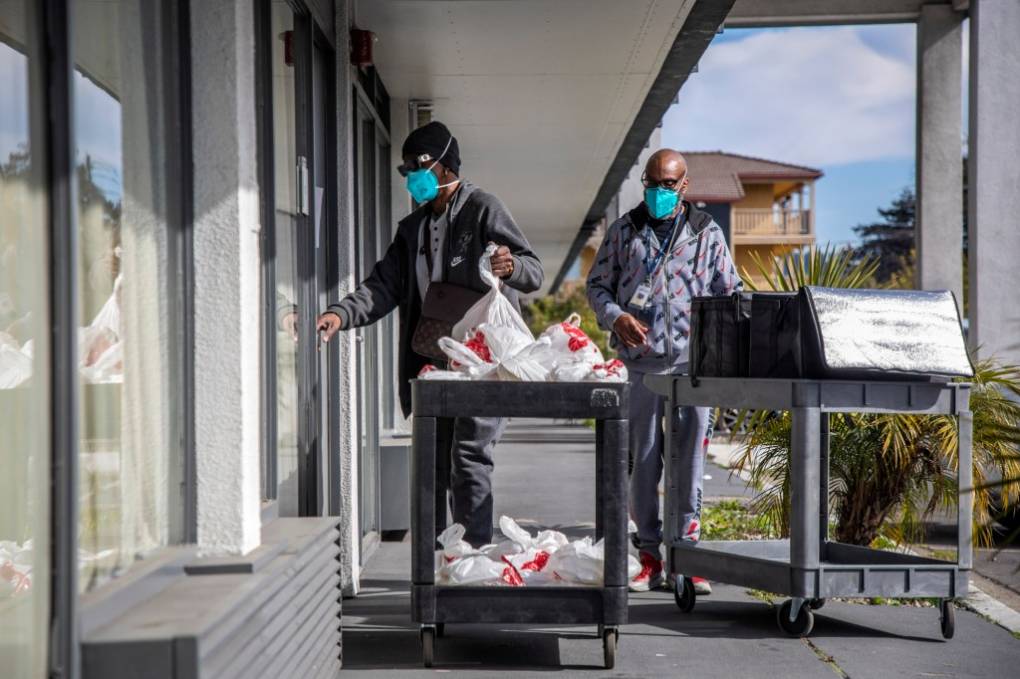
"caption": "Terry Harper (left) and Frank Scott deliver meals to occupants at the Radisson Hotel in Oakland. Edward El has stayed at this hotel as part of a Project Roomkey shelter but will soon be moving into his own apartment after spending much of the past 16 years unhoused.",
"description": "Terry Harper (left) and Frank Scott deliver meals to occupants at the Radisson Hotel in Oakland.",
"title": "020922-CALAIM-MHN-16-CM",
"credit": "Martin do Nascimento/CalMatters",
"status": "inherit",
"altTag": "Two people push carts down a hotel hallway. The carts are full of food and bags and the people pushing the carts are wearing masks.",
"isLoading": false,
"fetchFailed": false
},
"news_11892562": {
"type": "attachments",
"id": "news_11892562",
"meta": {
"index": "attachments_1716263798",
"site": "news",
"id": "11892562",
"found": true
},
"parent": 11892561,
"imgSizes": {
"twentyfourteen-full-width": {
"file": "https://ww2.kqed.org/app/uploads/sites/10/2021/10/RS44233_GettyImages-1253314486-qut-1038x576.jpg",
"width": 1038,
"mimeType": "image/jpeg",
"height": 576
},
"thumbnail": {
"file": "https://ww2.kqed.org/app/uploads/sites/10/2021/10/RS44233_GettyImages-1253314486-qut-160x104.jpg",
"width": 160,
"mimeType": "image/jpeg",
"height": 104
},
"post-thumbnail": {
"file": "https://ww2.kqed.org/app/uploads/sites/10/2021/10/RS44233_GettyImages-1253314486-qut-672x372.jpg",
"width": 672,
"mimeType": "image/jpeg",
"height": 372
},
"kqedFullSize": {
"file": "https://ww2.kqed.org/app/uploads/sites/10/2021/10/RS44233_GettyImages-1253314486-qut.jpg",
"width": 1920,
"height": 1250
},
"large": {
"file": "https://ww2.kqed.org/app/uploads/sites/10/2021/10/RS44233_GettyImages-1253314486-qut-1020x664.jpg",
"width": 1020,
"mimeType": "image/jpeg",
"height": 664
},
"1536x1536": {
"file": "https://ww2.kqed.org/app/uploads/sites/10/2021/10/RS44233_GettyImages-1253314486-qut-1536x1000.jpg",
"width": 1536,
"mimeType": "image/jpeg",
"height": 1000
},
"medium": {
"file": "https://ww2.kqed.org/app/uploads/sites/10/2021/10/RS44233_GettyImages-1253314486-qut-800x521.jpg",
"width": 800,
"mimeType": "image/jpeg",
"height": 521
}
},
"publishDate": 1634398751,
"modified": 1679013142,
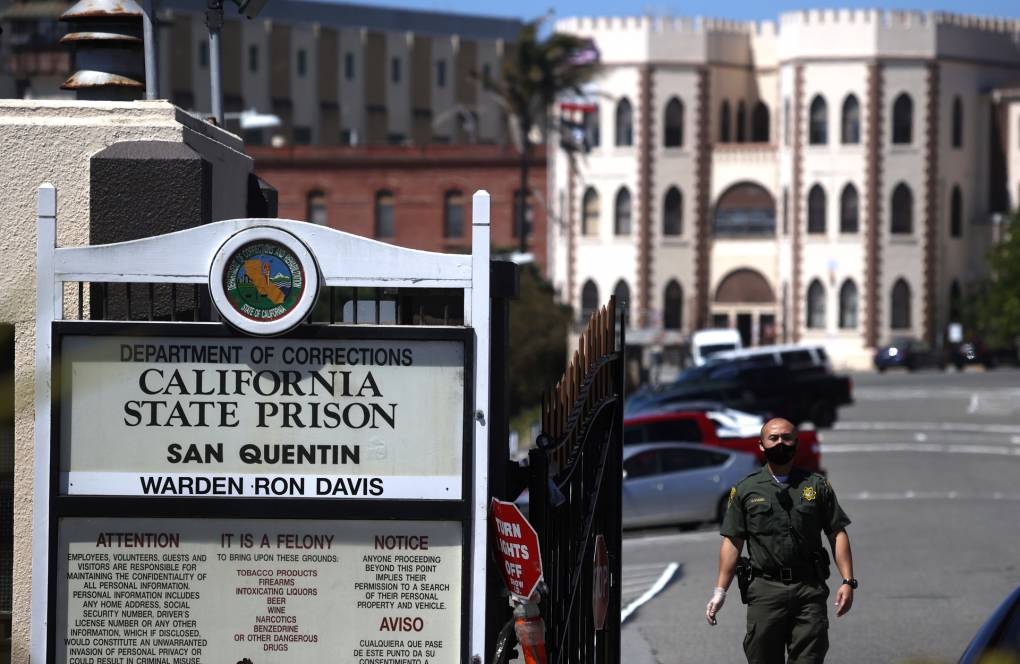
"caption": "A California Department of Corrections and Rehabilitation officer wears a protective mask as he stands guard at the front gate of San Quentin State Prison on June 29, 2020, in Marin County.",
"description": null,
"title": null,
"credit": "Justin Sullivan/Getty Images",
"status": "inherit",
"altTag": "A man in uniform stands next to a sign that says \"California State Prison, San Quentin,\" with the castle-like facade of the prison behind him.",
"isLoading": false,
"fetchFailed": false
},
"news_11904927": {
"type": "attachments",
"id": "news_11904927",
"meta": {
"index": "attachments_1716263798",
"site": "news",
"id": "11904927",
"found": true
},
"parent": 11904843,
"imgSizes": {
"twentyfourteen-full-width": {
"file": "https://ww2.kqed.org/app/uploads/sites/10/2022/02/MARQUEE_920-915x576.jpg",
"width": 915,
"mimeType": "image/jpeg",
"height": 576
},
"thumbnail": {
"file": "https://ww2.kqed.org/app/uploads/sites/10/2022/02/MARQUEE_920-160x108.jpg",
"width": 160,
"mimeType": "image/jpeg",
"height": 108
},
"post-thumbnail": {
"file": "https://ww2.kqed.org/app/uploads/sites/10/2022/02/MARQUEE_920-672x372.jpg",
"width": 672,
"mimeType": "image/jpeg",
"height": 372
},
"kqedFullSize": {
"file": "https://ww2.kqed.org/app/uploads/sites/10/2022/02/MARQUEE_920.jpg",
"width": 915,
"height": 617
},
"medium": {
"file": "https://ww2.kqed.org/app/uploads/sites/10/2022/02/MARQUEE_920-800x539.jpg",
"width": 800,
"mimeType": "image/jpeg",
"height": 539
}
},
"publishDate": 1644619481,
"modified": 1644619481,
"caption": null,
"description": null,
"title": "MARQUEE_920",
"credit": null,
"status": "inherit",
"altTag": null,
"isLoading": false,
"fetchFailed": false
},
"news_11904090": {
"type": "attachments",
"id": "news_11904090",
"meta": {
"index": "attachments_1716263798",
"site": "news",
"id": "11904090",
"found": true
},
"parent": 11904089,
"imgSizes": {
"twentyfourteen-full-width": {
"file": "https://ww2.kqed.org/app/uploads/sites/10/2022/02/image1-1038x576.jpg",
"width": 1038,
"mimeType": "image/jpeg",
"height": 576
},
"thumbnail": {
"file": "https://ww2.kqed.org/app/uploads/sites/10/2022/02/image1-160x107.jpg",
"width": 160,
"mimeType": "image/jpeg",
"height": 107
},
"post-thumbnail": {
"file": "https://ww2.kqed.org/app/uploads/sites/10/2022/02/image1-672x372.jpg",
"width": 672,
"mimeType": "image/jpeg",
"height": 372
},
"kqedFullSize": {
"file": "https://ww2.kqed.org/app/uploads/sites/10/2022/02/image1.jpg",
"width": 1920,
"height": 1278
},
"large": {
"file": "https://ww2.kqed.org/app/uploads/sites/10/2022/02/image1-1020x679.jpg",
"width": 1020,
"mimeType": "image/jpeg",
"height": 679
},
"1536x1536": {
"file": "https://ww2.kqed.org/app/uploads/sites/10/2022/02/image1-1536x1022.jpg",
"width": 1536,
"mimeType": "image/jpeg",
"height": 1022
},
"medium": {
"file": "https://ww2.kqed.org/app/uploads/sites/10/2022/02/image1-800x533.jpg",
"width": 800,
"mimeType": "image/jpeg",
"height": 533
}
},
"publishDate": 1644007352,
"modified": 1644007352,
"caption": null,
"description": null,
"title": "image1",
"credit": null,
"status": "inherit",
"altTag": null,
"isLoading": false,
"fetchFailed": false
},
"news_11904185": {
"type": "attachments",
"id": "news_11904185",
"meta": {
"index": "attachments_1716263798",
"site": "news",
"id": "11904185",
"found": true
},
"parent": 11904155,
"imgSizes": {
"twentyfourteen-full-width": {
"file": "https://ww2.kqed.org/app/uploads/sites/10/2022/02/KaiserPermanenteExample-1-1020x576.jpeg",
"width": 1020,
"mimeType": "image/jpeg",
"height": 576
},
"thumbnail": {
"file": "https://ww2.kqed.org/app/uploads/sites/10/2022/02/KaiserPermanenteExample-1-160x120.jpeg",
"width": 160,
"mimeType": "image/jpeg",
"height": 120
},
"post-thumbnail": {
"file": "https://ww2.kqed.org/app/uploads/sites/10/2022/02/KaiserPermanenteExample-1-672x372.jpeg",
"width": 672,
"mimeType": "image/jpeg",
"height": 372
},
"kqedFullSize": {
"file": "https://ww2.kqed.org/app/uploads/sites/10/2022/02/KaiserPermanenteExample-1.jpeg",
"width": 1020,
"height": 765
},
"medium": {
"file": "https://ww2.kqed.org/app/uploads/sites/10/2022/02/KaiserPermanenteExample-1-800x600.jpeg",
"width": 800,
"mimeType": "image/jpeg",
"height": 600
}
},
"publishDate": 1644016108,
"modified": 1644260910,
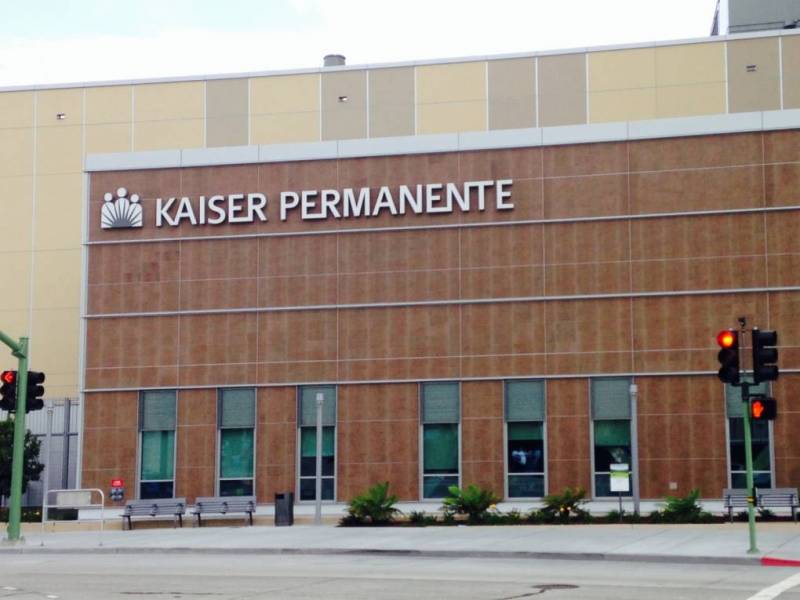
"caption": "A deal struck between Kaiser Permanente and Gov. Gavin Newsom's office could complicate a long-planned transformation of Medi-Cal.",
"description": null,
"title": "KaiserPermanenteExample",
"credit": "Lisa Aliferis/KQED",
"status": "inherit",
"altTag": null,
"isLoading": false,
"fetchFailed": false
},
"news_11902667": {
"type": "attachments",
"id": "news_11902667",
"meta": {
"index": "attachments_1716263798",
"site": "news",
"id": "11902667",
"found": true
},
"parent": 11902655,
"imgSizes": {
"twentyfourteen-full-width": {
"file": "https://ww2.kqed.org/app/uploads/sites/10/2022/01/personal_012522_final-1038x576.png",
"width": 1038,
"mimeType": "image/png",
"height": 576
},
"thumbnail": {
"file": "https://ww2.kqed.org/app/uploads/sites/10/2022/01/personal_012522_final-160x107.png",
"width": 160,
"mimeType": "image/png",
"height": 107
},
"post-thumbnail": {
"file": "https://ww2.kqed.org/app/uploads/sites/10/2022/01/personal_012522_final-672x372.png",
"width": 672,
"mimeType": "image/png",
"height": 372
},
"kqedFullSize": {
"file": "https://ww2.kqed.org/app/uploads/sites/10/2022/01/personal_012522_final.png",
"width": 1920,
"height": 1287
},
"large": {
"file": "https://ww2.kqed.org/app/uploads/sites/10/2022/01/personal_012522_final-1020x684.png",
"width": 1020,
"mimeType": "image/png",
"height": 684
},
"1536x1536": {
"file": "https://ww2.kqed.org/app/uploads/sites/10/2022/01/personal_012522_final-1536x1030.png",
"width": 1536,
"mimeType": "image/png",
"height": 1030
},
"medium": {
"file": "https://ww2.kqed.org/app/uploads/sites/10/2022/01/personal_012522_final-800x536.png",
"width": 800,
"mimeType": "image/png",
"height": 536
}
},
"publishDate": 1643154553,
"modified": 1643154697,
"caption": null,
"description": null,
"title": "personal_012522_final",
"credit": null,
"status": "inherit",
"altTag": "Cartoon: an anti-vaccine parent with anti-vax signs and phony covid cures stands next to his child. An arrow pointing at the child reads, \"personal belief exemption.\" The arrow pointing at the shrunken brain of the parent reads, \"parenting skills exemption.\"",
"isLoading": false,
"fetchFailed": false
},
"news_11902354": {
"type": "attachments",
"id": "news_11902354",
"meta": {
"index": "attachments_1716263798",
"site": "news",
"id": "11902354",
"found": true
},
"parent": 11902321,
"imgSizes": {
"twentyfourteen-full-width": {
"file": "https://ww2.kqed.org/app/uploads/sites/10/2022/01/On-the-bench_Early-1990s_Credit-to-LaDoris-Cordell-1038x576.jpg",
"width": 1038,
"mimeType": "image/jpeg",
"height": 576
},
"thumbnail": {
"file": "https://ww2.kqed.org/app/uploads/sites/10/2022/01/On-the-bench_Early-1990s_Credit-to-LaDoris-Cordell-160x98.jpg",
"width": 160,
"mimeType": "image/jpeg",
"height": 98
},
"post-thumbnail": {
"file": "https://ww2.kqed.org/app/uploads/sites/10/2022/01/On-the-bench_Early-1990s_Credit-to-LaDoris-Cordell-672x372.jpg",
"width": 672,
"mimeType": "image/jpeg",
"height": 372
},
"kqedFullSize": {
"file": "https://ww2.kqed.org/app/uploads/sites/10/2022/01/On-the-bench_Early-1990s_Credit-to-LaDoris-Cordell-scaled.jpg",
"width": 2560,
"height": 1560
},
"2048x2048": {
"file": "https://ww2.kqed.org/app/uploads/sites/10/2022/01/On-the-bench_Early-1990s_Credit-to-LaDoris-Cordell-2048x1248.jpg",
"width": 2048,
"mimeType": "image/jpeg",
"height": 1248
},
"large": {
"file": "https://ww2.kqed.org/app/uploads/sites/10/2022/01/On-the-bench_Early-1990s_Credit-to-LaDoris-Cordell-1020x622.jpg",
"width": 1020,
"mimeType": "image/jpeg",
"height": 622
},
"1536x1536": {
"file": "https://ww2.kqed.org/app/uploads/sites/10/2022/01/On-the-bench_Early-1990s_Credit-to-LaDoris-Cordell-1536x936.jpg",
"width": 1536,
"mimeType": "image/jpeg",
"height": 936
},
"full-width": {
"file": "https://ww2.kqed.org/app/uploads/sites/10/2022/01/On-the-bench_Early-1990s_Credit-to-LaDoris-Cordell-1920x1170.jpg",
"width": 1920,
"mimeType": "image/jpeg",
"height": 1170
},
"medium": {
"file": "https://ww2.kqed.org/app/uploads/sites/10/2022/01/On-the-bench_Early-1990s_Credit-to-LaDoris-Cordell-800x488.jpg",
"width": 800,
"mimeType": "image/jpeg",
"height": 488
}
},
"publishDate": 1642800741,
"modified": 1642800741,
"caption": null,
"description": null,
"title": "On the bench_Early 1990s_Credit to LaDoris Cordell",
"credit": null,
"status": "inherit",
"altTag": null,
"isLoading": false,
"fetchFailed": false
},
"news_11901765": {
"type": "attachments",
"id": "news_11901765",
"meta": {
"index": "attachments_1716263798",
"site": "news",
"id": "11901765",
"found": true
},
"parent": 11901749,
"imgSizes": {
"twentyfourteen-full-width": {
"file": "https://ww2.kqed.org/app/uploads/sites/10/2022/01/RS31770_sfmayor0712.0003-qut-1038x576.jpg",
"width": 1038,
"mimeType": "image/jpeg",
"height": 576
},
"thumbnail": {
"file": "https://ww2.kqed.org/app/uploads/sites/10/2022/01/RS31770_sfmayor0712.0003-qut-160x107.jpg",
"width": 160,
"mimeType": "image/jpeg",
"height": 107
},
"post-thumbnail": {
"file": "https://ww2.kqed.org/app/uploads/sites/10/2022/01/RS31770_sfmayor0712.0003-qut-672x372.jpg",
"width": 672,
"mimeType": "image/jpeg",
"height": 372
},
"kqedFullSize": {
"file": "https://ww2.kqed.org/app/uploads/sites/10/2022/01/RS31770_sfmayor0712.0003-qut.jpg",
"width": 1920,
"height": 1281
},
"large": {
"file": "https://ww2.kqed.org/app/uploads/sites/10/2022/01/RS31770_sfmayor0712.0003-qut-1020x681.jpg",
"width": 1020,
"mimeType": "image/jpeg",
"height": 681
},
"1536x1536": {
"file": "https://ww2.kqed.org/app/uploads/sites/10/2022/01/RS31770_sfmayor0712.0003-qut-1536x1025.jpg",
"width": 1536,
"mimeType": "image/jpeg",
"height": 1025
},
"medium": {
"file": "https://ww2.kqed.org/app/uploads/sites/10/2022/01/RS31770_sfmayor0712.0003-qut-800x534.jpg",
"width": 800,
"mimeType": "image/jpeg",
"height": 534
}
},
"publishDate": 1642200111,
"modified": 1642200111,
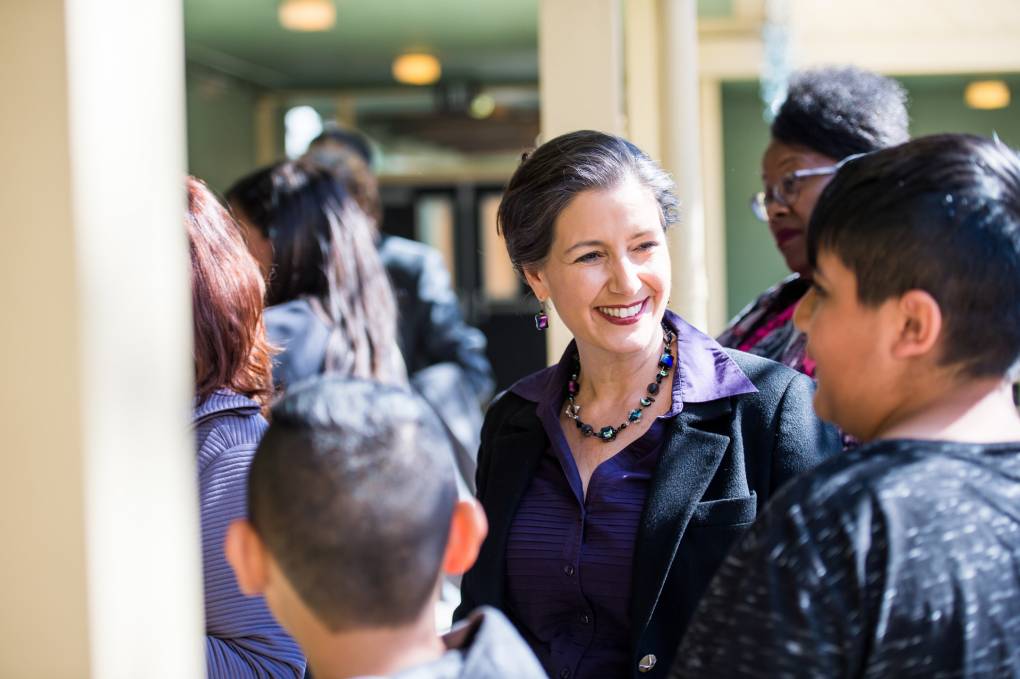
"caption": "San Francisco Mayor London Breed waits to walk out of City Hall for her inauguration in San Francisco, Calif. on Wednesday, July 11, 2018.",
"description": null,
"title": "SFMayor0712",
"credit": null,
"status": "inherit",
"altTag": null,
"isLoading": false,
"fetchFailed": false
},
"news_11901510": {
"type": "attachments",
"id": "news_11901510",
"meta": {
"index": "attachments_1716263798",
"site": "news",
"id": "11901510",
"found": true
},
"parent": 11901506,
"imgSizes": {
"twentyfourteen-full-width": {
"file": "https://ww2.kqed.org/app/uploads/sites/10/2022/01/011022_Unhoused__MG_01-1038x576.jpeg",
"width": 1038,
"mimeType": "image/jpeg",
"height": 576
},
"thumbnail": {
"file": "https://ww2.kqed.org/app/uploads/sites/10/2022/01/011022_Unhoused__MG_01-160x107.jpeg",
"width": 160,
"mimeType": "image/jpeg",
"height": 107
},
"post-thumbnail": {
"file": "https://ww2.kqed.org/app/uploads/sites/10/2022/01/011022_Unhoused__MG_01-672x372.jpeg",
"width": 672,
"mimeType": "image/jpeg",
"height": 372
},
"kqedFullSize": {
"file": "https://ww2.kqed.org/app/uploads/sites/10/2022/01/011022_Unhoused__MG_01-e1642021349884.jpeg",
"width": 1920,
"height": 1280
},
"large": {
"file": "https://ww2.kqed.org/app/uploads/sites/10/2022/01/011022_Unhoused__MG_01-1020x680.jpeg",
"width": 1020,
"mimeType": "image/jpeg",
"height": 680
},
"1536x1536": {
"file": "https://ww2.kqed.org/app/uploads/sites/10/2022/01/011022_Unhoused__MG_01-1536x1024.jpeg",
"width": 1536,
"mimeType": "image/jpeg",
"height": 1024
},
"full-width": {
"file": "https://ww2.kqed.org/app/uploads/sites/10/2022/01/011022_Unhoused__MG_01-1920x1280.jpeg",
"width": 1920,
"mimeType": "image/jpeg",
"height": 1280
},
"medium": {
"file": "https://ww2.kqed.org/app/uploads/sites/10/2022/01/011022_Unhoused__MG_01-800x533.jpeg",
"width": 800,
"mimeType": "image/jpeg",
"height": 533
}
},
"publishDate": 1642021273,
"modified": 1642036076,
"caption": "Tents line the curb in the Rampart Village neighborhood of Los Angeles on Nov. 17, 2021. ",
"description": null,
"title": "011022_Unhoused__MG_01",
"credit": "Miguel Gutierrez Jr./CalMatters",
"status": "inherit",
"altTag": "Tarp-covered tents line a city sidewalk.",
"isLoading": false,
"fetchFailed": false
},
"news_11901383": {
"type": "attachments",
"id": "news_11901383",
"meta": {
"index": "attachments_1716263798",
"site": "news",
"id": "11901383",
"found": true
},
"parent": 11901347,
"imgSizes": {
"twentyfourteen-full-width": {
"file": "https://ww2.kqed.org/app/uploads/sites/10/2022/01/RS5067_NurseChecksBloodPressure-1038x576.jpg",
"width": 1038,
"mimeType": "image/jpeg",
"height": 576
},
"thumbnail": {
"file": "https://ww2.kqed.org/app/uploads/sites/10/2022/01/RS5067_NurseChecksBloodPressure-160x107.jpg",
"width": 160,
"mimeType": "image/jpeg",
"height": 107
},
"post-thumbnail": {
"file": "https://ww2.kqed.org/app/uploads/sites/10/2022/01/RS5067_NurseChecksBloodPressure-672x372.jpg",
"width": 672,
"mimeType": "image/jpeg",
"height": 372
},
"kqedFullSize": {
"file": "https://ww2.kqed.org/app/uploads/sites/10/2022/01/RS5067_NurseChecksBloodPressure-scaled-e1641938626135.jpg",
"width": 1920,
"height": 1280
},
"2048x2048": {
"file": "https://ww2.kqed.org/app/uploads/sites/10/2022/01/RS5067_NurseChecksBloodPressure-2048x1365.jpg",
"width": 2048,
"mimeType": "image/jpeg",
"height": 1365
},
"large": {
"file": "https://ww2.kqed.org/app/uploads/sites/10/2022/01/RS5067_NurseChecksBloodPressure-1020x680.jpg",
"width": 1020,
"mimeType": "image/jpeg",
"height": 680
},
"1536x1536": {
"file": "https://ww2.kqed.org/app/uploads/sites/10/2022/01/RS5067_NurseChecksBloodPressure-1536x1024.jpg",
"width": 1536,
"mimeType": "image/jpeg",
"height": 1024
},
"full-width": {
"file": "https://ww2.kqed.org/app/uploads/sites/10/2022/01/RS5067_NurseChecksBloodPressure-1920x1280.jpg",
"width": 1920,
"mimeType": "image/jpeg",
"height": 1280
},
"medium": {
"file": "https://ww2.kqed.org/app/uploads/sites/10/2022/01/RS5067_NurseChecksBloodPressure-800x533.jpg",
"width": 800,
"mimeType": "image/jpeg",
"height": 533
}
},
"publishDate": 1641938608,
"modified": 1641938828,
"caption": "A nurse checks a patient's blood pressure at a free health screening event in Los Angeles. The Assembly began debate Tuesday on a bill to establish a universal health care system in the state, called CalCare. ",
"description": null,
"title": "Health Care Activists Offer Free Health Screenings In Los Angeles",
"credit": "David McNew/Getty Images",
"status": "inherit",
"altTag": "closeup shot of a nurse's hand operating a blood pressure monitoring device",
"isLoading": false,
"fetchFailed": false
},
"news_11901275": {
"type": "attachments",
"id": "news_11901275",
"meta": {
"index": "attachments_1716263798",
"site": "news",
"id": "11901275",
"found": true
},
"parent": 11901267,
"imgSizes": {
"twentyfourteen-full-width": {
"file": "https://ww2.kqed.org/app/uploads/sites/10/2022/01/leantesting_011022_final-1038x576.png",
"width": 1038,
"mimeType": "image/png",
"height": 576
},
"thumbnail": {
"file": "https://ww2.kqed.org/app/uploads/sites/10/2022/01/leantesting_011022_final-160x115.png",
"width": 160,
"mimeType": "image/png",
"height": 115
},
"post-thumbnail": {
"file": "https://ww2.kqed.org/app/uploads/sites/10/2022/01/leantesting_011022_final-672x372.png",
"width": 672,
"mimeType": "image/png",
"height": 372
},
"kqedFullSize": {
"file": "https://ww2.kqed.org/app/uploads/sites/10/2022/01/leantesting_011022_final.png",
"width": 1920,
"height": 1379
},
"large": {
"file": "https://ww2.kqed.org/app/uploads/sites/10/2022/01/leantesting_011022_final-1020x733.png",
"width": 1020,
"mimeType": "image/png",
"height": 733
},
"1536x1536": {
"file": "https://ww2.kqed.org/app/uploads/sites/10/2022/01/leantesting_011022_final-1536x1103.png",
"width": 1536,
"mimeType": "image/png",
"height": 1103
},
"medium": {
"file": "https://ww2.kqed.org/app/uploads/sites/10/2022/01/leantesting_011022_final-800x575.png",
"width": 800,
"mimeType": "image/png",
"height": 575
}
},
"publishDate": 1641851297,
"modified": 1641851473,
"caption": null,
"description": null,
"title": "leantesting_011022_final",
"credit": null,
"status": "inherit",
"altTag": "Cartoon: a three-legged stool with one leg, chopped shorter, that is labeled \"testi--.\" The other two legs read, \"masks\" and \"vaccines.\" Atop the stool is a small crowd of nervous people looking down as the stool leans toward covid virus.",
"isLoading": false,
"fetchFailed": false
}
},
"audioPlayerReducer": {
"postId": "stream_live",
"isPaused": true,
"isPlaying": false,
"pfsActive": false,
"pledgeModalIsOpen": true,
"playerDrawerIsOpen": false,
"liveAudioPlayStartedAt": 0,
"liveAudioPlayContext": ""
},
"authorsReducer": {
"byline_news_11905181": {
"type": "authors",
"id": "byline_news_11905181",
"meta": {
"override": true
},
"slug": "byline_news_11905181",
"name": "\u003ca href=\"https://calmatters.org/author/kristen-hwang/\">Kristen Hwang\u003c/a>",
"isLoading": false
},
"byline_news_11904155": {
"type": "authors",
"id": "byline_news_11904155",
"meta": {
"override": true
},
"slug": "byline_news_11904155",
"name": "\u003ca href=\"https://khn.org/news/author/bernard-j-wolfson/\">Bernard J. Wolfson\u003c/a>, \u003ca href=\"https://khn.org/news/author/angela-hart/\">Angela Hart\u003c/a> and \u003ca href=\"https://khn.org/news/author/samantha-young/\">Samantha Young\u003c/a>",
"isLoading": false
},
"byline_news_11901506": {
"type": "authors",
"id": "byline_news_11901506",
"meta": {
"override": true
},
"slug": "byline_news_11901506",
"name": "\u003ca href=\"https://calmatters.org/author/manuela-tobias/\">Manuela Tobias\u003c/a>",
"isLoading": false
},
"kqed": {
"type": "authors",
"id": "236",
"meta": {
"index": "authors_1716337520",
"id": "236",
"found": true
},
"name": "KQED News Staff",
"firstName": "KQED News Staff",
"lastName": null,
"slug": "kqed",
"email": "faq@kqed.org",
"display_author_email": false,
"staff_mastheads": [],
"title": null,
"bio": null,
"avatar": "https://secure.gravatar.com/avatar/ef0e801a68c4c54afa9180db14084167?s=600&d=blank&r=g",
"twitter": null,
"facebook": null,
"instagram": null,
"linkedin": null,
"sites": [
{
"site": "arts",
"roles": [
"contributor"
]
},
{
"site": "news",
"roles": [
"editor"
]
},
{
"site": "futureofyou",
"roles": [
"author"
]
}
],
"headData": {
"title": "KQED News Staff | KQED",
"description": null,
"ogImgSrc": "https://secure.gravatar.com/avatar/ef0e801a68c4c54afa9180db14084167?s=600&d=blank&r=g",
"twImgSrc": "https://secure.gravatar.com/avatar/ef0e801a68c4c54afa9180db14084167?s=600&d=blank&r=g"
},
"isLoading": false,
"link": "/author/kqed"
},
"kqednewsstaffandwires": {
"type": "authors",
"id": "237",
"meta": {
"index": "authors_1716337520",
"id": "237",
"found": true
},
"name": "KQED News Staff and Wires",
"firstName": "KQED News Staff and Wires",
"lastName": null,
"slug": "kqednewsstaffandwires",
"email": "onlinenewsstaff@kqed.org",
"display_author_email": false,
"staff_mastheads": [],
"title": null,
"bio": null,
"avatar": "https://secure.gravatar.com/avatar/72295af8ebbfbd19a4948f5271285664?s=600&d=blank&r=g",
"twitter": null,
"facebook": null,
"instagram": null,
"linkedin": null,
"sites": [
{
"site": "arts",
"roles": [
"contributor"
]
},
{
"site": "news",
"roles": [
"contributor"
]
},
{
"site": "lowdown",
"roles": [
"author"
]
},
{
"site": "stateofhealth",
"roles": [
"contributor"
]
},
{
"site": "food",
"roles": [
"author"
]
}
],
"headData": {
"title": "KQED News Staff and Wires | KQED",
"description": null,
"ogImgSrc": "https://secure.gravatar.com/avatar/72295af8ebbfbd19a4948f5271285664?s=600&d=blank&r=g",
"twImgSrc": "https://secure.gravatar.com/avatar/72295af8ebbfbd19a4948f5271285664?s=600&d=blank&r=g"
},
"isLoading": false,
"link": "/author/kqednewsstaffandwires"
},
"adembosky": {
"type": "authors",
"id": "3205",
"meta": {
"index": "authors_1716337520",
"id": "3205",
"found": true
},
"name": "April Dembosky",
"firstName": "April",
"lastName": "Dembosky",
"slug": "adembosky",
"email": "adembosky@kqed.org",
"display_author_email": false,
"staff_mastheads": [
"news",
"science"
],
"title": "KQED Health Correspondent",
"bio": "April Dembosky is the health correspondent for KQED News and a regular contributor to NPR. She specializes in covering altered states of mind, from postpartum depression to methamphetamine-induced psychosis to the insanity defense. Her investigative series on insurance companies sidestepping mental health laws won multiple awards, including first place in beat reporting from the national Association of Health Care Journalists. She is the recipient of numerous other prizes and fellowships, including a national Edward R. Murrow award for investigative reporting, a Society of Professional Journalists award for long-form storytelling, and a Carter Center Fellowship for Mental Health Journalism.\r\n\r\nDembosky reported and produced \u003cem>Soundtrack of Silence\u003c/em>, an audio documentary about music and memory that is currently being made into a feature film by Paramount Pictures.\r\n\r\nBefore joining KQED in 2013, Dembosky covered technology and Silicon Valley for \u003cem>The Financial Times of London,\u003c/em> and contributed business and arts stories to \u003cem>Marketplace \u003c/em>and \u003cem>The New York Times.\u003c/em> She got her undergraduate degree in philosophy from Smith College and her master's in journalism from the University of California, Berkeley. She is a classically trained violinist and proud alum of the first symphony orchestra at Burning Man.",
"avatar": "https://secure.gravatar.com/avatar/ef92999be4ceb9ea60701e7dc276f813?s=600&d=blank&r=g",
"twitter": "adembosky",
"facebook": null,
"instagram": null,
"linkedin": null,
"sites": [
{
"site": "arts",
"roles": [
"author"
]
},
{
"site": "news",
"roles": [
"editor"
]
},
{
"site": "futureofyou",
"roles": [
"author"
]
},
{
"site": "stateofhealth",
"roles": [
"editor"
]
},
{
"site": "science",
"roles": [
"editor"
]
},
{
"site": "forum",
"roles": [
"editor"
]
}
],
"headData": {
"title": "April Dembosky | KQED",
"description": "KQED Health Correspondent",
"ogImgSrc": "https://secure.gravatar.com/avatar/ef92999be4ceb9ea60701e7dc276f813?s=600&d=blank&r=g",
"twImgSrc": "https://secure.gravatar.com/avatar/ef92999be4ceb9ea60701e7dc276f813?s=600&d=blank&r=g"
},
"isLoading": false,
"link": "/author/adembosky"
},
"markfiore": {
"type": "authors",
"id": "3236",
"meta": {
"index": "authors_1716337520",
"id": "3236",
"found": true
},
"name": "Mark Fiore",
"firstName": "Mark",
"lastName": "Fiore",
"slug": "markfiore",
"email": "mark@markfiore.com",
"display_author_email": false,
"staff_mastheads": [
"news"
],
"title": "KQED News Cartoonist",
"bio": "\u003ca href=\"http://www.MarkFiore.com\">MarkFiore.com\u003c/a> | \u003ca href=\"https://twitter.com/markfiore\">Follow on Twitter\u003c/a> | \u003ca href=\"https://www.facebook.com/pages/Mark-Fiore-Animated-Political-Cartoons/94451707396?ref=bookmarks\">Facebook\u003c/a> | \u003ca href=\"mailto:mark@markfiore.com\">email\u003c/a>\r\n\r\nPulitzer Prize-winner, Mark Fiore, who the Wall Street Journal has called “the undisputed guru of the form,” creates animated political cartoons in San Francisco, where his work has been featured regularly on the San Francisco Chronicle’s web site, SFGate.com. His work has appeared on Newsweek.com, Slate.com, CBSNews.com, MotherJones.com, DailyKos.com and NPR’s web site. Fiore’s political animation has appeared on CNN, Frontline, Bill Moyers Journal, Salon.com and cable and broadcast outlets across the globe.\r\n\r\nBeginning his professional life by drawing traditional political cartoons for newspapers, Fiore’s work appeared in publications ranging from the Washington Post to the Los Angeles Times. In the late 1990s, he began to experiment with animating political cartoons and, after a short stint at the San Jose Mercury News as their staff cartoonist, Fiore devoted all his energies to animation.\r\nGrowing up in California, Fiore also spent a good portion of his life in the backwoods of Idaho. It was this combination that shaped him politically. Mark majored in political science at Colorado College, where, in a perfect send-off for a cartoonist, he received his diploma in 1991 as commencement speaker Dick Cheney smiled approvingly.\r\nMark Fiore was awarded the Pulitzer Prize for political cartooning in 2010, a Robert F. Kennedy Journalism Award in 2004 and has twice received an Online Journalism Award for commentary from the Online News Association (2002, 2008). Fiore has received two awards for his work in new media from the National Cartoonists Society (2001, 2002), and in 2006 received The James Madison Freedom of Information Award from The Society of Professional Journalists.",
"avatar": "https://secure.gravatar.com/avatar/fc4e2a612b15b67bad0c6f0e1db4ca9b?s=600&d=blank&r=g",
"twitter": "MarkFiore",
"facebook": null,
"instagram": "https://www.instagram.com/markfiore/?hl=en",
"linkedin": null,
"sites": [
{
"site": "arts",
"roles": [
"contributor"
]
},
{
"site": "news",
"roles": [
"editor"
]
},
{
"site": "futureofyou",
"roles": [
"editor"
]
},
{
"site": "science",
"roles": [
"editor"
]
}
],
"headData": {
"title": "Mark Fiore | KQED",
"description": "KQED News Cartoonist",
"ogImgSrc": "https://secure.gravatar.com/avatar/fc4e2a612b15b67bad0c6f0e1db4ca9b?s=600&d=blank&r=g",
"twImgSrc": "https://secure.gravatar.com/avatar/fc4e2a612b15b67bad0c6f0e1db4ca9b?s=600&d=blank&r=g"
},
"isLoading": false,
"link": "/author/markfiore"
},
"mlagos": {
"type": "authors",
"id": "3239",
"meta": {
"index": "authors_1716337520",
"id": "3239",
"found": true
},
"name": "Marisa Lagos",
"firstName": "Marisa",
"lastName": "Lagos",
"slug": "mlagos",
"email": "mlagos@kqed.org",
"display_author_email": false,
"staff_mastheads": [
"news"
],
"title": "KQED Contributor",
"bio": "Marisa Lagos is a correspondent for KQED’s California Politics and Government Desk and co-hosts the award-winning show and podcast, Political Breakdown. At KQED, Lagos also conducts reporting, analysis and investigations into state, local and national politics for radio, TV, online and onstage. In 2022, she and co-host, Scott Shafer, moderated the only gubernatorial debate in California. In 2020, the \u003ci>Washington Post\u003c/i> named her one of the top political journalists in California; she was nominated for a Peabody and won several other awards for her work investigating the 2017 California wildfires. She has worked at the \u003ci>San Francisco Chronicle\u003c/i>, \u003ci>San Francisco Examiner\u003c/i> and \u003ci>Los Angeles Times\u003c/i>. A UC Santa Barbara graduate, she lives in San Francisco with her two sons and husband.",
"avatar": "https://secure.gravatar.com/avatar/a261a0d3696fc066871ef96b85b5e7d2?s=600&d=blank&r=g",
"twitter": "@mlagos",
"facebook": null,
"instagram": null,
"linkedin": null,
"sites": [
{
"site": "arts",
"roles": [
"author"
]
},
{
"site": "news",
"roles": [
"editor"
]
},
{
"site": "science",
"roles": [
"editor"
]
},
{
"site": "forum",
"roles": [
"author"
]
},
{
"site": "liveblog",
"roles": [
"author"
]
}
],
"headData": {
"title": "Marisa Lagos | KQED",
"description": "KQED Contributor",
"ogImgSrc": "https://secure.gravatar.com/avatar/a261a0d3696fc066871ef96b85b5e7d2?s=600&d=blank&r=g",
"twImgSrc": "https://secure.gravatar.com/avatar/a261a0d3696fc066871ef96b85b5e7d2?s=600&d=blank&r=g"
},
"isLoading": false,
"link": "/author/mlagos"
},
"ecruzguevarra": {
"type": "authors",
"id": "8654",
"meta": {
"index": "authors_1716337520",
"id": "8654",
"found": true
},
"name": "Ericka Cruz Guevarra",
"firstName": "Ericka",
"lastName": "Cruz Guevarra",
"slug": "ecruzguevarra",
"email": "ecruzguevarra@kqed.org",
"display_author_email": true,
"staff_mastheads": [
"news"
],
"title": "Producer, The Bay Podcast",
"bio": "Ericka Cruz Guevarra is host of \u003ca href=\"https://www.kqed.org/podcasts/thebay\">\u003cem>The Bay\u003c/em>\u003c/a> podcast at KQED. Before host, she was the show’s producer. Her work in that capacity includes a three-part reported series on policing in Vallejo, which won a 2020 excellence in journalism award from the Society of Professional Journalists. Ericka has worked as a breaking news reporter at Oregon Public Broadcasting, helped produce the Code Switch podcast, and was KQED’s inaugural Raul Ramirez Diversity Fund intern. She’s also an alumna of NPR’s Next Generation Radio program. Send her an email if you have strong feelings about whether Fairfield and Suisun City are the Bay. Ericka is represented by SAG-AFTRA.",
"avatar": "https://secure.gravatar.com/avatar/accefc1de4bafc7e234b69bcb9b6f6536c130fd84709bc3069ef11a78787e1bb?s=600&d=blank&r=g",
"twitter": "NotoriousECG",
"bluesky": null,
"facebook": null,
"instagram": null,
"linkedin": null,
"sites": [
{
"site": "arts",
"roles": [
"subscriber"
]
},
{
"site": "news",
"roles": [
"editor",
"manage_categories"
]
},
{
"site": "futureofyou",
"roles": [
"subscriber"
]
},
{
"site": "stateofhealth",
"roles": [
"subscriber"
]
},
{
"site": "science",
"roles": [
"editor"
]
},
{
"site": "forum",
"roles": [
"subscriber"
]
}
],
"headData": {
"title": "Ericka Cruz Guevarra | KQED",
"description": "Producer, The Bay Podcast",
"ogImgSrc": "https://secure.gravatar.com/avatar/accefc1de4bafc7e234b69bcb9b6f6536c130fd84709bc3069ef11a78787e1bb?s=600&d=blank&r=g",
"twImgSrc": "https://secure.gravatar.com/avatar/accefc1de4bafc7e234b69bcb9b6f6536c130fd84709bc3069ef11a78787e1bb?s=600&d=blank&r=g"
},
"isLoading": false,
"link": "/author/ecruzguevarra"
},
"katewolffe": {
"type": "authors",
"id": "11523",
"meta": {
"index": "authors_1716337520",
"id": "11523",
"found": true
},
"name": "Kate Wolffe",
"firstName": "Kate",
"lastName": "Wolffe",
"slug": "katewolffe",
"email": "kwolffe@kqed.org",
"display_author_email": true,
"staff_mastheads": [
"news"
],
"title": "KQED Reporter + Weekend Host",
"bio": "Kate Wolffe reports on local Bay Area happenings for KQED, and hosts the news on weekend afternoons. She joined KQED in 2018 as an intern on the Forum team, before moving to cover topics ranging from politics to criminal justice to homelessness. A Bay Area native and UC Berkeley graduate, Kate loves to discover new corners of the region.",
"avatar": "https://secure.gravatar.com/avatar/22455f14db824a03ee252f73052fe939?s=600&d=blank&r=g",
"twitter": "katewolffe",
"facebook": null,
"instagram": null,
"linkedin": null,
"sites": [
{
"site": "arts",
"roles": [
"editor"
]
},
{
"site": "news",
"roles": [
"author",
"edit_others_posts"
]
},
{
"site": "forum",
"roles": [
"editor"
]
}
],
"headData": {
"title": "Kate Wolffe | KQED",
"description": "KQED Reporter + Weekend Host",
"ogImgSrc": "https://secure.gravatar.com/avatar/22455f14db824a03ee252f73052fe939?s=600&d=blank&r=g",
"twImgSrc": "https://secure.gravatar.com/avatar/22455f14db824a03ee252f73052fe939?s=600&d=blank&r=g"
},
"isLoading": false,
"link": "/author/katewolffe"
},
"mfharvin": {
"type": "authors",
"id": "11583",
"meta": {
"index": "authors_1716337520",
"id": "11583",
"found": true
},
"name": "Mary Franklin Harvin",
"firstName": "Mary Franklin",
"lastName": "Harvin",
"slug": "mfharvin",
"email": "mfharvin@KQED.org",
"display_author_email": false,
"staff_mastheads": [
"news"
],
"title": "KQED Contributor",
"bio": null,
"avatar": "https://secure.gravatar.com/avatar/0e53510a7d48cfbdebfc9b11357d845f?s=600&d=blank&r=g",
"twitter": "EmEffHarvin",
"facebook": null,
"instagram": null,
"linkedin": null,
"sites": [
{
"site": "news",
"roles": [
"author",
"edit_others_posts"
]
},
{
"site": "science",
"roles": [
"editor"
]
}
],
"headData": {
"title": "Mary Franklin Harvin | KQED",
"description": "KQED Contributor",
"ogImgSrc": "https://secure.gravatar.com/avatar/0e53510a7d48cfbdebfc9b11357d845f?s=600&d=blank&r=g",
"twImgSrc": "https://secure.gravatar.com/avatar/0e53510a7d48cfbdebfc9b11357d845f?s=600&d=blank&r=g"
},
"isLoading": false,
"link": "/author/mfharvin"
},
"amontecillo": {
"type": "authors",
"id": "11649",
"meta": {
"index": "authors_1716337520",
"id": "11649",
"found": true
},
"name": "Alan Montecillo",
"firstName": "Alan",
"lastName": "Montecillo",
"slug": "amontecillo",
"email": "amontecillo@kqed.org",
"display_author_email": false,
"staff_mastheads": [
"news"
],
"title": "KQED Contributor",
"bio": "Alan Montecillo is the senior editor of \u003cem>\u003ca href=\"http://kqed.org/thebay\">The Bay\u003c/a>, \u003c/em> KQED's local news podcast. Before moving to the Bay Area, he worked as a senior talk show producer for WILL in Champaign-Urbana, Illinois and at Oregon Public Broadcasting in Portland, Oregon. He has won journalism awards from the Society of Professional Journalists Northern California, the Public Media Journalists Association, The Signal Awards, and has also received a regional Edward R. Murrow award. Alan is a Filipino American from Hong Kong and a graduate of Reed College.",
"avatar": "https://secure.gravatar.com/avatar/268f53a2066899ea9efdd8a5900218b17c822d9862cbc9326cccec53ef41d349?s=600&d=blank&r=g",
"twitter": "alanmontecillo",
"bluesky": null,
"facebook": null,
"instagram": null,
"linkedin": null,
"sites": [
{
"site": "",
"roles": [
"editor"
]
},
{
"site": "news",
"roles": [
"editor",
"manage_categories"
]
}
],
"headData": {
"title": "Alan Montecillo | KQED",
"description": "KQED Contributor",
"ogImgSrc": "https://secure.gravatar.com/avatar/268f53a2066899ea9efdd8a5900218b17c822d9862cbc9326cccec53ef41d349?s=600&d=blank&r=g",
"twImgSrc": "https://secure.gravatar.com/avatar/268f53a2066899ea9efdd8a5900218b17c822d9862cbc9326cccec53ef41d349?s=600&d=blank&r=g"
},
"isLoading": false,
"link": "/author/amontecillo"
}
},
"pagesReducer": {
"news_tag_gavin-newsom": {
"type": "terms",
"id": "news_16",
"meta": {
"index": "terms_1716263798",
"site": "news",
"id": "16",
"score": 8.936995
},
"featImg": null,
"name": "Gavin Newsom",
"description": null,
"taxonomy": "tag",
"headData": {
"twImgId": null,
"twTitle": null,
"ogTitle": null,
"ogImgId": null,
"twDescription": null,
"description": null,
"title": "Gavin Newsom Archives | KQED News",
"ogDescription": null
},
"ttid": 16,
"slug": "gavin-newsom",
"isLoading": false,
"title": "Gavin Newsom",
"pageMeta": {
"site": "news",
"WpPageTemplate": "page-topic-editorial",
"currentPage": 50
},
"blocks": [
{
"blockName": "kqed/post-list",
"attrs": {
"layout": "cardArticle2",
"query": "posts/news?tag=gavin-newsom",
"seeMore": false,
"paginated": true,
"page": 50
}
},
{
"blockName": "kqed/ad"
}
]
}
},
"pfsSessionReducer": {},
"postsReducer": {
"stream_live": {
"type": "live",
"id": "stream_live",
"audioUrl": "https://streams.kqed.org/kqedradio",
"title": "Live Stream",
"excerpt": "Live Stream information currently unavailable.",
"link": "/radio",
"featImg": "",
"label": {
"name": "KQED Live",
"link": "/"
}
},
"stream_kqedNewscast": {
"type": "posts",
"id": "stream_kqedNewscast",
"audioUrl": "https://www.kqed.org/.stream/anon/radio/RDnews/newscast.mp3?_=1",
"title": "KQED Newscast",
"featImg": "",
"label": {
"name": "88.5 FM",
"link": "/"
}
},
"news_11905650": {
"type": "posts",
"id": "news_11905650",
"meta": {
"index": "posts_1716263798",
"site": "news",
"id": "11905650",
"score": null,
"sort": [
1645148796000
]
},
"guestAuthors": [],
"slug": "californias-new-covid-19-plan-means-being-prepared-to-live-with-it",
"title": "California's New COVID-19 Plan Means Being Prepared to Live With It",
"publishDate": 1645148796,
"format": "standard",
"headTitle": "California’s New COVID-19 Plan Means Being Prepared to Live With It | KQED",
"labelTerm": {
"site": "news"
},
"content": "\u003cp>If the first two years of the pandemic were like driving in heavy rain with worn-out brakes and no windshield wipers, then the next phase will be like driving the same road in good weather with brand-new brakes and wipers.\u003c/p>\n\u003cp>That’s how California health officials are viewing the future of living with the coronavirus, and they unveiled a plan Thursday that provides a road map for doing just that.\u003c/p>\n\u003cp>“While we can’t predict the future, we can better prepare for it,” said Gov. Gavin Newsom, as he laid out what sorts of resources and capabilities the state will need both to turn a page on the pandemic, and to stay prepared for the next variant or surge. “We have your back — we have learned a lot. We are not approaching this the way we did last year, the way we did two years ago.”\u003c/p>\n\u003cp>That preparation will include maintaining testing capacity, even as cases fall, as well as continuing to monitor cases through \u003ca href=\"https://www.kqed.org/science/1978289/omicron-was-in-california-before-it-was-named-omicron-according-to-sewage-samples\">wastewater surveillance\u003c/a>.\u003c/p>\n\u003cp>But Newsom was clear: There’s no declaring victory against COVID-19.\u003c/p>\n\u003cp>[ad fullwidth]\u003c/p>\n\u003cp>“Today is about turning a page, moving from this crisis mentality, moving from a reactive framework to a framework where we are more sentinel,” he said “[We are] moving away from a reactive mindset and a crisis mindset to living with this virus.”\u003c/p>\n\u003cp>The state issued a 30-page plan laying out what that means. Dubbed the\u003ca href=\"https://files.covid19.ca.gov/pdf/smarterplan.pdf\"> SMARTER Plan\u003c/a> — for Shots, Masking, Awareness, Readiness, Testing, Education and Rx (for therapeutic treatment) — officials say it will ensure that the state is ready to respond to changing scenarios.\u003c/p>\n\u003cp>It includes:\u003c/p>\n\u003cul>\n\u003cli>The capacity to administer at least 200,000 vaccines per day on top of existing pharmacy and provider infrastructure.\u003c/li>\n\u003cli>Maintaining a stockpile of 75 million high-quality masks.\u003c/li>\n\u003cli>Maintaining capability to promote vaccination, masking and other mitigation measures in all 58 counties, including by partnering with at least 150 community-based organizations.\u003c/li>\n\u003cli>Maintaining wastewater surveillance and enhancing respiratory surveillance in the health care system, while continuing to sequence at least 10% of positive COVID-19 test specimens.\u003c/li>\n\u003cli>Maintaining the ability to add 3,000 clinical staff within two to three weeks of need and across various health care facility types.\u003c/li>\n\u003cli>Maintaining commercial and local public health capacity statewide to perform at least 500,000 tests per day.\u003c/li>\n\u003cli>Expanding school-based vaccination sites by 25% to increase vaccination rates as eligibility expands and vaccination requirements are enacted.\u003c/li>\n\u003cli>Make clinically effective therapeutics available.\u003c/li>\n\u003c/ul>\n\u003cp>Most of what Newsom laid out won’t change the day-to-day reality for Californians, who still face varying local mandates depending on their city and county. The state has already lifted most of its restrictions — including the indoor mask mandate, which expired earlier this week. The school mask mandate will be revisited at the end of February, officials announced Monday.\u003c/p>\n\u003cp>Newsom said the state continues to let science and data lead its decision-making, and argued that his strategy has worked — he noted that California has experienced a far lower death rate than much of the nation throughout this pandemic.\u003c/p>\n\u003cp>[aside postID=news_11902122 hero='https://ww2.kqed.org/app/uploads/sites/10/2022/01/RS53138_GettyImages-1361961811-qut.jpg']\u003c/p>\n\u003cp>“I just want to underscore that California, as it relates to larger states, has among the lowest death rates in the United States of America — 50% lower death rates in California than in a state like Florida,” he said.\u003c/p>\n\u003cp>Dr. Mark Ghaly, the state’s secretary of health and human services, said California needs to remain ready for future variants and seasonal surges of the virus. But instead of approaching future waves with fear, he encouraged Californians to have “humble confidence” in the tools the state has relied on to stem infections and deaths — including vaccines, masks and testing.\u003c/p>\n\u003cp>“We aren’t out of the woods. We are just more familiar with the woods and don’t need to live fully afraid of what’s behind the next tree,” he said. “We’ve learned that we can’t predict the future of the virus. But perhaps we can have a more predictable response to whatever the future brings.”\u003c/p>\n\u003cp>\u003c/p>\n\u003cp>Ghaly warned that COVID likely will rear up again but says it’s “no longer a novel foe” and that Californians should be vigilant but not afraid.\u003c/p>\n\n",
"blocks": [],
"excerpt": "Gov. Gavin Newsom's latest plan to address COVID-19 means surveilling and testing for cases, while taking safety measures and treating those affected.",
"status": "publish",
"parent": 0,
"modified": 1722644380,
"stats": {
"hasAudio": false,
"hasVideo": false,
"hasChartOrMap": false,
"iframeSrcs": [],
"hasGoogleForm": false,
"hasGallery": false,
"hasHearkenModule": false,
"hasPolis": false,
"paragraphCount": 17,
"wordCount": 753
},
"headData": {
"title": "California's New COVID-19 Plan Means Being Prepared to Live With It | KQED",
"description": "Gov. Gavin Newsom's latest plan to address COVID-19 means surveilling and testing for cases, while taking safety measures and treating those affected.",
"ogTitle": "",
"ogDescription": "",
"ogImgId": "",
"twTitle": "",
"twDescription": "",
"twImgId": "",
"schema": {
"@context": "https://schema.org",
"@type": "NewsArticle",
"headline": "California's New COVID-19 Plan Means Being Prepared to Live With It",
"datePublished": "2022-02-17T17:46:36-08:00",
"dateModified": "2024-08-02T17:19:40-07:00",
"image": "https://cdn.kqed.org/wp-content/uploads/2020/02/KQED-OG-Image@1x.png",
"isAccessibleForFree": "True",
"publisher": {
"@type": "NewsMediaOrganization",
"@id": "https://www.kqed.org/#organization",
"name": "KQED",
"logo": "https://cdn.kqed.org/wp-content/uploads/2020/02/KQED-OG-Image@1x.png",
"url": "https://www.kqed.org",
"sameAs": [
"https://www.facebook.com/KQED",
"https://twitter.com/KQED",
"https://www.instagram.com/kqed/",
"https://www.tiktok.com/@kqedofficial",
"https://www.linkedin.com/company/kqed",
"https://www.youtube.com/channel/UCeC0IOo7i1P_61zVUWbJ4nw"
]
}
}
},
"sticky": false,
"excludeFromSiteSearch": "Include",
"path": "/news/11905650/californias-new-covid-19-plan-means-being-prepared-to-live-with-it",
"audioTrackLength": null,
"parsedContent": [
{
"type": "contentString",
"content": "\u003cdiv class=\"post-body\">\u003cp>\u003cp>If the first two years of the pandemic were like driving in heavy rain with worn-out brakes and no windshield wipers, then the next phase will be like driving the same road in good weather with brand-new brakes and wipers.\u003c/p>\n\u003cp>That’s how California health officials are viewing the future of living with the coronavirus, and they unveiled a plan Thursday that provides a road map for doing just that.\u003c/p>\n\u003cp>“While we can’t predict the future, we can better prepare for it,” said Gov. Gavin Newsom, as he laid out what sorts of resources and capabilities the state will need both to turn a page on the pandemic, and to stay prepared for the next variant or surge. “We have your back — we have learned a lot. We are not approaching this the way we did last year, the way we did two years ago.”\u003c/p>\n\u003cp>That preparation will include maintaining testing capacity, even as cases fall, as well as continuing to monitor cases through \u003ca href=\"https://www.kqed.org/science/1978289/omicron-was-in-california-before-it-was-named-omicron-according-to-sewage-samples\">wastewater surveillance\u003c/a>.\u003c/p>\n\u003cp>But Newsom was clear: There’s no declaring victory against COVID-19.\u003c/p>\n\u003cp>\u003c/p>\u003c/div>",
"attributes": {
"named": {},
"numeric": []
}
},
{
"type": "component",
"content": "",
"name": "ad",
"attributes": {
"named": {
"label": "fullwidth"
},
"numeric": [
"fullwidth"
]
}
},
{
"type": "contentString",
"content": "\u003cdiv class=\"post-body\">\u003cp>\u003c/p>\n\u003cp>“Today is about turning a page, moving from this crisis mentality, moving from a reactive framework to a framework where we are more sentinel,” he said “[We are] moving away from a reactive mindset and a crisis mindset to living with this virus.”\u003c/p>\n\u003cp>The state issued a 30-page plan laying out what that means. Dubbed the\u003ca href=\"https://files.covid19.ca.gov/pdf/smarterplan.pdf\"> SMARTER Plan\u003c/a> — for Shots, Masking, Awareness, Readiness, Testing, Education and Rx (for therapeutic treatment) — officials say it will ensure that the state is ready to respond to changing scenarios.\u003c/p>\n\u003cp>It includes:\u003c/p>\n\u003cul>\n\u003cli>The capacity to administer at least 200,000 vaccines per day on top of existing pharmacy and provider infrastructure.\u003c/li>\n\u003cli>Maintaining a stockpile of 75 million high-quality masks.\u003c/li>\n\u003cli>Maintaining capability to promote vaccination, masking and other mitigation measures in all 58 counties, including by partnering with at least 150 community-based organizations.\u003c/li>\n\u003cli>Maintaining wastewater surveillance and enhancing respiratory surveillance in the health care system, while continuing to sequence at least 10% of positive COVID-19 test specimens.\u003c/li>\n\u003cli>Maintaining the ability to add 3,000 clinical staff within two to three weeks of need and across various health care facility types.\u003c/li>\n\u003cli>Maintaining commercial and local public health capacity statewide to perform at least 500,000 tests per day.\u003c/li>\n\u003cli>Expanding school-based vaccination sites by 25% to increase vaccination rates as eligibility expands and vaccination requirements are enacted.\u003c/li>\n\u003cli>Make clinically effective therapeutics available.\u003c/li>\n\u003c/ul>\n\u003cp>Most of what Newsom laid out won’t change the day-to-day reality for Californians, who still face varying local mandates depending on their city and county. The state has already lifted most of its restrictions — including the indoor mask mandate, which expired earlier this week. The school mask mandate will be revisited at the end of February, officials announced Monday.\u003c/p>\n\u003cp>Newsom said the state continues to let science and data lead its decision-making, and argued that his strategy has worked — he noted that California has experienced a far lower death rate than much of the nation throughout this pandemic.\u003c/p>\n\u003cp>\u003c/p>\u003c/div>",
"attributes": {
"named": {},
"numeric": []
}
},
{
"type": "component",
"content": "",
"name": "aside",
"attributes": {
"named": {
"postid": "news_11902122",
"hero": "https://ww2.kqed.org/app/uploads/sites/10/2022/01/RS53138_GettyImages-1361961811-qut.jpg",
"label": ""
},
"numeric": []
}
},
{
"type": "contentString",
"content": "\u003cdiv class=\"post-body\">\u003cp>\u003c/p>\n\u003cp>“I just want to underscore that California, as it relates to larger states, has among the lowest death rates in the United States of America — 50% lower death rates in California than in a state like Florida,” he said.\u003c/p>\n\u003cp>Dr. Mark Ghaly, the state’s secretary of health and human services, said California needs to remain ready for future variants and seasonal surges of the virus. But instead of approaching future waves with fear, he encouraged Californians to have “humble confidence” in the tools the state has relied on to stem infections and deaths — including vaccines, masks and testing.\u003c/p>\n\u003cp>“We aren’t out of the woods. We are just more familiar with the woods and don’t need to live fully afraid of what’s behind the next tree,” he said. “We’ve learned that we can’t predict the future of the virus. But perhaps we can have a more predictable response to whatever the future brings.”\u003c/p>\n\u003cp>\u003c/p>\n\u003cp>Ghaly warned that COVID likely will rear up again but says it’s “no longer a novel foe” and that Californians should be vigilant but not afraid.\u003c/p>\n\n\u003c/div>\u003c/p>",
"attributes": {
"named": {},
"numeric": []
}
}
],
"link": "/news/11905650/californias-new-covid-19-plan-means-being-prepared-to-live-with-it",
"authors": [
"3239",
"3205"
],
"categories": [
"news_8"
],
"tags": [
"news_18538",
"news_29546",
"news_16"
],
"featImg": "news_11899700",
"label": "news"
},
"news_11905181": {
"type": "posts",
"id": "news_11905181",
"meta": {
"index": "posts_1716263798",
"site": "news",
"id": "11905181",
"score": null,
"sort": [
1644955258000
]
},
"guestAuthors": [],
"slug": "california-reformed-medi-cal-to-include-whole-person-care-is-it-working",
"title": "California Reformed Medi-Cal to Include 'Whole Person Care' — Is It Working?",
"publishDate": 1644955258,
"format": "standard",
"headTitle": "California Reformed Medi-Cal to Include ‘Whole Person Care’ — Is It Working? | KQED",
"labelTerm": {
"term": 18481,
"site": "news"
},
"content": "\u003cp>At 66, Edward El has a new lease on life — literally. In two weeks, he’ll move into his own apartment in Berkeley after spending the better part of the past 16 years unhoused.\u003c/p>\n\u003cp>Years ago, a back injury and pinched nerves in his legs made standing and walking painful, and he was laid off from his construction job. He ended up in “shelter after shelter after shelter.”\u003c/p>\n\u003cp>But nine months ago, El moved into one of 12 Project Roomkey shelters in Alameda County designed to reduce COVID-19 among the unhoused population. He was connected with a housing navigator, a counselor and medical staff. They helped El apply for affordable housing and rental assistance vouchers, and coordinated with landlords who would give unhoused renters a chance.\u003c/p>\n\u003cfigure id=\"attachment_11905186\" class=\"wp-caption alignnone\" style=\"max-width: 1536px\">\u003cimg loading=\"lazy\" decoding=\"async\" class=\"size-full wp-image-11905186\" src=\"https://ww2.kqed.org/app/uploads/sites/10/2022/02/020922-CALAIM-MHN-14-CM.jpg\" alt=\"A man, wearing a hoodie, beanie and a face mask, sits on a chair in an indoor space. He looks to the side, a bit away from the camera.\" width=\"1536\" height=\"1025\" srcset=\"https://cdn.kqed.org/wp-content/uploads/sites/10/2022/02/020922-CALAIM-MHN-14-CM.jpg 1536w, https://cdn.kqed.org/wp-content/uploads/sites/10/2022/02/020922-CALAIM-MHN-14-CM-800x534.jpg 800w, https://cdn.kqed.org/wp-content/uploads/sites/10/2022/02/020922-CALAIM-MHN-14-CM-1020x681.jpg 1020w, https://cdn.kqed.org/wp-content/uploads/sites/10/2022/02/020922-CALAIM-MHN-14-CM-160x107.jpg 160w\" sizes=\"auto, (max-width: 1536px) 100vw, 1536px\">\u003cfigcaption class=\"wp-caption-text\">As Edward El prepares to move to a permanent home, he has enrolled in Medi-Cal. He said he couldn’t have navigated the array of complex systems if it weren’t for his new case management team. ‘I’m happy. They knew about programs that I didn’t know about that allowed me to get a place,’ he said. \u003ccite>(Martin do Nascimento/CalMatters)\u003c/cite>\u003c/figcaption>\u003c/figure>\n\u003cp>Now El will pay a fraction of the cost to live in an area where one-bedroom apartments often exceed $3,000 per month.\u003c/p>\n\u003cp>The team also made sure that El was enrolled in Medi-Cal and had transportation to his doctor’s appointments. He said he couldn’t have navigated the array of complex systems if it weren’t for his new case management team. “I’m happy. They knew about programs that I didn’t know about that allowed me to get a place,” he said.\u003c/p>\n\u003cp>Intensive case management like this is an example of the ambitious, sweeping changes California made to Medi-Cal beginning in January under an initiative it’s calling CalAIM, or California Advancing and Innovating Medi-Cal.\u003c/p>\n\u003cp>Medi-Cal \u003ca href=\"https://www.chcf.org/publication/2021-edition-medi-cal-facts-figures/\">offers medical insurance to lower-income Californians\u003c/a>, serving as a lifeline for nearly half the state’s children, 1 in 5 adults and 2 million seniors and people with disabilities. But the program is inefficient: More than half of Medi-Cal’s \u003ca href=\"https://calmatters.org/health/coronavirus/2021/07/medi-cal-covid-vaccinations/\">roughly $133 billion annual budget is spent on just 5% of the program’s highest-needs individuals\u003c/a> — people with multiple complex health problems compounded by homelessness, poverty, substance abuse, mental illness or incarceration, \u003ca href=\"https://www.dhcs.ca.gov/CalAIM/Documents/CalAIM-ECM-a11y.pdf\">according the Department of Health Care Services\u003c/a>.\u003c/p>\n\u003cp>[pullquote align=\"right\" size=\"medium\" citation=\"Edward El, CalAIM beneficiary\"]‘I’m happy. They knew about programs that I didn’t know about that allowed me to get a place.’[/pullquote]Over the next five years, CalAIM will seek to address the upstream drivers of deteriorating health — things like food insecurity and housing instability — in an effort to reduce costly emergency department visits, hospitalizations and nursing home stays. The program redesign is based on “whole person care” principles, which help people avoid situations that worsen their physical and mental health.\u003c/p>\n\u003cp>“This was designed at the county level to identify very high-risk populations — oftentimes people who were coming to the emergency room five to 10 times a month.” said Erica Murray, president and CEO of the California Association of Public Hospitals and Health Systems.\u003c/p>\n\u003cp>In his January budget, \u003ca href=\"https://www.ebudget.ca.gov/2022-23/pdf/GovernorsBudget/4000.pdf\">Gov. Gavin Newsom proposed $8 billion over five years to implement the program\u003c/a>, about 6% of Medi-Cal’s total budget. Included are temporary payments to managed care plans to offer enhanced case management and other services.\u003c/p>\n\u003cp>These so-called social determinants of health have not been historically covered by health insurance like Medi-Cal. Yet they have an outsized impact on people who often struggle with economic instability, poor nutrition, discrimination, violence and disproportionate exposure to polluted air and water.\u003c/p>\n\u003cp>“One of my patients calls it social deterrents to health,” said Alameda County Medical Director Dr. Kathleen Clanon.\u003c/p>\n\u003cp>No other state has mounted such a comprehensive program that wraps in so many elements. The scale is unprecedented, too: Medi-Cal provides health insurance for more than 13 million people.\u003c/p>\n\u003cp>[aside postID=\"news_11887815\" hero=\"https://ww2.kqed.org/app/uploads/sites/10/2021/09/GettyImages-1233456190-1020x680.jpg\"]“This is a big deal. Not only is California taking the lead but also setting a precedent for potentially other states to follow it,” said Anthony Wright, executive director of Health Access California, a consumer advocate group.\u003c/p>\n\u003cp>Pilot programs in 25 counties helped get CalAIM off the ground. Roughly \u003ca href=\"https://healthpolicy.ucla.edu/publications/Documents/PDF/2020/wholepersoncare-report-jan2020.pdf\">108,000 Medi-Cal patients were enrolled in county pilots\u003c/a> and \u003ca href=\"https://healthpolicy.ucla.edu/publications/Documents/PDF/2020/First-Interim-Evaluation-CA-HHP-Report-sep2020.pdf\">15,000 in managed care pilots during a two-year period\u003c/a>, according to an early analysis by UCLA researchers. As a result of the success, federal officials granted a waiver allowing CalAIM to move forward for the next five years.\u003c/p>\n\u003cp>In Placer County, David Norris, 67, was one of the patients who benefited from the experimental programs.\u003c/p>\n\u003cp>Norris ended up in a homeless shelter after his mother, for whom he was a long-term caregiver, died. He earns $900 a month in Social Security and retirement, but it’s not enough for rent and living expenses. In April, an infected foot wound spread to the bone and cost Norris his left leg. Another infection resulted in more trips to the ER and subsequent surgeries. Several months later, a fight at the shelter ended in a shove, a fall and a broken right leg.\u003c/p>\n\u003cp>His caseworker, Todd Perbetsky, helped him enroll in Medi-Cal, find a nursing home where he could recuperate and apply for a housing voucher. He’s now helping Norris find permanent housing after leaving the nursing home.\u003c/p>\n\u003cp>“These are definitely people that are falling through the cracks,” Perbetsky said. “They may not meet the criteria of some programs. They may need linkage to services. They can have tons of barriers to even getting their CalFresh turned on or other benefits they qualify for.”\u003c/p>\n\u003cp>Norris called Perbetsky a “hell of a godsend. If you don’t know the ins and outs, you just get spit out. You get absolutely no help at all. That’s where Todd … helps me and people like me navigate the waters and get all squared away.”\u003c/p>\n\u003cp>[ad fullwidth]\u003c/p>\n\u003ch2>\u003cstrong>Creating a one-stop shop\u003c/strong>\u003c/h2>\n\u003cp>Wraparound services aren’t new, but they haven’t always been easy to access, nor have they been directly connected to medical care. Walk through the wrong door and you might not get any help at all.\u003c/p>\n\u003cp>An unhoused patient who suffers from addiction and mental health issues and has diabetes would have to approach three different county departments and a doctor to get all their needs addressed, and even then they’re likely to get lost in the system.\u003c/p>\n\u003cp>“It’s a little bit like if you needed to get ingredients for a meal and instead of just going to the supermarket, you had to go to different stores to get your proteins and your fruits and your grains and your vegetables. And at those stores, you had to pay with different cards and navigate different rules about what you could buy,” said Melora Simon, a senior strategist at the California Health Care Foundation.\u003c/p>\n\u003cp>[aside postID=\"news_11894981\" hero=\"https://ww2.kqed.org/app/uploads/sites/10/2021/11/NPR-fentanyl-1-1020x766.jpg\"]This fragmentation frequently causes barriers to health care and is one of the primary reasons the Department of Health Care Services is focused on reforming Medi-Cal under CalAIM.\u003c/p>\n\u003cp>One such barrier is making sure patients don’t get lost between systems that don’t traditionally talk to one another.\u003c/p>\n\u003cp>Clanon, who also works as a physician in Alameda County, said a few years ago a pregnant, HIV-positive patient needed to begin HIV treatment but had left the usual encampment she stayed in and couldn’t be found. A nurse spent more than an hour calling local emergency departments, homeless shelters and case managers to see whether anyone had seen the patient, with no luck.\u003c/p>\n\u003cp>Had the system been integrated, Clanon’s patient would have been flagged as needing critical medical care any time she entered a homeless shelter, emergency department, substance abuse center or mental health facility.\u003c/p>\n\u003cp>“CalAIM is trying to fix the problem of disparate systems of care both among and between different counties and among and between different parts of the health care system,” said Diana Douglas, a health policy expert with Health Access California.\u003c/p>\n\u003ch2>\u003cstrong>Accountability and missing pieces\u003c/strong>\u003c/h2>\n\u003cp>Since 2016, California has dedicated more than $3 billion in state and federal funds to experiment with doing just that.\u003c/p>\n\u003cp>Four years after launch, the pilots demonstrated “substantial evidence” of improved follow-up after hospitalization for mental illness, increased participation in substance abuse treatment and decreased use of emergency services, among other metrics, \u003ca href=\"https://healthpolicy.ucla.edu/publications/Documents/PDF/2020/First-Interim-Evaluation-CA-HHP-Report-sep2020.pdf\">according to the UCLA analysis\u003c/a>.\u003c/p>\n\u003cp>In Contra Costa County, more than 12,000 patients were enrolled in the pilot annually, and the county health department hired more than 100 public health nurses, mental health specialists, community health workers, homeless service specialists, substance abuse specialists and social workers to provide coordinated case management.\u003c/p>\n\u003cp>“Most of them were types of positions that existed in the county before, but they were very siloed,” said Emily Parmenter, the pilot’s program manager at Contra Costa County Health Services. “So we brought them all together in these multidisciplinary teams where they had a wealth of experience … and were able to provide case consultations across divisions.”\u003c/p>\n\u003cp>Medi-Cal patients who enrolled in the Contra Costa pilot experienced medical emergencies less frequently than nonenrolled patients.\u003c/p>\n\u003cp>“We found that after being involved in the program for a year, our hospital admission rates decreased by 25% … and our [emergency department] rates were 14% lower compared to the control group,” Parmenter said.\u003c/p>\n\u003cp>[pullquote align=\"right\" size=\"medium\" citation=\"Emily Parmenter, Contra Costa Health Services\"]‘We found that after being involved in the program for a year, our hospital admission rates decreased by 25%.’[/pullquote]UCLA researcher Nadereh Pourat, who conducted the pilot evaluation, said her team has just begun to analyze the impact on specific health conditions, such as blood pressure and congestive heart failure, as well as cost-effectiveness.\u003c/p>\n\u003cp>Despite their promise — or perhaps because of it — advocates say the transition from pilot programs to CalAIM will need to be watched carefully.\u003c/p>\n\u003cp>Responsibility has now shifted from county health departments to health care plans, which don’t always meet quality benchmarks. And health care plans in the 33 counties that did not have pilots are starting from scratch.\u003c/p>\n\u003cp>“There are serious concerns about Medi-Cal [health care] plans on the ground being able to implement some of the work necessary for CalAIM to really be effective and live up to its potential,” health policy expert Douglas said.\u003c/p>\n\u003cp>“In some cases, plans struggle to deliver quality care across what we think of as very basic measures: childhood immunizations, are people getting mammograms on time, just very basic preventive care and chronic disease management,” she said.\u003c/p>\n\u003cfigure id=\"attachment_11905185\" class=\"wp-caption alignnone\" style=\"max-width: 1024px\">\u003cimg loading=\"lazy\" decoding=\"async\" class=\"size-full wp-image-11905185\" src=\"https://ww2.kqed.org/app/uploads/sites/10/2022/02/020922-CALAIM-MHN-10-CM_11.jpg\" alt=\"Two people sit at a table, handling paperwork. One person has their backed to the camera, the other one sits across from them.\" width=\"1024\" height=\"682\" srcset=\"https://cdn.kqed.org/wp-content/uploads/sites/10/2022/02/020922-CALAIM-MHN-10-CM_11.jpg 1024w, https://cdn.kqed.org/wp-content/uploads/sites/10/2022/02/020922-CALAIM-MHN-10-CM_11-800x533.jpg 800w, https://cdn.kqed.org/wp-content/uploads/sites/10/2022/02/020922-CALAIM-MHN-10-CM_11-1020x679.jpg 1020w, https://cdn.kqed.org/wp-content/uploads/sites/10/2022/02/020922-CALAIM-MHN-10-CM_11-160x107.jpg 160w\" sizes=\"auto, (max-width: 1024px) 100vw, 1024px\">\u003cfigcaption class=\"wp-caption-text\">Alameda County intake specialist Annie Wyley meets with a Medi-Cal patient in the repurposed dining room at the Radisson Hotel in Oakland. \u003ccite>(Martin do Nascimento/CalMatters)\u003c/cite>\u003c/figcaption>\u003c/figure>\n\u003cp>Accountability is especially important for improving equity among communities of color, advocates say.\u003c/p>\n\u003cp>“Communities of color are disproportionately impacted by these same factors: lack of housing, lack of income, lack of food security,” said Cary Sanders, senior policy director for the California Pan-Ethnic Health Network.\u003c/p>\n\u003cp>Health plans need to provide services that are “linguistically and culturally appropriate,” Sanders said.\u003c/p>\n\u003cp>One critical piece of the pilot programs that was left out of CalAIM is legal aid. In counties that funded legal aid during the pilot programs, lawyers and paralegals were stationed in medical clinics to assist patients who needed help with benefit denials, eviction notices, immigration issues or domestic abuse cases.\u003c/p>\n\u003cp>Frequently patients and even their doctors don’t realize that their issue could use the help of a lawyer, said Daniel Nesbit, managing attorney for medical legal partnerships with California Rural Legal Assistance. Nesbit said that during the pilot program in Monterey County his team helped 700 clients with more than 1,000 cases.\u003c/p>\n\u003cp>“A really good example is someone struggling with some sort of medical condition, and it’s making it hard for them to go to work every day and do their job to the full extent,” Nesbit said. “They might not know, for example, that they have a possible right to a reasonable accommodation under the Americans with Disabilities Act.”\u003c/p>\n\u003cp>Alameda and Contra Costa counties, which contracted with Bay Area Legal Aid to participate in the pilot, hired five additional attorneys dedicated to assisting Medi-Cal patients. The partnership helped reach people who ordinarily wouldn’t be able to access legal aid because their disability prevented them from attending an appointment or they didn’t have a phone number or an address. Case managers were able to link people to the attorneys, accounting for 300 referrals a year.\u003c/p>\n\u003cp>But when the pilot ended in December and state funding dried up, attorneys were reassigned and are no longer able to focus on Medi-Cal patients.\u003c/p>\n\u003cp>[pullquote align=\"right\" size=\"medium\" citation=\"Diana Douglas, Health Access California\"]‘There are serious concerns about Medi-Cal [health care] … being able to implement some of the work necessary for CalAIM to really be effective.’[/pullquote]“I’m still getting emails and phone calls from the case managers I worked with who I think are now kind of scrambling to figure out how to help,” said Abby Khodayari, an attorney who worked in Contra Costa County’s program. “Case managers are hoping to get help analyzing eviction notices and figuring out the validity of them. It’s hard not having dedicated time to be able to spend working on those issues.”\u003c/p>\n\u003cp>While legal services aren’t explicitly named as one of 14 preapproved services under CalAIM, the Department of Health Care Services said health care plans could integrate them as part of supportive housing services, which are covered.\u003c/p>\n\u003cp>But attorneys say it’s unlikely to happen unless plans get specific guarantees that CalAIM will cover the cost. They hope that subsequent phases of CalAIM will include legal aid.\u003c/p>\n\u003cp>“There hasn’t been a health plan here in LA who’s come forward and said we want to offer these legal services,” said Gerson Sorto, a managing attorney with Neighborhood Legal Services of Los Angeles County.\u003c/p>\n\u003cp>Los Angeles County has continued funding their partnership through the summer, but there’s no permanent money in sight. “As of today, there is no funding secured or confirmed beyond June 30,” Sorto said.\u003c/p>\n\u003ch2>\u003cstrong>Life under ‘whole person care’\u003c/strong>\u003c/h2>\n\u003cp>Back at the Radisson Hotel in Oakland, the shelter where El is waiting patiently to move into his new apartment, he watches a home renovation show on the television. He likes to see how the hosts redesign the interior and gets ideas for his own future home.\u003c/p>\n\u003cp>Before losing his job, El lived in an apartment near Lake Merritt but hasn’t had a place to call his own in years. After he enrolled in Alameda County’s pilot program, things started turning around for him.\u003c/p>\n\u003cp>“These people really respect you and help if you ask for it,” El said.\u003c/p>\n\u003cp>Part of the program is connecting Medi-Cal patients to peers with similar backgrounds.\u003c/p>\n\u003cp>[aside label='More Housing Coverage' tag='housing']“You can’t tell them ‘do this and do that.’ You walk alongside someone and support whatever they’ve got going on,” said Michael Webb, a CalAIM peer support navigator who experienced addiction and homelessness. “Most importantly,” he said, “[is] someone to listen. I might not have any answer at all but there’s power in listening.”\u003c/p>\n\u003cp>Down the hall from El’s room, shelter monitors are delivering lunch to residents who can’t make it to the dining room. Lunch is a chicken sandwich, banana, salad and a soda, but those with dietary restrictions or certain medical conditions like diabetes get tailored meals.\u003c/p>\n\u003cp>As part of the CalAIM program, caretakers perform wellness checks on shelter residents with disabilities, helping them clean, bathe and use the restroom.\u003c/p>\n\u003cp>In the lobby, an intake worker asks a new guest about his seizure disorder and works to link him to his CalAIM team of health care providers, case workers and housing navigators. As the program grows, millions more Californians may benefit. On this day alone, the Oakland team expects to sign up eight new people.\u003cbr>\n[ad fullwidth]\u003c/p>\n\u003cp>[ad floatright]\u003c/p>\n",
"blocks": [],
"excerpt": "California's first-of-its-kind Medi-Cal reform aims to help lower-income patients navigate problems like homelessness, poverty and substance abuse that can harm health.",
"status": "publish",
"parent": 0,
"modified": 1740521061,
"stats": {
"hasAudio": false,
"hasVideo": false,
"hasChartOrMap": false,
"iframeSrcs": [],
"hasGoogleForm": false,
"hasGallery": false,
"hasHearkenModule": false,
"hasPolis": false,
"paragraphCount": 62,
"wordCount": 2856
},
"headData": {
"title": "California Reformed Medi-Cal to Include 'Whole Person Care' — Is It Working? | KQED",
"description": "California's first-of-its-kind Medi-Cal reform aims to help lower-income patients navigate problems like homelessness, poverty and substance abuse that can harm health.",
"ogTitle": "",
"ogDescription": "",
"ogImgId": "",
"twTitle": "",
"twDescription": "",
"twImgId": "",
"schema": {
"@context": "https://schema.org",
"@type": "NewsArticle",
"headline": "California Reformed Medi-Cal to Include 'Whole Person Care' — Is It Working?",
"datePublished": "2022-02-15T12:00:58-08:00",
"dateModified": "2025-02-25T14:04:21-08:00",
"image": "https://cdn.kqed.org/wp-content/uploads/2020/02/KQED-OG-Image@1x.png",
"isAccessibleForFree": "True",
"publisher": {
"@type": "NewsMediaOrganization",
"@id": "https://www.kqed.org/#organization",
"name": "KQED",
"logo": "https://cdn.kqed.org/wp-content/uploads/2020/02/KQED-OG-Image@1x.png",
"url": "https://www.kqed.org",
"sameAs": [
"https://www.facebook.com/KQED",
"https://twitter.com/KQED",
"https://www.instagram.com/kqed/",
"https://www.tiktok.com/@kqedofficial",
"https://www.linkedin.com/company/kqed",
"https://www.youtube.com/channel/UCeC0IOo7i1P_61zVUWbJ4nw"
]
}
}
},
"sticky": false,
"nprByline": "\u003ca href=\"https://calmatters.org/author/kristen-hwang/\">Kristen Hwang\u003c/a>",
"excludeFromSiteSearch": "Include",
"showOnAuthorArchivePages": "No",
"path": "/news/11905181/california-reformed-medi-cal-to-include-whole-person-care-is-it-working",
"audioTrackLength": null,
"parsedContent": [
{
"type": "contentString",
"content": "\u003cdiv class=\"post-body\">\u003cp>\u003cp>At 66, Edward El has a new lease on life — literally. In two weeks, he’ll move into his own apartment in Berkeley after spending the better part of the past 16 years unhoused.\u003c/p>\n\u003cp>Years ago, a back injury and pinched nerves in his legs made standing and walking painful, and he was laid off from his construction job. He ended up in “shelter after shelter after shelter.”\u003c/p>\n\u003cp>But nine months ago, El moved into one of 12 Project Roomkey shelters in Alameda County designed to reduce COVID-19 among the unhoused population. He was connected with a housing navigator, a counselor and medical staff. They helped El apply for affordable housing and rental assistance vouchers, and coordinated with landlords who would give unhoused renters a chance.\u003c/p>\n\u003cfigure id=\"attachment_11905186\" class=\"wp-caption alignnone\" style=\"max-width: 1536px\">\u003cimg loading=\"lazy\" decoding=\"async\" class=\"size-full wp-image-11905186\" src=\"https://ww2.kqed.org/app/uploads/sites/10/2022/02/020922-CALAIM-MHN-14-CM.jpg\" alt=\"A man, wearing a hoodie, beanie and a face mask, sits on a chair in an indoor space. He looks to the side, a bit away from the camera.\" width=\"1536\" height=\"1025\" srcset=\"https://cdn.kqed.org/wp-content/uploads/sites/10/2022/02/020922-CALAIM-MHN-14-CM.jpg 1536w, https://cdn.kqed.org/wp-content/uploads/sites/10/2022/02/020922-CALAIM-MHN-14-CM-800x534.jpg 800w, https://cdn.kqed.org/wp-content/uploads/sites/10/2022/02/020922-CALAIM-MHN-14-CM-1020x681.jpg 1020w, https://cdn.kqed.org/wp-content/uploads/sites/10/2022/02/020922-CALAIM-MHN-14-CM-160x107.jpg 160w\" sizes=\"auto, (max-width: 1536px) 100vw, 1536px\">\u003cfigcaption class=\"wp-caption-text\">As Edward El prepares to move to a permanent home, he has enrolled in Medi-Cal. He said he couldn’t have navigated the array of complex systems if it weren’t for his new case management team. ‘I’m happy. They knew about programs that I didn’t know about that allowed me to get a place,’ he said. \u003ccite>(Martin do Nascimento/CalMatters)\u003c/cite>\u003c/figcaption>\u003c/figure>\n\u003cp>Now El will pay a fraction of the cost to live in an area where one-bedroom apartments often exceed $3,000 per month.\u003c/p>\n\u003cp>The team also made sure that El was enrolled in Medi-Cal and had transportation to his doctor’s appointments. He said he couldn’t have navigated the array of complex systems if it weren’t for his new case management team. “I’m happy. They knew about programs that I didn’t know about that allowed me to get a place,” he said.\u003c/p>\n\u003cp>Intensive case management like this is an example of the ambitious, sweeping changes California made to Medi-Cal beginning in January under an initiative it’s calling CalAIM, or California Advancing and Innovating Medi-Cal.\u003c/p>\n\u003cp>Medi-Cal \u003ca href=\"https://www.chcf.org/publication/2021-edition-medi-cal-facts-figures/\">offers medical insurance to lower-income Californians\u003c/a>, serving as a lifeline for nearly half the state’s children, 1 in 5 adults and 2 million seniors and people with disabilities. But the program is inefficient: More than half of Medi-Cal’s \u003ca href=\"https://calmatters.org/health/coronavirus/2021/07/medi-cal-covid-vaccinations/\">roughly $133 billion annual budget is spent on just 5% of the program’s highest-needs individuals\u003c/a> — people with multiple complex health problems compounded by homelessness, poverty, substance abuse, mental illness or incarceration, \u003ca href=\"https://www.dhcs.ca.gov/CalAIM/Documents/CalAIM-ECM-a11y.pdf\">according the Department of Health Care Services\u003c/a>.\u003c/p>\n\u003cp>\u003c/p>\u003c/div>",
"attributes": {
"named": {},
"numeric": []
}
},
{
"type": "component",
"content": "‘I’m happy. They knew about programs that I didn’t know about that allowed me to get a place.’",
"name": "pullquote",
"attributes": {
"named": {
"align": "right",
"size": "medium",
"citation": "Edward El, CalAIM beneficiary",
"label": ""
},
"numeric": []
}
},
{
"type": "contentString",
"content": "\u003cdiv class=\"post-body\">\u003cp>Over the next five years, CalAIM will seek to address the upstream drivers of deteriorating health — things like food insecurity and housing instability — in an effort to reduce costly emergency department visits, hospitalizations and nursing home stays. The program redesign is based on “whole person care” principles, which help people avoid situations that worsen their physical and mental health.\u003c/p>\n\u003cp>“This was designed at the county level to identify very high-risk populations — oftentimes people who were coming to the emergency room five to 10 times a month.” said Erica Murray, president and CEO of the California Association of Public Hospitals and Health Systems.\u003c/p>\n\u003cp>In his January budget, \u003ca href=\"https://www.ebudget.ca.gov/2022-23/pdf/GovernorsBudget/4000.pdf\">Gov. Gavin Newsom proposed $8 billion over five years to implement the program\u003c/a>, about 6% of Medi-Cal’s total budget. Included are temporary payments to managed care plans to offer enhanced case management and other services.\u003c/p>\n\u003cp>These so-called social determinants of health have not been historically covered by health insurance like Medi-Cal. Yet they have an outsized impact on people who often struggle with economic instability, poor nutrition, discrimination, violence and disproportionate exposure to polluted air and water.\u003c/p>\n\u003cp>“One of my patients calls it social deterrents to health,” said Alameda County Medical Director Dr. Kathleen Clanon.\u003c/p>\n\u003cp>No other state has mounted such a comprehensive program that wraps in so many elements. The scale is unprecedented, too: Medi-Cal provides health insurance for more than 13 million people.\u003c/p>\n\u003cp>\u003c/p>\u003c/div>",
"attributes": {
"named": {},
"numeric": []
}
},
{
"type": "component",
"content": "",
"name": "aside",
"attributes": {
"named": {
"postid": "news_11887815",
"hero": "https://ww2.kqed.org/app/uploads/sites/10/2021/09/GettyImages-1233456190-1020x680.jpg",
"label": ""
},
"numeric": []
}
},
{
"type": "contentString",
"content": "\u003cdiv class=\"post-body\">\u003cp>“This is a big deal. Not only is California taking the lead but also setting a precedent for potentially other states to follow it,” said Anthony Wright, executive director of Health Access California, a consumer advocate group.\u003c/p>\n\u003cp>Pilot programs in 25 counties helped get CalAIM off the ground. Roughly \u003ca href=\"https://healthpolicy.ucla.edu/publications/Documents/PDF/2020/wholepersoncare-report-jan2020.pdf\">108,000 Medi-Cal patients were enrolled in county pilots\u003c/a> and \u003ca href=\"https://healthpolicy.ucla.edu/publications/Documents/PDF/2020/First-Interim-Evaluation-CA-HHP-Report-sep2020.pdf\">15,000 in managed care pilots during a two-year period\u003c/a>, according to an early analysis by UCLA researchers. As a result of the success, federal officials granted a waiver allowing CalAIM to move forward for the next five years.\u003c/p>\n\u003cp>In Placer County, David Norris, 67, was one of the patients who benefited from the experimental programs.\u003c/p>\n\u003cp>Norris ended up in a homeless shelter after his mother, for whom he was a long-term caregiver, died. He earns $900 a month in Social Security and retirement, but it’s not enough for rent and living expenses. In April, an infected foot wound spread to the bone and cost Norris his left leg. Another infection resulted in more trips to the ER and subsequent surgeries. Several months later, a fight at the shelter ended in a shove, a fall and a broken right leg.\u003c/p>\n\u003cp>His caseworker, Todd Perbetsky, helped him enroll in Medi-Cal, find a nursing home where he could recuperate and apply for a housing voucher. He’s now helping Norris find permanent housing after leaving the nursing home.\u003c/p>\n\u003cp>“These are definitely people that are falling through the cracks,” Perbetsky said. “They may not meet the criteria of some programs. They may need linkage to services. They can have tons of barriers to even getting their CalFresh turned on or other benefits they qualify for.”\u003c/p>\n\u003cp>Norris called Perbetsky a “hell of a godsend. If you don’t know the ins and outs, you just get spit out. You get absolutely no help at all. That’s where Todd … helps me and people like me navigate the waters and get all squared away.”\u003c/p>\n\u003cp>\u003c/p>\u003c/div>",
"attributes": {
"named": {},
"numeric": []
}
},
{
"type": "component",
"content": "",
"name": "ad",
"attributes": {
"named": {
"label": "fullwidth"
},
"numeric": [
"fullwidth"
]
}
},
{
"type": "contentString",
"content": "\u003cdiv class=\"post-body\">\u003cp>\u003c/p>\n\u003ch2>\u003cstrong>Creating a one-stop shop\u003c/strong>\u003c/h2>\n\u003cp>Wraparound services aren’t new, but they haven’t always been easy to access, nor have they been directly connected to medical care. Walk through the wrong door and you might not get any help at all.\u003c/p>\n\u003cp>An unhoused patient who suffers from addiction and mental health issues and has diabetes would have to approach three different county departments and a doctor to get all their needs addressed, and even then they’re likely to get lost in the system.\u003c/p>\n\u003cp>“It’s a little bit like if you needed to get ingredients for a meal and instead of just going to the supermarket, you had to go to different stores to get your proteins and your fruits and your grains and your vegetables. And at those stores, you had to pay with different cards and navigate different rules about what you could buy,” said Melora Simon, a senior strategist at the California Health Care Foundation.\u003c/p>\n\u003cp>\u003c/p>\u003c/div>",
"attributes": {
"named": {},
"numeric": []
}
},
{
"type": "component",
"content": "",
"name": "aside",
"attributes": {
"named": {
"postid": "news_11894981",
"hero": "https://ww2.kqed.org/app/uploads/sites/10/2021/11/NPR-fentanyl-1-1020x766.jpg",
"label": ""
},
"numeric": []
}
},
{
"type": "contentString",
"content": "\u003cdiv class=\"post-body\">\u003cp>This fragmentation frequently causes barriers to health care and is one of the primary reasons the Department of Health Care Services is focused on reforming Medi-Cal under CalAIM.\u003c/p>\n\u003cp>One such barrier is making sure patients don’t get lost between systems that don’t traditionally talk to one another.\u003c/p>\n\u003cp>Clanon, who also works as a physician in Alameda County, said a few years ago a pregnant, HIV-positive patient needed to begin HIV treatment but had left the usual encampment she stayed in and couldn’t be found. A nurse spent more than an hour calling local emergency departments, homeless shelters and case managers to see whether anyone had seen the patient, with no luck.\u003c/p>\n\u003cp>Had the system been integrated, Clanon’s patient would have been flagged as needing critical medical care any time she entered a homeless shelter, emergency department, substance abuse center or mental health facility.\u003c/p>\n\u003cp>“CalAIM is trying to fix the problem of disparate systems of care both among and between different counties and among and between different parts of the health care system,” said Diana Douglas, a health policy expert with Health Access California.\u003c/p>\n\u003ch2>\u003cstrong>Accountability and missing pieces\u003c/strong>\u003c/h2>\n\u003cp>Since 2016, California has dedicated more than $3 billion in state and federal funds to experiment with doing just that.\u003c/p>\n\u003cp>Four years after launch, the pilots demonstrated “substantial evidence” of improved follow-up after hospitalization for mental illness, increased participation in substance abuse treatment and decreased use of emergency services, among other metrics, \u003ca href=\"https://healthpolicy.ucla.edu/publications/Documents/PDF/2020/First-Interim-Evaluation-CA-HHP-Report-sep2020.pdf\">according to the UCLA analysis\u003c/a>.\u003c/p>\n\u003cp>In Contra Costa County, more than 12,000 patients were enrolled in the pilot annually, and the county health department hired more than 100 public health nurses, mental health specialists, community health workers, homeless service specialists, substance abuse specialists and social workers to provide coordinated case management.\u003c/p>\n\u003cp>“Most of them were types of positions that existed in the county before, but they were very siloed,” said Emily Parmenter, the pilot’s program manager at Contra Costa County Health Services. “So we brought them all together in these multidisciplinary teams where they had a wealth of experience … and were able to provide case consultations across divisions.”\u003c/p>\n\u003cp>Medi-Cal patients who enrolled in the Contra Costa pilot experienced medical emergencies less frequently than nonenrolled patients.\u003c/p>\n\u003cp>“We found that after being involved in the program for a year, our hospital admission rates decreased by 25% … and our [emergency department] rates were 14% lower compared to the control group,” Parmenter said.\u003c/p>\n\u003cp>\u003c/p>\u003c/div>",
"attributes": {
"named": {},
"numeric": []
}
},
{
"type": "component",
"content": "‘We found that after being involved in the program for a year, our hospital admission rates decreased by 25%.’",
"name": "pullquote",
"attributes": {
"named": {
"align": "right",
"size": "medium",
"citation": "Emily Parmenter, Contra Costa Health Services",
"label": ""
},
"numeric": []
}
},
{
"type": "contentString",
"content": "\u003cdiv class=\"post-body\">\u003cp>UCLA researcher Nadereh Pourat, who conducted the pilot evaluation, said her team has just begun to analyze the impact on specific health conditions, such as blood pressure and congestive heart failure, as well as cost-effectiveness.\u003c/p>\n\u003cp>Despite their promise — or perhaps because of it — advocates say the transition from pilot programs to CalAIM will need to be watched carefully.\u003c/p>\n\u003cp>Responsibility has now shifted from county health departments to health care plans, which don’t always meet quality benchmarks. And health care plans in the 33 counties that did not have pilots are starting from scratch.\u003c/p>\n\u003cp>“There are serious concerns about Medi-Cal [health care] plans on the ground being able to implement some of the work necessary for CalAIM to really be effective and live up to its potential,” health policy expert Douglas said.\u003c/p>\n\u003cp>“In some cases, plans struggle to deliver quality care across what we think of as very basic measures: childhood immunizations, are people getting mammograms on time, just very basic preventive care and chronic disease management,” she said.\u003c/p>\n\u003cfigure id=\"attachment_11905185\" class=\"wp-caption alignnone\" style=\"max-width: 1024px\">\u003cimg loading=\"lazy\" decoding=\"async\" class=\"size-full wp-image-11905185\" src=\"https://ww2.kqed.org/app/uploads/sites/10/2022/02/020922-CALAIM-MHN-10-CM_11.jpg\" alt=\"Two people sit at a table, handling paperwork. One person has their backed to the camera, the other one sits across from them.\" width=\"1024\" height=\"682\" srcset=\"https://cdn.kqed.org/wp-content/uploads/sites/10/2022/02/020922-CALAIM-MHN-10-CM_11.jpg 1024w, https://cdn.kqed.org/wp-content/uploads/sites/10/2022/02/020922-CALAIM-MHN-10-CM_11-800x533.jpg 800w, https://cdn.kqed.org/wp-content/uploads/sites/10/2022/02/020922-CALAIM-MHN-10-CM_11-1020x679.jpg 1020w, https://cdn.kqed.org/wp-content/uploads/sites/10/2022/02/020922-CALAIM-MHN-10-CM_11-160x107.jpg 160w\" sizes=\"auto, (max-width: 1024px) 100vw, 1024px\">\u003cfigcaption class=\"wp-caption-text\">Alameda County intake specialist Annie Wyley meets with a Medi-Cal patient in the repurposed dining room at the Radisson Hotel in Oakland. \u003ccite>(Martin do Nascimento/CalMatters)\u003c/cite>\u003c/figcaption>\u003c/figure>\n\u003cp>Accountability is especially important for improving equity among communities of color, advocates say.\u003c/p>\n\u003cp>“Communities of color are disproportionately impacted by these same factors: lack of housing, lack of income, lack of food security,” said Cary Sanders, senior policy director for the California Pan-Ethnic Health Network.\u003c/p>\n\u003cp>Health plans need to provide services that are “linguistically and culturally appropriate,” Sanders said.\u003c/p>\n\u003cp>One critical piece of the pilot programs that was left out of CalAIM is legal aid. In counties that funded legal aid during the pilot programs, lawyers and paralegals were stationed in medical clinics to assist patients who needed help with benefit denials, eviction notices, immigration issues or domestic abuse cases.\u003c/p>\n\u003cp>Frequently patients and even their doctors don’t realize that their issue could use the help of a lawyer, said Daniel Nesbit, managing attorney for medical legal partnerships with California Rural Legal Assistance. Nesbit said that during the pilot program in Monterey County his team helped 700 clients with more than 1,000 cases.\u003c/p>\n\u003cp>“A really good example is someone struggling with some sort of medical condition, and it’s making it hard for them to go to work every day and do their job to the full extent,” Nesbit said. “They might not know, for example, that they have a possible right to a reasonable accommodation under the Americans with Disabilities Act.”\u003c/p>\n\u003cp>Alameda and Contra Costa counties, which contracted with Bay Area Legal Aid to participate in the pilot, hired five additional attorneys dedicated to assisting Medi-Cal patients. The partnership helped reach people who ordinarily wouldn’t be able to access legal aid because their disability prevented them from attending an appointment or they didn’t have a phone number or an address. Case managers were able to link people to the attorneys, accounting for 300 referrals a year.\u003c/p>\n\u003cp>But when the pilot ended in December and state funding dried up, attorneys were reassigned and are no longer able to focus on Medi-Cal patients.\u003c/p>\n\u003cp>\u003c/p>\u003c/div>",
"attributes": {
"named": {},
"numeric": []
}
},
{
"type": "component",
"content": "‘There are serious concerns about Medi-Cal [health care] … being able to implement some of the work necessary for CalAIM to really be effective.’",
"name": "pullquote",
"attributes": {
"named": {
"align": "right",
"size": "medium",
"citation": "Diana Douglas, Health Access California",
"label": ""
},
"numeric": []
}
},
{
"type": "contentString",
"content": "\u003cdiv class=\"post-body\">\u003cp>“I’m still getting emails and phone calls from the case managers I worked with who I think are now kind of scrambling to figure out how to help,” said Abby Khodayari, an attorney who worked in Contra Costa County’s program. “Case managers are hoping to get help analyzing eviction notices and figuring out the validity of them. It’s hard not having dedicated time to be able to spend working on those issues.”\u003c/p>\n\u003cp>While legal services aren’t explicitly named as one of 14 preapproved services under CalAIM, the Department of Health Care Services said health care plans could integrate them as part of supportive housing services, which are covered.\u003c/p>\n\u003cp>But attorneys say it’s unlikely to happen unless plans get specific guarantees that CalAIM will cover the cost. They hope that subsequent phases of CalAIM will include legal aid.\u003c/p>\n\u003cp>“There hasn’t been a health plan here in LA who’s come forward and said we want to offer these legal services,” said Gerson Sorto, a managing attorney with Neighborhood Legal Services of Los Angeles County.\u003c/p>\n\u003cp>Los Angeles County has continued funding their partnership through the summer, but there’s no permanent money in sight. “As of today, there is no funding secured or confirmed beyond June 30,” Sorto said.\u003c/p>\n\u003ch2>\u003cstrong>Life under ‘whole person care’\u003c/strong>\u003c/h2>\n\u003cp>Back at the Radisson Hotel in Oakland, the shelter where El is waiting patiently to move into his new apartment, he watches a home renovation show on the television. He likes to see how the hosts redesign the interior and gets ideas for his own future home.\u003c/p>\n\u003cp>Before losing his job, El lived in an apartment near Lake Merritt but hasn’t had a place to call his own in years. After he enrolled in Alameda County’s pilot program, things started turning around for him.\u003c/p>\n\u003cp>“These people really respect you and help if you ask for it,” El said.\u003c/p>\n\u003cp>Part of the program is connecting Medi-Cal patients to peers with similar backgrounds.\u003c/p>\n\u003cp>\u003c/p>\u003c/div>",
"attributes": {
"named": {},
"numeric": []
}
},
{
"type": "component",
"content": "",
"name": "aside",
"attributes": {
"named": {
"label": "More Housing Coverage ",
"tag": "housing"
},
"numeric": []
}
},
{
"type": "contentString",
"content": "\u003cdiv class=\"post-body\">\u003cp>“You can’t tell them ‘do this and do that.’ You walk alongside someone and support whatever they’ve got going on,” said Michael Webb, a CalAIM peer support navigator who experienced addiction and homelessness. “Most importantly,” he said, “[is] someone to listen. I might not have any answer at all but there’s power in listening.”\u003c/p>\n\u003cp>Down the hall from El’s room, shelter monitors are delivering lunch to residents who can’t make it to the dining room. Lunch is a chicken sandwich, banana, salad and a soda, but those with dietary restrictions or certain medical conditions like diabetes get tailored meals.\u003c/p>\n\u003cp>As part of the CalAIM program, caretakers perform wellness checks on shelter residents with disabilities, helping them clean, bathe and use the restroom.\u003c/p>\n\u003cp>In the lobby, an intake worker asks a new guest about his seizure disorder and works to link him to his CalAIM team of health care providers, case workers and housing navigators. As the program grows, millions more Californians may benefit. On this day alone, the Oakland team expects to sign up eight new people.\u003cbr>\n\u003c/p>\u003c/div>",
"attributes": {
"named": {},
"numeric": []
}
},
{
"type": "component",
"content": "",
"name": "ad",
"attributes": {
"named": {
"label": "fullwidth"
},
"numeric": [
"fullwidth"
]
}
},
{
"type": "contentString",
"content": "\u003cdiv class=\"post-body\">\u003cp>\u003c/p>\n\u003cp>\u003c/p>\u003c/div>",
"attributes": {
"named": {},
"numeric": []
}
},
{
"type": "component",
"content": "",
"name": "ad",
"attributes": {
"named": {
"label": "floatright"
},
"numeric": [
"floatright"
]
}
},
{
"type": "contentString",
"content": "\u003cdiv class=\"post-body\">\u003cp>\u003c/p>\n\u003c/div>\u003c/p>",
"attributes": {
"named": {},
"numeric": []
}
}
],
"link": "/news/11905181/california-reformed-medi-cal-to-include-whole-person-care-is-it-working",
"authors": [
"byline_news_11905181"
],
"categories": [
"news_457",
"news_6266",
"news_8"
],
"tags": [
"news_260",
"news_1467",
"news_16",
"news_18543",
"news_4020",
"news_1775",
"news_2605",
"news_28146"
],
"affiliates": [
"news_18481"
],
"featImg": "news_11905187",
"label": "news_18481"
},
"news_11904934": {
"type": "posts",
"id": "news_11904934",
"meta": {
"index": "posts_1716263798",
"site": "news",
"id": "11904934",
"score": null,
"sort": [
1644836444000
]
},
"guestAuthors": [],
"slug": "dismantling-death-row-at-san-quentin-state-prison",
"title": "California Will Close Death Row at San Quentin. The Next Steps Are More Complicated",
"publishDate": 1644836444,
"format": "audio",
"headTitle": "California Will Close Death Row at San Quentin. The Next Steps Are More Complicated | KQED",
"labelTerm": {},
"content": "\u003cp>California is in limbo with the death penalty. We have an execution moratorium, and no one has been put to death in the state since 2006. But it’s still legal to sentence someone to die, which means there are hundreds of people sitting on death row, often in solitary confinement.\u003c/p>\n\u003cp>But a move by Gov. Gavin Newsom begins to chip away at this system. The nation’s largest death row at San Quentin State Prison will close, and the men inside will be sent to other maximum security prisons where they can have access to jobs. Meanwhile, the state plans to transform the former site of San Quentin’s death row into a “positive, healing environment.”\u003c/p>\n\u003cp>\u003cstrong>Guests: \u003c/strong>\u003ca href=\"https://twitter.com/EmEffHarvin\" target=\"_blank\" rel=\"noopener noreferrer\">Mary Franklin Harvin\u003c/a>, KQED producer and reporter, and \u003ca href=\"https://twitter.com/katewolffe\" target=\"_blank\" rel=\"noopener noreferrer\">Kate Wolffe\u003c/a>, KQED producer, reporter and weekend anchor\u003c/p>\n\u003cp id=\"embed-code\" class=\"inconsolata\">\n\u003c!-- iframe plugin v.4.3 wordpress.org/plugins/iframe/ -->\u003cbr>\n\u003ciframe loading=\"lazy\" frameborder=\"0\" height=\"200\" scrolling=\"no\" src=\"https://playlist.megaphone.fm?e=KQINC9478053214&light=true\" width=\"100%\" class=\"iframe-class\">\u003c/iframe>\n\u003c/p>\n\u003cp>\u003ci>Follow \u003c/i>\u003ca href=\"https://www.kqed.org/news/tag/the-bay\">\u003ci>The Bay\u003c/i>\u003c/a>\u003ci> to hear more local Bay Area stories like this one. New episodes are released Monday, Wednesday and Friday at 3 a.m. Find The Bay on \u003c/i>\u003ca href=\"https://podcasts.apple.com/us/podcast/the-bay/id1350043452?mt=2\">\u003ci>Apple Podcasts\u003c/i>\u003c/a>\u003ci>, \u003c/i>\u003ca href=\"https://open.spotify.com/show/4BIKBKIujizLHlIlBNaAqQ\">\u003ci>Spotify\u003c/i>\u003c/a>\u003ci>, \u003c/i>\u003ca href=\"https://www.stitcher.com/podcast/kqed/the-bay\">\u003ci>Stitcher\u003c/i>\u003c/a>\u003ci>, NPR One or via \u003c/i>\u003ca href=\"https://www.amazon.com/KQED-The-Bay-Flash-Briefing/dp/B07H6YYV23\">\u003ci>Alexa\u003c/i>\u003c/a>.\u003c/p>\n\u003cp>[ad fullwidth]\u003c/p>\u003cp>\u003c/p>\n",
"blocks": [],
"excerpt": null,
"status": "publish",
"parent": 0,
"modified": 1723498379,
"stats": {
"hasAudio": true,
"hasVideo": false,
"hasChartOrMap": false,
"iframeSrcs": [],
"hasGoogleForm": false,
"hasGallery": false,
"hasHearkenModule": false,
"hasPolis": false,
"paragraphCount": 6,
"wordCount": 179
},
"headData": {
"title": "California Will Close Death Row at San Quentin. The Next Steps Are More Complicated | KQED",
"description": "California is in limbo with the death penalty. We have an execution moratorium, and no one has been put to death in the state since 2006. But it’s still legal to sentence someone to die, which means there are hundreds of people sitting on death row, often in solitary confinement. But a move by Gov. Gavin Newsom begins to chip away at this system. The nation’s largest death row at San Quentin State Prison will close, and the men inside will be sent to other maximum security prisons where they can have access to jobs. Meanwhile, the state plans to",
"ogTitle": "",
"ogDescription": "",
"ogImgId": "",
"twTitle": "",
"twDescription": "",
"twImgId": "",
"schema": {
"@context": "https://schema.org",
"@type": "NewsArticle",
"headline": "California Will Close Death Row at San Quentin. The Next Steps Are More Complicated",
"datePublished": "2022-02-14T03:00:44-08:00",
"dateModified": "2024-08-12T14:32:59-07:00",
"image": "https://cdn.kqed.org/wp-content/uploads/2020/02/KQED-OG-Image@1x.png",
"isAccessibleForFree": "True",
"publisher": {
"@type": "NewsMediaOrganization",
"@id": "https://www.kqed.org/#organization",
"name": "KQED",
"logo": "https://cdn.kqed.org/wp-content/uploads/2020/02/KQED-OG-Image@1x.png",
"url": "https://www.kqed.org",
"sameAs": [
"https://www.facebook.com/KQED",
"https://twitter.com/KQED",
"https://www.instagram.com/kqed/",
"https://www.tiktok.com/@kqedofficial",
"https://www.linkedin.com/company/kqed",
"https://www.youtube.com/channel/UCeC0IOo7i1P_61zVUWbJ4nw"
]
}
}
},
"source": "The Bay",
"sourceUrl": "https://www.kqed.org/podcasts/thebay",
"audioUrl": "https://www.podtrac.com/pts/redirect.mp3/traffic.megaphone.fm/KQINC9478053214.mp3?updated=1644630344",
"sticky": false,
"excludeFromSiteSearch": "Include",
"path": "/news/11904934/dismantling-death-row-at-san-quentin-state-prison",
"audioTrackLength": null,
"parsedContent": [
{
"type": "contentString",
"content": "\u003cdiv class=\"post-body\">\u003cp>\u003cp>California is in limbo with the death penalty. We have an execution moratorium, and no one has been put to death in the state since 2006. But it’s still legal to sentence someone to die, which means there are hundreds of people sitting on death row, often in solitary confinement.\u003c/p>\n\u003cp>But a move by Gov. Gavin Newsom begins to chip away at this system. The nation’s largest death row at San Quentin State Prison will close, and the men inside will be sent to other maximum security prisons where they can have access to jobs. Meanwhile, the state plans to transform the former site of San Quentin’s death row into a “positive, healing environment.”\u003c/p>\n\u003cp>\u003cstrong>Guests: \u003c/strong>\u003ca href=\"https://twitter.com/EmEffHarvin\" target=\"_blank\" rel=\"noopener noreferrer\">Mary Franklin Harvin\u003c/a>, KQED producer and reporter, and \u003ca href=\"https://twitter.com/katewolffe\" target=\"_blank\" rel=\"noopener noreferrer\">Kate Wolffe\u003c/a>, KQED producer, reporter and weekend anchor\u003c/p>\n\u003cp id=\"embed-code\" class=\"inconsolata\">\n\u003c!-- iframe plugin v.4.3 wordpress.org/plugins/iframe/ -->\u003cbr>\n\u003ciframe loading=\"lazy\" frameborder=\"0\" height=\"200\" scrolling=\"no\" src=\"https://playlist.megaphone.fm?e=KQINC9478053214&light=true\" width=\"100%\" class=\"iframe-class\">\u003c/iframe>\n\u003c/p>\n\u003cp>\u003ci>Follow \u003c/i>\u003ca href=\"https://www.kqed.org/news/tag/the-bay\">\u003ci>The Bay\u003c/i>\u003c/a>\u003ci> to hear more local Bay Area stories like this one. New episodes are released Monday, Wednesday and Friday at 3 a.m. Find The Bay on \u003c/i>\u003ca href=\"https://podcasts.apple.com/us/podcast/the-bay/id1350043452?mt=2\">\u003ci>Apple Podcasts\u003c/i>\u003c/a>\u003ci>, \u003c/i>\u003ca href=\"https://open.spotify.com/show/4BIKBKIujizLHlIlBNaAqQ\">\u003ci>Spotify\u003c/i>\u003c/a>\u003ci>, \u003c/i>\u003ca href=\"https://www.stitcher.com/podcast/kqed/the-bay\">\u003ci>Stitcher\u003c/i>\u003c/a>\u003ci>, NPR One or via \u003c/i>\u003ca href=\"https://www.amazon.com/KQED-The-Bay-Flash-Briefing/dp/B07H6YYV23\">\u003ci>Alexa\u003c/i>\u003c/a>.\u003c/p>\n\u003cp>\u003c/p>\u003c/div>",
"attributes": {
"named": {},
"numeric": []
}
},
{
"type": "component",
"content": "",
"name": "ad",
"attributes": {
"named": {
"label": "fullwidth"
},
"numeric": [
"fullwidth"
]
}
},
{
"type": "contentString",
"content": "\u003cdiv class=\"post-body\">\u003cp>\u003c/p>\u003cp>\u003c/p>\n\u003c/div>\u003c/p>",
"attributes": {
"named": {},
"numeric": []
}
}
],
"link": "/news/11904934/dismantling-death-row-at-san-quentin-state-prison",
"authors": [
"8654",
"11583",
"11523",
"11649"
],
"programs": [
"news_28779"
],
"categories": [
"news_8",
"news_33520"
],
"tags": [
"news_16",
"news_486",
"news_22598"
],
"featImg": "news_11892562",
"label": "source_news_11904934"
},
"news_11904843": {
"type": "posts",
"id": "news_11904843",
"meta": {
"index": "posts_1716263798",
"site": "news",
"id": "11904843",
"score": null,
"sort": [
1644629903000
]
},
"guestAuthors": [],
"slug": "tackling-reparations-this-week-in-california-news",
"title": "Tackling Reparations | This Week in California News",
"publishDate": 1644629903,
"format": "video",
"headTitle": "Tackling Reparations | This Week in California News | KQED",
"labelTerm": {
"term": 7052,
"site": "news"
},
"content": "\u003cp>\u003cb>San Francisco and Statewide African American Reparations\u003cbr>\n\u003c/b>\u003cspan style=\"font-weight: 400;\">California is the first state in the nation to create a task force to investigate the possibility of some form of compensation for Black residents, in recognition of historical and ongoing discrimination. In the Bay Area, the city of San Francisco has also taken up the matter with its own commission. Both groups have been meeting since last year and are beginning the process of researching how African Americans have been harmed by racist policies and what could be done to make amends.\u003c/span>\u003c/p>\n\u003cp>\u003cspan style=\"font-weight: 400;\">Guest:\u003c/span>\u003c/p>\n\u003cul>\n\u003cli style=\"font-weight: 400;\">\u003cspan style=\"font-weight: 400;\">Eric McDonnell, SF African American Reparations Advisory Committee chair\u003c/span>\u003c/li>\n\u003cli style=\"font-weight: 400;\">\u003cspan style=\"font-weight: 400;\">Otis R. Taylor Jr., KQED \u003c/span>\u003cspan style=\"font-weight: 400;\">supervising senior editor of race and equity\u003c/span>\u003c/li>\n\u003cli style=\"font-weight: 400;\">\u003cspan style=\"font-weight: 400;\">Lakshmi Sarah, KQED digital producer/reporter\u003c/span>\u003c/li>\n\u003c/ul>\n\u003cp>\u003cb>This Week in California News and Politics\u003cbr>\n\u003c/b>\u003cspan style=\"font-weight: 400;\">This week, Gov. Gavin Newsom signed pandemic relief legislation to assist small businesses and also extended COVID-19 paid sick leave. Meanwhile, the state announced that it is lifting indoor mask mandates on Feb. 16 as test-positivity rates continue to fall. We also chew on other news of the week, including a lawsuit filed against Tesla for an alleged hostile and racist workplace and the latest fundraising numbers in a local school board election that’s drawn national attention.\u003c/span>\u003c/p>\n\u003cp>\u003cspan style=\"font-weight: 400;\">Guests:\u003c/span>\u003c/p>\n\u003cul>\n\u003cli style=\"font-weight: 400;\">\u003cspan style=\"font-weight: 400;\">Guy Marzorati, KQED politics and government reporter\u003c/span>\u003c/li>\n\u003cli style=\"font-weight: 400;\">\u003cspan style=\"font-weight: 400;\">Rachael Myrow, KQED Silicon Valley News Desk senior editor\u003c/span>\u003c/li>\n\u003c/ul>\n\u003cp>\u003cb>Something Beautiful: Iacopi Farms Super Bloom\u003cbr>\n\u003c/b>\u003cspan style=\"font-weight: 400;\">It’s super bloom season — when fields of flowers explode into color at roughly the same time after winter rains. For this week’s Something Beautiful, we go to Iacopi Farms in Half Moon Bay.\u003c/span>\u003c/p>\n\u003cp>[ad fullwidth]\u003c/p>\u003cp>\u003c/p>\n",
"blocks": [],
"excerpt": null,
"status": "publish",
"parent": 0,
"modified": 1725920390,
"stats": {
"hasAudio": false,
"hasVideo": false,
"hasChartOrMap": false,
"iframeSrcs": [],
"hasGoogleForm": false,
"hasGallery": false,
"hasHearkenModule": false,
"hasPolis": false,
"paragraphCount": 7,
"wordCount": 269
},
"headData": {
"title": "Tackling Reparations | This Week in California News | KQED",
"description": "San Francisco and Statewide African American Reparations California is the first state in the nation to create a task force to investigate the possibility of some form of compensation for Black residents, in recognition of historical and ongoing discrimination. In the Bay Area, the city of San Francisco has also taken up the matter with its own commission. Both groups have been meeting since last year and are beginning the process of researching how African Americans have been harmed by racist policies and what could be done to make amends. Guest: Eric McDonnell, SF African American Reparations Advisory Committee chair",
"ogTitle": "",
"ogDescription": "",
"ogImgId": "",
"twTitle": "",
"twDescription": "",
"twImgId": "",
"schema": {
"@context": "https://schema.org",
"@type": "NewsArticle",
"headline": "Tackling Reparations | This Week in California News",
"datePublished": "2022-02-11T17:38:23-08:00",
"dateModified": "2024-09-09T15:19:50-07:00",
"image": "https://cdn.kqed.org/wp-content/uploads/2020/02/KQED-OG-Image@1x.png",
"isAccessibleForFree": "True",
"publisher": {
"@type": "NewsMediaOrganization",
"@id": "https://www.kqed.org/#organization",
"name": "KQED",
"logo": "https://cdn.kqed.org/wp-content/uploads/2020/02/KQED-OG-Image@1x.png",
"url": "https://www.kqed.org",
"sameAs": [
"https://www.facebook.com/KQED",
"https://twitter.com/KQED",
"https://www.instagram.com/kqed/",
"https://www.tiktok.com/@kqedofficial",
"https://www.linkedin.com/company/kqed",
"https://www.youtube.com/channel/UCeC0IOo7i1P_61zVUWbJ4nw"
]
}
}
},
"videoEmbed": "https://youtu.be/5UArHfjhoCs",
"sticky": false,
"excludeFromSiteSearch": "Include",
"path": "/news/11904843/tackling-reparations-this-week-in-california-news",
"audioTrackLength": null,
"parsedContent": [
{
"type": "contentString",
"content": "\u003cdiv class=\"post-body\">\u003cp>\u003cp>\u003cb>San Francisco and Statewide African American Reparations\u003cbr>\n\u003c/b>\u003cspan style=\"font-weight: 400;\">California is the first state in the nation to create a task force to investigate the possibility of some form of compensation for Black residents, in recognition of historical and ongoing discrimination. In the Bay Area, the city of San Francisco has also taken up the matter with its own commission. Both groups have been meeting since last year and are beginning the process of researching how African Americans have been harmed by racist policies and what could be done to make amends.\u003c/span>\u003c/p>\n\u003cp>\u003cspan style=\"font-weight: 400;\">Guest:\u003c/span>\u003c/p>\n\u003cul>\n\u003cli style=\"font-weight: 400;\">\u003cspan style=\"font-weight: 400;\">Eric McDonnell, SF African American Reparations Advisory Committee chair\u003c/span>\u003c/li>\n\u003cli style=\"font-weight: 400;\">\u003cspan style=\"font-weight: 400;\">Otis R. Taylor Jr., KQED \u003c/span>\u003cspan style=\"font-weight: 400;\">supervising senior editor of race and equity\u003c/span>\u003c/li>\n\u003cli style=\"font-weight: 400;\">\u003cspan style=\"font-weight: 400;\">Lakshmi Sarah, KQED digital producer/reporter\u003c/span>\u003c/li>\n\u003c/ul>\n\u003cp>\u003cb>This Week in California News and Politics\u003cbr>\n\u003c/b>\u003cspan style=\"font-weight: 400;\">This week, Gov. Gavin Newsom signed pandemic relief legislation to assist small businesses and also extended COVID-19 paid sick leave. Meanwhile, the state announced that it is lifting indoor mask mandates on Feb. 16 as test-positivity rates continue to fall. We also chew on other news of the week, including a lawsuit filed against Tesla for an alleged hostile and racist workplace and the latest fundraising numbers in a local school board election that’s drawn national attention.\u003c/span>\u003c/p>\n\u003cp>\u003cspan style=\"font-weight: 400;\">Guests:\u003c/span>\u003c/p>\n\u003cul>\n\u003cli style=\"font-weight: 400;\">\u003cspan style=\"font-weight: 400;\">Guy Marzorati, KQED politics and government reporter\u003c/span>\u003c/li>\n\u003cli style=\"font-weight: 400;\">\u003cspan style=\"font-weight: 400;\">Rachael Myrow, KQED Silicon Valley News Desk senior editor\u003c/span>\u003c/li>\n\u003c/ul>\n\u003cp>\u003cb>Something Beautiful: Iacopi Farms Super Bloom\u003cbr>\n\u003c/b>\u003cspan style=\"font-weight: 400;\">It’s super bloom season — when fields of flowers explode into color at roughly the same time after winter rains. For this week’s Something Beautiful, we go to Iacopi Farms in Half Moon Bay.\u003c/span>\u003c/p>\n\u003cp>\u003c/p>\u003c/div>",
"attributes": {
"named": {},
"numeric": []
}
},
{
"type": "component",
"content": "",
"name": "ad",
"attributes": {
"named": {
"label": "fullwidth"
},
"numeric": [
"fullwidth"
]
}
},
{
"type": "contentString",
"content": "\u003cdiv class=\"post-body\">\u003cp>\u003c/p>\u003cp>\u003c/p>\n\u003c/div>\u003c/p>",
"attributes": {
"named": {},
"numeric": []
}
}
],
"link": "/news/11904843/tackling-reparations-this-week-in-california-news",
"authors": [
"236"
],
"programs": [
"news_7052"
],
"series": [
"news_34369"
],
"categories": [
"news_457",
"news_6188",
"news_8",
"news_13"
],
"tags": [
"news_30656",
"news_1386",
"news_18538",
"news_30652",
"news_27504",
"news_16",
"news_1164",
"news_20297",
"news_38",
"news_18188",
"news_30632"
],
"featImg": "news_11904927",
"label": "news_7052"
},
"news_11904089": {
"type": "posts",
"id": "news_11904089",
"meta": {
"index": "posts_1716263798",
"site": "news",
"id": "11904089",
"score": null,
"sort": [
1644021381000
]
},
"guestAuthors": [],
"slug": "oakland-mayor-libby-schaaf-this-week-in-california-news",
"title": "Oakland Mayor Libby Schaaf | This Week in California News",
"publishDate": 1644021381,
"format": "video",
"headTitle": "Oakland Mayor Libby Schaaf | This Week in California News | KQED",
"labelTerm": {
"term": 7052,
"site": "news"
},
"content": "\u003cp>\u003cb>Oakland Mayor Libby Schaaf\u003cbr>\n\u003c/b>\u003cspan style=\"font-weight: 400\">We talk with Oakland Mayor Libby Schaaf about the latest news, including plans to end the city’s Safe Oakland Streets, recent developments on the Oakland A’s proposed new stadium at Howard Terminal, her support of the Oakland Unified School District board’s plan to close or merge 15 schools, and whether the culture of Oakland’s police department has improved enough.\u003c/span>\u003c/p>\n\u003cp>\u003cspan style=\"font-weight: 400\">Guest:\u003c/span>\u003c/p>\n\u003cul>\n\u003cli style=\"font-weight: 400\">\u003cspan style=\"font-weight: 400\">Mayor Libby Schaaf, D-Oakland\u003c/span>\u003c/li>\n\u003c/ul>\n\u003cp>\u003cb>This Week in California News and Politics\u003cbr>\n\u003c/b>\u003cspan style=\"font-weight: 400\">Gov. Gavin Newsom is facing criticism after photos surfaced of him and other politicians, including San Francisco Mayor London Breed, without masks at the NFC Championship game in Los Angeles last Sunday, in violation of SoFi Stadium rules. We also talk about the end of death row at San Quentin State Prison, a new study that finds that alleviating poverty can help a baby’s brain development, and a contentious recall in Shasta County that is pitting Republicans against Republicans.\u003c/span>\u003c/p>\n\u003cp>\u003cspan style=\"font-weight: 400\">Guests:\u003c/span>\u003c/p>\n\u003cul>\n\u003cli style=\"font-weight: 400\">\u003cspan style=\"font-weight: 400\">Scott Shafer, KQED politics and government senior editor\u003c/span>\u003c/li>\n\u003cli style=\"font-weight: 400\">\u003cspan style=\"font-weight: 400\">Alexis Madrigal, KQED Forum co-host\u003c/span>\u003c/li>\n\u003c/ul>\n\u003cp>\u003cb>Something Beautiful: Oakland Zoo’s Glowfari\u003cbr>\n\u003c/b>\u003cspan style=\"font-weight: 400\">This week’s Something Beautiful is the Oakland Zoo’s annual Glowfari, where larger-than-life animal lanterns prowl the grounds alongside the zoo’s usual critters.\u003c/span>\u003c/p>\n\u003cp>[ad fullwidth]\u003c/p>\u003cp>\u003c/p>\n",
"blocks": [],
"excerpt": null,
"status": "publish",
"parent": 0,
"modified": 1723498596,
"stats": {
"hasAudio": false,
"hasVideo": false,
"hasChartOrMap": false,
"iframeSrcs": [],
"hasGoogleForm": false,
"hasGallery": false,
"hasHearkenModule": false,
"hasPolis": false,
"paragraphCount": 7,
"wordCount": 219
},
"headData": {
"title": "Oakland Mayor Libby Schaaf | This Week in California News | KQED",
"description": "Oakland Mayor Libby Schaaf We talk with Oakland Mayor Libby Schaaf about the latest news, including plans to end the city's Safe Oakland Streets, recent developments on the Oakland A's proposed new stadium at Howard Terminal, her support of the Oakland Unified School District board's plan to close or merge 15 schools, and whether the culture of Oakland's police department has improved enough. Guest: Mayor Libby Schaaf, D-Oakland This Week in California News and Politics Gov. Gavin Newsom is facing criticism after photos surfaced of him and other politicians, including San Francisco Mayor London Breed, without masks at the NFC",
"ogTitle": "",
"ogDescription": "",
"ogImgId": "",
"twTitle": "",
"twDescription": "",
"twImgId": "",
"schema": {
"@context": "https://schema.org",
"@type": "NewsArticle",
"headline": "Oakland Mayor Libby Schaaf | This Week in California News",
"datePublished": "2022-02-04T16:36:21-08:00",
"dateModified": "2024-08-12T14:36:36-07:00",
"image": "https://cdn.kqed.org/wp-content/uploads/2020/02/KQED-OG-Image@1x.png",
"isAccessibleForFree": "True",
"publisher": {
"@type": "NewsMediaOrganization",
"@id": "https://www.kqed.org/#organization",
"name": "KQED",
"logo": "https://cdn.kqed.org/wp-content/uploads/2020/02/KQED-OG-Image@1x.png",
"url": "https://www.kqed.org",
"sameAs": [
"https://www.facebook.com/KQED",
"https://twitter.com/KQED",
"https://www.instagram.com/kqed/",
"https://www.tiktok.com/@kqedofficial",
"https://www.linkedin.com/company/kqed",
"https://www.youtube.com/channel/UCeC0IOo7i1P_61zVUWbJ4nw"
]
}
}
},
"videoEmbed": "https://youtu.be/-9xrlBjyfc0",
"sticky": false,
"excludeFromSiteSearch": "Include",
"path": "/news/11904089/oakland-mayor-libby-schaaf-this-week-in-california-news",
"audioTrackLength": null,
"parsedContent": [
{
"type": "contentString",
"content": "\u003cdiv class=\"post-body\">\u003cp>\u003cp>\u003cb>Oakland Mayor Libby Schaaf\u003cbr>\n\u003c/b>\u003cspan style=\"font-weight: 400\">We talk with Oakland Mayor Libby Schaaf about the latest news, including plans to end the city’s Safe Oakland Streets, recent developments on the Oakland A’s proposed new stadium at Howard Terminal, her support of the Oakland Unified School District board’s plan to close or merge 15 schools, and whether the culture of Oakland’s police department has improved enough.\u003c/span>\u003c/p>\n\u003cp>\u003cspan style=\"font-weight: 400\">Guest:\u003c/span>\u003c/p>\n\u003cul>\n\u003cli style=\"font-weight: 400\">\u003cspan style=\"font-weight: 400\">Mayor Libby Schaaf, D-Oakland\u003c/span>\u003c/li>\n\u003c/ul>\n\u003cp>\u003cb>This Week in California News and Politics\u003cbr>\n\u003c/b>\u003cspan style=\"font-weight: 400\">Gov. Gavin Newsom is facing criticism after photos surfaced of him and other politicians, including San Francisco Mayor London Breed, without masks at the NFC Championship game in Los Angeles last Sunday, in violation of SoFi Stadium rules. We also talk about the end of death row at San Quentin State Prison, a new study that finds that alleviating poverty can help a baby’s brain development, and a contentious recall in Shasta County that is pitting Republicans against Republicans.\u003c/span>\u003c/p>\n\u003cp>\u003cspan style=\"font-weight: 400\">Guests:\u003c/span>\u003c/p>\n\u003cul>\n\u003cli style=\"font-weight: 400\">\u003cspan style=\"font-weight: 400\">Scott Shafer, KQED politics and government senior editor\u003c/span>\u003c/li>\n\u003cli style=\"font-weight: 400\">\u003cspan style=\"font-weight: 400\">Alexis Madrigal, KQED Forum co-host\u003c/span>\u003c/li>\n\u003c/ul>\n\u003cp>\u003cb>Something Beautiful: Oakland Zoo’s Glowfari\u003cbr>\n\u003c/b>\u003cspan style=\"font-weight: 400\">This week’s Something Beautiful is the Oakland Zoo’s annual Glowfari, where larger-than-life animal lanterns prowl the grounds alongside the zoo’s usual critters.\u003c/span>\u003c/p>\n\u003cp>\u003c/p>\u003c/div>",
"attributes": {
"named": {},
"numeric": []
}
},
{
"type": "component",
"content": "",
"name": "ad",
"attributes": {
"named": {
"label": "fullwidth"
},
"numeric": [
"fullwidth"
]
}
},
{
"type": "contentString",
"content": "\u003cdiv class=\"post-body\">\u003cp>\u003c/p>\u003cp>\u003c/p>\n\u003c/div>\u003c/p>",
"attributes": {
"named": {},
"numeric": []
}
}
],
"link": "/news/11904089/oakland-mayor-libby-schaaf-this-week-in-california-news",
"authors": [
"236"
],
"programs": [
"news_7052"
],
"categories": [
"news_223",
"news_1758",
"news_6188",
"news_8",
"news_13",
"news_356"
],
"tags": [
"news_18538",
"news_20013",
"news_16",
"news_9",
"news_5946",
"news_6905",
"news_6931",
"news_4",
"news_1353",
"news_38",
"news_163",
"news_30632",
"news_34078"
],
"featImg": "news_11904090",
"label": "news_7052"
},
"news_11904155": {
"type": "posts",
"id": "news_11904155",
"meta": {
"index": "posts_1716263798",
"site": "news",
"id": "11904155",
"score": null,
"sort": [
1644021044000
]
},
"guestAuthors": [],
"slug": "california-inks-sweetheart-deal-with-kaiser-permanente-jeopardizing-medicaid-reforms",
"title": "California Inks Sweetheart Deal With Kaiser Permanente, Jeopardizing Medicaid Reforms",
"publishDate": 1644021044,
"format": "standard",
"headTitle": "California Inks Sweetheart Deal With Kaiser Permanente, Jeopardizing Medicaid Reforms | KQED",
"labelTerm": {},
"content": "\u003cp>\u003cem>Editor’s note: KHN is not affiliated with Kaiser Permanente.\u003c/em>\u003c/p>\n\u003cp>Gov. Gavin Newsom’s administration has negotiated a secret deal to give Kaiser Permanente a special Medicaid contract that would allow the health care behemoth to expand its reach in California and largely continue selecting the enrollees it wants, which other health care plans say leaves them with a disproportionate share of the program’s sickest and costliest patients.\u003c/p>\n\u003cp>The deal, hammered out behind closed doors between Kaiser Permanente and senior officials in Newsom’s office, could complicate a long-planned and expensive transformation of Medi-Cal, the state’s Medicaid program, which covers roughly 14 million lower-income Californians.\u003c/p>\n\u003cp>It has infuriated executives of other managed-care insurance plans in Medi-Cal, who say they stand to lose hundreds of thousands of patients and millions of dollars a year. The deal allows KP to limit enrollment primarily to its previous enrollees, except in the case of kids in foster care and people who are eligible for both Medicare and Medi-Cal.\u003c/p>\n\u003cp>[pullquote size=\"medium\" align=\"right\" citation=\"Jarrod McNaughton, CEO, Inland Empire Health Plan\"]‘[This deal] has caused a massive amount of frenzy.’[/pullquote]\u003c/p>\n\u003cp>“It has caused a massive amount of frenzy,” said Jarrod McNaughton, CEO of the Inland Empire Health Plan, which covers about 1.5 million Medi-Cal enrollees in Riverside and San Bernardino counties. “All of us are doing our best to implement the most transformational Medi-Cal initiative in state history, and to put all this together without a public process is very disconcerting.”\u003c/p>\n\u003cp>Linnea Koopmans, CEO of the Local Health Plans of California, echoed McNaughton’s concerns.\u003c/p>\n\u003cp>Insurance plans got wind of the backroom talks when broad outlines of the deal were leaked days before the state briefed their executives Thursday.\u003c/p>\n\u003cp>[ad fullwidth]\u003c/p>\n\u003cp>Dr. Bechara Choucair, Kaiser Permanente’s chief health officer, argued \u003ca href=\"https://khn.org/wp-content/uploads/sites/2/2022/02/Kaiser-Permanente-response-to-KHN-inquiry.pdf\">in a prepared written response\u003c/a> on behalf of KP that because it operates both as a health insurer and a health care provider, KP should be treated differently from other commercial health care plans that participate in Medi-Cal. Doing business directly with the state will eliminate complexity and improve the quality of care for the Medi-Cal patients it serves, he said.\u003c/p>\n\u003cp>“We are not seeking to turn a profit off Medi-Cal enrollment,” Choucair said. “Kaiser Permanente participates in Medi-Cal because it is part of our mission to improve the health of the communities we serve. We participate in Medi-Cal despite incurring losses every year.”\u003c/p>\n\u003cp>His statement cited nearly $1.8 billion in losses in the program in 2020 and said KP had donated $402 million to help care for uninsured people that year.\u003c/p>\n\u003cp>Kaiser Permanente, the state’s largest managed-care organization, is one of Newsom’s most generous supporters and close political allies.\u003c/p>\n\u003cp>The new, five-year contract, confirmed to KHN by administration officials and expected to be announced publicly Friday, will take effect in 2024 pending approval from the Legislature — and will make KP the only insurer with a statewide Medi-Cal contract. It allows KP to solidify its position before California’s other commercial Medi-Cal plans participate in a \u003ca href=\"https://californiahealthline.org/news/article/californias-reboot-of-troubled-medi-cal-puts-pressure-on-health-plans/\">statewide bidding process\u003c/a> — and after those plans have spent many months and considerable resources developing their bidding strategies.\u003c/p>\n\u003cp>[aside postID=news_11902149 hero='https://ww2.kqed.org/app/uploads/sites/10/2022/01/RS53217_034_Richmond_LifelongCOVIDClinic_01192022-qut-1020x680.jpg']Other health care plans fear the contract could also muddle a massive and expensive initiative called \u003ca href=\"https://californiahealthline.org/news/article/california-medicaid-makeover-calaim-homeless-whole-body-care/\">CalAIM\u003c/a> that seeks to provide social services to the state’s most vulnerable patients, including home-delivered meals, housing aid for unhoused people, and \u003ca href=\"https://californiahealthline.org/news/article/mattresses-and-mold-removal-medi-cal-to-offer-unconventional-treatments-to-asthma-patients/\">mold removal\u003c/a> from homes. Under its new contract, KP must provide some of those services. But some executives at other health care plans say KP will not have to enroll a large number of sick patients who need such services because of how it limits enrollment.\u003c/p>\n\u003cp>Critics of the deal noted Newsom’s close relationship with KP, which has given nearly $100 million in charitable funding and grant money to boost Newsom’s efforts against homelessness, COVID response and wildfire relief since 2019, according to state records and KP news releases. The health care giant was also one of two hospital systems awarded a no-bid contract from the state to run a \u003ca href=\"https://about.kaiserpermanente.org/our-story/news/announcements/innovative-partnership-creates-los-angeles-surge-hospital\">field hospital in Los Angeles\u003c/a> during the early days of the COVID pandemic, and it got \u003ca href=\"https://khn.org/news/article/blue-shield-spent-years-cultivating-a-relationship-with-newsom-it-got-the-state-vaccine-contract/\">a special agreement\u003c/a> from the Newsom administration to help vaccinate Californians last year.\u003c/p>\n\u003cp>Jim DeBoo, Newsom’s executive secretary, \u003ca href=\"https://cal-access.sos.ca.gov/Lobbying/Firms/Detail.aspx?id=1364764&session=2019\">used to lobby for KP\u003c/a> before joining the administration. Toby Douglas, a former director of the state Department of Health Care Services, which runs Medi-Cal, is now Kaiser Permanente’s vice president for national Medicaid.\u003c/p>\n\u003cp>https://twitter.com/Paul_Erskine/status/1218294697593933825?s=20&t=VHrby3saI4V4EOHIQJNoWg\u003c/p>\n\u003cp>Still, many critics agree that Kaiser Permanente is a linchpin of the state’s health care system, with its strong focus on preventive care and high marks for quality of care. Many of the public insurance plans upset by the deal subcontract with KP for patient care and acknowledge that their overall quality scores will likely decline when KP goes its own way.\u003c/p>\n\u003cp>Michelle Baass, director of the state Department of Health Care Services, said Medi-Cal had risked losing KP’s “high quality” and “clinical expertise” altogether had it been required to accept all enrollees, as the other health plans must. But she said KP will have to comply with all other conditions that other plans must meet, including tightened requirements on access, quality, consumer satisfaction and health equity.\u003c/p>\n\u003cp>The state will also have greater oversight over patient care, she said.\u003c/p>\n\u003cp>“This proposal is a way to help ensure Kaiser treats more low-income patients, and that more low-income patients have access to Kaiser’s high-quality services,” Baass said.\u003c/p>\n\u003cp>Though Kaiser Permanente has 9 million enrollees, close to a quarter of all Californians, only about 900,000 of them are Medi-Cal members.\u003c/p>\n\u003cp>Under the current system, 12 of the 24 other managed care insurance plans that participate in Medi-Cal subcontract with KP to care for a subset of their patients, keeping a small slice of the Medi-Cal dollars earmarked for those patients. Under the new contract, KP can take those patients away and keep all the money.\u003c/p>\n\u003cp>In its subcontracts, and in counties where it enrolls patients directly, KP accepts only people who are recent Kaiser Permanente members and, in some cases, their family members. It is the only health plan that can limit its Medi-Cal enrollment in this way.\u003c/p>\n\u003cp>The new contract allows KP to continue this practice, but it also requires Kaiser Permanente to take on more children in foster care and complex, expensive patients who are eligible for both Medi-Cal and Medicare. It allows KP to expand its geographic reach in Medi-Cal to do so.\u003c/p>\n\u003cp>Baass said the state expects KP’s Medi-Cal enrollment to increase 25% over the life of the contract.\u003c/p>\n\u003cp>KP defended the practice of limiting enrollment primarily to its previous members, arguing that it provides “continuity of care when members transition into and out of Medi-Cal.”\u003c/p>\n\u003cp>[aside label='More Health Coverage' tag='health']The state has long pushed for a larger KP footprint in Medi-Cal, citing its high quality ratings, its strong integrated network, and its huge role on the broader health care landscape.\u003c/p>\n\u003cp>“Kaiser Permanente historically has not played a very big role in Medi-Cal, and the state has long recognized that we would benefit from having them more engaged because they get better health outcomes and focus on prevention,” said Daniel Zingale, a former Newsom administration official and health insurance regulator who now advises a lobbying firm that has Kaiser Permanente as a client.\u003c/p>\n\u003cp>But by accepting primarily people who have been KP members in the recent past, the health care system has been able to limit its share of high-need, expensive patients, say rival health plan executives and former state health officials.\u003c/p>\n\u003cp>The executives fear the deal could saddle them with even more of these patients in the future, including unhoused people and those with mental illnesses — and make it harder to provide adequate care for them. Many of those patients will join Medi-Cal for the first time under the CalAIM initiative, and KP will not be required to accept many of them.\u003c/p>\n\u003cp>“Awarding a no-bid Medi-Cal contract to a statewide commercial plan with a track record of ‘cherry picking’ members and offering only limited behavioral health and community support benefits not only conflicts with the intent and goals of CalAIM but undermines publicly organized health care,” according to an internal document prepared by the Inland Empire Health Plan.\u003c/p>\n\u003cp>The plan said it stands to lose the roughly 144,000 Medi-Cal members it delegates to KP and about $10 million in annual revenue. LA Care, the nation’s largest Medicaid health plan, with 2.4 million enrollees in Los Angeles County, will lose its 244,000 KP members, based on data shared by the plan.\u003c/p>\n\u003cp>The state had been scheduled on Wednesday to release final details and instructions for the commercial plans that are submitting bids for new contracts starting in 2024. But it delayed the release a week to make the KP deal public beforehand.\u003c/p>\n\u003cp>Baass said the state agreed to exempt KP from the bidding process because the standardized contract expected to result from it would have required the insurer to accept all enrollees, which Kaiser Permanente does not have the capacity to do.\u003c/p>\n\u003cp>“It’s not surprising to me that the state will go to extraordinary means to make sure that Kaiser is in the mix, given it has been in the vanguard of our health care delivery system,” Zingale said.\u003c/p>\n\u003cp>Having a direct statewide Medi-Cal contract will greatly reduce the administrative workload for KP, which will now deal with only one agency on reporting and oversight, rather than the 12 public plans it currently subcontracts with.\u003c/p>\n\u003cp>And the new contract will give it an even closer relationship with Newsom and state health officials.\u003c/p>\n\u003cp>In 2020, \u003ca href=\"https://about.kaiserpermanente.org/community-health/news/25m-pledge-to-california-governors-housing-fund\">KP gave $25 million to one of Newsom’s key initiatives\u003c/a>, a state homelessness fund to move people off the streets and into hotel rooms, according to a KHN analysis of charitable payments filed with the California \u003ca href=\"https://www.fppc.ca.gov/transparency/behested-payments.html\">Fair Political Practices Commission\u003c/a>. The same year, it donated $9.75 million to a state COVID relief fund.\u003c/p>\n\u003cp>In summer 2020, when local and state public health departments struggled to contain COVID spread, the health care giant pledged \u003ca href=\"https://about.kaiserpermanente.org/community-health/news/kaiser-permanente-commits-63m-to-support-contact-tracing-in-california\">$63 million in grant funding to help contract-tracing efforts\u003c/a>.\u003c/p>\n\u003cp>KP’s influence extends beyond its massive charitable giving. Its CEO, Greg Adams, landed an appointment on the governor’s economic recovery task force early in the pandemic, and Newsom has showcased KP hospitals at vaccine media events throughout the state.\u003c/p>\n\u003cp>https://twitter.com/KPSCALnews/status/1338603794062438400?s=20&t=4dpVkiilzowe4ESRlCyPOg\u003c/p>\n\u003cp>“In California and across the U.S., the campaign contributions and the organizing, the lobbying, all of that stuff is important,” said Andrew Kelly, an assistant professor of health policy at California State University, East Bay. “But there’s a different type of power that comes from your ability to have this privileged position within public programs.”\u003c/p>\n\u003cp>\u003cem>This story was produced by \u003ca href=\"https://khn.org/\">KHN\u003c/a>, which publishes \u003ca href=\"http://www.californiahealthline.org/\">California Healthline\u003c/a>, an editorially independent service of the \u003ca href=\"http://www.chcf.org/\">California Health Care Foundation\u003c/a>.\u003c/em>\u003c/p>\n\u003cp>\u003cem>KHN is not affiliated with Kaiser Permanente.\u003c/em>\u003c/p>\n\u003cp>[ad floatright]\u003c/p>\n",
"blocks": [],
"excerpt": "The deal, hammered out behind closed doors between Kaiser Permanente and senior officials in Gov. Newsom's office, could complicate a long-planned transformation of Medi-Cal, which covers roughly 14 million lower-income Californians.",
"status": "publish",
"parent": 0,
"modified": 1738185366,
"stats": {
"hasAudio": false,
"hasVideo": false,
"hasChartOrMap": false,
"iframeSrcs": [],
"hasGoogleForm": false,
"hasGallery": false,
"hasHearkenModule": false,
"hasPolis": false,
"paragraphCount": 45,
"wordCount": 1967
},
"headData": {
"title": "California Inks Sweetheart Deal With Kaiser Permanente, Jeopardizing Medicaid Reforms | KQED",
"description": "The deal, hammered out behind closed doors between Kaiser Permanente and senior officials in Gov. Newsom's office, could complicate a long-planned transformation of Medi-Cal, which covers roughly 14 million lower-income Californians.",
"ogTitle": "",
"ogDescription": "",
"ogImgId": "",
"twTitle": "",
"twDescription": "",
"twImgId": "",
"schema": {
"@context": "https://schema.org",
"@type": "NewsArticle",
"headline": "California Inks Sweetheart Deal With Kaiser Permanente, Jeopardizing Medicaid Reforms",
"datePublished": "2022-02-04T16:30:44-08:00",
"dateModified": "2025-01-29T13:16:06-08:00",
"image": "https://cdn.kqed.org/wp-content/uploads/2020/02/KQED-OG-Image@1x.png",
"isAccessibleForFree": "True",
"publisher": {
"@type": "NewsMediaOrganization",
"@id": "https://www.kqed.org/#organization",
"name": "KQED",
"logo": "https://cdn.kqed.org/wp-content/uploads/2020/02/KQED-OG-Image@1x.png",
"url": "https://www.kqed.org",
"sameAs": [
"https://www.facebook.com/KQED",
"https://twitter.com/KQED",
"https://www.instagram.com/kqed/",
"https://www.tiktok.com/@kqedofficial",
"https://www.linkedin.com/company/kqed",
"https://www.youtube.com/channel/UCeC0IOo7i1P_61zVUWbJ4nw"
]
}
}
},
"source": "KHN",
"sourceUrl": "https://khn.org/",
"sticky": false,
"nprByline": "\u003ca href=\"https://khn.org/news/author/bernard-j-wolfson/\">Bernard J. Wolfson\u003c/a>, \u003ca href=\"https://khn.org/news/author/angela-hart/\">Angela Hart\u003c/a> and \u003ca href=\"https://khn.org/news/author/samantha-young/\">Samantha Young\u003c/a>",
"subhead": "The backroom deal with politically connected Kaiser Permanente, which infuriated executives of other Medi-Cal health plans, allows the health care giant to continue selecting the enrollees it wants.",
"excludeFromSiteSearch": "Include",
"showOnAuthorArchivePages": "No",
"path": "/news/11904155/california-inks-sweetheart-deal-with-kaiser-permanente-jeopardizing-medicaid-reforms",
"audioTrackLength": null,
"parsedContent": [
{
"type": "contentString",
"content": "\u003cdiv class=\"post-body\">\u003cp>\u003cp>\u003cem>Editor’s note: KHN is not affiliated with Kaiser Permanente.\u003c/em>\u003c/p>\n\u003cp>Gov. Gavin Newsom’s administration has negotiated a secret deal to give Kaiser Permanente a special Medicaid contract that would allow the health care behemoth to expand its reach in California and largely continue selecting the enrollees it wants, which other health care plans say leaves them with a disproportionate share of the program’s sickest and costliest patients.\u003c/p>\n\u003cp>The deal, hammered out behind closed doors between Kaiser Permanente and senior officials in Newsom’s office, could complicate a long-planned and expensive transformation of Medi-Cal, the state’s Medicaid program, which covers roughly 14 million lower-income Californians.\u003c/p>\n\u003cp>It has infuriated executives of other managed-care insurance plans in Medi-Cal, who say they stand to lose hundreds of thousands of patients and millions of dollars a year. The deal allows KP to limit enrollment primarily to its previous enrollees, except in the case of kids in foster care and people who are eligible for both Medicare and Medi-Cal.\u003c/p>\n\u003cp>\u003c/p>\u003c/div>",
"attributes": {
"named": {},
"numeric": []
}
},
{
"type": "component",
"content": "‘[This deal] has caused a massive amount of frenzy.’",
"name": "pullquote",
"attributes": {
"named": {
"size": "medium",
"align": "right",
"citation": "Jarrod McNaughton, CEO, Inland Empire Health Plan",
"label": ""
},
"numeric": []
}
},
{
"type": "contentString",
"content": "\u003cdiv class=\"post-body\">\u003cp>\u003c/p>\n\u003cp>“It has caused a massive amount of frenzy,” said Jarrod McNaughton, CEO of the Inland Empire Health Plan, which covers about 1.5 million Medi-Cal enrollees in Riverside and San Bernardino counties. “All of us are doing our best to implement the most transformational Medi-Cal initiative in state history, and to put all this together without a public process is very disconcerting.”\u003c/p>\n\u003cp>Linnea Koopmans, CEO of the Local Health Plans of California, echoed McNaughton’s concerns.\u003c/p>\n\u003cp>Insurance plans got wind of the backroom talks when broad outlines of the deal were leaked days before the state briefed their executives Thursday.\u003c/p>\n\u003cp>\u003c/p>\u003c/div>",
"attributes": {
"named": {},
"numeric": []
}
},
{
"type": "component",
"content": "",
"name": "ad",
"attributes": {
"named": {
"label": "fullwidth"
},
"numeric": [
"fullwidth"
]
}
},
{
"type": "contentString",
"content": "\u003cdiv class=\"post-body\">\u003cp>\u003c/p>\n\u003cp>Dr. Bechara Choucair, Kaiser Permanente’s chief health officer, argued \u003ca href=\"https://khn.org/wp-content/uploads/sites/2/2022/02/Kaiser-Permanente-response-to-KHN-inquiry.pdf\">in a prepared written response\u003c/a> on behalf of KP that because it operates both as a health insurer and a health care provider, KP should be treated differently from other commercial health care plans that participate in Medi-Cal. Doing business directly with the state will eliminate complexity and improve the quality of care for the Medi-Cal patients it serves, he said.\u003c/p>\n\u003cp>“We are not seeking to turn a profit off Medi-Cal enrollment,” Choucair said. “Kaiser Permanente participates in Medi-Cal because it is part of our mission to improve the health of the communities we serve. We participate in Medi-Cal despite incurring losses every year.”\u003c/p>\n\u003cp>His statement cited nearly $1.8 billion in losses in the program in 2020 and said KP had donated $402 million to help care for uninsured people that year.\u003c/p>\n\u003cp>Kaiser Permanente, the state’s largest managed-care organization, is one of Newsom’s most generous supporters and close political allies.\u003c/p>\n\u003cp>The new, five-year contract, confirmed to KHN by administration officials and expected to be announced publicly Friday, will take effect in 2024 pending approval from the Legislature — and will make KP the only insurer with a statewide Medi-Cal contract. It allows KP to solidify its position before California’s other commercial Medi-Cal plans participate in a \u003ca href=\"https://californiahealthline.org/news/article/californias-reboot-of-troubled-medi-cal-puts-pressure-on-health-plans/\">statewide bidding process\u003c/a> — and after those plans have spent many months and considerable resources developing their bidding strategies.\u003c/p>\n\u003cp>\u003c/p>\u003c/div>",
"attributes": {
"named": {},
"numeric": []
}
},
{
"type": "component",
"content": "",
"name": "aside",
"attributes": {
"named": {
"postid": "news_11902149",
"hero": "https://ww2.kqed.org/app/uploads/sites/10/2022/01/RS53217_034_Richmond_LifelongCOVIDClinic_01192022-qut-1020x680.jpg",
"label": ""
},
"numeric": []
}
},
{
"type": "contentString",
"content": "\u003cdiv class=\"post-body\">\u003cp>Other health care plans fear the contract could also muddle a massive and expensive initiative called \u003ca href=\"https://californiahealthline.org/news/article/california-medicaid-makeover-calaim-homeless-whole-body-care/\">CalAIM\u003c/a> that seeks to provide social services to the state’s most vulnerable patients, including home-delivered meals, housing aid for unhoused people, and \u003ca href=\"https://californiahealthline.org/news/article/mattresses-and-mold-removal-medi-cal-to-offer-unconventional-treatments-to-asthma-patients/\">mold removal\u003c/a> from homes. Under its new contract, KP must provide some of those services. But some executives at other health care plans say KP will not have to enroll a large number of sick patients who need such services because of how it limits enrollment.\u003c/p>\n\u003cp>Critics of the deal noted Newsom’s close relationship with KP, which has given nearly $100 million in charitable funding and grant money to boost Newsom’s efforts against homelessness, COVID response and wildfire relief since 2019, according to state records and KP news releases. The health care giant was also one of two hospital systems awarded a no-bid contract from the state to run a \u003ca href=\"https://about.kaiserpermanente.org/our-story/news/announcements/innovative-partnership-creates-los-angeles-surge-hospital\">field hospital in Los Angeles\u003c/a> during the early days of the COVID pandemic, and it got \u003ca href=\"https://khn.org/news/article/blue-shield-spent-years-cultivating-a-relationship-with-newsom-it-got-the-state-vaccine-contract/\">a special agreement\u003c/a> from the Newsom administration to help vaccinate Californians last year.\u003c/p>\n\u003cp>Jim DeBoo, Newsom’s executive secretary, \u003ca href=\"https://cal-access.sos.ca.gov/Lobbying/Firms/Detail.aspx?id=1364764&session=2019\">used to lobby for KP\u003c/a> before joining the administration. Toby Douglas, a former director of the state Department of Health Care Services, which runs Medi-Cal, is now Kaiser Permanente’s vice president for national Medicaid.\u003c/p>\u003c/p>\u003c/div>",
"attributes": {
"named": {},
"numeric": []
}
},
{
"type": "component",
"content": "",
"name": "singleTwitterStatus",
"attributes": {
"named": {
"id": "1218294697593933825"
},
"numeric": []
}
},
{
"type": "contentString",
"content": "\u003cdiv class=\"post-body\">\u003cp>\n\u003cp>Still, many critics agree that Kaiser Permanente is a linchpin of the state’s health care system, with its strong focus on preventive care and high marks for quality of care. Many of the public insurance plans upset by the deal subcontract with KP for patient care and acknowledge that their overall quality scores will likely decline when KP goes its own way.\u003c/p>\n\u003cp>Michelle Baass, director of the state Department of Health Care Services, said Medi-Cal had risked losing KP’s “high quality” and “clinical expertise” altogether had it been required to accept all enrollees, as the other health plans must. But she said KP will have to comply with all other conditions that other plans must meet, including tightened requirements on access, quality, consumer satisfaction and health equity.\u003c/p>\n\u003cp>The state will also have greater oversight over patient care, she said.\u003c/p>\n\u003cp>“This proposal is a way to help ensure Kaiser treats more low-income patients, and that more low-income patients have access to Kaiser’s high-quality services,” Baass said.\u003c/p>\n\u003cp>Though Kaiser Permanente has 9 million enrollees, close to a quarter of all Californians, only about 900,000 of them are Medi-Cal members.\u003c/p>\n\u003cp>Under the current system, 12 of the 24 other managed care insurance plans that participate in Medi-Cal subcontract with KP to care for a subset of their patients, keeping a small slice of the Medi-Cal dollars earmarked for those patients. Under the new contract, KP can take those patients away and keep all the money.\u003c/p>\n\u003cp>In its subcontracts, and in counties where it enrolls patients directly, KP accepts only people who are recent Kaiser Permanente members and, in some cases, their family members. It is the only health plan that can limit its Medi-Cal enrollment in this way.\u003c/p>\n\u003cp>The new contract allows KP to continue this practice, but it also requires Kaiser Permanente to take on more children in foster care and complex, expensive patients who are eligible for both Medi-Cal and Medicare. It allows KP to expand its geographic reach in Medi-Cal to do so.\u003c/p>\n\u003cp>Baass said the state expects KP’s Medi-Cal enrollment to increase 25% over the life of the contract.\u003c/p>\n\u003cp>KP defended the practice of limiting enrollment primarily to its previous members, arguing that it provides “continuity of care when members transition into and out of Medi-Cal.”\u003c/p>\n\u003cp>\u003c/p>\u003c/div>",
"attributes": {
"named": {},
"numeric": []
}
},
{
"type": "component",
"content": "",
"name": "aside",
"attributes": {
"named": {
"label": "More Health Coverage ",
"tag": "health"
},
"numeric": []
}
},
{
"type": "contentString",
"content": "\u003cdiv class=\"post-body\">\u003cp>The state has long pushed for a larger KP footprint in Medi-Cal, citing its high quality ratings, its strong integrated network, and its huge role on the broader health care landscape.\u003c/p>\n\u003cp>“Kaiser Permanente historically has not played a very big role in Medi-Cal, and the state has long recognized that we would benefit from having them more engaged because they get better health outcomes and focus on prevention,” said Daniel Zingale, a former Newsom administration official and health insurance regulator who now advises a lobbying firm that has Kaiser Permanente as a client.\u003c/p>\n\u003cp>But by accepting primarily people who have been KP members in the recent past, the health care system has been able to limit its share of high-need, expensive patients, say rival health plan executives and former state health officials.\u003c/p>\n\u003cp>The executives fear the deal could saddle them with even more of these patients in the future, including unhoused people and those with mental illnesses — and make it harder to provide adequate care for them. Many of those patients will join Medi-Cal for the first time under the CalAIM initiative, and KP will not be required to accept many of them.\u003c/p>\n\u003cp>“Awarding a no-bid Medi-Cal contract to a statewide commercial plan with a track record of ‘cherry picking’ members and offering only limited behavioral health and community support benefits not only conflicts with the intent and goals of CalAIM but undermines publicly organized health care,” according to an internal document prepared by the Inland Empire Health Plan.\u003c/p>\n\u003cp>The plan said it stands to lose the roughly 144,000 Medi-Cal members it delegates to KP and about $10 million in annual revenue. LA Care, the nation’s largest Medicaid health plan, with 2.4 million enrollees in Los Angeles County, will lose its 244,000 KP members, based on data shared by the plan.\u003c/p>\n\u003cp>The state had been scheduled on Wednesday to release final details and instructions for the commercial plans that are submitting bids for new contracts starting in 2024. But it delayed the release a week to make the KP deal public beforehand.\u003c/p>\n\u003cp>Baass said the state agreed to exempt KP from the bidding process because the standardized contract expected to result from it would have required the insurer to accept all enrollees, which Kaiser Permanente does not have the capacity to do.\u003c/p>\n\u003cp>“It’s not surprising to me that the state will go to extraordinary means to make sure that Kaiser is in the mix, given it has been in the vanguard of our health care delivery system,” Zingale said.\u003c/p>\n\u003cp>Having a direct statewide Medi-Cal contract will greatly reduce the administrative workload for KP, which will now deal with only one agency on reporting and oversight, rather than the 12 public plans it currently subcontracts with.\u003c/p>\n\u003cp>And the new contract will give it an even closer relationship with Newsom and state health officials.\u003c/p>\n\u003cp>In 2020, \u003ca href=\"https://about.kaiserpermanente.org/community-health/news/25m-pledge-to-california-governors-housing-fund\">KP gave $25 million to one of Newsom’s key initiatives\u003c/a>, a state homelessness fund to move people off the streets and into hotel rooms, according to a KHN analysis of charitable payments filed with the California \u003ca href=\"https://www.fppc.ca.gov/transparency/behested-payments.html\">Fair Political Practices Commission\u003c/a>. The same year, it donated $9.75 million to a state COVID relief fund.\u003c/p>\n\u003cp>In summer 2020, when local and state public health departments struggled to contain COVID spread, the health care giant pledged \u003ca href=\"https://about.kaiserpermanente.org/community-health/news/kaiser-permanente-commits-63m-to-support-contact-tracing-in-california\">$63 million in grant funding to help contract-tracing efforts\u003c/a>.\u003c/p>\n\u003cp>KP’s influence extends beyond its massive charitable giving. Its CEO, Greg Adams, landed an appointment on the governor’s economic recovery task force early in the pandemic, and Newsom has showcased KP hospitals at vaccine media events throughout the state.\u003c/p>\u003c/p>\u003c/div>",
"attributes": {
"named": {},
"numeric": []
}
},
{
"type": "component",
"content": "",
"name": "singleTwitterStatus",
"attributes": {
"named": {
"id": "1338603794062438400"
},
"numeric": []
}
},
{
"type": "contentString",
"content": "\u003cdiv class=\"post-body\">\u003cp>\n\u003cp>“In California and across the U.S., the campaign contributions and the organizing, the lobbying, all of that stuff is important,” said Andrew Kelly, an assistant professor of health policy at California State University, East Bay. “But there’s a different type of power that comes from your ability to have this privileged position within public programs.”\u003c/p>\n\u003cp>\u003cem>This story was produced by \u003ca href=\"https://khn.org/\">KHN\u003c/a>, which publishes \u003ca href=\"http://www.californiahealthline.org/\">California Healthline\u003c/a>, an editorially independent service of the \u003ca href=\"http://www.chcf.org/\">California Health Care Foundation\u003c/a>.\u003c/em>\u003c/p>\n\u003cp>\u003cem>KHN is not affiliated with Kaiser Permanente.\u003c/em>\u003c/p>\n\u003cp>\u003c/p>\u003c/div>",
"attributes": {
"named": {},
"numeric": []
}
},
{
"type": "component",
"content": "",
"name": "ad",
"attributes": {
"named": {
"label": "floatright"
},
"numeric": [
"floatright"
]
}
},
{
"type": "contentString",
"content": "\u003cdiv class=\"post-body\">\u003cp>\u003c/p>\n\u003c/div>\u003c/p>",
"attributes": {
"named": {},
"numeric": []
}
}
],
"link": "/news/11904155/california-inks-sweetheart-deal-with-kaiser-permanente-jeopardizing-medicaid-reforms",
"authors": [
"byline_news_11904155"
],
"categories": [
"news_457",
"news_8"
],
"tags": [
"news_18538",
"news_16",
"news_18543",
"news_421",
"news_2605",
"news_20666"
],
"featImg": "news_11904185",
"label": "source_news_11904155"
},
"news_11902655": {
"type": "posts",
"id": "news_11902655",
"meta": {
"index": "posts_1716263798",
"site": "news",
"id": "11902655",
"score": null,
"sort": [
1643157533000
]
},
"guestAuthors": [],
"slug": "nothing-personal",
"title": "Nothing Personal ...",
"publishDate": 1643157533,
"format": "aside",
"headTitle": "Nothing Personal … | KQED",
"labelTerm": {
"term": 18515,
"site": "news"
},
"content": "\u003cp>\u003ca href=\"https://ww2.kqed.org/app/uploads/sites/10/2022/01/personal_012522_final.png\">\u003cimg loading=\"lazy\" decoding=\"async\" class=\"alignnone size-full wp-image-11902667\" src=\"https://ww2.kqed.org/app/uploads/sites/10/2022/01/personal_012522_final.png\" alt='Cartoon: an anti-vaccine parent with anti-vax signs and phony covid cures stands next to his child. An arrow pointing at the child reads, \"personal belief exemption.\" The arrow pointing at the shrunken brain of the parent reads, \"parenting skills exemption.\"' width=\"1920\" height=\"1287\" srcset=\"https://cdn.kqed.org/wp-content/uploads/sites/10/2022/01/personal_012522_final.png 1920w, https://cdn.kqed.org/wp-content/uploads/sites/10/2022/01/personal_012522_final-800x536.png 800w, https://cdn.kqed.org/wp-content/uploads/sites/10/2022/01/personal_012522_final-1020x684.png 1020w, https://cdn.kqed.org/wp-content/uploads/sites/10/2022/01/personal_012522_final-160x107.png 160w, https://cdn.kqed.org/wp-content/uploads/sites/10/2022/01/personal_012522_final-1536x1030.png 1536w\" sizes=\"auto, (max-width: 1920px) 100vw, 1920px\">\u003c/a>\u003c/p>\n\u003cp>The \u003ca href=\"https://calmatters.org/newsletters/whatmatters/2022/01/california-vaccine-mandate-children/\">bill Democratic state Sen. Richard Pan introduced on Monday\u003c/a> would require all California students in grades K-12 to be vaccinated against COVID-19 by Jan. 1, 2023, eliminating the personal belief exemption.\u003c/p>\n\u003cp>Pan’s bill goes a step further than \u003ca href=\"https://www.kqed.org/news/11890715/newsom-enacts-first-in-nation-statewide-student-vaccine-mandate\">Gov. Gavin Newsom’s mandate announced in the fall\u003c/a>, which allows for personal belief exemptions.\u003c/p>\n\u003cp>In this era of rampant anti-science misinformation, a personal belief exemption is far too easy of an out, and it only serves to sabotage herd immunity and prolong the pandemic.\u003c/p>\n\u003cp>Sorry, if you really want to put yourself, your kids and others at risk, you’re going to need a much better reason than “personal belief.”\u003c/p>\n\u003cp>[ad fullwidth]\u003c/p>\n\u003cp>\u003c/p>\n",
"blocks": [],
"excerpt": "The bill Democratic state Sen. Richard Pan introduced on Monday would require all California students in grades K-12 to be vaccinated against COVID-19, eliminating the personal belief exemption.",
"status": "publish",
"parent": 0,
"modified": 1740699586,
"stats": {
"hasAudio": false,
"hasVideo": false,
"hasChartOrMap": false,
"iframeSrcs": [],
"hasGoogleForm": false,
"hasGallery": false,
"hasHearkenModule": false,
"hasPolis": false,
"paragraphCount": 7,
"wordCount": 127
},
"headData": {
"title": "Nothing Personal ... | KQED",
"description": "The bill Democratic state Sen. Richard Pan introduced on Monday would require all California students in grades K-12 to be vaccinated against COVID-19, eliminating the personal belief exemption.",
"ogTitle": "",
"ogDescription": "",
"ogImgId": "",
"twTitle": "",
"twDescription": "",
"twImgId": "",
"schema": {
"@context": "https://schema.org",
"@type": "NewsArticle",
"headline": "Nothing Personal ...",
"datePublished": "2022-01-25T16:38:53-08:00",
"dateModified": "2025-02-27T15:39:46-08:00",
"image": "https://cdn.kqed.org/wp-content/uploads/2020/02/KQED-OG-Image@1x.png",
"isAccessibleForFree": "True",
"publisher": {
"@type": "NewsMediaOrganization",
"@id": "https://www.kqed.org/#organization",
"name": "KQED",
"logo": "https://cdn.kqed.org/wp-content/uploads/2020/02/KQED-OG-Image@1x.png",
"url": "https://www.kqed.org",
"sameAs": [
"https://www.facebook.com/KQED",
"https://twitter.com/KQED",
"https://www.instagram.com/kqed/",
"https://www.tiktok.com/@kqedofficial",
"https://www.linkedin.com/company/kqed",
"https://www.youtube.com/channel/UCeC0IOo7i1P_61zVUWbJ4nw"
]
}
}
},
"sticky": false,
"excludeFromSiteSearch": "Include",
"path": "/news/11902655/nothing-personal",
"audioTrackLength": null,
"parsedContent": [
{
"type": "contentString",
"content": "\u003cdiv class=\"post-body\">\u003cp>\u003cp>\u003ca href=\"https://ww2.kqed.org/app/uploads/sites/10/2022/01/personal_012522_final.png\">\u003cimg loading=\"lazy\" decoding=\"async\" class=\"alignnone size-full wp-image-11902667\" src=\"https://ww2.kqed.org/app/uploads/sites/10/2022/01/personal_012522_final.png\" alt='Cartoon: an anti-vaccine parent with anti-vax signs and phony covid cures stands next to his child. An arrow pointing at the child reads, \"personal belief exemption.\" The arrow pointing at the shrunken brain of the parent reads, \"parenting skills exemption.\"' width=\"1920\" height=\"1287\" srcset=\"https://cdn.kqed.org/wp-content/uploads/sites/10/2022/01/personal_012522_final.png 1920w, https://cdn.kqed.org/wp-content/uploads/sites/10/2022/01/personal_012522_final-800x536.png 800w, https://cdn.kqed.org/wp-content/uploads/sites/10/2022/01/personal_012522_final-1020x684.png 1020w, https://cdn.kqed.org/wp-content/uploads/sites/10/2022/01/personal_012522_final-160x107.png 160w, https://cdn.kqed.org/wp-content/uploads/sites/10/2022/01/personal_012522_final-1536x1030.png 1536w\" sizes=\"auto, (max-width: 1920px) 100vw, 1920px\">\u003c/a>\u003c/p>\n\u003cp>The \u003ca href=\"https://calmatters.org/newsletters/whatmatters/2022/01/california-vaccine-mandate-children/\">bill Democratic state Sen. Richard Pan introduced on Monday\u003c/a> would require all California students in grades K-12 to be vaccinated against COVID-19 by Jan. 1, 2023, eliminating the personal belief exemption.\u003c/p>\n\u003cp>Pan’s bill goes a step further than \u003ca href=\"https://www.kqed.org/news/11890715/newsom-enacts-first-in-nation-statewide-student-vaccine-mandate\">Gov. Gavin Newsom’s mandate announced in the fall\u003c/a>, which allows for personal belief exemptions.\u003c/p>\n\u003cp>In this era of rampant anti-science misinformation, a personal belief exemption is far too easy of an out, and it only serves to sabotage herd immunity and prolong the pandemic.\u003c/p>\n\u003cp>Sorry, if you really want to put yourself, your kids and others at risk, you’re going to need a much better reason than “personal belief.”\u003c/p>\n\u003cp>\u003c/p>\u003c/div>",
"attributes": {
"named": {},
"numeric": []
}
},
{
"type": "component",
"content": "",
"name": "ad",
"attributes": {
"named": {
"label": "fullwidth"
},
"numeric": [
"fullwidth"
]
}
},
{
"type": "contentString",
"content": "\u003cdiv class=\"post-body\">\u003cp>\u003c/p>\n\u003cp>\u003c/p>\n\u003c/div>\u003c/p>",
"attributes": {
"named": {},
"numeric": []
}
}
],
"link": "/news/11902655/nothing-personal",
"authors": [
"3236"
],
"series": [
"news_18515"
],
"categories": [
"news_18540",
"news_457",
"news_13"
],
"tags": [
"news_27350",
"news_28801",
"news_27504",
"news_16",
"news_20949",
"news_27660",
"news_5831",
"news_981"
],
"featImg": "news_11902667",
"label": "news_18515"
},
"news_11902321": {
"type": "posts",
"id": "news_11902321",
"meta": {
"index": "posts_1716263798",
"site": "news",
"id": "11902321",
"score": null,
"sort": [
1642815158000
]
},
"guestAuthors": [],
"slug": "covid-19-judge-ladoris-cordell-this-week-in-california",
"title": "COVID-19 | Judge LaDoris Cordell | This Week in California",
"publishDate": 1642815158,
"format": "video",
"headTitle": "COVID-19 | Judge LaDoris Cordell | This Week in California | KQED",
"labelTerm": {
"term": 7052,
"site": "news"
},
"content": "\u003cp>\u003cb>COVID-19 Update\u003cbr>\n\u003c/b>\u003cspan style=\"font-weight: 400\">This week, California logged 7 million cases of the coronavirus since the beginning of the pandemic – adding 1 million cases in just one week. Still, there are signs that the omicron surge is starting to climb down from its peak, as test positivity rates dropped from a high of 23% to 20%. But hospitals are still scrambling and death rates are still nearly double what they were a month ago.\u003c/span>\u003c/p>\n\u003cp>\u003cspan style=\"font-weight: 400\">Guest:\u003c/span>\u003c/p>\n\u003cul>\n\u003cli style=\"font-weight: 400\">\u003cspan style=\"font-weight: 400\">Dr. Matt Willis, Marin County public health officer\u003c/span>\u003c/li>\n\u003c/ul>\n\u003cp>\u003cb>Judge LaDoris Cordell’s “Her Honor”\u003cbr>\n\u003c/b>\u003cspan style=\"font-weight: 400\">Judge LaDoris Hazzard Cordell shattered glass ceilings when she became the first African American female judge in Northern California. Cordell, now retired, is calling out America’s criminal justice system for racial and ethnic bias, which study after study has also highlighted. She says the courts regularly and unfairly punish people of color more severely than white people and she has plenty of ideas for how to fix the system. Cordell shares her insights in her recent book, “\u003c/span>\u003cspan style=\"font-weight: 400\">Her Honor: My Life on the Bench… What Works, What’s Broken, and How to Change It.”\u003c/span>\u003c/p>\n\u003cp>\u003cspan style=\"font-weight: 400\">Guest:\u003c/span>\u003c/p>\n\u003cul>\n\u003cli style=\"font-weight: 400\">\u003cspan style=\"font-weight: 400\">Judge LaDoris Cordell, author, “Her Honor” \u003c/span>\u003c/li>\n\u003c/ul>\n\u003cp>\u003cb>This Week in California News & Politics\u003cbr>\n\u003c/b>\u003cspan style=\"font-weight: 400\">Despite the good news that COVID cases may be declining, the impact of the pandemic continues to be felt everywhere. Gov. Gavin Newsom and some lawmakers are looking to ramp up work-place COVID vaccine mandates and even remove the personal belief exemption. The issue of whether or not to require vaccination is also playing a role in the state Assembly race for David Chiu’s seat, which he vacated to take the job of San Francisco’s City Attorney.\u003c/span>\u003c/p>\n\u003cp>[ad fullwidth]\u003c/p>\n\u003cp>\u003cspan style=\"font-weight: 400\">Guests:\u003c/span>\u003c/p>\n\u003cul>\n\u003cli style=\"font-weight: 400\">\u003cspan style=\"font-weight: 400\">Guy Marzorati, KQED politics and government reporter\u003c/span>\u003c/li>\n\u003cli style=\"font-weight: 400\">\u003cspan style=\"font-weight: 400\">Brian Watt, KQED morning edition host\u003c/span>\u003c/li>\n\u003c/ul>\n\u003cp>\u003c/p>\n\u003cp>\u003cb>Something Beautiful: Art of the Brick\u003cbr>\n\u003c/b>\u003cspan style=\"font-weight: 400\">This week’s look at Something Beautiful is the “Art of the Brick,” an exhibition featuring more than 70 sculptures made from more than 1 million LEGO bricks by artist Nathan\u003c/span> \u003cspan style=\"font-weight: 400\">Sawaya.\u003c/span>\u003c/p>\n\n",
"blocks": [],
"excerpt": null,
"status": "publish",
"parent": 0,
"modified": 1722644400,
"stats": {
"hasAudio": false,
"hasVideo": false,
"hasChartOrMap": false,
"iframeSrcs": [],
"hasGoogleForm": false,
"hasGallery": false,
"hasHearkenModule": false,
"hasPolis": false,
"paragraphCount": 9,
"wordCount": 348
},
"headData": {
"title": "COVID-19 | Judge LaDoris Cordell | This Week in California | KQED",
"description": "COVID-19 Update This week, California logged 7 million cases of the coronavirus since the beginning of the pandemic – adding 1 million cases in just one week. Still, there are signs that the omicron surge is starting to climb down from its peak, as test positivity rates dropped from a high of 23% to 20%. But hospitals are still scrambling and death rates are still nearly double what they were a month ago. Guest: Dr. Matt Willis, Marin County public health officer Judge LaDoris Cordell’s “Her Honor” Judge LaDoris Hazzard Cordell shattered glass ceilings when she became the first African",
"ogTitle": "",
"ogDescription": "",
"ogImgId": "",
"twTitle": "",
"twDescription": "",
"twImgId": "",
"schema": {
"@context": "https://schema.org",
"@type": "NewsArticle",
"headline": "COVID-19 | Judge LaDoris Cordell | This Week in California",
"datePublished": "2022-01-21T17:32:38-08:00",
"dateModified": "2024-08-02T17:20:00-07:00",
"image": "https://cdn.kqed.org/wp-content/uploads/2020/02/KQED-OG-Image@1x.png",
"isAccessibleForFree": "True",
"publisher": {
"@type": "NewsMediaOrganization",
"@id": "https://www.kqed.org/#organization",
"name": "KQED",
"logo": "https://cdn.kqed.org/wp-content/uploads/2020/02/KQED-OG-Image@1x.png",
"url": "https://www.kqed.org",
"sameAs": [
"https://www.facebook.com/KQED",
"https://twitter.com/KQED",
"https://www.instagram.com/kqed/",
"https://www.tiktok.com/@kqedofficial",
"https://www.linkedin.com/company/kqed",
"https://www.youtube.com/channel/UCeC0IOo7i1P_61zVUWbJ4nw"
]
}
}
},
"videoEmbed": "https://youtu.be/Dm5za6vkMI0",
"sticky": false,
"excludeFromSiteSearch": "Include",
"path": "/news/11902321/covid-19-judge-ladoris-cordell-this-week-in-california",
"audioTrackLength": null,
"parsedContent": [
{
"type": "contentString",
"content": "\u003cdiv class=\"post-body\">\u003cp>\u003cp>\u003cb>COVID-19 Update\u003cbr>\n\u003c/b>\u003cspan style=\"font-weight: 400\">This week, California logged 7 million cases of the coronavirus since the beginning of the pandemic – adding 1 million cases in just one week. Still, there are signs that the omicron surge is starting to climb down from its peak, as test positivity rates dropped from a high of 23% to 20%. But hospitals are still scrambling and death rates are still nearly double what they were a month ago.\u003c/span>\u003c/p>\n\u003cp>\u003cspan style=\"font-weight: 400\">Guest:\u003c/span>\u003c/p>\n\u003cul>\n\u003cli style=\"font-weight: 400\">\u003cspan style=\"font-weight: 400\">Dr. Matt Willis, Marin County public health officer\u003c/span>\u003c/li>\n\u003c/ul>\n\u003cp>\u003cb>Judge LaDoris Cordell’s “Her Honor”\u003cbr>\n\u003c/b>\u003cspan style=\"font-weight: 400\">Judge LaDoris Hazzard Cordell shattered glass ceilings when she became the first African American female judge in Northern California. Cordell, now retired, is calling out America’s criminal justice system for racial and ethnic bias, which study after study has also highlighted. She says the courts regularly and unfairly punish people of color more severely than white people and she has plenty of ideas for how to fix the system. Cordell shares her insights in her recent book, “\u003c/span>\u003cspan style=\"font-weight: 400\">Her Honor: My Life on the Bench… What Works, What’s Broken, and How to Change It.”\u003c/span>\u003c/p>\n\u003cp>\u003cspan style=\"font-weight: 400\">Guest:\u003c/span>\u003c/p>\n\u003cul>\n\u003cli style=\"font-weight: 400\">\u003cspan style=\"font-weight: 400\">Judge LaDoris Cordell, author, “Her Honor” \u003c/span>\u003c/li>\n\u003c/ul>\n\u003cp>\u003cb>This Week in California News & Politics\u003cbr>\n\u003c/b>\u003cspan style=\"font-weight: 400\">Despite the good news that COVID cases may be declining, the impact of the pandemic continues to be felt everywhere. Gov. Gavin Newsom and some lawmakers are looking to ramp up work-place COVID vaccine mandates and even remove the personal belief exemption. The issue of whether or not to require vaccination is also playing a role in the state Assembly race for David Chiu’s seat, which he vacated to take the job of San Francisco’s City Attorney.\u003c/span>\u003c/p>\n\u003cp>\u003c/p>\u003c/div>",
"attributes": {
"named": {},
"numeric": []
}
},
{
"type": "component",
"content": "",
"name": "ad",
"attributes": {
"named": {
"label": "fullwidth"
},
"numeric": [
"fullwidth"
]
}
},
{
"type": "contentString",
"content": "\u003cdiv class=\"post-body\">\u003cp>\u003c/p>\n\u003cp>\u003cspan style=\"font-weight: 400\">Guests:\u003c/span>\u003c/p>\n\u003cul>\n\u003cli style=\"font-weight: 400\">\u003cspan style=\"font-weight: 400\">Guy Marzorati, KQED politics and government reporter\u003c/span>\u003c/li>\n\u003cli style=\"font-weight: 400\">\u003cspan style=\"font-weight: 400\">Brian Watt, KQED morning edition host\u003c/span>\u003c/li>\n\u003c/ul>\n\u003cp>\u003c/p>\n\u003cp>\u003cb>Something Beautiful: Art of the Brick\u003cbr>\n\u003c/b>\u003cspan style=\"font-weight: 400\">This week’s look at Something Beautiful is the “Art of the Brick,” an exhibition featuring more than 70 sculptures made from more than 1 million LEGO bricks by artist Nathan\u003c/span> \u003cspan style=\"font-weight: 400\">Sawaya.\u003c/span>\u003c/p>\n\n\u003c/div>\u003c/p>",
"attributes": {
"named": {},
"numeric": []
}
}
],
"link": "/news/11902321/covid-19-judge-ladoris-cordell-this-week-in-california",
"authors": [
"236"
],
"programs": [
"news_7052"
],
"categories": [
"news_223",
"news_1758",
"news_457",
"news_6188",
"news_13",
"news_356"
],
"tags": [
"news_17681",
"news_26437",
"news_18538",
"news_27504",
"news_167",
"news_16",
"news_23289",
"news_3729",
"news_5930",
"news_30305"
],
"featImg": "news_11902354",
"label": "news_7052"
},
"news_11901749": {
"type": "posts",
"id": "news_11901749",
"meta": {
"index": "posts_1716263798",
"site": "news",
"id": "11901749",
"score": null,
"sort": [
1642208734000
]
},
"guestAuthors": [],
"slug": "covid-19-london-breed-this-week-in-california-politics",
"title": "COVID-19 | London Breed | This Week in California Politics",
"publishDate": 1642208734,
"format": "video",
"headTitle": "COVID-19 | London Breed | This Week in California Politics | KQED",
"labelTerm": {
"term": 7052,
"site": "news"
},
"content": "\u003cp>\u003cb>COVID-19 Update\u003cbr>\n\u003c/b>\u003cspan style=\"font-weight: 400\">It’s been a week of pandemic record highs across the nation and in California. State health officials say 23% of professionally administered COVID-19 tests are positive, while the daily count of new cases has been topping 100,000 for the past several days. Some school districts have closed their doors and returned temporarily to online learning, while Sonoma County has taken the step of banning large indoor and outdoor gatherings for the next month.\u003c/span>\u003c/p>\n\u003cp>\u003cspan style=\"font-weight: 400\">Guest:\u003c/span>\u003c/p>\n\u003cul>\n\u003cli style=\"font-weight: 400\">\u003cspan style=\"font-weight: 400\">Dr. Sundari R. Mase, Sonoma County Health Officer\u003c/span>\u003c/li>\n\u003c/ul>\n\u003cp>\u003cb>SF Mayor London Breed\u003cbr>\n\u003c/b>\u003cspan style=\"font-weight: 400\">Last month, Mayor London Breed declared a state of emergency in the Tenderloin neighborhood, vowing a police crackdown on the regular — and open — crime there. Criticism of her call for increased police intervention came swiftly from the city’s district attorney, Chesa Boudin, and other city leaders. The situation in the Tenderloin, and the debate over how to handle it, reveal tensions in a city known for its progressive politics.\u003c/span>\u003c/p>\n\u003cp>\u003cspan style=\"font-weight: 400\">Guest:\u003c/span>\u003c/p>\n\u003cul>\n\u003cli style=\"font-weight: 400\">\u003cspan style=\"font-weight: 400\">San Francisco Mayor London Breed\u003c/span>\u003c/li>\n\u003c/ul>\n\u003cp>\u003cb>This Week in California Politics\u003cbr>\n\u003c/b>\u003cspan style=\"font-weight: 400\">This week, Gov. Gavin Newsom unveiled a $286 billion budget that includes a surplus of $45 billion. Newsom’s proposal aims to address five key areas: COVID-19, climate change, homelessness, the cost of living, and public safety. Our panel of reporters looks at what these spending priorities mean for where California is heading.\u003c/span>\u003c/p>\n\u003cp>[ad fullwidth]\u003c/p>\n\u003cp>\u003cspan style=\"font-weight: 400\">Guests:\u003c/span>\u003c/p>\n\u003cul>\n\u003cli style=\"font-weight: 400\">\u003cspan style=\"font-weight: 400\">Scott Shafer, KQED senior politics and government editor\u003c/span>\u003c/li>\n\u003cli style=\"font-weight: 400\">\u003cspan style=\"font-weight: 400\">Tal Kopan, San Francisco Chronicle Washington, D.C., correspondent\u003c/span>\u003c/li>\n\u003c/ul>\n\u003cp>\u003c/p>\n\u003cp>\u003cb>Something Beautiful: Baughman’s Western Outfitters\u003cbr>\n\u003c/b>\u003cspan style=\"font-weight: 400\">We don’t usually feature a store in this segment, but Baughman’s Western Outfitters has a strong local history: It’s been family-owned for 140 years. If you want to visit a piece of California’s Wild West past, check out their selection of jeans, cowboy hats and boots. \u003c/span>\u003c/p>\n\n",
"blocks": [],
"excerpt": null,
"status": "publish",
"parent": 0,
"modified": 1722986864,
"stats": {
"hasAudio": false,
"hasVideo": false,
"hasChartOrMap": false,
"iframeSrcs": [],
"hasGoogleForm": false,
"hasGallery": false,
"hasHearkenModule": false,
"hasPolis": false,
"paragraphCount": 9,
"wordCount": 314
},
"headData": {
"title": "COVID-19 | London Breed | This Week in California Politics | KQED",
"description": "COVID-19 Update It's been a week of pandemic record highs across the nation and in California. State health officials say 23% of professionally administered COVID-19 tests are positive, while the daily count of new cases has been topping 100,000 for the past several days. Some school districts have closed their doors and returned temporarily to online learning, while Sonoma County has taken the step of banning large indoor and outdoor gatherings for the next month. Guest: Dr. Sundari R. Mase, Sonoma County Health Officer SF Mayor London Breed Last month, Mayor London Breed declared a state of emergency in the",
"ogTitle": "",
"ogDescription": "",
"ogImgId": "",
"twTitle": "",
"twDescription": "",
"twImgId": "",
"schema": {
"@context": "https://schema.org",
"@type": "NewsArticle",
"headline": "COVID-19 | London Breed | This Week in California Politics",
"datePublished": "2022-01-14T17:05:34-08:00",
"dateModified": "2024-08-06T16:27:44-07:00",
"image": "https://cdn.kqed.org/wp-content/uploads/2020/02/KQED-OG-Image@1x.png",
"isAccessibleForFree": "True",
"publisher": {
"@type": "NewsMediaOrganization",
"@id": "https://www.kqed.org/#organization",
"name": "KQED",
"logo": "https://cdn.kqed.org/wp-content/uploads/2020/02/KQED-OG-Image@1x.png",
"url": "https://www.kqed.org",
"sameAs": [
"https://www.facebook.com/KQED",
"https://twitter.com/KQED",
"https://www.instagram.com/kqed/",
"https://www.tiktok.com/@kqedofficial",
"https://www.linkedin.com/company/kqed",
"https://www.youtube.com/channel/UCeC0IOo7i1P_61zVUWbJ4nw"
]
}
}
},
"videoEmbed": "https://youtu.be/b74hapHIOIk",
"sticky": false,
"excludeFromSiteSearch": "Include",
"path": "/news/11901749/covid-19-london-breed-this-week-in-california-politics",
"audioTrackLength": null,
"parsedContent": [
{
"type": "contentString",
"content": "\u003cdiv class=\"post-body\">\u003cp>\u003cp>\u003cb>COVID-19 Update\u003cbr>\n\u003c/b>\u003cspan style=\"font-weight: 400\">It’s been a week of pandemic record highs across the nation and in California. State health officials say 23% of professionally administered COVID-19 tests are positive, while the daily count of new cases has been topping 100,000 for the past several days. Some school districts have closed their doors and returned temporarily to online learning, while Sonoma County has taken the step of banning large indoor and outdoor gatherings for the next month.\u003c/span>\u003c/p>\n\u003cp>\u003cspan style=\"font-weight: 400\">Guest:\u003c/span>\u003c/p>\n\u003cul>\n\u003cli style=\"font-weight: 400\">\u003cspan style=\"font-weight: 400\">Dr. Sundari R. Mase, Sonoma County Health Officer\u003c/span>\u003c/li>\n\u003c/ul>\n\u003cp>\u003cb>SF Mayor London Breed\u003cbr>\n\u003c/b>\u003cspan style=\"font-weight: 400\">Last month, Mayor London Breed declared a state of emergency in the Tenderloin neighborhood, vowing a police crackdown on the regular — and open — crime there. Criticism of her call for increased police intervention came swiftly from the city’s district attorney, Chesa Boudin, and other city leaders. The situation in the Tenderloin, and the debate over how to handle it, reveal tensions in a city known for its progressive politics.\u003c/span>\u003c/p>\n\u003cp>\u003cspan style=\"font-weight: 400\">Guest:\u003c/span>\u003c/p>\n\u003cul>\n\u003cli style=\"font-weight: 400\">\u003cspan style=\"font-weight: 400\">San Francisco Mayor London Breed\u003c/span>\u003c/li>\n\u003c/ul>\n\u003cp>\u003cb>This Week in California Politics\u003cbr>\n\u003c/b>\u003cspan style=\"font-weight: 400\">This week, Gov. Gavin Newsom unveiled a $286 billion budget that includes a surplus of $45 billion. Newsom’s proposal aims to address five key areas: COVID-19, climate change, homelessness, the cost of living, and public safety. Our panel of reporters looks at what these spending priorities mean for where California is heading.\u003c/span>\u003c/p>\n\u003cp>\u003c/p>\u003c/div>",
"attributes": {
"named": {},
"numeric": []
}
},
{
"type": "component",
"content": "",
"name": "ad",
"attributes": {
"named": {
"label": "fullwidth"
},
"numeric": [
"fullwidth"
]
}
},
{
"type": "contentString",
"content": "\u003cdiv class=\"post-body\">\u003cp>\u003c/p>\n\u003cp>\u003cspan style=\"font-weight: 400\">Guests:\u003c/span>\u003c/p>\n\u003cul>\n\u003cli style=\"font-weight: 400\">\u003cspan style=\"font-weight: 400\">Scott Shafer, KQED senior politics and government editor\u003c/span>\u003c/li>\n\u003cli style=\"font-weight: 400\">\u003cspan style=\"font-weight: 400\">Tal Kopan, San Francisco Chronicle Washington, D.C., correspondent\u003c/span>\u003c/li>\n\u003c/ul>\n\u003cp>\u003c/p>\n\u003cp>\u003cb>Something Beautiful: Baughman’s Western Outfitters\u003cbr>\n\u003c/b>\u003cspan style=\"font-weight: 400\">We don’t usually feature a store in this segment, but Baughman’s Western Outfitters has a strong local history: It’s been family-owned for 140 years. If you want to visit a piece of California’s Wild West past, check out their selection of jeans, cowboy hats and boots. \u003c/span>\u003c/p>\n\n\u003c/div>\u003c/p>",
"attributes": {
"named": {},
"numeric": []
}
}
],
"link": "/news/11901749/covid-19-london-breed-this-week-in-california-politics",
"authors": [
"236"
],
"programs": [
"news_7052"
],
"categories": [
"news_1758",
"news_19906",
"news_457",
"news_6188",
"news_8",
"news_13"
],
"tags": [
"news_24162",
"news_27504",
"news_16",
"news_804",
"news_6931",
"news_30305",
"news_163",
"news_4981",
"news_25049",
"news_3181"
],
"featImg": "news_11901765",
"label": "news_7052"
},
"news_11901506": {
"type": "posts",
"id": "news_11901506",
"meta": {
"index": "posts_1716263798",
"site": "news",
"id": "11901506",
"score": null,
"sort": [
1642024974000
]
},
"parent": 0,
"labelTerm": {},
"blocks": [],
"publishDate": 1642024974,
"format": "standard",
"disqusTitle": "'Nothing Compassionate About Someone Dying in the Streets': Newsom Proposes $2 Billion to Address Homelessness",
"title": "'Nothing Compassionate About Someone Dying in the Streets': Newsom Proposes $2 Billion to Address Homelessness",
"headTitle": "KQED News",
"content": "\u003cp>\u003cem>Lea este artículo en \u003c/em>\u003ca href=\"https://calmatters.org/calmatters-en-espanol/2022/01/newsom-sobre-la-falta-de-vivienda-tenemos-que-limpiar-esos-campamentos/\">\u003cem>español\u003c/em>\u003c/a>\u003cem>.\u003c/em>\u003c/p>\n\u003cp>In his January budget proposal to the state Legislature, Gov. Gavin Newsom delivered a clear message: California needs to move people off the streets.\u003c/p>\n\u003cp>“I don’t want to see any more people die in the streets and call that compassion,” Newsom said Monday, detailing \u003ca href=\"https://www.gov.ca.gov/wp-content/uploads/2022/01/Governors-California-Blueprint-Fact-Sheet.pdf\">his $286.4 billion blueprint\u003c/a>. “There is nothing compassionate about someone dying in the streets or stepping over someone on the streets or sidewalks.”\u003c/p>\n\u003cp>Newsom \u003ca href=\"https://www.gov.ca.gov/wp-content/uploads/2022/01/Confronting-Homelessness-Fact-Sheet.pdf\">proposed $2 billion to address California's homelessness crisis\u003c/a> — including $1.5 billion to buy and set up “tiny homes” and other temporary shelter options, which \u003ca href=\"https://calmatters.org/housing/homeless/2021/11/california-homeless-camps-clearing-plan/\">often fall far short of need\u003c/a> and which he conceded would only be a “bridge” to permanent housing with services.\u003c/p>\n\u003cp>While substantial, the governor’s request pales in comparison to the funding he and the Legislature approved last year — \u003ca href=\"https://calmatters.org/explainers/californias-homelessness-crisis-explained/\">$12 billion\u003c/a> to create supportive housing facilities and help fund green-lit affordable housing projects.\u003c/p>\n\u003cp>[ad fullwidth]\u003c/p>\n\u003cp>“What we’re offering this year is additional money to find a bridge to the permanent supportive housing, and that’s tiny homes, that’s procuring treatment, that’s house slots and shelter slots in the interim,” Newsom said.\u003c/p>\n\u003cp>The governor projected that the funding would yield another 11,000 beds for \u003ca href=\"https://calmatters.org/explainers/californias-homelessness-crisis-explained/\">unhoused people\u003c/a>, in addition to the estimated 44,000 that will be created with money earmarked from last year’s budget.\u003c/p>\n\u003cp>The remaining $500 million would go toward grants, to be distributed next summer, to local governments to help relocate \u003ca href=\"https://calmatters.org/housing/homeless/2021/11/california-homeless-camps-clearing-plan/\">people living in encampments\u003c/a> — a 10-fold increase from the grant funding available in 2021.\u003c/p>\n\u003cp>Demand for such grants has, to date, far outpaced supply, according to the agency in charge of reviewing grant applications: The state’s Business, Consumer Services and Housing Agency (BCSH) reported it had \u003ca href=\"https://twitter.com/CAbcsh/status/1479149572798574593\">received an \"overwhelming\" number of grant applications on Dec. 31 \u003c/a>— from 26 cities and 10 counties — requesting a total of $120 million, which was $72 million more than it had to give.[aside label=\"related coverage\" tag=\"housing\"]But despite the proposed increase in grant funding, Christopher Martin, policy director for \u003ca href=\"https://www.housingca.org/\">Housing California\u003c/a>, lamented the lack of funds to quickly move unhoused people into existing housing.\u003c/p>\n\u003cp>“There’s not a dime in here that is going towards rental assistance or permanent housing,” he said. “Building shelter and treatment beds, that takes time. That’s going to take years. These people are dealing with the elements today.”\u003c/p>\n\u003cp>Rental assistance for people with housing but who are at risk of being evicted also is running out. The state has so far \u003ca href=\"https://housing.ca.gov/covid_rr/dashboard.html\">received relief application requests totaling more than $6.8 billion, according to BCSH's dashboard\u003c/a>. That's well over the $5.2 billion it has gotten from the federal government, about half of which is administered by local jurisdictions.\u003c/p>\n\u003cp>The agency previously expressed confidence that the need would be filled by another round of federal funding, but in response to California’s recent $1.9 billion request to the U.S. Treasury Department, the state only received $62 million on Friday, Newsom said.\u003c/p>\n\u003cp>“And so for the purposes of this budget, we are looking to continue to engage directly with Treasury, the Biden administration, as we have been, and directly with legislative leaders,” he added.\u003c/p>\n\u003cp>Newsom’s blueprint to tackle \u003ca href=\"https://calmatters.org/explainers/housing-costs-high-california/\">California’s housing crisis\u003c/a> totals another $2 billion and prioritizes the state’s climate goals.\u003c/p>\n\u003cp>“I just want to reinforce, to some extent … moving away from investments in housing that don’t focus on climate, health, integrating downtown schools, jobs, parks and restaurants,” Newsom said.\u003c/p>\n\u003cp>That includes about $800 million in grants to develop housing units and the infrastructure around them in mostly downtown areas, “in that space away from the sprawl,” he said. The idea is to avoid building in areas prone to wildfires, and to prevent the greenhouse gas emissions that result from long commutes.\u003c/p>\n\u003cp>Of that money, Newsom wants to set aside $100 million to help offset the high costs that can make it prohibitively expensive to \u003ca href=\"https://ternercenter.berkeley.edu/research-and-policy/commercial-residential-conversions/\">convert old offices and other buildings into apartments\u003c/a> — a practice that UC Berkeley’s Terner Center for Housing Innovation found is most common in Los Angeles.\u003c/p>\n\u003cp>Besides prioritizing housing in downtown areas, the grant also would help meet the state’s climate goals by \u003ca href=\"https://laist.com/news/housing-homelessness/los-angeles-conversions-housing-vacant-offices-remote-work-adaptive-reuse-element-omgivning-downtown?mc_cid=607e273f5a&mc_eid=cef0c46a71\">slashing the main culprit of construction waste: demolition\u003c/a>. The remaining $100 million would go toward affordable housing on vacant state-owned land.\u003c/p>\n\u003cp>The other $1 billion in Newsom’s housing budget is focused largely on creating more affordable housing for the state's lowest earners, with $500 million going toward the Low-Income Housing Tax Credit, the largest funding source for building subsidized housing. The other $500 million would be used to preserve deteriorating affordable housing in downtown areas and rehabilitate mobile home parks, among other initiatives.\u003c/p>\n\u003cp>Matt Schwartz, president and CEO of the nonprofit California Housing Partnership, said while he applauds the new “short-term investments,” the money won’t come close to building the 1.2 million homes his group estimates the state needs by 2030.\u003c/p>\n\u003cp>“It’s time for the governor and state leaders to go beyond proposing another year of short-term assistance and instead commit to a long-term plan with sustained investments at the scale needed to solve the homeless and housing affordability crises and address climate change,” he said.\u003c/p>\n\u003cp>The League of California Cities, however, responded more positively to Newsom’s blueprint.\u003c/p>\n\u003cp>\u003c/p>\n\u003cp>“The proposal makes good on last year’s promises by the state to continue investing in housing production, as well as housing coupled with mental health services for those experiencing homelessness,” Carolyn Coleman, the league’s CEO, said in a statement. “These proposed investments are a critical down payment by the state on the long-term funding needed to solve a decades-in-the-making crisis.”\u003c/p>\n\n",
"disqusIdentifier": "11901506 https://ww2.kqed.org/news/?p=11901506",
"disqusUrl": "https://ww2.kqed.org/news/2022/01/12/nothing-compassionate-about-dying-in-the-streets-newsom-proposes-2-billion-to-address-homelessness/",
"stats": {
"hasVideo": false,
"hasChartOrMap": false,
"hasAudio": false,
"hasPolis": false,
"wordCount": 1033,
"hasGoogleForm": false,
"hasGallery": false,
"hasHearkenModule": false,
"iframeSrcs": [],
"paragraphCount": 25
},
"modified": 1642036968,
"excerpt": "In his state budget proposal announced this week, Gov. Gavin Newsom said he supported local efforts to remove street encampments, while stressing the need for permanent housing.",
"headData": {
"twImgId": "",
"twTitle": "",
"ogTitle": "",
"ogImgId": "",
"twDescription": "",
"description": "In his state budget proposal announced this week, Gov. Gavin Newsom said he supported local efforts to remove street encampments, while stressing the need for permanent housing.",
"title": "'Nothing Compassionate About Someone Dying in the Streets': Newsom Proposes $2 Billion to Address Homelessness | KQED",
"ogDescription": "",
"schema": {
"@context": "https://schema.org",
"@type": "NewsArticle",
"headline": "'Nothing Compassionate About Someone Dying in the Streets': Newsom Proposes $2 Billion to Address Homelessness",
"datePublished": "2022-01-12T14:02:54-08:00",
"dateModified": "2022-01-12T17:22:48-08:00",
"image": "https://cdn.kqed.org/wp-content/uploads/2020/02/KQED-OG-Image@1x.png",
"isAccessibleForFree": "True",
"publisher": {
"@type": "NewsMediaOrganization",
"@id": "https://www.kqed.org/#organization",
"name": "KQED",
"logo": "https://cdn.kqed.org/wp-content/uploads/2020/02/KQED-OG-Image@1x.png",
"url": "https://www.kqed.org",
"sameAs": [
"https://www.facebook.com/KQED",
"https://twitter.com/KQED",
"https://www.instagram.com/kqed/",
"https://www.tiktok.com/@kqedofficial",
"https://www.linkedin.com/company/kqed",
"https://www.youtube.com/channel/UCeC0IOo7i1P_61zVUWbJ4nw"
]
}
}
},
"guestAuthors": [],
"slug": "nothing-compassionate-about-dying-in-the-streets-newsom-proposes-2-billion-to-address-homelessness",
"status": "publish",
"sourceUrl": "https://calmatters.org/",
"nprByline": "\u003ca href=\"https://calmatters.org/author/manuela-tobias/\">Manuela Tobias\u003c/a>",
"excludeFromSiteSearch": "Include",
"source": "CalMatters",
"showOnAuthorArchivePages": "No",
"path": "/news/11901506/nothing-compassionate-about-dying-in-the-streets-newsom-proposes-2-billion-to-address-homelessness",
"audioTrackLength": null,
"parsedContent": [
{
"type": "contentString",
"content": "\u003cdiv class=\"post-body\">\u003cp>\u003cp>\u003cem>Lea este artículo en \u003c/em>\u003ca href=\"https://calmatters.org/calmatters-en-espanol/2022/01/newsom-sobre-la-falta-de-vivienda-tenemos-que-limpiar-esos-campamentos/\">\u003cem>español\u003c/em>\u003c/a>\u003cem>.\u003c/em>\u003c/p>\n\u003cp>In his January budget proposal to the state Legislature, Gov. Gavin Newsom delivered a clear message: California needs to move people off the streets.\u003c/p>\n\u003cp>“I don’t want to see any more people die in the streets and call that compassion,” Newsom said Monday, detailing \u003ca href=\"https://www.gov.ca.gov/wp-content/uploads/2022/01/Governors-California-Blueprint-Fact-Sheet.pdf\">his $286.4 billion blueprint\u003c/a>. “There is nothing compassionate about someone dying in the streets or stepping over someone on the streets or sidewalks.”\u003c/p>\n\u003cp>Newsom \u003ca href=\"https://www.gov.ca.gov/wp-content/uploads/2022/01/Confronting-Homelessness-Fact-Sheet.pdf\">proposed $2 billion to address California's homelessness crisis\u003c/a> — including $1.5 billion to buy and set up “tiny homes” and other temporary shelter options, which \u003ca href=\"https://calmatters.org/housing/homeless/2021/11/california-homeless-camps-clearing-plan/\">often fall far short of need\u003c/a> and which he conceded would only be a “bridge” to permanent housing with services.\u003c/p>\n\u003cp>While substantial, the governor’s request pales in comparison to the funding he and the Legislature approved last year — \u003ca href=\"https://calmatters.org/explainers/californias-homelessness-crisis-explained/\">$12 billion\u003c/a> to create supportive housing facilities and help fund green-lit affordable housing projects.\u003c/p>\n\u003cp>\u003c/p>\u003c/div>",
"attributes": {
"named": {},
"numeric": []
}
},
{
"type": "component",
"content": "",
"name": "ad",
"attributes": {
"named": {
"label": "fullwidth"
},
"numeric": [
"fullwidth"
]
}
},
{
"type": "contentString",
"content": "\u003cdiv class=\"post-body\">\u003cp>\u003c/p>\n\u003cp>“What we’re offering this year is additional money to find a bridge to the permanent supportive housing, and that’s tiny homes, that’s procuring treatment, that’s house slots and shelter slots in the interim,” Newsom said.\u003c/p>\n\u003cp>The governor projected that the funding would yield another 11,000 beds for \u003ca href=\"https://calmatters.org/explainers/californias-homelessness-crisis-explained/\">unhoused people\u003c/a>, in addition to the estimated 44,000 that will be created with money earmarked from last year’s budget.\u003c/p>\n\u003cp>The remaining $500 million would go toward grants, to be distributed next summer, to local governments to help relocate \u003ca href=\"https://calmatters.org/housing/homeless/2021/11/california-homeless-camps-clearing-plan/\">people living in encampments\u003c/a> — a 10-fold increase from the grant funding available in 2021.\u003c/p>\n\u003cp>Demand for such grants has, to date, far outpaced supply, according to the agency in charge of reviewing grant applications: The state’s Business, Consumer Services and Housing Agency (BCSH) reported it had \u003ca href=\"https://twitter.com/CAbcsh/status/1479149572798574593\">received an \"overwhelming\" number of grant applications on Dec. 31 \u003c/a>— from 26 cities and 10 counties — requesting a total of $120 million, which was $72 million more than it had to give.\u003c/p>\u003c/div>",
"attributes": {
"named": {},
"numeric": []
}
},
{
"type": "component",
"content": "",
"name": "aside",
"attributes": {
"named": {
"label": "related coverage ",
"tag": "housing"
},
"numeric": []
}
},
{
"type": "contentString",
"content": "\u003cdiv class=\"post-body\">\u003cp>But despite the proposed increase in grant funding, Christopher Martin, policy director for \u003ca href=\"https://www.housingca.org/\">Housing California\u003c/a>, lamented the lack of funds to quickly move unhoused people into existing housing.\u003c/p>\n\u003cp>“There’s not a dime in here that is going towards rental assistance or permanent housing,” he said. “Building shelter and treatment beds, that takes time. That’s going to take years. These people are dealing with the elements today.”\u003c/p>\n\u003cp>Rental assistance for people with housing but who are at risk of being evicted also is running out. The state has so far \u003ca href=\"https://housing.ca.gov/covid_rr/dashboard.html\">received relief application requests totaling more than $6.8 billion, according to BCSH's dashboard\u003c/a>. That's well over the $5.2 billion it has gotten from the federal government, about half of which is administered by local jurisdictions.\u003c/p>\n\u003cp>The agency previously expressed confidence that the need would be filled by another round of federal funding, but in response to California’s recent $1.9 billion request to the U.S. Treasury Department, the state only received $62 million on Friday, Newsom said.\u003c/p>\n\u003cp>“And so for the purposes of this budget, we are looking to continue to engage directly with Treasury, the Biden administration, as we have been, and directly with legislative leaders,” he added.\u003c/p>\n\u003cp>Newsom’s blueprint to tackle \u003ca href=\"https://calmatters.org/explainers/housing-costs-high-california/\">California’s housing crisis\u003c/a> totals another $2 billion and prioritizes the state’s climate goals.\u003c/p>\n\u003cp>“I just want to reinforce, to some extent … moving away from investments in housing that don’t focus on climate, health, integrating downtown schools, jobs, parks and restaurants,” Newsom said.\u003c/p>\n\u003cp>That includes about $800 million in grants to develop housing units and the infrastructure around them in mostly downtown areas, “in that space away from the sprawl,” he said. The idea is to avoid building in areas prone to wildfires, and to prevent the greenhouse gas emissions that result from long commutes.\u003c/p>\n\u003cp>Of that money, Newsom wants to set aside $100 million to help offset the high costs that can make it prohibitively expensive to \u003ca href=\"https://ternercenter.berkeley.edu/research-and-policy/commercial-residential-conversions/\">convert old offices and other buildings into apartments\u003c/a> — a practice that UC Berkeley’s Terner Center for Housing Innovation found is most common in Los Angeles.\u003c/p>\n\u003cp>Besides prioritizing housing in downtown areas, the grant also would help meet the state’s climate goals by \u003ca href=\"https://laist.com/news/housing-homelessness/los-angeles-conversions-housing-vacant-offices-remote-work-adaptive-reuse-element-omgivning-downtown?mc_cid=607e273f5a&mc_eid=cef0c46a71\">slashing the main culprit of construction waste: demolition\u003c/a>. The remaining $100 million would go toward affordable housing on vacant state-owned land.\u003c/p>\n\u003cp>The other $1 billion in Newsom’s housing budget is focused largely on creating more affordable housing for the state's lowest earners, with $500 million going toward the Low-Income Housing Tax Credit, the largest funding source for building subsidized housing. The other $500 million would be used to preserve deteriorating affordable housing in downtown areas and rehabilitate mobile home parks, among other initiatives.\u003c/p>\n\u003cp>Matt Schwartz, president and CEO of the nonprofit California Housing Partnership, said while he applauds the new “short-term investments,” the money won’t come close to building the 1.2 million homes his group estimates the state needs by 2030.\u003c/p>\n\u003cp>“It’s time for the governor and state leaders to go beyond proposing another year of short-term assistance and instead commit to a long-term plan with sustained investments at the scale needed to solve the homeless and housing affordability crises and address climate change,” he said.\u003c/p>\n\u003cp>The League of California Cities, however, responded more positively to Newsom’s blueprint.\u003c/p>\n\u003cp>\u003c/p>\n\u003cp>“The proposal makes good on last year’s promises by the state to continue investing in housing production, as well as housing coupled with mental health services for those experiencing homelessness,” Carolyn Coleman, the league’s CEO, said in a statement. “These proposed investments are a critical down payment by the state on the long-term funding needed to solve a decades-in-the-making crisis.”\u003c/p>\n\n\u003c/div>\u003c/p>",
"attributes": {
"named": {},
"numeric": []
}
}
],
"link": "/news/11901506/nothing-compassionate-about-dying-in-the-streets-newsom-proposes-2-billion-to-address-homelessness",
"authors": [
"byline_news_11901506"
],
"categories": [
"news_6266",
"news_8"
],
"tags": [
"news_16",
"news_4020",
"news_1775",
"news_70"
],
"featImg": "news_11901510",
"label": "source_news_11901506"
},
"news_11901347": {
"type": "posts",
"id": "news_11901347",
"meta": {
"index": "posts_1716263798",
"site": "news",
"id": "11901347",
"score": null,
"sort": [
1641939350000
]
},
"guestAuthors": [],
"slug": "will-california-create-nations-first-universal-health-care-system",
"title": "Will California Create Nation's First Universal Health Care System?",
"publishDate": 1641939350,
"format": "standard",
"headTitle": "Will California Create Nation’s First Universal Health Care System? | KQED",
"labelTerm": {
"term": 72,
"site": "news"
},
"content": "\u003cp>\u003cem>Updated 2 p.m. Wednesday\u003c/em>\u003c/p>\n\u003cp>California Democrats on Tuesday took their first step toward abolishing the private health insurance market in the nation’s most populous state and replacing it with a government-run plan that they promised would never deny anyone the care they need.\u003c/p>\n\u003cp>But the proposal that cleared a legislative committee in the state Assembly is still a long way from becoming law. Assembly Bill 1400, \u003ca href=\"https://leginfo.legislature.ca.gov/faces/billNavClient.xhtml?bill_id=202120220AB1400\">which would create a universal health care system called CalCare\u003c/a>, faces strong opposition from powerful business interests who say it would cost too much. And even if it does become law, voters would have to approve a \u003ca href=\"https://leginfo.legislature.ca.gov/faces/billNavClient.xhtml?bill_id=202120220ACA11\">major income tax increase\u003c/a> to pay for it — a vote that might not happen until 2024.\u003c/p>\n\u003cp>Still, Democrats hailed Tuesday’s vote for jump-starting one of their long-stalled policy goals and signaling they won’t back away from a fight even during an election year. In an hours-long hearing, some lawmakers and advocates assailed a health care industry they say has benefited corporate interests at the expense of consumers.\u003c/p>\n\u003cp>Ady Barkan, a 38-year-old father of two, was diagnosed with ALS six years ago and now is mostly paralyzed. He testified at Tuesday’s hearing with the help of a computerized voice that spoke as he typed using technology that followed the movement of his eyes. Barkan said he has battled his private insurance carrier to get treatment he needed, including suing them to get a ventilator that keeps him alive.\u003c/p>\n\u003cp>[ad fullwidth]\u003c/p>\n\u003cp>“Even good health insurance, which I have, does not cover the cost of the care I need to survive,” he said.\u003c/p>\n\u003cp>The bill that advanced on Tuesday would create the universal health care system — CalCare — and set its rules. It cleared the Assembly Health Committee on an 11-3 vote. Republicans voted no, arguing the bill would cost too much and pay doctors and nurses less, potentially worsening a shortage of health care workers.\u003c/p>\n\u003cp>Assemblymember Ash Kalra, a Democrat from San Jos\u003cspan style=\"font-weight: 400\">é\u003c/span> and the author of the CalCare proposal, said Tuesday it could be 2024 before the tax increase proposal to pay for CalCare made it to the ballot.\u003c/p>\n\u003cp>An \u003ca href=\"https://calmatters.org/newsletters/whatmatters/2022/01/health-care-taxes-california/\">analysis from CalMatters\u003c/a> breaks down the proposed tax increase:\u003c/p>\n\u003cul>\n\u003cli>A 2.3% excise tax on businesses after their first $2 million in income\u003c/li>\n\u003cli>A 1.25% payroll tax on employers with 50-plus workers\u003c/li>\n\u003cli>An additional 1% payroll tax on wages for resident employees earning more than $49,900\u003c/li>\n\u003cli>A progressive income tax starting at 0.5% for Californians earning more than $149,500, up to 2.5% for people making about $2.5 million annually (with rates being adjusted for inflation)\u003c/li>\n\u003c/ul>\n\u003cp>The California Taxpayers Association, which opposes the plan, estimates it would raise taxes by about $163 billion per year.\u003c/p>\n\u003cp>“If government-run health care becomes law, millions of Californians will flee the state — either to avoid the $163 billion per year in new taxes or to escape the lengthy waits for care that will become the norm,” Assembly Republican Leader Marie Waldron said.\u003c/p>\n\u003cp>Even some Democrats who voted for the bill had sharp criticism for the proposal. Assemblymember Autumn Burke, a Democrat from Inglewood, said advancing the bill without a funding source made a mockery of the process.\u003c/p>\n\u003cp>“This bill has been sold to my community that it is going to change things now and that it is free. And neither one of those things are true,” she said.\u003c/p>\n\u003cp>Business groups, led by the California Chamber of Commerce, said the government-run health care system would be so expensive that the tax increase still wouldn’t be enough to pay for everything. In 2018, California’s total health care expenditures totaled $399.2 billion, accounting for 13.2% of the state’s gross domestic product, according to an analysis by the Healthy California for All Commission.\u003c/p>\n\u003cp>“Completely abolishing the current system in face of an unrelenting pandemic by annually taxing Californians hundreds of billions of dollars is not the solution,” said Preston Young, a policy advocate for the California Chamber of Commerce.\u003c/p>\n\u003cp>Kalra, the San Jos\u003cspan style=\"font-weight: 400\">é\u003c/span> Democrat and author of the proposal, said he knew opponents would focus on how much the plan would cost. But he said that argument distracts from the fact that Californians are already paying “the highest health tax in the world.”\u003c/p>\n\u003cp>“You may refer to it as premiums, deductibles, co-pays, denial of care,” Kalra said, saying none of those costs would exist under a universal health care system. “It’s clear as day they are being fleeced, and far too many understandably feel helpless about it.”\u003c/p>\n\u003cp>California’s health care system is paid for by multiple entities: patients, insurance companies, employers and government. But a universal health care system would be paid for by a single entity — the government, or the “single payer.”\u003c/p>\n\u003cp>A single-payer system has been a staple of California progressive political rhetoric for decades. But it’s not been easy to accomplish in a state where most people pay for private health insurance through their jobs. In 1994, voters overwhelmingly rejected a ballot initiative that would have created a universal health care system. Another attempt passed the state Senate in 2017, but it never got a vote in the state Assembly.\u003c/p>\n\u003cp>Questions about how to pay for a single-payer system have doomed previous plans. In 2011, Vermont enacted the nation’s first universal health care system in the country. But state officials abandoned it three years later because they said they couldn’t afford to pay for it.\u003c/p>\n\u003cp>[aside postID=news_11901253 hero='https://ww2.kqed.org/app/uploads/sites/10/2021/09/021_SanFrancisco_NewsomRecallEvent_09142021-1020x680.jpg']Gov. Gavin Newsom \u003ca href=\"https://calmatters.org/politics/2021/02/newsom-single-payer-health-care-dilemma/\">promised to do it when he ran for governor in 2018\u003c/a>, and voters elected him in a landslide. But in his first three years in office, Newsom has focused more on making sure everyone in California has health insurance. He has expanded Medi-Cal, the state’s health care program for lower-income Californians, to cover people 26 years old and younger and 50 years old and older, regardless of their immigration status. On Monday, \u003ca href=\"https://www.kqed.org/news/11901253/flush-with-cash-governor-newsom-wants-to-invest-in-pandemic-response-universal-health-access-fighting-inequality\">Newsom proposed extending Medi-Cal again, this time to all eligible Californians\u003c/a>, regardless of immigration status, older than 26 and younger than 50, at a potential cost of $2.7 billion per year.\u003c/p>\n\u003cp>Also on Monday, Newsom reiterated his support for a universal health care system, but declined to say whether he supported the plan in the Legislature \u003ca href=\"https://calmatters.org/newsletters/whatmatters/2022/01/california-health-insurance-newsom/\">because he said he had not read it\u003c/a>. Asked if he had “given up” on a universal health care system in California, Newsom pointed to a commission he founded that is examining such a system and how much it would cost.\u003c/p>\n\u003cp>He also said he’s working with President Joe Biden’s administration on the “flexibility” required for California to implement such a system.\u003c/p>\n\u003cp>“When you’re governor, you’ve got to be in the ‘how’ business,” Newsom said. “I believe in a single-payer financing model. The ‘how’ at the state level is the question that needs to be answered thoughtfully.”\u003c/p>\n\u003cp>[ad floatright]\u003c/p>\n\u003cp>\u003cem>This story includes reporting from Adam Beam of The Associated Press.\u003c/em>\u003c/p>\n\n",
"blocks": [],
"excerpt": "The Assembly on Tuesday took the first step toward establishing a universal health care system in the state, called CalCare. But it's a long way from becoming law.",
"status": "publish",
"parent": 0,
"modified": 1726005841,
"stats": {
"hasAudio": false,
"hasVideo": false,
"hasChartOrMap": false,
"iframeSrcs": [],
"hasGoogleForm": false,
"hasGallery": false,
"hasHearkenModule": false,
"hasPolis": false,
"paragraphCount": 27,
"wordCount": 1243
},
"headData": {
"title": "Will California Create Nation's First Universal Health Care System? | KQED",
"description": "The Assembly on Tuesday took the first step toward establishing a universal health care system in the state, called CalCare. But it's a long way from becoming law.",
"ogTitle": "",
"ogDescription": "",
"ogImgId": "",
"twTitle": "",
"twDescription": "",
"twImgId": "",
"schema": {
"@context": "https://schema.org",
"@type": "NewsArticle",
"headline": "Will California Create Nation's First Universal Health Care System?",
"datePublished": "2022-01-11T14:15:50-08:00",
"dateModified": "2024-09-10T15:04:01-07:00",
"image": "https://cdn.kqed.org/wp-content/uploads/2020/02/KQED-OG-Image@1x.png",
"isAccessibleForFree": "True",
"publisher": {
"@type": "NewsMediaOrganization",
"@id": "https://www.kqed.org/#organization",
"name": "KQED",
"logo": "https://cdn.kqed.org/wp-content/uploads/2020/02/KQED-OG-Image@1x.png",
"url": "https://www.kqed.org",
"sameAs": [
"https://www.facebook.com/KQED",
"https://twitter.com/KQED",
"https://www.instagram.com/kqed/",
"https://www.tiktok.com/@kqedofficial",
"https://www.linkedin.com/company/kqed",
"https://www.youtube.com/channel/UCeC0IOo7i1P_61zVUWbJ4nw"
]
}
}
},
"audioUrl": "https://traffic.omny.fm/d/clips/0af137ef-751e-4b19-a055-aaef00d2d578/ffca7e9f-6831-41c5-bcaf-aaef00f5a073/b966d5d9-9c66-445d-a0d5-ae1b0115cdd8/audio.mp3",
"sticky": false,
"excludeFromSiteSearch": "Include",
"showOnAuthorArchivePages": "No",
"path": "/news/11901347/will-california-create-nations-first-universal-health-care-system",
"audioTrackLength": null,
"parsedContent": [
{
"type": "contentString",
"content": "\u003cdiv class=\"post-body\">\u003cp>\u003cp>\u003cem>Updated 2 p.m. Wednesday\u003c/em>\u003c/p>\n\u003cp>California Democrats on Tuesday took their first step toward abolishing the private health insurance market in the nation’s most populous state and replacing it with a government-run plan that they promised would never deny anyone the care they need.\u003c/p>\n\u003cp>But the proposal that cleared a legislative committee in the state Assembly is still a long way from becoming law. Assembly Bill 1400, \u003ca href=\"https://leginfo.legislature.ca.gov/faces/billNavClient.xhtml?bill_id=202120220AB1400\">which would create a universal health care system called CalCare\u003c/a>, faces strong opposition from powerful business interests who say it would cost too much. And even if it does become law, voters would have to approve a \u003ca href=\"https://leginfo.legislature.ca.gov/faces/billNavClient.xhtml?bill_id=202120220ACA11\">major income tax increase\u003c/a> to pay for it — a vote that might not happen until 2024.\u003c/p>\n\u003cp>Still, Democrats hailed Tuesday’s vote for jump-starting one of their long-stalled policy goals and signaling they won’t back away from a fight even during an election year. In an hours-long hearing, some lawmakers and advocates assailed a health care industry they say has benefited corporate interests at the expense of consumers.\u003c/p>\n\u003cp>Ady Barkan, a 38-year-old father of two, was diagnosed with ALS six years ago and now is mostly paralyzed. He testified at Tuesday’s hearing with the help of a computerized voice that spoke as he typed using technology that followed the movement of his eyes. Barkan said he has battled his private insurance carrier to get treatment he needed, including suing them to get a ventilator that keeps him alive.\u003c/p>\n\u003cp>\u003c/p>\u003c/div>",
"attributes": {
"named": {},
"numeric": []
}
},
{
"type": "component",
"content": "",
"name": "ad",
"attributes": {
"named": {
"label": "fullwidth"
},
"numeric": [
"fullwidth"
]
}
},
{
"type": "contentString",
"content": "\u003cdiv class=\"post-body\">\u003cp>\u003c/p>\n\u003cp>“Even good health insurance, which I have, does not cover the cost of the care I need to survive,” he said.\u003c/p>\n\u003cp>The bill that advanced on Tuesday would create the universal health care system — CalCare — and set its rules. It cleared the Assembly Health Committee on an 11-3 vote. Republicans voted no, arguing the bill would cost too much and pay doctors and nurses less, potentially worsening a shortage of health care workers.\u003c/p>\n\u003cp>Assemblymember Ash Kalra, a Democrat from San Jos\u003cspan style=\"font-weight: 400\">é\u003c/span> and the author of the CalCare proposal, said Tuesday it could be 2024 before the tax increase proposal to pay for CalCare made it to the ballot.\u003c/p>\n\u003cp>An \u003ca href=\"https://calmatters.org/newsletters/whatmatters/2022/01/health-care-taxes-california/\">analysis from CalMatters\u003c/a> breaks down the proposed tax increase:\u003c/p>\n\u003cul>\n\u003cli>A 2.3% excise tax on businesses after their first $2 million in income\u003c/li>\n\u003cli>A 1.25% payroll tax on employers with 50-plus workers\u003c/li>\n\u003cli>An additional 1% payroll tax on wages for resident employees earning more than $49,900\u003c/li>\n\u003cli>A progressive income tax starting at 0.5% for Californians earning more than $149,500, up to 2.5% for people making about $2.5 million annually (with rates being adjusted for inflation)\u003c/li>\n\u003c/ul>\n\u003cp>The California Taxpayers Association, which opposes the plan, estimates it would raise taxes by about $163 billion per year.\u003c/p>\n\u003cp>“If government-run health care becomes law, millions of Californians will flee the state — either to avoid the $163 billion per year in new taxes or to escape the lengthy waits for care that will become the norm,” Assembly Republican Leader Marie Waldron said.\u003c/p>\n\u003cp>Even some Democrats who voted for the bill had sharp criticism for the proposal. Assemblymember Autumn Burke, a Democrat from Inglewood, said advancing the bill without a funding source made a mockery of the process.\u003c/p>\n\u003cp>“This bill has been sold to my community that it is going to change things now and that it is free. And neither one of those things are true,” she said.\u003c/p>\n\u003cp>Business groups, led by the California Chamber of Commerce, said the government-run health care system would be so expensive that the tax increase still wouldn’t be enough to pay for everything. In 2018, California’s total health care expenditures totaled $399.2 billion, accounting for 13.2% of the state’s gross domestic product, according to an analysis by the Healthy California for All Commission.\u003c/p>\n\u003cp>“Completely abolishing the current system in face of an unrelenting pandemic by annually taxing Californians hundreds of billions of dollars is not the solution,” said Preston Young, a policy advocate for the California Chamber of Commerce.\u003c/p>\n\u003cp>Kalra, the San Jos\u003cspan style=\"font-weight: 400\">é\u003c/span> Democrat and author of the proposal, said he knew opponents would focus on how much the plan would cost. But he said that argument distracts from the fact that Californians are already paying “the highest health tax in the world.”\u003c/p>\n\u003cp>“You may refer to it as premiums, deductibles, co-pays, denial of care,” Kalra said, saying none of those costs would exist under a universal health care system. “It’s clear as day they are being fleeced, and far too many understandably feel helpless about it.”\u003c/p>\n\u003cp>California’s health care system is paid for by multiple entities: patients, insurance companies, employers and government. But a universal health care system would be paid for by a single entity — the government, or the “single payer.”\u003c/p>\n\u003cp>A single-payer system has been a staple of California progressive political rhetoric for decades. But it’s not been easy to accomplish in a state where most people pay for private health insurance through their jobs. In 1994, voters overwhelmingly rejected a ballot initiative that would have created a universal health care system. Another attempt passed the state Senate in 2017, but it never got a vote in the state Assembly.\u003c/p>\n\u003cp>Questions about how to pay for a single-payer system have doomed previous plans. In 2011, Vermont enacted the nation’s first universal health care system in the country. But state officials abandoned it three years later because they said they couldn’t afford to pay for it.\u003c/p>\n\u003cp>\u003c/p>\u003c/div>",
"attributes": {
"named": {},
"numeric": []
}
},
{
"type": "component",
"content": "",
"name": "aside",
"attributes": {
"named": {
"postid": "news_11901253",
"hero": "https://ww2.kqed.org/app/uploads/sites/10/2021/09/021_SanFrancisco_NewsomRecallEvent_09142021-1020x680.jpg",
"label": ""
},
"numeric": []
}
},
{
"type": "contentString",
"content": "\u003cdiv class=\"post-body\">\u003cp>Gov. Gavin Newsom \u003ca href=\"https://calmatters.org/politics/2021/02/newsom-single-payer-health-care-dilemma/\">promised to do it when he ran for governor in 2018\u003c/a>, and voters elected him in a landslide. But in his first three years in office, Newsom has focused more on making sure everyone in California has health insurance. He has expanded Medi-Cal, the state’s health care program for lower-income Californians, to cover people 26 years old and younger and 50 years old and older, regardless of their immigration status. On Monday, \u003ca href=\"https://www.kqed.org/news/11901253/flush-with-cash-governor-newsom-wants-to-invest-in-pandemic-response-universal-health-access-fighting-inequality\">Newsom proposed extending Medi-Cal again, this time to all eligible Californians\u003c/a>, regardless of immigration status, older than 26 and younger than 50, at a potential cost of $2.7 billion per year.\u003c/p>\n\u003cp>Also on Monday, Newsom reiterated his support for a universal health care system, but declined to say whether he supported the plan in the Legislature \u003ca href=\"https://calmatters.org/newsletters/whatmatters/2022/01/california-health-insurance-newsom/\">because he said he had not read it\u003c/a>. Asked if he had “given up” on a universal health care system in California, Newsom pointed to a commission he founded that is examining such a system and how much it would cost.\u003c/p>\n\u003cp>He also said he’s working with President Joe Biden’s administration on the “flexibility” required for California to implement such a system.\u003c/p>\n\u003cp>“When you’re governor, you’ve got to be in the ‘how’ business,” Newsom said. “I believe in a single-payer financing model. The ‘how’ at the state level is the question that needs to be answered thoughtfully.”\u003c/p>\n\u003cp>\u003c/p>\u003c/div>",
"attributes": {
"named": {},
"numeric": []
}
},
{
"type": "component",
"content": "",
"name": "ad",
"attributes": {
"named": {
"label": "floatright"
},
"numeric": [
"floatright"
]
}
},
{
"type": "contentString",
"content": "\u003cdiv class=\"post-body\">\u003cp>\u003c/p>\n\u003cp>\u003cem>This story includes reporting from Adam Beam of The Associated Press.\u003c/em>\u003c/p>\n\n\u003c/div>\u003c/p>",
"attributes": {
"named": {},
"numeric": []
}
}
],
"link": "/news/11901347/will-california-create-nations-first-universal-health-care-system",
"authors": [
"237"
],
"programs": [
"news_72"
],
"categories": [
"news_457",
"news_8",
"news_13"
],
"tags": [
"news_18538",
"news_27626",
"news_16",
"news_18543",
"news_20202",
"news_2605",
"news_17968",
"news_22597"
],
"featImg": "news_11901383",
"label": "news_72"
},
"news_11901267": {
"type": "posts",
"id": "news_11901267",
"meta": {
"index": "posts_1716263798",
"site": "news",
"id": "11901267",
"score": null,
"sort": [
1641852453000
]
},
"parent": 0,
"labelTerm": {
"site": "news",
"term": 18515
},
"blocks": [],
"publishDate": 1641852453,
"format": "aside",
"disqusTitle": "The Two-and-a-Half-Legged Stool",
"title": "The Two-and-a-Half-Legged Stool",
"headTitle": "Mark Fiore: Drawn to the Bay | KQED News",
"content": "\u003cp>\u003ca href=\"https://ww2.kqed.org/app/uploads/sites/10/2022/01/leantesting_011022_final.png\">\u003cimg class=\"alignnone size-full wp-image-11901275\" src=\"https://ww2.kqed.org/app/uploads/sites/10/2022/01/leantesting_011022_final.png\" alt='Cartoon: a three-legged stool with one leg, chopped shorter, that is labeled \"testi--.\" The other two legs read, \"masks\" and \"vaccines.\" Atop the stool is a small crowd of nervous people looking down as the stool leans toward covid virus.' width=\"1920\" height=\"1379\" srcset=\"https://ww2.kqed.org/app/uploads/sites/10/2022/01/leantesting_011022_final.png 1920w, https://ww2.kqed.org/app/uploads/sites/10/2022/01/leantesting_011022_final-800x575.png 800w, https://ww2.kqed.org/app/uploads/sites/10/2022/01/leantesting_011022_final-1020x733.png 1020w, https://ww2.kqed.org/app/uploads/sites/10/2022/01/leantesting_011022_final-160x115.png 160w, https://ww2.kqed.org/app/uploads/sites/10/2022/01/leantesting_011022_final-1536x1103.png 1536w\" sizes=\"(max-width: 1920px) 100vw, 1920px\">\u003c/a>\u003c/p>\n\u003cp>With COVID testing hard to come by, \u003ca href=\"https://bit.ly/fiorenewsombudgettesting\">the budget proposal Gov. Gavin Newsom released today includes $1.2 billion to expand capacity at testing sites\u003c/a> and distribute rapid tests across the state.\u003c/p>\n\u003cp>I still cannot believe that we are struggling to distribute rapid antigen tests and provide access to PCR testing this late in the game.\u003c/p>\n\u003cp>\u003ca href=\"https://www.sfchronicle.com/health/article/California-officials-warn-against-price-gouging-16761546.php\">From supply shortages to price gouging\u003c/a>, I'm beginning to suspect that capitalism may not be the best means for ending a deadly pandemic.\u003c/p>\n\u003cp>Let's hope Newsom's proposal makes it easier for people to get tested. In the meantime, \u003ca href=\"https://bit.ly/fiorecovidtesting\">here are some suggestions for finding a COVID test in the Bay Area\u003c/a>.\u003c/p>\n\u003cp>[ad fullwidth]\u003c/p>\n\u003cp>\u003c/p>\n",
"disqusIdentifier": "11901267 https://ww2.kqed.org/news/?p=11901267",
"disqusUrl": "https://ww2.kqed.org/news/2022/01/10/the-two-and-a-half-legged-stool/",
"stats": {
"hasVideo": false,
"hasChartOrMap": false,
"hasAudio": false,
"hasPolis": false,
"wordCount": 112,
"hasGoogleForm": false,
"hasGallery": false,
"hasHearkenModule": false,
"iframeSrcs": [],
"paragraphCount": 7
},
"modified": 1641852453,
"excerpt": "With COVID testing hard to come by, the budget proposal Gov. Gavin Newsom released today includes $1.2 billion to expand capacity at testing sites and distribute rapid tests across the state.",
"headData": {
"twImgId": "",
"twTitle": "",
"ogTitle": "",
"ogImgId": "",
"twDescription": "",
"description": "With COVID testing hard to come by, the budget proposal Gov. Gavin Newsom released today includes $1.2 billion to expand capacity at testing sites and distribute rapid tests across the state.",
"title": "The Two-and-a-Half-Legged Stool | KQED",
"ogDescription": "",
"schema": {
"@context": "https://schema.org",
"@type": "NewsArticle",
"headline": "The Two-and-a-Half-Legged Stool",
"datePublished": "2022-01-10T14:07:33-08:00",
"dateModified": "2022-01-10T14:07:33-08:00",
"image": "https://cdn.kqed.org/wp-content/uploads/2020/02/KQED-OG-Image@1x.png",
"isAccessibleForFree": "True",
"publisher": {
"@type": "NewsMediaOrganization",
"@id": "https://www.kqed.org/#organization",
"name": "KQED",
"logo": "https://cdn.kqed.org/wp-content/uploads/2020/02/KQED-OG-Image@1x.png",
"url": "https://www.kqed.org",
"sameAs": [
"https://www.facebook.com/KQED",
"https://twitter.com/KQED",
"https://www.instagram.com/kqed/",
"https://www.tiktok.com/@kqedofficial",
"https://www.linkedin.com/company/kqed",
"https://www.youtube.com/channel/UCeC0IOo7i1P_61zVUWbJ4nw"
]
}
}
},
"guestAuthors": [],
"slug": "the-two-and-a-half-legged-stool",
"status": "publish",
"excludeFromSiteSearch": "Include",
"path": "/news/11901267/the-two-and-a-half-legged-stool",
"audioTrackLength": null,
"parsedContent": [
{
"type": "contentString",
"content": "\u003cdiv class=\"post-body\">\u003cp>\u003cp>\u003ca href=\"https://ww2.kqed.org/app/uploads/sites/10/2022/01/leantesting_011022_final.png\">\u003cimg class=\"alignnone size-full wp-image-11901275\" src=\"https://ww2.kqed.org/app/uploads/sites/10/2022/01/leantesting_011022_final.png\" alt='Cartoon: a three-legged stool with one leg, chopped shorter, that is labeled \"testi--.\" The other two legs read, \"masks\" and \"vaccines.\" Atop the stool is a small crowd of nervous people looking down as the stool leans toward covid virus.' width=\"1920\" height=\"1379\" srcset=\"https://ww2.kqed.org/app/uploads/sites/10/2022/01/leantesting_011022_final.png 1920w, https://ww2.kqed.org/app/uploads/sites/10/2022/01/leantesting_011022_final-800x575.png 800w, https://ww2.kqed.org/app/uploads/sites/10/2022/01/leantesting_011022_final-1020x733.png 1020w, https://ww2.kqed.org/app/uploads/sites/10/2022/01/leantesting_011022_final-160x115.png 160w, https://ww2.kqed.org/app/uploads/sites/10/2022/01/leantesting_011022_final-1536x1103.png 1536w\" sizes=\"(max-width: 1920px) 100vw, 1920px\">\u003c/a>\u003c/p>\n\u003cp>With COVID testing hard to come by, \u003ca href=\"https://bit.ly/fiorenewsombudgettesting\">the budget proposal Gov. Gavin Newsom released today includes $1.2 billion to expand capacity at testing sites\u003c/a> and distribute rapid tests across the state.\u003c/p>\n\u003cp>I still cannot believe that we are struggling to distribute rapid antigen tests and provide access to PCR testing this late in the game.\u003c/p>\n\u003cp>\u003ca href=\"https://www.sfchronicle.com/health/article/California-officials-warn-against-price-gouging-16761546.php\">From supply shortages to price gouging\u003c/a>, I'm beginning to suspect that capitalism may not be the best means for ending a deadly pandemic.\u003c/p>\n\u003cp>Let's hope Newsom's proposal makes it easier for people to get tested. In the meantime, \u003ca href=\"https://bit.ly/fiorecovidtesting\">here are some suggestions for finding a COVID test in the Bay Area\u003c/a>.\u003c/p>\n\u003cp>\u003c/p>\u003c/div>",
"attributes": {
"named": {},
"numeric": []
}
},
{
"type": "component",
"content": "",
"name": "ad",
"attributes": {
"named": {
"label": "fullwidth"
},
"numeric": [
"fullwidth"
]
}
},
{
"type": "contentString",
"content": "\u003cdiv class=\"post-body\">\u003cp>\u003c/p>\n\u003cp>\u003c/p>\n\u003c/div>\u003c/p>",
"attributes": {
"named": {},
"numeric": []
}
}
],
"link": "/news/11901267/the-two-and-a-half-legged-stool",
"authors": [
"3236"
],
"series": [
"news_18515"
],
"categories": [
"news_457",
"news_8",
"news_13"
],
"tags": [
"news_402",
"news_1153",
"news_22178",
"news_27646",
"news_27989",
"news_27504",
"news_29122",
"news_16",
"news_20949",
"news_27660",
"news_19960"
],
"featImg": "news_11901275",
"label": "news_18515"
}
},
"podcastsReducer": {
"isFetching": false,
"fetchFailed": false,
"hasFetched": false,
"podcasts": {}
},
"radioProgramsReducer": {
"isFetching": false,
"fetchFailed": false,
"hasFetched": false,
"radioPrograms": {}
},
"radioSearchSegmentsReducer": {},
"programsReducer": {
"all-things-considered": {
"id": "all-things-considered",
"title": "All Things Considered",
"info": "Every weekday, \u003cem>All Things Considered\u003c/em> hosts Robert Siegel, Audie Cornish, Ari Shapiro, and Kelly McEvers present the program's trademark mix of news, interviews, commentaries, reviews, and offbeat features. Michel Martin hosts on the weekends.",
"airtime": "MON-FRI 1pm-2pm, 4:30pm-6:30pm\u003cbr />SAT-SUN 5pm-6pm",
"imageSrc": "https://cdn.kqed.org/wp-content/uploads/2024/04/All-Things-Considered-Podcast-Tile-360x360-1.jpg",
"officialWebsiteLink": "https://www.npr.org/programs/all-things-considered/",
"meta": {
"site": "news",
"source": "npr"
},
"link": "/radio/program/all-things-considered"
},
"american-suburb-podcast": {
"id": "american-suburb-podcast",
"title": "American Suburb: The Podcast",
"tagline": "The flip side of gentrification, told through one town",
"info": "Gentrification is changing cities across America, forcing people from neighborhoods they have long called home. Call them the displaced. Now those priced out of the Bay Area are looking for a better life in an unlikely place. American Suburb follows this migration to one California town along the Delta, 45 miles from San Francisco. But is this once sleepy suburb ready for them?",
"imageSrc": "https://cdn.kqed.org/wp-content/uploads/2024/04/American-Suburb-Podcast-Tile-703x703-1.jpg",
"officialWebsiteLink": "/news/series/american-suburb-podcast",
"meta": {
"site": "news",
"source": "kqed",
"order": 19
},
"link": "/news/series/american-suburb-podcast/",
"subscribe": {
"npr": "https://rpb3r.app.goo.gl/RBrW",
"apple": "https://itunes.apple.com/WebObjects/MZStore.woa/wa/viewPodcast?mt=2&id=1287748328",
"tuneIn": "https://tunein.com/radio/American-Suburb-p1086805/",
"rss": "https://ww2.kqed.org/news/series/american-suburb-podcast/feed/podcast",
"google": "https://podcasts.google.com/feed/aHR0cHM6Ly9mZWVkcy5tZWdhcGhvbmUuZm0vS1FJTkMzMDExODgxNjA5"
}
},
"baycurious": {
"id": "baycurious",
"title": "Bay Curious",
"tagline": "Exploring the Bay Area, one question at a time",
"info": "KQED’s new podcast, Bay Curious, gets to the bottom of the mysteries — both profound and peculiar — that give the Bay Area its unique identity. And we’ll do it with your help! You ask the questions. You decide what Bay Curious investigates. And you join us on the journey to find the answers.",
"imageSrc": "https://cdn.kqed.org/wp-content/uploads/2024/04/Bay-Curious-Podcast-Tile-703x703-1.jpg",
"imageAlt": "KQED Bay Curious",
"officialWebsiteLink": "/news/series/baycurious",
"meta": {
"site": "news",
"source": "kqed",
"order": 3
},
"link": "/podcasts/baycurious",
"subscribe": {
"apple": "https://podcasts.apple.com/us/podcast/bay-curious/id1172473406",
"npr": "https://www.npr.org/podcasts/500557090/bay-curious",
"rss": "https://ww2.kqed.org/news/category/bay-curious-podcast/feed/podcast",
"amazon": "https://music.amazon.com/podcasts/9a90d476-aa04-455d-9a4c-0871ed6216d4/bay-curious",
"stitcher": "https://www.stitcher.com/podcast/kqed/bay-curious",
"spotify": "https://open.spotify.com/show/6O76IdmhixfijmhTZLIJ8k"
}
},
"bbc-world-service": {
"id": "bbc-world-service",
"title": "BBC World Service",
"info": "The day's top stories from BBC News compiled twice daily in the week, once at weekends.",
"airtime": "MON-FRI 9pm-10pm, TUE-FRI 1am-2am",
"imageSrc": "https://cdn.kqed.org/wp-content/uploads/2024/04/BBC-World-Service-Podcast-Tile-360x360-1.jpg",
"officialWebsiteLink": "https://www.bbc.co.uk/sounds/play/live:bbc_world_service",
"meta": {
"site": "news",
"source": "BBC World Service"
},
"link": "/radio/program/bbc-world-service",
"subscribe": {
"apple": "https://itunes.apple.com/us/podcast/global-news-podcast/id135067274?mt=2",
"tuneIn": "https://tunein.com/radio/BBC-World-Service-p455581/",
"rss": "https://podcasts.files.bbci.co.uk/p02nq0gn.rss"
}
},
"californiareport": {
"id": "californiareport",
"title": "The California Report",
"tagline": "California, day by day",
"info": "KQED’s statewide radio news program providing daily coverage of issues, trends and public policy decisions.",
"imageSrc": "https://cdn.kqed.org/wp-content/uploads/2024/04/The-California-Report-Podcast-Tile-703x703-1.jpg",
"imageAlt": "KQED The California Report",
"officialWebsiteLink": "/californiareport",
"meta": {
"site": "news",
"source": "kqed",
"order": 8
},
"link": "/californiareport",
"subscribe": {
"apple": "https://podcasts.apple.com/us/podcast/kqeds-the-california-report/id79681292",
"amazon": "https://music.amazon.com/podcasts/26099305-72af-4542-9dde-ac1807fe36d5/kqed-s-the-california-report",
"npr": "https://www.npr.org/podcasts/432285393/the-california-report",
"stitcher": "https://www.stitcher.com/podcast/kqedfm-kqeds-the-california-report-podcast-8838",
"rss": "https://ww2.kqed.org/news/tag/tcram/feed/podcast"
}
},
"californiareportmagazine": {
"id": "californiareportmagazine",
"title": "The California Report Magazine",
"tagline": "Your state, your stories",
"info": "Every week, The California Report Magazine takes you on a road trip for the ears: to visit the places and meet the people who make California unique. The in-depth storytelling podcast from the California Report.",
"airtime": "FRI 4:30pm-5pm, 6:30pm-7pm, 11pm-11:30pm",
"imageSrc": "https://cdn.kqed.org/wp-content/uploads/2024/04/The-California-Report-Magazine-Podcast-Tile-703x703-1.jpg",
"imageAlt": "KQED The California Report Magazine",
"officialWebsiteLink": "/californiareportmagazine",
"meta": {
"site": "news",
"source": "kqed",
"order": 10
},
"link": "/californiareportmagazine",
"subscribe": {
"apple": "https://podcasts.apple.com/us/podcast/the-california-report-magazine/id1314750545",
"google": "https://podcasts.google.com/feed/aHR0cHM6Ly9mZWVkcy5tZWdhcGhvbmUuZm0vS1FJTkM3NjkwNjk1OTAz",
"npr": "https://www.npr.org/podcasts/564733126/the-california-report-magazine",
"stitcher": "https://www.stitcher.com/podcast/kqed/the-california-report-magazine",
"rss": "https://ww2.kqed.org/news/tag/tcrmag/feed/podcast"
}
},
"city-arts": {
"id": "city-arts",
"title": "City Arts & Lectures",
"info": "A one-hour radio program to hear celebrated writers, artists and thinkers address contemporary ideas and values, often discussing the creative process. Please note: tapes or transcripts are not available",
"imageSrc": "https://ww2.kqed.org/radio/wp-content/uploads/sites/50/2018/05/cityartsandlecture-300x300.jpg",
"officialWebsiteLink": "https://www.cityarts.net/",
"airtime": "SUN 1pm-2pm, TUE 10pm, WED 1am",
"meta": {
"site": "news",
"source": "City Arts & Lectures"
},
"link": "https://www.cityarts.net",
"subscribe": {
"tuneIn": "https://tunein.com/radio/City-Arts-and-Lectures-p692/",
"rss": "https://www.cityarts.net/feed/"
}
},
"closealltabs": {
"id": "closealltabs",
"title": "Close All Tabs",
"tagline": "Your irreverent guide to the trends redefining our world",
"info": "Close All Tabs breaks down how digital culture shapes our world through thoughtful insights and irreverent humor.",
"imageSrc": "https://cdn.kqed.org/wp-content/uploads/2025/02/CAT_2_Tile-scaled.jpg",
"imageAlt": "KQED Close All Tabs",
"officialWebsiteLink": "/podcasts/closealltabs",
"meta": {
"site": "news",
"source": "kqed",
"order": 1
},
"link": "/podcasts/closealltabs",
"subscribe": {
"apple": "https://podcasts.apple.com/us/podcast/close-all-tabs/id214663465",
"rss": "https://feeds.megaphone.fm/KQINC6993880386",
"amazon": "https://music.amazon.com/podcasts/92d9d4ac-67a3-4eed-b10a-fb45d45b1ef2/close-all-tabs",
"spotify": "https://open.spotify.com/show/6LAJFHnGK1pYXYzv6SIol6?si=deb0cae19813417c"
}
},
"code-switch-life-kit": {
"id": "code-switch-life-kit",
"title": "Code Switch / Life Kit",
"info": "\u003cem>Code Switch\u003c/em>, which listeners will hear in the first part of the hour, has fearless and much-needed conversations about race. Hosted by journalists of color, the show tackles the subject of race head-on, exploring how it impacts every part of society — from politics and pop culture to history, sports and more.\u003cbr />\u003cbr />\u003cem>Life Kit\u003c/em>, which will be in the second part of the hour, guides you through spaces and feelings no one prepares you for — from finances to mental health, from workplace microaggressions to imposter syndrome, from relationships to parenting. The show features experts with real world experience and shares their knowledge. Because everyone needs a little help being human.\u003cbr />\u003cbr />\u003ca href=\"https://www.npr.org/podcasts/510312/codeswitch\">\u003cem>Code Switch\u003c/em> offical site and podcast\u003c/a>\u003cbr />\u003ca href=\"https://www.npr.org/lifekit\">\u003cem>Life Kit\u003c/em> offical site and podcast\u003c/a>\u003cbr />",
"airtime": "SUN 9pm-10pm",
"imageSrc": "https://cdn.kqed.org/wp-content/uploads/2024/04/Code-Switch-Life-Kit-Podcast-Tile-360x360-1.jpg",
"meta": {
"site": "radio",
"source": "npr"
},
"link": "/radio/program/code-switch-life-kit",
"subscribe": {
"apple": "https://podcasts.apple.com/podcast/1112190608?mt=2&at=11l79Y&ct=nprdirectory",
"google": "https://podcasts.google.com/feed/aHR0cHM6Ly93d3cubnByLm9yZy9yc3MvcG9kY2FzdC5waHA_aWQ9NTEwMzEy",
"spotify": "https://open.spotify.com/show/3bExJ9JQpkwNhoHvaIIuyV",
"rss": "https://feeds.npr.org/510312/podcast.xml"
}
},
"commonwealth-club": {
"id": "commonwealth-club",
"title": "Commonwealth Club of California Podcast",
"info": "The Commonwealth Club of California is the nation's oldest and largest public affairs forum. As a non-partisan forum, The Club brings to the public airwaves diverse viewpoints on important topics. The Club's weekly radio broadcast - the oldest in the U.S., dating back to 1924 - is carried across the nation on public radio stations and is now podcasting. Our website archive features audio of our recent programs, as well as selected speeches from our long and distinguished history. This podcast feed is usually updated twice a week and is always un-edited.",
"airtime": "THU 10pm, FRI 1am",
"imageSrc": "https://cdn.kqed.org/wp-content/uploads/2024/04/Commonwealth-Club-Podcast-Tile-360x360-1.jpg",
"officialWebsiteLink": "https://www.commonwealthclub.org/podcasts",
"meta": {
"site": "news",
"source": "Commonwealth Club of California"
},
"link": "/radio/program/commonwealth-club",
"subscribe": {
"apple": "https://itunes.apple.com/us/podcast/commonwealth-club-of-california-podcast/id976334034?mt=2",
"google": "https://podcasts.google.com/feed/aHR0cDovL3d3dy5jb21tb253ZWFsdGhjbHViLm9yZy9hdWRpby9wb2RjYXN0L3dlZWtseS54bWw",
"tuneIn": "https://tunein.com/radio/Commonwealth-Club-of-California-p1060/"
}
},
"forum": {
"id": "forum",
"title": "Forum",
"tagline": "The conversation starts here",
"info": "KQED’s live call-in program discussing local, state, national and international issues, as well as in-depth interviews.",
"airtime": "MON-FRI 9am-11am, 10pm-11pm",
"imageSrc": "https://cdn.kqed.org/wp-content/uploads/2024/04/Forum-Podcast-Tile-703x703-1.jpg",
"imageAlt": "KQED Forum with Mina Kim and Alexis Madrigal",
"officialWebsiteLink": "/forum",
"meta": {
"site": "news",
"source": "kqed",
"order": 9
},
"link": "/forum",
"subscribe": {
"apple": "https://podcasts.apple.com/us/podcast/kqeds-forum/id73329719",
"google": "https://podcasts.google.com/feed/aHR0cHM6Ly9mZWVkcy5tZWdhcGhvbmUuZm0vS1FJTkM5NTU3MzgxNjMz",
"npr": "https://www.npr.org/podcasts/432307980/forum",
"stitcher": "https://www.stitcher.com/podcast/kqedfm-kqeds-forum-podcast",
"rss": "https://feeds.megaphone.fm/KQINC9557381633"
}
},
"freakonomics-radio": {
"id": "freakonomics-radio",
"title": "Freakonomics Radio",
"info": "Freakonomics Radio is a one-hour award-winning podcast and public-radio project hosted by Stephen Dubner, with co-author Steve Levitt as a regular guest. It is produced in partnership with WNYC.",
"imageSrc": "https://ww2.kqed.org/news/wp-content/uploads/sites/10/2018/05/freakonomicsRadio.png",
"officialWebsiteLink": "http://freakonomics.com/",
"airtime": "SUN 1am-2am, SAT 3pm-4pm",
"meta": {
"site": "radio",
"source": "WNYC"
},
"link": "/radio/program/freakonomics-radio",
"subscribe": {
"npr": "https://rpb3r.app.goo.gl/4s8b",
"apple": "https://itunes.apple.com/us/podcast/freakonomics-radio/id354668519",
"tuneIn": "https://tunein.com/podcasts/WNYC-Podcasts/Freakonomics-Radio-p272293/",
"rss": "https://feeds.feedburner.com/freakonomicsradio"
}
},
"fresh-air": {
"id": "fresh-air",
"title": "Fresh Air",
"info": "Hosted by Terry Gross, \u003cem>Fresh Air from WHYY\u003c/em> is the Peabody Award-winning weekday magazine of contemporary arts and issues. One of public radio's most popular programs, Fresh Air features intimate conversations with today's biggest luminaries.",
"airtime": "MON-FRI 7pm-8pm",
"imageSrc": "https://cdn.kqed.org/wp-content/uploads/2024/04/Fresh-Air-Podcast-Tile-360x360-1.jpg",
"officialWebsiteLink": "https://www.npr.org/programs/fresh-air/",
"meta": {
"site": "radio",
"source": "npr"
},
"link": "/radio/program/fresh-air",
"subscribe": {
"npr": "https://rpb3r.app.goo.gl/4s8b",
"apple": "https://itunes.apple.com/WebObjects/MZStore.woa/wa/viewPodcast?s=143441&mt=2&id=214089682&at=11l79Y&ct=nprdirectory",
"tuneIn": "https://tunein.com/radio/Fresh-Air-p17/",
"rss": "https://feeds.npr.org/381444908/podcast.xml"
}
},
"here-and-now": {
"id": "here-and-now",
"title": "Here & Now",
"info": "A live production of NPR and WBUR Boston, in collaboration with stations across the country, Here & Now reflects the fluid world of news as it's happening in the middle of the day, with timely, in-depth news, interviews and conversation. Hosted by Robin Young, Jeremy Hobson and Tonya Mosley.",
"airtime": "MON-THU 11am-12pm",
"imageSrc": "https://cdn.kqed.org/wp-content/uploads/2024/04/Here-And-Now-Podcast-Tile-360x360-1.jpg",
"officialWebsiteLink": "http://www.wbur.org/hereandnow",
"meta": {
"site": "news",
"source": "npr"
},
"link": "/radio/program/here-and-now",
"subsdcribe": {
"apple": "https://itunes.apple.com/WebObjects/MZStore.woa/wa/viewPodcast?mt=2&id=426698661",
"tuneIn": "https://tunein.com/radio/Here--Now-p211/",
"rss": "https://feeds.npr.org/510051/podcast.xml"
}
},
"hidden-brain": {
"id": "hidden-brain",
"title": "Hidden Brain",
"info": "Shankar Vedantam uses science and storytelling to reveal the unconscious patterns that drive human behavior, shape our choices and direct our relationships.",
"imageSrc": "https://ww2.kqed.org/radio/wp-content/uploads/sites/50/2018/05/hiddenbrain.jpg",
"officialWebsiteLink": "https://www.npr.org/series/423302056/hidden-brain",
"airtime": "SUN 7pm-8pm",
"meta": {
"site": "news",
"source": "NPR"
},
"link": "/radio/program/hidden-brain",
"subscribe": {
"apple": "https://itunes.apple.com/us/podcast/hidden-brain/id1028908750?mt=2",
"tuneIn": "https://tunein.com/podcasts/Science-Podcasts/Hidden-Brain-p787503/",
"rss": "https://feeds.npr.org/510308/podcast.xml"
}
},
"how-i-built-this": {
"id": "how-i-built-this",
"title": "How I Built This with Guy Raz",
"info": "Guy Raz dives into the stories behind some of the world's best known companies. How I Built This weaves a narrative journey about innovators, entrepreneurs and idealists—and the movements they built.",
"imageSrc": "https://ww2.kqed.org/news/wp-content/uploads/sites/10/2018/05/howIBuiltThis.png",
"officialWebsiteLink": "https://www.npr.org/podcasts/510313/how-i-built-this",
"airtime": "SUN 7:30pm-8pm",
"meta": {
"site": "news",
"source": "npr"
},
"link": "/radio/program/how-i-built-this",
"subscribe": {
"npr": "https://rpb3r.app.goo.gl/3zxy",
"apple": "https://itunes.apple.com/us/podcast/how-i-built-this-with-guy-raz/id1150510297?mt=2",
"tuneIn": "https://tunein.com/podcasts/Arts--Culture-Podcasts/How-I-Built-This-p910896/",
"rss": "https://feeds.npr.org/510313/podcast.xml"
}
},
"hyphenacion": {
"id": "hyphenacion",
"title": "Hyphenación",
"tagline": "Where conversation and cultura meet",
"info": "What kind of no sabo word is Hyphenación? For us, it’s about living within a hyphenation. Like being a third-gen Mexican-American from the Texas border now living that Bay Area Chicano life. Like Xorje! Each week we bring together a couple of hyphenated Latinos to talk all about personal life choices: family, careers, relationships, belonging … everything is on the table. ",
"imageSrc": "https://cdn.kqed.org/wp-content/uploads/2025/03/Hyphenacion_FinalAssets_PodcastTile.png",
"imageAlt": "KQED Hyphenación",
"officialWebsiteLink": "/podcasts/hyphenacion",
"meta": {
"site": "news",
"source": "kqed",
"order": 15
},
"link": "/podcasts/hyphenacion",
"subscribe": {
"apple": "https://podcasts.apple.com/us/podcast/hyphenaci%C3%B3n/id1191591838",
"spotify": "https://open.spotify.com/show/2p3Fifq96nw9BPcmFdIq0o?si=39209f7b25774f38",
"youtube": "https://www.youtube.com/c/kqedarts",
"amazon": "https://music.amazon.com/podcasts/6c3dd23c-93fb-4aab-97ba-1725fa6315f1/hyphenaci%C3%B3n",
"rss": "https://feeds.megaphone.fm/KQINC2275451163"
}
},
"jerrybrown": {
"id": "jerrybrown",
"title": "The Political Mind of Jerry Brown",
"tagline": "Lessons from a lifetime in politics",
"info": "The Political Mind of Jerry Brown brings listeners the wisdom of the former Governor, Mayor, and presidential candidate. Scott Shafer interviewed Brown for more than 40 hours, covering the former governor's life and half-century in the political game – and Brown has some lessons he'd like to share. ",
"imageSrc": "https://cdn.kqed.org/wp-content/uploads/2024/04/The-Political-Mind-of-Jerry-Brown-Podcast-Tile-703x703-1.jpg",
"imageAlt": "KQED The Political Mind of Jerry Brown",
"officialWebsiteLink": "/podcasts/jerrybrown",
"meta": {
"site": "news",
"source": "kqed",
"order": 18
},
"link": "/podcasts/jerrybrown",
"subscribe": {
"npr": "https://www.npr.org/podcasts/790253322/the-political-mind-of-jerry-brown",
"apple": "https://itunes.apple.com/us/podcast/id1492194549",
"rss": "https://ww2.kqed.org/news/series/jerrybrown/feed/podcast/",
"tuneIn": "http://tun.in/pjGcK",
"stitcher": "https://www.stitcher.com/podcast/kqed/the-political-mind-of-jerry-brown",
"spotify": "https://open.spotify.com/show/54C1dmuyFyKMFttY6X2j6r?si=K8SgRCoISNK6ZbjpXrX5-w",
"amazon": "https://music.amazon.com/podcasts/44420f75-3b0e-4301-ab3b-16da6b09e543/the-political-mind-of-jerry-brown"
}
},
"latino-usa": {
"id": "latino-usa",
"title": "Latino USA",
"airtime": "MON 1am-2am, SUN 6pm-7pm",
"info": "Latino USA, the radio journal of news and culture, is the only national, English-language radio program produced from a Latino perspective.",
"imageSrc": "https://ww2.kqed.org/radio/wp-content/uploads/sites/50/2018/04/latinoUsa.jpg",
"officialWebsiteLink": "http://latinousa.org/",
"meta": {
"site": "news",
"source": "npr"
},
"link": "/radio/program/latino-usa",
"subscribe": {
"npr": "https://rpb3r.app.goo.gl/xtTd",
"apple": "https://itunes.apple.com/WebObjects/MZStore.woa/wa/viewPodcast?s=143441&mt=2&id=79681317&at=11l79Y&ct=nprdirectory",
"tuneIn": "https://tunein.com/radio/Latino-USA-p621/",
"rss": "https://feeds.npr.org/510016/podcast.xml"
}
},
"marketplace": {
"id": "marketplace",
"title": "Marketplace",
"info": "Our flagship program, helmed by Kai Ryssdal, examines what the day in money delivered, through stories, conversations, newsworthy numbers and more. Updated Monday through Friday at about 3:30 p.m. PT.",
"airtime": "MON-FRI 4pm-4:30pm, MON-WED 6:30pm-7pm",
"imageSrc": "https://cdn.kqed.org/wp-content/uploads/2024/04/Marketplace-Podcast-Tile-360x360-1.jpg",
"officialWebsiteLink": "https://www.marketplace.org/",
"meta": {
"site": "news",
"source": "American Public Media"
},
"link": "/radio/program/marketplace",
"subscribe": {
"apple": "https://itunes.apple.com/WebObjects/MZStore.woa/wa/viewPodcast?s=143441&mt=2&id=201853034&at=11l79Y&ct=nprdirectory",
"tuneIn": "https://tunein.com/radio/APM-Marketplace-p88/",
"rss": "https://feeds.publicradio.org/public_feeds/marketplace-pm/rss/rss"
}
},
"masters-of-scale": {
"id": "masters-of-scale",
"title": "Masters of Scale",
"info": "Masters of Scale is an original podcast in which LinkedIn co-founder and Greylock Partner Reid Hoffman sets out to describe and prove theories that explain how great entrepreneurs take their companies from zero to a gazillion in ingenious fashion.",
"airtime": "Every other Wednesday June 12 through October 16 at 8pm (repeats Thursdays at 2am)",
"imageSrc": "https://cdn.kqed.org/wp-content/uploads/2024/04/Masters-of-Scale-Podcast-Tile-360x360-1.jpg",
"officialWebsiteLink": "https://mastersofscale.com/",
"meta": {
"site": "radio",
"source": "WaitWhat"
},
"link": "/radio/program/masters-of-scale",
"subscribe": {
"apple": "http://mastersofscale.app.link/",
"rss": "https://rss.art19.com/masters-of-scale"
}
},
"mindshift": {
"id": "mindshift",
"title": "MindShift",
"tagline": "A podcast about the future of learning and how we raise our kids",
"info": "The MindShift podcast explores the innovations in education that are shaping how kids learn. Hosts Ki Sung and Katrina Schwartz introduce listeners to educators, researchers, parents and students who are developing effective ways to improve how kids learn. We cover topics like how fed-up administrators are developing surprising tactics to deal with classroom disruptions; how listening to podcasts are helping kids develop reading skills; the consequences of overparenting; and why interdisciplinary learning can engage students on all ends of the traditional achievement spectrum. This podcast is part of the MindShift education site, a division of KQED News. KQED is an NPR/PBS member station based in San Francisco. You can also visit the MindShift website for episodes and supplemental blog posts or tweet us \u003ca href=\"https://twitter.com/MindShiftKQED\">@MindShiftKQED\u003c/a> or visit us at \u003ca href=\"/mindshift\">MindShift.KQED.org\u003c/a>",
"imageSrc": "https://cdn.kqed.org/wp-content/uploads/2024/04/Mindshift-Podcast-Tile-703x703-1.jpg",
"imageAlt": "KQED MindShift: How We Will Learn",
"officialWebsiteLink": "/mindshift/",
"meta": {
"site": "news",
"source": "kqed",
"order": 12
},
"link": "/podcasts/mindshift",
"subscribe": {
"apple": "https://podcasts.apple.com/us/podcast/mindshift-podcast/id1078765985",
"google": "https://podcasts.google.com/feed/aHR0cHM6Ly9mZWVkcy5tZWdhcGhvbmUuZm0vS1FJTkM1NzY0NjAwNDI5",
"npr": "https://www.npr.org/podcasts/464615685/mind-shift-podcast",
"stitcher": "https://www.stitcher.com/podcast/kqed/stories-teachers-share",
"spotify": "https://open.spotify.com/show/0MxSpNYZKNprFLCl7eEtyx"
}
},
"morning-edition": {
"id": "morning-edition",
"title": "Morning Edition",
"info": "\u003cem>Morning Edition\u003c/em> takes listeners around the country and the world with multi-faceted stories and commentaries every weekday. Hosts Steve Inskeep, David Greene and Rachel Martin bring you the latest breaking news and features to prepare you for the day.",
"airtime": "MON-FRI 3am-9am",
"imageSrc": "https://cdn.kqed.org/wp-content/uploads/2024/04/Morning-Edition-Podcast-Tile-360x360-1.jpg",
"officialWebsiteLink": "https://www.npr.org/programs/morning-edition/",
"meta": {
"site": "news",
"source": "npr"
},
"link": "/radio/program/morning-edition"
},
"onourwatch": {
"id": "onourwatch",
"title": "On Our Watch",
"tagline": "Deeply-reported investigative journalism",
"info": "For decades, the process for how police police themselves has been inconsistent – if not opaque. In some states, like California, these proceedings were completely hidden. After a new police transparency law unsealed scores of internal affairs files, our reporters set out to examine these cases and the shadow world of police discipline. On Our Watch brings listeners into the rooms where officers are questioned and witnesses are interrogated to find out who this system is really protecting. Is it the officers, or the public they've sworn to serve?",
"imageSrc": "https://cdn.kqed.org/wp-content/uploads/2024/04/On-Our-Watch-Podcast-Tile-703x703-1.jpg",
"imageAlt": "On Our Watch from NPR and KQED",
"officialWebsiteLink": "/podcasts/onourwatch",
"meta": {
"site": "news",
"source": "kqed",
"order": 11
},
"link": "/podcasts/onourwatch",
"subscribe": {
"apple": "https://podcasts.apple.com/podcast/id1567098962",
"google": "https://podcasts.google.com/feed/aHR0cHM6Ly9mZWVkcy5ucHIub3JnLzUxMDM2MC9wb2RjYXN0LnhtbD9zYz1nb29nbGVwb2RjYXN0cw",
"npr": "https://rpb3r.app.goo.gl/onourwatch",
"spotify": "https://open.spotify.com/show/0OLWoyizopu6tY1XiuX70x",
"tuneIn": "https://tunein.com/radio/On-Our-Watch-p1436229/",
"stitcher": "https://www.stitcher.com/show/on-our-watch",
"rss": "https://feeds.npr.org/510360/podcast.xml"
}
},
"on-the-media": {
"id": "on-the-media",
"title": "On The Media",
"info": "Our weekly podcast explores how the media 'sausage' is made, casts an incisive eye on fluctuations in the marketplace of ideas, and examines threats to the freedom of information and expression in America and abroad. For one hour a week, the show tries to lift the veil from the process of \"making media,\" especially news media, because it's through that lens that we see the world and the world sees us",
"airtime": "SUN 2pm-3pm, MON 12am-1am",
"imageSrc": "https://ww2.kqed.org/radio/wp-content/uploads/sites/50/2018/04/onTheMedia.png",
"officialWebsiteLink": "https://www.wnycstudios.org/shows/otm",
"meta": {
"site": "news",
"source": "wnyc"
},
"link": "/radio/program/on-the-media",
"subscribe": {
"apple": "https://itunes.apple.com/us/podcast/on-the-media/id73330715?mt=2",
"tuneIn": "https://tunein.com/radio/On-the-Media-p69/",
"rss": "http://feeds.wnyc.org/onthemedia"
}
},
"pbs-newshour": {
"id": "pbs-newshour",
"title": "PBS NewsHour",
"info": "Analysis, background reports and updates from the PBS NewsHour putting today's news in context.",
"airtime": "MON-FRI 3pm-4pm",
"imageSrc": "https://cdn.kqed.org/wp-content/uploads/2024/04/PBS-News-Hour-Podcast-Tile-360x360-1.jpg",
"officialWebsiteLink": "https://www.pbs.org/newshour/",
"meta": {
"site": "news",
"source": "pbs"
},
"link": "/radio/program/pbs-newshour",
"subscribe": {
"apple": "https://itunes.apple.com/us/podcast/pbs-newshour-full-show/id394432287?mt=2",
"tuneIn": "https://tunein.com/radio/PBS-NewsHour---Full-Show-p425698/",
"rss": "https://www.pbs.org/newshour/feeds/rss/podcasts/show"
}
},
"perspectives": {
"id": "perspectives",
"title": "Perspectives",
"tagline": "KQED's series of daily listener commentaries since 1991",
"info": "KQED's series of daily listener commentaries since 1991.",
"imageSrc": "https://cdn.kqed.org/wp-content/uploads/2025/01/Perspectives_Tile_Final.jpg",
"imageAlt": "KQED Perspectives",
"officialWebsiteLink": "/perspectives/",
"meta": {
"site": "radio",
"source": "kqed",
"order": 14
},
"link": "/perspectives",
"subscribe": {
"apple": "https://podcasts.apple.com/us/podcast/id73801135",
"npr": "https://www.npr.org/podcasts/432309616/perspectives",
"rss": "https://ww2.kqed.org/perspectives/category/perspectives/feed/",
"google": "https://podcasts.google.com/feed/aHR0cHM6Ly93dzIua3FlZC5vcmcvcGVyc3BlY3RpdmVzL2NhdGVnb3J5L3BlcnNwZWN0aXZlcy9mZWVkLw"
}
},
"planet-money": {
"id": "planet-money",
"title": "Planet Money",
"info": "The economy explained. Imagine you could call up a friend and say, Meet me at the bar and tell me what's going on with the economy. Now imagine that's actually a fun evening.",
"airtime": "SUN 3pm-4pm",
"imageSrc": "https://ww2.kqed.org/radio/wp-content/uploads/sites/50/2018/04/planetmoney.jpg",
"officialWebsiteLink": "https://www.npr.org/sections/money/",
"meta": {
"site": "news",
"source": "npr"
},
"link": "/radio/program/planet-money",
"subscribe": {
"npr": "https://rpb3r.app.goo.gl/M4f5",
"apple": "https://itunes.apple.com/us/podcast/planet-money/id290783428?mt=2",
"tuneIn": "https://tunein.com/podcasts/Business--Economics-Podcasts/Planet-Money-p164680/",
"rss": "https://feeds.npr.org/510289/podcast.xml"
}
},
"politicalbreakdown": {
"id": "politicalbreakdown",
"title": "Political Breakdown",
"tagline": "Politics from a personal perspective",
"info": "Political Breakdown is a new series that explores the political intersection of California and the nation. Each week hosts Scott Shafer and Marisa Lagos are joined with a new special guest to unpack politics -- with personality — and offer an insider’s glimpse at how politics happens.",
"airtime": "THU 6:30pm-7pm",
"imageSrc": "https://cdn.kqed.org/wp-content/uploads/2024/04/Political-Breakdown-2024-Podcast-Tile-703x703-1.jpg",
"imageAlt": "KQED Political Breakdown",
"officialWebsiteLink": "/podcasts/politicalbreakdown",
"meta": {
"site": "radio",
"source": "kqed",
"order": 5
},
"link": "/podcasts/politicalbreakdown",
"subscribe": {
"apple": "https://podcasts.apple.com/us/podcast/political-breakdown/id1327641087",
"amazon": "https://music.amazon.com/podcasts/e0c2d153-ad36-4c8d-901d-f1da6a724824/political-breakdown",
"npr": "https://www.npr.org/podcasts/572155894/political-breakdown",
"stitcher": "https://www.stitcher.com/podcast/kqed/political-breakdown",
"spotify": "https://open.spotify.com/show/07RVyIjIdk2WDuVehvBMoN",
"rss": "https://ww2.kqed.org/news/tag/political-breakdown/feed/podcast"
}
},
"possible": {
"id": "possible",
"title": "Possible",
"info": "Possible is hosted by entrepreneur Reid Hoffman and writer Aria Finger. Together in Possible, Hoffman and Finger lead enlightening discussions about building a brighter collective future. The show features interviews with visionary guests like Trevor Noah, Sam Altman and Janette Sadik-Khan. Possible paints an optimistic portrait of the world we can create through science, policy, business, art and our shared humanity. It asks: What if everything goes right for once? How can we get there? Each episode also includes a short fiction story generated by advanced AI GPT-4, serving as a thought-provoking springboard to speculate how humanity could leverage technology for good.",
"airtime": "SUN 2pm",
"imageSrc": "https://cdn.kqed.org/wp-content/uploads/2024/04/Possible-Podcast-Tile-360x360-1.jpg",
"officialWebsiteLink": "https://www.possible.fm/",
"meta": {
"site": "news",
"source": "Possible"
},
"link": "/radio/program/possible",
"subscribe": {
"apple": "https://podcasts.apple.com/us/podcast/possible/id1677184070",
"spotify": "https://open.spotify.com/show/730YpdUSNlMyPQwNnyjp4k"
}
},
"pri-the-world": {
"id": "pri-the-world",
"title": "PRI's The World: Latest Edition",
"info": "Each weekday, host Marco Werman and his team of producers bring you the world's most interesting stories in an hour of radio that reminds us just how small our planet really is.",
"airtime": "MON-FRI 2pm-3pm",
"imageSrc": "https://cdn.kqed.org/wp-content/uploads/2024/04/The-World-Podcast-Tile-360x360-1.jpg",
"officialWebsiteLink": "https://www.pri.org/programs/the-world",
"meta": {
"site": "news",
"source": "PRI"
},
"link": "/radio/program/pri-the-world",
"subscribe": {
"apple": "https://itunes.apple.com/us/podcast/pris-the-world-latest-edition/id278196007?mt=2",
"tuneIn": "https://tunein.com/podcasts/News--Politics-Podcasts/PRIs-The-World-p24/",
"rss": "http://feeds.feedburner.com/pri/theworld"
}
},
"radiolab": {
"id": "radiolab",
"title": "Radiolab",
"info": "A two-time Peabody Award-winner, Radiolab is an investigation told through sounds and stories, and centered around one big idea. In the Radiolab world, information sounds like music and science and culture collide. Hosted by Jad Abumrad and Robert Krulwich, the show is designed for listeners who demand skepticism, but appreciate wonder. WNYC Studios is the producer of other leading podcasts including Freakonomics Radio, Death, Sex & Money, On the Media and many more.",
"airtime": "SUN 12am-1am, SAT 2pm-3pm",
"imageSrc": "https://ww2.kqed.org/radio/wp-content/uploads/sites/50/2018/04/radiolab1400.png",
"officialWebsiteLink": "https://www.wnycstudios.org/shows/radiolab/",
"meta": {
"site": "science",
"source": "WNYC"
},
"link": "/radio/program/radiolab",
"subscribe": {
"apple": "https://itunes.apple.com/us/podcast/radiolab/id152249110?mt=2",
"tuneIn": "https://tunein.com/radio/RadioLab-p68032/",
"rss": "https://feeds.wnyc.org/radiolab"
}
},
"reveal": {
"id": "reveal",
"title": "Reveal",
"info": "Created by The Center for Investigative Reporting and PRX, Reveal is public radios first one-hour weekly radio show and podcast dedicated to investigative reporting. Credible, fact based and without a partisan agenda, Reveal combines the power and artistry of driveway moment storytelling with data-rich reporting on critically important issues. The result is stories that inform and inspire, arming our listeners with information to right injustices, hold the powerful accountable and improve lives.Reveal is hosted by Al Letson and showcases the award-winning work of CIR and newsrooms large and small across the nation. In a radio and podcast market crowded with choices, Reveal focuses on important and often surprising stories that illuminate the world for our listeners.",
"airtime": "SAT 4pm-5pm",
"imageSrc": "https://ww2.kqed.org/radio/wp-content/uploads/sites/50/2018/04/reveal300px.png",
"officialWebsiteLink": "https://www.revealnews.org/episodes/",
"meta": {
"site": "news",
"source": "npr"
},
"link": "/radio/program/reveal",
"subscribe": {
"apple": "https://itunes.apple.com/us/podcast/reveal/id886009669",
"tuneIn": "https://tunein.com/radio/Reveal-p679597/",
"rss": "http://feeds.revealradio.org/revealpodcast"
}
},
"rightnowish": {
"id": "rightnowish",
"title": "Rightnowish",
"tagline": "Art is where you find it",
"info": "Rightnowish digs into life in the Bay Area right now… ish. Journalist Pendarvis Harshaw takes us to galleries painted on the sides of liquor stores in West Oakland. We'll dance in warehouses in the Bayview, make smoothies with kids in South Berkeley, and listen to classical music in a 1984 Cutlass Supreme in Richmond. Every week, Pen talks to movers and shakers about how the Bay Area shapes what they create, and how they shape the place we call home.",
"imageSrc": "https://cdn.kqed.org/wp-content/uploads/2024/04/Rightnowish-Podcast-Tile-500x500-1.jpg",
"imageAlt": "KQED Rightnowish with Pendarvis Harshaw",
"officialWebsiteLink": "/podcasts/rightnowish",
"meta": {
"site": "arts",
"source": "kqed",
"order": 16
},
"link": "/podcasts/rightnowish",
"subscribe": {
"npr": "https://www.npr.org/podcasts/721590300/rightnowish",
"rss": "https://ww2.kqed.org/arts/programs/rightnowish/feed/podcast",
"apple": "https://podcasts.apple.com/us/podcast/rightnowish/id1482187648",
"stitcher": "https://www.stitcher.com/podcast/kqed/rightnowish",
"google": "https://podcasts.google.com/feed/aHR0cHM6Ly9mZWVkcy5tZWdhcGhvbmUuZm0vS1FJTkMxMjU5MTY3NDc4",
"spotify": "https://open.spotify.com/show/7kEJuafTzTVan7B78ttz1I"
}
},
"science-friday": {
"id": "science-friday",
"title": "Science Friday",
"info": "Science Friday is a weekly science talk show, broadcast live over public radio stations nationwide. Each week, the show focuses on science topics that are in the news and tries to bring an educated, balanced discussion to bear on the scientific issues at hand. Panels of expert guests join host Ira Flatow, a veteran science journalist, to discuss science and to take questions from listeners during the call-in portion of the program.",
"airtime": "FRI 11am-1pm",
"imageSrc": "https://cdn.kqed.org/wp-content/uploads/2024/04/Science-Friday-Podcast-Tile-360x360-1.jpg",
"officialWebsiteLink": "https://www.wnycstudios.org/shows/science-friday",
"meta": {
"site": "news",
"source": "npr"
},
"link": "/radio/program/science-friday",
"subscribe": {
"apple": "https://itunes.apple.com/WebObjects/MZStore.woa/wa/viewPodcast?s=143441&mt=2&id=73329284&at=11l79Y&ct=nprdirectory",
"tuneIn": "https://tunein.com/radio/Science-Friday-p394/",
"rss": "http://feeds.wnyc.org/science-friday"
}
},
"snap-judgment": {
"id": "snap-judgment",
"title": "Snap Judgment",
"tagline": "Real stories with killer beats",
"info": "The Snap Judgment radio show and podcast mixes real stories with killer beats to produce cinematic, dramatic radio. Snap's musical brand of storytelling dares listeners to see the world through the eyes of another. This is storytelling... with a BEAT!! Snap first aired on public radio stations nationwide in July 2010. Today, Snap Judgment airs on over 450 public radio stations and is brought to the airwaves by KQED & PRX.",
"airtime": "SAT 1pm-2pm, 9pm-10pm",
"imageSrc": "https://cdn.kqed.org/wp-content/uploads/2024/05/Snap-Judgment-Podcast-Tile-703x703-1.jpg",
"imageAlt": "KQED Snap Judgment",
"officialWebsiteLink": "https://snapjudgment.org",
"meta": {
"site": "arts",
"source": "kqed",
"order": 4
},
"link": "https://snapjudgment.org",
"subscribe": {
"apple": "https://podcasts.apple.com/us/podcast/snap-judgment/id283657561",
"npr": "https://www.npr.org/podcasts/449018144/snap-judgment",
"stitcher": "https://www.pandora.com/podcast/snap-judgment/PC:241?source=stitcher-sunset",
"spotify": "https://open.spotify.com/show/3Cct7ZWmxHNAtLgBTqjC5v",
"rss": "https://snap.feed.snapjudgment.org/"
}
},
"soldout": {
"id": "soldout",
"title": "SOLD OUT: Rethinking Housing in America",
"tagline": "A new future for housing",
"info": "Sold Out: Rethinking Housing in America",
"imageSrc": "https://cdn.kqed.org/wp-content/uploads/2024/04/Sold-Out-Podcast-Tile-703x703-1.jpg",
"imageAlt": "KQED Sold Out: Rethinking Housing in America",
"officialWebsiteLink": "/podcasts/soldout",
"meta": {
"site": "news",
"source": "kqed",
"order": 13
},
"link": "/podcasts/soldout",
"subscribe": {
"npr": "https://www.npr.org/podcasts/911586047/s-o-l-d-o-u-t-a-new-future-for-housing",
"apple": "https://podcasts.apple.com/us/podcast/introducing-sold-out-rethinking-housing-in-america/id1531354937",
"rss": "https://feeds.megaphone.fm/soldout",
"spotify": "https://open.spotify.com/show/38dTBSk2ISFoPiyYNoKn1X",
"stitcher": "https://www.stitcher.com/podcast/kqed/sold-out-rethinking-housing-in-america",
"tunein": "https://tunein.com/radio/SOLD-OUT-Rethinking-Housing-in-America-p1365871/"
}
},
"spooked": {
"id": "spooked",
"title": "Spooked",
"tagline": "True-life supernatural stories",
"info": "",
"imageSrc": "https://cdn.kqed.org/wp-content/uploads/2024/10/Spooked-Podcast-Tile-703x703-1.jpg",
"imageAlt": "KQED Spooked",
"officialWebsiteLink": "https://spookedpodcast.org/",
"meta": {
"site": "news",
"source": "kqed",
"order": 7
},
"link": "https://spookedpodcast.org/",
"subscribe": {
"apple": "https://podcasts.apple.com/us/podcast/spooked/id1279361017",
"npr": "https://www.npr.org/podcasts/549547848/snap-judgment-presents-spooked",
"spotify": "https://open.spotify.com/show/76571Rfl3m7PLJQZKQIGCT",
"rss": "https://feeds.simplecast.com/TBotaapn"
}
},
"tech-nation": {
"id": "tech-nation",
"title": "Tech Nation Radio Podcast",
"info": "Tech Nation is a weekly public radio program, hosted by Dr. Moira Gunn. Founded in 1993, it has grown from a simple interview show to a multi-faceted production, featuring conversations with noted technology and science leaders, and a weekly science and technology-related commentary.",
"airtime": "FRI 10pm",
"imageSrc": "https://cdn.kqed.org/wp-content/uploads/2024/04/Tech-Nation-Radio-Podcast-Tile-360x360-1.jpg",
"officialWebsiteLink": "http://technation.podomatic.com/",
"meta": {
"site": "science",
"source": "Tech Nation Media"
},
"link": "/radio/program/tech-nation",
"subscribe": {
"rss": "https://technation.podomatic.com/rss2.xml"
}
},
"ted-radio-hour": {
"id": "ted-radio-hour",
"title": "TED Radio Hour",
"info": "The TED Radio Hour is a journey through fascinating ideas, astonishing inventions, fresh approaches to old problems, and new ways to think and create.",
"airtime": "SUN 3pm-4pm, SAT 10pm-11pm",
"imageSrc": "https://ww2.kqed.org/radio/wp-content/uploads/sites/50/2018/04/tedRadioHour.jpg",
"officialWebsiteLink": "https://www.npr.org/programs/ted-radio-hour/?showDate=2018-06-22",
"meta": {
"site": "news",
"source": "npr"
},
"link": "/radio/program/ted-radio-hour",
"subscribe": {
"npr": "https://rpb3r.app.goo.gl/8vsS",
"apple": "https://itunes.apple.com/WebObjects/MZStore.woa/wa/viewPodcast?s=143441&mt=2&id=523121474&at=11l79Y&ct=nprdirectory",
"tuneIn": "https://tunein.com/radio/TED-Radio-Hour-p418021/",
"rss": "https://feeds.npr.org/510298/podcast.xml"
}
},
"thebay": {
"id": "thebay",
"title": "The Bay",
"tagline": "Local news to keep you rooted",
"info": "Host Devin Katayama walks you through the biggest story of the day with reporters and newsmakers.",
"imageSrc": "https://cdn.kqed.org/wp-content/uploads/2024/04/The-Bay-Podcast-Tile-703x703-1.jpg",
"imageAlt": "KQED The Bay",
"officialWebsiteLink": "/podcasts/thebay",
"meta": {
"site": "radio",
"source": "kqed",
"order": 2
},
"link": "/podcasts/thebay",
"subscribe": {
"apple": "https://podcasts.apple.com/us/podcast/the-bay/id1350043452",
"amazon": "https://music.amazon.com/podcasts/d800ea4c-7a2c-42f2-b861-edaf78a5db0b/the-bay",
"npr": "https://www.npr.org/podcasts/586725995/the-bay",
"stitcher": "https://www.stitcher.com/podcast/kqed/the-bay",
"spotify": "https://open.spotify.com/show/4BIKBKIujizLHlIlBNaAqQ",
"rss": "https://feeds.megaphone.fm/KQINC8259786327"
}
},
"thelatest": {
"id": "thelatest",
"title": "The Latest",
"tagline": "Trusted local news in real time",
"info": "",
"imageSrc": "https://cdn.kqed.org/wp-content/uploads/2025/05/The-Latest-2025-Podcast-Tile-703x703-1.jpg",
"imageAlt": "KQED The Latest",
"officialWebsiteLink": "/thelatest",
"meta": {
"site": "news",
"source": "kqed",
"order": 6
},
"link": "/thelatest",
"subscribe": {
"apple": "https://podcasts.apple.com/us/podcast/the-latest-from-kqed/id1197721799",
"npr": "https://www.npr.org/podcasts/1257949365/the-latest-from-k-q-e-d",
"spotify": "https://open.spotify.com/show/5KIIXMgM9GTi5AepwOYvIZ?si=bd3053fec7244dba",
"rss": "https://feeds.megaphone.fm/KQINC9137121918"
}
},
"theleap": {
"id": "theleap",
"title": "The Leap",
"tagline": "What if you closed your eyes, and jumped?",
"info": "Stories about people making dramatic, risky changes, told by award-winning public radio reporter Judy Campbell.",
"imageSrc": "https://cdn.kqed.org/wp-content/uploads/2024/04/The-Leap-Podcast-Tile-703x703-1.jpg",
"imageAlt": "KQED The Leap",
"officialWebsiteLink": "/podcasts/theleap",
"meta": {
"site": "news",
"source": "kqed",
"order": 17
},
"link": "/podcasts/theleap",
"subscribe": {
"apple": "https://podcasts.apple.com/us/podcast/the-leap/id1046668171",
"npr": "https://www.npr.org/podcasts/447248267/the-leap",
"stitcher": "https://www.stitcher.com/podcast/kqed/the-leap",
"spotify": "https://open.spotify.com/show/3sSlVHHzU0ytLwuGs1SD1U",
"rss": "https://ww2.kqed.org/news/programs/the-leap/feed/podcast"
}
},
"the-moth-radio-hour": {
"id": "the-moth-radio-hour",
"title": "The Moth Radio Hour",
"info": "Since its launch in 1997, The Moth has presented thousands of true stories, told live and without notes, to standing-room-only crowds worldwide. Moth storytellers stand alone, under a spotlight, with only a microphone and a roomful of strangers. The storyteller and the audience embark on a high-wire act of shared experience which is both terrifying and exhilarating. Since 2008, The Moth podcast has featured many of our favorite stories told live on Moth stages around the country. For information on all of our programs and live events, visit themoth.org.",
"airtime": "SAT 8pm-9pm and SUN 11am-12pm",
"imageSrc": "https://ww2.kqed.org/radio/wp-content/uploads/sites/50/2018/04/theMoth.jpg",
"officialWebsiteLink": "https://themoth.org/",
"meta": {
"site": "arts",
"source": "prx"
},
"link": "/radio/program/the-moth-radio-hour",
"subscribe": {
"apple": "https://itunes.apple.com/us/podcast/the-moth-podcast/id275699983?mt=2",
"tuneIn": "https://tunein.com/radio/The-Moth-p273888/",
"rss": "http://feeds.themoth.org/themothpodcast"
}
},
"the-new-yorker-radio-hour": {
"id": "the-new-yorker-radio-hour",
"title": "The New Yorker Radio Hour",
"info": "The New Yorker Radio Hour is a weekly program presented by the magazine's editor, David Remnick, and produced by WNYC Studios and The New Yorker. Each episode features a diverse mix of interviews, profiles, storytelling, and an occasional burst of humor inspired by the magazine, and shaped by its writers, artists, and editors. This isn't a radio version of a magazine, but something all its own, reflecting the rich possibilities of audio storytelling and conversation. Theme music for the show was composed and performed by Merrill Garbus of tUnE-YArDs.",
"airtime": "SAT 10am-11am",
"imageSrc": "https://cdn.kqed.org/wp-content/uploads/2024/04/The-New-Yorker-Podcast-Tile-360x360-1.jpg",
"officialWebsiteLink": "https://www.wnycstudios.org/shows/tnyradiohour",
"meta": {
"site": "arts",
"source": "WNYC"
},
"link": "/radio/program/the-new-yorker-radio-hour",
"subscribe": {
"apple": "https://itunes.apple.com/us/podcast/id1050430296",
"tuneIn": "https://tunein.com/podcasts/WNYC-Podcasts/New-Yorker-Radio-Hour-p803804/",
"rss": "https://feeds.feedburner.com/newyorkerradiohour"
}
},
"the-sam-sanders-show": {
"id": "the-sam-sanders-show",
"title": "The Sam Sanders Show",
"info": "One of public radio's most dynamic voices, Sam Sanders helped launch The NPR Politics Podcast and hosted NPR's hit show It's Been A Minute. Now, the award-winning host returns with something brand new, The Sam Sanders Show. Every week, Sam Sanders and friends dig into the culture that shapes our lives: what's driving the biggest trends, how artists really think, and even the memes you can't stop scrolling past. Sam is beloved for his way of unpacking the world and bringing you up close to fresh currents and engaging conversations. The Sam Sanders Show is smart, funny and always a good time.",
"airtime": "FRI 12-1pm AND SAT 11am-12pm",
"imageSrc": "https://cdn.kqed.org/wp-content/uploads/2025/11/The-Sam-Sanders-Show-Podcast-Tile-400x400-1.jpg",
"officialWebsiteLink": "https://www.kcrw.com/shows/the-sam-sanders-show/latest",
"meta": {
"site": "arts",
"source": "KCRW"
},
"link": "https://www.kcrw.com/shows/the-sam-sanders-show/latest",
"subscribe": {
"rss": "https://feed.cdnstream1.com/zjb/feed/download/ac/28/59/ac28594c-e1d0-4231-8728-61865cdc80e8.xml"
}
},
"the-splendid-table": {
"id": "the-splendid-table",
"title": "The Splendid Table",
"info": "\u003cem>The Splendid Table\u003c/em> hosts our nation's conversations about cooking, sustainability and food culture.",
"imageSrc": "https://cdn.kqed.org/wp-content/uploads/2024/04/The-Splendid-Table-Podcast-Tile-360x360-1.jpg",
"officialWebsiteLink": "https://www.splendidtable.org/",
"airtime": "SUN 10-11 pm",
"meta": {
"site": "radio",
"source": "npr"
},
"link": "/radio/program/the-splendid-table"
},
"this-american-life": {
"id": "this-american-life",
"title": "This American Life",
"info": "This American Life is a weekly public radio show, heard by 2.2 million people on more than 500 stations. Another 2.5 million people download the weekly podcast. It is hosted by Ira Glass, produced in collaboration with Chicago Public Media, delivered to stations by PRX The Public Radio Exchange, and has won all of the major broadcasting awards.",
"airtime": "SAT 12pm-1pm, 7pm-8pm",
"imageSrc": "https://ww2.kqed.org/radio/wp-content/uploads/sites/50/2018/04/thisAmericanLife.png",
"officialWebsiteLink": "https://www.thisamericanlife.org/",
"meta": {
"site": "news",
"source": "wbez"
},
"link": "/radio/program/this-american-life",
"subscribe": {
"apple": "https://itunes.apple.com/WebObjects/MZStore.woa/wa/viewPodcast?s=143441&mt=2&id=201671138&at=11l79Y&ct=nprdirectory",
"rss": "https://www.thisamericanlife.org/podcast/rss.xml"
}
},
"tinydeskradio": {
"id": "tinydeskradio",
"title": "Tiny Desk Radio",
"info": "We're bringing the best of Tiny Desk to the airwaves, only on public radio.",
"airtime": "SUN 8pm and SAT 9pm",
"imageSrc": "https://cdn.kqed.org/wp-content/uploads/2025/04/300x300-For-Member-Station-Logo-Tiny-Desk-Radio-@2x.png",
"officialWebsiteLink": "https://www.npr.org/series/g-s1-52030/tiny-desk-radio",
"meta": {
"site": "news",
"source": "npr"
},
"link": "/radio/program/tinydeskradio",
"subscribe": {
"rss": "https://feeds.npr.org/g-s1-52030/rss.xml"
}
},
"wait-wait-dont-tell-me": {
"id": "wait-wait-dont-tell-me",
"title": "Wait Wait... Don't Tell Me!",
"info": "Peter Sagal and Bill Kurtis host the weekly NPR News quiz show alongside some of the best and brightest news and entertainment personalities.",
"airtime": "SUN 10am-11am, SAT 11am-12pm, SAT 6pm-7pm",
"imageSrc": "https://cdn.kqed.org/wp-content/uploads/2024/04/Wait-Wait-Podcast-Tile-300x300-1.jpg",
"officialWebsiteLink": "https://www.npr.org/programs/wait-wait-dont-tell-me/",
"meta": {
"site": "news",
"source": "npr"
},
"link": "/radio/program/wait-wait-dont-tell-me",
"subscribe": {
"npr": "https://rpb3r.app.goo.gl/Xogv",
"apple": "https://itunes.apple.com/WebObjects/MZStore.woa/wa/viewPodcast?s=143441&mt=2&id=121493804&at=11l79Y&ct=nprdirectory",
"tuneIn": "https://tunein.com/radio/Wait-Wait-Dont-Tell-Me-p46/",
"rss": "https://feeds.npr.org/344098539/podcast.xml"
}
},
"weekend-edition-saturday": {
"id": "weekend-edition-saturday",
"title": "Weekend Edition Saturday",
"info": "Weekend Edition Saturday wraps up the week's news and offers a mix of analysis and features on a wide range of topics, including arts, sports, entertainment, and human interest stories. The two-hour program is hosted by NPR's Peabody Award-winning Scott Simon.",
"airtime": "SAT 5am-10am",
"imageSrc": "https://cdn.kqed.org/wp-content/uploads/2024/04/Weekend-Edition-Podcast-Tile-360x360-1.jpg",
"officialWebsiteLink": "https://www.npr.org/programs/weekend-edition-saturday/",
"meta": {
"site": "news",
"source": "npr"
},
"link": "/radio/program/weekend-edition-saturday"
},
"weekend-edition-sunday": {
"id": "weekend-edition-sunday",
"title": "Weekend Edition Sunday",
"info": "Weekend Edition Sunday features interviews with newsmakers, artists, scientists, politicians, musicians, writers, theologians and historians. The program has covered news events from Nelson Mandela's 1990 release from a South African prison to the capture of Saddam Hussein.",
"airtime": "SUN 5am-10am",
"imageSrc": "https://cdn.kqed.org/wp-content/uploads/2024/04/Weekend-Edition-Podcast-Tile-360x360-1.jpg",
"officialWebsiteLink": "https://www.npr.org/programs/weekend-edition-sunday/",
"meta": {
"site": "news",
"source": "npr"
},
"link": "/radio/program/weekend-edition-sunday"
}
},
"racesReducer": {},
"racesGenElectionReducer": {},
"racesGenElection2026Reducer": {},
"radioSchedulesReducer": {},
"listsReducer": {
"posts/news?tag=gavin-newsom": {
"isFetching": false,
"latestQuery": {
"from": 588,
"size": 12
},
"vitalsOnly": false,
"totalRequested": 12,
"isLoading": false,
"isLoadingMore": true,
"total": {
"value": 1221,
"relation": "eq"
},
"items": [
"news_11905650",
"news_11905181",
"news_11904934",
"news_11904843",
"news_11904089",
"news_11904155",
"news_11902655",
"news_11902321",
"news_11901749",
"news_11901506",
"news_11901347",
"news_11901267"
],
"complete": true
}
},
"recallGuideReducer": {
"intros": {},
"policy": {},
"candidates": {}
},
"savedArticleReducer": {
"articles": [],
"status": {}
},
"newslettersReducer": {
"isFetching": false,
"fetchFailed": false,
"hasFetched": false,
"newsletters": {},
"isSubscribing": false,
"isUnsubscribing": false,
"subscribedNewsletters": {}
},
"termsReducer": {
"about": {
"name": "About",
"type": "terms",
"id": "about",
"slug": "about",
"link": "/about",
"taxonomy": "site"
},
"arts": {
"name": "Arts & Culture",
"grouping": [
"arts",
"pop",
"trulyca"
],
"description": "KQED Arts provides daily in-depth coverage of the Bay Area's music, art, film, performing arts, literature and arts news, as well as cultural commentary and criticism.",
"type": "terms",
"id": "arts",
"slug": "arts",
"link": "/arts",
"taxonomy": "site"
},
"artschool": {
"name": "Art School",
"parent": "arts",
"type": "terms",
"id": "artschool",
"slug": "artschool",
"link": "/artschool",
"taxonomy": "site"
},
"bayareabites": {
"name": "KQED food",
"grouping": [
"food",
"bayareabites",
"checkplease"
],
"parent": "food",
"type": "terms",
"id": "bayareabites",
"slug": "bayareabites",
"link": "/food",
"taxonomy": "site"
},
"bayareahiphop": {
"name": "Bay Area Hiphop",
"type": "terms",
"id": "bayareahiphop",
"slug": "bayareahiphop",
"link": "/bayareahiphop",
"taxonomy": "site"
},
"campaign21": {
"name": "Campaign 21",
"type": "terms",
"id": "campaign21",
"slug": "campaign21",
"link": "/campaign21",
"taxonomy": "site"
},
"careers": {
"name": "Careers",
"type": "terms",
"id": "careers",
"slug": "careers",
"link": "/careers",
"taxonomy": "site"
},
"checkplease": {
"name": "KQED food",
"grouping": [
"food",
"bayareabites",
"checkplease"
],
"parent": "food",
"type": "terms",
"id": "checkplease",
"slug": "checkplease",
"link": "/food",
"taxonomy": "site"
},
"education": {
"name": "Education",
"grouping": [
"education"
],
"type": "terms",
"id": "education",
"slug": "education",
"link": "/education",
"taxonomy": "site"
},
"elections": {
"name": "Elections",
"type": "terms",
"id": "elections",
"slug": "elections",
"link": "/elections",
"taxonomy": "site"
},
"events": {
"name": "Events",
"type": "terms",
"id": "events",
"slug": "events",
"link": "/events",
"taxonomy": "site"
},
"event": {
"name": "Event",
"alias": "events",
"type": "terms",
"id": "event",
"slug": "event",
"link": "/event",
"taxonomy": "site"
},
"filmschoolshorts": {
"name": "Film School Shorts",
"type": "terms",
"id": "filmschoolshorts",
"slug": "filmschoolshorts",
"link": "/filmschoolshorts",
"taxonomy": "site"
},
"food": {
"name": "KQED food",
"grouping": [
"food",
"bayareabites",
"checkplease"
],
"type": "terms",
"id": "food",
"slug": "food",
"link": "/food",
"taxonomy": "site"
},
"forum": {
"name": "Forum",
"relatedContentQuery": "posts/forum?",
"parent": "news",
"type": "terms",
"id": "forum",
"slug": "forum",
"link": "/forum",
"taxonomy": "site"
},
"futureofyou": {
"name": "Future of You",
"grouping": [
"science",
"futureofyou"
],
"parent": "science",
"type": "terms",
"id": "futureofyou",
"slug": "futureofyou",
"link": "/futureofyou",
"taxonomy": "site"
},
"jpepinheart": {
"name": "KQED food",
"relatedContentQuery": "posts/food,bayareabites,checkplease",
"parent": "food",
"type": "terms",
"id": "jpepinheart",
"slug": "jpepinheart",
"link": "/food",
"taxonomy": "site"
},
"liveblog": {
"name": "Live Blog",
"type": "terms",
"id": "liveblog",
"slug": "liveblog",
"link": "/liveblog",
"taxonomy": "site"
},
"livetv": {
"name": "Live TV",
"parent": "tv",
"type": "terms",
"id": "livetv",
"slug": "livetv",
"link": "/livetv",
"taxonomy": "site"
},
"lowdown": {
"name": "The Lowdown",
"relatedContentQuery": "posts/lowdown?",
"parent": "news",
"type": "terms",
"id": "lowdown",
"slug": "lowdown",
"link": "/lowdown",
"taxonomy": "site"
},
"mindshift": {
"name": "Mindshift",
"parent": "news",
"description": "MindShift explores the future of education by highlighting the innovative – and sometimes counterintuitive – ways educators and parents are helping all children succeed.",
"type": "terms",
"id": "mindshift",
"slug": "mindshift",
"link": "/mindshift",
"taxonomy": "site"
},
"news": {
"name": "News",
"grouping": [
"news",
"forum"
],
"type": "terms",
"id": "news",
"slug": "news",
"link": "/news",
"taxonomy": "site"
},
"newsletters": {
"name": "newsletters",
"type": "terms",
"id": "newsletters",
"slug": "newsletters",
"link": "/newsletters",
"taxonomy": "site"
},
"perspectives": {
"name": "Perspectives",
"parent": "radio",
"type": "terms",
"id": "perspectives",
"slug": "perspectives",
"link": "/perspectives",
"taxonomy": "site"
},
"podcasts": {
"name": "Podcasts",
"type": "terms",
"id": "podcasts",
"slug": "podcasts",
"link": "/podcasts",
"taxonomy": "site"
},
"pop": {
"name": "Pop",
"parent": "arts",
"type": "terms",
"id": "pop",
"slug": "pop",
"link": "/pop",
"taxonomy": "site"
},
"pressroom": {
"name": "Pressroom",
"type": "terms",
"id": "pressroom",
"slug": "pressroom",
"link": "/pressroom",
"taxonomy": "site"
},
"quest": {
"name": "Quest",
"parent": "science",
"type": "terms",
"id": "quest",
"slug": "quest",
"link": "/quest",
"taxonomy": "site"
},
"radio": {
"name": "Radio",
"grouping": [
"forum",
"perspectives"
],
"description": "Listen to KQED Public Radio – home of Forum and The California Report – on 88.5 FM in San Francisco, 89.3 FM in Sacramento, 88.3 FM in Santa Rosa and 88.1 FM in Martinez.",
"type": "terms",
"id": "radio",
"slug": "radio",
"link": "/radio",
"taxonomy": "site"
},
"root": {
"name": "KQED",
"image": "https://ww2.kqed.org/app/uploads/2020/02/KQED-OG-Image@1x.png",
"imageWidth": 1200,
"imageHeight": 630,
"headData": {
"title": "KQED | News, Radio, Podcasts, TV | Public Media for Northern California",
"description": "KQED provides public radio, television, and independent reporting on issues that matter to the Bay Area. We’re the NPR and PBS member station for Northern California."
},
"type": "terms",
"id": "root",
"slug": "root",
"link": "/root",
"taxonomy": "site"
},
"science": {
"name": "Science",
"grouping": [
"science",
"futureofyou"
],
"description": "KQED Science brings you award-winning science and environment coverage from the Bay Area and beyond.",
"type": "terms",
"id": "science",
"slug": "science",
"link": "/science",
"taxonomy": "site"
},
"stateofhealth": {
"name": "State of Health",
"parent": "science",
"type": "terms",
"id": "stateofhealth",
"slug": "stateofhealth",
"link": "/stateofhealth",
"taxonomy": "site"
},
"support": {
"name": "Support",
"type": "terms",
"id": "support",
"slug": "support",
"link": "/support",
"taxonomy": "site"
},
"thedolist": {
"name": "The Do List",
"parent": "arts",
"type": "terms",
"id": "thedolist",
"slug": "thedolist",
"link": "/thedolist",
"taxonomy": "site"
},
"trulyca": {
"name": "Truly CA",
"grouping": [
"arts",
"pop",
"trulyca"
],
"parent": "arts",
"type": "terms",
"id": "trulyca",
"slug": "trulyca",
"link": "/trulyca",
"taxonomy": "site"
},
"tv": {
"name": "TV",
"type": "terms",
"id": "tv",
"slug": "tv",
"link": "/tv",
"taxonomy": "site"
},
"voterguide": {
"name": "Voter Guide",
"parent": "elections",
"alias": "elections",
"type": "terms",
"id": "voterguide",
"slug": "voterguide",
"link": "/voterguide",
"taxonomy": "site"
},
"guiaelectoral": {
"name": "Guia Electoral",
"parent": "elections",
"alias": "elections",
"type": "terms",
"id": "guiaelectoral",
"slug": "guiaelectoral",
"link": "/guiaelectoral",
"taxonomy": "site"
},
"news_tag_gavin-newsom": {
"isLoading": true
},
"news_16": {
"type": "terms",
"id": "news_16",
"meta": {
"index": "terms_1716263798",
"site": "news",
"id": "16",
"found": true
},
"relationships": {},
"featImg": null,
"name": "Gavin Newsom",
"description": null,
"taxonomy": "tag",
"headData": {
"twImgId": null,
"twTitle": null,
"ogTitle": null,
"ogImgId": null,
"twDescription": null,
"description": null,
"title": "Gavin Newsom Archives | KQED News",
"ogDescription": null
},
"ttid": 16,
"slug": "gavin-newsom",
"isLoading": false,
"link": "/news/tag/gavin-newsom"
},
"source_news_11904934": {
"type": "terms",
"id": "source_news_11904934",
"meta": {
"override": true
},
"name": "The Bay",
"link": "https://www.kqed.org/podcasts/thebay",
"isLoading": false
},
"source_news_11904155": {
"type": "terms",
"id": "source_news_11904155",
"meta": {
"override": true
},
"name": "KHN",
"link": "https://khn.org/",
"isLoading": false
},
"source_news_11901506": {
"type": "terms",
"id": "source_news_11901506",
"meta": {
"override": true
},
"name": "CalMatters",
"link": "https://calmatters.org/",
"isLoading": false
},
"news_8": {
"type": "terms",
"id": "news_8",
"meta": {
"index": "terms_1716263798",
"site": "news",
"id": "8",
"found": true
},
"relationships": {},
"featImg": null,
"name": "News",
"description": null,
"taxonomy": "category",
"headData": {
"twImgId": null,
"twTitle": null,
"ogTitle": null,
"ogImgId": null,
"twDescription": null,
"description": null,
"title": "News Archives | KQED News",
"ogDescription": null
},
"ttid": 8,
"slug": "news",
"isLoading": false,
"link": "/news/category/news"
},
"news_18538": {
"type": "terms",
"id": "news_18538",
"meta": {
"index": "terms_1716263798",
"site": "news",
"id": "18538",
"found": true
},
"relationships": {},
"featImg": null,
"name": "California",
"description": null,
"taxonomy": "tag",
"headData": {
"twImgId": null,
"twTitle": null,
"ogTitle": null,
"ogImgId": null,
"twDescription": null,
"description": null,
"title": "California Archives | KQED News",
"ogDescription": null
},
"ttid": 31,
"slug": "california",
"isLoading": false,
"link": "/news/tag/california"
},
"news_29546": {
"type": "terms",
"id": "news_29546",
"meta": {
"index": "terms_1716263798",
"site": "news",
"id": "29546",
"found": true
},
"relationships": {},
"featImg": null,
"name": "Covid 19 Pandemic",
"description": null,
"taxonomy": "tag",
"headData": {
"twImgId": null,
"twTitle": null,
"ogTitle": null,
"ogImgId": null,
"twDescription": null,
"description": null,
"title": "Covid 19 Pandemic Archives | KQED News",
"ogDescription": null
},
"ttid": 29563,
"slug": "covid-19-pandemic",
"isLoading": false,
"link": "/news/tag/covid-19-pandemic"
},
"news_457": {
"type": "terms",
"id": "news_457",
"meta": {
"index": "terms_1716263798",
"site": "news",
"id": "457",
"found": true
},
"relationships": {},
"featImg": null,
"name": "Health",
"description": null,
"taxonomy": "category",
"headData": {
"twImgId": null,
"twTitle": null,
"ogTitle": null,
"ogImgId": null,
"twDescription": null,
"description": null,
"title": "Health Archives | KQED News",
"ogDescription": null
},
"ttid": 16998,
"slug": "health",
"isLoading": false,
"link": "/news/category/health"
},
"news_6266": {
"type": "terms",
"id": "news_6266",
"meta": {
"index": "terms_1716263798",
"site": "news",
"id": "6266",
"found": true
},
"relationships": {},
"featImg": null,
"name": "Housing",
"description": null,
"taxonomy": "category",
"headData": {
"twImgId": null,
"twTitle": null,
"ogTitle": null,
"ogImgId": null,
"twDescription": null,
"description": null,
"title": "Housing Archives | KQED News",
"ogDescription": null
},
"ttid": 6290,
"slug": "housing",
"isLoading": false,
"link": "/news/category/housing"
},
"news_260": {
"type": "terms",
"id": "news_260",
"meta": {
"index": "terms_1716263798",
"site": "news",
"id": "260",
"found": true
},
"relationships": {},
"featImg": null,
"name": "Alameda County",
"description": null,
"taxonomy": "tag",
"headData": {
"twImgId": null,
"twTitle": null,
"ogTitle": null,
"ogImgId": null,
"twDescription": null,
"description": null,
"title": "Alameda County Archives | KQED News",
"ogDescription": null
},
"ttid": 268,
"slug": "alameda-county",
"isLoading": false,
"link": "/news/tag/alameda-county"
},
"news_1467": {
"type": "terms",
"id": "news_1467",
"meta": {
"index": "terms_1716263798",
"site": "news",
"id": "1467",
"found": true
},
"relationships": {},
"featImg": null,
"name": "Contra Costa County",
"description": null,
"taxonomy": "tag",
"headData": {
"twImgId": null,
"twTitle": null,
"ogTitle": null,
"ogImgId": null,
"twDescription": null,
"description": null,
"title": "Contra Costa County Archives | KQED News",
"ogDescription": null
},
"ttid": 1479,
"slug": "contra-costa-county",
"isLoading": false,
"link": "/news/tag/contra-costa-county"
},
"news_18543": {
"type": "terms",
"id": "news_18543",
"meta": {
"index": "terms_1716263798",
"site": "news",
"id": "18543",
"found": true
},
"relationships": {},
"featImg": null,
"name": "Health",
"description": null,
"taxonomy": "tag",
"headData": {
"twImgId": null,
"twTitle": null,
"ogTitle": null,
"ogImgId": null,
"twDescription": null,
"description": null,
"title": "Health Archives | KQED News",
"ogDescription": null
},
"ttid": 466,
"slug": "health",
"isLoading": false,
"link": "/news/tag/health"
},
"news_4020": {
"type": "terms",
"id": "news_4020",
"meta": {
"index": "terms_1716263798",
"site": "news",
"id": "4020",
"found": true
},
"relationships": {},
"name": "Homelessness",
"slug": "homelessness",
"taxonomy": "tag",
"description": null,
"featImg": null,
"headData": {
"title": "Homelessness | KQED News",
"description": null,
"ogTitle": null,
"ogDescription": null,
"ogImgId": null,
"twTitle": null,
"twDescription": null,
"twImgId": null,
"metaRobotsNoIndex": "index"
},
"ttid": 4039,
"isLoading": false,
"link": "/news/tag/homelessness"
},
"news_1775": {
"type": "terms",
"id": "news_1775",
"meta": {
"index": "terms_1716263798",
"site": "news",
"id": "1775",
"found": true
},
"relationships": {},
"featImg": null,
"name": "housing",
"description": null,
"taxonomy": "tag",
"headData": {
"twImgId": null,
"twTitle": null,
"ogTitle": null,
"ogImgId": null,
"twDescription": null,
"description": null,
"title": "housing Archives | KQED News",
"ogDescription": null
},
"ttid": 1790,
"slug": "housing",
"isLoading": false,
"link": "/news/tag/housing"
},
"news_2605": {
"type": "terms",
"id": "news_2605",
"meta": {
"index": "terms_1716263798",
"site": "news",
"id": "2605",
"found": true
},
"relationships": {},
"featImg": null,
"name": "Medi-Cal",
"description": null,
"taxonomy": "tag",
"headData": {
"twImgId": null,
"twTitle": null,
"ogTitle": null,
"ogImgId": null,
"twDescription": null,
"description": null,
"title": "Medi-Cal Archives | KQED News",
"ogDescription": null
},
"ttid": 2621,
"slug": "medi-cal",
"isLoading": false,
"link": "/news/tag/medi-cal"
},
"news_28146": {
"type": "terms",
"id": "news_28146",
"meta": {
"index": "terms_1716263798",
"site": "news",
"id": "28146",
"found": true
},
"relationships": {},
"featImg": null,
"name": "project roomkey",
"description": null,
"taxonomy": "tag",
"headData": {
"twImgId": null,
"twTitle": null,
"ogTitle": null,
"ogImgId": null,
"twDescription": null,
"description": null,
"title": "project roomkey Archives | KQED News",
"ogDescription": null
},
"ttid": 28163,
"slug": "project-roomkey",
"isLoading": false,
"link": "/news/tag/project-roomkey"
},
"news_18481": {
"type": "terms",
"id": "news_18481",
"meta": {
"index": "terms_1716263798",
"site": "news",
"id": "18481",
"found": true
},
"relationships": {},
"featImg": null,
"name": "CALmatters",
"description": null,
"taxonomy": "affiliate",
"headData": {
"twImgId": null,
"twTitle": null,
"ogTitle": null,
"ogImgId": null,
"twDescription": null,
"description": null,
"title": "CALmatters Archives | KQED Arts",
"ogDescription": null
},
"ttid": 18515,
"slug": "calmatters",
"isLoading": false,
"link": "/news/affiliate/calmatters"
},
"news_28779": {
"type": "terms",
"id": "news_28779",
"meta": {
"index": "terms_1716263798",
"site": "news",
"id": "28779",
"found": true
},
"relationships": {},
"featImg": null,
"name": "The Bay",
"description": null,
"taxonomy": "program",
"headData": {
"twImgId": null,
"twTitle": null,
"ogTitle": null,
"ogImgId": null,
"twDescription": null,
"description": "The Bay is a daily news and culture program from KQED that covers the latest headlines, trends, and stories that matter to the Bay Area.",
"title": "The Bay Area Archives | KQED",
"ogDescription": null
},
"ttid": 28796,
"slug": "the-bay",
"isLoading": false,
"link": "/news/program/the-bay"
},
"news_33520": {
"type": "terms",
"id": "news_33520",
"meta": {
"index": "terms_1716263798",
"site": "news",
"id": "33520",
"found": true
},
"relationships": {},
"featImg": null,
"name": "Podcast",
"description": null,
"taxonomy": "category",
"headData": {
"twImgId": null,
"twTitle": null,
"ogTitle": null,
"ogImgId": null,
"twDescription": null,
"description": null,
"title": "Podcast Archives | KQED News",
"ogDescription": null
},
"ttid": 33537,
"slug": "podcast",
"isLoading": false,
"link": "/news/category/podcast"
},
"news_486": {
"type": "terms",
"id": "news_486",
"meta": {
"index": "terms_1716263798",
"site": "news",
"id": "486",
"found": true
},
"relationships": {},
"featImg": null,
"name": "San Quentin",
"description": null,
"taxonomy": "tag",
"headData": {
"twImgId": null,
"twTitle": null,
"ogTitle": null,
"ogImgId": null,
"twDescription": null,
"description": null,
"title": "San Quentin Archives | KQED News",
"ogDescription": null
},
"ttid": 495,
"slug": "san-quentin",
"isLoading": false,
"link": "/news/tag/san-quentin"
},
"news_22598": {
"type": "terms",
"id": "news_22598",
"meta": {
"index": "terms_1716263798",
"site": "news",
"id": "22598",
"found": true
},
"relationships": {},
"featImg": null,
"name": "The Bay",
"description": "\u003cimg class=\"alignnone size-medium wp-image-11638190\" src=\"https://ww2.kqed.org/news/wp-content/uploads/sites/10/2018/02/TheBay_1200x6301.png\" alt=\"\" />\r\n\u003cbr/>\r\n\r\nEvery good story starts local. So that’s where we start. \u003ci>The Bay\u003c/i> is storytelling for daily news. KQED host Devin Katayama talks with reporters to help us make sense of what’s happening in the Bay Area. One story. One conversation. One idea.\r\n\r\n\u003cstrong>Subscribe to The Bay:\u003c/strong>\r\n\r\n\u003ca href=\"https://itunes.apple.com/us/podcast/the-bay/id1350043452?mt=2\">\u003cimg src=\"https://ww2.kqed.org/news/wp-content/uploads/sites/10/2018/01/Listen_on_Apple_Podcasts_sRGB_US-e1515635079510.png\" />\u003c/a>",
"taxonomy": "tag",
"headData": {
"twImgId": null,
"twTitle": null,
"ogTitle": null,
"ogImgId": null,
"twDescription": null,
"description": "Every good story starts local. So that’s where we start. The Bay is storytelling for daily news. KQED host Devin Katayama talks with reporters to help us make sense of what’s happening in the Bay Area. One story. One conversation. One idea. Subscribe to The Bay:",
"title": "The Bay Archives | KQED News",
"ogDescription": null
},
"ttid": 22615,
"slug": "the-bay",
"isLoading": false,
"link": "/news/tag/the-bay"
},
"news_7052": {
"type": "terms",
"id": "news_7052",
"meta": {
"index": "terms_1716263798",
"site": "news",
"id": "7052",
"found": true
},
"relationships": {
"ogImgId": {
"data": {
"type": "attachments",
"id": "news_117396"
}
}
},
"featImg": "https://ww2.kqed.org/app/uploads/sites/10/2014/10/KQED-Newsroom-Logo-Web-Banners-051.png",
"name": "KQED Newsroom",
"description": null,
"taxonomy": "program",
"headData": {
"twImgId": null,
"twTitle": null,
"ogTitle": "KQED Newsroom",
"ogImgId": "news_117396",
"twDescription": null,
"description": "KQED Newsroom airs every Friday on KQED-9",
"title": "KQED Newsroom | KQED Arts",
"ogDescription": "KQED Newsroom is our weekly show highlighting the issues that matter most to the people of Northern California."
},
"ttid": 7078,
"slug": "kqed-newsroom",
"isLoading": false,
"link": "/news/program/kqed-newsroom"
},
"news_34369": {
"type": "terms",
"id": "news_34369",
"meta": {
"index": "terms_1716263798",
"site": "news",
"id": "34369",
"found": true
},
"relationships": {},
"name": "Reparations",
"slug": "reparations",
"taxonomy": "series",
"description": null,
"featImg": null,
"headData": {
"title": "Reparations Archives | KQED News",
"description": null,
"ogTitle": null,
"ogDescription": null,
"ogImgId": null,
"twTitle": null,
"twDescription": null,
"twImgId": null
},
"ttid": 34386,
"isLoading": false,
"link": "/news/series/reparations"
},
"news_6188": {
"type": "terms",
"id": "news_6188",
"meta": {
"index": "terms_1716263798",
"site": "news",
"id": "6188",
"found": true
},
"relationships": {},
"featImg": null,
"name": "Law and Justice",
"description": null,
"taxonomy": "category",
"headData": {
"twImgId": null,
"twTitle": null,
"ogTitle": null,
"ogImgId": null,
"twDescription": null,
"description": null,
"title": "Law and Justice Archives | KQED News",
"ogDescription": null
},
"ttid": 6212,
"slug": "law-and-justice",
"isLoading": false,
"link": "/news/category/law-and-justice"
},
"news_13": {
"type": "terms",
"id": "news_13",
"meta": {
"index": "terms_1716263798",
"site": "news",
"id": "13",
"found": true
},
"relationships": {},
"name": "Politics",
"slug": "politics",
"taxonomy": "category",
"description": null,
"featImg": null,
"headData": {
"title": "Politics | KQED News",
"description": null,
"ogTitle": null,
"ogDescription": null,
"ogImgId": null,
"twTitle": null,
"twDescription": null,
"twImgId": null
},
"ttid": 13,
"isLoading": false,
"link": "/news/category/politics"
},
"news_30656": {
"type": "terms",
"id": "news_30656",
"meta": {
"index": "terms_1716263798",
"site": "news",
"id": "30656",
"found": true
},
"relationships": {},
"featImg": null,
"name": "African American reparations",
"description": null,
"taxonomy": "tag",
"headData": {
"twImgId": null,
"twTitle": null,
"ogTitle": null,
"ogImgId": null,
"twDescription": null,
"description": null,
"title": "African American reparations Archives | KQED News",
"ogDescription": null
},
"ttid": 30673,
"slug": "african-american-reparations",
"isLoading": false,
"link": "/news/tag/african-american-reparations"
},
"news_1386": {
"type": "terms",
"id": "news_1386",
"meta": {
"index": "terms_1716263798",
"site": "news",
"id": "1386",
"found": true
},
"relationships": {},
"featImg": null,
"name": "Bay Area",
"description": null,
"taxonomy": "tag",
"headData": {
"twImgId": null,
"twTitle": null,
"ogTitle": null,
"ogImgId": null,
"twDescription": null,
"description": null,
"title": "Bay Area Archives | KQED News",
"ogDescription": null
},
"ttid": 1398,
"slug": "bay-area",
"isLoading": false,
"link": "/news/tag/bay-area"
},
"news_30652": {
"type": "terms",
"id": "news_30652",
"meta": {
"index": "terms_1716263798",
"site": "news",
"id": "30652",
"found": true
},
"relationships": {},
"featImg": null,
"name": "california-reparations",
"description": null,
"taxonomy": "tag",
"headData": {
"twImgId": null,
"twTitle": null,
"ogTitle": null,
"ogImgId": null,
"twDescription": null,
"description": null,
"title": "california-reparations Archives | KQED News",
"ogDescription": null
},
"ttid": 30669,
"slug": "california-reparations",
"isLoading": false,
"link": "/news/tag/california-reparations"
},
"news_27504": {
"type": "terms",
"id": "news_27504",
"meta": {
"index": "terms_1716263798",
"site": "news",
"id": "27504",
"found": true
},
"relationships": {},
"featImg": null,
"name": "covid-19",
"description": null,
"taxonomy": "tag",
"headData": {
"twImgId": null,
"twTitle": null,
"ogTitle": null,
"ogImgId": null,
"twDescription": null,
"description": null,
"title": "covid-19 Archives | KQED News",
"ogDescription": null
},
"ttid": 27521,
"slug": "covid-19",
"isLoading": false,
"link": "/news/tag/covid-19"
},
"news_1164": {
"type": "terms",
"id": "news_1164",
"meta": {
"index": "terms_1716263798",
"site": "news",
"id": "1164",
"found": true
},
"relationships": {},
"featImg": null,
"name": "Half Moon Bay",
"description": null,
"taxonomy": "tag",
"headData": {
"twImgId": null,
"twTitle": null,
"ogTitle": null,
"ogImgId": null,
"twDescription": null,
"description": null,
"title": "Half Moon Bay Archives | KQED News",
"ogDescription": null
},
"ttid": 1175,
"slug": "half-moon-bay",
"isLoading": false,
"link": "/news/tag/half-moon-bay"
},
"news_20297": {
"type": "terms",
"id": "news_20297",
"meta": {
"index": "terms_1716263798",
"site": "news",
"id": "20297",
"found": true
},
"relationships": {},
"featImg": "https://ww2.kqed.org/app/uploads/sites/10/2014/10/KQED-Newsroom-Logo-Web-Banners-051.png",
"name": "KQED Newsroom Full Episodes",
"description": null,
"taxonomy": "tag",
"headData": {
"twImgId": null,
"twTitle": null,
"ogTitle": null,
"ogImgId": null,
"twDescription": null,
"description": null,
"title": "KQED Newsroom Full Episodes Archives | KQED News",
"ogDescription": null
},
"ttid": 20314,
"slug": "kqed-newsroom-episode",
"isLoading": false,
"link": "/news/tag/kqed-newsroom-episode"
},
"news_38": {
"type": "terms",
"id": "news_38",
"meta": {
"index": "terms_1716263798",
"site": "news",
"id": "38",
"found": true
},
"relationships": {},
"featImg": null,
"name": "San Francisco",
"description": null,
"taxonomy": "tag",
"headData": {
"twImgId": null,
"twTitle": null,
"ogTitle": null,
"ogImgId": null,
"twDescription": null,
"description": null,
"title": "San Francisco Archives | KQED News",
"ogDescription": null
},
"ttid": 58,
"slug": "san-francisco",
"isLoading": false,
"link": "/news/tag/san-francisco"
},
"news_18188": {
"type": "terms",
"id": "news_18188",
"meta": {
"index": "terms_1716263798",
"site": "news",
"id": "18188",
"found": true
},
"relationships": {},
"featImg": null,
"name": "Santa Clara County",
"description": null,
"taxonomy": "tag",
"headData": {
"twImgId": null,
"twTitle": null,
"ogTitle": null,
"ogImgId": null,
"twDescription": null,
"description": null,
"title": "Santa Clara County Archives | KQED News",
"ogDescription": null
},
"ttid": 18222,
"slug": "santa-clara-county",
"isLoading": false,
"link": "/news/tag/santa-clara-county"
},
"news_30632": {
"type": "terms",
"id": "news_30632",
"meta": {
"index": "terms_1716263798",
"site": "news",
"id": "30632",
"found": true
},
"relationships": {},
"featImg": null,
"name": "Something Beautiful",
"description": null,
"taxonomy": "tag",
"headData": {
"twImgId": null,
"twTitle": null,
"ogTitle": null,
"ogImgId": null,
"twDescription": null,
"description": null,
"title": "Something Beautiful Archives | KQED News",
"ogDescription": null
},
"ttid": 30649,
"slug": "something-beautiful",
"isLoading": false,
"link": "/news/tag/something-beautiful"
},
"news_223": {
"type": "terms",
"id": "news_223",
"meta": {
"index": "terms_1716263798",
"site": "news",
"id": "223",
"found": true
},
"relationships": {},
"featImg": null,
"name": "Arts and Culture",
"description": null,
"taxonomy": "category",
"headData": {
"twImgId": null,
"twTitle": null,
"ogTitle": null,
"ogImgId": null,
"twDescription": null,
"description": null,
"title": "Arts and Culture Archives | KQED News",
"ogDescription": null
},
"ttid": 231,
"slug": "arts-and-culture",
"isLoading": false,
"link": "/news/category/arts-and-culture"
},
"news_1758": {
"type": "terms",
"id": "news_1758",
"meta": {
"index": "terms_1716263798",
"site": "news",
"id": "1758",
"found": true
},
"relationships": {},
"featImg": null,
"name": "Economy",
"description": null,
"taxonomy": "category",
"headData": {
"twImgId": null,
"twTitle": null,
"ogTitle": null,
"ogImgId": null,
"twDescription": null,
"description": "Full coverage of the economy",
"title": "Economy Archives | KQED News",
"ogDescription": null
},
"ttid": 2648,
"slug": "economy",
"isLoading": false,
"link": "/news/category/economy"
},
"news_356": {
"type": "terms",
"id": "news_356",
"meta": {
"index": "terms_1716263798",
"site": "news",
"id": "356",
"found": true
},
"relationships": {},
"featImg": null,
"name": "Science",
"description": null,
"taxonomy": "category",
"headData": {
"twImgId": null,
"twTitle": null,
"ogTitle": null,
"ogImgId": null,
"twDescription": null,
"description": null,
"title": "Science Archives | KQED News",
"ogDescription": null
},
"ttid": 364,
"slug": "science",
"isLoading": false,
"link": "/news/category/science"
},
"news_20013": {
"type": "terms",
"id": "news_20013",
"meta": {
"index": "terms_1716263798",
"site": "news",
"id": "20013",
"found": true
},
"relationships": {},
"featImg": null,
"name": "education",
"description": null,
"taxonomy": "tag",
"headData": {
"twImgId": null,
"twTitle": null,
"ogTitle": null,
"ogImgId": null,
"twDescription": null,
"description": null,
"title": "education Archives | KQED News",
"ogDescription": null
},
"ttid": 20030,
"slug": "education",
"isLoading": false,
"link": "/news/tag/education"
},
"news_9": {
"type": "terms",
"id": "news_9",
"meta": {
"index": "terms_1716263798",
"site": "news",
"id": "9",
"found": true
},
"relationships": {},
"featImg": null,
"name": "KQED",
"description": null,
"taxonomy": "tag",
"headData": {
"twImgId": null,
"twTitle": null,
"ogTitle": null,
"ogImgId": null,
"twDescription": null,
"description": null,
"title": "KQED Archives | KQED News",
"ogDescription": null
},
"ttid": 150,
"slug": "kqed",
"isLoading": false,
"link": "/news/tag/kqed"
},
"news_5946": {
"type": "terms",
"id": "news_5946",
"meta": {
"index": "terms_1716263798",
"site": "news",
"id": "5946",
"found": true
},
"relationships": {},
"featImg": null,
"name": "KQED Forum",
"description": null,
"taxonomy": "tag",
"headData": {
"twImgId": null,
"twTitle": null,
"ogTitle": null,
"ogImgId": null,
"twDescription": null,
"description": null,
"title": "KQED Forum Archives | KQED News",
"ogDescription": null
},
"ttid": 5970,
"slug": "kqed-forum",
"isLoading": false,
"link": "/news/tag/kqed-forum"
},
"news_6905": {
"type": "terms",
"id": "news_6905",
"meta": {
"index": "terms_1716263798",
"site": "news",
"id": "6905",
"found": true
},
"relationships": {},
"featImg": null,
"name": "Libby Schaaf",
"description": null,
"taxonomy": "tag",
"headData": {
"twImgId": null,
"twTitle": null,
"ogTitle": null,
"ogImgId": null,
"twDescription": null,
"description": null,
"title": "Libby Schaaf Archives | KQED News",
"ogDescription": null
},
"ttid": 6929,
"slug": "libby-schaaf",
"isLoading": false,
"link": "/news/tag/libby-schaaf"
},
"news_6931": {
"type": "terms",
"id": "news_6931",
"meta": {
"index": "terms_1716263798",
"site": "news",
"id": "6931",
"found": true
},
"relationships": {},
"featImg": null,
"name": "London Breed",
"description": null,
"taxonomy": "tag",
"headData": {
"twImgId": null,
"twTitle": null,
"ogTitle": null,
"ogImgId": null,
"twDescription": null,
"description": null,
"title": "London Breed Archives | KQED News",
"ogDescription": null
},
"ttid": 6955,
"slug": "london-breed",
"isLoading": false,
"link": "/news/tag/london-breed"
},
"news_4": {
"type": "terms",
"id": "news_4",
"meta": {
"index": "terms_1716263798",
"site": "news",
"id": "4",
"found": true
},
"relationships": {},
"featImg": null,
"name": "los angeles",
"description": null,
"taxonomy": "tag",
"headData": {
"twImgId": null,
"twTitle": null,
"ogTitle": null,
"ogImgId": null,
"twDescription": null,
"description": null,
"title": "los angeles Archives | KQED News",
"ogDescription": null
},
"ttid": 4,
"slug": "los-angeles",
"isLoading": false,
"link": "/news/tag/los-angeles"
},
"news_1353": {
"type": "terms",
"id": "news_1353",
"meta": {
"index": "terms_1716263798",
"site": "news",
"id": "1353",
"found": true
},
"relationships": {},
"featImg": null,
"name": "Oakland Zoo",
"description": null,
"taxonomy": "tag",
"headData": {
"twImgId": null,
"twTitle": null,
"ogTitle": null,
"ogImgId": null,
"twDescription": null,
"description": null,
"title": "Oakland Zoo Archives | KQED News",
"ogDescription": null
},
"ttid": 1365,
"slug": "oakland-zoo",
"isLoading": false,
"link": "/news/tag/oakland-zoo"
},
"news_163": {
"type": "terms",
"id": "news_163",
"meta": {
"index": "terms_1716263798",
"site": "news",
"id": "163",
"found": true
},
"relationships": {},
"featImg": null,
"name": "Scott Shafer",
"description": null,
"taxonomy": "tag",
"headData": {
"twImgId": null,
"twTitle": null,
"ogTitle": null,
"ogImgId": null,
"twDescription": null,
"description": null,
"title": "Scott Shafer Archives | KQED News",
"ogDescription": null
},
"ttid": 170,
"slug": "scott-shafer",
"isLoading": false,
"link": "/news/tag/scott-shafer"
},
"news_34078": {
"type": "terms",
"id": "news_34078",
"meta": {
"index": "terms_1716263798",
"site": "news",
"id": "34078",
"found": true
},
"relationships": {},
"featImg": null,
"name": "sports",
"description": null,
"taxonomy": "tag",
"headData": {
"twImgId": null,
"twTitle": null,
"ogTitle": null,
"ogImgId": null,
"twDescription": null,
"description": null,
"title": "sports Archives | KQED News",
"ogDescription": null
},
"ttid": 34095,
"slug": "sports",
"isLoading": false,
"link": "/news/tag/sports"
},
"news_421": {
"type": "terms",
"id": "news_421",
"meta": {
"index": "terms_1716263798",
"site": "news",
"id": "421",
"found": true
},
"relationships": {},
"featImg": null,
"name": "Kaiser Permanente",
"description": null,
"taxonomy": "tag",
"headData": {
"twImgId": null,
"twTitle": null,
"ogTitle": null,
"ogImgId": null,
"twDescription": null,
"description": null,
"title": "Kaiser Permanente Archives | KQED News",
"ogDescription": null
},
"ttid": 430,
"slug": "kaiser-permanente",
"isLoading": false,
"link": "/news/tag/kaiser-permanente"
},
"news_20666": {
"type": "terms",
"id": "news_20666",
"meta": {
"index": "terms_1716263798",
"site": "news",
"id": "20666",
"found": true
},
"relationships": {},
"featImg": null,
"name": "Medicaid",
"description": null,
"taxonomy": "tag",
"headData": {
"twImgId": null,
"twTitle": null,
"ogTitle": null,
"ogImgId": null,
"twDescription": null,
"description": null,
"title": "Medicaid Archives | KQED News",
"ogDescription": null
},
"ttid": 20683,
"slug": "medicaid",
"isLoading": false,
"link": "/news/tag/medicaid"
},
"news_18515": {
"type": "terms",
"id": "news_18515",
"meta": {
"index": "terms_1716263798",
"site": "news",
"id": "18515",
"found": true
},
"relationships": {},
"featImg": "https://ww2.kqed.org/app/uploads/sites/10/2015/09/DrawnBayHeader.jpg",
"name": "Mark Fiore: Drawn to the Bay",
"description": "\"Mark Fiore: Drawn to the Bay\" is a look at the Bay Area through the eyes of a longtime local cartoonist. Sometimes current, sometimes quirky, always interesting and engaging, you can find Drawn to the Bay here and on KQED’s Facebook, Twitter and Instagram feeds Monday through Friday. Mark Fiore is a Pulitzer Prize-winning political animator and cartoonist who hatched in California before the Intertubes were even invented.\r\n",
"taxonomy": "series",
"headData": {
"twImgId": null,
"twTitle": null,
"ogTitle": null,
"ogImgId": null,
"twDescription": null,
"description": "\"Mark Fiore: Drawn to the Bay\" is a look at the Bay Area through the eyes of a longtime local cartoonist. Sometimes current, sometimes quirky, always interesting and engaging, you can find Drawn to the Bay here and on KQED’s Facebook, Twitter and Instagram feeds Monday through Friday. Mark Fiore is a Pulitzer Prize-winning political animator and cartoonist who hatched in California before the Intertubes were even invented.",
"title": "Mark Fiore: Drawn to the Bay Archives | KQED News",
"ogDescription": null
},
"ttid": 18549,
"slug": "mark-fiore-drawn-to-the-bay",
"isLoading": false,
"link": "/news/series/mark-fiore-drawn-to-the-bay"
},
"news_18540": {
"type": "terms",
"id": "news_18540",
"meta": {
"index": "terms_1716263798",
"site": "news",
"id": "18540",
"found": true
},
"relationships": {},
"featImg": null,
"name": "Education",
"description": null,
"taxonomy": "category",
"headData": {
"twImgId": null,
"twTitle": null,
"ogTitle": null,
"ogImgId": null,
"twDescription": null,
"description": null,
"title": "Education Archives | KQED News",
"ogDescription": null
},
"ttid": 2595,
"slug": "education",
"isLoading": false,
"link": "/news/category/education"
},
"news_27350": {
"type": "terms",
"id": "news_27350",
"meta": {
"index": "terms_1716263798",
"site": "news",
"id": "27350",
"found": true
},
"relationships": {},
"featImg": null,
"name": "coronavirus",
"description": null,
"taxonomy": "tag",
"headData": {
"twImgId": null,
"twTitle": null,
"ogTitle": null,
"ogImgId": null,
"twDescription": null,
"description": null,
"title": "coronavirus Archives | KQED News",
"ogDescription": null
},
"ttid": 27367,
"slug": "coronavirus",
"isLoading": false,
"link": "/news/tag/coronavirus"
},
"news_28801": {
"type": "terms",
"id": "news_28801",
"meta": {
"index": "terms_1716263798",
"site": "news",
"id": "28801",
"found": true
},
"relationships": {},
"name": "COVID vaccines",
"slug": "covid-vaccines",
"taxonomy": "tag",
"description": null,
"featImg": null,
"headData": {
"title": "COVID vaccines | KQED News",
"description": null,
"ogTitle": null,
"ogDescription": null,
"ogImgId": null,
"twTitle": null,
"twDescription": null,
"twImgId": null
},
"ttid": 28818,
"isLoading": false,
"link": "/news/tag/covid-vaccines"
},
"news_20949": {
"type": "terms",
"id": "news_20949",
"meta": {
"index": "terms_1716263798",
"site": "news",
"id": "20949",
"found": true
},
"relationships": {},
"featImg": null,
"name": "mark-fiore-drawn-to-the-bay-featured",
"description": null,
"taxonomy": "tag",
"headData": {
"twImgId": null,
"twTitle": null,
"ogTitle": null,
"ogImgId": null,
"twDescription": null,
"description": null,
"title": "mark-fiore-drawn-to-the-bay-featured Archives | KQED News",
"ogDescription": null
},
"ttid": 20966,
"slug": "mark-fiore-drawn-to-the-bay-featured",
"isLoading": false,
"link": "/news/tag/mark-fiore-drawn-to-the-bay-featured"
},
"news_27660": {
"type": "terms",
"id": "news_27660",
"meta": {
"index": "terms_1716263798",
"site": "news",
"id": "27660",
"found": true
},
"relationships": {},
"featImg": null,
"name": "pandemic",
"description": null,
"taxonomy": "tag",
"headData": {
"twImgId": null,
"twTitle": null,
"ogTitle": null,
"ogImgId": null,
"twDescription": null,
"description": null,
"title": "pandemic Archives | KQED News",
"ogDescription": null
},
"ttid": 27677,
"slug": "pandemic",
"isLoading": false,
"link": "/news/tag/pandemic"
},
"news_5831": {
"type": "terms",
"id": "news_5831",
"meta": {
"index": "terms_1716263798",
"site": "news",
"id": "5831",
"found": true
},
"relationships": {},
"featImg": null,
"name": "Richard Pan",
"description": null,
"taxonomy": "tag",
"headData": {
"twImgId": null,
"twTitle": null,
"ogTitle": null,
"ogImgId": null,
"twDescription": null,
"description": null,
"title": "Richard Pan Archives | KQED News",
"ogDescription": null
},
"ttid": 5855,
"slug": "richard-pan",
"isLoading": false,
"link": "/news/tag/richard-pan"
},
"news_981": {
"type": "terms",
"id": "news_981",
"meta": {
"index": "terms_1716263798",
"site": "news",
"id": "981",
"found": true
},
"relationships": {},
"name": "Vaccines",
"slug": "vaccines",
"taxonomy": "tag",
"description": null,
"featImg": null,
"headData": {
"title": "Vaccines | KQED News",
"description": null,
"ogTitle": null,
"ogDescription": null,
"ogImgId": null,
"twTitle": null,
"twDescription": null,
"twImgId": null
},
"ttid": 991,
"isLoading": false,
"link": "/news/tag/vaccines"
},
"news_17681": {
"type": "terms",
"id": "news_17681",
"meta": {
"index": "terms_1716263798",
"site": "news",
"id": "17681",
"found": true
},
"relationships": {},
"name": "49ers",
"slug": "49ers",
"taxonomy": "tag",
"description": null,
"featImg": null,
"headData": {
"title": "49ers | KQED News",
"description": null,
"ogTitle": null,
"ogDescription": null,
"ogImgId": null,
"twTitle": null,
"twDescription": null,
"twImgId": null
},
"ttid": 17715,
"isLoading": false,
"link": "/news/tag/49ers"
},
"news_26437": {
"type": "terms",
"id": "news_26437",
"meta": {
"index": "terms_1716263798",
"site": "news",
"id": "26437",
"found": true
},
"relationships": {},
"featImg": null,
"name": "Brian Watt",
"description": null,
"taxonomy": "tag",
"headData": {
"twImgId": null,
"twTitle": null,
"ogTitle": null,
"ogImgId": null,
"twDescription": null,
"description": null,
"title": "Brian Watt Archives | KQED News",
"ogDescription": null
},
"ttid": 26454,
"slug": "brian-watt",
"isLoading": false,
"link": "/news/tag/brian-watt"
},
"news_167": {
"type": "terms",
"id": "news_167",
"meta": {
"index": "terms_1716263798",
"site": "news",
"id": "167",
"found": true
},
"relationships": {},
"featImg": null,
"name": "David Chiu",
"description": null,
"taxonomy": "tag",
"headData": {
"twImgId": null,
"twTitle": null,
"ogTitle": null,
"ogImgId": null,
"twDescription": null,
"description": null,
"title": "David Chiu Archives | KQED News",
"ogDescription": null
},
"ttid": 174,
"slug": "david-chiu",
"isLoading": false,
"link": "/news/tag/david-chiu"
},
"news_23289": {
"type": "terms",
"id": "news_23289",
"meta": {
"index": "terms_1716263798",
"site": "news",
"id": "23289",
"found": true
},
"relationships": {},
"featImg": null,
"name": "Guy Marzorati",
"description": null,
"taxonomy": "tag",
"headData": {
"twImgId": null,
"twTitle": null,
"ogTitle": null,
"ogImgId": null,
"twDescription": null,
"description": null,
"title": "Guy Marzorati Archives | KQED News",
"ogDescription": null
},
"ttid": 23306,
"slug": "guy-marzorati",
"isLoading": false,
"link": "/news/tag/guy-marzorati"
},
"news_3729": {
"type": "terms",
"id": "news_3729",
"meta": {
"index": "terms_1716263798",
"site": "news",
"id": "3729",
"found": true
},
"relationships": {},
"featImg": null,
"name": "Marin County",
"description": null,
"taxonomy": "tag",
"headData": {
"twImgId": null,
"twTitle": null,
"ogTitle": null,
"ogImgId": null,
"twDescription": null,
"description": null,
"title": "Marin County Archives | KQED News",
"ogDescription": null
},
"ttid": 3747,
"slug": "marin-county",
"isLoading": false,
"link": "/news/tag/marin-county"
},
"news_5930": {
"type": "terms",
"id": "news_5930",
"meta": {
"index": "terms_1716263798",
"site": "news",
"id": "5930",
"found": true
},
"relationships": {},
"featImg": null,
"name": "Northern California",
"description": null,
"taxonomy": "tag",
"headData": {
"twImgId": null,
"twTitle": null,
"ogTitle": null,
"ogImgId": null,
"twDescription": null,
"description": null,
"title": "Northern California Archives | KQED News",
"ogDescription": null
},
"ttid": 5954,
"slug": "northern-california",
"isLoading": false,
"link": "/news/tag/northern-california"
},
"news_30305": {
"type": "terms",
"id": "news_30305",
"meta": {
"index": "terms_1716263798",
"site": "news",
"id": "30305",
"found": true
},
"relationships": {},
"featImg": null,
"name": "omicron",
"description": null,
"taxonomy": "tag",
"headData": {
"twImgId": null,
"twTitle": null,
"ogTitle": null,
"ogImgId": null,
"twDescription": null,
"description": null,
"title": "omicron Archives | KQED News",
"ogDescription": null
},
"ttid": 30322,
"slug": "omicron",
"isLoading": false,
"link": "/news/tag/omicron"
},
"news_19906": {
"type": "terms",
"id": "news_19906",
"meta": {
"index": "terms_1716263798",
"site": "news",
"id": "19906",
"found": true
},
"relationships": {},
"featImg": null,
"name": "Environment",
"description": null,
"taxonomy": "category",
"headData": {
"twImgId": null,
"twTitle": null,
"ogTitle": null,
"ogImgId": null,
"twDescription": null,
"description": null,
"title": "Environment Archives | KQED News",
"ogDescription": null
},
"ttid": 19923,
"slug": "environment",
"isLoading": false,
"link": "/news/category/environment"
},
"news_24162": {
"type": "terms",
"id": "news_24162",
"meta": {
"index": "terms_1716263798",
"site": "news",
"id": "24162",
"found": true
},
"relationships": {},
"featImg": null,
"name": "Chesa Boudin",
"description": null,
"taxonomy": "tag",
"headData": {
"twImgId": null,
"twTitle": null,
"ogTitle": null,
"ogImgId": null,
"twDescription": null,
"description": null,
"title": "Chesa Boudin Archives | KQED News",
"ogDescription": null
},
"ttid": 24179,
"slug": "chesa-boudin",
"isLoading": false,
"link": "/news/tag/chesa-boudin"
},
"news_804": {
"type": "terms",
"id": "news_804",
"meta": {
"index": "terms_1716263798",
"site": "news",
"id": "804",
"found": true
},
"relationships": {},
"featImg": null,
"name": "Livermore",
"description": null,
"taxonomy": "tag",
"headData": {
"twImgId": null,
"twTitle": null,
"ogTitle": null,
"ogImgId": null,
"twDescription": null,
"description": null,
"title": "Livermore Archives | KQED News",
"ogDescription": null
},
"ttid": 814,
"slug": "livermore",
"isLoading": false,
"link": "/news/tag/livermore"
},
"news_4981": {
"type": "terms",
"id": "news_4981",
"meta": {
"index": "terms_1716263798",
"site": "news",
"id": "4981",
"found": true
},
"relationships": {},
"featImg": null,
"name": "Sonoma County",
"description": null,
"taxonomy": "tag",
"headData": {
"twImgId": null,
"twTitle": null,
"ogTitle": null,
"ogImgId": null,
"twDescription": null,
"description": null,
"title": "Sonoma County Archives | KQED News",
"ogDescription": null
},
"ttid": 5000,
"slug": "sonoma-county",
"isLoading": false,
"link": "/news/tag/sonoma-county"
},
"news_25049": {
"type": "terms",
"id": "news_25049",
"meta": {
"index": "terms_1716263798",
"site": "news",
"id": "25049",
"found": true
},
"relationships": {},
"featImg": null,
"name": "tal kopan",
"description": null,
"taxonomy": "tag",
"headData": {
"twImgId": null,
"twTitle": null,
"ogTitle": null,
"ogImgId": null,
"twDescription": null,
"description": null,
"title": "tal kopan Archives | KQED News",
"ogDescription": null
},
"ttid": 25066,
"slug": "tal-kopan",
"isLoading": false,
"link": "/news/tag/tal-kopan"
},
"news_3181": {
"type": "terms",
"id": "news_3181",
"meta": {
"index": "terms_1716263798",
"site": "news",
"id": "3181",
"found": true
},
"relationships": {},
"featImg": null,
"name": "Tenderloin",
"description": null,
"taxonomy": "tag",
"headData": {
"twImgId": null,
"twTitle": null,
"ogTitle": null,
"ogImgId": null,
"twDescription": null,
"description": null,
"title": "Tenderloin Archives | KQED News",
"ogDescription": null
},
"ttid": 3199,
"slug": "tenderloin",
"isLoading": false,
"link": "/news/tag/tenderloin"
},
"news_70": {
"type": "terms",
"id": "news_70",
"meta": {
"index": "terms_1716263798",
"site": "news",
"id": "70",
"found": true
},
"relationships": {},
"featImg": null,
"name": "state budget",
"description": null,
"taxonomy": "tag",
"headData": {
"twImgId": null,
"twTitle": null,
"ogTitle": null,
"ogImgId": null,
"twDescription": null,
"description": null,
"title": "state budget Archives | KQED News",
"ogDescription": null
},
"ttid": 71,
"slug": "state-budget",
"isLoading": false,
"link": "/news/tag/state-budget"
},
"news_72": {
"type": "terms",
"id": "news_72",
"meta": {
"index": "terms_1716263798",
"site": "news",
"id": "72",
"found": true
},
"relationships": {},
"featImg": "https://ww2.kqed.org/app/uploads/sites/10/2014/10/TCR-2-Logo-Web-Banners-03.png",
"name": "The California Report",
"description": null,
"taxonomy": "program",
"headData": {
"twImgId": null,
"twTitle": null,
"ogTitle": null,
"ogImgId": null,
"twDescription": null,
"description": null,
"title": "The California Report Archives | KQED News",
"ogDescription": null
},
"ttid": 6969,
"slug": "the-california-report",
"isLoading": false,
"link": "/news/program/the-california-report"
},
"news_27626": {
"type": "terms",
"id": "news_27626",
"meta": {
"index": "terms_1716263798",
"site": "news",
"id": "27626",
"found": true
},
"relationships": {},
"featImg": null,
"name": "featured-news",
"description": null,
"taxonomy": "tag",
"headData": {
"twImgId": null,
"twTitle": null,
"ogTitle": null,
"ogImgId": null,
"twDescription": null,
"description": null,
"title": "featured-news Archives | KQED News",
"ogDescription": null
},
"ttid": 27643,
"slug": "featured-news",
"isLoading": false,
"link": "/news/tag/featured-news"
},
"news_20202": {
"type": "terms",
"id": "news_20202",
"meta": {
"index": "terms_1716263798",
"site": "news",
"id": "20202",
"found": true
},
"relationships": {},
"featImg": null,
"name": "immigration",
"description": null,
"taxonomy": "tag",
"headData": {
"twImgId": null,
"twTitle": null,
"ogTitle": null,
"ogImgId": null,
"twDescription": null,
"description": null,
"title": "immigration Archives | KQED News",
"ogDescription": null
},
"ttid": 20219,
"slug": "immigration",
"isLoading": false,
"link": "/news/tag/immigration"
},
"news_17968": {
"type": "terms",
"id": "news_17968",
"meta": {
"index": "terms_1716263798",
"site": "news",
"id": "17968",
"found": true
},
"relationships": {},
"name": "Politics",
"slug": "politics",
"taxonomy": "tag",
"description": null,
"featImg": null,
"headData": {
"title": "Politics | KQED News",
"description": null,
"ogTitle": null,
"ogDescription": null,
"ogImgId": null,
"twTitle": null,
"twDescription": null,
"twImgId": null
},
"ttid": 18002,
"isLoading": false,
"link": "/news/tag/politics"
},
"news_22597": {
"type": "terms",
"id": "news_22597",
"meta": {
"index": "terms_1716263798",
"site": "news",
"id": "22597",
"found": true
},
"relationships": {},
"featImg": null,
"name": "single payer",
"description": null,
"taxonomy": "tag",
"headData": {
"twImgId": null,
"twTitle": null,
"ogTitle": null,
"ogImgId": null,
"twDescription": null,
"description": null,
"title": "single payer Archives | KQED News",
"ogDescription": null
},
"ttid": 22614,
"slug": "single-payer",
"isLoading": false,
"link": "/news/tag/single-payer"
},
"news_402": {
"type": "terms",
"id": "news_402",
"meta": {
"index": "terms_1716263798",
"site": "news",
"id": "402",
"found": true
},
"relationships": {},
"featImg": null,
"name": "California budget",
"description": null,
"taxonomy": "tag",
"headData": {
"twImgId": null,
"twTitle": null,
"ogTitle": null,
"ogImgId": null,
"twDescription": null,
"description": null,
"title": "California budget Archives | KQED News",
"ogDescription": null
},
"ttid": 410,
"slug": "california-budget",
"isLoading": false,
"link": "/news/tag/california-budget"
},
"news_1153": {
"type": "terms",
"id": "news_1153",
"meta": {
"index": "terms_1716263798",
"site": "news",
"id": "1153",
"found": true
},
"relationships": {},
"featImg": null,
"name": "California Department of Public Health",
"description": null,
"taxonomy": "tag",
"headData": {
"twImgId": null,
"twTitle": null,
"ogTitle": null,
"ogImgId": null,
"twDescription": null,
"description": null,
"title": "California Department of Public Health Archives | KQED News",
"ogDescription": null
},
"ttid": 1164,
"slug": "california-department-of-public-health",
"isLoading": false,
"link": "/news/tag/california-department-of-public-health"
},
"news_22178": {
"type": "terms",
"id": "news_22178",
"meta": {
"index": "terms_1716263798",
"site": "news",
"id": "22178",
"found": true
},
"relationships": {},
"featImg": null,
"name": "California State Budget",
"description": null,
"taxonomy": "tag",
"headData": {
"twImgId": null,
"twTitle": null,
"ogTitle": null,
"ogImgId": null,
"twDescription": null,
"description": null,
"title": "California State Budget Archives | KQED News",
"ogDescription": null
},
"ttid": 22195,
"slug": "california-state-budget",
"isLoading": false,
"link": "/news/tag/california-state-budget"
},
"news_27646": {
"type": "terms",
"id": "news_27646",
"meta": {
"index": "terms_1716263798",
"site": "news",
"id": "27646",
"found": true
},
"relationships": {},
"featImg": null,
"name": "coronavirus testing",
"description": null,
"taxonomy": "tag",
"headData": {
"twImgId": null,
"twTitle": null,
"ogTitle": null,
"ogImgId": null,
"twDescription": null,
"description": null,
"title": "coronavirus testing Archives | KQED News",
"ogDescription": null
},
"ttid": 27663,
"slug": "coronavirus-testing",
"isLoading": false,
"link": "/news/tag/coronavirus-testing"
},
"news_27989": {
"type": "terms",
"id": "news_27989",
"meta": {
"index": "terms_1716263798",
"site": "news",
"id": "27989",
"found": true
},
"relationships": {},
"featImg": null,
"name": "covid",
"description": null,
"taxonomy": "tag",
"headData": {
"twImgId": null,
"twTitle": null,
"ogTitle": null,
"ogImgId": null,
"twDescription": null,
"description": null,
"title": "covid Archives | KQED News",
"ogDescription": null
},
"ttid": 28006,
"slug": "covid",
"isLoading": false,
"link": "/news/tag/covid"
},
"news_29122": {
"type": "terms",
"id": "news_29122",
"meta": {
"index": "terms_1716263798",
"site": "news",
"id": "29122",
"found": true
},
"relationships": {},
"featImg": null,
"name": "COVID-19 testing",
"description": null,
"taxonomy": "tag",
"headData": {
"twImgId": null,
"twTitle": null,
"ogTitle": null,
"ogImgId": null,
"twDescription": null,
"description": null,
"title": "COVID-19 testing Archives | KQED News",
"ogDescription": null
},
"ttid": 29139,
"slug": "covid-19-testing",
"isLoading": false,
"link": "/news/tag/covid-19-testing"
},
"news_19960": {
"type": "terms",
"id": "news_19960",
"meta": {
"index": "terms_1716263798",
"site": "news",
"id": "19960",
"found": true
},
"relationships": {},
"featImg": null,
"name": "public health",
"description": null,
"taxonomy": "tag",
"headData": {
"twImgId": null,
"twTitle": null,
"ogTitle": null,
"ogImgId": null,
"twDescription": null,
"description": null,
"title": "public health Archives | KQED News",
"ogDescription": null
},
"ttid": 19977,
"slug": "public-health",
"isLoading": false,
"link": "/news/tag/public-health"
}
},
"userPermissionsReducer": {
"wpLoggedIn": false
},
"eventsReducer": {},
"fssReducer": {},
"tvDailyScheduleReducer": {},
"tvWeeklyScheduleReducer": {},
"tvPrimetimeScheduleReducer": {},
"tvMonthlyScheduleReducer": {},
"userAccountReducer": {
"user": {
"email": null,
"emailStatus": "EMAIL_UNVALIDATED",
"loggedStatus": "LOGGED_OUT",
"loggingChecked": false,
"articles": [],
"firstName": null,
"lastName": null,
"phoneNumber": null,
"fetchingMembership": false,
"membershipError": false,
"memberships": [
{
"id": null,
"startDate": null,
"firstName": null,
"lastName": null,
"familyNumber": null,
"memberNumber": null,
"memberSince": null,
"expirationDate": null,
"pfsEligible": false,
"isSustaining": false,
"membershipLevel": "Prospect",
"membershipStatus": "Non Member",
"lastGiftDate": null,
"renewalDate": null,
"lastDonationAmount": null
}
]
},
"authModal": {
"isOpen": false,
"view": "LANDING_VIEW"
},
"error": null
},
"youthMediaReducer": {},
"checkPleaseReducer": {
"filterData": {
"region": {
"key": "Restaurant Region",
"filters": [
"Any Region"
]
},
"cuisine": {
"key": "Restaurant Cuisine",
"filters": [
"Any Cuisine"
]
}
},
"restaurantDataById": {},
"restaurantIdsSorted": [],
"error": null
},
"userAgentReducer": {
"userAgent": "Mozilla/5.0 AppleWebKit/537.36 (KHTML, like Gecko; compatible; ClaudeBot/1.0; +claudebot@anthropic.com)",
"isBot": true
},
"requestOutcomesReducer": {
"notFound": []
}
}