window.__IS_SSR__=true
window.__INITIAL_STATE__={
"attachmentsReducer": {
"audio_0": {
"type": "attachments",
"id": "audio_0",
"imgSizes": {
"kqedFullSize": {
"file": "https://ww2.kqed.org/news/wp-content/themes/KQED-unified/img/audio_bgs/background0.jpg"
}
}
},
"audio_1": {
"type": "attachments",
"id": "audio_1",
"imgSizes": {
"kqedFullSize": {
"file": "https://ww2.kqed.org/news/wp-content/themes/KQED-unified/img/audio_bgs/background1.jpg"
}
}
},
"audio_2": {
"type": "attachments",
"id": "audio_2",
"imgSizes": {
"kqedFullSize": {
"file": "https://ww2.kqed.org/news/wp-content/themes/KQED-unified/img/audio_bgs/background2.jpg"
}
}
},
"audio_3": {
"type": "attachments",
"id": "audio_3",
"imgSizes": {
"kqedFullSize": {
"file": "https://ww2.kqed.org/news/wp-content/themes/KQED-unified/img/audio_bgs/background3.jpg"
}
}
},
"audio_4": {
"type": "attachments",
"id": "audio_4",
"imgSizes": {
"kqedFullSize": {
"file": "https://ww2.kqed.org/news/wp-content/themes/KQED-unified/img/audio_bgs/background4.jpg"
}
}
},
"placeholder": {
"type": "attachments",
"id": "placeholder",
"imgSizes": {
"thumbnail": {
"file": "https://cdn.kqed.org/wp-content/uploads/2024/12/KQED-Default-Image-816638274-2000x1333-1-160x107.jpg",
"width": 160,
"height": 107,
"mimeType": "image/jpeg"
},
"medium": {
"file": "https://cdn.kqed.org/wp-content/uploads/2024/12/KQED-Default-Image-816638274-2000x1333-1-800x533.jpg",
"width": 800,
"height": 533,
"mimeType": "image/jpeg"
},
"medium_large": {
"file": "https://cdn.kqed.org/wp-content/uploads/2024/12/KQED-Default-Image-816638274-2000x1333-1-768x512.jpg",
"width": 768,
"height": 512,
"mimeType": "image/jpeg"
},
"large": {
"file": "https://cdn.kqed.org/wp-content/uploads/2024/12/KQED-Default-Image-816638274-2000x1333-1-1020x680.jpg",
"width": 1020,
"height": 680,
"mimeType": "image/jpeg"
},
"1536x1536": {
"file": "https://cdn.kqed.org/wp-content/uploads/2024/12/KQED-Default-Image-816638274-2000x1333-1-1536x1024.jpg",
"width": 1536,
"height": 1024,
"mimeType": "image/jpeg"
},
"fd-lrg": {
"file": "https://cdn.kqed.org/wp-content/uploads/2024/12/KQED-Default-Image-816638274-2000x1333-1-1536x1024.jpg",
"width": 1536,
"height": 1024,
"mimeType": "image/jpeg"
},
"fd-med": {
"file": "https://cdn.kqed.org/wp-content/uploads/2024/12/KQED-Default-Image-816638274-2000x1333-1-1020x680.jpg",
"width": 1020,
"height": 680,
"mimeType": "image/jpeg"
},
"fd-sm": {
"file": "https://cdn.kqed.org/wp-content/uploads/2024/12/KQED-Default-Image-816638274-2000x1333-1-800x533.jpg",
"width": 800,
"height": 533,
"mimeType": "image/jpeg"
},
"post-thumbnail": {
"file": "https://cdn.kqed.org/wp-content/uploads/2024/12/KQED-Default-Image-816638274-2000x1333-1-672x372.jpg",
"width": 672,
"height": 372,
"mimeType": "image/jpeg"
},
"twentyfourteen-full-width": {
"file": "https://cdn.kqed.org/wp-content/uploads/2024/12/KQED-Default-Image-816638274-2000x1333-1-1038x576.jpg",
"width": 1038,
"height": 576,
"mimeType": "image/jpeg"
},
"xxsmall": {
"file": "https://cdn.kqed.org/wp-content/uploads/2024/12/KQED-Default-Image-816638274-2000x1333-1-160x107.jpg",
"width": 160,
"height": 107,
"mimeType": "image/jpeg"
},
"xsmall": {
"file": "https://cdn.kqed.org/wp-content/uploads/2024/12/KQED-Default-Image-816638274-2000x1333-1-672x372.jpg",
"width": 672,
"height": 372,
"mimeType": "image/jpeg"
},
"small": {
"file": "https://cdn.kqed.org/wp-content/uploads/2024/12/KQED-Default-Image-816638274-2000x1333-1-672x372.jpg",
"width": 672,
"height": 372,
"mimeType": "image/jpeg"
},
"xlarge": {
"file": "https://cdn.kqed.org/wp-content/uploads/2024/12/KQED-Default-Image-816638274-2000x1333-1-1020x680.jpg",
"width": 1020,
"height": 680,
"mimeType": "image/jpeg"
},
"full-width": {
"file": "https://cdn.kqed.org/wp-content/uploads/2024/12/KQED-Default-Image-816638274-2000x1333-1-1920x1280.jpg",
"width": 1920,
"height": 1280,
"mimeType": "image/jpeg"
},
"guest-author-32": {
"file": "https://cdn.kqed.org/wp-content/uploads/2025/01/KQED-Default-Image-816638274-1333x1333-1-160x160.jpg",
"width": 32,
"height": 32,
"mimeType": "image/jpeg"
},
"guest-author-50": {
"file": "https://cdn.kqed.org/wp-content/uploads/2025/01/KQED-Default-Image-816638274-1333x1333-1-160x160.jpg",
"width": 50,
"height": 50,
"mimeType": "image/jpeg"
},
"guest-author-64": {
"file": "https://cdn.kqed.org/wp-content/uploads/2025/01/KQED-Default-Image-816638274-1333x1333-1-160x160.jpg",
"width": 64,
"height": 64,
"mimeType": "image/jpeg"
},
"guest-author-96": {
"file": "https://cdn.kqed.org/wp-content/uploads/2025/01/KQED-Default-Image-816638274-1333x1333-1-160x160.jpg",
"width": 96,
"height": 96,
"mimeType": "image/jpeg"
},
"guest-author-128": {
"file": "https://cdn.kqed.org/wp-content/uploads/2025/01/KQED-Default-Image-816638274-1333x1333-1-160x160.jpg",
"width": 128,
"height": 128,
"mimeType": "image/jpeg"
},
"detail": {
"file": "https://cdn.kqed.org/wp-content/uploads/2025/01/KQED-Default-Image-816638274-1333x1333-1-160x160.jpg",
"width": 160,
"height": 160,
"mimeType": "image/jpeg"
},
"kqedFullSize": {
"file": "https://cdn.kqed.org/wp-content/uploads/2024/12/KQED-Default-Image-816638274-2000x1333-1.jpg",
"width": 2000,
"height": 1333
}
}
},
"news_11903775": {
"type": "attachments",
"id": "news_11903775",
"meta": {
"index": "attachments_1716263798",
"site": "news",
"id": "11903775",
"found": true
},
"parent": 11903772,
"imgSizes": {
"twentyfourteen-full-width": {
"file": "https://ww2.kqed.org/app/uploads/sites/10/2022/02/young-waj-e1643843942952-1038x576.jpeg",
"width": 1038,
"mimeType": "image/jpeg",
"height": 576
},
"thumbnail": {
"file": "https://ww2.kqed.org/app/uploads/sites/10/2022/02/young-waj-e1643843942952-160x116.jpeg",
"width": 160,
"mimeType": "image/jpeg",
"height": 116
},
"post-thumbnail": {
"file": "https://ww2.kqed.org/app/uploads/sites/10/2022/02/young-waj-e1643843942952-672x372.jpeg",
"width": 672,
"mimeType": "image/jpeg",
"height": 372
},
"kqedFullSize": {
"file": "https://ww2.kqed.org/app/uploads/sites/10/2022/02/young-waj-e1643843942952.jpeg",
"width": 1418,
"height": 1026
},
"large": {
"file": "https://ww2.kqed.org/app/uploads/sites/10/2022/02/young-waj-e1643843942952-1020x738.jpeg",
"width": 1020,
"mimeType": "image/jpeg",
"height": 738
},
"medium": {
"file": "https://ww2.kqed.org/app/uploads/sites/10/2022/02/young-waj-e1643843942952-800x579.jpeg",
"width": 800,
"mimeType": "image/jpeg",
"height": 579
}
},
"publishDate": 1643842101,
"modified": 1650654309,
"caption": "A young Wajahat Ali at his family's home in Fremont.",
"description": null,
"title": "young waj",
"credit": "Courtesy Wajahat Ali",
"status": "inherit",
"altTag": "family photograph of young boy riding toy horse, tinted yellow, reads like a photo from the early 80s",
"isLoading": false,
"fetchFailed": false
},
"news_11899830": {
"type": "attachments",
"id": "news_11899830",
"meta": {
"index": "attachments_1716263798",
"site": "news",
"id": "11899830",
"found": true
},
"parent": 11899667,
"imgSizes": {
"twentyfourteen-full-width": {
"file": "https://ww2.kqed.org/app/uploads/sites/10/2021/12/024_SanLeandro_GabarFamily_09082021-1038x576.jpg",
"width": 1038,
"mimeType": "image/jpeg",
"height": 576
},
"thumbnail": {
"file": "https://ww2.kqed.org/app/uploads/sites/10/2021/12/024_SanLeandro_GabarFamily_09082021-160x107.jpg",
"width": 160,
"mimeType": "image/jpeg",
"height": 107
},
"post-thumbnail": {
"file": "https://ww2.kqed.org/app/uploads/sites/10/2021/12/024_SanLeandro_GabarFamily_09082021-672x372.jpg",
"width": 672,
"mimeType": "image/jpeg",
"height": 372
},
"kqedFullSize": {
"file": "https://ww2.kqed.org/app/uploads/sites/10/2021/12/024_SanLeandro_GabarFamily_09082021.jpg",
"width": 1920,
"height": 1280
},
"large": {
"file": "https://ww2.kqed.org/app/uploads/sites/10/2021/12/024_SanLeandro_GabarFamily_09082021-1020x680.jpg",
"width": 1020,
"mimeType": "image/jpeg",
"height": 680
},
"1536x1536": {
"file": "https://ww2.kqed.org/app/uploads/sites/10/2021/12/024_SanLeandro_GabarFamily_09082021-1536x1024.jpg",
"width": 1536,
"mimeType": "image/jpeg",
"height": 1024
},
"medium": {
"file": "https://ww2.kqed.org/app/uploads/sites/10/2021/12/024_SanLeandro_GabarFamily_09082021-800x533.jpg",
"width": 800,
"mimeType": "image/jpeg",
"height": 533
}
},
"publishDate": 1639969623,
"modified": 1640052552,
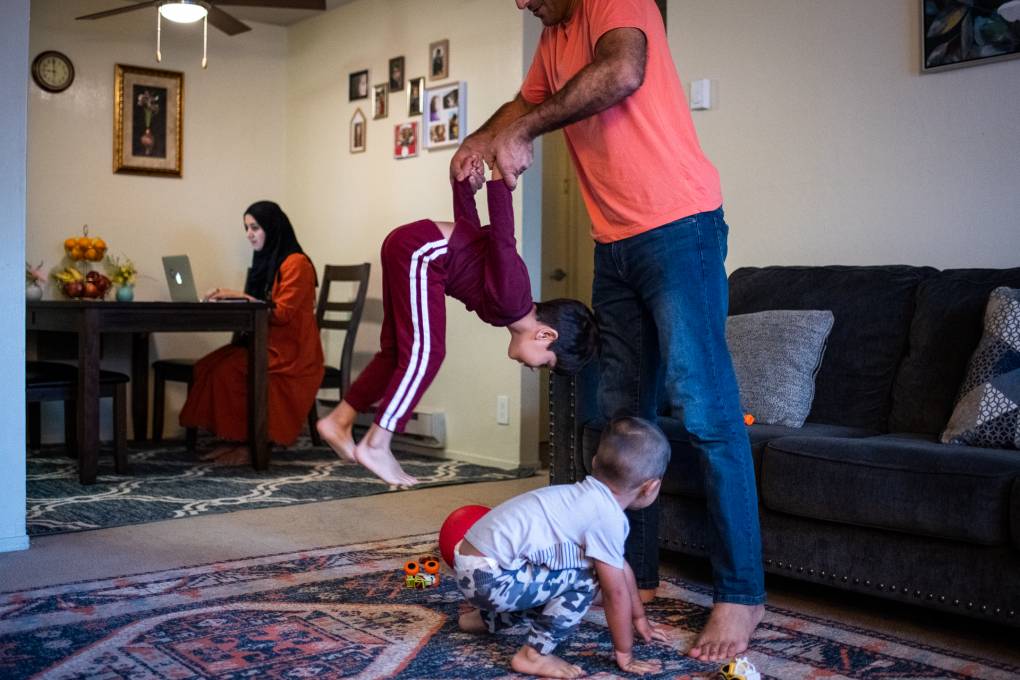
"caption": "While Nazia Gabar teaches English classes to women from Afghanistan who have resettled in the United States, her husband Hassam plays with their two children at their home in San Leandro on Sept. 8, 2021.",
"description": "While Nazia Gabar teaches English classes to women from Afghanistan who have resettled in the United States, her husband Hassam plays with their two children at their home in San Leandro on Sept. 8, 2021.",
"title": "024_SanLeandro_GabarFamily_09082021",
"credit": "Beth LaBerge/KQED",
"status": "inherit",
"altTag": "A man holds a child by the hands as the child flips upside down inside of a house. Another child plays nearby on the floor while a woman works on a computer at a kitchen table in the background.",
"isLoading": false,
"fetchFailed": false
},
"news_11891203": {
"type": "attachments",
"id": "news_11891203",
"meta": {
"index": "attachments_1716263798",
"site": "news",
"id": "11891203",
"found": true
},
"parent": 11891110,
"imgSizes": {
"twentyfourteen-full-width": {
"file": "https://ww2.kqed.org/app/uploads/sites/10/2021/10/GettyImages-1224454523-1038x576.jpg",
"width": 1038,
"mimeType": "image/jpeg",
"height": 576
},
"thumbnail": {
"file": "https://ww2.kqed.org/app/uploads/sites/10/2021/10/GettyImages-1224454523-160x104.jpg",
"width": 160,
"mimeType": "image/jpeg",
"height": 104
},
"post-thumbnail": {
"file": "https://ww2.kqed.org/app/uploads/sites/10/2021/10/GettyImages-1224454523-672x372.jpg",
"width": 672,
"mimeType": "image/jpeg",
"height": 372
},
"kqedFullSize": {
"file": "https://ww2.kqed.org/app/uploads/sites/10/2021/10/GettyImages-1224454523-scaled.jpg",
"width": 2560,
"height": 1659
},
"2048x2048": {
"file": "https://ww2.kqed.org/app/uploads/sites/10/2021/10/GettyImages-1224454523-2048x1327.jpg",
"width": 2048,
"mimeType": "image/jpeg",
"height": 1327
},
"large": {
"file": "https://ww2.kqed.org/app/uploads/sites/10/2021/10/GettyImages-1224454523-1020x661.jpg",
"width": 1020,
"mimeType": "image/jpeg",
"height": 661
},
"1536x1536": {
"file": "https://ww2.kqed.org/app/uploads/sites/10/2021/10/GettyImages-1224454523-1536x995.jpg",
"width": 1536,
"mimeType": "image/jpeg",
"height": 995
},
"full-width": {
"file": "https://ww2.kqed.org/app/uploads/sites/10/2021/10/GettyImages-1224454523-1920x1244.jpg",
"width": 1920,
"mimeType": "image/jpeg",
"height": 1244
},
"medium": {
"file": "https://ww2.kqed.org/app/uploads/sites/10/2021/10/GettyImages-1224454523-800x518.jpg",
"width": 800,
"mimeType": "image/jpeg",
"height": 518
}
},
"publishDate": 1633482379,
"modified": 1633546648,
"caption": "An aerial view of the Tesla Fremont Factory on May 12, 2020, in Fremont. Owen Diaz worked as a contract elevator operator in this plant in 2015 and 2016 before quitting due to racist abuse.",
"description": "An aerial view of the Tesla Fremont Factory on May 12, 2020 in Fremont, California.",
"title": "Elon Musk Opens Tesla's Fremont Plant, Ignoring State's Shelter In Place Orders",
"credit": "Justin Sullivan/Getty Images",
"status": "inherit",
"altTag": "An aerial view of a long, flat building, a massive Tesla sign, and a massive parking lot.",
"isLoading": false,
"fetchFailed": false
},
"news_11888018": {
"type": "attachments",
"id": "news_11888018",
"meta": {
"index": "attachments_1716263798",
"site": "news",
"id": "11888018",
"found": true
},
"parent": 11887630,
"imgSizes": {
"twentyfourteen-full-width": {
"file": "https://ww2.kqed.org/app/uploads/sites/10/2021/09/RS51406_021_Fremont_MaiwandMarket_08272021-qut-1038x576.jpg",
"width": 1038,
"mimeType": "image/jpeg",
"height": 576
},
"thumbnail": {
"file": "https://ww2.kqed.org/app/uploads/sites/10/2021/09/RS51406_021_Fremont_MaiwandMarket_08272021-qut-160x107.jpg",
"width": 160,
"mimeType": "image/jpeg",
"height": 107
},
"post-thumbnail": {
"file": "https://ww2.kqed.org/app/uploads/sites/10/2021/09/RS51406_021_Fremont_MaiwandMarket_08272021-qut-672x372.jpg",
"width": 672,
"mimeType": "image/jpeg",
"height": 372
},
"kqedFullSize": {
"file": "https://ww2.kqed.org/app/uploads/sites/10/2021/09/RS51406_021_Fremont_MaiwandMarket_08272021-qut.jpg",
"width": 1920,
"height": 1280
},
"large": {
"file": "https://ww2.kqed.org/app/uploads/sites/10/2021/09/RS51406_021_Fremont_MaiwandMarket_08272021-qut-1020x680.jpg",
"width": 1020,
"mimeType": "image/jpeg",
"height": 680
},
"1536x1536": {
"file": "https://ww2.kqed.org/app/uploads/sites/10/2021/09/RS51406_021_Fremont_MaiwandMarket_08272021-qut-1536x1024.jpg",
"width": 1536,
"mimeType": "image/jpeg",
"height": 1024
},
"medium": {
"file": "https://ww2.kqed.org/app/uploads/sites/10/2021/09/RS51406_021_Fremont_MaiwandMarket_08272021-qut-800x533.jpg",
"width": 800,
"mimeType": "image/jpeg",
"height": 533
}
},
"publishDate": 1631299404,
"modified": 1631308919,
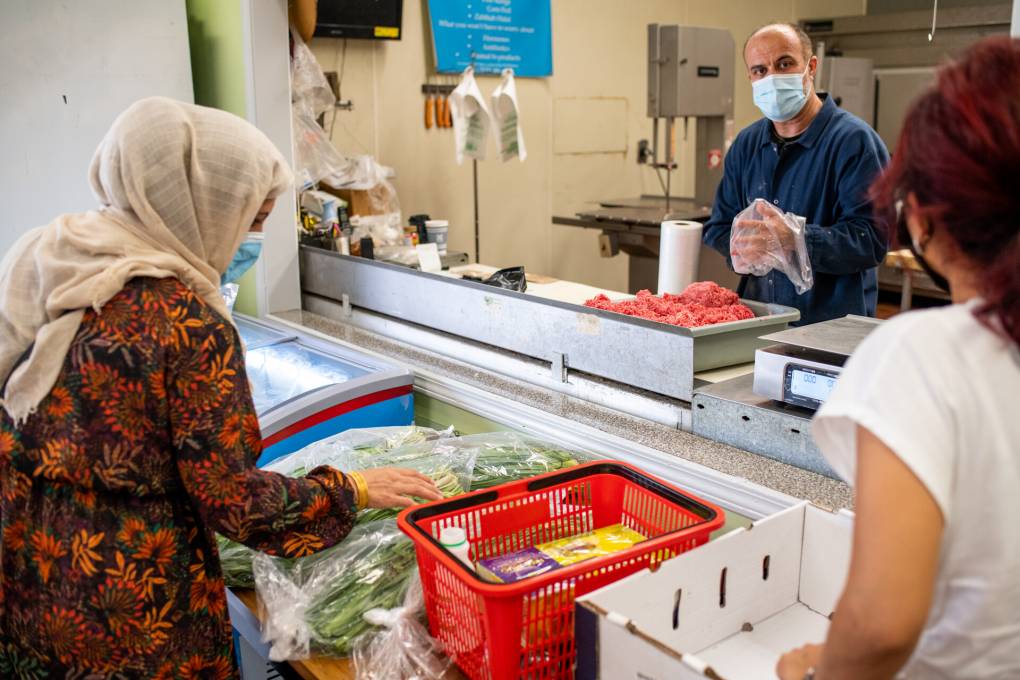
"caption": "A butcher helps customers at Maiwand Market in Fremont — a staple for many in the Afghan community — on Aug. 27, 2021.",
"description": "A butcher helps customers at Maiwand Market in Fremont – a staple for many in the Afghan community – on Aug. 27, 2021.",
"title": "RS51406_021_Fremont_MaiwandMarket_08272021-qut",
"credit": "Beth LaBerge/KQED",
"status": "inherit",
"altTag": null,
"isLoading": false,
"fetchFailed": false
},
"news_11885927": {
"type": "attachments",
"id": "news_11885927",
"meta": {
"index": "attachments_1716263798",
"site": "news",
"id": "11885927",
"found": true
},
"parent": 11885908,
"imgSizes": {
"twentyfourteen-full-width": {
"file": "https://ww2.kqed.org/app/uploads/sites/10/2021/08/Demonstrators-Marching-East-on-Thorton-Ave-copy-1038x576.jpg",
"width": 1038,
"mimeType": "image/jpeg",
"height": 576
},
"thumbnail": {
"file": "https://ww2.kqed.org/app/uploads/sites/10/2021/08/Demonstrators-Marching-East-on-Thorton-Ave-copy-160x90.jpg",
"width": 160,
"mimeType": "image/jpeg",
"height": 90
},
"post-thumbnail": {
"file": "https://ww2.kqed.org/app/uploads/sites/10/2021/08/Demonstrators-Marching-East-on-Thorton-Ave-copy-672x372.jpg",
"width": 672,
"mimeType": "image/jpeg",
"height": 372
},
"kqedFullSize": {
"file": "https://ww2.kqed.org/app/uploads/sites/10/2021/08/Demonstrators-Marching-East-on-Thorton-Ave-copy-scaled.jpg",
"width": 2560,
"height": 1440
},
"2048x2048": {
"file": "https://ww2.kqed.org/app/uploads/sites/10/2021/08/Demonstrators-Marching-East-on-Thorton-Ave-copy-2048x1152.jpg",
"width": 2048,
"mimeType": "image/jpeg",
"height": 1152
},
"large": {
"file": "https://ww2.kqed.org/app/uploads/sites/10/2021/08/Demonstrators-Marching-East-on-Thorton-Ave-copy-1020x574.jpg",
"width": 1020,
"mimeType": "image/jpeg",
"height": 574
},
"1536x1536": {
"file": "https://ww2.kqed.org/app/uploads/sites/10/2021/08/Demonstrators-Marching-East-on-Thorton-Ave-copy-1536x864.jpg",
"width": 1536,
"mimeType": "image/jpeg",
"height": 864
},
"full-width": {
"file": "https://ww2.kqed.org/app/uploads/sites/10/2021/08/Demonstrators-Marching-East-on-Thorton-Ave-copy-1920x1080.jpg",
"width": 1920,
"mimeType": "image/jpeg",
"height": 1080
},
"medium": {
"file": "https://ww2.kqed.org/app/uploads/sites/10/2021/08/Demonstrators-Marching-East-on-Thorton-Ave-copy-800x450.jpg",
"width": 800,
"mimeType": "image/jpeg",
"height": 450
}
},
"publishDate": 1629642733,
"modified": 1629759586,
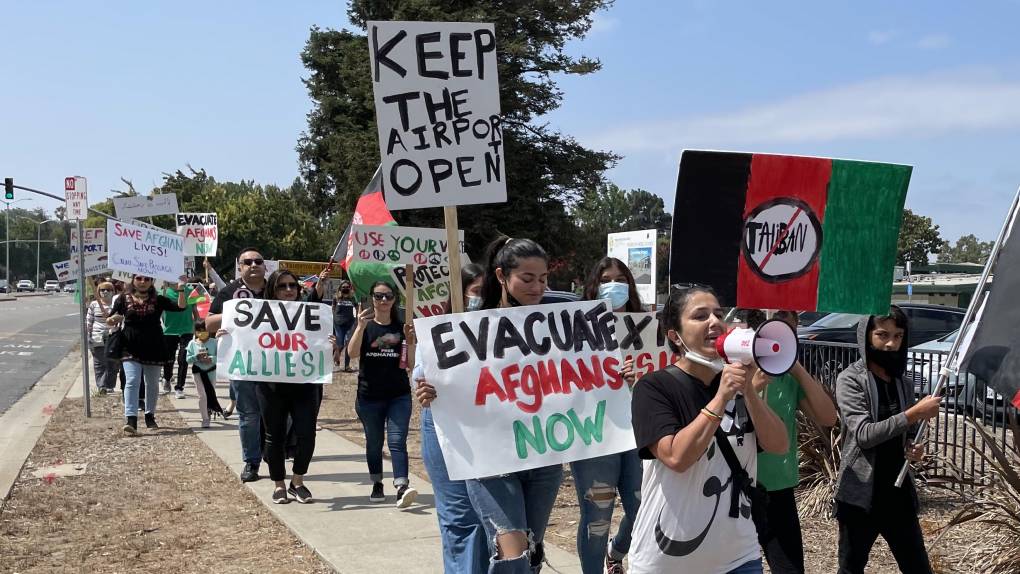
"caption": "A group of 50-70 people marched in Fremont on Saturday, Aug. 21, 2021. ",
"description": null,
"title": "Demonstrators Marching East on Thorton Ave copy",
"credit": "Annelise Finney/KQED",
"status": "inherit",
"altTag": "People with signs such as \"keep the airport open\" marching in Fremont on August 21.",
"isLoading": false,
"fetchFailed": false
},
"news_11876101": {
"type": "attachments",
"id": "news_11876101",
"meta": {
"index": "attachments_1716263798",
"site": "news",
"id": "11876101",
"found": true
},
"parent": 11876100,
"imgSizes": {
"twentyfourteen-full-width": {
"file": "https://ww2.kqed.org/app/uploads/sites/10/2021/05/IMG_4679-1038x576.jpg",
"width": 1038,
"mimeType": "image/jpeg",
"height": 576
},
"thumbnail": {
"file": "https://ww2.kqed.org/app/uploads/sites/10/2021/05/IMG_4679-160x120.jpg",
"width": 160,
"mimeType": "image/jpeg",
"height": 120
},
"post-thumbnail": {
"file": "https://ww2.kqed.org/app/uploads/sites/10/2021/05/IMG_4679-672x372.jpg",
"width": 672,
"mimeType": "image/jpeg",
"height": 372
},
"kqedFullSize": {
"file": "https://ww2.kqed.org/app/uploads/sites/10/2021/05/IMG_4679-scaled.jpg",
"width": 2560,
"height": 1920
},
"2048x2048": {
"file": "https://ww2.kqed.org/app/uploads/sites/10/2021/05/IMG_4679-2048x1536.jpg",
"width": 2048,
"mimeType": "image/jpeg",
"height": 1536
},
"large": {
"file": "https://ww2.kqed.org/app/uploads/sites/10/2021/05/IMG_4679-1020x765.jpg",
"width": 1020,
"mimeType": "image/jpeg",
"height": 765
},
"1536x1536": {
"file": "https://ww2.kqed.org/app/uploads/sites/10/2021/05/IMG_4679-1536x1152.jpg",
"width": 1536,
"mimeType": "image/jpeg",
"height": 1152
},
"full-width": {
"file": "https://ww2.kqed.org/app/uploads/sites/10/2021/05/IMG_4679-1920x1440.jpg",
"width": 1920,
"mimeType": "image/jpeg",
"height": 1440
},
"medium": {
"file": "https://ww2.kqed.org/app/uploads/sites/10/2021/05/IMG_4679-800x600.jpg",
"width": 800,
"mimeType": "image/jpeg",
"height": 600
}
},
"publishDate": 1622495336,
"modified": 1622495394,
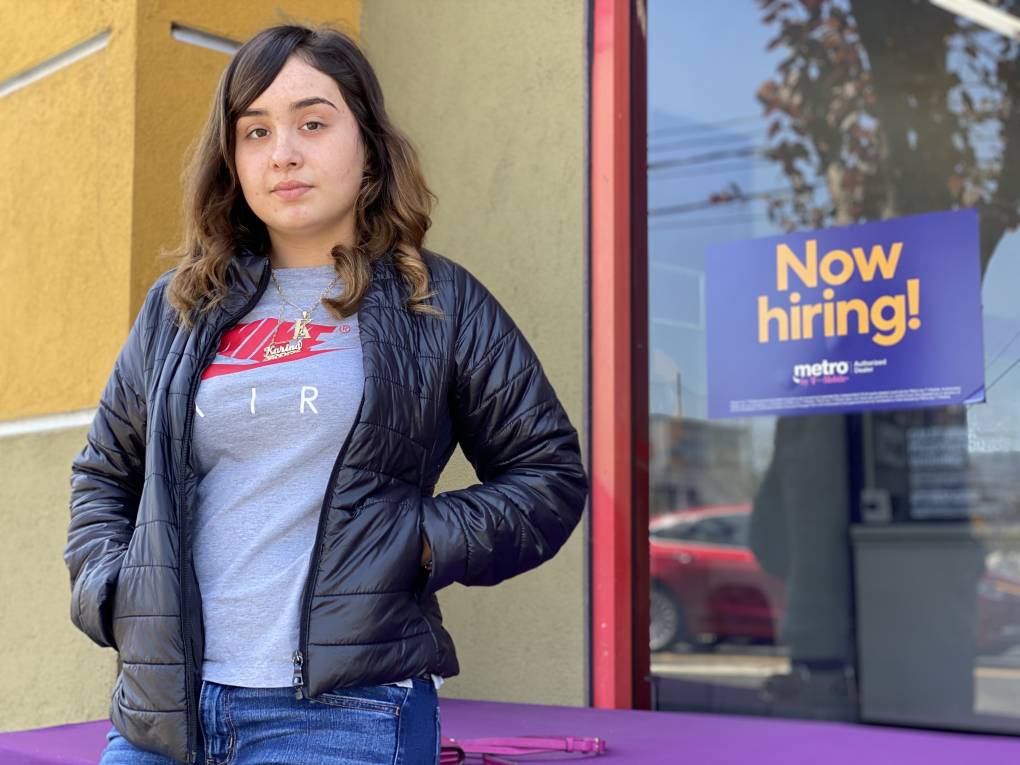
"caption": "Work is top priority for Fremont graduate, Karina Dealba Perez.",
"description": null,
"title": "IMG_4679",
"credit": "Julia McEvoy/KQED",
"status": "inherit",
"altTag": null,
"isLoading": false,
"fetchFailed": false
},
"news_11819852": {
"type": "attachments",
"id": "news_11819852",
"meta": {
"index": "attachments_1716263798",
"site": "news",
"id": "11819852",
"found": true
},
"parent": 11819264,
"imgSizes": {
"apple_news_ca_landscape_5_5": {
"file": "https://ww2.kqed.org/app/uploads/sites/10/2020/05/1920_mosque-1044x783.jpg",
"width": 1044,
"mimeType": "image/jpeg",
"height": 783
},
"apple_news_ca_square_4_0": {
"file": "https://ww2.kqed.org/app/uploads/sites/10/2020/05/1920_mosque-470x470.jpg",
"width": 470,
"mimeType": "image/jpeg",
"height": 470
},
"twentyfourteen-full-width": {
"file": "https://ww2.kqed.org/app/uploads/sites/10/2020/05/1920_mosque-1038x576.jpg",
"width": 1038,
"mimeType": "image/jpeg",
"height": 576
},
"thumbnail": {
"file": "https://ww2.kqed.org/app/uploads/sites/10/2020/05/1920_mosque-160x124.jpg",
"width": 160,
"mimeType": "image/jpeg",
"height": 124
},
"post-thumbnail": {
"file": "https://ww2.kqed.org/app/uploads/sites/10/2020/05/1920_mosque-672x372.jpg",
"width": 672,
"mimeType": "image/jpeg",
"height": 372
},
"kqedFullSize": {
"file": "https://ww2.kqed.org/app/uploads/sites/10/2020/05/1920_mosque-e1590031667198.jpg",
"width": 1920,
"height": 1486
},
"apple_news_ca_landscape_4_7": {
"file": "https://ww2.kqed.org/app/uploads/sites/10/2020/05/1920_mosque-632x474.jpg",
"width": 632,
"mimeType": "image/jpeg",
"height": 474
},
"large": {
"file": "https://ww2.kqed.org/app/uploads/sites/10/2020/05/1920_mosque-1020x789.jpg",
"width": 1020,
"mimeType": "image/jpeg",
"height": 789
},
"apple_news_ca_landscape_4_0": {
"file": "https://ww2.kqed.org/app/uploads/sites/10/2020/05/1920_mosque-536x402.jpg",
"width": 536,
"mimeType": "image/jpeg",
"height": 402
},
"apple_news_ca_portrait_12_9": {
"file": "https://ww2.kqed.org/app/uploads/sites/10/2020/05/1920_mosque-1122x1496.jpg",
"width": 1122,
"mimeType": "image/jpeg",
"height": 1496
},
"medium": {
"file": "https://ww2.kqed.org/app/uploads/sites/10/2020/05/1920_mosque-800x619.jpg",
"width": 800,
"mimeType": "image/jpeg",
"height": 619
},
"apple_news_ca_portrait_4_0": {
"file": "https://ww2.kqed.org/app/uploads/sites/10/2020/05/1920_mosque-354x472.jpg",
"width": 354,
"mimeType": "image/jpeg",
"height": 472
},
"apple_news_ca_portrait_9_7": {
"file": "https://ww2.kqed.org/app/uploads/sites/10/2020/05/1920_mosque-840x1120.jpg",
"width": 840,
"mimeType": "image/jpeg",
"height": 1120
},
"apple_news_ca_landscape_12_9": {
"file": "https://ww2.kqed.org/app/uploads/sites/10/2020/05/1920_mosque-1832x1374.jpg",
"width": 1832,
"mimeType": "image/jpeg",
"height": 1374
},
"apple_news_ca_square_9_7": {
"file": "https://ww2.kqed.org/app/uploads/sites/10/2020/05/1920_mosque-1104x1104.jpg",
"width": 1104,
"mimeType": "image/jpeg",
"height": 1104
},
"apple_news_ca_portrait_4_7": {
"file": "https://ww2.kqed.org/app/uploads/sites/10/2020/05/1920_mosque-414x552.jpg",
"width": 414,
"mimeType": "image/jpeg",
"height": 552
},
"apple_news_ca_square_12_9": {
"file": "https://ww2.kqed.org/app/uploads/sites/10/2020/05/1920_mosque-1472x1472.jpg",
"width": 1472,
"mimeType": "image/jpeg",
"height": 1472
},
"apple_news_ca_portrait_5_5": {
"file": "https://ww2.kqed.org/app/uploads/sites/10/2020/05/1920_mosque-687x916.jpg",
"width": 687,
"mimeType": "image/jpeg",
"height": 916
},
"full-width": {
"file": "https://ww2.kqed.org/app/uploads/sites/10/2020/05/1920_mosque-1920x1486.jpg",
"width": 1920,
"mimeType": "image/jpeg",
"height": 1486
},
"apple_news_ca_square_4_7": {
"file": "https://ww2.kqed.org/app/uploads/sites/10/2020/05/1920_mosque-550x550.jpg",
"width": 550,
"mimeType": "image/jpeg",
"height": 550
},
"apple_news_ca_landscape_9_7": {
"file": "https://ww2.kqed.org/app/uploads/sites/10/2020/05/1920_mosque-1376x1032.jpg",
"width": 1376,
"mimeType": "image/jpeg",
"height": 1032
},
"apple_news_ca_square_5_5": {
"file": "https://ww2.kqed.org/app/uploads/sites/10/2020/05/1920_mosque-912x912.jpg",
"width": 912,
"mimeType": "image/jpeg",
"height": 912
}
},
"publishDate": 1590031620,
"modified": 1590031702,
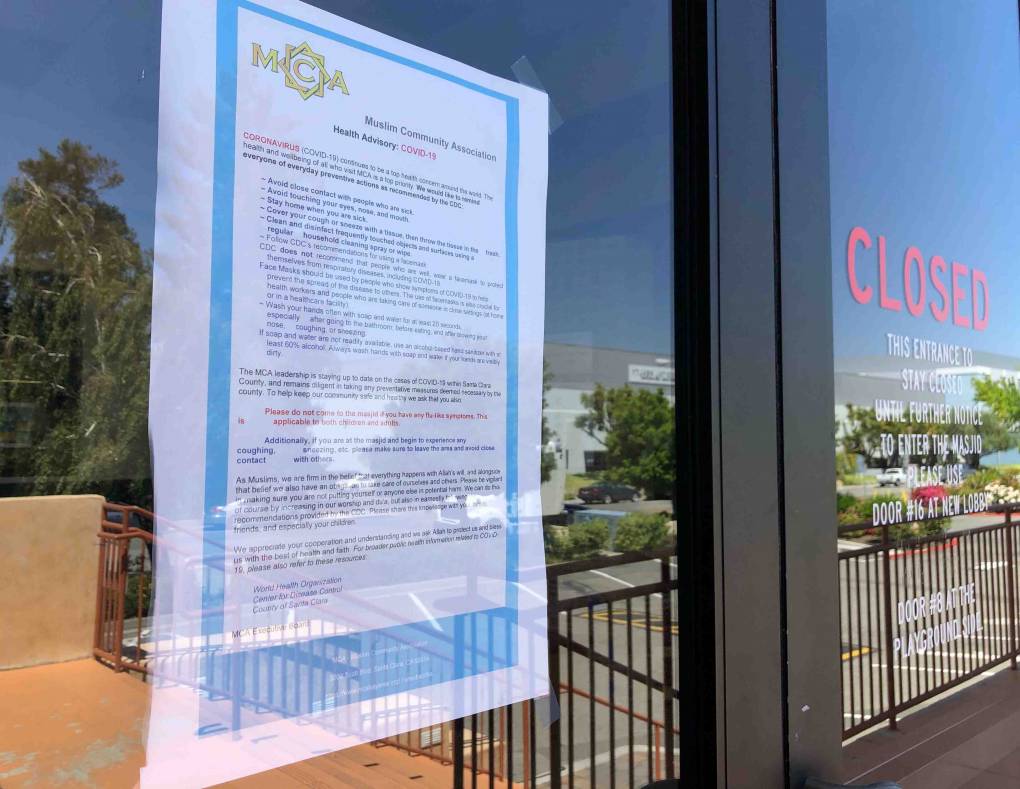
"caption": "Muslim Community Association (MCA) is one of the largest mosques in the Bay Area with more than two thousand worshippers. But without people coming into the mosque to donate money, fundraising during the month of Ramadan is at an all-time low.",
"description": null,
"title": "1920_mosque",
"credit": "Adhiti Bandlamudi/KQED",
"status": "inherit",
"isLoading": false,
"fetchFailed": false
},
"news_11818947": {
"type": "attachments",
"id": "news_11818947",
"meta": {
"index": "attachments_1716263798",
"site": "news",
"id": "11818947",
"found": true
},
"parent": 11818938,
"imgSizes": {
"apple_news_ca_landscape_5_5": {
"file": "https://ww2.kqed.org/app/uploads/sites/10/2020/05/tesla200512-1044x783.jpg",
"width": 1044,
"mimeType": "image/jpeg",
"height": 783
},
"apple_news_ca_square_4_0": {
"file": "https://ww2.kqed.org/app/uploads/sites/10/2020/05/tesla200512-470x470.jpg",
"width": 470,
"mimeType": "image/jpeg",
"height": 470
},
"twentyfourteen-full-width": {
"file": "https://ww2.kqed.org/app/uploads/sites/10/2020/05/tesla200512-1038x576.jpg",
"width": 1038,
"mimeType": "image/jpeg",
"height": 576
},
"thumbnail": {
"file": "https://ww2.kqed.org/app/uploads/sites/10/2020/05/tesla200512-160x107.jpg",
"width": 160,
"mimeType": "image/jpeg",
"height": 107
},
"post-thumbnail": {
"file": "https://ww2.kqed.org/app/uploads/sites/10/2020/05/tesla200512-672x372.jpg",
"width": 672,
"mimeType": "image/jpeg",
"height": 372
},
"kqedFullSize": {
"file": "https://ww2.kqed.org/app/uploads/sites/10/2020/05/tesla200512.jpg",
"width": 1920,
"height": 1280
},
"apple_news_ca_landscape_4_7": {
"file": "https://ww2.kqed.org/app/uploads/sites/10/2020/05/tesla200512-632x474.jpg",
"width": 632,
"mimeType": "image/jpeg",
"height": 474
},
"large": {
"file": "https://ww2.kqed.org/app/uploads/sites/10/2020/05/tesla200512-1020x680.jpg",
"width": 1020,
"mimeType": "image/jpeg",
"height": 680
},
"apple_news_ca_landscape_4_0": {
"file": "https://ww2.kqed.org/app/uploads/sites/10/2020/05/tesla200512-536x402.jpg",
"width": 536,
"mimeType": "image/jpeg",
"height": 402
},
"apple_news_ca_portrait_12_9": {
"file": "https://ww2.kqed.org/app/uploads/sites/10/2020/05/tesla200512-1122x1280.jpg",
"width": 1122,
"mimeType": "image/jpeg",
"height": 1280
},
"medium": {
"file": "https://ww2.kqed.org/app/uploads/sites/10/2020/05/tesla200512-800x533.jpg",
"width": 800,
"mimeType": "image/jpeg",
"height": 533
},
"apple_news_ca_portrait_4_0": {
"file": "https://ww2.kqed.org/app/uploads/sites/10/2020/05/tesla200512-354x472.jpg",
"width": 354,
"mimeType": "image/jpeg",
"height": 472
},
"apple_news_ca_portrait_9_7": {
"file": "https://ww2.kqed.org/app/uploads/sites/10/2020/05/tesla200512-840x1120.jpg",
"width": 840,
"mimeType": "image/jpeg",
"height": 1120
},
"apple_news_ca_landscape_12_9": {
"file": "https://ww2.kqed.org/app/uploads/sites/10/2020/05/tesla200512-1832x1280.jpg",
"width": 1832,
"mimeType": "image/jpeg",
"height": 1280
},
"apple_news_ca_square_9_7": {
"file": "https://ww2.kqed.org/app/uploads/sites/10/2020/05/tesla200512-1104x1104.jpg",
"width": 1104,
"mimeType": "image/jpeg",
"height": 1104
},
"apple_news_ca_portrait_4_7": {
"file": "https://ww2.kqed.org/app/uploads/sites/10/2020/05/tesla200512-414x552.jpg",
"width": 414,
"mimeType": "image/jpeg",
"height": 552
},
"apple_news_ca_square_12_9": {
"file": "https://ww2.kqed.org/app/uploads/sites/10/2020/05/tesla200512-1472x1280.jpg",
"width": 1472,
"mimeType": "image/jpeg",
"height": 1280
},
"apple_news_ca_portrait_5_5": {
"file": "https://ww2.kqed.org/app/uploads/sites/10/2020/05/tesla200512-687x916.jpg",
"width": 687,
"mimeType": "image/jpeg",
"height": 916
},
"full-width": {
"file": "https://ww2.kqed.org/app/uploads/sites/10/2020/05/tesla200512-1920x1280.jpg",
"width": 1920,
"mimeType": "image/jpeg",
"height": 1280
},
"apple_news_ca_square_4_7": {
"file": "https://ww2.kqed.org/app/uploads/sites/10/2020/05/tesla200512-550x550.jpg",
"width": 550,
"mimeType": "image/jpeg",
"height": 550
},
"apple_news_ca_landscape_9_7": {
"file": "https://ww2.kqed.org/app/uploads/sites/10/2020/05/tesla200512-1376x1032.jpg",
"width": 1376,
"mimeType": "image/jpeg",
"height": 1032
},
"apple_news_ca_square_5_5": {
"file": "https://ww2.kqed.org/app/uploads/sites/10/2020/05/tesla200512-912x912.jpg",
"width": 912,
"mimeType": "image/jpeg",
"height": 912
}
},
"publishDate": 1589784650,
"modified": 1589910871,
"caption": "An aerial view of Tesla's plant in Fremont on May 12, 2020, the day after CEO Elon Musk declared he had opened the facility \"against Alameda County rules\" that shut down production in late March. Local officials described the reopening as ramping up \"minimum basic operations.\" The company is expected to be in full production this week.",
"description": "An aerial view of Tesla's plant in Fremont on May 12, 2020, the day after CEO Elon Musk declared he had opened the facility \"against Alameda County rules\" that shut down production in late March. Local officials described the reopening as ramping up \"minimum basic operations.\" The company is expected to be in full production this week.",
"title": "Tesla-Fremont Plant",
"credit": "Justin Sullivan/Getty Images",
"status": "inherit",
"isLoading": false,
"fetchFailed": false
},
"news_11789146": {
"type": "attachments",
"id": "news_11789146",
"meta": {
"index": "attachments_1716263798",
"site": "news",
"id": "11789146",
"found": true
},
"parent": 11789138,
"imgSizes": {
"apple_news_ca_landscape_5_5": {
"file": "https://ww2.kqed.org/app/uploads/sites/10/2019/12/RS40303_Screen-Shot-2019-12-02-at-9.33.45-AM-1044x783.png",
"width": 1044,
"mimeType": "image/png",
"height": 783
},
"apple_news_ca_square_4_0": {
"file": "https://ww2.kqed.org/app/uploads/sites/10/2019/12/RS40303_Screen-Shot-2019-12-02-at-9.33.45-AM-470x470.png",
"width": 470,
"mimeType": "image/png",
"height": 470
},
"twentyfourteen-full-width": {
"file": "https://ww2.kqed.org/app/uploads/sites/10/2019/12/RS40303_Screen-Shot-2019-12-02-at-9.33.45-AM-1038x576.png",
"width": 1038,
"mimeType": "image/png",
"height": 576
},
"thumbnail": {
"file": "https://ww2.kqed.org/app/uploads/sites/10/2019/12/RS40303_Screen-Shot-2019-12-02-at-9.33.45-AM-160x120.png",
"width": 160,
"mimeType": "image/png",
"height": 120
},
"post-thumbnail": {
"file": "https://ww2.kqed.org/app/uploads/sites/10/2019/12/RS40303_Screen-Shot-2019-12-02-at-9.33.45-AM-672x372.png",
"width": 672,
"mimeType": "image/png",
"height": 372
},
"kqedFullSize": {
"file": "https://ww2.kqed.org/app/uploads/sites/10/2019/12/RS40303_Screen-Shot-2019-12-02-at-9.33.45-AM.png",
"width": 1062,
"height": 798
},
"apple_news_ca_landscape_4_7": {
"file": "https://ww2.kqed.org/app/uploads/sites/10/2019/12/RS40303_Screen-Shot-2019-12-02-at-9.33.45-AM-632x474.png",
"width": 632,
"mimeType": "image/png",
"height": 474
},
"large": {
"file": "https://ww2.kqed.org/app/uploads/sites/10/2019/12/RS40303_Screen-Shot-2019-12-02-at-9.33.45-AM-1020x766.png",
"width": 1020,
"mimeType": "image/png",
"height": 766
},
"apple_news_ca_landscape_4_0": {
"file": "https://ww2.kqed.org/app/uploads/sites/10/2019/12/RS40303_Screen-Shot-2019-12-02-at-9.33.45-AM-536x402.png",
"width": 536,
"mimeType": "image/png",
"height": 402
},
"medium": {
"file": "https://ww2.kqed.org/app/uploads/sites/10/2019/12/RS40303_Screen-Shot-2019-12-02-at-9.33.45-AM-800x601.png",
"width": 800,
"mimeType": "image/png",
"height": 601
},
"apple_news_ca_portrait_4_0": {
"file": "https://ww2.kqed.org/app/uploads/sites/10/2019/12/RS40303_Screen-Shot-2019-12-02-at-9.33.45-AM-354x472.png",
"width": 354,
"mimeType": "image/png",
"height": 472
},
"apple_news_ca_portrait_9_7": {
"file": "https://ww2.kqed.org/app/uploads/sites/10/2019/12/RS40303_Screen-Shot-2019-12-02-at-9.33.45-AM-840x798.png",
"width": 840,
"mimeType": "image/png",
"height": 798
},
"apple_news_ca_portrait_4_7": {
"file": "https://ww2.kqed.org/app/uploads/sites/10/2019/12/RS40303_Screen-Shot-2019-12-02-at-9.33.45-AM-414x552.png",
"width": 414,
"mimeType": "image/png",
"height": 552
},
"apple_news_ca_portrait_5_5": {
"file": "https://ww2.kqed.org/app/uploads/sites/10/2019/12/RS40303_Screen-Shot-2019-12-02-at-9.33.45-AM-687x798.png",
"width": 687,
"mimeType": "image/png",
"height": 798
},
"apple_news_ca_square_4_7": {
"file": "https://ww2.kqed.org/app/uploads/sites/10/2019/12/RS40303_Screen-Shot-2019-12-02-at-9.33.45-AM-550x550.png",
"width": 550,
"mimeType": "image/png",
"height": 550
},
"apple_news_ca_square_5_5": {
"file": "https://ww2.kqed.org/app/uploads/sites/10/2019/12/RS40303_Screen-Shot-2019-12-02-at-9.33.45-AM-912x798.png",
"width": 912,
"mimeType": "image/png",
"height": 798
}
},
"publishDate": 1575308398,
"modified": 1575505521,
"caption": "Charlie Chaplin eats a meager picnic lunch in Niles, California, in \"The Tramp,\" shot for the Essanay Film Manufacturing Co. and released in 1915.",
"description": "Charlie Chaplin eats a meager picnic lunch in Niles, California in \"The Tramp,\" shot for the Essanay Film Manufacturing Company and released in 1915.",
"title": "RS40303_Screen Shot 2019-12-02 at 9.33.45 AM",
"credit": "Rachael Myrow/KQED",
"status": "inherit",
"isLoading": false,
"fetchFailed": false
},
"news_11767833": {
"type": "attachments",
"id": "news_11767833",
"meta": {
"index": "attachments_1716263798",
"site": "news",
"id": "11767833",
"found": true
},
"parent": 11767538,
"imgSizes": {
"apple_news_ca_landscape_5_5": {
"file": "https://ww2.kqed.org/app/uploads/sites/10/2019/08/RS37792__DSC0921-qut-1044x783.jpg",
"width": 1044,
"mimeType": "image/jpeg",
"height": 783
},
"apple_news_ca_square_4_0": {
"file": "https://ww2.kqed.org/app/uploads/sites/10/2019/08/RS37792__DSC0921-qut-470x470.jpg",
"width": 470,
"mimeType": "image/jpeg",
"height": 470
},
"twentyfourteen-full-width": {
"file": "https://ww2.kqed.org/app/uploads/sites/10/2019/08/RS37792__DSC0921-qut-1038x576.jpg",
"width": 1038,
"mimeType": "image/jpeg",
"height": 576
},
"thumbnail": {
"file": "https://ww2.kqed.org/app/uploads/sites/10/2019/08/RS37792__DSC0921-qut-160x107.jpg",
"width": 160,
"mimeType": "image/jpeg",
"height": 107
},
"post-thumbnail": {
"file": "https://ww2.kqed.org/app/uploads/sites/10/2019/08/RS37792__DSC0921-qut-672x372.jpg",
"width": 672,
"mimeType": "image/jpeg",
"height": 372
},
"kqedFullSize": {
"file": "https://ww2.kqed.org/app/uploads/sites/10/2019/08/RS37792__DSC0921-qut.jpg",
"width": 1920,
"height": 1281
},
"apple_news_ca_landscape_4_7": {
"file": "https://ww2.kqed.org/app/uploads/sites/10/2019/08/RS37792__DSC0921-qut-632x474.jpg",
"width": 632,
"mimeType": "image/jpeg",
"height": 474
},
"large": {
"file": "https://ww2.kqed.org/app/uploads/sites/10/2019/08/RS37792__DSC0921-qut-1020x681.jpg",
"width": 1020,
"mimeType": "image/jpeg",
"height": 681
},
"complete_open_graph": {
"file": "https://ww2.kqed.org/app/uploads/sites/10/2019/08/RS37792__DSC0921-qut-1200x801.jpg",
"width": 1200,
"mimeType": "image/jpeg",
"height": 801
},
"apple_news_ca_landscape_4_0": {
"file": "https://ww2.kqed.org/app/uploads/sites/10/2019/08/RS37792__DSC0921-qut-536x402.jpg",
"width": 536,
"mimeType": "image/jpeg",
"height": 402
},
"apple_news_ca_portrait_12_9": {
"file": "https://ww2.kqed.org/app/uploads/sites/10/2019/08/RS37792__DSC0921-qut-1122x1281.jpg",
"width": 1122,
"mimeType": "image/jpeg",
"height": 1281
},
"medium": {
"file": "https://ww2.kqed.org/app/uploads/sites/10/2019/08/RS37792__DSC0921-qut-800x534.jpg",
"width": 800,
"mimeType": "image/jpeg",
"height": 534
},
"apple_news_ca_portrait_4_0": {
"file": "https://ww2.kqed.org/app/uploads/sites/10/2019/08/RS37792__DSC0921-qut-354x472.jpg",
"width": 354,
"mimeType": "image/jpeg",
"height": 472
},
"apple_news_ca_portrait_9_7": {
"file": "https://ww2.kqed.org/app/uploads/sites/10/2019/08/RS37792__DSC0921-qut-840x1120.jpg",
"width": 840,
"mimeType": "image/jpeg",
"height": 1120
},
"apple_news_ca_landscape_12_9": {
"file": "https://ww2.kqed.org/app/uploads/sites/10/2019/08/RS37792__DSC0921-qut-1832x1281.jpg",
"width": 1832,
"mimeType": "image/jpeg",
"height": 1281
},
"apple_news_ca_square_9_7": {
"file": "https://ww2.kqed.org/app/uploads/sites/10/2019/08/RS37792__DSC0921-qut-1104x1104.jpg",
"width": 1104,
"mimeType": "image/jpeg",
"height": 1104
},
"apple_news_ca_portrait_4_7": {
"file": "https://ww2.kqed.org/app/uploads/sites/10/2019/08/RS37792__DSC0921-qut-414x552.jpg",
"width": 414,
"mimeType": "image/jpeg",
"height": 552
},
"apple_news_ca_square_12_9": {
"file": "https://ww2.kqed.org/app/uploads/sites/10/2019/08/RS37792__DSC0921-qut-1472x1281.jpg",
"width": 1472,
"mimeType": "image/jpeg",
"height": 1281
},
"apple_news_ca_portrait_5_5": {
"file": "https://ww2.kqed.org/app/uploads/sites/10/2019/08/RS37792__DSC0921-qut-687x916.jpg",
"width": 687,
"mimeType": "image/jpeg",
"height": 916
},
"full-width": {
"file": "https://ww2.kqed.org/app/uploads/sites/10/2019/08/RS37792__DSC0921-qut-1920x1281.jpg",
"width": 1920,
"mimeType": "image/jpeg",
"height": 1281
},
"apple_news_ca_square_4_7": {
"file": "https://ww2.kqed.org/app/uploads/sites/10/2019/08/RS37792__DSC0921-qut-550x550.jpg",
"width": 550,
"mimeType": "image/jpeg",
"height": 550
},
"apple_news_ca_landscape_9_7": {
"file": "https://ww2.kqed.org/app/uploads/sites/10/2019/08/RS37792__DSC0921-qut-1376x1032.jpg",
"width": 1376,
"mimeType": "image/jpeg",
"height": 1032
},
"apple_news_ca_square_5_5": {
"file": "https://ww2.kqed.org/app/uploads/sites/10/2019/08/RS37792__DSC0921-qut-912x912.jpg",
"width": 912,
"mimeType": "image/jpeg",
"height": 912
}
},
"publishDate": 1565905060,
"modified": 1566516388,
"caption": "Julieta Aquino and her daughter, Alexys, in front of their new home in Fremont, which they moved into in June. Aquino helped build the housing complex as a participant in an East Bay-Silicon Valley Habitat for Humanity program. \n",
"description": null,
"title": "RS37792__DSC0921-qut",
"credit": "Stephanie Lister/KQED",
"status": "inherit",
"isLoading": false,
"fetchFailed": false
},
"news_11753286": {
"type": "attachments",
"id": "news_11753286",
"meta": {
"index": "attachments_1716263798",
"site": "news",
"id": "11753286",
"found": true
},
"parent": 11752778,
"imgSizes": {
"apple_news_ca_landscape_5_5": {
"file": "https://ww2.kqed.org/app/uploads/sites/10/2019/06/Julio-Navarrete-Butterfly-1044x783.jpg",
"width": 1044,
"mimeType": "image/jpeg",
"height": 783
},
"apple_news_ca_square_4_0": {
"file": "https://ww2.kqed.org/app/uploads/sites/10/2019/06/Julio-Navarrete-Butterfly-470x470.jpg",
"width": 470,
"mimeType": "image/jpeg",
"height": 470
},
"twentyfourteen-full-width": {
"file": "https://ww2.kqed.org/app/uploads/sites/10/2019/06/Julio-Navarrete-Butterfly-1038x576.jpg",
"width": 1038,
"mimeType": "image/jpeg",
"height": 576
},
"thumbnail": {
"file": "https://ww2.kqed.org/app/uploads/sites/10/2019/06/Julio-Navarrete-Butterfly-160x108.jpg",
"width": 160,
"mimeType": "image/jpeg",
"height": 108
},
"post-thumbnail": {
"file": "https://ww2.kqed.org/app/uploads/sites/10/2019/06/Julio-Navarrete-Butterfly-672x372.jpg",
"width": 672,
"mimeType": "image/jpeg",
"height": 372
},
"kqedFullSize": {
"file": "https://ww2.kqed.org/app/uploads/sites/10/2019/06/Julio-Navarrete-Butterfly.jpg",
"width": 1920,
"height": 1292
},
"apple_news_ca_landscape_4_7": {
"file": "https://ww2.kqed.org/app/uploads/sites/10/2019/06/Julio-Navarrete-Butterfly-632x474.jpg",
"width": 632,
"mimeType": "image/jpeg",
"height": 474
},
"large": {
"file": "https://ww2.kqed.org/app/uploads/sites/10/2019/06/Julio-Navarrete-Butterfly-1020x686.jpg",
"width": 1020,
"mimeType": "image/jpeg",
"height": 686
},
"complete_open_graph": {
"file": "https://ww2.kqed.org/app/uploads/sites/10/2019/06/Julio-Navarrete-Butterfly-1200x808.jpg",
"width": 1200,
"mimeType": "image/jpeg",
"height": 808
},
"apple_news_ca_landscape_4_0": {
"file": "https://ww2.kqed.org/app/uploads/sites/10/2019/06/Julio-Navarrete-Butterfly-536x402.jpg",
"width": 536,
"mimeType": "image/jpeg",
"height": 402
},
"apple_news_ca_portrait_12_9": {
"file": "https://ww2.kqed.org/app/uploads/sites/10/2019/06/Julio-Navarrete-Butterfly-1122x1292.jpg",
"width": 1122,
"mimeType": "image/jpeg",
"height": 1292
},
"medium": {
"file": "https://ww2.kqed.org/app/uploads/sites/10/2019/06/Julio-Navarrete-Butterfly-800x538.jpg",
"width": 800,
"mimeType": "image/jpeg",
"height": 538
},
"apple_news_ca_portrait_4_0": {
"file": "https://ww2.kqed.org/app/uploads/sites/10/2019/06/Julio-Navarrete-Butterfly-354x472.jpg",
"width": 354,
"mimeType": "image/jpeg",
"height": 472
},
"apple_news_ca_portrait_9_7": {
"file": "https://ww2.kqed.org/app/uploads/sites/10/2019/06/Julio-Navarrete-Butterfly-840x1120.jpg",
"width": 840,
"mimeType": "image/jpeg",
"height": 1120
},
"apple_news_ca_landscape_12_9": {
"file": "https://ww2.kqed.org/app/uploads/sites/10/2019/06/Julio-Navarrete-Butterfly-1832x1292.jpg",
"width": 1832,
"mimeType": "image/jpeg",
"height": 1292
},
"apple_news_ca_square_9_7": {
"file": "https://ww2.kqed.org/app/uploads/sites/10/2019/06/Julio-Navarrete-Butterfly-1104x1104.jpg",
"width": 1104,
"mimeType": "image/jpeg",
"height": 1104
},
"apple_news_ca_portrait_4_7": {
"file": "https://ww2.kqed.org/app/uploads/sites/10/2019/06/Julio-Navarrete-Butterfly-414x552.jpg",
"width": 414,
"mimeType": "image/jpeg",
"height": 552
},
"apple_news_ca_square_12_9": {
"file": "https://ww2.kqed.org/app/uploads/sites/10/2019/06/Julio-Navarrete-Butterfly-1472x1292.jpg",
"width": 1472,
"mimeType": "image/jpeg",
"height": 1292
},
"apple_news_ca_portrait_5_5": {
"file": "https://ww2.kqed.org/app/uploads/sites/10/2019/06/Julio-Navarrete-Butterfly-687x916.jpg",
"width": 687,
"mimeType": "image/jpeg",
"height": 916
},
"full-width": {
"file": "https://ww2.kqed.org/app/uploads/sites/10/2019/06/Julio-Navarrete-Butterfly-1920x1292.jpg",
"width": 1920,
"mimeType": "image/jpeg",
"height": 1292
},
"apple_news_ca_square_4_7": {
"file": "https://ww2.kqed.org/app/uploads/sites/10/2019/06/Julio-Navarrete-Butterfly-550x550.jpg",
"width": 550,
"mimeType": "image/jpeg",
"height": 550
},
"apple_news_ca_landscape_9_7": {
"file": "https://ww2.kqed.org/app/uploads/sites/10/2019/06/Julio-Navarrete-Butterfly-1376x1032.jpg",
"width": 1376,
"mimeType": "image/jpeg",
"height": 1032
},
"apple_news_ca_square_5_5": {
"file": "https://ww2.kqed.org/app/uploads/sites/10/2019/06/Julio-Navarrete-Butterfly-912x912.jpg",
"width": 912,
"mimeType": "image/jpeg",
"height": 912
}
},
"publishDate": 1559947609,
"modified": 1559947709,
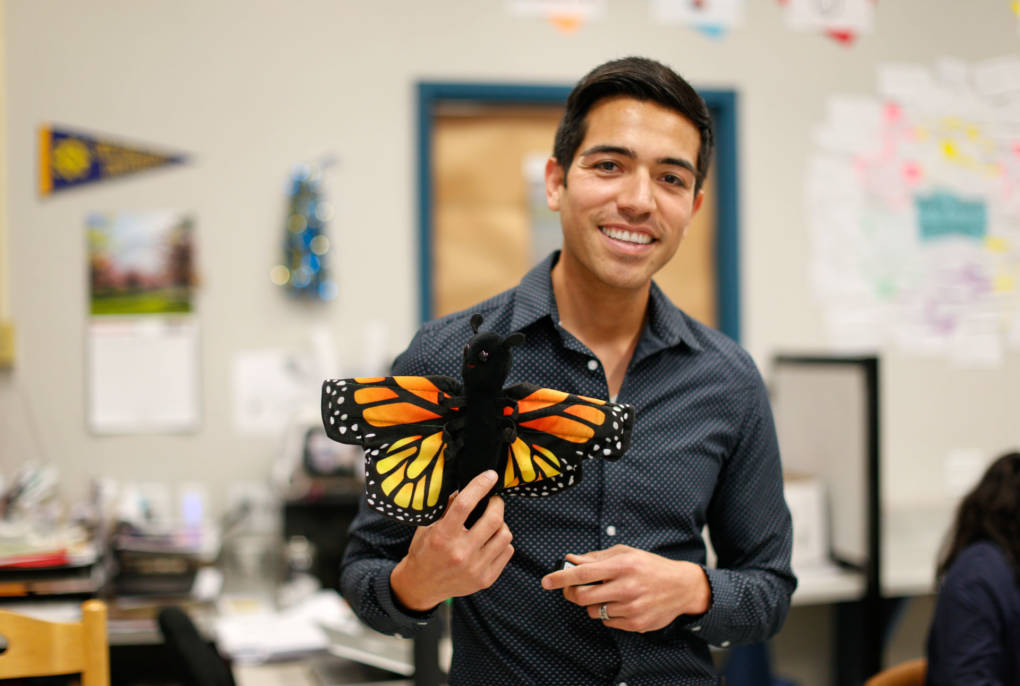
"caption": "Spanish teacher Julio Navarrete shows “la mariposa,” a monarch butterfly doll he uses to encourage students to speak more Spanish while in the classroom.",
"description": "Spanish teacher Julio Navarrete shows “la mariposa,” a monarch butterfly doll he uses to encourage students to speak more Spanish while in the classroom.",
"title": "Julio-Navarrete-Butterfly",
"credit": "Sruti Mamidanna/KQED",
"status": "inherit",
"isLoading": false,
"fetchFailed": false
},
"news_11747379": {
"type": "attachments",
"id": "news_11747379",
"meta": {
"index": "attachments_1716263798",
"site": "news",
"id": "11747379",
"found": true
},
"parent": 11747373,
"imgSizes": {
"apple_news_ca_landscape_5_5": {
"file": "https://ww2.kqed.org/app/uploads/sites/10/2019/05/Tesla-Fremont-Factory-1044x783.jpg",
"width": 1044,
"mimeType": "image/jpeg",
"height": 783
},
"apple_news_ca_square_4_0": {
"file": "https://ww2.kqed.org/app/uploads/sites/10/2019/05/Tesla-Fremont-Factory-470x470.jpg",
"width": 470,
"mimeType": "image/jpeg",
"height": 470
},
"twentyfourteen-full-width": {
"file": "https://ww2.kqed.org/app/uploads/sites/10/2019/05/Tesla-Fremont-Factory-1038x576.jpg",
"width": 1038,
"mimeType": "image/jpeg",
"height": 576
},
"thumbnail": {
"file": "https://ww2.kqed.org/app/uploads/sites/10/2019/05/Tesla-Fremont-Factory-160x103.jpg",
"width": 160,
"mimeType": "image/jpeg",
"height": 103
},
"post-thumbnail": {
"file": "https://ww2.kqed.org/app/uploads/sites/10/2019/05/Tesla-Fremont-Factory-672x372.jpg",
"width": 672,
"mimeType": "image/jpeg",
"height": 372
},
"kqedFullSize": {
"file": "https://ww2.kqed.org/app/uploads/sites/10/2019/05/Tesla-Fremont-Factory.jpg",
"width": 1920,
"height": 1231
},
"apple_news_ca_landscape_4_7": {
"file": "https://ww2.kqed.org/app/uploads/sites/10/2019/05/Tesla-Fremont-Factory-632x474.jpg",
"width": 632,
"mimeType": "image/jpeg",
"height": 474
},
"large": {
"file": "https://ww2.kqed.org/app/uploads/sites/10/2019/05/Tesla-Fremont-Factory-1020x654.jpg",
"width": 1020,
"mimeType": "image/jpeg",
"height": 654
},
"complete_open_graph": {
"file": "https://ww2.kqed.org/app/uploads/sites/10/2019/05/Tesla-Fremont-Factory-1200x769.jpg",
"width": 1200,
"mimeType": "image/jpeg",
"height": 769
},
"apple_news_ca_landscape_4_0": {
"file": "https://ww2.kqed.org/app/uploads/sites/10/2019/05/Tesla-Fremont-Factory-536x402.jpg",
"width": 536,
"mimeType": "image/jpeg",
"height": 402
},
"apple_news_ca_portrait_12_9": {
"file": "https://ww2.kqed.org/app/uploads/sites/10/2019/05/Tesla-Fremont-Factory-1122x1231.jpg",
"width": 1122,
"mimeType": "image/jpeg",
"height": 1231
},
"medium": {
"file": "https://ww2.kqed.org/app/uploads/sites/10/2019/05/Tesla-Fremont-Factory-800x513.jpg",
"width": 800,
"mimeType": "image/jpeg",
"height": 513
},
"apple_news_ca_portrait_4_0": {
"file": "https://ww2.kqed.org/app/uploads/sites/10/2019/05/Tesla-Fremont-Factory-354x472.jpg",
"width": 354,
"mimeType": "image/jpeg",
"height": 472
},
"apple_news_ca_portrait_9_7": {
"file": "https://ww2.kqed.org/app/uploads/sites/10/2019/05/Tesla-Fremont-Factory-840x1120.jpg",
"width": 840,
"mimeType": "image/jpeg",
"height": 1120
},
"apple_news_ca_landscape_12_9": {
"file": "https://ww2.kqed.org/app/uploads/sites/10/2019/05/Tesla-Fremont-Factory-1832x1231.jpg",
"width": 1832,
"mimeType": "image/jpeg",
"height": 1231
},
"apple_news_ca_square_9_7": {
"file": "https://ww2.kqed.org/app/uploads/sites/10/2019/05/Tesla-Fremont-Factory-1104x1104.jpg",
"width": 1104,
"mimeType": "image/jpeg",
"height": 1104
},
"apple_news_ca_portrait_4_7": {
"file": "https://ww2.kqed.org/app/uploads/sites/10/2019/05/Tesla-Fremont-Factory-414x552.jpg",
"width": 414,
"mimeType": "image/jpeg",
"height": 552
},
"apple_news_ca_square_12_9": {
"file": "https://ww2.kqed.org/app/uploads/sites/10/2019/05/Tesla-Fremont-Factory-1472x1231.jpg",
"width": 1472,
"mimeType": "image/jpeg",
"height": 1231
},
"apple_news_ca_portrait_5_5": {
"file": "https://ww2.kqed.org/app/uploads/sites/10/2019/05/Tesla-Fremont-Factory-687x916.jpg",
"width": 687,
"mimeType": "image/jpeg",
"height": 916
},
"full-width": {
"file": "https://ww2.kqed.org/app/uploads/sites/10/2019/05/Tesla-Fremont-Factory-1920x1231.jpg",
"width": 1920,
"mimeType": "image/jpeg",
"height": 1231
},
"apple_news_ca_square_4_7": {
"file": "https://ww2.kqed.org/app/uploads/sites/10/2019/05/Tesla-Fremont-Factory-550x550.jpg",
"width": 550,
"mimeType": "image/jpeg",
"height": 550
},
"apple_news_ca_landscape_9_7": {
"file": "https://ww2.kqed.org/app/uploads/sites/10/2019/05/Tesla-Fremont-Factory-1376x1032.jpg",
"width": 1376,
"mimeType": "image/jpeg",
"height": 1032
},
"apple_news_ca_square_5_5": {
"file": "https://ww2.kqed.org/app/uploads/sites/10/2019/05/Tesla-Fremont-Factory-912x912.jpg",
"width": 912,
"mimeType": "image/jpeg",
"height": 912
}
},
"publishDate": 1557946164,
"modified": 1557946214,
"caption": "The Tesla Factory in Fremont, pictured in 2013.",
"description": "The Tesla Factory in Fremont, pictured in 2013.",
"title": "Tesla-Fremont-Factory",
"credit": "Justin Sullivan/Getty Images",
"status": "inherit",
"isLoading": false,
"fetchFailed": false
}
},
"audioPlayerReducer": {
"postId": "stream_live",
"isPaused": true,
"isPlaying": false,
"pfsActive": false,
"pledgeModalIsOpen": true,
"playerDrawerIsOpen": false,
"liveAudioPlayStartedAt": 0,
"liveAudioPlayContext": ""
},
"authorsReducer": {
"danbrekke": {
"type": "authors",
"id": "222",
"meta": {
"index": "authors_1716337520",
"id": "222",
"found": true
},
"name": "Dan Brekke",
"firstName": "Dan",
"lastName": "Brekke",
"slug": "danbrekke",
"email": "dbrekke@kqed.org",
"display_author_email": true,
"staff_mastheads": [
"news",
"science"
],
"title": "KQED Editor and Reporter",
"bio": "Dan Brekke is a reporter and editor for KQED News, responsible for coverage of topics ranging from California water issues to the Bay Area's transportation challenges. In a newsroom career that began in Chicago in 1972, Dan has worked for \u003cem>The San Francisco Examiner,\u003c/em> Wired and TechTV and has been published in The New York Times, The New York Times Magazine, Business 2.0, Salon and elsewhere.\r\n\r\nSince joining KQED in 2007, Dan has reported, edited and produced both radio and online features and breaking news pieces. He has shared as both editor and reporter in four Society of Professional Journalists Norcal Excellence in Journalism awards and one Edward R. Murrow regional award. He was chosen for a spring 2017 residency at the Mesa Refuge to advance his research on California salmon.\r\n\r\nEmail Dan at: \u003ca href=\"mailto:dbrekke@kqed.org\">dbrekke@kqed.org\u003c/a>\r\n\r\n\u003cstrong>Twitter:\u003c/strong> \u003ca href=\"https://twitter.com/danbrekke\" rel=\"noopener noreferrer\">twitter.com/danbrekke\u003c/a>\r\n\u003cstrong>Facebook:\u003c/strong> \u003ca href=\"https://www.facebook.com/danbrekke\" rel=\"noopener noreferrer\">www.facebook.com/danbrekke\u003c/a>\r\n\u003cstrong>LinkedIn:\u003c/strong> \u003ca href=\"https://www.linkedin.com/in/danbrekke\" rel=\"noopener noreferrer\">www.linkedin.com/in/danbrekke\u003c/a>",
"avatar": "https://secure.gravatar.com/avatar/8f1f0d2a978fb3b23426c922c7e2af558fa36905b49c4ce76a97dc3c72d27226?s=600&d=mm&r=g",
"twitter": "danbrekke",
"bluesky": null,
"facebook": null,
"instagram": "https://www.instagram.com/dan.brekke/",
"linkedin": "https://www.linkedin.com/in/danbrekke/",
"sites": [
{
"site": "news",
"roles": [
"administrator",
"create_posts"
]
},
{
"site": "stateofhealth",
"roles": [
"editor"
]
},
{
"site": "science",
"roles": [
"editor"
]
},
{
"site": "quest",
"roles": [
"contributor"
]
},
{
"site": "food",
"roles": [
"contributor"
]
},
{
"site": "forum",
"roles": [
"contributor"
]
},
{
"site": "elections",
"roles": [
"editor"
]
},
{
"site": "liveblog",
"roles": [
"editor"
]
}
],
"headData": {
"title": "Dan Brekke | KQED",
"description": "KQED Editor and Reporter",
"ogImgSrc": "https://secure.gravatar.com/avatar/8f1f0d2a978fb3b23426c922c7e2af558fa36905b49c4ce76a97dc3c72d27226?s=600&d=mm&r=g",
"twImgSrc": "https://secure.gravatar.com/avatar/8f1f0d2a978fb3b23426c922c7e2af558fa36905b49c4ce76a97dc3c72d27226?s=600&d=mm&r=g"
},
"isLoading": false,
"link": "/author/danbrekke"
},
"jmcevoy": {
"type": "authors",
"id": "231",
"meta": {
"index": "authors_1716337520",
"id": "231",
"found": true
},
"name": "Julia McEvoy",
"firstName": "Julia",
"lastName": "McEvoy",
"slug": "jmcevoy",
"email": "jmcevoy@KQED.org",
"display_author_email": true,
"staff_mastheads": [
"news"
],
"title": "KQED Senior Editor",
"bio": "Julia McEvoy is KQED's Senior Editor, Education Equity.\r\n\r\nJulia heads KQED’s education coverage examining inequities students face in Bay Area and California schools, and reports on what it will take to educate the next generation.\r\n\r\nJulia's editorial work has received a Peabody Award, a Casey Medal for Coverage of Children and Families, several Edward R. Murrow awards, as well as awards from the Public Radio News Directors Inc. and the Society for Professional Journalists.",
"avatar": "https://secure.gravatar.com/avatar/aec3ce21abe02b302fd33638abd56a22?s=600&d=blank&r=g",
"twitter": "juliamcevoy1",
"facebook": null,
"instagram": null,
"linkedin": null,
"sites": [
{
"site": "news",
"roles": []
},
{
"site": "stateofhealth",
"roles": [
"author"
]
}
],
"headData": {
"title": "Julia McEvoy | KQED",
"description": "KQED Senior Editor",
"ogImgSrc": "https://secure.gravatar.com/avatar/aec3ce21abe02b302fd33638abd56a22?s=600&d=blank&r=g",
"twImgSrc": "https://secure.gravatar.com/avatar/aec3ce21abe02b302fd33638abd56a22?s=600&d=blank&r=g"
},
"isLoading": false,
"link": "/author/jmcevoy"
},
"kqednewsstaffandwires": {
"type": "authors",
"id": "237",
"meta": {
"index": "authors_1716337520",
"id": "237",
"found": true
},
"name": "KQED News Staff and Wires",
"firstName": "KQED News Staff and Wires",
"lastName": null,
"slug": "kqednewsstaffandwires",
"email": "onlinenewsstaff@kqed.org",
"display_author_email": false,
"staff_mastheads": [],
"title": null,
"bio": null,
"avatar": "https://secure.gravatar.com/avatar/72295af8ebbfbd19a4948f5271285664?s=600&d=blank&r=g",
"twitter": null,
"facebook": null,
"instagram": null,
"linkedin": null,
"sites": [
{
"site": "arts",
"roles": [
"contributor"
]
},
{
"site": "news",
"roles": [
"contributor"
]
},
{
"site": "lowdown",
"roles": [
"author"
]
},
{
"site": "stateofhealth",
"roles": [
"contributor"
]
},
{
"site": "food",
"roles": [
"author"
]
}
],
"headData": {
"title": "KQED News Staff and Wires | KQED",
"description": null,
"ogImgSrc": "https://secure.gravatar.com/avatar/72295af8ebbfbd19a4948f5271285664?s=600&d=blank&r=g",
"twImgSrc": "https://secure.gravatar.com/avatar/72295af8ebbfbd19a4948f5271285664?s=600&d=blank&r=g"
},
"isLoading": false,
"link": "/author/kqednewsstaffandwires"
},
"rachael-myrow": {
"type": "authors",
"id": "251",
"meta": {
"index": "authors_1716337520",
"id": "251",
"found": true
},
"name": "Rachael Myrow",
"firstName": "Rachael",
"lastName": "Myrow",
"slug": "rachael-myrow",
"email": "rmyrow@kqed.org",
"display_author_email": true,
"staff_mastheads": [
"news"
],
"title": "Senior Editor of KQED's Silicon Valley News Desk",
"bio": "• I write and edit stories about how Silicon Valley power and policies shape everyday life in California. I’m also passionate about making Bay Area history and culture more accessible to a broad public. • I’ve been a journalist for most of my life, starting in high school with The Franklin Press in Los Angeles, where I grew up. While earning my first degree in English at UC Berkeley, I got my start in public radio at KALX-FM. After completing a second degree in journalism at Cal, I landed my first professional job at Marketplace, then moved on to KPCC (now LAist), and then KQED, where I hosted The California Report for more than seven years. • My reporting has appeared on NPR, The World, WBUR’s \u003ci>Here & Now\u003c/i>, and the BBC. I also guest host for KQED’s \u003ci>Forum\u003c/i>, as well as the Commonwealth Club in San Francisco. • I speak periodically on media, democracy and technology issues, and do voiceover work for documentaries and educational video projects. • Outside of the studio, you'll find me hiking Bay Area trails and whipping up Insta-ready meals in my kitchen. • I do not accept gifts, money, or favors from anyone connected to my reporting, I don't pay people for information, and I do not support or donate to political causes. • I strive to treat the people I report on with fairness, honesty, and respect. I also recognize there are often multiple sides to a story and work to verify information through multiple sources and documentation. If I get something wrong, I correct it.",
"avatar": "https://secure.gravatar.com/avatar/3ed8a3c5f26025e4a805ba634cda8cd764906b97438a6d9ce216b044e340da4e?s=600&d=blank&r=g",
"twitter": "rachaelmyrow",
"bluesky": null,
"facebook": null,
"instagram": null,
"linkedin": "https://www.linkedin.com/in/rachaelmyrow/",
"sites": [
{
"site": "arts",
"roles": [
"administrator"
]
},
{
"site": "news",
"roles": [
"edit_others_posts",
"editor"
]
},
{
"site": "futureofyou",
"roles": [
"editor"
]
},
{
"site": "bayareabites",
"roles": [
"editor"
]
},
{
"site": "stateofhealth",
"roles": [
"editor"
]
},
{
"site": "science",
"roles": [
"editor"
]
},
{
"site": "food",
"roles": [
"editor"
]
},
{
"site": "forum",
"roles": [
"editor"
]
},
{
"site": "liveblog",
"roles": [
"author"
]
}
],
"headData": {
"title": "Rachael Myrow | KQED",
"description": "Senior Editor of KQED's Silicon Valley News Desk",
"ogImgSrc": "https://secure.gravatar.com/avatar/3ed8a3c5f26025e4a805ba634cda8cd764906b97438a6d9ce216b044e340da4e?s=600&d=blank&r=g",
"twImgSrc": "https://secure.gravatar.com/avatar/3ed8a3c5f26025e4a805ba634cda8cd764906b97438a6d9ce216b044e340da4e?s=600&d=blank&r=g"
},
"isLoading": false,
"link": "/author/rachael-myrow"
},
"sasha-khokha": {
"type": "authors",
"id": "254",
"meta": {
"index": "authors_1716337520",
"id": "254",
"found": true
},
"name": "Sasha Khokha",
"firstName": "Sasha",
"lastName": "Khokha",
"slug": "sasha-khokha",
"email": "skhokha@kqed.org",
"display_author_email": true,
"staff_mastheads": [
"news"
],
"title": "Host, The California Report Magazine",
"bio": "Sasha Khokha is the host of \u003cem>The California Report's \u003c/em> weekly magazine program, which takes listeners on sound-rich excursions to meet the people that make the Golden State unique -- through audio documentaries and long-form stories. As \u003cem>The California Report's\u003c/em> Central Valley Bureau Chief based in Fresno for nearly a dozen years, Sasha brought the lives and concerns of rural Californians to listeners around the state. Her reporting helped expose the hidden price immigrant women janitors and farmworkers may pay to keep their jobs: sexual assault at work. It inspired two new California laws to protect them from sexual harassment. She was a key member of the reporting team for the Frontline film \u003cem>Rape on the Night Shift, \u003c/em>which was nominated for two national Emmys. Sasha has also won a national Edward R. Murrow and a national PRNDI award for investigative reporting, as well as multiple prizes from the Society for Professional Journalists. Sasha is a proud alum of the UC Berkeley Graduate School of Journalism and Brown University and a member of the South Asian Journalists Association.",
"avatar": "https://secure.gravatar.com/avatar/e4b5e1541aaeea2aa356aa1fb2a68950?s=600&d=blank&r=g",
"twitter": "KQEDSashaKhokha",
"facebook": null,
"instagram": null,
"linkedin": null,
"sites": [
{
"site": "news",
"roles": [
"editor"
]
},
{
"site": "stateofhealth",
"roles": [
"author"
]
},
{
"site": "science",
"roles": [
"author"
]
},
{
"site": "quest",
"roles": [
"subscriber"
]
}
],
"headData": {
"title": "Sasha Khokha | KQED",
"description": "Host, The California Report Magazine",
"ogImgSrc": "https://secure.gravatar.com/avatar/e4b5e1541aaeea2aa356aa1fb2a68950?s=600&d=blank&r=g",
"twImgSrc": "https://secure.gravatar.com/avatar/e4b5e1541aaeea2aa356aa1fb2a68950?s=600&d=blank&r=g"
},
"isLoading": false,
"link": "/author/sasha-khokha"
},
"matthewgreen": {
"type": "authors",
"id": "1263",
"meta": {
"index": "authors_1716337520",
"id": "1263",
"found": true
},
"name": "Matthew Green",
"firstName": "Matthew",
"lastName": "Green",
"slug": "matthewgreen",
"email": "mgreen@kqed.org",
"display_author_email": false,
"staff_mastheads": [],
"title": "KQED Editor/Reporter",
"bio": "Matthew Green is a digital media producer for KQED News. He previously produced \u003ca href=\"http://www.kqed.org/lowdown\">The Lowdown\u003c/a>, KQED’s multimedia news education blog. Matthew's written for numerous Bay Area publications, including the Oakland Tribune and San Francisco Chronicle. He also taught journalism classes at Fremont High School in East Oakland.\r\n\r\nEmail: mgreen@kqed.org; Twitter: @MGreenKQED",
"avatar": "https://secure.gravatar.com/avatar/3bf498d1267ca02c8494f33d8cfc575e?s=600&d=blank&r=g",
"twitter": "MGreenKQED",
"facebook": null,
"instagram": null,
"linkedin": null,
"sites": [
{
"site": "news",
"roles": []
},
{
"site": "lowdown",
"roles": []
},
{
"site": "science",
"roles": []
},
{
"site": "education",
"roles": []
},
{
"site": "quest",
"roles": []
},
{
"site": "liveblog",
"roles": []
}
],
"headData": {
"title": "Matthew Green | KQED",
"description": "KQED Editor/Reporter",
"ogImgSrc": "https://secure.gravatar.com/avatar/3bf498d1267ca02c8494f33d8cfc575e?s=600&d=blank&r=g",
"twImgSrc": "https://secure.gravatar.com/avatar/3bf498d1267ca02c8494f33d8cfc575e?s=600&d=blank&r=g"
},
"isLoading": false,
"link": "/author/matthewgreen"
},
"afont": {
"type": "authors",
"id": "8637",
"meta": {
"index": "authors_1716337520",
"id": "8637",
"found": true
},
"name": "Amanda Font",
"firstName": "Amanda",
"lastName": "Font",
"slug": "afont",
"email": "afont@kqed.org",
"display_author_email": false,
"staff_mastheads": [],
"title": "KQED Contributor",
"bio": "Amanda Font is a producer on \u003cem>The Latest\u003c/em> podcast, and the host and co-producer of the series \u003cem>Audible Cosmos\u003c/em>. She has previously worked as a producer and reporter on the \u003cem>Bay Curious\u003c/em> podcast, and director of \u003cem>The California Report Magazine\u003c/em>. She grew up in the deserts of Southern California and moved north for the trees. Amanda earned a B.A. from the BECA program at San Francisco State, where she worked in the university's radio station. Amanda Font is represented by SAG-AFTRA.",
"avatar": "https://secure.gravatar.com/avatar/d9e81cf0117d5849b9cfb7ab4b1422f1?s=600&d=blank&r=g",
"twitter": null,
"facebook": null,
"instagram": null,
"linkedin": null,
"sites": [
{
"site": "news",
"roles": [
"add_users",
"create_users"
]
},
{
"site": "science",
"roles": []
},
{
"site": "forum",
"roles": [
"administrator"
]
},
{
"site": "perspectives",
"roles": [
"administrator"
]
},
{
"site": "radio",
"roles": [
"administrator"
]
}
],
"headData": {
"title": "Amanda Font | KQED",
"description": "KQED Contributor",
"ogImgSrc": "https://secure.gravatar.com/avatar/d9e81cf0117d5849b9cfb7ab4b1422f1?s=600&d=blank&r=g",
"twImgSrc": "https://secure.gravatar.com/avatar/d9e81cf0117d5849b9cfb7ab4b1422f1?s=600&d=blank&r=g"
},
"isLoading": false,
"link": "/author/afont"
},
"fjhabvala": {
"type": "authors",
"id": "8659",
"meta": {
"index": "authors_1716337520",
"id": "8659",
"found": true
},
"name": "Farida Jhabvala Romero",
"firstName": "Farida",
"lastName": "Jhabvala Romero",
"slug": "fjhabvala",
"email": "fjhabvala@kqed.org",
"display_author_email": true,
"staff_mastheads": [
"news"
],
"title": "KQED Contributor",
"bio": "Farida Jhabvala Romero is a Labor Correspondent for KQED. She previously covered immigration. Farida was \u003ca href=\"https://www.ccnma.org/2022-most-influential-latina-journalists\">named\u003c/a> one of the 10 Most Influential Latina Journalists in California in 2022 by the California Chicano News Media Association. Her work has won awards from the Society of Professional Journalists (Northern California), as well as a national and regional Edward M. Murrow Award for the collaborative reporting projects “Dangerous Air” and “Graying California.” Before joining KQED, Farida worked as a producer at Radio Bilingüe, a national public radio network. Farida earned her master’s degree in journalism from Stanford University.",
"avatar": "https://secure.gravatar.com/avatar/f9f022d4e2609741874222a1e9d41f48fea74011aa7c615eef91d9a50c944ebe?s=600&d=blank&r=g",
"twitter": "FaridaJhabvala",
"bluesky": null,
"facebook": null,
"instagram": null,
"linkedin": "https://www.linkedin.com/in/faridajhabvala/",
"sites": [
{
"site": "news",
"roles": [
"editor"
]
},
{
"site": "stateofhealth",
"roles": [
"author"
]
},
{
"site": "liveblog",
"roles": [
"author"
]
}
],
"headData": {
"title": "Farida Jhabvala Romero | KQED",
"description": "KQED Contributor",
"ogImgSrc": "https://secure.gravatar.com/avatar/f9f022d4e2609741874222a1e9d41f48fea74011aa7c615eef91d9a50c944ebe?s=600&d=blank&r=g",
"twImgSrc": "https://secure.gravatar.com/avatar/f9f022d4e2609741874222a1e9d41f48fea74011aa7c615eef91d9a50c944ebe?s=600&d=blank&r=g"
},
"isLoading": false,
"link": "/author/fjhabvala"
},
"ajperry": {
"type": "authors",
"id": "11334",
"meta": {
"index": "authors_1716337520",
"id": "11334",
"found": true
},
"name": "Alyssa Jeong Perry",
"firstName": "Alyssa",
"lastName": "Perry",
"slug": "ajperry",
"email": "AlyssaPerry@KQED.org",
"display_author_email": false,
"staff_mastheads": [],
"title": "KQED Contributor",
"bio": "Alyssa Jeong Perry is a on-call reporter at KQED. She's had stories air on NPR and WBUR's \u003cem>Here & Now,\u003c/em> PRI's The World and WNYC's \u003cem>The Takeaway.\u003c/em> And her written stories have been published in \u003cem>The Guardian \u003c/em>and \u003cem>The Nation. \u003c/em> For her reporting on immigration, Alyssa was honored as a 2015 Ford Foundation fellow through International Center for Journalists and a 2016 Mark Felt fellow with the UC Berkeley's Investigative Reporting Program. She's also interned at \u003cem>Oregon Public Broadcasting \u003c/em>and has her masters in journalism from the UC Berkeley. Before diving deep into journalism, she lived in Korea for almost four years and traveled extensively through Central America and Asia.",
"avatar": "https://secure.gravatar.com/avatar/8601b3e2995177110a6b5beb3aaea2f3?s=600&d=blank&r=g",
"twitter": "alyssajperry",
"facebook": null,
"instagram": null,
"linkedin": null,
"sites": [
{
"site": "news",
"roles": [
"author"
]
}
],
"headData": {
"title": "Alyssa Jeong Perry | KQED",
"description": "KQED Contributor",
"ogImgSrc": "https://secure.gravatar.com/avatar/8601b3e2995177110a6b5beb3aaea2f3?s=600&d=blank&r=g",
"twImgSrc": "https://secure.gravatar.com/avatar/8601b3e2995177110a6b5beb3aaea2f3?s=600&d=blank&r=g"
},
"isLoading": false,
"link": "/author/ajperry"
},
"lsarah": {
"type": "authors",
"id": "11626",
"meta": {
"index": "authors_1716337520",
"id": "11626",
"found": true
},
"name": "Lakshmi Sarah",
"firstName": "Lakshmi",
"lastName": "Sarah",
"slug": "lsarah",
"email": "lsarah@kqed.org",
"display_author_email": false,
"staff_mastheads": [],
"title": "Digital Producer",
"bio": "Lakshmi Sarah is an educator, author and journalist with a focus on innovative storytelling. She has worked with newspapers, radio and magazines from Ahmedabad, India to Los Angeles, California. She has written and produced for Die Zeit, Global Voices, AJ+, KQED, Fusion Media Group and the New York Times.",
"avatar": "https://secure.gravatar.com/avatar/652dcaecd8b28826fc17a8b2d6bb4e93?s=600&d=blank&r=g",
"twitter": "lakitalki",
"facebook": null,
"instagram": "https://www.instagram.com/laki.talki/",
"linkedin": "https://www.linkedin.com/in/lakisarah/",
"sites": [
{
"site": "arts",
"roles": []
},
{
"site": "news",
"roles": []
},
{
"site": "bayareabites",
"roles": []
},
{
"site": "science",
"roles": []
}
],
"headData": {
"title": "Lakshmi Sarah | KQED",
"description": "Digital Producer",
"ogImgSrc": "https://secure.gravatar.com/avatar/652dcaecd8b28826fc17a8b2d6bb4e93?s=600&d=blank&r=g",
"twImgSrc": "https://secure.gravatar.com/avatar/652dcaecd8b28826fc17a8b2d6bb4e93?s=600&d=blank&r=g"
},
"isLoading": false,
"link": "/author/lsarah"
},
"hmcdede": {
"type": "authors",
"id": "11635",
"meta": {
"index": "authors_1716337520",
"id": "11635",
"found": true
},
"name": "Holly McDede",
"firstName": "Holly",
"lastName": "McDede",
"slug": "hmcdede",
"email": "hmcdede@KQED.org",
"display_author_email": false,
"staff_mastheads": [],
"title": "KQED Contributor",
"bio": null,
"avatar": "https://secure.gravatar.com/avatar/35d1a1f5422c9d266f7ace9348d170f2136671a65fffc90a592e4d7fbf8dc3f6?s=600&d=blank&r=g",
"twitter": null,
"bluesky": null,
"facebook": null,
"instagram": null,
"linkedin": null,
"sites": [
{
"site": "arts",
"roles": [
"editor"
]
},
{
"site": "news",
"roles": [
"edit_others_posts",
"editor"
]
},
{
"site": "science",
"roles": [
"editor"
]
},
{
"site": "forum",
"roles": [
"editor"
]
},
{
"site": "perspectives",
"roles": [
"administrator"
]
}
],
"headData": {
"title": "Holly McDede | KQED",
"description": "KQED Contributor",
"ogImgSrc": "https://secure.gravatar.com/avatar/35d1a1f5422c9d266f7ace9348d170f2136671a65fffc90a592e4d7fbf8dc3f6?s=600&d=blank&r=g",
"twImgSrc": "https://secure.gravatar.com/avatar/35d1a1f5422c9d266f7ace9348d170f2136671a65fffc90a592e4d7fbf8dc3f6?s=600&d=blank&r=g"
},
"isLoading": false,
"link": "/author/hmcdede"
},
"abandlamudi": {
"type": "authors",
"id": "11672",
"meta": {
"index": "authors_1716337520",
"id": "11672",
"found": true
},
"name": "Adhiti Bandlamudi",
"firstName": "Adhiti",
"lastName": "Bandlamudi",
"slug": "abandlamudi",
"email": "abandlamudi@kqed.org",
"display_author_email": false,
"staff_mastheads": [
"news"
],
"title": "KQED Housing Reporter",
"bio": "Adhiti Bandlamudi reports for KQED's Housing desk. She focuses on how housing gets built across the Bay Area. Before joining KQED in 2020, she reported for WUNC in Durham, North Carolina, WABE in Atlanta, Georgia and Capital Public Radio in Sacramento. In 2017, she was awarded a Kroc Fellowship at NPR where she reported on everything from sprinkles to the Golden State Killer's arrest. When she's not reporting, she's baking new recipes in her kitchen or watching movies with friends and family. She's originally from Georgia and has strong opinions about Great British Bake Off.",
"avatar": "https://secure.gravatar.com/avatar/868129c8b257bb99a3500e2c86a65400?s=600&d=mm&r=g",
"twitter": "oddity_adhiti",
"facebook": null,
"instagram": null,
"linkedin": null,
"sites": [
{
"site": "arts",
"roles": [
"author"
]
},
{
"site": "news",
"roles": [
"editor"
]
},
{
"site": "liveblog",
"roles": [
"author"
]
}
],
"headData": {
"title": "Adhiti Bandlamudi | KQED",
"description": "KQED Housing Reporter",
"ogImgSrc": "https://secure.gravatar.com/avatar/868129c8b257bb99a3500e2c86a65400?s=600&d=mm&r=g",
"twImgSrc": "https://secure.gravatar.com/avatar/868129c8b257bb99a3500e2c86a65400?s=600&d=mm&r=g"
},
"isLoading": false,
"link": "/author/abandlamudi"
},
"jrodriguez": {
"type": "authors",
"id": "11690",
"meta": {
"index": "authors_1716337520",
"id": "11690",
"found": true
},
"name": "Joe Fitzgerald Rodriguez",
"firstName": "Joe",
"lastName": "Fitzgerald Rodriguez",
"slug": "jrodriguez",
"email": "jrodriguez@kqed.org",
"display_author_email": true,
"staff_mastheads": [
"news"
],
"title": "Reporter and Producer",
"bio": "Joe Fitzgerald Rodriguez is a reporter and digital producer for KQED covering politics. Joe most recently wrote for the \u003cem>San Francisco Examiner\u003c/em> as a political columnist covering The City. He was raised in San Francisco and has spent his reporting career in his beloved, foggy, city by the bay. Joe was 12-years-old when he conducted his first interview in journalism, grilling former San Francisco Mayor Willie Brown for the Marina Middle School newspaper, \u003cem>The Penguin Press, \u003c/em>and he continues to report on the San Francisco Bay Area to this day.",
"avatar": "https://secure.gravatar.com/avatar/2247beb0564c1e9c62228d5649d2edac?s=600&d=blank&r=g",
"twitter": "FitztheReporter",
"facebook": null,
"instagram": "https://www.instagram.com/fitzthereporter/",
"linkedin": null,
"sites": [
{
"site": "",
"roles": [
"editor"
]
},
{
"site": "arts",
"roles": [
"editor"
]
},
{
"site": "news",
"roles": [
"editor"
]
},
{
"site": "science",
"roles": [
"editor"
]
},
{
"site": "elections",
"roles": [
"editor"
]
},
{
"site": "liveblog",
"roles": [
"editor"
]
}
],
"headData": {
"title": "Joe Fitzgerald Rodriguez | KQED",
"description": "Reporter and Producer",
"ogImgSrc": "https://secure.gravatar.com/avatar/2247beb0564c1e9c62228d5649d2edac?s=600&d=blank&r=g",
"twImgSrc": "https://secure.gravatar.com/avatar/2247beb0564c1e9c62228d5649d2edac?s=600&d=blank&r=g"
},
"isLoading": false,
"link": "/author/jrodriguez"
},
"afinney": {
"type": "authors",
"id": "11772",
"meta": {
"index": "authors_1716337520",
"id": "11772",
"found": true
},
"name": "Annelise Finney",
"firstName": "Annelise",
"lastName": "Finney",
"slug": "afinney",
"email": "afinney@kqed.org",
"display_author_email": false,
"staff_mastheads": [],
"title": "Reporter",
"bio": "Annelise reports on reparations in California and East Bay politics. She co-produced the Sunday Music Drop, a limited-term radio series featuring Bay Area musicians that aired between Sept 2022 and Oct 2024. She joined KQED in 2021 as a general assignment reporter and is an alumna of KALW's Audio Academy. She was born and raised in the East Bay. She is currently away from KQED completing a year-long reporting project in Berlin, Germany as a Alexander Von Humboldt German Chancellor Fellow.",
"avatar": "https://secure.gravatar.com/avatar/b439010ea6540bec1060ee74b3c94314480991106a4a84e774fe5a0fd6605878?s=600&d=mm&r=g",
"twitter": null,
"bluesky": null,
"facebook": null,
"instagram": null,
"linkedin": null,
"sites": [
{
"site": "news",
"roles": [
"subscriber"
]
},
{
"site": "liveblog",
"roles": [
"subscriber"
]
}
],
"headData": {
"title": "Annelise Finney | KQED",
"description": "Reporter",
"ogImgSrc": "https://secure.gravatar.com/avatar/b439010ea6540bec1060ee74b3c94314480991106a4a84e774fe5a0fd6605878?s=600&d=mm&r=g",
"twImgSrc": "https://secure.gravatar.com/avatar/b439010ea6540bec1060ee74b3c94314480991106a4a84e774fe5a0fd6605878?s=600&d=mm&r=g"
},
"isLoading": false,
"link": "/author/afinney"
}
},
"pagesReducer": {
"news_tag_fremont": {
"type": "terms",
"id": "news_66",
"meta": {
"index": "terms_1716263798",
"site": "news",
"id": "66",
"score": 8.670046
},
"featImg": null,
"name": "Fremont",
"description": null,
"taxonomy": "tag",
"headData": {
"twImgId": null,
"twTitle": null,
"ogTitle": null,
"ogImgId": null,
"twDescription": null,
"description": null,
"title": "Fremont Archives | KQED News",
"ogDescription": null
},
"ttid": 67,
"slug": "fremont",
"isLoading": false,
"title": "Fremont",
"pageMeta": {
"site": "news",
"WpPageTemplate": "page-topic-editorial",
"currentPage": 3
},
"blocks": [
{
"blockName": "kqed/post-list",
"attrs": {
"layout": "cardArticle2",
"query": "posts/news?tag=fremont",
"seeMore": false,
"paginated": true,
"page": 3
}
},
{
"blockName": "kqed/ad"
}
]
}
},
"pfsSessionReducer": {},
"postsReducer": {
"stream_live": {
"type": "live",
"id": "stream_live",
"audioUrl": "https://streams.kqed.org/kqedradio",
"title": "Live Stream",
"excerpt": "Live Stream information currently unavailable.",
"link": "/radio",
"featImg": "",
"label": {
"name": "KQED Live",
"link": "/"
}
},
"stream_kqedNewscast": {
"type": "posts",
"id": "stream_kqedNewscast",
"audioUrl": "https://www.kqed.org/.stream/anon/radio/RDnews/newscast.mp3?_=1",
"title": "KQED Newscast",
"featImg": "",
"label": {
"name": "88.5 FM",
"link": "/"
}
},
"news_11903772": {
"type": "posts",
"id": "news_11903772",
"meta": {
"index": "posts_1716263798",
"site": "news",
"id": "11903772",
"score": null,
"sort": [
1644069697000
]
},
"guestAuthors": [],
"slug": "wajahat-ali-on-his-new-memoir-and-the-merits-of-investing-in-joy",
"title": "Wajahat Ali on His New Memoir and the Merits of Investing in Joy",
"publishDate": 1644069697,
"format": "audio",
"headTitle": "Wajahat Ali on His New Memoir and the Merits of Investing in Joy | KQED",
"labelTerm": {
"term": 26731,
"site": "news"
},
"content": "\u003cp>“Go back to where you came from.”\u003c/p>\n\u003cp>It’s an insult that, unfortunately, many of us have heard. For writer, playwright and political commentator Wajahat Ali, \u003ca href=\"https://www.npr.org/2022/01/25/1075283913/wajahat-alis-go-back-to-where-you-came-from-is-biting-and-funny-and-full-of-hear\">it’s also the title of his new book\u003c/a> — a memoir he calls “a love letter to a country that doesn’t love us back.”\u003c/p>\n\u003cp>The book traces Ali’s childhood in Fremont through his activism as a UC Berkeley student after 9/11, and the challenges he’s faced as a son, a father and a writer. It chronicles his near-death from a heart condition, his young daughter getting cancer and his parents going to jail. The book is also, somehow, hysterically funny.\u003c/p>\n\u003cp>Ali shared some of his reflections about Islamophobia, humor and resilience with The California Report Magazine host Sasha Khokha.\u003c/p>\n\u003cp>\u003cem>Interview excerpts have been edited for brevity and clarity.\u003c/em>\u003c/p>\n\u003cp>[ad fullwidth]\u003c/p>\n\u003ch2>On representations of South Asians and Muslims in pop culture\u003c/h2>\n\u003cp>Growing up as a child of the ’80s and ’90s, I inhaled American pop culture. Growing up, you don’t sit there and go, “I am a Muslim Pakistani son of immigrants. I am left-handed and wearing Husky pants.” You’re like, “I’m just a kid and I’m an American.”\u003c/p>\n\u003cp>But you internalize being the other. You see movies where you are either the sidekick, the villain or you’re completely invisible. Like action movies where Chuck Norris used to go to Middle Eastern countries and just blow up swaths of brown people all the time. He was the hero and you’re rooting for him. Or you’re watching that movie “Indiana Jones and the Temple of Doom.” Even then, as a 5-year-old, I’m like, “This is not how my people are. We don’t eat chilled monkey brains or drink eyeball soup.”\u003c/p>\n\u003cp>But then you don’t realize, oh, the joke’s on me. I’m the bad guy. What does that do to your sense of self-worth, your self-esteem, your image of beauty? When you look at yourself in the mirror, do you love yourself or do you hate yourself? Are you taught to hate the color of your skin, the shape of your nose, your ethnic last name? Many people, without ever really thinking about it, internalize these images, for the rest of their lives.\u003c/p>\n\u003cp>\u003cem>An excerpt from “Go Back to Where You Came From”:\u003c/em>\u003c/p>\n\u003cblockquote>\u003cp>I’m about as American as chicken korma, apple pie, and chai, but even after forty years, I’m still told to “go back.”\u003c/p>\n\u003cp>Where, exactly?\u003c/p>\n\u003cp>In America, who (and what) are you when you’re both “us” and “them”? When I’m a native but seen as a foreigner? When I’m a citizen but also seen as a perpetual suspect? When I’m your neighbor but also seen as an invader? When I’m a cultural creator but also seen as an eraser of white identity and European civilization?\u003c/p>\n\u003cp>According to mainstream code, I will never be “ordinary” or “a real American” from the “Rust Belt” (unless you consider California the heartland which, let’s face it, no one does). My parents are seen by some as potential terrorists because they’re from Pakistan, even though they’ve lived in this country for over forty years.\u003c/p>\n\u003cp>Can I be a “real” American when I’m not white no matter how much Fair & Lovely cream I slather on my skin? The answer in 2022 is “Yes, but with conditions.”\u003c/p>\n\u003cp>But I don’t want conditional love. I want more from America and my fellow Americans.\u003c/p>\u003c/blockquote>\n\u003cfigure id=\"attachment_11903778\" class=\"wp-caption aligncenter\" style=\"max-width: 832px\">\u003cimg loading=\"lazy\" decoding=\"async\" class=\"wp-image-11903778 size-full\" src=\"https://ww2.kqed.org/app/uploads/sites/10/2022/02/young-waj-fam-e1643842585110.jpeg\" alt=\"group family photo of 5 people\" width=\"832\" height=\"652\" srcset=\"https://cdn.kqed.org/wp-content/uploads/sites/10/2022/02/young-waj-fam-e1643842585110.jpeg 832w, https://cdn.kqed.org/wp-content/uploads/sites/10/2022/02/young-waj-fam-e1643842585110-800x627.jpeg 800w, https://cdn.kqed.org/wp-content/uploads/sites/10/2022/02/young-waj-fam-e1643842585110-160x125.jpeg 160w\" sizes=\"(max-width: 832px) 100vw, 832px\">\u003cfigcaption class=\"wp-caption-text\">A young Wajahat Ali (far left) with family, including his parents and grandmother. \u003ccite>(Courtesy Wajahat Ali)\u003c/cite>\u003c/figcaption>\u003c/figure>\n\u003ch2>On life as a young Muslim in post-9/11 America\u003c/h2>\n\u003cp>I was liberal in college and was, I guess you could say, an accidental activist. But a lot of it was book learning. Let me be blunt, and some people might not like to hear this, but a lot of those kids are good, well-intentioned kids who haven’t lived those experiences.\u003c/p>\n\u003cp>They read about poverty. They haven’t tasted poverty. They read about oppression. They’ve never been oppressed. They’re like cul-de-sac social justice warriors, right? Their heart is in the right place. Their mind is in the right place. I was like that, but I didn’t really taste it. My [immigrant] parents tasted it. But they protected me. So I was kind of in a suburban, protected shell living the American dream. A kid who was at UC Berkeley and was thinking about going to law school.\u003c/p>\n\u003cp>Then 9/11 happened, and overnight we became citizens and suspects. Overnight, we became terrorists. The American story had a remake, and tag, Muslims were it.\u003c/p>\n\u003cfigure id=\"attachment_11903780\" class=\"wp-caption alignright\" style=\"max-width: 980px\">\u003cimg loading=\"lazy\" decoding=\"async\" class=\"size-full wp-image-11903780\" src=\"https://ww2.kqed.org/app/uploads/sites/10/2022/02/9780393867978.jpg\" alt=\"\" width=\"980\" height=\"1480\" srcset=\"https://cdn.kqed.org/wp-content/uploads/sites/10/2022/02/9780393867978.jpg 980w, https://cdn.kqed.org/wp-content/uploads/sites/10/2022/02/9780393867978-800x1208.jpg 800w, https://cdn.kqed.org/wp-content/uploads/sites/10/2022/02/9780393867978-160x242.jpg 160w\" sizes=\"(max-width: 980px) 100vw, 980px\">\u003cfigcaption class=\"wp-caption-text\">Wajahat Ali’s new memoir transforms a painful phrase into a hilarious exploration of Islamophobia and racism. \u003ccite>(Courtesy W.W. Norton and Co.)\u003c/cite>\u003c/figcaption>\u003c/figure>\n\u003cp>We were the villains. Not just Muslims, but those who look Muslim-y. All of a sudden the entire target was on our back. This country went mad after 9/11. This country went so crazy, we renamed french fries as freedom fries. This country went so nuts that they canceled Susan Sontag. They canceled the Dixie Chicks, who are like the whitest women on Earth.\u003c/p>\n\u003cp>So what do you think they were doing to Muslims? They were surveilling us. They were entrapping us. They went after our organizations. They went after our charities. What is the type of effect that has on Muslims? A chilling effect. Fear. There were hate crimes against Muslim women.\u003c/p>\n\u003cp>All this was happening as I was a student at UC Berkeley. Overnight I became this accidental activist and this representative of this thing called “Islam” and “Muslims.”\u003c/p>\n\u003cp>I learned then that we would have to be something called the “moderate Muslim” in order to be accepted by America. That meant condemning violent acts done by people we’ve never met. Even if we condemned violent acts, and no matter how nice and shiny, we were still seen as suspects. That’s what happened, and we realized, “Oh crap, we’re not white. We’re actually, for a brief moment, living the Black experience in America.”\u003c/p>\n\u003ch2>On ‘actively investing’ in joy and humor\u003c/h2>\n\u003cp>I think humor is important for us to simply have catharsis, to have joy. For people of color to have joy.\u003c/p>\n\u003cp>The two things that have surprised people most about the book is that people didn’t expect it to be so funny, and people didn’t expect it to end on such a hopeful note, and they needed that hope. The hope that I try to give in the book is an earned hope, not a Hollywood Hallmark hope, where they tie on a bow at the end to make you feel better, like cotton candy. It tastes good for the moment, but afterwards you feel really bad and you get angry, right?\u003c/p>\n\u003cfigure id=\"attachment_11903781\" class=\"wp-caption aligncenter\" style=\"max-width: 1920px\">\u003cimg loading=\"lazy\" decoding=\"async\" class=\"size-full wp-image-11903781\" src=\"https://ww2.kqed.org/app/uploads/sites/10/2022/02/Wajahat-Ali-author-photo-scaled-e1644023476196.jpg\" alt=\"profile headshot with bright pink background\" width=\"1920\" height=\"1282\">\u003cfigcaption class=\"wp-caption-text\">Author Wajahat Ali has written for The Atlantic, The Washington Post and The New York Times and appeared as a political commentator on CNN. \u003ccite>(Danin Dahlen/HuffPost)\u003c/cite>\u003c/figcaption>\u003c/figure>\n\u003cp>Earned hope is confronting the demons, acknowledging them. Walking through the [forest] of horrors and then coming out with the scars and the wounds, but still standing. The journey of horrors, which is the life of so many Americans who still haven’t tasted the American dream. They’ve lived the American nightmare. And this pandemic, which has flattened us but flattened us unequally and revealed the wonderful X-ray of this country — all of its goodness and badness — perfectly laid bare.\u003c/p>\n\u003cp>As so many are suffering, I have made the decision in life to actively invest in joy. You have to actively invest in it like exercise. You have to make the intention and then you have to develop the discipline, because for so many of us, we don’t get joy, we don’t get to laugh. Instead, the narrative that we were taught was suffer, but suffer well. Suffer but suffer proud. Suffer, but suffer silently. Smile, even though you’re crying inside.\u003c/p>\n\u003cp>When [our then-2-year-old daughter] Nusayba was diagnosed with cancer, my wife and I could have easily gone to this mental quicksand of, “Why us? Why us? Why, God?” You’ll never receive an answer to that. That whisper eats away and destroys you. But instead, we said, “This is life. Life happens.” There’s good and there’s bad. Bad things happen to good people. Good things happen to bad people. It’s how we choose to confront it.\u003c/p>\n\u003cfigure id=\"attachment_11903779\" class=\"wp-caption aligncenter\" style=\"max-width: 960px\">\u003cimg loading=\"lazy\" decoding=\"async\" class=\"size-full wp-image-11903779\" src=\"https://ww2.kqed.org/app/uploads/sites/10/2022/02/sleeping-dad-2015.jpeg\" alt=\"\" width=\"960\" height=\"956\" srcset=\"https://cdn.kqed.org/wp-content/uploads/sites/10/2022/02/sleeping-dad-2015.jpeg 960w, https://cdn.kqed.org/wp-content/uploads/sites/10/2022/02/sleeping-dad-2015-800x797.jpeg 800w, https://cdn.kqed.org/wp-content/uploads/sites/10/2022/02/sleeping-dad-2015-160x159.jpeg 160w\" sizes=\"(max-width: 960px) 100vw, 960px\">\u003cfigcaption class=\"wp-caption-text\">Wajahat Ali, a tired dad, in 2015. \u003ccite>(Courtesy Wajahat Ali)\u003c/cite>\u003c/figcaption>\u003c/figure>\n\u003cp>I remember I used to sit there at night after my kids went to sleep during my daughter’s stage-four cancer, where we didn’t know if she’d survive. I imagined burying her. I imagined her dying. I imagined [calling her grandparents], saying she died, because I had to prepare myself as the father. But then I made the choice of imagining her alive and healthy, wearing her “Encanto” Isabella dress, full of life. I chose to invest in that story.\u003c/p>\n\u003cp>Even though it feels like you’re on the edge of the cliff and the cliff is falling, you know, you never know, sometimes the page turns and brings with it a plot twist, and it leads to a better story. And [after being diagnosed with a serious heart condition], I should be dead. Literally, I should be dead. But here I am talking to you. Still alive. My daughter is still alive. So how can I not invest in hope?\u003c/p>\n\u003cp>[ad floatright]\u003c/p>\n",
"blocks": [],
"excerpt": "In 'Go Back to Where You Came From,' South Bay author Wajahat Ali chronicles Islamophobia and family tragedy, but also gives a sense of hope he calls 'earned hope, not a Hollywood Hallmark hope.'",
"status": "publish",
"parent": 0,
"modified": 1726005790,
"stats": {
"hasAudio": false,
"hasVideo": false,
"hasChartOrMap": false,
"iframeSrcs": [],
"hasGoogleForm": false,
"hasGallery": false,
"hasHearkenModule": false,
"hasPolis": false,
"paragraphCount": 31,
"wordCount": 1714
},
"headData": {
"title": "Wajahat Ali on His New Memoir and the Merits of Investing in Joy | KQED",
"description": "In 'Go Back to Where You Came From,' South Bay author Wajahat Ali chronicles Islamophobia and family tragedy, but also gives a sense of hope he calls 'earned hope, not a Hollywood Hallmark hope.'",
"ogTitle": "",
"ogDescription": "",
"ogImgId": "",
"twTitle": "",
"twDescription": "",
"twImgId": "",
"schema": {
"@context": "https://schema.org",
"@type": "NewsArticle",
"headline": "Wajahat Ali on His New Memoir and the Merits of Investing in Joy",
"datePublished": "2022-02-05T06:01:37-08:00",
"dateModified": "2024-09-10T15:03:10-07:00",
"image": "https://cdn.kqed.org/wp-content/uploads/2020/02/KQED-OG-Image@1x.png",
"isAccessibleForFree": "True",
"publisher": {
"@type": "NewsMediaOrganization",
"@id": "https://www.kqed.org/#organization",
"name": "KQED",
"logo": "https://cdn.kqed.org/wp-content/uploads/2020/02/KQED-OG-Image@1x.png",
"url": "https://www.kqed.org",
"sameAs": [
"https://www.facebook.com/KQED",
"https://twitter.com/KQED",
"https://www.instagram.com/kqed/",
"https://www.tiktok.com/@kqedofficial",
"https://www.linkedin.com/company/kqed",
"https://www.youtube.com/channel/UCeC0IOo7i1P_61zVUWbJ4nw"
]
}
}
},
"audioUrl": "https://traffic.omny.fm/d/clips/0af137ef-751e-4b19-a055-aaef00d2d578/ffca7e9f-6831-41c5-bcaf-aaef00f5a073/f6a81d8b-84ef-4e26-aa2c-ae32016472f1/audio.mp3",
"sticky": false,
"excludeFromSiteSearch": "Include",
"path": "/news/11903772/wajahat-ali-on-his-new-memoir-and-the-merits-of-investing-in-joy",
"audioTrackLength": null,
"parsedContent": [
{
"type": "contentString",
"content": "\u003cdiv class=\"post-body\">\u003cp>\u003cp>“Go back to where you came from.”\u003c/p>\n\u003cp>It’s an insult that, unfortunately, many of us have heard. For writer, playwright and political commentator Wajahat Ali, \u003ca href=\"https://www.npr.org/2022/01/25/1075283913/wajahat-alis-go-back-to-where-you-came-from-is-biting-and-funny-and-full-of-hear\">it’s also the title of his new book\u003c/a> — a memoir he calls “a love letter to a country that doesn’t love us back.”\u003c/p>\n\u003cp>The book traces Ali’s childhood in Fremont through his activism as a UC Berkeley student after 9/11, and the challenges he’s faced as a son, a father and a writer. It chronicles his near-death from a heart condition, his young daughter getting cancer and his parents going to jail. The book is also, somehow, hysterically funny.\u003c/p>\n\u003cp>Ali shared some of his reflections about Islamophobia, humor and resilience with The California Report Magazine host Sasha Khokha.\u003c/p>\n\u003cp>\u003cem>Interview excerpts have been edited for brevity and clarity.\u003c/em>\u003c/p>\n\u003cp>\u003c/p>\u003c/div>",
"attributes": {
"named": {},
"numeric": []
}
},
{
"type": "component",
"content": "",
"name": "ad",
"attributes": {
"named": {
"label": "fullwidth"
},
"numeric": [
"fullwidth"
]
}
},
{
"type": "contentString",
"content": "\u003cdiv class=\"post-body\">\u003cp>\u003c/p>\n\u003ch2>On representations of South Asians and Muslims in pop culture\u003c/h2>\n\u003cp>Growing up as a child of the ’80s and ’90s, I inhaled American pop culture. Growing up, you don’t sit there and go, “I am a Muslim Pakistani son of immigrants. I am left-handed and wearing Husky pants.” You’re like, “I’m just a kid and I’m an American.”\u003c/p>\n\u003cp>But you internalize being the other. You see movies where you are either the sidekick, the villain or you’re completely invisible. Like action movies where Chuck Norris used to go to Middle Eastern countries and just blow up swaths of brown people all the time. He was the hero and you’re rooting for him. Or you’re watching that movie “Indiana Jones and the Temple of Doom.” Even then, as a 5-year-old, I’m like, “This is not how my people are. We don’t eat chilled monkey brains or drink eyeball soup.”\u003c/p>\n\u003cp>But then you don’t realize, oh, the joke’s on me. I’m the bad guy. What does that do to your sense of self-worth, your self-esteem, your image of beauty? When you look at yourself in the mirror, do you love yourself or do you hate yourself? Are you taught to hate the color of your skin, the shape of your nose, your ethnic last name? Many people, without ever really thinking about it, internalize these images, for the rest of their lives.\u003c/p>\n\u003cp>\u003cem>An excerpt from “Go Back to Where You Came From”:\u003c/em>\u003c/p>\n\u003cblockquote>\u003cp>I’m about as American as chicken korma, apple pie, and chai, but even after forty years, I’m still told to “go back.”\u003c/p>\n\u003cp>Where, exactly?\u003c/p>\n\u003cp>In America, who (and what) are you when you’re both “us” and “them”? When I’m a native but seen as a foreigner? When I’m a citizen but also seen as a perpetual suspect? When I’m your neighbor but also seen as an invader? When I’m a cultural creator but also seen as an eraser of white identity and European civilization?\u003c/p>\n\u003cp>According to mainstream code, I will never be “ordinary” or “a real American” from the “Rust Belt” (unless you consider California the heartland which, let’s face it, no one does). My parents are seen by some as potential terrorists because they’re from Pakistan, even though they’ve lived in this country for over forty years.\u003c/p>\n\u003cp>Can I be a “real” American when I’m not white no matter how much Fair & Lovely cream I slather on my skin? The answer in 2022 is “Yes, but with conditions.”\u003c/p>\n\u003cp>But I don’t want conditional love. I want more from America and my fellow Americans.\u003c/p>\u003c/blockquote>\n\u003cfigure id=\"attachment_11903778\" class=\"wp-caption aligncenter\" style=\"max-width: 832px\">\u003cimg loading=\"lazy\" decoding=\"async\" class=\"wp-image-11903778 size-full\" src=\"https://ww2.kqed.org/app/uploads/sites/10/2022/02/young-waj-fam-e1643842585110.jpeg\" alt=\"group family photo of 5 people\" width=\"832\" height=\"652\" srcset=\"https://cdn.kqed.org/wp-content/uploads/sites/10/2022/02/young-waj-fam-e1643842585110.jpeg 832w, https://cdn.kqed.org/wp-content/uploads/sites/10/2022/02/young-waj-fam-e1643842585110-800x627.jpeg 800w, https://cdn.kqed.org/wp-content/uploads/sites/10/2022/02/young-waj-fam-e1643842585110-160x125.jpeg 160w\" sizes=\"(max-width: 832px) 100vw, 832px\">\u003cfigcaption class=\"wp-caption-text\">A young Wajahat Ali (far left) with family, including his parents and grandmother. \u003ccite>(Courtesy Wajahat Ali)\u003c/cite>\u003c/figcaption>\u003c/figure>\n\u003ch2>On life as a young Muslim in post-9/11 America\u003c/h2>\n\u003cp>I was liberal in college and was, I guess you could say, an accidental activist. But a lot of it was book learning. Let me be blunt, and some people might not like to hear this, but a lot of those kids are good, well-intentioned kids who haven’t lived those experiences.\u003c/p>\n\u003cp>They read about poverty. They haven’t tasted poverty. They read about oppression. They’ve never been oppressed. They’re like cul-de-sac social justice warriors, right? Their heart is in the right place. Their mind is in the right place. I was like that, but I didn’t really taste it. My [immigrant] parents tasted it. But they protected me. So I was kind of in a suburban, protected shell living the American dream. A kid who was at UC Berkeley and was thinking about going to law school.\u003c/p>\n\u003cp>Then 9/11 happened, and overnight we became citizens and suspects. Overnight, we became terrorists. The American story had a remake, and tag, Muslims were it.\u003c/p>\n\u003cfigure id=\"attachment_11903780\" class=\"wp-caption alignright\" style=\"max-width: 980px\">\u003cimg loading=\"lazy\" decoding=\"async\" class=\"size-full wp-image-11903780\" src=\"https://ww2.kqed.org/app/uploads/sites/10/2022/02/9780393867978.jpg\" alt=\"\" width=\"980\" height=\"1480\" srcset=\"https://cdn.kqed.org/wp-content/uploads/sites/10/2022/02/9780393867978.jpg 980w, https://cdn.kqed.org/wp-content/uploads/sites/10/2022/02/9780393867978-800x1208.jpg 800w, https://cdn.kqed.org/wp-content/uploads/sites/10/2022/02/9780393867978-160x242.jpg 160w\" sizes=\"(max-width: 980px) 100vw, 980px\">\u003cfigcaption class=\"wp-caption-text\">Wajahat Ali’s new memoir transforms a painful phrase into a hilarious exploration of Islamophobia and racism. \u003ccite>(Courtesy W.W. Norton and Co.)\u003c/cite>\u003c/figcaption>\u003c/figure>\n\u003cp>We were the villains. Not just Muslims, but those who look Muslim-y. All of a sudden the entire target was on our back. This country went mad after 9/11. This country went so crazy, we renamed french fries as freedom fries. This country went so nuts that they canceled Susan Sontag. They canceled the Dixie Chicks, who are like the whitest women on Earth.\u003c/p>\n\u003cp>So what do you think they were doing to Muslims? They were surveilling us. They were entrapping us. They went after our organizations. They went after our charities. What is the type of effect that has on Muslims? A chilling effect. Fear. There were hate crimes against Muslim women.\u003c/p>\n\u003cp>All this was happening as I was a student at UC Berkeley. Overnight I became this accidental activist and this representative of this thing called “Islam” and “Muslims.”\u003c/p>\n\u003cp>I learned then that we would have to be something called the “moderate Muslim” in order to be accepted by America. That meant condemning violent acts done by people we’ve never met. Even if we condemned violent acts, and no matter how nice and shiny, we were still seen as suspects. That’s what happened, and we realized, “Oh crap, we’re not white. We’re actually, for a brief moment, living the Black experience in America.”\u003c/p>\n\u003ch2>On ‘actively investing’ in joy and humor\u003c/h2>\n\u003cp>I think humor is important for us to simply have catharsis, to have joy. For people of color to have joy.\u003c/p>\n\u003cp>The two things that have surprised people most about the book is that people didn’t expect it to be so funny, and people didn’t expect it to end on such a hopeful note, and they needed that hope. The hope that I try to give in the book is an earned hope, not a Hollywood Hallmark hope, where they tie on a bow at the end to make you feel better, like cotton candy. It tastes good for the moment, but afterwards you feel really bad and you get angry, right?\u003c/p>\n\u003cfigure id=\"attachment_11903781\" class=\"wp-caption aligncenter\" style=\"max-width: 1920px\">\u003cimg loading=\"lazy\" decoding=\"async\" class=\"size-full wp-image-11903781\" src=\"https://ww2.kqed.org/app/uploads/sites/10/2022/02/Wajahat-Ali-author-photo-scaled-e1644023476196.jpg\" alt=\"profile headshot with bright pink background\" width=\"1920\" height=\"1282\">\u003cfigcaption class=\"wp-caption-text\">Author Wajahat Ali has written for The Atlantic, The Washington Post and The New York Times and appeared as a political commentator on CNN. \u003ccite>(Danin Dahlen/HuffPost)\u003c/cite>\u003c/figcaption>\u003c/figure>\n\u003cp>Earned hope is confronting the demons, acknowledging them. Walking through the [forest] of horrors and then coming out with the scars and the wounds, but still standing. The journey of horrors, which is the life of so many Americans who still haven’t tasted the American dream. They’ve lived the American nightmare. And this pandemic, which has flattened us but flattened us unequally and revealed the wonderful X-ray of this country — all of its goodness and badness — perfectly laid bare.\u003c/p>\n\u003cp>As so many are suffering, I have made the decision in life to actively invest in joy. You have to actively invest in it like exercise. You have to make the intention and then you have to develop the discipline, because for so many of us, we don’t get joy, we don’t get to laugh. Instead, the narrative that we were taught was suffer, but suffer well. Suffer but suffer proud. Suffer, but suffer silently. Smile, even though you’re crying inside.\u003c/p>\n\u003cp>When [our then-2-year-old daughter] Nusayba was diagnosed with cancer, my wife and I could have easily gone to this mental quicksand of, “Why us? Why us? Why, God?” You’ll never receive an answer to that. That whisper eats away and destroys you. But instead, we said, “This is life. Life happens.” There’s good and there’s bad. Bad things happen to good people. Good things happen to bad people. It’s how we choose to confront it.\u003c/p>\n\u003cfigure id=\"attachment_11903779\" class=\"wp-caption aligncenter\" style=\"max-width: 960px\">\u003cimg loading=\"lazy\" decoding=\"async\" class=\"size-full wp-image-11903779\" src=\"https://ww2.kqed.org/app/uploads/sites/10/2022/02/sleeping-dad-2015.jpeg\" alt=\"\" width=\"960\" height=\"956\" srcset=\"https://cdn.kqed.org/wp-content/uploads/sites/10/2022/02/sleeping-dad-2015.jpeg 960w, https://cdn.kqed.org/wp-content/uploads/sites/10/2022/02/sleeping-dad-2015-800x797.jpeg 800w, https://cdn.kqed.org/wp-content/uploads/sites/10/2022/02/sleeping-dad-2015-160x159.jpeg 160w\" sizes=\"(max-width: 960px) 100vw, 960px\">\u003cfigcaption class=\"wp-caption-text\">Wajahat Ali, a tired dad, in 2015. \u003ccite>(Courtesy Wajahat Ali)\u003c/cite>\u003c/figcaption>\u003c/figure>\n\u003cp>I remember I used to sit there at night after my kids went to sleep during my daughter’s stage-four cancer, where we didn’t know if she’d survive. I imagined burying her. I imagined her dying. I imagined [calling her grandparents], saying she died, because I had to prepare myself as the father. But then I made the choice of imagining her alive and healthy, wearing her “Encanto” Isabella dress, full of life. I chose to invest in that story.\u003c/p>\n\u003cp>Even though it feels like you’re on the edge of the cliff and the cliff is falling, you know, you never know, sometimes the page turns and brings with it a plot twist, and it leads to a better story. And [after being diagnosed with a serious heart condition], I should be dead. Literally, I should be dead. But here I am talking to you. Still alive. My daughter is still alive. So how can I not invest in hope?\u003c/p>\n\u003cp>\u003c/p>\u003c/div>",
"attributes": {
"named": {},
"numeric": []
}
},
{
"type": "component",
"content": "",
"name": "ad",
"attributes": {
"named": {
"label": "floatright"
},
"numeric": [
"floatright"
]
}
},
{
"type": "contentString",
"content": "\u003cdiv class=\"post-body\">\u003cp>\u003c/p>\n\u003c/div>\u003c/p>",
"attributes": {
"named": {},
"numeric": []
}
}
],
"link": "/news/11903772/wajahat-ali-on-his-new-memoir-and-the-merits-of-investing-in-joy",
"authors": [
"254",
"8637"
],
"programs": [
"news_26731"
],
"categories": [
"news_223",
"news_457",
"news_1169",
"news_8"
],
"tags": [
"news_1849",
"news_17725",
"news_27626",
"news_66",
"news_18543",
"news_205",
"news_17597"
],
"featImg": "news_11903775",
"label": "news_26731"
},
"news_11898843": {
"type": "posts",
"id": "news_11898843",
"meta": {
"index": "posts_1716263798",
"site": "news",
"id": "11898843",
"score": null,
"sort": [
1639856798000
]
},
"guestAuthors": [],
"slug": "theres-a-lot-thats-not-working-within-the-system-afghan-evacuees-struggle-with-housing-and-immigration-bureaucracy",
"title": "'There's a Lot That's Not Working Within the System': Afghan Evacuees Struggle with Housing and Immigration Hurdles",
"publishDate": 1639856798,
"format": "standard",
"headTitle": "‘There’s a Lot That’s Not Working Within the System’: Afghan Evacuees Struggle with Housing and Immigration Hurdles | KQED",
"labelTerm": {
"site": "news"
},
"content": "\u003cp>\u003cstrong>Skip to:\u003c/strong>\u003c/p>\n\u003cul>\n\u003cli>\u003cstrong>\u003ca href=\"#locations\">How to help, and how to find help\u003c/a>\u003c/strong>\u003c/li>\n\u003c/ul>\n\u003cp>Over four months since the fall of Kabul, some Afghan evacuees are still working to find a sense of stability here in the Bay Area.\u003c/p>\n\u003cp>For some families, it’s an ongoing search for an affordable home and a job. For others, like Sadaat, it’s fighting with bureaucracy to obtain the necessary paperwork for their loved ones in Afghanistan to join them.\u003c/p>\n\u003cp>Sadaat arrived in the Bay Area on Oct. 21 — flying from Abu Dhabi with her three children, ages 8, 10 and 12. She preferred to use a pseudonym for fear of Taliban retaliation against her husband and other family members who are still in Afghanistan.\u003c/p>\n\u003cp>[pullquote align=\"right\" size=\"medium\" citation=\"Sadaat, Afghan evacuee in the Bay Area\"]‘It’s not easy to survive in this country. We have been already waiting for three years and still — such a messy situation.’[/pullquote]Before leaving her country, Sadaat worked for a U.S. Agency for International Development, or USAID, project on agricultural development.\u003c/p>\n\u003cp>She received her visa in August before Kabul fell to the Taliban, but her husband was still waiting for his paperwork. She waited another two months, leaving the country with her children. Now she’s in Fremont.\u003c/p>\n\u003cp>“I’m here with my three children, I’m just struggling with that — finding resources and finding different sources to help me out. How can I get him out of there?” she told KQED.\u003c/p>\n\u003cp>She said her husband had previously worked with the U.S. government, and now he has to live in hiding from the Taliban regime.\u003c/p>\n\u003cp>“He’s not living a normal life,” Sadaat said. But she acknowledges that caring for three kids by herself in the U.S. is also far from normal.\u003c/p>\n\u003cp>Since she has to take her kids to school and pick them up, Sadaat hasn’t been able to find a job. Her brother lives in Fremont and has been helping her move around the city until she can get her own license and car to drive.\u003c/p>\n\u003cp>“It’s not easy to survive in this country,” she said. “We have been already waiting for three years and still — such a messy situation.”\u003c/p>\n\u003cp>“This pending situation is very frustrating for me,” Sadaat said. Her kids are having trouble focusing as well, living in a new country without their father.\u003c/p>\n\u003cp>[aside postID=\"news_11890467\" hero=\"https://ww2.kqed.org/app/uploads/sites/10/2021/09/019_EastBay_JFCSAfghanResettlement_09102021-1020x680.jpg\"]Aminah Abdullah, who is the charity coordinator at the Pleasanton \u003ca href=\"https://mcceastbay.org/\" target=\"_blank\" rel=\"noopener noreferrer\">Muslim Community Center in the East Bay\u003c/a> (MCC), says that for many recently arrived evacuees, the biggest challenge is housing, and once housing is secured, everything else becomes easier. To help bridge the gap and provide food, MCC has been \u003ca href=\"https://mcceastbay.org/event/afghan-refugee-food-drive/2021-11-05/\" target=\"_blank\" rel=\"noopener noreferrer\">coordinating food drop-offs\u003c/a> for families who are in need of support, many of whom are waiting for state benefits to kick in.\u003c/p>\n\u003cp>Abdullah said they’re also asking for used cars so they can fix them up for families. “A lot of people are working from home now. They might have an extra vehicle they no longer need. They could donate it to MCC and we would fix it up if needed and pass it along to a refugee family,” she said.\u003c/p>\n\u003cp>MCC works with refugee resettlement organizations like the International Rescue Committee and Jewish Family and Community Services East Bay who assist with housing and support in the first few months of arrival.\u003c/p>\n\u003ch3>Searching for stability\u003c/h3>\n\u003cp>For M. Shakir, who left Kabul with her husband and 4-year-old son, the journey since mid-August has been long and slow.\u003c/p>\n\u003cp>After sleeping on the floor overnight at the airport in Kabul, they left Afghanistan Aug. 17, landed in Qatar and were then moved to Germany. After five days, Shakir said, they arrived in Washington, D.C., and from there were moved to \u003ca href=\"https://www.keranews.org/texas-news/2021-09-23/fort-bliss-builds-village-for-afghan-evacuees\" target=\"_blank\" rel=\"noopener noreferrer\">Fort Bliss in Texas\u003c/a>, where about 10,000 evacuees were placed, with 100 people to a tent.\u003c/p>\n\u003cp>“It was really hard … I must say terrible,” she said. At Fort Bliss they lived in a tent with several families, but she said that hygiene was very poor. After staying there for two and a half months, they left to move in with relatives in Fremont.\u003c/p>\n\u003cp>[aside postID=\"news_11887630\" hero=\"https://ww2.kqed.org/app/uploads/sites/10/2021/09/RS51403_018_Fremont_MaiwandMarket_08272021-qut.jpg\"]But within the first week of their arrival, they were told by a manager of the building complex that there was an occupancy limit and they would need to leave.\u003c/p>\n\u003cp>Now they have to move again.\u003c/p>\n\u003cp>But the financial support they receive from the government is not enough to provide a security deposit, and some places ask for a credit history, something they also don’t have.\u003c/p>\n\u003cp>“We are totally lost in this situation,” she said and added that some landlords were asking for a five-month deposit on a one-bedroom apartment.\u003c/p>\n\u003cp>Back in Afghanistan, Shakir said, her husband was a contract worker for U.S.-based companies and they were in the process of applying for a \u003ca href=\"https://travel.state.gov/content/travel/en/us-visas/immigrate/special-immg-visa-afghans-employed-us-gov.html\" target=\"_blank\" rel=\"noopener noreferrer\">special immigrant visa\u003c/a> (SIV) when they left, but she said they applied for humanitarian parole and have received approval to stay for now.\u003c/p>\n\u003cp>In many cases, \u003ca href=\"https://immigrationforum.org/article/explainer-humanitarian-parole-and-the-afghan-evacuation/\" target=\"_blank\" rel=\"noopener noreferrer\">humanitarian parole\u003c/a> was seen as a temporary workaround that would allow individuals to enter and stay in the U.S. without a visa for “urgent humanitarian reasons.”\u003c/p>\n\u003cp>Legal and community groups say they expect to file at least 30,000 humanitarian parole applications, but nationwide only about 100 applications have been approved since July.\u003c/p>\n\u003cp>For Shakir, who received temporary status under humanitarian parole, it hasn’t solved all of the challenges. Her CalFresh card stopped working, so the family needs help with food in addition to housing.\u003c/p>\n\u003cp>“We waited for four weeks and it didn’t arrive at our mail address. Then they said, ‘Wait, one week more.’ We waited one week more. Still, it didn’t arrive,” she explained. “Then they said, ‘OK, you apply for replacement.’ We applied for a replacement again.”\u003c/p>\n\u003cp>[pullquote align=\"right\" size=\"medium\" citation=\"Shakir, Afghan evacuee in the Bay Area\"]‘We don’t want to be a load on the government. We have experience. We can work, you know?’[/pullquote]For now, this has meant they are forgoing meals so their son has enough to eat and they rely on family members for assistance.\u003c/p>\n\u003cp>“We are affected and sometimes we feel very heavy,” she said.\u003c/p>\n\u003cp>“We had a good life there back in Kabul, in Afghanistan … life before was quite amazing. Like my husband was a civil engineer. And also he had his own business,” she said. Shakir was a professor at a university, teaching management.\u003c/p>\n\u003cp>“We don’t want to be a load on the government. We have experience. We can work, you know?” she said.\u003cbr>\n[ad fullwidth]\u003c/p>\n\u003ch3>The ongoing humanitarian parole backlog\u003c/h3>\n\u003cp>\u003ca href=\"https://www.nasirilaw.com/\" target=\"_blank\" rel=\"noopener noreferrer\">Spojmie Nasiri\u003c/a>, an immigration attorney in the Bay Area, said she began frantically filing humanitarian parole petitions for people seeking to evacuate Afghanistan soon after the Taliban takeover.\u003c/p>\n\u003cp>For those in Afghanistan, “humanitarian parole is the last resort,” she said. “The unicorn of seeking relief into the U.S. The criteria has always been very stringent.”\u003c/p>\n\u003cp>Because the U.S. embassy in Kabul is closed down, Afghans need to travel to another country with an operating American embassy or consulate to be approved for humanitarian parole.\u003c/p>\n\u003cp>[aside postID=\"news_11885170\" hero=\"https://ww2.kqed.org/app/uploads/sites/10/2021/08/RS51188_GettyImages-1336534302-qut-1020x681.jpg\"]“And we all know that with the dire situation in Afghanistan, particular minority groups, women judges, lawyers, other groups that are targeted by the Taliban are in dire danger right now and are living in Afghanistan either in safe houses or in hiding,” Nasiri said.\u003c/p>\n\u003cp>“And how are they going to possibly go to a third country that is not issuing visas?”\u003c/p>\n\u003cp>Immigration attorneys working with clients in Afghanistan are calling for the U.S. government to lower the requirements for humanitarian parole.\u003c/p>\n\u003cp>Paris Etemadi Scott, the legal director of the Pars Equality Center in San Jos\u003cspan style=\"font-weight: 400\">é\u003c/span>, said one of her clients in Afghanistan has been moving constantly to stay safe because his experience as a contractor for the American government and education in the U.S. puts him at imminent risk.\u003c/p>\n\u003cp>Scott explains that even this client is likely to have his application for humanitarian parole denied because it would be so difficult to get a third party to corroborate that he is at risk of imminent harm.\u003c/p>\n\u003cp>“This is a very high evidentiary standard, basically asking Afghans who are in hiding, who don’t have enough to eat, to try to find a person to write a statement specifically naming them and the risk of harm they’re suffering,” she said.\u003c/p>\n\u003cp>“Potentially going to Taliban and asking them to notarize the statement. And that’s just, that’s basically tantamount to abandoning our Afghan allies.”\u003c/p>\n\u003cp>https://twitter.com/project_anar/status/1470834153146904579\u003c/p>\n\u003cp>She and other advocates are calling for an Afghan parole program with a criteria based on general risk rather than showing evidence for individual harm. “At this stage, it just seems like the U.S. is washing its hands of Afghanistan and just moving on,” Scott said.\u003c/p>\n\u003cp>Kyra Lilien, director of the immigration legal services program at Jewish Family and Community Services East Bay, said while the organization has resettled 300 people in the Bay Area over the last four months, none of her clients has been approved for humanitarian parole.\u003c/p>\n\u003cp>[pullquote align=\"right\" size=\"medium\" citation=\"Jane Pak, co-executive director, Refugee and Immigrant Transitions\"]‘What’s been beautiful is how the communities have been coming together in solidarity … doing everything they can to volunteer, to raise resources, to welcome people.’[/pullquote]“The question of the hour is, what other option is there? And really, there is none,” Lilien said. “There’s sort of the false option that the U.S government is advancing, which is that Afghans should find their own way out of Afghanistan somehow.”\u003c/p>\n\u003cp>On Dec. 13, over 200 organizations sent \u003ca href=\"https://docs.google.com/document/d/1TchmLvdvWUwQlUsblvNd_65TahuAkTSKlKcpKCfOBSI/edit\" target=\"_blank\" rel=\"noopener noreferrer\">a letter\u003c/a> to the Biden administration regarding humanitarian parole denials for Afghans. The letter, spearheaded by \u003ca href=\"https://www.projectanar.org/225-organizations-slam-uscis-policy-on-afghans-seeking-humanitarian-protections\" target=\"_blank\" rel=\"noopener noreferrer\">Project ANAR\u003c/a> (Afghan Network for Advocacy and Resources), marks the second appeal by the group to the White House and members of Congress. According to The Wall Street Journal, \u003ca href=\"https://www.wsj.com/articles/more-than-60-000-interpreters-visa-applicants-remain-in-afghanistan-11639689706?mod=panda_wsj_author_alert\" target=\"_blank\" rel=\"noopener noreferrer\">60,000 visa applicants remain in Afghanistan\u003c/a>.\u003c/p>\n\u003cp>For Jane Pak, co-executive director at \u003ca href=\"https://www.reftrans.org/\" target=\"_blank\" rel=\"noopener noreferrer\">Refugee and Immigrant Transitions\u003c/a> in Oakland, it’s been hard to see the different parts of the system that don’t connect — from people in Afghanistan being told to apply for humanitarian parole without the structure in place to do so — to what appears to be blanket rejections of applicants already in the United States.\u003c/p>\n\u003cp>[aside label ='Related Coverage' tag='immigration']“All these efforts to do the right thing are met by systemic flaws that are damaging and hurtful,” she said.\u003c/p>\n\u003cp>Although dealing with all the immigration hurdles has been very difficult, Pak said, the support from the already settled Bay Area Afghan community has been a source of joy and warmth.\u003c/p>\n\u003cp>“What’s been beautiful is how the communities have been coming together in solidarity,” she said, “doing everything they can to volunteer, to raise resources, to welcome people who are here.”\u003c/p>\n\u003cp>But she said, at the root of it, “there’s a lot that’s not working within the system … and I just want to call attention to that.”\u003c/p>\n\u003ch3>\u003ca id=\"locations\">\u003c/a>Resources\u003c/h3>\n\u003cp>\u003cstrong>Legal assistance \u003c/strong>\u003c/p>\n\u003cul>\n\u003cli>\u003ca href=\"https://parsequalitycenter.org/\" target=\"_blank\" rel=\"noopener noreferrer\">PARS Equality Center\u003c/a>\u003c/li>\n\u003cli>\u003ca href=\"http://sf-cairs.org/\" target=\"_blank\" rel=\"noopener noreferrer\">San Francisco Coalition of Asylee, Immigrant, and Refugee Services\u003c/a>\u003c/li>\n\u003cli>\u003ca href=\"https://www.facebook.com/EastBayRefugeeandImmigrantForum/\" target=\"_blank\" rel=\"noopener noreferrer\">East Bay Refugee and Immigrant Forum\u003c/a>\u003c/li>\n\u003cli>Immigrant Legal Services \u003ca href=\"https://www.sanjoseca.gov/home/showpublisheddocument/48721/637118335366670000\" target=\"_blank\" rel=\"noopener noreferrer\">referral list\u003c/a> from the City of San Jos\u003cspan style=\"font-weight: 400\">é\u003c/span>\u003c/li>\n\u003c/ul>\n\u003cp>\u003cstrong>Food assistance\u003c/strong>\u003c/p>\n\u003cul>\n\u003cli>\u003ca href=\"https://docs.google.com/forms/d/e/1FAIpQLSdaTTNOrXKdD98sdbtsowmPJGT2G461-rQIo2OfUyJu3y9Kag/viewform\" target=\"_blank\" rel=\"noopener noreferrer\">Request food assistance (from MCC East Bay).\u003c/a>\u003c/li>\n\u003c/ul>\n\u003cp>\u003cstrong>Volunteer with the Muslim Community Center\u003c/strong>\u003c/p>\n\u003cul>\n\u003cli>Sign up to \u003ca href=\"https://docs.google.com/forms/d/e/1FAIpQLSe7r0ER-PDEeHRYlt9fSRqOF3kdfmVmc4cgAYtQ4KeyVgYfYw/viewform\" target=\"_blank\" rel=\"noopener noreferrer\">volunteer\u003c/a> with the food pantry.\u003c/li>\n\u003cli>\u003ca href=\"https://mcceastbay.org/donate-furniture/\">Donate furniture\u003c/a> in like-new condition.\u003c/li>\n\u003cli>Learn more about \u003ca href=\"https://mcceastbay.org/vehicle-donation/\" target=\"_blank\" rel=\"noopener noreferrer\">donating used cars\u003c/a>.\u003c/li>\n\u003cli>\u003ca href=\"https://mcceastbay.org/vehicle-donation/\">Share housing or employment referrals\u003c/a> and/or to indicate willingness to co-sign a lease.\u003c/li>\n\u003c/ul>\n\u003cp>\u003cstrong>Resources in all Bay Area counties\u003c/strong>\u003cbr>\nDial 211 for \u003ca href=\"https://www.211bayarea.org/\" target=\"_blank\" rel=\"noopener noreferrer\">United Way’s resource line\u003c/a> (150 languages).\u003cbr>\n[ad fullwidth]\u003c/p>\n\u003cp>[ad floatright]\u003c/p>\n",
"blocks": [],
"excerpt": "Over four months since the fall of Kabul, some Afghan evacuees are still working to find a sense of stability here in the Bay Area — but hurdles in securing legal residency aren't helping.",
"status": "publish",
"parent": 0,
"modified": 1721158052,
"stats": {
"hasAudio": false,
"hasVideo": false,
"hasChartOrMap": false,
"iframeSrcs": [],
"hasGoogleForm": false,
"hasGallery": false,
"hasHearkenModule": false,
"hasPolis": false,
"paragraphCount": 55,
"wordCount": 2115
},
"headData": {
"title": "'There's a Lot That's Not Working Within the System': Afghan Evacuees Struggle with Housing and Immigration Hurdles | KQED",
"description": "Over four months since the fall of Kabul, some Afghan evacuees are still working to find a sense of stability here in the Bay Area — but hurdles in securing legal residency aren't helping.",
"ogTitle": "",
"ogDescription": "",
"ogImgId": "",
"twTitle": "",
"twDescription": "",
"twImgId": "",
"schema": {
"@context": "https://schema.org",
"@type": "NewsArticle",
"headline": "'There's a Lot That's Not Working Within the System': Afghan Evacuees Struggle with Housing and Immigration Hurdles",
"datePublished": "2021-12-18T11:46:38-08:00",
"dateModified": "2024-07-16T12:27:32-07:00",
"image": "https://cdn.kqed.org/wp-content/uploads/2020/02/KQED-OG-Image@1x.png",
"isAccessibleForFree": "True",
"publisher": {
"@type": "NewsMediaOrganization",
"@id": "https://www.kqed.org/#organization",
"name": "KQED",
"logo": "https://cdn.kqed.org/wp-content/uploads/2020/02/KQED-OG-Image@1x.png",
"url": "https://www.kqed.org",
"sameAs": [
"https://www.facebook.com/KQED",
"https://twitter.com/KQED",
"https://www.instagram.com/kqed/",
"https://www.tiktok.com/@kqedofficial",
"https://www.linkedin.com/company/kqed",
"https://www.youtube.com/channel/UCeC0IOo7i1P_61zVUWbJ4nw"
]
}
}
},
"sticky": false,
"excludeFromSiteSearch": "Include",
"path": "/news/11898843/theres-a-lot-thats-not-working-within-the-system-afghan-evacuees-struggle-with-housing-and-immigration-bureaucracy",
"audioTrackLength": null,
"parsedContent": [
{
"type": "contentString",
"content": "\u003cdiv class=\"post-body\">\u003cp>\u003cp>\u003cstrong>Skip to:\u003c/strong>\u003c/p>\n\u003cul>\n\u003cli>\u003cstrong>\u003ca href=\"#locations\">How to help, and how to find help\u003c/a>\u003c/strong>\u003c/li>\n\u003c/ul>\n\u003cp>Over four months since the fall of Kabul, some Afghan evacuees are still working to find a sense of stability here in the Bay Area.\u003c/p>\n\u003cp>For some families, it’s an ongoing search for an affordable home and a job. For others, like Sadaat, it’s fighting with bureaucracy to obtain the necessary paperwork for their loved ones in Afghanistan to join them.\u003c/p>\n\u003cp>Sadaat arrived in the Bay Area on Oct. 21 — flying from Abu Dhabi with her three children, ages 8, 10 and 12. She preferred to use a pseudonym for fear of Taliban retaliation against her husband and other family members who are still in Afghanistan.\u003c/p>\n\u003cp>\u003c/p>\u003c/div>",
"attributes": {
"named": {},
"numeric": []
}
},
{
"type": "component",
"content": "‘It’s not easy to survive in this country. We have been already waiting for three years and still — such a messy situation.’",
"name": "pullquote",
"attributes": {
"named": {
"align": "right",
"size": "medium",
"citation": "Sadaat, Afghan evacuee in the Bay Area",
"label": ""
},
"numeric": []
}
},
{
"type": "contentString",
"content": "\u003cdiv class=\"post-body\">\u003cp>Before leaving her country, Sadaat worked for a U.S. Agency for International Development, or USAID, project on agricultural development.\u003c/p>\n\u003cp>She received her visa in August before Kabul fell to the Taliban, but her husband was still waiting for his paperwork. She waited another two months, leaving the country with her children. Now she’s in Fremont.\u003c/p>\n\u003cp>“I’m here with my three children, I’m just struggling with that — finding resources and finding different sources to help me out. How can I get him out of there?” she told KQED.\u003c/p>\n\u003cp>She said her husband had previously worked with the U.S. government, and now he has to live in hiding from the Taliban regime.\u003c/p>\n\u003cp>“He’s not living a normal life,” Sadaat said. But she acknowledges that caring for three kids by herself in the U.S. is also far from normal.\u003c/p>\n\u003cp>Since she has to take her kids to school and pick them up, Sadaat hasn’t been able to find a job. Her brother lives in Fremont and has been helping her move around the city until she can get her own license and car to drive.\u003c/p>\n\u003cp>“It’s not easy to survive in this country,” she said. “We have been already waiting for three years and still — such a messy situation.”\u003c/p>\n\u003cp>“This pending situation is very frustrating for me,” Sadaat said. Her kids are having trouble focusing as well, living in a new country without their father.\u003c/p>\n\u003cp>\u003c/p>\u003c/div>",
"attributes": {
"named": {},
"numeric": []
}
},
{
"type": "component",
"content": "",
"name": "aside",
"attributes": {
"named": {
"postid": "news_11890467",
"hero": "https://ww2.kqed.org/app/uploads/sites/10/2021/09/019_EastBay_JFCSAfghanResettlement_09102021-1020x680.jpg",
"label": ""
},
"numeric": []
}
},
{
"type": "contentString",
"content": "\u003cdiv class=\"post-body\">\u003cp>Aminah Abdullah, who is the charity coordinator at the Pleasanton \u003ca href=\"https://mcceastbay.org/\" target=\"_blank\" rel=\"noopener noreferrer\">Muslim Community Center in the East Bay\u003c/a> (MCC), says that for many recently arrived evacuees, the biggest challenge is housing, and once housing is secured, everything else becomes easier. To help bridge the gap and provide food, MCC has been \u003ca href=\"https://mcceastbay.org/event/afghan-refugee-food-drive/2021-11-05/\" target=\"_blank\" rel=\"noopener noreferrer\">coordinating food drop-offs\u003c/a> for families who are in need of support, many of whom are waiting for state benefits to kick in.\u003c/p>\n\u003cp>Abdullah said they’re also asking for used cars so they can fix them up for families. “A lot of people are working from home now. They might have an extra vehicle they no longer need. They could donate it to MCC and we would fix it up if needed and pass it along to a refugee family,” she said.\u003c/p>\n\u003cp>MCC works with refugee resettlement organizations like the International Rescue Committee and Jewish Family and Community Services East Bay who assist with housing and support in the first few months of arrival.\u003c/p>\n\u003ch3>Searching for stability\u003c/h3>\n\u003cp>For M. Shakir, who left Kabul with her husband and 4-year-old son, the journey since mid-August has been long and slow.\u003c/p>\n\u003cp>After sleeping on the floor overnight at the airport in Kabul, they left Afghanistan Aug. 17, landed in Qatar and were then moved to Germany. After five days, Shakir said, they arrived in Washington, D.C., and from there were moved to \u003ca href=\"https://www.keranews.org/texas-news/2021-09-23/fort-bliss-builds-village-for-afghan-evacuees\" target=\"_blank\" rel=\"noopener noreferrer\">Fort Bliss in Texas\u003c/a>, where about 10,000 evacuees were placed, with 100 people to a tent.\u003c/p>\n\u003cp>“It was really hard … I must say terrible,” she said. At Fort Bliss they lived in a tent with several families, but she said that hygiene was very poor. After staying there for two and a half months, they left to move in with relatives in Fremont.\u003c/p>\n\u003cp>\u003c/p>\u003c/div>",
"attributes": {
"named": {},
"numeric": []
}
},
{
"type": "component",
"content": "",
"name": "aside",
"attributes": {
"named": {
"postid": "news_11887630",
"hero": "https://ww2.kqed.org/app/uploads/sites/10/2021/09/RS51403_018_Fremont_MaiwandMarket_08272021-qut.jpg",
"label": ""
},
"numeric": []
}
},
{
"type": "contentString",
"content": "\u003cdiv class=\"post-body\">\u003cp>But within the first week of their arrival, they were told by a manager of the building complex that there was an occupancy limit and they would need to leave.\u003c/p>\n\u003cp>Now they have to move again.\u003c/p>\n\u003cp>But the financial support they receive from the government is not enough to provide a security deposit, and some places ask for a credit history, something they also don’t have.\u003c/p>\n\u003cp>“We are totally lost in this situation,” she said and added that some landlords were asking for a five-month deposit on a one-bedroom apartment.\u003c/p>\n\u003cp>Back in Afghanistan, Shakir said, her husband was a contract worker for U.S.-based companies and they were in the process of applying for a \u003ca href=\"https://travel.state.gov/content/travel/en/us-visas/immigrate/special-immg-visa-afghans-employed-us-gov.html\" target=\"_blank\" rel=\"noopener noreferrer\">special immigrant visa\u003c/a> (SIV) when they left, but she said they applied for humanitarian parole and have received approval to stay for now.\u003c/p>\n\u003cp>In many cases, \u003ca href=\"https://immigrationforum.org/article/explainer-humanitarian-parole-and-the-afghan-evacuation/\" target=\"_blank\" rel=\"noopener noreferrer\">humanitarian parole\u003c/a> was seen as a temporary workaround that would allow individuals to enter and stay in the U.S. without a visa for “urgent humanitarian reasons.”\u003c/p>\n\u003cp>Legal and community groups say they expect to file at least 30,000 humanitarian parole applications, but nationwide only about 100 applications have been approved since July.\u003c/p>\n\u003cp>For Shakir, who received temporary status under humanitarian parole, it hasn’t solved all of the challenges. Her CalFresh card stopped working, so the family needs help with food in addition to housing.\u003c/p>\n\u003cp>“We waited for four weeks and it didn’t arrive at our mail address. Then they said, ‘Wait, one week more.’ We waited one week more. Still, it didn’t arrive,” she explained. “Then they said, ‘OK, you apply for replacement.’ We applied for a replacement again.”\u003c/p>\n\u003cp>\u003c/p>\u003c/div>",
"attributes": {
"named": {},
"numeric": []
}
},
{
"type": "component",
"content": "‘We don’t want to be a load on the government. We have experience. We can work, you know?’",
"name": "pullquote",
"attributes": {
"named": {
"align": "right",
"size": "medium",
"citation": "Shakir, Afghan evacuee in the Bay Area",
"label": ""
},
"numeric": []
}
},
{
"type": "contentString",
"content": "\u003cdiv class=\"post-body\">\u003cp>For now, this has meant they are forgoing meals so their son has enough to eat and they rely on family members for assistance.\u003c/p>\n\u003cp>“We are affected and sometimes we feel very heavy,” she said.\u003c/p>\n\u003cp>“We had a good life there back in Kabul, in Afghanistan … life before was quite amazing. Like my husband was a civil engineer. And also he had his own business,” she said. Shakir was a professor at a university, teaching management.\u003c/p>\n\u003cp>“We don’t want to be a load on the government. We have experience. We can work, you know?” she said.\u003cbr>\n\u003c/p>\u003c/div>",
"attributes": {
"named": {},
"numeric": []
}
},
{
"type": "component",
"content": "",
"name": "ad",
"attributes": {
"named": {
"label": "fullwidth"
},
"numeric": [
"fullwidth"
]
}
},
{
"type": "contentString",
"content": "\u003cdiv class=\"post-body\">\u003cp>\u003c/p>\n\u003ch3>The ongoing humanitarian parole backlog\u003c/h3>\n\u003cp>\u003ca href=\"https://www.nasirilaw.com/\" target=\"_blank\" rel=\"noopener noreferrer\">Spojmie Nasiri\u003c/a>, an immigration attorney in the Bay Area, said she began frantically filing humanitarian parole petitions for people seeking to evacuate Afghanistan soon after the Taliban takeover.\u003c/p>\n\u003cp>For those in Afghanistan, “humanitarian parole is the last resort,” she said. “The unicorn of seeking relief into the U.S. The criteria has always been very stringent.”\u003c/p>\n\u003cp>Because the U.S. embassy in Kabul is closed down, Afghans need to travel to another country with an operating American embassy or consulate to be approved for humanitarian parole.\u003c/p>\n\u003cp>\u003c/p>\u003c/div>",
"attributes": {
"named": {},
"numeric": []
}
},
{
"type": "component",
"content": "",
"name": "aside",
"attributes": {
"named": {
"postid": "news_11885170",
"hero": "https://ww2.kqed.org/app/uploads/sites/10/2021/08/RS51188_GettyImages-1336534302-qut-1020x681.jpg",
"label": ""
},
"numeric": []
}
},
{
"type": "contentString",
"content": "\u003cdiv class=\"post-body\">\u003cp>“And we all know that with the dire situation in Afghanistan, particular minority groups, women judges, lawyers, other groups that are targeted by the Taliban are in dire danger right now and are living in Afghanistan either in safe houses or in hiding,” Nasiri said.\u003c/p>\n\u003cp>“And how are they going to possibly go to a third country that is not issuing visas?”\u003c/p>\n\u003cp>Immigration attorneys working with clients in Afghanistan are calling for the U.S. government to lower the requirements for humanitarian parole.\u003c/p>\n\u003cp>Paris Etemadi Scott, the legal director of the Pars Equality Center in San Jos\u003cspan style=\"font-weight: 400\">é\u003c/span>, said one of her clients in Afghanistan has been moving constantly to stay safe because his experience as a contractor for the American government and education in the U.S. puts him at imminent risk.\u003c/p>\n\u003cp>Scott explains that even this client is likely to have his application for humanitarian parole denied because it would be so difficult to get a third party to corroborate that he is at risk of imminent harm.\u003c/p>\n\u003cp>“This is a very high evidentiary standard, basically asking Afghans who are in hiding, who don’t have enough to eat, to try to find a person to write a statement specifically naming them and the risk of harm they’re suffering,” she said.\u003c/p>\n\u003cp>“Potentially going to Taliban and asking them to notarize the statement. And that’s just, that’s basically tantamount to abandoning our Afghan allies.”\u003c/p>\u003c/p>\u003c/div>",
"attributes": {
"named": {},
"numeric": []
}
},
{
"type": "component",
"content": "",
"name": "singleTwitterStatus",
"attributes": {
"named": {
"id": "1470834153146904579"
},
"numeric": []
}
},
{
"type": "contentString",
"content": "\u003cdiv class=\"post-body\">\u003cp>\n\u003cp>She and other advocates are calling for an Afghan parole program with a criteria based on general risk rather than showing evidence for individual harm. “At this stage, it just seems like the U.S. is washing its hands of Afghanistan and just moving on,” Scott said.\u003c/p>\n\u003cp>Kyra Lilien, director of the immigration legal services program at Jewish Family and Community Services East Bay, said while the organization has resettled 300 people in the Bay Area over the last four months, none of her clients has been approved for humanitarian parole.\u003c/p>\n\u003cp>\u003c/p>\u003c/div>",
"attributes": {
"named": {},
"numeric": []
}
},
{
"type": "component",
"content": "‘What’s been beautiful is how the communities have been coming together in solidarity … doing everything they can to volunteer, to raise resources, to welcome people.’",
"name": "pullquote",
"attributes": {
"named": {
"align": "right",
"size": "medium",
"citation": "Jane Pak, co-executive director, Refugee and Immigrant Transitions",
"label": ""
},
"numeric": []
}
},
{
"type": "contentString",
"content": "\u003cdiv class=\"post-body\">\u003cp>“The question of the hour is, what other option is there? And really, there is none,” Lilien said. “There’s sort of the false option that the U.S government is advancing, which is that Afghans should find their own way out of Afghanistan somehow.”\u003c/p>\n\u003cp>On Dec. 13, over 200 organizations sent \u003ca href=\"https://docs.google.com/document/d/1TchmLvdvWUwQlUsblvNd_65TahuAkTSKlKcpKCfOBSI/edit\" target=\"_blank\" rel=\"noopener noreferrer\">a letter\u003c/a> to the Biden administration regarding humanitarian parole denials for Afghans. The letter, spearheaded by \u003ca href=\"https://www.projectanar.org/225-organizations-slam-uscis-policy-on-afghans-seeking-humanitarian-protections\" target=\"_blank\" rel=\"noopener noreferrer\">Project ANAR\u003c/a> (Afghan Network for Advocacy and Resources), marks the second appeal by the group to the White House and members of Congress. According to The Wall Street Journal, \u003ca href=\"https://www.wsj.com/articles/more-than-60-000-interpreters-visa-applicants-remain-in-afghanistan-11639689706?mod=panda_wsj_author_alert\" target=\"_blank\" rel=\"noopener noreferrer\">60,000 visa applicants remain in Afghanistan\u003c/a>.\u003c/p>\n\u003cp>For Jane Pak, co-executive director at \u003ca href=\"https://www.reftrans.org/\" target=\"_blank\" rel=\"noopener noreferrer\">Refugee and Immigrant Transitions\u003c/a> in Oakland, it’s been hard to see the different parts of the system that don’t connect — from people in Afghanistan being told to apply for humanitarian parole without the structure in place to do so — to what appears to be blanket rejections of applicants already in the United States.\u003c/p>\n\u003cp>\u003c/p>\u003c/div>",
"attributes": {
"named": {},
"numeric": []
}
},
{
"type": "component",
"content": "",
"name": "aside",
"attributes": {
"named": {
"label": "Related Coverage ",
"tag": "immigration"
},
"numeric": []
}
},
{
"type": "contentString",
"content": "\u003cdiv class=\"post-body\">\u003cp>“All these efforts to do the right thing are met by systemic flaws that are damaging and hurtful,” she said.\u003c/p>\n\u003cp>Although dealing with all the immigration hurdles has been very difficult, Pak said, the support from the already settled Bay Area Afghan community has been a source of joy and warmth.\u003c/p>\n\u003cp>“What’s been beautiful is how the communities have been coming together in solidarity,” she said, “doing everything they can to volunteer, to raise resources, to welcome people who are here.”\u003c/p>\n\u003cp>But she said, at the root of it, “there’s a lot that’s not working within the system … and I just want to call attention to that.”\u003c/p>\n\u003ch3>\u003ca id=\"locations\">\u003c/a>Resources\u003c/h3>\n\u003cp>\u003cstrong>Legal assistance \u003c/strong>\u003c/p>\n\u003cul>\n\u003cli>\u003ca href=\"https://parsequalitycenter.org/\" target=\"_blank\" rel=\"noopener noreferrer\">PARS Equality Center\u003c/a>\u003c/li>\n\u003cli>\u003ca href=\"http://sf-cairs.org/\" target=\"_blank\" rel=\"noopener noreferrer\">San Francisco Coalition of Asylee, Immigrant, and Refugee Services\u003c/a>\u003c/li>\n\u003cli>\u003ca href=\"https://www.facebook.com/EastBayRefugeeandImmigrantForum/\" target=\"_blank\" rel=\"noopener noreferrer\">East Bay Refugee and Immigrant Forum\u003c/a>\u003c/li>\n\u003cli>Immigrant Legal Services \u003ca href=\"https://www.sanjoseca.gov/home/showpublisheddocument/48721/637118335366670000\" target=\"_blank\" rel=\"noopener noreferrer\">referral list\u003c/a> from the City of San Jos\u003cspan style=\"font-weight: 400\">é\u003c/span>\u003c/li>\n\u003c/ul>\n\u003cp>\u003cstrong>Food assistance\u003c/strong>\u003c/p>\n\u003cul>\n\u003cli>\u003ca href=\"https://docs.google.com/forms/d/e/1FAIpQLSdaTTNOrXKdD98sdbtsowmPJGT2G461-rQIo2OfUyJu3y9Kag/viewform\" target=\"_blank\" rel=\"noopener noreferrer\">Request food assistance (from MCC East Bay).\u003c/a>\u003c/li>\n\u003c/ul>\n\u003cp>\u003cstrong>Volunteer with the Muslim Community Center\u003c/strong>\u003c/p>\n\u003cul>\n\u003cli>Sign up to \u003ca href=\"https://docs.google.com/forms/d/e/1FAIpQLSe7r0ER-PDEeHRYlt9fSRqOF3kdfmVmc4cgAYtQ4KeyVgYfYw/viewform\" target=\"_blank\" rel=\"noopener noreferrer\">volunteer\u003c/a> with the food pantry.\u003c/li>\n\u003cli>\u003ca href=\"https://mcceastbay.org/donate-furniture/\">Donate furniture\u003c/a> in like-new condition.\u003c/li>\n\u003cli>Learn more about \u003ca href=\"https://mcceastbay.org/vehicle-donation/\" target=\"_blank\" rel=\"noopener noreferrer\">donating used cars\u003c/a>.\u003c/li>\n\u003cli>\u003ca href=\"https://mcceastbay.org/vehicle-donation/\">Share housing or employment referrals\u003c/a> and/or to indicate willingness to co-sign a lease.\u003c/li>\n\u003c/ul>\n\u003cp>\u003cstrong>Resources in all Bay Area counties\u003c/strong>\u003cbr>\nDial 211 for \u003ca href=\"https://www.211bayarea.org/\" target=\"_blank\" rel=\"noopener noreferrer\">United Way’s resource line\u003c/a> (150 languages).\u003cbr>\n\u003c/p>\u003c/div>",
"attributes": {
"named": {},
"numeric": []
}
},
{
"type": "component",
"content": "",
"name": "ad",
"attributes": {
"named": {
"label": "fullwidth"
},
"numeric": [
"fullwidth"
]
}
},
{
"type": "contentString",
"content": "\u003cdiv class=\"post-body\">\u003cp>\u003c/p>\n\u003cp>\u003c/p>\u003c/div>",
"attributes": {
"named": {},
"numeric": []
}
},
{
"type": "component",
"content": "",
"name": "ad",
"attributes": {
"named": {
"label": "floatright"
},
"numeric": [
"floatright"
]
}
},
{
"type": "contentString",
"content": "\u003cdiv class=\"post-body\">\u003cp>\u003c/p>\n\u003c/div>\u003c/p>",
"attributes": {
"named": {},
"numeric": []
}
}
],
"link": "/news/11898843/theres-a-lot-thats-not-working-within-the-system-afghan-evacuees-struggle-with-housing-and-immigration-bureaucracy",
"authors": [
"11626",
"11690",
"11635"
],
"categories": [
"news_1169",
"news_6188",
"news_28250",
"news_8",
"news_13"
],
"tags": [
"news_29800",
"news_29803",
"news_19537",
"news_27626",
"news_66",
"news_20202"
],
"featImg": "news_11899830",
"label": "news"
},
"news_11891110": {
"type": "posts",
"id": "news_11891110",
"meta": {
"index": "posts_1716263798",
"site": "news",
"id": "11891110",
"score": null,
"sort": [
1633483174000
]
},
"parent": 0,
"labelTerm": {
"site": "news"
},
"blocks": [],
"publishDate": 1633483174,
"format": "standard",
"disqusTitle": "Tesla Ordered to Pay $137 Million to a Black Former Contractor Over Racist Treatment",
"title": "Tesla Ordered to Pay $137 Million to a Black Former Contractor Over Racist Treatment",
"headTitle": "KQED News",
"content": "\u003cp>Tesla must pay nearly $137 million to a Black former worker who said he suffered racist abuse at the electric carmaker’s Bay Area factory.\u003c/p>\n\u003cp>A federal court in San Francisco agreed on Monday that Owen Diaz was subjected to racist harassment and a hostile work environment — three days before Tesla's annual shareholder meeting.\u003c/p>\n\u003cp>[aside postID=\"news_11872863\" hero=\"https://ww2.kqed.org/app/uploads/sites/10/2017/09/tesla-1020x557-1020x557.jpg\"]Diaz alleged in a lawsuit that he was harassed and faced “daily racist epithets,” including the “N-word,” while working at Tesla’s Fremont plant in 2015 and 2016 before quitting. Diaz was a contracted elevator operator.\u003c/p>\n\u003cp>Diaz also alleged that employees drew swastikas and left racist graffiti and drawings around the plant. He contended that supervisors failed to stop the abuse.\u003c/p>\n\u003cp>“Tesla’s progressive image was a façade papering over its regressive, demeaning treatment of [African American] employees,” the lawsuit said.\u003c/p>\n\u003cp>Diaz was awarded $6.9 million in damages for emotional distress and $130 million in punitive damages, his attorney, Lawrence A. Organ, said.\u003c/p>\n\u003cp>“It took four long years to get to this point,” Diaz told The New York Times. “It’s like a big weight has been pulled off my shoulders.”\u003c/p>\n\u003cp>Amy Oppenheimer, a Berkeley-based attorney with experience in workplace investigations, served as an expert witness for Diaz. She says employers as large as Tesla should have effective mechanisms in place to make sure racist incidents don't go unnoticed by supervisors.\u003c/p>\n\u003cp>\"Here you have a huge employer with decent policies, but policies are easy. You can get them off the internet,\" she said. \"The point is, what do you do with them? The point is, how do you enforce them?\"\u003c/p>\n\u003cp>[pullquote align=\"right\" size=\"medium\" citation=\"Amy Oppenheimer, expert witness for the plaintiff\"]'Here you have a huge employer with decent policies, but policies are easy … the point is, what do you do with them?'[/pullquote]It wasn’t immediately clear whether Tesla would appeal the decision. The company’s vice president of human resources, Valerie Capers Workman, responded to the verdict through \u003ca href=\"https://www.tesla.com/blog/regarding-todays-jury-verdict\">a blog post published on Monday\u003c/a>.\u003c/p>\n\u003cp>\"We strongly believe that [the facts of the case] don’t justify the verdict reached by the jury,\" Capers Workman wrote, and added, \"We do recognize that in 2015 and 2016 we were not perfect.\"\u003c/p>\n\u003cp>Tesla previously denied any knowledge of the alleged racist conduct at the plant, which has about 10,000 workers.\u003c/p>\n\u003cp>In the post, Capers Workman also mentions that Diaz was a contractor who worked for an outside employer and therefore was never a Tesla employee.\u003c/p>\n\u003cp>But Oppenheimer, the attorney, told KQED that employers should be providing a safe workplace to anyone who supplies labor, whether they are employees or contractors.\u003c/p>\n\u003cp>\"[Contractors] are your responsibility,\" she said, referring to employers. \"It's your environment that you have to address.\"\u003c/p>\n\u003cp>She hopes this verdict will encourage more workers to speak up about workplace discrimination and, in turn, push employers to invest more resources in preventing these types of situations.\u003c/p>\n\u003cp>\"It's not rocket science, Elon Musk. It's really caring about your employees and enforcing laws to protect them,\" Oppenheimer said.\u003c/p>\n\u003cp>[aside label ='Related Coverage' tag='labor-rights']If upheld, the award would be a blow to a company that has been subject to various allegations of workplace problems but requires employees to resolve disputes through mandatory arbitration, which the firm has rarely lost.\u003c/p>\n\u003cp>In May, an arbitrator ordered Tesla to pay more than $1 million over similar allegations by another former Fremont factory worker. That employee alleged that co-workers called him a racial slur and supervisors ignored his complaints.\u003c/p>\n\u003cp>Diaz, who was contracted through a staffing agency, didn’t have to sign an arbitration agreement.\u003c/p>\n\u003cp>\u003cem>This post includes reporting from The Associated Press and KQED's Holly McDede.\u003c/em>\u003cbr>\n[ad fullwidth]\u003c/p>\n\u003cp>\u003c/p>\n",
"disqusIdentifier": "11891110 https://ww2.kqed.org/news/?p=11891110",
"disqusUrl": "https://ww2.kqed.org/news/2021/10/05/tesla-must-pay-137-million-to-a-black-former-contractor-who-claimed-racial-abuse/",
"stats": {
"hasVideo": false,
"hasChartOrMap": false,
"hasAudio": false,
"hasPolis": false,
"wordCount": 662,
"hasGoogleForm": false,
"hasGallery": false,
"hasHearkenModule": false,
"iframeSrcs": [],
"paragraphCount": 22
},
"modified": 1633630326,
"excerpt": "A San Francisco jury decided on Monday that a former contractor was subjected to racist harassment — three days before Tesla's annual shareholder meeting.",
"headData": {
"twImgId": "",
"twTitle": "Tesla Ordered to Pay $137 Million to a Black Former Contractor Over Racist Treatment",
"ogTitle": "Tesla Ordered to Pay $137 Million to a Black Former Contractor Over Racist Treatment",
"ogImgId": "",
"twDescription": "",
"description": "A San Francisco jury decided on Monday that a former contractor was subjected to racist harassment — three days before Tesla's annual shareholder meeting.",
"title": "Tesla Ordered to Pay $137 Million to a Black Former Contractor Over Racist Treatment | KQED",
"ogDescription": "",
"schema": {
"@context": "https://schema.org",
"@type": "NewsArticle",
"headline": "Tesla Ordered to Pay $137 Million to a Black Former Contractor Over Racist Treatment",
"datePublished": "2021-10-05T18:19:34-07:00",
"dateModified": "2021-10-07T11:12:06-07:00",
"image": "https://cdn.kqed.org/wp-content/uploads/2020/02/KQED-OG-Image@1x.png",
"isAccessibleForFree": "True",
"publisher": {
"@type": "NewsMediaOrganization",
"@id": "https://www.kqed.org/#organization",
"name": "KQED",
"logo": "https://cdn.kqed.org/wp-content/uploads/2020/02/KQED-OG-Image@1x.png",
"url": "https://www.kqed.org",
"sameAs": [
"https://www.facebook.com/KQED",
"https://twitter.com/KQED",
"https://www.instagram.com/kqed/",
"https://www.tiktok.com/@kqedofficial",
"https://www.linkedin.com/company/kqed",
"https://www.youtube.com/channel/UCeC0IOo7i1P_61zVUWbJ4nw"
]
}
}
},
"guestAuthors": [],
"slug": "tesla-must-pay-137-million-to-a-black-former-contractor-who-claimed-racial-abuse",
"status": "publish",
"path": "/news/11891110/tesla-must-pay-137-million-to-a-black-former-contractor-who-claimed-racial-abuse",
"audioTrackLength": null,
"parsedContent": [
{
"type": "contentString",
"content": "\u003cdiv class=\"post-body\">\u003cp>\u003cp>Tesla must pay nearly $137 million to a Black former worker who said he suffered racist abuse at the electric carmaker’s Bay Area factory.\u003c/p>\n\u003cp>A federal court in San Francisco agreed on Monday that Owen Diaz was subjected to racist harassment and a hostile work environment — three days before Tesla's annual shareholder meeting.\u003c/p>\n\u003cp>\u003c/p>\u003c/div>",
"attributes": {
"named": {},
"numeric": []
}
},
{
"type": "component",
"content": "",
"name": "aside",
"attributes": {
"named": {
"postid": "news_11872863",
"hero": "https://ww2.kqed.org/app/uploads/sites/10/2017/09/tesla-1020x557-1020x557.jpg",
"label": ""
},
"numeric": []
}
},
{
"type": "contentString",
"content": "\u003cdiv class=\"post-body\">\u003cp>Diaz alleged in a lawsuit that he was harassed and faced “daily racist epithets,” including the “N-word,” while working at Tesla’s Fremont plant in 2015 and 2016 before quitting. Diaz was a contracted elevator operator.\u003c/p>\n\u003cp>Diaz also alleged that employees drew swastikas and left racist graffiti and drawings around the plant. He contended that supervisors failed to stop the abuse.\u003c/p>\n\u003cp>“Tesla’s progressive image was a façade papering over its regressive, demeaning treatment of [African American] employees,” the lawsuit said.\u003c/p>\n\u003cp>Diaz was awarded $6.9 million in damages for emotional distress and $130 million in punitive damages, his attorney, Lawrence A. Organ, said.\u003c/p>\n\u003cp>“It took four long years to get to this point,” Diaz told The New York Times. “It’s like a big weight has been pulled off my shoulders.”\u003c/p>\n\u003cp>Amy Oppenheimer, a Berkeley-based attorney with experience in workplace investigations, served as an expert witness for Diaz. She says employers as large as Tesla should have effective mechanisms in place to make sure racist incidents don't go unnoticed by supervisors.\u003c/p>\n\u003cp>\"Here you have a huge employer with decent policies, but policies are easy. You can get them off the internet,\" she said. \"The point is, what do you do with them? The point is, how do you enforce them?\"\u003c/p>\n\u003cp>\u003c/p>\u003c/div>",
"attributes": {
"named": {},
"numeric": []
}
},
{
"type": "component",
"content": "'Here you have a huge employer with decent policies, but policies are easy … the point is, what do you do with them?'",
"name": "pullquote",
"attributes": {
"named": {
"align": "right",
"size": "medium",
"citation": "Amy Oppenheimer, expert witness for the plaintiff",
"label": ""
},
"numeric": []
}
},
{
"type": "contentString",
"content": "\u003cdiv class=\"post-body\">\u003cp>It wasn’t immediately clear whether Tesla would appeal the decision. The company’s vice president of human resources, Valerie Capers Workman, responded to the verdict through \u003ca href=\"https://www.tesla.com/blog/regarding-todays-jury-verdict\">a blog post published on Monday\u003c/a>.\u003c/p>\n\u003cp>\"We strongly believe that [the facts of the case] don’t justify the verdict reached by the jury,\" Capers Workman wrote, and added, \"We do recognize that in 2015 and 2016 we were not perfect.\"\u003c/p>\n\u003cp>Tesla previously denied any knowledge of the alleged racist conduct at the plant, which has about 10,000 workers.\u003c/p>\n\u003cp>In the post, Capers Workman also mentions that Diaz was a contractor who worked for an outside employer and therefore was never a Tesla employee.\u003c/p>\n\u003cp>But Oppenheimer, the attorney, told KQED that employers should be providing a safe workplace to anyone who supplies labor, whether they are employees or contractors.\u003c/p>\n\u003cp>\"[Contractors] are your responsibility,\" she said, referring to employers. \"It's your environment that you have to address.\"\u003c/p>\n\u003cp>She hopes this verdict will encourage more workers to speak up about workplace discrimination and, in turn, push employers to invest more resources in preventing these types of situations.\u003c/p>\n\u003cp>\"It's not rocket science, Elon Musk. It's really caring about your employees and enforcing laws to protect them,\" Oppenheimer said.\u003c/p>\n\u003cp>\u003c/p>\u003c/div>",
"attributes": {
"named": {},
"numeric": []
}
},
{
"type": "component",
"content": "",
"name": "aside",
"attributes": {
"named": {
"label": "Related Coverage ",
"tag": "labor-rights"
},
"numeric": []
}
},
{
"type": "contentString",
"content": "\u003cdiv class=\"post-body\">\u003cp>If upheld, the award would be a blow to a company that has been subject to various allegations of workplace problems but requires employees to resolve disputes through mandatory arbitration, which the firm has rarely lost.\u003c/p>\n\u003cp>In May, an arbitrator ordered Tesla to pay more than $1 million over similar allegations by another former Fremont factory worker. That employee alleged that co-workers called him a racial slur and supervisors ignored his complaints.\u003c/p>\n\u003cp>Diaz, who was contracted through a staffing agency, didn’t have to sign an arbitration agreement.\u003c/p>\n\u003cp>\u003cem>This post includes reporting from The Associated Press and KQED's Holly McDede.\u003c/em>\u003cbr>\n\u003c/p>\u003c/div>",
"attributes": {
"named": {},
"numeric": []
}
},
{
"type": "component",
"content": "",
"name": "ad",
"attributes": {
"named": {
"label": "fullwidth"
},
"numeric": [
"fullwidth"
]
}
},
{
"type": "contentString",
"content": "\u003cdiv class=\"post-body\">\u003cp>\u003c/p>\n\u003cp>\u003c/p>\n\u003c/div>\u003c/p>",
"attributes": {
"named": {},
"numeric": []
}
}
],
"link": "/news/11891110/tesla-must-pay-137-million-to-a-black-former-contractor-who-claimed-racial-abuse",
"authors": [
"237"
],
"categories": [
"news_6188",
"news_8",
"news_248"
],
"tags": [
"news_3897",
"news_66",
"news_5555",
"news_29865",
"news_29993",
"news_28180",
"news_57"
],
"featImg": "news_11891203",
"label": "news"
},
"news_11887630": {
"type": "posts",
"id": "news_11887630",
"meta": {
"index": "posts_1716263798",
"site": "news",
"id": "11887630",
"score": null,
"sort": [
1631303288000
]
},
"guestAuthors": [],
"slug": "welcome-to-america-afghan-arrivals-greeted-by-the-bay-area-and-its-high-cost-of-living",
"title": "'Welcome to America': Afghan Arrivals Greeted by the Bay Area – and Its High Cost of Living",
"publishDate": 1631303288,
"format": "standard",
"headTitle": "‘Welcome to America’: Afghan Arrivals Greeted by the Bay Area – and Its High Cost of Living | KQED",
"labelTerm": {
"site": "news"
},
"content": "\u003cp>“Welcome to America!” That’s how Mohammad, a special immigrant visa (SIV) holder, remembers being greeted upon his arrival in the Bay Area from Kabul, Afghanistan, in December 2020.\u003c/p>\n\u003cp>He fondly recalls the volunteers and others from \u003ca href=\"https://jfcs-eastbay.org/\" target=\"_blank\" rel=\"noopener noreferrer\">Jewish Family & Community Services, East Bay\u003c/a> who first greeted him when he arrived.\u003c/p>\n\u003cp>“I will always remember that,” he says. “My kids remember and ask, ‘Where is that lady?’ ” It was one of the volunteers from JFCS who first welcomed him and his family to the Bay Area.\u003c/p>\n\u003cp>In the wake of the Taliban \u003ca href=\"https://www.npr.org/2021/08/16/1028117811/taliban-takeover-kabul-what-we-know\" target=\"_blank\" rel=\"noopener noreferrer\">takeover of Kabul in mid-August\u003c/a>, JFCS has resettled 77 Afghans in the East Bay – about as many people as it typically resettles in six months. JFCS said in a recent \u003ca href=\"https://jfcs-eastbay.org/urgent-afghan-evacuation/\">update\u003c/a> that it expects September to be about the same. The organization has received an outpouring of community support for Afghan refugees in the form of volunteers, with 2,800 people in the Bay Area signing up to support resettlement efforts, from greeting families at the airport to connecting families to needed services – everything that goes into creating a new life in a new place.\u003c/p>\n\u003cp>[pullquote size=\"medium\" align=\"right\" citation=\"Mohammad, SIV holder now living in Concord\"]‘We should not forget Afghanistan and those who work shoulder to shoulder for democracy, for human rights.’[/pullquote]Mohammad, whose name KQED has changed due to fears of violence against his family still in Afghanistan, is now based in Concord with his wife, a former teacher, and their three kids. Prior to coming to the U.S., he worked as a technical advisor for an international organization doing development work in Afghanistan.\u003c/p>\n\u003cp>“We worked a lot to build our country,” he told KQED. “We struggled to develop it.”\u003c/p>\n\u003cp>But in the last year, Mohammad said the security situation was very bad. His organization was attacked and he was stopped several times and asked who he worked for. While he says he might have been able to continue working, Mohammad wanted to provide a better life for his kids.\u003c/p>\n\u003cp>“I decided to immigrate here. We are now happy that at least my kids will have a bright future,” he said.\u003c/p>\n\u003cp>[ad fullwidth]\u003c/p>\n\u003cp>He’s been working as a paralegal for a Fremont-based law firm assisting with immigrant asylum cases. He wanted to volunteer his services for other organizations that might need his help, but since his commute is 1.5 hours each way, he doesn’t have time.\u003c/p>\n\u003cp>Mohammad said he never would’ve imagined what has happened in Afghanistan. “A lot of people are left behind, and they need to have humanitarian aid,” he said – even “before the Taliban took over, the country was in a humanitarian crisis.”\u003c/p>\n\u003cp>“We should not forget Afghanistan and those who work shoulder to shoulder for democracy, for human rights,” Mohammad added.\u003c/p>\n\u003cp>For some Afghan refugees who arrived in California and the Bay Area prior to 2021, the adjustment was difficult, but not extremely unmanageable. For those arriving now – some with only the clothes they were wearing when they left – the trauma of waiting at the Kabul airport for hours amid a crumbling country and seeing violence take place in front of their children’s eyes makes the transition more challenging.\u003c/p>\n\u003cfigure id=\"attachment_11888021\" class=\"wp-caption aligncenter\" style=\"max-width: 1920px\">\u003cimg loading=\"lazy\" decoding=\"async\" class=\"size-full wp-image-11888021\" src=\"https://ww2.kqed.org/app/uploads/sites/10/2021/09/RS51403_018_Fremont_MaiwandMarket_08272021-qut.jpg\" alt=\"two men wearing masks talk in Afghan market in Fremont\" width=\"1920\" height=\"1280\" srcset=\"https://cdn.kqed.org/wp-content/uploads/sites/10/2021/09/RS51403_018_Fremont_MaiwandMarket_08272021-qut.jpg 1920w, https://cdn.kqed.org/wp-content/uploads/sites/10/2021/09/RS51403_018_Fremont_MaiwandMarket_08272021-qut-800x533.jpg 800w, https://cdn.kqed.org/wp-content/uploads/sites/10/2021/09/RS51403_018_Fremont_MaiwandMarket_08272021-qut-1020x680.jpg 1020w, https://cdn.kqed.org/wp-content/uploads/sites/10/2021/09/RS51403_018_Fremont_MaiwandMarket_08272021-qut-160x107.jpg 160w, https://cdn.kqed.org/wp-content/uploads/sites/10/2021/09/RS51403_018_Fremont_MaiwandMarket_08272021-qut-1536x1024.jpg 1536w\" sizes=\"(max-width: 1920px) 100vw, 1920px\">\u003cfigcaption class=\"wp-caption-text\">‘I sit here sometimes, and I look at my daughter and I’m like, man, how lucky are we to be here? And then I look at all those people, all the kids bleeding, crying … Like as a parent, you have no choice but to feel their pain, you know?’ said Kais (left) in Fremont, on Aug. 27, 2021, a day after a bomb blast killed over 100 people in Kabul. Kais runs Maiwand Market, a staple for many in the Afghan community. \u003ccite>(Beth LaBerge/KQED)\u003c/cite>\u003c/figcaption>\u003c/figure>\n\u003cp>\u003ca href=\"https://www.reftrans.org/\" target=\"_blank\" rel=\"noopener noreferrer\">Refugee & Immigrant Transitions\u003c/a>, an Oakland-based nonprofit, is “preparing for the arrival of hundreds of vulnerable Afghans as part of an emergency evacuation effort,” according to a \u003ca href=\"https://www.reftrans.org/publications-and-media/2021/8/19/stand-with-the-people-of-afghanistan#statement-from-rit-board-chair-malikyar-sills-\" target=\"_blank\" rel=\"noopener noreferrer\">statement from RIT Board Chair Malaak Malikyar Sills\u003c/a>, who fled Afghanistan at age 5.\u003c/p>\n\u003cp>While RIT normally focuses on what they call “post-resettlement” — everything after the first few months – they’re expecting to ramp up efforts to be able to welcome additional newcomers and support other Bay Area resettlement organizations. RIT will offer resettlement support in collaboration with the International Rescue Committee and JFCS. They’ll work to help families access necessary health services and public benefits, providing assistance with registering for school as well as post-resettlement support in the form of \u003ca href=\"https://www.reftrans.org/education\" target=\"_blank\" rel=\"noopener noreferrer\">education\u003c/a> and family engagement through field trips and support groups.\u003c/p>\n\u003cp>Some evacuees qualified for a visa under the \u003ca href=\"https://travel.state.gov/content/travel/en/us-visas/immigrate/special-immg-visa-afghans-employed-us-gov.html\" target=\"_blank\" rel=\"noopener noreferrer\">special immigrant visa\u003c/a> category — established in 2008 initially for Iraqi and Afghan translators and interpreters, but expanded in 2014 to include those employed on behalf of the U.S. government in Afghanistan. Others are arriving in the early stages of the visa application or via the \u003ca href=\"https://www.uscis.gov/humanitarian/humanitarian-or-significant-public-benefit-parole-for-individuals-outside-the-united-states\" target=\"_blank\" rel=\"noopener noreferrer\">humanitarian parole program\u003c/a>, which means they may need legal assistance in addition to support for basic needs since humanitarian parolees are \u003ca href=\"https://refugees.org/uscri-snapshot-humanitarian-parole-for-afghan-evacuees/\" target=\"_blank\" rel=\"noopener noreferrer\">ineligible for food assistance services like the Supplemental Nutrition Assistance Program, or SNAP\u003c/a>.\u003c/p>\n\u003cp>[aside postID=news_11885170 hero=\"https://ww2.kqed.org/app/uploads/sites/10/2021/08/RS51188_GettyImages-1336534302-qut-1020x681.jpg\"]In \u003ca href=\"https://www.dhs.gov/news/2021/09/03/secretary-mayorkas-delivers-remarks-operation-allies-welcome\" target=\"_blank\" rel=\"noopener noreferrer\">a Sept. 3 address\u003c/a>, Department of Homeland Security Secretary Alejandro N. Mayorkas said Afghan evacuees include “U.S. citizens, lawful permanent residents, special immigrant visa holders, individuals who have assisted the United States in Afghanistan, and all other vulnerable Afghans, such as journalists and vulnerable women and girls.”\u003c/p>\n\u003cp>Mayorkas said in the past few weeks that roughly 120,000 people have been evacuated from Kabul. “We have a moral imperative to protect them, to support those who have supported this nation,” he said.\u003c/p>\n\u003ch3>A sense of home\u003c/h3>\n\u003cp>For some Afghan families who may be used to a multigenerational family structure in which parents, kids and grandparents often live together, community is at the heart of a sense of home.\u003c/p>\n\u003cp>Also at the center of home is food. And for newly arrived Afghans, some East Bay cities offer both a sense of extended support within the already established Afghan community as well as access to Afghan food staples – like the homemade bread and halal meat from Fremont’s Maiwand Market.\u003c/p>\n\u003cp>Esmatullah Asadullah and his family, including his parents and three sisters, came to the Bay Area last year after first being placed in Louisville, Kentucky, with the help of the \u003ca href=\"https://www.rescue.org/topic/refugees-america\" target=\"_blank\" rel=\"noopener noreferrer\">International Rescue Committee\u003c/a>. “There were only 50 [Afghan] families,” he said. Asadullah, 20, said the IRC helped their family for around three to four months. They decided to move to San Jose to be among a larger Afghan community in 2020.\u003c/p>\n\u003cfigure id=\"attachment_11888019\" class=\"wp-caption aligncenter\" style=\"max-width: 1920px\">\u003cimg loading=\"lazy\" decoding=\"async\" class=\"size-full wp-image-11888019\" src=\"https://ww2.kqed.org/app/uploads/sites/10/2021/09/RS51392_006_Fremont_MaiwandMarket_08272021-qut.jpg\" alt=\"\" width=\"1920\" height=\"1280\" srcset=\"https://cdn.kqed.org/wp-content/uploads/sites/10/2021/09/RS51392_006_Fremont_MaiwandMarket_08272021-qut.jpg 1920w, https://cdn.kqed.org/wp-content/uploads/sites/10/2021/09/RS51392_006_Fremont_MaiwandMarket_08272021-qut-800x533.jpg 800w, https://cdn.kqed.org/wp-content/uploads/sites/10/2021/09/RS51392_006_Fremont_MaiwandMarket_08272021-qut-1020x680.jpg 1020w, https://cdn.kqed.org/wp-content/uploads/sites/10/2021/09/RS51392_006_Fremont_MaiwandMarket_08272021-qut-160x107.jpg 160w, https://cdn.kqed.org/wp-content/uploads/sites/10/2021/09/RS51392_006_Fremont_MaiwandMarket_08272021-qut-1536x1024.jpg 1536w\" sizes=\"(max-width: 1920px) 100vw, 1920px\">\u003cfigcaption class=\"wp-caption-text\">Esmatullah Asadullah’s father buys Afghan bread made at Maiwand Market in Fremont on Aug. 27, 2021. \u003ccite>(Beth LaBerge/KQED)\u003c/cite>\u003c/figcaption>\u003c/figure>\n\u003cp>“One of my mom’s friends lives here, and she really liked it,” Asadullah said. He’s now working for Tesla and going to school in San Jose. Watching what’s happening in Afghanistan from afar, he said, is difficult: “Like as an Afghan … it’s hard — it’s like all [of] Afghanistan is like my family.”\u003c/p>\n\u003cp>For others who are arriving more recently, the challenges are more complex.\u003c/p>\n\u003ch3>Housing costs ‘a constant challenge and shock’\u003c/h3>\n\u003cp>JFCS says housing is the biggest challenge in their resettlement efforts, since many property managers are reluctant to rent to new arrivals without a standard rental history or credit score.\u003c/p>\n\u003cp>“The high cost of housing is a constant challenge and shock for incoming refugees,” said Holly Taines White, director of development and community engagement at JFCS. “Finding an affordable, safe, appropriate place to live — especially one that is somewhat nearby family and friends – is one of the things JFCS assists with the most.”\u003c/p>\n\u003cp>She shared one example of how challenging the search can be for someone who has recently arrived: A family found a relatively affordable apartment for $2,500 per month in Walnut Creek — but the property manager required they show income of five times the monthly rent.\u003c/p>\n\u003cp>“That is not something that a newly arrived family can do,” White said. “In cases like this, we provide a lot of advocacy, trying to help property managers understand the situations that our clients are in.” They’re also matching families with community members who are willing to serve as co-signers on the lease.\u003c/p>\n\u003cp>[aside postID=news_11885908 hero='https://ww2.kqed.org/app/uploads/sites/10/2021/08/Demonstrators-Marching-East-on-Thorton-Ave-copy-1020x574.jpg']Christopher Cambises, \u003ca href=\"https://www.sanjoseca.gov/your-government/departments-offices/office-of-the-city-manager/racial-equity/immigrant-affairs/afghanistan-refugee-resources\" target=\"_blank\" rel=\"noopener noreferrer\">immigrant affairs manager at the Office of Racial Equity\u003c/a> for the city of San Jose, helps ensure refugees and immigrants are welcomed and able to connect to services in the city.\u003c/p>\n\u003cp>“Right now a major need is housing, and everyone recognizes that housing is a challenge in Silicon Valley, in California as a whole,” he said.\u003c/p>\n\u003cp>Beyond housing, there’s a need for everything else that comes with starting a new life in a new country — getting kids into schools, getting connected to mental health resources, and basic furniture and household goods.\u003c/p>\n\u003cp>Cambises, himself an immigrant from the United Kingdom, said there’s a shared sense of belonging amid displacement. “This is a city that has an extremely long history of welcoming refugees from around the world and fostering that sense of community belonging for new arrivals,” he said. “We’re tied together by a shared sense of displacement, relocation and resettlement.”\u003c/p>\n\u003ch3>From California to Afghanistan, and back\u003c/h3>\n\u003cp>“When I think about refugee resettlement, I think about housing,” said Shawn VanDiver, founder of the \u003ca href=\"https://www.trumanproject.org/index.html\" target=\"_blank\" rel=\"noopener noreferrer\">Truman National Security Project\u003c/a> San Diego chapter.\u003c/p>\n\u003cp>“We have a major housing crisis here,” VanDiver said. “But also California is a welcoming place.”\u003c/p>\n\u003cp>VanDiver, a 12-year Navy veteran, said he wants to make sure Afghans, specifically those who served the U.S., are welcomed. One of the people he worked with on civic engagement projects is a former Afghan interpreter named Lucky.\u003c/p>\n\u003cp>Lucky, a nickname given to him because he survived two improvised explosive device blasts (he prefers this name, for fear of what the Taliban might do to his family still in Afghanistan), received his SIV in 2016 after working as an interpreter for the U.S. for nearly 10 years. He now has a green card. Lucky had been living in San Diego for the past several years, but went back to Afghanistan in May to see his aging mother and to help her with care. While visiting his mother in the hospital, his brother told him the Taliban were attempting to take their village. Around Aug. 13, he went to help. Without enough people or ammunition to support the village, he said they had to surrender.\u003c/p>\n\u003cp>“I was stuck there,” Lucky said. He ended up pretending to be a truck driver to make his way back to Kabul, and then spent 12 hours at the airport, waiting for a flight with his wife and their 4-year-old and 7-month-old children.\u003c/p>\n\u003cp>In part, with the assistance of \u003ca href=\"https://afghanevac.org/\" target=\"_blank\" rel=\"noopener noreferrer\">Afghan Evac\u003c/a>, a San Diego-based initiative started by veterans, Lucky arrived back in the U.S. at the end of August.\u003c/p>\n\u003cp>“My kids, they just can’t sleep,” he said. “They have nightmares. … My daughter, she’s not letting me go. She’s still scared, she thinks she’s still in Afghanistan, and there’s going to be bombing.”\u003c/p>\n\u003cp>Lucky told KQED he was planning to move to Texas to be closer to family and because the cost of living is high in California.\u003c/p>\n\u003ch3>\u003cstrong>Bay Area organizations assisting with refugee services\u003c/strong>\u003c/h3>\n\u003cul>\n\u003cli>\u003ca href=\"https://jfcs-eastbay.org/\" target=\"_blank\" rel=\"noopener noreferrer\">Jewish Family & Community Services, East Bay\u003c/a>\u003c/li>\n\u003cli>\u003ca href=\"https://www.reftrans.org/\" target=\"_blank\" rel=\"noopener noreferrer\">Refugee & Immigrant Transitions\u003c/a>\u003c/li>\n\u003cli>\u003ca href=\"https://www.rescue.org/topic/refugees-america\" target=\"_blank\" rel=\"noopener noreferrer\">International Rescue Committee\u003c/a>\u003c/li>\n\u003c/ul>\n\u003cp>[ad floatright]\u003c/p>\n",
"blocks": [],
"excerpt": "Refugees arriving in the East Bay find support in Afghan communities here — but housing costs are a huge challenge they and the resettlement organizations working to help them face.",
"status": "publish",
"parent": 0,
"modified": 1721110369,
"stats": {
"hasAudio": false,
"hasVideo": false,
"hasChartOrMap": false,
"iframeSrcs": [],
"hasGoogleForm": false,
"hasGallery": false,
"hasHearkenModule": false,
"hasPolis": false,
"paragraphCount": 40,
"wordCount": 2051
},
"headData": {
"title": "'Welcome to America': Afghan Arrivals Greeted by the Bay Area – and Its High Cost of Living | KQED",
"description": "Refugees arriving in the East Bay find support in Afghan communities here — but housing costs are a huge challenge they and the resettlement organizations working to help them face.",
"ogTitle": "",
"ogDescription": "",
"ogImgId": "",
"twTitle": "",
"twDescription": "",
"twImgId": "",
"schema": {
"@context": "https://schema.org",
"@type": "NewsArticle",
"headline": "'Welcome to America': Afghan Arrivals Greeted by the Bay Area – and Its High Cost of Living",
"datePublished": "2021-09-10T12:48:08-07:00",
"dateModified": "2024-07-15T23:12:49-07:00",
"image": "https://cdn.kqed.org/wp-content/uploads/2020/02/KQED-OG-Image@1x.png",
"isAccessibleForFree": "True",
"publisher": {
"@type": "NewsMediaOrganization",
"@id": "https://www.kqed.org/#organization",
"name": "KQED",
"logo": "https://cdn.kqed.org/wp-content/uploads/2020/02/KQED-OG-Image@1x.png",
"url": "https://www.kqed.org",
"sameAs": [
"https://www.facebook.com/KQED",
"https://twitter.com/KQED",
"https://www.instagram.com/kqed/",
"https://www.tiktok.com/@kqedofficial",
"https://www.linkedin.com/company/kqed",
"https://www.youtube.com/channel/UCeC0IOo7i1P_61zVUWbJ4nw"
]
}
}
},
"sticky": false,
"path": "/news/11887630/welcome-to-america-afghan-arrivals-greeted-by-the-bay-area-and-its-high-cost-of-living",
"audioTrackLength": null,
"parsedContent": [
{
"type": "contentString",
"content": "\u003cdiv class=\"post-body\">\u003cp>\u003cp>“Welcome to America!” That’s how Mohammad, a special immigrant visa (SIV) holder, remembers being greeted upon his arrival in the Bay Area from Kabul, Afghanistan, in December 2020.\u003c/p>\n\u003cp>He fondly recalls the volunteers and others from \u003ca href=\"https://jfcs-eastbay.org/\" target=\"_blank\" rel=\"noopener noreferrer\">Jewish Family & Community Services, East Bay\u003c/a> who first greeted him when he arrived.\u003c/p>\n\u003cp>“I will always remember that,” he says. “My kids remember and ask, ‘Where is that lady?’ ” It was one of the volunteers from JFCS who first welcomed him and his family to the Bay Area.\u003c/p>\n\u003cp>In the wake of the Taliban \u003ca href=\"https://www.npr.org/2021/08/16/1028117811/taliban-takeover-kabul-what-we-know\" target=\"_blank\" rel=\"noopener noreferrer\">takeover of Kabul in mid-August\u003c/a>, JFCS has resettled 77 Afghans in the East Bay – about as many people as it typically resettles in six months. JFCS said in a recent \u003ca href=\"https://jfcs-eastbay.org/urgent-afghan-evacuation/\">update\u003c/a> that it expects September to be about the same. The organization has received an outpouring of community support for Afghan refugees in the form of volunteers, with 2,800 people in the Bay Area signing up to support resettlement efforts, from greeting families at the airport to connecting families to needed services – everything that goes into creating a new life in a new place.\u003c/p>\n\u003cp>\u003c/p>\u003c/div>",
"attributes": {
"named": {},
"numeric": []
}
},
{
"type": "component",
"content": "‘We should not forget Afghanistan and those who work shoulder to shoulder for democracy, for human rights.’",
"name": "pullquote",
"attributes": {
"named": {
"size": "medium",
"align": "right",
"citation": "Mohammad, SIV holder now living in Concord",
"label": ""
},
"numeric": []
}
},
{
"type": "contentString",
"content": "\u003cdiv class=\"post-body\">\u003cp>Mohammad, whose name KQED has changed due to fears of violence against his family still in Afghanistan, is now based in Concord with his wife, a former teacher, and their three kids. Prior to coming to the U.S., he worked as a technical advisor for an international organization doing development work in Afghanistan.\u003c/p>\n\u003cp>“We worked a lot to build our country,” he told KQED. “We struggled to develop it.”\u003c/p>\n\u003cp>But in the last year, Mohammad said the security situation was very bad. His organization was attacked and he was stopped several times and asked who he worked for. While he says he might have been able to continue working, Mohammad wanted to provide a better life for his kids.\u003c/p>\n\u003cp>“I decided to immigrate here. We are now happy that at least my kids will have a bright future,” he said.\u003c/p>\n\u003cp>\u003c/p>\u003c/div>",
"attributes": {
"named": {},
"numeric": []
}
},
{
"type": "component",
"content": "",
"name": "ad",
"attributes": {
"named": {
"label": "fullwidth"
},
"numeric": [
"fullwidth"
]
}
},
{
"type": "contentString",
"content": "\u003cdiv class=\"post-body\">\u003cp>\u003c/p>\n\u003cp>He’s been working as a paralegal for a Fremont-based law firm assisting with immigrant asylum cases. He wanted to volunteer his services for other organizations that might need his help, but since his commute is 1.5 hours each way, he doesn’t have time.\u003c/p>\n\u003cp>Mohammad said he never would’ve imagined what has happened in Afghanistan. “A lot of people are left behind, and they need to have humanitarian aid,” he said – even “before the Taliban took over, the country was in a humanitarian crisis.”\u003c/p>\n\u003cp>“We should not forget Afghanistan and those who work shoulder to shoulder for democracy, for human rights,” Mohammad added.\u003c/p>\n\u003cp>For some Afghan refugees who arrived in California and the Bay Area prior to 2021, the adjustment was difficult, but not extremely unmanageable. For those arriving now – some with only the clothes they were wearing when they left – the trauma of waiting at the Kabul airport for hours amid a crumbling country and seeing violence take place in front of their children’s eyes makes the transition more challenging.\u003c/p>\n\u003cfigure id=\"attachment_11888021\" class=\"wp-caption aligncenter\" style=\"max-width: 1920px\">\u003cimg loading=\"lazy\" decoding=\"async\" class=\"size-full wp-image-11888021\" src=\"https://ww2.kqed.org/app/uploads/sites/10/2021/09/RS51403_018_Fremont_MaiwandMarket_08272021-qut.jpg\" alt=\"two men wearing masks talk in Afghan market in Fremont\" width=\"1920\" height=\"1280\" srcset=\"https://cdn.kqed.org/wp-content/uploads/sites/10/2021/09/RS51403_018_Fremont_MaiwandMarket_08272021-qut.jpg 1920w, https://cdn.kqed.org/wp-content/uploads/sites/10/2021/09/RS51403_018_Fremont_MaiwandMarket_08272021-qut-800x533.jpg 800w, https://cdn.kqed.org/wp-content/uploads/sites/10/2021/09/RS51403_018_Fremont_MaiwandMarket_08272021-qut-1020x680.jpg 1020w, https://cdn.kqed.org/wp-content/uploads/sites/10/2021/09/RS51403_018_Fremont_MaiwandMarket_08272021-qut-160x107.jpg 160w, https://cdn.kqed.org/wp-content/uploads/sites/10/2021/09/RS51403_018_Fremont_MaiwandMarket_08272021-qut-1536x1024.jpg 1536w\" sizes=\"(max-width: 1920px) 100vw, 1920px\">\u003cfigcaption class=\"wp-caption-text\">‘I sit here sometimes, and I look at my daughter and I’m like, man, how lucky are we to be here? And then I look at all those people, all the kids bleeding, crying … Like as a parent, you have no choice but to feel their pain, you know?’ said Kais (left) in Fremont, on Aug. 27, 2021, a day after a bomb blast killed over 100 people in Kabul. Kais runs Maiwand Market, a staple for many in the Afghan community. \u003ccite>(Beth LaBerge/KQED)\u003c/cite>\u003c/figcaption>\u003c/figure>\n\u003cp>\u003ca href=\"https://www.reftrans.org/\" target=\"_blank\" rel=\"noopener noreferrer\">Refugee & Immigrant Transitions\u003c/a>, an Oakland-based nonprofit, is “preparing for the arrival of hundreds of vulnerable Afghans as part of an emergency evacuation effort,” according to a \u003ca href=\"https://www.reftrans.org/publications-and-media/2021/8/19/stand-with-the-people-of-afghanistan#statement-from-rit-board-chair-malikyar-sills-\" target=\"_blank\" rel=\"noopener noreferrer\">statement from RIT Board Chair Malaak Malikyar Sills\u003c/a>, who fled Afghanistan at age 5.\u003c/p>\n\u003cp>While RIT normally focuses on what they call “post-resettlement” — everything after the first few months – they’re expecting to ramp up efforts to be able to welcome additional newcomers and support other Bay Area resettlement organizations. RIT will offer resettlement support in collaboration with the International Rescue Committee and JFCS. They’ll work to help families access necessary health services and public benefits, providing assistance with registering for school as well as post-resettlement support in the form of \u003ca href=\"https://www.reftrans.org/education\" target=\"_blank\" rel=\"noopener noreferrer\">education\u003c/a> and family engagement through field trips and support groups.\u003c/p>\n\u003cp>Some evacuees qualified for a visa under the \u003ca href=\"https://travel.state.gov/content/travel/en/us-visas/immigrate/special-immg-visa-afghans-employed-us-gov.html\" target=\"_blank\" rel=\"noopener noreferrer\">special immigrant visa\u003c/a> category — established in 2008 initially for Iraqi and Afghan translators and interpreters, but expanded in 2014 to include those employed on behalf of the U.S. government in Afghanistan. Others are arriving in the early stages of the visa application or via the \u003ca href=\"https://www.uscis.gov/humanitarian/humanitarian-or-significant-public-benefit-parole-for-individuals-outside-the-united-states\" target=\"_blank\" rel=\"noopener noreferrer\">humanitarian parole program\u003c/a>, which means they may need legal assistance in addition to support for basic needs since humanitarian parolees are \u003ca href=\"https://refugees.org/uscri-snapshot-humanitarian-parole-for-afghan-evacuees/\" target=\"_blank\" rel=\"noopener noreferrer\">ineligible for food assistance services like the Supplemental Nutrition Assistance Program, or SNAP\u003c/a>.\u003c/p>\n\u003cp>\u003c/p>\u003c/div>",
"attributes": {
"named": {},
"numeric": []
}
},
{
"type": "component",
"content": "",
"name": "aside",
"attributes": {
"named": {
"postid": "news_11885170",
"hero": "https://ww2.kqed.org/app/uploads/sites/10/2021/08/RS51188_GettyImages-1336534302-qut-1020x681.jpg",
"label": ""
},
"numeric": []
}
},
{
"type": "contentString",
"content": "\u003cdiv class=\"post-body\">\u003cp>In \u003ca href=\"https://www.dhs.gov/news/2021/09/03/secretary-mayorkas-delivers-remarks-operation-allies-welcome\" target=\"_blank\" rel=\"noopener noreferrer\">a Sept. 3 address\u003c/a>, Department of Homeland Security Secretary Alejandro N. Mayorkas said Afghan evacuees include “U.S. citizens, lawful permanent residents, special immigrant visa holders, individuals who have assisted the United States in Afghanistan, and all other vulnerable Afghans, such as journalists and vulnerable women and girls.”\u003c/p>\n\u003cp>Mayorkas said in the past few weeks that roughly 120,000 people have been evacuated from Kabul. “We have a moral imperative to protect them, to support those who have supported this nation,” he said.\u003c/p>\n\u003ch3>A sense of home\u003c/h3>\n\u003cp>For some Afghan families who may be used to a multigenerational family structure in which parents, kids and grandparents often live together, community is at the heart of a sense of home.\u003c/p>\n\u003cp>Also at the center of home is food. And for newly arrived Afghans, some East Bay cities offer both a sense of extended support within the already established Afghan community as well as access to Afghan food staples – like the homemade bread and halal meat from Fremont’s Maiwand Market.\u003c/p>\n\u003cp>Esmatullah Asadullah and his family, including his parents and three sisters, came to the Bay Area last year after first being placed in Louisville, Kentucky, with the help of the \u003ca href=\"https://www.rescue.org/topic/refugees-america\" target=\"_blank\" rel=\"noopener noreferrer\">International Rescue Committee\u003c/a>. “There were only 50 [Afghan] families,” he said. Asadullah, 20, said the IRC helped their family for around three to four months. They decided to move to San Jose to be among a larger Afghan community in 2020.\u003c/p>\n\u003cfigure id=\"attachment_11888019\" class=\"wp-caption aligncenter\" style=\"max-width: 1920px\">\u003cimg loading=\"lazy\" decoding=\"async\" class=\"size-full wp-image-11888019\" src=\"https://ww2.kqed.org/app/uploads/sites/10/2021/09/RS51392_006_Fremont_MaiwandMarket_08272021-qut.jpg\" alt=\"\" width=\"1920\" height=\"1280\" srcset=\"https://cdn.kqed.org/wp-content/uploads/sites/10/2021/09/RS51392_006_Fremont_MaiwandMarket_08272021-qut.jpg 1920w, https://cdn.kqed.org/wp-content/uploads/sites/10/2021/09/RS51392_006_Fremont_MaiwandMarket_08272021-qut-800x533.jpg 800w, https://cdn.kqed.org/wp-content/uploads/sites/10/2021/09/RS51392_006_Fremont_MaiwandMarket_08272021-qut-1020x680.jpg 1020w, https://cdn.kqed.org/wp-content/uploads/sites/10/2021/09/RS51392_006_Fremont_MaiwandMarket_08272021-qut-160x107.jpg 160w, https://cdn.kqed.org/wp-content/uploads/sites/10/2021/09/RS51392_006_Fremont_MaiwandMarket_08272021-qut-1536x1024.jpg 1536w\" sizes=\"(max-width: 1920px) 100vw, 1920px\">\u003cfigcaption class=\"wp-caption-text\">Esmatullah Asadullah’s father buys Afghan bread made at Maiwand Market in Fremont on Aug. 27, 2021. \u003ccite>(Beth LaBerge/KQED)\u003c/cite>\u003c/figcaption>\u003c/figure>\n\u003cp>“One of my mom’s friends lives here, and she really liked it,” Asadullah said. He’s now working for Tesla and going to school in San Jose. Watching what’s happening in Afghanistan from afar, he said, is difficult: “Like as an Afghan … it’s hard — it’s like all [of] Afghanistan is like my family.”\u003c/p>\n\u003cp>For others who are arriving more recently, the challenges are more complex.\u003c/p>\n\u003ch3>Housing costs ‘a constant challenge and shock’\u003c/h3>\n\u003cp>JFCS says housing is the biggest challenge in their resettlement efforts, since many property managers are reluctant to rent to new arrivals without a standard rental history or credit score.\u003c/p>\n\u003cp>“The high cost of housing is a constant challenge and shock for incoming refugees,” said Holly Taines White, director of development and community engagement at JFCS. “Finding an affordable, safe, appropriate place to live — especially one that is somewhat nearby family and friends – is one of the things JFCS assists with the most.”\u003c/p>\n\u003cp>She shared one example of how challenging the search can be for someone who has recently arrived: A family found a relatively affordable apartment for $2,500 per month in Walnut Creek — but the property manager required they show income of five times the monthly rent.\u003c/p>\n\u003cp>“That is not something that a newly arrived family can do,” White said. “In cases like this, we provide a lot of advocacy, trying to help property managers understand the situations that our clients are in.” They’re also matching families with community members who are willing to serve as co-signers on the lease.\u003c/p>\n\u003cp>\u003c/p>\u003c/div>",
"attributes": {
"named": {},
"numeric": []
}
},
{
"type": "component",
"content": "",
"name": "aside",
"attributes": {
"named": {
"postid": "news_11885908",
"hero": "https://ww2.kqed.org/app/uploads/sites/10/2021/08/Demonstrators-Marching-East-on-Thorton-Ave-copy-1020x574.jpg",
"label": ""
},
"numeric": []
}
},
{
"type": "contentString",
"content": "\u003cdiv class=\"post-body\">\u003cp>Christopher Cambises, \u003ca href=\"https://www.sanjoseca.gov/your-government/departments-offices/office-of-the-city-manager/racial-equity/immigrant-affairs/afghanistan-refugee-resources\" target=\"_blank\" rel=\"noopener noreferrer\">immigrant affairs manager at the Office of Racial Equity\u003c/a> for the city of San Jose, helps ensure refugees and immigrants are welcomed and able to connect to services in the city.\u003c/p>\n\u003cp>“Right now a major need is housing, and everyone recognizes that housing is a challenge in Silicon Valley, in California as a whole,” he said.\u003c/p>\n\u003cp>Beyond housing, there’s a need for everything else that comes with starting a new life in a new country — getting kids into schools, getting connected to mental health resources, and basic furniture and household goods.\u003c/p>\n\u003cp>Cambises, himself an immigrant from the United Kingdom, said there’s a shared sense of belonging amid displacement. “This is a city that has an extremely long history of welcoming refugees from around the world and fostering that sense of community belonging for new arrivals,” he said. “We’re tied together by a shared sense of displacement, relocation and resettlement.”\u003c/p>\n\u003ch3>From California to Afghanistan, and back\u003c/h3>\n\u003cp>“When I think about refugee resettlement, I think about housing,” said Shawn VanDiver, founder of the \u003ca href=\"https://www.trumanproject.org/index.html\" target=\"_blank\" rel=\"noopener noreferrer\">Truman National Security Project\u003c/a> San Diego chapter.\u003c/p>\n\u003cp>“We have a major housing crisis here,” VanDiver said. “But also California is a welcoming place.”\u003c/p>\n\u003cp>VanDiver, a 12-year Navy veteran, said he wants to make sure Afghans, specifically those who served the U.S., are welcomed. One of the people he worked with on civic engagement projects is a former Afghan interpreter named Lucky.\u003c/p>\n\u003cp>Lucky, a nickname given to him because he survived two improvised explosive device blasts (he prefers this name, for fear of what the Taliban might do to his family still in Afghanistan), received his SIV in 2016 after working as an interpreter for the U.S. for nearly 10 years. He now has a green card. Lucky had been living in San Diego for the past several years, but went back to Afghanistan in May to see his aging mother and to help her with care. While visiting his mother in the hospital, his brother told him the Taliban were attempting to take their village. Around Aug. 13, he went to help. Without enough people or ammunition to support the village, he said they had to surrender.\u003c/p>\n\u003cp>“I was stuck there,” Lucky said. He ended up pretending to be a truck driver to make his way back to Kabul, and then spent 12 hours at the airport, waiting for a flight with his wife and their 4-year-old and 7-month-old children.\u003c/p>\n\u003cp>In part, with the assistance of \u003ca href=\"https://afghanevac.org/\" target=\"_blank\" rel=\"noopener noreferrer\">Afghan Evac\u003c/a>, a San Diego-based initiative started by veterans, Lucky arrived back in the U.S. at the end of August.\u003c/p>\n\u003cp>“My kids, they just can’t sleep,” he said. “They have nightmares. … My daughter, she’s not letting me go. She’s still scared, she thinks she’s still in Afghanistan, and there’s going to be bombing.”\u003c/p>\n\u003cp>Lucky told KQED he was planning to move to Texas to be closer to family and because the cost of living is high in California.\u003c/p>\n\u003ch3>\u003cstrong>Bay Area organizations assisting with refugee services\u003c/strong>\u003c/h3>\n\u003cul>\n\u003cli>\u003ca href=\"https://jfcs-eastbay.org/\" target=\"_blank\" rel=\"noopener noreferrer\">Jewish Family & Community Services, East Bay\u003c/a>\u003c/li>\n\u003cli>\u003ca href=\"https://www.reftrans.org/\" target=\"_blank\" rel=\"noopener noreferrer\">Refugee & Immigrant Transitions\u003c/a>\u003c/li>\n\u003cli>\u003ca href=\"https://www.rescue.org/topic/refugees-america\" target=\"_blank\" rel=\"noopener noreferrer\">International Rescue Committee\u003c/a>\u003c/li>\n\u003c/ul>\n\u003cp>\u003c/p>\u003c/div>",
"attributes": {
"named": {},
"numeric": []
}
},
{
"type": "component",
"content": "",
"name": "ad",
"attributes": {
"named": {
"label": "floatright"
},
"numeric": [
"floatright"
]
}
},
{
"type": "contentString",
"content": "\u003cdiv class=\"post-body\">\u003cp>\u003c/p>\n\u003c/div>\u003c/p>",
"attributes": {
"named": {},
"numeric": []
}
}
],
"link": "/news/11887630/welcome-to-america-afghan-arrivals-greeted-by-the-bay-area-and-its-high-cost-of-living",
"authors": [
"11626"
],
"categories": [
"news_6266",
"news_1169",
"news_28250",
"news_8"
],
"tags": [
"news_29800",
"news_19537",
"news_66",
"news_20202",
"news_25296",
"news_20463",
"news_18541"
],
"featImg": "news_11888018",
"label": "news"
},
"news_11885908": {
"type": "posts",
"id": "news_11885908",
"meta": {
"index": "posts_1716263798",
"site": "news",
"id": "11885908",
"score": null,
"sort": [
1629663990000
]
},
"guestAuthors": [],
"slug": "devastated-and-exhausted-afghan-community-marches-in-fremont",
"title": "'Devastated and Exhausted': Afghan Community Marches in Fremont",
"publishDate": 1629663990,
"format": "audio",
"headTitle": "‘Devastated and Exhausted’: Afghan Community Marches in Fremont | KQED",
"labelTerm": {
"site": "news"
},
"content": "\u003cp>\u003cem>Updated 2 p.m. Sunday, Aug. 23.\u003c/em>\u003c/p>\n\u003cp>Nearly a week after the Taliban took control of Afghanistan’s capital city of Kabul, Afghan Americans in the Bay Area are feeling the toll. Many are asking elected officials and residents to support those seeking refuge in the United States.\u003c/p>\n\u003cp>“I have people contacting me just because I’m a lawyer,” Roya Massoumi said. She is an attorney and an Afghan American working on employment discrimination issues. For the past week, she’s barely slept and her phone has been inundated with messages from people attempting to leave Afghanistan. [pullquote size=\"medium\" align=\"right\" citation=\"Muzhdah Aziz, Fremont resident with relatives in Afghanistan\"]‘We are all devastated and exhausted mentally because we feel so helpless … They have their visas in hand. They have their paperwork but they can’t go through.’[/pullquote]\u003c/p>\n\u003cp>Instead of sitting at home, she decided to organize a protest in Fremont.\u003c/p>\n\u003cp>Dozens of Afghan Americans and their allies showed up in Fremont on Saturday, demanding that local representatives pressure President Biden to ensure military-led evacuations from the Kabul airport continue beyond the expected Aug. 31 withdrawal date.\u003c/p>\n\u003cp>The stakes are high: People have told Massoumi, “‘I’m lesbian, I’m gay, I’m a musician, I’ve gotten death threats from the Taliban.’” Some are U.S. citizens, have green cards or qualify for the \u003ca href=\"https://travel.state.gov/content/travel/en/us-visas/immigrate/siv-iraqi-afghan-translators-interpreters.html\" target=\"_blank\" rel=\"noopener noreferrer\">Special Immigrant Visa\u003c/a>, while others don’t qualify under the current visa system, yet fear for their lives. Massoumi would like to see a new visa category allowing more people to qualify for a visa.\u003c/p>\n\u003cp>\u003c!-- iframe plugin v.4.3 wordpress.org/plugins/iframe/ -->\u003cbr>\n\u003ciframe loading=\"lazy\" src=\"https://open.spotify.com/embed/episode/5xLsX1IvEwPB9dUw3AuuTa\" width=\"100%\" height=\"232\" frameborder=\"0\" allowtransparency=\"true\" scrolling=\"yes\" class=\"iframe-class\">\u003c/iframe>\u003c/p>\n\u003cp>Hayward Mayor Pro Tempore Aisha Wahab, \u003ca href=\"https://www.pri.org/file/2021-08-19/first-afghan-american-woman-elected-public-office-us-speaks-afghan-people\" target=\"_blank\" rel=\"noopener noreferrer\">the first Afghan American woman elected to public office in the U.S.\u003c/a>, said people can support by uplifting Afghan voices. “Repost what we’re sharing. Make sure our voice does not die,” she said.\u003c/p>\n\u003cp>But she also noted that it’s important to support people in the long term. “How are we going to make sure that the Afghans that do come here are still supported, not just dropped off here,” she said. [aside postID=news_11885170]\u003c/p>\n\u003cp>Wahab believes everyone has a role to play. “It’s literally just being kind, compassionate and asking how you can help,” she said. “Sharing and understanding our pain and making sure that this conversation doesn’t die when the media stops paying attention to it.”\u003c/p>\n\u003cp>The city of Hayward has set up a \u003ca href=\"https://www.hayward-ca.gov/residents/equity-inclusion/afghan-relief-and-assistance-efforts\" target=\"_blank\" rel=\"noopener noreferrer\">webpage with information\u003c/a> on Afghan relief efforts, and residents of Fremont can \u003ca href=\"https://www.fremont.gov/ARHelp\">donate to a relief fund\u003c/a> to support new arrivals.\u003c/p>\n\u003cp>Muzhdah Aziz, who lives and works in Fremont, also attended the march and rally to show support for her brother-in-law, who is currently stuck in Afghanistan. Her sister, who is four months pregnant, returned to the Bay Area from Afghanistan a month ago.\u003c/p>\n\u003cfigure id=\"attachment_11885939\" class=\"wp-caption alignnone\" style=\"max-width: 1920px\">\u003cimg loading=\"lazy\" decoding=\"async\" class=\"wp-image-11885939 size-full\" src=\"https://ww2.kqed.org/app/uploads/sites/10/2021/08/Fremont-Family-Resting-in-the-Shade-After-the-March-1.jpg\" alt=\"\" width=\"1920\" height=\"1440\" srcset=\"https://cdn.kqed.org/wp-content/uploads/sites/10/2021/08/Fremont-Family-Resting-in-the-Shade-After-the-March-1.jpg 1920w, https://cdn.kqed.org/wp-content/uploads/sites/10/2021/08/Fremont-Family-Resting-in-the-Shade-After-the-March-1-800x600.jpg 800w, https://cdn.kqed.org/wp-content/uploads/sites/10/2021/08/Fremont-Family-Resting-in-the-Shade-After-the-March-1-1020x765.jpg 1020w, https://cdn.kqed.org/wp-content/uploads/sites/10/2021/08/Fremont-Family-Resting-in-the-Shade-After-the-March-1-160x120.jpg 160w, https://cdn.kqed.org/wp-content/uploads/sites/10/2021/08/Fremont-Family-Resting-in-the-Shade-After-the-March-1-1536x1152.jpg 1536w\" sizes=\"(max-width: 1920px) 100vw, 1920px\">\u003cfigcaption class=\"wp-caption-text\">After a long afternoon of marching in the sun, Layla, Ali, Aziza, Lina and Roshan (who did not give their last name) rest together in the shade at Thornton Jr. High in Fremont on Aug. 21, 2021. \u003ccite>(Annelise Finney/KQED)\u003c/cite>\u003c/figcaption>\u003c/figure>\n\u003cp>“He has a baby on the way and he’s fighting every day, standing at the airport, getting beaten by the Taliban, just to come here to be with my sister,” she said. “We’re just trying to show our support.” Her parents left Afghanistan 20 years ago. But the stress of watching from afar has taken a toll.\u003c/p>\n\u003cp>“We are all devastated and exhausted mentally because we feel so helpless,” Aziz said. “They have their visas in hand. They have their paperwork but they can’t go through.”\u003c/p>\n\u003cp>Jane Pak, who works for \u003ca href=\"https://www.reftrans.org/\" target=\"_blank\" rel=\"noopener noreferrer\">Refugee and Immigrant Transitions\u003c/a> in Oakland, also attended the march and said it’s important to support community members with loved ones in Afghanistan.\u003c/p>\n\u003cp>“We’re here to support our Afghan community,” Pak said. She emphasized ensuring protections for women, children and human rights defenders fleeing Afghanistan.\u003c/p>\n\u003cp>\u003c!-- iframe plugin v.4.3 wordpress.org/plugins/iframe/ -->\u003cbr>\n\u003ciframe loading=\"lazy\" frameborder=\"0\" height=\"200\" scrolling=\"no\" src=\"https://playlist.megaphone.fm?e=KQINC6145505079&light=true\" width=\"100%\" class=\"iframe-class\">\u003c/iframe>\u003c/p>\n\u003cp>On Friday afternoon, Oakland Rep. Barbara Lee briefly answered questions on the current situation in Afghanistan after an unrelated Berkeley event. “I’m very focused on evacuation, making sure that our diplomats, American citizens, Afghan allies, women and children are protected,” she said.\u003c/p>\n\u003cp>Lee has the distinction of being the only member of Congress who \u003ca href=\"https://www.latimes.com/politics/story/2021-08-20/road-to-vindication-for-barbara-lee-the-only-member-of-congress-to-vote-against-afghanistan-war\" target=\"_blank\" rel=\"noopener noreferrer\">rejected open-ended authorization\u003c/a> of military force in Afghanistan in 2001.\u003c/p>\n\u003cp>“I feel almost the same way I felt 20 years ago, worried in many ways [and] sad from what I see taking place, but also recognizing that my job right now is to make sure that we save lives and get people out,” she said.\u003c/p>\n\u003cp>Also on Friday, U.S. Rep. Eric Swalwell held a press conference moderated by \u003ca href=\"https://twitter.com/HarrisBknowin\" target=\"_blank\" rel=\"noopener noreferrer\">Harris Mojadedi,\u003c/a> who has been working with the Afghan Coalition in the Bay Area to share information on what’s happening and advocate for Afghan Americans’ relatives abroad.\u003cstrong> \u003c/strong>Swalwell said that as of Thursday approximately 6,000 U.S. military personnel were at the airport to provide peacekeeping and safe passage for Americans and that, as of Thursday evening, there were approximately 4,000 to 5,000 people inside the airport waiting for their flights to take off.\u003c/p>\n\u003cp>[ad fullwidth]\u003c/p>\n\u003cp>As of Sunday morning, a panicked crush of people trying to enter Kabul’s airport killed seven Afghan civilians, the \u003ca href=\"https://www.military.com/daily-news/2021/08/22/british-military-7-afghans-killed-chaos-kabul-airport.html\" target=\"_blank\" rel=\"noopener noreferrer\">British military reported\u003c/a>, showing the danger still posed to those trying to flee the Taliban’s takeover of the country.\u003c/p>\n\u003cp>The U.S. military is considering “creative ways” to get Americans and others into the airport for evacuation from Afghanistan amid “acute” security threats, Biden administration officials said, and the Pentagon on Sunday ordered six U.S. commercial airlines to help move evacuees from temporary sites outside of Afghanistan.\u003c/p>\n\u003cp>The White House said \u003ca href=\"https://twitter.com/WhiteHouse/status/1429505174733721605\">23 U.S. military flights\u003c/a> have evacuated around 3,900 people. \u003ca href=\"https://www.npr.org/2021/08/22/1030127858/biden-address-to-nation-tropical-storm-henri-afghanistan-evacuation\" target=\"_blank\" rel=\"noopener noreferrer\">This brings the total evacuations to over 25,000\u003c/a> since Afghanistan fell to the Taliban last week.\u003c/p>\n\u003cp>“Once people come here,” Swalwell said, “I think that’s where we can show the best of our community to people who are going through the worst experience of their lives.”\u003c/p>\n\u003ch3>Additional resources\u003c/h3>\n\u003cp>Some attendees of the Fremont march and rally recommend contacting Congress with specific policy recommendations through \u003ca href=\"https://mobilize4change.org/PKOgZbZ\" target=\"_blank\" rel=\"noopener noreferrer\">Mobilize4Change\u003c/a>.\u003c/p>\n\u003cp>Swalwell recommends that those who have already filed paperwork reach out to his office at CA15afghancases@mail.house.gov.\u003c/p>\n\u003cp>For those wishing to bring a relative to the United States, information can be found on the \u003ca href=\"http://www.uscis.gov/i-130\">U.S. Citizenship and Immigration Services website\u003c/a>.\u003c/p>\n\u003cp>\u003cem>KQED’s Juan Carlos Lara and Beth LaBerge contributed to this report. This post includes additional reporting from The Associated Press.\u003c/em>\u003c/p>\n\u003cp>[ad floatright]\u003c/p>\n",
"blocks": [],
"excerpt": "'Make sure our voice does not die,' said Hayward Mayor Pro Tempore Aisha Wahab, the first Afghan American woman elected to public office in the U.S., on how people can support and uplift Afghan voices. ",
"status": "publish",
"parent": 0,
"modified": 1721149956,
"stats": {
"hasAudio": true,
"hasVideo": false,
"hasChartOrMap": false,
"iframeSrcs": [],
"hasGoogleForm": false,
"hasGallery": false,
"hasHearkenModule": false,
"hasPolis": false,
"paragraphCount": 31,
"wordCount": 1154
},
"headData": {
"title": "'Devastated and Exhausted': Afghan Community Marches in Fremont | KQED",
"description": "'Make sure our voice does not die,' said Hayward Mayor Pro Tempore Aisha Wahab, the first Afghan American woman elected to public office in the U.S., on how people can support and uplift Afghan voices. ",
"ogTitle": "",
"ogDescription": "",
"ogImgId": "",
"twTitle": "",
"twDescription": "",
"twImgId": "",
"schema": {
"@context": "https://schema.org",
"@type": "NewsArticle",
"headline": "'Devastated and Exhausted': Afghan Community Marches in Fremont",
"datePublished": "2021-08-22T13:26:30-07:00",
"dateModified": "2024-07-16T10:12:36-07:00",
"image": "https://cdn.kqed.org/wp-content/uploads/2020/02/KQED-OG-Image@1x.png",
"isAccessibleForFree": "True",
"publisher": {
"@type": "NewsMediaOrganization",
"@id": "https://www.kqed.org/#organization",
"name": "KQED",
"logo": "https://cdn.kqed.org/wp-content/uploads/2020/02/KQED-OG-Image@1x.png",
"url": "https://www.kqed.org",
"sameAs": [
"https://www.facebook.com/KQED",
"https://twitter.com/KQED",
"https://www.instagram.com/kqed/",
"https://www.tiktok.com/@kqedofficial",
"https://www.linkedin.com/company/kqed",
"https://www.youtube.com/channel/UCeC0IOo7i1P_61zVUWbJ4nw"
]
}
}
},
"audioUrl": "https://omny.fm/shows/kqed-segmented-audio/kqed-newscast-04e5d628-32da-4a2d-8b9a-2411f9b76b2f",
"sticky": false,
"path": "/news/11885908/devastated-and-exhausted-afghan-community-marches-in-fremont",
"audioTrackLength": null,
"parsedContent": [
{
"type": "contentString",
"content": "\u003cdiv class=\"post-body\">\u003cp>\u003cp>\u003cem>Updated 2 p.m. Sunday, Aug. 23.\u003c/em>\u003c/p>\n\u003cp>Nearly a week after the Taliban took control of Afghanistan’s capital city of Kabul, Afghan Americans in the Bay Area are feeling the toll. Many are asking elected officials and residents to support those seeking refuge in the United States.\u003c/p>\n\u003cp>“I have people contacting me just because I’m a lawyer,” Roya Massoumi said. She is an attorney and an Afghan American working on employment discrimination issues. For the past week, she’s barely slept and her phone has been inundated with messages from people attempting to leave Afghanistan. \u003c/p>\u003c/div>",
"attributes": {
"named": {},
"numeric": []
}
},
{
"type": "component",
"content": "‘We are all devastated and exhausted mentally because we feel so helpless … They have their visas in hand. They have their paperwork but they can’t go through.’",
"name": "pullquote",
"attributes": {
"named": {
"size": "medium",
"align": "right",
"citation": "Muzhdah Aziz, Fremont resident with relatives in Afghanistan",
"label": ""
},
"numeric": []
}
},
{
"type": "contentString",
"content": "\u003cdiv class=\"post-body\">\u003cp>\u003c/p>\n\u003cp>Instead of sitting at home, she decided to organize a protest in Fremont.\u003c/p>\n\u003cp>Dozens of Afghan Americans and their allies showed up in Fremont on Saturday, demanding that local representatives pressure President Biden to ensure military-led evacuations from the Kabul airport continue beyond the expected Aug. 31 withdrawal date.\u003c/p>\n\u003cp>The stakes are high: People have told Massoumi, “‘I’m lesbian, I’m gay, I’m a musician, I’ve gotten death threats from the Taliban.’” Some are U.S. citizens, have green cards or qualify for the \u003ca href=\"https://travel.state.gov/content/travel/en/us-visas/immigrate/siv-iraqi-afghan-translators-interpreters.html\" target=\"_blank\" rel=\"noopener noreferrer\">Special Immigrant Visa\u003c/a>, while others don’t qualify under the current visa system, yet fear for their lives. Massoumi would like to see a new visa category allowing more people to qualify for a visa.\u003c/p>\n\u003cp>\u003c!-- iframe plugin v.4.3 wordpress.org/plugins/iframe/ -->\u003cbr>\n\u003ciframe loading=\"lazy\" src=\"https://open.spotify.com/embed/episode/5xLsX1IvEwPB9dUw3AuuTa\" width=\"100%\" height=\"232\" frameborder=\"0\" allowtransparency=\"true\" scrolling=\"yes\" class=\"iframe-class\">\u003c/iframe>\u003c/p>\n\u003cp>Hayward Mayor Pro Tempore Aisha Wahab, \u003ca href=\"https://www.pri.org/file/2021-08-19/first-afghan-american-woman-elected-public-office-us-speaks-afghan-people\" target=\"_blank\" rel=\"noopener noreferrer\">the first Afghan American woman elected to public office in the U.S.\u003c/a>, said people can support by uplifting Afghan voices. “Repost what we’re sharing. Make sure our voice does not die,” she said.\u003c/p>\n\u003cp>But she also noted that it’s important to support people in the long term. “How are we going to make sure that the Afghans that do come here are still supported, not just dropped off here,” she said. \u003c/p>\u003c/div>",
"attributes": {
"named": {},
"numeric": []
}
},
{
"type": "component",
"content": "",
"name": "aside",
"attributes": {
"named": {
"postid": "news_11885170",
"label": ""
},
"numeric": []
}
},
{
"type": "contentString",
"content": "\u003cdiv class=\"post-body\">\u003cp>\u003c/p>\n\u003cp>Wahab believes everyone has a role to play. “It’s literally just being kind, compassionate and asking how you can help,” she said. “Sharing and understanding our pain and making sure that this conversation doesn’t die when the media stops paying attention to it.”\u003c/p>\n\u003cp>The city of Hayward has set up a \u003ca href=\"https://www.hayward-ca.gov/residents/equity-inclusion/afghan-relief-and-assistance-efforts\" target=\"_blank\" rel=\"noopener noreferrer\">webpage with information\u003c/a> on Afghan relief efforts, and residents of Fremont can \u003ca href=\"https://www.fremont.gov/ARHelp\">donate to a relief fund\u003c/a> to support new arrivals.\u003c/p>\n\u003cp>Muzhdah Aziz, who lives and works in Fremont, also attended the march and rally to show support for her brother-in-law, who is currently stuck in Afghanistan. Her sister, who is four months pregnant, returned to the Bay Area from Afghanistan a month ago.\u003c/p>\n\u003cfigure id=\"attachment_11885939\" class=\"wp-caption alignnone\" style=\"max-width: 1920px\">\u003cimg loading=\"lazy\" decoding=\"async\" class=\"wp-image-11885939 size-full\" src=\"https://ww2.kqed.org/app/uploads/sites/10/2021/08/Fremont-Family-Resting-in-the-Shade-After-the-March-1.jpg\" alt=\"\" width=\"1920\" height=\"1440\" srcset=\"https://cdn.kqed.org/wp-content/uploads/sites/10/2021/08/Fremont-Family-Resting-in-the-Shade-After-the-March-1.jpg 1920w, https://cdn.kqed.org/wp-content/uploads/sites/10/2021/08/Fremont-Family-Resting-in-the-Shade-After-the-March-1-800x600.jpg 800w, https://cdn.kqed.org/wp-content/uploads/sites/10/2021/08/Fremont-Family-Resting-in-the-Shade-After-the-March-1-1020x765.jpg 1020w, https://cdn.kqed.org/wp-content/uploads/sites/10/2021/08/Fremont-Family-Resting-in-the-Shade-After-the-March-1-160x120.jpg 160w, https://cdn.kqed.org/wp-content/uploads/sites/10/2021/08/Fremont-Family-Resting-in-the-Shade-After-the-March-1-1536x1152.jpg 1536w\" sizes=\"(max-width: 1920px) 100vw, 1920px\">\u003cfigcaption class=\"wp-caption-text\">After a long afternoon of marching in the sun, Layla, Ali, Aziza, Lina and Roshan (who did not give their last name) rest together in the shade at Thornton Jr. High in Fremont on Aug. 21, 2021. \u003ccite>(Annelise Finney/KQED)\u003c/cite>\u003c/figcaption>\u003c/figure>\n\u003cp>“He has a baby on the way and he’s fighting every day, standing at the airport, getting beaten by the Taliban, just to come here to be with my sister,” she said. “We’re just trying to show our support.” Her parents left Afghanistan 20 years ago. But the stress of watching from afar has taken a toll.\u003c/p>\n\u003cp>“We are all devastated and exhausted mentally because we feel so helpless,” Aziz said. “They have their visas in hand. They have their paperwork but they can’t go through.”\u003c/p>\n\u003cp>Jane Pak, who works for \u003ca href=\"https://www.reftrans.org/\" target=\"_blank\" rel=\"noopener noreferrer\">Refugee and Immigrant Transitions\u003c/a> in Oakland, also attended the march and said it’s important to support community members with loved ones in Afghanistan.\u003c/p>\n\u003cp>“We’re here to support our Afghan community,” Pak said. She emphasized ensuring protections for women, children and human rights defenders fleeing Afghanistan.\u003c/p>\n\u003cp>\u003c!-- iframe plugin v.4.3 wordpress.org/plugins/iframe/ -->\u003cbr>\n\u003ciframe loading=\"lazy\" frameborder=\"0\" height=\"200\" scrolling=\"no\" src=\"https://playlist.megaphone.fm?e=KQINC6145505079&light=true\" width=\"100%\" class=\"iframe-class\">\u003c/iframe>\u003c/p>\n\u003cp>On Friday afternoon, Oakland Rep. Barbara Lee briefly answered questions on the current situation in Afghanistan after an unrelated Berkeley event. “I’m very focused on evacuation, making sure that our diplomats, American citizens, Afghan allies, women and children are protected,” she said.\u003c/p>\n\u003cp>Lee has the distinction of being the only member of Congress who \u003ca href=\"https://www.latimes.com/politics/story/2021-08-20/road-to-vindication-for-barbara-lee-the-only-member-of-congress-to-vote-against-afghanistan-war\" target=\"_blank\" rel=\"noopener noreferrer\">rejected open-ended authorization\u003c/a> of military force in Afghanistan in 2001.\u003c/p>\n\u003cp>“I feel almost the same way I felt 20 years ago, worried in many ways [and] sad from what I see taking place, but also recognizing that my job right now is to make sure that we save lives and get people out,” she said.\u003c/p>\n\u003cp>Also on Friday, U.S. Rep. Eric Swalwell held a press conference moderated by \u003ca href=\"https://twitter.com/HarrisBknowin\" target=\"_blank\" rel=\"noopener noreferrer\">Harris Mojadedi,\u003c/a> who has been working with the Afghan Coalition in the Bay Area to share information on what’s happening and advocate for Afghan Americans’ relatives abroad.\u003cstrong> \u003c/strong>Swalwell said that as of Thursday approximately 6,000 U.S. military personnel were at the airport to provide peacekeeping and safe passage for Americans and that, as of Thursday evening, there were approximately 4,000 to 5,000 people inside the airport waiting for their flights to take off.\u003c/p>\n\u003cp>\u003c/p>\u003c/div>",
"attributes": {
"named": {},
"numeric": []
}
},
{
"type": "component",
"content": "",
"name": "ad",
"attributes": {
"named": {
"label": "fullwidth"
},
"numeric": [
"fullwidth"
]
}
},
{
"type": "contentString",
"content": "\u003cdiv class=\"post-body\">\u003cp>\u003c/p>\n\u003cp>As of Sunday morning, a panicked crush of people trying to enter Kabul’s airport killed seven Afghan civilians, the \u003ca href=\"https://www.military.com/daily-news/2021/08/22/british-military-7-afghans-killed-chaos-kabul-airport.html\" target=\"_blank\" rel=\"noopener noreferrer\">British military reported\u003c/a>, showing the danger still posed to those trying to flee the Taliban’s takeover of the country.\u003c/p>\n\u003cp>The U.S. military is considering “creative ways” to get Americans and others into the airport for evacuation from Afghanistan amid “acute” security threats, Biden administration officials said, and the Pentagon on Sunday ordered six U.S. commercial airlines to help move evacuees from temporary sites outside of Afghanistan.\u003c/p>\n\u003cp>The White House said \u003ca href=\"https://twitter.com/WhiteHouse/status/1429505174733721605\">23 U.S. military flights\u003c/a> have evacuated around 3,900 people. \u003ca href=\"https://www.npr.org/2021/08/22/1030127858/biden-address-to-nation-tropical-storm-henri-afghanistan-evacuation\" target=\"_blank\" rel=\"noopener noreferrer\">This brings the total evacuations to over 25,000\u003c/a> since Afghanistan fell to the Taliban last week.\u003c/p>\n\u003cp>“Once people come here,” Swalwell said, “I think that’s where we can show the best of our community to people who are going through the worst experience of their lives.”\u003c/p>\n\u003ch3>Additional resources\u003c/h3>\n\u003cp>Some attendees of the Fremont march and rally recommend contacting Congress with specific policy recommendations through \u003ca href=\"https://mobilize4change.org/PKOgZbZ\" target=\"_blank\" rel=\"noopener noreferrer\">Mobilize4Change\u003c/a>.\u003c/p>\n\u003cp>Swalwell recommends that those who have already filed paperwork reach out to his office at CA15afghancases@mail.house.gov.\u003c/p>\n\u003cp>For those wishing to bring a relative to the United States, information can be found on the \u003ca href=\"http://www.uscis.gov/i-130\">U.S. Citizenship and Immigration Services website\u003c/a>.\u003c/p>\n\u003cp>\u003cem>KQED’s Juan Carlos Lara and Beth LaBerge contributed to this report. This post includes additional reporting from The Associated Press.\u003c/em>\u003c/p>\n\u003cp>\u003c/p>\u003c/div>",
"attributes": {
"named": {},
"numeric": []
}
},
{
"type": "component",
"content": "",
"name": "ad",
"attributes": {
"named": {
"label": "floatright"
},
"numeric": [
"floatright"
]
}
},
{
"type": "contentString",
"content": "\u003cdiv class=\"post-body\">\u003cp>\u003c/p>\n\u003c/div>\u003c/p>",
"attributes": {
"named": {},
"numeric": []
}
}
],
"link": "/news/11885908/devastated-and-exhausted-afghan-community-marches-in-fremont",
"authors": [
"11772",
"11626"
],
"categories": [
"news_1169",
"news_6188",
"news_28250",
"news_8",
"news_13"
],
"tags": [
"news_29800",
"news_19537",
"news_22185",
"news_20910",
"news_27626",
"news_66"
],
"featImg": "news_11885927",
"label": "news"
},
"news_11876100": {
"type": "posts",
"id": "news_11876100",
"meta": {
"index": "posts_1716263798",
"site": "news",
"id": "11876100",
"score": null,
"sort": [
1622680115000
]
},
"parent": 0,
"labelTerm": {
"site": "news"
},
"blocks": [],
"publishDate": 1622680115,
"format": "audio",
"disqusTitle": "For Oakland Student and Her Teacher, Graduation Means Both Celebration and Loss",
"title": "For Oakland Student and Her Teacher, Graduation Means Both Celebration and Loss",
"headTitle": "KQED News",
"content": "\u003cp>Students at Oakland’s Fremont High School will collect their diplomas in person this week, part of a wave of Oakland public school seniors who’ve managed to make it through a year of distance learning. But at Fremont High where staff focus heavily on getting English language learners to academic success, the pandemic has left gaps, unraveling the kind of in-person support system that helped students not only graduate but plan their next steps.\u003c/p>\n\u003cp>The Friday before graduation Karina Dealba Perez was inside Fremont High bent over a computer, working on her post graduation plan with her teacher, Maya Brodkey. They were looking over the AmeriCorps community service program while other students in the room were getting last minute projects done in order to graduate on time.\u003c/p>\n\u003cp>There was a moment in this school year when Dealba Perez wasn’t sure she was going to graduate. She was working so many hours to support her family that school went by the wayside. Even when her father got his restaurant job back this spring, things didn’t get easier on the family financially.\u003c/p>\n\u003cp>“We just had a funeral and we have a lot of funeral expenses going on and it’s a lot,” Dealba Perez explained. Her cousin who had been living with her family died of gunshot wounds earlier this year.\u003c/p>\n\u003cp>“My mom was his guardian so he was like a brother to me,\" she said. \"We didn’t have money, we weren’t prepared for it,\" said Dealba Perez. She says she stopped going to classes for almost a month, but once she let her teacher know, Brodkey helped her out.\u003c/p>\n\u003cp>[ad fullwidth]\u003c/p>\n\u003cp>Brodkey gave Dealba Perez work she could do on her own time, as part of a capstone project to help make up for lost attendance. It’s common at Fremont High for teachers to be more than educators and yet, at this point in the pandemic, Maya Brodkey was also having financial issues of her own.\u003c/p>\n\u003cp>“My partner had to close her business due to COVID and all of a sudden Oakland rent was really expensive and we had to move someplace where we could afford to be,” Brodkey said. The couple decided to try out living in Eureka, roughly five hours north of the Bay Area, where rent was cheaper, until school reopened in person.\u003c/p>\n\u003cp>Brodkey’s partner found work and Brodkey taught remotely. They both planned to return to Oakland, but when they tried to find housing in February, Brodkey said rents had increased even more. “In some ways I'm making a decision and in some ways the decision was made for me,” she said, of her choice to quit teaching in Fremont after this year. She’s looking for a teaching post in Eureka now.\u003c/p>\n\u003cp>Brodkey says she applied to teach at Fremont five years ago because people who work at the school are \"scrappy and creative\" and fight hard for their English language learner students, who make up the majority of the school. But she says things have been different for this graduating class.\u003c/p>\n\u003cp>“I’m very worried about them going out into the world with I think much less preparation than seniors normally get,\" she said. \"And this year, there's been so many students that have just kind of fallen off the map.” Of 153 seniors who began the year at Fremont, 138 will graduate according to school administrators, a graduation rate of about 90 percent, similar to the senior class from last year, according to Nidya Baez, Fremont High School's assistant principal.\u003c/p>\n\u003cp>Brodkey says school staff was able to reconnect with many students by doing outreach to homes and helping provide assistance to families, but the continuous in-person support that the school prides itself on took a hit during distance learning. Brodkey says that’s the kind of support that can not only help determine whether a kid graduates, but also sets them up for their future.\u003c/p>\n\u003cp>“There are students who could have had a more solid post-high school plan, who don't have that because that support hasn't been there,\" Brodkey said, adding that not all seniors are interested in college because many see work as a priority.\u003c/p>\n\u003cp>“There's a lot of students who really would benefit from something structured and something that's really going to put them on a path for some kind of career, build a real strong skill set,” Brodkey said. For the last couple of years, she's brought in speakers from places like AmeriCorps, California Conservation Corps and Cal Fire to talk about other post high school options. This year, she said there was increased interest for these programs, even if it was done virtually this year.\u003c/p>\n\u003cp>Dealba Perez herself needed a plan. “I didn't even apply for colleges because I was so busy with work,\" she said. \"Ms. Brodkey was helping me with programs that were going to be in the summer.” Dealba Perez liked the idea of entering a program that would give her exposure to different career paths.\u003c/p>\n\u003cp>Brodkey said this kind of plan also protects students from moving onto community college without a focus, potentially using up credits while trying to find a direction, resulting in them having to pay for college before they have determined a career path.\u003c/p>\n\u003cp>Dealba Perez is counting on a program like AmeriCorps to pay her living expenses over the summer so she doesn’t have to work. As she and Brodkey wrap up their in-person session at Fremont they agree to stay in contact over the summer to follow up on more applications. But until she has something solid, Dealba Perez says she will be picking up more hours where she works now, at the phone store. [aside tag=\"education\" label=\"More Related Stories\"]\u003c/p>\n\u003cp>\"It was a struggle for everybody in one way or another. To just be able to want to continue,\" she said, and to have motivation to graduate. \"It's something to be very proud of, something you push yourself to.\"\u003c/p>\n\u003cp>Karina’s parents were in the stands at Fremont High June 1, although she's disappointed that due to COVID-19 only two guests per graduate will be allowed. Her advisor, Ms. Brodkey, also attended, making the trip from Eureka to Fremont High one last time.\u003c/p>\n\u003cp>[ad floatright]\u003c/p>\n\u003cp>\"I've been teaching some of these students for three years, so seeing them graduate is important to me,\" Brodkey said, adding that she wishes she could have done even more. \"This class is graduating with even more uncertainty about what the future holds for them than previous classes. And I think that uncertainty is exacerbated by the fact that we haven't been able to support them as much as we would have in-person.\"\u003c/p>\n\n",
"disqusIdentifier": "11876100 https://ww2.kqed.org/news/?p=11876100",
"disqusUrl": "https://ww2.kqed.org/news/2021/06/02/for-oakland-student-and-her-teacher-graduation-means-both-celebration-and-loss/",
"stats": {
"hasVideo": false,
"hasChartOrMap": false,
"hasAudio": false,
"hasPolis": false,
"wordCount": 1165,
"hasGoogleForm": false,
"hasGallery": false,
"hasHearkenModule": false,
"iframeSrcs": [],
"paragraphCount": 21
},
"modified": 1622756919,
"excerpt": "Students at Oakland’s Fremont High will collect their diplomas in person this week, part of a wave of Oakland public school seniors who’ve managed to make it through a year of distance learning. But for one student and her teacher, the joy also comes with a sense of loss.",
"headData": {
"twImgId": "",
"twTitle": "",
"ogTitle": "",
"ogImgId": "",
"twDescription": "",
"description": "Students at Oakland’s Fremont High will collect their diplomas in person this week, part of a wave of Oakland public school seniors who’ve managed to make it through a year of distance learning. But for one student and her teacher, the joy also comes with a sense of loss.",
"title": "For Oakland Student and Her Teacher, Graduation Means Both Celebration and Loss | KQED",
"ogDescription": "",
"schema": {
"@context": "https://schema.org",
"@type": "NewsArticle",
"headline": "For Oakland Student and Her Teacher, Graduation Means Both Celebration and Loss",
"datePublished": "2021-06-02T17:28:35-07:00",
"dateModified": "2021-06-03T14:48:39-07:00",
"image": "https://cdn.kqed.org/wp-content/uploads/2020/02/KQED-OG-Image@1x.png",
"isAccessibleForFree": "True",
"publisher": {
"@type": "NewsMediaOrganization",
"@id": "https://www.kqed.org/#organization",
"name": "KQED",
"logo": "https://cdn.kqed.org/wp-content/uploads/2020/02/KQED-OG-Image@1x.png",
"url": "https://www.kqed.org",
"sameAs": [
"https://www.facebook.com/KQED",
"https://twitter.com/KQED",
"https://www.instagram.com/kqed/",
"https://www.tiktok.com/@kqedofficial",
"https://www.linkedin.com/company/kqed",
"https://www.youtube.com/channel/UCeC0IOo7i1P_61zVUWbJ4nw"
]
}
}
},
"guestAuthors": [],
"slug": "for-oakland-student-and-her-teacher-graduation-means-both-celebration-and-loss",
"status": "publish",
"audioUrl": "https://traffic.omny.fm/d/clips/0af137ef-751e-4b19-a055-aaef00d2d578/ffca7e9f-6831-4[…]f-aaef00f5a073/ea75838c-c7b5-4c69-aa2a-ad3a012548ad/audio.mp3",
"path": "/news/11876100/for-oakland-student-and-her-teacher-graduation-means-both-celebration-and-loss",
"audioTrackLength": null,
"parsedContent": [
{
"type": "contentString",
"content": "\u003cdiv class=\"post-body\">\u003cp>\u003cp>Students at Oakland’s Fremont High School will collect their diplomas in person this week, part of a wave of Oakland public school seniors who’ve managed to make it through a year of distance learning. But at Fremont High where staff focus heavily on getting English language learners to academic success, the pandemic has left gaps, unraveling the kind of in-person support system that helped students not only graduate but plan their next steps.\u003c/p>\n\u003cp>The Friday before graduation Karina Dealba Perez was inside Fremont High bent over a computer, working on her post graduation plan with her teacher, Maya Brodkey. They were looking over the AmeriCorps community service program while other students in the room were getting last minute projects done in order to graduate on time.\u003c/p>\n\u003cp>There was a moment in this school year when Dealba Perez wasn’t sure she was going to graduate. She was working so many hours to support her family that school went by the wayside. Even when her father got his restaurant job back this spring, things didn’t get easier on the family financially.\u003c/p>\n\u003cp>“We just had a funeral and we have a lot of funeral expenses going on and it’s a lot,” Dealba Perez explained. Her cousin who had been living with her family died of gunshot wounds earlier this year.\u003c/p>\n\u003cp>“My mom was his guardian so he was like a brother to me,\" she said. \"We didn’t have money, we weren’t prepared for it,\" said Dealba Perez. She says she stopped going to classes for almost a month, but once she let her teacher know, Brodkey helped her out.\u003c/p>\n\u003cp>\u003c/p>\u003c/div>",
"attributes": {
"named": {},
"numeric": []
}
},
{
"type": "component",
"content": "",
"name": "ad",
"attributes": {
"named": {
"label": "fullwidth"
},
"numeric": [
"fullwidth"
]
}
},
{
"type": "contentString",
"content": "\u003cdiv class=\"post-body\">\u003cp>\u003c/p>\n\u003cp>Brodkey gave Dealba Perez work she could do on her own time, as part of a capstone project to help make up for lost attendance. It’s common at Fremont High for teachers to be more than educators and yet, at this point in the pandemic, Maya Brodkey was also having financial issues of her own.\u003c/p>\n\u003cp>“My partner had to close her business due to COVID and all of a sudden Oakland rent was really expensive and we had to move someplace where we could afford to be,” Brodkey said. The couple decided to try out living in Eureka, roughly five hours north of the Bay Area, where rent was cheaper, until school reopened in person.\u003c/p>\n\u003cp>Brodkey’s partner found work and Brodkey taught remotely. They both planned to return to Oakland, but when they tried to find housing in February, Brodkey said rents had increased even more. “In some ways I'm making a decision and in some ways the decision was made for me,” she said, of her choice to quit teaching in Fremont after this year. She’s looking for a teaching post in Eureka now.\u003c/p>\n\u003cp>Brodkey says she applied to teach at Fremont five years ago because people who work at the school are \"scrappy and creative\" and fight hard for their English language learner students, who make up the majority of the school. But she says things have been different for this graduating class.\u003c/p>\n\u003cp>“I’m very worried about them going out into the world with I think much less preparation than seniors normally get,\" she said. \"And this year, there's been so many students that have just kind of fallen off the map.” Of 153 seniors who began the year at Fremont, 138 will graduate according to school administrators, a graduation rate of about 90 percent, similar to the senior class from last year, according to Nidya Baez, Fremont High School's assistant principal.\u003c/p>\n\u003cp>Brodkey says school staff was able to reconnect with many students by doing outreach to homes and helping provide assistance to families, but the continuous in-person support that the school prides itself on took a hit during distance learning. Brodkey says that’s the kind of support that can not only help determine whether a kid graduates, but also sets them up for their future.\u003c/p>\n\u003cp>“There are students who could have had a more solid post-high school plan, who don't have that because that support hasn't been there,\" Brodkey said, adding that not all seniors are interested in college because many see work as a priority.\u003c/p>\n\u003cp>“There's a lot of students who really would benefit from something structured and something that's really going to put them on a path for some kind of career, build a real strong skill set,” Brodkey said. For the last couple of years, she's brought in speakers from places like AmeriCorps, California Conservation Corps and Cal Fire to talk about other post high school options. This year, she said there was increased interest for these programs, even if it was done virtually this year.\u003c/p>\n\u003cp>Dealba Perez herself needed a plan. “I didn't even apply for colleges because I was so busy with work,\" she said. \"Ms. Brodkey was helping me with programs that were going to be in the summer.” Dealba Perez liked the idea of entering a program that would give her exposure to different career paths.\u003c/p>\n\u003cp>Brodkey said this kind of plan also protects students from moving onto community college without a focus, potentially using up credits while trying to find a direction, resulting in them having to pay for college before they have determined a career path.\u003c/p>\n\u003cp>Dealba Perez is counting on a program like AmeriCorps to pay her living expenses over the summer so she doesn’t have to work. As she and Brodkey wrap up their in-person session at Fremont they agree to stay in contact over the summer to follow up on more applications. But until she has something solid, Dealba Perez says she will be picking up more hours where she works now, at the phone store. \u003c/p>\u003c/div>",
"attributes": {
"named": {},
"numeric": []
}
},
{
"type": "component",
"content": "",
"name": "aside",
"attributes": {
"named": {
"tag": "education",
"label": "More Related Stories "
},
"numeric": []
}
},
{
"type": "contentString",
"content": "\u003cdiv class=\"post-body\">\u003cp>\u003c/p>\n\u003cp>\"It was a struggle for everybody in one way or another. To just be able to want to continue,\" she said, and to have motivation to graduate. \"It's something to be very proud of, something you push yourself to.\"\u003c/p>\n\u003cp>Karina’s parents were in the stands at Fremont High June 1, although she's disappointed that due to COVID-19 only two guests per graduate will be allowed. Her advisor, Ms. Brodkey, also attended, making the trip from Eureka to Fremont High one last time.\u003c/p>\n\u003cp>\u003c/p>\u003c/div>",
"attributes": {
"named": {},
"numeric": []
}
},
{
"type": "component",
"content": "",
"name": "ad",
"attributes": {
"named": {
"label": "floatright"
},
"numeric": [
"floatright"
]
}
},
{
"type": "contentString",
"content": "\u003cdiv class=\"post-body\">\u003cp>\u003c/p>\n\u003cp>\"I've been teaching some of these students for three years, so seeing them graduate is important to me,\" Brodkey said, adding that she wishes she could have done even more. \"This class is graduating with even more uncertainty about what the future holds for them than previous classes. And I think that uncertainty is exacerbated by the fact that we haven't been able to support them as much as we would have in-person.\"\u003c/p>\n\n\u003c/div>\u003c/p>",
"attributes": {
"named": {},
"numeric": []
}
}
],
"link": "/news/11876100/for-oakland-student-and-her-teacher-graduation-means-both-celebration-and-loss",
"authors": [
"231"
],
"categories": [
"news_18540",
"news_8"
],
"tags": [
"news_20013",
"news_66",
"news_27967",
"news_4922",
"news_18"
],
"featImg": "news_11876101",
"label": "news"
},
"news_11819264": {
"type": "posts",
"id": "news_11819264",
"meta": {
"index": "posts_1716263798",
"site": "news",
"id": "11819264",
"score": null,
"sort": [
1590073245000
]
},
"guestAuthors": [],
"slug": "bay-area-mosques-struggle-to-fundraise-during-the-pandemic",
"title": "Bay Area Mosques Struggle to Fundraise During the Pandemic",
"publishDate": 1590073245,
"format": "standard",
"headTitle": "Bay Area Mosques Struggle to Fundraise During the Pandemic | KQED",
"labelTerm": {},
"content": "\u003cp>Ramadan is coming to a close with a shelter-in-place version of Eid this weekend.\u003c/p>\n\u003cp>In a typical year, families come to a mosque for evening prayers, where they’re confronted with a host of collection boxes for different charities. Zakat, one of the pillars of the Muslim faith, requires people give 2.5% of their savings to charity, if they are able.\u003c/p>\n\u003cp>During Ramadan, according to belief, extra donations lead to extra blessings, and mosques typically raise most of their annual budget during this time. This year, it’s a different story. Bay Area mosques report fundraising has hit an all-time low.\u003c/p>\n\u003cp>Junaid Shaikh is a board member of \u003ca href=\"https://www.mcabayarea.org/\" target=\"_blank\" rel=\"noopener noreferrer\">Muslim Community Association\u003c/a>, a “mega-mosque” in Santa Clara with more than 2,000 worshippers. “It’s a month of fasting, but it’s also a month of giving,” Shaikh said. “It’s like about eight to 10 times more than regular months. That’s how much Muslims give.”\u003c/p>\n\u003cp>Because of the pandemic, mosques are holding online services, and they’re fundraising digitally, too. However, results have been disappointing for many mosques.\u003c/p>\n\u003cp>[ad fullwidth]\u003c/p>\n\u003cp>For example, MCA runs the \u003ca href=\"https://www.granadaschool.org/\" target=\"_blank\" rel=\"noopener noreferrer\">Granada Islamic School\u003c/a>, a private Islamic schools for grades K-12. On May 15, the school held a \u003ca href=\"https://www.facebook.com/128289646540/videos/237500914016848/\" target=\"_blank\" rel=\"noopener noreferrer\">Facebook Live fundraiser\u003c/a> with special guest speakers urging people to donate.\u003c/p>\n\u003cp>The school hoped to raise $100,000 by the end of Ramadan, but they’ve only raised half that, and the community association wanted to raise $1.5 million by the end of this week, but they’re \u003ca href=\"http://live.mcabayarea.org/\" target=\"_blank\" rel=\"noopener noreferrer\">far behind\u003c/a> the goal.\u003c/p>\n\u003cp>Shaikh believes online fundraising simply isn’t as effective as traditional, in-person methods. “People can tune out anytime, versus in a physical space [like a mosque], the doors are closed,” he joked.\u003c/p>\n\u003cfigure id=\"attachment_11819853\" class=\"wp-caption alignnone\" style=\"max-width: 800px\">\u003cimg loading=\"lazy\" decoding=\"async\" class=\"size-medium wp-image-11819853\" src=\"https://ww2.kqed.org/app/uploads/sites/10/2020/05/1920-800x519.jpg\" alt=\"\" width=\"800\" height=\"519\" srcset=\"https://cdn.kqed.org/wp-content/uploads/sites/10/2020/05/1920-800x519.jpg 800w, https://cdn.kqed.org/wp-content/uploads/sites/10/2020/05/1920-160x104.jpg 160w, https://cdn.kqed.org/wp-content/uploads/sites/10/2020/05/1920-1020x661.jpg 1020w, https://cdn.kqed.org/wp-content/uploads/sites/10/2020/05/1920-1920x1245.jpg 1920w\" sizes=\"(max-width: 800px) 100vw, 800px\">\u003cfigcaption class=\"wp-caption-text\">One of the largest mosques in the Bay Area, the Muslim Community Association says that without people coming into the mosque to donate money, fundraising is significantly lower than usual. \u003ccite>(Adhiti Bandlamudi/KQED)\u003c/cite>\u003c/figcaption>\u003c/figure>\n\u003ch3>The Smaller the Mosque, the Harder the Time\u003c/h3>\n\u003cp>Hatem Bazian, chair of the nonprofit \u003ca href=\"https://www.norcalcouncil.org/\" target=\"_blank\" rel=\"noopener noreferrer\">Northern California Islamic Council (NCIC)\u003c/a>, works with mosques across the Bay Area. Smaller mosques, he said, employ “one to two employees at most, and it’s part-time employment at best.” [aside tag=\"religion\" label=\"related coverage\"]\u003c/p>\n\u003cp>Bazian added that smaller mosques don’t have the digital resources bigger mosques do. “What we need is to figure out how to make sure that the larger mosques support the smaller mosques and begin to plan for long-term strategy,” he said.\u003c/p>\n\u003cp>The NCIC is helping smaller mosques fundraise, but Bazian is unsure how much longer they can survive under shelter-in-place restrictions. For now, houses of worship won’t be allowed to open until the third phase \u003ca href=\"https://www.kqed.org/news/11814720/beginning-of-california-reopening-businesses-is-weeks-away-says-newsom\" target=\"_blank\" rel=\"noopener noreferrer\">outlined by Gov. Gavin Newsom\u003c/a>.\u003c/p>\n\u003cp>\u003ca href=\"https://www.icfbayarea.com/\" target=\"_blank\" rel=\"noopener noreferrer\">The Islamic Center of Fremont\u003c/a> is a mid-size mosque that has been around for 20 years. They too have struggled to switch to virtual services since Alameda County’s shelter-in-place restrictions were enacted. \u003c/p>\n\u003cp>“There are a lot of people from different backgrounds, like India, Pakistan, Bangladesh, Afghanistan,” said Salim Mastan, an ICF volunteer. Mastan said they serve a variety of people with mixed incomes.\u003c/p>\n\u003cp>ICF is doing the best they can to fundraise, but again, it’s hard to reach people online. ICF usually holds an Eid celebration at Fremont’s popular Lake Elizabeth.\u003c/p>\n\u003cp>\u003c/p>\n\u003cp>This year, they likely won’t be able to have their Eid prayers at the lake. “That would [have] a very huge financial impact, not getting the funds that would be collected on Eid,” Mastan said.\u003c/p>\n\n",
"blocks": [],
"excerpt": "Bay Area Mosques make most of their annual budget during Ramadan. But with congregants staying home during the pandemic, donations have dropped drastically.",
"status": "publish",
"parent": 0,
"modified": 1721125034,
"stats": {
"hasAudio": false,
"hasVideo": false,
"hasChartOrMap": false,
"iframeSrcs": [],
"hasGoogleForm": false,
"hasGallery": false,
"hasHearkenModule": false,
"hasPolis": false,
"paragraphCount": 17,
"wordCount": 632
},
"headData": {
"title": "Bay Area Mosques Struggle to Fundraise During the Pandemic | KQED",
"description": "Bay Area Mosques make most of their annual budget during Ramadan. But with congregants staying home during the pandemic, donations have dropped drastically.",
"ogTitle": "",
"ogDescription": "",
"ogImgId": "",
"twTitle": "",
"twDescription": "",
"twImgId": "",
"schema": {
"@context": "https://schema.org",
"@type": "NewsArticle",
"headline": "Bay Area Mosques Struggle to Fundraise During the Pandemic",
"datePublished": "2020-05-21T08:00:45-07:00",
"dateModified": "2024-07-16T03:17:14-07:00",
"image": "https://cdn.kqed.org/wp-content/uploads/2020/02/KQED-OG-Image@1x.png",
"isAccessibleForFree": "True",
"publisher": {
"@type": "NewsMediaOrganization",
"@id": "https://www.kqed.org/#organization",
"name": "KQED",
"logo": "https://cdn.kqed.org/wp-content/uploads/2020/02/KQED-OG-Image@1x.png",
"url": "https://www.kqed.org",
"sameAs": [
"https://www.facebook.com/KQED",
"https://twitter.com/KQED",
"https://www.instagram.com/kqed/",
"https://www.tiktok.com/@kqedofficial",
"https://www.linkedin.com/company/kqed",
"https://www.youtube.com/channel/UCeC0IOo7i1P_61zVUWbJ4nw"
]
}
}
},
"source": "Coronavirus",
"sourceUrl": "https://www.kqed.org/coronavirus",
"audioUrl": "https://traffic.omny.fm/d/clips/0af137ef-751e-4b19-a055-aaef00d2d578/ffca7e9f-6831-41c5-bcaf-aaef00f5a073/5f451d62-54f9-43f3-a66c-abc00125ca89/audio.mp3",
"sticky": false,
"path": "/news/11819264/bay-area-mosques-struggle-to-fundraise-during-the-pandemic",
"audioDuration": 183000,
"audioTrackLength": null,
"parsedContent": [
{
"type": "contentString",
"content": "\u003cdiv class=\"post-body\">\u003cp>\u003cp>Ramadan is coming to a close with a shelter-in-place version of Eid this weekend.\u003c/p>\n\u003cp>In a typical year, families come to a mosque for evening prayers, where they’re confronted with a host of collection boxes for different charities. Zakat, one of the pillars of the Muslim faith, requires people give 2.5% of their savings to charity, if they are able.\u003c/p>\n\u003cp>During Ramadan, according to belief, extra donations lead to extra blessings, and mosques typically raise most of their annual budget during this time. This year, it’s a different story. Bay Area mosques report fundraising has hit an all-time low.\u003c/p>\n\u003cp>Junaid Shaikh is a board member of \u003ca href=\"https://www.mcabayarea.org/\" target=\"_blank\" rel=\"noopener noreferrer\">Muslim Community Association\u003c/a>, a “mega-mosque” in Santa Clara with more than 2,000 worshippers. “It’s a month of fasting, but it’s also a month of giving,” Shaikh said. “It’s like about eight to 10 times more than regular months. That’s how much Muslims give.”\u003c/p>\n\u003cp>Because of the pandemic, mosques are holding online services, and they’re fundraising digitally, too. However, results have been disappointing for many mosques.\u003c/p>\n\u003cp>\u003c/p>\u003c/div>",
"attributes": {
"named": {},
"numeric": []
}
},
{
"type": "component",
"content": "",
"name": "ad",
"attributes": {
"named": {
"label": "fullwidth"
},
"numeric": [
"fullwidth"
]
}
},
{
"type": "contentString",
"content": "\u003cdiv class=\"post-body\">\u003cp>\u003c/p>\n\u003cp>For example, MCA runs the \u003ca href=\"https://www.granadaschool.org/\" target=\"_blank\" rel=\"noopener noreferrer\">Granada Islamic School\u003c/a>, a private Islamic schools for grades K-12. On May 15, the school held a \u003ca href=\"https://www.facebook.com/128289646540/videos/237500914016848/\" target=\"_blank\" rel=\"noopener noreferrer\">Facebook Live fundraiser\u003c/a> with special guest speakers urging people to donate.\u003c/p>\n\u003cp>The school hoped to raise $100,000 by the end of Ramadan, but they’ve only raised half that, and the community association wanted to raise $1.5 million by the end of this week, but they’re \u003ca href=\"http://live.mcabayarea.org/\" target=\"_blank\" rel=\"noopener noreferrer\">far behind\u003c/a> the goal.\u003c/p>\n\u003cp>Shaikh believes online fundraising simply isn’t as effective as traditional, in-person methods. “People can tune out anytime, versus in a physical space [like a mosque], the doors are closed,” he joked.\u003c/p>\n\u003cfigure id=\"attachment_11819853\" class=\"wp-caption alignnone\" style=\"max-width: 800px\">\u003cimg loading=\"lazy\" decoding=\"async\" class=\"size-medium wp-image-11819853\" src=\"https://ww2.kqed.org/app/uploads/sites/10/2020/05/1920-800x519.jpg\" alt=\"\" width=\"800\" height=\"519\" srcset=\"https://cdn.kqed.org/wp-content/uploads/sites/10/2020/05/1920-800x519.jpg 800w, https://cdn.kqed.org/wp-content/uploads/sites/10/2020/05/1920-160x104.jpg 160w, https://cdn.kqed.org/wp-content/uploads/sites/10/2020/05/1920-1020x661.jpg 1020w, https://cdn.kqed.org/wp-content/uploads/sites/10/2020/05/1920-1920x1245.jpg 1920w\" sizes=\"(max-width: 800px) 100vw, 800px\">\u003cfigcaption class=\"wp-caption-text\">One of the largest mosques in the Bay Area, the Muslim Community Association says that without people coming into the mosque to donate money, fundraising is significantly lower than usual. \u003ccite>(Adhiti Bandlamudi/KQED)\u003c/cite>\u003c/figcaption>\u003c/figure>\n\u003ch3>The Smaller the Mosque, the Harder the Time\u003c/h3>\n\u003cp>Hatem Bazian, chair of the nonprofit \u003ca href=\"https://www.norcalcouncil.org/\" target=\"_blank\" rel=\"noopener noreferrer\">Northern California Islamic Council (NCIC)\u003c/a>, works with mosques across the Bay Area. Smaller mosques, he said, employ “one to two employees at most, and it’s part-time employment at best.” \u003c/p>\u003c/div>",
"attributes": {
"named": {},
"numeric": []
}
},
{
"type": "component",
"content": "",
"name": "aside",
"attributes": {
"named": {
"tag": "religion",
"label": "related coverage "
},
"numeric": []
}
},
{
"type": "contentString",
"content": "\u003cdiv class=\"post-body\">\u003cp>\u003c/p>\n\u003cp>Bazian added that smaller mosques don’t have the digital resources bigger mosques do. “What we need is to figure out how to make sure that the larger mosques support the smaller mosques and begin to plan for long-term strategy,” he said.\u003c/p>\n\u003cp>The NCIC is helping smaller mosques fundraise, but Bazian is unsure how much longer they can survive under shelter-in-place restrictions. For now, houses of worship won’t be allowed to open until the third phase \u003ca href=\"https://www.kqed.org/news/11814720/beginning-of-california-reopening-businesses-is-weeks-away-says-newsom\" target=\"_blank\" rel=\"noopener noreferrer\">outlined by Gov. Gavin Newsom\u003c/a>.\u003c/p>\n\u003cp>\u003ca href=\"https://www.icfbayarea.com/\" target=\"_blank\" rel=\"noopener noreferrer\">The Islamic Center of Fremont\u003c/a> is a mid-size mosque that has been around for 20 years. They too have struggled to switch to virtual services since Alameda County’s shelter-in-place restrictions were enacted. \u003c/p>\n\u003cp>“There are a lot of people from different backgrounds, like India, Pakistan, Bangladesh, Afghanistan,” said Salim Mastan, an ICF volunteer. Mastan said they serve a variety of people with mixed incomes.\u003c/p>\n\u003cp>ICF is doing the best they can to fundraise, but again, it’s hard to reach people online. ICF usually holds an Eid celebration at Fremont’s popular Lake Elizabeth.\u003c/p>\n\u003cp>\u003c/p>\n\u003cp>This year, they likely won’t be able to have their Eid prayers at the lake. “That would [have] a very huge financial impact, not getting the funds that would be collected on Eid,” Mastan said.\u003c/p>\n\n\u003c/div>\u003c/p>",
"attributes": {
"named": {},
"numeric": []
}
}
],
"link": "/news/11819264/bay-area-mosques-struggle-to-fundraise-during-the-pandemic",
"authors": [
"11672"
],
"categories": [
"news_223",
"news_18540",
"news_8"
],
"tags": [
"news_27510",
"news_1006",
"news_27504",
"news_66",
"news_6034",
"news_1768",
"news_1767",
"news_856",
"news_1749",
"news_27638",
"news_353"
],
"featImg": "news_11819852",
"label": "source_news_11819264"
},
"news_11818938": {
"type": "posts",
"id": "news_11818938",
"meta": {
"index": "posts_1716263798",
"site": "news",
"id": "11818938",
"score": null,
"sort": [
1589848815000
]
},
"guestAuthors": [],
"slug": "tesla-reopens-but-battle-between-carmaker-and-alameda-county-isnt-over",
"title": "Tesla Reopens, But Battle Between Carmaker and Alameda County Isn't Over",
"publishDate": 1589848815,
"format": "image",
"headTitle": "Tesla Reopens, But Battle Between Carmaker and Alameda County Isn’t Over | KQED",
"labelTerm": {
"site": "news"
},
"content": "\u003cp>A week after welcoming thousands of workers back to its electric car plant in Fremont in defiance of Alameda County health orders, Tesla is officially \u003ca href=\"https://www.sfchronicle.com/business/article/Tesla-tells-employees-that-Fremont-factory-got-15276512.php\" rel=\"noopener noreferrer\" target=\"_blank\">resuming full production\u003c/a> at the facility. \u003c/p>\n\u003cp>At the same time, Alameda County joined other jurisdictions in the region Monday in taking the next step toward reopening businesses on a broader scale. With the number of new coronavirus cases and COVID-19 deaths leveling off, the county \u003ca href=\"http://www.acphd.org/media/577747/press%20release%202020.05.18.pdf\" rel=\"noopener noreferrer\" target=\"_blank\">will allow\u003c/a> curbside retail along with manufacturing and warehouse firms.\u003c/p>\n\u003cp>But the battle between the company and the county is not over, with \u003ca href=\"https://assets.documentcloud.org/documents/6887676/Tesla-v-Alameda-County.pdf\" rel=\"noopener noreferrer\" target=\"_blank\">a Tesla lawsuit\u003c/a> challenging the health officials’ authority to shut down the plant during the coronavirus pandemic still pending in federal court. \u003c/p>\n\u003cp>And some critics of Tesla CEO Elon Musk say issues raised by his false and inflammatory statements about shelter-at-home orders, threats to move the company, personal insults to health officials and open contempt for directives intended to protect company workers remain unresolved.\u003c/p>\n\u003cp>[pullquote size=\"medium\" align=\"right\" citation=\"Robert Reich, UC Berkeley professor of public policy and former US secretary of labor\"]‘Who is calling the shots here? Public health authorities … who are there to protect people, or a very wealthy billionaire businessman who is there basically to maximize shareholder value and his own wealth?’[/pullquote]\u003c/p>\n\u003cp>Musk \u003ca href=\"https://www.theguardian.com/technology/2020/may/12/elon-musk-tesla-reopening-lockdown-timeline\" rel=\"noopener noreferrer\" target=\"_blank\">has publicly questioned\u003c/a> the seriousness of the coronavirus threat ever since pandemic began. When six Bay Area counties and the city of Berkeley imposed the nation’s first shelter-at-home orders in mid-March, Musk told Tesla employees he intended to continue working. The Fremont plant shut down a week late and only after a public dispute involving the Alameda County Sheriff’s Office. \u003c/p>\n\u003cp>Musk’s displeasure with the COVID-19 measures spilled out in a Tesla earnings call on April 29, when he noted that the Fremont factory’s continued closure posed a “serious risk” to the company’s financial performance. \u003c/p>\n\u003cp>He went on to describe the health orders, which had just been extended, as “forcibly imprisoning people in their homes against all their constitutional rights, in my opinion, and breaking people’s freedom in ways that are horrible and wrong and not why people came to America or built this country.” \u003c/p>\n\u003cp>He wasn’t finished. In answer to another question, he repeated his baseless claim that people were subject to arrest if they left home.\u003c/p>\n\u003cp>“This is fascist,” he said. “This is not democratic. This is not freedom. Give the people back their goddamn freedom.” \u003c/p>\n\u003cp>[ad fullwidth]\u003c/p>\n\u003cp>Fast forward to the week before last. In the midst of discussions between Alameda County and Tesla plant officials that appeared \u003ca href=\"https://www.nytimes.com/2020/05/09/business/coronavirus-elon-musk-tesla-california.html\" rel=\"noopener noreferrer\" target=\"_blank\">headed toward an agreement\u003c/a> to open the Fremont facility on May 18, Musk began agitating for an immediate restart. \u003c/p>\n\u003cp>Tesla filed suit, arguing that county health orders were in conflict with state directives that allowed some manufacturing to resume. Musk also took a swipe at Alameda County’s interim health officer, Dr. Erica Pan — calling her “ignorant and unelected”— and warned that he was ready to move his company out of California altogether. \u003c/p>\n\u003cp>https://twitter.com/elonmusk/status/1259162367285317633\u003c/p>\n\u003cp>Then came last week’s reopening — signaled first by the appearance of thousands of employee cars at the plant, then by Musk’s tweet that the plant was resuming production and that he was willing to be arrested, and finally by Alameda County’s repeated conciliatory statements that it was working things out with plant managers and that the company had a satisfactory plan to go ahead with a ramp up from “basic minimum operations” in preparation for a restart. \u003c/p>\n\u003cp>Asked on CNN’s “State of the Union” program on Sunday whether Tesla had been given preferential treatment when it suffered no legal consequences for disobeying the health orders, Gov. Gavin Newsom praised \u003ca href=\"https://www.cnn.com/videos/politics/2020/05/17/sotu-newsom-tesla-treatment.cnn\" rel=\"noopener noreferrer\" target=\"_blank\">what he called\u003c/a> “the spirit of cooperation” shown by the county and company. \u003c/p>\n\u003cp>Newsom’s remarks were in line with sentiments expressed last week by Jim Wunderman, president and CEO of the Bay Area Council, a group representing hundreds of businesses and public agencies in the region. \u003c/p>\n\u003cp>“We have the world’s most iconic automobile manufacturer here in the Bay Area, which we’d like to keep,” Wunderman said in an interview. “It’s not just an auto manufacturer. They’re making the kind of vehicles that are the future of the world. They’re contributing something very special.” \u003c/p>\n\u003cp>He said the council was “very satisfied” with Tesla getting back to work, though “under no circumstances are we suggesting any business owner violate any regs or anything like that. We didn’t in this case, and we wouldn’t in any other case.”\u003c/p>\n\u003cp>Asked what he would make of the situation if he were a bookseller or florist or other small business owner required to remain closed while Musk and Tesla defied the Alameda County orders, Wunderman said the automaker’s situation is unique. \u003c/p>\n\u003cp>“Look, in the real world, as a bookseller or a florist — and we love our booksellers and we revere our florists — they don’t have the leverage Tesla had with 10,000 employees and the kind of financial value and impact that a plant like (Fremont) has,” Wunderman said. \u003c/p>\n\u003cp>[aside postID=\"news_11817565,news_11801138,news_11788180\" label=\"Elon Musk and Tesla\"]Wunderman said the Bay Area counties had been “heroes — they save maybe hundreds or thousands of lives” by imposing shelter-at-home orders when they did. \u003c/p>\n\u003cp>“Let’s not kid around about that — they did a great job,” he said. “But now they have to do the great job of getting folks back to work.” \u003c/p>\n\u003cp>But Robert Reich, former secretary of labor and a professor of public policy at UC Berkeley, says the way Tesla went about its reopening sets a terrible precedent. \u003c/p>\n\u003cp>“It puts every business owner in an awkward and difficult position, because if you have enough wealth and power, you have political clout and you can defy orders and you can get what you want,” Reich said. “But most people who are in business can’t do that and should not do that. They understand that they have to obey the law, that they have certain social responsibilities.”\u003c/p>\n\u003cp>Reich said Musk failed in those responsibilities by reopening the plant before health authorities had signed off on the company’s safety measures. He was especially critical of Musk for putting employees who have exhausted their paid time off in the position of having to report to work amid the pandemic or not get paid. \u003c/p>\n\u003cp>“That is the worst and most inhumane choice you can impose,” Reich said. \u003c/p>\n\u003cp>Reich said he believes Tesla and Musk should face some state sanction for defying the county health orders. \u003c/p>\n\u003cp>“Who is calling the shots here?” he asked. “Public health authorities and authorities who are there to protect people or a very wealthy billionaire businessman who is there basically to maximize shareholder value and his own wealth?”\u003c/p>\n\u003cp>Ann Skeet, senior director of leadership ethics at Santa Clara University’s Markkula Center for Applied Ethics, said last week that Musk’s behavior followed a familiar arc.\u003c/p>\n\u003cp>“Silicon Valley leaders unfortunately have a reputation for disregard for laws and regulations, and they tend to wear it as a badge of honor,” Skeet said. “It’s not necessarily productive, and it’s certainly not considerate of the rest of the community and the broader society they’re operating in.”\u003c/p>\n\u003cp>Skeet said there were other aspects of Musk’s confrontation with county authorities that “were not a good look.” \u003c/p>\n\u003cp>“Another overlay that’s really unfortunate is a highly qualified female authority being challenged by a male tech CEO in a community, Silicon Valley, that already has not a great reputation for gender relationships,” she said.\u003c/p>\n\u003cp>Skeet said she believes that companies’ behavior will have lasting effects. \u003c/p>\n\u003cp>“People are going to have long memories on how leaders have responded in this moment,” she said. “And leaders who have put the health and well-being of their workers and customers front and center are going to bounce back more quickly, I think, than those that haven’t.”\u003c/p>\n\u003cp>[ad floatright]\u003c/p>\n",
"blocks": [],
"excerpt": "Company's federal lawsuit challenging health orders is still pending. And critics of CEO Elon Musk say issues raised by his behavior during dispute remain unresolved.",
"status": "publish",
"parent": 0,
"modified": 1721110237,
"stats": {
"hasAudio": false,
"hasVideo": false,
"hasChartOrMap": false,
"iframeSrcs": [],
"hasGoogleForm": false,
"hasGallery": false,
"hasHearkenModule": false,
"hasPolis": false,
"paragraphCount": 35,
"wordCount": 1440
},
"headData": {
"title": "Tesla Reopens, But Battle Between Carmaker and Alameda County Isn't Over | KQED",
"description": "Company's lawsuit challenging health orders is pending. And critics of CEO Elon Musk say issues raised by his behavior during dispute remain unresolved.",
"ogTitle": "",
"ogDescription": "",
"ogImgId": "",
"twTitle": "",
"twDescription": "",
"twImgId": "",
"socialDescription": "Company's lawsuit challenging health orders is pending. And critics of CEO Elon Musk say issues raised by his behavior during dispute remain unresolved.",
"schema": {
"@context": "https://schema.org",
"@type": "NewsArticle",
"headline": "Tesla Reopens, But Battle Between Carmaker and Alameda County Isn't Over",
"datePublished": "2020-05-18T17:40:15-07:00",
"dateModified": "2024-07-15T23:10:37-07:00",
"image": "https://cdn.kqed.org/wp-content/uploads/2020/02/KQED-OG-Image@1x.png",
"isAccessibleForFree": "True",
"publisher": {
"@type": "NewsMediaOrganization",
"@id": "https://www.kqed.org/#organization",
"name": "KQED",
"logo": "https://cdn.kqed.org/wp-content/uploads/2020/02/KQED-OG-Image@1x.png",
"url": "https://www.kqed.org",
"sameAs": [
"https://www.facebook.com/KQED",
"https://twitter.com/KQED",
"https://www.instagram.com/kqed/",
"https://www.tiktok.com/@kqedofficial",
"https://www.linkedin.com/company/kqed",
"https://www.youtube.com/channel/UCeC0IOo7i1P_61zVUWbJ4nw"
]
}
}
},
"audioUrl": "https://traffic.omny.fm/d/clips/0af137ef-751e-4b19-a055-aaef00d2d578/ffca7e9f-6831-41c5-bcaf-aaef00f5a073/4479254f-cbbb-4c8a-9f0d-abbf0128f095/audio.mp3",
"sticky": false,
"path": "/news/11818938/tesla-reopens-but-battle-between-carmaker-and-alameda-county-isnt-over",
"audioTrackLength": null,
"parsedContent": [
{
"type": "contentString",
"content": "\u003cdiv class=\"post-body\">\u003cp>\u003cp>A week after welcoming thousands of workers back to its electric car plant in Fremont in defiance of Alameda County health orders, Tesla is officially \u003ca href=\"https://www.sfchronicle.com/business/article/Tesla-tells-employees-that-Fremont-factory-got-15276512.php\" rel=\"noopener noreferrer\" target=\"_blank\">resuming full production\u003c/a> at the facility. \u003c/p>\n\u003cp>At the same time, Alameda County joined other jurisdictions in the region Monday in taking the next step toward reopening businesses on a broader scale. With the number of new coronavirus cases and COVID-19 deaths leveling off, the county \u003ca href=\"http://www.acphd.org/media/577747/press%20release%202020.05.18.pdf\" rel=\"noopener noreferrer\" target=\"_blank\">will allow\u003c/a> curbside retail along with manufacturing and warehouse firms.\u003c/p>\n\u003cp>But the battle between the company and the county is not over, with \u003ca href=\"https://assets.documentcloud.org/documents/6887676/Tesla-v-Alameda-County.pdf\" rel=\"noopener noreferrer\" target=\"_blank\">a Tesla lawsuit\u003c/a> challenging the health officials’ authority to shut down the plant during the coronavirus pandemic still pending in federal court. \u003c/p>\n\u003cp>And some critics of Tesla CEO Elon Musk say issues raised by his false and inflammatory statements about shelter-at-home orders, threats to move the company, personal insults to health officials and open contempt for directives intended to protect company workers remain unresolved.\u003c/p>\n\u003cp>\u003c/p>\u003c/div>",
"attributes": {
"named": {},
"numeric": []
}
},
{
"type": "component",
"content": "‘Who is calling the shots here? Public health authorities … who are there to protect people, or a very wealthy billionaire businessman who is there basically to maximize shareholder value and his own wealth?’",
"name": "pullquote",
"attributes": {
"named": {
"size": "medium",
"align": "right",
"citation": "Robert Reich, UC Berkeley professor of public policy and former US secretary of labor",
"label": ""
},
"numeric": []
}
},
{
"type": "contentString",
"content": "\u003cdiv class=\"post-body\">\u003cp>\u003c/p>\n\u003cp>Musk \u003ca href=\"https://www.theguardian.com/technology/2020/may/12/elon-musk-tesla-reopening-lockdown-timeline\" rel=\"noopener noreferrer\" target=\"_blank\">has publicly questioned\u003c/a> the seriousness of the coronavirus threat ever since pandemic began. When six Bay Area counties and the city of Berkeley imposed the nation’s first shelter-at-home orders in mid-March, Musk told Tesla employees he intended to continue working. The Fremont plant shut down a week late and only after a public dispute involving the Alameda County Sheriff’s Office. \u003c/p>\n\u003cp>Musk’s displeasure with the COVID-19 measures spilled out in a Tesla earnings call on April 29, when he noted that the Fremont factory’s continued closure posed a “serious risk” to the company’s financial performance. \u003c/p>\n\u003cp>He went on to describe the health orders, which had just been extended, as “forcibly imprisoning people in their homes against all their constitutional rights, in my opinion, and breaking people’s freedom in ways that are horrible and wrong and not why people came to America or built this country.” \u003c/p>\n\u003cp>He wasn’t finished. In answer to another question, he repeated his baseless claim that people were subject to arrest if they left home.\u003c/p>\n\u003cp>“This is fascist,” he said. “This is not democratic. This is not freedom. Give the people back their goddamn freedom.” \u003c/p>\n\u003cp>\u003c/p>\u003c/div>",
"attributes": {
"named": {},
"numeric": []
}
},
{
"type": "component",
"content": "",
"name": "ad",
"attributes": {
"named": {
"label": "fullwidth"
},
"numeric": [
"fullwidth"
]
}
},
{
"type": "contentString",
"content": "\u003cdiv class=\"post-body\">\u003cp>\u003c/p>\n\u003cp>Fast forward to the week before last. In the midst of discussions between Alameda County and Tesla plant officials that appeared \u003ca href=\"https://www.nytimes.com/2020/05/09/business/coronavirus-elon-musk-tesla-california.html\" rel=\"noopener noreferrer\" target=\"_blank\">headed toward an agreement\u003c/a> to open the Fremont facility on May 18, Musk began agitating for an immediate restart. \u003c/p>\n\u003cp>Tesla filed suit, arguing that county health orders were in conflict with state directives that allowed some manufacturing to resume. Musk also took a swipe at Alameda County’s interim health officer, Dr. Erica Pan — calling her “ignorant and unelected”— and warned that he was ready to move his company out of California altogether. \u003c/p>\u003c/p>\u003c/div>",
"attributes": {
"named": {},
"numeric": []
}
},
{
"type": "component",
"content": "",
"name": "singleTwitterStatus",
"attributes": {
"named": {
"id": "1259162367285317633"
},
"numeric": []
}
},
{
"type": "contentString",
"content": "\u003cdiv class=\"post-body\">\u003cp>\n\u003cp>Then came last week’s reopening — signaled first by the appearance of thousands of employee cars at the plant, then by Musk’s tweet that the plant was resuming production and that he was willing to be arrested, and finally by Alameda County’s repeated conciliatory statements that it was working things out with plant managers and that the company had a satisfactory plan to go ahead with a ramp up from “basic minimum operations” in preparation for a restart. \u003c/p>\n\u003cp>Asked on CNN’s “State of the Union” program on Sunday whether Tesla had been given preferential treatment when it suffered no legal consequences for disobeying the health orders, Gov. Gavin Newsom praised \u003ca href=\"https://www.cnn.com/videos/politics/2020/05/17/sotu-newsom-tesla-treatment.cnn\" rel=\"noopener noreferrer\" target=\"_blank\">what he called\u003c/a> “the spirit of cooperation” shown by the county and company. \u003c/p>\n\u003cp>Newsom’s remarks were in line with sentiments expressed last week by Jim Wunderman, president and CEO of the Bay Area Council, a group representing hundreds of businesses and public agencies in the region. \u003c/p>\n\u003cp>“We have the world’s most iconic automobile manufacturer here in the Bay Area, which we’d like to keep,” Wunderman said in an interview. “It’s not just an auto manufacturer. They’re making the kind of vehicles that are the future of the world. They’re contributing something very special.” \u003c/p>\n\u003cp>He said the council was “very satisfied” with Tesla getting back to work, though “under no circumstances are we suggesting any business owner violate any regs or anything like that. We didn’t in this case, and we wouldn’t in any other case.”\u003c/p>\n\u003cp>Asked what he would make of the situation if he were a bookseller or florist or other small business owner required to remain closed while Musk and Tesla defied the Alameda County orders, Wunderman said the automaker’s situation is unique. \u003c/p>\n\u003cp>“Look, in the real world, as a bookseller or a florist — and we love our booksellers and we revere our florists — they don’t have the leverage Tesla had with 10,000 employees and the kind of financial value and impact that a plant like (Fremont) has,” Wunderman said. \u003c/p>\n\u003cp>\u003c/p>\u003c/div>",
"attributes": {
"named": {},
"numeric": []
}
},
{
"type": "component",
"content": "",
"name": "aside",
"attributes": {
"named": {
"postid": "news_11817565,news_11801138,news_11788180",
"label": "Elon Musk and Tesla "
},
"numeric": []
}
},
{
"type": "contentString",
"content": "\u003cdiv class=\"post-body\">\u003cp>Wunderman said the Bay Area counties had been “heroes — they save maybe hundreds or thousands of lives” by imposing shelter-at-home orders when they did. \u003c/p>\n\u003cp>“Let’s not kid around about that — they did a great job,” he said. “But now they have to do the great job of getting folks back to work.” \u003c/p>\n\u003cp>But Robert Reich, former secretary of labor and a professor of public policy at UC Berkeley, says the way Tesla went about its reopening sets a terrible precedent. \u003c/p>\n\u003cp>“It puts every business owner in an awkward and difficult position, because if you have enough wealth and power, you have political clout and you can defy orders and you can get what you want,” Reich said. “But most people who are in business can’t do that and should not do that. They understand that they have to obey the law, that they have certain social responsibilities.”\u003c/p>\n\u003cp>Reich said Musk failed in those responsibilities by reopening the plant before health authorities had signed off on the company’s safety measures. He was especially critical of Musk for putting employees who have exhausted their paid time off in the position of having to report to work amid the pandemic or not get paid. \u003c/p>\n\u003cp>“That is the worst and most inhumane choice you can impose,” Reich said. \u003c/p>\n\u003cp>Reich said he believes Tesla and Musk should face some state sanction for defying the county health orders. \u003c/p>\n\u003cp>“Who is calling the shots here?” he asked. “Public health authorities and authorities who are there to protect people or a very wealthy billionaire businessman who is there basically to maximize shareholder value and his own wealth?”\u003c/p>\n\u003cp>Ann Skeet, senior director of leadership ethics at Santa Clara University’s Markkula Center for Applied Ethics, said last week that Musk’s behavior followed a familiar arc.\u003c/p>\n\u003cp>“Silicon Valley leaders unfortunately have a reputation for disregard for laws and regulations, and they tend to wear it as a badge of honor,” Skeet said. “It’s not necessarily productive, and it’s certainly not considerate of the rest of the community and the broader society they’re operating in.”\u003c/p>\n\u003cp>Skeet said there were other aspects of Musk’s confrontation with county authorities that “were not a good look.” \u003c/p>\n\u003cp>“Another overlay that’s really unfortunate is a highly qualified female authority being challenged by a male tech CEO in a community, Silicon Valley, that already has not a great reputation for gender relationships,” she said.\u003c/p>\n\u003cp>Skeet said she believes that companies’ behavior will have lasting effects. \u003c/p>\n\u003cp>“People are going to have long memories on how leaders have responded in this moment,” she said. “And leaders who have put the health and well-being of their workers and customers front and center are going to bounce back more quickly, I think, than those that haven’t.”\u003c/p>\n\u003cp>\u003c/p>\u003c/div>",
"attributes": {
"named": {},
"numeric": []
}
},
{
"type": "component",
"content": "",
"name": "ad",
"attributes": {
"named": {
"label": "floatright"
},
"numeric": [
"floatright"
]
}
},
{
"type": "contentString",
"content": "\u003cdiv class=\"post-body\">\u003cp>\u003c/p>\n\u003c/div>\u003c/p>",
"attributes": {
"named": {},
"numeric": []
}
}
],
"link": "/news/11818938/tesla-reopens-but-battle-between-carmaker-and-alameda-county-isnt-over",
"authors": [
"222"
],
"categories": [
"news_6188",
"news_8",
"news_248",
"news_1397"
],
"tags": [
"news_260",
"news_17611",
"news_27350",
"news_27504",
"news_3897",
"news_66",
"news_2075",
"news_1631",
"news_57"
],
"featImg": "news_11818947",
"label": "news"
},
"news_11789138": {
"type": "posts",
"id": "news_11789138",
"meta": {
"index": "posts_1716263798",
"site": "news",
"id": "11789138",
"score": null,
"sort": [
1575543624000
]
},
"guestAuthors": [],
"slug": "how-charlie-chaplin-and-silent-films-flourished-in-the-east-bay",
"title": "How Charlie Chaplin and Silent Films Flourished in the East Bay",
"publishDate": 1575543624,
"format": "standard",
"headTitle": "How Charlie Chaplin and Silent Films Flourished in the East Bay | KQED",
"labelTerm": {},
"content": "\u003cp>These days, thoughts of the silent screen era in the San Francisco Bay Area typically call up footage of Market Street shot by the Miles Brothers just days before the 1906 earthquake laid the city to waste.\u003c/p>\n\u003cp>San Francisco was a choice location for movie shoots at the turn of the 20th century, but fog and chill led at least one filmmaker from parts East to settle a wee bit farther south, in Niles, California.\u003c/p>\n\u003cp>I know this because José Muñoz, who grew up in Fremont, asked \u003ca href=\"https://www.kqed.org/podcasts/baycurious\" target=\"_blank\" rel=\"noopener noreferrer\">Bay Curious\u003c/a> to look into the history for him.\u003c/p>\n\u003cp>“I’ve always been fascinated by movies, always watched movies,” Muñoz said, and his parents told him something he’s wondered about for years: Movies were once made in Fremont.\u003c/p>\n\u003cp>“I wanted to reach out to you guys to get more insight on the matter, to see if we could say that Fremont was the first Hollywood,” he added.\u003c/p>\n\u003cp>[baycuriouspodcastinfo]\u003c/p>\n\u003cp>Back in the day, before Niles became a Fremont neighborhood, it used to be its own town, with sunny, warm weather more akin to that in Southern California — and easy access by train to San Francisco and Chicago.\u003c/p>\n\u003cp>That all had tremendous appeal for the Essanay Film Manufacturing Co., run in part by \u003ca href=\"https://en.wikipedia.org/wiki/Broncho_Billy_Anderson\" target=\"_blank\" rel=\"noopener noreferrer\">“Broncho Billy” Anderson\u003c/a> (born Maxwell Henry Aronson), the first Western movie star cowboy.\u003c/p>\n\u003cp>“Anderson had been traveling around the United States for three years, looking for the perfect weather and filming location for the Westerns that he was making,” explained David Kiehn, historian for the \u003ca href=\"http://nilesfilmmuseum.org\" target=\"_blank\" rel=\"noopener noreferrer\">Niles Essanay Silent Film Museum\u003c/a>, one of the most delightful \u003ca href=\"https://www.kqed.org/news/11778612/12-off-beat-museums-in-the-bay-area-to-visit-this-fall\" target=\"_blank\" rel=\"noopener noreferrer\">offbeat museums\u003c/a> you can visit in the region.\u003c/p>\n\u003cp>Anderson settled on Niles in 1912, and over the next four years Essanay made more than 350 films there. “It was the most successful silent film company in the Bay Area,” said Kiehn.\u003c/p>\n\u003ch2>Fast and Furious\u003c/h2>\n\u003cp>Film companies of the time churned out movies at the rate of several a week. They tended to be thin on plot and big on action; chase scenes and slapstick comedy. The companies hired a lot of actors from the world of vaudeville theater, actors with the physical stamina and comedic chops for this kind of work.\u003c/p>\n\u003cp>Broncho Billy spotted a rising talent at a rival film company in Hollywood: a young English comedian by the name of Charlie Chaplin.\u003c/p>\n\u003cfigure id=\"attachment_11789153\" class=\"wp-caption aligncenter\" style=\"max-width: 1920px\">\u003cimg loading=\"lazy\" decoding=\"async\" class=\"wp-image-11789153 size-full\" src=\"https://ww2.kqed.org/app/uploads/sites/10/2019/12/RS40306_IMG_8320-qut.jpg\" alt=\"Back in the 1910s, the Essanay Film Manufacturing Co. was a big deal in Niles, California, as well as West Coast filmmaking. \" width=\"1920\" height=\"1280\" srcset=\"https://cdn.kqed.org/wp-content/uploads/sites/10/2019/12/RS40306_IMG_8320-qut.jpg 1920w, https://cdn.kqed.org/wp-content/uploads/sites/10/2019/12/RS40306_IMG_8320-qut-160x107.jpg 160w, https://cdn.kqed.org/wp-content/uploads/sites/10/2019/12/RS40306_IMG_8320-qut-800x533.jpg 800w, https://cdn.kqed.org/wp-content/uploads/sites/10/2019/12/RS40306_IMG_8320-qut-1020x680.jpg 1020w, https://cdn.kqed.org/wp-content/uploads/sites/10/2019/12/RS40306_IMG_8320-qut-1200x800.jpg 1200w\" sizes=\"(max-width: 1920px) 100vw, 1920px\">\u003cfigcaption class=\"wp-caption-text\">Back in the 1910s, the Essanay Film Manufacturing Co. was a big deal in Niles, California, as well as West Coast filmmaking. \u003ccite>(Courtesy of Niles Essanay Silent Film Museum)\u003c/cite>\u003c/figcaption>\u003c/figure>\n\u003cp>“Chaplin had been working at the Keystone Film Co. for $150 a week, and his contract was almost up. And Broncho Billy’s righthand man, Jess Robbins, signed him at Essanay for $1,250 a week — and a $10,000 signing bonus,” said Kiehn.\u003c/p>\n\u003cp>It was an expensive bet that paid off for Essanay. Chaplin didn’t particularly like Niles, which was, after all, a bit of a backwater compared to Los Angeles, but he made five films in Niles that cemented his standing as a movie star.\u003c/p>\n\u003cp>One of those was “The Tramp.” You can still visit the places where scenes were shot. For instance, consider the final, iconic scene of this movie, when our brokenhearted tramp waddles away from the camera in Niles Canyon. The area still looks a lot like it did back then, with big trees waving over a winding country road, albeit paved now.\u003c/p>\n\u003cp>Essanay allowed Chaplin to transition from being an ensemble performer, with a popular bit in someone else’s film, to a filmmaker himself, exercising creative control.\u003c/p>\n\u003cp>“Niles is pivotal,” said film history expert \u003ca href=\"https://www.bisonarchives.com/aboutmarc.html\" target=\"_blank\" rel=\"noopener noreferrer\">Marc Wanamaker\u003c/a>. Chaplin, he said, fought for and achieved great autonomy with Essanay. “He could do whatever he wanted. This was the beginning of Chaplin as we know him.”\u003c/p>\n\u003cp>Chaplin itched to return to Hollywood, though, which by then was well on its way to becoming the center of the moviemaking universe. There, Chaplin made a few more movies for the company before striking out on his own as a producer.\u003c/p>\n\u003cp>The Niles studio kept on keeping on, until talkies became popular in the 1920s, and the film studio’s proximity to train tracks became an insurmountable problem.\u003c/p>\n\u003ch2>A Temple to Silent Film\u003c/h2>\n\u003cp>Fast forward to today, and the studio’s theater has become home to the Niles Essanay Silent Film Museum, itself home to an impressive and ever-growing archive of silent movies.\u003c/p>\n\u003cfigure id=\"attachment_11789166\" class=\"wp-caption aligncenter\" style=\"max-width: 1920px\">\u003cimg loading=\"lazy\" decoding=\"async\" class=\"wp-image-11789166 size-full\" src=\"https://ww2.kqed.org/app/uploads/sites/10/2019/12/RS40307_IMG_8297-qut.jpg\" alt=\"David Kiehn demonstrates the working projectors in the back of the theater at the Niles Essanay Silent Film Museum in Niles, California. "This is the original booth from 1913, tin lined, as you can see." Why? "Because of the nitrate fire hazard. You needed some kind of protection on the wood so that if a fire did start, it wouldn't burn the whole place down."\" width=\"1920\" height=\"1280\" srcset=\"https://cdn.kqed.org/wp-content/uploads/sites/10/2019/12/RS40307_IMG_8297-qut.jpg 1920w, https://cdn.kqed.org/wp-content/uploads/sites/10/2019/12/RS40307_IMG_8297-qut-160x107.jpg 160w, https://cdn.kqed.org/wp-content/uploads/sites/10/2019/12/RS40307_IMG_8297-qut-800x533.jpg 800w, https://cdn.kqed.org/wp-content/uploads/sites/10/2019/12/RS40307_IMG_8297-qut-1020x680.jpg 1020w, https://cdn.kqed.org/wp-content/uploads/sites/10/2019/12/RS40307_IMG_8297-qut-1200x800.jpg 1200w\" sizes=\"(max-width: 1920px) 100vw, 1920px\">\u003cfigcaption class=\"wp-caption-text\">David Kiehn demonstrates the working projectors in the back of the theater at the Niles Essanay Silent Film Museum in Niles, California. “This is the original booth from 1913, tin-lined, as you can see.” Why? “Because of the nitrate fire hazard. You needed some kind of protection on the wood so that if a fire did start, it wouldn’t burn the whole place down.” \u003ccite>(Carina Woudenberg/KQED)\u003c/cite>\u003c/figcaption>\u003c/figure>\n\u003cp>“Over 400 different silent feature films and over 600 silent short films. We’ve got a collection of 10,000 film prints that we show every Saturday night since Jan. 22, 2005, almost 15 years now,” Kiehn boasted, as he toured me around an impressive repository for beautifully restored and framed movie posters of the period, and the machinery of filmmaking, like early cameras and projectors.\u003c/p>\n\u003cp>Kiehn also repairs and researches the background of footage that people send here because they know Niles is a good home for silent film.\u003c/p>\n\u003cp>“It’s amazing what’s out there and what still is turning up. A family, not too long ago, brought us five nitrate films that were under a house in Stockton, rare films that I’ve never seen before,” he said.\u003c/p>\n\u003cp>Among the cache was one film, shot by the Miles Brothers in 1912 at Tanforan Park, of an aviation meet. Also, there was footage from the San Francisco earthquake aftermath in 1906. “Some pretty amazing stuff,” marveled Kiehn.\u003c/p>\n\u003cfigure id=\"attachment_11789167\" class=\"wp-caption aligncenter\" style=\"max-width: 1920px\">\u003cimg loading=\"lazy\" decoding=\"async\" class=\"size-full wp-image-11789167\" src=\"https://ww2.kqed.org/app/uploads/sites/10/2019/12/RS40308_IMG_8321-qut.jpg\" alt=\"The Niles Essanay Silent Film Museum in Niles, California has become a repository for all sorts of artifacts, ranging from era posters to film projectors.\" width=\"1920\" height=\"1280\" srcset=\"https://cdn.kqed.org/wp-content/uploads/sites/10/2019/12/RS40308_IMG_8321-qut.jpg 1920w, https://cdn.kqed.org/wp-content/uploads/sites/10/2019/12/RS40308_IMG_8321-qut-160x107.jpg 160w, https://cdn.kqed.org/wp-content/uploads/sites/10/2019/12/RS40308_IMG_8321-qut-800x533.jpg 800w, https://cdn.kqed.org/wp-content/uploads/sites/10/2019/12/RS40308_IMG_8321-qut-1020x680.jpg 1020w, https://cdn.kqed.org/wp-content/uploads/sites/10/2019/12/RS40308_IMG_8321-qut-1200x800.jpg 1200w\" sizes=\"(max-width: 1920px) 100vw, 1920px\">\u003cfigcaption class=\"wp-caption-text\">The Niles Essanay Silent Film Museum in Niles, California has become a repository for all sorts of artifacts, ranging from era posters to film projectors. \u003ccite>(Carina Woudenberg/KQED)\u003c/cite>\u003c/figcaption>\u003c/figure>\n\u003cp>The silent film era lasted almost 40 years, from the 1890s through the 1920s.\u003c/p>\n\u003cp>“It’s amazing how many films that were made in that time period. Thousands and thousands of films. Only a fraction survive, but because there were so many made, there are still a lot of them around,” said Kiehn.\u003c/p>\n\u003cp>Sure, you could just watch some of these films on YouTube. But the musical choices are typically awful, and there’s something to be said for the visceral experience of watching a movie in a theater, with a live piano player, on a Saturday night.\u003c/p>\n\u003cp>Kiehn curates the schedule, which typically involves a feature and two shorts on any given night. Chaplin gets a lot of love, but so do some of the talents lesser known today but big in their time.\u003c/p>\n\u003cp>Consider \u003ca href=\"https://wfpp.columbia.edu/pioneer/ccp-mabel-normand/\" target=\"_blank\" rel=\"noopener noreferrer\">Mabel Normand\u003c/a>, with bouncy curls and expressive eyebrows. She was the first actress to be tied to the railroad tracks. She was at Keystone when Charlie Chaplin arrived, and taught him a few things before he moved on to Essanay.\u003c/p>\n\u003cp>[youtube https://www.youtube.com/watch?v=GUsYq2MbFOI]She also directed some of the movies he was in, and served as his first leading lady for a stretch. Eventually, she even ran her own production company, just like Chaplin. Thanks to historians like Kiehn, we’re rediscovering treasures \u003ca href=\"https://www.kqed.org/arts/13836539/the-eradication-of-memory-on-netflix-amazon-and-other-streaming-video-sites\" target=\"_blank\" rel=\"noopener noreferrer\">hidden in plain sight\u003c/a> for close to a century now.\u003c/p>\n\u003cp>What does José Muñoz, who asked the question that prompted this story, have to say about what we found?\u003c/p>\n\u003cp>“It’s not only just a piece of history for Fremont or the Bay Area, but also all of California, ’cause people think moviemaking was born and still lives in SoCal, but this is as much as of a NorCal story as it is anything else.”\u003c/p>\n\u003cp>[ad fullwidth]\u003c/p>\n\u003cp>[baycuriousquestion]\u003c/p>\n\u003cp>[ad floatright]\u003c/p>\n",
"blocks": [],
"excerpt": "The surprising history of a Bay Area silent film studio that helped the era's biggest movie star.",
"status": "publish",
"parent": 0,
"modified": 1721114687,
"stats": {
"hasAudio": false,
"hasVideo": true,
"hasChartOrMap": false,
"iframeSrcs": [],
"hasGoogleForm": false,
"hasGallery": false,
"hasHearkenModule": true,
"hasPolis": false,
"paragraphCount": 35,
"wordCount": 1366
},
"headData": {
"title": "How Charlie Chaplin and Silent Films Flourished in the East Bay | KQED",
"description": "The surprising history of a Bay Area silent film studio that helped the era's biggest movie star.",
"ogTitle": "",
"ogDescription": "",
"ogImgId": "",
"twTitle": "",
"twDescription": "",
"twImgId": "",
"schema": {
"@context": "https://schema.org",
"@type": "NewsArticle",
"headline": "How Charlie Chaplin and Silent Films Flourished in the East Bay",
"datePublished": "2019-12-05T03:00:24-08:00",
"dateModified": "2024-07-16T00:24:47-07:00",
"image": "https://cdn.kqed.org/wp-content/uploads/2020/02/KQED-OG-Image@1x.png",
"isAccessibleForFree": "True",
"publisher": {
"@type": "NewsMediaOrganization",
"@id": "https://www.kqed.org/#organization",
"name": "KQED",
"logo": "https://cdn.kqed.org/wp-content/uploads/2020/02/KQED-OG-Image@1x.png",
"url": "https://www.kqed.org",
"sameAs": [
"https://www.facebook.com/KQED",
"https://twitter.com/KQED",
"https://www.instagram.com/kqed/",
"https://www.tiktok.com/@kqedofficial",
"https://www.linkedin.com/company/kqed",
"https://www.youtube.com/channel/UCeC0IOo7i1P_61zVUWbJ4nw"
]
}
}
},
"source": "Bay Curious",
"sourceUrl": "https://www.kqed.org/podcasts/baycurious",
"audioUrl": "http://traffic.megaphone.fm/KQINC3093690730.mp3",
"sticky": false,
"audioTrackLength": 744,
"path": "/news/11789138/how-charlie-chaplin-and-silent-films-flourished-in-the-east-bay",
"parsedContent": [
{
"type": "contentString",
"content": "\u003cdiv class=\"post-body\">\u003cp>\u003cp>These days, thoughts of the silent screen era in the San Francisco Bay Area typically call up footage of Market Street shot by the Miles Brothers just days before the 1906 earthquake laid the city to waste.\u003c/p>\n\u003cp>San Francisco was a choice location for movie shoots at the turn of the 20th century, but fog and chill led at least one filmmaker from parts East to settle a wee bit farther south, in Niles, California.\u003c/p>\n\u003cp>I know this because José Muñoz, who grew up in Fremont, asked \u003ca href=\"https://www.kqed.org/podcasts/baycurious\" target=\"_blank\" rel=\"noopener noreferrer\">Bay Curious\u003c/a> to look into the history for him.\u003c/p>\n\u003cp>“I’ve always been fascinated by movies, always watched movies,” Muñoz said, and his parents told him something he’s wondered about for years: Movies were once made in Fremont.\u003c/p>\n\u003cp>“I wanted to reach out to you guys to get more insight on the matter, to see if we could say that Fremont was the first Hollywood,” he added.\u003c/p>\n\u003cp>\u003c/p>\u003cp>\u003caside class=\"alignleft utils-parseShortcode-shortcodes-__bayCuriousPodcastShortcode__bayCurious\">\u003cimg src=https://cdn.kqed.org/wp-content/uploads/2023/02/bayCuriousLogo.png alt=\"Bay Curious Podcast\" loading=\"lazy\" />\n \u003ca href=\"/news/series/baycurious\">Bay Curious\u003c/a> is a podcast that answers your questions about the Bay Area.\n Subscribe on \u003ca href=\"https://itunes.apple.com/us/podcast/bay-curious/id1172473406\" target=\"_blank\" rel=\"noopener noreferrer\">Apple Podcasts\u003c/a>,\n \u003ca href=\"http://www.npr.org/podcasts/500557090/bay-curious\" target=\"_blank\" rel=\"noopener noreferrer\">NPR One\u003c/a> or your favorite podcast platform.\u003c/aside>\u003c/p>\u003cp>\u003c/p>\n\u003cp>Back in the day, before Niles became a Fremont neighborhood, it used to be its own town, with sunny, warm weather more akin to that in Southern California — and easy access by train to San Francisco and Chicago.\u003c/p>\n\u003cp>That all had tremendous appeal for the Essanay Film Manufacturing Co., run in part by \u003ca href=\"https://en.wikipedia.org/wiki/Broncho_Billy_Anderson\" target=\"_blank\" rel=\"noopener noreferrer\">“Broncho Billy” Anderson\u003c/a> (born Maxwell Henry Aronson), the first Western movie star cowboy.\u003c/p>\n\u003cp>“Anderson had been traveling around the United States for three years, looking for the perfect weather and filming location for the Westerns that he was making,” explained David Kiehn, historian for the \u003ca href=\"http://nilesfilmmuseum.org\" target=\"_blank\" rel=\"noopener noreferrer\">Niles Essanay Silent Film Museum\u003c/a>, one of the most delightful \u003ca href=\"https://www.kqed.org/news/11778612/12-off-beat-museums-in-the-bay-area-to-visit-this-fall\" target=\"_blank\" rel=\"noopener noreferrer\">offbeat museums\u003c/a> you can visit in the region.\u003c/p>\n\u003cp>Anderson settled on Niles in 1912, and over the next four years Essanay made more than 350 films there. “It was the most successful silent film company in the Bay Area,” said Kiehn.\u003c/p>\n\u003ch2>Fast and Furious\u003c/h2>\n\u003cp>Film companies of the time churned out movies at the rate of several a week. They tended to be thin on plot and big on action; chase scenes and slapstick comedy. The companies hired a lot of actors from the world of vaudeville theater, actors with the physical stamina and comedic chops for this kind of work.\u003c/p>\n\u003cp>Broncho Billy spotted a rising talent at a rival film company in Hollywood: a young English comedian by the name of Charlie Chaplin.\u003c/p>\n\u003cfigure id=\"attachment_11789153\" class=\"wp-caption aligncenter\" style=\"max-width: 1920px\">\u003cimg loading=\"lazy\" decoding=\"async\" class=\"wp-image-11789153 size-full\" src=\"https://ww2.kqed.org/app/uploads/sites/10/2019/12/RS40306_IMG_8320-qut.jpg\" alt=\"Back in the 1910s, the Essanay Film Manufacturing Co. was a big deal in Niles, California, as well as West Coast filmmaking. \" width=\"1920\" height=\"1280\" srcset=\"https://cdn.kqed.org/wp-content/uploads/sites/10/2019/12/RS40306_IMG_8320-qut.jpg 1920w, https://cdn.kqed.org/wp-content/uploads/sites/10/2019/12/RS40306_IMG_8320-qut-160x107.jpg 160w, https://cdn.kqed.org/wp-content/uploads/sites/10/2019/12/RS40306_IMG_8320-qut-800x533.jpg 800w, https://cdn.kqed.org/wp-content/uploads/sites/10/2019/12/RS40306_IMG_8320-qut-1020x680.jpg 1020w, https://cdn.kqed.org/wp-content/uploads/sites/10/2019/12/RS40306_IMG_8320-qut-1200x800.jpg 1200w\" sizes=\"(max-width: 1920px) 100vw, 1920px\">\u003cfigcaption class=\"wp-caption-text\">Back in the 1910s, the Essanay Film Manufacturing Co. was a big deal in Niles, California, as well as West Coast filmmaking. \u003ccite>(Courtesy of Niles Essanay Silent Film Museum)\u003c/cite>\u003c/figcaption>\u003c/figure>\n\u003cp>“Chaplin had been working at the Keystone Film Co. for $150 a week, and his contract was almost up. And Broncho Billy’s righthand man, Jess Robbins, signed him at Essanay for $1,250 a week — and a $10,000 signing bonus,” said Kiehn.\u003c/p>\n\u003cp>It was an expensive bet that paid off for Essanay. Chaplin didn’t particularly like Niles, which was, after all, a bit of a backwater compared to Los Angeles, but he made five films in Niles that cemented his standing as a movie star.\u003c/p>\n\u003cp>One of those was “The Tramp.” You can still visit the places where scenes were shot. For instance, consider the final, iconic scene of this movie, when our brokenhearted tramp waddles away from the camera in Niles Canyon. The area still looks a lot like it did back then, with big trees waving over a winding country road, albeit paved now.\u003c/p>\n\u003cp>Essanay allowed Chaplin to transition from being an ensemble performer, with a popular bit in someone else’s film, to a filmmaker himself, exercising creative control.\u003c/p>\n\u003cp>“Niles is pivotal,” said film history expert \u003ca href=\"https://www.bisonarchives.com/aboutmarc.html\" target=\"_blank\" rel=\"noopener noreferrer\">Marc Wanamaker\u003c/a>. Chaplin, he said, fought for and achieved great autonomy with Essanay. “He could do whatever he wanted. This was the beginning of Chaplin as we know him.”\u003c/p>\n\u003cp>Chaplin itched to return to Hollywood, though, which by then was well on its way to becoming the center of the moviemaking universe. There, Chaplin made a few more movies for the company before striking out on his own as a producer.\u003c/p>\n\u003cp>The Niles studio kept on keeping on, until talkies became popular in the 1920s, and the film studio’s proximity to train tracks became an insurmountable problem.\u003c/p>\n\u003ch2>A Temple to Silent Film\u003c/h2>\n\u003cp>Fast forward to today, and the studio’s theater has become home to the Niles Essanay Silent Film Museum, itself home to an impressive and ever-growing archive of silent movies.\u003c/p>\n\u003cfigure id=\"attachment_11789166\" class=\"wp-caption aligncenter\" style=\"max-width: 1920px\">\u003cimg loading=\"lazy\" decoding=\"async\" class=\"wp-image-11789166 size-full\" src=\"https://ww2.kqed.org/app/uploads/sites/10/2019/12/RS40307_IMG_8297-qut.jpg\" alt=\"David Kiehn demonstrates the working projectors in the back of the theater at the Niles Essanay Silent Film Museum in Niles, California. "This is the original booth from 1913, tin lined, as you can see." Why? "Because of the nitrate fire hazard. You needed some kind of protection on the wood so that if a fire did start, it wouldn't burn the whole place down."\" width=\"1920\" height=\"1280\" srcset=\"https://cdn.kqed.org/wp-content/uploads/sites/10/2019/12/RS40307_IMG_8297-qut.jpg 1920w, https://cdn.kqed.org/wp-content/uploads/sites/10/2019/12/RS40307_IMG_8297-qut-160x107.jpg 160w, https://cdn.kqed.org/wp-content/uploads/sites/10/2019/12/RS40307_IMG_8297-qut-800x533.jpg 800w, https://cdn.kqed.org/wp-content/uploads/sites/10/2019/12/RS40307_IMG_8297-qut-1020x680.jpg 1020w, https://cdn.kqed.org/wp-content/uploads/sites/10/2019/12/RS40307_IMG_8297-qut-1200x800.jpg 1200w\" sizes=\"(max-width: 1920px) 100vw, 1920px\">\u003cfigcaption class=\"wp-caption-text\">David Kiehn demonstrates the working projectors in the back of the theater at the Niles Essanay Silent Film Museum in Niles, California. “This is the original booth from 1913, tin-lined, as you can see.” Why? “Because of the nitrate fire hazard. You needed some kind of protection on the wood so that if a fire did start, it wouldn’t burn the whole place down.” \u003ccite>(Carina Woudenberg/KQED)\u003c/cite>\u003c/figcaption>\u003c/figure>\n\u003cp>“Over 400 different silent feature films and over 600 silent short films. We’ve got a collection of 10,000 film prints that we show every Saturday night since Jan. 22, 2005, almost 15 years now,” Kiehn boasted, as he toured me around an impressive repository for beautifully restored and framed movie posters of the period, and the machinery of filmmaking, like early cameras and projectors.\u003c/p>\n\u003cp>Kiehn also repairs and researches the background of footage that people send here because they know Niles is a good home for silent film.\u003c/p>\n\u003cp>“It’s amazing what’s out there and what still is turning up. A family, not too long ago, brought us five nitrate films that were under a house in Stockton, rare films that I’ve never seen before,” he said.\u003c/p>\n\u003cp>Among the cache was one film, shot by the Miles Brothers in 1912 at Tanforan Park, of an aviation meet. Also, there was footage from the San Francisco earthquake aftermath in 1906. “Some pretty amazing stuff,” marveled Kiehn.\u003c/p>\n\u003cfigure id=\"attachment_11789167\" class=\"wp-caption aligncenter\" style=\"max-width: 1920px\">\u003cimg loading=\"lazy\" decoding=\"async\" class=\"size-full wp-image-11789167\" src=\"https://ww2.kqed.org/app/uploads/sites/10/2019/12/RS40308_IMG_8321-qut.jpg\" alt=\"The Niles Essanay Silent Film Museum in Niles, California has become a repository for all sorts of artifacts, ranging from era posters to film projectors.\" width=\"1920\" height=\"1280\" srcset=\"https://cdn.kqed.org/wp-content/uploads/sites/10/2019/12/RS40308_IMG_8321-qut.jpg 1920w, https://cdn.kqed.org/wp-content/uploads/sites/10/2019/12/RS40308_IMG_8321-qut-160x107.jpg 160w, https://cdn.kqed.org/wp-content/uploads/sites/10/2019/12/RS40308_IMG_8321-qut-800x533.jpg 800w, https://cdn.kqed.org/wp-content/uploads/sites/10/2019/12/RS40308_IMG_8321-qut-1020x680.jpg 1020w, https://cdn.kqed.org/wp-content/uploads/sites/10/2019/12/RS40308_IMG_8321-qut-1200x800.jpg 1200w\" sizes=\"(max-width: 1920px) 100vw, 1920px\">\u003cfigcaption class=\"wp-caption-text\">The Niles Essanay Silent Film Museum in Niles, California has become a repository for all sorts of artifacts, ranging from era posters to film projectors. \u003ccite>(Carina Woudenberg/KQED)\u003c/cite>\u003c/figcaption>\u003c/figure>\n\u003cp>The silent film era lasted almost 40 years, from the 1890s through the 1920s.\u003c/p>\n\u003cp>“It’s amazing how many films that were made in that time period. Thousands and thousands of films. Only a fraction survive, but because there were so many made, there are still a lot of them around,” said Kiehn.\u003c/p>\n\u003cp>Sure, you could just watch some of these films on YouTube. But the musical choices are typically awful, and there’s something to be said for the visceral experience of watching a movie in a theater, with a live piano player, on a Saturday night.\u003c/p>\n\u003cp>Kiehn curates the schedule, which typically involves a feature and two shorts on any given night. Chaplin gets a lot of love, but so do some of the talents lesser known today but big in their time.\u003c/p>\n\u003cp>Consider \u003ca href=\"https://wfpp.columbia.edu/pioneer/ccp-mabel-normand/\" target=\"_blank\" rel=\"noopener noreferrer\">Mabel Normand\u003c/a>, with bouncy curls and expressive eyebrows. She was the first actress to be tied to the railroad tracks. She was at Keystone when Charlie Chaplin arrived, and taught him a few things before he moved on to Essanay.\u003c/p>\n\u003cp>\u003c/p>\u003cp>\u003cspan class='utils-parseShortcode-shortcodes-__youtubeShortcode__embedYoutube'>\n \u003cspan class='utils-parseShortcode-shortcodes-__youtubeShortcode__embedYoutubeInside'>\n \u003ciframe\n loading='lazy'\n class='utils-parseShortcode-shortcodes-__youtubeShortcode__youtubePlayer'\n type='text/html'\n src='//www.youtube.com/embed/GUsYq2MbFOI'\n title='//www.youtube.com/embed/GUsYq2MbFOI'\n allowfullscreen='true'\n style='border:0;'>\u003c/iframe>\n \u003c/span>\n \u003c/span>\u003c/p>\u003cp>She also directed some of the movies he was in, and served as his first leading lady for a stretch. Eventually, she even ran her own production company, just like Chaplin. Thanks to historians like Kiehn, we’re rediscovering treasures \u003ca href=\"https://www.kqed.org/arts/13836539/the-eradication-of-memory-on-netflix-amazon-and-other-streaming-video-sites\" target=\"_blank\" rel=\"noopener noreferrer\">hidden in plain sight\u003c/a> for close to a century now.\u003c/p>\n\u003cp>What does José Muñoz, who asked the question that prompted this story, have to say about what we found?\u003c/p>\n\u003cp>“It’s not only just a piece of history for Fremont or the Bay Area, but also all of California, ’cause people think moviemaking was born and still lives in SoCal, but this is as much as of a NorCal story as it is anything else.”\u003c/p>\n\u003cp>\u003c/p>\u003c/div>",
"attributes": {
"named": {},
"numeric": []
}
},
{
"type": "component",
"content": "",
"name": "ad",
"attributes": {
"named": {
"label": "fullwidth"
},
"numeric": [
"fullwidth"
]
}
},
{
"type": "contentString",
"content": "\u003cdiv class=\"post-body\">\u003cp>\u003c/p>\n\u003cp>\u003c/p>\u003c/div>",
"attributes": {
"named": {},
"numeric": []
}
},
{
"type": "component",
"content": "",
"name": "baycuriousquestion",
"attributes": {
"named": {
"label": ""
},
"numeric": []
}
},
{
"type": "contentString",
"content": "\u003cdiv class=\"post-body\">\u003cp>\u003c/p>\n\u003cp>\u003c/p>\u003c/div>",
"attributes": {
"named": {},
"numeric": []
}
},
{
"type": "component",
"content": "",
"name": "ad",
"attributes": {
"named": {
"label": "floatright"
},
"numeric": [
"floatright"
]
}
},
{
"type": "contentString",
"content": "\u003cdiv class=\"post-body\">\u003cp>\u003c/p>\n\u003c/div>\u003c/p>",
"attributes": {
"named": {},
"numeric": []
}
}
],
"link": "/news/11789138/how-charlie-chaplin-and-silent-films-flourished-in-the-east-bay",
"authors": [
"251"
],
"programs": [
"news_33523"
],
"series": [
"news_17986"
],
"categories": [
"news_223",
"news_8",
"news_33520"
],
"tags": [
"news_993",
"news_19133",
"news_66"
],
"featImg": "news_11789146",
"label": "source_news_11789138"
},
"news_11767538": {
"type": "posts",
"id": "news_11767538",
"meta": {
"index": "posts_1716263798",
"site": "news",
"id": "11767538",
"score": null,
"sort": [
1566334878000
]
},
"guestAuthors": [],
"slug": "it-felt-like-i-won-the-lottery-how-a-bay-area-woman-helped-build-her-own-affordable-home",
"title": "'It Felt Like I Won the Lottery': How a Bay Area Mom Helped Build Her Own Affordable Home",
"publishDate": 1566334878,
"format": "standard",
"headTitle": "‘It Felt Like I Won the Lottery’: How a Bay Area Mom Helped Build Her Own Affordable Home | KQED",
"labelTerm": {},
"content": "\u003cp>[dropcap]J[/dropcap]ulieta Aquino strolls proudly through her gleaming new home, a modest split-level condo on a busy thoroughfare in Fremont. With her 14-year-old daughter in tow, she scans the still-sparsely furnished, open floor plan living room-kitchen, pointing out the glistening, stainless steel fixtures and laminate countertops.\u003c/p>\n\u003cp>“It’s a pretty decent-sized kitchen, considering it’s just two of us,” said Aquino. “I’m going for a farmhouse style.”\u003c/p>\n\u003cp>A 31-year-old single mom with a limited income and no college degree, Aquino has done the seemingly impossible: become a homeowner in one of the most brutally expensive housing markets in the country.\u003c/p>\n\u003cp>And all she had to do was help build it herself.\u003c/p>\n\u003cp>[pullquote size='medium' align='right' citation=\"Julieta Aquino\"]‘It was never a thought in my mind to be a homeowner because that just seemed so far away.’[/pullquote]\u003c/p>\n\u003cp>This summer, Aquino and her daughter, Alexys, were among 11 low-income families who received keys to their new homes in Central Commons, a small development they all helped build over the past two years as participants in a \u003ca href=\"https://www.habitatebsv.org/\" target=\"_blank\" rel=\"noopener\">Habitat for Humanity East Bay-Silicon Valley\u003c/a> project. Like all future homeowners in the Habitat program, each family was required to put in 500 hours of so-called sweat equity, pounding nails and pouring concrete alongside project managers and volunteer work crews on the construction site.\u003c/p>\n\u003cp>“It was my first time using a hammer,” Aquino admitted, noting the steep learning curve, one that exposed her to everything from fundamental carpentry skills to a basic understanding of California’s building codes.\u003c/p>\n\u003cp>“It’s really neat because even while we were building, we were signing our names on the studs. [My daughter] would come around and just trace her hand, so she knew that behind the Sheetrock and the wall there was her imprint there. It’s cool to know that we left a little piece of us by building the home.”\u003c/p>\n\u003cp>Aquino opens the sliding doors in the living room, stepping onto a small balcony with a table and gas grill. Below us, a construction crew is building a set of adjacent units, where 19 other families are expected to move within the year.\u003c/p>\n\u003cp>“I’m really excited about my grill,” she says, amid the screeching of circular saws and nail guns. “I look forward to summer cookouts, and having breakfast out here. Brunches with family and friends.”\u003c/p>\n\u003cfigure id=\"attachment_11767831\" class=\"wp-caption alignnone\" style=\"max-width: 1920px\">\u003ca href=\"https://ww2.kqed.org/news/wp-content/uploads/sites/10/2019/08/DSC0871-e1565915186695.jpg\">\u003cimg loading=\"lazy\" decoding=\"async\" class=\"size-full wp-image-11767831\" src=\"https://ww2.kqed.org/news/wp-content/uploads/sites/10/2019/08/DSC0871-e1565915186695.jpg\" alt=\"\" width=\"1920\" height=\"1282\">\u003c/a>\u003cfigcaption class=\"wp-caption-text\">Julieta Aquino in her bedroom at the new condo she owns in Fremont. \u003ccite>(Stephanie Lister/KQED)\u003c/cite>\u003c/figcaption>\u003c/figure>\n\u003ch3>‘Definitely Within My Budget’\u003c/h3>\n\u003cp>Although Habitat still owns the property that the development sits on, Aquino and her new neighbors are the legal owners of their individual units. In addition to their sweat equity hours, each family pays a 30-year low-interest mortgage guaranteed to never exceed 35% of their monthly income. That, along with no down payment and minimal closing costs, puts the prospect of homeownership squarely within the realm of possibility for low-income families like Aquino’s, who make between 30-80% of the area median income, in a region where average home prices easily bubble over $1 million.\u003c/p>\n\u003cp>“It’s definitely within my budget,” she said, noting that the program requires every participant to be on a monitored savings plan from the minute they’re selected. “I can assure you there is no other place in the Bay Area that I would be able to afford for the amount of money that I’m paying for this monthly. And it’s new. I helped build it. I helped create it. So it’s definitely a unique situation.”\u003c/p>\n\u003cp>The 33-year-old local Habitat program, which annually serves more than 1,200 residents in Alameda, Contra Costa and Santa Clara counties, is by no means a panacea for the Bay Area’s formidable housing crisis. But it does offer a glimmer of hope in what can be a grim and daunting housing landscape.\u003c/p>\n\u003cp>Aquino steps back into her new living room, closing the double-paned glass doors, which impressively mask the noise outside. She heads up a flight of stairs to Alexys’ bedroom, explaining that it’s the first real personal space her daughter has ever had.\u003c/p>\n\u003ch3>Personal Space\u003c/h3>\n\u003cp>For years after she and Alexys’ father split up, mother and daughter shared a room — and a bed — in her parents’ cramped two-bedroom house in San Jose, where Aquino’s brother, his girlfriend and their newborn son were also staying.\u003c/p>\n\u003cp>“I thought, ‘Oh, I’ll be there for a year or two and then we’ll move back out.’ But that didn’t happen as quickly as I thought it would,” she said. “It got really crowded at times. And so I was desperate to find a place for Alexys and I to just move out and have some quiet, some space.”\u003c/p>\n\u003cp>The stay at her parents’ house stretched to more than five years, she said.\u003c/p>\n\u003cp>“My initial thought was I want to go to the low-income housing areas for the rental market,” she added. “It was never a thought in my mind to be a homeowner because that just seemed so far away.”\u003c/p>\n\u003cp>Alexys also has asthma and the house in San Jose had a serious mold problem, one that resulted in multiple trips to the emergency room.\u003c/p>\n\u003cp>Even though Aquino’s bedroom is now just a few feet down the hall from her daughter’s, she admits that sleeping in separate rooms for the first time in years has been a harder transition than she’d anticipated.\u003c/p>\n\u003cp>“I’m so used to her just sleeping with me that it’s going to take some time for me to fully let go,” Aquino said. “But she’s really excited to have her own room and have her own space.”\u003c/p>\n\u003cp>“It’s a different experience,” said Alexys, a thoughtful and soft-spoken teen, of her new room. “It’s your own space, your own privacy.”\u003c/p>\n\u003cp>But despite being only 30 miles north of San Jose, she added, she felt far away from her old life.\u003c/p>\n\u003cp>“I cried last night because I don’t get to see my friends,” she said. “But I think Fremont will be a good fresh start.”\u003c/p>\n\u003cfigure id=\"attachment_11768701\" class=\"wp-caption aligncenter\" style=\"max-width: 800px\">\u003cimg loading=\"lazy\" decoding=\"async\" class=\"size-medium wp-image-11768701\" src=\"https://ww2.kqed.org/news/wp-content/uploads/sites/10/2019/08/Alexys-at-home-800x522.jpg\" alt=\"Julieta Aquino's daughter Alexys in her new room, the first personal space she's ever had.\" width=\"800\" height=\"522\" srcset=\"https://cdn.kqed.org/wp-content/uploads/sites/10/2019/08/Alexys-at-home-800x522.jpg 800w, https://cdn.kqed.org/wp-content/uploads/sites/10/2019/08/Alexys-at-home-160x104.jpg 160w, https://cdn.kqed.org/wp-content/uploads/sites/10/2019/08/Alexys-at-home-1020x666.jpg 1020w, https://cdn.kqed.org/wp-content/uploads/sites/10/2019/08/Alexys-at-home-1200x783.jpg 1200w, https://cdn.kqed.org/wp-content/uploads/sites/10/2019/08/Alexys-at-home.jpg 1920w\" sizes=\"(max-width: 800px) 100vw, 800px\">\u003cfigcaption class=\"wp-caption-text\">Julieta Aquino’s daughter, Alexys, in her new room, the first personal space she’s ever had. \u003ccite>(Stephanie Lister/KQED)\u003c/cite>\u003c/figcaption>\u003c/figure>\n\u003cp>Alexys had been too young to participate in the construction process but became a fixture on the work site over the last two years, decorating signs to place around the grounds while watching her mom help build their future home.\u003c/p>\n\u003cp>“It was interesting because you pass by these buildings every day, and you never really know all the hard work that goes into them. So seeing it from behind the scenes, and how you have to put Sheetrock in certain areas and studs between the walls,” she said. “But it did take some time. It was a process.”\u003c/p>\n\u003cp>[aside label=\"related stories\" tag=\"affordable-housing\"]\u003c/p>\n\u003ch3>Long Waiting Game\u003c/h3>\n\u003cp>Aquino, who works full time in the accounting department of a medical device company, found out about the program roughly five years ago. She immediately applied, but was initially rejected because of her poor credit history. A Habitat financial counselor, she said, worked with her to improve her credit score, and when she reapplied a year later, she was approved and put on a housing waitlist with scores of other applicants.\u003c/p>\n\u003cp>It wasn’t until 2½ years later that she received a call informing her that Habitat had secured a piece of land in Fremont, in partnership with the city.\u003c/p>\n\u003cp>“Then another year passed by and I was anxious,” she said. “I was constantly emailing my rep at Habitat. It felt like it was just never gonna happen.”\u003c/p>\n\u003cp>In November 2017 — more than three years after she’d first applied — Aquino was told the project was finally ready to break ground. She entered a final elimination process, in which program staff visited her parents’ San Jose home to assess her current living conditions and confirm her need to move elsewhere.\u003c/p>\n\u003cp>Shortly after that, Aquino found out that she and her daughter were one of the 11 families — out of the hundreds in the selection pool — chosen to move into the first set of still-to-be-built units.\u003c/p>\n\u003cp>“I couldn’t believe it,” she said. “I felt like it was a miracle, like I had just won the lottery.”\u003c/p>\n\u003cfigure id=\"attachment_11768704\" class=\"wp-caption aligncenter\" style=\"max-width: 800px\">\u003cimg loading=\"lazy\" decoding=\"async\" class=\"size-medium wp-image-11768704\" src=\"https://ww2.kqed.org/news/wp-content/uploads/sites/10/2019/08/Julieta-Aquino-kitchen-800x534.jpg\" alt=\"Julieta Aquino in her spotless new kitchen.\" width=\"800\" height=\"534\" srcset=\"https://cdn.kqed.org/wp-content/uploads/sites/10/2019/08/Julieta-Aquino-kitchen-800x534.jpg 800w, https://cdn.kqed.org/wp-content/uploads/sites/10/2019/08/Julieta-Aquino-kitchen-160x107.jpg 160w, https://cdn.kqed.org/wp-content/uploads/sites/10/2019/08/Julieta-Aquino-kitchen-1020x681.jpg 1020w, https://cdn.kqed.org/wp-content/uploads/sites/10/2019/08/Julieta-Aquino-kitchen-1200x801.jpg 1200w, https://cdn.kqed.org/wp-content/uploads/sites/10/2019/08/Julieta-Aquino-kitchen.jpg 1920w\" sizes=\"(max-width: 800px) 100vw, 800px\">\u003cfigcaption class=\"wp-caption-text\">Julieta Aquino in her spotless new kitchen. \u003ccite>(Stephanie Lister/KQED)\u003c/cite>\u003c/figcaption>\u003c/figure>\n\u003ch3>Sweat Equity\u003c/h3>\n\u003cp>Homeownership, though, still seemed elusive, in no small part because there wasn’t any physical structure yet and she still needed to put in her sweat equity.\u003c/p>\n\u003cp>“It was overwhelming to think that I was going to have to do 500 community service hours alone, knowing that I’m a full-time mom and full-time employee and it was 30 miles away from where I lived at the time,” said Aquino. But the program offered some flexibility, allowing her friends and family to contribute up to 200 hours of the required time, and giving her the option to work some hours off the construction site, helping out with Habitat fundraising projects.\u003c/p>\n\u003cp>Over the next year, Aquino slowly fulfilled her work requirements, putting in time on weekday evenings after picking up her daughter from school, and spending every weekend getting her hands dirty at the construction site.\u003c/p>\n\u003cp>“So it was possible, but it was a lot,” she said. “I think as long as you really want it, you’ll find a way.”\u003c/p>\n\u003cp>[pullquote size='medium' align='right' citation=\"Julieta Aquino\"]‘I think as long as you really want it, you’ll find a way.’[/pullquote]\u003c/p>\n\u003cp>But she acknowledges that if she hadn’t had the option to stay with her parents, she might not have been able to swing it.\u003c/p>\n\u003ch3>‘Blessed’\u003c/h3>\n\u003cp>Aquino estimates that roughly 30% of the family and friends she grew up with in San Jose have now moved away. “Not just out of the Bay Area to go to Central Valley or to Sacramento,” she said. “No, it’s just moving completely out of state. … It’s completely impossible for them to own their own home in the Bay Area.”\u003c/p>\n\u003cp>The region’s skyrocketing land and construction costs have also placed significant strain on the Habitat’s ability to find affordable building opportunities. The group, which relies on land partnerships with the cities it operates in, recently decided to offer the additional 19 units under construction in the Central Commons complex to families with more moderate incomes, earning 80-120% of the area median income, rather than the low-income families, like Aquino’s, who moved into the first 11 homes.\u003c/p>\n\u003cp>\u003ca href=\"https://ww2.kqed.org/news/wp-content/uploads/sites/10/2019/08/RS37791__DSC0888-qut.jpg\">\u003cimg loading=\"lazy\" decoding=\"async\" class=\"alignnone size-full wp-image-11767898\" src=\"https://ww2.kqed.org/news/wp-content/uploads/sites/10/2019/08/RS37791__DSC0888-qut.jpg\" alt=\"\" width=\"1920\" height=\"1281\" srcset=\"https://cdn.kqed.org/wp-content/uploads/sites/10/2019/08/RS37791__DSC0888-qut.jpg 1920w, https://cdn.kqed.org/wp-content/uploads/sites/10/2019/08/RS37791__DSC0888-qut-160x107.jpg 160w, https://cdn.kqed.org/wp-content/uploads/sites/10/2019/08/RS37791__DSC0888-qut-800x534.jpg 800w, https://cdn.kqed.org/wp-content/uploads/sites/10/2019/08/RS37791__DSC0888-qut-1020x681.jpg 1020w, https://cdn.kqed.org/wp-content/uploads/sites/10/2019/08/RS37791__DSC0888-qut-1200x801.jpg 1200w\" sizes=\"(max-width: 1920px) 100vw, 1920px\">\u003c/a>\u003c/p>\n\u003cp>“These homes are still affordable, being sold significantly below market rate with mortgages affordable for a moderate-income family,” Patti Wang Cross, a spokeswoman for Habitat for Humanity East Bay-Silicon Valley, said in an email, noting that the organization’s decision was furthered by a recent decline in funding sources. “It’s a population of families severely impacted by the housing crisis, too often priced out of the homeownership market but seldom served by affordable housing initiatives.”\u003c/p>\n\u003cp>The new higher-income requirement is yet another reason Aquino is so quick to acknowledge how fortunate she and her daughter are. “Blessed” is an adjective she uses frequently to describe the situation.\u003c/p>\n\u003cp>“I had my daughter when I was 16 and it’s been quite a journey,” she said. “And being able to say that I’m a homeowner at the age of 31, and she’s 14, I feel like I’ve come a long way. I definitely feel blessed, but I feel like everything that I do, I do because I want to set a good example for her and show her that although we might make different choices, or in this case sometimes not the wisest choices, I feel like we can still turn things around and make our future different.”\u003c/p>\n\u003cp>\u003cem>The California Dream series is a statewide media collaboration of CalMatters, KPBS, KPCC, KQED and Capital Public Radio, with support from the Corporation for Public Broadcasting, the James Irvine Foundation and the College Futures Foundation.\u003c/em>\u003c/p>\n\u003cp>\u003ca href=\"https://ww2.kqed.org/news/wp-content/uploads/sites/10/2019/08/CADreamBanner-1-800x219.jpg\">\u003cimg loading=\"lazy\" decoding=\"async\" class=\"alignnone size-full wp-image-11768052\" src=\"https://ww2.kqed.org/news/wp-content/uploads/sites/10/2019/08/CADreamBanner-1-800x219.jpg\" alt=\"\" width=\"800\" height=\"219\" srcset=\"https://cdn.kqed.org/wp-content/uploads/sites/10/2019/08/CADreamBanner-1-800x219.jpg 800w, https://cdn.kqed.org/wp-content/uploads/sites/10/2019/08/CADreamBanner-1-800x219-160x44.jpg 160w\" sizes=\"(max-width: 800px) 100vw, 800px\">\u003c/a>\u003c/p>\n\u003cp>[ad fullwidth]\u003c/p>\n\u003cp>[ad floatright]\u003c/p>\n",
"blocks": [],
"excerpt": "Julieta Aquino and her daughter are among a group of 11 low-income families who recently became homeowners in a Fremont housing development, one they helped build over the past two years as participants in a Habitat for Humanity project.",
"status": "publish",
"parent": 0,
"modified": 1721119354,
"stats": {
"hasAudio": false,
"hasVideo": false,
"hasChartOrMap": false,
"iframeSrcs": [],
"hasGoogleForm": false,
"hasGallery": false,
"hasHearkenModule": false,
"hasPolis": false,
"paragraphCount": 49,
"wordCount": 2182
},
"headData": {
"title": "'It Felt Like I Won the Lottery': How a Bay Area Mom Helped Build Her Own Affordable Home | KQED",
"description": "Julieta Aquino and her daughter are among a group of 11 low-income families who recently became homeowners in a Fremont housing development, one they helped build over the past two years as participants in a Habitat for Humanity project.",
"ogTitle": "",
"ogDescription": "",
"ogImgId": "",
"twTitle": "",
"twDescription": "",
"twImgId": "",
"schema": {
"@context": "https://schema.org",
"@type": "NewsArticle",
"headline": "'It Felt Like I Won the Lottery': How a Bay Area Mom Helped Build Her Own Affordable Home",
"datePublished": "2019-08-20T14:01:18-07:00",
"dateModified": "2024-07-16T01:42:34-07:00",
"image": "https://cdn.kqed.org/wp-content/uploads/2020/02/KQED-OG-Image@1x.png",
"isAccessibleForFree": "True",
"publisher": {
"@type": "NewsMediaOrganization",
"@id": "https://www.kqed.org/#organization",
"name": "KQED",
"logo": "https://cdn.kqed.org/wp-content/uploads/2020/02/KQED-OG-Image@1x.png",
"url": "https://www.kqed.org",
"sameAs": [
"https://www.facebook.com/KQED",
"https://twitter.com/KQED",
"https://www.instagram.com/kqed/",
"https://www.tiktok.com/@kqedofficial",
"https://www.linkedin.com/company/kqed",
"https://www.youtube.com/channel/UCeC0IOo7i1P_61zVUWbJ4nw"
]
}
}
},
"source": "News",
"sourceUrl": "http://www.kqed.org/news/",
"audioUrl": "https://ww2.kqed.org/news/wp-content/uploads/sites/10/2019/08/HabitatHousing-online-audio-converter.com_.mp3",
"sticky": false,
"audioTrackLength": 166,
"path": "/news/11767538/it-felt-like-i-won-the-lottery-how-a-bay-area-woman-helped-build-her-own-affordable-home",
"audioDuration": 166000,
"parsedContent": [
{
"type": "contentString",
"content": "\u003cdiv class=\"post-body\">\u003cp>\u003cp>\u003c/p>\u003cp>\u003cspan class=\"utils-parseShortcode-shortcodes-__dropcapShortcode__dropcap\">J\u003c/span>\u003c/p>\u003cp>ulieta Aquino strolls proudly through her gleaming new home, a modest split-level condo on a busy thoroughfare in Fremont. With her 14-year-old daughter in tow, she scans the still-sparsely furnished, open floor plan living room-kitchen, pointing out the glistening, stainless steel fixtures and laminate countertops.\u003c/p>\n\u003cp>“It’s a pretty decent-sized kitchen, considering it’s just two of us,” said Aquino. “I’m going for a farmhouse style.”\u003c/p>\n\u003cp>A 31-year-old single mom with a limited income and no college degree, Aquino has done the seemingly impossible: become a homeowner in one of the most brutally expensive housing markets in the country.\u003c/p>\n\u003cp>And all she had to do was help build it herself.\u003c/p>\n\u003cp>\u003c/p>\u003c/div>",
"attributes": {
"named": {},
"numeric": []
}
},
{
"type": "component",
"content": "‘It was never a thought in my mind to be a homeowner because that just seemed so far away.’",
"name": "pullquote",
"attributes": {
"named": {
"size": "medium",
"align": "right",
"citation": "Julieta Aquino",
"label": ""
},
"numeric": []
}
},
{
"type": "contentString",
"content": "\u003cdiv class=\"post-body\">\u003cp>\u003c/p>\n\u003cp>This summer, Aquino and her daughter, Alexys, were among 11 low-income families who received keys to their new homes in Central Commons, a small development they all helped build over the past two years as participants in a \u003ca href=\"https://www.habitatebsv.org/\" target=\"_blank\" rel=\"noopener\">Habitat for Humanity East Bay-Silicon Valley\u003c/a> project. Like all future homeowners in the Habitat program, each family was required to put in 500 hours of so-called sweat equity, pounding nails and pouring concrete alongside project managers and volunteer work crews on the construction site.\u003c/p>\n\u003cp>“It was my first time using a hammer,” Aquino admitted, noting the steep learning curve, one that exposed her to everything from fundamental carpentry skills to a basic understanding of California’s building codes.\u003c/p>\n\u003cp>“It’s really neat because even while we were building, we were signing our names on the studs. [My daughter] would come around and just trace her hand, so she knew that behind the Sheetrock and the wall there was her imprint there. It’s cool to know that we left a little piece of us by building the home.”\u003c/p>\n\u003cp>Aquino opens the sliding doors in the living room, stepping onto a small balcony with a table and gas grill. Below us, a construction crew is building a set of adjacent units, where 19 other families are expected to move within the year.\u003c/p>\n\u003cp>“I’m really excited about my grill,” she says, amid the screeching of circular saws and nail guns. “I look forward to summer cookouts, and having breakfast out here. Brunches with family and friends.”\u003c/p>\n\u003cfigure id=\"attachment_11767831\" class=\"wp-caption alignnone\" style=\"max-width: 1920px\">\u003ca href=\"https://ww2.kqed.org/news/wp-content/uploads/sites/10/2019/08/DSC0871-e1565915186695.jpg\">\u003cimg loading=\"lazy\" decoding=\"async\" class=\"size-full wp-image-11767831\" src=\"https://ww2.kqed.org/news/wp-content/uploads/sites/10/2019/08/DSC0871-e1565915186695.jpg\" alt=\"\" width=\"1920\" height=\"1282\">\u003c/a>\u003cfigcaption class=\"wp-caption-text\">Julieta Aquino in her bedroom at the new condo she owns in Fremont. \u003ccite>(Stephanie Lister/KQED)\u003c/cite>\u003c/figcaption>\u003c/figure>\n\u003ch3>‘Definitely Within My Budget’\u003c/h3>\n\u003cp>Although Habitat still owns the property that the development sits on, Aquino and her new neighbors are the legal owners of their individual units. In addition to their sweat equity hours, each family pays a 30-year low-interest mortgage guaranteed to never exceed 35% of their monthly income. That, along with no down payment and minimal closing costs, puts the prospect of homeownership squarely within the realm of possibility for low-income families like Aquino’s, who make between 30-80% of the area median income, in a region where average home prices easily bubble over $1 million.\u003c/p>\n\u003cp>“It’s definitely within my budget,” she said, noting that the program requires every participant to be on a monitored savings plan from the minute they’re selected. “I can assure you there is no other place in the Bay Area that I would be able to afford for the amount of money that I’m paying for this monthly. And it’s new. I helped build it. I helped create it. So it’s definitely a unique situation.”\u003c/p>\n\u003cp>The 33-year-old local Habitat program, which annually serves more than 1,200 residents in Alameda, Contra Costa and Santa Clara counties, is by no means a panacea for the Bay Area’s formidable housing crisis. But it does offer a glimmer of hope in what can be a grim and daunting housing landscape.\u003c/p>\n\u003cp>Aquino steps back into her new living room, closing the double-paned glass doors, which impressively mask the noise outside. She heads up a flight of stairs to Alexys’ bedroom, explaining that it’s the first real personal space her daughter has ever had.\u003c/p>\n\u003ch3>Personal Space\u003c/h3>\n\u003cp>For years after she and Alexys’ father split up, mother and daughter shared a room — and a bed — in her parents’ cramped two-bedroom house in San Jose, where Aquino’s brother, his girlfriend and their newborn son were also staying.\u003c/p>\n\u003cp>“I thought, ‘Oh, I’ll be there for a year or two and then we’ll move back out.’ But that didn’t happen as quickly as I thought it would,” she said. “It got really crowded at times. And so I was desperate to find a place for Alexys and I to just move out and have some quiet, some space.”\u003c/p>\n\u003cp>The stay at her parents’ house stretched to more than five years, she said.\u003c/p>\n\u003cp>“My initial thought was I want to go to the low-income housing areas for the rental market,” she added. “It was never a thought in my mind to be a homeowner because that just seemed so far away.”\u003c/p>\n\u003cp>Alexys also has asthma and the house in San Jose had a serious mold problem, one that resulted in multiple trips to the emergency room.\u003c/p>\n\u003cp>Even though Aquino’s bedroom is now just a few feet down the hall from her daughter’s, she admits that sleeping in separate rooms for the first time in years has been a harder transition than she’d anticipated.\u003c/p>\n\u003cp>“I’m so used to her just sleeping with me that it’s going to take some time for me to fully let go,” Aquino said. “But she’s really excited to have her own room and have her own space.”\u003c/p>\n\u003cp>“It’s a different experience,” said Alexys, a thoughtful and soft-spoken teen, of her new room. “It’s your own space, your own privacy.”\u003c/p>\n\u003cp>But despite being only 30 miles north of San Jose, she added, she felt far away from her old life.\u003c/p>\n\u003cp>“I cried last night because I don’t get to see my friends,” she said. “But I think Fremont will be a good fresh start.”\u003c/p>\n\u003cfigure id=\"attachment_11768701\" class=\"wp-caption aligncenter\" style=\"max-width: 800px\">\u003cimg loading=\"lazy\" decoding=\"async\" class=\"size-medium wp-image-11768701\" src=\"https://ww2.kqed.org/news/wp-content/uploads/sites/10/2019/08/Alexys-at-home-800x522.jpg\" alt=\"Julieta Aquino's daughter Alexys in her new room, the first personal space she's ever had.\" width=\"800\" height=\"522\" srcset=\"https://cdn.kqed.org/wp-content/uploads/sites/10/2019/08/Alexys-at-home-800x522.jpg 800w, https://cdn.kqed.org/wp-content/uploads/sites/10/2019/08/Alexys-at-home-160x104.jpg 160w, https://cdn.kqed.org/wp-content/uploads/sites/10/2019/08/Alexys-at-home-1020x666.jpg 1020w, https://cdn.kqed.org/wp-content/uploads/sites/10/2019/08/Alexys-at-home-1200x783.jpg 1200w, https://cdn.kqed.org/wp-content/uploads/sites/10/2019/08/Alexys-at-home.jpg 1920w\" sizes=\"(max-width: 800px) 100vw, 800px\">\u003cfigcaption class=\"wp-caption-text\">Julieta Aquino’s daughter, Alexys, in her new room, the first personal space she’s ever had. \u003ccite>(Stephanie Lister/KQED)\u003c/cite>\u003c/figcaption>\u003c/figure>\n\u003cp>Alexys had been too young to participate in the construction process but became a fixture on the work site over the last two years, decorating signs to place around the grounds while watching her mom help build their future home.\u003c/p>\n\u003cp>“It was interesting because you pass by these buildings every day, and you never really know all the hard work that goes into them. So seeing it from behind the scenes, and how you have to put Sheetrock in certain areas and studs between the walls,” she said. “But it did take some time. It was a process.”\u003c/p>\n\u003cp>\u003c/p>\u003c/div>",
"attributes": {
"named": {},
"numeric": []
}
},
{
"type": "component",
"content": "",
"name": "aside",
"attributes": {
"named": {
"label": "related stories ",
"tag": "affordable-housing"
},
"numeric": []
}
},
{
"type": "contentString",
"content": "\u003cdiv class=\"post-body\">\u003cp>\u003c/p>\n\u003ch3>Long Waiting Game\u003c/h3>\n\u003cp>Aquino, who works full time in the accounting department of a medical device company, found out about the program roughly five years ago. She immediately applied, but was initially rejected because of her poor credit history. A Habitat financial counselor, she said, worked with her to improve her credit score, and when she reapplied a year later, she was approved and put on a housing waitlist with scores of other applicants.\u003c/p>\n\u003cp>It wasn’t until 2½ years later that she received a call informing her that Habitat had secured a piece of land in Fremont, in partnership with the city.\u003c/p>\n\u003cp>“Then another year passed by and I was anxious,” she said. “I was constantly emailing my rep at Habitat. It felt like it was just never gonna happen.”\u003c/p>\n\u003cp>In November 2017 — more than three years after she’d first applied — Aquino was told the project was finally ready to break ground. She entered a final elimination process, in which program staff visited her parents’ San Jose home to assess her current living conditions and confirm her need to move elsewhere.\u003c/p>\n\u003cp>Shortly after that, Aquino found out that she and her daughter were one of the 11 families — out of the hundreds in the selection pool — chosen to move into the first set of still-to-be-built units.\u003c/p>\n\u003cp>“I couldn’t believe it,” she said. “I felt like it was a miracle, like I had just won the lottery.”\u003c/p>\n\u003cfigure id=\"attachment_11768704\" class=\"wp-caption aligncenter\" style=\"max-width: 800px\">\u003cimg loading=\"lazy\" decoding=\"async\" class=\"size-medium wp-image-11768704\" src=\"https://ww2.kqed.org/news/wp-content/uploads/sites/10/2019/08/Julieta-Aquino-kitchen-800x534.jpg\" alt=\"Julieta Aquino in her spotless new kitchen.\" width=\"800\" height=\"534\" srcset=\"https://cdn.kqed.org/wp-content/uploads/sites/10/2019/08/Julieta-Aquino-kitchen-800x534.jpg 800w, https://cdn.kqed.org/wp-content/uploads/sites/10/2019/08/Julieta-Aquino-kitchen-160x107.jpg 160w, https://cdn.kqed.org/wp-content/uploads/sites/10/2019/08/Julieta-Aquino-kitchen-1020x681.jpg 1020w, https://cdn.kqed.org/wp-content/uploads/sites/10/2019/08/Julieta-Aquino-kitchen-1200x801.jpg 1200w, https://cdn.kqed.org/wp-content/uploads/sites/10/2019/08/Julieta-Aquino-kitchen.jpg 1920w\" sizes=\"(max-width: 800px) 100vw, 800px\">\u003cfigcaption class=\"wp-caption-text\">Julieta Aquino in her spotless new kitchen. \u003ccite>(Stephanie Lister/KQED)\u003c/cite>\u003c/figcaption>\u003c/figure>\n\u003ch3>Sweat Equity\u003c/h3>\n\u003cp>Homeownership, though, still seemed elusive, in no small part because there wasn’t any physical structure yet and she still needed to put in her sweat equity.\u003c/p>\n\u003cp>“It was overwhelming to think that I was going to have to do 500 community service hours alone, knowing that I’m a full-time mom and full-time employee and it was 30 miles away from where I lived at the time,” said Aquino. But the program offered some flexibility, allowing her friends and family to contribute up to 200 hours of the required time, and giving her the option to work some hours off the construction site, helping out with Habitat fundraising projects.\u003c/p>\n\u003cp>Over the next year, Aquino slowly fulfilled her work requirements, putting in time on weekday evenings after picking up her daughter from school, and spending every weekend getting her hands dirty at the construction site.\u003c/p>\n\u003cp>“So it was possible, but it was a lot,” she said. “I think as long as you really want it, you’ll find a way.”\u003c/p>\n\u003cp>\u003c/p>\u003c/div>",
"attributes": {
"named": {},
"numeric": []
}
},
{
"type": "component",
"content": "‘I think as long as you really want it, you’ll find a way.’",
"name": "pullquote",
"attributes": {
"named": {
"size": "medium",
"align": "right",
"citation": "Julieta Aquino",
"label": ""
},
"numeric": []
}
},
{
"type": "contentString",
"content": "\u003cdiv class=\"post-body\">\u003cp>\u003c/p>\n\u003cp>But she acknowledges that if she hadn’t had the option to stay with her parents, she might not have been able to swing it.\u003c/p>\n\u003ch3>‘Blessed’\u003c/h3>\n\u003cp>Aquino estimates that roughly 30% of the family and friends she grew up with in San Jose have now moved away. “Not just out of the Bay Area to go to Central Valley or to Sacramento,” she said. “No, it’s just moving completely out of state. … It’s completely impossible for them to own their own home in the Bay Area.”\u003c/p>\n\u003cp>The region’s skyrocketing land and construction costs have also placed significant strain on the Habitat’s ability to find affordable building opportunities. The group, which relies on land partnerships with the cities it operates in, recently decided to offer the additional 19 units under construction in the Central Commons complex to families with more moderate incomes, earning 80-120% of the area median income, rather than the low-income families, like Aquino’s, who moved into the first 11 homes.\u003c/p>\n\u003cp>\u003ca href=\"https://ww2.kqed.org/news/wp-content/uploads/sites/10/2019/08/RS37791__DSC0888-qut.jpg\">\u003cimg loading=\"lazy\" decoding=\"async\" class=\"alignnone size-full wp-image-11767898\" src=\"https://ww2.kqed.org/news/wp-content/uploads/sites/10/2019/08/RS37791__DSC0888-qut.jpg\" alt=\"\" width=\"1920\" height=\"1281\" srcset=\"https://cdn.kqed.org/wp-content/uploads/sites/10/2019/08/RS37791__DSC0888-qut.jpg 1920w, https://cdn.kqed.org/wp-content/uploads/sites/10/2019/08/RS37791__DSC0888-qut-160x107.jpg 160w, https://cdn.kqed.org/wp-content/uploads/sites/10/2019/08/RS37791__DSC0888-qut-800x534.jpg 800w, https://cdn.kqed.org/wp-content/uploads/sites/10/2019/08/RS37791__DSC0888-qut-1020x681.jpg 1020w, https://cdn.kqed.org/wp-content/uploads/sites/10/2019/08/RS37791__DSC0888-qut-1200x801.jpg 1200w\" sizes=\"(max-width: 1920px) 100vw, 1920px\">\u003c/a>\u003c/p>\n\u003cp>“These homes are still affordable, being sold significantly below market rate with mortgages affordable for a moderate-income family,” Patti Wang Cross, a spokeswoman for Habitat for Humanity East Bay-Silicon Valley, said in an email, noting that the organization’s decision was furthered by a recent decline in funding sources. “It’s a population of families severely impacted by the housing crisis, too often priced out of the homeownership market but seldom served by affordable housing initiatives.”\u003c/p>\n\u003cp>The new higher-income requirement is yet another reason Aquino is so quick to acknowledge how fortunate she and her daughter are. “Blessed” is an adjective she uses frequently to describe the situation.\u003c/p>\n\u003cp>“I had my daughter when I was 16 and it’s been quite a journey,” she said. “And being able to say that I’m a homeowner at the age of 31, and she’s 14, I feel like I’ve come a long way. I definitely feel blessed, but I feel like everything that I do, I do because I want to set a good example for her and show her that although we might make different choices, or in this case sometimes not the wisest choices, I feel like we can still turn things around and make our future different.”\u003c/p>\n\u003cp>\u003cem>The California Dream series is a statewide media collaboration of CalMatters, KPBS, KPCC, KQED and Capital Public Radio, with support from the Corporation for Public Broadcasting, the James Irvine Foundation and the College Futures Foundation.\u003c/em>\u003c/p>\n\u003cp>\u003ca href=\"https://ww2.kqed.org/news/wp-content/uploads/sites/10/2019/08/CADreamBanner-1-800x219.jpg\">\u003cimg loading=\"lazy\" decoding=\"async\" class=\"alignnone size-full wp-image-11768052\" src=\"https://ww2.kqed.org/news/wp-content/uploads/sites/10/2019/08/CADreamBanner-1-800x219.jpg\" alt=\"\" width=\"800\" height=\"219\" srcset=\"https://cdn.kqed.org/wp-content/uploads/sites/10/2019/08/CADreamBanner-1-800x219.jpg 800w, https://cdn.kqed.org/wp-content/uploads/sites/10/2019/08/CADreamBanner-1-800x219-160x44.jpg 160w\" sizes=\"(max-width: 800px) 100vw, 800px\">\u003c/a>\u003c/p>\n\u003cp>\u003c/p>\u003c/div>",
"attributes": {
"named": {},
"numeric": []
}
},
{
"type": "component",
"content": "",
"name": "ad",
"attributes": {
"named": {
"label": "fullwidth"
},
"numeric": [
"fullwidth"
]
}
},
{
"type": "contentString",
"content": "\u003cdiv class=\"post-body\">\u003cp>\u003c/p>\n\u003cp>\u003c/p>\u003c/div>",
"attributes": {
"named": {},
"numeric": []
}
},
{
"type": "component",
"content": "",
"name": "ad",
"attributes": {
"named": {
"label": "floatright"
},
"numeric": [
"floatright"
]
}
},
{
"type": "contentString",
"content": "\u003cdiv class=\"post-body\">\u003cp>\u003c/p>\n\u003c/div>\u003c/p>",
"attributes": {
"named": {},
"numeric": []
}
}
],
"link": "/news/11767538/it-felt-like-i-won-the-lottery-how-a-bay-area-woman-helped-build-her-own-affordable-home",
"authors": [
"1263"
],
"programs": [
"news_72"
],
"series": [
"news_21879"
],
"categories": [
"news_1758",
"news_6266",
"news_8"
],
"tags": [
"news_3921",
"news_21840",
"news_19542",
"news_66",
"news_1775"
],
"featImg": "news_11767833",
"label": "source_news_11767538"
},
"news_11752778": {
"type": "posts",
"id": "news_11752778",
"meta": {
"index": "posts_1716263798",
"site": "news",
"id": "11752778",
"score": null,
"sort": [
1559954116000
]
},
"parent": 0,
"labelTerm": {
"site": "news",
"term": 72
},
"blocks": [],
"publishDate": 1559954116,
"format": "audio",
"disqusTitle": "He Went From Undocumented Student to Teacher of the Year, Blazing a Path for Others",
"title": "He Went From Undocumented Student to Teacher of the Year, Blazing a Path for Others",
"headTitle": "The California Dream | The California Report | KQED News",
"content": "\u003cp>[dropcap]D[/dropcap]afne, a high school senior in San Jose, is one of a small fraction of California's estimated \u003ca href=\"https://www.migrationpolicy.org/news/nearly-100000-unauthorized-immigrants-graduate-high-school-every-year-new-mpi-analysis-finds\">27,000 undocumented students\u003c/a> graduating from high schools and enrolling in four-year colleges this year. Barred from federal financial aid and facing the gnawing uncertainty she’ll ever be able to legally work in the U.S. even after earning a degree, Dafne, 17, knows firsthand the hurdles undocumented students face to succeed in higher education.\u003c/p>\n\u003cp>[pullquote size=“medium” align=”right” citation=\"Julio Navarrete, American High School teacher of the year\"]'I tell [my students] that nobody can take away their education regardless of whether or not in the future they’ll be able to work. Education is our freedom.'[/pullquote]\u003c/p>\n\u003cp>The basketball player and cheerleader was 8 years old when her parents brought her from Mexico to San Jose. KQED is not using her full name to protect her identity.\u003c/p>\n\u003cp>In middle school, she realized why her mother wouldn’t let her go on a school trip to visit the Capitol or why she couldn’t get a job at fast-food chains like her friends. She said she felt ashamed and limited by her immigration status.\u003c/p>\n\u003cp>But now she’s trying to break free. She will attend UC Davis in the fall.\u003c/p>\n\u003cp>“I think, for me, college is my ticket. It's a ticket for me to do something greater, to be something else than just my status,” said Dafne, who hopes U.S. immigration laws will change so she can work as a high school teacher one day.\u003c/p>\n\u003cfigure id=\"attachment_11752872\" class=\"wp-caption aligncenter\" style=\"max-width: 800px\">\u003cimg src=\"https://ww2.kqed.org/news/wp-content/uploads/sites/10/2019/06/Dafne-Classmates-800x514.jpg\" alt=\"Dafne looks at a wall with images of classmates who've been admitted to college on May 23, 2019.\" width=\"800\" height=\"514\" class=\"size-medium wp-image-11752872\" srcset=\"https://ww2.kqed.org/app/uploads/sites/10/2019/06/Dafne-Classmates-800x514.jpg 800w, https://ww2.kqed.org/app/uploads/sites/10/2019/06/Dafne-Classmates-160x103.jpg 160w, https://ww2.kqed.org/app/uploads/sites/10/2019/06/Dafne-Classmates-1020x656.jpg 1020w, https://ww2.kqed.org/app/uploads/sites/10/2019/06/Dafne-Classmates-1200x771.jpg 1200w, https://ww2.kqed.org/app/uploads/sites/10/2019/06/Dafne-Classmates.jpg 1920w\" sizes=\"(max-width: 800px) 100vw, 800px\">\u003cfigcaption class=\"wp-caption-text\">Dafne looks at a wall with images of classmates who've been admitted to college on May 23, 2019. \u003ccite>(Farida Jhabvala Romero/KQED)\u003c/cite>\u003c/figcaption>\u003c/figure>\n\u003cp>[audio src=\"https://www.kqed.org/.stream/anon/radio/tcr/2019/06/RomeroTeacheroftheyear190618.mp3\" Image=\"\" Title=\"Undocumented Students Graduating from High School\"]\u003c/p>\n\u003ch3>From Undocumented Student to Teacher of the Year\u003c/h3>\n\u003cp>Eighteen years ago, another local undocumented high school graduate contemplated the same prospect as Dafne. Julio Navarrete also dreamed of becoming a high school teacher, but wasn’t sure he could be legally employed.\u003c/p>\n\u003cp>Now 34, Navarrete has been named “Teacher of the Year” at American High School, the largest in Fremont.\u003c/p>\n\u003cp>Six years ago, he won political asylum in the U.S. and a life-changing work permit. By then Navarrete had earned a master’s degree in education and a teaching certificate at The National Hispanic University in San Jose.\u003c/p>\n\u003cp>“Every day I wake up feeling grateful,” said Navarrete, in his fourth year as a Spanish teacher at American High. “Just the fact that I'm able to step into a high school classroom and be with my students and teach and be part of this community. That's all I could ever ask for.”\u003c/p>\n\u003cfigure id=\"attachment_11753326\" class=\"wp-caption aligncenter\" style=\"max-width: 800px\">\u003cimg class=\"size-medium wp-image-11753326\" src=\"https://ww2.kqed.org/news/wp-content/uploads/sites/10/2019/06/Julio-Navarrete-Teaching-800x608.jpg\" alt=\"Julio Navarrete in his classroom at American High School. Through tutoring his peers throughout his own high school and college days, Navarette says he grew a passion for teaching.\" width=\"800\" height=\"608\" srcset=\"https://ww2.kqed.org/app/uploads/sites/10/2019/06/Julio-Navarrete-Teaching-800x608.jpg 800w, https://ww2.kqed.org/app/uploads/sites/10/2019/06/Julio-Navarrete-Teaching-160x122.jpg 160w, https://ww2.kqed.org/app/uploads/sites/10/2019/06/Julio-Navarrete-Teaching-1020x776.jpg 1020w, https://ww2.kqed.org/app/uploads/sites/10/2019/06/Julio-Navarrete-Teaching-1200x913.jpg 1200w, https://ww2.kqed.org/app/uploads/sites/10/2019/06/Julio-Navarrete-Teaching.jpg 1920w\" sizes=\"(max-width: 800px) 100vw, 800px\">\u003cfigcaption class=\"wp-caption-text\">Julio Navarrete in his classroom at American High School. Through tutoring his peers throughout his own high school and college days, Navarette says he grew a passion for teaching. \u003ccite>(Sruti Mamidanna/KQED)\u003c/cite>\u003c/figcaption>\u003c/figure>\n\u003cp>Dafne and Navarrete are at different points of their strikingly similar paths. They were born in Puerto Vallarta and grew up in east San Jose. Their parents worked hard to barely scrape out a living.\u003c/p>\n\u003cp>They navigated college applications without the Obama-era program that allows nearly 200,000 unauthorized young immigrants in California to temporarily work and be protected from deportation. Deferred Action for Childhood Arrivals has been closed to new applicants and tied up in the courts after the Trump administration took steps to end it.\u003c/p>\n\u003cp>[aside postID=news_11752482]\u003c/p>\n\u003cp>As more undocumented students graduate from high school without DACA, Navarrete said he encourages students in his classroom to pursue their aspirations.\u003c/p>\n\u003cp>“I tell them that nobody can take away their education regardless of whether or not in the future they’ll be able to work,” said Navarrete. “Education is our freedom, and we need to educate ourselves. And, when they finish university, maybe things will be different.”\u003c/p>\n\u003cp>That’s the leap of faith Dafne has taken.\u003c/p>\n\u003cp>“I am full of hope,” she said. “That’s all I have right now to keep myself sane and motivated.”\u003c/p>\n\u003cp>[ad fullwidth]\u003c/p>\n\u003cp>For Navarrete, the path to teaching had roadblocks that once seemed insurmountable. After graduating from college, he felt depressed about his inability to legally work. He even considered moving back to Mexico, a country where he fears persecution because of his sexual orientation, he said.\u003c/p>\n\u003cp>Out of desperation, he took a teaching job at a charter school but was forced to resign mid-year, he said, after administrators found out he didn’t have proper work authorization.\u003c/p>\n\u003cp>“Living in hiding is so difficult,” said Navarrete. “I really empathize with anybody who cannot be open about their identity, whichever part of the identity that may be, because it's really a source of anxiety and stress.”\u003c/p>\n\u003cp>[pullquote size=“medium” align=”right” citation=\"Steve Musto, American High School principal\"]'He shows uncommon dedication to his students, to his school and to the community. We are just very lucky to have him.'[/pullquote]\u003c/p>\n\u003cp>What he regretted most, he said, was hiding his immigration status from students and colleagues.\u003c/p>\n\u003cp>“It was a disservice,” said Navarrete. “I think when we share each other's stories truthfully we just have so much to learn from each other.”\u003c/p>\n\u003cp>Coworkers and students at American High School know Navarrete’s story.\u003c/p>\n\u003cp>“He’s extremely uplifting and honestly, it makes the school a better place,” said sophomore Nadin Souki, 15. “It's crazy because like he's been through so much so you wouldn't expect him to be this awesome at what he's doing. And on top of that, like, making it genuinely not lame to learn Spanish.”\u003c/p>\n\u003cp>Educators nominated Navarette for the “Teacher of the Year” award, said Steve Musto, principal at American High, which has more than 2,400 students.\u003c/p>\n\u003cp>“He shows uncommon dedication to his students, to his school and to the community,” said Musto. “We are just very lucky to have him.”\u003c/p>\n\u003cfigure id=\"attachment_11753330\" class=\"wp-caption aligncenter\" style=\"max-width: 800px\">\u003cimg class=\"size-medium wp-image-11753330\" src=\"https://ww2.kqed.org/news/wp-content/uploads/sites/10/2019/06/Principal-Musto-800x578.jpg\" alt=\"American High School Principal Steven Musto says Navarrete's care for his students and active involvement in school activities has been a very positive influence in the school.\" width=\"800\" height=\"578\" srcset=\"https://ww2.kqed.org/app/uploads/sites/10/2019/06/Principal-Musto-800x578.jpg 800w, https://ww2.kqed.org/app/uploads/sites/10/2019/06/Principal-Musto-160x116.jpg 160w, https://ww2.kqed.org/app/uploads/sites/10/2019/06/Principal-Musto-1020x736.jpg 1020w, https://ww2.kqed.org/app/uploads/sites/10/2019/06/Principal-Musto-1200x866.jpg 1200w, https://ww2.kqed.org/app/uploads/sites/10/2019/06/Principal-Musto.jpg 1920w\" sizes=\"(max-width: 800px) 100vw, 800px\">\u003cfigcaption class=\"wp-caption-text\">American High School Principal Steven Musto says Navarrete's care for his students and active involvement in school activities has been a very positive influence in the school. \u003ccite>(Sruti Mamidanna/KQED)\u003c/cite>\u003c/figcaption>\u003c/figure>\n\u003cp>While Navarrete was able to fix his immigration status and work to fulfill his potential, many other undocumented high school graduates in California are being confined to the underground economy under current policies, said experts.\u003c/p>\n\u003cp>All children in the U.S. have the right to a K-12 education, but it’s “another universe” after they graduate from high school, said Kent Wong, who directs the Labor Center at UCLA.\u003c/p>\n\u003cp>[aside label=\"Related Coverage\" tag=\"undocumented-immigrants\"]\u003c/p>\n\u003cp>“Unfortunately for undocumented students when they graduate from high school their world flips upside down,” said Wong. “No longer are they treated as other students. They're barred from federal financial aid, they're barred from legally working, and they're forced into the underground economy and to a life of poverty.”\u003c/p>\n\u003cp>Thwarting the potential of thousands of young people who can’t legally work and have systemic hurdles to higher education hurts California and the nation, said Wong.\u003c/p>\n\u003cp>“We are stripping the contributions that these young people would make as teachers, as nurses, as social workers, as small business people, who could make immense contributions to our society if we were able to fix this broken immigration system,” he said.\u003c/p>\n\u003cp>While Congress considers a proposal that would open a path to citizenship for up to 2.5 million immigrants, including those eligible to DACA, California has taken steps to expand access to higher education.\u003c/p>\n\u003cp>The state offers undocumented residents in-state tuition and financial aid. But school counselors and educators around the state say some students are discouraged from pursuing higher education.\u003c/p>\n\u003cp>“Some of them would say ‘No, I’m going to start working with my parents,’ or ‘Why am I going to be in classes or think of college when there’s nothing for me after?’” said Diana Camilo, co-director of the Department of Counseling and School Psychology at San Diego State University.\u003c/p>\n\u003cfigure id=\"attachment_11753332\" class=\"wp-caption aligncenter\" style=\"max-width: 800px\">\u003cimg class=\"size-medium wp-image-11753332\" src=\"https://ww2.kqed.org/news/wp-content/uploads/sites/10/2019/06/Teacher-Julio-Navarrete-800x540.jpg\" alt=\"Teacher Julio Navarrete passes assignments back to students who are encouraged to speak only in Spanish in class to improve their skills.\" width=\"800\" height=\"540\" srcset=\"https://ww2.kqed.org/app/uploads/sites/10/2019/06/Teacher-Julio-Navarrete-800x540.jpg 800w, https://ww2.kqed.org/app/uploads/sites/10/2019/06/Teacher-Julio-Navarrete-160x108.jpg 160w, https://ww2.kqed.org/app/uploads/sites/10/2019/06/Teacher-Julio-Navarrete-1020x688.jpg 1020w, https://ww2.kqed.org/app/uploads/sites/10/2019/06/Teacher-Julio-Navarrete-1200x809.jpg 1200w, https://ww2.kqed.org/app/uploads/sites/10/2019/06/Teacher-Julio-Navarrete.jpg 1920w\" sizes=\"(max-width: 800px) 100vw, 800px\">\u003cfigcaption class=\"wp-caption-text\">Teacher Julio Navarrete passes assignments back to students who are encouraged to speak only in Spanish in class to improve their skills. \u003ccite>(Sruti Mamidanna/KQED)\u003c/cite>\u003c/figcaption>\u003c/figure>\n\u003cp>For Dafne, the first in her family to attend a four-year university, a big motivation to get a college degree is helping her parents out, she said.\u003c/p>\n\u003cp>Last year, her family shared their house with 12 other relatives who couldn’t afford other housing, she said. On Sunday mornings, Dafne and her dad, a gardener, would drive from their east San Jose neighborhood to the wealthier, tree lined streets in Los Gatos to look at big houses.\u003c/p>\n\u003cp>Sitting in her father’s black truck, with gardening tools stored on the back, the pair would point to homes they’d like to live in, at least two stories high with manicured gardens, she said.\u003c/p>\n\u003cp>“My dad's always like ‘One of these days we're gonna have a house like that,’” said Dafne. “We have that image in our minds like, this is the American dream, you know, owning a house. So one of the things I want to do is provide for them.”\u003c/p>\n\u003cp>\u003cem>\u003ca href=\"https://www.kqed.org/news/series/californiadream/\" target=\"_blank\" rel=\"noopener\">The California Dream series\u003c/a> is a statewide media collaboration of CALmatters, KPBS, KPCC, KQED and Capital Public Radio with support from the Corporation for Public Broadcasting, the James Irvine Foundation and the College Futures Foundation.\u003c/em>\u003c/p>\n\u003cp>\u003cimg class=\"aligncenter size-full wp-image-11660142\" src=\"https://ww2.kqed.org/news/wp-content/uploads/sites/10/2018/04/CADreamBanner.jpg\" alt=\"\" width=\"1867\" height=\"512\" srcset=\"https://ww2.kqed.org/app/uploads/sites/10/2018/04/CADreamBanner.jpg 1867w, https://ww2.kqed.org/app/uploads/sites/10/2018/04/CADreamBanner-160x44.jpg 160w, https://ww2.kqed.org/app/uploads/sites/10/2018/04/CADreamBanner-800x219.jpg 800w, https://ww2.kqed.org/app/uploads/sites/10/2018/04/CADreamBanner-1020x280.jpg 1020w, https://ww2.kqed.org/app/uploads/sites/10/2018/04/CADreamBanner-1180x324.jpg 1180w, https://ww2.kqed.org/app/uploads/sites/10/2018/04/CADreamBanner-960x263.jpg 960w, https://ww2.kqed.org/app/uploads/sites/10/2018/04/CADreamBanner-240x66.jpg 240w, https://ww2.kqed.org/app/uploads/sites/10/2018/04/CADreamBanner-375x103.jpg 375w, https://ww2.kqed.org/app/uploads/sites/10/2018/04/CADreamBanner-520x143.jpg 520w\" sizes=\"(max-width: 1867px) 100vw, 1867px\">\u003c/p>\n\u003cp>[ad floatright]\u003c/p>\n",
"disqusIdentifier": "11752778 https://ww2.kqed.org/news/?p=11752778",
"disqusUrl": "https://ww2.kqed.org/news/2019/06/07/he-went-from-undocumented-student-to-teacher-of-the-year-inspiring-another-to-follow-his-lead/",
"stats": {
"hasVideo": false,
"hasChartOrMap": false,
"hasAudio": true,
"hasPolis": false,
"wordCount": 1647,
"hasGoogleForm": false,
"hasGallery": false,
"hasHearkenModule": false,
"iframeSrcs": [],
"paragraphCount": 44
},
"modified": 1560884153,
"excerpt": "About 27,000 undocumented high school students will graduate in California this year. Like American High School Teacher of the Year Julio Navarrete once did, they face uncertain futures.",
"headData": {
"twImgId": "",
"twTitle": "",
"ogTitle": "",
"ogImgId": "",
"twDescription": "",
"description": "About 27,000 undocumented high school students will graduate in California this year. Like American High School Teacher of the Year Julio Navarrete once did, they face uncertain futures.",
"title": "He Went From Undocumented Student to Teacher of the Year, Blazing a Path for Others | KQED",
"ogDescription": "",
"schema": {
"@context": "https://schema.org",
"@type": "NewsArticle",
"headline": "He Went From Undocumented Student to Teacher of the Year, Blazing a Path for Others",
"datePublished": "2019-06-07T17:35:16-07:00",
"dateModified": "2019-06-18T11:55:53-07:00",
"image": "https://cdn.kqed.org/wp-content/uploads/2020/02/KQED-OG-Image@1x.png",
"isAccessibleForFree": "True",
"publisher": {
"@type": "NewsMediaOrganization",
"@id": "https://www.kqed.org/#organization",
"name": "KQED",
"logo": "https://cdn.kqed.org/wp-content/uploads/2020/02/KQED-OG-Image@1x.png",
"url": "https://www.kqed.org",
"sameAs": [
"https://www.facebook.com/KQED",
"https://twitter.com/KQED",
"https://www.instagram.com/kqed/",
"https://www.tiktok.com/@kqedofficial",
"https://www.linkedin.com/company/kqed",
"https://www.youtube.com/channel/UCeC0IOo7i1P_61zVUWbJ4nw"
]
}
}
},
"guestAuthors": [],
"slug": "he-went-from-undocumented-student-to-teacher-of-the-year-inspiring-another-to-follow-his-lead",
"status": "publish",
"audioUrl": "https://www.kqed.org/.stream/anon/radio/RDnews/2019/05/RomeroTeacherOfTheYear.mp3",
"audioTrackLength": 240,
"path": "/news/11752778/he-went-from-undocumented-student-to-teacher-of-the-year-inspiring-another-to-follow-his-lead",
"audioDuration": 240000,
"parsedContent": [
{
"type": "contentString",
"content": "\u003cdiv class=\"post-body\">\u003cp>\u003cp>\u003c/p>\u003cp>\u003cspan class=\"utils-parseShortcode-shortcodes-__dropcapShortcode__dropcap\">D\u003c/span>\u003c/p>\u003cp>afne, a high school senior in San Jose, is one of a small fraction of California's estimated \u003ca href=\"https://www.migrationpolicy.org/news/nearly-100000-unauthorized-immigrants-graduate-high-school-every-year-new-mpi-analysis-finds\">27,000 undocumented students\u003c/a> graduating from high schools and enrolling in four-year colleges this year. Barred from federal financial aid and facing the gnawing uncertainty she’ll ever be able to legally work in the U.S. even after earning a degree, Dafne, 17, knows firsthand the hurdles undocumented students face to succeed in higher education.\u003c/p>\n\u003cp>\u003c/p>\u003c/div>",
"attributes": {
"named": {},
"numeric": []
}
},
{
"type": "component",
"content": "'I tell [my students] that nobody can take away their education regardless of whether or not in the future they’ll be able to work. Education is our freedom.'",
"name": "pullquote",
"attributes": {
"named": {
"size": "“medium”",
"align": "”right”",
"citation": "Julio Navarrete, American High School teacher of the year",
"label": ""
},
"numeric": []
}
},
{
"type": "contentString",
"content": "\u003cdiv class=\"post-body\">\u003cp>\u003c/p>\n\u003cp>The basketball player and cheerleader was 8 years old when her parents brought her from Mexico to San Jose. KQED is not using her full name to protect her identity.\u003c/p>\n\u003cp>In middle school, she realized why her mother wouldn’t let her go on a school trip to visit the Capitol or why she couldn’t get a job at fast-food chains like her friends. She said she felt ashamed and limited by her immigration status.\u003c/p>\n\u003cp>But now she’s trying to break free. She will attend UC Davis in the fall.\u003c/p>\n\u003cp>“I think, for me, college is my ticket. It's a ticket for me to do something greater, to be something else than just my status,” said Dafne, who hopes U.S. immigration laws will change so she can work as a high school teacher one day.\u003c/p>\n\u003cfigure id=\"attachment_11752872\" class=\"wp-caption aligncenter\" style=\"max-width: 800px\">\u003cimg src=\"https://ww2.kqed.org/news/wp-content/uploads/sites/10/2019/06/Dafne-Classmates-800x514.jpg\" alt=\"Dafne looks at a wall with images of classmates who've been admitted to college on May 23, 2019.\" width=\"800\" height=\"514\" class=\"size-medium wp-image-11752872\" srcset=\"https://ww2.kqed.org/app/uploads/sites/10/2019/06/Dafne-Classmates-800x514.jpg 800w, https://ww2.kqed.org/app/uploads/sites/10/2019/06/Dafne-Classmates-160x103.jpg 160w, https://ww2.kqed.org/app/uploads/sites/10/2019/06/Dafne-Classmates-1020x656.jpg 1020w, https://ww2.kqed.org/app/uploads/sites/10/2019/06/Dafne-Classmates-1200x771.jpg 1200w, https://ww2.kqed.org/app/uploads/sites/10/2019/06/Dafne-Classmates.jpg 1920w\" sizes=\"(max-width: 800px) 100vw, 800px\">\u003cfigcaption class=\"wp-caption-text\">Dafne looks at a wall with images of classmates who've been admitted to college on May 23, 2019. \u003ccite>(Farida Jhabvala Romero/KQED)\u003c/cite>\u003c/figcaption>\u003c/figure>\n\u003cp>\u003c/p>\u003c/div>",
"attributes": {
"named": {},
"numeric": []
}
},
{
"type": "component",
"content": "",
"name": "audio",
"attributes": {
"named": {
"src": "https://www.kqed.org/.stream/anon/radio/tcr/2019/06/RomeroTeacheroftheyear190618.mp3",
"image": "",
"title": "Undocumented Students Graduating from High School",
"label": ""
},
"numeric": []
}
},
{
"type": "contentString",
"content": "\u003cdiv class=\"post-body\">\u003cp>\u003c/p>\n\u003ch3>From Undocumented Student to Teacher of the Year\u003c/h3>\n\u003cp>Eighteen years ago, another local undocumented high school graduate contemplated the same prospect as Dafne. Julio Navarrete also dreamed of becoming a high school teacher, but wasn’t sure he could be legally employed.\u003c/p>\n\u003cp>Now 34, Navarrete has been named “Teacher of the Year” at American High School, the largest in Fremont.\u003c/p>\n\u003cp>Six years ago, he won political asylum in the U.S. and a life-changing work permit. By then Navarrete had earned a master’s degree in education and a teaching certificate at The National Hispanic University in San Jose.\u003c/p>\n\u003cp>“Every day I wake up feeling grateful,” said Navarrete, in his fourth year as a Spanish teacher at American High. “Just the fact that I'm able to step into a high school classroom and be with my students and teach and be part of this community. That's all I could ever ask for.”\u003c/p>\n\u003cfigure id=\"attachment_11753326\" class=\"wp-caption aligncenter\" style=\"max-width: 800px\">\u003cimg class=\"size-medium wp-image-11753326\" src=\"https://ww2.kqed.org/news/wp-content/uploads/sites/10/2019/06/Julio-Navarrete-Teaching-800x608.jpg\" alt=\"Julio Navarrete in his classroom at American High School. Through tutoring his peers throughout his own high school and college days, Navarette says he grew a passion for teaching.\" width=\"800\" height=\"608\" srcset=\"https://ww2.kqed.org/app/uploads/sites/10/2019/06/Julio-Navarrete-Teaching-800x608.jpg 800w, https://ww2.kqed.org/app/uploads/sites/10/2019/06/Julio-Navarrete-Teaching-160x122.jpg 160w, https://ww2.kqed.org/app/uploads/sites/10/2019/06/Julio-Navarrete-Teaching-1020x776.jpg 1020w, https://ww2.kqed.org/app/uploads/sites/10/2019/06/Julio-Navarrete-Teaching-1200x913.jpg 1200w, https://ww2.kqed.org/app/uploads/sites/10/2019/06/Julio-Navarrete-Teaching.jpg 1920w\" sizes=\"(max-width: 800px) 100vw, 800px\">\u003cfigcaption class=\"wp-caption-text\">Julio Navarrete in his classroom at American High School. Through tutoring his peers throughout his own high school and college days, Navarette says he grew a passion for teaching. \u003ccite>(Sruti Mamidanna/KQED)\u003c/cite>\u003c/figcaption>\u003c/figure>\n\u003cp>Dafne and Navarrete are at different points of their strikingly similar paths. They were born in Puerto Vallarta and grew up in east San Jose. Their parents worked hard to barely scrape out a living.\u003c/p>\n\u003cp>They navigated college applications without the Obama-era program that allows nearly 200,000 unauthorized young immigrants in California to temporarily work and be protected from deportation. Deferred Action for Childhood Arrivals has been closed to new applicants and tied up in the courts after the Trump administration took steps to end it.\u003c/p>\n\u003cp>\u003c/p>\u003c/div>",
"attributes": {
"named": {},
"numeric": []
}
},
{
"type": "component",
"content": "",
"name": "aside",
"attributes": {
"named": {
"postid": "news_11752482",
"label": ""
},
"numeric": []
}
},
{
"type": "contentString",
"content": "\u003cdiv class=\"post-body\">\u003cp>\u003c/p>\n\u003cp>As more undocumented students graduate from high school without DACA, Navarrete said he encourages students in his classroom to pursue their aspirations.\u003c/p>\n\u003cp>“I tell them that nobody can take away their education regardless of whether or not in the future they’ll be able to work,” said Navarrete. “Education is our freedom, and we need to educate ourselves. And, when they finish university, maybe things will be different.”\u003c/p>\n\u003cp>That’s the leap of faith Dafne has taken.\u003c/p>\n\u003cp>“I am full of hope,” she said. “That’s all I have right now to keep myself sane and motivated.”\u003c/p>\n\u003cp>\u003c/p>\u003c/div>",
"attributes": {
"named": {},
"numeric": []
}
},
{
"type": "component",
"content": "",
"name": "ad",
"attributes": {
"named": {
"label": "fullwidth"
},
"numeric": [
"fullwidth"
]
}
},
{
"type": "contentString",
"content": "\u003cdiv class=\"post-body\">\u003cp>\u003c/p>\n\u003cp>For Navarrete, the path to teaching had roadblocks that once seemed insurmountable. After graduating from college, he felt depressed about his inability to legally work. He even considered moving back to Mexico, a country where he fears persecution because of his sexual orientation, he said.\u003c/p>\n\u003cp>Out of desperation, he took a teaching job at a charter school but was forced to resign mid-year, he said, after administrators found out he didn’t have proper work authorization.\u003c/p>\n\u003cp>“Living in hiding is so difficult,” said Navarrete. “I really empathize with anybody who cannot be open about their identity, whichever part of the identity that may be, because it's really a source of anxiety and stress.”\u003c/p>\n\u003cp>\u003c/p>\u003c/div>",
"attributes": {
"named": {},
"numeric": []
}
},
{
"type": "component",
"content": "'He shows uncommon dedication to his students, to his school and to the community. We are just very lucky to have him.'",
"name": "pullquote",
"attributes": {
"named": {
"size": "“medium”",
"align": "”right”",
"citation": "Steve Musto, American High School principal",
"label": ""
},
"numeric": []
}
},
{
"type": "contentString",
"content": "\u003cdiv class=\"post-body\">\u003cp>\u003c/p>\n\u003cp>What he regretted most, he said, was hiding his immigration status from students and colleagues.\u003c/p>\n\u003cp>“It was a disservice,” said Navarrete. “I think when we share each other's stories truthfully we just have so much to learn from each other.”\u003c/p>\n\u003cp>Coworkers and students at American High School know Navarrete’s story.\u003c/p>\n\u003cp>“He’s extremely uplifting and honestly, it makes the school a better place,” said sophomore Nadin Souki, 15. “It's crazy because like he's been through so much so you wouldn't expect him to be this awesome at what he's doing. And on top of that, like, making it genuinely not lame to learn Spanish.”\u003c/p>\n\u003cp>Educators nominated Navarette for the “Teacher of the Year” award, said Steve Musto, principal at American High, which has more than 2,400 students.\u003c/p>\n\u003cp>“He shows uncommon dedication to his students, to his school and to the community,” said Musto. “We are just very lucky to have him.”\u003c/p>\n\u003cfigure id=\"attachment_11753330\" class=\"wp-caption aligncenter\" style=\"max-width: 800px\">\u003cimg class=\"size-medium wp-image-11753330\" src=\"https://ww2.kqed.org/news/wp-content/uploads/sites/10/2019/06/Principal-Musto-800x578.jpg\" alt=\"American High School Principal Steven Musto says Navarrete's care for his students and active involvement in school activities has been a very positive influence in the school.\" width=\"800\" height=\"578\" srcset=\"https://ww2.kqed.org/app/uploads/sites/10/2019/06/Principal-Musto-800x578.jpg 800w, https://ww2.kqed.org/app/uploads/sites/10/2019/06/Principal-Musto-160x116.jpg 160w, https://ww2.kqed.org/app/uploads/sites/10/2019/06/Principal-Musto-1020x736.jpg 1020w, https://ww2.kqed.org/app/uploads/sites/10/2019/06/Principal-Musto-1200x866.jpg 1200w, https://ww2.kqed.org/app/uploads/sites/10/2019/06/Principal-Musto.jpg 1920w\" sizes=\"(max-width: 800px) 100vw, 800px\">\u003cfigcaption class=\"wp-caption-text\">American High School Principal Steven Musto says Navarrete's care for his students and active involvement in school activities has been a very positive influence in the school. \u003ccite>(Sruti Mamidanna/KQED)\u003c/cite>\u003c/figcaption>\u003c/figure>\n\u003cp>While Navarrete was able to fix his immigration status and work to fulfill his potential, many other undocumented high school graduates in California are being confined to the underground economy under current policies, said experts.\u003c/p>\n\u003cp>All children in the U.S. have the right to a K-12 education, but it’s “another universe” after they graduate from high school, said Kent Wong, who directs the Labor Center at UCLA.\u003c/p>\n\u003cp>\u003c/p>\u003c/div>",
"attributes": {
"named": {},
"numeric": []
}
},
{
"type": "component",
"content": "",
"name": "aside",
"attributes": {
"named": {
"label": "Related Coverage ",
"tag": "undocumented-immigrants"
},
"numeric": []
}
},
{
"type": "contentString",
"content": "\u003cdiv class=\"post-body\">\u003cp>\u003c/p>\n\u003cp>“Unfortunately for undocumented students when they graduate from high school their world flips upside down,” said Wong. “No longer are they treated as other students. They're barred from federal financial aid, they're barred from legally working, and they're forced into the underground economy and to a life of poverty.”\u003c/p>\n\u003cp>Thwarting the potential of thousands of young people who can’t legally work and have systemic hurdles to higher education hurts California and the nation, said Wong.\u003c/p>\n\u003cp>“We are stripping the contributions that these young people would make as teachers, as nurses, as social workers, as small business people, who could make immense contributions to our society if we were able to fix this broken immigration system,” he said.\u003c/p>\n\u003cp>While Congress considers a proposal that would open a path to citizenship for up to 2.5 million immigrants, including those eligible to DACA, California has taken steps to expand access to higher education.\u003c/p>\n\u003cp>The state offers undocumented residents in-state tuition and financial aid. But school counselors and educators around the state say some students are discouraged from pursuing higher education.\u003c/p>\n\u003cp>“Some of them would say ‘No, I’m going to start working with my parents,’ or ‘Why am I going to be in classes or think of college when there’s nothing for me after?’” said Diana Camilo, co-director of the Department of Counseling and School Psychology at San Diego State University.\u003c/p>\n\u003cfigure id=\"attachment_11753332\" class=\"wp-caption aligncenter\" style=\"max-width: 800px\">\u003cimg class=\"size-medium wp-image-11753332\" src=\"https://ww2.kqed.org/news/wp-content/uploads/sites/10/2019/06/Teacher-Julio-Navarrete-800x540.jpg\" alt=\"Teacher Julio Navarrete passes assignments back to students who are encouraged to speak only in Spanish in class to improve their skills.\" width=\"800\" height=\"540\" srcset=\"https://ww2.kqed.org/app/uploads/sites/10/2019/06/Teacher-Julio-Navarrete-800x540.jpg 800w, https://ww2.kqed.org/app/uploads/sites/10/2019/06/Teacher-Julio-Navarrete-160x108.jpg 160w, https://ww2.kqed.org/app/uploads/sites/10/2019/06/Teacher-Julio-Navarrete-1020x688.jpg 1020w, https://ww2.kqed.org/app/uploads/sites/10/2019/06/Teacher-Julio-Navarrete-1200x809.jpg 1200w, https://ww2.kqed.org/app/uploads/sites/10/2019/06/Teacher-Julio-Navarrete.jpg 1920w\" sizes=\"(max-width: 800px) 100vw, 800px\">\u003cfigcaption class=\"wp-caption-text\">Teacher Julio Navarrete passes assignments back to students who are encouraged to speak only in Spanish in class to improve their skills. \u003ccite>(Sruti Mamidanna/KQED)\u003c/cite>\u003c/figcaption>\u003c/figure>\n\u003cp>For Dafne, the first in her family to attend a four-year university, a big motivation to get a college degree is helping her parents out, she said.\u003c/p>\n\u003cp>Last year, her family shared their house with 12 other relatives who couldn’t afford other housing, she said. On Sunday mornings, Dafne and her dad, a gardener, would drive from their east San Jose neighborhood to the wealthier, tree lined streets in Los Gatos to look at big houses.\u003c/p>\n\u003cp>Sitting in her father’s black truck, with gardening tools stored on the back, the pair would point to homes they’d like to live in, at least two stories high with manicured gardens, she said.\u003c/p>\n\u003cp>“My dad's always like ‘One of these days we're gonna have a house like that,’” said Dafne. “We have that image in our minds like, this is the American dream, you know, owning a house. So one of the things I want to do is provide for them.”\u003c/p>\n\u003cp>\u003cem>\u003ca href=\"https://www.kqed.org/news/series/californiadream/\" target=\"_blank\" rel=\"noopener\">The California Dream series\u003c/a> is a statewide media collaboration of CALmatters, KPBS, KPCC, KQED and Capital Public Radio with support from the Corporation for Public Broadcasting, the James Irvine Foundation and the College Futures Foundation.\u003c/em>\u003c/p>\n\u003cp>\u003cimg class=\"aligncenter size-full wp-image-11660142\" src=\"https://ww2.kqed.org/news/wp-content/uploads/sites/10/2018/04/CADreamBanner.jpg\" alt=\"\" width=\"1867\" height=\"512\" srcset=\"https://ww2.kqed.org/app/uploads/sites/10/2018/04/CADreamBanner.jpg 1867w, https://ww2.kqed.org/app/uploads/sites/10/2018/04/CADreamBanner-160x44.jpg 160w, https://ww2.kqed.org/app/uploads/sites/10/2018/04/CADreamBanner-800x219.jpg 800w, https://ww2.kqed.org/app/uploads/sites/10/2018/04/CADreamBanner-1020x280.jpg 1020w, https://ww2.kqed.org/app/uploads/sites/10/2018/04/CADreamBanner-1180x324.jpg 1180w, https://ww2.kqed.org/app/uploads/sites/10/2018/04/CADreamBanner-960x263.jpg 960w, https://ww2.kqed.org/app/uploads/sites/10/2018/04/CADreamBanner-240x66.jpg 240w, https://ww2.kqed.org/app/uploads/sites/10/2018/04/CADreamBanner-375x103.jpg 375w, https://ww2.kqed.org/app/uploads/sites/10/2018/04/CADreamBanner-520x143.jpg 520w\" sizes=\"(max-width: 1867px) 100vw, 1867px\">\u003c/p>\n\u003cp>\u003c/p>\u003c/div>",
"attributes": {
"named": {},
"numeric": []
}
},
{
"type": "component",
"content": "",
"name": "ad",
"attributes": {
"named": {
"label": "floatright"
},
"numeric": [
"floatright"
]
}
},
{
"type": "contentString",
"content": "\u003cdiv class=\"post-body\">\u003cp>\u003c/p>\n\u003c/div>\u003c/p>",
"attributes": {
"named": {},
"numeric": []
}
}
],
"link": "/news/11752778/he-went-from-undocumented-student-to-teacher-of-the-year-inspiring-another-to-follow-his-lead",
"authors": [
"8659"
],
"programs": [
"news_72"
],
"series": [
"news_21879"
],
"categories": [
"news_18540",
"news_1169",
"news_6188",
"news_8",
"news_13"
],
"tags": [
"news_66",
"news_4922",
"news_18541",
"news_4398",
"news_17041",
"news_244"
],
"featImg": "news_11753286",
"label": "news_72"
},
"news_11747373": {
"type": "posts",
"id": "news_11747373",
"meta": {
"index": "posts_1716263798",
"site": "news",
"id": "11747373",
"score": null,
"sort": [
1557949129000
]
},
"parent": 0,
"labelTerm": {},
"blocks": [],
"publishDate": 1557949129,
"format": "audio",
"disqusTitle": "$13 Million Settlement Reached After Worker Injury at Tesla's Fremont Factory",
"title": "$13 Million Settlement Reached After Worker Injury at Tesla's Fremont Factory",
"headTitle": "The California Report | KQED News",
"content": "\u003cp>A woman who claimed she suffered debilitating injuries while working as a janitor at Tesla's Fremont plant will get $13 million in a settlement.\u003c/p>\n\u003cp>The case had been set for trial in Alameda County. The agreement was reached Friday after a jury was selected but before opening statements began, according to Khail Parris, attorney for the plaintiff.\u003c/p>\n\u003cp>At the time of the 2014 incident, Parris's client Teodora Tapia was employed by Flagship Facility Services as a janitor at the Tesla plant.\u003c/p>\n\u003cp>According to \u003ca href=\"https://assets.documentcloud.org/documents/6003755/Tapia-lawsuit.pdf\" rel=\"noopener\" target=\"_blank\">Tapia's complaint\u003c/a>, on the night of August 12, 2014, she was performing janitorial services when the driver of a Tesla car pinned her between his vehicle and another, and then struck her a second time. That driver was contracted by another staffing company, West Valley Staffing Group.\u003c/p>\n\u003cp>[ad fullwidth]\u003c/p>\n\u003cp>\"As a result of the Defendant's actions,\" the claim said, \"Plaintiff suffered serious and permanent injuries to her lower extremities and body.\"\u003c/p>\n\u003cp>Parris said Tapia is now permanently disabled as a result of her injuries.\u003c/p>\n\u003cp>\"Everyone agreed she would never be able to work again, in any capacity, in any kind of job because of how severe her injury was,\" Parris added.\u003c/p>\n\u003cp>A spokesperson for Tesla confirmed to KPCC that the company reached a settlement agreement, but said much of the financial burden will fall on West Valley Staffing Group, the company that employed the driver of the car.\u003c/p>\n\u003cp>\"Given that it involved two contractors on Tesla's property, the contractor's employer, West Valley, will pay the bulk of the settlement,\" Tesla said.\u003c/p>\n\u003cp>\u003cstrong>\u003ca href=\"https://laist.com/2019/05/15/13_million_settlement_tesla_fremont_factory.php\" rel=\"noopener\" target=\"_blank\">Read the full story via KPCC / LAist\u003c/a>\u003c/strong>\u003c/p>\n\u003cp>\u003c/p>\n",
"disqusIdentifier": "11747373 https://ww2.kqed.org/news/?p=11747373",
"disqusUrl": "https://ww2.kqed.org/news/2019/05/15/13-million-settlement-reached-after-worker-injury-at-teslas-fremont-factory/",
"stats": {
"hasVideo": false,
"hasChartOrMap": false,
"hasAudio": false,
"hasPolis": false,
"wordCount": 267,
"hasGoogleForm": false,
"hasGallery": false,
"hasHearkenModule": false,
"iframeSrcs": [],
"paragraphCount": 12
},
"modified": 1557949129,
"excerpt": "The case of a woman who claimed she suffered debilitating injuries in 2014 while working as a janitor at Tesla's plant had been set for trial.",
"headData": {
"twImgId": "",
"twTitle": "",
"ogTitle": "",
"ogImgId": "",
"twDescription": "",
"description": "The case of a woman who claimed she suffered debilitating injuries in 2014 while working as a janitor at Tesla's plant had been set for trial.",
"title": "$13 Million Settlement Reached After Worker Injury at Tesla's Fremont Factory | KQED",
"ogDescription": "",
"schema": {
"@context": "https://schema.org",
"@type": "NewsArticle",
"headline": "$13 Million Settlement Reached After Worker Injury at Tesla's Fremont Factory",
"datePublished": "2019-05-15T12:38:49-07:00",
"dateModified": "2019-05-15T12:38:49-07:00",
"image": "https://cdn.kqed.org/wp-content/uploads/2020/02/KQED-OG-Image@1x.png",
"isAccessibleForFree": "True",
"publisher": {
"@type": "NewsMediaOrganization",
"@id": "https://www.kqed.org/#organization",
"name": "KQED",
"logo": "https://cdn.kqed.org/wp-content/uploads/2020/02/KQED-OG-Image@1x.png",
"url": "https://www.kqed.org",
"sameAs": [
"https://www.facebook.com/KQED",
"https://twitter.com/KQED",
"https://www.instagram.com/kqed/",
"https://www.tiktok.com/@kqedofficial",
"https://www.linkedin.com/company/kqed",
"https://www.youtube.com/channel/UCeC0IOo7i1P_61zVUWbJ4nw"
]
}
}
},
"guestAuthors": [],
"slug": "13-million-settlement-reached-after-worker-injury-at-teslas-fremont-factory",
"status": "publish",
"sourceUrl": "https://laist.com/2019/05/15/13_million_settlement_tesla_fremont_factory.php",
"audioUrl": "https://www.kqed.org/.stream/anon/radio/tcr/2019/05/PerryTesla.mp3",
"audioTrackLength": 84,
"source": "KPCC",
"path": "/news/11747373/13-million-settlement-reached-after-worker-injury-at-teslas-fremont-factory",
"audioDuration": 85000,
"parsedContent": [
{
"type": "contentString",
"content": "\u003cdiv class=\"post-body\">\u003cp>\u003cp>A woman who claimed she suffered debilitating injuries while working as a janitor at Tesla's Fremont plant will get $13 million in a settlement.\u003c/p>\n\u003cp>The case had been set for trial in Alameda County. The agreement was reached Friday after a jury was selected but before opening statements began, according to Khail Parris, attorney for the plaintiff.\u003c/p>\n\u003cp>At the time of the 2014 incident, Parris's client Teodora Tapia was employed by Flagship Facility Services as a janitor at the Tesla plant.\u003c/p>\n\u003cp>According to \u003ca href=\"https://assets.documentcloud.org/documents/6003755/Tapia-lawsuit.pdf\" rel=\"noopener\" target=\"_blank\">Tapia's complaint\u003c/a>, on the night of August 12, 2014, she was performing janitorial services when the driver of a Tesla car pinned her between his vehicle and another, and then struck her a second time. That driver was contracted by another staffing company, West Valley Staffing Group.\u003c/p>\n\u003cp>\u003c/p>\u003c/div>",
"attributes": {
"named": {},
"numeric": []
}
},
{
"type": "component",
"content": "",
"name": "ad",
"attributes": {
"named": {
"label": "fullwidth"
},
"numeric": [
"fullwidth"
]
}
},
{
"type": "contentString",
"content": "\u003cdiv class=\"post-body\">\u003cp>\u003c/p>\n\u003cp>\"As a result of the Defendant's actions,\" the claim said, \"Plaintiff suffered serious and permanent injuries to her lower extremities and body.\"\u003c/p>\n\u003cp>Parris said Tapia is now permanently disabled as a result of her injuries.\u003c/p>\n\u003cp>\"Everyone agreed she would never be able to work again, in any capacity, in any kind of job because of how severe her injury was,\" Parris added.\u003c/p>\n\u003cp>A spokesperson for Tesla confirmed to KPCC that the company reached a settlement agreement, but said much of the financial burden will fall on West Valley Staffing Group, the company that employed the driver of the car.\u003c/p>\n\u003cp>\"Given that it involved two contractors on Tesla's property, the contractor's employer, West Valley, will pay the bulk of the settlement,\" Tesla said.\u003c/p>\n\u003cp>\u003cstrong>\u003ca href=\"https://laist.com/2019/05/15/13_million_settlement_tesla_fremont_factory.php\" rel=\"noopener\" target=\"_blank\">Read the full story via KPCC / LAist\u003c/a>\u003c/strong>\u003c/p>\n\u003cp>\u003c/p>\n\u003c/div>\u003c/p>",
"attributes": {
"named": {},
"numeric": []
}
}
],
"link": "/news/11747373/13-million-settlement-reached-after-worker-injury-at-teslas-fremont-factory",
"authors": [
"11334"
],
"programs": [
"news_72"
],
"categories": [
"news_457",
"news_6188",
"news_8"
],
"tags": [
"news_66",
"news_19904",
"news_57",
"news_23007"
],
"affiliates": [
"news_7055"
],
"featImg": "news_11747379",
"label": "source_news_11747373"
}
},
"podcastsReducer": {
"isFetching": false,
"fetchFailed": false,
"hasFetched": false,
"podcasts": {}
},
"radioProgramsReducer": {
"isFetching": false,
"fetchFailed": false,
"hasFetched": false,
"radioPrograms": {}
},
"radioSearchSegmentsReducer": {},
"programsReducer": {
"all-things-considered": {
"id": "all-things-considered",
"title": "All Things Considered",
"info": "Every weekday, \u003cem>All Things Considered\u003c/em> hosts Robert Siegel, Audie Cornish, Ari Shapiro, and Kelly McEvers present the program's trademark mix of news, interviews, commentaries, reviews, and offbeat features. Michel Martin hosts on the weekends.",
"airtime": "MON-FRI 1pm-2pm, 4:30pm-6:30pm\u003cbr />SAT-SUN 5pm-6pm",
"imageSrc": "https://cdn.kqed.org/wp-content/uploads/2024/04/All-Things-Considered-Podcast-Tile-360x360-1.jpg",
"officialWebsiteLink": "https://www.npr.org/programs/all-things-considered/",
"meta": {
"site": "news",
"source": "npr"
},
"link": "/radio/program/all-things-considered"
},
"american-suburb-podcast": {
"id": "american-suburb-podcast",
"title": "American Suburb: The Podcast",
"tagline": "The flip side of gentrification, told through one town",
"info": "Gentrification is changing cities across America, forcing people from neighborhoods they have long called home. Call them the displaced. Now those priced out of the Bay Area are looking for a better life in an unlikely place. American Suburb follows this migration to one California town along the Delta, 45 miles from San Francisco. But is this once sleepy suburb ready for them?",
"imageSrc": "https://cdn.kqed.org/wp-content/uploads/2024/04/American-Suburb-Podcast-Tile-703x703-1.jpg",
"officialWebsiteLink": "/news/series/american-suburb-podcast",
"meta": {
"site": "news",
"source": "kqed",
"order": 19
},
"link": "/news/series/american-suburb-podcast/",
"subscribe": {
"npr": "https://rpb3r.app.goo.gl/RBrW",
"apple": "https://itunes.apple.com/WebObjects/MZStore.woa/wa/viewPodcast?mt=2&id=1287748328",
"tuneIn": "https://tunein.com/radio/American-Suburb-p1086805/",
"rss": "https://ww2.kqed.org/news/series/american-suburb-podcast/feed/podcast",
"google": "https://podcasts.google.com/feed/aHR0cHM6Ly9mZWVkcy5tZWdhcGhvbmUuZm0vS1FJTkMzMDExODgxNjA5"
}
},
"baycurious": {
"id": "baycurious",
"title": "Bay Curious",
"tagline": "Exploring the Bay Area, one question at a time",
"info": "KQED’s new podcast, Bay Curious, gets to the bottom of the mysteries — both profound and peculiar — that give the Bay Area its unique identity. And we’ll do it with your help! You ask the questions. You decide what Bay Curious investigates. And you join us on the journey to find the answers.",
"imageSrc": "https://cdn.kqed.org/wp-content/uploads/2024/04/Bay-Curious-Podcast-Tile-703x703-1.jpg",
"imageAlt": "KQED Bay Curious",
"officialWebsiteLink": "/news/series/baycurious",
"meta": {
"site": "news",
"source": "kqed",
"order": 3
},
"link": "/podcasts/baycurious",
"subscribe": {
"apple": "https://podcasts.apple.com/us/podcast/bay-curious/id1172473406",
"npr": "https://www.npr.org/podcasts/500557090/bay-curious",
"rss": "https://ww2.kqed.org/news/category/bay-curious-podcast/feed/podcast",
"amazon": "https://music.amazon.com/podcasts/9a90d476-aa04-455d-9a4c-0871ed6216d4/bay-curious",
"stitcher": "https://www.stitcher.com/podcast/kqed/bay-curious",
"spotify": "https://open.spotify.com/show/6O76IdmhixfijmhTZLIJ8k"
}
},
"bbc-world-service": {
"id": "bbc-world-service",
"title": "BBC World Service",
"info": "The day's top stories from BBC News compiled twice daily in the week, once at weekends.",
"airtime": "MON-FRI 9pm-10pm, TUE-FRI 1am-2am",
"imageSrc": "https://cdn.kqed.org/wp-content/uploads/2024/04/BBC-World-Service-Podcast-Tile-360x360-1.jpg",
"officialWebsiteLink": "https://www.bbc.co.uk/sounds/play/live:bbc_world_service",
"meta": {
"site": "news",
"source": "BBC World Service"
},
"link": "/radio/program/bbc-world-service",
"subscribe": {
"apple": "https://itunes.apple.com/us/podcast/global-news-podcast/id135067274?mt=2",
"tuneIn": "https://tunein.com/radio/BBC-World-Service-p455581/",
"rss": "https://podcasts.files.bbci.co.uk/p02nq0gn.rss"
}
},
"californiareport": {
"id": "californiareport",
"title": "The California Report",
"tagline": "California, day by day",
"info": "KQED’s statewide radio news program providing daily coverage of issues, trends and public policy decisions.",
"imageSrc": "https://cdn.kqed.org/wp-content/uploads/2024/04/The-California-Report-Podcast-Tile-703x703-1.jpg",
"imageAlt": "KQED The California Report",
"officialWebsiteLink": "/californiareport",
"meta": {
"site": "news",
"source": "kqed",
"order": 8
},
"link": "/californiareport",
"subscribe": {
"apple": "https://podcasts.apple.com/us/podcast/kqeds-the-california-report/id79681292",
"amazon": "https://music.amazon.com/podcasts/26099305-72af-4542-9dde-ac1807fe36d5/kqed-s-the-california-report",
"npr": "https://www.npr.org/podcasts/432285393/the-california-report",
"stitcher": "https://www.stitcher.com/podcast/kqedfm-kqeds-the-california-report-podcast-8838",
"rss": "https://ww2.kqed.org/news/tag/tcram/feed/podcast"
}
},
"californiareportmagazine": {
"id": "californiareportmagazine",
"title": "The California Report Magazine",
"tagline": "Your state, your stories",
"info": "Every week, The California Report Magazine takes you on a road trip for the ears: to visit the places and meet the people who make California unique. The in-depth storytelling podcast from the California Report.",
"airtime": "FRI 4:30pm-5pm, 6:30pm-7pm, 11pm-11:30pm",
"imageSrc": "https://cdn.kqed.org/wp-content/uploads/2024/04/The-California-Report-Magazine-Podcast-Tile-703x703-1.jpg",
"imageAlt": "KQED The California Report Magazine",
"officialWebsiteLink": "/californiareportmagazine",
"meta": {
"site": "news",
"source": "kqed",
"order": 10
},
"link": "/californiareportmagazine",
"subscribe": {
"apple": "https://podcasts.apple.com/us/podcast/the-california-report-magazine/id1314750545",
"google": "https://podcasts.google.com/feed/aHR0cHM6Ly9mZWVkcy5tZWdhcGhvbmUuZm0vS1FJTkM3NjkwNjk1OTAz",
"npr": "https://www.npr.org/podcasts/564733126/the-california-report-magazine",
"stitcher": "https://www.stitcher.com/podcast/kqed/the-california-report-magazine",
"rss": "https://ww2.kqed.org/news/tag/tcrmag/feed/podcast"
}
},
"city-arts": {
"id": "city-arts",
"title": "City Arts & Lectures",
"info": "A one-hour radio program to hear celebrated writers, artists and thinkers address contemporary ideas and values, often discussing the creative process. Please note: tapes or transcripts are not available",
"imageSrc": "https://ww2.kqed.org/radio/wp-content/uploads/sites/50/2018/05/cityartsandlecture-300x300.jpg",
"officialWebsiteLink": "https://www.cityarts.net/",
"airtime": "SUN 1pm-2pm, TUE 10pm, WED 1am",
"meta": {
"site": "news",
"source": "City Arts & Lectures"
},
"link": "https://www.cityarts.net",
"subscribe": {
"tuneIn": "https://tunein.com/radio/City-Arts-and-Lectures-p692/",
"rss": "https://www.cityarts.net/feed/"
}
},
"closealltabs": {
"id": "closealltabs",
"title": "Close All Tabs",
"tagline": "Your irreverent guide to the trends redefining our world",
"info": "Close All Tabs breaks down how digital culture shapes our world through thoughtful insights and irreverent humor.",
"imageSrc": "https://cdn.kqed.org/wp-content/uploads/2025/02/CAT_2_Tile-scaled.jpg",
"imageAlt": "KQED Close All Tabs",
"officialWebsiteLink": "/podcasts/closealltabs",
"meta": {
"site": "news",
"source": "kqed",
"order": 1
},
"link": "/podcasts/closealltabs",
"subscribe": {
"apple": "https://podcasts.apple.com/us/podcast/close-all-tabs/id214663465",
"rss": "https://feeds.megaphone.fm/KQINC6993880386",
"amazon": "https://music.amazon.com/podcasts/92d9d4ac-67a3-4eed-b10a-fb45d45b1ef2/close-all-tabs",
"spotify": "https://open.spotify.com/show/6LAJFHnGK1pYXYzv6SIol6?si=deb0cae19813417c"
}
},
"code-switch-life-kit": {
"id": "code-switch-life-kit",
"title": "Code Switch / Life Kit",
"info": "\u003cem>Code Switch\u003c/em>, which listeners will hear in the first part of the hour, has fearless and much-needed conversations about race. Hosted by journalists of color, the show tackles the subject of race head-on, exploring how it impacts every part of society — from politics and pop culture to history, sports and more.\u003cbr />\u003cbr />\u003cem>Life Kit\u003c/em>, which will be in the second part of the hour, guides you through spaces and feelings no one prepares you for — from finances to mental health, from workplace microaggressions to imposter syndrome, from relationships to parenting. The show features experts with real world experience and shares their knowledge. Because everyone needs a little help being human.\u003cbr />\u003cbr />\u003ca href=\"https://www.npr.org/podcasts/510312/codeswitch\">\u003cem>Code Switch\u003c/em> offical site and podcast\u003c/a>\u003cbr />\u003ca href=\"https://www.npr.org/lifekit\">\u003cem>Life Kit\u003c/em> offical site and podcast\u003c/a>\u003cbr />",
"airtime": "SUN 9pm-10pm",
"imageSrc": "https://cdn.kqed.org/wp-content/uploads/2024/04/Code-Switch-Life-Kit-Podcast-Tile-360x360-1.jpg",
"meta": {
"site": "radio",
"source": "npr"
},
"link": "/radio/program/code-switch-life-kit",
"subscribe": {
"apple": "https://podcasts.apple.com/podcast/1112190608?mt=2&at=11l79Y&ct=nprdirectory",
"google": "https://podcasts.google.com/feed/aHR0cHM6Ly93d3cubnByLm9yZy9yc3MvcG9kY2FzdC5waHA_aWQ9NTEwMzEy",
"spotify": "https://open.spotify.com/show/3bExJ9JQpkwNhoHvaIIuyV",
"rss": "https://feeds.npr.org/510312/podcast.xml"
}
},
"commonwealth-club": {
"id": "commonwealth-club",
"title": "Commonwealth Club of California Podcast",
"info": "The Commonwealth Club of California is the nation's oldest and largest public affairs forum. As a non-partisan forum, The Club brings to the public airwaves diverse viewpoints on important topics. The Club's weekly radio broadcast - the oldest in the U.S., dating back to 1924 - is carried across the nation on public radio stations and is now podcasting. Our website archive features audio of our recent programs, as well as selected speeches from our long and distinguished history. This podcast feed is usually updated twice a week and is always un-edited.",
"airtime": "THU 10pm, FRI 1am",
"imageSrc": "https://cdn.kqed.org/wp-content/uploads/2024/04/Commonwealth-Club-Podcast-Tile-360x360-1.jpg",
"officialWebsiteLink": "https://www.commonwealthclub.org/podcasts",
"meta": {
"site": "news",
"source": "Commonwealth Club of California"
},
"link": "/radio/program/commonwealth-club",
"subscribe": {
"apple": "https://itunes.apple.com/us/podcast/commonwealth-club-of-california-podcast/id976334034?mt=2",
"google": "https://podcasts.google.com/feed/aHR0cDovL3d3dy5jb21tb253ZWFsdGhjbHViLm9yZy9hdWRpby9wb2RjYXN0L3dlZWtseS54bWw",
"tuneIn": "https://tunein.com/radio/Commonwealth-Club-of-California-p1060/"
}
},
"forum": {
"id": "forum",
"title": "Forum",
"tagline": "The conversation starts here",
"info": "KQED’s live call-in program discussing local, state, national and international issues, as well as in-depth interviews.",
"airtime": "MON-FRI 9am-11am, 10pm-11pm",
"imageSrc": "https://cdn.kqed.org/wp-content/uploads/2024/04/Forum-Podcast-Tile-703x703-1.jpg",
"imageAlt": "KQED Forum with Mina Kim and Alexis Madrigal",
"officialWebsiteLink": "/forum",
"meta": {
"site": "news",
"source": "kqed",
"order": 9
},
"link": "/forum",
"subscribe": {
"apple": "https://podcasts.apple.com/us/podcast/kqeds-forum/id73329719",
"google": "https://podcasts.google.com/feed/aHR0cHM6Ly9mZWVkcy5tZWdhcGhvbmUuZm0vS1FJTkM5NTU3MzgxNjMz",
"npr": "https://www.npr.org/podcasts/432307980/forum",
"stitcher": "https://www.stitcher.com/podcast/kqedfm-kqeds-forum-podcast",
"rss": "https://feeds.megaphone.fm/KQINC9557381633"
}
},
"freakonomics-radio": {
"id": "freakonomics-radio",
"title": "Freakonomics Radio",
"info": "Freakonomics Radio is a one-hour award-winning podcast and public-radio project hosted by Stephen Dubner, with co-author Steve Levitt as a regular guest. It is produced in partnership with WNYC.",
"imageSrc": "https://ww2.kqed.org/news/wp-content/uploads/sites/10/2018/05/freakonomicsRadio.png",
"officialWebsiteLink": "http://freakonomics.com/",
"airtime": "SUN 1am-2am, SAT 3pm-4pm",
"meta": {
"site": "radio",
"source": "WNYC"
},
"link": "/radio/program/freakonomics-radio",
"subscribe": {
"npr": "https://rpb3r.app.goo.gl/4s8b",
"apple": "https://itunes.apple.com/us/podcast/freakonomics-radio/id354668519",
"tuneIn": "https://tunein.com/podcasts/WNYC-Podcasts/Freakonomics-Radio-p272293/",
"rss": "https://feeds.feedburner.com/freakonomicsradio"
}
},
"fresh-air": {
"id": "fresh-air",
"title": "Fresh Air",
"info": "Hosted by Terry Gross, \u003cem>Fresh Air from WHYY\u003c/em> is the Peabody Award-winning weekday magazine of contemporary arts and issues. One of public radio's most popular programs, Fresh Air features intimate conversations with today's biggest luminaries.",
"airtime": "MON-FRI 7pm-8pm",
"imageSrc": "https://cdn.kqed.org/wp-content/uploads/2024/04/Fresh-Air-Podcast-Tile-360x360-1.jpg",
"officialWebsiteLink": "https://www.npr.org/programs/fresh-air/",
"meta": {
"site": "radio",
"source": "npr"
},
"link": "/radio/program/fresh-air",
"subscribe": {
"npr": "https://rpb3r.app.goo.gl/4s8b",
"apple": "https://itunes.apple.com/WebObjects/MZStore.woa/wa/viewPodcast?s=143441&mt=2&id=214089682&at=11l79Y&ct=nprdirectory",
"tuneIn": "https://tunein.com/radio/Fresh-Air-p17/",
"rss": "https://feeds.npr.org/381444908/podcast.xml"
}
},
"here-and-now": {
"id": "here-and-now",
"title": "Here & Now",
"info": "A live production of NPR and WBUR Boston, in collaboration with stations across the country, Here & Now reflects the fluid world of news as it's happening in the middle of the day, with timely, in-depth news, interviews and conversation. Hosted by Robin Young, Jeremy Hobson and Tonya Mosley.",
"airtime": "MON-THU 11am-12pm",
"imageSrc": "https://cdn.kqed.org/wp-content/uploads/2024/04/Here-And-Now-Podcast-Tile-360x360-1.jpg",
"officialWebsiteLink": "http://www.wbur.org/hereandnow",
"meta": {
"site": "news",
"source": "npr"
},
"link": "/radio/program/here-and-now",
"subsdcribe": {
"apple": "https://itunes.apple.com/WebObjects/MZStore.woa/wa/viewPodcast?mt=2&id=426698661",
"tuneIn": "https://tunein.com/radio/Here--Now-p211/",
"rss": "https://feeds.npr.org/510051/podcast.xml"
}
},
"hidden-brain": {
"id": "hidden-brain",
"title": "Hidden Brain",
"info": "Shankar Vedantam uses science and storytelling to reveal the unconscious patterns that drive human behavior, shape our choices and direct our relationships.",
"imageSrc": "https://ww2.kqed.org/radio/wp-content/uploads/sites/50/2018/05/hiddenbrain.jpg",
"officialWebsiteLink": "https://www.npr.org/series/423302056/hidden-brain",
"airtime": "SUN 7pm-8pm",
"meta": {
"site": "news",
"source": "NPR"
},
"link": "/radio/program/hidden-brain",
"subscribe": {
"apple": "https://itunes.apple.com/us/podcast/hidden-brain/id1028908750?mt=2",
"tuneIn": "https://tunein.com/podcasts/Science-Podcasts/Hidden-Brain-p787503/",
"rss": "https://feeds.npr.org/510308/podcast.xml"
}
},
"how-i-built-this": {
"id": "how-i-built-this",
"title": "How I Built This with Guy Raz",
"info": "Guy Raz dives into the stories behind some of the world's best known companies. How I Built This weaves a narrative journey about innovators, entrepreneurs and idealists—and the movements they built.",
"imageSrc": "https://ww2.kqed.org/news/wp-content/uploads/sites/10/2018/05/howIBuiltThis.png",
"officialWebsiteLink": "https://www.npr.org/podcasts/510313/how-i-built-this",
"airtime": "SUN 7:30pm-8pm",
"meta": {
"site": "news",
"source": "npr"
},
"link": "/radio/program/how-i-built-this",
"subscribe": {
"npr": "https://rpb3r.app.goo.gl/3zxy",
"apple": "https://itunes.apple.com/us/podcast/how-i-built-this-with-guy-raz/id1150510297?mt=2",
"tuneIn": "https://tunein.com/podcasts/Arts--Culture-Podcasts/How-I-Built-This-p910896/",
"rss": "https://feeds.npr.org/510313/podcast.xml"
}
},
"hyphenacion": {
"id": "hyphenacion",
"title": "Hyphenación",
"tagline": "Where conversation and cultura meet",
"info": "What kind of no sabo word is Hyphenación? For us, it’s about living within a hyphenation. Like being a third-gen Mexican-American from the Texas border now living that Bay Area Chicano life. Like Xorje! Each week we bring together a couple of hyphenated Latinos to talk all about personal life choices: family, careers, relationships, belonging … everything is on the table. ",
"imageSrc": "https://cdn.kqed.org/wp-content/uploads/2025/03/Hyphenacion_FinalAssets_PodcastTile.png",
"imageAlt": "KQED Hyphenación",
"officialWebsiteLink": "/podcasts/hyphenacion",
"meta": {
"site": "news",
"source": "kqed",
"order": 15
},
"link": "/podcasts/hyphenacion",
"subscribe": {
"apple": "https://podcasts.apple.com/us/podcast/hyphenaci%C3%B3n/id1191591838",
"spotify": "https://open.spotify.com/show/2p3Fifq96nw9BPcmFdIq0o?si=39209f7b25774f38",
"youtube": "https://www.youtube.com/c/kqedarts",
"amazon": "https://music.amazon.com/podcasts/6c3dd23c-93fb-4aab-97ba-1725fa6315f1/hyphenaci%C3%B3n",
"rss": "https://feeds.megaphone.fm/KQINC2275451163"
}
},
"jerrybrown": {
"id": "jerrybrown",
"title": "The Political Mind of Jerry Brown",
"tagline": "Lessons from a lifetime in politics",
"info": "The Political Mind of Jerry Brown brings listeners the wisdom of the former Governor, Mayor, and presidential candidate. Scott Shafer interviewed Brown for more than 40 hours, covering the former governor's life and half-century in the political game – and Brown has some lessons he'd like to share. ",
"imageSrc": "https://cdn.kqed.org/wp-content/uploads/2024/04/The-Political-Mind-of-Jerry-Brown-Podcast-Tile-703x703-1.jpg",
"imageAlt": "KQED The Political Mind of Jerry Brown",
"officialWebsiteLink": "/podcasts/jerrybrown",
"meta": {
"site": "news",
"source": "kqed",
"order": 18
},
"link": "/podcasts/jerrybrown",
"subscribe": {
"npr": "https://www.npr.org/podcasts/790253322/the-political-mind-of-jerry-brown",
"apple": "https://itunes.apple.com/us/podcast/id1492194549",
"rss": "https://ww2.kqed.org/news/series/jerrybrown/feed/podcast/",
"tuneIn": "http://tun.in/pjGcK",
"stitcher": "https://www.stitcher.com/podcast/kqed/the-political-mind-of-jerry-brown",
"spotify": "https://open.spotify.com/show/54C1dmuyFyKMFttY6X2j6r?si=K8SgRCoISNK6ZbjpXrX5-w",
"amazon": "https://music.amazon.com/podcasts/44420f75-3b0e-4301-ab3b-16da6b09e543/the-political-mind-of-jerry-brown"
}
},
"latino-usa": {
"id": "latino-usa",
"title": "Latino USA",
"airtime": "MON 1am-2am, SUN 6pm-7pm",
"info": "Latino USA, the radio journal of news and culture, is the only national, English-language radio program produced from a Latino perspective.",
"imageSrc": "https://ww2.kqed.org/radio/wp-content/uploads/sites/50/2018/04/latinoUsa.jpg",
"officialWebsiteLink": "http://latinousa.org/",
"meta": {
"site": "news",
"source": "npr"
},
"link": "/radio/program/latino-usa",
"subscribe": {
"npr": "https://rpb3r.app.goo.gl/xtTd",
"apple": "https://itunes.apple.com/WebObjects/MZStore.woa/wa/viewPodcast?s=143441&mt=2&id=79681317&at=11l79Y&ct=nprdirectory",
"tuneIn": "https://tunein.com/radio/Latino-USA-p621/",
"rss": "https://feeds.npr.org/510016/podcast.xml"
}
},
"marketplace": {
"id": "marketplace",
"title": "Marketplace",
"info": "Our flagship program, helmed by Kai Ryssdal, examines what the day in money delivered, through stories, conversations, newsworthy numbers and more. Updated Monday through Friday at about 3:30 p.m. PT.",
"airtime": "MON-FRI 4pm-4:30pm, MON-WED 6:30pm-7pm",
"imageSrc": "https://cdn.kqed.org/wp-content/uploads/2024/04/Marketplace-Podcast-Tile-360x360-1.jpg",
"officialWebsiteLink": "https://www.marketplace.org/",
"meta": {
"site": "news",
"source": "American Public Media"
},
"link": "/radio/program/marketplace",
"subscribe": {
"apple": "https://itunes.apple.com/WebObjects/MZStore.woa/wa/viewPodcast?s=143441&mt=2&id=201853034&at=11l79Y&ct=nprdirectory",
"tuneIn": "https://tunein.com/radio/APM-Marketplace-p88/",
"rss": "https://feeds.publicradio.org/public_feeds/marketplace-pm/rss/rss"
}
},
"masters-of-scale": {
"id": "masters-of-scale",
"title": "Masters of Scale",
"info": "Masters of Scale is an original podcast in which LinkedIn co-founder and Greylock Partner Reid Hoffman sets out to describe and prove theories that explain how great entrepreneurs take their companies from zero to a gazillion in ingenious fashion.",
"airtime": "Every other Wednesday June 12 through October 16 at 8pm (repeats Thursdays at 2am)",
"imageSrc": "https://cdn.kqed.org/wp-content/uploads/2024/04/Masters-of-Scale-Podcast-Tile-360x360-1.jpg",
"officialWebsiteLink": "https://mastersofscale.com/",
"meta": {
"site": "radio",
"source": "WaitWhat"
},
"link": "/radio/program/masters-of-scale",
"subscribe": {
"apple": "http://mastersofscale.app.link/",
"rss": "https://rss.art19.com/masters-of-scale"
}
},
"mindshift": {
"id": "mindshift",
"title": "MindShift",
"tagline": "A podcast about the future of learning and how we raise our kids",
"info": "The MindShift podcast explores the innovations in education that are shaping how kids learn. Hosts Ki Sung and Katrina Schwartz introduce listeners to educators, researchers, parents and students who are developing effective ways to improve how kids learn. We cover topics like how fed-up administrators are developing surprising tactics to deal with classroom disruptions; how listening to podcasts are helping kids develop reading skills; the consequences of overparenting; and why interdisciplinary learning can engage students on all ends of the traditional achievement spectrum. This podcast is part of the MindShift education site, a division of KQED News. KQED is an NPR/PBS member station based in San Francisco. You can also visit the MindShift website for episodes and supplemental blog posts or tweet us \u003ca href=\"https://twitter.com/MindShiftKQED\">@MindShiftKQED\u003c/a> or visit us at \u003ca href=\"/mindshift\">MindShift.KQED.org\u003c/a>",
"imageSrc": "https://cdn.kqed.org/wp-content/uploads/2024/04/Mindshift-Podcast-Tile-703x703-1.jpg",
"imageAlt": "KQED MindShift: How We Will Learn",
"officialWebsiteLink": "/mindshift/",
"meta": {
"site": "news",
"source": "kqed",
"order": 12
},
"link": "/podcasts/mindshift",
"subscribe": {
"apple": "https://podcasts.apple.com/us/podcast/mindshift-podcast/id1078765985",
"google": "https://podcasts.google.com/feed/aHR0cHM6Ly9mZWVkcy5tZWdhcGhvbmUuZm0vS1FJTkM1NzY0NjAwNDI5",
"npr": "https://www.npr.org/podcasts/464615685/mind-shift-podcast",
"stitcher": "https://www.stitcher.com/podcast/kqed/stories-teachers-share",
"spotify": "https://open.spotify.com/show/0MxSpNYZKNprFLCl7eEtyx"
}
},
"morning-edition": {
"id": "morning-edition",
"title": "Morning Edition",
"info": "\u003cem>Morning Edition\u003c/em> takes listeners around the country and the world with multi-faceted stories and commentaries every weekday. Hosts Steve Inskeep, David Greene and Rachel Martin bring you the latest breaking news and features to prepare you for the day.",
"airtime": "MON-FRI 3am-9am",
"imageSrc": "https://cdn.kqed.org/wp-content/uploads/2024/04/Morning-Edition-Podcast-Tile-360x360-1.jpg",
"officialWebsiteLink": "https://www.npr.org/programs/morning-edition/",
"meta": {
"site": "news",
"source": "npr"
},
"link": "/radio/program/morning-edition"
},
"onourwatch": {
"id": "onourwatch",
"title": "On Our Watch",
"tagline": "Deeply-reported investigative journalism",
"info": "For decades, the process for how police police themselves has been inconsistent – if not opaque. In some states, like California, these proceedings were completely hidden. After a new police transparency law unsealed scores of internal affairs files, our reporters set out to examine these cases and the shadow world of police discipline. On Our Watch brings listeners into the rooms where officers are questioned and witnesses are interrogated to find out who this system is really protecting. Is it the officers, or the public they've sworn to serve?",
"imageSrc": "https://cdn.kqed.org/wp-content/uploads/2024/04/On-Our-Watch-Podcast-Tile-703x703-1.jpg",
"imageAlt": "On Our Watch from NPR and KQED",
"officialWebsiteLink": "/podcasts/onourwatch",
"meta": {
"site": "news",
"source": "kqed",
"order": 11
},
"link": "/podcasts/onourwatch",
"subscribe": {
"apple": "https://podcasts.apple.com/podcast/id1567098962",
"google": "https://podcasts.google.com/feed/aHR0cHM6Ly9mZWVkcy5ucHIub3JnLzUxMDM2MC9wb2RjYXN0LnhtbD9zYz1nb29nbGVwb2RjYXN0cw",
"npr": "https://rpb3r.app.goo.gl/onourwatch",
"spotify": "https://open.spotify.com/show/0OLWoyizopu6tY1XiuX70x",
"tuneIn": "https://tunein.com/radio/On-Our-Watch-p1436229/",
"stitcher": "https://www.stitcher.com/show/on-our-watch",
"rss": "https://feeds.npr.org/510360/podcast.xml"
}
},
"on-the-media": {
"id": "on-the-media",
"title": "On The Media",
"info": "Our weekly podcast explores how the media 'sausage' is made, casts an incisive eye on fluctuations in the marketplace of ideas, and examines threats to the freedom of information and expression in America and abroad. For one hour a week, the show tries to lift the veil from the process of \"making media,\" especially news media, because it's through that lens that we see the world and the world sees us",
"airtime": "SUN 2pm-3pm, MON 12am-1am",
"imageSrc": "https://ww2.kqed.org/radio/wp-content/uploads/sites/50/2018/04/onTheMedia.png",
"officialWebsiteLink": "https://www.wnycstudios.org/shows/otm",
"meta": {
"site": "news",
"source": "wnyc"
},
"link": "/radio/program/on-the-media",
"subscribe": {
"apple": "https://itunes.apple.com/us/podcast/on-the-media/id73330715?mt=2",
"tuneIn": "https://tunein.com/radio/On-the-Media-p69/",
"rss": "http://feeds.wnyc.org/onthemedia"
}
},
"pbs-newshour": {
"id": "pbs-newshour",
"title": "PBS NewsHour",
"info": "Analysis, background reports and updates from the PBS NewsHour putting today's news in context.",
"airtime": "MON-FRI 3pm-4pm",
"imageSrc": "https://cdn.kqed.org/wp-content/uploads/2024/04/PBS-News-Hour-Podcast-Tile-360x360-1.jpg",
"officialWebsiteLink": "https://www.pbs.org/newshour/",
"meta": {
"site": "news",
"source": "pbs"
},
"link": "/radio/program/pbs-newshour",
"subscribe": {
"apple": "https://itunes.apple.com/us/podcast/pbs-newshour-full-show/id394432287?mt=2",
"tuneIn": "https://tunein.com/radio/PBS-NewsHour---Full-Show-p425698/",
"rss": "https://www.pbs.org/newshour/feeds/rss/podcasts/show"
}
},
"perspectives": {
"id": "perspectives",
"title": "Perspectives",
"tagline": "KQED's series of daily listener commentaries since 1991",
"info": "KQED's series of daily listener commentaries since 1991.",
"imageSrc": "https://cdn.kqed.org/wp-content/uploads/2025/01/Perspectives_Tile_Final.jpg",
"imageAlt": "KQED Perspectives",
"officialWebsiteLink": "/perspectives/",
"meta": {
"site": "radio",
"source": "kqed",
"order": 14
},
"link": "/perspectives",
"subscribe": {
"apple": "https://podcasts.apple.com/us/podcast/id73801135",
"npr": "https://www.npr.org/podcasts/432309616/perspectives",
"rss": "https://ww2.kqed.org/perspectives/category/perspectives/feed/",
"google": "https://podcasts.google.com/feed/aHR0cHM6Ly93dzIua3FlZC5vcmcvcGVyc3BlY3RpdmVzL2NhdGVnb3J5L3BlcnNwZWN0aXZlcy9mZWVkLw"
}
},
"planet-money": {
"id": "planet-money",
"title": "Planet Money",
"info": "The economy explained. Imagine you could call up a friend and say, Meet me at the bar and tell me what's going on with the economy. Now imagine that's actually a fun evening.",
"airtime": "SUN 3pm-4pm",
"imageSrc": "https://ww2.kqed.org/radio/wp-content/uploads/sites/50/2018/04/planetmoney.jpg",
"officialWebsiteLink": "https://www.npr.org/sections/money/",
"meta": {
"site": "news",
"source": "npr"
},
"link": "/radio/program/planet-money",
"subscribe": {
"npr": "https://rpb3r.app.goo.gl/M4f5",
"apple": "https://itunes.apple.com/us/podcast/planet-money/id290783428?mt=2",
"tuneIn": "https://tunein.com/podcasts/Business--Economics-Podcasts/Planet-Money-p164680/",
"rss": "https://feeds.npr.org/510289/podcast.xml"
}
},
"politicalbreakdown": {
"id": "politicalbreakdown",
"title": "Political Breakdown",
"tagline": "Politics from a personal perspective",
"info": "Political Breakdown is a new series that explores the political intersection of California and the nation. Each week hosts Scott Shafer and Marisa Lagos are joined with a new special guest to unpack politics -- with personality — and offer an insider’s glimpse at how politics happens.",
"airtime": "THU 6:30pm-7pm",
"imageSrc": "https://cdn.kqed.org/wp-content/uploads/2024/04/Political-Breakdown-2024-Podcast-Tile-703x703-1.jpg",
"imageAlt": "KQED Political Breakdown",
"officialWebsiteLink": "/podcasts/politicalbreakdown",
"meta": {
"site": "radio",
"source": "kqed",
"order": 5
},
"link": "/podcasts/politicalbreakdown",
"subscribe": {
"apple": "https://podcasts.apple.com/us/podcast/political-breakdown/id1327641087",
"amazon": "https://music.amazon.com/podcasts/e0c2d153-ad36-4c8d-901d-f1da6a724824/political-breakdown",
"npr": "https://www.npr.org/podcasts/572155894/political-breakdown",
"stitcher": "https://www.stitcher.com/podcast/kqed/political-breakdown",
"spotify": "https://open.spotify.com/show/07RVyIjIdk2WDuVehvBMoN",
"rss": "https://ww2.kqed.org/news/tag/political-breakdown/feed/podcast"
}
},
"possible": {
"id": "possible",
"title": "Possible",
"info": "Possible is hosted by entrepreneur Reid Hoffman and writer Aria Finger. Together in Possible, Hoffman and Finger lead enlightening discussions about building a brighter collective future. The show features interviews with visionary guests like Trevor Noah, Sam Altman and Janette Sadik-Khan. Possible paints an optimistic portrait of the world we can create through science, policy, business, art and our shared humanity. It asks: What if everything goes right for once? How can we get there? Each episode also includes a short fiction story generated by advanced AI GPT-4, serving as a thought-provoking springboard to speculate how humanity could leverage technology for good.",
"airtime": "SUN 2pm",
"imageSrc": "https://cdn.kqed.org/wp-content/uploads/2024/04/Possible-Podcast-Tile-360x360-1.jpg",
"officialWebsiteLink": "https://www.possible.fm/",
"meta": {
"site": "news",
"source": "Possible"
},
"link": "/radio/program/possible",
"subscribe": {
"apple": "https://podcasts.apple.com/us/podcast/possible/id1677184070",
"spotify": "https://open.spotify.com/show/730YpdUSNlMyPQwNnyjp4k"
}
},
"pri-the-world": {
"id": "pri-the-world",
"title": "PRI's The World: Latest Edition",
"info": "Each weekday, host Marco Werman and his team of producers bring you the world's most interesting stories in an hour of radio that reminds us just how small our planet really is.",
"airtime": "MON-FRI 2pm-3pm",
"imageSrc": "https://cdn.kqed.org/wp-content/uploads/2024/04/The-World-Podcast-Tile-360x360-1.jpg",
"officialWebsiteLink": "https://www.pri.org/programs/the-world",
"meta": {
"site": "news",
"source": "PRI"
},
"link": "/radio/program/pri-the-world",
"subscribe": {
"apple": "https://itunes.apple.com/us/podcast/pris-the-world-latest-edition/id278196007?mt=2",
"tuneIn": "https://tunein.com/podcasts/News--Politics-Podcasts/PRIs-The-World-p24/",
"rss": "http://feeds.feedburner.com/pri/theworld"
}
},
"radiolab": {
"id": "radiolab",
"title": "Radiolab",
"info": "A two-time Peabody Award-winner, Radiolab is an investigation told through sounds and stories, and centered around one big idea. In the Radiolab world, information sounds like music and science and culture collide. Hosted by Jad Abumrad and Robert Krulwich, the show is designed for listeners who demand skepticism, but appreciate wonder. WNYC Studios is the producer of other leading podcasts including Freakonomics Radio, Death, Sex & Money, On the Media and many more.",
"airtime": "SUN 12am-1am, SAT 2pm-3pm",
"imageSrc": "https://ww2.kqed.org/radio/wp-content/uploads/sites/50/2018/04/radiolab1400.png",
"officialWebsiteLink": "https://www.wnycstudios.org/shows/radiolab/",
"meta": {
"site": "science",
"source": "WNYC"
},
"link": "/radio/program/radiolab",
"subscribe": {
"apple": "https://itunes.apple.com/us/podcast/radiolab/id152249110?mt=2",
"tuneIn": "https://tunein.com/radio/RadioLab-p68032/",
"rss": "https://feeds.wnyc.org/radiolab"
}
},
"reveal": {
"id": "reveal",
"title": "Reveal",
"info": "Created by The Center for Investigative Reporting and PRX, Reveal is public radios first one-hour weekly radio show and podcast dedicated to investigative reporting. Credible, fact based and without a partisan agenda, Reveal combines the power and artistry of driveway moment storytelling with data-rich reporting on critically important issues. The result is stories that inform and inspire, arming our listeners with information to right injustices, hold the powerful accountable and improve lives.Reveal is hosted by Al Letson and showcases the award-winning work of CIR and newsrooms large and small across the nation. In a radio and podcast market crowded with choices, Reveal focuses on important and often surprising stories that illuminate the world for our listeners.",
"airtime": "SAT 4pm-5pm",
"imageSrc": "https://ww2.kqed.org/radio/wp-content/uploads/sites/50/2018/04/reveal300px.png",
"officialWebsiteLink": "https://www.revealnews.org/episodes/",
"meta": {
"site": "news",
"source": "npr"
},
"link": "/radio/program/reveal",
"subscribe": {
"apple": "https://itunes.apple.com/us/podcast/reveal/id886009669",
"tuneIn": "https://tunein.com/radio/Reveal-p679597/",
"rss": "http://feeds.revealradio.org/revealpodcast"
}
},
"rightnowish": {
"id": "rightnowish",
"title": "Rightnowish",
"tagline": "Art is where you find it",
"info": "Rightnowish digs into life in the Bay Area right now… ish. Journalist Pendarvis Harshaw takes us to galleries painted on the sides of liquor stores in West Oakland. We'll dance in warehouses in the Bayview, make smoothies with kids in South Berkeley, and listen to classical music in a 1984 Cutlass Supreme in Richmond. Every week, Pen talks to movers and shakers about how the Bay Area shapes what they create, and how they shape the place we call home.",
"imageSrc": "https://cdn.kqed.org/wp-content/uploads/2024/04/Rightnowish-Podcast-Tile-500x500-1.jpg",
"imageAlt": "KQED Rightnowish with Pendarvis Harshaw",
"officialWebsiteLink": "/podcasts/rightnowish",
"meta": {
"site": "arts",
"source": "kqed",
"order": 16
},
"link": "/podcasts/rightnowish",
"subscribe": {
"npr": "https://www.npr.org/podcasts/721590300/rightnowish",
"rss": "https://ww2.kqed.org/arts/programs/rightnowish/feed/podcast",
"apple": "https://podcasts.apple.com/us/podcast/rightnowish/id1482187648",
"stitcher": "https://www.stitcher.com/podcast/kqed/rightnowish",
"google": "https://podcasts.google.com/feed/aHR0cHM6Ly9mZWVkcy5tZWdhcGhvbmUuZm0vS1FJTkMxMjU5MTY3NDc4",
"spotify": "https://open.spotify.com/show/7kEJuafTzTVan7B78ttz1I"
}
},
"science-friday": {
"id": "science-friday",
"title": "Science Friday",
"info": "Science Friday is a weekly science talk show, broadcast live over public radio stations nationwide. Each week, the show focuses on science topics that are in the news and tries to bring an educated, balanced discussion to bear on the scientific issues at hand. Panels of expert guests join host Ira Flatow, a veteran science journalist, to discuss science and to take questions from listeners during the call-in portion of the program.",
"airtime": "FRI 11am-1pm",
"imageSrc": "https://cdn.kqed.org/wp-content/uploads/2024/04/Science-Friday-Podcast-Tile-360x360-1.jpg",
"officialWebsiteLink": "https://www.wnycstudios.org/shows/science-friday",
"meta": {
"site": "news",
"source": "npr"
},
"link": "/radio/program/science-friday",
"subscribe": {
"apple": "https://itunes.apple.com/WebObjects/MZStore.woa/wa/viewPodcast?s=143441&mt=2&id=73329284&at=11l79Y&ct=nprdirectory",
"tuneIn": "https://tunein.com/radio/Science-Friday-p394/",
"rss": "http://feeds.wnyc.org/science-friday"
}
},
"snap-judgment": {
"id": "snap-judgment",
"title": "Snap Judgment",
"tagline": "Real stories with killer beats",
"info": "The Snap Judgment radio show and podcast mixes real stories with killer beats to produce cinematic, dramatic radio. Snap's musical brand of storytelling dares listeners to see the world through the eyes of another. This is storytelling... with a BEAT!! Snap first aired on public radio stations nationwide in July 2010. Today, Snap Judgment airs on over 450 public radio stations and is brought to the airwaves by KQED & PRX.",
"airtime": "SAT 1pm-2pm, 9pm-10pm",
"imageSrc": "https://cdn.kqed.org/wp-content/uploads/2024/05/Snap-Judgment-Podcast-Tile-703x703-1.jpg",
"imageAlt": "KQED Snap Judgment",
"officialWebsiteLink": "https://snapjudgment.org",
"meta": {
"site": "arts",
"source": "kqed",
"order": 4
},
"link": "https://snapjudgment.org",
"subscribe": {
"apple": "https://podcasts.apple.com/us/podcast/snap-judgment/id283657561",
"npr": "https://www.npr.org/podcasts/449018144/snap-judgment",
"stitcher": "https://www.pandora.com/podcast/snap-judgment/PC:241?source=stitcher-sunset",
"spotify": "https://open.spotify.com/show/3Cct7ZWmxHNAtLgBTqjC5v",
"rss": "https://snap.feed.snapjudgment.org/"
}
},
"soldout": {
"id": "soldout",
"title": "SOLD OUT: Rethinking Housing in America",
"tagline": "A new future for housing",
"info": "Sold Out: Rethinking Housing in America",
"imageSrc": "https://cdn.kqed.org/wp-content/uploads/2024/04/Sold-Out-Podcast-Tile-703x703-1.jpg",
"imageAlt": "KQED Sold Out: Rethinking Housing in America",
"officialWebsiteLink": "/podcasts/soldout",
"meta": {
"site": "news",
"source": "kqed",
"order": 13
},
"link": "/podcasts/soldout",
"subscribe": {
"npr": "https://www.npr.org/podcasts/911586047/s-o-l-d-o-u-t-a-new-future-for-housing",
"apple": "https://podcasts.apple.com/us/podcast/introducing-sold-out-rethinking-housing-in-america/id1531354937",
"rss": "https://feeds.megaphone.fm/soldout",
"spotify": "https://open.spotify.com/show/38dTBSk2ISFoPiyYNoKn1X",
"stitcher": "https://www.stitcher.com/podcast/kqed/sold-out-rethinking-housing-in-america",
"tunein": "https://tunein.com/radio/SOLD-OUT-Rethinking-Housing-in-America-p1365871/"
}
},
"spooked": {
"id": "spooked",
"title": "Spooked",
"tagline": "True-life supernatural stories",
"info": "",
"imageSrc": "https://cdn.kqed.org/wp-content/uploads/2024/10/Spooked-Podcast-Tile-703x703-1.jpg",
"imageAlt": "KQED Spooked",
"officialWebsiteLink": "https://spookedpodcast.org/",
"meta": {
"site": "news",
"source": "kqed",
"order": 7
},
"link": "https://spookedpodcast.org/",
"subscribe": {
"apple": "https://podcasts.apple.com/us/podcast/spooked/id1279361017",
"npr": "https://www.npr.org/podcasts/549547848/snap-judgment-presents-spooked",
"spotify": "https://open.spotify.com/show/76571Rfl3m7PLJQZKQIGCT",
"rss": "https://feeds.simplecast.com/TBotaapn"
}
},
"tech-nation": {
"id": "tech-nation",
"title": "Tech Nation Radio Podcast",
"info": "Tech Nation is a weekly public radio program, hosted by Dr. Moira Gunn. Founded in 1993, it has grown from a simple interview show to a multi-faceted production, featuring conversations with noted technology and science leaders, and a weekly science and technology-related commentary.",
"airtime": "FRI 10pm",
"imageSrc": "https://cdn.kqed.org/wp-content/uploads/2024/04/Tech-Nation-Radio-Podcast-Tile-360x360-1.jpg",
"officialWebsiteLink": "http://technation.podomatic.com/",
"meta": {
"site": "science",
"source": "Tech Nation Media"
},
"link": "/radio/program/tech-nation",
"subscribe": {
"rss": "https://technation.podomatic.com/rss2.xml"
}
},
"ted-radio-hour": {
"id": "ted-radio-hour",
"title": "TED Radio Hour",
"info": "The TED Radio Hour is a journey through fascinating ideas, astonishing inventions, fresh approaches to old problems, and new ways to think and create.",
"airtime": "SUN 3pm-4pm, SAT 10pm-11pm",
"imageSrc": "https://ww2.kqed.org/radio/wp-content/uploads/sites/50/2018/04/tedRadioHour.jpg",
"officialWebsiteLink": "https://www.npr.org/programs/ted-radio-hour/?showDate=2018-06-22",
"meta": {
"site": "news",
"source": "npr"
},
"link": "/radio/program/ted-radio-hour",
"subscribe": {
"npr": "https://rpb3r.app.goo.gl/8vsS",
"apple": "https://itunes.apple.com/WebObjects/MZStore.woa/wa/viewPodcast?s=143441&mt=2&id=523121474&at=11l79Y&ct=nprdirectory",
"tuneIn": "https://tunein.com/radio/TED-Radio-Hour-p418021/",
"rss": "https://feeds.npr.org/510298/podcast.xml"
}
},
"thebay": {
"id": "thebay",
"title": "The Bay",
"tagline": "Local news to keep you rooted",
"info": "Host Devin Katayama walks you through the biggest story of the day with reporters and newsmakers.",
"imageSrc": "https://cdn.kqed.org/wp-content/uploads/2024/04/The-Bay-Podcast-Tile-703x703-1.jpg",
"imageAlt": "KQED The Bay",
"officialWebsiteLink": "/podcasts/thebay",
"meta": {
"site": "radio",
"source": "kqed",
"order": 2
},
"link": "/podcasts/thebay",
"subscribe": {
"apple": "https://podcasts.apple.com/us/podcast/the-bay/id1350043452",
"amazon": "https://music.amazon.com/podcasts/d800ea4c-7a2c-42f2-b861-edaf78a5db0b/the-bay",
"npr": "https://www.npr.org/podcasts/586725995/the-bay",
"stitcher": "https://www.stitcher.com/podcast/kqed/the-bay",
"spotify": "https://open.spotify.com/show/4BIKBKIujizLHlIlBNaAqQ",
"rss": "https://feeds.megaphone.fm/KQINC8259786327"
}
},
"thelatest": {
"id": "thelatest",
"title": "The Latest",
"tagline": "Trusted local news in real time",
"info": "",
"imageSrc": "https://cdn.kqed.org/wp-content/uploads/2025/05/The-Latest-2025-Podcast-Tile-703x703-1.jpg",
"imageAlt": "KQED The Latest",
"officialWebsiteLink": "/thelatest",
"meta": {
"site": "news",
"source": "kqed",
"order": 6
},
"link": "/thelatest",
"subscribe": {
"apple": "https://podcasts.apple.com/us/podcast/the-latest-from-kqed/id1197721799",
"npr": "https://www.npr.org/podcasts/1257949365/the-latest-from-k-q-e-d",
"spotify": "https://open.spotify.com/show/5KIIXMgM9GTi5AepwOYvIZ?si=bd3053fec7244dba",
"rss": "https://feeds.megaphone.fm/KQINC9137121918"
}
},
"theleap": {
"id": "theleap",
"title": "The Leap",
"tagline": "What if you closed your eyes, and jumped?",
"info": "Stories about people making dramatic, risky changes, told by award-winning public radio reporter Judy Campbell.",
"imageSrc": "https://cdn.kqed.org/wp-content/uploads/2024/04/The-Leap-Podcast-Tile-703x703-1.jpg",
"imageAlt": "KQED The Leap",
"officialWebsiteLink": "/podcasts/theleap",
"meta": {
"site": "news",
"source": "kqed",
"order": 17
},
"link": "/podcasts/theleap",
"subscribe": {
"apple": "https://podcasts.apple.com/us/podcast/the-leap/id1046668171",
"npr": "https://www.npr.org/podcasts/447248267/the-leap",
"stitcher": "https://www.stitcher.com/podcast/kqed/the-leap",
"spotify": "https://open.spotify.com/show/3sSlVHHzU0ytLwuGs1SD1U",
"rss": "https://ww2.kqed.org/news/programs/the-leap/feed/podcast"
}
},
"the-moth-radio-hour": {
"id": "the-moth-radio-hour",
"title": "The Moth Radio Hour",
"info": "Since its launch in 1997, The Moth has presented thousands of true stories, told live and without notes, to standing-room-only crowds worldwide. Moth storytellers stand alone, under a spotlight, with only a microphone and a roomful of strangers. The storyteller and the audience embark on a high-wire act of shared experience which is both terrifying and exhilarating. Since 2008, The Moth podcast has featured many of our favorite stories told live on Moth stages around the country. For information on all of our programs and live events, visit themoth.org.",
"airtime": "SAT 8pm-9pm and SUN 11am-12pm",
"imageSrc": "https://ww2.kqed.org/radio/wp-content/uploads/sites/50/2018/04/theMoth.jpg",
"officialWebsiteLink": "https://themoth.org/",
"meta": {
"site": "arts",
"source": "prx"
},
"link": "/radio/program/the-moth-radio-hour",
"subscribe": {
"apple": "https://itunes.apple.com/us/podcast/the-moth-podcast/id275699983?mt=2",
"tuneIn": "https://tunein.com/radio/The-Moth-p273888/",
"rss": "http://feeds.themoth.org/themothpodcast"
}
},
"the-new-yorker-radio-hour": {
"id": "the-new-yorker-radio-hour",
"title": "The New Yorker Radio Hour",
"info": "The New Yorker Radio Hour is a weekly program presented by the magazine's editor, David Remnick, and produced by WNYC Studios and The New Yorker. Each episode features a diverse mix of interviews, profiles, storytelling, and an occasional burst of humor inspired by the magazine, and shaped by its writers, artists, and editors. This isn't a radio version of a magazine, but something all its own, reflecting the rich possibilities of audio storytelling and conversation. Theme music for the show was composed and performed by Merrill Garbus of tUnE-YArDs.",
"airtime": "SAT 10am-11am",
"imageSrc": "https://cdn.kqed.org/wp-content/uploads/2024/04/The-New-Yorker-Podcast-Tile-360x360-1.jpg",
"officialWebsiteLink": "https://www.wnycstudios.org/shows/tnyradiohour",
"meta": {
"site": "arts",
"source": "WNYC"
},
"link": "/radio/program/the-new-yorker-radio-hour",
"subscribe": {
"apple": "https://itunes.apple.com/us/podcast/id1050430296",
"tuneIn": "https://tunein.com/podcasts/WNYC-Podcasts/New-Yorker-Radio-Hour-p803804/",
"rss": "https://feeds.feedburner.com/newyorkerradiohour"
}
},
"the-sam-sanders-show": {
"id": "the-sam-sanders-show",
"title": "The Sam Sanders Show",
"info": "One of public radio's most dynamic voices, Sam Sanders helped launch The NPR Politics Podcast and hosted NPR's hit show It's Been A Minute. Now, the award-winning host returns with something brand new, The Sam Sanders Show. Every week, Sam Sanders and friends dig into the culture that shapes our lives: what's driving the biggest trends, how artists really think, and even the memes you can't stop scrolling past. Sam is beloved for his way of unpacking the world and bringing you up close to fresh currents and engaging conversations. The Sam Sanders Show is smart, funny and always a good time.",
"airtime": "FRI 12-1pm AND SAT 11am-12pm",
"imageSrc": "https://cdn.kqed.org/wp-content/uploads/2025/11/The-Sam-Sanders-Show-Podcast-Tile-400x400-1.jpg",
"officialWebsiteLink": "https://www.kcrw.com/shows/the-sam-sanders-show/latest",
"meta": {
"site": "arts",
"source": "KCRW"
},
"link": "https://www.kcrw.com/shows/the-sam-sanders-show/latest",
"subscribe": {
"rss": "https://feed.cdnstream1.com/zjb/feed/download/ac/28/59/ac28594c-e1d0-4231-8728-61865cdc80e8.xml"
}
},
"the-splendid-table": {
"id": "the-splendid-table",
"title": "The Splendid Table",
"info": "\u003cem>The Splendid Table\u003c/em> hosts our nation's conversations about cooking, sustainability and food culture.",
"imageSrc": "https://cdn.kqed.org/wp-content/uploads/2024/04/The-Splendid-Table-Podcast-Tile-360x360-1.jpg",
"officialWebsiteLink": "https://www.splendidtable.org/",
"airtime": "SUN 10-11 pm",
"meta": {
"site": "radio",
"source": "npr"
},
"link": "/radio/program/the-splendid-table"
},
"this-american-life": {
"id": "this-american-life",
"title": "This American Life",
"info": "This American Life is a weekly public radio show, heard by 2.2 million people on more than 500 stations. Another 2.5 million people download the weekly podcast. It is hosted by Ira Glass, produced in collaboration with Chicago Public Media, delivered to stations by PRX The Public Radio Exchange, and has won all of the major broadcasting awards.",
"airtime": "SAT 12pm-1pm, 7pm-8pm",
"imageSrc": "https://ww2.kqed.org/radio/wp-content/uploads/sites/50/2018/04/thisAmericanLife.png",
"officialWebsiteLink": "https://www.thisamericanlife.org/",
"meta": {
"site": "news",
"source": "wbez"
},
"link": "/radio/program/this-american-life",
"subscribe": {
"apple": "https://itunes.apple.com/WebObjects/MZStore.woa/wa/viewPodcast?s=143441&mt=2&id=201671138&at=11l79Y&ct=nprdirectory",
"rss": "https://www.thisamericanlife.org/podcast/rss.xml"
}
},
"tinydeskradio": {
"id": "tinydeskradio",
"title": "Tiny Desk Radio",
"info": "We're bringing the best of Tiny Desk to the airwaves, only on public radio.",
"airtime": "SUN 8pm and SAT 9pm",
"imageSrc": "https://cdn.kqed.org/wp-content/uploads/2025/04/300x300-For-Member-Station-Logo-Tiny-Desk-Radio-@2x.png",
"officialWebsiteLink": "https://www.npr.org/series/g-s1-52030/tiny-desk-radio",
"meta": {
"site": "news",
"source": "npr"
},
"link": "/radio/program/tinydeskradio",
"subscribe": {
"rss": "https://feeds.npr.org/g-s1-52030/rss.xml"
}
},
"wait-wait-dont-tell-me": {
"id": "wait-wait-dont-tell-me",
"title": "Wait Wait... Don't Tell Me!",
"info": "Peter Sagal and Bill Kurtis host the weekly NPR News quiz show alongside some of the best and brightest news and entertainment personalities.",
"airtime": "SUN 10am-11am, SAT 11am-12pm, SAT 6pm-7pm",
"imageSrc": "https://cdn.kqed.org/wp-content/uploads/2024/04/Wait-Wait-Podcast-Tile-300x300-1.jpg",
"officialWebsiteLink": "https://www.npr.org/programs/wait-wait-dont-tell-me/",
"meta": {
"site": "news",
"source": "npr"
},
"link": "/radio/program/wait-wait-dont-tell-me",
"subscribe": {
"npr": "https://rpb3r.app.goo.gl/Xogv",
"apple": "https://itunes.apple.com/WebObjects/MZStore.woa/wa/viewPodcast?s=143441&mt=2&id=121493804&at=11l79Y&ct=nprdirectory",
"tuneIn": "https://tunein.com/radio/Wait-Wait-Dont-Tell-Me-p46/",
"rss": "https://feeds.npr.org/344098539/podcast.xml"
}
},
"weekend-edition-saturday": {
"id": "weekend-edition-saturday",
"title": "Weekend Edition Saturday",
"info": "Weekend Edition Saturday wraps up the week's news and offers a mix of analysis and features on a wide range of topics, including arts, sports, entertainment, and human interest stories. The two-hour program is hosted by NPR's Peabody Award-winning Scott Simon.",
"airtime": "SAT 5am-10am",
"imageSrc": "https://cdn.kqed.org/wp-content/uploads/2024/04/Weekend-Edition-Podcast-Tile-360x360-1.jpg",
"officialWebsiteLink": "https://www.npr.org/programs/weekend-edition-saturday/",
"meta": {
"site": "news",
"source": "npr"
},
"link": "/radio/program/weekend-edition-saturday"
},
"weekend-edition-sunday": {
"id": "weekend-edition-sunday",
"title": "Weekend Edition Sunday",
"info": "Weekend Edition Sunday features interviews with newsmakers, artists, scientists, politicians, musicians, writers, theologians and historians. The program has covered news events from Nelson Mandela's 1990 release from a South African prison to the capture of Saddam Hussein.",
"airtime": "SUN 5am-10am",
"imageSrc": "https://cdn.kqed.org/wp-content/uploads/2024/04/Weekend-Edition-Podcast-Tile-360x360-1.jpg",
"officialWebsiteLink": "https://www.npr.org/programs/weekend-edition-sunday/",
"meta": {
"site": "news",
"source": "npr"
},
"link": "/radio/program/weekend-edition-sunday"
}
},
"racesReducer": {},
"racesGenElectionReducer": {},
"racesGenElection2026Reducer": {},
"racesGenElection2026PresidentialReducer": {},
"radioSchedulesReducer": {},
"listsReducer": {
"posts/news?tag=fremont": {
"isFetching": false,
"latestQuery": {
"from": 24,
"size": 12
},
"vitalsOnly": false,
"totalRequested": 12,
"isLoading": false,
"isLoadingMore": true,
"total": {
"value": 60,
"relation": "eq"
},
"items": [
"news_11903772",
"news_11898843",
"news_11891110",
"news_11887630",
"news_11885908",
"news_11876100",
"news_11819264",
"news_11818938",
"news_11789138",
"news_11767538",
"news_11752778",
"news_11747373"
],
"complete": true
}
},
"recallGuideReducer": {
"intros": {},
"policy": {},
"candidates": {}
},
"savedArticleReducer": {
"articles": [],
"status": {}
},
"newslettersReducer": {
"isFetching": false,
"fetchFailed": false,
"hasFetched": false,
"newsletters": {},
"isSubscribing": false,
"isUnsubscribing": false,
"subscribedNewsletters": {}
},
"termsReducer": {
"about": {
"name": "About",
"type": "terms",
"id": "about",
"slug": "about",
"link": "/about",
"taxonomy": "site"
},
"arts": {
"name": "Arts & Culture",
"grouping": [
"arts",
"pop",
"trulyca"
],
"description": "KQED Arts provides daily in-depth coverage of the Bay Area's music, art, film, performing arts, literature and arts news, as well as cultural commentary and criticism.",
"type": "terms",
"id": "arts",
"slug": "arts",
"link": "/arts",
"taxonomy": "site"
},
"artschool": {
"name": "Art School",
"parent": "arts",
"type": "terms",
"id": "artschool",
"slug": "artschool",
"link": "/artschool",
"taxonomy": "site"
},
"bayareabites": {
"name": "KQED food",
"grouping": [
"food",
"bayareabites",
"checkplease"
],
"parent": "food",
"type": "terms",
"id": "bayareabites",
"slug": "bayareabites",
"link": "/food",
"taxonomy": "site"
},
"bayareahiphop": {
"name": "Bay Area Hiphop",
"type": "terms",
"id": "bayareahiphop",
"slug": "bayareahiphop",
"link": "/bayareahiphop",
"taxonomy": "site"
},
"campaign21": {
"name": "Campaign 21",
"type": "terms",
"id": "campaign21",
"slug": "campaign21",
"link": "/campaign21",
"taxonomy": "site"
},
"careers": {
"name": "Careers",
"type": "terms",
"id": "careers",
"slug": "careers",
"link": "/careers",
"taxonomy": "site"
},
"checkplease": {
"name": "KQED food",
"grouping": [
"food",
"bayareabites",
"checkplease"
],
"parent": "food",
"type": "terms",
"id": "checkplease",
"slug": "checkplease",
"link": "/food",
"taxonomy": "site"
},
"education": {
"name": "Education",
"grouping": [
"education"
],
"type": "terms",
"id": "education",
"slug": "education",
"link": "/education",
"taxonomy": "site"
},
"elections": {
"name": "Elections",
"type": "terms",
"id": "elections",
"slug": "elections",
"link": "/elections",
"taxonomy": "site"
},
"events": {
"name": "Events",
"type": "terms",
"id": "events",
"slug": "events",
"link": "/events",
"taxonomy": "site"
},
"event": {
"name": "Event",
"alias": "events",
"type": "terms",
"id": "event",
"slug": "event",
"link": "/event",
"taxonomy": "site"
},
"filmschoolshorts": {
"name": "Film School Shorts",
"type": "terms",
"id": "filmschoolshorts",
"slug": "filmschoolshorts",
"link": "/filmschoolshorts",
"taxonomy": "site"
},
"food": {
"name": "KQED food",
"grouping": [
"food",
"bayareabites",
"checkplease"
],
"type": "terms",
"id": "food",
"slug": "food",
"link": "/food",
"taxonomy": "site"
},
"forum": {
"name": "Forum",
"relatedContentQuery": "posts/forum?",
"parent": "news",
"type": "terms",
"id": "forum",
"slug": "forum",
"link": "/forum",
"taxonomy": "site"
},
"futureofyou": {
"name": "Future of You",
"grouping": [
"science",
"futureofyou"
],
"parent": "science",
"type": "terms",
"id": "futureofyou",
"slug": "futureofyou",
"link": "/futureofyou",
"taxonomy": "site"
},
"jpepinheart": {
"name": "KQED food",
"relatedContentQuery": "posts/food,bayareabites,checkplease",
"parent": "food",
"type": "terms",
"id": "jpepinheart",
"slug": "jpepinheart",
"link": "/food",
"taxonomy": "site"
},
"liveblog": {
"name": "Live Blog",
"type": "terms",
"id": "liveblog",
"slug": "liveblog",
"link": "/liveblog",
"taxonomy": "site"
},
"livetv": {
"name": "Live TV",
"parent": "tv",
"type": "terms",
"id": "livetv",
"slug": "livetv",
"link": "/livetv",
"taxonomy": "site"
},
"lowdown": {
"name": "The Lowdown",
"relatedContentQuery": "posts/lowdown?",
"parent": "news",
"type": "terms",
"id": "lowdown",
"slug": "lowdown",
"link": "/lowdown",
"taxonomy": "site"
},
"mindshift": {
"name": "Mindshift",
"parent": "news",
"description": "MindShift explores the future of education by highlighting the innovative – and sometimes counterintuitive – ways educators and parents are helping all children succeed.",
"type": "terms",
"id": "mindshift",
"slug": "mindshift",
"link": "/mindshift",
"taxonomy": "site"
},
"news": {
"name": "News",
"grouping": [
"news",
"forum"
],
"type": "terms",
"id": "news",
"slug": "news",
"link": "/news",
"taxonomy": "site"
},
"newsletters": {
"name": "newsletters",
"type": "terms",
"id": "newsletters",
"slug": "newsletters",
"link": "/newsletters",
"taxonomy": "site"
},
"perspectives": {
"name": "Perspectives",
"parent": "radio",
"type": "terms",
"id": "perspectives",
"slug": "perspectives",
"link": "/perspectives",
"taxonomy": "site"
},
"podcasts": {
"name": "Podcasts",
"type": "terms",
"id": "podcasts",
"slug": "podcasts",
"link": "/podcasts",
"taxonomy": "site"
},
"pop": {
"name": "Pop",
"parent": "arts",
"type": "terms",
"id": "pop",
"slug": "pop",
"link": "/pop",
"taxonomy": "site"
},
"pressroom": {
"name": "Pressroom",
"type": "terms",
"id": "pressroom",
"slug": "pressroom",
"link": "/pressroom",
"taxonomy": "site"
},
"quest": {
"name": "Quest",
"parent": "science",
"type": "terms",
"id": "quest",
"slug": "quest",
"link": "/quest",
"taxonomy": "site"
},
"radio": {
"name": "Radio",
"grouping": [
"forum",
"perspectives"
],
"description": "Listen to KQED Public Radio – home of Forum and The California Report – on 88.5 FM in San Francisco, 89.3 FM in Sacramento, 88.3 FM in Santa Rosa and 88.1 FM in Martinez.",
"type": "terms",
"id": "radio",
"slug": "radio",
"link": "/radio",
"taxonomy": "site"
},
"root": {
"name": "KQED",
"image": "https://ww2.kqed.org/app/uploads/2020/02/KQED-OG-Image@1x.png",
"imageWidth": 1200,
"imageHeight": 630,
"headData": {
"title": "KQED | News, Radio, Podcasts, TV | Public Media for Northern California",
"description": "KQED provides public radio, television, and independent reporting on issues that matter to the Bay Area. We’re the NPR and PBS member station for Northern California."
},
"type": "terms",
"id": "root",
"slug": "root",
"link": "/root",
"taxonomy": "site"
},
"science": {
"name": "Science",
"grouping": [
"science",
"futureofyou"
],
"description": "KQED Science brings you award-winning science and environment coverage from the Bay Area and beyond.",
"type": "terms",
"id": "science",
"slug": "science",
"link": "/science",
"taxonomy": "site"
},
"stateofhealth": {
"name": "State of Health",
"parent": "science",
"type": "terms",
"id": "stateofhealth",
"slug": "stateofhealth",
"link": "/stateofhealth",
"taxonomy": "site"
},
"support": {
"name": "Support",
"type": "terms",
"id": "support",
"slug": "support",
"link": "/support",
"taxonomy": "site"
},
"thedolist": {
"name": "The Do List",
"parent": "arts",
"type": "terms",
"id": "thedolist",
"slug": "thedolist",
"link": "/thedolist",
"taxonomy": "site"
},
"trulyca": {
"name": "Truly CA",
"grouping": [
"arts",
"pop",
"trulyca"
],
"parent": "arts",
"type": "terms",
"id": "trulyca",
"slug": "trulyca",
"link": "/trulyca",
"taxonomy": "site"
},
"tv": {
"name": "TV",
"type": "terms",
"id": "tv",
"slug": "tv",
"link": "/tv",
"taxonomy": "site"
},
"voterguide": {
"name": "Voter Guide",
"parent": "elections",
"alias": "elections",
"type": "terms",
"id": "voterguide",
"slug": "voterguide",
"link": "/voterguide",
"taxonomy": "site"
},
"guiaelectoral": {
"name": "Guia Electoral",
"parent": "elections",
"alias": "elections",
"type": "terms",
"id": "guiaelectoral",
"slug": "guiaelectoral",
"link": "/guiaelectoral",
"taxonomy": "site"
},
"news_tag_fremont": {
"isLoading": true
},
"news_66": {
"type": "terms",
"id": "news_66",
"meta": {
"index": "terms_1716263798",
"site": "news",
"id": "66",
"found": true
},
"relationships": {},
"featImg": null,
"name": "Fremont",
"description": null,
"taxonomy": "tag",
"headData": {
"twImgId": null,
"twTitle": null,
"ogTitle": null,
"ogImgId": null,
"twDescription": null,
"description": null,
"title": "Fremont Archives | KQED News",
"ogDescription": null
},
"ttid": 67,
"slug": "fremont",
"isLoading": false,
"link": "/news/tag/fremont"
},
"source_news_11819264": {
"type": "terms",
"id": "source_news_11819264",
"meta": {
"override": true
},
"name": "Coronavirus",
"link": "https://www.kqed.org/coronavirus",
"isLoading": false
},
"source_news_11789138": {
"type": "terms",
"id": "source_news_11789138",
"meta": {
"override": true
},
"name": "Bay Curious",
"link": "https://www.kqed.org/podcasts/baycurious",
"isLoading": false
},
"source_news_11767538": {
"type": "terms",
"id": "source_news_11767538",
"meta": {
"override": true
},
"name": "News",
"link": "http://www.kqed.org/news/",
"isLoading": false
},
"source_news_11747373": {
"type": "terms",
"id": "source_news_11747373",
"meta": {
"override": true
},
"name": "KPCC",
"link": "https://laist.com/2019/05/15/13_million_settlement_tesla_fremont_factory.php",
"isLoading": false
},
"news_26731": {
"type": "terms",
"id": "news_26731",
"meta": {
"index": "terms_1716263798",
"site": "news",
"id": "26731",
"found": true
},
"relationships": {},
"featImg": null,
"name": "The California Report Magazine",
"description": null,
"taxonomy": "program",
"headData": {
"twImgId": null,
"twTitle": null,
"ogTitle": null,
"ogImgId": null,
"twDescription": null,
"description": null,
"title": "The California Report Magazine Archives | KQED News",
"ogDescription": null
},
"ttid": 26748,
"slug": "the-california-report-magazine",
"isLoading": false,
"link": "/news/program/the-california-report-magazine"
},
"news_223": {
"type": "terms",
"id": "news_223",
"meta": {
"index": "terms_1716263798",
"site": "news",
"id": "223",
"found": true
},
"relationships": {},
"featImg": null,
"name": "Arts and Culture",
"description": null,
"taxonomy": "category",
"headData": {
"twImgId": null,
"twTitle": null,
"ogTitle": null,
"ogImgId": null,
"twDescription": null,
"description": null,
"title": "Arts and Culture Archives | KQED News",
"ogDescription": null
},
"ttid": 231,
"slug": "arts-and-culture",
"isLoading": false,
"link": "/news/category/arts-and-culture"
},
"news_457": {
"type": "terms",
"id": "news_457",
"meta": {
"index": "terms_1716263798",
"site": "news",
"id": "457",
"found": true
},
"relationships": {},
"featImg": null,
"name": "Health",
"description": null,
"taxonomy": "category",
"headData": {
"twImgId": null,
"twTitle": null,
"ogTitle": null,
"ogImgId": null,
"twDescription": null,
"description": null,
"title": "Health Archives | KQED News",
"ogDescription": null
},
"ttid": 16998,
"slug": "health",
"isLoading": false,
"link": "/news/category/health"
},
"news_1169": {
"type": "terms",
"id": "news_1169",
"meta": {
"index": "terms_1716263798",
"site": "news",
"id": "1169",
"found": true
},
"relationships": {},
"featImg": null,
"name": "Immigration",
"description": null,
"taxonomy": "category",
"headData": {
"twImgId": null,
"twTitle": null,
"ogTitle": null,
"ogImgId": null,
"twDescription": null,
"description": null,
"title": "Immigration Archives | KQED News",
"ogDescription": null
},
"ttid": 1180,
"slug": "immigration",
"isLoading": false,
"link": "/news/category/immigration"
},
"news_8": {
"type": "terms",
"id": "news_8",
"meta": {
"index": "terms_1716263798",
"site": "news",
"id": "8",
"found": true
},
"relationships": {},
"featImg": null,
"name": "News",
"description": null,
"taxonomy": "category",
"headData": {
"twImgId": null,
"twTitle": null,
"ogTitle": null,
"ogImgId": null,
"twDescription": null,
"description": null,
"title": "News Archives | KQED News",
"ogDescription": null
},
"ttid": 8,
"slug": "news",
"isLoading": false,
"link": "/news/category/news"
},
"news_1849": {
"type": "terms",
"id": "news_1849",
"meta": {
"index": "terms_1716263798",
"site": "news",
"id": "1849",
"found": true
},
"relationships": {},
"featImg": null,
"name": "9/11",
"description": null,
"taxonomy": "tag",
"headData": {
"twImgId": null,
"twTitle": null,
"ogTitle": null,
"ogImgId": null,
"twDescription": null,
"description": null,
"title": "9/11 Archives | KQED News",
"ogDescription": null
},
"ttid": 1864,
"slug": "911",
"isLoading": false,
"link": "/news/tag/911"
},
"news_17725": {
"type": "terms",
"id": "news_17725",
"meta": {
"index": "terms_1716263798",
"site": "news",
"id": "17725",
"found": true
},
"relationships": {},
"featImg": null,
"name": "criminal justice",
"description": null,
"taxonomy": "tag",
"headData": {
"twImgId": null,
"twTitle": null,
"ogTitle": null,
"ogImgId": null,
"twDescription": null,
"description": null,
"title": "criminal justice Archives | KQED News",
"ogDescription": null
},
"ttid": 17759,
"slug": "criminal-justice",
"isLoading": false,
"link": "/news/tag/criminal-justice"
},
"news_27626": {
"type": "terms",
"id": "news_27626",
"meta": {
"index": "terms_1716263798",
"site": "news",
"id": "27626",
"found": true
},
"relationships": {},
"featImg": null,
"name": "featured-news",
"description": null,
"taxonomy": "tag",
"headData": {
"twImgId": null,
"twTitle": null,
"ogTitle": null,
"ogImgId": null,
"twDescription": null,
"description": null,
"title": "featured-news Archives | KQED News",
"ogDescription": null
},
"ttid": 27643,
"slug": "featured-news",
"isLoading": false,
"link": "/news/tag/featured-news"
},
"news_18543": {
"type": "terms",
"id": "news_18543",
"meta": {
"index": "terms_1716263798",
"site": "news",
"id": "18543",
"found": true
},
"relationships": {},
"featImg": null,
"name": "Health",
"description": null,
"taxonomy": "tag",
"headData": {
"twImgId": null,
"twTitle": null,
"ogTitle": null,
"ogImgId": null,
"twDescription": null,
"description": null,
"title": "Health Archives | KQED News",
"ogDescription": null
},
"ttid": 466,
"slug": "health",
"isLoading": false,
"link": "/news/tag/health"
},
"news_205": {
"type": "terms",
"id": "news_205",
"meta": {
"index": "terms_1716263798",
"site": "news",
"id": "205",
"found": true
},
"relationships": {},
"featImg": null,
"name": "Media",
"description": null,
"taxonomy": "tag",
"headData": {
"twImgId": null,
"twTitle": null,
"ogTitle": null,
"ogImgId": null,
"twDescription": null,
"description": null,
"title": "Media Archives | KQED News",
"ogDescription": null
},
"ttid": 213,
"slug": "media",
"isLoading": false,
"link": "/news/tag/media"
},
"news_17597": {
"type": "terms",
"id": "news_17597",
"meta": {
"index": "terms_1716263798",
"site": "news",
"id": "17597",
"found": true
},
"relationships": {},
"featImg": null,
"name": "UC Berkeley",
"description": null,
"taxonomy": "tag",
"headData": {
"twImgId": null,
"twTitle": null,
"ogTitle": null,
"ogImgId": null,
"twDescription": null,
"description": null,
"title": "UC Berkeley Archives | KQED News",
"ogDescription": null
},
"ttid": 17631,
"slug": "uc-berkeley",
"isLoading": false,
"link": "/news/tag/uc-berkeley"
},
"news_6188": {
"type": "terms",
"id": "news_6188",
"meta": {
"index": "terms_1716263798",
"site": "news",
"id": "6188",
"found": true
},
"relationships": {},
"featImg": null,
"name": "Law and Justice",
"description": null,
"taxonomy": "category",
"headData": {
"twImgId": null,
"twTitle": null,
"ogTitle": null,
"ogImgId": null,
"twDescription": null,
"description": null,
"title": "Law and Justice Archives | KQED News",
"ogDescription": null
},
"ttid": 6212,
"slug": "law-and-justice",
"isLoading": false,
"link": "/news/category/law-and-justice"
},
"news_28250": {
"type": "terms",
"id": "news_28250",
"meta": {
"index": "terms_1716263798",
"site": "news",
"id": "28250",
"found": true
},
"relationships": {},
"featImg": null,
"name": "Local",
"description": null,
"taxonomy": "category",
"headData": {
"twImgId": null,
"twTitle": null,
"ogTitle": null,
"ogImgId": null,
"twDescription": null,
"description": null,
"title": "Local Archives | KQED News",
"ogDescription": null
},
"ttid": 28267,
"slug": "local",
"isLoading": false,
"link": "/news/category/local"
},
"news_13": {
"type": "terms",
"id": "news_13",
"meta": {
"index": "terms_1716263798",
"site": "news",
"id": "13",
"found": true
},
"relationships": {},
"name": "Politics",
"slug": "politics",
"taxonomy": "category",
"description": null,
"featImg": null,
"headData": {
"title": "Politics | KQED News",
"description": null,
"ogTitle": null,
"ogDescription": null,
"ogImgId": null,
"twTitle": null,
"twDescription": null,
"twImgId": null
},
"ttid": 13,
"isLoading": false,
"link": "/news/category/politics"
},
"news_29800": {
"type": "terms",
"id": "news_29800",
"meta": {
"index": "terms_1716263798",
"site": "news",
"id": "29800",
"found": true
},
"relationships": {},
"name": "afghan american",
"slug": "afghan-american",
"taxonomy": "tag",
"description": null,
"featImg": null,
"headData": {
"title": "afghan american | KQED News",
"description": null,
"ogTitle": null,
"ogDescription": null,
"ogImgId": null,
"twTitle": null,
"twDescription": null,
"twImgId": null,
"metaRobotsNoIndex": "noindex"
},
"ttid": 29817,
"isLoading": false,
"link": "/news/tag/afghan-american"
},
"news_29803": {
"type": "terms",
"id": "news_29803",
"meta": {
"index": "terms_1716263798",
"site": "news",
"id": "29803",
"found": true
},
"relationships": {},
"featImg": null,
"name": "Afghan refugees",
"description": null,
"taxonomy": "tag",
"headData": {
"twImgId": null,
"twTitle": null,
"ogTitle": null,
"ogImgId": null,
"twDescription": null,
"description": null,
"title": "Afghan refugees Archives | KQED News",
"ogDescription": null
},
"ttid": 29820,
"slug": "afghan-refugees",
"isLoading": false,
"link": "/news/tag/afghan-refugees"
},
"news_19537": {
"type": "terms",
"id": "news_19537",
"meta": {
"index": "terms_1716263798",
"site": "news",
"id": "19537",
"found": true
},
"relationships": {},
"featImg": null,
"name": "Afghanistan",
"description": null,
"taxonomy": "tag",
"headData": {
"twImgId": null,
"twTitle": null,
"ogTitle": null,
"ogImgId": null,
"twDescription": null,
"description": null,
"title": "Afghanistan Archives | KQED News",
"ogDescription": null
},
"ttid": 19554,
"slug": "afghanistan",
"isLoading": false,
"link": "/news/tag/afghanistan"
},
"news_20202": {
"type": "terms",
"id": "news_20202",
"meta": {
"index": "terms_1716263798",
"site": "news",
"id": "20202",
"found": true
},
"relationships": {},
"featImg": null,
"name": "immigration",
"description": null,
"taxonomy": "tag",
"headData": {
"twImgId": null,
"twTitle": null,
"ogTitle": null,
"ogImgId": null,
"twDescription": null,
"description": null,
"title": "immigration Archives | KQED News",
"ogDescription": null
},
"ttid": 20219,
"slug": "immigration",
"isLoading": false,
"link": "/news/tag/immigration"
},
"news_248": {
"type": "terms",
"id": "news_248",
"meta": {
"index": "terms_1716263798",
"site": "news",
"id": "248",
"found": true
},
"relationships": {},
"featImg": null,
"name": "Technology",
"description": null,
"taxonomy": "category",
"headData": {
"twImgId": null,
"twTitle": null,
"ogTitle": null,
"ogImgId": null,
"twDescription": null,
"description": null,
"title": "Technology Archives | KQED News",
"ogDescription": null
},
"ttid": 256,
"slug": "technology",
"isLoading": false,
"link": "/news/category/technology"
},
"news_3897": {
"type": "terms",
"id": "news_3897",
"meta": {
"index": "terms_1716263798",
"site": "news",
"id": "3897",
"found": true
},
"relationships": {},
"featImg": null,
"name": "Elon Musk",
"description": null,
"taxonomy": "tag",
"headData": {
"twImgId": null,
"twTitle": null,
"ogTitle": null,
"ogImgId": null,
"twDescription": null,
"description": null,
"title": "Elon Musk Archives | KQED News",
"ogDescription": null
},
"ttid": 3916,
"slug": "elon-musk",
"isLoading": false,
"link": "/news/tag/elon-musk"
},
"news_5555": {
"type": "terms",
"id": "news_5555",
"meta": {
"index": "terms_1716263798",
"site": "news",
"id": "5555",
"found": true
},
"relationships": {},
"featImg": null,
"name": "labor law",
"description": null,
"taxonomy": "tag",
"headData": {
"twImgId": null,
"twTitle": null,
"ogTitle": null,
"ogImgId": null,
"twDescription": null,
"description": null,
"title": "labor law Archives | KQED News",
"ogDescription": null
},
"ttid": 5578,
"slug": "labor-law",
"isLoading": false,
"link": "/news/tag/labor-law"
},
"news_29865": {
"type": "terms",
"id": "news_29865",
"meta": {
"index": "terms_1716263798",
"site": "news",
"id": "29865",
"found": true
},
"relationships": {},
"featImg": null,
"name": "labor rights",
"description": null,
"taxonomy": "tag",
"headData": {
"twImgId": null,
"twTitle": null,
"ogTitle": null,
"ogImgId": null,
"twDescription": null,
"description": null,
"title": "labor rights Archives | KQED News",
"ogDescription": null
},
"ttid": 29882,
"slug": "labor-rights",
"isLoading": false,
"link": "/news/tag/labor-rights"
},
"news_28180": {
"type": "terms",
"id": "news_28180",
"meta": {
"index": "terms_1716263798",
"site": "news",
"id": "28180",
"found": true
},
"relationships": {},
"featImg": null,
"name": "racial discrimination",
"description": null,
"taxonomy": "tag",
"headData": {
"twImgId": null,
"twTitle": null,
"ogTitle": null,
"ogImgId": null,
"twDescription": null,
"description": null,
"title": "racial discrimination Archives | KQED News",
"ogDescription": null
},
"ttid": 28197,
"slug": "racial-discrimination",
"isLoading": false,
"link": "/news/tag/racial-discrimination"
},
"news_57": {
"type": "terms",
"id": "news_57",
"meta": {
"index": "terms_1716263798",
"site": "news",
"id": "57",
"found": true
},
"relationships": {},
"featImg": null,
"name": "Tesla",
"description": null,
"taxonomy": "tag",
"headData": {
"twImgId": null,
"twTitle": null,
"ogTitle": null,
"ogImgId": null,
"twDescription": null,
"description": null,
"title": "Tesla Archives | KQED News",
"ogDescription": null
},
"ttid": 57,
"slug": "tesla",
"isLoading": false,
"link": "/news/tag/tesla"
},
"news_6266": {
"type": "terms",
"id": "news_6266",
"meta": {
"index": "terms_1716263798",
"site": "news",
"id": "6266",
"found": true
},
"relationships": {},
"featImg": null,
"name": "Housing",
"description": null,
"taxonomy": "category",
"headData": {
"twImgId": null,
"twTitle": null,
"ogTitle": null,
"ogImgId": null,
"twDescription": null,
"description": null,
"title": "Housing Archives | KQED News",
"ogDescription": null
},
"ttid": 6290,
"slug": "housing",
"isLoading": false,
"link": "/news/category/housing"
},
"news_25296": {
"type": "terms",
"id": "news_25296",
"meta": {
"index": "terms_1716263798",
"site": "news",
"id": "25296",
"found": true
},
"relationships": {},
"featImg": null,
"name": "migration",
"description": null,
"taxonomy": "tag",
"headData": {
"twImgId": null,
"twTitle": null,
"ogTitle": null,
"ogImgId": null,
"twDescription": null,
"description": null,
"title": "migration Archives | KQED News",
"ogDescription": null
},
"ttid": 25313,
"slug": "migration",
"isLoading": false,
"link": "/news/tag/migration"
},
"news_20463": {
"type": "terms",
"id": "news_20463",
"meta": {
"index": "terms_1716263798",
"site": "news",
"id": "20463",
"found": true
},
"relationships": {},
"featImg": null,
"name": "refugee",
"description": null,
"taxonomy": "tag",
"headData": {
"twImgId": null,
"twTitle": null,
"ogTitle": null,
"ogImgId": null,
"twDescription": null,
"description": null,
"title": "refugee Archives | KQED News",
"ogDescription": null
},
"ttid": 20480,
"slug": "refugee",
"isLoading": false,
"link": "/news/tag/refugee"
},
"news_18541": {
"type": "terms",
"id": "news_18541",
"meta": {
"index": "terms_1716263798",
"site": "news",
"id": "18541",
"found": true
},
"relationships": {},
"featImg": null,
"name": "San Jose",
"description": null,
"taxonomy": "tag",
"headData": {
"twImgId": null,
"twTitle": null,
"ogTitle": null,
"ogImgId": null,
"twDescription": null,
"description": null,
"title": "San Jose Archives | KQED News",
"ogDescription": null
},
"ttid": 91,
"slug": "san-jose",
"isLoading": false,
"link": "/news/tag/san-jose"
},
"news_22185": {
"type": "terms",
"id": "news_22185",
"meta": {
"index": "terms_1716263798",
"site": "news",
"id": "22185",
"found": true
},
"relationships": {},
"featImg": null,
"name": "Barbara Lee",
"description": null,
"taxonomy": "tag",
"headData": {
"twImgId": null,
"twTitle": null,
"ogTitle": null,
"ogImgId": null,
"twDescription": null,
"description": null,
"title": "Barbara Lee Archives | KQED News",
"ogDescription": null
},
"ttid": 22202,
"slug": "barbara-lee",
"isLoading": false,
"link": "/news/tag/barbara-lee"
},
"news_20910": {
"type": "terms",
"id": "news_20910",
"meta": {
"index": "terms_1716263798",
"site": "news",
"id": "20910",
"found": true
},
"relationships": {},
"featImg": null,
"name": "Eric Swalwell",
"description": null,
"taxonomy": "tag",
"headData": {
"twImgId": null,
"twTitle": null,
"ogTitle": null,
"ogImgId": null,
"twDescription": null,
"description": null,
"title": "Eric Swalwell Archives | KQED News",
"ogDescription": null
},
"ttid": 20927,
"slug": "eric-swalwell",
"isLoading": false,
"link": "/news/tag/eric-swalwell"
},
"news_18540": {
"type": "terms",
"id": "news_18540",
"meta": {
"index": "terms_1716263798",
"site": "news",
"id": "18540",
"found": true
},
"relationships": {},
"featImg": null,
"name": "Education",
"description": null,
"taxonomy": "category",
"headData": {
"twImgId": null,
"twTitle": null,
"ogTitle": null,
"ogImgId": null,
"twDescription": null,
"description": null,
"title": "Education Archives | KQED News",
"ogDescription": null
},
"ttid": 2595,
"slug": "education",
"isLoading": false,
"link": "/news/category/education"
},
"news_20013": {
"type": "terms",
"id": "news_20013",
"meta": {
"index": "terms_1716263798",
"site": "news",
"id": "20013",
"found": true
},
"relationships": {},
"featImg": null,
"name": "education",
"description": null,
"taxonomy": "tag",
"headData": {
"twImgId": null,
"twTitle": null,
"ogTitle": null,
"ogImgId": null,
"twDescription": null,
"description": null,
"title": "education Archives | KQED News",
"ogDescription": null
},
"ttid": 20030,
"slug": "education",
"isLoading": false,
"link": "/news/tag/education"
},
"news_27967": {
"type": "terms",
"id": "news_27967",
"meta": {
"index": "terms_1716263798",
"site": "news",
"id": "27967",
"found": true
},
"relationships": {},
"featImg": null,
"name": "graduation",
"description": null,
"taxonomy": "tag",
"headData": {
"twImgId": null,
"twTitle": null,
"ogTitle": null,
"ogImgId": null,
"twDescription": null,
"description": null,
"title": "graduation Archives | KQED News",
"ogDescription": null
},
"ttid": 27984,
"slug": "graduation",
"isLoading": false,
"link": "/news/tag/graduation"
},
"news_4922": {
"type": "terms",
"id": "news_4922",
"meta": {
"index": "terms_1716263798",
"site": "news",
"id": "4922",
"found": true
},
"relationships": {},
"featImg": null,
"name": "high school",
"description": null,
"taxonomy": "tag",
"headData": {
"twImgId": null,
"twTitle": null,
"ogTitle": null,
"ogImgId": null,
"twDescription": null,
"description": null,
"title": "high school Archives | KQED News",
"ogDescription": null
},
"ttid": 4941,
"slug": "high-school",
"isLoading": false,
"link": "/news/tag/high-school"
},
"news_27510": {
"type": "terms",
"id": "news_27510",
"meta": {
"index": "terms_1716263798",
"site": "news",
"id": "27510",
"found": true
},
"relationships": {},
"featImg": null,
"name": "Adhiti Bandlamudi",
"description": null,
"taxonomy": "tag",
"headData": {
"twImgId": null,
"twTitle": null,
"ogTitle": null,
"ogImgId": null,
"twDescription": null,
"description": null,
"title": "Adhiti Bandlamudi Archives | KQED News",
"ogDescription": null
},
"ttid": 27527,
"slug": "adhiti-bandlamudi",
"isLoading": false,
"link": "/news/tag/adhiti-bandlamudi"
},
"news_1006": {
"type": "terms",
"id": "news_1006",
"meta": {
"index": "terms_1716263798",
"site": "news",
"id": "1006",
"found": true
},
"relationships": {},
"featImg": null,
"name": "American Muslims",
"description": null,
"taxonomy": "tag",
"headData": {
"twImgId": null,
"twTitle": null,
"ogTitle": null,
"ogImgId": null,
"twDescription": null,
"description": null,
"title": "American Muslims Archives | KQED News",
"ogDescription": null
},
"ttid": 1016,
"slug": "american-muslims",
"isLoading": false,
"link": "/news/tag/american-muslims"
},
"news_27504": {
"type": "terms",
"id": "news_27504",
"meta": {
"index": "terms_1716263798",
"site": "news",
"id": "27504",
"found": true
},
"relationships": {},
"featImg": null,
"name": "covid-19",
"description": null,
"taxonomy": "tag",
"headData": {
"twImgId": null,
"twTitle": null,
"ogTitle": null,
"ogImgId": null,
"twDescription": null,
"description": null,
"title": "covid-19 Archives | KQED News",
"ogDescription": null
},
"ttid": 27521,
"slug": "covid-19",
"isLoading": false,
"link": "/news/tag/covid-19"
},
"news_6034": {
"type": "terms",
"id": "news_6034",
"meta": {
"index": "terms_1716263798",
"site": "news",
"id": "6034",
"found": true
},
"relationships": {},
"featImg": null,
"name": "fundraising",
"description": null,
"taxonomy": "tag",
"headData": {
"twImgId": null,
"twTitle": null,
"ogTitle": null,
"ogImgId": null,
"twDescription": null,
"description": null,
"title": "fundraising Archives | KQED News",
"ogDescription": null
},
"ttid": 6058,
"slug": "fundraising",
"isLoading": false,
"link": "/news/tag/fundraising"
},
"news_1768": {
"type": "terms",
"id": "news_1768",
"meta": {
"index": "terms_1716263798",
"site": "news",
"id": "1768",
"found": true
},
"relationships": {},
"featImg": null,
"name": "Islam",
"description": null,
"taxonomy": "tag",
"headData": {
"twImgId": null,
"twTitle": null,
"ogTitle": null,
"ogImgId": null,
"twDescription": null,
"description": null,
"title": "Islam Archives | KQED News",
"ogDescription": null
},
"ttid": 1782,
"slug": "islam",
"isLoading": false,
"link": "/news/tag/islam"
},
"news_1767": {
"type": "terms",
"id": "news_1767",
"meta": {
"index": "terms_1716263798",
"site": "news",
"id": "1767",
"found": true
},
"relationships": {},
"featImg": null,
"name": "Ramadan",
"description": null,
"taxonomy": "tag",
"headData": {
"twImgId": null,
"twTitle": null,
"ogTitle": null,
"ogImgId": null,
"twDescription": null,
"description": null,
"title": "Ramadan Archives | KQED News",
"ogDescription": null
},
"ttid": 1781,
"slug": "ramadan",
"isLoading": false,
"link": "/news/tag/ramadan"
},
"news_856": {
"type": "terms",
"id": "news_856",
"meta": {
"index": "terms_1716263798",
"site": "news",
"id": "856",
"found": true
},
"relationships": {},
"featImg": null,
"name": "Religion",
"description": null,
"taxonomy": "tag",
"headData": {
"twImgId": null,
"twTitle": null,
"ogTitle": null,
"ogImgId": null,
"twDescription": null,
"description": null,
"title": "Religion Archives | KQED News",
"ogDescription": null
},
"ttid": 866,
"slug": "religion",
"isLoading": false,
"link": "/news/tag/religion"
},
"news_1749": {
"type": "terms",
"id": "news_1749",
"meta": {
"index": "terms_1716263798",
"site": "news",
"id": "1749",
"found": true
},
"relationships": {},
"featImg": null,
"name": "Santa Clara",
"description": null,
"taxonomy": "tag",
"headData": {
"twImgId": null,
"twTitle": null,
"ogTitle": null,
"ogImgId": null,
"twDescription": null,
"description": null,
"title": "Santa Clara Archives | KQED News",
"ogDescription": null
},
"ttid": 1761,
"slug": "santa-clara",
"isLoading": false,
"link": "/news/tag/santa-clara"
},
"news_27638": {
"type": "terms",
"id": "news_27638",
"meta": {
"index": "terms_1716263798",
"site": "news",
"id": "27638",
"found": true
},
"relationships": {},
"featImg": null,
"name": "shelter-in-place",
"description": null,
"taxonomy": "tag",
"headData": {
"twImgId": null,
"twTitle": null,
"ogTitle": null,
"ogImgId": null,
"twDescription": null,
"description": null,
"title": "shelter-in-place Archives | KQED News",
"ogDescription": null
},
"ttid": 27655,
"slug": "shelter-in-place",
"isLoading": false,
"link": "/news/tag/shelter-in-place"
},
"news_1397": {
"type": "terms",
"id": "news_1397",
"meta": {
"index": "terms_1716263798",
"site": "news",
"id": "1397",
"found": true
},
"relationships": {},
"featImg": null,
"name": "Transportation",
"description": null,
"taxonomy": "category",
"headData": {
"twImgId": null,
"twTitle": null,
"ogTitle": null,
"ogImgId": null,
"twDescription": null,
"description": null,
"title": "Transportation Archives | KQED News",
"ogDescription": null
},
"ttid": 1409,
"slug": "transportation",
"isLoading": false,
"link": "/news/category/transportation"
},
"news_260": {
"type": "terms",
"id": "news_260",
"meta": {
"index": "terms_1716263798",
"site": "news",
"id": "260",
"found": true
},
"relationships": {},
"featImg": null,
"name": "Alameda County",
"description": null,
"taxonomy": "tag",
"headData": {
"twImgId": null,
"twTitle": null,
"ogTitle": null,
"ogImgId": null,
"twDescription": null,
"description": null,
"title": "Alameda County Archives | KQED News",
"ogDescription": null
},
"ttid": 268,
"slug": "alameda-county",
"isLoading": false,
"link": "/news/tag/alameda-county"
},
"news_17611": {
"type": "terms",
"id": "news_17611",
"meta": {
"index": "terms_1716263798",
"site": "news",
"id": "17611",
"found": true
},
"relationships": {},
"featImg": null,
"name": "business",
"description": null,
"taxonomy": "tag",
"headData": {
"twImgId": null,
"twTitle": null,
"ogTitle": null,
"ogImgId": null,
"twDescription": null,
"description": null,
"title": "business Archives | KQED News",
"ogDescription": null
},
"ttid": 17645,
"slug": "business",
"isLoading": false,
"link": "/news/tag/business"
},
"news_27350": {
"type": "terms",
"id": "news_27350",
"meta": {
"index": "terms_1716263798",
"site": "news",
"id": "27350",
"found": true
},
"relationships": {},
"featImg": null,
"name": "coronavirus",
"description": null,
"taxonomy": "tag",
"headData": {
"twImgId": null,
"twTitle": null,
"ogTitle": null,
"ogImgId": null,
"twDescription": null,
"description": null,
"title": "coronavirus Archives | KQED News",
"ogDescription": null
},
"ttid": 27367,
"slug": "coronavirus",
"isLoading": false,
"link": "/news/tag/coronavirus"
},
"news_2075": {
"type": "terms",
"id": "news_2075",
"meta": {
"index": "terms_1716263798",
"site": "news",
"id": "2075",
"found": true
},
"relationships": {},
"name": "Robert Reich",
"slug": "robert-reich",
"taxonomy": "tag",
"description": null,
"featImg": null,
"headData": {
"title": "Robert Reich | KQED News",
"description": null,
"ogTitle": null,
"ogDescription": null,
"ogImgId": null,
"twTitle": null,
"twDescription": null,
"twImgId": null,
"metaRobotsNoIndex": "noindex"
},
"ttid": 2090,
"isLoading": false,
"link": "/news/tag/robert-reich"
},
"news_1631": {
"type": "terms",
"id": "news_1631",
"meta": {
"index": "terms_1716263798",
"site": "news",
"id": "1631",
"found": true
},
"relationships": {},
"name": "Technology",
"slug": "technology",
"taxonomy": "tag",
"description": null,
"featImg": null,
"headData": {
"title": "Technology | KQED News",
"description": null,
"ogTitle": null,
"ogDescription": null,
"ogImgId": null,
"twTitle": null,
"twDescription": null,
"twImgId": null
},
"ttid": 1643,
"isLoading": false,
"link": "/news/tag/technology"
},
"news_33523": {
"type": "terms",
"id": "news_33523",
"meta": {
"index": "terms_1716263798",
"site": "news",
"id": "33523",
"found": true
},
"relationships": {},
"featImg": null,
"name": "Bay Curious",
"description": null,
"taxonomy": "program",
"headData": {
"twImgId": null,
"twTitle": null,
"ogTitle": null,
"ogImgId": null,
"twDescription": null,
"description": null,
"title": "Bay Curious Archives | KQED News",
"ogDescription": null
},
"ttid": 33540,
"slug": "bay-curious",
"isLoading": false,
"link": "/news/program/bay-curious"
},
"news_17986": {
"type": "terms",
"id": "news_17986",
"meta": {
"index": "terms_1716263798",
"site": "news",
"id": "17986",
"found": true
},
"relationships": {},
"featImg": "https://ww2.kqed.org/app/uploads/sites/10/2016/11/BayCuriousLogoFinal01-e1493662037229.png",
"name": "Bay Curious",
"description": "\u003ch2>A podcast exploring the Bay Area one question at a time\u003c/h2>\r\n\r\n\u003caside>\r\n\u003cdiv style=\"width: 100%; padding-right: 20px;\">\r\n\r\nKQED’s \u003cstrong>Bay Curious\u003c/strong> gets to the bottom of the mysteries — both profound and peculiar — that give the Bay Area its unique identity. And we’ll do it with your help! You ask the questions. You decide what Bay Curious investigates. And you join us on the journey to find the answers.\r\n\u003cbr />\r\n\u003cspan class=\"alignleft\">\u003ca href=\"https://itunes.apple.com/us/podcast/id1172473406\">\u003cimg width=\"75px\" src=\"https://ww2.kqed.org/news/wp-content/uploads/sites/10/2016/11/DownloadOniTunes_100x100.png\">\u003c/a> \u003ca href=\"https://goo.gl/app/playmusic?ibi=com.google.PlayMusic&isi=691797987&ius=googleplaymusic&link=https://play.google.com/music/m/Ipi2mc5aqfen4nr2daayiziiyuy?t%3DBay_Curious\">\u003cimg width=\"75px\" src=\"https://ww2.kqed.org/news/wp-content/uploads/sites/10/2016/11/Google_Play_100x100.png\">\u003c/a>\u003c/span>\u003c/div>\r\n\u003c/aside> \r\n\u003ch2>What's your question?\u003c/h2>\r\n\u003cdiv id=\"huxq6\" class=\"curiosity-module\" data-pym-src=\"//modules.wearehearken.com/kqed/curiosity_modules/133\">\u003c/div>\r\n\u003cscript src=\"//assets.wearehearken.com/production/thirdparty/p.m.js\">\u003c/script>\r\n\u003ch2>Bay Curious monthly newsletter\u003c/h2>\r\nWe're launching it soon! \u003ca href=\"https://docs.google.com/forms/d/e/1FAIpQLSdEtzbyNbSQkRHCCAkKhoGiAl3Bd0zWxhk0ZseJ1KH_o_ZDjQ/viewform\" target=\"_blank\">Sign up\u003c/a> so you don't miss it when it drops.\r\n",
"taxonomy": "series",
"headData": {
"twImgId": null,
"twTitle": null,
"ogTitle": null,
"ogImgId": null,
"twDescription": null,
"description": "A podcast exploring the Bay Area one question at a time KQED’s Bay Curious gets to the bottom of the mysteries — both profound and peculiar — that give the Bay Area its unique identity. And we’ll do it with your help! You ask the questions. You decide what Bay Curious investigates. And you join us on the journey to find the answers. What's your question? Bay Curious monthly newsletter We're launching it soon! Sign up so you don't miss it when it drops.",
"title": "Bay Curious Archives | KQED News",
"ogDescription": null
},
"ttid": 18020,
"slug": "baycurious",
"isLoading": false,
"link": "/news/series/baycurious"
},
"news_33520": {
"type": "terms",
"id": "news_33520",
"meta": {
"index": "terms_1716263798",
"site": "news",
"id": "33520",
"found": true
},
"relationships": {},
"featImg": null,
"name": "Podcast",
"description": null,
"taxonomy": "category",
"headData": {
"twImgId": null,
"twTitle": null,
"ogTitle": null,
"ogImgId": null,
"twDescription": null,
"description": null,
"title": "Podcast Archives | KQED News",
"ogDescription": null
},
"ttid": 33537,
"slug": "podcast",
"isLoading": false,
"link": "/news/category/podcast"
},
"news_993": {
"type": "terms",
"id": "news_993",
"meta": {
"index": "terms_1716263798",
"site": "news",
"id": "993",
"found": true
},
"relationships": {},
"featImg": null,
"name": "1906 earthquake",
"description": null,
"taxonomy": "tag",
"headData": {
"twImgId": null,
"twTitle": null,
"ogTitle": null,
"ogImgId": null,
"twDescription": null,
"description": null,
"title": "1906 earthquake Archives | KQED News",
"ogDescription": null
},
"ttid": 1003,
"slug": "1906-earthquake",
"isLoading": false,
"link": "/news/tag/1906-earthquake"
},
"news_19133": {
"type": "terms",
"id": "news_19133",
"meta": {
"index": "terms_1716263798",
"site": "news",
"id": "19133",
"found": true
},
"relationships": {},
"featImg": null,
"name": "Arts",
"description": null,
"taxonomy": "tag",
"headData": {
"twImgId": null,
"twTitle": null,
"ogTitle": null,
"ogImgId": null,
"twDescription": null,
"description": null,
"title": "Arts Archives | KQED News",
"ogDescription": null
},
"ttid": 19150,
"slug": "arts",
"isLoading": false,
"link": "/news/tag/arts"
},
"news_72": {
"type": "terms",
"id": "news_72",
"meta": {
"index": "terms_1716263798",
"site": "news",
"id": "72",
"found": true
},
"relationships": {},
"featImg": "https://ww2.kqed.org/app/uploads/sites/10/2014/10/TCR-2-Logo-Web-Banners-03.png",
"name": "The California Report",
"description": null,
"taxonomy": "program",
"headData": {
"twImgId": null,
"twTitle": null,
"ogTitle": null,
"ogImgId": null,
"twDescription": null,
"description": null,
"title": "The California Report Archives | KQED News",
"ogDescription": null
},
"ttid": 6969,
"slug": "the-california-report",
"isLoading": false,
"link": "/news/program/the-california-report"
},
"news_21879": {
"type": "terms",
"id": "news_21879",
"meta": {
"index": "terms_1716263798",
"site": "news",
"id": "21879",
"found": true
},
"relationships": {},
"featImg": "https://ww2.kqed.org/app/uploads/sites/10/2017/10/interstate-1920x1080-tight-crop.jpg",
"name": "The California Dream",
"description": "\u003ch1>The California Dream\u003c/h1>\r\nYou became a Californian because someone in your family believed in a dream. A strong public education. The promise of a job. The weather. (Ahhh, the weather.) In its long history, the California Dream has meant different things to different people. Today, the state’s identity is in marked contrast to the rest of the country. The dream may still be alive, but it’s challenged at every corner.\r\n\r\nWhat does it mean today?\r\n\r\nKQED and mission-driven media organizations around the state will explore the California Dream starting this year. Reporters and producers will tell the personal stories and discuss the ideas that make up the history, future and current state of the California Dream.\r\n\r\nIs the dream still attainable for most people who live here? \u003ca href=\"https://www.kqed.org/news/11671006/what-was-your-familys-california-dream\">\u003cstrong>Tell us your California Dream story\u003c/strong>\u003c/a>.\r\n\r\n\u003ca href=\"https://www.kqed.org/news/11671006/what-was-your-familys-california-dream\">\u003cimg class=\"aligncenter size-medium wp-image-11660152\" src=\"https://ww2.kqed.org/news/wp-content/uploads/sites/10/2018/04/CADreamBanner-1-800x219.jpg\" alt=\"\" width=\"800\" height=\"219\" />\u003c/a>",
"taxonomy": "series",
"headData": {
"twImgId": null,
"twTitle": null,
"ogTitle": null,
"ogImgId": null,
"twDescription": null,
"description": "The California Dream You became a Californian because someone in your family believed in a dream. A strong public education. The promise of a job. The weather. (Ahhh, the weather.) In its long history, the California Dream has meant different things to different people. Today, the state’s identity is in marked contrast to the rest of the country. The dream may still be alive, but it’s challenged at every corner. What does it mean today? KQED and mission-driven media organizations around the state will explore the California Dream starting this year. Reporters and producers will tell the personal stories and discuss the ideas that make up the history, future and current state of the California Dream. Is the dream still attainable for most people who live here? Tell us your California Dream story.",
"title": "The California Dream Archives | KQED News",
"ogDescription": null
},
"ttid": 21896,
"slug": "californiadream",
"isLoading": false,
"link": "/news/series/californiadream"
},
"news_1758": {
"type": "terms",
"id": "news_1758",
"meta": {
"index": "terms_1716263798",
"site": "news",
"id": "1758",
"found": true
},
"relationships": {},
"featImg": null,
"name": "Economy",
"description": null,
"taxonomy": "category",
"headData": {
"twImgId": null,
"twTitle": null,
"ogTitle": null,
"ogImgId": null,
"twDescription": null,
"description": "Full coverage of the economy",
"title": "Economy Archives | KQED News",
"ogDescription": null
},
"ttid": 2648,
"slug": "economy",
"isLoading": false,
"link": "/news/category/economy"
},
"news_3921": {
"type": "terms",
"id": "news_3921",
"meta": {
"index": "terms_1716263798",
"site": "news",
"id": "3921",
"found": true
},
"relationships": {},
"featImg": null,
"name": "affordable housing",
"description": null,
"taxonomy": "tag",
"headData": {
"twImgId": null,
"twTitle": null,
"ogTitle": null,
"ogImgId": null,
"twDescription": null,
"description": null,
"title": "affordable housing Archives | KQED News",
"ogDescription": null
},
"ttid": 3940,
"slug": "affordable-housing",
"isLoading": false,
"link": "/news/tag/affordable-housing"
},
"news_21840": {
"type": "terms",
"id": "news_21840",
"meta": {
"index": "terms_1716263798",
"site": "news",
"id": "21840",
"found": true
},
"relationships": {},
"featImg": null,
"name": "California Dream",
"description": null,
"taxonomy": "tag",
"headData": {
"twImgId": null,
"twTitle": null,
"ogTitle": null,
"ogImgId": null,
"twDescription": null,
"description": null,
"title": "California Dream Archives | KQED News",
"ogDescription": null
},
"ttid": 21857,
"slug": "california-dream",
"isLoading": false,
"link": "/news/tag/california-dream"
},
"news_19542": {
"type": "terms",
"id": "news_19542",
"meta": {
"index": "terms_1716263798",
"site": "news",
"id": "19542",
"found": true
},
"relationships": {},
"featImg": null,
"name": "featured",
"description": null,
"taxonomy": "tag",
"headData": {
"twImgId": null,
"twTitle": null,
"ogTitle": null,
"ogImgId": null,
"twDescription": null,
"description": null,
"title": "featured Archives | KQED News",
"ogDescription": null
},
"ttid": 19559,
"slug": "featured",
"isLoading": false,
"link": "/news/tag/featured"
},
"news_1775": {
"type": "terms",
"id": "news_1775",
"meta": {
"index": "terms_1716263798",
"site": "news",
"id": "1775",
"found": true
},
"relationships": {},
"featImg": null,
"name": "housing",
"description": null,
"taxonomy": "tag",
"headData": {
"twImgId": null,
"twTitle": null,
"ogTitle": null,
"ogImgId": null,
"twDescription": null,
"description": null,
"title": "housing Archives | KQED News",
"ogDescription": null
},
"ttid": 1790,
"slug": "housing",
"isLoading": false,
"link": "/news/tag/housing"
},
"news_4398": {
"type": "terms",
"id": "news_4398",
"meta": {
"index": "terms_1716263798",
"site": "news",
"id": "4398",
"found": true
},
"relationships": {},
"featImg": null,
"name": "Teaching",
"description": null,
"taxonomy": "tag",
"headData": {
"twImgId": null,
"twTitle": null,
"ogTitle": null,
"ogImgId": null,
"twDescription": null,
"description": null,
"title": "Teaching Archives | KQED News",
"ogDescription": null
},
"ttid": 4417,
"slug": "teaching",
"isLoading": false,
"link": "/news/tag/teaching"
},
"news_17041": {
"type": "terms",
"id": "news_17041",
"meta": {
"index": "terms_1716263798",
"site": "news",
"id": "17041",
"found": true
},
"relationships": {},
"featImg": null,
"name": "the-california-report-featured",
"description": null,
"taxonomy": "tag",
"headData": {
"twImgId": null,
"twTitle": null,
"ogTitle": null,
"ogImgId": null,
"twDescription": null,
"description": null,
"title": "the-california-report-featured Archives | KQED News",
"ogDescription": null
},
"ttid": 17067,
"slug": "the-california-report-featured",
"isLoading": false,
"link": "/news/tag/the-california-report-featured"
},
"news_244": {
"type": "terms",
"id": "news_244",
"meta": {
"index": "terms_1716263798",
"site": "news",
"id": "244",
"found": true
},
"relationships": {},
"featImg": null,
"name": "undocumented immigrants",
"description": null,
"taxonomy": "tag",
"headData": {
"twImgId": null,
"twTitle": null,
"ogTitle": null,
"ogImgId": null,
"twDescription": null,
"description": null,
"title": "undocumented immigrants Archives | KQED News",
"ogDescription": null
},
"ttid": 252,
"slug": "undocumented-immigrants",
"isLoading": false,
"link": "/news/tag/undocumented-immigrants"
},
"news_19904": {
"type": "terms",
"id": "news_19904",
"meta": {
"index": "terms_1716263798",
"site": "news",
"id": "19904",
"found": true
},
"relationships": {},
"name": "Labor",
"slug": "labor",
"taxonomy": "tag",
"description": null,
"featImg": null,
"headData": {
"title": "Labor | KQED News",
"description": null,
"ogTitle": null,
"ogDescription": null,
"ogImgId": null,
"twTitle": null,
"twDescription": null,
"twImgId": null
},
"ttid": 19921,
"isLoading": false,
"link": "/news/tag/labor"
},
"news_23007": {
"type": "terms",
"id": "news_23007",
"meta": {
"index": "terms_1716263798",
"site": "news",
"id": "23007",
"found": true
},
"relationships": {},
"featImg": null,
"name": "worker safety",
"description": null,
"taxonomy": "tag",
"headData": {
"twImgId": null,
"twTitle": null,
"ogTitle": null,
"ogImgId": null,
"twDescription": null,
"description": null,
"title": "worker safety Archives | KQED News",
"ogDescription": null
},
"ttid": 23024,
"slug": "worker-safety",
"isLoading": false,
"link": "/news/tag/worker-safety"
},
"news_7055": {
"type": "terms",
"id": "news_7055",
"meta": {
"index": "terms_1716263798",
"site": "news",
"id": "7055",
"found": true
},
"relationships": {},
"featImg": null,
"name": "KPCC",
"description": null,
"taxonomy": "affiliate",
"headData": {
"twImgId": null,
"twTitle": null,
"ogTitle": null,
"ogImgId": null,
"twDescription": null,
"description": null,
"title": "KPCC Archives | KQED Arts",
"ogDescription": null
},
"ttid": 7082,
"slug": "kpcc",
"isLoading": false,
"link": "/news/affiliate/kpcc"
}
},
"userPermissionsReducer": {
"wpLoggedIn": false
},
"eventsReducer": {},
"fssReducer": {},
"tvDailyScheduleReducer": {},
"tvWeeklyScheduleReducer": {},
"tvPrimetimeScheduleReducer": {},
"tvMonthlyScheduleReducer": {},
"userAccountReducer": {
"user": {
"email": null,
"emailStatus": "EMAIL_UNVALIDATED",
"loggedStatus": "LOGGED_OUT",
"loggingChecked": false,
"articles": [],
"firstName": null,
"lastName": null,
"phoneNumber": null,
"fetchingMembership": false,
"membershipError": false,
"memberships": [
{
"id": null,
"startDate": null,
"firstName": null,
"lastName": null,
"familyNumber": null,
"memberNumber": null,
"memberSince": null,
"expirationDate": null,
"pfsEligible": false,
"isSustaining": false,
"membershipLevel": "Prospect",
"membershipStatus": "Non Member",
"lastGiftDate": null,
"renewalDate": null,
"lastDonationAmount": null
}
]
},
"authModal": {
"isOpen": false,
"view": "LANDING_VIEW"
},
"error": null
},
"youthMediaReducer": {},
"checkPleaseReducer": {
"filterData": {
"region": {
"key": "Restaurant Region",
"filters": [
"Any Region"
]
},
"cuisine": {
"key": "Restaurant Cuisine",
"filters": [
"Any Cuisine"
]
}
},
"restaurantDataById": {},
"restaurantIdsSorted": [],
"error": null
},
"userAgentReducer": {
"userAgent": "Mozilla/5.0 AppleWebKit/537.36 (KHTML, like Gecko; compatible; ClaudeBot/1.0; +claudebot@anthropic.com)",
"isBot": true
},
"requestOutcomesReducer": {
"notFound": []
}
}