window.__IS_SSR__=true
window.__INITIAL_STATE__={
"attachmentsReducer": {
"audio_0": {
"type": "attachments",
"id": "audio_0",
"imgSizes": {
"kqedFullSize": {
"file": "https://ww2.kqed.org/news/wp-content/themes/KQED-unified/img/audio_bgs/background0.jpg"
}
}
},
"audio_1": {
"type": "attachments",
"id": "audio_1",
"imgSizes": {
"kqedFullSize": {
"file": "https://ww2.kqed.org/news/wp-content/themes/KQED-unified/img/audio_bgs/background1.jpg"
}
}
},
"audio_2": {
"type": "attachments",
"id": "audio_2",
"imgSizes": {
"kqedFullSize": {
"file": "https://ww2.kqed.org/news/wp-content/themes/KQED-unified/img/audio_bgs/background2.jpg"
}
}
},
"audio_3": {
"type": "attachments",
"id": "audio_3",
"imgSizes": {
"kqedFullSize": {
"file": "https://ww2.kqed.org/news/wp-content/themes/KQED-unified/img/audio_bgs/background3.jpg"
}
}
},
"audio_4": {
"type": "attachments",
"id": "audio_4",
"imgSizes": {
"kqedFullSize": {
"file": "https://ww2.kqed.org/news/wp-content/themes/KQED-unified/img/audio_bgs/background4.jpg"
}
}
},
"placeholder": {
"type": "attachments",
"id": "placeholder",
"imgSizes": {
"thumbnail": {
"file": "https://cdn.kqed.org/wp-content/uploads/2024/12/KQED-Default-Image-816638274-2000x1333-1-160x107.jpg",
"width": 160,
"height": 107,
"mimeType": "image/jpeg"
},
"medium": {
"file": "https://cdn.kqed.org/wp-content/uploads/2024/12/KQED-Default-Image-816638274-2000x1333-1-800x533.jpg",
"width": 800,
"height": 533,
"mimeType": "image/jpeg"
},
"medium_large": {
"file": "https://cdn.kqed.org/wp-content/uploads/2024/12/KQED-Default-Image-816638274-2000x1333-1-768x512.jpg",
"width": 768,
"height": 512,
"mimeType": "image/jpeg"
},
"large": {
"file": "https://cdn.kqed.org/wp-content/uploads/2024/12/KQED-Default-Image-816638274-2000x1333-1-1020x680.jpg",
"width": 1020,
"height": 680,
"mimeType": "image/jpeg"
},
"1536x1536": {
"file": "https://cdn.kqed.org/wp-content/uploads/2024/12/KQED-Default-Image-816638274-2000x1333-1-1536x1024.jpg",
"width": 1536,
"height": 1024,
"mimeType": "image/jpeg"
},
"fd-lrg": {
"file": "https://cdn.kqed.org/wp-content/uploads/2024/12/KQED-Default-Image-816638274-2000x1333-1-1536x1024.jpg",
"width": 1536,
"height": 1024,
"mimeType": "image/jpeg"
},
"fd-med": {
"file": "https://cdn.kqed.org/wp-content/uploads/2024/12/KQED-Default-Image-816638274-2000x1333-1-1020x680.jpg",
"width": 1020,
"height": 680,
"mimeType": "image/jpeg"
},
"fd-sm": {
"file": "https://cdn.kqed.org/wp-content/uploads/2024/12/KQED-Default-Image-816638274-2000x1333-1-800x533.jpg",
"width": 800,
"height": 533,
"mimeType": "image/jpeg"
},
"post-thumbnail": {
"file": "https://cdn.kqed.org/wp-content/uploads/2024/12/KQED-Default-Image-816638274-2000x1333-1-672x372.jpg",
"width": 672,
"height": 372,
"mimeType": "image/jpeg"
},
"twentyfourteen-full-width": {
"file": "https://cdn.kqed.org/wp-content/uploads/2024/12/KQED-Default-Image-816638274-2000x1333-1-1038x576.jpg",
"width": 1038,
"height": 576,
"mimeType": "image/jpeg"
},
"xxsmall": {
"file": "https://cdn.kqed.org/wp-content/uploads/2024/12/KQED-Default-Image-816638274-2000x1333-1-160x107.jpg",
"width": 160,
"height": 107,
"mimeType": "image/jpeg"
},
"xsmall": {
"file": "https://cdn.kqed.org/wp-content/uploads/2024/12/KQED-Default-Image-816638274-2000x1333-1-672x372.jpg",
"width": 672,
"height": 372,
"mimeType": "image/jpeg"
},
"small": {
"file": "https://cdn.kqed.org/wp-content/uploads/2024/12/KQED-Default-Image-816638274-2000x1333-1-672x372.jpg",
"width": 672,
"height": 372,
"mimeType": "image/jpeg"
},
"xlarge": {
"file": "https://cdn.kqed.org/wp-content/uploads/2024/12/KQED-Default-Image-816638274-2000x1333-1-1020x680.jpg",
"width": 1020,
"height": 680,
"mimeType": "image/jpeg"
},
"full-width": {
"file": "https://cdn.kqed.org/wp-content/uploads/2024/12/KQED-Default-Image-816638274-2000x1333-1-1920x1280.jpg",
"width": 1920,
"height": 1280,
"mimeType": "image/jpeg"
},
"guest-author-32": {
"file": "https://cdn.kqed.org/wp-content/uploads/2025/01/KQED-Default-Image-816638274-1333x1333-1-160x160.jpg",
"width": 32,
"height": 32,
"mimeType": "image/jpeg"
},
"guest-author-50": {
"file": "https://cdn.kqed.org/wp-content/uploads/2025/01/KQED-Default-Image-816638274-1333x1333-1-160x160.jpg",
"width": 50,
"height": 50,
"mimeType": "image/jpeg"
},
"guest-author-64": {
"file": "https://cdn.kqed.org/wp-content/uploads/2025/01/KQED-Default-Image-816638274-1333x1333-1-160x160.jpg",
"width": 64,
"height": 64,
"mimeType": "image/jpeg"
},
"guest-author-96": {
"file": "https://cdn.kqed.org/wp-content/uploads/2025/01/KQED-Default-Image-816638274-1333x1333-1-160x160.jpg",
"width": 96,
"height": 96,
"mimeType": "image/jpeg"
},
"guest-author-128": {
"file": "https://cdn.kqed.org/wp-content/uploads/2025/01/KQED-Default-Image-816638274-1333x1333-1-160x160.jpg",
"width": 128,
"height": 128,
"mimeType": "image/jpeg"
},
"detail": {
"file": "https://cdn.kqed.org/wp-content/uploads/2025/01/KQED-Default-Image-816638274-1333x1333-1-160x160.jpg",
"width": 160,
"height": 160,
"mimeType": "image/jpeg"
},
"kqedFullSize": {
"file": "https://cdn.kqed.org/wp-content/uploads/2024/12/KQED-Default-Image-816638274-2000x1333-1.jpg",
"width": 2000,
"height": 1333
}
}
},
"news_11846107": {
"type": "attachments",
"id": "news_11846107",
"meta": {
"index": "attachments_1716263798",
"site": "news",
"id": "11846107",
"found": true
},
"parent": 11846100,
"imgSizes": {
"apple_news_ca_landscape_5_5": {
"file": "https://ww2.kqed.org/app/uploads/sites/10/2020/11/RS45469_017_KQED_Oakland_RegistrarofVoters_10272020-qut-1044x783.jpg",
"width": 1044,
"mimeType": "image/jpeg",
"height": 783
},
"apple_news_ca_square_4_0": {
"file": "https://ww2.kqed.org/app/uploads/sites/10/2020/11/RS45469_017_KQED_Oakland_RegistrarofVoters_10272020-qut-470x470.jpg",
"width": 470,
"mimeType": "image/jpeg",
"height": 470
},
"twentyfourteen-full-width": {
"file": "https://ww2.kqed.org/app/uploads/sites/10/2020/11/RS45469_017_KQED_Oakland_RegistrarofVoters_10272020-qut-1038x576.jpg",
"width": 1038,
"mimeType": "image/jpeg",
"height": 576
},
"thumbnail": {
"file": "https://ww2.kqed.org/app/uploads/sites/10/2020/11/RS45469_017_KQED_Oakland_RegistrarofVoters_10272020-qut-160x107.jpg",
"width": 160,
"mimeType": "image/jpeg",
"height": 107
},
"post-thumbnail": {
"file": "https://ww2.kqed.org/app/uploads/sites/10/2020/11/RS45469_017_KQED_Oakland_RegistrarofVoters_10272020-qut-672x372.jpg",
"width": 672,
"mimeType": "image/jpeg",
"height": 372
},
"kqedFullSize": {
"file": "https://ww2.kqed.org/app/uploads/sites/10/2020/11/RS45469_017_KQED_Oakland_RegistrarofVoters_10272020-qut.jpg",
"width": 1920,
"height": 1280
},
"apple_news_ca_landscape_4_7": {
"file": "https://ww2.kqed.org/app/uploads/sites/10/2020/11/RS45469_017_KQED_Oakland_RegistrarofVoters_10272020-qut-632x474.jpg",
"width": 632,
"mimeType": "image/jpeg",
"height": 474
},
"large": {
"file": "https://ww2.kqed.org/app/uploads/sites/10/2020/11/RS45469_017_KQED_Oakland_RegistrarofVoters_10272020-qut-1020x680.jpg",
"width": 1020,
"mimeType": "image/jpeg",
"height": 680
},
"apple_news_ca_landscape_4_0": {
"file": "https://ww2.kqed.org/app/uploads/sites/10/2020/11/RS45469_017_KQED_Oakland_RegistrarofVoters_10272020-qut-536x402.jpg",
"width": 536,
"mimeType": "image/jpeg",
"height": 402
},
"apple_news_ca_portrait_12_9": {
"file": "https://ww2.kqed.org/app/uploads/sites/10/2020/11/RS45469_017_KQED_Oakland_RegistrarofVoters_10272020-qut-1122x1280.jpg",
"width": 1122,
"mimeType": "image/jpeg",
"height": 1280
},
"medium": {
"file": "https://ww2.kqed.org/app/uploads/sites/10/2020/11/RS45469_017_KQED_Oakland_RegistrarofVoters_10272020-qut-800x533.jpg",
"width": 800,
"mimeType": "image/jpeg",
"height": 533
},
"apple_news_ca_portrait_4_0": {
"file": "https://ww2.kqed.org/app/uploads/sites/10/2020/11/RS45469_017_KQED_Oakland_RegistrarofVoters_10272020-qut-354x472.jpg",
"width": 354,
"mimeType": "image/jpeg",
"height": 472
},
"apple_news_ca_portrait_9_7": {
"file": "https://ww2.kqed.org/app/uploads/sites/10/2020/11/RS45469_017_KQED_Oakland_RegistrarofVoters_10272020-qut-840x1120.jpg",
"width": 840,
"mimeType": "image/jpeg",
"height": 1120
},
"apple_news_ca_landscape_12_9": {
"file": "https://ww2.kqed.org/app/uploads/sites/10/2020/11/RS45469_017_KQED_Oakland_RegistrarofVoters_10272020-qut-1832x1280.jpg",
"width": 1832,
"mimeType": "image/jpeg",
"height": 1280
},
"apple_news_ca_square_9_7": {
"file": "https://ww2.kqed.org/app/uploads/sites/10/2020/11/RS45469_017_KQED_Oakland_RegistrarofVoters_10272020-qut-1104x1104.jpg",
"width": 1104,
"mimeType": "image/jpeg",
"height": 1104
},
"1536x1536": {
"file": "https://ww2.kqed.org/app/uploads/sites/10/2020/11/RS45469_017_KQED_Oakland_RegistrarofVoters_10272020-qut-1536x1024.jpg",
"width": 1536,
"mimeType": "image/jpeg",
"height": 1024
},
"apple_news_ca_portrait_4_7": {
"file": "https://ww2.kqed.org/app/uploads/sites/10/2020/11/RS45469_017_KQED_Oakland_RegistrarofVoters_10272020-qut-414x552.jpg",
"width": 414,
"mimeType": "image/jpeg",
"height": 552
},
"apple_news_ca_square_12_9": {
"file": "https://ww2.kqed.org/app/uploads/sites/10/2020/11/RS45469_017_KQED_Oakland_RegistrarofVoters_10272020-qut-1472x1280.jpg",
"width": 1472,
"mimeType": "image/jpeg",
"height": 1280
},
"apple_news_ca_portrait_5_5": {
"file": "https://ww2.kqed.org/app/uploads/sites/10/2020/11/RS45469_017_KQED_Oakland_RegistrarofVoters_10272020-qut-687x916.jpg",
"width": 687,
"mimeType": "image/jpeg",
"height": 916
},
"apple_news_ca_square_4_7": {
"file": "https://ww2.kqed.org/app/uploads/sites/10/2020/11/RS45469_017_KQED_Oakland_RegistrarofVoters_10272020-qut-550x550.jpg",
"width": 550,
"mimeType": "image/jpeg",
"height": 550
},
"apple_news_ca_landscape_9_7": {
"file": "https://ww2.kqed.org/app/uploads/sites/10/2020/11/RS45469_017_KQED_Oakland_RegistrarofVoters_10272020-qut-1376x1032.jpg",
"width": 1376,
"mimeType": "image/jpeg",
"height": 1032
},
"apple_news_ca_square_5_5": {
"file": "https://ww2.kqed.org/app/uploads/sites/10/2020/11/RS45469_017_KQED_Oakland_RegistrarofVoters_10272020-qut-912x912.jpg",
"width": 912,
"mimeType": "image/jpeg",
"height": 912
}
},
"publishDate": 1604623825,
"modified": 1604623862,
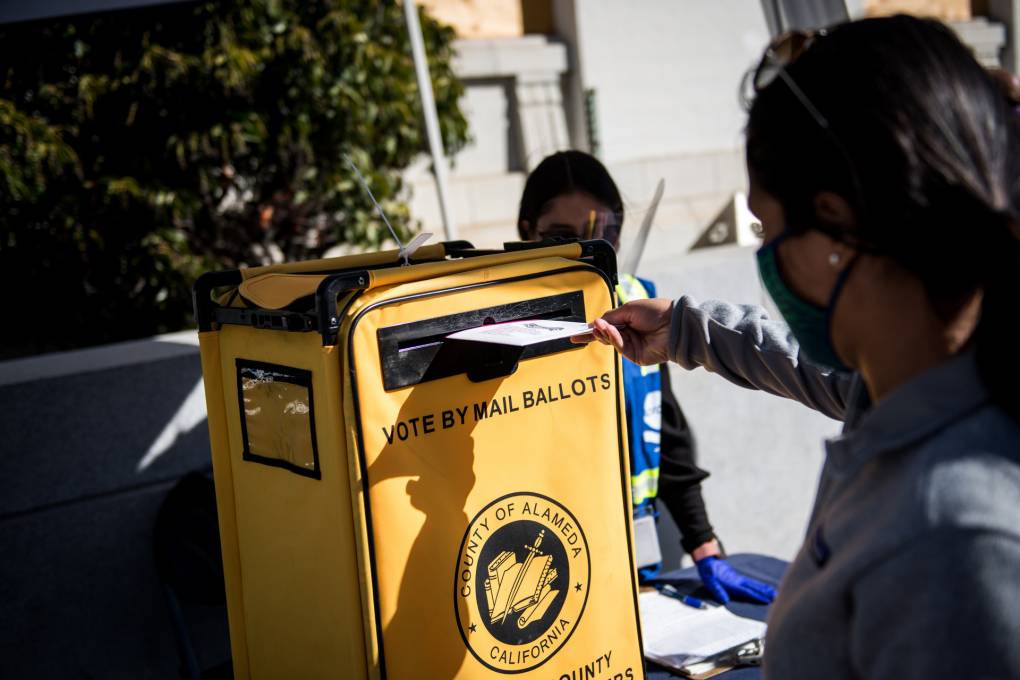
"caption": "A voter drops off their mail-in ballot at the Alameda County Registrar of Voters in Oakland on Oct. 27, 2020.",
"description": null,
"title": "RS45469_017_KQED_Oakland_RegistrarofVoters_10272020-qut",
"credit": "Beth LaBerge/KQED",
"status": "inherit",
"isLoading": false,
"fetchFailed": false
},
"news_11845721": {
"type": "attachments",
"id": "news_11845721",
"meta": {
"index": "attachments_1716263798",
"site": "news",
"id": "11845721",
"found": true
},
"parent": 11845715,
"imgSizes": {
"apple_news_ca_landscape_5_5": {
"file": "https://ww2.kqed.org/app/uploads/sites/10/2020/11/trumpnumberone_110420_final-1044x783.png",
"width": 1044,
"mimeType": "image/png",
"height": 783
},
"apple_news_ca_square_4_0": {
"file": "https://ww2.kqed.org/app/uploads/sites/10/2020/11/trumpnumberone_110420_final-470x470.png",
"width": 470,
"mimeType": "image/png",
"height": 470
},
"twentyfourteen-full-width": {
"file": "https://ww2.kqed.org/app/uploads/sites/10/2020/11/trumpnumberone_110420_final-1038x576.png",
"width": 1038,
"mimeType": "image/png",
"height": 576
},
"thumbnail": {
"file": "https://ww2.kqed.org/app/uploads/sites/10/2020/11/trumpnumberone_110420_final-160x98.png",
"width": 160,
"mimeType": "image/png",
"height": 98
},
"post-thumbnail": {
"file": "https://ww2.kqed.org/app/uploads/sites/10/2020/11/trumpnumberone_110420_final-672x372.png",
"width": 672,
"mimeType": "image/png",
"height": 372
},
"kqedFullSize": {
"file": "https://ww2.kqed.org/app/uploads/sites/10/2020/11/trumpnumberone_110420_final.png",
"width": 1920,
"height": 1180
},
"apple_news_ca_landscape_4_7": {
"file": "https://ww2.kqed.org/app/uploads/sites/10/2020/11/trumpnumberone_110420_final-632x474.png",
"width": 632,
"mimeType": "image/png",
"height": 474
},
"large": {
"file": "https://ww2.kqed.org/app/uploads/sites/10/2020/11/trumpnumberone_110420_final-1020x627.png",
"width": 1020,
"mimeType": "image/png",
"height": 627
},
"apple_news_ca_landscape_4_0": {
"file": "https://ww2.kqed.org/app/uploads/sites/10/2020/11/trumpnumberone_110420_final-536x402.png",
"width": 536,
"mimeType": "image/png",
"height": 402
},
"apple_news_ca_portrait_12_9": {
"file": "https://ww2.kqed.org/app/uploads/sites/10/2020/11/trumpnumberone_110420_final-1122x1180.png",
"width": 1122,
"mimeType": "image/png",
"height": 1180
},
"medium": {
"file": "https://ww2.kqed.org/app/uploads/sites/10/2020/11/trumpnumberone_110420_final-800x492.png",
"width": 800,
"mimeType": "image/png",
"height": 492
},
"apple_news_ca_portrait_4_0": {
"file": "https://ww2.kqed.org/app/uploads/sites/10/2020/11/trumpnumberone_110420_final-354x472.png",
"width": 354,
"mimeType": "image/png",
"height": 472
},
"apple_news_ca_portrait_9_7": {
"file": "https://ww2.kqed.org/app/uploads/sites/10/2020/11/trumpnumberone_110420_final-840x1120.png",
"width": 840,
"mimeType": "image/png",
"height": 1120
},
"apple_news_ca_landscape_12_9": {
"file": "https://ww2.kqed.org/app/uploads/sites/10/2020/11/trumpnumberone_110420_final-1832x1180.png",
"width": 1832,
"mimeType": "image/png",
"height": 1180
},
"apple_news_ca_square_9_7": {
"file": "https://ww2.kqed.org/app/uploads/sites/10/2020/11/trumpnumberone_110420_final-1104x1104.png",
"width": 1104,
"mimeType": "image/png",
"height": 1104
},
"1536x1536": {
"file": "https://ww2.kqed.org/app/uploads/sites/10/2020/11/trumpnumberone_110420_final-1536x944.png",
"width": 1536,
"mimeType": "image/png",
"height": 944
},
"apple_news_ca_portrait_4_7": {
"file": "https://ww2.kqed.org/app/uploads/sites/10/2020/11/trumpnumberone_110420_final-414x552.png",
"width": 414,
"mimeType": "image/png",
"height": 552
},
"apple_news_ca_square_12_9": {
"file": "https://ww2.kqed.org/app/uploads/sites/10/2020/11/trumpnumberone_110420_final-1472x1180.png",
"width": 1472,
"mimeType": "image/png",
"height": 1180
},
"apple_news_ca_portrait_5_5": {
"file": "https://ww2.kqed.org/app/uploads/sites/10/2020/11/trumpnumberone_110420_final-687x916.png",
"width": 687,
"mimeType": "image/png",
"height": 916
},
"apple_news_ca_square_4_7": {
"file": "https://ww2.kqed.org/app/uploads/sites/10/2020/11/trumpnumberone_110420_final-550x550.png",
"width": 550,
"mimeType": "image/png",
"height": 550
},
"apple_news_ca_landscape_9_7": {
"file": "https://ww2.kqed.org/app/uploads/sites/10/2020/11/trumpnumberone_110420_final-1376x1032.png",
"width": 1376,
"mimeType": "image/png",
"height": 1032
},
"apple_news_ca_square_5_5": {
"file": "https://ww2.kqed.org/app/uploads/sites/10/2020/11/trumpnumberone_110420_final-912x912.png",
"width": 912,
"mimeType": "image/png",
"height": 912
}
},
"publishDate": 1604534301,
"modified": 1604534355,
"caption": null,
"description": null,
"title": "trumpnumberone_110420_final",
"credit": null,
"status": "inherit",
"isLoading": false,
"fetchFailed": false
},
"news_11845269": {
"type": "attachments",
"id": "news_11845269",
"meta": {
"index": "attachments_1716263798",
"site": "news",
"id": "11845269",
"found": true
},
"parent": 11844487,
"imgSizes": {
"apple_news_ca_landscape_5_5": {
"file": "https://ww2.kqed.org/app/uploads/sites/10/2021/10/Downtown-Oakland-Police-Vehicle-1044x783.jpg",
"width": 1044,
"mimeType": "image/jpeg",
"height": 783
},
"apple_news_ca_square_4_0": {
"file": "https://ww2.kqed.org/app/uploads/sites/10/2021/10/Downtown-Oakland-Police-Vehicle-470x470.jpg",
"width": 470,
"mimeType": "image/jpeg",
"height": 470
},
"twentyfourteen-full-width": {
"file": "https://ww2.kqed.org/app/uploads/sites/10/2021/10/Downtown-Oakland-Police-Vehicle-1038x576.jpg",
"width": 1038,
"mimeType": "image/jpeg",
"height": 576
},
"thumbnail": {
"file": "https://ww2.kqed.org/app/uploads/sites/10/2021/10/Downtown-Oakland-Police-Vehicle-160x107.jpg",
"width": 160,
"mimeType": "image/jpeg",
"height": 107
},
"post-thumbnail": {
"file": "https://ww2.kqed.org/app/uploads/sites/10/2021/10/Downtown-Oakland-Police-Vehicle-672x372.jpg",
"width": 672,
"mimeType": "image/jpeg",
"height": 372
},
"kqedFullSize": {
"file": "https://ww2.kqed.org/app/uploads/sites/10/2021/10/Downtown-Oakland-Police-Vehicle.jpg",
"width": 1920,
"height": 1280
},
"apple_news_ca_landscape_4_7": {
"file": "https://ww2.kqed.org/app/uploads/sites/10/2021/10/Downtown-Oakland-Police-Vehicle-632x474.jpg",
"width": 632,
"mimeType": "image/jpeg",
"height": 474
},
"large": {
"file": "https://ww2.kqed.org/app/uploads/sites/10/2021/10/Downtown-Oakland-Police-Vehicle-1020x680.jpg",
"width": 1020,
"mimeType": "image/jpeg",
"height": 680
},
"apple_news_ca_landscape_4_0": {
"file": "https://ww2.kqed.org/app/uploads/sites/10/2021/10/Downtown-Oakland-Police-Vehicle-536x402.jpg",
"width": 536,
"mimeType": "image/jpeg",
"height": 402
},
"apple_news_ca_portrait_12_9": {
"file": "https://ww2.kqed.org/app/uploads/sites/10/2021/10/Downtown-Oakland-Police-Vehicle-1122x1280.jpg",
"width": 1122,
"mimeType": "image/jpeg",
"height": 1280
},
"medium": {
"file": "https://ww2.kqed.org/app/uploads/sites/10/2021/10/Downtown-Oakland-Police-Vehicle-800x533.jpg",
"width": 800,
"mimeType": "image/jpeg",
"height": 533
},
"apple_news_ca_portrait_4_0": {
"file": "https://ww2.kqed.org/app/uploads/sites/10/2021/10/Downtown-Oakland-Police-Vehicle-354x472.jpg",
"width": 354,
"mimeType": "image/jpeg",
"height": 472
},
"apple_news_ca_portrait_9_7": {
"file": "https://ww2.kqed.org/app/uploads/sites/10/2021/10/Downtown-Oakland-Police-Vehicle-840x1120.jpg",
"width": 840,
"mimeType": "image/jpeg",
"height": 1120
},
"apple_news_ca_landscape_12_9": {
"file": "https://ww2.kqed.org/app/uploads/sites/10/2021/10/Downtown-Oakland-Police-Vehicle-1832x1280.jpg",
"width": 1832,
"mimeType": "image/jpeg",
"height": 1280
},
"apple_news_ca_square_9_7": {
"file": "https://ww2.kqed.org/app/uploads/sites/10/2021/10/Downtown-Oakland-Police-Vehicle-1104x1104.jpg",
"width": 1104,
"mimeType": "image/jpeg",
"height": 1104
},
"1536x1536": {
"file": "https://ww2.kqed.org/app/uploads/sites/10/2021/10/Downtown-Oakland-Police-Vehicle-1536x1024.jpg",
"width": 1536,
"mimeType": "image/jpeg",
"height": 1024
},
"apple_news_ca_portrait_4_7": {
"file": "https://ww2.kqed.org/app/uploads/sites/10/2021/10/Downtown-Oakland-Police-Vehicle-414x552.jpg",
"width": 414,
"mimeType": "image/jpeg",
"height": 552
},
"apple_news_ca_square_12_9": {
"file": "https://ww2.kqed.org/app/uploads/sites/10/2021/10/Downtown-Oakland-Police-Vehicle-1472x1280.jpg",
"width": 1472,
"mimeType": "image/jpeg",
"height": 1280
},
"apple_news_ca_portrait_5_5": {
"file": "https://ww2.kqed.org/app/uploads/sites/10/2021/10/Downtown-Oakland-Police-Vehicle-687x916.jpg",
"width": 687,
"mimeType": "image/jpeg",
"height": 916
},
"apple_news_ca_square_4_7": {
"file": "https://ww2.kqed.org/app/uploads/sites/10/2021/10/Downtown-Oakland-Police-Vehicle-550x550.jpg",
"width": 550,
"mimeType": "image/jpeg",
"height": 550
},
"apple_news_ca_landscape_9_7": {
"file": "https://ww2.kqed.org/app/uploads/sites/10/2021/10/Downtown-Oakland-Police-Vehicle-1376x1032.jpg",
"width": 1376,
"mimeType": "image/jpeg",
"height": 1032
},
"apple_news_ca_square_5_5": {
"file": "https://ww2.kqed.org/app/uploads/sites/10/2021/10/Downtown-Oakland-Police-Vehicle-912x912.jpg",
"width": 912,
"mimeType": "image/jpeg",
"height": 912
}
},
"publishDate": 1604456400,
"modified": 1604456530,
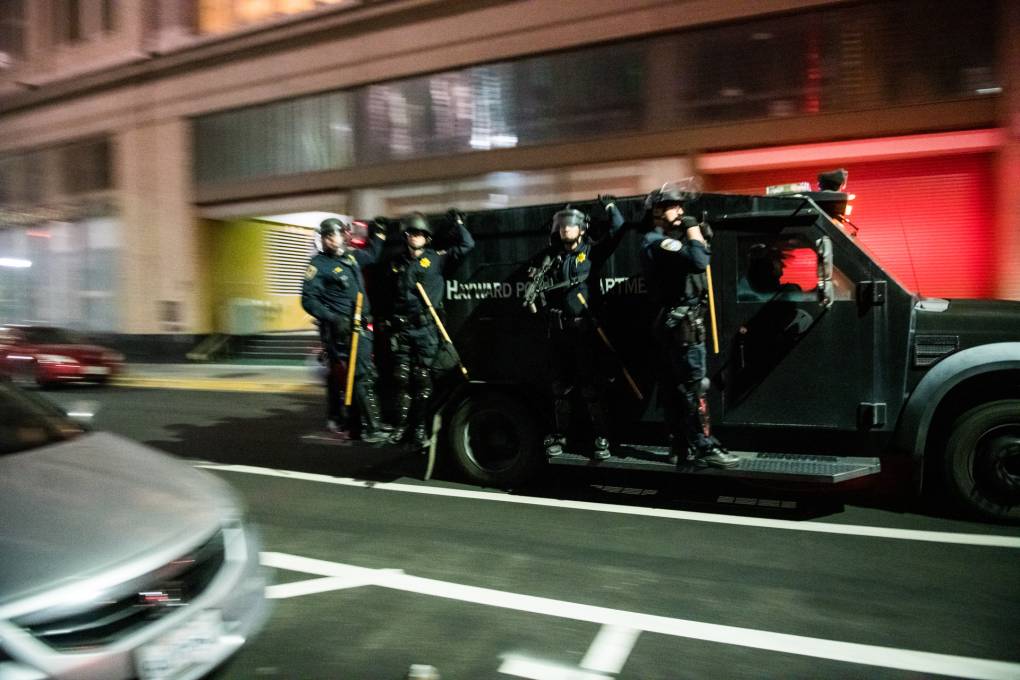
"caption": "Police from Hayward roll through Downtown Oakland on May 29, 2020 during a protest over the killing of George Floyd by Minneapolis police.",
"description": "Police from Hayward roll through Downtown Oakland on May 29, 2020 during a protest over the killing of George Floyd by Minneapolis police.",
"title": "Downtown-Oakland-Police-Vehicle",
"credit": "Beth LaBerge/KQED",
"status": "inherit",
"isLoading": false,
"fetchFailed": false
},
"news_11844866": {
"type": "attachments",
"id": "news_11844866",
"meta": {
"index": "attachments_1716263798",
"site": "news",
"id": "11844866",
"found": true
},
"parent": 11844865,
"imgSizes": {
"apple_news_ca_landscape_5_5": {
"file": "https://ww2.kqed.org/app/uploads/sites/10/2020/11/IMG_7589-1044x783.jpg",
"width": 1044,
"mimeType": "image/jpeg",
"height": 783
},
"apple_news_ca_square_4_0": {
"file": "https://ww2.kqed.org/app/uploads/sites/10/2020/11/IMG_7589-470x470.jpg",
"width": 470,
"mimeType": "image/jpeg",
"height": 470
},
"twentyfourteen-full-width": {
"file": "https://ww2.kqed.org/app/uploads/sites/10/2020/11/IMG_7589-1038x576.jpg",
"width": 1038,
"mimeType": "image/jpeg",
"height": 576
},
"thumbnail": {
"file": "https://ww2.kqed.org/app/uploads/sites/10/2020/11/IMG_7589-160x107.jpg",
"width": 160,
"mimeType": "image/jpeg",
"height": 107
},
"post-thumbnail": {
"file": "https://ww2.kqed.org/app/uploads/sites/10/2020/11/IMG_7589-672x372.jpg",
"width": 672,
"mimeType": "image/jpeg",
"height": 372
},
"kqedFullSize": {
"file": "https://ww2.kqed.org/app/uploads/sites/10/2020/11/IMG_7589.jpg",
"width": 1920,
"height": 1280
},
"apple_news_ca_landscape_4_7": {
"file": "https://ww2.kqed.org/app/uploads/sites/10/2020/11/IMG_7589-632x474.jpg",
"width": 632,
"mimeType": "image/jpeg",
"height": 474
},
"large": {
"file": "https://ww2.kqed.org/app/uploads/sites/10/2020/11/IMG_7589-1020x680.jpg",
"width": 1020,
"mimeType": "image/jpeg",
"height": 680
},
"apple_news_ca_landscape_4_0": {
"file": "https://ww2.kqed.org/app/uploads/sites/10/2020/11/IMG_7589-536x402.jpg",
"width": 536,
"mimeType": "image/jpeg",
"height": 402
},
"apple_news_ca_portrait_12_9": {
"file": "https://ww2.kqed.org/app/uploads/sites/10/2020/11/IMG_7589-1122x1280.jpg",
"width": 1122,
"mimeType": "image/jpeg",
"height": 1280
},
"medium": {
"file": "https://ww2.kqed.org/app/uploads/sites/10/2020/11/IMG_7589-800x533.jpg",
"width": 800,
"mimeType": "image/jpeg",
"height": 533
},
"apple_news_ca_portrait_4_0": {
"file": "https://ww2.kqed.org/app/uploads/sites/10/2020/11/IMG_7589-354x472.jpg",
"width": 354,
"mimeType": "image/jpeg",
"height": 472
},
"apple_news_ca_portrait_9_7": {
"file": "https://ww2.kqed.org/app/uploads/sites/10/2020/11/IMG_7589-840x1120.jpg",
"width": 840,
"mimeType": "image/jpeg",
"height": 1120
},
"apple_news_ca_landscape_12_9": {
"file": "https://ww2.kqed.org/app/uploads/sites/10/2020/11/IMG_7589-1832x1280.jpg",
"width": 1832,
"mimeType": "image/jpeg",
"height": 1280
},
"apple_news_ca_square_9_7": {
"file": "https://ww2.kqed.org/app/uploads/sites/10/2020/11/IMG_7589-1104x1104.jpg",
"width": 1104,
"mimeType": "image/jpeg",
"height": 1104
},
"1536x1536": {
"file": "https://ww2.kqed.org/app/uploads/sites/10/2020/11/IMG_7589-1536x1024.jpg",
"width": 1536,
"mimeType": "image/jpeg",
"height": 1024
},
"apple_news_ca_portrait_4_7": {
"file": "https://ww2.kqed.org/app/uploads/sites/10/2020/11/IMG_7589-414x552.jpg",
"width": 414,
"mimeType": "image/jpeg",
"height": 552
},
"apple_news_ca_square_12_9": {
"file": "https://ww2.kqed.org/app/uploads/sites/10/2020/11/IMG_7589-1472x1280.jpg",
"width": 1472,
"mimeType": "image/jpeg",
"height": 1280
},
"apple_news_ca_portrait_5_5": {
"file": "https://ww2.kqed.org/app/uploads/sites/10/2020/11/IMG_7589-687x916.jpg",
"width": 687,
"mimeType": "image/jpeg",
"height": 916
},
"apple_news_ca_square_4_7": {
"file": "https://ww2.kqed.org/app/uploads/sites/10/2020/11/IMG_7589-550x550.jpg",
"width": 550,
"mimeType": "image/jpeg",
"height": 550
},
"apple_news_ca_landscape_9_7": {
"file": "https://ww2.kqed.org/app/uploads/sites/10/2020/11/IMG_7589-1376x1032.jpg",
"width": 1376,
"mimeType": "image/jpeg",
"height": 1032
},
"apple_news_ca_square_5_5": {
"file": "https://ww2.kqed.org/app/uploads/sites/10/2020/11/IMG_7589-912x912.jpg",
"width": 912,
"mimeType": "image/jpeg",
"height": 912
}
},
"publishDate": 1604279040,
"modified": 1604385031,
"caption": "Encinal High student Robert Steffani, 17, stepped forward to be a poll worker after his mom said she couldn't because of COVID-19 concerns.",
"description": "Election worker Robert Steffani, 17, poses for a portrait at the Coliseum official polling place and ballot dropoff location in Oakland on Oct. 31, 2020.",
"title": "IMG_7589",
"credit": "Beth LaBerge/KQED",
"status": "inherit",
"isLoading": false,
"fetchFailed": false
},
"news_11843301": {
"type": "attachments",
"id": "news_11843301",
"meta": {
"index": "attachments_1716263798",
"site": "news",
"id": "11843301",
"found": true
},
"parent": 11843263,
"imgSizes": {
"apple_news_ca_square_4_0": {
"file": "https://ww2.kqed.org/app/uploads/sites/10/2020/10/GettyImages-1229172657-470x470.jpg",
"width": 470,
"mimeType": "image/jpeg",
"height": 470
},
"twentyfourteen-full-width": {
"file": "https://ww2.kqed.org/app/uploads/sites/10/2020/10/GettyImages-1229172657-1024x576.jpg",
"width": 1024,
"mimeType": "image/jpeg",
"height": 576
},
"thumbnail": {
"file": "https://ww2.kqed.org/app/uploads/sites/10/2020/10/GettyImages-1229172657-160x98.jpg",
"width": 160,
"mimeType": "image/jpeg",
"height": 98
},
"post-thumbnail": {
"file": "https://ww2.kqed.org/app/uploads/sites/10/2020/10/GettyImages-1229172657-672x372.jpg",
"width": 672,
"mimeType": "image/jpeg",
"height": 372
},
"kqedFullSize": {
"file": "https://ww2.kqed.org/app/uploads/sites/10/2020/10/GettyImages-1229172657.jpg",
"width": 1024,
"height": 624
},
"apple_news_ca_landscape_4_7": {
"file": "https://ww2.kqed.org/app/uploads/sites/10/2020/10/GettyImages-1229172657-632x474.jpg",
"width": 632,
"mimeType": "image/jpeg",
"height": 474
},
"large": {
"file": "https://ww2.kqed.org/app/uploads/sites/10/2020/10/GettyImages-1229172657-1020x622.jpg",
"width": 1020,
"mimeType": "image/jpeg",
"height": 622
},
"apple_news_ca_landscape_4_0": {
"file": "https://ww2.kqed.org/app/uploads/sites/10/2020/10/GettyImages-1229172657-536x402.jpg",
"width": 536,
"mimeType": "image/jpeg",
"height": 402
},
"medium": {
"file": "https://ww2.kqed.org/app/uploads/sites/10/2020/10/GettyImages-1229172657-800x488.jpg",
"width": 800,
"mimeType": "image/jpeg",
"height": 488
},
"apple_news_ca_portrait_4_0": {
"file": "https://ww2.kqed.org/app/uploads/sites/10/2020/10/GettyImages-1229172657-354x472.jpg",
"width": 354,
"mimeType": "image/jpeg",
"height": 472
},
"apple_news_ca_portrait_9_7": {
"file": "https://ww2.kqed.org/app/uploads/sites/10/2020/10/GettyImages-1229172657-840x624.jpg",
"width": 840,
"mimeType": "image/jpeg",
"height": 624
},
"apple_news_ca_portrait_4_7": {
"file": "https://ww2.kqed.org/app/uploads/sites/10/2020/10/GettyImages-1229172657-414x552.jpg",
"width": 414,
"mimeType": "image/jpeg",
"height": 552
},
"apple_news_ca_portrait_5_5": {
"file": "https://ww2.kqed.org/app/uploads/sites/10/2020/10/GettyImages-1229172657-687x624.jpg",
"width": 687,
"mimeType": "image/jpeg",
"height": 624
},
"apple_news_ca_square_4_7": {
"file": "https://ww2.kqed.org/app/uploads/sites/10/2020/10/GettyImages-1229172657-550x550.jpg",
"width": 550,
"mimeType": "image/jpeg",
"height": 550
},
"apple_news_ca_square_5_5": {
"file": "https://ww2.kqed.org/app/uploads/sites/10/2020/10/GettyImages-1229172657-912x624.jpg",
"width": 912,
"mimeType": "image/jpeg",
"height": 624
}
},
"publishDate": 1603394993,
"modified": 1603395111,
"caption": "A voter slides her ballot for the 2020 presidential election into an official ballot drop box at the Los Angeles County Registrar in Norwalk, California on Oct. 19, 2020.",
"description": null,
"title": "US-VOTE-CALIFORNIA",
"credit": "Frederic J. BROWN/AFP via Getty Images",
"status": "inherit",
"isLoading": false,
"fetchFailed": false
},
"news_11842076": {
"type": "attachments",
"id": "news_11842076",
"meta": {
"index": "attachments_1716263798",
"site": "news",
"id": "11842076",
"found": true
},
"parent": 11842066,
"imgSizes": {
"apple_news_ca_landscape_5_5": {
"file": "https://ww2.kqed.org/app/uploads/sites/10/2020/10/RS45325_GettyImages-1229035665-qut-1044x783.jpg",
"width": 1044,
"mimeType": "image/jpeg",
"height": 783
},
"apple_news_ca_square_4_0": {
"file": "https://ww2.kqed.org/app/uploads/sites/10/2020/10/RS45325_GettyImages-1229035665-qut-470x470.jpg",
"width": 470,
"mimeType": "image/jpeg",
"height": 470
},
"twentyfourteen-full-width": {
"file": "https://ww2.kqed.org/app/uploads/sites/10/2020/10/RS45325_GettyImages-1229035665-qut-1038x576.jpg",
"width": 1038,
"mimeType": "image/jpeg",
"height": 576
},
"thumbnail": {
"file": "https://ww2.kqed.org/app/uploads/sites/10/2020/10/RS45325_GettyImages-1229035665-qut-160x92.jpg",
"width": 160,
"mimeType": "image/jpeg",
"height": 92
},
"post-thumbnail": {
"file": "https://ww2.kqed.org/app/uploads/sites/10/2020/10/RS45325_GettyImages-1229035665-qut-672x372.jpg",
"width": 672,
"mimeType": "image/jpeg",
"height": 372
},
"kqedFullSize": {
"file": "https://ww2.kqed.org/app/uploads/sites/10/2020/10/RS45325_GettyImages-1229035665-qut.jpg",
"width": 1920,
"height": 1102
},
"apple_news_ca_landscape_4_7": {
"file": "https://ww2.kqed.org/app/uploads/sites/10/2020/10/RS45325_GettyImages-1229035665-qut-632x474.jpg",
"width": 632,
"mimeType": "image/jpeg",
"height": 474
},
"large": {
"file": "https://ww2.kqed.org/app/uploads/sites/10/2020/10/RS45325_GettyImages-1229035665-qut-1020x585.jpg",
"width": 1020,
"mimeType": "image/jpeg",
"height": 585
},
"apple_news_ca_landscape_4_0": {
"file": "https://ww2.kqed.org/app/uploads/sites/10/2020/10/RS45325_GettyImages-1229035665-qut-536x402.jpg",
"width": 536,
"mimeType": "image/jpeg",
"height": 402
},
"apple_news_ca_portrait_12_9": {
"file": "https://ww2.kqed.org/app/uploads/sites/10/2020/10/RS45325_GettyImages-1229035665-qut-1122x1102.jpg",
"width": 1122,
"mimeType": "image/jpeg",
"height": 1102
},
"medium": {
"file": "https://ww2.kqed.org/app/uploads/sites/10/2020/10/RS45325_GettyImages-1229035665-qut-800x459.jpg",
"width": 800,
"mimeType": "image/jpeg",
"height": 459
},
"apple_news_ca_portrait_4_0": {
"file": "https://ww2.kqed.org/app/uploads/sites/10/2020/10/RS45325_GettyImages-1229035665-qut-354x472.jpg",
"width": 354,
"mimeType": "image/jpeg",
"height": 472
},
"apple_news_ca_portrait_9_7": {
"file": "https://ww2.kqed.org/app/uploads/sites/10/2020/10/RS45325_GettyImages-1229035665-qut-840x1102.jpg",
"width": 840,
"mimeType": "image/jpeg",
"height": 1102
},
"apple_news_ca_landscape_12_9": {
"file": "https://ww2.kqed.org/app/uploads/sites/10/2020/10/RS45325_GettyImages-1229035665-qut-1832x1102.jpg",
"width": 1832,
"mimeType": "image/jpeg",
"height": 1102
},
"apple_news_ca_square_9_7": {
"file": "https://ww2.kqed.org/app/uploads/sites/10/2020/10/RS45325_GettyImages-1229035665-qut-1104x1102.jpg",
"width": 1104,
"mimeType": "image/jpeg",
"height": 1102
},
"1536x1536": {
"file": "https://ww2.kqed.org/app/uploads/sites/10/2020/10/RS45325_GettyImages-1229035665-qut-1536x882.jpg",
"width": 1536,
"mimeType": "image/jpeg",
"height": 882
},
"apple_news_ca_portrait_4_7": {
"file": "https://ww2.kqed.org/app/uploads/sites/10/2020/10/RS45325_GettyImages-1229035665-qut-414x552.jpg",
"width": 414,
"mimeType": "image/jpeg",
"height": 552
},
"apple_news_ca_square_12_9": {
"file": "https://ww2.kqed.org/app/uploads/sites/10/2020/10/RS45325_GettyImages-1229035665-qut-1472x1102.jpg",
"width": 1472,
"mimeType": "image/jpeg",
"height": 1102
},
"apple_news_ca_portrait_5_5": {
"file": "https://ww2.kqed.org/app/uploads/sites/10/2020/10/RS45325_GettyImages-1229035665-qut-687x916.jpg",
"width": 687,
"mimeType": "image/jpeg",
"height": 916
},
"apple_news_ca_square_4_7": {
"file": "https://ww2.kqed.org/app/uploads/sites/10/2020/10/RS45325_GettyImages-1229035665-qut-550x550.jpg",
"width": 550,
"mimeType": "image/jpeg",
"height": 550
},
"apple_news_ca_landscape_9_7": {
"file": "https://ww2.kqed.org/app/uploads/sites/10/2020/10/RS45325_GettyImages-1229035665-qut-1376x1032.jpg",
"width": 1376,
"mimeType": "image/jpeg",
"height": 1032
},
"apple_news_ca_square_5_5": {
"file": "https://ww2.kqed.org/app/uploads/sites/10/2020/10/RS45325_GettyImages-1229035665-qut-912x912.jpg",
"width": 912,
"mimeType": "image/jpeg",
"height": 912
}
},
"publishDate": 1602608180,
"modified": 1610595209,
"caption": "A man walks past an official ballot drop box in Los Angeles on Oct. 12, 2020. Republicans have set up unofficial drop boxes at churches, gas stations and gun shops in at least three California counties. ",
"description": "A man walks past an official ballot drop box in Los Angeles on Oct. 12, 2020. Republicans have set up unofficial drop boxes at churches, gas stations and gun shops in at least three California counties. ",
"title": "US-VOTE-CALIFORNIA",
"credit": "Frederic J. Brown/AFP via Getty Images",
"status": "inherit",
"altTag": "An official ballot drop box",
"isLoading": false,
"fetchFailed": false
},
"news_11840823": {
"type": "attachments",
"id": "news_11840823",
"meta": {
"index": "attachments_1716263798",
"site": "news",
"id": "11840823",
"found": true
},
"parent": 11840343,
"imgSizes": {
"apple_news_ca_landscape_5_5": {
"file": "https://ww2.kqed.org/app/uploads/sites/10/2020/10/Joe-Raedle-Getty-1044x783.png",
"width": 1044,
"mimeType": "image/png",
"height": 783
},
"apple_news_ca_square_4_0": {
"file": "https://ww2.kqed.org/app/uploads/sites/10/2020/10/Joe-Raedle-Getty-470x470.png",
"width": 470,
"mimeType": "image/png",
"height": 470
},
"twentyfourteen-full-width": {
"file": "https://ww2.kqed.org/app/uploads/sites/10/2020/10/Joe-Raedle-Getty-1038x576.png",
"width": 1038,
"mimeType": "image/png",
"height": 576
},
"thumbnail": {
"file": "https://ww2.kqed.org/app/uploads/sites/10/2020/10/Joe-Raedle-Getty-160x107.png",
"width": 160,
"mimeType": "image/png",
"height": 107
},
"post-thumbnail": {
"file": "https://ww2.kqed.org/app/uploads/sites/10/2020/10/Joe-Raedle-Getty-672x372.png",
"width": 672,
"mimeType": "image/png",
"height": 372
},
"kqedFullSize": {
"file": "https://ww2.kqed.org/app/uploads/sites/10/2020/10/Joe-Raedle-Getty.png",
"width": 1900,
"height": 1267
},
"apple_news_ca_landscape_4_7": {
"file": "https://ww2.kqed.org/app/uploads/sites/10/2020/10/Joe-Raedle-Getty-632x474.png",
"width": 632,
"mimeType": "image/png",
"height": 474
},
"large": {
"file": "https://ww2.kqed.org/app/uploads/sites/10/2020/10/Joe-Raedle-Getty-1020x680.png",
"width": 1020,
"mimeType": "image/png",
"height": 680
},
"apple_news_ca_landscape_4_0": {
"file": "https://ww2.kqed.org/app/uploads/sites/10/2020/10/Joe-Raedle-Getty-536x402.png",
"width": 536,
"mimeType": "image/png",
"height": 402
},
"apple_news_ca_portrait_12_9": {
"file": "https://ww2.kqed.org/app/uploads/sites/10/2020/10/Joe-Raedle-Getty-1122x1267.png",
"width": 1122,
"mimeType": "image/png",
"height": 1267
},
"medium": {
"file": "https://ww2.kqed.org/app/uploads/sites/10/2020/10/Joe-Raedle-Getty-800x533.png",
"width": 800,
"mimeType": "image/png",
"height": 533
},
"apple_news_ca_portrait_4_0": {
"file": "https://ww2.kqed.org/app/uploads/sites/10/2020/10/Joe-Raedle-Getty-354x472.png",
"width": 354,
"mimeType": "image/png",
"height": 472
},
"apple_news_ca_portrait_9_7": {
"file": "https://ww2.kqed.org/app/uploads/sites/10/2020/10/Joe-Raedle-Getty-840x1120.png",
"width": 840,
"mimeType": "image/png",
"height": 1120
},
"apple_news_ca_landscape_12_9": {
"file": "https://ww2.kqed.org/app/uploads/sites/10/2020/10/Joe-Raedle-Getty-1832x1267.png",
"width": 1832,
"mimeType": "image/png",
"height": 1267
},
"apple_news_ca_square_9_7": {
"file": "https://ww2.kqed.org/app/uploads/sites/10/2020/10/Joe-Raedle-Getty-1104x1104.png",
"width": 1104,
"mimeType": "image/png",
"height": 1104
},
"1536x1536": {
"file": "https://ww2.kqed.org/app/uploads/sites/10/2020/10/Joe-Raedle-Getty-1536x1024.png",
"width": 1536,
"mimeType": "image/png",
"height": 1024
},
"apple_news_ca_portrait_4_7": {
"file": "https://ww2.kqed.org/app/uploads/sites/10/2020/10/Joe-Raedle-Getty-414x552.png",
"width": 414,
"mimeType": "image/png",
"height": 552
},
"apple_news_ca_square_12_9": {
"file": "https://ww2.kqed.org/app/uploads/sites/10/2020/10/Joe-Raedle-Getty-1472x1267.png",
"width": 1472,
"mimeType": "image/png",
"height": 1267
},
"apple_news_ca_portrait_5_5": {
"file": "https://ww2.kqed.org/app/uploads/sites/10/2020/10/Joe-Raedle-Getty-687x916.png",
"width": 687,
"mimeType": "image/png",
"height": 916
},
"apple_news_ca_square_4_7": {
"file": "https://ww2.kqed.org/app/uploads/sites/10/2020/10/Joe-Raedle-Getty-550x550.png",
"width": 550,
"mimeType": "image/png",
"height": 550
},
"apple_news_ca_landscape_9_7": {
"file": "https://ww2.kqed.org/app/uploads/sites/10/2020/10/Joe-Raedle-Getty-1376x1032.png",
"width": 1376,
"mimeType": "image/png",
"height": 1032
},
"apple_news_ca_square_5_5": {
"file": "https://ww2.kqed.org/app/uploads/sites/10/2020/10/Joe-Raedle-Getty-912x912.png",
"width": 912,
"mimeType": "image/png",
"height": 912
}
},
"publishDate": 1601667208,
"modified": 1602535030,
"caption": "The electoral system has failsafes in place to help you correct mistakes regarding your ballot",
"description": null,
"title": "ballot-status",
"credit": "Joe Raedle/Getty",
"status": "inherit",
"isLoading": false,
"fetchFailed": false
},
"news_11839902": {
"type": "attachments",
"id": "news_11839902",
"meta": {
"index": "attachments_1716263798",
"site": "news",
"id": "11839902",
"found": true
},
"parent": 11839892,
"imgSizes": {
"apple_news_ca_landscape_5_5": {
"file": "https://ww2.kqed.org/app/uploads/sites/10/2020/09/010820_Prop13presser_AW_sized_05-1-1044x783.jpg",
"width": 1044,
"mimeType": "image/jpeg",
"height": 783
},
"apple_news_ca_square_4_0": {
"file": "https://ww2.kqed.org/app/uploads/sites/10/2020/09/010820_Prop13presser_AW_sized_05-1-470x470.jpg",
"width": 470,
"mimeType": "image/jpeg",
"height": 470
},
"twentyfourteen-full-width": {
"file": "https://ww2.kqed.org/app/uploads/sites/10/2020/09/010820_Prop13presser_AW_sized_05-1-1038x576.jpg",
"width": 1038,
"mimeType": "image/jpeg",
"height": 576
},
"thumbnail": {
"file": "https://ww2.kqed.org/app/uploads/sites/10/2020/09/010820_Prop13presser_AW_sized_05-1-160x107.jpg",
"width": 160,
"mimeType": "image/jpeg",
"height": 107
},
"post-thumbnail": {
"file": "https://ww2.kqed.org/app/uploads/sites/10/2020/09/010820_Prop13presser_AW_sized_05-1-672x372.jpg",
"width": 672,
"mimeType": "image/jpeg",
"height": 372
},
"kqedFullSize": {
"file": "https://ww2.kqed.org/app/uploads/sites/10/2020/09/010820_Prop13presser_AW_sized_05-1.jpg",
"width": 1500,
"height": 1000
},
"apple_news_ca_landscape_4_7": {
"file": "https://ww2.kqed.org/app/uploads/sites/10/2020/09/010820_Prop13presser_AW_sized_05-1-632x474.jpg",
"width": 632,
"mimeType": "image/jpeg",
"height": 474
},
"large": {
"file": "https://ww2.kqed.org/app/uploads/sites/10/2020/09/010820_Prop13presser_AW_sized_05-1-1020x680.jpg",
"width": 1020,
"mimeType": "image/jpeg",
"height": 680
},
"apple_news_ca_landscape_4_0": {
"file": "https://ww2.kqed.org/app/uploads/sites/10/2020/09/010820_Prop13presser_AW_sized_05-1-536x402.jpg",
"width": 536,
"mimeType": "image/jpeg",
"height": 402
},
"apple_news_ca_portrait_12_9": {
"file": "https://ww2.kqed.org/app/uploads/sites/10/2020/09/010820_Prop13presser_AW_sized_05-1-1122x1000.jpg",
"width": 1122,
"mimeType": "image/jpeg",
"height": 1000
},
"medium": {
"file": "https://ww2.kqed.org/app/uploads/sites/10/2020/09/010820_Prop13presser_AW_sized_05-1-800x533.jpg",
"width": 800,
"mimeType": "image/jpeg",
"height": 533
},
"apple_news_ca_portrait_4_0": {
"file": "https://ww2.kqed.org/app/uploads/sites/10/2020/09/010820_Prop13presser_AW_sized_05-1-354x472.jpg",
"width": 354,
"mimeType": "image/jpeg",
"height": 472
},
"apple_news_ca_portrait_9_7": {
"file": "https://ww2.kqed.org/app/uploads/sites/10/2020/09/010820_Prop13presser_AW_sized_05-1-840x1000.jpg",
"width": 840,
"mimeType": "image/jpeg",
"height": 1000
},
"apple_news_ca_square_9_7": {
"file": "https://ww2.kqed.org/app/uploads/sites/10/2020/09/010820_Prop13presser_AW_sized_05-1-1104x1000.jpg",
"width": 1104,
"mimeType": "image/jpeg",
"height": 1000
},
"apple_news_ca_portrait_4_7": {
"file": "https://ww2.kqed.org/app/uploads/sites/10/2020/09/010820_Prop13presser_AW_sized_05-1-414x552.jpg",
"width": 414,
"mimeType": "image/jpeg",
"height": 552
},
"apple_news_ca_square_12_9": {
"file": "https://ww2.kqed.org/app/uploads/sites/10/2020/09/010820_Prop13presser_AW_sized_05-1-1472x1000.jpg",
"width": 1472,
"mimeType": "image/jpeg",
"height": 1000
},
"apple_news_ca_portrait_5_5": {
"file": "https://ww2.kqed.org/app/uploads/sites/10/2020/09/010820_Prop13presser_AW_sized_05-1-687x916.jpg",
"width": 687,
"mimeType": "image/jpeg",
"height": 916
},
"apple_news_ca_square_4_7": {
"file": "https://ww2.kqed.org/app/uploads/sites/10/2020/09/010820_Prop13presser_AW_sized_05-1-550x550.jpg",
"width": 550,
"mimeType": "image/jpeg",
"height": 550
},
"apple_news_ca_landscape_9_7": {
"file": "https://ww2.kqed.org/app/uploads/sites/10/2020/09/010820_Prop13presser_AW_sized_05-1-1376x1000.jpg",
"width": 1376,
"mimeType": "image/jpeg",
"height": 1000
},
"apple_news_ca_square_5_5": {
"file": "https://ww2.kqed.org/app/uploads/sites/10/2020/09/010820_Prop13presser_AW_sized_05-1-912x912.jpg",
"width": 912,
"mimeType": "image/jpeg",
"height": 912
}
},
"publishDate": 1601152890,
"modified": 1601152935,
"caption": "Alice Huffman, a political consultant and president of the California NAACP, has been paid more than $1.2 million so far this year by ballot measure campaigns that have been endorsed by the state NAACP.",
"description": "Alice Huffman, a political consultant and president of the California NAACP, has been paid more than $1.2 million so far this year by ballot measure campaigns that have been endorsed by the state NAACP.",
"title": "010820_Prop13presser_AW_sized_05",
"credit": "Anne Wernikoff/CalMatters",
"status": "inherit",
"isLoading": false,
"fetchFailed": false
},
"news_11827489": {
"type": "attachments",
"id": "news_11827489",
"meta": {
"index": "attachments_1716263798",
"site": "news",
"id": "11827489",
"found": true
},
"parent": 11827488,
"imgSizes": {
"apple_news_ca_landscape_5_5": {
"file": "https://ww2.kqed.org/app/uploads/sites/10/2020/06/gettyimages-1222154947-d98ac56f6ef63d30716dc02879a55cafdbdd09d5-1044x783.jpg",
"width": 1044,
"mimeType": "image/jpeg",
"height": 783
},
"apple_news_ca_square_4_0": {
"file": "https://ww2.kqed.org/app/uploads/sites/10/2020/06/gettyimages-1222154947-d98ac56f6ef63d30716dc02879a55cafdbdd09d5-470x470.jpg",
"width": 470,
"mimeType": "image/jpeg",
"height": 470
},
"twentyfourteen-full-width": {
"file": "https://ww2.kqed.org/app/uploads/sites/10/2020/06/gettyimages-1222154947-d98ac56f6ef63d30716dc02879a55cafdbdd09d5-1038x576.jpg",
"width": 1038,
"mimeType": "image/jpeg",
"height": 576
},
"thumbnail": {
"file": "https://ww2.kqed.org/app/uploads/sites/10/2020/06/gettyimages-1222154947-d98ac56f6ef63d30716dc02879a55cafdbdd09d5-160x120.jpg",
"width": 160,
"mimeType": "image/jpeg",
"height": 120
},
"post-thumbnail": {
"file": "https://ww2.kqed.org/app/uploads/sites/10/2020/06/gettyimages-1222154947-d98ac56f6ef63d30716dc02879a55cafdbdd09d5-672x372.jpg",
"width": 672,
"mimeType": "image/jpeg",
"height": 372
},
"kqedFullSize": {
"file": "https://ww2.kqed.org/app/uploads/sites/10/2020/06/gettyimages-1222154947-d98ac56f6ef63d30716dc02879a55cafdbdd09d5-scaled-e1593972239239.jpg",
"width": 1920,
"height": 1439
},
"2048x2048": {
"file": "https://ww2.kqed.org/app/uploads/sites/10/2020/06/gettyimages-1222154947-d98ac56f6ef63d30716dc02879a55cafdbdd09d5-2048x1535.jpg",
"width": 2048,
"mimeType": "image/jpeg",
"height": 1535
},
"apple_news_ca_landscape_4_7": {
"file": "https://ww2.kqed.org/app/uploads/sites/10/2020/06/gettyimages-1222154947-d98ac56f6ef63d30716dc02879a55cafdbdd09d5-632x474.jpg",
"width": 632,
"mimeType": "image/jpeg",
"height": 474
},
"large": {
"file": "https://ww2.kqed.org/app/uploads/sites/10/2020/06/gettyimages-1222154947-d98ac56f6ef63d30716dc02879a55cafdbdd09d5-1020x764.jpg",
"width": 1020,
"mimeType": "image/jpeg",
"height": 764
},
"apple_news_ca_landscape_4_0": {
"file": "https://ww2.kqed.org/app/uploads/sites/10/2020/06/gettyimages-1222154947-d98ac56f6ef63d30716dc02879a55cafdbdd09d5-536x402.jpg",
"width": 536,
"mimeType": "image/jpeg",
"height": 402
},
"apple_news_ca_portrait_12_9": {
"file": "https://ww2.kqed.org/app/uploads/sites/10/2020/06/gettyimages-1222154947-d98ac56f6ef63d30716dc02879a55cafdbdd09d5-1122x1496.jpg",
"width": 1122,
"mimeType": "image/jpeg",
"height": 1496
},
"medium": {
"file": "https://ww2.kqed.org/app/uploads/sites/10/2020/06/gettyimages-1222154947-d98ac56f6ef63d30716dc02879a55cafdbdd09d5-800x599.jpg",
"width": 800,
"mimeType": "image/jpeg",
"height": 599
},
"apple_news_ca_portrait_4_0": {
"file": "https://ww2.kqed.org/app/uploads/sites/10/2020/06/gettyimages-1222154947-d98ac56f6ef63d30716dc02879a55cafdbdd09d5-354x472.jpg",
"width": 354,
"mimeType": "image/jpeg",
"height": 472
},
"apple_news_ca_portrait_9_7": {
"file": "https://ww2.kqed.org/app/uploads/sites/10/2020/06/gettyimages-1222154947-d98ac56f6ef63d30716dc02879a55cafdbdd09d5-840x1120.jpg",
"width": 840,
"mimeType": "image/jpeg",
"height": 1120
},
"apple_news_ca_landscape_12_9": {
"file": "https://ww2.kqed.org/app/uploads/sites/10/2020/06/gettyimages-1222154947-d98ac56f6ef63d30716dc02879a55cafdbdd09d5-1832x1374.jpg",
"width": 1832,
"mimeType": "image/jpeg",
"height": 1374
},
"apple_news_ca_square_9_7": {
"file": "https://ww2.kqed.org/app/uploads/sites/10/2020/06/gettyimages-1222154947-d98ac56f6ef63d30716dc02879a55cafdbdd09d5-1104x1104.jpg",
"width": 1104,
"mimeType": "image/jpeg",
"height": 1104
},
"1536x1536": {
"file": "https://ww2.kqed.org/app/uploads/sites/10/2020/06/gettyimages-1222154947-d98ac56f6ef63d30716dc02879a55cafdbdd09d5-1536x1151.jpg",
"width": 1536,
"mimeType": "image/jpeg",
"height": 1151
},
"apple_news_ca_portrait_4_7": {
"file": "https://ww2.kqed.org/app/uploads/sites/10/2020/06/gettyimages-1222154947-d98ac56f6ef63d30716dc02879a55cafdbdd09d5-414x552.jpg",
"width": 414,
"mimeType": "image/jpeg",
"height": 552
},
"apple_news_ca_square_12_9": {
"file": "https://ww2.kqed.org/app/uploads/sites/10/2020/06/gettyimages-1222154947-d98ac56f6ef63d30716dc02879a55cafdbdd09d5-1472x1472.jpg",
"width": 1472,
"mimeType": "image/jpeg",
"height": 1472
},
"apple_news_ca_portrait_5_5": {
"file": "https://ww2.kqed.org/app/uploads/sites/10/2020/06/gettyimages-1222154947-d98ac56f6ef63d30716dc02879a55cafdbdd09d5-687x916.jpg",
"width": 687,
"mimeType": "image/jpeg",
"height": 916
},
"full-width": {
"file": "https://ww2.kqed.org/app/uploads/sites/10/2020/06/gettyimages-1222154947-d98ac56f6ef63d30716dc02879a55cafdbdd09d5-1920x1439.jpg",
"width": 1920,
"mimeType": "image/jpeg",
"height": 1439
},
"apple_news_ca_square_4_7": {
"file": "https://ww2.kqed.org/app/uploads/sites/10/2020/06/gettyimages-1222154947-d98ac56f6ef63d30716dc02879a55cafdbdd09d5-550x550.jpg",
"width": 550,
"mimeType": "image/jpeg",
"height": 550
},
"apple_news_ca_landscape_9_7": {
"file": "https://ww2.kqed.org/app/uploads/sites/10/2020/06/gettyimages-1222154947-d98ac56f6ef63d30716dc02879a55cafdbdd09d5-1376x1032.jpg",
"width": 1376,
"mimeType": "image/jpeg",
"height": 1032
},
"apple_news_ca_square_5_5": {
"file": "https://ww2.kqed.org/app/uploads/sites/10/2020/06/gettyimages-1222154947-d98ac56f6ef63d30716dc02879a55cafdbdd09d5-912x912.jpg",
"width": 912,
"mimeType": "image/jpeg",
"height": 912
}
},
"publishDate": 1593890841,
"modified": 1593890841,
"caption": null,
"description": "A poll worker cleans a voting booth between voters during a primary election on June 23 in Louisville, Kentucky.",
"title": "A poll worker cleans a voting booth between voters during a primary election on June 23 in Louisville, Kentucky.",
"credit": null,
"status": "inherit",
"isLoading": false,
"fetchFailed": false
},
"news_11805740": {
"type": "attachments",
"id": "news_11805740",
"meta": {
"index": "attachments_1716263798",
"site": "news",
"id": "11805740",
"found": true
},
"parent": 11805737,
"imgSizes": {
"apple_news_ca_landscape_5_5": {
"file": "https://ww2.kqed.org/app/uploads/sites/10/2020/03/RS37199_05202019_kamala-harris-gender-pay-gap-equal-pay-qut-1044x783.jpg",
"width": 1044,
"mimeType": "image/jpeg",
"height": 783
},
"apple_news_ca_square_4_0": {
"file": "https://ww2.kqed.org/app/uploads/sites/10/2020/03/RS37199_05202019_kamala-harris-gender-pay-gap-equal-pay-qut-470x470.jpg",
"width": 470,
"mimeType": "image/jpeg",
"height": 470
},
"twentyfourteen-full-width": {
"file": "https://ww2.kqed.org/app/uploads/sites/10/2020/03/RS37199_05202019_kamala-harris-gender-pay-gap-equal-pay-qut-1038x576.jpg",
"width": 1038,
"mimeType": "image/jpeg",
"height": 576
},
"thumbnail": {
"file": "https://ww2.kqed.org/app/uploads/sites/10/2020/03/RS37199_05202019_kamala-harris-gender-pay-gap-equal-pay-qut-160x107.jpg",
"width": 160,
"mimeType": "image/jpeg",
"height": 107
},
"post-thumbnail": {
"file": "https://ww2.kqed.org/app/uploads/sites/10/2020/03/RS37199_05202019_kamala-harris-gender-pay-gap-equal-pay-qut-672x372.jpg",
"width": 672,
"mimeType": "image/jpeg",
"height": 372
},
"kqedFullSize": {
"file": "https://ww2.kqed.org/app/uploads/sites/10/2020/03/RS37199_05202019_kamala-harris-gender-pay-gap-equal-pay-qut.jpg",
"width": 1920,
"height": 1280
},
"apple_news_ca_landscape_4_7": {
"file": "https://ww2.kqed.org/app/uploads/sites/10/2020/03/RS37199_05202019_kamala-harris-gender-pay-gap-equal-pay-qut-632x474.jpg",
"width": 632,
"mimeType": "image/jpeg",
"height": 474
},
"large": {
"file": "https://ww2.kqed.org/app/uploads/sites/10/2020/03/RS37199_05202019_kamala-harris-gender-pay-gap-equal-pay-qut-1020x680.jpg",
"width": 1020,
"mimeType": "image/jpeg",
"height": 680
},
"apple_news_ca_landscape_4_0": {
"file": "https://ww2.kqed.org/app/uploads/sites/10/2020/03/RS37199_05202019_kamala-harris-gender-pay-gap-equal-pay-qut-536x402.jpg",
"width": 536,
"mimeType": "image/jpeg",
"height": 402
},
"apple_news_ca_portrait_12_9": {
"file": "https://ww2.kqed.org/app/uploads/sites/10/2020/03/RS37199_05202019_kamala-harris-gender-pay-gap-equal-pay-qut-1122x1280.jpg",
"width": 1122,
"mimeType": "image/jpeg",
"height": 1280
},
"medium": {
"file": "https://ww2.kqed.org/app/uploads/sites/10/2020/03/RS37199_05202019_kamala-harris-gender-pay-gap-equal-pay-qut-800x533.jpg",
"width": 800,
"mimeType": "image/jpeg",
"height": 533
},
"apple_news_ca_portrait_4_0": {
"file": "https://ww2.kqed.org/app/uploads/sites/10/2020/03/RS37199_05202019_kamala-harris-gender-pay-gap-equal-pay-qut-354x472.jpg",
"width": 354,
"mimeType": "image/jpeg",
"height": 472
},
"apple_news_ca_portrait_9_7": {
"file": "https://ww2.kqed.org/app/uploads/sites/10/2020/03/RS37199_05202019_kamala-harris-gender-pay-gap-equal-pay-qut-840x1120.jpg",
"width": 840,
"mimeType": "image/jpeg",
"height": 1120
},
"apple_news_ca_landscape_12_9": {
"file": "https://ww2.kqed.org/app/uploads/sites/10/2020/03/RS37199_05202019_kamala-harris-gender-pay-gap-equal-pay-qut-1832x1280.jpg",
"width": 1832,
"mimeType": "image/jpeg",
"height": 1280
},
"apple_news_ca_square_9_7": {
"file": "https://ww2.kqed.org/app/uploads/sites/10/2020/03/RS37199_05202019_kamala-harris-gender-pay-gap-equal-pay-qut-1104x1104.jpg",
"width": 1104,
"mimeType": "image/jpeg",
"height": 1104
},
"apple_news_ca_portrait_4_7": {
"file": "https://ww2.kqed.org/app/uploads/sites/10/2020/03/RS37199_05202019_kamala-harris-gender-pay-gap-equal-pay-qut-414x552.jpg",
"width": 414,
"mimeType": "image/jpeg",
"height": 552
},
"apple_news_ca_square_12_9": {
"file": "https://ww2.kqed.org/app/uploads/sites/10/2020/03/RS37199_05202019_kamala-harris-gender-pay-gap-equal-pay-qut-1472x1280.jpg",
"width": 1472,
"mimeType": "image/jpeg",
"height": 1280
},
"apple_news_ca_portrait_5_5": {
"file": "https://ww2.kqed.org/app/uploads/sites/10/2020/03/RS37199_05202019_kamala-harris-gender-pay-gap-equal-pay-qut-687x916.jpg",
"width": 687,
"mimeType": "image/jpeg",
"height": 916
},
"full-width": {
"file": "https://ww2.kqed.org/app/uploads/sites/10/2020/03/RS37199_05202019_kamala-harris-gender-pay-gap-equal-pay-qut-1920x1280.jpg",
"width": 1920,
"mimeType": "image/jpeg",
"height": 1280
},
"apple_news_ca_square_4_7": {
"file": "https://ww2.kqed.org/app/uploads/sites/10/2020/03/RS37199_05202019_kamala-harris-gender-pay-gap-equal-pay-qut-550x550.jpg",
"width": 550,
"mimeType": "image/jpeg",
"height": 550
},
"apple_news_ca_landscape_9_7": {
"file": "https://ww2.kqed.org/app/uploads/sites/10/2020/03/RS37199_05202019_kamala-harris-gender-pay-gap-equal-pay-qut-1376x1032.jpg",
"width": 1376,
"mimeType": "image/jpeg",
"height": 1032
},
"apple_news_ca_square_5_5": {
"file": "https://ww2.kqed.org/app/uploads/sites/10/2020/03/RS37199_05202019_kamala-harris-gender-pay-gap-equal-pay-qut-912x912.jpg",
"width": 912,
"mimeType": "image/jpeg",
"height": 912
}
},
"publishDate": 1583691042,
"modified": 1597233707,
"caption": null,
"description": null,
"title": "Democratic Presidential Candidate Kamala Harris Holds Town Hall In New Hampshire",
"credit": "Spencer Platt/Getty Images",
"status": "inherit",
"isLoading": false,
"fetchFailed": false
},
"news_11805277": {
"type": "attachments",
"id": "news_11805277",
"meta": {
"index": "attachments_1716263798",
"site": "news",
"id": "11805277",
"found": true
},
"parent": 11805237,
"imgSizes": {
"apple_news_ca_landscape_5_5": {
"file": "https://ww2.kqed.org/app/uploads/sites/10/2020/03/RS41395_002_KQED_Housing_MountainView_02192020_3308-qut-1044x783.jpg",
"width": 1044,
"mimeType": "image/jpeg",
"height": 783
},
"apple_news_ca_square_4_0": {
"file": "https://ww2.kqed.org/app/uploads/sites/10/2020/03/RS41395_002_KQED_Housing_MountainView_02192020_3308-qut-470x470.jpg",
"width": 470,
"mimeType": "image/jpeg",
"height": 470
},
"twentyfourteen-full-width": {
"file": "https://ww2.kqed.org/app/uploads/sites/10/2020/03/RS41395_002_KQED_Housing_MountainView_02192020_3308-qut-1038x576.jpg",
"width": 1038,
"mimeType": "image/jpeg",
"height": 576
},
"thumbnail": {
"file": "https://ww2.kqed.org/app/uploads/sites/10/2020/03/RS41395_002_KQED_Housing_MountainView_02192020_3308-qut-160x107.jpg",
"width": 160,
"mimeType": "image/jpeg",
"height": 107
},
"post-thumbnail": {
"file": "https://ww2.kqed.org/app/uploads/sites/10/2020/03/RS41395_002_KQED_Housing_MountainView_02192020_3308-qut-672x372.jpg",
"width": 672,
"mimeType": "image/jpeg",
"height": 372
},
"kqedFullSize": {
"file": "https://ww2.kqed.org/app/uploads/sites/10/2020/03/RS41395_002_KQED_Housing_MountainView_02192020_3308-qut.jpg",
"width": 1920,
"height": 1280
},
"apple_news_ca_landscape_4_7": {
"file": "https://ww2.kqed.org/app/uploads/sites/10/2020/03/RS41395_002_KQED_Housing_MountainView_02192020_3308-qut-632x474.jpg",
"width": 632,
"mimeType": "image/jpeg",
"height": 474
},
"large": {
"file": "https://ww2.kqed.org/app/uploads/sites/10/2020/03/RS41395_002_KQED_Housing_MountainView_02192020_3308-qut-1020x680.jpg",
"width": 1020,
"mimeType": "image/jpeg",
"height": 680
},
"apple_news_ca_landscape_4_0": {
"file": "https://ww2.kqed.org/app/uploads/sites/10/2020/03/RS41395_002_KQED_Housing_MountainView_02192020_3308-qut-536x402.jpg",
"width": 536,
"mimeType": "image/jpeg",
"height": 402
},
"apple_news_ca_portrait_12_9": {
"file": "https://ww2.kqed.org/app/uploads/sites/10/2020/03/RS41395_002_KQED_Housing_MountainView_02192020_3308-qut-1122x1280.jpg",
"width": 1122,
"mimeType": "image/jpeg",
"height": 1280
},
"medium": {
"file": "https://ww2.kqed.org/app/uploads/sites/10/2020/03/RS41395_002_KQED_Housing_MountainView_02192020_3308-qut-800x533.jpg",
"width": 800,
"mimeType": "image/jpeg",
"height": 533
},
"apple_news_ca_portrait_4_0": {
"file": "https://ww2.kqed.org/app/uploads/sites/10/2020/03/RS41395_002_KQED_Housing_MountainView_02192020_3308-qut-354x472.jpg",
"width": 354,
"mimeType": "image/jpeg",
"height": 472
},
"apple_news_ca_portrait_9_7": {
"file": "https://ww2.kqed.org/app/uploads/sites/10/2020/03/RS41395_002_KQED_Housing_MountainView_02192020_3308-qut-840x1120.jpg",
"width": 840,
"mimeType": "image/jpeg",
"height": 1120
},
"apple_news_ca_landscape_12_9": {
"file": "https://ww2.kqed.org/app/uploads/sites/10/2020/03/RS41395_002_KQED_Housing_MountainView_02192020_3308-qut-1832x1280.jpg",
"width": 1832,
"mimeType": "image/jpeg",
"height": 1280
},
"apple_news_ca_square_9_7": {
"file": "https://ww2.kqed.org/app/uploads/sites/10/2020/03/RS41395_002_KQED_Housing_MountainView_02192020_3308-qut-1104x1104.jpg",
"width": 1104,
"mimeType": "image/jpeg",
"height": 1104
},
"apple_news_ca_portrait_4_7": {
"file": "https://ww2.kqed.org/app/uploads/sites/10/2020/03/RS41395_002_KQED_Housing_MountainView_02192020_3308-qut-414x552.jpg",
"width": 414,
"mimeType": "image/jpeg",
"height": 552
},
"apple_news_ca_square_12_9": {
"file": "https://ww2.kqed.org/app/uploads/sites/10/2020/03/RS41395_002_KQED_Housing_MountainView_02192020_3308-qut-1472x1280.jpg",
"width": 1472,
"mimeType": "image/jpeg",
"height": 1280
},
"apple_news_ca_portrait_5_5": {
"file": "https://ww2.kqed.org/app/uploads/sites/10/2020/03/RS41395_002_KQED_Housing_MountainView_02192020_3308-qut-687x916.jpg",
"width": 687,
"mimeType": "image/jpeg",
"height": 916
},
"full-width": {
"file": "https://ww2.kqed.org/app/uploads/sites/10/2020/03/RS41395_002_KQED_Housing_MountainView_02192020_3308-qut-1920x1280.jpg",
"width": 1920,
"mimeType": "image/jpeg",
"height": 1280
},
"apple_news_ca_square_4_7": {
"file": "https://ww2.kqed.org/app/uploads/sites/10/2020/03/RS41395_002_KQED_Housing_MountainView_02192020_3308-qut-550x550.jpg",
"width": 550,
"mimeType": "image/jpeg",
"height": 550
},
"apple_news_ca_landscape_9_7": {
"file": "https://ww2.kqed.org/app/uploads/sites/10/2020/03/RS41395_002_KQED_Housing_MountainView_02192020_3308-qut-1376x1032.jpg",
"width": 1376,
"mimeType": "image/jpeg",
"height": 1032
},
"apple_news_ca_square_5_5": {
"file": "https://ww2.kqed.org/app/uploads/sites/10/2020/03/RS41395_002_KQED_Housing_MountainView_02192020_3308-qut-912x912.jpg",
"width": 912,
"mimeType": "image/jpeg",
"height": 912
}
},
"publishDate": 1583350992,
"modified": 1600908772,
"caption": "Apartment construction in Mountain View.",
"description": "Apartment construction in Mountain View, California on Feb. 19, 2020.",
"title": "RS41395_002_KQED_Housing_MountainView_02192020_3308-qut",
"credit": "Beth LaBerge/KQED",
"status": "inherit",
"isLoading": false,
"fetchFailed": false
},
"news_11805099": {
"type": "attachments",
"id": "news_11805099",
"meta": {
"index": "attachments_1716263798",
"site": "news",
"id": "11805099",
"found": true
},
"parent": 11805061,
"imgSizes": {
"apple_news_ca_landscape_5_5": {
"file": "https://ww2.kqed.org/app/uploads/sites/10/2020/03/RS41300_001_RS41299_IMG_1966_Edited-qut-1044x783.jpg",
"width": 1044,
"mimeType": "image/jpeg",
"height": 783
},
"apple_news_ca_square_4_0": {
"file": "https://ww2.kqed.org/app/uploads/sites/10/2020/03/RS41300_001_RS41299_IMG_1966_Edited-qut-470x470.jpg",
"width": 470,
"mimeType": "image/jpeg",
"height": 470
},
"twentyfourteen-full-width": {
"file": "https://ww2.kqed.org/app/uploads/sites/10/2020/03/RS41300_001_RS41299_IMG_1966_Edited-qut-1038x576.jpg",
"width": 1038,
"mimeType": "image/jpeg",
"height": 576
},
"thumbnail": {
"file": "https://ww2.kqed.org/app/uploads/sites/10/2020/03/RS41300_001_RS41299_IMG_1966_Edited-qut-160x118.jpg",
"width": 160,
"mimeType": "image/jpeg",
"height": 118
},
"post-thumbnail": {
"file": "https://ww2.kqed.org/app/uploads/sites/10/2020/03/RS41300_001_RS41299_IMG_1966_Edited-qut-672x372.jpg",
"width": 672,
"mimeType": "image/jpeg",
"height": 372
},
"kqedFullSize": {
"file": "https://ww2.kqed.org/app/uploads/sites/10/2020/03/RS41300_001_RS41299_IMG_1966_Edited-qut.jpg",
"width": 1920,
"height": 1420
},
"apple_news_ca_landscape_4_7": {
"file": "https://ww2.kqed.org/app/uploads/sites/10/2020/03/RS41300_001_RS41299_IMG_1966_Edited-qut-632x474.jpg",
"width": 632,
"mimeType": "image/jpeg",
"height": 474
},
"large": {
"file": "https://ww2.kqed.org/app/uploads/sites/10/2020/03/RS41300_001_RS41299_IMG_1966_Edited-qut-1020x754.jpg",
"width": 1020,
"mimeType": "image/jpeg",
"height": 754
},
"apple_news_ca_landscape_4_0": {
"file": "https://ww2.kqed.org/app/uploads/sites/10/2020/03/RS41300_001_RS41299_IMG_1966_Edited-qut-536x402.jpg",
"width": 536,
"mimeType": "image/jpeg",
"height": 402
},
"apple_news_ca_portrait_12_9": {
"file": "https://ww2.kqed.org/app/uploads/sites/10/2020/03/RS41300_001_RS41299_IMG_1966_Edited-qut-1122x1420.jpg",
"width": 1122,
"mimeType": "image/jpeg",
"height": 1420
},
"medium": {
"file": "https://ww2.kqed.org/app/uploads/sites/10/2020/03/RS41300_001_RS41299_IMG_1966_Edited-qut-800x592.jpg",
"width": 800,
"mimeType": "image/jpeg",
"height": 592
},
"apple_news_ca_portrait_4_0": {
"file": "https://ww2.kqed.org/app/uploads/sites/10/2020/03/RS41300_001_RS41299_IMG_1966_Edited-qut-354x472.jpg",
"width": 354,
"mimeType": "image/jpeg",
"height": 472
},
"apple_news_ca_portrait_9_7": {
"file": "https://ww2.kqed.org/app/uploads/sites/10/2020/03/RS41300_001_RS41299_IMG_1966_Edited-qut-840x1120.jpg",
"width": 840,
"mimeType": "image/jpeg",
"height": 1120
},
"apple_news_ca_landscape_12_9": {
"file": "https://ww2.kqed.org/app/uploads/sites/10/2020/03/RS41300_001_RS41299_IMG_1966_Edited-qut-1832x1374.jpg",
"width": 1832,
"mimeType": "image/jpeg",
"height": 1374
},
"apple_news_ca_square_9_7": {
"file": "https://ww2.kqed.org/app/uploads/sites/10/2020/03/RS41300_001_RS41299_IMG_1966_Edited-qut-1104x1104.jpg",
"width": 1104,
"mimeType": "image/jpeg",
"height": 1104
},
"apple_news_ca_portrait_4_7": {
"file": "https://ww2.kqed.org/app/uploads/sites/10/2020/03/RS41300_001_RS41299_IMG_1966_Edited-qut-414x552.jpg",
"width": 414,
"mimeType": "image/jpeg",
"height": 552
},
"apple_news_ca_square_12_9": {
"file": "https://ww2.kqed.org/app/uploads/sites/10/2020/03/RS41300_001_RS41299_IMG_1966_Edited-qut-1472x1420.jpg",
"width": 1472,
"mimeType": "image/jpeg",
"height": 1420
},
"apple_news_ca_portrait_5_5": {
"file": "https://ww2.kqed.org/app/uploads/sites/10/2020/03/RS41300_001_RS41299_IMG_1966_Edited-qut-687x916.jpg",
"width": 687,
"mimeType": "image/jpeg",
"height": 916
},
"full-width": {
"file": "https://ww2.kqed.org/app/uploads/sites/10/2020/03/RS41300_001_RS41299_IMG_1966_Edited-qut-1920x1420.jpg",
"width": 1920,
"mimeType": "image/jpeg",
"height": 1420
},
"apple_news_ca_square_4_7": {
"file": "https://ww2.kqed.org/app/uploads/sites/10/2020/03/RS41300_001_RS41299_IMG_1966_Edited-qut-550x550.jpg",
"width": 550,
"mimeType": "image/jpeg",
"height": 550
},
"apple_news_ca_landscape_9_7": {
"file": "https://ww2.kqed.org/app/uploads/sites/10/2020/03/RS41300_001_RS41299_IMG_1966_Edited-qut-1376x1032.jpg",
"width": 1376,
"mimeType": "image/jpeg",
"height": 1032
},
"apple_news_ca_square_5_5": {
"file": "https://ww2.kqed.org/app/uploads/sites/10/2020/03/RS41300_001_RS41299_IMG_1966_Edited-qut-912x912.jpg",
"width": 912,
"mimeType": "image/jpeg",
"height": 912
}
},
"publishDate": 1583312795,
"modified": 1583312851,
"caption": "The fight has pit neighbors, who dread the heavy congestion of roads, against city leaders and environmental groups, who said they want to use the land for recreation and preservation, and are willing to allow for some development in order to make that happen.",
"description": "The fight has pit neighbors, who dread the heavy congestion of roads, against city leaders and environmental groups, who said they want to use the land for recreation and preservation, and are willing to allow for some development in order to make that happen.",
"title": "Danville",
"credit": "Beth LaBerge/KQED",
"status": "inherit",
"isLoading": false,
"fetchFailed": false
}
},
"audioPlayerReducer": {
"postId": "stream_live",
"isPaused": true,
"isPlaying": false,
"pfsActive": false,
"pledgeModalIsOpen": true,
"playerDrawerIsOpen": false,
"liveAudioPlayStartedAt": 0,
"liveAudioPlayContext": ""
},
"authorsReducer": {
"byline_news_11842066": {
"type": "authors",
"id": "byline_news_11842066",
"meta": {
"override": true
},
"slug": "byline_news_11842066",
"name": "Amy Taxin and Adam Beam\u003cbr>Associated Press",
"isLoading": false
},
"byline_news_11839892": {
"type": "authors",
"id": "byline_news_11839892",
"meta": {
"override": true
},
"slug": "byline_news_11839892",
"name": "Laurel Rosenhall",
"isLoading": false
},
"byline_news_11827488": {
"type": "authors",
"id": "byline_news_11827488",
"meta": {
"override": true
},
"slug": "byline_news_11827488",
"name": "Rachel Martin \u003cbr> NPR",
"isLoading": false
},
"byline_news_11805737": {
"type": "authors",
"id": "byline_news_11805737",
"meta": {
"override": true
},
"slug": "byline_news_11805737",
"name": "Associated Press, KQED News ",
"isLoading": false
},
"jmcevoy": {
"type": "authors",
"id": "231",
"meta": {
"index": "authors_1716337520",
"id": "231",
"found": true
},
"name": "Julia McEvoy",
"firstName": "Julia",
"lastName": "McEvoy",
"slug": "jmcevoy",
"email": "jmcevoy@KQED.org",
"display_author_email": true,
"staff_mastheads": [
"news"
],
"title": "KQED Senior Editor",
"bio": "Julia McEvoy is KQED's Senior Editor, Education Equity.\r\n\r\nJulia heads KQED’s education coverage examining inequities students face in Bay Area and California schools, and reports on what it will take to educate the next generation.\r\n\r\nJulia's editorial work has received a Peabody Award, a Casey Medal for Coverage of Children and Families, several Edward R. Murrow awards, as well as awards from the Public Radio News Directors Inc. and the Society for Professional Journalists.",
"avatar": "https://secure.gravatar.com/avatar/aec3ce21abe02b302fd33638abd56a22?s=600&d=blank&r=g",
"twitter": "juliamcevoy1",
"facebook": null,
"instagram": null,
"linkedin": null,
"sites": [
{
"site": "news",
"roles": []
},
{
"site": "stateofhealth",
"roles": [
"author"
]
}
],
"headData": {
"title": "Julia McEvoy | KQED",
"description": "KQED Senior Editor",
"ogImgSrc": "https://secure.gravatar.com/avatar/aec3ce21abe02b302fd33638abd56a22?s=600&d=blank&r=g",
"twImgSrc": "https://secure.gravatar.com/avatar/aec3ce21abe02b302fd33638abd56a22?s=600&d=blank&r=g"
},
"isLoading": false,
"link": "/author/jmcevoy"
},
"matthewgreen": {
"type": "authors",
"id": "1263",
"meta": {
"index": "authors_1716337520",
"id": "1263",
"found": true
},
"name": "Matthew Green",
"firstName": "Matthew",
"lastName": "Green",
"slug": "matthewgreen",
"email": "mgreen@kqed.org",
"display_author_email": false,
"staff_mastheads": [],
"title": "KQED Editor/Reporter",
"bio": "Matthew Green is a digital media producer for KQED News. He previously produced \u003ca href=\"http://www.kqed.org/lowdown\">The Lowdown\u003c/a>, KQED’s multimedia news education blog. Matthew's written for numerous Bay Area publications, including the Oakland Tribune and San Francisco Chronicle. He also taught journalism classes at Fremont High School in East Oakland.\r\n\r\nEmail: mgreen@kqed.org; Twitter: @MGreenKQED",
"avatar": "https://secure.gravatar.com/avatar/3bf498d1267ca02c8494f33d8cfc575e?s=600&d=blank&r=g",
"twitter": "MGreenKQED",
"facebook": null,
"instagram": null,
"linkedin": null,
"sites": [
{
"site": "news",
"roles": []
},
{
"site": "lowdown",
"roles": []
},
{
"site": "science",
"roles": []
},
{
"site": "education",
"roles": []
},
{
"site": "quest",
"roles": []
},
{
"site": "liveblog",
"roles": []
}
],
"headData": {
"title": "Matthew Green | KQED",
"description": "KQED Editor/Reporter",
"ogImgSrc": "https://secure.gravatar.com/avatar/3bf498d1267ca02c8494f33d8cfc575e?s=600&d=blank&r=g",
"twImgSrc": "https://secure.gravatar.com/avatar/3bf498d1267ca02c8494f33d8cfc575e?s=600&d=blank&r=g"
},
"isLoading": false,
"link": "/author/matthewgreen"
},
"markfiore": {
"type": "authors",
"id": "3236",
"meta": {
"index": "authors_1716337520",
"id": "3236",
"found": true
},
"name": "Mark Fiore",
"firstName": "Mark",
"lastName": "Fiore",
"slug": "markfiore",
"email": "mark@markfiore.com",
"display_author_email": false,
"staff_mastheads": [
"news"
],
"title": "KQED News Cartoonist",
"bio": "\u003ca href=\"http://www.MarkFiore.com\">MarkFiore.com\u003c/a> | \u003ca href=\"https://twitter.com/markfiore\">Follow on Twitter\u003c/a> | \u003ca href=\"https://www.facebook.com/pages/Mark-Fiore-Animated-Political-Cartoons/94451707396?ref=bookmarks\">Facebook\u003c/a> | \u003ca href=\"mailto:mark@markfiore.com\">email\u003c/a>\r\n\r\nPulitzer Prize-winner, Mark Fiore, who the Wall Street Journal has called “the undisputed guru of the form,” creates animated political cartoons in San Francisco, where his work has been featured regularly on the San Francisco Chronicle’s web site, SFGate.com. His work has appeared on Newsweek.com, Slate.com, CBSNews.com, MotherJones.com, DailyKos.com and NPR’s web site. Fiore’s political animation has appeared on CNN, Frontline, Bill Moyers Journal, Salon.com and cable and broadcast outlets across the globe.\r\n\r\nBeginning his professional life by drawing traditional political cartoons for newspapers, Fiore’s work appeared in publications ranging from the Washington Post to the Los Angeles Times. In the late 1990s, he began to experiment with animating political cartoons and, after a short stint at the San Jose Mercury News as their staff cartoonist, Fiore devoted all his energies to animation.\r\nGrowing up in California, Fiore also spent a good portion of his life in the backwoods of Idaho. It was this combination that shaped him politically. Mark majored in political science at Colorado College, where, in a perfect send-off for a cartoonist, he received his diploma in 1991 as commencement speaker Dick Cheney smiled approvingly.\r\nMark Fiore was awarded the Pulitzer Prize for political cartooning in 2010, a Robert F. Kennedy Journalism Award in 2004 and has twice received an Online Journalism Award for commentary from the Online News Association (2002, 2008). Fiore has received two awards for his work in new media from the National Cartoonists Society (2001, 2002), and in 2006 received The James Madison Freedom of Information Award from The Society of Professional Journalists.",
"avatar": "https://secure.gravatar.com/avatar/fc4e2a612b15b67bad0c6f0e1db4ca9b?s=600&d=blank&r=g",
"twitter": "MarkFiore",
"facebook": null,
"instagram": "https://www.instagram.com/markfiore/?hl=en",
"linkedin": null,
"sites": [
{
"site": "arts",
"roles": [
"contributor"
]
},
{
"site": "news",
"roles": [
"editor"
]
},
{
"site": "futureofyou",
"roles": [
"editor"
]
},
{
"site": "science",
"roles": [
"editor"
]
}
],
"headData": {
"title": "Mark Fiore | KQED",
"description": "KQED News Cartoonist",
"ogImgSrc": "https://secure.gravatar.com/avatar/fc4e2a612b15b67bad0c6f0e1db4ca9b?s=600&d=blank&r=g",
"twImgSrc": "https://secure.gravatar.com/avatar/fc4e2a612b15b67bad0c6f0e1db4ca9b?s=600&d=blank&r=g"
},
"isLoading": false,
"link": "/author/markfiore"
},
"carlysevern": {
"type": "authors",
"id": "3243",
"meta": {
"index": "authors_1716337520",
"id": "3243",
"found": true
},
"name": "Carly Severn",
"firstName": "Carly",
"lastName": "Severn",
"slug": "carlysevern",
"email": "csevern@kqed.org",
"display_author_email": false,
"staff_mastheads": [
"news"
],
"title": "Senior Editor, Audience News ",
"bio": "Carly is KQED's Senior Editor of Audience News on the Digital News team, and has reported for the California Report Magazine, Bay Curious and KQED Arts. She's formerly the host of \u003ca href=\"http://ww2.kqed.org/pop/category/the-cooler/\" rel=\"noopener noreferrer\">The Cooler\u003c/a> podcast.",
"avatar": "https://secure.gravatar.com/avatar/54037bf5c128fe678f0ef26cec97a93f2e7f220a22d7285703328f12c42c1b1d?s=600&d=blank&r=g",
"twitter": "teacupinthebay",
"bluesky": null,
"facebook": null,
"instagram": null,
"linkedin": null,
"sites": [
{
"site": "",
"roles": [
"editor"
]
},
{
"site": "arts",
"roles": [
"editor"
]
},
{
"site": "news",
"roles": [
"administrator"
]
},
{
"site": "pop",
"roles": [
"editor"
]
},
{
"site": "futureofyou",
"roles": [
"editor"
]
},
{
"site": "about",
"roles": [
"administrator"
]
},
{
"site": "mindshift",
"roles": [
"editor"
]
},
{
"site": "bayareabites",
"roles": [
"editor"
]
},
{
"site": "stateofhealth",
"roles": [
"editor"
]
},
{
"site": "science",
"roles": [
"editor"
]
},
{
"site": "food",
"roles": [
"contributor"
]
},
{
"site": "forum",
"roles": [
"editor"
]
},
{
"site": "perspectives",
"roles": [
"administrator"
]
},
{
"site": "liveblog",
"roles": [
"editor"
]
}
],
"headData": {
"title": "Carly Severn | KQED",
"description": "Senior Editor, Audience News ",
"ogImgSrc": "https://secure.gravatar.com/avatar/54037bf5c128fe678f0ef26cec97a93f2e7f220a22d7285703328f12c42c1b1d?s=600&d=blank&r=g",
"twImgSrc": "https://secure.gravatar.com/avatar/54037bf5c128fe678f0ef26cec97a93f2e7f220a22d7285703328f12c42c1b1d?s=600&d=blank&r=g"
},
"isLoading": false,
"link": "/author/carlysevern"
},
"fjhabvala": {
"type": "authors",
"id": "8659",
"meta": {
"index": "authors_1716337520",
"id": "8659",
"found": true
},
"name": "Farida Jhabvala Romero",
"firstName": "Farida",
"lastName": "Jhabvala Romero",
"slug": "fjhabvala",
"email": "fjhabvala@kqed.org",
"display_author_email": true,
"staff_mastheads": [
"news"
],
"title": "KQED Contributor",
"bio": "Farida Jhabvala Romero is a Labor Correspondent for KQED. She previously covered immigration. Farida was \u003ca href=\"https://www.ccnma.org/2022-most-influential-latina-journalists\">named\u003c/a> one of the 10 Most Influential Latina Journalists in California in 2022 by the California Chicano News Media Association. Her work has won awards from the Society of Professional Journalists (Northern California), as well as a national and regional Edward M. Murrow Award for the collaborative reporting projects “Dangerous Air” and “Graying California.” Before joining KQED, Farida worked as a producer at Radio Bilingüe, a national public radio network. Farida earned her master’s degree in journalism from Stanford University.",
"avatar": "https://secure.gravatar.com/avatar/f9f022d4e2609741874222a1e9d41f48fea74011aa7c615eef91d9a50c944ebe?s=600&d=blank&r=g",
"twitter": "FaridaJhabvala",
"bluesky": null,
"facebook": null,
"instagram": null,
"linkedin": "https://www.linkedin.com/in/faridajhabvala/",
"sites": [
{
"site": "news",
"roles": [
"editor"
]
},
{
"site": "stateofhealth",
"roles": [
"author"
]
},
{
"site": "liveblog",
"roles": [
"author"
]
}
],
"headData": {
"title": "Farida Jhabvala Romero | KQED",
"description": "KQED Contributor",
"ogImgSrc": "https://secure.gravatar.com/avatar/f9f022d4e2609741874222a1e9d41f48fea74011aa7c615eef91d9a50c944ebe?s=600&d=blank&r=g",
"twImgSrc": "https://secure.gravatar.com/avatar/f9f022d4e2609741874222a1e9d41f48fea74011aa7c615eef91d9a50c944ebe?s=600&d=blank&r=g"
},
"isLoading": false,
"link": "/author/fjhabvala"
},
"korr": {
"type": "authors",
"id": "11200",
"meta": {
"index": "authors_1716337520",
"id": "11200",
"found": true
},
"name": "Katie Orr",
"firstName": "Katie",
"lastName": "Orr",
"slug": "korr",
"email": "korr@kqed.org",
"display_author_email": false,
"staff_mastheads": [],
"title": "KQED Contributor",
"bio": "Katie Orr was a Sacramento-based reporter for KQED's Politics and Government Desk, covering the state Capitol and a variety of issues including women in politics, voting and elections and legislation. Prior to joining KQED in 2016, Katie was state government reporter for Capital Public Radio in Sacramento. She's also worked for KPBS in San Diego, where she covered City Hall.\r\n\r\nKatie received her masters degree in political science from San Diego State University and holds a Bachelors degree in broadcast journalism from Arizona State University.\r\n\r\nIn 2015 Katie won a national Clarion Award for a series of stories she did on women in California politics. She's been honored by the Society for Professional Journalists and, in 2013, was named by \u003cem>The Washington Post\u003c/em> as one of the country's top state Capitol reporters. She's also reported for the award-winning documentary series \u003cem>The View from Here \u003c/em>and was part of the team that won national PRNDI and Gabriel Awards in 2015. She lives in Sacramento with her husband. Twitter: @1KatieOrr",
"avatar": "https://secure.gravatar.com/avatar/41a40b25845adc78f50808670860449e?s=600&d=blank&r=g",
"twitter": "1katieorr",
"facebook": null,
"instagram": null,
"linkedin": null,
"sites": [
{
"site": "news",
"roles": [
"subscriber"
]
},
{
"site": "stateofhealth",
"roles": [
"author"
]
},
{
"site": "forum",
"roles": [
"author"
]
}
],
"headData": {
"title": "Katie Orr | KQED",
"description": "KQED Contributor",
"ogImgSrc": "https://secure.gravatar.com/avatar/41a40b25845adc78f50808670860449e?s=600&d=blank&r=g",
"twImgSrc": "https://secure.gravatar.com/avatar/41a40b25845adc78f50808670860449e?s=600&d=blank&r=g"
},
"isLoading": false,
"link": "/author/korr"
},
"eaguilar": {
"type": "authors",
"id": "11382",
"meta": {
"index": "authors_1716337520",
"id": "11382",
"found": true
},
"name": "Erika Aguilar",
"firstName": "Erika",
"lastName": "Aguilar",
"slug": "eaguilar",
"email": "eaa712@gmail.com",
"display_author_email": false,
"staff_mastheads": [],
"title": "KQED Contributor",
"bio": "Erika Aguilar was the director of podcasts at KQED. She was in charge of KQED's portfolio of original podcasts and teams, and sets strategic plans for production and engagement.\r\n\r\nErika helped establish KQED's new housing affordability desk as senior editor. She was also a producer and editor for KQED's local news podcast called \u003cem>The Bay, \u003c/em>and wrote stories about housing in the Bay Area as a reporter for KQED News.\r\n\r\nErika joined KQED in 2017 after producing independent audio projects and podcasts in Southern California. She spent more than a dozen years reporting stories about law enforcement, breaking news, homelessness, government and the environment for KPCC in Los Angeles and KUT in Austin. She also volunteers as an editor and mentor for various journalism training programs.\r\n\r\nErika Aguilar is a proud Tejana from San Antonio. She believes in compromise, optimism and Selena.",
"avatar": "https://secure.gravatar.com/avatar/85bf7bb8dd9af4136525d94cef00f026?s=600&d=blank&r=g",
"twitter": "erikaaaguilar",
"facebook": null,
"instagram": null,
"linkedin": null,
"sites": [
{
"site": "",
"roles": [
"editor"
]
},
{
"site": "news",
"roles": [
"subscriber"
]
},
{
"site": "podcasts",
"roles": [
"editor"
]
}
],
"headData": {
"title": "Erika Aguilar | KQED",
"description": "KQED Contributor",
"ogImgSrc": "https://secure.gravatar.com/avatar/85bf7bb8dd9af4136525d94cef00f026?s=600&d=blank&r=g",
"twImgSrc": "https://secure.gravatar.com/avatar/85bf7bb8dd9af4136525d94cef00f026?s=600&d=blank&r=g"
},
"isLoading": false,
"link": "/author/eaguilar"
},
"katewolffe": {
"type": "authors",
"id": "11523",
"meta": {
"index": "authors_1716337520",
"id": "11523",
"found": true
},
"name": "Kate Wolffe",
"firstName": "Kate",
"lastName": "Wolffe",
"slug": "katewolffe",
"email": "kwolffe@kqed.org",
"display_author_email": true,
"staff_mastheads": [
"news"
],
"title": "KQED Reporter + Weekend Host",
"bio": "Kate Wolffe reports on local Bay Area happenings for KQED, and hosts the news on weekend afternoons. She joined KQED in 2018 as an intern on the Forum team, before moving to cover topics ranging from politics to criminal justice to homelessness. A Bay Area native and UC Berkeley graduate, Kate loves to discover new corners of the region.",
"avatar": "https://secure.gravatar.com/avatar/22455f14db824a03ee252f73052fe939?s=600&d=blank&r=g",
"twitter": "katewolffe",
"facebook": null,
"instagram": null,
"linkedin": null,
"sites": [
{
"site": "arts",
"roles": [
"editor"
]
},
{
"site": "news",
"roles": [
"author",
"edit_others_posts"
]
},
{
"site": "forum",
"roles": [
"editor"
]
}
],
"headData": {
"title": "Kate Wolffe | KQED",
"description": "KQED Reporter + Weekend Host",
"ogImgSrc": "https://secure.gravatar.com/avatar/22455f14db824a03ee252f73052fe939?s=600&d=blank&r=g",
"twImgSrc": "https://secure.gravatar.com/avatar/22455f14db824a03ee252f73052fe939?s=600&d=blank&r=g"
},
"isLoading": false,
"link": "/author/katewolffe"
},
"mfharvin": {
"type": "authors",
"id": "11583",
"meta": {
"index": "authors_1716337520",
"id": "11583",
"found": true
},
"name": "Mary Franklin Harvin",
"firstName": "Mary Franklin",
"lastName": "Harvin",
"slug": "mfharvin",
"email": "mfharvin@KQED.org",
"display_author_email": false,
"staff_mastheads": [
"news"
],
"title": "KQED Contributor",
"bio": null,
"avatar": "https://secure.gravatar.com/avatar/0e53510a7d48cfbdebfc9b11357d845f?s=600&d=blank&r=g",
"twitter": "EmEffHarvin",
"facebook": null,
"instagram": null,
"linkedin": null,
"sites": [
{
"site": "news",
"roles": [
"author",
"edit_others_posts"
]
},
{
"site": "science",
"roles": [
"editor"
]
}
],
"headData": {
"title": "Mary Franklin Harvin | KQED",
"description": "KQED Contributor",
"ogImgSrc": "https://secure.gravatar.com/avatar/0e53510a7d48cfbdebfc9b11357d845f?s=600&d=blank&r=g",
"twImgSrc": "https://secure.gravatar.com/avatar/0e53510a7d48cfbdebfc9b11357d845f?s=600&d=blank&r=g"
},
"isLoading": false,
"link": "/author/mfharvin"
}
},
"pagesReducer": {
"news_tag_elections": {
"type": "terms",
"id": "news_23394",
"meta": {
"index": "terms_1716263798",
"site": "news",
"id": "23394",
"score": 9.107828
},
"featImg": null,
"name": "elections",
"description": null,
"taxonomy": "tag",
"headData": {
"twImgId": null,
"twTitle": null,
"ogTitle": null,
"ogImgId": null,
"twDescription": null,
"description": null,
"title": "elections Archives | KQED News",
"ogDescription": null
},
"ttid": 23411,
"slug": "elections",
"isLoading": false,
"title": "elections",
"pageMeta": {
"site": "news",
"WpPageTemplate": "page-topic-editorial",
"currentPage": 8
},
"blocks": [
{
"blockName": "kqed/post-list",
"attrs": {
"layout": "cardArticle2",
"query": "posts/news?tag=elections",
"seeMore": false,
"paginated": true,
"page": 8
}
},
{
"blockName": "kqed/ad"
}
]
}
},
"pfsSessionReducer": {},
"postsReducer": {
"stream_live": {
"type": "live",
"id": "stream_live",
"audioUrl": "https://hls.kqed.org/hls/kqed_app/playlist.m3u8",
"title": "Live Stream",
"excerpt": "Live Stream information currently unavailable.",
"link": "/radio",
"featImg": "",
"label": {
"name": "KQED Live",
"link": "/"
}
},
"stream_kqedNewscast": {
"type": "posts",
"id": "stream_kqedNewscast",
"audioUrl": "https://www.kqed.org/.stream/anon/radio/RDnews/newscast.mp3?_=1",
"title": "KQED Newscast",
"featImg": "",
"label": {
"name": "88.5 FM",
"link": "/"
}
},
"news_11846100": {
"type": "posts",
"id": "news_11846100",
"meta": {
"index": "posts_1716263798",
"site": "news",
"id": "11846100",
"score": null,
"sort": [
1604678401000
]
},
"guestAuthors": [],
"slug": "trump-support-grew-among-latinos-in-california-and-nationally-poll-finds",
"title": "Trump Support Grew Among Latinos in California and Nationally, Poll Finds",
"publishDate": 1604678401,
"format": "audio",
"headTitle": "Trump Support Grew Among Latinos in California and Nationally, Poll Finds | KQED",
"labelTerm": {
"term": 72,
"site": "news"
},
"content": "\u003cp>Despite his restrictive immigration policies and rhetoric disparaging Mexicans and Central Americans, President Trump gained ground among Latinos this election, according to a survey of thousands of voters of color in California and other states.\u003c/p>\n\u003cp>The \u003ca href=\"https://electioneve2020.com/poll/#/en/demographics/latino/\">American Election Eve Poll\u003c/a> found that an overwhelming majority of Latinos backed the Democratic ticket, as they have in previous elections. But fully 27% supported Trump nationwide, compared to 18% in 2016.\u003c/p>\n\u003cp>In reliably blue California, 22% of Latinos voted for the Republican candidate, up from 16% who backed Trump on his first run for the presidency.\u003c/p>\n\u003cp>“I do think there’s been a shift and the question is, why?” said Gary Segura, senior partner with Latino Decisions, a lead pollster for the survey.\u003c/p>\n\u003cp>One reason for the shift was that Joe Biden was not as well-known among Latino households as the Clinton family was, Segura said. But more importantly, Democrats didn’t do enough to engage these voters in California and other non-battleground states.\u003c/p>\n\u003cp>[pullquote size='medium' align='right' citation='Gary Segura']‘There’s an important lesson here. I think the one place where President Trump did invest in Latinos is in South Florida, and he was rewarded for that. So investment matters, being on the ground matters.’[/pullquote]\u003c/p>\n\u003cp>“There was little outreach by the Democrats and the Biden campaign,” said Segura, dean of the Luskin School of Public Affairs at UCLA. “And there’s an important lesson here. I think the one place where President Trump did invest in Latinos is in South Florida, and he was rewarded for that. So investment matters, being on the ground matters.”\u003c/p>\n\u003cp>In Florida, 38% of Latinos voted for Trump, including a majority of Cuban Americans, according to the Election Eve Poll. That level of support for Trump’s reelection led to concern among more liberal voters in the hours after the polls closed, as well as reminders on social media that the 60 million Latinos in the U.S. have never been a monolithic group.\u003c/p>\n\u003cp>“People look for simple metrics,” said Louis DeSipio, a professor of political science at UC Irvine who has studied Latino voters for decades. “And any community is diverse, not just in national origin, but in terms of generation, the region they live in. That’s reality.”\u003c/p>\n\u003cp>In previous elections, between a quarter and a third of Latinos have typically voted for Republican presidential candidates nationwide, with the GOP usually getting better results in states like Texas and Florida, he said.\u003c/p>\n\u003cfigure id=\"attachment_11846112\" class=\"wp-caption aligncenter\" style=\"max-width: 640px\">\u003cimg loading=\"lazy\" decoding=\"async\" class=\"size-full wp-image-11846112\" src=\"https://ww2.kqed.org/app/uploads/sites/10/2020/11/RS45725_image0000001-1-qut-e1604643595637.jpg\" alt=\"\" width=\"640\" height=\"480\">\u003cfigcaption class=\"wp-caption-text\">Latino and other voters gather at a recent rally for President Trump in Beverly Hills, California. \u003ccite>(Courtesy of David Hernandez)\u003c/cite>\u003c/figcaption>\u003c/figure>\n\u003cp>One of the millions of Californians who voted to reelect the president was David Hernandez, chair of the Los Angeles Hispanic Republican Club. The retired insurance adjuster and business owner identifies as a third-generation American of Mexican descent.\u003c/p>\n\u003cp>He said Trump is a better candidate to promote economic prosperity, as the country experienced in the years before the pandemic.\u003c/p>\n\u003cp>Some observers point out that Trump inherited a flourishing economy from the Obama administration. But Hernandez believes the president’s fiscal and tax policies contributed to the pre-pandemic growth and should eventually lift the country from its current economic slump.\u003c/p>\n\u003cp>“The fiscal policies and prosperity over the past almost four years has really been the deciding factor,” said Hernandez, 72. “So I think a lot of the support is because of the policies, not because of the personality of Donald Trump.” [ad fullwidth]\u003c/p>\n\u003cp>On the top issue for all voters surveyed in the poll, the coronavirus pandemic, Hernandez said he and other Latino Trump supporters agree with the president’s push to reopen the economy faster.\u003c/p>\n\u003cp>Many Latinos can’t work from home, he said, and have experienced financial devastation due to efforts to stop the spread of the virus.\u003c/p>\n\u003cp>“While there is a concern over the disease itself, there is a more immediate concern that they’re not going to be able to pay their rent, that they’re not going to be able to take care of their families,” Hernandez said.\u003c/p>\n\u003cp>[aside tag=\"election-2020,2020-election\" label=\"more election coverage\"]\u003c/p>\n\u003cp>Still, the poll found that while a majority of white voters supported the Republican ticket nationwide, 70% of Latinos turned out for Biden and his running mate Kamala Harris. That proportion was even higher in California, with 75% of Latino voters supporting the Democrats.\u003c/p>\n\u003cp>“If Latinos were the only voters, the election results would be blindingly clear,” said Clarissa Martínez-de-Castro, deputy vice president of policy and advocacy at UnidosUS, one of the advocacy and civic engagement nonprofits that sponsored the poll.\u003c/p>\n\u003cp>As the vote count continues, Martínez-de-Castro said another takeaway is that meaningful outreach to Latinos remains critical for both parties. Latinos have proven that they are a growing force deciding presidential elections, she said, particularly in competitive states such as Nevada and Arizona.\u003c/p>\n\u003cp>A more solid picture of how Latinos voted this election won’t emerge until months from now, after results are certified and researchers have a chance to estimate voter demographics and preferences. But the American Election Eve Poll, designed to be representative of the Latino community — as well as Black, Native American and Asian American voters — offers a glimpse that is more reliable than exit polls, according to DeSipio and other political scientists.\u003c/p>\n\u003cp>The poll interviewed 15,200 voters across the U.S., including 5,300 Latinos, who had already voted or were 100% sure they would vote by Nov. 3. The margin of error was +/-1.4% for nationwide results, and almost 5% for California.\u003c/p>\n\u003cp>\u003c/p>\n",
"blocks": [],
"excerpt": "The vast majority of California Latinos still support the Democratic ticket, but Trump drew a larger share of Latino voters this year than in 2016.",
"status": "publish",
"parent": 0,
"modified": 1722892125,
"stats": {
"hasAudio": false,
"hasVideo": false,
"hasChartOrMap": false,
"iframeSrcs": [],
"hasGoogleForm": false,
"hasGallery": false,
"hasHearkenModule": false,
"hasPolis": false,
"paragraphCount": 24,
"wordCount": 972
},
"headData": {
"title": "Trump Support Grew Among Latinos in California and Nationally, Poll Finds | KQED",
"description": "The vast majority of California Latinos still support the Democratic ticket, but Trump drew a larger share of Latino voters this year than in 2016.",
"ogTitle": "",
"ogDescription": "",
"ogImgId": "",
"twTitle": "",
"twDescription": "",
"twImgId": "",
"schema": {
"@context": "https://schema.org",
"@type": "NewsArticle",
"headline": "Trump Support Grew Among Latinos in California and Nationally, Poll Finds",
"datePublished": "2020-11-06T08:00:01-08:00",
"dateModified": "2024-08-05T14:08:45-07:00",
"image": "https://cdn.kqed.org/wp-content/uploads/2020/02/KQED-OG-Image@1x.png",
"isAccessibleForFree": "True",
"publisher": {
"@type": "NewsMediaOrganization",
"@id": "https://www.kqed.org/#organization",
"name": "KQED",
"logo": "https://cdn.kqed.org/wp-content/uploads/2020/02/KQED-OG-Image@1x.png",
"url": "https://www.kqed.org",
"sameAs": [
"https://www.facebook.com/KQED",
"https://twitter.com/KQED",
"https://www.instagram.com/kqed/",
"https://www.tiktok.com/@kqedofficial",
"https://www.linkedin.com/company/kqed",
"https://www.youtube.com/channel/UCeC0IOo7i1P_61zVUWbJ4nw"
]
}
}
},
"audioUrl": "https://traffic.omny.fm/d/clips/0af137ef-751e-4b19-a055-aaef00d2d578/ffca7e9f-6831-41c5-bcaf-aaef00f5a073/dda21217-c630-41ae-8234-ac6a011a2d96/audio.mp3",
"sticky": false,
"path": "/news/11846100/trump-support-grew-among-latinos-in-california-and-nationally-poll-finds",
"audioTrackLength": null,
"parsedContent": [
{
"type": "contentString",
"content": "\u003cdiv class=\"post-body\">\u003cp>\u003cp>Despite his restrictive immigration policies and rhetoric disparaging Mexicans and Central Americans, President Trump gained ground among Latinos this election, according to a survey of thousands of voters of color in California and other states.\u003c/p>\n\u003cp>The \u003ca href=\"https://electioneve2020.com/poll/#/en/demographics/latino/\">American Election Eve Poll\u003c/a> found that an overwhelming majority of Latinos backed the Democratic ticket, as they have in previous elections. But fully 27% supported Trump nationwide, compared to 18% in 2016.\u003c/p>\n\u003cp>In reliably blue California, 22% of Latinos voted for the Republican candidate, up from 16% who backed Trump on his first run for the presidency.\u003c/p>\n\u003cp>“I do think there’s been a shift and the question is, why?” said Gary Segura, senior partner with Latino Decisions, a lead pollster for the survey.\u003c/p>\n\u003cp>One reason for the shift was that Joe Biden was not as well-known among Latino households as the Clinton family was, Segura said. But more importantly, Democrats didn’t do enough to engage these voters in California and other non-battleground states.\u003c/p>\n\u003cp>\u003c/p>\u003c/div>",
"attributes": {
"named": {},
"numeric": []
}
},
{
"type": "component",
"content": "‘There’s an important lesson here. I think the one place where President Trump did invest in Latinos is in South Florida, and he was rewarded for that. So investment matters, being on the ground matters.’",
"name": "pullquote",
"attributes": {
"named": {
"size": "medium",
"align": "right",
"citation": "Gary Segura",
"label": ""
},
"numeric": []
}
},
{
"type": "contentString",
"content": "\u003cdiv class=\"post-body\">\u003cp>\u003c/p>\n\u003cp>“There was little outreach by the Democrats and the Biden campaign,” said Segura, dean of the Luskin School of Public Affairs at UCLA. “And there’s an important lesson here. I think the one place where President Trump did invest in Latinos is in South Florida, and he was rewarded for that. So investment matters, being on the ground matters.”\u003c/p>\n\u003cp>In Florida, 38% of Latinos voted for Trump, including a majority of Cuban Americans, according to the Election Eve Poll. That level of support for Trump’s reelection led to concern among more liberal voters in the hours after the polls closed, as well as reminders on social media that the 60 million Latinos in the U.S. have never been a monolithic group.\u003c/p>\n\u003cp>“People look for simple metrics,” said Louis DeSipio, a professor of political science at UC Irvine who has studied Latino voters for decades. “And any community is diverse, not just in national origin, but in terms of generation, the region they live in. That’s reality.”\u003c/p>\n\u003cp>In previous elections, between a quarter and a third of Latinos have typically voted for Republican presidential candidates nationwide, with the GOP usually getting better results in states like Texas and Florida, he said.\u003c/p>\n\u003cfigure id=\"attachment_11846112\" class=\"wp-caption aligncenter\" style=\"max-width: 640px\">\u003cimg loading=\"lazy\" decoding=\"async\" class=\"size-full wp-image-11846112\" src=\"https://ww2.kqed.org/app/uploads/sites/10/2020/11/RS45725_image0000001-1-qut-e1604643595637.jpg\" alt=\"\" width=\"640\" height=\"480\">\u003cfigcaption class=\"wp-caption-text\">Latino and other voters gather at a recent rally for President Trump in Beverly Hills, California. \u003ccite>(Courtesy of David Hernandez)\u003c/cite>\u003c/figcaption>\u003c/figure>\n\u003cp>One of the millions of Californians who voted to reelect the president was David Hernandez, chair of the Los Angeles Hispanic Republican Club. The retired insurance adjuster and business owner identifies as a third-generation American of Mexican descent.\u003c/p>\n\u003cp>He said Trump is a better candidate to promote economic prosperity, as the country experienced in the years before the pandemic.\u003c/p>\n\u003cp>Some observers point out that Trump inherited a flourishing economy from the Obama administration. But Hernandez believes the president’s fiscal and tax policies contributed to the pre-pandemic growth and should eventually lift the country from its current economic slump.\u003c/p>\n\u003cp>“The fiscal policies and prosperity over the past almost four years has really been the deciding factor,” said Hernandez, 72. “So I think a lot of the support is because of the policies, not because of the personality of Donald Trump.” \u003c/p>\u003c/div>",
"attributes": {
"named": {},
"numeric": []
}
},
{
"type": "component",
"content": "",
"name": "ad",
"attributes": {
"named": {
"label": "fullwidth"
},
"numeric": [
"fullwidth"
]
}
},
{
"type": "contentString",
"content": "\u003cdiv class=\"post-body\">\u003cp>\u003c/p>\n\u003cp>On the top issue for all voters surveyed in the poll, the coronavirus pandemic, Hernandez said he and other Latino Trump supporters agree with the president’s push to reopen the economy faster.\u003c/p>\n\u003cp>Many Latinos can’t work from home, he said, and have experienced financial devastation due to efforts to stop the spread of the virus.\u003c/p>\n\u003cp>“While there is a concern over the disease itself, there is a more immediate concern that they’re not going to be able to pay their rent, that they’re not going to be able to take care of their families,” Hernandez said.\u003c/p>\n\u003cp>\u003c/p>\u003c/div>",
"attributes": {
"named": {},
"numeric": []
}
},
{
"type": "component",
"content": "",
"name": "aside",
"attributes": {
"named": {
"tag": "election-2020,2020-election",
"label": "more election coverage "
},
"numeric": []
}
},
{
"type": "contentString",
"content": "\u003cdiv class=\"post-body\">\u003cp>\u003c/p>\n\u003cp>Still, the poll found that while a majority of white voters supported the Republican ticket nationwide, 70% of Latinos turned out for Biden and his running mate Kamala Harris. That proportion was even higher in California, with 75% of Latino voters supporting the Democrats.\u003c/p>\n\u003cp>“If Latinos were the only voters, the election results would be blindingly clear,” said Clarissa Martínez-de-Castro, deputy vice president of policy and advocacy at UnidosUS, one of the advocacy and civic engagement nonprofits that sponsored the poll.\u003c/p>\n\u003cp>As the vote count continues, Martínez-de-Castro said another takeaway is that meaningful outreach to Latinos remains critical for both parties. Latinos have proven that they are a growing force deciding presidential elections, she said, particularly in competitive states such as Nevada and Arizona.\u003c/p>\n\u003cp>A more solid picture of how Latinos voted this election won’t emerge until months from now, after results are certified and researchers have a chance to estimate voter demographics and preferences. But the American Election Eve Poll, designed to be representative of the Latino community — as well as Black, Native American and Asian American voters — offers a glimpse that is more reliable than exit polls, according to DeSipio and other political scientists.\u003c/p>\n\u003cp>The poll interviewed 15,200 voters across the U.S., including 5,300 Latinos, who had already voted or were 100% sure they would vote by Nov. 3. The margin of error was +/-1.4% for nationwide results, and almost 5% for California.\u003c/p>\n\u003cp>\u003c/p>\n\u003c/div>\u003c/p>",
"attributes": {
"named": {},
"numeric": []
}
}
],
"link": "/news/11846100/trump-support-grew-among-latinos-in-california-and-nationally-poll-finds",
"authors": [
"8659"
],
"programs": [
"news_72"
],
"categories": [
"news_8",
"news_13"
],
"tags": [
"news_1323",
"news_28756",
"news_23394",
"news_20202",
"news_717",
"news_20605",
"news_25409",
"news_17968",
"news_3211",
"news_20425",
"news_20147"
],
"featImg": "news_11846107",
"label": "news_72"
},
"news_11845715": {
"type": "posts",
"id": "news_11845715",
"meta": {
"index": "posts_1716263798",
"site": "news",
"id": "11845715",
"score": null,
"sort": [
1604538363000
]
},
"guestAuthors": [],
"slug": "premature-self-congratulation",
"title": "Premature Self-Congratulation",
"publishDate": 1604538363,
"format": "standard",
"headTitle": "Premature Self-Congratulation | KQED",
"labelTerm": {
"term": 18515,
"site": "news"
},
"content": "\u003cp>President Trump \u003ca href=\"http://bit.ly/fioretrumpdeclaresvictory\">falsely claimed victory\u003c/a> as millions of ballots were still being counted and baselessly accused Joe Biden and the Democrats of fraud.\u003c/p>\n\u003cp>This is it, folks, Trump is trying to steal this election in broad daylight. (See also: inviting \u003ca href=\"https://www.vox.com/2020/9/29/21493319/trump-russia-if-youre-listening-comments-rewrite-history\">foreign powers\u003c/a> to \u003ca href=\"https://www.theatlantic.com/ideas/archive/2019/10/trump-calls-china-interfere-2020-election/599365/\">meddle in our elections\u003c/a> in broad daylight.)\u003c/p>\n\u003cp>At the time I’m writing this, Trump may still get enough votes to eke out an Electoral College win but either way, he and the Republicans have \u003ca href=\"https://www.washingtonpost.com/opinions/trump-and-the-gop-tried-everything-to-stop-the-voters-it-seems-it-didnt-work/2020/11/03/7d4f3762-1e1b-11eb-90dd-abd0f7086a91_story.html\">done plenty\u003c/a> to sue their way to victory.\u003c/p>\n\u003cp>[ad fullwidth]\u003c/p>\n\u003cp>\u003c/p>\n",
"blocks": [],
"excerpt": "President Trump falsely claimed victory as millions of ballots were still being counted and baselessly accused Joe Biden and the Democrats of fraud. ",
"status": "publish",
"parent": 0,
"modified": 1722892131,
"stats": {
"hasAudio": false,
"hasVideo": false,
"hasChartOrMap": false,
"iframeSrcs": [],
"hasGoogleForm": false,
"hasGallery": false,
"hasHearkenModule": false,
"hasPolis": false,
"paragraphCount": 5,
"wordCount": 89
},
"headData": {
"title": "Premature Self-Congratulation | KQED",
"description": "President Trump falsely claimed victory as millions of ballots were still being counted and baselessly accused Joe Biden and the Democrats of fraud. ",
"ogTitle": "",
"ogDescription": "",
"ogImgId": "",
"twTitle": "",
"twDescription": "",
"twImgId": "",
"schema": {
"@context": "https://schema.org",
"@type": "NewsArticle",
"headline": "Premature Self-Congratulation",
"datePublished": "2020-11-04T17:06:03-08:00",
"dateModified": "2024-08-05T14:08:51-07:00",
"image": "https://cdn.kqed.org/wp-content/uploads/2020/02/KQED-OG-Image@1x.png",
"isAccessibleForFree": "True",
"publisher": {
"@type": "NewsMediaOrganization",
"@id": "https://www.kqed.org/#organization",
"name": "KQED",
"logo": "https://cdn.kqed.org/wp-content/uploads/2020/02/KQED-OG-Image@1x.png",
"url": "https://www.kqed.org",
"sameAs": [
"https://www.facebook.com/KQED",
"https://twitter.com/KQED",
"https://www.instagram.com/kqed/",
"https://www.tiktok.com/@kqedofficial",
"https://www.linkedin.com/company/kqed",
"https://www.youtube.com/channel/UCeC0IOo7i1P_61zVUWbJ4nw"
]
}
}
},
"sticky": false,
"path": "/news/11845715/premature-self-congratulation",
"audioTrackLength": null,
"parsedContent": [
{
"type": "contentString",
"content": "\u003cdiv class=\"post-body\">\u003cp>\u003cp>President Trump \u003ca href=\"http://bit.ly/fioretrumpdeclaresvictory\">falsely claimed victory\u003c/a> as millions of ballots were still being counted and baselessly accused Joe Biden and the Democrats of fraud.\u003c/p>\n\u003cp>This is it, folks, Trump is trying to steal this election in broad daylight. (See also: inviting \u003ca href=\"https://www.vox.com/2020/9/29/21493319/trump-russia-if-youre-listening-comments-rewrite-history\">foreign powers\u003c/a> to \u003ca href=\"https://www.theatlantic.com/ideas/archive/2019/10/trump-calls-china-interfere-2020-election/599365/\">meddle in our elections\u003c/a> in broad daylight.)\u003c/p>\n\u003cp>At the time I’m writing this, Trump may still get enough votes to eke out an Electoral College win but either way, he and the Republicans have \u003ca href=\"https://www.washingtonpost.com/opinions/trump-and-the-gop-tried-everything-to-stop-the-voters-it-seems-it-didnt-work/2020/11/03/7d4f3762-1e1b-11eb-90dd-abd0f7086a91_story.html\">done plenty\u003c/a> to sue their way to victory.\u003c/p>\n\u003cp>\u003c/p>\u003c/div>",
"attributes": {
"named": {},
"numeric": []
}
},
{
"type": "component",
"content": "",
"name": "ad",
"attributes": {
"named": {
"label": "fullwidth"
},
"numeric": [
"fullwidth"
]
}
},
{
"type": "contentString",
"content": "\u003cdiv class=\"post-body\">\u003cp>\u003c/p>\n\u003cp>\u003c/p>\n\u003c/div>\u003c/p>",
"attributes": {
"named": {},
"numeric": []
}
}
],
"link": "/news/11845715/premature-self-congratulation",
"authors": [
"3236"
],
"series": [
"news_18515"
],
"categories": [
"news_6188",
"news_13"
],
"tags": [
"news_1323",
"news_28756",
"news_23394",
"news_20949",
"news_17968"
],
"featImg": "news_11845721",
"label": "news_18515"
},
"news_11844487": {
"type": "posts",
"id": "news_11844487",
"meta": {
"index": "posts_1716263798",
"site": "news",
"id": "11844487",
"score": null,
"sort": [
1604483410000
]
},
"guestAuthors": [],
"slug": "bay-area-police-accountability-measures-draw-strong-support-across-the-board",
"title": "Bay Area Police Accountability Measures Draw Strong Support Across the Board",
"publishDate": 1604483410,
"format": "standard",
"headTitle": "Bay Area Police Accountability Measures Draw Strong Support Across the Board | KQED",
"labelTerm": {
"site": "news"
},
"content": "\u003cp>Bay Area voters delivered strong support to a half-dozen measures that aim to strengthen independent oversight of local law enforcement, many spurred by a national movement demanding police reform.\u003c/p>\n\u003cp>The local measures come after the California Legislature this summer \u003ca href=\"https://www.kqed.org/forum/2010101879558/major-police-reform-bills-fail-in-california-legislature\">failed to pass\u003c/a> several major statewide police accountability bills — including one to remove police officers who commit serious misconduct — after facing strong opposition from law enforcement groups.\u003c/p>\n\u003cp>Here’s a rundown of each of those measures and how they fared on Tuesday:\u003c/p>\n\u003cul>\n\u003cli>\u003ca href=\"#S1\">Oakland: Measure S1\u003c/a>\u003c/li>\n\u003cli>\u003ca href=\"#D\">San Francisco: Proposition D\u003c/a>\u003c/li>\n\u003cli>\u003ca href=\"#E\">San Francisco: Proposition E\u003c/a>\u003c/li>\n\u003cli>\u003ca href=\"#II\">Berkeley: Measure II\u003c/a>\u003c/li>\n\u003cli>\u003ca href=\"#G\">San Jose: Measure G\u003c/a>\u003c/li>\n\u003cli>\u003ca href=\"#P\">Sonoma County: Measure P\u003c/a>\u003c/li>\n\u003c/ul>\n\u003ch3>\u003ca id=\"S1\">\u003c/a>Oakland: Measure S1\u003c/h3>\n\u003cfigure id=\"attachment_11843542\" class=\"wp-caption aligncenter\" style=\"max-width: 1920px\">\u003cimg loading=\"lazy\" decoding=\"async\" class=\"size-full wp-image-11843542\" src=\"https://ww2.kqed.org/app/uploads/sites/10/2020/10/RS43436_026_KQED_Oakland_GeorgeFloydProtest_05292020-qut.jpg\" alt=\"Demonstators and OPD\" width=\"1920\" height=\"1280\" srcset=\"https://cdn.kqed.org/wp-content/uploads/sites/10/2020/10/RS43436_026_KQED_Oakland_GeorgeFloydProtest_05292020-qut.jpg 1920w, https://cdn.kqed.org/wp-content/uploads/sites/10/2020/10/RS43436_026_KQED_Oakland_GeorgeFloydProtest_05292020-qut-800x533.jpg 800w, https://cdn.kqed.org/wp-content/uploads/sites/10/2020/10/RS43436_026_KQED_Oakland_GeorgeFloydProtest_05292020-qut-1020x680.jpg 1020w, https://cdn.kqed.org/wp-content/uploads/sites/10/2020/10/RS43436_026_KQED_Oakland_GeorgeFloydProtest_05292020-qut-160x107.jpg 160w, https://cdn.kqed.org/wp-content/uploads/sites/10/2020/10/RS43436_026_KQED_Oakland_GeorgeFloydProtest_05292020-qut-1536x1024.jpg 1536w\" sizes=\"(max-width: 1920px) 100vw, 1920px\">\u003cfigcaption class=\"wp-caption-text\">Demonstrators face a police line on May 29, 2020 in Oakland during protests following the police killing of George Floyd in Minneapolis. \u003ccite>(Beth LaBerge/KQED)\u003c/cite>\u003c/figcaption>\u003c/figure>\n\u003cp>More than 80% of Oakland voters approved an effort to boost oversight of the city’s police force as of late Tuesday night. \u003ca href=\"https://cdn.kqed.org/wp-content/uploads/2020/10/24-Measure-S1-City-of-Oakland-Police-Commussion.pdf\">Measure S1\u003c/a> — backed unanimously by the Oakland City Council — creates a new independent Office of the Inspector General and increases the authority of both the Oakland Police Commission and the Community Police Review Agency, which investigates complaints of officer misconduct.\u003c/p>\n\u003cp>The measure allows the commission and CPRA to hire attorneys independently of the city.\u003c/p>\n\u003cp>The measure also requires Oakland’s police chief to respond to the commission’s requests for information and allows the City Council to suspend members of the commission for cause.\u003c/p>\n\u003cp>The independent OIG is tasked with reviewing cases of police misconduct and submitting reports to the Police Commission and the Oakland City Council. It also oversees compliance with a 2003 settlement in a federal civil rights lawsuit — known as the Riders case — when the city and Police Department entered into an agreement to address serious allegations of police misconduct.\u003c/p>\n\u003cp>“This is such an important issue,” City Council President Rebecca Kaplan said late Tuesday night, “that there be a trusted decision maker that isn’t part of the department so that you can build that trust and ensure accountability.”\u003c/p>\n\u003cp>Changes under Measure S1 touch on several sources of recent controversy in the Oakland Police Department. Former Chief Anne Kirkpatrick, fired in February, has targeted the Police Commission and the court-appointed federal monitor in a lawsuit alleging she was retaliated against for reporting malfeasance by commissioners and disagreeing with the monitor.\u003c/p>\n\u003cp>[ad fullwidth]\u003c/p>\n\u003ch3>\u003ca id=\"D\">\u003c/a>San Francisco: Proposition D\u003c/h3>\n\u003cfigure id=\"attachment_11843548\" class=\"wp-caption aligncenter\" style=\"max-width: 1920px\">\u003cimg loading=\"lazy\" decoding=\"async\" class=\"size-full wp-image-11843548\" src=\"https://ww2.kqed.org/app/uploads/sites/10/2020/10/RS21357_20161005_100742-qut.jpg\" alt=\"seal of the SF sheriff's department\" width=\"1920\" height=\"1440\" srcset=\"https://cdn.kqed.org/wp-content/uploads/sites/10/2020/10/RS21357_20161005_100742-qut.jpg 1920w, https://cdn.kqed.org/wp-content/uploads/sites/10/2020/10/RS21357_20161005_100742-qut-800x600.jpg 800w, https://cdn.kqed.org/wp-content/uploads/sites/10/2020/10/RS21357_20161005_100742-qut-1020x765.jpg 1020w, https://cdn.kqed.org/wp-content/uploads/sites/10/2020/10/RS21357_20161005_100742-qut-160x120.jpg 160w, https://cdn.kqed.org/wp-content/uploads/sites/10/2020/10/RS21357_20161005_100742-qut-1536x1152.jpg 1536w, https://cdn.kqed.org/wp-content/uploads/sites/10/2020/10/RS21357_20161005_100742-qut-1832x1374.jpg 1832w, https://cdn.kqed.org/wp-content/uploads/sites/10/2020/10/RS21357_20161005_100742-qut-1376x1032.jpg 1376w, https://cdn.kqed.org/wp-content/uploads/sites/10/2020/10/RS21357_20161005_100742-qut-1044x783.jpg 1044w, https://cdn.kqed.org/wp-content/uploads/sites/10/2020/10/RS21357_20161005_100742-qut-632x474.jpg 632w, https://cdn.kqed.org/wp-content/uploads/sites/10/2020/10/RS21357_20161005_100742-qut-536x402.jpg 536w\" sizes=\"(max-width: 1920px) 100vw, 1920px\">\u003cfigcaption class=\"wp-caption-text\">Proposition D comes in the wake of several high-profile allegations of misconduct in the San Francisco Sheriff’s Department. \u003ccite>(Alex Emslie/KQED)\u003c/cite>\u003c/figcaption>\u003c/figure>\n\u003cp>San Francisco voters showed up with strong support for independent \u003ca href=\"https://voterguide.sfelections.org/en/sheriff-oversight\">oversight of the county Sheriff’s Department\u003c/a>, with more than 67% of ballots counted Tuesday in favor of Proposition D.\u003c/p>\n\u003cp>[aside label=\"related coverage\" tag=\"police-reform\"]The proposition creates two new bodies to bring independent oversight to the San Francisco County Sheriff’s Department. The Office of Inspector General investigates misconduct within the department, and a seven-member oversight board will make policy recommendations regarding department operations, complaints against deputies and in-custody deaths. The sheriff, though, retains authority to determine any discipline against deputies and other staff.\u003c/p>\n\u003cp>The measure, placed on the ballot by a unanimous vote of the Board of Supervisors, comes after major misconduct in the Sheriff’s Department. Deputies were criminally charged in 2016 with \u003ca href=\"https://www.vice.com/en/article/qv5enm/san-francisco-sheriffs-deputies-accused-of-forcing-jailed-inmates-to-participate-in-fight-club\">arranging gladiator-style fights\u003c/a> between inmates in San Francisco County Jail. A subsequent botched internal investigation resulted in those charges being dropped.\u003c/p>\n\u003cp>Last year, the department entered into an agreement allowing the San Francisco Department of Police Accountability to investigate a number existing allegations of misconduct. Proposition D, however, creates an oversight structure for the county that is separate from city Police Department oversight.\u003c/p>\n\u003cp>As elected officials, California sheriffs have typically seen less civilian oversight than local police departments, which are accountable to mayors and city councils. That may be changing. \u003ca href=\"https://calmatters.org/uncategorized/2019/09/sheriff-power/\">Assembly Bill 1185, \u003c/a>which Gov. Gavin Newsom approved last month, codifies every county’s ability to establish a sheriff oversight board and inspector general’s office with subpoena powers.\u003c/p>\n\u003ch3>\u003ca id=\"E\">\u003c/a>San Francisco: Proposition E\u003c/h3>\n\u003cfigure id=\"attachment_11843551\" class=\"wp-caption aligncenter\" style=\"max-width: 1920px\">\u003cimg loading=\"lazy\" decoding=\"async\" class=\"size-full wp-image-11843551\" src=\"https://ww2.kqed.org/app/uploads/sites/10/2020/10/RS40522_IMG_2406-qut.jpg\" alt=\"SFPD chief William Scott\" width=\"1920\" height=\"1280\" srcset=\"https://cdn.kqed.org/wp-content/uploads/sites/10/2020/10/RS40522_IMG_2406-qut.jpg 1920w, https://cdn.kqed.org/wp-content/uploads/sites/10/2020/10/RS40522_IMG_2406-qut-800x533.jpg 800w, https://cdn.kqed.org/wp-content/uploads/sites/10/2020/10/RS40522_IMG_2406-qut-1020x680.jpg 1020w, https://cdn.kqed.org/wp-content/uploads/sites/10/2020/10/RS40522_IMG_2406-qut-160x107.jpg 160w, https://cdn.kqed.org/wp-content/uploads/sites/10/2020/10/RS40522_IMG_2406-qut-1536x1024.jpg 1536w\" sizes=\"(max-width: 1920px) 100vw, 1920px\">\u003cfigcaption class=\"wp-caption-text\">San Francisco Police Chief William Scott listens during a town hall meeting at César Chávez Elementary School in the wake of a December 2019 police shooting in the Mission District. \u003ccite>(Sheraz Sadiq/KQED)\u003c/cite>\u003c/figcaption>\u003c/figure>\n\u003cp>Voters in San Francisco were also approving \u003ca href=\"https://voterguide.sfelections.org/en/police-staffing\">Proposition E\u003c/a> with more than 71% in favor as of Wednesday. The measure amends the city charter to scrap a mandatory minimum of 1,971 full-duty sworn police officers.\u003c/p>\n\u003cp>The proposition requires the department to submit a report and recommendation for police staffing levels every two years to the Police Commission. The commission would then have to consider the report when approving the department’s budget.\u003c/p>\n\u003cp>In the past, San Francisco would have been in violation of its charter if it fell below the minimum staffing level, which the officers’ union charged that it routinely has in opposition to the measure.\u003c/p>\n\u003cp>The passage of Proposition E allows city leaders — including the mayor, supervisors and the Police Commission — to hire fewer full-duty officers, if they choose to.\u003c/p>\n\u003cp>The effort aligns with recent proposals from Mayor London Breed and Police Chief Bill Scott that aim to divert responses to some mental health-related issues and other non-violent complaints away from armed police officers.\u003c/p>\n\u003ch3>\u003ca id=\"II\">\u003c/a>Berkeley: Measure II\u003c/h3>\n\u003cfigure id=\"attachment_11843553\" class=\"wp-caption aligncenter\" style=\"max-width: 1440px\">\u003cimg loading=\"lazy\" decoding=\"async\" class=\"size-full wp-image-11843553\" src=\"https://ww2.kqed.org/app/uploads/sites/10/2020/10/RS13484_460085990-e1418082501731-qut.jpg\" alt=\"Berkeley police line\" width=\"1440\" height=\"960\" srcset=\"https://cdn.kqed.org/wp-content/uploads/sites/10/2020/10/RS13484_460085990-e1418082501731-qut.jpg 1440w, https://cdn.kqed.org/wp-content/uploads/sites/10/2020/10/RS13484_460085990-e1418082501731-qut-800x533.jpg 800w, https://cdn.kqed.org/wp-content/uploads/sites/10/2020/10/RS13484_460085990-e1418082501731-qut-1020x680.jpg 1020w, https://cdn.kqed.org/wp-content/uploads/sites/10/2020/10/RS13484_460085990-e1418082501731-qut-160x107.jpg 160w\" sizes=\"(max-width: 1440px) 100vw, 1440px\">\u003cfigcaption class=\"wp-caption-text\">Berkeley police officers form a line on Telegraph Avenue during protests in December 2014 following a New York jury’s decision not to indict a police officer in the chokehold death of Eric Garner. \u003ccite>(Stephen Lam/Getty Images)\u003c/cite>\u003c/figcaption>\u003c/figure>\n\u003cp>Berkeley voters were in support of \u003ca href=\"https://www.cityofberkeley.info/uploadedFiles/Clerk/Elections/Police%20Charter%20Question%20and%20Text.pdf\">Measure II\u003c/a> by a 5-to-1 margin Tuesday, which gives the city the go-ahead to scrap its existing Police Commission and replace it by early 2022 with a nine-member independent oversight body and director. The new Police Accountability Board will have the authority to access internal police records and seek officer testimony, investigate complaints filed by the public and recommend discipline. The board will also advise on the hiring of future police chiefs.\u003c/p>\n\u003cp>Introduced by a coalition of Berkeley police officials, City Council members and current oversight commissioners, Measure II will also give the public \u003ca href=\"https://www.kalw.org/post/berkeley-measure-ii-police-accountability-board#stream/0\">more time\u003c/a> to file complaints against police officers and lower the burden of proof in the process of investigating those allegations.\u003c/p>\n\u003cp>Berkeley was an early adopter of civilian police oversight. Its current Police Review Commission was established in 1973, long before most other cities had even considered such entities. But some Berkeley residents and city leaders say it now lacks the authority of oversight bodies in cities like San Francisco.\u003c/p>\n\u003ch3>\u003ca id=\"G\">\u003c/a>San Jose: Measure G\u003c/h3>\n\u003cfigure id=\"attachment_11828875\" class=\"wp-caption aligncenter\" style=\"max-width: 1280px\">\u003cimg loading=\"lazy\" decoding=\"async\" class=\"size-full wp-image-11828875\" src=\"https://ww2.kqed.org/app/uploads/sites/10/2020/07/IMG_8296.jpg\" alt=\"\" width=\"1280\" height=\"886\" srcset=\"https://cdn.kqed.org/wp-content/uploads/sites/10/2020/07/IMG_8296.jpg 1280w, https://cdn.kqed.org/wp-content/uploads/sites/10/2020/07/IMG_8296-800x554.jpg 800w, https://cdn.kqed.org/wp-content/uploads/sites/10/2020/07/IMG_8296-1020x706.jpg 1020w, https://cdn.kqed.org/wp-content/uploads/sites/10/2020/07/IMG_8296-160x111.jpg 160w\" sizes=\"(max-width: 1280px) 100vw, 1280px\">\u003cfigcaption class=\"wp-caption-text\">Police officers in riot gear block off a street in downtown San Jose on May 29, 2020, in advance of a large protest against police brutality, spurred by the death of George Floyd at the hands of Minneapolis police. \u003ccite>(Adhiti Bandlamudi/KQED)\u003c/cite>\u003c/figcaption>\u003c/figure>\n\u003cp>San Jose voters were passing \u003ca href=\"https://www.sanjoseca.gov/your-government/appointees/city-clerk/elections/measure-g-charter-amendment\">Measure G\u003c/a> with 78% yes votes as of Wednesday. It institutes a handful of fairly wide-ranging changes in the city — some unrelated to police accountability — including changing the size of the Planning Commission and allowing the council to establish different timelines for redistricting if U.S. census results arrive late.\u003c/p>\n\u003cp>Concerning police oversight, Measure G will expand the review authority of the Independent Police Auditor. The IPA will now be able to review administrative investigations initiated by the Police Department against its officers and gain access to unredacted records related to police shootings and other serious use-of-force incidents.\u003c/p>\n\u003cp>The measure comes as the San Jose Police Department is being sued for its officers’ use of tear gas and projectiles against mostly peaceful demonstrators during the George Floyd protests in the city in late May and early June.\u003c/p>\n\u003cp>A scandal also erupted this summer when a \u003ca href=\"https://www.sanjoseinside.com/news/sjpd-officers-mock-muslims-blm-protesters-on-facebook/\">blogger exposed\u003c/a> that current and former San Jose police officers swapped bigoted messages in a Facebook group, prompting the department to place four officers on leave. The Santa Clara County district attorney has since \u003ca href=\"https://www.latimes.com/california/story/2020-10-22/social-media-scandal-santa-clara-police-charges-dropped\">announced plans to dismiss charges\u003c/a> in 14 criminal cases tainted by those officers’ involvement.\u003c/p>\n\u003ch3>\u003ca id=\"P\">\u003c/a>Sonoma County: Measure P\u003c/h3>\n\u003cfigure id=\"attachment_11818497\" class=\"wp-caption aligncenter\" style=\"max-width: 1920px\">\u003cimg loading=\"lazy\" decoding=\"async\" class=\"size-full wp-image-11818497\" src=\"https://ww2.kqed.org/app/uploads/sites/10/2020/05/Blount-screen-shot-1.jpg\" alt=\"A screen shot from body camera video of the Nov. 27 in-custody of death of David Ward shows former Sonoma County Sheriff's Deputy Charles Blount as he grabs Ward by the head, a few seconds before slamming Ward's face against the car's door frame.\" width=\"1920\" height=\"988\" srcset=\"https://cdn.kqed.org/wp-content/uploads/sites/10/2020/05/Blount-screen-shot-1.jpg 1920w, https://cdn.kqed.org/wp-content/uploads/sites/10/2020/05/Blount-screen-shot-1-160x82.jpg 160w, https://cdn.kqed.org/wp-content/uploads/sites/10/2020/05/Blount-screen-shot-1-800x412.jpg 800w, https://cdn.kqed.org/wp-content/uploads/sites/10/2020/05/Blount-screen-shot-1-1020x525.jpg 1020w\" sizes=\"(max-width: 1920px) 100vw, 1920px\">\u003cfigcaption class=\"wp-caption-text\">A screenshot from body-camera video of the Nov. 27 police killing of David Glen Ward shows former Sonoma County Sheriff’s Deputy Charles Blount as he grabs Ward by the head, a few seconds before slamming Ward’s face against the car’s door frame. \u003ccite>(Via Sonoma County Sheriff)\u003c/cite>\u003c/figcaption>\u003c/figure>\n\u003cp>A Sonoma County \u003ca href=\"http://sonomacounty.ca.gov/CRA/Registrar-of-Voters/Elections/PDFs/Measure-P-IOLERO-November-3-2020/\">measure\u003c/a> seeking to increase power of the county’s independent oversight of its Sheriff’s Office was leading by wide margin Wednesday night. Over two-thirds of votes counted so far are in favor of the measure that drew strong opposition from the sheriff and deputies’ union.\u003c/p>\n\u003cp>“I’m really hopeful that now that we have this outcome, they’ll shift gears and take the hand that’s been held out to them so we can improve these relationships,” said Jerry Threet, former director of Sonoma County’s Independent Office of Law Enforcement Outreach and supporter of Measure P.\u003c/p>\n\u003cp>The measure increases powers and budget of the office, which was created in the years following the 2013 killing of 13-year-old \u003ca href=\"https://www.kqed.org/news/tag/andy-lopez/\">Andy Lopez\u003c/a>. Backers of the measure say the office known as IOLERO was underfunded from the start and has relied on the voluntary cooperation of the sheriff to provide access and allow for any substantive oversight.\u003c/p>\n\u003cp>The measure, which was put on the ballot by a unanimous vote of the Sonoma County Board of Supervisors, requires the sheriff to cooperate with investigations and gives IOLERO authority to obtain evidence, contact witnesses and subpoena records. The office would also be able to publish body camera footage on its website and recommend disciplinary actions for officers under investigation.\u003c/p>\n\u003cp>Measure P also increases funding for the office, requiring that its budget be equal to 1% of the overall sheriff’s budget, and prohibits its directors from being removed unless approved by a four-fifths vote of the Board of Supervisors.\u003c/p>\n\u003cp>The measure comes a year after former Sheriff’s Deputy Charles Blount, who had a history of misusing neck holds, \u003ca href=\"https://www.kqed.org/news/11789667/in-custody-death-sonoma-county-deputy-lied-in-court-about-past-carotid-hold\">was caught on body camera video\u003c/a> slamming a man’s head into a car door frame following a chase after attempting to put him in a headlock through the driver’s side window.\u003c/p>\n\u003cp>The man, David Glen Ward, who had a disability, subsequently died from his injuries according to coroner’s findings, which also found methamphetamine in his system.\u003c/p>\n\u003cp>Sonoma County Sheriff Mark Essick moved to fire Blount, but the deputy was allowed to retire before he was officially disciplined and is now presumably collecting a pension. A criminal investigation into Ward’s death took months to complete and the Sonoma County district attorney has yet to make a charging decision in the case.\u003c/p>\n\u003cp>Measure P was strongly \u003ca href=\"https://www.pressdemocrat.com/article/news/campaign-heats-up-on-sonoma-county-ballot-measure-to-beef-up-law-enforcemen/\">opposed\u003c/a> by the sheriff and the union representing its deputies. Its funding provision is expected to be challenged in court.\u003c/p>\n\u003cp>\u003cem>Alex Emslie and Kate Wolffe of KQED News contributed reporting to this article.\u003c/em>\u003c/p>\n\u003cp>[ad floatright]\u003c/p>\n",
"blocks": [],
"excerpt": "Voters appear headed to pass six different proposals for oversight and accountability of police in the Bay Area.",
"status": "publish",
"parent": 0,
"modified": 1721127390,
"stats": {
"hasAudio": false,
"hasVideo": false,
"hasChartOrMap": false,
"iframeSrcs": [],
"hasGoogleForm": false,
"hasGallery": false,
"hasHearkenModule": false,
"hasPolis": false,
"paragraphCount": 38,
"wordCount": 1882
},
"headData": {
"title": "Bay Area Police Accountability Measures Draw Strong Support Across the Board | KQED",
"description": "Voters appear headed to pass six different proposals for oversight and accountability of police in the Bay Area.",
"ogTitle": "",
"ogDescription": "",
"ogImgId": "",
"twTitle": "",
"twDescription": "",
"twImgId": "",
"schema": {
"@context": "https://schema.org",
"@type": "NewsArticle",
"headline": "Bay Area Police Accountability Measures Draw Strong Support Across the Board",
"datePublished": "2020-11-04T01:50:10-08:00",
"dateModified": "2024-07-16T03:56:30-07:00",
"image": "https://cdn.kqed.org/wp-content/uploads/2020/02/KQED-OG-Image@1x.png",
"isAccessibleForFree": "True",
"publisher": {
"@type": "NewsMediaOrganization",
"@id": "https://www.kqed.org/#organization",
"name": "KQED",
"logo": "https://cdn.kqed.org/wp-content/uploads/2020/02/KQED-OG-Image@1x.png",
"url": "https://www.kqed.org",
"sameAs": [
"https://www.facebook.com/KQED",
"https://twitter.com/KQED",
"https://www.instagram.com/kqed/",
"https://www.tiktok.com/@kqedofficial",
"https://www.linkedin.com/company/kqed",
"https://www.youtube.com/channel/UCeC0IOo7i1P_61zVUWbJ4nw"
]
}
}
},
"audioUrl": "https://www.kqed.org/.stream/anon/radio/forum/2020/10/Forum20201009ab.mp3",
"sticky": false,
"templateType": "standard",
"featuredImageType": "standard",
"path": "/news/11844487/bay-area-police-accountability-measures-draw-strong-support-across-the-board",
"audioTrackLength": null,
"parsedContent": [
{
"type": "contentString",
"content": "\u003cdiv class=\"post-body\">\u003cp>\u003cp>Bay Area voters delivered strong support to a half-dozen measures that aim to strengthen independent oversight of local law enforcement, many spurred by a national movement demanding police reform.\u003c/p>\n\u003cp>The local measures come after the California Legislature this summer \u003ca href=\"https://www.kqed.org/forum/2010101879558/major-police-reform-bills-fail-in-california-legislature\">failed to pass\u003c/a> several major statewide police accountability bills — including one to remove police officers who commit serious misconduct — after facing strong opposition from law enforcement groups.\u003c/p>\n\u003cp>Here’s a rundown of each of those measures and how they fared on Tuesday:\u003c/p>\n\u003cul>\n\u003cli>\u003ca href=\"#S1\">Oakland: Measure S1\u003c/a>\u003c/li>\n\u003cli>\u003ca href=\"#D\">San Francisco: Proposition D\u003c/a>\u003c/li>\n\u003cli>\u003ca href=\"#E\">San Francisco: Proposition E\u003c/a>\u003c/li>\n\u003cli>\u003ca href=\"#II\">Berkeley: Measure II\u003c/a>\u003c/li>\n\u003cli>\u003ca href=\"#G\">San Jose: Measure G\u003c/a>\u003c/li>\n\u003cli>\u003ca href=\"#P\">Sonoma County: Measure P\u003c/a>\u003c/li>\n\u003c/ul>\n\u003ch3>\u003ca id=\"S1\">\u003c/a>Oakland: Measure S1\u003c/h3>\n\u003cfigure id=\"attachment_11843542\" class=\"wp-caption aligncenter\" style=\"max-width: 1920px\">\u003cimg loading=\"lazy\" decoding=\"async\" class=\"size-full wp-image-11843542\" src=\"https://ww2.kqed.org/app/uploads/sites/10/2020/10/RS43436_026_KQED_Oakland_GeorgeFloydProtest_05292020-qut.jpg\" alt=\"Demonstators and OPD\" width=\"1920\" height=\"1280\" srcset=\"https://cdn.kqed.org/wp-content/uploads/sites/10/2020/10/RS43436_026_KQED_Oakland_GeorgeFloydProtest_05292020-qut.jpg 1920w, https://cdn.kqed.org/wp-content/uploads/sites/10/2020/10/RS43436_026_KQED_Oakland_GeorgeFloydProtest_05292020-qut-800x533.jpg 800w, https://cdn.kqed.org/wp-content/uploads/sites/10/2020/10/RS43436_026_KQED_Oakland_GeorgeFloydProtest_05292020-qut-1020x680.jpg 1020w, https://cdn.kqed.org/wp-content/uploads/sites/10/2020/10/RS43436_026_KQED_Oakland_GeorgeFloydProtest_05292020-qut-160x107.jpg 160w, https://cdn.kqed.org/wp-content/uploads/sites/10/2020/10/RS43436_026_KQED_Oakland_GeorgeFloydProtest_05292020-qut-1536x1024.jpg 1536w\" sizes=\"(max-width: 1920px) 100vw, 1920px\">\u003cfigcaption class=\"wp-caption-text\">Demonstrators face a police line on May 29, 2020 in Oakland during protests following the police killing of George Floyd in Minneapolis. \u003ccite>(Beth LaBerge/KQED)\u003c/cite>\u003c/figcaption>\u003c/figure>\n\u003cp>More than 80% of Oakland voters approved an effort to boost oversight of the city’s police force as of late Tuesday night. \u003ca href=\"https://cdn.kqed.org/wp-content/uploads/2020/10/24-Measure-S1-City-of-Oakland-Police-Commussion.pdf\">Measure S1\u003c/a> — backed unanimously by the Oakland City Council — creates a new independent Office of the Inspector General and increases the authority of both the Oakland Police Commission and the Community Police Review Agency, which investigates complaints of officer misconduct.\u003c/p>\n\u003cp>The measure allows the commission and CPRA to hire attorneys independently of the city.\u003c/p>\n\u003cp>The measure also requires Oakland’s police chief to respond to the commission’s requests for information and allows the City Council to suspend members of the commission for cause.\u003c/p>\n\u003cp>The independent OIG is tasked with reviewing cases of police misconduct and submitting reports to the Police Commission and the Oakland City Council. It also oversees compliance with a 2003 settlement in a federal civil rights lawsuit — known as the Riders case — when the city and Police Department entered into an agreement to address serious allegations of police misconduct.\u003c/p>\n\u003cp>“This is such an important issue,” City Council President Rebecca Kaplan said late Tuesday night, “that there be a trusted decision maker that isn’t part of the department so that you can build that trust and ensure accountability.”\u003c/p>\n\u003cp>Changes under Measure S1 touch on several sources of recent controversy in the Oakland Police Department. Former Chief Anne Kirkpatrick, fired in February, has targeted the Police Commission and the court-appointed federal monitor in a lawsuit alleging she was retaliated against for reporting malfeasance by commissioners and disagreeing with the monitor.\u003c/p>\n\u003cp>\u003c/p>\u003c/div>",
"attributes": {
"named": {},
"numeric": []
}
},
{
"type": "component",
"content": "",
"name": "ad",
"attributes": {
"named": {
"label": "fullwidth"
},
"numeric": [
"fullwidth"
]
}
},
{
"type": "contentString",
"content": "\u003cdiv class=\"post-body\">\u003cp>\u003c/p>\n\u003ch3>\u003ca id=\"D\">\u003c/a>San Francisco: Proposition D\u003c/h3>\n\u003cfigure id=\"attachment_11843548\" class=\"wp-caption aligncenter\" style=\"max-width: 1920px\">\u003cimg loading=\"lazy\" decoding=\"async\" class=\"size-full wp-image-11843548\" src=\"https://ww2.kqed.org/app/uploads/sites/10/2020/10/RS21357_20161005_100742-qut.jpg\" alt=\"seal of the SF sheriff's department\" width=\"1920\" height=\"1440\" srcset=\"https://cdn.kqed.org/wp-content/uploads/sites/10/2020/10/RS21357_20161005_100742-qut.jpg 1920w, https://cdn.kqed.org/wp-content/uploads/sites/10/2020/10/RS21357_20161005_100742-qut-800x600.jpg 800w, https://cdn.kqed.org/wp-content/uploads/sites/10/2020/10/RS21357_20161005_100742-qut-1020x765.jpg 1020w, https://cdn.kqed.org/wp-content/uploads/sites/10/2020/10/RS21357_20161005_100742-qut-160x120.jpg 160w, https://cdn.kqed.org/wp-content/uploads/sites/10/2020/10/RS21357_20161005_100742-qut-1536x1152.jpg 1536w, https://cdn.kqed.org/wp-content/uploads/sites/10/2020/10/RS21357_20161005_100742-qut-1832x1374.jpg 1832w, https://cdn.kqed.org/wp-content/uploads/sites/10/2020/10/RS21357_20161005_100742-qut-1376x1032.jpg 1376w, https://cdn.kqed.org/wp-content/uploads/sites/10/2020/10/RS21357_20161005_100742-qut-1044x783.jpg 1044w, https://cdn.kqed.org/wp-content/uploads/sites/10/2020/10/RS21357_20161005_100742-qut-632x474.jpg 632w, https://cdn.kqed.org/wp-content/uploads/sites/10/2020/10/RS21357_20161005_100742-qut-536x402.jpg 536w\" sizes=\"(max-width: 1920px) 100vw, 1920px\">\u003cfigcaption class=\"wp-caption-text\">Proposition D comes in the wake of several high-profile allegations of misconduct in the San Francisco Sheriff’s Department. \u003ccite>(Alex Emslie/KQED)\u003c/cite>\u003c/figcaption>\u003c/figure>\n\u003cp>San Francisco voters showed up with strong support for independent \u003ca href=\"https://voterguide.sfelections.org/en/sheriff-oversight\">oversight of the county Sheriff’s Department\u003c/a>, with more than 67% of ballots counted Tuesday in favor of Proposition D.\u003c/p>\n\u003cp>\u003c/p>\u003c/div>",
"attributes": {
"named": {},
"numeric": []
}
},
{
"type": "component",
"content": "",
"name": "aside",
"attributes": {
"named": {
"label": "related coverage ",
"tag": "police-reform"
},
"numeric": []
}
},
{
"type": "contentString",
"content": "\u003cdiv class=\"post-body\">\u003cp>The proposition creates two new bodies to bring independent oversight to the San Francisco County Sheriff’s Department. The Office of Inspector General investigates misconduct within the department, and a seven-member oversight board will make policy recommendations regarding department operations, complaints against deputies and in-custody deaths. The sheriff, though, retains authority to determine any discipline against deputies and other staff.\u003c/p>\n\u003cp>The measure, placed on the ballot by a unanimous vote of the Board of Supervisors, comes after major misconduct in the Sheriff’s Department. Deputies were criminally charged in 2016 with \u003ca href=\"https://www.vice.com/en/article/qv5enm/san-francisco-sheriffs-deputies-accused-of-forcing-jailed-inmates-to-participate-in-fight-club\">arranging gladiator-style fights\u003c/a> between inmates in San Francisco County Jail. A subsequent botched internal investigation resulted in those charges being dropped.\u003c/p>\n\u003cp>Last year, the department entered into an agreement allowing the San Francisco Department of Police Accountability to investigate a number existing allegations of misconduct. Proposition D, however, creates an oversight structure for the county that is separate from city Police Department oversight.\u003c/p>\n\u003cp>As elected officials, California sheriffs have typically seen less civilian oversight than local police departments, which are accountable to mayors and city councils. That may be changing. \u003ca href=\"https://calmatters.org/uncategorized/2019/09/sheriff-power/\">Assembly Bill 1185, \u003c/a>which Gov. Gavin Newsom approved last month, codifies every county’s ability to establish a sheriff oversight board and inspector general’s office with subpoena powers.\u003c/p>\n\u003ch3>\u003ca id=\"E\">\u003c/a>San Francisco: Proposition E\u003c/h3>\n\u003cfigure id=\"attachment_11843551\" class=\"wp-caption aligncenter\" style=\"max-width: 1920px\">\u003cimg loading=\"lazy\" decoding=\"async\" class=\"size-full wp-image-11843551\" src=\"https://ww2.kqed.org/app/uploads/sites/10/2020/10/RS40522_IMG_2406-qut.jpg\" alt=\"SFPD chief William Scott\" width=\"1920\" height=\"1280\" srcset=\"https://cdn.kqed.org/wp-content/uploads/sites/10/2020/10/RS40522_IMG_2406-qut.jpg 1920w, https://cdn.kqed.org/wp-content/uploads/sites/10/2020/10/RS40522_IMG_2406-qut-800x533.jpg 800w, https://cdn.kqed.org/wp-content/uploads/sites/10/2020/10/RS40522_IMG_2406-qut-1020x680.jpg 1020w, https://cdn.kqed.org/wp-content/uploads/sites/10/2020/10/RS40522_IMG_2406-qut-160x107.jpg 160w, https://cdn.kqed.org/wp-content/uploads/sites/10/2020/10/RS40522_IMG_2406-qut-1536x1024.jpg 1536w\" sizes=\"(max-width: 1920px) 100vw, 1920px\">\u003cfigcaption class=\"wp-caption-text\">San Francisco Police Chief William Scott listens during a town hall meeting at César Chávez Elementary School in the wake of a December 2019 police shooting in the Mission District. \u003ccite>(Sheraz Sadiq/KQED)\u003c/cite>\u003c/figcaption>\u003c/figure>\n\u003cp>Voters in San Francisco were also approving \u003ca href=\"https://voterguide.sfelections.org/en/police-staffing\">Proposition E\u003c/a> with more than 71% in favor as of Wednesday. The measure amends the city charter to scrap a mandatory minimum of 1,971 full-duty sworn police officers.\u003c/p>\n\u003cp>The proposition requires the department to submit a report and recommendation for police staffing levels every two years to the Police Commission. The commission would then have to consider the report when approving the department’s budget.\u003c/p>\n\u003cp>In the past, San Francisco would have been in violation of its charter if it fell below the minimum staffing level, which the officers’ union charged that it routinely has in opposition to the measure.\u003c/p>\n\u003cp>The passage of Proposition E allows city leaders — including the mayor, supervisors and the Police Commission — to hire fewer full-duty officers, if they choose to.\u003c/p>\n\u003cp>The effort aligns with recent proposals from Mayor London Breed and Police Chief Bill Scott that aim to divert responses to some mental health-related issues and other non-violent complaints away from armed police officers.\u003c/p>\n\u003ch3>\u003ca id=\"II\">\u003c/a>Berkeley: Measure II\u003c/h3>\n\u003cfigure id=\"attachment_11843553\" class=\"wp-caption aligncenter\" style=\"max-width: 1440px\">\u003cimg loading=\"lazy\" decoding=\"async\" class=\"size-full wp-image-11843553\" src=\"https://ww2.kqed.org/app/uploads/sites/10/2020/10/RS13484_460085990-e1418082501731-qut.jpg\" alt=\"Berkeley police line\" width=\"1440\" height=\"960\" srcset=\"https://cdn.kqed.org/wp-content/uploads/sites/10/2020/10/RS13484_460085990-e1418082501731-qut.jpg 1440w, https://cdn.kqed.org/wp-content/uploads/sites/10/2020/10/RS13484_460085990-e1418082501731-qut-800x533.jpg 800w, https://cdn.kqed.org/wp-content/uploads/sites/10/2020/10/RS13484_460085990-e1418082501731-qut-1020x680.jpg 1020w, https://cdn.kqed.org/wp-content/uploads/sites/10/2020/10/RS13484_460085990-e1418082501731-qut-160x107.jpg 160w\" sizes=\"(max-width: 1440px) 100vw, 1440px\">\u003cfigcaption class=\"wp-caption-text\">Berkeley police officers form a line on Telegraph Avenue during protests in December 2014 following a New York jury’s decision not to indict a police officer in the chokehold death of Eric Garner. \u003ccite>(Stephen Lam/Getty Images)\u003c/cite>\u003c/figcaption>\u003c/figure>\n\u003cp>Berkeley voters were in support of \u003ca href=\"https://www.cityofberkeley.info/uploadedFiles/Clerk/Elections/Police%20Charter%20Question%20and%20Text.pdf\">Measure II\u003c/a> by a 5-to-1 margin Tuesday, which gives the city the go-ahead to scrap its existing Police Commission and replace it by early 2022 with a nine-member independent oversight body and director. The new Police Accountability Board will have the authority to access internal police records and seek officer testimony, investigate complaints filed by the public and recommend discipline. The board will also advise on the hiring of future police chiefs.\u003c/p>\n\u003cp>Introduced by a coalition of Berkeley police officials, City Council members and current oversight commissioners, Measure II will also give the public \u003ca href=\"https://www.kalw.org/post/berkeley-measure-ii-police-accountability-board#stream/0\">more time\u003c/a> to file complaints against police officers and lower the burden of proof in the process of investigating those allegations.\u003c/p>\n\u003cp>Berkeley was an early adopter of civilian police oversight. Its current Police Review Commission was established in 1973, long before most other cities had even considered such entities. But some Berkeley residents and city leaders say it now lacks the authority of oversight bodies in cities like San Francisco.\u003c/p>\n\u003ch3>\u003ca id=\"G\">\u003c/a>San Jose: Measure G\u003c/h3>\n\u003cfigure id=\"attachment_11828875\" class=\"wp-caption aligncenter\" style=\"max-width: 1280px\">\u003cimg loading=\"lazy\" decoding=\"async\" class=\"size-full wp-image-11828875\" src=\"https://ww2.kqed.org/app/uploads/sites/10/2020/07/IMG_8296.jpg\" alt=\"\" width=\"1280\" height=\"886\" srcset=\"https://cdn.kqed.org/wp-content/uploads/sites/10/2020/07/IMG_8296.jpg 1280w, https://cdn.kqed.org/wp-content/uploads/sites/10/2020/07/IMG_8296-800x554.jpg 800w, https://cdn.kqed.org/wp-content/uploads/sites/10/2020/07/IMG_8296-1020x706.jpg 1020w, https://cdn.kqed.org/wp-content/uploads/sites/10/2020/07/IMG_8296-160x111.jpg 160w\" sizes=\"(max-width: 1280px) 100vw, 1280px\">\u003cfigcaption class=\"wp-caption-text\">Police officers in riot gear block off a street in downtown San Jose on May 29, 2020, in advance of a large protest against police brutality, spurred by the death of George Floyd at the hands of Minneapolis police. \u003ccite>(Adhiti Bandlamudi/KQED)\u003c/cite>\u003c/figcaption>\u003c/figure>\n\u003cp>San Jose voters were passing \u003ca href=\"https://www.sanjoseca.gov/your-government/appointees/city-clerk/elections/measure-g-charter-amendment\">Measure G\u003c/a> with 78% yes votes as of Wednesday. It institutes a handful of fairly wide-ranging changes in the city — some unrelated to police accountability — including changing the size of the Planning Commission and allowing the council to establish different timelines for redistricting if U.S. census results arrive late.\u003c/p>\n\u003cp>Concerning police oversight, Measure G will expand the review authority of the Independent Police Auditor. The IPA will now be able to review administrative investigations initiated by the Police Department against its officers and gain access to unredacted records related to police shootings and other serious use-of-force incidents.\u003c/p>\n\u003cp>The measure comes as the San Jose Police Department is being sued for its officers’ use of tear gas and projectiles against mostly peaceful demonstrators during the George Floyd protests in the city in late May and early June.\u003c/p>\n\u003cp>A scandal also erupted this summer when a \u003ca href=\"https://www.sanjoseinside.com/news/sjpd-officers-mock-muslims-blm-protesters-on-facebook/\">blogger exposed\u003c/a> that current and former San Jose police officers swapped bigoted messages in a Facebook group, prompting the department to place four officers on leave. The Santa Clara County district attorney has since \u003ca href=\"https://www.latimes.com/california/story/2020-10-22/social-media-scandal-santa-clara-police-charges-dropped\">announced plans to dismiss charges\u003c/a> in 14 criminal cases tainted by those officers’ involvement.\u003c/p>\n\u003ch3>\u003ca id=\"P\">\u003c/a>Sonoma County: Measure P\u003c/h3>\n\u003cfigure id=\"attachment_11818497\" class=\"wp-caption aligncenter\" style=\"max-width: 1920px\">\u003cimg loading=\"lazy\" decoding=\"async\" class=\"size-full wp-image-11818497\" src=\"https://ww2.kqed.org/app/uploads/sites/10/2020/05/Blount-screen-shot-1.jpg\" alt=\"A screen shot from body camera video of the Nov. 27 in-custody of death of David Ward shows former Sonoma County Sheriff's Deputy Charles Blount as he grabs Ward by the head, a few seconds before slamming Ward's face against the car's door frame.\" width=\"1920\" height=\"988\" srcset=\"https://cdn.kqed.org/wp-content/uploads/sites/10/2020/05/Blount-screen-shot-1.jpg 1920w, https://cdn.kqed.org/wp-content/uploads/sites/10/2020/05/Blount-screen-shot-1-160x82.jpg 160w, https://cdn.kqed.org/wp-content/uploads/sites/10/2020/05/Blount-screen-shot-1-800x412.jpg 800w, https://cdn.kqed.org/wp-content/uploads/sites/10/2020/05/Blount-screen-shot-1-1020x525.jpg 1020w\" sizes=\"(max-width: 1920px) 100vw, 1920px\">\u003cfigcaption class=\"wp-caption-text\">A screenshot from body-camera video of the Nov. 27 police killing of David Glen Ward shows former Sonoma County Sheriff’s Deputy Charles Blount as he grabs Ward by the head, a few seconds before slamming Ward’s face against the car’s door frame. \u003ccite>(Via Sonoma County Sheriff)\u003c/cite>\u003c/figcaption>\u003c/figure>\n\u003cp>A Sonoma County \u003ca href=\"http://sonomacounty.ca.gov/CRA/Registrar-of-Voters/Elections/PDFs/Measure-P-IOLERO-November-3-2020/\">measure\u003c/a> seeking to increase power of the county’s independent oversight of its Sheriff’s Office was leading by wide margin Wednesday night. Over two-thirds of votes counted so far are in favor of the measure that drew strong opposition from the sheriff and deputies’ union.\u003c/p>\n\u003cp>“I’m really hopeful that now that we have this outcome, they’ll shift gears and take the hand that’s been held out to them so we can improve these relationships,” said Jerry Threet, former director of Sonoma County’s Independent Office of Law Enforcement Outreach and supporter of Measure P.\u003c/p>\n\u003cp>The measure increases powers and budget of the office, which was created in the years following the 2013 killing of 13-year-old \u003ca href=\"https://www.kqed.org/news/tag/andy-lopez/\">Andy Lopez\u003c/a>. Backers of the measure say the office known as IOLERO was underfunded from the start and has relied on the voluntary cooperation of the sheriff to provide access and allow for any substantive oversight.\u003c/p>\n\u003cp>The measure, which was put on the ballot by a unanimous vote of the Sonoma County Board of Supervisors, requires the sheriff to cooperate with investigations and gives IOLERO authority to obtain evidence, contact witnesses and subpoena records. The office would also be able to publish body camera footage on its website and recommend disciplinary actions for officers under investigation.\u003c/p>\n\u003cp>Measure P also increases funding for the office, requiring that its budget be equal to 1% of the overall sheriff’s budget, and prohibits its directors from being removed unless approved by a four-fifths vote of the Board of Supervisors.\u003c/p>\n\u003cp>The measure comes a year after former Sheriff’s Deputy Charles Blount, who had a history of misusing neck holds, \u003ca href=\"https://www.kqed.org/news/11789667/in-custody-death-sonoma-county-deputy-lied-in-court-about-past-carotid-hold\">was caught on body camera video\u003c/a> slamming a man’s head into a car door frame following a chase after attempting to put him in a headlock through the driver’s side window.\u003c/p>\n\u003cp>The man, David Glen Ward, who had a disability, subsequently died from his injuries according to coroner’s findings, which also found methamphetamine in his system.\u003c/p>\n\u003cp>Sonoma County Sheriff Mark Essick moved to fire Blount, but the deputy was allowed to retire before he was officially disciplined and is now presumably collecting a pension. A criminal investigation into Ward’s death took months to complete and the Sonoma County district attorney has yet to make a charging decision in the case.\u003c/p>\n\u003cp>Measure P was strongly \u003ca href=\"https://www.pressdemocrat.com/article/news/campaign-heats-up-on-sonoma-county-ballot-measure-to-beef-up-law-enforcemen/\">opposed\u003c/a> by the sheriff and the union representing its deputies. Its funding provision is expected to be challenged in court.\u003c/p>\n\u003cp>\u003cem>Alex Emslie and Kate Wolffe of KQED News contributed reporting to this article.\u003c/em>\u003c/p>\n\u003cp>\u003c/p>\u003c/div>",
"attributes": {
"named": {},
"numeric": []
}
},
{
"type": "component",
"content": "",
"name": "ad",
"attributes": {
"named": {
"label": "floatright"
},
"numeric": [
"floatright"
]
}
},
{
"type": "contentString",
"content": "\u003cdiv class=\"post-body\">\u003cp>\u003c/p>\n\u003c/div>\u003c/p>",
"attributes": {
"named": {},
"numeric": []
}
}
],
"link": "/news/11844487/bay-area-police-accountability-measures-draw-strong-support-across-the-board",
"authors": [
"1263"
],
"categories": [
"news_6188",
"news_8",
"news_13"
],
"tags": [
"news_18199",
"news_28756",
"news_23394",
"news_23361",
"news_416",
"news_116",
"news_20081",
"news_17968",
"news_23246",
"news_545",
"news_667",
"news_4982"
],
"featImg": "news_11845269",
"label": "news"
},
"news_11844865": {
"type": "posts",
"id": "news_11844865",
"meta": {
"index": "posts_1716263798",
"site": "news",
"id": "11844865",
"score": null,
"sort": [
1604408433000
]
},
"guestAuthors": [],
"slug": "the-bay-area-high-school-election-workers-helping-to-make-sure-your-vote-is-counted",
"title": "The Bay Area High School Election Workers Helping to Make Sure Your Vote Is Counted",
"publishDate": 1604408433,
"format": "audio",
"headTitle": "The Bay Area High School Election Workers Helping to Make Sure Your Vote Is Counted | KQED",
"labelTerm": {
"site": "news"
},
"content": "\u003cp>Even though most Bay Area high school students are not old enough to vote in this election, a number of them are still participating in the process as election workers at the polls — working long hours both during the early voting period and now on Election Day. To get the job, they all had to take a short online course and pass a test, and most make about $100 a day. KQED spoke with three students about why they chose to do it.\u003c/p>\n\u003ch3>Robert Steffani, Encinal High School in Alameda\u003c/h3>\n\u003cp>Steffani, 17, a senior at Encinal, is working as an election clerk at the Oakland Coliseum polling location, where he helps set up voting stations at the beginning of day and then monitors ballots as voters deliver them.\u003c/p>\n\u003cp>\u003cstrong>How did you get involved?\u003c/strong>\u003c/p>\n\u003cp>[pullquote align=\"right\" size=\"medium\" citation=\"Juliana Contreras, student at Arise High School in Oakland\"]‘I think it’s really important for you to vote right now because it could just make a really big impact. … That’s why I like working here.’[/pullquote]\u003c/p>\n\u003cp>Some program came to the school and they kind of asked if we wanted to volunteer. And I saw the opportunity and I thought I should help.\u003c/p>\n\u003cp>\u003cstrong>Why did you decide to help?\u003c/strong>\u003c/p>\n\u003cp>My mom also helped a lot with the elections, but due to COVID, she wasn’t able to. So I had the opportunity, so I did.\u003c/p>\n\u003cp>\u003cstrong>Were you nervous?\u003c/strong>\u003c/p>\n\u003cp>My mom went over it with me, so I was pretty comfortable and knew what I was supposed to do.\u003c/p>\n\u003cp>\u003cstrong>Why do you think more youth are voting in this election?\u003c/strong>\u003c/p>\n\u003cp>A lot of people didn’t vote last election. And I think now they know that it is very important to vote. So they’re just taking the opportunity now.\u003c/p>\n\u003cp>\u003cstrong>What issues are most important to you this election?\u003c/strong>\u003c/p>\n\u003cp>The Black Lives Matter movement is very important, especially in this community, where we’re at. I just think it’s nice that everyone’s, you know, being vocal and standing up now.\u003cem> \u003c/em>\u003c/p>\n\u003cp>As a student, I kind of just wanted to come out here and be present. I just think it is good because we can show people our age can be more mature and take this voting thing seriously.\u003c/p>\n\u003ch3>Juliana Contreras, Arise High School in East Oakland\u003c/h3>\n\u003cfigure id=\"attachment_11844894\" class=\"wp-caption aligncenter\" style=\"max-width: 800px\">\u003cimg loading=\"lazy\" decoding=\"async\" class=\"size-medium wp-image-11844894\" src=\"https://ww2.kqed.org/app/uploads/sites/10/2020/11/RS45660_006_KQED_BerkOakland_StudentElectionWorkers_11012020-qut-800x533.jpg\" alt=\"\" width=\"800\" height=\"533\" srcset=\"https://cdn.kqed.org/wp-content/uploads/sites/10/2020/11/RS45660_006_KQED_BerkOakland_StudentElectionWorkers_11012020-qut-800x533.jpg 800w, https://cdn.kqed.org/wp-content/uploads/sites/10/2020/11/RS45660_006_KQED_BerkOakland_StudentElectionWorkers_11012020-qut-1020x680.jpg 1020w, https://cdn.kqed.org/wp-content/uploads/sites/10/2020/11/RS45660_006_KQED_BerkOakland_StudentElectionWorkers_11012020-qut-160x107.jpg 160w, https://cdn.kqed.org/wp-content/uploads/sites/10/2020/11/RS45660_006_KQED_BerkOakland_StudentElectionWorkers_11012020-qut-1536x1024.jpg 1536w, https://cdn.kqed.org/wp-content/uploads/sites/10/2020/11/RS45660_006_KQED_BerkOakland_StudentElectionWorkers_11012020-qut.jpg 1920w\" sizes=\"(max-width: 800px) 100vw, 800px\">\u003cfigcaption class=\"wp-caption-text\">Juliana Contreras, 16, is a poll clerk at the Oakland Coliseum, where she mainly checks in voters. \u003ccite>(Beth LaBerge/KQED)\u003c/cite>\u003c/figcaption>\u003c/figure>\n\u003cp>Contreras, 16, is also working as a clerk at the Oakland Coliseum polling place, setting up voting machines at the beginning of the day and checking in voters.\u003c/p>\n\u003cp>\u003cstrong>Why did you get involved?\u003c/strong>\u003c/p>\n\u003cp>I mean, honestly, I’ve always been very social justice aware, and I wanted to make change. You know, I can’t really do much about everything that’s happening right now. And I know that a lot of people, they don’t vote because the lines are too long. And I was like, they need younger people so it works faster, you know? So I thought that was important.\u003c/p>\n\u003cp>\u003cstrong>What sort of social justice issues are important to you? \u003c/strong>\u003c/p>\n\u003cp>Arise is very social justice driven. I was also part of the \u003ca href=\"https://radicalmonarchs.org\">Radical Monarchs \u003c/a>[a project aimed at empowering young girls of color]. I was in the first group. So yeah, that’s like something really big that changed my mindset.\u003c/p>\n\u003cp>\u003cstrong>Is your family political?\u003c/strong>\u003c/p>\n\u003cp>Me and my mom were very political and we’re very all about social justice and all that. My family is a little bit more different. Like, they have different opinions, their own political opinions. I mean, my mom may not agree, but like I mean, we’re family, so yeah.\u003c/p>\n\u003cp>\u003cstrong>What do you think is motivating young people like yourself to step forward in new ways?\u003c/strong>\u003c/p>\n\u003cp>I think it’s just history repeating itself. I think youth are like, wow, this is really happening again? You know, we’re the future. We can do something about it.\u003c/p>\n\u003cp>I think it’s really important for you to vote right now because it could just make a really big impact. And even if you’re not doing it for yourself, this is affecting a lot of lives. And I just think it’s really important. That’s why I like working here.\u003c/p>\n\u003cp>\u003cstrong>With your long work hours here you are missing school, right?\u003c/strong>\u003c/p>\n\u003cp>[ad fullwidth]\u003c/p>\n\u003cp>I’m going to miss Monday and Tuesday. But I emailed my teachers. And they were like, no issue, because they know how important this is.\u003c/p>\n\u003ch3>\u003cstrong>Frances Lebowitz, Berkeley High School\u003c/strong>\u003c/h3>\n\u003cfigure id=\"attachment_11844895\" class=\"wp-caption aligncenter\" style=\"max-width: 800px\">\u003cimg loading=\"lazy\" decoding=\"async\" class=\"size-medium wp-image-11844895\" src=\"https://ww2.kqed.org/app/uploads/sites/10/2020/11/RS45659_005_KQED_BerkOakland_StudentElectionWorkers_11012020-qut-800x533.jpg\" alt=\"\" width=\"800\" height=\"533\" srcset=\"https://cdn.kqed.org/wp-content/uploads/sites/10/2020/11/RS45659_005_KQED_BerkOakland_StudentElectionWorkers_11012020-qut-800x533.jpg 800w, https://cdn.kqed.org/wp-content/uploads/sites/10/2020/11/RS45659_005_KQED_BerkOakland_StudentElectionWorkers_11012020-qut-1020x680.jpg 1020w, https://cdn.kqed.org/wp-content/uploads/sites/10/2020/11/RS45659_005_KQED_BerkOakland_StudentElectionWorkers_11012020-qut-160x107.jpg 160w, https://cdn.kqed.org/wp-content/uploads/sites/10/2020/11/RS45659_005_KQED_BerkOakland_StudentElectionWorkers_11012020-qut-1536x1024.jpg 1536w, https://cdn.kqed.org/wp-content/uploads/sites/10/2020/11/RS45659_005_KQED_BerkOakland_StudentElectionWorkers_11012020-qut.jpg 1920w\" sizes=\"(max-width: 800px) 100vw, 800px\">\u003cfigcaption class=\"wp-caption-text\">Frances Lebowitz, 16, is an election judge at a UC Berkeley polling site. \u003ccite>(Beth LaBerge/KQED)\u003c/cite>\u003c/figcaption>\u003c/figure>\n\u003cp>Lebowitz, 16, is working as an election judge at the UC Berkeley Martin Luther King, Jr. Student Union polling place.\u003c/p>\n\u003cp>\u003cstrong>Does being an election judge come with a lot of pressure?\u003c/strong>\u003c/p>\n\u003cp>It’s a little bit stressful because, you know, you want to make sure that you are actually following the directions properly. I think just because of the gravity of the situation, I mean, there are all kinds of different laws that we have to follow and we’re just like normal people. And so I think knowing that there have been, you know, constitutional things and Supreme Court rulings [and] state laws and regulations that have directly affected the things that we have to do and the things that we cannot do is certainly intimidating.\u003c/p>\n\u003cp>\u003cstrong>What does your job entail?\u003c/strong>\u003c/p>\n\u003cp>So there are these online voting machines and they’re sort of these long tablets that are attached to a privacy screen and a table. And every time someone uses one, we have a key card and we have to swipe it every time a voter goes in and out of the booth. …\u003c/p>\n\u003cp>So we actually have to look up and find their ballot when they get there and when they give us their card with their information on it. They will hand one of us their card and we will go into the computer and find the appropriate ballot. We’ll print the ballot for them. We will have to put it in order because the paper sheets come out of the printer in the wrong order. So we actually have to take it apart and put it back and give it to them in a privacy sleeve.\u003c/p>\n\u003cp>\u003cstrong>What could cause a problem at a voting site?\u003c/strong>\u003c/p>\n\u003cp>[aside label=\"related coverage\" tag=\"youth-vote\"]I think that the most common issue election workers are having right now is just stuff with the technology, because there are a lot of different things plugged in to a lot of other different things. And when you have a lot of people sort of moving around, moving in and out, some things can get messed up and you might not know why it’s not working. We actually did go through a scenario where we had to close our eyes and the employee actually unplugged different things and had us come back and we had to figure out what had happened. And so that was a scenario that we worked through. Of course, the other thing right now is about people not complying with the mask requirement. We actually do have to let people in to vote even if they are not wearing a mask.\u003c/p>\n\u003cp>\u003cstrong>What if there’s a problem?\u003c/strong>\u003c/p>\n\u003cp>So they definitely aren’t just sending us out there and saying you guys can deal with it. There’s going to be a help desk set up in Alameda County where we can call them on Election Day and get better instructions. There’s a video chat feature so that if there’s a problem with the voting machines, we can actually just get direct instruction … so they can see what’s happening.\u003c/p>\n\u003cp>\u003cstrong>How did it feel to be inside the polling place over the weekend?\u003c/strong>\u003c/p>\n\u003cp>In these times, you don’t really get to interact with many people. … Especially because of where my polling location is, we are seeing a lot of students and younger people.\u003c/p>\n\u003cp>And there’s been a lot of talk about young voters. And so it’s just really fantastic to see, you know, all those people really making an effort to vote. … It’s really amazing to see all these people taking the time out of their day to come to a polling location and vote.\u003c/p>\n\u003cp>\u003cstrong>What’s stood out to you the most from this experience so far?\u003c/strong>\u003c/p>\n\u003cp>A lot of people don’t know about poll workers and how, you know, poll working actually exists. And, you know, I’ve been to polling locations before with my parents when they voted, but I didn’t really realize that people could actually do that and it was a job that community members can be involved in. And so I think it’s just sort of opened up my mind to a lot of [the] different opportunities there are to help in democracy. And it really isn’t just a very small set of people that can help. We can all do something.\u003c/p>\n\u003cp>[ad floatright]\u003c/p>\n",
"blocks": [],
"excerpt": "Although they can't vote, a number of underage high school students are working at the polls this election. KQED talked to three Bay Area students about what the job means to them. ",
"status": "publish",
"parent": 0,
"modified": 1722891594,
"stats": {
"hasAudio": false,
"hasVideo": false,
"hasChartOrMap": false,
"iframeSrcs": [],
"hasGoogleForm": false,
"hasGallery": false,
"hasHearkenModule": false,
"hasPolis": false,
"paragraphCount": 43,
"wordCount": 1573
},
"headData": {
"title": "The Bay Area High School Election Workers Helping to Make Sure Your Vote Is Counted | KQED",
"description": "Although they can't vote, a number of underage high school students are working at the polls this election. KQED talked to three Bay Area students about what the job means to them. ",
"ogTitle": "",
"ogDescription": "",
"ogImgId": "",
"twTitle": "",
"twDescription": "",
"twImgId": "",
"schema": {
"@context": "https://schema.org",
"@type": "NewsArticle",
"headline": "The Bay Area High School Election Workers Helping to Make Sure Your Vote Is Counted",
"datePublished": "2020-11-03T05:00:33-08:00",
"dateModified": "2024-08-05T13:59:54-07:00",
"image": "https://cdn.kqed.org/wp-content/uploads/2020/02/KQED-OG-Image@1x.png",
"isAccessibleForFree": "True",
"publisher": {
"@type": "NewsMediaOrganization",
"@id": "https://www.kqed.org/#organization",
"name": "KQED",
"logo": "https://cdn.kqed.org/wp-content/uploads/2020/02/KQED-OG-Image@1x.png",
"url": "https://www.kqed.org",
"sameAs": [
"https://www.facebook.com/KQED",
"https://twitter.com/KQED",
"https://www.instagram.com/kqed/",
"https://www.tiktok.com/@kqedofficial",
"https://www.linkedin.com/company/kqed",
"https://www.youtube.com/channel/UCeC0IOo7i1P_61zVUWbJ4nw"
]
}
}
},
"audioUrl": "https:// https://traffic.omny.fm/d/clips/0af137ef-751e-4b19-a055-aaef00d2d578/ffca7e9f-6831-41c5-bcaf-aaef00f5a073/f6b0ea8b-6c29-44e5-a797-ac68013337c7/audio.mp3",
"sticky": false,
"path": "/news/11844865/the-bay-area-high-school-election-workers-helping-to-make-sure-your-vote-is-counted",
"audioTrackLength": null,
"parsedContent": [
{
"type": "contentString",
"content": "\u003cdiv class=\"post-body\">\u003cp>\u003cp>Even though most Bay Area high school students are not old enough to vote in this election, a number of them are still participating in the process as election workers at the polls — working long hours both during the early voting period and now on Election Day. To get the job, they all had to take a short online course and pass a test, and most make about $100 a day. KQED spoke with three students about why they chose to do it.\u003c/p>\n\u003ch3>Robert Steffani, Encinal High School in Alameda\u003c/h3>\n\u003cp>Steffani, 17, a senior at Encinal, is working as an election clerk at the Oakland Coliseum polling location, where he helps set up voting stations at the beginning of day and then monitors ballots as voters deliver them.\u003c/p>\n\u003cp>\u003cstrong>How did you get involved?\u003c/strong>\u003c/p>\n\u003cp>\u003c/p>\u003c/div>",
"attributes": {
"named": {},
"numeric": []
}
},
{
"type": "component",
"content": "‘I think it’s really important for you to vote right now because it could just make a really big impact. … That’s why I like working here.’",
"name": "pullquote",
"attributes": {
"named": {
"align": "right",
"size": "medium",
"citation": "Juliana Contreras, student at Arise High School in Oakland",
"label": ""
},
"numeric": []
}
},
{
"type": "contentString",
"content": "\u003cdiv class=\"post-body\">\u003cp>\u003c/p>\n\u003cp>Some program came to the school and they kind of asked if we wanted to volunteer. And I saw the opportunity and I thought I should help.\u003c/p>\n\u003cp>\u003cstrong>Why did you decide to help?\u003c/strong>\u003c/p>\n\u003cp>My mom also helped a lot with the elections, but due to COVID, she wasn’t able to. So I had the opportunity, so I did.\u003c/p>\n\u003cp>\u003cstrong>Were you nervous?\u003c/strong>\u003c/p>\n\u003cp>My mom went over it with me, so I was pretty comfortable and knew what I was supposed to do.\u003c/p>\n\u003cp>\u003cstrong>Why do you think more youth are voting in this election?\u003c/strong>\u003c/p>\n\u003cp>A lot of people didn’t vote last election. And I think now they know that it is very important to vote. So they’re just taking the opportunity now.\u003c/p>\n\u003cp>\u003cstrong>What issues are most important to you this election?\u003c/strong>\u003c/p>\n\u003cp>The Black Lives Matter movement is very important, especially in this community, where we’re at. I just think it’s nice that everyone’s, you know, being vocal and standing up now.\u003cem> \u003c/em>\u003c/p>\n\u003cp>As a student, I kind of just wanted to come out here and be present. I just think it is good because we can show people our age can be more mature and take this voting thing seriously.\u003c/p>\n\u003ch3>Juliana Contreras, Arise High School in East Oakland\u003c/h3>\n\u003cfigure id=\"attachment_11844894\" class=\"wp-caption aligncenter\" style=\"max-width: 800px\">\u003cimg loading=\"lazy\" decoding=\"async\" class=\"size-medium wp-image-11844894\" src=\"https://ww2.kqed.org/app/uploads/sites/10/2020/11/RS45660_006_KQED_BerkOakland_StudentElectionWorkers_11012020-qut-800x533.jpg\" alt=\"\" width=\"800\" height=\"533\" srcset=\"https://cdn.kqed.org/wp-content/uploads/sites/10/2020/11/RS45660_006_KQED_BerkOakland_StudentElectionWorkers_11012020-qut-800x533.jpg 800w, https://cdn.kqed.org/wp-content/uploads/sites/10/2020/11/RS45660_006_KQED_BerkOakland_StudentElectionWorkers_11012020-qut-1020x680.jpg 1020w, https://cdn.kqed.org/wp-content/uploads/sites/10/2020/11/RS45660_006_KQED_BerkOakland_StudentElectionWorkers_11012020-qut-160x107.jpg 160w, https://cdn.kqed.org/wp-content/uploads/sites/10/2020/11/RS45660_006_KQED_BerkOakland_StudentElectionWorkers_11012020-qut-1536x1024.jpg 1536w, https://cdn.kqed.org/wp-content/uploads/sites/10/2020/11/RS45660_006_KQED_BerkOakland_StudentElectionWorkers_11012020-qut.jpg 1920w\" sizes=\"(max-width: 800px) 100vw, 800px\">\u003cfigcaption class=\"wp-caption-text\">Juliana Contreras, 16, is a poll clerk at the Oakland Coliseum, where she mainly checks in voters. \u003ccite>(Beth LaBerge/KQED)\u003c/cite>\u003c/figcaption>\u003c/figure>\n\u003cp>Contreras, 16, is also working as a clerk at the Oakland Coliseum polling place, setting up voting machines at the beginning of the day and checking in voters.\u003c/p>\n\u003cp>\u003cstrong>Why did you get involved?\u003c/strong>\u003c/p>\n\u003cp>I mean, honestly, I’ve always been very social justice aware, and I wanted to make change. You know, I can’t really do much about everything that’s happening right now. And I know that a lot of people, they don’t vote because the lines are too long. And I was like, they need younger people so it works faster, you know? So I thought that was important.\u003c/p>\n\u003cp>\u003cstrong>What sort of social justice issues are important to you? \u003c/strong>\u003c/p>\n\u003cp>Arise is very social justice driven. I was also part of the \u003ca href=\"https://radicalmonarchs.org\">Radical Monarchs \u003c/a>[a project aimed at empowering young girls of color]. I was in the first group. So yeah, that’s like something really big that changed my mindset.\u003c/p>\n\u003cp>\u003cstrong>Is your family political?\u003c/strong>\u003c/p>\n\u003cp>Me and my mom were very political and we’re very all about social justice and all that. My family is a little bit more different. Like, they have different opinions, their own political opinions. I mean, my mom may not agree, but like I mean, we’re family, so yeah.\u003c/p>\n\u003cp>\u003cstrong>What do you think is motivating young people like yourself to step forward in new ways?\u003c/strong>\u003c/p>\n\u003cp>I think it’s just history repeating itself. I think youth are like, wow, this is really happening again? You know, we’re the future. We can do something about it.\u003c/p>\n\u003cp>I think it’s really important for you to vote right now because it could just make a really big impact. And even if you’re not doing it for yourself, this is affecting a lot of lives. And I just think it’s really important. That’s why I like working here.\u003c/p>\n\u003cp>\u003cstrong>With your long work hours here you are missing school, right?\u003c/strong>\u003c/p>\n\u003cp>\u003c/p>\u003c/div>",
"attributes": {
"named": {},
"numeric": []
}
},
{
"type": "component",
"content": "",
"name": "ad",
"attributes": {
"named": {
"label": "fullwidth"
},
"numeric": [
"fullwidth"
]
}
},
{
"type": "contentString",
"content": "\u003cdiv class=\"post-body\">\u003cp>\u003c/p>\n\u003cp>I’m going to miss Monday and Tuesday. But I emailed my teachers. And they were like, no issue, because they know how important this is.\u003c/p>\n\u003ch3>\u003cstrong>Frances Lebowitz, Berkeley High School\u003c/strong>\u003c/h3>\n\u003cfigure id=\"attachment_11844895\" class=\"wp-caption aligncenter\" style=\"max-width: 800px\">\u003cimg loading=\"lazy\" decoding=\"async\" class=\"size-medium wp-image-11844895\" src=\"https://ww2.kqed.org/app/uploads/sites/10/2020/11/RS45659_005_KQED_BerkOakland_StudentElectionWorkers_11012020-qut-800x533.jpg\" alt=\"\" width=\"800\" height=\"533\" srcset=\"https://cdn.kqed.org/wp-content/uploads/sites/10/2020/11/RS45659_005_KQED_BerkOakland_StudentElectionWorkers_11012020-qut-800x533.jpg 800w, https://cdn.kqed.org/wp-content/uploads/sites/10/2020/11/RS45659_005_KQED_BerkOakland_StudentElectionWorkers_11012020-qut-1020x680.jpg 1020w, https://cdn.kqed.org/wp-content/uploads/sites/10/2020/11/RS45659_005_KQED_BerkOakland_StudentElectionWorkers_11012020-qut-160x107.jpg 160w, https://cdn.kqed.org/wp-content/uploads/sites/10/2020/11/RS45659_005_KQED_BerkOakland_StudentElectionWorkers_11012020-qut-1536x1024.jpg 1536w, https://cdn.kqed.org/wp-content/uploads/sites/10/2020/11/RS45659_005_KQED_BerkOakland_StudentElectionWorkers_11012020-qut.jpg 1920w\" sizes=\"(max-width: 800px) 100vw, 800px\">\u003cfigcaption class=\"wp-caption-text\">Frances Lebowitz, 16, is an election judge at a UC Berkeley polling site. \u003ccite>(Beth LaBerge/KQED)\u003c/cite>\u003c/figcaption>\u003c/figure>\n\u003cp>Lebowitz, 16, is working as an election judge at the UC Berkeley Martin Luther King, Jr. Student Union polling place.\u003c/p>\n\u003cp>\u003cstrong>Does being an election judge come with a lot of pressure?\u003c/strong>\u003c/p>\n\u003cp>It’s a little bit stressful because, you know, you want to make sure that you are actually following the directions properly. I think just because of the gravity of the situation, I mean, there are all kinds of different laws that we have to follow and we’re just like normal people. And so I think knowing that there have been, you know, constitutional things and Supreme Court rulings [and] state laws and regulations that have directly affected the things that we have to do and the things that we cannot do is certainly intimidating.\u003c/p>\n\u003cp>\u003cstrong>What does your job entail?\u003c/strong>\u003c/p>\n\u003cp>So there are these online voting machines and they’re sort of these long tablets that are attached to a privacy screen and a table. And every time someone uses one, we have a key card and we have to swipe it every time a voter goes in and out of the booth. …\u003c/p>\n\u003cp>So we actually have to look up and find their ballot when they get there and when they give us their card with their information on it. They will hand one of us their card and we will go into the computer and find the appropriate ballot. We’ll print the ballot for them. We will have to put it in order because the paper sheets come out of the printer in the wrong order. So we actually have to take it apart and put it back and give it to them in a privacy sleeve.\u003c/p>\n\u003cp>\u003cstrong>What could cause a problem at a voting site?\u003c/strong>\u003c/p>\n\u003cp>\u003c/p>\u003c/div>",
"attributes": {
"named": {},
"numeric": []
}
},
{
"type": "component",
"content": "",
"name": "aside",
"attributes": {
"named": {
"label": "related coverage ",
"tag": "youth-vote"
},
"numeric": []
}
},
{
"type": "contentString",
"content": "\u003cdiv class=\"post-body\">\u003cp>I think that the most common issue election workers are having right now is just stuff with the technology, because there are a lot of different things plugged in to a lot of other different things. And when you have a lot of people sort of moving around, moving in and out, some things can get messed up and you might not know why it’s not working. We actually did go through a scenario where we had to close our eyes and the employee actually unplugged different things and had us come back and we had to figure out what had happened. And so that was a scenario that we worked through. Of course, the other thing right now is about people not complying with the mask requirement. We actually do have to let people in to vote even if they are not wearing a mask.\u003c/p>\n\u003cp>\u003cstrong>What if there’s a problem?\u003c/strong>\u003c/p>\n\u003cp>So they definitely aren’t just sending us out there and saying you guys can deal with it. There’s going to be a help desk set up in Alameda County where we can call them on Election Day and get better instructions. There’s a video chat feature so that if there’s a problem with the voting machines, we can actually just get direct instruction … so they can see what’s happening.\u003c/p>\n\u003cp>\u003cstrong>How did it feel to be inside the polling place over the weekend?\u003c/strong>\u003c/p>\n\u003cp>In these times, you don’t really get to interact with many people. … Especially because of where my polling location is, we are seeing a lot of students and younger people.\u003c/p>\n\u003cp>And there’s been a lot of talk about young voters. And so it’s just really fantastic to see, you know, all those people really making an effort to vote. … It’s really amazing to see all these people taking the time out of their day to come to a polling location and vote.\u003c/p>\n\u003cp>\u003cstrong>What’s stood out to you the most from this experience so far?\u003c/strong>\u003c/p>\n\u003cp>A lot of people don’t know about poll workers and how, you know, poll working actually exists. And, you know, I’ve been to polling locations before with my parents when they voted, but I didn’t really realize that people could actually do that and it was a job that community members can be involved in. And so I think it’s just sort of opened up my mind to a lot of [the] different opportunities there are to help in democracy. And it really isn’t just a very small set of people that can help. We can all do something.\u003c/p>\n\u003cp>\u003c/p>\u003c/div>",
"attributes": {
"named": {},
"numeric": []
}
},
{
"type": "component",
"content": "",
"name": "ad",
"attributes": {
"named": {
"label": "floatright"
},
"numeric": [
"floatright"
]
}
},
{
"type": "contentString",
"content": "\u003cdiv class=\"post-body\">\u003cp>\u003c/p>\n\u003c/div>\u003c/p>",
"attributes": {
"named": {},
"numeric": []
}
}
],
"link": "/news/11844865/the-bay-area-high-school-election-workers-helping-to-make-sure-your-vote-is-counted",
"authors": [
"231"
],
"categories": [
"news_8",
"news_13"
],
"tags": [
"news_28756",
"news_23394",
"news_17968",
"news_24431"
],
"featImg": "news_11844866",
"label": "news"
},
"news_11843263": {
"type": "posts",
"id": "news_11843263",
"meta": {
"index": "posts_1716263798",
"site": "news",
"id": "11843263",
"score": null,
"sort": [
1603403129000
]
},
"guestAuthors": [],
"slug": "how-california-officials-are-prepping-for-potential-election-unrest",
"title": "How California Officials Are Prepping for Potential Election Unrest",
"publishDate": 1603403129,
"format": "audio",
"headTitle": "How California Officials Are Prepping for Potential Election Unrest | KQED",
"labelTerm": {
"site": "news"
},
"content": "\u003cp>With the last day to vote less than two weeks away, tensions are running high around the country. In California, state election and emergency officials, as well as voting-rights groups, are working hard to reassure people they’ll be able to cast their votes safely and securely.\u003c/p>\n\u003cp>And they’re also making preparations — just in case there’s voter intimidation or civic unrest.\u003c/p>\n\u003cp>We took a look at how they’re getting ready.\u003c/p>\n\u003ch3>Office of Emergency Services\u003c/h3>\n\u003cp>California officials haven’t heard of any specific threats targeting the state, according to Mark Ghilarducci, who directs the California Governor’s Office of Emergency Services.\u003c/p>\n\u003cp>[pullquote align'=\"right\" size=\"medium\" citation=\"Sam Mahood, spokesman for the California secretary of state\"]‘Do not let the rhetoric coming from the campaign discourage you from casting your vote. You have the right to cast your vote free from intimidation.’[/pullquote]\u003c/p>\n\u003cp>“Right now it’s mostly just a lot of chatter or rhetoric, things in the news that we’ve all seen about the potential for some of this stuff,” he said. “Some of it’s, quite frankly, speculation.”\u003c/p>\n\u003cp>But in anticipation that something could happen, the state last year put together an election security task force that includes local, state and federal law enforcement agencies, the secretary of state’s office and local election officials.\u003c/p>\n\u003cp>The state regularly prepares for major events, like the Super Bowl or a big political convention. But Ghilarducci said officials have never prepared for an election as extensively as they are this time around.\u003c/p>\n\u003cp>And, he said, they started planning much earlier than they did for previous elections, including how to handle any potential cyberattacks.\u003c/p>\n\u003cp>“Our \u003ca href=\"https://www.caloes.ca.gov/cal-oes-divisions/law-enforcement/california-cybersecurity-integration-center\">California Cybersecurity Integration Center\u003c/a> is critical in being able to assess all of the different election sites that ensure that if there’s any breaches or gaps that we get on top of that, we put the patches in place,” he said. “They’ve been working at that over the last year plus.”\u003c/p>\n\u003cp>The necessity of cybersecurity was underscored just this week when John Ratcliffe, the director of national intelligence, announced that \u003ca href=\"https://www.npr.org/2020/10/21/926445682/u-s-blames-iran-for-threatening-election-emails-says-russia-may-interfere-too\">Iranian and Russian operatives\u003c/a> were behind threatening emails sent to voters in Florida and Alaska.\u003c/p>\n\u003cp>As with many political events, Ghilarducci said he expects there to be some protests and marches on and leading up to Election Day, and stresses that people are allowed to gather and express their opinions peacefully.\u003c/p>\n\u003cp>“We’re focusing in on violence or illegal activity that would result in harm to person or property. Vandalism, looting, this kind of thing,” he said. “We’ve been working closely with our law enforcement partners throughout the state and just making sure that fine line of self-expression doesn’t get impacted by law enforcement overall.”\u003c/p>\n\u003ch3>California Secretary of State\u003c/h3>\n\u003cp>It’s important to remember that voter intimidation is strictly illegal. The secretary of state’s office recently \u003ca href=\"https://elections.cdn.sos.ca.gov/ccrov/pdf/2020/october/20236jl.pdf\">issued guidance\u003c/a> to local election officials reminding them of the relevant laws. For instance, it’s illegal for anyone to block access to polling stations or threaten and harass voters. Guns are also prohibited near voting locations.\u003c/p>\n\u003cp>[aside label=\"More Ballot Coverage\" postID=news_11841201,news_11841547,news_11841059]“Do not let the rhetoric coming from the campaign discourage you from casting your vote. You have the right to cast your vote free from intimidation,” said Sam Mahood, a spokesman for the secretary of state’s office. “Poll workers, county election officials, the secretary of state’s office are all in coordination. We’re going to be in communication throughout Election Day and the early voting period to ensure that voters have a smooth, safe experience.”\u003c/p>\n\u003cp>Additionally, Mahood said voters should have confidence their ballots will make it safely to election offices and be counted correctly.\u003c/p>\n\u003cp>“The vote-count process is another transparent part of our democracy here in California,” he said. “Elections officials will inform the public when they are counting votes. We’ll be releasing vote count tallies after the polls close at 8 p.m. on Election Night.\u003c/p>\n\u003cp>However, Mahood cautioned, voters will need to be patient for a final ballot count in what’s expected to be a very high turnout election.\u003c/p>\n\u003cp>He also pointed out there was a lot of similar rhetoric and concern around the 2016 election. But the voting process in California ran smoothly then, and he expects the same this year.\u003c/p>\n\u003ch3>Possibility of Violence\u003c/h3>\n\u003cp>\u003ca href=\"https://acleddata.com/2020/10/21/standing-by-militias-election/\">A recent report\u003c/a> on the potential involvement of right-wing militia groups in the upcoming election placed California at moderate risk for increased militia activity on and after Election Day.\u003c/p>\n\u003cp>According to the analysis, produced by the Armed Conflict Location & Event Data Project and MilitiaWatch, there are a number of active militia groups dispersed throughout California, including the Boogaloo Bois, who are especially active in the Bay Area.\u003c/p>\n\u003cp>“In addition to demonstrations, the Boogaloo Bois have also engaged in armed clashes with law enforcement, in line with their stated agenda of police opposition,” the report states.\u003c/p>\n\u003cp>[ad fullwidth]\u003c/p>\n\u003cp>“We’re leveraging our state threat assessment system and working with the Department of Homeland Security and the FBI in trying to get situational awareness on the front end of any potential events,” said OES director Ghilarducci. “And from that, being able to share that information appropriately with local authorities and or with the election officials.”\u003c/p>\n\u003ch3>Interest Groups\u003c/h3>\n\u003cp>There are also a lot of private organizations preparing for the election. Jonathan Mehta Stein, executive director of \u003ca href=\"https://www.commoncause.org/california/\">California Common Cause\u003c/a>, a nonpartisan voter rights organization, said his group is placing between 500 and 600 trained volunteer poll monitors at about 1,500 voting sites across Southern California.[pullquote align'=\"right\" size=\"medium\" citation=\"Jonathan Mehta Stein, executive director of California Common Cause\"]‘We need people to understand that if it takes days or weeks to count ballots, that is a sign that we are doing everything we can to count every eligible vote.’[/pullquote]A number of other groups in Northern California and the Central Valley are doing the same thing, he said.\u003c/p>\n\u003cp>“The purpose of this work is to make sure that every eligible voter is able to cast their ballots free of barriers or intimidation,” he said.\u003c/p>\n\u003cp>While members of his organization have not yet heard of any specific threats targeted at California, Mehta Stein said they still feel the need to be prepared given President Trump’s inflammatory rhetoric surrounding the election.\u003c/p>\n\u003cp>“In 2016, President Trump, then-candidate Trump, talked about how the election was going to be rigged and encouraged his supporters to act as voting police at the polls,” he said, noting that while that never actually happened, Trump has made similar pronouncements this year.\u003c/p>\n\u003cp>“We don’t know what that will manifest in on Election Day, but we want to be as prepared as possible for the possibility that people follow his directions and try to be sort of vigilantes at Californian’s voting sites,” he said.\u003c/p>\n\u003cp>Mehta Stein also reiterated that, given the expected high turnout and huge number of mail-in ballots, it will likely take several weeks to count all the votes.\u003c/p>\n\u003cp>“We need people to understand that if it takes days or weeks to count ballots, that is a sign that we are doing everything we can to count every eligible vote,” he said. “It is not a sign of fraud or manipulation. It is democracy working. It is not a sign that democracy is broken.”\u003c/p>\n\u003cp>California Common Cause, along with other groups like the ACLU, will also be ready to file lawsuits should there be any disruptions to voting, he added.\u003c/p>\n\u003cp>[ad floatright]\u003c/p>\n",
"blocks": [],
"excerpt": "Although state officials say they haven't yet heard of any specific election-related threats in California, they've developed plans to respond to potential incidents of voter intimidation, civic unrest or cyberattacks.",
"status": "publish",
"parent": 0,
"modified": 1722891689,
"stats": {
"hasAudio": false,
"hasVideo": false,
"hasChartOrMap": false,
"iframeSrcs": [],
"hasGoogleForm": false,
"hasGallery": false,
"hasHearkenModule": false,
"hasPolis": false,
"paragraphCount": 33,
"wordCount": 1327
},
"headData": {
"title": "How California Officials Are Prepping for Potential Election Unrest | KQED",
"description": "Although state officials say they haven't yet heard of any specific election-related threats in California, they've developed plans to respond to potential incidents of voter intimidation, civic unrest or cyberattacks.",
"ogTitle": "",
"ogDescription": "",
"ogImgId": "",
"twTitle": "",
"twDescription": "",
"twImgId": "",
"schema": {
"@context": "https://schema.org",
"@type": "NewsArticle",
"headline": "How California Officials Are Prepping for Potential Election Unrest",
"datePublished": "2020-10-22T14:45:29-07:00",
"dateModified": "2024-08-05T14:01:29-07:00",
"image": "https://cdn.kqed.org/wp-content/uploads/2020/02/KQED-OG-Image@1x.png",
"isAccessibleForFree": "True",
"publisher": {
"@type": "NewsMediaOrganization",
"@id": "https://www.kqed.org/#organization",
"name": "KQED",
"logo": "https://cdn.kqed.org/wp-content/uploads/2020/02/KQED-OG-Image@1x.png",
"url": "https://www.kqed.org",
"sameAs": [
"https://www.facebook.com/KQED",
"https://twitter.com/KQED",
"https://www.instagram.com/kqed/",
"https://www.tiktok.com/@kqedofficial",
"https://www.linkedin.com/company/kqed",
"https://www.youtube.com/channel/UCeC0IOo7i1P_61zVUWbJ4nw"
]
}
}
},
"audioUrl": "https://traffic.omny.fm/d/clips/0af137ef-751e-4b19-a055-aaef00d2d578/ffca7e9f-6831-41c5-bcaf-aaef00f5a073/eab0eed0-9d9e-4929-b0bd-ac5d012736a7/audio.mp3",
"sticky": false,
"path": "/news/11843263/how-california-officials-are-prepping-for-potential-election-unrest",
"audioTrackLength": null,
"parsedContent": [
{
"type": "contentString",
"content": "\u003cdiv class=\"post-body\">\u003cp>\u003cp>With the last day to vote less than two weeks away, tensions are running high around the country. In California, state election and emergency officials, as well as voting-rights groups, are working hard to reassure people they’ll be able to cast their votes safely and securely.\u003c/p>\n\u003cp>And they’re also making preparations — just in case there’s voter intimidation or civic unrest.\u003c/p>\n\u003cp>We took a look at how they’re getting ready.\u003c/p>\n\u003ch3>Office of Emergency Services\u003c/h3>\n\u003cp>California officials haven’t heard of any specific threats targeting the state, according to Mark Ghilarducci, who directs the California Governor’s Office of Emergency Services.\u003c/p>\n\u003cp>\u003c/p>\u003c/div>",
"attributes": {
"named": {},
"numeric": []
}
},
{
"type": "component",
"content": "‘Do not let the rhetoric coming from the campaign discourage you from casting your vote. You have the right to cast your vote free from intimidation.’",
"name": "pullquote",
"attributes": {
"named": {
"size": "medium",
"citation": "Sam Mahood, spokesman for the California secretary of state",
"label": "align'=\"right\""
},
"numeric": [
"align'=\"right\""
]
}
},
{
"type": "contentString",
"content": "\u003cdiv class=\"post-body\">\u003cp>\u003c/p>\n\u003cp>“Right now it’s mostly just a lot of chatter or rhetoric, things in the news that we’ve all seen about the potential for some of this stuff,” he said. “Some of it’s, quite frankly, speculation.”\u003c/p>\n\u003cp>But in anticipation that something could happen, the state last year put together an election security task force that includes local, state and federal law enforcement agencies, the secretary of state’s office and local election officials.\u003c/p>\n\u003cp>The state regularly prepares for major events, like the Super Bowl or a big political convention. But Ghilarducci said officials have never prepared for an election as extensively as they are this time around.\u003c/p>\n\u003cp>And, he said, they started planning much earlier than they did for previous elections, including how to handle any potential cyberattacks.\u003c/p>\n\u003cp>“Our \u003ca href=\"https://www.caloes.ca.gov/cal-oes-divisions/law-enforcement/california-cybersecurity-integration-center\">California Cybersecurity Integration Center\u003c/a> is critical in being able to assess all of the different election sites that ensure that if there’s any breaches or gaps that we get on top of that, we put the patches in place,” he said. “They’ve been working at that over the last year plus.”\u003c/p>\n\u003cp>The necessity of cybersecurity was underscored just this week when John Ratcliffe, the director of national intelligence, announced that \u003ca href=\"https://www.npr.org/2020/10/21/926445682/u-s-blames-iran-for-threatening-election-emails-says-russia-may-interfere-too\">Iranian and Russian operatives\u003c/a> were behind threatening emails sent to voters in Florida and Alaska.\u003c/p>\n\u003cp>As with many political events, Ghilarducci said he expects there to be some protests and marches on and leading up to Election Day, and stresses that people are allowed to gather and express their opinions peacefully.\u003c/p>\n\u003cp>“We’re focusing in on violence or illegal activity that would result in harm to person or property. Vandalism, looting, this kind of thing,” he said. “We’ve been working closely with our law enforcement partners throughout the state and just making sure that fine line of self-expression doesn’t get impacted by law enforcement overall.”\u003c/p>\n\u003ch3>California Secretary of State\u003c/h3>\n\u003cp>It’s important to remember that voter intimidation is strictly illegal. The secretary of state’s office recently \u003ca href=\"https://elections.cdn.sos.ca.gov/ccrov/pdf/2020/october/20236jl.pdf\">issued guidance\u003c/a> to local election officials reminding them of the relevant laws. For instance, it’s illegal for anyone to block access to polling stations or threaten and harass voters. Guns are also prohibited near voting locations.\u003c/p>\n\u003cp>\u003c/p>\u003c/div>",
"attributes": {
"named": {},
"numeric": []
}
},
{
"type": "component",
"content": "",
"name": "aside",
"attributes": {
"named": {
"label": "More Ballot Coverage ",
"postid": "news_11841201,news_11841547,news_11841059"
},
"numeric": []
}
},
{
"type": "contentString",
"content": "\u003cdiv class=\"post-body\">\u003cp>“Do not let the rhetoric coming from the campaign discourage you from casting your vote. You have the right to cast your vote free from intimidation,” said Sam Mahood, a spokesman for the secretary of state’s office. “Poll workers, county election officials, the secretary of state’s office are all in coordination. We’re going to be in communication throughout Election Day and the early voting period to ensure that voters have a smooth, safe experience.”\u003c/p>\n\u003cp>Additionally, Mahood said voters should have confidence their ballots will make it safely to election offices and be counted correctly.\u003c/p>\n\u003cp>“The vote-count process is another transparent part of our democracy here in California,” he said. “Elections officials will inform the public when they are counting votes. We’ll be releasing vote count tallies after the polls close at 8 p.m. on Election Night.\u003c/p>\n\u003cp>However, Mahood cautioned, voters will need to be patient for a final ballot count in what’s expected to be a very high turnout election.\u003c/p>\n\u003cp>He also pointed out there was a lot of similar rhetoric and concern around the 2016 election. But the voting process in California ran smoothly then, and he expects the same this year.\u003c/p>\n\u003ch3>Possibility of Violence\u003c/h3>\n\u003cp>\u003ca href=\"https://acleddata.com/2020/10/21/standing-by-militias-election/\">A recent report\u003c/a> on the potential involvement of right-wing militia groups in the upcoming election placed California at moderate risk for increased militia activity on and after Election Day.\u003c/p>\n\u003cp>According to the analysis, produced by the Armed Conflict Location & Event Data Project and MilitiaWatch, there are a number of active militia groups dispersed throughout California, including the Boogaloo Bois, who are especially active in the Bay Area.\u003c/p>\n\u003cp>“In addition to demonstrations, the Boogaloo Bois have also engaged in armed clashes with law enforcement, in line with their stated agenda of police opposition,” the report states.\u003c/p>\n\u003cp>\u003c/p>\u003c/div>",
"attributes": {
"named": {},
"numeric": []
}
},
{
"type": "component",
"content": "",
"name": "ad",
"attributes": {
"named": {
"label": "fullwidth"
},
"numeric": [
"fullwidth"
]
}
},
{
"type": "contentString",
"content": "\u003cdiv class=\"post-body\">\u003cp>\u003c/p>\n\u003cp>“We’re leveraging our state threat assessment system and working with the Department of Homeland Security and the FBI in trying to get situational awareness on the front end of any potential events,” said OES director Ghilarducci. “And from that, being able to share that information appropriately with local authorities and or with the election officials.”\u003c/p>\n\u003ch3>Interest Groups\u003c/h3>\n\u003cp>There are also a lot of private organizations preparing for the election. Jonathan Mehta Stein, executive director of \u003ca href=\"https://www.commoncause.org/california/\">California Common Cause\u003c/a>, a nonpartisan voter rights organization, said his group is placing between 500 and 600 trained volunteer poll monitors at about 1,500 voting sites across Southern California.\u003c/p>\u003c/div>",
"attributes": {
"named": {},
"numeric": []
}
},
{
"type": "component",
"content": "‘We need people to understand that if it takes days or weeks to count ballots, that is a sign that we are doing everything we can to count every eligible vote.’",
"name": "pullquote",
"attributes": {
"named": {
"size": "medium",
"citation": "Jonathan Mehta Stein, executive director of California Common Cause",
"label": "align'=\"right\""
},
"numeric": [
"align'=\"right\""
]
}
},
{
"type": "contentString",
"content": "\u003cdiv class=\"post-body\">\u003cp>A number of other groups in Northern California and the Central Valley are doing the same thing, he said.\u003c/p>\n\u003cp>“The purpose of this work is to make sure that every eligible voter is able to cast their ballots free of barriers or intimidation,” he said.\u003c/p>\n\u003cp>While members of his organization have not yet heard of any specific threats targeted at California, Mehta Stein said they still feel the need to be prepared given President Trump’s inflammatory rhetoric surrounding the election.\u003c/p>\n\u003cp>“In 2016, President Trump, then-candidate Trump, talked about how the election was going to be rigged and encouraged his supporters to act as voting police at the polls,” he said, noting that while that never actually happened, Trump has made similar pronouncements this year.\u003c/p>\n\u003cp>“We don’t know what that will manifest in on Election Day, but we want to be as prepared as possible for the possibility that people follow his directions and try to be sort of vigilantes at Californian’s voting sites,” he said.\u003c/p>\n\u003cp>Mehta Stein also reiterated that, given the expected high turnout and huge number of mail-in ballots, it will likely take several weeks to count all the votes.\u003c/p>\n\u003cp>“We need people to understand that if it takes days or weeks to count ballots, that is a sign that we are doing everything we can to count every eligible vote,” he said. “It is not a sign of fraud or manipulation. It is democracy working. It is not a sign that democracy is broken.”\u003c/p>\n\u003cp>California Common Cause, along with other groups like the ACLU, will also be ready to file lawsuits should there be any disruptions to voting, he added.\u003c/p>\n\u003cp>\u003c/p>\u003c/div>",
"attributes": {
"named": {},
"numeric": []
}
},
{
"type": "component",
"content": "",
"name": "ad",
"attributes": {
"named": {
"label": "floatright"
},
"numeric": [
"floatright"
]
}
},
{
"type": "contentString",
"content": "\u003cdiv class=\"post-body\">\u003cp>\u003c/p>\n\u003c/div>\u003c/p>",
"attributes": {
"named": {},
"numeric": []
}
}
],
"link": "/news/11843263/how-california-officials-are-prepping-for-potential-election-unrest",
"authors": [
"11200"
],
"categories": [
"news_8",
"news_13"
],
"tags": [
"news_1323",
"news_28756",
"news_23394",
"news_27626",
"news_28404",
"news_17968",
"news_2027"
],
"featImg": "news_11843301",
"label": "news"
},
"news_11842066": {
"type": "posts",
"id": "news_11842066",
"meta": {
"index": "posts_1716263798",
"site": "news",
"id": "11842066",
"score": null,
"sort": [
1602606941000
]
},
"guestAuthors": [],
"slug": "california-orders-gop-to-remove-unofficial-ballot-boxes",
"title": "California Orders GOP to Remove Unofficial Ballot Boxes",
"publishDate": 1602606941,
"format": "standard",
"headTitle": "California Orders GOP to Remove Unofficial Ballot Boxes | KQED",
"labelTerm": {
"site": "news"
},
"content": "\u003cp>California’s chief elections official on Monday ordered Republicans to remove unofficial ballot drop boxes from churches, gun shops and other locations, and Attorney General Xavier Becerra warned those behind the “vote tampering” could face prosecution.\u003c/p>\n\u003cp>Republicans refused, saying they are taking advantage of California’s liberal ballot collection law that allows anyone to collect ballots from voters and deliver them to county election offices.\u003c/p>\n\u003cp>“As of right now, we’re going to continue our ballot harvesting program,” California Republican Party spokesman Hector Barajas said.\u003c/p>\n\u003cp>[aside label=\"More Ballot Coverage\" postID=news_11841201,news_11841547,news_11841059]Due to the coronavirus and concerns about health safety at polling places, California \u003ca href=\"https://www.kqed.org/news/11839465/whats-different-about-voting-in-california-this-year\">for the first time\u003c/a> mailed ballots for the Nov. 3 election to all active registered voters — more than 21 million people. The ballots come with prepaid envelopes for voters to mail back, free of charge.\u003c/p>\n\u003cp>State law also allows county election officers to set up drop boxes throughout the county where people can drop off their ballots in person. The secure boxes can sometimes weigh more than 600 pounds and are monitored frequently by local election officials.\u003c/p>\n\u003cp>Republicans have set up their drop boxes at churches, gas stations and gun shops in at least three California counties. Some are identified as “secure ballot dropoff location,” while others say “approved and bought by the GOP.”\u003c/p>\n\u003cp>The party declined to say precisely how many boxes have been distributed and where they all have been placed.\u003c/p>\n\u003cp>Secretary of State Alex Padilla, a Democrat, said state law only allows county election officials to set up official ballot drop boxes, with rules for how often the ballots are retrieved. He said these unofficial drop boxes lack those protections, making them vulnerable to tampering.\u003c/p>\n\u003cp>Padilla had his chief legal counsel send Republicans a letter on Monday ordering them to remove those boxes by Thursday. He also ordered them to provide the state with the names, addresses and birthdays of all voters who have already dropped off ballots.\u003c/p>\n\u003cp>Becerra, also a Democrat, went further, threatening to prosecute “anyone who knowingly engages in the tampering or misuse of a vote.”\u003c/p>\n\u003cp>https://twitter.com/scottshafer/status/1315834726721024000\u003c/p>\n\u003cp>“We hope that the message goes out loud and clear to anyone who is trying to improperly solicit, obtain, and manage a citizen’s vote that they are subject to prosecution,” Becerra said. “I’m trying to be careful with how I say this, but the reports we are hearing are disturbing.”\u003c/p>\n\u003cp>Padilla declined to speculate on why Republicans would be collecting votes via unofficial drop boxes.\u003c/p>\n\u003cp>“Our interest is in protecting the integrity of this election,” he said.\u003c/p>\n\u003cp>Barajas said the party’s drop boxes just provide voters with “another opportunity” to cast their ballots.\u003c/p>\n\u003cp>In a news release, the California Republican Party said state law does not specifically ban them from collecting ballots in a box. They say the law only prevents tampering or forging ballots and that people collecting the ballots cannot be paid for doing it.\u003c/p>\n\u003cp>“It appears Republicans are well within their right to collect ballots in this manner. It’s just that Democrats don’t like it,” Republican state Sen. Melissa Melendez, R-Lake Elsinore, posted to her official Twitter account.\u003c/p>\n\u003cp>https://twitter.com/senatormelendez/status/1315787775090720768\u003c/p>\n\u003cp>The controversy surfaced during the weekend after state election officials received reports of the boxes in Fresno, Los Angeles and Orange counties, all areas with highly competitive U.S. House races. Democrats have blasted the use of the unofficial boxes and say they fear Republicans could use them to gather and discard ballots.\u003c/p>\n\u003cp>Officials in Ventura County also said Monday that they had received reports of groups promoting unofficial ballot drop boxes.\u003c/p>\n\u003cp>In California, state law says voters who can’t return their ballots themselves can ask anyone else to do it for them. Previously, people who returned a ballot for someone else also had to sign it and list their relationship to the voter. But a separate law passed in 2018 eliminated that requirement.\u003c/p>\n\u003cp>[pullquote align=\"right\" size=\"medium\" citation=\"California Attorney General Xavier Becerra\"]‘We hope that the message goes out loud and clear to anyone who is trying to improperly solicit, obtain, and manage a citizen’s vote that they are subject to prosecution.’[/pullquote]In Orange County, which is home to 3 million people, a regional field director for the state GOP posed for a photo with one of the boxes. \u003ca href=\"https://www.ocregister.com/2020/10/11/unofficial-ballot-drop-boxes-popping-up-throughout-the-state-worry-elections-officials/\">The image\u003c/a> posted to social media showed him wearing a face covering supporting the congressional campaign of Michelle Steel, a Republican county supervisor.\u003c/p>\n\u003cp>Steel is challenging Democratic U.S. Rep. Harley Rouda for his seat representing a coastal district. Rouda flipped the seat two years ago from longtime Republican Rep. Dana Rohrabacher.\u003c/p>\n\u003cp>Orange County Registrar of Voters Neal Kelley said official drop boxes are clearly recognizable and carry the official county elections logo. He said it wasn’t clear how many voters had used unofficial boxes but after receiving reports about them, he notified the state and district attorney’s office, which is investigating.\u003c/p>\n\u003cp>[ad fullwidth]Rachel Potucek, a spokeswoman for the Democratic Party of Orange County, said she didn’t know what Republicans planned to do with the ballots they collected and worried they could target Democratic areas with boxes to suppress votes.\u003c/p>\n\u003cp>There also were reports of GOP drop boxes at a church in the Los Angeles County community of Castaic and at various locations in Fresno County in California’s farm-rich Central Valley.\u003c/p>\n\u003cp>Fresno County Republicans said they will remove the boxes and ballots will be turned in to county election officials, which was always the plan, the \u003ca href=\"https://www.sacbee.com/news/california/article246396930.html?ac_cid=DM300252&ac_bid=-1787897526\">Sacramento Bee\u003c/a> reported.\u003c/p>\n\u003cp>\u003c/p>\n",
"blocks": [],
"excerpt": "California’s chief elections official ordered Republicans to remove unofficial ballot drop boxes from churches, gun shops and other locations, with the state attorney general threatening prosecution.",
"status": "publish",
"parent": 0,
"modified": 1722891753,
"stats": {
"hasAudio": false,
"hasVideo": false,
"hasChartOrMap": false,
"iframeSrcs": [],
"hasGoogleForm": false,
"hasGallery": false,
"hasHearkenModule": false,
"hasPolis": false,
"paragraphCount": 26,
"wordCount": 975
},
"headData": {
"title": "California Orders GOP to Remove Unofficial Ballot Boxes | KQED",
"description": "California’s chief elections official ordered Republicans to remove unofficial ballot drop boxes from churches, gun shops and other locations, with the state attorney general threatening prosecution.",
"ogTitle": "",
"ogDescription": "",
"ogImgId": "",
"twTitle": "",
"twDescription": "",
"twImgId": "",
"schema": {
"@context": "https://schema.org",
"@type": "NewsArticle",
"headline": "California Orders GOP to Remove Unofficial Ballot Boxes",
"datePublished": "2020-10-13T09:35:41-07:00",
"dateModified": "2024-08-05T14:02:33-07:00",
"image": "https://cdn.kqed.org/wp-content/uploads/2020/02/KQED-OG-Image@1x.png",
"isAccessibleForFree": "True",
"publisher": {
"@type": "NewsMediaOrganization",
"@id": "https://www.kqed.org/#organization",
"name": "KQED",
"logo": "https://cdn.kqed.org/wp-content/uploads/2020/02/KQED-OG-Image@1x.png",
"url": "https://www.kqed.org",
"sameAs": [
"https://www.facebook.com/KQED",
"https://twitter.com/KQED",
"https://www.instagram.com/kqed/",
"https://www.tiktok.com/@kqedofficial",
"https://www.linkedin.com/company/kqed",
"https://www.youtube.com/channel/UCeC0IOo7i1P_61zVUWbJ4nw"
]
}
}
},
"sticky": false,
"nprByline": "Amy Taxin and Adam Beam\u003cbr>Associated Press",
"path": "/news/11842066/california-orders-gop-to-remove-unofficial-ballot-boxes",
"audioTrackLength": null,
"parsedContent": [
{
"type": "contentString",
"content": "\u003cdiv class=\"post-body\">\u003cp>\u003cp>California’s chief elections official on Monday ordered Republicans to remove unofficial ballot drop boxes from churches, gun shops and other locations, and Attorney General Xavier Becerra warned those behind the “vote tampering” could face prosecution.\u003c/p>\n\u003cp>Republicans refused, saying they are taking advantage of California’s liberal ballot collection law that allows anyone to collect ballots from voters and deliver them to county election offices.\u003c/p>\n\u003cp>“As of right now, we’re going to continue our ballot harvesting program,” California Republican Party spokesman Hector Barajas said.\u003c/p>\n\u003cp>\u003c/p>\u003c/div>",
"attributes": {
"named": {},
"numeric": []
}
},
{
"type": "component",
"content": "",
"name": "aside",
"attributes": {
"named": {
"label": "More Ballot Coverage ",
"postid": "news_11841201,news_11841547,news_11841059"
},
"numeric": []
}
},
{
"type": "contentString",
"content": "\u003cdiv class=\"post-body\">\u003cp>Due to the coronavirus and concerns about health safety at polling places, California \u003ca href=\"https://www.kqed.org/news/11839465/whats-different-about-voting-in-california-this-year\">for the first time\u003c/a> mailed ballots for the Nov. 3 election to all active registered voters — more than 21 million people. The ballots come with prepaid envelopes for voters to mail back, free of charge.\u003c/p>\n\u003cp>State law also allows county election officers to set up drop boxes throughout the county where people can drop off their ballots in person. The secure boxes can sometimes weigh more than 600 pounds and are monitored frequently by local election officials.\u003c/p>\n\u003cp>Republicans have set up their drop boxes at churches, gas stations and gun shops in at least three California counties. Some are identified as “secure ballot dropoff location,” while others say “approved and bought by the GOP.”\u003c/p>\n\u003cp>The party declined to say precisely how many boxes have been distributed and where they all have been placed.\u003c/p>\n\u003cp>Secretary of State Alex Padilla, a Democrat, said state law only allows county election officials to set up official ballot drop boxes, with rules for how often the ballots are retrieved. He said these unofficial drop boxes lack those protections, making them vulnerable to tampering.\u003c/p>\n\u003cp>Padilla had his chief legal counsel send Republicans a letter on Monday ordering them to remove those boxes by Thursday. He also ordered them to provide the state with the names, addresses and birthdays of all voters who have already dropped off ballots.\u003c/p>\n\u003cp>Becerra, also a Democrat, went further, threatening to prosecute “anyone who knowingly engages in the tampering or misuse of a vote.”\u003c/p>\u003c/p>\u003c/div>",
"attributes": {
"named": {},
"numeric": []
}
},
{
"type": "component",
"content": "",
"name": "singleTwitterStatus",
"attributes": {
"named": {
"id": "1315834726721024000"
},
"numeric": []
}
},
{
"type": "contentString",
"content": "\u003cdiv class=\"post-body\">\u003cp>\n\u003cp>“We hope that the message goes out loud and clear to anyone who is trying to improperly solicit, obtain, and manage a citizen’s vote that they are subject to prosecution,” Becerra said. “I’m trying to be careful with how I say this, but the reports we are hearing are disturbing.”\u003c/p>\n\u003cp>Padilla declined to speculate on why Republicans would be collecting votes via unofficial drop boxes.\u003c/p>\n\u003cp>“Our interest is in protecting the integrity of this election,” he said.\u003c/p>\n\u003cp>Barajas said the party’s drop boxes just provide voters with “another opportunity” to cast their ballots.\u003c/p>\n\u003cp>In a news release, the California Republican Party said state law does not specifically ban them from collecting ballots in a box. They say the law only prevents tampering or forging ballots and that people collecting the ballots cannot be paid for doing it.\u003c/p>\n\u003cp>“It appears Republicans are well within their right to collect ballots in this manner. It’s just that Democrats don’t like it,” Republican state Sen. Melissa Melendez, R-Lake Elsinore, posted to her official Twitter account.\u003c/p>\u003c/p>\u003c/div>",
"attributes": {
"named": {},
"numeric": []
}
},
{
"type": "component",
"content": "",
"name": "singleTwitterStatus",
"attributes": {
"named": {
"id": "1315787775090720768"
},
"numeric": []
}
},
{
"type": "contentString",
"content": "\u003cdiv class=\"post-body\">\u003cp>\n\u003cp>The controversy surfaced during the weekend after state election officials received reports of the boxes in Fresno, Los Angeles and Orange counties, all areas with highly competitive U.S. House races. Democrats have blasted the use of the unofficial boxes and say they fear Republicans could use them to gather and discard ballots.\u003c/p>\n\u003cp>Officials in Ventura County also said Monday that they had received reports of groups promoting unofficial ballot drop boxes.\u003c/p>\n\u003cp>In California, state law says voters who can’t return their ballots themselves can ask anyone else to do it for them. Previously, people who returned a ballot for someone else also had to sign it and list their relationship to the voter. But a separate law passed in 2018 eliminated that requirement.\u003c/p>\n\u003cp>\u003c/p>\u003c/div>",
"attributes": {
"named": {},
"numeric": []
}
},
{
"type": "component",
"content": "‘We hope that the message goes out loud and clear to anyone who is trying to improperly solicit, obtain, and manage a citizen’s vote that they are subject to prosecution.’",
"name": "pullquote",
"attributes": {
"named": {
"align": "right",
"size": "medium",
"citation": "California Attorney General Xavier Becerra",
"label": ""
},
"numeric": []
}
},
{
"type": "contentString",
"content": "\u003cdiv class=\"post-body\">\u003cp>In Orange County, which is home to 3 million people, a regional field director for the state GOP posed for a photo with one of the boxes. \u003ca href=\"https://www.ocregister.com/2020/10/11/unofficial-ballot-drop-boxes-popping-up-throughout-the-state-worry-elections-officials/\">The image\u003c/a> posted to social media showed him wearing a face covering supporting the congressional campaign of Michelle Steel, a Republican county supervisor.\u003c/p>\n\u003cp>Steel is challenging Democratic U.S. Rep. Harley Rouda for his seat representing a coastal district. Rouda flipped the seat two years ago from longtime Republican Rep. Dana Rohrabacher.\u003c/p>\n\u003cp>Orange County Registrar of Voters Neal Kelley said official drop boxes are clearly recognizable and carry the official county elections logo. He said it wasn’t clear how many voters had used unofficial boxes but after receiving reports about them, he notified the state and district attorney’s office, which is investigating.\u003c/p>\n\u003cp>\u003c/p>\u003c/div>",
"attributes": {
"named": {},
"numeric": []
}
},
{
"type": "component",
"content": "",
"name": "ad",
"attributes": {
"named": {
"label": "fullwidth"
},
"numeric": [
"fullwidth"
]
}
},
{
"type": "contentString",
"content": "\u003cdiv class=\"post-body\">\u003cp>Rachel Potucek, a spokeswoman for the Democratic Party of Orange County, said she didn’t know what Republicans planned to do with the ballots they collected and worried they could target Democratic areas with boxes to suppress votes.\u003c/p>\n\u003cp>There also were reports of GOP drop boxes at a church in the Los Angeles County community of Castaic and at various locations in Fresno County in California’s farm-rich Central Valley.\u003c/p>\n\u003cp>Fresno County Republicans said they will remove the boxes and ballots will be turned in to county election officials, which was always the plan, the \u003ca href=\"https://www.sacbee.com/news/california/article246396930.html?ac_cid=DM300252&ac_bid=-1787897526\">Sacramento Bee\u003c/a> reported.\u003c/p>\n\u003cp>\u003c/p>\n\u003c/div>\u003c/p>",
"attributes": {
"named": {},
"numeric": []
}
}
],
"link": "/news/11842066/california-orders-gop-to-remove-unofficial-ballot-boxes",
"authors": [
"byline_news_11842066"
],
"categories": [
"news_8",
"news_13"
],
"tags": [
"news_19112",
"news_18538",
"news_28756",
"news_23394",
"news_27626",
"news_28404"
],
"featImg": "news_11842076",
"label": "news"
},
"news_11840343": {
"type": "posts",
"id": "news_11840343",
"meta": {
"index": "posts_1716263798",
"site": "news",
"id": "11840343",
"score": null,
"sort": [
1601674234000
]
},
"guestAuthors": [],
"slug": "how-to-make-sure-your-mail-in-ballot-isnt-rejected-in-california",
"title": "How to Make Sure Your Mail-In Ballot Isn't Rejected in California",
"publishDate": 1601674234,
"format": "image",
"headTitle": "How to Make Sure Your Mail-In Ballot Isn’t Rejected in California | KQED",
"labelTerm": {
"site": "news"
},
"content": "\u003cp>\u003cem>This post was updated on Friday, Oct. 30 at 10:50 a.m.\u003c/em>\u003c/p>\n\u003cp>\u003cem>\u003cstrong>Remember: If you haven’t submitted your ballot yet, at this stage it’s recommended you submit it by hand at a drop box specifically for vote-by-mail ballots, rather than using a USPS collection box. You can also return your ballot in person to a drop-off location, your county election office or to any voting site up to Election Day at 8 p.m. \u003ca class=\"c-link\" href=\"https://www.kqed.org/news/11841059/how-to-find-your-early-voting-site-or-ballot-drop-off-location#find\" target=\"_blank\" rel=\"noopener noreferrer\" data-stringify-link=\"https://www.kqed.org/news/11841059/how-to-find-your-early-voting-site-or-ballot-drop-off-location#find\" data-sk=\"tooltip_parent\">Find your nearest drop box\u003c/a>.\u003c/strong>\u003c/em>\u003c/p>\n\u003cp>We know, you don’t need \u003cem>more\u003c/em> uncertainty in 2020.\u003c/p>\n\u003cp>But if you’re new to voting by mail, or just want to \u003ca href=\"https://www.kqed.org/news/11839465/whats-different-about-voting-in-california-this-year\">make extra-sure your vote is counted\u003c/a> in the 2020 election, you might be wondering how best to fill out your vote-by-mail ballot to make absolutely sure it gets counted — and isn’t rejected.\u003c/p>\n\u003cp>This year, because of the COVID-19 pandemic, \u003ca href=\"https://www.sos.ca.gov/elections/voter-registration/vote-mail/\">every registered voter in California received a mail-in ballot\u003c/a> without requesting it in an attempt to avoid crowding at the polls. And yes, \u003cem>sometimes\u003c/em> voters make mistakes filling out their ballots that lead to those ballots being initially rejected.\u003c/p>\n\u003cp>But the good news is that not only are those mistakes avoidable, but there’s an entire system designed to flag and help you rectify those mistakes quickly so that your ballot can be counted. You can even \u003ca href=\"https://www.kqed.org/news/11835370/wheres-my-ballot-track-your-mail-in-vote-with-new-tool#signup\">sign up to track your ballot’s progress\u003c/a> and be alerted to any problems.\u003c/p>\n\u003cp>\u003cstrong>Skip straight to:\u003c/strong>\u003c/p>\n\u003cul>\n\u003cli>\u003cstrong>\u003ca href=\"#signature\">Common signature errors\u003c/a>\u003c/strong>\u003c/li>\n\u003cli>\u003ca href=\"#mistake\">What if I make a mistake on my ballot?\u003c/a>\u003c/li>\n\u003cli>\u003cstrong>\u003ca href=\"#track\">My ballot isn’t here yet. When do I worry?\u003c/a>\u003c/strong>\u003c/li>\n\u003cli>\u003ca href=\"#county\">Find your county’s info\u003c/a>\u003c/li>\n\u003c/ul>\n\u003cp>We spoke with Kim Alexander, president of the nonpartisan \u003ca href=\"https://www.calvoter.org/\">California Voter Foundation\u003c/a>, about the errors to avoid when filling out your ballot so that you can get your vote on its way to being counted.\u003c/p>\n\u003cul>\n\u003cli>\u003cstrong>\u003ca href=\"#ask\">Ask us: What do you want to know about voting in the Bay Area for the 2020 election?\u003c/a>\u003c/strong>\u003c/li>\n\u003c/ul>\n\u003ch3>Plan to Send Your Ballot on Time\u003c/h3>\n\u003cp>Before we even talk about what’s on the ballot itself, you need to know this: The #1 reason that ballots get disqualified in California is because \u003cem>they aren’t mailed on time.\u003c/em>\u003c/p>\n\u003cp>\u003cspan style=\"font-weight: 400;\">[aside postID=news_11841547,news_11841059,news_11839465]\u003c/span>\u003c/p>\n\u003cp>In order to be counted, your ballot must be mailed and postmarked on Election Day at the latest — and the deadline for mail-in ballots to be received has been extended to Nov. 20 (from Nov. 6.) But, Kim Alexander says, the problem isn’t usually ballots arriving too late; it’s that they’re being postmarked too late. And it’s not necessarily a case of people sending them after Election Day.\u003c/p>\n\u003cp>The more likely problem is that some people are just sending them too late in the day \u003cem>on\u003c/em> Election Day itself, says Alexander. Officials know this, she says, because the majority of those ballots that have previously been too late to count have been postmarked on the day immediately after Election Day: “which tells us that people likely put their ballots inside mailboxes that had already been picked up, or took them to post offices that had already closed for the day,” she says.\u003c/p>\n\u003cfigure id=\"attachment_11840819\" class=\"wp-caption aligncenter\" style=\"max-width: 1900px\">\u003cimg loading=\"lazy\" decoding=\"async\" class=\"size-full wp-image-11840819\" src=\"https://ww2.kqed.org/app/uploads/sites/10/2020/10/Photo-by-Element5-Digital-from-Pexels.png\" alt=\"\" width=\"1900\" height=\"1267\" srcset=\"https://cdn.kqed.org/wp-content/uploads/sites/10/2020/10/Photo-by-Element5-Digital-from-Pexels.png 1900w, https://cdn.kqed.org/wp-content/uploads/sites/10/2020/10/Photo-by-Element5-Digital-from-Pexels-800x533.png 800w, https://cdn.kqed.org/wp-content/uploads/sites/10/2020/10/Photo-by-Element5-Digital-from-Pexels-1020x680.png 1020w, https://cdn.kqed.org/wp-content/uploads/sites/10/2020/10/Photo-by-Element5-Digital-from-Pexels-160x107.png 160w, https://cdn.kqed.org/wp-content/uploads/sites/10/2020/10/Photo-by-Element5-Digital-from-Pexels-1536x1024.png 1536w\" sizes=\"(max-width: 1900px) 100vw, 1900px\">\u003cfigcaption class=\"wp-caption-text\">Mailing or dropping off your ballot on time is of paramount importance. \u003ccite>(Element5 Digital/Pexels)\u003c/cite>\u003c/figcaption>\u003c/figure>\n\u003cp>The issue of lateness is exactly why it’s recommended that voters return their ballots early, Alexander says.\u003c/p>\n\u003cp>The United States Post Office recommended mailing your ballot no less than one week before Election Day — so if you’re reading this a few days before Nov. 3, and you \u003cem>haven’t\u003c/em> submitted your ballot yet, at this stage it’s recommended you submit it by hand at a drop box specifically for vote-by-mail ballots, rather than using a USPS collection box. You can also return your ballot in person to a drop-off location, your county election office or to any voting site up to Election Day at 8 p.m. \u003ca class=\"c-link\" href=\"https://www.kqed.org/news/11841059/how-to-find-your-early-voting-site-or-ballot-drop-off-location#find\" target=\"_blank\" rel=\"noopener noreferrer\" data-stringify-link=\"https://www.kqed.org/news/11841059/how-to-find-your-early-voting-site-or-ballot-drop-off-location#find\" data-sk=\"tooltip_parent\">Find your nearest drop box or voting location\u003c/a>.\u003c/p>\n\u003cp>Regardless of when you submit your ballot, it will be \u003ca href=\"https://www.kqed.org/news/11841201/you-mailed-your-ballot-where-does-it-go-and-when-is-it-counted\">counted only after polls close on Election Day.\u003c/a>\u003c/p>\n\u003ch3>Got Your Ballot? First, Read the Instructions\u003c/h3>\n\u003cp>No seriously, \u003cem>read the instructions\u003c/em>. From skim-reading the terms and conditions on your phone’s updates to sorta-just-guessing how to assemble IKEA furniture, we’re all sometimes guilty of skipping over information and instructions — but this is the time to take the extra minutes, and carefully read the instructions on your ballot. Even if you think you know them or remember them from last time, it’s worth it.\u003c/p>\n\u003cfigure id=\"attachment_11841491\" class=\"wp-caption alignnone\" style=\"max-width: 580px\">\u003cimg loading=\"lazy\" decoding=\"async\" class=\"size-full wp-image-11841491\" src=\"https://ww2.kqed.org/app/uploads/sites/10/2020/10/Instructions.png\" alt=\"\" width=\"580\" height=\"359\" srcset=\"https://cdn.kqed.org/wp-content/uploads/sites/10/2020/10/Instructions.png 580w, https://cdn.kqed.org/wp-content/uploads/sites/10/2020/10/Instructions-160x99.png 160w\" sizes=\"(max-width: 580px) 100vw, 580px\">\u003cfigcaption class=\"wp-caption-text\">The instructions on a San Francisco ballot — instructions vary county by county, so it’s important to check yours \u003ccite>(Lisa Pickoff-White/KQED)\u003c/cite>\u003c/figcaption>\u003c/figure>\n\u003cp>The instructions will remind you to:\u003c/p>\n\u003cul>\n\u003cli>Use the right pen (blue or black — no other colors)\u003c/li>\n\u003cli>Mark your votes in the correct places (within the designated oval)\u003c/li>\n\u003c/ul>\n\u003cp>Your ballot’s instructions will also tell you \u003ca href=\"https://www.kqed.org/news/11841547/i-made-a-mistake-on-my-ballot-how-do-i-fix-it\">how to correct a mistake on your ballot\u003c/a>. These guidelines can differ from county to county.\u003c/p>\n\u003ch3>\u003ca id=\"signature\">\u003c/a>Sign Your Ballot — Correctly\u003c/h3>\n\u003cp>When you’re done filling out your ballot, you must sign the envelope. But the two big mistakes people make with their signatures are:\u003c/p>\n\u003cul>\n\u003cli>Forgetting to sign their ballot entirely, or…\u003c/li>\n\u003cli>Making a signature that doesn’t match the signature they made when they registered to vote\u003c/li>\n\u003c/ul>\n\u003cp>Why wouldn’t your signature match the one on file? If you registered to vote at a young age, maybe your signature has changed over time. Or perhaps you registered to vote at the DMV and provided your signature on a screen with a stylus, which doesn’t \u003cem>quite\u003c/em> replicate how you’d make your signature with a pen, on paper.\u003c/p>\n\u003cp>If you registered this way, one simple way to avoid any signature problems is to take a quick glance at the signature that’s on your driver’s license or state I.D. — because that’s the one you want your ballot signature to match.\u003c/p>\n\u003cp>Even if you didn’t register at the DMV itself, that signature on your most recent license or state I.D. is still very likely the one to emulate. That’s because when you register to vote online, your county elections office electronically requests a copy of the signature the DMV \u003cem>currently\u003c/em> has for you, and this information is regularly updated.\u003c/p>\n\u003cp>To further set your mind at rest, know that California isn’t an “exact match” state, and doesn’t demand voters’ signatures 100% replicate the signature that’s on file. We’ve got even\u003ca href=\"https://www.kqed.org/news/11841547/i-made-a-mistake-on-my-ballot-how-do-i-fix-it\"> more information about signature matching here\u003c/a>.\u003c/p>\n\u003cfigure id=\"attachment_11841492\" class=\"wp-caption alignnone\" style=\"max-width: 580px\">\u003cimg loading=\"lazy\" decoding=\"async\" class=\"size-full wp-image-11841492\" src=\"https://ww2.kqed.org/app/uploads/sites/10/2020/10/Signature.png\" alt=\"\" width=\"580\" height=\"359\" srcset=\"https://cdn.kqed.org/wp-content/uploads/sites/10/2020/10/Signature.png 580w, https://cdn.kqed.org/wp-content/uploads/sites/10/2020/10/Signature-160x99.png 160w\" sizes=\"(max-width: 580px) 100vw, 580px\">\u003cfigcaption class=\"wp-caption-text\">The signature space on a San Francisco ballot — instructions vary county by county, so it’s important to check yours \u003ccite>(Lisa Pickoff-White/KQED)\u003c/cite>\u003c/figcaption>\u003c/figure>\n\u003cp>What if you still get it wrong?\u003c/p>\n\u003cp>Luckily, there’s a whole system in place to help you correct your mistake. If your county’s election office detects a signature mismatch on your ballot, they’ll reach back out to you via mail to verify and work with you to correct it, so that your ballot can be counted after all. (This system is also applied when it looks like a member of a voter’s family might have signed their ballot, instead of the voter.)\u003c/p>\n\u003cfigure id=\"attachment_11840822\" class=\"wp-caption aligncenter\" style=\"max-width: 1920px\">\u003cimg loading=\"lazy\" decoding=\"async\" class=\"size-full wp-image-11840822\" src=\"https://ww2.kqed.org/app/uploads/sites/10/2020/10/pexels-negative-space-34587.jpg\" alt=\"\" width=\"1920\" height=\"1280\" srcset=\"https://cdn.kqed.org/wp-content/uploads/sites/10/2020/10/pexels-negative-space-34587.jpg 1920w, https://cdn.kqed.org/wp-content/uploads/sites/10/2020/10/pexels-negative-space-34587-800x533.jpg 800w, https://cdn.kqed.org/wp-content/uploads/sites/10/2020/10/pexels-negative-space-34587-1020x680.jpg 1020w, https://cdn.kqed.org/wp-content/uploads/sites/10/2020/10/pexels-negative-space-34587-160x107.jpg 160w, https://cdn.kqed.org/wp-content/uploads/sites/10/2020/10/pexels-negative-space-34587-1536x1024.jpg 1536w\" sizes=\"(max-width: 1920px) 100vw, 1920px\">\u003cfigcaption class=\"wp-caption-text\">Using a blue or black pen to sign your signature — correctly — is key \u003ccite>(Negative Space/Pexels)\u003c/cite>\u003c/figcaption>\u003c/figure>\n\u003cp>There’s “actually quite a long period” allowed for this signature “curing process,” Alexander says. Counties have to contact voters at least six days before they certify their election results and give voters up until two days before they certify their election results to “cure” their signatures. And remember: \u003ca href=\"https://www.kqed.org/news/11835370/wheres-my-ballot-track-your-mail-in-vote-with-new-tool#signup\">sign up to track your ballot\u003c/a>, and you’ll find out about any issues with your ballot or your signature quickly.\u003c/p>\n\u003cp>By the way, here at KQED we’ve had several audience questions asking whether the date required on the signature section should be the date you signed your ballot, or your birthdate. It’s the first one: the date you signed it.\u003c/p>\n\u003ch3>Don’t Mail an Empty Envelope\u003c/h3>\n\u003cp>Sounds unlikely, maybe, but it happens. According to The Associated Press, \u003ca href=\"https://apnews.com/article/a45421048cd89938df7c882891a97db5\">more than 800 envelopes were mailed in California’s March primary without any ballots inside\u003c/a>.\u003c/p>\n\u003cp>Keeping your envelope and your ballot together in your home might be a helpful way of avoiding this problem. And of course, when you’re ready to mail your ballot, make sure it’s actually inside the envelope before you seal it.\u003c/p>\n\u003ch3>\u003ca id=\"mistake\">\u003c/a>What if You Make a Mistake on Your Ballot?\u003c/h3>\n\u003cp>First, don’t panic.\u003c/p>\n\u003cp>People make mistakes on ballots, and find good ways to correct them. Counties give different directions to voters about what to do if they make a mistake (remember: read the instructions!) but you can usually simply “X” out the choice you didn’t intend, Alexander says, and put in your correct choice. (\u003ca href=\"https://www.kqed.org/news/11841547/i-made-a-mistake-on-my-ballot-how-do-i-fix-it\">More information about correcting mistakes.\u003c/a>)\u003c/p>\n\u003cp>“Voters do all kinds of creative things with their ballots,” she says, and the job of county elections officials — once they’ve verified your signature — is to make sure your ballot can be read correctly. If that means that your corrections on your ballot have resulted in readability issues, officials working in teams of two will actually remake it for you according to the intent you’ve signaled with your corrections.\u003c/p>\n\u003cp>\u003cimg loading=\"lazy\" decoding=\"async\" class=\"alignnone size-full wp-image-11840826\" src=\"https://ww2.kqed.org/app/uploads/sites/10/2020/10/Photo-by-Element5-Digital-from-Pexels-2.png\" alt=\"\" width=\"1900\" height=\"1267\" srcset=\"https://cdn.kqed.org/wp-content/uploads/sites/10/2020/10/Photo-by-Element5-Digital-from-Pexels-2.png 1900w, https://cdn.kqed.org/wp-content/uploads/sites/10/2020/10/Photo-by-Element5-Digital-from-Pexels-2-800x533.png 800w, https://cdn.kqed.org/wp-content/uploads/sites/10/2020/10/Photo-by-Element5-Digital-from-Pexels-2-1020x680.png 1020w, https://cdn.kqed.org/wp-content/uploads/sites/10/2020/10/Photo-by-Element5-Digital-from-Pexels-2-160x107.png 160w, https://cdn.kqed.org/wp-content/uploads/sites/10/2020/10/Photo-by-Element5-Digital-from-Pexels-2-1536x1024.png 1536w\" sizes=\"(max-width: 1900px) 100vw, 1900px\">\u003c/p>\n\u003cp>What if you don’t feel you \u003cem>can\u003c/em> fix your mistake, or you’ve somehow damaged your ballot (or straight-up just spilled coffee on it?)\u003c/p>\n\u003cp>Alexander says you have multiple options:\u003c/p>\n\u003cul>\n\u003cli>Call your county elections office and ask them to cancel that ballot and issue a new one to you\u003c/li>\n\u003cli>Go to your county elections office with your spoiled ballot and vote right there at the counter during business hours\u003c/li>\n\u003cli>Take advantage of the \u003ca href=\"https://caearlyvoting.sos.ca.gov/\">early voting options\u003c/a> available in many counties\u003c/li>\n\u003cli>Go to a voting site on Election Day, turn in your spoiled ballot there and get a new ballot\u003c/li>\n\u003c/ul>\n\u003ch3>\u003ca id=\"track\">\u003c/a>What if You Didn’t Get a Ballot at All?\u003c/h3>\n\u003cp>If you aren’t registered to vote in California, you won’t be sent a ballot automatically. If you didn’t register and decide you want to vote in person, you can register via what’s called \u003ca href=\"https://www.sos.ca.gov/elections/voter-registration/same-day-reg\">Same Day Voter Registration\u003c/a> (also known as Conditional Voter Registration.) If you’re doing this on Election Day itself, you can register and vote at the same time at your polling place — \u003ca href=\"https://www.sos.ca.gov/elections/polling-place\">find your voting location here.\u003c/a> The deadline to \u003ca href=\"https://www.sos.ca.gov/elections/voter-registration/\">register online to vote\u003c/a> is October 19.\u003c/p>\n\u003cp>If you are registered to vote, ballots will be sent out in California by October 5 — so you should expect to receive your ballot by around October 15, Alexander says. This is another good reason to \u003ca href=\"https://www.kqed.org/news/11835370/wheres-my-ballot-track-your-mail-in-vote-with-new-tool#signup\">sign up to track your ballot’s progress\u003c/a>, and be reassured if it’s on the way.\u003c/p>\n\u003cp>What if there’s no sign of your ballot? Again, Alexander says, don’t panic, because “there are a lot of fail safes in the system.”\u003c/p>\n\u003cp>One helpful warning sign, Alexander says: “If you’re not getting anything about the election in the mail, you probably aren’t registered to vote at your current address.” \u003ca href=\"https://voterstatus.sos.ca.gov/\">Check your registration details \u003c/a>and address, and if they’re incorrect, update them ASAP before the voter registration deadline of October 19, 15 days before Election Day. Your county elections will then cancel any previous ballot mailed out so that it won’t be counted, and \u003ca href=\"https://www.sos.ca.gov/elections/voter-registration/vote-mail\">send you a new ballot\u003c/a>.\u003c/p>\n\u003cp>Your county election office won’t mail you a ballot six days or less before Election Day, because it can’t be sure it’ll reach you in time. So if you’re trying to get a ballot in the immediate run-up to November 3, go to your county elections office in person and request one at the counter. And remember, you always still have the option of \u003ca href=\"https://www.sos.ca.gov/elections/voter-registration/same-day-reg\">Same Day Voter Registration\u003c/a>, a.k.a Conditional Voter Registration at a voting location, where you can then fill out and submit your ballot, too.\u003c/p>\n\u003cp>[ad fullwidth]\u003c/p>\n\u003ch3>What if You Use Assistive Technology to Complete Forms?\u003c/h3>\n\u003cp>Remember, getting physical assistance with filling out your ballot from someone you trust is always fine, whether you’re voting at home or at a voting site. You just need to make sure your signature is your own, and matches the one you’re registered to vote with.\u003c/p>\n\u003cp>Voters with disabilities can also choose to use the \u003ca href=\"https://www.sos.ca.gov/elections/voting-resources/remote-accessible-vote-mail\">Remote Accessible Vote-By-Mail \u003c/a>system to vote privately and independently at home, using their usual assistive device on their home computer to fill out the ballot on their screen and then print and mail it. (This year, Remote Accessible Vote-By-Mail is actually available to all voters who need it, under emergency legislation passed earlier this year in light of COVID-19.)\u003c/p>\n\u003cp>Every voting location in California is also equipped with an accessible voting unit. Here, voters who are sight-impaired or have a disability that limits their dexterity will be able to use the assistive device of their choice that allows them to vote privately and independently.\u003c/p>\n\u003ch3>Tip: Look Out For the Young Voters in Your Life\u003c/h3>\n\u003cp>\u003ca href=\"https://www.kqed.org/news/11837810/study-finds-young-voters-more-likely-to-have-mail-ballots-rejected\">Young voters are the most likely to have their ballots rejected\u003c/a>, according to the data — and there are good reasons for that, Alexander says.\u003c/p>\n\u003cp>Most obviously, they’re newer to voting in general. But they’re also likely to be less familiar with how the U.S. Postal Service works, especially when it comes to issues like collection times and post office hours. Younger people are more likely to conduct a lot of their business online, and therefore have less familiarity with activities that require a written signature on paper, like writing checks.\u003c/p>\n\u003cp>\u003cb>\u003c/b>Younger voters, Alexander says, also get their ballots rejected more frequently than other voters due to signature mismatch. Why?\u003c/p>\n\u003cp>“We think that’s really stemming from the fact that many of them are pre-registering to vote, or registering at a very young age before they’ve actually formed a signature,” she says — especially if they’re making that signature with a stylus while registering at the DMV. Her advice, once again: Check the signature on your driver’s license or state I.D., and make sure it matches what you’re signing on your ballot.\u003c/p>\n\u003cfigure id=\"attachment_11840829\" class=\"wp-caption aligncenter\" style=\"max-width: 1920px\">\u003cimg loading=\"lazy\" decoding=\"async\" class=\"size-full wp-image-11840829\" src=\"https://ww2.kqed.org/app/uploads/sites/10/2020/10/pexels-daniel-xavier-1239291.jpg\" alt=\"\" width=\"1920\" height=\"1280\" srcset=\"https://cdn.kqed.org/wp-content/uploads/sites/10/2020/10/pexels-daniel-xavier-1239291.jpg 1920w, https://cdn.kqed.org/wp-content/uploads/sites/10/2020/10/pexels-daniel-xavier-1239291-800x533.jpg 800w, https://cdn.kqed.org/wp-content/uploads/sites/10/2020/10/pexels-daniel-xavier-1239291-1020x680.jpg 1020w, https://cdn.kqed.org/wp-content/uploads/sites/10/2020/10/pexels-daniel-xavier-1239291-160x107.jpg 160w, https://cdn.kqed.org/wp-content/uploads/sites/10/2020/10/pexels-daniel-xavier-1239291-1536x1024.jpg 1536w\" sizes=\"(max-width: 1920px) 100vw, 1920px\">\u003cfigcaption class=\"wp-caption-text\">Make sure the young voters in your life get the support they need this election season \u003ccite>(Daniel Xavier/Pexels)\u003c/cite>\u003c/figcaption>\u003c/figure>\n\u003cp>All this, Alexander says, means younger voters “have a knowledge gap there that they have to overcome.” So if you’re able to spend five minutes helping out a young person in your life who wants to vote this year, it’s time well spent. (Or just send them this article.)\u003c/p>\n\u003cp>And remember: if a 17-year-old will be 18 by Election Day, they \u003cem>can\u003c/em> vote in the 2020 election — because that’s when their vote is actually counted. Pre-registering to vote now (\u003ca href=\"https://www.sos.ca.gov/elections/pre-register-16-vote-18\">here\u003c/a>) will ensure their registration becomes active on their 18th birthday.\u003c/p>\n\u003ch3 class=\"p-rich_text_section\">\u003cb data-stringify-type=\"bold\">CHECKLIST: Before You Mail or Drop Off Your Ballot…\u003c/b>\u003c/h3>\n\u003cul class=\"p-rich_text_list p-rich_text_list__bullet\" data-stringify-type=\"unordered-list\" data-indent=\"0\">\n\u003cli>Have you clearly corrected any mistakes?\u003c/li>\n\u003cli>Have you signed it?\u003c/li>\n\u003cli>Does your signature match the one you’re registered with?\u003c/li>\n\u003cli>Have you put your ballot \u003ci data-stringify-type=\"italic\">in \u003c/i>the envelope?\u003c/li>\n\u003c/ul>\n\u003ch3>\u003ca id=\"county\">\u003c/a>Find Your County’s Info on Marking Your Ballot\u003c/h3>\n\u003cul>\n\u003cli>\u003ca href=\"https://sfelections.sfgov.org/marking-your-ballot\">San Francisco\u003c/a>\u003c/li>\n\u003cli>\u003ca href=\"http://www.co.alameda.ca.us/rov/faq.htm\">Alameda\u003c/a>\u003c/li>\n\u003cli>\u003ca href=\"https://www.sccgov.org/sites/rov/VBM/Pages/MarkVMB.aspx\">Santa Clara\u003c/a>\u003c/li>\n\u003cli>\u003ca href=\"https://www.cocovote.us/registration-and-voting-options/how-vote-by-mail-works/\">Contra Costa\u003c/a>\u003c/li>\n\u003cli>\u003ca href=\"https://www.solanocounty.com/depts/rov/voting_by_mail/default.asp\">Solano\u003c/a>\u003c/li>\n\u003cli>\u003ca href=\"https://www.smcacre.org/pod/how-mark-paper-ballot\">San Mateo\u003c/a>\u003c/li>\n\u003cli>\u003ca href=\"https://www.marincounty.org/depts/rv/voting-information/voting-by-mail/how-to-mark-your-ballot\">Marin\u003c/a>\u003c/li>\n\u003cli>\u003ca href=\"https://www.countyofnapa.org/2139/Current-Election\">Napa\u003c/a>\u003c/li>\n\u003cli>\u003ca href=\"https://sonomacounty.ca.gov/CRA/Registrar-of-Voters/Vote-by-Mail/\">Sonoma\u003c/a>\u003c/li>\n\u003c/ul>\n\u003ch3>\u003ca id=\"ask\">\u003c/a>Tell us: what else do you want to know?\u003c/h3>\n\u003cp>[hearken id=\"6426\" src=\"https://modules.wearehearken.com/kqed/embed/6426.js\"]\u003c/p>\n\u003cp>[ad floatright]\u003c/p>\n",
"blocks": [],
"excerpt": "Everyone gets a mail-in ballot in California this year. Here's how to fill it out correctly to be extra-sure it won't be rejected — plus, some common mistakes voters make.",
"status": "publish",
"parent": 0,
"modified": 1722891866,
"stats": {
"hasAudio": false,
"hasVideo": false,
"hasChartOrMap": false,
"iframeSrcs": [],
"hasGoogleForm": false,
"hasGallery": false,
"hasHearkenModule": true,
"hasPolis": false,
"paragraphCount": 52,
"wordCount": 2708
},
"headData": {
"title": "How to Make Sure Your Mail-In Ballot Isn't Rejected in California | KQED",
"description": "Everyone gets a mail-in ballot in California this year. Here's how to fill it out correctly to be sure it won't be rejected — plus, the common mistakes.",
"ogTitle": "",
"ogDescription": "",
"ogImgId": "",
"twTitle": "",
"twDescription": "",
"twImgId": "",
"socialDescription": "Everyone gets a mail-in ballot in California this year. Here's how to fill it out correctly to be sure it won't be rejected — plus, the common mistakes.",
"schema": {
"@context": "https://schema.org",
"@type": "NewsArticle",
"headline": "How to Make Sure Your Mail-In Ballot Isn't Rejected in California",
"datePublished": "2020-10-02T14:30:34-07:00",
"dateModified": "2024-08-05T14:04:26-07:00",
"image": "https://cdn.kqed.org/wp-content/uploads/2020/02/KQED-OG-Image@1x.png",
"isAccessibleForFree": "True",
"publisher": {
"@type": "NewsMediaOrganization",
"@id": "https://www.kqed.org/#organization",
"name": "KQED",
"logo": "https://cdn.kqed.org/wp-content/uploads/2020/02/KQED-OG-Image@1x.png",
"url": "https://www.kqed.org",
"sameAs": [
"https://www.facebook.com/KQED",
"https://twitter.com/KQED",
"https://www.instagram.com/kqed/",
"https://www.tiktok.com/@kqedofficial",
"https://www.linkedin.com/company/kqed",
"https://www.youtube.com/channel/UCeC0IOo7i1P_61zVUWbJ4nw"
]
}
}
},
"sticky": false,
"path": "/news/11840343/how-to-make-sure-your-mail-in-ballot-isnt-rejected-in-california",
"audioTrackLength": null,
"parsedContent": [
{
"type": "contentString",
"content": "\u003cdiv class=\"post-body\">\u003cp>\u003cp>\u003cem>This post was updated on Friday, Oct. 30 at 10:50 a.m.\u003c/em>\u003c/p>\n\u003cp>\u003cem>\u003cstrong>Remember: If you haven’t submitted your ballot yet, at this stage it’s recommended you submit it by hand at a drop box specifically for vote-by-mail ballots, rather than using a USPS collection box. You can also return your ballot in person to a drop-off location, your county election office or to any voting site up to Election Day at 8 p.m. \u003ca class=\"c-link\" href=\"https://www.kqed.org/news/11841059/how-to-find-your-early-voting-site-or-ballot-drop-off-location#find\" target=\"_blank\" rel=\"noopener noreferrer\" data-stringify-link=\"https://www.kqed.org/news/11841059/how-to-find-your-early-voting-site-or-ballot-drop-off-location#find\" data-sk=\"tooltip_parent\">Find your nearest drop box\u003c/a>.\u003c/strong>\u003c/em>\u003c/p>\n\u003cp>We know, you don’t need \u003cem>more\u003c/em> uncertainty in 2020.\u003c/p>\n\u003cp>But if you’re new to voting by mail, or just want to \u003ca href=\"https://www.kqed.org/news/11839465/whats-different-about-voting-in-california-this-year\">make extra-sure your vote is counted\u003c/a> in the 2020 election, you might be wondering how best to fill out your vote-by-mail ballot to make absolutely sure it gets counted — and isn’t rejected.\u003c/p>\n\u003cp>This year, because of the COVID-19 pandemic, \u003ca href=\"https://www.sos.ca.gov/elections/voter-registration/vote-mail/\">every registered voter in California received a mail-in ballot\u003c/a> without requesting it in an attempt to avoid crowding at the polls. And yes, \u003cem>sometimes\u003c/em> voters make mistakes filling out their ballots that lead to those ballots being initially rejected.\u003c/p>\n\u003cp>But the good news is that not only are those mistakes avoidable, but there’s an entire system designed to flag and help you rectify those mistakes quickly so that your ballot can be counted. You can even \u003ca href=\"https://www.kqed.org/news/11835370/wheres-my-ballot-track-your-mail-in-vote-with-new-tool#signup\">sign up to track your ballot’s progress\u003c/a> and be alerted to any problems.\u003c/p>\n\u003cp>\u003cstrong>Skip straight to:\u003c/strong>\u003c/p>\n\u003cul>\n\u003cli>\u003cstrong>\u003ca href=\"#signature\">Common signature errors\u003c/a>\u003c/strong>\u003c/li>\n\u003cli>\u003ca href=\"#mistake\">What if I make a mistake on my ballot?\u003c/a>\u003c/li>\n\u003cli>\u003cstrong>\u003ca href=\"#track\">My ballot isn’t here yet. When do I worry?\u003c/a>\u003c/strong>\u003c/li>\n\u003cli>\u003ca href=\"#county\">Find your county’s info\u003c/a>\u003c/li>\n\u003c/ul>\n\u003cp>We spoke with Kim Alexander, president of the nonpartisan \u003ca href=\"https://www.calvoter.org/\">California Voter Foundation\u003c/a>, about the errors to avoid when filling out your ballot so that you can get your vote on its way to being counted.\u003c/p>\n\u003cul>\n\u003cli>\u003cstrong>\u003ca href=\"#ask\">Ask us: What do you want to know about voting in the Bay Area for the 2020 election?\u003c/a>\u003c/strong>\u003c/li>\n\u003c/ul>\n\u003ch3>Plan to Send Your Ballot on Time\u003c/h3>\n\u003cp>Before we even talk about what’s on the ballot itself, you need to know this: The #1 reason that ballots get disqualified in California is because \u003cem>they aren’t mailed on time.\u003c/em>\u003c/p>\n\u003cp>\u003cspan style=\"font-weight: 400;\">\u003c/p>\u003c/div>",
"attributes": {
"named": {},
"numeric": []
}
},
{
"type": "component",
"content": "",
"name": "aside",
"attributes": {
"named": {
"postid": "news_11841547,news_11841059,news_11839465",
"label": ""
},
"numeric": []
}
},
{
"type": "contentString",
"content": "\u003cdiv class=\"post-body\">\u003cp>\u003c/span>\u003c/p>\n\u003cp>In order to be counted, your ballot must be mailed and postmarked on Election Day at the latest — and the deadline for mail-in ballots to be received has been extended to Nov. 20 (from Nov. 6.) But, Kim Alexander says, the problem isn’t usually ballots arriving too late; it’s that they’re being postmarked too late. And it’s not necessarily a case of people sending them after Election Day.\u003c/p>\n\u003cp>The more likely problem is that some people are just sending them too late in the day \u003cem>on\u003c/em> Election Day itself, says Alexander. Officials know this, she says, because the majority of those ballots that have previously been too late to count have been postmarked on the day immediately after Election Day: “which tells us that people likely put their ballots inside mailboxes that had already been picked up, or took them to post offices that had already closed for the day,” she says.\u003c/p>\n\u003cfigure id=\"attachment_11840819\" class=\"wp-caption aligncenter\" style=\"max-width: 1900px\">\u003cimg loading=\"lazy\" decoding=\"async\" class=\"size-full wp-image-11840819\" src=\"https://ww2.kqed.org/app/uploads/sites/10/2020/10/Photo-by-Element5-Digital-from-Pexels.png\" alt=\"\" width=\"1900\" height=\"1267\" srcset=\"https://cdn.kqed.org/wp-content/uploads/sites/10/2020/10/Photo-by-Element5-Digital-from-Pexels.png 1900w, https://cdn.kqed.org/wp-content/uploads/sites/10/2020/10/Photo-by-Element5-Digital-from-Pexels-800x533.png 800w, https://cdn.kqed.org/wp-content/uploads/sites/10/2020/10/Photo-by-Element5-Digital-from-Pexels-1020x680.png 1020w, https://cdn.kqed.org/wp-content/uploads/sites/10/2020/10/Photo-by-Element5-Digital-from-Pexels-160x107.png 160w, https://cdn.kqed.org/wp-content/uploads/sites/10/2020/10/Photo-by-Element5-Digital-from-Pexels-1536x1024.png 1536w\" sizes=\"(max-width: 1900px) 100vw, 1900px\">\u003cfigcaption class=\"wp-caption-text\">Mailing or dropping off your ballot on time is of paramount importance. \u003ccite>(Element5 Digital/Pexels)\u003c/cite>\u003c/figcaption>\u003c/figure>\n\u003cp>The issue of lateness is exactly why it’s recommended that voters return their ballots early, Alexander says.\u003c/p>\n\u003cp>The United States Post Office recommended mailing your ballot no less than one week before Election Day — so if you’re reading this a few days before Nov. 3, and you \u003cem>haven’t\u003c/em> submitted your ballot yet, at this stage it’s recommended you submit it by hand at a drop box specifically for vote-by-mail ballots, rather than using a USPS collection box. You can also return your ballot in person to a drop-off location, your county election office or to any voting site up to Election Day at 8 p.m. \u003ca class=\"c-link\" href=\"https://www.kqed.org/news/11841059/how-to-find-your-early-voting-site-or-ballot-drop-off-location#find\" target=\"_blank\" rel=\"noopener noreferrer\" data-stringify-link=\"https://www.kqed.org/news/11841059/how-to-find-your-early-voting-site-or-ballot-drop-off-location#find\" data-sk=\"tooltip_parent\">Find your nearest drop box or voting location\u003c/a>.\u003c/p>\n\u003cp>Regardless of when you submit your ballot, it will be \u003ca href=\"https://www.kqed.org/news/11841201/you-mailed-your-ballot-where-does-it-go-and-when-is-it-counted\">counted only after polls close on Election Day.\u003c/a>\u003c/p>\n\u003ch3>Got Your Ballot? First, Read the Instructions\u003c/h3>\n\u003cp>No seriously, \u003cem>read the instructions\u003c/em>. From skim-reading the terms and conditions on your phone’s updates to sorta-just-guessing how to assemble IKEA furniture, we’re all sometimes guilty of skipping over information and instructions — but this is the time to take the extra minutes, and carefully read the instructions on your ballot. Even if you think you know them or remember them from last time, it’s worth it.\u003c/p>\n\u003cfigure id=\"attachment_11841491\" class=\"wp-caption alignnone\" style=\"max-width: 580px\">\u003cimg loading=\"lazy\" decoding=\"async\" class=\"size-full wp-image-11841491\" src=\"https://ww2.kqed.org/app/uploads/sites/10/2020/10/Instructions.png\" alt=\"\" width=\"580\" height=\"359\" srcset=\"https://cdn.kqed.org/wp-content/uploads/sites/10/2020/10/Instructions.png 580w, https://cdn.kqed.org/wp-content/uploads/sites/10/2020/10/Instructions-160x99.png 160w\" sizes=\"(max-width: 580px) 100vw, 580px\">\u003cfigcaption class=\"wp-caption-text\">The instructions on a San Francisco ballot — instructions vary county by county, so it’s important to check yours \u003ccite>(Lisa Pickoff-White/KQED)\u003c/cite>\u003c/figcaption>\u003c/figure>\n\u003cp>The instructions will remind you to:\u003c/p>\n\u003cul>\n\u003cli>Use the right pen (blue or black — no other colors)\u003c/li>\n\u003cli>Mark your votes in the correct places (within the designated oval)\u003c/li>\n\u003c/ul>\n\u003cp>Your ballot’s instructions will also tell you \u003ca href=\"https://www.kqed.org/news/11841547/i-made-a-mistake-on-my-ballot-how-do-i-fix-it\">how to correct a mistake on your ballot\u003c/a>. These guidelines can differ from county to county.\u003c/p>\n\u003ch3>\u003ca id=\"signature\">\u003c/a>Sign Your Ballot — Correctly\u003c/h3>\n\u003cp>When you’re done filling out your ballot, you must sign the envelope. But the two big mistakes people make with their signatures are:\u003c/p>\n\u003cul>\n\u003cli>Forgetting to sign their ballot entirely, or…\u003c/li>\n\u003cli>Making a signature that doesn’t match the signature they made when they registered to vote\u003c/li>\n\u003c/ul>\n\u003cp>Why wouldn’t your signature match the one on file? If you registered to vote at a young age, maybe your signature has changed over time. Or perhaps you registered to vote at the DMV and provided your signature on a screen with a stylus, which doesn’t \u003cem>quite\u003c/em> replicate how you’d make your signature with a pen, on paper.\u003c/p>\n\u003cp>If you registered this way, one simple way to avoid any signature problems is to take a quick glance at the signature that’s on your driver’s license or state I.D. — because that’s the one you want your ballot signature to match.\u003c/p>\n\u003cp>Even if you didn’t register at the DMV itself, that signature on your most recent license or state I.D. is still very likely the one to emulate. That’s because when you register to vote online, your county elections office electronically requests a copy of the signature the DMV \u003cem>currently\u003c/em> has for you, and this information is regularly updated.\u003c/p>\n\u003cp>To further set your mind at rest, know that California isn’t an “exact match” state, and doesn’t demand voters’ signatures 100% replicate the signature that’s on file. We’ve got even\u003ca href=\"https://www.kqed.org/news/11841547/i-made-a-mistake-on-my-ballot-how-do-i-fix-it\"> more information about signature matching here\u003c/a>.\u003c/p>\n\u003cfigure id=\"attachment_11841492\" class=\"wp-caption alignnone\" style=\"max-width: 580px\">\u003cimg loading=\"lazy\" decoding=\"async\" class=\"size-full wp-image-11841492\" src=\"https://ww2.kqed.org/app/uploads/sites/10/2020/10/Signature.png\" alt=\"\" width=\"580\" height=\"359\" srcset=\"https://cdn.kqed.org/wp-content/uploads/sites/10/2020/10/Signature.png 580w, https://cdn.kqed.org/wp-content/uploads/sites/10/2020/10/Signature-160x99.png 160w\" sizes=\"(max-width: 580px) 100vw, 580px\">\u003cfigcaption class=\"wp-caption-text\">The signature space on a San Francisco ballot — instructions vary county by county, so it’s important to check yours \u003ccite>(Lisa Pickoff-White/KQED)\u003c/cite>\u003c/figcaption>\u003c/figure>\n\u003cp>What if you still get it wrong?\u003c/p>\n\u003cp>Luckily, there’s a whole system in place to help you correct your mistake. If your county’s election office detects a signature mismatch on your ballot, they’ll reach back out to you via mail to verify and work with you to correct it, so that your ballot can be counted after all. (This system is also applied when it looks like a member of a voter’s family might have signed their ballot, instead of the voter.)\u003c/p>\n\u003cfigure id=\"attachment_11840822\" class=\"wp-caption aligncenter\" style=\"max-width: 1920px\">\u003cimg loading=\"lazy\" decoding=\"async\" class=\"size-full wp-image-11840822\" src=\"https://ww2.kqed.org/app/uploads/sites/10/2020/10/pexels-negative-space-34587.jpg\" alt=\"\" width=\"1920\" height=\"1280\" srcset=\"https://cdn.kqed.org/wp-content/uploads/sites/10/2020/10/pexels-negative-space-34587.jpg 1920w, https://cdn.kqed.org/wp-content/uploads/sites/10/2020/10/pexels-negative-space-34587-800x533.jpg 800w, https://cdn.kqed.org/wp-content/uploads/sites/10/2020/10/pexels-negative-space-34587-1020x680.jpg 1020w, https://cdn.kqed.org/wp-content/uploads/sites/10/2020/10/pexels-negative-space-34587-160x107.jpg 160w, https://cdn.kqed.org/wp-content/uploads/sites/10/2020/10/pexels-negative-space-34587-1536x1024.jpg 1536w\" sizes=\"(max-width: 1920px) 100vw, 1920px\">\u003cfigcaption class=\"wp-caption-text\">Using a blue or black pen to sign your signature — correctly — is key \u003ccite>(Negative Space/Pexels)\u003c/cite>\u003c/figcaption>\u003c/figure>\n\u003cp>There’s “actually quite a long period” allowed for this signature “curing process,” Alexander says. Counties have to contact voters at least six days before they certify their election results and give voters up until two days before they certify their election results to “cure” their signatures. And remember: \u003ca href=\"https://www.kqed.org/news/11835370/wheres-my-ballot-track-your-mail-in-vote-with-new-tool#signup\">sign up to track your ballot\u003c/a>, and you’ll find out about any issues with your ballot or your signature quickly.\u003c/p>\n\u003cp>By the way, here at KQED we’ve had several audience questions asking whether the date required on the signature section should be the date you signed your ballot, or your birthdate. It’s the first one: the date you signed it.\u003c/p>\n\u003ch3>Don’t Mail an Empty Envelope\u003c/h3>\n\u003cp>Sounds unlikely, maybe, but it happens. According to The Associated Press, \u003ca href=\"https://apnews.com/article/a45421048cd89938df7c882891a97db5\">more than 800 envelopes were mailed in California’s March primary without any ballots inside\u003c/a>.\u003c/p>\n\u003cp>Keeping your envelope and your ballot together in your home might be a helpful way of avoiding this problem. And of course, when you’re ready to mail your ballot, make sure it’s actually inside the envelope before you seal it.\u003c/p>\n\u003ch3>\u003ca id=\"mistake\">\u003c/a>What if You Make a Mistake on Your Ballot?\u003c/h3>\n\u003cp>First, don’t panic.\u003c/p>\n\u003cp>People make mistakes on ballots, and find good ways to correct them. Counties give different directions to voters about what to do if they make a mistake (remember: read the instructions!) but you can usually simply “X” out the choice you didn’t intend, Alexander says, and put in your correct choice. (\u003ca href=\"https://www.kqed.org/news/11841547/i-made-a-mistake-on-my-ballot-how-do-i-fix-it\">More information about correcting mistakes.\u003c/a>)\u003c/p>\n\u003cp>“Voters do all kinds of creative things with their ballots,” she says, and the job of county elections officials — once they’ve verified your signature — is to make sure your ballot can be read correctly. If that means that your corrections on your ballot have resulted in readability issues, officials working in teams of two will actually remake it for you according to the intent you’ve signaled with your corrections.\u003c/p>\n\u003cp>\u003cimg loading=\"lazy\" decoding=\"async\" class=\"alignnone size-full wp-image-11840826\" src=\"https://ww2.kqed.org/app/uploads/sites/10/2020/10/Photo-by-Element5-Digital-from-Pexels-2.png\" alt=\"\" width=\"1900\" height=\"1267\" srcset=\"https://cdn.kqed.org/wp-content/uploads/sites/10/2020/10/Photo-by-Element5-Digital-from-Pexels-2.png 1900w, https://cdn.kqed.org/wp-content/uploads/sites/10/2020/10/Photo-by-Element5-Digital-from-Pexels-2-800x533.png 800w, https://cdn.kqed.org/wp-content/uploads/sites/10/2020/10/Photo-by-Element5-Digital-from-Pexels-2-1020x680.png 1020w, https://cdn.kqed.org/wp-content/uploads/sites/10/2020/10/Photo-by-Element5-Digital-from-Pexels-2-160x107.png 160w, https://cdn.kqed.org/wp-content/uploads/sites/10/2020/10/Photo-by-Element5-Digital-from-Pexels-2-1536x1024.png 1536w\" sizes=\"(max-width: 1900px) 100vw, 1900px\">\u003c/p>\n\u003cp>What if you don’t feel you \u003cem>can\u003c/em> fix your mistake, or you’ve somehow damaged your ballot (or straight-up just spilled coffee on it?)\u003c/p>\n\u003cp>Alexander says you have multiple options:\u003c/p>\n\u003cul>\n\u003cli>Call your county elections office and ask them to cancel that ballot and issue a new one to you\u003c/li>\n\u003cli>Go to your county elections office with your spoiled ballot and vote right there at the counter during business hours\u003c/li>\n\u003cli>Take advantage of the \u003ca href=\"https://caearlyvoting.sos.ca.gov/\">early voting options\u003c/a> available in many counties\u003c/li>\n\u003cli>Go to a voting site on Election Day, turn in your spoiled ballot there and get a new ballot\u003c/li>\n\u003c/ul>\n\u003ch3>\u003ca id=\"track\">\u003c/a>What if You Didn’t Get a Ballot at All?\u003c/h3>\n\u003cp>If you aren’t registered to vote in California, you won’t be sent a ballot automatically. If you didn’t register and decide you want to vote in person, you can register via what’s called \u003ca href=\"https://www.sos.ca.gov/elections/voter-registration/same-day-reg\">Same Day Voter Registration\u003c/a> (also known as Conditional Voter Registration.) If you’re doing this on Election Day itself, you can register and vote at the same time at your polling place — \u003ca href=\"https://www.sos.ca.gov/elections/polling-place\">find your voting location here.\u003c/a> The deadline to \u003ca href=\"https://www.sos.ca.gov/elections/voter-registration/\">register online to vote\u003c/a> is October 19.\u003c/p>\n\u003cp>If you are registered to vote, ballots will be sent out in California by October 5 — so you should expect to receive your ballot by around October 15, Alexander says. This is another good reason to \u003ca href=\"https://www.kqed.org/news/11835370/wheres-my-ballot-track-your-mail-in-vote-with-new-tool#signup\">sign up to track your ballot’s progress\u003c/a>, and be reassured if it’s on the way.\u003c/p>\n\u003cp>What if there’s no sign of your ballot? Again, Alexander says, don’t panic, because “there are a lot of fail safes in the system.”\u003c/p>\n\u003cp>One helpful warning sign, Alexander says: “If you’re not getting anything about the election in the mail, you probably aren’t registered to vote at your current address.” \u003ca href=\"https://voterstatus.sos.ca.gov/\">Check your registration details \u003c/a>and address, and if they’re incorrect, update them ASAP before the voter registration deadline of October 19, 15 days before Election Day. Your county elections will then cancel any previous ballot mailed out so that it won’t be counted, and \u003ca href=\"https://www.sos.ca.gov/elections/voter-registration/vote-mail\">send you a new ballot\u003c/a>.\u003c/p>\n\u003cp>Your county election office won’t mail you a ballot six days or less before Election Day, because it can’t be sure it’ll reach you in time. So if you’re trying to get a ballot in the immediate run-up to November 3, go to your county elections office in person and request one at the counter. And remember, you always still have the option of \u003ca href=\"https://www.sos.ca.gov/elections/voter-registration/same-day-reg\">Same Day Voter Registration\u003c/a>, a.k.a Conditional Voter Registration at a voting location, where you can then fill out and submit your ballot, too.\u003c/p>\n\u003cp>\u003c/p>\u003c/div>",
"attributes": {
"named": {},
"numeric": []
}
},
{
"type": "component",
"content": "",
"name": "ad",
"attributes": {
"named": {
"label": "fullwidth"
},
"numeric": [
"fullwidth"
]
}
},
{
"type": "contentString",
"content": "\u003cdiv class=\"post-body\">\u003cp>\u003c/p>\n\u003ch3>What if You Use Assistive Technology to Complete Forms?\u003c/h3>\n\u003cp>Remember, getting physical assistance with filling out your ballot from someone you trust is always fine, whether you’re voting at home or at a voting site. You just need to make sure your signature is your own, and matches the one you’re registered to vote with.\u003c/p>\n\u003cp>Voters with disabilities can also choose to use the \u003ca href=\"https://www.sos.ca.gov/elections/voting-resources/remote-accessible-vote-mail\">Remote Accessible Vote-By-Mail \u003c/a>system to vote privately and independently at home, using their usual assistive device on their home computer to fill out the ballot on their screen and then print and mail it. (This year, Remote Accessible Vote-By-Mail is actually available to all voters who need it, under emergency legislation passed earlier this year in light of COVID-19.)\u003c/p>\n\u003cp>Every voting location in California is also equipped with an accessible voting unit. Here, voters who are sight-impaired or have a disability that limits their dexterity will be able to use the assistive device of their choice that allows them to vote privately and independently.\u003c/p>\n\u003ch3>Tip: Look Out For the Young Voters in Your Life\u003c/h3>\n\u003cp>\u003ca href=\"https://www.kqed.org/news/11837810/study-finds-young-voters-more-likely-to-have-mail-ballots-rejected\">Young voters are the most likely to have their ballots rejected\u003c/a>, according to the data — and there are good reasons for that, Alexander says.\u003c/p>\n\u003cp>Most obviously, they’re newer to voting in general. But they’re also likely to be less familiar with how the U.S. Postal Service works, especially when it comes to issues like collection times and post office hours. Younger people are more likely to conduct a lot of their business online, and therefore have less familiarity with activities that require a written signature on paper, like writing checks.\u003c/p>\n\u003cp>\u003cb>\u003c/b>Younger voters, Alexander says, also get their ballots rejected more frequently than other voters due to signature mismatch. Why?\u003c/p>\n\u003cp>“We think that’s really stemming from the fact that many of them are pre-registering to vote, or registering at a very young age before they’ve actually formed a signature,” she says — especially if they’re making that signature with a stylus while registering at the DMV. Her advice, once again: Check the signature on your driver’s license or state I.D., and make sure it matches what you’re signing on your ballot.\u003c/p>\n\u003cfigure id=\"attachment_11840829\" class=\"wp-caption aligncenter\" style=\"max-width: 1920px\">\u003cimg loading=\"lazy\" decoding=\"async\" class=\"size-full wp-image-11840829\" src=\"https://ww2.kqed.org/app/uploads/sites/10/2020/10/pexels-daniel-xavier-1239291.jpg\" alt=\"\" width=\"1920\" height=\"1280\" srcset=\"https://cdn.kqed.org/wp-content/uploads/sites/10/2020/10/pexels-daniel-xavier-1239291.jpg 1920w, https://cdn.kqed.org/wp-content/uploads/sites/10/2020/10/pexels-daniel-xavier-1239291-800x533.jpg 800w, https://cdn.kqed.org/wp-content/uploads/sites/10/2020/10/pexels-daniel-xavier-1239291-1020x680.jpg 1020w, https://cdn.kqed.org/wp-content/uploads/sites/10/2020/10/pexels-daniel-xavier-1239291-160x107.jpg 160w, https://cdn.kqed.org/wp-content/uploads/sites/10/2020/10/pexels-daniel-xavier-1239291-1536x1024.jpg 1536w\" sizes=\"(max-width: 1920px) 100vw, 1920px\">\u003cfigcaption class=\"wp-caption-text\">Make sure the young voters in your life get the support they need this election season \u003ccite>(Daniel Xavier/Pexels)\u003c/cite>\u003c/figcaption>\u003c/figure>\n\u003cp>All this, Alexander says, means younger voters “have a knowledge gap there that they have to overcome.” So if you’re able to spend five minutes helping out a young person in your life who wants to vote this year, it’s time well spent. (Or just send them this article.)\u003c/p>\n\u003cp>And remember: if a 17-year-old will be 18 by Election Day, they \u003cem>can\u003c/em> vote in the 2020 election — because that’s when their vote is actually counted. Pre-registering to vote now (\u003ca href=\"https://www.sos.ca.gov/elections/pre-register-16-vote-18\">here\u003c/a>) will ensure their registration becomes active on their 18th birthday.\u003c/p>\n\u003ch3 class=\"p-rich_text_section\">\u003cb data-stringify-type=\"bold\">CHECKLIST: Before You Mail or Drop Off Your Ballot…\u003c/b>\u003c/h3>\n\u003cul class=\"p-rich_text_list p-rich_text_list__bullet\" data-stringify-type=\"unordered-list\" data-indent=\"0\">\n\u003cli>Have you clearly corrected any mistakes?\u003c/li>\n\u003cli>Have you signed it?\u003c/li>\n\u003cli>Does your signature match the one you’re registered with?\u003c/li>\n\u003cli>Have you put your ballot \u003ci data-stringify-type=\"italic\">in \u003c/i>the envelope?\u003c/li>\n\u003c/ul>\n\u003ch3>\u003ca id=\"county\">\u003c/a>Find Your County’s Info on Marking Your Ballot\u003c/h3>\n\u003cul>\n\u003cli>\u003ca href=\"https://sfelections.sfgov.org/marking-your-ballot\">San Francisco\u003c/a>\u003c/li>\n\u003cli>\u003ca href=\"http://www.co.alameda.ca.us/rov/faq.htm\">Alameda\u003c/a>\u003c/li>\n\u003cli>\u003ca href=\"https://www.sccgov.org/sites/rov/VBM/Pages/MarkVMB.aspx\">Santa Clara\u003c/a>\u003c/li>\n\u003cli>\u003ca href=\"https://www.cocovote.us/registration-and-voting-options/how-vote-by-mail-works/\">Contra Costa\u003c/a>\u003c/li>\n\u003cli>\u003ca href=\"https://www.solanocounty.com/depts/rov/voting_by_mail/default.asp\">Solano\u003c/a>\u003c/li>\n\u003cli>\u003ca href=\"https://www.smcacre.org/pod/how-mark-paper-ballot\">San Mateo\u003c/a>\u003c/li>\n\u003cli>\u003ca href=\"https://www.marincounty.org/depts/rv/voting-information/voting-by-mail/how-to-mark-your-ballot\">Marin\u003c/a>\u003c/li>\n\u003cli>\u003ca href=\"https://www.countyofnapa.org/2139/Current-Election\">Napa\u003c/a>\u003c/li>\n\u003cli>\u003ca href=\"https://sonomacounty.ca.gov/CRA/Registrar-of-Voters/Vote-by-Mail/\">Sonoma\u003c/a>\u003c/li>\n\u003c/ul>\n\u003ch3>\u003ca id=\"ask\">\u003c/a>Tell us: what else do you want to know?\u003c/h3>\n\u003cp>\u003c/p>\u003c/div>",
"attributes": {
"named": {},
"numeric": []
}
},
{
"type": "component",
"content": "",
"name": "hearken",
"attributes": {
"named": {
"id": "6426",
"src": "https://modules.wearehearken.com/kqed/embed/6426.js",
"label": ""
},
"numeric": []
}
},
{
"type": "contentString",
"content": "\u003cdiv class=\"post-body\">\u003cp>\u003c/p>\n\u003cp>\u003c/p>\u003c/div>",
"attributes": {
"named": {},
"numeric": []
}
},
{
"type": "component",
"content": "",
"name": "ad",
"attributes": {
"named": {
"label": "floatright"
},
"numeric": [
"floatright"
]
}
},
{
"type": "contentString",
"content": "\u003cdiv class=\"post-body\">\u003cp>\u003c/p>\n\u003c/div>\u003c/p>",
"attributes": {
"named": {},
"numeric": []
}
}
],
"link": "/news/11840343/how-to-make-sure-your-mail-in-ballot-isnt-rejected-in-california",
"authors": [
"3243"
],
"categories": [
"news_8",
"news_13"
],
"tags": [
"news_5915",
"news_18538",
"news_28639",
"news_28756",
"news_23394",
"news_28403",
"news_17968",
"news_27808",
"news_2027"
],
"featImg": "news_11840823",
"label": "news"
},
"news_11839892": {
"type": "posts",
"id": "news_11839892",
"meta": {
"index": "posts_1716263798",
"site": "news",
"id": "11839892",
"score": null,
"sort": [
1601154199000
]
},
"guestAuthors": [],
"slug": "california-naacp-president-aids-corporate-prop-campaigns-collects-1-2-million-and-counting",
"title": "California NAACP President Aids Corporate Prop Campaigns — Collects $1.2 Million and Counting",
"publishDate": 1601154199,
"format": "standard",
"headTitle": "California NAACP President Aids Corporate Prop Campaigns — Collects $1.2 Million and Counting | KQED",
"labelTerm": {},
"content": "\u003cp>Read through the voter handbook for California’s November election, and a name pops up over and over again: Alice Huffman. As leader of the California NAACP, Huffman has weighed in with positions that critics say run counter to the historic civil rights organization’s mission to advance racial equality in education, housing and criminal justice.\u003c/p>\n\u003cp>Should voters raise commercial property taxes to pour billions of dollars into schools? Should they make it easier for cities to pass rent control ordinances? Should California outlaw the use of cash bail?\u003c/p>\n\u003cp>No, no and no, Huffman argues in the \u003ca href=\"https://vig.cdn.sos.ca.gov/2020/general/pdf/complete-vig.pdf\">ballot handbook\u003c/a>, where she is repeatedly identified as president of the California State Conference of the NAACP (National Association for the Advancement of Colored People).\u003c/p>\n\u003cp>What the guide doesn’t tell voters is that Huffman’s \u003ca href=\"http://acpublicaffairs.com/\">political consulting firm\u003c/a> has been paid more than $1.2 million so far this year by ballot measure campaigns that she or the California NAACP has endorsed. She’s been paid by campaigns funded by commercial property owners fighting the tax increase, corporate landlords opposed to expanding rent control and bail bondsmen who want to keep the cash bail system.\u003c/p>\n\u003cp>Huffman’s dual roles as both a paid campaign consultant and leader of a vaunted civil rights group amount to an unusual — but legal — arrangement. Though she has held both positions for many years, Huffman was especially sought after this year, as political campaigns respond to the national reckoning over race and frame many of their messages with themes of justice and equity. The small firm Huffman runs with her sister is being paid by five ballot measure campaigns this year, public records show — more than it has taken on in previous elections. Many of them are funded by corporate interests at war with labor unions.\u003c/p>\n\u003cp>[ad fullwidth]\u003c/p>\n\u003cp>While it’s common for political campaigns to hire strategists to help them communicate with specific constituencies, those consultants usually do not come with a brand as well-known as the NAACP is for its work fighting discrimination over the last century. Huffman’s approach — making money from the campaigns that also wind up with an NAACP seal of approval — is stirring controversy in some Black communities. Critics say it appears the endorsement of the renowned civil rights organization is essentially up for sale.[aside tag=\"politics\" label=\"More political coverage\"]\u003c/p>\n\u003cp>“I feel like it’s a conflict of interest and I think it’s misleading to the public,” said Carroll Fife, an officer of the Oakland chapter of the NAACP who disagrees with the state organization on several ballot measure endorsements. “It’s unfortunate. Politics is gross.”\u003c/p>\n\u003cp>Fife works as the executive director of the Alliance of Californians for Community Empowerment, a nonprofit that is campaigning for \u003ca href=\"https://calmatters.org/election-2020-guide/proposition-15-property-tax-big-business/\">Proposition 15\u003c/a> to raise commercial property taxes and boost funding for schools. She also supports\u003ca href=\"https://calmatters.org/election-2020-guide/proposition-21-rent-control/\"> Prop. 21\u003c/a> to make it easier for cities to expand rent control, and says both measures would help California’s Black communities. Two-thirds of Black households in the state are renters, census data shows, and many Black students are \u003ca href=\"https://calmatters.org/explainers/achievement-gap-california-explainer-schools-education-disparities-explained/\">concentrated in high-poverty schools\u003c/a>.\u003c/p>\n\u003cp>Huffman declined to be interviewed for this article, as did other members of the California NAACP \u003ca href=\"http://www.ca-naacp.org/index.php/about/leadership\">executive board\u003c/a>.\u003c/p>\n\u003cp>In the ballot handbook, Huffman \u003ca href=\"https://vig.cdn.sos.ca.gov/2020/general/pdf/complete-vig.pdf\">argues the measures\u003c/a> would hurt low-income Californians because commercial property owners would pass their higher costs onto consumers and small-business tenants, and expanded rent control could shrink the supply of affordable housing. Huffman’s Sacramento-based firm, AC Public Affairs, has been paid $590,000 so far by the No on Prop. 15 campaign and $280,000 by the No on Prop. 21 campaign, \u003ca href=\"http://dbsearch.sos.ca.gov/ExpendCodeSearch.aspx\">public records show\u003c/a>.\u003c/p>\n\u003cp>“She has the right to make money as we all do,” said Anthony Thigpenn, a community organizer in Los Angeles who heads the California Calls advocacy group and supports Prop. 15. “But when it’s something that’s using a community-based organization’s brand, and particularly when it’s taking positions… that are not in the interest of the communities that organization has advocated for and championed, that is disappointing and sad.”\u003c/p>\n\u003cp>Thigpenn said he believes increasing commercial property taxes with the so-called “split-roll” approach in Prop. 15 is a matter of racial justice.\u003c/p>\n\u003cp>“Black communities in California suffer most from the lack of funding for schools and community colleges, which are typically gateways for people to have career paths and livable wages and good jobs,” he said.\u003c/p>\n\u003ch3>Sacramento insider\u003c/h3>\n\u003cp>Well-known in Sacramento as a political powerhouse with a \u003ca href=\"https://www.sacbee.com/news/politics-government/capitol-alert/article111682772.html\">career that’s spanned some 50 years\u003c/a>, Huffman worked for then-Gov. Jerry Brown in the 1970s. She became close with Willie Brown during the 1980s and 1990s, when he was Assembly speaker and she was a \u003ca href=\"https://www.latimes.com/archives/la-xpm-1991-06-24-mn-809-story.html\">lobbyist for the California Teachers Association\u003c/a>. She opened her public affairs firm in 1988, and \u003ca href=\"https://www.naacp.org/naacp-board-of-directors/alice-a-huffman/\">was elected president\u003c/a> of the California NAACP in 1999. Her firm helps political campaigns build coalitions and get their messages out through media, advertising and a newsletter called the “\u003ca href=\"http://acpublicaffairs.com/?page_id=52\">Minority News\u003c/a>.” Many of the messages \u003ca href=\"https://calmatters.org/wp-content/uploads/2020/09/Gmail-Prop-22.pdf\">feature Huffman\u003c/a> and her role with the NAACP.\u003c/p>\n\u003cp>Over the years, Huffman’s consulting business and the California NAACP’s endorsements have aligned many times. As she was paid by Indian tribes, \u003ca href=\"https://www.latimes.com/archives/la-xpm-2005-nov-04-me-pharma4-story.html\">pharmaceutical companies\u003c/a> and \u003ca href=\"https://www.latimes.com/archives/la-xpm-2006-oct-22-me-spokesmodel22-story.html\">cigarette makers\u003c/a> trying to pass or defeat ballot measures in the early 2000s, the California NAACP endorsed those campaigns. The same thing happened in 2018, when Huffman’s firm was paid nearly $900,000 \u003ca href=\"https://www.sfchronicle.com/politics/article/Rent-control-foes-hire-California-NAACP-leader-13144448.php\">by the campaign fighting a rent control measure\u003c/a>, and $90,000 by dialysis companies opposing an initiative that would have increased their cost of doing business.\u003c/p>\n\u003cp>Both measures failed in 2018 but are back on the ballot this year, and the campaigns trying to defeat them have again hired Huffman. Michael Bustamante, a spokesman for the campaign against the \u003ca href=\"https://calmatters.org/election-2020-guide/proposition-21-rent-control/\">Prop. 21\u003c/a> rent control measure, said Huffman is motivated by what’s best for Black Californians.\u003c/p>\n\u003cp>“In 2018, she was passionate in her opposition to Prop. 10 because of what it would do to the African American community,” he said, referring to opponents’ argument that more rent control would drive up the cost of housing by discouraging developers from building.\u003c/p>\n\u003cp>“Over and over again she talked about how homeownership… enables African American families to get a toehold to better their future.”\u003c/p>\n\u003cp>Bustamante, who is also a spokesperson for the campaign against raising commercial property taxes, said in a statement that “the NAACP took its position in opposition to Prop. 15 based on clear facts that they outlined in their March 2nd report,”\u003ca href=\"http://www.ca-naacp.org/images/Forms/NAACP_-Social_Justice_Study_two.pdf\"> which says\u003c/a> social justice advocates should be concerned that the measure would increase costs for consumers and doesn’t do enough to protect small businesses.[pullquote size=\"medium\" align=\"right\" citation=\"Carol Fife, Oakland NAACP officer\"]““I feel like it’s a conflict of interest and I think it’s misleading to the public.””[/pullquote]\u003c/p>\n\u003cp>Campaign finance records show the anti-Prop. 15 campaign made its first payment to Huffman’s firm, of $70,000, on Feb. 25.\u003c/p>\n\u003cp>The campaign funded by dialysis companies opposing an initiative that would require their clinics to have a doctor on site hired Huffman to educate African American voters “about the dangers of Prop. 23,” said campaign spokesperson Kathy Fairbanks.\u003c/p>\n\u003cp>“Prop. 23 is particularly dangerous for communities of color because they suffer from kidney disease and need dialysis at higher rates,” she said in a statement. “Prop. 23 would force the shutdown of many clinics, jeopardizing the life-saving dialysis patients need.”\u003c/p>\n\u003cp>Huffman has told reporters in the past that she only takes on political clients whose campaigns are aligned with the California NAACP’s positions. But it’s not clear how the organization arrives at endorsement decisions. Its website doesn’t explain a procedure and hasn’t posted ballot measure endorsements since the\u003ca href=\"http://www.ca-naacp.org/index.php/advocacy\"> 2016 election\u003c/a>. CalMatters contacted its six statewide executive committee members including Huffman; three of them declined interview requests and three did not return messages.\u003c/p>\n\u003cp>Fife, the Oakland NAACP officer, said her local chapter doesn’t know how the statewide conference decides what to endorse.\u003c/p>\n\u003cp>“It’s not transparent,” she said.\u003c/p>\n\u003cfigure id=\"attachment_11839896\" class=\"wp-caption alignnone\" style=\"max-width: 800px\">\u003cimg loading=\"lazy\" decoding=\"async\" class=\"size-medium wp-image-11839896\" src=\"https://ww2.kqed.org/app/uploads/sites/10/2020/09/092220_CarrollFife_AW_02_1-800x533.jpg\" alt=\"\" width=\"800\" height=\"533\" srcset=\"https://cdn.kqed.org/wp-content/uploads/sites/10/2020/09/092220_CarrollFife_AW_02_1-800x533.jpg 800w, https://cdn.kqed.org/wp-content/uploads/sites/10/2020/09/092220_CarrollFife_AW_02_1-1020x679.jpg 1020w, https://cdn.kqed.org/wp-content/uploads/sites/10/2020/09/092220_CarrollFife_AW_02_1-160x107.jpg 160w, https://cdn.kqed.org/wp-content/uploads/sites/10/2020/09/092220_CarrollFife_AW_02_1.jpg 1024w\" sizes=\"(max-width: 800px) 100vw, 800px\">\u003cfigcaption class=\"wp-caption-text\">Carroll Fife, housing advocate and officer for the Oakland chapter of the NAACP, supports Prop 15. \u003ccite>(Anne Wernikoff/CalMatters)\u003c/cite>\u003c/figcaption>\u003c/figure>\n\u003cp>The president of the San Jose chapter of the NAACP said he had been reprimanded by the state conference for recently writing an \u003ca href=\"https://www.mercurynews.com/2020/09/15/opinion-prop-15-will-build-a-better-future-for-california/\">op-ed supporting Prop. 15\u003c/a>, the split-roll property tax measure. Rev. Jethroe Moore II said he wrote the piece to express his personal opinion, and was surprised to see his affiliation with the San Jose NAACP included when it was published.\u003c/p>\n\u003cp>“These are my personal beliefs,” he said. “Alice is the president of the statewide NAACP and all the branches understand they have to support the positions that they take. I accept my responsibility for stepping out as an individual person in the community to take my stand as an American citizen.”\u003c/p>\n\u003cp>Huffman’s been re-elected president of the state conference several times, according to \u003ca href=\"https://naacp.org/naacp-board-of-directors/alice-a-huffman/\">her bio\u003c/a>. Delegates from local NAACP chapters vote for state officers every other year, \u003ca href=\"https://www.naacp.org/wp-content/uploads/2016/04/2014_Bylaws_for_Units.pdf\">the group’s bylaws state\u003c/a>.\u003c/p>\n\u003cp>The national office of the NAACP did not respond to several requests for comment. In the past, it has criticized state chapters for advocating for energy policies that benefit their corporate donors at the expense of the safety of Black neighborhoods. \u003ca href=\"https://www.nytimes.com/2020/01/05/business/energy-environment/naacp-utility-donations.html\">The New York Times cited\u003c/a> Huffman’s signature on a 2018 letter opposing a renewable energy program as part of a trend that led the NAACP national office to publish \u003ca href=\"https://live-naacp-site.pantheonsite.io/wp-content/uploads/2019/04/Fossil-Fueled-Foolery-An-Illustrated-Primer-on-the-Top-10-Manipulation-Tactics-of-the-Fossil-Fuel-Industry-FINAL-1.pdf\">a report\u003c/a> on the “Top 10 Manipulation Tactics of the Fossil Fuel Industry.”\u003c/p>\n\u003ch3>Celebrated endorsement\u003c/h3>\n\u003cp>Racial equity has emerged as a theme in several campaigns on the California ballot this fall, including some that the NAACP has not weighed in on. \u003ca href=\"https://calmatters.org/election-2020-guide/proposition-17-parole-vote/\">Prop. 17\u003c/a> would grant voting rights to people who are on parole following a prison sentence. Though it was \u003ca href=\"https://calmatters.org/projects/california-parolees-voting-rights-nunez-aca6/\">a priority for the Legislature’s Black caucus\u003c/a> — because African Americans make up 26% of the parole population but only 6% of California adults — the NAACP has not \u003ca href=\"https://yeson17.vote/endorsements-3/\">publicly endorsed\u003c/a> Prop. 17.\u003c/p>\n\u003cp>On the other hand, the NAACP has endorsed the campaign aiming to maintain the cash bail system that some advocates see as unfair to many people of color. The No on Prop. 25 campaign, funded by the bail bonds industry, is asking voters to overturn a law that would end the use of money in determining who goes free while awaiting trial. It has paid Huffman $45,000 so far this year.\u003c/p>\n\u003cp>State Sen. Steve Bradford, vice chair of the Black caucus, said he’s surprised both that the California NAACP is opposed to eliminating cash bail, and that it has not taken a position on whether parolees should have the right to vote.\u003c/p>\n\u003cp>“I would hope that in the next 40 days they would weigh in strongly because the NAACP was founded on securing the right to vote for people of color,” said Bradford, a Los Angeles Democrat who describes himself as a longtime NAACP member.\u003c/p>\n\u003cp>Bradford said he supports\u003ca href=\"https://calmatters.org/election-2020-guide/proposition-25-cash-bail/\"> Prop. 25\u003c/a> to eliminate cash bail because “it’s created somewhat of a debtors prison where poor folks are in jail, while rich folks can post bail for more serious crimes and be scot-free until their day in court.”\u003c/p>\n\u003cfigure id=\"attachment_11839897\" class=\"wp-caption alignnone\" style=\"max-width: 780px\">\u003cimg loading=\"lazy\" decoding=\"async\" class=\"size-full wp-image-11839897\" src=\"https://ww2.kqed.org/app/uploads/sites/10/2020/09/010820_Prop13Presser_AW_sized_02.jpg\" alt=\"\" width=\"780\" height=\"524\" srcset=\"https://cdn.kqed.org/wp-content/uploads/sites/10/2020/09/010820_Prop13Presser_AW_sized_02.jpg 780w, https://cdn.kqed.org/wp-content/uploads/sites/10/2020/09/010820_Prop13Presser_AW_sized_02-160x107.jpg 160w\" sizes=\"(max-width: 780px) 100vw, 780px\">\u003cfigcaption class=\"wp-caption-text\">Alice Huffman, President of the California State Conference of the NAACP, speaks as part of a coalition in support of proposition 13 at the California Capitol on January 8, 2020. \u003ccite>(Anne Wernikoff/CalMatters)\u003c/cite>\u003c/figcaption>\u003c/figure>\n\u003cp>Though ending the use of money bail has been a goal for progressives, the final version of the California law wound up \u003ca href=\"https://calmatters.org/politics/2018/08/california-bail-reform-splinters-left/\">splintering the left\u003c/a> because it leaves a lot of discretion to judges. In \u003ca href=\"https://vig.cdn.sos.ca.gov/2020/general/pdf/complete-vig.pdf\">the ballot argument\u003c/a> against Prop. 25, Huffman argues that the risk analysis that would replace bail in determining if someone has to be locked up before trial amounts to “computer profiling [that] has been shown to discriminate against minorities and people from neighborhoods with higher concentrations of immigrants and low-income residents.”\u003c/p>\n\u003cp>Huffman has also appeared in ads urging voters to support\u003ca href=\"https://calmatters.org/election-2020-guide/proposition-22-gig-workers-ab-5/\"> Prop. 22\u003c/a>, a campaign funded by Uber, Lyft and Doordash that seeks an exemption from state labor law allowing them to treat their drivers as independent contractors instead of employees. She was featured in\u003ca href=\"https://calmatters.org/wp-content/uploads/2020/09/Gmail-Prop-22.pdf\"> an email\u003c/a> Uber sent to its customers titled “Why communities of color support Prop. 22.” And she wrote an op-ed in the Observer, a Black newspaper in Southern California, saying the Legislature failed Black and Brown gig workers by passing the labor law that Prop. 22 seeks to change.\u003c/p>\n\u003cp>“In the face of such indifference to the economic wellbeing of people of color, the only response is action,” \u003ca href=\"https://ognsc.com/2020/09/08/white-collar-white-professionals-get-ab5-exemptions-why-dont-black-and-brown-app-based-drivers/\">she wrote\u003c/a>. “If the politicians won’t stand up for us, we have to stand up for ourselves by passing Prop. 22.”\u003c/p>\n\u003cp>Huffman’s public affairs firm has been paid $85,000 so far by the Yes on Prop. 22 campaign.\u003c/p>\n\u003cp>“Alice Huffman is working with the Yes on Prop. 22 campaign to support outreach efforts in communities of color because of the significant impact the loss of app-based rideshare and delivery services will have on Black and Brown Californians,” campaign spokesperson Geoff Vetter said by email.[pullquote size=\"large\" align=\"right\" citation=\"April D. Verrett, SEIU Local 2015 president\"]“As a Black woman, I know well that the Black community is not a monolith.”[/pullquote]\u003c/p>\n\u003cp>Though Huffman spent much of her career with the teachers union, her consulting work now consists largely of helping corporate campaigns that are fighting against organized labor. Unions are against changing the labor law \u003ca href=\"https://calmatters.org/election-2020-guide/proposition-22-gig-workers-ab-5/\">with Prop. 22\u003c/a>, and for raising commercial property taxes with Prop. 15, adding new requirements on dialysis clinics with Prop. 23 and ending cash bail with Prop. 25.\u003c/p>\n\u003cp>April D. Verrett, president of the SEIU Local 2015 union that represents nursing home workers, said she has never been involved with the NAACP and doesn’t expect all Black voters to see issues the same way.\u003c/p>\n\u003cp>“As a Black woman, I know well that the Black community is not a monolith,” she said.\u003c/p>\n\u003cp>Still, in her mind, several questions on the ballot — money for schools, overhauling the bail system, repealing the ban on affirmative action and granting voting rights to parolees — should galvanize voters who want to advance racial justice.\u003c/p>\n\u003cp>“All of these inequities disproportionately affect people of color,” Verrett said. “Our country seems to want to have a real conversation about race and inequities. This election in California gives us an opportunity to really begin changing things.”\u003c/p>\n\u003cp>But ballot measures can be confusing, and deciding how to vote on them is difficult for many voters, said Jessica Levinson, a professor at Loyola Law School of Los Angeles.\u003c/p>\n\u003cp>“Endorsements really matter because you can’t look at a living breathing candidate and assess them,” she said. “So voters use helpers to try to figure out (how to vote) — and a lot of voters just look to a couple of people or organizations that they trust and that is how they make their decision.”\u003c/p>\n\u003cp>[ad floatright]\u003c/p>\n\u003cp>While it’s legal for campaigns to pay for endorsements, Levinson said, voters should be told when that’s the case. Otherwise, she said, “it robs voters of a meaningful ability to assess how they’re going to vote, if these endorsements are just paid for.”\u003c/p>\n\n",
"blocks": [],
"excerpt": "A ranking member of the California NAACP's political consulting firm has been paid more than $1.2 million so far this year by ballot measure campaigns that she or the California NAACP has endorsed.",
"status": "publish",
"parent": 0,
"modified": 1725922916,
"stats": {
"hasAudio": false,
"hasVideo": false,
"hasChartOrMap": false,
"iframeSrcs": [],
"hasGoogleForm": false,
"hasGallery": false,
"hasHearkenModule": false,
"hasPolis": false,
"paragraphCount": 49,
"wordCount": 2681
},
"headData": {
"title": "California NAACP President Aids Corporate Prop Campaigns — Collects $1.2 Million and Counting | KQED",
"description": "A ranking member of the California NAACP's political consulting firm has been paid more than $1.2 million so far this year by ballot measure campaigns that she or the California NAACP has endorsed.",
"ogTitle": "",
"ogDescription": "",
"ogImgId": "",
"twTitle": "",
"twDescription": "",
"twImgId": "",
"schema": {
"@context": "https://schema.org",
"@type": "NewsArticle",
"headline": "California NAACP President Aids Corporate Prop Campaigns — Collects $1.2 Million and Counting",
"datePublished": "2020-09-26T14:03:19-07:00",
"dateModified": "2024-09-09T16:01:56-07:00",
"image": "https://cdn.kqed.org/wp-content/uploads/2020/02/KQED-OG-Image@1x.png",
"isAccessibleForFree": "True",
"publisher": {
"@type": "NewsMediaOrganization",
"@id": "https://www.kqed.org/#organization",
"name": "KQED",
"logo": "https://cdn.kqed.org/wp-content/uploads/2020/02/KQED-OG-Image@1x.png",
"url": "https://www.kqed.org",
"sameAs": [
"https://www.facebook.com/KQED",
"https://twitter.com/KQED",
"https://www.instagram.com/kqed/",
"https://www.tiktok.com/@kqedofficial",
"https://www.linkedin.com/company/kqed",
"https://www.youtube.com/channel/UCeC0IOo7i1P_61zVUWbJ4nw"
]
}
}
},
"source": "CalMatters",
"sourceUrl": "http://calmatters.org",
"sticky": false,
"nprByline": "Laurel Rosenhall",
"path": "/news/11839892/california-naacp-president-aids-corporate-prop-campaigns-collects-1-2-million-and-counting",
"audioTrackLength": null,
"parsedContent": [
{
"type": "contentString",
"content": "\u003cdiv class=\"post-body\">\u003cp>\u003cp>Read through the voter handbook for California’s November election, and a name pops up over and over again: Alice Huffman. As leader of the California NAACP, Huffman has weighed in with positions that critics say run counter to the historic civil rights organization’s mission to advance racial equality in education, housing and criminal justice.\u003c/p>\n\u003cp>Should voters raise commercial property taxes to pour billions of dollars into schools? Should they make it easier for cities to pass rent control ordinances? Should California outlaw the use of cash bail?\u003c/p>\n\u003cp>No, no and no, Huffman argues in the \u003ca href=\"https://vig.cdn.sos.ca.gov/2020/general/pdf/complete-vig.pdf\">ballot handbook\u003c/a>, where she is repeatedly identified as president of the California State Conference of the NAACP (National Association for the Advancement of Colored People).\u003c/p>\n\u003cp>What the guide doesn’t tell voters is that Huffman’s \u003ca href=\"http://acpublicaffairs.com/\">political consulting firm\u003c/a> has been paid more than $1.2 million so far this year by ballot measure campaigns that she or the California NAACP has endorsed. She’s been paid by campaigns funded by commercial property owners fighting the tax increase, corporate landlords opposed to expanding rent control and bail bondsmen who want to keep the cash bail system.\u003c/p>\n\u003cp>Huffman’s dual roles as both a paid campaign consultant and leader of a vaunted civil rights group amount to an unusual — but legal — arrangement. Though she has held both positions for many years, Huffman was especially sought after this year, as political campaigns respond to the national reckoning over race and frame many of their messages with themes of justice and equity. The small firm Huffman runs with her sister is being paid by five ballot measure campaigns this year, public records show — more than it has taken on in previous elections. Many of them are funded by corporate interests at war with labor unions.\u003c/p>\n\u003cp>\u003c/p>\u003c/div>",
"attributes": {
"named": {},
"numeric": []
}
},
{
"type": "component",
"content": "",
"name": "ad",
"attributes": {
"named": {
"label": "fullwidth"
},
"numeric": [
"fullwidth"
]
}
},
{
"type": "contentString",
"content": "\u003cdiv class=\"post-body\">\u003cp>\u003c/p>\n\u003cp>While it’s common for political campaigns to hire strategists to help them communicate with specific constituencies, those consultants usually do not come with a brand as well-known as the NAACP is for its work fighting discrimination over the last century. Huffman’s approach — making money from the campaigns that also wind up with an NAACP seal of approval — is stirring controversy in some Black communities. Critics say it appears the endorsement of the renowned civil rights organization is essentially up for sale.\u003c/p>\u003c/div>",
"attributes": {
"named": {},
"numeric": []
}
},
{
"type": "component",
"content": "",
"name": "aside",
"attributes": {
"named": {
"tag": "politics",
"label": "More political coverage "
},
"numeric": []
}
},
{
"type": "contentString",
"content": "\u003cdiv class=\"post-body\">\u003cp>\u003c/p>\n\u003cp>“I feel like it’s a conflict of interest and I think it’s misleading to the public,” said Carroll Fife, an officer of the Oakland chapter of the NAACP who disagrees with the state organization on several ballot measure endorsements. “It’s unfortunate. Politics is gross.”\u003c/p>\n\u003cp>Fife works as the executive director of the Alliance of Californians for Community Empowerment, a nonprofit that is campaigning for \u003ca href=\"https://calmatters.org/election-2020-guide/proposition-15-property-tax-big-business/\">Proposition 15\u003c/a> to raise commercial property taxes and boost funding for schools. She also supports\u003ca href=\"https://calmatters.org/election-2020-guide/proposition-21-rent-control/\"> Prop. 21\u003c/a> to make it easier for cities to expand rent control, and says both measures would help California’s Black communities. Two-thirds of Black households in the state are renters, census data shows, and many Black students are \u003ca href=\"https://calmatters.org/explainers/achievement-gap-california-explainer-schools-education-disparities-explained/\">concentrated in high-poverty schools\u003c/a>.\u003c/p>\n\u003cp>Huffman declined to be interviewed for this article, as did other members of the California NAACP \u003ca href=\"http://www.ca-naacp.org/index.php/about/leadership\">executive board\u003c/a>.\u003c/p>\n\u003cp>In the ballot handbook, Huffman \u003ca href=\"https://vig.cdn.sos.ca.gov/2020/general/pdf/complete-vig.pdf\">argues the measures\u003c/a> would hurt low-income Californians because commercial property owners would pass their higher costs onto consumers and small-business tenants, and expanded rent control could shrink the supply of affordable housing. Huffman’s Sacramento-based firm, AC Public Affairs, has been paid $590,000 so far by the No on Prop. 15 campaign and $280,000 by the No on Prop. 21 campaign, \u003ca href=\"http://dbsearch.sos.ca.gov/ExpendCodeSearch.aspx\">public records show\u003c/a>.\u003c/p>\n\u003cp>“She has the right to make money as we all do,” said Anthony Thigpenn, a community organizer in Los Angeles who heads the California Calls advocacy group and supports Prop. 15. “But when it’s something that’s using a community-based organization’s brand, and particularly when it’s taking positions… that are not in the interest of the communities that organization has advocated for and championed, that is disappointing and sad.”\u003c/p>\n\u003cp>Thigpenn said he believes increasing commercial property taxes with the so-called “split-roll” approach in Prop. 15 is a matter of racial justice.\u003c/p>\n\u003cp>“Black communities in California suffer most from the lack of funding for schools and community colleges, which are typically gateways for people to have career paths and livable wages and good jobs,” he said.\u003c/p>\n\u003ch3>Sacramento insider\u003c/h3>\n\u003cp>Well-known in Sacramento as a political powerhouse with a \u003ca href=\"https://www.sacbee.com/news/politics-government/capitol-alert/article111682772.html\">career that’s spanned some 50 years\u003c/a>, Huffman worked for then-Gov. Jerry Brown in the 1970s. She became close with Willie Brown during the 1980s and 1990s, when he was Assembly speaker and she was a \u003ca href=\"https://www.latimes.com/archives/la-xpm-1991-06-24-mn-809-story.html\">lobbyist for the California Teachers Association\u003c/a>. She opened her public affairs firm in 1988, and \u003ca href=\"https://www.naacp.org/naacp-board-of-directors/alice-a-huffman/\">was elected president\u003c/a> of the California NAACP in 1999. Her firm helps political campaigns build coalitions and get their messages out through media, advertising and a newsletter called the “\u003ca href=\"http://acpublicaffairs.com/?page_id=52\">Minority News\u003c/a>.” Many of the messages \u003ca href=\"https://calmatters.org/wp-content/uploads/2020/09/Gmail-Prop-22.pdf\">feature Huffman\u003c/a> and her role with the NAACP.\u003c/p>\n\u003cp>Over the years, Huffman’s consulting business and the California NAACP’s endorsements have aligned many times. As she was paid by Indian tribes, \u003ca href=\"https://www.latimes.com/archives/la-xpm-2005-nov-04-me-pharma4-story.html\">pharmaceutical companies\u003c/a> and \u003ca href=\"https://www.latimes.com/archives/la-xpm-2006-oct-22-me-spokesmodel22-story.html\">cigarette makers\u003c/a> trying to pass or defeat ballot measures in the early 2000s, the California NAACP endorsed those campaigns. The same thing happened in 2018, when Huffman’s firm was paid nearly $900,000 \u003ca href=\"https://www.sfchronicle.com/politics/article/Rent-control-foes-hire-California-NAACP-leader-13144448.php\">by the campaign fighting a rent control measure\u003c/a>, and $90,000 by dialysis companies opposing an initiative that would have increased their cost of doing business.\u003c/p>\n\u003cp>Both measures failed in 2018 but are back on the ballot this year, and the campaigns trying to defeat them have again hired Huffman. Michael Bustamante, a spokesman for the campaign against the \u003ca href=\"https://calmatters.org/election-2020-guide/proposition-21-rent-control/\">Prop. 21\u003c/a> rent control measure, said Huffman is motivated by what’s best for Black Californians.\u003c/p>\n\u003cp>“In 2018, she was passionate in her opposition to Prop. 10 because of what it would do to the African American community,” he said, referring to opponents’ argument that more rent control would drive up the cost of housing by discouraging developers from building.\u003c/p>\n\u003cp>“Over and over again she talked about how homeownership… enables African American families to get a toehold to better their future.”\u003c/p>\n\u003cp>Bustamante, who is also a spokesperson for the campaign against raising commercial property taxes, said in a statement that “the NAACP took its position in opposition to Prop. 15 based on clear facts that they outlined in their March 2nd report,”\u003ca href=\"http://www.ca-naacp.org/images/Forms/NAACP_-Social_Justice_Study_two.pdf\"> which says\u003c/a> social justice advocates should be concerned that the measure would increase costs for consumers and doesn’t do enough to protect small businesses.\u003c/p>\u003c/div>",
"attributes": {
"named": {},
"numeric": []
}
},
{
"type": "component",
"content": "““I feel like it’s a conflict of interest and I think it’s misleading to the public.””",
"name": "pullquote",
"attributes": {
"named": {
"size": "medium",
"align": "right",
"citation": "Carol Fife, Oakland NAACP officer",
"label": ""
},
"numeric": []
}
},
{
"type": "contentString",
"content": "\u003cdiv class=\"post-body\">\u003cp>\u003c/p>\n\u003cp>Campaign finance records show the anti-Prop. 15 campaign made its first payment to Huffman’s firm, of $70,000, on Feb. 25.\u003c/p>\n\u003cp>The campaign funded by dialysis companies opposing an initiative that would require their clinics to have a doctor on site hired Huffman to educate African American voters “about the dangers of Prop. 23,” said campaign spokesperson Kathy Fairbanks.\u003c/p>\n\u003cp>“Prop. 23 is particularly dangerous for communities of color because they suffer from kidney disease and need dialysis at higher rates,” she said in a statement. “Prop. 23 would force the shutdown of many clinics, jeopardizing the life-saving dialysis patients need.”\u003c/p>\n\u003cp>Huffman has told reporters in the past that she only takes on political clients whose campaigns are aligned with the California NAACP’s positions. But it’s not clear how the organization arrives at endorsement decisions. Its website doesn’t explain a procedure and hasn’t posted ballot measure endorsements since the\u003ca href=\"http://www.ca-naacp.org/index.php/advocacy\"> 2016 election\u003c/a>. CalMatters contacted its six statewide executive committee members including Huffman; three of them declined interview requests and three did not return messages.\u003c/p>\n\u003cp>Fife, the Oakland NAACP officer, said her local chapter doesn’t know how the statewide conference decides what to endorse.\u003c/p>\n\u003cp>“It’s not transparent,” she said.\u003c/p>\n\u003cfigure id=\"attachment_11839896\" class=\"wp-caption alignnone\" style=\"max-width: 800px\">\u003cimg loading=\"lazy\" decoding=\"async\" class=\"size-medium wp-image-11839896\" src=\"https://ww2.kqed.org/app/uploads/sites/10/2020/09/092220_CarrollFife_AW_02_1-800x533.jpg\" alt=\"\" width=\"800\" height=\"533\" srcset=\"https://cdn.kqed.org/wp-content/uploads/sites/10/2020/09/092220_CarrollFife_AW_02_1-800x533.jpg 800w, https://cdn.kqed.org/wp-content/uploads/sites/10/2020/09/092220_CarrollFife_AW_02_1-1020x679.jpg 1020w, https://cdn.kqed.org/wp-content/uploads/sites/10/2020/09/092220_CarrollFife_AW_02_1-160x107.jpg 160w, https://cdn.kqed.org/wp-content/uploads/sites/10/2020/09/092220_CarrollFife_AW_02_1.jpg 1024w\" sizes=\"(max-width: 800px) 100vw, 800px\">\u003cfigcaption class=\"wp-caption-text\">Carroll Fife, housing advocate and officer for the Oakland chapter of the NAACP, supports Prop 15. \u003ccite>(Anne Wernikoff/CalMatters)\u003c/cite>\u003c/figcaption>\u003c/figure>\n\u003cp>The president of the San Jose chapter of the NAACP said he had been reprimanded by the state conference for recently writing an \u003ca href=\"https://www.mercurynews.com/2020/09/15/opinion-prop-15-will-build-a-better-future-for-california/\">op-ed supporting Prop. 15\u003c/a>, the split-roll property tax measure. Rev. Jethroe Moore II said he wrote the piece to express his personal opinion, and was surprised to see his affiliation with the San Jose NAACP included when it was published.\u003c/p>\n\u003cp>“These are my personal beliefs,” he said. “Alice is the president of the statewide NAACP and all the branches understand they have to support the positions that they take. I accept my responsibility for stepping out as an individual person in the community to take my stand as an American citizen.”\u003c/p>\n\u003cp>Huffman’s been re-elected president of the state conference several times, according to \u003ca href=\"https://naacp.org/naacp-board-of-directors/alice-a-huffman/\">her bio\u003c/a>. Delegates from local NAACP chapters vote for state officers every other year, \u003ca href=\"https://www.naacp.org/wp-content/uploads/2016/04/2014_Bylaws_for_Units.pdf\">the group’s bylaws state\u003c/a>.\u003c/p>\n\u003cp>The national office of the NAACP did not respond to several requests for comment. In the past, it has criticized state chapters for advocating for energy policies that benefit their corporate donors at the expense of the safety of Black neighborhoods. \u003ca href=\"https://www.nytimes.com/2020/01/05/business/energy-environment/naacp-utility-donations.html\">The New York Times cited\u003c/a> Huffman’s signature on a 2018 letter opposing a renewable energy program as part of a trend that led the NAACP national office to publish \u003ca href=\"https://live-naacp-site.pantheonsite.io/wp-content/uploads/2019/04/Fossil-Fueled-Foolery-An-Illustrated-Primer-on-the-Top-10-Manipulation-Tactics-of-the-Fossil-Fuel-Industry-FINAL-1.pdf\">a report\u003c/a> on the “Top 10 Manipulation Tactics of the Fossil Fuel Industry.”\u003c/p>\n\u003ch3>Celebrated endorsement\u003c/h3>\n\u003cp>Racial equity has emerged as a theme in several campaigns on the California ballot this fall, including some that the NAACP has not weighed in on. \u003ca href=\"https://calmatters.org/election-2020-guide/proposition-17-parole-vote/\">Prop. 17\u003c/a> would grant voting rights to people who are on parole following a prison sentence. Though it was \u003ca href=\"https://calmatters.org/projects/california-parolees-voting-rights-nunez-aca6/\">a priority for the Legislature’s Black caucus\u003c/a> — because African Americans make up 26% of the parole population but only 6% of California adults — the NAACP has not \u003ca href=\"https://yeson17.vote/endorsements-3/\">publicly endorsed\u003c/a> Prop. 17.\u003c/p>\n\u003cp>On the other hand, the NAACP has endorsed the campaign aiming to maintain the cash bail system that some advocates see as unfair to many people of color. The No on Prop. 25 campaign, funded by the bail bonds industry, is asking voters to overturn a law that would end the use of money in determining who goes free while awaiting trial. It has paid Huffman $45,000 so far this year.\u003c/p>\n\u003cp>State Sen. Steve Bradford, vice chair of the Black caucus, said he’s surprised both that the California NAACP is opposed to eliminating cash bail, and that it has not taken a position on whether parolees should have the right to vote.\u003c/p>\n\u003cp>“I would hope that in the next 40 days they would weigh in strongly because the NAACP was founded on securing the right to vote for people of color,” said Bradford, a Los Angeles Democrat who describes himself as a longtime NAACP member.\u003c/p>\n\u003cp>Bradford said he supports\u003ca href=\"https://calmatters.org/election-2020-guide/proposition-25-cash-bail/\"> Prop. 25\u003c/a> to eliminate cash bail because “it’s created somewhat of a debtors prison where poor folks are in jail, while rich folks can post bail for more serious crimes and be scot-free until their day in court.”\u003c/p>\n\u003cfigure id=\"attachment_11839897\" class=\"wp-caption alignnone\" style=\"max-width: 780px\">\u003cimg loading=\"lazy\" decoding=\"async\" class=\"size-full wp-image-11839897\" src=\"https://ww2.kqed.org/app/uploads/sites/10/2020/09/010820_Prop13Presser_AW_sized_02.jpg\" alt=\"\" width=\"780\" height=\"524\" srcset=\"https://cdn.kqed.org/wp-content/uploads/sites/10/2020/09/010820_Prop13Presser_AW_sized_02.jpg 780w, https://cdn.kqed.org/wp-content/uploads/sites/10/2020/09/010820_Prop13Presser_AW_sized_02-160x107.jpg 160w\" sizes=\"(max-width: 780px) 100vw, 780px\">\u003cfigcaption class=\"wp-caption-text\">Alice Huffman, President of the California State Conference of the NAACP, speaks as part of a coalition in support of proposition 13 at the California Capitol on January 8, 2020. \u003ccite>(Anne Wernikoff/CalMatters)\u003c/cite>\u003c/figcaption>\u003c/figure>\n\u003cp>Though ending the use of money bail has been a goal for progressives, the final version of the California law wound up \u003ca href=\"https://calmatters.org/politics/2018/08/california-bail-reform-splinters-left/\">splintering the left\u003c/a> because it leaves a lot of discretion to judges. In \u003ca href=\"https://vig.cdn.sos.ca.gov/2020/general/pdf/complete-vig.pdf\">the ballot argument\u003c/a> against Prop. 25, Huffman argues that the risk analysis that would replace bail in determining if someone has to be locked up before trial amounts to “computer profiling [that] has been shown to discriminate against minorities and people from neighborhoods with higher concentrations of immigrants and low-income residents.”\u003c/p>\n\u003cp>Huffman has also appeared in ads urging voters to support\u003ca href=\"https://calmatters.org/election-2020-guide/proposition-22-gig-workers-ab-5/\"> Prop. 22\u003c/a>, a campaign funded by Uber, Lyft and Doordash that seeks an exemption from state labor law allowing them to treat their drivers as independent contractors instead of employees. She was featured in\u003ca href=\"https://calmatters.org/wp-content/uploads/2020/09/Gmail-Prop-22.pdf\"> an email\u003c/a> Uber sent to its customers titled “Why communities of color support Prop. 22.” And she wrote an op-ed in the Observer, a Black newspaper in Southern California, saying the Legislature failed Black and Brown gig workers by passing the labor law that Prop. 22 seeks to change.\u003c/p>\n\u003cp>“In the face of such indifference to the economic wellbeing of people of color, the only response is action,” \u003ca href=\"https://ognsc.com/2020/09/08/white-collar-white-professionals-get-ab5-exemptions-why-dont-black-and-brown-app-based-drivers/\">she wrote\u003c/a>. “If the politicians won’t stand up for us, we have to stand up for ourselves by passing Prop. 22.”\u003c/p>\n\u003cp>Huffman’s public affairs firm has been paid $85,000 so far by the Yes on Prop. 22 campaign.\u003c/p>\n\u003cp>“Alice Huffman is working with the Yes on Prop. 22 campaign to support outreach efforts in communities of color because of the significant impact the loss of app-based rideshare and delivery services will have on Black and Brown Californians,” campaign spokesperson Geoff Vetter said by email.\u003c/p>\u003c/div>",
"attributes": {
"named": {},
"numeric": []
}
},
{
"type": "component",
"content": "“As a Black woman, I know well that the Black community is not a monolith.”",
"name": "pullquote",
"attributes": {
"named": {
"size": "large",
"align": "right",
"citation": "April D. Verrett, SEIU Local 2015 president",
"label": ""
},
"numeric": []
}
},
{
"type": "contentString",
"content": "\u003cdiv class=\"post-body\">\u003cp>\u003c/p>\n\u003cp>Though Huffman spent much of her career with the teachers union, her consulting work now consists largely of helping corporate campaigns that are fighting against organized labor. Unions are against changing the labor law \u003ca href=\"https://calmatters.org/election-2020-guide/proposition-22-gig-workers-ab-5/\">with Prop. 22\u003c/a>, and for raising commercial property taxes with Prop. 15, adding new requirements on dialysis clinics with Prop. 23 and ending cash bail with Prop. 25.\u003c/p>\n\u003cp>April D. Verrett, president of the SEIU Local 2015 union that represents nursing home workers, said she has never been involved with the NAACP and doesn’t expect all Black voters to see issues the same way.\u003c/p>\n\u003cp>“As a Black woman, I know well that the Black community is not a monolith,” she said.\u003c/p>\n\u003cp>Still, in her mind, several questions on the ballot — money for schools, overhauling the bail system, repealing the ban on affirmative action and granting voting rights to parolees — should galvanize voters who want to advance racial justice.\u003c/p>\n\u003cp>“All of these inequities disproportionately affect people of color,” Verrett said. “Our country seems to want to have a real conversation about race and inequities. This election in California gives us an opportunity to really begin changing things.”\u003c/p>\n\u003cp>But ballot measures can be confusing, and deciding how to vote on them is difficult for many voters, said Jessica Levinson, a professor at Loyola Law School of Los Angeles.\u003c/p>\n\u003cp>“Endorsements really matter because you can’t look at a living breathing candidate and assess them,” she said. “So voters use helpers to try to figure out (how to vote) — and a lot of voters just look to a couple of people or organizations that they trust and that is how they make their decision.”\u003c/p>\n\u003cp>\u003c/p>\u003c/div>",
"attributes": {
"named": {},
"numeric": []
}
},
{
"type": "component",
"content": "",
"name": "ad",
"attributes": {
"named": {
"label": "floatright"
},
"numeric": [
"floatright"
]
}
},
{
"type": "contentString",
"content": "\u003cdiv class=\"post-body\">\u003cp>\u003c/p>\n\u003cp>While it’s legal for campaigns to pay for endorsements, Levinson said, voters should be told when that’s the case. Otherwise, she said, “it robs voters of a meaningful ability to assess how they’re going to vote, if these endorsements are just paid for.”\u003c/p>\n\n\u003c/div>\u003c/p>",
"attributes": {
"named": {},
"numeric": []
}
}
],
"link": "/news/11839892/california-naacp-president-aids-corporate-prop-campaigns-collects-1-2-million-and-counting",
"authors": [
"byline_news_11839892"
],
"categories": [
"news_6266",
"news_8",
"news_13"
],
"tags": [
"news_19522",
"news_23394",
"news_1775",
"news_22841",
"news_17968"
],
"featImg": "news_11839902",
"label": "source_news_11839892"
},
"news_11827488": {
"type": "posts",
"id": "news_11827488",
"meta": {
"index": "posts_1716263798",
"site": "news",
"id": "11827488",
"score": null,
"sort": [
1593990051000
]
},
"parent": 0,
"labelTerm": {},
"blocks": [],
"publishDate": 1593990051,
"format": "standard",
"disqusTitle": "Have Questions About Voting? A Law Professor on 'What You Need to Know'",
"title": "Have Questions About Voting? A Law Professor on 'What You Need to Know'",
"headTitle": "KQED News",
"content": "\u003cp>The presidential election is just a few months away.\u003c/p>\n\u003cp>Who votes and who doesn't — and why — is a complex question. Kim Wehle, a law professor at the University of Baltimore, has written a book she calls \"one-stop shopping\" to help address this — and to break down voting into small, manageable questions and answers.\u003c/p>\n\u003cfigure id=\"attachment_11827490\" class=\"wp-caption alignright\" style=\"max-width: 200px\">\u003cimg class=\"wp-image-11827490 size-full\" src=\"https://ww2.kqed.org/app/uploads/sites/10/2020/06/vote_custom-a15b845abfe9963943b7ec5729c5f56ef3eb69ef.jpg\" alt=\"\" width=\"200\" height=\"300\" srcset=\"https://ww2.kqed.org/app/uploads/sites/10/2020/06/vote_custom-a15b845abfe9963943b7ec5729c5f56ef3eb69ef.jpg 200w, https://ww2.kqed.org/app/uploads/sites/10/2020/06/vote_custom-a15b845abfe9963943b7ec5729c5f56ef3eb69ef-160x240.jpg 160w\" sizes=\"(max-width: 200px) 100vw, 200px\">\u003cfigcaption class=\"wp-caption-text\">\u003cem>What You Need to Know About Voting — and Why,\u003c/em> by Kim Wehle \u003ccite>(Courtesy of Harper Paperbacks)\u003c/cite>\u003c/figcaption>\u003c/figure>\n\u003cp>Her book, \"What You Need to Know about Voting — and Why,\" addresses voting- and democracy-related questions like the meaning of voter suppression, whether voter fraud is real and what foreign interference means, and defines everything from dark money to PACs.\u003c/p>\n\u003cp>\u003cem>This interview transcript has not been edited.\u003c/em>\u003c/p>\n\u003ch3>Interview Highlights\u003c/h3>\n\u003cp>\u003cstrong>On public understanding of voting-related issues\u003c/strong>\u003c/p>\n\u003cp>[ad fullwidth]\u003c/p>\n\u003cp>I find every year that people come into the classroom with fewer and fewer basics, that I think we assume students, even adult students, have. And the complexities around our voting system, number one, that's something that I don't think any person, frankly, in the United States, even with deep expertise, can understand in one snip. But also, I having wrote a book last year about the Constitution and understanding the fragility of our system of government and how so much of it actually hinges on having a functioning electoral system, I felt it was imperative to give people a one-stop shopping place to go to get all the basics about voting so that that knowledge can be in everyone's walking around vocabulary and we can start working from foundational principles — and not so much divisive concepts that I think flood the airwaves and flood so much of our conversations in private and public life right now.\u003c/p>\n\u003cp>\u003cstrong>On the most common misconceptions Americans have about voting\u003c/strong>\u003c/p>\n\u003cp>Well, a question I get a lot is about illegal voting. Voter fraud. I think there is a misconception that that is\" the \"serious problem in our electoral process. And unfortunately, that becomes really politicized — that if you are not concerned about voter fraud, somehow you're, you know, a liberal left wing person and not taking this seriously. There just isn't empirically a lot of evidence of that. Of course, it's really important to have safe and secure elections. But on the other end of the spectrum, the biggest problem really is participation. Not only are there barriers to entry — it can be difficult to not just get yourself registered, but to stay registered for people who don't have a driver's license for example — but also, there's just a lot of belief, widespread belief that votes don't matter, that it's OK to stay home from the polls because the system is rigged.\u003c/p>\n\u003cp>There's a lot of cynicism. And I think that's extremely corrosive to democracy because it really is, at the end of the day — we've seen so many of the guardrails of democracy fall, particularly with this presidential administration — at the end of the day, it's what protects us from tyranny. And the framers understood that. But if we don't go to the polls to protect democracy itself, it could fail. And I believe that's what's on the ballot in November. Regardless of where you are in the political spectrum, if you like a functioning democracy, get out and actually cast a ballot even if you've never done it before — and save that system for our children and grandchildren.\u003c/p>\n\u003cp>\u003cstrong>On actions some states have taken that make it more difficult for some segments of the population to vote\u003c/strong>\u003c/p>\n\u003cp>So originally, the only people who could vote under the Constitution were wealthy white males. And so we are in an opt-in system. You have to show that you're eligible to vote. Other democracies, it's opt out. You're automatically in — and you have to decide to get out. So the history of the United States has been opening the voting tent to more and more people, people that were formerly enslaved males and then eventually women and other people. But we still have this undercurrent of even if there's a right to vote, only the right people should vote. And of course, it culminated in the Voting Rights Act in the 1960s where African Americans, even though they had the legal right to vote, were being disenfranchised by poll taxes, literacy tests, basically making it hard to vote based on subjective, silly criteria. And what we're seeing now of a voter suppression efforts are closing polling stations, you know, having insufficient resources at the polls on Election Day. Now, some of that is legitimate. Just not enough money, not enough people on the ground that can actually execute these complex electoral systems.\u003c/p>\n\u003cp>But it's also a function, I think, of politics. We saw this with the Georgia governor's race in our country. The secretaries of state in each state, for the most part, manage elections. And for that particular election, the secretary of state, Brian Kemp, was also running for the governorship. So he had control over the rules for getting to the polls, staying on the rolls, how many polls are open, where the polls are open, what the hours are, how to count the ballots. You know, it's pretty easy to tweak things around the edges to benefit one party over the other. And in that instance, Stacey Abrams lost by approximately 50,000 votes.\u003c/p>\n\u003cp>And under Mr. Kemp, there was a system where if your signature didn't match other government documents, you were put on hold. And you'd show up at the polls. Some people showed up the polls and they weren't registered because they were taken off the rolls based on that technicality. And about 50,000 people were put on hold — and, of course, that was about his margin of victory. So this kind of changing the rules of the system state by state in ways that do have a disparate impact on certain people is what's known as voter suppression. And my belief is everyone who's eligible — it shouldn't be hard. It should be really, really easy. And the fight should be around serious policy issues, not whether the right people should be able to exercise their right to vote.\u003c/p>\n\u003cp>\u003cstrong>On voting by mail\u003c/strong>\u003c/p>\n\u003cp>This is not something that has been a concern by these states that vote almost exclusively by mail and actually the residents of those states really like it. It's very convenient, even in the age without a massive pandemic. It also increases voter participation on both sides of the political spectrum. It benefits Democrats and it also benefits Republicans. And I think in light of the absence of evidence backing up the president's claim, what you have to ask, is this president trying to win the election by keeping people home, not by actually giving people a reason to vote for him, and that keeping people home is a tactic that even we know the Russians used in 2016 and continue to use to this day, as does Iran and China, other countries.\u003c/p>\n\u003cp>The idea of telling people your vote doesn't matter. Planting false information to make people cynical about voting. That is a way to corrode our democracy. And it's something that affects and hurts people across the political spectrum. No one, I think, wants a system whereby the politicians tell us what to do. I mean, it's government by we the people, and the way we maintain our position of authority over our elected leaders is at the ballot box. So the president is just wrong about that. And we need to move on. That's not the battleground right now around voting. The battleground is to make it safe for people to exercise their legal and constitutional right to decide for themselves what kind of leadership we have in this country.\u003c/p>\n\u003cp>\u003cstrong>On her book being a one-stop shop for answers around voting\u003c/strong>\u003c/p>\n\u003cp>If you get online, you'll find many, many organizations and Web sites that work very, very hard to inform voters about voting to help people with registration. You click on, you can register. But what I found there wasn't one place, a handbook that you could have on your shelf in your home that had not only information about how to register and how to vote ... but also basic civics, basic background information about the constitutional right to vote, which actually isn't in the original Constitution, although the Supreme Court has recognized it. And just voter education about what does it mean that the vote is being suppressed? Is voter fraud real? What does it mean to have foreign interference in our election? What is dark money? What is a PAC? What is a super PAC?\u003c/p>\n\u003cp>[ad floatright]\u003c/p>\n\u003cp>I found in writing this book with the help of multiple research assistance, law students, that there is not one place where all of this is not only in in one place that's kind of neutral, but also written in a way that makes sense. And that's frankly where my real passion lies as a law professor and lawyer is translating some of this really complex, overlapping stuff into soundbites, tangible, concrete, digestible information that makes sense to people. So then people can make their own decisions about how to participate in their democracy. No one likes to be told what to do. The book is about how to think about these things so people can make their own decisions. And I do think that's a different way of teaching. It's not content based. It's how-to based. And I'm not so sure that's been packaged this way around voting or the Constitution up until now.\u003c/p>\n\u003cdiv class=\"fullattribution\">\u003cem>Copyright 2020 NPR. To see more, visit https://www.npr.org.\u003cimg src=\"https://www.google-analytics.com/__utm.gif?utmac=UA-5828686-4&utmdt=Have+Questions+About+Voting%3F+A+Law+Professor+Tells+You+%27What+You+Need+To+Know%27&utme=8(APIKey)9(MDAxOTAwOTE4MDEyMTkxMDAzNjczZDljZA004)\">\u003c/em>\u003c/div>\n\n",
"disqusIdentifier": "11827488 https://ww2.kqed.org/news/?p=11827488",
"disqusUrl": "https://ww2.kqed.org/news/2020/07/05/have-questions-about-voting-a-law-professor-on-what-you-need-to-know/",
"stats": {
"hasVideo": false,
"hasChartOrMap": false,
"hasAudio": false,
"hasPolis": false,
"wordCount": 1681,
"hasGoogleForm": false,
"hasGallery": false,
"hasHearkenModule": false,
"iframeSrcs": [],
"paragraphCount": 21
},
"modified": 1594082064,
"excerpt": "In a new book, Kim Wehle explains voting basics. 'If we don't go to the polls to protect democracy itself, it could fail. And I believe that's what's on the ballot in November,' she said. ",
"headData": {
"twImgId": "",
"twTitle": "",
"ogTitle": "",
"ogImgId": "",
"twDescription": "",
"description": "In a new book, Kim Wehle explains voting basics. 'If we don't go to the polls to protect democracy itself, it could fail. And I believe that's what's on the ballot in November,' she said. ",
"title": "Have Questions About Voting? A Law Professor on 'What You Need to Know' | KQED",
"ogDescription": "",
"schema": {
"@context": "https://schema.org",
"@type": "NewsArticle",
"headline": "Have Questions About Voting? A Law Professor on 'What You Need to Know'",
"datePublished": "2020-07-05T16:00:51-07:00",
"dateModified": "2020-07-06T17:34:24-07:00",
"image": "https://cdn.kqed.org/wp-content/uploads/2020/02/KQED-OG-Image@1x.png",
"isAccessibleForFree": "True",
"publisher": {
"@type": "NewsMediaOrganization",
"@id": "https://www.kqed.org/#organization",
"name": "KQED",
"logo": "https://cdn.kqed.org/wp-content/uploads/2020/02/KQED-OG-Image@1x.png",
"url": "https://www.kqed.org",
"sameAs": [
"https://www.facebook.com/KQED",
"https://twitter.com/KQED",
"https://www.instagram.com/kqed/",
"https://www.tiktok.com/@kqedofficial",
"https://www.linkedin.com/company/kqed",
"https://www.youtube.com/channel/UCeC0IOo7i1P_61zVUWbJ4nw"
]
}
}
},
"guestAuthors": [],
"slug": "have-questions-about-voting-a-law-professor-on-what-you-need-to-know",
"status": "publish",
"nprApiLink": "http://api.npr.org/query?id=883233469&apiKey=MDAxOTAwOTE4MDEyMTkxMDAzNjczZDljZA004",
"nprStoryDate": "Thu, 25 Jun 2020 05:03:00 -0400",
"nprLastModifiedDate": "Thu, 25 Jun 2020 14:21:11 -0400",
"nprHtmlLink": "https://www.npr.org/2020/06/25/883233469/have-questions-about-voting-a-law-professor-tells-you-what-you-need-to-know?ft=nprml&f=883233469",
"nprAudio": "https://ondemand.npr.org/anon.npr-mp3/npr/me/2020/06/20200625_me_constitutional_scholars_book_explains_why_we_should_exercise_our_right_to_vote.mp3?orgId=1&topicId=1033&d=413&p=3&story=883233469&ft=nprml&f=883233469",
"nprImageAgency": "Getty Images",
"source": "News",
"nprAudioM3u": "http://api.npr.org/m3u/1883233470-89473d.m3u?orgId=1&topicId=1033&d=413&p=3&story=883233469&ft=nprml&f=883233469",
"nprStoryId": "883233469",
"sourceUrl": "http://kqed.org/",
"nprByline": "Rachel Martin \u003cbr> NPR",
"nprImageCredit": "Brett Carlsen",
"nprRetrievedStory": "1",
"nprPubDate": "Thu, 25 Jun 2020 14:19:00 -0400",
"path": "/news/11827488/have-questions-about-voting-a-law-professor-on-what-you-need-to-know",
"audioUrl": "https://ondemand.npr.org/anon.npr-mp3/npr/me/2020/06/20200625_me_constitutional_scholars_book_explains_why_we_should_exercise_our_right_to_vote.mp3?orgId=1&topicId=1033&d=413&p=3&story=883233469&ft=nprml&f=883233469",
"audioTrackLength": null,
"parsedContent": [
{
"type": "contentString",
"content": "\u003cdiv class=\"post-body\">\u003cp>\u003cp>The presidential election is just a few months away.\u003c/p>\n\u003cp>Who votes and who doesn't — and why — is a complex question. Kim Wehle, a law professor at the University of Baltimore, has written a book she calls \"one-stop shopping\" to help address this — and to break down voting into small, manageable questions and answers.\u003c/p>\n\u003cfigure id=\"attachment_11827490\" class=\"wp-caption alignright\" style=\"max-width: 200px\">\u003cimg class=\"wp-image-11827490 size-full\" src=\"https://ww2.kqed.org/app/uploads/sites/10/2020/06/vote_custom-a15b845abfe9963943b7ec5729c5f56ef3eb69ef.jpg\" alt=\"\" width=\"200\" height=\"300\" srcset=\"https://ww2.kqed.org/app/uploads/sites/10/2020/06/vote_custom-a15b845abfe9963943b7ec5729c5f56ef3eb69ef.jpg 200w, https://ww2.kqed.org/app/uploads/sites/10/2020/06/vote_custom-a15b845abfe9963943b7ec5729c5f56ef3eb69ef-160x240.jpg 160w\" sizes=\"(max-width: 200px) 100vw, 200px\">\u003cfigcaption class=\"wp-caption-text\">\u003cem>What You Need to Know About Voting — and Why,\u003c/em> by Kim Wehle \u003ccite>(Courtesy of Harper Paperbacks)\u003c/cite>\u003c/figcaption>\u003c/figure>\n\u003cp>Her book, \"What You Need to Know about Voting — and Why,\" addresses voting- and democracy-related questions like the meaning of voter suppression, whether voter fraud is real and what foreign interference means, and defines everything from dark money to PACs.\u003c/p>\n\u003cp>\u003cem>This interview transcript has not been edited.\u003c/em>\u003c/p>\n\u003ch3>Interview Highlights\u003c/h3>\n\u003cp>\u003cstrong>On public understanding of voting-related issues\u003c/strong>\u003c/p>\n\u003cp>\u003c/p>\u003c/div>",
"attributes": {
"named": {},
"numeric": []
}
},
{
"type": "component",
"content": "",
"name": "ad",
"attributes": {
"named": {
"label": "fullwidth"
},
"numeric": [
"fullwidth"
]
}
},
{
"type": "contentString",
"content": "\u003cdiv class=\"post-body\">\u003cp>\u003c/p>\n\u003cp>I find every year that people come into the classroom with fewer and fewer basics, that I think we assume students, even adult students, have. And the complexities around our voting system, number one, that's something that I don't think any person, frankly, in the United States, even with deep expertise, can understand in one snip. But also, I having wrote a book last year about the Constitution and understanding the fragility of our system of government and how so much of it actually hinges on having a functioning electoral system, I felt it was imperative to give people a one-stop shopping place to go to get all the basics about voting so that that knowledge can be in everyone's walking around vocabulary and we can start working from foundational principles — and not so much divisive concepts that I think flood the airwaves and flood so much of our conversations in private and public life right now.\u003c/p>\n\u003cp>\u003cstrong>On the most common misconceptions Americans have about voting\u003c/strong>\u003c/p>\n\u003cp>Well, a question I get a lot is about illegal voting. Voter fraud. I think there is a misconception that that is\" the \"serious problem in our electoral process. And unfortunately, that becomes really politicized — that if you are not concerned about voter fraud, somehow you're, you know, a liberal left wing person and not taking this seriously. There just isn't empirically a lot of evidence of that. Of course, it's really important to have safe and secure elections. But on the other end of the spectrum, the biggest problem really is participation. Not only are there barriers to entry — it can be difficult to not just get yourself registered, but to stay registered for people who don't have a driver's license for example — but also, there's just a lot of belief, widespread belief that votes don't matter, that it's OK to stay home from the polls because the system is rigged.\u003c/p>\n\u003cp>There's a lot of cynicism. And I think that's extremely corrosive to democracy because it really is, at the end of the day — we've seen so many of the guardrails of democracy fall, particularly with this presidential administration — at the end of the day, it's what protects us from tyranny. And the framers understood that. But if we don't go to the polls to protect democracy itself, it could fail. And I believe that's what's on the ballot in November. Regardless of where you are in the political spectrum, if you like a functioning democracy, get out and actually cast a ballot even if you've never done it before — and save that system for our children and grandchildren.\u003c/p>\n\u003cp>\u003cstrong>On actions some states have taken that make it more difficult for some segments of the population to vote\u003c/strong>\u003c/p>\n\u003cp>So originally, the only people who could vote under the Constitution were wealthy white males. And so we are in an opt-in system. You have to show that you're eligible to vote. Other democracies, it's opt out. You're automatically in — and you have to decide to get out. So the history of the United States has been opening the voting tent to more and more people, people that were formerly enslaved males and then eventually women and other people. But we still have this undercurrent of even if there's a right to vote, only the right people should vote. And of course, it culminated in the Voting Rights Act in the 1960s where African Americans, even though they had the legal right to vote, were being disenfranchised by poll taxes, literacy tests, basically making it hard to vote based on subjective, silly criteria. And what we're seeing now of a voter suppression efforts are closing polling stations, you know, having insufficient resources at the polls on Election Day. Now, some of that is legitimate. Just not enough money, not enough people on the ground that can actually execute these complex electoral systems.\u003c/p>\n\u003cp>But it's also a function, I think, of politics. We saw this with the Georgia governor's race in our country. The secretaries of state in each state, for the most part, manage elections. And for that particular election, the secretary of state, Brian Kemp, was also running for the governorship. So he had control over the rules for getting to the polls, staying on the rolls, how many polls are open, where the polls are open, what the hours are, how to count the ballots. You know, it's pretty easy to tweak things around the edges to benefit one party over the other. And in that instance, Stacey Abrams lost by approximately 50,000 votes.\u003c/p>\n\u003cp>And under Mr. Kemp, there was a system where if your signature didn't match other government documents, you were put on hold. And you'd show up at the polls. Some people showed up the polls and they weren't registered because they were taken off the rolls based on that technicality. And about 50,000 people were put on hold — and, of course, that was about his margin of victory. So this kind of changing the rules of the system state by state in ways that do have a disparate impact on certain people is what's known as voter suppression. And my belief is everyone who's eligible — it shouldn't be hard. It should be really, really easy. And the fight should be around serious policy issues, not whether the right people should be able to exercise their right to vote.\u003c/p>\n\u003cp>\u003cstrong>On voting by mail\u003c/strong>\u003c/p>\n\u003cp>This is not something that has been a concern by these states that vote almost exclusively by mail and actually the residents of those states really like it. It's very convenient, even in the age without a massive pandemic. It also increases voter participation on both sides of the political spectrum. It benefits Democrats and it also benefits Republicans. And I think in light of the absence of evidence backing up the president's claim, what you have to ask, is this president trying to win the election by keeping people home, not by actually giving people a reason to vote for him, and that keeping people home is a tactic that even we know the Russians used in 2016 and continue to use to this day, as does Iran and China, other countries.\u003c/p>\n\u003cp>The idea of telling people your vote doesn't matter. Planting false information to make people cynical about voting. That is a way to corrode our democracy. And it's something that affects and hurts people across the political spectrum. No one, I think, wants a system whereby the politicians tell us what to do. I mean, it's government by we the people, and the way we maintain our position of authority over our elected leaders is at the ballot box. So the president is just wrong about that. And we need to move on. That's not the battleground right now around voting. The battleground is to make it safe for people to exercise their legal and constitutional right to decide for themselves what kind of leadership we have in this country.\u003c/p>\n\u003cp>\u003cstrong>On her book being a one-stop shop for answers around voting\u003c/strong>\u003c/p>\n\u003cp>If you get online, you'll find many, many organizations and Web sites that work very, very hard to inform voters about voting to help people with registration. You click on, you can register. But what I found there wasn't one place, a handbook that you could have on your shelf in your home that had not only information about how to register and how to vote ... but also basic civics, basic background information about the constitutional right to vote, which actually isn't in the original Constitution, although the Supreme Court has recognized it. And just voter education about what does it mean that the vote is being suppressed? Is voter fraud real? What does it mean to have foreign interference in our election? What is dark money? What is a PAC? What is a super PAC?\u003c/p>\n\u003cp>\u003c/p>\u003c/div>",
"attributes": {
"named": {},
"numeric": []
}
},
{
"type": "component",
"content": "",
"name": "ad",
"attributes": {
"named": {
"label": "floatright"
},
"numeric": [
"floatright"
]
}
},
{
"type": "contentString",
"content": "\u003cdiv class=\"post-body\">\u003cp>\u003c/p>\n\u003cp>I found in writing this book with the help of multiple research assistance, law students, that there is not one place where all of this is not only in in one place that's kind of neutral, but also written in a way that makes sense. And that's frankly where my real passion lies as a law professor and lawyer is translating some of this really complex, overlapping stuff into soundbites, tangible, concrete, digestible information that makes sense to people. So then people can make their own decisions about how to participate in their democracy. No one likes to be told what to do. The book is about how to think about these things so people can make their own decisions. And I do think that's a different way of teaching. It's not content based. It's how-to based. And I'm not so sure that's been packaged this way around voting or the Constitution up until now.\u003c/p>\n\u003cdiv class=\"fullattribution\">\u003cem>Copyright 2020 NPR. To see more, visit https://www.npr.org.\u003cimg src=\"https://www.google-analytics.com/__utm.gif?utmac=UA-5828686-4&utmdt=Have+Questions+About+Voting%3F+A+Law+Professor+Tells+You+%27What+You+Need+To+Know%27&utme=8(APIKey)9(MDAxOTAwOTE4MDEyMTkxMDAzNjczZDljZA004)\">\u003c/em>\u003c/div>\n\n\u003c/div>\u003c/p>",
"attributes": {
"named": {},
"numeric": []
}
}
],
"link": "/news/11827488/have-questions-about-voting-a-law-professor-on-what-you-need-to-know",
"authors": [
"byline_news_11827488"
],
"categories": [
"news_6188",
"news_8"
],
"tags": [
"news_27370",
"news_23394",
"news_2027",
"news_23471"
],
"featImg": "news_11827489",
"label": "source_news_11827488"
},
"news_11805737": {
"type": "posts",
"id": "news_11805737",
"meta": {
"index": "posts_1716263798",
"site": "news",
"id": "11805737",
"score": null,
"sort": [
1583691827000
]
},
"parent": 0,
"labelTerm": {},
"blocks": [],
"publishDate": 1583691827,
"format": "standard",
"disqusTitle": "Kamala Harris Endorses Biden; Jesse Jackson Backs Sanders",
"title": "Kamala Harris Endorses Biden; Jesse Jackson Backs Sanders",
"headTitle": "KQED News",
"content": "\u003cp>Senator Kamala Harris endorsed Joe Biden on Sunday and said she would \"do everything in my power\" to help elect him.\u003c/p>\n\u003cp>Her endorsement comes before the next round of primaries, with six states voting Tuesday, including Michigan and Mississippi.\u003c/p>\n\u003cp>Vermont Senator Bernie Sanders countered with his own major endorsement, announcing that civil rights icon Jesse Jackson was formally backing him.\u003c/p>\n\u003cp>Jackson appeared with Sanders during a campaign stop in Grand Rapids, Michigan. He says he chose Sanders after the senator's campaign offered responses on 13 issues Jackson raised — including protecting voting rights, increasing funding for historically black colleges and universities and committing to putting African Americans on the Supreme Court, according to prepared remarks released by the campaign.\u003c/p>\n\u003cp>In a statement on Biden, Harris said: \"There is no one better prepared than Joe to steer our nation through these turbulent times, and restore truth, honor, and decency to the Oval Office.\"\u003c/p>\n\u003cp>“He is kind and endlessly caring, and he truly listens to the American people,” her statement added.\u003c/p>\n\u003cp>https://twitter.com/KamalaHarris/status/1236622740930560001?s=20\u003c/p>\n\u003cp>Harris said the United States “is at an inflection point. And the decision voters make this November will shape the country and the world our children and grandchildren will grow up in. I believe in Joe Biden.”\u003c/p>\n\u003cp>Among Biden's former rivals, Amy Klobuchar, Pete Buttigieg, Beto O'Rourke, Mike Bloomberg, Tim Ryan, Deval Patrick and John Delaney have all endorsed him. Sanders has received the endorsement of Marianne Williamson and Bill de Blasio.\u003c/p>\n\u003cp>Harris withdrew from the race in December, ending a candidacy with the historic potential of becoming the first black woman elected president. The former California attorney general was seen as a candidate poised to attract the multiracial coalition of voters that sent Barack Obama to the White House. But she ultimately could not craft a message that resonated with voters or secure the money to continue her run. [aside tag=\"politics\" label=\"More Related Stories\"]\u003c/p>\n\u003cp>Harris said in her statement that “like many women, I watched with sadness as women exited the race one by one.” Four years after Hillary Clinton was the party's nominee, “we find ourselves without any woman on a path to be the Democratic nominee for president.”\u003c/p>\n\u003cp>“This is something we must reckon with and it is something I will have more to say about in the future,” she said. \"But we must rise to unite the party and country behind a candidate who reflects the decency and dignity of the American people and who can ultimately defeat Donald Trump.\"\u003c/p>\n\u003cp>Black voters have anchored Biden’s comeback since disappointing finishes in overwhelmingly white Iowa and New Hampshire in early contests that put his campaign on the brink of collapse.\u003c/p>\n\u003cp>[ad fullwidth]\u003c/p>\n\u003cp>\u003c/p>\n",
"disqusIdentifier": "11805737 https://ww2.kqed.org/news/?p=11805737",
"disqusUrl": "https://ww2.kqed.org/news/2020/03/08/kamala-harris-endorses-joe-biden-jesse-jackson-endorses-bernie-sanders/",
"stats": {
"hasVideo": false,
"hasChartOrMap": false,
"hasAudio": false,
"hasPolis": false,
"wordCount": 470,
"hasGoogleForm": false,
"hasGallery": false,
"hasHearkenModule": false,
"iframeSrcs": [],
"paragraphCount": 14
},
"modified": 1584742157,
"excerpt": "Senator Kamala Harris said she would do everything in her power to help elect Joe Biden. ",
"headData": {
"twImgId": "",
"twTitle": "",
"ogTitle": "",
"ogImgId": "",
"twDescription": "",
"description": "Senator Kamala Harris said she would do everything in her power to help elect Joe Biden. ",
"title": "Kamala Harris Endorses Biden; Jesse Jackson Backs Sanders | KQED",
"ogDescription": "",
"schema": {
"@context": "https://schema.org",
"@type": "NewsArticle",
"headline": "Kamala Harris Endorses Biden; Jesse Jackson Backs Sanders",
"datePublished": "2020-03-08T11:23:47-07:00",
"dateModified": "2020-03-20T15:09:17-07:00",
"image": "https://cdn.kqed.org/wp-content/uploads/2020/02/KQED-OG-Image@1x.png",
"isAccessibleForFree": "True",
"publisher": {
"@type": "NewsMediaOrganization",
"@id": "https://www.kqed.org/#organization",
"name": "KQED",
"logo": "https://cdn.kqed.org/wp-content/uploads/2020/02/KQED-OG-Image@1x.png",
"url": "https://www.kqed.org",
"sameAs": [
"https://www.facebook.com/KQED",
"https://twitter.com/KQED",
"https://www.instagram.com/kqed/",
"https://www.tiktok.com/@kqedofficial",
"https://www.linkedin.com/company/kqed",
"https://www.youtube.com/channel/UCeC0IOo7i1P_61zVUWbJ4nw"
]
}
}
},
"guestAuthors": [],
"slug": "kamala-harris-endorses-joe-biden-jesse-jackson-endorses-bernie-sanders",
"status": "publish",
"sourceUrl": "https://newsroom.ap.org/",
"nprByline": "Associated Press, KQED News ",
"source": "Associated Press",
"path": "/news/11805737/kamala-harris-endorses-joe-biden-jesse-jackson-endorses-bernie-sanders",
"audioTrackLength": null,
"parsedContent": [
{
"type": "contentString",
"content": "\u003cdiv class=\"post-body\">\u003cp>\u003cp>Senator Kamala Harris endorsed Joe Biden on Sunday and said she would \"do everything in my power\" to help elect him.\u003c/p>\n\u003cp>Her endorsement comes before the next round of primaries, with six states voting Tuesday, including Michigan and Mississippi.\u003c/p>\n\u003cp>Vermont Senator Bernie Sanders countered with his own major endorsement, announcing that civil rights icon Jesse Jackson was formally backing him.\u003c/p>\n\u003cp>Jackson appeared with Sanders during a campaign stop in Grand Rapids, Michigan. He says he chose Sanders after the senator's campaign offered responses on 13 issues Jackson raised — including protecting voting rights, increasing funding for historically black colleges and universities and committing to putting African Americans on the Supreme Court, according to prepared remarks released by the campaign.\u003c/p>\n\u003cp>In a statement on Biden, Harris said: \"There is no one better prepared than Joe to steer our nation through these turbulent times, and restore truth, honor, and decency to the Oval Office.\"\u003c/p>\n\u003cp>“He is kind and endlessly caring, and he truly listens to the American people,” her statement added.\u003c/p>\u003c/p>\u003c/div>",
"attributes": {
"named": {},
"numeric": []
}
},
{
"type": "component",
"content": "",
"name": "singleTwitterStatus",
"attributes": {
"named": {
"id": "1236622740930560001"
},
"numeric": []
}
},
{
"type": "contentString",
"content": "\u003cdiv class=\"post-body\">\u003cp>\n\u003cp>Harris said the United States “is at an inflection point. And the decision voters make this November will shape the country and the world our children and grandchildren will grow up in. I believe in Joe Biden.”\u003c/p>\n\u003cp>Among Biden's former rivals, Amy Klobuchar, Pete Buttigieg, Beto O'Rourke, Mike Bloomberg, Tim Ryan, Deval Patrick and John Delaney have all endorsed him. Sanders has received the endorsement of Marianne Williamson and Bill de Blasio.\u003c/p>\n\u003cp>Harris withdrew from the race in December, ending a candidacy with the historic potential of becoming the first black woman elected president. The former California attorney general was seen as a candidate poised to attract the multiracial coalition of voters that sent Barack Obama to the White House. But she ultimately could not craft a message that resonated with voters or secure the money to continue her run. \u003c/p>\u003c/div>",
"attributes": {
"named": {},
"numeric": []
}
},
{
"type": "component",
"content": "",
"name": "aside",
"attributes": {
"named": {
"tag": "politics",
"label": "More Related Stories "
},
"numeric": []
}
},
{
"type": "contentString",
"content": "\u003cdiv class=\"post-body\">\u003cp>\u003c/p>\n\u003cp>Harris said in her statement that “like many women, I watched with sadness as women exited the race one by one.” Four years after Hillary Clinton was the party's nominee, “we find ourselves without any woman on a path to be the Democratic nominee for president.”\u003c/p>\n\u003cp>“This is something we must reckon with and it is something I will have more to say about in the future,” she said. \"But we must rise to unite the party and country behind a candidate who reflects the decency and dignity of the American people and who can ultimately defeat Donald Trump.\"\u003c/p>\n\u003cp>Black voters have anchored Biden’s comeback since disappointing finishes in overwhelmingly white Iowa and New Hampshire in early contests that put his campaign on the brink of collapse.\u003c/p>\n\u003cp>\u003c/p>\u003c/div>",
"attributes": {
"named": {},
"numeric": []
}
},
{
"type": "component",
"content": "",
"name": "ad",
"attributes": {
"named": {
"label": "fullwidth"
},
"numeric": [
"fullwidth"
]
}
},
{
"type": "contentString",
"content": "\u003cdiv class=\"post-body\">\u003cp>\u003c/p>\n\u003cp>\u003c/p>\n\u003c/div>\u003c/p>",
"attributes": {
"named": {},
"numeric": []
}
}
],
"link": "/news/11805737/kamala-harris-endorses-joe-biden-jesse-jackson-endorses-bernie-sanders",
"authors": [
"byline_news_11805737"
],
"categories": [
"news_8",
"news_13"
],
"tags": [
"news_19442",
"news_23394",
"news_19542",
"news_717",
"news_61",
"news_17968"
],
"featImg": "news_11805740",
"label": "source_news_11805737"
},
"news_11805237": {
"type": "posts",
"id": "news_11805237",
"meta": {
"index": "posts_1716263798",
"site": "news",
"id": "11805237",
"score": null,
"sort": [
1583362148000
]
},
"guestAuthors": [],
"slug": "bay-area-voters-support-housing-and-homeless-funding-measures",
"title": "Bay Area Voters Support Housing and Homeless Funding Measures",
"publishDate": 1583362148,
"format": "standard",
"headTitle": "Bay Area Voters Support Housing and Homeless Funding Measures | KQED",
"labelTerm": {
"site": "news"
},
"content": "\u003cp>San Francisco voters chose to limit office development, while voters in other Bay Area cities approved taxes to pay for affordable housing, park maintenance, homeless services and child care subsidies.\u003c/p>\n\u003cp>And in Mountain View, voters rejected a measure that could have allowed for higher annual rent increases.\u003c/p>\n\u003cp>Here’s a roundup of how local ballot measures related to housing affordability in the Bay Area performed on Tuesday. For ongoing results see \u003ca href=\"https://www.kqed.org/elections/results\">KQED’s election result page\u003c/a>. County election officials will officially announce whether the measure passed a month after the election.\u003c/p>\n\u003ch3>San Francisco Proposition E, Which Ties Office Development to Affordable Housing Production, Passes\u003c/h3>\n\u003cp>Cities might envy San Francisco’s booming economy but not when it comes with a housing shortage. Proposition E passed with 55.1% of the vote making it likely that new office development will slow down. The measure ties approval for new square footage for office space to whether the city builds 2,042 units of affordable housing each year.\u003c/p>\n\u003cp>Critics of the measure warn it would slow economic growth and jobs by reducing funding for affordable housing because there will be less revenue collected in fees that are tacked onto development.\u003c/p>\n\u003cp>“Only the richest companies will be able to stay here,” said Nick Josefowitz, policy director at the San Francisco Bay Area Planning and Urban Research Association (SPUR).\u003c/p>\n\u003cp>Still, supporters of Proposition E, which was placed on the ballot by affordable housing developer and management company \u003ca href=\"https://www.todco.org/\" target=\"_blank\" rel=\"noopener noreferrer\">Todco\u003c/a>, say it prioritizes housing.\u003c/p>\n\u003cp>“For us, it’s about balance,” said Jon Jacobo, director of policy and advocacy at Todco, “If you’re going to build your office tower [and] build the affordable required for it, all power to you. Go right ahead.”\u003c/p>\n\u003ch3>San Jose Voters Pass Measure E, a Real Estate Transfer Tax\u003c/h3>\n\u003cp>In San Jose, 53.2% of voters who cast ballots Tuesday approved a real estate transfer tax on homes and commercial properties sold at $2 million or more to generate ongoing funding for affordable housing and supportive housing for people experiencing homelessness.\u003c/p>\n\u003cp>“Everyone who works in a restaurant or a hotel, everyone who works in a hospital, we know people struggle to live here,” said San Jose Mayor Sam Liccardo in a Facebook Q&A on Monday night encouraging people to vote for the measure. He’s in a rush to find funding solutions to meet\u003ca href=\"https://www.kqed.org/news/11736561/san-jose-mayor-sam-liccardo-on-housing-and-suburban-resistance-to-building-more-of-it\" target=\"_blank\" rel=\"noopener noreferrer\"> his goal of building 10,000 affordable\u003c/a> units by 2022.\u003c/p>\n\u003cp>Measure E was placed on the ballot by the City Council after a \u003ca href=\"https://www.kqed.org/news/11723268/details-emerge-on-san-joses-100-million-pledge-to-build-more-affordable-housing\" target=\"_blank\" rel=\"noopener noreferrer\">$450 million bond measure failed in 2018\u003c/a>. The Yes on E campaign raised about $370,000 and was supported by affordable housing developers BRIDGE Housing and Eden Housing. Overall, the real estate transfer tax is expected to generate about $50 million a year.\u003c/p>\n\u003cp>Here’s how the \u003ca href=\"https://www.affordablesj.com/faq/\" target=\"_blank\" rel=\"noopener noreferrer\">city of San Jose says\u003c/a> it will use the revenue:\u003c/p>\n\u003cul>\n\u003cli>45% for permanent supportive and affordable rental housing for extremely low-income families\u003c/li>\n\u003cli>35% for rental assistance for low-income families\u003c/li>\n\u003cli>10% for loans, down payment assistance, homeownership programs and some rentals for moderate income families\u003c/li>\n\u003cli>10% for homeless prevention\u003c/li>\n\u003c/ul>\n\u003cp>Michael Lane, deputy director for the housing advocacy group SV@Home said the revenue spent on protecting people from evictions could help them avoid homelessness “that’s even more cost effective than trying to help someone once they are on the streets.”\u003c/p>\n\u003cp>Lane believes the new tax is a big deal since it provides ongoing revenue for housing that the city does not currently have.\u003c/p>\n\u003ch3>Mountain View Measure D Fails, Keeping Current Rent Increases\u003c/h3>\n\u003cp>Rent bills will essentially stay put for Mountain View tenants.\u003c/p>\n\u003cp>Measure D, which would have capped annual rent increases at 4% was voted down by 69.3% of voters. It was placed on the ballot by the City Council in response to a previous rent control measure from 2016.\u003c/p>\n\u003cp>That measure capped rent increases in Mountain View at inflation rates ranging from 2% to 5%. It currently sits at 3.5%. It also prohibited evictions without just cause.\u003c/p>\n\u003cp>“It’s working,” said former Mayor Lenny Siegel, who opposed this year’s Measure D. “I think most of the residents of Mountain View realize it’s working and don’t want to mess with it.”\u003c/p>\n\u003cp>Siegel said renters in Mountain View, like many other Bay Area cities, face displacement.\u003c/p>\n\u003ch3>Oakland Measure Q for Park Maintenance and Homeless Services Narrowly Passes\u003c/h3>\n\u003cp>After \u003ca href=\"https://www.eastbayexpress.com/oakland/oaklands-budget-battle-heats-up/Content?oid=26586639\" target=\"_blank\" rel=\"noopener noreferrer\">facing budget cuts last year\u003c/a>, the Oakland City Council asked voters for a 20-year parcel tax to pay for keeping city parks and recreation facilities clean and in repair. And voters, just barely, are saying yes. It’s got 66.9% of the vote; it needs two-thirds to pass, and there are a number of uncounted ballots.\u003c/p>\n\u003cp>Measure Q adds an annual parcel tax of $148 on single-family homes and an approximate $101 tax on units in apartments and condos. Nearly two-thirds of the estimated $21 million raised annually will go towards parks.\u003c/p>\n\u003cp>“We’re cautiously optimistic,” said Brooke Levin, co-chair of the Yes on Q campaign, who previously worked for Oakland’s Public Works Department. “People have concerns about the lack of staffing and increased usage of parks.”\u003c/p>\n\u003cp>Another 30% of the revenue is slated for homeless services, but Levin said it’s unclear exactly how it will be used. The measures lists several possibilities including offering sanitation at existing homeless encampment sites, funding RV safe parking programs and paying for temporary and permanent housing. A commission will provide feedback and input on what gets done, said Levin.\u003c/p>\n\u003ch3>Child Care Funding in Emeryville Passes; Alameda County Gets an Initial Approval\u003c/h3>\n\u003cp>Emeryville voters approved funding for its child care center, and in Alameda County, a half-cent sales tax to expand child care subsidies earned 63.1% of the vote.\u003c/p>\n\u003cp>This comes at a time when parents are paying as much, or more, for child care, as they do for housing.\u003c/p>\n\u003cp>“The cost to parents — they can pay anywhere from $900 to $3,600 a month,” said Clarissa Doutherd, executive director of Parent Voices Oakland, an advocacy and family services organization that campaigned for Alameda County Measure C. It is a half-percent sales tax that could expand child care subsidies for low-income families.\u003c/p>\n\u003cp>“We also don’t have enough slots for children,” Doutherd said. “We don’t have enough space. There are facility needs.”\u003c/p>\n\u003cp>It’s unclear whether Measure C needs a simple majority or two-thirds vote to pass. That’s because cities and counties have challenged the standard, set by California law, for a local government to raise taxes.\u003c/p>\n\u003cp>Measure C is passing, according to the county’s registrar — but it could later be challenged in court.\u003c/p>\n\u003cp>This was the second time organizers in Alameda County, many of whom are Oakland women of color with children, tried to get a measure passed to pay for child care subsidies. In Alameda County, about 32,000 children under the age of five qualify for child care subsidies but are not enrolled, \u003ca href=\"http://www.acgov.org/ece/documents/AlamedaCounty-Unmet-Need-by-City-Age-12-12-2019.pdf\" target=\"_blank\" rel=\"noopener noreferrer\">according to the county\u003c/a>.\u003c/p>\n\u003cp>In Emeryville, Measure F passed with 73.9% of the vote. It will fund the city’s child care facility but also contributes a significant amount of money to the police and emergency departments to hire more officers.\u003c/p>\n\u003cp>[ad fullwidth]\u003c/p>\n\u003cp>[ad floatright]\u003c/p>\n",
"blocks": [],
"excerpt": "San Francisco voters say yes to office development and jobs while Bay Area voters elsewhere approved taxes to pay for affordable housing, child care and homeless services.\r\n",
"status": "publish",
"parent": 0,
"modified": 1725922938,
"stats": {
"hasAudio": false,
"hasVideo": false,
"hasChartOrMap": false,
"iframeSrcs": [],
"hasGoogleForm": false,
"hasGallery": false,
"hasHearkenModule": false,
"hasPolis": false,
"paragraphCount": 33,
"wordCount": 1260
},
"headData": {
"title": "Bay Area Voters Support Housing and Homeless Funding Measures | KQED",
"description": "San Francisco voters say yes to office development and jobs while Bay Area voters elsewhere approved taxes to pay for affordable housing, child care and homeless services.\r\n",
"ogTitle": "",
"ogDescription": "",
"ogImgId": "",
"twTitle": "",
"twDescription": "",
"twImgId": "",
"schema": {
"@context": "https://schema.org",
"@type": "NewsArticle",
"headline": "Bay Area Voters Support Housing and Homeless Funding Measures",
"datePublished": "2020-03-04T14:49:08-08:00",
"dateModified": "2024-09-09T16:02:18-07:00",
"image": "https://cdn.kqed.org/wp-content/uploads/2020/02/KQED-OG-Image@1x.png",
"isAccessibleForFree": "True",
"publisher": {
"@type": "NewsMediaOrganization",
"@id": "https://www.kqed.org/#organization",
"name": "KQED",
"logo": "https://cdn.kqed.org/wp-content/uploads/2020/02/KQED-OG-Image@1x.png",
"url": "https://www.kqed.org",
"sameAs": [
"https://www.facebook.com/KQED",
"https://twitter.com/KQED",
"https://www.instagram.com/kqed/",
"https://www.tiktok.com/@kqedofficial",
"https://www.linkedin.com/company/kqed",
"https://www.youtube.com/channel/UCeC0IOo7i1P_61zVUWbJ4nw"
]
}
}
},
"sticky": false,
"path": "/news/11805237/bay-area-voters-support-housing-and-homeless-funding-measures",
"audioTrackLength": null,
"parsedContent": [
{
"type": "contentString",
"content": "\u003cdiv class=\"post-body\">\u003cp>\u003cp>San Francisco voters chose to limit office development, while voters in other Bay Area cities approved taxes to pay for affordable housing, park maintenance, homeless services and child care subsidies.\u003c/p>\n\u003cp>And in Mountain View, voters rejected a measure that could have allowed for higher annual rent increases.\u003c/p>\n\u003cp>Here’s a roundup of how local ballot measures related to housing affordability in the Bay Area performed on Tuesday. For ongoing results see \u003ca href=\"https://www.kqed.org/elections/results\">KQED’s election result page\u003c/a>. County election officials will officially announce whether the measure passed a month after the election.\u003c/p>\n\u003ch3>San Francisco Proposition E, Which Ties Office Development to Affordable Housing Production, Passes\u003c/h3>\n\u003cp>Cities might envy San Francisco’s booming economy but not when it comes with a housing shortage. Proposition E passed with 55.1% of the vote making it likely that new office development will slow down. The measure ties approval for new square footage for office space to whether the city builds 2,042 units of affordable housing each year.\u003c/p>\n\u003cp>Critics of the measure warn it would slow economic growth and jobs by reducing funding for affordable housing because there will be less revenue collected in fees that are tacked onto development.\u003c/p>\n\u003cp>“Only the richest companies will be able to stay here,” said Nick Josefowitz, policy director at the San Francisco Bay Area Planning and Urban Research Association (SPUR).\u003c/p>\n\u003cp>Still, supporters of Proposition E, which was placed on the ballot by affordable housing developer and management company \u003ca href=\"https://www.todco.org/\" target=\"_blank\" rel=\"noopener noreferrer\">Todco\u003c/a>, say it prioritizes housing.\u003c/p>\n\u003cp>“For us, it’s about balance,” said Jon Jacobo, director of policy and advocacy at Todco, “If you’re going to build your office tower [and] build the affordable required for it, all power to you. Go right ahead.”\u003c/p>\n\u003ch3>San Jose Voters Pass Measure E, a Real Estate Transfer Tax\u003c/h3>\n\u003cp>In San Jose, 53.2% of voters who cast ballots Tuesday approved a real estate transfer tax on homes and commercial properties sold at $2 million or more to generate ongoing funding for affordable housing and supportive housing for people experiencing homelessness.\u003c/p>\n\u003cp>“Everyone who works in a restaurant or a hotel, everyone who works in a hospital, we know people struggle to live here,” said San Jose Mayor Sam Liccardo in a Facebook Q&A on Monday night encouraging people to vote for the measure. He’s in a rush to find funding solutions to meet\u003ca href=\"https://www.kqed.org/news/11736561/san-jose-mayor-sam-liccardo-on-housing-and-suburban-resistance-to-building-more-of-it\" target=\"_blank\" rel=\"noopener noreferrer\"> his goal of building 10,000 affordable\u003c/a> units by 2022.\u003c/p>\n\u003cp>Measure E was placed on the ballot by the City Council after a \u003ca href=\"https://www.kqed.org/news/11723268/details-emerge-on-san-joses-100-million-pledge-to-build-more-affordable-housing\" target=\"_blank\" rel=\"noopener noreferrer\">$450 million bond measure failed in 2018\u003c/a>. The Yes on E campaign raised about $370,000 and was supported by affordable housing developers BRIDGE Housing and Eden Housing. Overall, the real estate transfer tax is expected to generate about $50 million a year.\u003c/p>\n\u003cp>Here’s how the \u003ca href=\"https://www.affordablesj.com/faq/\" target=\"_blank\" rel=\"noopener noreferrer\">city of San Jose says\u003c/a> it will use the revenue:\u003c/p>\n\u003cul>\n\u003cli>45% for permanent supportive and affordable rental housing for extremely low-income families\u003c/li>\n\u003cli>35% for rental assistance for low-income families\u003c/li>\n\u003cli>10% for loans, down payment assistance, homeownership programs and some rentals for moderate income families\u003c/li>\n\u003cli>10% for homeless prevention\u003c/li>\n\u003c/ul>\n\u003cp>Michael Lane, deputy director for the housing advocacy group SV@Home said the revenue spent on protecting people from evictions could help them avoid homelessness “that’s even more cost effective than trying to help someone once they are on the streets.”\u003c/p>\n\u003cp>Lane believes the new tax is a big deal since it provides ongoing revenue for housing that the city does not currently have.\u003c/p>\n\u003ch3>Mountain View Measure D Fails, Keeping Current Rent Increases\u003c/h3>\n\u003cp>Rent bills will essentially stay put for Mountain View tenants.\u003c/p>\n\u003cp>Measure D, which would have capped annual rent increases at 4% was voted down by 69.3% of voters. It was placed on the ballot by the City Council in response to a previous rent control measure from 2016.\u003c/p>\n\u003cp>That measure capped rent increases in Mountain View at inflation rates ranging from 2% to 5%. It currently sits at 3.5%. It also prohibited evictions without just cause.\u003c/p>\n\u003cp>“It’s working,” said former Mayor Lenny Siegel, who opposed this year’s Measure D. “I think most of the residents of Mountain View realize it’s working and don’t want to mess with it.”\u003c/p>\n\u003cp>Siegel said renters in Mountain View, like many other Bay Area cities, face displacement.\u003c/p>\n\u003ch3>Oakland Measure Q for Park Maintenance and Homeless Services Narrowly Passes\u003c/h3>\n\u003cp>After \u003ca href=\"https://www.eastbayexpress.com/oakland/oaklands-budget-battle-heats-up/Content?oid=26586639\" target=\"_blank\" rel=\"noopener noreferrer\">facing budget cuts last year\u003c/a>, the Oakland City Council asked voters for a 20-year parcel tax to pay for keeping city parks and recreation facilities clean and in repair. And voters, just barely, are saying yes. It’s got 66.9% of the vote; it needs two-thirds to pass, and there are a number of uncounted ballots.\u003c/p>\n\u003cp>Measure Q adds an annual parcel tax of $148 on single-family homes and an approximate $101 tax on units in apartments and condos. Nearly two-thirds of the estimated $21 million raised annually will go towards parks.\u003c/p>\n\u003cp>“We’re cautiously optimistic,” said Brooke Levin, co-chair of the Yes on Q campaign, who previously worked for Oakland’s Public Works Department. “People have concerns about the lack of staffing and increased usage of parks.”\u003c/p>\n\u003cp>Another 30% of the revenue is slated for homeless services, but Levin said it’s unclear exactly how it will be used. The measures lists several possibilities including offering sanitation at existing homeless encampment sites, funding RV safe parking programs and paying for temporary and permanent housing. A commission will provide feedback and input on what gets done, said Levin.\u003c/p>\n\u003ch3>Child Care Funding in Emeryville Passes; Alameda County Gets an Initial Approval\u003c/h3>\n\u003cp>Emeryville voters approved funding for its child care center, and in Alameda County, a half-cent sales tax to expand child care subsidies earned 63.1% of the vote.\u003c/p>\n\u003cp>This comes at a time when parents are paying as much, or more, for child care, as they do for housing.\u003c/p>\n\u003cp>“The cost to parents — they can pay anywhere from $900 to $3,600 a month,” said Clarissa Doutherd, executive director of Parent Voices Oakland, an advocacy and family services organization that campaigned for Alameda County Measure C. It is a half-percent sales tax that could expand child care subsidies for low-income families.\u003c/p>\n\u003cp>“We also don’t have enough slots for children,” Doutherd said. “We don’t have enough space. There are facility needs.”\u003c/p>\n\u003cp>It’s unclear whether Measure C needs a simple majority or two-thirds vote to pass. That’s because cities and counties have challenged the standard, set by California law, for a local government to raise taxes.\u003c/p>\n\u003cp>Measure C is passing, according to the county’s registrar — but it could later be challenged in court.\u003c/p>\n\u003cp>This was the second time organizers in Alameda County, many of whom are Oakland women of color with children, tried to get a measure passed to pay for child care subsidies. In Alameda County, about 32,000 children under the age of five qualify for child care subsidies but are not enrolled, \u003ca href=\"http://www.acgov.org/ece/documents/AlamedaCounty-Unmet-Need-by-City-Age-12-12-2019.pdf\" target=\"_blank\" rel=\"noopener noreferrer\">according to the county\u003c/a>.\u003c/p>\n\u003cp>In Emeryville, Measure F passed with 73.9% of the vote. It will fund the city’s child care facility but also contributes a significant amount of money to the police and emergency departments to hire more officers.\u003c/p>\n\u003cp>\u003c/p>\u003c/div>",
"attributes": {
"named": {},
"numeric": []
}
},
{
"type": "component",
"content": "",
"name": "ad",
"attributes": {
"named": {
"label": "fullwidth"
},
"numeric": [
"fullwidth"
]
}
},
{
"type": "contentString",
"content": "\u003cdiv class=\"post-body\">\u003cp>\u003c/p>\n\u003cp>\u003c/p>\u003c/div>",
"attributes": {
"named": {},
"numeric": []
}
},
{
"type": "component",
"content": "",
"name": "ad",
"attributes": {
"named": {
"label": "floatright"
},
"numeric": [
"floatright"
]
}
},
{
"type": "contentString",
"content": "\u003cdiv class=\"post-body\">\u003cp>\u003c/p>\n\u003c/div>\u003c/p>",
"attributes": {
"named": {},
"numeric": []
}
}
],
"link": "/news/11805237/bay-area-voters-support-housing-and-homeless-funding-measures",
"authors": [
"11382",
"11583"
],
"categories": [
"news_6266",
"news_8"
],
"tags": [
"news_1386",
"news_28756",
"news_27419",
"news_23394",
"news_1775"
],
"featImg": "news_11805277",
"label": "news"
},
"news_11805061": {
"type": "posts",
"id": "news_11805061",
"meta": {
"index": "posts_1716263798",
"site": "news",
"id": "11805061",
"score": null,
"sort": [
1583314253000
]
},
"guestAuthors": [],
"slug": "contentious-open-space-measure-in-danville-too-close-to-call",
"title": "Contentious Open Space Measure in Danville Too Close to Call",
"publishDate": 1583314253,
"format": "standard",
"headTitle": "Contentious Open Space Measure in Danville Too Close to Call | KQED",
"labelTerm": {},
"content": "\u003cp>Measure Y, the hotly contested open space initiative in the East Bay city of Danville, was still ahead as of March 6.\u003c/p>\n\u003cp>Voters were \u003ca href=\"https://www.kqed.org/news/11800869/a-danville-ballot-measure-sparks-debate-over-open-space\">asked to \u003c/a>authorize residential and trail development on a privately owned 400-acre plot of land. Support for the development plans have so far received more than 54% support, with all precincts reporting. For ongoing results see KQED’s \u003ca href=\"https://www.kqed.org/elections/results/contracosta\">updated election result page\u003c/a>. County election officials will officially announce whether the measure passed a month after the election.\u003c/p>\n\u003cp>The measure has pit neighbors, who dread the heavy road congestion, against city leaders and environmental groups who want to use the land for recreation and preservation and are willing to allow for some development in order to make that happen.\u003c/p>\n\u003cp>The land is south of the entrance to Mount Diablo State Park. For 70 years, it’s been owned by the Magee family as a ranch, and the proprietors reaped tax benefits through \u003ca href=\"https://www.conservation.ca.gov/dlrp/lca\">California’s Williamson Act\u003c/a> to keep the land undeveloped. [aside tag=\"election2020\" label=\"More Coverage\"]\u003c/p>\n\u003cp>In July of last year, the Danville Town Council unanimously approved developer Davidon Homes’ plan for the latest development, dubbed Magee Preserve. The plan would cluster 69 single-family homes on 29 acres and permanently dedicate the remaining 381 acres as an open space for hiking and biking trails.\u003c/p>\n\u003cp>But neighbors pushed back and accrued enough signatures to fight the plan with this ballot measure.\u003c/p>\n\u003cp>If it passes, the developer can begin building. If the measure fails, the deal brokered by the city — 10 years in the making — will die, and the owners will have to go back to the drawing board.\u003c/p>\n\u003cp>Danville Mayor Karen Stepper, who has championed the measure, said the “no” voters were being unrealistic.\u003c/p>\n\u003cp>“I think that people who vote no think that they can just stop all projects and all development,” she said. “That is absolutely not true, and especially right now in the state of California, where building has been given such a high priority.” [ad fullwidth]\u003c/p>\n\u003cp>Confusingly, both sides of the debate said they were for “open space” in the run up to Election Day. The “No” side formed the “Danville Open Space Committee,” while the “Yes” side’s signs proclaimed “Yes on Open Space and Trails.”\u003c/p>\n\u003cp>Stepper said the confusion over the names may have led to complications with voting.\u003c/p>\n\u003cp>“I think that when people don’t quite understand the two sides, then sometimes they don’t understand what the benefits are,” she said.\u003c/p>\n\u003cp>Bob Nealis, the head of the “No” campaign, is a close neighbor of the Magee property. He said he’s still hoping for a victory, despite trailing slightly.\u003c/p>\n\u003cp>Regardless, he said the campaign and Danville residents will live with the outcome, whatever it is.\u003c/p>\n\u003cp>“If it passes, then that development is going to begin and they’ll do it,” he said. “We certainly hope that some of the things we forecasted as a result of this development don’t come to pass, but we’ll all just live with it and move on.”\u003c/p>\n\u003cp>\u003c/p>\n",
"blocks": [],
"excerpt": "The measure has pit neighbors, who dread heavy road congestion, against city leaders and environmental groups who say they want to use the land for recreation and preservation. ",
"status": "publish",
"parent": 0,
"modified": 1721124157,
"stats": {
"hasAudio": false,
"hasVideo": false,
"hasChartOrMap": false,
"iframeSrcs": [],
"hasGoogleForm": false,
"hasGallery": false,
"hasHearkenModule": false,
"hasPolis": false,
"paragraphCount": 16,
"wordCount": 545
},
"headData": {
"title": "Contentious Open Space Measure in Danville Too Close to Call | KQED",
"description": "The measure has pit neighbors, who dread heavy road congestion, against city leaders and environmental groups who say they want to use the land for recreation and preservation. ",
"ogTitle": "",
"ogDescription": "",
"ogImgId": "",
"twTitle": "",
"twDescription": "",
"twImgId": "",
"schema": {
"@context": "https://schema.org",
"@type": "NewsArticle",
"headline": "Contentious Open Space Measure in Danville Too Close to Call",
"datePublished": "2020-03-04T01:30:53-08:00",
"dateModified": "2024-07-16T03:02:37-07:00",
"image": "https://cdn.kqed.org/wp-content/uploads/2020/02/KQED-OG-Image@1x.png",
"isAccessibleForFree": "True",
"publisher": {
"@type": "NewsMediaOrganization",
"@id": "https://www.kqed.org/#organization",
"name": "KQED",
"logo": "https://cdn.kqed.org/wp-content/uploads/2020/02/KQED-OG-Image@1x.png",
"url": "https://www.kqed.org",
"sameAs": [
"https://www.facebook.com/KQED",
"https://twitter.com/KQED",
"https://www.instagram.com/kqed/",
"https://www.tiktok.com/@kqedofficial",
"https://www.linkedin.com/company/kqed",
"https://www.youtube.com/channel/UCeC0IOo7i1P_61zVUWbJ4nw"
]
}
}
},
"source": "Election 2020",
"sourceUrl": "https://www.kqed.org/elections",
"sticky": false,
"templateType": "standard",
"featuredImageType": "standard",
"justInHeadline": "Measure Y in Danville is too close to call",
"justInDateAndTime": 1583349900,
"path": "/news/11805061/contentious-open-space-measure-in-danville-too-close-to-call",
"audioTrackLength": null,
"parsedContent": [
{
"type": "contentString",
"content": "\u003cdiv class=\"post-body\">\u003cp>\u003cp>Measure Y, the hotly contested open space initiative in the East Bay city of Danville, was still ahead as of March 6.\u003c/p>\n\u003cp>Voters were \u003ca href=\"https://www.kqed.org/news/11800869/a-danville-ballot-measure-sparks-debate-over-open-space\">asked to \u003c/a>authorize residential and trail development on a privately owned 400-acre plot of land. Support for the development plans have so far received more than 54% support, with all precincts reporting. For ongoing results see KQED’s \u003ca href=\"https://www.kqed.org/elections/results/contracosta\">updated election result page\u003c/a>. County election officials will officially announce whether the measure passed a month after the election.\u003c/p>\n\u003cp>The measure has pit neighbors, who dread the heavy road congestion, against city leaders and environmental groups who want to use the land for recreation and preservation and are willing to allow for some development in order to make that happen.\u003c/p>\n\u003cp>The land is south of the entrance to Mount Diablo State Park. For 70 years, it’s been owned by the Magee family as a ranch, and the proprietors reaped tax benefits through \u003ca href=\"https://www.conservation.ca.gov/dlrp/lca\">California’s Williamson Act\u003c/a> to keep the land undeveloped. \u003c/p>\u003c/div>",
"attributes": {
"named": {},
"numeric": []
}
},
{
"type": "component",
"content": "",
"name": "aside",
"attributes": {
"named": {
"tag": "election2020",
"label": "More Coverage "
},
"numeric": []
}
},
{
"type": "contentString",
"content": "\u003cdiv class=\"post-body\">\u003cp>\u003c/p>\n\u003cp>In July of last year, the Danville Town Council unanimously approved developer Davidon Homes’ plan for the latest development, dubbed Magee Preserve. The plan would cluster 69 single-family homes on 29 acres and permanently dedicate the remaining 381 acres as an open space for hiking and biking trails.\u003c/p>\n\u003cp>But neighbors pushed back and accrued enough signatures to fight the plan with this ballot measure.\u003c/p>\n\u003cp>If it passes, the developer can begin building. If the measure fails, the deal brokered by the city — 10 years in the making — will die, and the owners will have to go back to the drawing board.\u003c/p>\n\u003cp>Danville Mayor Karen Stepper, who has championed the measure, said the “no” voters were being unrealistic.\u003c/p>\n\u003cp>“I think that people who vote no think that they can just stop all projects and all development,” she said. “That is absolutely not true, and especially right now in the state of California, where building has been given such a high priority.” \u003c/p>\u003c/div>",
"attributes": {
"named": {},
"numeric": []
}
},
{
"type": "component",
"content": "",
"name": "ad",
"attributes": {
"named": {
"label": "fullwidth"
},
"numeric": [
"fullwidth"
]
}
},
{
"type": "contentString",
"content": "\u003cdiv class=\"post-body\">\u003cp>\u003c/p>\n\u003cp>Confusingly, both sides of the debate said they were for “open space” in the run up to Election Day. The “No” side formed the “Danville Open Space Committee,” while the “Yes” side’s signs proclaimed “Yes on Open Space and Trails.”\u003c/p>\n\u003cp>Stepper said the confusion over the names may have led to complications with voting.\u003c/p>\n\u003cp>“I think that when people don’t quite understand the two sides, then sometimes they don’t understand what the benefits are,” she said.\u003c/p>\n\u003cp>Bob Nealis, the head of the “No” campaign, is a close neighbor of the Magee property. He said he’s still hoping for a victory, despite trailing slightly.\u003c/p>\n\u003cp>Regardless, he said the campaign and Danville residents will live with the outcome, whatever it is.\u003c/p>\n\u003cp>“If it passes, then that development is going to begin and they’ll do it,” he said. “We certainly hope that some of the things we forecasted as a result of this development don’t come to pass, but we’ll all just live with it and move on.”\u003c/p>\n\u003cp>\u003c/p>\n\u003c/div>\u003c/p>",
"attributes": {
"named": {},
"numeric": []
}
}
],
"link": "/news/11805061/contentious-open-space-measure-in-danville-too-close-to-call",
"authors": [
"11523"
],
"categories": [
"news_19906",
"news_8",
"news_13"
],
"tags": [
"news_1467",
"news_24531",
"news_28756",
"news_23394",
"news_17968"
],
"featImg": "news_11805099",
"label": "source_news_11805061"
}
},
"podcastsReducer": {
"isFetching": false,
"fetchFailed": false,
"hasFetched": false,
"podcasts": {}
},
"radioProgramsReducer": {
"isFetching": false,
"fetchFailed": false,
"hasFetched": false,
"radioPrograms": {}
},
"radioSearchSegmentsReducer": {},
"programsReducer": {
"all-things-considered": {
"id": "all-things-considered",
"title": "All Things Considered",
"info": "Every weekday, \u003cem>All Things Considered\u003c/em> hosts Robert Siegel, Audie Cornish, Ari Shapiro, and Kelly McEvers present the program's trademark mix of news, interviews, commentaries, reviews, and offbeat features. Michel Martin hosts on the weekends.",
"airtime": "MON-FRI 1pm-2pm, 4:30pm-6:30pm\u003cbr />SAT-SUN 5pm-6pm",
"imageSrc": "https://cdn.kqed.org/wp-content/uploads/2024/04/All-Things-Considered-Podcast-Tile-360x360-1.jpg",
"officialWebsiteLink": "https://www.npr.org/programs/all-things-considered/",
"meta": {
"site": "news",
"source": "npr"
},
"link": "/radio/program/all-things-considered"
},
"american-suburb-podcast": {
"id": "american-suburb-podcast",
"title": "American Suburb: The Podcast",
"tagline": "The flip side of gentrification, told through one town",
"info": "Gentrification is changing cities across America, forcing people from neighborhoods they have long called home. Call them the displaced. Now those priced out of the Bay Area are looking for a better life in an unlikely place. American Suburb follows this migration to one California town along the Delta, 45 miles from San Francisco. But is this once sleepy suburb ready for them?",
"imageSrc": "https://cdn.kqed.org/wp-content/uploads/2024/04/American-Suburb-Podcast-Tile-703x703-1.jpg",
"officialWebsiteLink": "/news/series/american-suburb-podcast",
"meta": {
"site": "news",
"source": "kqed",
"order": 19
},
"link": "/news/series/american-suburb-podcast/",
"subscribe": {
"npr": "https://rpb3r.app.goo.gl/RBrW",
"apple": "https://itunes.apple.com/WebObjects/MZStore.woa/wa/viewPodcast?mt=2&id=1287748328",
"tuneIn": "https://tunein.com/radio/American-Suburb-p1086805/",
"rss": "https://ww2.kqed.org/news/series/american-suburb-podcast/feed/podcast",
"google": "https://podcasts.google.com/feed/aHR0cHM6Ly9mZWVkcy5tZWdhcGhvbmUuZm0vS1FJTkMzMDExODgxNjA5"
}
},
"baycurious": {
"id": "baycurious",
"title": "Bay Curious",
"tagline": "Exploring the Bay Area, one question at a time",
"info": "KQED’s new podcast, Bay Curious, gets to the bottom of the mysteries — both profound and peculiar — that give the Bay Area its unique identity. And we’ll do it with your help! You ask the questions. You decide what Bay Curious investigates. And you join us on the journey to find the answers.",
"imageSrc": "https://cdn.kqed.org/wp-content/uploads/2024/04/Bay-Curious-Podcast-Tile-703x703-1.jpg",
"imageAlt": "KQED Bay Curious",
"officialWebsiteLink": "/news/series/baycurious",
"meta": {
"site": "news",
"source": "kqed",
"order": 3
},
"link": "/podcasts/baycurious",
"subscribe": {
"apple": "https://podcasts.apple.com/us/podcast/bay-curious/id1172473406",
"npr": "https://www.npr.org/podcasts/500557090/bay-curious",
"rss": "https://ww2.kqed.org/news/category/bay-curious-podcast/feed/podcast",
"amazon": "https://music.amazon.com/podcasts/9a90d476-aa04-455d-9a4c-0871ed6216d4/bay-curious",
"stitcher": "https://www.stitcher.com/podcast/kqed/bay-curious",
"spotify": "https://open.spotify.com/show/6O76IdmhixfijmhTZLIJ8k"
}
},
"bbc-world-service": {
"id": "bbc-world-service",
"title": "BBC World Service",
"info": "The day's top stories from BBC News compiled twice daily in the week, once at weekends.",
"airtime": "MON-FRI 9pm-10pm, TUE-FRI 1am-2am",
"imageSrc": "https://cdn.kqed.org/wp-content/uploads/2024/04/BBC-World-Service-Podcast-Tile-360x360-1.jpg",
"officialWebsiteLink": "https://www.bbc.co.uk/sounds/play/live:bbc_world_service",
"meta": {
"site": "news",
"source": "BBC World Service"
},
"link": "/radio/program/bbc-world-service",
"subscribe": {
"apple": "https://itunes.apple.com/us/podcast/global-news-podcast/id135067274?mt=2",
"tuneIn": "https://tunein.com/radio/BBC-World-Service-p455581/",
"rss": "https://podcasts.files.bbci.co.uk/p02nq0gn.rss"
}
},
"californiareport": {
"id": "californiareport",
"title": "The California Report",
"tagline": "California, day by day",
"info": "KQED’s statewide radio news program providing daily coverage of issues, trends and public policy decisions.",
"imageSrc": "https://cdn.kqed.org/wp-content/uploads/2024/04/The-California-Report-Podcast-Tile-703x703-1.jpg",
"imageAlt": "KQED The California Report",
"officialWebsiteLink": "/californiareport",
"meta": {
"site": "news",
"source": "kqed",
"order": 8
},
"link": "/californiareport",
"subscribe": {
"apple": "https://podcasts.apple.com/us/podcast/kqeds-the-california-report/id79681292",
"amazon": "https://music.amazon.com/podcasts/26099305-72af-4542-9dde-ac1807fe36d5/kqed-s-the-california-report",
"npr": "https://www.npr.org/podcasts/432285393/the-california-report",
"stitcher": "https://www.stitcher.com/podcast/kqedfm-kqeds-the-california-report-podcast-8838",
"rss": "https://ww2.kqed.org/news/tag/tcram/feed/podcast"
}
},
"californiareportmagazine": {
"id": "californiareportmagazine",
"title": "The California Report Magazine",
"tagline": "Your state, your stories",
"info": "Every week, The California Report Magazine takes you on a road trip for the ears: to visit the places and meet the people who make California unique. The in-depth storytelling podcast from the California Report.",
"airtime": "FRI 4:30pm-5pm, 6:30pm-7pm, 11pm-11:30pm",
"imageSrc": "https://cdn.kqed.org/wp-content/uploads/2024/04/The-California-Report-Magazine-Podcast-Tile-703x703-1.jpg",
"imageAlt": "KQED The California Report Magazine",
"officialWebsiteLink": "/californiareportmagazine",
"meta": {
"site": "news",
"source": "kqed",
"order": 10
},
"link": "/californiareportmagazine",
"subscribe": {
"apple": "https://podcasts.apple.com/us/podcast/the-california-report-magazine/id1314750545",
"google": "https://podcasts.google.com/feed/aHR0cHM6Ly9mZWVkcy5tZWdhcGhvbmUuZm0vS1FJTkM3NjkwNjk1OTAz",
"npr": "https://www.npr.org/podcasts/564733126/the-california-report-magazine",
"stitcher": "https://www.stitcher.com/podcast/kqed/the-california-report-magazine",
"rss": "https://ww2.kqed.org/news/tag/tcrmag/feed/podcast"
}
},
"city-arts": {
"id": "city-arts",
"title": "City Arts & Lectures",
"info": "A one-hour radio program to hear celebrated writers, artists and thinkers address contemporary ideas and values, often discussing the creative process. Please note: tapes or transcripts are not available",
"imageSrc": "https://ww2.kqed.org/radio/wp-content/uploads/sites/50/2018/05/cityartsandlecture-300x300.jpg",
"officialWebsiteLink": "https://www.cityarts.net/",
"airtime": "SUN 1pm-2pm, TUE 10pm, WED 1am",
"meta": {
"site": "news",
"source": "City Arts & Lectures"
},
"link": "https://www.cityarts.net",
"subscribe": {
"tuneIn": "https://tunein.com/radio/City-Arts-and-Lectures-p692/",
"rss": "https://www.cityarts.net/feed/"
}
},
"closealltabs": {
"id": "closealltabs",
"title": "Close All Tabs",
"tagline": "Your irreverent guide to the trends redefining our world",
"info": "Close All Tabs breaks down how digital culture shapes our world through thoughtful insights and irreverent humor.",
"imageSrc": "https://cdn.kqed.org/wp-content/uploads/2025/02/CAT_2_Tile-scaled.jpg",
"imageAlt": "KQED Close All Tabs",
"officialWebsiteLink": "/podcasts/closealltabs",
"meta": {
"site": "news",
"source": "kqed",
"order": 1
},
"link": "/podcasts/closealltabs",
"subscribe": {
"apple": "https://podcasts.apple.com/us/podcast/close-all-tabs/id214663465",
"rss": "https://feeds.megaphone.fm/KQINC6993880386",
"amazon": "https://music.amazon.com/podcasts/92d9d4ac-67a3-4eed-b10a-fb45d45b1ef2/close-all-tabs",
"spotify": "https://open.spotify.com/show/6LAJFHnGK1pYXYzv6SIol6?si=deb0cae19813417c"
}
},
"code-switch-life-kit": {
"id": "code-switch-life-kit",
"title": "Code Switch / Life Kit",
"info": "\u003cem>Code Switch\u003c/em>, which listeners will hear in the first part of the hour, has fearless and much-needed conversations about race. Hosted by journalists of color, the show tackles the subject of race head-on, exploring how it impacts every part of society — from politics and pop culture to history, sports and more.\u003cbr />\u003cbr />\u003cem>Life Kit\u003c/em>, which will be in the second part of the hour, guides you through spaces and feelings no one prepares you for — from finances to mental health, from workplace microaggressions to imposter syndrome, from relationships to parenting. The show features experts with real world experience and shares their knowledge. Because everyone needs a little help being human.\u003cbr />\u003cbr />\u003ca href=\"https://www.npr.org/podcasts/510312/codeswitch\">\u003cem>Code Switch\u003c/em> offical site and podcast\u003c/a>\u003cbr />\u003ca href=\"https://www.npr.org/lifekit\">\u003cem>Life Kit\u003c/em> offical site and podcast\u003c/a>\u003cbr />",
"airtime": "SUN 9pm-10pm",
"imageSrc": "https://cdn.kqed.org/wp-content/uploads/2024/04/Code-Switch-Life-Kit-Podcast-Tile-360x360-1.jpg",
"meta": {
"site": "radio",
"source": "npr"
},
"link": "/radio/program/code-switch-life-kit",
"subscribe": {
"apple": "https://podcasts.apple.com/podcast/1112190608?mt=2&at=11l79Y&ct=nprdirectory",
"google": "https://podcasts.google.com/feed/aHR0cHM6Ly93d3cubnByLm9yZy9yc3MvcG9kY2FzdC5waHA_aWQ9NTEwMzEy",
"spotify": "https://open.spotify.com/show/3bExJ9JQpkwNhoHvaIIuyV",
"rss": "https://feeds.npr.org/510312/podcast.xml"
}
},
"commonwealth-club": {
"id": "commonwealth-club",
"title": "Commonwealth Club of California Podcast",
"info": "The Commonwealth Club of California is the nation's oldest and largest public affairs forum. As a non-partisan forum, The Club brings to the public airwaves diverse viewpoints on important topics. The Club's weekly radio broadcast - the oldest in the U.S., dating back to 1924 - is carried across the nation on public radio stations and is now podcasting. Our website archive features audio of our recent programs, as well as selected speeches from our long and distinguished history. This podcast feed is usually updated twice a week and is always un-edited.",
"airtime": "THU 10pm, FRI 1am",
"imageSrc": "https://cdn.kqed.org/wp-content/uploads/2024/04/Commonwealth-Club-Podcast-Tile-360x360-1.jpg",
"officialWebsiteLink": "https://www.commonwealthclub.org/podcasts",
"meta": {
"site": "news",
"source": "Commonwealth Club of California"
},
"link": "/radio/program/commonwealth-club",
"subscribe": {
"apple": "https://itunes.apple.com/us/podcast/commonwealth-club-of-california-podcast/id976334034?mt=2",
"google": "https://podcasts.google.com/feed/aHR0cDovL3d3dy5jb21tb253ZWFsdGhjbHViLm9yZy9hdWRpby9wb2RjYXN0L3dlZWtseS54bWw",
"tuneIn": "https://tunein.com/radio/Commonwealth-Club-of-California-p1060/"
}
},
"forum": {
"id": "forum",
"title": "Forum",
"tagline": "The conversation starts here",
"info": "KQED’s live call-in program discussing local, state, national and international issues, as well as in-depth interviews.",
"airtime": "MON-FRI 9am-11am, 10pm-11pm",
"imageSrc": "https://cdn.kqed.org/wp-content/uploads/2024/04/Forum-Podcast-Tile-703x703-1.jpg",
"imageAlt": "KQED Forum with Mina Kim and Alexis Madrigal",
"officialWebsiteLink": "/forum",
"meta": {
"site": "news",
"source": "kqed",
"order": 9
},
"link": "/forum",
"subscribe": {
"apple": "https://podcasts.apple.com/us/podcast/kqeds-forum/id73329719",
"google": "https://podcasts.google.com/feed/aHR0cHM6Ly9mZWVkcy5tZWdhcGhvbmUuZm0vS1FJTkM5NTU3MzgxNjMz",
"npr": "https://www.npr.org/podcasts/432307980/forum",
"stitcher": "https://www.stitcher.com/podcast/kqedfm-kqeds-forum-podcast",
"rss": "https://feeds.megaphone.fm/KQINC9557381633"
}
},
"freakonomics-radio": {
"id": "freakonomics-radio",
"title": "Freakonomics Radio",
"info": "Freakonomics Radio is a one-hour award-winning podcast and public-radio project hosted by Stephen Dubner, with co-author Steve Levitt as a regular guest. It is produced in partnership with WNYC.",
"imageSrc": "https://ww2.kqed.org/news/wp-content/uploads/sites/10/2018/05/freakonomicsRadio.png",
"officialWebsiteLink": "http://freakonomics.com/",
"airtime": "SUN 1am-2am, SAT 3pm-4pm",
"meta": {
"site": "radio",
"source": "WNYC"
},
"link": "/radio/program/freakonomics-radio",
"subscribe": {
"npr": "https://rpb3r.app.goo.gl/4s8b",
"apple": "https://itunes.apple.com/us/podcast/freakonomics-radio/id354668519",
"tuneIn": "https://tunein.com/podcasts/WNYC-Podcasts/Freakonomics-Radio-p272293/",
"rss": "https://feeds.feedburner.com/freakonomicsradio"
}
},
"fresh-air": {
"id": "fresh-air",
"title": "Fresh Air",
"info": "Hosted by Terry Gross, \u003cem>Fresh Air from WHYY\u003c/em> is the Peabody Award-winning weekday magazine of contemporary arts and issues. One of public radio's most popular programs, Fresh Air features intimate conversations with today's biggest luminaries.",
"airtime": "MON-FRI 7pm-8pm",
"imageSrc": "https://cdn.kqed.org/wp-content/uploads/2024/04/Fresh-Air-Podcast-Tile-360x360-1.jpg",
"officialWebsiteLink": "https://www.npr.org/programs/fresh-air/",
"meta": {
"site": "radio",
"source": "npr"
},
"link": "/radio/program/fresh-air",
"subscribe": {
"npr": "https://rpb3r.app.goo.gl/4s8b",
"apple": "https://itunes.apple.com/WebObjects/MZStore.woa/wa/viewPodcast?s=143441&mt=2&id=214089682&at=11l79Y&ct=nprdirectory",
"tuneIn": "https://tunein.com/radio/Fresh-Air-p17/",
"rss": "https://feeds.npr.org/381444908/podcast.xml"
}
},
"here-and-now": {
"id": "here-and-now",
"title": "Here & Now",
"info": "A live production of NPR and WBUR Boston, in collaboration with stations across the country, Here & Now reflects the fluid world of news as it's happening in the middle of the day, with timely, in-depth news, interviews and conversation. Hosted by Robin Young, Jeremy Hobson and Tonya Mosley.",
"airtime": "MON-THU 11am-12pm",
"imageSrc": "https://cdn.kqed.org/wp-content/uploads/2024/04/Here-And-Now-Podcast-Tile-360x360-1.jpg",
"officialWebsiteLink": "http://www.wbur.org/hereandnow",
"meta": {
"site": "news",
"source": "npr"
},
"link": "/radio/program/here-and-now",
"subsdcribe": {
"apple": "https://itunes.apple.com/WebObjects/MZStore.woa/wa/viewPodcast?mt=2&id=426698661",
"tuneIn": "https://tunein.com/radio/Here--Now-p211/",
"rss": "https://feeds.npr.org/510051/podcast.xml"
}
},
"hidden-brain": {
"id": "hidden-brain",
"title": "Hidden Brain",
"info": "Shankar Vedantam uses science and storytelling to reveal the unconscious patterns that drive human behavior, shape our choices and direct our relationships.",
"imageSrc": "https://ww2.kqed.org/radio/wp-content/uploads/sites/50/2018/05/hiddenbrain.jpg",
"officialWebsiteLink": "https://www.npr.org/series/423302056/hidden-brain",
"airtime": "SUN 7pm-8pm",
"meta": {
"site": "news",
"source": "NPR"
},
"link": "/radio/program/hidden-brain",
"subscribe": {
"apple": "https://itunes.apple.com/us/podcast/hidden-brain/id1028908750?mt=2",
"tuneIn": "https://tunein.com/podcasts/Science-Podcasts/Hidden-Brain-p787503/",
"rss": "https://feeds.npr.org/510308/podcast.xml"
}
},
"how-i-built-this": {
"id": "how-i-built-this",
"title": "How I Built This with Guy Raz",
"info": "Guy Raz dives into the stories behind some of the world's best known companies. How I Built This weaves a narrative journey about innovators, entrepreneurs and idealists—and the movements they built.",
"imageSrc": "https://ww2.kqed.org/news/wp-content/uploads/sites/10/2018/05/howIBuiltThis.png",
"officialWebsiteLink": "https://www.npr.org/podcasts/510313/how-i-built-this",
"airtime": "SUN 7:30pm-8pm",
"meta": {
"site": "news",
"source": "npr"
},
"link": "/radio/program/how-i-built-this",
"subscribe": {
"npr": "https://rpb3r.app.goo.gl/3zxy",
"apple": "https://itunes.apple.com/us/podcast/how-i-built-this-with-guy-raz/id1150510297?mt=2",
"tuneIn": "https://tunein.com/podcasts/Arts--Culture-Podcasts/How-I-Built-This-p910896/",
"rss": "https://feeds.npr.org/510313/podcast.xml"
}
},
"hyphenacion": {
"id": "hyphenacion",
"title": "Hyphenación",
"tagline": "Where conversation and cultura meet",
"info": "What kind of no sabo word is Hyphenación? For us, it’s about living within a hyphenation. Like being a third-gen Mexican-American from the Texas border now living that Bay Area Chicano life. Like Xorje! Each week we bring together a couple of hyphenated Latinos to talk all about personal life choices: family, careers, relationships, belonging … everything is on the table. ",
"imageSrc": "https://cdn.kqed.org/wp-content/uploads/2025/03/Hyphenacion_FinalAssets_PodcastTile.png",
"imageAlt": "KQED Hyphenación",
"officialWebsiteLink": "/podcasts/hyphenacion",
"meta": {
"site": "news",
"source": "kqed",
"order": 15
},
"link": "/podcasts/hyphenacion",
"subscribe": {
"apple": "https://podcasts.apple.com/us/podcast/hyphenaci%C3%B3n/id1191591838",
"spotify": "https://open.spotify.com/show/2p3Fifq96nw9BPcmFdIq0o?si=39209f7b25774f38",
"youtube": "https://www.youtube.com/c/kqedarts",
"amazon": "https://music.amazon.com/podcasts/6c3dd23c-93fb-4aab-97ba-1725fa6315f1/hyphenaci%C3%B3n",
"rss": "https://feeds.megaphone.fm/KQINC2275451163"
}
},
"jerrybrown": {
"id": "jerrybrown",
"title": "The Political Mind of Jerry Brown",
"tagline": "Lessons from a lifetime in politics",
"info": "The Political Mind of Jerry Brown brings listeners the wisdom of the former Governor, Mayor, and presidential candidate. Scott Shafer interviewed Brown for more than 40 hours, covering the former governor's life and half-century in the political game – and Brown has some lessons he'd like to share. ",
"imageSrc": "https://cdn.kqed.org/wp-content/uploads/2024/04/The-Political-Mind-of-Jerry-Brown-Podcast-Tile-703x703-1.jpg",
"imageAlt": "KQED The Political Mind of Jerry Brown",
"officialWebsiteLink": "/podcasts/jerrybrown",
"meta": {
"site": "news",
"source": "kqed",
"order": 18
},
"link": "/podcasts/jerrybrown",
"subscribe": {
"npr": "https://www.npr.org/podcasts/790253322/the-political-mind-of-jerry-brown",
"apple": "https://itunes.apple.com/us/podcast/id1492194549",
"rss": "https://ww2.kqed.org/news/series/jerrybrown/feed/podcast/",
"tuneIn": "http://tun.in/pjGcK",
"stitcher": "https://www.stitcher.com/podcast/kqed/the-political-mind-of-jerry-brown",
"spotify": "https://open.spotify.com/show/54C1dmuyFyKMFttY6X2j6r?si=K8SgRCoISNK6ZbjpXrX5-w",
"amazon": "https://music.amazon.com/podcasts/44420f75-3b0e-4301-ab3b-16da6b09e543/the-political-mind-of-jerry-brown"
}
},
"latino-usa": {
"id": "latino-usa",
"title": "Latino USA",
"airtime": "MON 1am-2am, SUN 6pm-7pm",
"info": "Latino USA, the radio journal of news and culture, is the only national, English-language radio program produced from a Latino perspective.",
"imageSrc": "https://ww2.kqed.org/radio/wp-content/uploads/sites/50/2018/04/latinoUsa.jpg",
"officialWebsiteLink": "http://latinousa.org/",
"meta": {
"site": "news",
"source": "npr"
},
"link": "/radio/program/latino-usa",
"subscribe": {
"npr": "https://rpb3r.app.goo.gl/xtTd",
"apple": "https://itunes.apple.com/WebObjects/MZStore.woa/wa/viewPodcast?s=143441&mt=2&id=79681317&at=11l79Y&ct=nprdirectory",
"tuneIn": "https://tunein.com/radio/Latino-USA-p621/",
"rss": "https://feeds.npr.org/510016/podcast.xml"
}
},
"marketplace": {
"id": "marketplace",
"title": "Marketplace",
"info": "Our flagship program, helmed by Kai Ryssdal, examines what the day in money delivered, through stories, conversations, newsworthy numbers and more. Updated Monday through Friday at about 3:30 p.m. PT.",
"airtime": "MON-FRI 4pm-4:30pm, MON-WED 6:30pm-7pm",
"imageSrc": "https://cdn.kqed.org/wp-content/uploads/2024/04/Marketplace-Podcast-Tile-360x360-1.jpg",
"officialWebsiteLink": "https://www.marketplace.org/",
"meta": {
"site": "news",
"source": "American Public Media"
},
"link": "/radio/program/marketplace",
"subscribe": {
"apple": "https://itunes.apple.com/WebObjects/MZStore.woa/wa/viewPodcast?s=143441&mt=2&id=201853034&at=11l79Y&ct=nprdirectory",
"tuneIn": "https://tunein.com/radio/APM-Marketplace-p88/",
"rss": "https://feeds.publicradio.org/public_feeds/marketplace-pm/rss/rss"
}
},
"masters-of-scale": {
"id": "masters-of-scale",
"title": "Masters of Scale",
"info": "Masters of Scale is an original podcast in which LinkedIn co-founder and Greylock Partner Reid Hoffman sets out to describe and prove theories that explain how great entrepreneurs take their companies from zero to a gazillion in ingenious fashion.",
"airtime": "Every other Wednesday June 12 through October 16 at 8pm (repeats Thursdays at 2am)",
"imageSrc": "https://cdn.kqed.org/wp-content/uploads/2024/04/Masters-of-Scale-Podcast-Tile-360x360-1.jpg",
"officialWebsiteLink": "https://mastersofscale.com/",
"meta": {
"site": "radio",
"source": "WaitWhat"
},
"link": "/radio/program/masters-of-scale",
"subscribe": {
"apple": "http://mastersofscale.app.link/",
"rss": "https://rss.art19.com/masters-of-scale"
}
},
"mindshift": {
"id": "mindshift",
"title": "MindShift",
"tagline": "A podcast about the future of learning and how we raise our kids",
"info": "The MindShift podcast explores the innovations in education that are shaping how kids learn. Hosts Ki Sung and Katrina Schwartz introduce listeners to educators, researchers, parents and students who are developing effective ways to improve how kids learn. We cover topics like how fed-up administrators are developing surprising tactics to deal with classroom disruptions; how listening to podcasts are helping kids develop reading skills; the consequences of overparenting; and why interdisciplinary learning can engage students on all ends of the traditional achievement spectrum. This podcast is part of the MindShift education site, a division of KQED News. KQED is an NPR/PBS member station based in San Francisco. You can also visit the MindShift website for episodes and supplemental blog posts or tweet us \u003ca href=\"https://twitter.com/MindShiftKQED\">@MindShiftKQED\u003c/a> or visit us at \u003ca href=\"/mindshift\">MindShift.KQED.org\u003c/a>",
"imageSrc": "https://cdn.kqed.org/wp-content/uploads/2024/04/Mindshift-Podcast-Tile-703x703-1.jpg",
"imageAlt": "KQED MindShift: How We Will Learn",
"officialWebsiteLink": "/mindshift/",
"meta": {
"site": "news",
"source": "kqed",
"order": 12
},
"link": "/podcasts/mindshift",
"subscribe": {
"apple": "https://podcasts.apple.com/us/podcast/mindshift-podcast/id1078765985",
"google": "https://podcasts.google.com/feed/aHR0cHM6Ly9mZWVkcy5tZWdhcGhvbmUuZm0vS1FJTkM1NzY0NjAwNDI5",
"npr": "https://www.npr.org/podcasts/464615685/mind-shift-podcast",
"stitcher": "https://www.stitcher.com/podcast/kqed/stories-teachers-share",
"spotify": "https://open.spotify.com/show/0MxSpNYZKNprFLCl7eEtyx"
}
},
"morning-edition": {
"id": "morning-edition",
"title": "Morning Edition",
"info": "\u003cem>Morning Edition\u003c/em> takes listeners around the country and the world with multi-faceted stories and commentaries every weekday. Hosts Steve Inskeep, David Greene and Rachel Martin bring you the latest breaking news and features to prepare you for the day.",
"airtime": "MON-FRI 3am-9am",
"imageSrc": "https://cdn.kqed.org/wp-content/uploads/2024/04/Morning-Edition-Podcast-Tile-360x360-1.jpg",
"officialWebsiteLink": "https://www.npr.org/programs/morning-edition/",
"meta": {
"site": "news",
"source": "npr"
},
"link": "/radio/program/morning-edition"
},
"onourwatch": {
"id": "onourwatch",
"title": "On Our Watch",
"tagline": "Deeply-reported investigative journalism",
"info": "For decades, the process for how police police themselves has been inconsistent – if not opaque. In some states, like California, these proceedings were completely hidden. After a new police transparency law unsealed scores of internal affairs files, our reporters set out to examine these cases and the shadow world of police discipline. On Our Watch brings listeners into the rooms where officers are questioned and witnesses are interrogated to find out who this system is really protecting. Is it the officers, or the public they've sworn to serve?",
"imageSrc": "https://cdn.kqed.org/wp-content/uploads/2024/04/On-Our-Watch-Podcast-Tile-703x703-1.jpg",
"imageAlt": "On Our Watch from NPR and KQED",
"officialWebsiteLink": "/podcasts/onourwatch",
"meta": {
"site": "news",
"source": "kqed",
"order": 11
},
"link": "/podcasts/onourwatch",
"subscribe": {
"apple": "https://podcasts.apple.com/podcast/id1567098962",
"google": "https://podcasts.google.com/feed/aHR0cHM6Ly9mZWVkcy5ucHIub3JnLzUxMDM2MC9wb2RjYXN0LnhtbD9zYz1nb29nbGVwb2RjYXN0cw",
"npr": "https://rpb3r.app.goo.gl/onourwatch",
"spotify": "https://open.spotify.com/show/0OLWoyizopu6tY1XiuX70x",
"tuneIn": "https://tunein.com/radio/On-Our-Watch-p1436229/",
"stitcher": "https://www.stitcher.com/show/on-our-watch",
"rss": "https://feeds.npr.org/510360/podcast.xml"
}
},
"on-the-media": {
"id": "on-the-media",
"title": "On The Media",
"info": "Our weekly podcast explores how the media 'sausage' is made, casts an incisive eye on fluctuations in the marketplace of ideas, and examines threats to the freedom of information and expression in America and abroad. For one hour a week, the show tries to lift the veil from the process of \"making media,\" especially news media, because it's through that lens that we see the world and the world sees us",
"airtime": "SUN 2pm-3pm, MON 12am-1am",
"imageSrc": "https://ww2.kqed.org/radio/wp-content/uploads/sites/50/2018/04/onTheMedia.png",
"officialWebsiteLink": "https://www.wnycstudios.org/shows/otm",
"meta": {
"site": "news",
"source": "wnyc"
},
"link": "/radio/program/on-the-media",
"subscribe": {
"apple": "https://itunes.apple.com/us/podcast/on-the-media/id73330715?mt=2",
"tuneIn": "https://tunein.com/radio/On-the-Media-p69/",
"rss": "http://feeds.wnyc.org/onthemedia"
}
},
"pbs-newshour": {
"id": "pbs-newshour",
"title": "PBS NewsHour",
"info": "Analysis, background reports and updates from the PBS NewsHour putting today's news in context.",
"airtime": "MON-FRI 3pm-4pm",
"imageSrc": "https://cdn.kqed.org/wp-content/uploads/2024/04/PBS-News-Hour-Podcast-Tile-360x360-1.jpg",
"officialWebsiteLink": "https://www.pbs.org/newshour/",
"meta": {
"site": "news",
"source": "pbs"
},
"link": "/radio/program/pbs-newshour",
"subscribe": {
"apple": "https://itunes.apple.com/us/podcast/pbs-newshour-full-show/id394432287?mt=2",
"tuneIn": "https://tunein.com/radio/PBS-NewsHour---Full-Show-p425698/",
"rss": "https://www.pbs.org/newshour/feeds/rss/podcasts/show"
}
},
"perspectives": {
"id": "perspectives",
"title": "Perspectives",
"tagline": "KQED's series of daily listener commentaries since 1991",
"info": "KQED's series of daily listener commentaries since 1991.",
"imageSrc": "https://cdn.kqed.org/wp-content/uploads/2025/01/Perspectives_Tile_Final.jpg",
"imageAlt": "KQED Perspectives",
"officialWebsiteLink": "/perspectives/",
"meta": {
"site": "radio",
"source": "kqed",
"order": 14
},
"link": "/perspectives",
"subscribe": {
"apple": "https://podcasts.apple.com/us/podcast/id73801135",
"npr": "https://www.npr.org/podcasts/432309616/perspectives",
"rss": "https://ww2.kqed.org/perspectives/category/perspectives/feed/",
"google": "https://podcasts.google.com/feed/aHR0cHM6Ly93dzIua3FlZC5vcmcvcGVyc3BlY3RpdmVzL2NhdGVnb3J5L3BlcnNwZWN0aXZlcy9mZWVkLw"
}
},
"planet-money": {
"id": "planet-money",
"title": "Planet Money",
"info": "The economy explained. Imagine you could call up a friend and say, Meet me at the bar and tell me what's going on with the economy. Now imagine that's actually a fun evening.",
"airtime": "SUN 3pm-4pm",
"imageSrc": "https://ww2.kqed.org/radio/wp-content/uploads/sites/50/2018/04/planetmoney.jpg",
"officialWebsiteLink": "https://www.npr.org/sections/money/",
"meta": {
"site": "news",
"source": "npr"
},
"link": "/radio/program/planet-money",
"subscribe": {
"npr": "https://rpb3r.app.goo.gl/M4f5",
"apple": "https://itunes.apple.com/us/podcast/planet-money/id290783428?mt=2",
"tuneIn": "https://tunein.com/podcasts/Business--Economics-Podcasts/Planet-Money-p164680/",
"rss": "https://feeds.npr.org/510289/podcast.xml"
}
},
"politicalbreakdown": {
"id": "politicalbreakdown",
"title": "Political Breakdown",
"tagline": "Politics from a personal perspective",
"info": "Political Breakdown is a new series that explores the political intersection of California and the nation. Each week hosts Scott Shafer and Marisa Lagos are joined with a new special guest to unpack politics -- with personality — and offer an insider’s glimpse at how politics happens.",
"airtime": "THU 6:30pm-7pm",
"imageSrc": "https://cdn.kqed.org/wp-content/uploads/2024/04/Political-Breakdown-2024-Podcast-Tile-703x703-1.jpg",
"imageAlt": "KQED Political Breakdown",
"officialWebsiteLink": "/podcasts/politicalbreakdown",
"meta": {
"site": "radio",
"source": "kqed",
"order": 5
},
"link": "/podcasts/politicalbreakdown",
"subscribe": {
"apple": "https://podcasts.apple.com/us/podcast/political-breakdown/id1327641087",
"amazon": "https://music.amazon.com/podcasts/e0c2d153-ad36-4c8d-901d-f1da6a724824/political-breakdown",
"npr": "https://www.npr.org/podcasts/572155894/political-breakdown",
"stitcher": "https://www.stitcher.com/podcast/kqed/political-breakdown",
"spotify": "https://open.spotify.com/show/07RVyIjIdk2WDuVehvBMoN",
"rss": "https://ww2.kqed.org/news/tag/political-breakdown/feed/podcast"
}
},
"possible": {
"id": "possible",
"title": "Possible",
"info": "Possible is hosted by entrepreneur Reid Hoffman and writer Aria Finger. Together in Possible, Hoffman and Finger lead enlightening discussions about building a brighter collective future. The show features interviews with visionary guests like Trevor Noah, Sam Altman and Janette Sadik-Khan. Possible paints an optimistic portrait of the world we can create through science, policy, business, art and our shared humanity. It asks: What if everything goes right for once? How can we get there? Each episode also includes a short fiction story generated by advanced AI GPT-4, serving as a thought-provoking springboard to speculate how humanity could leverage technology for good.",
"airtime": "SUN 2pm",
"imageSrc": "https://cdn.kqed.org/wp-content/uploads/2024/04/Possible-Podcast-Tile-360x360-1.jpg",
"officialWebsiteLink": "https://www.possible.fm/",
"meta": {
"site": "news",
"source": "Possible"
},
"link": "/radio/program/possible",
"subscribe": {
"apple": "https://podcasts.apple.com/us/podcast/possible/id1677184070",
"spotify": "https://open.spotify.com/show/730YpdUSNlMyPQwNnyjp4k"
}
},
"pri-the-world": {
"id": "pri-the-world",
"title": "PRI's The World: Latest Edition",
"info": "Each weekday, host Marco Werman and his team of producers bring you the world's most interesting stories in an hour of radio that reminds us just how small our planet really is.",
"airtime": "MON-FRI 2pm-3pm",
"imageSrc": "https://cdn.kqed.org/wp-content/uploads/2024/04/The-World-Podcast-Tile-360x360-1.jpg",
"officialWebsiteLink": "https://www.pri.org/programs/the-world",
"meta": {
"site": "news",
"source": "PRI"
},
"link": "/radio/program/pri-the-world",
"subscribe": {
"apple": "https://itunes.apple.com/us/podcast/pris-the-world-latest-edition/id278196007?mt=2",
"tuneIn": "https://tunein.com/podcasts/News--Politics-Podcasts/PRIs-The-World-p24/",
"rss": "http://feeds.feedburner.com/pri/theworld"
}
},
"radiolab": {
"id": "radiolab",
"title": "Radiolab",
"info": "A two-time Peabody Award-winner, Radiolab is an investigation told through sounds and stories, and centered around one big idea. In the Radiolab world, information sounds like music and science and culture collide. Hosted by Jad Abumrad and Robert Krulwich, the show is designed for listeners who demand skepticism, but appreciate wonder. WNYC Studios is the producer of other leading podcasts including Freakonomics Radio, Death, Sex & Money, On the Media and many more.",
"airtime": "SUN 12am-1am, SAT 2pm-3pm",
"imageSrc": "https://ww2.kqed.org/radio/wp-content/uploads/sites/50/2018/04/radiolab1400.png",
"officialWebsiteLink": "https://www.wnycstudios.org/shows/radiolab/",
"meta": {
"site": "science",
"source": "WNYC"
},
"link": "/radio/program/radiolab",
"subscribe": {
"apple": "https://itunes.apple.com/us/podcast/radiolab/id152249110?mt=2",
"tuneIn": "https://tunein.com/radio/RadioLab-p68032/",
"rss": "https://feeds.wnyc.org/radiolab"
}
},
"reveal": {
"id": "reveal",
"title": "Reveal",
"info": "Created by The Center for Investigative Reporting and PRX, Reveal is public radios first one-hour weekly radio show and podcast dedicated to investigative reporting. Credible, fact based and without a partisan agenda, Reveal combines the power and artistry of driveway moment storytelling with data-rich reporting on critically important issues. The result is stories that inform and inspire, arming our listeners with information to right injustices, hold the powerful accountable and improve lives.Reveal is hosted by Al Letson and showcases the award-winning work of CIR and newsrooms large and small across the nation. In a radio and podcast market crowded with choices, Reveal focuses on important and often surprising stories that illuminate the world for our listeners.",
"airtime": "SAT 4pm-5pm",
"imageSrc": "https://ww2.kqed.org/radio/wp-content/uploads/sites/50/2018/04/reveal300px.png",
"officialWebsiteLink": "https://www.revealnews.org/episodes/",
"meta": {
"site": "news",
"source": "npr"
},
"link": "/radio/program/reveal",
"subscribe": {
"apple": "https://itunes.apple.com/us/podcast/reveal/id886009669",
"tuneIn": "https://tunein.com/radio/Reveal-p679597/",
"rss": "http://feeds.revealradio.org/revealpodcast"
}
},
"rightnowish": {
"id": "rightnowish",
"title": "Rightnowish",
"tagline": "Art is where you find it",
"info": "Rightnowish digs into life in the Bay Area right now… ish. Journalist Pendarvis Harshaw takes us to galleries painted on the sides of liquor stores in West Oakland. We'll dance in warehouses in the Bayview, make smoothies with kids in South Berkeley, and listen to classical music in a 1984 Cutlass Supreme in Richmond. Every week, Pen talks to movers and shakers about how the Bay Area shapes what they create, and how they shape the place we call home.",
"imageSrc": "https://cdn.kqed.org/wp-content/uploads/2024/04/Rightnowish-Podcast-Tile-500x500-1.jpg",
"imageAlt": "KQED Rightnowish with Pendarvis Harshaw",
"officialWebsiteLink": "/podcasts/rightnowish",
"meta": {
"site": "arts",
"source": "kqed",
"order": 16
},
"link": "/podcasts/rightnowish",
"subscribe": {
"npr": "https://www.npr.org/podcasts/721590300/rightnowish",
"rss": "https://ww2.kqed.org/arts/programs/rightnowish/feed/podcast",
"apple": "https://podcasts.apple.com/us/podcast/rightnowish/id1482187648",
"stitcher": "https://www.stitcher.com/podcast/kqed/rightnowish",
"google": "https://podcasts.google.com/feed/aHR0cHM6Ly9mZWVkcy5tZWdhcGhvbmUuZm0vS1FJTkMxMjU5MTY3NDc4",
"spotify": "https://open.spotify.com/show/7kEJuafTzTVan7B78ttz1I"
}
},
"science-friday": {
"id": "science-friday",
"title": "Science Friday",
"info": "Science Friday is a weekly science talk show, broadcast live over public radio stations nationwide. Each week, the show focuses on science topics that are in the news and tries to bring an educated, balanced discussion to bear on the scientific issues at hand. Panels of expert guests join host Ira Flatow, a veteran science journalist, to discuss science and to take questions from listeners during the call-in portion of the program.",
"airtime": "FRI 11am-1pm",
"imageSrc": "https://cdn.kqed.org/wp-content/uploads/2024/04/Science-Friday-Podcast-Tile-360x360-1.jpg",
"officialWebsiteLink": "https://www.wnycstudios.org/shows/science-friday",
"meta": {
"site": "news",
"source": "npr"
},
"link": "/radio/program/science-friday",
"subscribe": {
"apple": "https://itunes.apple.com/WebObjects/MZStore.woa/wa/viewPodcast?s=143441&mt=2&id=73329284&at=11l79Y&ct=nprdirectory",
"tuneIn": "https://tunein.com/radio/Science-Friday-p394/",
"rss": "http://feeds.wnyc.org/science-friday"
}
},
"snap-judgment": {
"id": "snap-judgment",
"title": "Snap Judgment",
"tagline": "Real stories with killer beats",
"info": "The Snap Judgment radio show and podcast mixes real stories with killer beats to produce cinematic, dramatic radio. Snap's musical brand of storytelling dares listeners to see the world through the eyes of another. This is storytelling... with a BEAT!! Snap first aired on public radio stations nationwide in July 2010. Today, Snap Judgment airs on over 450 public radio stations and is brought to the airwaves by KQED & PRX.",
"airtime": "SAT 1pm-2pm, 9pm-10pm",
"imageSrc": "https://cdn.kqed.org/wp-content/uploads/2024/05/Snap-Judgment-Podcast-Tile-703x703-1.jpg",
"imageAlt": "KQED Snap Judgment",
"officialWebsiteLink": "https://snapjudgment.org",
"meta": {
"site": "arts",
"source": "kqed",
"order": 4
},
"link": "https://snapjudgment.org",
"subscribe": {
"apple": "https://podcasts.apple.com/us/podcast/snap-judgment/id283657561",
"npr": "https://www.npr.org/podcasts/449018144/snap-judgment",
"stitcher": "https://www.pandora.com/podcast/snap-judgment/PC:241?source=stitcher-sunset",
"spotify": "https://open.spotify.com/show/3Cct7ZWmxHNAtLgBTqjC5v",
"rss": "https://snap.feed.snapjudgment.org/"
}
},
"soldout": {
"id": "soldout",
"title": "SOLD OUT: Rethinking Housing in America",
"tagline": "A new future for housing",
"info": "Sold Out: Rethinking Housing in America",
"imageSrc": "https://cdn.kqed.org/wp-content/uploads/2024/04/Sold-Out-Podcast-Tile-703x703-1.jpg",
"imageAlt": "KQED Sold Out: Rethinking Housing in America",
"officialWebsiteLink": "/podcasts/soldout",
"meta": {
"site": "news",
"source": "kqed",
"order": 13
},
"link": "/podcasts/soldout",
"subscribe": {
"npr": "https://www.npr.org/podcasts/911586047/s-o-l-d-o-u-t-a-new-future-for-housing",
"apple": "https://podcasts.apple.com/us/podcast/introducing-sold-out-rethinking-housing-in-america/id1531354937",
"rss": "https://feeds.megaphone.fm/soldout",
"spotify": "https://open.spotify.com/show/38dTBSk2ISFoPiyYNoKn1X",
"stitcher": "https://www.stitcher.com/podcast/kqed/sold-out-rethinking-housing-in-america",
"tunein": "https://tunein.com/radio/SOLD-OUT-Rethinking-Housing-in-America-p1365871/"
}
},
"spooked": {
"id": "spooked",
"title": "Spooked",
"tagline": "True-life supernatural stories",
"info": "",
"imageSrc": "https://cdn.kqed.org/wp-content/uploads/2024/10/Spooked-Podcast-Tile-703x703-1.jpg",
"imageAlt": "KQED Spooked",
"officialWebsiteLink": "https://spookedpodcast.org/",
"meta": {
"site": "news",
"source": "kqed",
"order": 7
},
"link": "https://spookedpodcast.org/",
"subscribe": {
"apple": "https://podcasts.apple.com/us/podcast/spooked/id1279361017",
"npr": "https://www.npr.org/podcasts/549547848/snap-judgment-presents-spooked",
"spotify": "https://open.spotify.com/show/76571Rfl3m7PLJQZKQIGCT",
"rss": "https://feeds.simplecast.com/TBotaapn"
}
},
"tech-nation": {
"id": "tech-nation",
"title": "Tech Nation Radio Podcast",
"info": "Tech Nation is a weekly public radio program, hosted by Dr. Moira Gunn. Founded in 1993, it has grown from a simple interview show to a multi-faceted production, featuring conversations with noted technology and science leaders, and a weekly science and technology-related commentary.",
"airtime": "FRI 10pm",
"imageSrc": "https://cdn.kqed.org/wp-content/uploads/2024/04/Tech-Nation-Radio-Podcast-Tile-360x360-1.jpg",
"officialWebsiteLink": "http://technation.podomatic.com/",
"meta": {
"site": "science",
"source": "Tech Nation Media"
},
"link": "/radio/program/tech-nation",
"subscribe": {
"rss": "https://technation.podomatic.com/rss2.xml"
}
},
"ted-radio-hour": {
"id": "ted-radio-hour",
"title": "TED Radio Hour",
"info": "The TED Radio Hour is a journey through fascinating ideas, astonishing inventions, fresh approaches to old problems, and new ways to think and create.",
"airtime": "SUN 3pm-4pm, SAT 10pm-11pm",
"imageSrc": "https://ww2.kqed.org/radio/wp-content/uploads/sites/50/2018/04/tedRadioHour.jpg",
"officialWebsiteLink": "https://www.npr.org/programs/ted-radio-hour/?showDate=2018-06-22",
"meta": {
"site": "news",
"source": "npr"
},
"link": "/radio/program/ted-radio-hour",
"subscribe": {
"npr": "https://rpb3r.app.goo.gl/8vsS",
"apple": "https://itunes.apple.com/WebObjects/MZStore.woa/wa/viewPodcast?s=143441&mt=2&id=523121474&at=11l79Y&ct=nprdirectory",
"tuneIn": "https://tunein.com/radio/TED-Radio-Hour-p418021/",
"rss": "https://feeds.npr.org/510298/podcast.xml"
}
},
"thebay": {
"id": "thebay",
"title": "The Bay",
"tagline": "Local news to keep you rooted",
"info": "Host Devin Katayama walks you through the biggest story of the day with reporters and newsmakers.",
"imageSrc": "https://cdn.kqed.org/wp-content/uploads/2024/04/The-Bay-Podcast-Tile-703x703-1.jpg",
"imageAlt": "KQED The Bay",
"officialWebsiteLink": "/podcasts/thebay",
"meta": {
"site": "radio",
"source": "kqed",
"order": 2
},
"link": "/podcasts/thebay",
"subscribe": {
"apple": "https://podcasts.apple.com/us/podcast/the-bay/id1350043452",
"amazon": "https://music.amazon.com/podcasts/d800ea4c-7a2c-42f2-b861-edaf78a5db0b/the-bay",
"npr": "https://www.npr.org/podcasts/586725995/the-bay",
"stitcher": "https://www.stitcher.com/podcast/kqed/the-bay",
"spotify": "https://open.spotify.com/show/4BIKBKIujizLHlIlBNaAqQ",
"rss": "https://feeds.megaphone.fm/KQINC8259786327"
}
},
"thelatest": {
"id": "thelatest",
"title": "The Latest",
"tagline": "Trusted local news in real time",
"info": "",
"imageSrc": "https://cdn.kqed.org/wp-content/uploads/2025/05/The-Latest-2025-Podcast-Tile-703x703-1.jpg",
"imageAlt": "KQED The Latest",
"officialWebsiteLink": "/thelatest",
"meta": {
"site": "news",
"source": "kqed",
"order": 6
},
"link": "/thelatest",
"subscribe": {
"apple": "https://podcasts.apple.com/us/podcast/the-latest-from-kqed/id1197721799",
"npr": "https://www.npr.org/podcasts/1257949365/the-latest-from-k-q-e-d",
"spotify": "https://open.spotify.com/show/5KIIXMgM9GTi5AepwOYvIZ?si=bd3053fec7244dba",
"rss": "https://feeds.megaphone.fm/KQINC9137121918"
}
},
"theleap": {
"id": "theleap",
"title": "The Leap",
"tagline": "What if you closed your eyes, and jumped?",
"info": "Stories about people making dramatic, risky changes, told by award-winning public radio reporter Judy Campbell.",
"imageSrc": "https://cdn.kqed.org/wp-content/uploads/2024/04/The-Leap-Podcast-Tile-703x703-1.jpg",
"imageAlt": "KQED The Leap",
"officialWebsiteLink": "/podcasts/theleap",
"meta": {
"site": "news",
"source": "kqed",
"order": 17
},
"link": "/podcasts/theleap",
"subscribe": {
"apple": "https://podcasts.apple.com/us/podcast/the-leap/id1046668171",
"npr": "https://www.npr.org/podcasts/447248267/the-leap",
"stitcher": "https://www.stitcher.com/podcast/kqed/the-leap",
"spotify": "https://open.spotify.com/show/3sSlVHHzU0ytLwuGs1SD1U",
"rss": "https://ww2.kqed.org/news/programs/the-leap/feed/podcast"
}
},
"the-moth-radio-hour": {
"id": "the-moth-radio-hour",
"title": "The Moth Radio Hour",
"info": "Since its launch in 1997, The Moth has presented thousands of true stories, told live and without notes, to standing-room-only crowds worldwide. Moth storytellers stand alone, under a spotlight, with only a microphone and a roomful of strangers. The storyteller and the audience embark on a high-wire act of shared experience which is both terrifying and exhilarating. Since 2008, The Moth podcast has featured many of our favorite stories told live on Moth stages around the country. For information on all of our programs and live events, visit themoth.org.",
"airtime": "SAT 8pm-9pm and SUN 11am-12pm",
"imageSrc": "https://ww2.kqed.org/radio/wp-content/uploads/sites/50/2018/04/theMoth.jpg",
"officialWebsiteLink": "https://themoth.org/",
"meta": {
"site": "arts",
"source": "prx"
},
"link": "/radio/program/the-moth-radio-hour",
"subscribe": {
"apple": "https://itunes.apple.com/us/podcast/the-moth-podcast/id275699983?mt=2",
"tuneIn": "https://tunein.com/radio/The-Moth-p273888/",
"rss": "http://feeds.themoth.org/themothpodcast"
}
},
"the-new-yorker-radio-hour": {
"id": "the-new-yorker-radio-hour",
"title": "The New Yorker Radio Hour",
"info": "The New Yorker Radio Hour is a weekly program presented by the magazine's editor, David Remnick, and produced by WNYC Studios and The New Yorker. Each episode features a diverse mix of interviews, profiles, storytelling, and an occasional burst of humor inspired by the magazine, and shaped by its writers, artists, and editors. This isn't a radio version of a magazine, but something all its own, reflecting the rich possibilities of audio storytelling and conversation. Theme music for the show was composed and performed by Merrill Garbus of tUnE-YArDs.",
"airtime": "SAT 10am-11am",
"imageSrc": "https://cdn.kqed.org/wp-content/uploads/2024/04/The-New-Yorker-Podcast-Tile-360x360-1.jpg",
"officialWebsiteLink": "https://www.wnycstudios.org/shows/tnyradiohour",
"meta": {
"site": "arts",
"source": "WNYC"
},
"link": "/radio/program/the-new-yorker-radio-hour",
"subscribe": {
"apple": "https://itunes.apple.com/us/podcast/id1050430296",
"tuneIn": "https://tunein.com/podcasts/WNYC-Podcasts/New-Yorker-Radio-Hour-p803804/",
"rss": "https://feeds.feedburner.com/newyorkerradiohour"
}
},
"the-sam-sanders-show": {
"id": "the-sam-sanders-show",
"title": "The Sam Sanders Show",
"info": "One of public radio's most dynamic voices, Sam Sanders helped launch The NPR Politics Podcast and hosted NPR's hit show It's Been A Minute. Now, the award-winning host returns with something brand new, The Sam Sanders Show. Every week, Sam Sanders and friends dig into the culture that shapes our lives: what's driving the biggest trends, how artists really think, and even the memes you can't stop scrolling past. Sam is beloved for his way of unpacking the world and bringing you up close to fresh currents and engaging conversations. The Sam Sanders Show is smart, funny and always a good time.",
"airtime": "FRI 12-1pm AND SAT 11am-12pm",
"imageSrc": "https://cdn.kqed.org/wp-content/uploads/2025/11/The-Sam-Sanders-Show-Podcast-Tile-400x400-1.jpg",
"officialWebsiteLink": "https://www.kcrw.com/shows/the-sam-sanders-show/latest",
"meta": {
"site": "arts",
"source": "KCRW"
},
"link": "https://www.kcrw.com/shows/the-sam-sanders-show/latest",
"subscribe": {
"rss": "https://feed.cdnstream1.com/zjb/feed/download/ac/28/59/ac28594c-e1d0-4231-8728-61865cdc80e8.xml"
}
},
"the-splendid-table": {
"id": "the-splendid-table",
"title": "The Splendid Table",
"info": "\u003cem>The Splendid Table\u003c/em> hosts our nation's conversations about cooking, sustainability and food culture.",
"imageSrc": "https://cdn.kqed.org/wp-content/uploads/2024/04/The-Splendid-Table-Podcast-Tile-360x360-1.jpg",
"officialWebsiteLink": "https://www.splendidtable.org/",
"airtime": "SUN 10-11 pm",
"meta": {
"site": "radio",
"source": "npr"
},
"link": "/radio/program/the-splendid-table"
},
"this-american-life": {
"id": "this-american-life",
"title": "This American Life",
"info": "This American Life is a weekly public radio show, heard by 2.2 million people on more than 500 stations. Another 2.5 million people download the weekly podcast. It is hosted by Ira Glass, produced in collaboration with Chicago Public Media, delivered to stations by PRX The Public Radio Exchange, and has won all of the major broadcasting awards.",
"airtime": "SAT 12pm-1pm, 7pm-8pm",
"imageSrc": "https://ww2.kqed.org/radio/wp-content/uploads/sites/50/2018/04/thisAmericanLife.png",
"officialWebsiteLink": "https://www.thisamericanlife.org/",
"meta": {
"site": "news",
"source": "wbez"
},
"link": "/radio/program/this-american-life",
"subscribe": {
"apple": "https://itunes.apple.com/WebObjects/MZStore.woa/wa/viewPodcast?s=143441&mt=2&id=201671138&at=11l79Y&ct=nprdirectory",
"rss": "https://www.thisamericanlife.org/podcast/rss.xml"
}
},
"tinydeskradio": {
"id": "tinydeskradio",
"title": "Tiny Desk Radio",
"info": "We're bringing the best of Tiny Desk to the airwaves, only on public radio.",
"airtime": "SUN 8pm and SAT 9pm",
"imageSrc": "https://cdn.kqed.org/wp-content/uploads/2025/04/300x300-For-Member-Station-Logo-Tiny-Desk-Radio-@2x.png",
"officialWebsiteLink": "https://www.npr.org/series/g-s1-52030/tiny-desk-radio",
"meta": {
"site": "news",
"source": "npr"
},
"link": "/radio/program/tinydeskradio",
"subscribe": {
"rss": "https://feeds.npr.org/g-s1-52030/rss.xml"
}
},
"wait-wait-dont-tell-me": {
"id": "wait-wait-dont-tell-me",
"title": "Wait Wait... Don't Tell Me!",
"info": "Peter Sagal and Bill Kurtis host the weekly NPR News quiz show alongside some of the best and brightest news and entertainment personalities.",
"airtime": "SUN 10am-11am, SAT 11am-12pm, SAT 6pm-7pm",
"imageSrc": "https://cdn.kqed.org/wp-content/uploads/2024/04/Wait-Wait-Podcast-Tile-300x300-1.jpg",
"officialWebsiteLink": "https://www.npr.org/programs/wait-wait-dont-tell-me/",
"meta": {
"site": "news",
"source": "npr"
},
"link": "/radio/program/wait-wait-dont-tell-me",
"subscribe": {
"npr": "https://rpb3r.app.goo.gl/Xogv",
"apple": "https://itunes.apple.com/WebObjects/MZStore.woa/wa/viewPodcast?s=143441&mt=2&id=121493804&at=11l79Y&ct=nprdirectory",
"tuneIn": "https://tunein.com/radio/Wait-Wait-Dont-Tell-Me-p46/",
"rss": "https://feeds.npr.org/344098539/podcast.xml"
}
},
"weekend-edition-saturday": {
"id": "weekend-edition-saturday",
"title": "Weekend Edition Saturday",
"info": "Weekend Edition Saturday wraps up the week's news and offers a mix of analysis and features on a wide range of topics, including arts, sports, entertainment, and human interest stories. The two-hour program is hosted by NPR's Peabody Award-winning Scott Simon.",
"airtime": "SAT 5am-10am",
"imageSrc": "https://cdn.kqed.org/wp-content/uploads/2024/04/Weekend-Edition-Podcast-Tile-360x360-1.jpg",
"officialWebsiteLink": "https://www.npr.org/programs/weekend-edition-saturday/",
"meta": {
"site": "news",
"source": "npr"
},
"link": "/radio/program/weekend-edition-saturday"
},
"weekend-edition-sunday": {
"id": "weekend-edition-sunday",
"title": "Weekend Edition Sunday",
"info": "Weekend Edition Sunday features interviews with newsmakers, artists, scientists, politicians, musicians, writers, theologians and historians. The program has covered news events from Nelson Mandela's 1990 release from a South African prison to the capture of Saddam Hussein.",
"airtime": "SUN 5am-10am",
"imageSrc": "https://cdn.kqed.org/wp-content/uploads/2024/04/Weekend-Edition-Podcast-Tile-360x360-1.jpg",
"officialWebsiteLink": "https://www.npr.org/programs/weekend-edition-sunday/",
"meta": {
"site": "news",
"source": "npr"
},
"link": "/radio/program/weekend-edition-sunday"
}
},
"racesReducer": {},
"racesGenElectionReducer": {},
"racesGenElection2026Reducer": {},
"racesGenElection2026PresidentialReducer": {},
"radioSchedulesReducer": {},
"listsReducer": {
"posts/news?tag=elections": {
"isFetching": false,
"latestQuery": {
"from": 84,
"size": 12
},
"vitalsOnly": false,
"totalRequested": 12,
"isLoading": false,
"isLoadingMore": true,
"total": {
"value": 207,
"relation": "eq"
},
"items": [
"news_11846100",
"news_11845715",
"news_11844487",
"news_11844865",
"news_11843263",
"news_11842066",
"news_11840343",
"news_11839892",
"news_11827488",
"news_11805737",
"news_11805237",
"news_11805061"
],
"complete": true
}
},
"recallGuideReducer": {
"intros": {},
"policy": {},
"candidates": {}
},
"savedArticleReducer": {
"articles": [],
"status": {}
},
"newslettersReducer": {
"isFetching": false,
"fetchFailed": false,
"hasFetched": false,
"newsletters": {},
"isSubscribing": false,
"isUnsubscribing": false,
"subscribedNewsletters": {}
},
"termsReducer": {
"about": {
"name": "About",
"type": "terms",
"id": "about",
"slug": "about",
"link": "/about",
"taxonomy": "site"
},
"arts": {
"name": "Arts & Culture",
"grouping": [
"arts",
"pop",
"trulyca"
],
"description": "KQED Arts provides daily in-depth coverage of the Bay Area's music, art, film, performing arts, literature and arts news, as well as cultural commentary and criticism.",
"type": "terms",
"id": "arts",
"slug": "arts",
"link": "/arts",
"taxonomy": "site"
},
"artschool": {
"name": "Art School",
"parent": "arts",
"type": "terms",
"id": "artschool",
"slug": "artschool",
"link": "/artschool",
"taxonomy": "site"
},
"bayareabites": {
"name": "KQED food",
"grouping": [
"food",
"bayareabites",
"checkplease"
],
"parent": "food",
"type": "terms",
"id": "bayareabites",
"slug": "bayareabites",
"link": "/food",
"taxonomy": "site"
},
"bayareahiphop": {
"name": "Bay Area Hiphop",
"type": "terms",
"id": "bayareahiphop",
"slug": "bayareahiphop",
"link": "/bayareahiphop",
"taxonomy": "site"
},
"campaign21": {
"name": "Campaign 21",
"type": "terms",
"id": "campaign21",
"slug": "campaign21",
"link": "/campaign21",
"taxonomy": "site"
},
"careers": {
"name": "Careers",
"type": "terms",
"id": "careers",
"slug": "careers",
"link": "/careers",
"taxonomy": "site"
},
"checkplease": {
"name": "KQED food",
"grouping": [
"food",
"bayareabites",
"checkplease"
],
"parent": "food",
"type": "terms",
"id": "checkplease",
"slug": "checkplease",
"link": "/food",
"taxonomy": "site"
},
"education": {
"name": "Education",
"grouping": [
"education"
],
"type": "terms",
"id": "education",
"slug": "education",
"link": "/education",
"taxonomy": "site"
},
"elections": {
"name": "Elections",
"type": "terms",
"id": "elections",
"slug": "elections",
"link": "/elections",
"taxonomy": "site"
},
"events": {
"name": "Events",
"type": "terms",
"id": "events",
"slug": "events",
"link": "/events",
"taxonomy": "site"
},
"event": {
"name": "Event",
"alias": "events",
"type": "terms",
"id": "event",
"slug": "event",
"link": "/event",
"taxonomy": "site"
},
"filmschoolshorts": {
"name": "Film School Shorts",
"type": "terms",
"id": "filmschoolshorts",
"slug": "filmschoolshorts",
"link": "/filmschoolshorts",
"taxonomy": "site"
},
"food": {
"name": "KQED food",
"grouping": [
"food",
"bayareabites",
"checkplease"
],
"type": "terms",
"id": "food",
"slug": "food",
"link": "/food",
"taxonomy": "site"
},
"forum": {
"name": "Forum",
"relatedContentQuery": "posts/forum?",
"parent": "news",
"type": "terms",
"id": "forum",
"slug": "forum",
"link": "/forum",
"taxonomy": "site"
},
"futureofyou": {
"name": "Future of You",
"grouping": [
"science",
"futureofyou"
],
"parent": "science",
"type": "terms",
"id": "futureofyou",
"slug": "futureofyou",
"link": "/futureofyou",
"taxonomy": "site"
},
"jpepinheart": {
"name": "KQED food",
"relatedContentQuery": "posts/food,bayareabites,checkplease",
"parent": "food",
"type": "terms",
"id": "jpepinheart",
"slug": "jpepinheart",
"link": "/food",
"taxonomy": "site"
},
"liveblog": {
"name": "Live Blog",
"type": "terms",
"id": "liveblog",
"slug": "liveblog",
"link": "/liveblog",
"taxonomy": "site"
},
"livetv": {
"name": "Live TV",
"parent": "tv",
"type": "terms",
"id": "livetv",
"slug": "livetv",
"link": "/livetv",
"taxonomy": "site"
},
"lowdown": {
"name": "The Lowdown",
"relatedContentQuery": "posts/lowdown?",
"parent": "news",
"type": "terms",
"id": "lowdown",
"slug": "lowdown",
"link": "/lowdown",
"taxonomy": "site"
},
"mindshift": {
"name": "Mindshift",
"parent": "news",
"description": "MindShift explores the future of education by highlighting the innovative – and sometimes counterintuitive – ways educators and parents are helping all children succeed.",
"type": "terms",
"id": "mindshift",
"slug": "mindshift",
"link": "/mindshift",
"taxonomy": "site"
},
"news": {
"name": "News",
"grouping": [
"news",
"forum"
],
"type": "terms",
"id": "news",
"slug": "news",
"link": "/news",
"taxonomy": "site"
},
"newsletters": {
"name": "newsletters",
"type": "terms",
"id": "newsletters",
"slug": "newsletters",
"link": "/newsletters",
"taxonomy": "site"
},
"perspectives": {
"name": "Perspectives",
"parent": "radio",
"type": "terms",
"id": "perspectives",
"slug": "perspectives",
"link": "/perspectives",
"taxonomy": "site"
},
"podcasts": {
"name": "Podcasts",
"type": "terms",
"id": "podcasts",
"slug": "podcasts",
"link": "/podcasts",
"taxonomy": "site"
},
"pop": {
"name": "Pop",
"parent": "arts",
"type": "terms",
"id": "pop",
"slug": "pop",
"link": "/pop",
"taxonomy": "site"
},
"pressroom": {
"name": "Pressroom",
"type": "terms",
"id": "pressroom",
"slug": "pressroom",
"link": "/pressroom",
"taxonomy": "site"
},
"quest": {
"name": "Quest",
"parent": "science",
"type": "terms",
"id": "quest",
"slug": "quest",
"link": "/quest",
"taxonomy": "site"
},
"radio": {
"name": "Radio",
"grouping": [
"forum",
"perspectives"
],
"description": "Listen to KQED Public Radio – home of Forum and The California Report – on 88.5 FM in San Francisco, 89.3 FM in Sacramento, 88.3 FM in Santa Rosa and 88.1 FM in Martinez.",
"type": "terms",
"id": "radio",
"slug": "radio",
"link": "/radio",
"taxonomy": "site"
},
"root": {
"name": "KQED",
"image": "https://ww2.kqed.org/app/uploads/2020/02/KQED-OG-Image@1x.png",
"imageWidth": 1200,
"imageHeight": 630,
"headData": {
"title": "KQED | News, Radio, Podcasts, TV | Public Media for Northern California",
"description": "KQED provides public radio, television, and independent reporting on issues that matter to the Bay Area. We’re the NPR and PBS member station for Northern California."
},
"type": "terms",
"id": "root",
"slug": "root",
"link": "/root",
"taxonomy": "site"
},
"science": {
"name": "Science",
"grouping": [
"science",
"futureofyou"
],
"description": "KQED Science brings you award-winning science and environment coverage from the Bay Area and beyond.",
"type": "terms",
"id": "science",
"slug": "science",
"link": "/science",
"taxonomy": "site"
},
"stateofhealth": {
"name": "State of Health",
"parent": "science",
"type": "terms",
"id": "stateofhealth",
"slug": "stateofhealth",
"link": "/stateofhealth",
"taxonomy": "site"
},
"support": {
"name": "Support",
"type": "terms",
"id": "support",
"slug": "support",
"link": "/support",
"taxonomy": "site"
},
"thedolist": {
"name": "The Do List",
"parent": "arts",
"type": "terms",
"id": "thedolist",
"slug": "thedolist",
"link": "/thedolist",
"taxonomy": "site"
},
"trulyca": {
"name": "Truly CA",
"grouping": [
"arts",
"pop",
"trulyca"
],
"parent": "arts",
"type": "terms",
"id": "trulyca",
"slug": "trulyca",
"link": "/trulyca",
"taxonomy": "site"
},
"tv": {
"name": "TV",
"type": "terms",
"id": "tv",
"slug": "tv",
"link": "/tv",
"taxonomy": "site"
},
"voterguide": {
"name": "Voter Guide",
"parent": "elections",
"alias": "elections",
"type": "terms",
"id": "voterguide",
"slug": "voterguide",
"link": "/voterguide",
"taxonomy": "site"
},
"guiaelectoral": {
"name": "Guia Electoral",
"parent": "elections",
"alias": "elections",
"type": "terms",
"id": "guiaelectoral",
"slug": "guiaelectoral",
"link": "/guiaelectoral",
"taxonomy": "site"
},
"news_tag_elections": {
"isLoading": true
},
"news_23394": {
"type": "terms",
"id": "news_23394",
"meta": {
"index": "terms_1716263798",
"site": "news",
"id": "23394",
"found": true
},
"relationships": {},
"featImg": null,
"name": "elections",
"description": null,
"taxonomy": "tag",
"headData": {
"twImgId": null,
"twTitle": null,
"ogTitle": null,
"ogImgId": null,
"twDescription": null,
"description": null,
"title": "elections Archives | KQED News",
"ogDescription": null
},
"ttid": 23411,
"slug": "elections",
"isLoading": false,
"link": "/news/tag/elections"
},
"source_news_11839892": {
"type": "terms",
"id": "source_news_11839892",
"meta": {
"override": true
},
"name": "CalMatters",
"link": "http://calmatters.org",
"isLoading": false
},
"source_news_11827488": {
"type": "terms",
"id": "source_news_11827488",
"meta": {
"override": true
},
"name": "News",
"link": "http://kqed.org/",
"isLoading": false
},
"source_news_11805737": {
"type": "terms",
"id": "source_news_11805737",
"meta": {
"override": true
},
"name": "Associated Press",
"link": "https://newsroom.ap.org/",
"isLoading": false
},
"source_news_11805061": {
"type": "terms",
"id": "source_news_11805061",
"meta": {
"override": true
},
"name": "Election 2020",
"link": "https://www.kqed.org/elections",
"isLoading": false
},
"news_72": {
"type": "terms",
"id": "news_72",
"meta": {
"index": "terms_1716263798",
"site": "news",
"id": "72",
"found": true
},
"relationships": {},
"featImg": "https://ww2.kqed.org/app/uploads/sites/10/2014/10/TCR-2-Logo-Web-Banners-03.png",
"name": "The California Report",
"description": null,
"taxonomy": "program",
"headData": {
"twImgId": null,
"twTitle": null,
"ogTitle": null,
"ogImgId": null,
"twDescription": null,
"description": null,
"title": "The California Report Archives | KQED News",
"ogDescription": null
},
"ttid": 6969,
"slug": "the-california-report",
"isLoading": false,
"link": "/news/program/the-california-report"
},
"news_8": {
"type": "terms",
"id": "news_8",
"meta": {
"index": "terms_1716263798",
"site": "news",
"id": "8",
"found": true
},
"relationships": {},
"featImg": null,
"name": "News",
"description": null,
"taxonomy": "category",
"headData": {
"twImgId": null,
"twTitle": null,
"ogTitle": null,
"ogImgId": null,
"twDescription": null,
"description": null,
"title": "News Archives | KQED News",
"ogDescription": null
},
"ttid": 8,
"slug": "news",
"isLoading": false,
"link": "/news/category/news"
},
"news_13": {
"type": "terms",
"id": "news_13",
"meta": {
"index": "terms_1716263798",
"site": "news",
"id": "13",
"found": true
},
"relationships": {},
"name": "Politics",
"slug": "politics",
"taxonomy": "category",
"description": null,
"featImg": null,
"headData": {
"title": "Politics | KQED News",
"description": null,
"ogTitle": null,
"ogDescription": null,
"ogImgId": null,
"twTitle": null,
"twDescription": null,
"twImgId": null
},
"ttid": 13,
"isLoading": false,
"link": "/news/category/politics"
},
"news_1323": {
"type": "terms",
"id": "news_1323",
"meta": {
"index": "terms_1716263798",
"site": "news",
"id": "1323",
"found": true
},
"relationships": {},
"featImg": null,
"name": "Donald Trump",
"description": null,
"taxonomy": "tag",
"headData": {
"twImgId": null,
"twTitle": null,
"ogTitle": null,
"ogImgId": null,
"twDescription": null,
"description": null,
"title": "Donald Trump Archives | KQED News",
"ogDescription": null
},
"ttid": 1335,
"slug": "donald-trump",
"isLoading": false,
"link": "/news/tag/donald-trump"
},
"news_28756": {
"type": "terms",
"id": "news_28756",
"meta": {
"index": "terms_1716263798",
"site": "news",
"id": "28756",
"found": true
},
"relationships": {},
"name": "Election 2020",
"slug": "election-2020",
"taxonomy": "tag",
"description": null,
"featImg": null,
"headData": {
"title": "Election 2020 | KQED News",
"description": null,
"ogTitle": null,
"ogDescription": null,
"ogImgId": null,
"twTitle": null,
"twDescription": null,
"twImgId": null
},
"ttid": 28773,
"isLoading": false,
"link": "/news/tag/election-2020"
},
"news_20202": {
"type": "terms",
"id": "news_20202",
"meta": {
"index": "terms_1716263798",
"site": "news",
"id": "20202",
"found": true
},
"relationships": {},
"featImg": null,
"name": "immigration",
"description": null,
"taxonomy": "tag",
"headData": {
"twImgId": null,
"twTitle": null,
"ogTitle": null,
"ogImgId": null,
"twDescription": null,
"description": null,
"title": "immigration Archives | KQED News",
"ogDescription": null
},
"ttid": 20219,
"slug": "immigration",
"isLoading": false,
"link": "/news/tag/immigration"
},
"news_717": {
"type": "terms",
"id": "news_717",
"meta": {
"index": "terms_1716263798",
"site": "news",
"id": "717",
"found": true
},
"relationships": {},
"featImg": null,
"name": "Joe Biden",
"description": null,
"taxonomy": "tag",
"headData": {
"twImgId": null,
"twTitle": null,
"ogTitle": null,
"ogImgId": null,
"twDescription": null,
"description": null,
"title": "Joe Biden Archives | KQED News",
"ogDescription": null
},
"ttid": 726,
"slug": "joe-biden",
"isLoading": false,
"link": "/news/tag/joe-biden"
},
"news_20605": {
"type": "terms",
"id": "news_20605",
"meta": {
"index": "terms_1716263798",
"site": "news",
"id": "20605",
"found": true
},
"relationships": {},
"featImg": null,
"name": "Latino",
"description": null,
"taxonomy": "tag",
"headData": {
"twImgId": null,
"twTitle": null,
"ogTitle": null,
"ogImgId": null,
"twDescription": null,
"description": null,
"title": "Latino Archives | KQED News",
"ogDescription": null
},
"ttid": 20622,
"slug": "latino",
"isLoading": false,
"link": "/news/tag/latino"
},
"news_25409": {
"type": "terms",
"id": "news_25409",
"meta": {
"index": "terms_1716263798",
"site": "news",
"id": "25409",
"found": true
},
"relationships": {},
"featImg": null,
"name": "Latinx",
"description": null,
"taxonomy": "tag",
"headData": {
"twImgId": null,
"twTitle": null,
"ogTitle": null,
"ogImgId": null,
"twDescription": null,
"description": null,
"title": "Latinx Archives | KQED News",
"ogDescription": null
},
"ttid": 25426,
"slug": "latinx",
"isLoading": false,
"link": "/news/tag/latinx"
},
"news_17968": {
"type": "terms",
"id": "news_17968",
"meta": {
"index": "terms_1716263798",
"site": "news",
"id": "17968",
"found": true
},
"relationships": {},
"name": "Politics",
"slug": "politics",
"taxonomy": "tag",
"description": null,
"featImg": null,
"headData": {
"title": "Politics | KQED News",
"description": null,
"ogTitle": null,
"ogDescription": null,
"ogImgId": null,
"twTitle": null,
"twDescription": null,
"twImgId": null
},
"ttid": 18002,
"isLoading": false,
"link": "/news/tag/politics"
},
"news_3211": {
"type": "terms",
"id": "news_3211",
"meta": {
"index": "terms_1716263798",
"site": "news",
"id": "3211",
"found": true
},
"relationships": {},
"featImg": null,
"name": "poll",
"description": null,
"taxonomy": "tag",
"headData": {
"twImgId": null,
"twTitle": null,
"ogTitle": null,
"ogImgId": null,
"twDescription": null,
"description": null,
"title": "poll Archives | KQED News",
"ogDescription": null
},
"ttid": 3229,
"slug": "poll",
"isLoading": false,
"link": "/news/tag/poll"
},
"news_20425": {
"type": "terms",
"id": "news_20425",
"meta": {
"index": "terms_1716263798",
"site": "news",
"id": "20425",
"found": true
},
"relationships": {},
"featImg": null,
"name": "republican",
"description": null,
"taxonomy": "tag",
"headData": {
"twImgId": null,
"twTitle": null,
"ogTitle": null,
"ogImgId": null,
"twDescription": null,
"description": null,
"title": "republican Archives | KQED News",
"ogDescription": null
},
"ttid": 20442,
"slug": "republican",
"isLoading": false,
"link": "/news/tag/republican"
},
"news_20147": {
"type": "terms",
"id": "news_20147",
"meta": {
"index": "terms_1716263798",
"site": "news",
"id": "20147",
"found": true
},
"relationships": {},
"featImg": null,
"name": "voters",
"description": null,
"taxonomy": "tag",
"headData": {
"twImgId": null,
"twTitle": null,
"ogTitle": null,
"ogImgId": null,
"twDescription": null,
"description": null,
"title": "voters Archives | KQED News",
"ogDescription": null
},
"ttid": 20164,
"slug": "voters",
"isLoading": false,
"link": "/news/tag/voters"
},
"news_18515": {
"type": "terms",
"id": "news_18515",
"meta": {
"index": "terms_1716263798",
"site": "news",
"id": "18515",
"found": true
},
"relationships": {},
"featImg": "https://ww2.kqed.org/app/uploads/sites/10/2015/09/DrawnBayHeader.jpg",
"name": "Mark Fiore: Drawn to the Bay",
"description": "\"Mark Fiore: Drawn to the Bay\" is a look at the Bay Area through the eyes of a longtime local cartoonist. Sometimes current, sometimes quirky, always interesting and engaging, you can find Drawn to the Bay here and on KQED’s Facebook, Twitter and Instagram feeds Monday through Friday. Mark Fiore is a Pulitzer Prize-winning political animator and cartoonist who hatched in California before the Intertubes were even invented.\r\n",
"taxonomy": "series",
"headData": {
"twImgId": null,
"twTitle": null,
"ogTitle": null,
"ogImgId": null,
"twDescription": null,
"description": "\"Mark Fiore: Drawn to the Bay\" is a look at the Bay Area through the eyes of a longtime local cartoonist. Sometimes current, sometimes quirky, always interesting and engaging, you can find Drawn to the Bay here and on KQED’s Facebook, Twitter and Instagram feeds Monday through Friday. Mark Fiore is a Pulitzer Prize-winning political animator and cartoonist who hatched in California before the Intertubes were even invented.",
"title": "Mark Fiore: Drawn to the Bay Archives | KQED News",
"ogDescription": null
},
"ttid": 18549,
"slug": "mark-fiore-drawn-to-the-bay",
"isLoading": false,
"link": "/news/series/mark-fiore-drawn-to-the-bay"
},
"news_6188": {
"type": "terms",
"id": "news_6188",
"meta": {
"index": "terms_1716263798",
"site": "news",
"id": "6188",
"found": true
},
"relationships": {},
"featImg": null,
"name": "Law and Justice",
"description": null,
"taxonomy": "category",
"headData": {
"twImgId": null,
"twTitle": null,
"ogTitle": null,
"ogImgId": null,
"twDescription": null,
"description": null,
"title": "Law and Justice Archives | KQED News",
"ogDescription": null
},
"ttid": 6212,
"slug": "law-and-justice",
"isLoading": false,
"link": "/news/category/law-and-justice"
},
"news_20949": {
"type": "terms",
"id": "news_20949",
"meta": {
"index": "terms_1716263798",
"site": "news",
"id": "20949",
"found": true
},
"relationships": {},
"featImg": null,
"name": "mark-fiore-drawn-to-the-bay-featured",
"description": null,
"taxonomy": "tag",
"headData": {
"twImgId": null,
"twTitle": null,
"ogTitle": null,
"ogImgId": null,
"twDescription": null,
"description": null,
"title": "mark-fiore-drawn-to-the-bay-featured Archives | KQED News",
"ogDescription": null
},
"ttid": 20966,
"slug": "mark-fiore-drawn-to-the-bay-featured",
"isLoading": false,
"link": "/news/tag/mark-fiore-drawn-to-the-bay-featured"
},
"news_18199": {
"type": "terms",
"id": "news_18199",
"meta": {
"index": "terms_1716263798",
"site": "news",
"id": "18199",
"found": true
},
"relationships": {},
"featImg": null,
"name": "Berkeley Police Department",
"description": null,
"taxonomy": "tag",
"headData": {
"twImgId": null,
"twTitle": null,
"ogTitle": null,
"ogImgId": null,
"twDescription": null,
"description": null,
"title": "Berkeley Police Department Archives | KQED News",
"ogDescription": null
},
"ttid": 18233,
"slug": "berkeley-police-department",
"isLoading": false,
"link": "/news/tag/berkeley-police-department"
},
"news_23361": {
"type": "terms",
"id": "news_23361",
"meta": {
"index": "terms_1716263798",
"site": "news",
"id": "23361",
"found": true
},
"relationships": {},
"featImg": null,
"name": "measure p",
"description": null,
"taxonomy": "tag",
"headData": {
"twImgId": null,
"twTitle": null,
"ogTitle": null,
"ogImgId": null,
"twDescription": null,
"description": null,
"title": "measure p Archives | KQED News",
"ogDescription": null
},
"ttid": 23378,
"slug": "measure-p",
"isLoading": false,
"link": "/news/tag/measure-p"
},
"news_416": {
"type": "terms",
"id": "news_416",
"meta": {
"index": "terms_1716263798",
"site": "news",
"id": "416",
"found": true
},
"relationships": {},
"featImg": null,
"name": "Oakland Police Department",
"description": null,
"taxonomy": "tag",
"headData": {
"twImgId": null,
"twTitle": null,
"ogTitle": null,
"ogImgId": null,
"twDescription": null,
"description": null,
"title": "Oakland Police Department Archives | KQED News",
"ogDescription": null
},
"ttid": 425,
"slug": "oakland-police-department",
"isLoading": false,
"link": "/news/tag/oakland-police-department"
},
"news_116": {
"type": "terms",
"id": "news_116",
"meta": {
"index": "terms_1716263798",
"site": "news",
"id": "116",
"found": true
},
"relationships": {},
"featImg": null,
"name": "police",
"description": null,
"taxonomy": "tag",
"headData": {
"twImgId": null,
"twTitle": null,
"ogTitle": null,
"ogImgId": null,
"twDescription": null,
"description": null,
"title": "police Archives | KQED News",
"ogDescription": null
},
"ttid": 120,
"slug": "police",
"isLoading": false,
"link": "/news/tag/police"
},
"news_20081": {
"type": "terms",
"id": "news_20081",
"meta": {
"index": "terms_1716263798",
"site": "news",
"id": "20081",
"found": true
},
"relationships": {},
"featImg": null,
"name": "police reform",
"description": null,
"taxonomy": "tag",
"headData": {
"twImgId": null,
"twTitle": null,
"ogTitle": null,
"ogImgId": null,
"twDescription": null,
"description": null,
"title": "police reform Archives | KQED News",
"ogDescription": null
},
"ttid": 20098,
"slug": "police-reform",
"isLoading": false,
"link": "/news/tag/police-reform"
},
"news_23246": {
"type": "terms",
"id": "news_23246",
"meta": {
"index": "terms_1716263798",
"site": "news",
"id": "23246",
"found": true
},
"relationships": {},
"featImg": null,
"name": "Proposition E",
"description": null,
"taxonomy": "tag",
"headData": {
"twImgId": null,
"twTitle": null,
"ogTitle": null,
"ogImgId": null,
"twDescription": null,
"description": null,
"title": "Proposition E Archives | KQED News",
"ogDescription": null
},
"ttid": 23263,
"slug": "proposition-e",
"isLoading": false,
"link": "/news/tag/proposition-e"
},
"news_545": {
"type": "terms",
"id": "news_545",
"meta": {
"index": "terms_1716263798",
"site": "news",
"id": "545",
"found": true
},
"relationships": {},
"featImg": null,
"name": "San Francisco Police Department",
"description": null,
"taxonomy": "tag",
"headData": {
"twImgId": null,
"twTitle": null,
"ogTitle": null,
"ogImgId": null,
"twDescription": null,
"description": null,
"title": "San Francisco Police Department Archives | KQED News",
"ogDescription": null
},
"ttid": 554,
"slug": "san-francisco-police-department",
"isLoading": false,
"link": "/news/tag/san-francisco-police-department"
},
"news_667": {
"type": "terms",
"id": "news_667",
"meta": {
"index": "terms_1716263798",
"site": "news",
"id": "667",
"found": true
},
"relationships": {},
"featImg": null,
"name": "San Jose police",
"description": null,
"taxonomy": "tag",
"headData": {
"twImgId": null,
"twTitle": null,
"ogTitle": null,
"ogImgId": null,
"twDescription": null,
"description": null,
"title": "San Jose police Archives | KQED News",
"ogDescription": null
},
"ttid": 676,
"slug": "san-jose-police",
"isLoading": false,
"link": "/news/tag/san-jose-police"
},
"news_4982": {
"type": "terms",
"id": "news_4982",
"meta": {
"index": "terms_1716263798",
"site": "news",
"id": "4982",
"found": true
},
"relationships": {},
"featImg": null,
"name": "Sonoma County Sheriff's Office",
"description": null,
"taxonomy": "tag",
"headData": {
"twImgId": null,
"twTitle": null,
"ogTitle": null,
"ogImgId": null,
"twDescription": null,
"description": null,
"title": "Sonoma County Sheriff's Office Archives | KQED News",
"ogDescription": null
},
"ttid": 5001,
"slug": "sonoma-county-sheriffs-department",
"isLoading": false,
"link": "/news/tag/sonoma-county-sheriffs-department"
},
"news_24431": {
"type": "terms",
"id": "news_24431",
"meta": {
"index": "terms_1716263798",
"site": "news",
"id": "24431",
"found": true
},
"relationships": {},
"featImg": null,
"name": "youth vote",
"description": null,
"taxonomy": "tag",
"headData": {
"twImgId": null,
"twTitle": null,
"ogTitle": null,
"ogImgId": null,
"twDescription": null,
"description": null,
"title": "youth vote Archives | KQED News",
"ogDescription": null
},
"ttid": 24448,
"slug": "youth-vote",
"isLoading": false,
"link": "/news/tag/youth-vote"
},
"news_27626": {
"type": "terms",
"id": "news_27626",
"meta": {
"index": "terms_1716263798",
"site": "news",
"id": "27626",
"found": true
},
"relationships": {},
"featImg": null,
"name": "featured-news",
"description": null,
"taxonomy": "tag",
"headData": {
"twImgId": null,
"twTitle": null,
"ogTitle": null,
"ogImgId": null,
"twDescription": null,
"description": null,
"title": "featured-news Archives | KQED News",
"ogDescription": null
},
"ttid": 27643,
"slug": "featured-news",
"isLoading": false,
"link": "/news/tag/featured-news"
},
"news_28404": {
"type": "terms",
"id": "news_28404",
"meta": {
"index": "terms_1716263798",
"site": "news",
"id": "28404",
"found": true
},
"relationships": {},
"featImg": null,
"name": "mail-in ballots",
"description": null,
"taxonomy": "tag",
"headData": {
"twImgId": null,
"twTitle": null,
"ogTitle": null,
"ogImgId": null,
"twDescription": null,
"description": null,
"title": "mail-in ballots Archives | KQED News",
"ogDescription": null
},
"ttid": 28421,
"slug": "mail-in-ballots",
"isLoading": false,
"link": "/news/tag/mail-in-ballots"
},
"news_2027": {
"type": "terms",
"id": "news_2027",
"meta": {
"index": "terms_1716263798",
"site": "news",
"id": "2027",
"found": true
},
"relationships": {},
"featImg": null,
"name": "voting",
"description": null,
"taxonomy": "tag",
"headData": {
"twImgId": null,
"twTitle": null,
"ogTitle": null,
"ogImgId": null,
"twDescription": null,
"description": null,
"title": "voting Archives | KQED News",
"ogDescription": null
},
"ttid": 2042,
"slug": "voting",
"isLoading": false,
"link": "/news/tag/voting"
},
"news_19112": {
"type": "terms",
"id": "news_19112",
"meta": {
"index": "terms_1716263798",
"site": "news",
"id": "19112",
"found": true
},
"relationships": {},
"featImg": null,
"name": "Alex Padilla",
"description": null,
"taxonomy": "tag",
"headData": {
"twImgId": null,
"twTitle": null,
"ogTitle": null,
"ogImgId": null,
"twDescription": null,
"description": null,
"title": "Alex Padilla Archives | KQED News",
"ogDescription": null
},
"ttid": 19129,
"slug": "alex-padilla",
"isLoading": false,
"link": "/news/tag/alex-padilla"
},
"news_18538": {
"type": "terms",
"id": "news_18538",
"meta": {
"index": "terms_1716263798",
"site": "news",
"id": "18538",
"found": true
},
"relationships": {},
"featImg": null,
"name": "California",
"description": null,
"taxonomy": "tag",
"headData": {
"twImgId": null,
"twTitle": null,
"ogTitle": null,
"ogImgId": null,
"twDescription": null,
"description": null,
"title": "California Archives | KQED News",
"ogDescription": null
},
"ttid": 31,
"slug": "california",
"isLoading": false,
"link": "/news/tag/california"
},
"news_5915": {
"type": "terms",
"id": "news_5915",
"meta": {
"index": "terms_1716263798",
"site": "news",
"id": "5915",
"found": true
},
"relationships": {},
"name": "Absentee voting",
"slug": "absentee-voting",
"taxonomy": "tag",
"description": null,
"featImg": null,
"headData": {
"title": "Absentee voting | KQED News",
"description": null,
"ogTitle": null,
"ogDescription": null,
"ogImgId": null,
"twTitle": null,
"twDescription": null,
"twImgId": null,
"metaRobotsNoIndex": "noindex"
},
"ttid": 5939,
"isLoading": false,
"link": "/news/tag/absentee-voting"
},
"news_28639": {
"type": "terms",
"id": "news_28639",
"meta": {
"index": "terms_1716263798",
"site": "news",
"id": "28639",
"found": true
},
"relationships": {},
"featImg": null,
"name": "Election Explainers",
"description": null,
"taxonomy": "tag",
"headData": {
"twImgId": null,
"twTitle": null,
"ogTitle": null,
"ogImgId": null,
"twDescription": null,
"description": null,
"title": "Election Explainers Archives | KQED News",
"ogDescription": null
},
"ttid": 28656,
"slug": "election-explainers",
"isLoading": false,
"link": "/news/tag/election-explainers"
},
"news_28403": {
"type": "terms",
"id": "news_28403",
"meta": {
"index": "terms_1716263798",
"site": "news",
"id": "28403",
"found": true
},
"relationships": {},
"featImg": null,
"name": "mail-in voting",
"description": null,
"taxonomy": "tag",
"headData": {
"twImgId": null,
"twTitle": null,
"ogTitle": null,
"ogImgId": null,
"twDescription": null,
"description": null,
"title": "mail-in voting Archives | KQED News",
"ogDescription": null
},
"ttid": 28420,
"slug": "mail-in-voting",
"isLoading": false,
"link": "/news/tag/mail-in-voting"
},
"news_27808": {
"type": "terms",
"id": "news_27808",
"meta": {
"index": "terms_1716263798",
"site": "news",
"id": "27808",
"found": true
},
"relationships": {},
"featImg": null,
"name": "resource",
"description": null,
"taxonomy": "tag",
"headData": {
"twImgId": null,
"twTitle": null,
"ogTitle": null,
"ogImgId": null,
"twDescription": null,
"description": null,
"title": "resource Archives | KQED News",
"ogDescription": null
},
"ttid": 27825,
"slug": "resource",
"isLoading": false,
"link": "/news/tag/resource"
},
"news_6266": {
"type": "terms",
"id": "news_6266",
"meta": {
"index": "terms_1716263798",
"site": "news",
"id": "6266",
"found": true
},
"relationships": {},
"featImg": null,
"name": "Housing",
"description": null,
"taxonomy": "category",
"headData": {
"twImgId": null,
"twTitle": null,
"ogTitle": null,
"ogImgId": null,
"twDescription": null,
"description": null,
"title": "Housing Archives | KQED News",
"ogDescription": null
},
"ttid": 6290,
"slug": "housing",
"isLoading": false,
"link": "/news/category/housing"
},
"news_19522": {
"type": "terms",
"id": "news_19522",
"meta": {
"index": "terms_1716263798",
"site": "news",
"id": "19522",
"found": true
},
"relationships": {},
"featImg": null,
"name": "corruption",
"description": null,
"taxonomy": "tag",
"headData": {
"twImgId": null,
"twTitle": null,
"ogTitle": null,
"ogImgId": null,
"twDescription": null,
"description": null,
"title": "corruption Archives | KQED News",
"ogDescription": null
},
"ttid": 19539,
"slug": "corruption",
"isLoading": false,
"link": "/news/tag/corruption"
},
"news_1775": {
"type": "terms",
"id": "news_1775",
"meta": {
"index": "terms_1716263798",
"site": "news",
"id": "1775",
"found": true
},
"relationships": {},
"featImg": null,
"name": "housing",
"description": null,
"taxonomy": "tag",
"headData": {
"twImgId": null,
"twTitle": null,
"ogTitle": null,
"ogImgId": null,
"twDescription": null,
"description": null,
"title": "housing Archives | KQED News",
"ogDescription": null
},
"ttid": 1790,
"slug": "housing",
"isLoading": false,
"link": "/news/tag/housing"
},
"news_22841": {
"type": "terms",
"id": "news_22841",
"meta": {
"index": "terms_1716263798",
"site": "news",
"id": "22841",
"found": true
},
"relationships": {},
"featImg": null,
"name": "NAACP",
"description": null,
"taxonomy": "tag",
"headData": {
"twImgId": null,
"twTitle": null,
"ogTitle": null,
"ogImgId": null,
"twDescription": null,
"description": null,
"title": "NAACP Archives | KQED News",
"ogDescription": null
},
"ttid": 22858,
"slug": "naacp",
"isLoading": false,
"link": "/news/tag/naacp"
},
"news_27370": {
"type": "terms",
"id": "news_27370",
"meta": {
"index": "terms_1716263798",
"site": "news",
"id": "27370",
"found": true
},
"relationships": {},
"name": "Election2020",
"slug": "election2020",
"taxonomy": "tag",
"description": null,
"featImg": null,
"headData": {
"title": "Election2020 | KQED News",
"description": null,
"ogTitle": null,
"ogDescription": null,
"ogImgId": null,
"twTitle": null,
"twDescription": null,
"twImgId": null
},
"ttid": 27387,
"isLoading": false,
"link": "/news/tag/election2020"
},
"news_23471": {
"type": "terms",
"id": "news_23471",
"meta": {
"index": "terms_1716263798",
"site": "news",
"id": "23471",
"found": true
},
"relationships": {},
"featImg": null,
"name": "voting rights",
"description": null,
"taxonomy": "tag",
"headData": {
"twImgId": null,
"twTitle": null,
"ogTitle": null,
"ogImgId": null,
"twDescription": null,
"description": null,
"title": "voting rights Archives | KQED News",
"ogDescription": null
},
"ttid": 23488,
"slug": "voting-rights",
"isLoading": false,
"link": "/news/tag/voting-rights"
},
"news_19442": {
"type": "terms",
"id": "news_19442",
"meta": {
"index": "terms_1716263798",
"site": "news",
"id": "19442",
"found": true
},
"relationships": {},
"featImg": null,
"name": "Bernie Sanders",
"description": null,
"taxonomy": "tag",
"headData": {
"twImgId": null,
"twTitle": null,
"ogTitle": null,
"ogImgId": null,
"twDescription": null,
"description": null,
"title": "Bernie Sanders Archives | KQED News",
"ogDescription": null
},
"ttid": 19459,
"slug": "bernie-sanders",
"isLoading": false,
"link": "/news/tag/bernie-sanders"
},
"news_19542": {
"type": "terms",
"id": "news_19542",
"meta": {
"index": "terms_1716263798",
"site": "news",
"id": "19542",
"found": true
},
"relationships": {},
"featImg": null,
"name": "featured",
"description": null,
"taxonomy": "tag",
"headData": {
"twImgId": null,
"twTitle": null,
"ogTitle": null,
"ogImgId": null,
"twDescription": null,
"description": null,
"title": "featured Archives | KQED News",
"ogDescription": null
},
"ttid": 19559,
"slug": "featured",
"isLoading": false,
"link": "/news/tag/featured"
},
"news_61": {
"type": "terms",
"id": "news_61",
"meta": {
"index": "terms_1716263798",
"site": "news",
"id": "61",
"found": true
},
"relationships": {},
"name": "Kamala Harris",
"slug": "kamala-harris",
"taxonomy": "tag",
"description": "Browse all our stories on Vice President Kamala Harris, including archive coverage of her accomplishments — and controversies — during her time in Bay Area and California politics before 2020.\r\n\r\nThe Oakland-born, Berkeley-raised Harris was San Francisco district attorney from 2004–10, California attorney general from 2011–17 and United States senator for California from 2017–21. In 2020, she became the first woman, the first Black woman and the first South Asian woman to be elected to vice president.",
"featImg": null,
"headData": {
"title": "Kamala Harris Archives | KQED News",
"description": "Browse all our stories on Vice President Kamala Harris, including archive coverage of her accomplishments — and controversies — during her time in Bay Area and California politics before 2020. The Oakland-born, Berkeley-raised Harris was San Francisco district attorney from 2004–10, California attorney general from 2011–17 and United States senator for California from 2017–21. In 2020, she became the first woman, the first Black woman and the first South Asian woman to be elected to vice president.",
"ogTitle": null,
"ogDescription": null,
"ogImgId": null,
"twTitle": null,
"twDescription": null,
"twImgId": null
},
"ttid": 62,
"isLoading": false,
"link": "/news/tag/kamala-harris"
},
"news_1386": {
"type": "terms",
"id": "news_1386",
"meta": {
"index": "terms_1716263798",
"site": "news",
"id": "1386",
"found": true
},
"relationships": {},
"featImg": null,
"name": "Bay Area",
"description": null,
"taxonomy": "tag",
"headData": {
"twImgId": null,
"twTitle": null,
"ogTitle": null,
"ogImgId": null,
"twDescription": null,
"description": null,
"title": "Bay Area Archives | KQED News",
"ogDescription": null
},
"ttid": 1398,
"slug": "bay-area",
"isLoading": false,
"link": "/news/tag/bay-area"
},
"news_27419": {
"type": "terms",
"id": "news_27419",
"meta": {
"index": "terms_1716263798",
"site": "news",
"id": "27419",
"found": true
},
"relationships": {},
"featImg": null,
"name": "election2020-featured",
"description": null,
"taxonomy": "tag",
"headData": {
"twImgId": null,
"twTitle": null,
"ogTitle": null,
"ogImgId": null,
"twDescription": null,
"description": null,
"title": "election2020-featured Archives | KQED News",
"ogDescription": null
},
"ttid": 27436,
"slug": "election2020-featured",
"isLoading": false,
"link": "/news/tag/election2020-featured"
},
"news_19906": {
"type": "terms",
"id": "news_19906",
"meta": {
"index": "terms_1716263798",
"site": "news",
"id": "19906",
"found": true
},
"relationships": {},
"featImg": null,
"name": "Environment",
"description": null,
"taxonomy": "category",
"headData": {
"twImgId": null,
"twTitle": null,
"ogTitle": null,
"ogImgId": null,
"twDescription": null,
"description": null,
"title": "Environment Archives | KQED News",
"ogDescription": null
},
"ttid": 19923,
"slug": "environment",
"isLoading": false,
"link": "/news/category/environment"
},
"news_1467": {
"type": "terms",
"id": "news_1467",
"meta": {
"index": "terms_1716263798",
"site": "news",
"id": "1467",
"found": true
},
"relationships": {},
"featImg": null,
"name": "Contra Costa County",
"description": null,
"taxonomy": "tag",
"headData": {
"twImgId": null,
"twTitle": null,
"ogTitle": null,
"ogImgId": null,
"twDescription": null,
"description": null,
"title": "Contra Costa County Archives | KQED News",
"ogDescription": null
},
"ttid": 1479,
"slug": "contra-costa-county",
"isLoading": false,
"link": "/news/tag/contra-costa-county"
},
"news_24531": {
"type": "terms",
"id": "news_24531",
"meta": {
"index": "terms_1716263798",
"site": "news",
"id": "24531",
"found": true
},
"relationships": {},
"featImg": null,
"name": "Danville",
"description": null,
"taxonomy": "tag",
"headData": {
"twImgId": null,
"twTitle": null,
"ogTitle": null,
"ogImgId": null,
"twDescription": null,
"description": null,
"title": "Danville Archives | KQED News",
"ogDescription": null
},
"ttid": 24548,
"slug": "danville",
"isLoading": false,
"link": "/news/tag/danville"
}
},
"userPermissionsReducer": {
"wpLoggedIn": false
},
"eventsReducer": {},
"fssReducer": {},
"tvDailyScheduleReducer": {},
"tvWeeklyScheduleReducer": {},
"tvPrimetimeScheduleReducer": {},
"tvMonthlyScheduleReducer": {},
"userAccountReducer": {
"user": {
"email": null,
"emailStatus": "EMAIL_UNVALIDATED",
"loggedStatus": "LOGGED_OUT",
"loggingChecked": false,
"articles": [],
"firstName": null,
"lastName": null,
"phoneNumber": null,
"fetchingMembership": false,
"membershipError": false,
"memberships": [
{
"id": null,
"startDate": null,
"firstName": null,
"lastName": null,
"familyNumber": null,
"memberNumber": null,
"memberSince": null,
"expirationDate": null,
"pfsEligible": false,
"isSustaining": false,
"membershipLevel": "Prospect",
"membershipStatus": "Non Member",
"lastGiftDate": null,
"renewalDate": null,
"lastDonationAmount": null
}
]
},
"authModal": {
"isOpen": false,
"view": "LANDING_VIEW"
},
"error": null
},
"youthMediaReducer": {},
"checkPleaseReducer": {
"filterData": {
"region": {
"key": "Restaurant Region",
"filters": [
"Any Region"
]
},
"cuisine": {
"key": "Restaurant Cuisine",
"filters": [
"Any Cuisine"
]
}
},
"restaurantDataById": {},
"restaurantIdsSorted": [],
"error": null
},
"userAgentReducer": {
"userAgent": "Mozilla/5.0 AppleWebKit/537.36 (KHTML, like Gecko; compatible; ClaudeBot/1.0; +claudebot@anthropic.com)",
"isBot": true
},
"requestOutcomesReducer": {
"notFound": []
},
"navPromosReducer": {
"isFetching": false,
"fetchFailed": false,
"hasFetched": true,
"promos": {
"news": {
"name": "2026 Voter Guide",
"link": "/voterguide",
"imageURL": "https://cdn.kqed.org/wp-content/uploads/2026/10/Nav-News-Nov2026ElectionCoverage@2x-7bd4aad4.png",
"description": "Get informed in minutes with our Voter Guide for California’s November 3 election."
},
"podcasts-radio": {},
"video-tv": {},
"events": {},
"support": {}
}
}
}