window.__IS_SSR__=true
window.__INITIAL_STATE__={
"attachmentsReducer": {
"audio_0": {
"type": "attachments",
"id": "audio_0",
"imgSizes": {
"kqedFullSize": {
"file": "https://ww2.kqed.org/news/wp-content/themes/KQED-unified/img/audio_bgs/background0.jpg"
}
}
},
"audio_1": {
"type": "attachments",
"id": "audio_1",
"imgSizes": {
"kqedFullSize": {
"file": "https://ww2.kqed.org/news/wp-content/themes/KQED-unified/img/audio_bgs/background1.jpg"
}
}
},
"audio_2": {
"type": "attachments",
"id": "audio_2",
"imgSizes": {
"kqedFullSize": {
"file": "https://ww2.kqed.org/news/wp-content/themes/KQED-unified/img/audio_bgs/background2.jpg"
}
}
},
"audio_3": {
"type": "attachments",
"id": "audio_3",
"imgSizes": {
"kqedFullSize": {
"file": "https://ww2.kqed.org/news/wp-content/themes/KQED-unified/img/audio_bgs/background3.jpg"
}
}
},
"audio_4": {
"type": "attachments",
"id": "audio_4",
"imgSizes": {
"kqedFullSize": {
"file": "https://ww2.kqed.org/news/wp-content/themes/KQED-unified/img/audio_bgs/background4.jpg"
}
}
},
"placeholder": {
"type": "attachments",
"id": "placeholder",
"imgSizes": {
"thumbnail": {
"file": "https://cdn.kqed.org/wp-content/uploads/2024/12/KQED-Default-Image-816638274-2000x1333-1-160x107.jpg",
"width": 160,
"height": 107,
"mimeType": "image/jpeg"
},
"medium": {
"file": "https://cdn.kqed.org/wp-content/uploads/2024/12/KQED-Default-Image-816638274-2000x1333-1-800x533.jpg",
"width": 800,
"height": 533,
"mimeType": "image/jpeg"
},
"medium_large": {
"file": "https://cdn.kqed.org/wp-content/uploads/2024/12/KQED-Default-Image-816638274-2000x1333-1-768x512.jpg",
"width": 768,
"height": 512,
"mimeType": "image/jpeg"
},
"large": {
"file": "https://cdn.kqed.org/wp-content/uploads/2024/12/KQED-Default-Image-816638274-2000x1333-1-1020x680.jpg",
"width": 1020,
"height": 680,
"mimeType": "image/jpeg"
},
"1536x1536": {
"file": "https://cdn.kqed.org/wp-content/uploads/2024/12/KQED-Default-Image-816638274-2000x1333-1-1536x1024.jpg",
"width": 1536,
"height": 1024,
"mimeType": "image/jpeg"
},
"fd-lrg": {
"file": "https://cdn.kqed.org/wp-content/uploads/2024/12/KQED-Default-Image-816638274-2000x1333-1-1536x1024.jpg",
"width": 1536,
"height": 1024,
"mimeType": "image/jpeg"
},
"fd-med": {
"file": "https://cdn.kqed.org/wp-content/uploads/2024/12/KQED-Default-Image-816638274-2000x1333-1-1020x680.jpg",
"width": 1020,
"height": 680,
"mimeType": "image/jpeg"
},
"fd-sm": {
"file": "https://cdn.kqed.org/wp-content/uploads/2024/12/KQED-Default-Image-816638274-2000x1333-1-800x533.jpg",
"width": 800,
"height": 533,
"mimeType": "image/jpeg"
},
"post-thumbnail": {
"file": "https://cdn.kqed.org/wp-content/uploads/2024/12/KQED-Default-Image-816638274-2000x1333-1-672x372.jpg",
"width": 672,
"height": 372,
"mimeType": "image/jpeg"
},
"twentyfourteen-full-width": {
"file": "https://cdn.kqed.org/wp-content/uploads/2024/12/KQED-Default-Image-816638274-2000x1333-1-1038x576.jpg",
"width": 1038,
"height": 576,
"mimeType": "image/jpeg"
},
"xxsmall": {
"file": "https://cdn.kqed.org/wp-content/uploads/2024/12/KQED-Default-Image-816638274-2000x1333-1-160x107.jpg",
"width": 160,
"height": 107,
"mimeType": "image/jpeg"
},
"xsmall": {
"file": "https://cdn.kqed.org/wp-content/uploads/2024/12/KQED-Default-Image-816638274-2000x1333-1-672x372.jpg",
"width": 672,
"height": 372,
"mimeType": "image/jpeg"
},
"small": {
"file": "https://cdn.kqed.org/wp-content/uploads/2024/12/KQED-Default-Image-816638274-2000x1333-1-672x372.jpg",
"width": 672,
"height": 372,
"mimeType": "image/jpeg"
},
"xlarge": {
"file": "https://cdn.kqed.org/wp-content/uploads/2024/12/KQED-Default-Image-816638274-2000x1333-1-1020x680.jpg",
"width": 1020,
"height": 680,
"mimeType": "image/jpeg"
},
"full-width": {
"file": "https://cdn.kqed.org/wp-content/uploads/2024/12/KQED-Default-Image-816638274-2000x1333-1-1920x1280.jpg",
"width": 1920,
"height": 1280,
"mimeType": "image/jpeg"
},
"guest-author-32": {
"file": "https://cdn.kqed.org/wp-content/uploads/2025/01/KQED-Default-Image-816638274-1333x1333-1-160x160.jpg",
"width": 32,
"height": 32,
"mimeType": "image/jpeg"
},
"guest-author-50": {
"file": "https://cdn.kqed.org/wp-content/uploads/2025/01/KQED-Default-Image-816638274-1333x1333-1-160x160.jpg",
"width": 50,
"height": 50,
"mimeType": "image/jpeg"
},
"guest-author-64": {
"file": "https://cdn.kqed.org/wp-content/uploads/2025/01/KQED-Default-Image-816638274-1333x1333-1-160x160.jpg",
"width": 64,
"height": 64,
"mimeType": "image/jpeg"
},
"guest-author-96": {
"file": "https://cdn.kqed.org/wp-content/uploads/2025/01/KQED-Default-Image-816638274-1333x1333-1-160x160.jpg",
"width": 96,
"height": 96,
"mimeType": "image/jpeg"
},
"guest-author-128": {
"file": "https://cdn.kqed.org/wp-content/uploads/2025/01/KQED-Default-Image-816638274-1333x1333-1-160x160.jpg",
"width": 128,
"height": 128,
"mimeType": "image/jpeg"
},
"detail": {
"file": "https://cdn.kqed.org/wp-content/uploads/2025/01/KQED-Default-Image-816638274-1333x1333-1-160x160.jpg",
"width": 160,
"height": 160,
"mimeType": "image/jpeg"
},
"kqedFullSize": {
"file": "https://cdn.kqed.org/wp-content/uploads/2024/12/KQED-Default-Image-816638274-2000x1333-1.jpg",
"width": 2000,
"height": 1333
}
}
},
"news_11847170": {
"type": "attachments",
"id": "news_11847170",
"meta": {
"index": "attachments_1716263798",
"site": "news",
"id": "11847170",
"found": true
},
"parent": 11847064,
"imgSizes": {
"apple_news_ca_landscape_5_5": {
"file": "https://ww2.kqed.org/app/uploads/sites/10/2020/11/RS45375_017_KQED_SanMateo_ElectionsOffice_10212020-qut-1044x783.jpg",
"width": 1044,
"mimeType": "image/jpeg",
"height": 783
},
"apple_news_ca_square_4_0": {
"file": "https://ww2.kqed.org/app/uploads/sites/10/2020/11/RS45375_017_KQED_SanMateo_ElectionsOffice_10212020-qut-470x470.jpg",
"width": 470,
"mimeType": "image/jpeg",
"height": 470
},
"twentyfourteen-full-width": {
"file": "https://ww2.kqed.org/app/uploads/sites/10/2020/11/RS45375_017_KQED_SanMateo_ElectionsOffice_10212020-qut-1038x576.jpg",
"width": 1038,
"mimeType": "image/jpeg",
"height": 576
},
"thumbnail": {
"file": "https://ww2.kqed.org/app/uploads/sites/10/2020/11/RS45375_017_KQED_SanMateo_ElectionsOffice_10212020-qut-160x107.jpg",
"width": 160,
"mimeType": "image/jpeg",
"height": 107
},
"post-thumbnail": {
"file": "https://ww2.kqed.org/app/uploads/sites/10/2020/11/RS45375_017_KQED_SanMateo_ElectionsOffice_10212020-qut-672x372.jpg",
"width": 672,
"mimeType": "image/jpeg",
"height": 372
},
"kqedFullSize": {
"file": "https://ww2.kqed.org/app/uploads/sites/10/2020/11/RS45375_017_KQED_SanMateo_ElectionsOffice_10212020-qut.jpg",
"width": 1920,
"height": 1278
},
"apple_news_ca_landscape_4_7": {
"file": "https://ww2.kqed.org/app/uploads/sites/10/2020/11/RS45375_017_KQED_SanMateo_ElectionsOffice_10212020-qut-632x474.jpg",
"width": 632,
"mimeType": "image/jpeg",
"height": 474
},
"large": {
"file": "https://ww2.kqed.org/app/uploads/sites/10/2020/11/RS45375_017_KQED_SanMateo_ElectionsOffice_10212020-qut-1020x679.jpg",
"width": 1020,
"mimeType": "image/jpeg",
"height": 679
},
"apple_news_ca_landscape_4_0": {
"file": "https://ww2.kqed.org/app/uploads/sites/10/2020/11/RS45375_017_KQED_SanMateo_ElectionsOffice_10212020-qut-536x402.jpg",
"width": 536,
"mimeType": "image/jpeg",
"height": 402
},
"apple_news_ca_portrait_12_9": {
"file": "https://ww2.kqed.org/app/uploads/sites/10/2020/11/RS45375_017_KQED_SanMateo_ElectionsOffice_10212020-qut-1122x1278.jpg",
"width": 1122,
"mimeType": "image/jpeg",
"height": 1278
},
"medium": {
"file": "https://ww2.kqed.org/app/uploads/sites/10/2020/11/RS45375_017_KQED_SanMateo_ElectionsOffice_10212020-qut-800x533.jpg",
"width": 800,
"mimeType": "image/jpeg",
"height": 533
},
"apple_news_ca_portrait_4_0": {
"file": "https://ww2.kqed.org/app/uploads/sites/10/2020/11/RS45375_017_KQED_SanMateo_ElectionsOffice_10212020-qut-354x472.jpg",
"width": 354,
"mimeType": "image/jpeg",
"height": 472
},
"apple_news_ca_portrait_9_7": {
"file": "https://ww2.kqed.org/app/uploads/sites/10/2020/11/RS45375_017_KQED_SanMateo_ElectionsOffice_10212020-qut-840x1120.jpg",
"width": 840,
"mimeType": "image/jpeg",
"height": 1120
},
"apple_news_ca_landscape_12_9": {
"file": "https://ww2.kqed.org/app/uploads/sites/10/2020/11/RS45375_017_KQED_SanMateo_ElectionsOffice_10212020-qut-1832x1278.jpg",
"width": 1832,
"mimeType": "image/jpeg",
"height": 1278
},
"apple_news_ca_square_9_7": {
"file": "https://ww2.kqed.org/app/uploads/sites/10/2020/11/RS45375_017_KQED_SanMateo_ElectionsOffice_10212020-qut-1104x1104.jpg",
"width": 1104,
"mimeType": "image/jpeg",
"height": 1104
},
"1536x1536": {
"file": "https://ww2.kqed.org/app/uploads/sites/10/2020/11/RS45375_017_KQED_SanMateo_ElectionsOffice_10212020-qut-1536x1022.jpg",
"width": 1536,
"mimeType": "image/jpeg",
"height": 1022
},
"apple_news_ca_portrait_4_7": {
"file": "https://ww2.kqed.org/app/uploads/sites/10/2020/11/RS45375_017_KQED_SanMateo_ElectionsOffice_10212020-qut-414x552.jpg",
"width": 414,
"mimeType": "image/jpeg",
"height": 552
},
"apple_news_ca_square_12_9": {
"file": "https://ww2.kqed.org/app/uploads/sites/10/2020/11/RS45375_017_KQED_SanMateo_ElectionsOffice_10212020-qut-1472x1278.jpg",
"width": 1472,
"mimeType": "image/jpeg",
"height": 1278
},
"apple_news_ca_portrait_5_5": {
"file": "https://ww2.kqed.org/app/uploads/sites/10/2020/11/RS45375_017_KQED_SanMateo_ElectionsOffice_10212020-qut-687x916.jpg",
"width": 687,
"mimeType": "image/jpeg",
"height": 916
},
"apple_news_ca_square_4_7": {
"file": "https://ww2.kqed.org/app/uploads/sites/10/2020/11/RS45375_017_KQED_SanMateo_ElectionsOffice_10212020-qut-550x550.jpg",
"width": 550,
"mimeType": "image/jpeg",
"height": 550
},
"apple_news_ca_landscape_9_7": {
"file": "https://ww2.kqed.org/app/uploads/sites/10/2020/11/RS45375_017_KQED_SanMateo_ElectionsOffice_10212020-qut-1376x1032.jpg",
"width": 1376,
"mimeType": "image/jpeg",
"height": 1032
},
"apple_news_ca_square_5_5": {
"file": "https://ww2.kqed.org/app/uploads/sites/10/2020/11/RS45375_017_KQED_SanMateo_ElectionsOffice_10212020-qut-912x912.jpg",
"width": 912,
"mimeType": "image/jpeg",
"height": 912
}
},
"publishDate": 1605195774,
"modified": 1631575737,
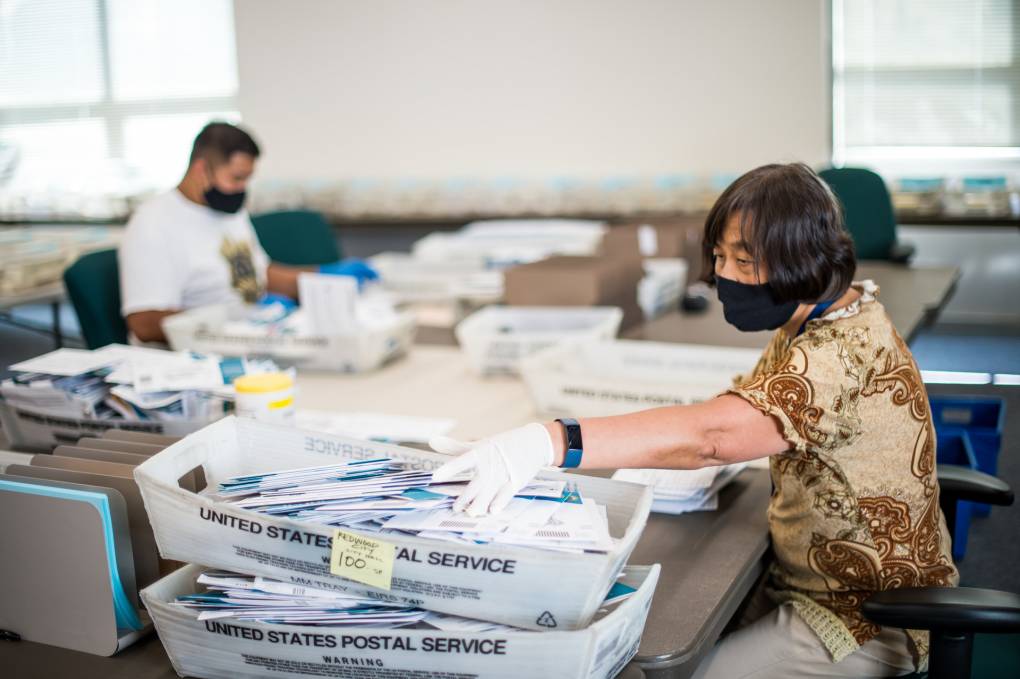
"caption": "An election employee works in the mail cleaning section, which includes arranging the ballots with their barcodes facing in one direction, at the San Mateo County Elections Office on Oct. 21, 2020.",
"description": "An election employee works in the mail cleaning section, which includes arranging the ballots with their barcodes facing in one direction, at the San Mateo County Elections Office on Oct. 21, 2020.",
"title": "RS45375_017_KQED_SanMateo_ElectionsOffice_10212020-qut",
"credit": "Beth LaBerge/KQED",
"status": "inherit",
"altTag": "A woman in short sleeves and a mask sits at a fold-out table in front of baskets of mail.",
"isLoading": false,
"fetchFailed": false
},
"news_11886259": {
"type": "attachments",
"id": "news_11886259",
"meta": {
"index": "attachments_1716263798",
"site": "news",
"id": "11886259",
"found": true
},
"parent": 11885994,
"imgSizes": {
"twentyfourteen-full-width": {
"file": "https://ww2.kqed.org/app/uploads/sites/10/2021/08/RS45459_007_KQED_Oakland_RegistrarofVoters_10272020-qut-1038x576.jpg",
"width": 1038,
"mimeType": "image/jpeg",
"height": 576
},
"thumbnail": {
"file": "https://ww2.kqed.org/app/uploads/sites/10/2021/08/RS45459_007_KQED_Oakland_RegistrarofVoters_10272020-qut-160x107.jpg",
"width": 160,
"mimeType": "image/jpeg",
"height": 107
},
"post-thumbnail": {
"file": "https://ww2.kqed.org/app/uploads/sites/10/2021/08/RS45459_007_KQED_Oakland_RegistrarofVoters_10272020-qut-672x372.jpg",
"width": 672,
"mimeType": "image/jpeg",
"height": 372
},
"kqedFullSize": {
"file": "https://ww2.kqed.org/app/uploads/sites/10/2021/08/RS45459_007_KQED_Oakland_RegistrarofVoters_10272020-qut.jpg",
"width": 1920,
"height": 1280
},
"large": {
"file": "https://ww2.kqed.org/app/uploads/sites/10/2021/08/RS45459_007_KQED_Oakland_RegistrarofVoters_10272020-qut-1020x680.jpg",
"width": 1020,
"mimeType": "image/jpeg",
"height": 680
},
"1536x1536": {
"file": "https://ww2.kqed.org/app/uploads/sites/10/2021/08/RS45459_007_KQED_Oakland_RegistrarofVoters_10272020-qut-1536x1024.jpg",
"width": 1536,
"mimeType": "image/jpeg",
"height": 1024
},
"medium": {
"file": "https://ww2.kqed.org/app/uploads/sites/10/2021/08/RS45459_007_KQED_Oakland_RegistrarofVoters_10272020-qut-800x533.jpg",
"width": 800,
"mimeType": "image/jpeg",
"height": 533
}
},
"publishDate": 1629912439,
"modified": 1629912548,
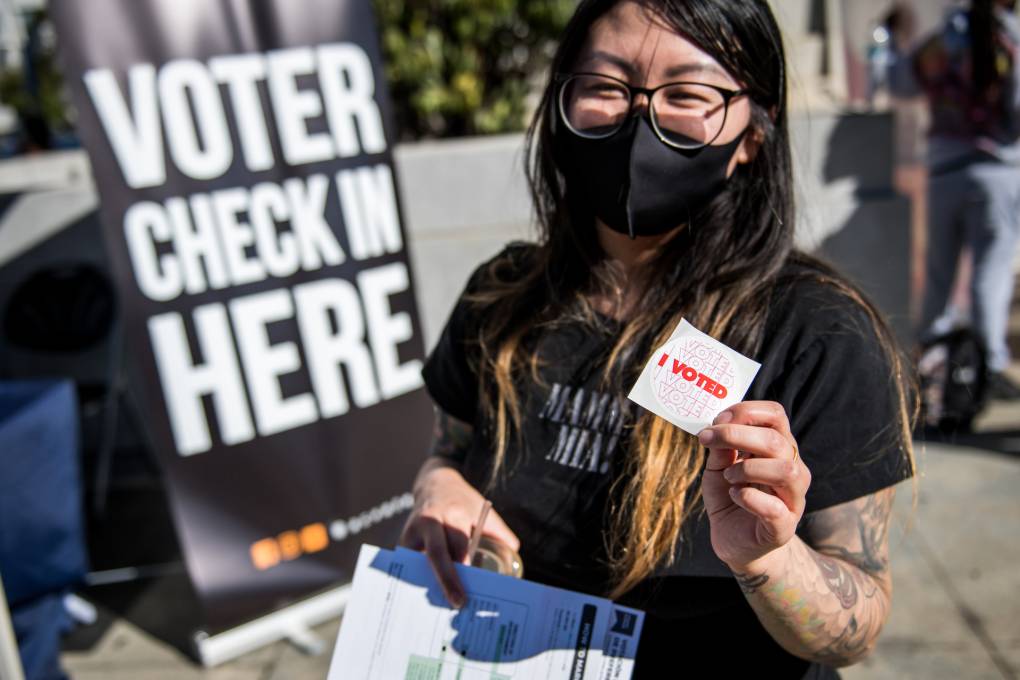
"caption": "Bei Kao holds her \"I Voted\" sticker after voting in Oakland on Oct. 27, 2020.",
"description": null,
"title": "newsom-recall-early-voting",
"credit": "Beth LaBerge/KQED",
"status": "inherit",
"altTag": null,
"isLoading": false,
"fetchFailed": false
},
"news_11843210": {
"type": "attachments",
"id": "news_11843210",
"meta": {
"index": "attachments_1716263798",
"site": "news",
"id": "11843210",
"found": true
},
"parent": 11843123,
"imgSizes": {
"apple_news_ca_landscape_5_5": {
"file": "https://cdn.kqed.org/wp-content/uploads/sites/10/2020/10/RS45263_001_KQED_ElectionStockPhotos_TikaHall_10062020-qut-1044x783.jpg",
"width": 1044,
"mimeType": "image/jpeg",
"height": 783
},
"apple_news_ca_square_4_0": {
"file": "https://cdn.kqed.org/wp-content/uploads/sites/10/2020/10/RS45263_001_KQED_ElectionStockPhotos_TikaHall_10062020-qut-470x470.jpg",
"width": 470,
"mimeType": "image/jpeg",
"height": 470
},
"twentyfourteen-full-width": {
"file": "https://cdn.kqed.org/wp-content/uploads/sites/10/2020/10/RS45263_001_KQED_ElectionStockPhotos_TikaHall_10062020-qut-1038x576.jpg",
"width": 1038,
"mimeType": "image/jpeg",
"height": 576
},
"thumbnail": {
"file": "https://cdn.kqed.org/wp-content/uploads/sites/10/2020/10/RS45263_001_KQED_ElectionStockPhotos_TikaHall_10062020-qut-160x107.jpg",
"width": 160,
"mimeType": "image/jpeg",
"height": 107
},
"post-thumbnail": {
"file": "https://cdn.kqed.org/wp-content/uploads/sites/10/2020/10/RS45263_001_KQED_ElectionStockPhotos_TikaHall_10062020-qut-672x372.jpg",
"width": 672,
"mimeType": "image/jpeg",
"height": 372
},
"kqedFullSize": {
"file": "https://cdn.kqed.org/wp-content/uploads/sites/10/2020/10/RS45263_001_KQED_ElectionStockPhotos_TikaHall_10062020-qut.jpg",
"width": 1920,
"height": 1280
},
"apple_news_ca_landscape_4_7": {
"file": "https://cdn.kqed.org/wp-content/uploads/sites/10/2020/10/RS45263_001_KQED_ElectionStockPhotos_TikaHall_10062020-qut-632x474.jpg",
"width": 632,
"mimeType": "image/jpeg",
"height": 474
},
"large": {
"file": "https://cdn.kqed.org/wp-content/uploads/sites/10/2020/10/RS45263_001_KQED_ElectionStockPhotos_TikaHall_10062020-qut-1020x680.jpg",
"width": 1020,
"mimeType": "image/jpeg",
"height": 680
},
"apple_news_ca_landscape_4_0": {
"file": "https://cdn.kqed.org/wp-content/uploads/sites/10/2020/10/RS45263_001_KQED_ElectionStockPhotos_TikaHall_10062020-qut-536x402.jpg",
"width": 536,
"mimeType": "image/jpeg",
"height": 402
},
"apple_news_ca_portrait_12_9": {
"file": "https://cdn.kqed.org/wp-content/uploads/sites/10/2020/10/RS45263_001_KQED_ElectionStockPhotos_TikaHall_10062020-qut-1122x1280.jpg",
"width": 1122,
"mimeType": "image/jpeg",
"height": 1280
},
"medium": {
"file": "https://cdn.kqed.org/wp-content/uploads/sites/10/2020/10/RS45263_001_KQED_ElectionStockPhotos_TikaHall_10062020-qut-800x533.jpg",
"width": 800,
"mimeType": "image/jpeg",
"height": 533
},
"apple_news_ca_portrait_4_0": {
"file": "https://cdn.kqed.org/wp-content/uploads/sites/10/2020/10/RS45263_001_KQED_ElectionStockPhotos_TikaHall_10062020-qut-354x472.jpg",
"width": 354,
"mimeType": "image/jpeg",
"height": 472
},
"apple_news_ca_portrait_9_7": {
"file": "https://cdn.kqed.org/wp-content/uploads/sites/10/2020/10/RS45263_001_KQED_ElectionStockPhotos_TikaHall_10062020-qut-840x1120.jpg",
"width": 840,
"mimeType": "image/jpeg",
"height": 1120
},
"apple_news_ca_landscape_12_9": {
"file": "https://cdn.kqed.org/wp-content/uploads/sites/10/2020/10/RS45263_001_KQED_ElectionStockPhotos_TikaHall_10062020-qut-1832x1280.jpg",
"width": 1832,
"mimeType": "image/jpeg",
"height": 1280
},
"apple_news_ca_square_9_7": {
"file": "https://cdn.kqed.org/wp-content/uploads/sites/10/2020/10/RS45263_001_KQED_ElectionStockPhotos_TikaHall_10062020-qut-1104x1104.jpg",
"width": 1104,
"mimeType": "image/jpeg",
"height": 1104
},
"1536x1536": {
"file": "https://cdn.kqed.org/wp-content/uploads/sites/10/2020/10/RS45263_001_KQED_ElectionStockPhotos_TikaHall_10062020-qut-1536x1024.jpg",
"width": 1536,
"mimeType": "image/jpeg",
"height": 1024
},
"apple_news_ca_portrait_4_7": {
"file": "https://cdn.kqed.org/wp-content/uploads/sites/10/2020/10/RS45263_001_KQED_ElectionStockPhotos_TikaHall_10062020-qut-414x552.jpg",
"width": 414,
"mimeType": "image/jpeg",
"height": 552
},
"apple_news_ca_square_12_9": {
"file": "https://cdn.kqed.org/wp-content/uploads/sites/10/2020/10/RS45263_001_KQED_ElectionStockPhotos_TikaHall_10062020-qut-1472x1280.jpg",
"width": 1472,
"mimeType": "image/jpeg",
"height": 1280
},
"apple_news_ca_portrait_5_5": {
"file": "https://cdn.kqed.org/wp-content/uploads/sites/10/2020/10/RS45263_001_KQED_ElectionStockPhotos_TikaHall_10062020-qut-687x916.jpg",
"width": 687,
"mimeType": "image/jpeg",
"height": 916
},
"apple_news_ca_square_4_7": {
"file": "https://cdn.kqed.org/wp-content/uploads/sites/10/2020/10/RS45263_001_KQED_ElectionStockPhotos_TikaHall_10062020-qut-550x550.jpg",
"width": 550,
"mimeType": "image/jpeg",
"height": 550
},
"apple_news_ca_landscape_9_7": {
"file": "https://cdn.kqed.org/wp-content/uploads/sites/10/2020/10/RS45263_001_KQED_ElectionStockPhotos_TikaHall_10062020-qut-1376x1032.jpg",
"width": 1376,
"mimeType": "image/jpeg",
"height": 1032
},
"apple_news_ca_square_5_5": {
"file": "https://cdn.kqed.org/wp-content/uploads/sites/10/2020/10/RS45263_001_KQED_ElectionStockPhotos_TikaHall_10062020-qut-912x912.jpg",
"width": 912,
"mimeType": "image/jpeg",
"height": 912
}
},
"publishDate": 1603321981,
"modified": 1706906764,
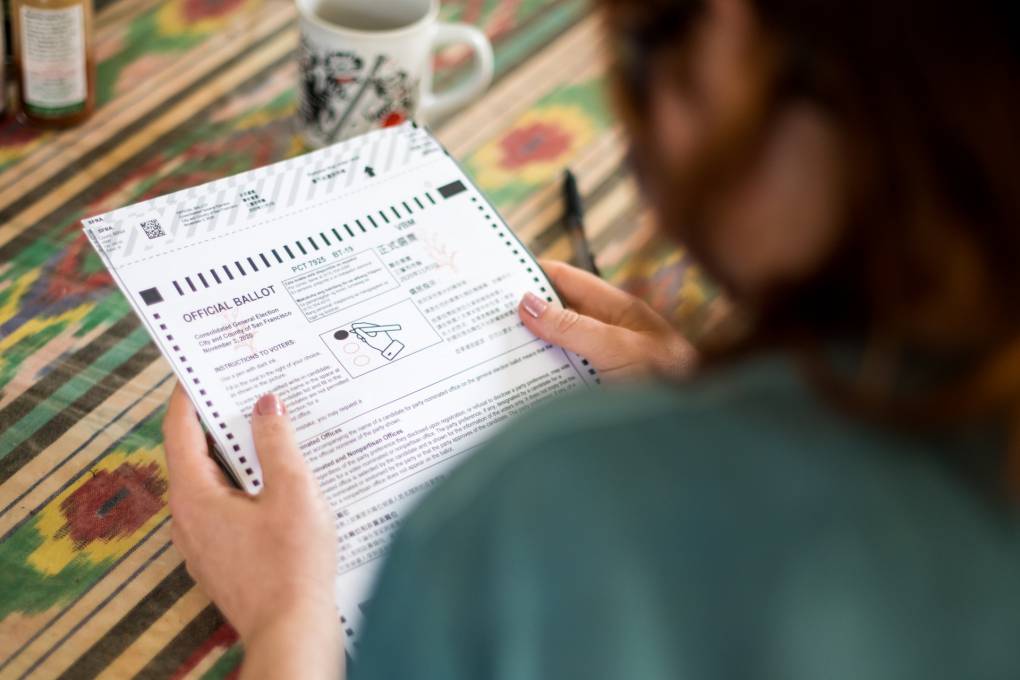
"caption": "A San Francisco resident fills out their mail-in ballot on Oct. 6, 2020.",
"description": "A San Francisco resident fills out their mail-in ballot on Oct. 6, 2020.",
"title": "how-to-fix-ballot-mistake",
"credit": "Beth LaBerge/KQED",
"status": "inherit",
"altTag": "A person wearing a green shirt holds a ballot.",
"isLoading": false,
"fetchFailed": false
},
"news_11885022": {
"type": "attachments",
"id": "news_11885022",
"meta": {
"index": "attachments_1716263798",
"site": "news",
"id": "11885022",
"found": true
},
"parent": 11884716,
"imgSizes": {
"twentyfourteen-full-width": {
"file": "https://ww2.kqed.org/app/uploads/sites/10/2021/08/RS50623_GettyImages-1317323995-qut-1038x576.jpg",
"width": 1038,
"mimeType": "image/jpeg",
"height": 576
},
"thumbnail": {
"file": "https://ww2.kqed.org/app/uploads/sites/10/2021/08/RS50623_GettyImages-1317323995-qut-160x107.jpg",
"width": 160,
"mimeType": "image/jpeg",
"height": 107
},
"post-thumbnail": {
"file": "https://ww2.kqed.org/app/uploads/sites/10/2021/08/RS50623_GettyImages-1317323995-qut-672x372.jpg",
"width": 672,
"mimeType": "image/jpeg",
"height": 372
},
"kqedFullSize": {
"file": "https://ww2.kqed.org/app/uploads/sites/10/2021/08/RS50623_GettyImages-1317323995-qut.jpg",
"width": 1920,
"height": 1280
},
"large": {
"file": "https://ww2.kqed.org/app/uploads/sites/10/2021/08/RS50623_GettyImages-1317323995-qut-1020x680.jpg",
"width": 1020,
"mimeType": "image/jpeg",
"height": 680
},
"1536x1536": {
"file": "https://ww2.kqed.org/app/uploads/sites/10/2021/08/RS50623_GettyImages-1317323995-qut-1536x1024.jpg",
"width": 1536,
"mimeType": "image/jpeg",
"height": 1024
},
"medium": {
"file": "https://ww2.kqed.org/app/uploads/sites/10/2021/08/RS50623_GettyImages-1317323995-qut-800x533.jpg",
"width": 800,
"mimeType": "image/jpeg",
"height": 533
}
},
"publishDate": 1628882955,
"modified": 1629128263,
"caption": "Gov. Gavin Newsom speaks during a press conference on May 10, 2021, in Oakland.",
"description": "Gov. Gavin Newsom speaks during a press conference on May 10, 2021 in Oakland.",
"title": "California Governor Newsom Unveils His Economic Recovery Package For The State",
"credit": "Justin Sullivan/Getty Images",
"status": "inherit",
"altTag": null,
"isLoading": false,
"fetchFailed": false
},
"news_11846090": {
"type": "attachments",
"id": "news_11846090",
"meta": {
"index": "attachments_1716263798",
"site": "news",
"id": "11846090",
"found": true
},
"parent": 11845942,
"imgSizes": {
"apple_news_ca_landscape_5_5": {
"file": "https://ww2.kqed.org/app/uploads/sites/10/2020/11/RS45718_005_KQED_SanFrancisco_ProtectTheResultsRally_11042020-qut-1044x783.jpg",
"width": 1044,
"mimeType": "image/jpeg",
"height": 783
},
"apple_news_ca_square_4_0": {
"file": "https://ww2.kqed.org/app/uploads/sites/10/2020/11/RS45718_005_KQED_SanFrancisco_ProtectTheResultsRally_11042020-qut-470x470.jpg",
"width": 470,
"mimeType": "image/jpeg",
"height": 470
},
"twentyfourteen-full-width": {
"file": "https://ww2.kqed.org/app/uploads/sites/10/2020/11/RS45718_005_KQED_SanFrancisco_ProtectTheResultsRally_11042020-qut-1038x576.jpg",
"width": 1038,
"mimeType": "image/jpeg",
"height": 576
},
"thumbnail": {
"file": "https://ww2.kqed.org/app/uploads/sites/10/2020/11/RS45718_005_KQED_SanFrancisco_ProtectTheResultsRally_11042020-qut-160x107.jpg",
"width": 160,
"mimeType": "image/jpeg",
"height": 107
},
"post-thumbnail": {
"file": "https://ww2.kqed.org/app/uploads/sites/10/2020/11/RS45718_005_KQED_SanFrancisco_ProtectTheResultsRally_11042020-qut-672x372.jpg",
"width": 672,
"mimeType": "image/jpeg",
"height": 372
},
"kqedFullSize": {
"file": "https://ww2.kqed.org/app/uploads/sites/10/2020/11/RS45718_005_KQED_SanFrancisco_ProtectTheResultsRally_11042020-qut.jpg",
"width": 1920,
"height": 1278
},
"apple_news_ca_landscape_4_7": {
"file": "https://ww2.kqed.org/app/uploads/sites/10/2020/11/RS45718_005_KQED_SanFrancisco_ProtectTheResultsRally_11042020-qut-632x474.jpg",
"width": 632,
"mimeType": "image/jpeg",
"height": 474
},
"large": {
"file": "https://ww2.kqed.org/app/uploads/sites/10/2020/11/RS45718_005_KQED_SanFrancisco_ProtectTheResultsRally_11042020-qut-1020x679.jpg",
"width": 1020,
"mimeType": "image/jpeg",
"height": 679
},
"apple_news_ca_landscape_4_0": {
"file": "https://ww2.kqed.org/app/uploads/sites/10/2020/11/RS45718_005_KQED_SanFrancisco_ProtectTheResultsRally_11042020-qut-536x402.jpg",
"width": 536,
"mimeType": "image/jpeg",
"height": 402
},
"apple_news_ca_portrait_12_9": {
"file": "https://ww2.kqed.org/app/uploads/sites/10/2020/11/RS45718_005_KQED_SanFrancisco_ProtectTheResultsRally_11042020-qut-1122x1278.jpg",
"width": 1122,
"mimeType": "image/jpeg",
"height": 1278
},
"medium": {
"file": "https://ww2.kqed.org/app/uploads/sites/10/2020/11/RS45718_005_KQED_SanFrancisco_ProtectTheResultsRally_11042020-qut-800x533.jpg",
"width": 800,
"mimeType": "image/jpeg",
"height": 533
},
"apple_news_ca_portrait_4_0": {
"file": "https://ww2.kqed.org/app/uploads/sites/10/2020/11/RS45718_005_KQED_SanFrancisco_ProtectTheResultsRally_11042020-qut-354x472.jpg",
"width": 354,
"mimeType": "image/jpeg",
"height": 472
},
"apple_news_ca_portrait_9_7": {
"file": "https://ww2.kqed.org/app/uploads/sites/10/2020/11/RS45718_005_KQED_SanFrancisco_ProtectTheResultsRally_11042020-qut-840x1120.jpg",
"width": 840,
"mimeType": "image/jpeg",
"height": 1120
},
"apple_news_ca_landscape_12_9": {
"file": "https://ww2.kqed.org/app/uploads/sites/10/2020/11/RS45718_005_KQED_SanFrancisco_ProtectTheResultsRally_11042020-qut-1832x1278.jpg",
"width": 1832,
"mimeType": "image/jpeg",
"height": 1278
},
"apple_news_ca_square_9_7": {
"file": "https://ww2.kqed.org/app/uploads/sites/10/2020/11/RS45718_005_KQED_SanFrancisco_ProtectTheResultsRally_11042020-qut-1104x1104.jpg",
"width": 1104,
"mimeType": "image/jpeg",
"height": 1104
},
"1536x1536": {
"file": "https://ww2.kqed.org/app/uploads/sites/10/2020/11/RS45718_005_KQED_SanFrancisco_ProtectTheResultsRally_11042020-qut-1536x1022.jpg",
"width": 1536,
"mimeType": "image/jpeg",
"height": 1022
},
"apple_news_ca_portrait_4_7": {
"file": "https://ww2.kqed.org/app/uploads/sites/10/2020/11/RS45718_005_KQED_SanFrancisco_ProtectTheResultsRally_11042020-qut-414x552.jpg",
"width": 414,
"mimeType": "image/jpeg",
"height": 552
},
"apple_news_ca_square_12_9": {
"file": "https://ww2.kqed.org/app/uploads/sites/10/2020/11/RS45718_005_KQED_SanFrancisco_ProtectTheResultsRally_11042020-qut-1472x1278.jpg",
"width": 1472,
"mimeType": "image/jpeg",
"height": 1278
},
"apple_news_ca_portrait_5_5": {
"file": "https://ww2.kqed.org/app/uploads/sites/10/2020/11/RS45718_005_KQED_SanFrancisco_ProtectTheResultsRally_11042020-qut-687x916.jpg",
"width": 687,
"mimeType": "image/jpeg",
"height": 916
},
"apple_news_ca_square_4_7": {
"file": "https://ww2.kqed.org/app/uploads/sites/10/2020/11/RS45718_005_KQED_SanFrancisco_ProtectTheResultsRally_11042020-qut-550x550.jpg",
"width": 550,
"mimeType": "image/jpeg",
"height": 550
},
"apple_news_ca_landscape_9_7": {
"file": "https://ww2.kqed.org/app/uploads/sites/10/2020/11/RS45718_005_KQED_SanFrancisco_ProtectTheResultsRally_11042020-qut-1376x1032.jpg",
"width": 1376,
"mimeType": "image/jpeg",
"height": 1032
},
"apple_news_ca_square_5_5": {
"file": "https://ww2.kqed.org/app/uploads/sites/10/2020/11/RS45718_005_KQED_SanFrancisco_ProtectTheResultsRally_11042020-qut-912x912.jpg",
"width": 912,
"mimeType": "image/jpeg",
"height": 912
}
},
"publishDate": 1604622197,
"modified": 1604622222,
"caption": "A demonstrator holds a sign that says 'Count Every Vote' at a Protect the Results rally in San Francisco on Nov. 4, 2020.",
"description": null,
"title": "RS45718_005_KQED_SanFrancisco_ProtectTheResultsRally_11042020-qut",
"credit": "Beth LaBerge/KQED",
"status": "inherit",
"isLoading": false,
"fetchFailed": false
},
"news_11844740": {
"type": "attachments",
"id": "news_11844740",
"meta": {
"index": "attachments_1716263798",
"site": "news",
"id": "11844740",
"found": true
},
"parent": 11844651,
"imgSizes": {
"apple_news_ca_landscape_5_5": {
"file": "https://ww2.kqed.org/app/uploads/sites/10/2020/10/RS45568_007_KQED_SanFrancisco_VotingCenter_10302020-qut-1044x783.jpg",
"width": 1044,
"mimeType": "image/jpeg",
"height": 783
},
"apple_news_ca_square_4_0": {
"file": "https://ww2.kqed.org/app/uploads/sites/10/2020/10/RS45568_007_KQED_SanFrancisco_VotingCenter_10302020-qut-470x470.jpg",
"width": 470,
"mimeType": "image/jpeg",
"height": 470
},
"twentyfourteen-full-width": {
"file": "https://ww2.kqed.org/app/uploads/sites/10/2020/10/RS45568_007_KQED_SanFrancisco_VotingCenter_10302020-qut-1038x576.jpg",
"width": 1038,
"mimeType": "image/jpeg",
"height": 576
},
"thumbnail": {
"file": "https://ww2.kqed.org/app/uploads/sites/10/2020/10/RS45568_007_KQED_SanFrancisco_VotingCenter_10302020-qut-160x107.jpg",
"width": 160,
"mimeType": "image/jpeg",
"height": 107
},
"post-thumbnail": {
"file": "https://ww2.kqed.org/app/uploads/sites/10/2020/10/RS45568_007_KQED_SanFrancisco_VotingCenter_10302020-qut-672x372.jpg",
"width": 672,
"mimeType": "image/jpeg",
"height": 372
},
"kqedFullSize": {
"file": "https://ww2.kqed.org/app/uploads/sites/10/2020/10/RS45568_007_KQED_SanFrancisco_VotingCenter_10302020-qut.jpg",
"width": 1920,
"height": 1280
},
"apple_news_ca_landscape_4_7": {
"file": "https://ww2.kqed.org/app/uploads/sites/10/2020/10/RS45568_007_KQED_SanFrancisco_VotingCenter_10302020-qut-632x474.jpg",
"width": 632,
"mimeType": "image/jpeg",
"height": 474
},
"large": {
"file": "https://ww2.kqed.org/app/uploads/sites/10/2020/10/RS45568_007_KQED_SanFrancisco_VotingCenter_10302020-qut-1020x680.jpg",
"width": 1020,
"mimeType": "image/jpeg",
"height": 680
},
"apple_news_ca_landscape_4_0": {
"file": "https://ww2.kqed.org/app/uploads/sites/10/2020/10/RS45568_007_KQED_SanFrancisco_VotingCenter_10302020-qut-536x402.jpg",
"width": 536,
"mimeType": "image/jpeg",
"height": 402
},
"apple_news_ca_portrait_12_9": {
"file": "https://ww2.kqed.org/app/uploads/sites/10/2020/10/RS45568_007_KQED_SanFrancisco_VotingCenter_10302020-qut-1122x1280.jpg",
"width": 1122,
"mimeType": "image/jpeg",
"height": 1280
},
"medium": {
"file": "https://ww2.kqed.org/app/uploads/sites/10/2020/10/RS45568_007_KQED_SanFrancisco_VotingCenter_10302020-qut-800x533.jpg",
"width": 800,
"mimeType": "image/jpeg",
"height": 533
},
"apple_news_ca_portrait_4_0": {
"file": "https://ww2.kqed.org/app/uploads/sites/10/2020/10/RS45568_007_KQED_SanFrancisco_VotingCenter_10302020-qut-354x472.jpg",
"width": 354,
"mimeType": "image/jpeg",
"height": 472
},
"apple_news_ca_portrait_9_7": {
"file": "https://ww2.kqed.org/app/uploads/sites/10/2020/10/RS45568_007_KQED_SanFrancisco_VotingCenter_10302020-qut-840x1120.jpg",
"width": 840,
"mimeType": "image/jpeg",
"height": 1120
},
"apple_news_ca_landscape_12_9": {
"file": "https://ww2.kqed.org/app/uploads/sites/10/2020/10/RS45568_007_KQED_SanFrancisco_VotingCenter_10302020-qut-1832x1280.jpg",
"width": 1832,
"mimeType": "image/jpeg",
"height": 1280
},
"apple_news_ca_square_9_7": {
"file": "https://ww2.kqed.org/app/uploads/sites/10/2020/10/RS45568_007_KQED_SanFrancisco_VotingCenter_10302020-qut-1104x1104.jpg",
"width": 1104,
"mimeType": "image/jpeg",
"height": 1104
},
"1536x1536": {
"file": "https://ww2.kqed.org/app/uploads/sites/10/2020/10/RS45568_007_KQED_SanFrancisco_VotingCenter_10302020-qut-1536x1024.jpg",
"width": 1536,
"mimeType": "image/jpeg",
"height": 1024
},
"apple_news_ca_portrait_4_7": {
"file": "https://ww2.kqed.org/app/uploads/sites/10/2020/10/RS45568_007_KQED_SanFrancisco_VotingCenter_10302020-qut-414x552.jpg",
"width": 414,
"mimeType": "image/jpeg",
"height": 552
},
"apple_news_ca_square_12_9": {
"file": "https://ww2.kqed.org/app/uploads/sites/10/2020/10/RS45568_007_KQED_SanFrancisco_VotingCenter_10302020-qut-1472x1280.jpg",
"width": 1472,
"mimeType": "image/jpeg",
"height": 1280
},
"apple_news_ca_portrait_5_5": {
"file": "https://ww2.kqed.org/app/uploads/sites/10/2020/10/RS45568_007_KQED_SanFrancisco_VotingCenter_10302020-qut-687x916.jpg",
"width": 687,
"mimeType": "image/jpeg",
"height": 916
},
"apple_news_ca_square_4_7": {
"file": "https://ww2.kqed.org/app/uploads/sites/10/2020/10/RS45568_007_KQED_SanFrancisco_VotingCenter_10302020-qut-550x550.jpg",
"width": 550,
"mimeType": "image/jpeg",
"height": 550
},
"apple_news_ca_landscape_9_7": {
"file": "https://ww2.kqed.org/app/uploads/sites/10/2020/10/RS45568_007_KQED_SanFrancisco_VotingCenter_10302020-qut-1376x1032.jpg",
"width": 1376,
"mimeType": "image/jpeg",
"height": 1032
},
"apple_news_ca_square_5_5": {
"file": "https://ww2.kqed.org/app/uploads/sites/10/2020/10/RS45568_007_KQED_SanFrancisco_VotingCenter_10302020-qut-912x912.jpg",
"width": 912,
"mimeType": "image/jpeg",
"height": 912
}
},
"publishDate": 1604097564,
"modified": 1665508826,
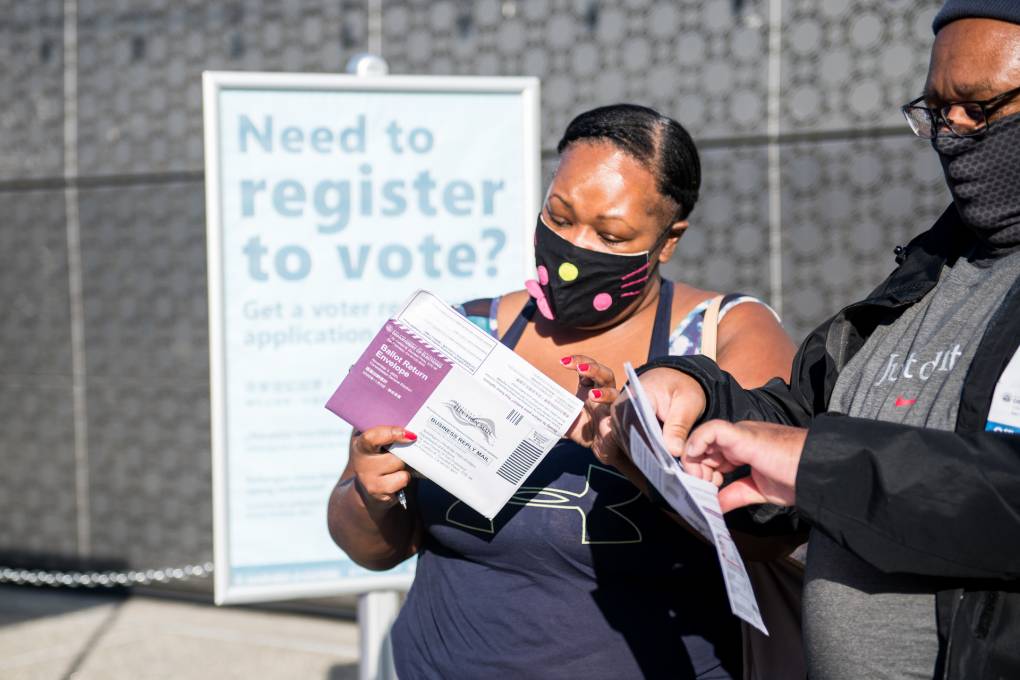
"caption": "Ophelia Williams and her brother Leopold Parker do a final check of their mail-in ballots before turning them in at the voting center near San Francisco City Hall on Oct. 30, 2020.",
"description": null,
"title": "RS45568_007_KQED_SanFrancisco_VotingCenter_10302020-qut",
"credit": "Beth LaBerge/KQED",
"status": "inherit",
"altTag": "A woman and a man, both wearing face masks, examine their election ballots.",
"isLoading": false,
"fetchFailed": false
},
"news_11844264": {
"type": "attachments",
"id": "news_11844264",
"meta": {
"index": "attachments_1716263798",
"site": "news",
"id": "11844264",
"found": true
},
"parent": 11844159,
"imgSizes": {
"apple_news_ca_landscape_5_5": {
"file": "https://ww2.kqed.org/app/uploads/sites/10/2020/10/RS45368_010_KQED_SanMateo_ElectionsOffice_10212020-1044x783.jpg",
"width": 1044,
"mimeType": "image/jpeg",
"height": 783
},
"apple_news_ca_square_4_0": {
"file": "https://ww2.kqed.org/app/uploads/sites/10/2020/10/RS45368_010_KQED_SanMateo_ElectionsOffice_10212020-470x470.jpg",
"width": 470,
"mimeType": "image/jpeg",
"height": 470
},
"twentyfourteen-full-width": {
"file": "https://ww2.kqed.org/app/uploads/sites/10/2020/10/RS45368_010_KQED_SanMateo_ElectionsOffice_10212020-1038x576.jpg",
"width": 1038,
"mimeType": "image/jpeg",
"height": 576
},
"thumbnail": {
"file": "https://ww2.kqed.org/app/uploads/sites/10/2020/10/RS45368_010_KQED_SanMateo_ElectionsOffice_10212020-160x106.jpg",
"width": 160,
"mimeType": "image/jpeg",
"height": 106
},
"post-thumbnail": {
"file": "https://ww2.kqed.org/app/uploads/sites/10/2020/10/RS45368_010_KQED_SanMateo_ElectionsOffice_10212020-672x372.jpg",
"width": 672,
"mimeType": "image/jpeg",
"height": 372
},
"kqedFullSize": {
"file": "https://ww2.kqed.org/app/uploads/sites/10/2020/10/RS45368_010_KQED_SanMateo_ElectionsOffice_10212020-scaled.jpg",
"width": 2560,
"height": 1704
},
"2048x2048": {
"file": "https://ww2.kqed.org/app/uploads/sites/10/2020/10/RS45368_010_KQED_SanMateo_ElectionsOffice_10212020-2048x1363.jpg",
"width": 2048,
"mimeType": "image/jpeg",
"height": 1363
},
"apple_news_ca_landscape_4_7": {
"file": "https://ww2.kqed.org/app/uploads/sites/10/2020/10/RS45368_010_KQED_SanMateo_ElectionsOffice_10212020-632x474.jpg",
"width": 632,
"mimeType": "image/jpeg",
"height": 474
},
"large": {
"file": "https://ww2.kqed.org/app/uploads/sites/10/2020/10/RS45368_010_KQED_SanMateo_ElectionsOffice_10212020-1020x679.jpg",
"width": 1020,
"mimeType": "image/jpeg",
"height": 679
},
"apple_news_ca_landscape_4_0": {
"file": "https://ww2.kqed.org/app/uploads/sites/10/2020/10/RS45368_010_KQED_SanMateo_ElectionsOffice_10212020-536x402.jpg",
"width": 536,
"mimeType": "image/jpeg",
"height": 402
},
"apple_news_ca_portrait_12_9": {
"file": "https://ww2.kqed.org/app/uploads/sites/10/2020/10/RS45368_010_KQED_SanMateo_ElectionsOffice_10212020-1122x1496.jpg",
"width": 1122,
"mimeType": "image/jpeg",
"height": 1496
},
"medium": {
"file": "https://ww2.kqed.org/app/uploads/sites/10/2020/10/RS45368_010_KQED_SanMateo_ElectionsOffice_10212020-800x532.jpg",
"width": 800,
"mimeType": "image/jpeg",
"height": 532
},
"apple_news_ca_portrait_4_0": {
"file": "https://ww2.kqed.org/app/uploads/sites/10/2020/10/RS45368_010_KQED_SanMateo_ElectionsOffice_10212020-354x472.jpg",
"width": 354,
"mimeType": "image/jpeg",
"height": 472
},
"apple_news_ca_portrait_9_7": {
"file": "https://ww2.kqed.org/app/uploads/sites/10/2020/10/RS45368_010_KQED_SanMateo_ElectionsOffice_10212020-840x1120.jpg",
"width": 840,
"mimeType": "image/jpeg",
"height": 1120
},
"apple_news_ca_landscape_12_9": {
"file": "https://ww2.kqed.org/app/uploads/sites/10/2020/10/RS45368_010_KQED_SanMateo_ElectionsOffice_10212020-1832x1374.jpg",
"width": 1832,
"mimeType": "image/jpeg",
"height": 1374
},
"apple_news_ca_square_9_7": {
"file": "https://ww2.kqed.org/app/uploads/sites/10/2020/10/RS45368_010_KQED_SanMateo_ElectionsOffice_10212020-1104x1104.jpg",
"width": 1104,
"mimeType": "image/jpeg",
"height": 1104
},
"1536x1536": {
"file": "https://ww2.kqed.org/app/uploads/sites/10/2020/10/RS45368_010_KQED_SanMateo_ElectionsOffice_10212020-1536x1022.jpg",
"width": 1536,
"mimeType": "image/jpeg",
"height": 1022
},
"apple_news_ca_portrait_4_7": {
"file": "https://ww2.kqed.org/app/uploads/sites/10/2020/10/RS45368_010_KQED_SanMateo_ElectionsOffice_10212020-414x552.jpg",
"width": 414,
"mimeType": "image/jpeg",
"height": 552
},
"apple_news_ca_square_12_9": {
"file": "https://ww2.kqed.org/app/uploads/sites/10/2020/10/RS45368_010_KQED_SanMateo_ElectionsOffice_10212020-1472x1472.jpg",
"width": 1472,
"mimeType": "image/jpeg",
"height": 1472
},
"apple_news_ca_portrait_5_5": {
"file": "https://ww2.kqed.org/app/uploads/sites/10/2020/10/RS45368_010_KQED_SanMateo_ElectionsOffice_10212020-687x916.jpg",
"width": 687,
"mimeType": "image/jpeg",
"height": 916
},
"full-width": {
"file": "https://ww2.kqed.org/app/uploads/sites/10/2020/10/RS45368_010_KQED_SanMateo_ElectionsOffice_10212020-1920x1278.jpg",
"width": 1920,
"mimeType": "image/jpeg",
"height": 1278
},
"apple_news_ca_square_4_7": {
"file": "https://ww2.kqed.org/app/uploads/sites/10/2020/10/RS45368_010_KQED_SanMateo_ElectionsOffice_10212020-550x550.jpg",
"width": 550,
"mimeType": "image/jpeg",
"height": 550
},
"apple_news_ca_landscape_9_7": {
"file": "https://ww2.kqed.org/app/uploads/sites/10/2020/10/RS45368_010_KQED_SanMateo_ElectionsOffice_10212020-1376x1032.jpg",
"width": 1376,
"mimeType": "image/jpeg",
"height": 1032
},
"apple_news_ca_square_5_5": {
"file": "https://ww2.kqed.org/app/uploads/sites/10/2020/10/RS45368_010_KQED_SanMateo_ElectionsOffice_10212020-912x912.jpg",
"width": 912,
"mimeType": "image/jpeg",
"height": 912
}
},
"publishDate": 1603984333,
"modified": 1603984392,
"caption": "An election employee processes mail-in ballots at the San Mateo County Elections Office on Oct. 21, 2020.",
"description": null,
"title": "RS45368_010_KQED_SanMateo_ElectionsOffice_10212020",
"credit": "Beth LaBerge/KQED",
"status": "inherit",
"isLoading": false,
"fetchFailed": false
},
"news_11844402": {
"type": "attachments",
"id": "news_11844402",
"meta": {
"index": "attachments_1716263798",
"site": "news",
"id": "11844402",
"found": true
},
"parent": 11844284,
"imgSizes": {
"apple_news_ca_landscape_5_5": {
"file": "https://ww2.kqed.org/app/uploads/sites/10/2020/10/RS45228_019_KQED_SanFrancisco_VotingCenter_10052020-qut-1044x783.jpg",
"width": 1044,
"mimeType": "image/jpeg",
"height": 783
},
"apple_news_ca_square_4_0": {
"file": "https://ww2.kqed.org/app/uploads/sites/10/2020/10/RS45228_019_KQED_SanFrancisco_VotingCenter_10052020-qut-470x470.jpg",
"width": 470,
"mimeType": "image/jpeg",
"height": 470
},
"twentyfourteen-full-width": {
"file": "https://ww2.kqed.org/app/uploads/sites/10/2020/10/RS45228_019_KQED_SanFrancisco_VotingCenter_10052020-qut-1038x576.jpg",
"width": 1038,
"mimeType": "image/jpeg",
"height": 576
},
"thumbnail": {
"file": "https://ww2.kqed.org/app/uploads/sites/10/2020/10/RS45228_019_KQED_SanFrancisco_VotingCenter_10052020-qut-160x107.jpg",
"width": 160,
"mimeType": "image/jpeg",
"height": 107
},
"post-thumbnail": {
"file": "https://ww2.kqed.org/app/uploads/sites/10/2020/10/RS45228_019_KQED_SanFrancisco_VotingCenter_10052020-qut-672x372.jpg",
"width": 672,
"mimeType": "image/jpeg",
"height": 372
},
"kqedFullSize": {
"file": "https://ww2.kqed.org/app/uploads/sites/10/2020/10/RS45228_019_KQED_SanFrancisco_VotingCenter_10052020-qut.jpg",
"width": 1920,
"height": 1280
},
"apple_news_ca_landscape_4_7": {
"file": "https://ww2.kqed.org/app/uploads/sites/10/2020/10/RS45228_019_KQED_SanFrancisco_VotingCenter_10052020-qut-632x474.jpg",
"width": 632,
"mimeType": "image/jpeg",
"height": 474
},
"large": {
"file": "https://ww2.kqed.org/app/uploads/sites/10/2020/10/RS45228_019_KQED_SanFrancisco_VotingCenter_10052020-qut-1020x680.jpg",
"width": 1020,
"mimeType": "image/jpeg",
"height": 680
},
"apple_news_ca_landscape_4_0": {
"file": "https://ww2.kqed.org/app/uploads/sites/10/2020/10/RS45228_019_KQED_SanFrancisco_VotingCenter_10052020-qut-536x402.jpg",
"width": 536,
"mimeType": "image/jpeg",
"height": 402
},
"apple_news_ca_portrait_12_9": {
"file": "https://ww2.kqed.org/app/uploads/sites/10/2020/10/RS45228_019_KQED_SanFrancisco_VotingCenter_10052020-qut-1122x1280.jpg",
"width": 1122,
"mimeType": "image/jpeg",
"height": 1280
},
"medium": {
"file": "https://ww2.kqed.org/app/uploads/sites/10/2020/10/RS45228_019_KQED_SanFrancisco_VotingCenter_10052020-qut-800x533.jpg",
"width": 800,
"mimeType": "image/jpeg",
"height": 533
},
"apple_news_ca_portrait_4_0": {
"file": "https://ww2.kqed.org/app/uploads/sites/10/2020/10/RS45228_019_KQED_SanFrancisco_VotingCenter_10052020-qut-354x472.jpg",
"width": 354,
"mimeType": "image/jpeg",
"height": 472
},
"apple_news_ca_portrait_9_7": {
"file": "https://ww2.kqed.org/app/uploads/sites/10/2020/10/RS45228_019_KQED_SanFrancisco_VotingCenter_10052020-qut-840x1120.jpg",
"width": 840,
"mimeType": "image/jpeg",
"height": 1120
},
"apple_news_ca_landscape_12_9": {
"file": "https://ww2.kqed.org/app/uploads/sites/10/2020/10/RS45228_019_KQED_SanFrancisco_VotingCenter_10052020-qut-1832x1280.jpg",
"width": 1832,
"mimeType": "image/jpeg",
"height": 1280
},
"apple_news_ca_square_9_7": {
"file": "https://ww2.kqed.org/app/uploads/sites/10/2020/10/RS45228_019_KQED_SanFrancisco_VotingCenter_10052020-qut-1104x1104.jpg",
"width": 1104,
"mimeType": "image/jpeg",
"height": 1104
},
"1536x1536": {
"file": "https://ww2.kqed.org/app/uploads/sites/10/2020/10/RS45228_019_KQED_SanFrancisco_VotingCenter_10052020-qut-1536x1024.jpg",
"width": 1536,
"mimeType": "image/jpeg",
"height": 1024
},
"apple_news_ca_portrait_4_7": {
"file": "https://ww2.kqed.org/app/uploads/sites/10/2020/10/RS45228_019_KQED_SanFrancisco_VotingCenter_10052020-qut-414x552.jpg",
"width": 414,
"mimeType": "image/jpeg",
"height": 552
},
"apple_news_ca_square_12_9": {
"file": "https://ww2.kqed.org/app/uploads/sites/10/2020/10/RS45228_019_KQED_SanFrancisco_VotingCenter_10052020-qut-1472x1280.jpg",
"width": 1472,
"mimeType": "image/jpeg",
"height": 1280
},
"apple_news_ca_portrait_5_5": {
"file": "https://ww2.kqed.org/app/uploads/sites/10/2020/10/RS45228_019_KQED_SanFrancisco_VotingCenter_10052020-qut-687x916.jpg",
"width": 687,
"mimeType": "image/jpeg",
"height": 916
},
"apple_news_ca_square_4_7": {
"file": "https://ww2.kqed.org/app/uploads/sites/10/2020/10/RS45228_019_KQED_SanFrancisco_VotingCenter_10052020-qut-550x550.jpg",
"width": 550,
"mimeType": "image/jpeg",
"height": 550
},
"apple_news_ca_landscape_9_7": {
"file": "https://ww2.kqed.org/app/uploads/sites/10/2020/10/RS45228_019_KQED_SanFrancisco_VotingCenter_10052020-qut-1376x1032.jpg",
"width": 1376,
"mimeType": "image/jpeg",
"height": 1032
},
"apple_news_ca_square_5_5": {
"file": "https://ww2.kqed.org/app/uploads/sites/10/2020/10/RS45228_019_KQED_SanFrancisco_VotingCenter_10052020-qut-912x912.jpg",
"width": 912,
"mimeType": "image/jpeg",
"height": 912
}
},
"publishDate": 1604011866,
"modified": 1604011903,
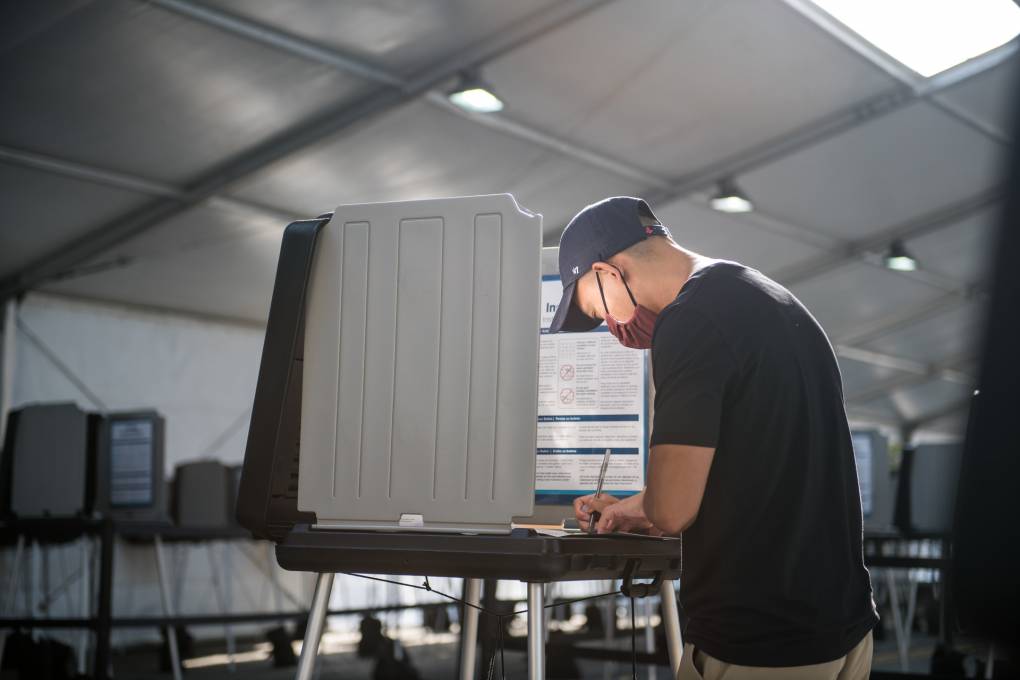
"caption": "Jonathan Moy votes at a new outdoor voting center near Civic Center Plaza in San Francisco on Oct. 5, 2020, the first day of early voting.",
"description": null,
"title": "RS45228_019_KQED_SanFrancisco_VotingCenter_10052020-qut",
"credit": "Beth LaBerge/KQED",
"status": "inherit",
"isLoading": false,
"fetchFailed": false
},
"news_11843155": {
"type": "attachments",
"id": "news_11843155",
"meta": {
"index": "attachments_1716263798",
"site": "news",
"id": "11843155",
"found": true
},
"parent": 11843152,
"imgSizes": {
"apple_news_ca_square_4_0": {
"file": "https://ww2.kqed.org/app/uploads/sites/10/2020/10/Wallace-Chuck-Pexels-1020x687-1-470x470.png",
"width": 470,
"mimeType": "image/png",
"height": 470
},
"twentyfourteen-full-width": {
"file": "https://ww2.kqed.org/app/uploads/sites/10/2020/10/Wallace-Chuck-Pexels-1020x687-1-1020x576.png",
"width": 1020,
"mimeType": "image/png",
"height": 576
},
"thumbnail": {
"file": "https://ww2.kqed.org/app/uploads/sites/10/2020/10/Wallace-Chuck-Pexels-1020x687-1-160x108.png",
"width": 160,
"mimeType": "image/png",
"height": 108
},
"post-thumbnail": {
"file": "https://ww2.kqed.org/app/uploads/sites/10/2020/10/Wallace-Chuck-Pexels-1020x687-1-672x372.png",
"width": 672,
"mimeType": "image/png",
"height": 372
},
"kqedFullSize": {
"file": "https://ww2.kqed.org/app/uploads/sites/10/2020/10/Wallace-Chuck-Pexels-1020x687-1.png",
"width": 1020,
"height": 687
},
"apple_news_ca_landscape_4_7": {
"file": "https://ww2.kqed.org/app/uploads/sites/10/2020/10/Wallace-Chuck-Pexels-1020x687-1-632x474.png",
"width": 632,
"mimeType": "image/png",
"height": 474
},
"apple_news_ca_landscape_4_0": {
"file": "https://ww2.kqed.org/app/uploads/sites/10/2020/10/Wallace-Chuck-Pexels-1020x687-1-536x402.png",
"width": 536,
"mimeType": "image/png",
"height": 402
},
"medium": {
"file": "https://ww2.kqed.org/app/uploads/sites/10/2020/10/Wallace-Chuck-Pexels-1020x687-1-800x539.png",
"width": 800,
"mimeType": "image/png",
"height": 539
},
"apple_news_ca_portrait_4_0": {
"file": "https://ww2.kqed.org/app/uploads/sites/10/2020/10/Wallace-Chuck-Pexels-1020x687-1-354x472.png",
"width": 354,
"mimeType": "image/png",
"height": 472
},
"apple_news_ca_portrait_9_7": {
"file": "https://ww2.kqed.org/app/uploads/sites/10/2020/10/Wallace-Chuck-Pexels-1020x687-1-840x687.png",
"width": 840,
"mimeType": "image/png",
"height": 687
},
"apple_news_ca_portrait_4_7": {
"file": "https://ww2.kqed.org/app/uploads/sites/10/2020/10/Wallace-Chuck-Pexels-1020x687-1-414x552.png",
"width": 414,
"mimeType": "image/png",
"height": 552
},
"apple_news_ca_portrait_5_5": {
"file": "https://ww2.kqed.org/app/uploads/sites/10/2020/10/Wallace-Chuck-Pexels-1020x687-1-687x687.png",
"width": 687,
"mimeType": "image/png",
"height": 687
},
"apple_news_ca_square_4_7": {
"file": "https://ww2.kqed.org/app/uploads/sites/10/2020/10/Wallace-Chuck-Pexels-1020x687-1-550x550.png",
"width": 550,
"mimeType": "image/png",
"height": 550
},
"apple_news_ca_square_5_5": {
"file": "https://ww2.kqed.org/app/uploads/sites/10/2020/10/Wallace-Chuck-Pexels-1020x687-1-912x687.png",
"width": 912,
"mimeType": "image/png",
"height": 687
}
},
"publishDate": 1603310724,
"modified": 1603310759,
"caption": "¿Qué pasa si se equivoca al llenar su boleta? ¿Cómo lo puede corregir? (Wallace Chuck/Pexels)",
"description": null,
"title": "Wallace-Chuck-Pexels-1020x687",
"credit": null,
"status": "inherit",
"isLoading": false,
"fetchFailed": false
},
"news_11842110": {
"type": "attachments",
"id": "news_11842110",
"meta": {
"index": "attachments_1716263798",
"site": "news",
"id": "11842110",
"found": true
},
"parent": 11842102,
"imgSizes": {
"apple_news_ca_square_4_0": {
"file": "https://ww2.kqed.org/app/uploads/sites/10/2020/10/RS45239_031_KQED_SanFrancisco_VotingCenter_10052020-qut-1020x680-1-470x470.jpg",
"width": 470,
"mimeType": "image/jpeg",
"height": 470
},
"twentyfourteen-full-width": {
"file": "https://ww2.kqed.org/app/uploads/sites/10/2020/10/RS45239_031_KQED_SanFrancisco_VotingCenter_10052020-qut-1020x680-1-1020x576.jpg",
"width": 1020,
"mimeType": "image/jpeg",
"height": 576
},
"thumbnail": {
"file": "https://ww2.kqed.org/app/uploads/sites/10/2020/10/RS45239_031_KQED_SanFrancisco_VotingCenter_10052020-qut-1020x680-1-160x107.jpg",
"width": 160,
"mimeType": "image/jpeg",
"height": 107
},
"post-thumbnail": {
"file": "https://ww2.kqed.org/app/uploads/sites/10/2020/10/RS45239_031_KQED_SanFrancisco_VotingCenter_10052020-qut-1020x680-1-672x372.jpg",
"width": 672,
"mimeType": "image/jpeg",
"height": 372
},
"kqedFullSize": {
"file": "https://ww2.kqed.org/app/uploads/sites/10/2020/10/RS45239_031_KQED_SanFrancisco_VotingCenter_10052020-qut-1020x680-1.jpg",
"width": 1020,
"height": 680
},
"apple_news_ca_landscape_4_7": {
"file": "https://ww2.kqed.org/app/uploads/sites/10/2020/10/RS45239_031_KQED_SanFrancisco_VotingCenter_10052020-qut-1020x680-1-632x474.jpg",
"width": 632,
"mimeType": "image/jpeg",
"height": 474
},
"apple_news_ca_landscape_4_0": {
"file": "https://ww2.kqed.org/app/uploads/sites/10/2020/10/RS45239_031_KQED_SanFrancisco_VotingCenter_10052020-qut-1020x680-1-536x402.jpg",
"width": 536,
"mimeType": "image/jpeg",
"height": 402
},
"medium": {
"file": "https://ww2.kqed.org/app/uploads/sites/10/2020/10/RS45239_031_KQED_SanFrancisco_VotingCenter_10052020-qut-1020x680-1-800x533.jpg",
"width": 800,
"mimeType": "image/jpeg",
"height": 533
},
"apple_news_ca_portrait_4_0": {
"file": "https://ww2.kqed.org/app/uploads/sites/10/2020/10/RS45239_031_KQED_SanFrancisco_VotingCenter_10052020-qut-1020x680-1-354x472.jpg",
"width": 354,
"mimeType": "image/jpeg",
"height": 472
},
"apple_news_ca_portrait_9_7": {
"file": "https://ww2.kqed.org/app/uploads/sites/10/2020/10/RS45239_031_KQED_SanFrancisco_VotingCenter_10052020-qut-1020x680-1-840x680.jpg",
"width": 840,
"mimeType": "image/jpeg",
"height": 680
},
"apple_news_ca_portrait_4_7": {
"file": "https://ww2.kqed.org/app/uploads/sites/10/2020/10/RS45239_031_KQED_SanFrancisco_VotingCenter_10052020-qut-1020x680-1-414x552.jpg",
"width": 414,
"mimeType": "image/jpeg",
"height": 552
},
"apple_news_ca_portrait_5_5": {
"file": "https://ww2.kqed.org/app/uploads/sites/10/2020/10/RS45239_031_KQED_SanFrancisco_VotingCenter_10052020-qut-1020x680-1-687x680.jpg",
"width": 687,
"mimeType": "image/jpeg",
"height": 680
},
"apple_news_ca_square_4_7": {
"file": "https://ww2.kqed.org/app/uploads/sites/10/2020/10/RS45239_031_KQED_SanFrancisco_VotingCenter_10052020-qut-1020x680-1-550x550.jpg",
"width": 550,
"mimeType": "image/jpeg",
"height": 550
},
"apple_news_ca_square_5_5": {
"file": "https://ww2.kqed.org/app/uploads/sites/10/2020/10/RS45239_031_KQED_SanFrancisco_VotingCenter_10052020-qut-1020x680-1-912x680.jpg",
"width": 912,
"mimeType": "image/jpeg",
"height": 680
}
},
"publishDate": 1602619635,
"modified": 1602619668,
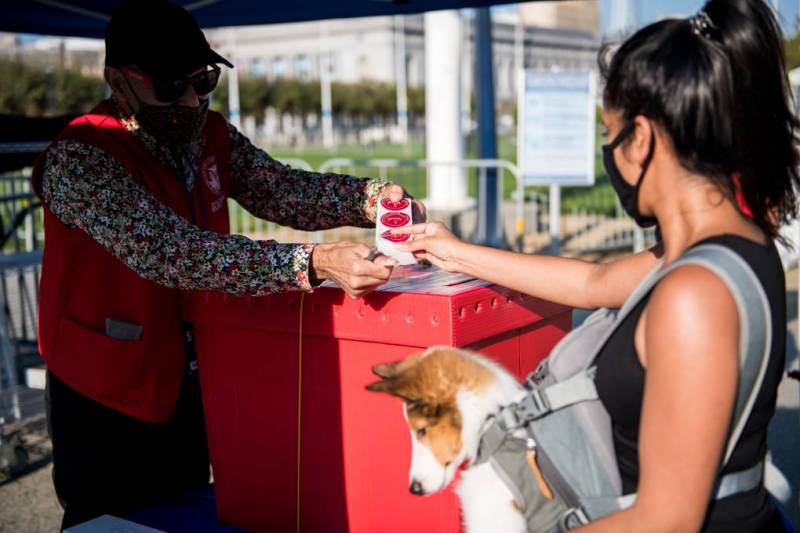
"caption": "Un votante recibe su calcomanía con el mensaje \"I Voted\", o \"Ya Voté\" en el nuevo centro de votación cerca de la plaza del Centro cívico ubicado en San Francisco, el 5 de octubre del 2020, el primer día de la votación temprana.",
"description": null,
"title": "RS45239_031_KQED_SanFrancisco_VotingCenter_10052020-qut-1020x680",
"credit": "(Beth LaBerge/KQED)",
"status": "inherit",
"isLoading": false,
"fetchFailed": false
},
"news_11841793": {
"type": "attachments",
"id": "news_11841793",
"meta": {
"index": "attachments_1716263798",
"site": "news",
"id": "11841793",
"found": true
},
"parent": 11841547,
"imgSizes": {
"apple_news_ca_landscape_5_5": {
"file": "https://ww2.kqed.org/app/uploads/sites/10/2020/10/Wallace-Chuck-Pexels-1044x783.png",
"width": 1044,
"mimeType": "image/png",
"height": 783
},
"apple_news_ca_square_4_0": {
"file": "https://ww2.kqed.org/app/uploads/sites/10/2020/10/Wallace-Chuck-Pexels-470x470.png",
"width": 470,
"mimeType": "image/png",
"height": 470
},
"twentyfourteen-full-width": {
"file": "https://ww2.kqed.org/app/uploads/sites/10/2020/10/Wallace-Chuck-Pexels-1038x576.png",
"width": 1038,
"mimeType": "image/png",
"height": 576
},
"thumbnail": {
"file": "https://ww2.kqed.org/app/uploads/sites/10/2020/10/Wallace-Chuck-Pexels-160x108.png",
"width": 160,
"mimeType": "image/png",
"height": 108
},
"post-thumbnail": {
"file": "https://ww2.kqed.org/app/uploads/sites/10/2020/10/Wallace-Chuck-Pexels-672x372.png",
"width": 672,
"mimeType": "image/png",
"height": 372
},
"kqedFullSize": {
"file": "https://ww2.kqed.org/app/uploads/sites/10/2020/10/Wallace-Chuck-Pexels.png",
"width": 1900,
"height": 1280
},
"apple_news_ca_landscape_4_7": {
"file": "https://ww2.kqed.org/app/uploads/sites/10/2020/10/Wallace-Chuck-Pexels-632x474.png",
"width": 632,
"mimeType": "image/png",
"height": 474
},
"large": {
"file": "https://ww2.kqed.org/app/uploads/sites/10/2020/10/Wallace-Chuck-Pexels-1020x687.png",
"width": 1020,
"mimeType": "image/png",
"height": 687
},
"apple_news_ca_landscape_4_0": {
"file": "https://ww2.kqed.org/app/uploads/sites/10/2020/10/Wallace-Chuck-Pexels-536x402.png",
"width": 536,
"mimeType": "image/png",
"height": 402
},
"apple_news_ca_portrait_12_9": {
"file": "https://ww2.kqed.org/app/uploads/sites/10/2020/10/Wallace-Chuck-Pexels-1122x1280.png",
"width": 1122,
"mimeType": "image/png",
"height": 1280
},
"medium": {
"file": "https://ww2.kqed.org/app/uploads/sites/10/2020/10/Wallace-Chuck-Pexels-800x539.png",
"width": 800,
"mimeType": "image/png",
"height": 539
},
"apple_news_ca_portrait_4_0": {
"file": "https://ww2.kqed.org/app/uploads/sites/10/2020/10/Wallace-Chuck-Pexels-354x472.png",
"width": 354,
"mimeType": "image/png",
"height": 472
},
"apple_news_ca_portrait_9_7": {
"file": "https://ww2.kqed.org/app/uploads/sites/10/2020/10/Wallace-Chuck-Pexels-840x1120.png",
"width": 840,
"mimeType": "image/png",
"height": 1120
},
"apple_news_ca_landscape_12_9": {
"file": "https://ww2.kqed.org/app/uploads/sites/10/2020/10/Wallace-Chuck-Pexels-1832x1280.png",
"width": 1832,
"mimeType": "image/png",
"height": 1280
},
"apple_news_ca_square_9_7": {
"file": "https://ww2.kqed.org/app/uploads/sites/10/2020/10/Wallace-Chuck-Pexels-1104x1104.png",
"width": 1104,
"mimeType": "image/png",
"height": 1104
},
"1536x1536": {
"file": "https://ww2.kqed.org/app/uploads/sites/10/2020/10/Wallace-Chuck-Pexels-1536x1035.png",
"width": 1536,
"mimeType": "image/png",
"height": 1035
},
"apple_news_ca_portrait_4_7": {
"file": "https://ww2.kqed.org/app/uploads/sites/10/2020/10/Wallace-Chuck-Pexels-414x552.png",
"width": 414,
"mimeType": "image/png",
"height": 552
},
"apple_news_ca_square_12_9": {
"file": "https://ww2.kqed.org/app/uploads/sites/10/2020/10/Wallace-Chuck-Pexels-1472x1280.png",
"width": 1472,
"mimeType": "image/png",
"height": 1280
},
"apple_news_ca_portrait_5_5": {
"file": "https://ww2.kqed.org/app/uploads/sites/10/2020/10/Wallace-Chuck-Pexels-687x916.png",
"width": 687,
"mimeType": "image/png",
"height": 916
},
"apple_news_ca_square_4_7": {
"file": "https://ww2.kqed.org/app/uploads/sites/10/2020/10/Wallace-Chuck-Pexels-550x550.png",
"width": 550,
"mimeType": "image/png",
"height": 550
},
"apple_news_ca_landscape_9_7": {
"file": "https://ww2.kqed.org/app/uploads/sites/10/2020/10/Wallace-Chuck-Pexels-1376x1032.png",
"width": 1376,
"mimeType": "image/png",
"height": 1032
},
"apple_news_ca_square_5_5": {
"file": "https://ww2.kqed.org/app/uploads/sites/10/2020/10/Wallace-Chuck-Pexels-912x912.png",
"width": 912,
"mimeType": "image/png",
"height": 912
}
},
"publishDate": 1602286292,
"modified": 1602286390,
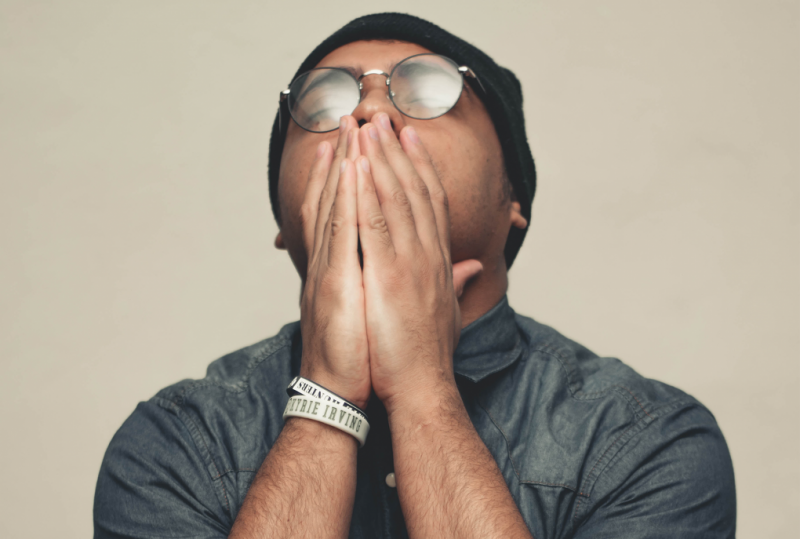
"caption": "What happens if you've made an error on your ballot? And how can you fix it?",
"description": null,
"title": "ballotstatus",
"credit": "Wallace Chuck/Pexels",
"status": "inherit",
"isLoading": false,
"fetchFailed": false
},
"news_11841206": {
"type": "attachments",
"id": "news_11841206",
"meta": {
"index": "attachments_1716263798",
"site": "news",
"id": "11841206",
"found": true
},
"parent": 11841201,
"imgSizes": {
"apple_news_ca_landscape_5_5": {
"file": "https://ww2.kqed.org/app/uploads/sites/10/2020/10/RS45237_029_KQED_SanFrancisco_VotingCenter_10052020-qut-1044x783.jpg",
"width": 1044,
"mimeType": "image/jpeg",
"height": 783
},
"apple_news_ca_square_4_0": {
"file": "https://ww2.kqed.org/app/uploads/sites/10/2020/10/RS45237_029_KQED_SanFrancisco_VotingCenter_10052020-qut-470x470.jpg",
"width": 470,
"mimeType": "image/jpeg",
"height": 470
},
"twentyfourteen-full-width": {
"file": "https://ww2.kqed.org/app/uploads/sites/10/2020/10/RS45237_029_KQED_SanFrancisco_VotingCenter_10052020-qut-1038x576.jpg",
"width": 1038,
"mimeType": "image/jpeg",
"height": 576
},
"thumbnail": {
"file": "https://ww2.kqed.org/app/uploads/sites/10/2020/10/RS45237_029_KQED_SanFrancisco_VotingCenter_10052020-qut-160x107.jpg",
"width": 160,
"mimeType": "image/jpeg",
"height": 107
},
"post-thumbnail": {
"file": "https://ww2.kqed.org/app/uploads/sites/10/2020/10/RS45237_029_KQED_SanFrancisco_VotingCenter_10052020-qut-672x372.jpg",
"width": 672,
"mimeType": "image/jpeg",
"height": 372
},
"kqedFullSize": {
"file": "https://ww2.kqed.org/app/uploads/sites/10/2020/10/RS45237_029_KQED_SanFrancisco_VotingCenter_10052020-qut.jpg",
"width": 1920,
"height": 1280
},
"apple_news_ca_landscape_4_7": {
"file": "https://ww2.kqed.org/app/uploads/sites/10/2020/10/RS45237_029_KQED_SanFrancisco_VotingCenter_10052020-qut-632x474.jpg",
"width": 632,
"mimeType": "image/jpeg",
"height": 474
},
"large": {
"file": "https://ww2.kqed.org/app/uploads/sites/10/2020/10/RS45237_029_KQED_SanFrancisco_VotingCenter_10052020-qut-1020x680.jpg",
"width": 1020,
"mimeType": "image/jpeg",
"height": 680
},
"apple_news_ca_landscape_4_0": {
"file": "https://ww2.kqed.org/app/uploads/sites/10/2020/10/RS45237_029_KQED_SanFrancisco_VotingCenter_10052020-qut-536x402.jpg",
"width": 536,
"mimeType": "image/jpeg",
"height": 402
},
"apple_news_ca_portrait_12_9": {
"file": "https://ww2.kqed.org/app/uploads/sites/10/2020/10/RS45237_029_KQED_SanFrancisco_VotingCenter_10052020-qut-1122x1280.jpg",
"width": 1122,
"mimeType": "image/jpeg",
"height": 1280
},
"medium": {
"file": "https://ww2.kqed.org/app/uploads/sites/10/2020/10/RS45237_029_KQED_SanFrancisco_VotingCenter_10052020-qut-800x533.jpg",
"width": 800,
"mimeType": "image/jpeg",
"height": 533
},
"apple_news_ca_portrait_4_0": {
"file": "https://ww2.kqed.org/app/uploads/sites/10/2020/10/RS45237_029_KQED_SanFrancisco_VotingCenter_10052020-qut-354x472.jpg",
"width": 354,
"mimeType": "image/jpeg",
"height": 472
},
"apple_news_ca_portrait_9_7": {
"file": "https://ww2.kqed.org/app/uploads/sites/10/2020/10/RS45237_029_KQED_SanFrancisco_VotingCenter_10052020-qut-840x1120.jpg",
"width": 840,
"mimeType": "image/jpeg",
"height": 1120
},
"apple_news_ca_landscape_12_9": {
"file": "https://ww2.kqed.org/app/uploads/sites/10/2020/10/RS45237_029_KQED_SanFrancisco_VotingCenter_10052020-qut-1832x1280.jpg",
"width": 1832,
"mimeType": "image/jpeg",
"height": 1280
},
"apple_news_ca_square_9_7": {
"file": "https://ww2.kqed.org/app/uploads/sites/10/2020/10/RS45237_029_KQED_SanFrancisco_VotingCenter_10052020-qut-1104x1104.jpg",
"width": 1104,
"mimeType": "image/jpeg",
"height": 1104
},
"1536x1536": {
"file": "https://ww2.kqed.org/app/uploads/sites/10/2020/10/RS45237_029_KQED_SanFrancisco_VotingCenter_10052020-qut-1536x1024.jpg",
"width": 1536,
"mimeType": "image/jpeg",
"height": 1024
},
"apple_news_ca_portrait_4_7": {
"file": "https://ww2.kqed.org/app/uploads/sites/10/2020/10/RS45237_029_KQED_SanFrancisco_VotingCenter_10052020-qut-414x552.jpg",
"width": 414,
"mimeType": "image/jpeg",
"height": 552
},
"apple_news_ca_square_12_9": {
"file": "https://ww2.kqed.org/app/uploads/sites/10/2020/10/RS45237_029_KQED_SanFrancisco_VotingCenter_10052020-qut-1472x1280.jpg",
"width": 1472,
"mimeType": "image/jpeg",
"height": 1280
},
"apple_news_ca_portrait_5_5": {
"file": "https://ww2.kqed.org/app/uploads/sites/10/2020/10/RS45237_029_KQED_SanFrancisco_VotingCenter_10052020-qut-687x916.jpg",
"width": 687,
"mimeType": "image/jpeg",
"height": 916
},
"apple_news_ca_square_4_7": {
"file": "https://ww2.kqed.org/app/uploads/sites/10/2020/10/RS45237_029_KQED_SanFrancisco_VotingCenter_10052020-qut-550x550.jpg",
"width": 550,
"mimeType": "image/jpeg",
"height": 550
},
"apple_news_ca_landscape_9_7": {
"file": "https://ww2.kqed.org/app/uploads/sites/10/2020/10/RS45237_029_KQED_SanFrancisco_VotingCenter_10052020-qut-1376x1032.jpg",
"width": 1376,
"mimeType": "image/jpeg",
"height": 1032
},
"apple_news_ca_square_5_5": {
"file": "https://ww2.kqed.org/app/uploads/sites/10/2020/10/RS45237_029_KQED_SanFrancisco_VotingCenter_10052020-qut-912x912.jpg",
"width": 912,
"mimeType": "image/jpeg",
"height": 912
}
},
"publishDate": 1602011203,
"modified": 1602098385,
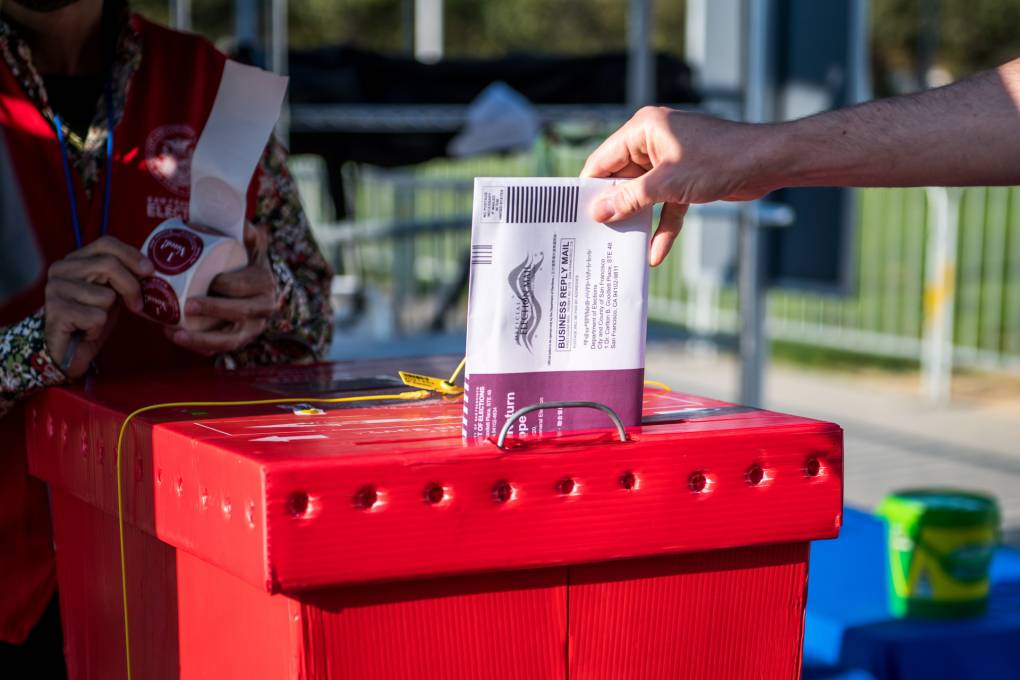
"caption": "A voter drops off a ballot at a new outdoor voting center near Civic Center Plaza in San Francisco on Oct. 5, 2020, the first day of early voting.",
"description": null,
"title": "ballotstatus",
"credit": "Beth LaBerge/KQED",
"status": "inherit",
"isLoading": false,
"fetchFailed": false
}
},
"audioPlayerReducer": {
"postId": "stream_live",
"isPaused": true,
"isPlaying": false,
"pfsActive": false,
"pledgeModalIsOpen": true,
"playerDrawerIsOpen": false,
"liveAudioPlayStartedAt": 0,
"liveAudioPlayContext": ""
},
"authorsReducer": {
"lisapickoffwhite-2": {
"type": "authors",
"id": "199",
"meta": {
"index": "authors_1716337520",
"id": "199",
"found": true
},
"name": "Lisa Pickoff-White",
"firstName": "Lisa",
"lastName": "Pickoff-White",
"slug": "lisapickoffwhite-2",
"email": "lpickoffwhite@kqed.org",
"display_author_email": false,
"staff_mastheads": [
"news"
],
"title": "Data Journalist, Senior Producer",
"bio": "Lisa Pickoff-White is KQED's data reporter. Lisa specializes in simplifying complex topics and bringing them to life through compelling visuals, including photography and data visualizations. She previously has worked at the Center for Investigative Reporting and other national outlets. Her work has been honored with awards from the Online News Association, Investigative Reporters and Editors, the Society of Professional Journalists and SXSW Interactive. \u003cstrong> \u003c/strong>",
"avatar": "https://secure.gravatar.com/avatar/5513c5f3967df792aa65bee2501e84d6?s=600&d=blank&r=g",
"twitter": "pickoffwhite",
"facebook": null,
"instagram": null,
"linkedin": null,
"sites": [
{
"site": "",
"roles": [
"editor"
]
},
{
"site": "arts",
"roles": []
},
{
"site": "news",
"roles": [
"administrator"
]
},
{
"site": "about",
"roles": [
"editor"
]
},
{
"site": "stateofhealth",
"roles": [
"administrator"
]
},
{
"site": "science",
"roles": [
"editor"
]
},
{
"site": "quest",
"roles": [
"editor"
]
},
{
"site": "forum",
"roles": [
"editor"
]
}
],
"headData": {
"title": "Lisa Pickoff-White | KQED",
"description": "Data Journalist, Senior Producer",
"ogImgSrc": "https://secure.gravatar.com/avatar/5513c5f3967df792aa65bee2501e84d6?s=600&d=blank&r=g",
"twImgSrc": "https://secure.gravatar.com/avatar/5513c5f3967df792aa65bee2501e84d6?s=600&d=blank&r=g"
},
"isLoading": false,
"link": "/author/lisapickoffwhite-2"
},
"gmarzorati": {
"type": "authors",
"id": "227",
"meta": {
"index": "authors_1716337520",
"id": "227",
"found": true
},
"name": "Guy Marzorati",
"firstName": "Guy",
"lastName": "Marzorati",
"slug": "gmarzorati",
"email": "gmarzorati@KQED.org",
"display_author_email": true,
"staff_mastheads": [
"news"
],
"title": "Correspondent",
"bio": "Guy Marzorati is a correspondent on KQED's California Politics and Government Desk, based in San Jose. A graduate of Santa Clara University, Guy joined KQED in 2013. He reports on state and local politics and produces KQED's digital voter guide.",
"avatar": "https://secure.gravatar.com/avatar/e7038b8dbfd55b104369b76b1cd0b9de?s=600&d=blank&r=g",
"twitter": "guymarzorati",
"facebook": null,
"instagram": null,
"linkedin": null,
"sites": [
{
"site": "",
"roles": [
"editor"
]
},
{
"site": "news",
"roles": [
"editor"
]
},
{
"site": "science",
"roles": [
"editor"
]
},
{
"site": "forum",
"roles": [
"editor"
]
},
{
"site": "elections",
"roles": [
"editor"
]
},
{
"site": "liveblog",
"roles": [
"editor"
]
}
],
"headData": {
"title": "Guy Marzorati | KQED",
"description": "Correspondent",
"ogImgSrc": "https://secure.gravatar.com/avatar/e7038b8dbfd55b104369b76b1cd0b9de?s=600&d=blank&r=g",
"twImgSrc": "https://secure.gravatar.com/avatar/e7038b8dbfd55b104369b76b1cd0b9de?s=600&d=blank&r=g"
},
"isLoading": false,
"link": "/author/gmarzorati"
},
"carlysevern": {
"type": "authors",
"id": "3243",
"meta": {
"index": "authors_1716337520",
"id": "3243",
"found": true
},
"name": "Carly Severn",
"firstName": "Carly",
"lastName": "Severn",
"slug": "carlysevern",
"email": "csevern@kqed.org",
"display_author_email": false,
"staff_mastheads": [
"news"
],
"title": "Senior Editor, Audience News ",
"bio": "Carly is KQED's Senior Editor of Audience News on the Digital News team, and has reported for the California Report Magazine, Bay Curious and KQED Arts. She's formerly the host of \u003ca href=\"http://ww2.kqed.org/pop/category/the-cooler/\" rel=\"noopener noreferrer\">The Cooler\u003c/a> podcast.",
"avatar": "https://secure.gravatar.com/avatar/54037bf5c128fe678f0ef26cec97a93f2e7f220a22d7285703328f12c42c1b1d?s=600&d=blank&r=g",
"twitter": "teacupinthebay",
"bluesky": null,
"facebook": null,
"instagram": null,
"linkedin": null,
"sites": [
{
"site": "",
"roles": [
"editor"
]
},
{
"site": "arts",
"roles": [
"editor"
]
},
{
"site": "news",
"roles": [
"administrator"
]
},
{
"site": "pop",
"roles": [
"editor"
]
},
{
"site": "futureofyou",
"roles": [
"editor"
]
},
{
"site": "about",
"roles": [
"administrator"
]
},
{
"site": "mindshift",
"roles": [
"editor"
]
},
{
"site": "bayareabites",
"roles": [
"editor"
]
},
{
"site": "stateofhealth",
"roles": [
"editor"
]
},
{
"site": "science",
"roles": [
"editor"
]
},
{
"site": "food",
"roles": [
"contributor"
]
},
{
"site": "forum",
"roles": [
"editor"
]
},
{
"site": "perspectives",
"roles": [
"administrator"
]
},
{
"site": "liveblog",
"roles": [
"editor"
]
}
],
"headData": {
"title": "Carly Severn | KQED",
"description": "Senior Editor, Audience News ",
"ogImgSrc": "https://secure.gravatar.com/avatar/54037bf5c128fe678f0ef26cec97a93f2e7f220a22d7285703328f12c42c1b1d?s=600&d=blank&r=g",
"twImgSrc": "https://secure.gravatar.com/avatar/54037bf5c128fe678f0ef26cec97a93f2e7f220a22d7285703328f12c42c1b1d?s=600&d=blank&r=g"
},
"isLoading": false,
"link": "/author/carlysevern"
},
"mwiley": {
"type": "authors",
"id": "11526",
"meta": {
"index": "authors_1716337520",
"id": "11526",
"found": true
},
"name": "Michelle Wiley",
"firstName": "Michelle",
"lastName": "Wiley",
"slug": "mwiley",
"email": "mwiley@KQED.org",
"display_author_email": true,
"staff_mastheads": [],
"title": null,
"bio": "Michelle Wiley was the senior editor of weekends.",
"avatar": "https://secure.gravatar.com/avatar/3b897d82a09e8587e8e73fa69fbcc635?s=600&d=blank&r=g",
"twitter": "michelleewiley",
"facebook": null,
"instagram": null,
"linkedin": null,
"sites": [
{
"site": "",
"roles": [
"editor"
]
},
{
"site": "arts",
"roles": [
"editor"
]
},
{
"site": "news",
"roles": [
"subscriber"
]
},
{
"site": "lowdown",
"roles": [
"editor"
]
},
{
"site": "science",
"roles": [
"editor"
]
},
{
"site": "podcasts",
"roles": [
"editor"
]
}
],
"headData": {
"title": "Michelle Wiley | KQED",
"description": null,
"ogImgSrc": "https://secure.gravatar.com/avatar/3b897d82a09e8587e8e73fa69fbcc635?s=600&d=blank&r=g",
"twImgSrc": "https://secure.gravatar.com/avatar/3b897d82a09e8587e8e73fa69fbcc635?s=600&d=blank&r=g"
},
"isLoading": false,
"link": "/author/mwiley"
}
},
"pagesReducer": {
"news_tag_election-explainers": {
"type": "terms",
"id": "news_28639",
"meta": {
"index": "terms_1716263798",
"site": "news",
"id": "28639",
"score": 10.403393
},
"featImg": null,
"name": "Election Explainers",
"description": null,
"taxonomy": "tag",
"headData": {
"twImgId": null,
"twTitle": null,
"ogTitle": null,
"ogImgId": null,
"twDescription": null,
"description": null,
"title": "Election Explainers Archives | KQED News",
"ogDescription": null
},
"ttid": 28656,
"slug": "election-explainers",
"isLoading": false,
"title": "Election Explainers",
"pageMeta": {
"site": "news",
"WpPageTemplate": "page-topic-editorial",
"currentPage": 4
},
"blocks": [
{
"blockName": "kqed/post-list",
"attrs": {
"layout": "cardArticle2",
"query": "posts/news?tag=election-explainers",
"seeMore": false,
"paginated": true,
"page": 4
}
},
{
"blockName": "kqed/ad"
}
]
}
},
"pfsSessionReducer": {},
"postsReducer": {
"stream_live": {
"type": "live",
"id": "stream_live",
"audioUrl": "https://streams.kqed.org/kqedradio",
"title": "Live Stream",
"excerpt": "Live Stream information currently unavailable.",
"link": "/radio",
"featImg": "",
"label": {
"name": "KQED Live",
"link": "/"
}
},
"stream_kqedNewscast": {
"type": "posts",
"id": "stream_kqedNewscast",
"audioUrl": "https://www.kqed.org/.stream/anon/radio/RDnews/newscast.mp3?_=1",
"title": "KQED Newscast",
"featImg": "",
"label": {
"name": "88.5 FM",
"link": "/"
}
},
"news_11887958": {
"type": "posts",
"id": "news_11887958",
"meta": {
"index": "posts_1716263798",
"site": "news",
"id": "11887958",
"score": null,
"sort": [
1631573622000
]
},
"parent": 0,
"labelTerm": {
"site": "news"
},
"blocks": [],
"publishDate": 1631573622,
"format": "standard",
"disqusTitle": "California Recall Election Result: When Will We Know?",
"title": "California Recall Election Result: When Will We Know?",
"headTitle": "KQED News",
"content": "\u003cp>On Tuesday, voting ends in California’s contentious and highly anticipated recall election in which voters will decide whether Gavin Newsom will be replaced as governor.\u003c/p>\n\u003cp>While many Californians will vote on Sept. 14 itself, a large number of voters will already have cast their ballots by mail-in voting or by taking advantage of early in-person voting around the state.\u003c/p>\n\u003cp>But what about the California recall election results? When might we get a definitive answer on whether Newsom will be recalled? And how \u003cem>do\u003c/em> elections get called?\u003c/p>\n\u003ch3>What does early voting mean for getting results on election night and beyond?\u003c/h3>\n\u003cp>Election officials expect to report a large number of returns shortly after polls close at 8 p.m, especially in counties where many voters have already cast their ballots.\u003c/p>\n\u003cp>\"The first returns will be the vote-by-mail ballots we've counted to date,\" said Lynda Roberts, registrar of voters in Marin County, where turnout is already above 50%. \"We'll be updating throughout the night as we get polling place returns.\"\u003c/p>\n\u003cp>In the days after the election, officials will continue to count votes — mostly ballots dropped off at voting locations on Election Day, said Deva Marie Proto, the Sonoma County registrar of voters.\u003c/p>\n\u003cp>\"We'll need a few days to do all of the signature checking and processing of those,\" she added.\u003c/p>\n\u003cp>In 2020, Republicans were much less likely than Democrats to vote early by mail, in part because then-President Donald Trump repeatedly claimed — without evidence — that voting by mail was unsafe and susceptible to fraud.\u003c/p>\n\u003cp>If that trend continues, the results in the recall election could swing back and forth on election night, depending on which types of votes are being reported: mail ballots or in-person votes.\u003c/p>\n\u003cp>Most California voters cast their ballots by mail, a trend that accelerated during the pandemic since many voters were reluctant to enter crowded polling places on Election Day. About 87% of California voters cast their ballots by mail in last year’s presidential election.\u003c/p>\n\u003ch3>\u003cstrong>How long will the actual vote counting take?\u003c/strong>\u003c/h3>\n\u003cp>The explosion of early voting may beef up the initial vote counts released in the Bay Area, but election officials say a few factors will dictate how long the entire vote count will take.\u003c/p>\n\u003cp>For one, \u003ca href=\"https://www.kqed.org/news/11885679/how-to-fill-out-your-recall-ballot-and-how-to-correct-a-mistake\">ballots mailed on Election Day can still be counted\u003c/a>, as long as they are postmarked by Sept. 14 and received by county elections officials by Sept. 21. If you're planning to return your mail-in ballot close to Election Day, it's probably wise to use a county drop box or submit your ballot at a voting location to avoid having your ballot miss the last U.S. Postal Service collection on Sept. 14. \u003ca href=\"https://www.kqed.org/news/11885994/newsom-recall-election-find-your-early-voting-site-or-ballot-drop-off-location\">Find your nearest drop box or voting location.\u003c/a>\u003c/p>\n\u003cp>And California's \u003ca href=\"https://www.sos.ca.gov/elections/voter-registration/same-day-reg\">same-day voter registration (also known as conditional registration) rules\u003c/a> allow voters to show up at a voting location and register on Election Day, while casting a provisional ballot that will be further checked by election workers.\u003cspan style=\"font-weight: 400;\">[aside postID=news_11839465,news_11840343,news_11841201]\u003c/span>\u003c/p>\n\u003cp>The number of provisional votes cast is usually a good indicator of how many ballots are left to count after Election Day, John Gardner, Solano County assistant registrar of voters, told KQED in 2020.\u003c/p>\n\u003cp>“That usually tells us how long we’ll need to go,\" Gardner said. \"Prior to Election Day, it’s really hard to say.”\u003c/p>\n\u003cp>Mail-in ballots take longer to process than in-person votes because election officials must remove the ballots from their envelopes, check the voter’s registration and make sure that the voter’s signature on the envelope matches the one on file. Then the votes can be counted.\u003c/p>\n\u003cp>When voters cast ballots in person, officials perform security measures at the polling place so that the votes can be counted soon after the polls close.\u003c/p>\n\u003cp>If the recall is successful, the deadline to certify the results of the election is Oct. 22. Throughout September and into October, election workers will process late-arriving ballots and work with voters to \u003ca href=\"https://www.kqed.org/news/11885679/how-to-fill-out-your-recall-ballot-and-how-to-correct-a-mistake\">\"cure\" ballots and address any mismatched signatures on ballot envelopes\u003c/a>.\u003c/p>\n\u003cfigure id=\"attachment_11887907\" class=\"wp-caption alignnone\" style=\"max-width: 2560px\">\u003cimg class=\"wp-image-11887907 size-full\" src=\"https://ww2.kqed.org/app/uploads/sites/10/2021/09/GettyImages-1339151147-scaled.jpg\" alt=\"Gov. Newsom gestures behind a podium in front of a massive California flag.\" width=\"2560\" height=\"1669\" srcset=\"https://ww2.kqed.org/app/uploads/sites/10/2021/09/GettyImages-1339151147-scaled.jpg 2560w, https://ww2.kqed.org/app/uploads/sites/10/2021/09/GettyImages-1339151147-800x522.jpg 800w, https://ww2.kqed.org/app/uploads/sites/10/2021/09/GettyImages-1339151147-1020x665.jpg 1020w, https://ww2.kqed.org/app/uploads/sites/10/2021/09/GettyImages-1339151147-160x104.jpg 160w, https://ww2.kqed.org/app/uploads/sites/10/2021/09/GettyImages-1339151147-1536x1002.jpg 1536w, https://ww2.kqed.org/app/uploads/sites/10/2021/09/GettyImages-1339151147-2048x1335.jpg 2048w, https://ww2.kqed.org/app/uploads/sites/10/2021/09/GettyImages-1339151147-1920x1252.jpg 1920w\" sizes=\"(max-width: 2560px) 100vw, 2560px\">\u003cfigcaption class=\"wp-caption-text\">California Gov. Gavin Newsom speaks during a No on the Recall campaign event at the IBEW-NECA Joint Apprenticeship Training Committee center on Sept. 8, 2021, in San Leandro, California. \u003ccite>(Justin Sullivan/Getty Images)\u003c/cite>\u003c/figcaption>\u003c/figure>\n\u003ch3>\u003cstrong>If a result is clear, who declares a winner?\u003c/strong>\u003c/h3>\n\u003cp>Election officials are in the business of processing and counting ballots, not calling races.\u003c/p>\n\u003cp>\"We don't call the election or predict the election,\" said Proto, the Sonoma County registrar.\u003c/p>\n\u003cp>In our coverage of national and state races, KQED relies on the races called by The Associated Press (AP), which are based on data analyses that include vote counts as well as polling research.\u003c/p>\n\u003cp>Winners are declared only when AP is fully confident a race has been won — defined most simply as the point when the number of remaining votes do not provide a path to victory for a trailing candidate.\u003c/p>\n\u003cp>Before Election Day, AP analysts study county-by-county election results for past races, vote-counting procedures, recount requirements and changes to state election laws, relying on information from AP’s election research group.\u003c/p>\n\u003cp>On election night, they study the incoming votes and are in constant contact with AP’s vote count team, in search of the latest information about what’s been counted so far and how many ballots may still be left to count.\u003c/p>\n\u003cp>One thing to note: If the recall fails, the question of who would replace Newsom would be irrelevant. This means AP will only declare a winner among the replacement candidates if the vote to recall Newsom is successful.\u003c/p>\n\u003cp>That's not to say that we \u003cem>won't\u003c/em> hear about the performance of the replacement candidates, not least because the top vote-getter on the replacement ballot could become obvious before the outcome of the recall vote is decided. AP says it'll report on the status of the replacement election in its news coverage, but will not declare a winner unless Newsom is recalled.\u003c/p>\n\u003ch3>When will The Associated Press call the recall election?\u003c/h3>\n\u003cp>It's hard to say, exactly, what the timing will be given the unique nature of the recall election and the fact that there will be two results to watch: the fate of the recall question itself, and the race among candidates vying to potentially replace Newsom if he is removed from office.\u003c/p>\n\u003cp>In 2020,\u003ca href=\"https://twitter.com/AP_Politics/status/1235052762380959745\"> The Associated Press called California for Bernie Sanders\u003c/a> in the presidential primary the minute polls closed at 8 p.m. Pacific Time. In the November general election, \u003ca href=\"https://twitter.com/AP_Politics/status/1323837736755843074\">the AP called California for Joe Biden at the same time\u003c/a>: 8 p.m Pacific Time.\u003c/p>\n\u003cp>But in 2018, when Newsom captured the governorship by a historic margin, \u003ca href=\"https://twitter.com/AP_Politics/status/1060034330242805760\">it took until 9 p.m. Pacific Time for AP\u003c/a> to declare him the winner.\u003c/p>\n\u003cp>[ad fullwidth]\u003c/p>\n\u003ch3>\u003cstrong>What happens to my ballot after it's counted?\u003c/strong>\u003c/h3>\n\u003cp>Just because your ballot has been counted does not mean it's on the fast track to the paper shredder.\u003c/p>\n\u003cp>State law requires election officials to hold on to polling place ballots and paper copies, along with vote-by-mail ballots and envelopes, for 22 months after the election.\u003c/p>\n\u003cp>Those counted ballots are traditionally used in the state-mandated election audit — a manual tally in which election workers hand-count all the votes in 1% of precincts.\u003c/p>\n\u003cp>\"The paper ballot is the official record,\" said Gardner, in Solano County. \"If there’s ever a court case, we go back to that paper record.\"\u003c/p>\n\u003cp>\u003cem>This post contains reporting from The Associated Press.\u003c/em>\u003c/p>\n\u003cp>[ad floatright]\u003c/p>\n",
"disqusIdentifier": "11887958 https://ww2.kqed.org/news/?p=11887958",
"disqusUrl": "https://ww2.kqed.org/news/2021/09/13/california-recall-election-result-when-will-we-know/",
"stats": {
"hasVideo": false,
"hasChartOrMap": false,
"hasAudio": false,
"hasPolis": false,
"wordCount": 1285,
"hasGoogleForm": false,
"hasGallery": false,
"hasHearkenModule": false,
"iframeSrcs": [],
"paragraphCount": 36
},
"modified": 1631577561,
"excerpt": "California recall election results: What kind of vote counts might be released on Election Day? Who calls races? We have answers.",
"headData": {
"twImgId": "",
"twTitle": "",
"ogTitle": "",
"ogImgId": "",
"twDescription": "",
"description": "California recall election results: What kind of vote counts might be released on Election Day? Who calls races? We have answers.",
"title": "California Recall Election Result: When Will We Know? | KQED",
"ogDescription": "",
"schema": {
"@context": "https://schema.org",
"@type": "NewsArticle",
"headline": "California Recall Election Result: When Will We Know?",
"datePublished": "2021-09-13T15:53:42-07:00",
"dateModified": "2021-09-13T16:59:21-07:00",
"image": "https://cdn.kqed.org/wp-content/uploads/2020/02/KQED-OG-Image@1x.png",
"isAccessibleForFree": "True",
"publisher": {
"@type": "NewsMediaOrganization",
"@id": "https://www.kqed.org/#organization",
"name": "KQED",
"logo": "https://cdn.kqed.org/wp-content/uploads/2020/02/KQED-OG-Image@1x.png",
"url": "https://www.kqed.org",
"sameAs": [
"https://www.facebook.com/KQED",
"https://twitter.com/KQED",
"https://www.instagram.com/kqed/",
"https://www.tiktok.com/@kqedofficial",
"https://www.linkedin.com/company/kqed",
"https://www.youtube.com/channel/UCeC0IOo7i1P_61zVUWbJ4nw"
]
}
}
},
"guestAuthors": [],
"slug": "california-recall-election-result-when-will-we-know",
"status": "publish",
"path": "/news/11887958/california-recall-election-result-when-will-we-know",
"audioTrackLength": null,
"parsedContent": [
{
"type": "contentString",
"content": "\u003cdiv class=\"post-body\">\u003cp>\u003cp>On Tuesday, voting ends in California’s contentious and highly anticipated recall election in which voters will decide whether Gavin Newsom will be replaced as governor.\u003c/p>\n\u003cp>While many Californians will vote on Sept. 14 itself, a large number of voters will already have cast their ballots by mail-in voting or by taking advantage of early in-person voting around the state.\u003c/p>\n\u003cp>But what about the California recall election results? When might we get a definitive answer on whether Newsom will be recalled? And how \u003cem>do\u003c/em> elections get called?\u003c/p>\n\u003ch3>What does early voting mean for getting results on election night and beyond?\u003c/h3>\n\u003cp>Election officials expect to report a large number of returns shortly after polls close at 8 p.m, especially in counties where many voters have already cast their ballots.\u003c/p>\n\u003cp>\"The first returns will be the vote-by-mail ballots we've counted to date,\" said Lynda Roberts, registrar of voters in Marin County, where turnout is already above 50%. \"We'll be updating throughout the night as we get polling place returns.\"\u003c/p>\n\u003cp>In the days after the election, officials will continue to count votes — mostly ballots dropped off at voting locations on Election Day, said Deva Marie Proto, the Sonoma County registrar of voters.\u003c/p>\n\u003cp>\"We'll need a few days to do all of the signature checking and processing of those,\" she added.\u003c/p>\n\u003cp>In 2020, Republicans were much less likely than Democrats to vote early by mail, in part because then-President Donald Trump repeatedly claimed — without evidence — that voting by mail was unsafe and susceptible to fraud.\u003c/p>\n\u003cp>If that trend continues, the results in the recall election could swing back and forth on election night, depending on which types of votes are being reported: mail ballots or in-person votes.\u003c/p>\n\u003cp>Most California voters cast their ballots by mail, a trend that accelerated during the pandemic since many voters were reluctant to enter crowded polling places on Election Day. About 87% of California voters cast their ballots by mail in last year’s presidential election.\u003c/p>\n\u003ch3>\u003cstrong>How long will the actual vote counting take?\u003c/strong>\u003c/h3>\n\u003cp>The explosion of early voting may beef up the initial vote counts released in the Bay Area, but election officials say a few factors will dictate how long the entire vote count will take.\u003c/p>\n\u003cp>For one, \u003ca href=\"https://www.kqed.org/news/11885679/how-to-fill-out-your-recall-ballot-and-how-to-correct-a-mistake\">ballots mailed on Election Day can still be counted\u003c/a>, as long as they are postmarked by Sept. 14 and received by county elections officials by Sept. 21. If you're planning to return your mail-in ballot close to Election Day, it's probably wise to use a county drop box or submit your ballot at a voting location to avoid having your ballot miss the last U.S. Postal Service collection on Sept. 14. \u003ca href=\"https://www.kqed.org/news/11885994/newsom-recall-election-find-your-early-voting-site-or-ballot-drop-off-location\">Find your nearest drop box or voting location.\u003c/a>\u003c/p>\n\u003cp>And California's \u003ca href=\"https://www.sos.ca.gov/elections/voter-registration/same-day-reg\">same-day voter registration (also known as conditional registration) rules\u003c/a> allow voters to show up at a voting location and register on Election Day, while casting a provisional ballot that will be further checked by election workers.\u003cspan style=\"font-weight: 400;\">\u003c/p>\u003c/div>",
"attributes": {
"named": {},
"numeric": []
}
},
{
"type": "component",
"content": "",
"name": "aside",
"attributes": {
"named": {
"postid": "news_11839465,news_11840343,news_11841201",
"label": ""
},
"numeric": []
}
},
{
"type": "contentString",
"content": "\u003cdiv class=\"post-body\">\u003cp>\u003c/span>\u003c/p>\n\u003cp>The number of provisional votes cast is usually a good indicator of how many ballots are left to count after Election Day, John Gardner, Solano County assistant registrar of voters, told KQED in 2020.\u003c/p>\n\u003cp>“That usually tells us how long we’ll need to go,\" Gardner said. \"Prior to Election Day, it’s really hard to say.”\u003c/p>\n\u003cp>Mail-in ballots take longer to process than in-person votes because election officials must remove the ballots from their envelopes, check the voter’s registration and make sure that the voter’s signature on the envelope matches the one on file. Then the votes can be counted.\u003c/p>\n\u003cp>When voters cast ballots in person, officials perform security measures at the polling place so that the votes can be counted soon after the polls close.\u003c/p>\n\u003cp>If the recall is successful, the deadline to certify the results of the election is Oct. 22. Throughout September and into October, election workers will process late-arriving ballots and work with voters to \u003ca href=\"https://www.kqed.org/news/11885679/how-to-fill-out-your-recall-ballot-and-how-to-correct-a-mistake\">\"cure\" ballots and address any mismatched signatures on ballot envelopes\u003c/a>.\u003c/p>\n\u003cfigure id=\"attachment_11887907\" class=\"wp-caption alignnone\" style=\"max-width: 2560px\">\u003cimg class=\"wp-image-11887907 size-full\" src=\"https://ww2.kqed.org/app/uploads/sites/10/2021/09/GettyImages-1339151147-scaled.jpg\" alt=\"Gov. Newsom gestures behind a podium in front of a massive California flag.\" width=\"2560\" height=\"1669\" srcset=\"https://ww2.kqed.org/app/uploads/sites/10/2021/09/GettyImages-1339151147-scaled.jpg 2560w, https://ww2.kqed.org/app/uploads/sites/10/2021/09/GettyImages-1339151147-800x522.jpg 800w, https://ww2.kqed.org/app/uploads/sites/10/2021/09/GettyImages-1339151147-1020x665.jpg 1020w, https://ww2.kqed.org/app/uploads/sites/10/2021/09/GettyImages-1339151147-160x104.jpg 160w, https://ww2.kqed.org/app/uploads/sites/10/2021/09/GettyImages-1339151147-1536x1002.jpg 1536w, https://ww2.kqed.org/app/uploads/sites/10/2021/09/GettyImages-1339151147-2048x1335.jpg 2048w, https://ww2.kqed.org/app/uploads/sites/10/2021/09/GettyImages-1339151147-1920x1252.jpg 1920w\" sizes=\"(max-width: 2560px) 100vw, 2560px\">\u003cfigcaption class=\"wp-caption-text\">California Gov. Gavin Newsom speaks during a No on the Recall campaign event at the IBEW-NECA Joint Apprenticeship Training Committee center on Sept. 8, 2021, in San Leandro, California. \u003ccite>(Justin Sullivan/Getty Images)\u003c/cite>\u003c/figcaption>\u003c/figure>\n\u003ch3>\u003cstrong>If a result is clear, who declares a winner?\u003c/strong>\u003c/h3>\n\u003cp>Election officials are in the business of processing and counting ballots, not calling races.\u003c/p>\n\u003cp>\"We don't call the election or predict the election,\" said Proto, the Sonoma County registrar.\u003c/p>\n\u003cp>In our coverage of national and state races, KQED relies on the races called by The Associated Press (AP), which are based on data analyses that include vote counts as well as polling research.\u003c/p>\n\u003cp>Winners are declared only when AP is fully confident a race has been won — defined most simply as the point when the number of remaining votes do not provide a path to victory for a trailing candidate.\u003c/p>\n\u003cp>Before Election Day, AP analysts study county-by-county election results for past races, vote-counting procedures, recount requirements and changes to state election laws, relying on information from AP’s election research group.\u003c/p>\n\u003cp>On election night, they study the incoming votes and are in constant contact with AP’s vote count team, in search of the latest information about what’s been counted so far and how many ballots may still be left to count.\u003c/p>\n\u003cp>One thing to note: If the recall fails, the question of who would replace Newsom would be irrelevant. This means AP will only declare a winner among the replacement candidates if the vote to recall Newsom is successful.\u003c/p>\n\u003cp>That's not to say that we \u003cem>won't\u003c/em> hear about the performance of the replacement candidates, not least because the top vote-getter on the replacement ballot could become obvious before the outcome of the recall vote is decided. AP says it'll report on the status of the replacement election in its news coverage, but will not declare a winner unless Newsom is recalled.\u003c/p>\n\u003ch3>When will The Associated Press call the recall election?\u003c/h3>\n\u003cp>It's hard to say, exactly, what the timing will be given the unique nature of the recall election and the fact that there will be two results to watch: the fate of the recall question itself, and the race among candidates vying to potentially replace Newsom if he is removed from office.\u003c/p>\n\u003cp>In 2020,\u003ca href=\"https://twitter.com/AP_Politics/status/1235052762380959745\"> The Associated Press called California for Bernie Sanders\u003c/a> in the presidential primary the minute polls closed at 8 p.m. Pacific Time. In the November general election, \u003ca href=\"https://twitter.com/AP_Politics/status/1323837736755843074\">the AP called California for Joe Biden at the same time\u003c/a>: 8 p.m Pacific Time.\u003c/p>\n\u003cp>But in 2018, when Newsom captured the governorship by a historic margin, \u003ca href=\"https://twitter.com/AP_Politics/status/1060034330242805760\">it took until 9 p.m. Pacific Time for AP\u003c/a> to declare him the winner.\u003c/p>\n\u003cp>\u003c/p>\u003c/div>",
"attributes": {
"named": {},
"numeric": []
}
},
{
"type": "component",
"content": "",
"name": "ad",
"attributes": {
"named": {
"label": "fullwidth"
},
"numeric": [
"fullwidth"
]
}
},
{
"type": "contentString",
"content": "\u003cdiv class=\"post-body\">\u003cp>\u003c/p>\n\u003ch3>\u003cstrong>What happens to my ballot after it's counted?\u003c/strong>\u003c/h3>\n\u003cp>Just because your ballot has been counted does not mean it's on the fast track to the paper shredder.\u003c/p>\n\u003cp>State law requires election officials to hold on to polling place ballots and paper copies, along with vote-by-mail ballots and envelopes, for 22 months after the election.\u003c/p>\n\u003cp>Those counted ballots are traditionally used in the state-mandated election audit — a manual tally in which election workers hand-count all the votes in 1% of precincts.\u003c/p>\n\u003cp>\"The paper ballot is the official record,\" said Gardner, in Solano County. \"If there’s ever a court case, we go back to that paper record.\"\u003c/p>\n\u003cp>\u003cem>This post contains reporting from The Associated Press.\u003c/em>\u003c/p>\n\u003cp>\u003c/p>\u003c/div>",
"attributes": {
"named": {},
"numeric": []
}
},
{
"type": "component",
"content": "",
"name": "ad",
"attributes": {
"named": {
"label": "floatright"
},
"numeric": [
"floatright"
]
}
},
{
"type": "contentString",
"content": "\u003cdiv class=\"post-body\">\u003cp>\u003c/p>\n\u003c/div>\u003c/p>",
"attributes": {
"named": {},
"numeric": []
}
}
],
"link": "/news/11887958/california-recall-election-result-when-will-we-know",
"authors": [
"227",
"3243"
],
"categories": [
"news_8",
"news_13"
],
"tags": [
"news_29465",
"news_28639",
"news_27626",
"news_16",
"news_28404",
"news_17968",
"news_2027"
],
"featImg": "news_11847170",
"label": "news"
},
"news_11885994": {
"type": "posts",
"id": "news_11885994",
"meta": {
"index": "posts_1716263798",
"site": "news",
"id": "11885994",
"score": null,
"sort": [
1630004855000
]
},
"guestAuthors": [],
"slug": "newsom-recall-election-find-your-early-voting-site-or-ballot-drop-off-location",
"title": "Newsom Recall Election: Find Your Early Voting Site or Ballot Drop-Off Location",
"publishDate": 1630004855,
"format": "standard",
"headTitle": "Newsom Recall Election: Find Your Early Voting Site or Ballot Drop-Off Location | KQED",
"labelTerm": {
"site": "news"
},
"content": "\u003cp>\u003ca href=\"https://www.kqed.org/news/11887042/eleccion-revocatoria-contra-newsom-encuentre-su-lugar-de-votacion-anticipada-o-su-lugar-de-entrega-de-boletas\">\u003cem>Leer en español\u003c/em>\u003c/a>\u003c/p>\n\u003cul>\n\u003cli>\u003cstrong>\u003ca href=\"#ask\">Ask us: What do you want to know about voting in the Newsom recall election?\u003c/a>\u003c/strong>\u003c/li>\n\u003c/ul>\n\u003cp>California voters are currently faced with a recall election to decide whether Gavin Newsom will be replaced as governor of this state.\u003c/p>\n\u003cp>All registered voters should already have received a ballot in the mail. And while Election Day is Tuesday, Sept. 14, you also have several options to cast your ballot early.\u003c/p>\n\u003cul>\n\u003cli>\u003ca href=\"https://www.kqed.org/news/11885679/how-to-fill-out-your-recall-ballot-and-how-to-correct-a-mistake#missingballot\">\u003cstrong>Haven’t received your ballot yet? What to do\u003c/strong>\u003c/a>\u003c/li>\n\u003c/ul>\n\u003cp>A reminder: If a majority of voters in this recall election says “yes” to recalling Newsom, he will be removed from office, and whichever replacement candidate gets the most votes will become governor of California for the rest of Newsom’s term, ending in January 2023.\u003c/p>\n\u003cp>If you’re wondering where to drop off your completed mail-in ballot in the Bay Area, where you can vote early in person or how to find your polling place for Election Day, read on.\u003c/p>\n\u003cp>And if you’re concerned you might have made a mistake when filling out your ballot, read \u003ca href=\"https://www.kqed.org/news/11885679/how-to-fill-out-your-recall-ballot-and-how-to-correct-a-mistake\">our guide to addressing common errors on your ballot \u003cem>before\u003c/em> you mail it \u003c/a>— and find out how to get a fresh ballot or vote in person if you’ve really messed up.\u003c/p>\n\u003cp>\u003cstrong>Skip straight to: \u003c/strong>\u003c/p>\n\u003cul>\n\u003cli>\u003cstrong>\u003ca href=\"#find\">How to find my early voting site or ballot drop-off location\u003c/a>\u003c/strong>\u003c/li>\n\u003cli>\u003cstrong>\u003ca href=\"#county\">How to find my polling place for Election Day\u003c/a>\u003c/strong>\u003c/li>\n\u003c/ul>\n\u003ch3>Can I mail my ballot through the Postal Service?\u003c/h3>\n\u003cp>Yes, you can mail your completed ballot via the U.S. Postal Service at any regular collection box. The envelope is postage paid, so it doesn’t require a stamp, and it’ll be counted as long as it’s postmarked by Election Day (Sept. 14) and arrives at the registrar’s office by Sept. 21. Depending on where your nearest Postal Service collection box is located, this could be the most convenient option for you — especially if you don’t have the use of a car.\u003c/p>\n\u003cp>If you’re planning to mail your ballot on Election Day, be \u003cem>very\u003c/em> sure that you don’t miss the last collection time for that specific mailbox, or that you’re not dropping it off at a post office that’s already closed. Doing this will mean your ballot is not postmarked on Election Day, and that your ballot won’t be counted when it reaches your county’s election office.\u003c/p>\n\u003ch3>Can I drop off my ballot in a drop box or at a voting location?\u003c/h3>\n\u003cp>Once you’ve completed your mail-in ballot, you can drop it off by hand at an official drop box or a voting location instead of mailing it via a U.S. Postal Service collection box. \u003cstrong>\u003ca href=\"#find\">Find your nearest drop box or voting location\u003c/a>\u003ca href=\"#find\">.\u003c/a>\u003c/strong>\u003c/p>\n\u003cp>A few reasons you might prefer to hand-deliver your completed ballot:\u003c/p>\n\u003cul>\n\u003cli>\u003cstrong>Peace of mind\u003c/strong>: There’s a satisfaction that comes with knowing your ballot should now travel straight to your county elections office, rather than having to go through the Postal Service collection and sorting process for delivery.\u003c/li>\n\u003cli>\u003cstrong>Timing\u003c/strong>: If Election Day is drawing near, using a drop box or a voting location to drop off your ballot directly is the best way to be sure it’ll reach your county elections office in time to be counted.\u003c/li>\n\u003cli>\u003cstrong>Assistance\u003c/strong>: If you drop off your ballot at a voting location during opening hours, and you have a few lingering questions about your ballot or the process, chances are good that you’ll find someone there to help answer your questions in person.\u003c/li>\n\u003c/ul>\n\u003cp>Regardless of how you deliver it, you can \u003ca href=\"https://california.ballottrax.net/voter/\">sign up to track your ballot’s progress with the “Where’s My Ballot?” online tool\u003c/a>, and be reassured that it’s on its way.\u003c/p>\n\u003cfigure id=\"attachment_11841859\" class=\"wp-caption alignnone\" style=\"max-width: 1920px\">\u003cimg loading=\"lazy\" decoding=\"async\" class=\"wp-image-11841859 size-full\" src=\"https://ww2.kqed.org/app/uploads/sites/10/2020/10/RS45273_002_KQED_ElectionStockPhotos_JoshYule_10062020-qut.jpg\" alt=\"Hand holding ballot drops it in red cardboard ballot box\" width=\"1920\" height=\"1280\" srcset=\"https://cdn.kqed.org/wp-content/uploads/sites/10/2020/10/RS45273_002_KQED_ElectionStockPhotos_JoshYule_10062020-qut.jpg 1920w, https://cdn.kqed.org/wp-content/uploads/sites/10/2020/10/RS45273_002_KQED_ElectionStockPhotos_JoshYule_10062020-qut-800x533.jpg 800w, https://cdn.kqed.org/wp-content/uploads/sites/10/2020/10/RS45273_002_KQED_ElectionStockPhotos_JoshYule_10062020-qut-1020x680.jpg 1020w, https://cdn.kqed.org/wp-content/uploads/sites/10/2020/10/RS45273_002_KQED_ElectionStockPhotos_JoshYule_10062020-qut-160x107.jpg 160w, https://cdn.kqed.org/wp-content/uploads/sites/10/2020/10/RS45273_002_KQED_ElectionStockPhotos_JoshYule_10062020-qut-1536x1024.jpg 1536w\" sizes=\"(max-width: 1920px) 100vw, 1920px\">\u003cfigcaption class=\"wp-caption-text\">A San Francisco resident drops off a mail-in ballot at a voting center near City Hall on Oct. 6, 2020. \u003ccite>(Beth LaBerge/KQED)\u003c/cite>\u003c/figcaption>\u003c/figure>\n\u003ch3>I want to vote in person. When is early voting available in the Bay Area?\u003c/h3>\n\u003cp>Now! As of Aug. 16, in-person voting is available at every county registrar’s office in the Bay Area. \u003ca href=\"https://www.sos.ca.gov/elections/voting-resources/county-elections-offices\">Find your county registrar’s office and opening hours.\u003c/a>\u003c/p>\n\u003cp>More early voting locations will open across the Bay Area starting Sept. 4. \u003ca href=\"#find\">Find where to vote early in your county.\u003c/a>\u003c/p>\n\u003cp>Remember: If you’d like to cast a ballot in person, it’s a good idea to bring the blank ballot you were mailed along with you. This is because some counties are able to cancel your mail-in ballot remotely, to ensure nobody can vote twice, but other counties will require you to vote provisionally if you don’t bring your blank mail-in ballot along.\u003c/p>\n\u003cp>Provisional votes are subject to extra checks — that you’re actually registered to vote in California, or that you didn’t already complete and mail your ballot — and this extra layer of confirmation takes time. It means that your vote will eventually be counted, though it might not be tallied \u003cem>on\u003c/em> Election Day itself.\u003c/p>\n\u003cp>The deadline to \u003ca href=\"https://www.sos.ca.gov/elections/voter-registration/\">register online to vote in the recall \u003c/a>is Aug. 30. But if you miss that deadline, don’t worry: You can still register afterward at one of these early voting locations via what’s called \u003ca href=\"https://www.sos.ca.gov/elections/voter-registration/same-day-reg\">same-day voter registration\u003c/a> (also known as conditional voter registration). You can fill out and submit your ballot then and there.\u003c/p>\n\u003cp>In addition to voter registration, many voting locations also offer replacement ballots, accessible voting machines and language assistance for voters.\u003c/p>\n\u003cfigure id=\"attachment_11844740\" class=\"wp-caption alignnone\" style=\"max-width: 1920px\">\u003cimg loading=\"lazy\" decoding=\"async\" class=\"size-full wp-image-11844740\" src=\"https://ww2.kqed.org/app/uploads/sites/10/2020/10/RS45568_007_KQED_SanFrancisco_VotingCenter_10302020-qut.jpg\" alt=\"\" width=\"1920\" height=\"1280\" srcset=\"https://cdn.kqed.org/wp-content/uploads/sites/10/2020/10/RS45568_007_KQED_SanFrancisco_VotingCenter_10302020-qut.jpg 1920w, https://cdn.kqed.org/wp-content/uploads/sites/10/2020/10/RS45568_007_KQED_SanFrancisco_VotingCenter_10302020-qut-800x533.jpg 800w, https://cdn.kqed.org/wp-content/uploads/sites/10/2020/10/RS45568_007_KQED_SanFrancisco_VotingCenter_10302020-qut-1020x680.jpg 1020w, https://cdn.kqed.org/wp-content/uploads/sites/10/2020/10/RS45568_007_KQED_SanFrancisco_VotingCenter_10302020-qut-160x107.jpg 160w, https://cdn.kqed.org/wp-content/uploads/sites/10/2020/10/RS45568_007_KQED_SanFrancisco_VotingCenter_10302020-qut-1536x1024.jpg 1536w\" sizes=\"(max-width: 1920px) 100vw, 1920px\">\u003cfigcaption class=\"wp-caption-text\">Ophelia Williams and her brother Leopold Parker do a final check of their mail-in ballots before turning them in at the San Francisco Voting Center near City Hall on Oct. 30, 2020. \u003ccite>(Beth LaBerge/KQED)\u003c/cite>\u003c/figcaption>\u003c/figure>\n\u003ch3>\u003ca id=\"find\">\u003c/a>\u003cstrong>How can I find my early voting site or ballot drop-off?\u003c/strong>\u003c/h3>\n\u003cul>\n\u003cli>Visit the \u003ca href=\"https://caearlyvoting.sos.ca.gov/\">State of California lookup tool\u003c/a>, where you will …\n\u003cul>\n\u003cli>Enter your county — adding your city or ZIP code will give more localized results, but it’s optional.\u003c/li>\n\u003cli>Check the “Early Voting” and/or “Drop Off Location” boxes.\u003c/li>\n\u003cli>Hit “Search” to see all of the early voting and drop-off locations in that area.\u003c/li>\n\u003c/ul>\n\u003c/li>\n\u003c/ul>\n\u003cp>If you’re choosing to vote early in your county, remember that voting hours may differ by location, which may not be open every day.\u003c/p>\n\u003ch3>\u003ca id=\"county\">\u003c/a>\u003cstrong>Where can I vote in person on Election Day?\u003c/strong>\u003c/h3>\n\u003cp>If you live in San Francisco, Contra Costa, Marin, Solano or Sonoma counties, you can only vote at your assigned polling place (or \u003ca href=\"https://www.sos.ca.gov/elections/voting-resources/county-elections-offices\">your county registrar’s office\u003c/a>, which is open now for voting).\u003c/p>\n\u003cp>If you live in Alameda, Napa, Santa Clara or San Mateo counties, you can vote at any voting location, including your county registrar’s office.\u003c/p>\n\u003cp>You can \u003ca href=\"https://www.sos.ca.gov/elections/polling-place\">find your polling place through the state’s lookup tool\u003c/a>, although please note that this information will only become available closer to Election Day.\u003c/p>\n\u003cp>If you’re hoping to vote in person, be sure to check your mail-in ballot well before Election Day to see where you can vote, and whether you’ve been assigned a specific polling place. And again, remember: Even if you live in a county that assigns you a particular polling place, you can still vote any time starting now through Election Day at \u003ca href=\"https://www.sos.ca.gov/elections/voting-resources/county-elections-offices\">your county registrar’s office\u003c/a>.\u003c/p>\n\u003cp>[ad fullwidth]\u003c/p>\n\u003ch3>\u003ca id=\"ask\">\u003c/a>Tell us: What else do you want to know?\u003c/h3>\n\u003cp>[hearken id=\"8544\" src=\"https://modules.wearehearken.com/kqed/embed/8544.js\"]\u003c/p>\n\u003cp>[ad floatright]\u003c/p>\n",
"blocks": [],
"excerpt": "Early voting in the California recall election has begun. Here's how to find your early voting location, or where to drop off your mail-in ballot.",
"status": "publish",
"parent": 0,
"modified": 1721157710,
"stats": {
"hasAudio": false,
"hasVideo": false,
"hasChartOrMap": false,
"iframeSrcs": [],
"hasGoogleForm": false,
"hasGallery": false,
"hasHearkenModule": true,
"hasPolis": false,
"paragraphCount": 26,
"wordCount": 1290
},
"headData": {
"title": "Newsom Recall Election: Find Your Early Voting Site or Ballot Drop-Off Location | KQED",
"description": "Early voting in California has begun. Here's how to find your early voting location, or where to drop off your mail-in ballot.",
"ogTitle": "",
"ogDescription": "",
"ogImgId": "",
"twTitle": "",
"twDescription": "",
"twImgId": "",
"socialDescription": "Early voting in California has begun. Here's how to find your early voting location, or where to drop off your mail-in ballot.",
"schema": {
"@context": "https://schema.org",
"@type": "NewsArticle",
"headline": "Newsom Recall Election: Find Your Early Voting Site or Ballot Drop-Off Location",
"datePublished": "2021-08-26T12:07:35-07:00",
"dateModified": "2024-07-16T12:21:50-07:00",
"image": "https://cdn.kqed.org/wp-content/uploads/2020/02/KQED-OG-Image@1x.png",
"isAccessibleForFree": "True",
"publisher": {
"@type": "NewsMediaOrganization",
"@id": "https://www.kqed.org/#organization",
"name": "KQED",
"logo": "https://cdn.kqed.org/wp-content/uploads/2020/02/KQED-OG-Image@1x.png",
"url": "https://www.kqed.org",
"sameAs": [
"https://www.facebook.com/KQED",
"https://twitter.com/KQED",
"https://www.instagram.com/kqed/",
"https://www.tiktok.com/@kqedofficial",
"https://www.linkedin.com/company/kqed",
"https://www.youtube.com/channel/UCeC0IOo7i1P_61zVUWbJ4nw"
]
}
}
},
"sticky": false,
"path": "/news/11885994/newsom-recall-election-find-your-early-voting-site-or-ballot-drop-off-location",
"audioTrackLength": null,
"parsedContent": [
{
"type": "contentString",
"content": "\u003cdiv class=\"post-body\">\u003cp>\u003cp>\u003ca href=\"https://www.kqed.org/news/11887042/eleccion-revocatoria-contra-newsom-encuentre-su-lugar-de-votacion-anticipada-o-su-lugar-de-entrega-de-boletas\">\u003cem>Leer en español\u003c/em>\u003c/a>\u003c/p>\n\u003cul>\n\u003cli>\u003cstrong>\u003ca href=\"#ask\">Ask us: What do you want to know about voting in the Newsom recall election?\u003c/a>\u003c/strong>\u003c/li>\n\u003c/ul>\n\u003cp>California voters are currently faced with a recall election to decide whether Gavin Newsom will be replaced as governor of this state.\u003c/p>\n\u003cp>All registered voters should already have received a ballot in the mail. And while Election Day is Tuesday, Sept. 14, you also have several options to cast your ballot early.\u003c/p>\n\u003cul>\n\u003cli>\u003ca href=\"https://www.kqed.org/news/11885679/how-to-fill-out-your-recall-ballot-and-how-to-correct-a-mistake#missingballot\">\u003cstrong>Haven’t received your ballot yet? What to do\u003c/strong>\u003c/a>\u003c/li>\n\u003c/ul>\n\u003cp>A reminder: If a majority of voters in this recall election says “yes” to recalling Newsom, he will be removed from office, and whichever replacement candidate gets the most votes will become governor of California for the rest of Newsom’s term, ending in January 2023.\u003c/p>\n\u003cp>If you’re wondering where to drop off your completed mail-in ballot in the Bay Area, where you can vote early in person or how to find your polling place for Election Day, read on.\u003c/p>\n\u003cp>And if you’re concerned you might have made a mistake when filling out your ballot, read \u003ca href=\"https://www.kqed.org/news/11885679/how-to-fill-out-your-recall-ballot-and-how-to-correct-a-mistake\">our guide to addressing common errors on your ballot \u003cem>before\u003c/em> you mail it \u003c/a>— and find out how to get a fresh ballot or vote in person if you’ve really messed up.\u003c/p>\n\u003cp>\u003cstrong>Skip straight to: \u003c/strong>\u003c/p>\n\u003cul>\n\u003cli>\u003cstrong>\u003ca href=\"#find\">How to find my early voting site or ballot drop-off location\u003c/a>\u003c/strong>\u003c/li>\n\u003cli>\u003cstrong>\u003ca href=\"#county\">How to find my polling place for Election Day\u003c/a>\u003c/strong>\u003c/li>\n\u003c/ul>\n\u003ch3>Can I mail my ballot through the Postal Service?\u003c/h3>\n\u003cp>Yes, you can mail your completed ballot via the U.S. Postal Service at any regular collection box. The envelope is postage paid, so it doesn’t require a stamp, and it’ll be counted as long as it’s postmarked by Election Day (Sept. 14) and arrives at the registrar’s office by Sept. 21. Depending on where your nearest Postal Service collection box is located, this could be the most convenient option for you — especially if you don’t have the use of a car.\u003c/p>\n\u003cp>If you’re planning to mail your ballot on Election Day, be \u003cem>very\u003c/em> sure that you don’t miss the last collection time for that specific mailbox, or that you’re not dropping it off at a post office that’s already closed. Doing this will mean your ballot is not postmarked on Election Day, and that your ballot won’t be counted when it reaches your county’s election office.\u003c/p>\n\u003ch3>Can I drop off my ballot in a drop box or at a voting location?\u003c/h3>\n\u003cp>Once you’ve completed your mail-in ballot, you can drop it off by hand at an official drop box or a voting location instead of mailing it via a U.S. Postal Service collection box. \u003cstrong>\u003ca href=\"#find\">Find your nearest drop box or voting location\u003c/a>\u003ca href=\"#find\">.\u003c/a>\u003c/strong>\u003c/p>\n\u003cp>A few reasons you might prefer to hand-deliver your completed ballot:\u003c/p>\n\u003cul>\n\u003cli>\u003cstrong>Peace of mind\u003c/strong>: There’s a satisfaction that comes with knowing your ballot should now travel straight to your county elections office, rather than having to go through the Postal Service collection and sorting process for delivery.\u003c/li>\n\u003cli>\u003cstrong>Timing\u003c/strong>: If Election Day is drawing near, using a drop box or a voting location to drop off your ballot directly is the best way to be sure it’ll reach your county elections office in time to be counted.\u003c/li>\n\u003cli>\u003cstrong>Assistance\u003c/strong>: If you drop off your ballot at a voting location during opening hours, and you have a few lingering questions about your ballot or the process, chances are good that you’ll find someone there to help answer your questions in person.\u003c/li>\n\u003c/ul>\n\u003cp>Regardless of how you deliver it, you can \u003ca href=\"https://california.ballottrax.net/voter/\">sign up to track your ballot’s progress with the “Where’s My Ballot?” online tool\u003c/a>, and be reassured that it’s on its way.\u003c/p>\n\u003cfigure id=\"attachment_11841859\" class=\"wp-caption alignnone\" style=\"max-width: 1920px\">\u003cimg loading=\"lazy\" decoding=\"async\" class=\"wp-image-11841859 size-full\" src=\"https://ww2.kqed.org/app/uploads/sites/10/2020/10/RS45273_002_KQED_ElectionStockPhotos_JoshYule_10062020-qut.jpg\" alt=\"Hand holding ballot drops it in red cardboard ballot box\" width=\"1920\" height=\"1280\" srcset=\"https://cdn.kqed.org/wp-content/uploads/sites/10/2020/10/RS45273_002_KQED_ElectionStockPhotos_JoshYule_10062020-qut.jpg 1920w, https://cdn.kqed.org/wp-content/uploads/sites/10/2020/10/RS45273_002_KQED_ElectionStockPhotos_JoshYule_10062020-qut-800x533.jpg 800w, https://cdn.kqed.org/wp-content/uploads/sites/10/2020/10/RS45273_002_KQED_ElectionStockPhotos_JoshYule_10062020-qut-1020x680.jpg 1020w, https://cdn.kqed.org/wp-content/uploads/sites/10/2020/10/RS45273_002_KQED_ElectionStockPhotos_JoshYule_10062020-qut-160x107.jpg 160w, https://cdn.kqed.org/wp-content/uploads/sites/10/2020/10/RS45273_002_KQED_ElectionStockPhotos_JoshYule_10062020-qut-1536x1024.jpg 1536w\" sizes=\"(max-width: 1920px) 100vw, 1920px\">\u003cfigcaption class=\"wp-caption-text\">A San Francisco resident drops off a mail-in ballot at a voting center near City Hall on Oct. 6, 2020. \u003ccite>(Beth LaBerge/KQED)\u003c/cite>\u003c/figcaption>\u003c/figure>\n\u003ch3>I want to vote in person. When is early voting available in the Bay Area?\u003c/h3>\n\u003cp>Now! As of Aug. 16, in-person voting is available at every county registrar’s office in the Bay Area. \u003ca href=\"https://www.sos.ca.gov/elections/voting-resources/county-elections-offices\">Find your county registrar’s office and opening hours.\u003c/a>\u003c/p>\n\u003cp>More early voting locations will open across the Bay Area starting Sept. 4. \u003ca href=\"#find\">Find where to vote early in your county.\u003c/a>\u003c/p>\n\u003cp>Remember: If you’d like to cast a ballot in person, it’s a good idea to bring the blank ballot you were mailed along with you. This is because some counties are able to cancel your mail-in ballot remotely, to ensure nobody can vote twice, but other counties will require you to vote provisionally if you don’t bring your blank mail-in ballot along.\u003c/p>\n\u003cp>Provisional votes are subject to extra checks — that you’re actually registered to vote in California, or that you didn’t already complete and mail your ballot — and this extra layer of confirmation takes time. It means that your vote will eventually be counted, though it might not be tallied \u003cem>on\u003c/em> Election Day itself.\u003c/p>\n\u003cp>The deadline to \u003ca href=\"https://www.sos.ca.gov/elections/voter-registration/\">register online to vote in the recall \u003c/a>is Aug. 30. But if you miss that deadline, don’t worry: You can still register afterward at one of these early voting locations via what’s called \u003ca href=\"https://www.sos.ca.gov/elections/voter-registration/same-day-reg\">same-day voter registration\u003c/a> (also known as conditional voter registration). You can fill out and submit your ballot then and there.\u003c/p>\n\u003cp>In addition to voter registration, many voting locations also offer replacement ballots, accessible voting machines and language assistance for voters.\u003c/p>\n\u003cfigure id=\"attachment_11844740\" class=\"wp-caption alignnone\" style=\"max-width: 1920px\">\u003cimg loading=\"lazy\" decoding=\"async\" class=\"size-full wp-image-11844740\" src=\"https://ww2.kqed.org/app/uploads/sites/10/2020/10/RS45568_007_KQED_SanFrancisco_VotingCenter_10302020-qut.jpg\" alt=\"\" width=\"1920\" height=\"1280\" srcset=\"https://cdn.kqed.org/wp-content/uploads/sites/10/2020/10/RS45568_007_KQED_SanFrancisco_VotingCenter_10302020-qut.jpg 1920w, https://cdn.kqed.org/wp-content/uploads/sites/10/2020/10/RS45568_007_KQED_SanFrancisco_VotingCenter_10302020-qut-800x533.jpg 800w, https://cdn.kqed.org/wp-content/uploads/sites/10/2020/10/RS45568_007_KQED_SanFrancisco_VotingCenter_10302020-qut-1020x680.jpg 1020w, https://cdn.kqed.org/wp-content/uploads/sites/10/2020/10/RS45568_007_KQED_SanFrancisco_VotingCenter_10302020-qut-160x107.jpg 160w, https://cdn.kqed.org/wp-content/uploads/sites/10/2020/10/RS45568_007_KQED_SanFrancisco_VotingCenter_10302020-qut-1536x1024.jpg 1536w\" sizes=\"(max-width: 1920px) 100vw, 1920px\">\u003cfigcaption class=\"wp-caption-text\">Ophelia Williams and her brother Leopold Parker do a final check of their mail-in ballots before turning them in at the San Francisco Voting Center near City Hall on Oct. 30, 2020. \u003ccite>(Beth LaBerge/KQED)\u003c/cite>\u003c/figcaption>\u003c/figure>\n\u003ch3>\u003ca id=\"find\">\u003c/a>\u003cstrong>How can I find my early voting site or ballot drop-off?\u003c/strong>\u003c/h3>\n\u003cul>\n\u003cli>Visit the \u003ca href=\"https://caearlyvoting.sos.ca.gov/\">State of California lookup tool\u003c/a>, where you will …\n\u003cul>\n\u003cli>Enter your county — adding your city or ZIP code will give more localized results, but it’s optional.\u003c/li>\n\u003cli>Check the “Early Voting” and/or “Drop Off Location” boxes.\u003c/li>\n\u003cli>Hit “Search” to see all of the early voting and drop-off locations in that area.\u003c/li>\n\u003c/ul>\n\u003c/li>\n\u003c/ul>\n\u003cp>If you’re choosing to vote early in your county, remember that voting hours may differ by location, which may not be open every day.\u003c/p>\n\u003ch3>\u003ca id=\"county\">\u003c/a>\u003cstrong>Where can I vote in person on Election Day?\u003c/strong>\u003c/h3>\n\u003cp>If you live in San Francisco, Contra Costa, Marin, Solano or Sonoma counties, you can only vote at your assigned polling place (or \u003ca href=\"https://www.sos.ca.gov/elections/voting-resources/county-elections-offices\">your county registrar’s office\u003c/a>, which is open now for voting).\u003c/p>\n\u003cp>If you live in Alameda, Napa, Santa Clara or San Mateo counties, you can vote at any voting location, including your county registrar’s office.\u003c/p>\n\u003cp>You can \u003ca href=\"https://www.sos.ca.gov/elections/polling-place\">find your polling place through the state’s lookup tool\u003c/a>, although please note that this information will only become available closer to Election Day.\u003c/p>\n\u003cp>If you’re hoping to vote in person, be sure to check your mail-in ballot well before Election Day to see where you can vote, and whether you’ve been assigned a specific polling place. And again, remember: Even if you live in a county that assigns you a particular polling place, you can still vote any time starting now through Election Day at \u003ca href=\"https://www.sos.ca.gov/elections/voting-resources/county-elections-offices\">your county registrar’s office\u003c/a>.\u003c/p>\n\u003cp>\u003c/p>\u003c/div>",
"attributes": {
"named": {},
"numeric": []
}
},
{
"type": "component",
"content": "",
"name": "ad",
"attributes": {
"named": {
"label": "fullwidth"
},
"numeric": [
"fullwidth"
]
}
},
{
"type": "contentString",
"content": "\u003cdiv class=\"post-body\">\u003cp>\u003c/p>\n\u003ch3>\u003ca id=\"ask\">\u003c/a>Tell us: What else do you want to know?\u003c/h3>\n\u003cp>\u003c/p>\u003c/div>",
"attributes": {
"named": {},
"numeric": []
}
},
{
"type": "component",
"content": "",
"name": "hearken",
"attributes": {
"named": {
"id": "8544",
"src": "https://modules.wearehearken.com/kqed/embed/8544.js",
"label": ""
},
"numeric": []
}
},
{
"type": "contentString",
"content": "\u003cdiv class=\"post-body\">\u003cp>\u003c/p>\n\u003cp>\u003c/p>\u003c/div>",
"attributes": {
"named": {},
"numeric": []
}
},
{
"type": "component",
"content": "",
"name": "ad",
"attributes": {
"named": {
"label": "floatright"
},
"numeric": [
"floatright"
]
}
},
{
"type": "contentString",
"content": "\u003cdiv class=\"post-body\">\u003cp>\u003c/p>\n\u003c/div>\u003c/p>",
"attributes": {
"named": {},
"numeric": []
}
}
],
"link": "/news/11885994/newsom-recall-election-find-your-early-voting-site-or-ballot-drop-off-location",
"authors": [
"3243",
"227"
],
"categories": [
"news_8",
"news_13"
],
"tags": [
"news_18538",
"news_28632",
"news_28639",
"news_16",
"news_28403",
"news_28988",
"news_17968",
"news_27808",
"news_2027"
],
"featImg": "news_11886259",
"label": "news"
},
"news_11885679": {
"type": "posts",
"id": "news_11885679",
"meta": {
"index": "posts_1716263798",
"site": "news",
"id": "11885679",
"score": null,
"sort": [
1629489710000
]
},
"parent": 0,
"labelTerm": {
"site": "news"
},
"blocks": [],
"publishDate": 1629489710,
"format": "image",
"disqusTitle": "How to Fill Out Your Recall Ballot — and How to Correct a Mistake",
"title": "How to Fill Out Your Recall Ballot — and How to Correct a Mistake",
"headTitle": "KQED News",
"content": "\u003cp>\u003cem>\u003ca href=\"https://www.kqed.org/news/11885883\" target=\"_blank\" rel=\"noopener noreferrer\">Leer en español\u003c/a>\u003c/em>\u003c/p>\n\u003cul>\n\u003cli>\u003cstrong>\u003ca href=\"#ask\">Ask us: What do you want to know about voting in the Newsom recall election?\u003c/a>\u003c/strong>\u003c/li>\n\u003cli>\u003cstrong>\u003ca href=\"#mistake\">Skip to: How to fix a mistake on your ballot\u003c/a>\u003c/strong>\u003c/li>\n\u003c/ul>\n\u003cp>On Sept. 14, there'll be a recall election to decide whether Gov. Gavin Newsom will be replaced — and the stakes are high.\u003c/p>\n\u003cp>If more than 50% of the total voters in this recall election say \"yes\" to recalling Newsom, he will be recalled and whichever replacement candidate gets the most votes will become governor of California for the rest of Newsom’s term, ending in January 2023.\u003c/p>\n\u003cp>If you're a registered California voter, you've probably already received your ballot (and \u003ca href=\"#missingballot\">here's what to do if hasn't arrived yet\u003c/a>). But what if you're unsure of how to fill it out according to how you want to vote — or if you've made a mistake?\u003cspan style=\"font-weight: 400\">[aside postID=\"news_11884716\"]\u003c/span>\u003c/p>\n\u003cp>We spoke with Kim Alexander, president of the nonpartisan \u003ca href=\"https://www.calvoter.org/\">California Voter Foundation\u003c/a>, for expert answers to \u003ca href=\"#ask\">the questions we've received\u003c/a> on how to fill out your ballot, how important your signature is and your options if you need to start again with a fresh ballot.\u003c/p>\n\u003cul>\n\u003cli>\u003cstrong>Skip to: \u003ca href=\"#missingballot\">My ballot is missing or hasn't arrived. What should I do?\u003c/a>\u003c/strong>\u003c/li>\n\u003c/ul>\n\u003ch3>How to fill out your recall ballot properly\u003c/h3>\n\u003cp>\u003cstrong>'How do I make \u003cem>very\u003c/em> sure I'm voting for or against recalling Newsom?'\u003c/strong>\u003c/p>\n\u003cp>Your ballot has two things to vote on, in the form of two questions: whether you want to recall Newsom, and which candidate you want to succeed him if he is recalled.\u003c/p>\n\u003cp>Question 1 reads: “Shall GAVIN NEWSOM be recalled (removed) from the office of Governor?” Yes or No.\u003c/p>\n\u003cp>This means:\u003c/p>\n\u003cul>\n\u003cli>If you vote \"yes,\" you're voting to recall Newsom and remove him from his position as governor of California.\u003c/li>\n\u003cli>If you vote \"no,\" you're voting to keep Newsom as governor of California.\u003c/li>\n\u003c/ul>\n\u003cp>It's important to clarify this, because the yes/no expression of Question 1 might be confusing to some folks. For example, some might think a \"yes\" vote means a thumbs-up for Newsom (as in \"yes, I support him\"). It doesn't.\u003c/p>\n\u003cp>If you accidentally mark the wrong box, we have \u003ca href=\"#mistake\">advice on how to address that mistake on your ballot\u003c/a> below.\u003c/p>\n\u003cp>\u003cstrong>'I don't want to recall Newsom. Do I just leave Question 2 blank and forget about choosing a replacement candidate?'\u003c/strong>\u003c/p>\n\u003cp>It's up to you. Question 2 has a list of 46 candidates who could succeed Newsom if he \u003cem>is\u003c/em> recalled. You can choose one, even if you voted \"no\" on the recall itself in Question 1.\u003c/p>\n\u003cp>Why would you want to choose a potential replacement for Newsom, if you don't want him to be recalled? If Newsom is recalled, your choice of candidate will still count toward who replaces him as governor. And answering Question 2 by choosing a succession candidate doesn't affect or invalidate a \"no\" answer to Question 1 about the recall itself.\u003c/p>\n\u003cp>In short, by voting on Question 2, you'll have a say in who California's next governor is if Newsom were to be recalled, even if you vote against the recall. But if you leave Question 2 blank, you won't have that say.\u003c/p>\n\u003cfigure id=\"attachment_11882472\" class=\"wp-caption alignnone\" style=\"max-width: 2560px\">\u003cimg class=\"size-full wp-image-11882472\" src=\"https://ww2.kqed.org/app/uploads/sites/10/2021/07/GettyImages-1311148803-scaled-1.jpeg\" alt=\"Gov. Gavin Newsom at a conference.\" width=\"2560\" height=\"1709\" srcset=\"https://ww2.kqed.org/app/uploads/sites/10/2021/07/GettyImages-1311148803-scaled-1.jpeg 2560w, https://ww2.kqed.org/app/uploads/sites/10/2021/07/GettyImages-1311148803-scaled-1-800x534.jpeg 800w, https://ww2.kqed.org/app/uploads/sites/10/2021/07/GettyImages-1311148803-scaled-1-1020x681.jpeg 1020w, https://ww2.kqed.org/app/uploads/sites/10/2021/07/GettyImages-1311148803-scaled-1-160x107.jpeg 160w, https://ww2.kqed.org/app/uploads/sites/10/2021/07/GettyImages-1311148803-scaled-1-1536x1025.jpeg 1536w, https://ww2.kqed.org/app/uploads/sites/10/2021/07/GettyImages-1311148803-scaled-1-2048x1367.jpeg 2048w, https://ww2.kqed.org/app/uploads/sites/10/2021/07/GettyImages-1311148803-scaled-1-1920x1282.jpeg 1920w\" sizes=\"(max-width: 2560px) 100vw, 2560px\">\u003cfigcaption class=\"wp-caption-text\">California Gov. Gavin Newsom (L) speaks during a news conference after touring the vaccination clinic at City College of San Francisco with San Francisco Mayor London Breed (R) on April 6, 2021, in San Francisco. \u003ccite>(Justin Sullivan/Getty Images)\u003c/cite>\u003c/figcaption>\u003c/figure>\n\u003cp>\u003cstrong>'If I don't want to recall Newsom, can I write in his name instead of choosing from the replacement candidates?'\u003c/strong>\u003c/p>\n\u003cp>You can, but your write-in won't be counted. That's because \u003ca href=\"https://www.sos.ca.gov/elections/upcoming-elections/2021-ca-gov-recall/newsom-recall-faqs#qandr\">Newsom can't run against himself in the recall\u003c/a>.\u003c/p>\n\u003cp>This also applies to \u003cem>any\u003c/em> other candidates you write in who aren't official replacement candidates (i.e., listed on the ballot) or who haven't formally applied to be a write-in candidate. That leads us to ...\u003c/p>\n\u003cp>\u003cstrong>'So what's the difference between replacement candidates and write-in candidates?'\u003c/strong>\u003c/p>\n\u003cp>That list on Question 2 of your ballot contains \u003ca href=\"https://elections.cdn.sos.ca.gov/statewide-elections/2021-recall/certified-list.pdf\">46 replacement candidates\u003c/a>. These are the people who want to replace Newsom as governor of California. \u003ca href=\"https://www.kqed.org/recall\">Read more about the top six replacement candidates in our recall voter guide.\u003c/a>\u003c/p>\n\u003cp>Replacement candidates had to file their candidacy by July 16, but if a candidate wants to apply after that date, they have to file as a write-in candidate. This means that voters have to literally write in that person's name to cast a vote for them in Question 2.\u003c/p>\n\u003cp>A write-in vote is only counted if the person whose name you're writing has actually applied to be \u003ca href=\"https://elections.cdn.sos.ca.gov/statewide-elections/2021-recall/certified-list-writein.pdf\">a write-in candidate\u003c/a>, or is on the list of replacement candidates on the ballot. Writing in any other name (including Newsom's, remember) won't be counted.\u003c/p>\n\u003cp>\u003ca href=\"https://elections.cdn.sos.ca.gov/statewide-elections/2021-recall/certified-list-writein.pdf\">The certified list of write-in candidates is now available as of Sept. 3\u003c/a>. Read more about \u003ca href=\"https://www.sos.ca.gov/elections/upcoming-elections/2021-ca-gov-recall/newsom-recall-faqs\">how write-in candidates work on your ballot.\u003c/a>\u003c/p>\n\u003cp>\u003cstrong>'If choosing a replacement candidate at least gives me a say in California's potential next governor, why is Newsom telling me not to do it?'\u003c/strong>\u003c/p>\n\u003cp>Good question. \u003ca href=\"https://www.kqed.org/news/11885054/recall-heats-up-as-newsom-challengers-rally-supporters\">Gov. Newsom is urging voters to skip answering Question 2 on the ballot\u003c/a>. \"It's a simple thing,\" he has said. \"Just vote 'no' and go to the mailbox and get these ballots back.\" Why?\u003c/p>\n\u003cp>We asked \u003ca href=\"https://www.kqed.org/author/gmarzorati\">Guy Marzorati\u003c/a> of KQED's California Politics and Government Desk, who says he thinks Newsom's \"just vote 'no'\" strategy is \"for simplicity of communication.\"\u003c/p>\n\u003cp>\"Newsom's campaign worked for months to successfully discourage high-profile Democrats from putting their names on the ballot,\" says Marzorati. \"So it's not like Newsom has an ally to recommend as a backup anyway.\"\u003c/p>\n\u003cp>Kim Alexander of the California Voter Foundation says it's important to remember that in 2003, in California's last recall election, a Democrat — then Governor Gray Davis — \u003cem>did\u003c/em> put himself forward as an ostensible strong backup candidate on the ballot. California's then Lt. Governor Cruz Bustamante filed as a replacement candidate on that ballot, with the message \"Vote 'No' on the recall and 'Yes' on Bustamante.\" He was beaten by Republican Arnold Schwarzenegger anyway, who served as California governor until 2011. \u003ca href=\"https://www.kqed.org/news/11870960/should-a-democrat-run-in-the-newsom-recall-we-asked-cruz-bustamante\">Read more about the 2003 Cruz Bustamante situation.\u003c/a>\u003c/p>\n\u003cp>\"This time around, there's been a lot more, I would say, discipline among the Democratic Party leaders to keep anybody from doing the same thing that Cruz Bustamante did,\" says Alexander. \"And so as a result, you have a very high-powered campaign supporting the retention of Gov. Newsom that is being supported by the Democratic Party, that is very vocal in urging people to vote 'no' on the recall, but then is completely silent on the question of what to do with the replacement choice.\" That silence, says Alexander, is \"contributing to voter confusion.\"\u003c/p>\n\u003cp>Knowing all this, if you don't want Newsom to be recalled, what \u003cem>should\u003c/em> you do with Question 2 on your ballot?\u003c/p>\n\u003cp>It's entirely up to you — but if you want a say in choosing your next California governor if Newsom is recalled, the only way to do so is by picking an official replacement candidate.\u003c/p>\n\u003cfigure id=\"attachment_11841798\" class=\"wp-caption aligncenter\" style=\"max-width: 1920px\">\u003cimg class=\"size-full wp-image-11841798\" src=\"https://ww2.kqed.org/app/uploads/sites/10/2020/10/RS45270_008_KQED_ElectionStockPhotos_TikaHall_10062020-qut.jpg\" alt=\"\" width=\"1920\" height=\"1280\" srcset=\"https://ww2.kqed.org/app/uploads/sites/10/2020/10/RS45270_008_KQED_ElectionStockPhotos_TikaHall_10062020-qut.jpg 1920w, https://ww2.kqed.org/app/uploads/sites/10/2020/10/RS45270_008_KQED_ElectionStockPhotos_TikaHall_10062020-qut-800x533.jpg 800w, https://ww2.kqed.org/app/uploads/sites/10/2020/10/RS45270_008_KQED_ElectionStockPhotos_TikaHall_10062020-qut-1020x680.jpg 1020w, https://ww2.kqed.org/app/uploads/sites/10/2020/10/RS45270_008_KQED_ElectionStockPhotos_TikaHall_10062020-qut-160x107.jpg 160w, https://ww2.kqed.org/app/uploads/sites/10/2020/10/RS45270_008_KQED_ElectionStockPhotos_TikaHall_10062020-qut-1536x1024.jpg 1536w\" sizes=\"(max-width: 1920px) 100vw, 1920px\">\u003cfigcaption class=\"wp-caption-text\">A San Francisco resident drops their mail-in ballot into a mailbox on Oct. 6, 2020. \u003ccite>(Beth LaBerge/KQED)\u003c/cite>\u003c/figcaption>\u003c/figure>\n\u003ch3>\u003ca id=\"mistake\">\u003c/a>How to fix a mistake on your ballot\u003c/h3>\n\u003cp>It's important to note that each county is \u003cem>slightly\u003c/em> different on how they'd prefer you to address a mistake on your ballot, and will often provide specific details about corrections \u003cem>on\u003c/em> the ballot itself. If you have a specific question about your ballot that isn't answered here, you can always \u003ca href=\"#contact\">contact your local registrar of voters for advice and instructions.\u003c/a>\u003c/p>\n\u003cp>\u003cstrong>'What if I have problems with my signature?'\u003c/strong>\u003c/p>\n\u003cp>When you're done filling out your ballot, you must sign the envelope. But two big mistakes people make with their signatures are:\u003c/p>\n\u003cul>\n\u003cli>Forgetting to sign their ballot entirely, or...\u003c/li>\n\u003cli>Making a signature that doesn't match the signature they made when they registered to vote.\u003c/li>\n\u003c/ul>\n\u003cp>Why \u003cem>wouldn't\u003c/em> your signature match the one on file? If you registered to vote at a young age, maybe your signature has changed over time. Or perhaps you registered to vote at the DMV and provided your signature on a screen with a stylus, which doesn't quite replicate how you'd make your signature with a pen on paper.\u003c/p>\n\u003cp>If you registered this way, one simple way to avoid any signature problems is to take a quick glance at the signature that's on your driver's license or state I.D. — because that's the one you want your ballot signature to match.\u003c/p>\n\u003cp>Even if you didn't register at the DMV, that signature on your most recent license or state I.D. is still very likely the one to emulate. That's because when you register to vote online, your county elections office electronically requests a copy of the signature the DMV \u003cem>currently\u003c/em> has for you, and this information is regularly updated.\u003c/p>\n\u003cp>To further set your mind at rest, know that California isn't an \"exact match\" state, and doesn't demand voters' signatures 100% replicate the signature that's on file.\u003c/p>\n\u003cp>\u003cstrong>'What if I just don't know my 'correct' signature I'm registered to vote with?'\u003c/strong>\u003c/p>\n\u003cp>If you're \u003cem>really\u003c/em> worried about the signature on your envelope not matching the signature you're registered to vote with, there are two good solutions.\u003c/p>\n\u003cp>One: If it's before Aug. 30, you can \u003ca href=\"https://registertovote.ca.gov/\">re-register to vote with your current signature\u003c/a>, to be sure that the state now has your most recent one on file. If you are re-registering after Aug. 30, you'd need to complete the \u003ca href=\"https://www.sos.ca.gov/elections/voter-registration/same-day-reg/\">same-day voter registration\u003c/a> process (aka conditional voting) and request your ballot in person at your county elections office or polling location.\u003c/p>\n\u003cp>The other solution if you're worried about your signature, says Kim Alexander? Go vote in person, if you're able.\u003c/p>\n\u003cp>That's because the signature only goes on your ballot's \u003cem>envelope\u003c/em> — and if you're voting in person, there's no envelope, because that ballot then goes straight into the ballot box without needing that envelope at all.\u003c/p>\n\u003cp>\"So if you want that satisfaction of seeing your ballot drop in the box and know that it's not going to get held up because of some signature issue, you can go and vote in person,\" says Alexander.\u003c/p>\n\u003cp>\u003cstrong>'I already mailed my ballot but now I'm paranoid about my signature. What if I messed it up?'\u003c/strong>\u003c/p>\n\u003cp>Rest assured: There's a whole system in place to help you correct your mistake.\u003c/p>\n\u003cp>If your county's election office detects a signature mismatch on your ballot, they'll reach out to you via mail to verify and work with you to correct it, so that your ballot can be counted after all. It's called curing a ballot.\u003c/p>\n\u003cp>This system is also applied when it looks like a member of a voter's family might have signed their ballot, instead of the voter. This happens a \u003cem>surprising\u003c/em> amount, when one household has several voters who all receive a ballot in the mail.\u003c/p>\n\u003cp>One way to get peace of mind: \u003ca href=\"https://california.ballottrax.net/voter/\">Sign up to track your ballot\u003c/a>, and you'll find out about any issues with your ballot or your signature quickly.\u003c/p>\n\u003cfigure id=\"attachment_11842571\" class=\"wp-caption alignnone\" style=\"max-width: 1920px\">\u003cimg class=\"size-full wp-image-11842571\" src=\"https://ww2.kqed.org/app/uploads/sites/10/2020/10/RS45341_023_KQED_SanFrancisco_Election2020_TanyaYule_10092020-qut.jpg\" alt=\"\" width=\"1920\" height=\"1280\" srcset=\"https://ww2.kqed.org/app/uploads/sites/10/2020/10/RS45341_023_KQED_SanFrancisco_Election2020_TanyaYule_10092020-qut.jpg 1920w, https://ww2.kqed.org/app/uploads/sites/10/2020/10/RS45341_023_KQED_SanFrancisco_Election2020_TanyaYule_10092020-qut-800x533.jpg 800w, https://ww2.kqed.org/app/uploads/sites/10/2020/10/RS45341_023_KQED_SanFrancisco_Election2020_TanyaYule_10092020-qut-1020x680.jpg 1020w, https://ww2.kqed.org/app/uploads/sites/10/2020/10/RS45341_023_KQED_SanFrancisco_Election2020_TanyaYule_10092020-qut-160x107.jpg 160w, https://ww2.kqed.org/app/uploads/sites/10/2020/10/RS45341_023_KQED_SanFrancisco_Election2020_TanyaYule_10092020-qut-1536x1024.jpg 1536w\" sizes=\"(max-width: 1920px) 100vw, 1920px\">\u003cfigcaption class=\"wp-caption-text\">A San Francisco resident hands their mail-in ballot to U.S. Postal Service employee Elmer Padilla on Oct. 9, 2020. \u003ccite>(Beth LaBerge/KQED)\u003c/cite>\u003c/figcaption>\u003c/figure>\n\u003cp>\u003cstrong>'I made a mistake on my ballot. How do I fix it?'\u003c/strong>\u003c/p>\n\u003cp>First, don't panic. People make mistakes on ballots and find good ways to correct them.\u003c/p>\n\u003cp>Counties give different directions to voters about what to do if they make a mistake (remember: Read the instructions!) but you can usually simply \"X\" out the choice you didn't intend.\u003c/p>\n\u003cp>The job of county elections officials — once they've verified your signature — is to make sure your ballot can be read correctly. If that means that your corrections on your ballot have resulted in readability issues, officials working in teams of two will actually remake it for you according to the intent you've signaled with your corrections.\u003c/p>\n\u003cp>That said, because there are only two questions on your recall ballot, you should be extra-concerned with getting them right. Some counties, like Alameda, ask that you actually contact them first if you make a serious mistake — including voting for the wrong candidate — so they can send you a replacement ballot. So, wherever you live, it's a good idea to check with your local elections office first to see what \u003cem>they\u003c/em> recommend if you made a mistake.\u003c/p>\n\u003cp>And remember, there's always this option ...\u003c/p>\n\u003cp>\u003cstrong>'What if I just want a new ballot?'\u003c/strong>\u003c/p>\n\u003cp>If you've made a big mistake on your ballot — too big to fix — your best plan of action may be to focus on getting a fresh new one. And that's totally OK. You can:\u003c/p>\n\u003cul>\n\u003cli>Call your county elections office and ask them to cancel that ballot and issue a new one to you.\u003c/li>\n\u003cli>Go to your county elections office with your spoiled ballot and vote right there at the counter during business hours.\u003c/li>\n\u003cli>Take advantage of the early voting options available in many counties.\u003c/li>\n\u003cli>Go to a voting site on Election Day, Sept. 14, turn in your spoiled ballot there and get a new ballot.\u003c/li>\n\u003c/ul>\n\u003cp>You can also do this if you've accidentally damaged your ballot in some way. (Coffee spills happen.)\u003c/p>\n\u003cfigure id=\"attachment_11843241\" class=\"wp-caption alignnone\" style=\"max-width: 1920px\">\u003cimg class=\"size-full wp-image-11843241\" src=\"https://ww2.kqed.org/app/uploads/sites/10/2020/10/RS45338_019_KQED_SanFrancisco_Election2020_TanyaYule_10092020-qut.jpg\" alt=\"\" width=\"1920\" height=\"1280\" srcset=\"https://ww2.kqed.org/app/uploads/sites/10/2020/10/RS45338_019_KQED_SanFrancisco_Election2020_TanyaYule_10092020-qut.jpg 1920w, https://ww2.kqed.org/app/uploads/sites/10/2020/10/RS45338_019_KQED_SanFrancisco_Election2020_TanyaYule_10092020-qut-800x533.jpg 800w, https://ww2.kqed.org/app/uploads/sites/10/2020/10/RS45338_019_KQED_SanFrancisco_Election2020_TanyaYule_10092020-qut-1020x680.jpg 1020w, https://ww2.kqed.org/app/uploads/sites/10/2020/10/RS45338_019_KQED_SanFrancisco_Election2020_TanyaYule_10092020-qut-160x107.jpg 160w, https://ww2.kqed.org/app/uploads/sites/10/2020/10/RS45338_019_KQED_SanFrancisco_Election2020_TanyaYule_10092020-qut-1536x1024.jpg 1536w\" sizes=\"(max-width: 1920px) 100vw, 1920px\">\u003cfigcaption class=\"wp-caption-text\">A San Francisco resident puts on an \"I Voted!\" sticker after completing their mail-in ballot on Oct. 9, 2020. \u003ccite>(Beth LaBerge/KQED)\u003c/cite>\u003c/figcaption>\u003c/figure>\n\u003cp>\u003cstrong>'I think I put the wrong date on my envelope.'\u003c/strong>\u003c/p>\n\u003cp>First off, that date should be the date you signed your envelope — not your birthday. (We had many questions during the 2020 election about this.)\u003c/p>\n\u003cp>But if you're worried you messed up the date, don't worry. Elections officials say that the date they're \u003cem>really\u003c/em> looking for is the date that the ballot is postmarked, to make sure it was submitted on time.\u003c/p>\n\u003cp>Election officials will only truly scrutinize the date you've written if they receive your ballot \u003cem>after\u003c/em> Election Day.\u003c/p>\n\u003cp>\"Like maybe you mailed it Monday before Election Day,\" John Gardner, assistant registrar of voters for Solano County, told us in 2020. \"That's when we have to start looking at postmarks on the ballot, or date that the voter signed the envelope, to determine if we can count the ballot or not.\"\u003c/p>\n\u003cp>And if you haven't mailed your envelope yet, it's an easy fix: Just clearly cross out the incorrect date on the envelope and write in the correct one above it.\u003c/p>\n\u003cp>\u003cstrong>'What if I use assistive technology to complete forms?'\u003c/strong>\u003c/p>\n\u003cp>Getting physical assistance with filling out your ballot from someone you trust is always fine, whether you're voting at home or at a voting site. You just need to make sure your signature is your own, and matches the one you're registered to vote with.\u003c/p>\n\u003cp>Disabled voters can also choose to use the \u003ca href=\"https://www.sos.ca.gov/elections/voting-resources/remote-accessible-vote-mail\">Remote Accessible Vote-by-Mail \u003c/a>system to vote privately and independently at home, using their usual assistive device on their home computer to fill out the ballot on their screen and then print and mail it.\u003c/p>\n\u003cp>Every voting location in California is also equipped with an accessible voting unit. Here, voters who are sight-impaired or have a disability that limits their dexterity will be able to use the assistive device of their choice that allows them to vote privately and independently.\u003c/p>\n\u003cp>\u003cstrong>'How can I make sure my mail-in ballot gets there on time?'\u003c/strong>\u003c/p>\n\u003cp>Remember, one big reason that ballots get disqualified in elections is because voters mail them too late: either too late on Election Day itself (after U.S. Postal Service mailboxes have already been collected), or after Election Day.\u003c/p>\n\u003cp>In order to be counted in this recall election, your ballot must be postmarked on Election Day (Sept. 14) at the latest. Your ballot has seven days to reach your county elections office.\u003c/p>\n\u003cp>So in this recall election, it's as crucial as ever to make sure you have a plan for voting on time — and if you're not voting in person, that means making sure you get your ballot into a mailbox or into a secure voting drop box, at a polling location or your county elections office, by the time polls close on Sept. 14.\u003c/p>\n\u003ch3>A few other common ballot mistakes to watch out for ...\u003c/h3>\n\u003cp>\u003cstrong>Make sure you're filling out and signing the ballot and envelope with \u003cem>your\u003c/em> name on it\u003c/strong>: It's common to see partners or roommates accidentally mix up their ballots. So make sure you're signing the document that bears your name.\u003c/p>\n\u003cp>\u003cstrong>Make sure you use a black or blue pen\u003c/strong>: It reads better, and it doesn't slow workers down when they have to check to see what voter intent was. (Don't use a felt tip or a Sharpie that bleeds through the paper and marks other pages on your ballot.)\u003c/p>\n\u003cp>\u003cstrong>Don't mail an empty envelope\u003c/strong>: It does happen. Keeping your envelope and your ballot together in your home might be a helpful way of avoiding this problem. And of course, when you're ready to mail your ballot, make sure it's actually inside the envelope before you seal it.\u003c/p>\n\u003cp>\u003cstrong>Don't bother with a stamp\u003c/strong>: Your ballot envelope is postage paid. You don't need it.\u003c/p>\n\u003cfigure id=\"attachment_11879395\" class=\"wp-caption alignnone\" style=\"max-width: 1920px\">\u003cimg class=\"size-full wp-image-11879395\" src=\"https://ww2.kqed.org/app/uploads/sites/10/2021/06/Oakland-by-Beth.jpg\" alt=\"\" width=\"1920\" height=\"1280\" srcset=\"https://ww2.kqed.org/app/uploads/sites/10/2021/06/Oakland-by-Beth.jpg 1920w, https://ww2.kqed.org/app/uploads/sites/10/2021/06/Oakland-by-Beth-800x533.jpg 800w, https://ww2.kqed.org/app/uploads/sites/10/2021/06/Oakland-by-Beth-1020x680.jpg 1020w, https://ww2.kqed.org/app/uploads/sites/10/2021/06/Oakland-by-Beth-160x107.jpg 160w, https://ww2.kqed.org/app/uploads/sites/10/2021/06/Oakland-by-Beth-1536x1024.jpg 1536w\" sizes=\"(max-width: 1920px) 100vw, 1920px\">\u003cfigcaption class=\"wp-caption-text\">Bei Kao holds her \"I Voted\" sticker after voting in Oakland on Oct. 27, 2020. \u003ccite>(Beth LaBerge/KQED)\u003c/cite>\u003c/figcaption>\u003c/figure>\n\u003ch3>\u003ca id=\"missingballot\">\u003c/a>My ballot is missing or hasn't arrived. What should I do?\u003c/h3>\n\u003cp>If you're worried that your ballot hasn't arrived yet, that's probably a reasonable concern, since the deadline for counties to send out ballots was Aug. 16. But if you're in this situation, don't panic: You have options. Here's what to do:\u003c/p>\n\u003cp>\u003cstrong>Check you’re actually registered to vote — and to the right address.\u003c/strong>\u003c/p>\n\u003cp>\u003ca href=\"https://voterstatus.sos.ca.gov/\">Input your details on the Secretary of State's voter status page\u003c/a> to check your registration status. This will show whether you're actually registered to vote, and to which address. It should also show whether your ballot was mailed out.\u003c/p>\n\u003cp>You can also use \u003ca href=\"https://california.ballottrax.net/voter/\">the Where's My Ballot tool\u003c/a> to check whether your ballot has been sent.\u003c/p>\n\u003cp>\u003cstrong>If you're registered to the wrong address, you can update it before Aug. 30. \u003c/strong>\u003c/p>\n\u003cp>If you update your voter registration and address using \u003ca href=\"https://voterstatus.sos.ca.gov/\">the Secretary of State's voter status page\u003c/a> before the Aug. 30 deadline to register online, you county will cancel the ballot that went to your old address and send you a new one.\u003c/p>\n\u003cp>And if it turns out your ballot \u003ci>was \u003c/i>missing because your voter registration wasn't updated, don't feel bad — people move all the time and forget to update their registration accordingly. Kim Alexander also reminds you that updating your address at the post office doesn't in fact update your voter registration. The DMV, on the other hand, \u003cem>will\u003c/em> update your voter registration details if you update your address with them.\u003c/p>\n\u003cp>\u003cstrong>If your voter registration address was correct but your ballot never showed up, you still have options.\u003c/strong>\u003c/p>\n\u003cp>If it's more than six days before Election Day (Sept. 14), you can \u003ca href=\"#contact\">call your county elections office \u003c/a>ask them to send a new ballot. \u003ca href=\"#contact\">Find your county elections office in our contact list. \u003c/a>\u003c/p>\n\u003cp>Your county election office won't mail you a ballot six days or less before Election Day, because it can't be sure it'll reach you in time. So if you're trying to get a ballot in the immediate run-up to Election Day, go to your county elections office in person and request one at the counter.\u003c/p>\n\u003cp>Your county elections office is also now open for early voting through Sept. 14, so you could also go there in person during opening hours and vote right there at the counter. More early voting locations will be opening soon in early September.\u003c/p>\n\u003cp>And remember, if you're \u003cem>not\u003c/em> actually registered to vote, you always have the option of \u003ca href=\"https://www.sos.ca.gov/elections/voter-registration/same-day-reg\">same-day voter registration\u003c/a>, aka conditional voter registration, at a voting location, where you can then fill out and submit your ballot, too.\u003c/p>\n\u003cp>[ad fullwidth]\u003c/p>\n\u003ch3>\u003ca id=\"contact\">\u003c/a>Contact your county directly\u003c/h3>\n\u003cp>Across the Bay Area, elections officials are encouraging voters to reach out — early — with any questions or concerns. Here's the contact information for your county:\u003c/p>\n\u003cul>\n\u003cli>\u003cstrong>\u003ca href=\"https://www.acvote.org/index\">Alameda\u003c/a>\u003c/strong>: For information about voting by mail, registration and polling place lookup, call (510) 267-8683.\u003c/li>\n\u003cli>\u003cstrong>\u003ca href=\"https://www.cocovote.us\">Contra Costa\u003c/a>\u003c/strong>: Call (925) 335-7800 or email voter.services@vote.cccounty.us.\u003c/li>\n\u003cli>\u003cstrong>\u003ca href=\"https://www.marincounty.org/depts/rv\">Marin\u003c/a>\u003c/strong>: You can call (415) 473-6456 or go to the Marin County elections page to \u003ca href=\"https://www.marincounty.org/depts/rv/contact-us\">send a form email\u003c/a>.\u003c/li>\n\u003cli>\u003cstrong>\u003ca href=\"https://www.countyofnapa.org/396/Elections\">Napa\u003c/a>\u003c/strong>: Call (707) 253-4321 or email the election office at elections@countyofnapa.org.\u003c/li>\n\u003cli>\u003cstrong>\u003ca href=\"https://sfelections.sfgov.org\">San Francisco\u003c/a>\u003c/strong>: You can get in touch with the department by calling (415) 554-4375 or emailing sfvote@sfgov.org.\u003c/li>\n\u003cli>\u003cstrong>\u003ca href=\"https://www.smcacre.org/elections\">San Mateo\u003c/a>\u003c/strong>: Call (888) 762-8683 or email registrar@smcacre.org.\u003c/li>\n\u003cli>\u003ca href=\"https://www.sccgov.org/sites/rov/Pages/Registrar-of-Voters.aspx\">\u003cstrong>Santa Clara\u003c/strong>\u003c/a>: You can call toll-free at (866) 430-VOTE (8683) or email registrar@rov.sccgov.org.\u003c/li>\n\u003cli>\u003cstrong>\u003ca href=\"https://www.solanocounty.com/depts/rov/default.asp\">Solano\u003c/a>\u003c/strong>\u003cstrong>: \u003c/strong>Call (707) 784-6675 or (888) 933-VOTE (8683). You can also email elections@solanocounty.com.\u003c/li>\n\u003cli>\u003cstrong>\u003ca href=\"https://sonomacounty.ca.gov/CRA/Registrar-of-Voters/\">Sonoma\u003c/a>\u003c/strong>: Call (707) 565-6800 or toll-free at (800) 750-8683.\u003c/li>\n\u003c/ul>\n\u003ch3>\u003ca id=\"ask\">\u003c/a>Tell us: What else do you want to know?\u003c/h3>\n\u003cp>[hearken id=\"8544\" src=\"https://modules.wearehearken.com/kqed/embed/8544.js\"]\u003c/p>\n\u003cp>[ad floatright]\u003c/p>\n",
"disqusIdentifier": "11885679 https://ww2.kqed.org/news/?p=11885679",
"disqusUrl": "https://ww2.kqed.org/news/2021/08/20/how-to-fill-out-your-recall-ballot-and-how-to-correct-a-mistake/",
"stats": {
"hasVideo": false,
"hasChartOrMap": false,
"hasAudio": false,
"hasPolis": false,
"wordCount": 3641,
"hasGoogleForm": false,
"hasGallery": false,
"hasHearkenModule": true,
"iframeSrcs": [],
"paragraphCount": 92
},
"modified": 1634533800,
"excerpt": "From the signature on your envelope to what happens if you make a mistake on your ballot, we have answers to your questions about voting in the Newsom recall election.",
"headData": {
"twImgId": "",
"twTitle": "",
"ogTitle": "",
"ogImgId": "",
"twDescription": "",
"description": "From the signature on your envelope to what happens if you make a mistake on your ballot, we have answers to your questions about voting in the Newsom recall election.",
"title": "How to Fill Out Your Recall Ballot — and How to Correct a Mistake | KQED",
"ogDescription": "",
"schema": {
"@context": "https://schema.org",
"@type": "NewsArticle",
"headline": "How to Fill Out Your Recall Ballot — and How to Correct a Mistake",
"datePublished": "2021-08-20T13:01:50-07:00",
"dateModified": "2021-10-17T22:10:00-07:00",
"image": "https://cdn.kqed.org/wp-content/uploads/2020/02/KQED-OG-Image@1x.png",
"isAccessibleForFree": "True",
"publisher": {
"@type": "NewsMediaOrganization",
"@id": "https://www.kqed.org/#organization",
"name": "KQED",
"logo": "https://cdn.kqed.org/wp-content/uploads/2020/02/KQED-OG-Image@1x.png",
"url": "https://www.kqed.org",
"sameAs": [
"https://www.facebook.com/KQED",
"https://twitter.com/KQED",
"https://www.instagram.com/kqed/",
"https://www.tiktok.com/@kqedofficial",
"https://www.linkedin.com/company/kqed",
"https://www.youtube.com/channel/UCeC0IOo7i1P_61zVUWbJ4nw"
]
}
}
},
"guestAuthors": [],
"slug": "how-to-fill-out-your-recall-ballot-and-how-to-correct-a-mistake",
"status": "publish",
"path": "/news/11885679/how-to-fill-out-your-recall-ballot-and-how-to-correct-a-mistake",
"audioTrackLength": null,
"parsedContent": [
{
"type": "contentString",
"content": "\u003cdiv class=\"post-body\">\u003cp>\u003cp>\u003cem>\u003ca href=\"https://www.kqed.org/news/11885883\" target=\"_blank\" rel=\"noopener noreferrer\">Leer en español\u003c/a>\u003c/em>\u003c/p>\n\u003cul>\n\u003cli>\u003cstrong>\u003ca href=\"#ask\">Ask us: What do you want to know about voting in the Newsom recall election?\u003c/a>\u003c/strong>\u003c/li>\n\u003cli>\u003cstrong>\u003ca href=\"#mistake\">Skip to: How to fix a mistake on your ballot\u003c/a>\u003c/strong>\u003c/li>\n\u003c/ul>\n\u003cp>On Sept. 14, there'll be a recall election to decide whether Gov. Gavin Newsom will be replaced — and the stakes are high.\u003c/p>\n\u003cp>If more than 50% of the total voters in this recall election say \"yes\" to recalling Newsom, he will be recalled and whichever replacement candidate gets the most votes will become governor of California for the rest of Newsom’s term, ending in January 2023.\u003c/p>\n\u003cp>If you're a registered California voter, you've probably already received your ballot (and \u003ca href=\"#missingballot\">here's what to do if hasn't arrived yet\u003c/a>). But what if you're unsure of how to fill it out according to how you want to vote — or if you've made a mistake?\u003cspan style=\"font-weight: 400\">\u003c/p>\u003c/div>",
"attributes": {
"named": {},
"numeric": []
}
},
{
"type": "component",
"content": "",
"name": "aside",
"attributes": {
"named": {
"postid": "news_11884716",
"label": ""
},
"numeric": []
}
},
{
"type": "contentString",
"content": "\u003cdiv class=\"post-body\">\u003cp>\u003c/span>\u003c/p>\n\u003cp>We spoke with Kim Alexander, president of the nonpartisan \u003ca href=\"https://www.calvoter.org/\">California Voter Foundation\u003c/a>, for expert answers to \u003ca href=\"#ask\">the questions we've received\u003c/a> on how to fill out your ballot, how important your signature is and your options if you need to start again with a fresh ballot.\u003c/p>\n\u003cul>\n\u003cli>\u003cstrong>Skip to: \u003ca href=\"#missingballot\">My ballot is missing or hasn't arrived. What should I do?\u003c/a>\u003c/strong>\u003c/li>\n\u003c/ul>\n\u003ch3>How to fill out your recall ballot properly\u003c/h3>\n\u003cp>\u003cstrong>'How do I make \u003cem>very\u003c/em> sure I'm voting for or against recalling Newsom?'\u003c/strong>\u003c/p>\n\u003cp>Your ballot has two things to vote on, in the form of two questions: whether you want to recall Newsom, and which candidate you want to succeed him if he is recalled.\u003c/p>\n\u003cp>Question 1 reads: “Shall GAVIN NEWSOM be recalled (removed) from the office of Governor?” Yes or No.\u003c/p>\n\u003cp>This means:\u003c/p>\n\u003cul>\n\u003cli>If you vote \"yes,\" you're voting to recall Newsom and remove him from his position as governor of California.\u003c/li>\n\u003cli>If you vote \"no,\" you're voting to keep Newsom as governor of California.\u003c/li>\n\u003c/ul>\n\u003cp>It's important to clarify this, because the yes/no expression of Question 1 might be confusing to some folks. For example, some might think a \"yes\" vote means a thumbs-up for Newsom (as in \"yes, I support him\"). It doesn't.\u003c/p>\n\u003cp>If you accidentally mark the wrong box, we have \u003ca href=\"#mistake\">advice on how to address that mistake on your ballot\u003c/a> below.\u003c/p>\n\u003cp>\u003cstrong>'I don't want to recall Newsom. Do I just leave Question 2 blank and forget about choosing a replacement candidate?'\u003c/strong>\u003c/p>\n\u003cp>It's up to you. Question 2 has a list of 46 candidates who could succeed Newsom if he \u003cem>is\u003c/em> recalled. You can choose one, even if you voted \"no\" on the recall itself in Question 1.\u003c/p>\n\u003cp>Why would you want to choose a potential replacement for Newsom, if you don't want him to be recalled? If Newsom is recalled, your choice of candidate will still count toward who replaces him as governor. And answering Question 2 by choosing a succession candidate doesn't affect or invalidate a \"no\" answer to Question 1 about the recall itself.\u003c/p>\n\u003cp>In short, by voting on Question 2, you'll have a say in who California's next governor is if Newsom were to be recalled, even if you vote against the recall. But if you leave Question 2 blank, you won't have that say.\u003c/p>\n\u003cfigure id=\"attachment_11882472\" class=\"wp-caption alignnone\" style=\"max-width: 2560px\">\u003cimg class=\"size-full wp-image-11882472\" src=\"https://ww2.kqed.org/app/uploads/sites/10/2021/07/GettyImages-1311148803-scaled-1.jpeg\" alt=\"Gov. Gavin Newsom at a conference.\" width=\"2560\" height=\"1709\" srcset=\"https://ww2.kqed.org/app/uploads/sites/10/2021/07/GettyImages-1311148803-scaled-1.jpeg 2560w, https://ww2.kqed.org/app/uploads/sites/10/2021/07/GettyImages-1311148803-scaled-1-800x534.jpeg 800w, https://ww2.kqed.org/app/uploads/sites/10/2021/07/GettyImages-1311148803-scaled-1-1020x681.jpeg 1020w, https://ww2.kqed.org/app/uploads/sites/10/2021/07/GettyImages-1311148803-scaled-1-160x107.jpeg 160w, https://ww2.kqed.org/app/uploads/sites/10/2021/07/GettyImages-1311148803-scaled-1-1536x1025.jpeg 1536w, https://ww2.kqed.org/app/uploads/sites/10/2021/07/GettyImages-1311148803-scaled-1-2048x1367.jpeg 2048w, https://ww2.kqed.org/app/uploads/sites/10/2021/07/GettyImages-1311148803-scaled-1-1920x1282.jpeg 1920w\" sizes=\"(max-width: 2560px) 100vw, 2560px\">\u003cfigcaption class=\"wp-caption-text\">California Gov. Gavin Newsom (L) speaks during a news conference after touring the vaccination clinic at City College of San Francisco with San Francisco Mayor London Breed (R) on April 6, 2021, in San Francisco. \u003ccite>(Justin Sullivan/Getty Images)\u003c/cite>\u003c/figcaption>\u003c/figure>\n\u003cp>\u003cstrong>'If I don't want to recall Newsom, can I write in his name instead of choosing from the replacement candidates?'\u003c/strong>\u003c/p>\n\u003cp>You can, but your write-in won't be counted. That's because \u003ca href=\"https://www.sos.ca.gov/elections/upcoming-elections/2021-ca-gov-recall/newsom-recall-faqs#qandr\">Newsom can't run against himself in the recall\u003c/a>.\u003c/p>\n\u003cp>This also applies to \u003cem>any\u003c/em> other candidates you write in who aren't official replacement candidates (i.e., listed on the ballot) or who haven't formally applied to be a write-in candidate. That leads us to ...\u003c/p>\n\u003cp>\u003cstrong>'So what's the difference between replacement candidates and write-in candidates?'\u003c/strong>\u003c/p>\n\u003cp>That list on Question 2 of your ballot contains \u003ca href=\"https://elections.cdn.sos.ca.gov/statewide-elections/2021-recall/certified-list.pdf\">46 replacement candidates\u003c/a>. These are the people who want to replace Newsom as governor of California. \u003ca href=\"https://www.kqed.org/recall\">Read more about the top six replacement candidates in our recall voter guide.\u003c/a>\u003c/p>\n\u003cp>Replacement candidates had to file their candidacy by July 16, but if a candidate wants to apply after that date, they have to file as a write-in candidate. This means that voters have to literally write in that person's name to cast a vote for them in Question 2.\u003c/p>\n\u003cp>A write-in vote is only counted if the person whose name you're writing has actually applied to be \u003ca href=\"https://elections.cdn.sos.ca.gov/statewide-elections/2021-recall/certified-list-writein.pdf\">a write-in candidate\u003c/a>, or is on the list of replacement candidates on the ballot. Writing in any other name (including Newsom's, remember) won't be counted.\u003c/p>\n\u003cp>\u003ca href=\"https://elections.cdn.sos.ca.gov/statewide-elections/2021-recall/certified-list-writein.pdf\">The certified list of write-in candidates is now available as of Sept. 3\u003c/a>. Read more about \u003ca href=\"https://www.sos.ca.gov/elections/upcoming-elections/2021-ca-gov-recall/newsom-recall-faqs\">how write-in candidates work on your ballot.\u003c/a>\u003c/p>\n\u003cp>\u003cstrong>'If choosing a replacement candidate at least gives me a say in California's potential next governor, why is Newsom telling me not to do it?'\u003c/strong>\u003c/p>\n\u003cp>Good question. \u003ca href=\"https://www.kqed.org/news/11885054/recall-heats-up-as-newsom-challengers-rally-supporters\">Gov. Newsom is urging voters to skip answering Question 2 on the ballot\u003c/a>. \"It's a simple thing,\" he has said. \"Just vote 'no' and go to the mailbox and get these ballots back.\" Why?\u003c/p>\n\u003cp>We asked \u003ca href=\"https://www.kqed.org/author/gmarzorati\">Guy Marzorati\u003c/a> of KQED's California Politics and Government Desk, who says he thinks Newsom's \"just vote 'no'\" strategy is \"for simplicity of communication.\"\u003c/p>\n\u003cp>\"Newsom's campaign worked for months to successfully discourage high-profile Democrats from putting their names on the ballot,\" says Marzorati. \"So it's not like Newsom has an ally to recommend as a backup anyway.\"\u003c/p>\n\u003cp>Kim Alexander of the California Voter Foundation says it's important to remember that in 2003, in California's last recall election, a Democrat — then Governor Gray Davis — \u003cem>did\u003c/em> put himself forward as an ostensible strong backup candidate on the ballot. California's then Lt. Governor Cruz Bustamante filed as a replacement candidate on that ballot, with the message \"Vote 'No' on the recall and 'Yes' on Bustamante.\" He was beaten by Republican Arnold Schwarzenegger anyway, who served as California governor until 2011. \u003ca href=\"https://www.kqed.org/news/11870960/should-a-democrat-run-in-the-newsom-recall-we-asked-cruz-bustamante\">Read more about the 2003 Cruz Bustamante situation.\u003c/a>\u003c/p>\n\u003cp>\"This time around, there's been a lot more, I would say, discipline among the Democratic Party leaders to keep anybody from doing the same thing that Cruz Bustamante did,\" says Alexander. \"And so as a result, you have a very high-powered campaign supporting the retention of Gov. Newsom that is being supported by the Democratic Party, that is very vocal in urging people to vote 'no' on the recall, but then is completely silent on the question of what to do with the replacement choice.\" That silence, says Alexander, is \"contributing to voter confusion.\"\u003c/p>\n\u003cp>Knowing all this, if you don't want Newsom to be recalled, what \u003cem>should\u003c/em> you do with Question 2 on your ballot?\u003c/p>\n\u003cp>It's entirely up to you — but if you want a say in choosing your next California governor if Newsom is recalled, the only way to do so is by picking an official replacement candidate.\u003c/p>\n\u003cfigure id=\"attachment_11841798\" class=\"wp-caption aligncenter\" style=\"max-width: 1920px\">\u003cimg class=\"size-full wp-image-11841798\" src=\"https://ww2.kqed.org/app/uploads/sites/10/2020/10/RS45270_008_KQED_ElectionStockPhotos_TikaHall_10062020-qut.jpg\" alt=\"\" width=\"1920\" height=\"1280\" srcset=\"https://ww2.kqed.org/app/uploads/sites/10/2020/10/RS45270_008_KQED_ElectionStockPhotos_TikaHall_10062020-qut.jpg 1920w, https://ww2.kqed.org/app/uploads/sites/10/2020/10/RS45270_008_KQED_ElectionStockPhotos_TikaHall_10062020-qut-800x533.jpg 800w, https://ww2.kqed.org/app/uploads/sites/10/2020/10/RS45270_008_KQED_ElectionStockPhotos_TikaHall_10062020-qut-1020x680.jpg 1020w, https://ww2.kqed.org/app/uploads/sites/10/2020/10/RS45270_008_KQED_ElectionStockPhotos_TikaHall_10062020-qut-160x107.jpg 160w, https://ww2.kqed.org/app/uploads/sites/10/2020/10/RS45270_008_KQED_ElectionStockPhotos_TikaHall_10062020-qut-1536x1024.jpg 1536w\" sizes=\"(max-width: 1920px) 100vw, 1920px\">\u003cfigcaption class=\"wp-caption-text\">A San Francisco resident drops their mail-in ballot into a mailbox on Oct. 6, 2020. \u003ccite>(Beth LaBerge/KQED)\u003c/cite>\u003c/figcaption>\u003c/figure>\n\u003ch3>\u003ca id=\"mistake\">\u003c/a>How to fix a mistake on your ballot\u003c/h3>\n\u003cp>It's important to note that each county is \u003cem>slightly\u003c/em> different on how they'd prefer you to address a mistake on your ballot, and will often provide specific details about corrections \u003cem>on\u003c/em> the ballot itself. If you have a specific question about your ballot that isn't answered here, you can always \u003ca href=\"#contact\">contact your local registrar of voters for advice and instructions.\u003c/a>\u003c/p>\n\u003cp>\u003cstrong>'What if I have problems with my signature?'\u003c/strong>\u003c/p>\n\u003cp>When you're done filling out your ballot, you must sign the envelope. But two big mistakes people make with their signatures are:\u003c/p>\n\u003cul>\n\u003cli>Forgetting to sign their ballot entirely, or...\u003c/li>\n\u003cli>Making a signature that doesn't match the signature they made when they registered to vote.\u003c/li>\n\u003c/ul>\n\u003cp>Why \u003cem>wouldn't\u003c/em> your signature match the one on file? If you registered to vote at a young age, maybe your signature has changed over time. Or perhaps you registered to vote at the DMV and provided your signature on a screen with a stylus, which doesn't quite replicate how you'd make your signature with a pen on paper.\u003c/p>\n\u003cp>If you registered this way, one simple way to avoid any signature problems is to take a quick glance at the signature that's on your driver's license or state I.D. — because that's the one you want your ballot signature to match.\u003c/p>\n\u003cp>Even if you didn't register at the DMV, that signature on your most recent license or state I.D. is still very likely the one to emulate. That's because when you register to vote online, your county elections office electronically requests a copy of the signature the DMV \u003cem>currently\u003c/em> has for you, and this information is regularly updated.\u003c/p>\n\u003cp>To further set your mind at rest, know that California isn't an \"exact match\" state, and doesn't demand voters' signatures 100% replicate the signature that's on file.\u003c/p>\n\u003cp>\u003cstrong>'What if I just don't know my 'correct' signature I'm registered to vote with?'\u003c/strong>\u003c/p>\n\u003cp>If you're \u003cem>really\u003c/em> worried about the signature on your envelope not matching the signature you're registered to vote with, there are two good solutions.\u003c/p>\n\u003cp>One: If it's before Aug. 30, you can \u003ca href=\"https://registertovote.ca.gov/\">re-register to vote with your current signature\u003c/a>, to be sure that the state now has your most recent one on file. If you are re-registering after Aug. 30, you'd need to complete the \u003ca href=\"https://www.sos.ca.gov/elections/voter-registration/same-day-reg/\">same-day voter registration\u003c/a> process (aka conditional voting) and request your ballot in person at your county elections office or polling location.\u003c/p>\n\u003cp>The other solution if you're worried about your signature, says Kim Alexander? Go vote in person, if you're able.\u003c/p>\n\u003cp>That's because the signature only goes on your ballot's \u003cem>envelope\u003c/em> — and if you're voting in person, there's no envelope, because that ballot then goes straight into the ballot box without needing that envelope at all.\u003c/p>\n\u003cp>\"So if you want that satisfaction of seeing your ballot drop in the box and know that it's not going to get held up because of some signature issue, you can go and vote in person,\" says Alexander.\u003c/p>\n\u003cp>\u003cstrong>'I already mailed my ballot but now I'm paranoid about my signature. What if I messed it up?'\u003c/strong>\u003c/p>\n\u003cp>Rest assured: There's a whole system in place to help you correct your mistake.\u003c/p>\n\u003cp>If your county's election office detects a signature mismatch on your ballot, they'll reach out to you via mail to verify and work with you to correct it, so that your ballot can be counted after all. It's called curing a ballot.\u003c/p>\n\u003cp>This system is also applied when it looks like a member of a voter's family might have signed their ballot, instead of the voter. This happens a \u003cem>surprising\u003c/em> amount, when one household has several voters who all receive a ballot in the mail.\u003c/p>\n\u003cp>One way to get peace of mind: \u003ca href=\"https://california.ballottrax.net/voter/\">Sign up to track your ballot\u003c/a>, and you'll find out about any issues with your ballot or your signature quickly.\u003c/p>\n\u003cfigure id=\"attachment_11842571\" class=\"wp-caption alignnone\" style=\"max-width: 1920px\">\u003cimg class=\"size-full wp-image-11842571\" src=\"https://ww2.kqed.org/app/uploads/sites/10/2020/10/RS45341_023_KQED_SanFrancisco_Election2020_TanyaYule_10092020-qut.jpg\" alt=\"\" width=\"1920\" height=\"1280\" srcset=\"https://ww2.kqed.org/app/uploads/sites/10/2020/10/RS45341_023_KQED_SanFrancisco_Election2020_TanyaYule_10092020-qut.jpg 1920w, https://ww2.kqed.org/app/uploads/sites/10/2020/10/RS45341_023_KQED_SanFrancisco_Election2020_TanyaYule_10092020-qut-800x533.jpg 800w, https://ww2.kqed.org/app/uploads/sites/10/2020/10/RS45341_023_KQED_SanFrancisco_Election2020_TanyaYule_10092020-qut-1020x680.jpg 1020w, https://ww2.kqed.org/app/uploads/sites/10/2020/10/RS45341_023_KQED_SanFrancisco_Election2020_TanyaYule_10092020-qut-160x107.jpg 160w, https://ww2.kqed.org/app/uploads/sites/10/2020/10/RS45341_023_KQED_SanFrancisco_Election2020_TanyaYule_10092020-qut-1536x1024.jpg 1536w\" sizes=\"(max-width: 1920px) 100vw, 1920px\">\u003cfigcaption class=\"wp-caption-text\">A San Francisco resident hands their mail-in ballot to U.S. Postal Service employee Elmer Padilla on Oct. 9, 2020. \u003ccite>(Beth LaBerge/KQED)\u003c/cite>\u003c/figcaption>\u003c/figure>\n\u003cp>\u003cstrong>'I made a mistake on my ballot. How do I fix it?'\u003c/strong>\u003c/p>\n\u003cp>First, don't panic. People make mistakes on ballots and find good ways to correct them.\u003c/p>\n\u003cp>Counties give different directions to voters about what to do if they make a mistake (remember: Read the instructions!) but you can usually simply \"X\" out the choice you didn't intend.\u003c/p>\n\u003cp>The job of county elections officials — once they've verified your signature — is to make sure your ballot can be read correctly. If that means that your corrections on your ballot have resulted in readability issues, officials working in teams of two will actually remake it for you according to the intent you've signaled with your corrections.\u003c/p>\n\u003cp>That said, because there are only two questions on your recall ballot, you should be extra-concerned with getting them right. Some counties, like Alameda, ask that you actually contact them first if you make a serious mistake — including voting for the wrong candidate — so they can send you a replacement ballot. So, wherever you live, it's a good idea to check with your local elections office first to see what \u003cem>they\u003c/em> recommend if you made a mistake.\u003c/p>\n\u003cp>And remember, there's always this option ...\u003c/p>\n\u003cp>\u003cstrong>'What if I just want a new ballot?'\u003c/strong>\u003c/p>\n\u003cp>If you've made a big mistake on your ballot — too big to fix — your best plan of action may be to focus on getting a fresh new one. And that's totally OK. You can:\u003c/p>\n\u003cul>\n\u003cli>Call your county elections office and ask them to cancel that ballot and issue a new one to you.\u003c/li>\n\u003cli>Go to your county elections office with your spoiled ballot and vote right there at the counter during business hours.\u003c/li>\n\u003cli>Take advantage of the early voting options available in many counties.\u003c/li>\n\u003cli>Go to a voting site on Election Day, Sept. 14, turn in your spoiled ballot there and get a new ballot.\u003c/li>\n\u003c/ul>\n\u003cp>You can also do this if you've accidentally damaged your ballot in some way. (Coffee spills happen.)\u003c/p>\n\u003cfigure id=\"attachment_11843241\" class=\"wp-caption alignnone\" style=\"max-width: 1920px\">\u003cimg class=\"size-full wp-image-11843241\" src=\"https://ww2.kqed.org/app/uploads/sites/10/2020/10/RS45338_019_KQED_SanFrancisco_Election2020_TanyaYule_10092020-qut.jpg\" alt=\"\" width=\"1920\" height=\"1280\" srcset=\"https://ww2.kqed.org/app/uploads/sites/10/2020/10/RS45338_019_KQED_SanFrancisco_Election2020_TanyaYule_10092020-qut.jpg 1920w, https://ww2.kqed.org/app/uploads/sites/10/2020/10/RS45338_019_KQED_SanFrancisco_Election2020_TanyaYule_10092020-qut-800x533.jpg 800w, https://ww2.kqed.org/app/uploads/sites/10/2020/10/RS45338_019_KQED_SanFrancisco_Election2020_TanyaYule_10092020-qut-1020x680.jpg 1020w, https://ww2.kqed.org/app/uploads/sites/10/2020/10/RS45338_019_KQED_SanFrancisco_Election2020_TanyaYule_10092020-qut-160x107.jpg 160w, https://ww2.kqed.org/app/uploads/sites/10/2020/10/RS45338_019_KQED_SanFrancisco_Election2020_TanyaYule_10092020-qut-1536x1024.jpg 1536w\" sizes=\"(max-width: 1920px) 100vw, 1920px\">\u003cfigcaption class=\"wp-caption-text\">A San Francisco resident puts on an \"I Voted!\" sticker after completing their mail-in ballot on Oct. 9, 2020. \u003ccite>(Beth LaBerge/KQED)\u003c/cite>\u003c/figcaption>\u003c/figure>\n\u003cp>\u003cstrong>'I think I put the wrong date on my envelope.'\u003c/strong>\u003c/p>\n\u003cp>First off, that date should be the date you signed your envelope — not your birthday. (We had many questions during the 2020 election about this.)\u003c/p>\n\u003cp>But if you're worried you messed up the date, don't worry. Elections officials say that the date they're \u003cem>really\u003c/em> looking for is the date that the ballot is postmarked, to make sure it was submitted on time.\u003c/p>\n\u003cp>Election officials will only truly scrutinize the date you've written if they receive your ballot \u003cem>after\u003c/em> Election Day.\u003c/p>\n\u003cp>\"Like maybe you mailed it Monday before Election Day,\" John Gardner, assistant registrar of voters for Solano County, told us in 2020. \"That's when we have to start looking at postmarks on the ballot, or date that the voter signed the envelope, to determine if we can count the ballot or not.\"\u003c/p>\n\u003cp>And if you haven't mailed your envelope yet, it's an easy fix: Just clearly cross out the incorrect date on the envelope and write in the correct one above it.\u003c/p>\n\u003cp>\u003cstrong>'What if I use assistive technology to complete forms?'\u003c/strong>\u003c/p>\n\u003cp>Getting physical assistance with filling out your ballot from someone you trust is always fine, whether you're voting at home or at a voting site. You just need to make sure your signature is your own, and matches the one you're registered to vote with.\u003c/p>\n\u003cp>Disabled voters can also choose to use the \u003ca href=\"https://www.sos.ca.gov/elections/voting-resources/remote-accessible-vote-mail\">Remote Accessible Vote-by-Mail \u003c/a>system to vote privately and independently at home, using their usual assistive device on their home computer to fill out the ballot on their screen and then print and mail it.\u003c/p>\n\u003cp>Every voting location in California is also equipped with an accessible voting unit. Here, voters who are sight-impaired or have a disability that limits their dexterity will be able to use the assistive device of their choice that allows them to vote privately and independently.\u003c/p>\n\u003cp>\u003cstrong>'How can I make sure my mail-in ballot gets there on time?'\u003c/strong>\u003c/p>\n\u003cp>Remember, one big reason that ballots get disqualified in elections is because voters mail them too late: either too late on Election Day itself (after U.S. Postal Service mailboxes have already been collected), or after Election Day.\u003c/p>\n\u003cp>In order to be counted in this recall election, your ballot must be postmarked on Election Day (Sept. 14) at the latest. Your ballot has seven days to reach your county elections office.\u003c/p>\n\u003cp>So in this recall election, it's as crucial as ever to make sure you have a plan for voting on time — and if you're not voting in person, that means making sure you get your ballot into a mailbox or into a secure voting drop box, at a polling location or your county elections office, by the time polls close on Sept. 14.\u003c/p>\n\u003ch3>A few other common ballot mistakes to watch out for ...\u003c/h3>\n\u003cp>\u003cstrong>Make sure you're filling out and signing the ballot and envelope with \u003cem>your\u003c/em> name on it\u003c/strong>: It's common to see partners or roommates accidentally mix up their ballots. So make sure you're signing the document that bears your name.\u003c/p>\n\u003cp>\u003cstrong>Make sure you use a black or blue pen\u003c/strong>: It reads better, and it doesn't slow workers down when they have to check to see what voter intent was. (Don't use a felt tip or a Sharpie that bleeds through the paper and marks other pages on your ballot.)\u003c/p>\n\u003cp>\u003cstrong>Don't mail an empty envelope\u003c/strong>: It does happen. Keeping your envelope and your ballot together in your home might be a helpful way of avoiding this problem. And of course, when you're ready to mail your ballot, make sure it's actually inside the envelope before you seal it.\u003c/p>\n\u003cp>\u003cstrong>Don't bother with a stamp\u003c/strong>: Your ballot envelope is postage paid. You don't need it.\u003c/p>\n\u003cfigure id=\"attachment_11879395\" class=\"wp-caption alignnone\" style=\"max-width: 1920px\">\u003cimg class=\"size-full wp-image-11879395\" src=\"https://ww2.kqed.org/app/uploads/sites/10/2021/06/Oakland-by-Beth.jpg\" alt=\"\" width=\"1920\" height=\"1280\" srcset=\"https://ww2.kqed.org/app/uploads/sites/10/2021/06/Oakland-by-Beth.jpg 1920w, https://ww2.kqed.org/app/uploads/sites/10/2021/06/Oakland-by-Beth-800x533.jpg 800w, https://ww2.kqed.org/app/uploads/sites/10/2021/06/Oakland-by-Beth-1020x680.jpg 1020w, https://ww2.kqed.org/app/uploads/sites/10/2021/06/Oakland-by-Beth-160x107.jpg 160w, https://ww2.kqed.org/app/uploads/sites/10/2021/06/Oakland-by-Beth-1536x1024.jpg 1536w\" sizes=\"(max-width: 1920px) 100vw, 1920px\">\u003cfigcaption class=\"wp-caption-text\">Bei Kao holds her \"I Voted\" sticker after voting in Oakland on Oct. 27, 2020. \u003ccite>(Beth LaBerge/KQED)\u003c/cite>\u003c/figcaption>\u003c/figure>\n\u003ch3>\u003ca id=\"missingballot\">\u003c/a>My ballot is missing or hasn't arrived. What should I do?\u003c/h3>\n\u003cp>If you're worried that your ballot hasn't arrived yet, that's probably a reasonable concern, since the deadline for counties to send out ballots was Aug. 16. But if you're in this situation, don't panic: You have options. Here's what to do:\u003c/p>\n\u003cp>\u003cstrong>Check you’re actually registered to vote — and to the right address.\u003c/strong>\u003c/p>\n\u003cp>\u003ca href=\"https://voterstatus.sos.ca.gov/\">Input your details on the Secretary of State's voter status page\u003c/a> to check your registration status. This will show whether you're actually registered to vote, and to which address. It should also show whether your ballot was mailed out.\u003c/p>\n\u003cp>You can also use \u003ca href=\"https://california.ballottrax.net/voter/\">the Where's My Ballot tool\u003c/a> to check whether your ballot has been sent.\u003c/p>\n\u003cp>\u003cstrong>If you're registered to the wrong address, you can update it before Aug. 30. \u003c/strong>\u003c/p>\n\u003cp>If you update your voter registration and address using \u003ca href=\"https://voterstatus.sos.ca.gov/\">the Secretary of State's voter status page\u003c/a> before the Aug. 30 deadline to register online, you county will cancel the ballot that went to your old address and send you a new one.\u003c/p>\n\u003cp>And if it turns out your ballot \u003ci>was \u003c/i>missing because your voter registration wasn't updated, don't feel bad — people move all the time and forget to update their registration accordingly. Kim Alexander also reminds you that updating your address at the post office doesn't in fact update your voter registration. The DMV, on the other hand, \u003cem>will\u003c/em> update your voter registration details if you update your address with them.\u003c/p>\n\u003cp>\u003cstrong>If your voter registration address was correct but your ballot never showed up, you still have options.\u003c/strong>\u003c/p>\n\u003cp>If it's more than six days before Election Day (Sept. 14), you can \u003ca href=\"#contact\">call your county elections office \u003c/a>ask them to send a new ballot. \u003ca href=\"#contact\">Find your county elections office in our contact list. \u003c/a>\u003c/p>\n\u003cp>Your county election office won't mail you a ballot six days or less before Election Day, because it can't be sure it'll reach you in time. So if you're trying to get a ballot in the immediate run-up to Election Day, go to your county elections office in person and request one at the counter.\u003c/p>\n\u003cp>Your county elections office is also now open for early voting through Sept. 14, so you could also go there in person during opening hours and vote right there at the counter. More early voting locations will be opening soon in early September.\u003c/p>\n\u003cp>And remember, if you're \u003cem>not\u003c/em> actually registered to vote, you always have the option of \u003ca href=\"https://www.sos.ca.gov/elections/voter-registration/same-day-reg\">same-day voter registration\u003c/a>, aka conditional voter registration, at a voting location, where you can then fill out and submit your ballot, too.\u003c/p>\n\u003cp>\u003c/p>\u003c/div>",
"attributes": {
"named": {},
"numeric": []
}
},
{
"type": "component",
"content": "",
"name": "ad",
"attributes": {
"named": {
"label": "fullwidth"
},
"numeric": [
"fullwidth"
]
}
},
{
"type": "contentString",
"content": "\u003cdiv class=\"post-body\">\u003cp>\u003c/p>\n\u003ch3>\u003ca id=\"contact\">\u003c/a>Contact your county directly\u003c/h3>\n\u003cp>Across the Bay Area, elections officials are encouraging voters to reach out — early — with any questions or concerns. Here's the contact information for your county:\u003c/p>\n\u003cul>\n\u003cli>\u003cstrong>\u003ca href=\"https://www.acvote.org/index\">Alameda\u003c/a>\u003c/strong>: For information about voting by mail, registration and polling place lookup, call (510) 267-8683.\u003c/li>\n\u003cli>\u003cstrong>\u003ca href=\"https://www.cocovote.us\">Contra Costa\u003c/a>\u003c/strong>: Call (925) 335-7800 or email voter.services@vote.cccounty.us.\u003c/li>\n\u003cli>\u003cstrong>\u003ca href=\"https://www.marincounty.org/depts/rv\">Marin\u003c/a>\u003c/strong>: You can call (415) 473-6456 or go to the Marin County elections page to \u003ca href=\"https://www.marincounty.org/depts/rv/contact-us\">send a form email\u003c/a>.\u003c/li>\n\u003cli>\u003cstrong>\u003ca href=\"https://www.countyofnapa.org/396/Elections\">Napa\u003c/a>\u003c/strong>: Call (707) 253-4321 or email the election office at elections@countyofnapa.org.\u003c/li>\n\u003cli>\u003cstrong>\u003ca href=\"https://sfelections.sfgov.org\">San Francisco\u003c/a>\u003c/strong>: You can get in touch with the department by calling (415) 554-4375 or emailing sfvote@sfgov.org.\u003c/li>\n\u003cli>\u003cstrong>\u003ca href=\"https://www.smcacre.org/elections\">San Mateo\u003c/a>\u003c/strong>: Call (888) 762-8683 or email registrar@smcacre.org.\u003c/li>\n\u003cli>\u003ca href=\"https://www.sccgov.org/sites/rov/Pages/Registrar-of-Voters.aspx\">\u003cstrong>Santa Clara\u003c/strong>\u003c/a>: You can call toll-free at (866) 430-VOTE (8683) or email registrar@rov.sccgov.org.\u003c/li>\n\u003cli>\u003cstrong>\u003ca href=\"https://www.solanocounty.com/depts/rov/default.asp\">Solano\u003c/a>\u003c/strong>\u003cstrong>: \u003c/strong>Call (707) 784-6675 or (888) 933-VOTE (8683). You can also email elections@solanocounty.com.\u003c/li>\n\u003cli>\u003cstrong>\u003ca href=\"https://sonomacounty.ca.gov/CRA/Registrar-of-Voters/\">Sonoma\u003c/a>\u003c/strong>: Call (707) 565-6800 or toll-free at (800) 750-8683.\u003c/li>\n\u003c/ul>\n\u003ch3>\u003ca id=\"ask\">\u003c/a>Tell us: What else do you want to know?\u003c/h3>\n\u003cp>\u003c/p>\u003c/div>",
"attributes": {
"named": {},
"numeric": []
}
},
{
"type": "component",
"content": "",
"name": "hearken",
"attributes": {
"named": {
"id": "8544",
"src": "https://modules.wearehearken.com/kqed/embed/8544.js",
"label": ""
},
"numeric": []
}
},
{
"type": "contentString",
"content": "\u003cdiv class=\"post-body\">\u003cp>\u003c/p>\n\u003cp>\u003c/p>\u003c/div>",
"attributes": {
"named": {},
"numeric": []
}
},
{
"type": "component",
"content": "",
"name": "ad",
"attributes": {
"named": {
"label": "floatright"
},
"numeric": [
"floatright"
]
}
},
{
"type": "contentString",
"content": "\u003cdiv class=\"post-body\">\u003cp>\u003c/p>\n\u003c/div>\u003c/p>",
"attributes": {
"named": {},
"numeric": []
}
}
],
"link": "/news/11885679/how-to-fill-out-your-recall-ballot-and-how-to-correct-a-mistake",
"authors": [
"3243"
],
"categories": [
"news_8",
"news_13"
],
"tags": [
"news_18538",
"news_29465",
"news_27370",
"news_28639",
"news_28403",
"news_28988",
"news_17968",
"news_21509",
"news_29647",
"news_2027"
],
"featImg": "news_11843210",
"label": "news"
},
"news_11884716": {
"type": "posts",
"id": "news_11884716",
"meta": {
"index": "posts_1716263798",
"site": "news",
"id": "11884716",
"score": null,
"sort": [
1628892629000
]
},
"guestAuthors": [],
"slug": "newsom-recall-election-what-you-might-not-know-about-voting",
"title": "California's Newsom Recall Election: How to Vote, and What You Might Not Expect",
"publishDate": 1628892629,
"format": "standard",
"headTitle": "California’s Newsom Recall Election: How to Vote, and What You Might Not Expect | KQED",
"labelTerm": {
"site": "news"
},
"content": "\u003cul>\n\u003cli>\u003cstrong>\u003ca href=\"#ask\">Ask us: What do you want to know about voting in the Newsom recall election?\u003c/a>\u003c/strong>\u003c/li>\n\u003c/ul>\n\u003cp>\u003ca href=\"https://www.kqed.org/news/11885191/como-votar-en-la-eleccion-revocatoria-de-newsom-en-california\">\u003cem>Leer en español\u003c/em>\u003c/a>\u003c/p>\n\u003cp>On Sept. 14, there’ll be a recall election against Gov. Gavin Newsom, in which California voters will decide whether he should be replaced. Ballots are already being sent out to the state’s registered voters in some counties, and all voters should have their ballots by next week.\u003c/p>\n\u003cp>The last gubernatorial recall election in California was back in 2003, when Arnold Schwarzenegger was elected to replace then-governor Gray Davis. Read on for the key points about the 2021 Newsom recall election, from what’s on your ballot to how voting works — there could be some elements you might not be aware of.\u003c/p>\n\u003cp>And if you’re interested in why this election is even happening and how we got here, take a look at this \u003ca href=\"https://www.kqed.org/news/11884520/your-guide-to-the-gavin-newsom-recall-election\">explainer from our friends at Bay Curious\u003c/a>.\u003c/p>\n\u003ch3>Even if you don’t want to recall Newsom, you should still vote\u003c/h3>\n\u003cp>If more than 50% of the total voters in this recall election say “yes” to recalling Newsom, he will be recalled and whichever replacement candidate gets the most votes will become governor in late October.\u003c/p>\n\u003cp>The replacement candidate won’t need a majority of votes. It also won’t matter how few votes they get. They will become governor of California for the next year and a half, for the rest of Newsom’s term.[pullquote size='medium' align='right']The deadline to \u003ca href=\"https://www.sos.ca.gov/elections/voter-registration/\">register online to vote\u003c/a> is Monday, Aug. 30.[/pullquote]\u003c/p>\n\u003cp>If more than 50% of voters say “no” to the recall, Newsom will continue as governor until his term ends on Jan. 2, 2023.\u003c/p>\n\u003cp>All this means that even if you believe Newsom should remain governor of California, you should actively vote for that outcome, rather than sitting it out. Your lack of a vote won’t count as a vote against the recall.\u003c/p>\n\u003ch3>Everyone’s getting a mail-in ballot (again)\u003c/h3>\n\u003cp>Just as in the 2020 general election, \u003ca href=\"https://www.sos.ca.gov/elections/voter-registration/vote-mail\">if you’re registered to vote you’ll be receiving a mail-in ballot by default\u003c/a> for the recall election, without requesting it.[pullquote size='medium' align='right']Election Day for the recall is Sept. 14.[/pullquote]\u003c/p>\n\u003cp>Remember: Your ballot will be sent to the address at which you’re registered to vote, so \u003ca href=\"https://voterstatus.sos.ca.gov/\">check now that your address is correct\u003c/a> — especially if you moved in the last year. And \u003ca href=\"https://www.sos.ca.gov/elections/voter-registration/\">if you’re not already registered to vote, you can do it online or by mail until Aug. 30\u003c/a>. If you miss that deadline, you can still conditionally register at any voting location through Election Day.\u003c/p>\n\u003ch3>You might find the recall question you’re voting on confusing\u003c/h3>\n\u003cp>Your ballot has two things to vote on, in the form of two questions: whether you want to recall Newsom, and which candidate you want to succeed him if he is recalled.\u003c/p>\n\u003cp>Question 1 reads: “Shall GAVIN NEWSOM be recalled (removed) from the office of Governor?” Yes or no.\u003c/p>\n\u003cp>This means that if you vote “yes,” you’re voting to recall Newsom and remove him from his position as governor of California. If you vote “no,” you’re voting to keep Newsom as governor of California.\u003c/p>\n\u003cp>It’s important to clarify this, because the yes/no expression of Question 1 might be confusing to some folks. For example, some might think a “yes” vote means a thumbs-up for Newsom.\u003c/p>\n\u003cp>Next on your ballot, Question 2 has a list of 46 candidates who could succeed Newsom if he is recalled. You can choose one. Which leads us to …\u003c/p>\n\u003ch3>Even if you don’t want to recall Newsom, you can still vote for a hypothetical replacement…\u003c/h3>\n\u003cp>Even if you vote “no” on recalling Newsom on Question 1 of your ballot, you can still answer Question 2 by choosing a candidate to succeed him in the event that the recall effort is successful. And for folks who didn’t vote in the last recall election back in 2003, or don’t remember it, that concept might not be obvious.\u003c/p>\n\u003cp>If you’re voting “no” on the recall, you might think “if I don’t want Newsom to be recalled, why should I choose his potential replacement?” The answer to that is: If Newsom \u003cem>is\u003c/em> recalled, your choice of candidate will still actively count toward who replaces him as governor. Answering Question 2 by choosing a succession candidate doesn’t affect or invalidate a “no” answer to Question 1 about the recall itself.\u003c/p>\n\u003cp>In short, by voting on Question 2, you’ll have a say in who California’s next governor is if Newsom were to be recalled, even if you vote against the recall. But if you leave Question 2 blank, you won’t have that say.\u003c/p>\n\u003ch3>… and you can’t just write in Newsom’s name\u003c/h3>\n\u003cp>If you’re voting “no” on the recall in Question 1, you may also be tempted to write in Gavin Newsom’s name in Question 2 rather than choosing one of the replacement candidates listed. But if you do this, your write-in won’t be counted, as Newsom can’t run against himself in the recall.\u003c/p>\n\u003cp>This also applies to any other candidates you write in who aren’t official replacement candidates (i.e., listed on the ballot) or who haven’t formally applied to be a write-in candidate. \u003ca href=\"https://www.sos.ca.gov/elections/upcoming-elections/2021-ca-gov-recall/newsom-recall-faqs\">Read more about how write-in candidates work on your ballot.\u003c/a>\u003c/p>\n\u003cfigure id=\"attachment_11833305\" class=\"wp-caption alignnone\" style=\"max-width: 1900px\">\u003cimg loading=\"lazy\" decoding=\"async\" class=\"size-full wp-image-11833305\" src=\"https://ww2.kqed.org/app/uploads/sites/10/2020/08/election2020.png\" alt=\"Election 2020 is drawing closer. Get to know the crucial dates.\" width=\"1900\" height=\"1280\" srcset=\"https://cdn.kqed.org/wp-content/uploads/sites/10/2020/08/election2020.png 1900w, https://cdn.kqed.org/wp-content/uploads/sites/10/2020/08/election2020-800x539.png 800w, https://cdn.kqed.org/wp-content/uploads/sites/10/2020/08/election2020-1020x687.png 1020w, https://cdn.kqed.org/wp-content/uploads/sites/10/2020/08/election2020-160x108.png 160w, https://cdn.kqed.org/wp-content/uploads/sites/10/2020/08/election2020-1536x1035.png 1536w\" sizes=\"(max-width: 1900px) 100vw, 1900px\">\u003cfigcaption class=\"wp-caption-text\">The 2021 California recall election is drawing closer. Get to know the crucial dates. \u003ccite>(cottonbro/Pexels)\u003c/cite>\u003c/figcaption>\u003c/figure>\n\u003ch3>Why you might want to mail your ballot early, or deliver it in person\u003c/h3>\n\u003cp>In order to be counted, your ballot must be postmarked on Election Day (Sept. 14) at the latest.\u003c/p>\n\u003cp>In this recall election, your ballot has seven days to reach your county elections office. (That’s versus the 17 days that it had for the 2020 election.)\u003c/p>\n\u003cp>[ad fullwidth]\u003c/p>\n\u003cp>Remember, one big reason that ballots get disqualified is because voters mail them too late: either too late on Election Day itself, after U.S. Postal Service mailboxes have already been collected, or after Election Day. So in this recall election, it’s as crucial as ever to make sure you have a plan for voting on time — and if you’re not voting in person, that means making sure you get your ballot into a mailbox or into a secure voting drop box, at a polling location or your county elections office, by the time polls close on Sept. 14.\u003c/p>\n\u003ch3>Missed the deadline to register to vote? Don’t panic\u003c/h3>\n\u003cp>If you miss the Aug. 30 deadline to register to vote, you can register via what’s called \u003ca href=\"https://www.sos.ca.gov/elections/voter-registration/same-day-reg\">Same Day Voter Registration\u003c/a> (also known as Conditional Voter Registration). If you’re doing this on Election Day itself, you can register and vote at the same time at your polling place — \u003ca href=\"https://www.sos.ca.gov/elections/polling-place\">find details of your polling place here\u003c/a>.\u003c/p>\n\u003cp>If you’re unhoused or have no fixed address, you can still register to vote by providing a description of the place where you spend most of your time, including cross streets. You can \u003ca href=\"https://registertovote.ca.gov/\">register to vote this way via online application\u003c/a> — deadline Aug. 30 — or on the paper voter registration application you can pick up at any Department of Motor Vehicles field office, or many post offices, public libraries, government offices or \u003ca href=\"https://www.sos.ca.gov/elections/voting-resources/county-elections-offices\">your county elections office\u003c/a> by request. You can also do it on the day you vote in person, with Same Day Voter Registration.\u003c/p>\n\u003cp>\u003ca href=\"https://elections.cdn.sos.ca.gov/pdfs/votesafe-displaced-voters.pdf\">If you have been displaced from your home by a wildfire\u003c/a> and won’t be able to access your ballot, you can fill out a \u003ca href=\"https://elections.cdn.sos.ca.gov/vote-by-mail/pdf/vote-by-mail-application.pdf\" target=\"_blank\" rel=\"noopener noreferrer\">one-time Vote-by-Mail Ballot Application\u003c/a> and list a new mailing address where you’d like to receive your ballot for the recall election.\u003c/p>\n\u003ch3>\u003ca id=\"ask\">\u003c/a>Tell us: What else do you want to know?\u003c/h3>\n\u003cp>[hearken id=\"8544\" src=\"https://modules.wearehearken.com/kqed/embed/8544.js\"]\u003c/p>\n\u003cp>[ad floatright]\u003c/p>\n",
"blocks": [],
"excerpt": "From the election date to how to vote, what you need to know about the 2021 California recall election of Governor Gavin Newsom.",
"status": "publish",
"parent": 0,
"modified": 1728430463,
"stats": {
"hasAudio": false,
"hasVideo": false,
"hasChartOrMap": false,
"iframeSrcs": [],
"hasGoogleForm": false,
"hasGallery": false,
"hasHearkenModule": true,
"hasPolis": false,
"paragraphCount": 29,
"wordCount": 1403
},
"headData": {
"title": "California's Newsom Recall Election: How to Vote, and What You Might Not Expect | KQED",
"description": "From mail-in ballots to polling places, the COVID-19 pandemic means that there are several big changes to how you'll vote in the 2020 election.",
"ogTitle": "",
"ogDescription": "",
"ogImgId": "",
"twTitle": "",
"twDescription": "",
"twImgId": "",
"socialDescription": "From mail-in ballots to polling places, the COVID-19 pandemic means that there are several big changes to how you'll vote in the 2020 election.",
"schema": {
"@context": "https://schema.org",
"@type": "NewsArticle",
"headline": "California's Newsom Recall Election: How to Vote, and What You Might Not Expect",
"datePublished": "2021-08-13T15:10:29-07:00",
"dateModified": "2024-10-08T16:34:23-07:00",
"image": "https://cdn.kqed.org/wp-content/uploads/2020/02/KQED-OG-Image@1x.png",
"isAccessibleForFree": "True",
"publisher": {
"@type": "NewsMediaOrganization",
"@id": "https://www.kqed.org/#organization",
"name": "KQED",
"logo": "https://cdn.kqed.org/wp-content/uploads/2020/02/KQED-OG-Image@1x.png",
"url": "https://www.kqed.org",
"sameAs": [
"https://www.facebook.com/KQED",
"https://twitter.com/KQED",
"https://www.instagram.com/kqed/",
"https://www.tiktok.com/@kqedofficial",
"https://www.linkedin.com/company/kqed",
"https://www.youtube.com/channel/UCeC0IOo7i1P_61zVUWbJ4nw"
]
}
}
},
"sticky": false,
"path": "/news/11884716/newsom-recall-election-what-you-might-not-know-about-voting",
"audioTrackLength": null,
"parsedContent": [
{
"type": "contentString",
"content": "\u003cdiv class=\"post-body\">\u003cp>\u003cul>\n\u003cli>\u003cstrong>\u003ca href=\"#ask\">Ask us: What do you want to know about voting in the Newsom recall election?\u003c/a>\u003c/strong>\u003c/li>\n\u003c/ul>\n\u003cp>\u003ca href=\"https://www.kqed.org/news/11885191/como-votar-en-la-eleccion-revocatoria-de-newsom-en-california\">\u003cem>Leer en español\u003c/em>\u003c/a>\u003c/p>\n\u003cp>On Sept. 14, there’ll be a recall election against Gov. Gavin Newsom, in which California voters will decide whether he should be replaced. Ballots are already being sent out to the state’s registered voters in some counties, and all voters should have their ballots by next week.\u003c/p>\n\u003cp>The last gubernatorial recall election in California was back in 2003, when Arnold Schwarzenegger was elected to replace then-governor Gray Davis. Read on for the key points about the 2021 Newsom recall election, from what’s on your ballot to how voting works — there could be some elements you might not be aware of.\u003c/p>\n\u003cp>And if you’re interested in why this election is even happening and how we got here, take a look at this \u003ca href=\"https://www.kqed.org/news/11884520/your-guide-to-the-gavin-newsom-recall-election\">explainer from our friends at Bay Curious\u003c/a>.\u003c/p>\n\u003ch3>Even if you don’t want to recall Newsom, you should still vote\u003c/h3>\n\u003cp>If more than 50% of the total voters in this recall election say “yes” to recalling Newsom, he will be recalled and whichever replacement candidate gets the most votes will become governor in late October.\u003c/p>\n\u003cp>The replacement candidate won’t need a majority of votes. It also won’t matter how few votes they get. They will become governor of California for the next year and a half, for the rest of Newsom’s term.\u003c/p>\u003c/div>",
"attributes": {
"named": {},
"numeric": []
}
},
{
"type": "component",
"content": "The deadline to \u003ca href=\"https://www.sos.ca.gov/elections/voter-registration/\">register online to vote\u003c/a> is Monday, Aug. 30.",
"name": "pullquote",
"attributes": {
"named": {
"size": "medium",
"align": "right",
"label": ""
},
"numeric": []
}
},
{
"type": "contentString",
"content": "\u003cdiv class=\"post-body\">\u003cp>\u003c/p>\n\u003cp>If more than 50% of voters say “no” to the recall, Newsom will continue as governor until his term ends on Jan. 2, 2023.\u003c/p>\n\u003cp>All this means that even if you believe Newsom should remain governor of California, you should actively vote for that outcome, rather than sitting it out. Your lack of a vote won’t count as a vote against the recall.\u003c/p>\n\u003ch3>Everyone’s getting a mail-in ballot (again)\u003c/h3>\n\u003cp>Just as in the 2020 general election, \u003ca href=\"https://www.sos.ca.gov/elections/voter-registration/vote-mail\">if you’re registered to vote you’ll be receiving a mail-in ballot by default\u003c/a> for the recall election, without requesting it.\u003c/p>\u003c/div>",
"attributes": {
"named": {},
"numeric": []
}
},
{
"type": "component",
"content": "Election Day for the recall is Sept. 14.",
"name": "pullquote",
"attributes": {
"named": {
"size": "medium",
"align": "right",
"label": ""
},
"numeric": []
}
},
{
"type": "contentString",
"content": "\u003cdiv class=\"post-body\">\u003cp>\u003c/p>\n\u003cp>Remember: Your ballot will be sent to the address at which you’re registered to vote, so \u003ca href=\"https://voterstatus.sos.ca.gov/\">check now that your address is correct\u003c/a> — especially if you moved in the last year. And \u003ca href=\"https://www.sos.ca.gov/elections/voter-registration/\">if you’re not already registered to vote, you can do it online or by mail until Aug. 30\u003c/a>. If you miss that deadline, you can still conditionally register at any voting location through Election Day.\u003c/p>\n\u003ch3>You might find the recall question you’re voting on confusing\u003c/h3>\n\u003cp>Your ballot has two things to vote on, in the form of two questions: whether you want to recall Newsom, and which candidate you want to succeed him if he is recalled.\u003c/p>\n\u003cp>Question 1 reads: “Shall GAVIN NEWSOM be recalled (removed) from the office of Governor?” Yes or no.\u003c/p>\n\u003cp>This means that if you vote “yes,” you’re voting to recall Newsom and remove him from his position as governor of California. If you vote “no,” you’re voting to keep Newsom as governor of California.\u003c/p>\n\u003cp>It’s important to clarify this, because the yes/no expression of Question 1 might be confusing to some folks. For example, some might think a “yes” vote means a thumbs-up for Newsom.\u003c/p>\n\u003cp>Next on your ballot, Question 2 has a list of 46 candidates who could succeed Newsom if he is recalled. You can choose one. Which leads us to …\u003c/p>\n\u003ch3>Even if you don’t want to recall Newsom, you can still vote for a hypothetical replacement…\u003c/h3>\n\u003cp>Even if you vote “no” on recalling Newsom on Question 1 of your ballot, you can still answer Question 2 by choosing a candidate to succeed him in the event that the recall effort is successful. And for folks who didn’t vote in the last recall election back in 2003, or don’t remember it, that concept might not be obvious.\u003c/p>\n\u003cp>If you’re voting “no” on the recall, you might think “if I don’t want Newsom to be recalled, why should I choose his potential replacement?” The answer to that is: If Newsom \u003cem>is\u003c/em> recalled, your choice of candidate will still actively count toward who replaces him as governor. Answering Question 2 by choosing a succession candidate doesn’t affect or invalidate a “no” answer to Question 1 about the recall itself.\u003c/p>\n\u003cp>In short, by voting on Question 2, you’ll have a say in who California’s next governor is if Newsom were to be recalled, even if you vote against the recall. But if you leave Question 2 blank, you won’t have that say.\u003c/p>\n\u003ch3>… and you can’t just write in Newsom’s name\u003c/h3>\n\u003cp>If you’re voting “no” on the recall in Question 1, you may also be tempted to write in Gavin Newsom’s name in Question 2 rather than choosing one of the replacement candidates listed. But if you do this, your write-in won’t be counted, as Newsom can’t run against himself in the recall.\u003c/p>\n\u003cp>This also applies to any other candidates you write in who aren’t official replacement candidates (i.e., listed on the ballot) or who haven’t formally applied to be a write-in candidate. \u003ca href=\"https://www.sos.ca.gov/elections/upcoming-elections/2021-ca-gov-recall/newsom-recall-faqs\">Read more about how write-in candidates work on your ballot.\u003c/a>\u003c/p>\n\u003cfigure id=\"attachment_11833305\" class=\"wp-caption alignnone\" style=\"max-width: 1900px\">\u003cimg loading=\"lazy\" decoding=\"async\" class=\"size-full wp-image-11833305\" src=\"https://ww2.kqed.org/app/uploads/sites/10/2020/08/election2020.png\" alt=\"Election 2020 is drawing closer. Get to know the crucial dates.\" width=\"1900\" height=\"1280\" srcset=\"https://cdn.kqed.org/wp-content/uploads/sites/10/2020/08/election2020.png 1900w, https://cdn.kqed.org/wp-content/uploads/sites/10/2020/08/election2020-800x539.png 800w, https://cdn.kqed.org/wp-content/uploads/sites/10/2020/08/election2020-1020x687.png 1020w, https://cdn.kqed.org/wp-content/uploads/sites/10/2020/08/election2020-160x108.png 160w, https://cdn.kqed.org/wp-content/uploads/sites/10/2020/08/election2020-1536x1035.png 1536w\" sizes=\"(max-width: 1900px) 100vw, 1900px\">\u003cfigcaption class=\"wp-caption-text\">The 2021 California recall election is drawing closer. Get to know the crucial dates. \u003ccite>(cottonbro/Pexels)\u003c/cite>\u003c/figcaption>\u003c/figure>\n\u003ch3>Why you might want to mail your ballot early, or deliver it in person\u003c/h3>\n\u003cp>In order to be counted, your ballot must be postmarked on Election Day (Sept. 14) at the latest.\u003c/p>\n\u003cp>In this recall election, your ballot has seven days to reach your county elections office. (That’s versus the 17 days that it had for the 2020 election.)\u003c/p>\n\u003cp>\u003c/p>\u003c/div>",
"attributes": {
"named": {},
"numeric": []
}
},
{
"type": "component",
"content": "",
"name": "ad",
"attributes": {
"named": {
"label": "fullwidth"
},
"numeric": [
"fullwidth"
]
}
},
{
"type": "contentString",
"content": "\u003cdiv class=\"post-body\">\u003cp>\u003c/p>\n\u003cp>Remember, one big reason that ballots get disqualified is because voters mail them too late: either too late on Election Day itself, after U.S. Postal Service mailboxes have already been collected, or after Election Day. So in this recall election, it’s as crucial as ever to make sure you have a plan for voting on time — and if you’re not voting in person, that means making sure you get your ballot into a mailbox or into a secure voting drop box, at a polling location or your county elections office, by the time polls close on Sept. 14.\u003c/p>\n\u003ch3>Missed the deadline to register to vote? Don’t panic\u003c/h3>\n\u003cp>If you miss the Aug. 30 deadline to register to vote, you can register via what’s called \u003ca href=\"https://www.sos.ca.gov/elections/voter-registration/same-day-reg\">Same Day Voter Registration\u003c/a> (also known as Conditional Voter Registration). If you’re doing this on Election Day itself, you can register and vote at the same time at your polling place — \u003ca href=\"https://www.sos.ca.gov/elections/polling-place\">find details of your polling place here\u003c/a>.\u003c/p>\n\u003cp>If you’re unhoused or have no fixed address, you can still register to vote by providing a description of the place where you spend most of your time, including cross streets. You can \u003ca href=\"https://registertovote.ca.gov/\">register to vote this way via online application\u003c/a> — deadline Aug. 30 — or on the paper voter registration application you can pick up at any Department of Motor Vehicles field office, or many post offices, public libraries, government offices or \u003ca href=\"https://www.sos.ca.gov/elections/voting-resources/county-elections-offices\">your county elections office\u003c/a> by request. You can also do it on the day you vote in person, with Same Day Voter Registration.\u003c/p>\n\u003cp>\u003ca href=\"https://elections.cdn.sos.ca.gov/pdfs/votesafe-displaced-voters.pdf\">If you have been displaced from your home by a wildfire\u003c/a> and won’t be able to access your ballot, you can fill out a \u003ca href=\"https://elections.cdn.sos.ca.gov/vote-by-mail/pdf/vote-by-mail-application.pdf\" target=\"_blank\" rel=\"noopener noreferrer\">one-time Vote-by-Mail Ballot Application\u003c/a> and list a new mailing address where you’d like to receive your ballot for the recall election.\u003c/p>\n\u003ch3>\u003ca id=\"ask\">\u003c/a>Tell us: What else do you want to know?\u003c/h3>\n\u003cp>\u003c/p>\u003c/div>",
"attributes": {
"named": {},
"numeric": []
}
},
{
"type": "component",
"content": "",
"name": "hearken",
"attributes": {
"named": {
"id": "8544",
"src": "https://modules.wearehearken.com/kqed/embed/8544.js",
"label": ""
},
"numeric": []
}
},
{
"type": "contentString",
"content": "\u003cdiv class=\"post-body\">\u003cp>\u003c/p>\n\u003cp>\u003c/p>\u003c/div>",
"attributes": {
"named": {},
"numeric": []
}
},
{
"type": "component",
"content": "",
"name": "ad",
"attributes": {
"named": {
"label": "floatright"
},
"numeric": [
"floatright"
]
}
},
{
"type": "contentString",
"content": "\u003cdiv class=\"post-body\">\u003cp>\u003c/p>\n\u003c/div>\u003c/p>",
"attributes": {
"named": {},
"numeric": []
}
}
],
"link": "/news/11884716/newsom-recall-election-what-you-might-not-know-about-voting",
"authors": [
"3243"
],
"categories": [
"news_8",
"news_13"
],
"tags": [
"news_28606",
"news_18538",
"news_28756",
"news_28639",
"news_16",
"news_28404",
"news_28403",
"news_28988",
"news_17968"
],
"featImg": "news_11885022",
"label": "news"
},
"news_11845942": {
"type": "posts",
"id": "news_11845942",
"meta": {
"index": "posts_1716263798",
"site": "news",
"id": "11845942",
"score": null,
"sort": [
1604622421000
]
},
"guestAuthors": [],
"slug": "how-do-i-know-my-ballot-was-counted-heres-how-to-check",
"title": "How Do I Know My Ballot Was Counted? Here's How to Check",
"publishDate": 1604622421,
"format": "standard",
"headTitle": "How Do I Know My Ballot Was Counted? Here’s How to Check | KQED",
"labelTerm": {
"site": "news"
},
"content": "\u003cp>You don’t need us to tell you that these are truly strange times right now.\u003c/p>\n\u003cp>As we all wait for the vote counts in a presidential election like no other, and watch \u003ca href=\"https://www.npr.org/2020/11/04/931045134/who-won-the-election-we-dont-know-yet\">President Trump falsely — and repeatedly — claim victory\u003c/a>, you may be feeling a little helpless. Or wondering what the hell you can \u003cem>do\u003c/em> right now.\u003c/p>\n\u003cp>One positive, actionable step you can take? Go online to confirm that your ballot was received and counted by your county election officials.\u003c/p>\n\u003cp>This way, you’ll know that your vote and your voice was heard in California, from the presidential election to the state propositions and local measures that affect the lives of everyone in our communities.\u003c/p>\n\u003cp>You’ll also be alerted in the case that there’s an issue with your ballot, giving you time to work with your local election officials to fix any problems. It’s called “curing” your ballot, so that your vote can still be counted, and \u003ca href=\"https://www.kqed.org/news/11840343/how-to-make-sure-your-mail-in-ballot-isnt-rejected-in-california\">there’s a whole system in place\u003c/a> to help you do that.\u003c/p>\n\u003ch3>Use California’s ‘Where’s My Ballot’ Tool\u003c/h3>\n\u003cp>Visit the state’s \u003ca href=\"https://california.ballottrax.net/voter/\">“Where’s My Ballot?”\u003c/a> website and input your details. You’ll then be shown the status of your ballot. Hit “Details” to expand the notes and see exactly what your ballot is up to.\u003c/p>\n\u003cfigure id=\"attachment_11845958\" class=\"wp-caption alignnone\" style=\"max-width: 674px\">\u003cimg loading=\"lazy\" decoding=\"async\" class=\"size-full wp-image-11845958\" src=\"https://ww2.kqed.org/app/uploads/sites/10/2020/11/Screen-Shot-2020-11-05-at-10.41.16-AM.png\" alt=\"\" width=\"674\" height=\"861\" srcset=\"https://cdn.kqed.org/wp-content/uploads/sites/10/2020/11/Screen-Shot-2020-11-05-at-10.41.16-AM.png 674w, https://cdn.kqed.org/wp-content/uploads/sites/10/2020/11/Screen-Shot-2020-11-05-at-10.41.16-AM-160x204.png 160w\" sizes=\"(max-width: 674px) 100vw, 674px\">\u003cfigcaption class=\"wp-caption-text\">If your ballot has been accepted and counted, you’ll see this message when you use Where’s My Ballot? \u003ccite>(Lisa Pickoff White/KQED)\u003c/cite>\u003c/figcaption>\u003c/figure>\n\u003cp>In this instance, “Completed” means yes, your ballot \u003cem>will\u003c/em> be counted. No further message will come confirms Kim Alexander, president of the nonpartisan \u003ca href=\"https://www.calvoter.org/\">California Voter Foundation\u003c/a>, so take “Completed” to mean “Counted.” That’s because there is no way to notify a specific voter that their ballot actually was counted, “because once their signature is verified and the ballot is checked in as ‘received’ it is randomized with all the other ballots, and no longer connected with or identifiable to a specific voter,” says Alexander.\u003cspan style=\"font-weight: 400;\">[aside postID=\"news_11841547\"]\u003c/span>\u003c/p>\n\u003cp>This screen will also show you if there’s an issue with your ballot and tell you how to resolve it. This message shows up as “Rejected” which can look terrifying — it’s not. The use of this word is “unfortunate,” admits Alexander, since the description should really say “challenged.” Your ballot is only truly rejected if you don’t then take the necessary steps to fix the issue — which is almost certainly with your signature.\u003c/p>\n\u003cfigure id=\"attachment_11846058\" class=\"wp-caption alignnone\" style=\"max-width: 579px\">\u003cimg loading=\"lazy\" decoding=\"async\" class=\"size-full wp-image-11846058\" src=\"https://ww2.kqed.org/app/uploads/sites/10/2020/11/rejected.png\" alt=\"\" width=\"579\" height=\"480\" srcset=\"https://cdn.kqed.org/wp-content/uploads/sites/10/2020/11/rejected.png 579w, https://cdn.kqed.org/wp-content/uploads/sites/10/2020/11/rejected-160x133.png 160w\" sizes=\"(max-width: 579px) 100vw, 579px\">\u003cfigcaption class=\"wp-caption-text\">If your ballot needs curing (fixing), this is the screen you’ll see. Don’t panic! \u003ccite>(Kim Alexander)\u003c/cite>\u003c/figcaption>\u003c/figure>\n\u003ch3>What If My Ballot \u003cem>Does\u003c/em> Need Fixing?\u003c/h3>\n\u003cp>The biggest reason ballots get flagged for curing, says Ryan Aralar, spokesperson for the Santa Clara registrar, is \u003ca href=\"https://www.kqed.org/news/11840343/how-to-make-sure-your-mail-in-ballot-isnt-rejected-in-california#signature\">mistakes with signatures\u003c/a> — either mismatches or forgetting to sign altogether.\u003c/p>\n\u003cp>So what happens if that’s your ballot? Regardless of whether you’ve checked “Where’s My Ballot?” or not, your county election official will then send you a form to the address at which you received your ballot. If your ballot problem was the signature, Aralar says all you’d then have to do is update the signature by signing that form and mailing it back to your county elections official.\u003c/p>\n\u003cp>And don’t stress if you don’t see that form instantly in your mailbox. “We have a whole month to certify the vote,” says Aralar. “During this whole month if it doesn’t have a signature, we’ll be contacting people. By Dec. 3 we will have everything wrapped up.”\u003c/p>\n\u003cp>If you’ve been panicking about having marked the wrong choice on your ballot, and correcting it by crossing it out, don’t worry. This happens all the time, and Aralar reassures you that “these ballots get checked by people who are trained to figure out what it was that [the voter] wanted to do. It’s not all machines.”\u003c/p>\n\u003cfigure id=\"attachment_11846091\" class=\"wp-caption alignnone\" style=\"max-width: 1920px\">\u003cimg loading=\"lazy\" decoding=\"async\" class=\"size-full wp-image-11846091\" src=\"https://ww2.kqed.org/app/uploads/sites/10/2020/11/RS45586_030_KQED_SanFrancisco_VotingCenter_10302020-qut.jpg\" alt=\"\" width=\"1920\" height=\"1280\" srcset=\"https://cdn.kqed.org/wp-content/uploads/sites/10/2020/11/RS45586_030_KQED_SanFrancisco_VotingCenter_10302020-qut.jpg 1920w, https://cdn.kqed.org/wp-content/uploads/sites/10/2020/11/RS45586_030_KQED_SanFrancisco_VotingCenter_10302020-qut-800x533.jpg 800w, https://cdn.kqed.org/wp-content/uploads/sites/10/2020/11/RS45586_030_KQED_SanFrancisco_VotingCenter_10302020-qut-1020x680.jpg 1020w, https://cdn.kqed.org/wp-content/uploads/sites/10/2020/11/RS45586_030_KQED_SanFrancisco_VotingCenter_10302020-qut-160x107.jpg 160w, https://cdn.kqed.org/wp-content/uploads/sites/10/2020/11/RS45586_030_KQED_SanFrancisco_VotingCenter_10302020-qut-1536x1024.jpg 1536w\" sizes=\"(max-width: 1920px) 100vw, 1920px\">\u003cfigcaption class=\"wp-caption-text\">Election worker Edgardo Ayala Ramirez processes mail-in ballots at Bill Graham Civic Auditorium in San Francisco on Oct. 30, 2020. \u003ccite>(Beth LaBerge/KQED)\u003c/cite>\u003c/figcaption>\u003c/figure>\n\u003cp>That means you \u003cem>don’t\u003c/em> have to preemptively contact your county election officials to let them know. “If it’s a clear mistake, we have people who are trained to figure it out. It’s not necessary to contact us,” Aralar says.\u003c/p>\n\u003cp>If you’re still really worried — or your ballot is showing as “rejected” online or you’re concerned you haven’t received the correction form — you can call your local registrar’s office and straighten it out with them on the phone. \u003ca href=\"https://www.kqed.org/news/11841547/i-made-a-mistake-on-my-ballot-how-do-i-fix-it#contact\">Find your county’s contact details here\u003c/a>.\u003c/p>\n\u003cp>[ad fullwidth]\u003c/p>\n\u003cp>All of this ballot curing talk might sound ominous — but it’s a normal part of the process. Kim Alexander reminds you that the California Voter Foundation’s recent report on \u003ca href=\"https://www.calvoter.org/content/cvf-rejected-ballots-study\">rejected ballots\u003c/a> found “that on average 54% of voters contacted in 2018 in the three counties we studied — Sacramento, San Mateo and Santa Clara — responded to county notifications and submitted valid signatures, resulting in over 7,000 ballots ‘cured’ and counted.”\u003c/p>\n\u003cp>“So ballot curing can make a big difference particularly in the outcome of close contests,” says Alexander. “And of course it matters immensely for voters to have the satisfaction of knowing their votes truly did count.”\u003c/p>\n\u003cp>\u003c/p>\n",
"blocks": [],
"excerpt": "If you're wondering what you can do in this post-Election Day moment, checking your ballot has been counted without issues is a great start.",
"status": "publish",
"parent": 0,
"modified": 1728430546,
"stats": {
"hasAudio": false,
"hasVideo": false,
"hasChartOrMap": false,
"iframeSrcs": [],
"hasGoogleForm": false,
"hasGallery": false,
"hasHearkenModule": false,
"hasPolis": false,
"paragraphCount": 18,
"wordCount": 964
},
"headData": {
"title": "How Do I Know My Ballot Was Counted? Here's How to Check | KQED",
"description": "If you're wondering what you can do in this post-Election Day moment, checking your ballot has been counted without issues is a great start.",
"ogTitle": "",
"ogDescription": "",
"ogImgId": "",
"twTitle": "",
"twDescription": "",
"twImgId": "",
"schema": {
"@context": "https://schema.org",
"@type": "NewsArticle",
"headline": "How Do I Know My Ballot Was Counted? Here's How to Check",
"datePublished": "2020-11-05T16:27:01-08:00",
"dateModified": "2024-10-08T16:35:46-07:00",
"image": "https://cdn.kqed.org/wp-content/uploads/2020/02/KQED-OG-Image@1x.png",
"isAccessibleForFree": "True",
"publisher": {
"@type": "NewsMediaOrganization",
"@id": "https://www.kqed.org/#organization",
"name": "KQED",
"logo": "https://cdn.kqed.org/wp-content/uploads/2020/02/KQED-OG-Image@1x.png",
"url": "https://www.kqed.org",
"sameAs": [
"https://www.facebook.com/KQED",
"https://twitter.com/KQED",
"https://www.instagram.com/kqed/",
"https://www.tiktok.com/@kqedofficial",
"https://www.linkedin.com/company/kqed",
"https://www.youtube.com/channel/UCeC0IOo7i1P_61zVUWbJ4nw"
]
}
}
},
"sticky": false,
"path": "/news/11845942/how-do-i-know-my-ballot-was-counted-heres-how-to-check",
"audioTrackLength": null,
"parsedContent": [
{
"type": "contentString",
"content": "\u003cdiv class=\"post-body\">\u003cp>\u003cp>You don’t need us to tell you that these are truly strange times right now.\u003c/p>\n\u003cp>As we all wait for the vote counts in a presidential election like no other, and watch \u003ca href=\"https://www.npr.org/2020/11/04/931045134/who-won-the-election-we-dont-know-yet\">President Trump falsely — and repeatedly — claim victory\u003c/a>, you may be feeling a little helpless. Or wondering what the hell you can \u003cem>do\u003c/em> right now.\u003c/p>\n\u003cp>One positive, actionable step you can take? Go online to confirm that your ballot was received and counted by your county election officials.\u003c/p>\n\u003cp>This way, you’ll know that your vote and your voice was heard in California, from the presidential election to the state propositions and local measures that affect the lives of everyone in our communities.\u003c/p>\n\u003cp>You’ll also be alerted in the case that there’s an issue with your ballot, giving you time to work with your local election officials to fix any problems. It’s called “curing” your ballot, so that your vote can still be counted, and \u003ca href=\"https://www.kqed.org/news/11840343/how-to-make-sure-your-mail-in-ballot-isnt-rejected-in-california\">there’s a whole system in place\u003c/a> to help you do that.\u003c/p>\n\u003ch3>Use California’s ‘Where’s My Ballot’ Tool\u003c/h3>\n\u003cp>Visit the state’s \u003ca href=\"https://california.ballottrax.net/voter/\">“Where’s My Ballot?”\u003c/a> website and input your details. You’ll then be shown the status of your ballot. Hit “Details” to expand the notes and see exactly what your ballot is up to.\u003c/p>\n\u003cfigure id=\"attachment_11845958\" class=\"wp-caption alignnone\" style=\"max-width: 674px\">\u003cimg loading=\"lazy\" decoding=\"async\" class=\"size-full wp-image-11845958\" src=\"https://ww2.kqed.org/app/uploads/sites/10/2020/11/Screen-Shot-2020-11-05-at-10.41.16-AM.png\" alt=\"\" width=\"674\" height=\"861\" srcset=\"https://cdn.kqed.org/wp-content/uploads/sites/10/2020/11/Screen-Shot-2020-11-05-at-10.41.16-AM.png 674w, https://cdn.kqed.org/wp-content/uploads/sites/10/2020/11/Screen-Shot-2020-11-05-at-10.41.16-AM-160x204.png 160w\" sizes=\"(max-width: 674px) 100vw, 674px\">\u003cfigcaption class=\"wp-caption-text\">If your ballot has been accepted and counted, you’ll see this message when you use Where’s My Ballot? \u003ccite>(Lisa Pickoff White/KQED)\u003c/cite>\u003c/figcaption>\u003c/figure>\n\u003cp>In this instance, “Completed” means yes, your ballot \u003cem>will\u003c/em> be counted. No further message will come confirms Kim Alexander, president of the nonpartisan \u003ca href=\"https://www.calvoter.org/\">California Voter Foundation\u003c/a>, so take “Completed” to mean “Counted.” That’s because there is no way to notify a specific voter that their ballot actually was counted, “because once their signature is verified and the ballot is checked in as ‘received’ it is randomized with all the other ballots, and no longer connected with or identifiable to a specific voter,” says Alexander.\u003cspan style=\"font-weight: 400;\">\u003c/p>\u003c/div>",
"attributes": {
"named": {},
"numeric": []
}
},
{
"type": "component",
"content": "",
"name": "aside",
"attributes": {
"named": {
"postid": "news_11841547",
"label": ""
},
"numeric": []
}
},
{
"type": "contentString",
"content": "\u003cdiv class=\"post-body\">\u003cp>\u003c/span>\u003c/p>\n\u003cp>This screen will also show you if there’s an issue with your ballot and tell you how to resolve it. This message shows up as “Rejected” which can look terrifying — it’s not. The use of this word is “unfortunate,” admits Alexander, since the description should really say “challenged.” Your ballot is only truly rejected if you don’t then take the necessary steps to fix the issue — which is almost certainly with your signature.\u003c/p>\n\u003cfigure id=\"attachment_11846058\" class=\"wp-caption alignnone\" style=\"max-width: 579px\">\u003cimg loading=\"lazy\" decoding=\"async\" class=\"size-full wp-image-11846058\" src=\"https://ww2.kqed.org/app/uploads/sites/10/2020/11/rejected.png\" alt=\"\" width=\"579\" height=\"480\" srcset=\"https://cdn.kqed.org/wp-content/uploads/sites/10/2020/11/rejected.png 579w, https://cdn.kqed.org/wp-content/uploads/sites/10/2020/11/rejected-160x133.png 160w\" sizes=\"(max-width: 579px) 100vw, 579px\">\u003cfigcaption class=\"wp-caption-text\">If your ballot needs curing (fixing), this is the screen you’ll see. Don’t panic! \u003ccite>(Kim Alexander)\u003c/cite>\u003c/figcaption>\u003c/figure>\n\u003ch3>What If My Ballot \u003cem>Does\u003c/em> Need Fixing?\u003c/h3>\n\u003cp>The biggest reason ballots get flagged for curing, says Ryan Aralar, spokesperson for the Santa Clara registrar, is \u003ca href=\"https://www.kqed.org/news/11840343/how-to-make-sure-your-mail-in-ballot-isnt-rejected-in-california#signature\">mistakes with signatures\u003c/a> — either mismatches or forgetting to sign altogether.\u003c/p>\n\u003cp>So what happens if that’s your ballot? Regardless of whether you’ve checked “Where’s My Ballot?” or not, your county election official will then send you a form to the address at which you received your ballot. If your ballot problem was the signature, Aralar says all you’d then have to do is update the signature by signing that form and mailing it back to your county elections official.\u003c/p>\n\u003cp>And don’t stress if you don’t see that form instantly in your mailbox. “We have a whole month to certify the vote,” says Aralar. “During this whole month if it doesn’t have a signature, we’ll be contacting people. By Dec. 3 we will have everything wrapped up.”\u003c/p>\n\u003cp>If you’ve been panicking about having marked the wrong choice on your ballot, and correcting it by crossing it out, don’t worry. This happens all the time, and Aralar reassures you that “these ballots get checked by people who are trained to figure out what it was that [the voter] wanted to do. It’s not all machines.”\u003c/p>\n\u003cfigure id=\"attachment_11846091\" class=\"wp-caption alignnone\" style=\"max-width: 1920px\">\u003cimg loading=\"lazy\" decoding=\"async\" class=\"size-full wp-image-11846091\" src=\"https://ww2.kqed.org/app/uploads/sites/10/2020/11/RS45586_030_KQED_SanFrancisco_VotingCenter_10302020-qut.jpg\" alt=\"\" width=\"1920\" height=\"1280\" srcset=\"https://cdn.kqed.org/wp-content/uploads/sites/10/2020/11/RS45586_030_KQED_SanFrancisco_VotingCenter_10302020-qut.jpg 1920w, https://cdn.kqed.org/wp-content/uploads/sites/10/2020/11/RS45586_030_KQED_SanFrancisco_VotingCenter_10302020-qut-800x533.jpg 800w, https://cdn.kqed.org/wp-content/uploads/sites/10/2020/11/RS45586_030_KQED_SanFrancisco_VotingCenter_10302020-qut-1020x680.jpg 1020w, https://cdn.kqed.org/wp-content/uploads/sites/10/2020/11/RS45586_030_KQED_SanFrancisco_VotingCenter_10302020-qut-160x107.jpg 160w, https://cdn.kqed.org/wp-content/uploads/sites/10/2020/11/RS45586_030_KQED_SanFrancisco_VotingCenter_10302020-qut-1536x1024.jpg 1536w\" sizes=\"(max-width: 1920px) 100vw, 1920px\">\u003cfigcaption class=\"wp-caption-text\">Election worker Edgardo Ayala Ramirez processes mail-in ballots at Bill Graham Civic Auditorium in San Francisco on Oct. 30, 2020. \u003ccite>(Beth LaBerge/KQED)\u003c/cite>\u003c/figcaption>\u003c/figure>\n\u003cp>That means you \u003cem>don’t\u003c/em> have to preemptively contact your county election officials to let them know. “If it’s a clear mistake, we have people who are trained to figure it out. It’s not necessary to contact us,” Aralar says.\u003c/p>\n\u003cp>If you’re still really worried — or your ballot is showing as “rejected” online or you’re concerned you haven’t received the correction form — you can call your local registrar’s office and straighten it out with them on the phone. \u003ca href=\"https://www.kqed.org/news/11841547/i-made-a-mistake-on-my-ballot-how-do-i-fix-it#contact\">Find your county’s contact details here\u003c/a>.\u003c/p>\n\u003cp>\u003c/p>\u003c/div>",
"attributes": {
"named": {},
"numeric": []
}
},
{
"type": "component",
"content": "",
"name": "ad",
"attributes": {
"named": {
"label": "fullwidth"
},
"numeric": [
"fullwidth"
]
}
},
{
"type": "contentString",
"content": "\u003cdiv class=\"post-body\">\u003cp>\u003c/p>\n\u003cp>All of this ballot curing talk might sound ominous — but it’s a normal part of the process. Kim Alexander reminds you that the California Voter Foundation’s recent report on \u003ca href=\"https://www.calvoter.org/content/cvf-rejected-ballots-study\">rejected ballots\u003c/a> found “that on average 54% of voters contacted in 2018 in the three counties we studied — Sacramento, San Mateo and Santa Clara — responded to county notifications and submitted valid signatures, resulting in over 7,000 ballots ‘cured’ and counted.”\u003c/p>\n\u003cp>“So ballot curing can make a big difference particularly in the outcome of close contests,” says Alexander. “And of course it matters immensely for voters to have the satisfaction of knowing their votes truly did count.”\u003c/p>\n\u003cp>\u003c/p>\n\u003c/div>\u003c/p>",
"attributes": {
"named": {},
"numeric": []
}
}
],
"link": "/news/11845942/how-do-i-know-my-ballot-was-counted-heres-how-to-check",
"authors": [
"3243",
"199"
],
"categories": [
"news_8"
],
"tags": [
"news_28756",
"news_28639",
"news_28403"
],
"featImg": "news_11846090",
"label": "news"
},
"news_11844651": {
"type": "posts",
"id": "news_11844651",
"meta": {
"index": "posts_1716263798",
"site": "news",
"id": "11844651",
"score": null,
"sort": [
1604099959000
]
},
"parent": 0,
"labelTerm": {
"site": "news"
},
"blocks": [],
"publishDate": 1604099959,
"format": "standard",
"disqusTitle": "Too Late to Register to Vote? And Other Last-Minute Voting Questions, Answered",
"title": "Too Late to Register to Vote? And Other Last-Minute Voting Questions, Answered",
"headTitle": "KQED News",
"content": "\u003cp>Yes, Nov. 3 is Election Day, and it's here. But it's more accurate to think of this day as your \u003cem>last\u003c/em> chance to vote.\u003c/p>\n\u003cp>If you haven't yet submitted your ballot, or are hoping to vote in person, here's what to know right now. Is it too late to register to vote? What if you've made a mistake on your ballot? Where can you find your voting location?\u003c/p>\n\u003cp>And if you've already voted and don't need these tips, why not pass them on to someone you know?\u003c/p>\n\u003ch3>'Is it too late to register to vote?'\u003c/h3>\n\u003cp>If you aren't registered to vote in California, you won't have been sent a ballot — but that doesn't stop you from being able to vote before or on Election Day.\u003c/p>\n\u003cp>You can register via what's called \u003ca href=\"https://www.sos.ca.gov/elections/voter-registration/same-day-reg\">Same Day Voter Registration\u003c/a> (also known as conditional voter registration.) If you're doing this on Election Day itself, you can register and vote at the same time at your polling place —\u003ca href=\"https://www.kqed.org/news/11841059/how-to-find-your-early-voting-site-or-ballot-drop-off-location#find\"> find your voting location here\u003c/a>.\u003c/p>\n\u003ch3>'I got a ballot but I want to vote in person'\u003c/h3>\n\u003cp>You have several options. In-person voting became available on Oct. 5 at every county registrar's office in the Bay Area, and way more early voting locations opened across the Bay Area on Oct. 31 (or Oct. 30 in Contra Costa County) until Election Day. \u003cstrong>\u003ca href=\"https://www.kqed.org/news/11841059/how-to-find-your-early-voting-site-or-ballot-drop-off-location#find\">Find where to vote early in your county\u003c/a>. \u003c/strong>Bring your face covering and be prepared to maintain social distancing.\u003c/p>\n\u003cp>If you live in Alameda, Napa, San Mateo, Santa Clara or Sonoma counties, you have the most choice — because you can use any voting location in your county. If you're not in one of those counties, you'll still have to use the polling place you've been assigned (it'll be listed on your ballot.)\u003cspan style=\"font-weight: 400;\">[aside postID=news_11844284,news_11841547,news_11841059]\u003c/span>\u003c/p>\n\u003cp>Remember: Bring the ballot you were mailed along with you when you go to vote in person. (Why? People who opt to vote by mail \u003cem>always\u003c/em> have to bring their ballot with them if they decide to vote in person, as proof they didn't already mail it and aren't therefore voting twice. And this year, because all registered voters in California got a ballot in the mail, they all became mail-in voters by default. Some counties can do a live check to see if your mailed ballot has already been cast, but better to be safe and bring in your blank ballot.)\u003c/p>\n\u003cp>If you forget your ballot, or didn't receive one, you can still vote in person, but you may be required to vote provisionally (a vote that's subject to extra checks, i.e., that you're actually registered to vote in California, or that you didn't already complete and mail your ballot.) This extra layer of confirmation takes time and therefore means your vote might not be counted on Election Day — although it'll eventually be counted.\u003c/p>\n\u003ch3>'I filled out my ballot but haven't submitted it yet'\u003c/h3>\n\u003cp>If you haven't submitted your ballot yet, at this stage it's recommended you submit it by hand at a drop box specifically for vote-by-mail ballots, rather than using a U.S. Postal Service collection box. You can also return your ballot in person to your county election office, any voting site or a drive-through ballot drop-off location up to Election Day at 8 p.m. \u003ca class=\"c-link\" href=\"https://www.kqed.org/news/11841059/how-to-find-your-early-voting-site-or-ballot-drop-off-location#find\" target=\"_blank\" rel=\"noopener noreferrer\" data-stringify-link=\"https://www.kqed.org/news/11841059/how-to-find-your-early-voting-site-or-ballot-drop-off-location#find\" data-sk=\"tooltip_parent\">Find your nearest drop box\u003c/a>.\u003c/p>\n\u003cp>You \u003cem>could\u003c/em> still mail your completed ballot via the USPS at any collection box — the envelope doesn't require a stamp, and it'll be counted as long as it's postmarked by Election Day (i.e., it makes the last postal collection on Election Day.) But because the United States Postal Service is \u003ca href=\"https://www.kqed.org/news/11840343/how-to-make-sure-your-mail-in-ballot-isnt-rejected-in-california\">recommending mailing your ballot no less than one week before Election Day\u003c/a>, and that date has now passed, using a drop box or another in-person method is now the best way to really ensure your ballot reaches your county elections office in time to be counted.\u003c/p>\n\u003cp>We've had a lot of people asking us if you can drop off your ballot in a drop box that isn't in your county if that's more convenient to you. Yes, you can! California election officials say they have eight days after receipt to forward the ballot to your actual county to be processed. (This will, of course, give your ballot another journey to make and will mean it doesn’t get to your own county’s election officials as fast as it could — which may affect your decision.)\u003c/p>\n\u003cfigure id=\"attachment_11844744\" class=\"wp-caption alignnone\" style=\"max-width: 1920px\">\u003cimg class=\"size-full wp-image-11844744\" src=\"https://ww2.kqed.org/app/uploads/sites/10/2020/10/RS45596_046_KQED_SanFrancisco_VotingCenter_10302020-qut.jpg\" alt=\"\" width=\"1920\" height=\"1280\" srcset=\"https://ww2.kqed.org/app/uploads/sites/10/2020/10/RS45596_046_KQED_SanFrancisco_VotingCenter_10302020-qut.jpg 1920w, https://ww2.kqed.org/app/uploads/sites/10/2020/10/RS45596_046_KQED_SanFrancisco_VotingCenter_10302020-qut-800x533.jpg 800w, https://ww2.kqed.org/app/uploads/sites/10/2020/10/RS45596_046_KQED_SanFrancisco_VotingCenter_10302020-qut-1020x680.jpg 1020w, https://ww2.kqed.org/app/uploads/sites/10/2020/10/RS45596_046_KQED_SanFrancisco_VotingCenter_10302020-qut-160x107.jpg 160w, https://ww2.kqed.org/app/uploads/sites/10/2020/10/RS45596_046_KQED_SanFrancisco_VotingCenter_10302020-qut-1536x1024.jpg 1536w\" sizes=\"(max-width: 1920px) 100vw, 1920px\">\u003cfigcaption class=\"wp-caption-text\">Election worker John Ferdon transfers a mail-in ballot from a vehicle to a drop-box at a drive-up voting station outside of City Hall in San Francisco on Oct. 30, 2020. \u003ccite>(Beth LaBerge/KQED)\u003c/cite>\u003c/figcaption>\u003c/figure>\n\u003ch3>'I made a mistake on my ballot and don't know what to do now'\u003c/h3>\n\u003cp>Don't panic. We have \u003cem>two\u003c/em> explainers on the common errors that initially get ballots rejected in California, so take a look to see if the mistake you believe you’ve made is covered:\u003c/p>\n\u003cul>\n\u003cli>\u003cstrong>\u003ca href=\"https://www.kqed.org/news/11840343/how-to-make-sure-your-mail-in-ballot-isnt-rejected-in-california\">How to Make Sure Your Mail-In Ballot Isn't Rejected in California\u003c/a>\u003c/strong>\u003c/li>\n\u003cli>\u003cstrong>\u003ca href=\"https://www.kqed.org/news/11841547/i-made-a-mistake-on-my-ballot-how-do-i-fix-it\"> I Made a Mistake on my Ballot. How Do I Fix It?\u003c/a>\u003c/strong>\u003c/li>\n\u003c/ul>\n\u003cp>Remember: Even if you do submit a ballot and there's an issue with it, \u003ca href=\"https://www.kqed.org/news/11840343/how-to-make-sure-your-mail-in-ballot-isnt-rejected-in-california#signature\">there's a whole system in place to then help you correct your mistake.\u003c/a> For example, if your county's election office detects a signature mismatch on your ballot envelope, they'll reach back out to you via mail to verify and work with you to correct it, so that your ballot can be counted after all. A mistake on a submitted ballot doesn't mean that ballot is rejected outright: It's the start of a process between you and election officials to resolve that issue and get your vote counted.\u003cspan style=\"font-weight: 400;\">[aside postID=news_11839465,news_11840343,news_11841201]\u003c/span>\u003c/p>\n\u003cp>And you should know this: If you’re seriously concerned about a mistake on your ballot, you can take your ballot to your county elections office, tell them it’s spoiled, and vote right there at the counter. You can also take it to an early voting site in your county \u003ca href=\"https://www.kqed.org/news/11841059/how-to-find-your-early-voting-site-or-ballot-drop-off-location\">(find locations here\u003c/a>) and do the same. Or you could even go to a voting site on Election Day, turn in your spoiled ballot there and get a new ballot then — although that would be your last possible chance to do so. Messing up your unsent ballot does \u003cem>not\u003c/em> mean you've messed up your chance to vote.\u003c/p>\n\u003ch3>'I'm registered to vote but never got my ballot'\u003c/h3>\n\u003cp>Ballot were sent out in California by Oct. 5, so if you’re registered to vote, you should have received it a while back. First, \u003ca href=\"https://voterstatus.sos.ca.gov/\">check to see if you’re registered at the right address\u003c/a>. This is a common reason folks don't receive their ballots.\u003c/p>\n\u003cp>Your county election office won't mail you a ballot within six days of Election Day because it can't be sure it'll reach you in time. So if you're trying to get a ballot in the immediate run-up to Nov. 3, go to \u003ca href=\"https://www.kqed.org/news/11841547/i-made-a-mistake-on-my-ballot-how-do-i-fix-it#contact\">your county elections office\u003c/a> in person as soon as possible and request one at the counter. If the issue \u003cem>was\u003c/em> an incorrect address, any ballot previously issued for you would be canceled in this case.\u003c/p>\n\u003cp>[ad fullwidth]\u003c/p>\n\u003cp>[ad floatright]\u003c/p>\n",
"disqusIdentifier": "11844651 https://ww2.kqed.org/news/?p=11844651",
"disqusUrl": "https://ww2.kqed.org/news/2020/10/30/too-late-to-register-to-vote-and-other-last-minute-voting-questions-answered/",
"stats": {
"hasVideo": false,
"hasChartOrMap": false,
"hasAudio": false,
"hasPolis": false,
"wordCount": 1275,
"hasGoogleForm": false,
"hasGallery": false,
"hasHearkenModule": false,
"iframeSrcs": [],
"paragraphCount": 19
},
"modified": 1604462750,
"excerpt": "From last-minute ways to submit your ballot to how to find your voting location, here are answers to your voting questions.",
"headData": {
"twImgId": "",
"twTitle": "",
"ogTitle": "",
"ogImgId": "",
"twDescription": "",
"description": "From last-minute ways to submit your ballot to how to find your voting location, here are answers to your voting questions.",
"title": "Too Late to Register to Vote? And Other Last-Minute Voting Questions, Answered | KQED",
"ogDescription": "",
"schema": {
"@context": "https://schema.org",
"@type": "NewsArticle",
"headline": "Too Late to Register to Vote? And Other Last-Minute Voting Questions, Answered",
"datePublished": "2020-10-30T16:19:19-07:00",
"dateModified": "2020-11-03T20:05:50-08:00",
"image": "https://cdn.kqed.org/wp-content/uploads/2020/02/KQED-OG-Image@1x.png",
"isAccessibleForFree": "True",
"publisher": {
"@type": "NewsMediaOrganization",
"@id": "https://www.kqed.org/#organization",
"name": "KQED",
"logo": "https://cdn.kqed.org/wp-content/uploads/2020/02/KQED-OG-Image@1x.png",
"url": "https://www.kqed.org",
"sameAs": [
"https://www.facebook.com/KQED",
"https://twitter.com/KQED",
"https://www.instagram.com/kqed/",
"https://www.tiktok.com/@kqedofficial",
"https://www.linkedin.com/company/kqed",
"https://www.youtube.com/channel/UCeC0IOo7i1P_61zVUWbJ4nw"
]
}
}
},
"guestAuthors": [],
"slug": "too-late-to-register-to-vote-and-other-last-minute-voting-questions-answered",
"status": "publish",
"path": "/news/11844651/too-late-to-register-to-vote-and-other-last-minute-voting-questions-answered",
"audioTrackLength": null,
"parsedContent": [
{
"type": "contentString",
"content": "\u003cdiv class=\"post-body\">\u003cp>\u003cp>Yes, Nov. 3 is Election Day, and it's here. But it's more accurate to think of this day as your \u003cem>last\u003c/em> chance to vote.\u003c/p>\n\u003cp>If you haven't yet submitted your ballot, or are hoping to vote in person, here's what to know right now. Is it too late to register to vote? What if you've made a mistake on your ballot? Where can you find your voting location?\u003c/p>\n\u003cp>And if you've already voted and don't need these tips, why not pass them on to someone you know?\u003c/p>\n\u003ch3>'Is it too late to register to vote?'\u003c/h3>\n\u003cp>If you aren't registered to vote in California, you won't have been sent a ballot — but that doesn't stop you from being able to vote before or on Election Day.\u003c/p>\n\u003cp>You can register via what's called \u003ca href=\"https://www.sos.ca.gov/elections/voter-registration/same-day-reg\">Same Day Voter Registration\u003c/a> (also known as conditional voter registration.) If you're doing this on Election Day itself, you can register and vote at the same time at your polling place —\u003ca href=\"https://www.kqed.org/news/11841059/how-to-find-your-early-voting-site-or-ballot-drop-off-location#find\"> find your voting location here\u003c/a>.\u003c/p>\n\u003ch3>'I got a ballot but I want to vote in person'\u003c/h3>\n\u003cp>You have several options. In-person voting became available on Oct. 5 at every county registrar's office in the Bay Area, and way more early voting locations opened across the Bay Area on Oct. 31 (or Oct. 30 in Contra Costa County) until Election Day. \u003cstrong>\u003ca href=\"https://www.kqed.org/news/11841059/how-to-find-your-early-voting-site-or-ballot-drop-off-location#find\">Find where to vote early in your county\u003c/a>. \u003c/strong>Bring your face covering and be prepared to maintain social distancing.\u003c/p>\n\u003cp>If you live in Alameda, Napa, San Mateo, Santa Clara or Sonoma counties, you have the most choice — because you can use any voting location in your county. If you're not in one of those counties, you'll still have to use the polling place you've been assigned (it'll be listed on your ballot.)\u003cspan style=\"font-weight: 400;\">\u003c/p>\u003c/div>",
"attributes": {
"named": {},
"numeric": []
}
},
{
"type": "component",
"content": "",
"name": "aside",
"attributes": {
"named": {
"postid": "news_11844284,news_11841547,news_11841059",
"label": ""
},
"numeric": []
}
},
{
"type": "contentString",
"content": "\u003cdiv class=\"post-body\">\u003cp>\u003c/span>\u003c/p>\n\u003cp>Remember: Bring the ballot you were mailed along with you when you go to vote in person. (Why? People who opt to vote by mail \u003cem>always\u003c/em> have to bring their ballot with them if they decide to vote in person, as proof they didn't already mail it and aren't therefore voting twice. And this year, because all registered voters in California got a ballot in the mail, they all became mail-in voters by default. Some counties can do a live check to see if your mailed ballot has already been cast, but better to be safe and bring in your blank ballot.)\u003c/p>\n\u003cp>If you forget your ballot, or didn't receive one, you can still vote in person, but you may be required to vote provisionally (a vote that's subject to extra checks, i.e., that you're actually registered to vote in California, or that you didn't already complete and mail your ballot.) This extra layer of confirmation takes time and therefore means your vote might not be counted on Election Day — although it'll eventually be counted.\u003c/p>\n\u003ch3>'I filled out my ballot but haven't submitted it yet'\u003c/h3>\n\u003cp>If you haven't submitted your ballot yet, at this stage it's recommended you submit it by hand at a drop box specifically for vote-by-mail ballots, rather than using a U.S. Postal Service collection box. You can also return your ballot in person to your county election office, any voting site or a drive-through ballot drop-off location up to Election Day at 8 p.m. \u003ca class=\"c-link\" href=\"https://www.kqed.org/news/11841059/how-to-find-your-early-voting-site-or-ballot-drop-off-location#find\" target=\"_blank\" rel=\"noopener noreferrer\" data-stringify-link=\"https://www.kqed.org/news/11841059/how-to-find-your-early-voting-site-or-ballot-drop-off-location#find\" data-sk=\"tooltip_parent\">Find your nearest drop box\u003c/a>.\u003c/p>\n\u003cp>You \u003cem>could\u003c/em> still mail your completed ballot via the USPS at any collection box — the envelope doesn't require a stamp, and it'll be counted as long as it's postmarked by Election Day (i.e., it makes the last postal collection on Election Day.) But because the United States Postal Service is \u003ca href=\"https://www.kqed.org/news/11840343/how-to-make-sure-your-mail-in-ballot-isnt-rejected-in-california\">recommending mailing your ballot no less than one week before Election Day\u003c/a>, and that date has now passed, using a drop box or another in-person method is now the best way to really ensure your ballot reaches your county elections office in time to be counted.\u003c/p>\n\u003cp>We've had a lot of people asking us if you can drop off your ballot in a drop box that isn't in your county if that's more convenient to you. Yes, you can! California election officials say they have eight days after receipt to forward the ballot to your actual county to be processed. (This will, of course, give your ballot another journey to make and will mean it doesn’t get to your own county’s election officials as fast as it could — which may affect your decision.)\u003c/p>\n\u003cfigure id=\"attachment_11844744\" class=\"wp-caption alignnone\" style=\"max-width: 1920px\">\u003cimg class=\"size-full wp-image-11844744\" src=\"https://ww2.kqed.org/app/uploads/sites/10/2020/10/RS45596_046_KQED_SanFrancisco_VotingCenter_10302020-qut.jpg\" alt=\"\" width=\"1920\" height=\"1280\" srcset=\"https://ww2.kqed.org/app/uploads/sites/10/2020/10/RS45596_046_KQED_SanFrancisco_VotingCenter_10302020-qut.jpg 1920w, https://ww2.kqed.org/app/uploads/sites/10/2020/10/RS45596_046_KQED_SanFrancisco_VotingCenter_10302020-qut-800x533.jpg 800w, https://ww2.kqed.org/app/uploads/sites/10/2020/10/RS45596_046_KQED_SanFrancisco_VotingCenter_10302020-qut-1020x680.jpg 1020w, https://ww2.kqed.org/app/uploads/sites/10/2020/10/RS45596_046_KQED_SanFrancisco_VotingCenter_10302020-qut-160x107.jpg 160w, https://ww2.kqed.org/app/uploads/sites/10/2020/10/RS45596_046_KQED_SanFrancisco_VotingCenter_10302020-qut-1536x1024.jpg 1536w\" sizes=\"(max-width: 1920px) 100vw, 1920px\">\u003cfigcaption class=\"wp-caption-text\">Election worker John Ferdon transfers a mail-in ballot from a vehicle to a drop-box at a drive-up voting station outside of City Hall in San Francisco on Oct. 30, 2020. \u003ccite>(Beth LaBerge/KQED)\u003c/cite>\u003c/figcaption>\u003c/figure>\n\u003ch3>'I made a mistake on my ballot and don't know what to do now'\u003c/h3>\n\u003cp>Don't panic. We have \u003cem>two\u003c/em> explainers on the common errors that initially get ballots rejected in California, so take a look to see if the mistake you believe you’ve made is covered:\u003c/p>\n\u003cul>\n\u003cli>\u003cstrong>\u003ca href=\"https://www.kqed.org/news/11840343/how-to-make-sure-your-mail-in-ballot-isnt-rejected-in-california\">How to Make Sure Your Mail-In Ballot Isn't Rejected in California\u003c/a>\u003c/strong>\u003c/li>\n\u003cli>\u003cstrong>\u003ca href=\"https://www.kqed.org/news/11841547/i-made-a-mistake-on-my-ballot-how-do-i-fix-it\"> I Made a Mistake on my Ballot. How Do I Fix It?\u003c/a>\u003c/strong>\u003c/li>\n\u003c/ul>\n\u003cp>Remember: Even if you do submit a ballot and there's an issue with it, \u003ca href=\"https://www.kqed.org/news/11840343/how-to-make-sure-your-mail-in-ballot-isnt-rejected-in-california#signature\">there's a whole system in place to then help you correct your mistake.\u003c/a> For example, if your county's election office detects a signature mismatch on your ballot envelope, they'll reach back out to you via mail to verify and work with you to correct it, so that your ballot can be counted after all. A mistake on a submitted ballot doesn't mean that ballot is rejected outright: It's the start of a process between you and election officials to resolve that issue and get your vote counted.\u003cspan style=\"font-weight: 400;\">\u003c/p>\u003c/div>",
"attributes": {
"named": {},
"numeric": []
}
},
{
"type": "component",
"content": "",
"name": "aside",
"attributes": {
"named": {
"postid": "news_11839465,news_11840343,news_11841201",
"label": ""
},
"numeric": []
}
},
{
"type": "contentString",
"content": "\u003cdiv class=\"post-body\">\u003cp>\u003c/span>\u003c/p>\n\u003cp>And you should know this: If you’re seriously concerned about a mistake on your ballot, you can take your ballot to your county elections office, tell them it’s spoiled, and vote right there at the counter. You can also take it to an early voting site in your county \u003ca href=\"https://www.kqed.org/news/11841059/how-to-find-your-early-voting-site-or-ballot-drop-off-location\">(find locations here\u003c/a>) and do the same. Or you could even go to a voting site on Election Day, turn in your spoiled ballot there and get a new ballot then — although that would be your last possible chance to do so. Messing up your unsent ballot does \u003cem>not\u003c/em> mean you've messed up your chance to vote.\u003c/p>\n\u003ch3>'I'm registered to vote but never got my ballot'\u003c/h3>\n\u003cp>Ballot were sent out in California by Oct. 5, so if you’re registered to vote, you should have received it a while back. First, \u003ca href=\"https://voterstatus.sos.ca.gov/\">check to see if you’re registered at the right address\u003c/a>. This is a common reason folks don't receive their ballots.\u003c/p>\n\u003cp>Your county election office won't mail you a ballot within six days of Election Day because it can't be sure it'll reach you in time. So if you're trying to get a ballot in the immediate run-up to Nov. 3, go to \u003ca href=\"https://www.kqed.org/news/11841547/i-made-a-mistake-on-my-ballot-how-do-i-fix-it#contact\">your county elections office\u003c/a> in person as soon as possible and request one at the counter. If the issue \u003cem>was\u003c/em> an incorrect address, any ballot previously issued for you would be canceled in this case.\u003c/p>\n\u003cp>\u003c/p>\u003c/div>",
"attributes": {
"named": {},
"numeric": []
}
},
{
"type": "component",
"content": "",
"name": "ad",
"attributes": {
"named": {
"label": "fullwidth"
},
"numeric": [
"fullwidth"
]
}
},
{
"type": "contentString",
"content": "\u003cdiv class=\"post-body\">\u003cp>\u003c/p>\n\u003cp>\u003c/p>\u003c/div>",
"attributes": {
"named": {},
"numeric": []
}
},
{
"type": "component",
"content": "",
"name": "ad",
"attributes": {
"named": {
"label": "floatright"
},
"numeric": [
"floatright"
]
}
},
{
"type": "contentString",
"content": "\u003cdiv class=\"post-body\">\u003cp>\u003c/p>\n\u003c/div>\u003c/p>",
"attributes": {
"named": {},
"numeric": []
}
}
],
"link": "/news/11844651/too-late-to-register-to-vote-and-other-last-minute-voting-questions-answered",
"authors": [
"3243"
],
"categories": [
"news_8",
"news_13"
],
"tags": [
"news_27370",
"news_28639",
"news_2027"
],
"featImg": "news_11844740",
"label": "news"
},
"news_11844159": {
"type": "posts",
"id": "news_11844159",
"meta": {
"index": "posts_1716263798",
"site": "news",
"id": "11844159",
"score": null,
"sort": [
1604084731000
]
},
"parent": 0,
"labelTerm": {
"site": "news",
"term": 33523
},
"blocks": [],
"publishDate": 1604084731,
"format": "standard",
"title": "When to Expect Election Results in the Bay Area",
"headTitle": "When to Expect Election Results in the Bay Area | KQED",
"content": "\u003cul>\n\u003cli>\u003cstrong>\u003ca href=\"https://www.kqed.org/elections/results\">See KQED’s election results as they come in\u003c/a>\u003c/strong>\u003c/li>\n\u003c/ul>\n\u003cp>With every registered voter in the state having received a mail-in ballot this year, Californians participated in early voting at record levels. Going into Election Day, the electorate reached a milestone by returning more than 11.8 million mail-in ballots — more than 50% of all ballots issued — \u003ca href=\"https://admin.cdn.sos.ca.gov/press-releases/2020/ballot-return-updates/11.2/VBMStatistics-November2020General-updated.pdf\">according to the most recent data\u003c/a> from the California Secretary of State.\u003c/p>\n\u003cp>In the Bay Area, participation has been even higher, with seven of the region’s nine counties surpassing the 60% mark of mail-in ballots returned.\u003c/p>\n\u003ch3>What Does Early Voting Mean for Getting Results on Election Night and Beyond?\u003c/h3>\n\u003cp>Election officials are expecting to make a splash with the first tallies announced on Tuesday night.\u003c/p>\n\u003cp>“We will release a very significant number of votes right after 8 p.m.” said Scott Konopasek, Contra Costa County’s assistant registrar of voters.\u003cspan style=\"font-weight: 400\">[aside postID=news_11844284,news_11841547,news_11841059]\u003c/span>\u003c/p>\n\u003cp>In most counties, the initial tallies released on Tuesday night encompass \u003ca href=\"https://www.kqed.org/news/11841201/you-mailed-your-ballot-where-does-it-go-and-when-is-it-counted\">vote-by-mail ballots received before Election Day\u003c/a> — with some counties adding in-person votes. The increase in early mail voting could make those early counts more accurately reflect the \u003cem>whole\u003c/em> electorate and continue a shift away from early votes representing more conservative voters.\u003c/p>\n\u003ch3>\u003cstrong>How Long Will the Vote Counting Take?\u003c/strong>\u003c/h3>\n\u003cp>The explosion of early voting may beef up the initial vote counts released in the Bay Area, but election officials say a few factors will dictate how long the entire vote count will take.\u003c/p>\n\u003cp>For one, \u003ca href=\"https://www.kqed.org/news/11840343/how-to-make-sure-your-mail-in-ballot-isnt-rejected-in-california\">ballots mailed by Election Day can still be counted\u003c/a>, as long as they are postmarked by Nov. 3 and received by county elections officials by Nov. 20. (Pro tip: if you are returning your mail ballot close to Election Day, use a county drop box to avoid having your ballot \u003ca href=\"https://www.kqed.org/news/11840343/how-to-make-sure-your-mail-in-ballot-isnt-rejected-in-california\">miss the last USPS collection\u003c/a> on Nov. 3.)\u003c/p>\n\u003cp>And California’s \u003ca href=\"https://www.sos.ca.gov/elections/voter-registration/same-day-reg\">Same Day Voter Registration\u003c/a> (also known as conditional registration) rules allow voters to show up at a voting location and register on Election Day, while casting a provisional ballot that will be further checked by election workers.\u003cspan style=\"font-weight: 400\">[aside postID=news_11839465,news_11840343,news_11841201]\u003c/span>\u003c/p>\n\u003cp>The number of provisional votes cast is usually a good indicator of how many ballots are left to count after Election Day, said John Gardner, Solano County’s assistant registrar of voters.\u003c/p>\n\u003cp>“That usually tells us how long we’ll need to go,” Gardner said. “Prior to Election Day, it’s really hard to say.”\u003c/p>\n\u003cp>The deadline to certify the results of the election is Dec. 3. Throughout November, election workers will process late-arriving ballots and work with voters to \u003ca href=\"https://www.kqed.org/news/11840343/how-to-make-sure-your-mail-in-ballot-isnt-rejected-in-california#signature\">address any mismatched signatures on ballot envelopes\u003c/a>.\u003c/p>\n\u003cp>“It typically takes us close to the certification deadline,” said Lynda Roberts, Marin County registrar of voters. “I anticipate we’ll be counting the whole month of November.”\u003c/p>\n\u003ch3>\u003cstrong>The Results Say 100% of Precincts Are Reporting. What Does That Mean? \u003c/strong>\u003c/h3>\n\u003cp>In the past, “precincts reporting” was a good measurement of the vote counting process. But California’s shift to vote by mail and changes to many counties’ in-person voting systems have changed that.\u003c/p>\n\u003cp>With voting spread out over a longer time period, an initial declaration of “100% precincts” reporting could simply mean that at least \u003cem>some \u003c/em>votes have been reported from every precinct.\u003c/p>\n\u003cp>“It just means we have results from all precincts,” said Konopasek, from Contra Costa County. “Our first report should show 100% of precincts reporting because we should have at least some votes from every precinct.”\u003c/p>\n\u003cp>Many counties don’t include vote-by-mail ballots in their precinct count, so vote counts could be unveiled on Tuesday night with no precincts shown reporting.\u003c/p>\n\u003cp>“Precincts reporting” can basically be ignored in counties that have abandoned the precinct polling place model entirely in favor of county-wide vote centers. That list already included Napa, San Mateo and Santa Clara counties. This election, Alameda and Sonoma counties are also allowing voters to cast a ballot at any voting location in the county, instead of an assigned precinct polling place. (\u003ca href=\"https://www.kqed.org/news/11841059/how-to-find-your-early-voting-site-or-ballot-drop-off-location#find\">More details on each county’s in-person voting rules and changes this year.\u003c/a>)\u003c/p>\n\u003cp>In these five counties, “precincts reporting” “doesn’t carry the same significance as it does in counties with precinct-based polling places,” said Eric Kurhi, communications officer with Santa Clara County.\u003c/p>\n\u003cfigure id=\"attachment_11844549\" class=\"wp-caption alignnone\" style=\"max-width: 1920px\">\u003cimg decoding=\"async\" loading=\"lazy\" class=\"size-full wp-image-11844549\" src=\"https://ww2.kqed.org/app/uploads/sites/10/2020/10/RS45375_017_KQED_SanMateo_ElectionsOffice_10212020-qut.jpg\" alt=\"\" width=\"1920\" height=\"1278\" srcset=\"https://ww2.kqed.org/app/uploads/sites/10/2020/10/RS45375_017_KQED_SanMateo_ElectionsOffice_10212020-qut.jpg 1920w, https://ww2.kqed.org/app/uploads/sites/10/2020/10/RS45375_017_KQED_SanMateo_ElectionsOffice_10212020-qut-800x533.jpg 800w, https://ww2.kqed.org/app/uploads/sites/10/2020/10/RS45375_017_KQED_SanMateo_ElectionsOffice_10212020-qut-1020x679.jpg 1020w, https://ww2.kqed.org/app/uploads/sites/10/2020/10/RS45375_017_KQED_SanMateo_ElectionsOffice_10212020-qut-160x107.jpg 160w, https://ww2.kqed.org/app/uploads/sites/10/2020/10/RS45375_017_KQED_SanMateo_ElectionsOffice_10212020-qut-1536x1022.jpg 1536w\" sizes=\"(max-width: 1920px) 100vw, 1920px\">\u003cfigcaption class=\"wp-caption-text\">An election employee works in the mail cleaning section, which includes arranging the ballots with their barcodes facing in one direction, at the San Mateo County Elections Office on Oct. 21, 2020. \u003ccite>(Beth LaBerge/KQED)\u003c/cite>\u003c/figcaption>\u003c/figure>\n\u003ch3>\u003cstrong>If a Result Is Clear, Do Election Officials Declare a Winner? \u003c/strong>\u003c/h3>\n\u003cp>Election officials are in the business of vote counting, not calling races.\u003c/p>\n\u003cp>“The only time I call a race is when I certify an election,” said John Arntz, director of San Francisco’s Department of Elections.\u003c/p>\n\u003cp>In our coverage of national and state races, KQED relies on the race calls of The Associated Press, which are based on data analyses that include vote counts as well as polling research.\u003c/p>\n\u003cp>Election officials, on the other hand, are only concerned with processing and counting ballots.\u003c/p>\n\u003ch3>\u003cstrong>But What if a Candidate Concedes? \u003c/strong>\u003c/h3>\n\u003cp>A candidate’s concession or declaration of victory also has no bearing on the steadfast vote-counting being done by election officials.\u003cspan style=\"font-weight: 400\">[pullquote size='medium' align='right' citation=\"John Arntz, director of San Francisco's Department of Elections\"]‘The only time I call a race is when I certify an election.’[/pullquote]\u003c/span>\u003c/p>\n\u003cp>Arntz brought up the recent example of March’s presidential primary, in which Democratic candidates Pete Buttigieg and Amy Klobuchar dropped out of the race shortly before voters went to the polls — but after hundreds of thousands of Californians had already cast ballots for the two contenders.\u003c/p>\n\u003cp>“As far as the county was concerned, we were still counting their votes,” Arntz said.\u003c/p>\n\u003ch3>\u003cstrong>What Happens to the Ballots After They Are Counted? \u003c/strong>\u003c/h3>\n\u003cp>Just because your ballot has been counted does not mean it’s on the fast track to the paper shredder.\u003c/p>\n\u003cp>State law requires election officials to hold on to polling place ballots and paper copies, along with vote-by-mail ballots and envelopes, for 22 months after the election.\u003c/p>\n\u003cp>Those counted ballots are traditionally used in the state-mandated election audit — a manual tally in which election workers hand count all the votes in 1% of precincts.\u003c/p>\n\u003cp>“The paper ballot is the official record,” said Gardner, in Solano County. “If there’s ever a court case, we go back to that paper record.”\u003c/p>\n\u003cp>[ad fullwidth]\u003c/p>\n\u003ch3>\u003cstrong>When Does a Recount of Votes Occur?\u003c/strong>\u003c/h3>\n\u003cp>Unlike 21 other states, California does not have a law triggering automatic recounts in the result of a close race.\u003c/p>\n\u003cp>Instead, an individual citizen has to request a recount within five days of the election’s certification. And they have to pay for the entire recount process, up front.\u003c/p>\n\u003cp>John Tuteur, Napa County registrar of voters, said his county charges $500 a day for a recount. But he’s learned that a pre-emptive explanation typically lessens the chance that he’ll spend the holiday season (re)counting votes.\u003c/p>\n\u003cp>“Any close race, I call the candidates and explain our procedures of a manual tally,” said Tuteur. “After that, they have full confidence in the accuracy of what we’re reporting.”\u003c/p>\n\u003cp>[ad floatright]\u003c/p>\n",
"stats": {
"hasVideo": false,
"hasChartOrMap": false,
"hasAudio": false,
"hasPolis": false,
"wordCount": 1279,
"hasGoogleForm": false,
"hasGallery": false,
"hasHearkenModule": false,
"iframeSrcs": [],
"paragraphCount": 35
},
"modified": 1700589171,
"excerpt": "What kind of vote counts might be released on Election Day? Who calls races? And what does 'precincts reporting' really mean this year? We have answers.",
"headData": {
"twImgId": "",
"twTitle": "",
"ogTitle": "",
"ogImgId": "",
"twDescription": "",
"description": "What kind of vote counts might be released on Election Day? Who calls races? And what does 'precincts reporting' really mean this year? We have answers.",
"title": "When to Expect Election Results in the Bay Area | KQED",
"ogDescription": "",
"schema": {
"@context": "https://schema.org",
"@type": "NewsArticle",
"headline": "When to Expect Election Results in the Bay Area",
"datePublished": "2020-10-30T12:05:31-07:00",
"dateModified": "2023-11-21T09:52:51-08:00",
"image": "https://cdn.kqed.org/wp-content/uploads/2020/02/KQED-OG-Image@1x.png",
"isAccessibleForFree": "True",
"publisher": {
"@type": "NewsMediaOrganization",
"@id": "https://www.kqed.org/#organization",
"name": "KQED",
"logo": "https://cdn.kqed.org/wp-content/uploads/2020/02/KQED-OG-Image@1x.png",
"url": "https://www.kqed.org",
"sameAs": [
"https://www.facebook.com/KQED",
"https://twitter.com/KQED",
"https://www.instagram.com/kqed/",
"https://www.tiktok.com/@kqedofficial",
"https://www.linkedin.com/company/kqed",
"https://www.youtube.com/channel/UCeC0IOo7i1P_61zVUWbJ4nw"
]
}
}
},
"guestAuthors": [],
"slug": "vote-count-bay-area",
"status": "publish",
"audioUrl": "https://www.podtrac.com/pts/redirect.mp3/traffic.megaphone.fm/KQINC2785608825.mp3",
"path": "/news/11844159/vote-count-bay-area",
"audioTrackLength": null,
"parsedContent": [
{
"type": "contentString",
"content": "\u003cdiv class=\"post-body\">\u003cp>\u003cul>\n\u003cli>\u003cstrong>\u003ca href=\"https://www.kqed.org/elections/results\">See KQED’s election results as they come in\u003c/a>\u003c/strong>\u003c/li>\n\u003c/ul>\n\u003cp>With every registered voter in the state having received a mail-in ballot this year, Californians participated in early voting at record levels. Going into Election Day, the electorate reached a milestone by returning more than 11.8 million mail-in ballots — more than 50% of all ballots issued — \u003ca href=\"https://admin.cdn.sos.ca.gov/press-releases/2020/ballot-return-updates/11.2/VBMStatistics-November2020General-updated.pdf\">according to the most recent data\u003c/a> from the California Secretary of State.\u003c/p>\n\u003cp>In the Bay Area, participation has been even higher, with seven of the region’s nine counties surpassing the 60% mark of mail-in ballots returned.\u003c/p>\n\u003ch3>What Does Early Voting Mean for Getting Results on Election Night and Beyond?\u003c/h3>\n\u003cp>Election officials are expecting to make a splash with the first tallies announced on Tuesday night.\u003c/p>\n\u003cp>“We will release a very significant number of votes right after 8 p.m.” said Scott Konopasek, Contra Costa County’s assistant registrar of voters.\u003cspan style=\"font-weight: 400\">\u003c/p>\u003c/div>",
"attributes": {
"named": {},
"numeric": []
}
},
{
"type": "component",
"content": "",
"name": "aside",
"attributes": {
"named": {
"postid": "news_11844284,news_11841547,news_11841059",
"label": ""
},
"numeric": []
}
},
{
"type": "contentString",
"content": "\u003cdiv class=\"post-body\">\u003cp>\u003c/span>\u003c/p>\n\u003cp>In most counties, the initial tallies released on Tuesday night encompass \u003ca href=\"https://www.kqed.org/news/11841201/you-mailed-your-ballot-where-does-it-go-and-when-is-it-counted\">vote-by-mail ballots received before Election Day\u003c/a> — with some counties adding in-person votes. The increase in early mail voting could make those early counts more accurately reflect the \u003cem>whole\u003c/em> electorate and continue a shift away from early votes representing more conservative voters.\u003c/p>\n\u003ch3>\u003cstrong>How Long Will the Vote Counting Take?\u003c/strong>\u003c/h3>\n\u003cp>The explosion of early voting may beef up the initial vote counts released in the Bay Area, but election officials say a few factors will dictate how long the entire vote count will take.\u003c/p>\n\u003cp>For one, \u003ca href=\"https://www.kqed.org/news/11840343/how-to-make-sure-your-mail-in-ballot-isnt-rejected-in-california\">ballots mailed by Election Day can still be counted\u003c/a>, as long as they are postmarked by Nov. 3 and received by county elections officials by Nov. 20. (Pro tip: if you are returning your mail ballot close to Election Day, use a county drop box to avoid having your ballot \u003ca href=\"https://www.kqed.org/news/11840343/how-to-make-sure-your-mail-in-ballot-isnt-rejected-in-california\">miss the last USPS collection\u003c/a> on Nov. 3.)\u003c/p>\n\u003cp>And California’s \u003ca href=\"https://www.sos.ca.gov/elections/voter-registration/same-day-reg\">Same Day Voter Registration\u003c/a> (also known as conditional registration) rules allow voters to show up at a voting location and register on Election Day, while casting a provisional ballot that will be further checked by election workers.\u003cspan style=\"font-weight: 400\">\u003c/p>\u003c/div>",
"attributes": {
"named": {},
"numeric": []
}
},
{
"type": "component",
"content": "",
"name": "aside",
"attributes": {
"named": {
"postid": "news_11839465,news_11840343,news_11841201",
"label": ""
},
"numeric": []
}
},
{
"type": "contentString",
"content": "\u003cdiv class=\"post-body\">\u003cp>\u003c/span>\u003c/p>\n\u003cp>The number of provisional votes cast is usually a good indicator of how many ballots are left to count after Election Day, said John Gardner, Solano County’s assistant registrar of voters.\u003c/p>\n\u003cp>“That usually tells us how long we’ll need to go,” Gardner said. “Prior to Election Day, it’s really hard to say.”\u003c/p>\n\u003cp>The deadline to certify the results of the election is Dec. 3. Throughout November, election workers will process late-arriving ballots and work with voters to \u003ca href=\"https://www.kqed.org/news/11840343/how-to-make-sure-your-mail-in-ballot-isnt-rejected-in-california#signature\">address any mismatched signatures on ballot envelopes\u003c/a>.\u003c/p>\n\u003cp>“It typically takes us close to the certification deadline,” said Lynda Roberts, Marin County registrar of voters. “I anticipate we’ll be counting the whole month of November.”\u003c/p>\n\u003ch3>\u003cstrong>The Results Say 100% of Precincts Are Reporting. What Does That Mean? \u003c/strong>\u003c/h3>\n\u003cp>In the past, “precincts reporting” was a good measurement of the vote counting process. But California’s shift to vote by mail and changes to many counties’ in-person voting systems have changed that.\u003c/p>\n\u003cp>With voting spread out over a longer time period, an initial declaration of “100% precincts” reporting could simply mean that at least \u003cem>some \u003c/em>votes have been reported from every precinct.\u003c/p>\n\u003cp>“It just means we have results from all precincts,” said Konopasek, from Contra Costa County. “Our first report should show 100% of precincts reporting because we should have at least some votes from every precinct.”\u003c/p>\n\u003cp>Many counties don’t include vote-by-mail ballots in their precinct count, so vote counts could be unveiled on Tuesday night with no precincts shown reporting.\u003c/p>\n\u003cp>“Precincts reporting” can basically be ignored in counties that have abandoned the precinct polling place model entirely in favor of county-wide vote centers. That list already included Napa, San Mateo and Santa Clara counties. This election, Alameda and Sonoma counties are also allowing voters to cast a ballot at any voting location in the county, instead of an assigned precinct polling place. (\u003ca href=\"https://www.kqed.org/news/11841059/how-to-find-your-early-voting-site-or-ballot-drop-off-location#find\">More details on each county’s in-person voting rules and changes this year.\u003c/a>)\u003c/p>\n\u003cp>In these five counties, “precincts reporting” “doesn’t carry the same significance as it does in counties with precinct-based polling places,” said Eric Kurhi, communications officer with Santa Clara County.\u003c/p>\n\u003cfigure id=\"attachment_11844549\" class=\"wp-caption alignnone\" style=\"max-width: 1920px\">\u003cimg decoding=\"async\" loading=\"lazy\" class=\"size-full wp-image-11844549\" src=\"https://ww2.kqed.org/app/uploads/sites/10/2020/10/RS45375_017_KQED_SanMateo_ElectionsOffice_10212020-qut.jpg\" alt=\"\" width=\"1920\" height=\"1278\" srcset=\"https://ww2.kqed.org/app/uploads/sites/10/2020/10/RS45375_017_KQED_SanMateo_ElectionsOffice_10212020-qut.jpg 1920w, https://ww2.kqed.org/app/uploads/sites/10/2020/10/RS45375_017_KQED_SanMateo_ElectionsOffice_10212020-qut-800x533.jpg 800w, https://ww2.kqed.org/app/uploads/sites/10/2020/10/RS45375_017_KQED_SanMateo_ElectionsOffice_10212020-qut-1020x679.jpg 1020w, https://ww2.kqed.org/app/uploads/sites/10/2020/10/RS45375_017_KQED_SanMateo_ElectionsOffice_10212020-qut-160x107.jpg 160w, https://ww2.kqed.org/app/uploads/sites/10/2020/10/RS45375_017_KQED_SanMateo_ElectionsOffice_10212020-qut-1536x1022.jpg 1536w\" sizes=\"(max-width: 1920px) 100vw, 1920px\">\u003cfigcaption class=\"wp-caption-text\">An election employee works in the mail cleaning section, which includes arranging the ballots with their barcodes facing in one direction, at the San Mateo County Elections Office on Oct. 21, 2020. \u003ccite>(Beth LaBerge/KQED)\u003c/cite>\u003c/figcaption>\u003c/figure>\n\u003ch3>\u003cstrong>If a Result Is Clear, Do Election Officials Declare a Winner? \u003c/strong>\u003c/h3>\n\u003cp>Election officials are in the business of vote counting, not calling races.\u003c/p>\n\u003cp>“The only time I call a race is when I certify an election,” said John Arntz, director of San Francisco’s Department of Elections.\u003c/p>\n\u003cp>In our coverage of national and state races, KQED relies on the race calls of The Associated Press, which are based on data analyses that include vote counts as well as polling research.\u003c/p>\n\u003cp>Election officials, on the other hand, are only concerned with processing and counting ballots.\u003c/p>\n\u003ch3>\u003cstrong>But What if a Candidate Concedes? \u003c/strong>\u003c/h3>\n\u003cp>A candidate’s concession or declaration of victory also has no bearing on the steadfast vote-counting being done by election officials.\u003cspan style=\"font-weight: 400\">\u003c/p>\u003c/div>",
"attributes": {
"named": {},
"numeric": []
}
},
{
"type": "component",
"content": "‘The only time I call a race is when I certify an election.’",
"name": "pullquote",
"attributes": {
"named": {
"size": "medium",
"align": "right",
"citation": "John Arntz, director of San Francisco's Department of Elections",
"label": ""
},
"numeric": []
}
},
{
"type": "contentString",
"content": "\u003cdiv class=\"post-body\">\u003cp>\u003c/span>\u003c/p>\n\u003cp>Arntz brought up the recent example of March’s presidential primary, in which Democratic candidates Pete Buttigieg and Amy Klobuchar dropped out of the race shortly before voters went to the polls — but after hundreds of thousands of Californians had already cast ballots for the two contenders.\u003c/p>\n\u003cp>“As far as the county was concerned, we were still counting their votes,” Arntz said.\u003c/p>\n\u003ch3>\u003cstrong>What Happens to the Ballots After They Are Counted? \u003c/strong>\u003c/h3>\n\u003cp>Just because your ballot has been counted does not mean it’s on the fast track to the paper shredder.\u003c/p>\n\u003cp>State law requires election officials to hold on to polling place ballots and paper copies, along with vote-by-mail ballots and envelopes, for 22 months after the election.\u003c/p>\n\u003cp>Those counted ballots are traditionally used in the state-mandated election audit — a manual tally in which election workers hand count all the votes in 1% of precincts.\u003c/p>\n\u003cp>“The paper ballot is the official record,” said Gardner, in Solano County. “If there’s ever a court case, we go back to that paper record.”\u003c/p>\n\u003cp>\u003c/p>\u003c/div>",
"attributes": {
"named": {},
"numeric": []
}
},
{
"type": "component",
"content": "",
"name": "ad",
"attributes": {
"named": {
"label": "fullwidth"
},
"numeric": [
"fullwidth"
]
}
},
{
"type": "contentString",
"content": "\u003cdiv class=\"post-body\">\u003cp>\u003c/p>\n\u003ch3>\u003cstrong>When Does a Recount of Votes Occur?\u003c/strong>\u003c/h3>\n\u003cp>Unlike 21 other states, California does not have a law triggering automatic recounts in the result of a close race.\u003c/p>\n\u003cp>Instead, an individual citizen has to request a recount within five days of the election’s certification. And they have to pay for the entire recount process, up front.\u003c/p>\n\u003cp>John Tuteur, Napa County registrar of voters, said his county charges $500 a day for a recount. But he’s learned that a pre-emptive explanation typically lessens the chance that he’ll spend the holiday season (re)counting votes.\u003c/p>\n\u003cp>“Any close race, I call the candidates and explain our procedures of a manual tally,” said Tuteur. “After that, they have full confidence in the accuracy of what we’re reporting.”\u003c/p>\n\u003cp>\u003c/p>\u003c/div>",
"attributes": {
"named": {},
"numeric": []
}
},
{
"type": "component",
"content": "",
"name": "ad",
"attributes": {
"named": {
"label": "floatright"
},
"numeric": [
"floatright"
]
}
},
{
"type": "contentString",
"content": "\u003cdiv class=\"post-body\">\u003cp>\u003c/p>\n\u003c/div>\u003c/p>",
"attributes": {
"named": {},
"numeric": []
}
}
],
"link": "/news/11844159/vote-count-bay-area",
"authors": [
"227"
],
"programs": [
"news_33523"
],
"series": [
"news_17986"
],
"categories": [
"news_8",
"news_33520",
"news_13"
],
"tags": [
"news_28639",
"news_28756",
"news_27626",
"news_28404",
"news_17968",
"news_2027"
],
"featImg": "news_11844264",
"label": "news_33523"
},
"news_11844284": {
"type": "posts",
"id": "news_11844284",
"meta": {
"index": "posts_1716263798",
"site": "news",
"id": "11844284",
"score": null,
"sort": [
1604015678000
]
},
"guestAuthors": [],
"slug": "if-you-see-voter-suppression-in-california-what-can-you-do",
"title": "If You See Voter Suppression in California, What Can You Do?",
"publishDate": 1604015678,
"format": "standard",
"headTitle": "If You See Voter Suppression in California, What Can You Do? | KQED",
"labelTerm": {
"site": "news"
},
"content": "\u003cp>\u003cstrong>Skip to:\u003c/strong>\u003c/p>\n\u003cul>\n\u003cli>\u003ca href=\"#action\">\u003cstrong>Action to take if you see voter suppression\u003c/strong>\u003c/a>\u003c/li>\n\u003cli>\u003ca href=\"#tip\">\u003cstrong>How to report a tip to Electionland from ProPublica\u003c/strong>\u003c/a>\u003c/li>\n\u003c/ul>\n\u003cp>There’s a lot to feel anxious about in the run-up to Election Day on Nov. 3, not least because of the ongoing COVID-19 pandemic.\u003c/p>\n\u003cp>But you might be feeling particularly concerned about reports of lines around the block in Georgia, militia groups threatening to patrol polling centers and ongoing misinformation being spread about the validity of the election itself.\u003c/p>\n\u003cp>These reports are all examples of the forms that voter suppression can take. But what \u003cem>is\u003c/em> voter suppression? And what can you do if you see it?\u003c/p>\n\u003cp>We spoke to experts at the American Civil Liberties Union and the Brennan Center for Justice on how to spot voter suppression, what you can do if you see it and your rights within the polling booth.\u003c/p>\n\u003cp>\u003cem>These responses have been edited for clarity and brevity.\u003c/em>\u003c/p>\n\u003ch3>\u003cstrong>What is Voter Suppression, and What Can it Look Like? \u003c/strong>\u003c/h3>\n\u003cp>\u003cstrong>Angélica Salceda, Democracy and Civic Engagement Director, ACLU\u003c/strong>: Voter suppression is really an effort to prevent people from voting in order to manipulate an outcome of an election. So the targets have historically been Black, Latinx, Indigenous and young people.\u003c/p>\n\u003cp>\u003cspan style=\"font-weight: 400;\">[aside postID=news_11841547,news_11841059,news_11839465]\u003c/span>Voter suppression can be systemic — in other words, embedded within our laws. Or it can come in the form of voter intimidation, to intimidate people from voting.\u003c/p>\n\u003cp>We know that tactics in our past history have included poll taxes, literacy tests and outright violence throughout the US. We now see the purging of people from voter rolls, the questioning of voters about their citizenship and eligibility. We’ve heard of robocalls threatening people that if they vote, their private information will be made available to law enforcement, and states putting arbitrary deadlines for the counting of absentee ballots.\u003c/p>\n\u003ch3>\u003cstrong>What Does Voter Suppression Look Like in California?\u003c/strong>\u003c/h3>\n\u003cp>\u003cstrong>Raúl Macías, Counsel in the Democracy Program, Brennan Center for Justice: \u003c/strong>This year, something that we’re seeing a lot of in terms of California is —especially from the president — an effort to undermine confidence in our system. That is a form of voter suppression: the constant undermining of confidence in our elections, and especially our vote-by-mail system.\u003c/p>\n\u003cp>These unfounded allegations that … millions of people who are ineligible to vote are voting in California. These kinds of lies that are spread are voter suppression, because [they’re] trying to undermine confidence that our system is safe and secure.\u003c/p>\n\u003cp>\u003cspan style=\"font-weight: 400;\">[aside postID=news_11840343,news_11841201]\u003c/span>This kind of misinformation about fraud in our system is an effort to discourage voters from participating because they might think that it doesn’t matter, because the system is allegedly “rigged.” And that’s simply not true.\u003c/p>\n\u003cp>\u003cstrong>Salceda:\u003c/strong> In California, you have two forms of voter suppression — and the most common involve laws and policies that can create barriers to people to vote. For example in California, there’s a law that prohibits people who have completed their prison sentences from voting [until the completion of their parole term] and that has resulted in stripping 50,000 people from the right to vote.\u003c/p>\n\u003cp>But there’s also overt intimidation. So that can be individuals intentionally blocking access to drive up to a ballot box, for example. And we’ve heard of instances of that.\u003c/p>\n\u003ch3>\u003ca id=\"action\">\u003c/a>What Can You Do if You See Voter Suppression in California?\u003c/h3>\n\u003cp>\u003cstrong>Salceda: \u003c/strong>We’re telling people to contact their local poll workers or county elections officials to flag any irregularities, including voter intimidation, that they might see or experience at polling locations or ballot boxes. We know that in many instances these issues can be resolved by the local elections officials, so it’s \u003cem>really\u003c/em> important to flag those irregularities to those who are working the vote centers. And we have heard of examples of election officials rectifying the issues, or finding different solutions to ensure that voters are able to cast their ballot.\u003c/p>\n\u003cp>\u003cspan style=\"font-weight: 400;\">[pullquote size='medium' align='right']\u003c/span>Think you’re witnessing voter suppression?\u003c/p>\n\u003cul>\n\u003cli>Tell a poll worker or election official in person\u003c/li>\n\u003cli>Call the Election Protection hotline at 866-OUR-VOTE\u003cspan style=\"font-weight: 400;\">[/pullquote]\u003c/span>\u003c/li>\n\u003c/ul>\n\u003cp>There’s also a nationwide hotline of attorneys who have been trained and are available for any questions or to flag any issues. Voters can call the [nonpartisan \u003ca href=\"https://866ourvote.org/\">Election Protection coalition\u003c/a>] at 866-OUR-VOTE, which will connect them with that network of attorneys who will be monitoring the elections.\u003c/p>\n\u003cp>\u003cstrong>Macías: \u003c/strong> It’s also important to understand that elections officials [are] reading what voters are reading, too — and they’re making preparations. They’re training their poll workers in de-escalation tactics, and making sure that they’re coordinating with with law enforcement as necessary, in case they need to be deployed there. They’re monitoring what’s being said, and making sure that they’re prepared in case there is intimidation or attempted intimidation of voters. So I think elections officials seem well prepared for this.\u003c/p>\n\u003ch3>What Rights Do I Have at My Polling Center?\u003c/h3>\n\u003cp>\u003cstrong>Salceda: \u003c/strong>There’s both state and federal laws that make it very clear that that prohibits voter intimidation. So if someone is behaving in a way that seems forceful, intimidating, threatening, violent or coercive at or near a voting location or drop-box, that’s the type of issue that should be reported to a local elections official who will hopefully be able to resolve the issue.\u003c/p>\n\u003cp>In California also, for example, peace officers in uniform are prohibited from being at a voting center \u003cem>unless\u003c/em> they are there to vote themselves, or if it’s to address an issue [see above.] That law really stemmed from incidents that happened in California in the 1980s, where some candidates used to hire security guards to stand at the vote center. So that is prohibited in California.\u003c/p>\n\u003cp>And so if there’s any instances of that, or even individuals who are pretending to be security guards or uniformed police officers, those are the types of incidents and incidents that should be reported immediately to local elections officials, who can then try to resolve the issue.\u003c/p>\n\u003cp>\u003cstrong>Macías: \u003c/strong>[To address] other reports you’re hearing where it seems that that, potentially, militias or armed observers are going out to polling places: in California, specifically, carrying any kind of weapon in the vicinity of a polling place is illegal.\u003c/p>\n\u003cp>If voters are being made to feel uncomfortable, they should report it to the poll worker staff right away. Voters should know that nobody except a poll worker can ever challenge their eligibility to vote. And so if that’s happening, or they feel people are asking them questions about their eligibility who are \u003cem>not\u003c/em> poll workers, that’s something they can also report to the poll workers on site. Or they can call 866-OUR-VOTE for assistance.\u003c/p>\n\u003cp>There are laws that protect [voters] from any kind of discrimination based on their example, based on their race or their national origin or their primary language. None of those should be reasons that they face intimidation or face questions about their eligibility.\u003c/p>\n\u003cp>[ad fullwidth]\u003c/p>\n\u003ch3>\u003ca id=\"tip\">\u003c/a>Report a Tip to Electionland\u003c/h3>\n\u003cp>\u003cspan style=\"font-weight: 400;\">KQED is partnering with \u003ca href=\"https://www.propublica.org/\">ProPublica\u003c/a> on their \u003ca href=\"https://www.propublica.org/electionland\">Electionland\u003c/a> project, which means we’ll \u003c/span>\u003cspan style=\"font-weight: 400;\">be on the lookout for any problems that prevent people from voting — such as mail ballot delivery problems, changed voting locations, long lines, registration problems, purged voter rolls, broken machines and voter intimidation. You can help us. \u003c/span>\u003c/p>\n\u003cp>\u003cspan style=\"font-weight: 400;\">To let us know how your voting experience goes, here’s how to sign up and get in touch:\u003c/span>\u003c/p>\n\u003cul>\n\u003cli style=\"font-weight: 400;\">\u003cspan style=\"font-weight: 400;\">SMS: Text the word VOTE, VOTA (for Spanish) or 投票 (for Chinese) to 81380 (standard text message rates apply). \u003c/span>\u003c/li>\n\u003cli style=\"font-weight: 400;\">\u003cspan style=\"font-weight: 400;\">WhatsApp: Send the word VOTE, VOTA (for Spanish) or 投票 (for Chinese) to 1-850-909-8683. \u003c/span>\u003c/li>\n\u003cli style=\"font-weight: 400;\">\u003cspan style=\"font-weight: 400;\">Facebook Messenger: Go to \u003c/span>\u003ca href=\"http://m.me/electionland\">\u003cspan style=\"font-weight: 400;\">m.me/electionland\u003c/span>\u003c/a>\u003cspan style=\"font-weight: 400;\">. \u003c/span>\u003c/li>\n\u003c/ul>\n\u003cp>\u003cspan style=\"font-weight: 400;\">Complete \u003c/span>\u003ca href=\"https://propublica.forms.fm/electionland-2020-tips\">\u003cspan style=\"font-weight: 400;\">this form\u003c/span>\u003c/a>\u003cspan style=\"font-weight: 400;\"> to share your election experience with us so KQED can investigate.\u003c/span>\u003c/p>\n\u003cp>[ad floatright]\u003c/p>\n",
"blocks": [],
"excerpt": "Voter suppression can take many forms, especially in California. Here's what to look for, and how to take action if you see it.",
"status": "publish",
"parent": 0,
"modified": 1722891645,
"stats": {
"hasAudio": false,
"hasVideo": false,
"hasChartOrMap": false,
"iframeSrcs": [],
"hasGoogleForm": false,
"hasGallery": false,
"hasHearkenModule": false,
"hasPolis": false,
"paragraphCount": 29,
"wordCount": 1369
},
"headData": {
"title": "If You See Voter Suppression in California, What Can You Do? | KQED",
"description": "Voter suppression can take many forms, especially in California. Here's what to look for, and how to take action if you see it.",
"ogTitle": "",
"ogDescription": "",
"ogImgId": "",
"twTitle": "",
"twDescription": "",
"twImgId": "",
"schema": {
"@context": "https://schema.org",
"@type": "NewsArticle",
"headline": "If You See Voter Suppression in California, What Can You Do?",
"datePublished": "2020-10-29T16:54:38-07:00",
"dateModified": "2024-08-05T14:00:45-07:00",
"image": "https://cdn.kqed.org/wp-content/uploads/2020/02/KQED-OG-Image@1x.png",
"isAccessibleForFree": "True",
"publisher": {
"@type": "NewsMediaOrganization",
"@id": "https://www.kqed.org/#organization",
"name": "KQED",
"logo": "https://cdn.kqed.org/wp-content/uploads/2020/02/KQED-OG-Image@1x.png",
"url": "https://www.kqed.org",
"sameAs": [
"https://www.facebook.com/KQED",
"https://twitter.com/KQED",
"https://www.instagram.com/kqed/",
"https://www.tiktok.com/@kqedofficial",
"https://www.linkedin.com/company/kqed",
"https://www.youtube.com/channel/UCeC0IOo7i1P_61zVUWbJ4nw"
]
}
}
},
"sticky": false,
"path": "/news/11844284/if-you-see-voter-suppression-in-california-what-can-you-do",
"audioTrackLength": null,
"parsedContent": [
{
"type": "contentString",
"content": "\u003cdiv class=\"post-body\">\u003cp>\u003cp>\u003cstrong>Skip to:\u003c/strong>\u003c/p>\n\u003cul>\n\u003cli>\u003ca href=\"#action\">\u003cstrong>Action to take if you see voter suppression\u003c/strong>\u003c/a>\u003c/li>\n\u003cli>\u003ca href=\"#tip\">\u003cstrong>How to report a tip to Electionland from ProPublica\u003c/strong>\u003c/a>\u003c/li>\n\u003c/ul>\n\u003cp>There’s a lot to feel anxious about in the run-up to Election Day on Nov. 3, not least because of the ongoing COVID-19 pandemic.\u003c/p>\n\u003cp>But you might be feeling particularly concerned about reports of lines around the block in Georgia, militia groups threatening to patrol polling centers and ongoing misinformation being spread about the validity of the election itself.\u003c/p>\n\u003cp>These reports are all examples of the forms that voter suppression can take. But what \u003cem>is\u003c/em> voter suppression? And what can you do if you see it?\u003c/p>\n\u003cp>We spoke to experts at the American Civil Liberties Union and the Brennan Center for Justice on how to spot voter suppression, what you can do if you see it and your rights within the polling booth.\u003c/p>\n\u003cp>\u003cem>These responses have been edited for clarity and brevity.\u003c/em>\u003c/p>\n\u003ch3>\u003cstrong>What is Voter Suppression, and What Can it Look Like? \u003c/strong>\u003c/h3>\n\u003cp>\u003cstrong>Angélica Salceda, Democracy and Civic Engagement Director, ACLU\u003c/strong>: Voter suppression is really an effort to prevent people from voting in order to manipulate an outcome of an election. So the targets have historically been Black, Latinx, Indigenous and young people.\u003c/p>\n\u003cp>\u003cspan style=\"font-weight: 400;\">\u003c/p>\u003c/div>",
"attributes": {
"named": {},
"numeric": []
}
},
{
"type": "component",
"content": "",
"name": "aside",
"attributes": {
"named": {
"postid": "news_11841547,news_11841059,news_11839465",
"label": ""
},
"numeric": []
}
},
{
"type": "contentString",
"content": "\u003cdiv class=\"post-body\">\u003cp>\u003c/span>Voter suppression can be systemic — in other words, embedded within our laws. Or it can come in the form of voter intimidation, to intimidate people from voting.\u003c/p>\n\u003cp>We know that tactics in our past history have included poll taxes, literacy tests and outright violence throughout the US. We now see the purging of people from voter rolls, the questioning of voters about their citizenship and eligibility. We’ve heard of robocalls threatening people that if they vote, their private information will be made available to law enforcement, and states putting arbitrary deadlines for the counting of absentee ballots.\u003c/p>\n\u003ch3>\u003cstrong>What Does Voter Suppression Look Like in California?\u003c/strong>\u003c/h3>\n\u003cp>\u003cstrong>Raúl Macías, Counsel in the Democracy Program, Brennan Center for Justice: \u003c/strong>This year, something that we’re seeing a lot of in terms of California is —especially from the president — an effort to undermine confidence in our system. That is a form of voter suppression: the constant undermining of confidence in our elections, and especially our vote-by-mail system.\u003c/p>\n\u003cp>These unfounded allegations that … millions of people who are ineligible to vote are voting in California. These kinds of lies that are spread are voter suppression, because [they’re] trying to undermine confidence that our system is safe and secure.\u003c/p>\n\u003cp>\u003cspan style=\"font-weight: 400;\">\u003c/p>\u003c/div>",
"attributes": {
"named": {},
"numeric": []
}
},
{
"type": "component",
"content": "",
"name": "aside",
"attributes": {
"named": {
"postid": "news_11840343,news_11841201",
"label": ""
},
"numeric": []
}
},
{
"type": "contentString",
"content": "\u003cdiv class=\"post-body\">\u003cp>\u003c/span>This kind of misinformation about fraud in our system is an effort to discourage voters from participating because they might think that it doesn’t matter, because the system is allegedly “rigged.” And that’s simply not true.\u003c/p>\n\u003cp>\u003cstrong>Salceda:\u003c/strong> In California, you have two forms of voter suppression — and the most common involve laws and policies that can create barriers to people to vote. For example in California, there’s a law that prohibits people who have completed their prison sentences from voting [until the completion of their parole term] and that has resulted in stripping 50,000 people from the right to vote.\u003c/p>\n\u003cp>But there’s also overt intimidation. So that can be individuals intentionally blocking access to drive up to a ballot box, for example. And we’ve heard of instances of that.\u003c/p>\n\u003ch3>\u003ca id=\"action\">\u003c/a>What Can You Do if You See Voter Suppression in California?\u003c/h3>\n\u003cp>\u003cstrong>Salceda: \u003c/strong>We’re telling people to contact their local poll workers or county elections officials to flag any irregularities, including voter intimidation, that they might see or experience at polling locations or ballot boxes. We know that in many instances these issues can be resolved by the local elections officials, so it’s \u003cem>really\u003c/em> important to flag those irregularities to those who are working the vote centers. And we have heard of examples of election officials rectifying the issues, or finding different solutions to ensure that voters are able to cast their ballot.\u003c/p>\n\u003cp>\u003cspan style=\"font-weight: 400;\">\u003c/p>\u003c/div>",
"attributes": {
"named": {},
"numeric": []
}
},
{
"type": "component",
"content": "\u003c/span>Think you’re witnessing voter suppression?\u003c/p>\n\u003cul>\n\u003cli>Tell a poll worker or election official in person\u003c/li>\n\u003cli>Call the Election Protection hotline at 866-OUR-VOTE\u003cspan style=\"font-weight: 400;\">",
"name": "pullquote",
"attributes": {
"named": {
"size": "medium",
"align": "right",
"label": ""
},
"numeric": []
}
},
{
"type": "contentString",
"content": "\u003cdiv class=\"post-body\">\u003cp>\u003c/span>\u003c/li>\n\u003c/ul>\n\u003cp>There’s also a nationwide hotline of attorneys who have been trained and are available for any questions or to flag any issues. Voters can call the [nonpartisan \u003ca href=\"https://866ourvote.org/\">Election Protection coalition\u003c/a>] at 866-OUR-VOTE, which will connect them with that network of attorneys who will be monitoring the elections.\u003c/p>\n\u003cp>\u003cstrong>Macías: \u003c/strong> It’s also important to understand that elections officials [are] reading what voters are reading, too — and they’re making preparations. They’re training their poll workers in de-escalation tactics, and making sure that they’re coordinating with with law enforcement as necessary, in case they need to be deployed there. They’re monitoring what’s being said, and making sure that they’re prepared in case there is intimidation or attempted intimidation of voters. So I think elections officials seem well prepared for this.\u003c/p>\n\u003ch3>What Rights Do I Have at My Polling Center?\u003c/h3>\n\u003cp>\u003cstrong>Salceda: \u003c/strong>There’s both state and federal laws that make it very clear that that prohibits voter intimidation. So if someone is behaving in a way that seems forceful, intimidating, threatening, violent or coercive at or near a voting location or drop-box, that’s the type of issue that should be reported to a local elections official who will hopefully be able to resolve the issue.\u003c/p>\n\u003cp>In California also, for example, peace officers in uniform are prohibited from being at a voting center \u003cem>unless\u003c/em> they are there to vote themselves, or if it’s to address an issue [see above.] That law really stemmed from incidents that happened in California in the 1980s, where some candidates used to hire security guards to stand at the vote center. So that is prohibited in California.\u003c/p>\n\u003cp>And so if there’s any instances of that, or even individuals who are pretending to be security guards or uniformed police officers, those are the types of incidents and incidents that should be reported immediately to local elections officials, who can then try to resolve the issue.\u003c/p>\n\u003cp>\u003cstrong>Macías: \u003c/strong>[To address] other reports you’re hearing where it seems that that, potentially, militias or armed observers are going out to polling places: in California, specifically, carrying any kind of weapon in the vicinity of a polling place is illegal.\u003c/p>\n\u003cp>If voters are being made to feel uncomfortable, they should report it to the poll worker staff right away. Voters should know that nobody except a poll worker can ever challenge their eligibility to vote. And so if that’s happening, or they feel people are asking them questions about their eligibility who are \u003cem>not\u003c/em> poll workers, that’s something they can also report to the poll workers on site. Or they can call 866-OUR-VOTE for assistance.\u003c/p>\n\u003cp>There are laws that protect [voters] from any kind of discrimination based on their example, based on their race or their national origin or their primary language. None of those should be reasons that they face intimidation or face questions about their eligibility.\u003c/p>\n\u003cp>\u003c/p>\u003c/div>",
"attributes": {
"named": {},
"numeric": []
}
},
{
"type": "component",
"content": "",
"name": "ad",
"attributes": {
"named": {
"label": "fullwidth"
},
"numeric": [
"fullwidth"
]
}
},
{
"type": "contentString",
"content": "\u003cdiv class=\"post-body\">\u003cp>\u003c/p>\n\u003ch3>\u003ca id=\"tip\">\u003c/a>Report a Tip to Electionland\u003c/h3>\n\u003cp>\u003cspan style=\"font-weight: 400;\">KQED is partnering with \u003ca href=\"https://www.propublica.org/\">ProPublica\u003c/a> on their \u003ca href=\"https://www.propublica.org/electionland\">Electionland\u003c/a> project, which means we’ll \u003c/span>\u003cspan style=\"font-weight: 400;\">be on the lookout for any problems that prevent people from voting — such as mail ballot delivery problems, changed voting locations, long lines, registration problems, purged voter rolls, broken machines and voter intimidation. You can help us. \u003c/span>\u003c/p>\n\u003cp>\u003cspan style=\"font-weight: 400;\">To let us know how your voting experience goes, here’s how to sign up and get in touch:\u003c/span>\u003c/p>\n\u003cul>\n\u003cli style=\"font-weight: 400;\">\u003cspan style=\"font-weight: 400;\">SMS: Text the word VOTE, VOTA (for Spanish) or 投票 (for Chinese) to 81380 (standard text message rates apply). \u003c/span>\u003c/li>\n\u003cli style=\"font-weight: 400;\">\u003cspan style=\"font-weight: 400;\">WhatsApp: Send the word VOTE, VOTA (for Spanish) or 投票 (for Chinese) to 1-850-909-8683. \u003c/span>\u003c/li>\n\u003cli style=\"font-weight: 400;\">\u003cspan style=\"font-weight: 400;\">Facebook Messenger: Go to \u003c/span>\u003ca href=\"http://m.me/electionland\">\u003cspan style=\"font-weight: 400;\">m.me/electionland\u003c/span>\u003c/a>\u003cspan style=\"font-weight: 400;\">. \u003c/span>\u003c/li>\n\u003c/ul>\n\u003cp>\u003cspan style=\"font-weight: 400;\">Complete \u003c/span>\u003ca href=\"https://propublica.forms.fm/electionland-2020-tips\">\u003cspan style=\"font-weight: 400;\">this form\u003c/span>\u003c/a>\u003cspan style=\"font-weight: 400;\"> to share your election experience with us so KQED can investigate.\u003c/span>\u003c/p>\n\u003cp>\u003c/p>\u003c/div>",
"attributes": {
"named": {},
"numeric": []
}
},
{
"type": "component",
"content": "",
"name": "ad",
"attributes": {
"named": {
"label": "floatright"
},
"numeric": [
"floatright"
]
}
},
{
"type": "contentString",
"content": "\u003cdiv class=\"post-body\">\u003cp>\u003c/p>\n\u003c/div>\u003c/p>",
"attributes": {
"named": {},
"numeric": []
}
}
],
"link": "/news/11844284/if-you-see-voter-suppression-in-california-what-can-you-do",
"authors": [
"11526"
],
"categories": [
"news_8",
"news_13"
],
"tags": [
"news_28632",
"news_28639",
"news_28756",
"news_27626",
"news_28403",
"news_17968",
"news_27808"
],
"featImg": "news_11844402",
"label": "news"
},
"news_11843152": {
"type": "posts",
"id": "news_11843152",
"meta": {
"index": "posts_1716263798",
"site": "news",
"id": "11843152",
"score": null,
"sort": [
1603392719000
]
},
"guestAuthors": [],
"slug": "me-equivoque-al-llenar-mi-boleta-electoral-como-corrijo-mi-error",
"title": "Me equivoqué al llenar mi boleta electoral, ¿cómo corrijo mi error?",
"publishDate": 1603392719,
"format": "standard",
"headTitle": "Me equivoqué al llenar mi boleta electoral, ¿cómo corrijo mi error? | KQED",
"labelTerm": {
"site": "news"
},
"content": "\u003cp>\u003ca href=\"https://www.kqed.org/news/11841547/i-made-a-mistake-on-my-ballot-how-do-i-fix-it\">\u003cem>Read in English\u003c/em>\u003c/a>\u003c/p>\n\u003cul>\n\u003cli>\u003cstrong>\u003ca href=\"#ask\">Pregúntanos: ¿Qué quiere saber sobre la votación en el Área de la Bahía para las elecciones del 2020?\u003c/a>\u003c/strong>\u003c/li>\n\u003c/ul>\n\u003cp>\u003cspan style=\"font-weight: 400\">Nos pasa a todos. Estaba \u003cem>tan \u003c/em>emocionado de llenar su boleta electoral del 2020, abrió el sobre rápidamente. \u003c/span>\u003cspan style=\"font-weight: 400\">Ya se informó de todos los candidatos y las medidas. Llena el circulo apropiado para cada opción, y al momento de enviar su boleta completa por correo, se da cuenta que llenó la burbuja incorrecta, o se le olvidó firmar, o marcó la fecha incorrecta.\u003c/span>\u003c/p>\n\u003cp>\u003cspan style=\"font-weight: 400\">No se preocupe. Hay pasos que usted puede tomar para resolver esto, incluso si ya mandó su boleta.\u003c/span>\u003c/p>\n\u003cp>\u003cspan style=\"font-weight: 400\">Pero cabe mencionar que cada condado difiere en la manera que permiten que se corrijan errores. Por eso, si tiene preguntas más específicas, puede \u003ca href=\"#contact\">contactar a la Oficina de Registros del Votante de su condado para recibir consejos e información.\u003c/a>\u003c/span>\u003c/p>\n\u003ch3>\u003cb>“Escogí al candidato incorrecto”\u003c/b>\u003c/h3>\n\u003cp>\u003cstrong>Si aún no ha entregado su boleta:\u003c/strong>\u003c/p>\n\u003cp>\u003cspan style=\"font-weight: 400\">Tiene diversas opciones. Algunos condados, como el de Alameda, piden que primero contacte a la oficina electoral si es que se trata de errores graves, por ejemplo si escogió el candidato incorrecto. De esta manera, le mandaran una boleta de reemplazo. Entonces, es una buena idea revisar con la oficina electoral antes para saber qué le que recomiendan. \u003c/span>\u003c/p>\n\u003cp>\u003cspan style=\"font-weight: 400\">[aside postID=news_11842102,news_11840174]\u003c/span>\u003c/p>\n\u003cp>\u003cspan style=\"font-weight: 400\">Otros funcionarios electorales piden que tache con una “X” la opción incorrecta y llene la correcta, pero asegúrese de marcar de manera muy clara lo que en verdad quiere. Por ejemplo, luego de tachar con una “X” lo que no quiere, puede escribir una nota a lado del candidato que sí prefiere. Puede escribir “YES” para marcar que sí quiere un candidato, y un “NO” a lado del que no quiere.\u003c/span>\u003c/p>\n\u003cp>\u003cspan style=\"font-weight: 400\">Si resulta que en una categoría marca dos opciones por accidente cuando sólo se permite una, funcionarios electorales consideran esto como “sobre-votación”. La boleta será marcada para una revisión adicional si esto ocurre.\u003c/span>\u003c/p>\n\u003cp>\u003cspan style=\"font-weight: 400\">“Cuando ocurre una instancia de sobre-votación, la boleta en cuestión es eliminada del conteo automático y procede a una revisión manual”, dijo John Arntz, director de elecciones en San Francisco.\u003c/span>\u003c/p>\n\u003cp>\u003cspan style=\"font-weight: 400\">Si los funcionarios electorales logran entender la intención del votante, crearán una nueva boleta marcada con las opciones correctas, la cual será contada. Pero si resulta ser más complicado, contactarán al votante durante un proceso de ajuste para asegurarse que entienden correctamente lo que quiere el elector.\u003c/span>\u003c/p>\n\u003cp>\u003cstrong>Si ya entregó su boleta:\u003c/strong>\u003c/p>\n\u003cp>Desafortunadamente, no hay manera para corregir una boleta después de haberla entregado a la oficina electoral. Entonces tendrá que contactar la oficina electoral de su condado para explicarles su situación específica. \u003ca href=\"#contact\">Vea cómo contactar a su condado.\u003c/a>\u003c/p>\n\u003cfigure id=\"attachment_11843203\" class=\"wp-caption alignnone\" style=\"max-width: 800px\">\u003cimg loading=\"lazy\" decoding=\"async\" class=\"size-medium wp-image-11843203\" src=\"https://ww2.kqed.org/app/uploads/sites/10/2020/10/RS45270_008_KQED_ElectionStockPhotos_TikaHall_10062020-qut-2-800x533.jpg\" alt=\"\" width=\"800\" height=\"533\" srcset=\"https://cdn.kqed.org/wp-content/uploads/sites/10/2020/10/RS45270_008_KQED_ElectionStockPhotos_TikaHall_10062020-qut-2-800x533.jpg 800w, https://cdn.kqed.org/wp-content/uploads/sites/10/2020/10/RS45270_008_KQED_ElectionStockPhotos_TikaHall_10062020-qut-2-1020x680.jpg 1020w, https://cdn.kqed.org/wp-content/uploads/sites/10/2020/10/RS45270_008_KQED_ElectionStockPhotos_TikaHall_10062020-qut-2-160x107.jpg 160w, https://cdn.kqed.org/wp-content/uploads/sites/10/2020/10/RS45270_008_KQED_ElectionStockPhotos_TikaHall_10062020-qut-2-1536x1024.jpg 1536w, https://cdn.kqed.org/wp-content/uploads/sites/10/2020/10/RS45270_008_KQED_ElectionStockPhotos_TikaHall_10062020-qut-2.jpg 1920w\" sizes=\"(max-width: 800px) 100vw, 800px\">\u003cfigcaption class=\"wp-caption-text\">Un residente de San Francisco coloca su boleta en un buzón del servicio postal el 6 de octubre del 2020. \u003ccite>(Beth LaBerge/KQED)\u003c/cite>\u003c/figcaption>\u003c/figure>\n\u003ch3>\u003cb>“Marqué la fecha incorrecta en el sobre”\u003c/b>\u003c/h3>\n\u003cp>\u003cb>Si aún no ha entregado su boleta:\u003c/b>\u003c/p>\n\u003cp>\u003cspan style=\"font-weight: 400\">Es fácil. Sólo tache con una “X” la fecha incorrecta que marcó en el sobre de la boleta y escriba el día correcto arriba.\u003c/span>\u003c/p>\n\u003cp>\u003cspan style=\"font-weight: 400\">Recuerde, debe de ser la fecha en que firmó la boleta. Muchas personas nos han preguntado a través de nuestro portal si el espacio para la fecha está designado para la fecha de cumpleaños del votante. Ese no es el caso.\u003c/span>\u003c/p>\n\u003cp>\u003cb>Si \u003c/b>\u003cb>\u003ci>ya\u003c/i>\u003c/b>\u003cb> entregó su boleta:\u003c/b>\u003c/p>\n\u003cp>\u003cspan style=\"font-weight: 400\">No se preocupe. Funcionarios de las oficinas electorales han dicho que en verdad están buscando la fecha en que el sobre fue sellado y procesado por el servicio postal, para asegurarse que la boleta fue enviada a tiempo.\u003c/span>\u003c/p>\n\u003cp>\u003cspan style=\"font-weight: 400\">“No revisamos la fecha si es que recibimos la boleta antes del día de elecciones”, dijo John Gardner, asistente funcionario del registro de votantes del Condado de Solano. “Es cuando recibimos una boleta después del día de elecciones, por ejemplo, si la boleta es enviada el lunes antes de la jornada electoral. Allí es cuando revisamos el día en que fue sellado el sobre o la fecha en que el votante firmó el sobre, para determinar si aceptaremos la boleta”.\u003c/span>\u003c/p>\n\u003cp>\u003cspan style=\"font-weight: 400\">Entonces, siempre y cuando entregue o envíe su boleta a más tardar el día de elecciones para que sea sellada a más tardar el 3 de noviembre, no tiene que preocuparse sobre la fecha, ya que los funcionarios sabrán que llegó a tiempo.\u003c/span>\u003c/p>\n\u003cp>\u003cspan style=\"font-weight: 400\">Y no olvide: es posible que su boleta llegue tarde y no sea considerada incluso si la envía el mismo día de elecciones. Por ejemplo, si es que la coloca en un buzón de correo luego de la última colecta por el cartero o si la lleva a una oficina postal que ya cerró. Si hace esto, su boleta será procesada por el servicio postal hasta el 4 de noviembre, ya entonces muy tarde para que sea contada. No haga este error.\u003c/span>\u003c/p>\n\u003cp>[ad fullwidth]\u003c/p>\n\u003ch3>\u003cb>“Se me olvidó firmar”\u003c/b>\u003c/h3>\n\u003cp>\u003cb>Si aún no ha entregado su boleta:\u003c/b>\u003c/p>\n\u003cp>\u003cspan style=\"font-weight: 400\">¿Qué espera? ¡Firme su boleta! Y recuerde marcar la fecha en que firma el documento.\u003c/span>\u003c/p>\n\u003cp>\u003cb>Si \u003c/b>\u003cb>\u003ci>ya\u003c/i>\u003c/b>\u003cb> entregó su boleta:\u003c/b>\u003c/p>\n\u003cp>\u003cspan style=\"font-weight: 400\">Hemos recibido varias preguntas de nuestra audiencia sobre cómo saber si están usando la firma “correcta” en sus boletas.\u003ca href=\"https://voterstatus.sos.ca.gov/ES\"> Puede revisar el nombre con el cual está registrado\u003c/a> para votar en línea, pero no puede verificar allí la firma que debe de usar. Es muy probable que la firma que debe de usar para votar sea la que aparece en su licencia de conducir o tarjeta de identificación de California. Esto se debe a que cuando se registra para votar en línea, la oficina electoral de su condado pide una copia electrónica de la firma que el DMV tiene en su registro.\u003c/span>\u003c/p>\n\u003cp>\u003cspan style=\"font-weight: 400\">La mejor manera para saber qué debe de hacer es revisar la firma que tiene en su licencia de conducir o tarjeta de identificación de California, ya que probablemente será esa la que la oficina electoral asociará con usted.\u003c/span>\u003c/p>\n\u003cp>\u003cspan style=\"font-weight: 400\">Y si le preocupa que su firma ha cambiado a lo largo de los años, esto lo puede tranquilizar: si ha hecho cualquier trámite con el DMV desde haberse registrado para votar, y tuvo que firmar durante ese trámite, esa firma nueva que usó ya está en los registros.\u003c/span>\u003c/p>\n\u003cp>\u003cspan style=\"font-weight: 400\">“Cada vez que alguien procesa un trámite con el DMV y firme algo, esa firma ya la tenemos en nuestros archivos”, dijo Evelyn Méndez, gerente de relaciones públicas y legislativas en la Oficina de registros del votante del Condado de Santa Clara. “Esa firma será la más reciente que tendremos en nuestros récords”.\u003c/span>\u003c/p>\n\u003cp>\u003cspan style=\"font-weight: 400\">Pero sí piensa que esa firma no es la correcta, o si tiene dificultad al firmar, hay otras opciones. Usted puede:\u003c/span>\u003c/p>\n\u003cul>\n\u003cli>Registrarse de nuevo para votar, esta vez con su firma actual, para confirmar que el estado tenga esa versión en sus récords.\u003c/li>\n\u003cli>Pedirle a un conocido que observe el momento cuando firma su boleta, y que luego esta persona firme en la sección que dice “witness”, es decir “testigo”.\u003c/li>\n\u003cli>Contactar a la oficina electoral de su condado para recibir más asistencia. También puede llamar a la línea de respuesta rápida para los votantes de California con el número (800) 345-VOTE (8683).\u003c/li>\n\u003c/ul>\n\u003cp>\u003cspan style=\"font-weight: 400\"> ¿Se pregunta si debe incluir o no la inicial de su medio nombre? No se preocupe.\u003c/span>\u003c/p>\n\u003cp>\u003cspan style=\"font-weight: 400\">“Creo que la gente se confunde porque escuchan que en otros estados la firma en la boleta debe de verse idéntica a la firma que hay en los archivos del estado, y luego resulta que la firma que hacen en su boleta se ve un poco diferente”, dijo Lynda Roberts, de la Oficina del registro de votantes para el Condado de Marín. Pero afirma que “la firma solamente tiene que aparecer un poco a la firma que está registrada en los récords”.\u003c/span>\u003c/p>\n\u003cp>\u003cspan style=\"font-weight: 400\">En realidad, según \u003ca href=\"https://www.sos.ca.gov/administration/regulations/current-regulations/elections/signature-verification-ballot-processing-and-ballot-counting-emergency-regulations\">el código de regulaciones de California\u003c/a>, “no se requiere que las firmas coincidan de manera exacta para que el funcionario electoral apruebe la firma”.\u003c/span>\u003c/p>\n\u003cp>\u003cspan style=\"font-weight: 400\">“El ejemplo que siempre me gusta usar es mi nombre”, dice Tim Dupuis, funcionario del registro del Condado de Alameda. “Algunas veces firmo mi nombre como Tim, algunas veces firmo como Timothy…pero siempre escribo la ‘T’ de la misma manera y también hago la ‘D’ de mi apellido de la misma manera”.\u003c/span>\u003c/p>\n\u003cp>\u003cspan style=\"font-weight: 400\">“Entonces cuando se vean esas cosas, cuando se note una consistencia entre las firmas, vamos a darle la razón al votante y vamos a contar su voto”.\u003c/span>\u003c/p>\n\u003cp>\u003cb>Si \u003c/b>\u003cb>\u003ci>ya\u003c/i>\u003c/b>\u003cb> entregó su boleta:\u003c/b>\u003c/p>\n\u003cp>\u003cspan style=\"font-weight: 400\">Puede contactar a la oficina electoral de su condado para avisarles del problema. Pero no se estrese ya que existe todo un proceso para resolver problemas relacionados con su boleta.\u003c/span>\u003c/p>\n\u003cp>\u003cspan style=\"font-weight: 400\">Si la oficina electoral detecta una incompatibilidad entre la firma que usó en su boleta con la que hay bajo su nombre en los archivos electorales, lo contactaran a través del correo para verificar que es usted quien mandó la boleta y corregir cualquier error para que su voto sea contado. En cuanto más rápido vote, más pronto es posible que cualquier error puede ser resuelto. Existe un período de tres semanas para que cualquier discrepancia relacionada a su firma sea resuelta. \u003c/span>\u003c/p>\n\u003cp>\u003cspan style=\"font-weight: 400\">También \u003ca href=\"https://california.ballottrax.net/voter/\">puede inscribirse para monitorear por Internet\u003c/a> cómo va progresando su boleta a través del proceso de conteo, y hasta puede recibir notificaciones por su correo electrónico o teléfono. Escoga la opción en español en la parte superior de la pantalla.\u003c/span>\u003c/p>\n\u003cp>\u003cb>Otros posibles problemas… \u003c/b>\u003c/p>\n\u003cp>\u003cspan style=\"font-weight: 400\">Le preguntamos a los funcionarios electorales si hay otros errores comunes que se pueden prevenir a la hora de llenar nuestra boleta. Aquí está lo que dijeron:\u003c/span>\u003c/p>\n\u003cp>\u003cspan style=\"font-weight: 400\">\u003cstrong>Asegúrese llenar y firmar la boleta que le pertenece a usted:\u003c/strong> Es común que parejas o compañeros de habitación se confundan con las boletas de cada uno. Entonces verifique que el documento que llene tenga su nombre. \u003c/span>\u003c/p>\n\u003cp>\u003cspan style=\"font-weight: 400\">\u003cstrong>Use un bolígrafo de color negro o azul:\u003c/strong> Es más fácil para leer y no le quita el= tiempo a los empleados de la oficina electoral al tener que revisar manualmente cada opción que escogió el votante (No use un plumón o marcador Sharpie ya que la tinta escurre por la hoja y acaba marcando otras partes de la boleta).\u003c/span>\u003c/p>\n\u003cp>\u003cspan style=\"font-weight: 400\">\u003cstrong>Hay muchas maneras para votar:\u003c/strong> Si no quiere enviar su boleta por el servicio postal, puede entregarla en los buzones especiales para colectar boletas o ir en persona a un centro de votación de su condado. \u003ca href=\"https://www.kqed.org/news/11842102/donde-entrego-mi-boleta-electoral-como-encontrar-su-centro-de-votacion\">Aquí puede encontrar el buzón de boletas o centro de votación más cercano a usted.\u003c/a>\u003c/span>\u003c/p>\n\u003cp>\u003cspan style=\"font-weight: 400\">\u003cstrong>No tiene que apresurarse, pero haga lo que pueda para votar lo más antes posible:\u003c/strong> Al entregar su boleta, los funcionarios electorales pueden comenzar a procesar su voto y pueden contactarlo si hay cualquier error. Y a pesar que no se contará ninguna boleta enviada después del día de elecciones, entregar su boleta temprano hace posible que su voto sea incluido en el conteo inicial que será anunciado la noche del 3 de noviembre.\u003c/span>\u003c/p>\n\u003cp>\u003cspan style=\"font-weight: 400\">Tómese su tiempo al llenar la boleta, pero mándela lo antes posible.\u003c/span>\u003c/p>\n\u003ch3>\u003ca id=\"contact\">\u003c/a>Contacte a su condado directamente\u003c/h3>\n\u003cp>En todo el Área de la Bahía, los funcionarios electorales animan a los votantes a comunicarse con cualquier pregunta o inquietud. Aquí está la información para contactar su condado.\u003c/p>\n\u003cul>\n\u003cli style=\"list-style-type: none\">\n\u003cul>\n\u003cli style=\"font-weight: 400\">\u003cspan style=\"font-weight: 400\">\u003cstrong>\u003ca href=\"https://www.acvote.org/index\">Alameda:\u003c/a>\u003c/strong> Para más información sobre el voto por correo, cómo registrarse o buscar los centros de votación, llame al (510) 267-8683.\u003c/span>\u003c/li>\n\u003cli style=\"font-weight: 400\">\u003cspan style=\"font-weight: 400\">\u003cstrong>\u003ca href=\"https://www.cocovote.us/registro-y-opciones-de-votacion/?lang=es\">Contra Costa:\u003c/a>\u003c/strong> Llame al (925) 335-7800 o mande un correo a \u003c/span>\u003ca href=\"mailto:voter.services@vote.cccounty.us\">\u003cspan style=\"font-weight: 400\">voter.services@vote.cccounty.us\u003c/span>\u003c/a>\u003cspan style=\"font-weight: 400\">.\u003c/span>\u003c/li>\n\u003cli style=\"font-weight: 400\">\u003cspan style=\"font-weight: 400\">\u003ca href=\"https://www.marincounty.org/depts/rv\">\u003cstrong>Marín:\u003c/strong>\u003c/a> Puede llamar al (415) 473-6456 o acudir a la página de elecciones para mandar un mensaje.\u003c/span>\u003c/li>\n\u003cli style=\"font-weight: 400\">\u003cspan style=\"font-weight: 400\">\u003ca href=\"https://www.countyofnapa.org/396/Elections\">\u003cstrong>Napa:\u003c/strong>\u003c/a> Llame a (707) 253-4321 o mande un correo a \u003c/span>\u003ca href=\"mailto:elections@countyofnapa.org\">\u003cspan style=\"font-weight: 400\">elections@countyofnapa.org\u003c/span>\u003c/a>\u003cspan style=\"font-weight: 400\">.\u003c/span>\u003c/li>\n\u003cli style=\"font-weight: 400\">\u003cspan style=\"font-weight: 400\">\u003ca href=\"https://sfelections.sfgov.org/home-sp\">\u003cstrong>San Francisco:\u003c/strong>\u003c/a> Puede contactar a la Oficina de elecciones al llamar al (415) 554-4375 o enviar un correo electrónico a SFVote@sfgov.org\u003c/span>\u003c/li>\n\u003cli style=\"font-weight: 400\">\u003cspan style=\"font-weight: 400\">\u003ca href=\"https://www.smcacre.org/elections\">\u003cstrong>San Mateo:\u003c/strong>\u003c/a> Llame al (888) 762-8683 o envíe un correo electrónico a \u003c/span>\u003ca href=\"mailto:registrar@smcacre.org\">\u003cspan style=\"font-weight: 400\">registrar@smcacre.org\u003c/span>\u003c/a>\u003cspan style=\"font-weight: 400\">.\u003c/span>\u003c/li>\n\u003cli style=\"font-weight: 400\">\u003cspan style=\"font-weight: 400\">\u003ca href=\"https://www.sccgov.org/sites/rov/Spanish/Pages/default.aspx\">\u003cstrong>Santa Clara:\u003c/strong>\u003c/a> Puede llamar al número gratuito 1 (866) 430-VOTE (8683) o enviar un correo electrónico a \u003c/span>\u003ca href=\"mailto:registrar@rov.sccgov.org\">\u003cspan style=\"font-weight: 400\">registrar@rov.sccgov.org\u003c/span>\u003c/a>\u003cspan style=\"font-weight: 400\">.\u003c/span>\u003c/li>\n\u003cli style=\"font-weight: 400\">\u003cspan style=\"font-weight: 400\">\u003ca href=\"https://www.solanocounty.com/depts/rov/default.asp\">\u003cstrong>Solano:\u003c/strong>\u003c/a> Llame al (707) 784-6675 o (888) 933-VOTE (8683). Puede mandar un correo electrónico a \u003c/span>\u003ca href=\"mailto:elections@solanocounty.com\">\u003cspan style=\"font-weight: 400\">elections@solanocounty.com\u003c/span>\u003c/a>\u003cspan style=\"font-weight: 400\">.\u003c/span>\u003c/li>\n\u003cli style=\"font-weight: 400\">\u003cspan style=\"font-weight: 400\">\u003ca href=\"https://sonomacounty.ca.gov/CRA/Registrar-of-Voters/\">\u003cstrong>Sonoma:\u003c/strong>\u003c/a> Llame al (707) 565-6800 o al número gratuito 1 (800) 750-8683.\u003c/span>\u003c/li>\n\u003c/ul>\n\u003c/li>\n\u003c/ul>\n\u003ch3>\u003cspan style=\"font-weight: 400\">\u003ca id=\"ask\">\u003c/a>¿Qué más le gustaría saber sobre la votación de este año?\u003c/span>\u003c/h3>\n\u003cp>[hearken id=\"6426\" src=\"https://modules.wearehearken.com/kqed-en-espanol/embed/6522.js\"]\u003c/p>\n\u003cp>\u003cem>Este artículo fue traducido por el periodista, \u003ca href=\"https://www.kqed.org/author/ccabreralomeli\" target=\"_blank\" rel=\"noopener noreferrer\">Carlos Cabrera-Lomelí\u003c/a>.\u003c/em>\u003c/p>\n\u003chr>\n\u003cp>\u003cstrong>\u003cem>Manténgase informado con las noticias de KQED en Español. Suscríbase a nuestro boletín bilingüe ➡ \u003ca href=\"http://www.kqed.org/newsletters\" target=\"_blank\" rel=\"noopener noreferrer\">kqed.org/newsletters\u003c/a>\u003c/em>\u003c/strong>\u003c/p>\n\u003cp>[ad fullwidth]\u003c/p>\n\u003cp>[ad floatright]\u003c/p>\n",
"blocks": [],
"excerpt": "Si se equivocó al llenar su boleta electoral, no se preocupe. Hay varios pasos que puede tomar para corregir su error, incluso si ya envió la boleta.\r\n",
"status": "publish",
"parent": 0,
"modified": 1721127203,
"stats": {
"hasAudio": false,
"hasVideo": false,
"hasChartOrMap": false,
"iframeSrcs": [],
"hasGoogleForm": false,
"hasGallery": false,
"hasHearkenModule": true,
"hasPolis": false,
"paragraphCount": 51,
"wordCount": 2442
},
"headData": {
"title": "Me equivoqué al llenar mi boleta electoral, ¿cómo corrijo mi error? | KQED",
"description": "Si se equivocó al llenar su boleta electoral, no se preocupe. Hay varios pasos que puede tomar para corregir su error, incluso si ya envió la boleta.\r\n",
"ogTitle": "",
"ogDescription": "",
"ogImgId": "",
"twTitle": "",
"twDescription": "",
"twImgId": "",
"schema": {
"@context": "https://schema.org",
"@type": "NewsArticle",
"headline": "Me equivoqué al llenar mi boleta electoral, ¿cómo corrijo mi error?",
"datePublished": "2020-10-22T11:51:59-07:00",
"dateModified": "2024-07-16T03:53:23-07:00",
"image": "https://cdn.kqed.org/wp-content/uploads/2020/02/KQED-OG-Image@1x.png",
"isAccessibleForFree": "True",
"publisher": {
"@type": "NewsMediaOrganization",
"@id": "https://www.kqed.org/#organization",
"name": "KQED",
"logo": "https://cdn.kqed.org/wp-content/uploads/2020/02/KQED-OG-Image@1x.png",
"url": "https://www.kqed.org",
"sameAs": [
"https://www.facebook.com/KQED",
"https://twitter.com/KQED",
"https://www.instagram.com/kqed/",
"https://www.tiktok.com/@kqedofficial",
"https://www.linkedin.com/company/kqed",
"https://www.youtube.com/channel/UCeC0IOo7i1P_61zVUWbJ4nw"
]
}
}
},
"sticky": false,
"templateType": "standard",
"featuredImageType": "standard",
"excludeFromSiteSearch": "Include",
"articleAge": "0",
"path": "/news/11843152/me-equivoque-al-llenar-mi-boleta-electoral-como-corrijo-mi-error",
"audioTrackLength": null,
"parsedContent": [
{
"type": "contentString",
"content": "\u003cdiv class=\"post-body\">\u003cp>\u003cp>\u003ca href=\"https://www.kqed.org/news/11841547/i-made-a-mistake-on-my-ballot-how-do-i-fix-it\">\u003cem>Read in English\u003c/em>\u003c/a>\u003c/p>\n\u003cul>\n\u003cli>\u003cstrong>\u003ca href=\"#ask\">Pregúntanos: ¿Qué quiere saber sobre la votación en el Área de la Bahía para las elecciones del 2020?\u003c/a>\u003c/strong>\u003c/li>\n\u003c/ul>\n\u003cp>\u003cspan style=\"font-weight: 400\">Nos pasa a todos. Estaba \u003cem>tan \u003c/em>emocionado de llenar su boleta electoral del 2020, abrió el sobre rápidamente. \u003c/span>\u003cspan style=\"font-weight: 400\">Ya se informó de todos los candidatos y las medidas. Llena el circulo apropiado para cada opción, y al momento de enviar su boleta completa por correo, se da cuenta que llenó la burbuja incorrecta, o se le olvidó firmar, o marcó la fecha incorrecta.\u003c/span>\u003c/p>\n\u003cp>\u003cspan style=\"font-weight: 400\">No se preocupe. Hay pasos que usted puede tomar para resolver esto, incluso si ya mandó su boleta.\u003c/span>\u003c/p>\n\u003cp>\u003cspan style=\"font-weight: 400\">Pero cabe mencionar que cada condado difiere en la manera que permiten que se corrijan errores. Por eso, si tiene preguntas más específicas, puede \u003ca href=\"#contact\">contactar a la Oficina de Registros del Votante de su condado para recibir consejos e información.\u003c/a>\u003c/span>\u003c/p>\n\u003ch3>\u003cb>“Escogí al candidato incorrecto”\u003c/b>\u003c/h3>\n\u003cp>\u003cstrong>Si aún no ha entregado su boleta:\u003c/strong>\u003c/p>\n\u003cp>\u003cspan style=\"font-weight: 400\">Tiene diversas opciones. Algunos condados, como el de Alameda, piden que primero contacte a la oficina electoral si es que se trata de errores graves, por ejemplo si escogió el candidato incorrecto. De esta manera, le mandaran una boleta de reemplazo. Entonces, es una buena idea revisar con la oficina electoral antes para saber qué le que recomiendan. \u003c/span>\u003c/p>\n\u003cp>\u003cspan style=\"font-weight: 400\">\u003c/p>\u003c/div>",
"attributes": {
"named": {},
"numeric": []
}
},
{
"type": "component",
"content": "",
"name": "aside",
"attributes": {
"named": {
"postid": "news_11842102,news_11840174",
"label": ""
},
"numeric": []
}
},
{
"type": "contentString",
"content": "\u003cdiv class=\"post-body\">\u003cp>\u003c/span>\u003c/p>\n\u003cp>\u003cspan style=\"font-weight: 400\">Otros funcionarios electorales piden que tache con una “X” la opción incorrecta y llene la correcta, pero asegúrese de marcar de manera muy clara lo que en verdad quiere. Por ejemplo, luego de tachar con una “X” lo que no quiere, puede escribir una nota a lado del candidato que sí prefiere. Puede escribir “YES” para marcar que sí quiere un candidato, y un “NO” a lado del que no quiere.\u003c/span>\u003c/p>\n\u003cp>\u003cspan style=\"font-weight: 400\">Si resulta que en una categoría marca dos opciones por accidente cuando sólo se permite una, funcionarios electorales consideran esto como “sobre-votación”. La boleta será marcada para una revisión adicional si esto ocurre.\u003c/span>\u003c/p>\n\u003cp>\u003cspan style=\"font-weight: 400\">“Cuando ocurre una instancia de sobre-votación, la boleta en cuestión es eliminada del conteo automático y procede a una revisión manual”, dijo John Arntz, director de elecciones en San Francisco.\u003c/span>\u003c/p>\n\u003cp>\u003cspan style=\"font-weight: 400\">Si los funcionarios electorales logran entender la intención del votante, crearán una nueva boleta marcada con las opciones correctas, la cual será contada. Pero si resulta ser más complicado, contactarán al votante durante un proceso de ajuste para asegurarse que entienden correctamente lo que quiere el elector.\u003c/span>\u003c/p>\n\u003cp>\u003cstrong>Si ya entregó su boleta:\u003c/strong>\u003c/p>\n\u003cp>Desafortunadamente, no hay manera para corregir una boleta después de haberla entregado a la oficina electoral. Entonces tendrá que contactar la oficina electoral de su condado para explicarles su situación específica. \u003ca href=\"#contact\">Vea cómo contactar a su condado.\u003c/a>\u003c/p>\n\u003cfigure id=\"attachment_11843203\" class=\"wp-caption alignnone\" style=\"max-width: 800px\">\u003cimg loading=\"lazy\" decoding=\"async\" class=\"size-medium wp-image-11843203\" src=\"https://ww2.kqed.org/app/uploads/sites/10/2020/10/RS45270_008_KQED_ElectionStockPhotos_TikaHall_10062020-qut-2-800x533.jpg\" alt=\"\" width=\"800\" height=\"533\" srcset=\"https://cdn.kqed.org/wp-content/uploads/sites/10/2020/10/RS45270_008_KQED_ElectionStockPhotos_TikaHall_10062020-qut-2-800x533.jpg 800w, https://cdn.kqed.org/wp-content/uploads/sites/10/2020/10/RS45270_008_KQED_ElectionStockPhotos_TikaHall_10062020-qut-2-1020x680.jpg 1020w, https://cdn.kqed.org/wp-content/uploads/sites/10/2020/10/RS45270_008_KQED_ElectionStockPhotos_TikaHall_10062020-qut-2-160x107.jpg 160w, https://cdn.kqed.org/wp-content/uploads/sites/10/2020/10/RS45270_008_KQED_ElectionStockPhotos_TikaHall_10062020-qut-2-1536x1024.jpg 1536w, https://cdn.kqed.org/wp-content/uploads/sites/10/2020/10/RS45270_008_KQED_ElectionStockPhotos_TikaHall_10062020-qut-2.jpg 1920w\" sizes=\"(max-width: 800px) 100vw, 800px\">\u003cfigcaption class=\"wp-caption-text\">Un residente de San Francisco coloca su boleta en un buzón del servicio postal el 6 de octubre del 2020. \u003ccite>(Beth LaBerge/KQED)\u003c/cite>\u003c/figcaption>\u003c/figure>\n\u003ch3>\u003cb>“Marqué la fecha incorrecta en el sobre”\u003c/b>\u003c/h3>\n\u003cp>\u003cb>Si aún no ha entregado su boleta:\u003c/b>\u003c/p>\n\u003cp>\u003cspan style=\"font-weight: 400\">Es fácil. Sólo tache con una “X” la fecha incorrecta que marcó en el sobre de la boleta y escriba el día correcto arriba.\u003c/span>\u003c/p>\n\u003cp>\u003cspan style=\"font-weight: 400\">Recuerde, debe de ser la fecha en que firmó la boleta. Muchas personas nos han preguntado a través de nuestro portal si el espacio para la fecha está designado para la fecha de cumpleaños del votante. Ese no es el caso.\u003c/span>\u003c/p>\n\u003cp>\u003cb>Si \u003c/b>\u003cb>\u003ci>ya\u003c/i>\u003c/b>\u003cb> entregó su boleta:\u003c/b>\u003c/p>\n\u003cp>\u003cspan style=\"font-weight: 400\">No se preocupe. Funcionarios de las oficinas electorales han dicho que en verdad están buscando la fecha en que el sobre fue sellado y procesado por el servicio postal, para asegurarse que la boleta fue enviada a tiempo.\u003c/span>\u003c/p>\n\u003cp>\u003cspan style=\"font-weight: 400\">“No revisamos la fecha si es que recibimos la boleta antes del día de elecciones”, dijo John Gardner, asistente funcionario del registro de votantes del Condado de Solano. “Es cuando recibimos una boleta después del día de elecciones, por ejemplo, si la boleta es enviada el lunes antes de la jornada electoral. Allí es cuando revisamos el día en que fue sellado el sobre o la fecha en que el votante firmó el sobre, para determinar si aceptaremos la boleta”.\u003c/span>\u003c/p>\n\u003cp>\u003cspan style=\"font-weight: 400\">Entonces, siempre y cuando entregue o envíe su boleta a más tardar el día de elecciones para que sea sellada a más tardar el 3 de noviembre, no tiene que preocuparse sobre la fecha, ya que los funcionarios sabrán que llegó a tiempo.\u003c/span>\u003c/p>\n\u003cp>\u003cspan style=\"font-weight: 400\">Y no olvide: es posible que su boleta llegue tarde y no sea considerada incluso si la envía el mismo día de elecciones. Por ejemplo, si es que la coloca en un buzón de correo luego de la última colecta por el cartero o si la lleva a una oficina postal que ya cerró. Si hace esto, su boleta será procesada por el servicio postal hasta el 4 de noviembre, ya entonces muy tarde para que sea contada. No haga este error.\u003c/span>\u003c/p>\n\u003cp>\u003c/p>\u003c/div>",
"attributes": {
"named": {},
"numeric": []
}
},
{
"type": "component",
"content": "",
"name": "ad",
"attributes": {
"named": {
"label": "fullwidth"
},
"numeric": [
"fullwidth"
]
}
},
{
"type": "contentString",
"content": "\u003cdiv class=\"post-body\">\u003cp>\u003c/p>\n\u003ch3>\u003cb>“Se me olvidó firmar”\u003c/b>\u003c/h3>\n\u003cp>\u003cb>Si aún no ha entregado su boleta:\u003c/b>\u003c/p>\n\u003cp>\u003cspan style=\"font-weight: 400\">¿Qué espera? ¡Firme su boleta! Y recuerde marcar la fecha en que firma el documento.\u003c/span>\u003c/p>\n\u003cp>\u003cb>Si \u003c/b>\u003cb>\u003ci>ya\u003c/i>\u003c/b>\u003cb> entregó su boleta:\u003c/b>\u003c/p>\n\u003cp>\u003cspan style=\"font-weight: 400\">Hemos recibido varias preguntas de nuestra audiencia sobre cómo saber si están usando la firma “correcta” en sus boletas.\u003ca href=\"https://voterstatus.sos.ca.gov/ES\"> Puede revisar el nombre con el cual está registrado\u003c/a> para votar en línea, pero no puede verificar allí la firma que debe de usar. Es muy probable que la firma que debe de usar para votar sea la que aparece en su licencia de conducir o tarjeta de identificación de California. Esto se debe a que cuando se registra para votar en línea, la oficina electoral de su condado pide una copia electrónica de la firma que el DMV tiene en su registro.\u003c/span>\u003c/p>\n\u003cp>\u003cspan style=\"font-weight: 400\">La mejor manera para saber qué debe de hacer es revisar la firma que tiene en su licencia de conducir o tarjeta de identificación de California, ya que probablemente será esa la que la oficina electoral asociará con usted.\u003c/span>\u003c/p>\n\u003cp>\u003cspan style=\"font-weight: 400\">Y si le preocupa que su firma ha cambiado a lo largo de los años, esto lo puede tranquilizar: si ha hecho cualquier trámite con el DMV desde haberse registrado para votar, y tuvo que firmar durante ese trámite, esa firma nueva que usó ya está en los registros.\u003c/span>\u003c/p>\n\u003cp>\u003cspan style=\"font-weight: 400\">“Cada vez que alguien procesa un trámite con el DMV y firme algo, esa firma ya la tenemos en nuestros archivos”, dijo Evelyn Méndez, gerente de relaciones públicas y legislativas en la Oficina de registros del votante del Condado de Santa Clara. “Esa firma será la más reciente que tendremos en nuestros récords”.\u003c/span>\u003c/p>\n\u003cp>\u003cspan style=\"font-weight: 400\">Pero sí piensa que esa firma no es la correcta, o si tiene dificultad al firmar, hay otras opciones. Usted puede:\u003c/span>\u003c/p>\n\u003cul>\n\u003cli>Registrarse de nuevo para votar, esta vez con su firma actual, para confirmar que el estado tenga esa versión en sus récords.\u003c/li>\n\u003cli>Pedirle a un conocido que observe el momento cuando firma su boleta, y que luego esta persona firme en la sección que dice “witness”, es decir “testigo”.\u003c/li>\n\u003cli>Contactar a la oficina electoral de su condado para recibir más asistencia. También puede llamar a la línea de respuesta rápida para los votantes de California con el número (800) 345-VOTE (8683).\u003c/li>\n\u003c/ul>\n\u003cp>\u003cspan style=\"font-weight: 400\"> ¿Se pregunta si debe incluir o no la inicial de su medio nombre? No se preocupe.\u003c/span>\u003c/p>\n\u003cp>\u003cspan style=\"font-weight: 400\">“Creo que la gente se confunde porque escuchan que en otros estados la firma en la boleta debe de verse idéntica a la firma que hay en los archivos del estado, y luego resulta que la firma que hacen en su boleta se ve un poco diferente”, dijo Lynda Roberts, de la Oficina del registro de votantes para el Condado de Marín. Pero afirma que “la firma solamente tiene que aparecer un poco a la firma que está registrada en los récords”.\u003c/span>\u003c/p>\n\u003cp>\u003cspan style=\"font-weight: 400\">En realidad, según \u003ca href=\"https://www.sos.ca.gov/administration/regulations/current-regulations/elections/signature-verification-ballot-processing-and-ballot-counting-emergency-regulations\">el código de regulaciones de California\u003c/a>, “no se requiere que las firmas coincidan de manera exacta para que el funcionario electoral apruebe la firma”.\u003c/span>\u003c/p>\n\u003cp>\u003cspan style=\"font-weight: 400\">“El ejemplo que siempre me gusta usar es mi nombre”, dice Tim Dupuis, funcionario del registro del Condado de Alameda. “Algunas veces firmo mi nombre como Tim, algunas veces firmo como Timothy…pero siempre escribo la ‘T’ de la misma manera y también hago la ‘D’ de mi apellido de la misma manera”.\u003c/span>\u003c/p>\n\u003cp>\u003cspan style=\"font-weight: 400\">“Entonces cuando se vean esas cosas, cuando se note una consistencia entre las firmas, vamos a darle la razón al votante y vamos a contar su voto”.\u003c/span>\u003c/p>\n\u003cp>\u003cb>Si \u003c/b>\u003cb>\u003ci>ya\u003c/i>\u003c/b>\u003cb> entregó su boleta:\u003c/b>\u003c/p>\n\u003cp>\u003cspan style=\"font-weight: 400\">Puede contactar a la oficina electoral de su condado para avisarles del problema. Pero no se estrese ya que existe todo un proceso para resolver problemas relacionados con su boleta.\u003c/span>\u003c/p>\n\u003cp>\u003cspan style=\"font-weight: 400\">Si la oficina electoral detecta una incompatibilidad entre la firma que usó en su boleta con la que hay bajo su nombre en los archivos electorales, lo contactaran a través del correo para verificar que es usted quien mandó la boleta y corregir cualquier error para que su voto sea contado. En cuanto más rápido vote, más pronto es posible que cualquier error puede ser resuelto. Existe un período de tres semanas para que cualquier discrepancia relacionada a su firma sea resuelta. \u003c/span>\u003c/p>\n\u003cp>\u003cspan style=\"font-weight: 400\">También \u003ca href=\"https://california.ballottrax.net/voter/\">puede inscribirse para monitorear por Internet\u003c/a> cómo va progresando su boleta a través del proceso de conteo, y hasta puede recibir notificaciones por su correo electrónico o teléfono. Escoga la opción en español en la parte superior de la pantalla.\u003c/span>\u003c/p>\n\u003cp>\u003cb>Otros posibles problemas… \u003c/b>\u003c/p>\n\u003cp>\u003cspan style=\"font-weight: 400\">Le preguntamos a los funcionarios electorales si hay otros errores comunes que se pueden prevenir a la hora de llenar nuestra boleta. Aquí está lo que dijeron:\u003c/span>\u003c/p>\n\u003cp>\u003cspan style=\"font-weight: 400\">\u003cstrong>Asegúrese llenar y firmar la boleta que le pertenece a usted:\u003c/strong> Es común que parejas o compañeros de habitación se confundan con las boletas de cada uno. Entonces verifique que el documento que llene tenga su nombre. \u003c/span>\u003c/p>\n\u003cp>\u003cspan style=\"font-weight: 400\">\u003cstrong>Use un bolígrafo de color negro o azul:\u003c/strong> Es más fácil para leer y no le quita el= tiempo a los empleados de la oficina electoral al tener que revisar manualmente cada opción que escogió el votante (No use un plumón o marcador Sharpie ya que la tinta escurre por la hoja y acaba marcando otras partes de la boleta).\u003c/span>\u003c/p>\n\u003cp>\u003cspan style=\"font-weight: 400\">\u003cstrong>Hay muchas maneras para votar:\u003c/strong> Si no quiere enviar su boleta por el servicio postal, puede entregarla en los buzones especiales para colectar boletas o ir en persona a un centro de votación de su condado. \u003ca href=\"https://www.kqed.org/news/11842102/donde-entrego-mi-boleta-electoral-como-encontrar-su-centro-de-votacion\">Aquí puede encontrar el buzón de boletas o centro de votación más cercano a usted.\u003c/a>\u003c/span>\u003c/p>\n\u003cp>\u003cspan style=\"font-weight: 400\">\u003cstrong>No tiene que apresurarse, pero haga lo que pueda para votar lo más antes posible:\u003c/strong> Al entregar su boleta, los funcionarios electorales pueden comenzar a procesar su voto y pueden contactarlo si hay cualquier error. Y a pesar que no se contará ninguna boleta enviada después del día de elecciones, entregar su boleta temprano hace posible que su voto sea incluido en el conteo inicial que será anunciado la noche del 3 de noviembre.\u003c/span>\u003c/p>\n\u003cp>\u003cspan style=\"font-weight: 400\">Tómese su tiempo al llenar la boleta, pero mándela lo antes posible.\u003c/span>\u003c/p>\n\u003ch3>\u003ca id=\"contact\">\u003c/a>Contacte a su condado directamente\u003c/h3>\n\u003cp>En todo el Área de la Bahía, los funcionarios electorales animan a los votantes a comunicarse con cualquier pregunta o inquietud. Aquí está la información para contactar su condado.\u003c/p>\n\u003cul>\n\u003cli style=\"list-style-type: none\">\n\u003cul>\n\u003cli style=\"font-weight: 400\">\u003cspan style=\"font-weight: 400\">\u003cstrong>\u003ca href=\"https://www.acvote.org/index\">Alameda:\u003c/a>\u003c/strong> Para más información sobre el voto por correo, cómo registrarse o buscar los centros de votación, llame al (510) 267-8683.\u003c/span>\u003c/li>\n\u003cli style=\"font-weight: 400\">\u003cspan style=\"font-weight: 400\">\u003cstrong>\u003ca href=\"https://www.cocovote.us/registro-y-opciones-de-votacion/?lang=es\">Contra Costa:\u003c/a>\u003c/strong> Llame al (925) 335-7800 o mande un correo a \u003c/span>\u003ca href=\"mailto:voter.services@vote.cccounty.us\">\u003cspan style=\"font-weight: 400\">voter.services@vote.cccounty.us\u003c/span>\u003c/a>\u003cspan style=\"font-weight: 400\">.\u003c/span>\u003c/li>\n\u003cli style=\"font-weight: 400\">\u003cspan style=\"font-weight: 400\">\u003ca href=\"https://www.marincounty.org/depts/rv\">\u003cstrong>Marín:\u003c/strong>\u003c/a> Puede llamar al (415) 473-6456 o acudir a la página de elecciones para mandar un mensaje.\u003c/span>\u003c/li>\n\u003cli style=\"font-weight: 400\">\u003cspan style=\"font-weight: 400\">\u003ca href=\"https://www.countyofnapa.org/396/Elections\">\u003cstrong>Napa:\u003c/strong>\u003c/a> Llame a (707) 253-4321 o mande un correo a \u003c/span>\u003ca href=\"mailto:elections@countyofnapa.org\">\u003cspan style=\"font-weight: 400\">elections@countyofnapa.org\u003c/span>\u003c/a>\u003cspan style=\"font-weight: 400\">.\u003c/span>\u003c/li>\n\u003cli style=\"font-weight: 400\">\u003cspan style=\"font-weight: 400\">\u003ca href=\"https://sfelections.sfgov.org/home-sp\">\u003cstrong>San Francisco:\u003c/strong>\u003c/a> Puede contactar a la Oficina de elecciones al llamar al (415) 554-4375 o enviar un correo electrónico a SFVote@sfgov.org\u003c/span>\u003c/li>\n\u003cli style=\"font-weight: 400\">\u003cspan style=\"font-weight: 400\">\u003ca href=\"https://www.smcacre.org/elections\">\u003cstrong>San Mateo:\u003c/strong>\u003c/a> Llame al (888) 762-8683 o envíe un correo electrónico a \u003c/span>\u003ca href=\"mailto:registrar@smcacre.org\">\u003cspan style=\"font-weight: 400\">registrar@smcacre.org\u003c/span>\u003c/a>\u003cspan style=\"font-weight: 400\">.\u003c/span>\u003c/li>\n\u003cli style=\"font-weight: 400\">\u003cspan style=\"font-weight: 400\">\u003ca href=\"https://www.sccgov.org/sites/rov/Spanish/Pages/default.aspx\">\u003cstrong>Santa Clara:\u003c/strong>\u003c/a> Puede llamar al número gratuito 1 (866) 430-VOTE (8683) o enviar un correo electrónico a \u003c/span>\u003ca href=\"mailto:registrar@rov.sccgov.org\">\u003cspan style=\"font-weight: 400\">registrar@rov.sccgov.org\u003c/span>\u003c/a>\u003cspan style=\"font-weight: 400\">.\u003c/span>\u003c/li>\n\u003cli style=\"font-weight: 400\">\u003cspan style=\"font-weight: 400\">\u003ca href=\"https://www.solanocounty.com/depts/rov/default.asp\">\u003cstrong>Solano:\u003c/strong>\u003c/a> Llame al (707) 784-6675 o (888) 933-VOTE (8683). Puede mandar un correo electrónico a \u003c/span>\u003ca href=\"mailto:elections@solanocounty.com\">\u003cspan style=\"font-weight: 400\">elections@solanocounty.com\u003c/span>\u003c/a>\u003cspan style=\"font-weight: 400\">.\u003c/span>\u003c/li>\n\u003cli style=\"font-weight: 400\">\u003cspan style=\"font-weight: 400\">\u003ca href=\"https://sonomacounty.ca.gov/CRA/Registrar-of-Voters/\">\u003cstrong>Sonoma:\u003c/strong>\u003c/a> Llame al (707) 565-6800 o al número gratuito 1 (800) 750-8683.\u003c/span>\u003c/li>\n\u003c/ul>\n\u003c/li>\n\u003c/ul>\n\u003ch3>\u003cspan style=\"font-weight: 400\">\u003ca id=\"ask\">\u003c/a>¿Qué más le gustaría saber sobre la votación de este año?\u003c/span>\u003c/h3>\n\u003cp>\u003c/p>\u003c/div>",
"attributes": {
"named": {},
"numeric": []
}
},
{
"type": "component",
"content": "",
"name": "hearken",
"attributes": {
"named": {
"id": "6426",
"src": "https://modules.wearehearken.com/kqed-en-espanol/embed/6522.js",
"label": ""
},
"numeric": []
}
},
{
"type": "contentString",
"content": "\u003cdiv class=\"post-body\">\u003cp>\u003c/p>\n\u003cp>\u003cem>Este artículo fue traducido por el periodista, \u003ca href=\"https://www.kqed.org/author/ccabreralomeli\" target=\"_blank\" rel=\"noopener noreferrer\">Carlos Cabrera-Lomelí\u003c/a>.\u003c/em>\u003c/p>\n\u003chr>\n\u003cp>\u003cstrong>\u003cem>Manténgase informado con las noticias de KQED en Español. Suscríbase a nuestro boletín bilingüe ➡ \u003ca href=\"http://www.kqed.org/newsletters\" target=\"_blank\" rel=\"noopener noreferrer\">kqed.org/newsletters\u003c/a>\u003c/em>\u003c/strong>\u003c/p>\n\u003cp>\u003c/p>\u003c/div>",
"attributes": {
"named": {},
"numeric": []
}
},
{
"type": "component",
"content": "",
"name": "ad",
"attributes": {
"named": {
"label": "fullwidth"
},
"numeric": [
"fullwidth"
]
}
},
{
"type": "contentString",
"content": "\u003cdiv class=\"post-body\">\u003cp>\u003c/p>\n\u003cp>\u003c/p>\u003c/div>",
"attributes": {
"named": {},
"numeric": []
}
},
{
"type": "component",
"content": "",
"name": "ad",
"attributes": {
"named": {
"label": "floatright"
},
"numeric": [
"floatright"
]
}
},
{
"type": "contentString",
"content": "\u003cdiv class=\"post-body\">\u003cp>\u003c/p>\n\u003c/div>\u003c/p>",
"attributes": {
"named": {},
"numeric": []
}
}
],
"link": "/news/11843152/me-equivoque-al-llenar-mi-boleta-electoral-como-corrijo-mi-error",
"authors": [
"11526"
],
"categories": [
"news_28523"
],
"tags": [
"news_28422",
"news_28587",
"news_28639",
"news_28756",
"news_28586",
"news_28611",
"news_27775",
"news_28444",
"news_17968"
],
"featImg": "news_11843155",
"label": "news"
},
"news_11842102": {
"type": "posts",
"id": "news_11842102",
"meta": {
"index": "posts_1716263798",
"site": "news",
"id": "11842102",
"score": null,
"sort": [
1602777084000
]
},
"parent": 0,
"labelTerm": {
"site": "news"
},
"blocks": [],
"publishDate": 1602777084,
"format": "standard",
"title": "¿Dónde entrego mi boleta electoral? Cómo encontrar su centro de votación",
"headTitle": "KQED News",
"content": "\u003cp>\u003ca href=\"https://www.kqed.org/news/11841059/how-to-find-your-early-voting-site-or-ballot-drop-off-location\">\u003cem>Read in English\u003c/em>\u003c/a>\u003c/p>\n\u003cp>¿Sabe dónde puede votar de manera anticipada y en persona durante estas elecciones? ¿O dónde puede entregar su boleta que recibió por correo luego de haberla completado? Siga leyendo.\u003c/p>\n\u003cp>\u003cstrong>Pase directamente a:\u003c/strong>\u003ca href=\"#find\">\u003cstrong> Cómo encontrar su centro de votación o sitio de entrega de su boleta en California\u003c/strong>\u003cbr>\n\u003c/a>\u003c/p>\n\u003ch3>Al entregar su boleta\u003c/h3>\n\u003cp>Este año, a causa de la pandemia del covid-19,\u003ca href=\"https://www.sos.ca.gov/elections/voting-resources/voting-california/spanish/where-how-vote#get-a-ballot\"> cada votante registrado en California recibirá una boleta por el servicio postal\u003c/a> de manera automática. Esto con el fin de evitar que se formen multitudes en las mesas electorales durante el día de las elecciones.\u003c/p>\n\u003cp>Una opción es enviar su boleta por el servicio postal luego de completarla. La puede colocar en cualquier buzón postal, y el sobre de la boleta no requiere un timbre postal. Su boleta será contada siempre y cuando el sobre sea sellado por el servicio postal no más tardar el día de elecciones, o sea 3 de noviembre. Pero también la puede entregar en persona antes de la jornada electoral en cualquier buzón designado específicamente para boletas. \u003cstrong>\u003ca href=\"#find\">Puede ubicar uno de esos buzones aquí.\u003c/a>\u003c/strong>\u003c/p>\n\u003cp>\u003cspan style=\"font-weight: 400\">[aside postID=news_11840174,news_11841267]\u003c/span>\u003c/p>\n\u003cp>Este año también \u003ca href=\"https://www.kqed.org/news/11835620/donde-esta-mi-boleta-electoral-monitoree-su-voto-por-correo-con-este-nuevo-programa\">puede monitorear la ubicación de su boleta\u003c/a>, para tener la seguridad que va en camino.\u003c/p>\n\u003ch3>¿Cuándo comenzará el proceso de votación anticipada?\u003c/h3>\n\u003cp>¡Ya comenzó! A partir del 5 de octubre en el Área de la Bahía, ya es posible votar de manera adelantada y en persona en la oficina de registros de su condado. Más centros de votación anticipada abrirán por toda el Área de la Bahía comenzando el 31 de octubre (o el 30 de octubre en el Condado de Contra Costa). \u003cstrong>\u003ca href=\"#find\">Busque dónde puede votar de manera adelantada en su condado.\u003c/a>\u003c/strong>\u003c/p>\n\u003cp>La fecha límite para \u003ca href=\"https://registertovote.ca.gov/es-mx/es-mx\">registrarse en línea para votar\u003c/a> es 19 de octubre. Si no logra registrarse a tiempo, aún puede hacerlo a través del registro de votante para el mismo día (conocido en inglés como \u003ca href=\"https://www.sos.ca.gov/elections/voter-registration/same-day-reg\">'Same Day Voter Registration\u003c/a>'). Al hacer eso, puede completar y entregar su boleta en ese momento y entonces.\u003c/p>\n\u003cp>Además de registrar a votantes, varios centros de votación ofrecen boletas de reemplazo si es que has perdido o dañado la tuya, máquinas de accesibilidad para votar y asistencia en varios idiomas.\u003c/p>\n\u003cp>[ad fullwidth]\u003c/p>\n\u003ch3>\u003ca id=\"find\">\u003c/a>\u003cstrong>Cómo encontrar su centro de votación o sitio de entrega para su boleta en California:\u003c/strong>\u003c/h3>\n\u003cul>\n\u003cli>Acceda \u003ca href=\"https://caearlyvoting.sos.ca.gov/\">la herramienta de búsqueda de California\u003c/a>. Por ahora, el sitio sólo está disponible en inglés.\u003c/li>\n\u003cli>En donde diga \"County\" ingrese el condado en que usted viva. En la sección \"City Or Zip\" puede agregar su ciudad o código postal. Al hacer esto, tendrá resultados más específicos pero esto no es un paso necesario.\u003c/li>\n\u003cli>Marque las cajas que digan \"Early Voting\" (votación temprana) y/o \"Drop Off Location\" (punto de entrega de boletas)\u003c/li>\n\u003cli>Presione el botón al fondo de la página que dice \"Search\" (buscar) para acceder una lista completa de todos los sitios de entrega en la zona que usted especificó\u003c/li>\n\u003c/ul>\n\u003ch3>¿Cómo será diferente la votación en persona en su condado este año?\u003c/h3>\n\u003cp>Bajo una nueva ley estatal, los condados de California tendrán más flexibilidad en la manera en que ofrecen votación en persona para estas elecciones. Aquí tiene cómo cada condado del Área de la Bahía tienen planeando llevar a cabo la votación. Cuando se indica la Oficina de Registros del Votante, se refiere a 'Registrar of Voters’ Office' en inglés.\u003c/p>\n\u003cp>\u003cstrong>Alameda:\u003c/strong> El Condado de Alameda ofrecerá 100 sitios para votar, una reducción de las 800 mesas electorales que tenían disponible en 2018. Pero el condado estará ofreciendo votación adelantada en todos estos sitios a partir del 31 de octubre y también ya puede entregar su boleta en la Oficina de Registros del Votante. Cualquier votante puede votar en cualquiera de estos sitios, ya que este año no se asignarán mesas electorales especificas.\u003c/p>\n\u003cp>\u003cstrong>Contra Costa:\u003c/strong> Las mesas electorales del Condado de Contra Costa operarán de manera regular este año, y cada votante será asignado a una mesa electoral específica. Votación adelantada ya está disponible en la Oficina de Registros del Votante y más de 10 centros de votación abrirán sus puertas a partir del 30 de octubre.\u003c/p>\n\u003cp>\u003cstrong>Marín:\u003c/strong> Este año el Condado de Marín tendrá menos centros de votación para estas elecciones comparado con años anteriores. Votación adelantada ya está disponible en la Oficina de Registros del Votante y todos los centros de votación estarán abiertos a partir del 31 de octubre. Cada votante será asignado a una mesa electoral específica.\u003c/p>\n\u003cp>\u003cstrong>Napa:\u003c/strong> El Condado de Napa opera bajo la ley de libertad del votante, la cual permite que electores voten en cualquier mesa electoral. Votación adelantada ya está disponible en la Oficina de Registros del Votante y todos los centros de votación estarán abiertos a partir del 31 de octubre.\u003c/p>\n\u003cp>\u003cstrong>San Francisco:\u003c/strong> Los centros de votación y mesas electorales de San Francisco operarán de la misma manera este año, con cada votante asignado a una mesa electoral específica. Votación adelantada ya está disponible en las afueras del auditorio cívico Bill Graham a lo largo de octubre.\u003c/p>\n\u003cp>\u003cstrong>San Mateo:\u003c/strong> El Condado de San Mateo opera bajo la ley de libertad del votante, la cual permite que electores voten en cualquier mesa electoral. Votación adelantada ya está disponible en la Oficina de elecciones del condado, la Oficina del secretario del condado y la biblioteca central de Sur San Francisco. A partir del 31 de octubre, se abrirán todos los centros de votación.\u003c/p>\n\u003cp>\u003cstrong>Santa Clara:\u003c/strong> El Condado de Santa Clara opera bajo la ley de libertad del votante, la cual permite que electores voten en cualquier mesa electoral. Votación adelantada ya está disponible en la Oficina de Registros del Votante, y será posible votar de manera adelantada en todos los otros centros de votación a partir del 31 de octubre.\u003c/p>\n\u003cp>\u003cstrong>Solano:\u003c/strong> Los centros de votación y mesas electorales de San Francisco operarán de la misma manera este año, con cada votante asignado a una mesa electoral específica. Ya se puede votar de manera adelantada a partir de la Oficina de Registros del Votante.\u003c/p>\n\u003cp>\u003cstrong>Sonoma:\u003c/strong> Este año el Condado de Sonoma tendrá menos centros de votación para estas elecciones comparado con años anteriores. Ya se puede votar de manera adelantada a partir de la Oficina de Registros del Votante y será posible votar de manera adelantada en todos los otros centros de votación a partir del 31 de octubre. Se puede votar en cualquier mesa electoral ya que ningún elector está asignado a un centro de votación específico.\u003c/p>\n\u003ch3>\u003cspan style=\"font-weight: 400\">¿Qué más le gustaría saber sobre la votación de este año?\u003c/span>\u003c/h3>\n\u003cp>[hearken id=\"6426\" src=\"https://modules.wearehearken.com/kqed-en-espanol/embed/6522.js\"]\u003c/p>\n\u003cp>\u003cem>Este artículo fue traducido por el periodista, \u003ca href=\"https://www.kqed.org/author/ccabreralomeli\" target=\"_blank\" rel=\"noopener noreferrer\">Carlos Cabrera-Lomelí\u003c/a>.\u003c/em>\u003c/p>\n\u003chr>\n\u003cp>\u003cstrong>\u003cem>Manténgase informado con las noticias de KQED en Español. Suscríbase a nuestro boletín bilingüe ➡ \u003ca href=\"http://www.kqed.org/newsletters\" target=\"_blank\" rel=\"noopener noreferrer\">kqed.org/newsletters\u003c/a>\u003c/em>\u003c/strong>\u003c/p>\n\u003cp>[ad fullwidth]\u003c/p>\n\u003cp>[ad floatright]\u003c/p>\n",
"stats": {
"hasVideo": false,
"hasChartOrMap": false,
"hasAudio": false,
"hasPolis": false,
"wordCount": 1395,
"hasGoogleForm": false,
"hasGallery": false,
"hasHearkenModule": true,
"iframeSrcs": [],
"paragraphCount": 26
},
"modified": 1677712226,
"excerpt": "Ya puede votar en California de manera adelantada. Aquí tiene cómo ubicar su centro de votación o dónde puede entregar su boleta que recibió por el correo.",
"headData": {
"twImgId": "",
"twTitle": "",
"ogTitle": "",
"ogImgId": "",
"twDescription": "",
"description": "Ya puede votar en California de manera adelantada. Aquí tiene cómo ubicar su centro de votación o dónde puede entregar su boleta que recibió por el correo.",
"title": "¿Dónde entrego mi boleta electoral? Cómo encontrar su centro de votación | KQED",
"ogDescription": "",
"schema": {
"@context": "https://schema.org",
"@type": "NewsArticle",
"headline": "¿Dónde entrego mi boleta electoral? Cómo encontrar su centro de votación",
"datePublished": "2020-10-15T08:51:24-07:00",
"dateModified": "2023-03-01T15:10:26-08:00",
"image": "https://cdn.kqed.org/wp-content/uploads/2020/02/KQED-OG-Image@1x.png",
"isAccessibleForFree": "True",
"publisher": {
"@type": "NewsMediaOrganization",
"@id": "https://www.kqed.org/#organization",
"name": "KQED",
"logo": "https://cdn.kqed.org/wp-content/uploads/2020/02/KQED-OG-Image@1x.png",
"url": "https://www.kqed.org",
"sameAs": [
"https://www.facebook.com/KQED",
"https://twitter.com/KQED",
"https://www.instagram.com/kqed/",
"https://www.tiktok.com/@kqedofficial",
"https://www.linkedin.com/company/kqed",
"https://www.youtube.com/channel/UCeC0IOo7i1P_61zVUWbJ4nw"
]
}
}
},
"guestAuthors": [],
"slug": "donde-entrego-mi-boleta-electoral-como-encontrar-su-centro-de-votacion",
"status": "publish",
"templateType": "standard",
"excludeFromSiteSearch": "Include",
"featuredImageType": "standard",
"articleAge": "0",
"path": "/news/11842102/donde-entrego-mi-boleta-electoral-como-encontrar-su-centro-de-votacion",
"audioTrackLength": null,
"parsedContent": [
{
"type": "contentString",
"content": "\u003cdiv class=\"post-body\">\u003cp>\u003cp>\u003ca href=\"https://www.kqed.org/news/11841059/how-to-find-your-early-voting-site-or-ballot-drop-off-location\">\u003cem>Read in English\u003c/em>\u003c/a>\u003c/p>\n\u003cp>¿Sabe dónde puede votar de manera anticipada y en persona durante estas elecciones? ¿O dónde puede entregar su boleta que recibió por correo luego de haberla completado? Siga leyendo.\u003c/p>\n\u003cp>\u003cstrong>Pase directamente a:\u003c/strong>\u003ca href=\"#find\">\u003cstrong> Cómo encontrar su centro de votación o sitio de entrega de su boleta en California\u003c/strong>\u003cbr>\n\u003c/a>\u003c/p>\n\u003ch3>Al entregar su boleta\u003c/h3>\n\u003cp>Este año, a causa de la pandemia del covid-19,\u003ca href=\"https://www.sos.ca.gov/elections/voting-resources/voting-california/spanish/where-how-vote#get-a-ballot\"> cada votante registrado en California recibirá una boleta por el servicio postal\u003c/a> de manera automática. Esto con el fin de evitar que se formen multitudes en las mesas electorales durante el día de las elecciones.\u003c/p>\n\u003cp>Una opción es enviar su boleta por el servicio postal luego de completarla. La puede colocar en cualquier buzón postal, y el sobre de la boleta no requiere un timbre postal. Su boleta será contada siempre y cuando el sobre sea sellado por el servicio postal no más tardar el día de elecciones, o sea 3 de noviembre. Pero también la puede entregar en persona antes de la jornada electoral en cualquier buzón designado específicamente para boletas. \u003cstrong>\u003ca href=\"#find\">Puede ubicar uno de esos buzones aquí.\u003c/a>\u003c/strong>\u003c/p>\n\u003cp>\u003cspan style=\"font-weight: 400\">\u003c/p>\u003c/div>",
"attributes": {
"named": {},
"numeric": []
}
},
{
"type": "component",
"content": "",
"name": "aside",
"attributes": {
"named": {
"postid": "news_11840174,news_11841267",
"label": ""
},
"numeric": []
}
},
{
"type": "contentString",
"content": "\u003cdiv class=\"post-body\">\u003cp>\u003c/span>\u003c/p>\n\u003cp>Este año también \u003ca href=\"https://www.kqed.org/news/11835620/donde-esta-mi-boleta-electoral-monitoree-su-voto-por-correo-con-este-nuevo-programa\">puede monitorear la ubicación de su boleta\u003c/a>, para tener la seguridad que va en camino.\u003c/p>\n\u003ch3>¿Cuándo comenzará el proceso de votación anticipada?\u003c/h3>\n\u003cp>¡Ya comenzó! A partir del 5 de octubre en el Área de la Bahía, ya es posible votar de manera adelantada y en persona en la oficina de registros de su condado. Más centros de votación anticipada abrirán por toda el Área de la Bahía comenzando el 31 de octubre (o el 30 de octubre en el Condado de Contra Costa). \u003cstrong>\u003ca href=\"#find\">Busque dónde puede votar de manera adelantada en su condado.\u003c/a>\u003c/strong>\u003c/p>\n\u003cp>La fecha límite para \u003ca href=\"https://registertovote.ca.gov/es-mx/es-mx\">registrarse en línea para votar\u003c/a> es 19 de octubre. Si no logra registrarse a tiempo, aún puede hacerlo a través del registro de votante para el mismo día (conocido en inglés como \u003ca href=\"https://www.sos.ca.gov/elections/voter-registration/same-day-reg\">'Same Day Voter Registration\u003c/a>'). Al hacer eso, puede completar y entregar su boleta en ese momento y entonces.\u003c/p>\n\u003cp>Además de registrar a votantes, varios centros de votación ofrecen boletas de reemplazo si es que has perdido o dañado la tuya, máquinas de accesibilidad para votar y asistencia en varios idiomas.\u003c/p>\n\u003cp>\u003c/p>\u003c/div>",
"attributes": {
"named": {},
"numeric": []
}
},
{
"type": "component",
"content": "",
"name": "ad",
"attributes": {
"named": {
"label": "fullwidth"
},
"numeric": [
"fullwidth"
]
}
},
{
"type": "contentString",
"content": "\u003cdiv class=\"post-body\">\u003cp>\u003c/p>\n\u003ch3>\u003ca id=\"find\">\u003c/a>\u003cstrong>Cómo encontrar su centro de votación o sitio de entrega para su boleta en California:\u003c/strong>\u003c/h3>\n\u003cul>\n\u003cli>Acceda \u003ca href=\"https://caearlyvoting.sos.ca.gov/\">la herramienta de búsqueda de California\u003c/a>. Por ahora, el sitio sólo está disponible en inglés.\u003c/li>\n\u003cli>En donde diga \"County\" ingrese el condado en que usted viva. En la sección \"City Or Zip\" puede agregar su ciudad o código postal. Al hacer esto, tendrá resultados más específicos pero esto no es un paso necesario.\u003c/li>\n\u003cli>Marque las cajas que digan \"Early Voting\" (votación temprana) y/o \"Drop Off Location\" (punto de entrega de boletas)\u003c/li>\n\u003cli>Presione el botón al fondo de la página que dice \"Search\" (buscar) para acceder una lista completa de todos los sitios de entrega en la zona que usted especificó\u003c/li>\n\u003c/ul>\n\u003ch3>¿Cómo será diferente la votación en persona en su condado este año?\u003c/h3>\n\u003cp>Bajo una nueva ley estatal, los condados de California tendrán más flexibilidad en la manera en que ofrecen votación en persona para estas elecciones. Aquí tiene cómo cada condado del Área de la Bahía tienen planeando llevar a cabo la votación. Cuando se indica la Oficina de Registros del Votante, se refiere a 'Registrar of Voters’ Office' en inglés.\u003c/p>\n\u003cp>\u003cstrong>Alameda:\u003c/strong> El Condado de Alameda ofrecerá 100 sitios para votar, una reducción de las 800 mesas electorales que tenían disponible en 2018. Pero el condado estará ofreciendo votación adelantada en todos estos sitios a partir del 31 de octubre y también ya puede entregar su boleta en la Oficina de Registros del Votante. Cualquier votante puede votar en cualquiera de estos sitios, ya que este año no se asignarán mesas electorales especificas.\u003c/p>\n\u003cp>\u003cstrong>Contra Costa:\u003c/strong> Las mesas electorales del Condado de Contra Costa operarán de manera regular este año, y cada votante será asignado a una mesa electoral específica. Votación adelantada ya está disponible en la Oficina de Registros del Votante y más de 10 centros de votación abrirán sus puertas a partir del 30 de octubre.\u003c/p>\n\u003cp>\u003cstrong>Marín:\u003c/strong> Este año el Condado de Marín tendrá menos centros de votación para estas elecciones comparado con años anteriores. Votación adelantada ya está disponible en la Oficina de Registros del Votante y todos los centros de votación estarán abiertos a partir del 31 de octubre. Cada votante será asignado a una mesa electoral específica.\u003c/p>\n\u003cp>\u003cstrong>Napa:\u003c/strong> El Condado de Napa opera bajo la ley de libertad del votante, la cual permite que electores voten en cualquier mesa electoral. Votación adelantada ya está disponible en la Oficina de Registros del Votante y todos los centros de votación estarán abiertos a partir del 31 de octubre.\u003c/p>\n\u003cp>\u003cstrong>San Francisco:\u003c/strong> Los centros de votación y mesas electorales de San Francisco operarán de la misma manera este año, con cada votante asignado a una mesa electoral específica. Votación adelantada ya está disponible en las afueras del auditorio cívico Bill Graham a lo largo de octubre.\u003c/p>\n\u003cp>\u003cstrong>San Mateo:\u003c/strong> El Condado de San Mateo opera bajo la ley de libertad del votante, la cual permite que electores voten en cualquier mesa electoral. Votación adelantada ya está disponible en la Oficina de elecciones del condado, la Oficina del secretario del condado y la biblioteca central de Sur San Francisco. A partir del 31 de octubre, se abrirán todos los centros de votación.\u003c/p>\n\u003cp>\u003cstrong>Santa Clara:\u003c/strong> El Condado de Santa Clara opera bajo la ley de libertad del votante, la cual permite que electores voten en cualquier mesa electoral. Votación adelantada ya está disponible en la Oficina de Registros del Votante, y será posible votar de manera adelantada en todos los otros centros de votación a partir del 31 de octubre.\u003c/p>\n\u003cp>\u003cstrong>Solano:\u003c/strong> Los centros de votación y mesas electorales de San Francisco operarán de la misma manera este año, con cada votante asignado a una mesa electoral específica. Ya se puede votar de manera adelantada a partir de la Oficina de Registros del Votante.\u003c/p>\n\u003cp>\u003cstrong>Sonoma:\u003c/strong> Este año el Condado de Sonoma tendrá menos centros de votación para estas elecciones comparado con años anteriores. Ya se puede votar de manera adelantada a partir de la Oficina de Registros del Votante y será posible votar de manera adelantada en todos los otros centros de votación a partir del 31 de octubre. Se puede votar en cualquier mesa electoral ya que ningún elector está asignado a un centro de votación específico.\u003c/p>\n\u003ch3>\u003cspan style=\"font-weight: 400\">¿Qué más le gustaría saber sobre la votación de este año?\u003c/span>\u003c/h3>\n\u003cp>\u003c/p>\u003c/div>",
"attributes": {
"named": {},
"numeric": []
}
},
{
"type": "component",
"content": "",
"name": "hearken",
"attributes": {
"named": {
"id": "6426",
"src": "https://modules.wearehearken.com/kqed-en-espanol/embed/6522.js",
"label": ""
},
"numeric": []
}
},
{
"type": "contentString",
"content": "\u003cdiv class=\"post-body\">\u003cp>\u003c/p>\n\u003cp>\u003cem>Este artículo fue traducido por el periodista, \u003ca href=\"https://www.kqed.org/author/ccabreralomeli\" target=\"_blank\" rel=\"noopener noreferrer\">Carlos Cabrera-Lomelí\u003c/a>.\u003c/em>\u003c/p>\n\u003chr>\n\u003cp>\u003cstrong>\u003cem>Manténgase informado con las noticias de KQED en Español. Suscríbase a nuestro boletín bilingüe ➡ \u003ca href=\"http://www.kqed.org/newsletters\" target=\"_blank\" rel=\"noopener noreferrer\">kqed.org/newsletters\u003c/a>\u003c/em>\u003c/strong>\u003c/p>\n\u003cp>\u003c/p>\u003c/div>",
"attributes": {
"named": {},
"numeric": []
}
},
{
"type": "component",
"content": "",
"name": "ad",
"attributes": {
"named": {
"label": "fullwidth"
},
"numeric": [
"fullwidth"
]
}
},
{
"type": "contentString",
"content": "\u003cdiv class=\"post-body\">\u003cp>\u003c/p>\n\u003cp>\u003c/p>\u003c/div>",
"attributes": {
"named": {},
"numeric": []
}
},
{
"type": "component",
"content": "",
"name": "ad",
"attributes": {
"named": {
"label": "floatright"
},
"numeric": [
"floatright"
]
}
},
{
"type": "contentString",
"content": "\u003cdiv class=\"post-body\">\u003cp>\u003c/p>\n\u003c/div>\u003c/p>",
"attributes": {
"named": {},
"numeric": []
}
}
],
"link": "/news/11842102/donde-entrego-mi-boleta-electoral-como-encontrar-su-centro-de-votacion",
"authors": [
"3243",
"227"
],
"categories": [
"news_28523"
],
"tags": [
"news_28056",
"news_28422",
"news_28587",
"news_28639",
"news_28586",
"news_28611",
"news_27775",
"news_28444"
],
"featImg": "news_11842110",
"label": "news"
},
"news_11841547": {
"type": "posts",
"id": "news_11841547",
"meta": {
"index": "posts_1716263798",
"site": "news",
"id": "11841547",
"score": null,
"sort": [
1602288152000
]
},
"guestAuthors": [],
"slug": "i-made-a-mistake-on-my-ballot-how-do-i-fix-it",
"title": "I Made a Mistake on my Ballot. How Do I Fix It?",
"publishDate": 1602288152,
"format": "standard",
"headTitle": "I Made a Mistake on my Ballot. How Do I Fix It? | KQED",
"labelTerm": {
"site": "news"
},
"content": "\u003cul>\n\u003cli>\u003cstrong>Looking for up-to-date information about correcting a mistake on your ballot for the 2024 presidential election instead? \u003ca href=\"https://www.kqed.org/news/12003469/election-2024-how-to-correct-a-mistake-on-your-ballot-correction\">Read our guide to fixing a mistake on your 2024 ballot before Election Day on Nov. 5.\u003c/a>\u003c/strong>\u003c/li>\n\u003c/ul>\n\u003cp>It happens to everyone. You were \u003cem>so\u003c/em> excited to fill out your 2020 ballot, ripping open the envelope with glee. You’ve researched the candidates and measures, filling in the ovals on your ballot for your preferred selections. You were ready to put it in the mail or drive it to a ballot drop box and then… it hits you: you accidentally filled in the wrong bubble. Or forgot to sign. Or put the wrong date.\u003c/p>\n\u003cp>First off, don’t fret. There are steps you can take — even if you’ve already submitted your ballot.\u003c/p>\n\u003cp>\u003ca style=\"color: #41a62a; outline: 0px;\" href=\"https://www.kqed.org/news/11843152/me-equivoque-al-llenar-mi-boleta-electoral-como-corrijo-mi-error\">\u003cem>Leer en español\u003c/em>\u003c/a>\u003c/p>\n\u003cp>But importantly, each county is \u003cem>slightly\u003c/em> different on how they’d prefer you address those mistakes. So if you have specific questions about your ballot, you can always \u003ca href=\"#contact\">contact your local Registrar of Voters to get advice and instructions.\u003c/a>\u003c/p>\n\u003ch3>\u003cstrong>“I filled in the wrong candidate”\u003c/strong>\u003c/h3>\n\u003cp>\u003cstrong>If you haven’t submitted your ballot yet:\u003c/strong>\u003c/p>\n\u003cp>You have some options. Some counties, like Alameda, ask that you actually contact them first if you make a serious mistake — including voting for the wrong candidate — so they can send you a replacement ballot. So, wherever you live, it’s a good idea to check with your local elections office first to see what \u003cem>they\u003c/em> recommend if you made a mistake.\u003c/p>\n\u003cp>\u003cspan style=\"font-weight: 400;\">[aside postID=news_11841059,news_11839465]\u003c/span>\u003c/p>\n\u003cp>Other county elections officials ask that you cross out the incorrect selection and fill in the correct selection — and make it as clear as possible what you do want to vote for. For example, you could \u003ca href=\"https://www.kqed.org/news/11840343/how-to-make-sure-your-mail-in-ballot-isnt-rejected-in-california#mistake\">cross out the selection with a clearly marked X and write a note next to the option you do want.\u003c/a> You could put a “YES” next to the candidate you want and a “NO” next to the candidate you don’t want.\u003c/p>\n\u003cp>If your ballot has two selections in a category where you can only vote for one candidate, elections officials refer to that as “over-voting.” And when these situations come up, the ballot is flagged for review.\u003c/p>\n\u003cp>“Whenever there’s an over-vote in a contest, those cards are actually removed from the processing, and then we do a manual review,” said John Arntz, director of elections in San Francisco.\u003c/p>\n\u003cp>If elections officials can understand what the voter intended, \u003ca href=\"https://www.kqed.org/news/11840343/how-to-make-sure-your-mail-in-ballot-isnt-rejected-in-california#mistake\">they’ll recreate the marked ballot\u003c/a> on a clean one and submit that one for tallying. If not, they can reach out to you during what’s called an “adjudication” process to ensure they understand what you wanted.\u003c/p>\n\u003cp>\u003cstrong>If you \u003cem>have\u003c/em> already submitted your ballot:\u003c/strong>\u003c/p>\n\u003cp>Unfortunately, there’s no way to correct a ballot once it has been cast and submitted to elections officials. So you’ll want to get in touch with your county elections office to speak through your specific situation. \u003ca href=\"#contact\">Find out how to contact your county.\u003c/a>\u003c/p>\n\u003cfigure id=\"attachment_11841798\" class=\"wp-caption alignnone\" style=\"max-width: 1920px\">\u003cimg loading=\"lazy\" decoding=\"async\" class=\"size-full wp-image-11841798\" src=\"https://ww2.kqed.org/app/uploads/sites/10/2020/10/RS45270_008_KQED_ElectionStockPhotos_TikaHall_10062020-qut.jpg\" alt=\"\" width=\"1920\" height=\"1280\" srcset=\"https://cdn.kqed.org/wp-content/uploads/sites/10/2020/10/RS45270_008_KQED_ElectionStockPhotos_TikaHall_10062020-qut.jpg 1920w, https://cdn.kqed.org/wp-content/uploads/sites/10/2020/10/RS45270_008_KQED_ElectionStockPhotos_TikaHall_10062020-qut-800x533.jpg 800w, https://cdn.kqed.org/wp-content/uploads/sites/10/2020/10/RS45270_008_KQED_ElectionStockPhotos_TikaHall_10062020-qut-1020x680.jpg 1020w, https://cdn.kqed.org/wp-content/uploads/sites/10/2020/10/RS45270_008_KQED_ElectionStockPhotos_TikaHall_10062020-qut-160x107.jpg 160w, https://cdn.kqed.org/wp-content/uploads/sites/10/2020/10/RS45270_008_KQED_ElectionStockPhotos_TikaHall_10062020-qut-1536x1024.jpg 1536w\" sizes=\"(max-width: 1920px) 100vw, 1920px\">\u003cfigcaption class=\"wp-caption-text\">A San Francisco resident drops their mail-in ballot into a mailbox on Oct. 6, 2020. \u003ccite>(Beth LaBerge/KQED)\u003c/cite>\u003c/figcaption>\u003c/figure>\n\u003ch3>\u003cstrong>“I put the wrong date on my envelope”\u003c/strong>\u003c/h3>\n\u003cp>\u003cstrong>If you haven’t submitted your ballot yet:\u003c/strong>\u003c/p>\n\u003cp>It’s easy. Just clearly cross out the incorrect date on the envelope and write in the correct one above it.\u003c/p>\n\u003cp>Remember, it should be the date that you \u003cem>signed\u003c/em> your ballot. \u003ca href=\"https://www.kqed.org/news/11839299/what-do-you-want-to-know-about-voting-this-year\">Many people have been asking us via our “ask a question” box\u003c/a> if that date is meant to be the voter’s birthdate. It’s not.\u003c/p>\n\u003cp>\u003cstrong>If you \u003cem>have\u003c/em> already submitted your ballot:\u003c/strong>\u003c/p>\n\u003cp>Don’t worry. Elections officials say that the date they’re \u003cem>really\u003c/em> looking for is the date that the ballot is postmarked, to make sure it was submitted on time.\u003c/p>\n\u003cp>“We don’t even look at it because we received the ballot prior to the Election Day,” said John Gardner, assistant registrar of voters for Solano County. “It’s when we receive your ballot \u003cem>after\u003c/em> the Election Day, like maybe you mailed it Monday before Election Day. That’s when we have to start looking at postmarks on the ballot, or date that the voter signed the envelope, to determine if we can count the ballot or not.”\u003c/p>\n\u003cp>\u003cspan style=\"font-weight: 400;\">[aside postID=news_11840343,news_11841201]\u003c/span>\u003c/p>\n\u003cp>So: as long as you mail or drop off your ballot on Election Day, and it’s postmarked by Nov. 3 at the latest, you don’t need to worry about the date — because officials already \u003cem>know\u003c/em> they’re on time.\u003c/p>\n\u003cp>\u003cstrong>And don’t forget:\u003c/strong> \u003ca href=\"https://www.kqed.org/news/11840343/how-to-make-sure-your-mail-in-ballot-isnt-rejected-in-california\">mailing a ballot too late\u003c/a> on Election Day itself — by placing it into a mailbox that’s already had its last collection of the day, or taking it to a post office that’s already closed — will mean that ballot is postmarked on the day \u003cem>after\u003c/em> Election Day, and therefore too late to be counted. Don’t make this mistake.\u003c/p>\n\u003ch3>\u003cstrong>“I forgot to sign it”\u003c/strong>\u003c/h3>\n\u003cp>\u003cstrong>If you haven’t submitted your ballot yet:\u003c/strong>\u003c/p>\n\u003cp>Go ahead and sign it! And remember to date the envelope with the date of signing.\u003c/p>\n\u003cp>We’ve had a lot of questions from our audience about how to find out the “right” signature for your ballot. You can \u003ca href=\"https://voterstatus.sos.ca.gov/\">check the actual name you’re registered to vote with online, \u003c/a>although you can’t check the signature there. However, it’s really likely that your voting signature is the one on your California driver’s license or your state ID. That’s because when you register to vote online, your county elections office electronically requests a copy of the signature the DMV currently has for you, and this information is regularly updated.\u003c/p>\n\u003cp>So the best way to start is to \u003ca href=\"https://www.kqed.org/news/11840343/how-to-make-sure-your-mail-in-ballot-isnt-rejected-in-california#signature\">take a look at the signature that’s on your driver’s license or state ID\u003c/a>, as it’s likely the one on file.\u003c/p>\n\u003cp>And if you’re concerned that your signature has changed over the years, here’s something that might reassure you: if you’ve done any business at the DMV between now and when you registered to vote that required your signature, that new signature is \u003cem>also\u003c/em> on file.\u003c/p>\n\u003cp>“Anytime anyone makes a transaction at DMV and signs something, that signature is also on file,” said Evelyn Mendez, public and legislative affairs manager at the Santa Clara County Registrar of Voters. “That’s the most current signature that we have on record.”\u003c/p>\n\u003cp>But if you still don’t think that’s the right one, or if you have physical difficulty signing, there are a few things you can do. You can:\u003c/p>\n\u003cul>\n\u003cli>Re-register to vote with your current signature, to be sure that the state now has your most recent one on file\u003c/li>\n\u003cli>Have someone watch you making your mark, and sign on the ballot’s “witness” line\u003c/li>\n\u003cli>Contact your county elections office for further assistance. You can also call the California Voter Hotline at (800) 345-VOTE (8683).\u003c/li>\n\u003c/ul>\n\u003cp>And if you’re worried about whether or not you should include your middle initial? Don’t worry.\u003c/p>\n\u003cp>“I think sometimes people get confused because they hear about other states where it has to be an exact match, and it’s not an exact match here,” said Lynda Roberts, registrar of voters for Marin County. “The overall signature just has to compare to what we have on file.”\u003c/p>\n\u003cp>In fact, according to the California code of regulations, \u003ca href=\"https://www.sos.ca.gov/administration/regulations/current-regulations/elections/signature-verification-ballot-processing-and-ballot-counting-emergency-regulations\">“exact matches are not required for an elections official to confirm a valid signature.”\u003c/a>\u003c/p>\n\u003cp>“The example I always use is like my name,” said Tim Dupuis, registrar of voters for Alameda County. “I sometimes sign my name as Tim, I sometimes sign that sign it as Timothy … But I make my ‘T’ the same way, and I make the ‘D’ in Dupuis, my last name, the same.\u003c/p>\n\u003cp>“So when they see those things, when they see those points with consistency in the signature, we’re going to err in the favor of the voter and that’s going to we’re going to validate that voter.”\u003c/p>\n\u003cp>\u003cstrong>If you \u003cem>have\u003c/em> already submitted your ballot:\u003c/strong>\u003c/p>\n\u003cp>You can contact your county elections office to let them know about the issue. But rest assured, \u003ca href=\"https://www.kqed.org/news/11840343/how-to-make-sure-your-mail-in-ballot-isnt-rejected-in-california#signature\">there is a whole process for resolving problems with your signature on the ballot\u003c/a>.\u003c/p>\n\u003cp>If your county’s election office detects a signature mismatch on your ballot, they’ll reach back out to you via mail to verify and work with you to correct it so that your ballot can be counted after all. The earlier you vote, the earlier the issue can be resolved. Though there is a long period allowed for this signature “curing process” after the election — about three weeks.\u003c/p>\n\u003cp>You could also sign up to \u003ca href=\"https://california.ballottrax.net/voter/\">track your ballot’s progress online\u003c/a>, and allow for email and phone notifications.\u003c/p>\n\u003ch3>A Few Other Common Issues…\u003c/h3>\n\u003cp>We asked your local elections officials for common issues to watch out for on the ballot. Here’s what they said:\u003c/p>\n\u003cp>\u003cstrong>Make sure you’re filling out and signing the ballot with \u003cem>your\u003c/em> name on it\u003c/strong>: It’s common to see partners or roommates accidentally mix up their ballots. So make sure you’re signing the document that bears your name.\u003c/p>\n\u003cp>\u003cstrong>Make sure you use a black or blue pen\u003c/strong>: It reads better, and it doesn’t slow workers down when they have to check to see what voter intent was. (Don’t use a felt tip or a Sharpie that bleeds through the paper and marks other pages on your ballot.)\u003c/p>\n\u003cp>\u003cstrong>There are many ways to vote\u003c/strong>: If you don’t want to put your ballot in the mail, you can drop it off at a drop box or go in person to a polling place in your county. \u003ca href=\"https://www.kqed.org/news/11841059/how-to-find-your-early-voting-site-or-ballot-drop-off-location\">Find your closest drop box or voting location\u003c/a>.\u003c/p>\n\u003cp>\u003cstrong>Don’t rush, but vote as early as you can:\u003c/strong> As soon as your ballot is submitted, election officials can begin processing your ballot and contacting you if there are any issues. And while no ballots will be counted before polls close on Election Day, \u003ca href=\"https://www.kqed.org/news/11841201/you-mailed-your-ballot-where-does-it-go-and-when-is-it-counted\">submitting your ballot earlier means it’ll be \u003cem>prepared\u003c/em> to be counted earlier\u003c/a>, and makes it more likely that your vote will be included in the first results announced on election night.\u003c/p>\n\u003cp>So, take your time, but try to get those ballots in as soon as possible.\u003c/p>\n\u003cp>[ad fullwidth]\u003c/p>\n\u003ch3>\u003ca id=\"contact\">\u003c/a>Contact Your County Direct\u003c/h3>\n\u003cp>Across the Bay Area, elections officials are encouraging voters to reach out — early — with any questions or concerns. Here’s the contact information for your county:\u003c/p>\n\u003cul>\n\u003cli>\u003cstrong>\u003ca href=\"https://www.acvote.org/index\">Alameda\u003c/a>:\u003c/strong> For information about voting by mail, registration and polling place lookup, call 510-267-8683.\u003c/li>\n\u003cli>\u003cstrong>\u003ca href=\"https://www.cocovote.us\">Contra Costa\u003c/a>:\u003c/strong> Call 925-335-7800 or email voter.services@vote.cccounty.us\u003c/li>\n\u003cli>\u003cstrong>\u003ca href=\"https://www.marincounty.org/depts/rv\">Marin\u003c/a>:\u003c/strong> You can call (415) 473-6456 or go to the Marin County elections page to \u003ca href=\"https://www.marincounty.org/depts/rv/contact-us\">send a form email\u003c/a>.\u003c/li>\n\u003cli>\u003cstrong>\u003ca href=\"https://www.countyofnapa.org/396/Elections\">Napa\u003c/a>: \u003c/strong>Call 707-253-4321 or email the Election office at elections@countyofnapa.org\u003c/li>\n\u003cli>\u003cstrong>\u003ca href=\"https://sfelections.sfgov.org\">San Francisco\u003c/a>: \u003c/strong>You can get in touch with the department by calling (415) 554-4375 or emailing SFVote@sfgov.org\u003c/li>\n\u003cli>\u003cstrong>\u003ca href=\"https://www.smcacre.org/elections\">San Mateo\u003c/a>: \u003c/strong>Call 888-762-8683 or email registrar@smcacre.org\u003c/li>\n\u003cli>\u003ca href=\"https://www.sccgov.org/sites/rov/Pages/Registrar-of-Voters.aspx\">\u003cstrong>Santa Clara\u003c/strong>\u003c/a>: You can call toll-free at 1-866-430-VOTE (8683) or email registrar@rov.sccgov.org\u003c/li>\n\u003cli>\u003cstrong>\u003ca href=\"https://www.solanocounty.com/depts/rov/default.asp\">Solano\u003c/a>: \u003c/strong>Call 707-784-6675 or (888) 933-VOTE (8683). You can also email elections@solanocounty.com\u003c/li>\n\u003cli>\u003cstrong>\u003ca href=\"https://sonomacounty.ca.gov/CRA/Registrar-of-Voters/\">Sonoma\u003c/a>: \u003c/strong>Call 707-565-6800 or toll-free at (800) 750-8683.\u003c/li>\n\u003c/ul>\n\u003cp> \u003c/p>\n\u003cp>[ad floatright]\u003c/p>\n",
"blocks": [],
"excerpt": "If you've made a mistake on your ballot, don't fret. There are steps you can take, even if you've already sent it in. ",
"status": "publish",
"parent": 0,
"modified": 1728598432,
"stats": {
"hasAudio": false,
"hasVideo": false,
"hasChartOrMap": false,
"iframeSrcs": [],
"hasGoogleForm": false,
"hasGallery": false,
"hasHearkenModule": false,
"hasPolis": false,
"paragraphCount": 47,
"wordCount": 2037
},
"headData": {
"title": "I Made a Mistake on my Ballot. How Do I Fix It? | KQED",
"description": "If you've made a mistake on your ballot, don't fret. There are steps you can take, even if you've already sent it in. ",
"ogTitle": "",
"ogDescription": "",
"ogImgId": "",
"twTitle": "",
"twDescription": "",
"twImgId": "",
"schema": {
"@context": "https://schema.org",
"@type": "NewsArticle",
"headline": "I Made a Mistake on my Ballot. How Do I Fix It?",
"datePublished": "2020-10-09T17:02:32-07:00",
"dateModified": "2024-10-10T15:13:52-07:00",
"image": "https://cdn.kqed.org/wp-content/uploads/2020/02/KQED-OG-Image@1x.png",
"isAccessibleForFree": "True",
"publisher": {
"@type": "NewsMediaOrganization",
"@id": "https://www.kqed.org/#organization",
"name": "KQED",
"logo": "https://cdn.kqed.org/wp-content/uploads/2020/02/KQED-OG-Image@1x.png",
"url": "https://www.kqed.org",
"sameAs": [
"https://www.facebook.com/KQED",
"https://twitter.com/KQED",
"https://www.instagram.com/kqed/",
"https://www.tiktok.com/@kqedofficial",
"https://www.linkedin.com/company/kqed",
"https://www.youtube.com/channel/UCeC0IOo7i1P_61zVUWbJ4nw"
]
}
}
},
"sticky": false,
"excludeFromSiteSearch": "Include",
"articleAge": "0",
"path": "/news/11841547/i-made-a-mistake-on-my-ballot-how-do-i-fix-it",
"audioTrackLength": null,
"parsedContent": [
{
"type": "contentString",
"content": "\u003cdiv class=\"post-body\">\u003cp>\u003cul>\n\u003cli>\u003cstrong>Looking for up-to-date information about correcting a mistake on your ballot for the 2024 presidential election instead? \u003ca href=\"https://www.kqed.org/news/12003469/election-2024-how-to-correct-a-mistake-on-your-ballot-correction\">Read our guide to fixing a mistake on your 2024 ballot before Election Day on Nov. 5.\u003c/a>\u003c/strong>\u003c/li>\n\u003c/ul>\n\u003cp>It happens to everyone. You were \u003cem>so\u003c/em> excited to fill out your 2020 ballot, ripping open the envelope with glee. You’ve researched the candidates and measures, filling in the ovals on your ballot for your preferred selections. You were ready to put it in the mail or drive it to a ballot drop box and then… it hits you: you accidentally filled in the wrong bubble. Or forgot to sign. Or put the wrong date.\u003c/p>\n\u003cp>First off, don’t fret. There are steps you can take — even if you’ve already submitted your ballot.\u003c/p>\n\u003cp>\u003ca style=\"color: #41a62a; outline: 0px;\" href=\"https://www.kqed.org/news/11843152/me-equivoque-al-llenar-mi-boleta-electoral-como-corrijo-mi-error\">\u003cem>Leer en español\u003c/em>\u003c/a>\u003c/p>\n\u003cp>But importantly, each county is \u003cem>slightly\u003c/em> different on how they’d prefer you address those mistakes. So if you have specific questions about your ballot, you can always \u003ca href=\"#contact\">contact your local Registrar of Voters to get advice and instructions.\u003c/a>\u003c/p>\n\u003ch3>\u003cstrong>“I filled in the wrong candidate”\u003c/strong>\u003c/h3>\n\u003cp>\u003cstrong>If you haven’t submitted your ballot yet:\u003c/strong>\u003c/p>\n\u003cp>You have some options. Some counties, like Alameda, ask that you actually contact them first if you make a serious mistake — including voting for the wrong candidate — so they can send you a replacement ballot. So, wherever you live, it’s a good idea to check with your local elections office first to see what \u003cem>they\u003c/em> recommend if you made a mistake.\u003c/p>\n\u003cp>\u003cspan style=\"font-weight: 400;\">\u003c/p>\u003c/div>",
"attributes": {
"named": {},
"numeric": []
}
},
{
"type": "component",
"content": "",
"name": "aside",
"attributes": {
"named": {
"postid": "news_11841059,news_11839465",
"label": ""
},
"numeric": []
}
},
{
"type": "contentString",
"content": "\u003cdiv class=\"post-body\">\u003cp>\u003c/span>\u003c/p>\n\u003cp>Other county elections officials ask that you cross out the incorrect selection and fill in the correct selection — and make it as clear as possible what you do want to vote for. For example, you could \u003ca href=\"https://www.kqed.org/news/11840343/how-to-make-sure-your-mail-in-ballot-isnt-rejected-in-california#mistake\">cross out the selection with a clearly marked X and write a note next to the option you do want.\u003c/a> You could put a “YES” next to the candidate you want and a “NO” next to the candidate you don’t want.\u003c/p>\n\u003cp>If your ballot has two selections in a category where you can only vote for one candidate, elections officials refer to that as “over-voting.” And when these situations come up, the ballot is flagged for review.\u003c/p>\n\u003cp>“Whenever there’s an over-vote in a contest, those cards are actually removed from the processing, and then we do a manual review,” said John Arntz, director of elections in San Francisco.\u003c/p>\n\u003cp>If elections officials can understand what the voter intended, \u003ca href=\"https://www.kqed.org/news/11840343/how-to-make-sure-your-mail-in-ballot-isnt-rejected-in-california#mistake\">they’ll recreate the marked ballot\u003c/a> on a clean one and submit that one for tallying. If not, they can reach out to you during what’s called an “adjudication” process to ensure they understand what you wanted.\u003c/p>\n\u003cp>\u003cstrong>If you \u003cem>have\u003c/em> already submitted your ballot:\u003c/strong>\u003c/p>\n\u003cp>Unfortunately, there’s no way to correct a ballot once it has been cast and submitted to elections officials. So you’ll want to get in touch with your county elections office to speak through your specific situation. \u003ca href=\"#contact\">Find out how to contact your county.\u003c/a>\u003c/p>\n\u003cfigure id=\"attachment_11841798\" class=\"wp-caption alignnone\" style=\"max-width: 1920px\">\u003cimg loading=\"lazy\" decoding=\"async\" class=\"size-full wp-image-11841798\" src=\"https://ww2.kqed.org/app/uploads/sites/10/2020/10/RS45270_008_KQED_ElectionStockPhotos_TikaHall_10062020-qut.jpg\" alt=\"\" width=\"1920\" height=\"1280\" srcset=\"https://cdn.kqed.org/wp-content/uploads/sites/10/2020/10/RS45270_008_KQED_ElectionStockPhotos_TikaHall_10062020-qut.jpg 1920w, https://cdn.kqed.org/wp-content/uploads/sites/10/2020/10/RS45270_008_KQED_ElectionStockPhotos_TikaHall_10062020-qut-800x533.jpg 800w, https://cdn.kqed.org/wp-content/uploads/sites/10/2020/10/RS45270_008_KQED_ElectionStockPhotos_TikaHall_10062020-qut-1020x680.jpg 1020w, https://cdn.kqed.org/wp-content/uploads/sites/10/2020/10/RS45270_008_KQED_ElectionStockPhotos_TikaHall_10062020-qut-160x107.jpg 160w, https://cdn.kqed.org/wp-content/uploads/sites/10/2020/10/RS45270_008_KQED_ElectionStockPhotos_TikaHall_10062020-qut-1536x1024.jpg 1536w\" sizes=\"(max-width: 1920px) 100vw, 1920px\">\u003cfigcaption class=\"wp-caption-text\">A San Francisco resident drops their mail-in ballot into a mailbox on Oct. 6, 2020. \u003ccite>(Beth LaBerge/KQED)\u003c/cite>\u003c/figcaption>\u003c/figure>\n\u003ch3>\u003cstrong>“I put the wrong date on my envelope”\u003c/strong>\u003c/h3>\n\u003cp>\u003cstrong>If you haven’t submitted your ballot yet:\u003c/strong>\u003c/p>\n\u003cp>It’s easy. Just clearly cross out the incorrect date on the envelope and write in the correct one above it.\u003c/p>\n\u003cp>Remember, it should be the date that you \u003cem>signed\u003c/em> your ballot. \u003ca href=\"https://www.kqed.org/news/11839299/what-do-you-want-to-know-about-voting-this-year\">Many people have been asking us via our “ask a question” box\u003c/a> if that date is meant to be the voter’s birthdate. It’s not.\u003c/p>\n\u003cp>\u003cstrong>If you \u003cem>have\u003c/em> already submitted your ballot:\u003c/strong>\u003c/p>\n\u003cp>Don’t worry. Elections officials say that the date they’re \u003cem>really\u003c/em> looking for is the date that the ballot is postmarked, to make sure it was submitted on time.\u003c/p>\n\u003cp>“We don’t even look at it because we received the ballot prior to the Election Day,” said John Gardner, assistant registrar of voters for Solano County. “It’s when we receive your ballot \u003cem>after\u003c/em> the Election Day, like maybe you mailed it Monday before Election Day. That’s when we have to start looking at postmarks on the ballot, or date that the voter signed the envelope, to determine if we can count the ballot or not.”\u003c/p>\n\u003cp>\u003cspan style=\"font-weight: 400;\">\u003c/p>\u003c/div>",
"attributes": {
"named": {},
"numeric": []
}
},
{
"type": "component",
"content": "",
"name": "aside",
"attributes": {
"named": {
"postid": "news_11840343,news_11841201",
"label": ""
},
"numeric": []
}
},
{
"type": "contentString",
"content": "\u003cdiv class=\"post-body\">\u003cp>\u003c/span>\u003c/p>\n\u003cp>So: as long as you mail or drop off your ballot on Election Day, and it’s postmarked by Nov. 3 at the latest, you don’t need to worry about the date — because officials already \u003cem>know\u003c/em> they’re on time.\u003c/p>\n\u003cp>\u003cstrong>And don’t forget:\u003c/strong> \u003ca href=\"https://www.kqed.org/news/11840343/how-to-make-sure-your-mail-in-ballot-isnt-rejected-in-california\">mailing a ballot too late\u003c/a> on Election Day itself — by placing it into a mailbox that’s already had its last collection of the day, or taking it to a post office that’s already closed — will mean that ballot is postmarked on the day \u003cem>after\u003c/em> Election Day, and therefore too late to be counted. Don’t make this mistake.\u003c/p>\n\u003ch3>\u003cstrong>“I forgot to sign it”\u003c/strong>\u003c/h3>\n\u003cp>\u003cstrong>If you haven’t submitted your ballot yet:\u003c/strong>\u003c/p>\n\u003cp>Go ahead and sign it! And remember to date the envelope with the date of signing.\u003c/p>\n\u003cp>We’ve had a lot of questions from our audience about how to find out the “right” signature for your ballot. You can \u003ca href=\"https://voterstatus.sos.ca.gov/\">check the actual name you’re registered to vote with online, \u003c/a>although you can’t check the signature there. However, it’s really likely that your voting signature is the one on your California driver’s license or your state ID. That’s because when you register to vote online, your county elections office electronically requests a copy of the signature the DMV currently has for you, and this information is regularly updated.\u003c/p>\n\u003cp>So the best way to start is to \u003ca href=\"https://www.kqed.org/news/11840343/how-to-make-sure-your-mail-in-ballot-isnt-rejected-in-california#signature\">take a look at the signature that’s on your driver’s license or state ID\u003c/a>, as it’s likely the one on file.\u003c/p>\n\u003cp>And if you’re concerned that your signature has changed over the years, here’s something that might reassure you: if you’ve done any business at the DMV between now and when you registered to vote that required your signature, that new signature is \u003cem>also\u003c/em> on file.\u003c/p>\n\u003cp>“Anytime anyone makes a transaction at DMV and signs something, that signature is also on file,” said Evelyn Mendez, public and legislative affairs manager at the Santa Clara County Registrar of Voters. “That’s the most current signature that we have on record.”\u003c/p>\n\u003cp>But if you still don’t think that’s the right one, or if you have physical difficulty signing, there are a few things you can do. You can:\u003c/p>\n\u003cul>\n\u003cli>Re-register to vote with your current signature, to be sure that the state now has your most recent one on file\u003c/li>\n\u003cli>Have someone watch you making your mark, and sign on the ballot’s “witness” line\u003c/li>\n\u003cli>Contact your county elections office for further assistance. You can also call the California Voter Hotline at (800) 345-VOTE (8683).\u003c/li>\n\u003c/ul>\n\u003cp>And if you’re worried about whether or not you should include your middle initial? Don’t worry.\u003c/p>\n\u003cp>“I think sometimes people get confused because they hear about other states where it has to be an exact match, and it’s not an exact match here,” said Lynda Roberts, registrar of voters for Marin County. “The overall signature just has to compare to what we have on file.”\u003c/p>\n\u003cp>In fact, according to the California code of regulations, \u003ca href=\"https://www.sos.ca.gov/administration/regulations/current-regulations/elections/signature-verification-ballot-processing-and-ballot-counting-emergency-regulations\">“exact matches are not required for an elections official to confirm a valid signature.”\u003c/a>\u003c/p>\n\u003cp>“The example I always use is like my name,” said Tim Dupuis, registrar of voters for Alameda County. “I sometimes sign my name as Tim, I sometimes sign that sign it as Timothy … But I make my ‘T’ the same way, and I make the ‘D’ in Dupuis, my last name, the same.\u003c/p>\n\u003cp>“So when they see those things, when they see those points with consistency in the signature, we’re going to err in the favor of the voter and that’s going to we’re going to validate that voter.”\u003c/p>\n\u003cp>\u003cstrong>If you \u003cem>have\u003c/em> already submitted your ballot:\u003c/strong>\u003c/p>\n\u003cp>You can contact your county elections office to let them know about the issue. But rest assured, \u003ca href=\"https://www.kqed.org/news/11840343/how-to-make-sure-your-mail-in-ballot-isnt-rejected-in-california#signature\">there is a whole process for resolving problems with your signature on the ballot\u003c/a>.\u003c/p>\n\u003cp>If your county’s election office detects a signature mismatch on your ballot, they’ll reach back out to you via mail to verify and work with you to correct it so that your ballot can be counted after all. The earlier you vote, the earlier the issue can be resolved. Though there is a long period allowed for this signature “curing process” after the election — about three weeks.\u003c/p>\n\u003cp>You could also sign up to \u003ca href=\"https://california.ballottrax.net/voter/\">track your ballot’s progress online\u003c/a>, and allow for email and phone notifications.\u003c/p>\n\u003ch3>A Few Other Common Issues…\u003c/h3>\n\u003cp>We asked your local elections officials for common issues to watch out for on the ballot. Here’s what they said:\u003c/p>\n\u003cp>\u003cstrong>Make sure you’re filling out and signing the ballot with \u003cem>your\u003c/em> name on it\u003c/strong>: It’s common to see partners or roommates accidentally mix up their ballots. So make sure you’re signing the document that bears your name.\u003c/p>\n\u003cp>\u003cstrong>Make sure you use a black or blue pen\u003c/strong>: It reads better, and it doesn’t slow workers down when they have to check to see what voter intent was. (Don’t use a felt tip or a Sharpie that bleeds through the paper and marks other pages on your ballot.)\u003c/p>\n\u003cp>\u003cstrong>There are many ways to vote\u003c/strong>: If you don’t want to put your ballot in the mail, you can drop it off at a drop box or go in person to a polling place in your county. \u003ca href=\"https://www.kqed.org/news/11841059/how-to-find-your-early-voting-site-or-ballot-drop-off-location\">Find your closest drop box or voting location\u003c/a>.\u003c/p>\n\u003cp>\u003cstrong>Don’t rush, but vote as early as you can:\u003c/strong> As soon as your ballot is submitted, election officials can begin processing your ballot and contacting you if there are any issues. And while no ballots will be counted before polls close on Election Day, \u003ca href=\"https://www.kqed.org/news/11841201/you-mailed-your-ballot-where-does-it-go-and-when-is-it-counted\">submitting your ballot earlier means it’ll be \u003cem>prepared\u003c/em> to be counted earlier\u003c/a>, and makes it more likely that your vote will be included in the first results announced on election night.\u003c/p>\n\u003cp>So, take your time, but try to get those ballots in as soon as possible.\u003c/p>\n\u003cp>\u003c/p>\u003c/div>",
"attributes": {
"named": {},
"numeric": []
}
},
{
"type": "component",
"content": "",
"name": "ad",
"attributes": {
"named": {
"label": "fullwidth"
},
"numeric": [
"fullwidth"
]
}
},
{
"type": "contentString",
"content": "\u003cdiv class=\"post-body\">\u003cp>\u003c/p>\n\u003ch3>\u003ca id=\"contact\">\u003c/a>Contact Your County Direct\u003c/h3>\n\u003cp>Across the Bay Area, elections officials are encouraging voters to reach out — early — with any questions or concerns. Here’s the contact information for your county:\u003c/p>\n\u003cul>\n\u003cli>\u003cstrong>\u003ca href=\"https://www.acvote.org/index\">Alameda\u003c/a>:\u003c/strong> For information about voting by mail, registration and polling place lookup, call 510-267-8683.\u003c/li>\n\u003cli>\u003cstrong>\u003ca href=\"https://www.cocovote.us\">Contra Costa\u003c/a>:\u003c/strong> Call 925-335-7800 or email voter.services@vote.cccounty.us\u003c/li>\n\u003cli>\u003cstrong>\u003ca href=\"https://www.marincounty.org/depts/rv\">Marin\u003c/a>:\u003c/strong> You can call (415) 473-6456 or go to the Marin County elections page to \u003ca href=\"https://www.marincounty.org/depts/rv/contact-us\">send a form email\u003c/a>.\u003c/li>\n\u003cli>\u003cstrong>\u003ca href=\"https://www.countyofnapa.org/396/Elections\">Napa\u003c/a>: \u003c/strong>Call 707-253-4321 or email the Election office at elections@countyofnapa.org\u003c/li>\n\u003cli>\u003cstrong>\u003ca href=\"https://sfelections.sfgov.org\">San Francisco\u003c/a>: \u003c/strong>You can get in touch with the department by calling (415) 554-4375 or emailing SFVote@sfgov.org\u003c/li>\n\u003cli>\u003cstrong>\u003ca href=\"https://www.smcacre.org/elections\">San Mateo\u003c/a>: \u003c/strong>Call 888-762-8683 or email registrar@smcacre.org\u003c/li>\n\u003cli>\u003ca href=\"https://www.sccgov.org/sites/rov/Pages/Registrar-of-Voters.aspx\">\u003cstrong>Santa Clara\u003c/strong>\u003c/a>: You can call toll-free at 1-866-430-VOTE (8683) or email registrar@rov.sccgov.org\u003c/li>\n\u003cli>\u003cstrong>\u003ca href=\"https://www.solanocounty.com/depts/rov/default.asp\">Solano\u003c/a>: \u003c/strong>Call 707-784-6675 or (888) 933-VOTE (8683). You can also email elections@solanocounty.com\u003c/li>\n\u003cli>\u003cstrong>\u003ca href=\"https://sonomacounty.ca.gov/CRA/Registrar-of-Voters/\">Sonoma\u003c/a>: \u003c/strong>Call 707-565-6800 or toll-free at (800) 750-8683.\u003c/li>\n\u003c/ul>\n\u003cp> \u003c/p>\n\u003cp>\u003c/p>\u003c/div>",
"attributes": {
"named": {},
"numeric": []
}
},
{
"type": "component",
"content": "",
"name": "ad",
"attributes": {
"named": {
"label": "floatright"
},
"numeric": [
"floatright"
]
}
},
{
"type": "contentString",
"content": "\u003cdiv class=\"post-body\">\u003cp>\u003c/p>\n\u003c/div>\u003c/p>",
"attributes": {
"named": {},
"numeric": []
}
}
],
"link": "/news/11841547/i-made-a-mistake-on-my-ballot-how-do-i-fix-it",
"authors": [
"11526"
],
"categories": [
"news_8",
"news_13"
],
"tags": [
"news_28756",
"news_28639",
"news_28403",
"news_2027"
],
"featImg": "news_11841793",
"label": "news"
},
"news_11841201": {
"type": "posts",
"id": "news_11841201",
"meta": {
"index": "posts_1716263798",
"site": "news",
"id": "11841201",
"score": null,
"sort": [
1602097041000
]
},
"parent": 0,
"labelTerm": {
"site": "news"
},
"blocks": [],
"publishDate": 1602097041,
"format": "image",
"disqusTitle": "You Mailed Your Ballot. Where Does it Go, and When is it Counted?",
"title": "You Mailed Your Ballot. Where Does it Go, and When is it Counted?",
"headTitle": "KQED News",
"content": "\u003cp>\u003cem>This post was updated on Friday, Oct. 30 at 10:50 a.m.\u003c/em>\u003c/p>\n\u003cp>\u003cem>\u003cstrong>Remember: If you haven't submitted your ballot yet, at this stage it's recommended you submit it by hand at a drop box specifically for vote-by-mail ballots, rather than using a USPS collection box. You can also return your ballot in person to a drop-off location, your county election office or to any voting site up to Election Day at 8 p.m. \u003ca class=\"c-link\" href=\"https://www.kqed.org/news/11841059/how-to-find-your-early-voting-site-or-ballot-drop-off-location#find\" target=\"_blank\" rel=\"noopener noreferrer\" data-stringify-link=\"https://www.kqed.org/news/11841059/how-to-find-your-early-voting-site-or-ballot-drop-off-location#find\" data-sk=\"tooltip_parent\">Find your nearest drop box\u003c/a>.\u003c/strong>\u003c/em>\u003c/p>\n\u003cp>You’ve \u003ca href=\"https://www.kqed.org/news/11840343/how-to-make-sure-your-mail-in-ballot-isnt-rejected-in-california\" target=\"_blank\" rel=\"noopener noreferrer\">filled out your vote-by-mail ballot \u003c/a>for the 2020 election. You’ve read the instructions, used a blue or black pen, placed the ballot in its envelope, signed the back of it and \u003ca href=\"https://www.kqed.org/news/11841059/how-to-find-your-early-voting-site-or-ballot-drop-off-location\">returned it to a USPS mailbox, ballot drop-box or voting location\u003c/a>. You're even signed up to \u003ca href=\"https://www.kqed.org/news/11835370/wheres-my-ballot-track-your-mail-in-vote-with-new-tool\">track your ballot\u003c/a>.\u003c/p>\n\u003cp>What happens to your ballot now?\u003c/p>\n\u003ch3>1. Your Ballot Arrives\u003c/h3>\n\u003cp>The action starts when your ballot arrives at the county elections office.\u003c/p>\n\u003cp>\u003cspan style=\"font-weight: 400;\">[pullquote]Q. When is my ballot counted?\u003cbr>\n\u003cstrong>\u003cbr>\n\u003c/strong>A. Regardless of when you submit it, no ballots will be actually tallied until polls close on Election Day.[/pullquote]\u003c/span>\u003c/p>\n\u003cp>\"We begin processing thousands of vote by mail ballots as we receive them in the weeks before the election,\" wrote Napa County Registrar of Voters John Tuteur in a recent memo. \"It takes about two days from our receipt of a vote by mail ballot until it is entered into our database.\"\u003c/p>\n\u003cp>Election officials are expecting a record number of Californians to vote-by-mail this election. \u003ca href=\"https://www.kqed.org/news/11839465/whats-different-about-voting-in-california-this-year\">Every registered voter has been sent a ballot\u003c/a>, and every ballot envelope contains a unique barcode — to make sure each voter only casts a single ballot.\u003c/p>\n\u003cul>\n\u003cli>\u003cstrong>\u003ca href=\"#ask\">Ask us: What do you want to know about voting in the Bay Area for the 2020 election?\u003c/a>\u003c/strong>\u003c/li>\n\u003c/ul>\n\u003ch3>2. Your Signature is Verified\u003c/h3>\n\u003cp>Once a ballot arrives for processing, the signature on the ballot envelope is compared to the voter’s signature on file.\u003c/p>\n\u003cp>In smaller counties, like Amador and Calaveras, this is done manually, with an elections worker reviewing each ballot, according to\u003ca href=\"https://law.stanford.edu/publications/signature-verification-and-mail-ballots-guaranteeing-access-while-preserving-integrity/\"> a report published earlier this year by the Stanford Law School Law and Policy Lab\u003c/a>.\u003c/p>\n\u003cp>\u003cspan style=\"font-weight: 400;\">[aside postID=news_11841547,news_11841059,news_11839465,news_11840343]\u003c/span>\u003c/p>\n\u003cp>Most larger counties use machines to capture a photo of the voter signature. Some devices are able to grab an image of 100 ballots every minute.\u003c/p>\n\u003cp>In counties including Contra Costa, San Francisco, San Mateo and Santa Clara, election workers then review the envelope signature and database signature side-by-side to determine a match.\u003c/p>\n\u003cp>\"Human eyes — we’re looking at every single ballot and signature that comes in here,\" said Santa Clara County Registrar Shannon Bushey.\u003c/p>\n\u003cp>But in other counties, including Los Angeles, Marin and San Diego, the matching is also left to machines.\u003c/p>\n\u003cp>\"This is typically done using algorithms that look for a certain number of points of similarity between the compared signatures,\" the Stanford Law report found. \"If the signature meets a set confidence threshold — that is, if the algorithm determines it is similar enough to the signature on file — the ballot is marked as verified, eliminating the need for a manual review.\"\u003c/p>\n\u003cp>If the machines identify a mismatched signature, an elections official is required to add a human-layer of review. State law also prescribes \u003ca href=\"https://www.kqed.org/news/11840343/how-to-make-sure-your-mail-in-ballot-isnt-rejected-in-california#signature\">a process for election officials to “cure” these mismatched or missing signatures,\u003c/a> by following up with voters, even after Election Day, to offer an opportunity to correct the signature.\u003c/p>\n\u003cfigure id=\"attachment_11840823\" class=\"wp-caption alignnone\" style=\"max-width: 1900px\">\u003cimg class=\"size-full wp-image-11840823\" src=\"https://ww2.kqed.org/app/uploads/sites/10/2020/10/Joe-Raedle-Getty.png\" alt=\"\" width=\"1900\" height=\"1267\" srcset=\"https://ww2.kqed.org/app/uploads/sites/10/2020/10/Joe-Raedle-Getty.png 1900w, https://ww2.kqed.org/app/uploads/sites/10/2020/10/Joe-Raedle-Getty-800x533.png 800w, https://ww2.kqed.org/app/uploads/sites/10/2020/10/Joe-Raedle-Getty-1020x680.png 1020w, https://ww2.kqed.org/app/uploads/sites/10/2020/10/Joe-Raedle-Getty-160x107.png 160w, https://ww2.kqed.org/app/uploads/sites/10/2020/10/Joe-Raedle-Getty-1536x1024.png 1536w\" sizes=\"(max-width: 1900px) 100vw, 1900px\">\u003cfigcaption class=\"wp-caption-text\">The electoral system has failsafes in place to help you correct mistakes regarding your ballot \u003ccite>(Joe Raedle/Getty)\u003c/cite>\u003c/figcaption>\u003c/figure>\n\u003ch3>3. Your Ballot is Prepped\u003c/h3>\n\u003cp>Once your ballot makes it past the verification stage, it’s ready to be prepared for counting, though an actual tally of votes can’t happen until polls are closed on Election Day. It’s like the baked dish you prepare then keep in the refrigerator, waiting until guests are on their way before putting in the oven.\u003c/p>\n\u003cp>In years past, election officials had to wait until ten days before Election Day to begin processing ballots. This year, registrars can start that process now — a result of new changes to state law aimed at speeding up the vote counting process.\u003c/p>\n\u003cp>\u003cspan style=\"font-weight: 400;\">[pullquote]Q. Are all ballots verified by machines?\u003cbr>\n\u003cstrong>\u003cbr>\n\u003c/strong>A. In some counties, yes. In some smaller counties, it’s all done by humans instead. In others, it’s a pairing of humans and machines. But in all counties, an issue with your ballot envelope signature will be reviewed by an election worker.[/pullquote]\u003c/span>\u003c/p>\n\u003cp>The law allows election workers to open ballot envelopes and feed the ballots into counting machines, but the data captured from each ballot isn't totalled until polls close at 8 p.m. on November 3.\u003c/p>\n\u003cp>\"We can’t tally the votes, but we can cue those up in the system,\" said Tim Dupuis, the Alameda County Registrar of Voters.\u003c/p>\n\u003cp>Then when polls close, \"we can hit the tally button,\" Dupuis said.\u003c/p>\n\u003cp>This \u003ca href=\"https://www.ncsl.org/research/elections-and-campaigns/vopp-table-16-when-absentee-mail-ballot-processing-and-counting-can-begin.aspx\">early processing is not allowed in many states\u003c/a> — including jurisdictions viewed as swing-states in the 2020 presidential election. In Michigan, Pennsylvania and Wisconsin, vote-by-mail ballot processing cannot begin until Election Day, which could prolong the counting of ballots.\u003c/p>\n\u003cp>And early processing is not a silver bullet for getting faster election results. In Colorado, an all-mail ballot state that allows immediate processing of ballots, \u003ca href=\"https://www.kqed.org/news/11827275/smooth-vote-by-mail-elections-in-colorado-utah-provide-model-for-california\">just 60% of results were reported on the night of the state’s primary\u003c/a> in June, as mail ballots continued to arrive on Election Day. We should still expect a longer vote count than usual in California, given the increase in vote-by-mail.\u003c/p>\n\u003ch3>4. Your Ballot is Counted\u003c/h3>\n\u003cp>Once polls close, California counties begin releasing initial tallies of votes. These initial counts reflect mail ballots received in the weeks leading up to Election Day.\u003c/p>\n\u003cp>\u003cspan style=\"font-weight: 400;\">[pullquote]Q. Does mailing my ballot early mean my vote will be part of that first tally?\u003cbr>\n\u003cstrong>\u003cbr>\n\u003c/strong>A. Yes, because of how ballots are prepared to be counted: the earlier you vote, the more likely it is you’ll be part of those first results.[/pullquote]\u003c/span>\u003c/p>\n\u003cp>\"If you vote early, you’re very likely going to be part of the initial tally we post after 8 p.m.,\" Depuis said.\u003c/p>\n\u003cp>After Election Day, counties will continue to count ballots received by November 20, as long as the envelopes were postmarked by Election Day. (Remember, \u003ca href=\"https://www.kqed.org/news/11840343/how-to-make-sure-your-mail-in-ballot-isnt-rejected-in-california\">mailing a ballot too late\u003c/a> on Election Day itself — by placing it into a mailbox that's already had its last collection of the day, or taking it to a post office that's already closed — will mean that ballot is postmarked on the day \u003cem>after\u003c/em> Election Day, and therefore too late to be counted.)\u003c/p>\n\u003cp>Even in races with lopsided results, every valid vote will continue to be added to the tally.\u003c/p>\n\u003cp>[ad fullwidth]\u003c/p>\n\u003cp>\"We go until every single envelope is processed,\" said Santa Clara County Registrar Shannon Bushey.\u003c/p>\n\u003cp>Election workers will follow up with voters to correct any signature issues until November 25, and county registrars will certify the vote by December 3.\u003c/p>\n\u003ch3>\u003ca id=\"ask\">\u003c/a>Tell Us: What Else Do You Want to Know?\u003c/h3>\n\u003cp>[hearken id=\"6426\" src=\"https://modules.wearehearken.com/kqed/embed/6426.js\"]\u003c/p>\n\u003cp>[ad floatright]\u003c/p>\n",
"disqusIdentifier": "11841201 https://ww2.kqed.org/news/?p=11841201",
"disqusUrl": "https://ww2.kqed.org/news/2020/10/07/you-mailed-your-ballot-where-does-it-go-and-when-is-it-counted/",
"stats": {
"hasVideo": false,
"hasChartOrMap": false,
"hasAudio": false,
"hasPolis": false,
"wordCount": 1225,
"hasGoogleForm": false,
"hasGallery": false,
"hasHearkenModule": true,
"iframeSrcs": [],
"paragraphCount": 35
},
"modified": 1604085711,
"excerpt": "Wondering about your ballot status once you've mailed it? Learn what happens to your vote-by-mail ballot as it is reviewed, processed and counted. ",
"headData": {
"twImgId": "",
"twTitle": "",
"ogTitle": "",
"ogImgId": "",
"twDescription": "",
"description": "Wondering about your ballot status once you've mailed it? Learn what happens to your vote-by-mail ballot as it is reviewed, processed and counted.",
"title": "You Mailed Your Ballot. Where Does it Go, and When is it Counted? | KQED",
"ogDescription": "",
"schema": {
"@context": "https://schema.org",
"@type": "NewsArticle",
"headline": "You Mailed Your Ballot. Where Does it Go, and When is it Counted?",
"datePublished": "2020-10-07T11:57:21-07:00",
"dateModified": "2020-10-30T12:21:51-07:00",
"image": "https://cdn.kqed.org/wp-content/uploads/2020/02/KQED-OG-Image@1x.png",
"isAccessibleForFree": "True",
"publisher": {
"@type": "NewsMediaOrganization",
"@id": "https://www.kqed.org/#organization",
"name": "KQED",
"logo": "https://cdn.kqed.org/wp-content/uploads/2020/02/KQED-OG-Image@1x.png",
"url": "https://www.kqed.org",
"sameAs": [
"https://www.facebook.com/KQED",
"https://twitter.com/KQED",
"https://www.instagram.com/kqed/",
"https://www.tiktok.com/@kqedofficial",
"https://www.linkedin.com/company/kqed",
"https://www.youtube.com/channel/UCeC0IOo7i1P_61zVUWbJ4nw"
]
}
}
},
"guestAuthors": [],
"slug": "you-mailed-your-ballot-where-does-it-go-and-when-is-it-counted",
"status": "publish",
"path": "/news/11841201/you-mailed-your-ballot-where-does-it-go-and-when-is-it-counted",
"audioTrackLength": null,
"parsedContent": [
{
"type": "contentString",
"content": "\u003cdiv class=\"post-body\">\u003cp>\u003cp>\u003cem>This post was updated on Friday, Oct. 30 at 10:50 a.m.\u003c/em>\u003c/p>\n\u003cp>\u003cem>\u003cstrong>Remember: If you haven't submitted your ballot yet, at this stage it's recommended you submit it by hand at a drop box specifically for vote-by-mail ballots, rather than using a USPS collection box. You can also return your ballot in person to a drop-off location, your county election office or to any voting site up to Election Day at 8 p.m. \u003ca class=\"c-link\" href=\"https://www.kqed.org/news/11841059/how-to-find-your-early-voting-site-or-ballot-drop-off-location#find\" target=\"_blank\" rel=\"noopener noreferrer\" data-stringify-link=\"https://www.kqed.org/news/11841059/how-to-find-your-early-voting-site-or-ballot-drop-off-location#find\" data-sk=\"tooltip_parent\">Find your nearest drop box\u003c/a>.\u003c/strong>\u003c/em>\u003c/p>\n\u003cp>You’ve \u003ca href=\"https://www.kqed.org/news/11840343/how-to-make-sure-your-mail-in-ballot-isnt-rejected-in-california\" target=\"_blank\" rel=\"noopener noreferrer\">filled out your vote-by-mail ballot \u003c/a>for the 2020 election. You’ve read the instructions, used a blue or black pen, placed the ballot in its envelope, signed the back of it and \u003ca href=\"https://www.kqed.org/news/11841059/how-to-find-your-early-voting-site-or-ballot-drop-off-location\">returned it to a USPS mailbox, ballot drop-box or voting location\u003c/a>. You're even signed up to \u003ca href=\"https://www.kqed.org/news/11835370/wheres-my-ballot-track-your-mail-in-vote-with-new-tool\">track your ballot\u003c/a>.\u003c/p>\n\u003cp>What happens to your ballot now?\u003c/p>\n\u003ch3>1. Your Ballot Arrives\u003c/h3>\n\u003cp>The action starts when your ballot arrives at the county elections office.\u003c/p>\n\u003cp>\u003cspan style=\"font-weight: 400;\">\u003c/p>\u003c/div>",
"attributes": {
"named": {},
"numeric": []
}
},
{
"type": "component",
"content": "Q. When is my ballot counted?\u003cbr>\n\u003cstrong>\u003cbr>\n\u003c/strong>A. Regardless of when you submit it, no ballots will be actually tallied until polls close on Election Day.",
"name": "pullquote",
"attributes": {
"named": {
"label": ""
},
"numeric": []
}
},
{
"type": "contentString",
"content": "\u003cdiv class=\"post-body\">\u003cp>\u003c/span>\u003c/p>\n\u003cp>\"We begin processing thousands of vote by mail ballots as we receive them in the weeks before the election,\" wrote Napa County Registrar of Voters John Tuteur in a recent memo. \"It takes about two days from our receipt of a vote by mail ballot until it is entered into our database.\"\u003c/p>\n\u003cp>Election officials are expecting a record number of Californians to vote-by-mail this election. \u003ca href=\"https://www.kqed.org/news/11839465/whats-different-about-voting-in-california-this-year\">Every registered voter has been sent a ballot\u003c/a>, and every ballot envelope contains a unique barcode — to make sure each voter only casts a single ballot.\u003c/p>\n\u003cul>\n\u003cli>\u003cstrong>\u003ca href=\"#ask\">Ask us: What do you want to know about voting in the Bay Area for the 2020 election?\u003c/a>\u003c/strong>\u003c/li>\n\u003c/ul>\n\u003ch3>2. Your Signature is Verified\u003c/h3>\n\u003cp>Once a ballot arrives for processing, the signature on the ballot envelope is compared to the voter’s signature on file.\u003c/p>\n\u003cp>In smaller counties, like Amador and Calaveras, this is done manually, with an elections worker reviewing each ballot, according to\u003ca href=\"https://law.stanford.edu/publications/signature-verification-and-mail-ballots-guaranteeing-access-while-preserving-integrity/\"> a report published earlier this year by the Stanford Law School Law and Policy Lab\u003c/a>.\u003c/p>\n\u003cp>\u003cspan style=\"font-weight: 400;\">\u003c/p>\u003c/div>",
"attributes": {
"named": {},
"numeric": []
}
},
{
"type": "component",
"content": "",
"name": "aside",
"attributes": {
"named": {
"postid": "news_11841547,news_11841059,news_11839465,news_11840343",
"label": ""
},
"numeric": []
}
},
{
"type": "contentString",
"content": "\u003cdiv class=\"post-body\">\u003cp>\u003c/span>\u003c/p>\n\u003cp>Most larger counties use machines to capture a photo of the voter signature. Some devices are able to grab an image of 100 ballots every minute.\u003c/p>\n\u003cp>In counties including Contra Costa, San Francisco, San Mateo and Santa Clara, election workers then review the envelope signature and database signature side-by-side to determine a match.\u003c/p>\n\u003cp>\"Human eyes — we’re looking at every single ballot and signature that comes in here,\" said Santa Clara County Registrar Shannon Bushey.\u003c/p>\n\u003cp>But in other counties, including Los Angeles, Marin and San Diego, the matching is also left to machines.\u003c/p>\n\u003cp>\"This is typically done using algorithms that look for a certain number of points of similarity between the compared signatures,\" the Stanford Law report found. \"If the signature meets a set confidence threshold — that is, if the algorithm determines it is similar enough to the signature on file — the ballot is marked as verified, eliminating the need for a manual review.\"\u003c/p>\n\u003cp>If the machines identify a mismatched signature, an elections official is required to add a human-layer of review. State law also prescribes \u003ca href=\"https://www.kqed.org/news/11840343/how-to-make-sure-your-mail-in-ballot-isnt-rejected-in-california#signature\">a process for election officials to “cure” these mismatched or missing signatures,\u003c/a> by following up with voters, even after Election Day, to offer an opportunity to correct the signature.\u003c/p>\n\u003cfigure id=\"attachment_11840823\" class=\"wp-caption alignnone\" style=\"max-width: 1900px\">\u003cimg class=\"size-full wp-image-11840823\" src=\"https://ww2.kqed.org/app/uploads/sites/10/2020/10/Joe-Raedle-Getty.png\" alt=\"\" width=\"1900\" height=\"1267\" srcset=\"https://ww2.kqed.org/app/uploads/sites/10/2020/10/Joe-Raedle-Getty.png 1900w, https://ww2.kqed.org/app/uploads/sites/10/2020/10/Joe-Raedle-Getty-800x533.png 800w, https://ww2.kqed.org/app/uploads/sites/10/2020/10/Joe-Raedle-Getty-1020x680.png 1020w, https://ww2.kqed.org/app/uploads/sites/10/2020/10/Joe-Raedle-Getty-160x107.png 160w, https://ww2.kqed.org/app/uploads/sites/10/2020/10/Joe-Raedle-Getty-1536x1024.png 1536w\" sizes=\"(max-width: 1900px) 100vw, 1900px\">\u003cfigcaption class=\"wp-caption-text\">The electoral system has failsafes in place to help you correct mistakes regarding your ballot \u003ccite>(Joe Raedle/Getty)\u003c/cite>\u003c/figcaption>\u003c/figure>\n\u003ch3>3. Your Ballot is Prepped\u003c/h3>\n\u003cp>Once your ballot makes it past the verification stage, it’s ready to be prepared for counting, though an actual tally of votes can’t happen until polls are closed on Election Day. It’s like the baked dish you prepare then keep in the refrigerator, waiting until guests are on their way before putting in the oven.\u003c/p>\n\u003cp>In years past, election officials had to wait until ten days before Election Day to begin processing ballots. This year, registrars can start that process now — a result of new changes to state law aimed at speeding up the vote counting process.\u003c/p>\n\u003cp>\u003cspan style=\"font-weight: 400;\">\u003c/p>\u003c/div>",
"attributes": {
"named": {},
"numeric": []
}
},
{
"type": "component",
"content": "Q. Are all ballots verified by machines?\u003cbr>\n\u003cstrong>\u003cbr>\n\u003c/strong>A. In some counties, yes. In some smaller counties, it’s all done by humans instead. In others, it’s a pairing of humans and machines. But in all counties, an issue with your ballot envelope signature will be reviewed by an election worker.",
"name": "pullquote",
"attributes": {
"named": {
"label": ""
},
"numeric": []
}
},
{
"type": "contentString",
"content": "\u003cdiv class=\"post-body\">\u003cp>\u003c/span>\u003c/p>\n\u003cp>The law allows election workers to open ballot envelopes and feed the ballots into counting machines, but the data captured from each ballot isn't totalled until polls close at 8 p.m. on November 3.\u003c/p>\n\u003cp>\"We can’t tally the votes, but we can cue those up in the system,\" said Tim Dupuis, the Alameda County Registrar of Voters.\u003c/p>\n\u003cp>Then when polls close, \"we can hit the tally button,\" Dupuis said.\u003c/p>\n\u003cp>This \u003ca href=\"https://www.ncsl.org/research/elections-and-campaigns/vopp-table-16-when-absentee-mail-ballot-processing-and-counting-can-begin.aspx\">early processing is not allowed in many states\u003c/a> — including jurisdictions viewed as swing-states in the 2020 presidential election. In Michigan, Pennsylvania and Wisconsin, vote-by-mail ballot processing cannot begin until Election Day, which could prolong the counting of ballots.\u003c/p>\n\u003cp>And early processing is not a silver bullet for getting faster election results. In Colorado, an all-mail ballot state that allows immediate processing of ballots, \u003ca href=\"https://www.kqed.org/news/11827275/smooth-vote-by-mail-elections-in-colorado-utah-provide-model-for-california\">just 60% of results were reported on the night of the state’s primary\u003c/a> in June, as mail ballots continued to arrive on Election Day. We should still expect a longer vote count than usual in California, given the increase in vote-by-mail.\u003c/p>\n\u003ch3>4. Your Ballot is Counted\u003c/h3>\n\u003cp>Once polls close, California counties begin releasing initial tallies of votes. These initial counts reflect mail ballots received in the weeks leading up to Election Day.\u003c/p>\n\u003cp>\u003cspan style=\"font-weight: 400;\">\u003c/p>\u003c/div>",
"attributes": {
"named": {},
"numeric": []
}
},
{
"type": "component",
"content": "Q. Does mailing my ballot early mean my vote will be part of that first tally?\u003cbr>\n\u003cstrong>\u003cbr>\n\u003c/strong>A. Yes, because of how ballots are prepared to be counted: the earlier you vote, the more likely it is you’ll be part of those first results.",
"name": "pullquote",
"attributes": {
"named": {
"label": ""
},
"numeric": []
}
},
{
"type": "contentString",
"content": "\u003cdiv class=\"post-body\">\u003cp>\u003c/span>\u003c/p>\n\u003cp>\"If you vote early, you’re very likely going to be part of the initial tally we post after 8 p.m.,\" Depuis said.\u003c/p>\n\u003cp>After Election Day, counties will continue to count ballots received by November 20, as long as the envelopes were postmarked by Election Day. (Remember, \u003ca href=\"https://www.kqed.org/news/11840343/how-to-make-sure-your-mail-in-ballot-isnt-rejected-in-california\">mailing a ballot too late\u003c/a> on Election Day itself — by placing it into a mailbox that's already had its last collection of the day, or taking it to a post office that's already closed — will mean that ballot is postmarked on the day \u003cem>after\u003c/em> Election Day, and therefore too late to be counted.)\u003c/p>\n\u003cp>Even in races with lopsided results, every valid vote will continue to be added to the tally.\u003c/p>\n\u003cp>\u003c/p>\u003c/div>",
"attributes": {
"named": {},
"numeric": []
}
},
{
"type": "component",
"content": "",
"name": "ad",
"attributes": {
"named": {
"label": "fullwidth"
},
"numeric": [
"fullwidth"
]
}
},
{
"type": "contentString",
"content": "\u003cdiv class=\"post-body\">\u003cp>\u003c/p>\n\u003cp>\"We go until every single envelope is processed,\" said Santa Clara County Registrar Shannon Bushey.\u003c/p>\n\u003cp>Election workers will follow up with voters to correct any signature issues until November 25, and county registrars will certify the vote by December 3.\u003c/p>\n\u003ch3>\u003ca id=\"ask\">\u003c/a>Tell Us: What Else Do You Want to Know?\u003c/h3>\n\u003cp>\u003c/p>\u003c/div>",
"attributes": {
"named": {},
"numeric": []
}
},
{
"type": "component",
"content": "",
"name": "hearken",
"attributes": {
"named": {
"id": "6426",
"src": "https://modules.wearehearken.com/kqed/embed/6426.js",
"label": ""
},
"numeric": []
}
},
{
"type": "contentString",
"content": "\u003cdiv class=\"post-body\">\u003cp>\u003c/p>\n\u003cp>\u003c/p>\u003c/div>",
"attributes": {
"named": {},
"numeric": []
}
},
{
"type": "component",
"content": "",
"name": "ad",
"attributes": {
"named": {
"label": "floatright"
},
"numeric": [
"floatright"
]
}
},
{
"type": "contentString",
"content": "\u003cdiv class=\"post-body\">\u003cp>\u003c/p>\n\u003c/div>\u003c/p>",
"attributes": {
"named": {},
"numeric": []
}
}
],
"link": "/news/11841201/you-mailed-your-ballot-where-does-it-go-and-when-is-it-counted",
"authors": [
"227"
],
"categories": [
"news_8",
"news_13"
],
"tags": [
"news_27370",
"news_28639",
"news_28403",
"news_17968",
"news_2027"
],
"featImg": "news_11841206",
"label": "news"
}
},
"podcastsReducer": {
"isFetching": false,
"fetchFailed": false,
"hasFetched": false,
"podcasts": {}
},
"radioProgramsReducer": {
"isFetching": false,
"fetchFailed": false,
"hasFetched": false,
"radioPrograms": {}
},
"radioSearchSegmentsReducer": {},
"programsReducer": {
"all-things-considered": {
"id": "all-things-considered",
"title": "All Things Considered",
"info": "Every weekday, \u003cem>All Things Considered\u003c/em> hosts Robert Siegel, Audie Cornish, Ari Shapiro, and Kelly McEvers present the program's trademark mix of news, interviews, commentaries, reviews, and offbeat features. Michel Martin hosts on the weekends.",
"airtime": "MON-FRI 1pm-2pm, 4:30pm-6:30pm\u003cbr />SAT-SUN 5pm-6pm",
"imageSrc": "https://cdn.kqed.org/wp-content/uploads/2024/04/All-Things-Considered-Podcast-Tile-360x360-1.jpg",
"officialWebsiteLink": "https://www.npr.org/programs/all-things-considered/",
"meta": {
"site": "news",
"source": "npr"
},
"link": "/radio/program/all-things-considered"
},
"american-suburb-podcast": {
"id": "american-suburb-podcast",
"title": "American Suburb: The Podcast",
"tagline": "The flip side of gentrification, told through one town",
"info": "Gentrification is changing cities across America, forcing people from neighborhoods they have long called home. Call them the displaced. Now those priced out of the Bay Area are looking for a better life in an unlikely place. American Suburb follows this migration to one California town along the Delta, 45 miles from San Francisco. But is this once sleepy suburb ready for them?",
"imageSrc": "https://cdn.kqed.org/wp-content/uploads/2024/04/American-Suburb-Podcast-Tile-703x703-1.jpg",
"officialWebsiteLink": "/news/series/american-suburb-podcast",
"meta": {
"site": "news",
"source": "kqed",
"order": 19
},
"link": "/news/series/american-suburb-podcast/",
"subscribe": {
"npr": "https://rpb3r.app.goo.gl/RBrW",
"apple": "https://itunes.apple.com/WebObjects/MZStore.woa/wa/viewPodcast?mt=2&id=1287748328",
"tuneIn": "https://tunein.com/radio/American-Suburb-p1086805/",
"rss": "https://ww2.kqed.org/news/series/american-suburb-podcast/feed/podcast",
"google": "https://podcasts.google.com/feed/aHR0cHM6Ly9mZWVkcy5tZWdhcGhvbmUuZm0vS1FJTkMzMDExODgxNjA5"
}
},
"baycurious": {
"id": "baycurious",
"title": "Bay Curious",
"tagline": "Exploring the Bay Area, one question at a time",
"info": "KQED’s new podcast, Bay Curious, gets to the bottom of the mysteries — both profound and peculiar — that give the Bay Area its unique identity. And we’ll do it with your help! You ask the questions. You decide what Bay Curious investigates. And you join us on the journey to find the answers.",
"imageSrc": "https://cdn.kqed.org/wp-content/uploads/2024/04/Bay-Curious-Podcast-Tile-703x703-1.jpg",
"imageAlt": "KQED Bay Curious",
"officialWebsiteLink": "/news/series/baycurious",
"meta": {
"site": "news",
"source": "kqed",
"order": 3
},
"link": "/podcasts/baycurious",
"subscribe": {
"apple": "https://podcasts.apple.com/us/podcast/bay-curious/id1172473406",
"npr": "https://www.npr.org/podcasts/500557090/bay-curious",
"rss": "https://ww2.kqed.org/news/category/bay-curious-podcast/feed/podcast",
"amazon": "https://music.amazon.com/podcasts/9a90d476-aa04-455d-9a4c-0871ed6216d4/bay-curious",
"stitcher": "https://www.stitcher.com/podcast/kqed/bay-curious",
"spotify": "https://open.spotify.com/show/6O76IdmhixfijmhTZLIJ8k"
}
},
"bbc-world-service": {
"id": "bbc-world-service",
"title": "BBC World Service",
"info": "The day's top stories from BBC News compiled twice daily in the week, once at weekends.",
"airtime": "MON-FRI 9pm-10pm, TUE-FRI 1am-2am",
"imageSrc": "https://cdn.kqed.org/wp-content/uploads/2024/04/BBC-World-Service-Podcast-Tile-360x360-1.jpg",
"officialWebsiteLink": "https://www.bbc.co.uk/sounds/play/live:bbc_world_service",
"meta": {
"site": "news",
"source": "BBC World Service"
},
"link": "/radio/program/bbc-world-service",
"subscribe": {
"apple": "https://itunes.apple.com/us/podcast/global-news-podcast/id135067274?mt=2",
"tuneIn": "https://tunein.com/radio/BBC-World-Service-p455581/",
"rss": "https://podcasts.files.bbci.co.uk/p02nq0gn.rss"
}
},
"californiareport": {
"id": "californiareport",
"title": "The California Report",
"tagline": "California, day by day",
"info": "KQED’s statewide radio news program providing daily coverage of issues, trends and public policy decisions.",
"imageSrc": "https://cdn.kqed.org/wp-content/uploads/2024/04/The-California-Report-Podcast-Tile-703x703-1.jpg",
"imageAlt": "KQED The California Report",
"officialWebsiteLink": "/californiareport",
"meta": {
"site": "news",
"source": "kqed",
"order": 8
},
"link": "/californiareport",
"subscribe": {
"apple": "https://podcasts.apple.com/us/podcast/kqeds-the-california-report/id79681292",
"amazon": "https://music.amazon.com/podcasts/26099305-72af-4542-9dde-ac1807fe36d5/kqed-s-the-california-report",
"npr": "https://www.npr.org/podcasts/432285393/the-california-report",
"stitcher": "https://www.stitcher.com/podcast/kqedfm-kqeds-the-california-report-podcast-8838",
"rss": "https://ww2.kqed.org/news/tag/tcram/feed/podcast"
}
},
"californiareportmagazine": {
"id": "californiareportmagazine",
"title": "The California Report Magazine",
"tagline": "Your state, your stories",
"info": "Every week, The California Report Magazine takes you on a road trip for the ears: to visit the places and meet the people who make California unique. The in-depth storytelling podcast from the California Report.",
"airtime": "FRI 4:30pm-5pm, 6:30pm-7pm, 11pm-11:30pm",
"imageSrc": "https://cdn.kqed.org/wp-content/uploads/2024/04/The-California-Report-Magazine-Podcast-Tile-703x703-1.jpg",
"imageAlt": "KQED The California Report Magazine",
"officialWebsiteLink": "/californiareportmagazine",
"meta": {
"site": "news",
"source": "kqed",
"order": 10
},
"link": "/californiareportmagazine",
"subscribe": {
"apple": "https://podcasts.apple.com/us/podcast/the-california-report-magazine/id1314750545",
"google": "https://podcasts.google.com/feed/aHR0cHM6Ly9mZWVkcy5tZWdhcGhvbmUuZm0vS1FJTkM3NjkwNjk1OTAz",
"npr": "https://www.npr.org/podcasts/564733126/the-california-report-magazine",
"stitcher": "https://www.stitcher.com/podcast/kqed/the-california-report-magazine",
"rss": "https://ww2.kqed.org/news/tag/tcrmag/feed/podcast"
}
},
"city-arts": {
"id": "city-arts",
"title": "City Arts & Lectures",
"info": "A one-hour radio program to hear celebrated writers, artists and thinkers address contemporary ideas and values, often discussing the creative process. Please note: tapes or transcripts are not available",
"imageSrc": "https://ww2.kqed.org/radio/wp-content/uploads/sites/50/2018/05/cityartsandlecture-300x300.jpg",
"officialWebsiteLink": "https://www.cityarts.net/",
"airtime": "SUN 1pm-2pm, TUE 10pm, WED 1am",
"meta": {
"site": "news",
"source": "City Arts & Lectures"
},
"link": "https://www.cityarts.net",
"subscribe": {
"tuneIn": "https://tunein.com/radio/City-Arts-and-Lectures-p692/",
"rss": "https://www.cityarts.net/feed/"
}
},
"closealltabs": {
"id": "closealltabs",
"title": "Close All Tabs",
"tagline": "Your irreverent guide to the trends redefining our world",
"info": "Close All Tabs breaks down how digital culture shapes our world through thoughtful insights and irreverent humor.",
"imageSrc": "https://cdn.kqed.org/wp-content/uploads/2025/02/CAT_2_Tile-scaled.jpg",
"imageAlt": "KQED Close All Tabs",
"officialWebsiteLink": "/podcasts/closealltabs",
"meta": {
"site": "news",
"source": "kqed",
"order": 1
},
"link": "/podcasts/closealltabs",
"subscribe": {
"apple": "https://podcasts.apple.com/us/podcast/close-all-tabs/id214663465",
"rss": "https://feeds.megaphone.fm/KQINC6993880386",
"amazon": "https://music.amazon.com/podcasts/92d9d4ac-67a3-4eed-b10a-fb45d45b1ef2/close-all-tabs",
"spotify": "https://open.spotify.com/show/6LAJFHnGK1pYXYzv6SIol6?si=deb0cae19813417c"
}
},
"code-switch-life-kit": {
"id": "code-switch-life-kit",
"title": "Code Switch / Life Kit",
"info": "\u003cem>Code Switch\u003c/em>, which listeners will hear in the first part of the hour, has fearless and much-needed conversations about race. Hosted by journalists of color, the show tackles the subject of race head-on, exploring how it impacts every part of society — from politics and pop culture to history, sports and more.\u003cbr />\u003cbr />\u003cem>Life Kit\u003c/em>, which will be in the second part of the hour, guides you through spaces and feelings no one prepares you for — from finances to mental health, from workplace microaggressions to imposter syndrome, from relationships to parenting. The show features experts with real world experience and shares their knowledge. Because everyone needs a little help being human.\u003cbr />\u003cbr />\u003ca href=\"https://www.npr.org/podcasts/510312/codeswitch\">\u003cem>Code Switch\u003c/em> offical site and podcast\u003c/a>\u003cbr />\u003ca href=\"https://www.npr.org/lifekit\">\u003cem>Life Kit\u003c/em> offical site and podcast\u003c/a>\u003cbr />",
"airtime": "SUN 9pm-10pm",
"imageSrc": "https://cdn.kqed.org/wp-content/uploads/2024/04/Code-Switch-Life-Kit-Podcast-Tile-360x360-1.jpg",
"meta": {
"site": "radio",
"source": "npr"
},
"link": "/radio/program/code-switch-life-kit",
"subscribe": {
"apple": "https://podcasts.apple.com/podcast/1112190608?mt=2&at=11l79Y&ct=nprdirectory",
"google": "https://podcasts.google.com/feed/aHR0cHM6Ly93d3cubnByLm9yZy9yc3MvcG9kY2FzdC5waHA_aWQ9NTEwMzEy",
"spotify": "https://open.spotify.com/show/3bExJ9JQpkwNhoHvaIIuyV",
"rss": "https://feeds.npr.org/510312/podcast.xml"
}
},
"commonwealth-club": {
"id": "commonwealth-club",
"title": "Commonwealth Club of California Podcast",
"info": "The Commonwealth Club of California is the nation's oldest and largest public affairs forum. As a non-partisan forum, The Club brings to the public airwaves diverse viewpoints on important topics. The Club's weekly radio broadcast - the oldest in the U.S., dating back to 1924 - is carried across the nation on public radio stations and is now podcasting. Our website archive features audio of our recent programs, as well as selected speeches from our long and distinguished history. This podcast feed is usually updated twice a week and is always un-edited.",
"airtime": "THU 10pm, FRI 1am",
"imageSrc": "https://cdn.kqed.org/wp-content/uploads/2024/04/Commonwealth-Club-Podcast-Tile-360x360-1.jpg",
"officialWebsiteLink": "https://www.commonwealthclub.org/podcasts",
"meta": {
"site": "news",
"source": "Commonwealth Club of California"
},
"link": "/radio/program/commonwealth-club",
"subscribe": {
"apple": "https://itunes.apple.com/us/podcast/commonwealth-club-of-california-podcast/id976334034?mt=2",
"google": "https://podcasts.google.com/feed/aHR0cDovL3d3dy5jb21tb253ZWFsdGhjbHViLm9yZy9hdWRpby9wb2RjYXN0L3dlZWtseS54bWw",
"tuneIn": "https://tunein.com/radio/Commonwealth-Club-of-California-p1060/"
}
},
"forum": {
"id": "forum",
"title": "Forum",
"tagline": "The conversation starts here",
"info": "KQED’s live call-in program discussing local, state, national and international issues, as well as in-depth interviews.",
"airtime": "MON-FRI 9am-11am, 10pm-11pm",
"imageSrc": "https://cdn.kqed.org/wp-content/uploads/2024/04/Forum-Podcast-Tile-703x703-1.jpg",
"imageAlt": "KQED Forum with Mina Kim and Alexis Madrigal",
"officialWebsiteLink": "/forum",
"meta": {
"site": "news",
"source": "kqed",
"order": 9
},
"link": "/forum",
"subscribe": {
"apple": "https://podcasts.apple.com/us/podcast/kqeds-forum/id73329719",
"google": "https://podcasts.google.com/feed/aHR0cHM6Ly9mZWVkcy5tZWdhcGhvbmUuZm0vS1FJTkM5NTU3MzgxNjMz",
"npr": "https://www.npr.org/podcasts/432307980/forum",
"stitcher": "https://www.stitcher.com/podcast/kqedfm-kqeds-forum-podcast",
"rss": "https://feeds.megaphone.fm/KQINC9557381633"
}
},
"freakonomics-radio": {
"id": "freakonomics-radio",
"title": "Freakonomics Radio",
"info": "Freakonomics Radio is a one-hour award-winning podcast and public-radio project hosted by Stephen Dubner, with co-author Steve Levitt as a regular guest. It is produced in partnership with WNYC.",
"imageSrc": "https://ww2.kqed.org/news/wp-content/uploads/sites/10/2018/05/freakonomicsRadio.png",
"officialWebsiteLink": "http://freakonomics.com/",
"airtime": "SUN 1am-2am, SAT 3pm-4pm",
"meta": {
"site": "radio",
"source": "WNYC"
},
"link": "/radio/program/freakonomics-radio",
"subscribe": {
"npr": "https://rpb3r.app.goo.gl/4s8b",
"apple": "https://itunes.apple.com/us/podcast/freakonomics-radio/id354668519",
"tuneIn": "https://tunein.com/podcasts/WNYC-Podcasts/Freakonomics-Radio-p272293/",
"rss": "https://feeds.feedburner.com/freakonomicsradio"
}
},
"fresh-air": {
"id": "fresh-air",
"title": "Fresh Air",
"info": "Hosted by Terry Gross, \u003cem>Fresh Air from WHYY\u003c/em> is the Peabody Award-winning weekday magazine of contemporary arts and issues. One of public radio's most popular programs, Fresh Air features intimate conversations with today's biggest luminaries.",
"airtime": "MON-FRI 7pm-8pm",
"imageSrc": "https://cdn.kqed.org/wp-content/uploads/2024/04/Fresh-Air-Podcast-Tile-360x360-1.jpg",
"officialWebsiteLink": "https://www.npr.org/programs/fresh-air/",
"meta": {
"site": "radio",
"source": "npr"
},
"link": "/radio/program/fresh-air",
"subscribe": {
"npr": "https://rpb3r.app.goo.gl/4s8b",
"apple": "https://itunes.apple.com/WebObjects/MZStore.woa/wa/viewPodcast?s=143441&mt=2&id=214089682&at=11l79Y&ct=nprdirectory",
"tuneIn": "https://tunein.com/radio/Fresh-Air-p17/",
"rss": "https://feeds.npr.org/381444908/podcast.xml"
}
},
"here-and-now": {
"id": "here-and-now",
"title": "Here & Now",
"info": "A live production of NPR and WBUR Boston, in collaboration with stations across the country, Here & Now reflects the fluid world of news as it's happening in the middle of the day, with timely, in-depth news, interviews and conversation. Hosted by Robin Young, Jeremy Hobson and Tonya Mosley.",
"airtime": "MON-THU 11am-12pm",
"imageSrc": "https://cdn.kqed.org/wp-content/uploads/2024/04/Here-And-Now-Podcast-Tile-360x360-1.jpg",
"officialWebsiteLink": "http://www.wbur.org/hereandnow",
"meta": {
"site": "news",
"source": "npr"
},
"link": "/radio/program/here-and-now",
"subsdcribe": {
"apple": "https://itunes.apple.com/WebObjects/MZStore.woa/wa/viewPodcast?mt=2&id=426698661",
"tuneIn": "https://tunein.com/radio/Here--Now-p211/",
"rss": "https://feeds.npr.org/510051/podcast.xml"
}
},
"hidden-brain": {
"id": "hidden-brain",
"title": "Hidden Brain",
"info": "Shankar Vedantam uses science and storytelling to reveal the unconscious patterns that drive human behavior, shape our choices and direct our relationships.",
"imageSrc": "https://ww2.kqed.org/radio/wp-content/uploads/sites/50/2018/05/hiddenbrain.jpg",
"officialWebsiteLink": "https://www.npr.org/series/423302056/hidden-brain",
"airtime": "SUN 7pm-8pm",
"meta": {
"site": "news",
"source": "NPR"
},
"link": "/radio/program/hidden-brain",
"subscribe": {
"apple": "https://itunes.apple.com/us/podcast/hidden-brain/id1028908750?mt=2",
"tuneIn": "https://tunein.com/podcasts/Science-Podcasts/Hidden-Brain-p787503/",
"rss": "https://feeds.npr.org/510308/podcast.xml"
}
},
"how-i-built-this": {
"id": "how-i-built-this",
"title": "How I Built This with Guy Raz",
"info": "Guy Raz dives into the stories behind some of the world's best known companies. How I Built This weaves a narrative journey about innovators, entrepreneurs and idealists—and the movements they built.",
"imageSrc": "https://ww2.kqed.org/news/wp-content/uploads/sites/10/2018/05/howIBuiltThis.png",
"officialWebsiteLink": "https://www.npr.org/podcasts/510313/how-i-built-this",
"airtime": "SUN 7:30pm-8pm",
"meta": {
"site": "news",
"source": "npr"
},
"link": "/radio/program/how-i-built-this",
"subscribe": {
"npr": "https://rpb3r.app.goo.gl/3zxy",
"apple": "https://itunes.apple.com/us/podcast/how-i-built-this-with-guy-raz/id1150510297?mt=2",
"tuneIn": "https://tunein.com/podcasts/Arts--Culture-Podcasts/How-I-Built-This-p910896/",
"rss": "https://feeds.npr.org/510313/podcast.xml"
}
},
"hyphenacion": {
"id": "hyphenacion",
"title": "Hyphenación",
"tagline": "Where conversation and cultura meet",
"info": "What kind of no sabo word is Hyphenación? For us, it’s about living within a hyphenation. Like being a third-gen Mexican-American from the Texas border now living that Bay Area Chicano life. Like Xorje! Each week we bring together a couple of hyphenated Latinos to talk all about personal life choices: family, careers, relationships, belonging … everything is on the table. ",
"imageSrc": "https://cdn.kqed.org/wp-content/uploads/2025/03/Hyphenacion_FinalAssets_PodcastTile.png",
"imageAlt": "KQED Hyphenación",
"officialWebsiteLink": "/podcasts/hyphenacion",
"meta": {
"site": "news",
"source": "kqed",
"order": 15
},
"link": "/podcasts/hyphenacion",
"subscribe": {
"apple": "https://podcasts.apple.com/us/podcast/hyphenaci%C3%B3n/id1191591838",
"spotify": "https://open.spotify.com/show/2p3Fifq96nw9BPcmFdIq0o?si=39209f7b25774f38",
"youtube": "https://www.youtube.com/c/kqedarts",
"amazon": "https://music.amazon.com/podcasts/6c3dd23c-93fb-4aab-97ba-1725fa6315f1/hyphenaci%C3%B3n",
"rss": "https://feeds.megaphone.fm/KQINC2275451163"
}
},
"jerrybrown": {
"id": "jerrybrown",
"title": "The Political Mind of Jerry Brown",
"tagline": "Lessons from a lifetime in politics",
"info": "The Political Mind of Jerry Brown brings listeners the wisdom of the former Governor, Mayor, and presidential candidate. Scott Shafer interviewed Brown for more than 40 hours, covering the former governor's life and half-century in the political game – and Brown has some lessons he'd like to share. ",
"imageSrc": "https://cdn.kqed.org/wp-content/uploads/2024/04/The-Political-Mind-of-Jerry-Brown-Podcast-Tile-703x703-1.jpg",
"imageAlt": "KQED The Political Mind of Jerry Brown",
"officialWebsiteLink": "/podcasts/jerrybrown",
"meta": {
"site": "news",
"source": "kqed",
"order": 18
},
"link": "/podcasts/jerrybrown",
"subscribe": {
"npr": "https://www.npr.org/podcasts/790253322/the-political-mind-of-jerry-brown",
"apple": "https://itunes.apple.com/us/podcast/id1492194549",
"rss": "https://ww2.kqed.org/news/series/jerrybrown/feed/podcast/",
"tuneIn": "http://tun.in/pjGcK",
"stitcher": "https://www.stitcher.com/podcast/kqed/the-political-mind-of-jerry-brown",
"spotify": "https://open.spotify.com/show/54C1dmuyFyKMFttY6X2j6r?si=K8SgRCoISNK6ZbjpXrX5-w",
"amazon": "https://music.amazon.com/podcasts/44420f75-3b0e-4301-ab3b-16da6b09e543/the-political-mind-of-jerry-brown"
}
},
"latino-usa": {
"id": "latino-usa",
"title": "Latino USA",
"airtime": "MON 1am-2am, SUN 6pm-7pm",
"info": "Latino USA, the radio journal of news and culture, is the only national, English-language radio program produced from a Latino perspective.",
"imageSrc": "https://ww2.kqed.org/radio/wp-content/uploads/sites/50/2018/04/latinoUsa.jpg",
"officialWebsiteLink": "http://latinousa.org/",
"meta": {
"site": "news",
"source": "npr"
},
"link": "/radio/program/latino-usa",
"subscribe": {
"npr": "https://rpb3r.app.goo.gl/xtTd",
"apple": "https://itunes.apple.com/WebObjects/MZStore.woa/wa/viewPodcast?s=143441&mt=2&id=79681317&at=11l79Y&ct=nprdirectory",
"tuneIn": "https://tunein.com/radio/Latino-USA-p621/",
"rss": "https://feeds.npr.org/510016/podcast.xml"
}
},
"marketplace": {
"id": "marketplace",
"title": "Marketplace",
"info": "Our flagship program, helmed by Kai Ryssdal, examines what the day in money delivered, through stories, conversations, newsworthy numbers and more. Updated Monday through Friday at about 3:30 p.m. PT.",
"airtime": "MON-FRI 4pm-4:30pm, MON-WED 6:30pm-7pm",
"imageSrc": "https://cdn.kqed.org/wp-content/uploads/2024/04/Marketplace-Podcast-Tile-360x360-1.jpg",
"officialWebsiteLink": "https://www.marketplace.org/",
"meta": {
"site": "news",
"source": "American Public Media"
},
"link": "/radio/program/marketplace",
"subscribe": {
"apple": "https://itunes.apple.com/WebObjects/MZStore.woa/wa/viewPodcast?s=143441&mt=2&id=201853034&at=11l79Y&ct=nprdirectory",
"tuneIn": "https://tunein.com/radio/APM-Marketplace-p88/",
"rss": "https://feeds.publicradio.org/public_feeds/marketplace-pm/rss/rss"
}
},
"masters-of-scale": {
"id": "masters-of-scale",
"title": "Masters of Scale",
"info": "Masters of Scale is an original podcast in which LinkedIn co-founder and Greylock Partner Reid Hoffman sets out to describe and prove theories that explain how great entrepreneurs take their companies from zero to a gazillion in ingenious fashion.",
"airtime": "Every other Wednesday June 12 through October 16 at 8pm (repeats Thursdays at 2am)",
"imageSrc": "https://cdn.kqed.org/wp-content/uploads/2024/04/Masters-of-Scale-Podcast-Tile-360x360-1.jpg",
"officialWebsiteLink": "https://mastersofscale.com/",
"meta": {
"site": "radio",
"source": "WaitWhat"
},
"link": "/radio/program/masters-of-scale",
"subscribe": {
"apple": "http://mastersofscale.app.link/",
"rss": "https://rss.art19.com/masters-of-scale"
}
},
"mindshift": {
"id": "mindshift",
"title": "MindShift",
"tagline": "A podcast about the future of learning and how we raise our kids",
"info": "The MindShift podcast explores the innovations in education that are shaping how kids learn. Hosts Ki Sung and Katrina Schwartz introduce listeners to educators, researchers, parents and students who are developing effective ways to improve how kids learn. We cover topics like how fed-up administrators are developing surprising tactics to deal with classroom disruptions; how listening to podcasts are helping kids develop reading skills; the consequences of overparenting; and why interdisciplinary learning can engage students on all ends of the traditional achievement spectrum. This podcast is part of the MindShift education site, a division of KQED News. KQED is an NPR/PBS member station based in San Francisco. You can also visit the MindShift website for episodes and supplemental blog posts or tweet us \u003ca href=\"https://twitter.com/MindShiftKQED\">@MindShiftKQED\u003c/a> or visit us at \u003ca href=\"/mindshift\">MindShift.KQED.org\u003c/a>",
"imageSrc": "https://cdn.kqed.org/wp-content/uploads/2024/04/Mindshift-Podcast-Tile-703x703-1.jpg",
"imageAlt": "KQED MindShift: How We Will Learn",
"officialWebsiteLink": "/mindshift/",
"meta": {
"site": "news",
"source": "kqed",
"order": 12
},
"link": "/podcasts/mindshift",
"subscribe": {
"apple": "https://podcasts.apple.com/us/podcast/mindshift-podcast/id1078765985",
"google": "https://podcasts.google.com/feed/aHR0cHM6Ly9mZWVkcy5tZWdhcGhvbmUuZm0vS1FJTkM1NzY0NjAwNDI5",
"npr": "https://www.npr.org/podcasts/464615685/mind-shift-podcast",
"stitcher": "https://www.stitcher.com/podcast/kqed/stories-teachers-share",
"spotify": "https://open.spotify.com/show/0MxSpNYZKNprFLCl7eEtyx"
}
},
"morning-edition": {
"id": "morning-edition",
"title": "Morning Edition",
"info": "\u003cem>Morning Edition\u003c/em> takes listeners around the country and the world with multi-faceted stories and commentaries every weekday. Hosts Steve Inskeep, David Greene and Rachel Martin bring you the latest breaking news and features to prepare you for the day.",
"airtime": "MON-FRI 3am-9am",
"imageSrc": "https://cdn.kqed.org/wp-content/uploads/2024/04/Morning-Edition-Podcast-Tile-360x360-1.jpg",
"officialWebsiteLink": "https://www.npr.org/programs/morning-edition/",
"meta": {
"site": "news",
"source": "npr"
},
"link": "/radio/program/morning-edition"
},
"onourwatch": {
"id": "onourwatch",
"title": "On Our Watch",
"tagline": "Deeply-reported investigative journalism",
"info": "For decades, the process for how police police themselves has been inconsistent – if not opaque. In some states, like California, these proceedings were completely hidden. After a new police transparency law unsealed scores of internal affairs files, our reporters set out to examine these cases and the shadow world of police discipline. On Our Watch brings listeners into the rooms where officers are questioned and witnesses are interrogated to find out who this system is really protecting. Is it the officers, or the public they've sworn to serve?",
"imageSrc": "https://cdn.kqed.org/wp-content/uploads/2024/04/On-Our-Watch-Podcast-Tile-703x703-1.jpg",
"imageAlt": "On Our Watch from NPR and KQED",
"officialWebsiteLink": "/podcasts/onourwatch",
"meta": {
"site": "news",
"source": "kqed",
"order": 11
},
"link": "/podcasts/onourwatch",
"subscribe": {
"apple": "https://podcasts.apple.com/podcast/id1567098962",
"google": "https://podcasts.google.com/feed/aHR0cHM6Ly9mZWVkcy5ucHIub3JnLzUxMDM2MC9wb2RjYXN0LnhtbD9zYz1nb29nbGVwb2RjYXN0cw",
"npr": "https://rpb3r.app.goo.gl/onourwatch",
"spotify": "https://open.spotify.com/show/0OLWoyizopu6tY1XiuX70x",
"tuneIn": "https://tunein.com/radio/On-Our-Watch-p1436229/",
"stitcher": "https://www.stitcher.com/show/on-our-watch",
"rss": "https://feeds.npr.org/510360/podcast.xml"
}
},
"on-the-media": {
"id": "on-the-media",
"title": "On The Media",
"info": "Our weekly podcast explores how the media 'sausage' is made, casts an incisive eye on fluctuations in the marketplace of ideas, and examines threats to the freedom of information and expression in America and abroad. For one hour a week, the show tries to lift the veil from the process of \"making media,\" especially news media, because it's through that lens that we see the world and the world sees us",
"airtime": "SUN 2pm-3pm, MON 12am-1am",
"imageSrc": "https://ww2.kqed.org/radio/wp-content/uploads/sites/50/2018/04/onTheMedia.png",
"officialWebsiteLink": "https://www.wnycstudios.org/shows/otm",
"meta": {
"site": "news",
"source": "wnyc"
},
"link": "/radio/program/on-the-media",
"subscribe": {
"apple": "https://itunes.apple.com/us/podcast/on-the-media/id73330715?mt=2",
"tuneIn": "https://tunein.com/radio/On-the-Media-p69/",
"rss": "http://feeds.wnyc.org/onthemedia"
}
},
"pbs-newshour": {
"id": "pbs-newshour",
"title": "PBS NewsHour",
"info": "Analysis, background reports and updates from the PBS NewsHour putting today's news in context.",
"airtime": "MON-FRI 3pm-4pm",
"imageSrc": "https://cdn.kqed.org/wp-content/uploads/2024/04/PBS-News-Hour-Podcast-Tile-360x360-1.jpg",
"officialWebsiteLink": "https://www.pbs.org/newshour/",
"meta": {
"site": "news",
"source": "pbs"
},
"link": "/radio/program/pbs-newshour",
"subscribe": {
"apple": "https://itunes.apple.com/us/podcast/pbs-newshour-full-show/id394432287?mt=2",
"tuneIn": "https://tunein.com/radio/PBS-NewsHour---Full-Show-p425698/",
"rss": "https://www.pbs.org/newshour/feeds/rss/podcasts/show"
}
},
"perspectives": {
"id": "perspectives",
"title": "Perspectives",
"tagline": "KQED's series of daily listener commentaries since 1991",
"info": "KQED's series of daily listener commentaries since 1991.",
"imageSrc": "https://cdn.kqed.org/wp-content/uploads/2025/01/Perspectives_Tile_Final.jpg",
"imageAlt": "KQED Perspectives",
"officialWebsiteLink": "/perspectives/",
"meta": {
"site": "radio",
"source": "kqed",
"order": 14
},
"link": "/perspectives",
"subscribe": {
"apple": "https://podcasts.apple.com/us/podcast/id73801135",
"npr": "https://www.npr.org/podcasts/432309616/perspectives",
"rss": "https://ww2.kqed.org/perspectives/category/perspectives/feed/",
"google": "https://podcasts.google.com/feed/aHR0cHM6Ly93dzIua3FlZC5vcmcvcGVyc3BlY3RpdmVzL2NhdGVnb3J5L3BlcnNwZWN0aXZlcy9mZWVkLw"
}
},
"planet-money": {
"id": "planet-money",
"title": "Planet Money",
"info": "The economy explained. Imagine you could call up a friend and say, Meet me at the bar and tell me what's going on with the economy. Now imagine that's actually a fun evening.",
"airtime": "SUN 3pm-4pm",
"imageSrc": "https://ww2.kqed.org/radio/wp-content/uploads/sites/50/2018/04/planetmoney.jpg",
"officialWebsiteLink": "https://www.npr.org/sections/money/",
"meta": {
"site": "news",
"source": "npr"
},
"link": "/radio/program/planet-money",
"subscribe": {
"npr": "https://rpb3r.app.goo.gl/M4f5",
"apple": "https://itunes.apple.com/us/podcast/planet-money/id290783428?mt=2",
"tuneIn": "https://tunein.com/podcasts/Business--Economics-Podcasts/Planet-Money-p164680/",
"rss": "https://feeds.npr.org/510289/podcast.xml"
}
},
"politicalbreakdown": {
"id": "politicalbreakdown",
"title": "Political Breakdown",
"tagline": "Politics from a personal perspective",
"info": "Political Breakdown is a new series that explores the political intersection of California and the nation. Each week hosts Scott Shafer and Marisa Lagos are joined with a new special guest to unpack politics -- with personality — and offer an insider’s glimpse at how politics happens.",
"airtime": "THU 6:30pm-7pm",
"imageSrc": "https://cdn.kqed.org/wp-content/uploads/2024/04/Political-Breakdown-2024-Podcast-Tile-703x703-1.jpg",
"imageAlt": "KQED Political Breakdown",
"officialWebsiteLink": "/podcasts/politicalbreakdown",
"meta": {
"site": "radio",
"source": "kqed",
"order": 5
},
"link": "/podcasts/politicalbreakdown",
"subscribe": {
"apple": "https://podcasts.apple.com/us/podcast/political-breakdown/id1327641087",
"amazon": "https://music.amazon.com/podcasts/e0c2d153-ad36-4c8d-901d-f1da6a724824/political-breakdown",
"npr": "https://www.npr.org/podcasts/572155894/political-breakdown",
"stitcher": "https://www.stitcher.com/podcast/kqed/political-breakdown",
"spotify": "https://open.spotify.com/show/07RVyIjIdk2WDuVehvBMoN",
"rss": "https://ww2.kqed.org/news/tag/political-breakdown/feed/podcast"
}
},
"possible": {
"id": "possible",
"title": "Possible",
"info": "Possible is hosted by entrepreneur Reid Hoffman and writer Aria Finger. Together in Possible, Hoffman and Finger lead enlightening discussions about building a brighter collective future. The show features interviews with visionary guests like Trevor Noah, Sam Altman and Janette Sadik-Khan. Possible paints an optimistic portrait of the world we can create through science, policy, business, art and our shared humanity. It asks: What if everything goes right for once? How can we get there? Each episode also includes a short fiction story generated by advanced AI GPT-4, serving as a thought-provoking springboard to speculate how humanity could leverage technology for good.",
"airtime": "SUN 2pm",
"imageSrc": "https://cdn.kqed.org/wp-content/uploads/2024/04/Possible-Podcast-Tile-360x360-1.jpg",
"officialWebsiteLink": "https://www.possible.fm/",
"meta": {
"site": "news",
"source": "Possible"
},
"link": "/radio/program/possible",
"subscribe": {
"apple": "https://podcasts.apple.com/us/podcast/possible/id1677184070",
"spotify": "https://open.spotify.com/show/730YpdUSNlMyPQwNnyjp4k"
}
},
"pri-the-world": {
"id": "pri-the-world",
"title": "PRI's The World: Latest Edition",
"info": "Each weekday, host Marco Werman and his team of producers bring you the world's most interesting stories in an hour of radio that reminds us just how small our planet really is.",
"airtime": "MON-FRI 2pm-3pm",
"imageSrc": "https://cdn.kqed.org/wp-content/uploads/2024/04/The-World-Podcast-Tile-360x360-1.jpg",
"officialWebsiteLink": "https://www.pri.org/programs/the-world",
"meta": {
"site": "news",
"source": "PRI"
},
"link": "/radio/program/pri-the-world",
"subscribe": {
"apple": "https://itunes.apple.com/us/podcast/pris-the-world-latest-edition/id278196007?mt=2",
"tuneIn": "https://tunein.com/podcasts/News--Politics-Podcasts/PRIs-The-World-p24/",
"rss": "http://feeds.feedburner.com/pri/theworld"
}
},
"radiolab": {
"id": "radiolab",
"title": "Radiolab",
"info": "A two-time Peabody Award-winner, Radiolab is an investigation told through sounds and stories, and centered around one big idea. In the Radiolab world, information sounds like music and science and culture collide. Hosted by Jad Abumrad and Robert Krulwich, the show is designed for listeners who demand skepticism, but appreciate wonder. WNYC Studios is the producer of other leading podcasts including Freakonomics Radio, Death, Sex & Money, On the Media and many more.",
"airtime": "SUN 12am-1am, SAT 2pm-3pm",
"imageSrc": "https://ww2.kqed.org/radio/wp-content/uploads/sites/50/2018/04/radiolab1400.png",
"officialWebsiteLink": "https://www.wnycstudios.org/shows/radiolab/",
"meta": {
"site": "science",
"source": "WNYC"
},
"link": "/radio/program/radiolab",
"subscribe": {
"apple": "https://itunes.apple.com/us/podcast/radiolab/id152249110?mt=2",
"tuneIn": "https://tunein.com/radio/RadioLab-p68032/",
"rss": "https://feeds.wnyc.org/radiolab"
}
},
"reveal": {
"id": "reveal",
"title": "Reveal",
"info": "Created by The Center for Investigative Reporting and PRX, Reveal is public radios first one-hour weekly radio show and podcast dedicated to investigative reporting. Credible, fact based and without a partisan agenda, Reveal combines the power and artistry of driveway moment storytelling with data-rich reporting on critically important issues. The result is stories that inform and inspire, arming our listeners with information to right injustices, hold the powerful accountable and improve lives.Reveal is hosted by Al Letson and showcases the award-winning work of CIR and newsrooms large and small across the nation. In a radio and podcast market crowded with choices, Reveal focuses on important and often surprising stories that illuminate the world for our listeners.",
"airtime": "SAT 4pm-5pm",
"imageSrc": "https://ww2.kqed.org/radio/wp-content/uploads/sites/50/2018/04/reveal300px.png",
"officialWebsiteLink": "https://www.revealnews.org/episodes/",
"meta": {
"site": "news",
"source": "npr"
},
"link": "/radio/program/reveal",
"subscribe": {
"apple": "https://itunes.apple.com/us/podcast/reveal/id886009669",
"tuneIn": "https://tunein.com/radio/Reveal-p679597/",
"rss": "http://feeds.revealradio.org/revealpodcast"
}
},
"rightnowish": {
"id": "rightnowish",
"title": "Rightnowish",
"tagline": "Art is where you find it",
"info": "Rightnowish digs into life in the Bay Area right now… ish. Journalist Pendarvis Harshaw takes us to galleries painted on the sides of liquor stores in West Oakland. We'll dance in warehouses in the Bayview, make smoothies with kids in South Berkeley, and listen to classical music in a 1984 Cutlass Supreme in Richmond. Every week, Pen talks to movers and shakers about how the Bay Area shapes what they create, and how they shape the place we call home.",
"imageSrc": "https://cdn.kqed.org/wp-content/uploads/2024/04/Rightnowish-Podcast-Tile-500x500-1.jpg",
"imageAlt": "KQED Rightnowish with Pendarvis Harshaw",
"officialWebsiteLink": "/podcasts/rightnowish",
"meta": {
"site": "arts",
"source": "kqed",
"order": 16
},
"link": "/podcasts/rightnowish",
"subscribe": {
"npr": "https://www.npr.org/podcasts/721590300/rightnowish",
"rss": "https://ww2.kqed.org/arts/programs/rightnowish/feed/podcast",
"apple": "https://podcasts.apple.com/us/podcast/rightnowish/id1482187648",
"stitcher": "https://www.stitcher.com/podcast/kqed/rightnowish",
"google": "https://podcasts.google.com/feed/aHR0cHM6Ly9mZWVkcy5tZWdhcGhvbmUuZm0vS1FJTkMxMjU5MTY3NDc4",
"spotify": "https://open.spotify.com/show/7kEJuafTzTVan7B78ttz1I"
}
},
"science-friday": {
"id": "science-friday",
"title": "Science Friday",
"info": "Science Friday is a weekly science talk show, broadcast live over public radio stations nationwide. Each week, the show focuses on science topics that are in the news and tries to bring an educated, balanced discussion to bear on the scientific issues at hand. Panels of expert guests join host Ira Flatow, a veteran science journalist, to discuss science and to take questions from listeners during the call-in portion of the program.",
"airtime": "FRI 11am-1pm",
"imageSrc": "https://cdn.kqed.org/wp-content/uploads/2024/04/Science-Friday-Podcast-Tile-360x360-1.jpg",
"officialWebsiteLink": "https://www.wnycstudios.org/shows/science-friday",
"meta": {
"site": "news",
"source": "npr"
},
"link": "/radio/program/science-friday",
"subscribe": {
"apple": "https://itunes.apple.com/WebObjects/MZStore.woa/wa/viewPodcast?s=143441&mt=2&id=73329284&at=11l79Y&ct=nprdirectory",
"tuneIn": "https://tunein.com/radio/Science-Friday-p394/",
"rss": "http://feeds.wnyc.org/science-friday"
}
},
"snap-judgment": {
"id": "snap-judgment",
"title": "Snap Judgment",
"tagline": "Real stories with killer beats",
"info": "The Snap Judgment radio show and podcast mixes real stories with killer beats to produce cinematic, dramatic radio. Snap's musical brand of storytelling dares listeners to see the world through the eyes of another. This is storytelling... with a BEAT!! Snap first aired on public radio stations nationwide in July 2010. Today, Snap Judgment airs on over 450 public radio stations and is brought to the airwaves by KQED & PRX.",
"airtime": "SAT 1pm-2pm, 9pm-10pm",
"imageSrc": "https://cdn.kqed.org/wp-content/uploads/2024/05/Snap-Judgment-Podcast-Tile-703x703-1.jpg",
"imageAlt": "KQED Snap Judgment",
"officialWebsiteLink": "https://snapjudgment.org",
"meta": {
"site": "arts",
"source": "kqed",
"order": 4
},
"link": "https://snapjudgment.org",
"subscribe": {
"apple": "https://podcasts.apple.com/us/podcast/snap-judgment/id283657561",
"npr": "https://www.npr.org/podcasts/449018144/snap-judgment",
"stitcher": "https://www.pandora.com/podcast/snap-judgment/PC:241?source=stitcher-sunset",
"spotify": "https://open.spotify.com/show/3Cct7ZWmxHNAtLgBTqjC5v",
"rss": "https://snap.feed.snapjudgment.org/"
}
},
"soldout": {
"id": "soldout",
"title": "SOLD OUT: Rethinking Housing in America",
"tagline": "A new future for housing",
"info": "Sold Out: Rethinking Housing in America",
"imageSrc": "https://cdn.kqed.org/wp-content/uploads/2024/04/Sold-Out-Podcast-Tile-703x703-1.jpg",
"imageAlt": "KQED Sold Out: Rethinking Housing in America",
"officialWebsiteLink": "/podcasts/soldout",
"meta": {
"site": "news",
"source": "kqed",
"order": 13
},
"link": "/podcasts/soldout",
"subscribe": {
"npr": "https://www.npr.org/podcasts/911586047/s-o-l-d-o-u-t-a-new-future-for-housing",
"apple": "https://podcasts.apple.com/us/podcast/introducing-sold-out-rethinking-housing-in-america/id1531354937",
"rss": "https://feeds.megaphone.fm/soldout",
"spotify": "https://open.spotify.com/show/38dTBSk2ISFoPiyYNoKn1X",
"stitcher": "https://www.stitcher.com/podcast/kqed/sold-out-rethinking-housing-in-america",
"tunein": "https://tunein.com/radio/SOLD-OUT-Rethinking-Housing-in-America-p1365871/"
}
},
"spooked": {
"id": "spooked",
"title": "Spooked",
"tagline": "True-life supernatural stories",
"info": "",
"imageSrc": "https://cdn.kqed.org/wp-content/uploads/2024/10/Spooked-Podcast-Tile-703x703-1.jpg",
"imageAlt": "KQED Spooked",
"officialWebsiteLink": "https://spookedpodcast.org/",
"meta": {
"site": "news",
"source": "kqed",
"order": 7
},
"link": "https://spookedpodcast.org/",
"subscribe": {
"apple": "https://podcasts.apple.com/us/podcast/spooked/id1279361017",
"npr": "https://www.npr.org/podcasts/549547848/snap-judgment-presents-spooked",
"spotify": "https://open.spotify.com/show/76571Rfl3m7PLJQZKQIGCT",
"rss": "https://feeds.simplecast.com/TBotaapn"
}
},
"tech-nation": {
"id": "tech-nation",
"title": "Tech Nation Radio Podcast",
"info": "Tech Nation is a weekly public radio program, hosted by Dr. Moira Gunn. Founded in 1993, it has grown from a simple interview show to a multi-faceted production, featuring conversations with noted technology and science leaders, and a weekly science and technology-related commentary.",
"airtime": "FRI 10pm",
"imageSrc": "https://cdn.kqed.org/wp-content/uploads/2024/04/Tech-Nation-Radio-Podcast-Tile-360x360-1.jpg",
"officialWebsiteLink": "http://technation.podomatic.com/",
"meta": {
"site": "science",
"source": "Tech Nation Media"
},
"link": "/radio/program/tech-nation",
"subscribe": {
"rss": "https://technation.podomatic.com/rss2.xml"
}
},
"ted-radio-hour": {
"id": "ted-radio-hour",
"title": "TED Radio Hour",
"info": "The TED Radio Hour is a journey through fascinating ideas, astonishing inventions, fresh approaches to old problems, and new ways to think and create.",
"airtime": "SUN 3pm-4pm, SAT 10pm-11pm",
"imageSrc": "https://ww2.kqed.org/radio/wp-content/uploads/sites/50/2018/04/tedRadioHour.jpg",
"officialWebsiteLink": "https://www.npr.org/programs/ted-radio-hour/?showDate=2018-06-22",
"meta": {
"site": "news",
"source": "npr"
},
"link": "/radio/program/ted-radio-hour",
"subscribe": {
"npr": "https://rpb3r.app.goo.gl/8vsS",
"apple": "https://itunes.apple.com/WebObjects/MZStore.woa/wa/viewPodcast?s=143441&mt=2&id=523121474&at=11l79Y&ct=nprdirectory",
"tuneIn": "https://tunein.com/radio/TED-Radio-Hour-p418021/",
"rss": "https://feeds.npr.org/510298/podcast.xml"
}
},
"thebay": {
"id": "thebay",
"title": "The Bay",
"tagline": "Local news to keep you rooted",
"info": "Host Devin Katayama walks you through the biggest story of the day with reporters and newsmakers.",
"imageSrc": "https://cdn.kqed.org/wp-content/uploads/2024/04/The-Bay-Podcast-Tile-703x703-1.jpg",
"imageAlt": "KQED The Bay",
"officialWebsiteLink": "/podcasts/thebay",
"meta": {
"site": "radio",
"source": "kqed",
"order": 2
},
"link": "/podcasts/thebay",
"subscribe": {
"apple": "https://podcasts.apple.com/us/podcast/the-bay/id1350043452",
"amazon": "https://music.amazon.com/podcasts/d800ea4c-7a2c-42f2-b861-edaf78a5db0b/the-bay",
"npr": "https://www.npr.org/podcasts/586725995/the-bay",
"stitcher": "https://www.stitcher.com/podcast/kqed/the-bay",
"spotify": "https://open.spotify.com/show/4BIKBKIujizLHlIlBNaAqQ",
"rss": "https://feeds.megaphone.fm/KQINC8259786327"
}
},
"thelatest": {
"id": "thelatest",
"title": "The Latest",
"tagline": "Trusted local news in real time",
"info": "",
"imageSrc": "https://cdn.kqed.org/wp-content/uploads/2025/05/The-Latest-2025-Podcast-Tile-703x703-1.jpg",
"imageAlt": "KQED The Latest",
"officialWebsiteLink": "/thelatest",
"meta": {
"site": "news",
"source": "kqed",
"order": 6
},
"link": "/thelatest",
"subscribe": {
"apple": "https://podcasts.apple.com/us/podcast/the-latest-from-kqed/id1197721799",
"npr": "https://www.npr.org/podcasts/1257949365/the-latest-from-k-q-e-d",
"spotify": "https://open.spotify.com/show/5KIIXMgM9GTi5AepwOYvIZ?si=bd3053fec7244dba",
"rss": "https://feeds.megaphone.fm/KQINC9137121918"
}
},
"theleap": {
"id": "theleap",
"title": "The Leap",
"tagline": "What if you closed your eyes, and jumped?",
"info": "Stories about people making dramatic, risky changes, told by award-winning public radio reporter Judy Campbell.",
"imageSrc": "https://cdn.kqed.org/wp-content/uploads/2024/04/The-Leap-Podcast-Tile-703x703-1.jpg",
"imageAlt": "KQED The Leap",
"officialWebsiteLink": "/podcasts/theleap",
"meta": {
"site": "news",
"source": "kqed",
"order": 17
},
"link": "/podcasts/theleap",
"subscribe": {
"apple": "https://podcasts.apple.com/us/podcast/the-leap/id1046668171",
"npr": "https://www.npr.org/podcasts/447248267/the-leap",
"stitcher": "https://www.stitcher.com/podcast/kqed/the-leap",
"spotify": "https://open.spotify.com/show/3sSlVHHzU0ytLwuGs1SD1U",
"rss": "https://ww2.kqed.org/news/programs/the-leap/feed/podcast"
}
},
"the-moth-radio-hour": {
"id": "the-moth-radio-hour",
"title": "The Moth Radio Hour",
"info": "Since its launch in 1997, The Moth has presented thousands of true stories, told live and without notes, to standing-room-only crowds worldwide. Moth storytellers stand alone, under a spotlight, with only a microphone and a roomful of strangers. The storyteller and the audience embark on a high-wire act of shared experience which is both terrifying and exhilarating. Since 2008, The Moth podcast has featured many of our favorite stories told live on Moth stages around the country. For information on all of our programs and live events, visit themoth.org.",
"airtime": "SAT 8pm-9pm and SUN 11am-12pm",
"imageSrc": "https://ww2.kqed.org/radio/wp-content/uploads/sites/50/2018/04/theMoth.jpg",
"officialWebsiteLink": "https://themoth.org/",
"meta": {
"site": "arts",
"source": "prx"
},
"link": "/radio/program/the-moth-radio-hour",
"subscribe": {
"apple": "https://itunes.apple.com/us/podcast/the-moth-podcast/id275699983?mt=2",
"tuneIn": "https://tunein.com/radio/The-Moth-p273888/",
"rss": "http://feeds.themoth.org/themothpodcast"
}
},
"the-new-yorker-radio-hour": {
"id": "the-new-yorker-radio-hour",
"title": "The New Yorker Radio Hour",
"info": "The New Yorker Radio Hour is a weekly program presented by the magazine's editor, David Remnick, and produced by WNYC Studios and The New Yorker. Each episode features a diverse mix of interviews, profiles, storytelling, and an occasional burst of humor inspired by the magazine, and shaped by its writers, artists, and editors. This isn't a radio version of a magazine, but something all its own, reflecting the rich possibilities of audio storytelling and conversation. Theme music for the show was composed and performed by Merrill Garbus of tUnE-YArDs.",
"airtime": "SAT 10am-11am",
"imageSrc": "https://cdn.kqed.org/wp-content/uploads/2024/04/The-New-Yorker-Podcast-Tile-360x360-1.jpg",
"officialWebsiteLink": "https://www.wnycstudios.org/shows/tnyradiohour",
"meta": {
"site": "arts",
"source": "WNYC"
},
"link": "/radio/program/the-new-yorker-radio-hour",
"subscribe": {
"apple": "https://itunes.apple.com/us/podcast/id1050430296",
"tuneIn": "https://tunein.com/podcasts/WNYC-Podcasts/New-Yorker-Radio-Hour-p803804/",
"rss": "https://feeds.feedburner.com/newyorkerradiohour"
}
},
"the-sam-sanders-show": {
"id": "the-sam-sanders-show",
"title": "The Sam Sanders Show",
"info": "One of public radio's most dynamic voices, Sam Sanders helped launch The NPR Politics Podcast and hosted NPR's hit show It's Been A Minute. Now, the award-winning host returns with something brand new, The Sam Sanders Show. Every week, Sam Sanders and friends dig into the culture that shapes our lives: what's driving the biggest trends, how artists really think, and even the memes you can't stop scrolling past. Sam is beloved for his way of unpacking the world and bringing you up close to fresh currents and engaging conversations. The Sam Sanders Show is smart, funny and always a good time.",
"airtime": "FRI 12-1pm AND SAT 11am-12pm",
"imageSrc": "https://cdn.kqed.org/wp-content/uploads/2025/11/The-Sam-Sanders-Show-Podcast-Tile-400x400-1.jpg",
"officialWebsiteLink": "https://www.kcrw.com/shows/the-sam-sanders-show/latest",
"meta": {
"site": "arts",
"source": "KCRW"
},
"link": "https://www.kcrw.com/shows/the-sam-sanders-show/latest",
"subscribe": {
"rss": "https://feed.cdnstream1.com/zjb/feed/download/ac/28/59/ac28594c-e1d0-4231-8728-61865cdc80e8.xml"
}
},
"the-splendid-table": {
"id": "the-splendid-table",
"title": "The Splendid Table",
"info": "\u003cem>The Splendid Table\u003c/em> hosts our nation's conversations about cooking, sustainability and food culture.",
"imageSrc": "https://cdn.kqed.org/wp-content/uploads/2024/04/The-Splendid-Table-Podcast-Tile-360x360-1.jpg",
"officialWebsiteLink": "https://www.splendidtable.org/",
"airtime": "SUN 10-11 pm",
"meta": {
"site": "radio",
"source": "npr"
},
"link": "/radio/program/the-splendid-table"
},
"this-american-life": {
"id": "this-american-life",
"title": "This American Life",
"info": "This American Life is a weekly public radio show, heard by 2.2 million people on more than 500 stations. Another 2.5 million people download the weekly podcast. It is hosted by Ira Glass, produced in collaboration with Chicago Public Media, delivered to stations by PRX The Public Radio Exchange, and has won all of the major broadcasting awards.",
"airtime": "SAT 12pm-1pm, 7pm-8pm",
"imageSrc": "https://ww2.kqed.org/radio/wp-content/uploads/sites/50/2018/04/thisAmericanLife.png",
"officialWebsiteLink": "https://www.thisamericanlife.org/",
"meta": {
"site": "news",
"source": "wbez"
},
"link": "/radio/program/this-american-life",
"subscribe": {
"apple": "https://itunes.apple.com/WebObjects/MZStore.woa/wa/viewPodcast?s=143441&mt=2&id=201671138&at=11l79Y&ct=nprdirectory",
"rss": "https://www.thisamericanlife.org/podcast/rss.xml"
}
},
"tinydeskradio": {
"id": "tinydeskradio",
"title": "Tiny Desk Radio",
"info": "We're bringing the best of Tiny Desk to the airwaves, only on public radio.",
"airtime": "SUN 8pm and SAT 9pm",
"imageSrc": "https://cdn.kqed.org/wp-content/uploads/2025/04/300x300-For-Member-Station-Logo-Tiny-Desk-Radio-@2x.png",
"officialWebsiteLink": "https://www.npr.org/series/g-s1-52030/tiny-desk-radio",
"meta": {
"site": "news",
"source": "npr"
},
"link": "/radio/program/tinydeskradio",
"subscribe": {
"rss": "https://feeds.npr.org/g-s1-52030/rss.xml"
}
},
"wait-wait-dont-tell-me": {
"id": "wait-wait-dont-tell-me",
"title": "Wait Wait... Don't Tell Me!",
"info": "Peter Sagal and Bill Kurtis host the weekly NPR News quiz show alongside some of the best and brightest news and entertainment personalities.",
"airtime": "SUN 10am-11am, SAT 11am-12pm, SAT 6pm-7pm",
"imageSrc": "https://cdn.kqed.org/wp-content/uploads/2024/04/Wait-Wait-Podcast-Tile-300x300-1.jpg",
"officialWebsiteLink": "https://www.npr.org/programs/wait-wait-dont-tell-me/",
"meta": {
"site": "news",
"source": "npr"
},
"link": "/radio/program/wait-wait-dont-tell-me",
"subscribe": {
"npr": "https://rpb3r.app.goo.gl/Xogv",
"apple": "https://itunes.apple.com/WebObjects/MZStore.woa/wa/viewPodcast?s=143441&mt=2&id=121493804&at=11l79Y&ct=nprdirectory",
"tuneIn": "https://tunein.com/radio/Wait-Wait-Dont-Tell-Me-p46/",
"rss": "https://feeds.npr.org/344098539/podcast.xml"
}
},
"weekend-edition-saturday": {
"id": "weekend-edition-saturday",
"title": "Weekend Edition Saturday",
"info": "Weekend Edition Saturday wraps up the week's news and offers a mix of analysis and features on a wide range of topics, including arts, sports, entertainment, and human interest stories. The two-hour program is hosted by NPR's Peabody Award-winning Scott Simon.",
"airtime": "SAT 5am-10am",
"imageSrc": "https://cdn.kqed.org/wp-content/uploads/2024/04/Weekend-Edition-Podcast-Tile-360x360-1.jpg",
"officialWebsiteLink": "https://www.npr.org/programs/weekend-edition-saturday/",
"meta": {
"site": "news",
"source": "npr"
},
"link": "/radio/program/weekend-edition-saturday"
},
"weekend-edition-sunday": {
"id": "weekend-edition-sunday",
"title": "Weekend Edition Sunday",
"info": "Weekend Edition Sunday features interviews with newsmakers, artists, scientists, politicians, musicians, writers, theologians and historians. The program has covered news events from Nelson Mandela's 1990 release from a South African prison to the capture of Saddam Hussein.",
"airtime": "SUN 5am-10am",
"imageSrc": "https://cdn.kqed.org/wp-content/uploads/2024/04/Weekend-Edition-Podcast-Tile-360x360-1.jpg",
"officialWebsiteLink": "https://www.npr.org/programs/weekend-edition-sunday/",
"meta": {
"site": "news",
"source": "npr"
},
"link": "/radio/program/weekend-edition-sunday"
}
},
"racesReducer": {},
"racesGenElectionReducer": {},
"racesGenElection2026Reducer": {},
"radioSchedulesReducer": {},
"listsReducer": {
"posts/news?tag=election-explainers": {
"isFetching": false,
"latestQuery": {
"from": 36,
"size": 12
},
"vitalsOnly": false,
"totalRequested": 12,
"isLoading": false,
"isLoadingMore": true,
"total": {
"value": 56,
"relation": "eq"
},
"items": [
"news_11887958",
"news_11885994",
"news_11885679",
"news_11884716",
"news_11845942",
"news_11844651",
"news_11844159",
"news_11844284",
"news_11843152",
"news_11842102",
"news_11841547",
"news_11841201"
],
"complete": true
}
},
"recallGuideReducer": {
"intros": {},
"policy": {},
"candidates": {}
},
"savedArticleReducer": {
"articles": [],
"status": {}
},
"newslettersReducer": {
"isFetching": false,
"fetchFailed": false,
"hasFetched": false,
"newsletters": {},
"isSubscribing": false,
"isUnsubscribing": false,
"subscribedNewsletters": {}
},
"termsReducer": {
"about": {
"name": "About",
"type": "terms",
"id": "about",
"slug": "about",
"link": "/about",
"taxonomy": "site"
},
"arts": {
"name": "Arts & Culture",
"grouping": [
"arts",
"pop",
"trulyca"
],
"description": "KQED Arts provides daily in-depth coverage of the Bay Area's music, art, film, performing arts, literature and arts news, as well as cultural commentary and criticism.",
"type": "terms",
"id": "arts",
"slug": "arts",
"link": "/arts",
"taxonomy": "site"
},
"artschool": {
"name": "Art School",
"parent": "arts",
"type": "terms",
"id": "artschool",
"slug": "artschool",
"link": "/artschool",
"taxonomy": "site"
},
"bayareabites": {
"name": "KQED food",
"grouping": [
"food",
"bayareabites",
"checkplease"
],
"parent": "food",
"type": "terms",
"id": "bayareabites",
"slug": "bayareabites",
"link": "/food",
"taxonomy": "site"
},
"bayareahiphop": {
"name": "Bay Area Hiphop",
"type": "terms",
"id": "bayareahiphop",
"slug": "bayareahiphop",
"link": "/bayareahiphop",
"taxonomy": "site"
},
"campaign21": {
"name": "Campaign 21",
"type": "terms",
"id": "campaign21",
"slug": "campaign21",
"link": "/campaign21",
"taxonomy": "site"
},
"careers": {
"name": "Careers",
"type": "terms",
"id": "careers",
"slug": "careers",
"link": "/careers",
"taxonomy": "site"
},
"checkplease": {
"name": "KQED food",
"grouping": [
"food",
"bayareabites",
"checkplease"
],
"parent": "food",
"type": "terms",
"id": "checkplease",
"slug": "checkplease",
"link": "/food",
"taxonomy": "site"
},
"education": {
"name": "Education",
"grouping": [
"education"
],
"type": "terms",
"id": "education",
"slug": "education",
"link": "/education",
"taxonomy": "site"
},
"elections": {
"name": "Elections",
"type": "terms",
"id": "elections",
"slug": "elections",
"link": "/elections",
"taxonomy": "site"
},
"events": {
"name": "Events",
"type": "terms",
"id": "events",
"slug": "events",
"link": "/events",
"taxonomy": "site"
},
"event": {
"name": "Event",
"alias": "events",
"type": "terms",
"id": "event",
"slug": "event",
"link": "/event",
"taxonomy": "site"
},
"filmschoolshorts": {
"name": "Film School Shorts",
"type": "terms",
"id": "filmschoolshorts",
"slug": "filmschoolshorts",
"link": "/filmschoolshorts",
"taxonomy": "site"
},
"food": {
"name": "KQED food",
"grouping": [
"food",
"bayareabites",
"checkplease"
],
"type": "terms",
"id": "food",
"slug": "food",
"link": "/food",
"taxonomy": "site"
},
"forum": {
"name": "Forum",
"relatedContentQuery": "posts/forum?",
"parent": "news",
"type": "terms",
"id": "forum",
"slug": "forum",
"link": "/forum",
"taxonomy": "site"
},
"futureofyou": {
"name": "Future of You",
"grouping": [
"science",
"futureofyou"
],
"parent": "science",
"type": "terms",
"id": "futureofyou",
"slug": "futureofyou",
"link": "/futureofyou",
"taxonomy": "site"
},
"jpepinheart": {
"name": "KQED food",
"relatedContentQuery": "posts/food,bayareabites,checkplease",
"parent": "food",
"type": "terms",
"id": "jpepinheart",
"slug": "jpepinheart",
"link": "/food",
"taxonomy": "site"
},
"liveblog": {
"name": "Live Blog",
"type": "terms",
"id": "liveblog",
"slug": "liveblog",
"link": "/liveblog",
"taxonomy": "site"
},
"livetv": {
"name": "Live TV",
"parent": "tv",
"type": "terms",
"id": "livetv",
"slug": "livetv",
"link": "/livetv",
"taxonomy": "site"
},
"lowdown": {
"name": "The Lowdown",
"relatedContentQuery": "posts/lowdown?",
"parent": "news",
"type": "terms",
"id": "lowdown",
"slug": "lowdown",
"link": "/lowdown",
"taxonomy": "site"
},
"mindshift": {
"name": "Mindshift",
"parent": "news",
"description": "MindShift explores the future of education by highlighting the innovative – and sometimes counterintuitive – ways educators and parents are helping all children succeed.",
"type": "terms",
"id": "mindshift",
"slug": "mindshift",
"link": "/mindshift",
"taxonomy": "site"
},
"news": {
"name": "News",
"grouping": [
"news",
"forum"
],
"type": "terms",
"id": "news",
"slug": "news",
"link": "/news",
"taxonomy": "site"
},
"newsletters": {
"name": "newsletters",
"type": "terms",
"id": "newsletters",
"slug": "newsletters",
"link": "/newsletters",
"taxonomy": "site"
},
"perspectives": {
"name": "Perspectives",
"parent": "radio",
"type": "terms",
"id": "perspectives",
"slug": "perspectives",
"link": "/perspectives",
"taxonomy": "site"
},
"podcasts": {
"name": "Podcasts",
"type": "terms",
"id": "podcasts",
"slug": "podcasts",
"link": "/podcasts",
"taxonomy": "site"
},
"pop": {
"name": "Pop",
"parent": "arts",
"type": "terms",
"id": "pop",
"slug": "pop",
"link": "/pop",
"taxonomy": "site"
},
"pressroom": {
"name": "Pressroom",
"type": "terms",
"id": "pressroom",
"slug": "pressroom",
"link": "/pressroom",
"taxonomy": "site"
},
"quest": {
"name": "Quest",
"parent": "science",
"type": "terms",
"id": "quest",
"slug": "quest",
"link": "/quest",
"taxonomy": "site"
},
"radio": {
"name": "Radio",
"grouping": [
"forum",
"perspectives"
],
"description": "Listen to KQED Public Radio – home of Forum and The California Report – on 88.5 FM in San Francisco, 89.3 FM in Sacramento, 88.3 FM in Santa Rosa and 88.1 FM in Martinez.",
"type": "terms",
"id": "radio",
"slug": "radio",
"link": "/radio",
"taxonomy": "site"
},
"root": {
"name": "KQED",
"image": "https://ww2.kqed.org/app/uploads/2020/02/KQED-OG-Image@1x.png",
"imageWidth": 1200,
"imageHeight": 630,
"headData": {
"title": "KQED | News, Radio, Podcasts, TV | Public Media for Northern California",
"description": "KQED provides public radio, television, and independent reporting on issues that matter to the Bay Area. We’re the NPR and PBS member station for Northern California."
},
"type": "terms",
"id": "root",
"slug": "root",
"link": "/root",
"taxonomy": "site"
},
"science": {
"name": "Science",
"grouping": [
"science",
"futureofyou"
],
"description": "KQED Science brings you award-winning science and environment coverage from the Bay Area and beyond.",
"type": "terms",
"id": "science",
"slug": "science",
"link": "/science",
"taxonomy": "site"
},
"stateofhealth": {
"name": "State of Health",
"parent": "science",
"type": "terms",
"id": "stateofhealth",
"slug": "stateofhealth",
"link": "/stateofhealth",
"taxonomy": "site"
},
"support": {
"name": "Support",
"type": "terms",
"id": "support",
"slug": "support",
"link": "/support",
"taxonomy": "site"
},
"thedolist": {
"name": "The Do List",
"parent": "arts",
"type": "terms",
"id": "thedolist",
"slug": "thedolist",
"link": "/thedolist",
"taxonomy": "site"
},
"trulyca": {
"name": "Truly CA",
"grouping": [
"arts",
"pop",
"trulyca"
],
"parent": "arts",
"type": "terms",
"id": "trulyca",
"slug": "trulyca",
"link": "/trulyca",
"taxonomy": "site"
},
"tv": {
"name": "TV",
"type": "terms",
"id": "tv",
"slug": "tv",
"link": "/tv",
"taxonomy": "site"
},
"voterguide": {
"name": "Voter Guide",
"parent": "elections",
"alias": "elections",
"type": "terms",
"id": "voterguide",
"slug": "voterguide",
"link": "/voterguide",
"taxonomy": "site"
},
"guiaelectoral": {
"name": "Guia Electoral",
"parent": "elections",
"alias": "elections",
"type": "terms",
"id": "guiaelectoral",
"slug": "guiaelectoral",
"link": "/guiaelectoral",
"taxonomy": "site"
},
"news_tag_election-explainers": {
"isLoading": true
},
"news_28639": {
"type": "terms",
"id": "news_28639",
"meta": {
"index": "terms_1716263798",
"site": "news",
"id": "28639",
"found": true
},
"relationships": {},
"featImg": null,
"name": "Election Explainers",
"description": null,
"taxonomy": "tag",
"headData": {
"twImgId": null,
"twTitle": null,
"ogTitle": null,
"ogImgId": null,
"twDescription": null,
"description": null,
"title": "Election Explainers Archives | KQED News",
"ogDescription": null
},
"ttid": 28656,
"slug": "election-explainers",
"isLoading": false,
"link": "/news/tag/election-explainers"
},
"news_8": {
"type": "terms",
"id": "news_8",
"meta": {
"index": "terms_1716263798",
"site": "news",
"id": "8",
"found": true
},
"relationships": {},
"featImg": null,
"name": "News",
"description": null,
"taxonomy": "category",
"headData": {
"twImgId": null,
"twTitle": null,
"ogTitle": null,
"ogImgId": null,
"twDescription": null,
"description": null,
"title": "News Archives | KQED News",
"ogDescription": null
},
"ttid": 8,
"slug": "news",
"isLoading": false,
"link": "/news/category/news"
},
"news_13": {
"type": "terms",
"id": "news_13",
"meta": {
"index": "terms_1716263798",
"site": "news",
"id": "13",
"found": true
},
"relationships": {},
"name": "Politics",
"slug": "politics",
"taxonomy": "category",
"description": null,
"featImg": null,
"headData": {
"title": "Politics | KQED News",
"description": null,
"ogTitle": null,
"ogDescription": null,
"ogImgId": null,
"twTitle": null,
"twDescription": null,
"twImgId": null
},
"ttid": 13,
"isLoading": false,
"link": "/news/category/politics"
},
"news_29465": {
"type": "terms",
"id": "news_29465",
"meta": {
"index": "terms_1716263798",
"site": "news",
"id": "29465",
"found": true
},
"relationships": {},
"featImg": null,
"name": "california recall",
"description": null,
"taxonomy": "tag",
"headData": {
"twImgId": null,
"twTitle": null,
"ogTitle": null,
"ogImgId": null,
"twDescription": null,
"description": null,
"title": "california recall Archives | KQED News",
"ogDescription": null
},
"ttid": 29482,
"slug": "california-recall",
"isLoading": false,
"link": "/news/tag/california-recall"
},
"news_27626": {
"type": "terms",
"id": "news_27626",
"meta": {
"index": "terms_1716263798",
"site": "news",
"id": "27626",
"found": true
},
"relationships": {},
"featImg": null,
"name": "featured-news",
"description": null,
"taxonomy": "tag",
"headData": {
"twImgId": null,
"twTitle": null,
"ogTitle": null,
"ogImgId": null,
"twDescription": null,
"description": null,
"title": "featured-news Archives | KQED News",
"ogDescription": null
},
"ttid": 27643,
"slug": "featured-news",
"isLoading": false,
"link": "/news/tag/featured-news"
},
"news_16": {
"type": "terms",
"id": "news_16",
"meta": {
"index": "terms_1716263798",
"site": "news",
"id": "16",
"found": true
},
"relationships": {},
"featImg": null,
"name": "Gavin Newsom",
"description": null,
"taxonomy": "tag",
"headData": {
"twImgId": null,
"twTitle": null,
"ogTitle": null,
"ogImgId": null,
"twDescription": null,
"description": null,
"title": "Gavin Newsom Archives | KQED News",
"ogDescription": null
},
"ttid": 16,
"slug": "gavin-newsom",
"isLoading": false,
"link": "/news/tag/gavin-newsom"
},
"news_28404": {
"type": "terms",
"id": "news_28404",
"meta": {
"index": "terms_1716263798",
"site": "news",
"id": "28404",
"found": true
},
"relationships": {},
"featImg": null,
"name": "mail-in ballots",
"description": null,
"taxonomy": "tag",
"headData": {
"twImgId": null,
"twTitle": null,
"ogTitle": null,
"ogImgId": null,
"twDescription": null,
"description": null,
"title": "mail-in ballots Archives | KQED News",
"ogDescription": null
},
"ttid": 28421,
"slug": "mail-in-ballots",
"isLoading": false,
"link": "/news/tag/mail-in-ballots"
},
"news_17968": {
"type": "terms",
"id": "news_17968",
"meta": {
"index": "terms_1716263798",
"site": "news",
"id": "17968",
"found": true
},
"relationships": {},
"name": "Politics",
"slug": "politics",
"taxonomy": "tag",
"description": null,
"featImg": null,
"headData": {
"title": "Politics | KQED News",
"description": null,
"ogTitle": null,
"ogDescription": null,
"ogImgId": null,
"twTitle": null,
"twDescription": null,
"twImgId": null
},
"ttid": 18002,
"isLoading": false,
"link": "/news/tag/politics"
},
"news_2027": {
"type": "terms",
"id": "news_2027",
"meta": {
"index": "terms_1716263798",
"site": "news",
"id": "2027",
"found": true
},
"relationships": {},
"featImg": null,
"name": "voting",
"description": null,
"taxonomy": "tag",
"headData": {
"twImgId": null,
"twTitle": null,
"ogTitle": null,
"ogImgId": null,
"twDescription": null,
"description": null,
"title": "voting Archives | KQED News",
"ogDescription": null
},
"ttid": 2042,
"slug": "voting",
"isLoading": false,
"link": "/news/tag/voting"
},
"news_18538": {
"type": "terms",
"id": "news_18538",
"meta": {
"index": "terms_1716263798",
"site": "news",
"id": "18538",
"found": true
},
"relationships": {},
"featImg": null,
"name": "California",
"description": null,
"taxonomy": "tag",
"headData": {
"twImgId": null,
"twTitle": null,
"ogTitle": null,
"ogImgId": null,
"twDescription": null,
"description": null,
"title": "California Archives | KQED News",
"ogDescription": null
},
"ttid": 31,
"slug": "california",
"isLoading": false,
"link": "/news/tag/california"
},
"news_28632": {
"type": "terms",
"id": "news_28632",
"meta": {
"index": "terms_1716263798",
"site": "news",
"id": "28632",
"found": true
},
"relationships": {},
"featImg": null,
"name": "early voting",
"description": null,
"taxonomy": "tag",
"headData": {
"twImgId": null,
"twTitle": null,
"ogTitle": null,
"ogImgId": null,
"twDescription": null,
"description": null,
"title": "early voting Archives | KQED News",
"ogDescription": null
},
"ttid": 28649,
"slug": "early-voting",
"isLoading": false,
"link": "/news/tag/early-voting"
},
"news_28403": {
"type": "terms",
"id": "news_28403",
"meta": {
"index": "terms_1716263798",
"site": "news",
"id": "28403",
"found": true
},
"relationships": {},
"featImg": null,
"name": "mail-in voting",
"description": null,
"taxonomy": "tag",
"headData": {
"twImgId": null,
"twTitle": null,
"ogTitle": null,
"ogImgId": null,
"twDescription": null,
"description": null,
"title": "mail-in voting Archives | KQED News",
"ogDescription": null
},
"ttid": 28420,
"slug": "mail-in-voting",
"isLoading": false,
"link": "/news/tag/mail-in-voting"
},
"news_28988": {
"type": "terms",
"id": "news_28988",
"meta": {
"index": "terms_1716263798",
"site": "news",
"id": "28988",
"found": true
},
"relationships": {},
"featImg": null,
"name": "Newsom Recall",
"description": "KQED's coverage of the 2021 recall election.",
"taxonomy": "tag",
"headData": {
"twImgId": null,
"twTitle": null,
"ogTitle": null,
"ogImgId": null,
"twDescription": null,
"description": "KQED's coverage of the 2021 recall election.",
"title": "Newsom Recall Archives | KQED News",
"ogDescription": null
},
"ttid": 29005,
"slug": "newsom-recall",
"isLoading": false,
"link": "/news/tag/newsom-recall"
},
"news_27808": {
"type": "terms",
"id": "news_27808",
"meta": {
"index": "terms_1716263798",
"site": "news",
"id": "27808",
"found": true
},
"relationships": {},
"featImg": null,
"name": "resource",
"description": null,
"taxonomy": "tag",
"headData": {
"twImgId": null,
"twTitle": null,
"ogTitle": null,
"ogImgId": null,
"twDescription": null,
"description": null,
"title": "resource Archives | KQED News",
"ogDescription": null
},
"ttid": 27825,
"slug": "resource",
"isLoading": false,
"link": "/news/tag/resource"
},
"news_27370": {
"type": "terms",
"id": "news_27370",
"meta": {
"index": "terms_1716263798",
"site": "news",
"id": "27370",
"found": true
},
"relationships": {},
"name": "Election2020",
"slug": "election2020",
"taxonomy": "tag",
"description": null,
"featImg": null,
"headData": {
"title": "Election2020 | KQED News",
"description": null,
"ogTitle": null,
"ogDescription": null,
"ogImgId": null,
"twTitle": null,
"twDescription": null,
"twImgId": null
},
"ttid": 27387,
"isLoading": false,
"link": "/news/tag/election2020"
},
"news_21509": {
"type": "terms",
"id": "news_21509",
"meta": {
"index": "terms_1716263798",
"site": "news",
"id": "21509",
"found": true
},
"relationships": {},
"featImg": null,
"name": "recall",
"description": null,
"taxonomy": "tag",
"headData": {
"twImgId": null,
"twTitle": null,
"ogTitle": null,
"ogImgId": null,
"twDescription": null,
"description": null,
"title": "recall Archives | KQED News",
"ogDescription": null
},
"ttid": 21526,
"slug": "recall",
"isLoading": false,
"link": "/news/tag/recall"
},
"news_29647": {
"type": "terms",
"id": "news_29647",
"meta": {
"index": "terms_1716263798",
"site": "news",
"id": "29647",
"found": true
},
"relationships": {},
"featImg": null,
"name": "Recall election",
"description": null,
"taxonomy": "tag",
"headData": {
"twImgId": null,
"twTitle": null,
"ogTitle": null,
"ogImgId": null,
"twDescription": null,
"description": null,
"title": "Recall election Archives | KQED News",
"ogDescription": null
},
"ttid": 29664,
"slug": "recall-election",
"isLoading": false,
"link": "/news/tag/recall-election"
},
"news_28606": {
"type": "terms",
"id": "news_28606",
"meta": {
"index": "terms_1716263798",
"site": "news",
"id": "28606",
"found": true
},
"relationships": {},
"featImg": null,
"name": "Bay Curious Prop Fest",
"description": null,
"taxonomy": "tag",
"headData": {
"twImgId": null,
"twTitle": null,
"ogTitle": null,
"ogImgId": null,
"twDescription": null,
"description": null,
"title": "Bay Curious Prop Fest Archives | KQED News",
"ogDescription": null
},
"ttid": 28623,
"slug": "bay-curious-prop-fest",
"isLoading": false,
"link": "/news/tag/bay-curious-prop-fest"
},
"news_28756": {
"type": "terms",
"id": "news_28756",
"meta": {
"index": "terms_1716263798",
"site": "news",
"id": "28756",
"found": true
},
"relationships": {},
"name": "Election 2020",
"slug": "election-2020",
"taxonomy": "tag",
"description": null,
"featImg": null,
"headData": {
"title": "Election 2020 | KQED News",
"description": null,
"ogTitle": null,
"ogDescription": null,
"ogImgId": null,
"twTitle": null,
"twDescription": null,
"twImgId": null
},
"ttid": 28773,
"isLoading": false,
"link": "/news/tag/election-2020"
},
"news_33523": {
"type": "terms",
"id": "news_33523",
"meta": {
"index": "terms_1716263798",
"site": "news",
"id": "33523",
"found": true
},
"relationships": {},
"featImg": null,
"name": "Bay Curious",
"description": null,
"taxonomy": "program",
"headData": {
"twImgId": null,
"twTitle": null,
"ogTitle": null,
"ogImgId": null,
"twDescription": null,
"description": null,
"title": "Bay Curious Archives | KQED News",
"ogDescription": null
},
"ttid": 33540,
"slug": "bay-curious",
"isLoading": false,
"link": "/news/program/bay-curious"
},
"news_17986": {
"type": "terms",
"id": "news_17986",
"meta": {
"index": "terms_1716263798",
"site": "news",
"id": "17986",
"found": true
},
"relationships": {},
"featImg": "https://ww2.kqed.org/app/uploads/sites/10/2016/11/BayCuriousLogoFinal01-e1493662037229.png",
"name": "Bay Curious",
"description": "\u003ch2>A podcast exploring the Bay Area one question at a time\u003c/h2>\r\n\r\n\u003caside>\r\n\u003cdiv style=\"width: 100%; padding-right: 20px;\">\r\n\r\nKQED’s \u003cstrong>Bay Curious\u003c/strong> gets to the bottom of the mysteries — both profound and peculiar — that give the Bay Area its unique identity. And we’ll do it with your help! You ask the questions. You decide what Bay Curious investigates. And you join us on the journey to find the answers.\r\n\u003cbr />\r\n\u003cspan class=\"alignleft\">\u003ca href=\"https://itunes.apple.com/us/podcast/id1172473406\">\u003cimg width=\"75px\" src=\"https://ww2.kqed.org/news/wp-content/uploads/sites/10/2016/11/DownloadOniTunes_100x100.png\">\u003c/a> \u003ca href=\"https://goo.gl/app/playmusic?ibi=com.google.PlayMusic&isi=691797987&ius=googleplaymusic&link=https://play.google.com/music/m/Ipi2mc5aqfen4nr2daayiziiyuy?t%3DBay_Curious\">\u003cimg width=\"75px\" src=\"https://ww2.kqed.org/news/wp-content/uploads/sites/10/2016/11/Google_Play_100x100.png\">\u003c/a>\u003c/span>\u003c/div>\r\n\u003c/aside> \r\n\u003ch2>What's your question?\u003c/h2>\r\n\u003cdiv id=\"huxq6\" class=\"curiosity-module\" data-pym-src=\"//modules.wearehearken.com/kqed/curiosity_modules/133\">\u003c/div>\r\n\u003cscript src=\"//assets.wearehearken.com/production/thirdparty/p.m.js\">\u003c/script>\r\n\u003ch2>Bay Curious monthly newsletter\u003c/h2>\r\nWe're launching it soon! \u003ca href=\"https://docs.google.com/forms/d/e/1FAIpQLSdEtzbyNbSQkRHCCAkKhoGiAl3Bd0zWxhk0ZseJ1KH_o_ZDjQ/viewform\" target=\"_blank\">Sign up\u003c/a> so you don't miss it when it drops.\r\n",
"taxonomy": "series",
"headData": {
"twImgId": null,
"twTitle": null,
"ogTitle": null,
"ogImgId": null,
"twDescription": null,
"description": "A podcast exploring the Bay Area one question at a time KQED’s Bay Curious gets to the bottom of the mysteries — both profound and peculiar — that give the Bay Area its unique identity. And we’ll do it with your help! You ask the questions. You decide what Bay Curious investigates. And you join us on the journey to find the answers. What's your question? Bay Curious monthly newsletter We're launching it soon! Sign up so you don't miss it when it drops.",
"title": "Bay Curious Archives | KQED News",
"ogDescription": null
},
"ttid": 18020,
"slug": "baycurious",
"isLoading": false,
"link": "/news/series/baycurious"
},
"news_33520": {
"type": "terms",
"id": "news_33520",
"meta": {
"index": "terms_1716263798",
"site": "news",
"id": "33520",
"found": true
},
"relationships": {},
"featImg": null,
"name": "Podcast",
"description": null,
"taxonomy": "category",
"headData": {
"twImgId": null,
"twTitle": null,
"ogTitle": null,
"ogImgId": null,
"twDescription": null,
"description": null,
"title": "Podcast Archives | KQED News",
"ogDescription": null
},
"ttid": 33537,
"slug": "podcast",
"isLoading": false,
"link": "/news/category/podcast"
},
"news_28523": {
"type": "terms",
"id": "news_28523",
"meta": {
"index": "terms_1716263798",
"site": "news",
"id": "28523",
"found": true
},
"relationships": {},
"featImg": null,
"name": "KQED en Español",
"description": null,
"taxonomy": "category",
"headData": {
"twImgId": null,
"twTitle": null,
"ogTitle": null,
"ogImgId": null,
"twDescription": null,
"description": null,
"title": "KQED en Español Archives | KQED News",
"ogDescription": null
},
"ttid": 28540,
"slug": "kqed-en-espanol",
"isLoading": false,
"link": "/news/category/kqed-en-espanol"
},
"news_28422": {
"type": "terms",
"id": "news_28422",
"meta": {
"index": "terms_1716263798",
"site": "news",
"id": "28422",
"found": true
},
"relationships": {},
"featImg": null,
"name": "elecciones",
"description": null,
"taxonomy": "tag",
"headData": {
"twImgId": null,
"twTitle": null,
"ogTitle": null,
"ogImgId": null,
"twDescription": null,
"description": null,
"title": "elecciones Archives | KQED News",
"ogDescription": null
},
"ttid": 28439,
"slug": "elecciones",
"isLoading": false,
"link": "/news/tag/elecciones"
},
"news_28587": {
"type": "terms",
"id": "news_28587",
"meta": {
"index": "terms_1716263798",
"site": "news",
"id": "28587",
"found": true
},
"relationships": {},
"featImg": null,
"name": "elecciones 2020",
"description": null,
"taxonomy": "tag",
"headData": {
"twImgId": null,
"twTitle": null,
"ogTitle": null,
"ogImgId": null,
"twDescription": null,
"description": null,
"title": "elecciones 2020 Archives | KQED News",
"ogDescription": null
},
"ttid": 28604,
"slug": "elecciones-2020",
"isLoading": false,
"link": "/news/tag/elecciones-2020"
},
"news_28586": {
"type": "terms",
"id": "news_28586",
"meta": {
"index": "terms_1716263798",
"site": "news",
"id": "28586",
"found": true
},
"relationships": {},
"featImg": null,
"name": "en español",
"description": null,
"taxonomy": "tag",
"headData": {
"twImgId": null,
"twTitle": null,
"ogTitle": null,
"ogImgId": null,
"twDescription": null,
"description": null,
"title": "en español Archives | KQED News",
"ogDescription": null
},
"ttid": 28603,
"slug": "en-espanol",
"isLoading": false,
"link": "/news/tag/en-espanol"
},
"news_28611": {
"type": "terms",
"id": "news_28611",
"meta": {
"index": "terms_1716263798",
"site": "news",
"id": "28611",
"found": true
},
"relationships": {},
"featImg": null,
"name": "guía para votar",
"description": null,
"taxonomy": "tag",
"headData": {
"twImgId": null,
"twTitle": null,
"ogTitle": null,
"ogImgId": null,
"twDescription": null,
"description": null,
"title": "guía para votar Archives | KQED News",
"ogDescription": null
},
"ttid": 28628,
"slug": "guia-para-votar",
"isLoading": false,
"link": "/news/tag/guia-para-votar"
},
"news_27775": {
"type": "terms",
"id": "news_27775",
"meta": {
"index": "terms_1716263798",
"site": "news",
"id": "27775",
"found": true
},
"relationships": {},
"featImg": null,
"name": "kqed en español",
"description": null,
"taxonomy": "tag",
"headData": {
"twImgId": null,
"twTitle": null,
"ogTitle": null,
"ogImgId": null,
"twDescription": null,
"description": null,
"title": "kqed en español Archives | KQED News",
"ogDescription": null
},
"ttid": 27792,
"slug": "kqed-en-espanol",
"isLoading": false,
"link": "/news/tag/kqed-en-espanol"
},
"news_28444": {
"type": "terms",
"id": "news_28444",
"meta": {
"index": "terms_1716263798",
"site": "news",
"id": "28444",
"found": true
},
"relationships": {},
"featImg": null,
"name": "kqedenespanol",
"description": null,
"taxonomy": "tag",
"headData": {
"twImgId": null,
"twTitle": null,
"ogTitle": null,
"ogImgId": null,
"twDescription": null,
"description": null,
"title": "kqedenespanol Archives | KQED News",
"ogDescription": null
},
"ttid": 28461,
"slug": "kqedenespanol",
"isLoading": false,
"link": "/news/tag/kqedenespanol"
},
"news_28056": {
"type": "terms",
"id": "news_28056",
"meta": {
"index": "terms_1716263798",
"site": "news",
"id": "28056",
"found": true
},
"relationships": {},
"featImg": null,
"name": "el coronavirus",
"description": null,
"taxonomy": "tag",
"headData": {
"twImgId": null,
"twTitle": null,
"ogTitle": null,
"ogImgId": null,
"twDescription": null,
"description": null,
"title": "el coronavirus Archives | KQED News",
"ogDescription": null
},
"ttid": 28073,
"slug": "el-coronavirus",
"isLoading": false,
"link": "/news/tag/el-coronavirus"
}
},
"userPermissionsReducer": {
"wpLoggedIn": false
},
"eventsReducer": {},
"fssReducer": {},
"tvDailyScheduleReducer": {},
"tvWeeklyScheduleReducer": {},
"tvPrimetimeScheduleReducer": {},
"tvMonthlyScheduleReducer": {},
"userAccountReducer": {
"user": {
"email": null,
"emailStatus": "EMAIL_UNVALIDATED",
"loggedStatus": "LOGGED_OUT",
"loggingChecked": false,
"articles": [],
"firstName": null,
"lastName": null,
"phoneNumber": null,
"fetchingMembership": false,
"membershipError": false,
"memberships": [
{
"id": null,
"startDate": null,
"firstName": null,
"lastName": null,
"familyNumber": null,
"memberNumber": null,
"memberSince": null,
"expirationDate": null,
"pfsEligible": false,
"isSustaining": false,
"membershipLevel": "Prospect",
"membershipStatus": "Non Member",
"lastGiftDate": null,
"renewalDate": null,
"lastDonationAmount": null
}
]
},
"authModal": {
"isOpen": false,
"view": "LANDING_VIEW"
},
"error": null
},
"youthMediaReducer": {},
"checkPleaseReducer": {
"filterData": {
"region": {
"key": "Restaurant Region",
"filters": [
"Any Region"
]
},
"cuisine": {
"key": "Restaurant Cuisine",
"filters": [
"Any Cuisine"
]
}
},
"restaurantDataById": {},
"restaurantIdsSorted": [],
"error": null
},
"userAgentReducer": {
"userAgent": "Mozilla/5.0 AppleWebKit/537.36 (KHTML, like Gecko; compatible; ClaudeBot/1.0; +claudebot@anthropic.com)",
"isBot": true
},
"requestOutcomesReducer": {
"notFound": []
}
}