window.__IS_SSR__=true
window.__INITIAL_STATE__={
"attachmentsReducer": {
"audio_0": {
"type": "attachments",
"id": "audio_0",
"imgSizes": {
"kqedFullSize": {
"file": "https://ww2.kqed.org/news/wp-content/themes/KQED-unified/img/audio_bgs/background0.jpg"
}
}
},
"audio_1": {
"type": "attachments",
"id": "audio_1",
"imgSizes": {
"kqedFullSize": {
"file": "https://ww2.kqed.org/news/wp-content/themes/KQED-unified/img/audio_bgs/background1.jpg"
}
}
},
"audio_2": {
"type": "attachments",
"id": "audio_2",
"imgSizes": {
"kqedFullSize": {
"file": "https://ww2.kqed.org/news/wp-content/themes/KQED-unified/img/audio_bgs/background2.jpg"
}
}
},
"audio_3": {
"type": "attachments",
"id": "audio_3",
"imgSizes": {
"kqedFullSize": {
"file": "https://ww2.kqed.org/news/wp-content/themes/KQED-unified/img/audio_bgs/background3.jpg"
}
}
},
"audio_4": {
"type": "attachments",
"id": "audio_4",
"imgSizes": {
"kqedFullSize": {
"file": "https://ww2.kqed.org/news/wp-content/themes/KQED-unified/img/audio_bgs/background4.jpg"
}
}
},
"placeholder": {
"type": "attachments",
"id": "placeholder",
"imgSizes": {
"thumbnail": {
"file": "https://cdn.kqed.org/wp-content/uploads/2024/12/KQED-Default-Image-816638274-2000x1333-1-160x107.jpg",
"width": 160,
"height": 107,
"mimeType": "image/jpeg"
},
"medium": {
"file": "https://cdn.kqed.org/wp-content/uploads/2024/12/KQED-Default-Image-816638274-2000x1333-1-800x533.jpg",
"width": 800,
"height": 533,
"mimeType": "image/jpeg"
},
"medium_large": {
"file": "https://cdn.kqed.org/wp-content/uploads/2024/12/KQED-Default-Image-816638274-2000x1333-1-768x512.jpg",
"width": 768,
"height": 512,
"mimeType": "image/jpeg"
},
"large": {
"file": "https://cdn.kqed.org/wp-content/uploads/2024/12/KQED-Default-Image-816638274-2000x1333-1-1020x680.jpg",
"width": 1020,
"height": 680,
"mimeType": "image/jpeg"
},
"1536x1536": {
"file": "https://cdn.kqed.org/wp-content/uploads/2024/12/KQED-Default-Image-816638274-2000x1333-1-1536x1024.jpg",
"width": 1536,
"height": 1024,
"mimeType": "image/jpeg"
},
"fd-lrg": {
"file": "https://cdn.kqed.org/wp-content/uploads/2024/12/KQED-Default-Image-816638274-2000x1333-1-1536x1024.jpg",
"width": 1536,
"height": 1024,
"mimeType": "image/jpeg"
},
"fd-med": {
"file": "https://cdn.kqed.org/wp-content/uploads/2024/12/KQED-Default-Image-816638274-2000x1333-1-1020x680.jpg",
"width": 1020,
"height": 680,
"mimeType": "image/jpeg"
},
"fd-sm": {
"file": "https://cdn.kqed.org/wp-content/uploads/2024/12/KQED-Default-Image-816638274-2000x1333-1-800x533.jpg",
"width": 800,
"height": 533,
"mimeType": "image/jpeg"
},
"post-thumbnail": {
"file": "https://cdn.kqed.org/wp-content/uploads/2024/12/KQED-Default-Image-816638274-2000x1333-1-672x372.jpg",
"width": 672,
"height": 372,
"mimeType": "image/jpeg"
},
"twentyfourteen-full-width": {
"file": "https://cdn.kqed.org/wp-content/uploads/2024/12/KQED-Default-Image-816638274-2000x1333-1-1038x576.jpg",
"width": 1038,
"height": 576,
"mimeType": "image/jpeg"
},
"xxsmall": {
"file": "https://cdn.kqed.org/wp-content/uploads/2024/12/KQED-Default-Image-816638274-2000x1333-1-160x107.jpg",
"width": 160,
"height": 107,
"mimeType": "image/jpeg"
},
"xsmall": {
"file": "https://cdn.kqed.org/wp-content/uploads/2024/12/KQED-Default-Image-816638274-2000x1333-1-672x372.jpg",
"width": 672,
"height": 372,
"mimeType": "image/jpeg"
},
"small": {
"file": "https://cdn.kqed.org/wp-content/uploads/2024/12/KQED-Default-Image-816638274-2000x1333-1-672x372.jpg",
"width": 672,
"height": 372,
"mimeType": "image/jpeg"
},
"xlarge": {
"file": "https://cdn.kqed.org/wp-content/uploads/2024/12/KQED-Default-Image-816638274-2000x1333-1-1020x680.jpg",
"width": 1020,
"height": 680,
"mimeType": "image/jpeg"
},
"full-width": {
"file": "https://cdn.kqed.org/wp-content/uploads/2024/12/KQED-Default-Image-816638274-2000x1333-1-1920x1280.jpg",
"width": 1920,
"height": 1280,
"mimeType": "image/jpeg"
},
"guest-author-32": {
"file": "https://cdn.kqed.org/wp-content/uploads/2025/01/KQED-Default-Image-816638274-1333x1333-1-160x160.jpg",
"width": 32,
"height": 32,
"mimeType": "image/jpeg"
},
"guest-author-50": {
"file": "https://cdn.kqed.org/wp-content/uploads/2025/01/KQED-Default-Image-816638274-1333x1333-1-160x160.jpg",
"width": 50,
"height": 50,
"mimeType": "image/jpeg"
},
"guest-author-64": {
"file": "https://cdn.kqed.org/wp-content/uploads/2025/01/KQED-Default-Image-816638274-1333x1333-1-160x160.jpg",
"width": 64,
"height": 64,
"mimeType": "image/jpeg"
},
"guest-author-96": {
"file": "https://cdn.kqed.org/wp-content/uploads/2025/01/KQED-Default-Image-816638274-1333x1333-1-160x160.jpg",
"width": 96,
"height": 96,
"mimeType": "image/jpeg"
},
"guest-author-128": {
"file": "https://cdn.kqed.org/wp-content/uploads/2025/01/KQED-Default-Image-816638274-1333x1333-1-160x160.jpg",
"width": 128,
"height": 128,
"mimeType": "image/jpeg"
},
"detail": {
"file": "https://cdn.kqed.org/wp-content/uploads/2025/01/KQED-Default-Image-816638274-1333x1333-1-160x160.jpg",
"width": 160,
"height": 160,
"mimeType": "image/jpeg"
},
"kqedFullSize": {
"file": "https://cdn.kqed.org/wp-content/uploads/2024/12/KQED-Default-Image-816638274-2000x1333-1.jpg",
"width": 2000,
"height": 1333
}
}
},
"news_11978456": {
"type": "attachments",
"id": "news_11978456",
"meta": {
"index": "attachments_1716263798",
"site": "news",
"id": "11978456",
"found": true
},
"parent": 11978451,
"imgSizes": {
"twentyfourteen-full-width": {
"file": "https://cdn.kqed.org/wp-content/uploads/sites/10/2024/03/AP24065760278294-1038x576.jpg",
"width": 1038,
"mimeType": "image/jpeg",
"height": 576
},
"thumbnail": {
"file": "https://cdn.kqed.org/wp-content/uploads/sites/10/2024/03/AP24065760278294-160x107.jpg",
"width": 160,
"mimeType": "image/jpeg",
"height": 107
},
"post-thumbnail": {
"file": "https://cdn.kqed.org/wp-content/uploads/sites/10/2024/03/AP24065760278294-672x372.jpg",
"width": 672,
"mimeType": "image/jpeg",
"height": 372
},
"kqedFullSize": {
"file": "https://cdn.kqed.org/wp-content/uploads/sites/10/2024/03/AP24065760278294-scaled.jpg",
"width": 2560,
"height": 1707
},
"2048x2048": {
"file": "https://cdn.kqed.org/wp-content/uploads/sites/10/2024/03/AP24065760278294-2048x1365.jpg",
"width": 2048,
"mimeType": "image/jpeg",
"height": 1365
},
"large": {
"file": "https://cdn.kqed.org/wp-content/uploads/sites/10/2024/03/AP24065760278294-1020x680.jpg",
"width": 1020,
"mimeType": "image/jpeg",
"height": 680
},
"1536x1536": {
"file": "https://cdn.kqed.org/wp-content/uploads/sites/10/2024/03/AP24065760278294-1536x1024.jpg",
"width": 1536,
"mimeType": "image/jpeg",
"height": 1024
},
"full-width": {
"file": "https://cdn.kqed.org/wp-content/uploads/sites/10/2024/03/AP24065760278294-1920x1280.jpg",
"width": 1920,
"mimeType": "image/jpeg",
"height": 1280
},
"medium": {
"file": "https://cdn.kqed.org/wp-content/uploads/sites/10/2024/03/AP24065760278294-800x533.jpg",
"width": 800,
"mimeType": "image/jpeg",
"height": 533
}
},
"publishDate": 1709762109,
"modified": 1709764623,
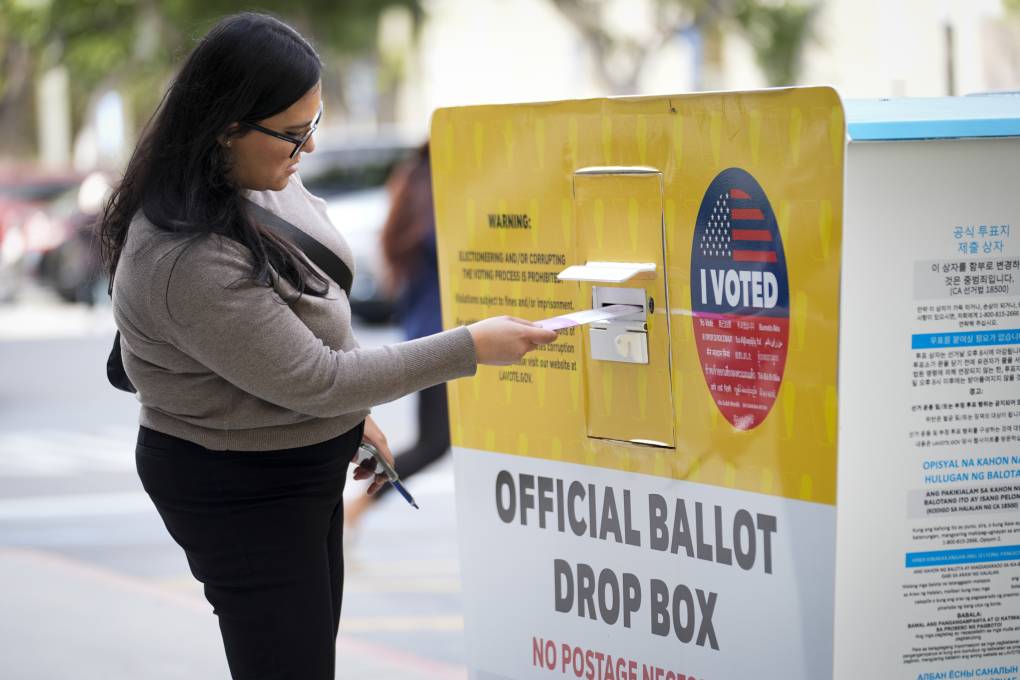
"caption": "A ballot is dropped off on Election Day at the Registrar of Voters office in Norwalk, Los Angeles County, on Tuesday, March 5, 2024.",
"description": null,
"title": "Election 2024 California",
"credit": "Marcio Jose Sanchez/AP Photo",
"status": "inherit",
"altTag": "A woman with dark brown hair drops a ballot into a ballot box.",
"isLoading": false,
"fetchFailed": false
},
"news_11887351": {
"type": "attachments",
"id": "news_11887351",
"meta": {
"index": "attachments_1716263798",
"site": "news",
"id": "11887351",
"found": true
},
"title": "when-will-election-results-arrive-2024",
"publishDate": 1630546435,
"status": "inherit",
"parent": 11887225,
"modified": 1730865578,
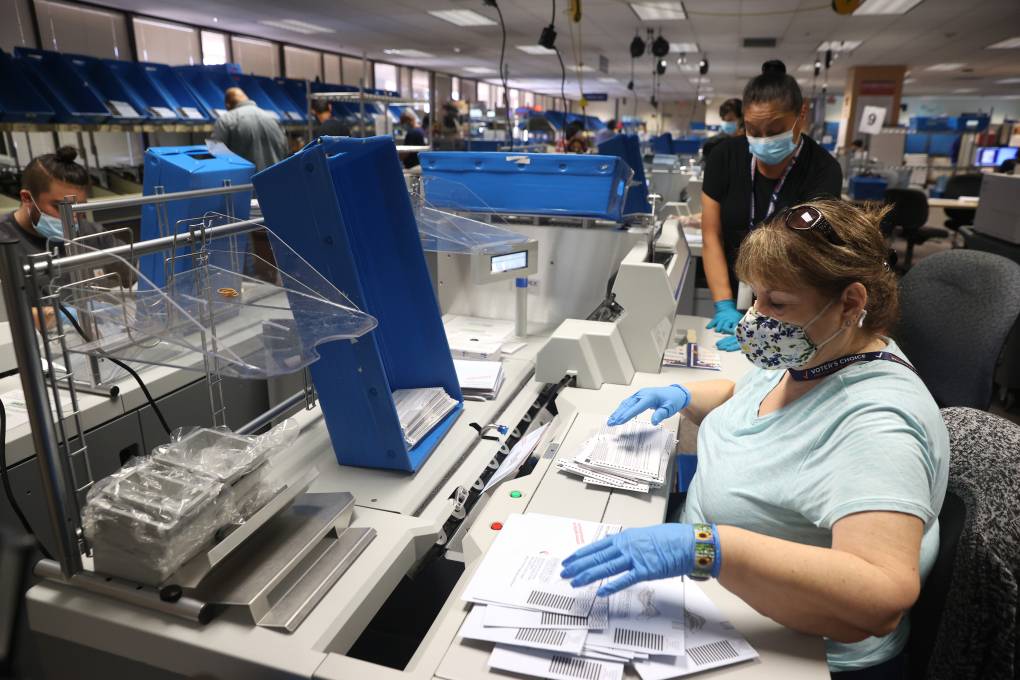
"caption": "Workers sort through mail-in ballots at the Santa Clara County registrar of voters office on Aug. 25, 2021, in San José. The Santa Clara County registrar of voters is preparing to take in and process thousands of ballots in the recall election of Gov. Gavin Newsom as early voting is underway across California.",
"credit": "Justin Sullivan/Getty Images",
"altTag": "A woman wearing a face mask and gloves sits at her desk with dozens of envelopes in front of her. Other staff members work nearby.",
"description": "Workers sort through mail-in-ballots at the Santa Clara County registrar of voters office on August 25, 2021 in San Jose, California.",
"imgSizes": {
"medium": {
"file": "https://cdn.kqed.org/wp-content/uploads/sites/10/2021/09/GettyImages-1336372849-800x533.jpg",
"width": 800,
"height": 533,
"mimeType": "image/jpeg"
},
"large": {
"file": "https://cdn.kqed.org/wp-content/uploads/sites/10/2021/09/GettyImages-1336372849-1020x680.jpg",
"width": 1020,
"height": 680,
"mimeType": "image/jpeg"
},
"thumbnail": {
"file": "https://cdn.kqed.org/wp-content/uploads/sites/10/2021/09/GettyImages-1336372849-160x107.jpg",
"width": 160,
"height": 107,
"mimeType": "image/jpeg"
},
"1536x1536": {
"file": "https://cdn.kqed.org/wp-content/uploads/sites/10/2021/09/GettyImages-1336372849-1536x1024.jpg",
"width": 1536,
"height": 1024,
"mimeType": "image/jpeg"
},
"2048x2048": {
"file": "https://cdn.kqed.org/wp-content/uploads/sites/10/2021/09/GettyImages-1336372849-2048x1365.jpg",
"width": 2048,
"height": 1365,
"mimeType": "image/jpeg"
},
"post-thumbnail": {
"file": "https://cdn.kqed.org/wp-content/uploads/sites/10/2021/09/GettyImages-1336372849-672x372.jpg",
"width": 672,
"height": 372,
"mimeType": "image/jpeg"
},
"twentyfourteen-full-width": {
"file": "https://cdn.kqed.org/wp-content/uploads/sites/10/2021/09/GettyImages-1336372849-1038x576.jpg",
"width": 1038,
"height": 576,
"mimeType": "image/jpeg"
},
"full-width": {
"file": "https://cdn.kqed.org/wp-content/uploads/sites/10/2021/09/GettyImages-1336372849-1920x1280.jpg",
"width": 1920,
"height": 1280,
"mimeType": "image/jpeg"
},
"kqedFullSize": {
"file": "https://cdn.kqed.org/wp-content/uploads/sites/10/2021/09/GettyImages-1336372849-scaled.jpg",
"width": 2560,
"height": 1707
}
},
"isLoading": false,
"fetchFailed": false
},
"news_11907152": {
"type": "attachments",
"id": "news_11907152",
"meta": {
"index": "attachments_1716263798",
"site": "news",
"id": "11907152",
"found": true
},
"title": "where-to-vote-today",
"publishDate": 1646357766,
"status": "inherit",
"parent": 11907125,
"modified": 1730762246,
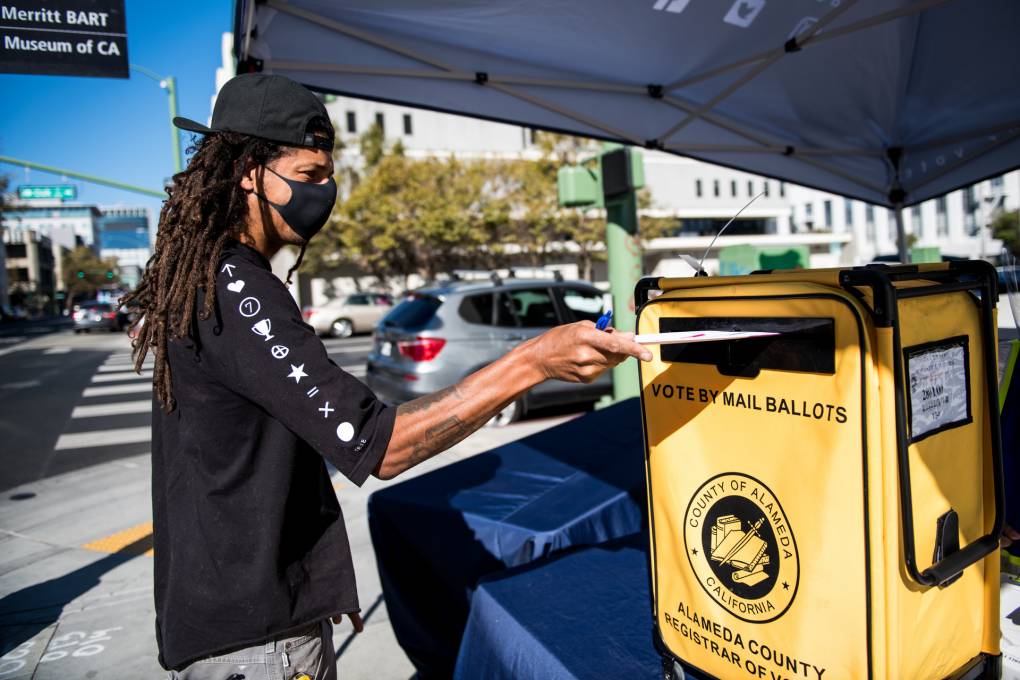
"caption": "Dax Strane drops off his mail-in ballot at the Alameda County Registrar of Voters in Oakland on Oct. 27, 2020. Alameda was one of the dozens of counties that consolidated voting locations in 2020. ",
"credit": "Beth LaBerge/KQED",
"altTag": null,
"description": null,
"imgSizes": {
"medium": {
"file": "https://cdn.kqed.org/wp-content/uploads/sites/10/2022/03/RS45463_011_KQED_Oakland_RegistrarofVoters_10272020-qut-800x533.jpg",
"width": 800,
"height": 533,
"mimeType": "image/jpeg"
},
"large": {
"file": "https://cdn.kqed.org/wp-content/uploads/sites/10/2022/03/RS45463_011_KQED_Oakland_RegistrarofVoters_10272020-qut-1020x680.jpg",
"width": 1020,
"height": 680,
"mimeType": "image/jpeg"
},
"thumbnail": {
"file": "https://cdn.kqed.org/wp-content/uploads/sites/10/2022/03/RS45463_011_KQED_Oakland_RegistrarofVoters_10272020-qut-160x107.jpg",
"width": 160,
"height": 107,
"mimeType": "image/jpeg"
},
"1536x1536": {
"file": "https://cdn.kqed.org/wp-content/uploads/sites/10/2022/03/RS45463_011_KQED_Oakland_RegistrarofVoters_10272020-qut-1536x1024.jpg",
"width": 1536,
"height": 1024,
"mimeType": "image/jpeg"
},
"post-thumbnail": {
"file": "https://cdn.kqed.org/wp-content/uploads/sites/10/2022/03/RS45463_011_KQED_Oakland_RegistrarofVoters_10272020-qut-672x372.jpg",
"width": 672,
"height": 372,
"mimeType": "image/jpeg"
},
"twentyfourteen-full-width": {
"file": "https://cdn.kqed.org/wp-content/uploads/sites/10/2022/03/RS45463_011_KQED_Oakland_RegistrarofVoters_10272020-qut-1038x576.jpg",
"width": 1038,
"height": 576,
"mimeType": "image/jpeg"
},
"kqedFullSize": {
"file": "https://cdn.kqed.org/wp-content/uploads/sites/10/2022/03/RS45463_011_KQED_Oakland_RegistrarofVoters_10272020-qut.jpg",
"width": 1920,
"height": 1280
}
},
"isLoading": false,
"fetchFailed": false
},
"news_12011931": {
"type": "attachments",
"id": "news_12011931",
"meta": {
"index": "attachments_1716263798",
"site": "news",
"id": "12011931",
"found": true
},
"title": null,
"publishDate": 1730402610,
"status": "inherit",
"parent": 12011916,
"modified": 1730402679,
"caption": "Besides election exhaustion and anxiety, there's frustration and straight-up fear. We got expert advice on how to cope.",
"credit": "Xavier Lorenzo/Getty Images",
"altTag": null,
"description": null,
"imgSizes": {
"medium": {
"file": "https://cdn.kqed.org/wp-content/uploads/sites/10/2024/10/GettyImages-1353656914-800x533.jpg",
"width": 800,
"height": 533,
"mimeType": "image/jpeg"
},
"large": {
"file": "https://cdn.kqed.org/wp-content/uploads/sites/10/2024/10/GettyImages-1353656914-1020x680.jpg",
"width": 1020,
"height": 680,
"mimeType": "image/jpeg"
},
"thumbnail": {
"file": "https://cdn.kqed.org/wp-content/uploads/sites/10/2024/10/GettyImages-1353656914-160x107.jpg",
"width": 160,
"height": 107,
"mimeType": "image/jpeg"
},
"1536x1536": {
"file": "https://cdn.kqed.org/wp-content/uploads/sites/10/2024/10/GettyImages-1353656914-1536x1024.jpg",
"width": 1536,
"height": 1024,
"mimeType": "image/jpeg"
},
"2048x2048": {
"file": "https://cdn.kqed.org/wp-content/uploads/sites/10/2024/10/GettyImages-1353656914-2048x1365.jpg",
"width": 2048,
"height": 1365,
"mimeType": "image/jpeg"
},
"post-thumbnail": {
"file": "https://cdn.kqed.org/wp-content/uploads/sites/10/2024/10/GettyImages-1353656914-672x372.jpg",
"width": 672,
"height": 372,
"mimeType": "image/jpeg"
},
"twentyfourteen-full-width": {
"file": "https://cdn.kqed.org/wp-content/uploads/sites/10/2024/10/GettyImages-1353656914-1038x576.jpg",
"width": 1038,
"height": 576,
"mimeType": "image/jpeg"
},
"full-width": {
"file": "https://cdn.kqed.org/wp-content/uploads/sites/10/2024/10/GettyImages-1353656914-1920x1280.jpg",
"width": 1920,
"height": 1280,
"mimeType": "image/jpeg"
},
"kqedFullSize": {
"file": "https://cdn.kqed.org/wp-content/uploads/sites/10/2024/10/GettyImages-1353656914-scaled.jpg",
"width": 2560,
"height": 1707
}
},
"isLoading": false,
"fetchFailed": false
},
"news_12009122": {
"type": "attachments",
"id": "news_12009122",
"meta": {
"index": "attachments_1716263798",
"site": "news",
"id": "12009122",
"found": true
},
"title": "African-American man in lumberyard, with I Voted sticker",
"publishDate": 1728671538,
"status": "inherit",
"parent": 12009093,
"modified": 1728671858,
"caption": "While California voters can take as much time as they want off of work to vote, only 2 hours of that will be paid, and employers needs to be told in advance.",
"credit": "kali9/Getty Images",
"altTag": null,
"description": null,
"imgSizes": {
"medium": {
"file": "https://cdn.kqed.org/wp-content/uploads/sites/10/2024/10/GettyImages-2165464464-800x533.jpg",
"width": 800,
"height": 533,
"mimeType": "image/jpeg"
},
"large": {
"file": "https://cdn.kqed.org/wp-content/uploads/sites/10/2024/10/GettyImages-2165464464-1020x680.jpg",
"width": 1020,
"height": 680,
"mimeType": "image/jpeg"
},
"thumbnail": {
"file": "https://cdn.kqed.org/wp-content/uploads/sites/10/2024/10/GettyImages-2165464464-160x107.jpg",
"width": 160,
"height": 107,
"mimeType": "image/jpeg"
},
"1536x1536": {
"file": "https://cdn.kqed.org/wp-content/uploads/sites/10/2024/10/GettyImages-2165464464-1536x1024.jpg",
"width": 1536,
"height": 1024,
"mimeType": "image/jpeg"
},
"2048x2048": {
"file": "https://cdn.kqed.org/wp-content/uploads/sites/10/2024/10/GettyImages-2165464464-2048x1365.jpg",
"width": 2048,
"height": 1365,
"mimeType": "image/jpeg"
},
"post-thumbnail": {
"file": "https://cdn.kqed.org/wp-content/uploads/sites/10/2024/10/GettyImages-2165464464-672x372.jpg",
"width": 672,
"height": 372,
"mimeType": "image/jpeg"
},
"twentyfourteen-full-width": {
"file": "https://cdn.kqed.org/wp-content/uploads/sites/10/2024/10/GettyImages-2165464464-1038x576.jpg",
"width": 1038,
"height": 576,
"mimeType": "image/jpeg"
},
"full-width": {
"file": "https://cdn.kqed.org/wp-content/uploads/sites/10/2024/10/GettyImages-2165464464-1920x1280.jpg",
"width": 1920,
"height": 1280,
"mimeType": "image/jpeg"
},
"kqedFullSize": {
"file": "https://cdn.kqed.org/wp-content/uploads/sites/10/2024/10/GettyImages-2165464464.jpg",
"width": 2121,
"height": 1414
}
},
"isLoading": false,
"fetchFailed": false
},
"news_11977785": {
"type": "attachments",
"id": "news_11977785",
"meta": {
"index": "attachments_1716263798",
"site": "news",
"id": "11977785",
"found": true
},
"title": "A ballot box at the San Mateo County Elections Office on Oct. 21, 2020.",
"publishDate": 1709329093,
"status": "inherit",
"parent": 11977769,
"modified": 1730924081,
"caption": "Woodside voters headed to the polls for a special election in November of 2021 and narrowly passed Measure A, which rezoned two parcels of land in the town center to be used for community gatherings. It was one of the closest elections in San Mateo County history, according to Jim Irizarry, assistant assessor-county clerk-recorder.",
"credit": "Beth LaBerge/KQED",
"altTag": null,
"description": null,
"imgSizes": {
"medium": {
"file": "https://cdn.kqed.org/wp-content/uploads/sites/10/2024/03/036_KQED_SanMateo_ElectionsOffice_10212020_qut-800x533.jpg",
"width": 800,
"height": 533,
"mimeType": "image/jpeg"
},
"large": {
"file": "https://cdn.kqed.org/wp-content/uploads/sites/10/2024/03/036_KQED_SanMateo_ElectionsOffice_10212020_qut-1020x680.jpg",
"width": 1020,
"height": 680,
"mimeType": "image/jpeg"
},
"thumbnail": {
"file": "https://cdn.kqed.org/wp-content/uploads/sites/10/2024/03/036_KQED_SanMateo_ElectionsOffice_10212020_qut-160x107.jpg",
"width": 160,
"height": 107,
"mimeType": "image/jpeg"
},
"1536x1536": {
"file": "https://cdn.kqed.org/wp-content/uploads/sites/10/2024/03/036_KQED_SanMateo_ElectionsOffice_10212020_qut-1536x1024.jpg",
"width": 1536,
"height": 1024,
"mimeType": "image/jpeg"
},
"post-thumbnail": {
"file": "https://cdn.kqed.org/wp-content/uploads/sites/10/2024/03/036_KQED_SanMateo_ElectionsOffice_10212020_qut-672x372.jpg",
"width": 672,
"height": 372,
"mimeType": "image/jpeg"
},
"twentyfourteen-full-width": {
"file": "https://cdn.kqed.org/wp-content/uploads/sites/10/2024/03/036_KQED_SanMateo_ElectionsOffice_10212020_qut-1038x576.jpg",
"width": 1038,
"height": 576,
"mimeType": "image/jpeg"
},
"kqedFullSize": {
"file": "https://cdn.kqed.org/wp-content/uploads/sites/10/2024/03/036_KQED_SanMateo_ElectionsOffice_10212020_qut.jpg",
"width": 1920,
"height": 1280
}
},
"isLoading": false,
"fetchFailed": false
},
"news_12011413": {
"type": "attachments",
"id": "news_12011413",
"meta": {
"index": "attachments_1716263798",
"site": "news",
"id": "12011413",
"found": true
},
"title": "020_KQED_SanFrancisco_Election2020_TanyaYule_10092020_qed",
"publishDate": 1730152325,
"status": "inherit",
"parent": 12011386,
"modified": 1730152383,
"caption": "A San Francisco resident hands their mail-in ballot to USPS employee Elmer Padilla on Oct. 9, 2020.",
"credit": "Beth LaBerge/KQED",
"altTag": "A postal worker on the street, wheeling a wagon, is handed a mail-in ballot.",
"description": null,
"imgSizes": {
"medium": {
"file": "https://cdn.kqed.org/wp-content/uploads/sites/10/2024/10/020_KQED_SanFrancisco_Election2020_TanyaYule_10092020_qed-800x533.jpg",
"width": 800,
"height": 533,
"mimeType": "image/jpeg"
},
"large": {
"file": "https://cdn.kqed.org/wp-content/uploads/sites/10/2024/10/020_KQED_SanFrancisco_Election2020_TanyaYule_10092020_qed-1020x680.jpg",
"width": 1020,
"height": 680,
"mimeType": "image/jpeg"
},
"thumbnail": {
"file": "https://cdn.kqed.org/wp-content/uploads/sites/10/2024/10/020_KQED_SanFrancisco_Election2020_TanyaYule_10092020_qed-160x107.jpg",
"width": 160,
"height": 107,
"mimeType": "image/jpeg"
},
"1536x1536": {
"file": "https://cdn.kqed.org/wp-content/uploads/sites/10/2024/10/020_KQED_SanFrancisco_Election2020_TanyaYule_10092020_qed-1536x1024.jpg",
"width": 1536,
"height": 1024,
"mimeType": "image/jpeg"
},
"post-thumbnail": {
"file": "https://cdn.kqed.org/wp-content/uploads/sites/10/2024/10/020_KQED_SanFrancisco_Election2020_TanyaYule_10092020_qed-672x372.jpg",
"width": 672,
"height": 372,
"mimeType": "image/jpeg"
},
"twentyfourteen-full-width": {
"file": "https://cdn.kqed.org/wp-content/uploads/sites/10/2024/10/020_KQED_SanFrancisco_Election2020_TanyaYule_10092020_qed-1038x576.jpg",
"width": 1038,
"height": 576,
"mimeType": "image/jpeg"
},
"full-width": {
"file": "https://cdn.kqed.org/wp-content/uploads/sites/10/2024/10/020_KQED_SanFrancisco_Election2020_TanyaYule_10092020_qed-1920x1280.jpg",
"width": 1920,
"height": 1280,
"mimeType": "image/jpeg"
},
"kqedFullSize": {
"file": "https://cdn.kqed.org/wp-content/uploads/sites/10/2024/10/020_KQED_SanFrancisco_Election2020_TanyaYule_10092020_qed.jpg",
"width": 2000,
"height": 1333
}
},
"isLoading": false,
"fetchFailed": false
},
"news_12009161": {
"type": "attachments",
"id": "news_12009161",
"meta": {
"index": "attachments_1716263798",
"site": "news",
"id": "12009161",
"found": true
},
"title": "where-do-i-vote",
"publishDate": 1728678128,
"status": "inherit",
"parent": 12008419,
"modified": 1730484462,
"caption": "A voter drops off his ballot in a box outside of the Santa Clara County Registrar of Voters office on Oct. 13, 2020, in San Jose, California. The Santa Clara County registrar of voters is preparing to take in and process thousands of ballots as early voting is underway in the state of California.",
"credit": "Justin Sullivan/Getty Images",
"altTag": null,
"description": null,
"imgSizes": {
"medium": {
"file": "https://cdn.kqed.org/wp-content/uploads/sites/10/2024/10/GettyImages-1280030498-800x533.jpg",
"width": 800,
"height": 533,
"mimeType": "image/jpeg"
},
"large": {
"file": "https://cdn.kqed.org/wp-content/uploads/sites/10/2024/10/GettyImages-1280030498-1020x680.jpg",
"width": 1020,
"height": 680,
"mimeType": "image/jpeg"
},
"thumbnail": {
"file": "https://cdn.kqed.org/wp-content/uploads/sites/10/2024/10/GettyImages-1280030498-160x107.jpg",
"width": 160,
"height": 107,
"mimeType": "image/jpeg"
},
"1536x1536": {
"file": "https://cdn.kqed.org/wp-content/uploads/sites/10/2024/10/GettyImages-1280030498-1536x1024.jpg",
"width": 1536,
"height": 1024,
"mimeType": "image/jpeg"
},
"post-thumbnail": {
"file": "https://cdn.kqed.org/wp-content/uploads/sites/10/2024/10/GettyImages-1280030498-672x372.jpg",
"width": 672,
"height": 372,
"mimeType": "image/jpeg"
},
"twentyfourteen-full-width": {
"file": "https://cdn.kqed.org/wp-content/uploads/sites/10/2024/10/GettyImages-1280030498-1038x576.jpg",
"width": 1038,
"height": 576,
"mimeType": "image/jpeg"
},
"kqedFullSize": {
"file": "https://cdn.kqed.org/wp-content/uploads/sites/10/2024/10/GettyImages-1280030498.jpg",
"width": 1920,
"height": 1280
}
},
"isLoading": false,
"fetchFailed": false
},
"news_12010850": {
"type": "attachments",
"id": "news_12010850",
"meta": {
"index": "attachments_1716263798",
"site": "news",
"id": "12010850",
"found": true
},
"title": "241022-JAILVOTING-14-BL-KQED",
"publishDate": 1729722879,
"status": "inherit",
"parent": 0,
"modified": 1729723038,
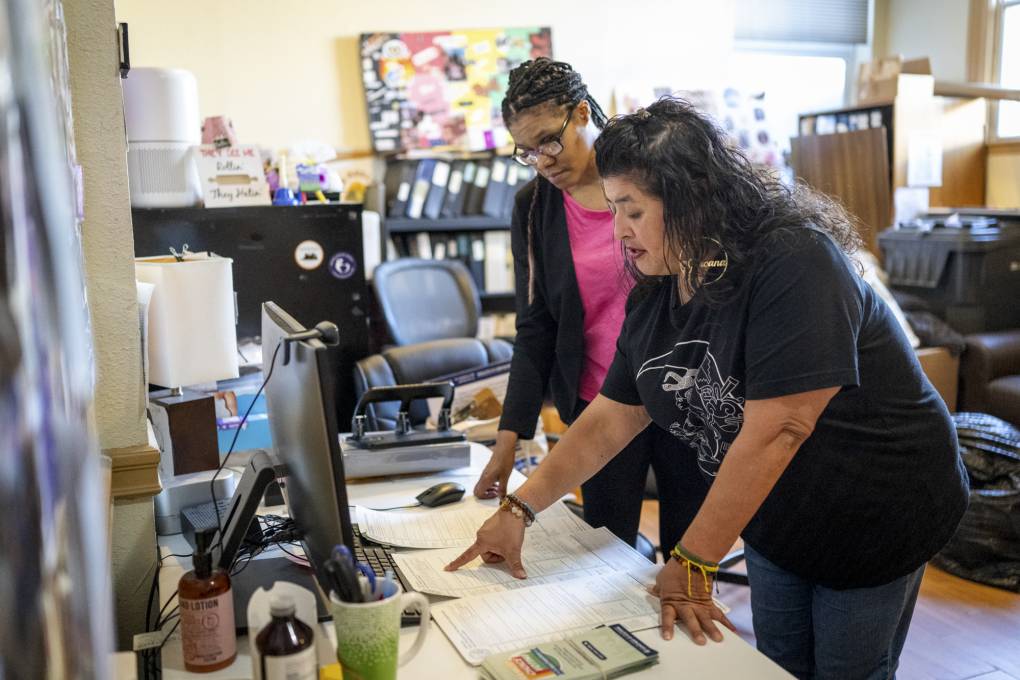
"caption": "Margaret Wilson (left) and Aurora Garza Jimenez, Cameo House program manager, review voting material for tabling events at Cameo House in San Francisco on Oct. 22, 2024.",
"credit": "Beth LaBerge/KQED",
"altTag": null,
"description": null,
"imgSizes": {
"medium": {
"file": "https://cdn.kqed.org/wp-content/uploads/sites/10/2024/10/241022-JAILVOTING-14-BL-KQED-800x533.jpg",
"width": 800,
"height": 533,
"mimeType": "image/jpeg"
},
"large": {
"file": "https://cdn.kqed.org/wp-content/uploads/sites/10/2024/10/241022-JAILVOTING-14-BL-KQED-1020x680.jpg",
"width": 1020,
"height": 680,
"mimeType": "image/jpeg"
},
"thumbnail": {
"file": "https://cdn.kqed.org/wp-content/uploads/sites/10/2024/10/241022-JAILVOTING-14-BL-KQED-160x107.jpg",
"width": 160,
"height": 107,
"mimeType": "image/jpeg"
},
"1536x1536": {
"file": "https://cdn.kqed.org/wp-content/uploads/sites/10/2024/10/241022-JAILVOTING-14-BL-KQED-1536x1024.jpg",
"width": 1536,
"height": 1024,
"mimeType": "image/jpeg"
},
"post-thumbnail": {
"file": "https://cdn.kqed.org/wp-content/uploads/sites/10/2024/10/241022-JAILVOTING-14-BL-KQED-672x372.jpg",
"width": 672,
"height": 372,
"mimeType": "image/jpeg"
},
"twentyfourteen-full-width": {
"file": "https://cdn.kqed.org/wp-content/uploads/sites/10/2024/10/241022-JAILVOTING-14-BL-KQED-1038x576.jpg",
"width": 1038,
"height": 576,
"mimeType": "image/jpeg"
},
"full-width": {
"file": "https://cdn.kqed.org/wp-content/uploads/sites/10/2024/10/241022-JAILVOTING-14-BL-KQED-1920x1280.jpg",
"width": 1920,
"height": 1280,
"mimeType": "image/jpeg"
},
"kqedFullSize": {
"file": "https://cdn.kqed.org/wp-content/uploads/sites/10/2024/10/241022-JAILVOTING-14-BL-KQED.jpg",
"width": 2000,
"height": 1333
}
},
"isLoading": false,
"fetchFailed": false
},
"news_12010929": {
"type": "attachments",
"id": "news_12010929",
"meta": {
"index": "attachments_1716263798",
"site": "news",
"id": "12010929",
"found": true
},
"title": "004_Oakland_ItzelDiazandFamily_09092021_qed",
"publishDate": 1729795242,
"status": "inherit",
"parent": 12008332,
"modified": 1729795304,
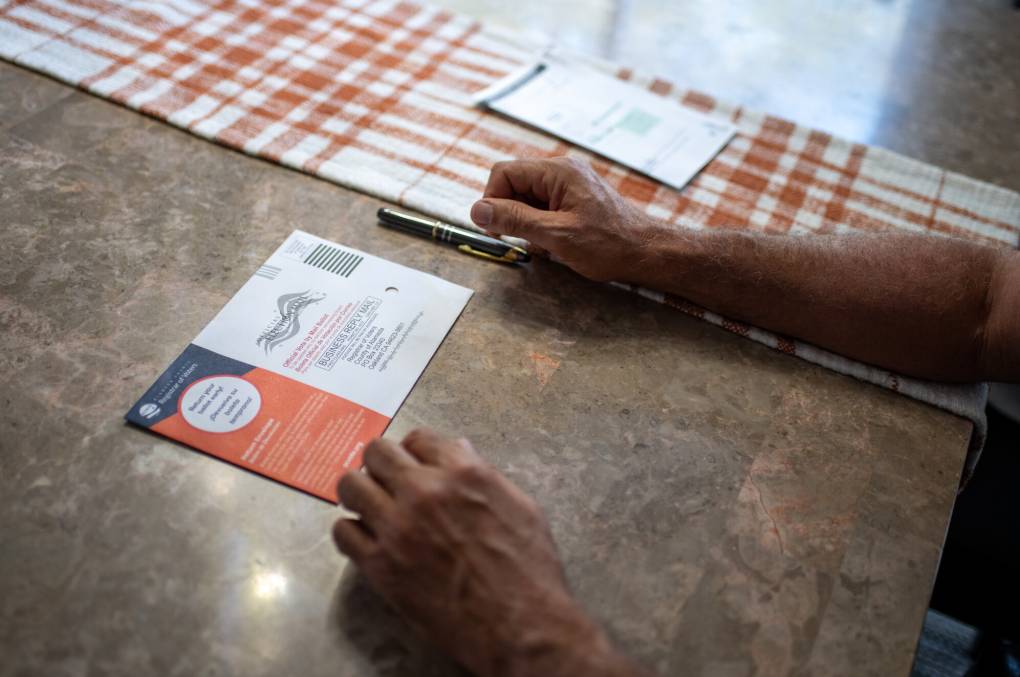
"caption": "A Bay Area resident prepares to fill out their mail-in ballot in 2021.",
"credit": "Beth LaBerge/KQED",
"altTag": null,
"description": null,
"imgSizes": {
"medium": {
"file": "https://cdn.kqed.org/wp-content/uploads/sites/10/2024/10/004_Oakland_ItzelDiazandFamily_09092021_qed-e1729796712493-800x531.jpg",
"width": 800,
"height": 531,
"mimeType": "image/jpeg"
},
"large": {
"file": "https://cdn.kqed.org/wp-content/uploads/sites/10/2024/10/004_Oakland_ItzelDiazandFamily_09092021_qed-e1729796712493-1020x677.jpg",
"width": 1020,
"height": 677,
"mimeType": "image/jpeg"
},
"thumbnail": {
"file": "https://cdn.kqed.org/wp-content/uploads/sites/10/2024/10/004_Oakland_ItzelDiazandFamily_09092021_qed-e1729796712493-160x106.jpg",
"width": 160,
"height": 106,
"mimeType": "image/jpeg"
},
"1536x1536": {
"file": "https://cdn.kqed.org/wp-content/uploads/sites/10/2024/10/004_Oakland_ItzelDiazandFamily_09092021_qed-e1729796712493-1536x1020.jpg",
"width": 1536,
"height": 1020,
"mimeType": "image/jpeg"
},
"post-thumbnail": {
"file": "https://cdn.kqed.org/wp-content/uploads/sites/10/2024/10/004_Oakland_ItzelDiazandFamily_09092021_qed-e1729796712493-672x372.jpg",
"width": 672,
"height": 372,
"mimeType": "image/jpeg"
},
"twentyfourteen-full-width": {
"file": "https://cdn.kqed.org/wp-content/uploads/sites/10/2024/10/004_Oakland_ItzelDiazandFamily_09092021_qed-e1729796712493-1038x576.jpg",
"width": 1038,
"height": 576,
"mimeType": "image/jpeg"
},
"full-width": {
"file": "https://cdn.kqed.org/wp-content/uploads/sites/10/2024/10/004_Oakland_ItzelDiazandFamily_09092021_qed-e1729796712493-1920x1275.jpg",
"width": 1920,
"height": 1275,
"mimeType": "image/jpeg"
},
"kqedFullSize": {
"file": "https://cdn.kqed.org/wp-content/uploads/sites/10/2024/10/004_Oakland_ItzelDiazandFamily_09092021_qed-e1729796712493.jpg",
"width": 1993,
"height": 1323
}
},
"isLoading": false,
"fetchFailed": false
},
"news_12010427": {
"type": "attachments",
"id": "news_12010427",
"meta": {
"index": "attachments_1716263798",
"site": "news",
"id": "12010427",
"found": true
},
"title": "Polling place volunteer assisting black woman to sign up for voting during USA elections.",
"publishDate": 1729535954,
"status": "inherit",
"parent": 12010355,
"modified": 1729536089,
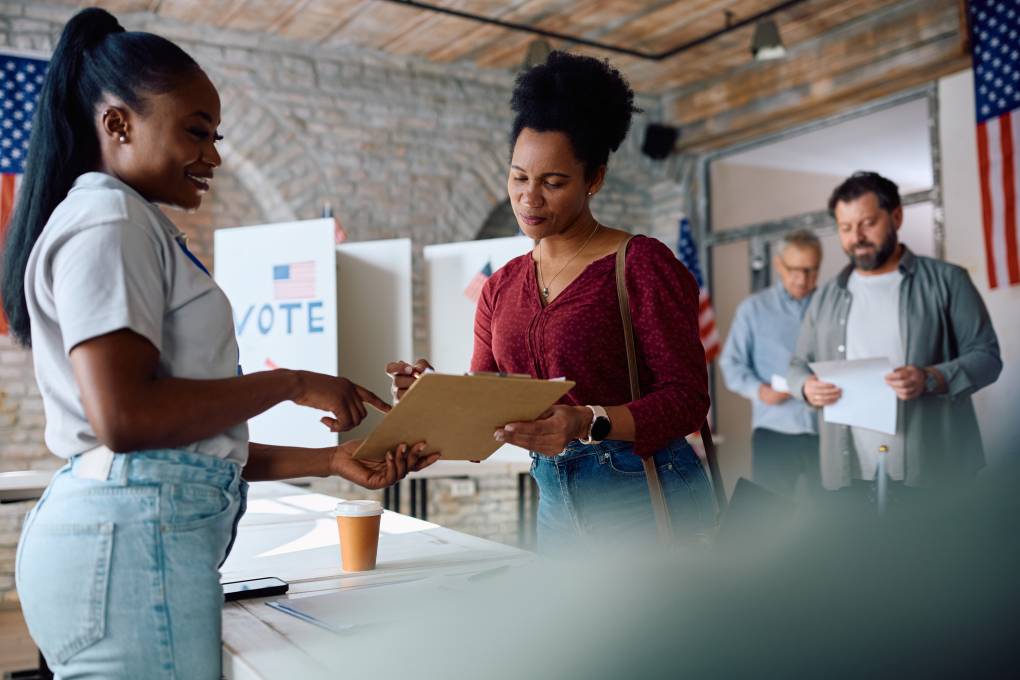
"caption": "You can register to vote online at registertovote.ca.gov before midnight on Oct. 21. You can also register to vote by printing off a paper application, but this must be postmarked by Oct. 21.",
"credit": "Drazen Zigic via iStock/Getty Images Plus",
"altTag": "Two Black women standing and looking at a clipboard over a table and signs that say \"Vote\" with other people waiting in line behind the woman with the red shirt.",
"description": null,
"imgSizes": {
"medium": {
"file": "https://cdn.kqed.org/wp-content/uploads/sites/10/2024/10/GettyImages-2042927844-800x533.jpg",
"width": 800,
"height": 533,
"mimeType": "image/jpeg"
},
"large": {
"file": "https://cdn.kqed.org/wp-content/uploads/sites/10/2024/10/GettyImages-2042927844-1020x680.jpg",
"width": 1020,
"height": 680,
"mimeType": "image/jpeg"
},
"thumbnail": {
"file": "https://cdn.kqed.org/wp-content/uploads/sites/10/2024/10/GettyImages-2042927844-160x107.jpg",
"width": 160,
"height": 107,
"mimeType": "image/jpeg"
},
"1536x1536": {
"file": "https://cdn.kqed.org/wp-content/uploads/sites/10/2024/10/GettyImages-2042927844-1536x1024.jpg",
"width": 1536,
"height": 1024,
"mimeType": "image/jpeg"
},
"2048x2048": {
"file": "https://cdn.kqed.org/wp-content/uploads/sites/10/2024/10/GettyImages-2042927844-2048x1365.jpg",
"width": 2048,
"height": 1365,
"mimeType": "image/jpeg"
},
"post-thumbnail": {
"file": "https://cdn.kqed.org/wp-content/uploads/sites/10/2024/10/GettyImages-2042927844-672x372.jpg",
"width": 672,
"height": 372,
"mimeType": "image/jpeg"
},
"twentyfourteen-full-width": {
"file": "https://cdn.kqed.org/wp-content/uploads/sites/10/2024/10/GettyImages-2042927844-1038x576.jpg",
"width": 1038,
"height": 576,
"mimeType": "image/jpeg"
},
"full-width": {
"file": "https://cdn.kqed.org/wp-content/uploads/sites/10/2024/10/GettyImages-2042927844-1920x1280.jpg",
"width": 1920,
"height": 1280,
"mimeType": "image/jpeg"
},
"kqedFullSize": {
"file": "https://cdn.kqed.org/wp-content/uploads/sites/10/2024/10/GettyImages-2042927844.jpg",
"width": 2121,
"height": 1414
}
},
"isLoading": false,
"fetchFailed": false
},
"news_12009054": {
"type": "attachments",
"id": "news_12009054",
"meta": {
"index": "attachments_1716263798",
"site": "news",
"id": "12009054",
"found": true
},
"title": "Voters voting in polling place",
"publishDate": 1728609996,
"status": "inherit",
"parent": 12009039,
"modified": 1728610033,
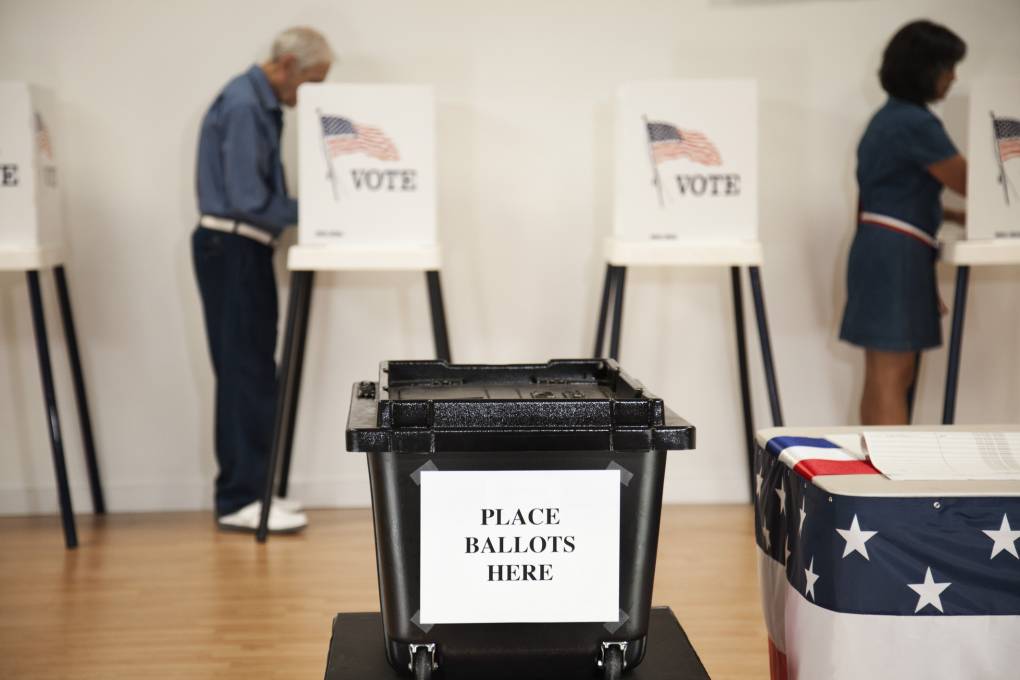
"caption": "Even seasoned voters may find some things baffling on this year's ballot.",
"credit": "Hill Street Studios/Getty Images",
"altTag": null,
"description": null,
"imgSizes": {
"medium": {
"file": "https://cdn.kqed.org/wp-content/uploads/sites/10/2024/10/GettyImages-142021136-800x533.jpg",
"width": 800,
"height": 533,
"mimeType": "image/jpeg"
},
"large": {
"file": "https://cdn.kqed.org/wp-content/uploads/sites/10/2024/10/GettyImages-142021136-1020x680.jpg",
"width": 1020,
"height": 680,
"mimeType": "image/jpeg"
},
"thumbnail": {
"file": "https://cdn.kqed.org/wp-content/uploads/sites/10/2024/10/GettyImages-142021136-160x107.jpg",
"width": 160,
"height": 107,
"mimeType": "image/jpeg"
},
"1536x1536": {
"file": "https://cdn.kqed.org/wp-content/uploads/sites/10/2024/10/GettyImages-142021136-1536x1024.jpg",
"width": 1536,
"height": 1024,
"mimeType": "image/jpeg"
},
"2048x2048": {
"file": "https://cdn.kqed.org/wp-content/uploads/sites/10/2024/10/GettyImages-142021136-2048x1365.jpg",
"width": 2048,
"height": 1365,
"mimeType": "image/jpeg"
},
"post-thumbnail": {
"file": "https://cdn.kqed.org/wp-content/uploads/sites/10/2024/10/GettyImages-142021136-672x372.jpg",
"width": 672,
"height": 372,
"mimeType": "image/jpeg"
},
"twentyfourteen-full-width": {
"file": "https://cdn.kqed.org/wp-content/uploads/sites/10/2024/10/GettyImages-142021136-1038x576.jpg",
"width": 1038,
"height": 576,
"mimeType": "image/jpeg"
},
"full-width": {
"file": "https://cdn.kqed.org/wp-content/uploads/sites/10/2024/10/GettyImages-142021136-1920x1280.jpg",
"width": 1920,
"height": 1280,
"mimeType": "image/jpeg"
},
"kqedFullSize": {
"file": "https://cdn.kqed.org/wp-content/uploads/sites/10/2024/10/GettyImages-142021136.jpg",
"width": 2121,
"height": 1414
}
},
"isLoading": false,
"fetchFailed": false
}
},
"audioPlayerReducer": {
"postId": "stream_live",
"isPaused": true,
"isPlaying": false,
"pfsActive": false,
"pledgeModalIsOpen": true,
"playerDrawerIsOpen": false,
"liveAudioPlayStartedAt": 0,
"liveAudioPlayContext": ""
},
"authorsReducer": {
"gmarzorati": {
"type": "authors",
"id": "227",
"meta": {
"index": "authors_1716337520",
"id": "227",
"found": true
},
"name": "Guy Marzorati",
"firstName": "Guy",
"lastName": "Marzorati",
"slug": "gmarzorati",
"email": "gmarzorati@KQED.org",
"display_author_email": true,
"staff_mastheads": [
"news"
],
"title": "Correspondent",
"bio": "Guy Marzorati is a correspondent on KQED's California Politics and Government Desk, based in San Jose. A graduate of Santa Clara University, Guy joined KQED in 2013. He reports on state and local politics and produces KQED's digital voter guide.",
"avatar": "https://secure.gravatar.com/avatar/e7038b8dbfd55b104369b76b1cd0b9de?s=600&d=blank&r=g",
"twitter": "guymarzorati",
"facebook": null,
"instagram": null,
"linkedin": null,
"sites": [
{
"site": "",
"roles": [
"editor"
]
},
{
"site": "news",
"roles": [
"editor"
]
},
{
"site": "science",
"roles": [
"editor"
]
},
{
"site": "forum",
"roles": [
"editor"
]
},
{
"site": "elections",
"roles": [
"editor"
]
},
{
"site": "liveblog",
"roles": [
"editor"
]
}
],
"headData": {
"title": "Guy Marzorati | KQED",
"description": "Correspondent",
"ogImgSrc": "https://secure.gravatar.com/avatar/e7038b8dbfd55b104369b76b1cd0b9de?s=600&d=blank&r=g",
"twImgSrc": "https://secure.gravatar.com/avatar/e7038b8dbfd55b104369b76b1cd0b9de?s=600&d=blank&r=g"
},
"isLoading": false,
"link": "/author/gmarzorati"
},
"carlysevern": {
"type": "authors",
"id": "3243",
"meta": {
"index": "authors_1716337520",
"id": "3243",
"found": true
},
"name": "Carly Severn",
"firstName": "Carly",
"lastName": "Severn",
"slug": "carlysevern",
"email": "csevern@kqed.org",
"display_author_email": false,
"staff_mastheads": [
"news"
],
"title": "Senior Editor, Audience News ",
"bio": "Carly is KQED's Senior Editor of Audience News on the Digital News team, and has reported for the California Report Magazine, Bay Curious and KQED Arts. She's formerly the host of \u003ca href=\"http://ww2.kqed.org/pop/category/the-cooler/\" rel=\"noopener noreferrer\">The Cooler\u003c/a> podcast.",
"avatar": "https://secure.gravatar.com/avatar/54037bf5c128fe678f0ef26cec97a93f2e7f220a22d7285703328f12c42c1b1d?s=600&d=blank&r=g",
"twitter": "teacupinthebay",
"bluesky": null,
"facebook": null,
"instagram": null,
"linkedin": null,
"sites": [
{
"site": "",
"roles": [
"editor"
]
},
{
"site": "arts",
"roles": [
"editor"
]
},
{
"site": "news",
"roles": [
"administrator"
]
},
{
"site": "pop",
"roles": [
"editor"
]
},
{
"site": "futureofyou",
"roles": [
"editor"
]
},
{
"site": "about",
"roles": [
"administrator"
]
},
{
"site": "mindshift",
"roles": [
"editor"
]
},
{
"site": "bayareabites",
"roles": [
"editor"
]
},
{
"site": "stateofhealth",
"roles": [
"editor"
]
},
{
"site": "science",
"roles": [
"editor"
]
},
{
"site": "food",
"roles": [
"contributor"
]
},
{
"site": "forum",
"roles": [
"editor"
]
},
{
"site": "perspectives",
"roles": [
"administrator"
]
},
{
"site": "liveblog",
"roles": [
"editor"
]
}
],
"headData": {
"title": "Carly Severn | KQED",
"description": "Senior Editor, Audience News ",
"ogImgSrc": "https://secure.gravatar.com/avatar/54037bf5c128fe678f0ef26cec97a93f2e7f220a22d7285703328f12c42c1b1d?s=600&d=blank&r=g",
"twImgSrc": "https://secure.gravatar.com/avatar/54037bf5c128fe678f0ef26cec97a93f2e7f220a22d7285703328f12c42c1b1d?s=600&d=blank&r=g"
},
"isLoading": false,
"link": "/author/carlysevern"
},
"ccabreralomeli": {
"type": "authors",
"id": "11708",
"meta": {
"index": "authors_1716337520",
"id": "11708",
"found": true
},
"name": "Carlos Cabrera-Lomelí",
"firstName": "Carlos",
"lastName": "Cabrera-Lomelí",
"slug": "ccabreralomeli",
"email": "ccabreralomeli@KQED.org",
"display_author_email": true,
"staff_mastheads": [
"news"
],
"title": "Community Reporter",
"bio": "Carlos Cabrera-Lomelí is a community reporter with KQED's digital engagement team. He also reports and co-produces for KQED's bilingual news hub KQED en Español. He grew up in San Francisco's Mission District and has previously worked with Univision, 48 Hills and REFORMA in Mexico City.",
"avatar": "https://secure.gravatar.com/avatar/c309be9665e484f887b818c89e273ecc673004f426f36b24d00a4d813a2e0518?s=600&d=blank&r=g",
"twitter": "@LomeliCabrera",
"bluesky": null,
"facebook": null,
"instagram": null,
"linkedin": null,
"sites": [
{
"site": "arts",
"roles": [
"editor"
]
},
{
"site": "news",
"roles": [
"editor"
]
},
{
"site": "about",
"roles": [
"editor"
]
},
{
"site": "science",
"roles": [
"editor"
]
},
{
"site": "perspectives",
"roles": [
"editor"
]
},
{
"site": "elections",
"roles": [
"editor"
]
},
{
"site": "liveblog",
"roles": [
"contributor"
]
}
],
"headData": {
"title": "Carlos Cabrera-Lomelí | KQED",
"description": "Community Reporter",
"ogImgSrc": "https://secure.gravatar.com/avatar/c309be9665e484f887b818c89e273ecc673004f426f36b24d00a4d813a2e0518?s=600&d=blank&r=g",
"twImgSrc": "https://secure.gravatar.com/avatar/c309be9665e484f887b818c89e273ecc673004f426f36b24d00a4d813a2e0518?s=600&d=blank&r=g"
},
"isLoading": false,
"link": "/author/ccabreralomeli"
},
"nkhan": {
"type": "authors",
"id": "11867",
"meta": {
"index": "authors_1716337520",
"id": "11867",
"found": true
},
"name": "Nisa Khan",
"firstName": "Nisa",
"lastName": "Khan",
"slug": "nkhan",
"email": "nkhan@kqed.org",
"display_author_email": false,
"staff_mastheads": [],
"title": "KQED Contributor",
"bio": "Nisa Khan is a reporter for KQED's Audience News Desk. She was formerly a data reporter at Michigan Radio. She earned a Bachelor of Science in Information from the University of Michigan and a Master of Arts in Communication from Stanford University.",
"avatar": "https://secure.gravatar.com/avatar/8720459eef081ff64582b3506b124d58523e80e120704a0cbd9892533c914991?s=600&d=blank&r=g",
"twitter": "mnisakhan",
"bluesky": null,
"facebook": null,
"instagram": null,
"linkedin": null,
"sites": [
{
"site": "arts",
"roles": [
"editor"
]
},
{
"site": "news",
"roles": [
"editor"
]
},
{
"site": "science",
"roles": [
"editor",
"author"
]
},
{
"site": "forum",
"roles": [
"editor"
]
},
{
"site": "liveblog",
"roles": [
"contributor"
]
}
],
"headData": {
"title": "Nisa Khan | KQED",
"description": "KQED Contributor",
"ogImgSrc": "https://secure.gravatar.com/avatar/8720459eef081ff64582b3506b124d58523e80e120704a0cbd9892533c914991?s=600&d=blank&r=g",
"twImgSrc": "https://secure.gravatar.com/avatar/8720459eef081ff64582b3506b124d58523e80e120704a0cbd9892533c914991?s=600&d=blank&r=g"
},
"isLoading": false,
"link": "/author/nkhan"
}
},
"pagesReducer": {
"news_tag_election-explainers": {
"type": "terms",
"id": "news_28639",
"meta": {
"index": "terms_1716263798",
"site": "news",
"id": "28639",
"score": 10.403393
},
"featImg": null,
"name": "Election Explainers",
"description": null,
"taxonomy": "tag",
"headData": {
"twImgId": null,
"twTitle": null,
"ogTitle": null,
"ogImgId": null,
"twDescription": null,
"description": null,
"title": "Election Explainers Archives | KQED News",
"ogDescription": null
},
"ttid": 28656,
"slug": "election-explainers",
"isLoading": false,
"title": "Election Explainers",
"pageMeta": {
"site": "news",
"WpPageTemplate": "page-topic-editorial",
"currentPage": 2
},
"blocks": [
{
"blockName": "kqed/post-list",
"attrs": {
"layout": "cardArticle2",
"query": "posts/news?tag=election-explainers",
"seeMore": false,
"paginated": true,
"page": 2
}
},
{
"blockName": "kqed/ad"
}
]
}
},
"pfsSessionReducer": {},
"postsReducer": {
"stream_live": {
"type": "live",
"id": "stream_live",
"audioUrl": "https://streams.kqed.org/kqedradio",
"title": "Live Stream",
"excerpt": "Live Stream information currently unavailable.",
"link": "/radio",
"featImg": "",
"label": {
"name": "KQED Live",
"link": "/"
}
},
"stream_kqedNewscast": {
"type": "posts",
"id": "stream_kqedNewscast",
"audioUrl": "https://www.kqed.org/.stream/anon/radio/RDnews/newscast.mp3?_=1",
"title": "KQED Newscast",
"featImg": "",
"label": {
"name": "88.5 FM",
"link": "/"
}
},
"news_12011221": {
"type": "posts",
"id": "news_12011221",
"meta": {
"index": "posts_1716263798",
"site": "news",
"id": "12011221",
"score": null,
"sort": [
1730820644000
]
},
"guestAuthors": [],
"slug": "how-to-check-my-ballot-was-counted-results-election-2024-harris-trump",
"title": "How Do I Know My Ballot Was Counted in the 2024 Election? Here's How to Check",
"publishDate": 1730820644,
"format": "standard",
"headTitle": "How Do I Know My Ballot Was Counted in the 2024 Election? Here’s How to Check | KQED",
"labelTerm": {
"site": "news"
},
"content": "\u003cp>Election Day is finally here. And if you’ve already voted — either in person or by \u003ca href=\"https://www.kqed.org/news/12012472/election-2024-where-do-i-vote-in-person-find-my-polling-place\">submitting your mail-in ballot \u003c/a>— all there’s left to do is wait. Especially as \u003ca href=\"https://www.kqed.org/news/12012418/when-election-results-2024-california-presidential-race\">the results of the neck-and-neck presidential race between Vice President Kamala Harris and former President Donald Trump may take a while.\u003c/a>\u003c/p>\n\u003cp>One positive, actionable step you can take? Go online and use the state’s \u003ca href=\"https://california.ballottrax.net/voter/\">“Where’s My Ballot?”\u003c/a> tool to confirm that your county election officials received your ballot and will be counted.\u003c/p>\n\u003cp>This way, you’ll know that your vote and your voice were heard in California, from the presidential election to the state propositions and \u003ca href=\"https://www.kqed.org/voterguide\">local measures that can affect the lives of everyone in our communities\u003c/a>.\u003c/p>\n\u003cul>\n\u003cli>\u003cstrong>Jump straight to: \u003ca href=\"#ballot-rejected\">Why was my ballot rejected, and what can I do?\u003c/a>\u003c/strong>\u003c/li>\n\u003c/ul>\n\u003cp>You’ll also be alerted in the case that there’s an issue with your ballot, giving you time to work with your local election officials to fix any problems. This process is called “curing” your ballot so that your vote can still be counted, and \u003ca href=\"https://www.kqed.org/news/11840343/how-to-make-sure-your-mail-in-ballot-isnt-rejected-in-california\">there’s a whole system in place\u003c/a> to help you do that.\u003c/p>\n\u003cp>Keep reading for everything to know about tracking your ballot and what you can do if the tool flags an issue with counting your vote.\u003c/p>\n\u003ch3>How to use California’s ‘Where’s My Ballot’ tool\u003c/h3>\n\u003cp>Visit the state’s \u003ca href=\"https://california.ballottrax.net/voter/\">“Where’s My Ballot?”\u003c/a> site and put in your details: name, date of birth and ZIP code. If you \u003ca href=\"https://elections.cdn.sos.ca.gov/pdfs/ballottrax-troubleshooting.pdf\">registered to vote with a mailing address that’s different from your residential address\u003c/a>, use your residential address ZIP code.\u003c/p>\n\u003cp>The tool will then show you the status of your ballot. By hitting “Details,” you can expand the notes and see exactly where your ballot is in the process.\u003c/p>\n\u003cfigure id=\"attachment_12012093\" class=\"wp-caption alignnone\" style=\"max-width: 1037px\">\u003cimg loading=\"lazy\" decoding=\"async\" class=\"size-full wp-image-12012093\" src=\"https://cdn.kqed.org/wp-content/uploads/sites/10/2024/11/ballot-status.png\" alt=\"\" width=\"1037\" height=\"877\" srcset=\"https://cdn.kqed.org/wp-content/uploads/sites/10/2024/11/ballot-status.png 1037w, https://cdn.kqed.org/wp-content/uploads/sites/10/2024/11/ballot-status-800x677.png 800w, https://cdn.kqed.org/wp-content/uploads/sites/10/2024/11/ballot-status-1020x863.png 1020w, https://cdn.kqed.org/wp-content/uploads/sites/10/2024/11/ballot-status-160x135.png 160w\" sizes=\"(max-width: 1037px) 100vw, 1037px\">\u003cfigcaption class=\"wp-caption-text\">A screenshot from the “Where’s My Ballot” tool showing a ballot that the voter’s county has accepted. \u003ccite>(BallotTrax)\u003c/cite>\u003c/figcaption>\u003c/figure>\n\u003cp>If you see this “Completed” message, your work is done, and you can rest a little easier knowing your ballot is being counted and your voice will be heard in this election.\u003c/p>\n\u003ch2>\u003ca id=\"ballot-rejected\">\u003c/a>Help: I’m seeing a message saying my ballot has been ‘Rejected’?\u003c/h2>\n\u003cp>If your ballot shows as ‘Rejected: Curable’, you’ll see a message saying “there is an issue with your returned ballot and it can’t be accepted.”\u003c/p>\n\u003cp>But as scary as the word “rejected” is, \u003cem>don’t\u003c/em> panic: “curable” means that the problem with your ballot is one that can, luckily, be resolved.\u003c/p>\n\u003cp>Why might a ballot be initially rejected but curable? It’s most likely an issue with your signature: you might have forgotten to sign your ballot envelope entirely or have made a signature that doesn’t match the one on your voter registration. \u003ca href=\"https://www.kqed.org/news/12003469/election-2024-how-to-correct-a-mistake-on-your-ballot-correction#signature-problem-ballot\">Read more about common issues with signatures on ballots and how they get fixed.\u003c/a>\u003c/p>\n\u003cfigure id=\"attachment_12010929\" class=\"wp-caption alignnone\" style=\"max-width: 1993px\">\u003cimg loading=\"lazy\" decoding=\"async\" class=\"size-full wp-image-12010929\" src=\"https://cdn.kqed.org/wp-content/uploads/sites/10/2024/10/004_Oakland_ItzelDiazandFamily_09092021_qed-e1729796712493.jpg\" alt=\"\" width=\"1993\" height=\"1323\" srcset=\"https://cdn.kqed.org/wp-content/uploads/sites/10/2024/10/004_Oakland_ItzelDiazandFamily_09092021_qed-e1729796712493.jpg 1993w, https://cdn.kqed.org/wp-content/uploads/sites/10/2024/10/004_Oakland_ItzelDiazandFamily_09092021_qed-e1729796712493-800x531.jpg 800w, https://cdn.kqed.org/wp-content/uploads/sites/10/2024/10/004_Oakland_ItzelDiazandFamily_09092021_qed-e1729796712493-1020x677.jpg 1020w, https://cdn.kqed.org/wp-content/uploads/sites/10/2024/10/004_Oakland_ItzelDiazandFamily_09092021_qed-e1729796712493-160x106.jpg 160w, https://cdn.kqed.org/wp-content/uploads/sites/10/2024/10/004_Oakland_ItzelDiazandFamily_09092021_qed-e1729796712493-1536x1020.jpg 1536w, https://cdn.kqed.org/wp-content/uploads/sites/10/2024/10/004_Oakland_ItzelDiazandFamily_09092021_qed-e1729796712493-1920x1275.jpg 1920w\" sizes=\"(max-width: 1993px) 100vw, 1993px\">\u003cfigcaption class=\"wp-caption-text\">A Bay Area resident prepares to fill out their mail-in ballot in 2021. \u003ccite>(Beth LaBerge/KQED)\u003c/cite>\u003c/figcaption>\u003c/figure>\n\u003cp>In these cases, your county elections office will reach out to you — almost certainly by mail — to “cure” (resolve) the issue with your ballot so that your vote can be counted after all. For example, if there was an issue with your signature, you’ll be sent a form to sign again, which you’ll then mail back to your county elections office.\u003c/p>\n\u003cp>Where’s My Ballot will also show you a message telling you that if your ballot has been rejected and is curable, but if you don’t receive “a letter or postcard from your county within 7 days of the election,” you should contact your county elections office yourself by phone or email. \u003ca href=\"#find-my-county-elections-office\">Find your county elections office’s contact details in our list.\u003c/a>\u003c/p>\n\u003cp>But even if that mailer from your county elections office doesn’t arrive soon, don’t stress: \u003ca href=\"https://www.calvoter.org/content/close-count-transparency-project#template\">Your county has a whole month after Election Day — until Dec. 5 — to resolve these kinds of issues\u003c/a> with voters and certify the election results.\u003c/p>\n\u003ch2>\u003cstrong>What if my ballot can’t be cured?\u003c/strong>\u003c/h2>\n\u003cp>In some cases, Where’s My Ballot will show a message that your ballot has been “Rejected,” with no note about it being curable.\u003c/p>\n\u003cp>Unfortunately, this happens when your ballot is not received in time or your ballot is missing from the envelope. It means the issue with your ballot can’t be resolved, and your vote will not be counted.\u003c/p>\n\u003cp>To be counted by your county elections office, your ballot must be postmarked by Election Day (Nov. 5) at the latest and reach them by Nov. 12. One way to ensure your ballot arrives on time to be counted is to submit it into an official elections drop-box, or hand-deliver it at your closest open voting location before polls close at 8 p.m. on Nov. 5. \u003ca href=\"https://www.kqed.org/news/12008419/ballot-drop-off-location-near-me-early-voting-site-election-2024\">Find where to submit your ballot near you.\u003c/a>\u003c/p>\n\u003cp>Another reason \u003ca href=\"https://www.kqed.org/news/12003469/election-2024-how-to-correct-a-mistake-on-your-ballot-correction\">some ballots arrive too late to be counted:\u003c/a> voters place them in a USPS mailbox on Election Day that’s already had its last collection for the day, which in many areas is 5 p.m. or earlier. Make sure to check the last pick-up time on a mailbox before dropping in your ballot, and if you’re unsure, \u003ca href=\"https://www.kqed.org/news/12008419/ballot-drop-off-location-near-me-early-voting-site-election-2024\">deliver it by hand to a voting location or into an official drop-box before polls close instead\u003c/a>.\u003c/p>\n\u003cfigure id=\"attachment_12008918\" class=\"wp-caption alignnone\" style=\"max-width: 2121px\">\u003cimg loading=\"lazy\" decoding=\"async\" class=\"size-full wp-image-12008918\" src=\"https://cdn.kqed.org/wp-content/uploads/sites/10/2024/10/GettyImages-1271621099.jpg\" alt=\"A young woman places her absentee voter ballot for the 2020 presidential election into a blue United States Postal mailbox.\" width=\"2121\" height=\"1414\" srcset=\"https://cdn.kqed.org/wp-content/uploads/sites/10/2024/10/GettyImages-1271621099.jpg 2121w, https://cdn.kqed.org/wp-content/uploads/sites/10/2024/10/GettyImages-1271621099-800x533.jpg 800w, https://cdn.kqed.org/wp-content/uploads/sites/10/2024/10/GettyImages-1271621099-1020x680.jpg 1020w, https://cdn.kqed.org/wp-content/uploads/sites/10/2024/10/GettyImages-1271621099-160x107.jpg 160w, https://cdn.kqed.org/wp-content/uploads/sites/10/2024/10/GettyImages-1271621099-1536x1024.jpg 1536w, https://cdn.kqed.org/wp-content/uploads/sites/10/2024/10/GettyImages-1271621099-2048x1365.jpg 2048w, https://cdn.kqed.org/wp-content/uploads/sites/10/2024/10/GettyImages-1271621099-1920x1280.jpg 1920w\" sizes=\"(max-width: 2121px) 100vw, 2121px\">\u003cfigcaption class=\"wp-caption-text\">A young woman places her absentee voter ballot for the presidential election into a blue United States Postal mailbox. \u003ccite>(Spiderstock via Getty Images)\u003c/cite>\u003c/figcaption>\u003c/figure>\n\u003cp>[ad fullwidth]\u003c/p>\n\u003ch2>\u003ca id=\"find-my-county-elections-office\">\u003c/a>Contact your county directly about your ballot\u003c/h2>\n\u003cp>Across the Bay Area, elections officials are encouraging voters to reach out with any questions or concerns. Here’s the contact information for your county:\u003c/p>\n\u003cul>\n\u003cli>\u003cstrong>\u003ca href=\"https://www.acvote.org/index\">Alameda\u003c/a>\u003c/strong>: For information about voting by mail, registration and polling place lookup, call 510-267-8683.\u003c/li>\n\u003cli>\u003cstrong>\u003ca href=\"https://www.cocovote.us/\">Contra Costa\u003c/a>\u003c/strong>: Call 925-335-7800 or email voter.services@vote.cccounty.us.\u003c/li>\n\u003cli>\u003cstrong>\u003ca href=\"https://www.marincounty.org/depts/rv\">Marin\u003c/a>\u003c/strong>: Call 415-473-6456 or go to the Marin County elections webpage to \u003ca href=\"https://www.marincounty.org/depts/rv/contact-us\">send a form email\u003c/a>.\u003c/li>\n\u003cli>\u003cstrong>\u003ca href=\"https://www.countyofnapa.org/396/Elections\">Napa\u003c/a>\u003c/strong>: Call 707-253-4321 or email the elections office at elections@countyofnapa.org.\u003c/li>\n\u003cli>\u003cstrong>\u003ca href=\"https://sfelections.sfgov.org/\">San Francisco\u003c/a>\u003c/strong>: Call 415-554-4375 or email sfvote@sfgov.org.\u003c/li>\n\u003cli>\u003cstrong>\u003ca href=\"https://www.smcacre.org/elections\">San Mateo\u003c/a>\u003c/strong>: Call toll-free at 888-762-8683 or email registrar@smcacre.org.\u003c/li>\n\u003cli>\u003ca href=\"https://www.sccgov.org/sites/rov/Pages/Registrar-of-Voters.aspx\">\u003cstrong>Santa Clara\u003c/strong>\u003c/a>: Call toll-free at 866-430-VOTE (8683) or email registrar@rov.sccgov.org.\u003c/li>\n\u003cli>\u003cstrong>\u003ca href=\"https://www.solanocounty.com/depts/rov/default.asp\">Solano\u003c/a>\u003c/strong>\u003cstrong>: \u003c/strong>Call 707-784-6675 or toll-free at 888-933-VOTE (8683). You can also email elections@solanocounty.com.\u003c/li>\n\u003cli>\u003cstrong>\u003ca href=\"https://sonomacounty.ca.gov/CRA/Registrar-of-Voters/\">Sonoma\u003c/a>\u003c/strong>: Call 707-565-6800 or toll-free at 800-750-8683.\u003c/li>\n\u003c/ul>\n\u003cp>The state also has a full list of \u003ca href=\"https://www.sos.ca.gov/elections/voting-resources/county-elections-offices/\">every county elections office in California\u003c/a>.\u003c/p>\n\u003cp>\u003cem>This story contains reporting from Lisa Pickoff-White.\u003c/em>\u003c/p>\n\u003cp>[ad floatright]\u003c/p>\n",
"blocks": [],
"excerpt": "Already voted and wondering what you can do on Election Day, while we all wait for polls to close and results to start arriving? Check your ballot has been received and will be counted without issues.",
"status": "publish",
"parent": 0,
"modified": 1730856824,
"stats": {
"hasAudio": false,
"hasVideo": false,
"hasChartOrMap": false,
"iframeSrcs": [],
"hasGoogleForm": false,
"hasGallery": false,
"hasHearkenModule": false,
"hasPolis": false,
"paragraphCount": 23,
"wordCount": 1177
},
"headData": {
"title": "How Do I Know My Ballot Was Counted in the 2024 Election? Here's How to Check | KQED",
"description": "Already voted and wondering what you can do on Election Day, while we all wait for polls to close and results to start arriving? Check your ballot has been received and will be counted without issues.",
"ogTitle": "",
"ogDescription": "",
"ogImgId": "",
"twTitle": "",
"twDescription": "",
"twImgId": "",
"schema": {
"@context": "https://schema.org",
"@type": "NewsArticle",
"headline": "How Do I Know My Ballot Was Counted in the 2024 Election? Here's How to Check",
"datePublished": "2024-11-05T07:30:44-08:00",
"dateModified": "2024-11-05T17:33:44-08:00",
"image": "https://cdn.kqed.org/wp-content/uploads/2020/02/KQED-OG-Image@1x.png",
"isAccessibleForFree": "True",
"publisher": {
"@type": "NewsMediaOrganization",
"@id": "https://www.kqed.org/#organization",
"name": "KQED",
"logo": "https://cdn.kqed.org/wp-content/uploads/2020/02/KQED-OG-Image@1x.png",
"url": "https://www.kqed.org",
"sameAs": [
"https://www.facebook.com/KQED",
"https://twitter.com/KQED",
"https://www.instagram.com/kqed/",
"https://www.tiktok.com/@kqedofficial",
"https://www.linkedin.com/company/kqed",
"https://www.youtube.com/channel/UCeC0IOo7i1P_61zVUWbJ4nw"
]
}
}
},
"sticky": false,
"excludeFromSiteSearch": "Include",
"articleAge": "0",
"path": "/news/12011221/how-to-check-my-ballot-was-counted-results-election-2024-harris-trump",
"audioTrackLength": null,
"parsedContent": [
{
"type": "contentString",
"content": "\u003cdiv class=\"post-body\">\u003cp>\u003cp>Election Day is finally here. And if you’ve already voted — either in person or by \u003ca href=\"https://www.kqed.org/news/12012472/election-2024-where-do-i-vote-in-person-find-my-polling-place\">submitting your mail-in ballot \u003c/a>— all there’s left to do is wait. Especially as \u003ca href=\"https://www.kqed.org/news/12012418/when-election-results-2024-california-presidential-race\">the results of the neck-and-neck presidential race between Vice President Kamala Harris and former President Donald Trump may take a while.\u003c/a>\u003c/p>\n\u003cp>One positive, actionable step you can take? Go online and use the state’s \u003ca href=\"https://california.ballottrax.net/voter/\">“Where’s My Ballot?”\u003c/a> tool to confirm that your county election officials received your ballot and will be counted.\u003c/p>\n\u003cp>This way, you’ll know that your vote and your voice were heard in California, from the presidential election to the state propositions and \u003ca href=\"https://www.kqed.org/voterguide\">local measures that can affect the lives of everyone in our communities\u003c/a>.\u003c/p>\n\u003cul>\n\u003cli>\u003cstrong>Jump straight to: \u003ca href=\"#ballot-rejected\">Why was my ballot rejected, and what can I do?\u003c/a>\u003c/strong>\u003c/li>\n\u003c/ul>\n\u003cp>You’ll also be alerted in the case that there’s an issue with your ballot, giving you time to work with your local election officials to fix any problems. This process is called “curing” your ballot so that your vote can still be counted, and \u003ca href=\"https://www.kqed.org/news/11840343/how-to-make-sure-your-mail-in-ballot-isnt-rejected-in-california\">there’s a whole system in place\u003c/a> to help you do that.\u003c/p>\n\u003cp>Keep reading for everything to know about tracking your ballot and what you can do if the tool flags an issue with counting your vote.\u003c/p>\n\u003ch3>How to use California’s ‘Where’s My Ballot’ tool\u003c/h3>\n\u003cp>Visit the state’s \u003ca href=\"https://california.ballottrax.net/voter/\">“Where’s My Ballot?”\u003c/a> site and put in your details: name, date of birth and ZIP code. If you \u003ca href=\"https://elections.cdn.sos.ca.gov/pdfs/ballottrax-troubleshooting.pdf\">registered to vote with a mailing address that’s different from your residential address\u003c/a>, use your residential address ZIP code.\u003c/p>\n\u003cp>The tool will then show you the status of your ballot. By hitting “Details,” you can expand the notes and see exactly where your ballot is in the process.\u003c/p>\n\u003cfigure id=\"attachment_12012093\" class=\"wp-caption alignnone\" style=\"max-width: 1037px\">\u003cimg loading=\"lazy\" decoding=\"async\" class=\"size-full wp-image-12012093\" src=\"https://cdn.kqed.org/wp-content/uploads/sites/10/2024/11/ballot-status.png\" alt=\"\" width=\"1037\" height=\"877\" srcset=\"https://cdn.kqed.org/wp-content/uploads/sites/10/2024/11/ballot-status.png 1037w, https://cdn.kqed.org/wp-content/uploads/sites/10/2024/11/ballot-status-800x677.png 800w, https://cdn.kqed.org/wp-content/uploads/sites/10/2024/11/ballot-status-1020x863.png 1020w, https://cdn.kqed.org/wp-content/uploads/sites/10/2024/11/ballot-status-160x135.png 160w\" sizes=\"(max-width: 1037px) 100vw, 1037px\">\u003cfigcaption class=\"wp-caption-text\">A screenshot from the “Where’s My Ballot” tool showing a ballot that the voter’s county has accepted. \u003ccite>(BallotTrax)\u003c/cite>\u003c/figcaption>\u003c/figure>\n\u003cp>If you see this “Completed” message, your work is done, and you can rest a little easier knowing your ballot is being counted and your voice will be heard in this election.\u003c/p>\n\u003ch2>\u003ca id=\"ballot-rejected\">\u003c/a>Help: I’m seeing a message saying my ballot has been ‘Rejected’?\u003c/h2>\n\u003cp>If your ballot shows as ‘Rejected: Curable’, you’ll see a message saying “there is an issue with your returned ballot and it can’t be accepted.”\u003c/p>\n\u003cp>But as scary as the word “rejected” is, \u003cem>don’t\u003c/em> panic: “curable” means that the problem with your ballot is one that can, luckily, be resolved.\u003c/p>\n\u003cp>Why might a ballot be initially rejected but curable? It’s most likely an issue with your signature: you might have forgotten to sign your ballot envelope entirely or have made a signature that doesn’t match the one on your voter registration. \u003ca href=\"https://www.kqed.org/news/12003469/election-2024-how-to-correct-a-mistake-on-your-ballot-correction#signature-problem-ballot\">Read more about common issues with signatures on ballots and how they get fixed.\u003c/a>\u003c/p>\n\u003cfigure id=\"attachment_12010929\" class=\"wp-caption alignnone\" style=\"max-width: 1993px\">\u003cimg loading=\"lazy\" decoding=\"async\" class=\"size-full wp-image-12010929\" src=\"https://cdn.kqed.org/wp-content/uploads/sites/10/2024/10/004_Oakland_ItzelDiazandFamily_09092021_qed-e1729796712493.jpg\" alt=\"\" width=\"1993\" height=\"1323\" srcset=\"https://cdn.kqed.org/wp-content/uploads/sites/10/2024/10/004_Oakland_ItzelDiazandFamily_09092021_qed-e1729796712493.jpg 1993w, https://cdn.kqed.org/wp-content/uploads/sites/10/2024/10/004_Oakland_ItzelDiazandFamily_09092021_qed-e1729796712493-800x531.jpg 800w, https://cdn.kqed.org/wp-content/uploads/sites/10/2024/10/004_Oakland_ItzelDiazandFamily_09092021_qed-e1729796712493-1020x677.jpg 1020w, https://cdn.kqed.org/wp-content/uploads/sites/10/2024/10/004_Oakland_ItzelDiazandFamily_09092021_qed-e1729796712493-160x106.jpg 160w, https://cdn.kqed.org/wp-content/uploads/sites/10/2024/10/004_Oakland_ItzelDiazandFamily_09092021_qed-e1729796712493-1536x1020.jpg 1536w, https://cdn.kqed.org/wp-content/uploads/sites/10/2024/10/004_Oakland_ItzelDiazandFamily_09092021_qed-e1729796712493-1920x1275.jpg 1920w\" sizes=\"(max-width: 1993px) 100vw, 1993px\">\u003cfigcaption class=\"wp-caption-text\">A Bay Area resident prepares to fill out their mail-in ballot in 2021. \u003ccite>(Beth LaBerge/KQED)\u003c/cite>\u003c/figcaption>\u003c/figure>\n\u003cp>In these cases, your county elections office will reach out to you — almost certainly by mail — to “cure” (resolve) the issue with your ballot so that your vote can be counted after all. For example, if there was an issue with your signature, you’ll be sent a form to sign again, which you’ll then mail back to your county elections office.\u003c/p>\n\u003cp>Where’s My Ballot will also show you a message telling you that if your ballot has been rejected and is curable, but if you don’t receive “a letter or postcard from your county within 7 days of the election,” you should contact your county elections office yourself by phone or email. \u003ca href=\"#find-my-county-elections-office\">Find your county elections office’s contact details in our list.\u003c/a>\u003c/p>\n\u003cp>But even if that mailer from your county elections office doesn’t arrive soon, don’t stress: \u003ca href=\"https://www.calvoter.org/content/close-count-transparency-project#template\">Your county has a whole month after Election Day — until Dec. 5 — to resolve these kinds of issues\u003c/a> with voters and certify the election results.\u003c/p>\n\u003ch2>\u003cstrong>What if my ballot can’t be cured?\u003c/strong>\u003c/h2>\n\u003cp>In some cases, Where’s My Ballot will show a message that your ballot has been “Rejected,” with no note about it being curable.\u003c/p>\n\u003cp>Unfortunately, this happens when your ballot is not received in time or your ballot is missing from the envelope. It means the issue with your ballot can’t be resolved, and your vote will not be counted.\u003c/p>\n\u003cp>To be counted by your county elections office, your ballot must be postmarked by Election Day (Nov. 5) at the latest and reach them by Nov. 12. One way to ensure your ballot arrives on time to be counted is to submit it into an official elections drop-box, or hand-deliver it at your closest open voting location before polls close at 8 p.m. on Nov. 5. \u003ca href=\"https://www.kqed.org/news/12008419/ballot-drop-off-location-near-me-early-voting-site-election-2024\">Find where to submit your ballot near you.\u003c/a>\u003c/p>\n\u003cp>Another reason \u003ca href=\"https://www.kqed.org/news/12003469/election-2024-how-to-correct-a-mistake-on-your-ballot-correction\">some ballots arrive too late to be counted:\u003c/a> voters place them in a USPS mailbox on Election Day that’s already had its last collection for the day, which in many areas is 5 p.m. or earlier. Make sure to check the last pick-up time on a mailbox before dropping in your ballot, and if you’re unsure, \u003ca href=\"https://www.kqed.org/news/12008419/ballot-drop-off-location-near-me-early-voting-site-election-2024\">deliver it by hand to a voting location or into an official drop-box before polls close instead\u003c/a>.\u003c/p>\n\u003cfigure id=\"attachment_12008918\" class=\"wp-caption alignnone\" style=\"max-width: 2121px\">\u003cimg loading=\"lazy\" decoding=\"async\" class=\"size-full wp-image-12008918\" src=\"https://cdn.kqed.org/wp-content/uploads/sites/10/2024/10/GettyImages-1271621099.jpg\" alt=\"A young woman places her absentee voter ballot for the 2020 presidential election into a blue United States Postal mailbox.\" width=\"2121\" height=\"1414\" srcset=\"https://cdn.kqed.org/wp-content/uploads/sites/10/2024/10/GettyImages-1271621099.jpg 2121w, https://cdn.kqed.org/wp-content/uploads/sites/10/2024/10/GettyImages-1271621099-800x533.jpg 800w, https://cdn.kqed.org/wp-content/uploads/sites/10/2024/10/GettyImages-1271621099-1020x680.jpg 1020w, https://cdn.kqed.org/wp-content/uploads/sites/10/2024/10/GettyImages-1271621099-160x107.jpg 160w, https://cdn.kqed.org/wp-content/uploads/sites/10/2024/10/GettyImages-1271621099-1536x1024.jpg 1536w, https://cdn.kqed.org/wp-content/uploads/sites/10/2024/10/GettyImages-1271621099-2048x1365.jpg 2048w, https://cdn.kqed.org/wp-content/uploads/sites/10/2024/10/GettyImages-1271621099-1920x1280.jpg 1920w\" sizes=\"(max-width: 2121px) 100vw, 2121px\">\u003cfigcaption class=\"wp-caption-text\">A young woman places her absentee voter ballot for the presidential election into a blue United States Postal mailbox. \u003ccite>(Spiderstock via Getty Images)\u003c/cite>\u003c/figcaption>\u003c/figure>\n\u003cp>\u003c/p>\u003c/div>",
"attributes": {
"named": {},
"numeric": []
}
},
{
"type": "component",
"content": "",
"name": "ad",
"attributes": {
"named": {
"label": "fullwidth"
},
"numeric": [
"fullwidth"
]
}
},
{
"type": "contentString",
"content": "\u003cdiv class=\"post-body\">\u003cp>\u003c/p>\n\u003ch2>\u003ca id=\"find-my-county-elections-office\">\u003c/a>Contact your county directly about your ballot\u003c/h2>\n\u003cp>Across the Bay Area, elections officials are encouraging voters to reach out with any questions or concerns. Here’s the contact information for your county:\u003c/p>\n\u003cul>\n\u003cli>\u003cstrong>\u003ca href=\"https://www.acvote.org/index\">Alameda\u003c/a>\u003c/strong>: For information about voting by mail, registration and polling place lookup, call 510-267-8683.\u003c/li>\n\u003cli>\u003cstrong>\u003ca href=\"https://www.cocovote.us/\">Contra Costa\u003c/a>\u003c/strong>: Call 925-335-7800 or email voter.services@vote.cccounty.us.\u003c/li>\n\u003cli>\u003cstrong>\u003ca href=\"https://www.marincounty.org/depts/rv\">Marin\u003c/a>\u003c/strong>: Call 415-473-6456 or go to the Marin County elections webpage to \u003ca href=\"https://www.marincounty.org/depts/rv/contact-us\">send a form email\u003c/a>.\u003c/li>\n\u003cli>\u003cstrong>\u003ca href=\"https://www.countyofnapa.org/396/Elections\">Napa\u003c/a>\u003c/strong>: Call 707-253-4321 or email the elections office at elections@countyofnapa.org.\u003c/li>\n\u003cli>\u003cstrong>\u003ca href=\"https://sfelections.sfgov.org/\">San Francisco\u003c/a>\u003c/strong>: Call 415-554-4375 or email sfvote@sfgov.org.\u003c/li>\n\u003cli>\u003cstrong>\u003ca href=\"https://www.smcacre.org/elections\">San Mateo\u003c/a>\u003c/strong>: Call toll-free at 888-762-8683 or email registrar@smcacre.org.\u003c/li>\n\u003cli>\u003ca href=\"https://www.sccgov.org/sites/rov/Pages/Registrar-of-Voters.aspx\">\u003cstrong>Santa Clara\u003c/strong>\u003c/a>: Call toll-free at 866-430-VOTE (8683) or email registrar@rov.sccgov.org.\u003c/li>\n\u003cli>\u003cstrong>\u003ca href=\"https://www.solanocounty.com/depts/rov/default.asp\">Solano\u003c/a>\u003c/strong>\u003cstrong>: \u003c/strong>Call 707-784-6675 or toll-free at 888-933-VOTE (8683). You can also email elections@solanocounty.com.\u003c/li>\n\u003cli>\u003cstrong>\u003ca href=\"https://sonomacounty.ca.gov/CRA/Registrar-of-Voters/\">Sonoma\u003c/a>\u003c/strong>: Call 707-565-6800 or toll-free at 800-750-8683.\u003c/li>\n\u003c/ul>\n\u003cp>The state also has a full list of \u003ca href=\"https://www.sos.ca.gov/elections/voting-resources/county-elections-offices/\">every county elections office in California\u003c/a>.\u003c/p>\n\u003cp>\u003cem>This story contains reporting from Lisa Pickoff-White.\u003c/em>\u003c/p>\n\u003cp>\u003c/p>\u003c/div>",
"attributes": {
"named": {},
"numeric": []
}
},
{
"type": "component",
"content": "",
"name": "ad",
"attributes": {
"named": {
"label": "floatright"
},
"numeric": [
"floatright"
]
}
},
{
"type": "contentString",
"content": "\u003cdiv class=\"post-body\">\u003cp>\u003c/p>\n\u003c/div>\u003c/p>",
"attributes": {
"named": {},
"numeric": []
}
}
],
"link": "/news/12011221/how-to-check-my-ballot-was-counted-results-election-2024-harris-trump",
"authors": [
"3243"
],
"categories": [
"news_8",
"news_13"
],
"tags": [
"news_32707",
"news_31072",
"news_32839",
"news_28639"
],
"featImg": "news_11978456",
"label": "news"
},
"news_12012418": {
"type": "posts",
"id": "news_12012418",
"meta": {
"index": "posts_1716263798",
"site": "news",
"id": "12012418",
"score": null,
"sort": [
1730808040000
]
},
"guestAuthors": [],
"slug": "when-election-results-2024-california-presidential-race",
"title": "When Will We Get Election Results in California?",
"publishDate": 1730808040,
"format": "standard",
"headTitle": "When Will We Get Election Results in California? | KQED",
"labelTerm": {
"site": "news"
},
"content": "\u003cp>\u003cem>\u003cstrong>\u003ca href=\"https://www.kqed.org/elections/results\">Follow KQED’s election results for California and the Bay Area as they come in\u003c/a>\u003c/strong>\u003c/em>\u003c/p>\n\u003cp>We’ve finally made it. It’s\u003ca href=\"https://www.kqed.org/voterguide\"> Election Day in California\u003c/a> and just a few hours remain to cast your ballot. \u003ca href=\"https://www.kqed.org/news/12012472/election-2024-where-do-i-vote-in-person-find-my-polling-place\">Voting locations and ballot drop boxes\u003c/a> close at 8:00 p.m. PST.\u003c/p>\n\u003cp>If you’ve already voted, keep reading for a guide to what will happen next when it comes to when results will be announced, how votes are counted and more.\u003c/p>\n\u003cp>[aside label=\"2024 California Voter Guide\" link1='https://www.kqed.org/voterguide,Learn everything you need to cast an informed ballot for the 2024 general election' hero=https://cdn.kqed.org/wp-content/uploads/sites/80/2024/09/Aside-California-Voter-Guide-2024-General-Election-1200x1200-1.png]\u003c/p>\n\u003cp>Still need to vote or just submit your ballot? \u003ca href=\"https://www.kqed.org/voterguide\">Take a look at KQED’s Voter Guide\u003c/a> for information on every race and ballot measure in the Bay Area, find out how you can \u003ca href=\"https://www.kqed.org/news/12010355/last-chance-to-register-to-vote-california-deadline-election-2024-same-day-conditional-registration\">register to vote\u003c/a> at the last minute and \u003ca href=\"https://www.kqed.org/news/12003469/election-2024-how-to-correct-a-mistake-on-your-ballot-correction\">what to do if you made a mistake on your ballot\u003c/a>. And remember: At this stage, it’s best to\u003ca href=\"https://www.kqed.org/news/12011386/why-is-my-county-saying-i-should-mail-in-my-ballot-a-whole-week-before-election-day\"> submit your ballot by hand in your nearest official drop box or at a voting location\u003c/a> rather than mailing it via USPS.\u003c/p>\n\u003cp>\u003cb>Jump straight to:\u003c/b>\u003c/p>\n\u003cul>\n\u003cli>\u003cstrong>\u003ca href=\"#when-results-president-election\">When will we know the results of the presidential election?\u003c/a>\u003c/strong>\u003c/li>\n\u003cli>\u003cstrong>\u003ca href=\"#who-calls-results-election-2024\">Who calls the winner of an election?\u003c/a>\u003c/strong>\u003c/li>\n\u003c/ul>\n\u003ch2>\u003cb>When will we get results for California races? \u003c/b>\u003c/h2>\n\u003cp>Results will be reported by county election officials minutes after 8:00 p.m. The first batch of results posted are typically mail-in ballots received before Election Day.\u003c/p>\n\u003cp>“Those early arriving vote-by-mail ballots are what we see on live election results on the Secretary of State and county election websites as soon as polls close,” Kim Alexander, president of the California Voter Foundation, said on \u003ca href=\"https://www.kqed.org/forum/2010101907667/your-last-minute-voting-questions-answered\">KQED Forum\u003c/a>.\u003c/p>\n\u003cp>As the night goes on, some counties will begin to add ballots cast in person on Tuesday to the results. Vote-by-mail ballots returned through the postal service or drop boxes will be added in the days and weeks to come.\u003c/p>\n\u003cp>[ad fullwidth]\u003c/p>\n\u003ch2>\u003cb>How can election offices know results so quickly? \u003c/b>\u003c/h2>\n\u003cp>In California, election officials are allowed to process ballots when they are received — or to prepare them to be counted once polls close.\u003c/p>\n\u003cp>In Sonoma, as in many counties, that process begins before Election Day, when ballots received early are placed through a sorting machine and review of the signature the voter wrote on their ballot envelope begins.\u003c/p>\n\u003cp>[aside postID=news_12012096]“In Sonoma County, you sign underneath the flap of the envelope, and then you seal it closed,” said Deva Marie Proto, the county’s registrar of voters. “Our machine will actually laser off the portion of the envelope above that signature while still leaving it sealed.”\u003c/p>\n\u003cp>After signatures are reviewed by a machine and compared to the voter’s signature on file, Proto said election workers still then manually review those signatures.\u003c/p>\n\u003cp>“We have humans in our office, staff members that are trained in signature checking, and they will check every signature against the voter registration signature, as well as previous voter registration signatures and previous vote-by-mail signatures,” she added. \u003ca href=\"https://www.kqed.org/news/12003469/election-2024-how-to-correct-a-mistake-on-your-ballot-correction#signature-problem-ballot\">Read more about how signatures are verified and how your county elections office resolves issues\u003c/a>.\u003c/p>\n\u003cp>Once the voters’ information is verified, the ballots are loaded into a machine for counting and results are tabulated when polls close.\u003c/p>\n\u003cfigure id=\"attachment_11931364\" class=\"wp-caption alignnone\" style=\"max-width: 2560px\">\u003cimg loading=\"lazy\" decoding=\"async\" class=\"size-full wp-image-11931364\" src=\"https://cdn.kqed.org/wp-content/uploads/sites/10/2022/11/gettyimages-1244492905_slide-5deaa0568f592af447cda2eb7a316911f783700e-scaled.jpg\" alt=\"A stack of green and white envelopes on a table.\" width=\"2560\" height=\"1707\" srcset=\"https://cdn.kqed.org/wp-content/uploads/sites/10/2022/11/gettyimages-1244492905_slide-5deaa0568f592af447cda2eb7a316911f783700e-scaled.jpg 2560w, https://cdn.kqed.org/wp-content/uploads/sites/10/2022/11/gettyimages-1244492905_slide-5deaa0568f592af447cda2eb7a316911f783700e-800x533.jpg 800w, https://cdn.kqed.org/wp-content/uploads/sites/10/2022/11/gettyimages-1244492905_slide-5deaa0568f592af447cda2eb7a316911f783700e-1020x680.jpg 1020w, https://cdn.kqed.org/wp-content/uploads/sites/10/2022/11/gettyimages-1244492905_slide-5deaa0568f592af447cda2eb7a316911f783700e-160x107.jpg 160w, https://cdn.kqed.org/wp-content/uploads/sites/10/2022/11/gettyimages-1244492905_slide-5deaa0568f592af447cda2eb7a316911f783700e-1536x1024.jpg 1536w, https://cdn.kqed.org/wp-content/uploads/sites/10/2022/11/gettyimages-1244492905_slide-5deaa0568f592af447cda2eb7a316911f783700e-2048x1365.jpg 2048w, https://cdn.kqed.org/wp-content/uploads/sites/10/2022/11/gettyimages-1244492905_slide-5deaa0568f592af447cda2eb7a316911f783700e-1920x1280.jpg 1920w\" sizes=\"(max-width: 2560px) 100vw, 2560px\">\u003cfigcaption class=\"wp-caption-text\">Early voting ballots move through a ballot and signature verification machine at the Utah County Election offices in Provo, Utah, on Nov. 4, 2022. \u003ccite>(George Frey/ AFP via Getty Images)\u003c/cite>\u003c/figcaption>\u003c/figure>\n\u003ch2>\u003ca id=\"who-calls-results-election-2024\">\u003c/a>How does KQED call the winner of an election?\u003c/h2>\n\u003cp>KQED does not independently call a winner in elections.\u003c/p>\n\u003cp>Instead, for state and federal races (Senate, Congress, state Legislature and state propositions), KQED relies on election services provided by the Associated Press to call a winner. This year, the AP is also providing a race call in the election for San Francisco mayor and the recall elections against the Oakland mayor and Alameda County district attorney.\u003cbr>\n[aside postID=news_12008419]When the AP calls a winner, you’ll see a check mark next to the candidate or measure’s name on our \u003ca href=\"https://www.kqed.org/voterguide\">KQED elections results page\u003c/a>. The AP will only make a call when it has the utmost confidence a race has been won, which the organization defines as “the moment the trailing candidates no longer have a path to victory.”\u003c/p>\n\u003cp>Election analysts at the AP are looking at the incoming vote totals and the estimated number of ballots left to be counted — along with pre-election voter surveys — to make their call.\u003c/p>\n\u003ch2>\u003cb>Will down-ballot races such as local measures, city council and school board be ‘called’? \u003c/b>\u003c/h2>\n\u003cp>No. For local races, KQED will retrieve vote results directly from county elections offices. So, in these elections, we won’t declare a winner. Instead, you may read or hear our reporters describe a measure as “appearing to pass” or a candidate “leading” a race.\u003c/p>\n\u003cp>[aside postID=news_12008332]We’ll report on campaign reactions to the \u003ca href=\"https://www.kqed.org/voterguide\">results\u003c/a>, such as if a candidate issues a concession. But we \u003ci>won’t \u003c/i>add a checkmark next to local candidates or measure results, except in the three races mentioned above that the AP is following: the San Francisco mayoral contest and the recall elections against the Oakland mayor and Alameda County district attorney.\u003c/p>\n\u003cp>We will continue to update \u003ca href=\"https://www.kqed.org/voterguide\">election results on our website\u003c/a> until Dec. 5, which is the deadline for county election officials to certify the election results.\u003c/p>\n\u003cfigure id=\"attachment_10346835\" class=\"wp-caption alignnone\" style=\"max-width: 1280px\">\u003cimg loading=\"lazy\" decoding=\"async\" class=\"size-full wp-image-10346835\" src=\"https://cdn.kqed.org/wp-content/uploads/sites/10/2014/11/pic-1.jpg\" alt=\"By state law, the registrar of voters can start counting returned vote by mail ballots 11 days before the election. (Beth Willon/KQED)\" width=\"1280\" height=\"960\" srcset=\"https://cdn.kqed.org/wp-content/uploads/sites/10/2014/11/pic-1.jpg 1280w, https://cdn.kqed.org/wp-content/uploads/sites/10/2014/11/pic-1-400x300.jpg 400w, https://cdn.kqed.org/wp-content/uploads/sites/10/2014/11/pic-1-800x600.jpg 800w\" sizes=\"(max-width: 1280px) 100vw, 1280px\">\u003cfigcaption class=\"wp-caption-text\">By state law, the registrar of voters can start counting returned vote-by-mail ballots 11 days before the election. (Beth Willon/KQED)\u003c/figcaption>\u003c/figure>\n\u003ch2>\u003cb>The results say ‘100% of precincts are reporting.’ What does that mean? \u003c/b>\u003c/h2>\n\u003cp>Following “precincts reporting” used to be a good way of measuring the progress of vote counting, but the widespread adoption of vote-by-mail has changed that.\u003c/p>\n\u003cp>A race with 100% of precincts reporting may just mean that some early vote-by-mail ballots have been counted in every precinct.\u003c/p>\n\u003cp>Some other counties don’t include vote-by-mail ballots at all in their precinct count, so early returns could show results with “0% of precincts reporting.” Don’t worry: Those aren’t “zombie” ballots.\u003c/p>\n\u003ch2>\u003cb>How long will vote counting take? \u003c/b>\u003c/h2>\n\u003cp>It could take days or weeks for conclusive results in many closely watched races. In 2022, winners weren’t called in competitive races for Congress in the Central Valley and Southern California until mid-November and early December.\u003c/p>\n\u003cp>[aside postID=news_12011916]We likely won’t even have a clear picture of how many ballots are left to count until Wednesday or Thursday this week. Even then, the number of uncounted ballots is just an estimate, as ballots postmarked before polls close can still be counted if they arrive before Nov. 12.\u003c/p>\n\u003cp>\u003cb>“\u003c/b>One of the things that I think is challenging for people is election results are reported in this river of information,” the California Voter Foundation’s Alexander said. “It’s very dynamic, and the number of ballots that counties have that can be counted can fluctuate after the election as they get more ballots in from the U.S. [Postal Service] that are postmarked by Election Day.”\u003c/p>\n\u003cp>Officially, vote counting will continue until late November or early December as election officials work to resolve any issues with ballots cast before the deadline. For example, \u003ca href=\"https://www.kqed.org/news/12003469/election-2024-how-to-correct-a-mistake-on-your-ballot-correction#signature-problem-ballot\">if a voter’s signature does not match the signature on their voter file\u003c/a>, election officials will reach out to the voter and seek to resolve the issue before votes are certified.\u003c/p>\n\u003ch2>\u003ca id=\"when-results-president-election\">\u003c/a>And finally … when will we know the results of the presidential election?\u003c/h2>\n\u003cp>Election Day in the United States is now often considered election week as each state follows its own rules and practices for counting ballots — not to mention the legal challenges — that can delay the results.\u003c/p>\n\u003cp>But the truth is, nobody knows how long it will take for the winner to be announced this time.\u003cbr>\n[aside postID=news_12010355]In 2020, \u003ca href=\"https://blog.ap.org/behind-the-news/calling-the-2020-presidential-race-state-by-state\">the Associated Press declared President Joe Biden the winner\u003c/a> on Saturday afternoon — four days after polls closed. But even then, the AP called North Carolina for Trump 10 days after Election Day and Georgia for Biden 16 days later after hand recounts.\u003c/p>\n\u003cp>Four years earlier, the 2016 election was decided just hours after most polls closed. The AP declared Trump the winner on election night at 2:29 a.m. EST.\u003c/p>\n\u003cp>This time, both campaigns believe the race is extremely close across the seven swing states that are expected to decide the election, barring a major surprise: Arizona, Georgia, Michigan, Nevada, North Carolina, Pennsylvania and Wisconsin.\u003c/p>\n\u003cp>The large number of swing states and the tightness of the race make it hard to predict when a winner could be declared.\u003c/p>\n\u003cp>\u003cem>This story includes reporting from the Associated Press’ Steve Peoples.\u003c/em>\u003c/p>\n\u003cp>[ad floatright]\u003c/p>\n",
"blocks": [],
"excerpt": "Here’s how long it could take to count all those Election 2024 ballots and how races are called after polls close.",
"status": "publish",
"parent": 0,
"modified": 1730868897,
"stats": {
"hasAudio": false,
"hasVideo": false,
"hasChartOrMap": false,
"iframeSrcs": [],
"hasGoogleForm": false,
"hasGallery": false,
"hasHearkenModule": false,
"hasPolis": false,
"paragraphCount": 36,
"wordCount": 1535
},
"headData": {
"title": "When Will We Get Election Results in California? | KQED",
"description": "Here’s how long it could take to count all those Election 2024 ballots and how races are called after polls close.",
"ogTitle": "",
"ogDescription": "",
"ogImgId": "",
"twTitle": "",
"twDescription": "",
"twImgId": "",
"schema": {
"@context": "https://schema.org",
"@type": "NewsArticle",
"headline": "When Will We Get Election Results in California?",
"datePublished": "2024-11-05T04:00:40-08:00",
"dateModified": "2024-11-05T20:54:57-08:00",
"image": "https://cdn.kqed.org/wp-content/uploads/2020/02/KQED-OG-Image@1x.png",
"isAccessibleForFree": "True",
"publisher": {
"@type": "NewsMediaOrganization",
"@id": "https://www.kqed.org/#organization",
"name": "KQED",
"logo": "https://cdn.kqed.org/wp-content/uploads/2020/02/KQED-OG-Image@1x.png",
"url": "https://www.kqed.org",
"sameAs": [
"https://www.facebook.com/KQED",
"https://twitter.com/KQED",
"https://www.instagram.com/kqed/",
"https://www.tiktok.com/@kqedofficial",
"https://www.linkedin.com/company/kqed",
"https://www.youtube.com/channel/UCeC0IOo7i1P_61zVUWbJ4nw"
]
}
}
},
"sticky": false,
"nprStoryId": "kqed-12012418",
"excludeFromSiteSearch": "Include",
"articleAge": "0",
"path": "/news/12012418/when-election-results-2024-california-presidential-race",
"audioTrackLength": null,
"parsedContent": [
{
"type": "contentString",
"content": "\u003cdiv class=\"post-body\">\u003cp>\u003cp>\u003cem>\u003cstrong>\u003ca href=\"https://www.kqed.org/elections/results\">Follow KQED’s election results for California and the Bay Area as they come in\u003c/a>\u003c/strong>\u003c/em>\u003c/p>\n\u003cp>We’ve finally made it. It’s\u003ca href=\"https://www.kqed.org/voterguide\"> Election Day in California\u003c/a> and just a few hours remain to cast your ballot. \u003ca href=\"https://www.kqed.org/news/12012472/election-2024-where-do-i-vote-in-person-find-my-polling-place\">Voting locations and ballot drop boxes\u003c/a> close at 8:00 p.m. PST.\u003c/p>\n\u003cp>If you’ve already voted, keep reading for a guide to what will happen next when it comes to when results will be announced, how votes are counted and more.\u003c/p>\n\u003cp>\u003c/p>\u003c/div>",
"attributes": {
"named": {},
"numeric": []
}
},
{
"type": "component",
"content": "",
"name": "aside",
"attributes": {
"named": {
"label": "2024 California Voter Guide ",
"link1": "https://www.kqed.org/voterguide,Learn everything you need to cast an informed ballot for the 2024 general election",
"hero": "https://cdn.kqed.org/wp-content/uploads/sites/80/2024/09/Aside-California-Voter-Guide-2024-General-Election-1200x1200-1.png"
},
"numeric": []
}
},
{
"type": "contentString",
"content": "\u003cdiv class=\"post-body\">\u003cp>\u003c/p>\n\u003cp>Still need to vote or just submit your ballot? \u003ca href=\"https://www.kqed.org/voterguide\">Take a look at KQED’s Voter Guide\u003c/a> for information on every race and ballot measure in the Bay Area, find out how you can \u003ca href=\"https://www.kqed.org/news/12010355/last-chance-to-register-to-vote-california-deadline-election-2024-same-day-conditional-registration\">register to vote\u003c/a> at the last minute and \u003ca href=\"https://www.kqed.org/news/12003469/election-2024-how-to-correct-a-mistake-on-your-ballot-correction\">what to do if you made a mistake on your ballot\u003c/a>. And remember: At this stage, it’s best to\u003ca href=\"https://www.kqed.org/news/12011386/why-is-my-county-saying-i-should-mail-in-my-ballot-a-whole-week-before-election-day\"> submit your ballot by hand in your nearest official drop box or at a voting location\u003c/a> rather than mailing it via USPS.\u003c/p>\n\u003cp>\u003cb>Jump straight to:\u003c/b>\u003c/p>\n\u003cul>\n\u003cli>\u003cstrong>\u003ca href=\"#when-results-president-election\">When will we know the results of the presidential election?\u003c/a>\u003c/strong>\u003c/li>\n\u003cli>\u003cstrong>\u003ca href=\"#who-calls-results-election-2024\">Who calls the winner of an election?\u003c/a>\u003c/strong>\u003c/li>\n\u003c/ul>\n\u003ch2>\u003cb>When will we get results for California races? \u003c/b>\u003c/h2>\n\u003cp>Results will be reported by county election officials minutes after 8:00 p.m. The first batch of results posted are typically mail-in ballots received before Election Day.\u003c/p>\n\u003cp>“Those early arriving vote-by-mail ballots are what we see on live election results on the Secretary of State and county election websites as soon as polls close,” Kim Alexander, president of the California Voter Foundation, said on \u003ca href=\"https://www.kqed.org/forum/2010101907667/your-last-minute-voting-questions-answered\">KQED Forum\u003c/a>.\u003c/p>\n\u003cp>As the night goes on, some counties will begin to add ballots cast in person on Tuesday to the results. Vote-by-mail ballots returned through the postal service or drop boxes will be added in the days and weeks to come.\u003c/p>\n\u003cp>\u003c/p>\u003c/div>",
"attributes": {
"named": {},
"numeric": []
}
},
{
"type": "component",
"content": "",
"name": "ad",
"attributes": {
"named": {
"label": "fullwidth"
},
"numeric": [
"fullwidth"
]
}
},
{
"type": "contentString",
"content": "\u003cdiv class=\"post-body\">\u003cp>\u003c/p>\n\u003ch2>\u003cb>How can election offices know results so quickly? \u003c/b>\u003c/h2>\n\u003cp>In California, election officials are allowed to process ballots when they are received — or to prepare them to be counted once polls close.\u003c/p>\n\u003cp>In Sonoma, as in many counties, that process begins before Election Day, when ballots received early are placed through a sorting machine and review of the signature the voter wrote on their ballot envelope begins.\u003c/p>\n\u003cp>\u003c/p>\u003c/div>",
"attributes": {
"named": {},
"numeric": []
}
},
{
"type": "component",
"content": "",
"name": "aside",
"attributes": {
"named": {
"postid": "news_12012096",
"label": ""
},
"numeric": []
}
},
{
"type": "contentString",
"content": "\u003cdiv class=\"post-body\">\u003cp>“In Sonoma County, you sign underneath the flap of the envelope, and then you seal it closed,” said Deva Marie Proto, the county’s registrar of voters. “Our machine will actually laser off the portion of the envelope above that signature while still leaving it sealed.”\u003c/p>\n\u003cp>After signatures are reviewed by a machine and compared to the voter’s signature on file, Proto said election workers still then manually review those signatures.\u003c/p>\n\u003cp>“We have humans in our office, staff members that are trained in signature checking, and they will check every signature against the voter registration signature, as well as previous voter registration signatures and previous vote-by-mail signatures,” she added. \u003ca href=\"https://www.kqed.org/news/12003469/election-2024-how-to-correct-a-mistake-on-your-ballot-correction#signature-problem-ballot\">Read more about how signatures are verified and how your county elections office resolves issues\u003c/a>.\u003c/p>\n\u003cp>Once the voters’ information is verified, the ballots are loaded into a machine for counting and results are tabulated when polls close.\u003c/p>\n\u003cfigure id=\"attachment_11931364\" class=\"wp-caption alignnone\" style=\"max-width: 2560px\">\u003cimg loading=\"lazy\" decoding=\"async\" class=\"size-full wp-image-11931364\" src=\"https://cdn.kqed.org/wp-content/uploads/sites/10/2022/11/gettyimages-1244492905_slide-5deaa0568f592af447cda2eb7a316911f783700e-scaled.jpg\" alt=\"A stack of green and white envelopes on a table.\" width=\"2560\" height=\"1707\" srcset=\"https://cdn.kqed.org/wp-content/uploads/sites/10/2022/11/gettyimages-1244492905_slide-5deaa0568f592af447cda2eb7a316911f783700e-scaled.jpg 2560w, https://cdn.kqed.org/wp-content/uploads/sites/10/2022/11/gettyimages-1244492905_slide-5deaa0568f592af447cda2eb7a316911f783700e-800x533.jpg 800w, https://cdn.kqed.org/wp-content/uploads/sites/10/2022/11/gettyimages-1244492905_slide-5deaa0568f592af447cda2eb7a316911f783700e-1020x680.jpg 1020w, https://cdn.kqed.org/wp-content/uploads/sites/10/2022/11/gettyimages-1244492905_slide-5deaa0568f592af447cda2eb7a316911f783700e-160x107.jpg 160w, https://cdn.kqed.org/wp-content/uploads/sites/10/2022/11/gettyimages-1244492905_slide-5deaa0568f592af447cda2eb7a316911f783700e-1536x1024.jpg 1536w, https://cdn.kqed.org/wp-content/uploads/sites/10/2022/11/gettyimages-1244492905_slide-5deaa0568f592af447cda2eb7a316911f783700e-2048x1365.jpg 2048w, https://cdn.kqed.org/wp-content/uploads/sites/10/2022/11/gettyimages-1244492905_slide-5deaa0568f592af447cda2eb7a316911f783700e-1920x1280.jpg 1920w\" sizes=\"(max-width: 2560px) 100vw, 2560px\">\u003cfigcaption class=\"wp-caption-text\">Early voting ballots move through a ballot and signature verification machine at the Utah County Election offices in Provo, Utah, on Nov. 4, 2022. \u003ccite>(George Frey/ AFP via Getty Images)\u003c/cite>\u003c/figcaption>\u003c/figure>\n\u003ch2>\u003ca id=\"who-calls-results-election-2024\">\u003c/a>How does KQED call the winner of an election?\u003c/h2>\n\u003cp>KQED does not independently call a winner in elections.\u003c/p>\n\u003cp>Instead, for state and federal races (Senate, Congress, state Legislature and state propositions), KQED relies on election services provided by the Associated Press to call a winner. This year, the AP is also providing a race call in the election for San Francisco mayor and the recall elections against the Oakland mayor and Alameda County district attorney.\u003cbr>\n\u003c/p>\u003c/div>",
"attributes": {
"named": {},
"numeric": []
}
},
{
"type": "component",
"content": "",
"name": "aside",
"attributes": {
"named": {
"postid": "news_12008419",
"label": ""
},
"numeric": []
}
},
{
"type": "contentString",
"content": "\u003cdiv class=\"post-body\">\u003cp>When the AP calls a winner, you’ll see a check mark next to the candidate or measure’s name on our \u003ca href=\"https://www.kqed.org/voterguide\">KQED elections results page\u003c/a>. The AP will only make a call when it has the utmost confidence a race has been won, which the organization defines as “the moment the trailing candidates no longer have a path to victory.”\u003c/p>\n\u003cp>Election analysts at the AP are looking at the incoming vote totals and the estimated number of ballots left to be counted — along with pre-election voter surveys — to make their call.\u003c/p>\n\u003ch2>\u003cb>Will down-ballot races such as local measures, city council and school board be ‘called’? \u003c/b>\u003c/h2>\n\u003cp>No. For local races, KQED will retrieve vote results directly from county elections offices. So, in these elections, we won’t declare a winner. Instead, you may read or hear our reporters describe a measure as “appearing to pass” or a candidate “leading” a race.\u003c/p>\n\u003cp>\u003c/p>\u003c/div>",
"attributes": {
"named": {},
"numeric": []
}
},
{
"type": "component",
"content": "",
"name": "aside",
"attributes": {
"named": {
"postid": "news_12008332",
"label": ""
},
"numeric": []
}
},
{
"type": "contentString",
"content": "\u003cdiv class=\"post-body\">\u003cp>We’ll report on campaign reactions to the \u003ca href=\"https://www.kqed.org/voterguide\">results\u003c/a>, such as if a candidate issues a concession. But we \u003ci>won’t \u003c/i>add a checkmark next to local candidates or measure results, except in the three races mentioned above that the AP is following: the San Francisco mayoral contest and the recall elections against the Oakland mayor and Alameda County district attorney.\u003c/p>\n\u003cp>We will continue to update \u003ca href=\"https://www.kqed.org/voterguide\">election results on our website\u003c/a> until Dec. 5, which is the deadline for county election officials to certify the election results.\u003c/p>\n\u003cfigure id=\"attachment_10346835\" class=\"wp-caption alignnone\" style=\"max-width: 1280px\">\u003cimg loading=\"lazy\" decoding=\"async\" class=\"size-full wp-image-10346835\" src=\"https://cdn.kqed.org/wp-content/uploads/sites/10/2014/11/pic-1.jpg\" alt=\"By state law, the registrar of voters can start counting returned vote by mail ballots 11 days before the election. (Beth Willon/KQED)\" width=\"1280\" height=\"960\" srcset=\"https://cdn.kqed.org/wp-content/uploads/sites/10/2014/11/pic-1.jpg 1280w, https://cdn.kqed.org/wp-content/uploads/sites/10/2014/11/pic-1-400x300.jpg 400w, https://cdn.kqed.org/wp-content/uploads/sites/10/2014/11/pic-1-800x600.jpg 800w\" sizes=\"(max-width: 1280px) 100vw, 1280px\">\u003cfigcaption class=\"wp-caption-text\">By state law, the registrar of voters can start counting returned vote-by-mail ballots 11 days before the election. (Beth Willon/KQED)\u003c/figcaption>\u003c/figure>\n\u003ch2>\u003cb>The results say ‘100% of precincts are reporting.’ What does that mean? \u003c/b>\u003c/h2>\n\u003cp>Following “precincts reporting” used to be a good way of measuring the progress of vote counting, but the widespread adoption of vote-by-mail has changed that.\u003c/p>\n\u003cp>A race with 100% of precincts reporting may just mean that some early vote-by-mail ballots have been counted in every precinct.\u003c/p>\n\u003cp>Some other counties don’t include vote-by-mail ballots at all in their precinct count, so early returns could show results with “0% of precincts reporting.” Don’t worry: Those aren’t “zombie” ballots.\u003c/p>\n\u003ch2>\u003cb>How long will vote counting take? \u003c/b>\u003c/h2>\n\u003cp>It could take days or weeks for conclusive results in many closely watched races. In 2022, winners weren’t called in competitive races for Congress in the Central Valley and Southern California until mid-November and early December.\u003c/p>\n\u003cp>\u003c/p>\u003c/div>",
"attributes": {
"named": {},
"numeric": []
}
},
{
"type": "component",
"content": "",
"name": "aside",
"attributes": {
"named": {
"postid": "news_12011916",
"label": ""
},
"numeric": []
}
},
{
"type": "contentString",
"content": "\u003cdiv class=\"post-body\">\u003cp>We likely won’t even have a clear picture of how many ballots are left to count until Wednesday or Thursday this week. Even then, the number of uncounted ballots is just an estimate, as ballots postmarked before polls close can still be counted if they arrive before Nov. 12.\u003c/p>\n\u003cp>\u003cb>“\u003c/b>One of the things that I think is challenging for people is election results are reported in this river of information,” the California Voter Foundation’s Alexander said. “It’s very dynamic, and the number of ballots that counties have that can be counted can fluctuate after the election as they get more ballots in from the U.S. [Postal Service] that are postmarked by Election Day.”\u003c/p>\n\u003cp>Officially, vote counting will continue until late November or early December as election officials work to resolve any issues with ballots cast before the deadline. For example, \u003ca href=\"https://www.kqed.org/news/12003469/election-2024-how-to-correct-a-mistake-on-your-ballot-correction#signature-problem-ballot\">if a voter’s signature does not match the signature on their voter file\u003c/a>, election officials will reach out to the voter and seek to resolve the issue before votes are certified.\u003c/p>\n\u003ch2>\u003ca id=\"when-results-president-election\">\u003c/a>And finally … when will we know the results of the presidential election?\u003c/h2>\n\u003cp>Election Day in the United States is now often considered election week as each state follows its own rules and practices for counting ballots — not to mention the legal challenges — that can delay the results.\u003c/p>\n\u003cp>But the truth is, nobody knows how long it will take for the winner to be announced this time.\u003cbr>\n\u003c/p>\u003c/div>",
"attributes": {
"named": {},
"numeric": []
}
},
{
"type": "component",
"content": "",
"name": "aside",
"attributes": {
"named": {
"postid": "news_12010355",
"label": ""
},
"numeric": []
}
},
{
"type": "contentString",
"content": "\u003cdiv class=\"post-body\">\u003cp>In 2020, \u003ca href=\"https://blog.ap.org/behind-the-news/calling-the-2020-presidential-race-state-by-state\">the Associated Press declared President Joe Biden the winner\u003c/a> on Saturday afternoon — four days after polls closed. But even then, the AP called North Carolina for Trump 10 days after Election Day and Georgia for Biden 16 days later after hand recounts.\u003c/p>\n\u003cp>Four years earlier, the 2016 election was decided just hours after most polls closed. The AP declared Trump the winner on election night at 2:29 a.m. EST.\u003c/p>\n\u003cp>This time, both campaigns believe the race is extremely close across the seven swing states that are expected to decide the election, barring a major surprise: Arizona, Georgia, Michigan, Nevada, North Carolina, Pennsylvania and Wisconsin.\u003c/p>\n\u003cp>The large number of swing states and the tightness of the race make it hard to predict when a winner could be declared.\u003c/p>\n\u003cp>\u003cem>This story includes reporting from the Associated Press’ Steve Peoples.\u003c/em>\u003c/p>\n\u003cp>\u003c/p>\u003c/div>",
"attributes": {
"named": {},
"numeric": []
}
},
{
"type": "component",
"content": "",
"name": "ad",
"attributes": {
"named": {
"label": "floatright"
},
"numeric": [
"floatright"
]
}
},
{
"type": "contentString",
"content": "\u003cdiv class=\"post-body\">\u003cp>\u003c/p>\n\u003c/div>\u003c/p>",
"attributes": {
"named": {},
"numeric": []
}
}
],
"link": "/news/12012418/when-election-results-2024-california-presidential-race",
"authors": [
"227"
],
"categories": [
"news_31795",
"news_8",
"news_13"
],
"tags": [
"news_32707",
"news_18538",
"news_30830",
"news_32839",
"news_28639",
"news_27626",
"news_28403",
"news_34661",
"news_29647",
"news_21766",
"news_2027"
],
"featImg": "news_11887351",
"label": "news"
},
"news_12012472": {
"type": "posts",
"id": "news_12012472",
"meta": {
"index": "posts_1716263798",
"site": "news",
"id": "12012472",
"score": null,
"sort": [
1730808002000
]
},
"guestAuthors": [],
"slug": "election-2024-where-do-i-vote-in-person-find-my-polling-place",
"title": "Still Need to Vote on Election Day? How to Find Your Polling Place or Drop Off Your Ballot",
"publishDate": 1730808002,
"format": "standard",
"headTitle": "Still Need to Vote on Election Day? How to Find Your Polling Place or Drop Off Your Ballot | KQED",
"labelTerm": {
"site": "news"
},
"content": "\u003cp>It’s finally Election Day: your last day to vote.\u003c/p>\n\u003cp>If you haven’t already voted, keep reading for everything you need to know about where you can vote in person today, where to drop off your ballot before polls close at 8 p.m. PST today and how to get a new ballot if you need one.\u003c/p>\n\u003cp>\u003cstrong>Jump straight to: \u003c/strong>\u003c/p>\n\u003cul>\n\u003cli>\u003cstrong>\u003ca href=\"#where-is-my-polling-place\">Where can I find my polling place on Election Day?\u003c/a>\u003c/strong>\u003c/li>\n\u003cli>\u003cstrong>\u003ca href=\"#mail-ballot-usps\">Should I mail my ballot today or use a drop box?\u003c/a>\u003c/strong>\u003c/li>\n\u003cli>\u003cstrong>\u003ca href=\"#contact-my-county-elections-office\">How can I contact my county directly about voting?\u003c/a>\u003c/strong>\u003c/li>\n\u003c/ul>\n\u003cp>Or maybe you’re looking for last-minute information about what’s on your ballot before you submit it? \u003ca href=\"https://www.kqed.org/voterguide\">Take a look at KQED’s Voter Guide\u003c/a>, which unpacks ballot measures and compares candidates in every race in the Bay Area. It’ll be online until 8 p.m. tonight, after which time \u003ca href=\"https://www.kqed.org/voterguide\">it’ll become our election results page\u003c/a>.\u003c/p>\n\u003ch2>\u003ca id=\"where-early-vote-ballot-dropoff\">\u003c/a>Where should I drop off my completed ballot on Election Day?\u003c/h2>\n\u003cp>Dropping your ballot into a secure official ballot drop box means from there, it’ll go straight to your county elections office \u003cspan style=\"font-weight: 400;\">—\u003c/span> and it’ll be processed and counted quicker.[aside label=\"2024 Bay Area Voter Guide\" link1='https://www.kqed.org/voterguide/bayarea,Learn about every single race and measure across the nine Bay Area counties' hero=https://cdn.kqed.org/wp-content/uploads/sites/80/2024/02/Aside-Bay-Area-Voter-Guide-2024-Primary-Election-1200x1200-1.png]\u003c/p>\n\u003cp>You can also return your ballot in person to your county election office, any voting site or a drive-through ballot drop-off location up to 8 p.m. on Nov. 5.\u003c/p>\n\u003cp>To find your nearest ballot drop box or voting location, visit the \u003ca href=\"https://caearlyvoting.sos.ca.gov/\">state of California lookup tool:\u003c/a>\u003c/p>\n\u003cul>\n\u003cli>Enter your county (adding your city or ZIP code will give more localized results, but it’s optional)\u003c/li>\n\u003cli>Check the “Early Voting” and/or “Drop Off Location” boxes\u003c/li>\n\u003cli>Hit “Search” to see all the drop-off locations in that area, as well as the voting locations where you can vote in person or drop off a ballot.\u003c/li>\n\u003c/ul>\n\u003cp>(In 2020, we had a lot of people asking us if you could drop off your ballot in a drop box that isn’t actually in your county if that’s more convenient to you. And the answer is: “Yes, you can.”\u003c/p>\n\u003cp>California election officials say they have eight days after receiving your ballot to forward it to your actual county to be processed. This will, of course, give your ballot another journey to make and will mean it doesn’t get to your own county’s election officials as fast as it could — which may affect your decision.)\u003c/p>\n\u003ch2>\u003ca id=\"mail-ballot-usps\">\u003c/a>Can’t I still use a USPS collection box to submit my ballot?\u003c/h2>\n\u003cp>Yes, you \u003cem>could\u003c/em> still mail your completed ballot via the USPS at any collection box. The envelope doesn’t require a stamp, and it’ll be counted as long as it’s postmarked by Nov. 5 (i.e., it makes the last postal collection on Election Day.)\u003c/p>\n\u003cp>But in order to count your ballot, your county elections office must receive it no later than Nov. 12, one week after Election Day. And sometimes, even ballots mailed through USPS on time don’t make it to the county elections office by that “one week after Election Day” deadline to be counted.\u003c/p>\n\u003cp>While USPS is not reporting any particular delays, the agency said it “anticipates similar service performance as demonstrated in the 2020 general election,” in which 99.89% of ballots mailed from voters nationwide to election officials were delivered within a week. This, of course, means that 0.11% nationwide — around 715,000 ballots — were \u003cem>not \u003c/em>successfully delivered to county elections offices in time to be counted, according to \u003ca href=\"https://www.pewresearch.org/short-reads/2020/11/10/most-mail-and-provisional-ballots-got-counted-in-past-u-s-elections-but-many-did-not/\" target=\"_blank\" rel=\"noopener\">the number of overall ballots cast that year\u003c/a>.\u003c/p>\n\u003cp>Also, some people who mail their ballot on Election Day before 8 p.m. may \u003ci>think \u003c/i>they’ve successfully gotten it in on time but have accidentally placed it in a USPS collection box that’s past its last collection for the day — which in many places is 5 p.m. or earlier. That means your ballot won’t be postmarked on Nov. 5, and your county elections office won’t count your vote.\u003c/p>\n\u003cp>All in all, \u003ca href=\"https://www.kqed.org/news/12008419/ballot-drop-off-location-near-me-early-voting-site-election-2024\">delivering your ballot by hand via a drop-box or at a voting location\u003c/a> by 8 p.m. on Nov. 5 guarantees it’ll reach your county elections office, bringing you peace of mind that you’ve made the deadline.\u003c/p>\n\u003cul>\n\u003cli>\u003cstrong>\u003ca href=\"#tellus\">Tell us: What else do you need to know about voting in the 2024 general election right now?\u003c/a>\u003c/strong>\u003c/li>\n\u003c/ul>\n\u003cp>[aside postID='news_12010355, news_12008419,news_12003469,news_12009039,news_12008332' label='More Election Explainers']\u003c/p>\n\u003ch2>\u003ca id=\"where-is-my-polling-place\">\u003c/a>\u003cstrong>Where can I vote in person on Election Day?\u003c/strong>\u003c/h2>\n\u003cp>If you live in San Francisco, Contra Costa or Solano counties, you are assigned a specific polling place, though Contra Costa County election officials say they can process your ballot no matter where you show up to vote. Voting at the county registrar’s office (at City Hall, in San Francisco’s case) is still an option on Election Day, even if you live in a county that assigns you a particular polling place.\u003c/p>\n\u003cp>If you live in Alameda, Marin, Napa, San Mateo, Santa Clara or Sonoma counties, you can vote at any voting location, known as Vote Centers, including your county registrar’s office.\u003c/p>\n\u003cp>\u003ca href=\"https://caearlyvoting.sos.ca.gov/\">Wherever you live, find your voting location or your polling place through the state’s lookup tool:\u003c/a>\u003c/p>\n\u003cul>\n\u003cli>Enter your county (adding your city or ZIP code will give more localized results, but it’s optional)\u003c/li>\n\u003cli>Check the “Early Voting” and/or “Drop Off Location” boxes\u003c/li>\n\u003cli>Hit “Search” to see where you can vote in person, as well as drop off a ballot.\u003c/li>\n\u003c/ul>\n\u003cp>You can also check the mail-in ballot you were sent to see where you can vote and whether you’ve been assigned a specific polling place. If in doubt, you can\u003ca href=\"#contact-my-county-elections-office\"> call your county directly about voting on Election Day.\u003c/a>\u003c/p>\n\u003cp>If you choose to vote in person on Nov. 5, make a plan to ensure you don’t run out of time or arrive at your voting location after polls close at 8 p.m. Otherwise, you’ll be turned away and unable to vote. \u003ca href=\"https://laist.com/news/vote-before-8-pm-if-in-line-at-polls-california\">As long as you’re in line to vote before 8 p.m., you can stay in line and vote.\u003c/a>\u003c/p>\n\u003ch2>Do I have to bring my mail-in ballot with me to vote IRL?\u003c/h2>\n\u003cp>Yes, it’s a good idea to bring the blank ballot you were mailed, as some counties may require you to vote provisionally if you don’t bring it. If you’re issued a new ballot when you vote in person, any ballot you left at home will be canceled.\u003c/p>\n\u003cp>Provisional votes are subject to extra checks — confirming that you’re actually registered to vote in California or that you didn’t already complete and mail your ballot — and this extra layer of confirmation takes time. That means that although your vote will eventually be counted, it might not be tallied on Election Day itself.\u003c/p>\n\u003cp>[ad fullwidth]\u003c/p>\n\u003ch2>My ballot never showed up. Can I still vote?\u003c/h2>\n\u003cp>First, look up your voter registration at \u003ca href=\"https://voterstatus.sos.ca.gov/\">voterstatus.sos.ca.gov\u003c/a> to check your registration status, which will show you whether you’re correctly registered to vote and to which address. It should also show whether your ballot was mailed out.\u003c/p>\n\u003cp>If you’re correctly registered to the right address, your county elections office won’t mail you a ballot six days or less before Election Day (because it can’t be sure the ballot will reach you in time.) So go to your county elections office or your voting location in person, explain what’s happened and request a replacement ballot. \u003ca href=\"https://caearlyvoting.sos.ca.gov/\">Find your voting location or your polling place through the state’s lookup tool.\u003c/a>\u003c/p>\n\u003cp>If it turns out you were not actually registered to vote or need to re-register to update details like your address or your legal name, you always have the option of Same Day Registration at an open voting location, where you can then fill out and submit your ballot, too.\u003c/p>\n\u003ch2>I made a mistake on my ballot, and now it’s Election Day. What do I do?\u003c/h2>\n\u003cp>There’s no one-size-fits-all approach to correcting a mistake on your ballot in California — how a voter corrects a mistake is up to your county, and their advice for how to fix a mistake on your ballot is almost certainly printed on the ballot itself. So check there first.\u003c/p>\n\u003cp>In the Bay Area, the advice ranges from “X out the incorrect choice and fill in the oval of your actual choice” to “get a new ballot entirely.” \u003ca href=\"https://www.kqed.org/news/12003469/election-2024-how-to-correct-a-mistake-on-your-ballot-correction#how-to-correct-mistake-ballot\">See what your county said here.\u003c/a>\u003c/p>\n\u003cp>And if you’ve really messed up your ballot (coffee spills happen), remember you can go to \u003ca href=\"https://caearlyvoting.sos.ca.gov/\">your county elections office or a voting location\u003c/a> on Nov. 5 to turn in your spoiled ballot there and get a new one before polls close at 8 p.m.\u003c/p>\n\u003ch2>Is it too late to register to vote?\u003c/h2>\n\u003cp>No. If you’re eligible to vote, \u003ca href=\"https://www.kqed.org/news/12010355/last-chance-to-register-to-vote-california-deadline-election-2024-same-day-conditional-registration\">you can register in person and cast your vote all the way up until polls close\u003c/a> at 8 p.m. on Election Day.\u003c/p>\n\u003cp>This is possible through \u003ca href=\"https://www.sos.ca.gov/elections/voter-registration/same-day-reg\">Same Day Voter Registration\u003c/a> (also known as conditional voter registration), and you can also \u003ca href=\"https://www.kqed.org/news/12010355/last-chance-to-register-to-vote-california-deadline-election-2024-same-day-conditional-registration\">use this to re-register\u003c/a> if you need to update your address or your legal name. \u003ca href=\"https://www.kqed.org/news/12008419/ballot-drop-off-location-near-me-early-voting-site-election-2024\">Find your nearest polling place or voting location.\u003c/a>\u003c/p>\n\u003cp>Regardless of how you deliver it, you can \u003ca href=\"https://california.ballottrax.net/voter/\">sign up to track your ballot’s progress with the “Where’s My Ballot?” online tool\u003c/a> and be reassured it’s on its way to being counted.\u003c/p>\n\u003cp>If you’re still waiting to receive your ballot entirely, you can use that same tool to verify it was sent out or use \u003ca href=\"https://voterstatus.sos.ca.gov/\">voterstatus.sos.ca.gov\u003c/a>. \u003ca href=\"https://www.kqed.org/news/12008332/where-is-my-ballot-missing-presidential-election-2024\">Read more about what to do if your ballot has gone missing.\u003c/a>\u003c/p>\n\u003ch2>\u003cstrong>If I’m voting at the last minute, do I have to fill out the whole ballot?\u003c/strong>\u003c/h2>\n\u003cp>No. In an ideal world, you’d have the time to read up on every measure and candidate on your ballot and make an informed choice about your vote on every single race. (This is the part where we remind you of \u003ca href=\"https://www.kqed.org/voterguide\">the KQED Voter Guide\u003c/a>, which breaks down every race in the Bay Area and will be available online until polls close at 8 p.m. on Tuesday.)\u003c/p>\n\u003cp>But sometimes, things don’t work out that way — and while you might \u003ca href=\"https://www.kqed.org/voterguide/president\">know your choice for president\u003c/a> or how you want to vote in the U.S. Senate contest, perhaps you’re less certain about \u003ca href=\"https://www.kqed.org/voterguide/california\">the statewide propositions\u003c/a> or water district, and you’re running out of time to vote.\u003c/p>\n\u003cp>In this case, remember: You can vote in as many or as few races on your ballot as you want, and leaving certain races blank won’t invalidate your ballot or the other things you \u003cem>have \u003c/em>voted on.\u003c/p>\n\u003ch2>\u003ca id=\"contact-my-county-elections-office\">\u003c/a>How can I contact my county directly about voting?\u003c/h2>\n\u003cp>Across the Bay Area, elections officials are encouraging voters to reach out — early — with any questions or concerns. Here’s the contact information for your county:\u003c/p>\n\u003cul>\n\u003cli>\u003cstrong>\u003ca href=\"https://www.acvote.org/index\">Alameda\u003c/a>\u003c/strong>: For information about voting by mail, registration and polling place lookup, call 510-267-8683.\u003c/li>\n\u003cli>\u003cstrong>\u003ca href=\"https://www.cocovote.us/\">Contra Costa\u003c/a>\u003c/strong>: Call 925-335-7800 or email voter.services@vote.cccounty.us.\u003c/li>\n\u003cli>\u003cstrong>\u003ca href=\"https://www.marincounty.org/depts/rv\">Marin\u003c/a>\u003c/strong>: Call 415-473-6456 or go to the Marin County elections webpage to \u003ca href=\"https://www.marincounty.org/depts/rv/contact-us\">send a form email\u003c/a>.\u003c/li>\n\u003cli>\u003cstrong>\u003ca href=\"https://www.countyofnapa.org/396/Elections\">Napa\u003c/a>\u003c/strong>: Call 707-253-4321 or email the elections office at elections@countyofnapa.org.\u003c/li>\n\u003cli>\u003cstrong>\u003ca href=\"https://sfelections.sfgov.org/\">San Francisco\u003c/a>\u003c/strong>: Call 415-554-4375 or email sfvote@sfgov.org.\u003c/li>\n\u003cli>\u003cstrong>\u003ca href=\"https://www.smcacre.org/elections\">San Mateo\u003c/a>\u003c/strong>: Call toll-free at 888-762-8683 or email registrar@smcacre.org.\u003c/li>\n\u003cli>\u003ca href=\"https://www.sccgov.org/sites/rov/Pages/Registrar-of-Voters.aspx\">\u003cstrong>Santa Clara\u003c/strong>\u003c/a>: Call toll-free at 866-430-VOTE (8683) or email registrar@rov.sccgov.org.\u003c/li>\n\u003cli>\u003cstrong>\u003ca href=\"https://www.solanocounty.com/depts/rov/default.asp\">Solano\u003c/a>\u003c/strong>\u003cstrong>: \u003c/strong>Call 707-784-6675 or toll-free at 888-933-VOTE (8683). You can also email elections@solanocounty.com.\u003c/li>\n\u003cli>\u003cstrong>\u003ca href=\"https://sonomacounty.ca.gov/CRA/Registrar-of-Voters/\">Sonoma\u003c/a>\u003c/strong>: Call 707-565-6800 or toll-free at 800-750-8683.\u003c/li>\n\u003c/ul>\n\u003cp>The state also has a full list of \u003ca href=\"https://www.sos.ca.gov/elections/voting-resources/county-elections-offices/\">every county elections office in California\u003c/a>.\u003c/p>\n\u003ch2>\u003ca id=\"tellus\">\u003c/a>Tell us: What else do you need information about?\u003c/h2>\n\u003cp>At KQED News, we know that it can sometimes be hard to track down the answers to navigate life in the Bay Area in 2024. We’ve published \u003ca href=\"https://www.kqed.org/news/tag/coronavirus-resources-and-explainers\">clear, practical explainers and guides about COVID-19\u003c/a>, \u003ca href=\"https://www.kqed.org/news/11936674/how-to-prepare-for-this-weeks-atmospheric-river-storm-sandbags-emergency-kits-and-more\">coping with intense winter weather\u003c/a>, and \u003ca href=\"https://www.kqed.org/news/11821950/how-to-safely-attend-a-protest-in-the-bay-area\">exercising your right to protest safely\u003c/a>.\u003c/p>\n\u003cp>So tell us: What do you need to know more about? Tell us, and you could see your question answered online or on social media. What you submit will make our reporting stronger and help us decide what to cover here on our site and on KQED Public Radio, too.\u003c/p>\n\u003cp>[hearken id=\"10483\" src=\"https://modules.wearehearken.com/kqed/embed/10483.js\"]\u003c/p>\n\u003cp>[ad floatright]\u003c/p>\n",
"blocks": [],
"excerpt": "Everything you need to know about voting on Election Day (Nov. 5), from where to drop off your mail-in ballot to how to find your polling place.",
"status": "publish",
"parent": 0,
"modified": 1730856745,
"stats": {
"hasAudio": false,
"hasVideo": false,
"hasChartOrMap": false,
"iframeSrcs": [],
"hasGoogleForm": false,
"hasGallery": false,
"hasHearkenModule": true,
"hasPolis": false,
"paragraphCount": 42,
"wordCount": 2251
},
"headData": {
"title": "Still Need to Vote on Election Day? How to Find Your Polling Place or Drop Off Your Ballot | KQED",
"description": "Early voting in California has begun. Here's how to find your early voting location, or where to drop off your mail-in ballot.",
"ogTitle": "",
"ogDescription": "",
"ogImgId": "",
"twTitle": "",
"twDescription": "",
"twImgId": "",
"socialDescription": "Early voting in California has begun. Here's how to find your early voting location, or where to drop off your mail-in ballot.",
"schema": {
"@context": "https://schema.org",
"@type": "NewsArticle",
"headline": "Still Need to Vote on Election Day? How to Find Your Polling Place or Drop Off Your Ballot",
"datePublished": "2024-11-05T04:00:02-08:00",
"dateModified": "2024-11-05T17:32:25-08:00",
"image": "https://cdn.kqed.org/wp-content/uploads/2020/02/KQED-OG-Image@1x.png",
"isAccessibleForFree": "True",
"publisher": {
"@type": "NewsMediaOrganization",
"@id": "https://www.kqed.org/#organization",
"name": "KQED",
"logo": "https://cdn.kqed.org/wp-content/uploads/2020/02/KQED-OG-Image@1x.png",
"url": "https://www.kqed.org",
"sameAs": [
"https://www.facebook.com/KQED",
"https://twitter.com/KQED",
"https://www.instagram.com/kqed/",
"https://www.tiktok.com/@kqedofficial",
"https://www.linkedin.com/company/kqed",
"https://www.youtube.com/channel/UCeC0IOo7i1P_61zVUWbJ4nw"
]
}
}
},
"sticky": false,
"excludeFromSiteSearch": "Include",
"articleAge": "0",
"path": "/news/12012472/election-2024-where-do-i-vote-in-person-find-my-polling-place",
"audioTrackLength": null,
"parsedContent": [
{
"type": "contentString",
"content": "\u003cdiv class=\"post-body\">\u003cp>\u003cp>It’s finally Election Day: your last day to vote.\u003c/p>\n\u003cp>If you haven’t already voted, keep reading for everything you need to know about where you can vote in person today, where to drop off your ballot before polls close at 8 p.m. PST today and how to get a new ballot if you need one.\u003c/p>\n\u003cp>\u003cstrong>Jump straight to: \u003c/strong>\u003c/p>\n\u003cul>\n\u003cli>\u003cstrong>\u003ca href=\"#where-is-my-polling-place\">Where can I find my polling place on Election Day?\u003c/a>\u003c/strong>\u003c/li>\n\u003cli>\u003cstrong>\u003ca href=\"#mail-ballot-usps\">Should I mail my ballot today or use a drop box?\u003c/a>\u003c/strong>\u003c/li>\n\u003cli>\u003cstrong>\u003ca href=\"#contact-my-county-elections-office\">How can I contact my county directly about voting?\u003c/a>\u003c/strong>\u003c/li>\n\u003c/ul>\n\u003cp>Or maybe you’re looking for last-minute information about what’s on your ballot before you submit it? \u003ca href=\"https://www.kqed.org/voterguide\">Take a look at KQED’s Voter Guide\u003c/a>, which unpacks ballot measures and compares candidates in every race in the Bay Area. It’ll be online until 8 p.m. tonight, after which time \u003ca href=\"https://www.kqed.org/voterguide\">it’ll become our election results page\u003c/a>.\u003c/p>\n\u003ch2>\u003ca id=\"where-early-vote-ballot-dropoff\">\u003c/a>Where should I drop off my completed ballot on Election Day?\u003c/h2>\n\u003cp>Dropping your ballot into a secure official ballot drop box means from there, it’ll go straight to your county elections office \u003cspan style=\"font-weight: 400;\">—\u003c/span> and it’ll be processed and counted quicker.\u003c/p>\u003c/div>",
"attributes": {
"named": {},
"numeric": []
}
},
{
"type": "component",
"content": "",
"name": "aside",
"attributes": {
"named": {
"label": "2024 Bay Area Voter Guide ",
"link1": "https://www.kqed.org/voterguide/bayarea,Learn about every single race and measure across the nine Bay Area counties",
"hero": "https://cdn.kqed.org/wp-content/uploads/sites/80/2024/02/Aside-Bay-Area-Voter-Guide-2024-Primary-Election-1200x1200-1.png"
},
"numeric": []
}
},
{
"type": "contentString",
"content": "\u003cdiv class=\"post-body\">\u003cp>\u003c/p>\n\u003cp>You can also return your ballot in person to your county election office, any voting site or a drive-through ballot drop-off location up to 8 p.m. on Nov. 5.\u003c/p>\n\u003cp>To find your nearest ballot drop box or voting location, visit the \u003ca href=\"https://caearlyvoting.sos.ca.gov/\">state of California lookup tool:\u003c/a>\u003c/p>\n\u003cul>\n\u003cli>Enter your county (adding your city or ZIP code will give more localized results, but it’s optional)\u003c/li>\n\u003cli>Check the “Early Voting” and/or “Drop Off Location” boxes\u003c/li>\n\u003cli>Hit “Search” to see all the drop-off locations in that area, as well as the voting locations where you can vote in person or drop off a ballot.\u003c/li>\n\u003c/ul>\n\u003cp>(In 2020, we had a lot of people asking us if you could drop off your ballot in a drop box that isn’t actually in your county if that’s more convenient to you. And the answer is: “Yes, you can.”\u003c/p>\n\u003cp>California election officials say they have eight days after receiving your ballot to forward it to your actual county to be processed. This will, of course, give your ballot another journey to make and will mean it doesn’t get to your own county’s election officials as fast as it could — which may affect your decision.)\u003c/p>\n\u003ch2>\u003ca id=\"mail-ballot-usps\">\u003c/a>Can’t I still use a USPS collection box to submit my ballot?\u003c/h2>\n\u003cp>Yes, you \u003cem>could\u003c/em> still mail your completed ballot via the USPS at any collection box. The envelope doesn’t require a stamp, and it’ll be counted as long as it’s postmarked by Nov. 5 (i.e., it makes the last postal collection on Election Day.)\u003c/p>\n\u003cp>But in order to count your ballot, your county elections office must receive it no later than Nov. 12, one week after Election Day. And sometimes, even ballots mailed through USPS on time don’t make it to the county elections office by that “one week after Election Day” deadline to be counted.\u003c/p>\n\u003cp>While USPS is not reporting any particular delays, the agency said it “anticipates similar service performance as demonstrated in the 2020 general election,” in which 99.89% of ballots mailed from voters nationwide to election officials were delivered within a week. This, of course, means that 0.11% nationwide — around 715,000 ballots — were \u003cem>not \u003c/em>successfully delivered to county elections offices in time to be counted, according to \u003ca href=\"https://www.pewresearch.org/short-reads/2020/11/10/most-mail-and-provisional-ballots-got-counted-in-past-u-s-elections-but-many-did-not/\" target=\"_blank\" rel=\"noopener\">the number of overall ballots cast that year\u003c/a>.\u003c/p>\n\u003cp>Also, some people who mail their ballot on Election Day before 8 p.m. may \u003ci>think \u003c/i>they’ve successfully gotten it in on time but have accidentally placed it in a USPS collection box that’s past its last collection for the day — which in many places is 5 p.m. or earlier. That means your ballot won’t be postmarked on Nov. 5, and your county elections office won’t count your vote.\u003c/p>\n\u003cp>All in all, \u003ca href=\"https://www.kqed.org/news/12008419/ballot-drop-off-location-near-me-early-voting-site-election-2024\">delivering your ballot by hand via a drop-box or at a voting location\u003c/a> by 8 p.m. on Nov. 5 guarantees it’ll reach your county elections office, bringing you peace of mind that you’ve made the deadline.\u003c/p>\n\u003cul>\n\u003cli>\u003cstrong>\u003ca href=\"#tellus\">Tell us: What else do you need to know about voting in the 2024 general election right now?\u003c/a>\u003c/strong>\u003c/li>\n\u003c/ul>\n\u003cp>\u003c/p>\u003c/div>",
"attributes": {
"named": {},
"numeric": []
}
},
{
"type": "component",
"content": "",
"name": "aside",
"attributes": {
"named": {
"postid": "news_12010355, news_12008419,news_12003469,news_12009039,news_12008332",
"label": "More Election Explainers "
},
"numeric": []
}
},
{
"type": "contentString",
"content": "\u003cdiv class=\"post-body\">\u003cp>\u003c/p>\n\u003ch2>\u003ca id=\"where-is-my-polling-place\">\u003c/a>\u003cstrong>Where can I vote in person on Election Day?\u003c/strong>\u003c/h2>\n\u003cp>If you live in San Francisco, Contra Costa or Solano counties, you are assigned a specific polling place, though Contra Costa County election officials say they can process your ballot no matter where you show up to vote. Voting at the county registrar’s office (at City Hall, in San Francisco’s case) is still an option on Election Day, even if you live in a county that assigns you a particular polling place.\u003c/p>\n\u003cp>If you live in Alameda, Marin, Napa, San Mateo, Santa Clara or Sonoma counties, you can vote at any voting location, known as Vote Centers, including your county registrar’s office.\u003c/p>\n\u003cp>\u003ca href=\"https://caearlyvoting.sos.ca.gov/\">Wherever you live, find your voting location or your polling place through the state’s lookup tool:\u003c/a>\u003c/p>\n\u003cul>\n\u003cli>Enter your county (adding your city or ZIP code will give more localized results, but it’s optional)\u003c/li>\n\u003cli>Check the “Early Voting” and/or “Drop Off Location” boxes\u003c/li>\n\u003cli>Hit “Search” to see where you can vote in person, as well as drop off a ballot.\u003c/li>\n\u003c/ul>\n\u003cp>You can also check the mail-in ballot you were sent to see where you can vote and whether you’ve been assigned a specific polling place. If in doubt, you can\u003ca href=\"#contact-my-county-elections-office\"> call your county directly about voting on Election Day.\u003c/a>\u003c/p>\n\u003cp>If you choose to vote in person on Nov. 5, make a plan to ensure you don’t run out of time or arrive at your voting location after polls close at 8 p.m. Otherwise, you’ll be turned away and unable to vote. \u003ca href=\"https://laist.com/news/vote-before-8-pm-if-in-line-at-polls-california\">As long as you’re in line to vote before 8 p.m., you can stay in line and vote.\u003c/a>\u003c/p>\n\u003ch2>Do I have to bring my mail-in ballot with me to vote IRL?\u003c/h2>\n\u003cp>Yes, it’s a good idea to bring the blank ballot you were mailed, as some counties may require you to vote provisionally if you don’t bring it. If you’re issued a new ballot when you vote in person, any ballot you left at home will be canceled.\u003c/p>\n\u003cp>Provisional votes are subject to extra checks — confirming that you’re actually registered to vote in California or that you didn’t already complete and mail your ballot — and this extra layer of confirmation takes time. That means that although your vote will eventually be counted, it might not be tallied on Election Day itself.\u003c/p>\n\u003cp>\u003c/p>\u003c/div>",
"attributes": {
"named": {},
"numeric": []
}
},
{
"type": "component",
"content": "",
"name": "ad",
"attributes": {
"named": {
"label": "fullwidth"
},
"numeric": [
"fullwidth"
]
}
},
{
"type": "contentString",
"content": "\u003cdiv class=\"post-body\">\u003cp>\u003c/p>\n\u003ch2>My ballot never showed up. Can I still vote?\u003c/h2>\n\u003cp>First, look up your voter registration at \u003ca href=\"https://voterstatus.sos.ca.gov/\">voterstatus.sos.ca.gov\u003c/a> to check your registration status, which will show you whether you’re correctly registered to vote and to which address. It should also show whether your ballot was mailed out.\u003c/p>\n\u003cp>If you’re correctly registered to the right address, your county elections office won’t mail you a ballot six days or less before Election Day (because it can’t be sure the ballot will reach you in time.) So go to your county elections office or your voting location in person, explain what’s happened and request a replacement ballot. \u003ca href=\"https://caearlyvoting.sos.ca.gov/\">Find your voting location or your polling place through the state’s lookup tool.\u003c/a>\u003c/p>\n\u003cp>If it turns out you were not actually registered to vote or need to re-register to update details like your address or your legal name, you always have the option of Same Day Registration at an open voting location, where you can then fill out and submit your ballot, too.\u003c/p>\n\u003ch2>I made a mistake on my ballot, and now it’s Election Day. What do I do?\u003c/h2>\n\u003cp>There’s no one-size-fits-all approach to correcting a mistake on your ballot in California — how a voter corrects a mistake is up to your county, and their advice for how to fix a mistake on your ballot is almost certainly printed on the ballot itself. So check there first.\u003c/p>\n\u003cp>In the Bay Area, the advice ranges from “X out the incorrect choice and fill in the oval of your actual choice” to “get a new ballot entirely.” \u003ca href=\"https://www.kqed.org/news/12003469/election-2024-how-to-correct-a-mistake-on-your-ballot-correction#how-to-correct-mistake-ballot\">See what your county said here.\u003c/a>\u003c/p>\n\u003cp>And if you’ve really messed up your ballot (coffee spills happen), remember you can go to \u003ca href=\"https://caearlyvoting.sos.ca.gov/\">your county elections office or a voting location\u003c/a> on Nov. 5 to turn in your spoiled ballot there and get a new one before polls close at 8 p.m.\u003c/p>\n\u003ch2>Is it too late to register to vote?\u003c/h2>\n\u003cp>No. If you’re eligible to vote, \u003ca href=\"https://www.kqed.org/news/12010355/last-chance-to-register-to-vote-california-deadline-election-2024-same-day-conditional-registration\">you can register in person and cast your vote all the way up until polls close\u003c/a> at 8 p.m. on Election Day.\u003c/p>\n\u003cp>This is possible through \u003ca href=\"https://www.sos.ca.gov/elections/voter-registration/same-day-reg\">Same Day Voter Registration\u003c/a> (also known as conditional voter registration), and you can also \u003ca href=\"https://www.kqed.org/news/12010355/last-chance-to-register-to-vote-california-deadline-election-2024-same-day-conditional-registration\">use this to re-register\u003c/a> if you need to update your address or your legal name. \u003ca href=\"https://www.kqed.org/news/12008419/ballot-drop-off-location-near-me-early-voting-site-election-2024\">Find your nearest polling place or voting location.\u003c/a>\u003c/p>\n\u003cp>Regardless of how you deliver it, you can \u003ca href=\"https://california.ballottrax.net/voter/\">sign up to track your ballot’s progress with the “Where’s My Ballot?” online tool\u003c/a> and be reassured it’s on its way to being counted.\u003c/p>\n\u003cp>If you’re still waiting to receive your ballot entirely, you can use that same tool to verify it was sent out or use \u003ca href=\"https://voterstatus.sos.ca.gov/\">voterstatus.sos.ca.gov\u003c/a>. \u003ca href=\"https://www.kqed.org/news/12008332/where-is-my-ballot-missing-presidential-election-2024\">Read more about what to do if your ballot has gone missing.\u003c/a>\u003c/p>\n\u003ch2>\u003cstrong>If I’m voting at the last minute, do I have to fill out the whole ballot?\u003c/strong>\u003c/h2>\n\u003cp>No. In an ideal world, you’d have the time to read up on every measure and candidate on your ballot and make an informed choice about your vote on every single race. (This is the part where we remind you of \u003ca href=\"https://www.kqed.org/voterguide\">the KQED Voter Guide\u003c/a>, which breaks down every race in the Bay Area and will be available online until polls close at 8 p.m. on Tuesday.)\u003c/p>\n\u003cp>But sometimes, things don’t work out that way — and while you might \u003ca href=\"https://www.kqed.org/voterguide/president\">know your choice for president\u003c/a> or how you want to vote in the U.S. Senate contest, perhaps you’re less certain about \u003ca href=\"https://www.kqed.org/voterguide/california\">the statewide propositions\u003c/a> or water district, and you’re running out of time to vote.\u003c/p>\n\u003cp>In this case, remember: You can vote in as many or as few races on your ballot as you want, and leaving certain races blank won’t invalidate your ballot or the other things you \u003cem>have \u003c/em>voted on.\u003c/p>\n\u003ch2>\u003ca id=\"contact-my-county-elections-office\">\u003c/a>How can I contact my county directly about voting?\u003c/h2>\n\u003cp>Across the Bay Area, elections officials are encouraging voters to reach out — early — with any questions or concerns. Here’s the contact information for your county:\u003c/p>\n\u003cul>\n\u003cli>\u003cstrong>\u003ca href=\"https://www.acvote.org/index\">Alameda\u003c/a>\u003c/strong>: For information about voting by mail, registration and polling place lookup, call 510-267-8683.\u003c/li>\n\u003cli>\u003cstrong>\u003ca href=\"https://www.cocovote.us/\">Contra Costa\u003c/a>\u003c/strong>: Call 925-335-7800 or email voter.services@vote.cccounty.us.\u003c/li>\n\u003cli>\u003cstrong>\u003ca href=\"https://www.marincounty.org/depts/rv\">Marin\u003c/a>\u003c/strong>: Call 415-473-6456 or go to the Marin County elections webpage to \u003ca href=\"https://www.marincounty.org/depts/rv/contact-us\">send a form email\u003c/a>.\u003c/li>\n\u003cli>\u003cstrong>\u003ca href=\"https://www.countyofnapa.org/396/Elections\">Napa\u003c/a>\u003c/strong>: Call 707-253-4321 or email the elections office at elections@countyofnapa.org.\u003c/li>\n\u003cli>\u003cstrong>\u003ca href=\"https://sfelections.sfgov.org/\">San Francisco\u003c/a>\u003c/strong>: Call 415-554-4375 or email sfvote@sfgov.org.\u003c/li>\n\u003cli>\u003cstrong>\u003ca href=\"https://www.smcacre.org/elections\">San Mateo\u003c/a>\u003c/strong>: Call toll-free at 888-762-8683 or email registrar@smcacre.org.\u003c/li>\n\u003cli>\u003ca href=\"https://www.sccgov.org/sites/rov/Pages/Registrar-of-Voters.aspx\">\u003cstrong>Santa Clara\u003c/strong>\u003c/a>: Call toll-free at 866-430-VOTE (8683) or email registrar@rov.sccgov.org.\u003c/li>\n\u003cli>\u003cstrong>\u003ca href=\"https://www.solanocounty.com/depts/rov/default.asp\">Solano\u003c/a>\u003c/strong>\u003cstrong>: \u003c/strong>Call 707-784-6675 or toll-free at 888-933-VOTE (8683). You can also email elections@solanocounty.com.\u003c/li>\n\u003cli>\u003cstrong>\u003ca href=\"https://sonomacounty.ca.gov/CRA/Registrar-of-Voters/\">Sonoma\u003c/a>\u003c/strong>: Call 707-565-6800 or toll-free at 800-750-8683.\u003c/li>\n\u003c/ul>\n\u003cp>The state also has a full list of \u003ca href=\"https://www.sos.ca.gov/elections/voting-resources/county-elections-offices/\">every county elections office in California\u003c/a>.\u003c/p>\n\u003ch2>\u003ca id=\"tellus\">\u003c/a>Tell us: What else do you need information about?\u003c/h2>\n\u003cp>At KQED News, we know that it can sometimes be hard to track down the answers to navigate life in the Bay Area in 2024. We’ve published \u003ca href=\"https://www.kqed.org/news/tag/coronavirus-resources-and-explainers\">clear, practical explainers and guides about COVID-19\u003c/a>, \u003ca href=\"https://www.kqed.org/news/11936674/how-to-prepare-for-this-weeks-atmospheric-river-storm-sandbags-emergency-kits-and-more\">coping with intense winter weather\u003c/a>, and \u003ca href=\"https://www.kqed.org/news/11821950/how-to-safely-attend-a-protest-in-the-bay-area\">exercising your right to protest safely\u003c/a>.\u003c/p>\n\u003cp>So tell us: What do you need to know more about? Tell us, and you could see your question answered online or on social media. What you submit will make our reporting stronger and help us decide what to cover here on our site and on KQED Public Radio, too.\u003c/p>\n\u003cp>\u003c/p>\u003c/div>",
"attributes": {
"named": {},
"numeric": []
}
},
{
"type": "component",
"content": "",
"name": "hearken",
"attributes": {
"named": {
"id": "10483",
"src": "https://modules.wearehearken.com/kqed/embed/10483.js",
"label": ""
},
"numeric": []
}
},
{
"type": "contentString",
"content": "\u003cdiv class=\"post-body\">\u003cp>\u003c/p>\n\u003cp>\u003c/p>\u003c/div>",
"attributes": {
"named": {},
"numeric": []
}
},
{
"type": "component",
"content": "",
"name": "ad",
"attributes": {
"named": {
"label": "floatright"
},
"numeric": [
"floatright"
]
}
},
{
"type": "contentString",
"content": "\u003cdiv class=\"post-body\">\u003cp>\u003c/p>\n\u003c/div>\u003c/p>",
"attributes": {
"named": {},
"numeric": []
}
}
],
"link": "/news/12012472/election-2024-where-do-i-vote-in-person-find-my-polling-place",
"authors": [
"3243"
],
"categories": [
"news_34168",
"news_8",
"news_13"
],
"tags": [
"news_32707",
"news_18538",
"news_32839",
"news_28639",
"news_27626",
"news_17968",
"news_27808",
"news_2027"
],
"featImg": "news_11907152",
"label": "news"
},
"news_12011916": {
"type": "posts",
"id": "news_12011916",
"meta": {
"index": "posts_1716263798",
"site": "news",
"id": "12011916",
"score": null,
"sort": [
1730408420000
]
},
"guestAuthors": [],
"slug": "anxious-about-the-2024-election-heres-what-therapists-recommend",
"title": "Anxious About the 2024 Election? Here's What Therapists Recommend",
"publishDate": 1730408420,
"format": "standard",
"headTitle": "Anxious About the 2024 Election? Here’s What Therapists Recommend | KQED",
"labelTerm": {
"site": "news"
},
"content": "\u003cp>We’re almost there, folks. Two years of nonstop campaigning for the White House will finally come to a close this Tuesday, Nov. 5, on \u003ca href=\"https://www.kqed.org/news/12008419/ballot-drop-off-location-near-me-early-voting-site-election-2024\">Election Day\u003c/a>.\u003c/p>\n\u003cp>In 2023, the Pew Research Center found that \u003ca href=\"https://www.pewresearch.org/politics/2023/09/19/americans-dismal-views-of-the-nations-politics/\">65% of Americans say they always or often feel “exhausted” when thinking about politics\u003c/a>. And that was before all the dramatic twists and turns of 2024 that have given us the present circumstances: Vice President Kamala Harris and former president Donald Trump \u003ca href=\"https://www.nytimes.com/2024/10/25/us/politics/poll-harris-trump-times-siena.html\">deadlocked in the polls of every single swing state\u003c/a>, leaving even the most experienced political analysts with little clue of who will be the next president.\u003c/p>\n\u003cp>But besides election exhaustion, there are other feelings felt across the political spectrum, from anxiety and frustration to straight-up fear. Among many undocumented and mixed-status immigrant families, for example, there’s a lot of nervousness about Trump enacting what he calls “\u003ca href=\"https://www.youtube.com/watch?v=OtpORNvI26w\">the largest deportation program in American history\u003c/a>.” After the former president survived a public assassination attempt in July at a Pennsylvania campaign rally, a large number of his most ardent supporters \u003ca href=\"https://www.pbs.org/newshour/politics/after-the-assassination-attempt-against-trump-anger-and-anxiety-loom-over-the-republican-convention\">fear that Trump could be targeted again\u003c/a>. And as \u003ca href=\"https://www.kqed.org/news/12011576/what-do-young-voters-care-about-most-in-this-presidential-election\">millions of Gen Z Americans prepare to cast their votes for the first time\u003c/a>, many have shared \u003ca href=\"https://www.kqed.org/arts/13967133/charli-xcx-fans-election-2024-harris-trump\">their frustration that neither candidate may do enough to protect the lives of Palestinians in Gaza\u003c/a>.\u003c/p>\n\u003cp>If you’re feeling these big emotions, you’re not alone.\u003c/p>\n\u003cp>[ad fullwidth]\u003c/p>\n\u003cp>“Let’s normalize [feeling] anxious because it is a very high-stakes election,” said Kelli McLean, a California marriage and family therapist who works on issues relating to trauma, anxiety and depression with her clients. “This is anxiety-provoking.”\u003c/p>\n\u003cp>“A lot of times when we’re feeling a certain type of way about something, it comes out in other ways we don’t expect,” said Ioanna Angelakis, a licensed marriage and family therapist based in San Francisco. “So it’s really important to be honest and truthful with yourself and others about what’s going on and to formulate a plan, so you have something to fall back on — should the worst thing happen.”\u003c/p>\n\u003cp>Keep reading for expert advice on the things you can do before, on and after Nov. 5 to help manage anxiety about the 2024 election.\u003c/p>\n\u003ch2>Try to consume less election news\u003c/h2>\n\u003cp>When something is very important to us, it’s normal for us to keep checking on it as much as we can. In a presidential election as unpredictable as this one, we may have the TV on all the time or be constantly checking social media to see if there’s any tiny piece of new information that will give us hope that things will “go our way.”\u003c/p>\n\u003cp>But seeking out this feeling of control — in a situation that frankly cannot be controlled by any one single individual — can lead to us feeling even more helpless, McClean said.\u003c/p>\n\u003cp>“There is a direct correlation between how much anxiety people are feeling to what they’re watching,” she said. “The election is everywhere, and people are inundating themselves with this. It’s information overload.”\u003c/p>\n\u003cp>[aside label=\"2024 Bay Area Voter Guide\" link1='https://www.kqed.org/voterguide/bayarea,Learn about every single race and measure across the nine Bay Area counties' hero=https://cdn.kqed.org/wp-content/uploads/sites/80/2024/02/Aside-Bay-Area-Voter-Guide-2024-Primary-Election-1200x1200-1.png]\u003c/p>\n\u003cp>One recommendation McLean has been sharing with her clients is to stay away from social media as much as they can — or as much as they can bear — for the next few days. “They’re limiting their exposure to these 24-hour news cycles, which can be anxiety-provoking for people,” she said.\u003c/p>\n\u003ch2>Remember, polls aren’t crystal balls\u003c/h2>\n\u003cp>In the \u003ca href=\"https://www.kqed.org/lowdown/3825/what-is-the-electoral-college-and-is-it-time-to-get-rid-of-it\">seven swing states that are key to winning the election\u003c/a>, polls have switched back and forth between a Trump lead and a Harris lead for weeks now. While you may look for any sliver of hope in new polls, keep in mind that most recent polls \u003ca href=\"https://www.cbsnews.com/news/harris-trump-poll-pennsylvania-29-10-2024/\">have only changed by 1 or 2 percentage points\u003c/a>, which is within a poll’s margin of error — the window of uncertainty your poll results may have. For example, in an \u003ca href=\"https://www.cbsnews.com/news/trump-harris-poll-gender-gap/\">Oct. 28 CBS News/YouGov poll of registered voters in Pennsylvania\u003c/a>, Harris and Trump are tied 49%–49%, but the margin of error is 2.6%.\u003c/p>\n\u003cp>Polls are, after all, surveys of smaller groups meant to reflect a larger population. While Harris and Trump are tied among the smaller group surveyed, that doesn’t mean that in all of Pennsylvania, there’s a perfect tie among those who plan to vote for Harris and Trump. The margin of error tells us that the candidates’ numbers could actually be a little higher or a little lower — within that 2.6% range.\u003c/p>\n\u003cp>All of this goes to say that it’s probably a good idea to limit how much we look at polls. Remember: the 2016 and 2020 elections delivered many electoral surprises that polls didn’t predict. Since then, \u003ca href=\"https://www.vox.com/2024-elections/370649/trust-polls-2016-2020-election-2024-pollster-polling-miss\">pollsters have refined their methods\u003c/a> — but even they say that polls are not “perfectly predictive.”\u003c/p>\n\u003cp>That’s why therapists like Angelakis are reminding their clients to accept the uncertainty in this major event and work from there. “The future is unpredictable and unknown — it’s a mystery,” she said. “All we can do is just stay grounded.”\u003c/p>\n\u003ch2>Enjoy the weekend before Election Day as much as you can\u003c/h2>\n\u003cp>Yes, the first Tuesday of November could be historic for the country. But let’s not forget that the first \u003cem>weekend\u003c/em> of November is quite special in its own right.\u003c/p>\n\u003cp>Diwali, the Hindu festival that celebrates light triumphing over darkness, \u003ca href=\"https://www.sfchronicle.com/entertainment/article/diwali-deepavali-hindu-festival-19854481.php\">begins this year in the early hours of Thursday, Oct. 31\u003c/a>, and lasts until the next morning. Halloween is also on Thursday — a perfect excuse for families and friends to get together ahead of the weekend.[aside postID=science_1995033 hero='https://cdn.kqed.org/wp-content/uploads/sites/35/2024/10/Claremont-Canyon-by-Fred-Rowe-East-Bay-Regional-Park-District-1020x574.jpg']\u003c/p>\n\u003cp>On Friday, Nov. 1 and Saturday, Nov. 2, \u003ca href=\"https://www.kqed.org/news/tag/dia-de-los-muertos\">Día de los Muertos\u003c/a> will be celebrated across California, with cities like \u003ca href=\"https://www.dayofthedeadsf.org/\">San Francisco\u003c/a>, \u003ca href=\"https://unitycouncil.org/program/diaoakland/\">Oakland\u003c/a>, \u003ca href=\"https://diasanjose.com/\">San José\u003c/a> and \u003ca href=\"https://boyleheightsbeat.com/your-guide-to-free-dia-de-los-muertos-events-on-the-eastside/\">Los Angeles \u003c/a>hosting community-led celebrations.\u003c/p>\n\u003cp>“Enjoy your weekend,” Angelakis said. “Don’t let these fears take you over because they’re just fears right now … they’re not your reality.”\u003c/p>\n\u003cp>Find \u003ca href=\"https://www.kqed.org/arts/13967439/merlin-the-pig-northern-california-animals-house-pig-mina-alali-davis\">some joyful things going on to distract you\u003c/a>, and most importantly, find ways to laugh with your loved ones, she recommended. Even try to “poke fun at your fears,” Angelakis said, “and you can let out steam that way.”\u003c/p>\n\u003cp>You can also read our guide to \u003ca href=\"https://www.kqed.org/science/1995033/12-bay-area-hikes-for-escaping-the-election-even-for-a-few-hours\">the outdoor spots in the Bay Area that might bring you a little calm and peace\u003c/a> in the run-up to Election Day and beyond.\u003c/p>\n\u003ch2>Parents and caregivers: Keep in mind the needs of your little ones\u003c/h2>\n\u003cp>Even if your family doesn’t talk too much about politics at the dinner table, there’s still a chance that your child may be hearing about the election from their friends or classmates. Whether they share this directly with you or not, they may be absorbing the anxiety of others around them.\u003c/p>\n\u003cp>“Kids are the spokespeople of their parents and their family’s fears,” Angelakis said. “When your child is acting out, or when your child is isolating, these are signs that your child is worried about something.”\u003c/p>\n\u003cp>This is when it’s very important to have \u003ca href=\"https://www.kqed.org/news/11764070/how-to-talk-with-kids-after-a-traumatic-event\">age-appropriate conversations about what’s happening out in the world\u003c/a>, McLean said.\u003c/p>\n\u003cp>[aside postID=news_11764070]“If you’re dealing with a small child, know that a lot of this is too much for them to fully take in, and it can be traumatizing,” she said. “You can explain to them the process without going into scary details: ‘Two people are competing and they have different beliefs. People can get very mad and nervous about it. But you’re still going to be safe in this home with your parents.’”\u003c/p>\n\u003cp>“We don’t want to lie to them or over-promise, but just not expose them to things that are not appropriate on the news or social media,” McLean said.\u003c/p>\n\u003cp>\u003ca href=\"https://www.kqed.org/mindshift/59143/war-crisis-tragedy-how-to-talk-with-kids-when-the-news-is-scary\">\u003cem>Read KQED’s bilingual guide on how to talk to kids during difficult or scary major moments.\u003c/em>\u003c/a>\u003c/p>\n\u003ch2>Watch your anxiety levels on Election Day itself …\u003c/h2>\n\u003cp>It’s Nov. 5. You — or those around — have already voted. And results of the presidential election start coming in at 5 p.m. Pacific Time, when the polls close on the East Coast.\u003c/p>\n\u003cp>Every major TV network will have nonstop coverage of the results throughout the night, and it’s very likely that most restaurants, bars and community spaces with a television will be showing this coverage. But remember: you can choose how much of this coverage you consume.\u003c/p>\n\u003cp>If you know that waiting hours into the early morning for the results of each swing state — which just a few thousand votes could decide — will really set your anxiety spiraling, take breaks from watching. What might be even better for you is making a plan with family or friends to do something completely different on Nov. 5.\u003c/p>\n\u003cp>Regardless of how much (or little) news you consume on Tuesday, remember: there will still be results at the end of the vote count — which could take days, like it did in 2020.\u003c/p>\n\u003ch2>… and focus on your breathing\u003c/h2>\n\u003cp>Another strategy that Angelakis recommends is giving yourself time for breathing exercises.\u003c/p>\n\u003cp>“Take two breaths in and one breath out,” she said, adding that you can do as many of these exercises until you start feeling a little more grounded.\u003c/p>\n\u003cp>“If you try that breathing, it feels really good,” Angelakis said. “It calms your nervous system down.”\u003c/p>\n\u003cp>She especially recommends doing these breathing exercises if anxious thoughts start coming in throughout Election Night. When you feel these thoughts rising, “visualize the best possible outcome in a day of your life,” she said, “from every last detail that you wake up until the moment you go to bed at night.”\u003c/p>\n\u003cp>Why: By bringing back our focus to our own lives and our own actions, we remind ourselves what is in our own control — and let go of worries about things out of our control.\u003c/p>\n\u003ch2>Don’t forget the power you have in your own community\u003c/h2>\n\u003cp>The results of this general election will not impact everyone equally — and this is true far beyond the presidential race.\u003c/p>\n\u003cp>When talking to folks from communities that are most vulnerable to policy shifts, McLean hears how folks sometimes feel disconnected from the decisions happening in Washington, D.C. “They feel powerless,” she said.\u003c/p>\n\u003cp>But ultimately, “we are not powerless,” McClean said. “Getting involved in grassroots activism, something local in your own community, can help with these feelings of powerlessness.”\u003c/p>\n\u003cp>[aside label='More Election Coverage' tag='election-2024']And remember that even if you can’t vote — whether it’s because of your immigration status, \u003ca href=\"https://www.kqed.org/news/12009162/election-2024-what-are-the-voting-rights-of-current-and-formerly-incarcerated-californians\">criminal record\u003c/a> or age — you still have a lot of power. In the Bay Area, for example, the labor rights organization \u003ca href=\"https://www.tuwu.org/about\">Trabajadores Unidos Workers United\u003c/a> (TUWU) has helped undocumented workers organize themselves for years to demand and gain higher wages, \u003ca href=\"https://www.kqed.org/news/11946661/ive-been-contributing-undocumented-workers-are-key-to-californias-economy-a-new-bill-would-give-them-unemployment-benefits\">labor protections\u003c/a> and \u003ca href=\"https://www.kqed.org/news/12005037/sf-proposes-relief-fund-to-aid-wage-theft-victims-left-unpaid-by-employers\">social services\u003c/a> at the local and state level.\u003c/p>\n\u003cp>“These are multi-year fights. They don’t happen overnight,” said Samuel Romero, organizing director of TUWU. “So many of these things wouldn’t have been able to pass without the support of the community that we organize with, the majority being folks that aren’t even eligible to vote.”\u003c/p>\n\u003cp>And as you work with your community to make change, don’t forget that a big part of that is also what happens in your home. “It is a huge election, and there is a lot at stake,” McClean said. “But it is important for people to ground themselves in their own lives and really take care of themselves first.”\u003c/p>\n\u003cp>[ad floatright]\u003c/p>\n",
"blocks": [],
"excerpt": "Besides exhaustion and anxiety, there's frustration and straight-up fear. We got expert advice on how to cope.",
"status": "publish",
"parent": 0,
"modified": 1730476047,
"stats": {
"hasAudio": false,
"hasVideo": false,
"hasChartOrMap": false,
"iframeSrcs": [],
"hasGoogleForm": false,
"hasGallery": false,
"hasHearkenModule": false,
"hasPolis": false,
"paragraphCount": 45,
"wordCount": 2128
},
"headData": {
"title": "Anxious About the 2024 Election? Here's What Therapists Recommend | KQED",
"description": "Besides exhaustion and anxiety, there's frustration and straight-up fear. We got expert advice on how to cope.",
"ogTitle": "",
"ogDescription": "",
"ogImgId": "",
"twTitle": "",
"twDescription": "",
"twImgId": "",
"schema": {
"@context": "https://schema.org",
"@type": "NewsArticle",
"headline": "Anxious About the 2024 Election? Here's What Therapists Recommend",
"datePublished": "2024-10-31T14:00:20-07:00",
"dateModified": "2024-11-01T08:47:27-07:00",
"image": "https://cdn.kqed.org/wp-content/uploads/2020/02/KQED-OG-Image@1x.png",
"isAccessibleForFree": "True",
"publisher": {
"@type": "NewsMediaOrganization",
"@id": "https://www.kqed.org/#organization",
"name": "KQED",
"logo": "https://cdn.kqed.org/wp-content/uploads/2020/02/KQED-OG-Image@1x.png",
"url": "https://www.kqed.org",
"sameAs": [
"https://www.facebook.com/KQED",
"https://twitter.com/KQED",
"https://www.instagram.com/kqed/",
"https://www.tiktok.com/@kqedofficial",
"https://www.linkedin.com/company/kqed",
"https://www.youtube.com/channel/UCeC0IOo7i1P_61zVUWbJ4nw"
]
}
}
},
"sticky": false,
"nprStoryId": "kqed-12011916",
"excludeFromSiteSearch": "Include",
"articleAge": "0",
"path": "/news/12011916/anxious-about-the-2024-election-heres-what-therapists-recommend",
"audioTrackLength": null,
"parsedContent": [
{
"type": "contentString",
"content": "\u003cdiv class=\"post-body\">\u003cp>\u003cp>We’re almost there, folks. Two years of nonstop campaigning for the White House will finally come to a close this Tuesday, Nov. 5, on \u003ca href=\"https://www.kqed.org/news/12008419/ballot-drop-off-location-near-me-early-voting-site-election-2024\">Election Day\u003c/a>.\u003c/p>\n\u003cp>In 2023, the Pew Research Center found that \u003ca href=\"https://www.pewresearch.org/politics/2023/09/19/americans-dismal-views-of-the-nations-politics/\">65% of Americans say they always or often feel “exhausted” when thinking about politics\u003c/a>. And that was before all the dramatic twists and turns of 2024 that have given us the present circumstances: Vice President Kamala Harris and former president Donald Trump \u003ca href=\"https://www.nytimes.com/2024/10/25/us/politics/poll-harris-trump-times-siena.html\">deadlocked in the polls of every single swing state\u003c/a>, leaving even the most experienced political analysts with little clue of who will be the next president.\u003c/p>\n\u003cp>But besides election exhaustion, there are other feelings felt across the political spectrum, from anxiety and frustration to straight-up fear. Among many undocumented and mixed-status immigrant families, for example, there’s a lot of nervousness about Trump enacting what he calls “\u003ca href=\"https://www.youtube.com/watch?v=OtpORNvI26w\">the largest deportation program in American history\u003c/a>.” After the former president survived a public assassination attempt in July at a Pennsylvania campaign rally, a large number of his most ardent supporters \u003ca href=\"https://www.pbs.org/newshour/politics/after-the-assassination-attempt-against-trump-anger-and-anxiety-loom-over-the-republican-convention\">fear that Trump could be targeted again\u003c/a>. And as \u003ca href=\"https://www.kqed.org/news/12011576/what-do-young-voters-care-about-most-in-this-presidential-election\">millions of Gen Z Americans prepare to cast their votes for the first time\u003c/a>, many have shared \u003ca href=\"https://www.kqed.org/arts/13967133/charli-xcx-fans-election-2024-harris-trump\">their frustration that neither candidate may do enough to protect the lives of Palestinians in Gaza\u003c/a>.\u003c/p>\n\u003cp>If you’re feeling these big emotions, you’re not alone.\u003c/p>\n\u003cp>\u003c/p>\u003c/div>",
"attributes": {
"named": {},
"numeric": []
}
},
{
"type": "component",
"content": "",
"name": "ad",
"attributes": {
"named": {
"label": "fullwidth"
},
"numeric": [
"fullwidth"
]
}
},
{
"type": "contentString",
"content": "\u003cdiv class=\"post-body\">\u003cp>\u003c/p>\n\u003cp>“Let’s normalize [feeling] anxious because it is a very high-stakes election,” said Kelli McLean, a California marriage and family therapist who works on issues relating to trauma, anxiety and depression with her clients. “This is anxiety-provoking.”\u003c/p>\n\u003cp>“A lot of times when we’re feeling a certain type of way about something, it comes out in other ways we don’t expect,” said Ioanna Angelakis, a licensed marriage and family therapist based in San Francisco. “So it’s really important to be honest and truthful with yourself and others about what’s going on and to formulate a plan, so you have something to fall back on — should the worst thing happen.”\u003c/p>\n\u003cp>Keep reading for expert advice on the things you can do before, on and after Nov. 5 to help manage anxiety about the 2024 election.\u003c/p>\n\u003ch2>Try to consume less election news\u003c/h2>\n\u003cp>When something is very important to us, it’s normal for us to keep checking on it as much as we can. In a presidential election as unpredictable as this one, we may have the TV on all the time or be constantly checking social media to see if there’s any tiny piece of new information that will give us hope that things will “go our way.”\u003c/p>\n\u003cp>But seeking out this feeling of control — in a situation that frankly cannot be controlled by any one single individual — can lead to us feeling even more helpless, McClean said.\u003c/p>\n\u003cp>“There is a direct correlation between how much anxiety people are feeling to what they’re watching,” she said. “The election is everywhere, and people are inundating themselves with this. It’s information overload.”\u003c/p>\n\u003cp>\u003c/p>\u003c/div>",
"attributes": {
"named": {},
"numeric": []
}
},
{
"type": "component",
"content": "",
"name": "aside",
"attributes": {
"named": {
"label": "2024 Bay Area Voter Guide ",
"link1": "https://www.kqed.org/voterguide/bayarea,Learn about every single race and measure across the nine Bay Area counties",
"hero": "https://cdn.kqed.org/wp-content/uploads/sites/80/2024/02/Aside-Bay-Area-Voter-Guide-2024-Primary-Election-1200x1200-1.png"
},
"numeric": []
}
},
{
"type": "contentString",
"content": "\u003cdiv class=\"post-body\">\u003cp>\u003c/p>\n\u003cp>One recommendation McLean has been sharing with her clients is to stay away from social media as much as they can — or as much as they can bear — for the next few days. “They’re limiting their exposure to these 24-hour news cycles, which can be anxiety-provoking for people,” she said.\u003c/p>\n\u003ch2>Remember, polls aren’t crystal balls\u003c/h2>\n\u003cp>In the \u003ca href=\"https://www.kqed.org/lowdown/3825/what-is-the-electoral-college-and-is-it-time-to-get-rid-of-it\">seven swing states that are key to winning the election\u003c/a>, polls have switched back and forth between a Trump lead and a Harris lead for weeks now. While you may look for any sliver of hope in new polls, keep in mind that most recent polls \u003ca href=\"https://www.cbsnews.com/news/harris-trump-poll-pennsylvania-29-10-2024/\">have only changed by 1 or 2 percentage points\u003c/a>, which is within a poll’s margin of error — the window of uncertainty your poll results may have. For example, in an \u003ca href=\"https://www.cbsnews.com/news/trump-harris-poll-gender-gap/\">Oct. 28 CBS News/YouGov poll of registered voters in Pennsylvania\u003c/a>, Harris and Trump are tied 49%–49%, but the margin of error is 2.6%.\u003c/p>\n\u003cp>Polls are, after all, surveys of smaller groups meant to reflect a larger population. While Harris and Trump are tied among the smaller group surveyed, that doesn’t mean that in all of Pennsylvania, there’s a perfect tie among those who plan to vote for Harris and Trump. The margin of error tells us that the candidates’ numbers could actually be a little higher or a little lower — within that 2.6% range.\u003c/p>\n\u003cp>All of this goes to say that it’s probably a good idea to limit how much we look at polls. Remember: the 2016 and 2020 elections delivered many electoral surprises that polls didn’t predict. Since then, \u003ca href=\"https://www.vox.com/2024-elections/370649/trust-polls-2016-2020-election-2024-pollster-polling-miss\">pollsters have refined their methods\u003c/a> — but even they say that polls are not “perfectly predictive.”\u003c/p>\n\u003cp>That’s why therapists like Angelakis are reminding their clients to accept the uncertainty in this major event and work from there. “The future is unpredictable and unknown — it’s a mystery,” she said. “All we can do is just stay grounded.”\u003c/p>\n\u003ch2>Enjoy the weekend before Election Day as much as you can\u003c/h2>\n\u003cp>Yes, the first Tuesday of November could be historic for the country. But let’s not forget that the first \u003cem>weekend\u003c/em> of November is quite special in its own right.\u003c/p>\n\u003cp>Diwali, the Hindu festival that celebrates light triumphing over darkness, \u003ca href=\"https://www.sfchronicle.com/entertainment/article/diwali-deepavali-hindu-festival-19854481.php\">begins this year in the early hours of Thursday, Oct. 31\u003c/a>, and lasts until the next morning. Halloween is also on Thursday — a perfect excuse for families and friends to get together ahead of the weekend.\u003c/p>\u003c/div>",
"attributes": {
"named": {},
"numeric": []
}
},
{
"type": "component",
"content": "",
"name": "aside",
"attributes": {
"named": {
"postid": "science_1995033",
"hero": "https://cdn.kqed.org/wp-content/uploads/sites/35/2024/10/Claremont-Canyon-by-Fred-Rowe-East-Bay-Regional-Park-District-1020x574.jpg",
"label": ""
},
"numeric": []
}
},
{
"type": "contentString",
"content": "\u003cdiv class=\"post-body\">\u003cp>\u003c/p>\n\u003cp>On Friday, Nov. 1 and Saturday, Nov. 2, \u003ca href=\"https://www.kqed.org/news/tag/dia-de-los-muertos\">Día de los Muertos\u003c/a> will be celebrated across California, with cities like \u003ca href=\"https://www.dayofthedeadsf.org/\">San Francisco\u003c/a>, \u003ca href=\"https://unitycouncil.org/program/diaoakland/\">Oakland\u003c/a>, \u003ca href=\"https://diasanjose.com/\">San José\u003c/a> and \u003ca href=\"https://boyleheightsbeat.com/your-guide-to-free-dia-de-los-muertos-events-on-the-eastside/\">Los Angeles \u003c/a>hosting community-led celebrations.\u003c/p>\n\u003cp>“Enjoy your weekend,” Angelakis said. “Don’t let these fears take you over because they’re just fears right now … they’re not your reality.”\u003c/p>\n\u003cp>Find \u003ca href=\"https://www.kqed.org/arts/13967439/merlin-the-pig-northern-california-animals-house-pig-mina-alali-davis\">some joyful things going on to distract you\u003c/a>, and most importantly, find ways to laugh with your loved ones, she recommended. Even try to “poke fun at your fears,” Angelakis said, “and you can let out steam that way.”\u003c/p>\n\u003cp>You can also read our guide to \u003ca href=\"https://www.kqed.org/science/1995033/12-bay-area-hikes-for-escaping-the-election-even-for-a-few-hours\">the outdoor spots in the Bay Area that might bring you a little calm and peace\u003c/a> in the run-up to Election Day and beyond.\u003c/p>\n\u003ch2>Parents and caregivers: Keep in mind the needs of your little ones\u003c/h2>\n\u003cp>Even if your family doesn’t talk too much about politics at the dinner table, there’s still a chance that your child may be hearing about the election from their friends or classmates. Whether they share this directly with you or not, they may be absorbing the anxiety of others around them.\u003c/p>\n\u003cp>“Kids are the spokespeople of their parents and their family’s fears,” Angelakis said. “When your child is acting out, or when your child is isolating, these are signs that your child is worried about something.”\u003c/p>\n\u003cp>This is when it’s very important to have \u003ca href=\"https://www.kqed.org/news/11764070/how-to-talk-with-kids-after-a-traumatic-event\">age-appropriate conversations about what’s happening out in the world\u003c/a>, McLean said.\u003c/p>\n\u003cp>\u003c/p>\u003c/div>",
"attributes": {
"named": {},
"numeric": []
}
},
{
"type": "component",
"content": "",
"name": "aside",
"attributes": {
"named": {
"postid": "news_11764070",
"label": ""
},
"numeric": []
}
},
{
"type": "contentString",
"content": "\u003cdiv class=\"post-body\">\u003cp>“If you’re dealing with a small child, know that a lot of this is too much for them to fully take in, and it can be traumatizing,” she said. “You can explain to them the process without going into scary details: ‘Two people are competing and they have different beliefs. People can get very mad and nervous about it. But you’re still going to be safe in this home with your parents.’”\u003c/p>\n\u003cp>“We don’t want to lie to them or over-promise, but just not expose them to things that are not appropriate on the news or social media,” McLean said.\u003c/p>\n\u003cp>\u003ca href=\"https://www.kqed.org/mindshift/59143/war-crisis-tragedy-how-to-talk-with-kids-when-the-news-is-scary\">\u003cem>Read KQED’s bilingual guide on how to talk to kids during difficult or scary major moments.\u003c/em>\u003c/a>\u003c/p>\n\u003ch2>Watch your anxiety levels on Election Day itself …\u003c/h2>\n\u003cp>It’s Nov. 5. You — or those around — have already voted. And results of the presidential election start coming in at 5 p.m. Pacific Time, when the polls close on the East Coast.\u003c/p>\n\u003cp>Every major TV network will have nonstop coverage of the results throughout the night, and it’s very likely that most restaurants, bars and community spaces with a television will be showing this coverage. But remember: you can choose how much of this coverage you consume.\u003c/p>\n\u003cp>If you know that waiting hours into the early morning for the results of each swing state — which just a few thousand votes could decide — will really set your anxiety spiraling, take breaks from watching. What might be even better for you is making a plan with family or friends to do something completely different on Nov. 5.\u003c/p>\n\u003cp>Regardless of how much (or little) news you consume on Tuesday, remember: there will still be results at the end of the vote count — which could take days, like it did in 2020.\u003c/p>\n\u003ch2>… and focus on your breathing\u003c/h2>\n\u003cp>Another strategy that Angelakis recommends is giving yourself time for breathing exercises.\u003c/p>\n\u003cp>“Take two breaths in and one breath out,” she said, adding that you can do as many of these exercises until you start feeling a little more grounded.\u003c/p>\n\u003cp>“If you try that breathing, it feels really good,” Angelakis said. “It calms your nervous system down.”\u003c/p>\n\u003cp>She especially recommends doing these breathing exercises if anxious thoughts start coming in throughout Election Night. When you feel these thoughts rising, “visualize the best possible outcome in a day of your life,” she said, “from every last detail that you wake up until the moment you go to bed at night.”\u003c/p>\n\u003cp>Why: By bringing back our focus to our own lives and our own actions, we remind ourselves what is in our own control — and let go of worries about things out of our control.\u003c/p>\n\u003ch2>Don’t forget the power you have in your own community\u003c/h2>\n\u003cp>The results of this general election will not impact everyone equally — and this is true far beyond the presidential race.\u003c/p>\n\u003cp>When talking to folks from communities that are most vulnerable to policy shifts, McLean hears how folks sometimes feel disconnected from the decisions happening in Washington, D.C. “They feel powerless,” she said.\u003c/p>\n\u003cp>But ultimately, “we are not powerless,” McClean said. “Getting involved in grassroots activism, something local in your own community, can help with these feelings of powerlessness.”\u003c/p>\n\u003cp>\u003c/p>\u003c/div>",
"attributes": {
"named": {},
"numeric": []
}
},
{
"type": "component",
"content": "",
"name": "aside",
"attributes": {
"named": {
"label": "More Election Coverage ",
"tag": "election-2024"
},
"numeric": []
}
},
{
"type": "contentString",
"content": "\u003cdiv class=\"post-body\">\u003cp>And remember that even if you can’t vote — whether it’s because of your immigration status, \u003ca href=\"https://www.kqed.org/news/12009162/election-2024-what-are-the-voting-rights-of-current-and-formerly-incarcerated-californians\">criminal record\u003c/a> or age — you still have a lot of power. In the Bay Area, for example, the labor rights organization \u003ca href=\"https://www.tuwu.org/about\">Trabajadores Unidos Workers United\u003c/a> (TUWU) has helped undocumented workers organize themselves for years to demand and gain higher wages, \u003ca href=\"https://www.kqed.org/news/11946661/ive-been-contributing-undocumented-workers-are-key-to-californias-economy-a-new-bill-would-give-them-unemployment-benefits\">labor protections\u003c/a> and \u003ca href=\"https://www.kqed.org/news/12005037/sf-proposes-relief-fund-to-aid-wage-theft-victims-left-unpaid-by-employers\">social services\u003c/a> at the local and state level.\u003c/p>\n\u003cp>“These are multi-year fights. They don’t happen overnight,” said Samuel Romero, organizing director of TUWU. “So many of these things wouldn’t have been able to pass without the support of the community that we organize with, the majority being folks that aren’t even eligible to vote.”\u003c/p>\n\u003cp>And as you work with your community to make change, don’t forget that a big part of that is also what happens in your home. “It is a huge election, and there is a lot at stake,” McClean said. “But it is important for people to ground themselves in their own lives and really take care of themselves first.”\u003c/p>\n\u003cp>\u003c/p>\u003c/div>",
"attributes": {
"named": {},
"numeric": []
}
},
{
"type": "component",
"content": "",
"name": "ad",
"attributes": {
"named": {
"label": "floatright"
},
"numeric": [
"floatright"
]
}
},
{
"type": "contentString",
"content": "\u003cdiv class=\"post-body\">\u003cp>\u003c/p>\n\u003c/div>\u003c/p>",
"attributes": {
"named": {},
"numeric": []
}
}
],
"link": "/news/12011916/anxious-about-the-2024-election-heres-what-therapists-recommend",
"authors": [
"11708"
],
"categories": [
"news_31795",
"news_34168",
"news_457",
"news_8",
"news_13"
],
"tags": [
"news_32707",
"news_32839",
"news_28639",
"news_18543",
"news_2109",
"news_17968",
"news_29111"
],
"featImg": "news_12011931",
"label": "news"
},
"news_12009093": {
"type": "posts",
"id": "news_12009093",
"meta": {
"index": "posts_1716263798",
"site": "news",
"id": "12009093",
"score": null,
"sort": [
1730321704000
]
},
"guestAuthors": [],
"slug": "how-to-ask-for-time-off-from-work-to-vote-in-the-2024-election",
"title": "It's Your Last Chance to Request Time Off Work to Vote. Here's How",
"publishDate": 1730321704,
"format": "standard",
"headTitle": "It’s Your Last Chance to Request Time Off Work to Vote. Here’s How | KQED",
"labelTerm": {
"site": "news"
},
"content": "\u003cp>There are only a few days left until Election Day on Nov. 5, 2024. And beyond the presidential race, voters in California \u003ca href=\"https://www.kqed.org/voterguide\">have a long list of important issues to vote on\u003c/a>.\u003c/p>\n\u003cp>There are a few different ways to \u003ca href=\"https://www.kqed.org/news/12008419/ballot-drop-off-location-near-me-early-voting-site-election-2024\">return your mail-in ballot \u003c/a>at this stage, and \u003ca href=\"https://www.kqed.org/news/12008419/ballot-drop-off-location-near-me-early-voting-site-election-2024\">early in-person voting is now also available across the Bay Area\u003c/a>. And, of course, you can go to a vote site on Election Day itself and vote in person.\u003c/p>\n\u003cul>\n\u003cli>\u003cstrong>Jump to: \u003ca href=\"#request-time-off-to-vote\">When is my last chance to request time off to vote on Nov. 5?\u003c/a>\u003c/strong>\u003c/li>\n\u003c/ul>\n\u003cp>But what if you’ll be working on Nov. 5? Can you request time off from work to go vote?\u003c/p>\n\u003cp>The quick answer is: Yes, in California, \u003ca href=\"https://elections.cdn.sos.ca.gov/pdfs/tov-english.pdf\">voters can take as much time off from work on Election Day as they need to go and vote at a polling booth. \u003c/a>But \u003cem>only \u003c/em>two hours of that time will be paid, and if you work Monday-Friday you’ll need to \u003ca href=\"#request-time-off-to-vote\">request this time as soon as possible\u003c/a>, and by Friday Nov. 1 at the very latest .\u003c/p>\n\u003cp>While employers are required by state law to respect the time workers need to go vote, there are a few things to keep in mind. Keep reading for what you need to know about requesting time off from your employer to vote on Nov. 5.\u003c/p>\n\u003ch2>\u003cstrong>What to know about rights as a worker and a voter on Election Day\u003c/strong>\u003c/h2>\n\u003cp>\u003ca id=\"request-time-off-to-vote\">\u003c/a>\u003cstrong>You need to give advance notice ASAP\u003c/strong>\u003c/p>\n\u003cp>If you’re scheduled to work on Nov. 5 and are planning to vote in person, let your boss know \u003cem>as soon as possible\u003c/em> that you will need to take some time off that day. This is important because state law allows employers \u003ca href=\"https://elections.cdn.sos.ca.gov/pdfs/tov-english.pdf\">to require advance notice for any voting-related scheduling requests\u003c/a>.\u003c/p>\n\u003cp>How far in advance of Election Day do you need to ask your boss for time to go vote? According to the California Elections Code, \u003ca href=\"https://elections.cdn.sos.ca.gov/pdfs/tov-english.pdf\">you must notify your employer at least two working days prior to the election\u003c/a>. So, if you work Monday through Friday and Election Day is on Tuesday, Nov. 5, you should talk to your boss by Friday, Nov. 1, about taking time off to vote.\u003c/p>\n\u003cp>\u003cstrong>Consider how much time off to request and when you’ll vote\u003c/strong>\u003c/p>\n\u003cp>When you have this conversation with your boss, let them know how much time you think you need to go to the polling station, fill out your ballot and come back to work.\u003c/p>\n\u003cp>You can have more than two hours off, but only two of those must be paid, said Brittany Stonesifer, senior staff attorney at the American Civil Liberties Union (ACLU) of Northern California.[aside postID='elections_1950' label='2024 Voter Guide: California, Bay Area and National General Election' hero='https://cdn.kqed.org/wp-content/uploads/sites/80/2024/09/Aside-California-Voter-Guide-2024-General-Election-1200x1200-1.png' herolink='https://www.kqed.org/voterguide']“If you’re supposed to work an eight-hour shift, and you spend two of those hours voting on Election Day and six of them working, your pay stubs should reflect eight hours of paid work [for that day],” she said.\u003c/p>\n\u003cp>Also, figure out with your boss ahead of time \u003cem>when \u003c/em>during the day is best to go vote. State law specifies that the hours you take off should be at the beginning or end of your regular work shift, whichever option gives you more time to vote and takes less time from your shift. You \u003cem>can \u003c/em>ask for time in the middle of the day, but your employer is not required to give you that specific block of time.\u003c/p>\n\u003cp>Polls are open statewide on Nov. 5 for Election Day from 7 a.m. to 8 p.m., and you can find your polling place using \u003ca href=\"https://www.sos.ca.gov/elections/polling-place\">California’s Find Your Polling Place\u003c/a> tool. Keep in mind that Bay Area counties have different rules about where you can cast your ballot. Voters registered in Contra Costa, San Francisco and Solano counties are assigned to a specific location for in-person voting. Voters in Alameda, Marin, Napa, San Mateo, Santa Clara and Sonoma counties can cast their ballots at any voting center in the county.\u003c/p>\n\u003cp>\u003cstrong>Your travel time can be included in your time off to vote \u003c/strong>—\u003cstrong> it just might not be paid\u003c/strong>\u003c/p>\n\u003cp>What if where you work is quite far from where you need to vote, and you may need more than two hours to go vote and come back?\u003c/p>\n\u003cp>“After two hours, your employer is not required to pay you for that time,” Stonesifer said. A worker can still take the time they need to finish voting, she adds, “but they just won’t be paid after the two hours.”\u003c/p>\n\u003cp>If the two-hour mark is approaching and you’re still in line waiting to vote, another option is to return to the polling place \u003cem>once \u003c/em>your shift is done if it ends before 8 p.m. Remember that polling stations in California are open till 8 p.m. and if you’re still in line when the clock strikes 8 p.m., Stonesifer recommends that voters “should stay in line, because they have the right to vote if they’re in line when polls close, however long that line is.”\u003c/p>\n\u003cp>\u003cstrong>Remember that voting by mail is still an option\u003c/strong>\u003c/p>\n\u003cp>If you’re reading this ahead of Nov. 5, and you already know that your schedule will be packed with work and personal stuff, another option is to fill out the ballot you automatically received in the mail during your free time before Election Day and return it — to make sure you don’t miss the opportunity to vote.\u003c/p>\n\u003cp>Mail-in ballots can be submitted into a official drop box or at a voting location before polls close at 8 p.m. on Nov. 5 — both of which are \u003ca href=\"https://www.kqed.org/news/12011386/why-is-my-county-saying-i-should-mail-in-my-ballot-a-whole-week-before-election-day\">recommended at this stage over mailing your ballot via USPS\u003c/a>, to make sure it reaches your county elections office in time.\u003c/p>\n\u003cp>If you do still choose to mail your ballot, the return postage is already paid but USPS must postmark your ballot envelope by the end of Election Day for your vote to count, so avoid using a USPS collection box that’s already had its last collection for the day on Nov. 5. Many boxes have their last collection at 5 p.m., or earlier.\u003c/p>\n\u003cp>We have more tips on how to submit your ballot \u003ca href=\"https://www.kqed.org/voterguide#faq\">in the FAQ section of KQED’s Voter Guide\u003c/a>.\u003c/p>\n\u003cp>[ad fullwidth]\u003c/p>\n\u003ch2>\u003cstrong>I spoke to my boss and they rejected my request for time off to vote. What now?\u003c/strong>\u003c/h2>\n\u003cp>If you are eligible to vote in California and asked your employer for time to go and vote on Nov. 5, at least two working days in advance, and they rejected your request, they could be in violation of the law.\u003c/p>\n\u003cp>If an employer threatens a worker for making this request, the ACLU’s Stonesifer said this “would be a violation of that person’s voting rights — that is not legal to do.”\u003c/p>\n\u003cp>Your employer might not be familiar with the state’s voting laws, so consider sharing the Secretary of State’s \u003ca href=\"https://elections.cdn.sos.ca.gov/pdfs/tov-english.pdf\">Notice To Employers Regarding Employee Time Off For Voting (PDF)\u003c/a> when discussing the request. This document confirms that California law protects the right of voters to take time off from work to vote in person on Election Day and that employers are required to respect this right. State law also requires all employers to post this notice somewhere in the workplace.\u003c/p>\n\u003cp>One more thing your boss is not allowed to do: Employers cannot require workers to bring or complete their vote-by-mail ballots at work. That is, your boss cannot tell you to “just bring in your ballot on Nov. 5 and complete it during your shift” as an alternative to giving you time off.\u003c/p>\n\u003cp>“That’s prohibited under state law because, obviously, that could open up \u003ca href=\"https://www.kqed.org/news/12004754/how-to-keep-your-vote-private-and-what-to-do-if-youre-facing-pressure\">opportunities for influencing people’s votes unfairly\u003c/a>,” Stonesifer said. “People have the right to vote with their vote-by-mail ballot if they choose, or they can go and vote in person if they prefer or need to. And it’s not up to the employer to influence that decision in any way.” (\u003ca href=\"https://www.kqed.org/news/12004754/how-to-keep-your-vote-private-and-what-to-do-if-youre-facing-pressure\">Read KQED’s guide on how to keep your voting choices private\u003c/a>.)\u003c/p>\n\u003cp>If you’re still having trouble with your employer, you have a few options:\u003c/p>\n\u003cul>\n\u003cli>Call the Secretary of State’s Voter Hotline at 800-345-VOTE (8683). You can discuss your specific situation or request more information on how to talk to your employer about voting rights.\u003c/li>\n\u003cli>Contact the ACLU of Northern California at 415-621-2488 or \u003ca href=\"https://intake.aclunc.org/\">submit an online form\u003c/a>.\u003c/li>\n\u003cli>Contact the Lawyers’ Committee for Civil Rights Under Law at their Election Protection hotline: 866-OUR-VOTE.\u003c/li>\n\u003c/ul>\n\u003cp>But remember: It’s \u003cem>a\u003c/em> \u003cem>lot \u003c/em>easier to get support for your situation ahead of time than on Nov. 5 itself, as both the Secretary of State and legal aid groups will be a lot busier that day. This is yet another reason to make a plan for voting — and talk to your employer about Election Day — as soon as possible.\u003c/p>\n\u003cp>\u003cem>This guide includes reporting from KQED’s Carly Severn, and was originally published on Oct. 14.\u003c/em>\u003c/p>\n\u003cp>[ad floatright]\u003c/p>\n",
"blocks": [],
"excerpt": "Employers are required by state law to respect the time workers need to go vote, but there are a still few things to keep in mind.",
"status": "publish",
"parent": 0,
"modified": 1730323068,
"stats": {
"hasAudio": false,
"hasVideo": false,
"hasChartOrMap": false,
"iframeSrcs": [],
"hasGoogleForm": false,
"hasGallery": false,
"hasHearkenModule": false,
"hasPolis": false,
"paragraphCount": 32,
"wordCount": 1594
},
"headData": {
"title": "It's Your Last Chance to Request Time Off Work to Vote. Here's How | KQED",
"description": "Employers are required by state law to respect the time workers need to go vote, but there are a still few things to keep in mind.",
"ogTitle": "",
"ogDescription": "",
"ogImgId": "",
"twTitle": "",
"twDescription": "",
"twImgId": "",
"schema": {
"@context": "https://schema.org",
"@type": "NewsArticle",
"headline": "It's Your Last Chance to Request Time Off Work to Vote. Here's How",
"datePublished": "2024-10-30T13:55:04-07:00",
"dateModified": "2024-10-30T14:17:48-07:00",
"image": "https://cdn.kqed.org/wp-content/uploads/2020/02/KQED-OG-Image@1x.png",
"isAccessibleForFree": "True",
"publisher": {
"@type": "NewsMediaOrganization",
"@id": "https://www.kqed.org/#organization",
"name": "KQED",
"logo": "https://cdn.kqed.org/wp-content/uploads/2020/02/KQED-OG-Image@1x.png",
"url": "https://www.kqed.org",
"sameAs": [
"https://www.facebook.com/KQED",
"https://twitter.com/KQED",
"https://www.instagram.com/kqed/",
"https://www.tiktok.com/@kqedofficial",
"https://www.linkedin.com/company/kqed",
"https://www.youtube.com/channel/UCeC0IOo7i1P_61zVUWbJ4nw"
]
}
}
},
"sticky": false,
"nprStoryId": "kqed-12009093",
"excludeFromSiteSearch": "Include",
"articleAge": "0",
"path": "/news/12009093/how-to-ask-for-time-off-from-work-to-vote-in-the-2024-election",
"audioTrackLength": null,
"parsedContent": [
{
"type": "contentString",
"content": "\u003cdiv class=\"post-body\">\u003cp>\u003cp>There are only a few days left until Election Day on Nov. 5, 2024. And beyond the presidential race, voters in California \u003ca href=\"https://www.kqed.org/voterguide\">have a long list of important issues to vote on\u003c/a>.\u003c/p>\n\u003cp>There are a few different ways to \u003ca href=\"https://www.kqed.org/news/12008419/ballot-drop-off-location-near-me-early-voting-site-election-2024\">return your mail-in ballot \u003c/a>at this stage, and \u003ca href=\"https://www.kqed.org/news/12008419/ballot-drop-off-location-near-me-early-voting-site-election-2024\">early in-person voting is now also available across the Bay Area\u003c/a>. And, of course, you can go to a vote site on Election Day itself and vote in person.\u003c/p>\n\u003cul>\n\u003cli>\u003cstrong>Jump to: \u003ca href=\"#request-time-off-to-vote\">When is my last chance to request time off to vote on Nov. 5?\u003c/a>\u003c/strong>\u003c/li>\n\u003c/ul>\n\u003cp>But what if you’ll be working on Nov. 5? Can you request time off from work to go vote?\u003c/p>\n\u003cp>The quick answer is: Yes, in California, \u003ca href=\"https://elections.cdn.sos.ca.gov/pdfs/tov-english.pdf\">voters can take as much time off from work on Election Day as they need to go and vote at a polling booth. \u003c/a>But \u003cem>only \u003c/em>two hours of that time will be paid, and if you work Monday-Friday you’ll need to \u003ca href=\"#request-time-off-to-vote\">request this time as soon as possible\u003c/a>, and by Friday Nov. 1 at the very latest .\u003c/p>\n\u003cp>While employers are required by state law to respect the time workers need to go vote, there are a few things to keep in mind. Keep reading for what you need to know about requesting time off from your employer to vote on Nov. 5.\u003c/p>\n\u003ch2>\u003cstrong>What to know about rights as a worker and a voter on Election Day\u003c/strong>\u003c/h2>\n\u003cp>\u003ca id=\"request-time-off-to-vote\">\u003c/a>\u003cstrong>You need to give advance notice ASAP\u003c/strong>\u003c/p>\n\u003cp>If you’re scheduled to work on Nov. 5 and are planning to vote in person, let your boss know \u003cem>as soon as possible\u003c/em> that you will need to take some time off that day. This is important because state law allows employers \u003ca href=\"https://elections.cdn.sos.ca.gov/pdfs/tov-english.pdf\">to require advance notice for any voting-related scheduling requests\u003c/a>.\u003c/p>\n\u003cp>How far in advance of Election Day do you need to ask your boss for time to go vote? According to the California Elections Code, \u003ca href=\"https://elections.cdn.sos.ca.gov/pdfs/tov-english.pdf\">you must notify your employer at least two working days prior to the election\u003c/a>. So, if you work Monday through Friday and Election Day is on Tuesday, Nov. 5, you should talk to your boss by Friday, Nov. 1, about taking time off to vote.\u003c/p>\n\u003cp>\u003cstrong>Consider how much time off to request and when you’ll vote\u003c/strong>\u003c/p>\n\u003cp>When you have this conversation with your boss, let them know how much time you think you need to go to the polling station, fill out your ballot and come back to work.\u003c/p>\n\u003cp>You can have more than two hours off, but only two of those must be paid, said Brittany Stonesifer, senior staff attorney at the American Civil Liberties Union (ACLU) of Northern California.\u003c/p>\u003c/div>",
"attributes": {
"named": {},
"numeric": []
}
},
{
"type": "component",
"content": "",
"name": "aside",
"attributes": {
"named": {
"postid": "elections_1950",
"label": "2024 Voter Guide: California, Bay Area and National General Election ",
"hero": "https://cdn.kqed.org/wp-content/uploads/sites/80/2024/09/Aside-California-Voter-Guide-2024-General-Election-1200x1200-1.png",
"herolink": "https://www.kqed.org/voterguide"
},
"numeric": []
}
},
{
"type": "contentString",
"content": "\u003cdiv class=\"post-body\">\u003cp>“If you’re supposed to work an eight-hour shift, and you spend two of those hours voting on Election Day and six of them working, your pay stubs should reflect eight hours of paid work [for that day],” she said.\u003c/p>\n\u003cp>Also, figure out with your boss ahead of time \u003cem>when \u003c/em>during the day is best to go vote. State law specifies that the hours you take off should be at the beginning or end of your regular work shift, whichever option gives you more time to vote and takes less time from your shift. You \u003cem>can \u003c/em>ask for time in the middle of the day, but your employer is not required to give you that specific block of time.\u003c/p>\n\u003cp>Polls are open statewide on Nov. 5 for Election Day from 7 a.m. to 8 p.m., and you can find your polling place using \u003ca href=\"https://www.sos.ca.gov/elections/polling-place\">California’s Find Your Polling Place\u003c/a> tool. Keep in mind that Bay Area counties have different rules about where you can cast your ballot. Voters registered in Contra Costa, San Francisco and Solano counties are assigned to a specific location for in-person voting. Voters in Alameda, Marin, Napa, San Mateo, Santa Clara and Sonoma counties can cast their ballots at any voting center in the county.\u003c/p>\n\u003cp>\u003cstrong>Your travel time can be included in your time off to vote \u003c/strong>—\u003cstrong> it just might not be paid\u003c/strong>\u003c/p>\n\u003cp>What if where you work is quite far from where you need to vote, and you may need more than two hours to go vote and come back?\u003c/p>\n\u003cp>“After two hours, your employer is not required to pay you for that time,” Stonesifer said. A worker can still take the time they need to finish voting, she adds, “but they just won’t be paid after the two hours.”\u003c/p>\n\u003cp>If the two-hour mark is approaching and you’re still in line waiting to vote, another option is to return to the polling place \u003cem>once \u003c/em>your shift is done if it ends before 8 p.m. Remember that polling stations in California are open till 8 p.m. and if you’re still in line when the clock strikes 8 p.m., Stonesifer recommends that voters “should stay in line, because they have the right to vote if they’re in line when polls close, however long that line is.”\u003c/p>\n\u003cp>\u003cstrong>Remember that voting by mail is still an option\u003c/strong>\u003c/p>\n\u003cp>If you’re reading this ahead of Nov. 5, and you already know that your schedule will be packed with work and personal stuff, another option is to fill out the ballot you automatically received in the mail during your free time before Election Day and return it — to make sure you don’t miss the opportunity to vote.\u003c/p>\n\u003cp>Mail-in ballots can be submitted into a official drop box or at a voting location before polls close at 8 p.m. on Nov. 5 — both of which are \u003ca href=\"https://www.kqed.org/news/12011386/why-is-my-county-saying-i-should-mail-in-my-ballot-a-whole-week-before-election-day\">recommended at this stage over mailing your ballot via USPS\u003c/a>, to make sure it reaches your county elections office in time.\u003c/p>\n\u003cp>If you do still choose to mail your ballot, the return postage is already paid but USPS must postmark your ballot envelope by the end of Election Day for your vote to count, so avoid using a USPS collection box that’s already had its last collection for the day on Nov. 5. Many boxes have their last collection at 5 p.m., or earlier.\u003c/p>\n\u003cp>We have more tips on how to submit your ballot \u003ca href=\"https://www.kqed.org/voterguide#faq\">in the FAQ section of KQED’s Voter Guide\u003c/a>.\u003c/p>\n\u003cp>\u003c/p>\u003c/div>",
"attributes": {
"named": {},
"numeric": []
}
},
{
"type": "component",
"content": "",
"name": "ad",
"attributes": {
"named": {
"label": "fullwidth"
},
"numeric": [
"fullwidth"
]
}
},
{
"type": "contentString",
"content": "\u003cdiv class=\"post-body\">\u003cp>\u003c/p>\n\u003ch2>\u003cstrong>I spoke to my boss and they rejected my request for time off to vote. What now?\u003c/strong>\u003c/h2>\n\u003cp>If you are eligible to vote in California and asked your employer for time to go and vote on Nov. 5, at least two working days in advance, and they rejected your request, they could be in violation of the law.\u003c/p>\n\u003cp>If an employer threatens a worker for making this request, the ACLU’s Stonesifer said this “would be a violation of that person’s voting rights — that is not legal to do.”\u003c/p>\n\u003cp>Your employer might not be familiar with the state’s voting laws, so consider sharing the Secretary of State’s \u003ca href=\"https://elections.cdn.sos.ca.gov/pdfs/tov-english.pdf\">Notice To Employers Regarding Employee Time Off For Voting (PDF)\u003c/a> when discussing the request. This document confirms that California law protects the right of voters to take time off from work to vote in person on Election Day and that employers are required to respect this right. State law also requires all employers to post this notice somewhere in the workplace.\u003c/p>\n\u003cp>One more thing your boss is not allowed to do: Employers cannot require workers to bring or complete their vote-by-mail ballots at work. That is, your boss cannot tell you to “just bring in your ballot on Nov. 5 and complete it during your shift” as an alternative to giving you time off.\u003c/p>\n\u003cp>“That’s prohibited under state law because, obviously, that could open up \u003ca href=\"https://www.kqed.org/news/12004754/how-to-keep-your-vote-private-and-what-to-do-if-youre-facing-pressure\">opportunities for influencing people’s votes unfairly\u003c/a>,” Stonesifer said. “People have the right to vote with their vote-by-mail ballot if they choose, or they can go and vote in person if they prefer or need to. And it’s not up to the employer to influence that decision in any way.” (\u003ca href=\"https://www.kqed.org/news/12004754/how-to-keep-your-vote-private-and-what-to-do-if-youre-facing-pressure\">Read KQED’s guide on how to keep your voting choices private\u003c/a>.)\u003c/p>\n\u003cp>If you’re still having trouble with your employer, you have a few options:\u003c/p>\n\u003cul>\n\u003cli>Call the Secretary of State’s Voter Hotline at 800-345-VOTE (8683). You can discuss your specific situation or request more information on how to talk to your employer about voting rights.\u003c/li>\n\u003cli>Contact the ACLU of Northern California at 415-621-2488 or \u003ca href=\"https://intake.aclunc.org/\">submit an online form\u003c/a>.\u003c/li>\n\u003cli>Contact the Lawyers’ Committee for Civil Rights Under Law at their Election Protection hotline: 866-OUR-VOTE.\u003c/li>\n\u003c/ul>\n\u003cp>But remember: It’s \u003cem>a\u003c/em> \u003cem>lot \u003c/em>easier to get support for your situation ahead of time than on Nov. 5 itself, as both the Secretary of State and legal aid groups will be a lot busier that day. This is yet another reason to make a plan for voting — and talk to your employer about Election Day — as soon as possible.\u003c/p>\n\u003cp>\u003cem>This guide includes reporting from KQED’s Carly Severn, and was originally published on Oct. 14.\u003c/em>\u003c/p>\n\u003cp>\u003c/p>\u003c/div>",
"attributes": {
"named": {},
"numeric": []
}
},
{
"type": "component",
"content": "",
"name": "ad",
"attributes": {
"named": {
"label": "floatright"
},
"numeric": [
"floatright"
]
}
},
{
"type": "contentString",
"content": "\u003cdiv class=\"post-body\">\u003cp>\u003c/p>\n\u003c/div>\u003c/p>",
"attributes": {
"named": {},
"numeric": []
}
}
],
"link": "/news/12009093/how-to-ask-for-time-off-from-work-to-vote-in-the-2024-election",
"authors": [
"11708"
],
"categories": [
"news_8",
"news_13"
],
"tags": [
"news_32707",
"news_34218",
"news_32839",
"news_28639",
"news_20147"
],
"featImg": "news_12009122",
"label": "news"
},
"news_11977769": {
"type": "posts",
"id": "news_11977769",
"meta": {
"index": "posts_1716263798",
"site": "news",
"id": "11977769",
"score": null,
"sort": [
1730228153000
]
},
"guestAuthors": [],
"slug": "feel-like-your-vote-doesnt-matter-check-out-these-close-election-results",
"title": "These Bay Area Elections Were Decided by a Handful of Votes",
"publishDate": 1730228153,
"format": "standard",
"headTitle": "These Bay Area Elections Were Decided by a Handful of Votes | KQED",
"labelTerm": {
"site": "news"
},
"content": "\u003cp>“Every vote counts.”\u003c/p>\n\u003cp>It’s an old saying in elections — but it hits differently these days for Santa Clara County supervisor Joe Simitian.\u003c/p>\n\u003cp>In the March primary election, \u003ca href=\"https://www.kqed.org/news/11981809/in-extraordinary-tie-evan-low-and-joe-simitian-both-advance-in-race-for-silicon-valley-house-seat\">Simitian finished in a tie with Assemblymember Evan Low\u003c/a> for second place in the 16th congressional district. After a weeks-long recount, \u003ca href=\"https://www.kqed.org/news/11984495/evan-low-takes-second-place-in-silicon-valley-congressional-race-after-recount-breaks-historic-tie\">Low emerged as the winner by five votes\u003c/a> and \u003ca href=\"https://www.kqed.org/voterguide/california/congress-16th-district\">advanced to the general election\u003c/a>.\u003c/p>\n\u003cp>If increased electoral college gridlock, congressional gerrymandering and uncontested races have you feeling like \u003ca href=\"https://www.kqed.org/news/12008419/ballot-drop-off-location-near-me-early-voting-site-election-2024\">your individual ballot\u003c/a> won’t be the difference between victory and defeat for \u003ca href=\"https://www.kqed.org/voterguide\">candidates or ballot measures in the November election\u003c/a> — consider Simitian’s case, and these other campaigns from Bay Area history.\u003c/p>\n\u003cp>“Don’t sit it out,” Simitian told KQED in May. “I know when people say ‘every vote counts’ it sounds like a cliche, but I’m here to tell you: every vote counts.”[aside label=\"2024 California Voter Guide\" link1='https://www.kqed.org/voterguide,Learn everything you need to cast an informed ballot for the 2024 general election' hero=https://cdn.kqed.org/wp-content/uploads/sites/80/2024/09/Aside-California-Voter-Guide-2024-General-Election-1200x1200-1.png]\u003c/p>\n\u003cp>Keep reading for a sample of races and measures decided by the slimmest of margins. In each race, a different decision by a group of friends or a family — or even a single person — would have changed history in its own small way.\u003c/p>\n\u003cp>“As an elections official, I always hope for a high turnout and wide margins; that’s sort of the easiest thing to call,” said Kristin Connelly, registrar of voters in Contra Costa County. “But every vote counts, and we take that very seriously.”\u003c/p>\n\u003cp>Without further ado, here are a handful of entrants in the Bay Area Election Nail-Biter Hall of Fame:\u003c/p>\n\u003ch2>Tied votes (when candidates receive \u003cem>exactly\u003c/em> the same number of votes)\u003c/h2>\n\u003cul>\n\u003cli>\u003cstrong>In 2018: Byron Bethany Irrigation District Director 1 \u003c/strong>\u003c/li>\n\u003cli>\u003cstrong>In 2022: Sunnyvale City Council, District 3 \u003c/strong>\u003c/li>\n\u003cli>\u003cstrong>In 2022: Richmond City Council \u003c/strong>\u003c/li>\n\u003c/ul>\n\u003cp>Rules on how to break electoral ties vary by jurisdiction. In the Byron Bethany Irrigation District — \u003ca href=\"https://bbid.org/\">a multi-county special district\u003c/a> serving an area that includes parts of Alameda and Contra Costa counties — it \u003ca href=\"https://www.facebook.com/ContraCostaElections/videos/1883011188412861\">required the roll of a 20-sided die\u003c/a>.[aside postID='news_12008332,news_12011386, news_12010355,news_12008419,news_12003469' label='More Election Explainers']\u003c/p>\n\u003cp>In Sunnyvale, \u003ca href=\"https://sanjosespotlight.com/murali-srinivasan-wins-tiebreaker-for-sunnyvale-city-council/\">the city clerk picked an envelope\u003c/a> with Murali Srinivasan’s name on it out of a bag. And something similar played out in Richmond, where \u003ca href=\"https://www.kqed.org/news/11933946/a-dead-heat-richmond-city-council-race-will-be-decided-by-drawing-a-name-from-an-envelope\">Cesar Zepeda won a tiebreaker\u003c/a> over Andrew Butt when the city clerk drew an envelope out of a shopping bag.\u003c/p>\n\u003cp>After a recount, Zepeda was declared the winner by just three votes. Shopping bag don’t lie.\u003c/p>\n\u003ch2>Decided by one vote\u003c/h2>\n\u003cul>\n\u003cli>\u003cstrong>In 2022: Travis Unified School District, Measure M \u003c/strong>\u003c/li>\n\u003cli>\u003cstrong>In 2020: Sausalito City Council \u003c/strong>\u003c/li>\n\u003c/ul>\n\u003cp>It took weeks after the 2020 election to determine that Ian Sobieski had claimed the last of three open spots on the Sausalito City Council, finishing just ahead of incumbent Joan Cox.\u003c/p>\n\u003cp>\u003ca href=\"https://www.cbsnews.com/sanfrancisco/news/sausalito-city-council-race-ian-sobieski-wins-by-single-vote/\">“I am gobsmacked,” Cox told KPIX 5\u003c/a>. “If I were to be defeated, it would be easier to be defeated by a larger margin, quite honestly.”\u003c/p>\n\u003cp>[ad fullwidth]\u003c/p>\n\u003ch2>Decided by three votes\u003c/h2>\n\u003cul>\n\u003cli>\u003cstrong>In 2022: Antioch City Council\u003c/strong>\u003c/li>\n\u003cli>\u003cstrong>In 2007: Vallejo Mayor \u003c/strong>\u003c/li>\n\u003c/ul>\n\u003cp>While the Zepeda-Butt tie in Richmond got all the attention in 2022, there was another incredibly close race also in Contra Costa County last election. In Antioch, incumbent Councilmember Tamisha Torres-Walker beat Joy Motts by just three votes. That’s the same margin of the 2007 mayor’s race in Vallejo when a \u003ca href=\"https://www.timesheraldonline.com/2007/12/06/davis-edges-past-cloutier-in-recount-final-will-become-vallejos-mayor/\">recount lifted Osby Davis to victory over Gary Cloutier\u003c/a>. That recount ended \u003cem>after \u003c/em>Cloutier had already taken the oath of office, requiring an awkward transition in leadership that finally culminated the next year when \u003ca href=\"https://www.sfgate.com/bayarea/article/gary-cloutier-drops-suit-over-recount-3290885.php\">Cloutier dropped a lawsuit challenging the ballot count\u003c/a>.\u003c/p>\n\u003cp>Connelly, the Contra Costa registrar, said she expects the number of close races to grow quickly in the coming years as \u003ca href=\"https://www.kqed.org/forum/2010101904519/sf-chronicle-investigates-mixed-record-of-california-voting-rights-act\">more jurisdictions move to district elections\u003c/a> — with smaller pools of voters.\u003c/p>\n\u003cp>“If anything, we’re going to see more of this,” she said.\u003c/p>\n\u003ch2>Decided by five votes\u003c/h2>\n\u003cul>\n\u003cli>\u003cstrong>In 2021: Woodside, Measure A\u003c/strong>\u003cbr>\n\u003cstrong>In 2024: 16th Congressional District primary\u003c/strong>\u003c/li>\n\u003c/ul>\n\u003cp>Woodside voters headed to the polls for a special election in November 2021 and narrowly passed Measure A, which rezoned two parcels of land in the town center to be used for community gatherings.\u003c/p>\n\u003cp>It was one of the closest elections in San Mateo County history, according to Jim Irizarry, the assistant assessor-county clerk-recorder — until this year’s primary for Congress.\u003c/p>\n\u003cp>That recount in the 16th district took 13 days across both San Mateo and Santa Clara counties.\u003c/p>\n\u003cp>To Irizarry, the results “adds true meaning to the old adage” that this story began with … and well, you know the rest.\u003c/p>\n\u003cp>\u003cem>A earlier version of this story was originally published on March 4.\u003c/em>\u003c/p>\n\u003cp>\u003c/p>\n",
"blocks": [],
"excerpt": "Ever feel like your vote \"doesn't matter\"? In each of these Bay Area races, a different decision by a group of friends, a family or even a single person would have changed the outcome in its own small way.",
"status": "publish",
"parent": 0,
"modified": 1730228489,
"stats": {
"hasAudio": false,
"hasVideo": false,
"hasChartOrMap": false,
"iframeSrcs": [],
"hasGoogleForm": false,
"hasGallery": false,
"hasHearkenModule": false,
"hasPolis": false,
"paragraphCount": 23,
"wordCount": 852
},
"headData": {
"title": "These Bay Area Elections Were Decided by a Handful of Votes | KQED",
"description": "Ever feel like your vote "doesn't matter"? In each of these Bay Area races, a different decision by a group of friends, a family or even a single person would have changed the outcome in its own small way.",
"ogTitle": "",
"ogDescription": "",
"ogImgId": "",
"twTitle": "",
"twDescription": "",
"twImgId": "",
"schema": {
"@context": "https://schema.org",
"@type": "NewsArticle",
"headline": "These Bay Area Elections Were Decided by a Handful of Votes",
"datePublished": "2024-10-29T11:55:53-07:00",
"dateModified": "2024-10-29T12:01:29-07:00",
"image": "https://cdn.kqed.org/wp-content/uploads/2020/02/KQED-OG-Image@1x.png",
"isAccessibleForFree": "True",
"publisher": {
"@type": "NewsMediaOrganization",
"@id": "https://www.kqed.org/#organization",
"name": "KQED",
"logo": "https://cdn.kqed.org/wp-content/uploads/2020/02/KQED-OG-Image@1x.png",
"url": "https://www.kqed.org",
"sameAs": [
"https://www.facebook.com/KQED",
"https://twitter.com/KQED",
"https://www.instagram.com/kqed/",
"https://www.tiktok.com/@kqedofficial",
"https://www.linkedin.com/company/kqed",
"https://www.youtube.com/channel/UCeC0IOo7i1P_61zVUWbJ4nw"
]
}
}
},
"audioUrl": "https://traffic.omny.fm/d/clips/0af137ef-751e-4b19-a055-aaef00d2d578/ffca7e9f-6831-4[…]f-aaef00f5a073/907c0199-96c9-4385-97c5-b12a01184c8b/audio.mp3",
"sticky": false,
"templateType": "standard",
"featuredImageType": "standard",
"excludeFromSiteSearch": "Include",
"articleAge": "0",
"path": "/news/11977769/feel-like-your-vote-doesnt-matter-check-out-these-close-election-results",
"audioTrackLength": null,
"parsedContent": [
{
"type": "contentString",
"content": "\u003cdiv class=\"post-body\">\u003cp>\u003cp>“Every vote counts.”\u003c/p>\n\u003cp>It’s an old saying in elections — but it hits differently these days for Santa Clara County supervisor Joe Simitian.\u003c/p>\n\u003cp>In the March primary election, \u003ca href=\"https://www.kqed.org/news/11981809/in-extraordinary-tie-evan-low-and-joe-simitian-both-advance-in-race-for-silicon-valley-house-seat\">Simitian finished in a tie with Assemblymember Evan Low\u003c/a> for second place in the 16th congressional district. After a weeks-long recount, \u003ca href=\"https://www.kqed.org/news/11984495/evan-low-takes-second-place-in-silicon-valley-congressional-race-after-recount-breaks-historic-tie\">Low emerged as the winner by five votes\u003c/a> and \u003ca href=\"https://www.kqed.org/voterguide/california/congress-16th-district\">advanced to the general election\u003c/a>.\u003c/p>\n\u003cp>If increased electoral college gridlock, congressional gerrymandering and uncontested races have you feeling like \u003ca href=\"https://www.kqed.org/news/12008419/ballot-drop-off-location-near-me-early-voting-site-election-2024\">your individual ballot\u003c/a> won’t be the difference between victory and defeat for \u003ca href=\"https://www.kqed.org/voterguide\">candidates or ballot measures in the November election\u003c/a> — consider Simitian’s case, and these other campaigns from Bay Area history.\u003c/p>\n\u003cp>“Don’t sit it out,” Simitian told KQED in May. “I know when people say ‘every vote counts’ it sounds like a cliche, but I’m here to tell you: every vote counts.”\u003c/p>\u003c/div>",
"attributes": {
"named": {},
"numeric": []
}
},
{
"type": "component",
"content": "",
"name": "aside",
"attributes": {
"named": {
"label": "2024 California Voter Guide ",
"link1": "https://www.kqed.org/voterguide,Learn everything you need to cast an informed ballot for the 2024 general election",
"hero": "https://cdn.kqed.org/wp-content/uploads/sites/80/2024/09/Aside-California-Voter-Guide-2024-General-Election-1200x1200-1.png"
},
"numeric": []
}
},
{
"type": "contentString",
"content": "\u003cdiv class=\"post-body\">\u003cp>\u003c/p>\n\u003cp>Keep reading for a sample of races and measures decided by the slimmest of margins. In each race, a different decision by a group of friends or a family — or even a single person — would have changed history in its own small way.\u003c/p>\n\u003cp>“As an elections official, I always hope for a high turnout and wide margins; that’s sort of the easiest thing to call,” said Kristin Connelly, registrar of voters in Contra Costa County. “But every vote counts, and we take that very seriously.”\u003c/p>\n\u003cp>Without further ado, here are a handful of entrants in the Bay Area Election Nail-Biter Hall of Fame:\u003c/p>\n\u003ch2>Tied votes (when candidates receive \u003cem>exactly\u003c/em> the same number of votes)\u003c/h2>\n\u003cul>\n\u003cli>\u003cstrong>In 2018: Byron Bethany Irrigation District Director 1 \u003c/strong>\u003c/li>\n\u003cli>\u003cstrong>In 2022: Sunnyvale City Council, District 3 \u003c/strong>\u003c/li>\n\u003cli>\u003cstrong>In 2022: Richmond City Council \u003c/strong>\u003c/li>\n\u003c/ul>\n\u003cp>Rules on how to break electoral ties vary by jurisdiction. In the Byron Bethany Irrigation District — \u003ca href=\"https://bbid.org/\">a multi-county special district\u003c/a> serving an area that includes parts of Alameda and Contra Costa counties — it \u003ca href=\"https://www.facebook.com/ContraCostaElections/videos/1883011188412861\">required the roll of a 20-sided die\u003c/a>.\u003c/p>\u003c/div>",
"attributes": {
"named": {},
"numeric": []
}
},
{
"type": "component",
"content": "",
"name": "aside",
"attributes": {
"named": {
"postid": "news_12008332,news_12011386, news_12010355,news_12008419,news_12003469",
"label": "More Election Explainers "
},
"numeric": []
}
},
{
"type": "contentString",
"content": "\u003cdiv class=\"post-body\">\u003cp>\u003c/p>\n\u003cp>In Sunnyvale, \u003ca href=\"https://sanjosespotlight.com/murali-srinivasan-wins-tiebreaker-for-sunnyvale-city-council/\">the city clerk picked an envelope\u003c/a> with Murali Srinivasan’s name on it out of a bag. And something similar played out in Richmond, where \u003ca href=\"https://www.kqed.org/news/11933946/a-dead-heat-richmond-city-council-race-will-be-decided-by-drawing-a-name-from-an-envelope\">Cesar Zepeda won a tiebreaker\u003c/a> over Andrew Butt when the city clerk drew an envelope out of a shopping bag.\u003c/p>\n\u003cp>After a recount, Zepeda was declared the winner by just three votes. Shopping bag don’t lie.\u003c/p>\n\u003ch2>Decided by one vote\u003c/h2>\n\u003cul>\n\u003cli>\u003cstrong>In 2022: Travis Unified School District, Measure M \u003c/strong>\u003c/li>\n\u003cli>\u003cstrong>In 2020: Sausalito City Council \u003c/strong>\u003c/li>\n\u003c/ul>\n\u003cp>It took weeks after the 2020 election to determine that Ian Sobieski had claimed the last of three open spots on the Sausalito City Council, finishing just ahead of incumbent Joan Cox.\u003c/p>\n\u003cp>\u003ca href=\"https://www.cbsnews.com/sanfrancisco/news/sausalito-city-council-race-ian-sobieski-wins-by-single-vote/\">“I am gobsmacked,” Cox told KPIX 5\u003c/a>. “If I were to be defeated, it would be easier to be defeated by a larger margin, quite honestly.”\u003c/p>\n\u003cp>\u003c/p>\u003c/div>",
"attributes": {
"named": {},
"numeric": []
}
},
{
"type": "component",
"content": "",
"name": "ad",
"attributes": {
"named": {
"label": "fullwidth"
},
"numeric": [
"fullwidth"
]
}
},
{
"type": "contentString",
"content": "\u003cdiv class=\"post-body\">\u003cp>\u003c/p>\n\u003ch2>Decided by three votes\u003c/h2>\n\u003cul>\n\u003cli>\u003cstrong>In 2022: Antioch City Council\u003c/strong>\u003c/li>\n\u003cli>\u003cstrong>In 2007: Vallejo Mayor \u003c/strong>\u003c/li>\n\u003c/ul>\n\u003cp>While the Zepeda-Butt tie in Richmond got all the attention in 2022, there was another incredibly close race also in Contra Costa County last election. In Antioch, incumbent Councilmember Tamisha Torres-Walker beat Joy Motts by just three votes. That’s the same margin of the 2007 mayor’s race in Vallejo when a \u003ca href=\"https://www.timesheraldonline.com/2007/12/06/davis-edges-past-cloutier-in-recount-final-will-become-vallejos-mayor/\">recount lifted Osby Davis to victory over Gary Cloutier\u003c/a>. That recount ended \u003cem>after \u003c/em>Cloutier had already taken the oath of office, requiring an awkward transition in leadership that finally culminated the next year when \u003ca href=\"https://www.sfgate.com/bayarea/article/gary-cloutier-drops-suit-over-recount-3290885.php\">Cloutier dropped a lawsuit challenging the ballot count\u003c/a>.\u003c/p>\n\u003cp>Connelly, the Contra Costa registrar, said she expects the number of close races to grow quickly in the coming years as \u003ca href=\"https://www.kqed.org/forum/2010101904519/sf-chronicle-investigates-mixed-record-of-california-voting-rights-act\">more jurisdictions move to district elections\u003c/a> — with smaller pools of voters.\u003c/p>\n\u003cp>“If anything, we’re going to see more of this,” she said.\u003c/p>\n\u003ch2>Decided by five votes\u003c/h2>\n\u003cul>\n\u003cli>\u003cstrong>In 2021: Woodside, Measure A\u003c/strong>\u003cbr>\n\u003cstrong>In 2024: 16th Congressional District primary\u003c/strong>\u003c/li>\n\u003c/ul>\n\u003cp>Woodside voters headed to the polls for a special election in November 2021 and narrowly passed Measure A, which rezoned two parcels of land in the town center to be used for community gatherings.\u003c/p>\n\u003cp>It was one of the closest elections in San Mateo County history, according to Jim Irizarry, the assistant assessor-county clerk-recorder — until this year’s primary for Congress.\u003c/p>\n\u003cp>That recount in the 16th district took 13 days across both San Mateo and Santa Clara counties.\u003c/p>\n\u003cp>To Irizarry, the results “adds true meaning to the old adage” that this story began with … and well, you know the rest.\u003c/p>\n\u003cp>\u003cem>A earlier version of this story was originally published on March 4.\u003c/em>\u003c/p>\n\u003cp>\u003c/p>\n\u003c/div>\u003c/p>",
"attributes": {
"named": {},
"numeric": []
}
}
],
"link": "/news/11977769/feel-like-your-vote-doesnt-matter-check-out-these-close-election-results",
"authors": [
"227"
],
"categories": [
"news_8"
],
"tags": [
"news_32707",
"news_32839",
"news_28639",
"news_23394",
"news_17968",
"news_20147"
],
"featImg": "news_11977785",
"label": "news"
},
"news_12011386": {
"type": "posts",
"id": "news_12011386",
"meta": {
"index": "posts_1716263798",
"site": "news",
"id": "12011386",
"score": null,
"sort": [
1730152828000
]
},
"guestAuthors": [],
"slug": "why-is-my-county-saying-i-should-mail-in-my-ballot-a-whole-week-before-election-day",
"title": "Why Is My County Saying I Should Mail in My Ballot A Whole Week Before Election Day?",
"publishDate": 1730152828,
"format": "standard",
"headTitle": "Why Is My County Saying I Should Mail in My Ballot A Whole Week Before Election Day? | KQED",
"labelTerm": {
"site": "news"
},
"content": "\u003cp>With Election Day — your last day to vote — just a week away, Bay Area election officials are urging voters to mail their completed ballots by Tuesday, Oct. 29 at the latest.\u003c/p>\n\u003cp>In a statement from the Coalition of Bay Area Election Officials about “important mail ballot deadlines approaching,” election officials from 10 greater Bay Area counties, including Monterey, said the “last recommended day to mail your ballot is Tuesday, October 29.” Your own ballot may have a slightly different recommended date by which you should mail your ballot; for example, Alameda County’s ballot recommends getting it in by Thursday, Oct. 31.\u003c/p>\n\u003cp>\u003cstrong>Jump straight to:\u003c/strong>\u003c/p>\n\u003cul>\n\u003cli>\u003cstrong>\u003ca href=\"#ballot-deadline-mail\">Can I still mail my ballot after Tuesday?\u003c/a>\u003c/strong>\u003c/li>\n\u003cli>\u003cstrong>\u003ca href=\"#ballot-drop-box\">What are my alternatives to USPS for submitting my ballot?\u003c/a>\u003c/strong>\u003c/li>\n\u003c/ul>\n\u003cp>It’s important to note that the final, legal deadline for mailing your ballot through the U.S. Postal Service (USPS) \u003ci>hasn’t \u003c/i>actually changed. That deadline is still Election Day — Tuesday, Nov. 5 — because ballots that are postmarked on or by that day will still be accepted and counted by your county elections office.[aside label=\"2024 California Voter Guide\" link1='https://www.kqed.org/voterguide,Learn everything you need to cast an informed ballot for the 2024 general election' hero=https://cdn.kqed.org/wp-content/uploads/sites/80/2024/09/Aside-California-Voter-Guide-2024-General-Election-1200x1200-1.png]But in order to count your ballot, your county elections office must receive it no later than Nov. 12, one week after Election Day. And this is why Bay Area election officials are urging voters to err on the side of caution and mail their ballots as soon as possible, said Deva Proto, Sonoma County’s voter registrar — so that USPS has ample time to deliver them where they need to go.\u003c/p>\n\u003cp>“This is going to be a high-turnout election,” Proto said. “So we want to make sure that everybody’s voice is a part of that.”\u003c/p>\n\u003cp>Keep reading for what you need to know about the deadline for mailing your ballot — and your alternatives to using USPS to submit it — all the way up until polls close at 8 p.m. on Election Day.\u003c/p>\n\u003ch2>\u003cb>If the Nov. 5 deadline to mail my ballot hasn’t changed, why are election officials recommending I do it this week instead?\u003c/b>\u003c/h2>\n\u003cp>It’s about making sure USPS processes your ballot in time for it to reach your county’s elections office for your vote to be counted.\u003c/p>\n\u003cp>The earlier you mail your ballot, the sooner it should reach your county — and the sooner your vote will be tallied.\u003c/p>\n\u003cp>Getting your ballot in earlier also leaves more time for your county to address any potential issues with it — like\u003ca href=\"https://www.kqed.org/news/12003469/election-2024-how-to-correct-a-mistake-on-your-ballot-correction\"> if you made a mistake and corrected it or if there’s an issue with the \u003c/a>signature on your envelope. If your county’s election office detects a mismatch with the signature on your ballot envelope, or if it’s missing altogether, they’ll reach out to you via mail to verify and work with you to correct it so that your ballot can be counted after all. It’s called “curing” a ballot.\u003c/p>\n\u003ch2>\u003cb>Is USPS experiencing delays that are prompting this recommendation?\u003c/b>\u003c/h2>\n\u003cp>No, Proto said, from Sonoma County — this is still “just a general recommendation.”\u003c/p>\n\u003cp>“Everything we’re seeing so far, it seems like the post office is working really well to prioritize and get those ballots back,” she said. “And we are in communication with USPS, as are election officials as a whole.”\u003c/p>\n\u003cp>“For the 2024 general election, the nation’s postal network is operating effectively without any major reported disruptions,” USPS said in a statement. The agency is echoing the call of local election officials to mail your ballot one week before Election Day, noting that “it would [be] a good idea to mail it by this Tuesday (October 29).”[aside postID=\"news_12008419\" hero='https://cdn.kqed.org/wp-content/uploads/sites/10/2024/10/GettyImages-1280030498-1020x680.jpg']“The Postal Service remains fully ready to successfully deliver the nation’s mail-in ballots for voters who choose to use us to vote,” USPS said in its statement. “[E]ven for return ballots that are entered in our system after Tuesday, we will continue to deploy our “extraordinary measures,” which are designed to accelerate the delivery of Ballot Mail in the final weeks of the election season.”\u003c/p>\n\u003cp>Those measures include extra deliveries and collections, special pick-ups, and “specialized sort plans at processing facilities to expedite delivery to boards of elections,” USPS said.\u003c/p>\n\u003ch2>\u003cb>Is there a chance that my ballot won’t reach my county elections office through USPS in time to be counted, even if it was postmarked by Nov. 5?\u003c/b>\u003c/h2>\n\u003cp>Yes, Proto said — sometimes even ballots mailed on time don’t make it to the county elections office by the “one week after Election Day” deadline (Nov. 12) to be counted.\u003c/p>\n\u003cp>“So the sooner that voters can get their vote-by-mail ballots in, the sooner our offices will be able to process them and the voters will be able to confirm that they are received — so they don’t lose out on that chance,” Proto said.\u003c/p>\n\u003cp>USPS said it “anticipates similar service performance as demonstrated in the 2020 general election,” in which 99.89% of ballots mailed from voters nationwide to election officials were delivered within a week.\u003c/p>\n\u003cp>This, of course, means that 0.11% of 2020 ballots nationwide were \u003cem>not \u003c/em>successfully delivered to county elections offices in time to be counted — or around 715,000 ballots, according to \u003ca href=\"https://www.pewresearch.org/short-reads/2020/11/10/most-mail-and-provisional-ballots-got-counted-in-past-u-s-elections-but-many-did-not/\" target=\"_blank\" rel=\"noopener\">the number of overall ballots cast that year\u003c/a>. While small, this rate may be enough to make you consider following the advice of election officials and USPS by mailing your ballot as soon as possible this week. (Or by \u003ca href=\"https://www.kqed.org/news/12008419/ballot-drop-off-location-near-me-early-voting-site-election-2024\">delivering your ballot by hand to an official drop-box or open voting location\u003c/a> instead.)\u003c/p>\n\u003cp>[ad fullwidth]\u003c/p>\n\u003ch2>\u003ca id=\"ballot-deadline-mail\">\u003c/a>Can I still mail my ballot after this Tuesday, Oct. 29?\u003c/h2>\n\u003cp>Absolutely. As long as your ballot is postmarked by Election Day (Nov. 5) and reaches your county elections office by Nov. 12, your vote will be counted.\u003c/p>\n\u003cp>But if you haven’t mailed your completed ballot by Election Day, Proto recommends that you instead place your ballot into \u003ca href=\"https://caearlyvoting.sos.ca.gov/\">a secure voting drop box, either at a voting location\u003c/a> or at your county elections office, by the time polls close at 8 p.m. on Nov. 5.[aside postID=\"news_12008332\" hero='https://cdn.kqed.org/wp-content/uploads/sites/10/2024/10/004_Oakland_ItzelDiazandFamily_09092021_qed-e1729796712493-1020x677.jpg']The reason for this recommendation: Some people who mail their ballot on Election Day before 8 p.m. may \u003ci>think \u003c/i>they’ve successfully gotten it in on time but have accidentally placed it in a USPS collection box that has already had its last collection for the day — which in many places is 5 p.m. or earlier.\u003c/p>\n\u003cp>And that means your ballot won’t be postmarked on Nov. 5, and your county elections office can’t count your vote. Delivering your ballot by hand via a drop-box or at a voting location by 8 p.m. on Election Day guarantees it’ll be counted, bringing you peace of mind that you’ve made the deadline.\u003c/p>\n\u003ch2>\u003ca id=\"ballot-drop-box\">\u003c/a>What’s the advantage of delivering my ballot by hand at a drop-box or voting location rather than using USPS?\u003c/h2>\n\u003cp>A few reasons you might prefer to hand deliver your completed ballot:\u003c/p>\n\u003cul>\n\u003cli>Peace of mind: There’s a satisfaction that comes from knowing your ballot will now travel straight to your county elections office rather than going through USPS’ sometimes sluggish collection, sorting and delivery process.\u003c/li>\n\u003cli>Timing: If Election Day is drawing near, using a drop-box or a voting location to drop off your ballot directly is the best way to be sure it’ll reach your county elections office in time to be counted.\u003c/li>\n\u003cli>Assistance: If you drop off your ballot at a voting location during operating hours and you have a few lingering questions about your ballot or the process, there’s a good chance you’ll find someone there to help answer them.\u003c/li>\n\u003c/ul>\n\u003cp>\u003cstrong>\u003ca href=\"https://www.kqed.org/news/12008419/ballot-drop-off-location-near-me-early-voting-site-election-2024\">Find your closest ballot drop-box or voting location here\u003c/a>.\u003c/strong>\u003c/p>\n\u003ch2>\u003cb>Once I’ve mailed my ballot, how will I know it reached my county elections office for counting?\u003c/b>\u003c/h2>\n\u003cp>\u003ca href=\"https://california.ballottrax.net/voter/\">Sign up to track your ballot online\u003c/a> through the state’s “Where’s My Ballot” tool. By doing this, you’ll also quickly be alerted of any issues with your ballot or your signature.\u003c/p>\n\u003cp>[ad floatright]\u003c/p>\n",
"blocks": [],
"excerpt": "If you’re hearing that you should mail your ballot this week, don’t worry — the official Nov. 5 deadline to submit it hasn’t changed. But here’s why officials are urging you to mail your ballot early.",
"status": "publish",
"parent": 0,
"modified": 1730221388,
"stats": {
"hasAudio": false,
"hasVideo": false,
"hasChartOrMap": false,
"iframeSrcs": [],
"hasGoogleForm": false,
"hasGallery": false,
"hasHearkenModule": false,
"hasPolis": false,
"paragraphCount": 25,
"wordCount": 1505
},
"headData": {
"title": "Why Is My County Saying I Should Mail in My Ballot A Whole Week Before Election Day? | KQED",
"description": "If you’re hearing that you should mail your ballot this week, don’t worry — the official Nov. 5 deadline to submit it hasn’t changed. But here’s why officials are urging you to mail your ballot early.",
"ogTitle": "",
"ogDescription": "",
"ogImgId": "",
"twTitle": "",
"twDescription": "",
"twImgId": "",
"schema": {
"@context": "https://schema.org",
"@type": "NewsArticle",
"headline": "Why Is My County Saying I Should Mail in My Ballot A Whole Week Before Election Day?",
"datePublished": "2024-10-28T15:00:28-07:00",
"dateModified": "2024-10-29T10:03:08-07:00",
"image": "https://cdn.kqed.org/wp-content/uploads/2020/02/KQED-OG-Image@1x.png",
"isAccessibleForFree": "True",
"publisher": {
"@type": "NewsMediaOrganization",
"@id": "https://www.kqed.org/#organization",
"name": "KQED",
"logo": "https://cdn.kqed.org/wp-content/uploads/2020/02/KQED-OG-Image@1x.png",
"url": "https://www.kqed.org",
"sameAs": [
"https://www.facebook.com/KQED",
"https://twitter.com/KQED",
"https://www.instagram.com/kqed/",
"https://www.tiktok.com/@kqedofficial",
"https://www.linkedin.com/company/kqed",
"https://www.youtube.com/channel/UCeC0IOo7i1P_61zVUWbJ4nw"
]
}
}
},
"sticky": false,
"nprStoryId": "kqed-12011386",
"excludeFromSiteSearch": "Include",
"articleAge": "0",
"path": "/news/12011386/why-is-my-county-saying-i-should-mail-in-my-ballot-a-whole-week-before-election-day",
"audioTrackLength": null,
"parsedContent": [
{
"type": "contentString",
"content": "\u003cdiv class=\"post-body\">\u003cp>\u003cp>With Election Day — your last day to vote — just a week away, Bay Area election officials are urging voters to mail their completed ballots by Tuesday, Oct. 29 at the latest.\u003c/p>\n\u003cp>In a statement from the Coalition of Bay Area Election Officials about “important mail ballot deadlines approaching,” election officials from 10 greater Bay Area counties, including Monterey, said the “last recommended day to mail your ballot is Tuesday, October 29.” Your own ballot may have a slightly different recommended date by which you should mail your ballot; for example, Alameda County’s ballot recommends getting it in by Thursday, Oct. 31.\u003c/p>\n\u003cp>\u003cstrong>Jump straight to:\u003c/strong>\u003c/p>\n\u003cul>\n\u003cli>\u003cstrong>\u003ca href=\"#ballot-deadline-mail\">Can I still mail my ballot after Tuesday?\u003c/a>\u003c/strong>\u003c/li>\n\u003cli>\u003cstrong>\u003ca href=\"#ballot-drop-box\">What are my alternatives to USPS for submitting my ballot?\u003c/a>\u003c/strong>\u003c/li>\n\u003c/ul>\n\u003cp>It’s important to note that the final, legal deadline for mailing your ballot through the U.S. Postal Service (USPS) \u003ci>hasn’t \u003c/i>actually changed. That deadline is still Election Day — Tuesday, Nov. 5 — because ballots that are postmarked on or by that day will still be accepted and counted by your county elections office.\u003c/p>\u003c/div>",
"attributes": {
"named": {},
"numeric": []
}
},
{
"type": "component",
"content": "",
"name": "aside",
"attributes": {
"named": {
"label": "2024 California Voter Guide ",
"link1": "https://www.kqed.org/voterguide,Learn everything you need to cast an informed ballot for the 2024 general election",
"hero": "https://cdn.kqed.org/wp-content/uploads/sites/80/2024/09/Aside-California-Voter-Guide-2024-General-Election-1200x1200-1.png"
},
"numeric": []
}
},
{
"type": "contentString",
"content": "\u003cdiv class=\"post-body\">\u003cp>But in order to count your ballot, your county elections office must receive it no later than Nov. 12, one week after Election Day. And this is why Bay Area election officials are urging voters to err on the side of caution and mail their ballots as soon as possible, said Deva Proto, Sonoma County’s voter registrar — so that USPS has ample time to deliver them where they need to go.\u003c/p>\n\u003cp>“This is going to be a high-turnout election,” Proto said. “So we want to make sure that everybody’s voice is a part of that.”\u003c/p>\n\u003cp>Keep reading for what you need to know about the deadline for mailing your ballot — and your alternatives to using USPS to submit it — all the way up until polls close at 8 p.m. on Election Day.\u003c/p>\n\u003ch2>\u003cb>If the Nov. 5 deadline to mail my ballot hasn’t changed, why are election officials recommending I do it this week instead?\u003c/b>\u003c/h2>\n\u003cp>It’s about making sure USPS processes your ballot in time for it to reach your county’s elections office for your vote to be counted.\u003c/p>\n\u003cp>The earlier you mail your ballot, the sooner it should reach your county — and the sooner your vote will be tallied.\u003c/p>\n\u003cp>Getting your ballot in earlier also leaves more time for your county to address any potential issues with it — like\u003ca href=\"https://www.kqed.org/news/12003469/election-2024-how-to-correct-a-mistake-on-your-ballot-correction\"> if you made a mistake and corrected it or if there’s an issue with the \u003c/a>signature on your envelope. If your county’s election office detects a mismatch with the signature on your ballot envelope, or if it’s missing altogether, they’ll reach out to you via mail to verify and work with you to correct it so that your ballot can be counted after all. It’s called “curing” a ballot.\u003c/p>\n\u003ch2>\u003cb>Is USPS experiencing delays that are prompting this recommendation?\u003c/b>\u003c/h2>\n\u003cp>No, Proto said, from Sonoma County — this is still “just a general recommendation.”\u003c/p>\n\u003cp>“Everything we’re seeing so far, it seems like the post office is working really well to prioritize and get those ballots back,” she said. “And we are in communication with USPS, as are election officials as a whole.”\u003c/p>\n\u003cp>“For the 2024 general election, the nation’s postal network is operating effectively without any major reported disruptions,” USPS said in a statement. The agency is echoing the call of local election officials to mail your ballot one week before Election Day, noting that “it would [be] a good idea to mail it by this Tuesday (October 29).”\u003c/p>\u003c/div>",
"attributes": {
"named": {},
"numeric": []
}
},
{
"type": "component",
"content": "",
"name": "aside",
"attributes": {
"named": {
"postid": "news_12008419",
"hero": "https://cdn.kqed.org/wp-content/uploads/sites/10/2024/10/GettyImages-1280030498-1020x680.jpg",
"label": ""
},
"numeric": []
}
},
{
"type": "contentString",
"content": "\u003cdiv class=\"post-body\">\u003cp>“The Postal Service remains fully ready to successfully deliver the nation’s mail-in ballots for voters who choose to use us to vote,” USPS said in its statement. “[E]ven for return ballots that are entered in our system after Tuesday, we will continue to deploy our “extraordinary measures,” which are designed to accelerate the delivery of Ballot Mail in the final weeks of the election season.”\u003c/p>\n\u003cp>Those measures include extra deliveries and collections, special pick-ups, and “specialized sort plans at processing facilities to expedite delivery to boards of elections,” USPS said.\u003c/p>\n\u003ch2>\u003cb>Is there a chance that my ballot won’t reach my county elections office through USPS in time to be counted, even if it was postmarked by Nov. 5?\u003c/b>\u003c/h2>\n\u003cp>Yes, Proto said — sometimes even ballots mailed on time don’t make it to the county elections office by the “one week after Election Day” deadline (Nov. 12) to be counted.\u003c/p>\n\u003cp>“So the sooner that voters can get their vote-by-mail ballots in, the sooner our offices will be able to process them and the voters will be able to confirm that they are received — so they don’t lose out on that chance,” Proto said.\u003c/p>\n\u003cp>USPS said it “anticipates similar service performance as demonstrated in the 2020 general election,” in which 99.89% of ballots mailed from voters nationwide to election officials were delivered within a week.\u003c/p>\n\u003cp>This, of course, means that 0.11% of 2020 ballots nationwide were \u003cem>not \u003c/em>successfully delivered to county elections offices in time to be counted — or around 715,000 ballots, according to \u003ca href=\"https://www.pewresearch.org/short-reads/2020/11/10/most-mail-and-provisional-ballots-got-counted-in-past-u-s-elections-but-many-did-not/\" target=\"_blank\" rel=\"noopener\">the number of overall ballots cast that year\u003c/a>. While small, this rate may be enough to make you consider following the advice of election officials and USPS by mailing your ballot as soon as possible this week. (Or by \u003ca href=\"https://www.kqed.org/news/12008419/ballot-drop-off-location-near-me-early-voting-site-election-2024\">delivering your ballot by hand to an official drop-box or open voting location\u003c/a> instead.)\u003c/p>\n\u003cp>\u003c/p>\u003c/div>",
"attributes": {
"named": {},
"numeric": []
}
},
{
"type": "component",
"content": "",
"name": "ad",
"attributes": {
"named": {
"label": "fullwidth"
},
"numeric": [
"fullwidth"
]
}
},
{
"type": "contentString",
"content": "\u003cdiv class=\"post-body\">\u003cp>\u003c/p>\n\u003ch2>\u003ca id=\"ballot-deadline-mail\">\u003c/a>Can I still mail my ballot after this Tuesday, Oct. 29?\u003c/h2>\n\u003cp>Absolutely. As long as your ballot is postmarked by Election Day (Nov. 5) and reaches your county elections office by Nov. 12, your vote will be counted.\u003c/p>\n\u003cp>But if you haven’t mailed your completed ballot by Election Day, Proto recommends that you instead place your ballot into \u003ca href=\"https://caearlyvoting.sos.ca.gov/\">a secure voting drop box, either at a voting location\u003c/a> or at your county elections office, by the time polls close at 8 p.m. on Nov. 5.\u003c/p>\u003c/div>",
"attributes": {
"named": {},
"numeric": []
}
},
{
"type": "component",
"content": "",
"name": "aside",
"attributes": {
"named": {
"postid": "news_12008332",
"hero": "https://cdn.kqed.org/wp-content/uploads/sites/10/2024/10/004_Oakland_ItzelDiazandFamily_09092021_qed-e1729796712493-1020x677.jpg",
"label": ""
},
"numeric": []
}
},
{
"type": "contentString",
"content": "\u003cdiv class=\"post-body\">\u003cp>The reason for this recommendation: Some people who mail their ballot on Election Day before 8 p.m. may \u003ci>think \u003c/i>they’ve successfully gotten it in on time but have accidentally placed it in a USPS collection box that has already had its last collection for the day — which in many places is 5 p.m. or earlier.\u003c/p>\n\u003cp>And that means your ballot won’t be postmarked on Nov. 5, and your county elections office can’t count your vote. Delivering your ballot by hand via a drop-box or at a voting location by 8 p.m. on Election Day guarantees it’ll be counted, bringing you peace of mind that you’ve made the deadline.\u003c/p>\n\u003ch2>\u003ca id=\"ballot-drop-box\">\u003c/a>What’s the advantage of delivering my ballot by hand at a drop-box or voting location rather than using USPS?\u003c/h2>\n\u003cp>A few reasons you might prefer to hand deliver your completed ballot:\u003c/p>\n\u003cul>\n\u003cli>Peace of mind: There’s a satisfaction that comes from knowing your ballot will now travel straight to your county elections office rather than going through USPS’ sometimes sluggish collection, sorting and delivery process.\u003c/li>\n\u003cli>Timing: If Election Day is drawing near, using a drop-box or a voting location to drop off your ballot directly is the best way to be sure it’ll reach your county elections office in time to be counted.\u003c/li>\n\u003cli>Assistance: If you drop off your ballot at a voting location during operating hours and you have a few lingering questions about your ballot or the process, there’s a good chance you’ll find someone there to help answer them.\u003c/li>\n\u003c/ul>\n\u003cp>\u003cstrong>\u003ca href=\"https://www.kqed.org/news/12008419/ballot-drop-off-location-near-me-early-voting-site-election-2024\">Find your closest ballot drop-box or voting location here\u003c/a>.\u003c/strong>\u003c/p>\n\u003ch2>\u003cb>Once I’ve mailed my ballot, how will I know it reached my county elections office for counting?\u003c/b>\u003c/h2>\n\u003cp>\u003ca href=\"https://california.ballottrax.net/voter/\">Sign up to track your ballot online\u003c/a> through the state’s “Where’s My Ballot” tool. By doing this, you’ll also quickly be alerted of any issues with your ballot or your signature.\u003c/p>\n\u003cp>\u003c/p>\u003c/div>",
"attributes": {
"named": {},
"numeric": []
}
},
{
"type": "component",
"content": "",
"name": "ad",
"attributes": {
"named": {
"label": "floatright"
},
"numeric": [
"floatright"
]
}
},
{
"type": "contentString",
"content": "\u003cdiv class=\"post-body\">\u003cp>\u003c/p>\n\u003c/div>\u003c/p>",
"attributes": {
"named": {},
"numeric": []
}
}
],
"link": "/news/12011386/why-is-my-county-saying-i-should-mail-in-my-ballot-a-whole-week-before-election-day",
"authors": [
"3243"
],
"categories": [
"news_8",
"news_13"
],
"tags": [
"news_32707",
"news_32839",
"news_28639",
"news_27626",
"news_28404",
"news_19319"
],
"featImg": "news_12011413",
"label": "news"
},
"news_12008419": {
"type": "posts",
"id": "news_12008419",
"meta": {
"index": "posts_1716263798",
"site": "news",
"id": "12008419",
"score": null,
"sort": [
1729878305000
]
},
"guestAuthors": [],
"slug": "ballot-drop-off-location-near-me-early-voting-site-election-2024",
"title": "Election 2024: Find Your Early Voting Site or Ballot Drop-Off Location",
"publishDate": 1729878305,
"format": "standard",
"headTitle": "Election 2024: Find Your Early Voting Site or Ballot Drop-Off Location | KQED",
"labelTerm": {
"site": "news"
},
"content": "\u003cp>\u003ca href=\"https://www.kqed.org/news/12010236/elecciones-2024-sepa-donde-votar-o-entregar-su-boleta-en-california\">\u003cem>Leer en español\u003c/em>\u003c/a>\u003c/p>\n\u003cp>\u003ca href=\"https://www.kqed.org/voterguide\">The 2024 general election is almost upon us,\u003c/a> and your ballot should have arrived in your mailbox by now. (And if it hasn’t, \u003ca href=\"https://www.kqed.org/news/12008332/where-is-my-ballot-missing-presidential-election-2024\">read our guide to what to do if your ballot has gone missing\u003c/a>.)\u003c/p>\n\u003cp>While Election Day itself is Tuesday, Nov. 5, you have several options for where to vote before then — especially now that \u003ca href=\"#find\">early voting locations are opening up around the Bay Area\u003c/a> starting Saturday, Oct. 26.\u003c/p>\n\u003cp>So keep reading if you’re a Bay Area resident wondering where to drop off your completed mail-in ballot, where you can vote early in person or how to find your polling place on Election Day itself.\u003c/p>\n\u003cp>And if you’re looking for information about what’s on your ballot, \u003ca href=\"https://www.kqed.org/voterguide\">take a look at KQED’s Voter Guide\u003c/a>, which unpacks ballot measures and compares candidates in every race in the Bay Area.\u003c/p>\n\u003cp>\u003cstrong>Jump straight to: \u003c/strong>\u003c/p>\n\u003cul>\n\u003cli>\u003cstrong>\u003ca href=\"#where-early-vote-ballot-dropoff\">How to find my early voting site or ballot drop-off location\u003c/a>\u003c/strong>\u003c/li>\n\u003cli>\u003cstrong>\u003ca href=\"#where-is-my-polling-place\">How to find my polling place for Election Day\u003c/a>\u003c/strong>\u003c/li>\n\u003cli>\u003cstrong>\u003ca href=\"#contact-my-county-elections-office\">How to contact my county directly about voting\u003c/a>\u003c/strong>\u003c/li>\n\u003c/ul>\n\u003cp>If you’re concerned you might have made a mistake when filling out your ballot, you can also read our guide to \u003ca href=\"https://www.kqed.org/news/12003469/election-2024-how-to-correct-a-mistake-on-your-ballot-correction\">addressing common errors on your ballot (\u003cem>before\u003c/em> you mail it)\u003c/a> — and find out how to get a fresh ballot or vote in person if you really messed up.\u003c/p>\n\u003ch2>Can I mail my ballot through the Postal Service?\u003c/h2>\n\u003cp>Yes, you can mail your completed ballot via the U.S. Postal Service at any regular collection box. The envelope is postage paid, so it doesn’t require a stamp, and it’ll be counted as long as it’s \u003ca href=\"https://www.sos.ca.gov/elections\">postmarked by Election Day (Nov. 5) and arrives at your county registrar’s office by Nov. 12.\u003c/a>\u003c/p>\n\u003cul>\n\u003cli>\u003cstrong>\u003ca href=\"#tellus\">Tell us: What else do you need to know about voting in the 2024 general election right now?\u003c/a>\u003c/strong>\u003c/li>\n\u003c/ul>\n\u003cp>If you’re planning to mail your ballot on Election Day, be \u003cem>very\u003c/em> sure you don’t miss the last collection time for that specific mailbox (which at many locations is 5 p.m. or earlier). You also shouldn’t drop off your ballot on Election Day at a post office that’s already closed. Doing either will mean your ballot will not be postmarked on Election Day and won’t be counted when it reaches your county’s election office.\u003c/p>\n\u003ch2>Can I drop off my ballot in a drop box or at a voting location?\u003c/h2>\n\u003cp>Once you complete your mail-in ballot, you can drop it off at an official drop box or voting location instead of mailing it via a U.S. Postal Service collection box. \u003ca href=\"https://www.sos.ca.gov/elections\">Ballot drop boxes open on Oct. 8\u003c/a>.\u003c/p>\n\u003cp>\u003ca href=\"#where-early-vote-ballot-dropoff\">Find your nearest drop box or voting location\u003c/a>\u003ca href=\"#where-early-vote-ballot-dropoff\">.\u003c/a>[aside postID='news_12010355, news_12008419,news_12003469,news_12009039,news_12008332' label='More Election Explainers']\u003c/p>\n\u003cp>A few reasons you might prefer to hand-deliver your completed ballot:\u003c/p>\n\u003cul>\n\u003cli>\u003cstrong>Peace of mind:\u003c/strong> There’s a satisfaction that comes with knowing your ballot should now travel straight to your county elections office rather than going through USPS collection and sorting for delivery\u003c/li>\n\u003cli>\u003cstrong>Timing:\u003c/strong> If Election Day is drawing near, using a drop box or a voting location to drop off your ballot directly is the best way to be sure it’ll reach your county elections office in time to be counted\u003c/li>\n\u003cli>\u003cstrong>Assistance:\u003c/strong> If you drop off your ballot at a voting location during operating hours and you have a few lingering questions about your ballot or the process, chances are good that you’ll find someone there to help answer them\u003c/li>\n\u003c/ul>\n\u003cp>Regardless of how you deliver it, you can \u003ca href=\"https://california.ballottrax.net/voter/\">sign up to track your ballot’s progress with the “Where’s My Ballot?” online tool\u003c/a> and be reassured it’s on its way to being counted.\u003c/p>\n\u003cp>And if you’re still waiting to receive your ballot entirely, you can use that same tool to verify it was sent out or use \u003ca href=\"https://voterstatus.sos.ca.gov/\">voterstatus.sos.ca.gov\u003c/a>. \u003ca href=\"https://www.kqed.org/news/12008332/where-is-my-ballot-missing-presidential-election-2024\">Read more about what to do if your ballot has gone missing.\u003c/a>\u003c/p>\n\u003cfigure id=\"attachment_11841859\" class=\"wp-caption alignnone\" style=\"max-width: 1920px\">\u003cimg loading=\"lazy\" decoding=\"async\" class=\"wp-image-11841859 size-full\" src=\"https://ww2.kqed.org/app/uploads/sites/10/2020/10/RS45273_002_KQED_ElectionStockPhotos_JoshYule_10062020-qut.jpg\" alt=\"Hand holding ballot drops it in red cardboard ballot box\" width=\"1920\" height=\"1280\" srcset=\"https://cdn.kqed.org/wp-content/uploads/sites/10/2020/10/RS45273_002_KQED_ElectionStockPhotos_JoshYule_10062020-qut.jpg 1920w, https://cdn.kqed.org/wp-content/uploads/sites/10/2020/10/RS45273_002_KQED_ElectionStockPhotos_JoshYule_10062020-qut-800x533.jpg 800w, https://cdn.kqed.org/wp-content/uploads/sites/10/2020/10/RS45273_002_KQED_ElectionStockPhotos_JoshYule_10062020-qut-1020x680.jpg 1020w, https://cdn.kqed.org/wp-content/uploads/sites/10/2020/10/RS45273_002_KQED_ElectionStockPhotos_JoshYule_10062020-qut-160x107.jpg 160w, https://cdn.kqed.org/wp-content/uploads/sites/10/2020/10/RS45273_002_KQED_ElectionStockPhotos_JoshYule_10062020-qut-1536x1024.jpg 1536w\" sizes=\"(max-width: 1920px) 100vw, 1920px\">\u003cfigcaption class=\"wp-caption-text\">A San Francisco resident drops off a mail-in ballot at a voting center near City Hall on Oct. 6, 2020. \u003ccite>(Beth LaBerge/KQED)\u003c/cite>\u003c/figcaption>\u003c/figure>\n\u003ch2>I want to vote in person. When is early voting available in the Bay Area?\u003c/h2>\n\u003cp>As of Oct. 5, in-person voting is available at every county registrar’s office (also known as your county’s elections office) in the Bay Area. \u003ca href=\"https://www.sos.ca.gov/elections/voting-resources/county-elections-offices\">Find your county registrar’s office and opening hours.\u003c/a>\u003c/p>\n\u003cp>More \u003ca href=\"https://caearlyvoting.sos.ca.gov/\">early voting locations are open\u003c/a> across the Bay Area starting Oct. 26. \u003ca href=\"#where-early-vote-ballot-dropoff\">Find where to vote early in your county and when those locations open.\u003c/a>\u003c/p>\n\u003cp>Remember: If you’d like to cast a ballot in person, it’s a good idea to bring the blank ballot you were mailed, as some counties may require you to vote provisionally if you don’t bring it. If you’re issued a new ballot when you vote in person, any ballot you left at home will be canceled.\u003c/p>\n\u003cp>Provisional votes are subject to extra checks — confirming that you’re actually registered to vote in California, or that you didn’t already complete and mail your ballot — and this extra layer of confirmation takes time. That means that although your vote will eventually be counted, it might not be tallied on Election Day itself.\u003c/p>\n\u003cp>[aside label=\"2024 Bay Area Voter Guide\" link1='https://www.kqed.org/voterguide/bayarea,Learn about every single race and measure across the nine Bay Area counties' hero=https://cdn.kqed.org/wp-content/uploads/sites/80/2024/02/Aside-Bay-Area-Voter-Guide-2024-Primary-Election-1200x1200-1.png]\u003c/p>\n\u003cp>The deadline to register to vote online at \u003ca href=\"https://registertovote.ca.gov/\">registertovote.ca.gov\u003c/a> was Oct. 21, but if you missed it don’t worry: You can still \u003ca href=\"https://www.sos.ca.gov/elections/upcoming-elections/pres-prim-march-2024?mc_cid=638980d345&mc_eid=b5c444f6a0\">register in person\u003c/a> at your county elections office or an open voting location after that via \u003ca href=\"https://www.sos.ca.gov/elections/voter-registration/same-day-reg/\">same-day registration\u003c/a> (also known as conditional voter registration). This system enables you to fill out and submit your ballot then and there, up until when polls close at 8 p.m. on Election Day, Nov. 5. \u003ca href=\"https://www.kqed.org/news/12010355/last-chance-to-register-to-vote-california-deadline-election-2024-same-day-conditional-registration\">Read more about registering (or re-registering) to vote in person.\u003c/a>\u003c/p>\n\u003cp>In addition to voter registration, many voting locations also offer replacement ballots, accessible voting machines and language assistance.\u003c/p>\n\u003ch2>\u003ca id=\"where-early-vote-ballot-dropoff\">\u003c/a>\u003cstrong>How can I find my early voting site or ballot drop-off?\u003c/strong>\u003c/h2>\n\u003cul>\n\u003cli>Visit the \u003ca href=\"https://caearlyvoting.sos.ca.gov/\">state of California lookup tool\u003c/a>, where you will:\n\u003cul>\n\u003cli>Enter your county (adding your city or ZIP code will give more localized results, but it’s optional)\u003c/li>\n\u003cli>Check the “Early Voting” and/or “Drop Off Location” boxes\u003c/li>\n\u003cli>Hit “Search” to see all the early voting and drop-off locations in that area\u003c/li>\n\u003c/ul>\n\u003c/li>\n\u003c/ul>\n\u003cp>If you vote early in your county, remember that voting hours may differ by location, and some locations may not be open every day.\u003c/p>\n\u003cp>[ad fullwidth]\u003c/p>\n\u003ch2>\u003ca id=\"where-is-my-polling-place\">\u003c/a>\u003cstrong>Where can I vote in person on Election Day?\u003c/strong>\u003c/h2>\n\u003cp>If you live in San Francisco, Contra Costa or Solano counties, you are assigned a specific polling place, though Contra Costa County election officials say they can process your ballot no matter where you show up to vote. Voting at the county registrar’s office (at City Hall, in San Francisco’s case) is still an option on Election Day.\u003c/p>\n\u003cp>If you live in Alameda, Marin, Napa, San Mateo, Santa Clara or Sonoma counties, you can vote at any voting location, known as Vote Centers, including your county registrar’s office.\u003c/p>\n\u003cp>You can \u003ca href=\"https://caearlyvoting.sos.ca.gov/\">find your voting location through the state’s lookup tool\u003c/a>, although please note that this information may only become available closer to Election Day.\u003c/p>\n\u003cp>If you’re hoping to vote in person, be sure to check your mail-in ballot well before Election Day to see where you can vote and whether you’ve been assigned a specific polling place. And again, remember: Even if you live in a county that assigns you a particular polling place, you can still vote at \u003ca href=\"https://www.sos.ca.gov/elections/voting-resources/county-elections-offices\">your county registrar’s office\u003c/a>.\u003c/p>\n\u003ch2>\u003ca id=\"contact-my-county-elections-office\">\u003c/a>How can I contact my county directly about voting?\u003c/h2>\n\u003cp>Across the Bay Area, elections officials are encouraging voters to reach out — early — with any questions or concerns. Here’s the contact information for your county:\u003c/p>\n\u003cul>\n\u003cli>\u003cstrong>\u003ca href=\"https://www.acvote.org/index\">Alameda\u003c/a>\u003c/strong>: For information about voting by mail, registration and polling place lookup, call 510-267-8683.\u003c/li>\n\u003cli>\u003cstrong>\u003ca href=\"https://www.cocovote.us/\">Contra Costa\u003c/a>\u003c/strong>: Call 925-335-7800 or email voter.services@vote.cccounty.us.\u003c/li>\n\u003cli>\u003cstrong>\u003ca href=\"https://www.marincounty.org/depts/rv\">Marin\u003c/a>\u003c/strong>: Call 415-473-6456 or go to the Marin County elections webpage to \u003ca href=\"https://www.marincounty.org/depts/rv/contact-us\">send a form email\u003c/a>.\u003c/li>\n\u003cli>\u003cstrong>\u003ca href=\"https://www.countyofnapa.org/396/Elections\">Napa\u003c/a>\u003c/strong>: Call 707-253-4321 or email the elections office at elections@countyofnapa.org.\u003c/li>\n\u003cli>\u003cstrong>\u003ca href=\"https://sfelections.sfgov.org/\">San Francisco\u003c/a>\u003c/strong>: Call 415-554-4375 or email sfvote@sfgov.org.\u003c/li>\n\u003cli>\u003cstrong>\u003ca href=\"https://www.smcacre.org/elections\">San Mateo\u003c/a>\u003c/strong>: Call 888-762-8683 or email registrar@smcacre.org.\u003c/li>\n\u003cli>\u003ca href=\"https://www.sccgov.org/sites/rov/Pages/Registrar-of-Voters.aspx\">\u003cstrong>Santa Clara\u003c/strong>\u003c/a>: Call toll-free at 866-430-VOTE (8683) or email registrar@rov.sccgov.org.\u003c/li>\n\u003cli>\u003cstrong>\u003ca href=\"https://www.solanocounty.com/depts/rov/default.asp\">Solano\u003c/a>\u003c/strong>\u003cstrong>: \u003c/strong>Call 707-784-6675 or 888-933-VOTE (8683). You can also email elections@solanocounty.com.\u003c/li>\n\u003cli>\u003cstrong>\u003ca href=\"https://sonomacounty.ca.gov/CRA/Registrar-of-Voters/\">Sonoma\u003c/a>\u003c/strong>: Call 707-565-6800 or toll-free at 800-750-8683.\u003c/li>\n\u003c/ul>\n\u003cp>The state also has a full list of \u003ca href=\"https://www.sos.ca.gov/elections/voting-resources/county-elections-offices/\">every county elections office in California\u003c/a>.\u003c/p>\n\u003ch2>\u003ca id=\"tellus\">\u003c/a>Tell us: What else do you need information about?\u003c/h2>\n\u003cp>At KQED News, we know that it can sometimes be hard to track down the answers to navigate life in the Bay Area in 2024. We’ve published \u003ca href=\"https://www.kqed.org/news/tag/coronavirus-resources-and-explainers\">clear, practical explainers and guides about COVID-19\u003c/a>, \u003ca href=\"https://www.kqed.org/news/11936674/how-to-prepare-for-this-weeks-atmospheric-river-storm-sandbags-emergency-kits-and-more\">how to cope with intense winter weather\u003c/a>, and \u003ca href=\"https://www.kqed.org/news/11821950/how-to-safely-attend-a-protest-in-the-bay-area\">how to exercise your right to protest safely\u003c/a>.\u003c/p>\n\u003cp>So tell us: What do you need to know more about? Tell us, and you could see your question answered online or on social media. What you submit will make our reporting stronger and help us decide what to cover here on our site and on KQED Public Radio, too.\u003c/p>\n\u003cp>[hearken id=\"10483\" src=\"https://modules.wearehearken.com/kqed/embed/10483.js\"]\u003c/p>\n\u003cp>[ad floatright]\u003c/p>\n",
"blocks": [],
"excerpt": "The 2024 general election is almost here. Here's how to find your early voting location, where to drop off your mail-in ballot and what to do if your ballot takes a while to show up.",
"status": "publish",
"parent": 0,
"modified": 1730827955,
"stats": {
"hasAudio": false,
"hasVideo": false,
"hasChartOrMap": false,
"iframeSrcs": [],
"hasGoogleForm": false,
"hasGallery": false,
"hasHearkenModule": true,
"hasPolis": false,
"paragraphCount": 33,
"wordCount": 1686
},
"headData": {
"title": "Election 2024: Find Your Early Voting Site or Ballot Drop-Off Location | KQED",
"description": "Early voting in California has begun. Here's how to find your early voting location, or where to drop off your mail-in ballot.",
"ogTitle": "",
"ogDescription": "",
"ogImgId": "",
"twTitle": "",
"twDescription": "",
"twImgId": "",
"socialDescription": "Early voting in California has begun. Here's how to find your early voting location, or where to drop off your mail-in ballot.",
"schema": {
"@context": "https://schema.org",
"@type": "NewsArticle",
"headline": "Election 2024: Find Your Early Voting Site or Ballot Drop-Off Location",
"datePublished": "2024-10-25T10:45:05-07:00",
"dateModified": "2024-11-05T09:32:35-08:00",
"image": "https://cdn.kqed.org/wp-content/uploads/2020/02/KQED-OG-Image@1x.png",
"isAccessibleForFree": "True",
"publisher": {
"@type": "NewsMediaOrganization",
"@id": "https://www.kqed.org/#organization",
"name": "KQED",
"logo": "https://cdn.kqed.org/wp-content/uploads/2020/02/KQED-OG-Image@1x.png",
"url": "https://www.kqed.org",
"sameAs": [
"https://www.facebook.com/KQED",
"https://twitter.com/KQED",
"https://www.instagram.com/kqed/",
"https://www.tiktok.com/@kqedofficial",
"https://www.linkedin.com/company/kqed",
"https://www.youtube.com/channel/UCeC0IOo7i1P_61zVUWbJ4nw"
]
}
}
},
"sticky": false,
"excludeFromSiteSearch": "Include",
"articleAge": "0",
"path": "/news/12008419/ballot-drop-off-location-near-me-early-voting-site-election-2024",
"audioTrackLength": null,
"parsedContent": [
{
"type": "contentString",
"content": "\u003cdiv class=\"post-body\">\u003cp>\u003cp>\u003ca href=\"https://www.kqed.org/news/12010236/elecciones-2024-sepa-donde-votar-o-entregar-su-boleta-en-california\">\u003cem>Leer en español\u003c/em>\u003c/a>\u003c/p>\n\u003cp>\u003ca href=\"https://www.kqed.org/voterguide\">The 2024 general election is almost upon us,\u003c/a> and your ballot should have arrived in your mailbox by now. (And if it hasn’t, \u003ca href=\"https://www.kqed.org/news/12008332/where-is-my-ballot-missing-presidential-election-2024\">read our guide to what to do if your ballot has gone missing\u003c/a>.)\u003c/p>\n\u003cp>While Election Day itself is Tuesday, Nov. 5, you have several options for where to vote before then — especially now that \u003ca href=\"#find\">early voting locations are opening up around the Bay Area\u003c/a> starting Saturday, Oct. 26.\u003c/p>\n\u003cp>So keep reading if you’re a Bay Area resident wondering where to drop off your completed mail-in ballot, where you can vote early in person or how to find your polling place on Election Day itself.\u003c/p>\n\u003cp>And if you’re looking for information about what’s on your ballot, \u003ca href=\"https://www.kqed.org/voterguide\">take a look at KQED’s Voter Guide\u003c/a>, which unpacks ballot measures and compares candidates in every race in the Bay Area.\u003c/p>\n\u003cp>\u003cstrong>Jump straight to: \u003c/strong>\u003c/p>\n\u003cul>\n\u003cli>\u003cstrong>\u003ca href=\"#where-early-vote-ballot-dropoff\">How to find my early voting site or ballot drop-off location\u003c/a>\u003c/strong>\u003c/li>\n\u003cli>\u003cstrong>\u003ca href=\"#where-is-my-polling-place\">How to find my polling place for Election Day\u003c/a>\u003c/strong>\u003c/li>\n\u003cli>\u003cstrong>\u003ca href=\"#contact-my-county-elections-office\">How to contact my county directly about voting\u003c/a>\u003c/strong>\u003c/li>\n\u003c/ul>\n\u003cp>If you’re concerned you might have made a mistake when filling out your ballot, you can also read our guide to \u003ca href=\"https://www.kqed.org/news/12003469/election-2024-how-to-correct-a-mistake-on-your-ballot-correction\">addressing common errors on your ballot (\u003cem>before\u003c/em> you mail it)\u003c/a> — and find out how to get a fresh ballot or vote in person if you really messed up.\u003c/p>\n\u003ch2>Can I mail my ballot through the Postal Service?\u003c/h2>\n\u003cp>Yes, you can mail your completed ballot via the U.S. Postal Service at any regular collection box. The envelope is postage paid, so it doesn’t require a stamp, and it’ll be counted as long as it’s \u003ca href=\"https://www.sos.ca.gov/elections\">postmarked by Election Day (Nov. 5) and arrives at your county registrar’s office by Nov. 12.\u003c/a>\u003c/p>\n\u003cul>\n\u003cli>\u003cstrong>\u003ca href=\"#tellus\">Tell us: What else do you need to know about voting in the 2024 general election right now?\u003c/a>\u003c/strong>\u003c/li>\n\u003c/ul>\n\u003cp>If you’re planning to mail your ballot on Election Day, be \u003cem>very\u003c/em> sure you don’t miss the last collection time for that specific mailbox (which at many locations is 5 p.m. or earlier). You also shouldn’t drop off your ballot on Election Day at a post office that’s already closed. Doing either will mean your ballot will not be postmarked on Election Day and won’t be counted when it reaches your county’s election office.\u003c/p>\n\u003ch2>Can I drop off my ballot in a drop box or at a voting location?\u003c/h2>\n\u003cp>Once you complete your mail-in ballot, you can drop it off at an official drop box or voting location instead of mailing it via a U.S. Postal Service collection box. \u003ca href=\"https://www.sos.ca.gov/elections\">Ballot drop boxes open on Oct. 8\u003c/a>.\u003c/p>\n\u003cp>\u003ca href=\"#where-early-vote-ballot-dropoff\">Find your nearest drop box or voting location\u003c/a>\u003ca href=\"#where-early-vote-ballot-dropoff\">.\u003c/a>\u003c/p>\u003c/div>",
"attributes": {
"named": {},
"numeric": []
}
},
{
"type": "component",
"content": "",
"name": "aside",
"attributes": {
"named": {
"postid": "news_12010355, news_12008419,news_12003469,news_12009039,news_12008332",
"label": "More Election Explainers "
},
"numeric": []
}
},
{
"type": "contentString",
"content": "\u003cdiv class=\"post-body\">\u003cp>\u003c/p>\n\u003cp>A few reasons you might prefer to hand-deliver your completed ballot:\u003c/p>\n\u003cul>\n\u003cli>\u003cstrong>Peace of mind:\u003c/strong> There’s a satisfaction that comes with knowing your ballot should now travel straight to your county elections office rather than going through USPS collection and sorting for delivery\u003c/li>\n\u003cli>\u003cstrong>Timing:\u003c/strong> If Election Day is drawing near, using a drop box or a voting location to drop off your ballot directly is the best way to be sure it’ll reach your county elections office in time to be counted\u003c/li>\n\u003cli>\u003cstrong>Assistance:\u003c/strong> If you drop off your ballot at a voting location during operating hours and you have a few lingering questions about your ballot or the process, chances are good that you’ll find someone there to help answer them\u003c/li>\n\u003c/ul>\n\u003cp>Regardless of how you deliver it, you can \u003ca href=\"https://california.ballottrax.net/voter/\">sign up to track your ballot’s progress with the “Where’s My Ballot?” online tool\u003c/a> and be reassured it’s on its way to being counted.\u003c/p>\n\u003cp>And if you’re still waiting to receive your ballot entirely, you can use that same tool to verify it was sent out or use \u003ca href=\"https://voterstatus.sos.ca.gov/\">voterstatus.sos.ca.gov\u003c/a>. \u003ca href=\"https://www.kqed.org/news/12008332/where-is-my-ballot-missing-presidential-election-2024\">Read more about what to do if your ballot has gone missing.\u003c/a>\u003c/p>\n\u003cfigure id=\"attachment_11841859\" class=\"wp-caption alignnone\" style=\"max-width: 1920px\">\u003cimg loading=\"lazy\" decoding=\"async\" class=\"wp-image-11841859 size-full\" src=\"https://ww2.kqed.org/app/uploads/sites/10/2020/10/RS45273_002_KQED_ElectionStockPhotos_JoshYule_10062020-qut.jpg\" alt=\"Hand holding ballot drops it in red cardboard ballot box\" width=\"1920\" height=\"1280\" srcset=\"https://cdn.kqed.org/wp-content/uploads/sites/10/2020/10/RS45273_002_KQED_ElectionStockPhotos_JoshYule_10062020-qut.jpg 1920w, https://cdn.kqed.org/wp-content/uploads/sites/10/2020/10/RS45273_002_KQED_ElectionStockPhotos_JoshYule_10062020-qut-800x533.jpg 800w, https://cdn.kqed.org/wp-content/uploads/sites/10/2020/10/RS45273_002_KQED_ElectionStockPhotos_JoshYule_10062020-qut-1020x680.jpg 1020w, https://cdn.kqed.org/wp-content/uploads/sites/10/2020/10/RS45273_002_KQED_ElectionStockPhotos_JoshYule_10062020-qut-160x107.jpg 160w, https://cdn.kqed.org/wp-content/uploads/sites/10/2020/10/RS45273_002_KQED_ElectionStockPhotos_JoshYule_10062020-qut-1536x1024.jpg 1536w\" sizes=\"(max-width: 1920px) 100vw, 1920px\">\u003cfigcaption class=\"wp-caption-text\">A San Francisco resident drops off a mail-in ballot at a voting center near City Hall on Oct. 6, 2020. \u003ccite>(Beth LaBerge/KQED)\u003c/cite>\u003c/figcaption>\u003c/figure>\n\u003ch2>I want to vote in person. When is early voting available in the Bay Area?\u003c/h2>\n\u003cp>As of Oct. 5, in-person voting is available at every county registrar’s office (also known as your county’s elections office) in the Bay Area. \u003ca href=\"https://www.sos.ca.gov/elections/voting-resources/county-elections-offices\">Find your county registrar’s office and opening hours.\u003c/a>\u003c/p>\n\u003cp>More \u003ca href=\"https://caearlyvoting.sos.ca.gov/\">early voting locations are open\u003c/a> across the Bay Area starting Oct. 26. \u003ca href=\"#where-early-vote-ballot-dropoff\">Find where to vote early in your county and when those locations open.\u003c/a>\u003c/p>\n\u003cp>Remember: If you’d like to cast a ballot in person, it’s a good idea to bring the blank ballot you were mailed, as some counties may require you to vote provisionally if you don’t bring it. If you’re issued a new ballot when you vote in person, any ballot you left at home will be canceled.\u003c/p>\n\u003cp>Provisional votes are subject to extra checks — confirming that you’re actually registered to vote in California, or that you didn’t already complete and mail your ballot — and this extra layer of confirmation takes time. That means that although your vote will eventually be counted, it might not be tallied on Election Day itself.\u003c/p>\n\u003cp>\u003c/p>\u003c/div>",
"attributes": {
"named": {},
"numeric": []
}
},
{
"type": "component",
"content": "",
"name": "aside",
"attributes": {
"named": {
"label": "2024 Bay Area Voter Guide ",
"link1": "https://www.kqed.org/voterguide/bayarea,Learn about every single race and measure across the nine Bay Area counties",
"hero": "https://cdn.kqed.org/wp-content/uploads/sites/80/2024/02/Aside-Bay-Area-Voter-Guide-2024-Primary-Election-1200x1200-1.png"
},
"numeric": []
}
},
{
"type": "contentString",
"content": "\u003cdiv class=\"post-body\">\u003cp>\u003c/p>\n\u003cp>The deadline to register to vote online at \u003ca href=\"https://registertovote.ca.gov/\">registertovote.ca.gov\u003c/a> was Oct. 21, but if you missed it don’t worry: You can still \u003ca href=\"https://www.sos.ca.gov/elections/upcoming-elections/pres-prim-march-2024?mc_cid=638980d345&mc_eid=b5c444f6a0\">register in person\u003c/a> at your county elections office or an open voting location after that via \u003ca href=\"https://www.sos.ca.gov/elections/voter-registration/same-day-reg/\">same-day registration\u003c/a> (also known as conditional voter registration). This system enables you to fill out and submit your ballot then and there, up until when polls close at 8 p.m. on Election Day, Nov. 5. \u003ca href=\"https://www.kqed.org/news/12010355/last-chance-to-register-to-vote-california-deadline-election-2024-same-day-conditional-registration\">Read more about registering (or re-registering) to vote in person.\u003c/a>\u003c/p>\n\u003cp>In addition to voter registration, many voting locations also offer replacement ballots, accessible voting machines and language assistance.\u003c/p>\n\u003ch2>\u003ca id=\"where-early-vote-ballot-dropoff\">\u003c/a>\u003cstrong>How can I find my early voting site or ballot drop-off?\u003c/strong>\u003c/h2>\n\u003cul>\n\u003cli>Visit the \u003ca href=\"https://caearlyvoting.sos.ca.gov/\">state of California lookup tool\u003c/a>, where you will:\n\u003cul>\n\u003cli>Enter your county (adding your city or ZIP code will give more localized results, but it’s optional)\u003c/li>\n\u003cli>Check the “Early Voting” and/or “Drop Off Location” boxes\u003c/li>\n\u003cli>Hit “Search” to see all the early voting and drop-off locations in that area\u003c/li>\n\u003c/ul>\n\u003c/li>\n\u003c/ul>\n\u003cp>If you vote early in your county, remember that voting hours may differ by location, and some locations may not be open every day.\u003c/p>\n\u003cp>\u003c/p>\u003c/div>",
"attributes": {
"named": {},
"numeric": []
}
},
{
"type": "component",
"content": "",
"name": "ad",
"attributes": {
"named": {
"label": "fullwidth"
},
"numeric": [
"fullwidth"
]
}
},
{
"type": "contentString",
"content": "\u003cdiv class=\"post-body\">\u003cp>\u003c/p>\n\u003ch2>\u003ca id=\"where-is-my-polling-place\">\u003c/a>\u003cstrong>Where can I vote in person on Election Day?\u003c/strong>\u003c/h2>\n\u003cp>If you live in San Francisco, Contra Costa or Solano counties, you are assigned a specific polling place, though Contra Costa County election officials say they can process your ballot no matter where you show up to vote. Voting at the county registrar’s office (at City Hall, in San Francisco’s case) is still an option on Election Day.\u003c/p>\n\u003cp>If you live in Alameda, Marin, Napa, San Mateo, Santa Clara or Sonoma counties, you can vote at any voting location, known as Vote Centers, including your county registrar’s office.\u003c/p>\n\u003cp>You can \u003ca href=\"https://caearlyvoting.sos.ca.gov/\">find your voting location through the state’s lookup tool\u003c/a>, although please note that this information may only become available closer to Election Day.\u003c/p>\n\u003cp>If you’re hoping to vote in person, be sure to check your mail-in ballot well before Election Day to see where you can vote and whether you’ve been assigned a specific polling place. And again, remember: Even if you live in a county that assigns you a particular polling place, you can still vote at \u003ca href=\"https://www.sos.ca.gov/elections/voting-resources/county-elections-offices\">your county registrar’s office\u003c/a>.\u003c/p>\n\u003ch2>\u003ca id=\"contact-my-county-elections-office\">\u003c/a>How can I contact my county directly about voting?\u003c/h2>\n\u003cp>Across the Bay Area, elections officials are encouraging voters to reach out — early — with any questions or concerns. Here’s the contact information for your county:\u003c/p>\n\u003cul>\n\u003cli>\u003cstrong>\u003ca href=\"https://www.acvote.org/index\">Alameda\u003c/a>\u003c/strong>: For information about voting by mail, registration and polling place lookup, call 510-267-8683.\u003c/li>\n\u003cli>\u003cstrong>\u003ca href=\"https://www.cocovote.us/\">Contra Costa\u003c/a>\u003c/strong>: Call 925-335-7800 or email voter.services@vote.cccounty.us.\u003c/li>\n\u003cli>\u003cstrong>\u003ca href=\"https://www.marincounty.org/depts/rv\">Marin\u003c/a>\u003c/strong>: Call 415-473-6456 or go to the Marin County elections webpage to \u003ca href=\"https://www.marincounty.org/depts/rv/contact-us\">send a form email\u003c/a>.\u003c/li>\n\u003cli>\u003cstrong>\u003ca href=\"https://www.countyofnapa.org/396/Elections\">Napa\u003c/a>\u003c/strong>: Call 707-253-4321 or email the elections office at elections@countyofnapa.org.\u003c/li>\n\u003cli>\u003cstrong>\u003ca href=\"https://sfelections.sfgov.org/\">San Francisco\u003c/a>\u003c/strong>: Call 415-554-4375 or email sfvote@sfgov.org.\u003c/li>\n\u003cli>\u003cstrong>\u003ca href=\"https://www.smcacre.org/elections\">San Mateo\u003c/a>\u003c/strong>: Call 888-762-8683 or email registrar@smcacre.org.\u003c/li>\n\u003cli>\u003ca href=\"https://www.sccgov.org/sites/rov/Pages/Registrar-of-Voters.aspx\">\u003cstrong>Santa Clara\u003c/strong>\u003c/a>: Call toll-free at 866-430-VOTE (8683) or email registrar@rov.sccgov.org.\u003c/li>\n\u003cli>\u003cstrong>\u003ca href=\"https://www.solanocounty.com/depts/rov/default.asp\">Solano\u003c/a>\u003c/strong>\u003cstrong>: \u003c/strong>Call 707-784-6675 or 888-933-VOTE (8683). You can also email elections@solanocounty.com.\u003c/li>\n\u003cli>\u003cstrong>\u003ca href=\"https://sonomacounty.ca.gov/CRA/Registrar-of-Voters/\">Sonoma\u003c/a>\u003c/strong>: Call 707-565-6800 or toll-free at 800-750-8683.\u003c/li>\n\u003c/ul>\n\u003cp>The state also has a full list of \u003ca href=\"https://www.sos.ca.gov/elections/voting-resources/county-elections-offices/\">every county elections office in California\u003c/a>.\u003c/p>\n\u003ch2>\u003ca id=\"tellus\">\u003c/a>Tell us: What else do you need information about?\u003c/h2>\n\u003cp>At KQED News, we know that it can sometimes be hard to track down the answers to navigate life in the Bay Area in 2024. We’ve published \u003ca href=\"https://www.kqed.org/news/tag/coronavirus-resources-and-explainers\">clear, practical explainers and guides about COVID-19\u003c/a>, \u003ca href=\"https://www.kqed.org/news/11936674/how-to-prepare-for-this-weeks-atmospheric-river-storm-sandbags-emergency-kits-and-more\">how to cope with intense winter weather\u003c/a>, and \u003ca href=\"https://www.kqed.org/news/11821950/how-to-safely-attend-a-protest-in-the-bay-area\">how to exercise your right to protest safely\u003c/a>.\u003c/p>\n\u003cp>So tell us: What do you need to know more about? Tell us, and you could see your question answered online or on social media. What you submit will make our reporting stronger and help us decide what to cover here on our site and on KQED Public Radio, too.\u003c/p>\n\u003cp>\u003c/p>\u003c/div>",
"attributes": {
"named": {},
"numeric": []
}
},
{
"type": "component",
"content": "",
"name": "hearken",
"attributes": {
"named": {
"id": "10483",
"src": "https://modules.wearehearken.com/kqed/embed/10483.js",
"label": ""
},
"numeric": []
}
},
{
"type": "contentString",
"content": "\u003cdiv class=\"post-body\">\u003cp>\u003c/p>\n\u003cp>\u003c/p>\u003c/div>",
"attributes": {
"named": {},
"numeric": []
}
},
{
"type": "component",
"content": "",
"name": "ad",
"attributes": {
"named": {
"label": "floatright"
},
"numeric": [
"floatright"
]
}
},
{
"type": "contentString",
"content": "\u003cdiv class=\"post-body\">\u003cp>\u003c/p>\n\u003c/div>\u003c/p>",
"attributes": {
"named": {},
"numeric": []
}
}
],
"link": "/news/12008419/ballot-drop-off-location-near-me-early-voting-site-election-2024",
"authors": [
"3243",
"227"
],
"categories": [
"news_34168",
"news_8",
"news_13"
],
"tags": [
"news_32707",
"news_18538",
"news_32839",
"news_28639",
"news_17968",
"news_27808",
"news_2027"
],
"featImg": "news_12009161",
"label": "news"
},
"news_12009162": {
"type": "posts",
"id": "news_12009162",
"meta": {
"index": "posts_1716263798",
"site": "news",
"id": "12009162",
"score": null,
"sort": [
1729803313000
]
},
"guestAuthors": [],
"slug": "election-2024-what-are-the-voting-rights-of-current-and-formerly-incarcerated-californians",
"title": "What to Know About Your Voting Rights If You Are Currently or Formerly Incarcerated in California",
"publishDate": 1729803313,
"format": "standard",
"headTitle": "What to Know About Your Voting Rights If You Are Currently or Formerly Incarcerated in California | KQED",
"labelTerm": {
"site": "news"
},
"content": "\u003cp>When Margaret Wilson was in a California jail in 2022, county officials came in to talk about the midterm election. The women in her housing unit — known as a pod — didn’t want to attend the talk however, telling Wilson that if they couldn’t vote themselves, it wasn’t of relevance.\u003c/p>\n\u003cp>But for many of them, that was not actually accurate. \u003ca href=\"https://www.kqed.org/news/12004883/thousands-in-california-jails-have-the-right-to-vote-heres-why-many-wont\">Since 2016\u003c/a>, with some exceptions, Californians like Wilson \u003cem>can \u003c/em>vote while they are in jail.\u003c/p>\n\u003cp>“A lot of the people just didn’t have awareness,” Wilson recalled. Discovering this disconnect prompted her to reach out to family members, asking them to print news articles and resources for her and the people in her pod. “Little by little, they just started to surround me and ask questions,’” she said.\u003c/p>\n\u003cp>\u003cstrong>Jump straight to:\u003c/strong>\u003c/p>\n\u003cul>\n\u003cli>\u003cstrong>\u003ca href=\"#who\">Who can vote if they’re currently or formerly incarcerated?\u003c/a>\u003c/strong>\u003c/li>\n\u003cli>\u003cstrong>\u003ca href=\"#felony\">How can people previously convicted of a felony vote?\u003c/a>\u003c/strong>\u003c/li>\n\u003cli>\u003cstrong>\u003ca href=\"#assist\">How can family and friends on the outside assist someone in being able to vote?\u003c/a>\u003c/strong>\u003c/li>\n\u003c/ul>\n\u003cp>The experience left its mark on Wilson after she left jail, and she now works with the \u003ca href=\"https://www.cjcj.org/our-programs/cjcj-voter-restoration-outreach-project\">Voter Restoration Project\u003c/a>, which is run by the San Francisco-based Center on Juvenile and Criminal Justice’s \u003ca href=\"https://www.cjcj.org/our-programs/cameo-house\">Cameo House\u003c/a>. With Cameo House, Wilson attends events for formerly incarcerated individuals, setting up voter registration booths and trying to get the word out about people’s right to vote.\u003c/p>\n\u003cfigure id=\"attachment_12010849\" class=\"wp-caption alignnone\" style=\"max-width: 2000px\">\u003cimg loading=\"lazy\" decoding=\"async\" class=\"size-full wp-image-12010849\" src=\"https://cdn.kqed.org/wp-content/uploads/sites/10/2024/10/241022-JAILVOTING-02-BL-KQED.jpg\" alt=\"\" width=\"2000\" height=\"1333\" srcset=\"https://cdn.kqed.org/wp-content/uploads/sites/10/2024/10/241022-JAILVOTING-02-BL-KQED.jpg 2000w, https://cdn.kqed.org/wp-content/uploads/sites/10/2024/10/241022-JAILVOTING-02-BL-KQED-800x533.jpg 800w, https://cdn.kqed.org/wp-content/uploads/sites/10/2024/10/241022-JAILVOTING-02-BL-KQED-1020x680.jpg 1020w, https://cdn.kqed.org/wp-content/uploads/sites/10/2024/10/241022-JAILVOTING-02-BL-KQED-160x107.jpg 160w, https://cdn.kqed.org/wp-content/uploads/sites/10/2024/10/241022-JAILVOTING-02-BL-KQED-1536x1024.jpg 1536w, https://cdn.kqed.org/wp-content/uploads/sites/10/2024/10/241022-JAILVOTING-02-BL-KQED-1920x1280.jpg 1920w\" sizes=\"(max-width: 2000px) 100vw, 2000px\">\u003cfigcaption class=\"wp-caption-text\">Margaret Wilson, a formerly incarcerated person, works on her computer in her room at Cameo House in San Francisco on Oct. 22, 2024. Cameo House, run by the Center on Juvenile and Criminal Justice (CJCJ), provides a residential alternative to incarceration, offering a supportive environment where participants can live with their children while receiving comprehensive support services. \u003ccite>(Beth LaBerge/KQED)\u003c/cite>\u003c/figcaption>\u003c/figure>\n\u003cp>Many of the people she spoke with at a recent reentry conference in the Bay Area were hesitant about the idea of voting, Wilson said — but opened up once they realized she had been “in our shoes” as a person also newly out of the system.\u003c/p>\n\u003cp>\u003ca href=\"https://digitaldemocracy.calmatters.org/bills/ca_202320240ab544?slug=CA_202320240AB544\">Many advocates\u003c/a> are \u003ca href=\"https://calmatters.org/newsletters/whatmatters/2023/02/california-voting-prison-inmates/\">trying\u003c/a> to\u003ca href=\"https://www.kqed.org/news/12004883/thousands-in-california-jails-have-the-right-to-vote-heres-why-many-wont\"> streamline and expand accessibility for people in jail\u003c/a>, but the details of voter eligibility for those involved with the justice system can be confusing for many. According to \u003ca href=\"https://www.kqed.org/news/12004883/thousands-in-california-jails-have-the-right-to-vote-heres-why-many-wont\">a CalMatters report\u003c/a>, many people in the system won’t be given sufficient time \u003cem>to\u003c/em> vote.\u003c/p>\n\u003cp>Keep reading for what people who have interacted with the justice system need to know about voting — and how friends and family members outside can be of assistance.\u003c/p>\n\u003cfigure id=\"attachment_12010854\" class=\"wp-caption alignnone\" style=\"max-width: 2000px\">\u003cimg loading=\"lazy\" decoding=\"async\" class=\"size-full wp-image-12010854\" src=\"https://cdn.kqed.org/wp-content/uploads/sites/10/2024/10/241022-JAILVOTING-28-BL-KQED.jpg\" alt=\"\" width=\"2000\" height=\"1333\" srcset=\"https://cdn.kqed.org/wp-content/uploads/sites/10/2024/10/241022-JAILVOTING-28-BL-KQED.jpg 2000w, https://cdn.kqed.org/wp-content/uploads/sites/10/2024/10/241022-JAILVOTING-28-BL-KQED-800x533.jpg 800w, https://cdn.kqed.org/wp-content/uploads/sites/10/2024/10/241022-JAILVOTING-28-BL-KQED-1020x680.jpg 1020w, https://cdn.kqed.org/wp-content/uploads/sites/10/2024/10/241022-JAILVOTING-28-BL-KQED-160x107.jpg 160w, https://cdn.kqed.org/wp-content/uploads/sites/10/2024/10/241022-JAILVOTING-28-BL-KQED-1536x1024.jpg 1536w, https://cdn.kqed.org/wp-content/uploads/sites/10/2024/10/241022-JAILVOTING-28-BL-KQED-1920x1280.jpg 1920w\" sizes=\"(max-width: 2000px) 100vw, 2000px\">\u003cfigcaption class=\"wp-caption-text\">Aurora Garza Jimenez (left), Cameo House program manager, and resident Margaret Wilson pose for a photo at Cameo House in San Francisco on Oct. 22, 2024. \u003ccite>(Beth LaBerge/KQED)\u003c/cite>\u003c/figcaption>\u003c/figure>\n\u003ch2>\u003ca id=\"who\">\u003c/a>\u003cstrong>Can someone vote if they were involved with the justice system?\u003c/strong>\u003c/h2>\n\u003cp>Short answer: Yes, with some exceptions.\u003c/p>\n\u003cp>Aurora Jimenez — Cameo House’s program manager who runs the \u003ca href=\"https://www.cjcj.org/our-programs/cjcj-voter-restoration-outreach-project\">Voter Restoration Project\u003c/a> and worked with Wilson at the reentry conference — said she spent a lot of time combatting people’s assumptions about voting.\u003c/p>\n\u003cp>“A lot of people have the misconception of thinking, ‘I can’t do it because I have a record. I can’t do it because I’m on parole or probation or I was in prison,’” Jimenez said. “‘Can I register [to vote] even if I have a misdemeanor, or even if I was in jail?’” is a particular question she “kept hearing.”[aside postID=news_11841345 hero='https://cdn.kqed.org/wp-content/uploads/sites/10/2020/10/RS45273_002_KQED_ElectionStockPhotos_JoshYule_10062020-qut-1020x680.jpg']\u003c/p>\n\u003cp>However, there are some factors that could prevent someone from voting. In general, someone can vote as long as they are not currently incarcerated with a felony for a state or federal prison sentence. If a person is \u003ca href=\"https://sfelections.org/tools/criminalhistory/\">serving a felony jail sentence in a county jail\u003c/a> and it’s not a state prison sentence, they can still vote.\u003c/p>\n\u003cp>San Francisco’s Department of Elections even has \u003ca href=\"https://sfelections.org/tools/criminalhistory/\">a quick quiz\u003c/a> where you can look up specific scenarios.\u003c/p>\n\u003cp>\u003ca href=\"https://www.sf.gov/voters-involved-justice-system\">The following circumstances\u003c/a> will \u003cem>not\u003c/em> impact someone’s access to voting:\u003c/p>\n\u003cul>\n\u003cli>Being in a \u003cem>local\u003c/em> detention facility (jail) and:\n\u003cul>\n\u003cli>Serving a misdemeanor sentence\u003c/li>\n\u003cli>Serving jail time as a condition of probation\u003c/li>\n\u003cli>Awaiting trial\u003c/li>\n\u003c/ul>\n\u003c/li>\n\u003cli>Being on parole or probation (California voters helped this happen with \u003ca href=\"https://www.kqed.org/news/11841345/proposition-17-and-the-history-of-voting-rights-for-formerly-incarcerated-californians\">Prop 17, which was on the 2020 ballot\u003c/a>.)\u003c/li>\n\u003cli>Being on mandatory supervision\u003c/li>\n\u003cli>Being on post-release community supervision\u003c/li>\n\u003cli>Being on federal supervised release\u003c/li>\n\u003cli>Having a \u003ca href=\"https://selfhelp.courts.ca.gov/juvenile-justice/court-process\">juvenile wardship adjudication\u003c/a>\u003c/li>\n\u003c/ul>\n\u003cp>The state of California has this information in \u003ca href=\"https://www.sos.ca.gov/elections/voting-resources/voting-california/who-can-vote-california/voting-rights-californians\">several other languages\u003c/a>, including \u003ca href=\"https://elections.cdn.sos.ca.gov//pdfs/voting-rights-persons-with-prior-felony-flyer-sp.pdf\">Spanish\u003c/a>, \u003ca href=\"https://elections.cdn.sos.ca.gov//pdfs/voting-rights-persons-with-prior-felony-flyer-zht.pdf\">Chinese\u003c/a>, \u003ca href=\"https://elections.cdn.sos.ca.gov//pdfs/voting-rights-persons-with-prior-felony-flyer-hi.pdf\">Hindi\u003c/a>, and \u003ca href=\"https://elections.cdn.sos.ca.gov//pdfs/voting-rights-persons-with-prior-felony-flyer-ja.pdf\">Japanese\u003c/a>.\u003c/p>\n\u003cfigure id=\"attachment_12010851\" class=\"wp-caption alignnone\" style=\"max-width: 2000px\">\u003cimg loading=\"lazy\" decoding=\"async\" class=\"size-full wp-image-12010851\" src=\"https://cdn.kqed.org/wp-content/uploads/sites/10/2024/10/241022-JAILVOTING-15-BL-KQED.jpg\" alt=\"\" width=\"2000\" height=\"1333\" srcset=\"https://cdn.kqed.org/wp-content/uploads/sites/10/2024/10/241022-JAILVOTING-15-BL-KQED.jpg 2000w, https://cdn.kqed.org/wp-content/uploads/sites/10/2024/10/241022-JAILVOTING-15-BL-KQED-800x533.jpg 800w, https://cdn.kqed.org/wp-content/uploads/sites/10/2024/10/241022-JAILVOTING-15-BL-KQED-1020x680.jpg 1020w, https://cdn.kqed.org/wp-content/uploads/sites/10/2024/10/241022-JAILVOTING-15-BL-KQED-160x107.jpg 160w, https://cdn.kqed.org/wp-content/uploads/sites/10/2024/10/241022-JAILVOTING-15-BL-KQED-1536x1024.jpg 1536w, https://cdn.kqed.org/wp-content/uploads/sites/10/2024/10/241022-JAILVOTING-15-BL-KQED-1920x1280.jpg 1920w\" sizes=\"(max-width: 2000px) 100vw, 2000px\">\u003cfigcaption class=\"wp-caption-text\">Aurora Garza Jimenez (left), Cameo House program manager, and Margaret Wilson review voting material for tabling events at Cameo House in San Francisco on Oct. 22, 2024. \u003ccite>(Beth LaBerge/KQED)\u003c/cite>\u003c/figcaption>\u003c/figure>\n\u003ch2>\u003ca id=\"felony\">\u003c/a>\u003cstrong>What if someone in California has previously served a felony?\u003c/strong>\u003c/h2>\n\u003cp>If a person has completed their felony sentence, they can register to vote after they are released.\u003c/p>\n\u003cp>A person’s right to vote is \u003ca href=\"https://www.cjcj.org/our-programs/cjcj-voter-restoration-outreach-project\">restored immediately\u003c/a> after they leave prison. If a person is released before Election Day (Nov. 5), they can register at their new address. The deadline to register to vote online is Oct. 21, but a person can still register to vote in person up until the polls close on Election Day (called “conditional registration” or “provisional registration”).\u003c/p>\n\u003cp>Read more in \u003ca href=\"https://www.kqed.org/news/12003124/how-do-i-know-if-im-registered-to-vote-heres-how-to-check\">KQED’s guide to making sure you are registered in California\u003c/a>.\u003c/p>\n\u003cp>[ad fullwidth]\u003c/p>\n\u003ch2>\u003cstrong>Someone I know is in jail. How can they vote?\u003c/strong>\u003c/h2>\n\u003cp>Some jails partner with local organizations — or have the county’s election department — \u003ca href=\"https://www.aclunc.org/sites/default/files/2021%20Update_ACLU%20Jail%20Voting%20Toolkit_English.pdf\">go into facilities\u003c/a> to explain voting rights to incarcerated people, as well as provide voting registration and materials. And some — but not all — justice systems have \u003ca href=\"https://www.sfsheriff.com/services/jail-services/prisoner-legal-services\">a dedicated office\u003c/a> to which you can reach out about the electoral process.[aside label=\"Related Stories\" tag=\"election-explainers\"]\u003c/p>\n\u003cp>An example of how this works in Santa Cruz County, according to the \u003ca href=\"https://www.aclunc.org/sites/default/files/2021%20Update_ACLU%20Jail%20Voting%20Toolkit_English.pdf\">American Civil Liberties Union Nor Cal’s Community Toolkit\u003c/a>: The County Election Office partners with the sheriff’s office to conduct several trips for voter information and registration before the election. Election officials track registration among these voters, creating a list to hand to the sheriff’s office, which in turn is responsible for distributing election material. \u003ca href=\"https://www.aclunc.org/sites/default/files/2021%20Update_ACLU%20Jail%20Voting%20Toolkit_English.pdf\">Election outreach staff then work with vote-by-mail program staff at the jail “to arrange for the hand delivery of voter information guides and ballots and time return of ballots.”\u003c/a>\u003c/p>\n\u003cp>San Francisco jails also have a similar program, said Melinda Benson from \u003ca href=\"https://www.sfsheriff.com/services/jail-services/prisoner-legal-services\">Prisoner Legal Services in San Francisco\u003c/a>. Program staff go cell to cell to help with voter registration, handing out ballots and collecting them to return to the city’s elections department. A sealed ballot drop-off box in each house is open until 8 p.m. on Election Day.\u003c/p>\n\u003cp>But this work is not a seamless process across all jails. A \u003ca href=\"https://www.kqed.org/news/12004883/thousands-in-california-jails-have-the-right-to-vote-heres-why-many-wont\">CalMatters investigation\u003c/a> found that some incarcerated people don’t get their voter guides in time — or can’t get their guides at all because their mail may have a page limit. And while some advocates and representatives are trying to make casting one’s ballot easier, Newsom \u003ca href=\"https://digitaldemocracy.calmatters.org/bills/ca_202320240ab544?slug=CA_202320240AB544\">recently vetoed a bill\u003c/a> that would have allowed a pilot program to try in-person voting at county jails.\u003c/p>\n\u003cp>The \u003ca href=\"https://www.aclunc.org/sites/default/files/2021%20Update_ACLU%20Jail%20Voting%20Toolkit_English.pdf\">ACLU guide\u003c/a> also suggested that ahead of time, family members or friends should make a plan to communicate clearly with their loved ones inside about all of their voter information so they can fully prepare to cast their ballot. This includes making sure the person has information like their driver’s license or state ID number if it’s their first time voting.\u003c/p>\n\u003cfigure id=\"attachment_12010853\" class=\"wp-caption alignnone\" style=\"max-width: 2000px\">\u003cimg loading=\"lazy\" decoding=\"async\" class=\"size-full wp-image-12010853\" src=\"https://cdn.kqed.org/wp-content/uploads/sites/10/2024/10/241022-JAILVOTING-23-BL-KQED.jpg\" alt=\"\" width=\"2000\" height=\"1333\" srcset=\"https://cdn.kqed.org/wp-content/uploads/sites/10/2024/10/241022-JAILVOTING-23-BL-KQED.jpg 2000w, https://cdn.kqed.org/wp-content/uploads/sites/10/2024/10/241022-JAILVOTING-23-BL-KQED-800x533.jpg 800w, https://cdn.kqed.org/wp-content/uploads/sites/10/2024/10/241022-JAILVOTING-23-BL-KQED-1020x680.jpg 1020w, https://cdn.kqed.org/wp-content/uploads/sites/10/2024/10/241022-JAILVOTING-23-BL-KQED-160x107.jpg 160w, https://cdn.kqed.org/wp-content/uploads/sites/10/2024/10/241022-JAILVOTING-23-BL-KQED-1536x1024.jpg 1536w, https://cdn.kqed.org/wp-content/uploads/sites/10/2024/10/241022-JAILVOTING-23-BL-KQED-1920x1280.jpg 1920w\" sizes=\"(max-width: 2000px) 100vw, 2000px\">\u003cfigcaption class=\"wp-caption-text\">Educational voting materials sit on a desk at Cameo House in San Francisco on Oct. 22, 2024. \u003ccite>(Beth LaBerge/KQED)\u003c/cite>\u003c/figcaption>\u003c/figure>\n\u003ch2>\u003cstrong>Which address should an eligible voter in jail use?\u003c/strong>\u003c/h2>\n\u003cp>For a person’s voter registration, the ACLU suggests people \u003ca href=\"https://www.aclunc.org/sites/default/files/2021%20Update_ACLU%20Jail%20Voting%20Toolkit_English.pdf\">use their most permanent home address\u003c/a> — or note their cross streets if they were unhoused before entering jail.\u003c/p>\n\u003cp>They should then work with family outside and representatives in the jail ahead of time to make sure they get a ballot from their home county to vote on issues and for candidates in their local community.\u003c/p>\n\u003cp>\u003ca href=\"https://www.aclunc.org/sites/default/files/2021%20Update_ACLU%20Jail%20Voting%20Toolkit_English.pdf\">For receiving voting materials like their voter guide\u003c/a>, however, a person should use the address of the jail as their mailing address. They \u003ca href=\"https://www.aclunc.org/sites/default/files/2021%20Update_ACLU%20Jail%20Voting%20Toolkit_English.pdf\">should include their booking number\u003c/a> to make things easier to track, in case they are transferred to a different jail.\u003c/p>\n\u003ch2>\u003ca id=\"assist\">\u003c/a>\u003cstrong>Can I mail voter information to people in jail?\u003c/strong>\u003c/h2>\n\u003cp>People held in \u003ca href=\"https://www.cdcr.ca.gov/insidecdcr/2021/03/01/tablet-project-enhances-communications-for-incarcerated-population/\">prison and jails\u003c/a> \u003ca href=\"https://www.cdcr.ca.gov/family-resources/tablets/\">have access to tablets\u003c/a> (although costs for \u003ca href=\"https://www.gettingout.com/mobile/\">messaging and calls\u003c/a> can add up over time, making access prohibitive for many.) People would also have to pay for \u003ca href=\"https://web.connectnetwork.com/inmate-devices-content/newsfeed/\">access to a newsfeed\u003c/a> while inside, and there is \u003ca href=\"https://www.capradio.org/articles/2023/07/19/almost-all-people-incarcerated-in-california-now-have-free-tablets/\">no permitted way to get on social media or an Internet browser\u003c/a>.\u003c/p>\n\u003cp>Wilson said during her time in jail in 2022, she and the women in her pod were able to see limited news content using jail-issued tablets. However, Wilson also asked her family and kids to print out more thorough articles about criminal justice and advocacy and mail them to her inside — so she could then show the women around her that “people are fighting for us on the outside.”[aside postID=news_12004883 hero='https://cdn.kqed.org/wp-content/uploads/sites/10/2024/09/091124_InmateVoting_FM_CM-08-1020x680.jpeg']\u003c/p>\n\u003cp>Mailing voting information directly to people was also the ACLU of Southern California’s strategy when \u003ca href=\"https://www.aclunc.org/sites/default/files/2021%20Update_ACLU%20Jail%20Voting%20Toolkit_English.pdf\">the Orange County sheriff’s\u003c/a> office denied their entry into jails for voter registration and providing voter information.\u003c/p>\n\u003cp>It’s worth emphasizing that \u003ca href=\"https://www.venturasheriff.org/inmate-information/inmate-mail/\">mail going into jails is screened\u003c/a>. If you’re hoping to send mail to a facility, you should first check with your specific local county jail on what is or is not allowed to be mailed and how to address said mail. For example, \u003ca href=\"https://www.sfsheriff.com/services/jail-services/send-mail-or-order-commissary-items-person-jail\">in San Francisco\u003c/a>, a person cannot mail in an entire magazine or newspaper or anything larger than 8 1/2 inches by 14 inches.\u003c/p>\n\u003cp>You should also not send anything with \u003ca href=\"https://www.aclunc.org/sites/default/files/2021%20Update_ACLU%20Jail%20Voting%20Toolkit_English.pdf\">paper clips or staples\u003c/a> since this could be considered contraband. You should also not forward \u003ca href=\"https://www.sfsheriff.com/services/jail-services/send-mail-or-order-commissary-items-person-jail\">stationery items or postage\u003c/a>.\u003c/p>\n\u003cp>California — \u003ca href=\"https://www.prisonpolicy.org/blog/2022/10/25/jail_voting/\">like the rest of the United States\u003c/a> — still has a \u003ca href=\"https://calmatters.org/politics/elections/2024/09/california-voters-jails-barriers/\">ways to go\u003c/a> in expanding voter accessibility, Jimenez said. However, she emphasized the importance of people being able to contribute their opinions on local and national issues.\u003c/p>\n\u003cp>“A lot of people have the misconception of thinking, ‘My voice doesn’t count.’ And it really does,” Jimenez said. “They add up. It really does make a difference.”\u003c/p>\n\u003cp>\u003cem>This story was originally published on October 13.\u003c/em>\u003c/p>\n\u003cp>[ad floatright]\u003c/p>\n",
"blocks": [],
"excerpt": "In general, a person can vote in California as long as they are not currently incarcerated with a felony for a state or federal prison sentence.",
"status": "publish",
"parent": 0,
"modified": 1729803929,
"stats": {
"hasAudio": false,
"hasVideo": false,
"hasChartOrMap": false,
"iframeSrcs": [],
"hasGoogleForm": false,
"hasGallery": false,
"hasHearkenModule": false,
"hasPolis": false,
"paragraphCount": 36,
"wordCount": 1835
},
"headData": {
"title": "What to Know About Your Voting Rights If You Are Currently or Formerly Incarcerated in California | KQED",
"description": "In general, a person can vote in California as long as they are not currently incarcerated with a felony for a state or federal prison sentence.",
"ogTitle": "",
"ogDescription": "",
"ogImgId": "",
"twTitle": "",
"twDescription": "",
"twImgId": "",
"schema": {
"@context": "https://schema.org",
"@type": "NewsArticle",
"headline": "What to Know About Your Voting Rights If You Are Currently or Formerly Incarcerated in California",
"datePublished": "2024-10-24T13:55:13-07:00",
"dateModified": "2024-10-24T14:05:29-07:00",
"image": "https://cdn.kqed.org/wp-content/uploads/2020/02/KQED-OG-Image@1x.png",
"isAccessibleForFree": "True",
"publisher": {
"@type": "NewsMediaOrganization",
"@id": "https://www.kqed.org/#organization",
"name": "KQED",
"logo": "https://cdn.kqed.org/wp-content/uploads/2020/02/KQED-OG-Image@1x.png",
"url": "https://www.kqed.org",
"sameAs": [
"https://www.facebook.com/KQED",
"https://twitter.com/KQED",
"https://www.instagram.com/kqed/",
"https://www.tiktok.com/@kqedofficial",
"https://www.linkedin.com/company/kqed",
"https://www.youtube.com/channel/UCeC0IOo7i1P_61zVUWbJ4nw"
]
}
}
},
"sticky": false,
"nprStoryId": "kqed-12009162",
"excludeFromSiteSearch": "Include",
"articleAge": "0",
"path": "/news/12009162/election-2024-what-are-the-voting-rights-of-current-and-formerly-incarcerated-californians",
"audioTrackLength": null,
"parsedContent": [
{
"type": "contentString",
"content": "\u003cdiv class=\"post-body\">\u003cp>\u003cp>When Margaret Wilson was in a California jail in 2022, county officials came in to talk about the midterm election. The women in her housing unit — known as a pod — didn’t want to attend the talk however, telling Wilson that if they couldn’t vote themselves, it wasn’t of relevance.\u003c/p>\n\u003cp>But for many of them, that was not actually accurate. \u003ca href=\"https://www.kqed.org/news/12004883/thousands-in-california-jails-have-the-right-to-vote-heres-why-many-wont\">Since 2016\u003c/a>, with some exceptions, Californians like Wilson \u003cem>can \u003c/em>vote while they are in jail.\u003c/p>\n\u003cp>“A lot of the people just didn’t have awareness,” Wilson recalled. Discovering this disconnect prompted her to reach out to family members, asking them to print news articles and resources for her and the people in her pod. “Little by little, they just started to surround me and ask questions,’” she said.\u003c/p>\n\u003cp>\u003cstrong>Jump straight to:\u003c/strong>\u003c/p>\n\u003cul>\n\u003cli>\u003cstrong>\u003ca href=\"#who\">Who can vote if they’re currently or formerly incarcerated?\u003c/a>\u003c/strong>\u003c/li>\n\u003cli>\u003cstrong>\u003ca href=\"#felony\">How can people previously convicted of a felony vote?\u003c/a>\u003c/strong>\u003c/li>\n\u003cli>\u003cstrong>\u003ca href=\"#assist\">How can family and friends on the outside assist someone in being able to vote?\u003c/a>\u003c/strong>\u003c/li>\n\u003c/ul>\n\u003cp>The experience left its mark on Wilson after she left jail, and she now works with the \u003ca href=\"https://www.cjcj.org/our-programs/cjcj-voter-restoration-outreach-project\">Voter Restoration Project\u003c/a>, which is run by the San Francisco-based Center on Juvenile and Criminal Justice’s \u003ca href=\"https://www.cjcj.org/our-programs/cameo-house\">Cameo House\u003c/a>. With Cameo House, Wilson attends events for formerly incarcerated individuals, setting up voter registration booths and trying to get the word out about people’s right to vote.\u003c/p>\n\u003cfigure id=\"attachment_12010849\" class=\"wp-caption alignnone\" style=\"max-width: 2000px\">\u003cimg loading=\"lazy\" decoding=\"async\" class=\"size-full wp-image-12010849\" src=\"https://cdn.kqed.org/wp-content/uploads/sites/10/2024/10/241022-JAILVOTING-02-BL-KQED.jpg\" alt=\"\" width=\"2000\" height=\"1333\" srcset=\"https://cdn.kqed.org/wp-content/uploads/sites/10/2024/10/241022-JAILVOTING-02-BL-KQED.jpg 2000w, https://cdn.kqed.org/wp-content/uploads/sites/10/2024/10/241022-JAILVOTING-02-BL-KQED-800x533.jpg 800w, https://cdn.kqed.org/wp-content/uploads/sites/10/2024/10/241022-JAILVOTING-02-BL-KQED-1020x680.jpg 1020w, https://cdn.kqed.org/wp-content/uploads/sites/10/2024/10/241022-JAILVOTING-02-BL-KQED-160x107.jpg 160w, https://cdn.kqed.org/wp-content/uploads/sites/10/2024/10/241022-JAILVOTING-02-BL-KQED-1536x1024.jpg 1536w, https://cdn.kqed.org/wp-content/uploads/sites/10/2024/10/241022-JAILVOTING-02-BL-KQED-1920x1280.jpg 1920w\" sizes=\"(max-width: 2000px) 100vw, 2000px\">\u003cfigcaption class=\"wp-caption-text\">Margaret Wilson, a formerly incarcerated person, works on her computer in her room at Cameo House in San Francisco on Oct. 22, 2024. Cameo House, run by the Center on Juvenile and Criminal Justice (CJCJ), provides a residential alternative to incarceration, offering a supportive environment where participants can live with their children while receiving comprehensive support services. \u003ccite>(Beth LaBerge/KQED)\u003c/cite>\u003c/figcaption>\u003c/figure>\n\u003cp>Many of the people she spoke with at a recent reentry conference in the Bay Area were hesitant about the idea of voting, Wilson said — but opened up once they realized she had been “in our shoes” as a person also newly out of the system.\u003c/p>\n\u003cp>\u003ca href=\"https://digitaldemocracy.calmatters.org/bills/ca_202320240ab544?slug=CA_202320240AB544\">Many advocates\u003c/a> are \u003ca href=\"https://calmatters.org/newsletters/whatmatters/2023/02/california-voting-prison-inmates/\">trying\u003c/a> to\u003ca href=\"https://www.kqed.org/news/12004883/thousands-in-california-jails-have-the-right-to-vote-heres-why-many-wont\"> streamline and expand accessibility for people in jail\u003c/a>, but the details of voter eligibility for those involved with the justice system can be confusing for many. According to \u003ca href=\"https://www.kqed.org/news/12004883/thousands-in-california-jails-have-the-right-to-vote-heres-why-many-wont\">a CalMatters report\u003c/a>, many people in the system won’t be given sufficient time \u003cem>to\u003c/em> vote.\u003c/p>\n\u003cp>Keep reading for what people who have interacted with the justice system need to know about voting — and how friends and family members outside can be of assistance.\u003c/p>\n\u003cfigure id=\"attachment_12010854\" class=\"wp-caption alignnone\" style=\"max-width: 2000px\">\u003cimg loading=\"lazy\" decoding=\"async\" class=\"size-full wp-image-12010854\" src=\"https://cdn.kqed.org/wp-content/uploads/sites/10/2024/10/241022-JAILVOTING-28-BL-KQED.jpg\" alt=\"\" width=\"2000\" height=\"1333\" srcset=\"https://cdn.kqed.org/wp-content/uploads/sites/10/2024/10/241022-JAILVOTING-28-BL-KQED.jpg 2000w, https://cdn.kqed.org/wp-content/uploads/sites/10/2024/10/241022-JAILVOTING-28-BL-KQED-800x533.jpg 800w, https://cdn.kqed.org/wp-content/uploads/sites/10/2024/10/241022-JAILVOTING-28-BL-KQED-1020x680.jpg 1020w, https://cdn.kqed.org/wp-content/uploads/sites/10/2024/10/241022-JAILVOTING-28-BL-KQED-160x107.jpg 160w, https://cdn.kqed.org/wp-content/uploads/sites/10/2024/10/241022-JAILVOTING-28-BL-KQED-1536x1024.jpg 1536w, https://cdn.kqed.org/wp-content/uploads/sites/10/2024/10/241022-JAILVOTING-28-BL-KQED-1920x1280.jpg 1920w\" sizes=\"(max-width: 2000px) 100vw, 2000px\">\u003cfigcaption class=\"wp-caption-text\">Aurora Garza Jimenez (left), Cameo House program manager, and resident Margaret Wilson pose for a photo at Cameo House in San Francisco on Oct. 22, 2024. \u003ccite>(Beth LaBerge/KQED)\u003c/cite>\u003c/figcaption>\u003c/figure>\n\u003ch2>\u003ca id=\"who\">\u003c/a>\u003cstrong>Can someone vote if they were involved with the justice system?\u003c/strong>\u003c/h2>\n\u003cp>Short answer: Yes, with some exceptions.\u003c/p>\n\u003cp>Aurora Jimenez — Cameo House’s program manager who runs the \u003ca href=\"https://www.cjcj.org/our-programs/cjcj-voter-restoration-outreach-project\">Voter Restoration Project\u003c/a> and worked with Wilson at the reentry conference — said she spent a lot of time combatting people’s assumptions about voting.\u003c/p>\n\u003cp>“A lot of people have the misconception of thinking, ‘I can’t do it because I have a record. I can’t do it because I’m on parole or probation or I was in prison,’” Jimenez said. “‘Can I register [to vote] even if I have a misdemeanor, or even if I was in jail?’” is a particular question she “kept hearing.”\u003c/p>\u003c/div>",
"attributes": {
"named": {},
"numeric": []
}
},
{
"type": "component",
"content": "",
"name": "aside",
"attributes": {
"named": {
"postid": "news_11841345",
"hero": "https://cdn.kqed.org/wp-content/uploads/sites/10/2020/10/RS45273_002_KQED_ElectionStockPhotos_JoshYule_10062020-qut-1020x680.jpg",
"label": ""
},
"numeric": []
}
},
{
"type": "contentString",
"content": "\u003cdiv class=\"post-body\">\u003cp>\u003c/p>\n\u003cp>However, there are some factors that could prevent someone from voting. In general, someone can vote as long as they are not currently incarcerated with a felony for a state or federal prison sentence. If a person is \u003ca href=\"https://sfelections.org/tools/criminalhistory/\">serving a felony jail sentence in a county jail\u003c/a> and it’s not a state prison sentence, they can still vote.\u003c/p>\n\u003cp>San Francisco’s Department of Elections even has \u003ca href=\"https://sfelections.org/tools/criminalhistory/\">a quick quiz\u003c/a> where you can look up specific scenarios.\u003c/p>\n\u003cp>\u003ca href=\"https://www.sf.gov/voters-involved-justice-system\">The following circumstances\u003c/a> will \u003cem>not\u003c/em> impact someone’s access to voting:\u003c/p>\n\u003cul>\n\u003cli>Being in a \u003cem>local\u003c/em> detention facility (jail) and:\n\u003cul>\n\u003cli>Serving a misdemeanor sentence\u003c/li>\n\u003cli>Serving jail time as a condition of probation\u003c/li>\n\u003cli>Awaiting trial\u003c/li>\n\u003c/ul>\n\u003c/li>\n\u003cli>Being on parole or probation (California voters helped this happen with \u003ca href=\"https://www.kqed.org/news/11841345/proposition-17-and-the-history-of-voting-rights-for-formerly-incarcerated-californians\">Prop 17, which was on the 2020 ballot\u003c/a>.)\u003c/li>\n\u003cli>Being on mandatory supervision\u003c/li>\n\u003cli>Being on post-release community supervision\u003c/li>\n\u003cli>Being on federal supervised release\u003c/li>\n\u003cli>Having a \u003ca href=\"https://selfhelp.courts.ca.gov/juvenile-justice/court-process\">juvenile wardship adjudication\u003c/a>\u003c/li>\n\u003c/ul>\n\u003cp>The state of California has this information in \u003ca href=\"https://www.sos.ca.gov/elections/voting-resources/voting-california/who-can-vote-california/voting-rights-californians\">several other languages\u003c/a>, including \u003ca href=\"https://elections.cdn.sos.ca.gov//pdfs/voting-rights-persons-with-prior-felony-flyer-sp.pdf\">Spanish\u003c/a>, \u003ca href=\"https://elections.cdn.sos.ca.gov//pdfs/voting-rights-persons-with-prior-felony-flyer-zht.pdf\">Chinese\u003c/a>, \u003ca href=\"https://elections.cdn.sos.ca.gov//pdfs/voting-rights-persons-with-prior-felony-flyer-hi.pdf\">Hindi\u003c/a>, and \u003ca href=\"https://elections.cdn.sos.ca.gov//pdfs/voting-rights-persons-with-prior-felony-flyer-ja.pdf\">Japanese\u003c/a>.\u003c/p>\n\u003cfigure id=\"attachment_12010851\" class=\"wp-caption alignnone\" style=\"max-width: 2000px\">\u003cimg loading=\"lazy\" decoding=\"async\" class=\"size-full wp-image-12010851\" src=\"https://cdn.kqed.org/wp-content/uploads/sites/10/2024/10/241022-JAILVOTING-15-BL-KQED.jpg\" alt=\"\" width=\"2000\" height=\"1333\" srcset=\"https://cdn.kqed.org/wp-content/uploads/sites/10/2024/10/241022-JAILVOTING-15-BL-KQED.jpg 2000w, https://cdn.kqed.org/wp-content/uploads/sites/10/2024/10/241022-JAILVOTING-15-BL-KQED-800x533.jpg 800w, https://cdn.kqed.org/wp-content/uploads/sites/10/2024/10/241022-JAILVOTING-15-BL-KQED-1020x680.jpg 1020w, https://cdn.kqed.org/wp-content/uploads/sites/10/2024/10/241022-JAILVOTING-15-BL-KQED-160x107.jpg 160w, https://cdn.kqed.org/wp-content/uploads/sites/10/2024/10/241022-JAILVOTING-15-BL-KQED-1536x1024.jpg 1536w, https://cdn.kqed.org/wp-content/uploads/sites/10/2024/10/241022-JAILVOTING-15-BL-KQED-1920x1280.jpg 1920w\" sizes=\"(max-width: 2000px) 100vw, 2000px\">\u003cfigcaption class=\"wp-caption-text\">Aurora Garza Jimenez (left), Cameo House program manager, and Margaret Wilson review voting material for tabling events at Cameo House in San Francisco on Oct. 22, 2024. \u003ccite>(Beth LaBerge/KQED)\u003c/cite>\u003c/figcaption>\u003c/figure>\n\u003ch2>\u003ca id=\"felony\">\u003c/a>\u003cstrong>What if someone in California has previously served a felony?\u003c/strong>\u003c/h2>\n\u003cp>If a person has completed their felony sentence, they can register to vote after they are released.\u003c/p>\n\u003cp>A person’s right to vote is \u003ca href=\"https://www.cjcj.org/our-programs/cjcj-voter-restoration-outreach-project\">restored immediately\u003c/a> after they leave prison. If a person is released before Election Day (Nov. 5), they can register at their new address. The deadline to register to vote online is Oct. 21, but a person can still register to vote in person up until the polls close on Election Day (called “conditional registration” or “provisional registration”).\u003c/p>\n\u003cp>Read more in \u003ca href=\"https://www.kqed.org/news/12003124/how-do-i-know-if-im-registered-to-vote-heres-how-to-check\">KQED’s guide to making sure you are registered in California\u003c/a>.\u003c/p>\n\u003cp>\u003c/p>\u003c/div>",
"attributes": {
"named": {},
"numeric": []
}
},
{
"type": "component",
"content": "",
"name": "ad",
"attributes": {
"named": {
"label": "fullwidth"
},
"numeric": [
"fullwidth"
]
}
},
{
"type": "contentString",
"content": "\u003cdiv class=\"post-body\">\u003cp>\u003c/p>\n\u003ch2>\u003cstrong>Someone I know is in jail. How can they vote?\u003c/strong>\u003c/h2>\n\u003cp>Some jails partner with local organizations — or have the county’s election department — \u003ca href=\"https://www.aclunc.org/sites/default/files/2021%20Update_ACLU%20Jail%20Voting%20Toolkit_English.pdf\">go into facilities\u003c/a> to explain voting rights to incarcerated people, as well as provide voting registration and materials. And some — but not all — justice systems have \u003ca href=\"https://www.sfsheriff.com/services/jail-services/prisoner-legal-services\">a dedicated office\u003c/a> to which you can reach out about the electoral process.\u003c/p>\u003c/div>",
"attributes": {
"named": {},
"numeric": []
}
},
{
"type": "component",
"content": "",
"name": "aside",
"attributes": {
"named": {
"label": "Related Stories ",
"tag": "election-explainers"
},
"numeric": []
}
},
{
"type": "contentString",
"content": "\u003cdiv class=\"post-body\">\u003cp>\u003c/p>\n\u003cp>An example of how this works in Santa Cruz County, according to the \u003ca href=\"https://www.aclunc.org/sites/default/files/2021%20Update_ACLU%20Jail%20Voting%20Toolkit_English.pdf\">American Civil Liberties Union Nor Cal’s Community Toolkit\u003c/a>: The County Election Office partners with the sheriff’s office to conduct several trips for voter information and registration before the election. Election officials track registration among these voters, creating a list to hand to the sheriff’s office, which in turn is responsible for distributing election material. \u003ca href=\"https://www.aclunc.org/sites/default/files/2021%20Update_ACLU%20Jail%20Voting%20Toolkit_English.pdf\">Election outreach staff then work with vote-by-mail program staff at the jail “to arrange for the hand delivery of voter information guides and ballots and time return of ballots.”\u003c/a>\u003c/p>\n\u003cp>San Francisco jails also have a similar program, said Melinda Benson from \u003ca href=\"https://www.sfsheriff.com/services/jail-services/prisoner-legal-services\">Prisoner Legal Services in San Francisco\u003c/a>. Program staff go cell to cell to help with voter registration, handing out ballots and collecting them to return to the city’s elections department. A sealed ballot drop-off box in each house is open until 8 p.m. on Election Day.\u003c/p>\n\u003cp>But this work is not a seamless process across all jails. A \u003ca href=\"https://www.kqed.org/news/12004883/thousands-in-california-jails-have-the-right-to-vote-heres-why-many-wont\">CalMatters investigation\u003c/a> found that some incarcerated people don’t get their voter guides in time — or can’t get their guides at all because their mail may have a page limit. And while some advocates and representatives are trying to make casting one’s ballot easier, Newsom \u003ca href=\"https://digitaldemocracy.calmatters.org/bills/ca_202320240ab544?slug=CA_202320240AB544\">recently vetoed a bill\u003c/a> that would have allowed a pilot program to try in-person voting at county jails.\u003c/p>\n\u003cp>The \u003ca href=\"https://www.aclunc.org/sites/default/files/2021%20Update_ACLU%20Jail%20Voting%20Toolkit_English.pdf\">ACLU guide\u003c/a> also suggested that ahead of time, family members or friends should make a plan to communicate clearly with their loved ones inside about all of their voter information so they can fully prepare to cast their ballot. This includes making sure the person has information like their driver’s license or state ID number if it’s their first time voting.\u003c/p>\n\u003cfigure id=\"attachment_12010853\" class=\"wp-caption alignnone\" style=\"max-width: 2000px\">\u003cimg loading=\"lazy\" decoding=\"async\" class=\"size-full wp-image-12010853\" src=\"https://cdn.kqed.org/wp-content/uploads/sites/10/2024/10/241022-JAILVOTING-23-BL-KQED.jpg\" alt=\"\" width=\"2000\" height=\"1333\" srcset=\"https://cdn.kqed.org/wp-content/uploads/sites/10/2024/10/241022-JAILVOTING-23-BL-KQED.jpg 2000w, https://cdn.kqed.org/wp-content/uploads/sites/10/2024/10/241022-JAILVOTING-23-BL-KQED-800x533.jpg 800w, https://cdn.kqed.org/wp-content/uploads/sites/10/2024/10/241022-JAILVOTING-23-BL-KQED-1020x680.jpg 1020w, https://cdn.kqed.org/wp-content/uploads/sites/10/2024/10/241022-JAILVOTING-23-BL-KQED-160x107.jpg 160w, https://cdn.kqed.org/wp-content/uploads/sites/10/2024/10/241022-JAILVOTING-23-BL-KQED-1536x1024.jpg 1536w, https://cdn.kqed.org/wp-content/uploads/sites/10/2024/10/241022-JAILVOTING-23-BL-KQED-1920x1280.jpg 1920w\" sizes=\"(max-width: 2000px) 100vw, 2000px\">\u003cfigcaption class=\"wp-caption-text\">Educational voting materials sit on a desk at Cameo House in San Francisco on Oct. 22, 2024. \u003ccite>(Beth LaBerge/KQED)\u003c/cite>\u003c/figcaption>\u003c/figure>\n\u003ch2>\u003cstrong>Which address should an eligible voter in jail use?\u003c/strong>\u003c/h2>\n\u003cp>For a person’s voter registration, the ACLU suggests people \u003ca href=\"https://www.aclunc.org/sites/default/files/2021%20Update_ACLU%20Jail%20Voting%20Toolkit_English.pdf\">use their most permanent home address\u003c/a> — or note their cross streets if they were unhoused before entering jail.\u003c/p>\n\u003cp>They should then work with family outside and representatives in the jail ahead of time to make sure they get a ballot from their home county to vote on issues and for candidates in their local community.\u003c/p>\n\u003cp>\u003ca href=\"https://www.aclunc.org/sites/default/files/2021%20Update_ACLU%20Jail%20Voting%20Toolkit_English.pdf\">For receiving voting materials like their voter guide\u003c/a>, however, a person should use the address of the jail as their mailing address. They \u003ca href=\"https://www.aclunc.org/sites/default/files/2021%20Update_ACLU%20Jail%20Voting%20Toolkit_English.pdf\">should include their booking number\u003c/a> to make things easier to track, in case they are transferred to a different jail.\u003c/p>\n\u003ch2>\u003ca id=\"assist\">\u003c/a>\u003cstrong>Can I mail voter information to people in jail?\u003c/strong>\u003c/h2>\n\u003cp>People held in \u003ca href=\"https://www.cdcr.ca.gov/insidecdcr/2021/03/01/tablet-project-enhances-communications-for-incarcerated-population/\">prison and jails\u003c/a> \u003ca href=\"https://www.cdcr.ca.gov/family-resources/tablets/\">have access to tablets\u003c/a> (although costs for \u003ca href=\"https://www.gettingout.com/mobile/\">messaging and calls\u003c/a> can add up over time, making access prohibitive for many.) People would also have to pay for \u003ca href=\"https://web.connectnetwork.com/inmate-devices-content/newsfeed/\">access to a newsfeed\u003c/a> while inside, and there is \u003ca href=\"https://www.capradio.org/articles/2023/07/19/almost-all-people-incarcerated-in-california-now-have-free-tablets/\">no permitted way to get on social media or an Internet browser\u003c/a>.\u003c/p>\n\u003cp>Wilson said during her time in jail in 2022, she and the women in her pod were able to see limited news content using jail-issued tablets. However, Wilson also asked her family and kids to print out more thorough articles about criminal justice and advocacy and mail them to her inside — so she could then show the women around her that “people are fighting for us on the outside.”\u003c/p>\u003c/div>",
"attributes": {
"named": {},
"numeric": []
}
},
{
"type": "component",
"content": "",
"name": "aside",
"attributes": {
"named": {
"postid": "news_12004883",
"hero": "https://cdn.kqed.org/wp-content/uploads/sites/10/2024/09/091124_InmateVoting_FM_CM-08-1020x680.jpeg",
"label": ""
},
"numeric": []
}
},
{
"type": "contentString",
"content": "\u003cdiv class=\"post-body\">\u003cp>\u003c/p>\n\u003cp>Mailing voting information directly to people was also the ACLU of Southern California’s strategy when \u003ca href=\"https://www.aclunc.org/sites/default/files/2021%20Update_ACLU%20Jail%20Voting%20Toolkit_English.pdf\">the Orange County sheriff’s\u003c/a> office denied their entry into jails for voter registration and providing voter information.\u003c/p>\n\u003cp>It’s worth emphasizing that \u003ca href=\"https://www.venturasheriff.org/inmate-information/inmate-mail/\">mail going into jails is screened\u003c/a>. If you’re hoping to send mail to a facility, you should first check with your specific local county jail on what is or is not allowed to be mailed and how to address said mail. For example, \u003ca href=\"https://www.sfsheriff.com/services/jail-services/send-mail-or-order-commissary-items-person-jail\">in San Francisco\u003c/a>, a person cannot mail in an entire magazine or newspaper or anything larger than 8 1/2 inches by 14 inches.\u003c/p>\n\u003cp>You should also not send anything with \u003ca href=\"https://www.aclunc.org/sites/default/files/2021%20Update_ACLU%20Jail%20Voting%20Toolkit_English.pdf\">paper clips or staples\u003c/a> since this could be considered contraband. You should also not forward \u003ca href=\"https://www.sfsheriff.com/services/jail-services/send-mail-or-order-commissary-items-person-jail\">stationery items or postage\u003c/a>.\u003c/p>\n\u003cp>California — \u003ca href=\"https://www.prisonpolicy.org/blog/2022/10/25/jail_voting/\">like the rest of the United States\u003c/a> — still has a \u003ca href=\"https://calmatters.org/politics/elections/2024/09/california-voters-jails-barriers/\">ways to go\u003c/a> in expanding voter accessibility, Jimenez said. However, she emphasized the importance of people being able to contribute their opinions on local and national issues.\u003c/p>\n\u003cp>“A lot of people have the misconception of thinking, ‘My voice doesn’t count.’ And it really does,” Jimenez said. “They add up. It really does make a difference.”\u003c/p>\n\u003cp>\u003cem>This story was originally published on October 13.\u003c/em>\u003c/p>\n\u003cp>\u003c/p>\u003c/div>",
"attributes": {
"named": {},
"numeric": []
}
},
{
"type": "component",
"content": "",
"name": "ad",
"attributes": {
"named": {
"label": "floatright"
},
"numeric": [
"floatright"
]
}
},
{
"type": "contentString",
"content": "\u003cdiv class=\"post-body\">\u003cp>\u003c/p>\n\u003c/div>\u003c/p>",
"attributes": {
"named": {},
"numeric": []
}
}
],
"link": "/news/12009162/election-2024-what-are-the-voting-rights-of-current-and-formerly-incarcerated-californians",
"authors": [
"11867"
],
"categories": [
"news_34168",
"news_8",
"news_13"
],
"tags": [
"news_32707",
"news_18538",
"news_32839",
"news_28639",
"news_32212",
"news_28654",
"news_17968",
"news_2027"
],
"featImg": "news_12010850",
"label": "news"
},
"news_12008332": {
"type": "posts",
"id": "news_12008332",
"meta": {
"index": "posts_1716263798",
"site": "news",
"id": "12008332",
"score": null,
"sort": [
1729794619000
]
},
"guestAuthors": [],
"slug": "where-is-my-ballot-missing-presidential-election-2024",
"title": "My Election 2024 Ballot Hasn't Arrived Yet. What Should I Do?",
"publishDate": 1729794619,
"format": "standard",
"headTitle": "My Election 2024 Ballot Hasn’t Arrived Yet. What Should I Do? | KQED",
"labelTerm": {
"site": "news"
},
"content": "\u003cp>Election Day — your last day to \u003ca href=\"https://www.kqed.org/voterguide/california\">vote\u003c/a> — is less than two weeks away, on Tuesday, Nov. 5. And at this point, every registered California voter should have automatically received their mail-in ballot.\u003c/p>\n\u003cp>But what if your ballot still hasn’t shown up yet?\u003c/p>\n\u003cp>The deadline for Bay Area counties to start mailing out their ballots was Oct. 7, but don’t panic if there’s no sign of your ballot in your mailbox. Even if something’s gone wrong, you have time — and several options — to fix things and make sure you get to cast your vote by the time polls close at 8 p.m. on Nov. 5.\u003c/p>\n\u003cp>(Looking for information about what’s on your ballot? \u003ca href=\"https://www.kqed.org/voterguide\">Take a look at KQED’s Voter Guide\u003c/a>, which unpacks ballot measures and compares candidates in every race in the Bay Area. And if you’ve made a mistake on your ballot, we have a guide to \u003ca href=\"https://www.kqed.org/news/12003469/election-2024-how-to-correct-a-mistake-on-your-ballot-correction\">how to address different kinds of ballot — and signature — goofs.\u003c/a> )\u003c/p>\n\u003cp>\u003cstrong>Jump straight to:\u003c/strong>\u003c/p>\n\u003cul>\n\u003cli>\u003cstrong>\u003ca href=\"#ballot-sent-wrong-address\">My ballot was sent to the wrong address\u003c/a>\u003c/strong>\u003c/li>\n\u003cli>\u003cstrong>\u003ca href=\"#ballot-missing\">I think my ballot got lost in the mail\u003c/a>\u003c/strong>\u003c/li>\n\u003c/ul>\n\u003cp>[aside postID='news_12010355, news_12008419,news_12003469,news_12009039,news_12008332' label='More Election Explainers']\u003c/p>\n\u003ch2>First, check if your voter registration is correct — and if your ballot was actually sent out\u003c/h2>\n\u003cp>\u003ca href=\"https://voterstatus.sos.ca.gov/\">Input your details on the secretary of state’s voter status page\u003c/a> to check your registration status.\u003c/p>\n\u003cp>This site will show whether you’re correctly registered to vote and to which address. It should also show whether your ballot was mailed out. \u003ca href=\"https://www.kqed.org/news/12003124/how-do-i-know-if-im-registered-to-vote-heres-how-to-check\">Read our guide to making sure you’re correctly registered to vote.\u003c/a>\u003c/p>\n\u003cp>You can also use \u003ca href=\"https://california.ballottrax.net/voter/\">the Where’s My Ballot? Tool\u003c/a> to check whether your ballot has been sent.\u003c/p>\n\u003cp>Finding out if your voter registration is correct will help you determine next steps in getting your ballot.\u003c/p>\n\u003cul>\n\u003cli>\u003cstrong>\u003ca href=\"#tellus\">Tell us: What else do you need to know about voting in 2024?\u003c/a>\u003c/strong>\u003c/li>\n\u003c/ul>\n\u003ch2>\u003ca id=\"ballot-sent-wrong-address\">\u003c/a>If your ballot was sent to the wrong address\u003c/h2>\n\u003cp>If it turns out your ballot was missing because your voter registration wasn’t updated, don’t feel bad — people move all the time and forget to update their registrations accordingly.\u003c/p>\n\u003cp>The deadline to update your voter registration online using \u003ca href=\"https://voterstatus.sos.ca.gov/\">the secretary of state’s voter status page\u003c/a> was Oct. 21, so now you’ll need to \u003ca href=\"https://www.kqed.org/news/12010355/last-chance-to-register-to-vote-california-deadline-election-2024-same-day-conditional-registration#deadline-to-register-to-vote\">re-register with your new address in person through Same Day Registration (also called “conditional registration”.) \u003c/a>You can do this in person right up until when polls close on 8 p.m. on Election Day, Nov. 5.\u003c/p>\n\u003cp>You can re-register to vote at\u003ca href=\"https://www.kqed.org/news/12010355/last-chance-to-register-to-vote-california-deadline-election-2024-same-day-conditional-registration#countylist\"> your county elections office during business hours\u003c/a>, which is now open for early voting. You can also ask for Same Day Registration at an open voting location near you when many early voting locations open around the Bay Area on Oct. 26. \u003ca href=\"https://www.kqed.org/news/12008419/ballot-drop-off-location-near-me-early-voting-site-election-2024\">Read more about how to find your closest voting location.\u003c/a>\u003c/p>\n\u003cp>When you do this, your county will cancel the ballot that went to your old address and give you a new one to vote with.\u003c/p>\n\u003cp>\u003ca href=\"https://www.kqed.org/news/12010355/last-chance-to-register-to-vote-california-deadline-election-2024-same-day-conditional-registration#deadline-to-register-to-vote\">Read more about registering (or re-registering) to vote in person.\u003c/a>\u003c/p>\n\u003ch2>\u003ca id=\"ballot-missing\">\u003c/a>If your voter registration address was correct but your ballot never showed up\u003c/h2>\n\u003cp>If it’s more than six days before Election Day, you can \u003ca href=\"https://www.sos.ca.gov/elections/voting-resources/county-elections-offices\">call your county elections office \u003c/a>and ask them to send a new ballot. \u003ca href=\"https://www.kqed.org/news/11973915/11973915-revision-v1#countylist\">Jump straight to our list of Bay Area county elections offices\u003c/a>.\u003c/p>\n\u003cp>Your county elections office won’t mail you a ballot six days or less before Election Day because it can’t be sure the ballot will reach you in time. So, if you’re trying to get a ballot in the immediate run-up to Election Day, go to your county elections office in person and request one at the counter.\u003c/p>\n\u003cp>Your county elections office is also open as of Oct. 7 for early voting through Election Day on Nov. 5, so you could also go there and vote in person at the same time. \u003ca href=\"https://caearlyvoting.sos.ca.gov/\">More early voting locations will be opening throughout October.\u003c/a>[aside label=\"2024 California Voter Guide\" link1='https://www.kqed.org/voterguide,Learn everything you need to cast an informed ballot for the 2024 general election' hero=https://cdn.kqed.org/wp-content/uploads/sites/80/2024/09/Aside-California-Voter-Guide-2024-General-Election-1200x1200-1.png]\u003c/p>\n\u003cp>And remember, if you’re \u003cem>not\u003c/em> actually registered to vote or need to re-register to update details like your address or your legal name, you always have the option of \u003ca href=\"https://www.sos.ca.gov/elections/voter-registration/same-day-reg\">Same Day Registration\u003c/a> at an open voting location, where you can then fill out and submit your ballot, too.\u003c/p>\n\u003ch2>If your ballot showed up but it has your former name on it\u003c/h2>\n\u003cp>If you’ve legally changed your name since you last voted in California, you’ll need to re-register to vote with your current (new) name.\u003c/p>\n\u003cp>The deadline to update your voter registration online using \u003ca href=\"https://voterstatus.sos.ca.gov/\">the secretary of state’s voter status page\u003c/a> was Oct. 21, so now you’ll need to \u003ca href=\"https://www.kqed.org/news/12010355/last-chance-to-register-to-vote-california-deadline-election-2024-same-day-conditional-registration#deadline-to-register-to-vote\">re-register with your new address in person through Same Day Registration (also called “conditional registration”.) \u003c/a>You can do this in person right up until when polls close on 8 p.m. on Election Day, Nov. 5.\u003c/p>\n\u003cp>You can re-register to vote at\u003ca href=\"https://www.kqed.org/news/12010355/last-chance-to-register-to-vote-california-deadline-election-2024-same-day-conditional-registration#countylist\"> your county elections office during business hours\u003c/a>, which is now open for early voting. You can also ask for Same Day Registration at an open voting location near you when many early voting locations open around the Bay Area on Oct. 26. \u003ca href=\"https://www.kqed.org/news/12008419/ballot-drop-off-location-near-me-early-voting-site-election-2024\">Read more about how to find your closest voting location.\u003c/a>\u003c/p>\n\u003cp>When you do this, your county will cancel the ballot that went to your old address and give you a new one to vote with.\u003c/p>\n\u003cp>\u003ca href=\"https://www.kqed.org/news/12010355/last-chance-to-register-to-vote-california-deadline-election-2024-same-day-conditional-registration#deadline-to-register-to-vote\">Read more about registering (or re-registering) to vote in person.\u003c/a>\u003c/p>\n\u003cp>[ad fullwidth]\u003c/p>\n\u003ch2>\u003ca id=\"contact\">\u003c/a>How to contact your county directly\u003c/h2>\n\u003cp>Across the Bay Area, elections officials are encouraging voters to reach out — early — with any questions or concerns. Here’s the contact information for your county:\u003c/p>\n\u003cul>\n\u003cli>\u003cstrong>\u003ca href=\"https://www.acvote.org/index\">Alameda\u003c/a>\u003c/strong>: For information about voting by mail, registration and polling place lookup, call 510-267-8683.\u003c/li>\n\u003cli>\u003cstrong>\u003ca href=\"https://www.cocovote.us\">Contra Costa\u003c/a>\u003c/strong>: Call 925-335-7800 or email voter.services@vote.cccounty.us.\u003c/li>\n\u003cli>\u003cstrong>\u003ca href=\"https://www.marincounty.org/depts/rv\">Marin\u003c/a>\u003c/strong>: Call 415-473-6456 or go to the Marin County elections webpage to \u003ca href=\"https://www.marincounty.org/depts/rv/contact-us\">send a form email\u003c/a>.\u003c/li>\n\u003cli>\u003cstrong>\u003ca href=\"https://www.countyofnapa.org/396/Elections\">Napa\u003c/a>\u003c/strong>: Call 707-253-4321 or email the elections office at elections@countyofnapa.org.\u003c/li>\n\u003cli>\u003cstrong>\u003ca href=\"https://sfelections.sfgov.org\">San Francisco\u003c/a>\u003c/strong>: Call 415-554-4375 or email sfvote@sfgov.org.\u003c/li>\n\u003cli>\u003cstrong>\u003ca href=\"https://www.smcacre.org/elections\">San Mateo\u003c/a>\u003c/strong>: Call 888-762-8683 or email registrar@smcacre.org.\u003c/li>\n\u003cli>\u003ca href=\"https://www.sccgov.org/sites/rov/Pages/Registrar-of-Voters.aspx\">\u003cstrong>Santa Clara\u003c/strong>\u003c/a>: Call toll-free at 866-430-VOTE (8683) or email registrar@rov.sccgov.org.\u003c/li>\n\u003cli>\u003cstrong>\u003ca href=\"https://www.solanocounty.com/depts/rov/default.asp\">Solano\u003c/a>\u003c/strong>\u003cstrong>: \u003c/strong>Call 707-784-6675 or 888-933-VOTE (8683). You can also email elections@solanocounty.com.\u003c/li>\n\u003cli>\u003cstrong>\u003ca href=\"https://sonomacounty.ca.gov/CRA/Registrar-of-Voters/\">Sonoma\u003c/a>\u003c/strong>: Call 707-565-6800 or toll-free at 800-750-8683.\u003c/li>\n\u003c/ul>\n\u003cp>The state also has a full list of \u003ca href=\"https://www.sos.ca.gov/elections/voting-resources/county-elections-offices/\">every county elections office in California\u003c/a>.\u003c/p>\n\u003cp>Bookmark \u003ca href=\"https://www.sos.ca.gov/elections/upcoming-elections/pres-prim-march-2024?mc_cid=638980d345&mc_eid=b5c444f6a0\">the state’s full list of deadlines for the California Presidential Primary Election\u003c/a>.\u003c/p>\n\u003ch2>\u003ca id=\"tellus\">\u003c/a>Tell us: What else do you need information about?\u003c/h2>\n\u003cp>At KQED News, we’ve published \u003ca href=\"https://www.kqed.org/news/tag/election-explainers\">many guides to voting in California elections\u003c/a>. So tell us below: What do you need to know more about when it comes to voting?\u003c/p>\n\u003cp>You could see your question answered online or on social media. What you submit will make our reporting stronger and help us decide what to cover here on our site and on KQED Public Radio, too.\u003c/p>\n\u003cp>[hearken id=\"10483\" src=\"https://modules.wearehearken.com/kqed/embed/10483.js\"]\u003c/p>\n\u003cp>\u003cem>A version of this story originally published on Oct. 11.\u003c/em>\u003c/p>\n\u003cp>[ad floatright]\u003c/p>\n",
"blocks": [],
"excerpt": "If you're worried your mail-in ballot has gone missing, here's how to check — and how to make sure your vote is counted in Election 2024.",
"status": "publish",
"parent": 0,
"modified": 1729796740,
"stats": {
"hasAudio": false,
"hasVideo": false,
"hasChartOrMap": false,
"iframeSrcs": [],
"hasGoogleForm": false,
"hasGallery": false,
"hasHearkenModule": true,
"hasPolis": false,
"paragraphCount": 33,
"wordCount": 1306
},
"headData": {
"title": "My Election 2024 Ballot Hasn't Arrived Yet. What Should I Do? | KQED",
"description": "If you're worried your mail-in ballot has gone missing, here's how to check — and how to make sure your vote is counted in Election 2024.",
"ogTitle": "",
"ogDescription": "",
"ogImgId": "",
"twTitle": "",
"twDescription": "",
"twImgId": "",
"schema": {
"@context": "https://schema.org",
"@type": "NewsArticle",
"headline": "My Election 2024 Ballot Hasn't Arrived Yet. What Should I Do?",
"datePublished": "2024-10-24T11:30:19-07:00",
"dateModified": "2024-10-24T12:05:40-07:00",
"image": "https://cdn.kqed.org/wp-content/uploads/2020/02/KQED-OG-Image@1x.png",
"isAccessibleForFree": "True",
"publisher": {
"@type": "NewsMediaOrganization",
"@id": "https://www.kqed.org/#organization",
"name": "KQED",
"logo": "https://cdn.kqed.org/wp-content/uploads/2020/02/KQED-OG-Image@1x.png",
"url": "https://www.kqed.org",
"sameAs": [
"https://www.facebook.com/KQED",
"https://twitter.com/KQED",
"https://www.instagram.com/kqed/",
"https://www.tiktok.com/@kqedofficial",
"https://www.linkedin.com/company/kqed",
"https://www.youtube.com/channel/UCeC0IOo7i1P_61zVUWbJ4nw"
]
}
}
},
"sticky": false,
"excludeFromSiteSearch": "Include",
"articleAge": "0",
"path": "/news/12008332/where-is-my-ballot-missing-presidential-election-2024",
"audioTrackLength": null,
"parsedContent": [
{
"type": "contentString",
"content": "\u003cdiv class=\"post-body\">\u003cp>\u003cp>Election Day — your last day to \u003ca href=\"https://www.kqed.org/voterguide/california\">vote\u003c/a> — is less than two weeks away, on Tuesday, Nov. 5. And at this point, every registered California voter should have automatically received their mail-in ballot.\u003c/p>\n\u003cp>But what if your ballot still hasn’t shown up yet?\u003c/p>\n\u003cp>The deadline for Bay Area counties to start mailing out their ballots was Oct. 7, but don’t panic if there’s no sign of your ballot in your mailbox. Even if something’s gone wrong, you have time — and several options — to fix things and make sure you get to cast your vote by the time polls close at 8 p.m. on Nov. 5.\u003c/p>\n\u003cp>(Looking for information about what’s on your ballot? \u003ca href=\"https://www.kqed.org/voterguide\">Take a look at KQED’s Voter Guide\u003c/a>, which unpacks ballot measures and compares candidates in every race in the Bay Area. And if you’ve made a mistake on your ballot, we have a guide to \u003ca href=\"https://www.kqed.org/news/12003469/election-2024-how-to-correct-a-mistake-on-your-ballot-correction\">how to address different kinds of ballot — and signature — goofs.\u003c/a> )\u003c/p>\n\u003cp>\u003cstrong>Jump straight to:\u003c/strong>\u003c/p>\n\u003cul>\n\u003cli>\u003cstrong>\u003ca href=\"#ballot-sent-wrong-address\">My ballot was sent to the wrong address\u003c/a>\u003c/strong>\u003c/li>\n\u003cli>\u003cstrong>\u003ca href=\"#ballot-missing\">I think my ballot got lost in the mail\u003c/a>\u003c/strong>\u003c/li>\n\u003c/ul>\n\u003cp>\u003c/p>\u003c/div>",
"attributes": {
"named": {},
"numeric": []
}
},
{
"type": "component",
"content": "",
"name": "aside",
"attributes": {
"named": {
"postid": "news_12010355, news_12008419,news_12003469,news_12009039,news_12008332",
"label": "More Election Explainers "
},
"numeric": []
}
},
{
"type": "contentString",
"content": "\u003cdiv class=\"post-body\">\u003cp>\u003c/p>\n\u003ch2>First, check if your voter registration is correct — and if your ballot was actually sent out\u003c/h2>\n\u003cp>\u003ca href=\"https://voterstatus.sos.ca.gov/\">Input your details on the secretary of state’s voter status page\u003c/a> to check your registration status.\u003c/p>\n\u003cp>This site will show whether you’re correctly registered to vote and to which address. It should also show whether your ballot was mailed out. \u003ca href=\"https://www.kqed.org/news/12003124/how-do-i-know-if-im-registered-to-vote-heres-how-to-check\">Read our guide to making sure you’re correctly registered to vote.\u003c/a>\u003c/p>\n\u003cp>You can also use \u003ca href=\"https://california.ballottrax.net/voter/\">the Where’s My Ballot? Tool\u003c/a> to check whether your ballot has been sent.\u003c/p>\n\u003cp>Finding out if your voter registration is correct will help you determine next steps in getting your ballot.\u003c/p>\n\u003cul>\n\u003cli>\u003cstrong>\u003ca href=\"#tellus\">Tell us: What else do you need to know about voting in 2024?\u003c/a>\u003c/strong>\u003c/li>\n\u003c/ul>\n\u003ch2>\u003ca id=\"ballot-sent-wrong-address\">\u003c/a>If your ballot was sent to the wrong address\u003c/h2>\n\u003cp>If it turns out your ballot was missing because your voter registration wasn’t updated, don’t feel bad — people move all the time and forget to update their registrations accordingly.\u003c/p>\n\u003cp>The deadline to update your voter registration online using \u003ca href=\"https://voterstatus.sos.ca.gov/\">the secretary of state’s voter status page\u003c/a> was Oct. 21, so now you’ll need to \u003ca href=\"https://www.kqed.org/news/12010355/last-chance-to-register-to-vote-california-deadline-election-2024-same-day-conditional-registration#deadline-to-register-to-vote\">re-register with your new address in person through Same Day Registration (also called “conditional registration”.) \u003c/a>You can do this in person right up until when polls close on 8 p.m. on Election Day, Nov. 5.\u003c/p>\n\u003cp>You can re-register to vote at\u003ca href=\"https://www.kqed.org/news/12010355/last-chance-to-register-to-vote-california-deadline-election-2024-same-day-conditional-registration#countylist\"> your county elections office during business hours\u003c/a>, which is now open for early voting. You can also ask for Same Day Registration at an open voting location near you when many early voting locations open around the Bay Area on Oct. 26. \u003ca href=\"https://www.kqed.org/news/12008419/ballot-drop-off-location-near-me-early-voting-site-election-2024\">Read more about how to find your closest voting location.\u003c/a>\u003c/p>\n\u003cp>When you do this, your county will cancel the ballot that went to your old address and give you a new one to vote with.\u003c/p>\n\u003cp>\u003ca href=\"https://www.kqed.org/news/12010355/last-chance-to-register-to-vote-california-deadline-election-2024-same-day-conditional-registration#deadline-to-register-to-vote\">Read more about registering (or re-registering) to vote in person.\u003c/a>\u003c/p>\n\u003ch2>\u003ca id=\"ballot-missing\">\u003c/a>If your voter registration address was correct but your ballot never showed up\u003c/h2>\n\u003cp>If it’s more than six days before Election Day, you can \u003ca href=\"https://www.sos.ca.gov/elections/voting-resources/county-elections-offices\">call your county elections office \u003c/a>and ask them to send a new ballot. \u003ca href=\"https://www.kqed.org/news/11973915/11973915-revision-v1#countylist\">Jump straight to our list of Bay Area county elections offices\u003c/a>.\u003c/p>\n\u003cp>Your county elections office won’t mail you a ballot six days or less before Election Day because it can’t be sure the ballot will reach you in time. So, if you’re trying to get a ballot in the immediate run-up to Election Day, go to your county elections office in person and request one at the counter.\u003c/p>\n\u003cp>Your county elections office is also open as of Oct. 7 for early voting through Election Day on Nov. 5, so you could also go there and vote in person at the same time. \u003ca href=\"https://caearlyvoting.sos.ca.gov/\">More early voting locations will be opening throughout October.\u003c/a>\u003c/p>\u003c/div>",
"attributes": {
"named": {},
"numeric": []
}
},
{
"type": "component",
"content": "",
"name": "aside",
"attributes": {
"named": {
"label": "2024 California Voter Guide ",
"link1": "https://www.kqed.org/voterguide,Learn everything you need to cast an informed ballot for the 2024 general election",
"hero": "https://cdn.kqed.org/wp-content/uploads/sites/80/2024/09/Aside-California-Voter-Guide-2024-General-Election-1200x1200-1.png"
},
"numeric": []
}
},
{
"type": "contentString",
"content": "\u003cdiv class=\"post-body\">\u003cp>\u003c/p>\n\u003cp>And remember, if you’re \u003cem>not\u003c/em> actually registered to vote or need to re-register to update details like your address or your legal name, you always have the option of \u003ca href=\"https://www.sos.ca.gov/elections/voter-registration/same-day-reg\">Same Day Registration\u003c/a> at an open voting location, where you can then fill out and submit your ballot, too.\u003c/p>\n\u003ch2>If your ballot showed up but it has your former name on it\u003c/h2>\n\u003cp>If you’ve legally changed your name since you last voted in California, you’ll need to re-register to vote with your current (new) name.\u003c/p>\n\u003cp>The deadline to update your voter registration online using \u003ca href=\"https://voterstatus.sos.ca.gov/\">the secretary of state’s voter status page\u003c/a> was Oct. 21, so now you’ll need to \u003ca href=\"https://www.kqed.org/news/12010355/last-chance-to-register-to-vote-california-deadline-election-2024-same-day-conditional-registration#deadline-to-register-to-vote\">re-register with your new address in person through Same Day Registration (also called “conditional registration”.) \u003c/a>You can do this in person right up until when polls close on 8 p.m. on Election Day, Nov. 5.\u003c/p>\n\u003cp>You can re-register to vote at\u003ca href=\"https://www.kqed.org/news/12010355/last-chance-to-register-to-vote-california-deadline-election-2024-same-day-conditional-registration#countylist\"> your county elections office during business hours\u003c/a>, which is now open for early voting. You can also ask for Same Day Registration at an open voting location near you when many early voting locations open around the Bay Area on Oct. 26. \u003ca href=\"https://www.kqed.org/news/12008419/ballot-drop-off-location-near-me-early-voting-site-election-2024\">Read more about how to find your closest voting location.\u003c/a>\u003c/p>\n\u003cp>When you do this, your county will cancel the ballot that went to your old address and give you a new one to vote with.\u003c/p>\n\u003cp>\u003ca href=\"https://www.kqed.org/news/12010355/last-chance-to-register-to-vote-california-deadline-election-2024-same-day-conditional-registration#deadline-to-register-to-vote\">Read more about registering (or re-registering) to vote in person.\u003c/a>\u003c/p>\n\u003cp>\u003c/p>\u003c/div>",
"attributes": {
"named": {},
"numeric": []
}
},
{
"type": "component",
"content": "",
"name": "ad",
"attributes": {
"named": {
"label": "fullwidth"
},
"numeric": [
"fullwidth"
]
}
},
{
"type": "contentString",
"content": "\u003cdiv class=\"post-body\">\u003cp>\u003c/p>\n\u003ch2>\u003ca id=\"contact\">\u003c/a>How to contact your county directly\u003c/h2>\n\u003cp>Across the Bay Area, elections officials are encouraging voters to reach out — early — with any questions or concerns. Here’s the contact information for your county:\u003c/p>\n\u003cul>\n\u003cli>\u003cstrong>\u003ca href=\"https://www.acvote.org/index\">Alameda\u003c/a>\u003c/strong>: For information about voting by mail, registration and polling place lookup, call 510-267-8683.\u003c/li>\n\u003cli>\u003cstrong>\u003ca href=\"https://www.cocovote.us\">Contra Costa\u003c/a>\u003c/strong>: Call 925-335-7800 or email voter.services@vote.cccounty.us.\u003c/li>\n\u003cli>\u003cstrong>\u003ca href=\"https://www.marincounty.org/depts/rv\">Marin\u003c/a>\u003c/strong>: Call 415-473-6456 or go to the Marin County elections webpage to \u003ca href=\"https://www.marincounty.org/depts/rv/contact-us\">send a form email\u003c/a>.\u003c/li>\n\u003cli>\u003cstrong>\u003ca href=\"https://www.countyofnapa.org/396/Elections\">Napa\u003c/a>\u003c/strong>: Call 707-253-4321 or email the elections office at elections@countyofnapa.org.\u003c/li>\n\u003cli>\u003cstrong>\u003ca href=\"https://sfelections.sfgov.org\">San Francisco\u003c/a>\u003c/strong>: Call 415-554-4375 or email sfvote@sfgov.org.\u003c/li>\n\u003cli>\u003cstrong>\u003ca href=\"https://www.smcacre.org/elections\">San Mateo\u003c/a>\u003c/strong>: Call 888-762-8683 or email registrar@smcacre.org.\u003c/li>\n\u003cli>\u003ca href=\"https://www.sccgov.org/sites/rov/Pages/Registrar-of-Voters.aspx\">\u003cstrong>Santa Clara\u003c/strong>\u003c/a>: Call toll-free at 866-430-VOTE (8683) or email registrar@rov.sccgov.org.\u003c/li>\n\u003cli>\u003cstrong>\u003ca href=\"https://www.solanocounty.com/depts/rov/default.asp\">Solano\u003c/a>\u003c/strong>\u003cstrong>: \u003c/strong>Call 707-784-6675 or 888-933-VOTE (8683). You can also email elections@solanocounty.com.\u003c/li>\n\u003cli>\u003cstrong>\u003ca href=\"https://sonomacounty.ca.gov/CRA/Registrar-of-Voters/\">Sonoma\u003c/a>\u003c/strong>: Call 707-565-6800 or toll-free at 800-750-8683.\u003c/li>\n\u003c/ul>\n\u003cp>The state also has a full list of \u003ca href=\"https://www.sos.ca.gov/elections/voting-resources/county-elections-offices/\">every county elections office in California\u003c/a>.\u003c/p>\n\u003cp>Bookmark \u003ca href=\"https://www.sos.ca.gov/elections/upcoming-elections/pres-prim-march-2024?mc_cid=638980d345&mc_eid=b5c444f6a0\">the state’s full list of deadlines for the California Presidential Primary Election\u003c/a>.\u003c/p>\n\u003ch2>\u003ca id=\"tellus\">\u003c/a>Tell us: What else do you need information about?\u003c/h2>\n\u003cp>At KQED News, we’ve published \u003ca href=\"https://www.kqed.org/news/tag/election-explainers\">many guides to voting in California elections\u003c/a>. So tell us below: What do you need to know more about when it comes to voting?\u003c/p>\n\u003cp>You could see your question answered online or on social media. What you submit will make our reporting stronger and help us decide what to cover here on our site and on KQED Public Radio, too.\u003c/p>\n\u003cp>\u003c/p>\u003c/div>",
"attributes": {
"named": {},
"numeric": []
}
},
{
"type": "component",
"content": "",
"name": "hearken",
"attributes": {
"named": {
"id": "10483",
"src": "https://modules.wearehearken.com/kqed/embed/10483.js",
"label": ""
},
"numeric": []
}
},
{
"type": "contentString",
"content": "\u003cdiv class=\"post-body\">\u003cp>\u003c/p>\n\u003cp>\u003cem>A version of this story originally published on Oct. 11.\u003c/em>\u003c/p>\n\u003cp>\u003c/p>\u003c/div>",
"attributes": {
"named": {},
"numeric": []
}
},
{
"type": "component",
"content": "",
"name": "ad",
"attributes": {
"named": {
"label": "floatright"
},
"numeric": [
"floatright"
]
}
},
{
"type": "contentString",
"content": "\u003cdiv class=\"post-body\">\u003cp>\u003c/p>\n\u003c/div>\u003c/p>",
"attributes": {
"named": {},
"numeric": []
}
}
],
"link": "/news/12008332/where-is-my-ballot-missing-presidential-election-2024",
"authors": [
"3243",
"227"
],
"categories": [
"news_34168",
"news_8",
"news_13"
],
"tags": [
"news_32707",
"news_18538",
"news_32839",
"news_28639",
"news_28403",
"news_23969",
"news_17968",
"news_2027"
],
"featImg": "news_12010929",
"label": "news"
},
"news_12010355": {
"type": "posts",
"id": "news_12010355",
"meta": {
"index": "posts_1716263798",
"site": "news",
"id": "12010355",
"score": null,
"sort": [
1729710935000
]
},
"guestAuthors": [],
"slug": "last-chance-to-register-to-vote-california-deadline-election-2024-same-day-conditional-registration",
"title": "Still Need to Register to Vote in California? It's Not Too Late",
"publishDate": 1729710935,
"format": "standard",
"headTitle": "Still Need to Register to Vote in California? It’s Not Too Late | KQED",
"labelTerm": {
"site": "news"
},
"content": "\u003cp>Monday, Oct. 21, was your last chance to \u003ca href=\"https://www.kqed.org/news/12003124/how-do-i-know-if-im-registered-to-vote-heres-how-to-check\">register to vote online in California.\u003c/a>\u003c/p>\n\u003cp>But don’t panic: this was the \u003cem>online\u003c/em> deadline, not the absolute deadline. And if you missed it, you still have several in-person options that will allow you to register to vote and cast your ballot before polls close at 8 p.m. on Election Day, Nov. 5.\u003c/p>\n\u003cul>\n\u003cli>\u003cstrong>Jump straight to: \u003ca href=\"#deadline-to-register-to-vote\">If I miss the Oct. 21 deadline to register to vote, what do I do?\u003c/a>\u003c/strong>\u003c/li>\n\u003c/ul>\n\u003cp>Remember, it’s not just first-time voters who need to register to vote — and there are several reasons that folks who are \u003cem>already\u003c/em> registered to vote might need to update their registration.\u003c/p>\n\u003cp>Keep reading for everything you need to know about registering —or re-registering — to vote in person in California. And if you’ve already registered to vote and maybe even submitted your ballot already, send this PSA to someone you know who might appreciate the heads-up.[aside postID='news_12008419,news_12003469,news_12009039,news_12008332' label='More Election Explainers']\u003c/p>\n\u003ch2>\u003ca id=\"deadline-to-register-to-vote\">\u003c/a>How to register to vote in person if you missed the Oct. 21 online deadline\u003c/h2>\n\u003cp>If you weren’t able to register to vote online at \u003ca href=\"https://registertovote.ca.gov/\">registertovote.ca.gov \u003c/a>by midnight on Monday, you can register to vote in person right up until when polls close on 8 p.m. on Election Day, Nov. 5, through \u003ca href=\"https://www.sos.ca.gov/elections/voter-registration/same-day-reg?os=wtmbTQtAJk9ya&ref=app\">Same Day Registration (also called “conditional registration.”)\u003c/a>\u003c/p>\n\u003cp>You can register to vote in person at\u003ca href=\"#countylist\"> your county elections office during business hours\u003c/a>, which is now open for early voting.\u003c/p>\n\u003cp>You can also ask for Same Day Registration at an open voting location near you when many early voting locations open around the Bay Area on Oct. 26. \u003ca href=\"https://www.kqed.org/news/12008419/ballot-drop-off-location-near-me-early-voting-site-election-2024\">Read more about how to find your closest voting location.\u003c/a>\u003c/p>\n\u003ch2>Who needs to register in person after Oct. 21?\u003c/h2>\n\u003cp>\u003ca id=\"register-to-vote-first-time\">\u003c/a>\u003cstrong>Register to vote if: you’re a first-time voter\u003c/strong>\u003c/p>\n\u003cp>You can register to vote if you’re:\u003c/p>\n\u003cul>\n\u003cli>A United States citizen and a resident of California\u003c/li>\n\u003cli>18 years old or older on Election Day\u003c/li>\n\u003c/ul>\n\u003cp>People who are currently serving a state or federal prison term for the conviction of a felony cannot vote or register to vote, but many other people who are currently involved with the justice system can still vote. \u003ca href=\"https://www.kqed.org/news/12009162/election-2024-what-are-the-voting-rights-of-current-and-formerly-incarcerated-californians\">Read our guide to your voting rights if you’re currently or formerly incarcerated.\u003c/a>\u003c/p>\n\u003cp>If you’re unhoused or have no fixed address, you can still register to vote by describing where you spend most of your time if you don’t have a street address, including cross streets.\u003c/p>\n\u003cul>\n\u003cli>\u003cstrong>Jump straight to: \u003ca href=\"#deadline-to-register-to-vote\">What to do if you missed the Oct. 21 deadline to register to vote online\u003c/a>\u003c/strong>\u003c/li>\n\u003c/ul>\n\u003ch2>Who needs to \u003cem>re\u003c/em>-register to vote in person after Oct. 21?\u003c/h2>\n\u003cp>Updating your registration is also known as “re-registering” to vote because to update elements of your voter record you’ll need to register to vote \u003cem>again\u003c/em> as if you were making a new application.\u003c/p>\n\u003cp>Because your voter registration is tied to your social security number and your driver’s license or state ID card number, your new voter registration will be matched with your \u003cem>existing\u003c/em> voter registration and your details will be updated that way. (The state won’t think you’re fraudulently trying to register to vote twice, in other words.)\u003c/p>\n\u003cp>\u003cstrong>Re-register if: your ballot was sent to your old address\u003c/strong>\u003c/p>\n\u003cp>You can use both \u003ca href=\"https://voterstatus.sos.ca.gov/\">voterstatus.sos.ca.gov\u003c/a> and the state’s \u003ca href=\"https://california.ballottrax.net/voter/\">Where’s My Ballot? Tool\u003c/a> to check whether your ballot has been sent out, and to which address. You can also double-check your voter registration status itself at \u003ca href=\"https://voterstatus.sos.ca.gov/\">voterstatus.sos.ca.gov\u003c/a>.\u003c/p>\n\u003cp>If you find your ballot has been sent to your old address, first off, don’t feel bad. People move all the time and forget to update their registrations accordingly.\u003c/p>\n\u003cp>You’ll now need to \u003ca href=\"#deadline-to-register-to-vote\">update your voter registration with your new address by re-registering in person through Same Day Registration. \u003c/a>Your county will cancel the ballot that went to your old address and send you a new one.[aside postID='news_12009162,news_12004754' label='More Election Explainers']\u003c/p>\n\u003cp>\u003cstrong>Re-register if: your ballot arrived but with your ‘old name’ on it\u003c/strong>\u003c/p>\n\u003cp>If you’ve legally changed your name since you last voted in California, you’ll need to re-register to vote with your current (new) name.\u003c/p>\n\u003cp>You can \u003ca href=\"#deadline-to-register-to-vote\">update your voter registration with your new name (and signature) by re-registering in person through Same Day Registration\u003c/a>, and your county will cancel the ballot that was sent out under your previous name and send you a new one.\u003c/p>\n\u003ch2>And if you’re registered correctly but your ballot still hasn’t shown up yet…\u003c/h2>\n\u003cp>Oct. 7 was the deadline for Bay Area counties to start mailing out ballots. And if your ballot hasn’t shown up yet this relatively close to Election Day, it’s probably time to check up on it.\u003c/p>\n\u003cp>You can use both \u003ca href=\"https://voterstatus.sos.ca.gov/\">voterstatus.sos.ca.gov\u003c/a> and the state’s \u003ca href=\"https://california.ballottrax.net/voter/\">Where’s My Ballot? Tool\u003c/a> to check whether your ballot has been sent out, and to which address. You can also double-check your voter registration status itself at \u003ca href=\"https://voterstatus.sos.ca.gov/\">voterstatus.sos.ca.gov\u003c/a>.\u003c/p>\n\u003cp>If your voter registration shows as active, and your address and name are all up-to-date, but your ballot still doesn’t show up soon, you can \u003ca href=\"https://www.sos.ca.gov/elections/voting-resources/county-elections-offices\">call your county elections office \u003c/a>to ask them to cancel that ballot and send you a fresh one. \u003ca href=\"https://www.kqed.org/news/12008332/where-is-my-ballot-missing-presidential-election-2024\">Read more about what to do if your ballot doesn’t show up.\u003c/a>\u003c/p>\n\u003cp>[ad fullwidth]\u003c/p>\n\u003ch2>\u003ca id=\"countylist\">\u003c/a>How can I contact my county directly about voting?\u003c/h2>\n\u003cp>Across the Bay Area, elections officials are encouraging voters to reach out — early — with any questions or concerns. Here’s the contact information for your county:\u003c/p>\n\u003cul>\n\u003cli>\u003cstrong>\u003ca href=\"https://www.acvote.org/index\">Alameda\u003c/a>\u003c/strong>: For information about voting by mail, registration and polling place lookup, call 510-267-8683\u003c/li>\n\u003cli>\u003cstrong>\u003ca href=\"https://www.cocovote.us/\">Contra Costa\u003c/a>\u003c/strong>: Call 925-335-7800 or email voter.services@vote.cccounty.us\u003c/li>\n\u003cli>\u003cstrong>\u003ca href=\"https://www.marincounty.org/depts/rv\">Marin\u003c/a>\u003c/strong>: Call 415-473-6456 or go to the Marin County elections webpage to \u003ca href=\"https://www.marincounty.org/depts/rv/contact-us\">send a form email\u003c/a>\u003c/li>\n\u003cli>\u003cstrong>\u003ca href=\"https://www.countyofnapa.org/396/Elections\">Napa\u003c/a>\u003c/strong>: Call 707-253-4321 or email the elections office at elections@countyofnapa.org\u003c/li>\n\u003cli>\u003cstrong>\u003ca href=\"https://sfelections.sfgov.org/\">San Francisco\u003c/a>\u003c/strong>: Call 415-554-4375 or email sfvote@sfgov.org\u003c/li>\n\u003cli>\u003cstrong>\u003ca href=\"https://www.smcacre.org/elections\">San Mateo\u003c/a>\u003c/strong>: Call 888-762-8683 or email registrar@smcacre.org\u003c/li>\n\u003cli>\u003ca href=\"https://www.sccgov.org/sites/rov/Pages/Registrar-of-Voters.aspx\">\u003cstrong>Santa Clara\u003c/strong>\u003c/a>: Call toll-free at 866-430-VOTE (8683) or email registrar@rov.sccgov.org\u003c/li>\n\u003cli>\u003cstrong>\u003ca href=\"https://www.solanocounty.com/depts/rov/default.asp\">Solano\u003c/a>\u003c/strong>\u003cstrong>: \u003c/strong>Call 707-784-6675 or 888-933-VOTE (8683). You can also email elections@solanocounty.com\u003c/li>\n\u003cli>\u003cstrong>\u003ca href=\"https://sonomacounty.ca.gov/CRA/Registrar-of-Voters/\">Sonoma\u003c/a>\u003c/strong>: Call 707-565-6800 or toll-free at 800-750-8683\u003c/li>\n\u003c/ul>\n\u003cp>The state also has a full list of \u003ca href=\"https://www.sos.ca.gov/elections/voting-resources/county-elections-offices/\">every county elections office in California\u003c/a>.\u003c/p>\n\u003ch2>\u003ca id=\"tellus\">\u003c/a>Tell us: What else do you need to know about voting in 2024?\u003c/h2>\n\u003cp>Use the comment box below, and you may see your question answered online or on social media.\u003c/p>\n\u003cp>We can’t respond to everyone who sends a question, but what you submit will make our reporting stronger and help us decide what to cover here on our site and on KQED Public Radio, too.\u003c/p>\n\u003cp>[hearken id=\"10483\" src=\"https://modules.wearehearken.com/kqed/embed/10483.js\"]\u003c/p>\n\u003cp>\u003cem>This story was originally published on Oct. 21\u003c/em>\u003c/p>\n\u003cp>[ad floatright]\u003c/p>\n",
"blocks": [],
"excerpt": "It's not too late to register to vote in California. Here's how to check your voter registration and make sure you can vote by the time polls close at 8 p.m. on Election Day, Nov. 5.",
"status": "publish",
"parent": 0,
"modified": 1729787539,
"stats": {
"hasAudio": false,
"hasVideo": false,
"hasChartOrMap": false,
"iframeSrcs": [],
"hasGoogleForm": false,
"hasGallery": false,
"hasHearkenModule": true,
"hasPolis": false,
"paragraphCount": 31,
"wordCount": 1231
},
"headData": {
"title": "Still Need to Register to Vote in California? It's Not Too Late | KQED",
"description": "It's not too late to register to vote in California. Here's how to check your voter registration and make sure you can vote by the time polls close at 8 p.m. on Election Day, Nov. 5.",
"ogTitle": "",
"ogDescription": "",
"ogImgId": "",
"twTitle": "",
"twDescription": "",
"twImgId": "",
"schema": {
"@context": "https://schema.org",
"@type": "NewsArticle",
"headline": "Still Need to Register to Vote in California? It's Not Too Late",
"datePublished": "2024-10-23T12:15:35-07:00",
"dateModified": "2024-10-24T09:32:19-07:00",
"image": "https://cdn.kqed.org/wp-content/uploads/2020/02/KQED-OG-Image@1x.png",
"isAccessibleForFree": "True",
"publisher": {
"@type": "NewsMediaOrganization",
"@id": "https://www.kqed.org/#organization",
"name": "KQED",
"logo": "https://cdn.kqed.org/wp-content/uploads/2020/02/KQED-OG-Image@1x.png",
"url": "https://www.kqed.org",
"sameAs": [
"https://www.facebook.com/KQED",
"https://twitter.com/KQED",
"https://www.instagram.com/kqed/",
"https://www.tiktok.com/@kqedofficial",
"https://www.linkedin.com/company/kqed",
"https://www.youtube.com/channel/UCeC0IOo7i1P_61zVUWbJ4nw"
]
}
}
},
"sticky": false,
"nprStoryId": "kqed-12010355",
"excludeFromSiteSearch": "Include",
"articleAge": "0",
"path": "/news/12010355/last-chance-to-register-to-vote-california-deadline-election-2024-same-day-conditional-registration",
"audioTrackLength": null,
"parsedContent": [
{
"type": "contentString",
"content": "\u003cdiv class=\"post-body\">\u003cp>\u003cp>Monday, Oct. 21, was your last chance to \u003ca href=\"https://www.kqed.org/news/12003124/how-do-i-know-if-im-registered-to-vote-heres-how-to-check\">register to vote online in California.\u003c/a>\u003c/p>\n\u003cp>But don’t panic: this was the \u003cem>online\u003c/em> deadline, not the absolute deadline. And if you missed it, you still have several in-person options that will allow you to register to vote and cast your ballot before polls close at 8 p.m. on Election Day, Nov. 5.\u003c/p>\n\u003cul>\n\u003cli>\u003cstrong>Jump straight to: \u003ca href=\"#deadline-to-register-to-vote\">If I miss the Oct. 21 deadline to register to vote, what do I do?\u003c/a>\u003c/strong>\u003c/li>\n\u003c/ul>\n\u003cp>Remember, it’s not just first-time voters who need to register to vote — and there are several reasons that folks who are \u003cem>already\u003c/em> registered to vote might need to update their registration.\u003c/p>\n\u003cp>Keep reading for everything you need to know about registering —or re-registering — to vote in person in California. And if you’ve already registered to vote and maybe even submitted your ballot already, send this PSA to someone you know who might appreciate the heads-up.\u003c/p>\u003c/div>",
"attributes": {
"named": {},
"numeric": []
}
},
{
"type": "component",
"content": "",
"name": "aside",
"attributes": {
"named": {
"postid": "news_12008419,news_12003469,news_12009039,news_12008332",
"label": "More Election Explainers "
},
"numeric": []
}
},
{
"type": "contentString",
"content": "\u003cdiv class=\"post-body\">\u003cp>\u003c/p>\n\u003ch2>\u003ca id=\"deadline-to-register-to-vote\">\u003c/a>How to register to vote in person if you missed the Oct. 21 online deadline\u003c/h2>\n\u003cp>If you weren’t able to register to vote online at \u003ca href=\"https://registertovote.ca.gov/\">registertovote.ca.gov \u003c/a>by midnight on Monday, you can register to vote in person right up until when polls close on 8 p.m. on Election Day, Nov. 5, through \u003ca href=\"https://www.sos.ca.gov/elections/voter-registration/same-day-reg?os=wtmbTQtAJk9ya&ref=app\">Same Day Registration (also called “conditional registration.”)\u003c/a>\u003c/p>\n\u003cp>You can register to vote in person at\u003ca href=\"#countylist\"> your county elections office during business hours\u003c/a>, which is now open for early voting.\u003c/p>\n\u003cp>You can also ask for Same Day Registration at an open voting location near you when many early voting locations open around the Bay Area on Oct. 26. \u003ca href=\"https://www.kqed.org/news/12008419/ballot-drop-off-location-near-me-early-voting-site-election-2024\">Read more about how to find your closest voting location.\u003c/a>\u003c/p>\n\u003ch2>Who needs to register in person after Oct. 21?\u003c/h2>\n\u003cp>\u003ca id=\"register-to-vote-first-time\">\u003c/a>\u003cstrong>Register to vote if: you’re a first-time voter\u003c/strong>\u003c/p>\n\u003cp>You can register to vote if you’re:\u003c/p>\n\u003cul>\n\u003cli>A United States citizen and a resident of California\u003c/li>\n\u003cli>18 years old or older on Election Day\u003c/li>\n\u003c/ul>\n\u003cp>People who are currently serving a state or federal prison term for the conviction of a felony cannot vote or register to vote, but many other people who are currently involved with the justice system can still vote. \u003ca href=\"https://www.kqed.org/news/12009162/election-2024-what-are-the-voting-rights-of-current-and-formerly-incarcerated-californians\">Read our guide to your voting rights if you’re currently or formerly incarcerated.\u003c/a>\u003c/p>\n\u003cp>If you’re unhoused or have no fixed address, you can still register to vote by describing where you spend most of your time if you don’t have a street address, including cross streets.\u003c/p>\n\u003cul>\n\u003cli>\u003cstrong>Jump straight to: \u003ca href=\"#deadline-to-register-to-vote\">What to do if you missed the Oct. 21 deadline to register to vote online\u003c/a>\u003c/strong>\u003c/li>\n\u003c/ul>\n\u003ch2>Who needs to \u003cem>re\u003c/em>-register to vote in person after Oct. 21?\u003c/h2>\n\u003cp>Updating your registration is also known as “re-registering” to vote because to update elements of your voter record you’ll need to register to vote \u003cem>again\u003c/em> as if you were making a new application.\u003c/p>\n\u003cp>Because your voter registration is tied to your social security number and your driver’s license or state ID card number, your new voter registration will be matched with your \u003cem>existing\u003c/em> voter registration and your details will be updated that way. (The state won’t think you’re fraudulently trying to register to vote twice, in other words.)\u003c/p>\n\u003cp>\u003cstrong>Re-register if: your ballot was sent to your old address\u003c/strong>\u003c/p>\n\u003cp>You can use both \u003ca href=\"https://voterstatus.sos.ca.gov/\">voterstatus.sos.ca.gov\u003c/a> and the state’s \u003ca href=\"https://california.ballottrax.net/voter/\">Where’s My Ballot? Tool\u003c/a> to check whether your ballot has been sent out, and to which address. You can also double-check your voter registration status itself at \u003ca href=\"https://voterstatus.sos.ca.gov/\">voterstatus.sos.ca.gov\u003c/a>.\u003c/p>\n\u003cp>If you find your ballot has been sent to your old address, first off, don’t feel bad. People move all the time and forget to update their registrations accordingly.\u003c/p>\n\u003cp>You’ll now need to \u003ca href=\"#deadline-to-register-to-vote\">update your voter registration with your new address by re-registering in person through Same Day Registration. \u003c/a>Your county will cancel the ballot that went to your old address and send you a new one.\u003c/p>\u003c/div>",
"attributes": {
"named": {},
"numeric": []
}
},
{
"type": "component",
"content": "",
"name": "aside",
"attributes": {
"named": {
"postid": "news_12009162,news_12004754",
"label": "More Election Explainers "
},
"numeric": []
}
},
{
"type": "contentString",
"content": "\u003cdiv class=\"post-body\">\u003cp>\u003c/p>\n\u003cp>\u003cstrong>Re-register if: your ballot arrived but with your ‘old name’ on it\u003c/strong>\u003c/p>\n\u003cp>If you’ve legally changed your name since you last voted in California, you’ll need to re-register to vote with your current (new) name.\u003c/p>\n\u003cp>You can \u003ca href=\"#deadline-to-register-to-vote\">update your voter registration with your new name (and signature) by re-registering in person through Same Day Registration\u003c/a>, and your county will cancel the ballot that was sent out under your previous name and send you a new one.\u003c/p>\n\u003ch2>And if you’re registered correctly but your ballot still hasn’t shown up yet…\u003c/h2>\n\u003cp>Oct. 7 was the deadline for Bay Area counties to start mailing out ballots. And if your ballot hasn’t shown up yet this relatively close to Election Day, it’s probably time to check up on it.\u003c/p>\n\u003cp>You can use both \u003ca href=\"https://voterstatus.sos.ca.gov/\">voterstatus.sos.ca.gov\u003c/a> and the state’s \u003ca href=\"https://california.ballottrax.net/voter/\">Where’s My Ballot? Tool\u003c/a> to check whether your ballot has been sent out, and to which address. You can also double-check your voter registration status itself at \u003ca href=\"https://voterstatus.sos.ca.gov/\">voterstatus.sos.ca.gov\u003c/a>.\u003c/p>\n\u003cp>If your voter registration shows as active, and your address and name are all up-to-date, but your ballot still doesn’t show up soon, you can \u003ca href=\"https://www.sos.ca.gov/elections/voting-resources/county-elections-offices\">call your county elections office \u003c/a>to ask them to cancel that ballot and send you a fresh one. \u003ca href=\"https://www.kqed.org/news/12008332/where-is-my-ballot-missing-presidential-election-2024\">Read more about what to do if your ballot doesn’t show up.\u003c/a>\u003c/p>\n\u003cp>\u003c/p>\u003c/div>",
"attributes": {
"named": {},
"numeric": []
}
},
{
"type": "component",
"content": "",
"name": "ad",
"attributes": {
"named": {
"label": "fullwidth"
},
"numeric": [
"fullwidth"
]
}
},
{
"type": "contentString",
"content": "\u003cdiv class=\"post-body\">\u003cp>\u003c/p>\n\u003ch2>\u003ca id=\"countylist\">\u003c/a>How can I contact my county directly about voting?\u003c/h2>\n\u003cp>Across the Bay Area, elections officials are encouraging voters to reach out — early — with any questions or concerns. Here’s the contact information for your county:\u003c/p>\n\u003cul>\n\u003cli>\u003cstrong>\u003ca href=\"https://www.acvote.org/index\">Alameda\u003c/a>\u003c/strong>: For information about voting by mail, registration and polling place lookup, call 510-267-8683\u003c/li>\n\u003cli>\u003cstrong>\u003ca href=\"https://www.cocovote.us/\">Contra Costa\u003c/a>\u003c/strong>: Call 925-335-7800 or email voter.services@vote.cccounty.us\u003c/li>\n\u003cli>\u003cstrong>\u003ca href=\"https://www.marincounty.org/depts/rv\">Marin\u003c/a>\u003c/strong>: Call 415-473-6456 or go to the Marin County elections webpage to \u003ca href=\"https://www.marincounty.org/depts/rv/contact-us\">send a form email\u003c/a>\u003c/li>\n\u003cli>\u003cstrong>\u003ca href=\"https://www.countyofnapa.org/396/Elections\">Napa\u003c/a>\u003c/strong>: Call 707-253-4321 or email the elections office at elections@countyofnapa.org\u003c/li>\n\u003cli>\u003cstrong>\u003ca href=\"https://sfelections.sfgov.org/\">San Francisco\u003c/a>\u003c/strong>: Call 415-554-4375 or email sfvote@sfgov.org\u003c/li>\n\u003cli>\u003cstrong>\u003ca href=\"https://www.smcacre.org/elections\">San Mateo\u003c/a>\u003c/strong>: Call 888-762-8683 or email registrar@smcacre.org\u003c/li>\n\u003cli>\u003ca href=\"https://www.sccgov.org/sites/rov/Pages/Registrar-of-Voters.aspx\">\u003cstrong>Santa Clara\u003c/strong>\u003c/a>: Call toll-free at 866-430-VOTE (8683) or email registrar@rov.sccgov.org\u003c/li>\n\u003cli>\u003cstrong>\u003ca href=\"https://www.solanocounty.com/depts/rov/default.asp\">Solano\u003c/a>\u003c/strong>\u003cstrong>: \u003c/strong>Call 707-784-6675 or 888-933-VOTE (8683). You can also email elections@solanocounty.com\u003c/li>\n\u003cli>\u003cstrong>\u003ca href=\"https://sonomacounty.ca.gov/CRA/Registrar-of-Voters/\">Sonoma\u003c/a>\u003c/strong>: Call 707-565-6800 or toll-free at 800-750-8683\u003c/li>\n\u003c/ul>\n\u003cp>The state also has a full list of \u003ca href=\"https://www.sos.ca.gov/elections/voting-resources/county-elections-offices/\">every county elections office in California\u003c/a>.\u003c/p>\n\u003ch2>\u003ca id=\"tellus\">\u003c/a>Tell us: What else do you need to know about voting in 2024?\u003c/h2>\n\u003cp>Use the comment box below, and you may see your question answered online or on social media.\u003c/p>\n\u003cp>We can’t respond to everyone who sends a question, but what you submit will make our reporting stronger and help us decide what to cover here on our site and on KQED Public Radio, too.\u003c/p>\n\u003cp>\u003c/p>\u003c/div>",
"attributes": {
"named": {},
"numeric": []
}
},
{
"type": "component",
"content": "",
"name": "hearken",
"attributes": {
"named": {
"id": "10483",
"src": "https://modules.wearehearken.com/kqed/embed/10483.js",
"label": ""
},
"numeric": []
}
},
{
"type": "contentString",
"content": "\u003cdiv class=\"post-body\">\u003cp>\u003c/p>\n\u003cp>\u003cem>This story was originally published on Oct. 21\u003c/em>\u003c/p>\n\u003cp>\u003c/p>\u003c/div>",
"attributes": {
"named": {},
"numeric": []
}
},
{
"type": "component",
"content": "",
"name": "ad",
"attributes": {
"named": {
"label": "floatright"
},
"numeric": [
"floatright"
]
}
},
{
"type": "contentString",
"content": "\u003cdiv class=\"post-body\">\u003cp>\u003c/p>\n\u003c/div>\u003c/p>",
"attributes": {
"named": {},
"numeric": []
}
}
],
"link": "/news/12010355/last-chance-to-register-to-vote-california-deadline-election-2024-same-day-conditional-registration",
"authors": [
"3243"
],
"categories": [
"news_34168",
"news_8",
"news_13"
],
"tags": [
"news_32707",
"news_32839",
"news_28639",
"news_2027"
],
"featImg": "news_12010427",
"label": "news"
},
"news_12009039": {
"type": "posts",
"id": "news_12009039",
"meta": {
"index": "posts_1716263798",
"site": "news",
"id": "12009039",
"score": null,
"sort": [
1728673246000
]
},
"guestAuthors": [],
"slug": "election-2024-the-4-things-that-might-surprise-you-on-your-ballot",
"title": "Election 2024: The 4 Things That Might Surprise You on Your Ballot",
"publishDate": 1728673246,
"format": "standard",
"headTitle": "Election 2024: The 4 Things That Might Surprise You on Your Ballot | KQED",
"labelTerm": {
"site": "news"
},
"content": "\u003cp>\u003ca href=\"https://www.kqed.org/news/12010794/votar-elecciones-presidenciales-california-atencion-cuatro-cosas\">\u003cem>Leer en español\u003c/em>\u003c/a>\u003c/p>\n\u003cp>It may be hard to believe, but the 2024 general election is just a few weeks away. And if \u003ca href=\"https://www.kqed.org/news/12003124/how-do-i-know-if-im-registered-to-vote-heres-how-to-check\">you’ve registered to vote\u003c/a>, your ballot should be landing in your mailbox very soon if it hasn’t arrived already.\u003c/p>\n\u003cp>But even for seasoned voters, this year’s California ballot might contain a few surprises that could leave you looking twice — or even wondering if there’s a misprint on your ballot.\u003c/p>\n\u003cp>\u003cstrong>Jump straight to:\u003c/strong>\u003c/p>\n\u003cul>\n\u003cli>\u003cstrong>\u003ca href=\"#A\">Why am I voting twice on the same Senate seat?\u003c/a>\u003c/strong>\u003c/li>\n\u003cli>\u003cstrong>\u003ca href=\"#B\">Why is the numbering on the statewide propositions funky?\u003c/a>\u003c/strong>\u003c/li>\n\u003cli>\u003cstrong>\u003ca href=\"#C\">Do I have to vote for the presidential candidate from the party I’m registered with?\u003c/a>\u003c/strong>\u003c/li>\n\u003cli>\u003cstrong>\u003ca href=\"#D\">Do I have to 100% complete my ballot?\u003c/a>\u003c/strong>\u003c/li>\n\u003c/ul>\n\u003cp>“There are a number of tricky landmines on the ballot that you need to navigate as you’re working your way through,” said Kim Alexander, president of the nonpartisan California Voter Foundation. And when it comes to the not-so-intuitive aspects of voting, Alexander said the message her organization is “always trying to get across is: it’s not you. It’s the elections process, which is unnecessarily mysterious.”[aside postID='elections_1950' label='2024 Voter Guide: California, Bay Area and National General Election' hero='https://cdn.kqed.org/wp-content/uploads/sites/80/2024/09/Aside-California-Voter-Guide-2024-General-Election-1200x1200-1.png' herolink='https://www.kqed.org/voterguide']So to avoid any confusion when you’re filling out your ballot, keep reading for the four aspects of your California ballot that could trip you up this election season.\u003c/p>\n\u003cp>And if you’re looking for information about races and candidates, you can consult \u003ca href=\"https://www.kqed.org/voterguide\">KQED’s Voter Guide\u003c/a>. This year, the voter guide covers every measure and race in the Bay Area — even contests like city council and school board. We’ve also got information on \u003ca href=\"https://www.kqed.org/news/12003469/election-2024-how-to-correct-a-mistake-on-your-ballot-correction\">how to correct a mistake on your ballot\u003c/a> and \u003ca href=\"https://www.kqed.org/news/12003469/election-2024-how-to-correct-a-mistake-on-your-ballot-correction#signature-problem-ballot\">how to address common issues with your signature\u003c/a> on your ballot envelope.\u003c/p>\n\u003ch2>\u003cstrong>\u003ca id=\"A\">\u003c/a>You’ll be asked to vote twice for the same Senate seat\u003c/strong>\u003c/h2>\n\u003cp>The part of your ballot that invites you to vote two times for the same U.S. Senate seat isn’t a mistake, and here’s why.\u003c/p>\n\u003cp>As \u003ca href=\"https://www.kqed.org/voterguide/california/senator\">KQED’s Voter Guide explains\u003c/a>: When longtime California Senator Dianne Feinstein died in September 2023, Gov. Gavin Newsom appointed Laphonza Butler to serve the remainder of her term. However, shortly after, Butler announced that she would not run for a full six-year term.\u003c/p>\n\u003cp>California law requires a special election to fill this vacancy in the U.S. Senate. The race referred to as “short-term,” “unexpired term” or “partial term” on your ballot is technically that special election. The winner will serve from when the election is certified in December to when the current Senate term ends in January.\u003c/p>\n\u003cp>[ad fullwidth]\u003c/p>\n\u003cp>Feinstein’s seat also happens to be up for reelection this year — for a full six-year term beginning in January. That’s the “full term” race on your ballot.\u003c/p>\n\u003cp>In short, you can make your senate choice for that short window from December to January and then pick a senator for the next full term, from January 2025 through January 2031.\u003c/p>\n\u003cp>If that sounds confusing, here’s some relief: the candidates running for both Senate terms are the same: Republican Steve Garvey and Democrat Adam Schiff.\u003c/p>\n\u003cp>\u003ca href=\"https://www.kqed.org/voterguide/california/senator\">Read more about the U.S. Senate race in KQED’s Voter Guide.\u003c/a>\u003c/p>\n\u003ch2>\u003cstrong>\u003ca id=\"B\">\u003c/a>The propositions on your ballot are numbered — but not listed in order\u003c/strong>\u003c/h2>\n\u003cp>Your ballot will contain 10 statewide propositions, asking you to vote on everything from climate funding and rent control to enshrining the right to same-sex marriage in the California constitution.\u003c/p>\n\u003cp>But there are a few wrinkles to know: Those propositions are numbered, but those numbers aren’t 1–10. The propositions will also appear out of order on your ballot. And they won’t run sequentially — after Proposition 6, for example, there’s a big jump to Proposition 32.\u003c/p>\n\u003cp>The reason is that the state Legislature placed Propositions 2 through 6 on the ballot, and they thought placing measures higher up on the ballot would make them more appealing to voters.\u003c/p>\n\u003cp>Basically, “they’re not in understandable order,” Alexander said — but don’t worry, your ballot hasn’t been misprinted. For the avoidance of doubt, here’s what the 10 statewide propositions on your ballot will be called:\u003c/p>\n\u003cul>\n\u003cli>Proposition 2: School Bond\u003c/li>\n\u003cli>Proposition 3: Same-Sex Marriage\u003c/li>\n\u003cli>Proposition 4: Climate Bond\u003c/li>\n\u003cli>Proposition 5: Housing Votes\u003c/li>\n\u003cli>Proposition 6: Prison Labor\u003c/li>\n\u003cli>Proposition 32: Minimum Wage\u003c/li>\n\u003cli>Proposition 33: Rent Control\u003c/li>\n\u003cli>Proposition 34: Prescription Drug Spending\u003c/li>\n\u003cli>Proposition 35: Medi-Cal Funding\u003c/li>\n\u003cli>Proposition 36: Criminal Penalties\u003c/li>\n\u003c/ul>\n\u003cp>\u003ca href=\"https://www.kqed.org/voterguide/california\">Read more about the California propositions on your ballot in KQED’s Voter Guide.\u003c/a>\u003c/p>\n\u003ch2>\u003cstrong>\u003ca id=\"C\">\u003c/a>You can vote for any presidential candidate — even if they’re not with the political party you’re registered with\u003c/strong>\u003c/h2>\n\u003cp>When you register to vote, you’re asked to select whether you’d like to register with a political party — like the Republican Party or Democratic Party — or as a “no party preference” (NPP) voter, also known as an independent voter.\u003c/p>\n\u003cp>And in a primary election — like the one we had back in March — NPP voters automatically received ballots with no presidential party candidates. That’s because \u003ca href=\"https://www.kqed.org/news/11974134/no-party-preference-how-to-vote-california-presidential-primary\">NPP voters have to take specific action to be able to vote for a presidential candidate in a primary race\u003c/a>, and depending on which party that candidate belongs to, those actions include requesting a “crossover ballot” or straight-up re-registering with new political party preference.\u003c/p>\n\u003cp>The good news for this time around: In a general election like this one, you can vote for any candidate — not just the candidate with the party you’re registered with. “It doesn’t matter what party you’re registered with or if you’re registered with any party,” confirmed Alexander. “You can vote for any candidate of any party in all the contests.”\u003c/p>\n\u003ch2>\u003cstrong>\u003ca id=\"D\">\u003c/a>And finally, you don’t have to vote on everything on your ballot\u003c/strong>\u003c/h2>\n\u003cp>In an ideal world, you’d have the time to read up on every measure and candidate on your ballot and make an informed choice about your vote on every single race. (This is the part where we remind you of \u003ca href=\"https://www.kqed.org/voterguide\">the KQED Voter Guide\u003c/a>, which breaks down every race in the Bay Area.)\u003c/p>\n\u003cp>But sometimes, things don’t work out that way — and while you might \u003ca href=\"https://www.kqed.org/voterguide/president\">know your choice for president\u003c/a> or how you want to vote in the U.S. Senate contest, perhaps you’re less certain about \u003ca href=\"https://www.kqed.org/voterguide/california\">the statewide propositions\u003c/a> or water district, and you’re running out of time to vote.\u003c/p>\n\u003cp>In this case, remember: You can vote in as many or as few races on your ballot as you want, and leaving certain races blank won’t invalidate your ballot or the other things you \u003cem>have \u003c/em>voted on.\u003c/p>\n\u003cp>“I’m always reminding people that it’s not a test,” Alexander said. “You can vote for the things that you feel confident about, and you can leave other choices blank.”\u003c/p>\n\u003cp>“If you only want to vote on one thing, that’s fine. If you want to vote on everything, that’s fine too,” Alexander said. “But if you don’t feel good about voting on something, it’s fine to skip it and move on to the next item.”\u003c/p>\n\u003cp>[ad floatright]\u003c/p>\n",
"blocks": [],
"excerpt": "Even for seasoned voters, there are a few things on your 2024 general election ballot that you might find surprising — or even confusing. Get ahead with our quick guide.",
"status": "publish",
"parent": 0,
"modified": 1729880827,
"stats": {
"hasAudio": false,
"hasVideo": false,
"hasChartOrMap": false,
"iframeSrcs": [],
"hasGoogleForm": false,
"hasGallery": false,
"hasHearkenModule": false,
"hasPolis": false,
"paragraphCount": 28,
"wordCount": 1320
},
"headData": {
"title": "Election 2024: The 4 Things That Might Surprise You on Your Ballot | KQED",
"description": "Even for seasoned voters, there are a few things on your 2024 general election ballot that you might find surprising — or even confusing. Get ahead with our quick guide.",
"ogTitle": "",
"ogDescription": "",
"ogImgId": "",
"twTitle": "",
"twDescription": "",
"twImgId": "",
"schema": {
"@context": "https://schema.org",
"@type": "NewsArticle",
"headline": "Election 2024: The 4 Things That Might Surprise You on Your Ballot",
"datePublished": "2024-10-11T12:00:46-07:00",
"dateModified": "2024-10-25T11:27:07-07:00",
"image": "https://cdn.kqed.org/wp-content/uploads/2020/02/KQED-OG-Image@1x.png",
"isAccessibleForFree": "True",
"publisher": {
"@type": "NewsMediaOrganization",
"@id": "https://www.kqed.org/#organization",
"name": "KQED",
"logo": "https://cdn.kqed.org/wp-content/uploads/2020/02/KQED-OG-Image@1x.png",
"url": "https://www.kqed.org",
"sameAs": [
"https://www.facebook.com/KQED",
"https://twitter.com/KQED",
"https://www.instagram.com/kqed/",
"https://www.tiktok.com/@kqedofficial",
"https://www.linkedin.com/company/kqed",
"https://www.youtube.com/channel/UCeC0IOo7i1P_61zVUWbJ4nw"
]
}
}
},
"sticky": false,
"nprStoryId": "kqed-12009039",
"excludeFromSiteSearch": "Include",
"articleAge": "0",
"path": "/news/12009039/election-2024-the-4-things-that-might-surprise-you-on-your-ballot",
"audioTrackLength": null,
"parsedContent": [
{
"type": "contentString",
"content": "\u003cdiv class=\"post-body\">\u003cp>\u003cp>\u003ca href=\"https://www.kqed.org/news/12010794/votar-elecciones-presidenciales-california-atencion-cuatro-cosas\">\u003cem>Leer en español\u003c/em>\u003c/a>\u003c/p>\n\u003cp>It may be hard to believe, but the 2024 general election is just a few weeks away. And if \u003ca href=\"https://www.kqed.org/news/12003124/how-do-i-know-if-im-registered-to-vote-heres-how-to-check\">you’ve registered to vote\u003c/a>, your ballot should be landing in your mailbox very soon if it hasn’t arrived already.\u003c/p>\n\u003cp>But even for seasoned voters, this year’s California ballot might contain a few surprises that could leave you looking twice — or even wondering if there’s a misprint on your ballot.\u003c/p>\n\u003cp>\u003cstrong>Jump straight to:\u003c/strong>\u003c/p>\n\u003cul>\n\u003cli>\u003cstrong>\u003ca href=\"#A\">Why am I voting twice on the same Senate seat?\u003c/a>\u003c/strong>\u003c/li>\n\u003cli>\u003cstrong>\u003ca href=\"#B\">Why is the numbering on the statewide propositions funky?\u003c/a>\u003c/strong>\u003c/li>\n\u003cli>\u003cstrong>\u003ca href=\"#C\">Do I have to vote for the presidential candidate from the party I’m registered with?\u003c/a>\u003c/strong>\u003c/li>\n\u003cli>\u003cstrong>\u003ca href=\"#D\">Do I have to 100% complete my ballot?\u003c/a>\u003c/strong>\u003c/li>\n\u003c/ul>\n\u003cp>“There are a number of tricky landmines on the ballot that you need to navigate as you’re working your way through,” said Kim Alexander, president of the nonpartisan California Voter Foundation. And when it comes to the not-so-intuitive aspects of voting, Alexander said the message her organization is “always trying to get across is: it’s not you. It’s the elections process, which is unnecessarily mysterious.”\u003c/p>\u003c/div>",
"attributes": {
"named": {},
"numeric": []
}
},
{
"type": "component",
"content": "",
"name": "aside",
"attributes": {
"named": {
"postid": "elections_1950",
"label": "2024 Voter Guide: California, Bay Area and National General Election ",
"hero": "https://cdn.kqed.org/wp-content/uploads/sites/80/2024/09/Aside-California-Voter-Guide-2024-General-Election-1200x1200-1.png",
"herolink": "https://www.kqed.org/voterguide"
},
"numeric": []
}
},
{
"type": "contentString",
"content": "\u003cdiv class=\"post-body\">\u003cp>So to avoid any confusion when you’re filling out your ballot, keep reading for the four aspects of your California ballot that could trip you up this election season.\u003c/p>\n\u003cp>And if you’re looking for information about races and candidates, you can consult \u003ca href=\"https://www.kqed.org/voterguide\">KQED’s Voter Guide\u003c/a>. This year, the voter guide covers every measure and race in the Bay Area — even contests like city council and school board. We’ve also got information on \u003ca href=\"https://www.kqed.org/news/12003469/election-2024-how-to-correct-a-mistake-on-your-ballot-correction\">how to correct a mistake on your ballot\u003c/a> and \u003ca href=\"https://www.kqed.org/news/12003469/election-2024-how-to-correct-a-mistake-on-your-ballot-correction#signature-problem-ballot\">how to address common issues with your signature\u003c/a> on your ballot envelope.\u003c/p>\n\u003ch2>\u003cstrong>\u003ca id=\"A\">\u003c/a>You’ll be asked to vote twice for the same Senate seat\u003c/strong>\u003c/h2>\n\u003cp>The part of your ballot that invites you to vote two times for the same U.S. Senate seat isn’t a mistake, and here’s why.\u003c/p>\n\u003cp>As \u003ca href=\"https://www.kqed.org/voterguide/california/senator\">KQED’s Voter Guide explains\u003c/a>: When longtime California Senator Dianne Feinstein died in September 2023, Gov. Gavin Newsom appointed Laphonza Butler to serve the remainder of her term. However, shortly after, Butler announced that she would not run for a full six-year term.\u003c/p>\n\u003cp>California law requires a special election to fill this vacancy in the U.S. Senate. The race referred to as “short-term,” “unexpired term” or “partial term” on your ballot is technically that special election. The winner will serve from when the election is certified in December to when the current Senate term ends in January.\u003c/p>\n\u003cp>\u003c/p>\u003c/div>",
"attributes": {
"named": {},
"numeric": []
}
},
{
"type": "component",
"content": "",
"name": "ad",
"attributes": {
"named": {
"label": "fullwidth"
},
"numeric": [
"fullwidth"
]
}
},
{
"type": "contentString",
"content": "\u003cdiv class=\"post-body\">\u003cp>\u003c/p>\n\u003cp>Feinstein’s seat also happens to be up for reelection this year — for a full six-year term beginning in January. That’s the “full term” race on your ballot.\u003c/p>\n\u003cp>In short, you can make your senate choice for that short window from December to January and then pick a senator for the next full term, from January 2025 through January 2031.\u003c/p>\n\u003cp>If that sounds confusing, here’s some relief: the candidates running for both Senate terms are the same: Republican Steve Garvey and Democrat Adam Schiff.\u003c/p>\n\u003cp>\u003ca href=\"https://www.kqed.org/voterguide/california/senator\">Read more about the U.S. Senate race in KQED’s Voter Guide.\u003c/a>\u003c/p>\n\u003ch2>\u003cstrong>\u003ca id=\"B\">\u003c/a>The propositions on your ballot are numbered — but not listed in order\u003c/strong>\u003c/h2>\n\u003cp>Your ballot will contain 10 statewide propositions, asking you to vote on everything from climate funding and rent control to enshrining the right to same-sex marriage in the California constitution.\u003c/p>\n\u003cp>But there are a few wrinkles to know: Those propositions are numbered, but those numbers aren’t 1–10. The propositions will also appear out of order on your ballot. And they won’t run sequentially — after Proposition 6, for example, there’s a big jump to Proposition 32.\u003c/p>\n\u003cp>The reason is that the state Legislature placed Propositions 2 through 6 on the ballot, and they thought placing measures higher up on the ballot would make them more appealing to voters.\u003c/p>\n\u003cp>Basically, “they’re not in understandable order,” Alexander said — but don’t worry, your ballot hasn’t been misprinted. For the avoidance of doubt, here’s what the 10 statewide propositions on your ballot will be called:\u003c/p>\n\u003cul>\n\u003cli>Proposition 2: School Bond\u003c/li>\n\u003cli>Proposition 3: Same-Sex Marriage\u003c/li>\n\u003cli>Proposition 4: Climate Bond\u003c/li>\n\u003cli>Proposition 5: Housing Votes\u003c/li>\n\u003cli>Proposition 6: Prison Labor\u003c/li>\n\u003cli>Proposition 32: Minimum Wage\u003c/li>\n\u003cli>Proposition 33: Rent Control\u003c/li>\n\u003cli>Proposition 34: Prescription Drug Spending\u003c/li>\n\u003cli>Proposition 35: Medi-Cal Funding\u003c/li>\n\u003cli>Proposition 36: Criminal Penalties\u003c/li>\n\u003c/ul>\n\u003cp>\u003ca href=\"https://www.kqed.org/voterguide/california\">Read more about the California propositions on your ballot in KQED’s Voter Guide.\u003c/a>\u003c/p>\n\u003ch2>\u003cstrong>\u003ca id=\"C\">\u003c/a>You can vote for any presidential candidate — even if they’re not with the political party you’re registered with\u003c/strong>\u003c/h2>\n\u003cp>When you register to vote, you’re asked to select whether you’d like to register with a political party — like the Republican Party or Democratic Party — or as a “no party preference” (NPP) voter, also known as an independent voter.\u003c/p>\n\u003cp>And in a primary election — like the one we had back in March — NPP voters automatically received ballots with no presidential party candidates. That’s because \u003ca href=\"https://www.kqed.org/news/11974134/no-party-preference-how-to-vote-california-presidential-primary\">NPP voters have to take specific action to be able to vote for a presidential candidate in a primary race\u003c/a>, and depending on which party that candidate belongs to, those actions include requesting a “crossover ballot” or straight-up re-registering with new political party preference.\u003c/p>\n\u003cp>The good news for this time around: In a general election like this one, you can vote for any candidate — not just the candidate with the party you’re registered with. “It doesn’t matter what party you’re registered with or if you’re registered with any party,” confirmed Alexander. “You can vote for any candidate of any party in all the contests.”\u003c/p>\n\u003ch2>\u003cstrong>\u003ca id=\"D\">\u003c/a>And finally, you don’t have to vote on everything on your ballot\u003c/strong>\u003c/h2>\n\u003cp>In an ideal world, you’d have the time to read up on every measure and candidate on your ballot and make an informed choice about your vote on every single race. (This is the part where we remind you of \u003ca href=\"https://www.kqed.org/voterguide\">the KQED Voter Guide\u003c/a>, which breaks down every race in the Bay Area.)\u003c/p>\n\u003cp>But sometimes, things don’t work out that way — and while you might \u003ca href=\"https://www.kqed.org/voterguide/president\">know your choice for president\u003c/a> or how you want to vote in the U.S. Senate contest, perhaps you’re less certain about \u003ca href=\"https://www.kqed.org/voterguide/california\">the statewide propositions\u003c/a> or water district, and you’re running out of time to vote.\u003c/p>\n\u003cp>In this case, remember: You can vote in as many or as few races on your ballot as you want, and leaving certain races blank won’t invalidate your ballot or the other things you \u003cem>have \u003c/em>voted on.\u003c/p>\n\u003cp>“I’m always reminding people that it’s not a test,” Alexander said. “You can vote for the things that you feel confident about, and you can leave other choices blank.”\u003c/p>\n\u003cp>“If you only want to vote on one thing, that’s fine. If you want to vote on everything, that’s fine too,” Alexander said. “But if you don’t feel good about voting on something, it’s fine to skip it and move on to the next item.”\u003c/p>\n\u003cp>\u003c/p>\u003c/div>",
"attributes": {
"named": {},
"numeric": []
}
},
{
"type": "component",
"content": "",
"name": "ad",
"attributes": {
"named": {
"label": "floatright"
},
"numeric": [
"floatright"
]
}
},
{
"type": "contentString",
"content": "\u003cdiv class=\"post-body\">\u003cp>\u003c/p>\n\u003c/div>\u003c/p>",
"attributes": {
"named": {},
"numeric": []
}
}
],
"link": "/news/12009039/election-2024-the-4-things-that-might-surprise-you-on-your-ballot",
"authors": [
"3243",
"227"
],
"categories": [
"news_8",
"news_13"
],
"tags": [
"news_32707",
"news_34218",
"news_32839",
"news_28639",
"news_27626",
"news_2027"
],
"featImg": "news_12009054",
"label": "news"
}
},
"podcastsReducer": {
"isFetching": false,
"fetchFailed": false,
"hasFetched": false,
"podcasts": {}
},
"radioProgramsReducer": {
"isFetching": false,
"fetchFailed": false,
"hasFetched": false,
"radioPrograms": {}
},
"radioSearchSegmentsReducer": {},
"programsReducer": {
"all-things-considered": {
"id": "all-things-considered",
"title": "All Things Considered",
"info": "Every weekday, \u003cem>All Things Considered\u003c/em> hosts Robert Siegel, Audie Cornish, Ari Shapiro, and Kelly McEvers present the program's trademark mix of news, interviews, commentaries, reviews, and offbeat features. Michel Martin hosts on the weekends.",
"airtime": "MON-FRI 1pm-2pm, 4:30pm-6:30pm\u003cbr />SAT-SUN 5pm-6pm",
"imageSrc": "https://cdn.kqed.org/wp-content/uploads/2024/04/All-Things-Considered-Podcast-Tile-360x360-1.jpg",
"officialWebsiteLink": "https://www.npr.org/programs/all-things-considered/",
"meta": {
"site": "news",
"source": "npr"
},
"link": "/radio/program/all-things-considered"
},
"american-suburb-podcast": {
"id": "american-suburb-podcast",
"title": "American Suburb: The Podcast",
"tagline": "The flip side of gentrification, told through one town",
"info": "Gentrification is changing cities across America, forcing people from neighborhoods they have long called home. Call them the displaced. Now those priced out of the Bay Area are looking for a better life in an unlikely place. American Suburb follows this migration to one California town along the Delta, 45 miles from San Francisco. But is this once sleepy suburb ready for them?",
"imageSrc": "https://cdn.kqed.org/wp-content/uploads/2024/04/American-Suburb-Podcast-Tile-703x703-1.jpg",
"officialWebsiteLink": "/news/series/american-suburb-podcast",
"meta": {
"site": "news",
"source": "kqed",
"order": 19
},
"link": "/news/series/american-suburb-podcast/",
"subscribe": {
"npr": "https://rpb3r.app.goo.gl/RBrW",
"apple": "https://itunes.apple.com/WebObjects/MZStore.woa/wa/viewPodcast?mt=2&id=1287748328",
"tuneIn": "https://tunein.com/radio/American-Suburb-p1086805/",
"rss": "https://ww2.kqed.org/news/series/american-suburb-podcast/feed/podcast",
"google": "https://podcasts.google.com/feed/aHR0cHM6Ly9mZWVkcy5tZWdhcGhvbmUuZm0vS1FJTkMzMDExODgxNjA5"
}
},
"baycurious": {
"id": "baycurious",
"title": "Bay Curious",
"tagline": "Exploring the Bay Area, one question at a time",
"info": "KQED’s new podcast, Bay Curious, gets to the bottom of the mysteries — both profound and peculiar — that give the Bay Area its unique identity. And we’ll do it with your help! You ask the questions. You decide what Bay Curious investigates. And you join us on the journey to find the answers.",
"imageSrc": "https://cdn.kqed.org/wp-content/uploads/2024/04/Bay-Curious-Podcast-Tile-703x703-1.jpg",
"imageAlt": "KQED Bay Curious",
"officialWebsiteLink": "/news/series/baycurious",
"meta": {
"site": "news",
"source": "kqed",
"order": 3
},
"link": "/podcasts/baycurious",
"subscribe": {
"apple": "https://podcasts.apple.com/us/podcast/bay-curious/id1172473406",
"npr": "https://www.npr.org/podcasts/500557090/bay-curious",
"rss": "https://ww2.kqed.org/news/category/bay-curious-podcast/feed/podcast",
"amazon": "https://music.amazon.com/podcasts/9a90d476-aa04-455d-9a4c-0871ed6216d4/bay-curious",
"stitcher": "https://www.stitcher.com/podcast/kqed/bay-curious",
"spotify": "https://open.spotify.com/show/6O76IdmhixfijmhTZLIJ8k"
}
},
"bbc-world-service": {
"id": "bbc-world-service",
"title": "BBC World Service",
"info": "The day's top stories from BBC News compiled twice daily in the week, once at weekends.",
"airtime": "MON-FRI 9pm-10pm, TUE-FRI 1am-2am",
"imageSrc": "https://cdn.kqed.org/wp-content/uploads/2024/04/BBC-World-Service-Podcast-Tile-360x360-1.jpg",
"officialWebsiteLink": "https://www.bbc.co.uk/sounds/play/live:bbc_world_service",
"meta": {
"site": "news",
"source": "BBC World Service"
},
"link": "/radio/program/bbc-world-service",
"subscribe": {
"apple": "https://itunes.apple.com/us/podcast/global-news-podcast/id135067274?mt=2",
"tuneIn": "https://tunein.com/radio/BBC-World-Service-p455581/",
"rss": "https://podcasts.files.bbci.co.uk/p02nq0gn.rss"
}
},
"californiareport": {
"id": "californiareport",
"title": "The California Report",
"tagline": "California, day by day",
"info": "KQED’s statewide radio news program providing daily coverage of issues, trends and public policy decisions.",
"imageSrc": "https://cdn.kqed.org/wp-content/uploads/2024/04/The-California-Report-Podcast-Tile-703x703-1.jpg",
"imageAlt": "KQED The California Report",
"officialWebsiteLink": "/californiareport",
"meta": {
"site": "news",
"source": "kqed",
"order": 8
},
"link": "/californiareport",
"subscribe": {
"apple": "https://podcasts.apple.com/us/podcast/kqeds-the-california-report/id79681292",
"amazon": "https://music.amazon.com/podcasts/26099305-72af-4542-9dde-ac1807fe36d5/kqed-s-the-california-report",
"npr": "https://www.npr.org/podcasts/432285393/the-california-report",
"stitcher": "https://www.stitcher.com/podcast/kqedfm-kqeds-the-california-report-podcast-8838",
"rss": "https://ww2.kqed.org/news/tag/tcram/feed/podcast"
}
},
"californiareportmagazine": {
"id": "californiareportmagazine",
"title": "The California Report Magazine",
"tagline": "Your state, your stories",
"info": "Every week, The California Report Magazine takes you on a road trip for the ears: to visit the places and meet the people who make California unique. The in-depth storytelling podcast from the California Report.",
"airtime": "FRI 4:30pm-5pm, 6:30pm-7pm, 11pm-11:30pm",
"imageSrc": "https://cdn.kqed.org/wp-content/uploads/2024/04/The-California-Report-Magazine-Podcast-Tile-703x703-1.jpg",
"imageAlt": "KQED The California Report Magazine",
"officialWebsiteLink": "/californiareportmagazine",
"meta": {
"site": "news",
"source": "kqed",
"order": 10
},
"link": "/californiareportmagazine",
"subscribe": {
"apple": "https://podcasts.apple.com/us/podcast/the-california-report-magazine/id1314750545",
"google": "https://podcasts.google.com/feed/aHR0cHM6Ly9mZWVkcy5tZWdhcGhvbmUuZm0vS1FJTkM3NjkwNjk1OTAz",
"npr": "https://www.npr.org/podcasts/564733126/the-california-report-magazine",
"stitcher": "https://www.stitcher.com/podcast/kqed/the-california-report-magazine",
"rss": "https://ww2.kqed.org/news/tag/tcrmag/feed/podcast"
}
},
"city-arts": {
"id": "city-arts",
"title": "City Arts & Lectures",
"info": "A one-hour radio program to hear celebrated writers, artists and thinkers address contemporary ideas and values, often discussing the creative process. Please note: tapes or transcripts are not available",
"imageSrc": "https://ww2.kqed.org/radio/wp-content/uploads/sites/50/2018/05/cityartsandlecture-300x300.jpg",
"officialWebsiteLink": "https://www.cityarts.net/",
"airtime": "SUN 1pm-2pm, TUE 10pm, WED 1am",
"meta": {
"site": "news",
"source": "City Arts & Lectures"
},
"link": "https://www.cityarts.net",
"subscribe": {
"tuneIn": "https://tunein.com/radio/City-Arts-and-Lectures-p692/",
"rss": "https://www.cityarts.net/feed/"
}
},
"closealltabs": {
"id": "closealltabs",
"title": "Close All Tabs",
"tagline": "Your irreverent guide to the trends redefining our world",
"info": "Close All Tabs breaks down how digital culture shapes our world through thoughtful insights and irreverent humor.",
"imageSrc": "https://cdn.kqed.org/wp-content/uploads/2025/02/CAT_2_Tile-scaled.jpg",
"imageAlt": "KQED Close All Tabs",
"officialWebsiteLink": "/podcasts/closealltabs",
"meta": {
"site": "news",
"source": "kqed",
"order": 1
},
"link": "/podcasts/closealltabs",
"subscribe": {
"apple": "https://podcasts.apple.com/us/podcast/close-all-tabs/id214663465",
"rss": "https://feeds.megaphone.fm/KQINC6993880386",
"amazon": "https://music.amazon.com/podcasts/92d9d4ac-67a3-4eed-b10a-fb45d45b1ef2/close-all-tabs",
"spotify": "https://open.spotify.com/show/6LAJFHnGK1pYXYzv6SIol6?si=deb0cae19813417c"
}
},
"code-switch-life-kit": {
"id": "code-switch-life-kit",
"title": "Code Switch / Life Kit",
"info": "\u003cem>Code Switch\u003c/em>, which listeners will hear in the first part of the hour, has fearless and much-needed conversations about race. Hosted by journalists of color, the show tackles the subject of race head-on, exploring how it impacts every part of society — from politics and pop culture to history, sports and more.\u003cbr />\u003cbr />\u003cem>Life Kit\u003c/em>, which will be in the second part of the hour, guides you through spaces and feelings no one prepares you for — from finances to mental health, from workplace microaggressions to imposter syndrome, from relationships to parenting. The show features experts with real world experience and shares their knowledge. Because everyone needs a little help being human.\u003cbr />\u003cbr />\u003ca href=\"https://www.npr.org/podcasts/510312/codeswitch\">\u003cem>Code Switch\u003c/em> offical site and podcast\u003c/a>\u003cbr />\u003ca href=\"https://www.npr.org/lifekit\">\u003cem>Life Kit\u003c/em> offical site and podcast\u003c/a>\u003cbr />",
"airtime": "SUN 9pm-10pm",
"imageSrc": "https://cdn.kqed.org/wp-content/uploads/2024/04/Code-Switch-Life-Kit-Podcast-Tile-360x360-1.jpg",
"meta": {
"site": "radio",
"source": "npr"
},
"link": "/radio/program/code-switch-life-kit",
"subscribe": {
"apple": "https://podcasts.apple.com/podcast/1112190608?mt=2&at=11l79Y&ct=nprdirectory",
"google": "https://podcasts.google.com/feed/aHR0cHM6Ly93d3cubnByLm9yZy9yc3MvcG9kY2FzdC5waHA_aWQ9NTEwMzEy",
"spotify": "https://open.spotify.com/show/3bExJ9JQpkwNhoHvaIIuyV",
"rss": "https://feeds.npr.org/510312/podcast.xml"
}
},
"commonwealth-club": {
"id": "commonwealth-club",
"title": "Commonwealth Club of California Podcast",
"info": "The Commonwealth Club of California is the nation's oldest and largest public affairs forum. As a non-partisan forum, The Club brings to the public airwaves diverse viewpoints on important topics. The Club's weekly radio broadcast - the oldest in the U.S., dating back to 1924 - is carried across the nation on public radio stations and is now podcasting. Our website archive features audio of our recent programs, as well as selected speeches from our long and distinguished history. This podcast feed is usually updated twice a week and is always un-edited.",
"airtime": "THU 10pm, FRI 1am",
"imageSrc": "https://cdn.kqed.org/wp-content/uploads/2024/04/Commonwealth-Club-Podcast-Tile-360x360-1.jpg",
"officialWebsiteLink": "https://www.commonwealthclub.org/podcasts",
"meta": {
"site": "news",
"source": "Commonwealth Club of California"
},
"link": "/radio/program/commonwealth-club",
"subscribe": {
"apple": "https://itunes.apple.com/us/podcast/commonwealth-club-of-california-podcast/id976334034?mt=2",
"google": "https://podcasts.google.com/feed/aHR0cDovL3d3dy5jb21tb253ZWFsdGhjbHViLm9yZy9hdWRpby9wb2RjYXN0L3dlZWtseS54bWw",
"tuneIn": "https://tunein.com/radio/Commonwealth-Club-of-California-p1060/"
}
},
"forum": {
"id": "forum",
"title": "Forum",
"tagline": "The conversation starts here",
"info": "KQED’s live call-in program discussing local, state, national and international issues, as well as in-depth interviews.",
"airtime": "MON-FRI 9am-11am, 10pm-11pm",
"imageSrc": "https://cdn.kqed.org/wp-content/uploads/2024/04/Forum-Podcast-Tile-703x703-1.jpg",
"imageAlt": "KQED Forum with Mina Kim and Alexis Madrigal",
"officialWebsiteLink": "/forum",
"meta": {
"site": "news",
"source": "kqed",
"order": 9
},
"link": "/forum",
"subscribe": {
"apple": "https://podcasts.apple.com/us/podcast/kqeds-forum/id73329719",
"google": "https://podcasts.google.com/feed/aHR0cHM6Ly9mZWVkcy5tZWdhcGhvbmUuZm0vS1FJTkM5NTU3MzgxNjMz",
"npr": "https://www.npr.org/podcasts/432307980/forum",
"stitcher": "https://www.stitcher.com/podcast/kqedfm-kqeds-forum-podcast",
"rss": "https://feeds.megaphone.fm/KQINC9557381633"
}
},
"freakonomics-radio": {
"id": "freakonomics-radio",
"title": "Freakonomics Radio",
"info": "Freakonomics Radio is a one-hour award-winning podcast and public-radio project hosted by Stephen Dubner, with co-author Steve Levitt as a regular guest. It is produced in partnership with WNYC.",
"imageSrc": "https://ww2.kqed.org/news/wp-content/uploads/sites/10/2018/05/freakonomicsRadio.png",
"officialWebsiteLink": "http://freakonomics.com/",
"airtime": "SUN 1am-2am, SAT 3pm-4pm",
"meta": {
"site": "radio",
"source": "WNYC"
},
"link": "/radio/program/freakonomics-radio",
"subscribe": {
"npr": "https://rpb3r.app.goo.gl/4s8b",
"apple": "https://itunes.apple.com/us/podcast/freakonomics-radio/id354668519",
"tuneIn": "https://tunein.com/podcasts/WNYC-Podcasts/Freakonomics-Radio-p272293/",
"rss": "https://feeds.feedburner.com/freakonomicsradio"
}
},
"fresh-air": {
"id": "fresh-air",
"title": "Fresh Air",
"info": "Hosted by Terry Gross, \u003cem>Fresh Air from WHYY\u003c/em> is the Peabody Award-winning weekday magazine of contemporary arts and issues. One of public radio's most popular programs, Fresh Air features intimate conversations with today's biggest luminaries.",
"airtime": "MON-FRI 7pm-8pm",
"imageSrc": "https://cdn.kqed.org/wp-content/uploads/2024/04/Fresh-Air-Podcast-Tile-360x360-1.jpg",
"officialWebsiteLink": "https://www.npr.org/programs/fresh-air/",
"meta": {
"site": "radio",
"source": "npr"
},
"link": "/radio/program/fresh-air",
"subscribe": {
"npr": "https://rpb3r.app.goo.gl/4s8b",
"apple": "https://itunes.apple.com/WebObjects/MZStore.woa/wa/viewPodcast?s=143441&mt=2&id=214089682&at=11l79Y&ct=nprdirectory",
"tuneIn": "https://tunein.com/radio/Fresh-Air-p17/",
"rss": "https://feeds.npr.org/381444908/podcast.xml"
}
},
"here-and-now": {
"id": "here-and-now",
"title": "Here & Now",
"info": "A live production of NPR and WBUR Boston, in collaboration with stations across the country, Here & Now reflects the fluid world of news as it's happening in the middle of the day, with timely, in-depth news, interviews and conversation. Hosted by Robin Young, Jeremy Hobson and Tonya Mosley.",
"airtime": "MON-THU 11am-12pm",
"imageSrc": "https://cdn.kqed.org/wp-content/uploads/2024/04/Here-And-Now-Podcast-Tile-360x360-1.jpg",
"officialWebsiteLink": "http://www.wbur.org/hereandnow",
"meta": {
"site": "news",
"source": "npr"
},
"link": "/radio/program/here-and-now",
"subsdcribe": {
"apple": "https://itunes.apple.com/WebObjects/MZStore.woa/wa/viewPodcast?mt=2&id=426698661",
"tuneIn": "https://tunein.com/radio/Here--Now-p211/",
"rss": "https://feeds.npr.org/510051/podcast.xml"
}
},
"hidden-brain": {
"id": "hidden-brain",
"title": "Hidden Brain",
"info": "Shankar Vedantam uses science and storytelling to reveal the unconscious patterns that drive human behavior, shape our choices and direct our relationships.",
"imageSrc": "https://ww2.kqed.org/radio/wp-content/uploads/sites/50/2018/05/hiddenbrain.jpg",
"officialWebsiteLink": "https://www.npr.org/series/423302056/hidden-brain",
"airtime": "SUN 7pm-8pm",
"meta": {
"site": "news",
"source": "NPR"
},
"link": "/radio/program/hidden-brain",
"subscribe": {
"apple": "https://itunes.apple.com/us/podcast/hidden-brain/id1028908750?mt=2",
"tuneIn": "https://tunein.com/podcasts/Science-Podcasts/Hidden-Brain-p787503/",
"rss": "https://feeds.npr.org/510308/podcast.xml"
}
},
"how-i-built-this": {
"id": "how-i-built-this",
"title": "How I Built This with Guy Raz",
"info": "Guy Raz dives into the stories behind some of the world's best known companies. How I Built This weaves a narrative journey about innovators, entrepreneurs and idealists—and the movements they built.",
"imageSrc": "https://ww2.kqed.org/news/wp-content/uploads/sites/10/2018/05/howIBuiltThis.png",
"officialWebsiteLink": "https://www.npr.org/podcasts/510313/how-i-built-this",
"airtime": "SUN 7:30pm-8pm",
"meta": {
"site": "news",
"source": "npr"
},
"link": "/radio/program/how-i-built-this",
"subscribe": {
"npr": "https://rpb3r.app.goo.gl/3zxy",
"apple": "https://itunes.apple.com/us/podcast/how-i-built-this-with-guy-raz/id1150510297?mt=2",
"tuneIn": "https://tunein.com/podcasts/Arts--Culture-Podcasts/How-I-Built-This-p910896/",
"rss": "https://feeds.npr.org/510313/podcast.xml"
}
},
"hyphenacion": {
"id": "hyphenacion",
"title": "Hyphenación",
"tagline": "Where conversation and cultura meet",
"info": "What kind of no sabo word is Hyphenación? For us, it’s about living within a hyphenation. Like being a third-gen Mexican-American from the Texas border now living that Bay Area Chicano life. Like Xorje! Each week we bring together a couple of hyphenated Latinos to talk all about personal life choices: family, careers, relationships, belonging … everything is on the table. ",
"imageSrc": "https://cdn.kqed.org/wp-content/uploads/2025/03/Hyphenacion_FinalAssets_PodcastTile.png",
"imageAlt": "KQED Hyphenación",
"officialWebsiteLink": "/podcasts/hyphenacion",
"meta": {
"site": "news",
"source": "kqed",
"order": 15
},
"link": "/podcasts/hyphenacion",
"subscribe": {
"apple": "https://podcasts.apple.com/us/podcast/hyphenaci%C3%B3n/id1191591838",
"spotify": "https://open.spotify.com/show/2p3Fifq96nw9BPcmFdIq0o?si=39209f7b25774f38",
"youtube": "https://www.youtube.com/c/kqedarts",
"amazon": "https://music.amazon.com/podcasts/6c3dd23c-93fb-4aab-97ba-1725fa6315f1/hyphenaci%C3%B3n",
"rss": "https://feeds.megaphone.fm/KQINC2275451163"
}
},
"jerrybrown": {
"id": "jerrybrown",
"title": "The Political Mind of Jerry Brown",
"tagline": "Lessons from a lifetime in politics",
"info": "The Political Mind of Jerry Brown brings listeners the wisdom of the former Governor, Mayor, and presidential candidate. Scott Shafer interviewed Brown for more than 40 hours, covering the former governor's life and half-century in the political game – and Brown has some lessons he'd like to share. ",
"imageSrc": "https://cdn.kqed.org/wp-content/uploads/2024/04/The-Political-Mind-of-Jerry-Brown-Podcast-Tile-703x703-1.jpg",
"imageAlt": "KQED The Political Mind of Jerry Brown",
"officialWebsiteLink": "/podcasts/jerrybrown",
"meta": {
"site": "news",
"source": "kqed",
"order": 18
},
"link": "/podcasts/jerrybrown",
"subscribe": {
"npr": "https://www.npr.org/podcasts/790253322/the-political-mind-of-jerry-brown",
"apple": "https://itunes.apple.com/us/podcast/id1492194549",
"rss": "https://ww2.kqed.org/news/series/jerrybrown/feed/podcast/",
"tuneIn": "http://tun.in/pjGcK",
"stitcher": "https://www.stitcher.com/podcast/kqed/the-political-mind-of-jerry-brown",
"spotify": "https://open.spotify.com/show/54C1dmuyFyKMFttY6X2j6r?si=K8SgRCoISNK6ZbjpXrX5-w",
"amazon": "https://music.amazon.com/podcasts/44420f75-3b0e-4301-ab3b-16da6b09e543/the-political-mind-of-jerry-brown"
}
},
"latino-usa": {
"id": "latino-usa",
"title": "Latino USA",
"airtime": "MON 1am-2am, SUN 6pm-7pm",
"info": "Latino USA, the radio journal of news and culture, is the only national, English-language radio program produced from a Latino perspective.",
"imageSrc": "https://ww2.kqed.org/radio/wp-content/uploads/sites/50/2018/04/latinoUsa.jpg",
"officialWebsiteLink": "http://latinousa.org/",
"meta": {
"site": "news",
"source": "npr"
},
"link": "/radio/program/latino-usa",
"subscribe": {
"npr": "https://rpb3r.app.goo.gl/xtTd",
"apple": "https://itunes.apple.com/WebObjects/MZStore.woa/wa/viewPodcast?s=143441&mt=2&id=79681317&at=11l79Y&ct=nprdirectory",
"tuneIn": "https://tunein.com/radio/Latino-USA-p621/",
"rss": "https://feeds.npr.org/510016/podcast.xml"
}
},
"marketplace": {
"id": "marketplace",
"title": "Marketplace",
"info": "Our flagship program, helmed by Kai Ryssdal, examines what the day in money delivered, through stories, conversations, newsworthy numbers and more. Updated Monday through Friday at about 3:30 p.m. PT.",
"airtime": "MON-FRI 4pm-4:30pm, MON-WED 6:30pm-7pm",
"imageSrc": "https://cdn.kqed.org/wp-content/uploads/2024/04/Marketplace-Podcast-Tile-360x360-1.jpg",
"officialWebsiteLink": "https://www.marketplace.org/",
"meta": {
"site": "news",
"source": "American Public Media"
},
"link": "/radio/program/marketplace",
"subscribe": {
"apple": "https://itunes.apple.com/WebObjects/MZStore.woa/wa/viewPodcast?s=143441&mt=2&id=201853034&at=11l79Y&ct=nprdirectory",
"tuneIn": "https://tunein.com/radio/APM-Marketplace-p88/",
"rss": "https://feeds.publicradio.org/public_feeds/marketplace-pm/rss/rss"
}
},
"masters-of-scale": {
"id": "masters-of-scale",
"title": "Masters of Scale",
"info": "Masters of Scale is an original podcast in which LinkedIn co-founder and Greylock Partner Reid Hoffman sets out to describe and prove theories that explain how great entrepreneurs take their companies from zero to a gazillion in ingenious fashion.",
"airtime": "Every other Wednesday June 12 through October 16 at 8pm (repeats Thursdays at 2am)",
"imageSrc": "https://cdn.kqed.org/wp-content/uploads/2024/04/Masters-of-Scale-Podcast-Tile-360x360-1.jpg",
"officialWebsiteLink": "https://mastersofscale.com/",
"meta": {
"site": "radio",
"source": "WaitWhat"
},
"link": "/radio/program/masters-of-scale",
"subscribe": {
"apple": "http://mastersofscale.app.link/",
"rss": "https://rss.art19.com/masters-of-scale"
}
},
"mindshift": {
"id": "mindshift",
"title": "MindShift",
"tagline": "A podcast about the future of learning and how we raise our kids",
"info": "The MindShift podcast explores the innovations in education that are shaping how kids learn. Hosts Ki Sung and Katrina Schwartz introduce listeners to educators, researchers, parents and students who are developing effective ways to improve how kids learn. We cover topics like how fed-up administrators are developing surprising tactics to deal with classroom disruptions; how listening to podcasts are helping kids develop reading skills; the consequences of overparenting; and why interdisciplinary learning can engage students on all ends of the traditional achievement spectrum. This podcast is part of the MindShift education site, a division of KQED News. KQED is an NPR/PBS member station based in San Francisco. You can also visit the MindShift website for episodes and supplemental blog posts or tweet us \u003ca href=\"https://twitter.com/MindShiftKQED\">@MindShiftKQED\u003c/a> or visit us at \u003ca href=\"/mindshift\">MindShift.KQED.org\u003c/a>",
"imageSrc": "https://cdn.kqed.org/wp-content/uploads/2024/04/Mindshift-Podcast-Tile-703x703-1.jpg",
"imageAlt": "KQED MindShift: How We Will Learn",
"officialWebsiteLink": "/mindshift/",
"meta": {
"site": "news",
"source": "kqed",
"order": 12
},
"link": "/podcasts/mindshift",
"subscribe": {
"apple": "https://podcasts.apple.com/us/podcast/mindshift-podcast/id1078765985",
"google": "https://podcasts.google.com/feed/aHR0cHM6Ly9mZWVkcy5tZWdhcGhvbmUuZm0vS1FJTkM1NzY0NjAwNDI5",
"npr": "https://www.npr.org/podcasts/464615685/mind-shift-podcast",
"stitcher": "https://www.stitcher.com/podcast/kqed/stories-teachers-share",
"spotify": "https://open.spotify.com/show/0MxSpNYZKNprFLCl7eEtyx"
}
},
"morning-edition": {
"id": "morning-edition",
"title": "Morning Edition",
"info": "\u003cem>Morning Edition\u003c/em> takes listeners around the country and the world with multi-faceted stories and commentaries every weekday. Hosts Steve Inskeep, David Greene and Rachel Martin bring you the latest breaking news and features to prepare you for the day.",
"airtime": "MON-FRI 3am-9am",
"imageSrc": "https://cdn.kqed.org/wp-content/uploads/2024/04/Morning-Edition-Podcast-Tile-360x360-1.jpg",
"officialWebsiteLink": "https://www.npr.org/programs/morning-edition/",
"meta": {
"site": "news",
"source": "npr"
},
"link": "/radio/program/morning-edition"
},
"onourwatch": {
"id": "onourwatch",
"title": "On Our Watch",
"tagline": "Deeply-reported investigative journalism",
"info": "For decades, the process for how police police themselves has been inconsistent – if not opaque. In some states, like California, these proceedings were completely hidden. After a new police transparency law unsealed scores of internal affairs files, our reporters set out to examine these cases and the shadow world of police discipline. On Our Watch brings listeners into the rooms where officers are questioned and witnesses are interrogated to find out who this system is really protecting. Is it the officers, or the public they've sworn to serve?",
"imageSrc": "https://cdn.kqed.org/wp-content/uploads/2024/04/On-Our-Watch-Podcast-Tile-703x703-1.jpg",
"imageAlt": "On Our Watch from NPR and KQED",
"officialWebsiteLink": "/podcasts/onourwatch",
"meta": {
"site": "news",
"source": "kqed",
"order": 11
},
"link": "/podcasts/onourwatch",
"subscribe": {
"apple": "https://podcasts.apple.com/podcast/id1567098962",
"google": "https://podcasts.google.com/feed/aHR0cHM6Ly9mZWVkcy5ucHIub3JnLzUxMDM2MC9wb2RjYXN0LnhtbD9zYz1nb29nbGVwb2RjYXN0cw",
"npr": "https://rpb3r.app.goo.gl/onourwatch",
"spotify": "https://open.spotify.com/show/0OLWoyizopu6tY1XiuX70x",
"tuneIn": "https://tunein.com/radio/On-Our-Watch-p1436229/",
"stitcher": "https://www.stitcher.com/show/on-our-watch",
"rss": "https://feeds.npr.org/510360/podcast.xml"
}
},
"on-the-media": {
"id": "on-the-media",
"title": "On The Media",
"info": "Our weekly podcast explores how the media 'sausage' is made, casts an incisive eye on fluctuations in the marketplace of ideas, and examines threats to the freedom of information and expression in America and abroad. For one hour a week, the show tries to lift the veil from the process of \"making media,\" especially news media, because it's through that lens that we see the world and the world sees us",
"airtime": "SUN 2pm-3pm, MON 12am-1am",
"imageSrc": "https://ww2.kqed.org/radio/wp-content/uploads/sites/50/2018/04/onTheMedia.png",
"officialWebsiteLink": "https://www.wnycstudios.org/shows/otm",
"meta": {
"site": "news",
"source": "wnyc"
},
"link": "/radio/program/on-the-media",
"subscribe": {
"apple": "https://itunes.apple.com/us/podcast/on-the-media/id73330715?mt=2",
"tuneIn": "https://tunein.com/radio/On-the-Media-p69/",
"rss": "http://feeds.wnyc.org/onthemedia"
}
},
"pbs-newshour": {
"id": "pbs-newshour",
"title": "PBS NewsHour",
"info": "Analysis, background reports and updates from the PBS NewsHour putting today's news in context.",
"airtime": "MON-FRI 3pm-4pm",
"imageSrc": "https://cdn.kqed.org/wp-content/uploads/2024/04/PBS-News-Hour-Podcast-Tile-360x360-1.jpg",
"officialWebsiteLink": "https://www.pbs.org/newshour/",
"meta": {
"site": "news",
"source": "pbs"
},
"link": "/radio/program/pbs-newshour",
"subscribe": {
"apple": "https://itunes.apple.com/us/podcast/pbs-newshour-full-show/id394432287?mt=2",
"tuneIn": "https://tunein.com/radio/PBS-NewsHour---Full-Show-p425698/",
"rss": "https://www.pbs.org/newshour/feeds/rss/podcasts/show"
}
},
"perspectives": {
"id": "perspectives",
"title": "Perspectives",
"tagline": "KQED's series of daily listener commentaries since 1991",
"info": "KQED's series of daily listener commentaries since 1991.",
"imageSrc": "https://cdn.kqed.org/wp-content/uploads/2025/01/Perspectives_Tile_Final.jpg",
"imageAlt": "KQED Perspectives",
"officialWebsiteLink": "/perspectives/",
"meta": {
"site": "radio",
"source": "kqed",
"order": 14
},
"link": "/perspectives",
"subscribe": {
"apple": "https://podcasts.apple.com/us/podcast/id73801135",
"npr": "https://www.npr.org/podcasts/432309616/perspectives",
"rss": "https://ww2.kqed.org/perspectives/category/perspectives/feed/",
"google": "https://podcasts.google.com/feed/aHR0cHM6Ly93dzIua3FlZC5vcmcvcGVyc3BlY3RpdmVzL2NhdGVnb3J5L3BlcnNwZWN0aXZlcy9mZWVkLw"
}
},
"planet-money": {
"id": "planet-money",
"title": "Planet Money",
"info": "The economy explained. Imagine you could call up a friend and say, Meet me at the bar and tell me what's going on with the economy. Now imagine that's actually a fun evening.",
"airtime": "SUN 3pm-4pm",
"imageSrc": "https://ww2.kqed.org/radio/wp-content/uploads/sites/50/2018/04/planetmoney.jpg",
"officialWebsiteLink": "https://www.npr.org/sections/money/",
"meta": {
"site": "news",
"source": "npr"
},
"link": "/radio/program/planet-money",
"subscribe": {
"npr": "https://rpb3r.app.goo.gl/M4f5",
"apple": "https://itunes.apple.com/us/podcast/planet-money/id290783428?mt=2",
"tuneIn": "https://tunein.com/podcasts/Business--Economics-Podcasts/Planet-Money-p164680/",
"rss": "https://feeds.npr.org/510289/podcast.xml"
}
},
"politicalbreakdown": {
"id": "politicalbreakdown",
"title": "Political Breakdown",
"tagline": "Politics from a personal perspective",
"info": "Political Breakdown is a new series that explores the political intersection of California and the nation. Each week hosts Scott Shafer and Marisa Lagos are joined with a new special guest to unpack politics -- with personality — and offer an insider’s glimpse at how politics happens.",
"airtime": "THU 6:30pm-7pm",
"imageSrc": "https://cdn.kqed.org/wp-content/uploads/2024/04/Political-Breakdown-2024-Podcast-Tile-703x703-1.jpg",
"imageAlt": "KQED Political Breakdown",
"officialWebsiteLink": "/podcasts/politicalbreakdown",
"meta": {
"site": "radio",
"source": "kqed",
"order": 5
},
"link": "/podcasts/politicalbreakdown",
"subscribe": {
"apple": "https://podcasts.apple.com/us/podcast/political-breakdown/id1327641087",
"amazon": "https://music.amazon.com/podcasts/e0c2d153-ad36-4c8d-901d-f1da6a724824/political-breakdown",
"npr": "https://www.npr.org/podcasts/572155894/political-breakdown",
"stitcher": "https://www.stitcher.com/podcast/kqed/political-breakdown",
"spotify": "https://open.spotify.com/show/07RVyIjIdk2WDuVehvBMoN",
"rss": "https://ww2.kqed.org/news/tag/political-breakdown/feed/podcast"
}
},
"possible": {
"id": "possible",
"title": "Possible",
"info": "Possible is hosted by entrepreneur Reid Hoffman and writer Aria Finger. Together in Possible, Hoffman and Finger lead enlightening discussions about building a brighter collective future. The show features interviews with visionary guests like Trevor Noah, Sam Altman and Janette Sadik-Khan. Possible paints an optimistic portrait of the world we can create through science, policy, business, art and our shared humanity. It asks: What if everything goes right for once? How can we get there? Each episode also includes a short fiction story generated by advanced AI GPT-4, serving as a thought-provoking springboard to speculate how humanity could leverage technology for good.",
"airtime": "SUN 2pm",
"imageSrc": "https://cdn.kqed.org/wp-content/uploads/2024/04/Possible-Podcast-Tile-360x360-1.jpg",
"officialWebsiteLink": "https://www.possible.fm/",
"meta": {
"site": "news",
"source": "Possible"
},
"link": "/radio/program/possible",
"subscribe": {
"apple": "https://podcasts.apple.com/us/podcast/possible/id1677184070",
"spotify": "https://open.spotify.com/show/730YpdUSNlMyPQwNnyjp4k"
}
},
"pri-the-world": {
"id": "pri-the-world",
"title": "PRI's The World: Latest Edition",
"info": "Each weekday, host Marco Werman and his team of producers bring you the world's most interesting stories in an hour of radio that reminds us just how small our planet really is.",
"airtime": "MON-FRI 2pm-3pm",
"imageSrc": "https://cdn.kqed.org/wp-content/uploads/2024/04/The-World-Podcast-Tile-360x360-1.jpg",
"officialWebsiteLink": "https://www.pri.org/programs/the-world",
"meta": {
"site": "news",
"source": "PRI"
},
"link": "/radio/program/pri-the-world",
"subscribe": {
"apple": "https://itunes.apple.com/us/podcast/pris-the-world-latest-edition/id278196007?mt=2",
"tuneIn": "https://tunein.com/podcasts/News--Politics-Podcasts/PRIs-The-World-p24/",
"rss": "http://feeds.feedburner.com/pri/theworld"
}
},
"radiolab": {
"id": "radiolab",
"title": "Radiolab",
"info": "A two-time Peabody Award-winner, Radiolab is an investigation told through sounds and stories, and centered around one big idea. In the Radiolab world, information sounds like music and science and culture collide. Hosted by Jad Abumrad and Robert Krulwich, the show is designed for listeners who demand skepticism, but appreciate wonder. WNYC Studios is the producer of other leading podcasts including Freakonomics Radio, Death, Sex & Money, On the Media and many more.",
"airtime": "SUN 12am-1am, SAT 2pm-3pm",
"imageSrc": "https://ww2.kqed.org/radio/wp-content/uploads/sites/50/2018/04/radiolab1400.png",
"officialWebsiteLink": "https://www.wnycstudios.org/shows/radiolab/",
"meta": {
"site": "science",
"source": "WNYC"
},
"link": "/radio/program/radiolab",
"subscribe": {
"apple": "https://itunes.apple.com/us/podcast/radiolab/id152249110?mt=2",
"tuneIn": "https://tunein.com/radio/RadioLab-p68032/",
"rss": "https://feeds.wnyc.org/radiolab"
}
},
"reveal": {
"id": "reveal",
"title": "Reveal",
"info": "Created by The Center for Investigative Reporting and PRX, Reveal is public radios first one-hour weekly radio show and podcast dedicated to investigative reporting. Credible, fact based and without a partisan agenda, Reveal combines the power and artistry of driveway moment storytelling with data-rich reporting on critically important issues. The result is stories that inform and inspire, arming our listeners with information to right injustices, hold the powerful accountable and improve lives.Reveal is hosted by Al Letson and showcases the award-winning work of CIR and newsrooms large and small across the nation. In a radio and podcast market crowded with choices, Reveal focuses on important and often surprising stories that illuminate the world for our listeners.",
"airtime": "SAT 4pm-5pm",
"imageSrc": "https://ww2.kqed.org/radio/wp-content/uploads/sites/50/2018/04/reveal300px.png",
"officialWebsiteLink": "https://www.revealnews.org/episodes/",
"meta": {
"site": "news",
"source": "npr"
},
"link": "/radio/program/reveal",
"subscribe": {
"apple": "https://itunes.apple.com/us/podcast/reveal/id886009669",
"tuneIn": "https://tunein.com/radio/Reveal-p679597/",
"rss": "http://feeds.revealradio.org/revealpodcast"
}
},
"rightnowish": {
"id": "rightnowish",
"title": "Rightnowish",
"tagline": "Art is where you find it",
"info": "Rightnowish digs into life in the Bay Area right now… ish. Journalist Pendarvis Harshaw takes us to galleries painted on the sides of liquor stores in West Oakland. We'll dance in warehouses in the Bayview, make smoothies with kids in South Berkeley, and listen to classical music in a 1984 Cutlass Supreme in Richmond. Every week, Pen talks to movers and shakers about how the Bay Area shapes what they create, and how they shape the place we call home.",
"imageSrc": "https://cdn.kqed.org/wp-content/uploads/2024/04/Rightnowish-Podcast-Tile-500x500-1.jpg",
"imageAlt": "KQED Rightnowish with Pendarvis Harshaw",
"officialWebsiteLink": "/podcasts/rightnowish",
"meta": {
"site": "arts",
"source": "kqed",
"order": 16
},
"link": "/podcasts/rightnowish",
"subscribe": {
"npr": "https://www.npr.org/podcasts/721590300/rightnowish",
"rss": "https://ww2.kqed.org/arts/programs/rightnowish/feed/podcast",
"apple": "https://podcasts.apple.com/us/podcast/rightnowish/id1482187648",
"stitcher": "https://www.stitcher.com/podcast/kqed/rightnowish",
"google": "https://podcasts.google.com/feed/aHR0cHM6Ly9mZWVkcy5tZWdhcGhvbmUuZm0vS1FJTkMxMjU5MTY3NDc4",
"spotify": "https://open.spotify.com/show/7kEJuafTzTVan7B78ttz1I"
}
},
"science-friday": {
"id": "science-friday",
"title": "Science Friday",
"info": "Science Friday is a weekly science talk show, broadcast live over public radio stations nationwide. Each week, the show focuses on science topics that are in the news and tries to bring an educated, balanced discussion to bear on the scientific issues at hand. Panels of expert guests join host Ira Flatow, a veteran science journalist, to discuss science and to take questions from listeners during the call-in portion of the program.",
"airtime": "FRI 11am-1pm",
"imageSrc": "https://cdn.kqed.org/wp-content/uploads/2024/04/Science-Friday-Podcast-Tile-360x360-1.jpg",
"officialWebsiteLink": "https://www.wnycstudios.org/shows/science-friday",
"meta": {
"site": "news",
"source": "npr"
},
"link": "/radio/program/science-friday",
"subscribe": {
"apple": "https://itunes.apple.com/WebObjects/MZStore.woa/wa/viewPodcast?s=143441&mt=2&id=73329284&at=11l79Y&ct=nprdirectory",
"tuneIn": "https://tunein.com/radio/Science-Friday-p394/",
"rss": "http://feeds.wnyc.org/science-friday"
}
},
"snap-judgment": {
"id": "snap-judgment",
"title": "Snap Judgment",
"tagline": "Real stories with killer beats",
"info": "The Snap Judgment radio show and podcast mixes real stories with killer beats to produce cinematic, dramatic radio. Snap's musical brand of storytelling dares listeners to see the world through the eyes of another. This is storytelling... with a BEAT!! Snap first aired on public radio stations nationwide in July 2010. Today, Snap Judgment airs on over 450 public radio stations and is brought to the airwaves by KQED & PRX.",
"airtime": "SAT 1pm-2pm, 9pm-10pm",
"imageSrc": "https://cdn.kqed.org/wp-content/uploads/2024/05/Snap-Judgment-Podcast-Tile-703x703-1.jpg",
"imageAlt": "KQED Snap Judgment",
"officialWebsiteLink": "https://snapjudgment.org",
"meta": {
"site": "arts",
"source": "kqed",
"order": 4
},
"link": "https://snapjudgment.org",
"subscribe": {
"apple": "https://podcasts.apple.com/us/podcast/snap-judgment/id283657561",
"npr": "https://www.npr.org/podcasts/449018144/snap-judgment",
"stitcher": "https://www.pandora.com/podcast/snap-judgment/PC:241?source=stitcher-sunset",
"spotify": "https://open.spotify.com/show/3Cct7ZWmxHNAtLgBTqjC5v",
"rss": "https://snap.feed.snapjudgment.org/"
}
},
"soldout": {
"id": "soldout",
"title": "SOLD OUT: Rethinking Housing in America",
"tagline": "A new future for housing",
"info": "Sold Out: Rethinking Housing in America",
"imageSrc": "https://cdn.kqed.org/wp-content/uploads/2024/04/Sold-Out-Podcast-Tile-703x703-1.jpg",
"imageAlt": "KQED Sold Out: Rethinking Housing in America",
"officialWebsiteLink": "/podcasts/soldout",
"meta": {
"site": "news",
"source": "kqed",
"order": 13
},
"link": "/podcasts/soldout",
"subscribe": {
"npr": "https://www.npr.org/podcasts/911586047/s-o-l-d-o-u-t-a-new-future-for-housing",
"apple": "https://podcasts.apple.com/us/podcast/introducing-sold-out-rethinking-housing-in-america/id1531354937",
"rss": "https://feeds.megaphone.fm/soldout",
"spotify": "https://open.spotify.com/show/38dTBSk2ISFoPiyYNoKn1X",
"stitcher": "https://www.stitcher.com/podcast/kqed/sold-out-rethinking-housing-in-america",
"tunein": "https://tunein.com/radio/SOLD-OUT-Rethinking-Housing-in-America-p1365871/"
}
},
"spooked": {
"id": "spooked",
"title": "Spooked",
"tagline": "True-life supernatural stories",
"info": "",
"imageSrc": "https://cdn.kqed.org/wp-content/uploads/2024/10/Spooked-Podcast-Tile-703x703-1.jpg",
"imageAlt": "KQED Spooked",
"officialWebsiteLink": "https://spookedpodcast.org/",
"meta": {
"site": "news",
"source": "kqed",
"order": 7
},
"link": "https://spookedpodcast.org/",
"subscribe": {
"apple": "https://podcasts.apple.com/us/podcast/spooked/id1279361017",
"npr": "https://www.npr.org/podcasts/549547848/snap-judgment-presents-spooked",
"spotify": "https://open.spotify.com/show/76571Rfl3m7PLJQZKQIGCT",
"rss": "https://feeds.simplecast.com/TBotaapn"
}
},
"tech-nation": {
"id": "tech-nation",
"title": "Tech Nation Radio Podcast",
"info": "Tech Nation is a weekly public radio program, hosted by Dr. Moira Gunn. Founded in 1993, it has grown from a simple interview show to a multi-faceted production, featuring conversations with noted technology and science leaders, and a weekly science and technology-related commentary.",
"airtime": "FRI 10pm",
"imageSrc": "https://cdn.kqed.org/wp-content/uploads/2024/04/Tech-Nation-Radio-Podcast-Tile-360x360-1.jpg",
"officialWebsiteLink": "http://technation.podomatic.com/",
"meta": {
"site": "science",
"source": "Tech Nation Media"
},
"link": "/radio/program/tech-nation",
"subscribe": {
"rss": "https://technation.podomatic.com/rss2.xml"
}
},
"ted-radio-hour": {
"id": "ted-radio-hour",
"title": "TED Radio Hour",
"info": "The TED Radio Hour is a journey through fascinating ideas, astonishing inventions, fresh approaches to old problems, and new ways to think and create.",
"airtime": "SUN 3pm-4pm, SAT 10pm-11pm",
"imageSrc": "https://ww2.kqed.org/radio/wp-content/uploads/sites/50/2018/04/tedRadioHour.jpg",
"officialWebsiteLink": "https://www.npr.org/programs/ted-radio-hour/?showDate=2018-06-22",
"meta": {
"site": "news",
"source": "npr"
},
"link": "/radio/program/ted-radio-hour",
"subscribe": {
"npr": "https://rpb3r.app.goo.gl/8vsS",
"apple": "https://itunes.apple.com/WebObjects/MZStore.woa/wa/viewPodcast?s=143441&mt=2&id=523121474&at=11l79Y&ct=nprdirectory",
"tuneIn": "https://tunein.com/radio/TED-Radio-Hour-p418021/",
"rss": "https://feeds.npr.org/510298/podcast.xml"
}
},
"thebay": {
"id": "thebay",
"title": "The Bay",
"tagline": "Local news to keep you rooted",
"info": "Host Devin Katayama walks you through the biggest story of the day with reporters and newsmakers.",
"imageSrc": "https://cdn.kqed.org/wp-content/uploads/2024/04/The-Bay-Podcast-Tile-703x703-1.jpg",
"imageAlt": "KQED The Bay",
"officialWebsiteLink": "/podcasts/thebay",
"meta": {
"site": "radio",
"source": "kqed",
"order": 2
},
"link": "/podcasts/thebay",
"subscribe": {
"apple": "https://podcasts.apple.com/us/podcast/the-bay/id1350043452",
"amazon": "https://music.amazon.com/podcasts/d800ea4c-7a2c-42f2-b861-edaf78a5db0b/the-bay",
"npr": "https://www.npr.org/podcasts/586725995/the-bay",
"stitcher": "https://www.stitcher.com/podcast/kqed/the-bay",
"spotify": "https://open.spotify.com/show/4BIKBKIujizLHlIlBNaAqQ",
"rss": "https://feeds.megaphone.fm/KQINC8259786327"
}
},
"thelatest": {
"id": "thelatest",
"title": "The Latest",
"tagline": "Trusted local news in real time",
"info": "",
"imageSrc": "https://cdn.kqed.org/wp-content/uploads/2025/05/The-Latest-2025-Podcast-Tile-703x703-1.jpg",
"imageAlt": "KQED The Latest",
"officialWebsiteLink": "/thelatest",
"meta": {
"site": "news",
"source": "kqed",
"order": 6
},
"link": "/thelatest",
"subscribe": {
"apple": "https://podcasts.apple.com/us/podcast/the-latest-from-kqed/id1197721799",
"npr": "https://www.npr.org/podcasts/1257949365/the-latest-from-k-q-e-d",
"spotify": "https://open.spotify.com/show/5KIIXMgM9GTi5AepwOYvIZ?si=bd3053fec7244dba",
"rss": "https://feeds.megaphone.fm/KQINC9137121918"
}
},
"theleap": {
"id": "theleap",
"title": "The Leap",
"tagline": "What if you closed your eyes, and jumped?",
"info": "Stories about people making dramatic, risky changes, told by award-winning public radio reporter Judy Campbell.",
"imageSrc": "https://cdn.kqed.org/wp-content/uploads/2024/04/The-Leap-Podcast-Tile-703x703-1.jpg",
"imageAlt": "KQED The Leap",
"officialWebsiteLink": "/podcasts/theleap",
"meta": {
"site": "news",
"source": "kqed",
"order": 17
},
"link": "/podcasts/theleap",
"subscribe": {
"apple": "https://podcasts.apple.com/us/podcast/the-leap/id1046668171",
"npr": "https://www.npr.org/podcasts/447248267/the-leap",
"stitcher": "https://www.stitcher.com/podcast/kqed/the-leap",
"spotify": "https://open.spotify.com/show/3sSlVHHzU0ytLwuGs1SD1U",
"rss": "https://ww2.kqed.org/news/programs/the-leap/feed/podcast"
}
},
"the-moth-radio-hour": {
"id": "the-moth-radio-hour",
"title": "The Moth Radio Hour",
"info": "Since its launch in 1997, The Moth has presented thousands of true stories, told live and without notes, to standing-room-only crowds worldwide. Moth storytellers stand alone, under a spotlight, with only a microphone and a roomful of strangers. The storyteller and the audience embark on a high-wire act of shared experience which is both terrifying and exhilarating. Since 2008, The Moth podcast has featured many of our favorite stories told live on Moth stages around the country. For information on all of our programs and live events, visit themoth.org.",
"airtime": "SAT 8pm-9pm and SUN 11am-12pm",
"imageSrc": "https://ww2.kqed.org/radio/wp-content/uploads/sites/50/2018/04/theMoth.jpg",
"officialWebsiteLink": "https://themoth.org/",
"meta": {
"site": "arts",
"source": "prx"
},
"link": "/radio/program/the-moth-radio-hour",
"subscribe": {
"apple": "https://itunes.apple.com/us/podcast/the-moth-podcast/id275699983?mt=2",
"tuneIn": "https://tunein.com/radio/The-Moth-p273888/",
"rss": "http://feeds.themoth.org/themothpodcast"
}
},
"the-new-yorker-radio-hour": {
"id": "the-new-yorker-radio-hour",
"title": "The New Yorker Radio Hour",
"info": "The New Yorker Radio Hour is a weekly program presented by the magazine's editor, David Remnick, and produced by WNYC Studios and The New Yorker. Each episode features a diverse mix of interviews, profiles, storytelling, and an occasional burst of humor inspired by the magazine, and shaped by its writers, artists, and editors. This isn't a radio version of a magazine, but something all its own, reflecting the rich possibilities of audio storytelling and conversation. Theme music for the show was composed and performed by Merrill Garbus of tUnE-YArDs.",
"airtime": "SAT 10am-11am",
"imageSrc": "https://cdn.kqed.org/wp-content/uploads/2024/04/The-New-Yorker-Podcast-Tile-360x360-1.jpg",
"officialWebsiteLink": "https://www.wnycstudios.org/shows/tnyradiohour",
"meta": {
"site": "arts",
"source": "WNYC"
},
"link": "/radio/program/the-new-yorker-radio-hour",
"subscribe": {
"apple": "https://itunes.apple.com/us/podcast/id1050430296",
"tuneIn": "https://tunein.com/podcasts/WNYC-Podcasts/New-Yorker-Radio-Hour-p803804/",
"rss": "https://feeds.feedburner.com/newyorkerradiohour"
}
},
"the-sam-sanders-show": {
"id": "the-sam-sanders-show",
"title": "The Sam Sanders Show",
"info": "One of public radio's most dynamic voices, Sam Sanders helped launch The NPR Politics Podcast and hosted NPR's hit show It's Been A Minute. Now, the award-winning host returns with something brand new, The Sam Sanders Show. Every week, Sam Sanders and friends dig into the culture that shapes our lives: what's driving the biggest trends, how artists really think, and even the memes you can't stop scrolling past. Sam is beloved for his way of unpacking the world and bringing you up close to fresh currents and engaging conversations. The Sam Sanders Show is smart, funny and always a good time.",
"airtime": "FRI 12-1pm AND SAT 11am-12pm",
"imageSrc": "https://cdn.kqed.org/wp-content/uploads/2025/11/The-Sam-Sanders-Show-Podcast-Tile-400x400-1.jpg",
"officialWebsiteLink": "https://www.kcrw.com/shows/the-sam-sanders-show/latest",
"meta": {
"site": "arts",
"source": "KCRW"
},
"link": "https://www.kcrw.com/shows/the-sam-sanders-show/latest",
"subscribe": {
"rss": "https://feed.cdnstream1.com/zjb/feed/download/ac/28/59/ac28594c-e1d0-4231-8728-61865cdc80e8.xml"
}
},
"the-splendid-table": {
"id": "the-splendid-table",
"title": "The Splendid Table",
"info": "\u003cem>The Splendid Table\u003c/em> hosts our nation's conversations about cooking, sustainability and food culture.",
"imageSrc": "https://cdn.kqed.org/wp-content/uploads/2024/04/The-Splendid-Table-Podcast-Tile-360x360-1.jpg",
"officialWebsiteLink": "https://www.splendidtable.org/",
"airtime": "SUN 10-11 pm",
"meta": {
"site": "radio",
"source": "npr"
},
"link": "/radio/program/the-splendid-table"
},
"this-american-life": {
"id": "this-american-life",
"title": "This American Life",
"info": "This American Life is a weekly public radio show, heard by 2.2 million people on more than 500 stations. Another 2.5 million people download the weekly podcast. It is hosted by Ira Glass, produced in collaboration with Chicago Public Media, delivered to stations by PRX The Public Radio Exchange, and has won all of the major broadcasting awards.",
"airtime": "SAT 12pm-1pm, 7pm-8pm",
"imageSrc": "https://ww2.kqed.org/radio/wp-content/uploads/sites/50/2018/04/thisAmericanLife.png",
"officialWebsiteLink": "https://www.thisamericanlife.org/",
"meta": {
"site": "news",
"source": "wbez"
},
"link": "/radio/program/this-american-life",
"subscribe": {
"apple": "https://itunes.apple.com/WebObjects/MZStore.woa/wa/viewPodcast?s=143441&mt=2&id=201671138&at=11l79Y&ct=nprdirectory",
"rss": "https://www.thisamericanlife.org/podcast/rss.xml"
}
},
"tinydeskradio": {
"id": "tinydeskradio",
"title": "Tiny Desk Radio",
"info": "We're bringing the best of Tiny Desk to the airwaves, only on public radio.",
"airtime": "SUN 8pm and SAT 9pm",
"imageSrc": "https://cdn.kqed.org/wp-content/uploads/2025/04/300x300-For-Member-Station-Logo-Tiny-Desk-Radio-@2x.png",
"officialWebsiteLink": "https://www.npr.org/series/g-s1-52030/tiny-desk-radio",
"meta": {
"site": "news",
"source": "npr"
},
"link": "/radio/program/tinydeskradio",
"subscribe": {
"rss": "https://feeds.npr.org/g-s1-52030/rss.xml"
}
},
"wait-wait-dont-tell-me": {
"id": "wait-wait-dont-tell-me",
"title": "Wait Wait... Don't Tell Me!",
"info": "Peter Sagal and Bill Kurtis host the weekly NPR News quiz show alongside some of the best and brightest news and entertainment personalities.",
"airtime": "SUN 10am-11am, SAT 11am-12pm, SAT 6pm-7pm",
"imageSrc": "https://cdn.kqed.org/wp-content/uploads/2024/04/Wait-Wait-Podcast-Tile-300x300-1.jpg",
"officialWebsiteLink": "https://www.npr.org/programs/wait-wait-dont-tell-me/",
"meta": {
"site": "news",
"source": "npr"
},
"link": "/radio/program/wait-wait-dont-tell-me",
"subscribe": {
"npr": "https://rpb3r.app.goo.gl/Xogv",
"apple": "https://itunes.apple.com/WebObjects/MZStore.woa/wa/viewPodcast?s=143441&mt=2&id=121493804&at=11l79Y&ct=nprdirectory",
"tuneIn": "https://tunein.com/radio/Wait-Wait-Dont-Tell-Me-p46/",
"rss": "https://feeds.npr.org/344098539/podcast.xml"
}
},
"weekend-edition-saturday": {
"id": "weekend-edition-saturday",
"title": "Weekend Edition Saturday",
"info": "Weekend Edition Saturday wraps up the week's news and offers a mix of analysis and features on a wide range of topics, including arts, sports, entertainment, and human interest stories. The two-hour program is hosted by NPR's Peabody Award-winning Scott Simon.",
"airtime": "SAT 5am-10am",
"imageSrc": "https://cdn.kqed.org/wp-content/uploads/2024/04/Weekend-Edition-Podcast-Tile-360x360-1.jpg",
"officialWebsiteLink": "https://www.npr.org/programs/weekend-edition-saturday/",
"meta": {
"site": "news",
"source": "npr"
},
"link": "/radio/program/weekend-edition-saturday"
},
"weekend-edition-sunday": {
"id": "weekend-edition-sunday",
"title": "Weekend Edition Sunday",
"info": "Weekend Edition Sunday features interviews with newsmakers, artists, scientists, politicians, musicians, writers, theologians and historians. The program has covered news events from Nelson Mandela's 1990 release from a South African prison to the capture of Saddam Hussein.",
"airtime": "SUN 5am-10am",
"imageSrc": "https://cdn.kqed.org/wp-content/uploads/2024/04/Weekend-Edition-Podcast-Tile-360x360-1.jpg",
"officialWebsiteLink": "https://www.npr.org/programs/weekend-edition-sunday/",
"meta": {
"site": "news",
"source": "npr"
},
"link": "/radio/program/weekend-edition-sunday"
}
},
"racesReducer": {},
"racesGenElectionReducer": {},
"racesGenElection2026Reducer": {},
"radioSchedulesReducer": {},
"listsReducer": {
"posts/news?tag=election-explainers": {
"isFetching": false,
"latestQuery": {
"from": 12,
"size": 12
},
"vitalsOnly": false,
"totalRequested": 12,
"isLoading": false,
"isLoadingMore": true,
"total": {
"value": 56,
"relation": "eq"
},
"items": [
"news_12011221",
"news_12012418",
"news_12012472",
"news_12011916",
"news_12009093",
"news_11977769",
"news_12011386",
"news_12008419",
"news_12009162",
"news_12008332",
"news_12010355",
"news_12009039"
],
"complete": true
}
},
"recallGuideReducer": {
"intros": {},
"policy": {},
"candidates": {}
},
"savedArticleReducer": {
"articles": [],
"status": {}
},
"newslettersReducer": {
"isFetching": false,
"fetchFailed": false,
"hasFetched": false,
"newsletters": {},
"isSubscribing": false,
"isUnsubscribing": false,
"subscribedNewsletters": {}
},
"termsReducer": {
"about": {
"name": "About",
"type": "terms",
"id": "about",
"slug": "about",
"link": "/about",
"taxonomy": "site"
},
"arts": {
"name": "Arts & Culture",
"grouping": [
"arts",
"pop",
"trulyca"
],
"description": "KQED Arts provides daily in-depth coverage of the Bay Area's music, art, film, performing arts, literature and arts news, as well as cultural commentary and criticism.",
"type": "terms",
"id": "arts",
"slug": "arts",
"link": "/arts",
"taxonomy": "site"
},
"artschool": {
"name": "Art School",
"parent": "arts",
"type": "terms",
"id": "artschool",
"slug": "artschool",
"link": "/artschool",
"taxonomy": "site"
},
"bayareabites": {
"name": "KQED food",
"grouping": [
"food",
"bayareabites",
"checkplease"
],
"parent": "food",
"type": "terms",
"id": "bayareabites",
"slug": "bayareabites",
"link": "/food",
"taxonomy": "site"
},
"bayareahiphop": {
"name": "Bay Area Hiphop",
"type": "terms",
"id": "bayareahiphop",
"slug": "bayareahiphop",
"link": "/bayareahiphop",
"taxonomy": "site"
},
"campaign21": {
"name": "Campaign 21",
"type": "terms",
"id": "campaign21",
"slug": "campaign21",
"link": "/campaign21",
"taxonomy": "site"
},
"careers": {
"name": "Careers",
"type": "terms",
"id": "careers",
"slug": "careers",
"link": "/careers",
"taxonomy": "site"
},
"checkplease": {
"name": "KQED food",
"grouping": [
"food",
"bayareabites",
"checkplease"
],
"parent": "food",
"type": "terms",
"id": "checkplease",
"slug": "checkplease",
"link": "/food",
"taxonomy": "site"
},
"education": {
"name": "Education",
"grouping": [
"education"
],
"type": "terms",
"id": "education",
"slug": "education",
"link": "/education",
"taxonomy": "site"
},
"elections": {
"name": "Elections",
"type": "terms",
"id": "elections",
"slug": "elections",
"link": "/elections",
"taxonomy": "site"
},
"events": {
"name": "Events",
"type": "terms",
"id": "events",
"slug": "events",
"link": "/events",
"taxonomy": "site"
},
"event": {
"name": "Event",
"alias": "events",
"type": "terms",
"id": "event",
"slug": "event",
"link": "/event",
"taxonomy": "site"
},
"filmschoolshorts": {
"name": "Film School Shorts",
"type": "terms",
"id": "filmschoolshorts",
"slug": "filmschoolshorts",
"link": "/filmschoolshorts",
"taxonomy": "site"
},
"food": {
"name": "KQED food",
"grouping": [
"food",
"bayareabites",
"checkplease"
],
"type": "terms",
"id": "food",
"slug": "food",
"link": "/food",
"taxonomy": "site"
},
"forum": {
"name": "Forum",
"relatedContentQuery": "posts/forum?",
"parent": "news",
"type": "terms",
"id": "forum",
"slug": "forum",
"link": "/forum",
"taxonomy": "site"
},
"futureofyou": {
"name": "Future of You",
"grouping": [
"science",
"futureofyou"
],
"parent": "science",
"type": "terms",
"id": "futureofyou",
"slug": "futureofyou",
"link": "/futureofyou",
"taxonomy": "site"
},
"jpepinheart": {
"name": "KQED food",
"relatedContentQuery": "posts/food,bayareabites,checkplease",
"parent": "food",
"type": "terms",
"id": "jpepinheart",
"slug": "jpepinheart",
"link": "/food",
"taxonomy": "site"
},
"liveblog": {
"name": "Live Blog",
"type": "terms",
"id": "liveblog",
"slug": "liveblog",
"link": "/liveblog",
"taxonomy": "site"
},
"livetv": {
"name": "Live TV",
"parent": "tv",
"type": "terms",
"id": "livetv",
"slug": "livetv",
"link": "/livetv",
"taxonomy": "site"
},
"lowdown": {
"name": "The Lowdown",
"relatedContentQuery": "posts/lowdown?",
"parent": "news",
"type": "terms",
"id": "lowdown",
"slug": "lowdown",
"link": "/lowdown",
"taxonomy": "site"
},
"mindshift": {
"name": "Mindshift",
"parent": "news",
"description": "MindShift explores the future of education by highlighting the innovative – and sometimes counterintuitive – ways educators and parents are helping all children succeed.",
"type": "terms",
"id": "mindshift",
"slug": "mindshift",
"link": "/mindshift",
"taxonomy": "site"
},
"news": {
"name": "News",
"grouping": [
"news",
"forum"
],
"type": "terms",
"id": "news",
"slug": "news",
"link": "/news",
"taxonomy": "site"
},
"newsletters": {
"name": "newsletters",
"type": "terms",
"id": "newsletters",
"slug": "newsletters",
"link": "/newsletters",
"taxonomy": "site"
},
"perspectives": {
"name": "Perspectives",
"parent": "radio",
"type": "terms",
"id": "perspectives",
"slug": "perspectives",
"link": "/perspectives",
"taxonomy": "site"
},
"podcasts": {
"name": "Podcasts",
"type": "terms",
"id": "podcasts",
"slug": "podcasts",
"link": "/podcasts",
"taxonomy": "site"
},
"pop": {
"name": "Pop",
"parent": "arts",
"type": "terms",
"id": "pop",
"slug": "pop",
"link": "/pop",
"taxonomy": "site"
},
"pressroom": {
"name": "Pressroom",
"type": "terms",
"id": "pressroom",
"slug": "pressroom",
"link": "/pressroom",
"taxonomy": "site"
},
"quest": {
"name": "Quest",
"parent": "science",
"type": "terms",
"id": "quest",
"slug": "quest",
"link": "/quest",
"taxonomy": "site"
},
"radio": {
"name": "Radio",
"grouping": [
"forum",
"perspectives"
],
"description": "Listen to KQED Public Radio – home of Forum and The California Report – on 88.5 FM in San Francisco, 89.3 FM in Sacramento, 88.3 FM in Santa Rosa and 88.1 FM in Martinez.",
"type": "terms",
"id": "radio",
"slug": "radio",
"link": "/radio",
"taxonomy": "site"
},
"root": {
"name": "KQED",
"image": "https://ww2.kqed.org/app/uploads/2020/02/KQED-OG-Image@1x.png",
"imageWidth": 1200,
"imageHeight": 630,
"headData": {
"title": "KQED | News, Radio, Podcasts, TV | Public Media for Northern California",
"description": "KQED provides public radio, television, and independent reporting on issues that matter to the Bay Area. We’re the NPR and PBS member station for Northern California."
},
"type": "terms",
"id": "root",
"slug": "root",
"link": "/root",
"taxonomy": "site"
},
"science": {
"name": "Science",
"grouping": [
"science",
"futureofyou"
],
"description": "KQED Science brings you award-winning science and environment coverage from the Bay Area and beyond.",
"type": "terms",
"id": "science",
"slug": "science",
"link": "/science",
"taxonomy": "site"
},
"stateofhealth": {
"name": "State of Health",
"parent": "science",
"type": "terms",
"id": "stateofhealth",
"slug": "stateofhealth",
"link": "/stateofhealth",
"taxonomy": "site"
},
"support": {
"name": "Support",
"type": "terms",
"id": "support",
"slug": "support",
"link": "/support",
"taxonomy": "site"
},
"thedolist": {
"name": "The Do List",
"parent": "arts",
"type": "terms",
"id": "thedolist",
"slug": "thedolist",
"link": "/thedolist",
"taxonomy": "site"
},
"trulyca": {
"name": "Truly CA",
"grouping": [
"arts",
"pop",
"trulyca"
],
"parent": "arts",
"type": "terms",
"id": "trulyca",
"slug": "trulyca",
"link": "/trulyca",
"taxonomy": "site"
},
"tv": {
"name": "TV",
"type": "terms",
"id": "tv",
"slug": "tv",
"link": "/tv",
"taxonomy": "site"
},
"voterguide": {
"name": "Voter Guide",
"parent": "elections",
"alias": "elections",
"type": "terms",
"id": "voterguide",
"slug": "voterguide",
"link": "/voterguide",
"taxonomy": "site"
},
"guiaelectoral": {
"name": "Guia Electoral",
"parent": "elections",
"alias": "elections",
"type": "terms",
"id": "guiaelectoral",
"slug": "guiaelectoral",
"link": "/guiaelectoral",
"taxonomy": "site"
},
"news_tag_election-explainers": {
"isLoading": true
},
"news_28639": {
"type": "terms",
"id": "news_28639",
"meta": {
"index": "terms_1716263798",
"site": "news",
"id": "28639",
"found": true
},
"relationships": {},
"featImg": null,
"name": "Election Explainers",
"description": null,
"taxonomy": "tag",
"headData": {
"twImgId": null,
"twTitle": null,
"ogTitle": null,
"ogImgId": null,
"twDescription": null,
"description": null,
"title": "Election Explainers Archives | KQED News",
"ogDescription": null
},
"ttid": 28656,
"slug": "election-explainers",
"isLoading": false,
"link": "/news/tag/election-explainers"
},
"news_8": {
"type": "terms",
"id": "news_8",
"meta": {
"index": "terms_1716263798",
"site": "news",
"id": "8",
"found": true
},
"relationships": {},
"featImg": null,
"name": "News",
"description": null,
"taxonomy": "category",
"headData": {
"twImgId": null,
"twTitle": null,
"ogTitle": null,
"ogImgId": null,
"twDescription": null,
"description": null,
"title": "News Archives | KQED News",
"ogDescription": null
},
"ttid": 8,
"slug": "news",
"isLoading": false,
"link": "/news/category/news"
},
"news_13": {
"type": "terms",
"id": "news_13",
"meta": {
"index": "terms_1716263798",
"site": "news",
"id": "13",
"found": true
},
"relationships": {},
"name": "Politics",
"slug": "politics",
"taxonomy": "category",
"description": null,
"featImg": null,
"headData": {
"title": "Politics | KQED News",
"description": null,
"ogTitle": null,
"ogDescription": null,
"ogImgId": null,
"twTitle": null,
"twDescription": null,
"twImgId": null
},
"ttid": 13,
"isLoading": false,
"link": "/news/category/politics"
},
"news_32707": {
"type": "terms",
"id": "news_32707",
"meta": {
"index": "terms_1716263798",
"site": "news",
"id": "32707",
"found": true
},
"relationships": {},
"featImg": null,
"name": "audience-news",
"description": null,
"taxonomy": "tag",
"headData": {
"twImgId": null,
"twTitle": null,
"ogTitle": null,
"ogImgId": null,
"twDescription": null,
"description": null,
"title": "audience-news Archives | KQED News",
"ogDescription": null
},
"ttid": 32724,
"slug": "audience-news",
"isLoading": false,
"link": "/news/tag/audience-news"
},
"news_31072": {
"type": "terms",
"id": "news_31072",
"meta": {
"index": "terms_1716263798",
"site": "news",
"id": "31072",
"found": true
},
"relationships": {},
"featImg": null,
"name": "election 2022 featured",
"description": null,
"taxonomy": "tag",
"headData": {
"twImgId": null,
"twTitle": null,
"ogTitle": null,
"ogImgId": null,
"twDescription": null,
"description": null,
"title": "election 2022 featured Archives | KQED News",
"ogDescription": null
},
"ttid": 31089,
"slug": "election-2022-featured",
"isLoading": false,
"link": "/news/tag/election-2022-featured"
},
"news_32839": {
"type": "terms",
"id": "news_32839",
"meta": {
"index": "terms_1716263798",
"site": "news",
"id": "32839",
"found": true
},
"relationships": {},
"featImg": null,
"name": "Election 2024",
"description": null,
"taxonomy": "tag",
"headData": {
"twImgId": null,
"twTitle": null,
"ogTitle": null,
"ogImgId": null,
"twDescription": null,
"description": null,
"title": "Election 2024 Archives | KQED News",
"ogDescription": null
},
"ttid": 32856,
"slug": "election-2024",
"isLoading": false,
"link": "/news/tag/election-2024"
},
"news_33734": {
"type": "terms",
"id": "news_33734",
"meta": {
"index": "terms_1716263798",
"site": "news",
"id": "33734",
"found": true
},
"relationships": {},
"featImg": null,
"name": "Local Politics",
"description": null,
"taxonomy": "interest",
"headData": {
"twImgId": null,
"twTitle": null,
"ogTitle": null,
"ogImgId": null,
"twDescription": null,
"description": null,
"title": "Local Politics Archives | KQED News",
"ogDescription": null
},
"ttid": 33751,
"slug": "local-politics",
"isLoading": false,
"link": "/news/interest/local-politics"
},
"news_33733": {
"type": "terms",
"id": "news_33733",
"meta": {
"index": "terms_1716263798",
"site": "news",
"id": "33733",
"found": true
},
"relationships": {},
"featImg": null,
"name": "News",
"description": null,
"taxonomy": "interest",
"headData": {
"twImgId": null,
"twTitle": null,
"ogTitle": null,
"ogImgId": null,
"twDescription": null,
"description": null,
"title": "News Archives | KQED News",
"ogDescription": null
},
"ttid": 33750,
"slug": "news",
"isLoading": false,
"link": "/news/interest/news"
},
"news_31795": {
"type": "terms",
"id": "news_31795",
"meta": {
"index": "terms_1716263798",
"site": "news",
"id": "31795",
"found": true
},
"relationships": {},
"featImg": null,
"name": "California",
"description": null,
"taxonomy": "category",
"headData": {
"twImgId": null,
"twTitle": null,
"ogTitle": null,
"ogImgId": null,
"twDescription": null,
"description": null,
"title": "California Archives | KQED News",
"ogDescription": null
},
"ttid": 31812,
"slug": "california",
"isLoading": false,
"link": "/news/category/california"
},
"news_18538": {
"type": "terms",
"id": "news_18538",
"meta": {
"index": "terms_1716263798",
"site": "news",
"id": "18538",
"found": true
},
"relationships": {},
"featImg": null,
"name": "California",
"description": null,
"taxonomy": "tag",
"headData": {
"twImgId": null,
"twTitle": null,
"ogTitle": null,
"ogImgId": null,
"twDescription": null,
"description": null,
"title": "California Archives | KQED News",
"ogDescription": null
},
"ttid": 31,
"slug": "california",
"isLoading": false,
"link": "/news/tag/california"
},
"news_30830": {
"type": "terms",
"id": "news_30830",
"meta": {
"index": "terms_1716263798",
"site": "news",
"id": "30830",
"found": true
},
"relationships": {},
"featImg": null,
"name": "District Attorney recall",
"description": null,
"taxonomy": "tag",
"headData": {
"twImgId": null,
"twTitle": null,
"ogTitle": null,
"ogImgId": null,
"twDescription": null,
"description": null,
"title": "District Attorney recall Archives | KQED News",
"ogDescription": null
},
"ttid": 30847,
"slug": "district-attorney-recall",
"isLoading": false,
"link": "/news/tag/district-attorney-recall"
},
"news_27626": {
"type": "terms",
"id": "news_27626",
"meta": {
"index": "terms_1716263798",
"site": "news",
"id": "27626",
"found": true
},
"relationships": {},
"featImg": null,
"name": "featured-news",
"description": null,
"taxonomy": "tag",
"headData": {
"twImgId": null,
"twTitle": null,
"ogTitle": null,
"ogImgId": null,
"twDescription": null,
"description": null,
"title": "featured-news Archives | KQED News",
"ogDescription": null
},
"ttid": 27643,
"slug": "featured-news",
"isLoading": false,
"link": "/news/tag/featured-news"
},
"news_28403": {
"type": "terms",
"id": "news_28403",
"meta": {
"index": "terms_1716263798",
"site": "news",
"id": "28403",
"found": true
},
"relationships": {},
"featImg": null,
"name": "mail-in voting",
"description": null,
"taxonomy": "tag",
"headData": {
"twImgId": null,
"twTitle": null,
"ogTitle": null,
"ogImgId": null,
"twDescription": null,
"description": null,
"title": "mail-in voting Archives | KQED News",
"ogDescription": null
},
"ttid": 28420,
"slug": "mail-in-voting",
"isLoading": false,
"link": "/news/tag/mail-in-voting"
},
"news_34661": {
"type": "terms",
"id": "news_34661",
"meta": {
"index": "terms_1716263798",
"site": "news",
"id": "34661",
"found": true
},
"relationships": {},
"name": "Oakland Mayor",
"slug": "oakland-mayor",
"taxonomy": "tag",
"description": null,
"featImg": null,
"headData": {
"title": "Oakland Mayor | KQED News",
"description": null,
"ogTitle": null,
"ogDescription": null,
"ogImgId": null,
"twTitle": null,
"twDescription": null,
"twImgId": null
},
"ttid": 34678,
"isLoading": false,
"link": "/news/tag/oakland-mayor"
},
"news_29647": {
"type": "terms",
"id": "news_29647",
"meta": {
"index": "terms_1716263798",
"site": "news",
"id": "29647",
"found": true
},
"relationships": {},
"featImg": null,
"name": "Recall election",
"description": null,
"taxonomy": "tag",
"headData": {
"twImgId": null,
"twTitle": null,
"ogTitle": null,
"ogImgId": null,
"twDescription": null,
"description": null,
"title": "Recall election Archives | KQED News",
"ogDescription": null
},
"ttid": 29664,
"slug": "recall-election",
"isLoading": false,
"link": "/news/tag/recall-election"
},
"news_21766": {
"type": "terms",
"id": "news_21766",
"meta": {
"index": "terms_1716263798",
"site": "news",
"id": "21766",
"found": true
},
"relationships": {},
"featImg": null,
"name": "Sonoma",
"description": null,
"taxonomy": "tag",
"headData": {
"twImgId": null,
"twTitle": null,
"ogTitle": null,
"ogImgId": null,
"twDescription": null,
"description": null,
"title": "Sonoma Archives | KQED News",
"ogDescription": null
},
"ttid": 21783,
"slug": "sonoma",
"isLoading": false,
"link": "/news/tag/sonoma"
},
"news_2027": {
"type": "terms",
"id": "news_2027",
"meta": {
"index": "terms_1716263798",
"site": "news",
"id": "2027",
"found": true
},
"relationships": {},
"featImg": null,
"name": "voting",
"description": null,
"taxonomy": "tag",
"headData": {
"twImgId": null,
"twTitle": null,
"ogTitle": null,
"ogImgId": null,
"twDescription": null,
"description": null,
"title": "voting Archives | KQED News",
"ogDescription": null
},
"ttid": 2042,
"slug": "voting",
"isLoading": false,
"link": "/news/tag/voting"
},
"news_33742": {
"type": "terms",
"id": "news_33742",
"meta": {
"index": "terms_1716263798",
"site": "news",
"id": "33742",
"found": true
},
"relationships": {},
"featImg": null,
"name": "Berkeley",
"description": null,
"taxonomy": "interest",
"headData": {
"twImgId": null,
"twTitle": null,
"ogTitle": null,
"ogImgId": null,
"twDescription": null,
"description": null,
"title": "Berkeley Archives | KQED News",
"ogDescription": null
},
"ttid": 33759,
"slug": "berkeley",
"isLoading": false,
"link": "/news/interest/berkeley"
},
"news_33738": {
"type": "terms",
"id": "news_33738",
"meta": {
"index": "terms_1716263798",
"site": "news",
"id": "33738",
"found": true
},
"relationships": {},
"featImg": null,
"name": "California",
"description": null,
"taxonomy": "interest",
"headData": {
"twImgId": null,
"twTitle": null,
"ogTitle": null,
"ogImgId": null,
"twDescription": null,
"description": null,
"title": "California Archives | KQED News",
"ogDescription": null
},
"ttid": 33755,
"slug": "california",
"isLoading": false,
"link": "/news/interest/california"
},
"news_33741": {
"type": "terms",
"id": "news_33741",
"meta": {
"index": "terms_1716263798",
"site": "news",
"id": "33741",
"found": true
},
"relationships": {},
"featImg": null,
"name": "East Bay",
"description": null,
"taxonomy": "interest",
"headData": {
"twImgId": null,
"twTitle": null,
"ogTitle": null,
"ogImgId": null,
"twDescription": null,
"description": null,
"title": "East Bay Archives | KQED News",
"ogDescription": null
},
"ttid": 33758,
"slug": "east-bay",
"isLoading": false,
"link": "/news/interest/east-bay"
},
"news_33743": {
"type": "terms",
"id": "news_33743",
"meta": {
"index": "terms_1716263798",
"site": "news",
"id": "33743",
"found": true
},
"relationships": {},
"featImg": null,
"name": "North Bay",
"description": null,
"taxonomy": "interest",
"headData": {
"twImgId": null,
"twTitle": null,
"ogTitle": null,
"ogImgId": null,
"twDescription": null,
"description": null,
"title": "North Bay Archives | KQED News",
"ogDescription": null
},
"ttid": 33760,
"slug": "north-bay",
"isLoading": false,
"link": "/news/interest/north-bay"
},
"news_33730": {
"type": "terms",
"id": "news_33730",
"meta": {
"index": "terms_1716263798",
"site": "news",
"id": "33730",
"found": true
},
"relationships": {},
"featImg": null,
"name": "Oakland",
"description": null,
"taxonomy": "interest",
"headData": {
"twImgId": null,
"twTitle": null,
"ogTitle": null,
"ogImgId": null,
"twDescription": null,
"description": null,
"title": "Oakland Archives | KQED News",
"ogDescription": null
},
"ttid": 33747,
"slug": "oakland",
"isLoading": false,
"link": "/news/interest/oakland"
},
"news_33729": {
"type": "terms",
"id": "news_33729",
"meta": {
"index": "terms_1716263798",
"site": "news",
"id": "33729",
"found": true
},
"relationships": {},
"featImg": null,
"name": "San Francisco",
"description": null,
"taxonomy": "interest",
"headData": {
"twImgId": null,
"twTitle": null,
"ogTitle": null,
"ogImgId": null,
"twDescription": null,
"description": null,
"title": "San Francisco Archives | KQED News",
"ogDescription": null
},
"ttid": 33746,
"slug": "san-francisco",
"isLoading": false,
"link": "/news/interest/san-francisco"
},
"news_33731": {
"type": "terms",
"id": "news_33731",
"meta": {
"index": "terms_1716263798",
"site": "news",
"id": "33731",
"found": true
},
"relationships": {},
"featImg": null,
"name": "South Bay",
"description": null,
"taxonomy": "interest",
"headData": {
"twImgId": null,
"twTitle": null,
"ogTitle": null,
"ogImgId": null,
"twDescription": null,
"description": null,
"title": "South Bay Archives | KQED News",
"ogDescription": null
},
"ttid": 33748,
"slug": "south-bay",
"isLoading": false,
"link": "/news/interest/south-bay"
},
"news_34168": {
"type": "terms",
"id": "news_34168",
"meta": {
"index": "terms_1716263798",
"site": "news",
"id": "34168",
"found": true
},
"relationships": {},
"name": "Guides and Explainers",
"slug": "guides-and-explainers",
"taxonomy": "category",
"description": null,
"featImg": null,
"headData": {
"title": "Guides and Explainers Archives | KQED News",
"description": null,
"ogTitle": null,
"ogDescription": null,
"ogImgId": null,
"twTitle": null,
"twDescription": null,
"twImgId": null
},
"ttid": 34185,
"isLoading": false,
"link": "/news/category/guides-and-explainers"
},
"news_17968": {
"type": "terms",
"id": "news_17968",
"meta": {
"index": "terms_1716263798",
"site": "news",
"id": "17968",
"found": true
},
"relationships": {},
"name": "Politics",
"slug": "politics",
"taxonomy": "tag",
"description": null,
"featImg": null,
"headData": {
"title": "Politics | KQED News",
"description": null,
"ogTitle": null,
"ogDescription": null,
"ogImgId": null,
"twTitle": null,
"twDescription": null,
"twImgId": null
},
"ttid": 18002,
"isLoading": false,
"link": "/news/tag/politics"
},
"news_27808": {
"type": "terms",
"id": "news_27808",
"meta": {
"index": "terms_1716263798",
"site": "news",
"id": "27808",
"found": true
},
"relationships": {},
"featImg": null,
"name": "resource",
"description": null,
"taxonomy": "tag",
"headData": {
"twImgId": null,
"twTitle": null,
"ogTitle": null,
"ogImgId": null,
"twDescription": null,
"description": null,
"title": "resource Archives | KQED News",
"ogDescription": null
},
"ttid": 27825,
"slug": "resource",
"isLoading": false,
"link": "/news/tag/resource"
},
"news_457": {
"type": "terms",
"id": "news_457",
"meta": {
"index": "terms_1716263798",
"site": "news",
"id": "457",
"found": true
},
"relationships": {},
"featImg": null,
"name": "Health",
"description": null,
"taxonomy": "category",
"headData": {
"twImgId": null,
"twTitle": null,
"ogTitle": null,
"ogImgId": null,
"twDescription": null,
"description": null,
"title": "Health Archives | KQED News",
"ogDescription": null
},
"ttid": 16998,
"slug": "health",
"isLoading": false,
"link": "/news/category/health"
},
"news_18543": {
"type": "terms",
"id": "news_18543",
"meta": {
"index": "terms_1716263798",
"site": "news",
"id": "18543",
"found": true
},
"relationships": {},
"featImg": null,
"name": "Health",
"description": null,
"taxonomy": "tag",
"headData": {
"twImgId": null,
"twTitle": null,
"ogTitle": null,
"ogImgId": null,
"twDescription": null,
"description": null,
"title": "Health Archives | KQED News",
"ogDescription": null
},
"ttid": 466,
"slug": "health",
"isLoading": false,
"link": "/news/tag/health"
},
"news_2109": {
"type": "terms",
"id": "news_2109",
"meta": {
"index": "terms_1716263798",
"site": "news",
"id": "2109",
"found": true
},
"relationships": {},
"featImg": null,
"name": "mental health",
"description": null,
"taxonomy": "tag",
"headData": {
"twImgId": null,
"twTitle": null,
"ogTitle": null,
"ogImgId": null,
"twDescription": null,
"description": null,
"title": "mental health Archives | KQED News",
"ogDescription": null
},
"ttid": 2124,
"slug": "mental-health",
"isLoading": false,
"link": "/news/tag/mental-health"
},
"news_29111": {
"type": "terms",
"id": "news_29111",
"meta": {
"index": "terms_1716263798",
"site": "news",
"id": "29111",
"found": true
},
"relationships": {},
"name": "Presidential Election",
"slug": "presidential-election",
"taxonomy": "tag",
"description": null,
"featImg": null,
"headData": {
"title": "Presidential Election Archives | KQED News",
"description": null,
"ogTitle": null,
"ogDescription": null,
"ogImgId": null,
"twTitle": null,
"twDescription": null,
"twImgId": null
},
"ttid": 29128,
"isLoading": false,
"link": "/news/tag/presidential-election"
},
"news_33747": {
"type": "terms",
"id": "news_33747",
"meta": {
"index": "terms_1716263798",
"site": "news",
"id": "33747",
"found": true
},
"relationships": {},
"featImg": null,
"name": "Health",
"description": null,
"taxonomy": "interest",
"headData": {
"twImgId": null,
"twTitle": null,
"ogTitle": null,
"ogImgId": null,
"twDescription": null,
"description": null,
"title": "Health Archives | KQED News",
"ogDescription": null
},
"ttid": 33764,
"slug": "health",
"isLoading": false,
"link": "/news/interest/health"
},
"news_34218": {
"type": "terms",
"id": "news_34218",
"meta": {
"index": "terms_1716263798",
"site": "news",
"id": "34218",
"found": true
},
"relationships": {},
"name": "ballot",
"slug": "ballot",
"taxonomy": "tag",
"description": null,
"featImg": null,
"headData": {
"title": "ballot | KQED News",
"description": null,
"ogTitle": null,
"ogDescription": null,
"ogImgId": null,
"twTitle": null,
"twDescription": null,
"twImgId": null,
"metaRobotsNoIndex": "noindex"
},
"ttid": 34235,
"isLoading": false,
"link": "/news/tag/ballot"
},
"news_20147": {
"type": "terms",
"id": "news_20147",
"meta": {
"index": "terms_1716263798",
"site": "news",
"id": "20147",
"found": true
},
"relationships": {},
"featImg": null,
"name": "voters",
"description": null,
"taxonomy": "tag",
"headData": {
"twImgId": null,
"twTitle": null,
"ogTitle": null,
"ogImgId": null,
"twDescription": null,
"description": null,
"title": "voters Archives | KQED News",
"ogDescription": null
},
"ttid": 20164,
"slug": "voters",
"isLoading": false,
"link": "/news/tag/voters"
},
"news_23394": {
"type": "terms",
"id": "news_23394",
"meta": {
"index": "terms_1716263798",
"site": "news",
"id": "23394",
"found": true
},
"relationships": {},
"featImg": null,
"name": "elections",
"description": null,
"taxonomy": "tag",
"headData": {
"twImgId": null,
"twTitle": null,
"ogTitle": null,
"ogImgId": null,
"twDescription": null,
"description": null,
"title": "elections Archives | KQED News",
"ogDescription": null
},
"ttid": 23411,
"slug": "elections",
"isLoading": false,
"link": "/news/tag/elections"
},
"news_28404": {
"type": "terms",
"id": "news_28404",
"meta": {
"index": "terms_1716263798",
"site": "news",
"id": "28404",
"found": true
},
"relationships": {},
"featImg": null,
"name": "mail-in ballots",
"description": null,
"taxonomy": "tag",
"headData": {
"twImgId": null,
"twTitle": null,
"ogTitle": null,
"ogImgId": null,
"twDescription": null,
"description": null,
"title": "mail-in ballots Archives | KQED News",
"ogDescription": null
},
"ttid": 28421,
"slug": "mail-in-ballots",
"isLoading": false,
"link": "/news/tag/mail-in-ballots"
},
"news_19319": {
"type": "terms",
"id": "news_19319",
"meta": {
"index": "terms_1716263798",
"site": "news",
"id": "19319",
"found": true
},
"relationships": {},
"featImg": null,
"name": "vote-by-mail",
"description": null,
"taxonomy": "tag",
"headData": {
"twImgId": null,
"twTitle": null,
"ogTitle": null,
"ogImgId": null,
"twDescription": null,
"description": null,
"title": "vote-by-mail Archives | KQED News",
"ogDescription": null
},
"ttid": 19336,
"slug": "vote-by-mail",
"isLoading": false,
"link": "/news/tag/vote-by-mail"
},
"news_32212": {
"type": "terms",
"id": "news_32212",
"meta": {
"index": "terms_1716263798",
"site": "news",
"id": "32212",
"found": true
},
"relationships": {},
"featImg": null,
"name": "formerly incarcerated",
"description": null,
"taxonomy": "tag",
"headData": {
"twImgId": null,
"twTitle": null,
"ogTitle": null,
"ogImgId": null,
"twDescription": null,
"description": null,
"title": "formerly incarcerated Archives | KQED News",
"ogDescription": null
},
"ttid": 32229,
"slug": "formerly-incarcerated",
"isLoading": false,
"link": "/news/tag/formerly-incarcerated"
},
"news_28654": {
"type": "terms",
"id": "news_28654",
"meta": {
"index": "terms_1716263798",
"site": "news",
"id": "28654",
"found": true
},
"relationships": {},
"featImg": null,
"name": "incarcerated",
"description": null,
"taxonomy": "tag",
"headData": {
"twImgId": null,
"twTitle": null,
"ogTitle": null,
"ogImgId": null,
"twDescription": null,
"description": null,
"title": "incarcerated Archives | KQED News",
"ogDescription": null
},
"ttid": 28671,
"slug": "incarcerated",
"isLoading": false,
"link": "/news/tag/incarcerated"
},
"news_33745": {
"type": "terms",
"id": "news_33745",
"meta": {
"index": "terms_1716263798",
"site": "news",
"id": "33745",
"found": true
},
"relationships": {},
"featImg": null,
"name": "Criminal Justice",
"description": null,
"taxonomy": "interest",
"headData": {
"twImgId": null,
"twTitle": null,
"ogTitle": null,
"ogImgId": null,
"twDescription": null,
"description": null,
"title": "Criminal Justice Archives | KQED News",
"ogDescription": null
},
"ttid": 33762,
"slug": "criminal-justice",
"isLoading": false,
"link": "/news/interest/criminal-justice"
},
"news_23969": {
"type": "terms",
"id": "news_23969",
"meta": {
"index": "terms_1716263798",
"site": "news",
"id": "23969",
"found": true
},
"relationships": {},
"featImg": null,
"name": "midterms",
"description": null,
"taxonomy": "tag",
"headData": {
"twImgId": null,
"twTitle": null,
"ogTitle": null,
"ogImgId": null,
"twDescription": null,
"description": null,
"title": "midterms Archives | KQED News",
"ogDescription": null
},
"ttid": 23986,
"slug": "midterms",
"isLoading": false,
"link": "/news/tag/midterms"
}
},
"userPermissionsReducer": {
"wpLoggedIn": false
},
"eventsReducer": {},
"fssReducer": {},
"tvDailyScheduleReducer": {},
"tvWeeklyScheduleReducer": {},
"tvPrimetimeScheduleReducer": {},
"tvMonthlyScheduleReducer": {},
"userAccountReducer": {
"user": {
"email": null,
"emailStatus": "EMAIL_UNVALIDATED",
"loggedStatus": "LOGGED_OUT",
"loggingChecked": false,
"articles": [],
"firstName": null,
"lastName": null,
"phoneNumber": null,
"fetchingMembership": false,
"membershipError": false,
"memberships": [
{
"id": null,
"startDate": null,
"firstName": null,
"lastName": null,
"familyNumber": null,
"memberNumber": null,
"memberSince": null,
"expirationDate": null,
"pfsEligible": false,
"isSustaining": false,
"membershipLevel": "Prospect",
"membershipStatus": "Non Member",
"lastGiftDate": null,
"renewalDate": null,
"lastDonationAmount": null
}
]
},
"authModal": {
"isOpen": false,
"view": "LANDING_VIEW"
},
"error": null
},
"youthMediaReducer": {},
"checkPleaseReducer": {
"filterData": {
"region": {
"key": "Restaurant Region",
"filters": [
"Any Region"
]
},
"cuisine": {
"key": "Restaurant Cuisine",
"filters": [
"Any Cuisine"
]
}
},
"restaurantDataById": {},
"restaurantIdsSorted": [],
"error": null
},
"userAgentReducer": {
"userAgent": "Mozilla/5.0 AppleWebKit/537.36 (KHTML, like Gecko; compatible; ClaudeBot/1.0; +claudebot@anthropic.com)",
"isBot": true
},
"requestOutcomesReducer": {
"notFound": []
}
}